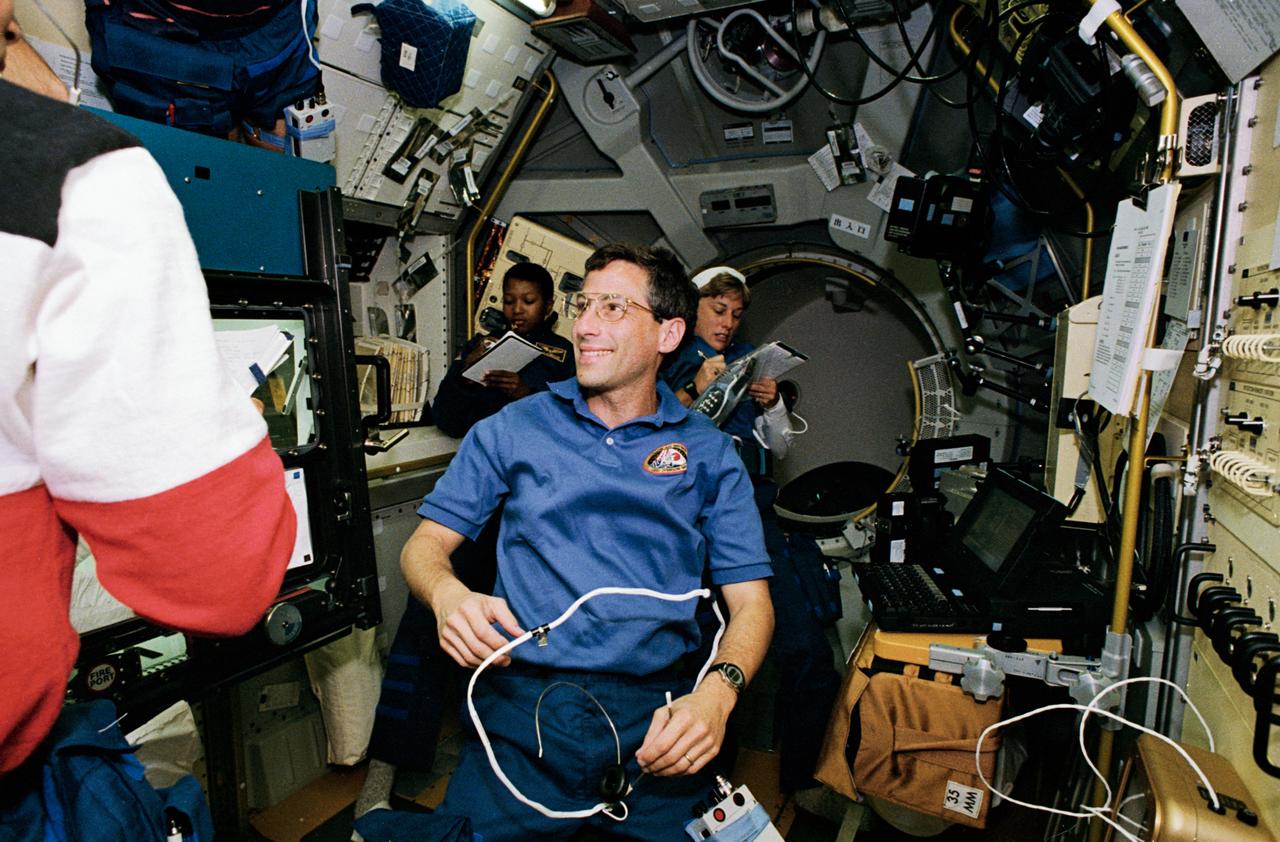
STS047-05-019 (12 - 20 Sept 1992) --- Astronaut Jerome (Jay) Apt, mission specialist, responds to a crew mate's query during a shift change in the Spacelab-J Science Module aboard the Earth-orbiting Space Shuttle Endeavour. Others pictured, left to right, are astronauts Mark C. Lee (immediate foreground, partially out of frame), payload commander; Mae C. Jemison and N. Jan Davis, mission specialists. The four joined two other NASA astronauts and a Japanese payload specialist for eight days aboard Endeavour in support of the joint Japanese-American effort.
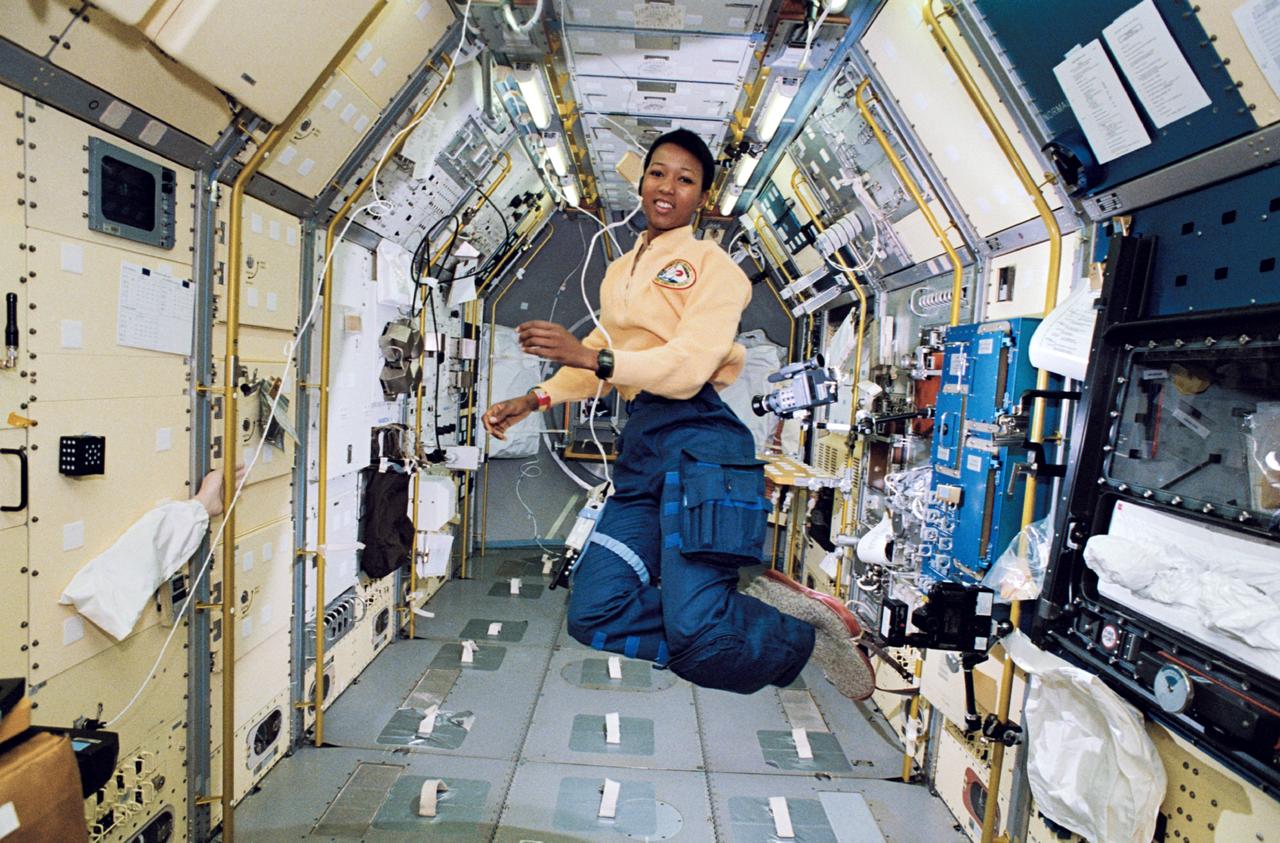
STS047-37-003 (12-20 Sept. 1992) --- Astronaut Mae C. Jemison, STS-47 mission specialist, appears to be clicking her heels in zero-gravity in this 35mm frame photographed in the Science Module aboard the Earth-orbiting Space Shuttle Endeavour. Making her first flight in space, Dr. Jemison was joined by five other NASA astronauts and a Japanese payload specialist for eight days of research in support of the Spacelab-J mission, a joint effort between Japan and the United States.
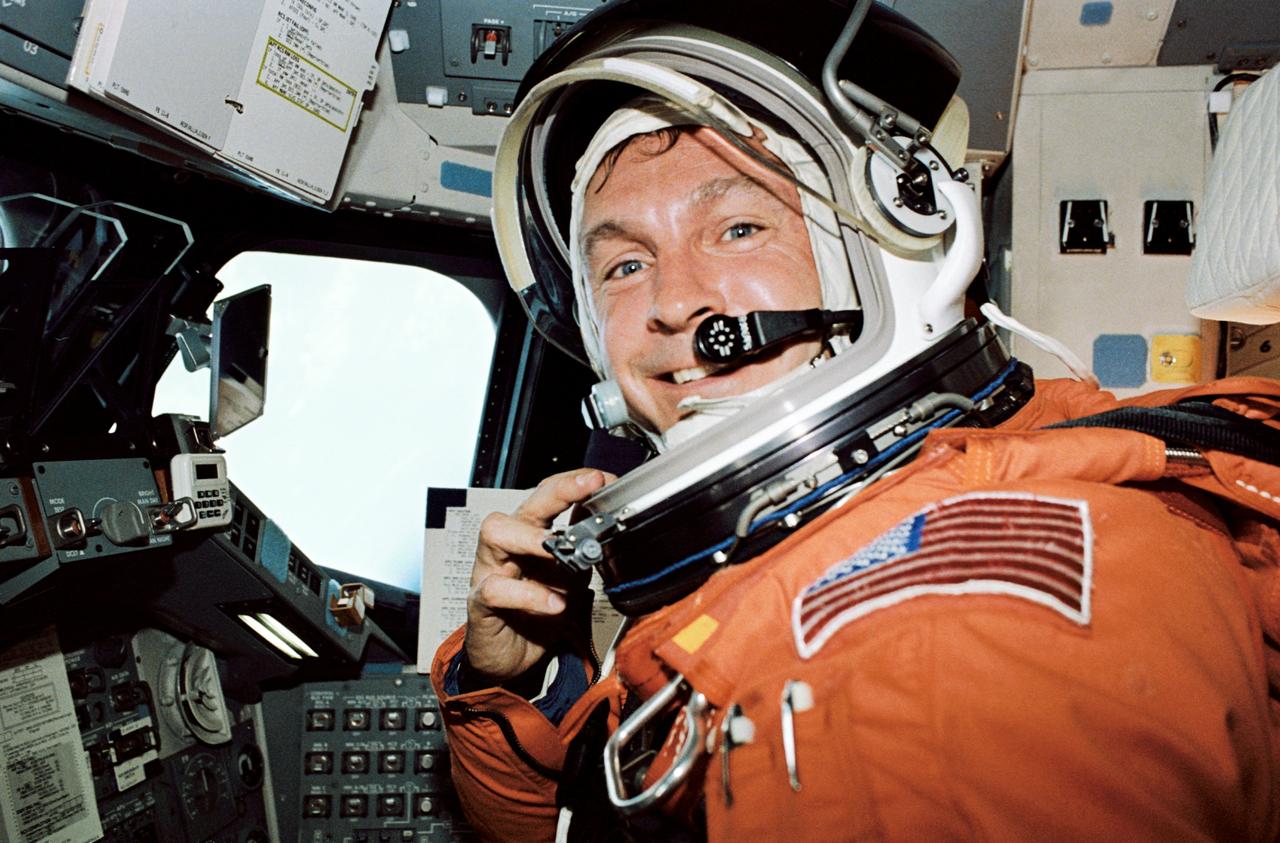
STS047-28-002 (20 Sept. 1992) --- Astronaut Curtis L. Brown, Jr., STS-47 pilot, is photographed at the Space Shuttle Endeavour's pilot station about ten minutes after main engine cutoff on launch day of the eight-day Spacelab-J mission. Wearing the partial-pressure launch and entry suit, Brown shared the forward cabin with astronaut Robert L. Gibson (out of frame at left), mission commander. Endeavour was beginning its second mission in space, this one devoted to research supporting the Spacelab-J mission.
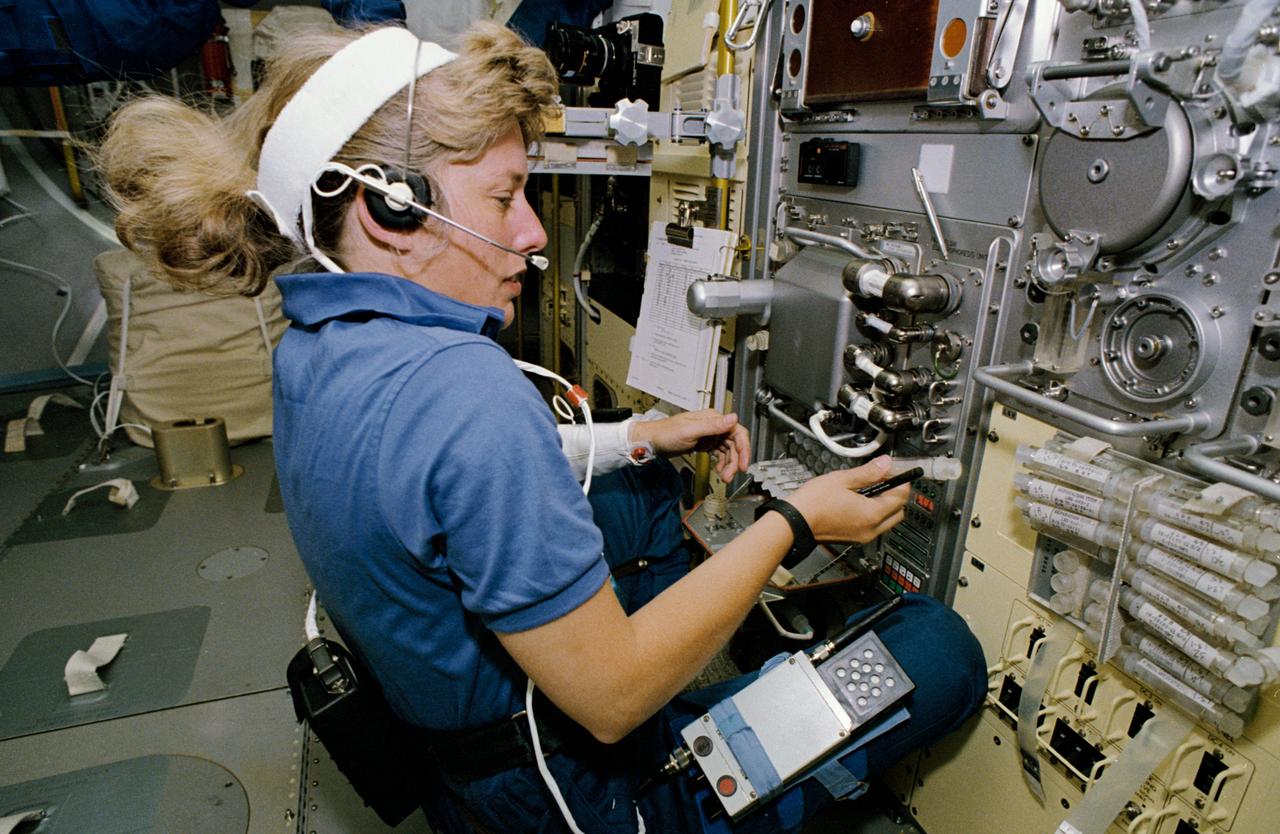
STS047-03-024 (12 - 20 Sept 1992) --- Astronaut N. Jan Davis, mission specialist, talks to ground controllers as she works with the Free Flow Electrophoresis Unit (FFEU) in the Science Module of the Earth-orbiting Space Shuttle Endeavour. Davis joined five other NASA astronauts and a Japanese payload specialist for eight days of scientific research onboard Endeavour.
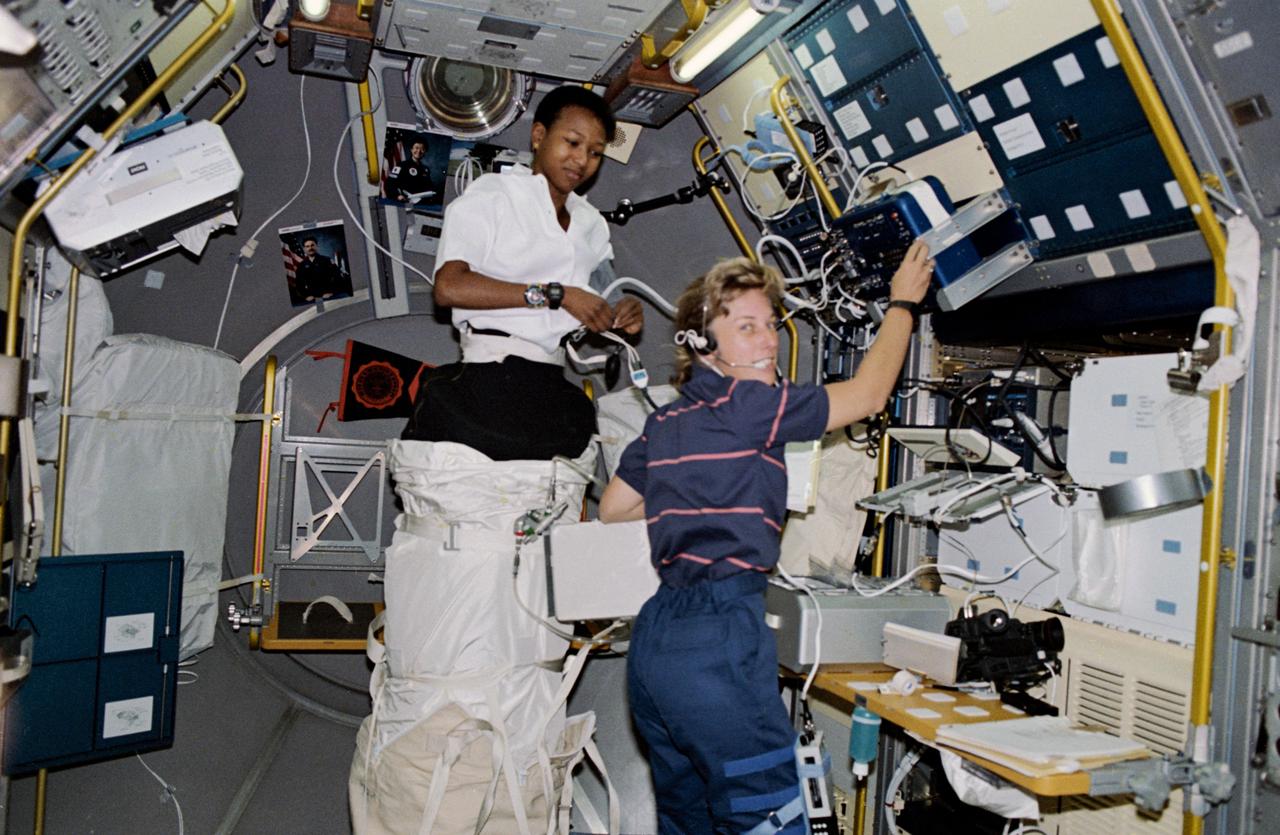
STS047-230-030 (12 - 20 Sept 1992) --- Astronauts Mae C. Jemison (left) and N. Jan Davis, mission specialists, are pictured in the Spacelab-J science module preparing to conduct a session with the Lower Body Negative Pressure (LBNP) experiment. The two joined four other NASA astronauts and a payload specialist representing Japan's National Space Development Agency (NASDA) aboard the Earth-orbiting Space Shuttle Endeavour for eight days of Spacelab-J research.
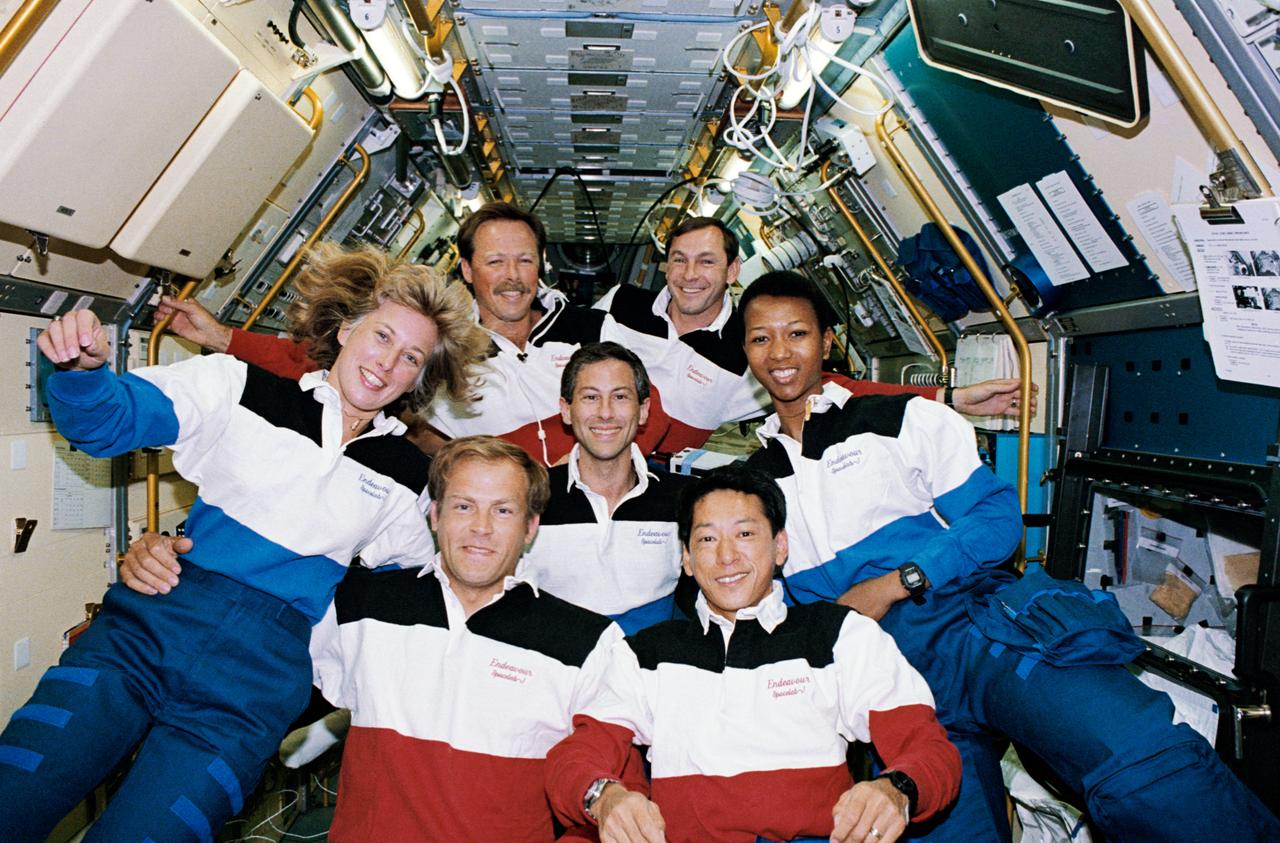
STS047-09-009 (12 - 20 Sept 1992) --- The seven crew members sharing eight days of research in support of Spacelab-J pose for the traditional inflight portrait in the Science Module. Pictured, left to right, back row, are Robert L. Gibson, mission commander; and Curtis L. Brown, Jr., pilot; middle row, N. Jan Davis, Jerome (Jay) Apt and Mae C. Jemison, all mission specialists; and front row, Mark C. Lee, payload commander, and Mamoru Mohri, payload specialist representing Japan's National Space Development Agency (NASDA).
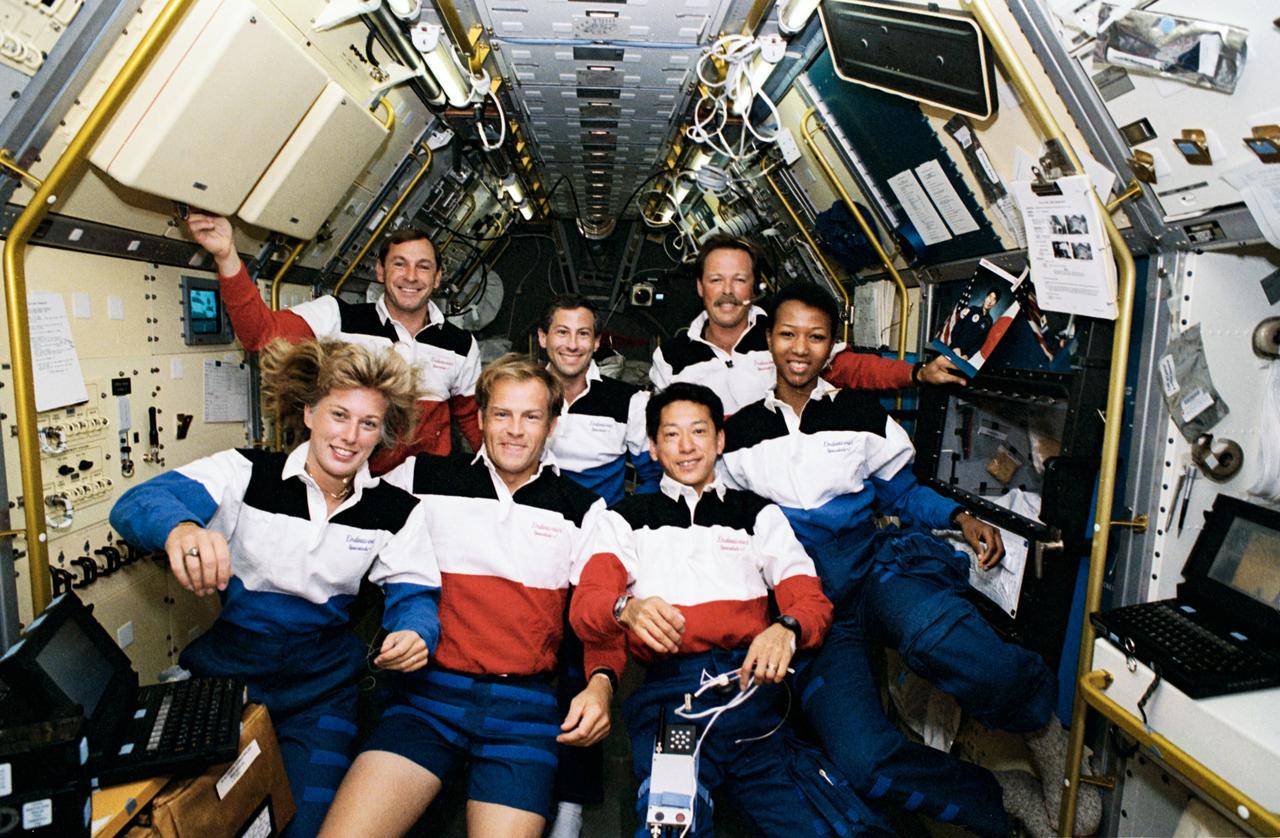
STS047-12-002 (12 - 20 Sept 1992) --- The crew members assemble for their traditional in-flight portrait in this 35mm frame photographed in the Science Module aboard the Earth-orbiting Space Shuttle Endeavour. Left to right (front) are N. Jan Davis, Mark C. Lee and Mamoru Mohri; and (rear) Curtis L. Brown, Jr., Jerome (Jay) Apt, Robert L. Gibson and Mae C. Jemison. The seven spent eight days in space in support of the Spacelab-J mission.

This is the crew insignia for STS-97 which delivered, assembled, and activated the U.S. electrical power system onboard the International Space Station (ISS). The electrical power system, which is built into a 47-foot integrated truss structure known as P6, consists of solar arrays, radiators, batteries, and electronics. P6 was prepared for subsequent deployments of larger solar arrays and radiator, a critical step in the activation of the electrical power system that will eventually provide the power necessary for the first ISS crews to live and work in the U.S. segment. The crew patch depicts the space shuttle docked to the ISS in low Earth orbit after the activation of the P6 electrical power system. Gold and silver were used to highlight the portion of the ISS that were installed by the STS-97 crew. The sun, central to the design, is the source of energy for the ISS. The crew member names surround the outer border of the patch.
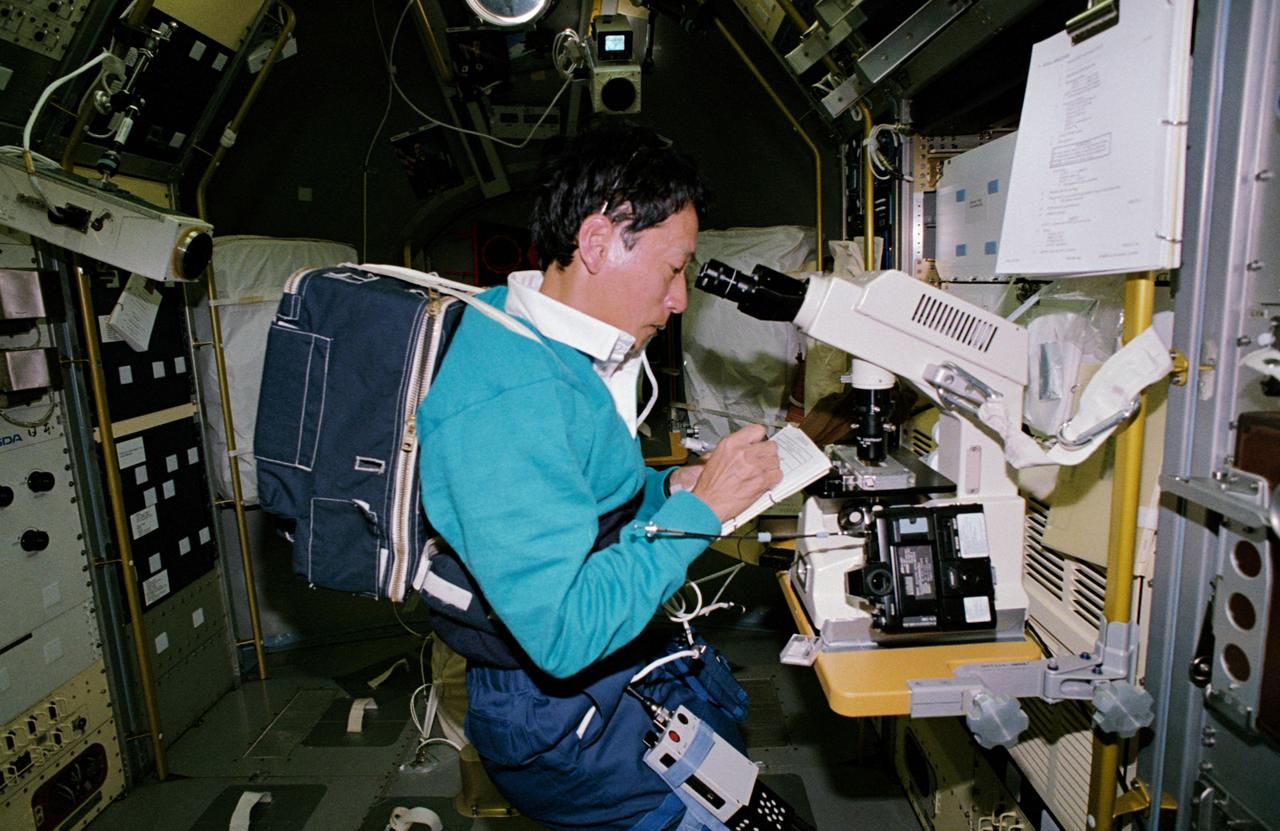
STS047-05-025 (12 - 20 Sept 1992) --- Payload specialist Mamoru Mohri, representing Japan's National Space Development Agency (NASDA), uses a microscope to produce photomicrographs of mammalian cells. The mammal cell structure experiment is one of a large number of tests that were performed during the eight-day Spacelab-J mission. On his back, Dr. Mohri totes a health monitoring experiment. The primary objective of the physiological monitoring system is to observe the health condition of the Japanese payload specialist so that good health can be maintained during and after the spaceflight.
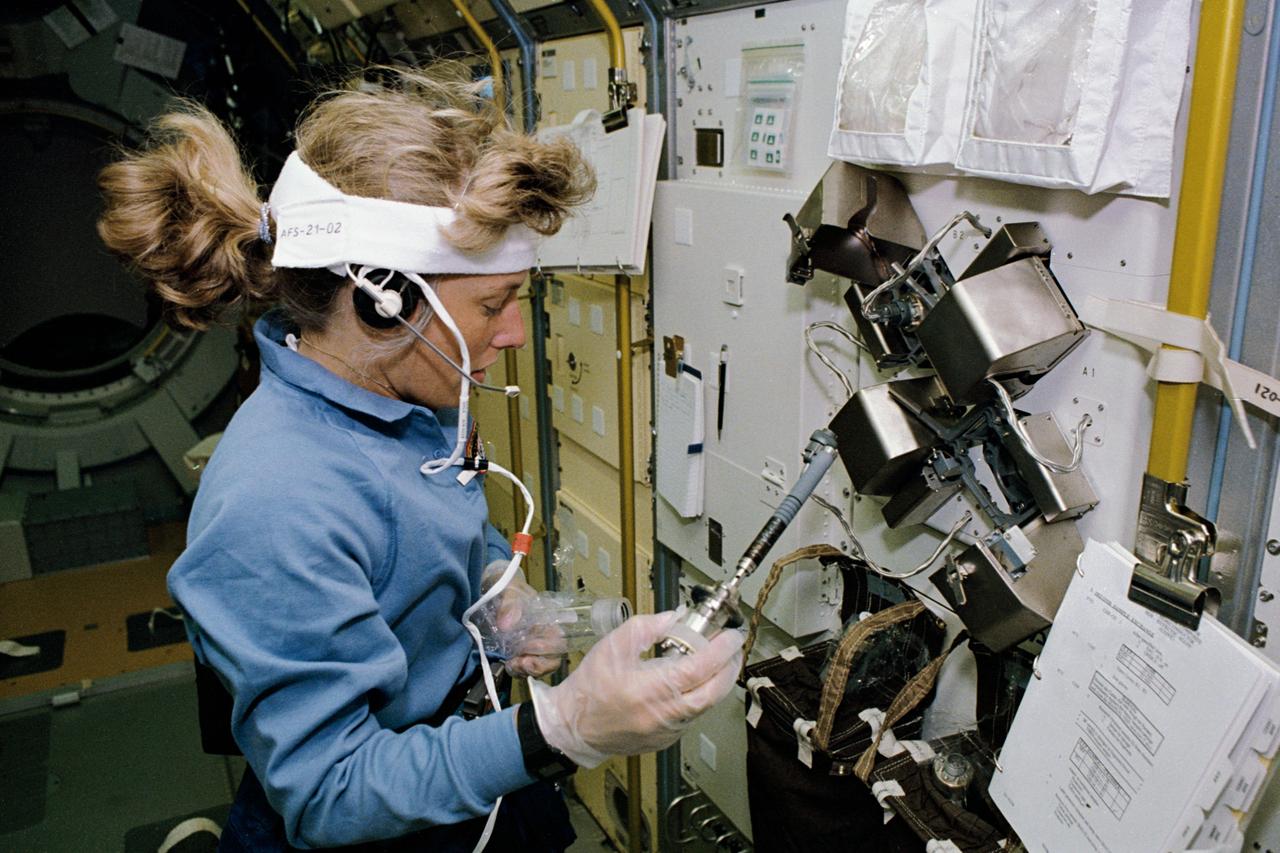
STS047-02-003 (12 - 20 Sept 1992) --- Astronaut N. Jan Davis, mission specialist, works at the Continuous Heating Furnace (CHF) in the Spacelab-J Science Module. This furnace provided temperatures up to 1,300 degrees Celsius and rapid cooling to two sets of samples concurrently. The furnace accommodated in-space experiments in the Fabrication of Si-As-Te:Ni Ternary Amorphous Semiconductor and the Crystal Growth of Compound Semiconductors. These were two of the many experiments designed and monitored by Japan's National Space Development Agency (NASDA).
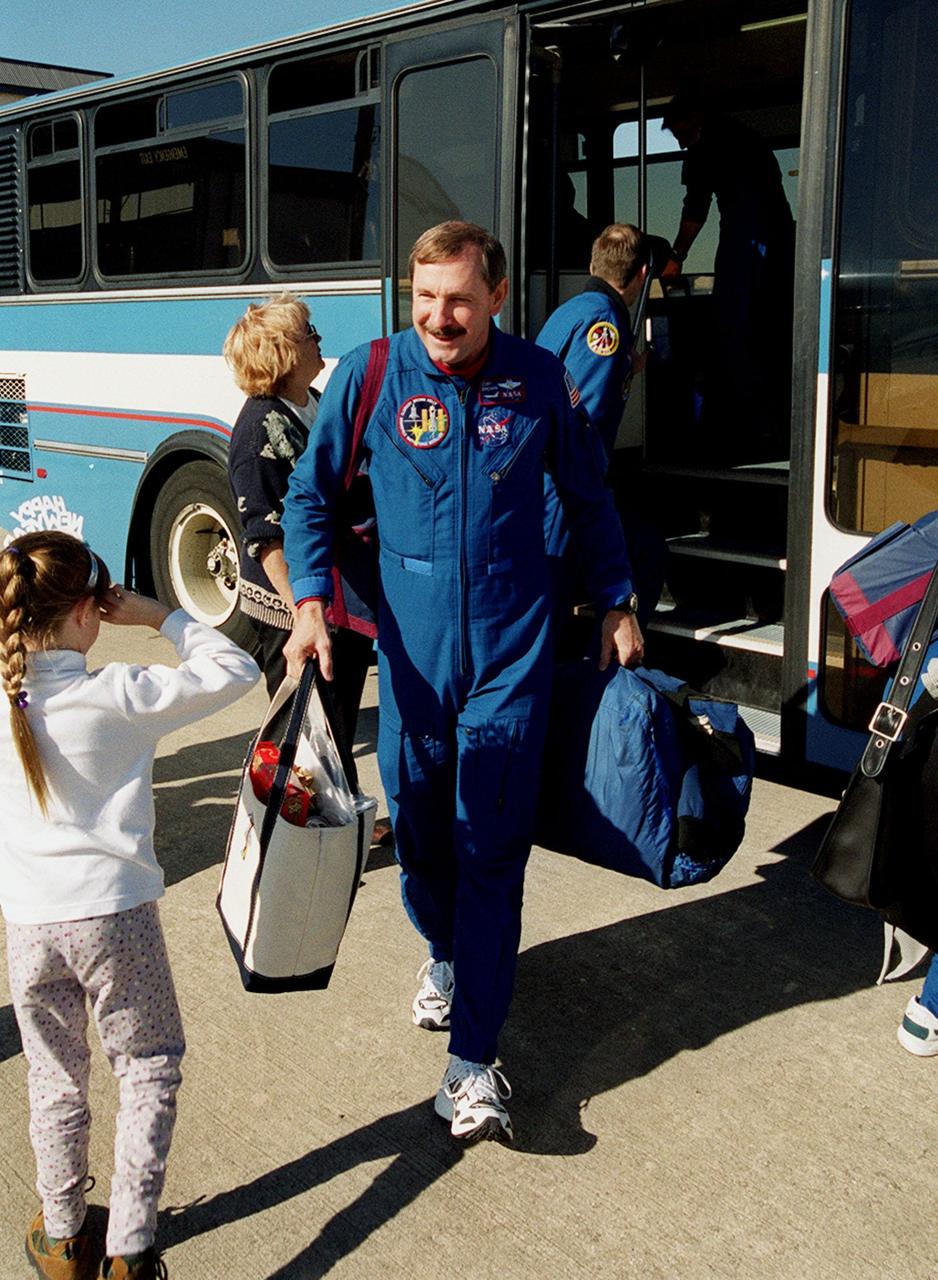
Amid a flurry of activity, STS-103 Commander Curtis L. Brown Jr. disembarks from the bus which brought him to the runway at Patrick Air Force Base. The STS-103 crew and their families are preparing to board an airplane that will return them to their home base at the Johnson Space Center in Houston following the successful completion of their mission. Discovery landed in darkness the previous evening, Dec. 27, on runway 33 at KSC's Shuttle Landing Facility at 7:00:47 p.m. EST. This was the first time that a Shuttle crew spent the Christmas holiday in space. The other STS-103 crew members are Pilot Scott J. Kelly and Mission Specialists Steven L. Smith, C. Michael Foale (Ph.D.), John M. Grunsfeld (Ph.D.), Claude Nicollier of Switzerland and Jean-François Clervoy of France. The STS-103 mission supplied the Hubble Space Telescope with six new gyroscopes, six new voltage/temperature improvement kits, a new onboard computer, a new solid state recorder and new data transmitter, and a new fine guidance sensor along with new insulation on parts of the orbiting telescope. This was the 96th flight in the Space Shuttle program and the 27th for the orbiter Discovery
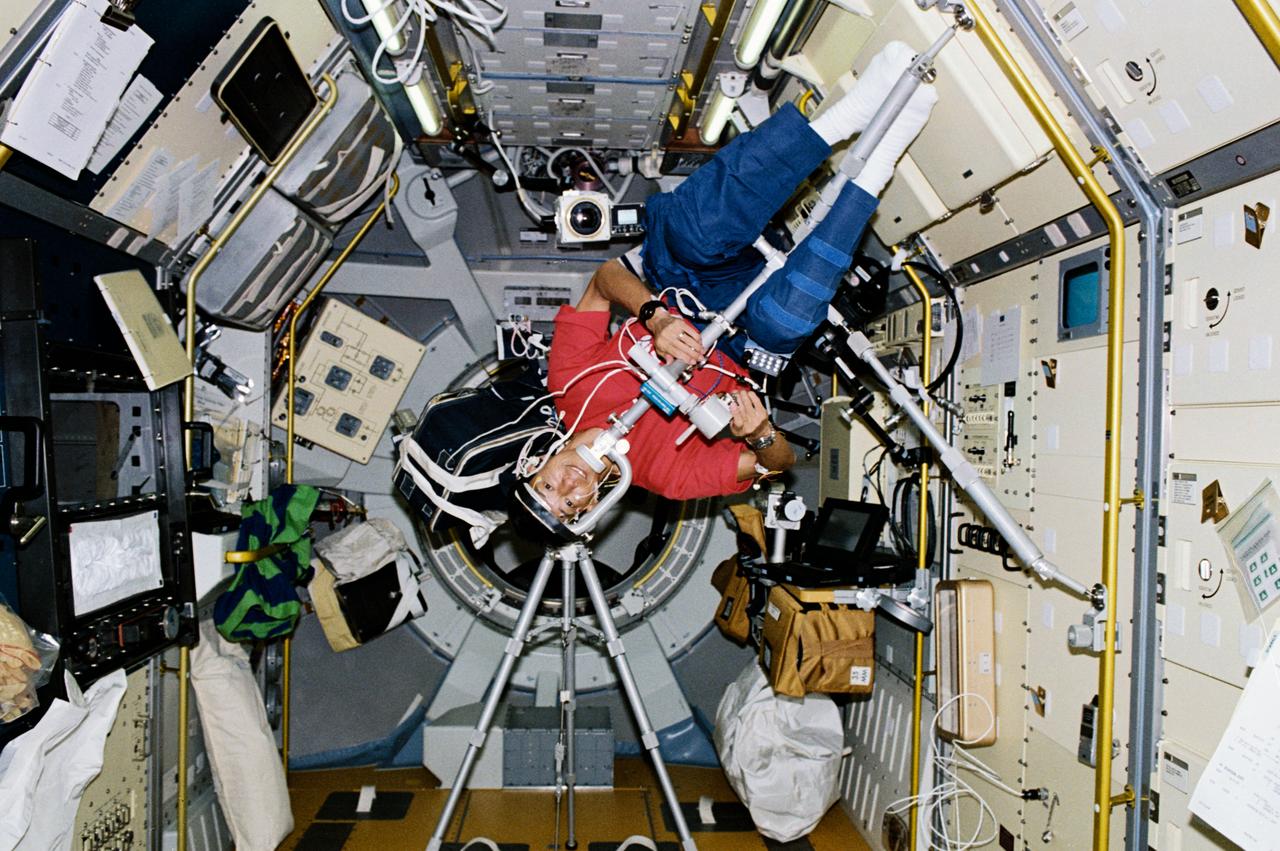
STS047-204-006 (12 - 20 Sept 1992) --- Dr. Mamoru Mohri, payload specialist representing Japan's National Space Development Agency (NASDA), participates in an experiment designed to learn more about Space Adaptation Syndrome (SAS). The experiment is titled, "Comparative Measurement of Visual Stability in Earth and Cosmic Space." During the experiment, Dr. Mohri tracked a flickering light target while eye movements and neck muscle tension were measured. This 45-degree angle position was one of four studied during the eight-day Spacelab-J mission.