
STS006-46-617 (4-9 April 1983) --- This view of sunset over the Amazon Basin was photographed with a 35mm camera from the Earth-orbiting space shuttle Challenger. The reusable vehicle was making its first trip into space and carried a crew of astronauts Paul J. Weitz, Karol J. Bobko, F. Story Musgrave and Donald H. Peterson. Photo credit: NASA
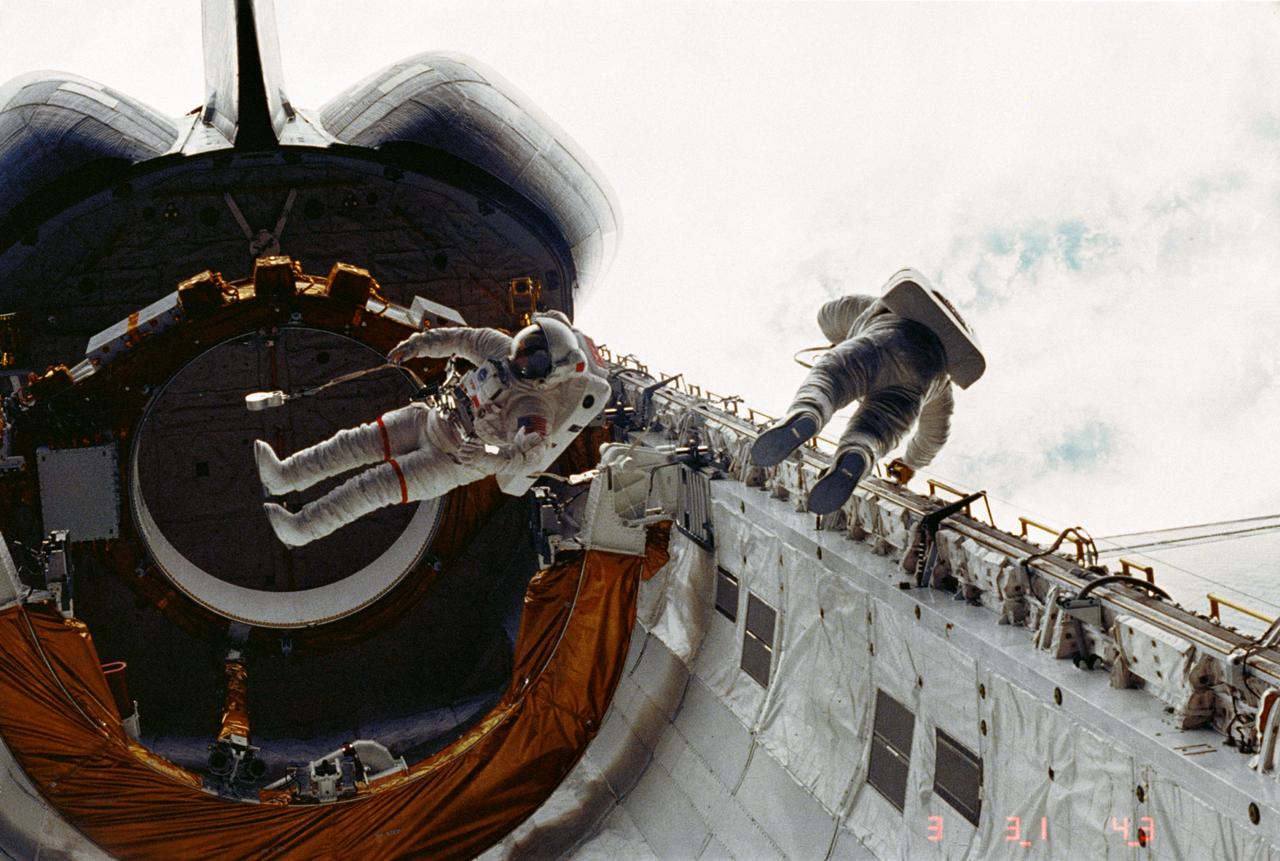
STS006-10-417 (7 April 1983) --- Astronauts F. Story Musgrave, left, and Donald H. Peterson float about in the cargo bay of the Earth-orbiting space shuttle Challenger during their April 7, 1983, extravehicular activity (EVA). Their "floating about" is restricted via tethers to safety slide wires. Thanks to the tether/slide wire combination, Peterson is able to translate along the port side hand rails. Musgrave is near the Airborne Support Equipment (ASE) for the now vacated Inertial Upper Stage (IUS). Clouds can be seen in the background. Photo credit: NASA
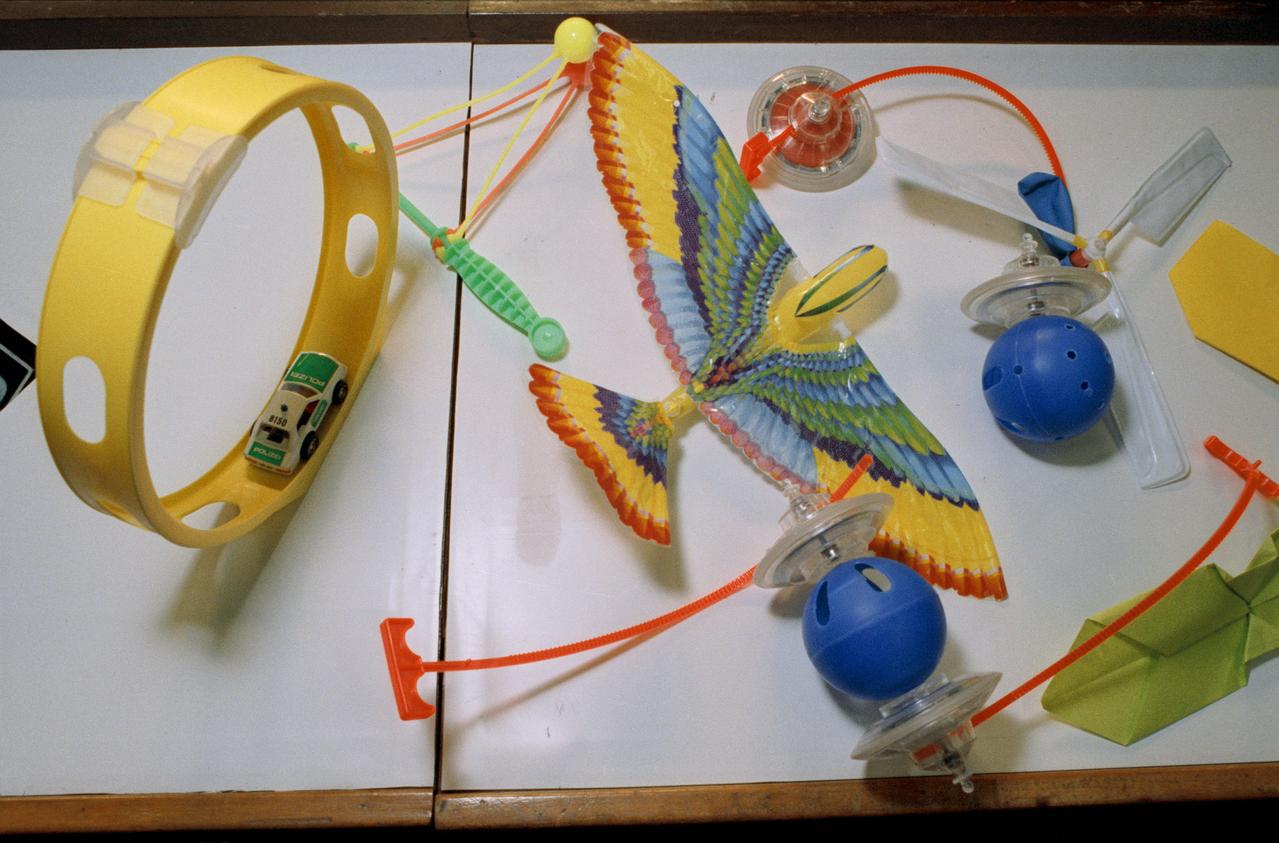
S93-25647 (6 Jan 1993) --- Part of the educational activities onboard the Space Shuttle Endeavour for STS-54 will include several experiments with various toys, some of which are depicted here. The detailed supplementary objective (DSO-802) will allow the Shuttle crewmembers to experiment with the various types of toys in a microgravity environment while talking to pupils who will be able to monitor (via classroom TV sets) the activities at a number of schools. Among toys seen here are a friction car and loop track, paper eagle, and a balloon helicopter.
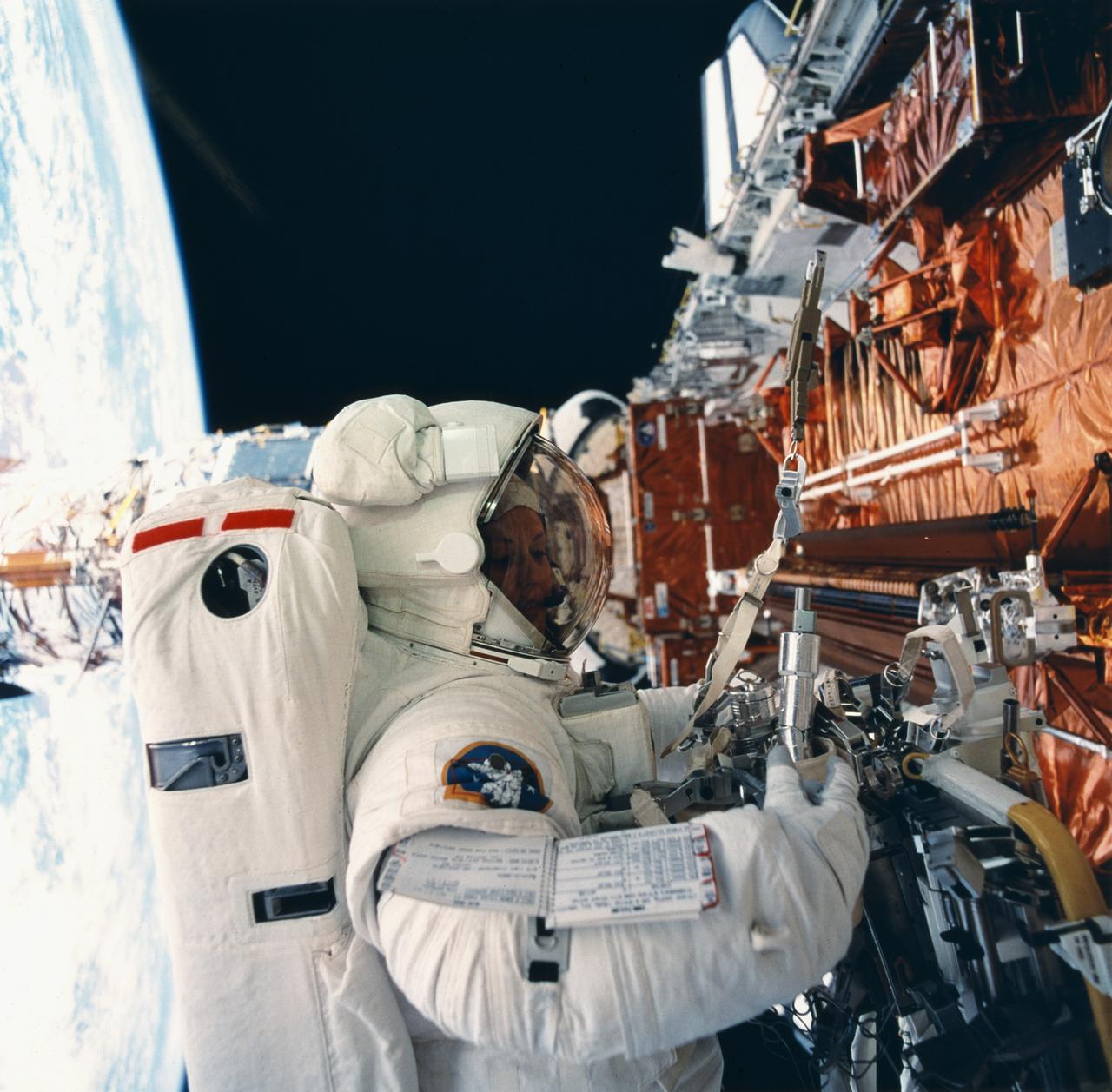
This STS-61 onboard photo depicts Astronaut and mission specialist Kathryn Thornton performing the 2nd extra-vehicular activity (EVA) of the STS-61 mission. Thornton, along with astronaut and mission specialist Thomas Akers (out of frame), performed the task of replacing the solar arrays. The EVA lasted 6 hours and 35 minutes. Launched December 1, 1993 aboard the Space Shuttle Orbiter Endeavor, the STS-61 mission was solely dedicated to servicing the HST.
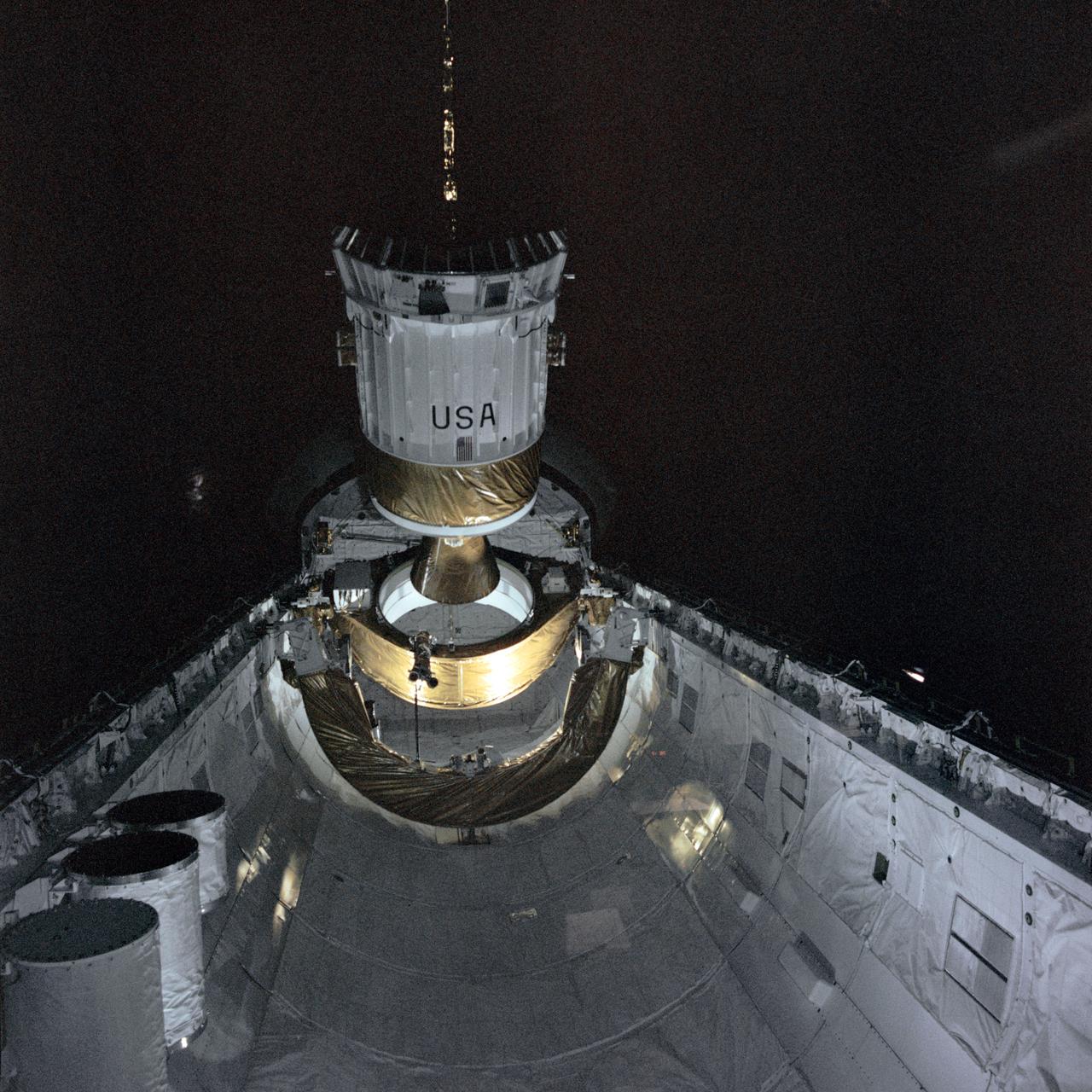
STS006-38-894 (4 April 1983) --- The tracking and data relay satellite (TDRS) leaves the 18-meter (60-ft) long cargo bay of the Earth-orbiting space shuttle Challenger about ten hours following launch of NASA’s second reusable space vehicle. The inertial upper stage (IUS) which gives power necessary to place the TDRS in its desired orbit is clearly seen in this view, photographed with a 70mm camera aimed through the aft flight deck windows of the Challenger. The cylindrical canisters in the left foreground contain scientific experiments from subscribers to NASA’s getaway special (GAS) program. Photo credit: NASA
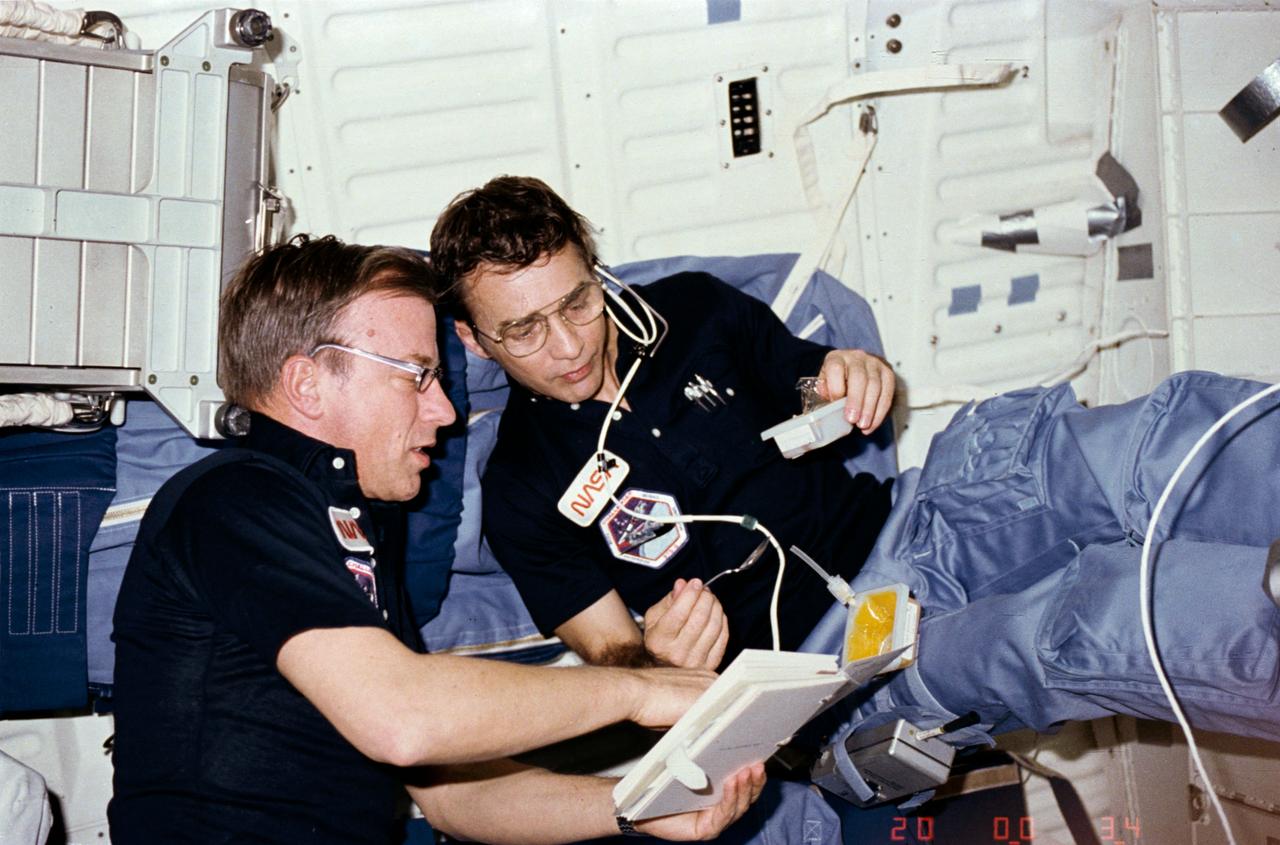
STS006-06-456 (4-9 April 1983) --- Astronaut Paul J. Weitz, STS-6 commander, points out an item in the crew activity plan (CAP) to astronaut Donald H. Peterson as the mission specialist uses a spoon to eat a meal aboard the Earth-orbiting space shuttle Challenger. The two are on the middeck. They are wearing the shirt and trouser portions of the blue cotton multi-piece constant wear garments. This frame was photographed with a 35mm camera. Photo credit: NASA
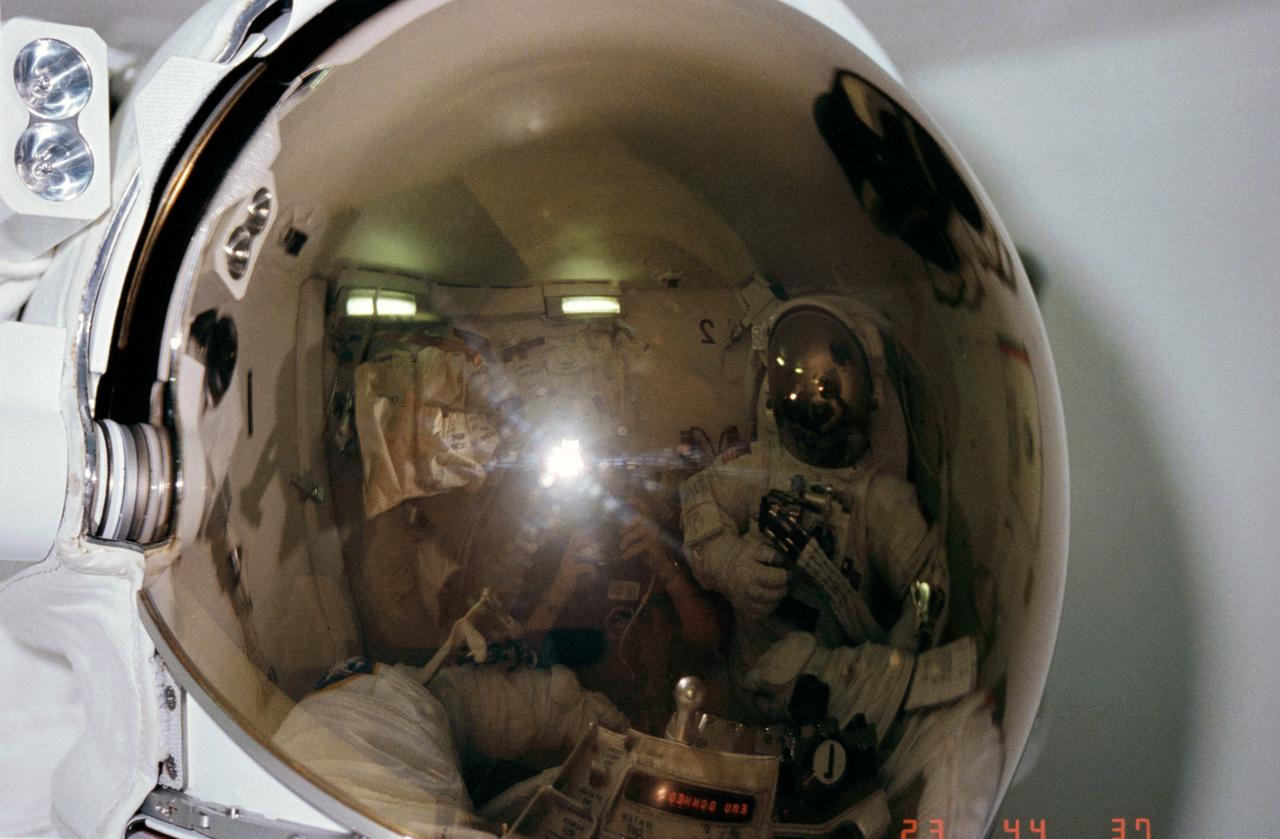
STS006-06-465 (7 April 1983) --- Three-fourths of the STS-6 astronaut crew appears in this unusual 35mm frame exposed in the airlock of the Earth-orbiting space shuttle Challenger. Astronaut F. Story Musgrave’s helmet visor encompasses all the action in the frame. Dr. Musgrave and astronaut Donald H. Peterson (reflected on right side of the visor) were fully suited in their Extravehicular Mobility Unit (EMU) spacesuits and were participating in EVA preparation exercises. Astronaut Karol J. Bobko, STS-6 pilot, wearing conventional onboard shuttle clothing, photographed the two during their procedures and appears at center of frame. The reversed number (1 and 2 in the mirrored image represent the EVA designations for the two mission specialists. Photo credit: NASA
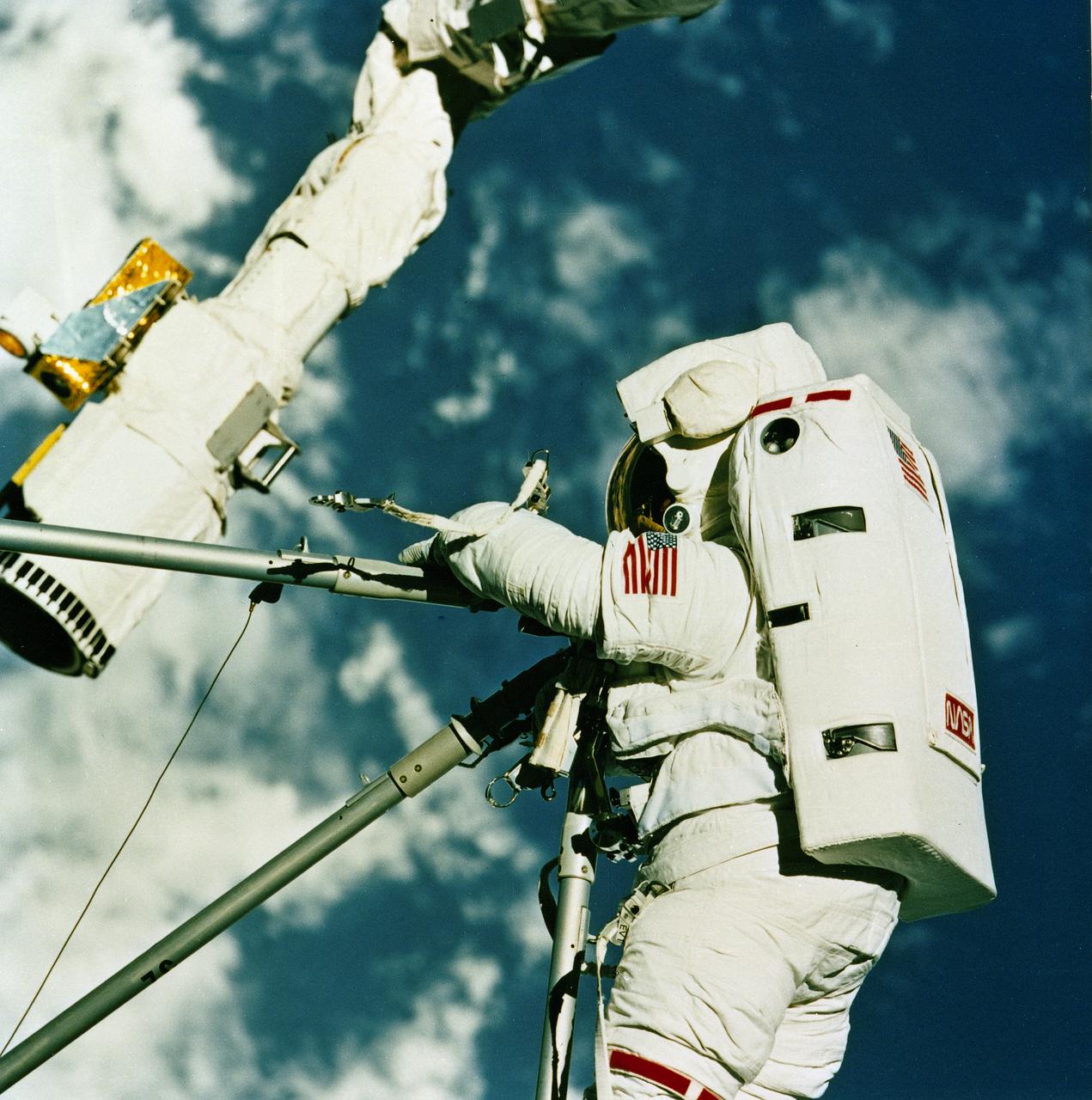
STS-49, the first flight of the Space Shuttle Orbiter Endeavour, lifted off from launch pad 39B on May 7, 1992 at 6:40 pm CDT. The STS-49 mission was the first U.S. orbital flight to feature 4 extravehicular activities (EVAs), and the first flight to involve 3 crew members working simultaneously outside of the spacecraft. The primary objective was the capture and redeployment of the INTELSAT VI (F-3) which was stranded in an unusable orbit since its launch aboard the Titan rocket in March 1990. In this STS-49 onboard photo, Astronaut Kathryn Thornton joins three struts together during her Extra Vehicular Activity (EVA).
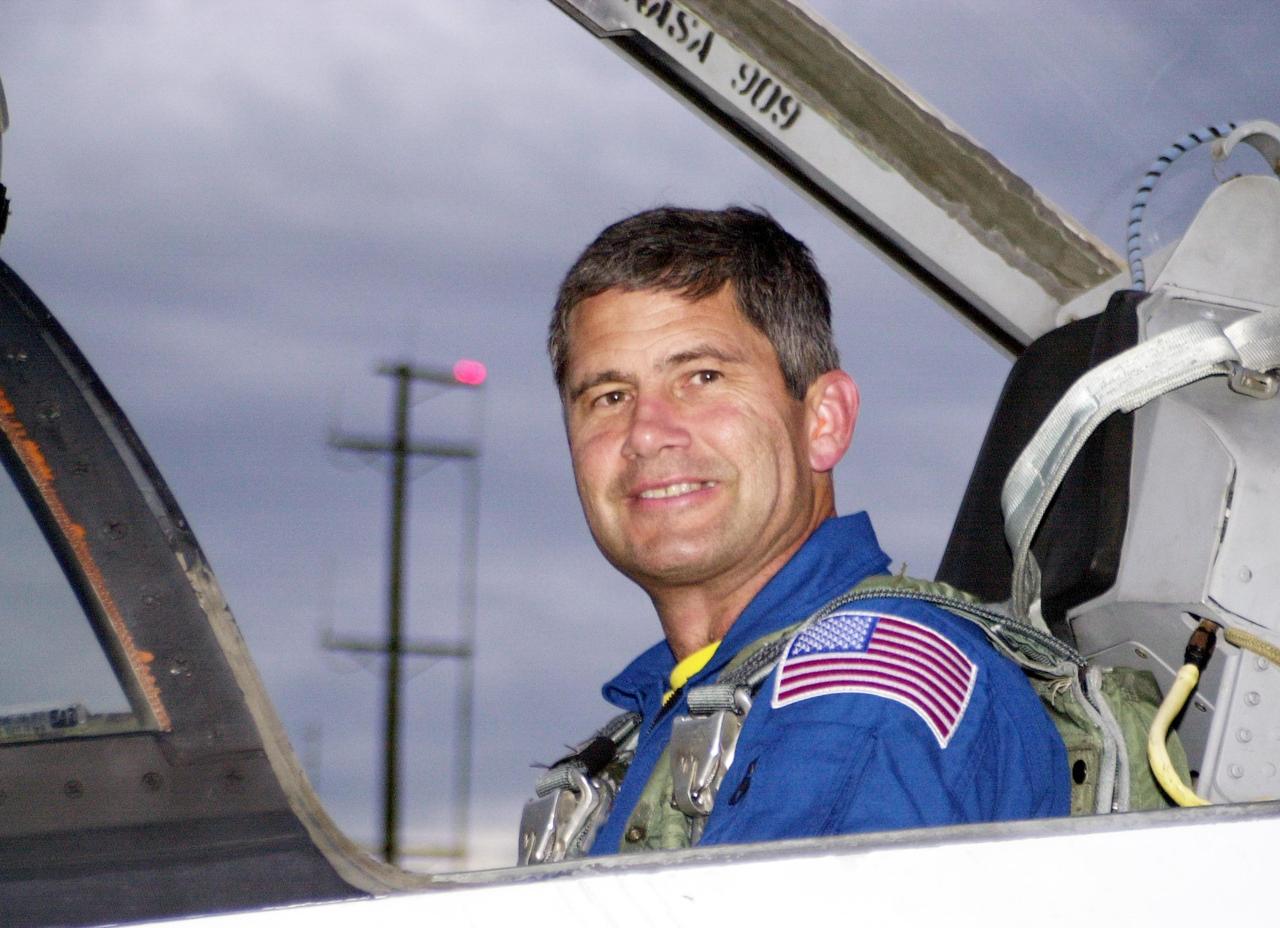
KENNEDY SPACE CENTER, FLA. -- STS-113 Pilot Paul Lockhart arrives at KSC for Terminal Countdown Demonstration Test activities, which include a simulated launch countdown. The primary payloads on mission STS-113 are the first port truss segment, P1, and the Crew and Equipment Translation Aid (CETA) Cart B. Once delivered, the P1 truss will remain stowed until flight 12A.1 in 2003 when it will be attached to the central truss segment, S0, on the Space Station. Also onboard Space Shuttle Endeavour will be the Expedition 6 crew who will replace Expedition 5, returning to Earth after 4 months. The STS-113 launch is scheduled for Nov. 10, 2002. .
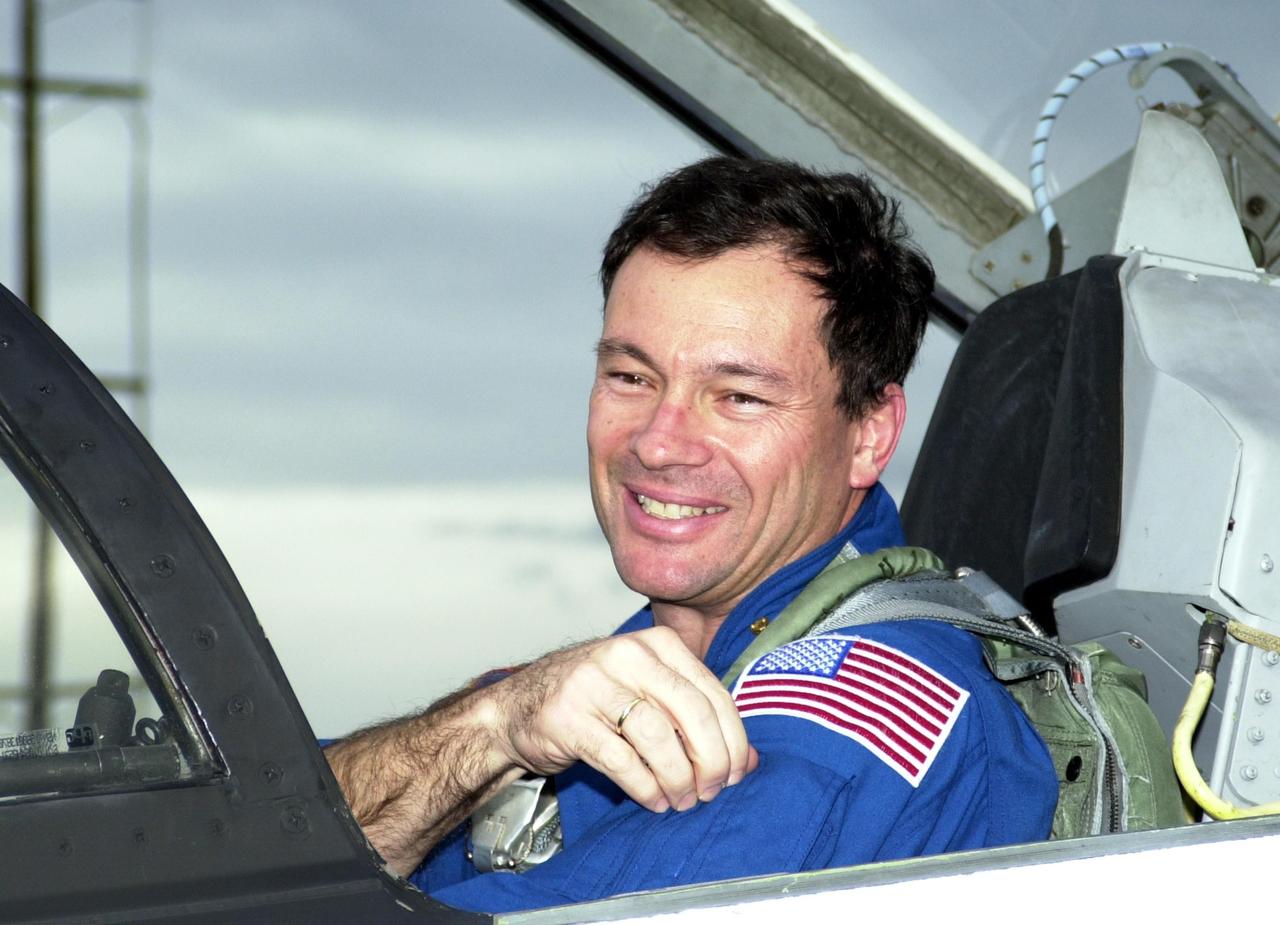
KENNEDY SPACE CENTER, FLA. -- STS-113 Mission Specialist Michael Lopez-Alegria arrives at KSC for Terminal Countdown Demonstration Test activities, which include a simulated launch countdown. The primary payloads on mission STS-113 are the first port truss segment, P1, and the Crew and Equipment Translation Aid (CETA) Cart B. Once delivered, the P1 truss will remain stowed until flight 12A.1 in 2003 when it will be attached to the central truss segment, S0, on the Space Station. Also onboard Space Shuttle Endeavour will be the Expedition 6 crew who will replace Expedition 5, returning to Earth after 4 months. The STS-113 launch is scheduled for Nov. 10, 2002.
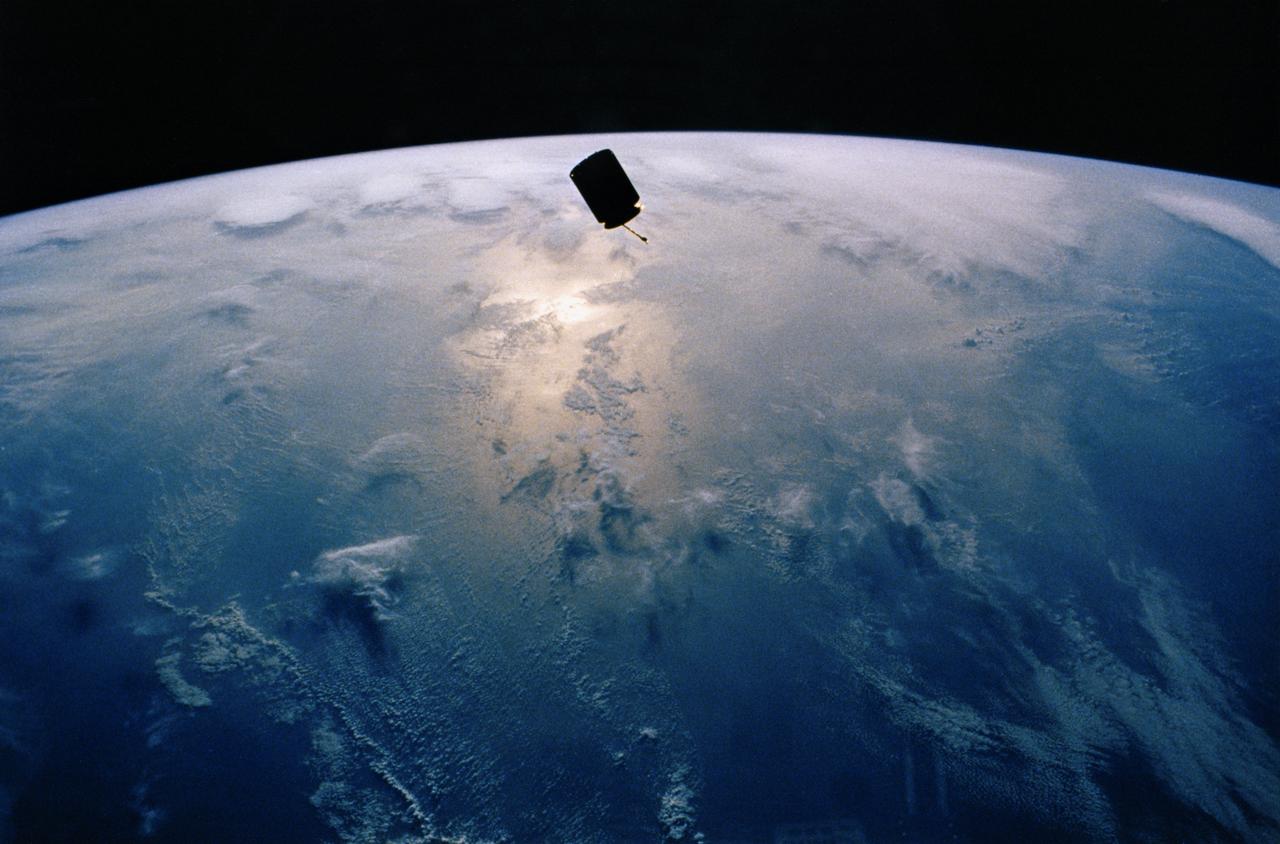
STS-49, the first flight of the Space Shuttle Orbiter Endeavour, lifted off from launch pad 39B on May 7, 1992 at 6:40 pm CDT. The STS-49 mission was the first U.S. orbital flight to feature 4 extravehicular activities (EVAs), and the first flight to involve 3 crew members working simultaneously outside of the spacecraft. The primary objective was the capture and redeployment of the INTELSAT VI (F-3), a communication satellite for the International Telecommunication Satellite organization, which was stranded in an unusable orbit since its launch aboard the Titan rocket in March 1990. This onboard photo captures the free flying INTELSAT IV.
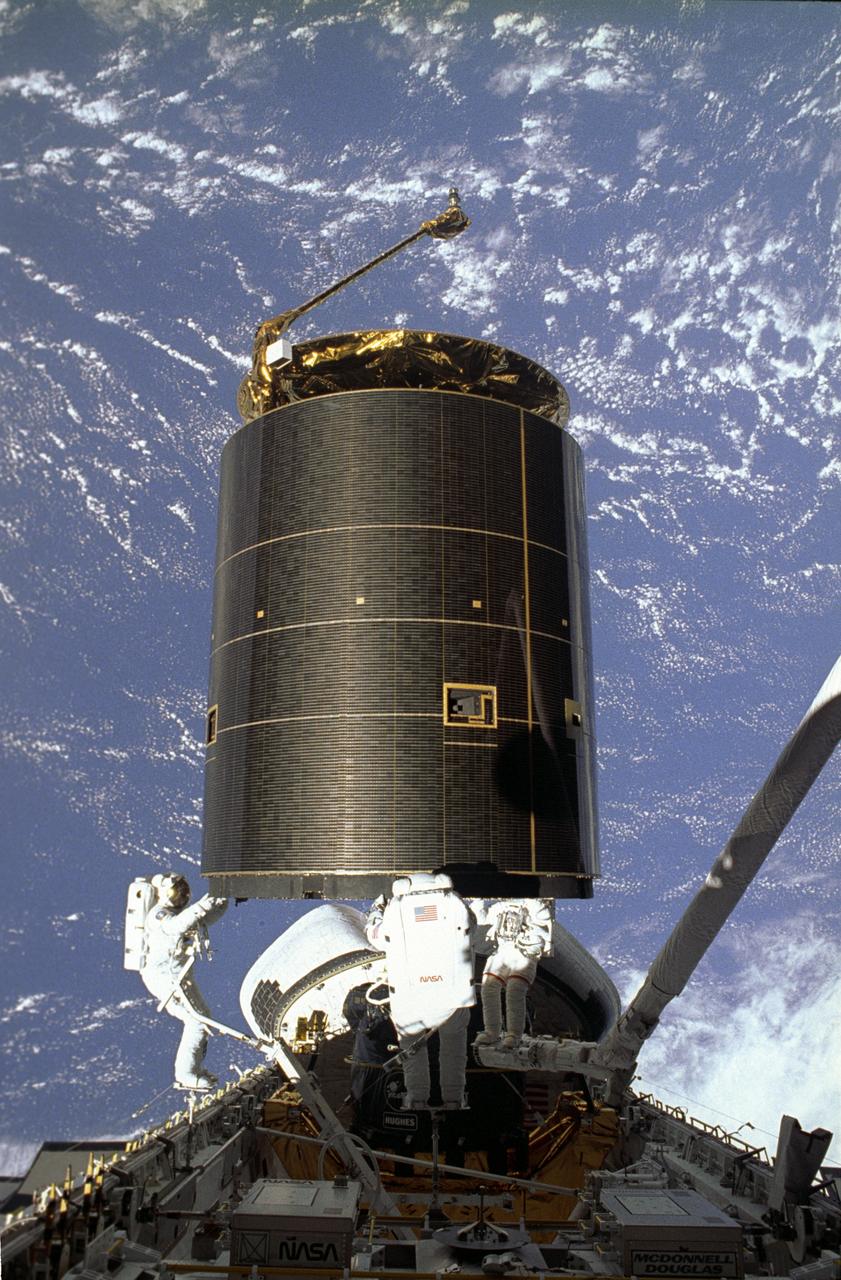
STS-49, the first flight of the Space Shuttle Orbiter Endeavour, lifted off from launch pad 39B on May 7, 1992 at 6:40 pm CDT. The STS-49 mission was the first U.S. orbital flight to feature 4 extravehicular activities (EVAs), and the first flight to involve 3 crew members working simultaneously outside of the spacecraft. The primary objective was the capture and redeployment of the INTELSAT VI (F-3), a communication satellite for the International Telecommunication Satellite organization, which was stranded in an unusable orbit since its launch aboard the Titan rocket in March 1990. In this onboard photo, astronauts Hieb, Akers, and Thuot have handholds on the satellite.
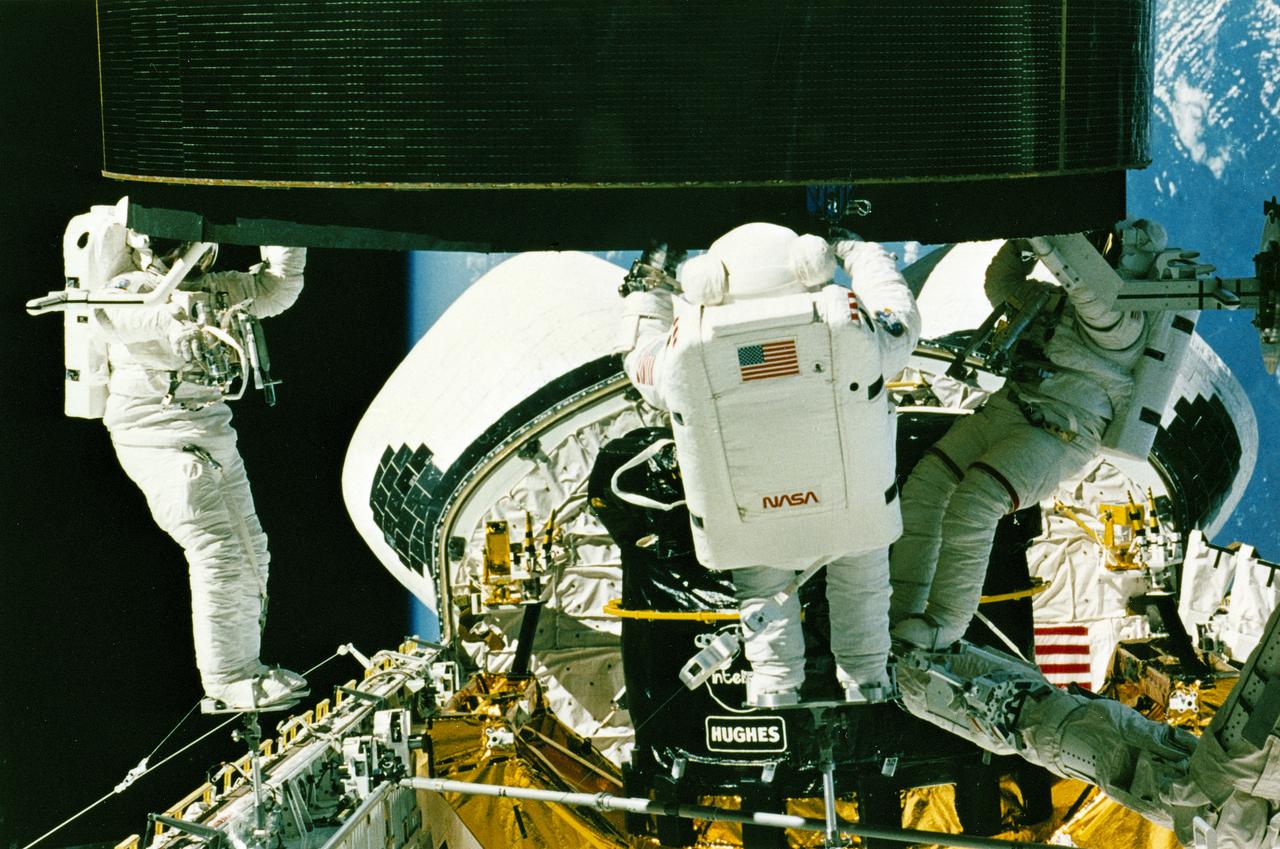
STS-49, the first flight of the Space Shuttle Orbiter Endeavour, lifted off from launch pad 39B on May 7, 1992 at 6:40 pm CDT. The STS-49 mission was the first U.S. orbital flight to feature 4 extravehicular activities (EVAs), and the first flight to involve 3 crew members working simultaneously outside of the spacecraft. The primary objective was the capture and redeployment of the INTELSAT VI (F-3), a communication satellite for the International Telecommunication Satellite organization, which was stranded in an unusable orbit since its launch aboard the Titan rocket in March 1990. In this onboard photo, astronauts Hieb, Akers, and Thuot have handholds on the satellite.
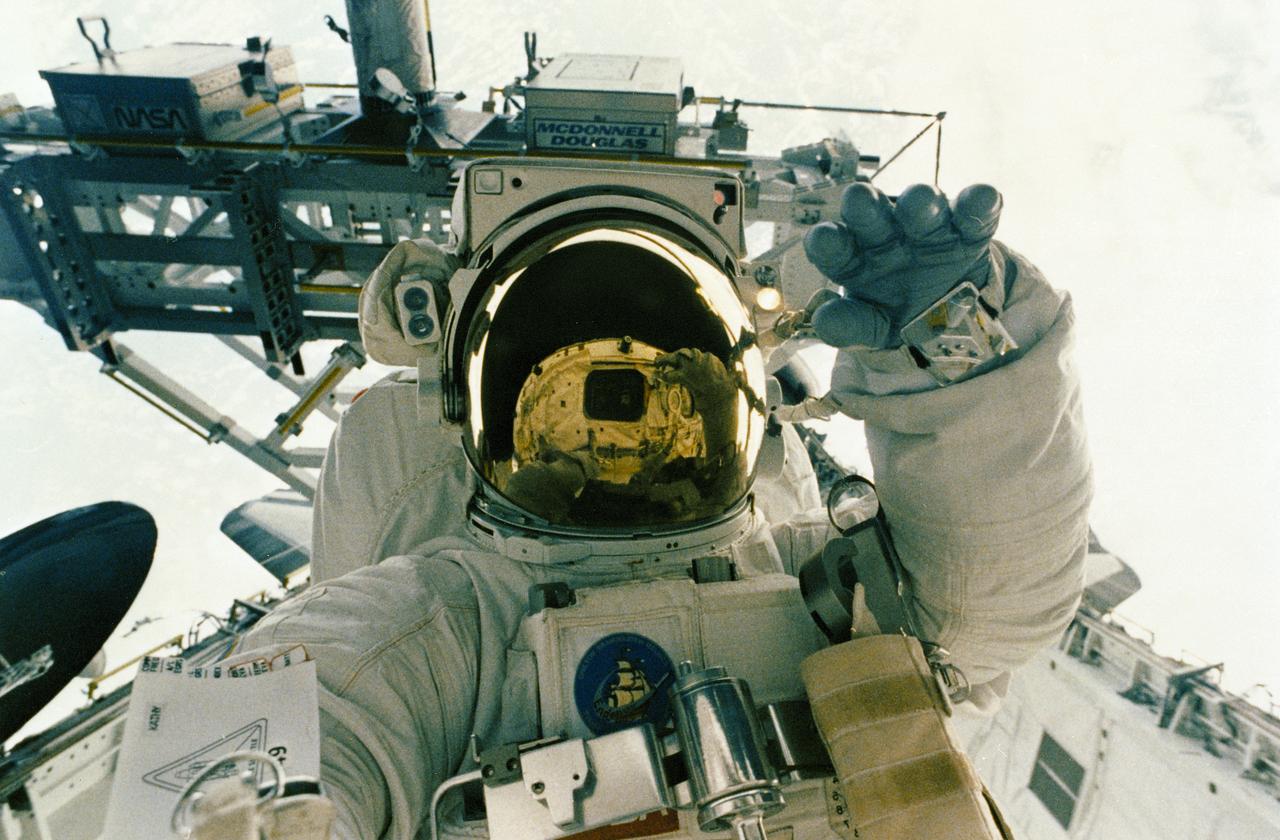
STS-49, the first flight of the Space Shuttle Orbiter Endeavour, lifted off from launch pad 39B on May 7, 1992 at 6:40 pm CDT. The STS-49 mission was the first U.S. orbital flight to feature 4 extravehicular activities (EVAs), and the first flight to involve 3 crew members working simultaneously outside of the spacecraft. The primary objective was the capture and redeployment of the INTELSAT VI (F-3), a communication satellite for the International Telecommunication Satellite organization, which was stranded in an unusable orbit since its launch aboard the Titan rocket in March 1990. In this onboard photo, astronaut Kathryn Thornton is working on the Assembly of Station by EVA Methods (ASEM) in the cargo bay.
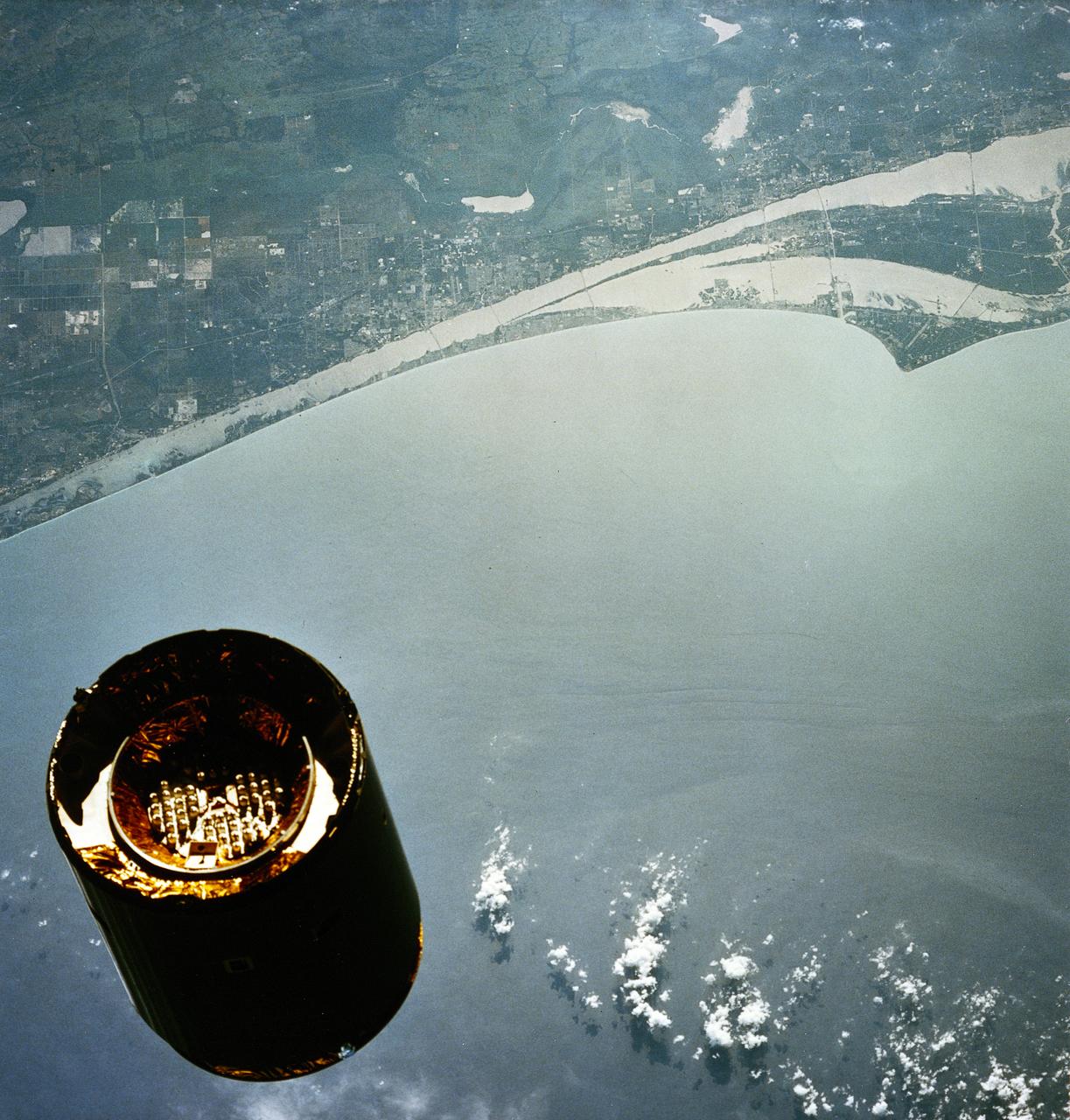
STS-49, the first flight of the Space Shuttle Orbiter Endeavour, lifted off from launch pad 39B on May 7, 1992 at 6:40 pm CDT. The STS-49 mission was the first U.S. orbital flight to feature 4 extravehicular activities (EVAs), and the first flight to involve 3 crew members working simultaneously outside of the spacecraft. The primary objective was the capture and redeployment of the INTELSAT VI (F-3), a communication satellite for the International Telecommunication Satellite organization, which was stranded in an unusable orbit since its launch aboard the Titan rocket in March 1990. This onboard photo depicts Florida’s Atlantic coast and the Cape Canaveral area as the backdrop for this scene of the INTELSAT VI’s approach to the Shuttle Endeavour.
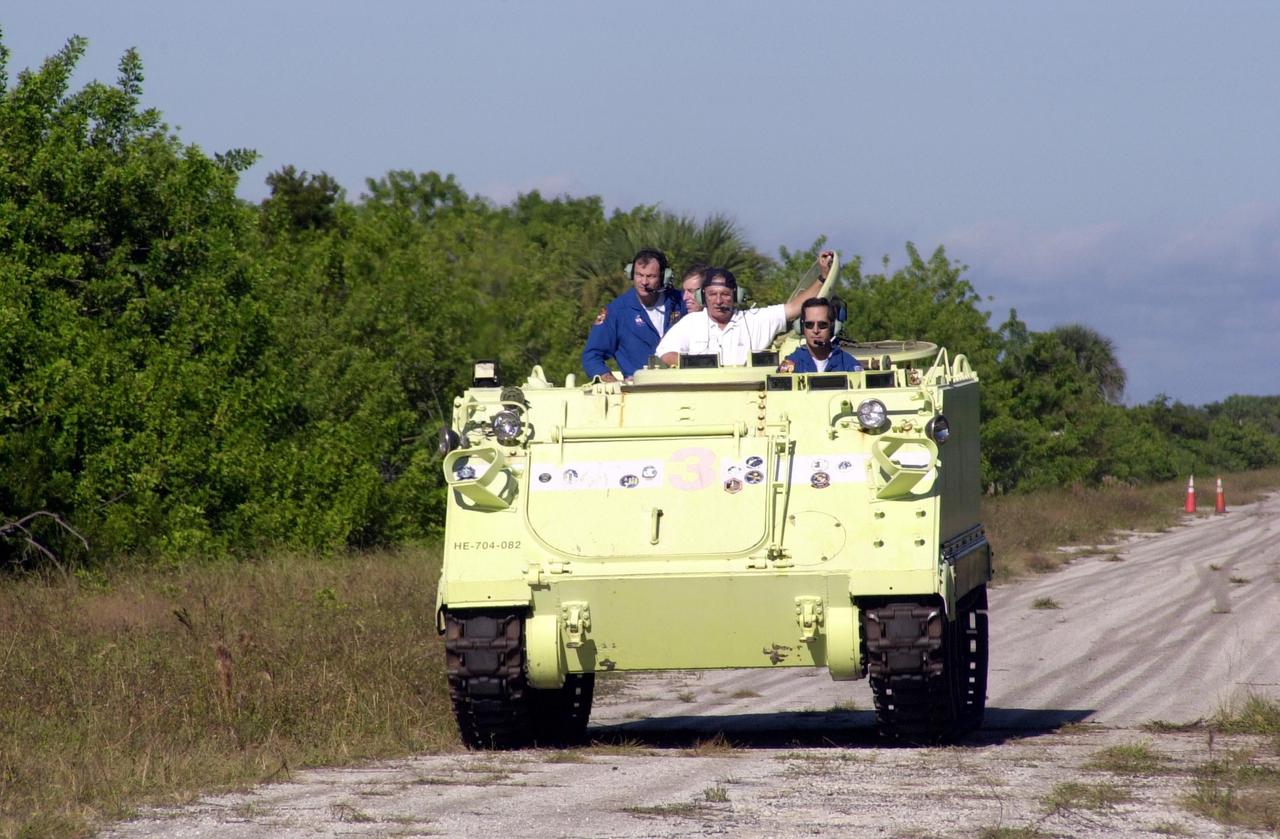
KENNEDY SPACE CENTER, FLA. -- STS-113 Mission Specialist John Herrington is at the wheel of an M-113 armored personnel carrier during emergency egress training at the pad. He is accompanied by (left) Mission Specialist Michael Lopez-Alegria and Commander James Wetherbee. The crew is preparing for the mission aboard Space Shuttle Endeavour, which is scheduled to launch Nov. 10, by taking part in Terminal Countdown Demonstration Test activities. The TCDT includes a simulated launch countdown.. The primary payloads on mission STS-113 are the first port truss segment, P1, and the Crew and Equipment Translation Aid (CETA) Cart B. Once delivered, the P1 truss will remain stowed until flight 12A.1 in 2003 when it will be attached to the central truss segment, S0, on the Space Station. Also onboard Space Shuttle Endeavour will be the Expedition 6 crew who will replace Expedition 5, returning to Earth after 4 months.
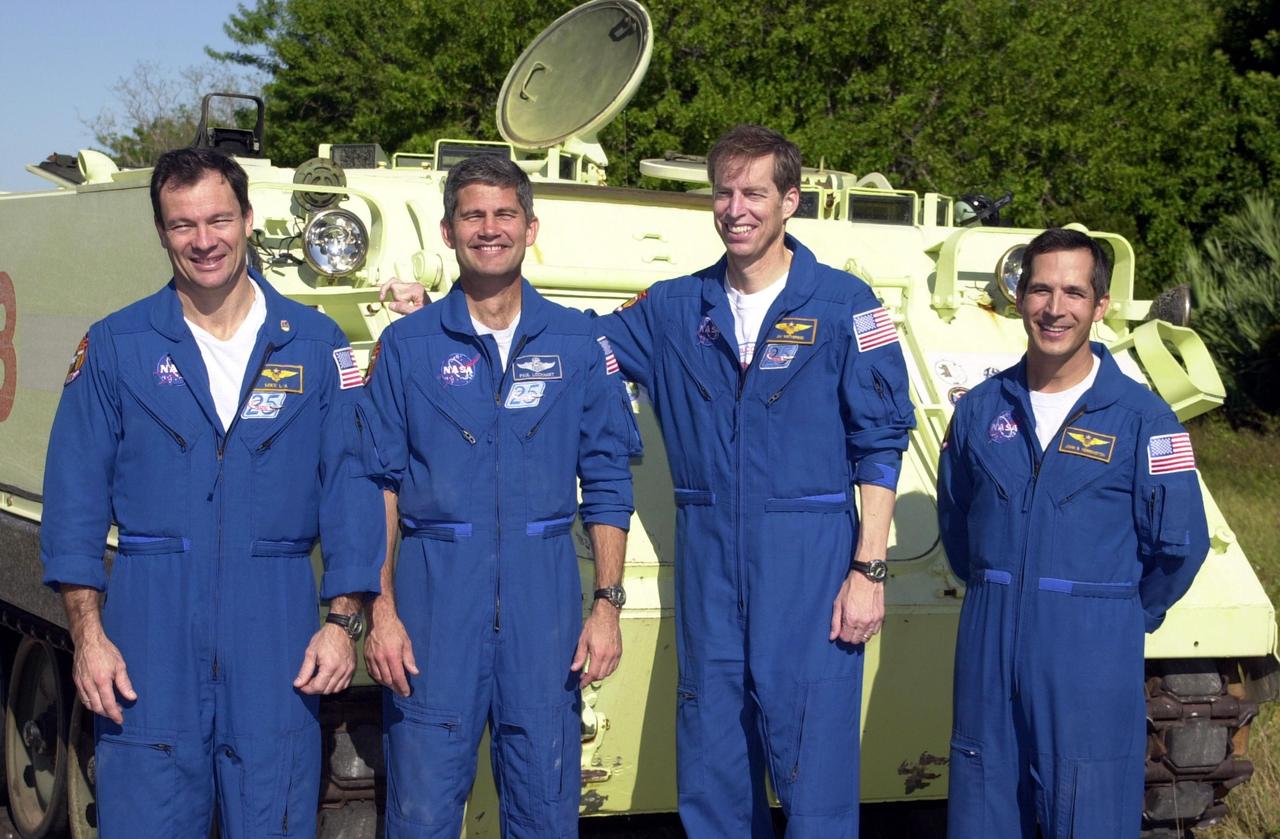
KENNEDY SPACE CENTER, FLA. -- The STS-113 crew pause for a photo after test drives in the M-113 armored personnel carrier behind them. From left are Mission Specialist Michael Lopez-Alegria, Pilot Paul Lockhart, Commander James Wetherbee and Mission Specialist John Herrington. Driving the M-113 is part of emergency egress training at the pad, one of the Terminal Countdown Demonstration Test activities in preparation for launch. The TCDT also includes a simulated launch countdown. The primary payloads on mission STS-113 are the first port truss segment, P1, and the Crew and Equipment Translation Aid (CETA) Cart B. Once delivered, the P1 truss will remain stowed until flight 12A.1 in 2003 when it will be attached to the central truss segment, S0, on the Space Station. Also onboard Space Shuttle Endeavour will be the Expedition 6 crew who will replace Expedition 5, returning to Earth after 4 months.
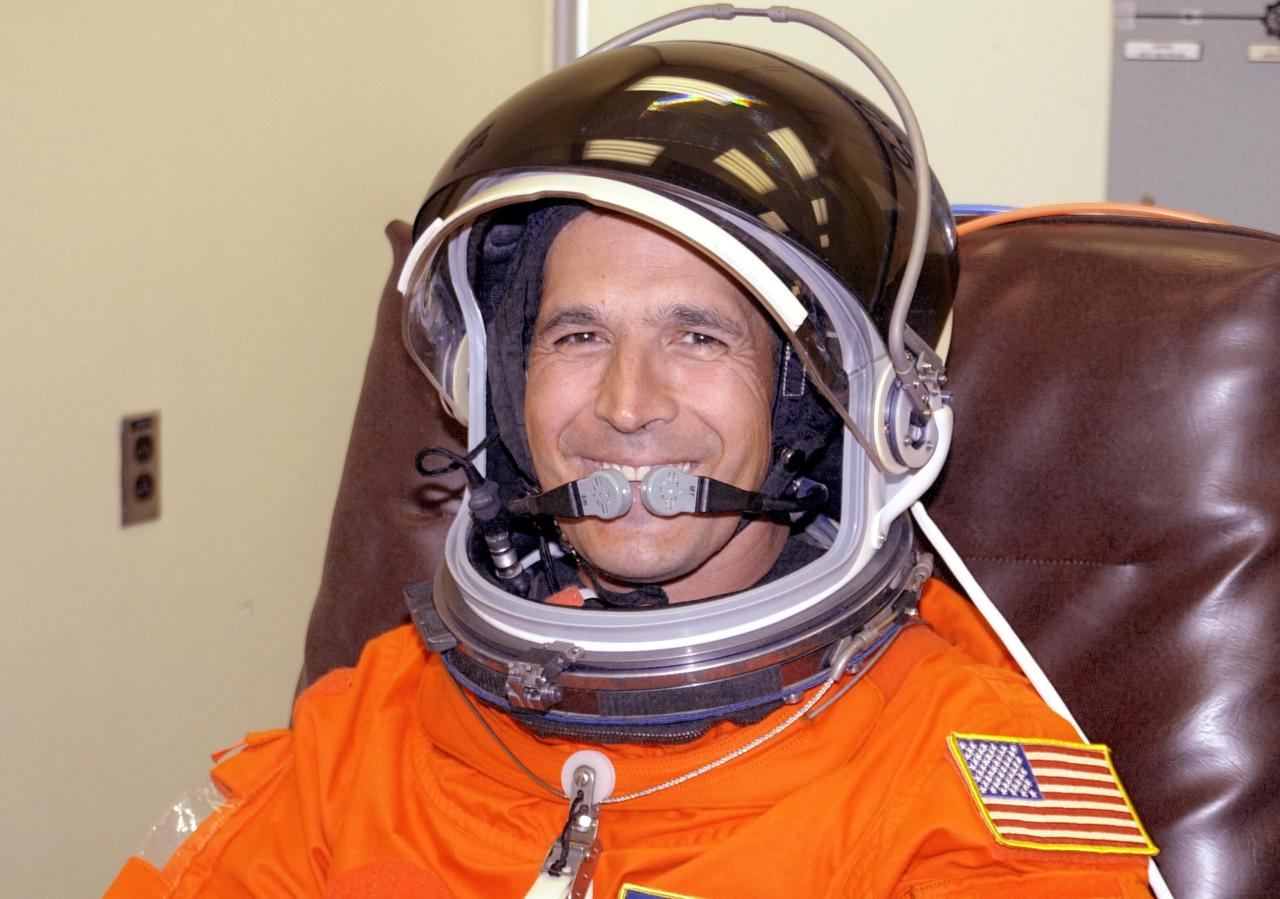
KENNEDY SPACE CENTER, FLA. -- STS-113 Mission Specialist John Herrington relaxes during fit check of his launch and entry suit, part of Terminal Countdown Demonstration Test activities. He and the rest of the crew are preparing for the mission aboard Space Shuttle Endeavour, which is scheduled to launch Nov. 10. The TCDT includes emergency egress training and a launch countdown. The primary payloads on mission STS-113 are the first port truss segment, P1, and the Crew and Equipment Translation Aid (CETA) Cart B. Once delivered, the P1 truss will remain stowed until flight 12A.1 in 2003 when it will be attached to the central truss segment, S0, on the Space Station. Also onboard Space Shuttle Endeavour will be the Expedition 6 crew who will replace Expedition 5, returning to Earth after 4 months.
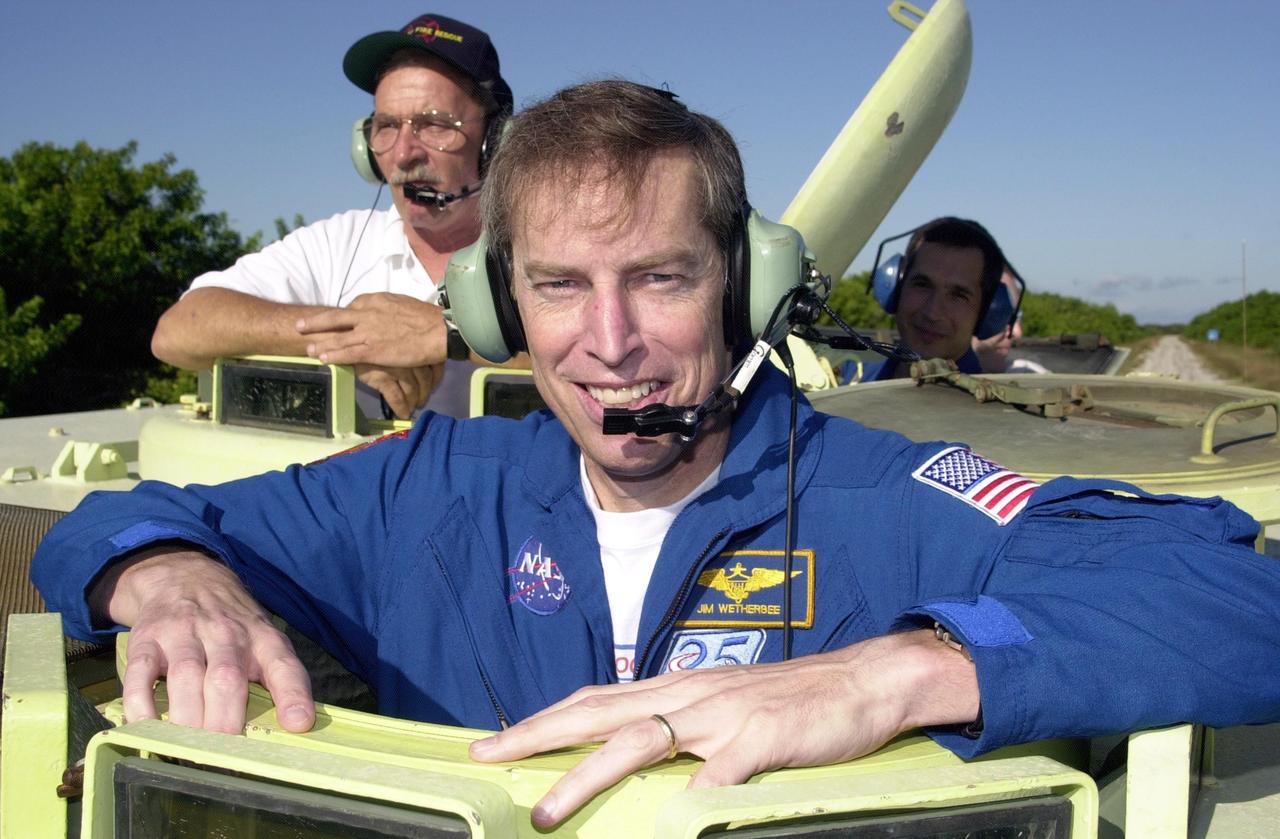
KENNEDY SPACE CENTER, FLA. - STS-113 Mission Commander James Wetherbee gets ready to drive an M-113 armored personnel carrier, part of emergency egress training during Terminal Countdown Demonstration Test activities. He and the rest of the crew are preparing for the mission aboard Space Shuttle Endeavour, which is scheduled to launch Nov. 10. The TCDT includes a launch countdown. The primary payloads on mission STS-113 are the first port truss segment, P1, and the Crew and Equipment Translation Aid (CETA) Cart B. Once delivered, the P1 truss will remain stowed until flight 12A.1 in 2003 when it will be attached to the central truss segment, S0, on the Space Station. Also onboard Space Shuttle Endeavour will be the Expedition 6 crew who will replace Expedition 5, returning to Earth after 4 months.
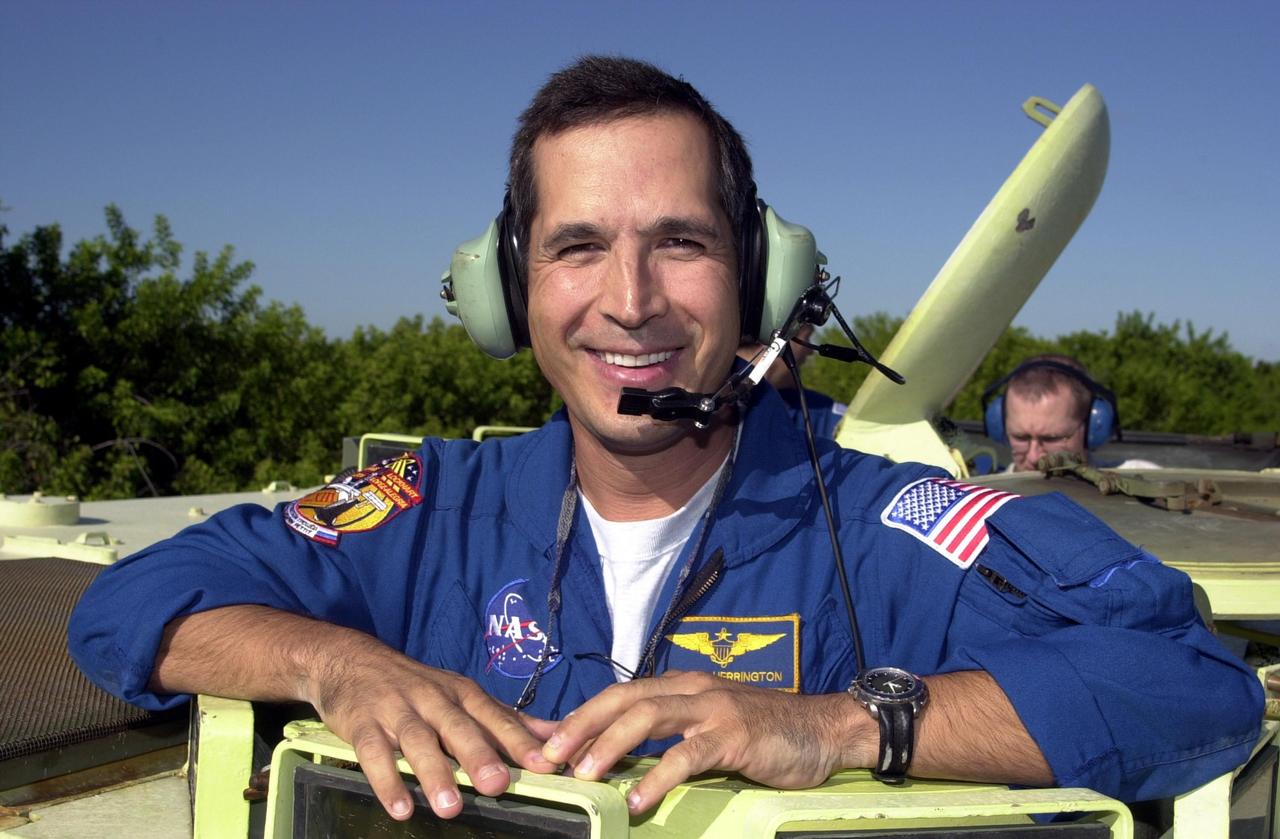
KENNEDY SPACE CENTER, FLA. -- STS-113 Mission Specialist John Herrington stands inside an M-113 armored personnel carrier that he is about to drive as part of emergency egress training during Terminal Countdown Demonstration Test activities. He and the rest of the crew are preparing for the mission aboard Space Shuttle Endeavour, which is scheduled to launch Nov. 10. The TCDT includes a simulated launch countdown. The primary payloads on mission STS-113 are the first port truss segment, P1, and the Crew and Equipment Translation Aid (CETA) Cart B. Once delivered, the P1 truss will remain stowed until flight 12A.1 in 2003 when it will be attached to the central truss segment, S0, on the Space Station. Also onboard Space Shuttle Endeavour will be the Expedition 6 crew who will replace Expedition 5, returning to Earth after 4 months.
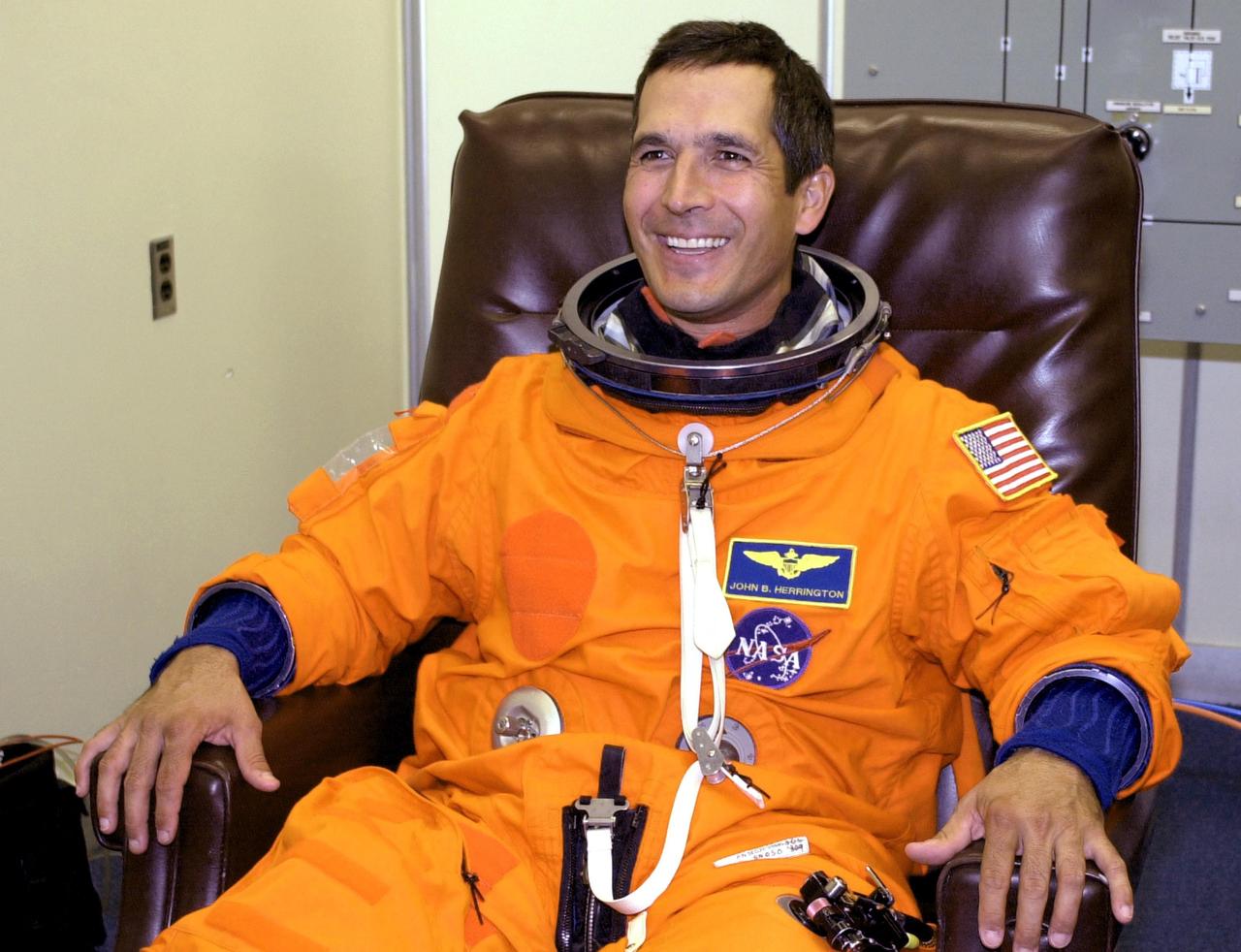
KENNEDY SPACE CENTER, FLA. -- STS-113 Mission Specialist John Herrington relaxes during fit check of his launch and entry suit, part of Terminal Countdown Demonstration Test activities. He and the rest of the crew are preparing for the mission aboard Space Shuttle Endeavour, which is scheduled to launch Nov. 10. The TCDT includes emergency egress training and a launch countdown. The primary payloads on mission STS-113 are the first port truss segment, P1, and the Crew and Equipment Translation Aid (CETA) Cart B. Once delivered, the P1 truss will remain stowed until flight 12A.1 in 2003 when it will be attached to the central truss segment, S0, on the Space Station. Also onboard Space Shuttle Endeavour will be the Expedition 6 crew who will replace Expedition 5, returning to Earth after 4 months.
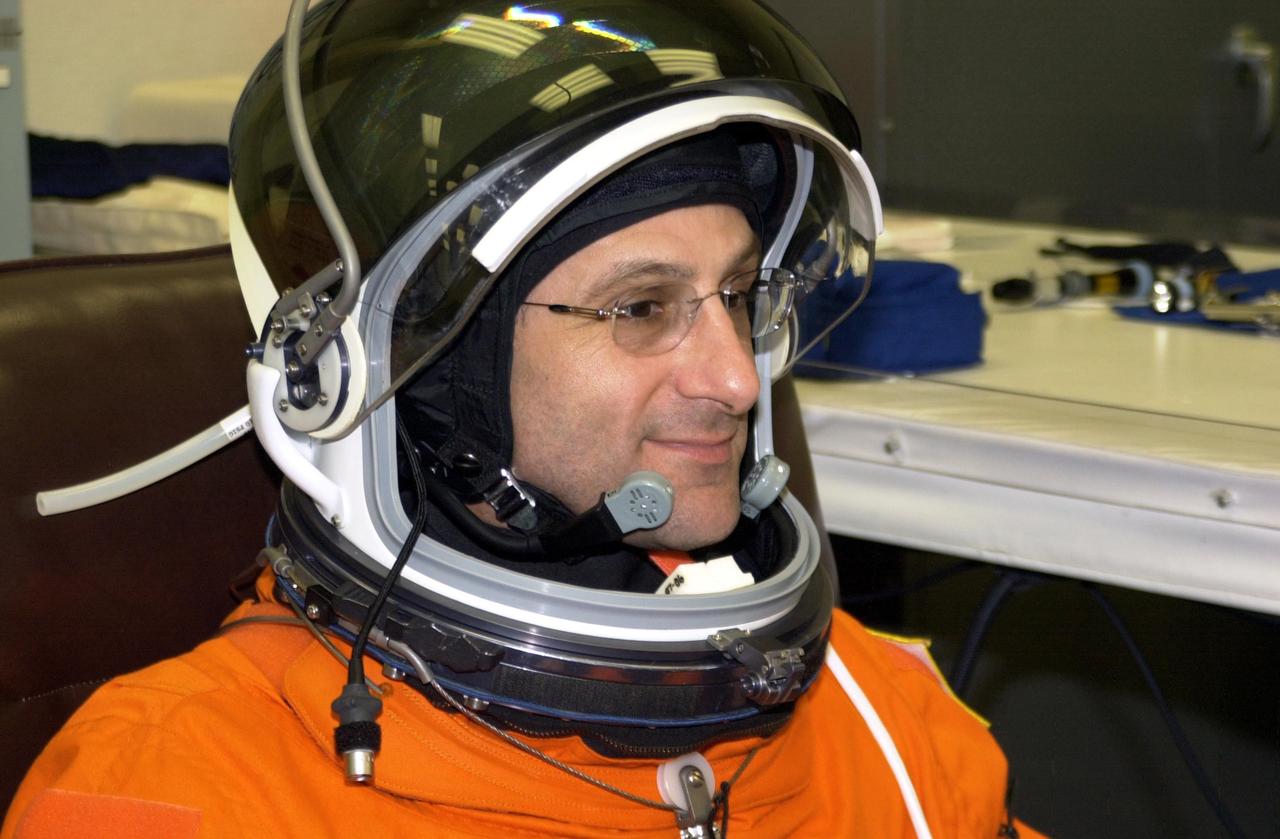
KENNEDY SPACE CENTER, FLA. -- STS-113 Mission Specialist Donald Pettit smiles during fit check of his helmet, part of Terminal Countdown Demonstration Test activities. He and the rest of the crew are preparing for the mission aboard Space Shuttle Endeavour, which is scheduled to launch Nov. 10. The TCDT includes emergency egress training and a launch countdown. The primary payloads on mission STS-113 are the first port truss segment, P1, and the Crew and Equipment Translation Aid (CETA) Cart B. Once delivered, the P1 truss will remain stowed until flight 12A.1 in 2003 when it will be attached to the central truss segment, S0, on the Space Station. Also onboard Space Shuttle Endeavour will be the Expedition 6 crew who will replace Expedition 5, returning to Earth after 4 months.
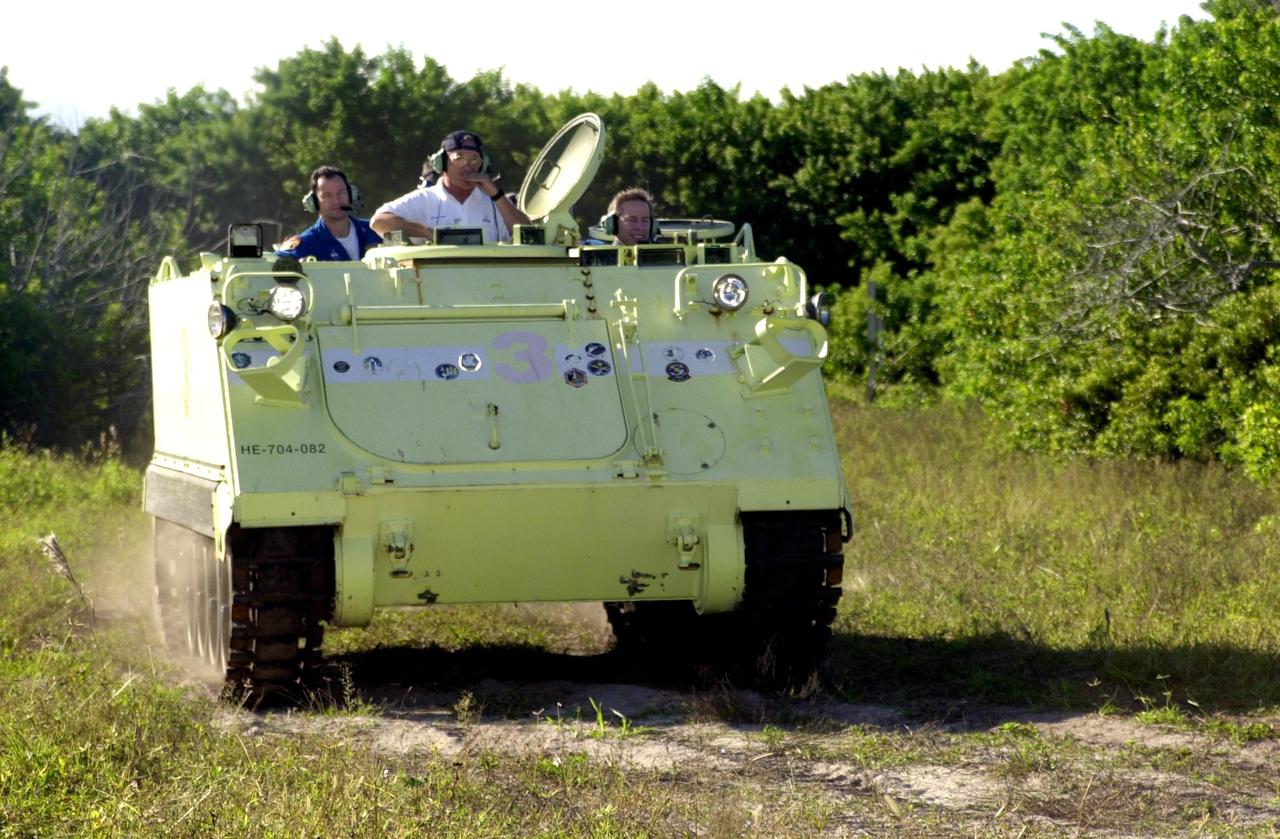
KENNEDY SPACE CENTER, FLA. -- STS-113 Mission Commander James Wetherbee practices driving an M-113 armored personnel carrier, part of emergency egress training during Terminal Countdown Demonstration Test activities. He and the rest of the crew are preparing for the mission aboard Space Shuttle Endeavour, which is scheduled to launch Nov. 10. The TCDT includes a launch countdown. The primary payloads on mission STS-113 are the first port truss segment, P1, and the Crew and Equipment Translation Aid (CETA) Cart B. Once delivered, the P1 truss will remain stowed until flight 12A.1 in 2003 when it will be attached to the central truss segment, S0, on the Space Station. Also onboard Space Shuttle Endeavour will be the Expedition 6 crew who will replace Expedition 5, returning to Earth after 4 months.
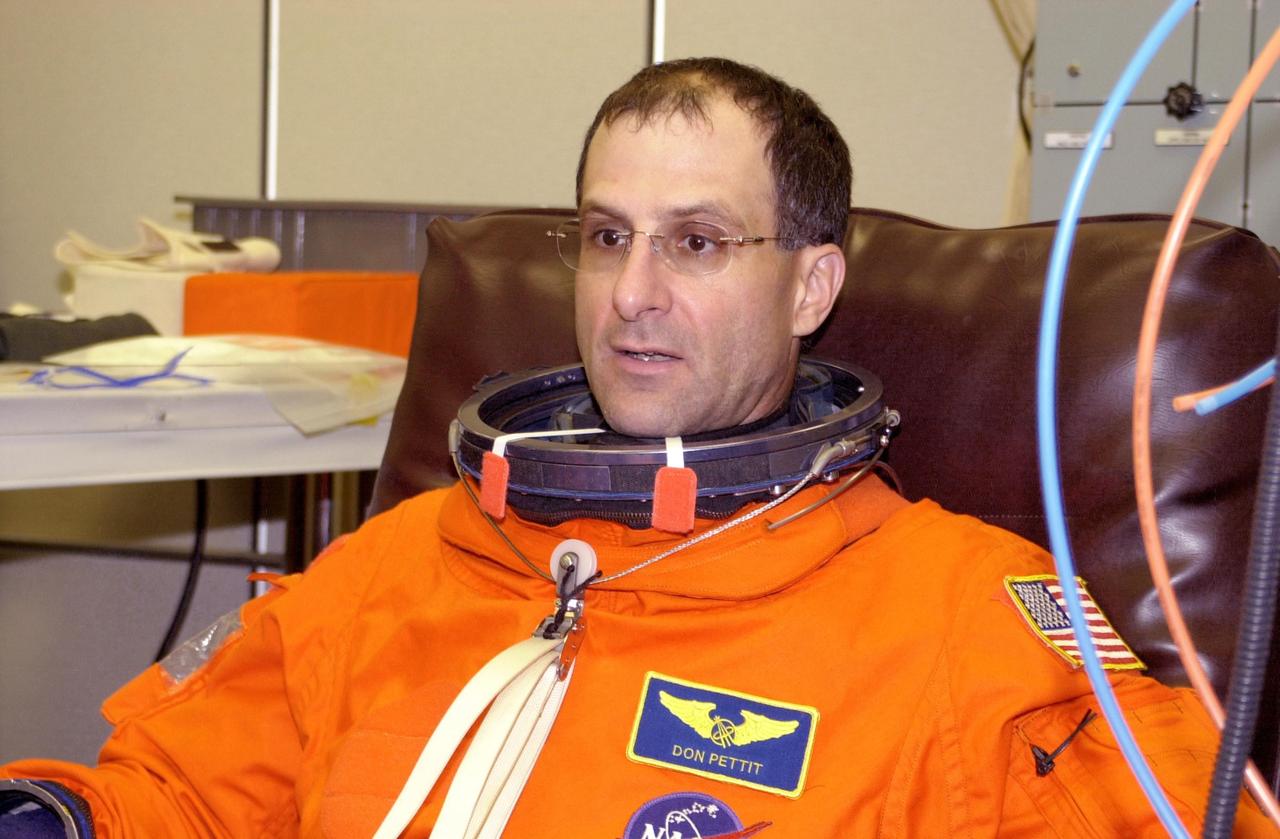
KENNEDY SPACE CENTER, FLA. -- STS-113 Mission Specialist Donald Pettit relaxes during fit check of his launch and entry suit, part of Terminal Countdown Demonstration Test activities. He and the rest of the crew are preparing for the mission aboard Space Shuttle Endeavour, which is scheduled to launch Nov. 10. The TCDT includes emergency egress training and a launch countdown. The primary payloads on mission STS-113 are the first port truss segment, P1, and the Crew and Equipment Translation Aid (CETA) Cart B. Once delivered, the P1 truss will remain stowed until flight 12A.1 in 2003 when it will be attached to the central truss segment, S0, on the Space Station. Also onboard Space Shuttle Endeavour will be the Expedition 6 crew who will replace Expedition 5, returning to Earth after 4 months.
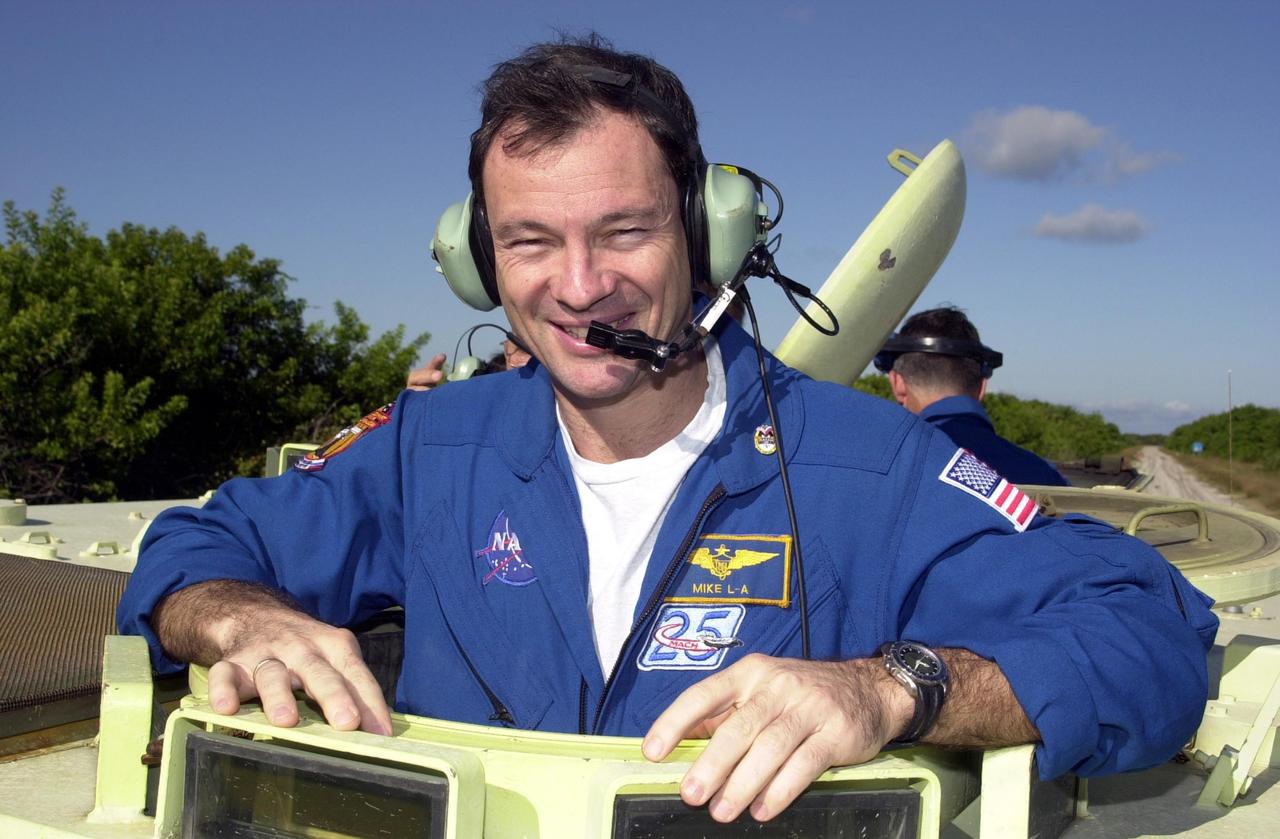
KENNEDY SPACE CENTER, FLA. - STS-113 Mission Specialist Michael Lopez-Alegria is ready to begin a test drive behind the wheel of an M-113 armored personnel carrier during emergency egress training at the pad. He and the rest of the crew are preparing for the mission aboard Space Shuttle Endeavour, which is scheduled to launch Nov. 10, by taking part in Terminal Countdown Demonstration Test activities. The TCDT includes a simulated launch countdown. The primary payloads on mission STS-113 are the first port truss segment, P1, and the Crew and Equipment Translation Aid (CETA) Cart B. Once delivered, the P1 truss will remain stowed until flight 12A.1 in 2003 when it will be attached to the central truss segment, S0, on the Space Station. Also onboard Space Shuttle Endeavour will be the Expedition 6 crew who will replace Expedition 5, returning to Earth after 4 months.
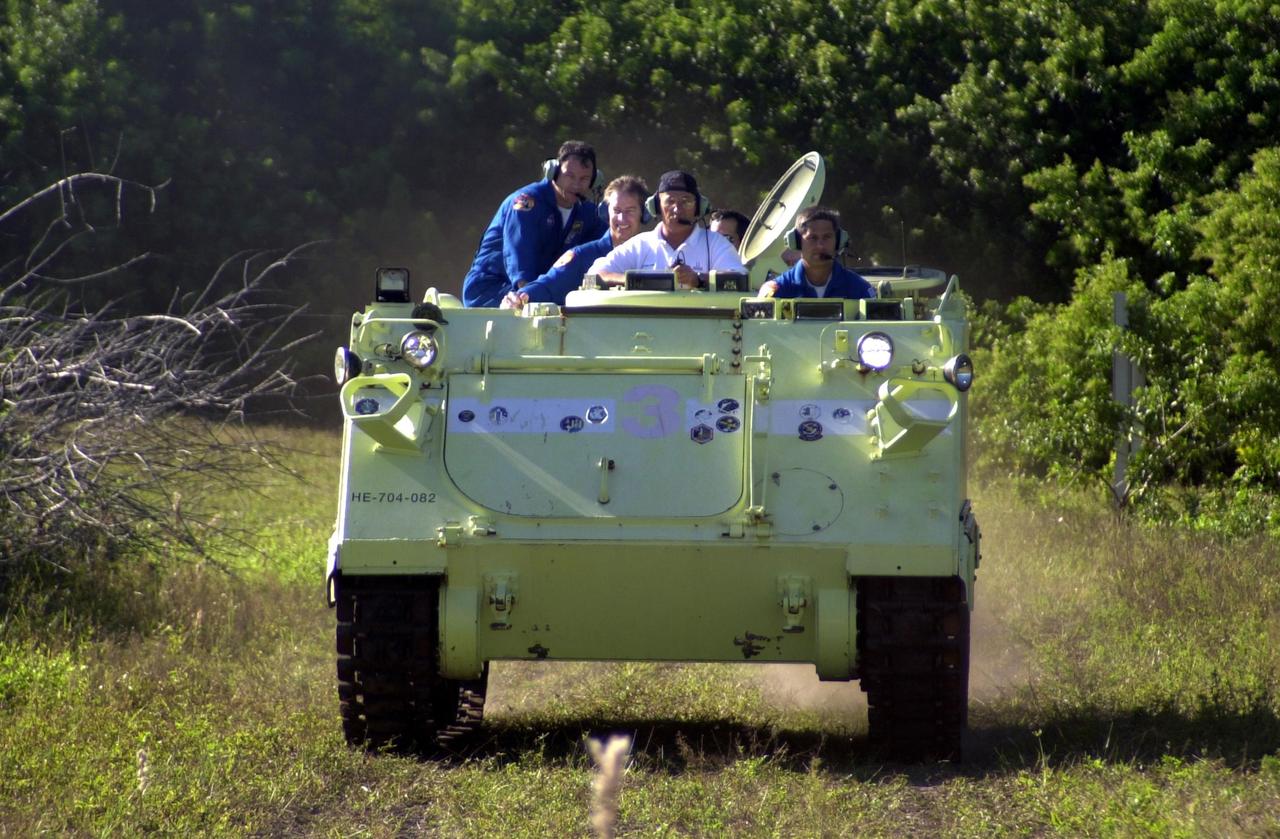
KENNEDY SPACE CENTER, FLA. -- STS-113 Pilot Paul Lockhart test drives an M-113 armored personnel carrier, part of emergency egress training during Terminal Countdown Demonstration Test activities. He is accompanied by several other crew members, seen at left, Mission Specialist Michael Lopez-Alegria and Commander James Wetherbee. The crew is preparing for the mission aboard Space Shuttle Endeavour, which is scheduled to launch Nov. 10. The TCDT includes a simulated launch countdown. The primary payloads on mission STS-113 are the first port truss segment, P1, and the Crew and Equipment Translation Aid (CETA) Cart B. Once delivered, the P1 truss will remain stowed until flight 12A.1 in 2003 when it will be attached to the central truss segment, S0, on the Space Station. Also onboard Space Shuttle Endeavour will be the Expedition 6 crew who will replace Expedition 5, returning to Earth after 4 months.
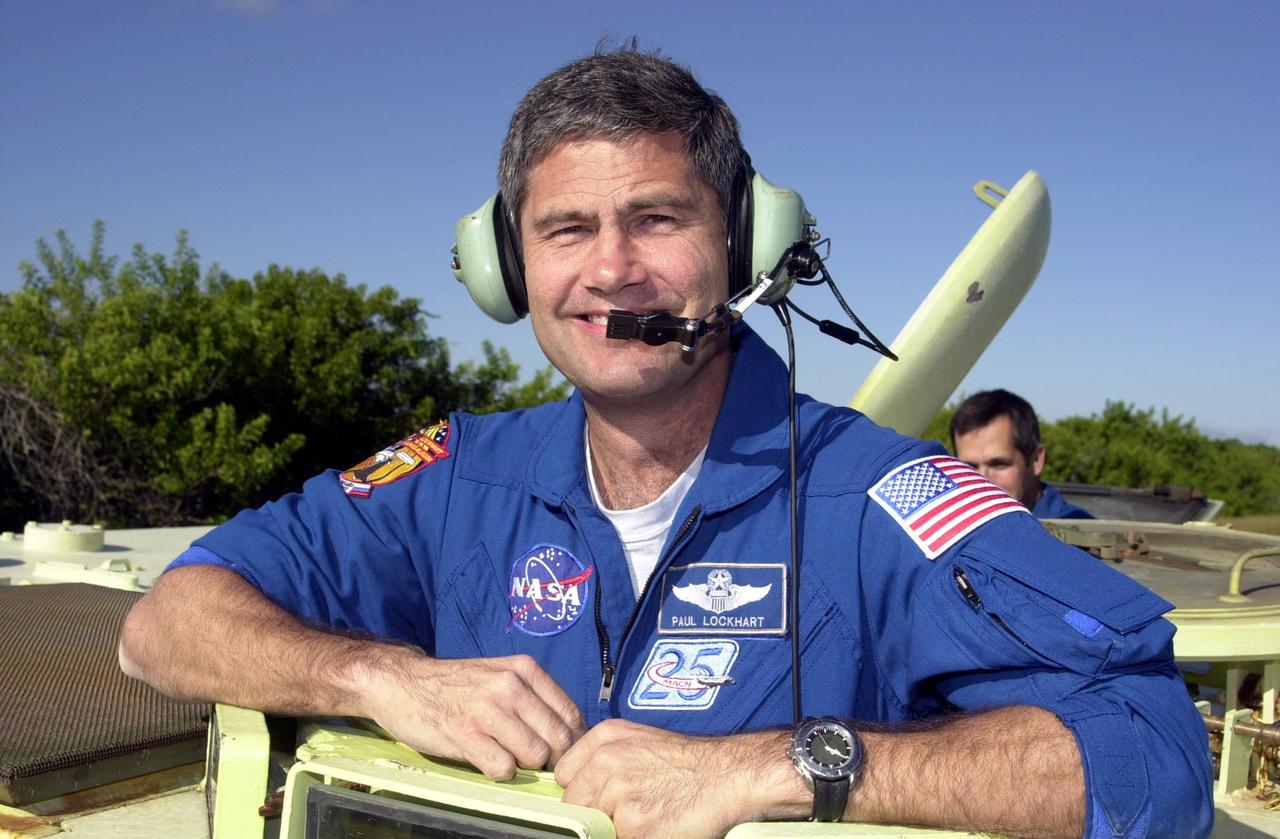
KENNEDY SPACE CENTER, FLA. -- STS-113 Pilot Paul Lockhart stands inside an M-113 armored personnel carrier he is about to drive, part of emergency egress training during Terminal Countdown Demonstration Test activities. He and the rest of the crew are preparing for the mission aboard Space Shuttle Endeavour, which is scheduled to launch Nov. 10. The TCDT includes a simulated launch countdown. The primary payloads on mission STS-113 are the first port truss segment, P1, and the Crew and Equipment Translation Aid (CETA) Cart B. Once delivered, the P1 truss will remain stowed until flight 12A.1 in 2003 when it will be attached to the central truss segment, S0, on the Space Station. Also onboard Space Shuttle Endeavour will be the Expedition 6 crew who will replace Expedition 5, returning to Earth after 4 months.

KENNEDY SPACE CENTER, FLA. -- STS-113 Mission Specialist Michael Lopez-Alegria concentrates on driving an M-113 armored personnel carrier during emergency egress training at the pad. He is accompanied by (far left) Mission Specialist John Herrington and Commander James Wetherbee. Behind Lopez-Alegria is Pilot Paul Lockhart. The crew is preparing for the mission aboard Space Shuttle Endeavour, which is scheduled to launch Nov. 10, by taking part in Terminal Countdown Demonstration Test activities. The TCDT includes a simulated launch countdown.. The primary payloads on mission STS-113 are the first port truss segment, P1, and the Crew and Equipment Translation Aid (CETA) Cart B. Once delivered, the P1 truss will remain stowed until flight 12A.1 in 2003 when it will be attached to the central truss segment, S0, on the Space Station. Also onboard Space Shuttle Endeavour will be the Expedition 6 crew who will replace Expedition 5, returning to Earth after 4 months.