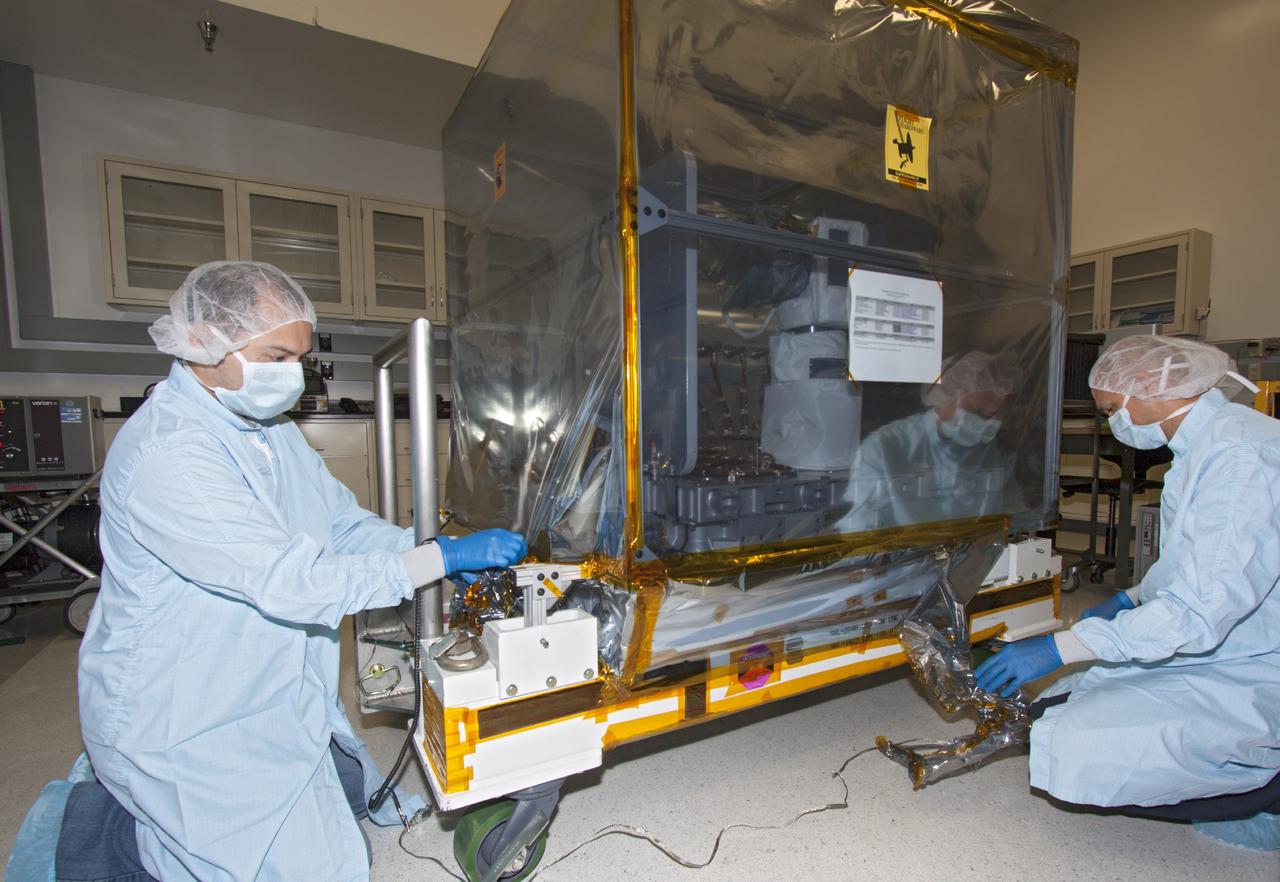
CAPE CANAVERAL, Fla. -- At NASA’s Kennedy Space Center in Florida, technicians prepare to uncover and check the Optical Payload for Lasercomm Science, or OPALS, experiment in a test cell at a Space Station Processing Facility offline laboratory. The optical technology demonstration experiment arrived from the agency’s Jet Propulsion Laboratory in Pasadena, Calif. NASA will use the International Space Station to test OPALS’ communications technology that could dramatically improve spacecraft communications, enhance commercial missions and strengthen transmission of scientific data. The experiment is slated to fly later this year aboard a SpaceX Dragon commercial resupply mission to the space station. The mission is expected to run 90 days after installation on the outside of the station. For more information about OPALS, visit: http://go.nasa.gov/10MMPDO. Photo credit: NASA/Jim Grossmann
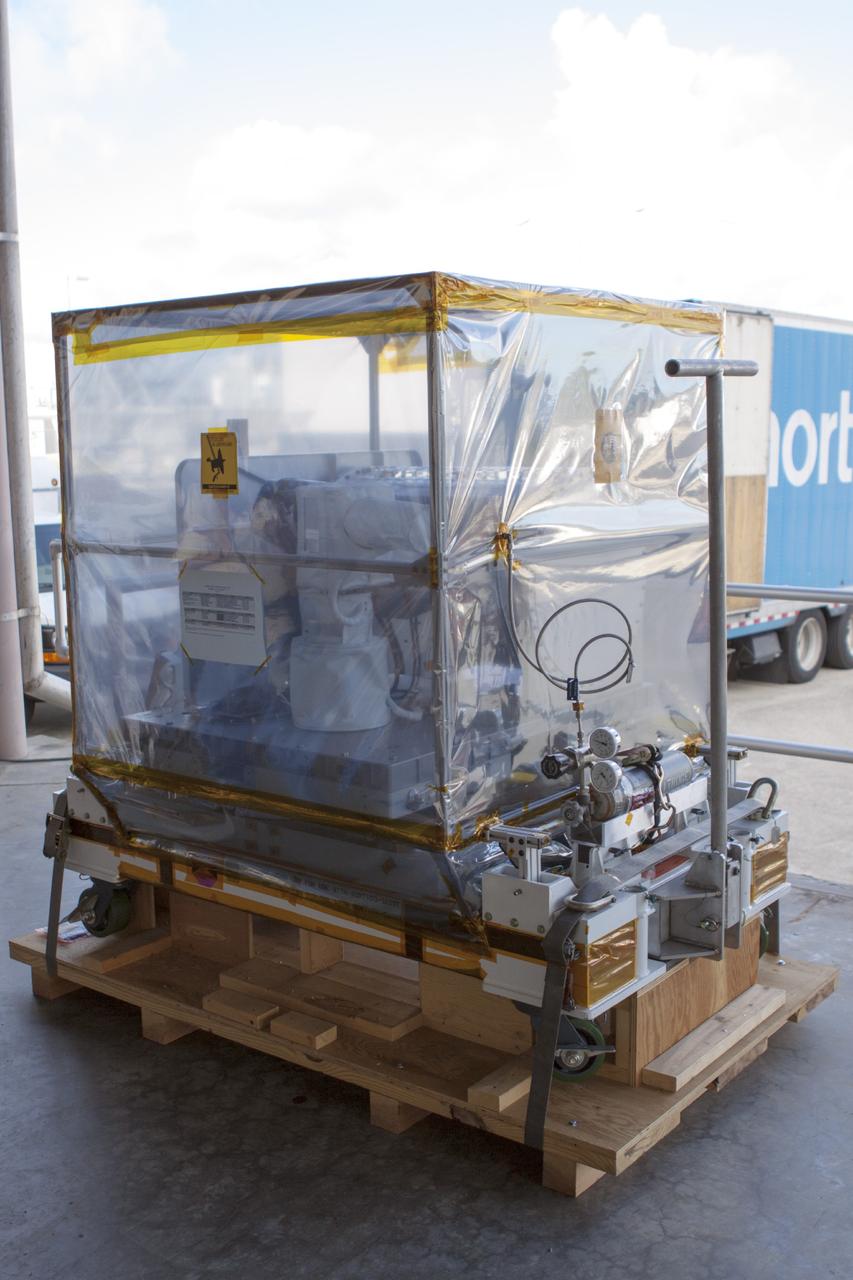
CAPE CANAVERAL, Fla. -- The Optical Payload for Lasercomm Science, or OPALS, an optical technology demonstration experiment, sits on a pallet near the Space Station Processing Facility at NASA’s Kennedy Space Center in Florida. OPALS arrived from the agency’s Jet Propulsion Laboratory in Pasadena, Calif. NASA will use the International Space Station to test OPALS’ communications technology that could dramatically improve spacecraft communications, enhance commercial missions and strengthen transmission of scientific data. The experiment is slated to fly later this year aboard a SpaceX Dragon commercial resupply mission to the space station. The mission is expected to run 90 days after installation on the outside of the station. For more information about OPALS, visit: http://go.nasa.gov/10MMPDO. Photo credit: NASA/Jim Grossmann
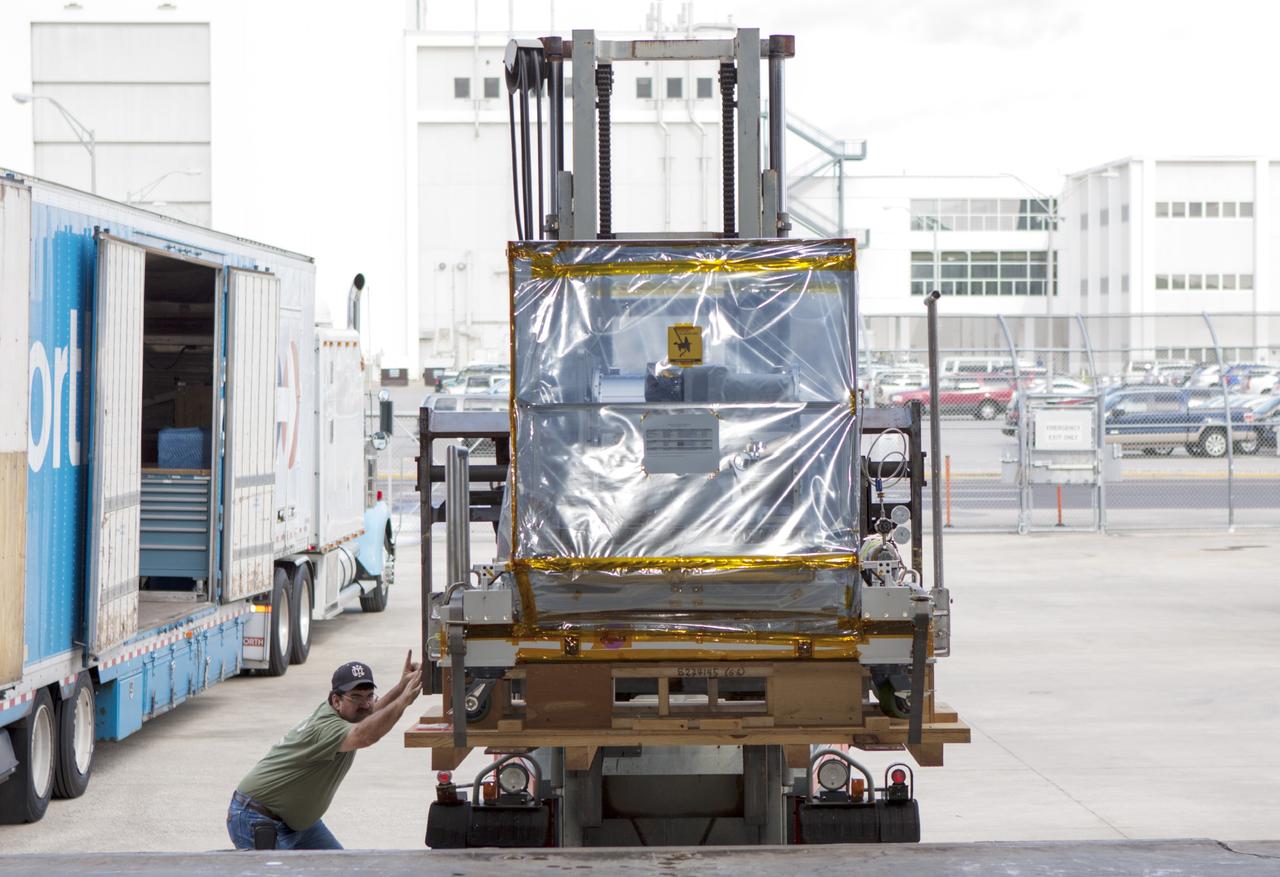
CAPE CANAVERAL, Fla. -- At NASA’s Kennedy Space Center in Florida, a technician monitors the progress as a forklift is used to move the Optical Payload for Lasercomm Science, or OPALS, experiment to the air lock entrance at the Space Station Processing Facility. The optical technology demonstration experiment arrived from the agency’s Jet Propulsion Laboratory in Pasadena, Calif. NASA will use the International Space Station to test OPALS’ communications technology that could dramatically improve spacecraft communications, enhance commercial missions and strengthen transmission of scientific data. The experiment is slated to fly later this year aboard a SpaceX Dragon commercial resupply mission to the space station. The mission is expected to run 90 days after installation on the outside of the station. For more information about OPALS, visit: http://go.nasa.gov/10MMPDO. Photo credit: NASA/Jim Grossmann
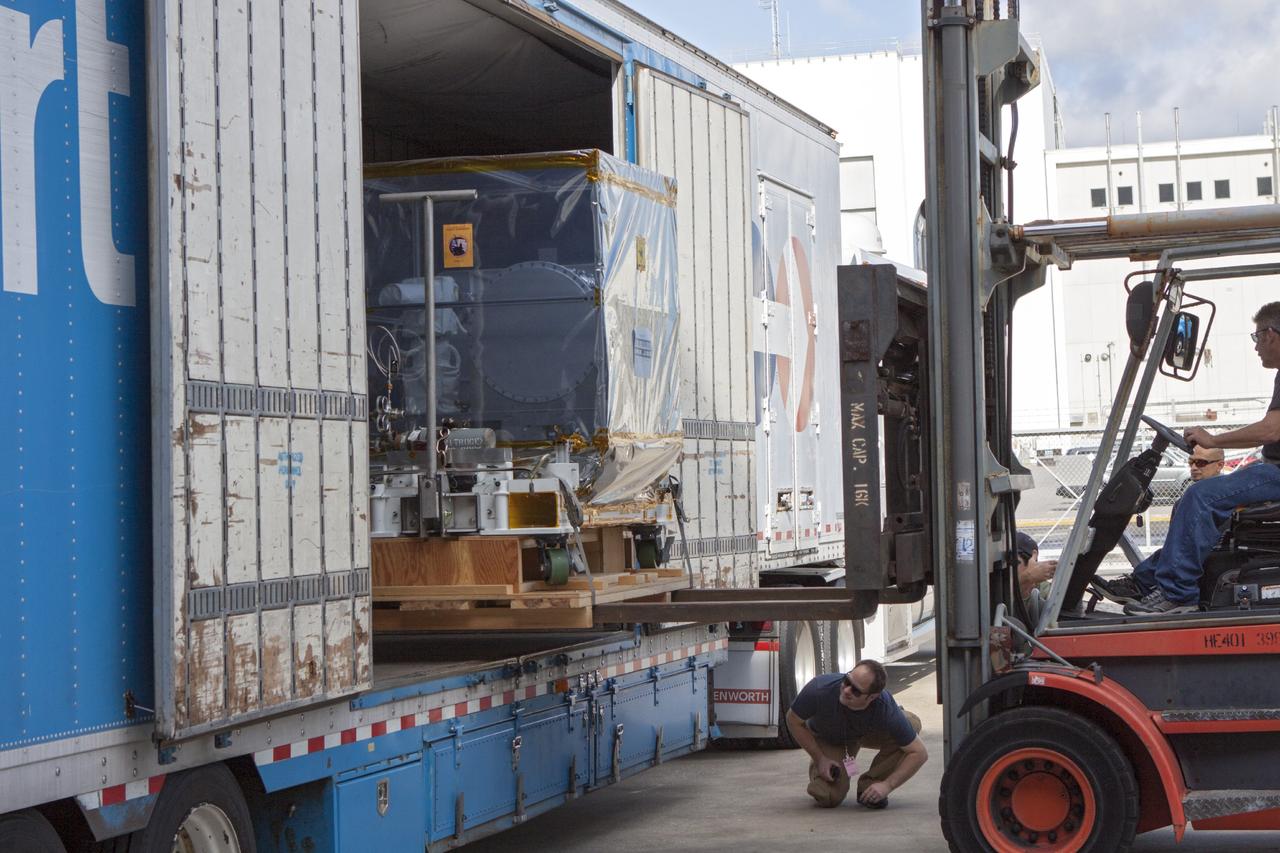
CAPE CANAVERAL, Fla. -- At NASA’s Kennedy Space Center in Florida, a technician uses a forklift to remove the Optical Payload for Lasercomm Science, or OPALS, experiment from a truck at the Space Station Processing Facility. The optical technology demonstration experiment arrived from the agency’s Jet Propulsion Laboratory in Pasadena, Calif. NASA will use the International Space Station to test OPALS’ communications technology that could dramatically improve spacecraft communications, enhance commercial missions and strengthen transmission of scientific data. The experiment is slated to fly later this year aboard a SpaceX Dragon commercial resupply mission to the space station. The mission is expected to run 90 days after installation on the outside of the station. For more information about OPALS, visit: http://go.nasa.gov/10MMPDO. Photo credit: NASA/Jim Grossmann
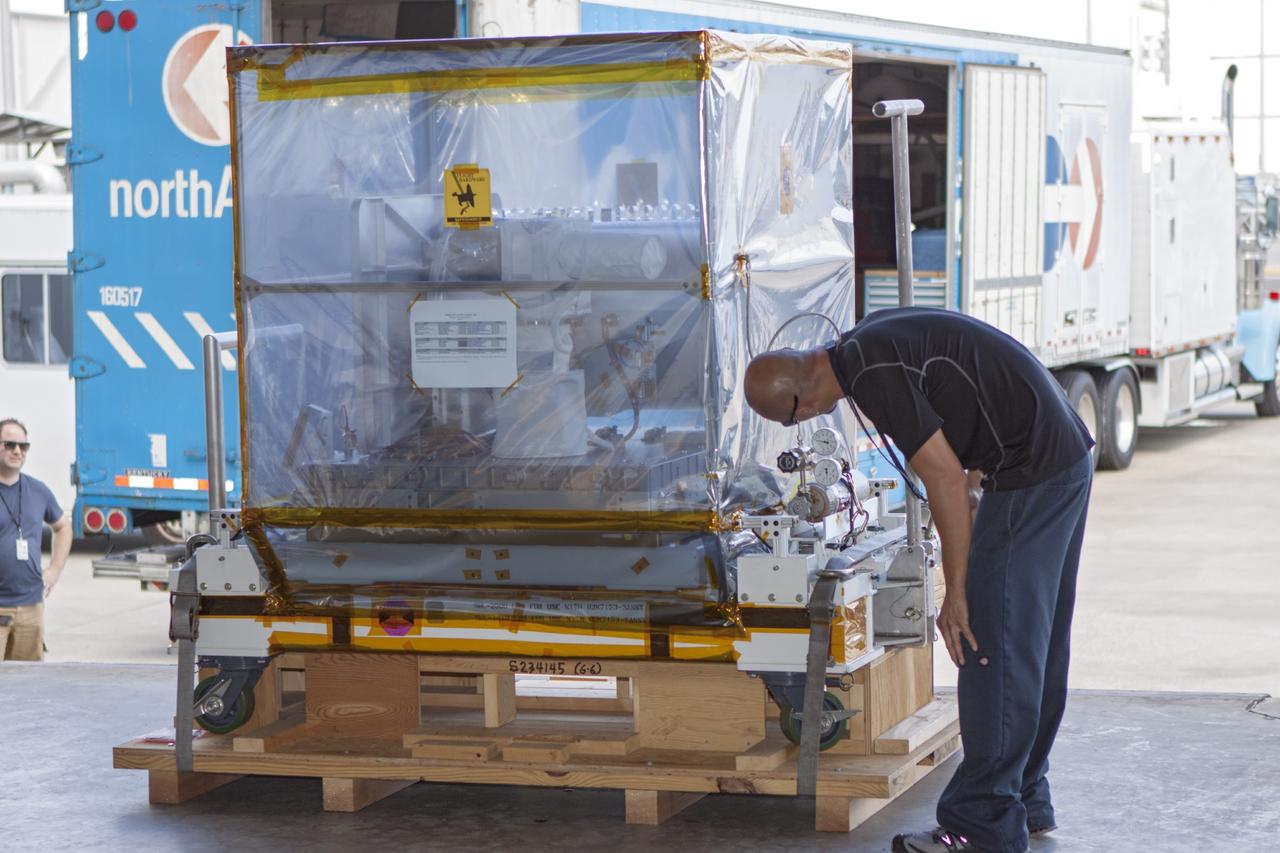
CAPE CANAVERAL, Fla. -- At NASA’s Kennedy Space Center in Florida, a technician monitors the progress as a forklift is used to move the Optical Payload for Lasercomm Science, or OPALS, experiment to the air lock entrance at the Space Station Processing Facility. The optical technology demonstration experiment arrived from the agency’s Jet Propulsion Laboratory in Pasadena, Calif. NASA will use the International Space Station to test OPALS’ communications technology that could dramatically improve spacecraft communications, enhance commercial missions and strengthen transmission of scientific data. The experiment is slated to fly later this year aboard a SpaceX Dragon commercial resupply mission to the space station. The mission is expected to run 90 days after installation on the outside of the station. For more information about OPALS, visit: http://go.nasa.gov/10MMPDO. Photo credit: NASA/Jim Grossmann
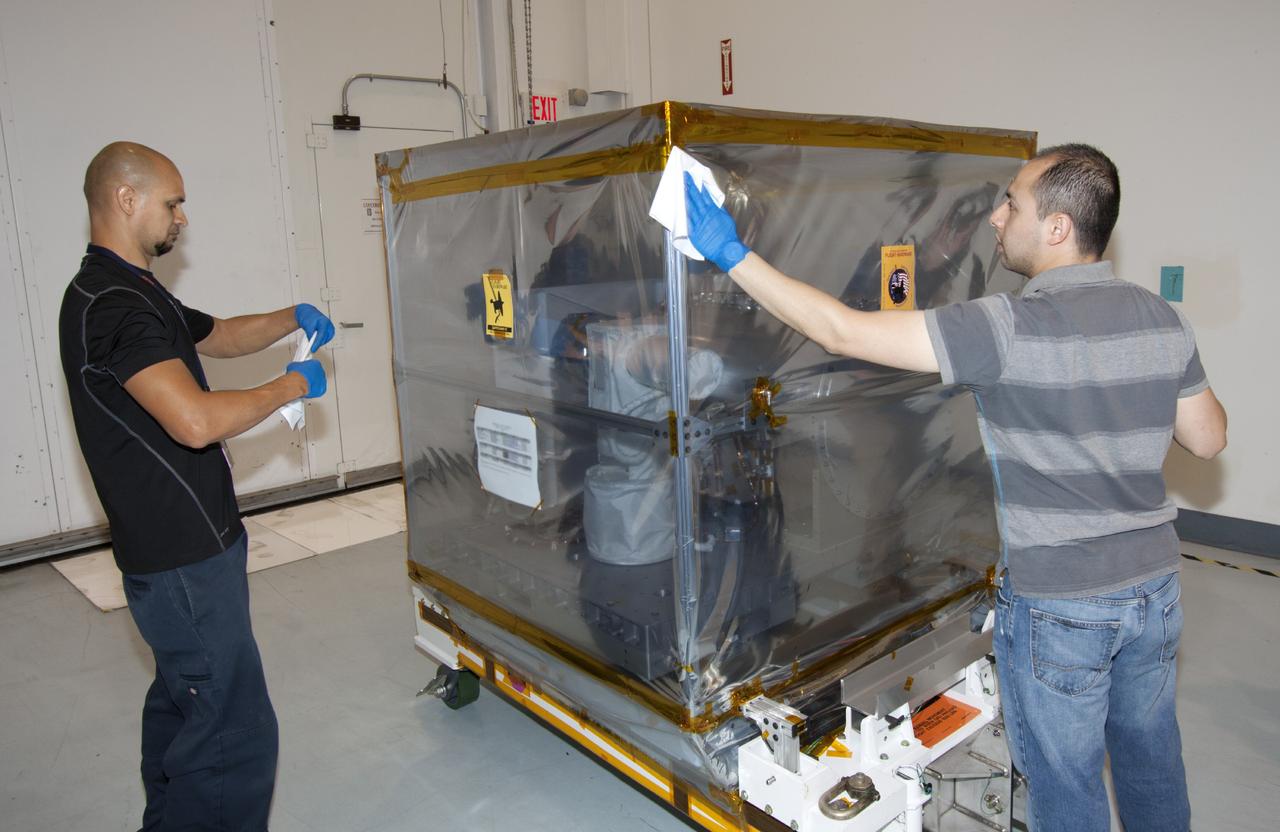
CAPE CANAVERAL, Fla. -- At NASA’s Kennedy Space Center in Florida, technicians prepare to move the Optical Payload for Lasercomm Science, or OPALS, experiment into the Space Station Processing Facility. The optical technology demonstration experiment arrived from the agency’s Jet Propulsion Laboratory in Pasadena, Calif. NASA will use the International Space Station to test OPALS’ communications technology that could dramatically improve spacecraft communications, enhance commercial missions and strengthen transmission of scientific data. The experiment is slated to fly later this year aboard a SpaceX Dragon commercial resupply mission to the space station. The mission is expected to run 90 days after installation on the outside of the station. For more information about OPALS, visit: http://go.nasa.gov/10MMPDO. Photo credit: NASA/Jim Grossmann
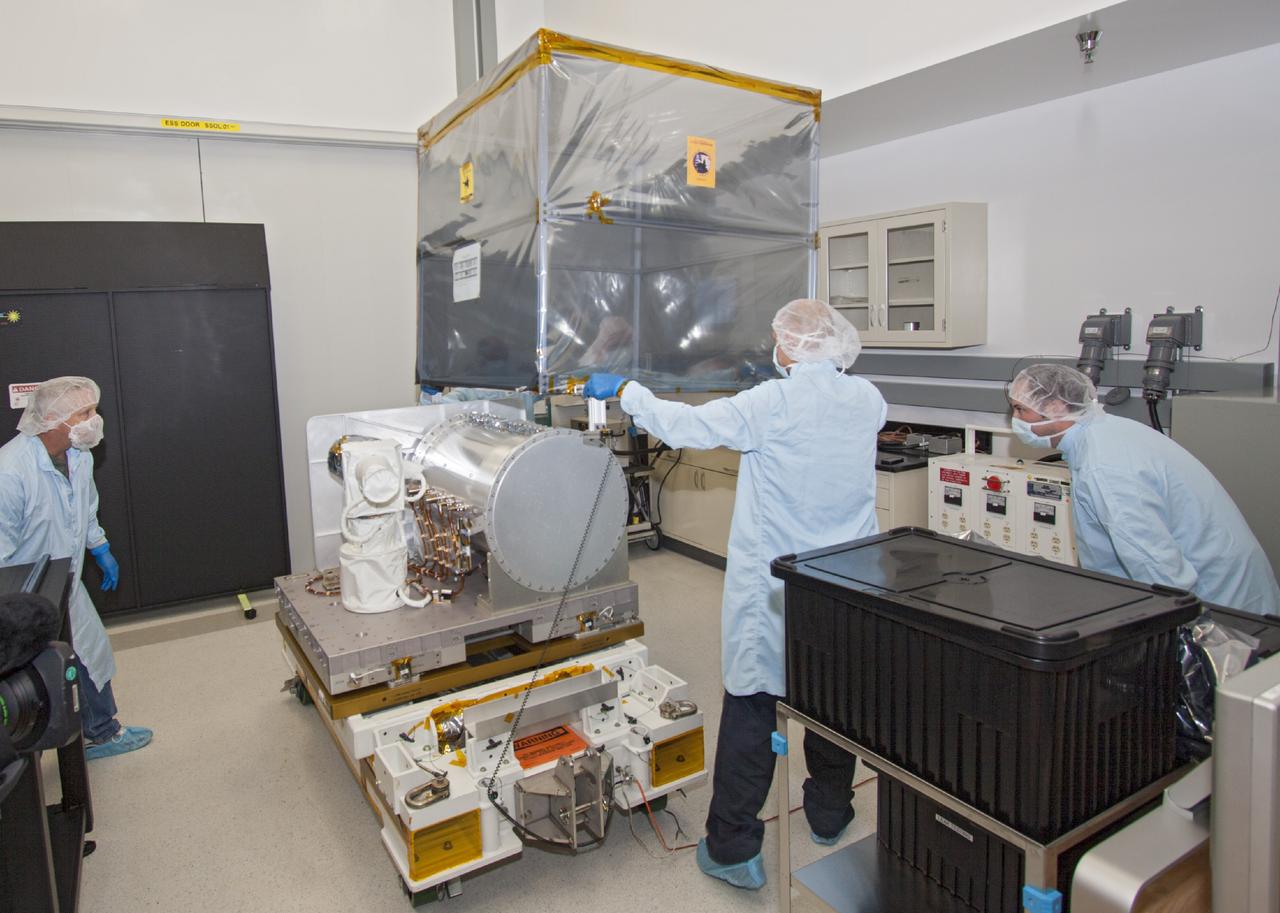
CAPE CANAVERAL, Fla. --At NASA’s Kennedy Space Center in Florida, technicians uncover and check the Optical Payload for Lasercomm Science, or OPALS, experiment in a test cell at a Space Station Processing Facility offline laboratory. The optical technology demonstration experiment arrived from the agency’s Jet Propulsion Laboratory in Pasadena, Calif. NASA will use the International Space Station to test OPALS’ communications technology that could dramatically improve spacecraft communications, enhance commercial missions and strengthen transmission of scientific data. The experiment is slated to fly later this year aboard a SpaceX Dragon commercial resupply mission to the space station. The mission is expected to run 90 days after installation on the outside of the station. For more information about OPALS, visit: http://go.nasa.gov/10MMPDO. Photo credit: NASA/Jim Grossmann
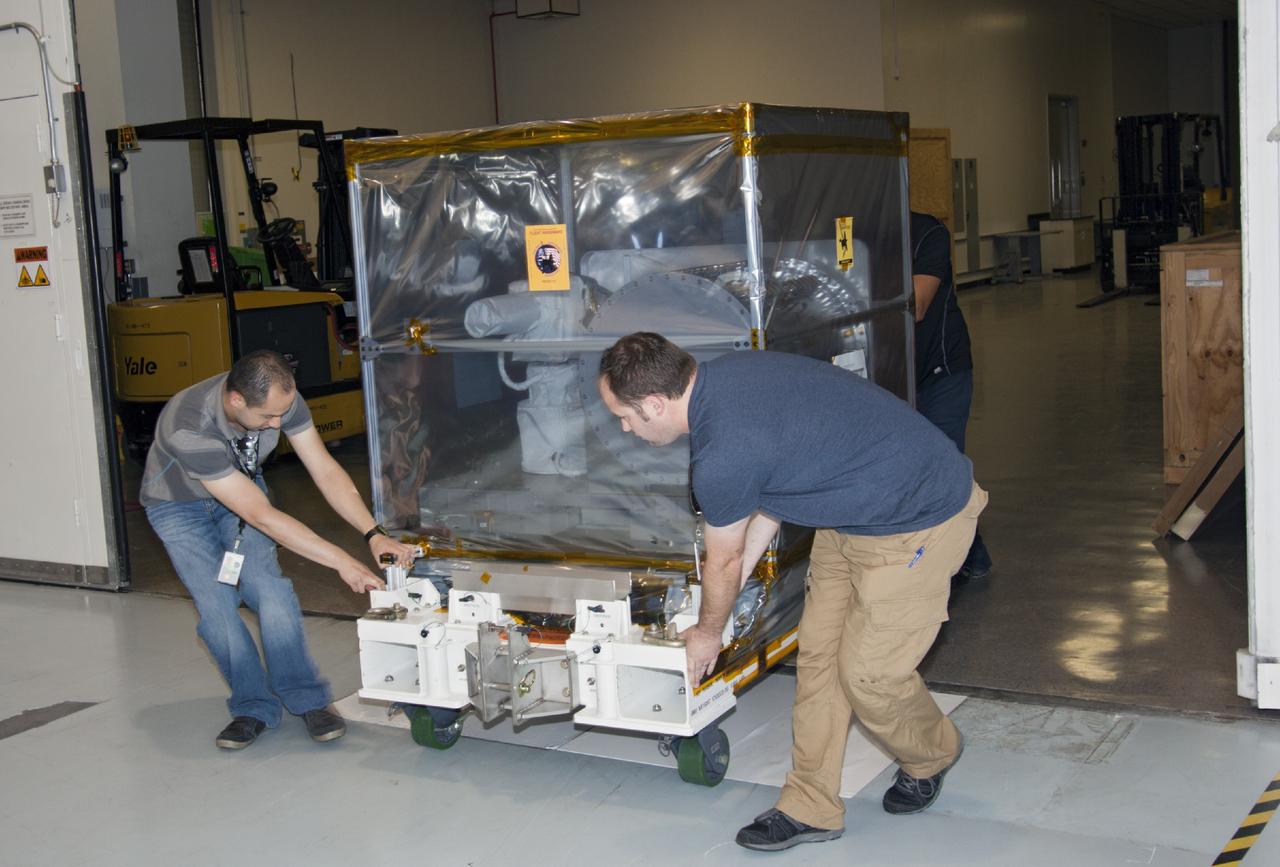
CAPE CANAVERAL, Fla. -- At NASA’s Kennedy Space Center in Florida, technicians move the Optical Payload for Lasercomm Science, or OPALS, experiment from the air lock into an offline laboratory at the Space Station Processing Facility. The optical technology demonstration experiment arrived from the agency’s Jet Propulsion Laboratory in Pasadena, Calif. NASA will use the International Space Station to test OPALS’ communications technology that could dramatically improve spacecraft communications, enhance commercial missions and strengthen transmission of scientific data. The experiment is slated to fly later this year aboard a SpaceX Dragon commercial resupply mission to the space station. The mission is expected to run 90 days after installation on the outside of the station. For more information about OPALS, visit: http://go.nasa.gov/10MMPDO. Photo credit: NASA/Jim Grossmann
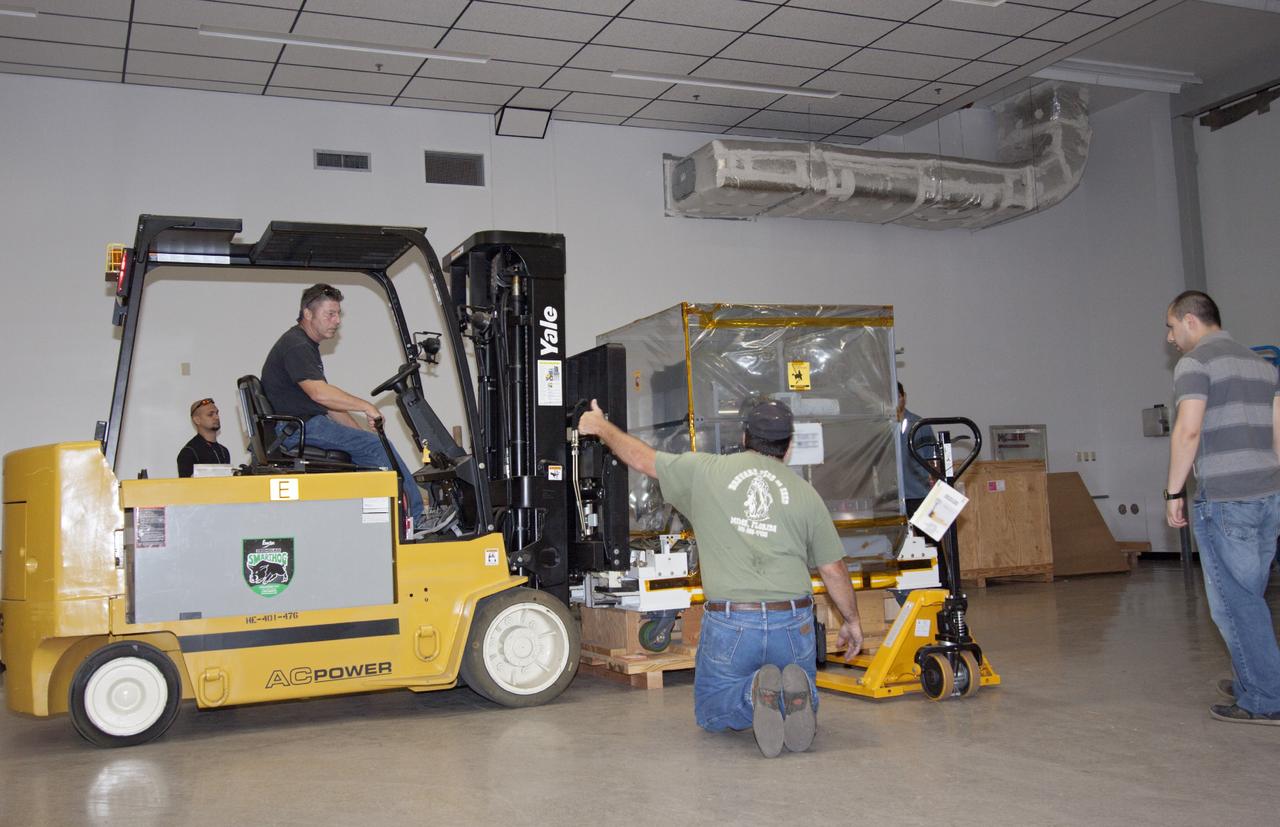
CAPE CANAVERAL, Fla. -- At NASA’s Kennedy Space Center in Florida, a technicians monitor the progress as a forklift is used to lower the Optical Payload for Lasercomm Science, or OPALS, experiment near the air lock entrance at the Space Station Processing Facility. The optical technology demonstration experiment arrived from the agency’s Jet Propulsion Laboratory in Pasadena, Calif. NASA will use the International Space Station to test OPALS’ communications technology that could dramatically improve spacecraft communications, enhance commercial missions and strengthen transmission of scientific data. The experiment is slated to fly later this year aboard a SpaceX Dragon commercial resupply mission to the space station. The mission is expected to run 90 days after installation on the outside of the station. For more information about OPALS, visit: http://go.nasa.gov/10MMPDO. Photo credit: NASA/Jim Grossmann
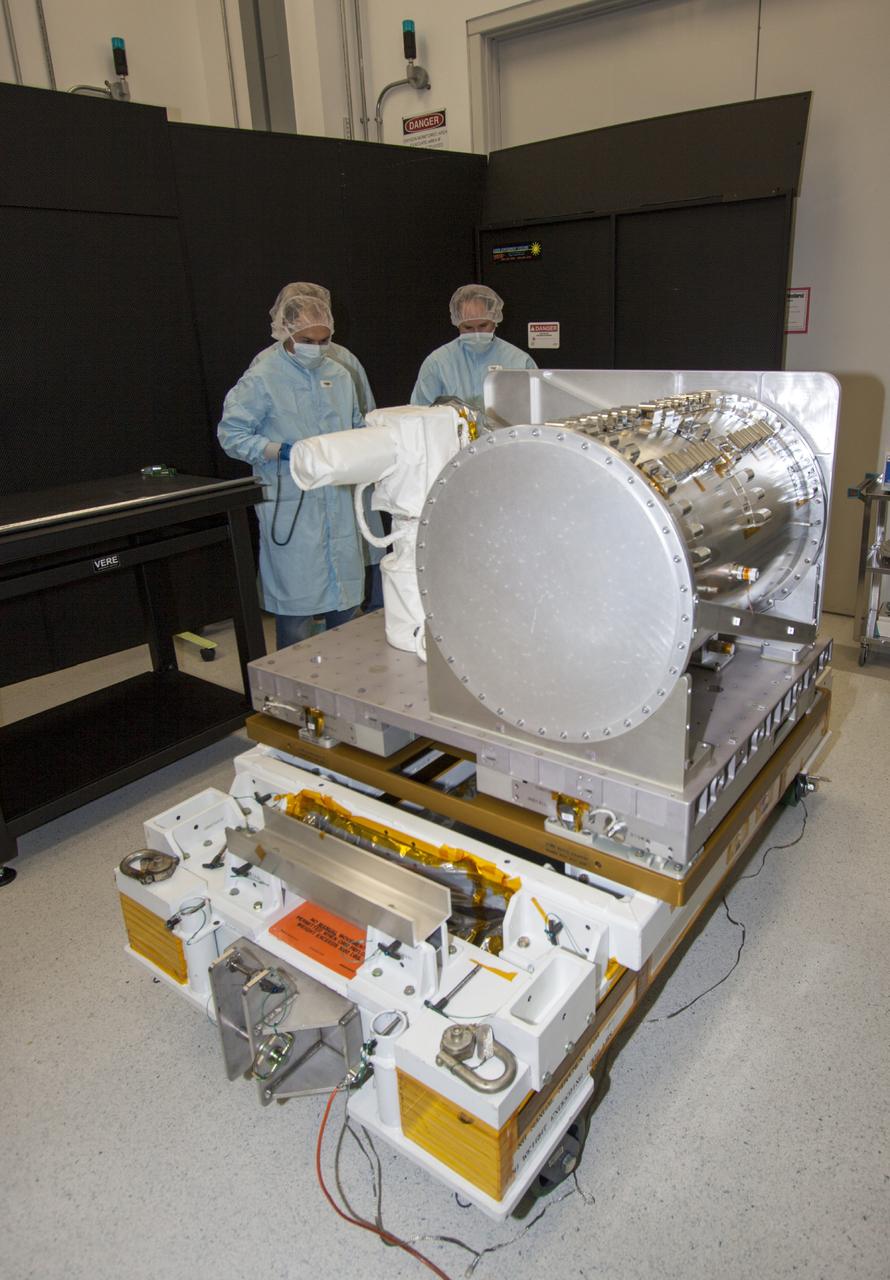
CAPE CANAVERAL, Fla. -- At NASA’s Kennedy Space Center in Florida, the Optical Payload for Lasercomm Science, or OPALS, experiment has been uncovered in a test cell at a Space Station Processing Facility offline laboratory. The optical technology demonstration experiment arrived from the agency’s Jet Propulsion Laboratory in Pasadena, Calif. NASA will use the International Space Station to test OPALS’ communications technology that could dramatically improve spacecraft communications, enhance commercial missions and strengthen transmission of scientific data. The experiment is slated to fly later this year aboard a SpaceX Dragon commercial resupply mission to the space station. The mission is expected to run 90 days after installation on the outside of the station. For more information about OPALS, visit: http://go.nasa.gov/10MMPDO. Photo credit: NASA/Jim Grossmann
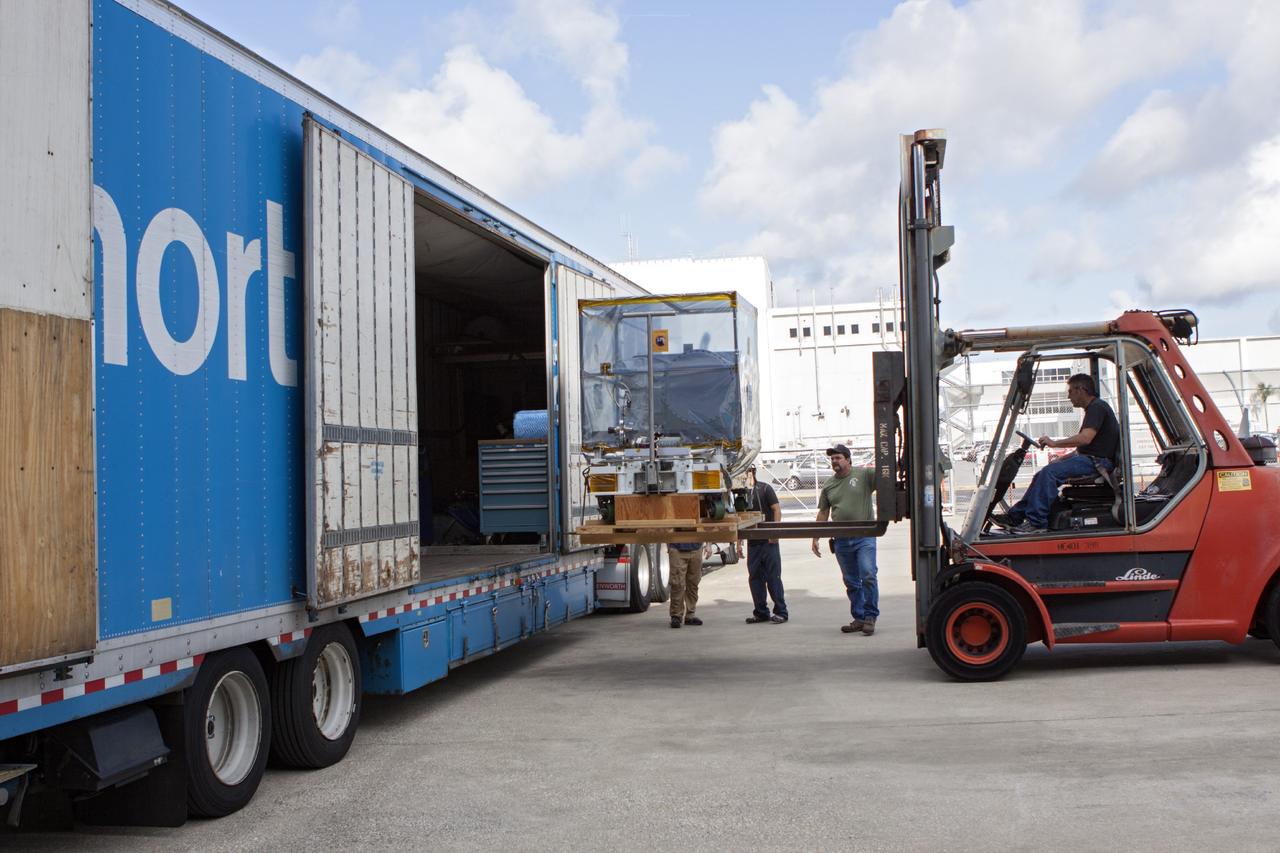
CAPE CANAVERAL, Fla. -- At NASA’s Kennedy Space Center in Florida, a technician uses a forklift to remove the Optical Payload for Lasercomm Science, or OPALS, experiment from a truck at the Space Station Processing Facility. The optical technology demonstration experiment arrived from the agency’s Jet Propulsion Laboratory in Pasadena, Calif. NASA will use the International Space Station to test OPALS’ communications technology that could dramatically improve spacecraft communications, enhance commercial missions and strengthen transmission of scientific data. The experiment is slated to fly later this year aboard a SpaceX Dragon commercial resupply mission to the space station. The mission is expected to run 90 days after installation on the outside of the station. For more information about OPALS, visit: http://go.nasa.gov/10MMPDO. Photo credit: NASA/Jim Grossmann
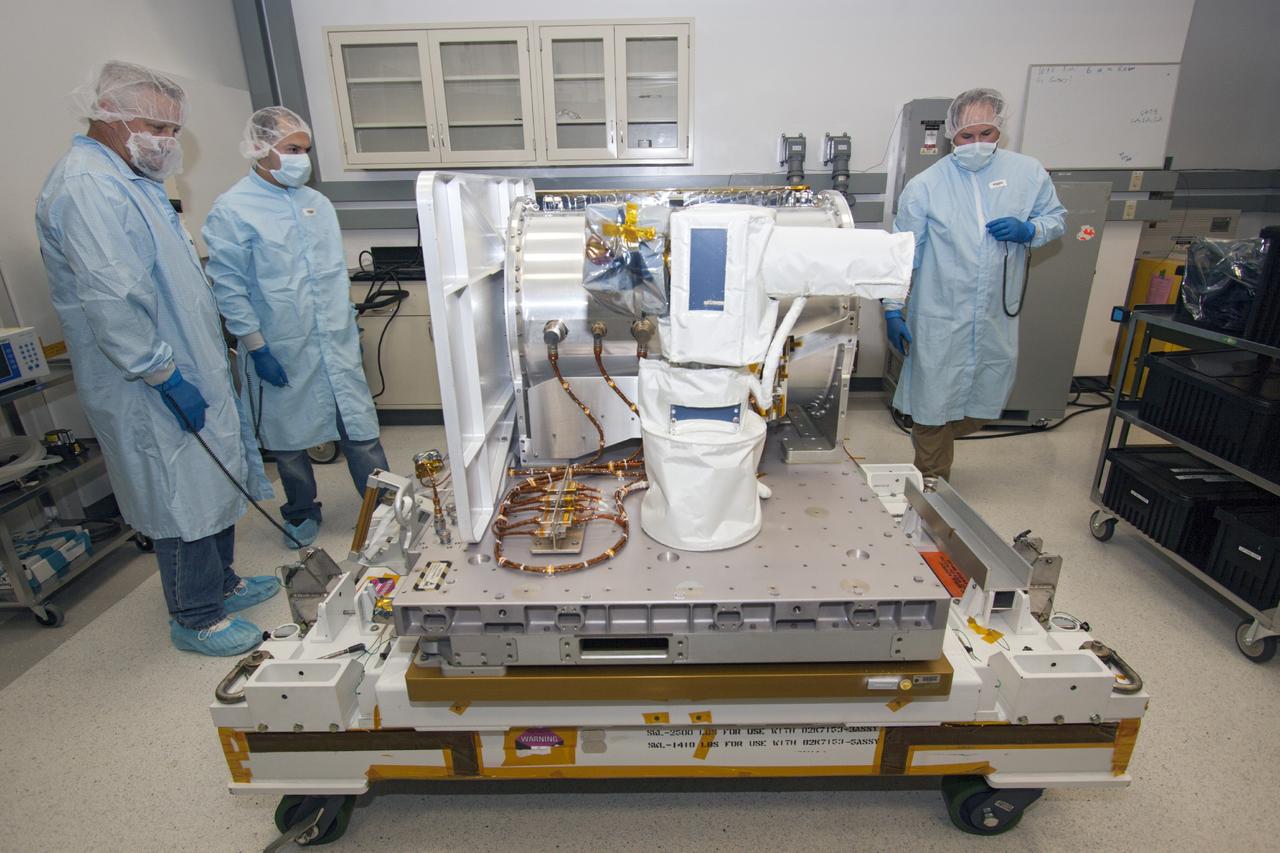
CAPE CANAVERAL, Fla. -- At NASA’s Kennedy Space Center in Florida, the Optical Payload for Lasercomm Science, or OPALS, experiment has been unpacked in a test cell at a Space Station Processing Facility offline laboratory. The optical technology demonstration experiment arrived from the agency’s Jet Propulsion Laboratory in Pasadena, Calif. NASA will use the International Space Station to test OPALS’ communications technology that could dramatically improve spacecraft communications, enhance commercial missions and strengthen transmission of scientific data. The experiment is slated to fly later this year aboard a SpaceX Dragon commercial resupply mission to the space station. The mission is expected to run 90 days after installation on the outside of the station. For more information about OPALS, visit: http://go.nasa.gov/10MMPDO. Photo credit: NASA/Jim Grossmann
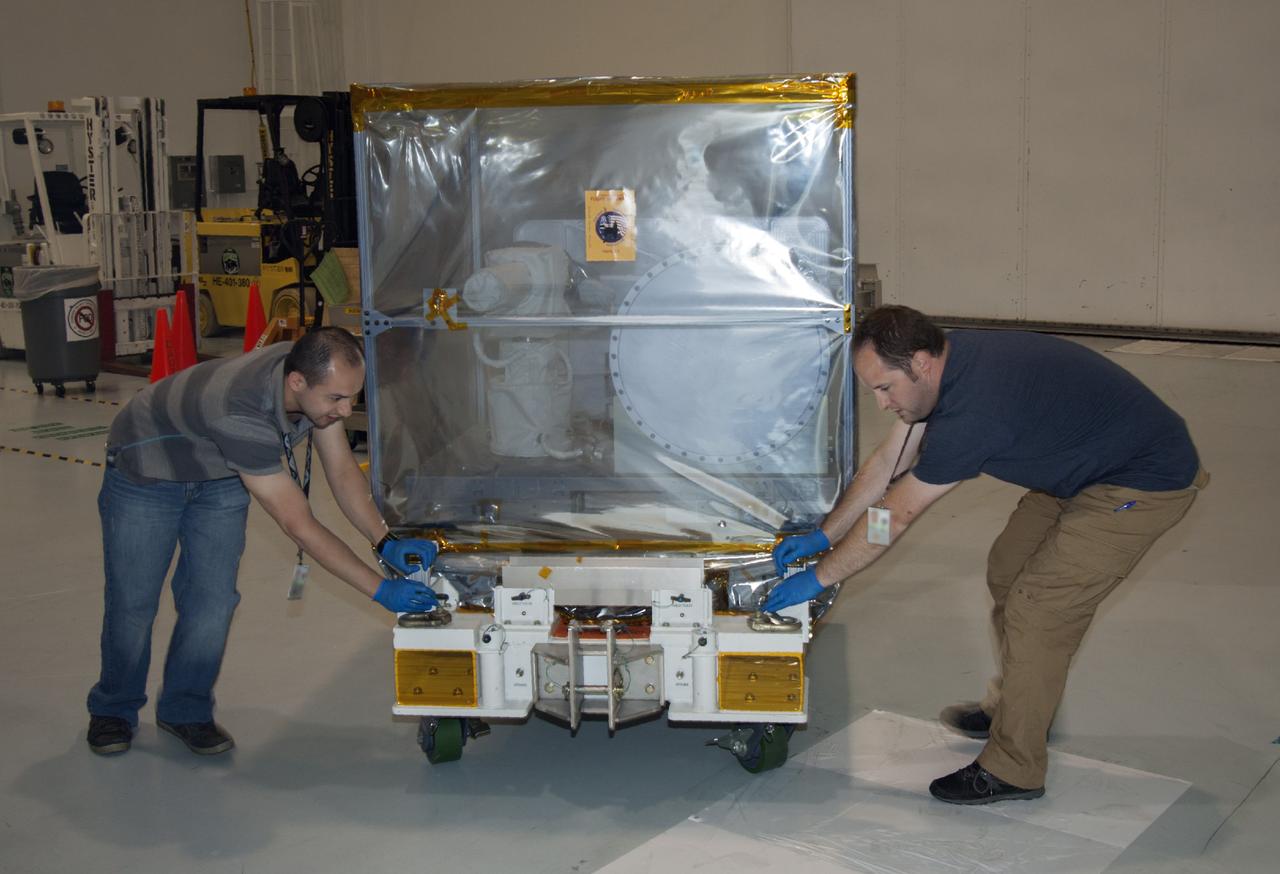
CAPE CANAVERAL, Fla. -- At NASA’s Kennedy Space Center in Florida, technicians move the Optical Payload for Lasercomm Science, or OPALS, experiment into the Space Station Processing Facility. The optical technology demonstration experiment arrived from the agency’s Jet Propulsion Laboratory in Pasadena, Calif. NASA will use the International Space Station to test OPALS’ communications technology that could dramatically improve spacecraft communications, enhance commercial missions and strengthen transmission of scientific data. The experiment is slated to fly later this year aboard a SpaceX Dragon commercial resupply mission to the space station. The mission is expected to run 90 days after installation on the outside of the station. For more information about OPALS, visit: http://go.nasa.gov/10MMPDO. Photo credit: NASA/Jim Grossmann
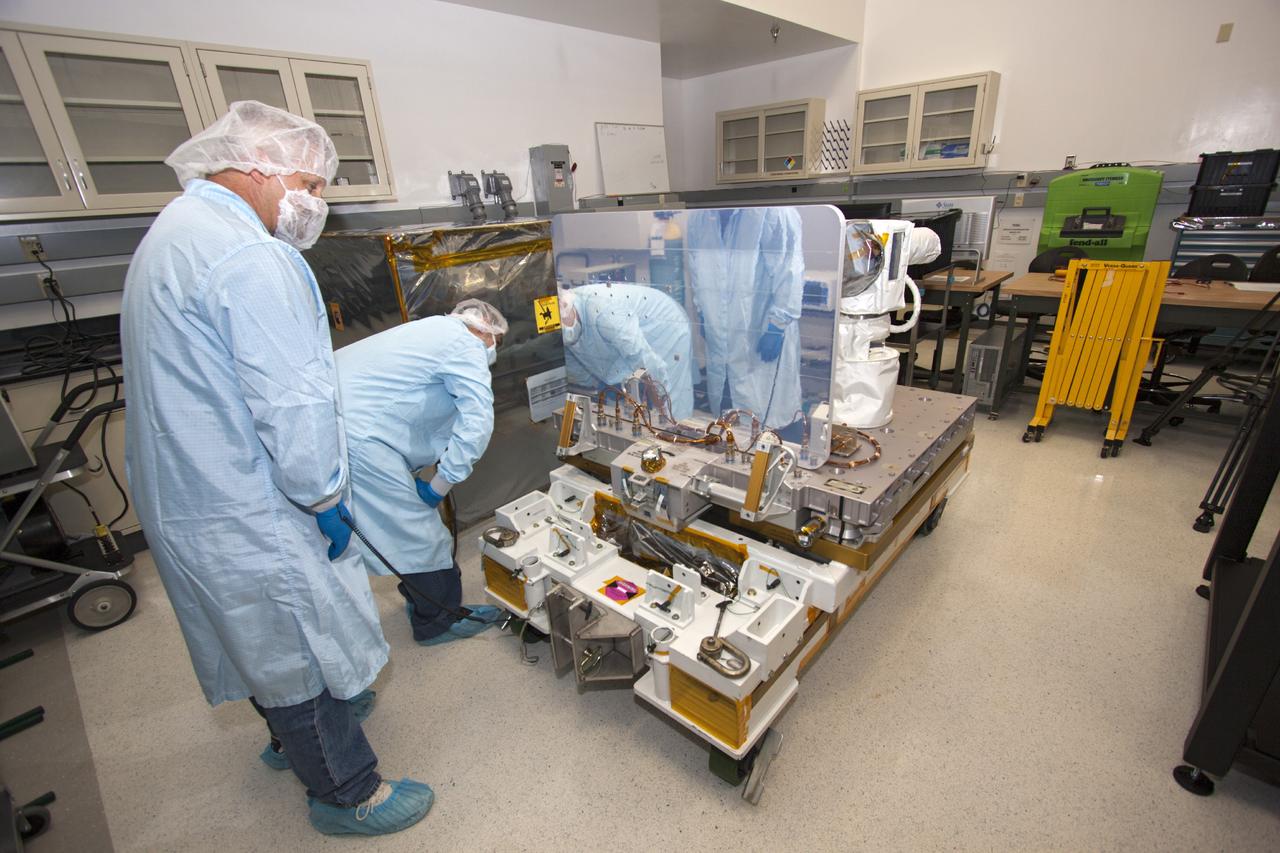
CAPE CANAVERAL, Fla. -- At NASA’s Kennedy Space Center in Florida, technicians uncover and check the Optical Payload for Lasercomm Science, or OPALS, experiment in a test cell at a Space Station Processing Facility offline laboratory. The optical technology demonstration experiment arrived from the agency’s Jet Propulsion Laboratory in Pasadena, Calif. NASA will use the International Space Station to test OPALS’ communications technology that could dramatically improve spacecraft communications, enhance commercial missions and strengthen transmission of scientific data. The experiment is slated to fly later this year aboard a SpaceX Dragon commercial resupply mission to the space station. The mission is expected to run 90 days after installation on the outside of the station. For more information about OPALS, visit: http://go.nasa.gov/10MMPDO. Photo credit: NASA/Jim Grossmann
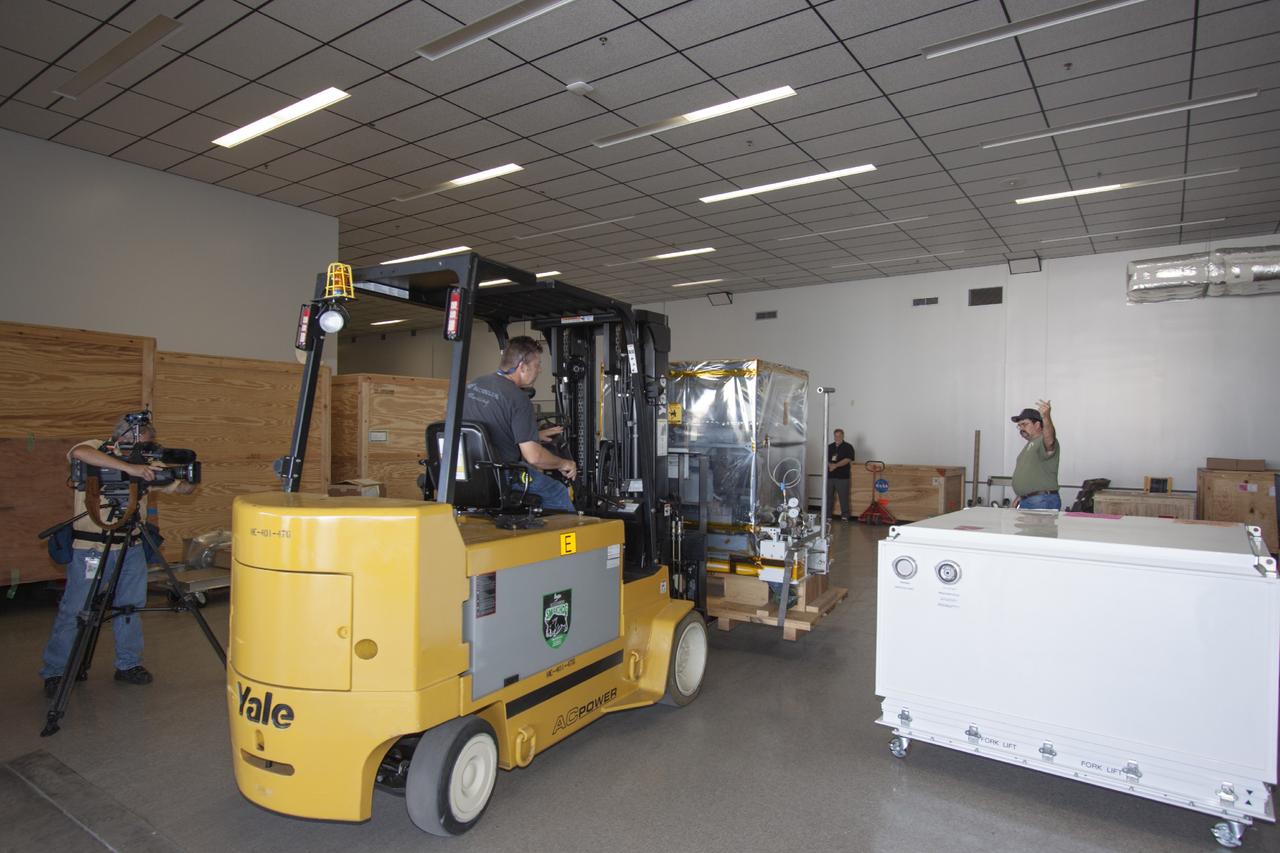
CAPE CANAVERAL, Fla. -- At NASA’s Kennedy Space Center in Florida, a technician uses a forklift to move the Optical Payload for Lasercomm Science, or OPALS, experiment to the air lock entrance at the Space Station Processing Facility. The optical technology demonstration experiment arrived from the agency’s Jet Propulsion Laboratory in Pasadena, Calif. NASA will use the International Space Station to test OPALS’ communications technology that could dramatically improve spacecraft communications, enhance commercial missions and strengthen transmission of scientific data. The experiment is slated to fly later this year aboard a SpaceX Dragon commercial resupply mission to the space station. The mission is expected to run 90 days after installation on the outside of the station. For more information about OPALS, visit: http://go.nasa.gov/10MMPDO. Photo credit: NASA/Jim Grossmann
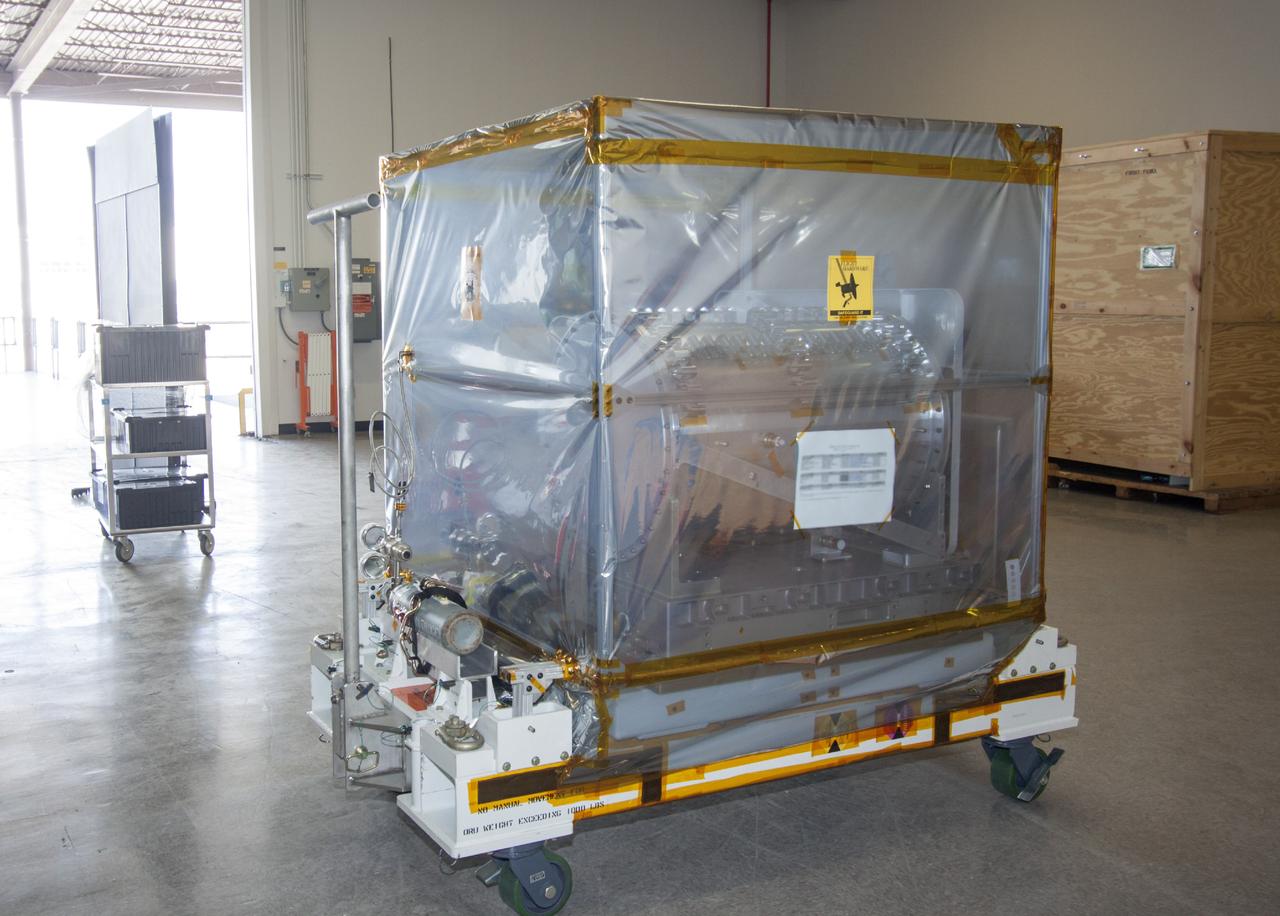
CAPE CANAVERAL, Fla. -- The Optical Payload for Lasercomm Science, or OPALS, an optical technology demonstration experiment, sits on a pallet inside the air lock entrance to the Space Station Processing Facility at NASA’s Kennedy Space Center in Florida. OPALS arrived from the agency’s Jet Propulsion Laboratory in Pasadena, Calif. NASA will use the International Space Station to test OPALS’ communications technology that could dramatically improve spacecraft communications, enhance commercial missions and strengthen transmission of scientific data. The experiment is slated to fly later this year aboard a SpaceX Dragon commercial resupply mission to the space station. The mission is expected to run 90 days after installation on the outside of the station. For more information about OPALS, visit: http://go.nasa.gov/10MMPDO. Photo credit: NASA/Jim Grossmann