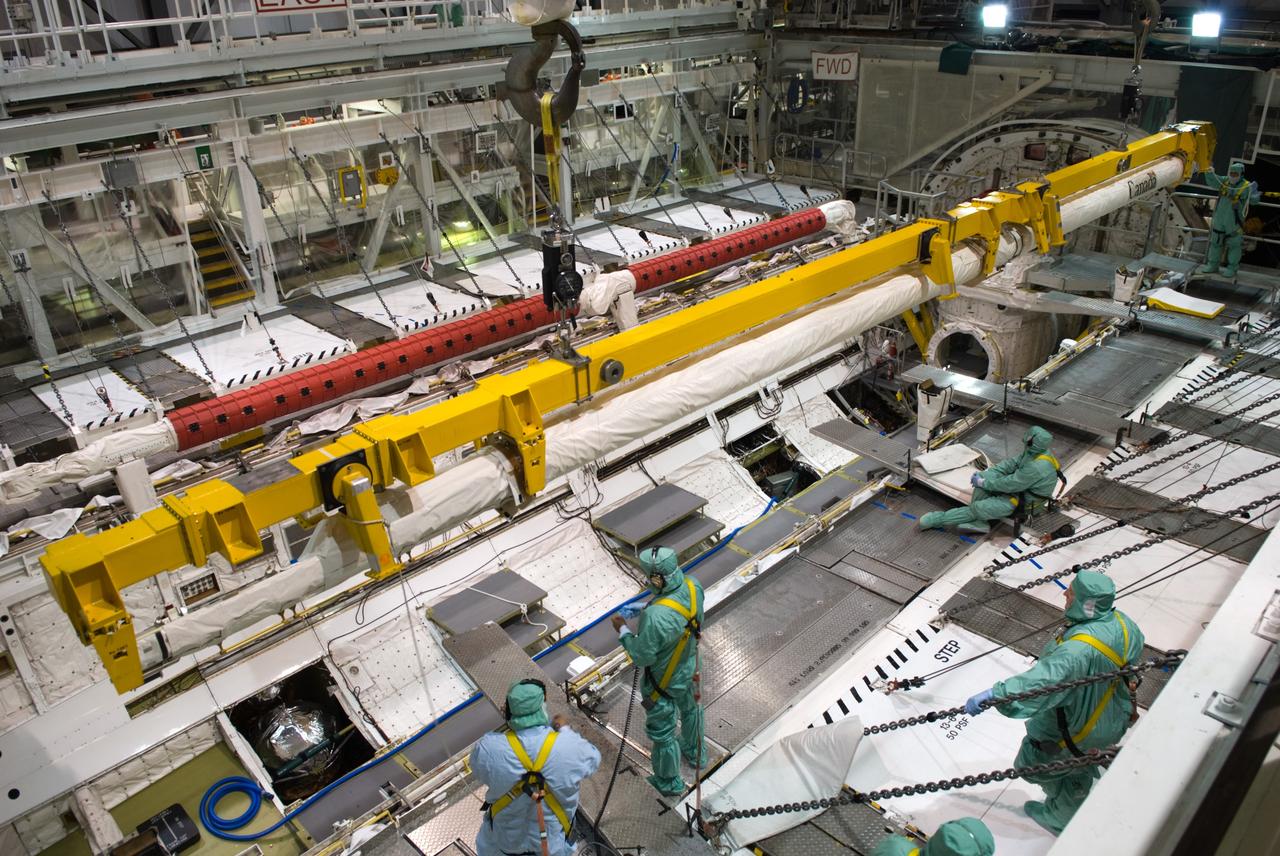
CAPE CANAVERAL, Fla. - In Orbiter Processing Facility 1 at NASA's Kennedy Space Center in Florida, a crane lowers the orbiter boom sensor system, or OBSS, into space shuttle Atlantis' payload bay where it will be installed. The OBSS' inspection boom assembly, or IBA, is removed from the arm every other processing flow for a detailed inspection. After five consecutive flights, all IBA internal components are submitted to a thorough electrical checkout in the Remote Manipulator System Lab. The 50-foot-long OBSS attaches to the end of the shuttle’s robotic arm and supports the cameras and laser systems used to inspect the shuttle’s thermal protection system while in space. Atlantis is next slated to deliver an Integrated Cargo Carrier and Russian-built Mini Research Module to the International Space Station on the STS-132 mission. Launch is targeted for May 14. Photo credit: NASA/Jim Grossmann

CAPE CANAVERAL, Fla. - In Orbiter Processing Facility 1 at NASA's Kennedy Space Center in Florida, technicians ensure that the installation of the orbiter boom sensor system, or OBSS, into space shuttle Atlantis' payload bay meets the correct specifications. The OBSS' inspection boom assembly, or IBA, is removed from the arm every other processing flow for a detailed inspection. After five consecutive flights, all IBA internal components are submitted to a thorough electrical checkout in the Remote Manipulator System Lab. The 50-foot-long OBSS attaches to the end of the shuttle’s robotic arm and supports the cameras and laser systems used to inspect the shuttle’s thermal protection system while in space. Atlantis is next slated to deliver an Integrated Cargo Carrier and Russian-built Mini Research Module to the International Space Station on the STS-132 mission. Launch is targeted for May 14. Photo credit: NASA/Jim Grossmann
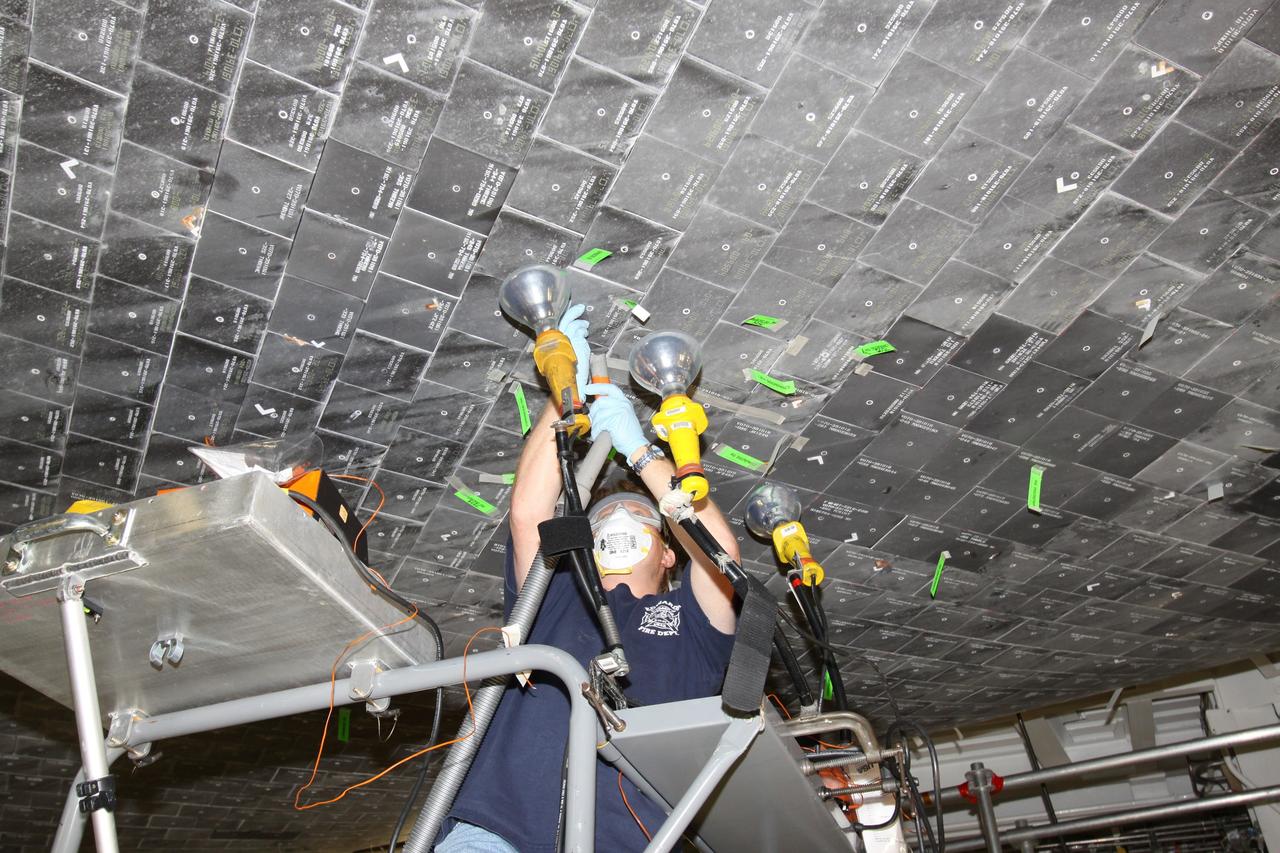
CAPE CANAVERAL, Fla. - In Orbiter Processing Facility Bay 1 at NASA's Kennedy Space Center in Florida, heat lamps assist United Space Alliance technician Jeff Holmes in a putty repair on some of the high-temperature reusable surface insulation tiles, or HRSI tiles, on the lower forward fuselage of space shuttle Atlantis. An average of 125 tiles are replaced after each mission either due to handling damage or accumulated repairs. These black tiles are optimized for maximum emissivity, which means they lose heat faster than white tiles. This property is required to maximize heat rejection during the hot phase of reentry. Atlantis next is slated to deliver an Integrated Cargo Carrier and Russian-built Mini Research Module to the International Space Station on the STS-132 mission. Launch is targeted for May 14, 2010. Photo credit: NASA/Jack Pfaller
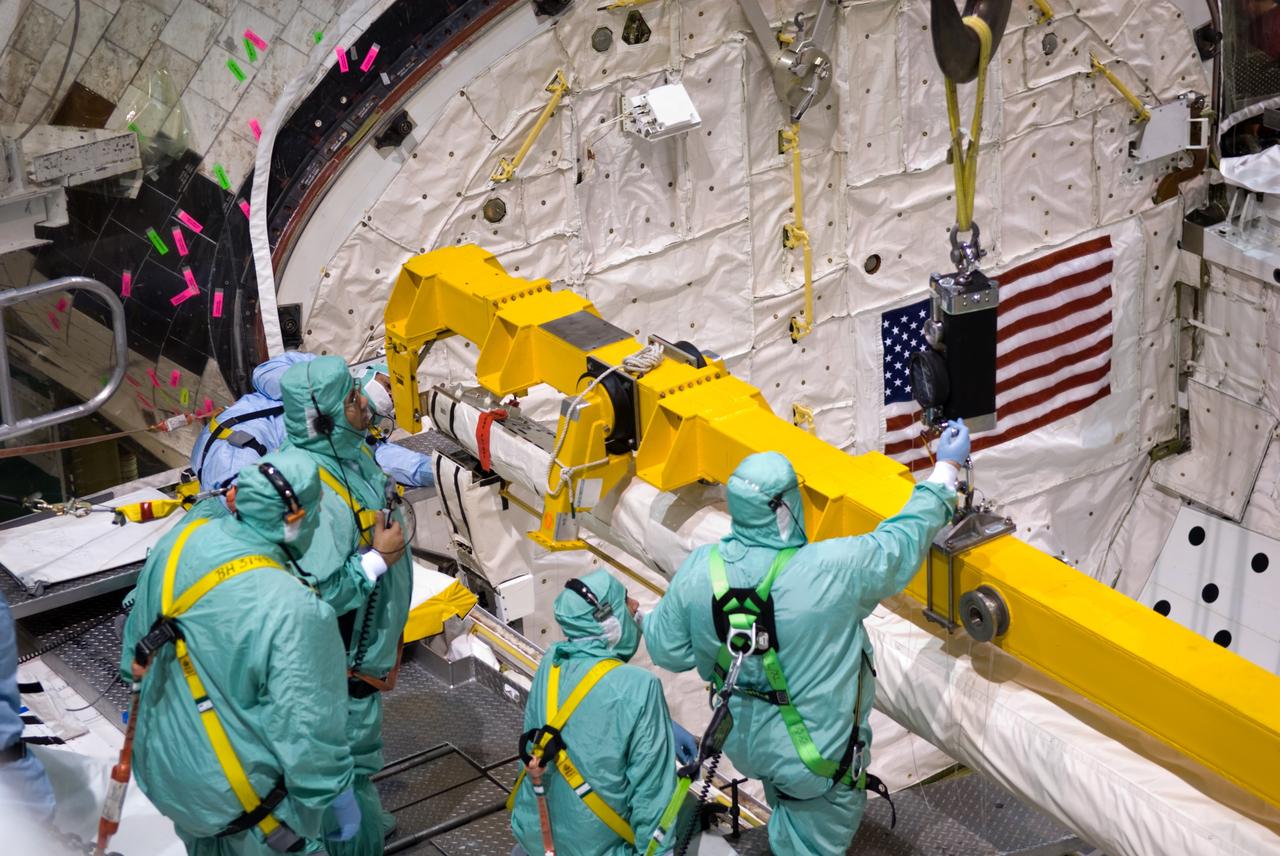
CAPE CANAVERAL, Fla. - In Orbiter Processing Facility 1 at NASA's Kennedy Space Center in Florida, installation of the orbiter boom sensor system, or OBSS, into space shuttle Atlantis' payload bay is under way. The OBSS' inspection boom assembly, or IBA, is removed from the arm every other processing flow for a detailed inspection. After five consecutive flights, all IBA internal components are submitted to a thorough electrical checkout in the Remote Manipulator System Lab. The 50-foot-long OBSS attaches to the end of the shuttle’s robotic arm and supports the cameras and laser systems used to inspect the shuttle’s thermal protection system while in space. Atlantis is next slated to deliver an Integrated Cargo Carrier and Russian-built Mini Research Module to the International Space Station on the STS-132 mission. Launch is targeted for May 14. Photo credit: NASA/Jim Grossmann

CAPE CANAVERAL, Fla. - In Orbiter Processing Facility 1 at NASA's Kennedy Space Center in Florida, the orbiter boom sensor system, or OBSS, is installed in space shuttle Atlantis' payload bay. The OBSS' inspection boom assembly, or IBA, is removed from the arm every other processing flow for a detailed inspection. After five consecutive flights, all IBA internal components are submitted to a thorough electrical checkout in the Remote Manipulator System Lab. The 50-foot-long OBSS attaches to the end of the shuttle’s robotic arm and supports the cameras and laser systems used to inspect the shuttle’s thermal protection system while in space. Atlantis is next slated to deliver an Integrated Cargo Carrier and Russian-built Mini Research Module to the International Space Station on the STS-132 mission. Launch is targeted for May 14. Photo credit: NASA/Jim Grossmann
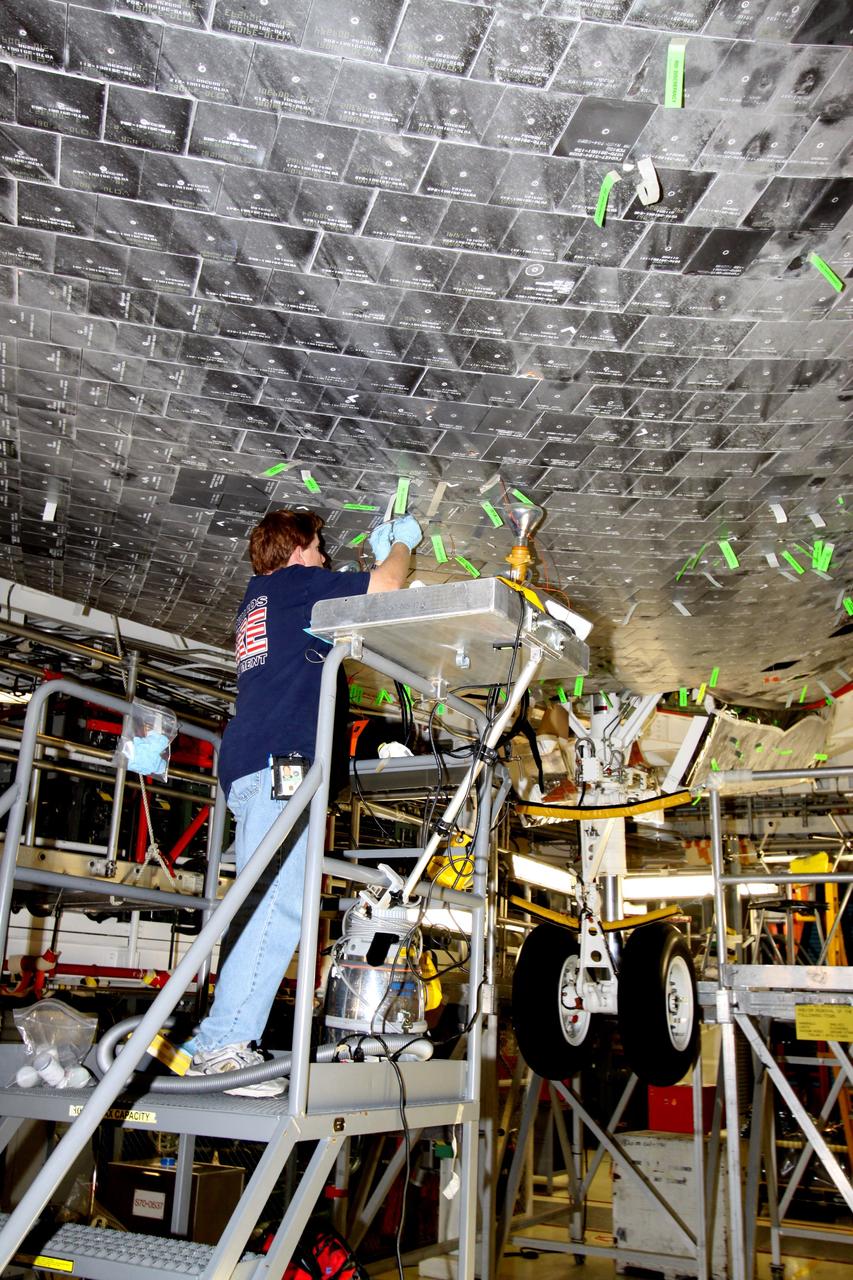
CAPE CANAVERAL, Fla. - In Orbiter Processing Facility Bay 1 at NASA's Kennedy Space Center in Florida, United Space Alliance technician Jeff Holmes makes a putty repair on some of the high-temperature reusable surface insulation tiles, or HRSI tiles, on the lower forward fuselage of space shuttle Atlantis. An average of 125 tiles are replaced after each mission either due to handling damage or accumulated repairs. These black tiles are optimized for maximum emissivity, which means they lose heat faster than white tiles. This property is required to maximize heat rejection during the hot phase of reentry. Atlantis next is slated to deliver an Integrated Cargo Carrier and Russian-built Mini Research Module to the International Space Station on the STS-132 mission. Launch is targeted for May 14, 2010. Photo credit: NASA/Jack Pfaller
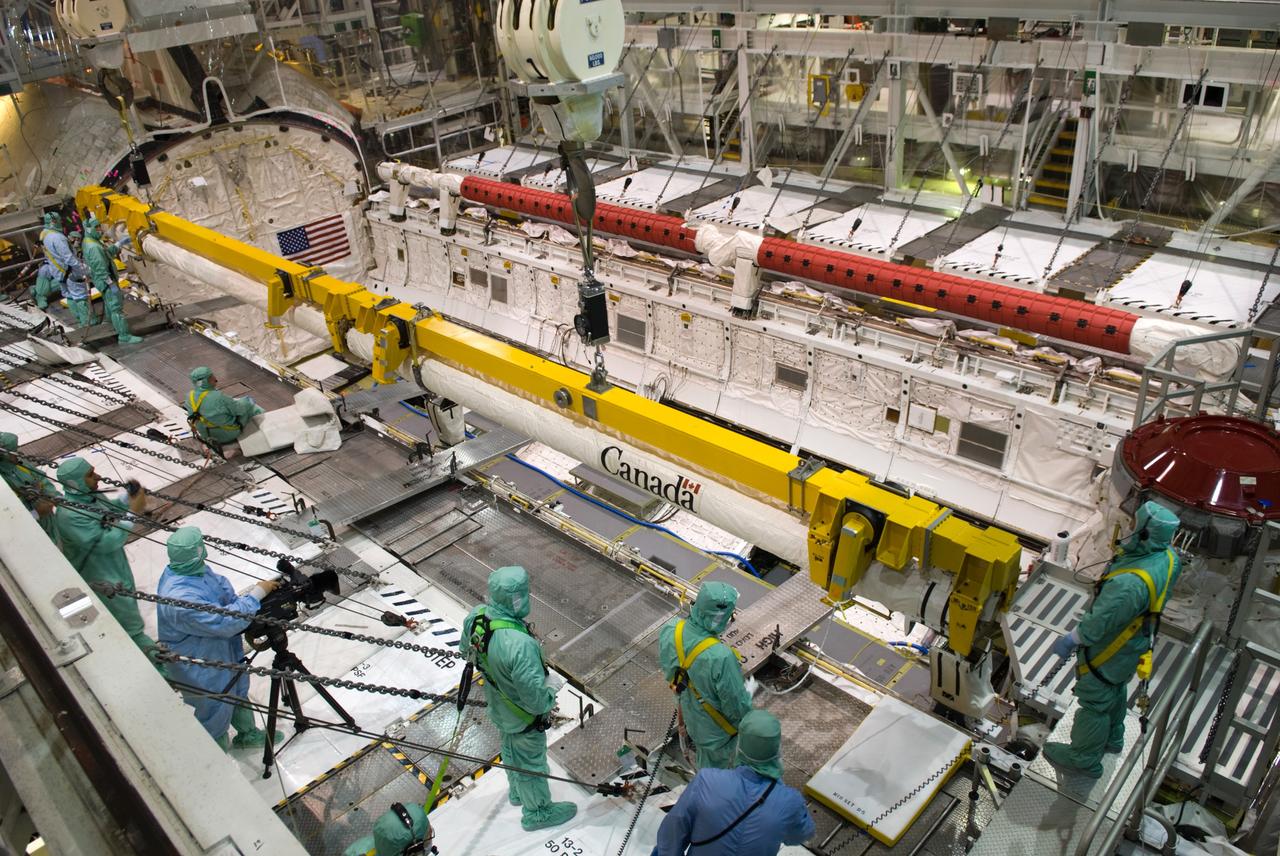
CAPE CANAVERAL, Fla. - In Orbiter Processing Facility 1 at NASA's Kennedy Space Center in Florida, technicians prepare to install the orbiter boom sensor system, or OBSS, into space shuttle Atlantis' payload bay. The OBSS' inspection boom assembly, or IBA, is removed from the arm every other processing flow for a detailed inspection. After five consecutive flights, all IBA internal components are submitted to a thorough electrical checkout in the Remote Manipulator System Lab. The 50-foot-long OBSS attaches to the end of the shuttle’s robotic arm and supports the cameras and laser systems used to inspect the shuttle’s thermal protection system while in space. Atlantis is next slated to deliver an Integrated Cargo Carrier and Russian-built Mini Research Module to the International Space Station on the STS-132 mission. Launch is targeted for May 14. Photo credit: NASA/Jim Grossmann
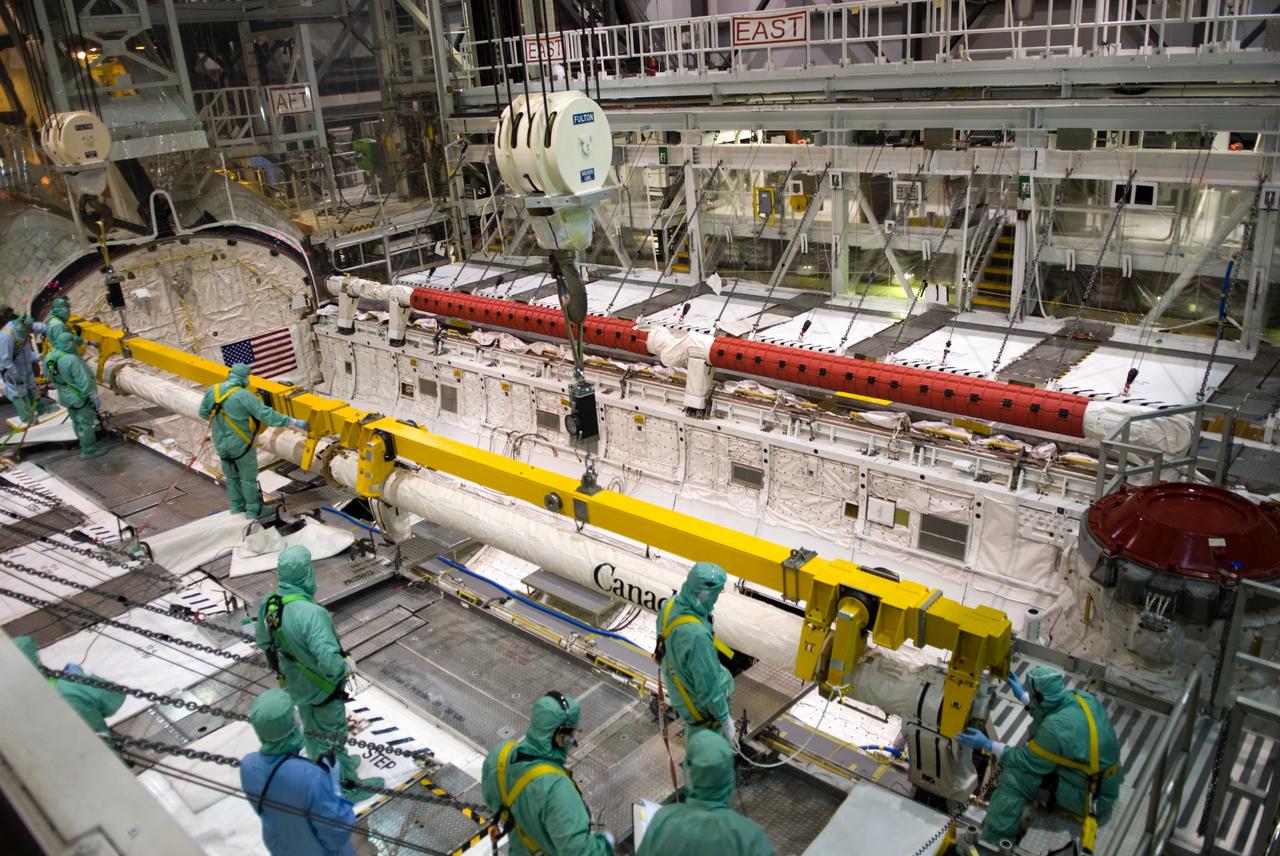
CAPE CANAVERAL, Fla. - In Orbiter Processing Facility 1 at NASA's Kennedy Space Center in Florida, technicians install the orbiter boom sensor system, or OBSS, in space shuttle Atlantis' payload bay across from the remote manipulator system arm. The OBSS' inspection boom assembly, or IBA, is removed from the arm every other processing flow for a detailed inspection. After five consecutive flights, all IBA internal components are submitted to a thorough electrical checkout in the Remote Manipulator System Lab. The 50-foot-long OBSS attaches to the end of the shuttle’s robotic arm and supports the cameras and laser systems used to inspect the shuttle’s thermal protection system while in space. Atlantis is next slated to deliver an Integrated Cargo Carrier and Russian-built Mini Research Module to the International Space Station on the STS-132 mission. Launch is targeted for May 14. Photo credit: NASA/Jim Grossmann
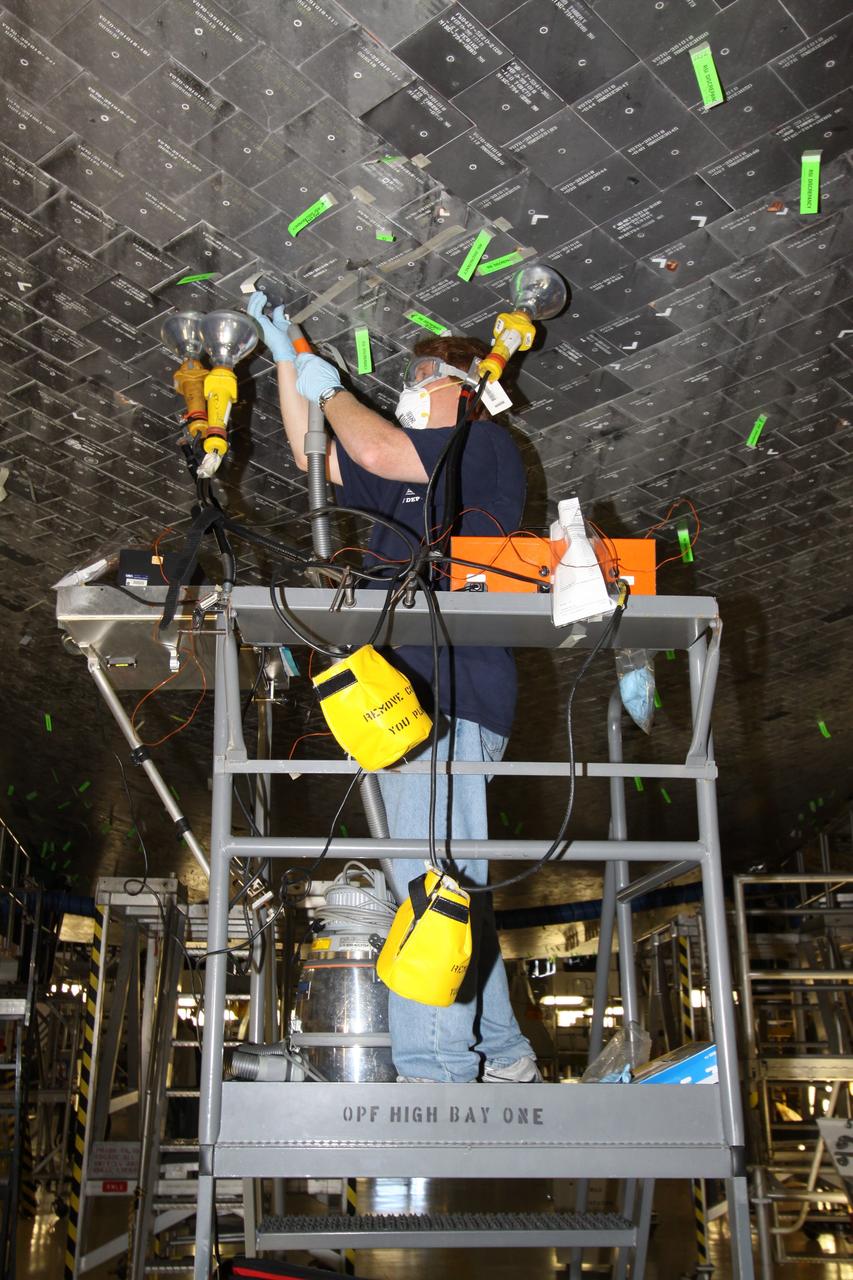
CAPE CANAVERAL, Fla. - In Orbiter Processing Facility Bay 1 at NASA's Kennedy Space Center in Florida, United Space Alliance technician Jeff Holmes uses heat lamps in a putty repair on some of the high-temperature reusable surface insulation tiles, or HRSI tiles, on the lower forward fuselage of space shuttle Atlantis. An average of 125 tiles are replaced after each mission either due to handling damage or accumulated repairs. These black tiles are optimized for maximum emissivity, which means they lose heat faster than white tiles. This property is required to maximize heat rejection during the hot phase of reentry. Atlantis next is slated to deliver an Integrated Cargo Carrier and Russian-built Mini Research Module to the International Space Station on the STS-132 mission. Launch is targeted for May 14, 2010. Photo credit: NASA/Jack Pfaller
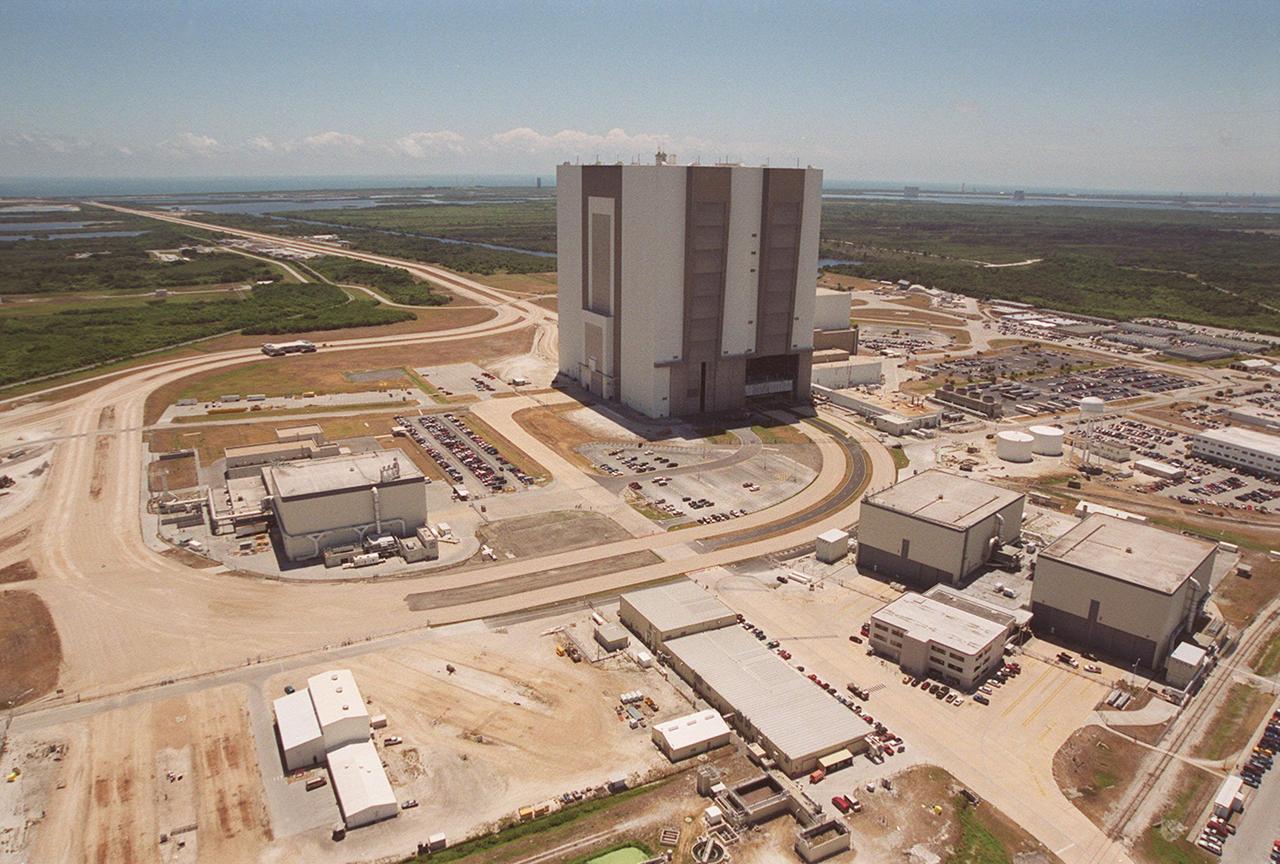
This aerial photo captures many of the facilities involved in Space Shuttle processing. At center is the Vehicle Assembly Building (VAB). The curved road is the newly restored crawlerway leading into the VAB high bay 2. The road restoration and high bay 2 are part of KSC's Safe Haven project, enabling the storage of orbiters during severe weather. The road circles around the Orbiter Processing Facility 3 (OPF-3) at left. OPF1 and OPF-2 are on the right below the curving road. East of the VAB, the crawlerway also extends from high bays 1 and 3 to the two Shuttle launch pads.
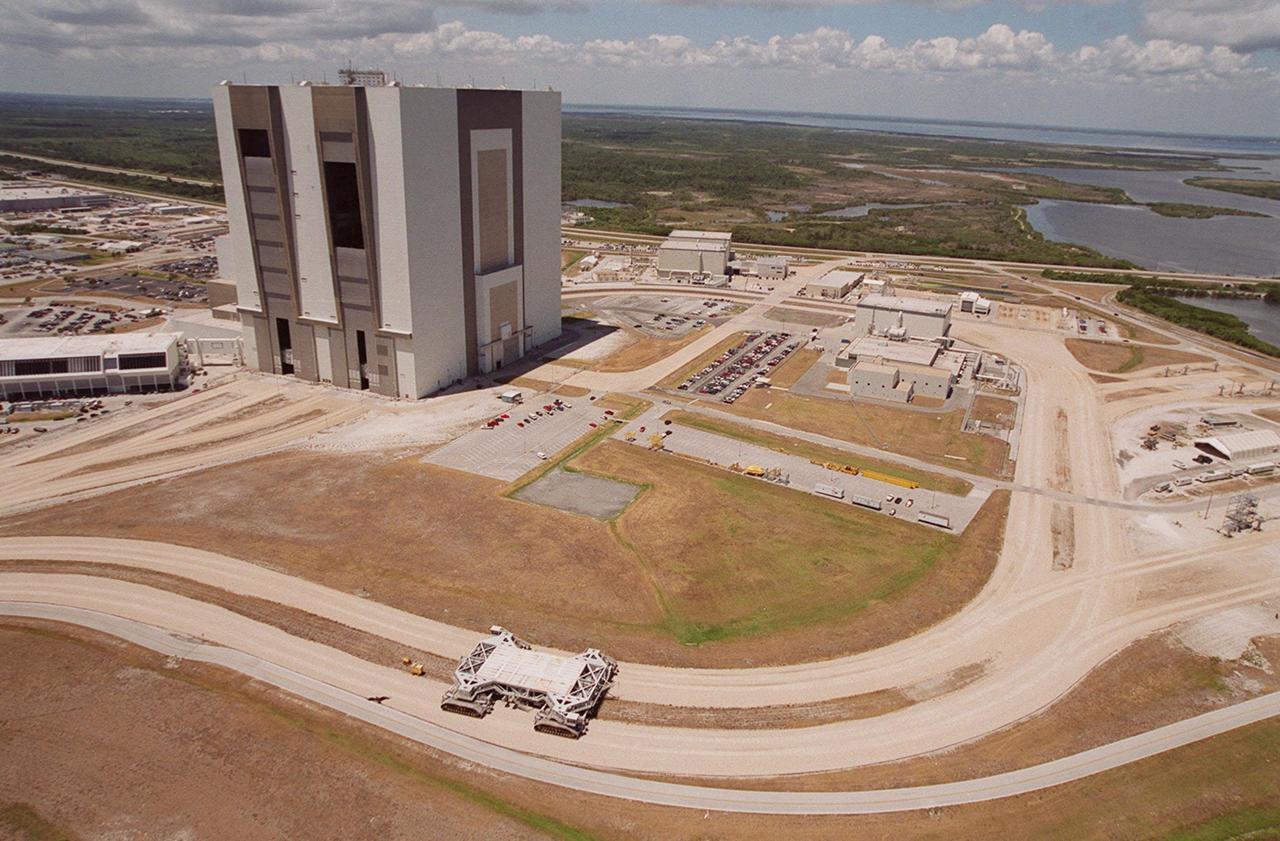
This aerial photo captures many of the facilities involved in Space Shuttle processing. At center is the Vehicle Assembly Building (VAB). The curved road in the foreground is the newly restored crawlerway leading into the VAB high bay 2. The road restoration and high bay 2 are part of KSC’s Safe Haven project, enabling the storage of orbiters during severe weather. The road circles around the Orbiter Processing Facility 3 (OPF-3) at right center. OPF1 and OPF-2 are just above the curving road. On the left of the VAB, the crawlerway also extends from high bays 1 and 3, past the Launch Control Center, out to the two Shuttle launch pads
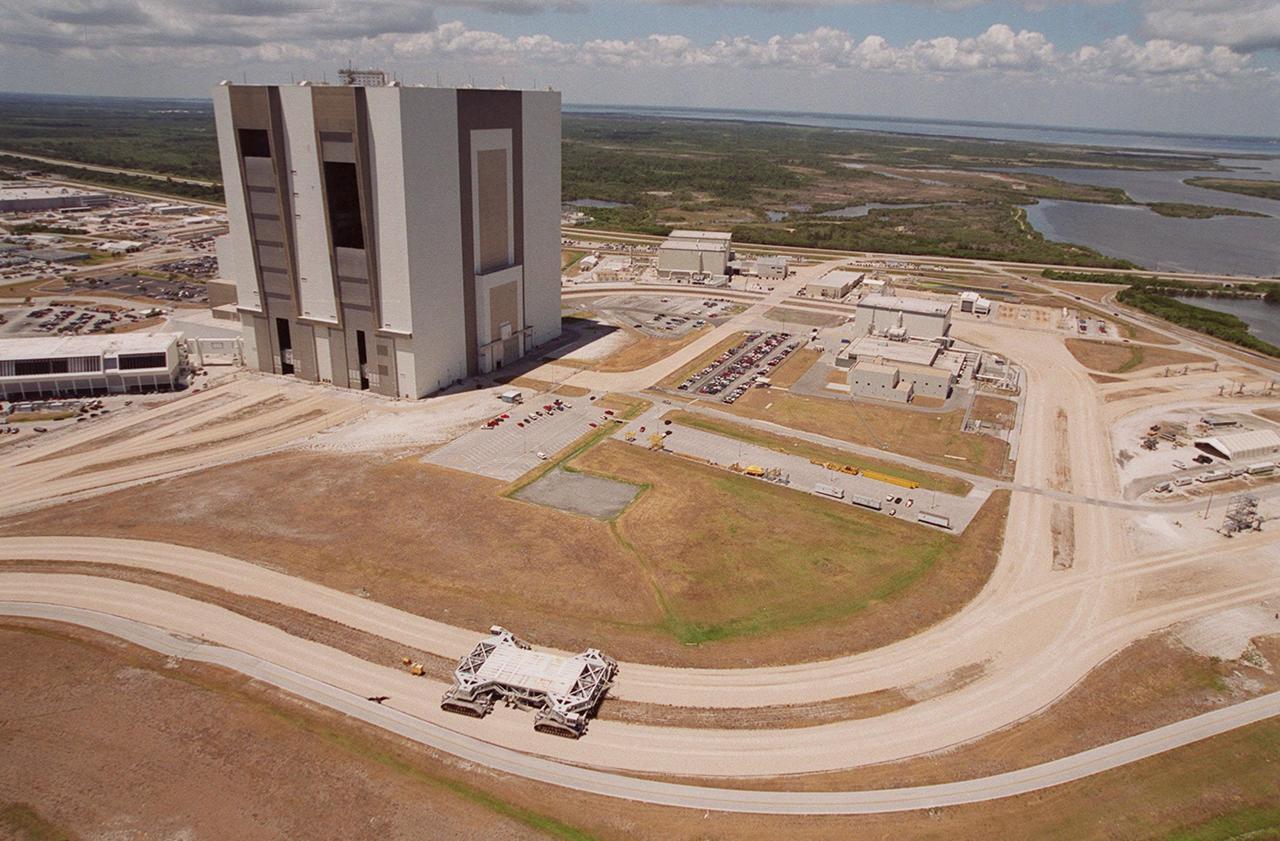
This aerial photo captures many of the facilities involved in Space Shuttle processing. At center is the Vehicle Assembly Building (VAB). The curved road in the foreground is the newly restored crawlerway leading into the VAB high bay 2. The road restoration and high bay 2 are part of KSC’s Safe Haven project, enabling the storage of orbiters during severe weather. The road circles around the Orbiter Processing Facility 3 (OPF-3) at right center. OPF1 and OPF-2 are just above the curving road. On the left of the VAB, the crawlerway also extends from high bays 1 and 3, past the Launch Control Center, out to the two Shuttle launch pads