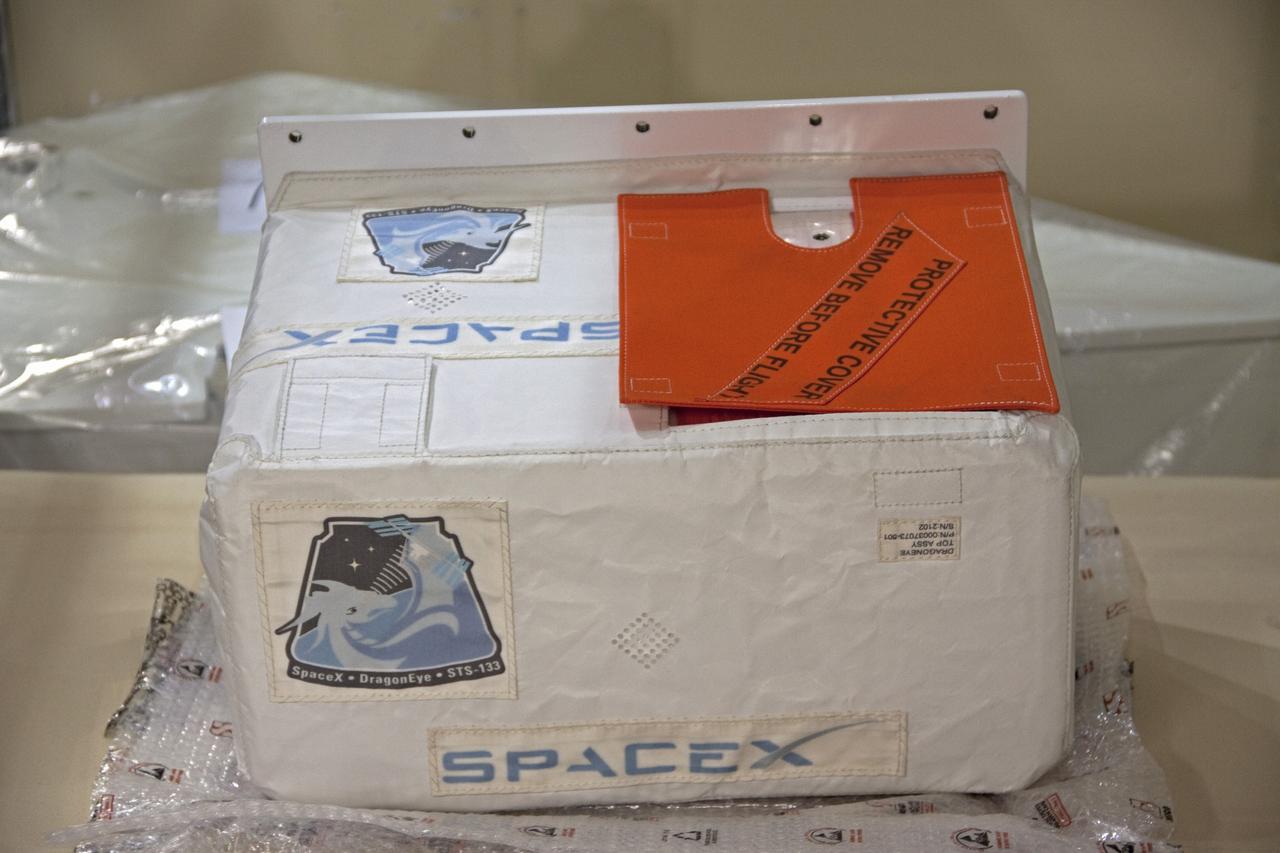
CAPE CANAVERAL, Fla. -- A DragonEye proximity sensor developed by Space Exploration Technologies (SpaceX) is prepared for installation while space shuttle Discovery is in Orbiter Processing Facility-3 at NASA's Kennedy Space Center in Florida. DragonEye is a Laser Imaging Detection and Ranging (LIDAR) sensor that will be tested on Discovery's docking operation with the International Space Station. Discovery's STS-133 mission, targeted to launch Nov. 1, will be the second demonstration of the sensor, following shuttle Endeavour's STS-127 mission in 2009. The DragonEye sensor will guide SpaceX's Dragon spacecraft as it approaches and berths to the station on future cargo re-supply missions. The Dragon spacecraft is a free-flying, reusable spacecraft being developed by SpaceX, which is contracted by NASA's Commercial Orbital Transportation Services (COTS) program. Photo credit: NASA/Jim Grossmann
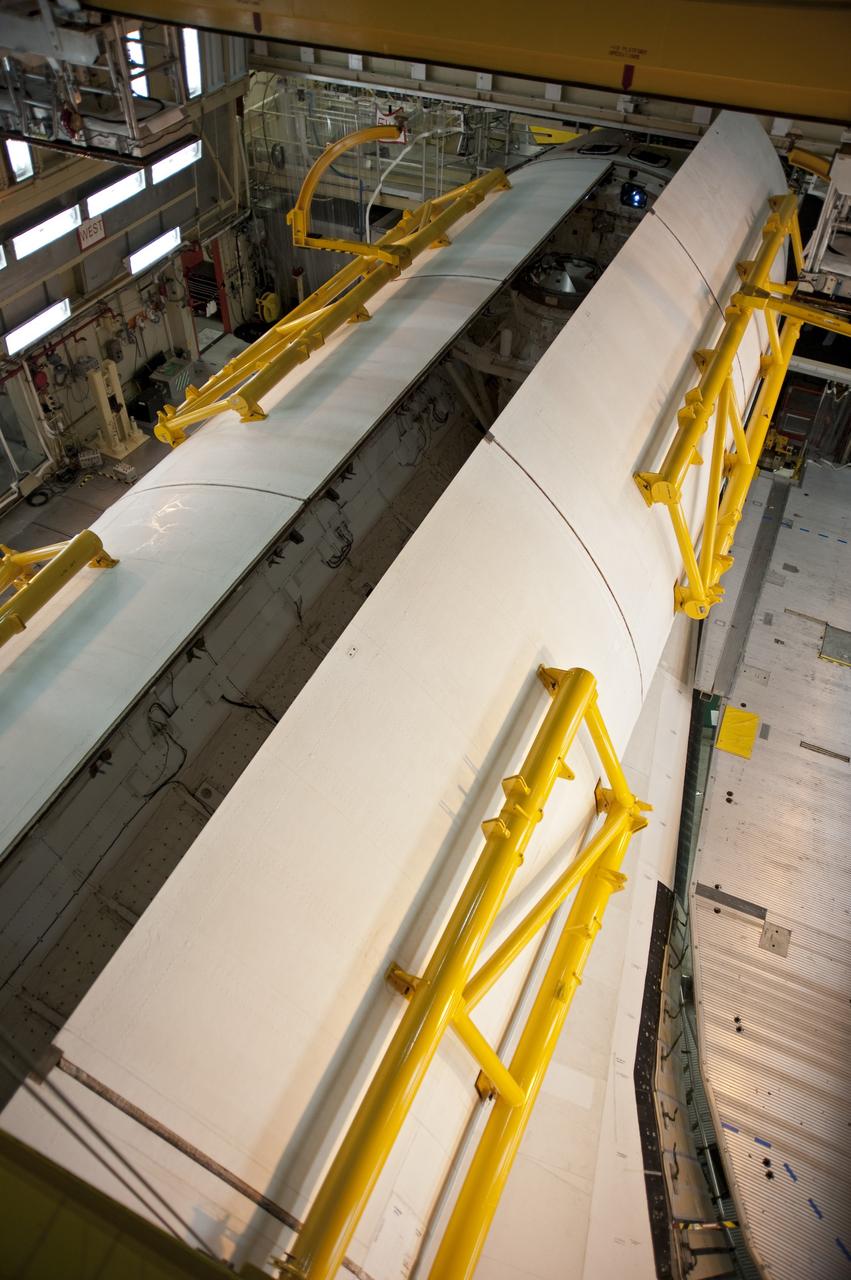
CAPE CANAVERAL, Fla. -- In Orbiter Processing Facility-3 at NASA's Kennedy Space Center in Florida, the clamshell doors of space shuttle Discovery's payload bay close completely in preparation for the its move to the Vehicle Assembly Building next month. There, it will be attached to its external fuel tank and a set of solid rocket boosters for launch on the STS-133 mission to the International Space Station. Targeted to launch Nov. 1, STS-133 will carry the multipurpose logistics module, or PMM, packed with supplies and critical spare parts, as well as Robonaut 2, or R2, to the station. Discovery will leave the module behind so it can be used for microgravity experiments in fluid physics, materials science, biology and biotechnology. Photo credit: NASA/Kim Shiflett
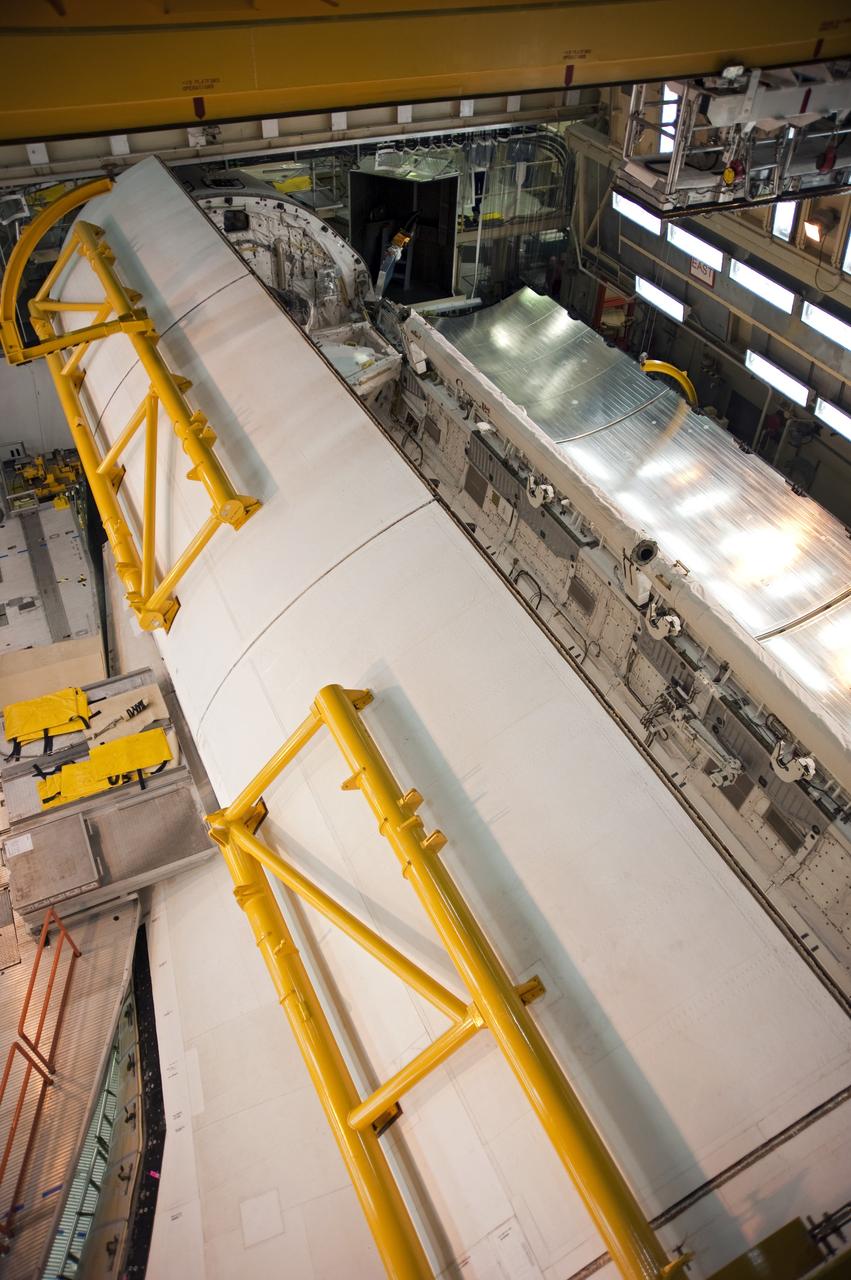
CAPE CANAVERAL, Fla. -- In Orbiter Processing Facility-3 at NASA's Kennedy Space Center in Florida, the clamshell doors of space shuttle Discovery's payload bay begin to close in preparation for the its move to the Vehicle Assembly Building next month. There, it will be attached to its external fuel tank and a set of solid rocket boosters for launch on the STS-133 mission to the International Space Station. Targeted to launch Nov. 1, STS-133 will carry the multipurpose logistics module, or PMM, packed with supplies and critical spare parts, as well as Robonaut 2, or R2, to the station. Discovery will leave the module behind so it can be used for microgravity experiments in fluid physics, materials science, biology and biotechnology. Photo credit: NASA/Kim Shiflett
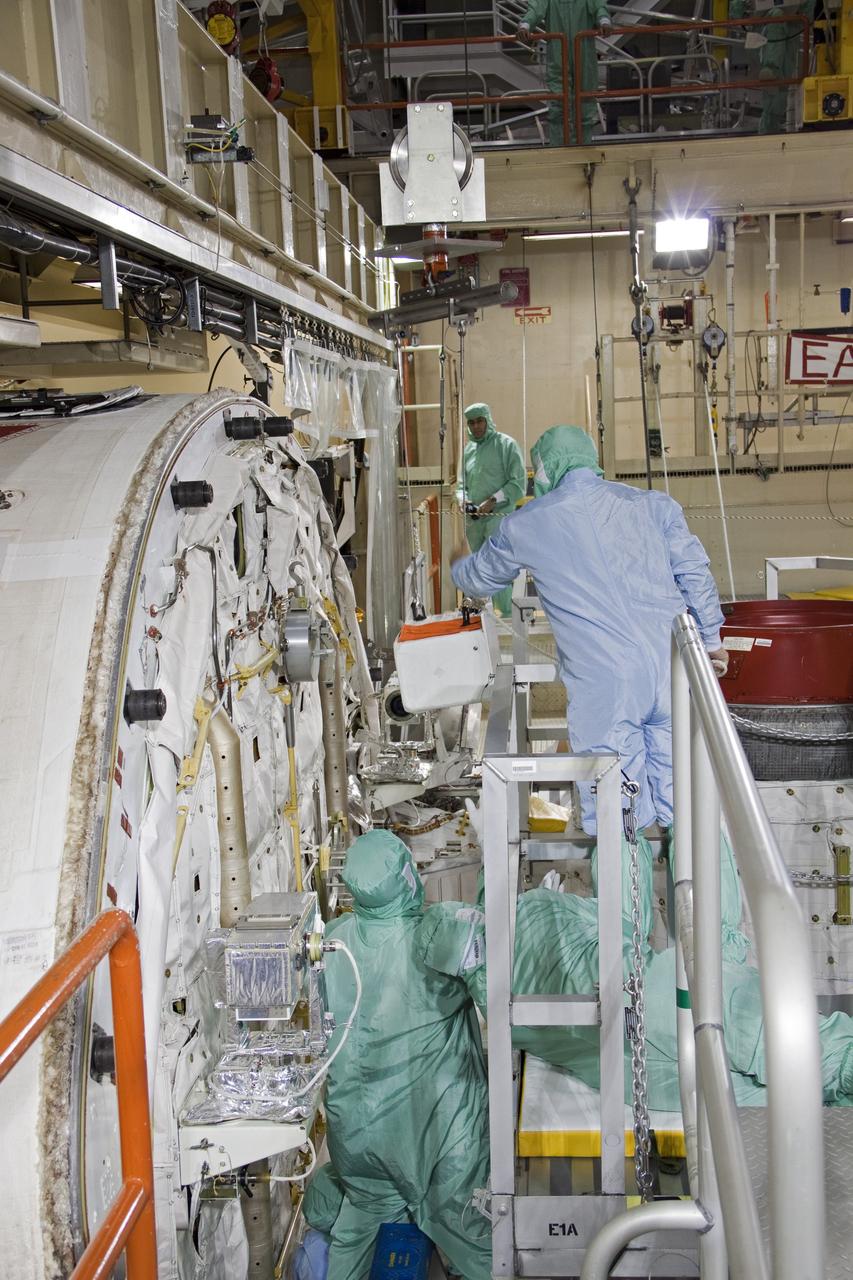
CAPE CANAVERAL, Fla. -- A DragonEye proximity sensor developed by Space Exploration Technologies (SpaceX) is installed while space shuttle Discovery is in Orbiter Processing Facility-3 at NASA's Kennedy Space Center in Florida. DragonEye is a Laser Imaging Detection and Ranging (LIDAR) sensor that will be tested on Discovery's docking operation with the International Space Station. Discovery's STS-133 mission, targeted to launch Nov. 1, will be the second demonstration of the sensor, following shuttle Endeavour's STS-127 mission in 2009. The DragonEye sensor will guide SpaceX's Dragon spacecraft as it approaches and berths to the station on future cargo re-supply missions. The Dragon spacecraft is a free-flying, reusable spacecraft being developed by SpaceX, which is contracted by NASA's Commercial Orbital Transportation Services (COTS) program. Photo credit: NASA/Jim Grossmann
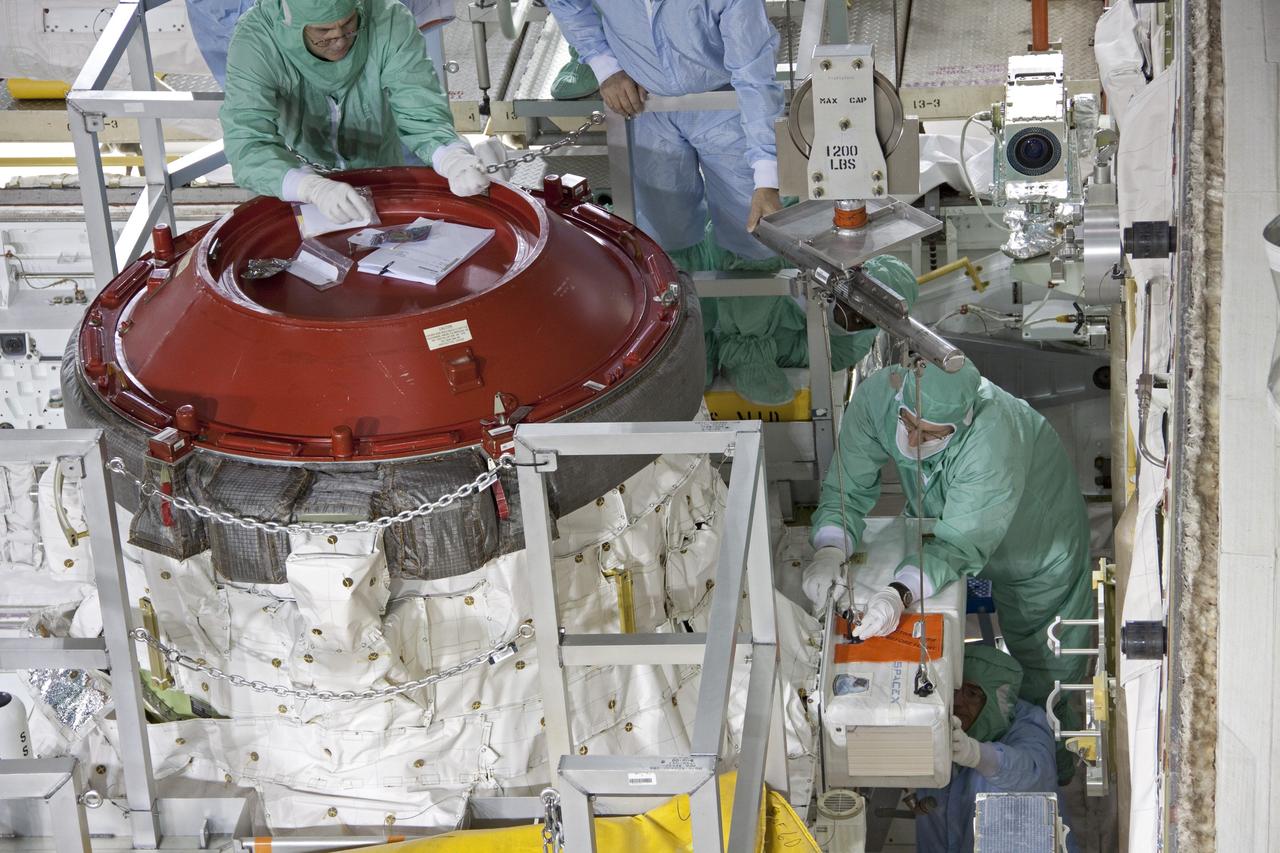
CAPE CANAVERAL, Fla. -- A DragonEye proximity sensor developed by Space Exploration Technologies (SpaceX) is installed while space shuttle Discovery is in Orbiter Processing Facility-3 at NASA's Kennedy Space Center in Florida. DragonEye is a Laser Imaging Detection and Ranging (LIDAR) sensor that will be tested on Discovery's docking operation with the International Space Station. Discovery's STS-133 mission, targeted to launch Nov. 1, will be the second demonstration of the sensor, following shuttle Endeavour's STS-127 mission in 2009. The DragonEye sensor will guide SpaceX's Dragon spacecraft as it approaches and berths to the station on future cargo re-supply missions. The Dragon spacecraft is a free-flying, reusable spacecraft being developed by SpaceX, which is contracted by NASA's Commercial Orbital Transportation Services (COTS) program. Photo credit: NASA/Jim Grossmann
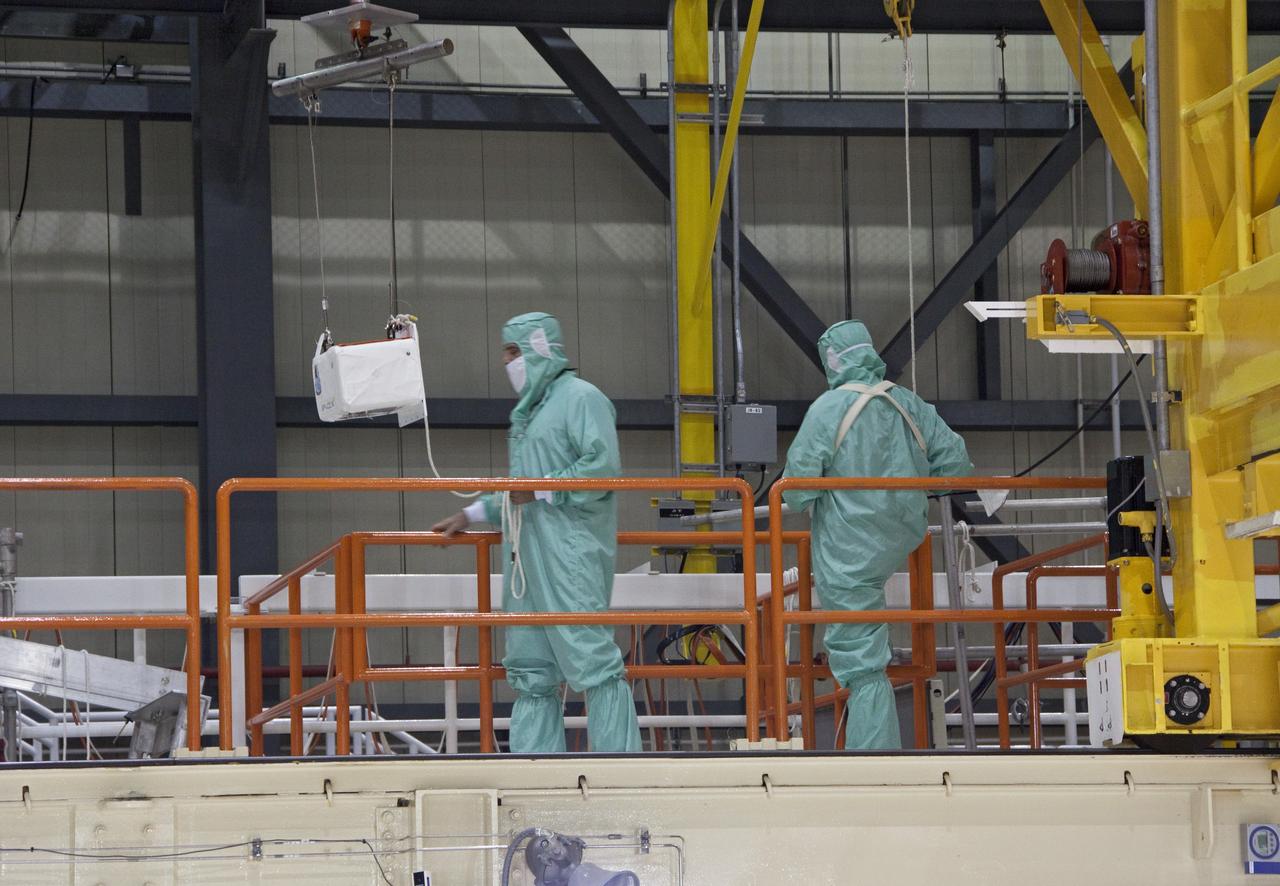
CAPE CANAVERAL, Fla. -- A DragonEye proximity sensor developed by Space Exploration Technologies (SpaceX) is installed while space shuttle Discovery is in Orbiter Processing Facility-3 at NASA's Kennedy Space Center in Florida. DragonEye is a Laser Imaging Detection and Ranging (LIDAR) sensor that will be tested on Discovery's docking operation with the International Space Station. Discovery's STS-133 mission, targeted to launch Nov. 1, will be the second demonstration of the sensor, following shuttle Endeavour's STS-127 mission in 2009. The DragonEye sensor will guide SpaceX's Dragon spacecraft as it approaches and berths to the station on future cargo re-supply missions. The Dragon spacecraft is a free-flying, reusable spacecraft being developed by SpaceX, which is contracted by NASA's Commercial Orbital Transportation Services (COTS) program. Photo credit: NASA/Jim Grossmann
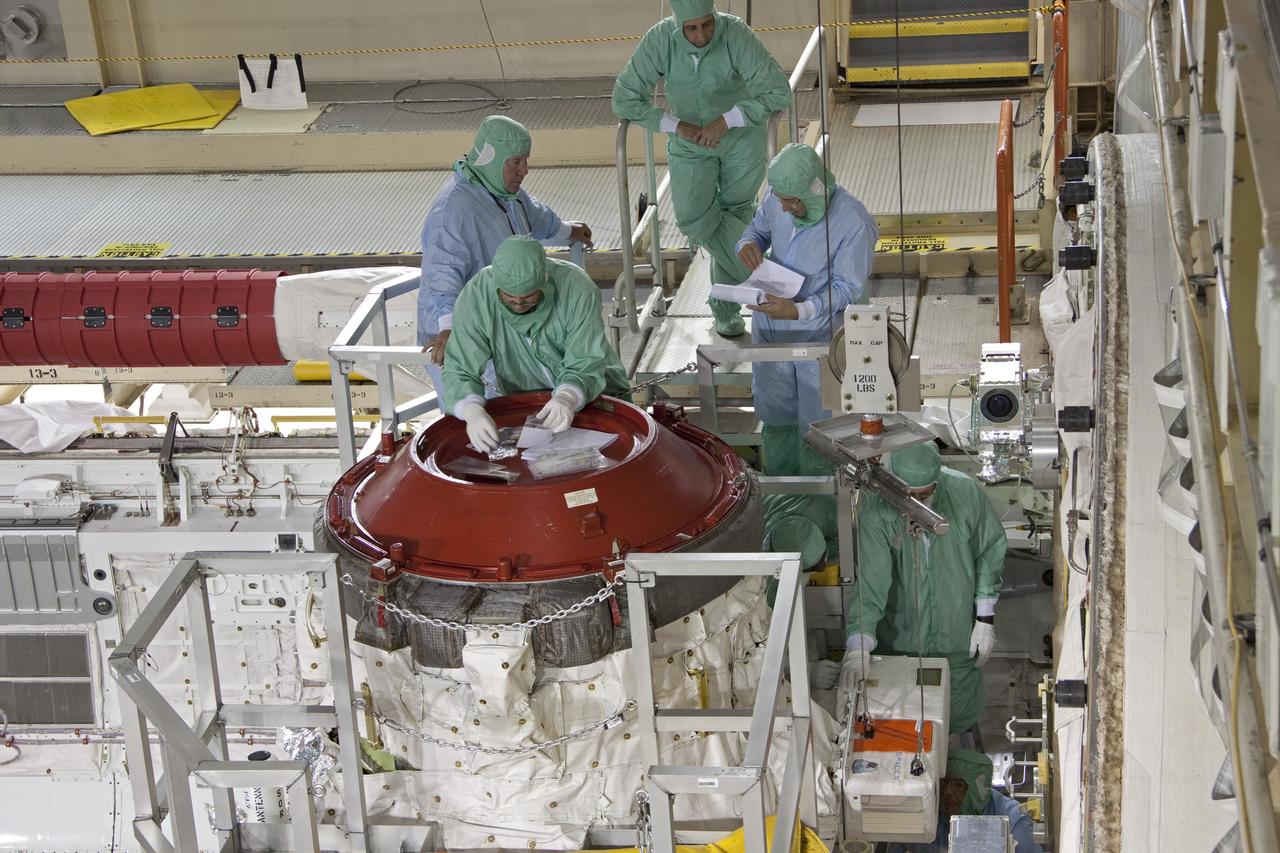
CAPE CANAVERAL, Fla. -- A DragonEye proximity sensor developed by Space Exploration Technologies (SpaceX) is installed while space shuttle Discovery is in Orbiter Processing Facility-3 at NASA's Kennedy Space Center in Florida. DragonEye is a Laser Imaging Detection and Ranging (LIDAR) sensor that will be tested on Discovery's docking operation with the International Space Station. Discovery's STS-133 mission, targeted to launch Nov. 1, will be the second demonstration of the sensor, following shuttle Endeavour's STS-127 mission in 2009. The DragonEye sensor will guide SpaceX's Dragon spacecraft as it approaches and berths to the station on future cargo re-supply missions. The Dragon spacecraft is a free-flying, reusable spacecraft being developed by SpaceX, which is contracted by NASA's Commercial Orbital Transportation Services (COTS) program. Photo credit: NASA/Jim Grossmann
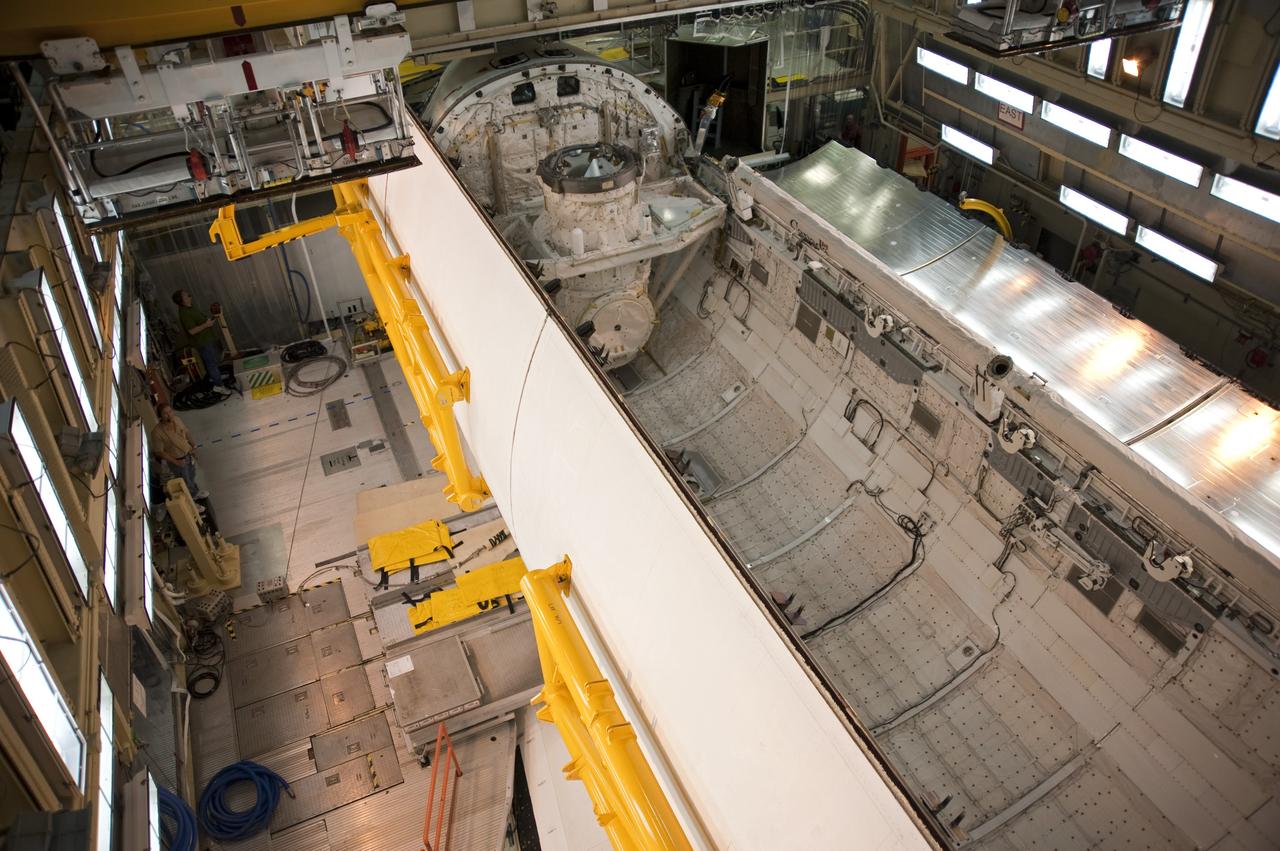
CAPE CANAVERAL, Fla. -- In Orbiter Processing Facility-3 at NASA's Kennedy Space Center in Florida, the clamshell doors of space shuttle Discovery's payload bay begin to close in preparation for the its move to the Vehicle Assembly Building next month. There, it will be attached to its external fuel tank and a set of solid rocket boosters for launch on the STS-133 mission to the International Space Station. Targeted to launch Nov. 1, STS-133 will carry the multipurpose logistics module, or PMM, packed with supplies and critical spare parts, as well as Robonaut 2, or R2, to the station. Discovery will leave the module behind so it can be used for microgravity experiments in fluid physics, materials science, biology and biotechnology. Photo credit: NASA/Kim Shiflett
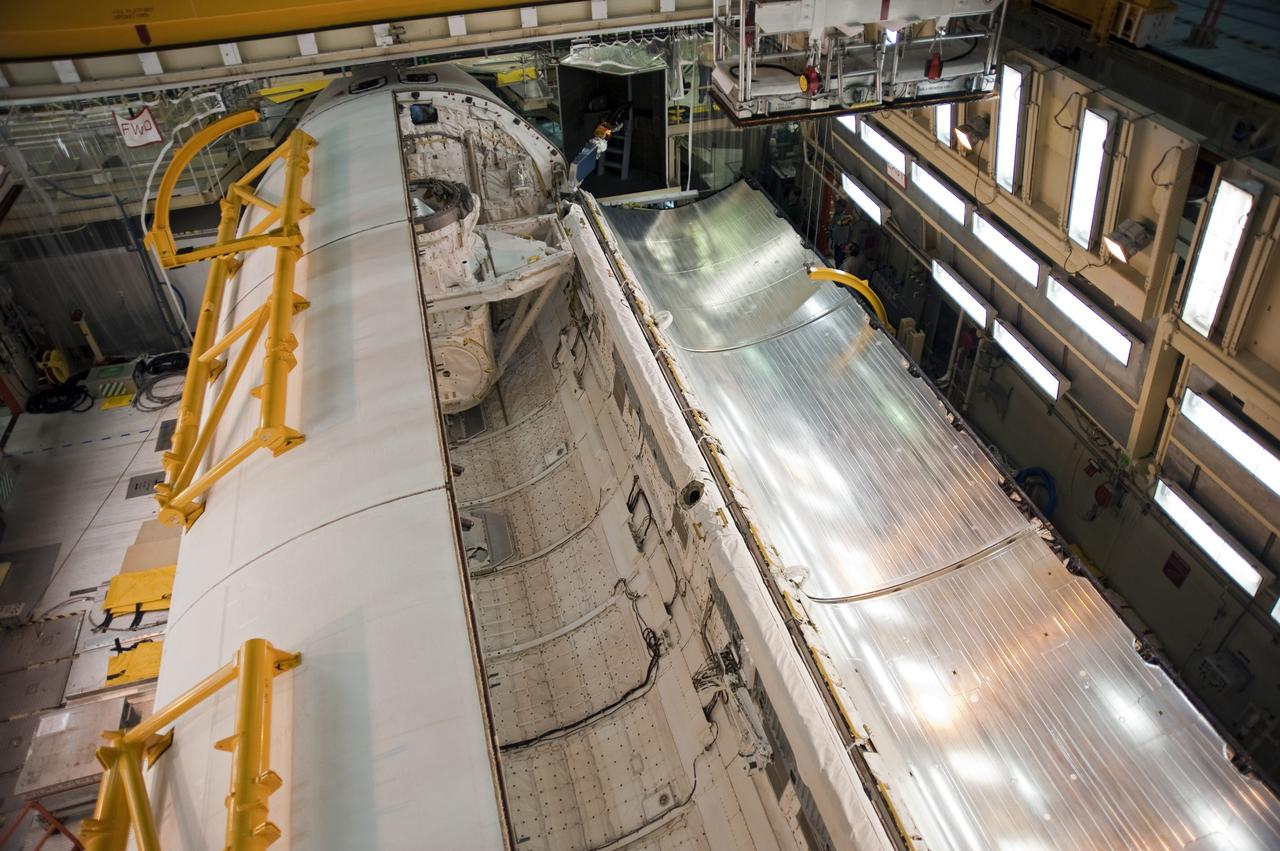
CAPE CANAVERAL, Fla. -- In Orbiter Processing Facility-3 at NASA's Kennedy Space Center in Florida, the clamshell doors of space shuttle Discovery's payload bay begin to close in preparation for the its move to the Vehicle Assembly Building next month. There, it will be attached to its external fuel tank and a set of solid rocket boosters for launch on the STS-133 mission to the International Space Station. Targeted to launch Nov. 1, STS-133 will carry the multipurpose logistics module, or PMM, packed with supplies and critical spare parts, as well as Robonaut 2, or R2, to the station. Discovery will leave the module behind so it can be used for microgravity experiments in fluid physics, materials science, biology and biotechnology. Photo credit: NASA/Kim Shiflett
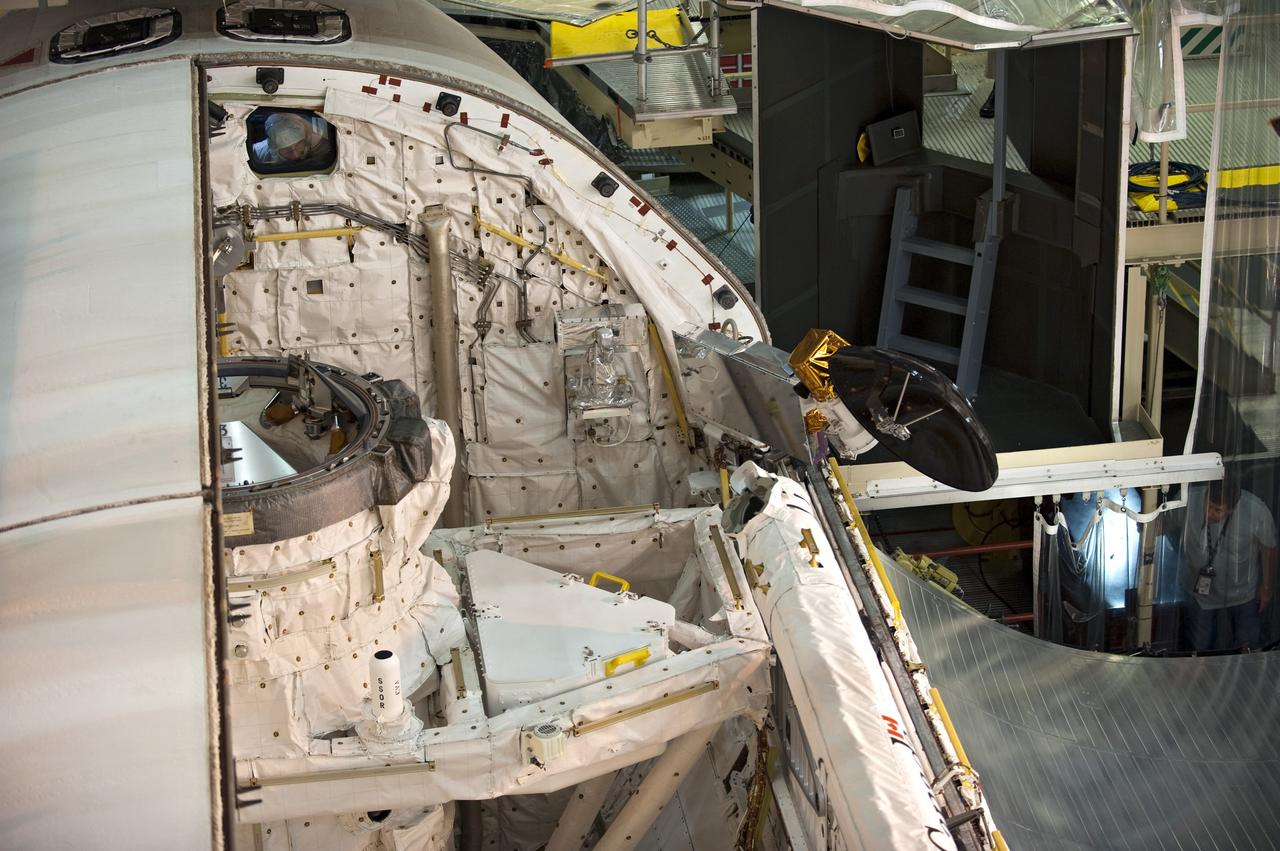
CAPE CANAVERAL, Fla. -- In Orbiter Processing Facility-3 at NASA's Kennedy Space Center in Florida, the Ku-band antenna is stored in space shuttle Discovery's payload bay. The antenna, which resembles a mini-satellite dish, transmits audio, video and data between Earth and the shuttle. Next, the clamshell doors of the payload bay will close completely in preparation for its move to the Vehicle Assembly Building next month. There, it will be attached to its external fuel tank and a set of solid rocket boosters for launch on the STS-133 mission to the International Space Station. Targeted to launch Nov. 1, STS-133 will carry the multipurpose logistics module, or PMM, packed with supplies and critical spare parts, as well as Robonaut 2, or R2, to the station. Discovery will leave the module behind so it can be used for microgravity experiments in fluid physics, materials science, biology and biotechnology. Photo credit: NASA/Kim Shiflett
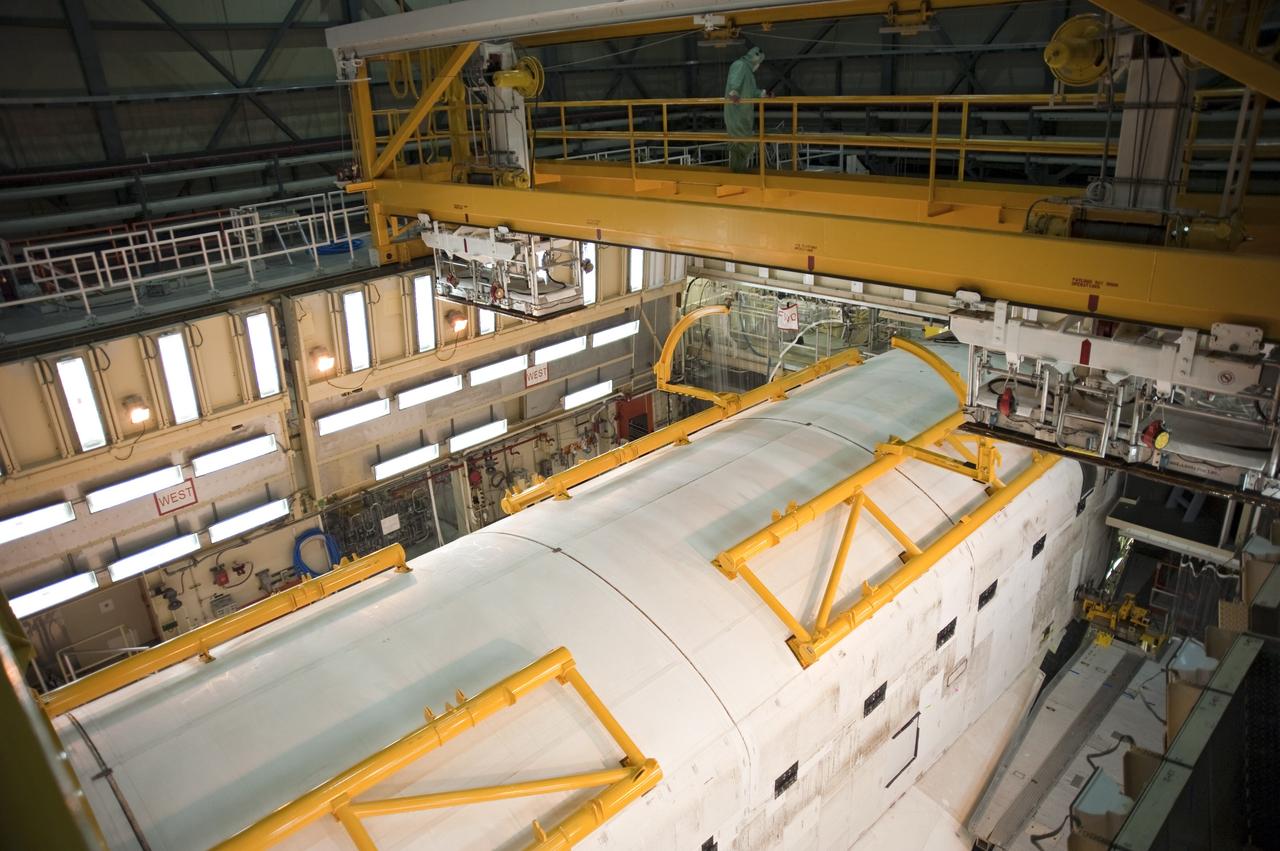
CAPE CANAVERAL, Fla. -- In Orbiter Processing Facility-3 at NASA's Kennedy Space Center in Florida, the clamshell doors of space shuttle Discovery's payload bay are closed completely in preparation for the its move to the Vehicle Assembly Building next month. There, it will be attached to its external fuel tank and a set of solid rocket boosters for launch on the STS-133 mission to the International Space Station. Targeted to launch Nov. 1, STS-133 will carry the multipurpose logistics module, or PMM, packed with supplies and critical spare parts, as well as Robonaut 2, or R2, to the station. Discovery will leave the module behind so it can be used for microgravity experiments in fluid physics, materials science, biology and biotechnology. Photo credit: NASA/Kim Shiflett
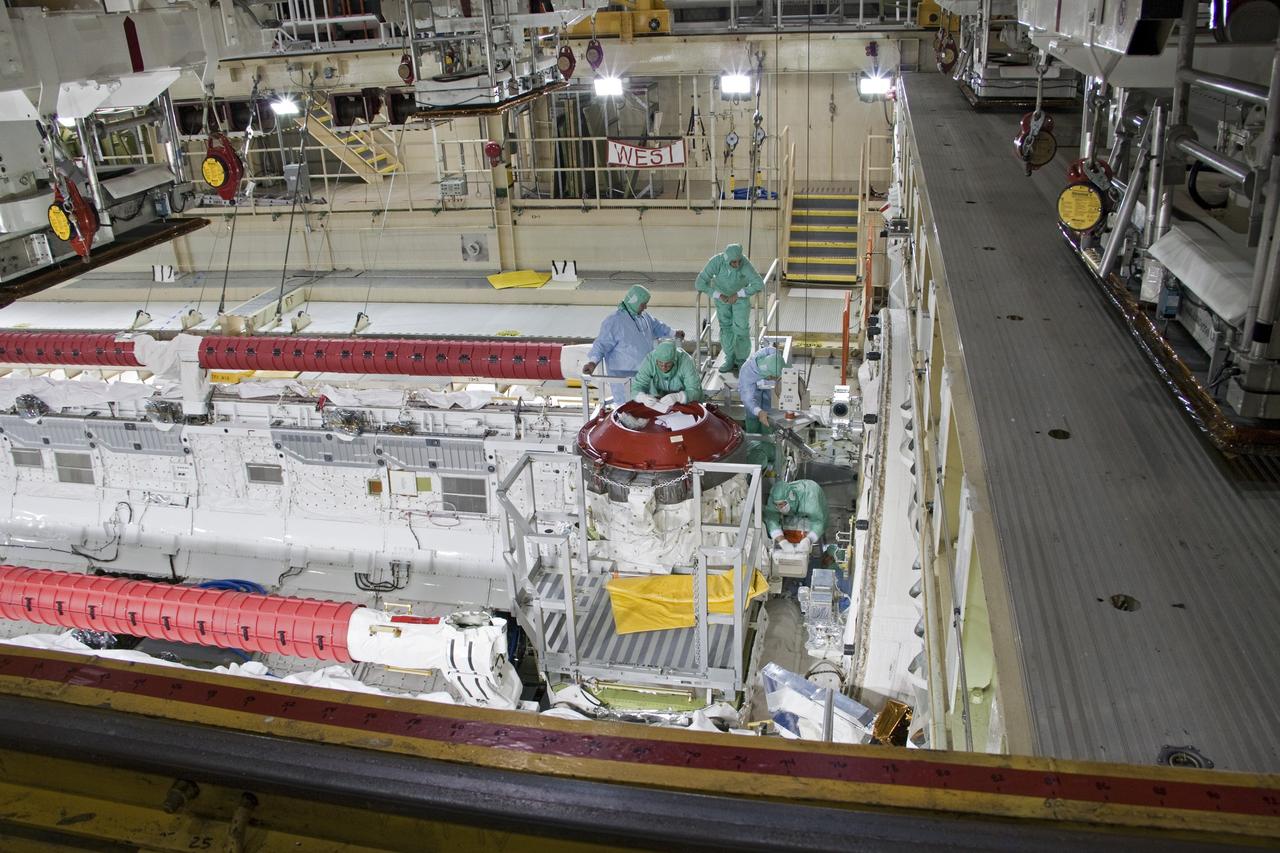
CAPE CANAVERAL, Fla. -- A DragonEye proximity sensor developed by Space Exploration Technologies (SpaceX) is installed while space shuttle Discovery is in Orbiter Processing Facility-3 at NASA's Kennedy Space Center in Florida. DragonEye is a Laser Imaging Detection and Ranging (LIDAR) sensor that will be tested on Discovery's docking operation with the International Space Station. Discovery's STS-133 mission, targeted to launch Nov. 1, will be the second demonstration of the sensor, following shuttle Endeavour's STS-127 mission in 2009. The DragonEye sensor will guide SpaceX's Dragon spacecraft as it approaches and berths to the station on future cargo re-supply missions. The Dragon spacecraft is a free-flying, reusable spacecraft being developed by SpaceX, which is contracted by NASA's Commercial Orbital Transportation Services (COTS) program. Photo credit: NASA/Jim Grossmann
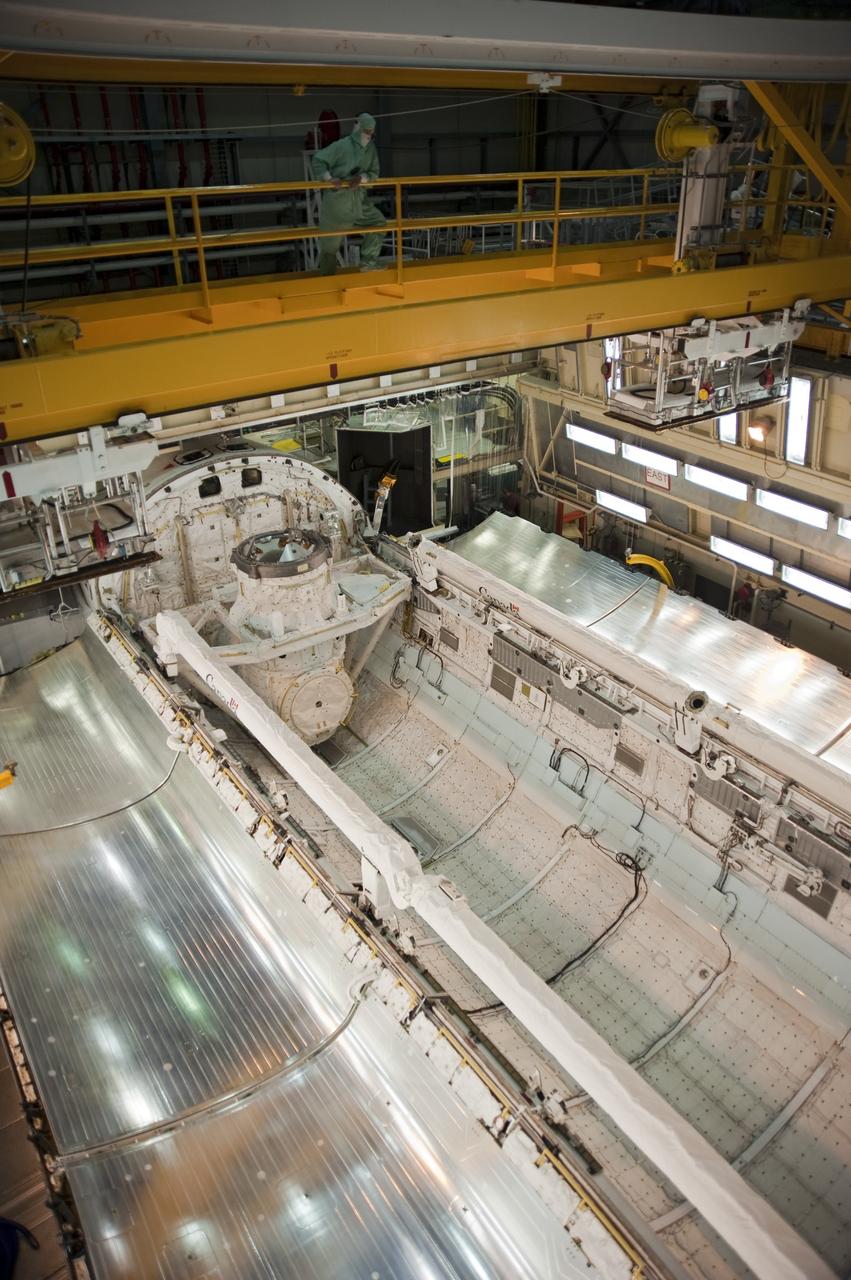
CAPE CANAVERAL, Fla. -- In Orbiter Processing Facility-3 at NASA's Kennedy Space Center in Florida, the clamshell doors of space shuttle Discovery's payload bay begin to close in preparation for the its move to the Vehicle Assembly Building next month. There, it will be attached to its external fuel tank and a set of solid rocket boosters for launch on the STS-133 mission to the International Space Station. Targeted to launch Nov. 1, STS-133 will carry the multipurpose logistics module, or PMM, packed with supplies and critical spare parts, as well as Robonaut 2, or R2, to the station. Discovery will leave the module behind so it can be used for microgravity experiments in fluid physics, materials science, biology and biotechnology. Photo credit: NASA/Kim Shiflett
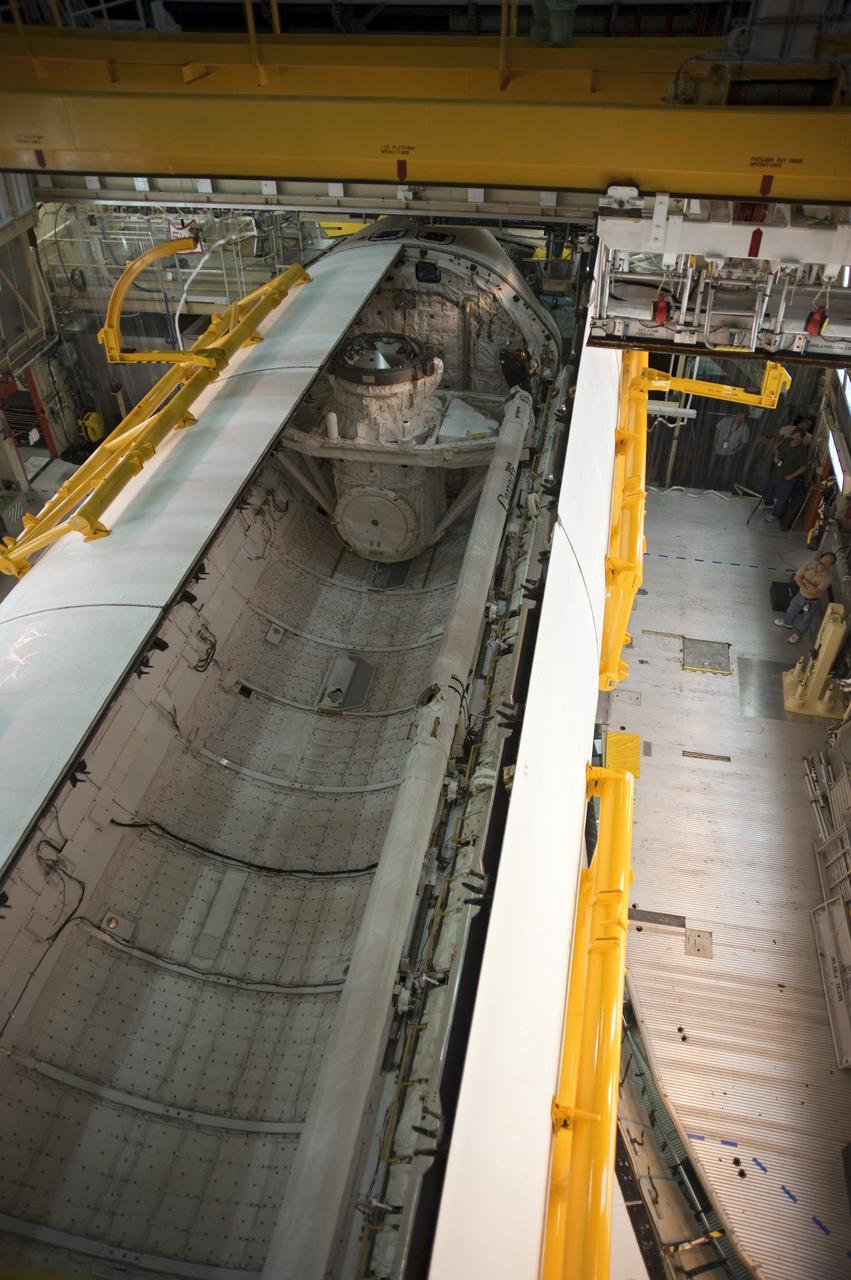
CAPE CANAVERAL, Fla. -- In Orbiter Processing Facility-3 at NASA's Kennedy Space Center in Florida, the clamshell doors of space shuttle Discovery's payload bay close completely in preparation for the its move to the Vehicle Assembly Building next month. There, it will be attached to its external fuel tank and a set of solid rocket boosters for launch on the STS-133 mission to the International Space Station. Targeted to launch Nov. 1, STS-133 will carry the multipurpose logistics module, or PMM, packed with supplies and critical spare parts, as well as Robonaut 2, or R2, to the station. Discovery will leave the module behind so it can be used for microgravity experiments in fluid physics, materials science, biology and biotechnology. Photo credit: NASA/Kim Shiflett
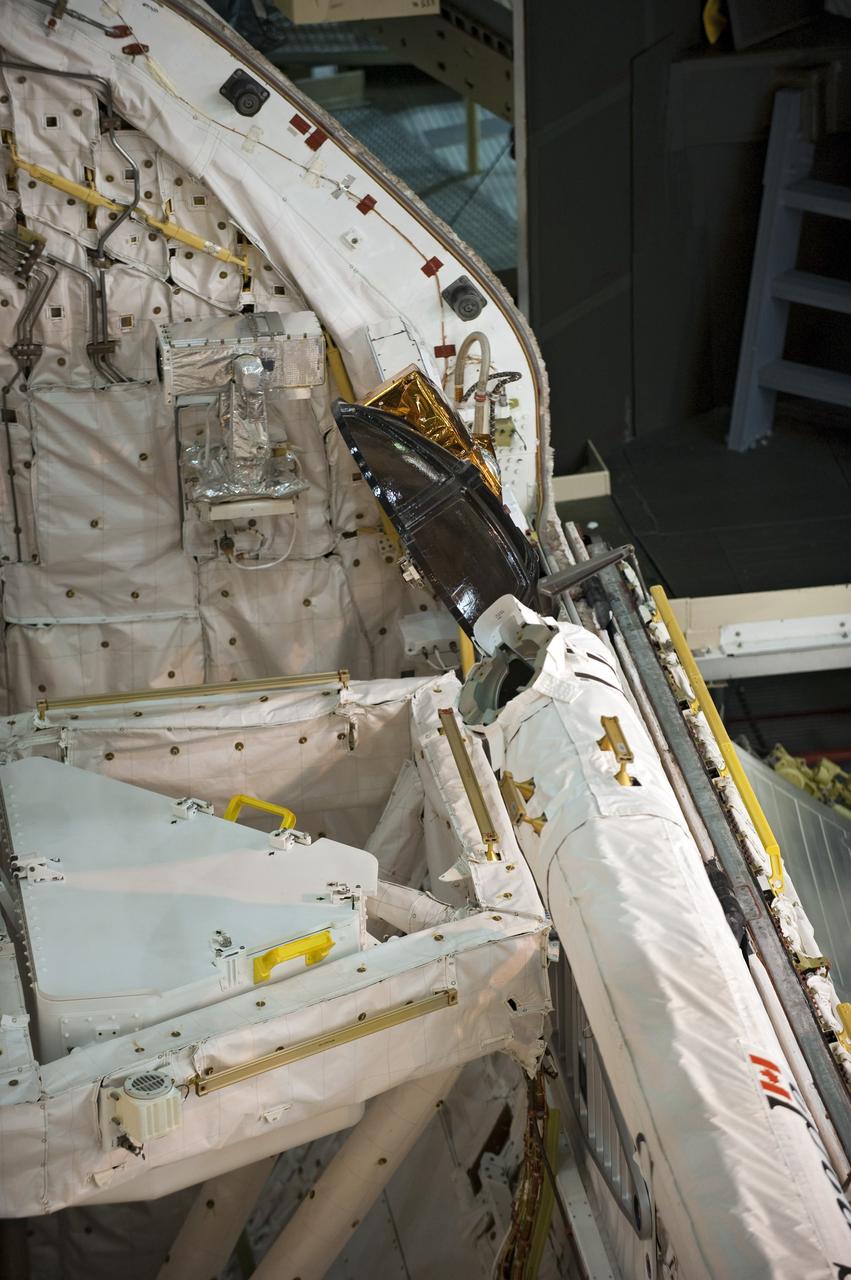
CAPE CANAVERAL, Fla. -- In Orbiter Processing Facility-3 at NASA's Kennedy Space Center in Florida, the Ku-band antenna is stored in space shuttle Discovery's payload bay. The antenna, which resembles a mini-satellite dish, transmits audio, video and data between Earth and the shuttle. Next, the clamshell doors of the payload bay will close completely in preparation for its move to the Vehicle Assembly Building next month. There, it will be attached to its external fuel tank and a set of solid rocket boosters for launch on the STS-133 mission to the International Space Station. Targeted to launch Nov. 1, STS-133 will carry the multipurpose logistics module, or PMM, packed with supplies and critical spare parts, as well as Robonaut 2, or R2, to the station. Discovery will leave the module behind so it can be used for microgravity experiments in fluid physics, materials science, biology and biotechnology. Photo credit: NASA/Kim Shiflett
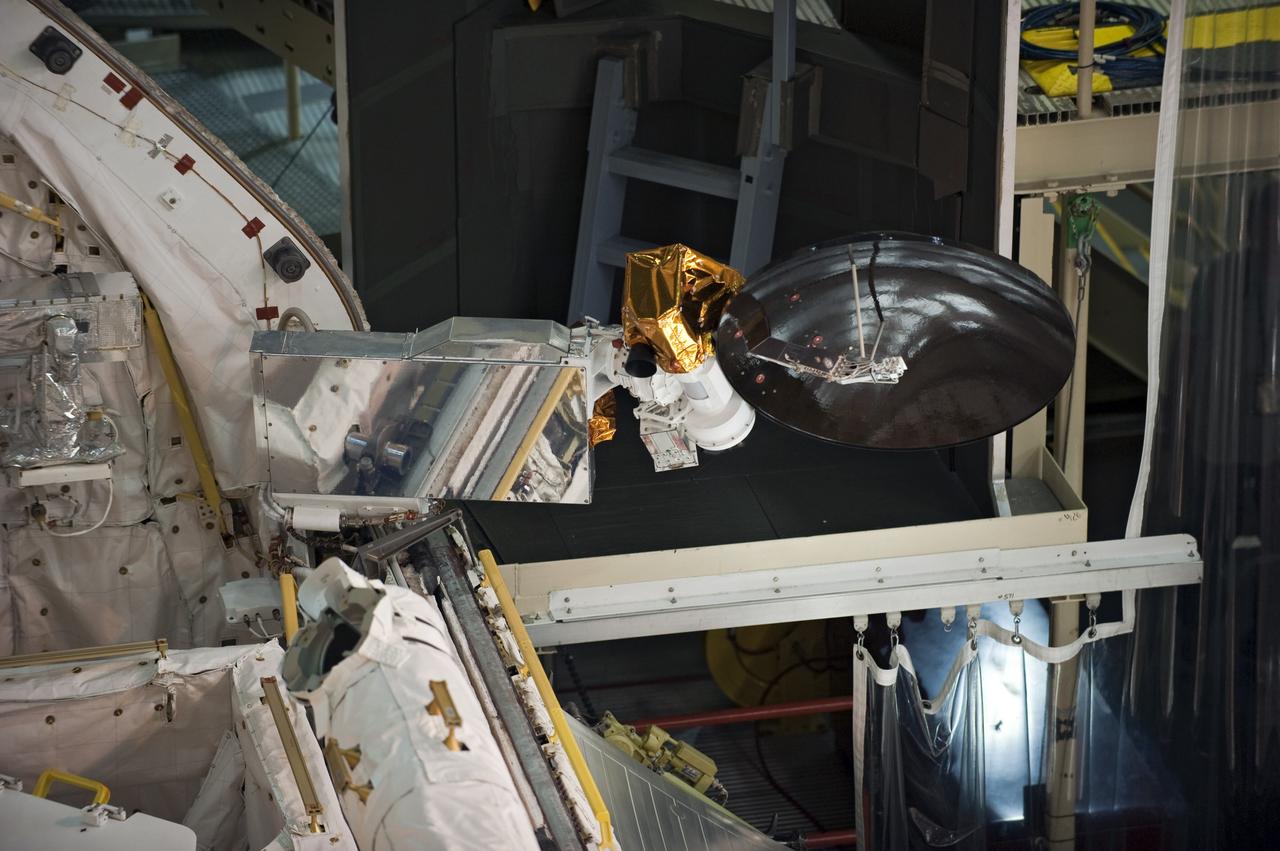
CAPE CANAVERAL, Fla. -- In Orbiter Processing Facility-3 at NASA's Kennedy Space Center in Florida, the Ku-band antenna is stored in space shuttle Discovery's payload bay. The antenna, which resembles a mini-satellite dish, transmits audio, video and data between Earth and the shuttle. Next, the clamshell doors of the payload bay will close completely in preparation for its move to the Vehicle Assembly Building next month. There, it will be attached to its external fuel tank and a set of solid rocket boosters for launch on the STS-133 mission to the International Space Station. Targeted to launch Nov. 1, STS-133 will carry the multipurpose logistics module, or PMM, packed with supplies and critical spare parts, as well as Robonaut 2, or R2, to the station. Discovery will leave the module behind so it can be used for microgravity experiments in fluid physics, materials science, biology and biotechnology. Photo credit: NASA/Kim Shiflett
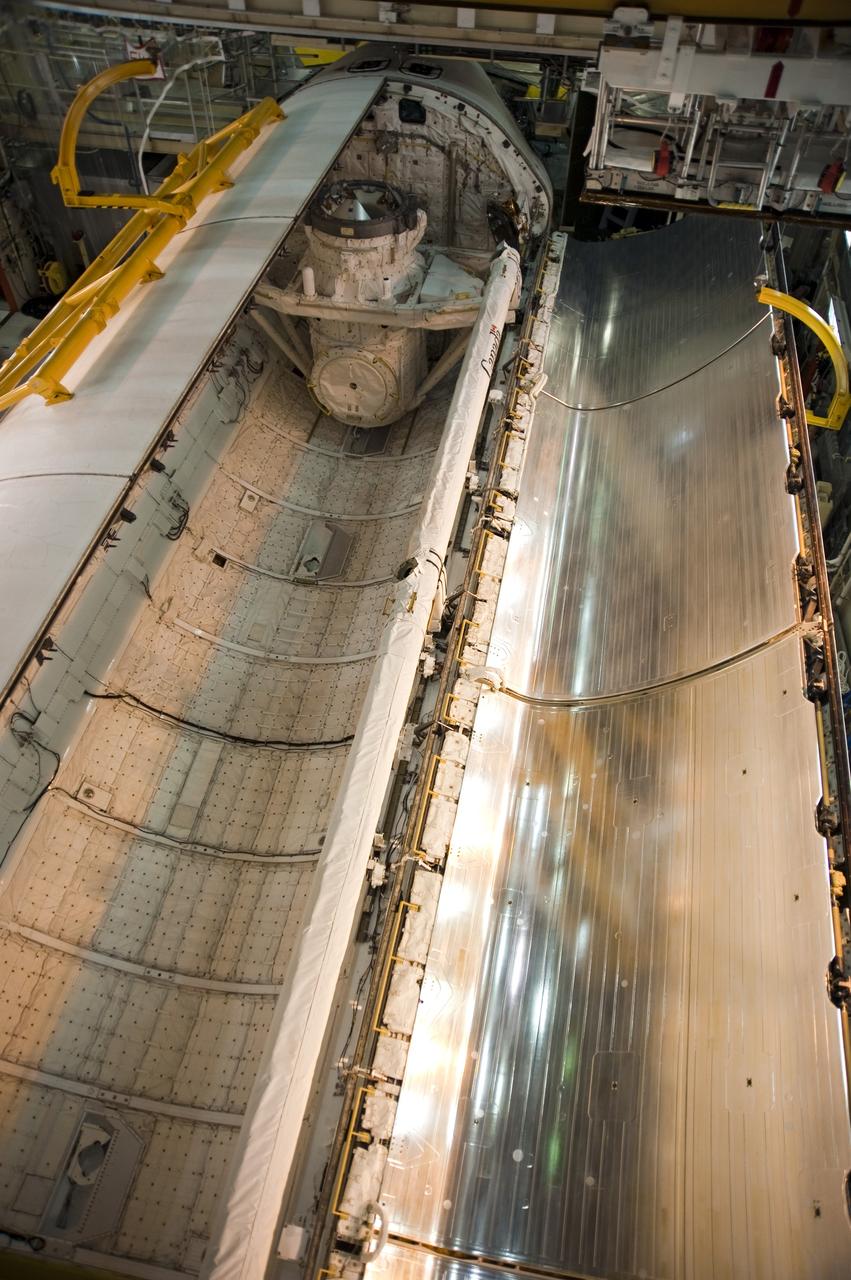
CAPE CANAVERAL, Fla. -- In Orbiter Processing Facility-3 at NASA's Kennedy Space Center in Florida, the clamshell doors of space shuttle Discovery's payload bay close completely in preparation for the its move to the Vehicle Assembly Building next month. There, it will be attached to its external fuel tank and a set of solid rocket boosters for launch on the STS-133 mission to the International Space Station. Targeted to launch Nov. 1, STS-133 will carry the multipurpose logistics module, or PMM, packed with supplies and critical spare parts, as well as Robonaut 2, or R2, to the station. Discovery will leave the module behind so it can be used for microgravity experiments in fluid physics, materials science, biology and biotechnology. Photo credit: NASA/Kim Shiflett
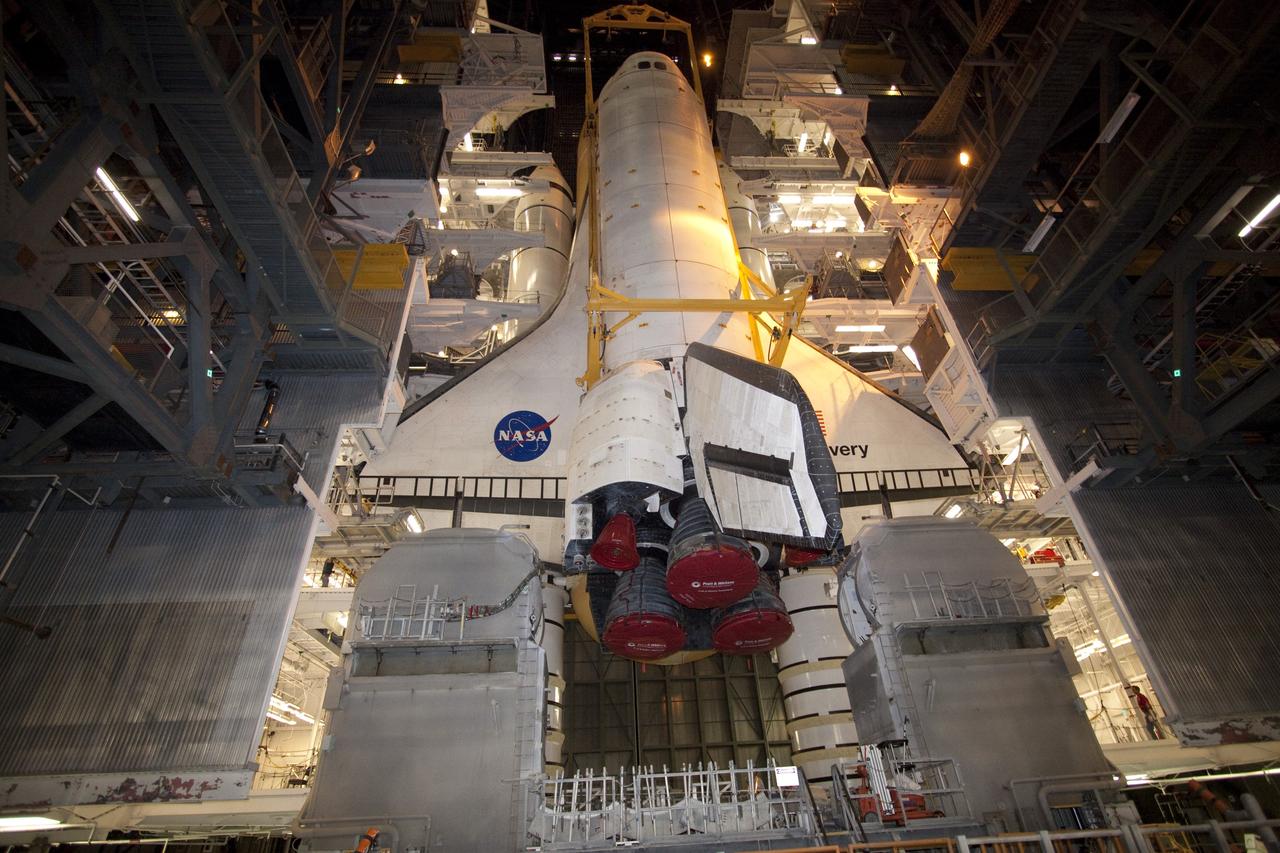
CAPE CANAVERAL, Fla. -- In High Bay 3 of the Vehicle Assembly Building at NASA's Kennedy Space Center in Florida, a large yellow, metal sling lowers shuttle Discovery to its external fuel tank and solid rocket boosters. The lift and mate operation began Sept. 9 and wrapped up early Sept. 10. Discovery is scheduled to roll out to Launch Pad 39A later this month in preparation for its launch to the International Space Station on the STS-133 mission. Targeted to lift off Nov. 1, Discovery will take the Permanent Multipurpose Module (PMM) packed with supplies and critical spare parts, as well as Robonaut 2 (R2) to the station. Photo credit: NASA/Jack Pfaller
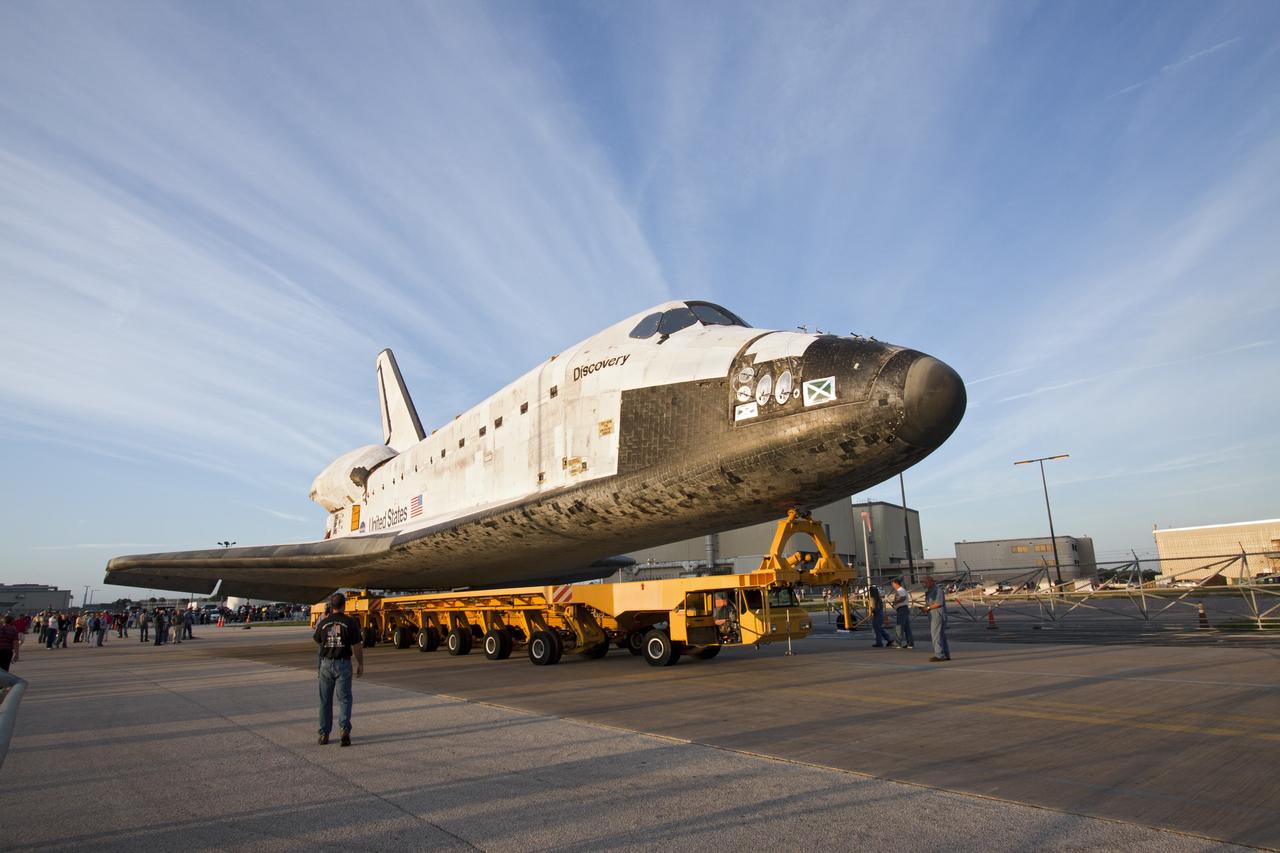
CAPE CANAVERAL, Fla. -- At NASA's Kennedy Space Center in Florida, shuttle Discovery pauses in between Orbiter Processing Facility-3 and the Vehicle Assembly Building (VAB) during a move called "rollover." Once inside the VAB, the shuttle will be joined to its solid rocket boosters and external fuel tank. Later this month, Discovery is scheduled to "rollout" to Launch Pad 39A for its launch to the International Space Station on the STS-133 mission. Targeted to liftoff Nov. 1, Discovery will take the Permanent Multipurpose Module (PMM) packed with supplies and critical spare parts, as well as Robonaut 2 (R2) to the station. Photo credit: NASA/Jack Pfaller
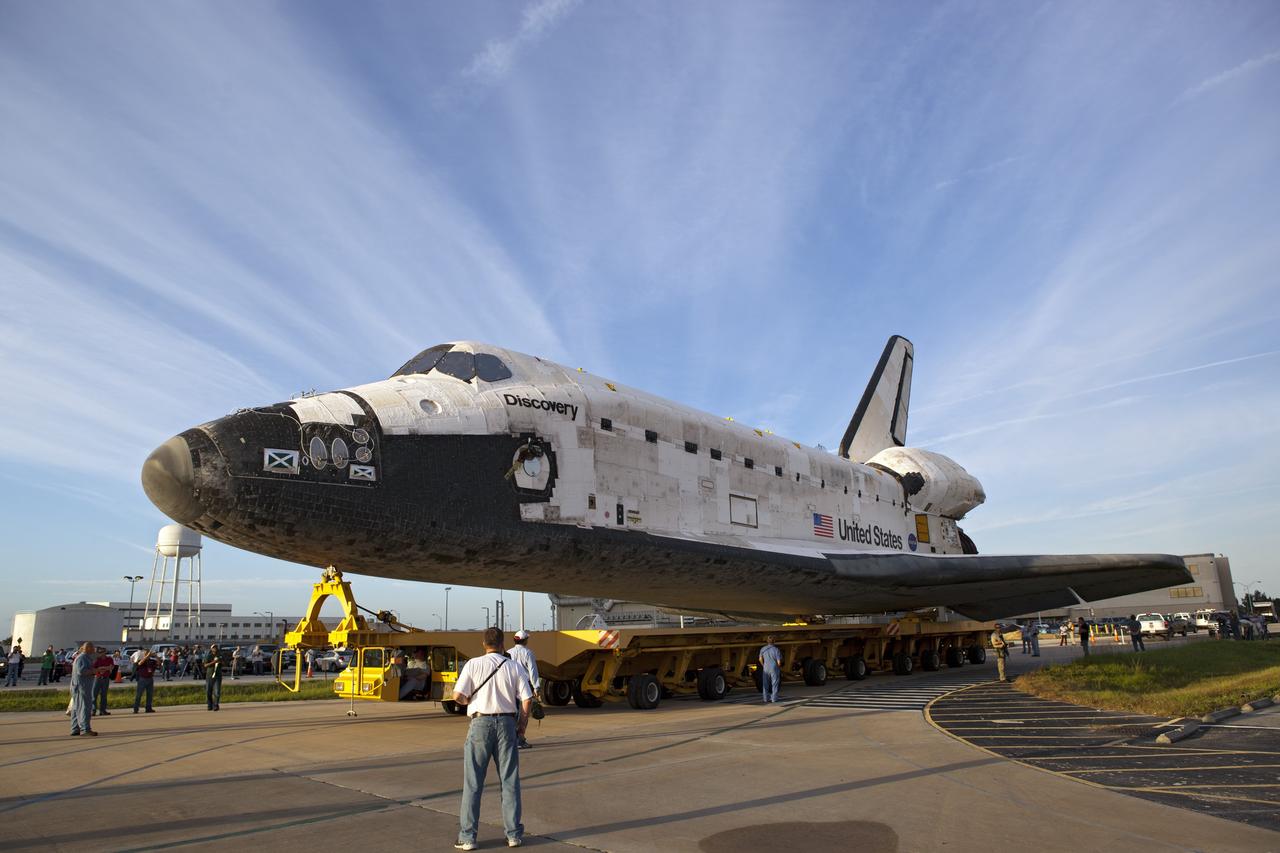
CAPE CANAVERAL, Fla. -- At NASA's Kennedy Space Center in Florida, shuttle Discovery pauses in between Orbiter Processing Facility-3 and the Vehicle Assembly Building (VAB) during a move called "rollover." Once inside the VAB, the shuttle will be joined to its solid rocket boosters and external fuel tank. Later this month, Discovery is scheduled to "rollout" to Launch Pad 39A for its launch to the International Space Station on the STS-133 mission. Targeted to liftoff Nov. 1, Discovery will take the Permanent Multipurpose Module (PMM) packed with supplies and critical spare parts, as well as Robonaut 2 (R2) to the station. Photo credit: NASA/Dimitri Gerondidakis
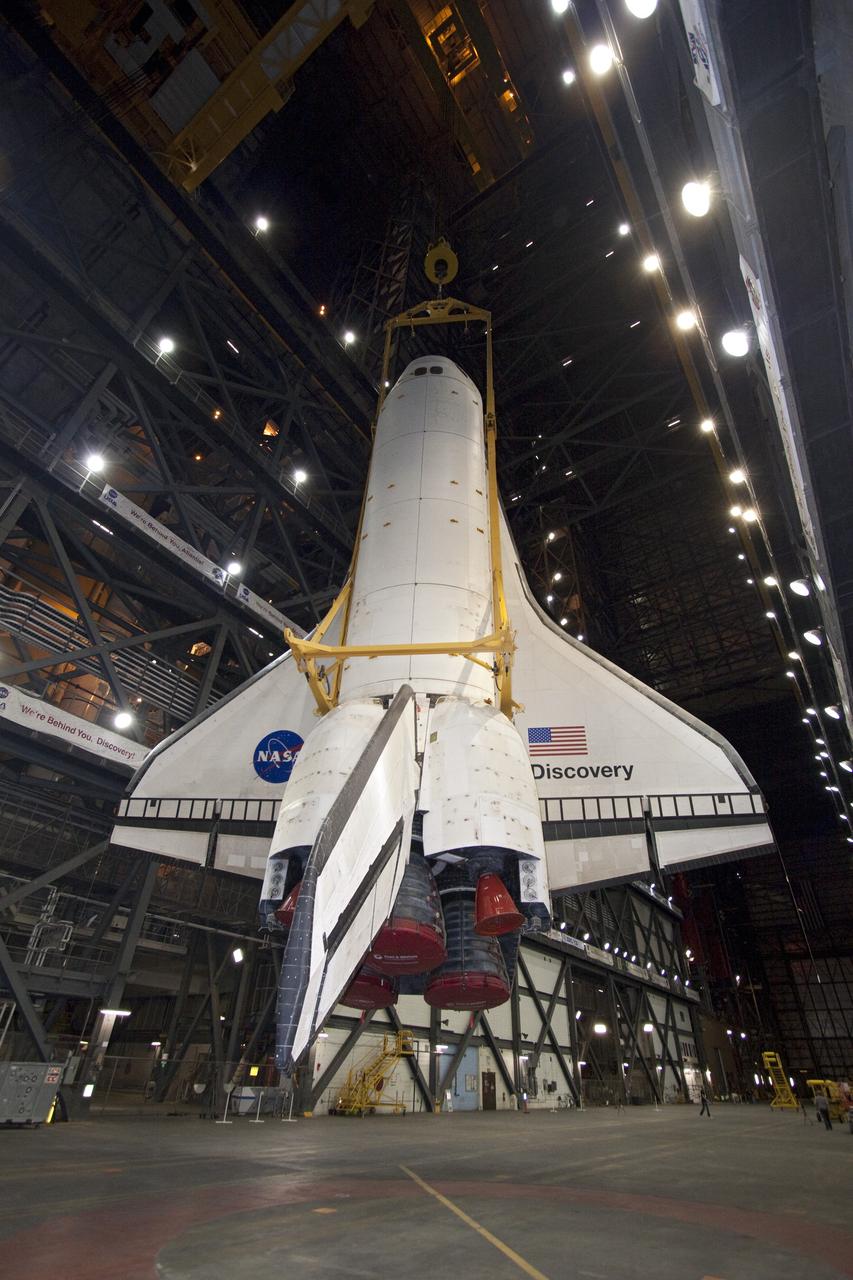
CAPE CANAVERAL, Fla. -- At NASA's Kennedy Space Center in Florida, a large yellow, metal sling lifts shuttle Discovery from the transfer aisle into High Bay 3 of the Vehicle Assembly Building. In the bay, the shuttle will be attached to its external fuel tank and solid rocket boosters. The operation began Sept. 9 and wrapped up early Sept. 10. Discovery is scheduled to roll out to Launch Pad 39A later this month in preparation for its launch to the International Space Station on the STS-133 mission. Targeted to lift off Nov. 1, Discovery will take the Permanent Multipurpose Module (PMM) packed with supplies and critical spare parts, as well as Robonaut 2 (R2) to the station. Photo credit: NASA/Jack Pfaller
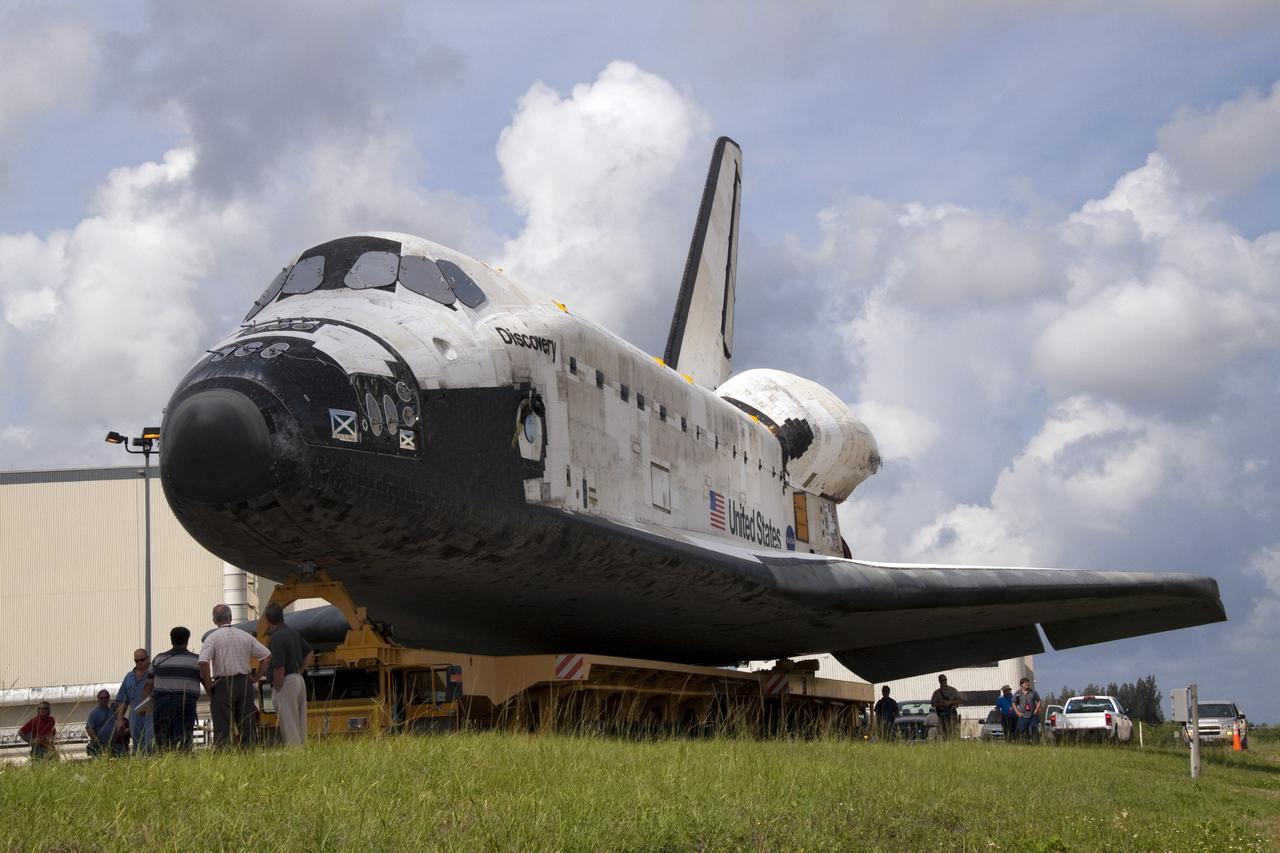
CAPE CANAVERAL, Fla. -- At NASA's Kennedy Space Center in Florida, shuttle Discovery continues its move, known as "rollover," from Orbiter Processing Facility-3 to the nearby Vehicle Assembly Building (VAB). Once inside the VAB, the shuttle will be joined to its solid rocket boosters and external fuel tank. Later this month, Discovery is scheduled to "rollout" to Launch Pad 39A for its launch to the International Space Station on the STS-133 mission. Targeted to liftoff Nov. 1, Discovery will take the Permanent Multipurpose Module (PMM) packed with supplies and critical spare parts, as well as Robonaut 2 (R2) to the station. Photo credit: NASA/Jack Pfaller
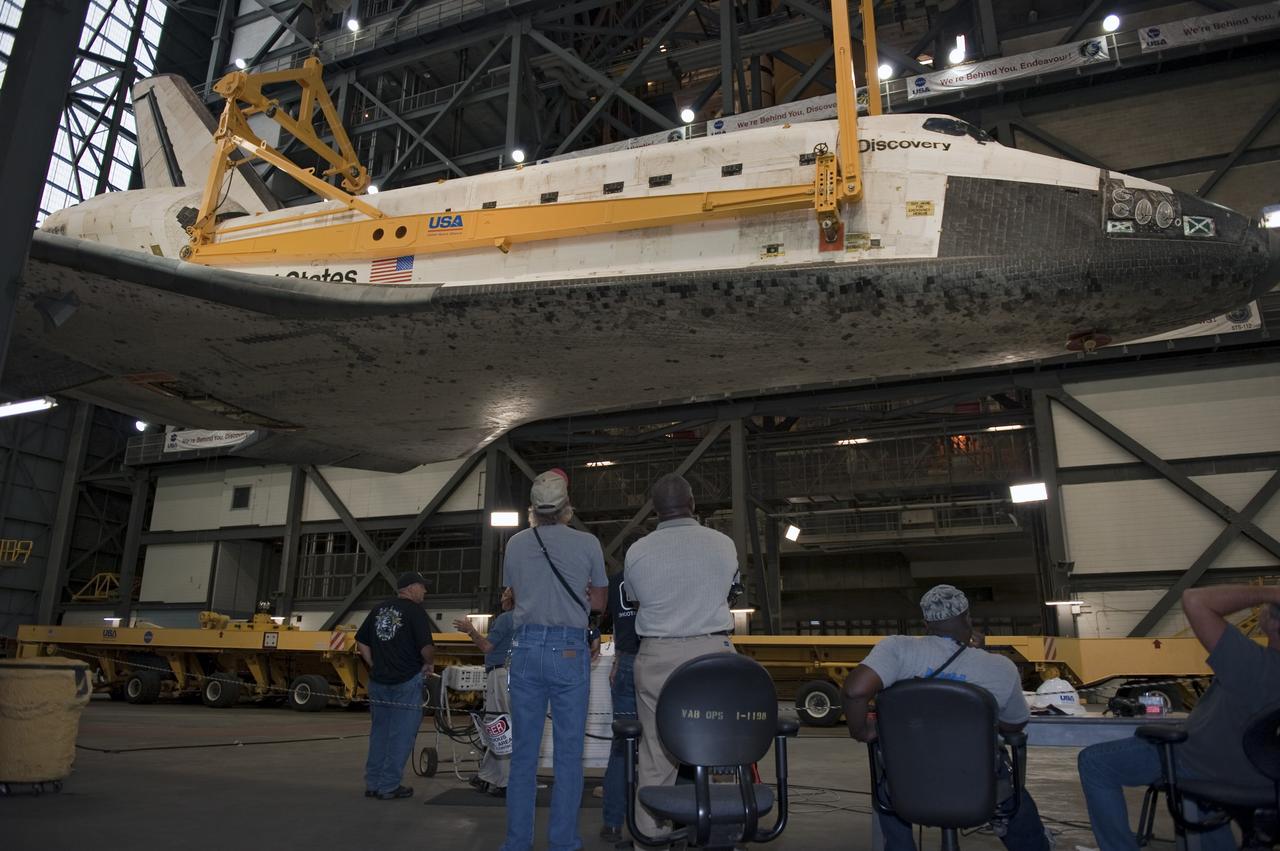
CAPE CANAVERAL, Fla. -- At NASA's Kennedy Space Center in Florida, a large yellow, metal sling lifts shuttle Discovery from the transfer aisle into High Bay 3 of the Vehicle Assembly Building. In the bay, the shuttle will be attached to its external fuel tank and solid rocket boosters. The operation began Sept. 9 and wrapped up early Sept. 10. Discovery is scheduled to roll out to Launch Pad 39A later this month in preparation for its launch to the International Space Station on the STS-133 mission. Targeted to lift off Nov. 1, Discovery will take the Permanent Multipurpose Module (PMM) packed with supplies and critical spare parts, as well as Robonaut 2 (R2) to the station. Photo credit: NASA/Kim Shiflett
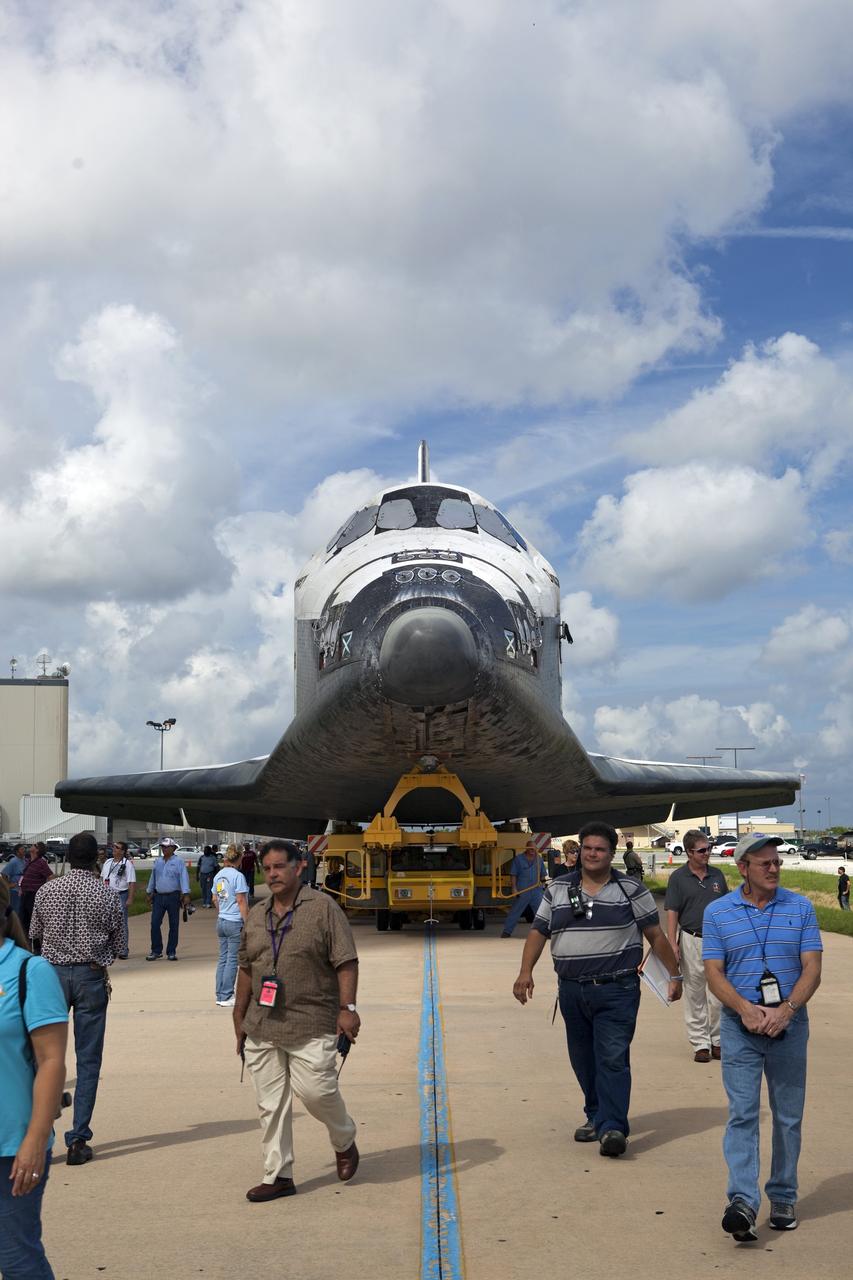
CAPE CANAVERAL, Fla. -- At NASA's Kennedy Space Center in Florida, shuttle Discovery pauses for photos during its move called "rollover" from Orbiter Processing Facility-3 to the nearby Vehicle Assembly Building (VAB). Once inside the VAB, the shuttle will be joined to its solid rocket boosters and external fuel tank. Later this month, Discovery is scheduled to "rollout" to Launch Pad 39A for its launch to the International Space Station on the STS-133 mission. Targeted to liftoff Nov. 1, Discovery will take the Permanent Multipurpose Module (PMM) packed with supplies and critical spare parts, as well as Robonaut 2 (R2) to the station. Photo credit: NASA/ Dimitri Gerondidakis
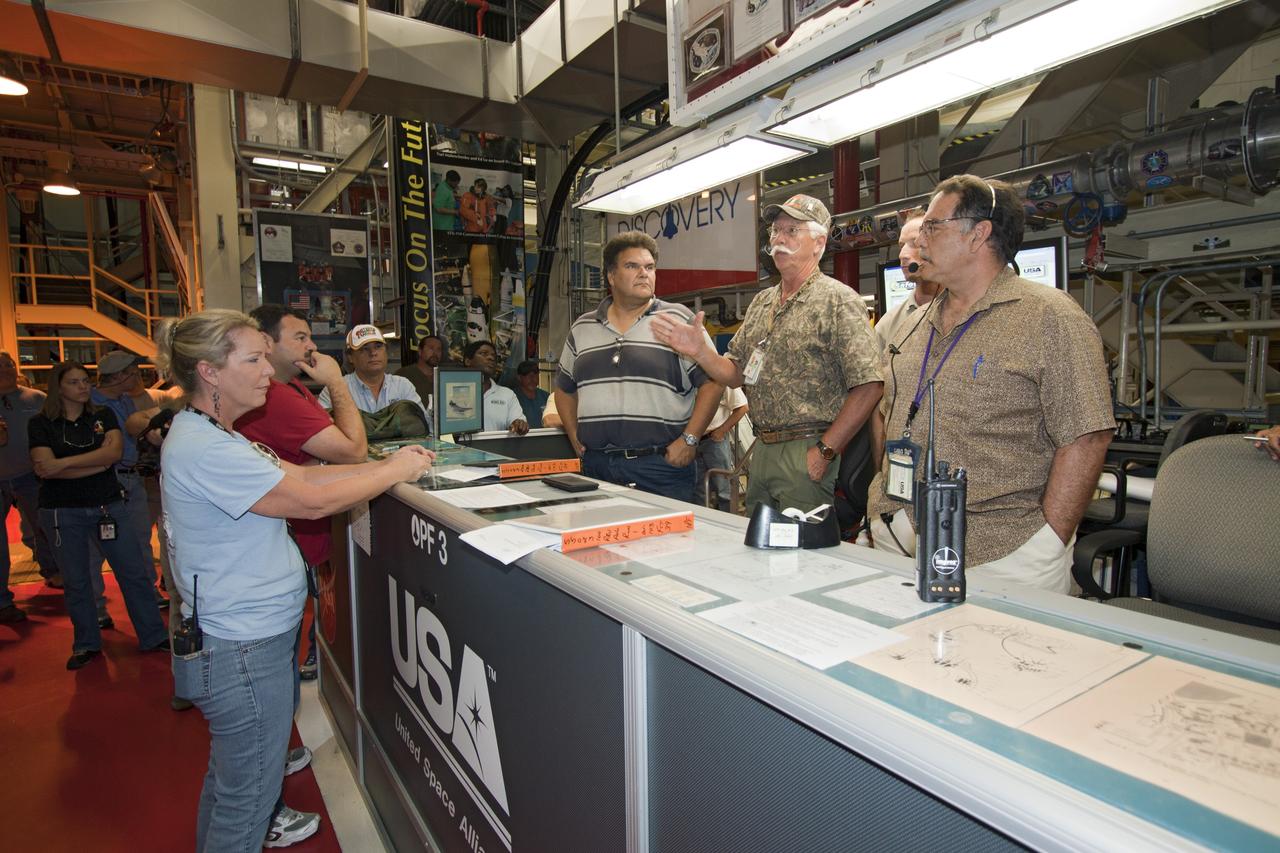
CAPE CANAVERAL, Fla. -- In Orbiter Processing Facility-3 at NASA's Kennedy Space Center in Florida, workers discuss moving, or "rolling over," shuttle Discovery to the nearby Vehicle Assembly Building (VAB). Once inside the VAB, the shuttle will be joined to its solid rocket boosters and external fuel tank. Later this month, Discovery is scheduled to "rollout" to Launch Pad 39A for its launch to the International Space Station on the STS-133 mission. Targeted to liftoff Nov. 1, Discovery will take the Permanent Multipurpose Module (PMM) packed with supplies and critical spare parts, as well as Robonaut 2 (R2) to the station. Photo credit: NASA/Jack Pfaller
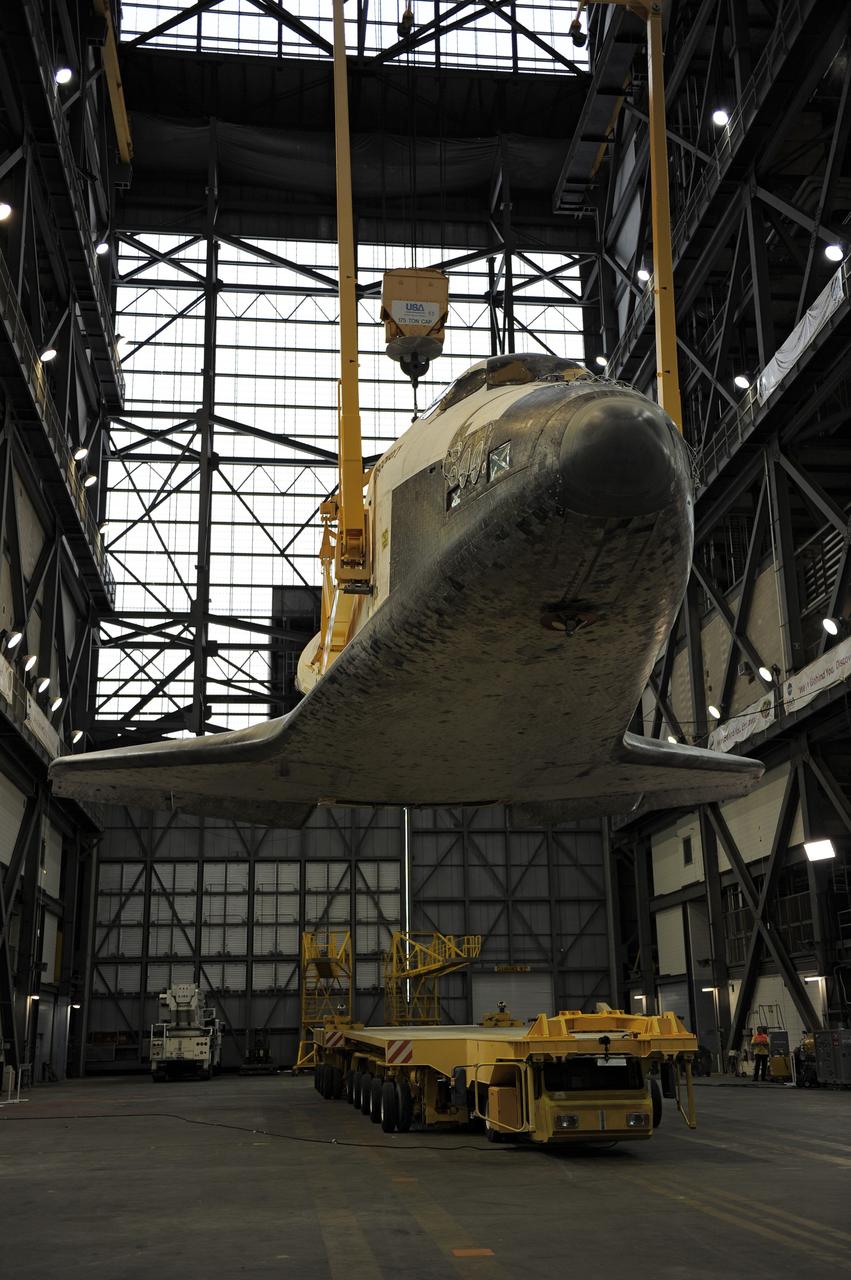
CAPE CANAVERAL, Fla. -- At NASA's Kennedy Space Center in Florida, a large yellow, metal sling lifts shuttle Discovery from the transfer aisle into High Bay 3 of the Vehicle Assembly Building. In the bay, the shuttle will be attached to its external fuel tank and solid rocket boosters. The operation began Sept. 9 and wrapped up early Sept. 10. Discovery is scheduled to roll out to Launch Pad 39A later this month in preparation for its launch to the International Space Station on the STS-133 mission. Targeted to lift off Nov. 1, Discovery will take the Permanent Multipurpose Module (PMM) packed with supplies and critical spare parts, as well as Robonaut 2 (R2) to the station. Photo credit: NASA/Kim Shiflett
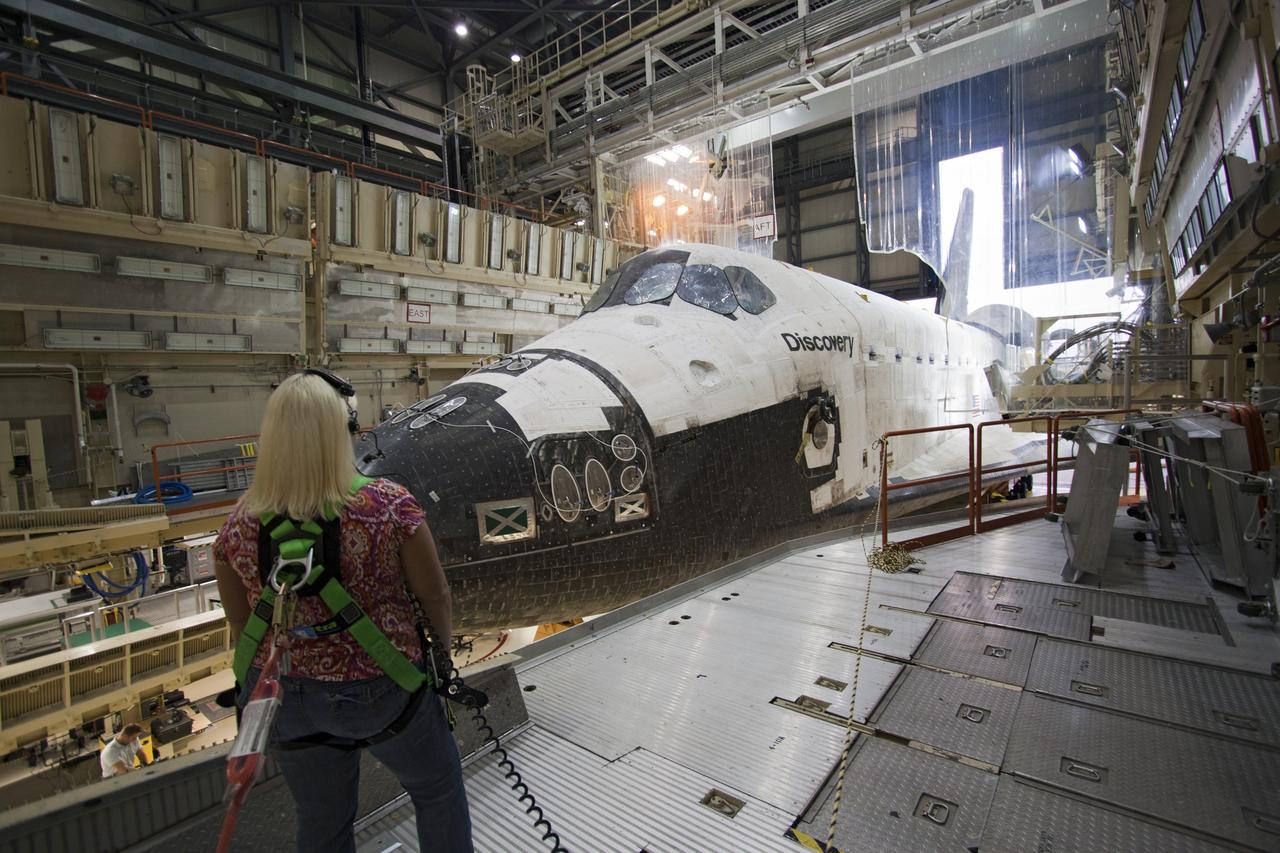
CAPE CANAVERAL, Fla. -- At NASA's Kennedy Space Center in Florida, shuttle Discovery begins to back out of Orbiter Processing Facility-3 during a move called "rollover" to the nearby Vehicle Assembly Building (VAB). Once inside the VAB, the shuttle will be joined to its solid rocket boosters and external fuel tank. Later this month, Discovery is scheduled to "rollout" to Launch Pad 39A for its launch to the International Space Station on the STS-133 mission. Targeted to liftoff Nov. 1, Discovery will take the Permanent Multipurpose Module (PMM) packed with supplies and critical spare parts, as well as Robonaut 2 (R2) to the station. Photo credit: NASA/Jack Pfaller
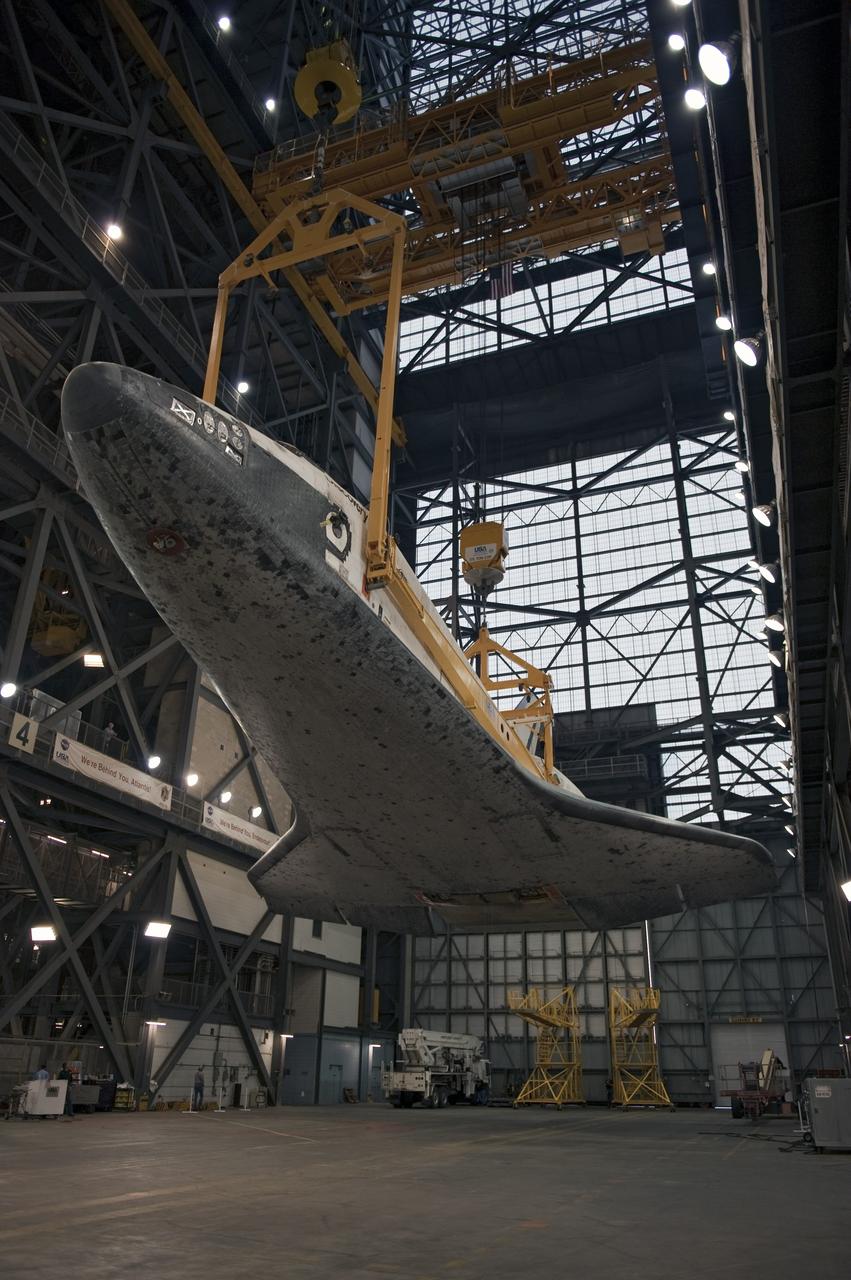
CAPE CANAVERAL, Fla. -- At NASA's Kennedy Space Center in Florida, a large yellow, metal sling lifts shuttle Discovery from the transfer aisle into High Bay 3 of the Vehicle Assembly Building. In the bay, the shuttle will be attached to its external fuel tank and solid rocket boosters. The operation began Sept. 9 and wrapped up early Sept. 10. Discovery is scheduled to roll out to Launch Pad 39A later this month in preparation for its launch to the International Space Station on the STS-133 mission. Targeted to lift off Nov. 1, Discovery will take the Permanent Multipurpose Module (PMM) packed with supplies and critical spare parts, as well as Robonaut 2 (R2) to the station. Photo credit: NASA/Kim Shiflett
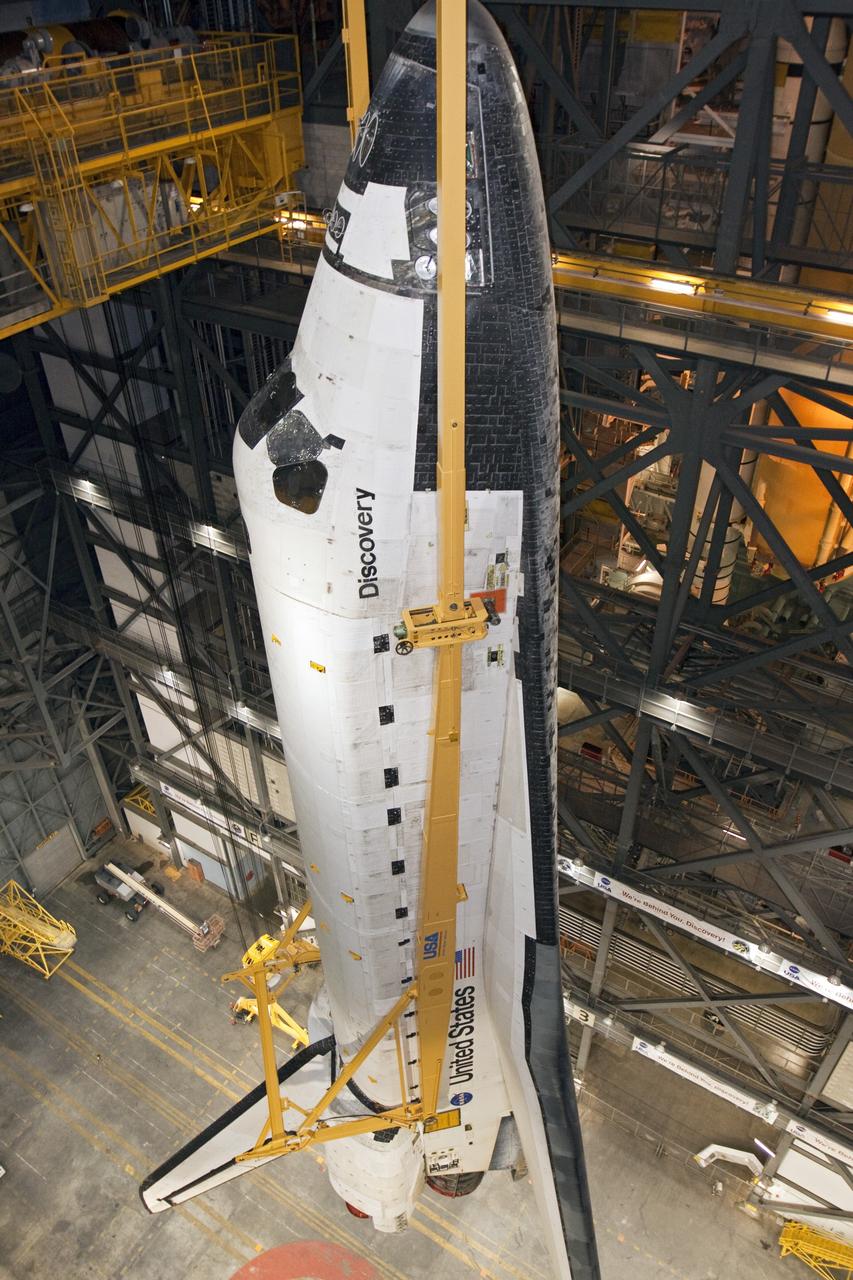
CAPE CANAVERAL, Fla. -- At NASA's Kennedy Space Center in Florida, a large yellow, metal sling lifts shuttle Discovery from the transfer aisle into High Bay 3 of the Vehicle Assembly Building. In the bay, the shuttle will be attached to its external fuel tank and solid rocket boosters. The operation began Sept. 9 and wrapped up early Sept. 10. Discovery is scheduled to roll out to Launch Pad 39A later this month in preparation for its launch to the International Space Station on the STS-133 mission. Targeted to lift off Nov. 1, Discovery will take the Permanent Multipurpose Module (PMM) packed with supplies and critical spare parts, as well as Robonaut 2 (R2) to the station. Photo credit: NASA/Jack Pfaller
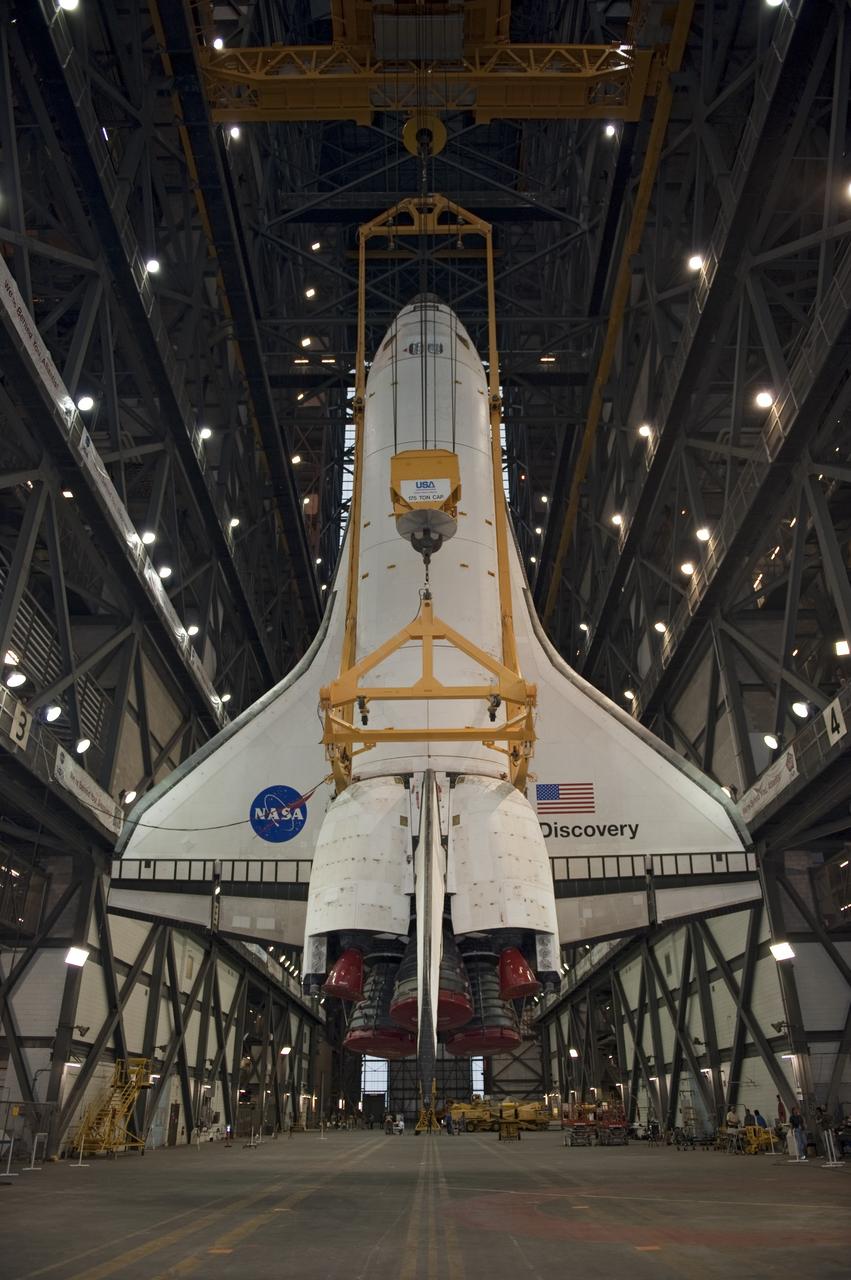
CAPE CANAVERAL, Fla. -- At NASA's Kennedy Space Center in Florida, a large yellow, metal sling lifts shuttle Discovery from the transfer aisle into High Bay 3 of the Vehicle Assembly Building. In the bay, the shuttle will be attached to its external fuel tank and solid rocket boosters. The operation began Sept. 9 and wrapped up early Sept. 10. Discovery is scheduled to roll out to Launch Pad 39A later this month in preparation for its launch to the International Space Station on the STS-133 mission. Targeted to lift off Nov. 1, Discovery will take the Permanent Multipurpose Module (PMM) packed with supplies and critical spare parts, as well as Robonaut 2 (R2) to the station. Photo credit: NASA/Kim Shiflett
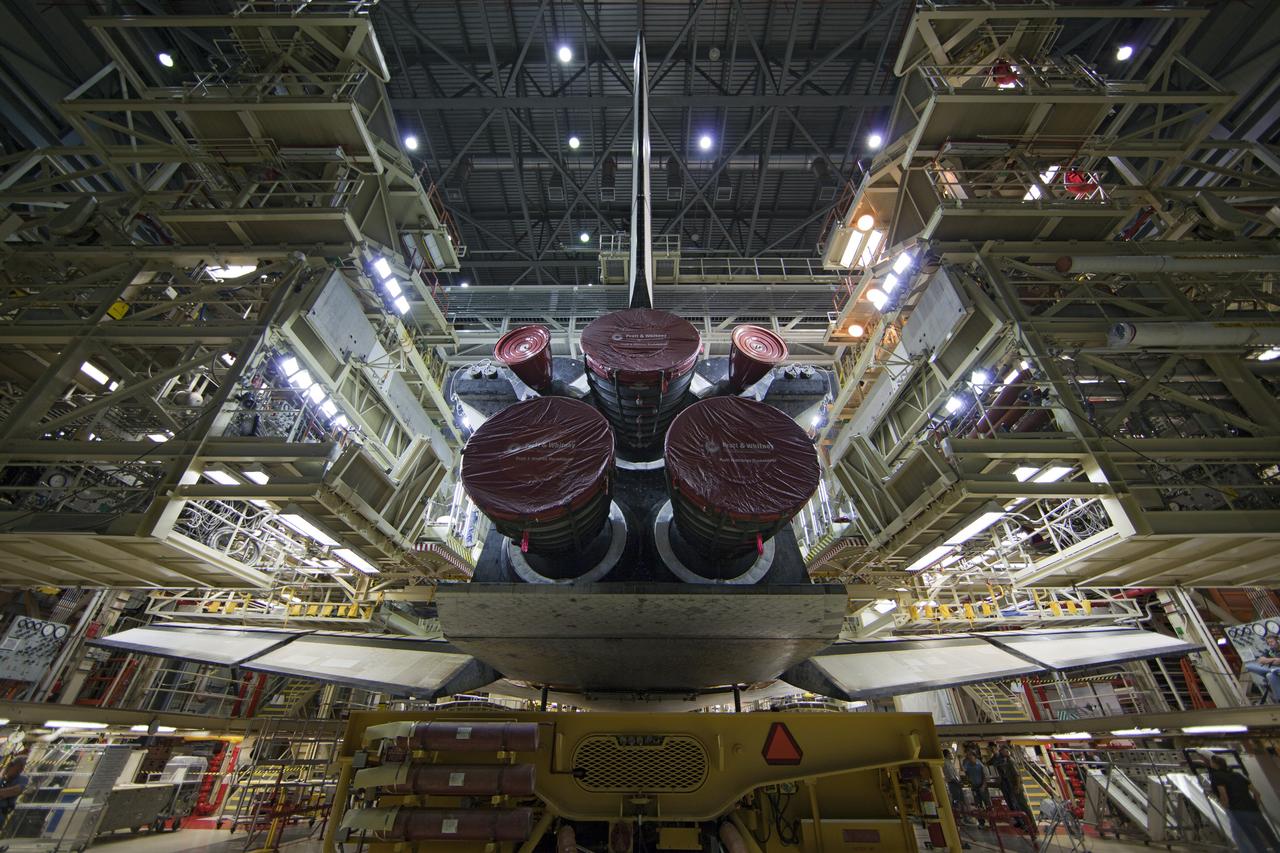
CAPE CANAVERAL, Fla. -- At NASA's Kennedy Space Center in Florida, shuttle Discovery begins to back out of Orbiter Processing Facility-3 during a move called "rollover" to the nearby Vehicle Assembly Building (VAB). Once inside the VAB, the shuttle will be joined to its solid rocket boosters and external fuel tank. Later this month, Discovery is scheduled to "rollout" to Launch Pad 39A for its launch to the International Space Station on the STS-133 mission. Targeted to liftoff Nov. 1, Discovery will take the Permanent Multipurpose Module (PMM) packed with supplies and critical spare parts, as well as Robonaut 2 (R2) to the station. Photo credit: NASA/Dimitri Gerondidakis
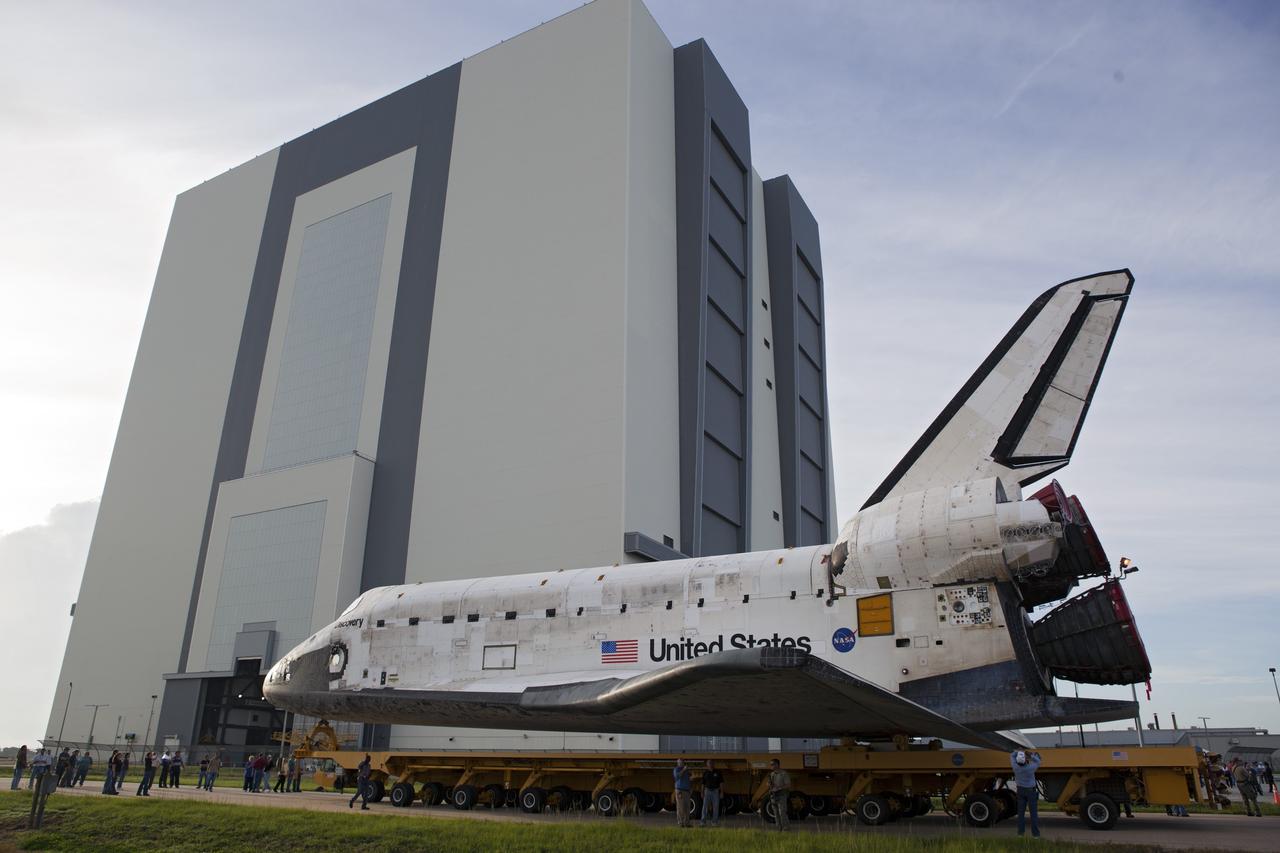
CAPE CANAVERAL, Fla. -- At NASA's Kennedy Space Center in Florida, shuttle Discovery pauses in between Orbiter Processing Facility-3 and the Vehicle Assembly Building (VAB) during a move called "rollover." Once inside the VAB, the shuttle will be joined to its solid rocket boosters and external fuel tank. Later this month, Discovery is scheduled to "rollout" to Launch Pad 39A for its launch to the International Space Station on the STS-133 mission. Targeted to liftoff Nov. 1, Discovery will take the Permanent Multipurpose Module (PMM) packed with supplies and critical spare parts, as well as Robonaut 2 (R2) to the station. Photo credit: NASA/Dimitri Gerondidakis
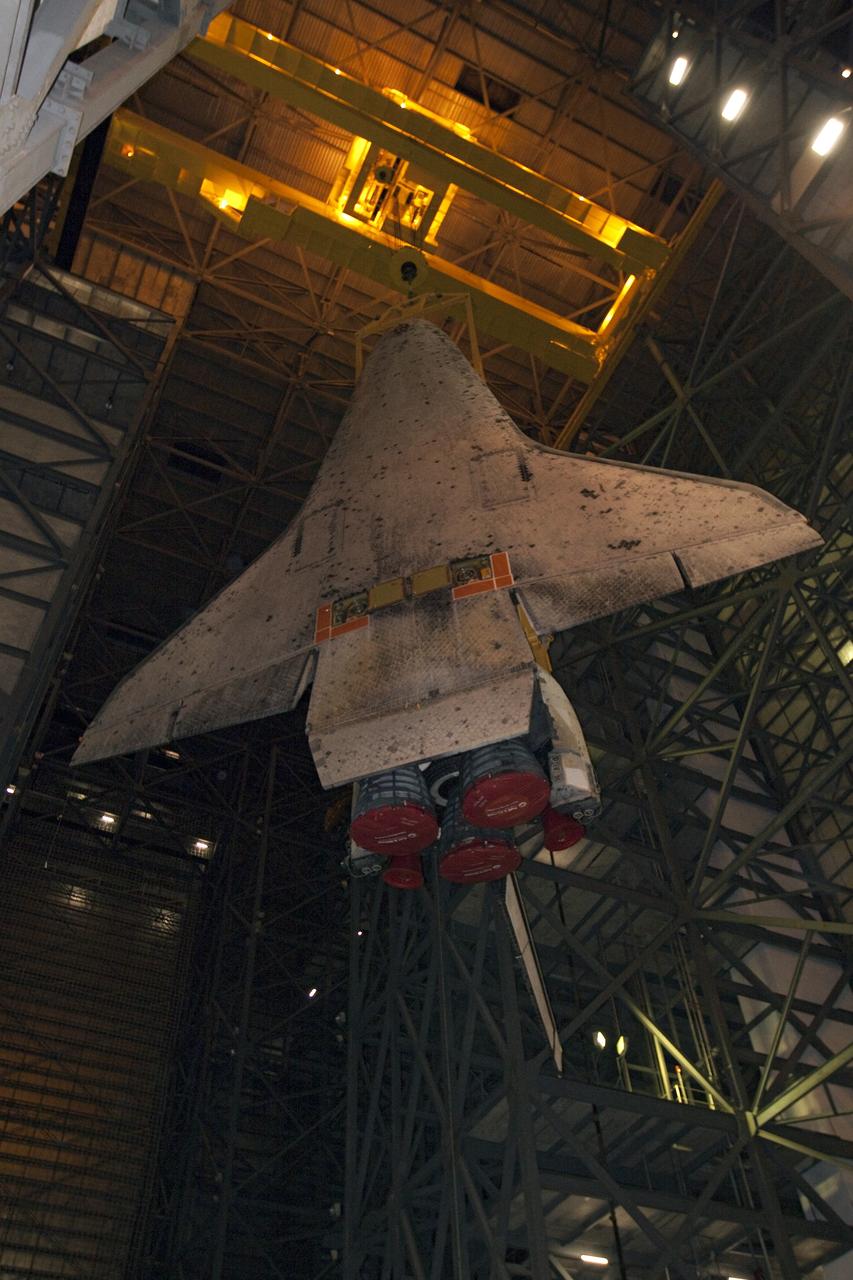
CAPE CANAVERAL, Fla. -- At NASA's Kennedy Space Center in Florida, a large yellow, metal sling lifts shuttle Discovery from the transfer aisle into High Bay 3 of the Vehicle Assembly Building. In the bay, the shuttle will be attached to its external fuel tank and solid rocket boosters. The operation began Sept. 9 and wrapped up early Sept. 10. Discovery is scheduled to roll out to Launch Pad 39A later this month in preparation for its launch to the International Space Station on the STS-133 mission. Targeted to lift off Nov. 1, Discovery will take the Permanent Multipurpose Module (PMM) packed with supplies and critical spare parts, as well as Robonaut 2 (R2) to the station. Photo credit: NASA/Jack Pfaller
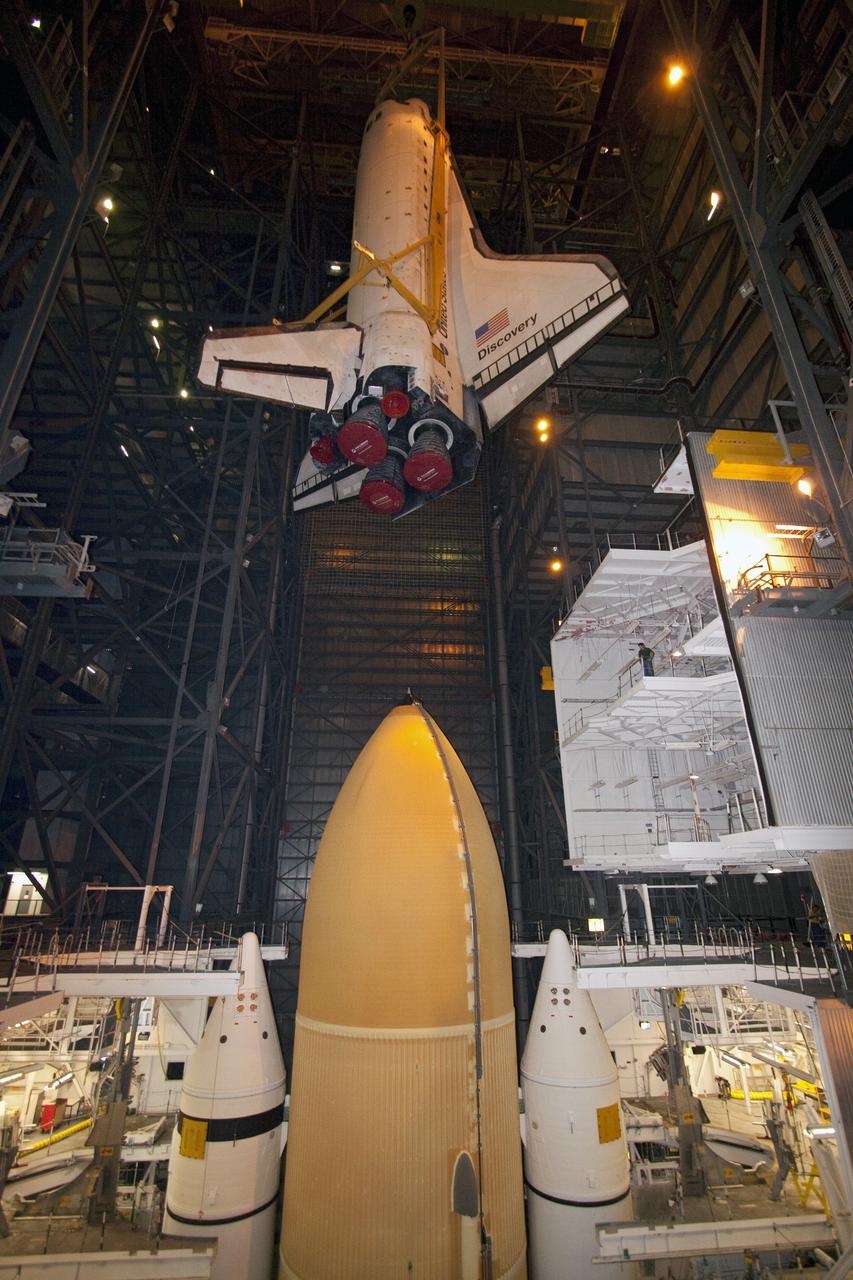
CAPE CANAVERAL, Fla. -- In High Bay 3 of the Vehicle Assembly Building at NASA's Kennedy Space Center in Florida, a large yellow, metal sling lowers shuttle Discovery to its external fuel tank and solid rocket boosters. The lift and mate operation began Sept. 9 and wrapped up early Sept. 10. Discovery is scheduled to roll out to Launch Pad 39A later this month in preparation for its launch to the International Space Station on the STS-133 mission. Targeted to lift off Nov. 1, Discovery will take the Permanent Multipurpose Module (PMM) packed with supplies and critical spare parts, as well as Robonaut 2 (R2) to the station. Photo credit: NASA/Jack Pfaller
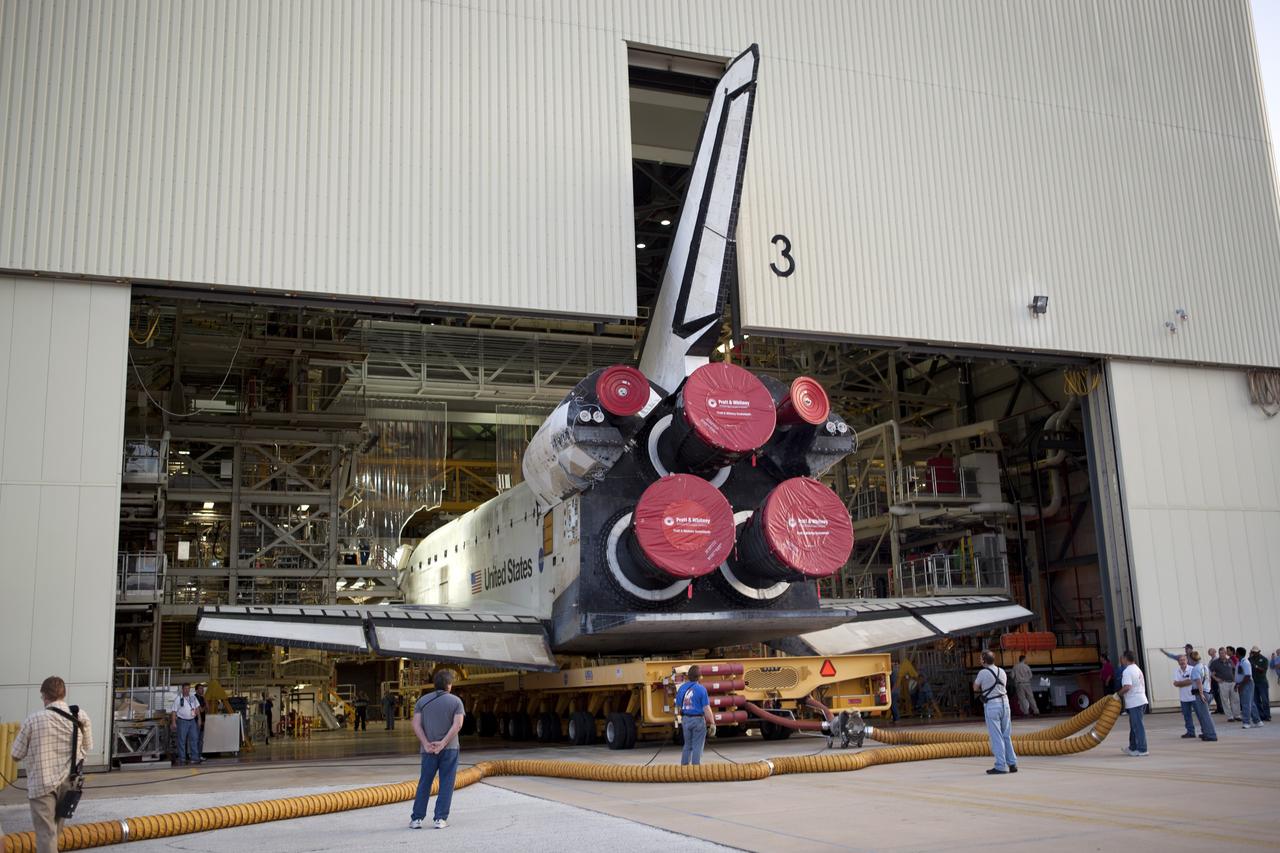
CAPE CANAVERAL, Fla. -- At NASA's Kennedy Space Center in Florida, shuttle Discovery backs out of Orbiter Processing Facility-3 during a move called "rollover" to the nearby Vehicle Assembly Building (VAB). Once inside the VAB, the shuttle will be joined to its solid rocket boosters and external fuel tank. Later this month, Discovery is scheduled to "rollout" to Launch Pad 39A for its launch to the International Space Station on the STS-133 mission. Targeted to liftoff Nov. 1, Discovery will take the Permanent Multipurpose Module (PMM) packed with supplies and critical spare parts, as well as Robonaut 2 (R2) to the station. Photo credit: NASA/Dimitri Gerondidakis
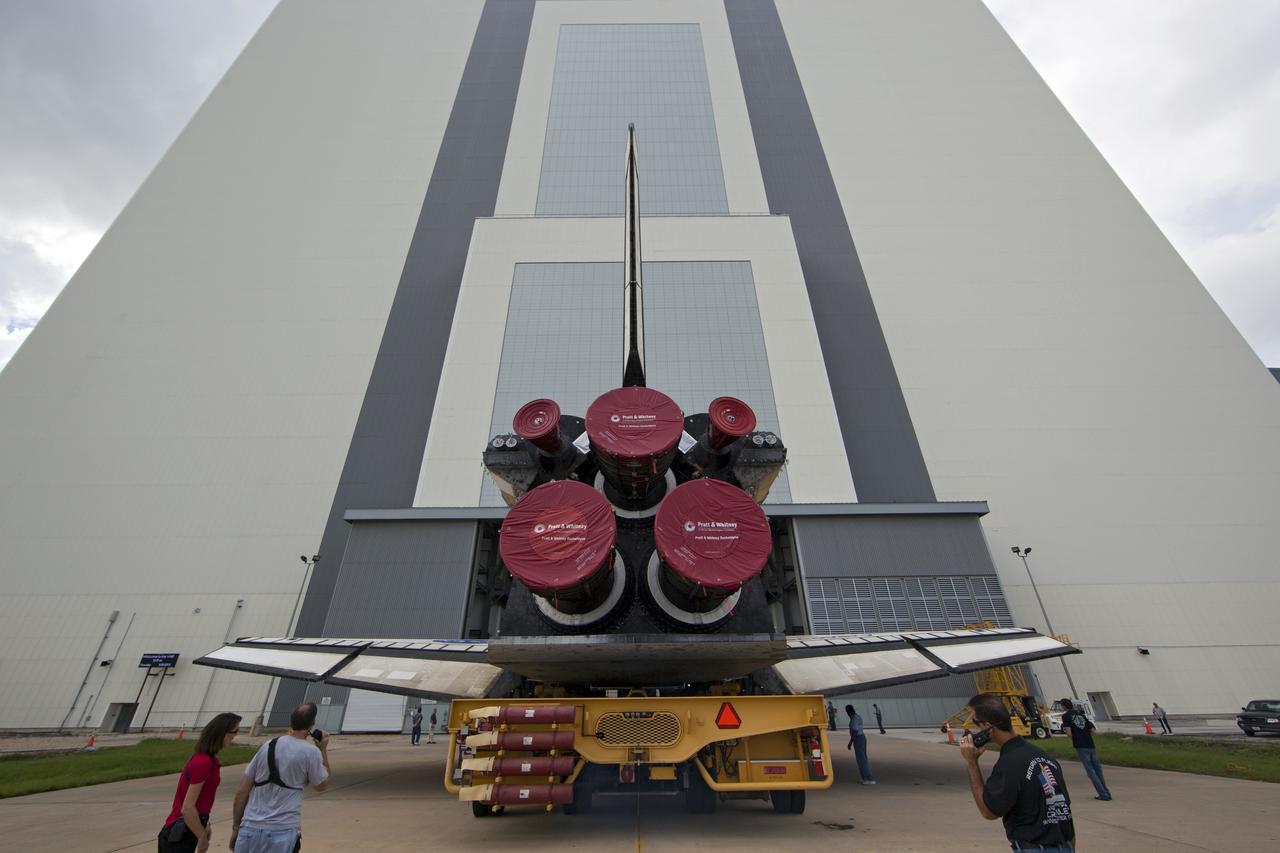
CAPE CANAVERAL, Fla. -- At NASA's Kennedy Space Center in Florida, shuttle Discovery is ushered into the Vehicle Assembly Building (VAB) from Orbiter Processing Facility-3 during a move known as "rollover." Once inside the VAB, the shuttle will be joined to its solid rocket boosters and external fuel tank. Later this month, Discovery is scheduled to "rollout" to Launch Pad 39A for its launch to the International Space Station on the STS-133 mission. Targeted to liftoff Nov. 1, Discovery will take the Permanent Multipurpose Module (PMM) packed with supplies and critical spare parts, as well as Robonaut 2 (R2) to the station. Photo credit: NASA/ Dimitri Gerondidakis
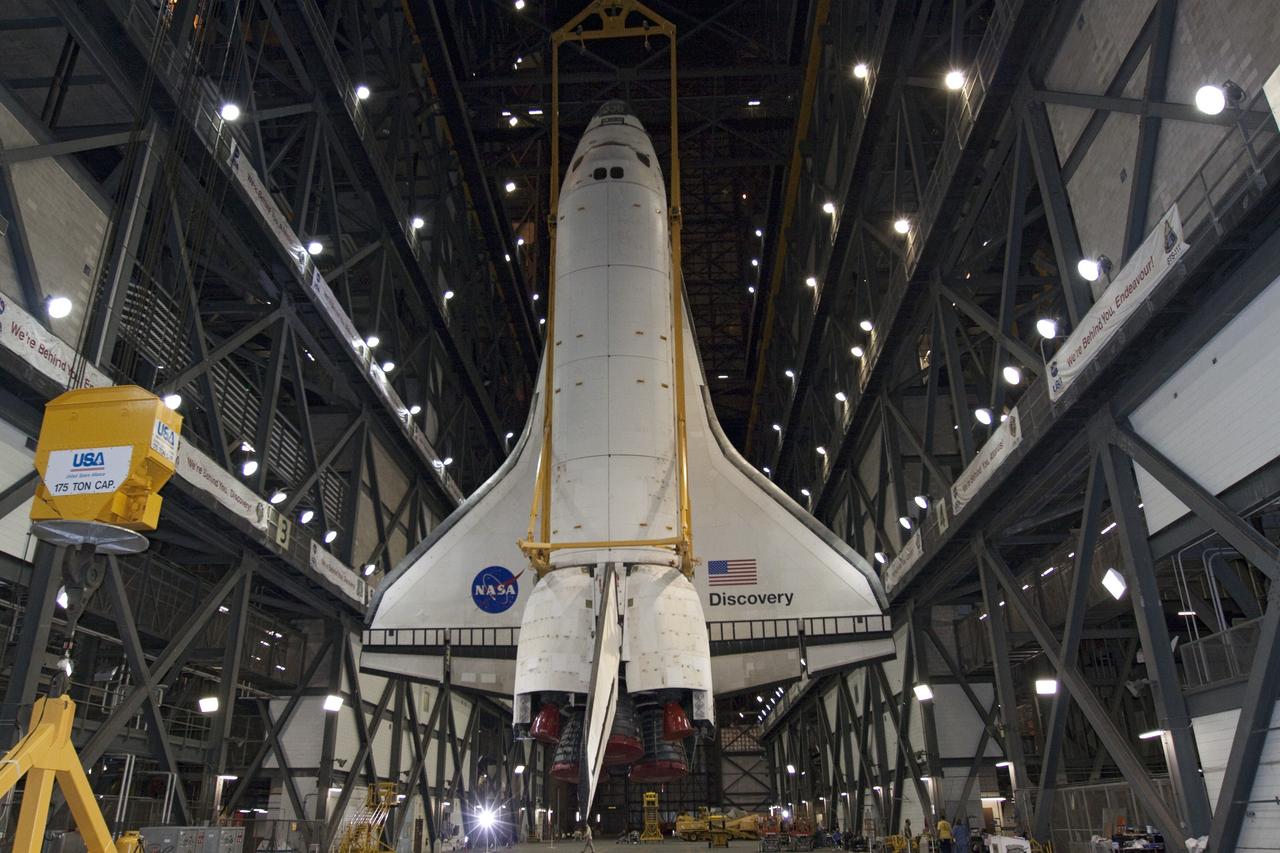
CAPE CANAVERAL, Fla. -- At NASA's Kennedy Space Center in Florida, a large yellow, metal sling lifts shuttle Discovery from the transfer aisle into High Bay 3 of the Vehicle Assembly Building. In the bay, the shuttle will be attached to its external fuel tank and solid rocket boosters. The operation began Sept. 9 and wrapped up early Sept. 10. Discovery is scheduled to roll out to Launch Pad 39A later this month in preparation for its launch to the International Space Station on the STS-133 mission. Targeted to lift off Nov. 1, Discovery will take the Permanent Multipurpose Module (PMM) packed with supplies and critical spare parts, as well as Robonaut 2 (R2) to the station. Photo credit: NASA/Jack Pfaller
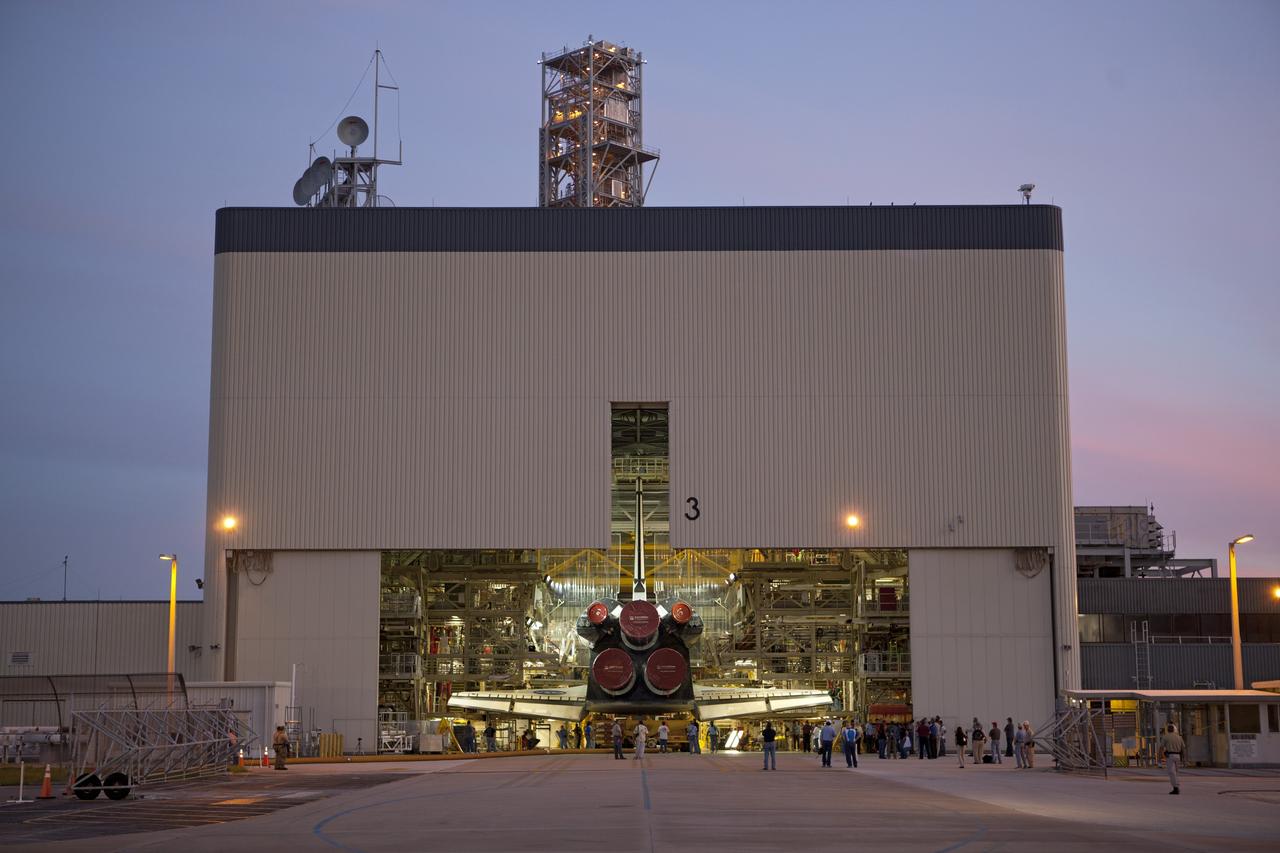
CAPE CANAVERAL, Fla. -- At NASA's Kennedy Space Center in Florida, shuttle Discovery backs out of Orbiter Processing Facility-3 during a move called "rollover" to the nearby Vehicle Assembly Building (VAB). Once inside the VAB, the shuttle will be joined to its solid rocket boosters and external fuel tank. Later this month, Discovery is scheduled to "rollout" to Launch Pad 39A for its launch to the International Space Station on the STS-133 mission. Targeted to liftoff Nov. 1, Discovery will take the Permanent Multipurpose Module (PMM) packed with supplies and critical spare parts, as well as Robonaut 2 (R2) to the station. Photo credit: NASA/Dimitri Gerondidakis
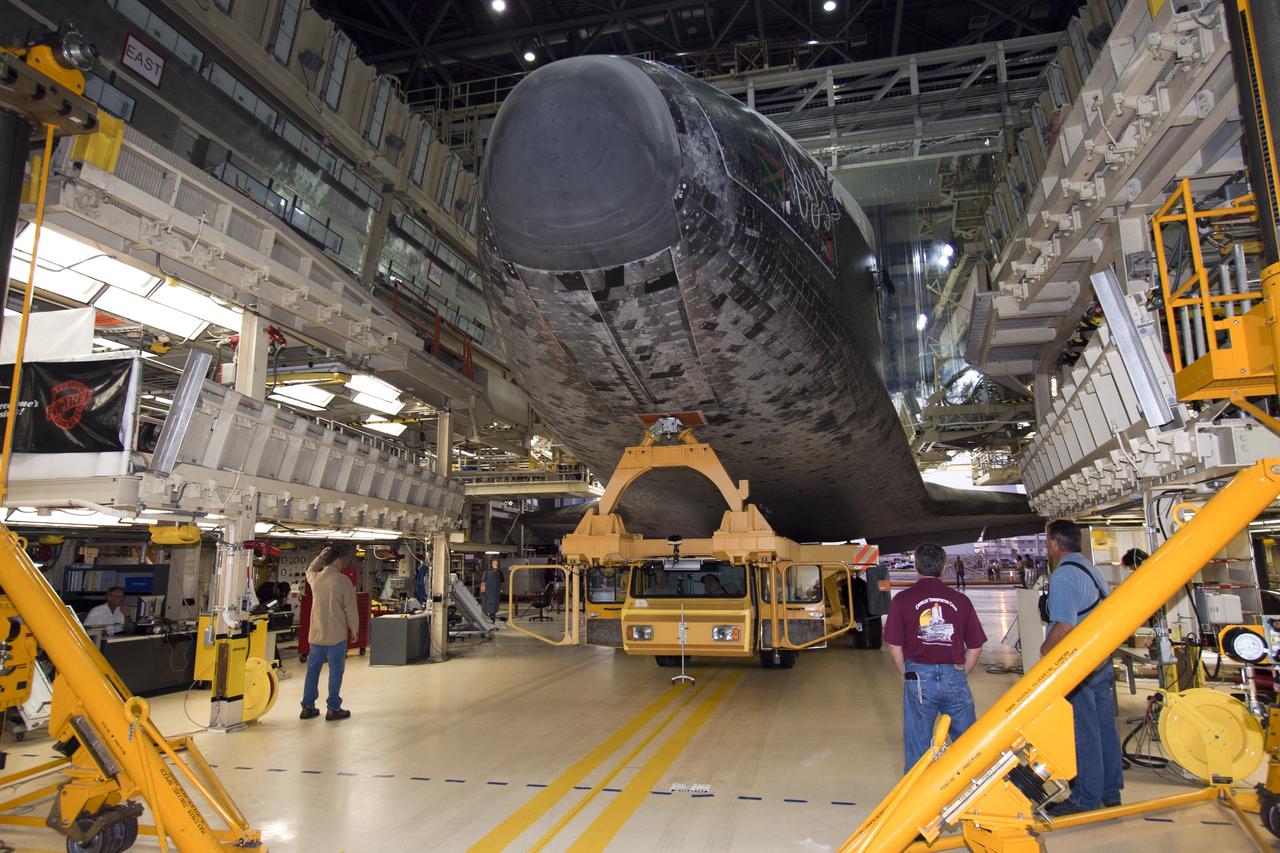
CAPE CANAVERAL, Fla. -- At NASA's Kennedy Space Center in Florida, shuttle Discovery begins to back out of Orbiter Processing Facility-3 during a move called "rollover" to the nearby Vehicle Assembly Building (VAB). Once inside the VAB, the shuttle will be joined to its solid rocket boosters and external fuel tank. Later this month, Discovery is scheduled to "rollout" to Launch Pad 39A for its launch to the International Space Station on the STS-133 mission. Targeted to liftoff Nov. 1, Discovery will take the Permanent Multipurpose Module (PMM) packed with supplies and critical spare parts, as well as Robonaut 2 (R2) to the station. Photo credit: NASA/Jack Pfaller
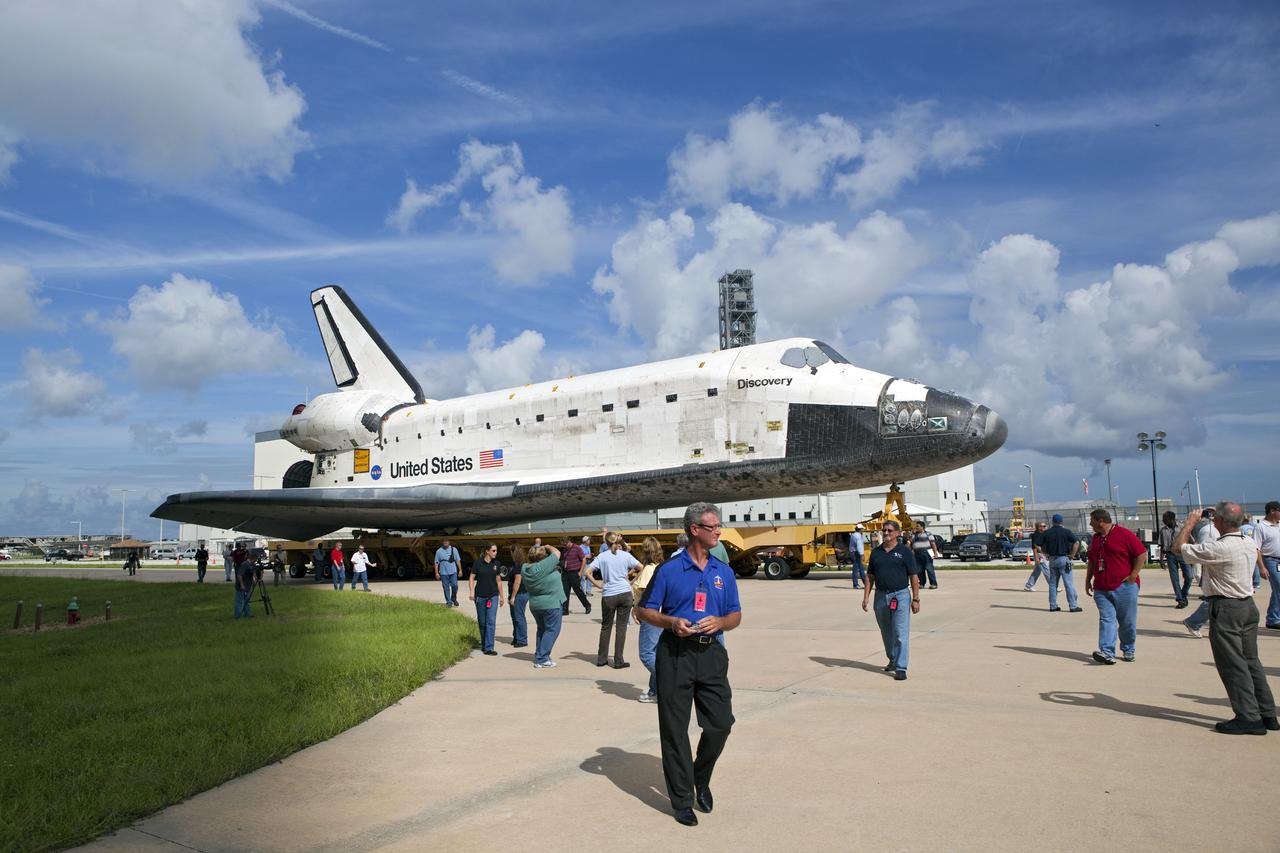
CAPE CANAVERAL, Fla. -- At NASA's Kennedy Space Center in Florida, shuttle Discovery pauses for photos during its move called "rollover" from Orbiter Processing Facility-3 to the nearby Vehicle Assembly Building (VAB). Once inside the VAB, the shuttle will be joined to its solid rocket boosters and external fuel tank. Later this month, Discovery is scheduled to "rollout" to Launch Pad 39A for its launch to the International Space Station on the STS-133 mission. Targeted to liftoff Nov. 1, Discovery will take the Permanent Multipurpose Module (PMM) packed with supplies and critical spare parts, as well as Robonaut 2 (R2) to the station. Photo credit: NASA/ Dimitri Gerondidakis
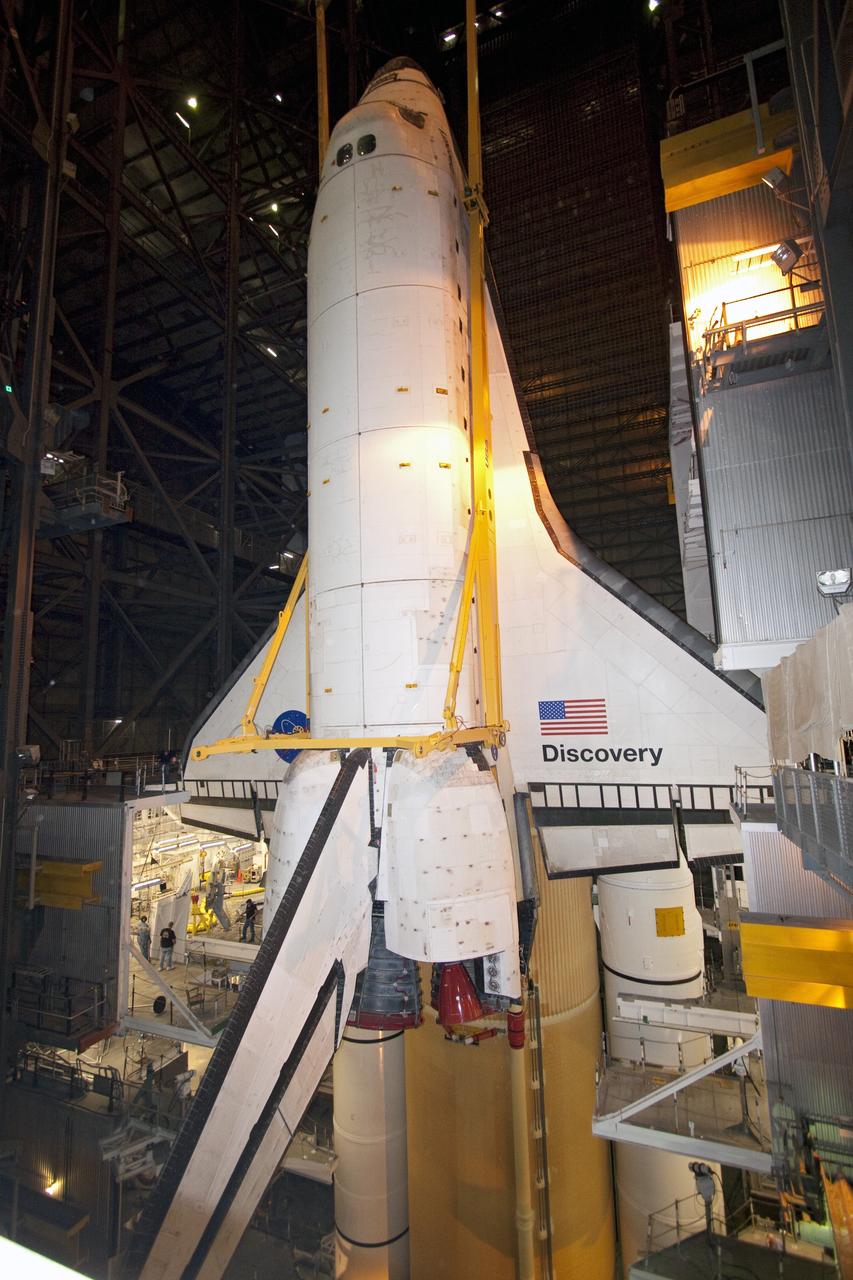
CAPE CANAVERAL, Fla. -- In High Bay 3 of the Vehicle Assembly Building at NASA's Kennedy Space Center in Florida, a large yellow, metal sling lowers shuttle Discovery to its external fuel tank and solid rocket boosters. The lift and mate operation began Sept. 9 and wrapped up early Sept. 10. Discovery is scheduled to roll out to Launch Pad 39A later this month in preparation for its launch to the International Space Station on the STS-133 mission. Targeted to lift off Nov. 1, Discovery will take the Permanent Multipurpose Module (PMM) packed with supplies and critical spare parts, as well as Robonaut 2 (R2) to the station. Photo credit: NASA/Jack Pfaller
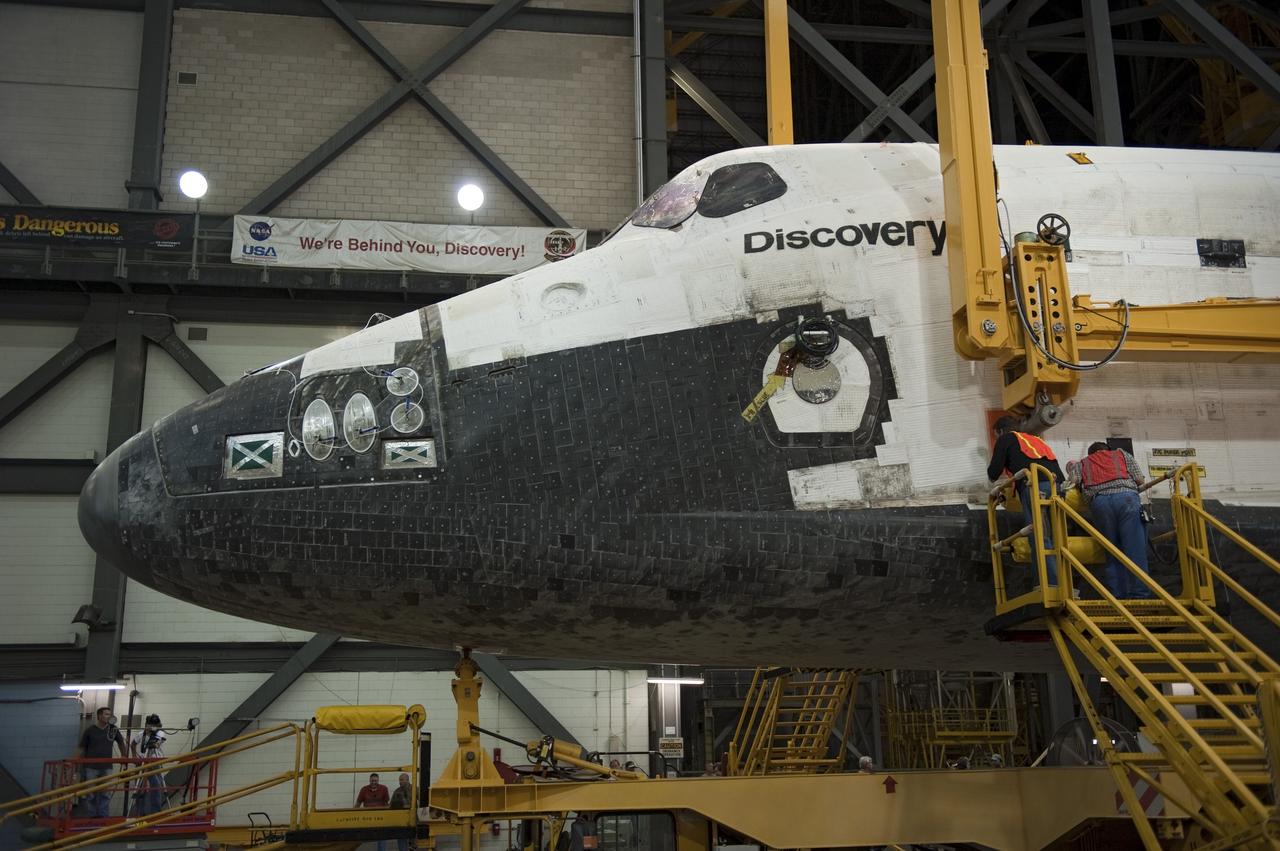
CAPE CANAVERAL, Fla. -- At NASA's Kennedy Space Center in Florida, workers in the Vehicle Assembly Building secure a large yellow, metal sling to shuttle Discovery for its lift from the transfer aisle into High Bay 3. In the bay, the shuttle will be attached to its external fuel tank and solid rocket boosters. The operation began Sept. 9 and wrapped up early Sept. 10. Discovery is scheduled to roll out to Launch Pad 39A later this month in preparation for its launch to the International Space Station on the STS-133 mission. Targeted to lift off Nov. 1, Discovery will take the Permanent Multipurpose Module (PMM) packed with supplies and critical spare parts, as well as Robonaut 2 (R2) to the station. Photo credit: NASA/Kim Shiflett
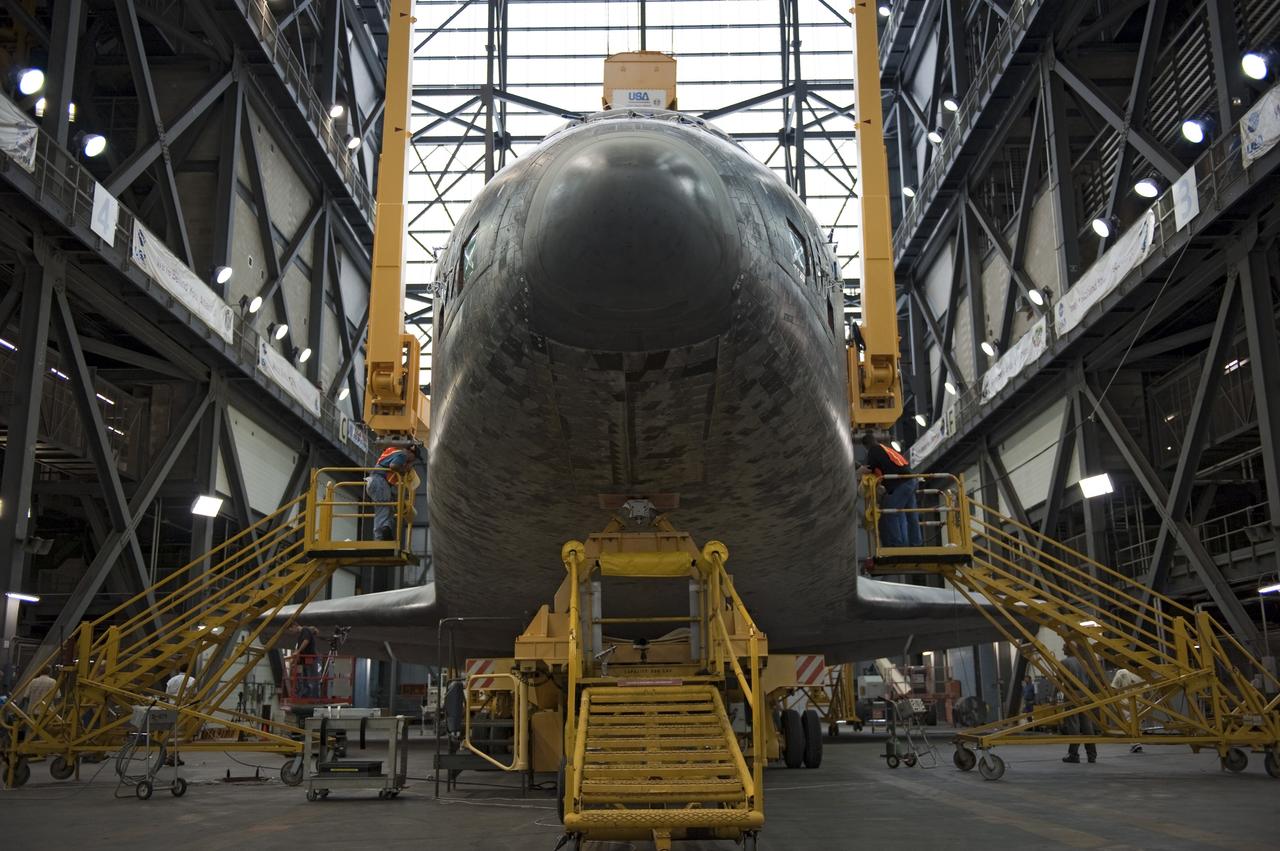
CAPE CANAVERAL, Fla. -- At NASA's Kennedy Space Center in Florida, workers in the Vehicle Assembly Building begin to secure a large yellow, metal sling to shuttle Discovery for its lift from the transfer aisle into High Bay 3. In the bay, the shuttle will be attached to its external fuel tank and solid rocket boosters. The operation began Sept. 9 and wrapped up early Sept. 10. Discovery is scheduled to roll out to Launch Pad 39A later this month in preparation for its launch to the International Space Station on the STS-133 mission. Targeted to lift off Nov. 1, Discovery will take the Permanent Multipurpose Module (PMM) packed with supplies and critical spare parts, as well as Robonaut 2 (R2) to the station. Photo credit: NASA/Kim Shiflett
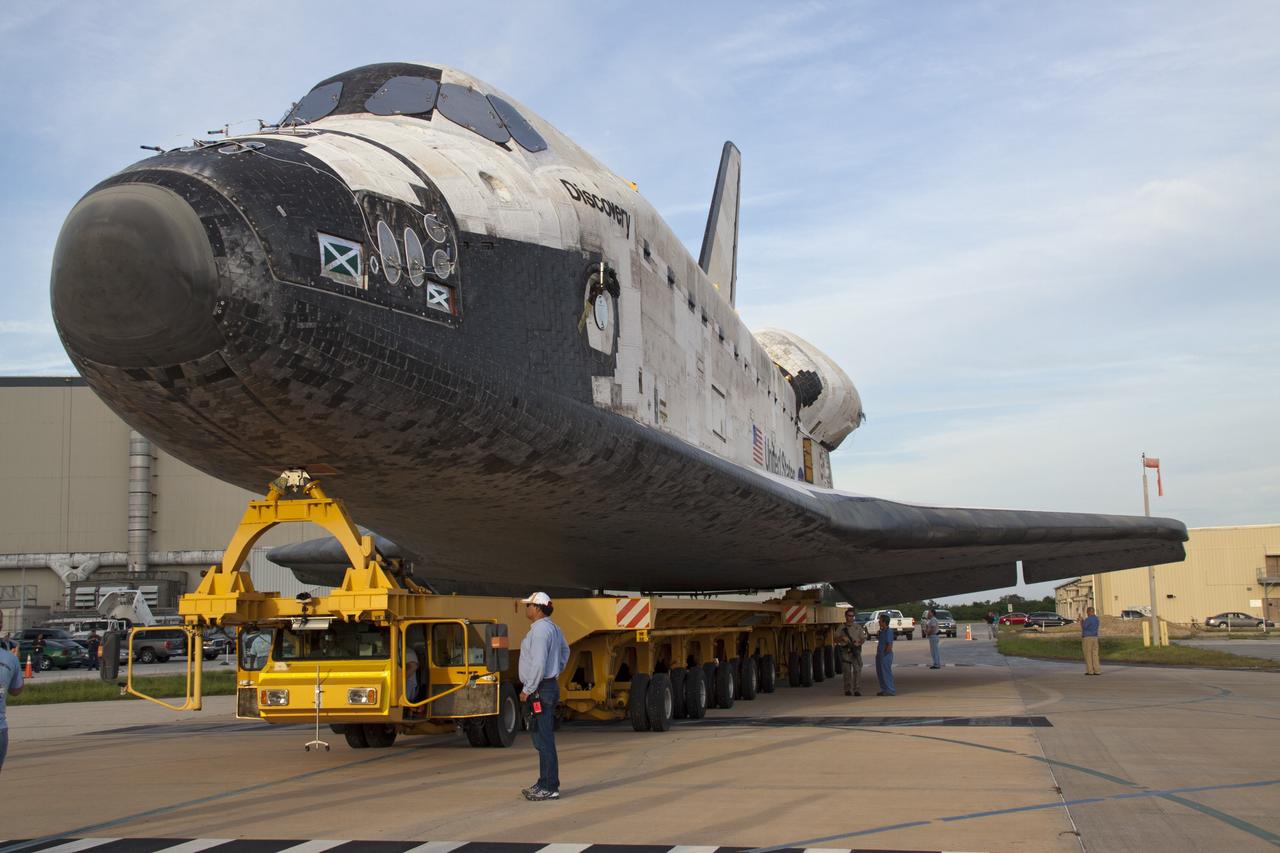
CAPE CANAVERAL, Fla. -- At NASA's Kennedy Space Center in Florida, shuttle Discovery pauses in between Orbiter Processing Facility-3 and the Vehicle Assembly Building (VAB) during a move called "rollover." Once inside the VAB, the shuttle will be joined to its solid rocket boosters and external fuel tank. Later this month, Discovery is scheduled to "rollout" to Launch Pad 39A for its launch to the International Space Station on the STS-133 mission. Targeted to liftoff Nov. 1, Discovery will take the Permanent Multipurpose Module (PMM) packed with supplies and critical spare parts, as well as Robonaut 2 (R2) to the station. Photo credit: NASA/Jack Pfaller
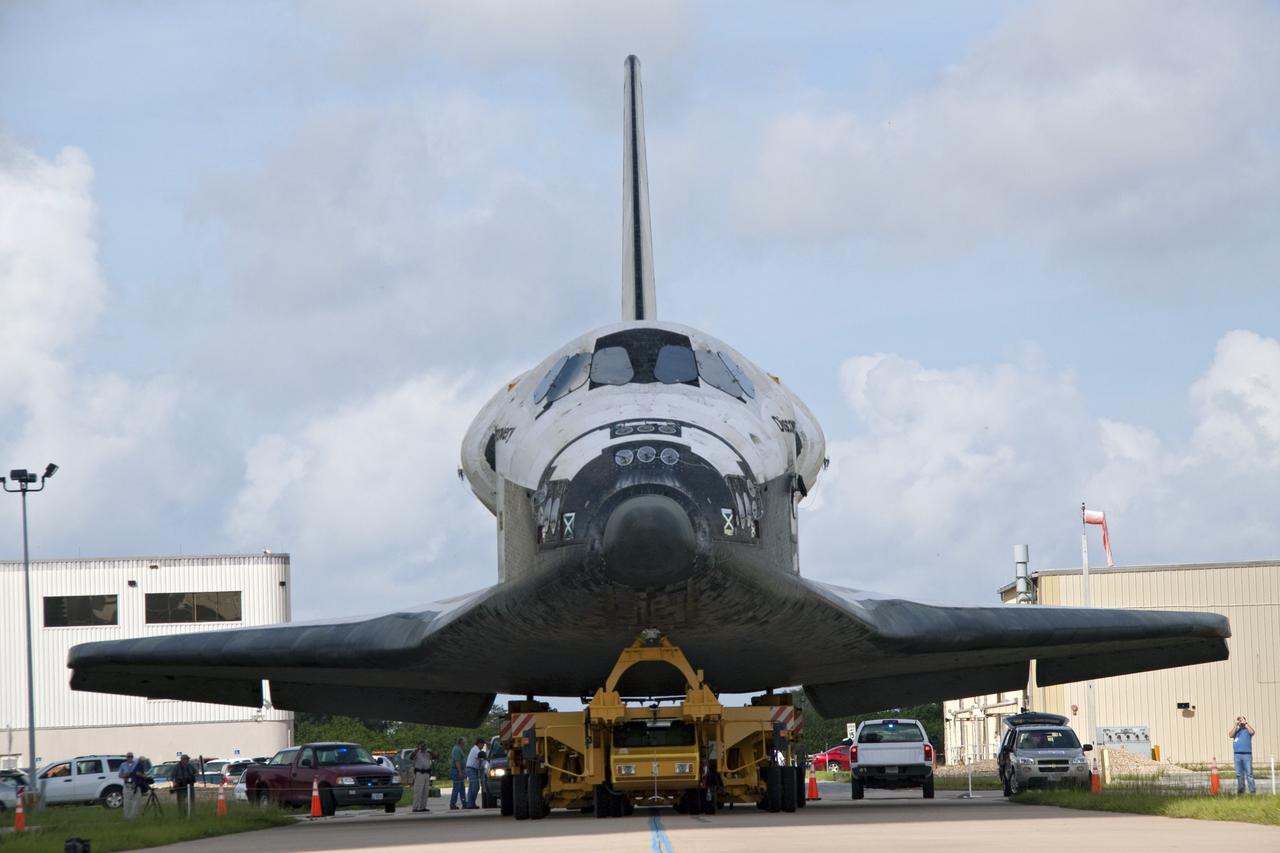
CAPE CANAVERAL, Fla. -- At NASA's Kennedy Space Center in Florida, shuttle Discovery is ready to continue its move, known as "rollover," from Orbiter Processing Facility-3 to the nearby Vehicle Assembly Building (VAB). Once inside the VAB, the shuttle will be joined to its solid rocket boosters and external fuel tank. Later this month, Discovery is scheduled to "rollout" to Launch Pad 39A for its launch to the International Space Station on the STS-133 mission. Targeted to liftoff Nov. 1, Discovery will take the Permanent Multipurpose Module (PMM) packed with supplies and critical spare parts, as well as Robonaut 2 (R2) to the station. Photo credit: NASA/Jack Pfaller
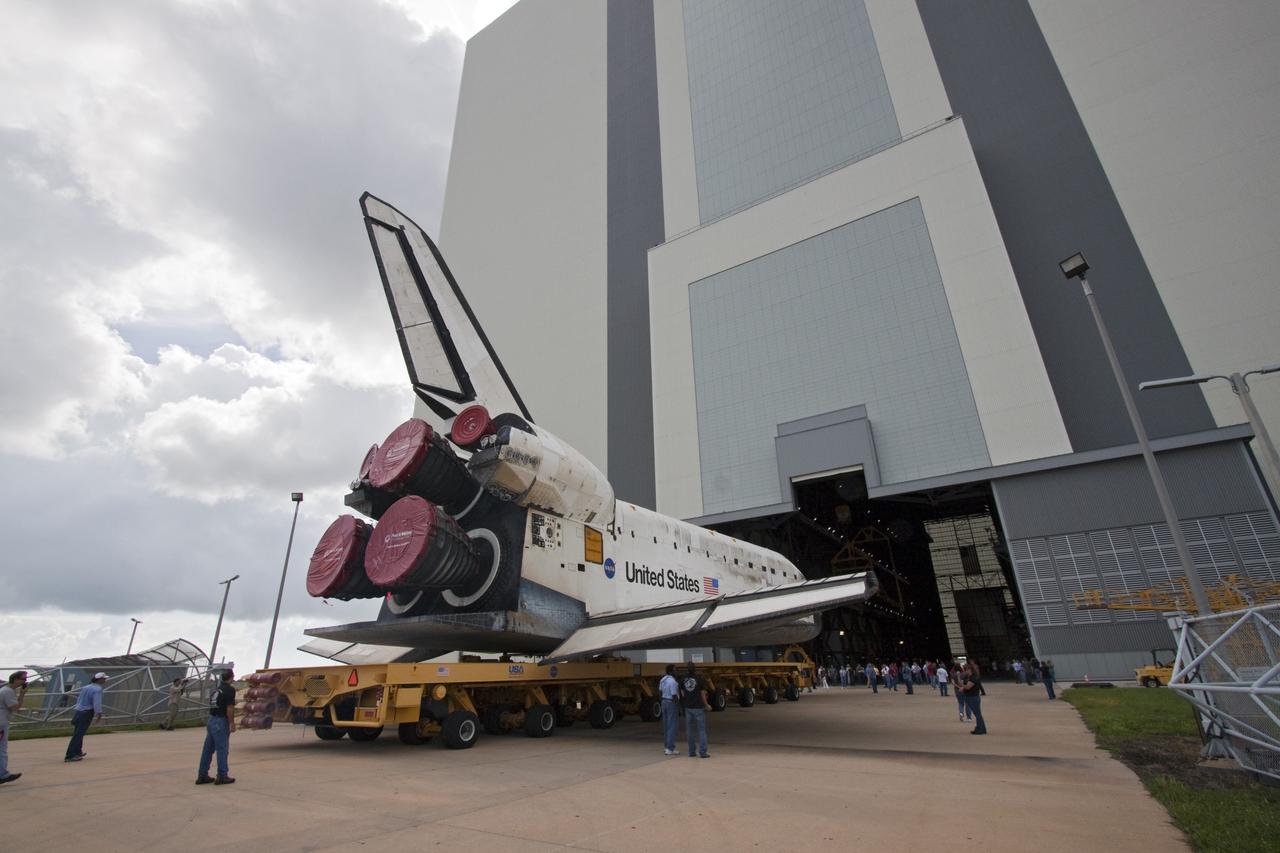
CAPE CANAVERAL, Fla. -- At NASA's Kennedy Space Center in Florida, shuttle Discovery is ushered into the Vehicle Assembly Building (VAB) from Orbiter Processing Facility-3 during a move known as "rollover." Once inside the VAB, the shuttle will be joined to its solid rocket boosters and external fuel tank. Later this month, Discovery is scheduled to "rollout" to Launch Pad 39A for its launch to the International Space Station on the STS-133 mission. Targeted to liftoff Nov. 1, Discovery will take the Permanent Multipurpose Module (PMM) packed with supplies and critical spare parts, as well as Robonaut 2 (R2) to the station. Photo credit: NASA/Jack Pfaller
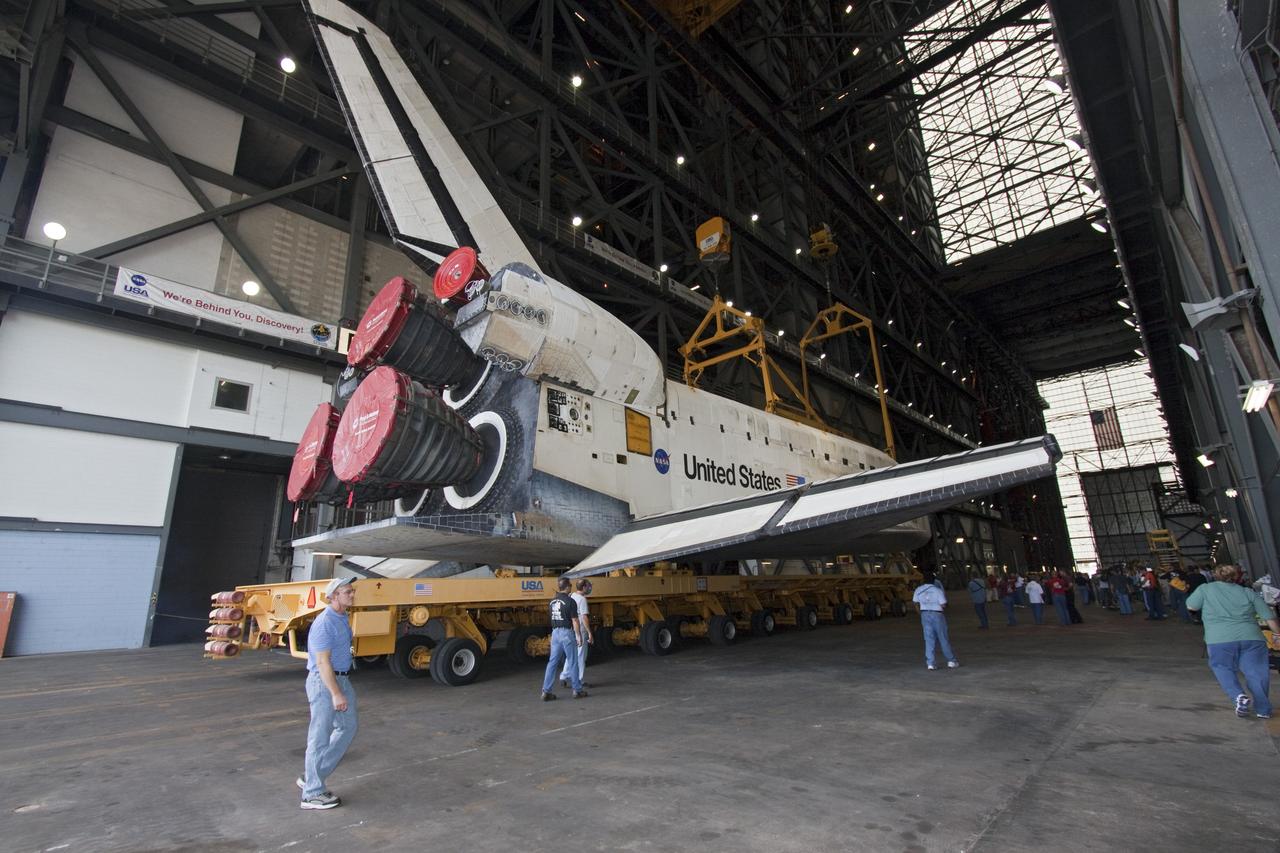
CAPE CANAVERAL, Fla. -- At NASA's Kennedy Space Center in Florida, shuttle Discovery is ushered into the Vehicle Assembly Building (VAB) during a move called "rollover." Once inside the VAB, the shuttle will be joined to its solid rocket boosters and external fuel tank. Later this month, Discovery is scheduled to "rollout" to Launch Pad 39A for its launch to the International Space Station on the STS-133 mission. Targeted to liftoff Nov. 1, Discovery will take the Permanent Multipurpose Module (PMM) packed with supplies and critical spare parts, as well as Robonaut 2 (R2) to the station. Photo credit: NASA/Jack Pfaller
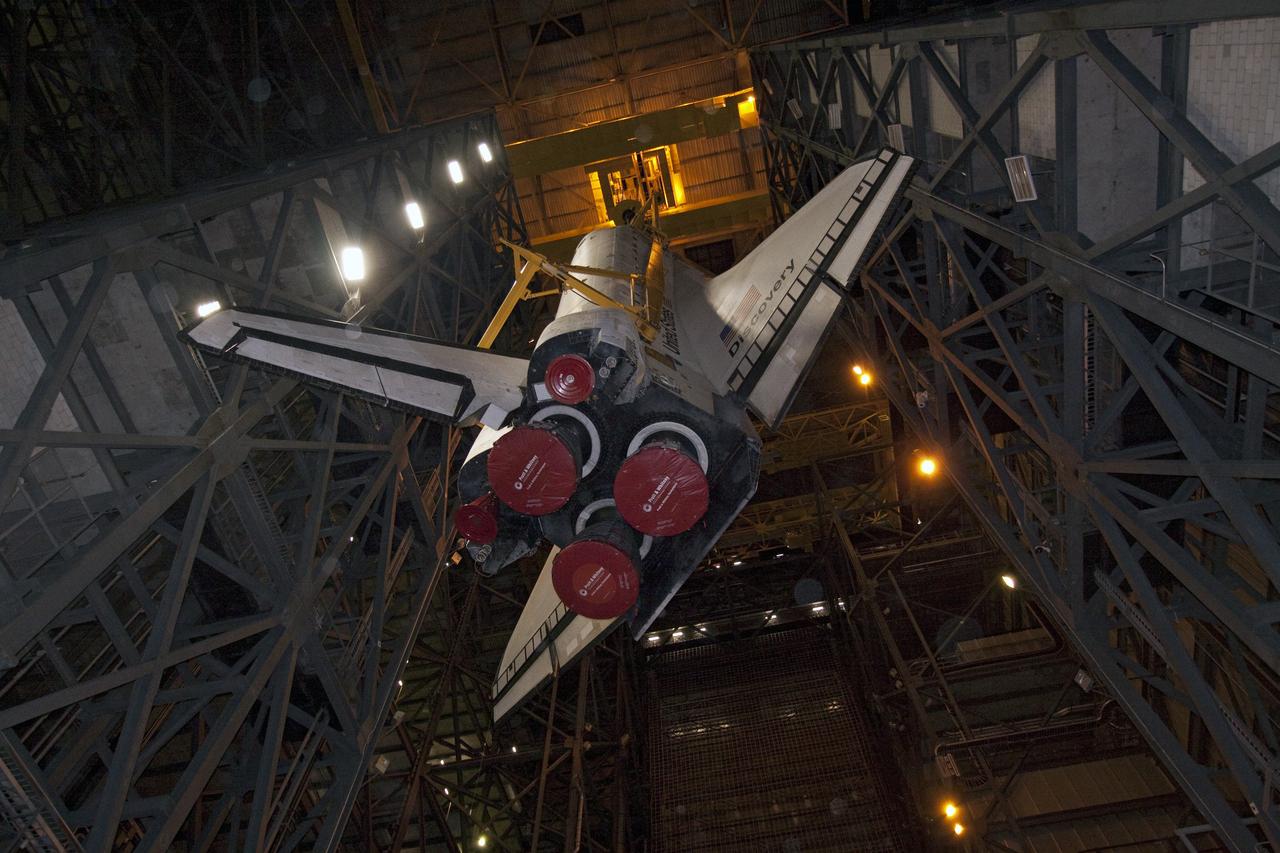
CAPE CANAVERAL, Fla. -- At NASA's Kennedy Space Center in Florida, a large yellow, metal sling lifts shuttle Discovery from the transfer aisle into High Bay 3 of the Vehicle Assembly Building. In the bay, the shuttle will be attached to its external fuel tank and solid rocket boosters. The operation began Sept. 9 and wrapped up early Sept. 10. Discovery is scheduled to roll out to Launch Pad 39A later this month in preparation for its launch to the International Space Station on the STS-133 mission. Targeted to lift off Nov. 1, Discovery will take the Permanent Multipurpose Module (PMM) packed with supplies and critical spare parts, as well as Robonaut 2 (R2) to the station. Photo credit: NASA/Jack Pfaller
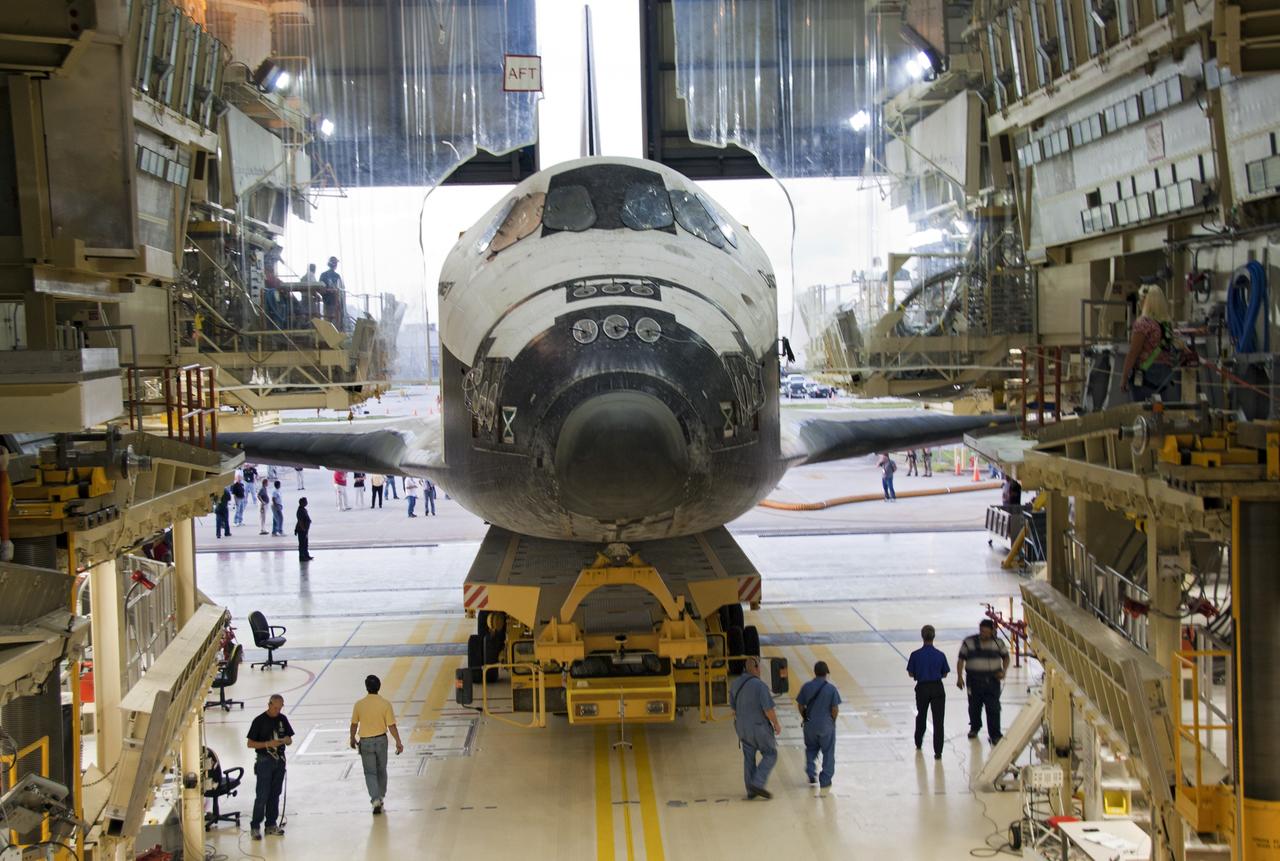
CAPE CANAVERAL, Fla. -- At NASA's Kennedy Space Center in Florida, shuttle Discovery begins to back out of Orbiter Processing Facility-3 during a move called "rollover" to the nearby Vehicle Assembly Building (VAB). Once inside the VAB, the shuttle will be joined to its solid rocket boosters and external fuel tank. Later this month, Discovery is scheduled to "rollout" to Launch Pad 39A for its launch to the International Space Station on the STS-133 mission. Targeted to liftoff Nov. 1, Discovery will take the Permanent Multipurpose Module (PMM) packed with supplies and critical spare parts, as well as Robonaut 2 (R2) to the station. Photo credit: NASA/Jack Pfaller
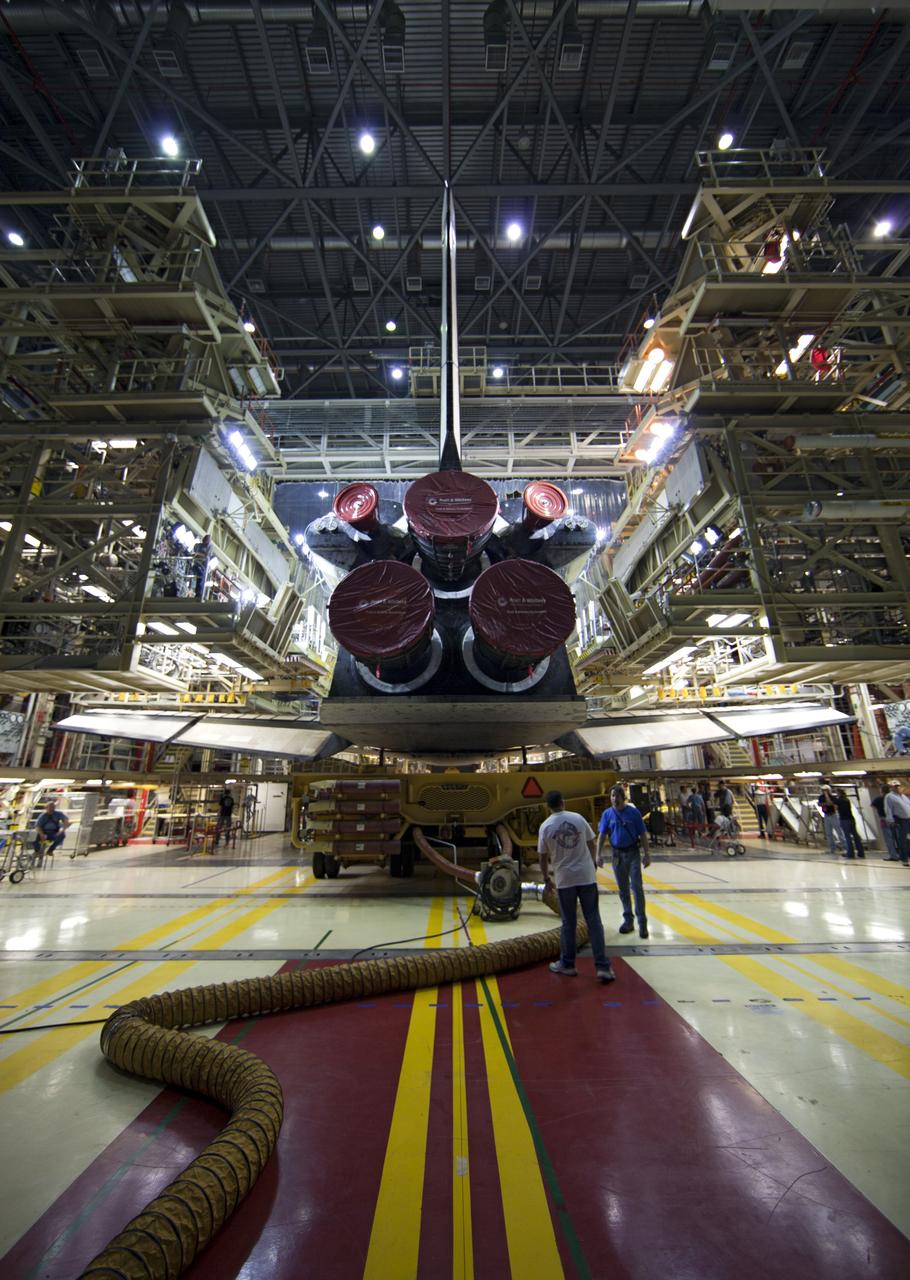
CAPE CANAVERAL, Fla. -- At NASA's Kennedy Space Center in Florida, shuttle Discovery begins to back out of Orbiter Processing Facility-3 during a move called "rollover" to the nearby Vehicle Assembly Building (VAB). Once inside the VAB, the shuttle will be joined to its solid rocket boosters and external fuel tank. Later this month, Discovery is scheduled to "rollout" to Launch Pad 39A for its launch to the International Space Station on the STS-133 mission. Targeted to liftoff Nov. 1, Discovery will take the Permanent Multipurpose Module (PMM) packed with supplies and critical spare parts, as well as Robonaut 2 (R2) to the station. Photo credit: NASA/Dimitri Gerondidakis
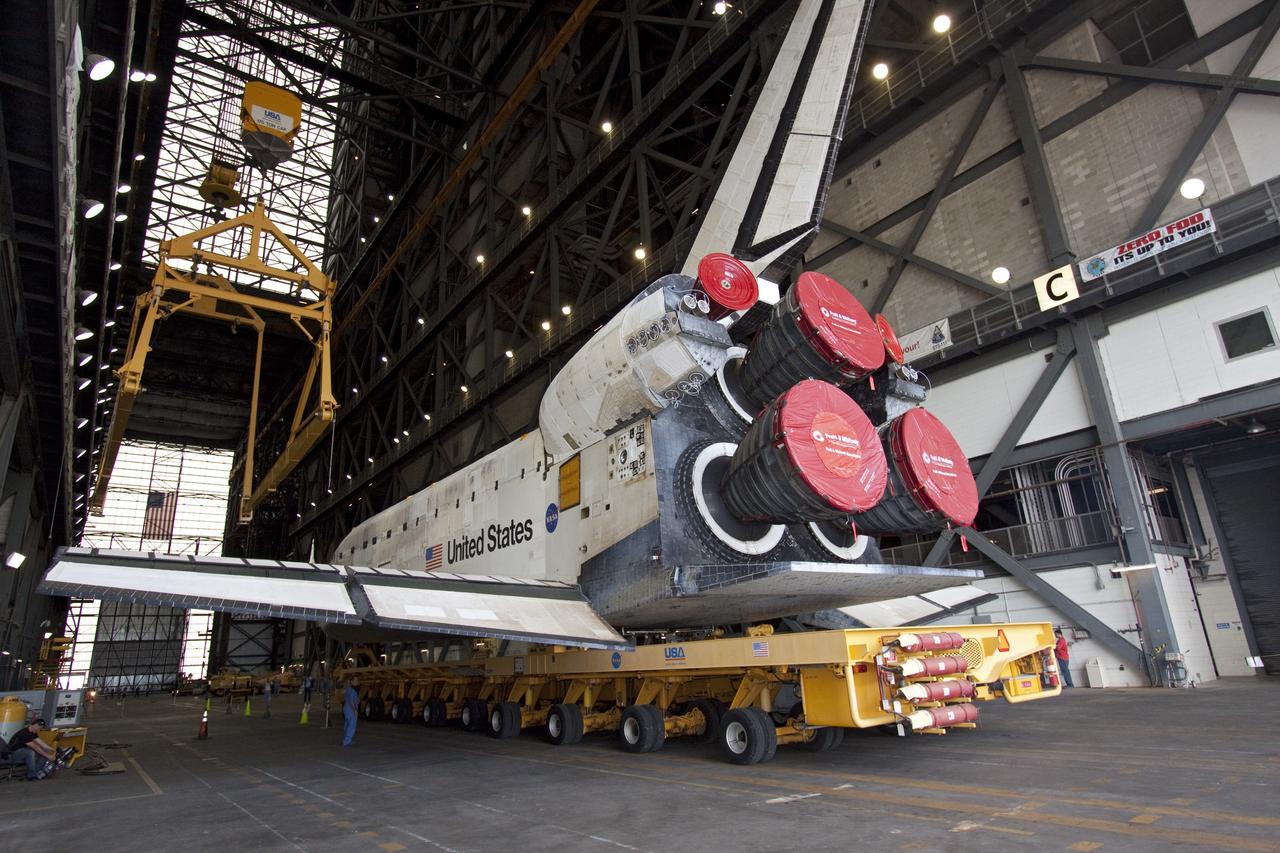
CAPE CANAVERAL, Fla. -- At NASA's Kennedy Space Center in Florida, shuttle Discovery is ushered into the Vehicle Assembly Building (VAB) from Orbiter Processing Facility-3 during a move known as "rollover." Once inside the VAB, the shuttle will be joined to its solid rocket boosters and external fuel tank. Later this month, Discovery is scheduled to "rollout" to Launch Pad 39A for its launch to the International Space Station on the STS-133 mission. Targeted to liftoff Nov. 1, Discovery will take the Permanent Multipurpose Module (PMM) packed with supplies and critical spare parts, as well as Robonaut 2 (R2) to the station. Photo credit: NASA/Jack Pfaller
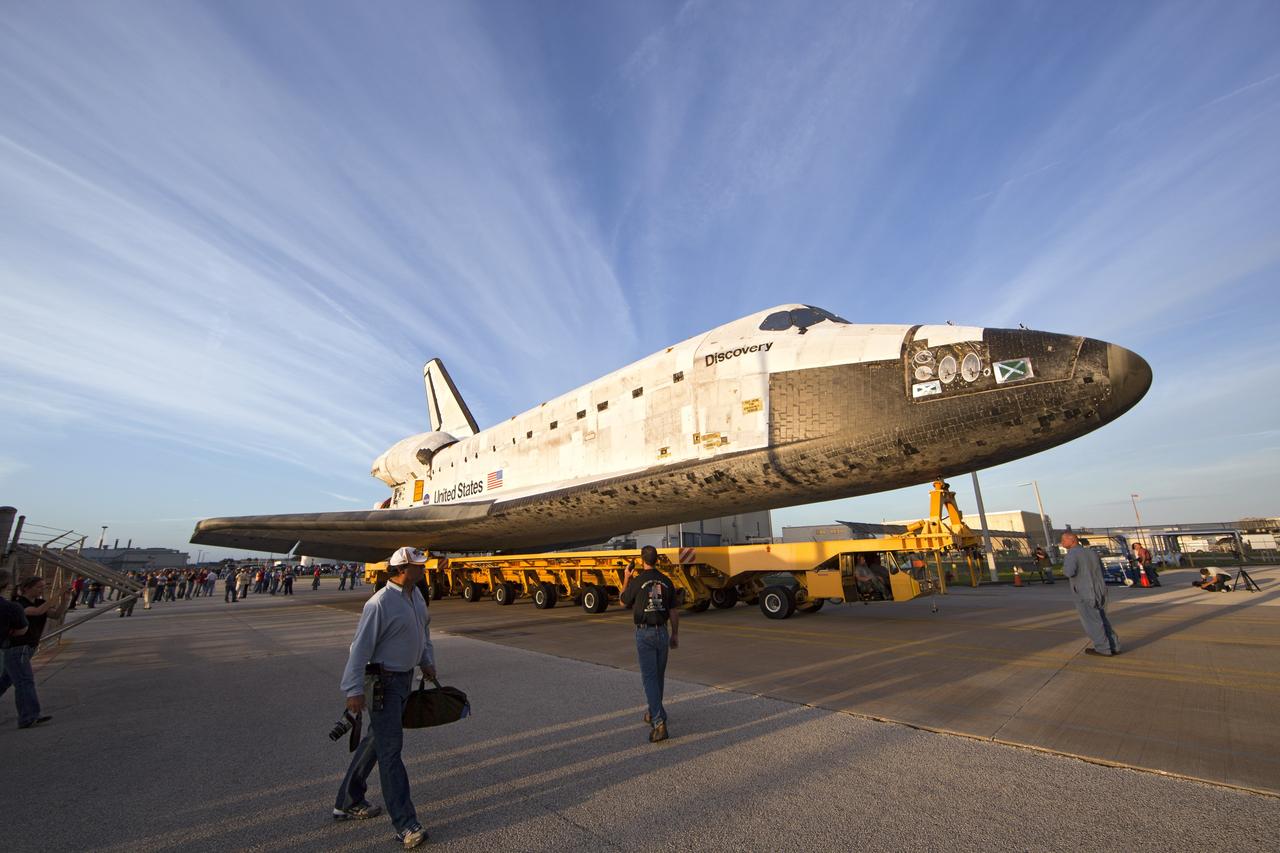
CAPE CANAVERAL, Fla. -- At NASA's Kennedy Space Center in Florida, shuttle Discovery pauses in between Orbiter Processing Facility-3 and the Vehicle Assembly Building (VAB) during a move called "rollover." Once inside the VAB, the shuttle will be joined to its solid rocket boosters and external fuel tank. Later this month, Discovery is scheduled to "rollout" to Launch Pad 39A for its launch to the International Space Station on the STS-133 mission. Targeted to liftoff Nov. 1, Discovery will take the Permanent Multipurpose Module (PMM) packed with supplies and critical spare parts, as well as Robonaut 2 (R2) to the station. Photo credit: NASA/Dimitri Gerondidakis
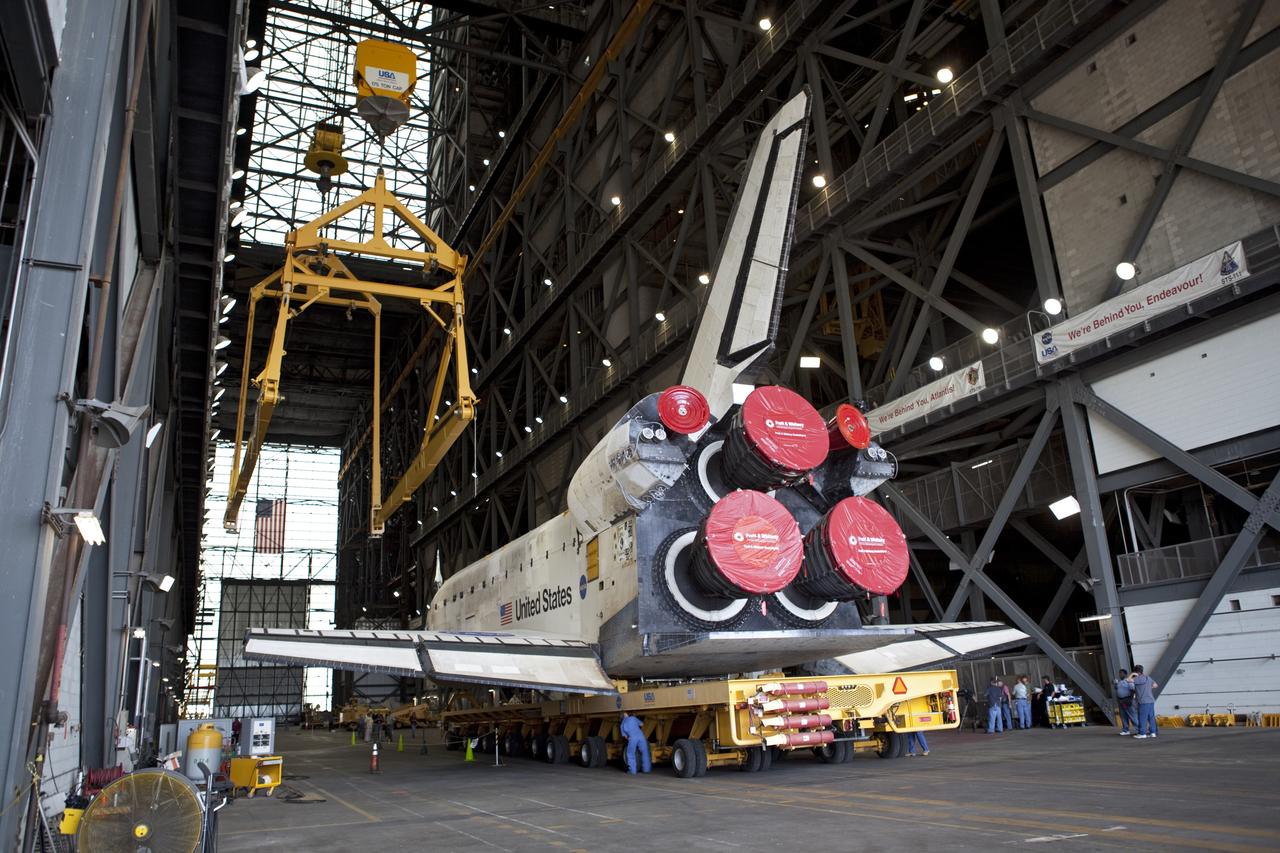
CAPE CANAVERAL, Fla. -- At NASA's Kennedy Space Center in Florida, shuttle Discovery is ushered into the Vehicle Assembly Building (VAB) from Orbiter Processing Facility-3 during a move known as "rollover." The large, yellow and metal sling to the left of Discovery will hoist the spacecraft out of the VAB transfer aisle and then lower it to its external fuel tank and twin solid rocket boosters. Later this month, Discovery is scheduled to "rollout" to Launch Pad 39A for its launch to the International Space Station on the STS-133 mission. Targeted to liftoff Nov. 1, Discovery will take the Permanent Multipurpose Module (PMM) packed with supplies and critical spare parts, as well as Robonaut 2 (R2) to the station. Photo credit: NASA/ Dimitri Gerondidakis
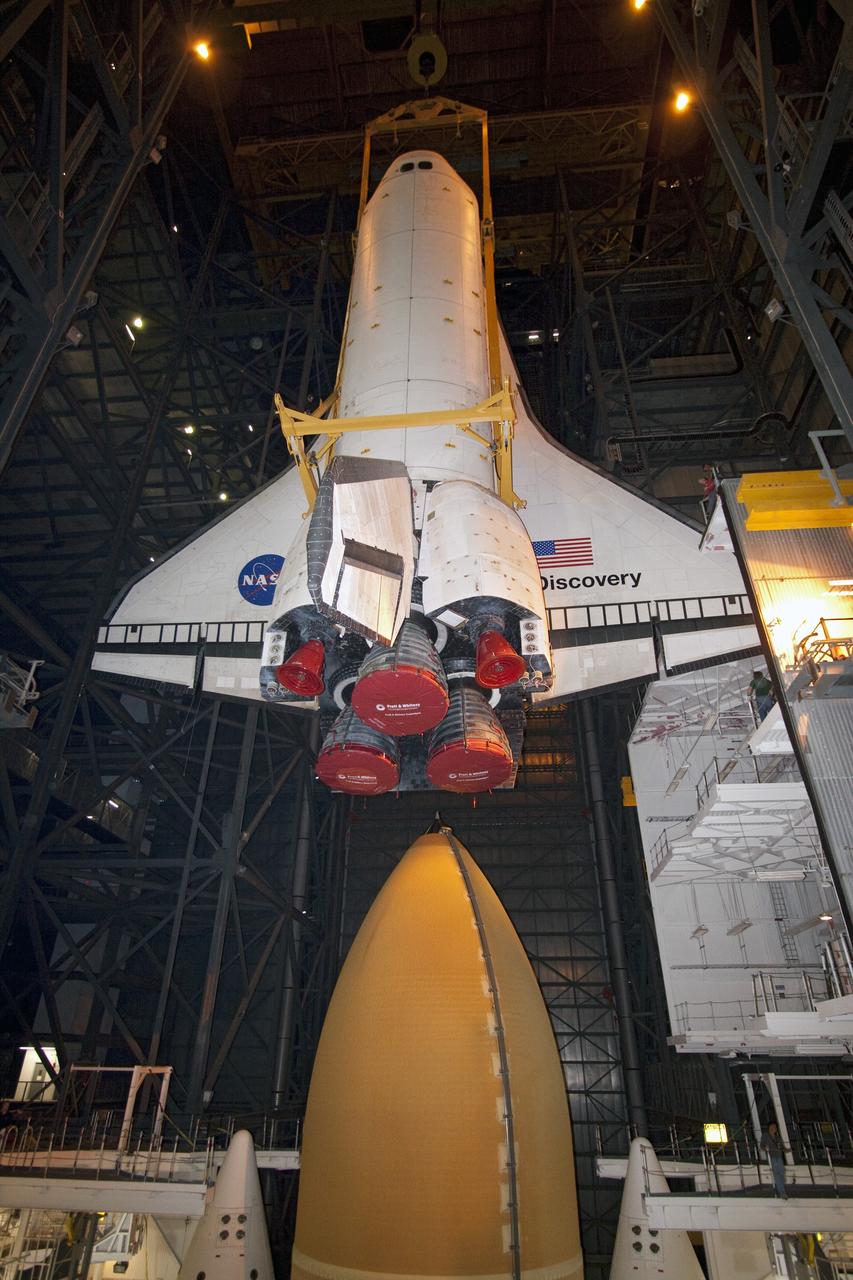
CAPE CANAVERAL, Fla. -- In High Bay 3 of the Vehicle Assembly Building at NASA's Kennedy Space Center in Florida, a large yellow, metal sling lowers shuttle Discovery to its external fuel tank and solid rocket boosters. The lift and mate operation began Sept. 9 and wrapped up early Sept. 10. Discovery is scheduled to roll out to Launch Pad 39A later this month in preparation for its launch to the International Space Station on the STS-133 mission. Targeted to lift off Nov. 1, Discovery will take the Permanent Multipurpose Module (PMM) packed with supplies and critical spare parts, as well as Robonaut 2 (R2) to the station. Photo credit: NASA/Jack Pfaller
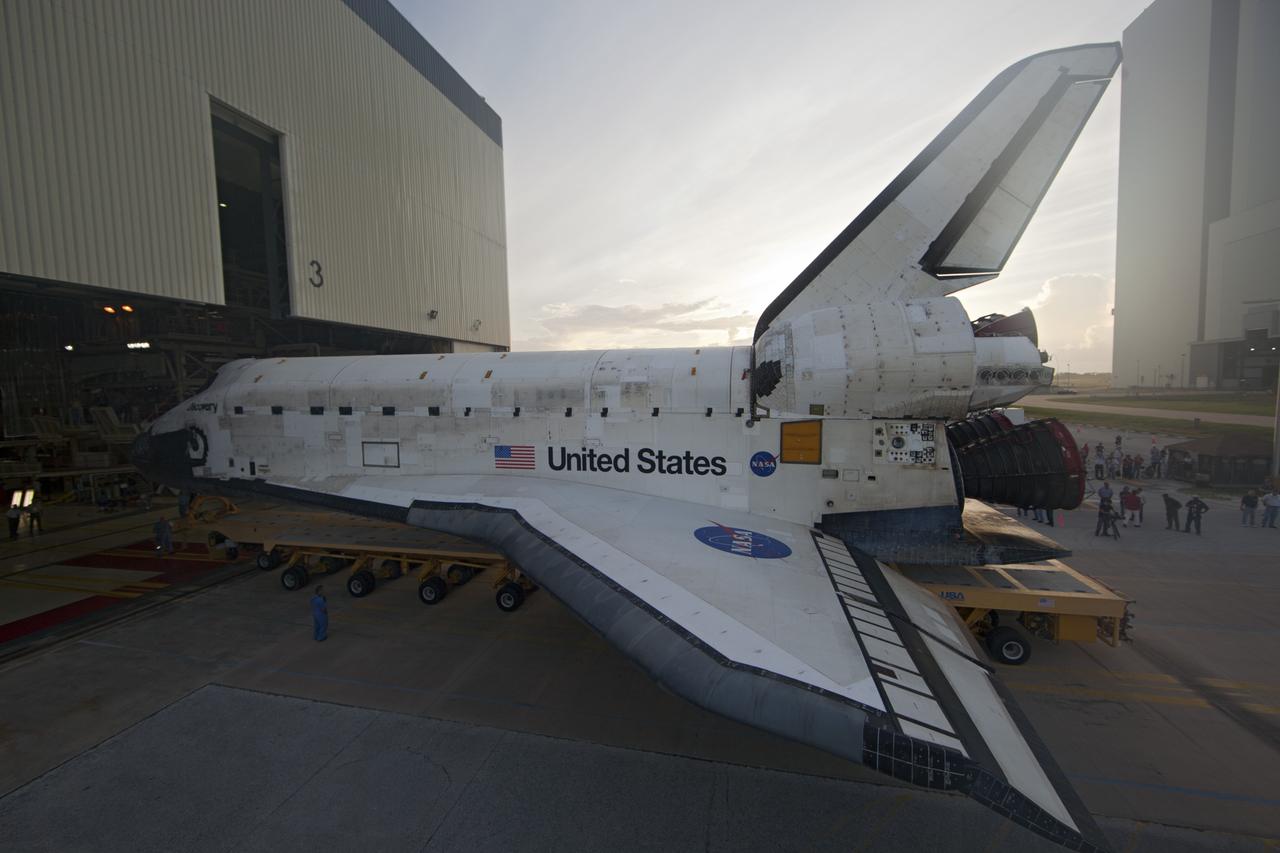
CAPE CANAVERAL, Fla. -- At NASA's Kennedy Space Center in Florida, shuttle Discovery backs out of Orbiter Processing Facility-3 during a move called "rollover" to the nearby Vehicle Assembly Building (VAB). Once inside the VAB, the shuttle will be joined to its solid rocket boosters and external fuel tank. Later this month, Discovery is scheduled to "rollout" to Launch Pad 39A for its launch to the International Space Station on the STS-133 mission. Targeted to liftoff Nov. 1, Discovery will take the Permanent Multipurpose Module (PMM) packed with supplies and critical spare parts, as well as Robonaut 2 (R2) to the station. Photo credit: NASA/Dimitri Gerondidakis
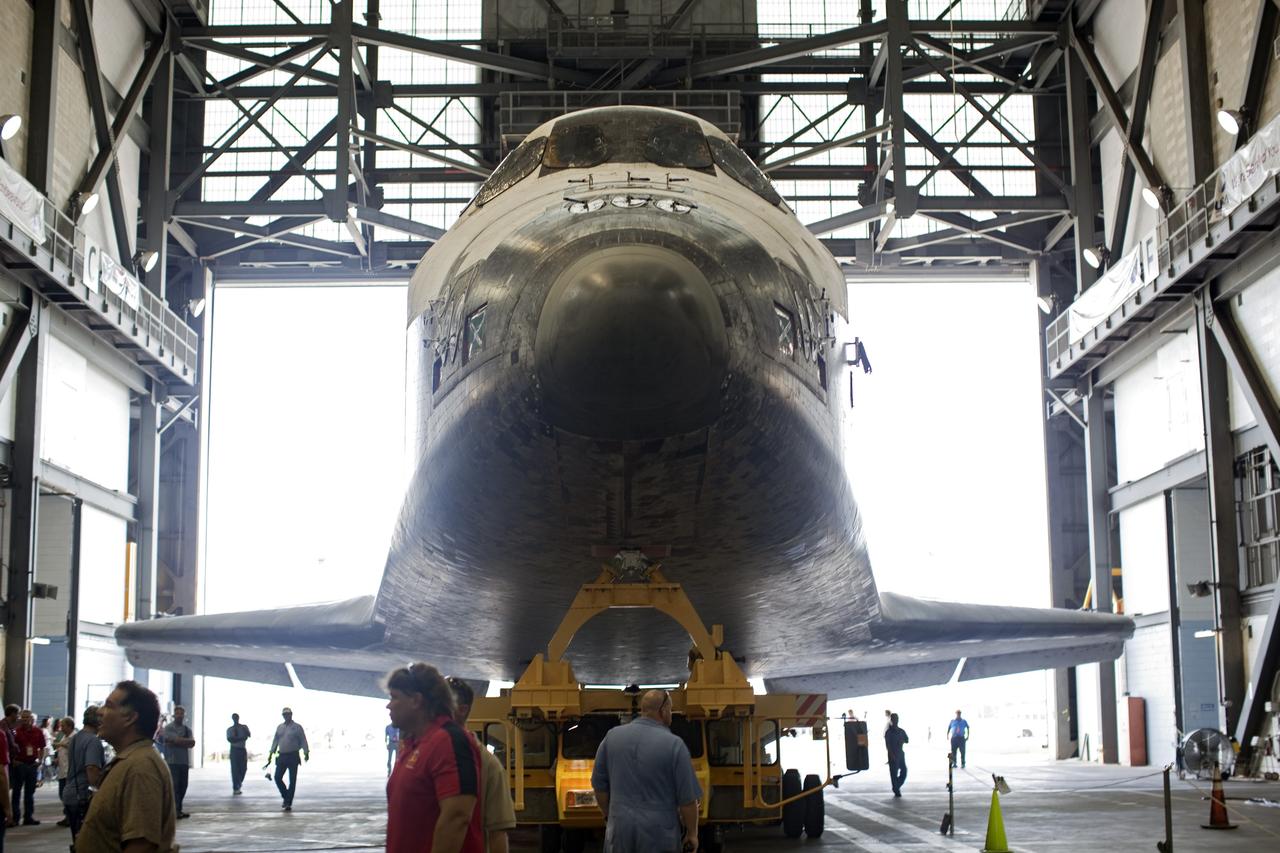
CAPE CANAVERAL, Fla. -- At NASA's Kennedy Space Center in Florida, shuttle Discovery is ushered into the Vehicle Assembly Building (VAB) from Orbiter Processing Facility-3 during a move known as "rollover." Once inside the VAB, the shuttle will be joined to its solid rocket boosters and external fuel tank. Later this month, Discovery is scheduled to "rollout" to Launch Pad 39A for its launch to the International Space Station on the STS-133 mission. Targeted to liftoff Nov. 1, Discovery will take the Permanent Multipurpose Module (PMM) packed with supplies and critical spare parts, as well as Robonaut 2 (R2) to the station. Photo credit: NASA/ Dimitri Gerondidakis
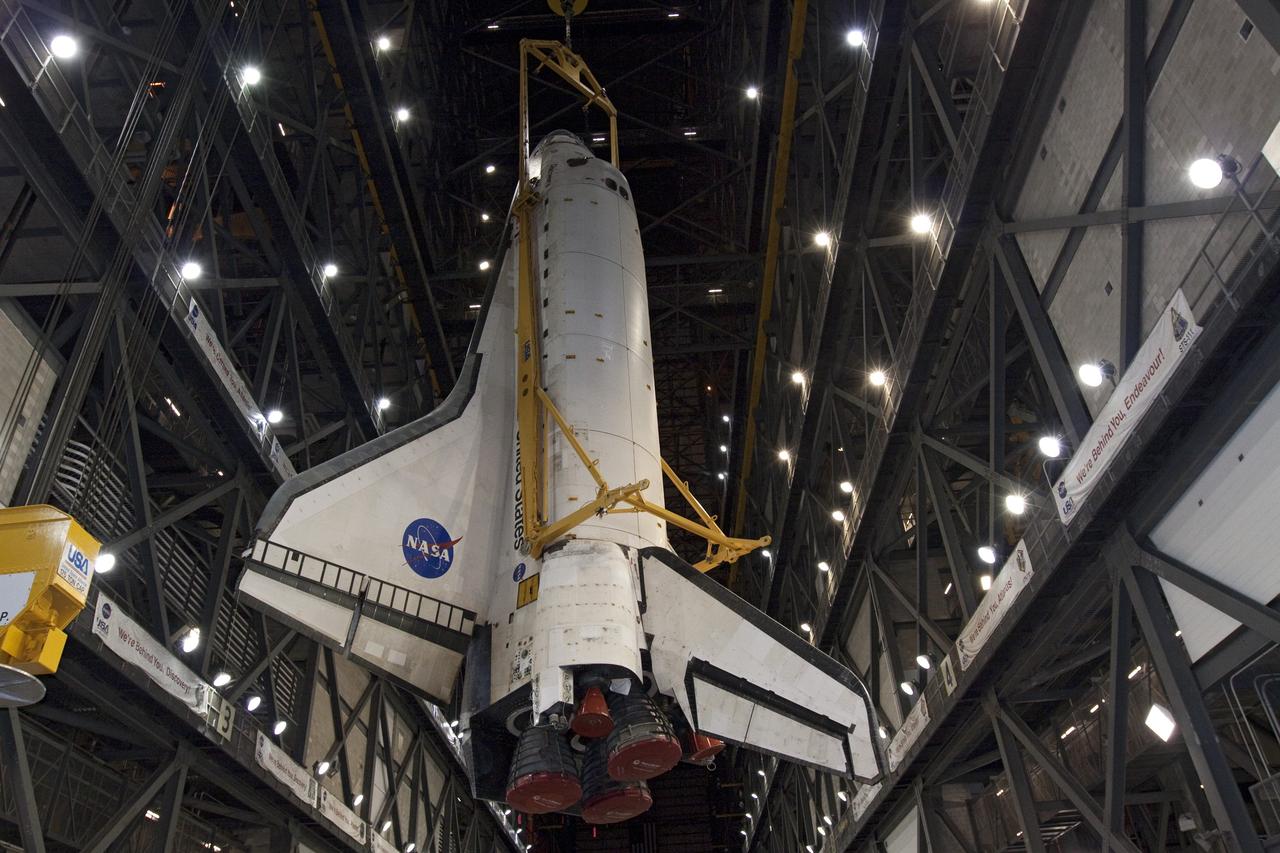
CAPE CANAVERAL, Fla. -- At NASA's Kennedy Space Center in Florida, a large yellow, metal sling lifts shuttle Discovery from the transfer aisle into High Bay 3 of the Vehicle Assembly Building. In the bay, the shuttle will be attached to its external fuel tank and solid rocket boosters. The operation began Sept. 9 and wrapped up early Sept. 10. Discovery is scheduled to roll out to Launch Pad 39A later this month in preparation for its launch to the International Space Station on the STS-133 mission. Targeted to lift off Nov. 1, Discovery will take the Permanent Multipurpose Module (PMM) packed with supplies and critical spare parts, as well as Robonaut 2 (R2) to the station. Photo credit: NASA/Jack Pfaller
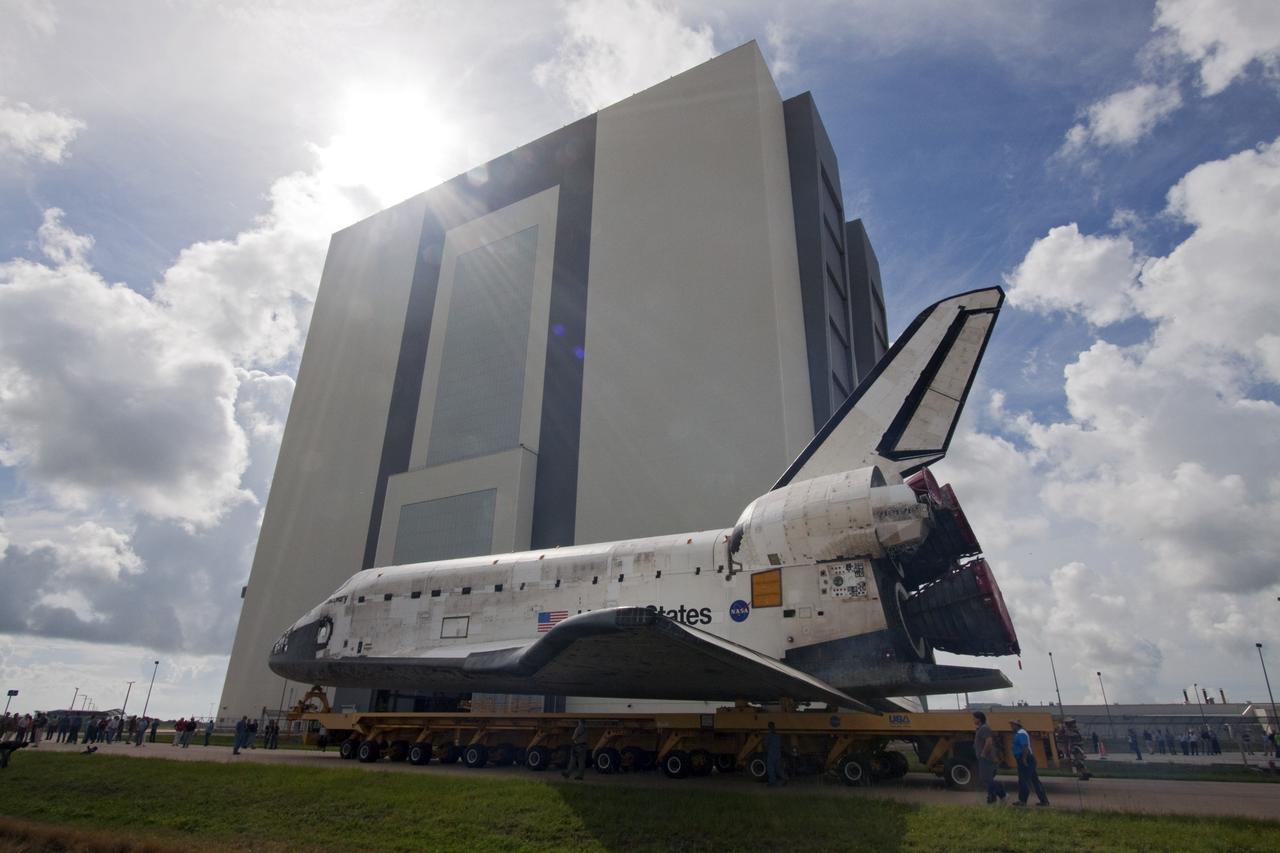
CAPE CANAVERAL, Fla. -- At NASA's Kennedy Space Center in Florida, shuttle Discovery continues its move, known as "rollover," from Orbiter Processing Facility-3 to the nearby Vehicle Assembly Building (VAB). Once inside the VAB, the shuttle will be joined to its solid rocket boosters and external fuel tank. Later this month, Discovery is scheduled to "rollout" to Launch Pad 39A for its launch to the International Space Station on the STS-133 mission. Targeted to liftoff Nov. 1, Discovery will take the Permanent Multipurpose Module (PMM) packed with supplies and critical spare parts, as well as Robonaut 2 (R2) to the station. Photo credit: NASA/Jack Pfaller