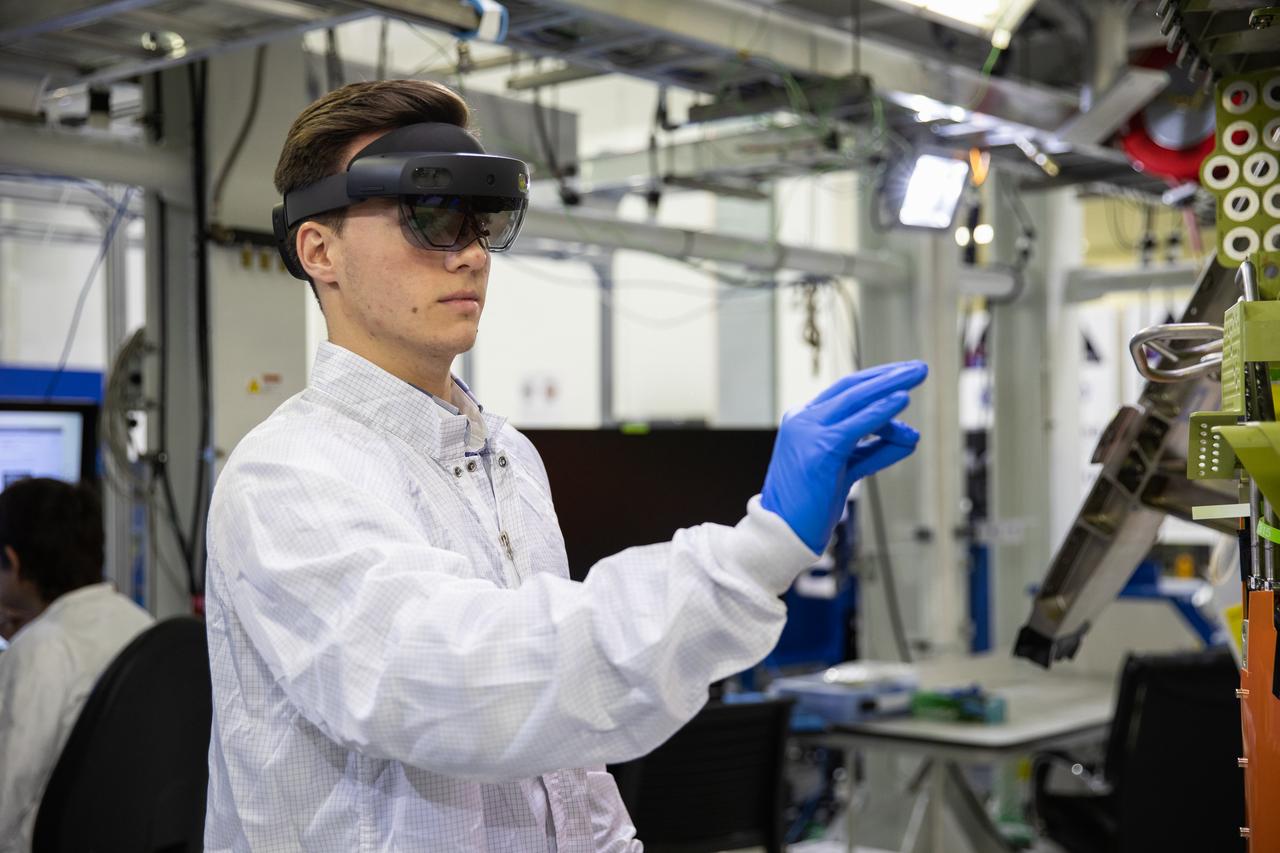
Michael Maxwell, with Lockheed Martin’s augmented reality team, wears a pair of augmented reality (AR) goggles to work on the crew module for NASA’s Artemis II mission inside the high bay of the Neil Armstrong Operations and Checkout Building at the agency’s Kennedy Space Center in Florida on March 18, 2020. Orion manufacturer Lockheed Martin provided the goggles to technicians to help place tapes where components will be installed on the crew module adapter for Artemis II, the first crewed mission aboard the spacecraft. Using the AR goggles saves significant labor and time to complete tasks. Manufactured by Microsoft, the goggles, called HoloLens2, are the second version used by Lockheed.

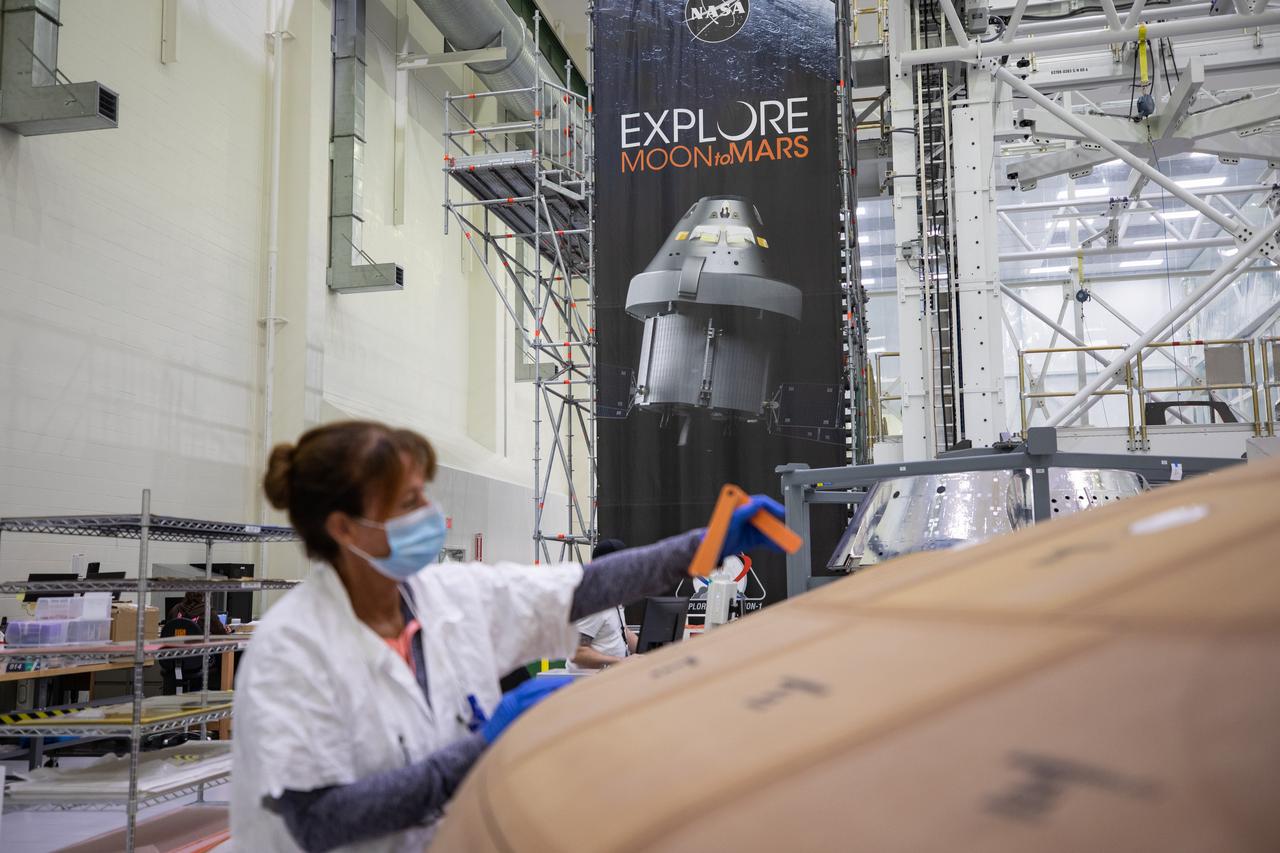
Jennifer Solano, with Lockheed Martin at Kennedy Space Center in Florida, wears a pair of augmented reality (AR) goggles to work on crew module hardware for NASA’s Artemis II mission inside the high bay of the Neil Armstrong Operations and Checkout Building at Kennedy on March 18, 2020. Orion manufacturer Lockheed Martin provided the goggles to technicians to help place tapes where components will be installed on Orion for Artemis II, the first crewed mission aboard the spacecraft. Using the AR goggles saves significant labor and time to complete tasks. Manufactured by Microsoft, the goggles, called HoloLens2, are the second version used by Lockheed.
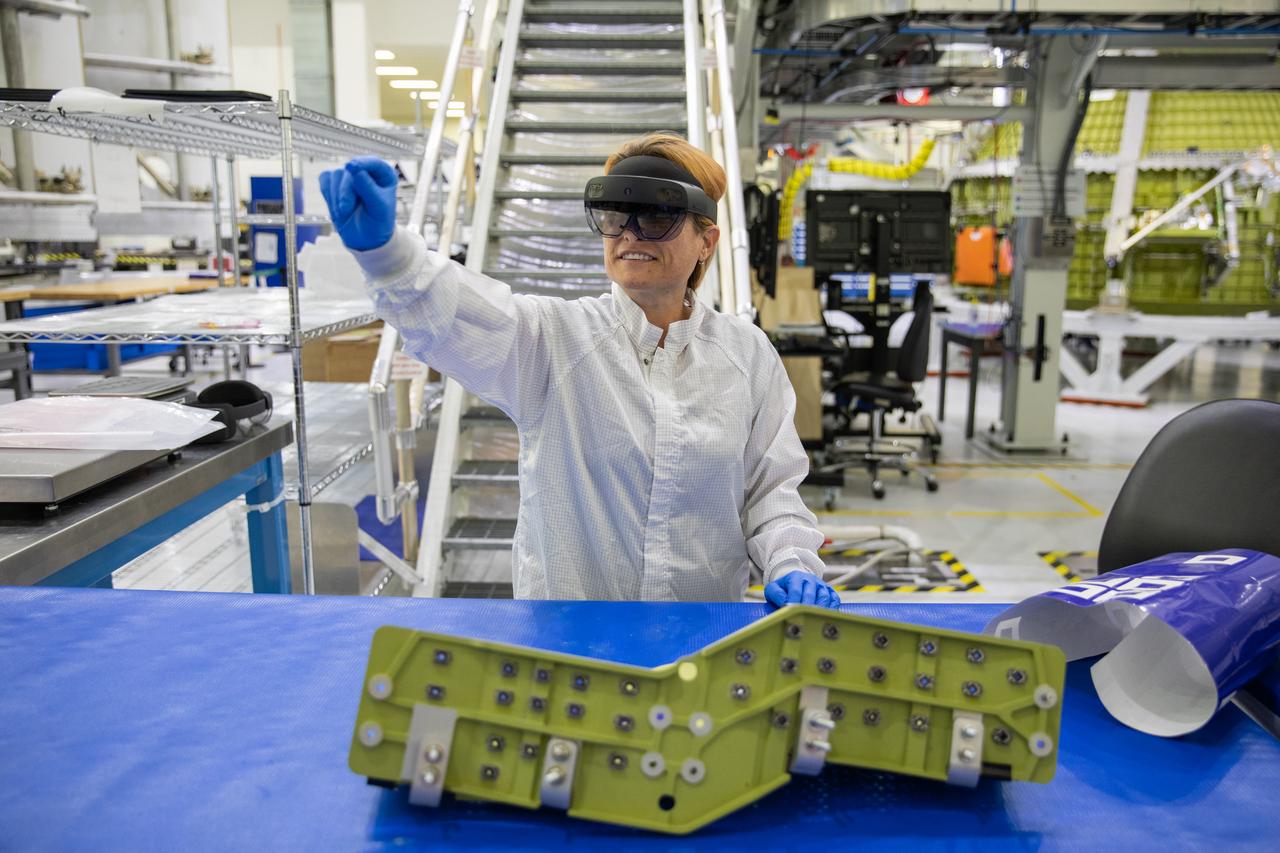
Jennifer Solano, with Lockheed Martin at NASA’s Kennedy Space Center in Florida, demonstrates a pair of augmented reality (AR) goggles as she works on crew module hardware for the agency’s Artemis II mission inside the high bay of the Neil Armstrong Operations and Checkout Building at Kennedy on March 18, 2020. Orion manufacturer Lockheed Martin provided the goggles to technicians to help place tapes where components will be installed on Orion for Artemis II, the first crewed mission aboard the spacecraft. Using the AR goggles saves significant labor and time to complete tasks. Manufactured by Microsoft, the goggles, called HoloLens2, are the second version used by Lockheed.
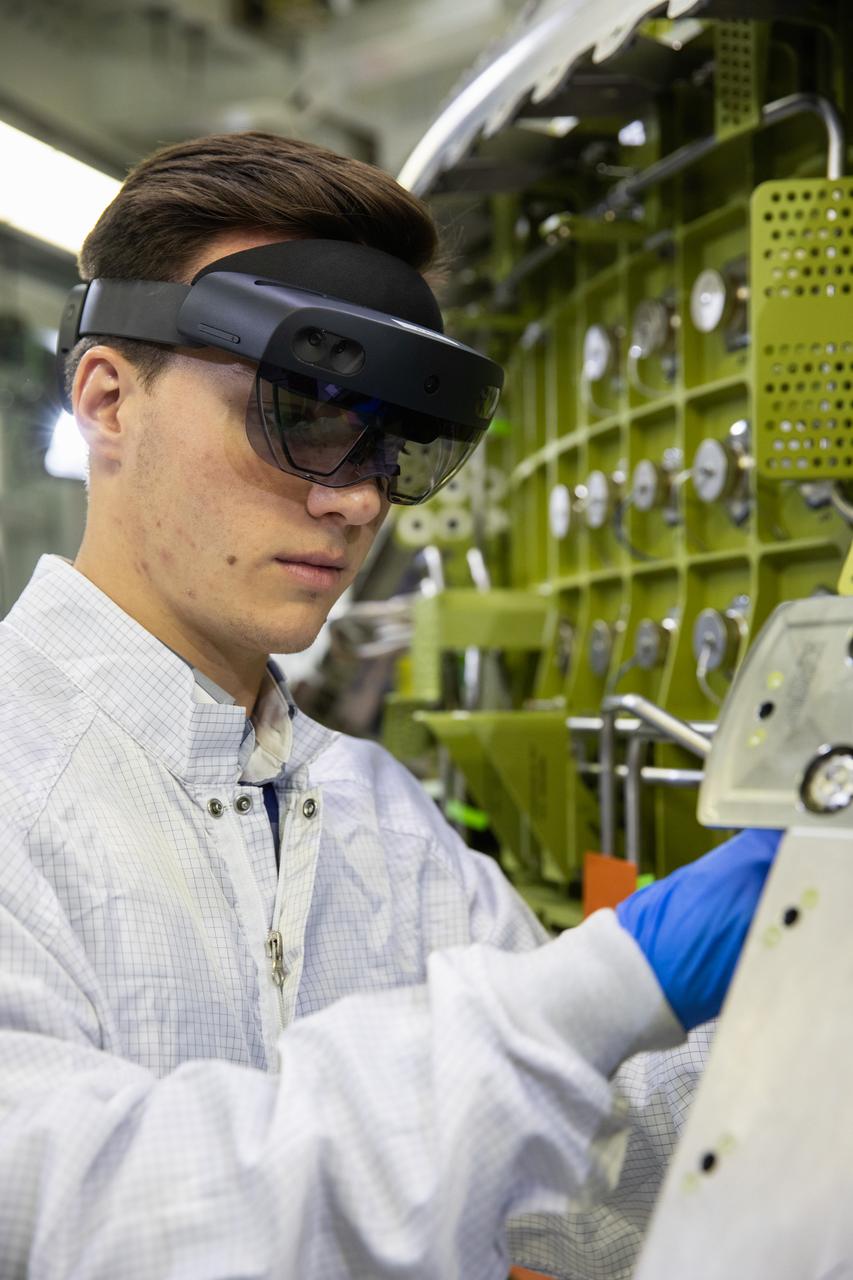
Michael Maxwell, with Lockheed Martin’s augmented reality team, wears a pair of augmented reality (AR) goggles to work on the crew module for NASA’s Artemis II mission inside the high bay of the Neil Armstrong Operations and Checkout Building at the agency’s Kennedy Space Center in Florida on March 18, 2020. Orion manufacturer Lockheed Martin provided the goggles to technicians to help place tapes where components will be installed on the crew module adapter for Artemis II, the first crewed mission aboard the spacecraft. Using the AR goggles saves significant labor and time to complete tasks. Manufactured by Microsoft, the goggles, called HoloLens2, are the second version used by Lockheed.
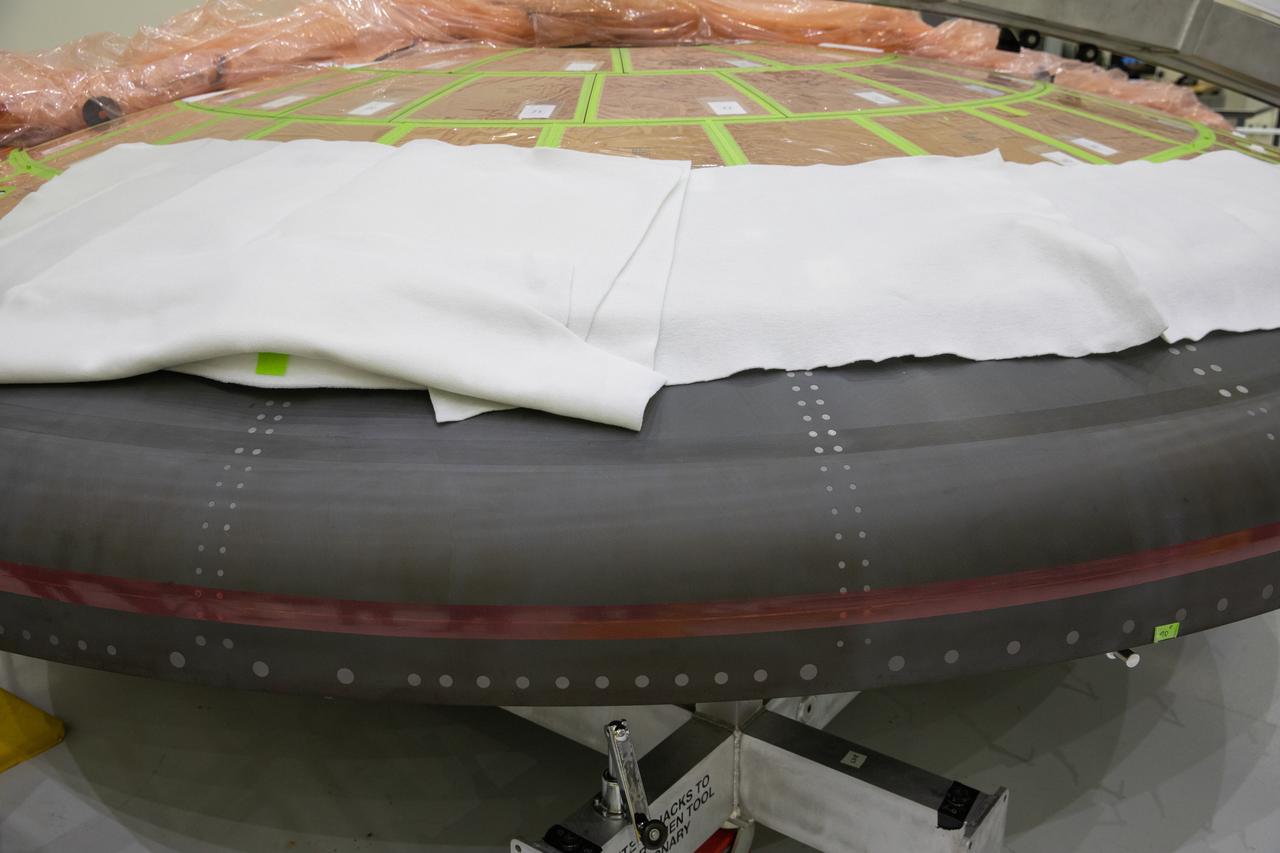
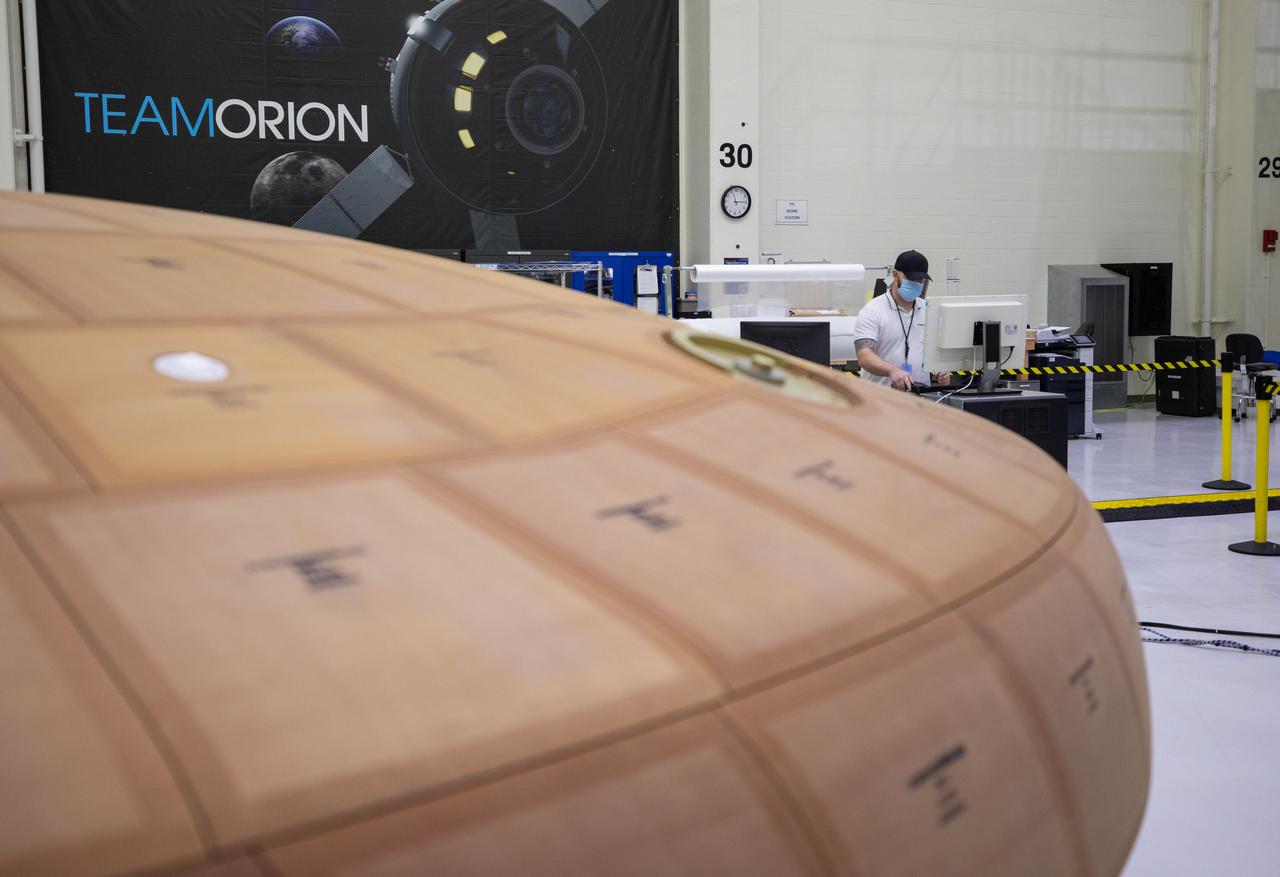
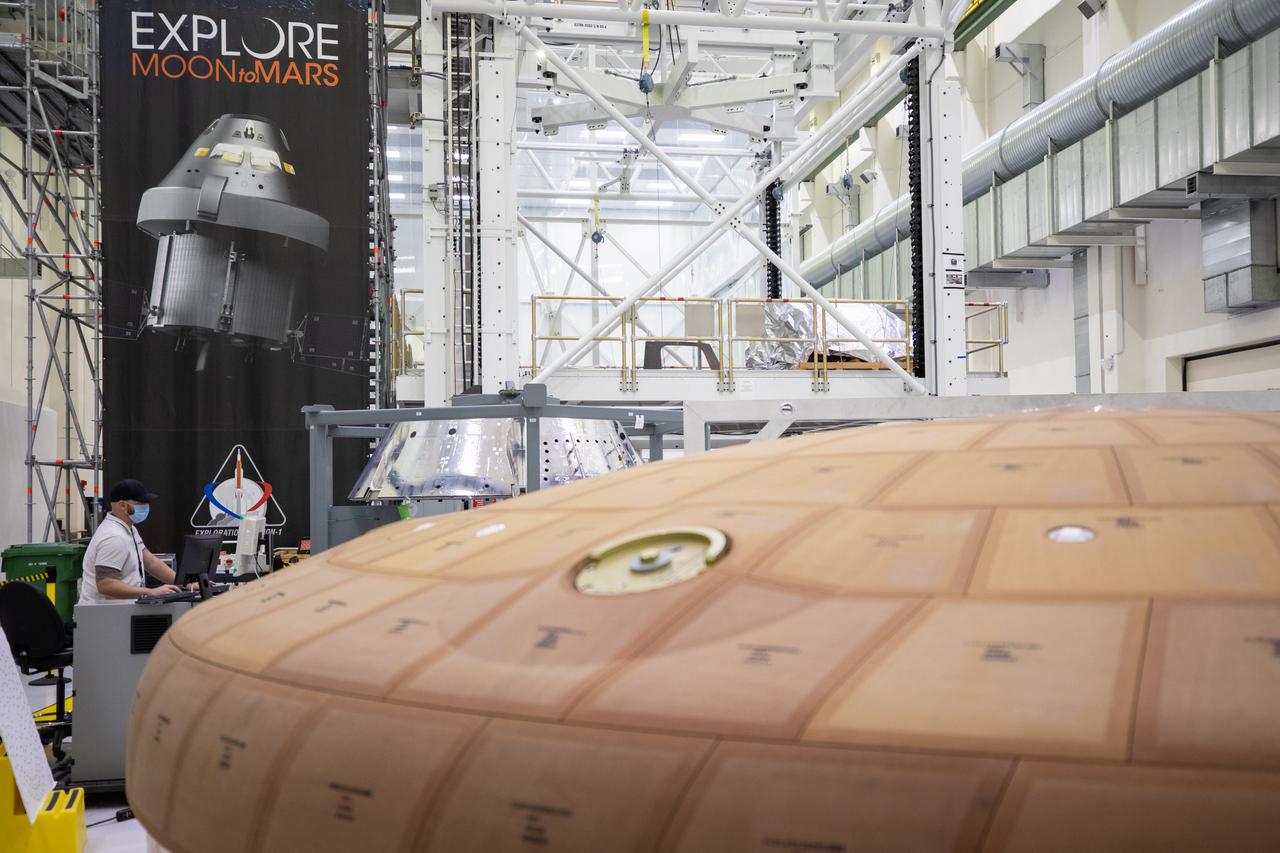
The heat shield for NASA’s Artemis II mission is in view inside the Neil Armstrong Operations and Checkout Building at the agency’s Kennedy Space Center in Florida on March 18, 2020. Using augmented reality (AR) goggles, technicians are completing the work on the heat shield. Orion manufacturer Lockheed Martin provided the goggles to technicians to help place tapes where components will be installed on the crew module, heat shield and other components for Artemis II, the first crewed mission aboard the spacecraft. Using the AR goggles saves significant labor and time to complete tasks. Manufactured by Microsoft, the goggles, called HoloLens2, are the second version used by Lockheed.

Michael Maxwell, with Lockheed Martin’s augmented reality team, wears a pair of augmented reality (AR) goggles to work on the crew module for NASA’s Artemis II mission inside the high bay of the Neil Armstrong Operations and Checkout Building at the agency’s Kennedy Space Center in Florida on March 18, 2020. Orion manufacturer Lockheed Martin provided the goggles to technicians to help place tapes where components will be installed on the crew module adapter for Artemis II, the first crewed mission aboard the spacecraft. Using the AR goggles saves significant labor and time to complete tasks. Manufactured by Microsoft, the goggles, called HoloLens2, are the second version used by Lockheed.
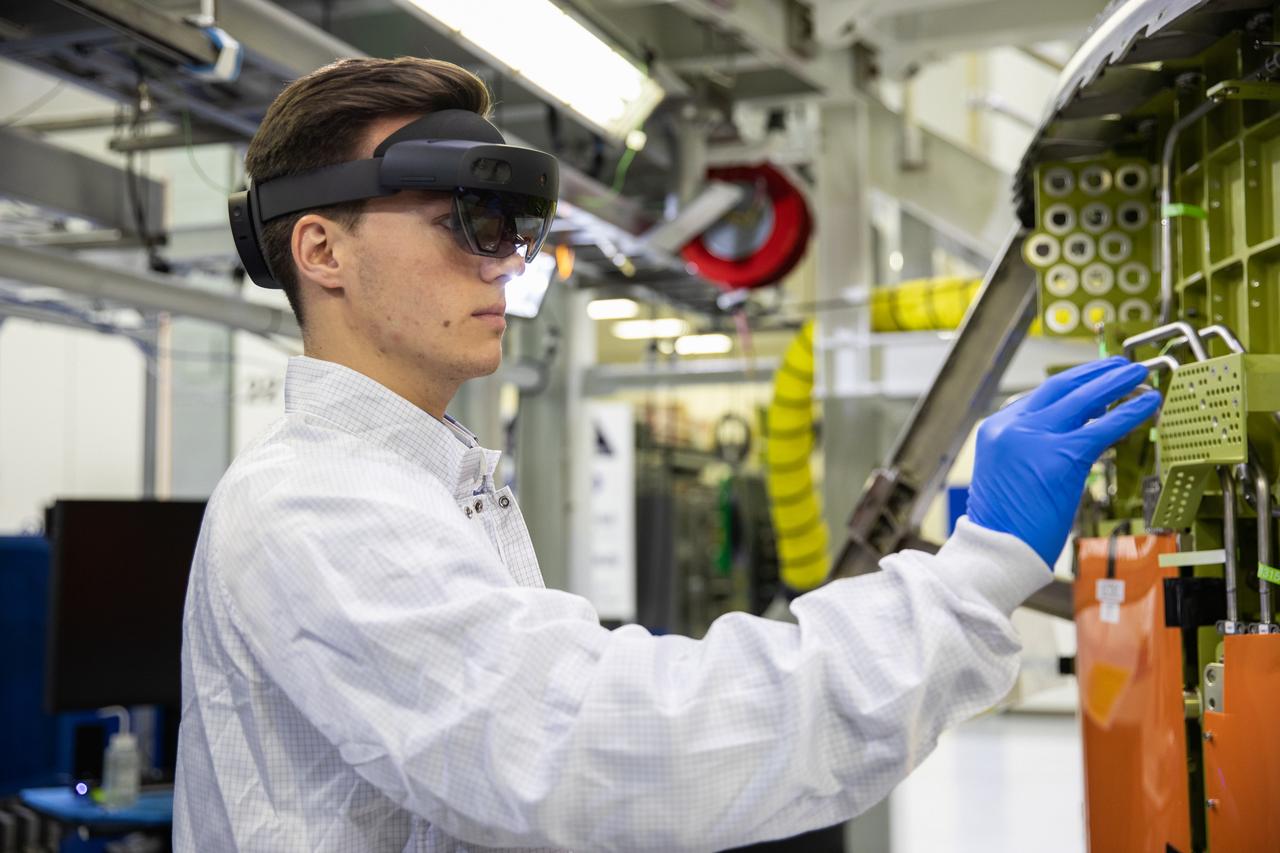
Michael Maxwell, with Lockheed Martin’s augmented reality team, wears a pair of augmented reality (AR) goggles to work on the crew module for NASA’s Artemis II mission inside the high bay of the Neil Armstrong Operations and Checkout Building at the agency’s Kennedy Space Center in Florida on March 18, 2020. Orion manufacturer Lockheed Martin provided the goggles to technicians to help place tapes where components will be installed on the crew module adapter for Artemis II, the first crewed mission aboard the spacecraft. Using the AR goggles saves significant labor and time to complete tasks. Manufactured by Microsoft, the goggles, called HoloLens2, are the second version used by Lockheed.
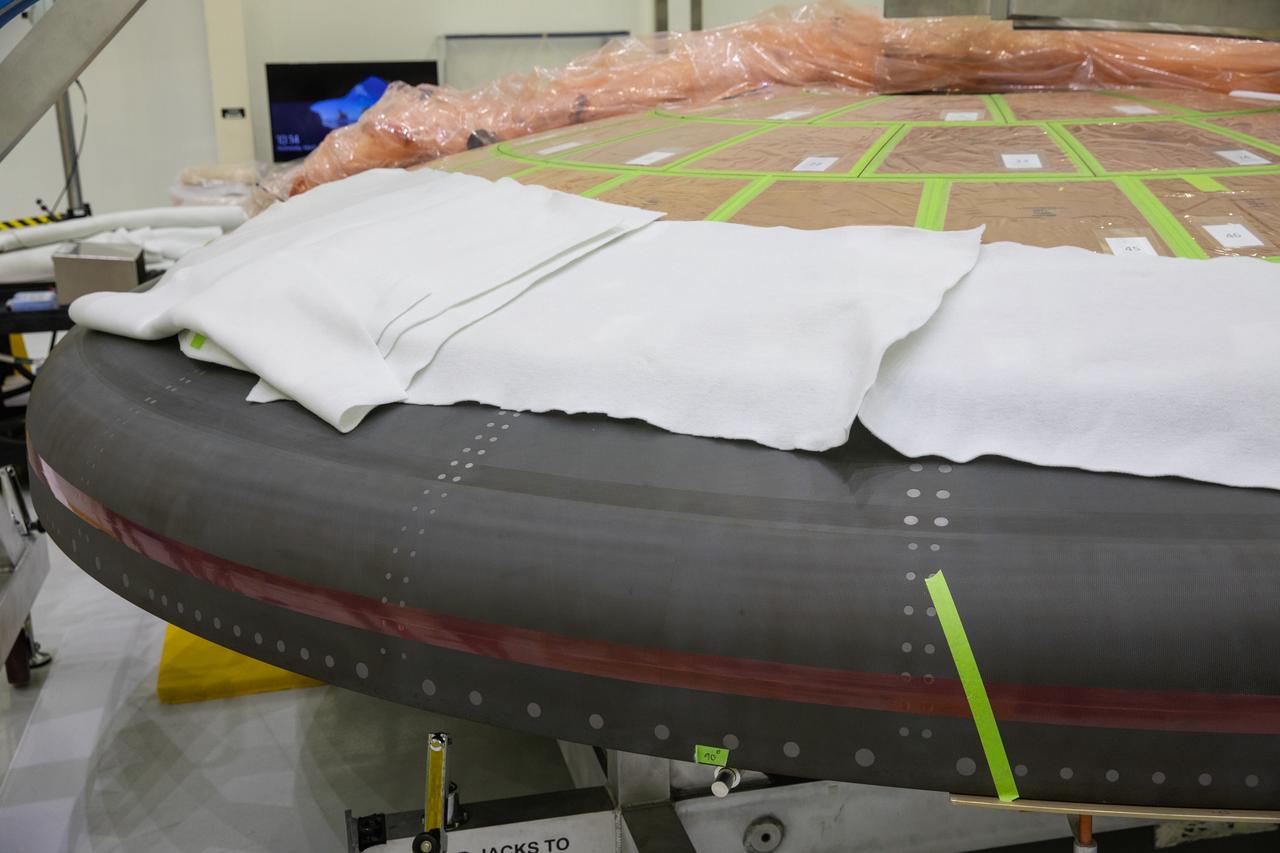
The heat shield for NASA’s Artemis II mission is in view inside the Neil Armstrong Operations and Checkout Building at the agency’s Kennedy Space Center in Florida on March 18, 2020. Using augmented reality (AR) goggles, technicians are completing the work on the heat shield. Orion manufacturer Lockheed Martin provided the goggles to technicians to help place tapes where components will be installed on the crew module, heat shield and other components for Artemis II, the first crewed mission aboard the spacecraft. Using the AR goggles saves significant labor and time to complete tasks. Manufactured by Microsoft, the goggles, called HoloLens2, are the second version used by Lockheed.
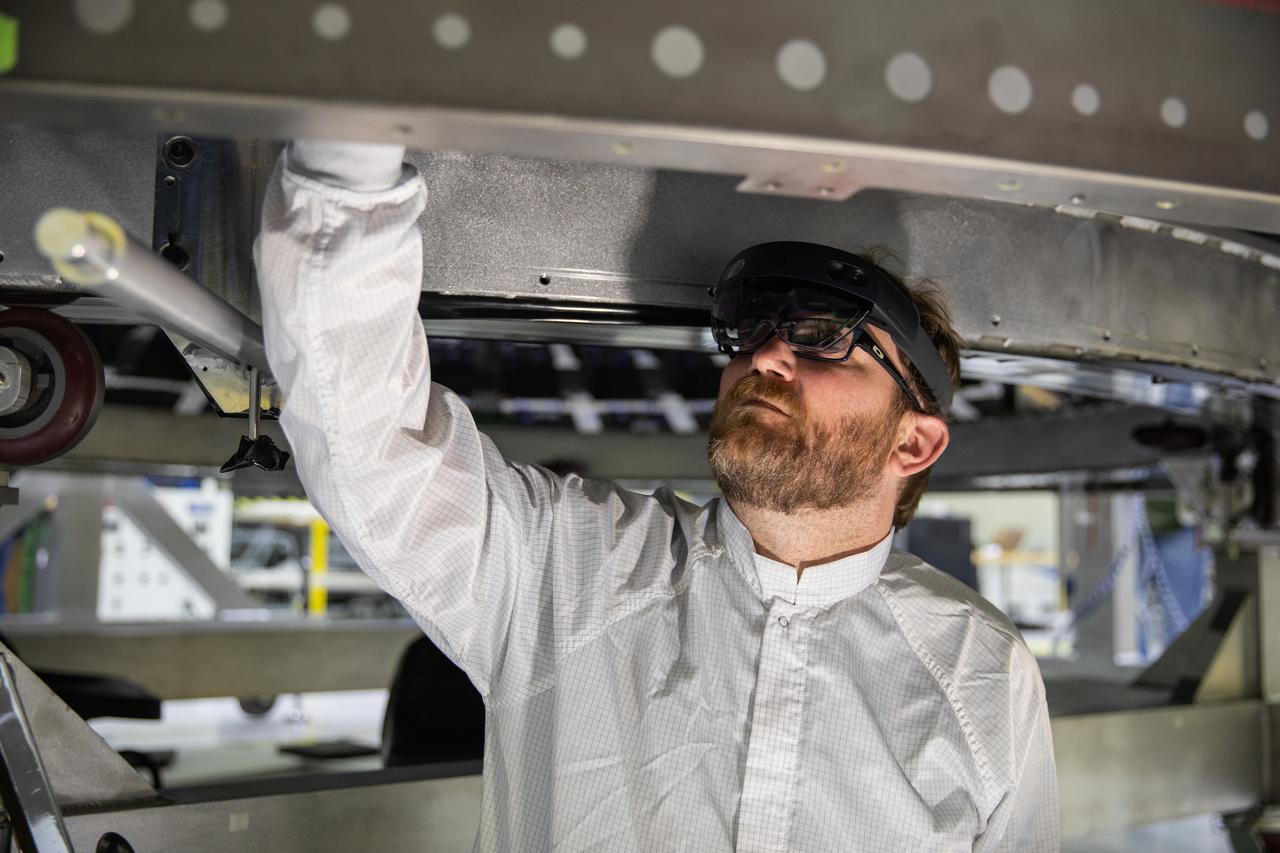
Eric Nolan, a technician with ASRC Federal Data Solutions, wears a pair of augmented reality (AR) goggles as he works on the heat shield for the crew module for NASA’s Artemis II mission inside the high bay of the Neil Armstrong Operations and Checkout Building at the agency’s Kennedy Space Center in Florida on March 18, 2020. Orion manufacturer Lockheed Martin provided the goggles to technicians to help place tapes where components will be installed on Orion for Artemis II, the first crewed mission aboard the spacecraft. Using the AR goggles saves significant labor and time to complete tasks. Manufactured by Microsoft, the goggles, called HoloLens2, are the second version used by Lockheed.
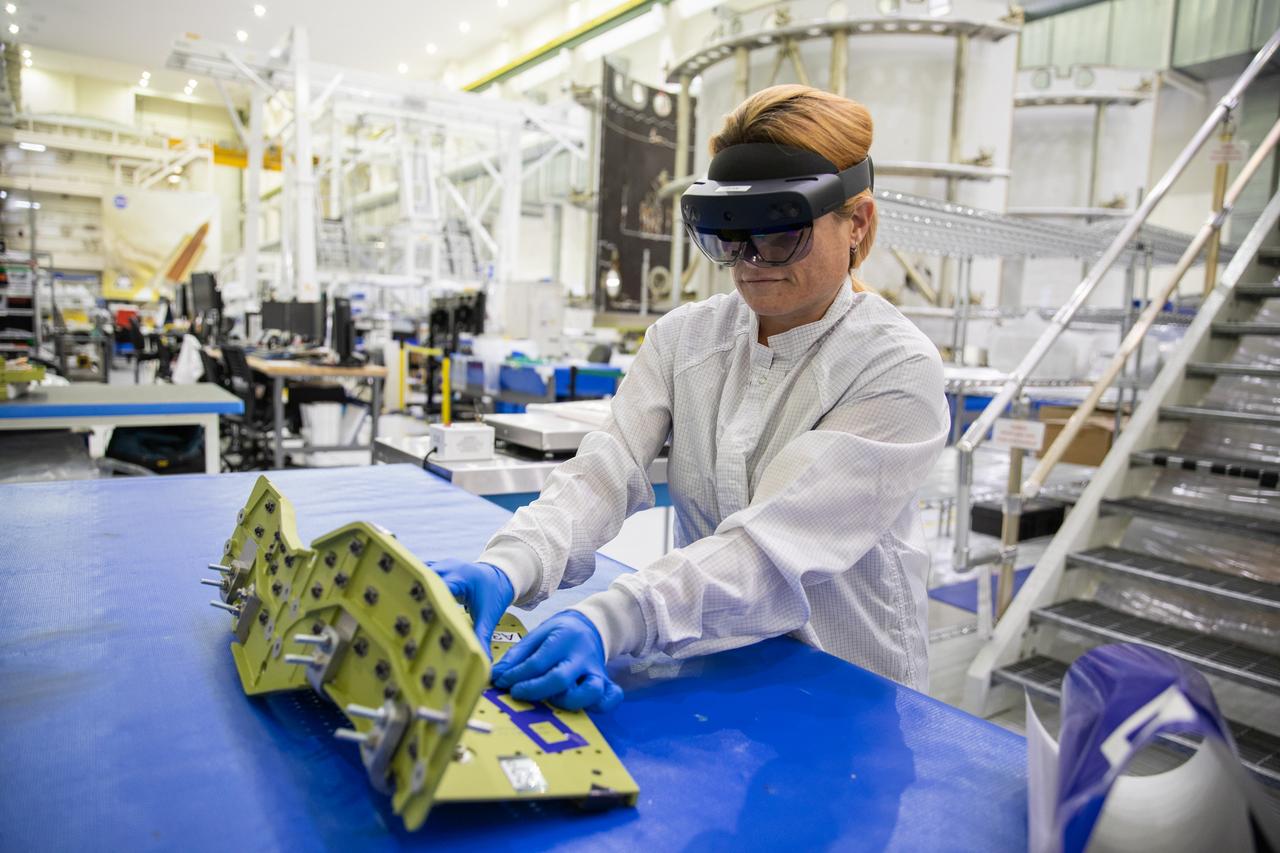
Jennifer Solano, with Lockheed Martin at Kennedy Space Center in Florida, wears a pair of augmented reality (AR) goggles to work on crew module hardware for NASA’s Artemis II mission inside the high bay of the Neil Armstrong Operations and Checkout Building at Kennedy on March 18, 2020. Orion manufacturer Lockheed Martin provided the goggles to technicians to help place tapes where components will be installed on Orion for Artemis II, the first crewed mission aboard the spacecraft. Using the AR goggles saves significant labor and time to complete tasks. Manufactured by Microsoft, the goggles, called HoloLens2, are the second version used by Lockheed.

Jennifer Solano, with Lockheed Martin at Kennedy Space Center in Florida, wears a pair of augmented reality (AR) goggles to work on crew module hardware for NASA’s Artemis II mission inside the high bay of the Neil Armstrong Operations and Checkout Building at Kennedy on March 18, 2020. Orion manufacturer Lockheed Martin provided the goggles to technicians to help place tapes where components will be installed on Orion for Artemis II, the first crewed mission aboard the spacecraft. Using the AR goggles saves significant labor and time to complete tasks. Manufactured by Microsoft, the goggles, called HoloLens2, are the second version used by Lockheed.
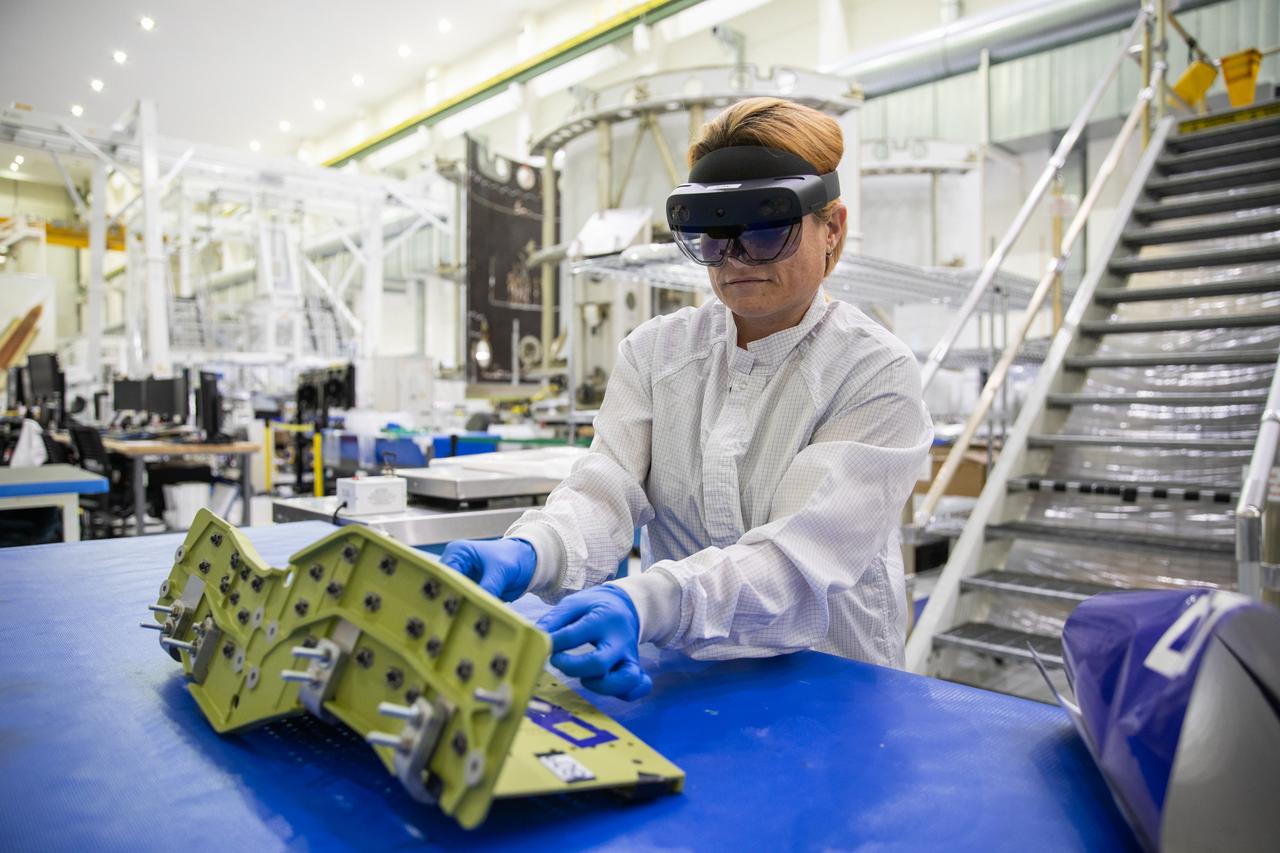
Jennifer Solano, with Lockheed Martin at Kennedy Space Center in Florida, wears a pair of augmented reality (AR) goggles to work on crew module hardware for NASA’s Artemis II mission inside the high bay of the Neil Armstrong Operations and Checkout Building at Kennedy on March 18, 2020. Orion manufacturer Lockheed Martin provided the goggles to technicians to help place tapes where components will be installed on Orion for Artemis II, the first crewed mission aboard the spacecraft. Using the AR goggles saves significant labor and time to complete tasks. Manufactured by Microsoft, the goggles, called HoloLens2, are the second version used by Lockheed.
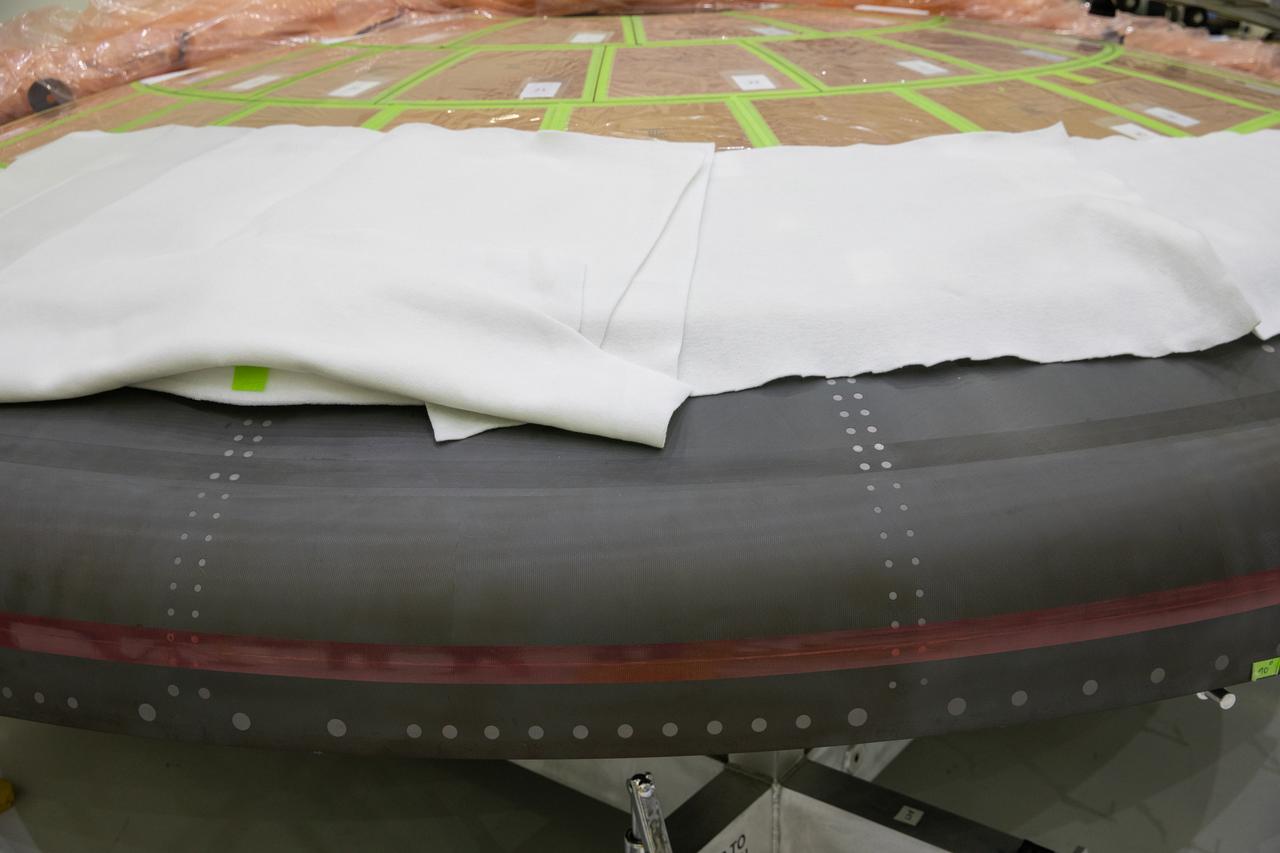
The heat shield for NASA’s Artemis II mission is in view inside the Neil Armstrong Operations and Checkout Building at the agency’s Kennedy Space Center in Florida on March 18, 2020. Using augmented reality (AR) goggles, technicians are completing the work on the heat shield. Orion manufacturer Lockheed Martin provided the goggles to technicians to help place tapes where components will be installed on the crew module, heat shield and other components for Artemis II, the first crewed mission aboard the spacecraft. Using the AR goggles saves significant labor and time to complete tasks. Manufactured by Microsoft, the goggles, called HoloLens2, are the second version used by Lockheed.
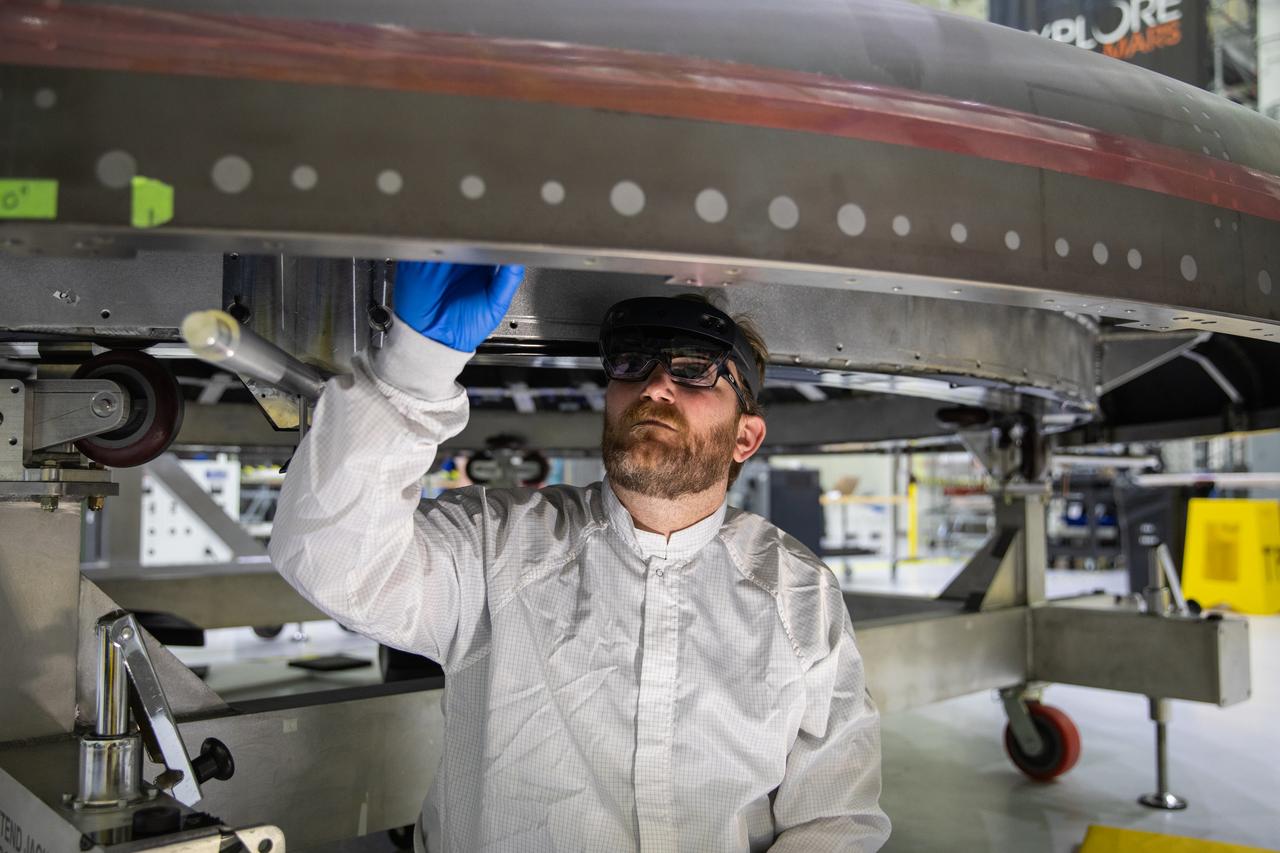
Eric Nolan, a technician with ASRC Federal Data Solutions, wears a pair of augmented reality (AR) goggles as he works on the heat shield for the crew module for NASA’s Artemis II mission inside the high bay of the Neil Armstrong Operations and Checkout Building at the agency’s Kennedy Space Center in Florida on March 18, 2020. Orion manufacturer Lockheed Martin provided the goggles to technicians to help place tapes where components will be installed on Orion for Artemis II, the first crewed mission aboard the spacecraft. Using the AR goggles saves significant labor and time to complete tasks. Manufactured by Microsoft, the goggles, called HoloLens2, are the second version used by Lockheed.
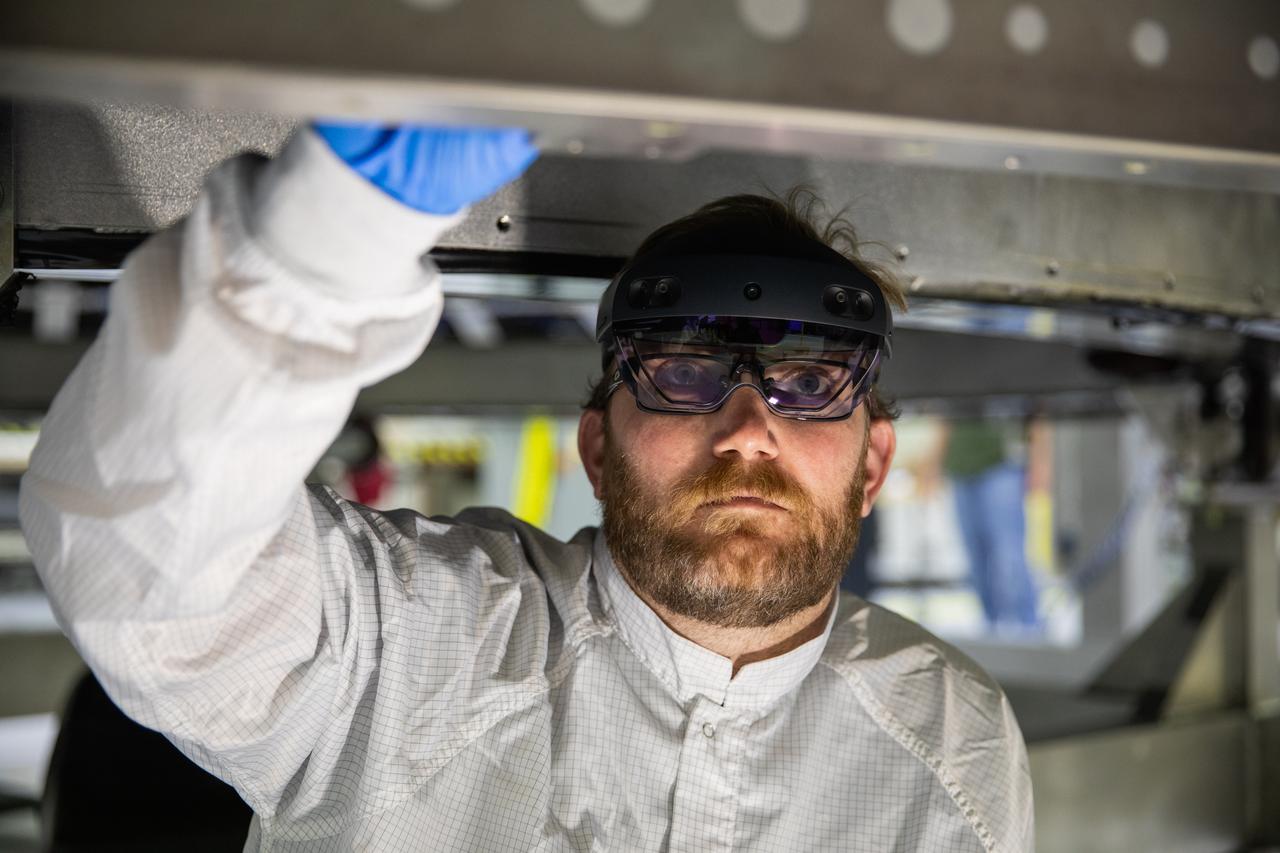
Eric Nolan, a technician with ASRC Federal Data Solutions, wears a pair of augmented reality (AR) goggles as he works on the heat shield for the crew module for NASA’s Artemis II mission inside the high bay of the Neil Armstrong Operations and Checkout Building at the agency’s Kennedy Space Center in Florida on March 18, 2020. Orion manufacturer Lockheed Martin provided the goggles to technicians to help place tapes where components will be installed on Orion for Artemis II, the first crewed mission aboard the spacecraft. Using the AR goggles saves significant labor and time to complete tasks. Manufactured by Microsoft, the goggles, called HoloLens2, are the second version used by Lockheed.
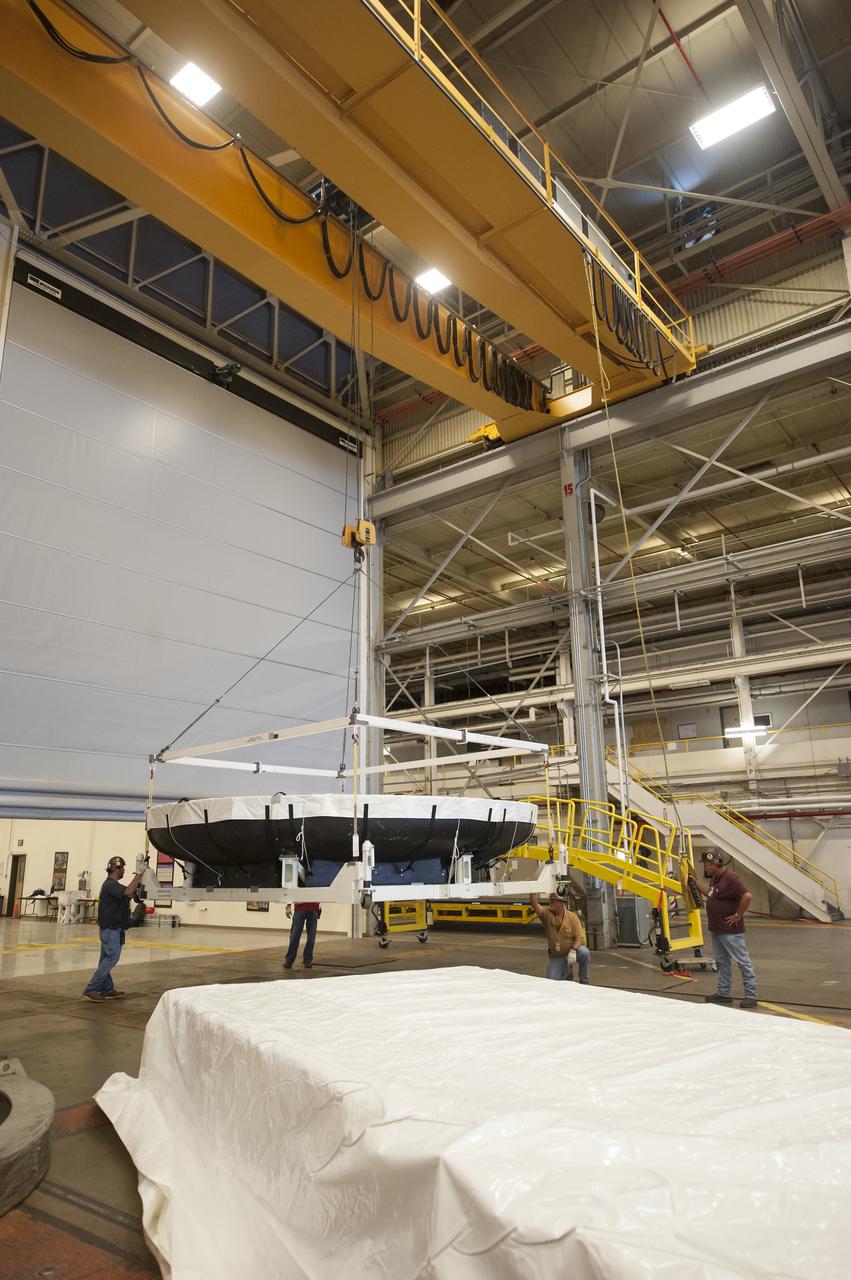
THE ORION HEAT SHIELD, WHICH WAS AT NASA’S MARSHALL SPACE FLIGHT CENTER FROM MARCH-MAY 2015 FOR ENGINEERING AND ANALYSIS, IS READIED FOR DEPARTURE AT THE END OF ITS STAY. THE HEAT SHIELD’S ABLATED SURFACE MATERIAL WAS REMOVED AT MARSHALL FOR ANALYSIS, USING THE CENTER’S STATE-OF-THE-ART SEVEN-AXIS MILLING MACHINE. IT NEXT WILL GO TO NASA’S LANGLEY RESEARCH CENTER FOR WATER-IMPACT TESTING. NASA’S JOHNSON SPACE CENTER LEADS THE ORION PROGRAM FOR NASA.
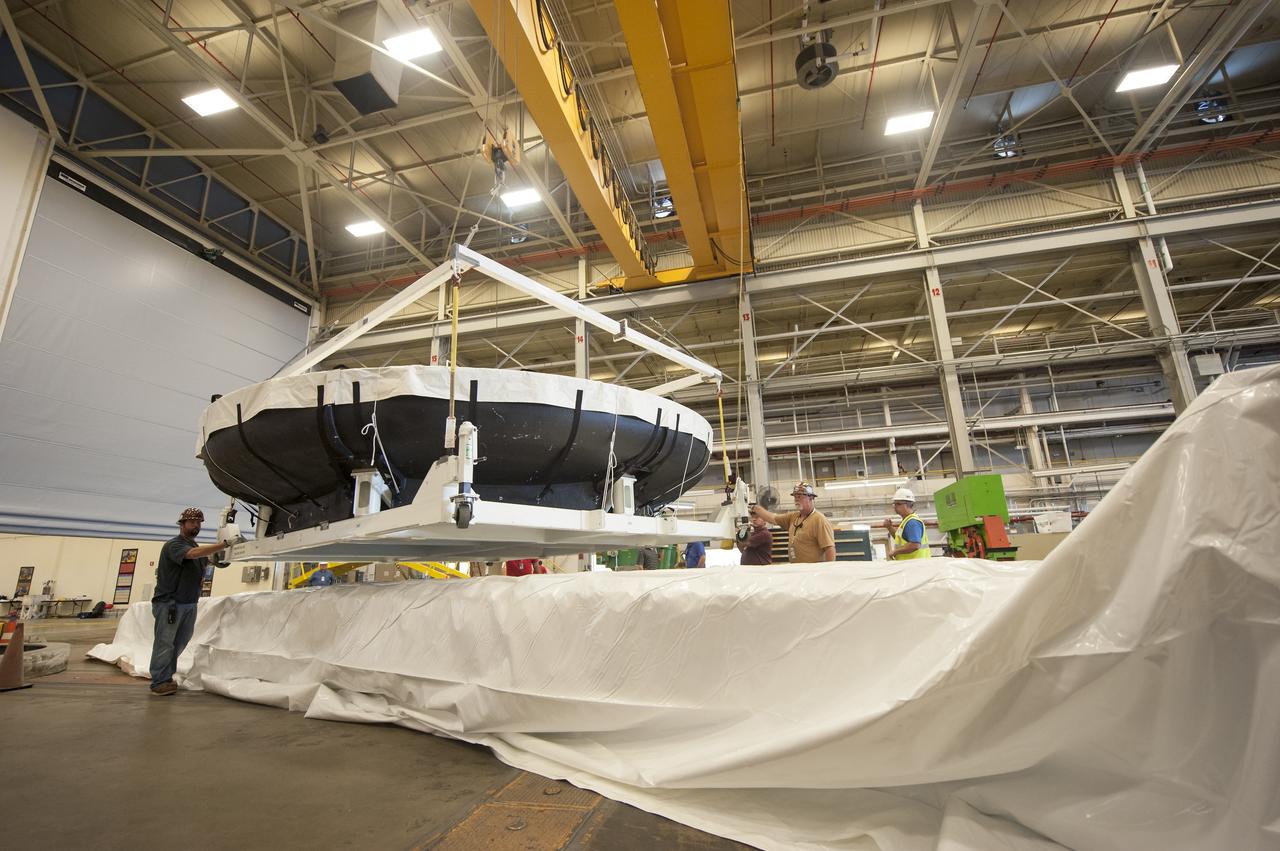
THE ORION HEAT SHIELD, WHICH WAS AT NASA’S MARSHALL SPACE FLIGHT CENTER FROM MARCH-MAY 2015 FOR ENGINEERING AND ANALYSIS, IS READIED FOR DEPARTURE AT THE END OF ITS STAY. THE HEAT SHIELD’S ABLATED SURFACE MATERIAL WAS REMOVED AT MARSHALL FOR ANALYSIS, USING THE CENTER’S STATE-OF-THE-ART SEVEN-AXIS MILLING MACHINE. IT NEXT WILL GO TO NASA’S LANGLEY RESEARCH CENTER FOR WATER-IMPACT TESTING. NASA’S JOHNSON SPACE CENTER LEADS THE ORION PROGRAM FOR NASA.

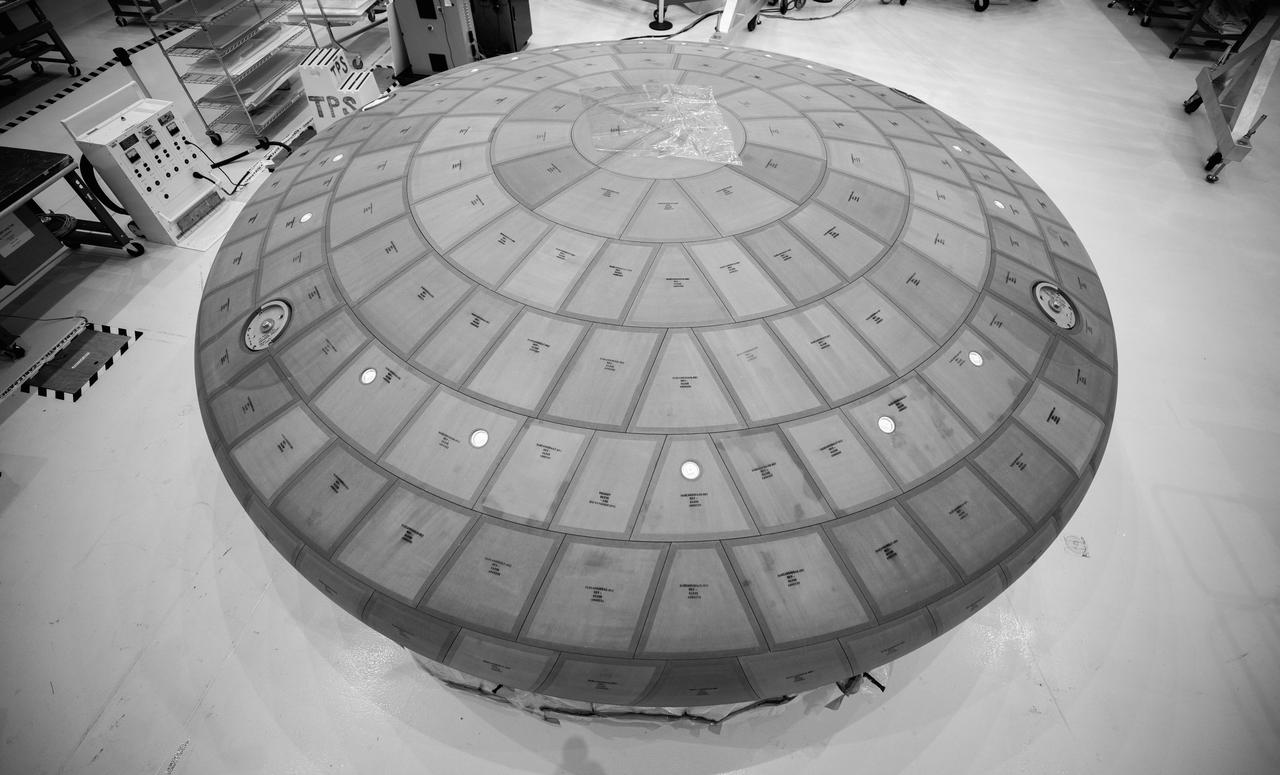
The newly painted Orion heatshield for NASA’s Artemis II mission is secured on a stand inside the high bay of the Neil A. Armstrong Operations and Checkout Building at NASA’s Kennedy Space Center in Florida on Jan. 20, 2022. Lockheed Martin technicians are preparing the heat shield for installation on the Artemis II Orion crew module. Launching atop the Space Launch System, Artemis II will be the first mission to confirm all of the Orion spacecraft’s systems operate as designed in the actual environment of deep space with astronauts aboard.
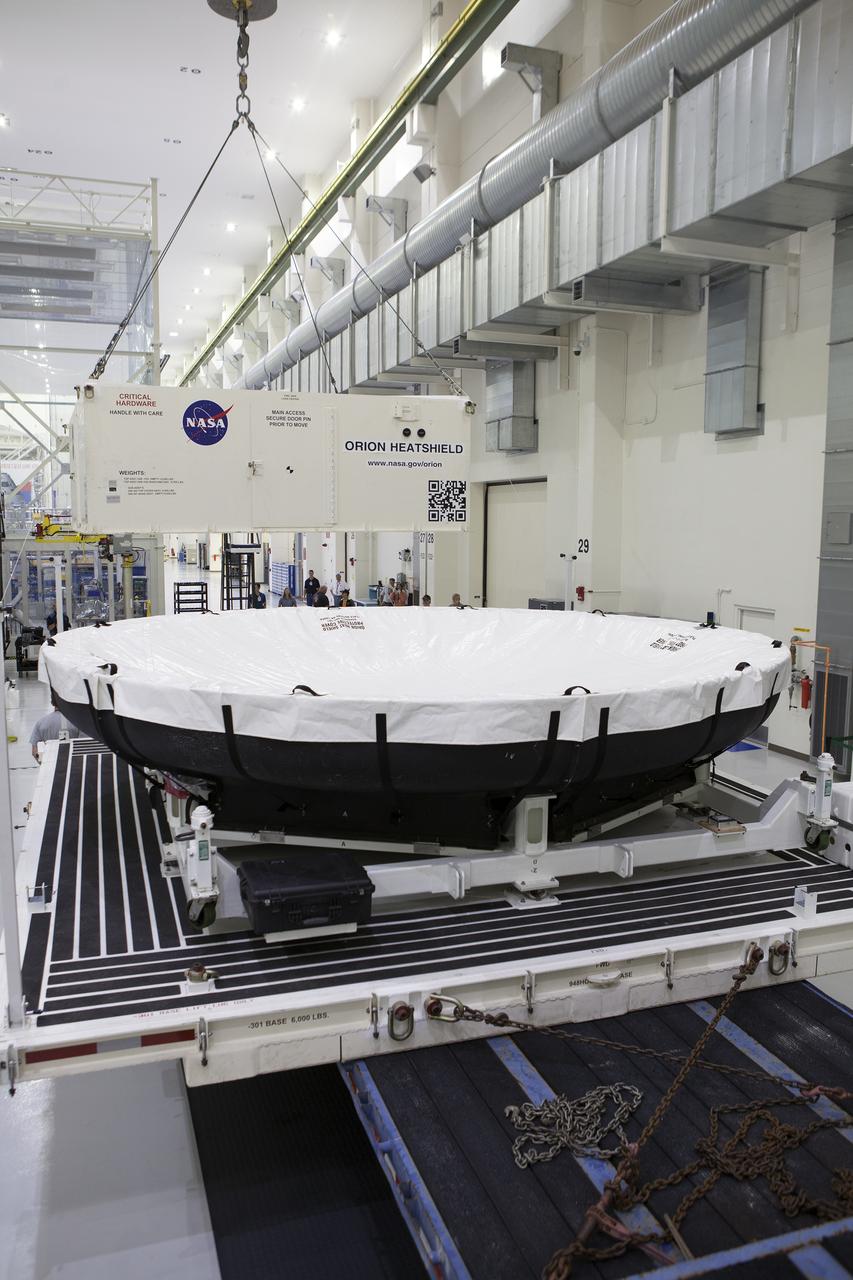
Inside the Neil Armstrong Operations and Checkout Building high bay at NASA’s Kennedy Space Center in Florida, a crane removes the top of the shipping container carrying the Orion heat shield for Exploration Mission 1 (EM-1) The heat shield arrived aboard the agency’s Super Guppy aircraft at the Shuttle Landing Facility, managed and operated by Space Florida, from Lockheed Martin’s manufacturing facility near Denver. The heat shield will be offloaded and moved into the high bay for processing. The Orion spacecraft will launch atop NASA’s Space Launch System rocket on EM-1, an uncrewed test flight, in 2018.
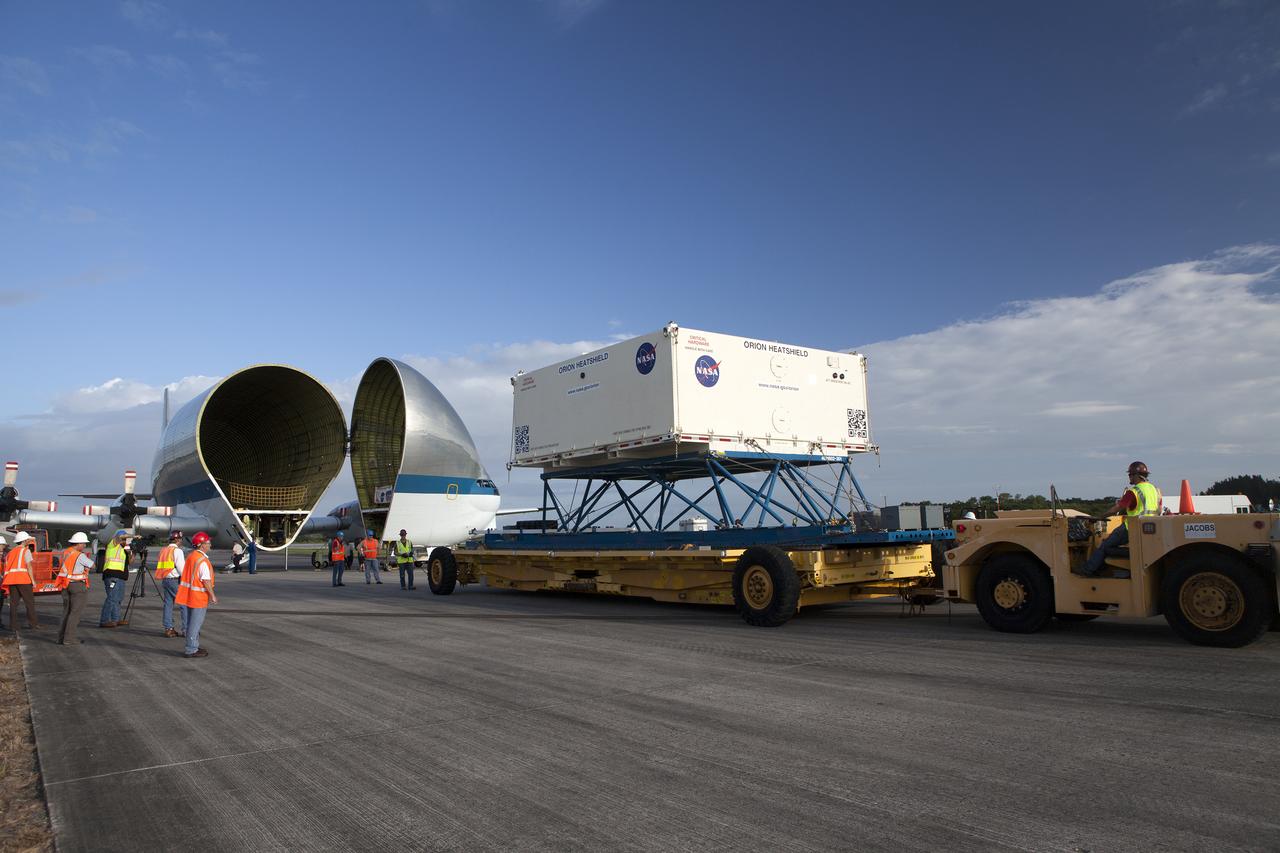
The shipping container carrying the Orion heat shield for Exploration Mission 1 (EM-1) was offloaded from NASA’s Super Guppy aircraft at the Shuttle Landing Facility, managed and operated by Space Florida, at the agency’s Kennedy Space Center in Florida. The heat shield will be transported to the Neil Armstrong Operations and Checkout Building high bay for processing. The heat shield arrived from Lockheed Martin’s manufacturing facility near Denver. The Orion spacecraft will launch atop NASA’s Space Launch System rocket on EM-1, an uncrewed test flight, in 2018.
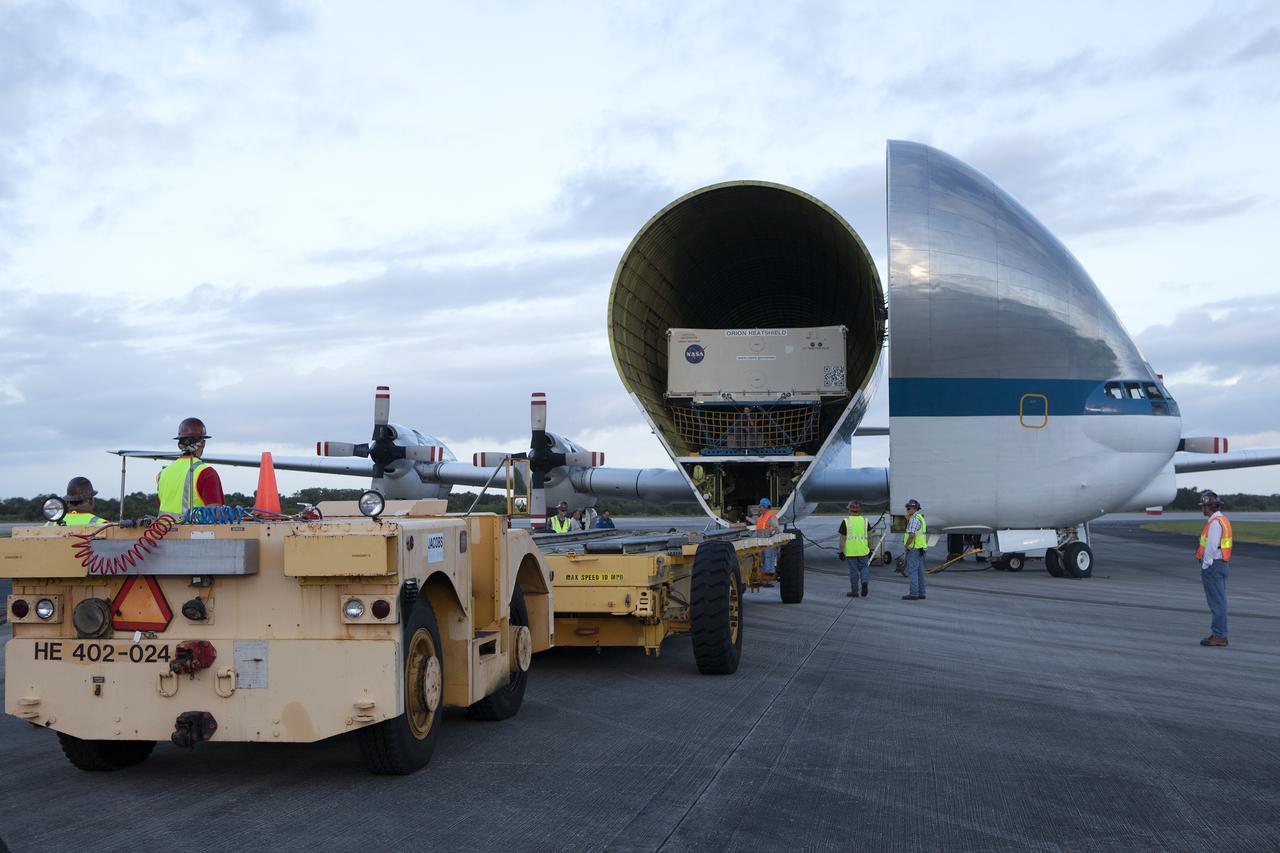
Technicians with Jacobs on the Test and Operations Support Contract move a transporter close to NASA’s Super Guppy aircraft at the Shuttle Landing Facility, managed and operated by Space Florida, at the agency’s Kennedy Space Center in Florida. The shipping container carrying the Orion heat shield for Exploration Mission 1 will be offloaded and delivered to the Neil Armstrong Operations and Checkout Building high bay for processing. The heat shield arrived from Lockheed Martin’s manufacturing facility near Denver. The Orion spacecraft will launch atop NASA’s Space Launch System rocket on EM-1, an uncrewed test flight, in 2018.
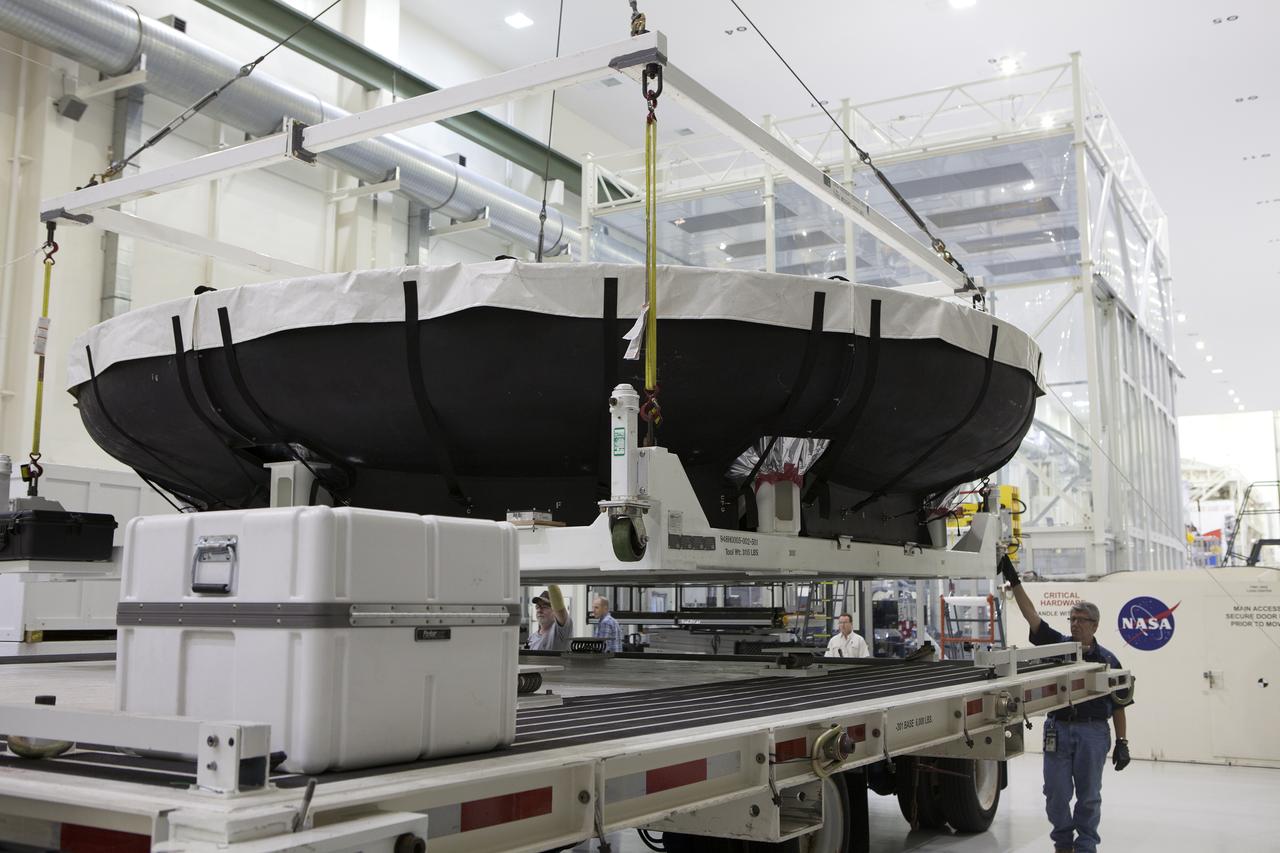
Inside the Neil Armstrong Operations and Checkout Building high bay at NASA’s Kennedy Space Center in Florida, a crane lifts the Orion heat shield for Exploration Mission 1 away from the base of its shipping container. The heat shield arrived aboard the agency’s Super Guppy aircraft at the Shuttle Landing Facility, managed and operated by Space Florida, from Lockheed Martin’s manufacturing facility near Denver. The heat shield will be moved onto a test stand to begin processing. The Orion spacecraft will launch atop NASA’s Space Launch System rocket on EM-1, an uncrewed test flight, in 2018.
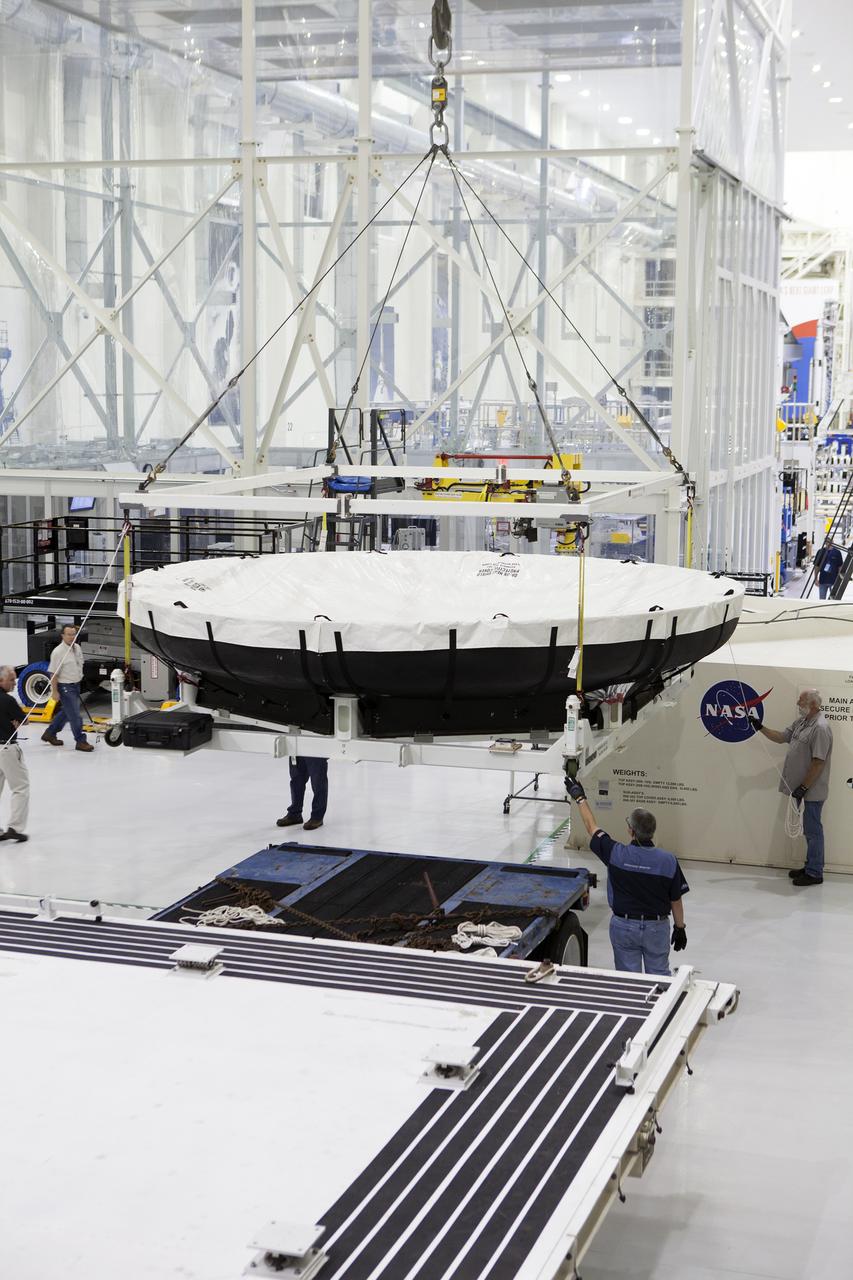
Inside the Neil Armstrong Operations and Checkout Building high bay at NASA’s Kennedy Space Center in Florida, a crane lifts the Orion heat shield for Exploration Mission 1 away from the base of its shipping container. The heat shield arrived aboard the agency’s Super Guppy aircraft at the Shuttle Landing Facility, managed and operated by Space Florida, from Lockheed Martin’s manufacturing facility near Denver. The heat shield will be moved onto a test stand to begin processing. The Orion spacecraft will launch atop NASA’s Space Launch System rocket on EM-1, an uncrewed test flight, in 2018.
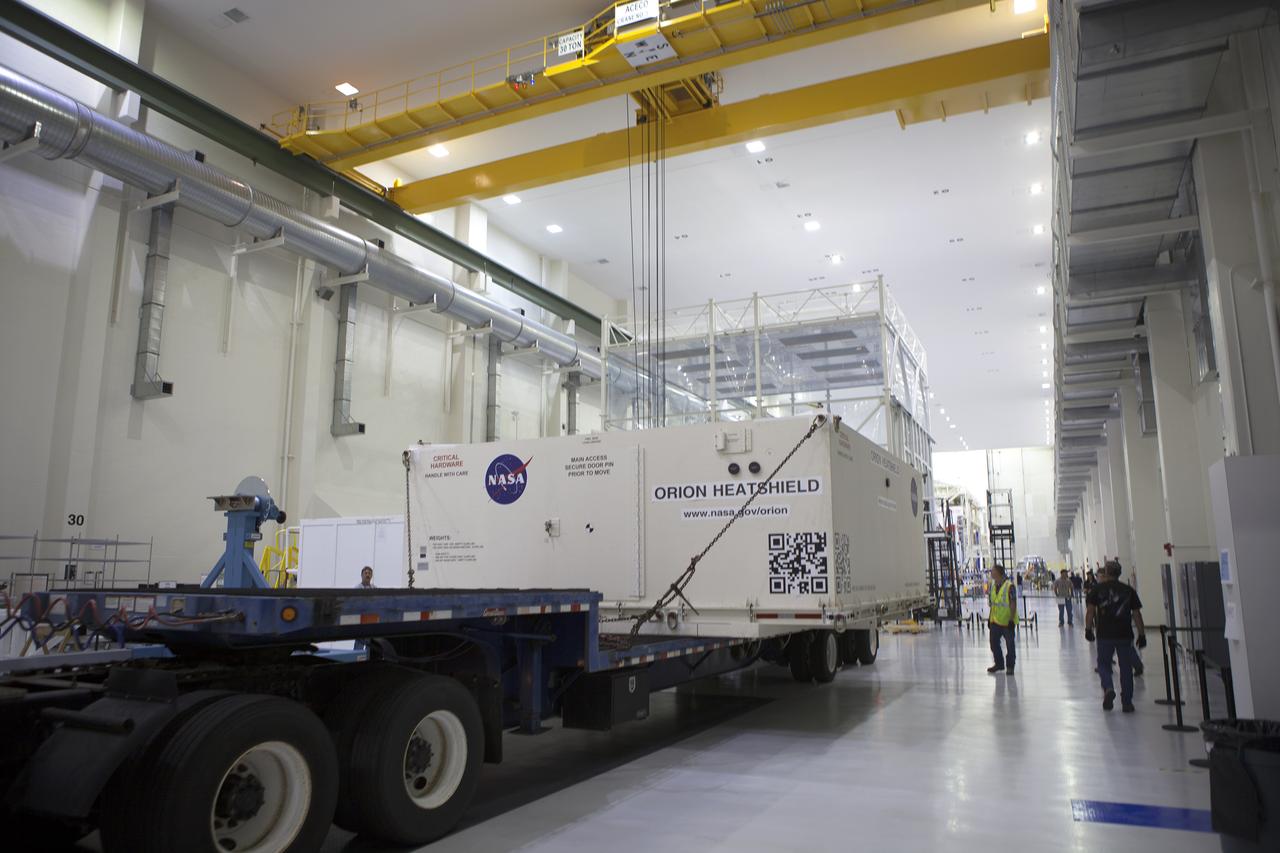
A flatbed truck with the shipping container carrying the Orion heat shield for Exploration Mission 1 (EM-1) backs into the low bay at the Neil Armstrong Operations and Checkout Building at NASA’s Kennedy Space Center in Florida. The heat shield arrived aboard the agency’s Super Guppy aircraft at the Shuttle Landing Facility, managed and operated by Space Florida, from Lockheed Martin’s manufacturing facility near Denver. The heat shield will be offloaded and moved into the high bay for processing. The Orion spacecraft will launch atop NASA’s Space Launch System rocket on EM-1, an uncrewed test flight, in 2018.
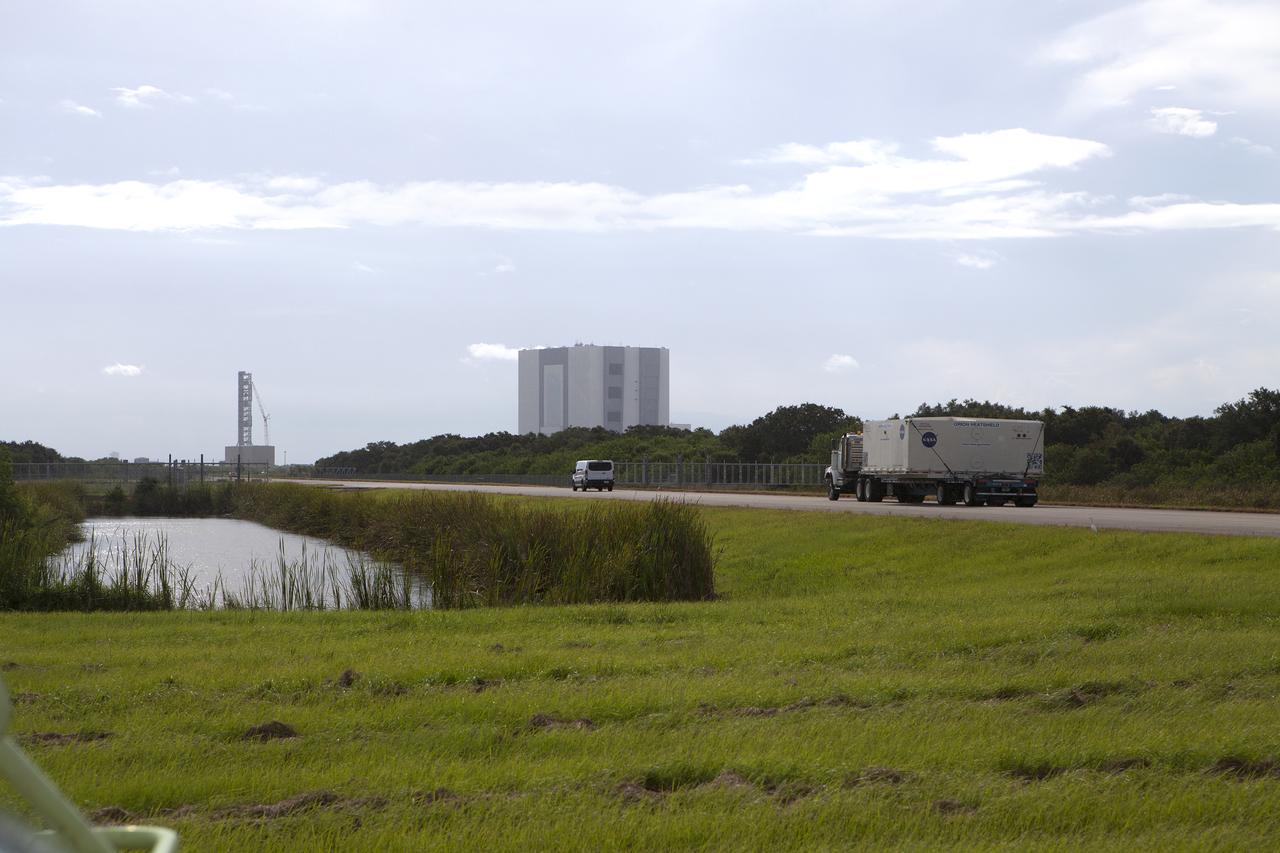
The shipping container carrying the Orion heat shield for Exploration Mission 1 (EM-1) is transported by truck from the Shuttle Landing Facility at NASA’s Kennedy Space Center in Florida along the road to the Neil Armstrong Operations and Checkout Building high bay for processing. The heat shield arrived aboard the agency’s Super Guppy aircraft, managed and operated by Space Florida, from Lockheed Martin’s manufacturing facility near Denver. The Orion spacecraft will launch atop NASA’s Space Launch System rocket on EM-1, an uncrewed test flight, in 2018.
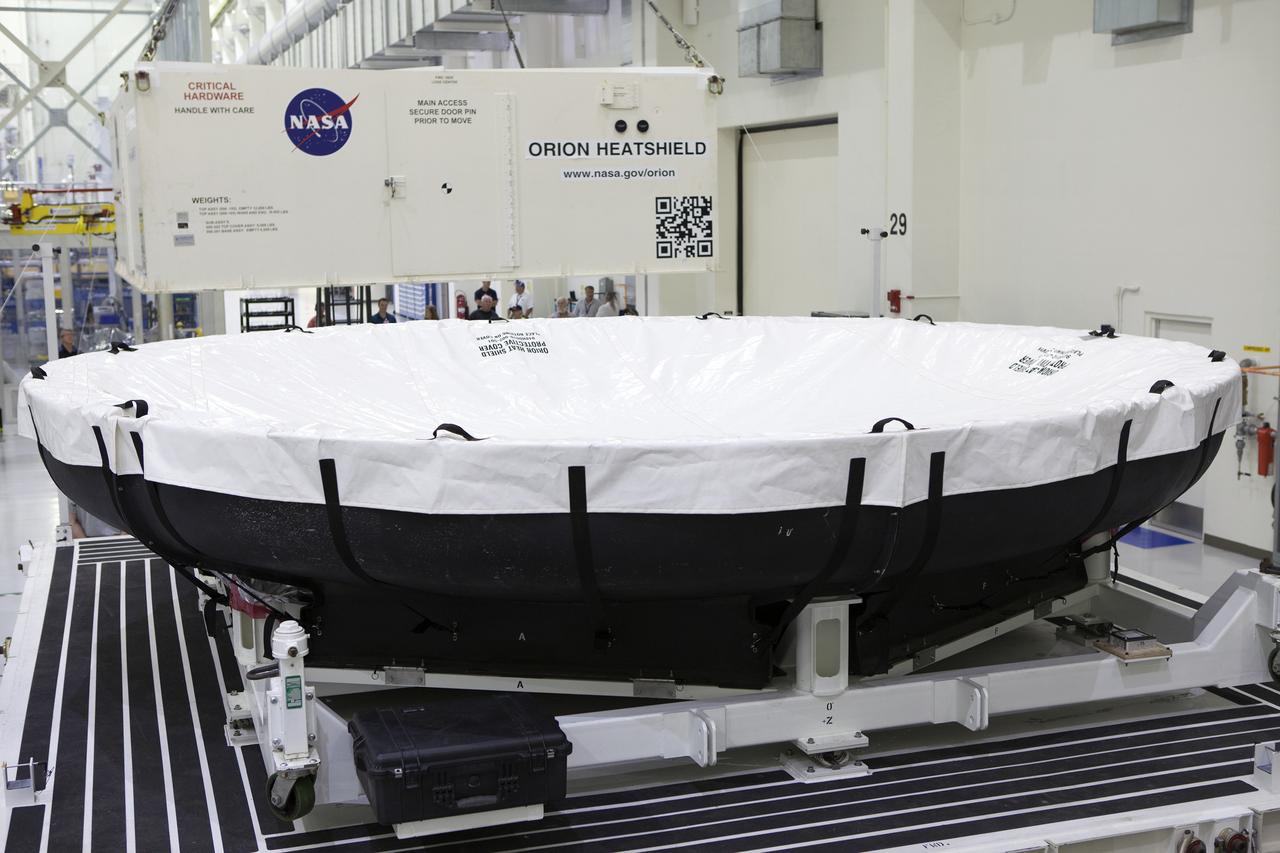
Inside the Neil Armstrong Operations and Checkout Building high bay at NASA’s Kennedy Space Center in Florida, a crane removes the top of the shipping container carrying the Orion heat shield for Exploration Mission 1 (EM-1). The heat shield arrived aboard the agency’s Super Guppy aircraft at the Shuttle Landing Facility, managed and operated by Space Florida, from Lockheed Martin’s manufacturing facility near Denver. The heat shield will be offloaded and moved into the high bay for processing. The Orion spacecraft will launch atop NASA’s Space Launch System rocket on EM-1, an uncrewed test flight, in 2018.
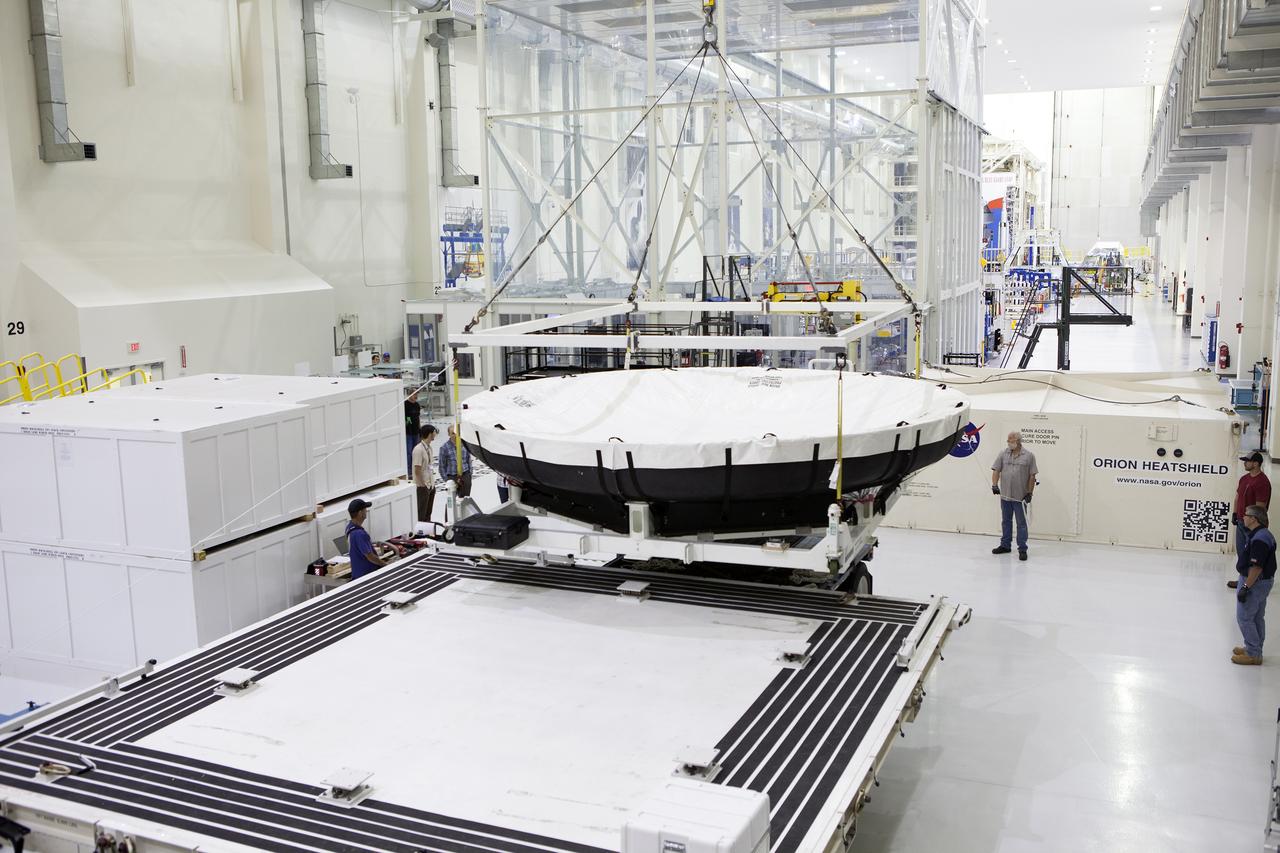
Inside the Neil Armstrong Operations and Checkout Building high bay at NASA’s Kennedy Space Center in Florida, a crane lifts the Orion heat shield for Exploration Mission 1 away from the base of its shipping container. The heat shield arrived aboard the agency’s Super Guppy aircraft at the Shuttle Landing Facility, managed and operated by Space Florida, from Lockheed Martin’s manufacturing facility near Denver. The heat shield will be moved onto a test stand to begin processing. The Orion spacecraft will launch atop NASA’s Space Launch System rocket on EM-1, an uncrewed test flight, in 2018.
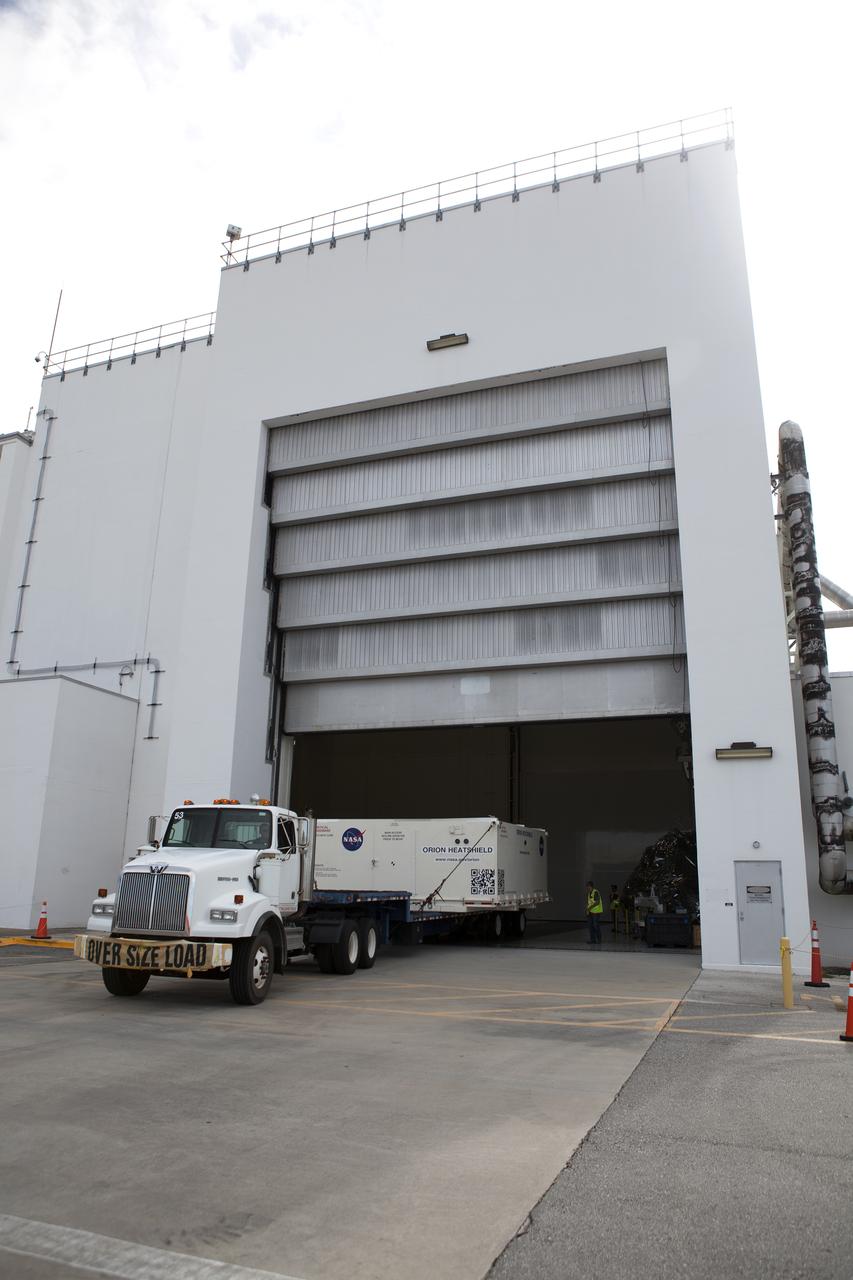
A flatbed truck with the shipping container carrying the Orion heat shield for Exploration Mission 1 (EM-1) arrives at the Neil Armstrong Operations and Checkout Building at NASA’s Kennedy Space Center in Florida. The heat shield arrived aboard the agency’s Super Guppy aircraft at the Shuttle Landing Facility, managed and operated by Space Florida, from Lockheed Martin’s manufacturing facility near Denver. The heat shield will be offloaded and moved into the high bay for processing. The Orion spacecraft will launch atop NASA’s Space Launch System rocket on EM-1, an uncrewed test flight, in 2018.
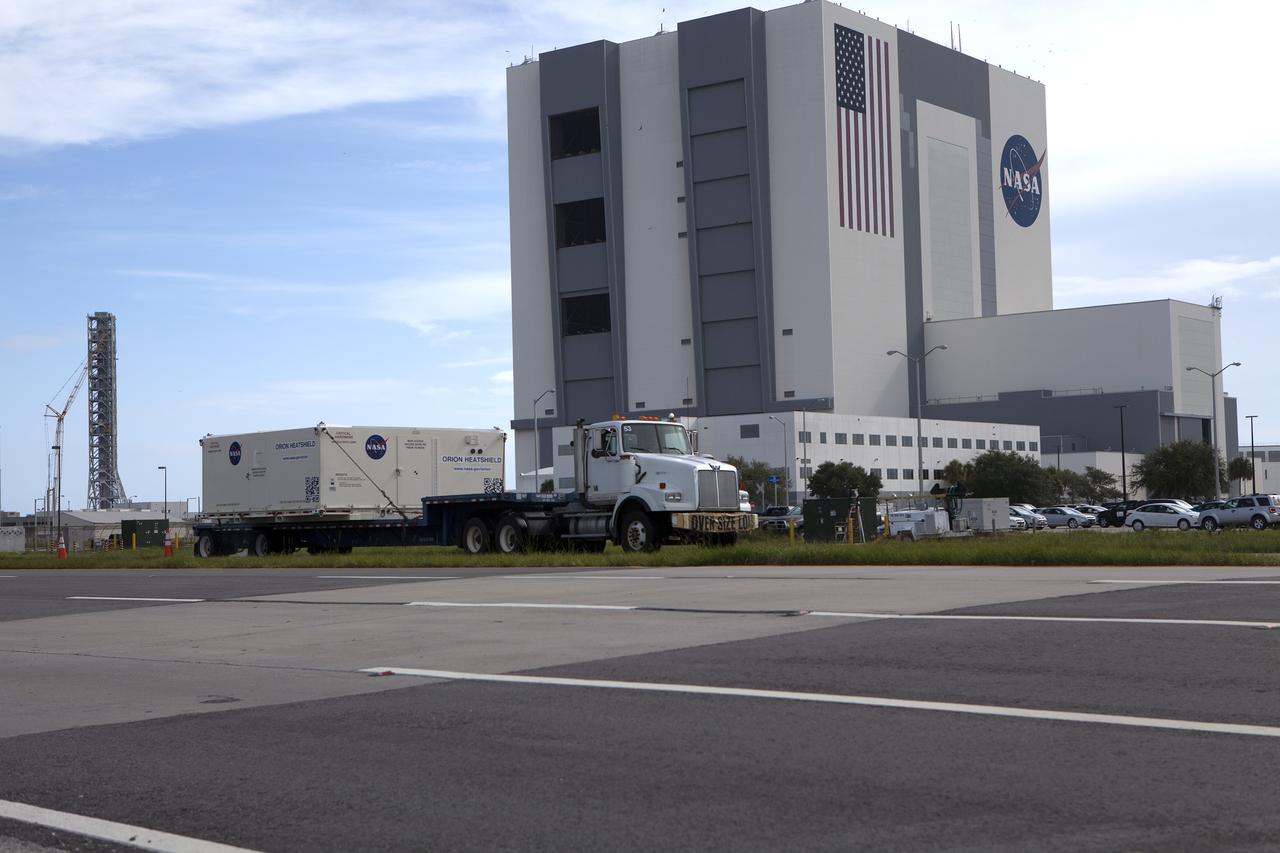
A flatbed truck with the shipping container carrying the Orion heat shield for Exploration Mission 1 (EM-1) passes by the Vehicle Assembly at NASA’s Kennedy Space Center in Florida. The heat shield arrived aboard the agency’s Super Guppy aircraft at the Shuttle Landing Facility, managed and operated by Space Florida, from Lockheed Martin’s manufacturing facility near Denver. The heat shield is being transported to the Neil Armstrong Operations and Checkout Building high bay for processing. The Orion spacecraft will launch atop NASA’s Space Launch System rocket on EM-1, an uncrewed test flight, in 2018.

The shipping container carrying the Orion heat shield for Exploration Mission 1 (EM-1) is offloaded from NASA’s Super Guppy aircraft at the Shuttle Landing Facility, managed and operated by Space Florida, at the agency’s Kennedy Space Center in Florida. The heat shield will be transported to the Neil Armstrong Operations and Checkout Building high bay for processing. The heat shield arrived from Lockheed Martin’s manufacturing facility near Denver. The Orion spacecraft will launch atop NASA’s Space Launch System rocket on EM-1, an uncrewed test flight, in 2018.
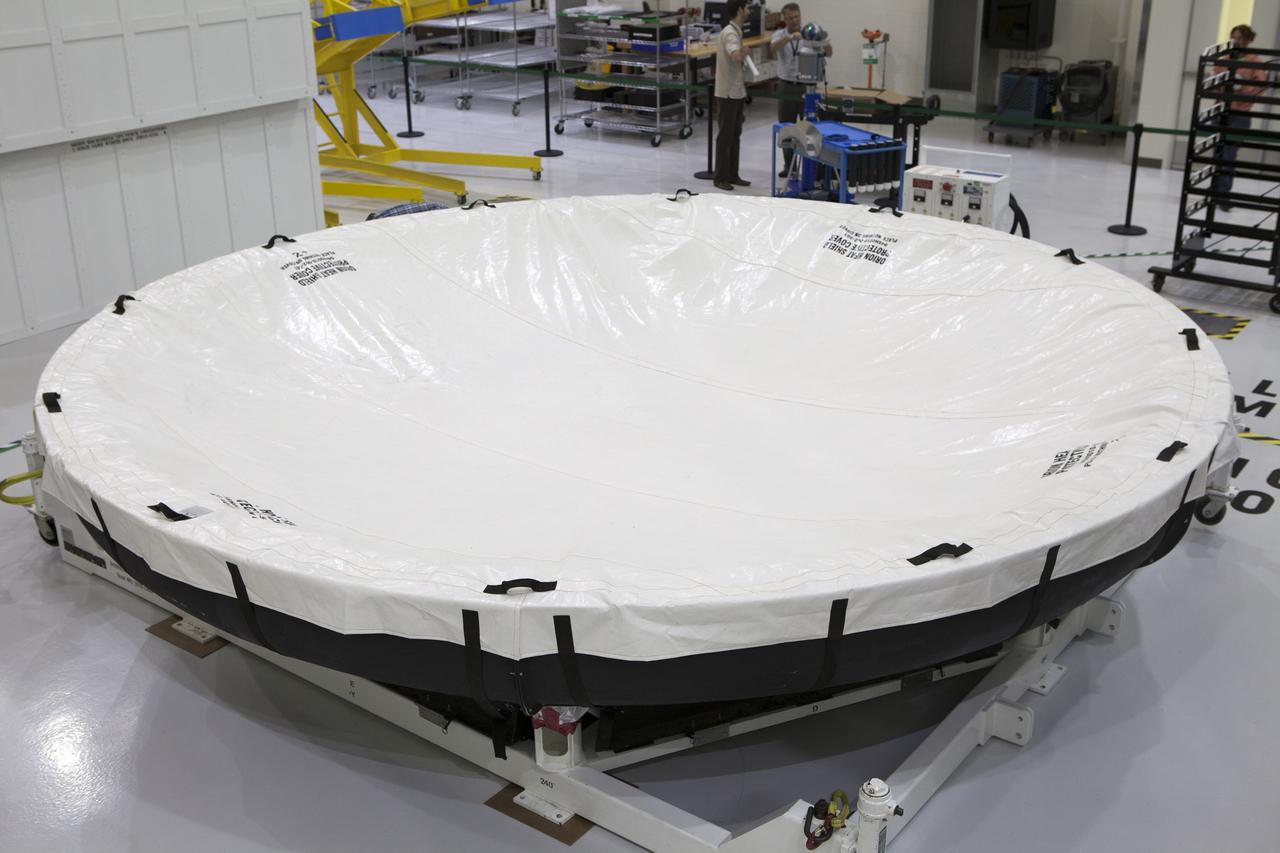
The Orion heat shield for Exploration Mission 1 (EM-1) is secured inside the Neil Armstrong Operations and Checkout Building high bay at NASA’s Kennedy Space Center in Florida. The heat shield arrived aboard the agency’s Super Guppy aircraft at the Shuttle Landing Facility, managed and operated by Space Florida, from Lockheed Martin’s manufacturing facility near Denver. The heat shield will be moved onto a test stand to begin processing. The Orion spacecraft will launch atop NASA’s Space Launch System rocket on EM-1, an uncrewed test flight, in 2018.
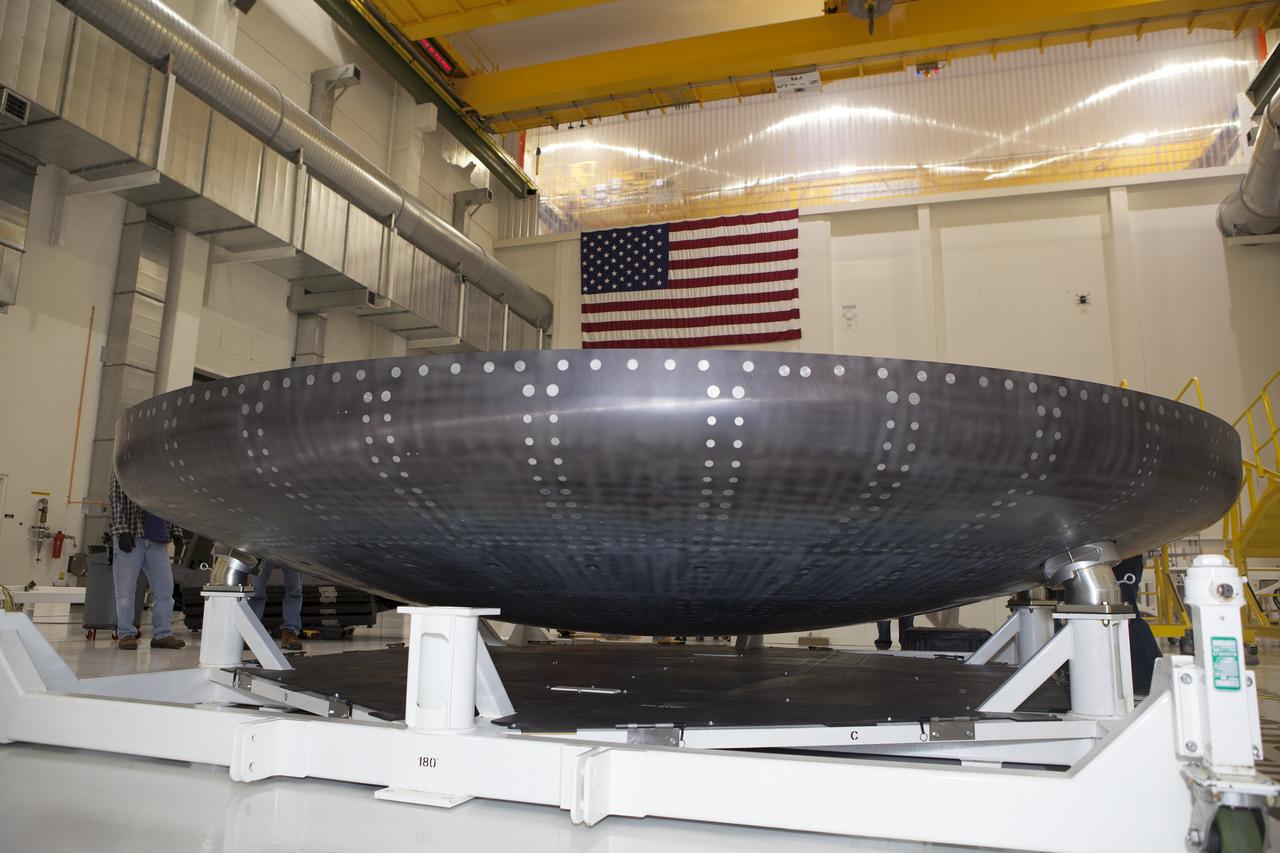
Inside the high bay in the Neil Armstrong Operations and Checkout Building at NASA’s Kennedy Space Center in Florida, the protective coverings were removed from the Orion heat shield for Exploration Mission 1 (EM-1). The heat shield arrived aboard NASA’s Super Guppy aircraft at the Shuttle Landing Facility, managed and operated by Space Florida, from Lockheed Martin’s manufacturing facility near Denver. The Orion spacecraft will launch atop NASA’s Space Launch System rocket on EM-1, an uncrewed test flight, targeted for November 2018.
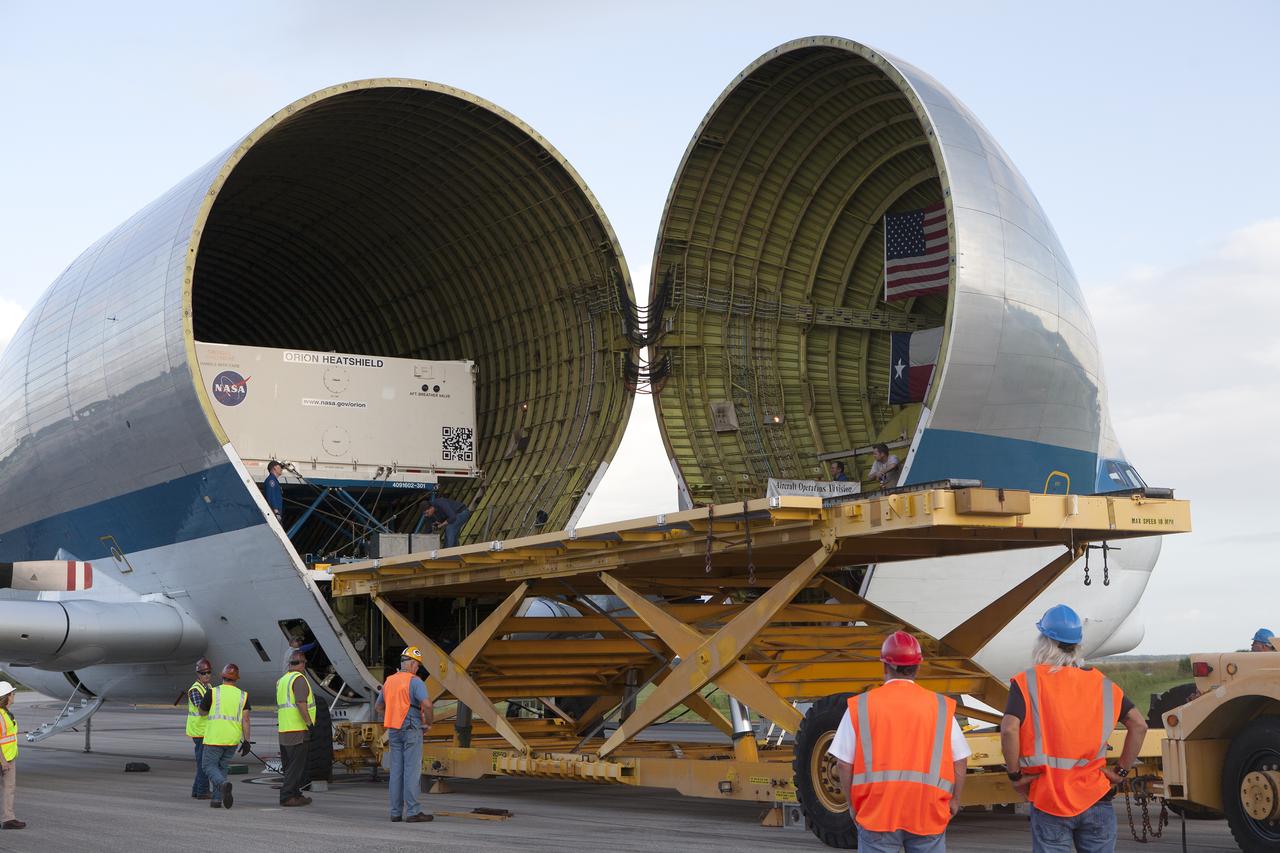
Technicians with Jacobs on the Test and Operations Support Contract have positioned a platform close to NASA’s Super Guppy aircraft at the Shuttle Landing Facility, managed and operated by Space Florida, at the agency’s Kennedy Space Center in Florida, for offloading of the shipping container carrying the Orion heat shield for Exploration Mission 1 (EM-1). The heat shield will be offloaded and transported to the Neil Armstrong Operations and Checkout Building high bay for processing. The heat shield arrived from Lockheed Martin’s manufacturing facility near Denver. The Orion spacecraft will launch atop NASA’s Space Launch System rocket on EM-1, an uncrewed test flight, in 2018.

The shipping container carrying the Orion heat shield for Exploration Mission 1 (EM-1) is lowered by crane onto the flatbed of a transporter at the Shuttle Landing Facility, managed and operated by Space Florida, at NASA’s Kennedy Space Center in Florida. The heat shield arrived aboard the agency’s Super Guppy aircraft from Lockheed Martin’s manufacturing facility near Denver. The heat shield will be transported to the Neil Armstrong Operations and Checkout Building high bay for processing. The Orion spacecraft will launch atop NASA’s Space Launch System rocket on EM-1, an uncrewed test flight, in 2018.
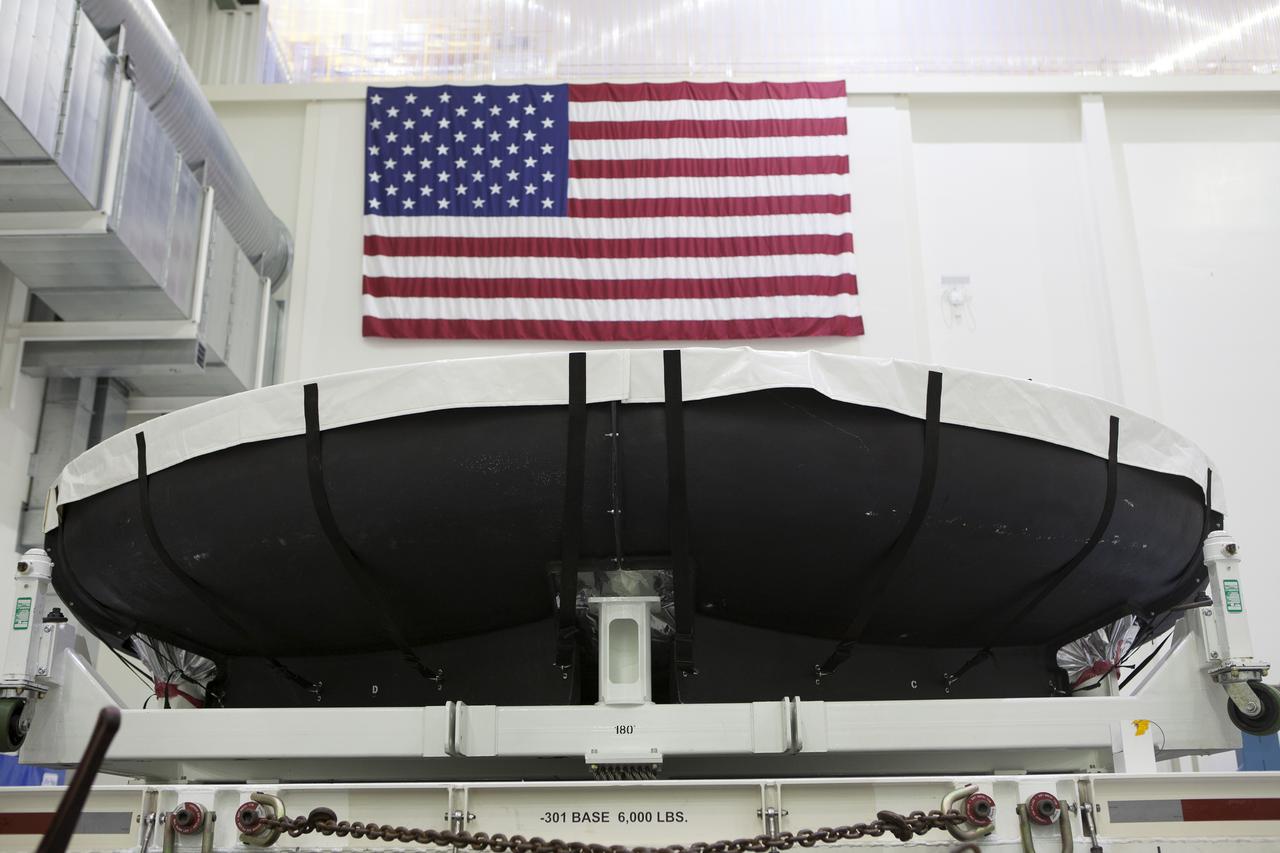
The American flag is in view above the Orion heat shield for Exploration Mission 1 (EM-1) inside the Neil Armstrong Operations and Checkout Building high bay at NASA’s Kennedy Space Center in Florida. The heat shield arrived aboard the agency’s Super Guppy aircraft at the Shuttle Landing Facility, managed and operated by Space Florida, from Lockheed Martin’s manufacturing facility near Denver. The heat shield will be offloaded and moved onto a test stand to begin processing. The Orion spacecraft will launch atop NASA’s Space Launch System rocket on EM-1, an uncrewed test flight, in 2018.
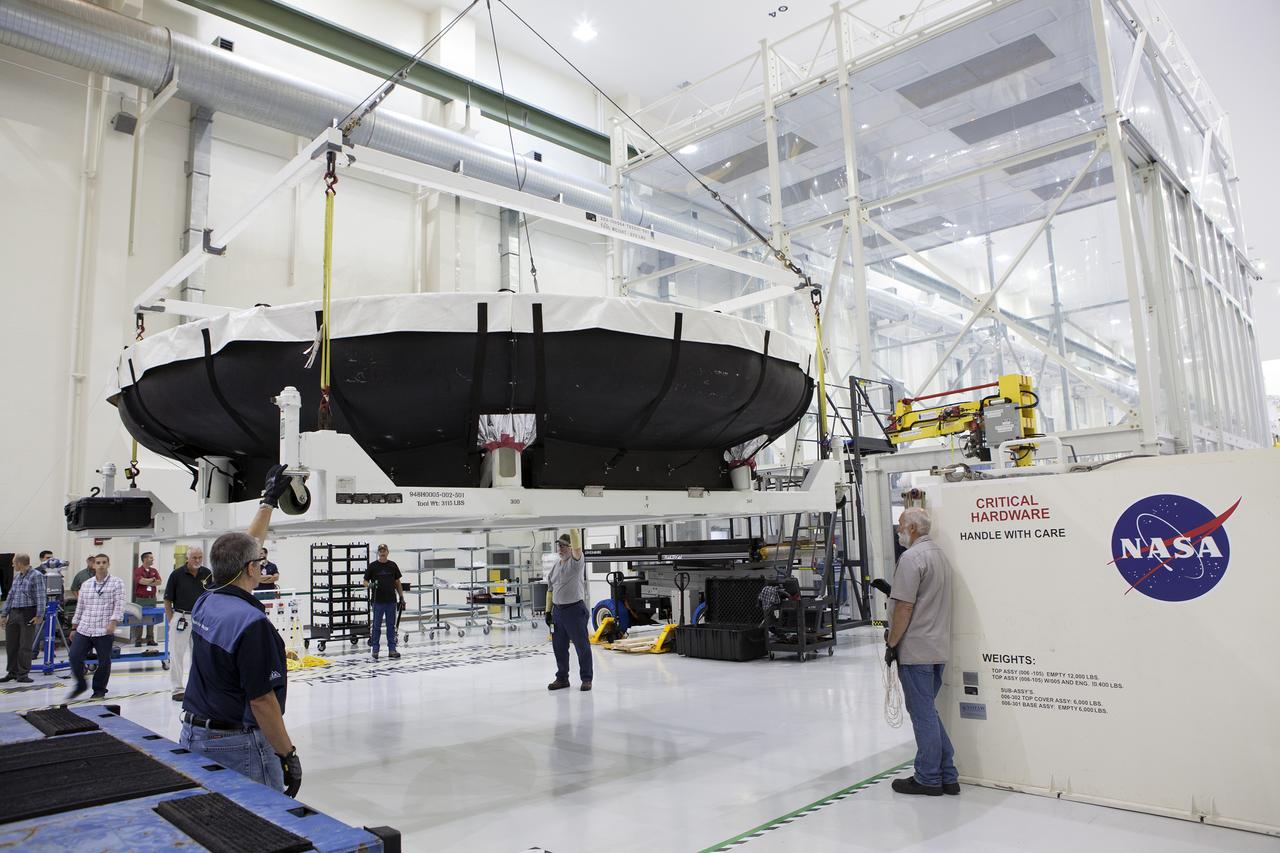
Inside the Neil Armstrong Operations and Checkout Building high bay at NASA’s Kennedy Space Center in Florida, technicians assist as a crane lifts the Orion heat shield for Exploration Mission 1 away from the base of its shipping container. The heat shield arrived aboard the agency’s Super Guppy aircraft at the Shuttle Landing Facility, managed and operated by Space Florida, from Lockheed Martin’s manufacturing facility near Denver. The heat shield will be moved onto a test stand to begin processing. The Orion spacecraft will launch atop NASA’s Space Launch System rocket on EM-1, an uncrewed test flight, in 2018.
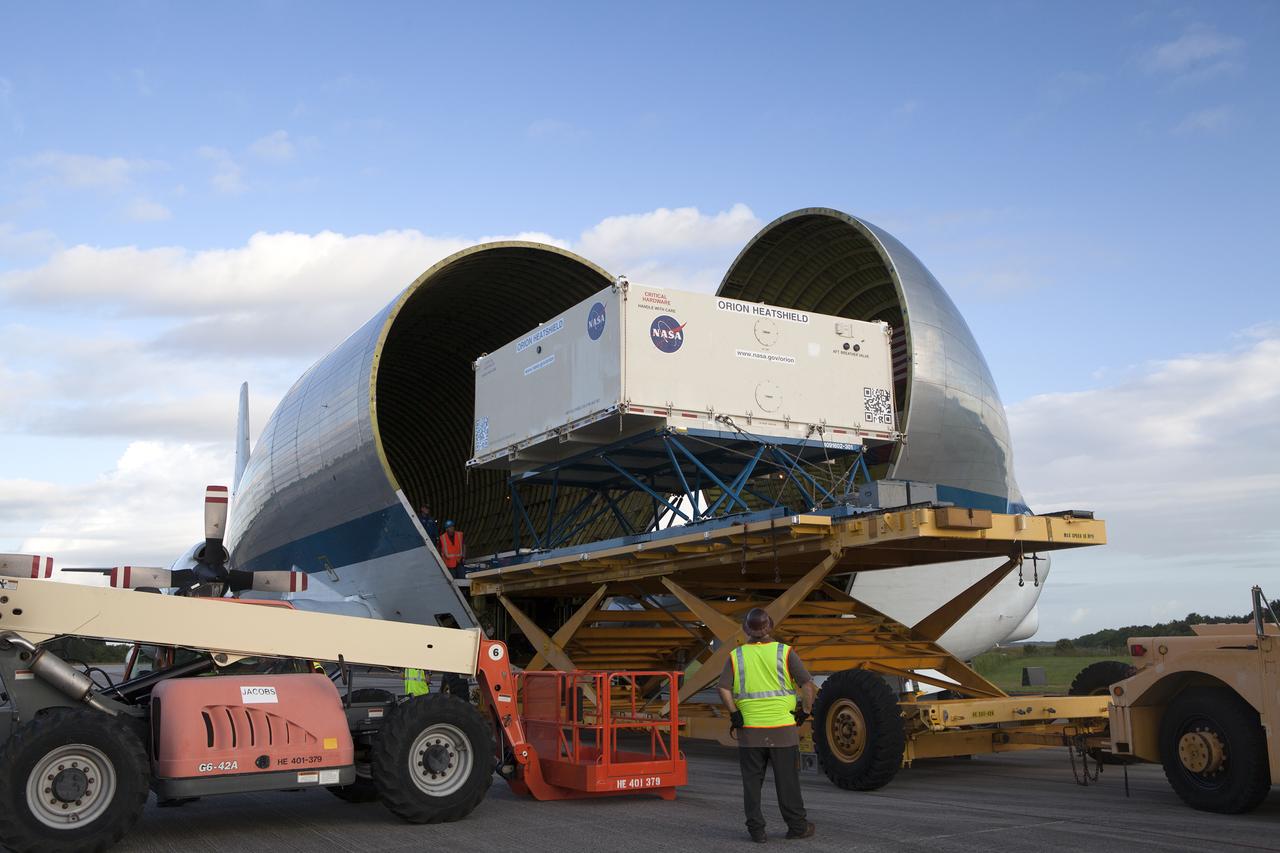
The shipping container carrying the Orion heat shield for Exploration Mission 1 (EM-1) is offloaded from NASA’s Super Guppy aircraft at the Shuttle Landing Facility, managed and operated by Space Florida, at the agency’s Kennedy Space Center in Florida. The heat shield will be transported to the Neil Armstrong Operations and Checkout Building high bay for processing. The heat shield arrived from Lockheed Martin’s manufacturing facility near Denver. The Orion spacecraft will launch atop NASA’s Space Launch System rocket on EM-1, an uncrewed test flight, in 2018.
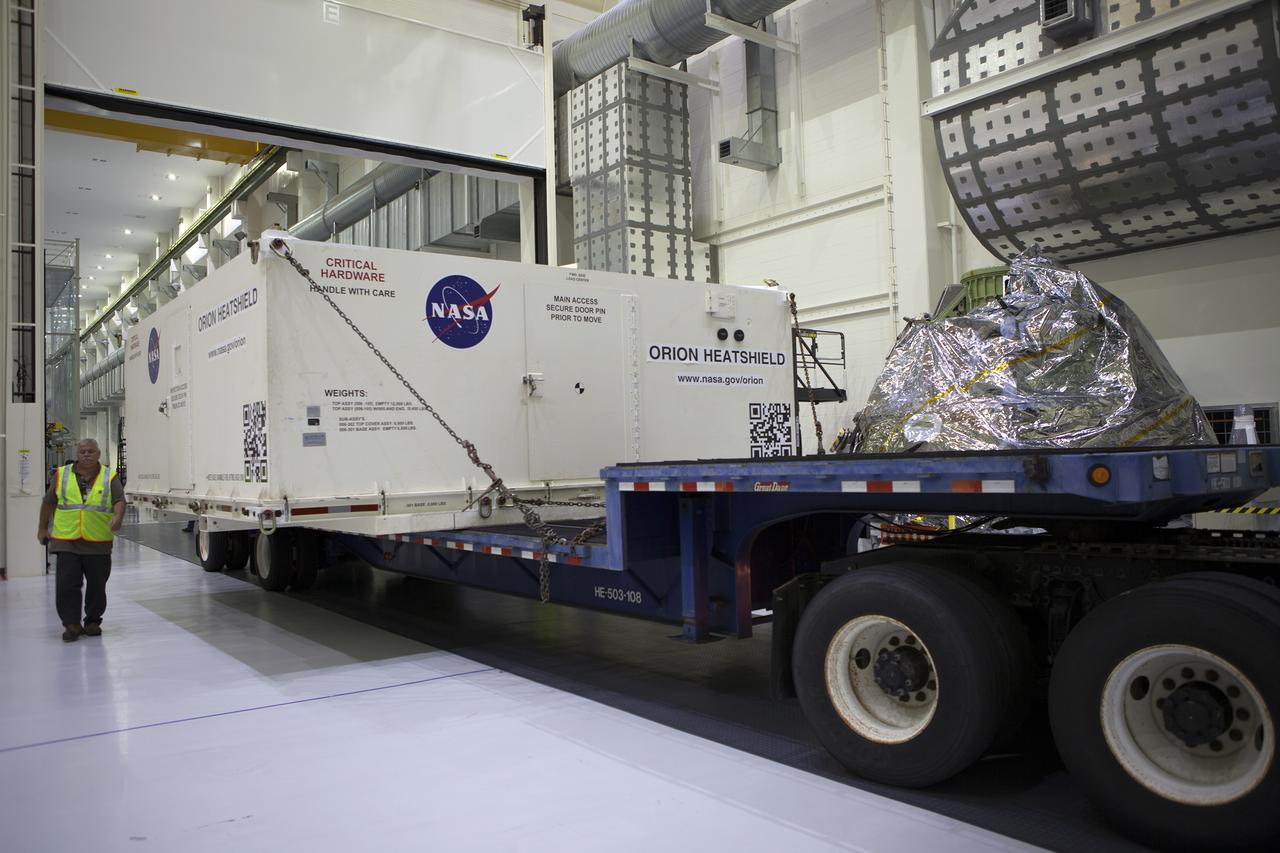
A flatbed truck with the shipping container carrying the Orion heat shield for Exploration Mission 1 (EM-1) backs into the low bay at the Neil Armstrong Operations and Checkout Building at NASA’s Kennedy Space Center in Florida. The heat shield arrived aboard the agency’s Super Guppy aircraft at the Shuttle Landing Facility, managed and operated by Space Florida, from Lockheed Martin’s manufacturing facility near Denver. The heat shield will be offloaded and moved into the high bay for processing. The Orion spacecraft will launch atop NASA’s Space Launch System rocket on EM-1, an uncrewed test flight, in 2018.
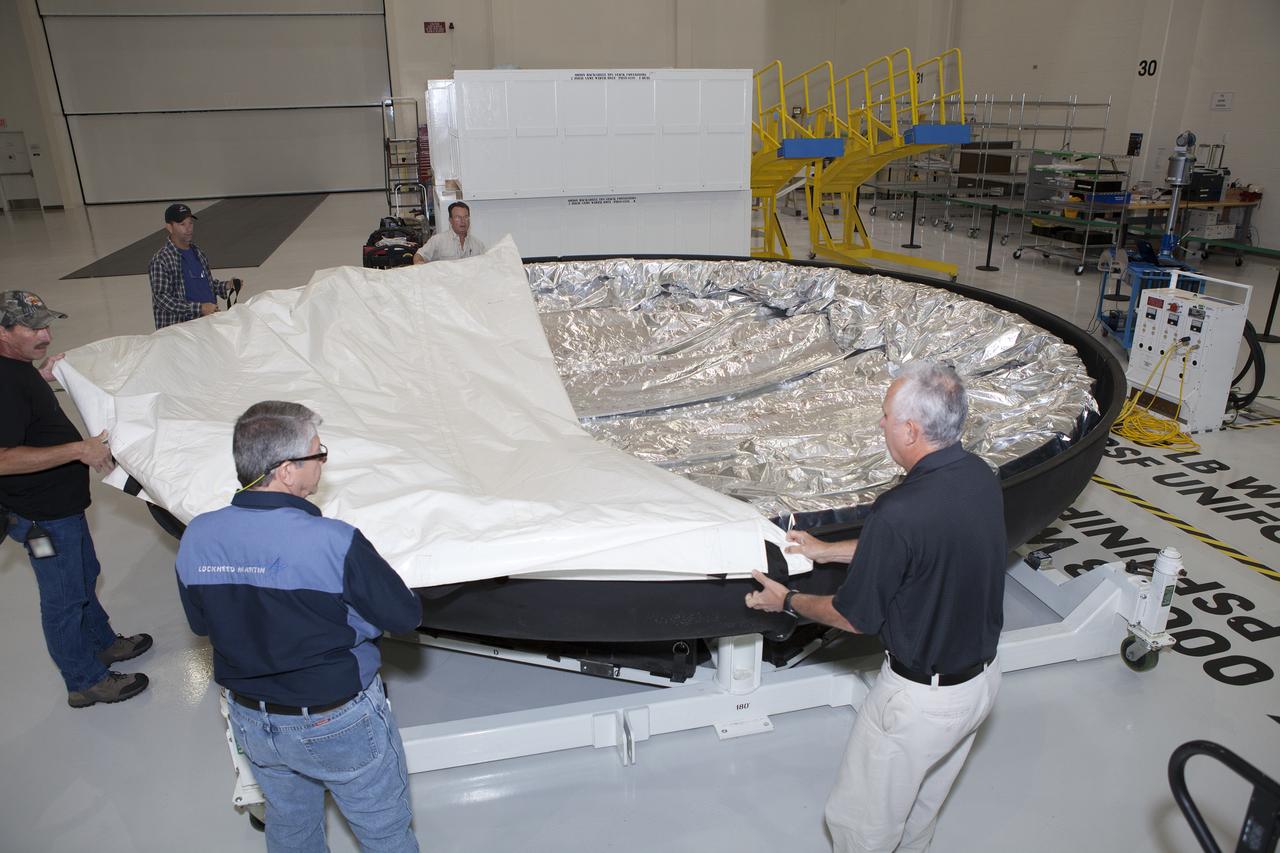
Inside the high bay in the Neil Armstrong Operations and Checkout Building at NASA’s Kennedy Space Center in Florida, technicians with Lockheed Martin start to remove the protective covering from the Orion heat shield for Exploration Mission 1 (EM-1). The heat shield arrived aboard NASA’s Super Guppy aircraft at the Shuttle Landing Facility, managed and operated by Space Florida, from Lockheed Martin’s manufacturing facility near Denver. The Orion spacecraft will launch atop NASA’s Space Launch System rocket on EM-1, an uncrewed test flight, targeted for November 2018.

A view from inside the cargo bay of NASA’s Super Guppy aircraft reveals that the shipping container with the Orion heat shield for Exploration Mission 1 (EM-1) was offloaded at the Shuttle Landing Facility, managed and operated by Space Florida, at the agency’s Kennedy Space Center in Florida. The heat shield will be transported to the Neil Armstrong Operations and Checkout Building high bay for processing. The heat shield arrived from Lockheed Martin’s manufacturing facility near Denver. The Orion spacecraft will launch atop NASA’s Space Launch System rocket on EM-1, an uncrewed test flight, in 2018.
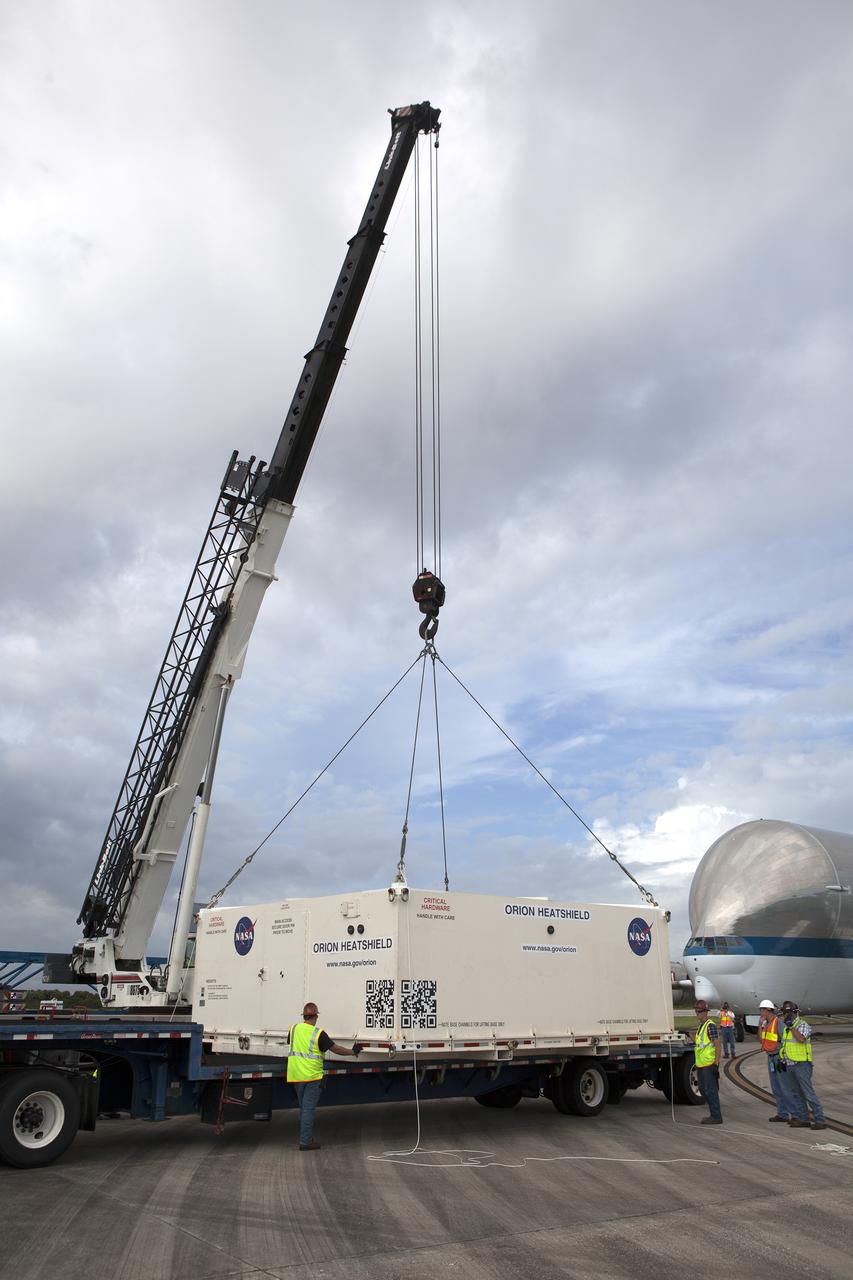
The shipping container carrying the Orion heat shield for Exploration Mission 1 (EM-1) is lowered by crane onto the flatbed of a transporter at the Shuttle Landing Facility, managed and operated by Space Florida, at NASA’s Kennedy Space Center in Florida. The heat shield arrived aboard the agency’s Super Guppy aircraft from Lockheed Martin’s manufacturing facility near Denver. The heat shield will be transported to the Neil Armstrong Operations and Checkout Building high bay for processing. The Orion spacecraft will launch atop NASA’s Space Launch System rocket on EM-1, an uncrewed test flight, in 2018.
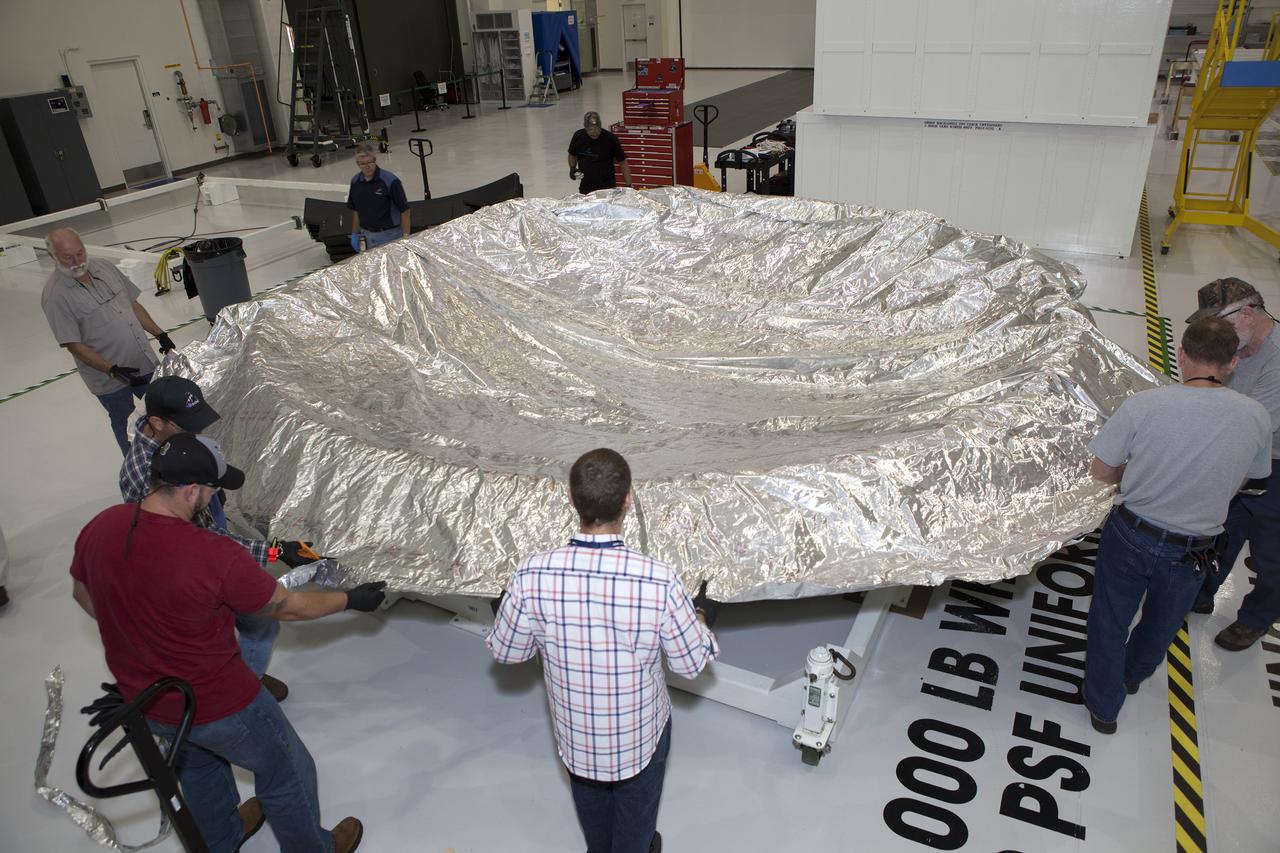
Inside the high bay in the Neil Armstrong Operations and Checkout Building at NASA’s Kennedy Space Center in Florida, technicians with Lockheed Martin start to remove the protective covering from the Orion heat shield for Exploration Mission 1 (EM-1). The heat shield arrived aboard NASA’s Super Guppy aircraft at the Shuttle Landing Facility, managed and operated by Space Florida, from Lockheed Martin’s manufacturing facility near Denver. The Orion spacecraft will launch atop NASA’s Space Launch System rocket on EM-1, an uncrewed test flight, targeted for November 2018.

Dr. Eric H. Thoemmes, third from left, vice president of Space, Missile Defense and Strategic with Lockheed Martin, speaks to Russell Vought, second from left, director of the White House Office of Management and Budget, during a tour of the Neil Armstrong Operations and Checkout Building high bay at NASA’s Kennedy Space Center in Florida on Aug. 28, 2020. At far left is Larry Price, Lockheed Martin Orion Program manager. To the right of Thoemmes is NASA Deputy Administrator Jim Morhard, and Brian McCormack, associate director of the White House Office of Management and Budget. In view in the background is the heatshield for Artemis II. Inside the high bay, Orion spacecraft are being prepared for Artemis I and Artemis II. The Office of Management and Budget is working with the U.S. Congress to line up the necessary resources to land the first woman and the next man on the Moon in 2024.
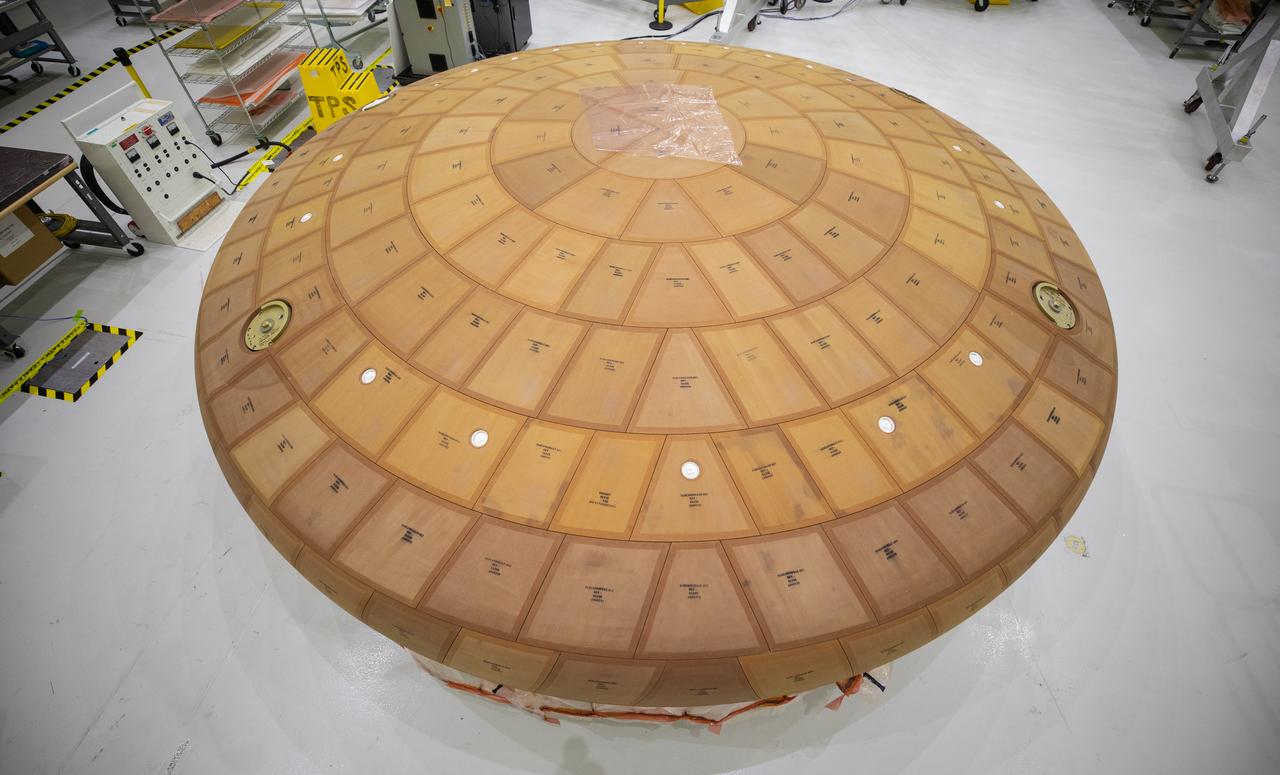
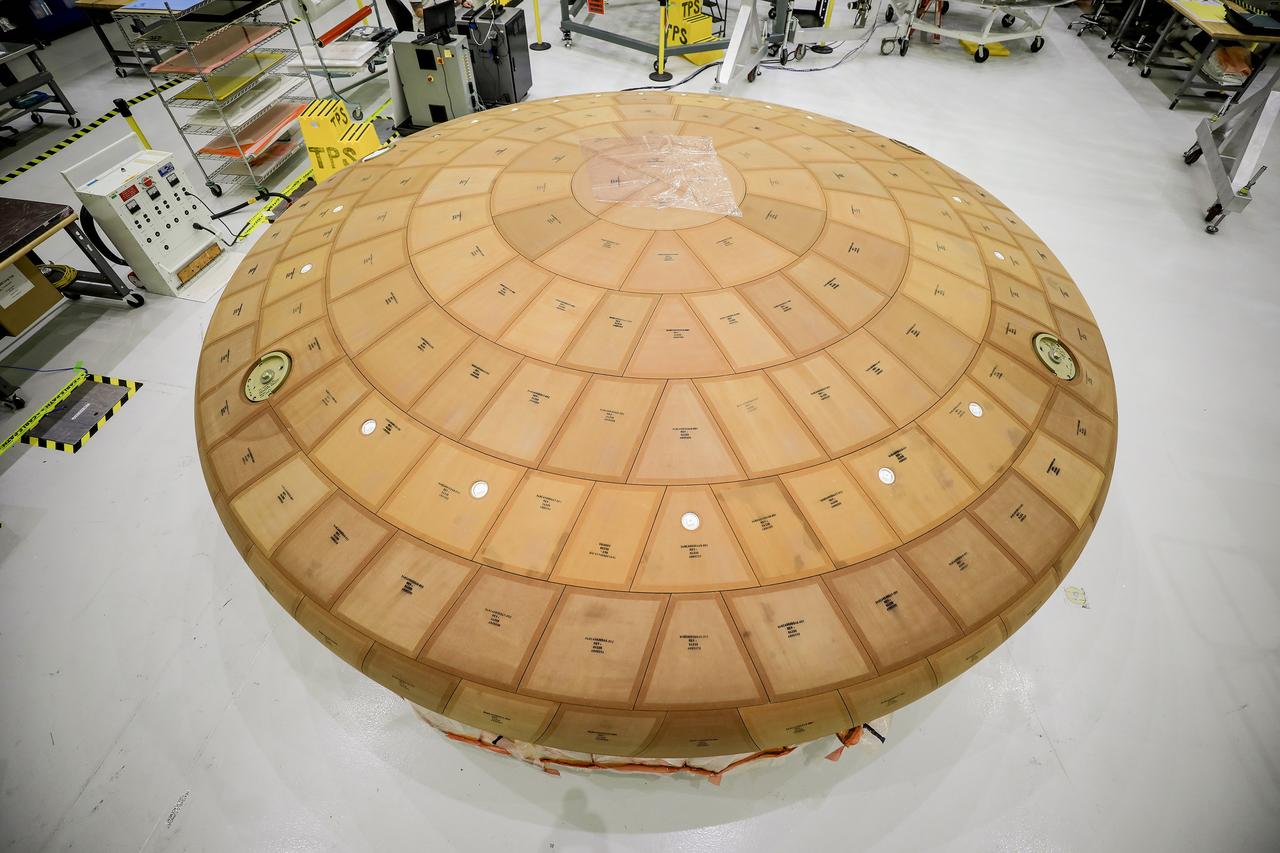
Inside the Neil Armstrong Operations and Checkout Building high bay at NASA's Kennedy Space Center in Florida, the AVOCAT block bonding is complete on the Artemis II heat shield on July 2, 2020. The heat shield is one of the most critical elements of Orion and will protect the capsule and astronauts during reentry through Earth’s atmosphere. Artemis II is the first crewed mission in a series of missions to the Moon and on to Mars. Artemis II will confirm all of the Orion spacecraft’s systems operate as designed in the actual environment of deep space with astronauts aboard. As part of the Artemis Program, NASA will send the first woman and next man to the Moon by 2024.
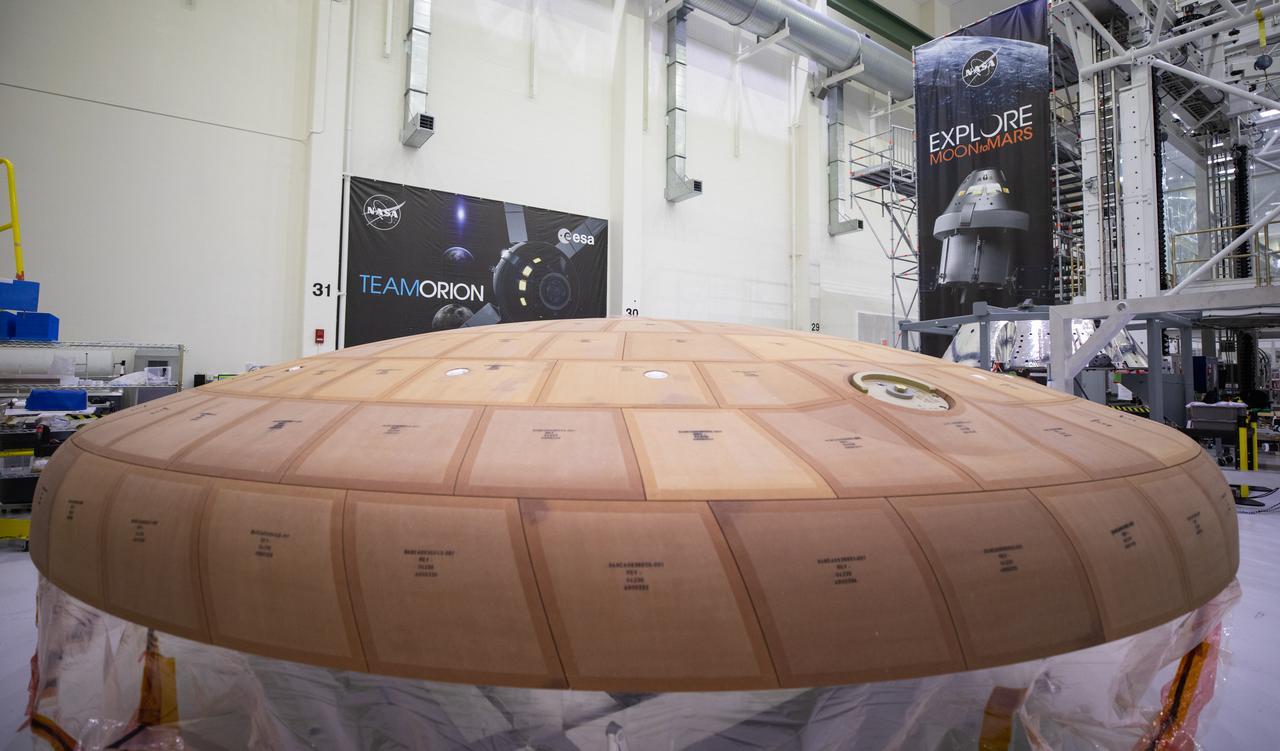
Inside the Neil Armstrong Operations and Checkout Building high bay at NASA's Kennedy Space Center in Florida, the AVCOAT block bonding is complete on the Artemis II heat shield on July 2, 2020. The heat shield is one of the most critical elements of Orion and will protect the capsule and astronauts during reentry through Earth’s atmosphere. Artemis II is the first crewed mission in a series of missions to the Moon and on to Mars. Artemis II will confirm all of the Orion spacecraft’s systems operate as designed in the actual environment of deep space with astronauts aboard. As part of the Artemis Program, NASA will send the first woman and next man to the Moon by 2024.
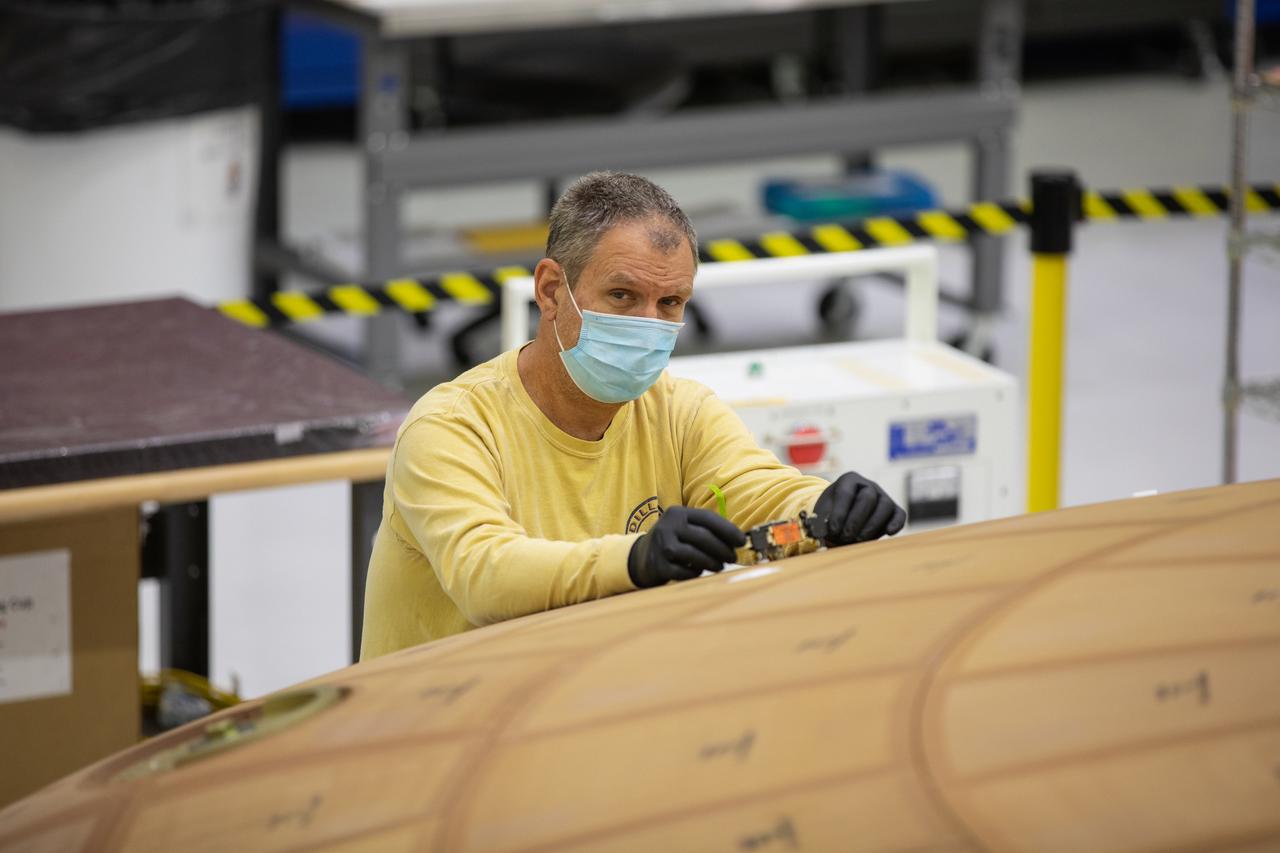
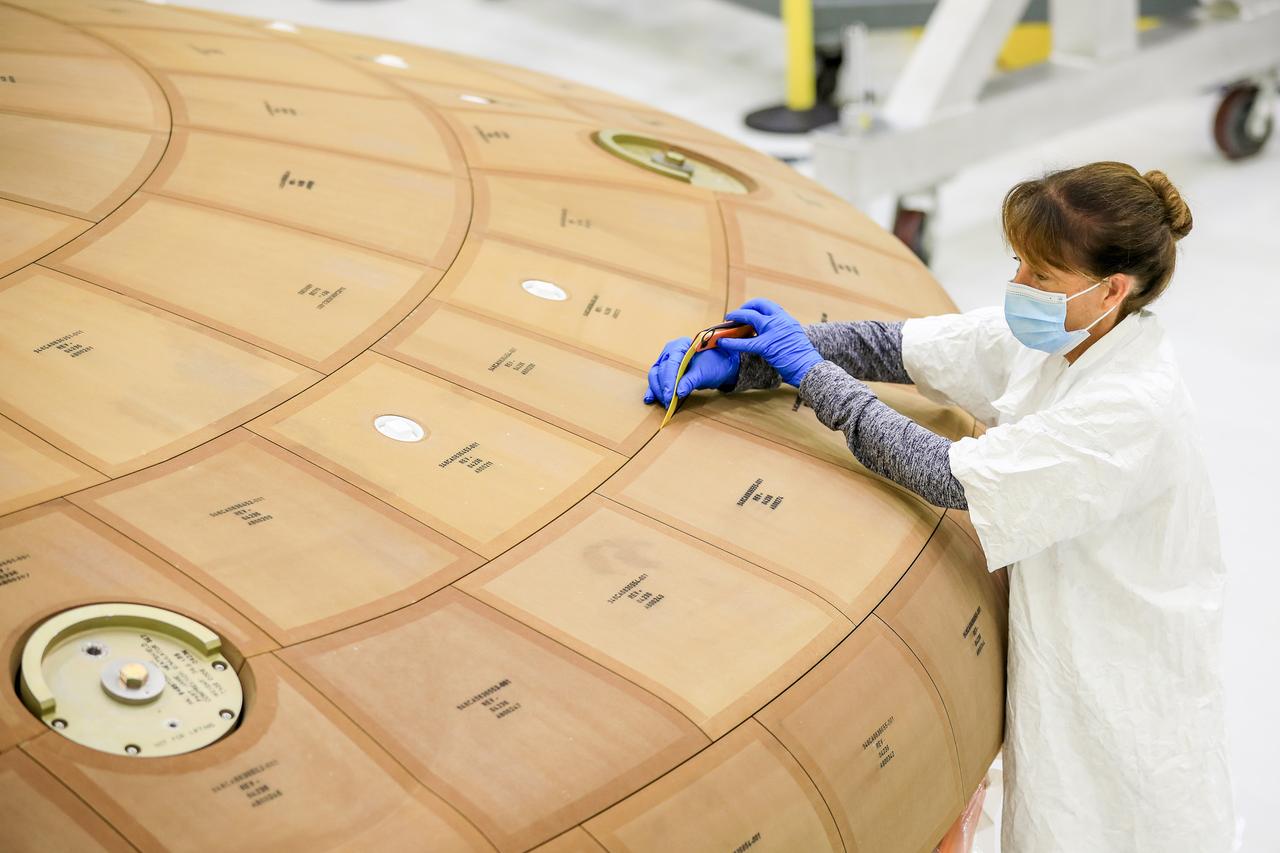
Inside the Neil Armstrong Operations and Checkout Building high bay at NASA's Kennedy Space Center in Florida, technician Kenny Leidner with ASRC Federal, inspects AVCOAT block bonding on the Artemis II heat shield on July 2, 2020. The heat shield is one of the most critical elements of Orion and will protect the capsule and astronauts during reentry through Earth’s atmosphere. Artemis II is the first crewed mission in a series of missions to the Moon and on to Mars. Artemis II will confirm all of the Orion spacecraft’s systems operate as designed in the actual environment of deep space with astronauts aboard. As part of the Artemis Program, NASA will send the first woman and next man to the Moon by 2024.
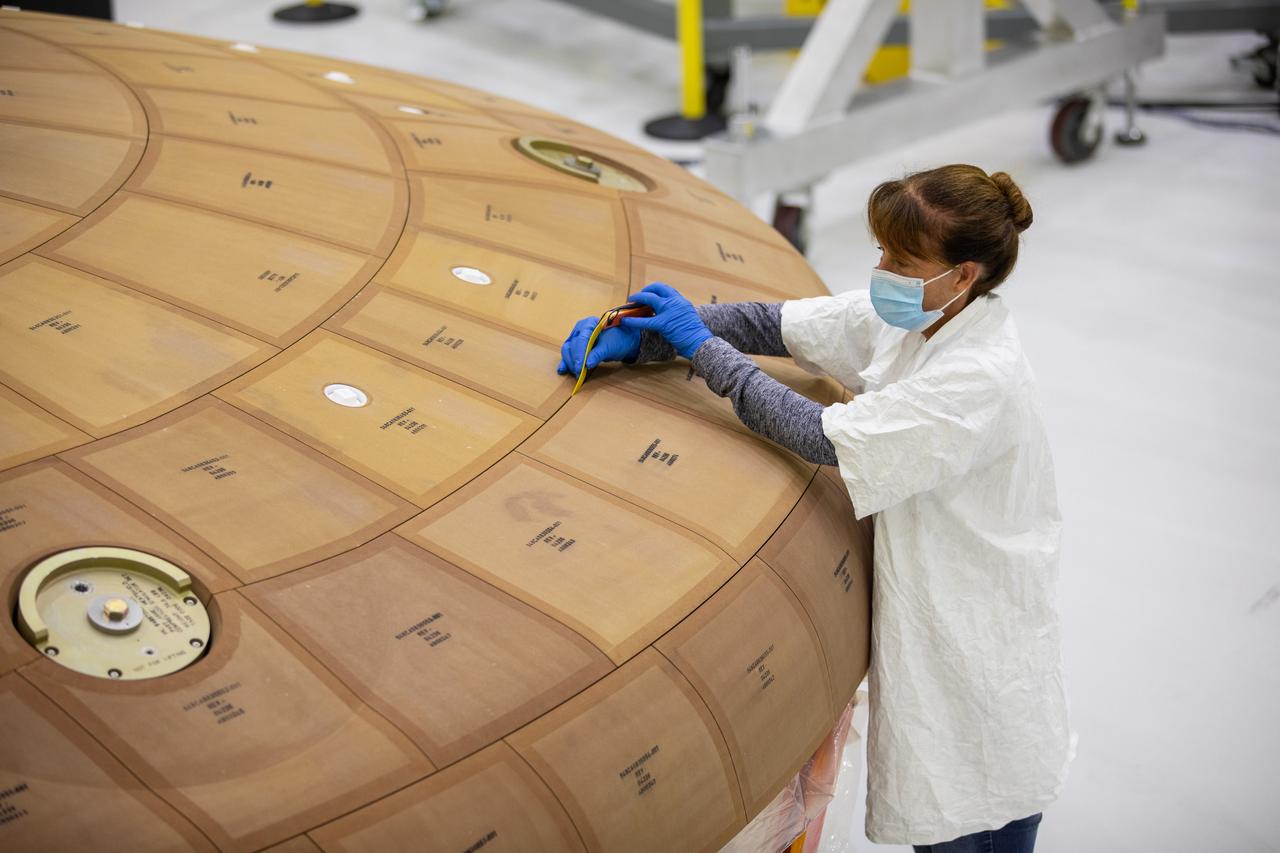
Inside the Neil Armstrong Operations and Checkout Building high bay at NASA's Kennedy Space Center in Florida, Darlene Beville with ASRC Federal, inspects AVOCAT block bonding on the Artemis II heat shield on July 2, 2020. The heat shield is one of the most critical elements of Orion and will protect the capsule and astronauts during reentry through Earth’s atmosphere. Artemis II is the first crewed mission in a series of missions to the Moon and on to Mars. Artemis II will confirm all of the Orion spacecraft’s systems operate as designed in the actual environment of deep space with astronauts aboard. As part of the Artemis Program, NASA will send the first woman and next man to the Moon by 2024.
AFS-8/101
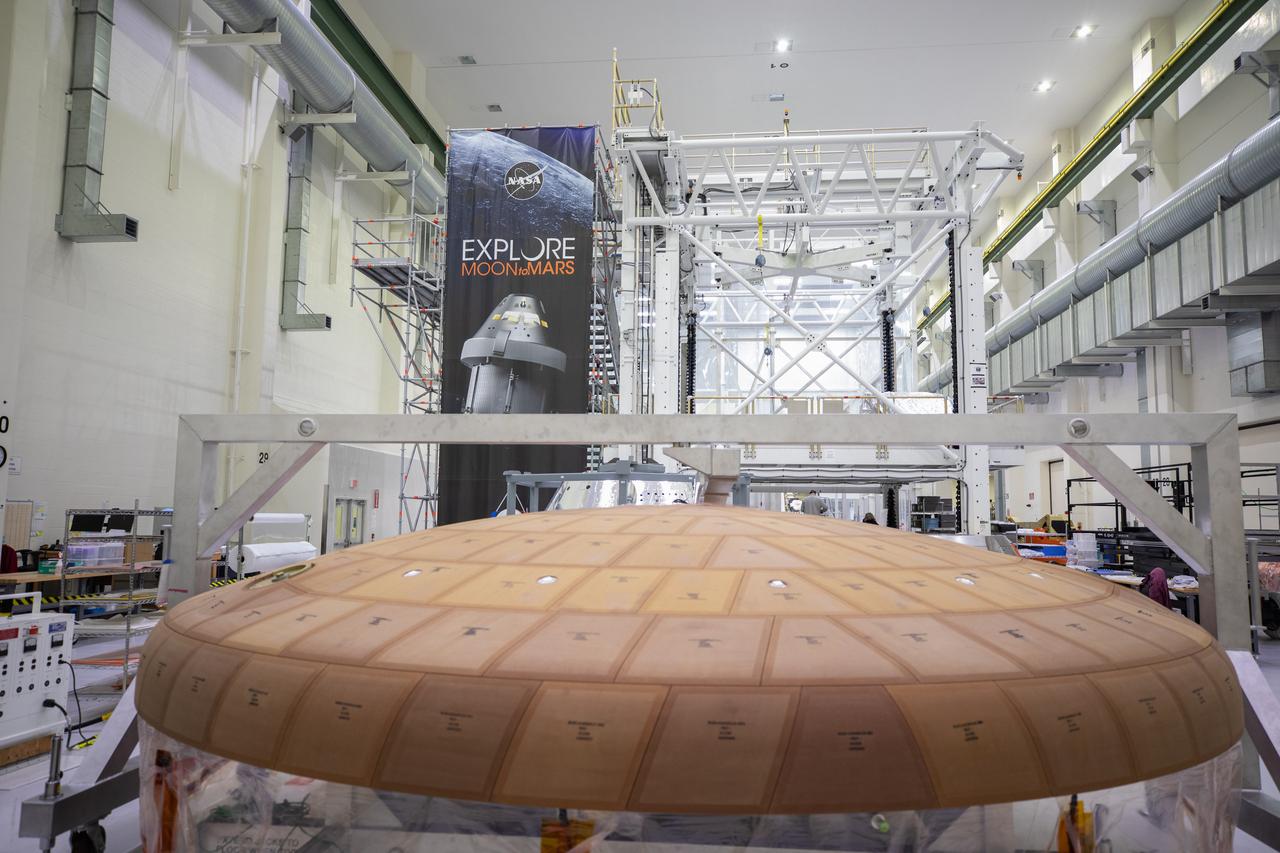
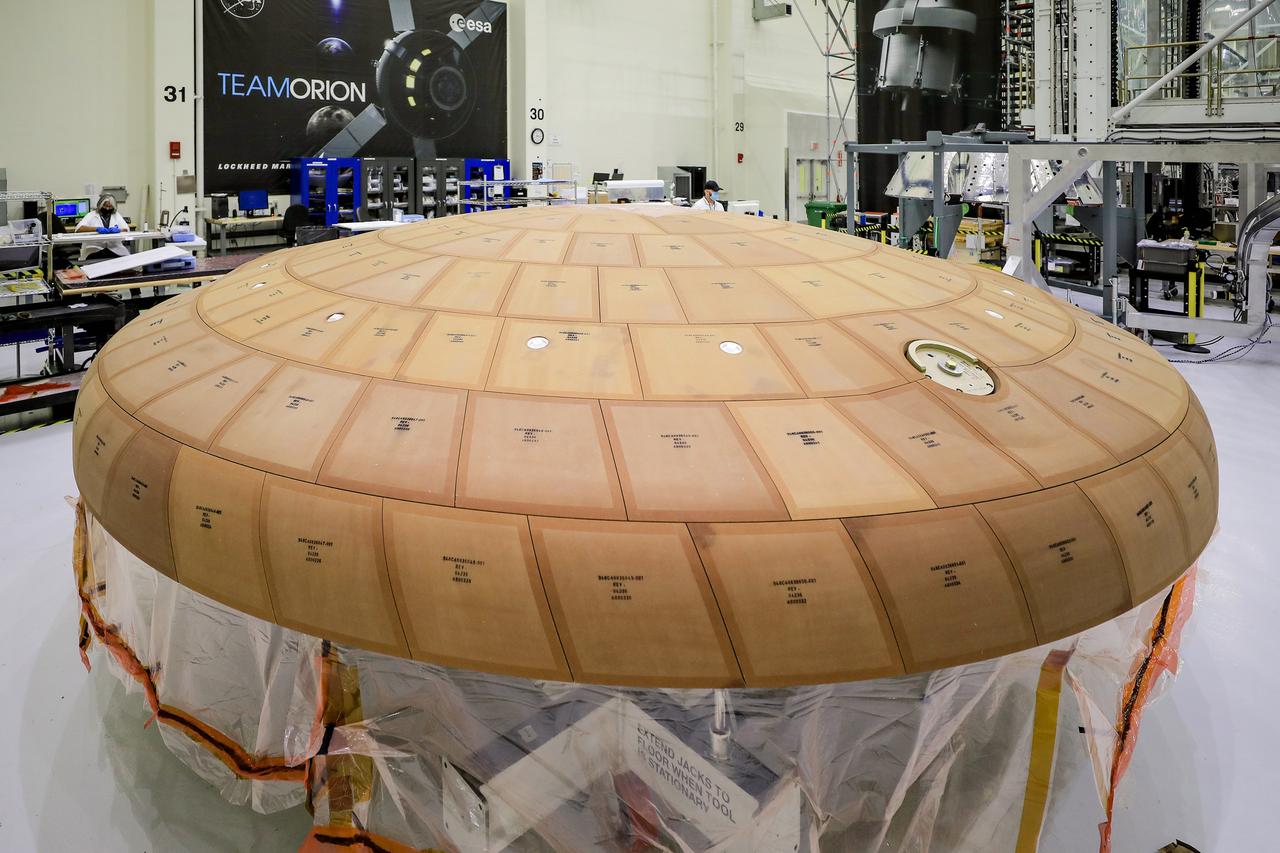
Inside the Neil Armstrong Operations and Checkout Building high bay at NASA's Kennedy Space Center in Florida, the AVCOAT block bonding is complete on the Artemis II heat shield on July 2, 2020. The heat shield is one of the most critical elements of Orion and will protect the capsule and astronauts during reentry through Earth’s atmosphere. Artemis II is the first crewed mission in a series of missions to the Moon and on to Mars. Artemis II will confirm all of the Orion spacecraft’s systems operate as designed in the actual environment of deep space with astronauts aboard. As part of the Artemis Program, NASA will send the first woman and next man to the Moon by 2024.
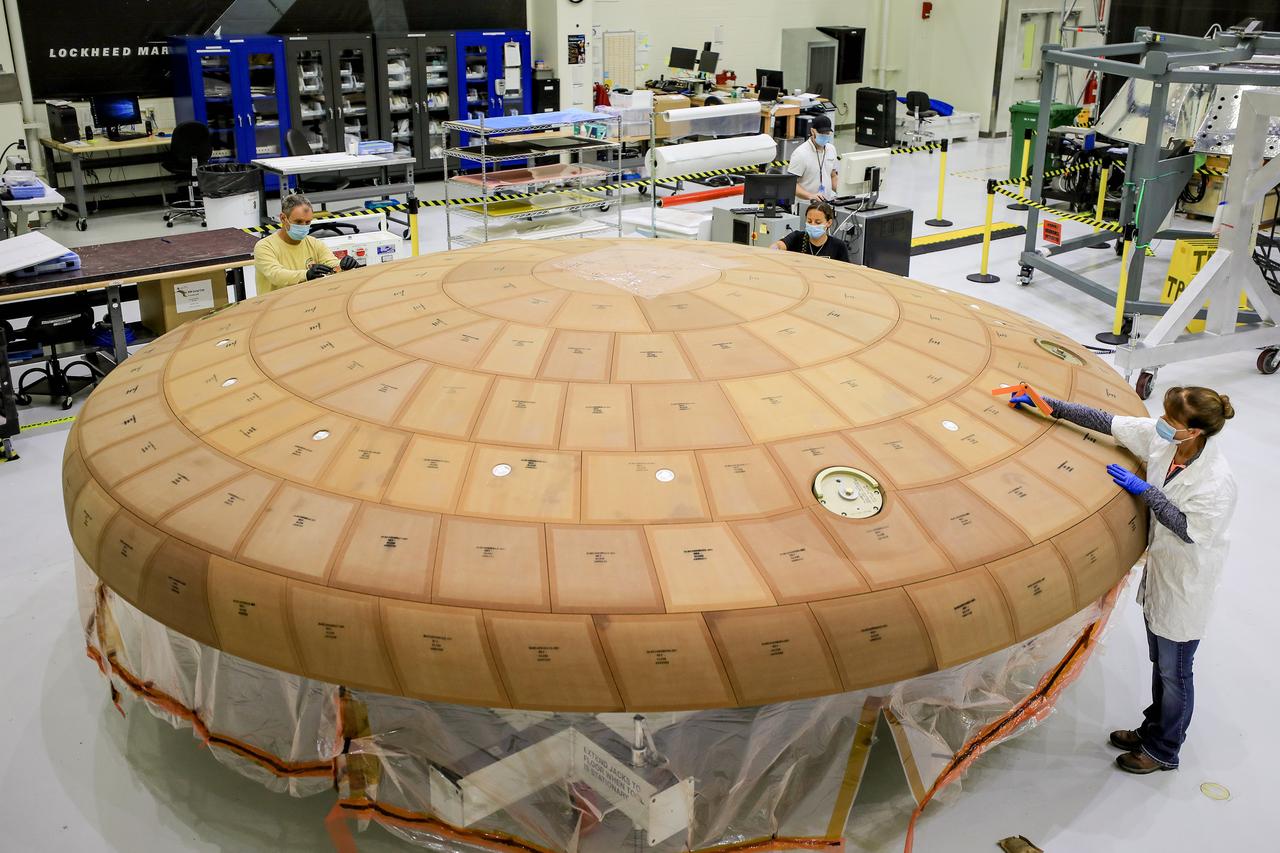
AFS-8/101
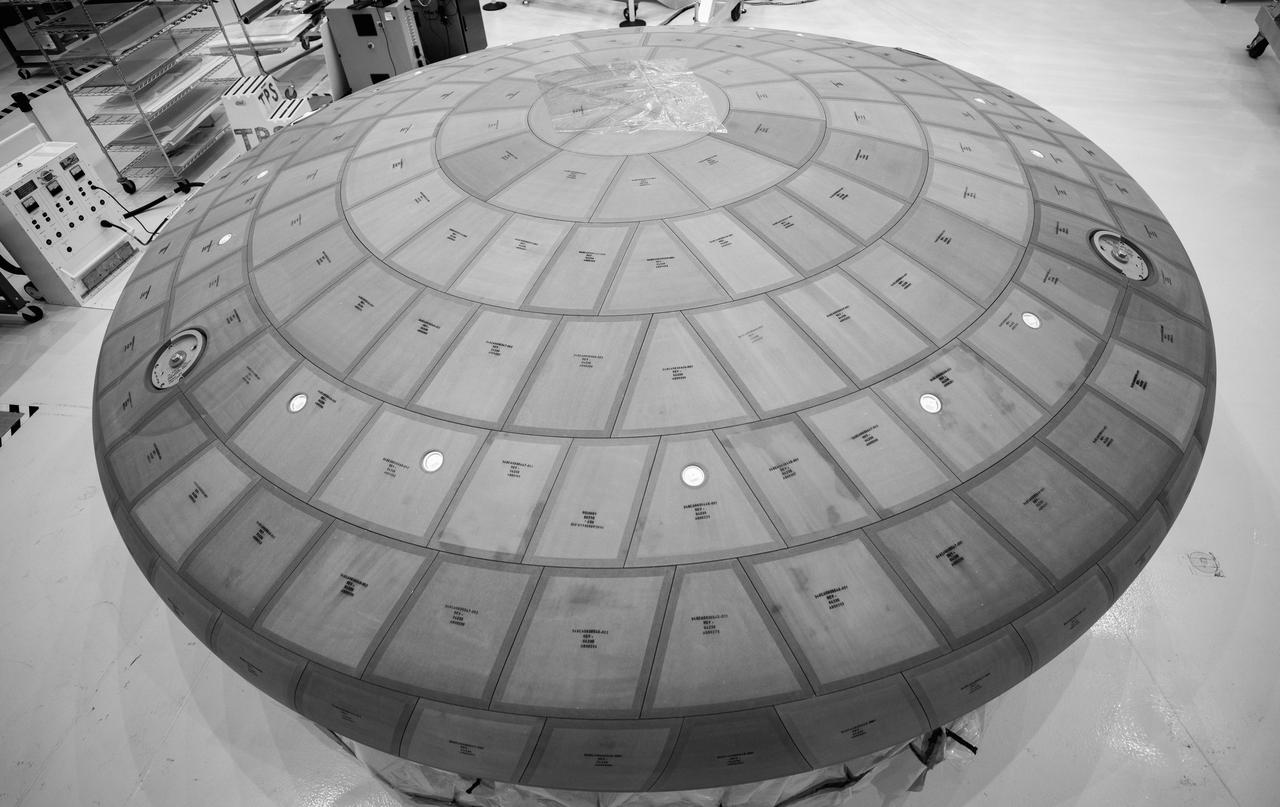
Inside the Neil Armstrong Operations and Checkout Building high bay at NASA's Kennedy Space Center in Florida, the AVOCAT block bonding is complete on the Artemis II heat shield on July 2, 2020. The heat shield is one of the most critical elements of Orion and will protect the capsule and astronauts during reentry through Earth’s atmosphere. Artemis II is the first crewed mission in a series of missions to the Moon and on to Mars. Artemis II will confirm all of the Orion spacecraft’s systems operate as designed in the actual environment of deep space with astronauts aboard. As part of the Artemis Program, NASA will send the first woman and next man to the Moon by 2024.

Inside the Neil Armstrong Operations and Checkout Building high bay at NASA's Kennedy Space Center in Florida, from left, technicians Kenny Leidner, Diamond ScharSenstine, Russ Novak and Darlene Beville with ASRC Federal, inspect AVOCAT block bonding on the Artemis II heat shield on July 2, 2020. The heat shield is one of the most critical elements of Orion and will protect the capsule and astronauts during reentry through Earth’s atmosphere. Artemis II is the first crewed mission in a series of missions to the Moon and on to Mars. Artemis II will confirm all of the Orion spacecraft’s systems operate as designed in the actual environment of deep space with astronauts aboard. As part of the Artemis Program, NASA will send the first woman and next man to the Moon by 2024.
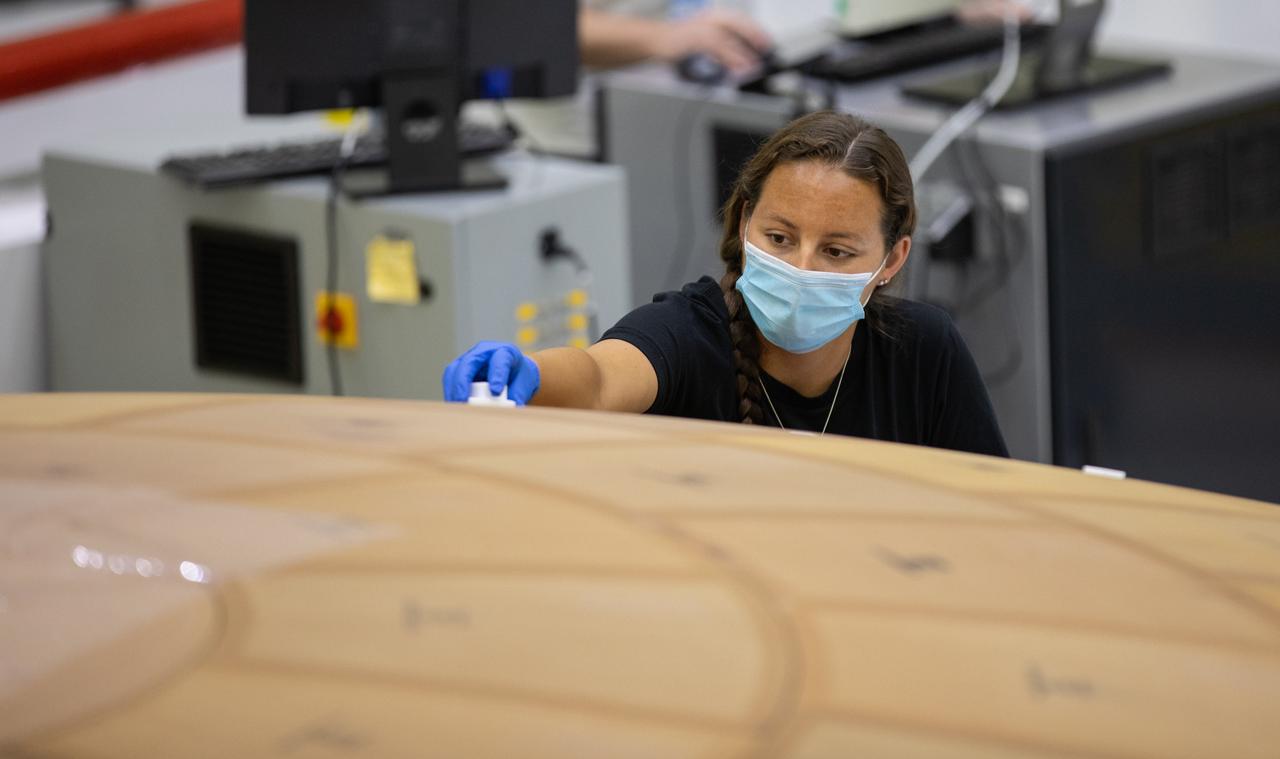
Inside the Neil Armstrong Operations and Checkout Building high bay at NASA's Kennedy Space Center in Florida, technician Diamond ScharSenstine with ASRC Federal, inspects AVCOAT block bonding on the Artemis II heat shield on July 2, 2020. The heat shield is one of the most critical elements of Orion and will protect the capsule and astronauts during reentry through Earth’s atmosphere. Artemis II is the first crewed mission in a series of missions to the Moon and on to Mars. Artemis II will confirm all of the Orion spacecraft’s systems operate as designed in the actual environment of deep space with astronauts aboard. As part of the Artemis Program, NASA will send the first woman and next man to the Moon by 2024.
AFS-8/101
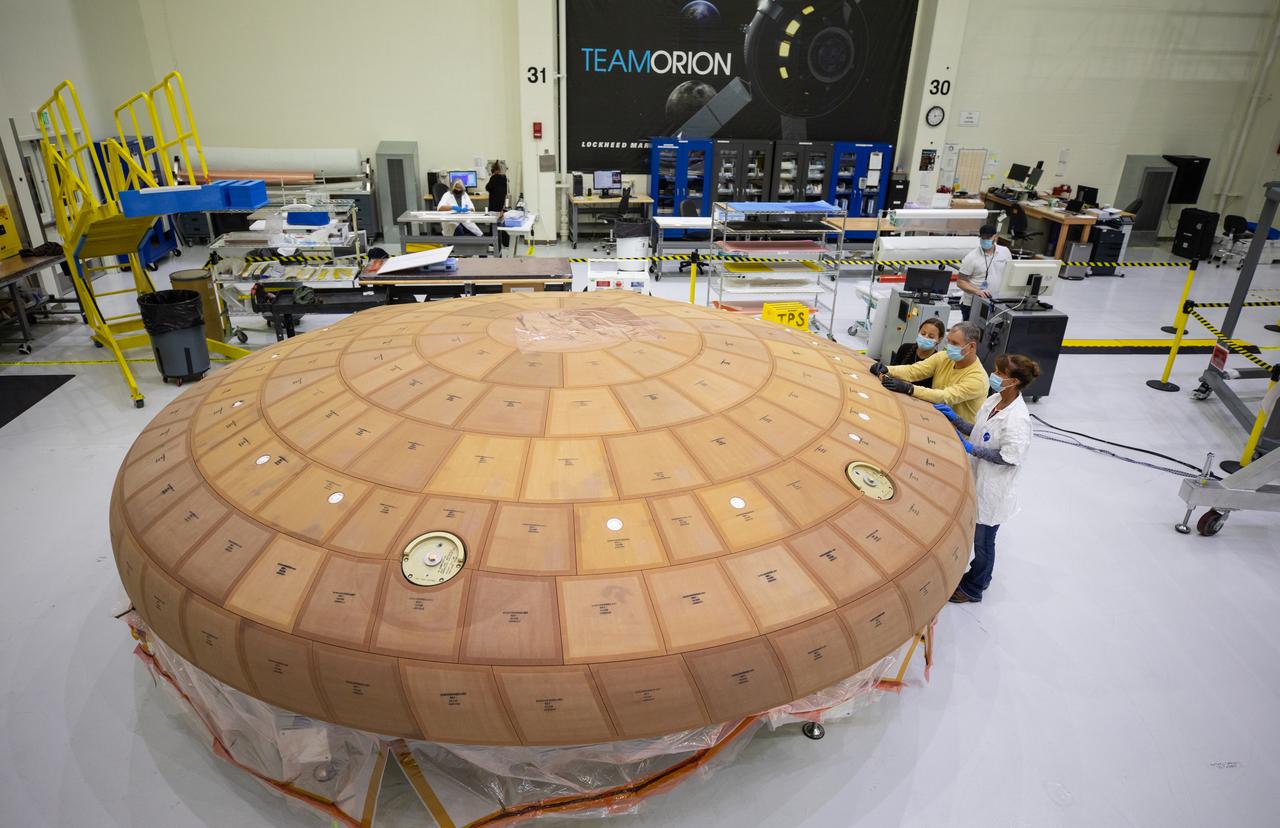
Inside the Neil Armstrong Operations and Checkout Building high bay at NASA's Kennedy Space Center in Florida, from left, technicians Diamond ScharSenstine, Kenny Leidner, Russ Novak and Darlene Beville, all with ASRC Federal, inspect AVCOAT block bonding on the Artemis II heat shield on July 2, 2020. The heat shield is one of the most critical elements of Orion and will protect the capsule and astronauts during reentry through Earth’s atmosphere. Artemis II is the first crewed mission in a series of missions to the Moon and on to Mars. Artemis II will confirm all of the Orion spacecraft’s systems operate as designed in the actual environment of deep space with astronauts aboard. As part of the Artemis Program, NASA will send the first woman and next man to the Moon by 2024.
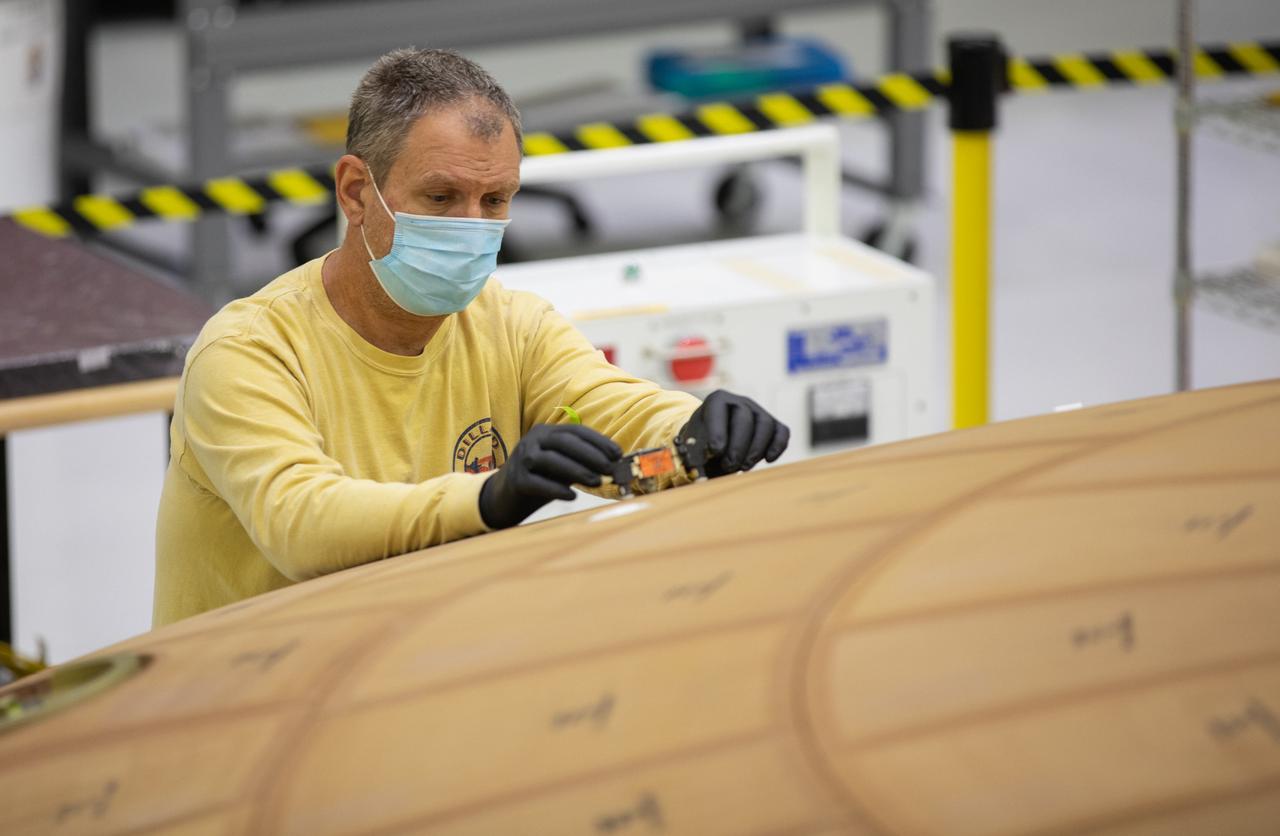
Inside the Neil Armstrong Operations and Checkout Building high bay at NASA's Kennedy Space Center in Florida, technician Kenny Leidner with ASRC Federal, inspects AVCOAT block bonding on the Artemis II heat shield on July 2, 2020. The heat shield is one of the most critical elements of Orion and will protect the capsule and astronauts during reentry through Earth’s atmosphere. Artemis II is the first crewed mission in a series of missions to the Moon and on to Mars. Artemis II will confirm all of the Orion spacecraft’s systems operate as designed in the actual environment of deep space with astronauts aboard. As part of the Artemis Program, NASA will send the first woman and next man to the Moon by 2024.
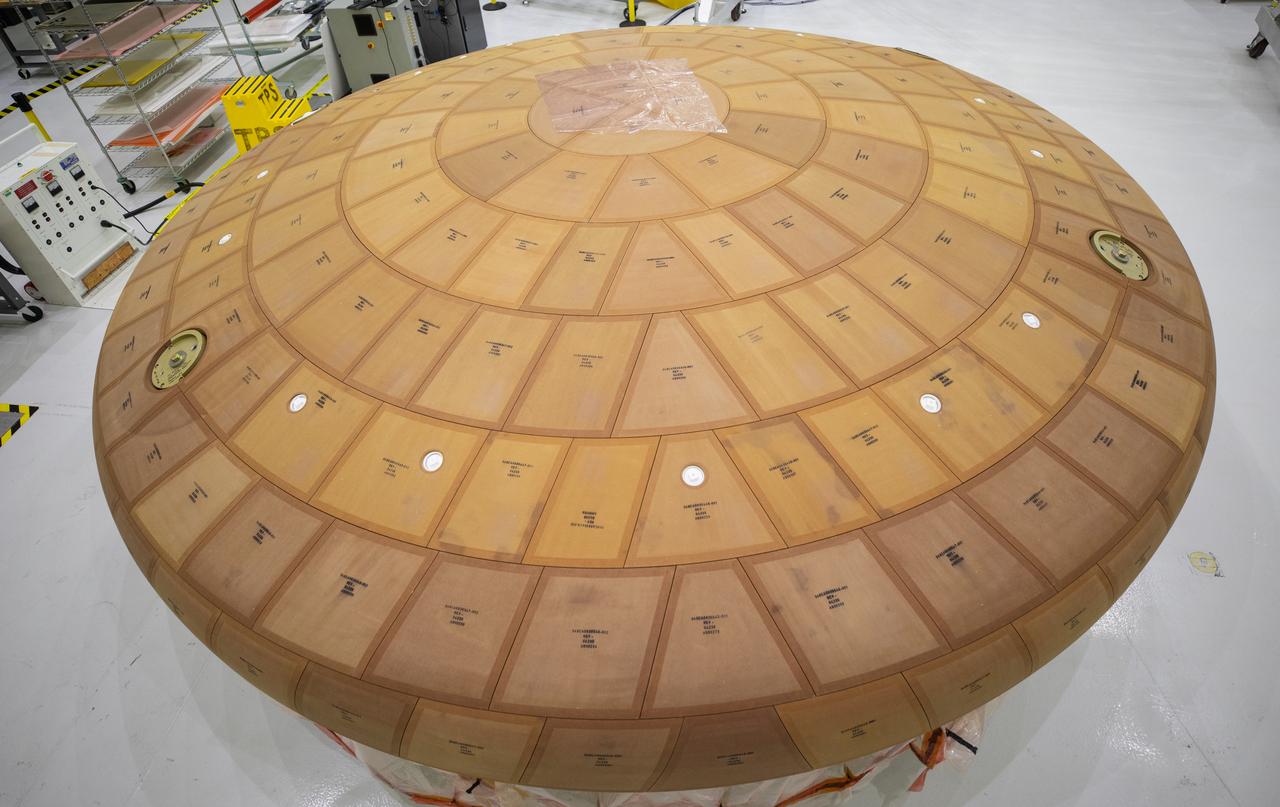
Inside the Neil Armstrong Operations and Checkout Building high bay at NASA's Kennedy Space Center in Florida, the AVOCAT block bonding is complete on the Artemis II heat shield on July 2, 2020. The heat shield is one of the most critical elements of Orion and will protect the capsule and astronauts during reentry through Earth’s atmosphere. Artemis II is the first crewed mission in a series of missions to the Moon and on to Mars. Artemis II will confirm all of the Orion spacecraft’s systems operate as designed in the actual environment of deep space with astronauts aboard. As part of the Artemis Program, NASA will send the first woman and next man to the Moon by 2024.
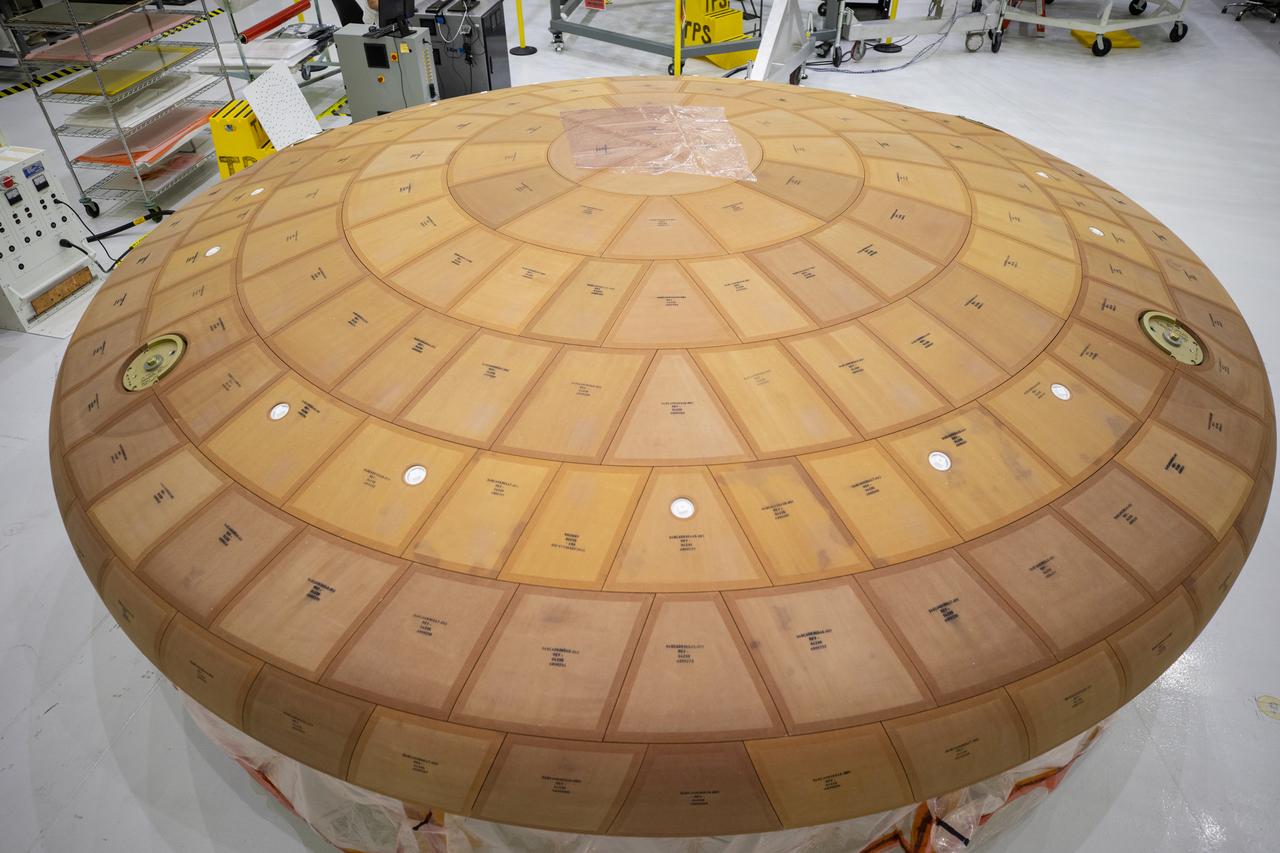
Inside the Neil Armstrong Operations and Checkout Building high bay at NASA's Kennedy Space Center in Florida, the AVCOAT block bonding is complete on the Artemis II heat shield on July 2, 2020. The heat shield is one of the most critical elements of Orion and will protect the capsule and astronauts during reentry through Earth’s atmosphere. Artemis II is the first crewed mission in a series of missions to the Moon and on to Mars. Artemis II will confirm all of the Orion spacecraft’s systems operate as designed in the actual environment of deep space with astronauts aboard. As part of the Artemis Program, NASA will send the first woman and next man to the Moon by 2024.
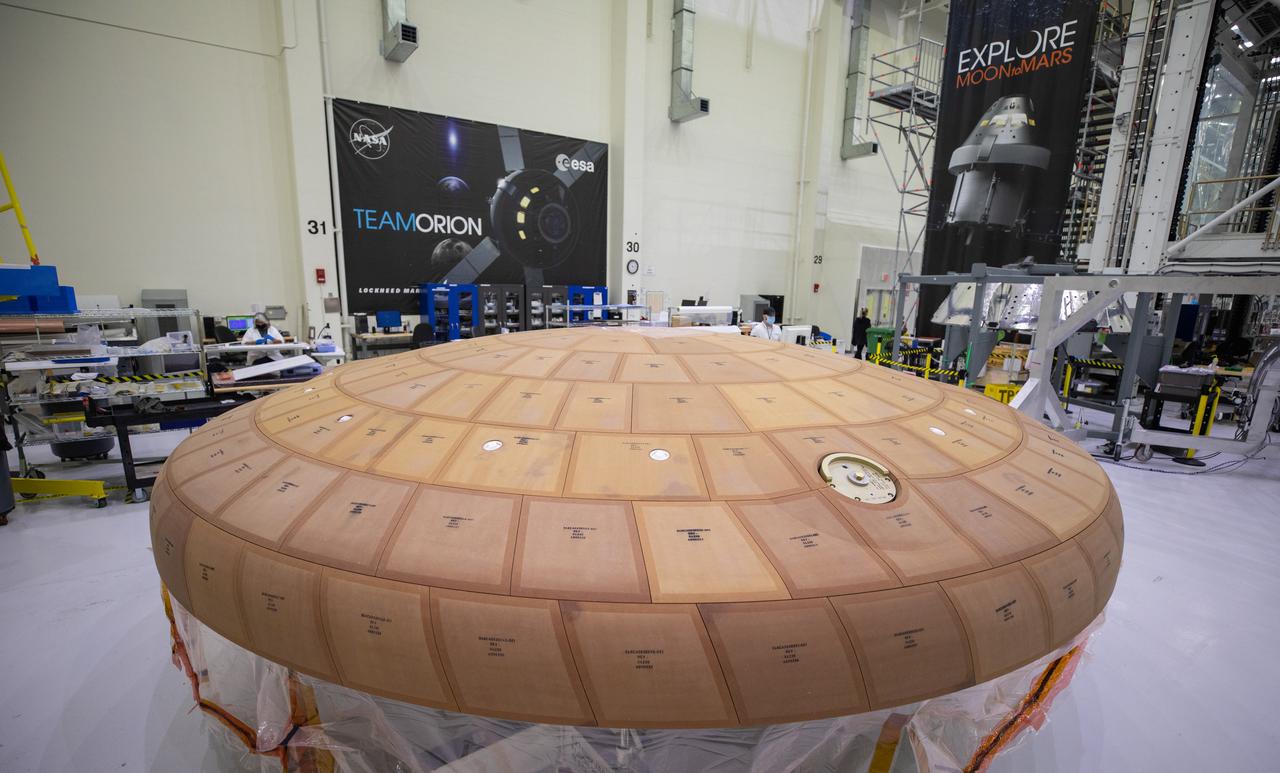
Inside the Neil Armstrong Operations and Checkout Building high bay at NASA's Kennedy Space Center in Florida, the AVCOAT block bonding is complete on the Artemis II heat shield on July 2, 2020. The heat shield is one of the most critical elements of Orion and will protect the capsule and astronauts during reentry through Earth’s atmosphere. Artemis II is the first crewed mission in a series of missions to the Moon and on to Mars. Artemis II will confirm all of the Orion spacecraft’s systems operate as designed in the actual environment of deep space with astronauts aboard. As part of the Artemis Program, NASA will send the first woman and next man to the Moon by 2024.
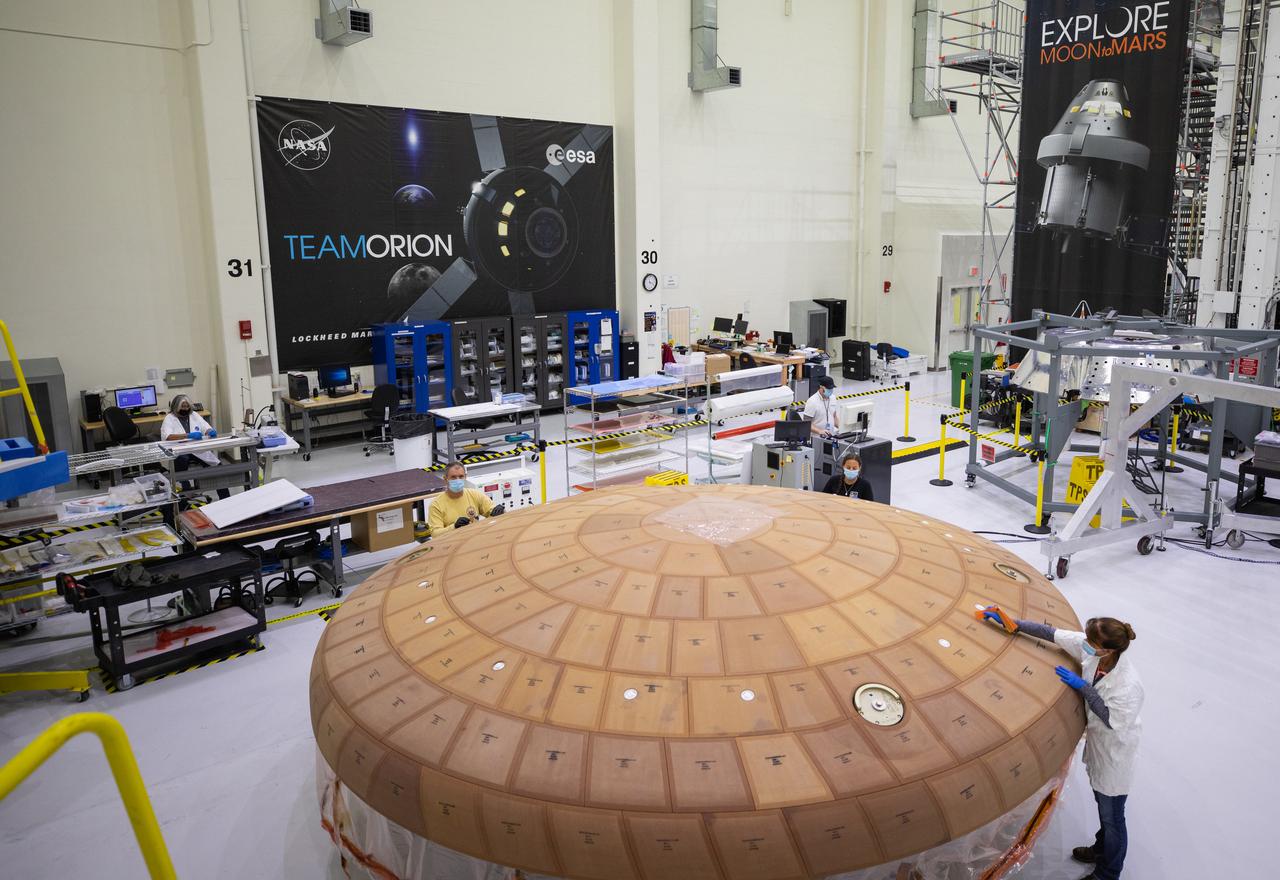
Inside the Neil Armstrong Operations and Checkout Building high bay at NASA's Kennedy Space Center in Florida, from left, technicians Kenny Leidner, Diamond ScharSenstine, Russ Novak and Darlene Beville with ASRC Federal, inspect AVCOAT block bonding on the Artemis II heat shield on July 2, 2020. The heat shield is one of the most critical elements of Orion and will protect the capsule and astronauts during reentry through Earth’s atmosphere. Artemis II is the first crewed mission in a series of missions to the Moon and on to Mars. Artemis II will confirm all of the Orion spacecraft’s systems operate as designed in the actual environment of deep space with astronauts aboard. As part of the Artemis Program, NASA will send the first woman and next man to the Moon by 2024.
AFS-8/101

Inside the Neil Armstrong Operations and Checkout Building high bay at NASA's Kennedy Space Center in Florida, from left, technicians Kenny Leidner, Diamond ScharSenstine, Russ Novak and Darlene Beville with ASRC Federal, inspect AVCOAT block bonding on the Artemis II heat shield on July 2, 2020. The heat shield is one of the most critical elements of Orion and will protect the capsule and astronauts during reentry through Earth’s atmosphere. Artemis II is the first crewed mission in a series of missions to the Moon and on to Mars. Artemis II will confirm all of the Orion spacecraft’s systems operate as designed in the actual environment of deep space with astronauts aboard. As part of the Artemis Program, NASA will send the first woman and next man to the Moon by 2024.
Inside the Neil Armstrong Operations and Checkout Building high bay at NASA's Kennedy Space Center in Florida, technician Darlene Beville with ASRC Federal, inspects AVCOAT block bonding on the Artemis II heat shield on July 2, 2020. The heat shield is one of the most critical elements of Orion and will protect the capsule and astronauts during reentry through Earth’s atmosphere. Artemis II is the first crewed mission in a series of missions to the Moon and on to Mars. Artemis II will confirm all of the Orion spacecraft’s systems operate as designed in the actual environment of deep space with astronauts aboard. As part of the Artemis Program, NASA will send the first woman and next man to the Moon by 2024.
Inside the Neil Armstrong Operations and Checkout Building high bay at NASA's Kennedy Space Center in Florida, technician Russ Novak with ASRC Federal, inspects AVCOAT block bonding on the Artemis II heat shield on July 2, 2020. The heat shield is one of the most critical elements of Orion and will protect the capsule and astronauts during reentry through Earth’s atmosphere. Artemis II is the first crewed mission in a series of missions to the Moon and on to Mars. Artemis II will confirm all of the Orion spacecraft’s systems operate as designed in the actual environment of deep space with astronauts aboard. As part of the Artemis Program, NASA will send the first woman and next man to the Moon by 2024.
Inside the Neil Armstrong Operations and Checkout Building high bay at NASA's Kennedy Space Center in Florida, technician Russ Novak with ASRC Federal, inspects AVCOAT block bonding on the Artemis II heat shield on July 2, 2020. The heat shield is one of the most critical elements of Orion and will protect the capsule and astronauts during reentry through Earth’s atmosphere. Artemis II is the first crewed mission in a series of missions to the Moon and on to Mars. Artemis II will confirm all of the Orion spacecraft’s systems operate as designed in the actual environment of deep space with astronauts aboard. As part of the Artemis Program, NASA will send the first woman and next man to the Moon by 2024.
Inside the Neil Armstrong Operations and Checkout Building high bay at NASA's Kennedy Space Center in Florida, the AVOCAT block bonding is complete on the Artemis II heat shield on July 2, 2020. The heat shield is one of the most critical elements of Orion and will protect the capsule and astronauts during reentry through Earth’s atmosphere. Artemis II is the first crewed mission in a series of missions to the Moon and on to Mars. Artemis II will confirm all of the Orion spacecraft’s systems operate as designed in the actual environment of deep space with astronauts aboard. As part of the Artemis Program, NASA will send the first woman and next man to the Moon by 2024.
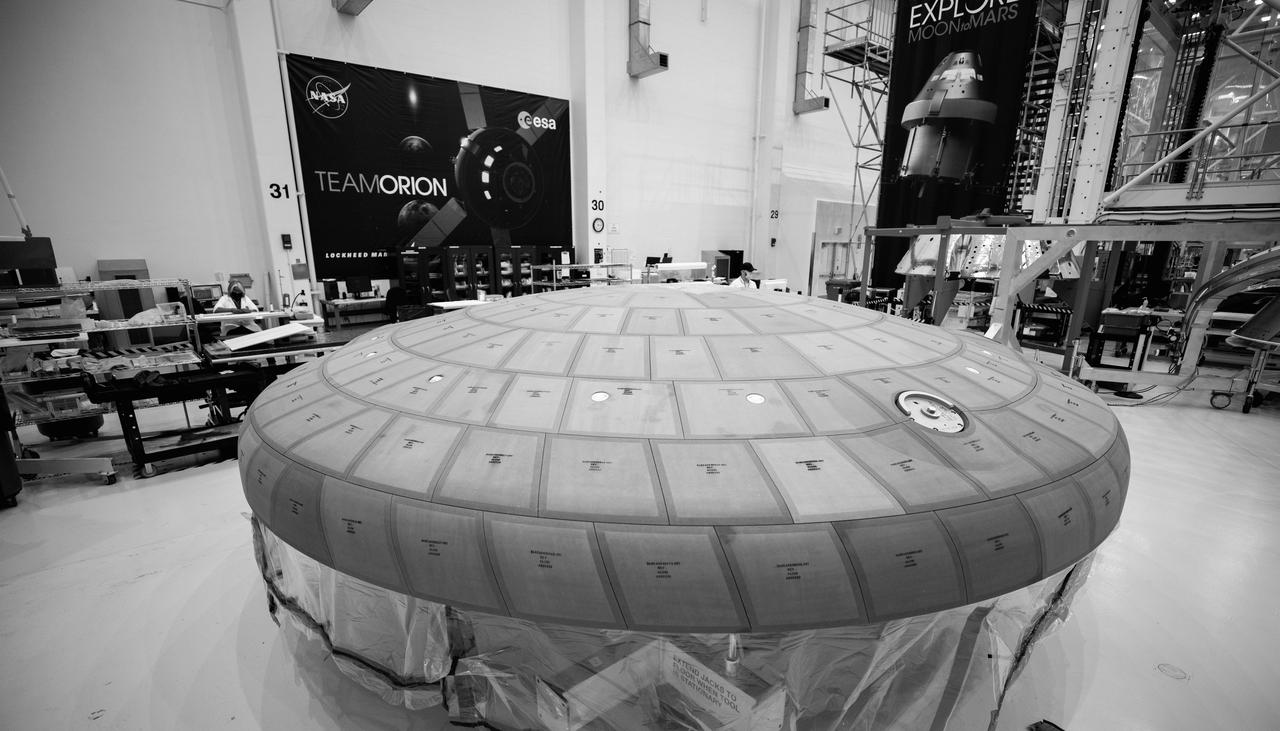
Inside the Neil Armstrong Operations and Checkout Building high bay at NASA's Kennedy Space Center in Florida, the AVOCAT block bonding is complete on the Artemis II heat shield on July 2, 2020. The heat shield is one of the most critical elements of Orion and will protect the capsule and astronauts during reentry through Earth’s atmosphere. Artemis II is the first crewed mission in a series of missions to the Moon and on to Mars. Artemis II will confirm all of the Orion spacecraft’s systems operate as designed in the actual environment of deep space with astronauts aboard. As part of the Artemis Program, NASA will send the first woman and next man to the Moon by 2024.
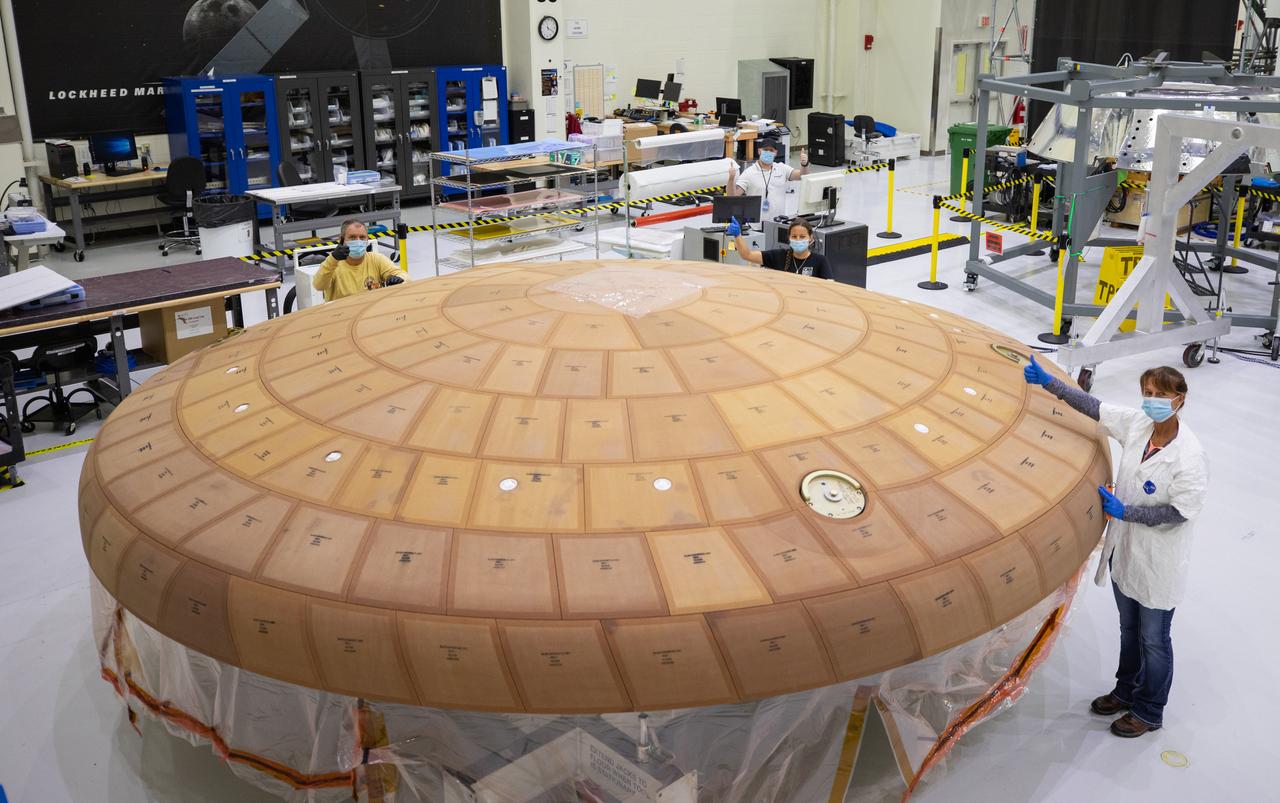
Inside the Neil Armstrong Operations and Checkout Building high bay at NASA's Kennedy Space Center in Florida, from left, technicians Kenny Leidner, Diamond ScharSenstine, Russ Novak and Darlene Beville with ASRC Federal, inspect AVCOAT block bonding on the Artemis II heat shield on July 2, 2020. The heat shield is one of the most critical elements of Orion and will protect the capsule and astronauts during reentry through Earth’s atmosphere. Artemis II is the first crewed mission in a series of missions to the Moon and on to Mars. Artemis II will confirm all of the Orion spacecraft’s systems operate as designed in the actual environment of deep space with astronauts aboard. As part of the Artemis Program, NASA will send the first woman and next man to the Moon by 2024.
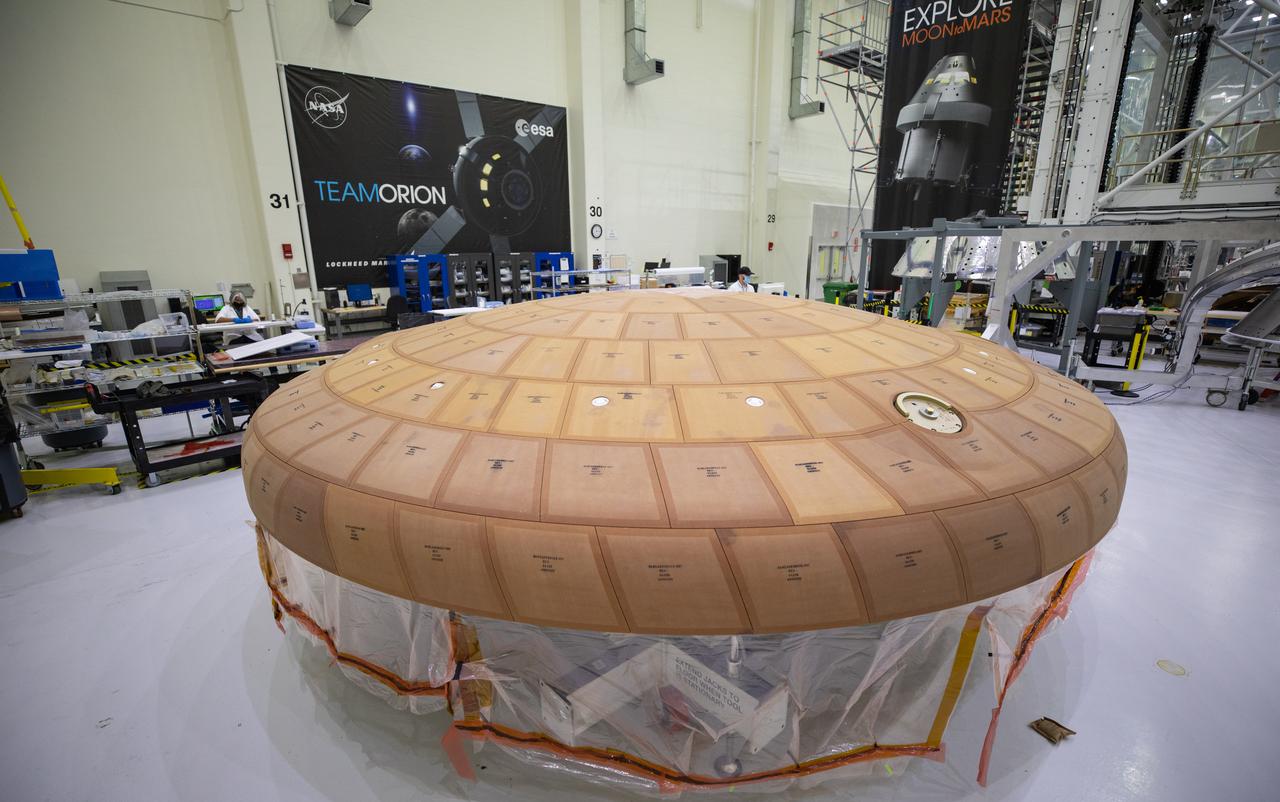
Inside the Neil Armstrong Operations and Checkout Building high bay at NASA's Kennedy Space Center in Florida, the AVOCAT block bonding is complete on the Artemis II heat shield on July 2, 2020. The heat shield is one of the most critical elements of Orion and will protect the capsule and astronauts during reentry through Earth’s atmosphere. Artemis II is the first crewed mission in a series of missions to the Moon and on to Mars. Artemis II will confirm all of the Orion spacecraft’s systems operate as designed in the actual environment of deep space with astronauts aboard. As part of the Artemis Program, NASA will send the first woman and next man to the Moon by 2024.
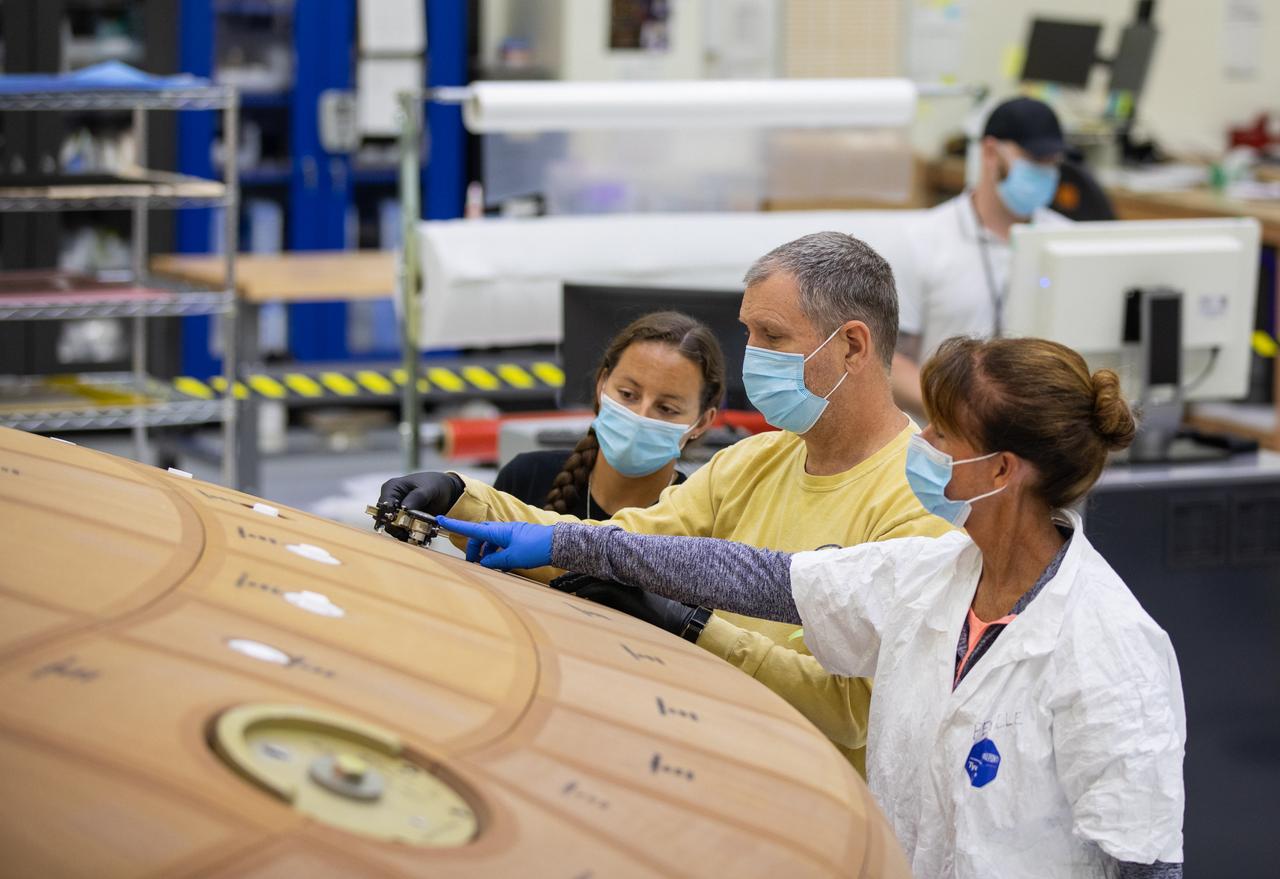
Inside the Neil Armstrong Operations and Checkout Building high bay at NASA's Kennedy Space Center in Florida, from left, technicians Diamond ScharSenstine, Kenny Leidner and Darlene Beville, all with ASRC Federal, inspect AVCOAT block bonding on the Artemis II heat shield on July 2, 2020. The heat shield is one of the most critical elements of Orion and will protect the capsule and astronauts during reentry through Earth’s atmosphere. Artemis II is the first crewed mission in a series of missions to the Moon and on to Mars. Artemis II will confirm all of the Orion spacecraft’s systems operate as designed in the actual environment of deep space with astronauts aboard. As part of the Artemis Program, NASA will send the first woman and next man to the Moon by 2024.