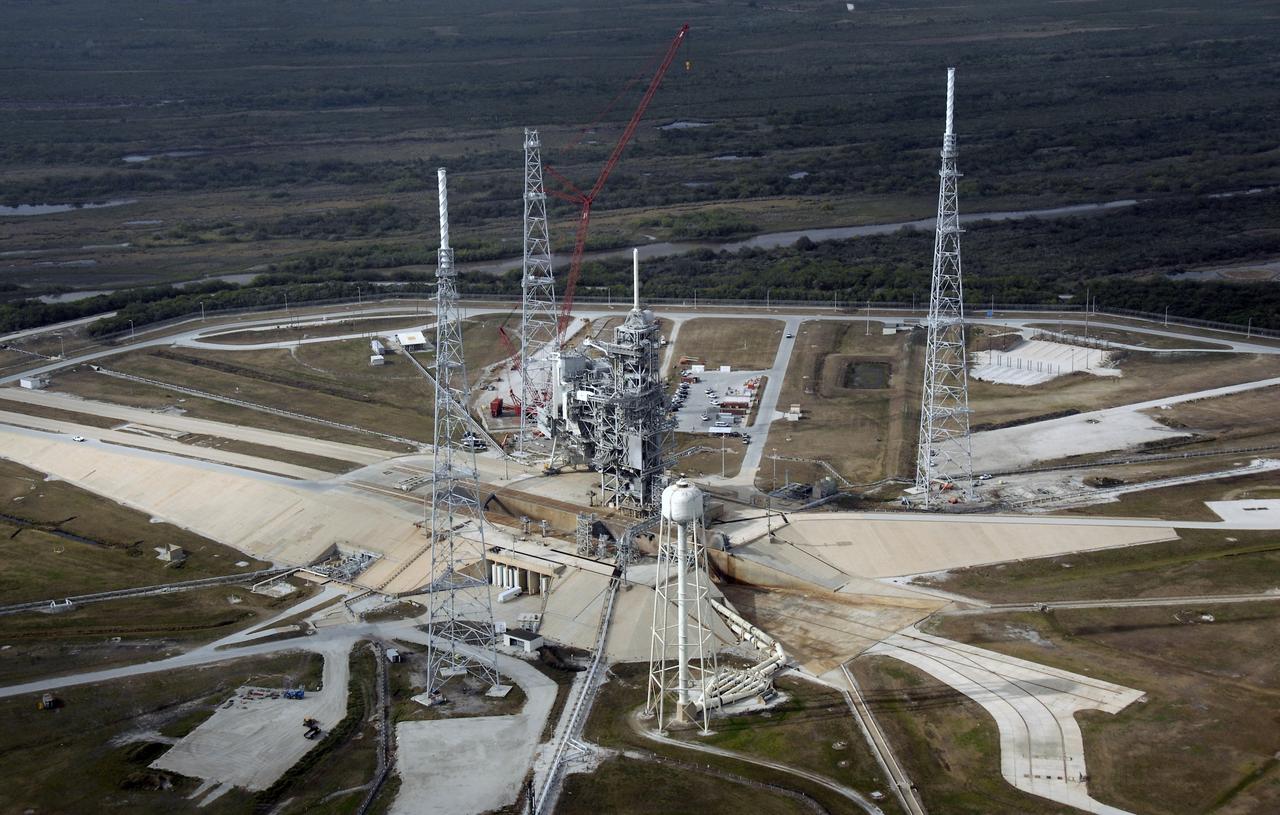
CAPE CANAVERAL, Fla. – An aerial view of the newly erected lightning towers on Launch Pad 39B at NASA's Kennedy Space Center in Florida. The two towers at left and right contain the lightning mast on top; the one at center does not. At center are the fixed and rotating service structures that have served the Space Shuttle Program. In the foreground is the tower that holds 300,000 gallons of water used for sound suppression during a shuttle liftoff. The new lightning protection system is being built for the Constellation Program and Ares/Orion launches. Each of the towers is 500 feet tall with an additional 100-foot fiberglass mast atop supporting a wire catenary system. This improved lightning protection system allows for the taller height of the Ares I rocket compared to the space shuttle. Pad 39B will be the site of the first Ares rocket launch, including the Ares I-X test flight that is targeted for July 2009. Photo credit: NASA/Kim Shiflett
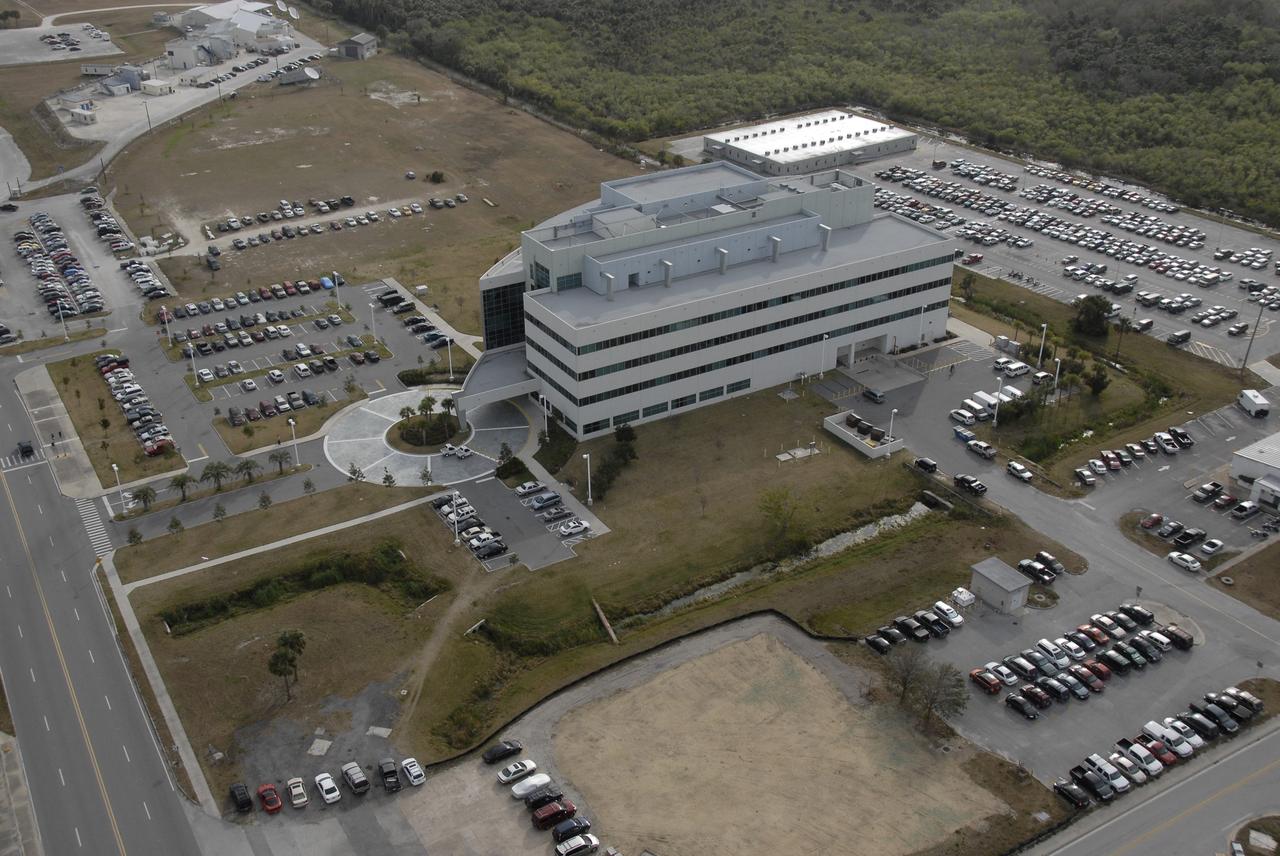
CAPE CANAVERAL, Fla. – – An aerial view of the Operations Support Building II in the Launch Complex 39 Area at NASA's Kennedy Space Center in Florida. Photo credit: NASA/Kim Shiflett
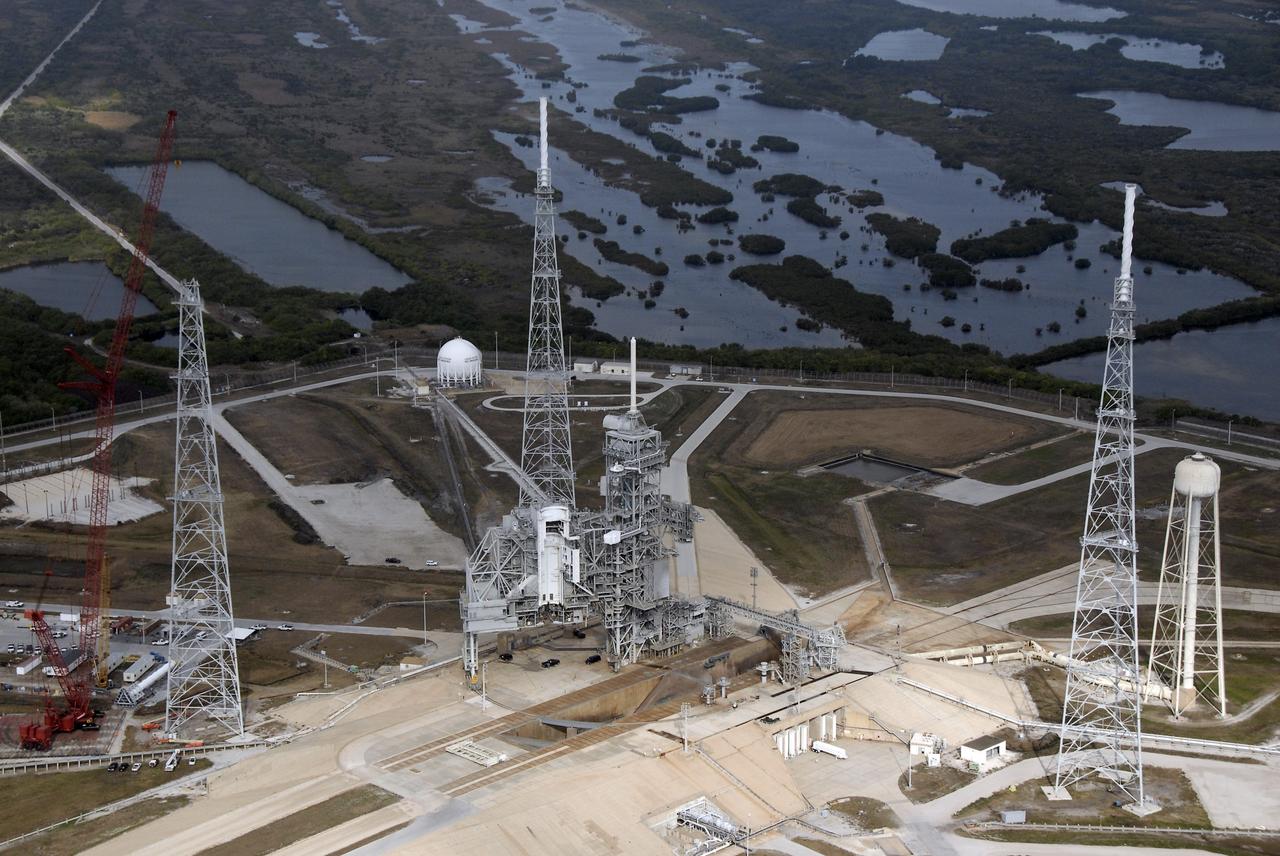
CAPE CANAVERAL, Fla. – An aerial view of the newly erected lightning towers on Launch Pad 39B at NASA's Kennedy Space Center. The two towers at center and right contain the lightning mast on top; the one at left does not. At center are the fixed and rotating service structures that have served the Space Shuttle Program. In the foreground is the tower that holds 300,000 gallons of water used for sound suppression during a shuttle liftoff. The new lightning protection system is being built for the Constellation Program and Ares/Orion launches. Each of the towers is 500 feet tall with an additional 100-foot fiberglass mast atop supporting a wire catenary system. This improved lightning protection system allows for the taller height of the Ares I rocket compared to the space shuttle. Pad 39B will be the site of the first Ares rocket launch, including the Ares I-X test flight that is targeted for July 2009. Photo credit: NASA/Kim Shiflett
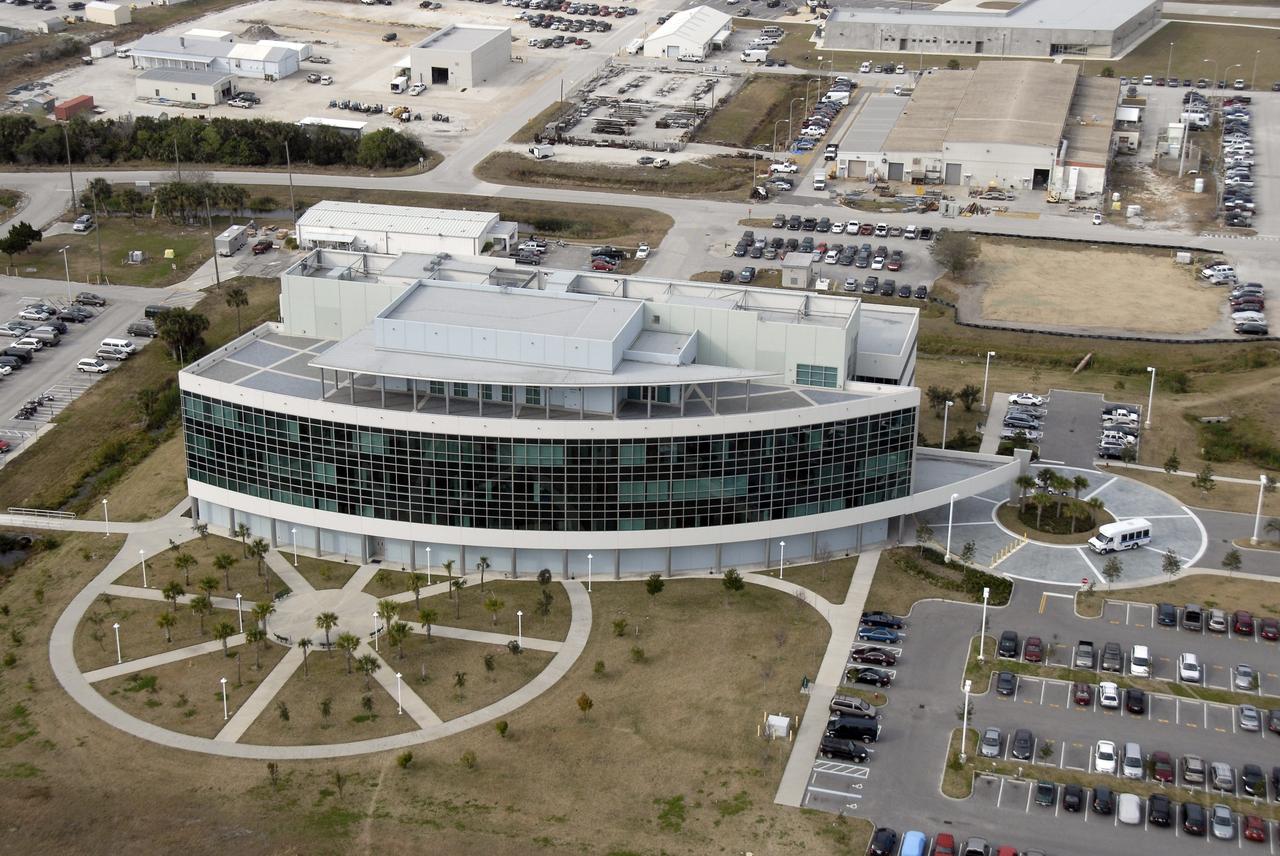
CAPE CANAVERAL, Fla. – An aerial view of the Operations Support Building II in the Launch Complex 39 Area at NASA's Kennedy Space Center in Florida. The panorama of windows faces the launch pads. Photo credit: NASA/Kim Shiflett
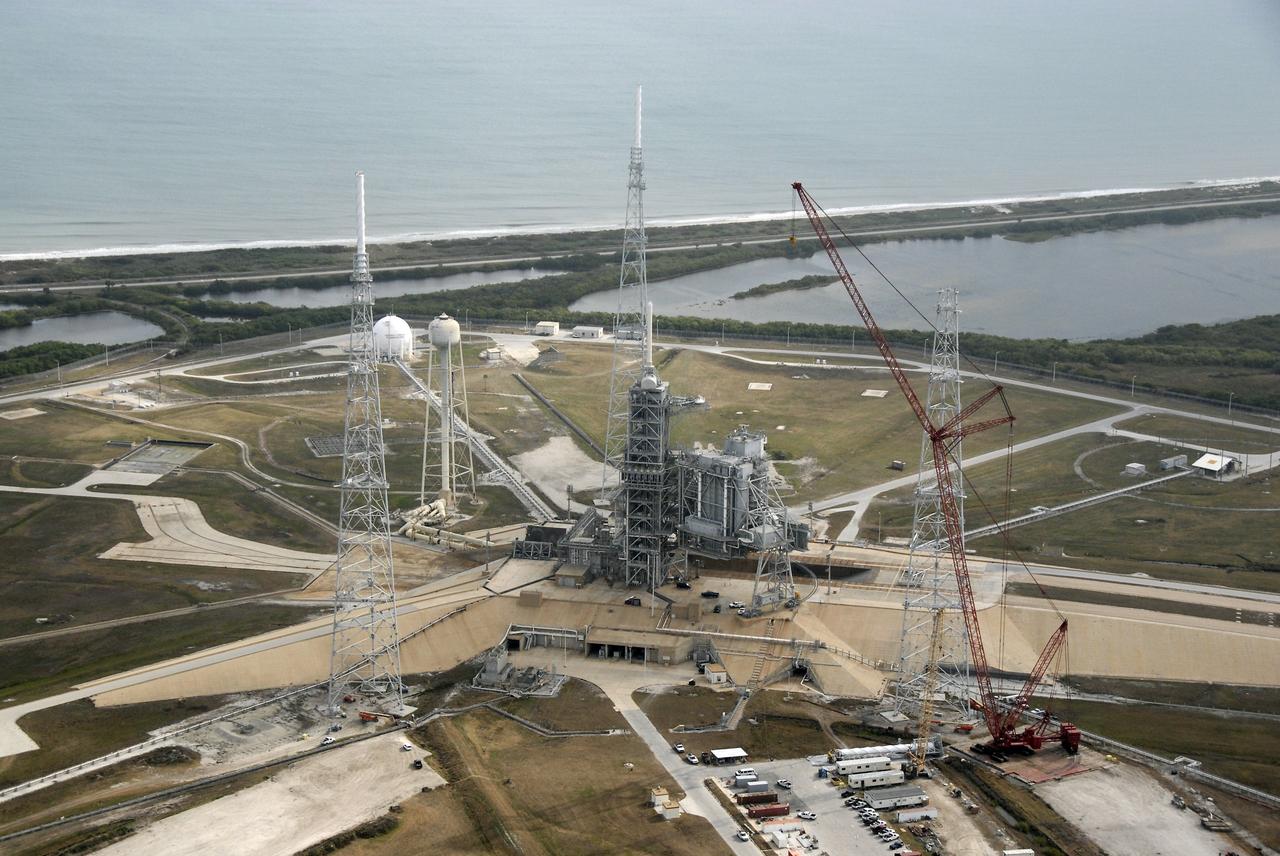
CAPE CANAVERAL, Fla. – An aerial view of the newly erected lightning towers on Launch Pad 39B at NASA's Kennedy Space Center in Florida. The two towers at left and center contain the lightning mast on top; the one at right does not. At center are the fixed and rotating service structures that have served the Space Shuttle Program. Beyond the pad is the Atlantic Ocean. The new lightning protection system is being built for the Constellation Program and Ares/Orion launches. Each of the towers is 500 feet tall with an additional 100-foot fiberglass mast atop supporting a wire catenary system. This improved lightning protection system allows for the taller height of the Ares I rocket compared to the space shuttle. Pad 39B will be the site of the first Ares vehicle launch, including the Ares I-X test flight that is targeted for July 2009. Photo credit: NASA/Kim Shiflett

NASA’s top four-fifths of the SLS (Space Launch System) core stage for the Artemis III mission is offloaded from the agency’s Pegasus barge on Tuesday, April 28, 2026, after arriving at the Kennedy Space Center in Florida the prior day. The four-fifths contains the liquid hydrogen tank, liquid oxygen tank, intertank, and forward skirt of the SLS rocket and will be joined with the remaining core stage segments at Kennedy’s Vehicle Assembly Building High Bay 2 prior to rocket stacking operations. Artemis III will launch astronauts to Earth’s orbit aboard the Orion spacecraft on top of SLS to test rendezvous and docking capabilities between Orion and commercial spacecraft needed to land Artemis IV astronauts on the Moon in 2028.

NASA’s top four-fifths of the SLS (Space Launch System) core stage for the Artemis III mission is offloaded from the agency’s Pegasus barge on Tuesday, April 28, 2026, after arriving at the Kennedy Space Center in Florida the prior day. The four-fifths contains the liquid hydrogen tank, liquid oxygen tank, intertank, and forward skirt of the SLS rocket and will be joined with the remaining core stage segments at Kennedy’s Vehicle Assembly Building High Bay 2 prior to rocket stacking operations. Artemis III will launch astronauts to Earth’s orbit aboard the Orion spacecraft on top of SLS to test rendezvous and docking capabilities between Orion and commercial spacecraft needed to land Artemis IV astronauts on the Moon in 2028.
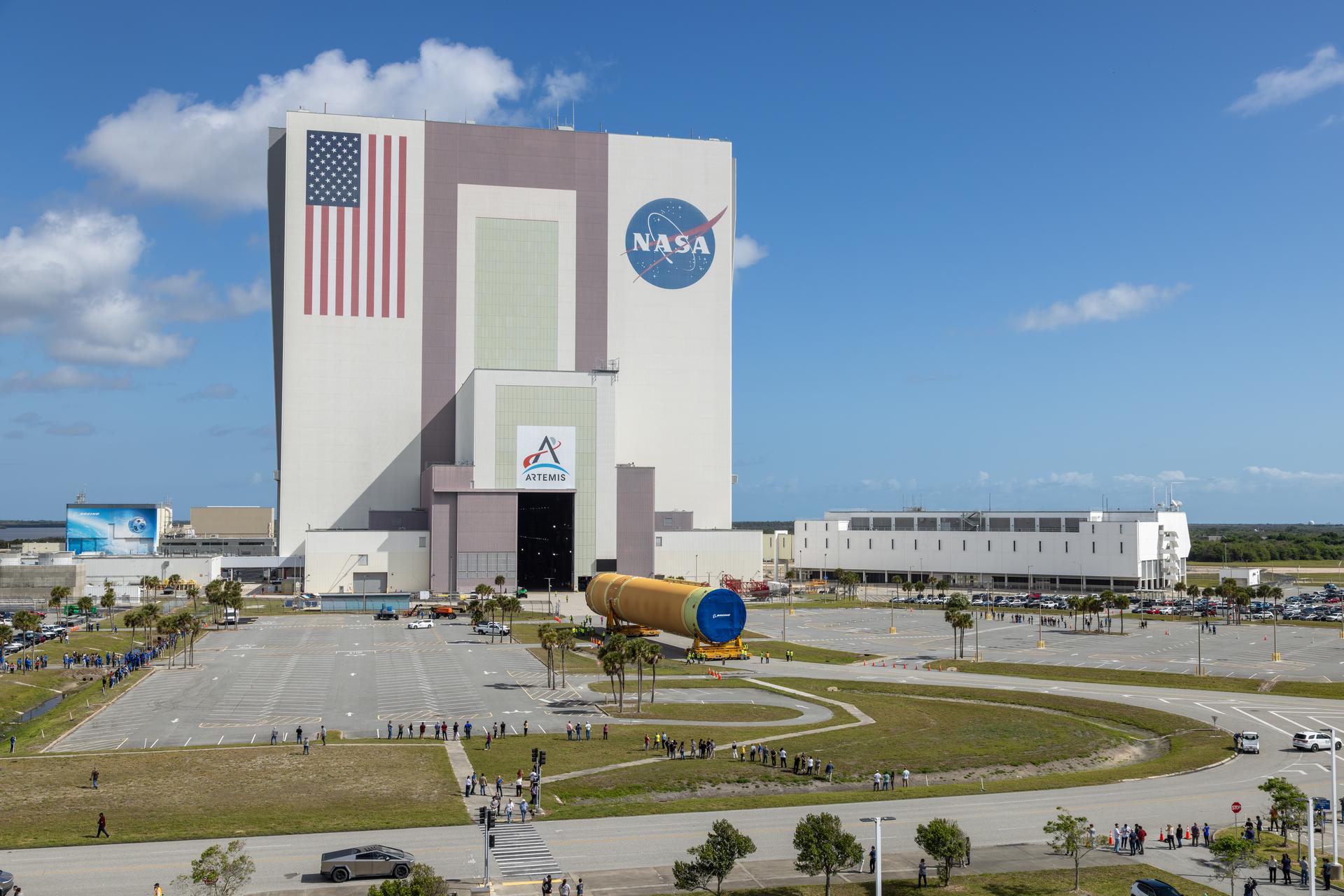
NASA’s top four-fifths of the SLS (Space Launch System) core stage for the Artemis III mission is offloaded from the agency’s Pegasus barge on Tuesday, April 28, 2026, after arriving at the Kennedy Space Center in Florida the prior day. The four-fifths contains the liquid hydrogen tank, liquid oxygen tank, intertank, and forward skirt of the SLS rocket and will be joined with the remaining core stage segments at Kennedy’s Vehicle Assembly Building High Bay 2 prior to rocket stacking operations. Artemis III will launch astronauts to Earth’s orbit aboard the Orion spacecraft on top of SLS to test rendezvous and docking capabilities between Orion and commercial spacecraft needed to land Artemis IV astronauts on the Moon in 2028.

NASA’s top four-fifths of the SLS (Space Launch System) core stage for the Artemis III mission is offloaded from the agency’s Pegasus barge on Tuesday, April 28, 2026, after arriving at the Kennedy Space Center in Florida the prior day. The four-fifths contains the liquid hydrogen tank, liquid oxygen tank, intertank, and forward skirt of the SLS rocket and will be joined with the remaining core stage segments at Kennedy’s Vehicle Assembly Building High Bay 2 prior to rocket stacking operations. Artemis III will launch astronauts to Earth’s orbit aboard the Orion spacecraft on top of SLS to test rendezvous and docking capabilities between Orion and commercial spacecraft needed to land Artemis IV astronauts on the Moon in 2028.