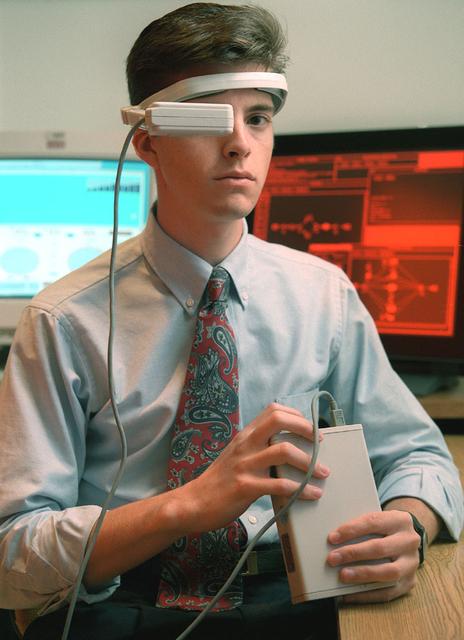
Virtual Reality (VR) can provide cost effective methods to design and evaluate components and systems for maintenance and refurbishment operations. Marshall SPace Flight Center (MSFC) is begirning to utilize VR for design analysis in the X-34 experimental reusable space vehicle. Analysts at MSFC's Computer Applications and Virtual Environments (CAVE) used Head Mounted Displays (HMD) (pictured), spatial trackers and gesture inputs as a means to animate or inhabit a properly sized virtual human model. These models are used in a VR scenario as a way to determine functionality of space and maintenance requirements for the virtual X-34. The primary functions of the virtual X-34 mockup is to support operations development and design analysis for engine removal, the engine compartment and the aft fuselage. This capability provides general visualization support to engineers and designers at MSFC and to the System Design Freeze Review at Orbital Sciences Corporation (OSC).
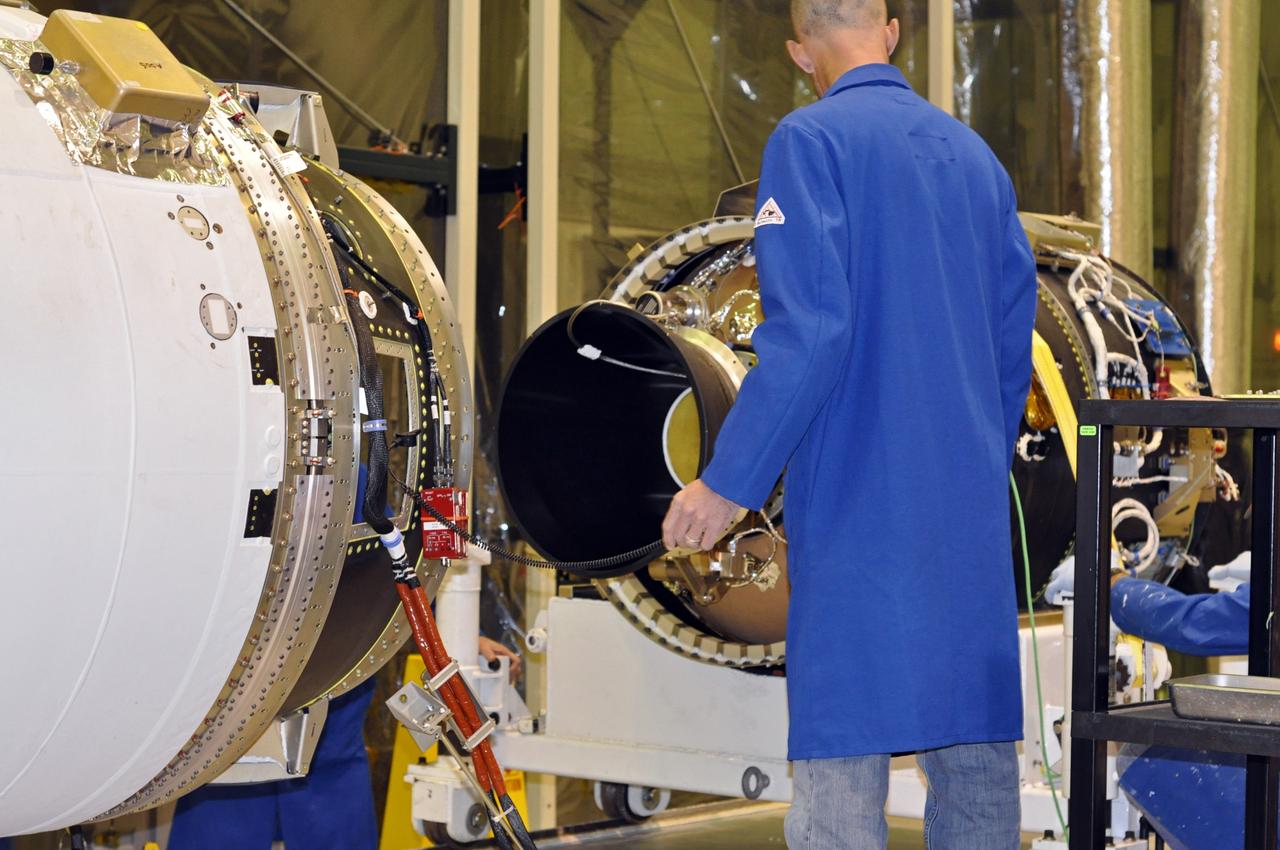
VANDENBERG AIR FORCE BASE, Calif. -- Stage 2 is separated from stage 3 of an Orbital Sciences Corp. Pegasus rocket in processing facility 1555 at Vandenberg Air Force Base (VAFB) in California to reinstall some RF cabling. The stages were remated after the installation was complete. The rocket is being prepared to launch NASA's Nuclear Spectroscopic Telescope Array (NuSTAR) into space. After the rocket and spacecraft are processed at Vandenberg, they will be flown on the Orbital Sciences' L-1011 carrier aircraft to the Ronald Reagan Ballistic Missile Defense Test Site at the Pacific Ocean's Kwajalein Atoll for launch, targeted for no earlier than March 14. The high-energy x-ray telescope will conduct a census for black holes, map radioactive material in young supernovae remnants, and study the origins of cosmic rays and the extreme physics around collapsed stars. For more information, visit http://www.nasa.gov/nustar. Photo credit: NASA/Randy Beaudoin, VAFB
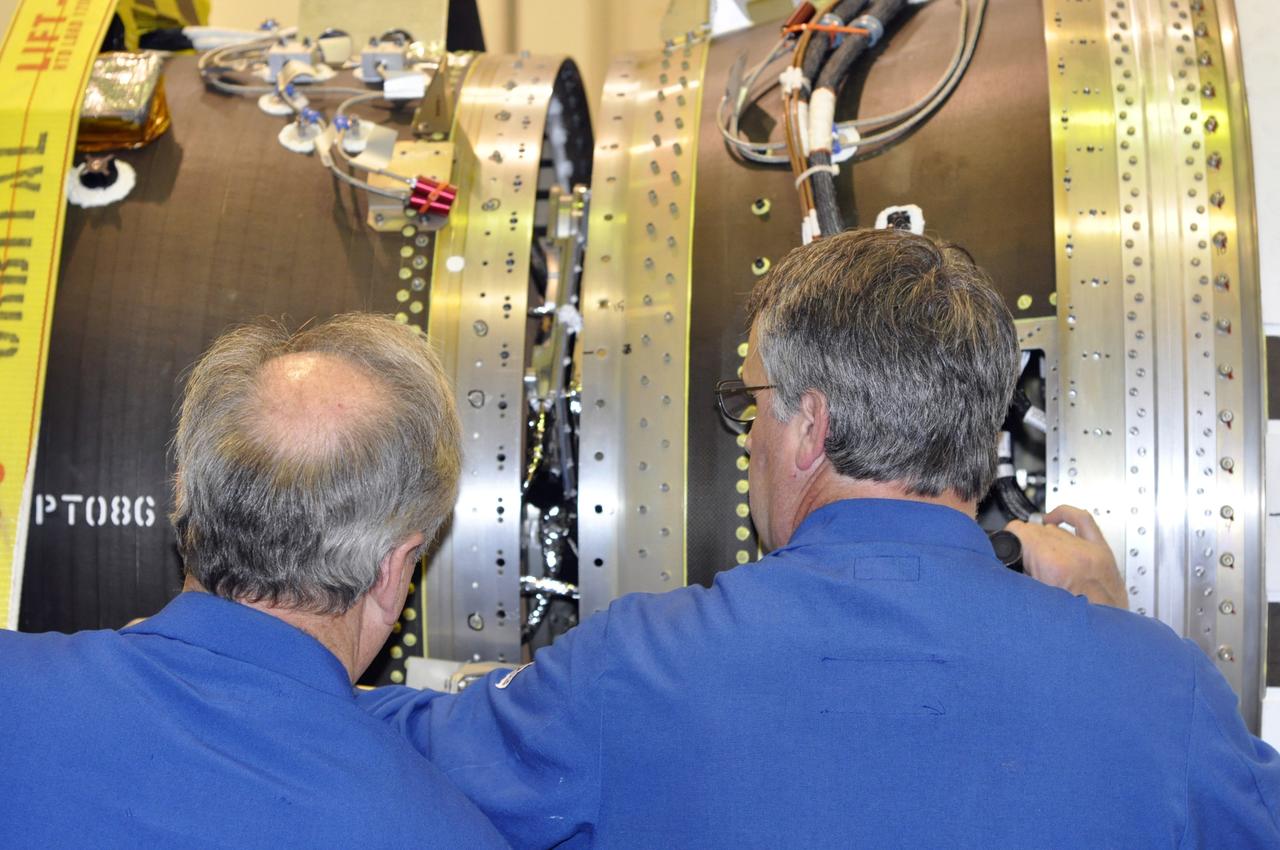
VANDENBERG AIR FORCE BASE, Calif. -- Orbital Sciences Corp. engineers oversee the remating of stages 2 and 3 of the Pegasus rocket in processing facility 1555 at Vandenberg Air Force Base (VAFB) in California. The stages were remated after some RF electrical cabling was reinstalled. The rocket is being prepared to launch NASA's Nuclear Spectroscopic Telescope Array (NuSTAR) into space. After the rocket and spacecraft are processed at Vandenberg, they will be flown on the Orbital Sciences' L-1011 carrier aircraft to the Ronald Reagan Ballistic Missile Defense Test Site at the Pacific Ocean's Kwajalein Atoll for launch, targeted for no earlier than March 14. The high-energy x-ray telescope will conduct a census for black holes, map radioactive material in young supernovae remnants, and study the origins of cosmic rays and the extreme physics around collapsed stars. For more information, visit http://www.nasa.gov/nustar. Photo credit: NASA/Randy Beaudoin, VAFB
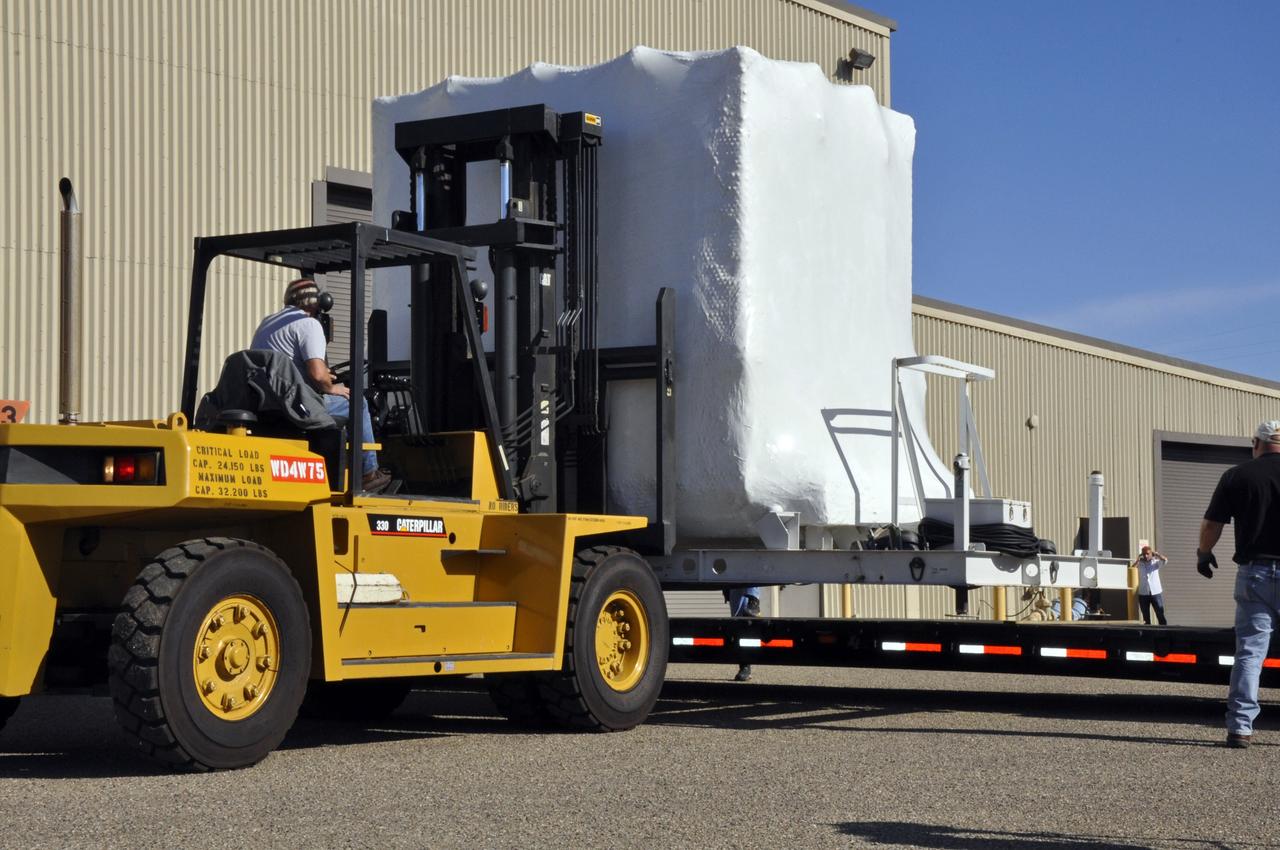
VANDENBERG AIR FORCE BASE, Calif. -- A forklift is enlisted to transfer NASA's Nuclear Spectroscopic Telescope Array (NuSTAR), enclosed in an environmentally controlled shipping container, from the tractor-trailer on which it arrived into the airlock of processing facility 1555 at Vandenberg Air Force Base (VAFB) in California. The spacecraft arrived at 7:52 a.m. PST after a cross-country trip from Orbital Sciences' manufacturing plant in Dulles, Va., which began Jan. 24. The spacecraft will be offloaded into the processing hangar, joining the Pegasus XL rocket that is set to carry it to space. After NuSTAR is removed from its shipping container, checkout and other processing activity will begin. The spacecraft will be integrated with the Pegasus in mid-February and encapsulation in the vehicle fairing will follow. After processing is completed, the rocket and spacecraft will be flown on Orbital's L-1011 carrier aircraft to the Ronald Reagan Ballistic Missile Defense Test Site at the Pacific Ocean's Kwajalein Atoll for launch in March. The high-energy x-ray telescope will conduct a census for black holes, map radioactive material in young supernovae remnants, and study the origins of cosmic rays and the extreme physics around collapsed stars. For more information, visit http://www.nasa.gov/nustar. Photo credit: NASA/Randy Beaudoin, VAFB
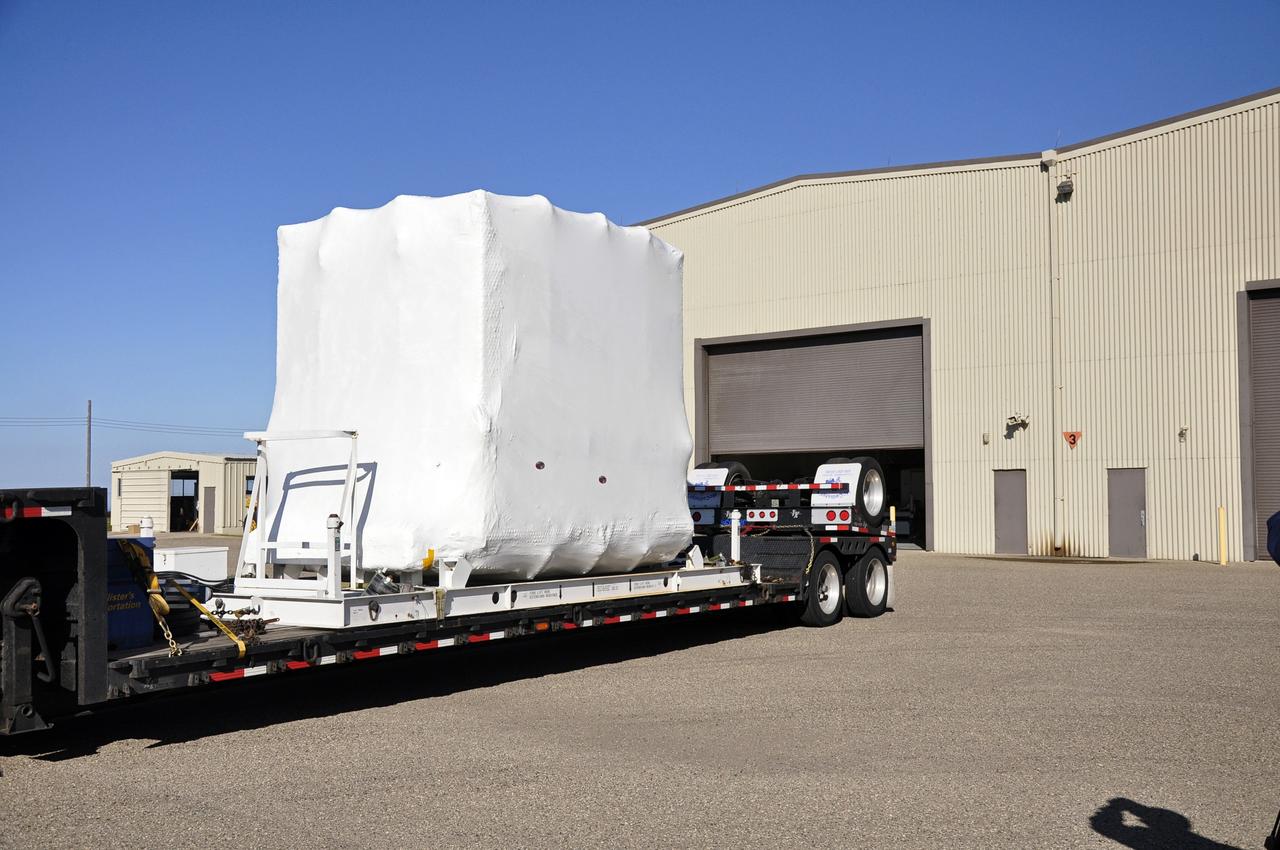
VANDENBERG AIR FORCE BASE, Calif. -- Preparations are under way at Vandenberg Air Force Base (VAFB) in California to transfer NASA's newly arrived Nuclear Spectroscopic Telescope Array (NuSTAR), enclosed in an environmentally controlled shipping container, into the airlock of processing facility 1555. The spacecraft arrived at 7:52 a.m. PST after a cross-country trip from Orbital Sciences' manufacturing plant in Dulles, Va., which began Jan. 24. The spacecraft will be offloaded into the processing hangar, joining the Pegasus XL rocket that is set to carry it to space. After NuSTAR is removed from its shipping container, checkout and other processing activity will begin. The spacecraft will be integrated with the Pegasus in mid-February and encapsulation in the vehicle fairing will follow. After processing is completed, the rocket and spacecraft will be flown on Orbital's L-1011 carrier aircraft to the Ronald Reagan Ballistic Missile Defense Test Site at the Pacific Ocean's Kwajalein Atoll for launch in March. The high-energy x-ray telescope will conduct a census for black holes, map radioactive material in young supernovae remnants, and study the origins of cosmic rays and the extreme physics around collapsed stars. For more information, visit http://www.nasa.gov/nustar. Photo credit: NASA/Randy Beaudoin, VAFB
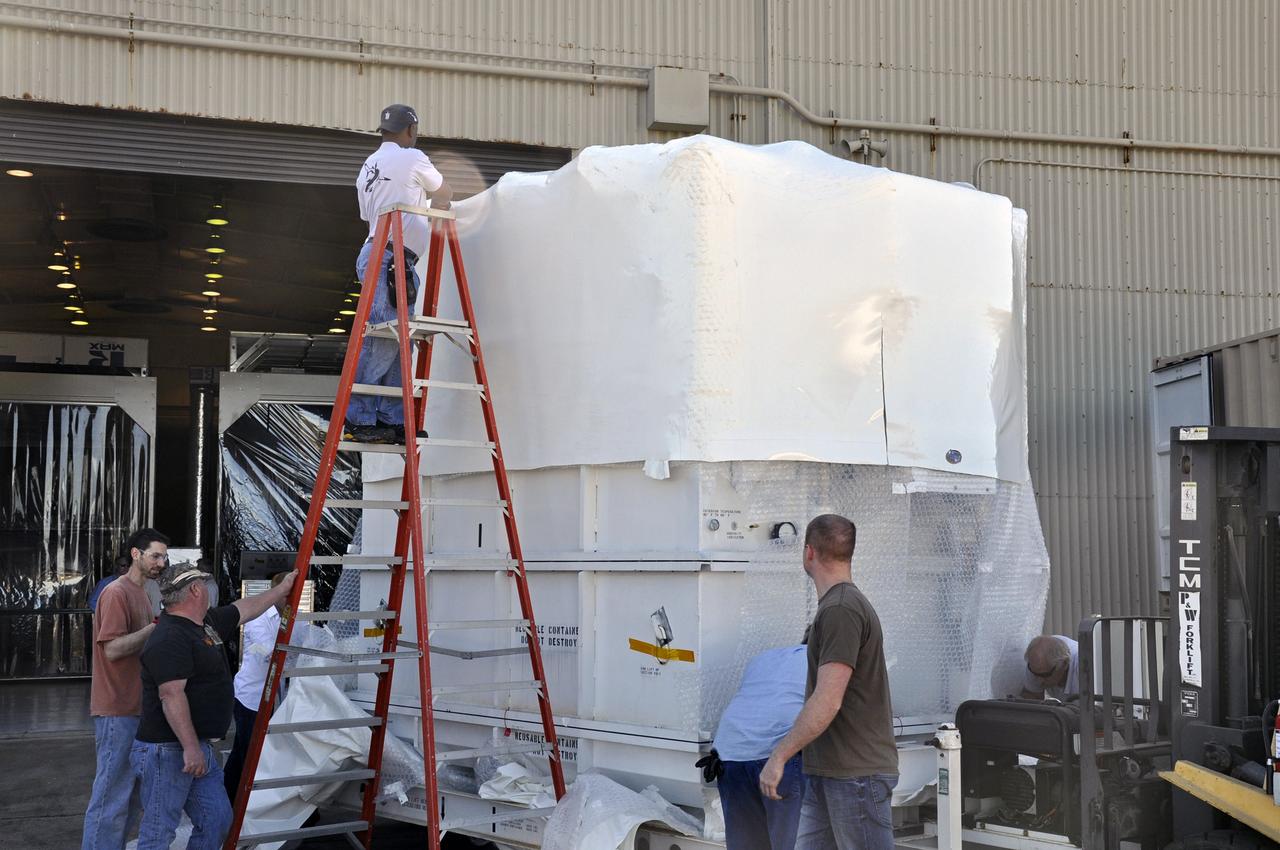
VANDENBERG AIR FORCE BASE, Calif. -- Workers unwrap the environmentally controlled shipping container enclosing NASA's Nuclear Spectroscopic Telescope Array (NuSTAR) in the airlock of processing facility 1555 at Vandenberg Air Force Base (VAFB) in California. The spacecraft arrived at 7:52 a.m. PST after a cross-country trip from Orbital Sciences' manufacturing plant in Dulles, Va., which began Jan. 24. The spacecraft will be offloaded into the processing hangar, joining the Pegasus XL rocket that is set to carry it to space. After NuSTAR is removed from its shipping container, checkout and other processing activity will begin. The spacecraft will be integrated with the Pegasus in mid-February and encapsulation in the vehicle fairing will follow. After processing is completed, the rocket and spacecraft will be flown on Orbital's L-1011 carrier aircraft to the Ronald Reagan Ballistic Missile Defense Test Site at the Pacific Ocean's Kwajalein Atoll for launch in March. The high-energy x-ray telescope will conduct a census for black holes, map radioactive material in young supernovae remnants, and study the origins of cosmic rays and the extreme physics around collapsed stars. For more information, visit http://www.nasa.gov/nustar. Photo credit: NASA/Randy Beaudoin, VAFB
VANDENBERG AIR FORCE BASE, Calif. -- Workers position the payload transporter supporting the environmentally controlled shipping container enclosing NASA's Nuclear Spectroscopic Telescope Array (NuSTAR) for transfer from the airlock to the high bay of processing facility 1555 at Vandenberg Air Force Base (VAFB) in California. The spacecraft arrived at 7:52 a.m. PST after a cross-country trip from Orbital Sciences' manufacturing plant in Dulles, Va., which began Jan. 24. The spacecraft will be offloaded into the processing hangar, joining the Pegasus XL rocket that is set to carry it to space. After NuSTAR is removed from its shipping container, checkout and other processing activity will begin. The spacecraft will be integrated with the Pegasus in mid-February and encapsulation in the vehicle fairing will follow. After processing is completed, the rocket and spacecraft will be flown on Orbital's L-1011 carrier aircraft to the Ronald Reagan Ballistic Missile Defense Test Site at the Pacific Ocean's Kwajalein Atoll for launch in March. The high-energy x-ray telescope will conduct a census for black holes, map radioactive material in young supernovae remnants, and study the origins of cosmic rays and the extreme physics around collapsed stars. For more information, visit http://www.nasa.gov/nustar. Photo credit: NASA/Randy Beaudoin, VAFB
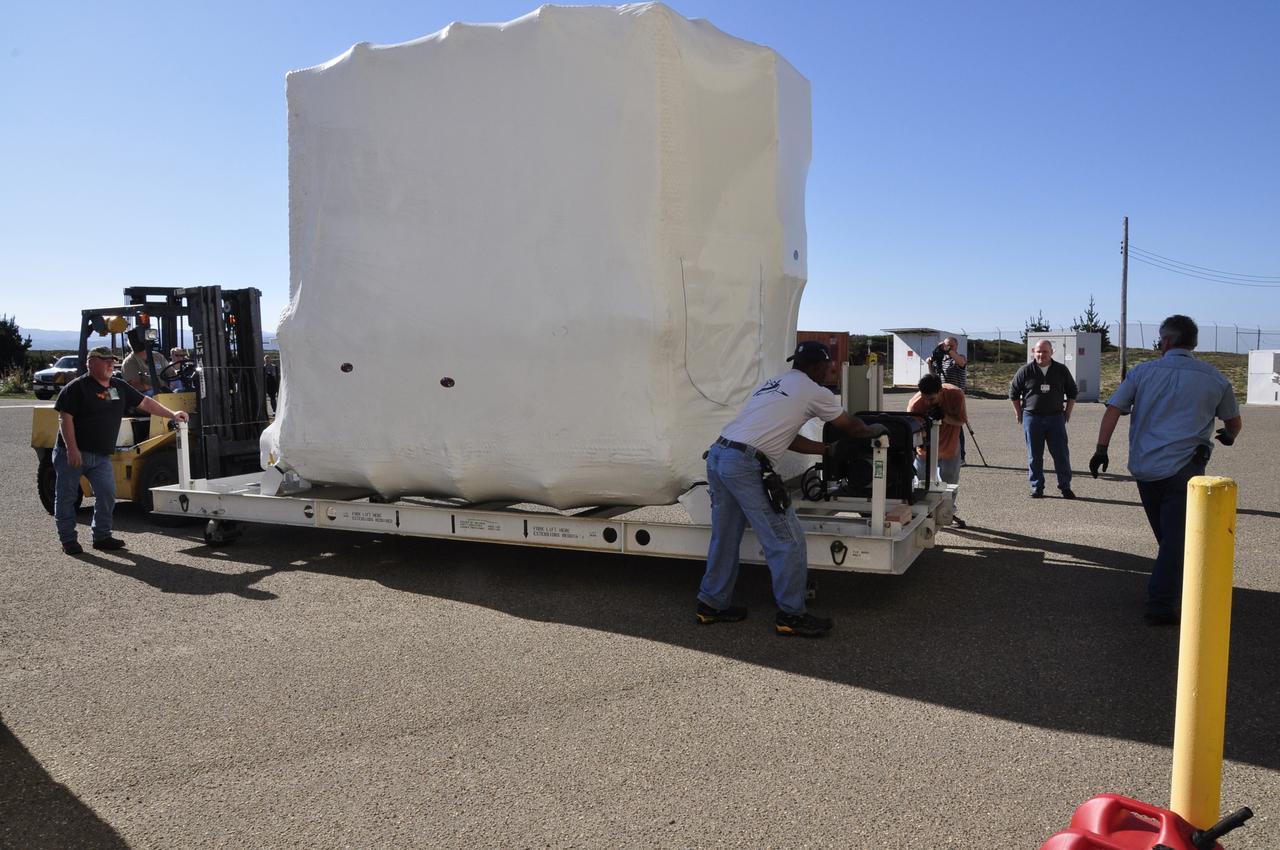
VANDENBERG AIR FORCE BASE, Calif. -- Workers position NASA's Nuclear Spectroscopic Telescope Array (NuSTAR), enclosed in an environmentally controlled shipping container, onto a payload transporter for transfer of the telescope into the airlock of processing facility 1555 at Vandenberg Air Force Base (VAFB) in California. The spacecraft arrived at 7:52 a.m. PST after a cross-country trip from Orbital Sciences' manufacturing plant in Dulles, Va., which began Jan. 24. The spacecraft will be offloaded into the processing hangar, joining the Pegasus XL rocket that is set to carry it to space. After NuSTAR is removed from its shipping container, checkout and other processing activity will begin. The spacecraft will be integrated with the Pegasus in mid-February and encapsulation in the vehicle fairing will follow. After processing is completed, the rocket and spacecraft will be flown on Orbital's L-1011 carrier aircraft to the Ronald Reagan Ballistic Missile Defense Test Site at the Pacific Ocean's Kwajalein Atoll for launch in March. The high-energy x-ray telescope will conduct a census for black holes, map radioactive material in young supernovae remnants, and study the origins of cosmic rays and the extreme physics around collapsed stars. For more information, visit http://www.nasa.gov/nustar. Photo credit: NASA/Randy Beaudoin, VAFB
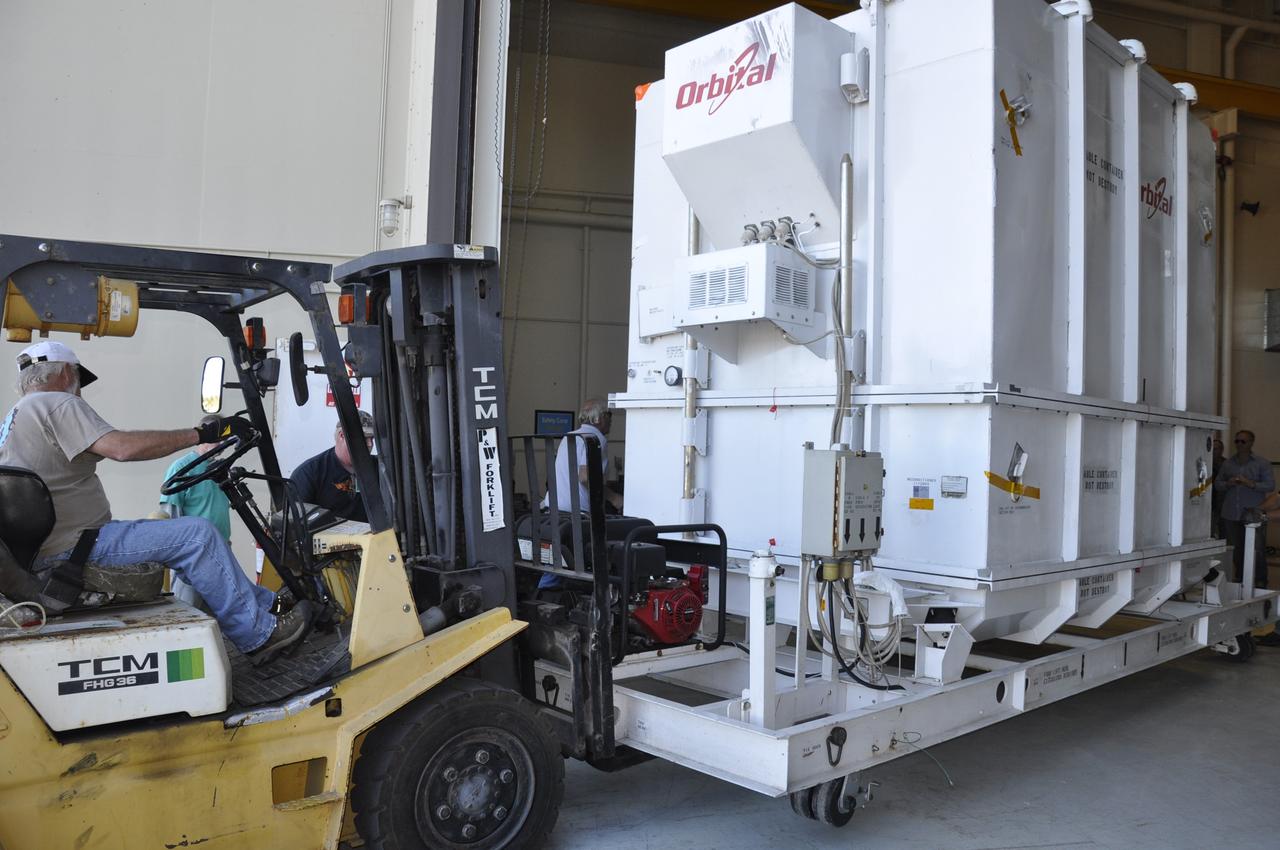
VANDENBERG AIR FORCE BASE, Calif. -- A forklift is enlisted to transfer the environmentally controlled shipping container enclosing NASA's Nuclear Spectroscopic Telescope Array (NuSTAR) from the airlock to the high bay of processing facility 1555 at Vandenberg Air Force Base (VAFB) in California. The spacecraft arrived at 7:52 a.m. PST after a cross-country trip from Orbital Sciences' manufacturing plant in Dulles, Va., which began Jan. 24. The spacecraft will be offloaded into the processing hangar, joining the Pegasus XL rocket that is set to carry it to space. After NuSTAR is removed from its shipping container, checkout and other processing activity will begin. The spacecraft will be integrated with the Pegasus in mid-February and encapsulation in the vehicle fairing will follow. After processing is completed, the rocket and spacecraft will be flown on Orbital's L-1011 carrier aircraft to the Ronald Reagan Ballistic Missile Defense Test Site at the Pacific Ocean's Kwajalein Atoll for launch in March. The high-energy x-ray telescope will conduct a census for black holes, map radioactive material in young supernovae remnants, and study the origins of cosmic rays and the extreme physics around collapsed stars. For more information, visit http://www.nasa.gov/nustar. Photo credit: NASA/Randy Beaudoin, VAFB
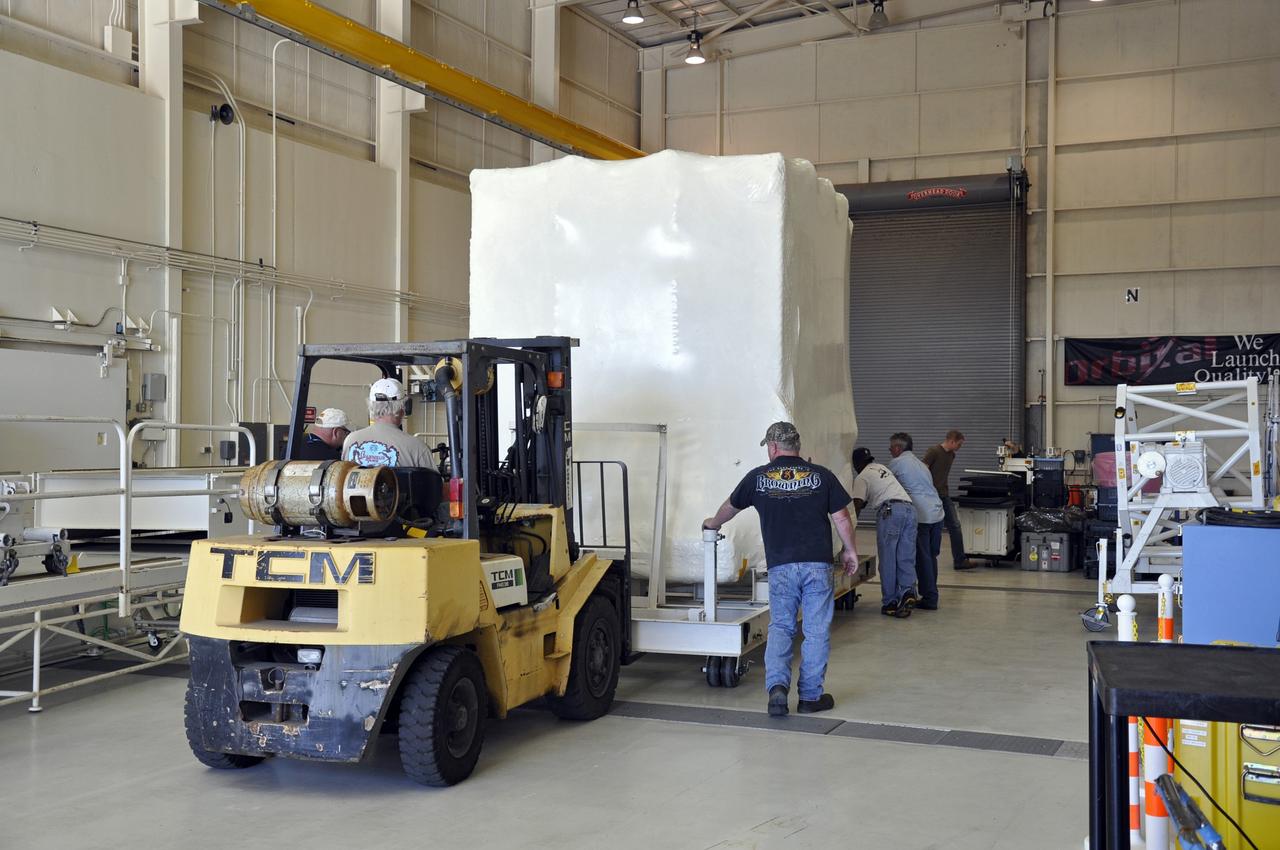
VANDENBERG AIR FORCE BASE, Calif. -- Workers position the environmentally controlled shipping container enclosing NASA's Nuclear Spectroscopic Telescope Array (NuSTAR) in the airlock of processing facility 1555 at Vandenberg Air Force Base (VAFB) in California. The spacecraft arrived at 7:52 a.m. PST after a cross-country trip from Orbital Sciences' manufacturing plant in Dulles, Va., which began Jan. 24. The spacecraft will be offloaded into the processing hangar, joining the Pegasus XL rocket that is set to carry it to space. After NuSTAR is removed from its shipping container, checkout and other processing activity will begin. The spacecraft will be integrated with the Pegasus in mid-February and encapsulation in the vehicle fairing will follow. After processing is completed, the rocket and spacecraft will be flown on Orbital's L-1011 carrier aircraft to the Ronald Reagan Ballistic Missile Defense Test Site at the Pacific Ocean's Kwajalein Atoll for launch in March. The high-energy x-ray telescope will conduct a census for black holes, map radioactive material in young supernovae remnants, and study the origins of cosmic rays and the extreme physics around collapsed stars. For more information, visit http://www.nasa.gov/nustar. Photo credit: NASA/Randy Beaudoin, VAFB
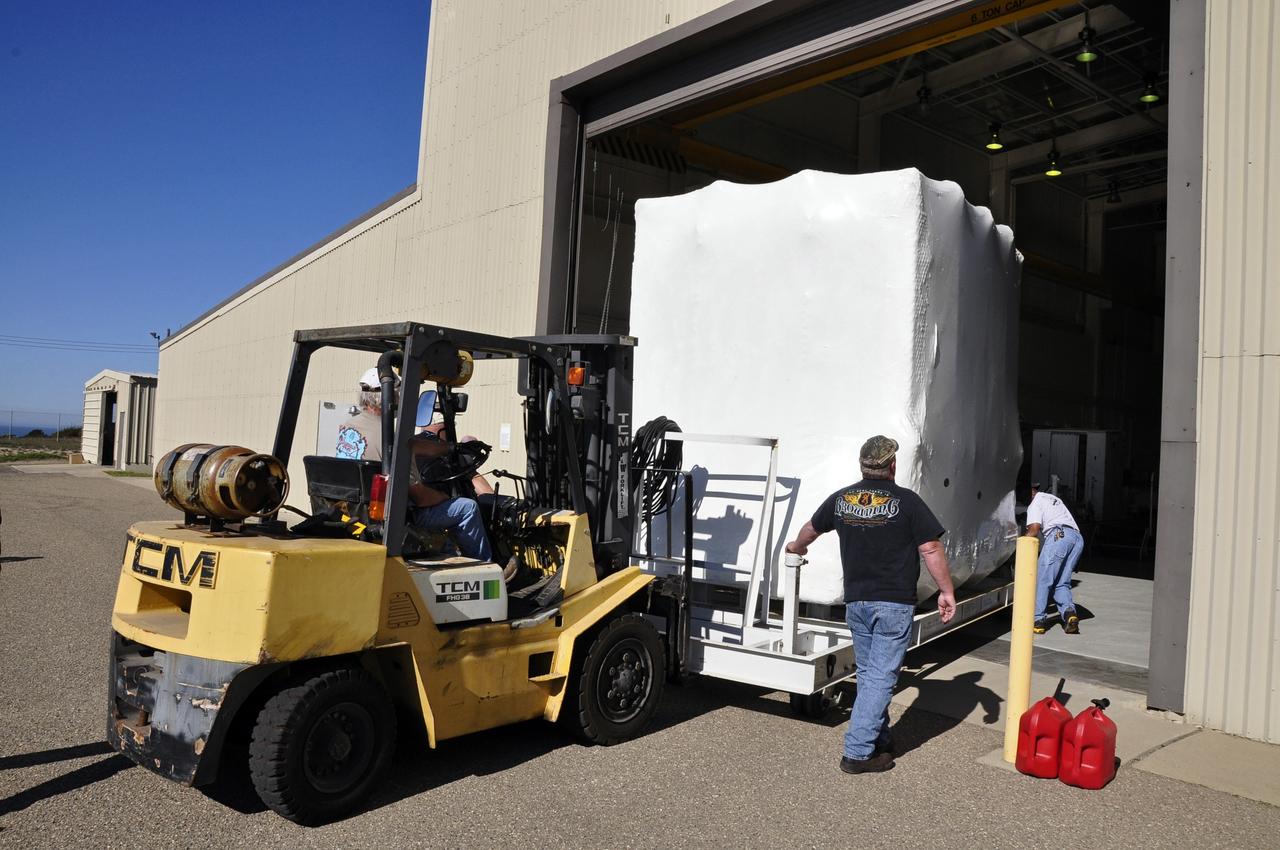
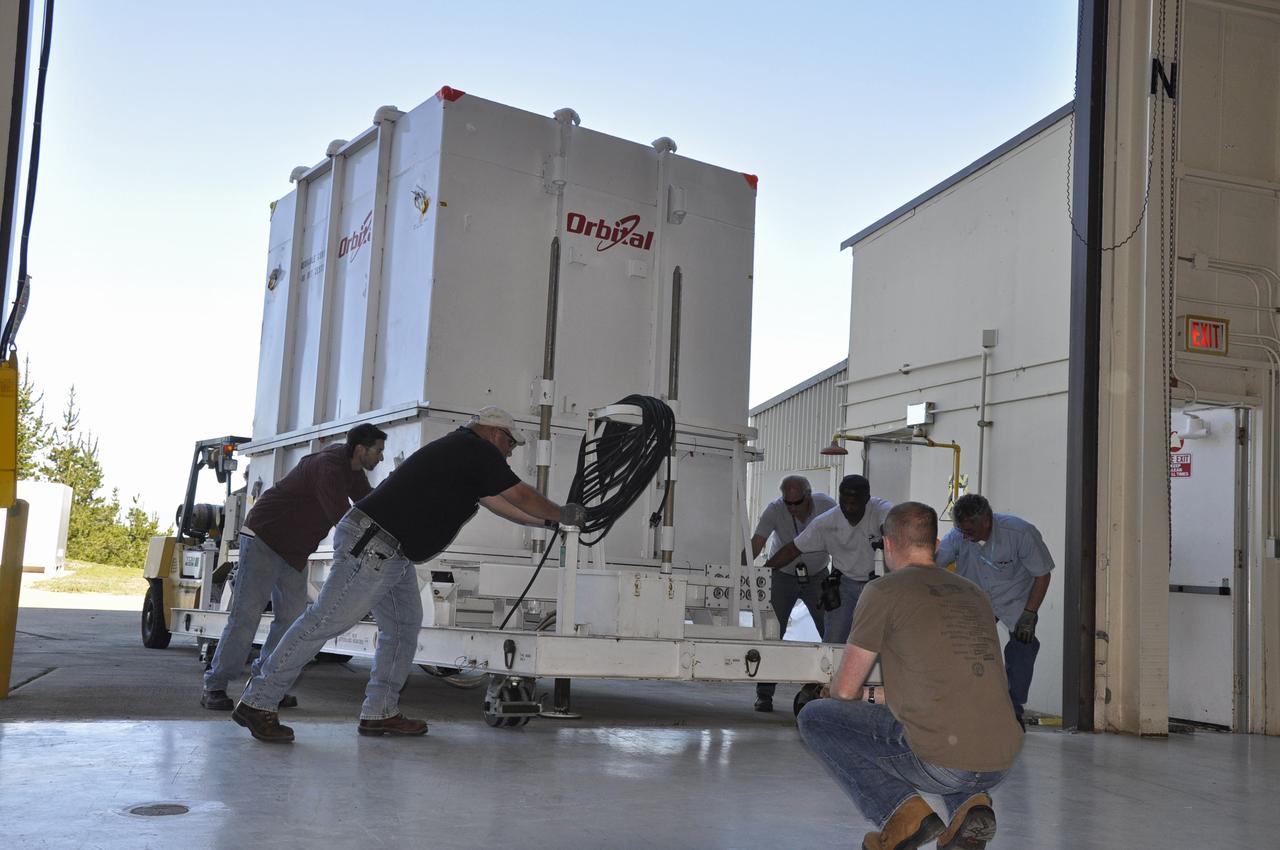
VANDENBERG AIR FORCE BASE, Calif. -- Workers roll the environmentally controlled shipping container enclosing NASA's Nuclear Spectroscopic Telescope Array (NuSTAR) through the door of the airlock of processing facility 1555 at Vandenberg Air Force Base (VAFB) in California. The spacecraft arrived at 7:52 a.m. PST after a cross-country trip from Orbital Sciences' manufacturing plant in Dulles, Va., which began Jan. 24. The spacecraft will be offloaded into the processing hangar, joining the Pegasus XL rocket that is set to carry it to space. After NuSTAR is removed from its shipping container, checkout and other processing activity will begin. The spacecraft will be integrated with the Pegasus in mid-February and encapsulation in the vehicle fairing will follow. After processing is completed, the rocket and spacecraft will be flown on Orbital's L-1011 carrier aircraft to the Ronald Reagan Ballistic Missile Defense Test Site at the Pacific Ocean's Kwajalein Atoll for launch in March. The high-energy x-ray telescope will conduct a census for black holes, map radioactive material in young supernovae remnants, and study the origins of cosmic rays and the extreme physics around collapsed stars. For more information, visit http://www.nasa.gov/nustar. Photo credit: NASA/Randy Beaudoin, VAFB
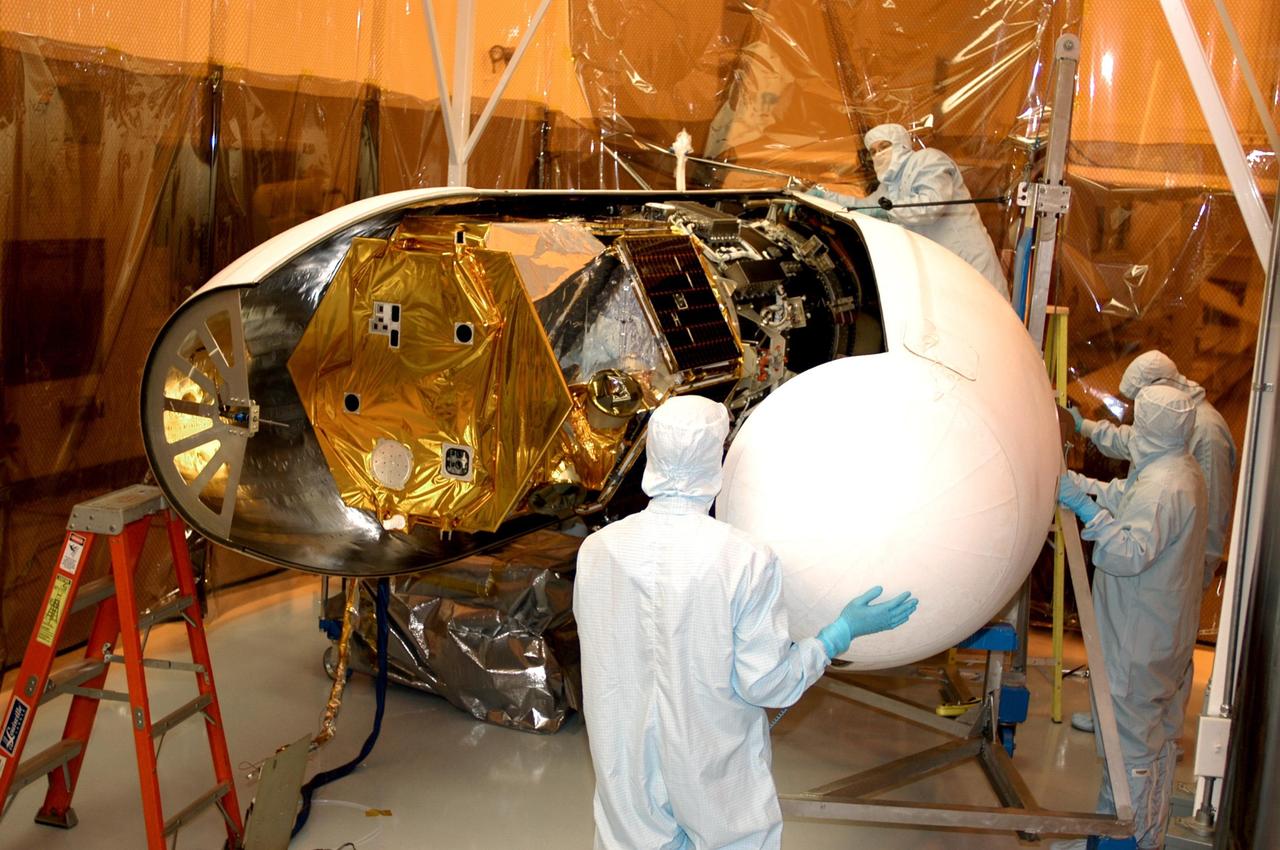
KENNEDY SPACE CENTER, FLA. -- Workers in the Multi-Purpose Processing Facility move the second half of the fairing into place around the Solar Radiation and Climate Experiment (SORCE) satellite (left). When complete, the satellite will be installed in the Pegasus XL launch vehicle. Built by Orbital Sciences Corporation (OSC), SORCE will study and measure solar irradiance as a source of energy in the Earth's atmosphere. The launch of SORCE is scheduled for Jan. 25 at 3:14 p.m. from Cape Canaveral Air Force Station, Fla. The drop of the Pegasus will be from OSC's L-1011 aircraft at an altitude of 39,000 feet over the Atlantic Ocean approximately 100 miles east-southeast of Cape Canaveral.
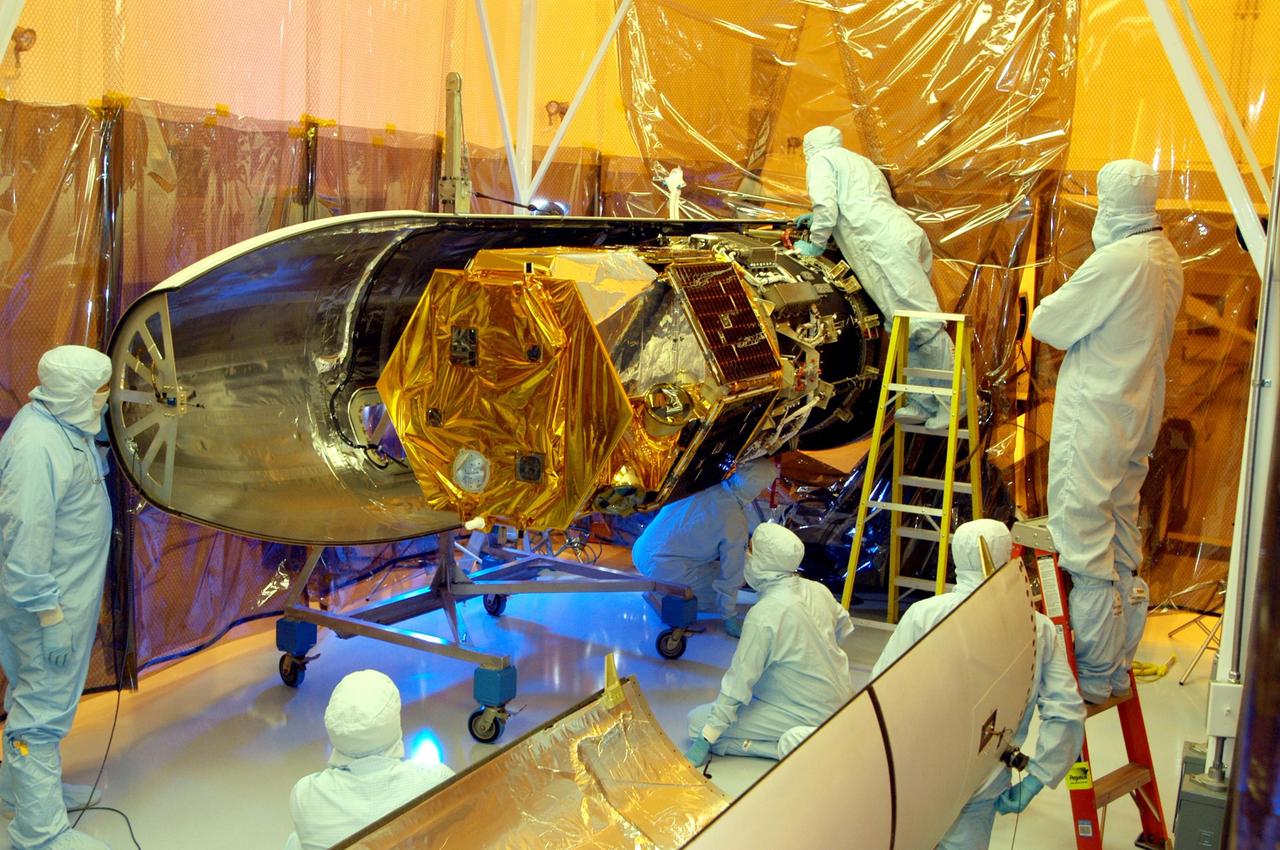
KENNEDY SPACE CENTER, FLA. - Workers in the Multi-Purpose Processing Facility look over the Solar Radiation and Climate Experiment (SORCE) satellite as the first half of the fairing is put in place. When completely encapsulated, the satellite will be installed in the Pegasus XL launch vehicle. Built by Orbital Sciences Corporation (OSC), SORCE will study and measure solar irradiance as a source of energy in the Earth's atmosphere. The launch of SORCE is scheduled for Jan. 25 at 3:14 p.m. from Cape Canaveral Air Force Station, Fla. The drop of the Pegasus will be from OSC's L-1011 aircraft at an altitude of 39,000 feet over the Atlantic Ocean approximately 100 miles east-southeast of Cape Canaveral.
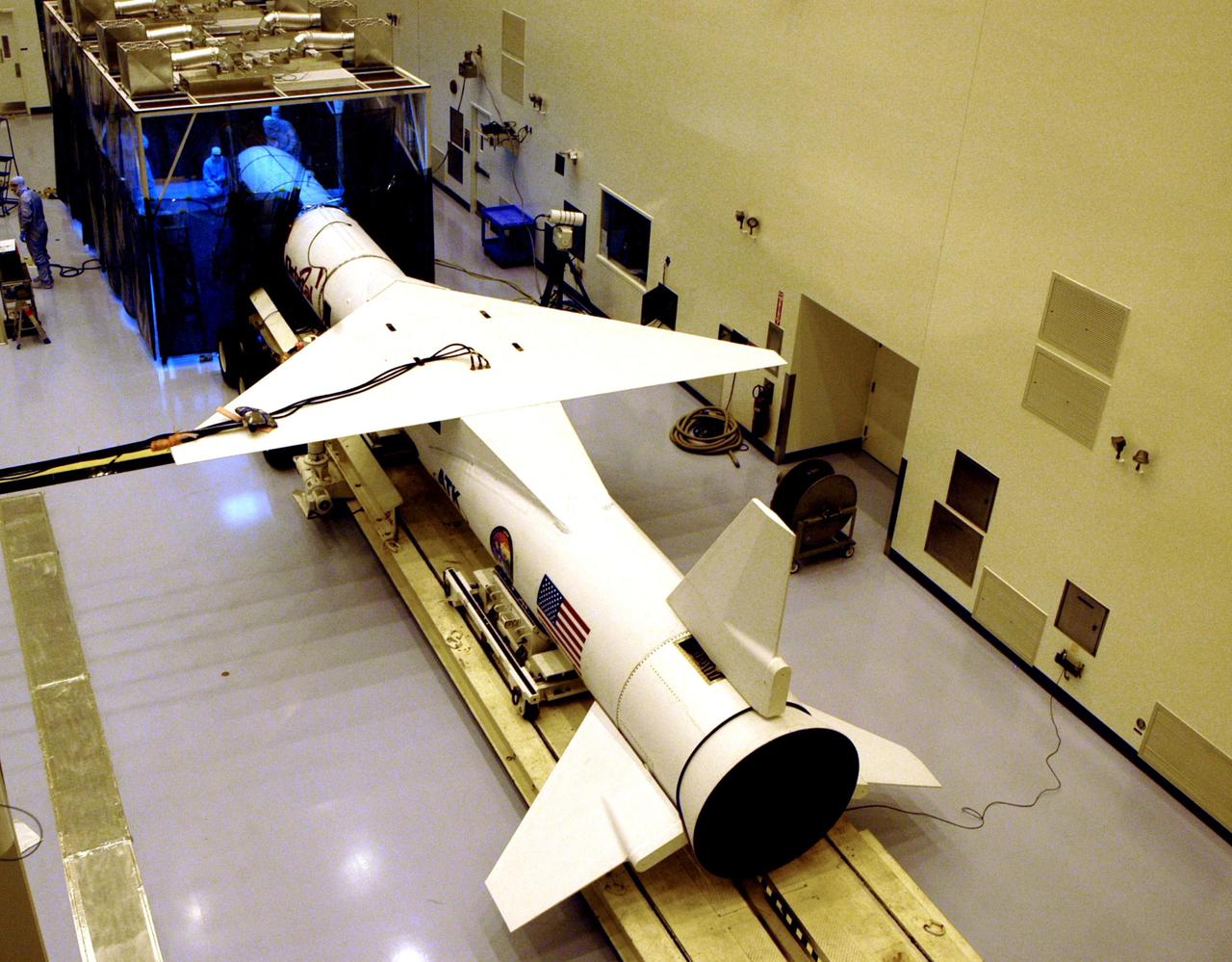
KENNEDY SPACE CENTER, FLA. -- In the Multi-Purpose Processing Facility, the Pegasus XL launch vehicle is ready to be moved toward the Solar Radiation and Climate Experiment (SORCE) satellite in front of it. Built by Orbital Sciences Corporation (OSC), SORCE will study and measure solar irradiance as a source of energy in the Earth's atmosphere. The launch of SORCE is scheduled for Jan. 25 at 3:14 p.m. from Cape Canaveral Air Force Station, Fla. The drop of the Pegasus will be from OSC's L-1011 aircraft at an altitude of 39,000 feet over the Atlantic Ocean approximately 100 miles east-southeast of Cape Canaveral.
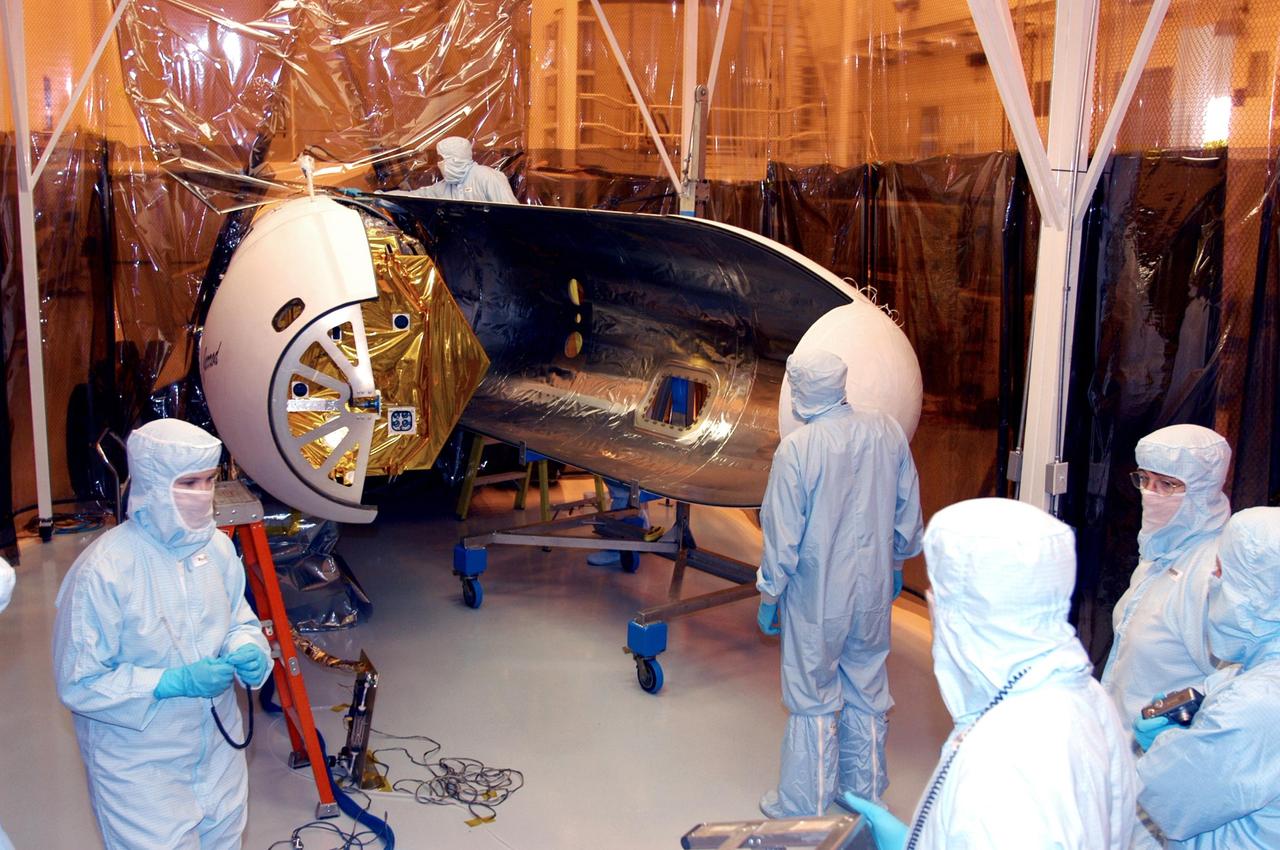
KENNEDY SPACE CENTER, FLA. - The second half of the fairing is moved toward the Solar Radiation and Climate Experiment (SORCE) satellite (left). Built by Orbital Sciences Corporation (OSC), SORCE will study and measure solar irradiance as a source of energy in the Earth's atmosphere. The launch of SORCE is scheduled for Jan. 25 at 3:14 p.m. from Cape Canaveral Air Force Station, Fla., from a Pegasus XL launch vehicle. The drop of the Pegasus will be from OSC's L-1011 aircraft at an altitude of 39,000 feet over the Atlantic Ocean approximately 100 miles east-southeast of Cape Canaveral.
KENNEDY SPACE CENTER, FLA. -- The first half of the fairing is placed around the Solar Radiation and Climate Experiment (SORCE) satellite in the Multi-Purpose Processing Facility. When completely encapsulated, the satellite will be installed in the Pegasus XL launch vehicle. Built by Orbital Sciences Corporation (OSC), SORCE will study and measure solar irradiance as a source of energy in the Earth's atmosphere. The launch of SORCE is scheduled for Jan. 25 at 3:14 p.m. from Cape Canaveral Air Force Station, Fla. The drop of the Pegasus will be from OSC's L-1011 aircraft at an altitude of 39,000 feet over the Atlantic Ocean approximately 100 miles east-southeast of Cape Canaveral.
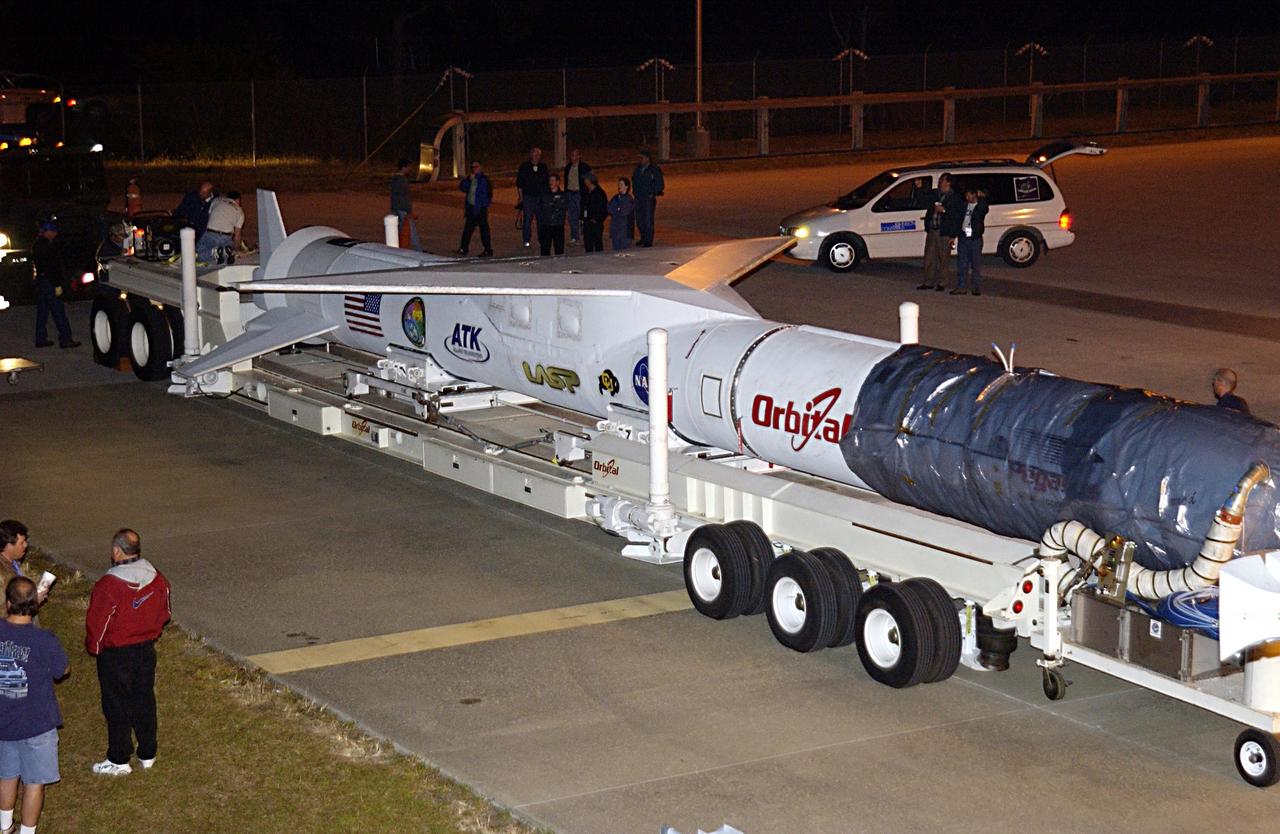
KENNEDY SPACE CENTER, FLA. - The Pegasus XL launch vehicle, with the Solar Radiation and Climate Experiment (SORCE) satellite aboard, is ready for transfer to Cape Canaveral Air Force Station (CCAFS), Fla. Built by Orbital Sciences Corporation (OSC), SORCE will study and measure solar irradiance as a source of energy in the Earth's atmosphere. The launch of SORCE is scheduled for Jan. 25 at 3:14 p.m. from CCAFS. The drop of the Pegasus will be from OSC's L-1011 aircraft at an altitude of 39,000 feet over the Atlantic Ocean approximately 100 miles east-southeast of Cape Canaveral.
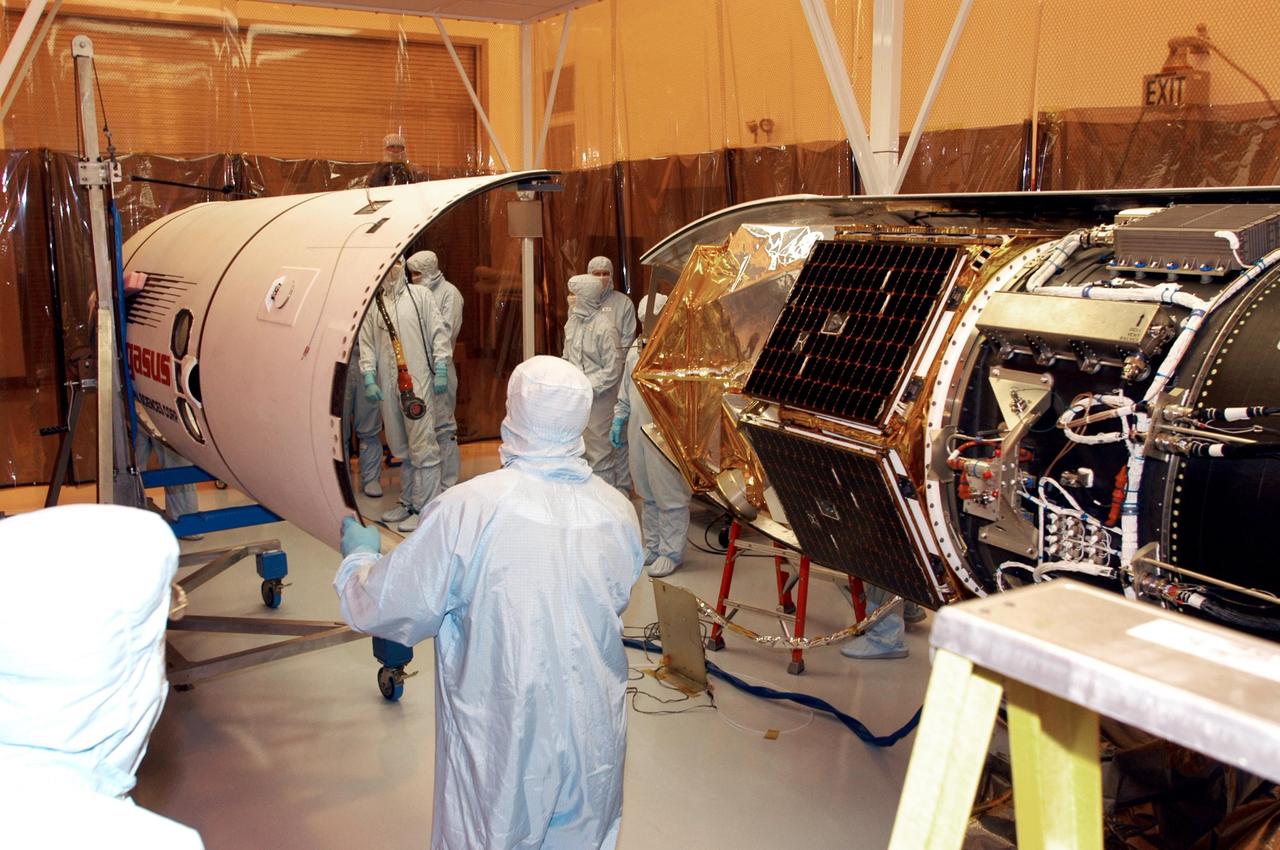
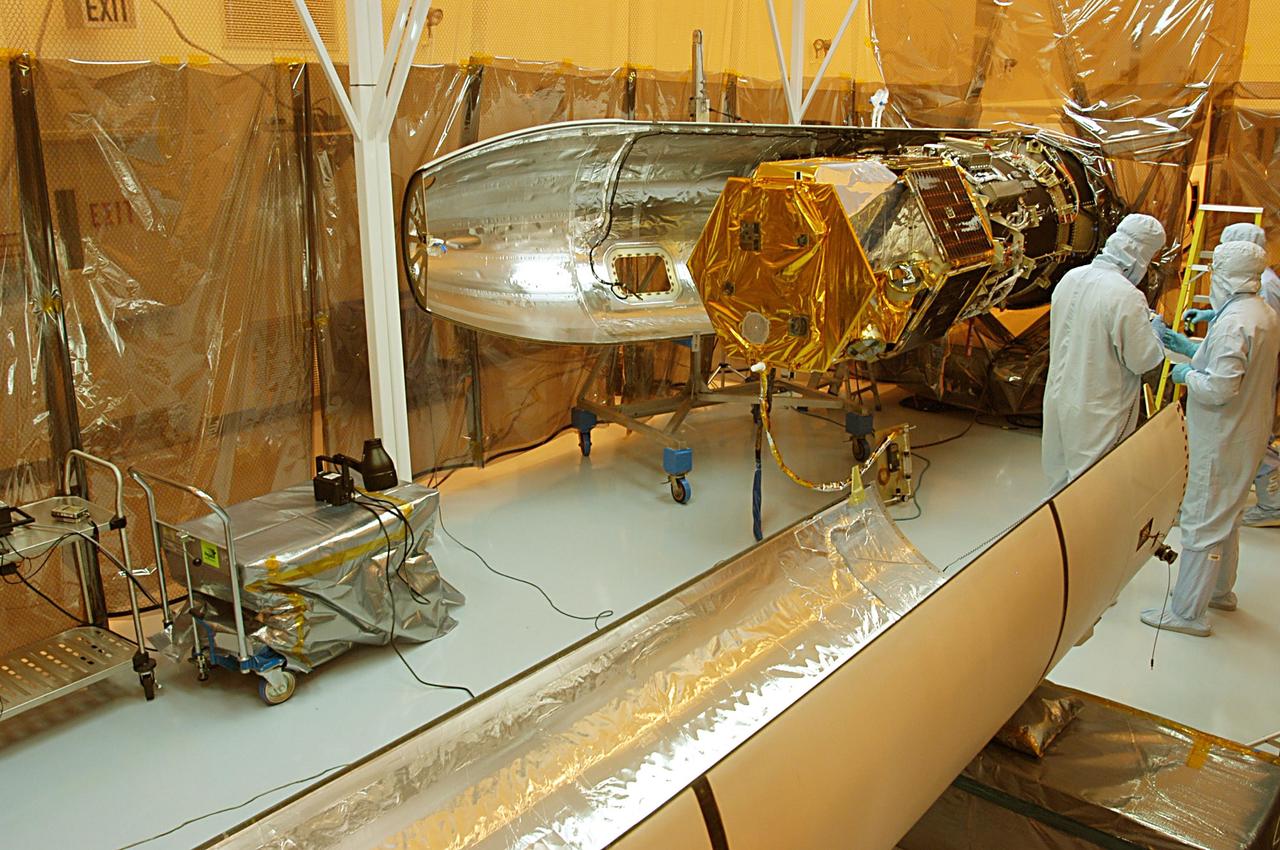
KENNEDY SPACE CENTER, FLA. - The second half of the fairing is ready to be installed on the Solar Radiation and Climate Experiment (SORCE) satellite (at right). Built by Orbital Sciences Corporation (OSC), SORCE will study and measure solar irradiance as a source of energy in the Earth's atmosphere. The launch of SORCE is scheduled for Jan. 25 at 3:14 p.m. from Cape Canaveral Air Force Station, Fla., from a Pegasus XL launch vehicle. The drop of the Pegasus will be from OSC's L-1011 aircraft at an altitude of 39,000 feet over the Atlantic Ocean approximately 100 miles east-southeast of Cape Canaveral.
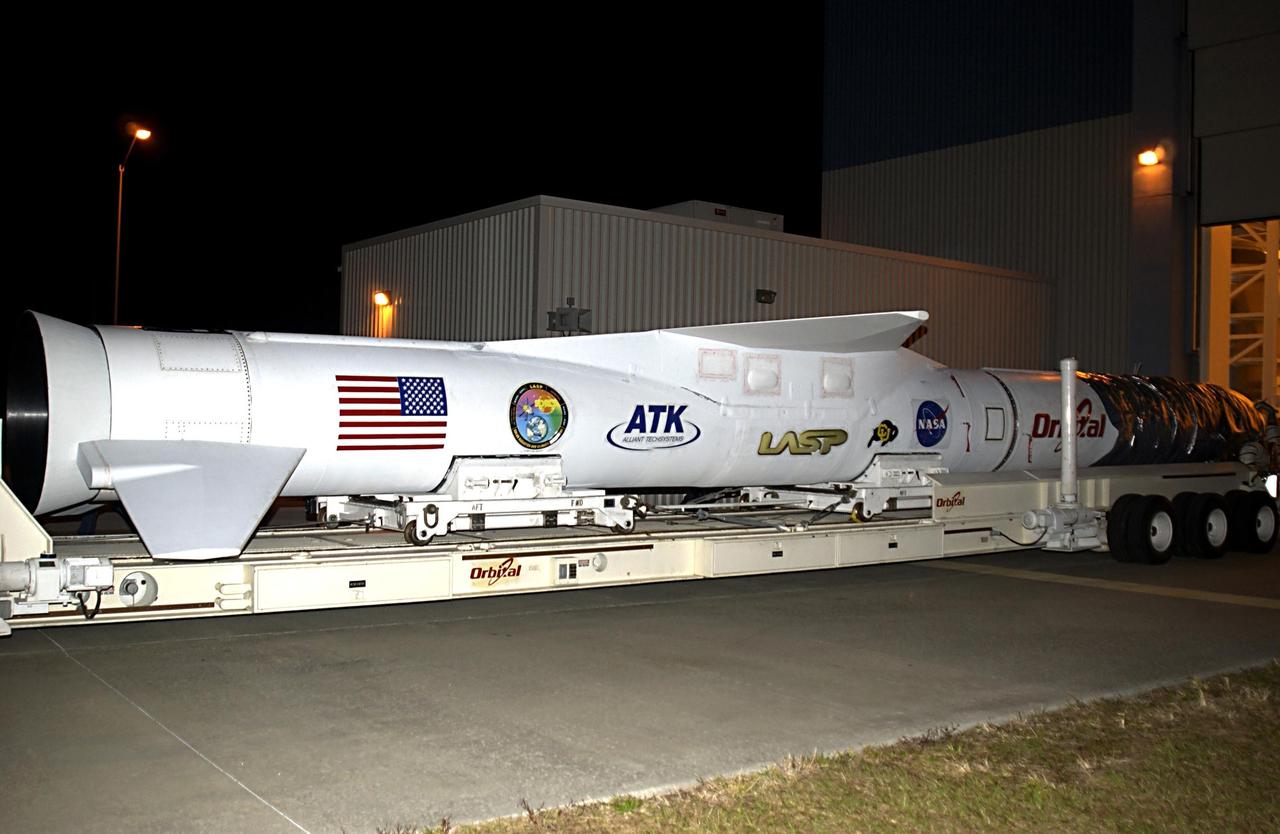
KENNEDY SPACE CENTER, FLA. - The Pegasus XL launch vehicle, with the Solar Radiation and Climate Experiment (SORCE) satellite aboard, is ready for transfer to Cape Canaveral Air Force Station (CCAFS), Fla. Built by Orbital Sciences Corporation (OSC), SORCE will study and measure solar irradiance as a source of energy in the Earth's atmosphere. The launch of SORCE is scheduled for Jan. 25 at 3:14 p.m. from CCAFS. The drop of the Pegasus will be from OSC's L-1011 aircraft at an altitude of 39,000 feet over the Atlantic Ocean approximately 100 miles east-southeast of Cape Canaveral.
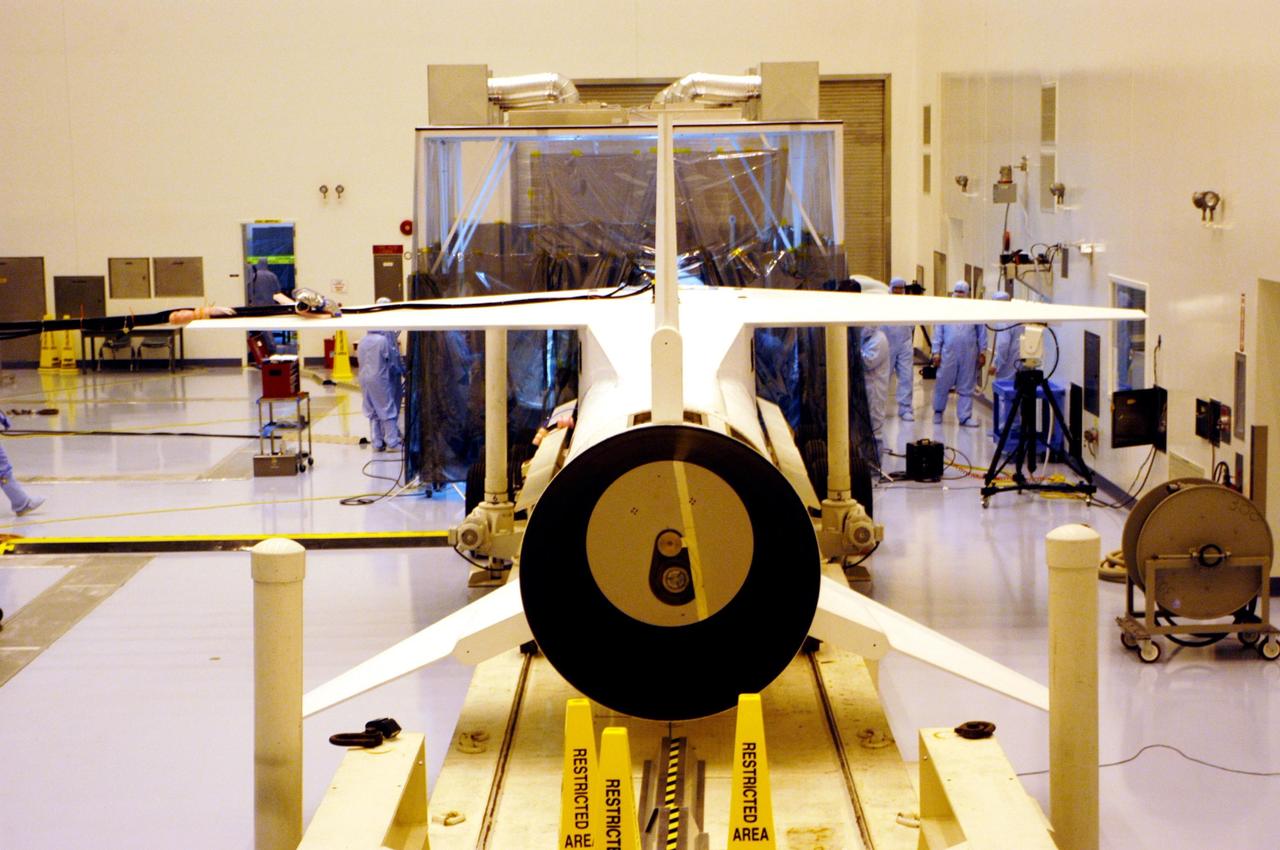
KENNEDY SPACE CENTER, FLA. -- In the Multi-Purpose Processing Facility, the Pegasus XL launch vehicle is ready for installation of the Solar Radiation and Climate Experiment (SORCE) satellite after encapsulation. Built by Orbital Sciences Corporation (OSC), SORCE will study and measure solar irradiance as a source of energy in the Earth's atmosphere. The launch of SORCE is scheduled for Jan. 25 at 3:14 p.m. from Cape Canaveral Air Force Station, Fla. The drop of the Pegasus will be from OSC's L-1011 aircraft at an altitude of 39,000 feet over the Atlantic Ocean approximately 100 miles east-southeast of Cape Canaveral.
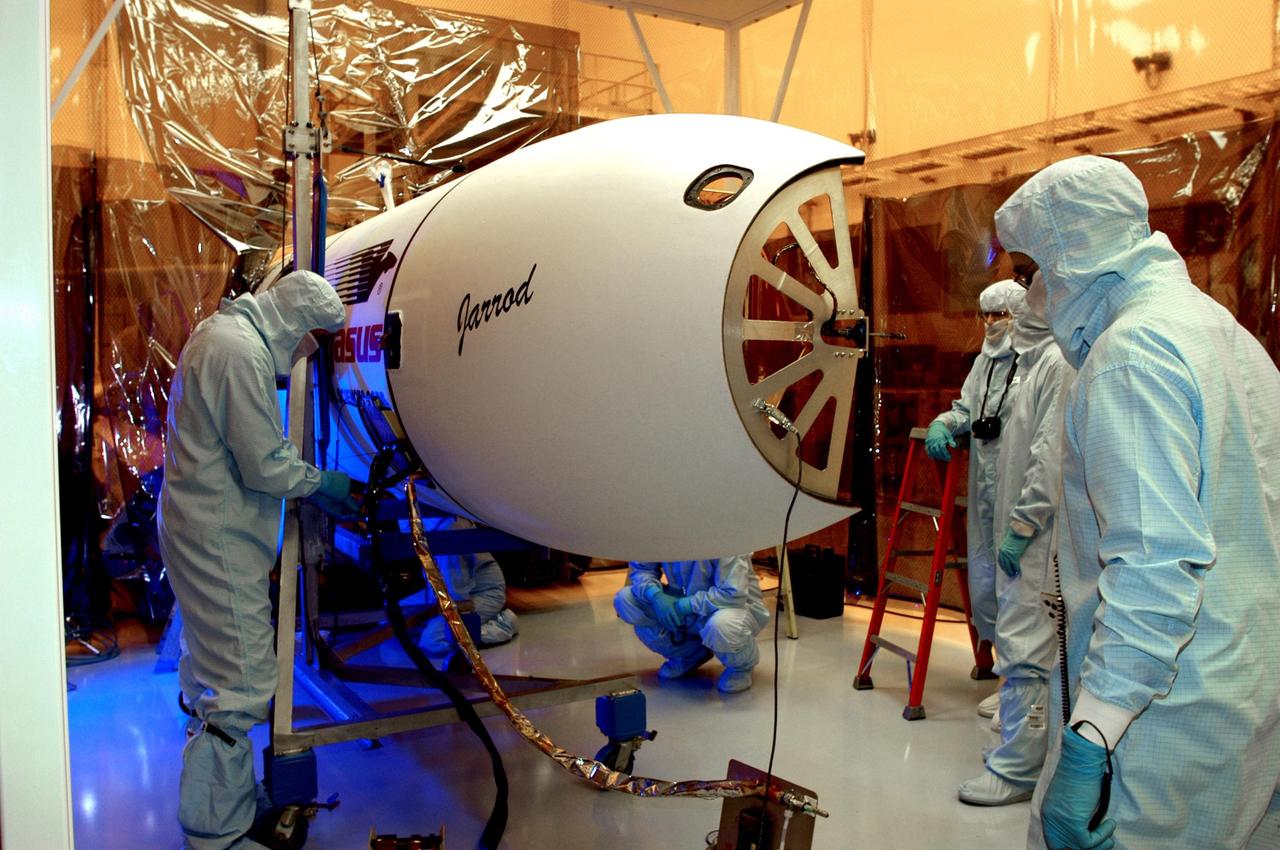
KENNEDY SPACE CENTER, FLA. - Workers in the Multi-Purpose Processing Facility check the outside of the fairing around the Solar Radiation and Climate Experiment (SORCE) satellite. When completely encapsulated, the satellite will be installed in the Pegasus XL launch vehicle. Built by Orbital Sciences Corporation (OSC), SORCE will study and measure solar irradiance as a source of energy in the Earth's atmosphere. The launch of SORCE is scheduled for Jan. 25 at 3:14 p.m. from Cape Canaveral Air Force Station, Fla. The drop of the Pegasus will be from OSC's L-1011 aircraft at an altitude of 39,000 feet over the Atlantic Ocean approximately 100 miles east-southeast of Cape Canaveral.

KENNEDY SPACE CENTER, FLA. -- The Pegasus XL launch vehicle is ready for installation of the Solar Radiation and Climate Experiment (SORCE) satellite after encapsulation. Built by Orbital Sciences Corporation (OSC), SORCE will study and measure solar irradiance as a source of energy in the Earth's atmosphere. The launch of SORCE is scheduled for Jan. 25 at 3:14 p.m. from Cape Canaveral Air Force Station, Fla. The drop of the Pegasus will be from OSC's L-1011 aircraft at an altitude of 39,000 feet over the Atlantic Ocean approximately 100 miles east-southeast of Cape Canaveral.
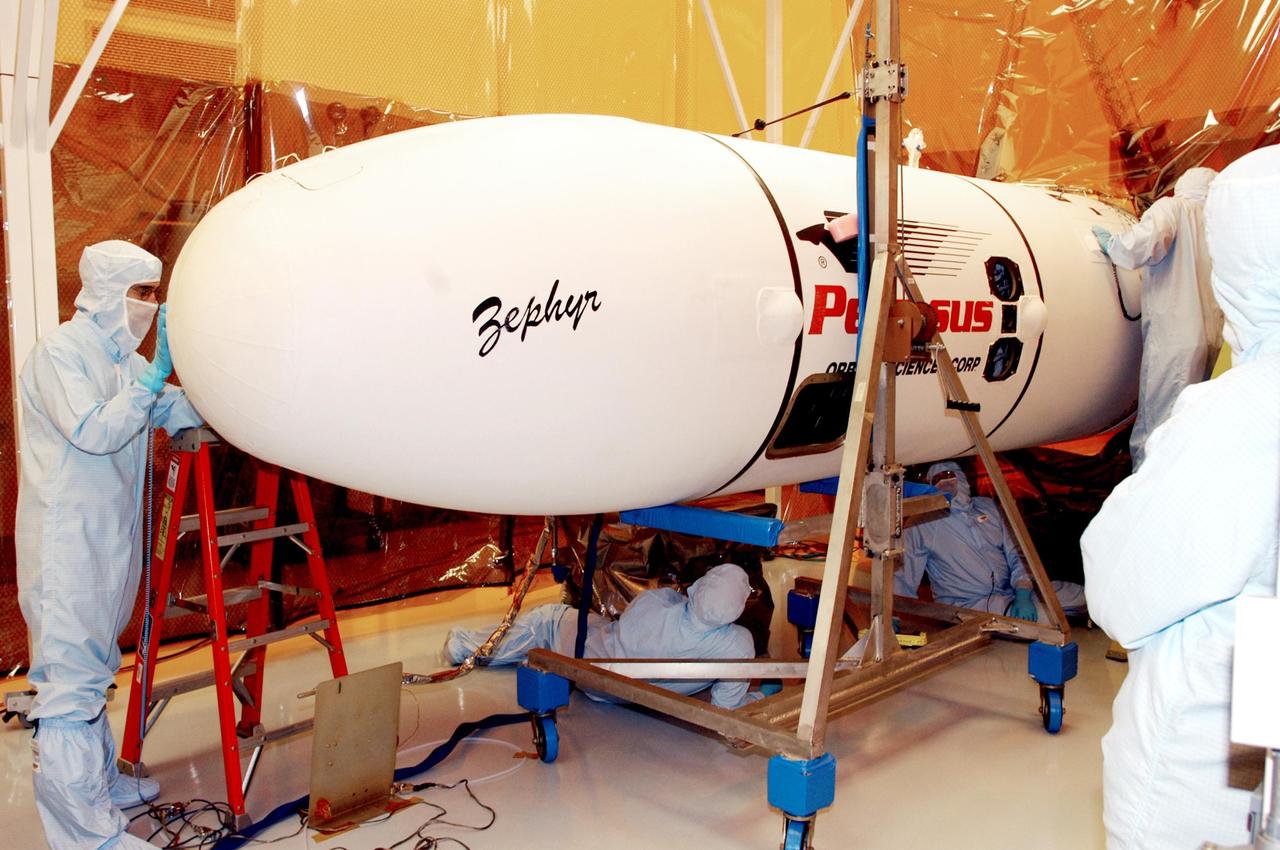
KENNEDY SPACE CENTER, FLA. -- Workers in the Multi-Purpose Processing Facility look over the encapsulation of the Solar Radiation and Climate Experiment (SORCE) satellite. The satellite will next be installed in the Pegasus XL launch vehicle. Built by Orbital Sciences Corporation (OSC), SORCE will study and measure solar irradiance as a source of energy in the Earth's atmosphere. The launch of SORCE is scheduled for Jan. 25 at 3:14 p.m. from Cape Canaveral Air Force Station, Fla. The drop of the Pegasus will be from OSC's L-1011 aircraft at an altitude of 39,000 feet over the Atlantic Ocean approximately 100 miles east-southeast of Cape Canaveral.
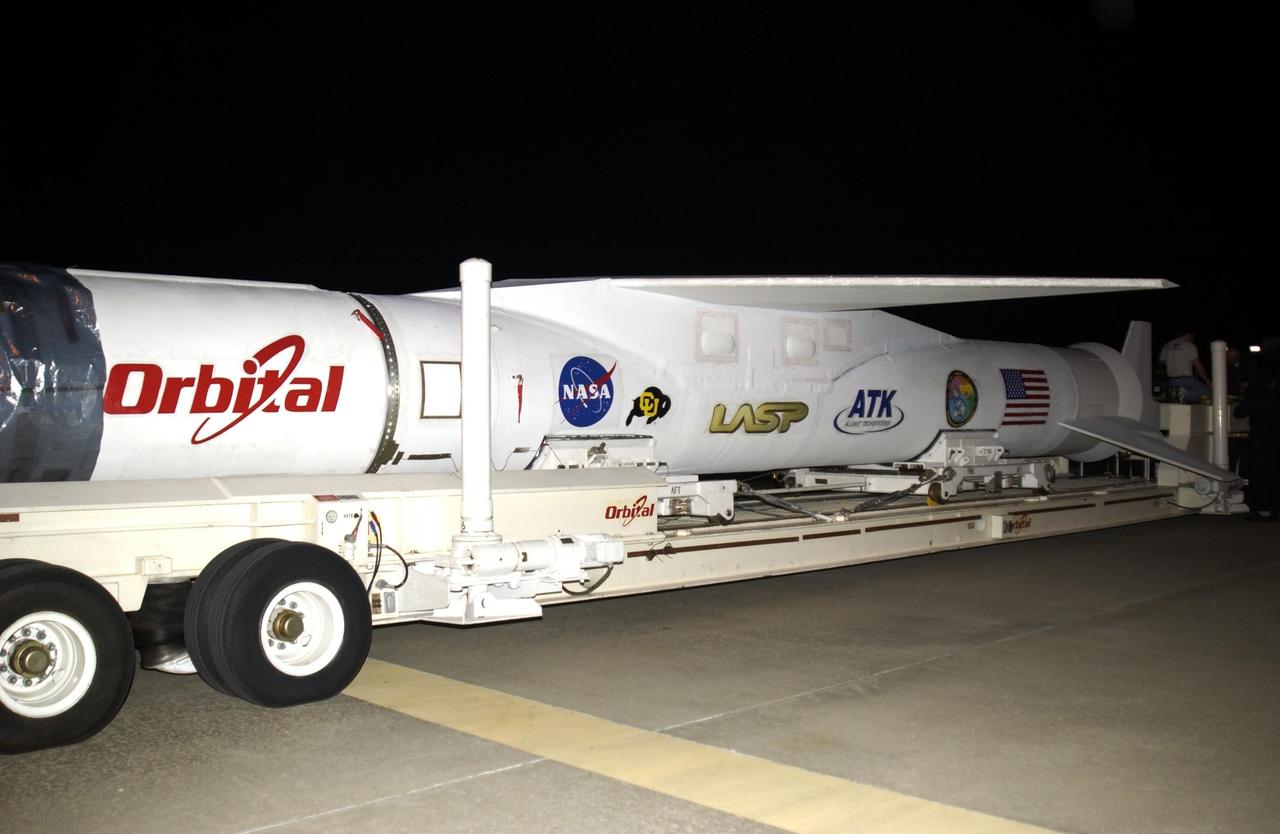
KENNEDY SPACE CENTER, FLA. - The Pegasus XL launch vehicle, with the Solar Radiation and Climate Experiment (SORCE) satellite aboard, begins its transfer to Cape Canaveral Air Force Station (CCAFS), Fla. Built by Orbital Sciences Corporation (OSC), SORCE will study and measure solar irradiance as a source of energy in the Earth's atmosphere. The launch of SORCE is scheduled for Jan. 25 at 3:14 p.m. from CCAFS. The drop of the Pegasus will be from OSC's L-1011 aircraft at an altitude of 39,000 feet over the Atlantic Ocean approximately 100 miles east-southeast of Cape Canaveral.
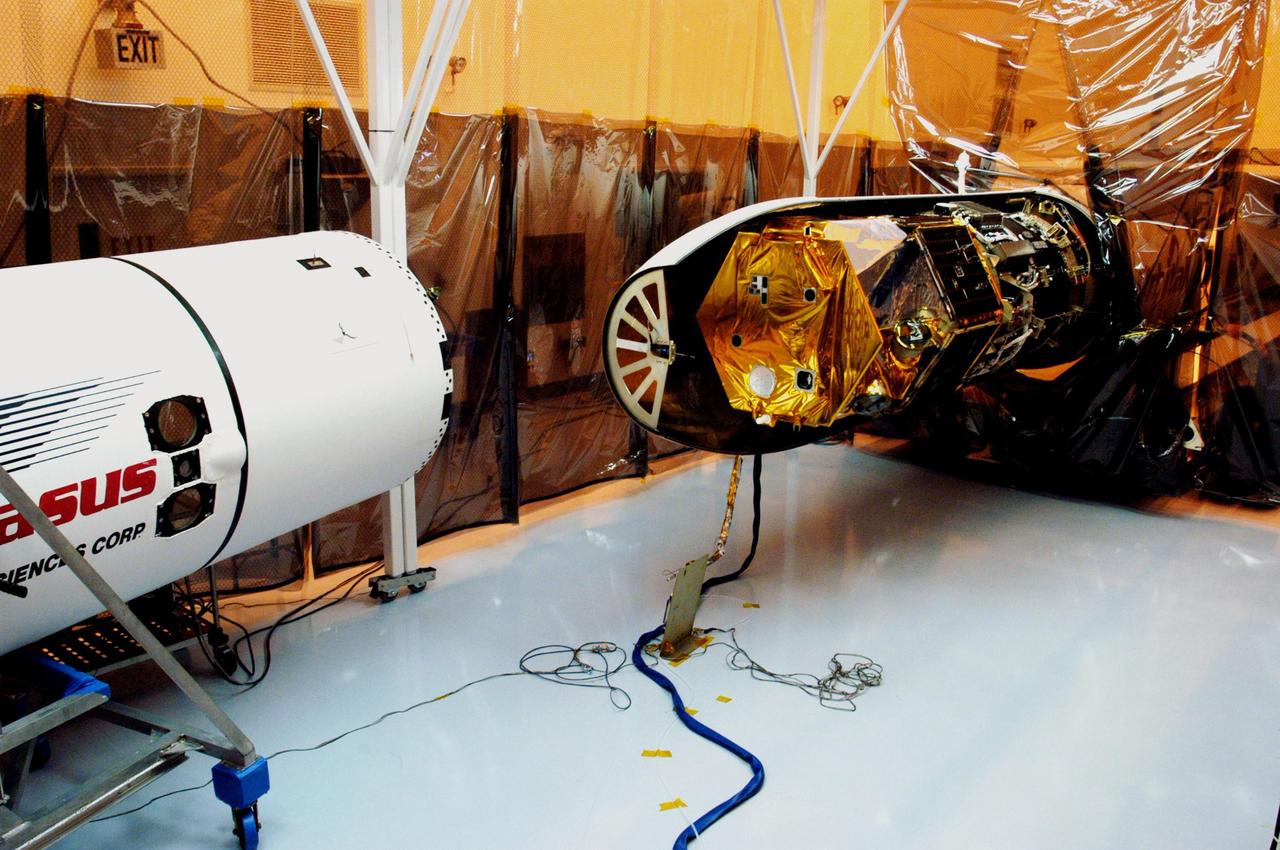
KENNEDY SPACE CENTER, FLA. - Both the Pegasus XL launch vehicle (left) and the Solar Radiation and Climate Experiment (SORCE) satellite are seen prior to encapsulation and installation. Built by Orbital Sciences Corporation (OSC), SORCE will study and measure solar irradiance as a source of energy in the Earth's atmosphere. The launch of SORCE is scheduled for Jan. 25 at 3:14 p.m. from Cape Canaveral Air Force Station, Fla. The drop of the Pegasus will be from OSC's L-1011 aircraft at an altitude of 39,000 feet over the Atlantic Ocean approximately 100 miles east-southeast of Cape Canaveral.
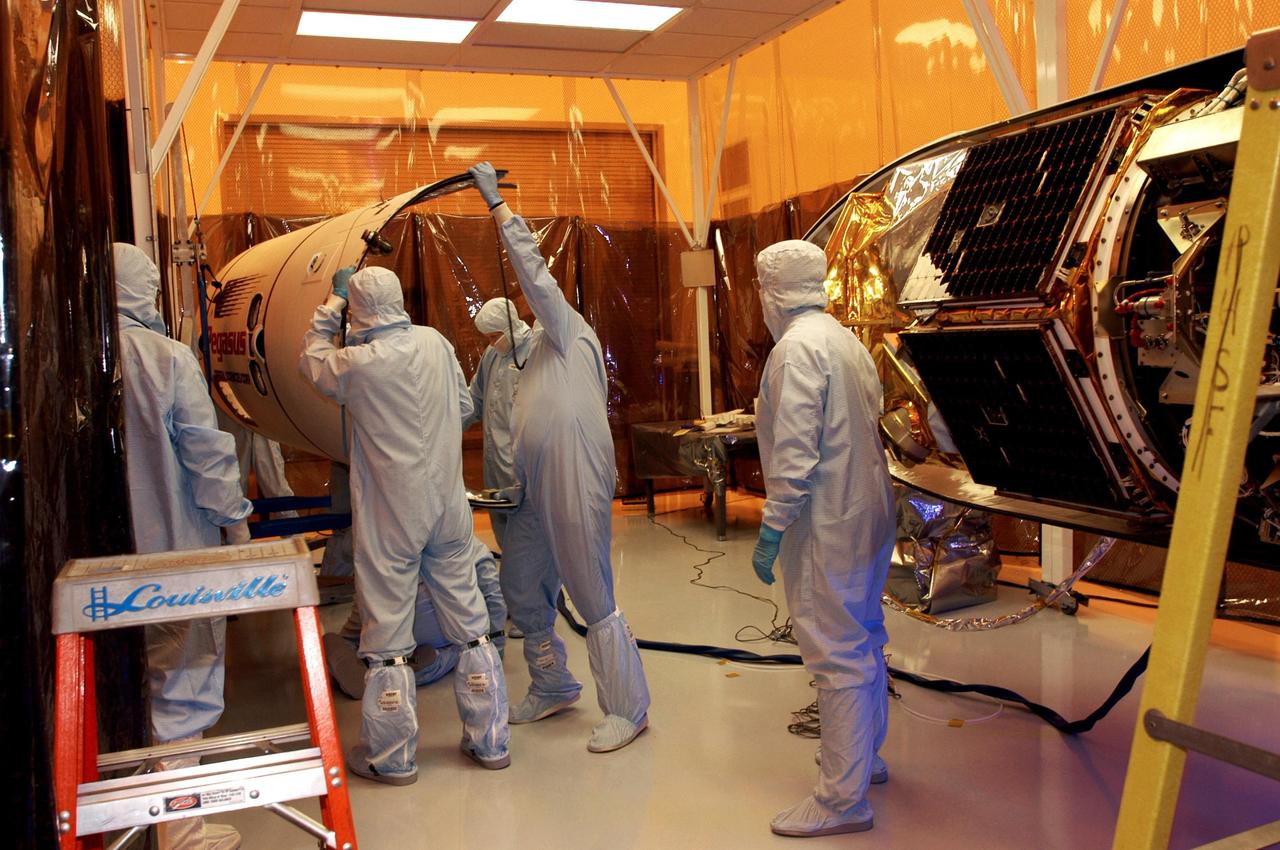
KENNEDY SPACE CENTER, FLA. -- Workers in the Multi-Purpose Processing Facility move part of the fairing toward the Solar Radiation and Climate Experiment (SORCE) satellite for encapsulation. The satellite will be installed in the Pegasus XL launch vehicle. Built by Orbital Sciences Corporation (OSC), SORCE will study and measure solar irradiance as a source of energy in the Earth's atmosphere. The launch of SORCE is scheduled for Jan. 25 at 3:14 p.m. from Cape Canaveral Air Force Station, Fla. The drop of the Pegasus will be from OSC's L-1011 aircraft at an altitude of 39,000 feet over the Atlantic Ocean approximately 100 miles east-southeast of Cape Canaveral.
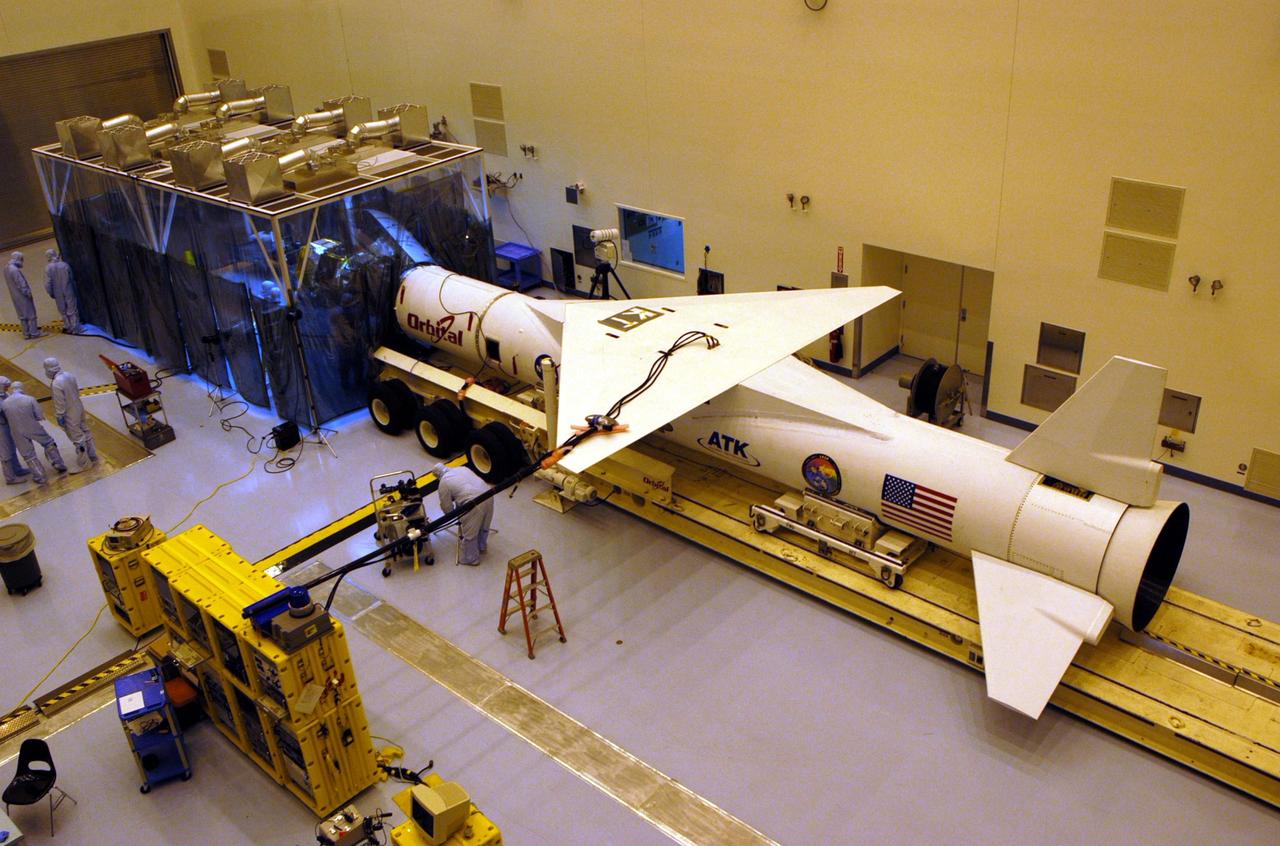
KENNEDY SPACE CENTER, FLA. - In the Multi-Purpose Processing Facility, the Pegasus launch vehicle is ready for installation of the Solar Radiation and Climate Experiment (SORCE) satellite. Built by Orbital Sciences Corporation (OSC), SORCE will study and measure solar irradiance as a source of energy in the Earth's atmosphere. The launch of SORCE is scheduled for Jan. 25 at 3:14 p.m. from Cape Canaveral Air Force Station, Fla. The drop of the Pegasus will be from OSC's L-1011 aircraft at an altitude of 39,000 feet over the Atlantic Ocean approximately 100 miles east-southeast of Cape Canaveral.
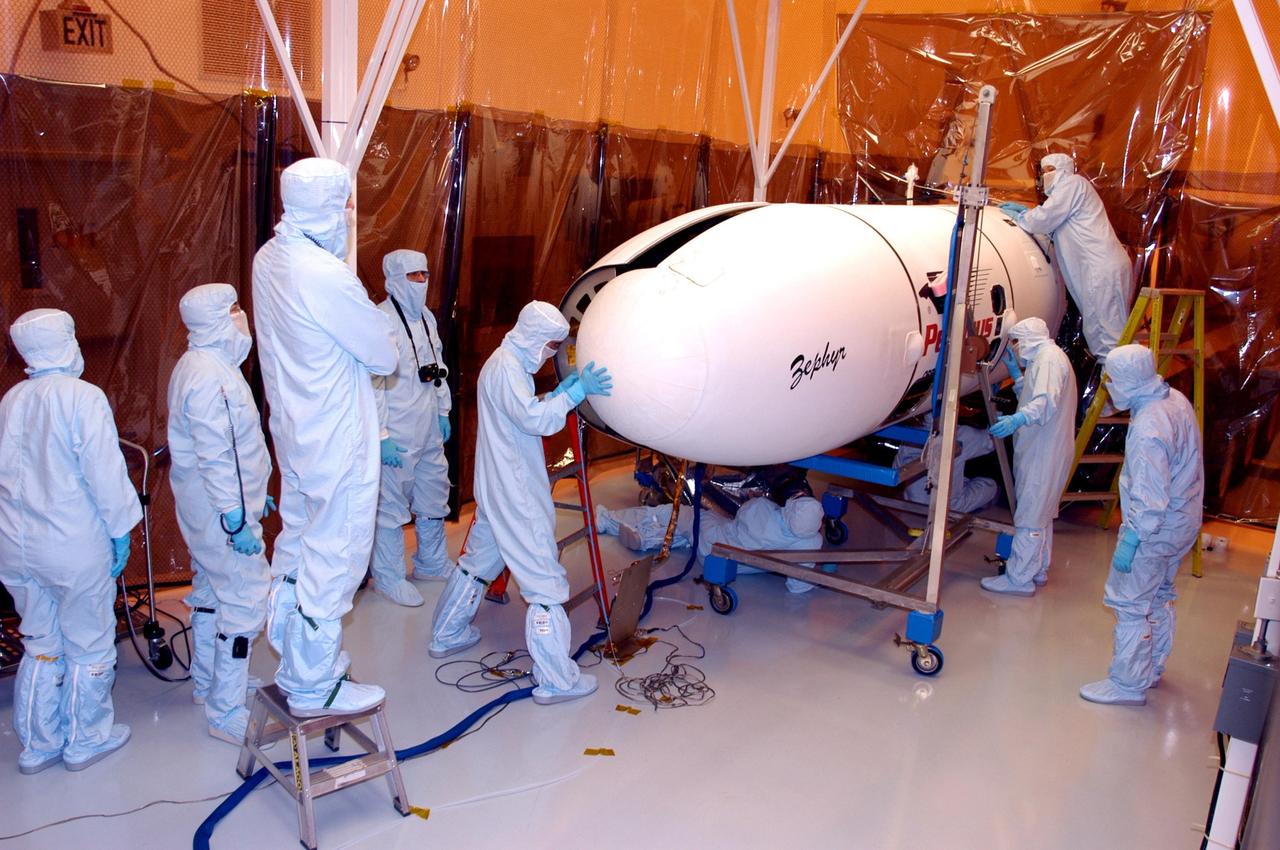
KENNEDY SPACE CENTER, FLA. -- Workers in the Multi-Purpose Processing Facility check the fairing placed around the Solar Radiation and Climate Experiment (SORCE) satellite. When fully encapsulated, the satellite will be installed in the Pegasus XL launch vehicle. Built by Orbital Sciences Corporation (OSC), SORCE will study and measure solar irradiance as a source of energy in the Earth's atmosphere. The launch of SORCE is scheduled for Jan. 25 at 3:14 p.m. from Cape Canaveral Air Force Station, Fla. The drop of the Pegasus will be from OSC's L-1011 aircraft at an altitude of 39,000 feet over the Atlantic Ocean approximately 100 miles east-southeast of Cape Canaveral.
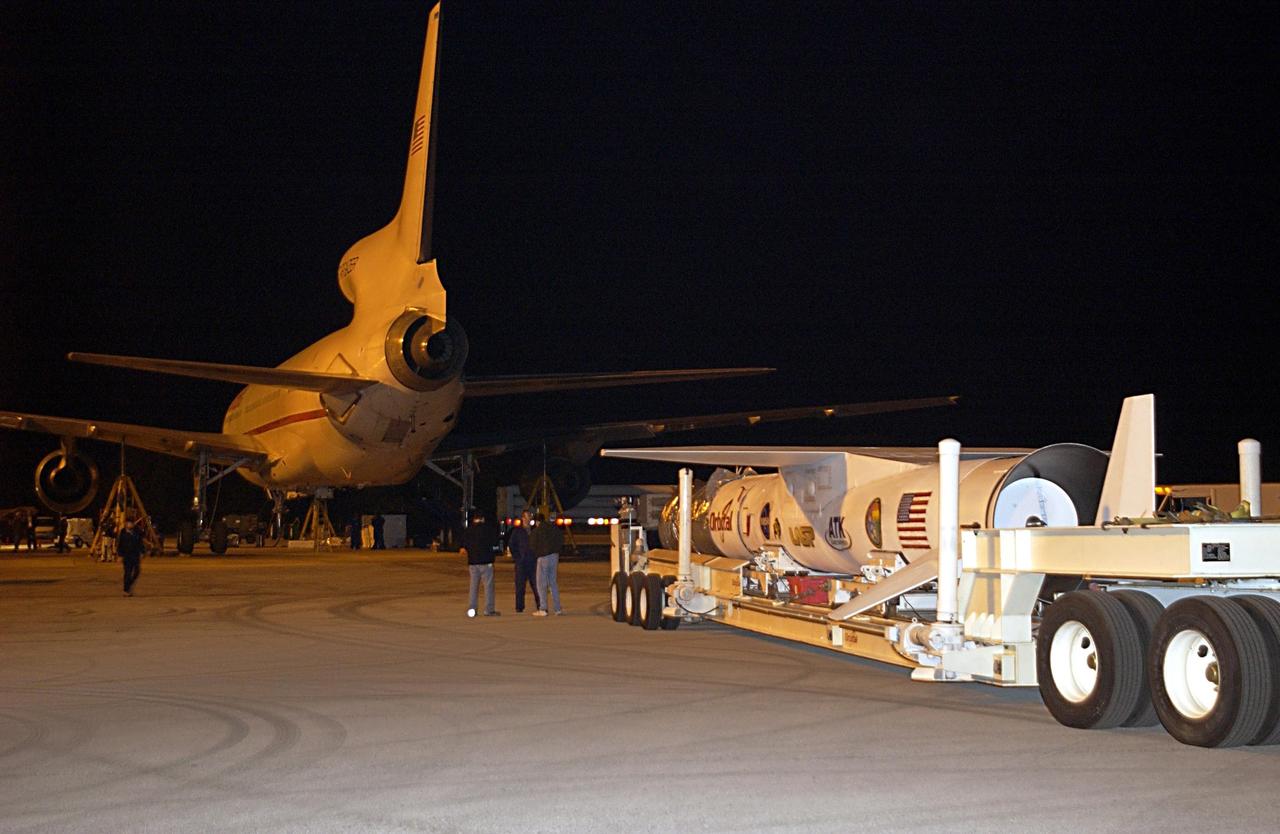
KENNEDY SPACE CENTER, FLA. - The Pegasus XL launch vehicle, with the Solar Radiation and Climate Experiment (SORCE) satellite aboard, arrives at Cape Canaveral Air Force Station (CCAFS), Fla. SORCE, built by Orbital Sciences Corporation (OSC), will study and measure solar irradiance as a source of energy in the Earth's atmosphere. The launch of SORCE is scheduled for Jan. 25 at 3:14 p.m. from CCAFS. The drop of the Pegasus will be from OSC's L-1011 aircraft at an altitude of 39,000 feet over the Atlantic Ocean approximately 100 miles east-southeast of Cape Canaveral..
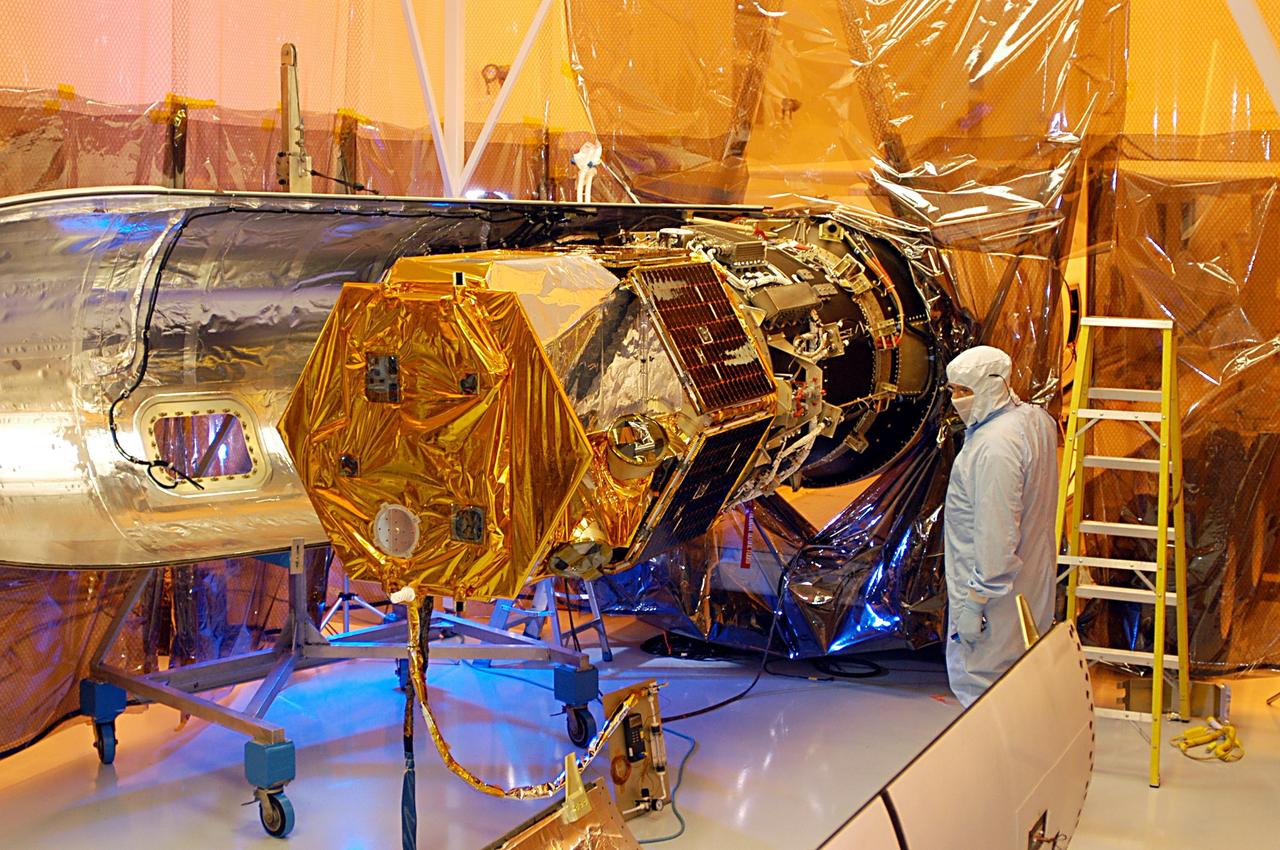
KENNEDY SPACE CENTER, FLA. - A worker in the Multi-Purpose Processing Facility looks over the Solar Radiation and Climate Experiment (SORCE) satellite as the first half of the fairing is put in place. When completely encapsulated, the satellite will be installed in the Pegasus XL launch vehicle. Built by Orbital Sciences Corporation (OSC), SORCE will study and measure solar irradiance as a source of energy in the Earth's atmosphere. The launch of SORCE is scheduled for Jan. 25 at 3:14 p.m. from Cape Canaveral Air Force Station, Fla. The drop of the Pegasus will be from OSC's L-1011 aircraft at an altitude of 39,000 feet over the Atlantic Ocean approximately 100 miles east-southeast of Cape Canaveral.
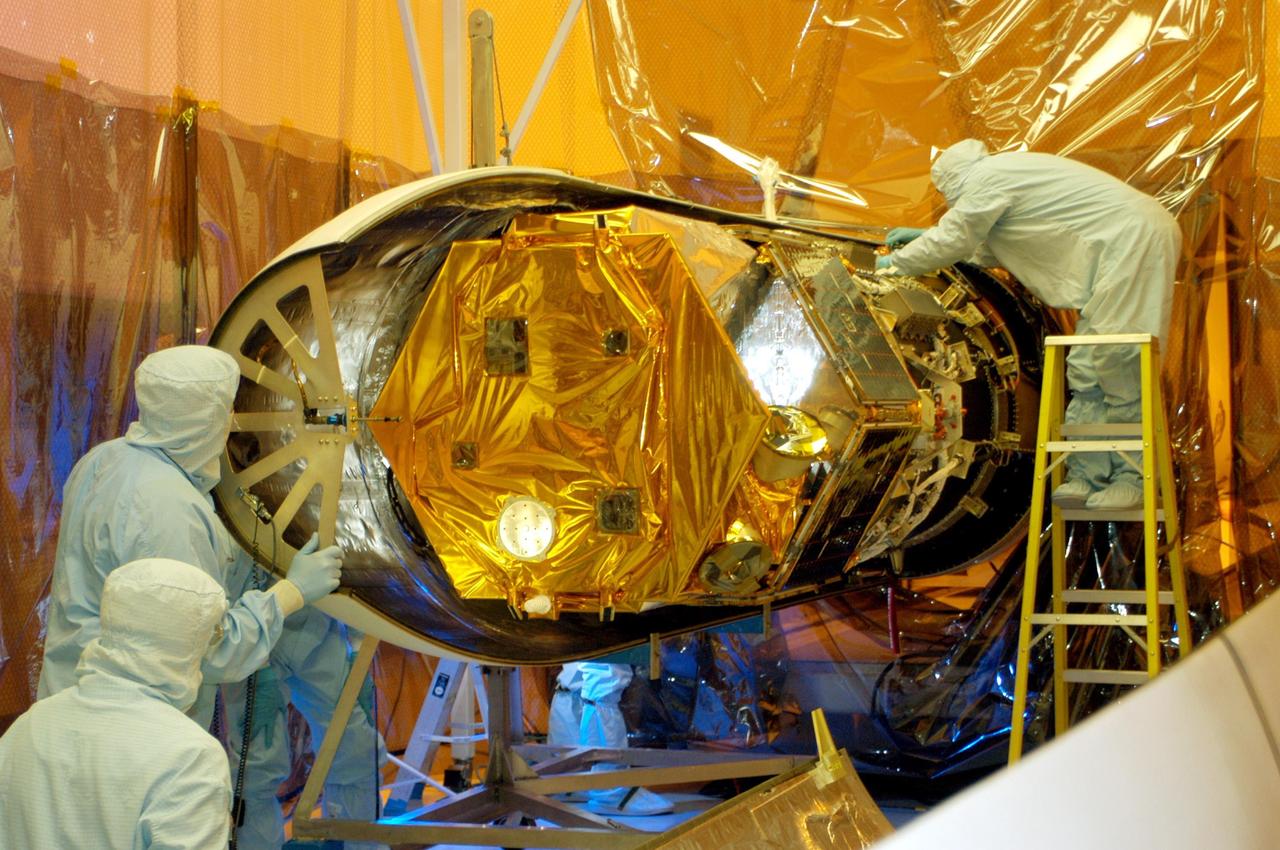
KENNEDY SPACE CENTER, FLA. -- Workers in the Multi-Purpose Processing Facility look over the Solar Radiation and Climate Experiment (SORCE) satellite after the first half of the fairing is put in place. When completely encapsulated, the satellite will be installed in the Pegasus XL launch vehicle. Built by Orbital Sciences Corporation (OSC), SORCE will study and measure solar irradiance as a source of energy in the Earth's atmosphere. The launch of SORCE is scheduled for Jan. 25 at 3:14 p.m. from Cape Canaveral Air Force Station, Fla. The drop of the Pegasus will be from OSC's L-1011 aircraft at an altitude of 39,000 feet over the Atlantic Ocean approximately 100 miles east-southeast of Cape Canaveral.

KENNEDY SPACE CENTER, FLA. - Inside Orbital Sciences’ Building 1555 at Vandenberg Air Force Base in California, the Pegasus XL launch vehicle is ready for mating with the Space Technology 5 (ST5) spacecraft. The ST5 contains three microsatellites with miniaturized redundant components and technologies. Each will validate New Millennium Program selected technologies, such as the Cold Gas Micro-Thruster and X-Band Transponder Communication System. After deployment from the Pegasus, the micro-satellites will be positioned in a “string of pearls” constellation that demonstrates the ability to position them to perform simultaneous multi-point measurements of the magnetic field using highly sensitive magnetometers. The data will help scientists understand and map the intensity and direction of the Earth’s magnetic field, its relation to space weather events, and affects on our planet. With such missions, NASA hopes to improve scientists’ ability to accurately forecast space weather and minimize its harmful effects on space- and ground-based systems. Launch of ST5 is scheduled no earlier than March 6 from Vandenberg Air Force Base.

KENNEDY SPACE CENTER, FLA. - Inside Orbital Sciences’ Building 1555 at Vandenberg Air Force Base in California, the Pegasus XL launch vehicle is complete after mating with the Space Technology 5 (ST5). The ST5 contains three microsatellites, with miniaturized redundant components and technologies. Each will validate New Millennium Program selected technologies, such as the Cold Gas Micro-Thruster and X-Band Transponder Communication System. After deployment from the Pegasus, the micro-satellites will be positioned in a “string of pearls” constellation that demonstrates the ability to position them to perform simultaneous multi-point measurements of the magnetic field using highly sensitive magnetometers. The data will help scientists understand and map the intensity and direction of the Earth’s magnetic field, its relation to space weather events, and affects on our planet. With such missions, NASA hopes to improve scientists’ ability to accurately forecast space weather and minimize its harmful effects on space- and ground-based systems. Launch of ST5 is scheduled no earlier than March 6 from Vandenberg Air Force Base.

KENNEDY SPACE CENTER, FLA. - Inside Orbital Sciences’ Building 1555 at Vandenberg Air Force Base in California, a worker examines the end of the Pegasus XL launch vehicle that will be mated with the Space Technology 5 (ST5) spacecraft. The ST5 contains three microsatellites with miniaturized redundant components and technologies. Each will validate New Millennium Program selected technologies, such as the Cold Gas Micro-Thruster and X-Band Transponder Communication System. After deployment from the Pegasus, the micro-satellites will be positioned in a “string of pearls” constellation that demonstrates the ability to position them to perform simultaneous multi-point measurements of the magnetic field using highly sensitive magnetometers. The data will help scientists understand and map the intensity and direction of the Earth’s magnetic field, its relation to space weather events, and affects on our planet. With such missions, NASA hopes to improve scientists’ ability to accurately forecast space weather and minimize its harmful effects on space- and ground-based systems. Launch of ST5 is scheduled no earlier than March 6 from Vandenberg Air Force Base.

KENNEDY SPACE CENTER, FLA. - Inside Orbital Sciences’ Building 1555 at Vandenberg Air Force Base in California, workers begin the mating process of the Space Technology 5 (ST5), at right, with the Pegasus XL launch vehicle, at left. The ST5 contains three microsatellites, with miniaturized redundant components and technologies. Each will validate New Millennium Program selected technologies, such as the Cold Gas Micro-Thruster and X-Band Transponder Communication System. After deployment from the Pegasus, the micro-satellites will be positioned in a “string of pearls” constellation that demonstrates the ability to position them to perform simultaneous multi-point measurements of the magnetic field using highly sensitive magnetometers. The data will help scientists understand and map the intensity and direction of the Earth’s magnetic field, its relation to space weather events, and affects on our planet. With such missions, NASA hopes to improve scientists’ ability to accurately forecast space weather and minimize its harmful effects on space- and ground-based systems. Launch of ST5 is scheduled no earlier than March 6 from Vandenberg Air Force Base.
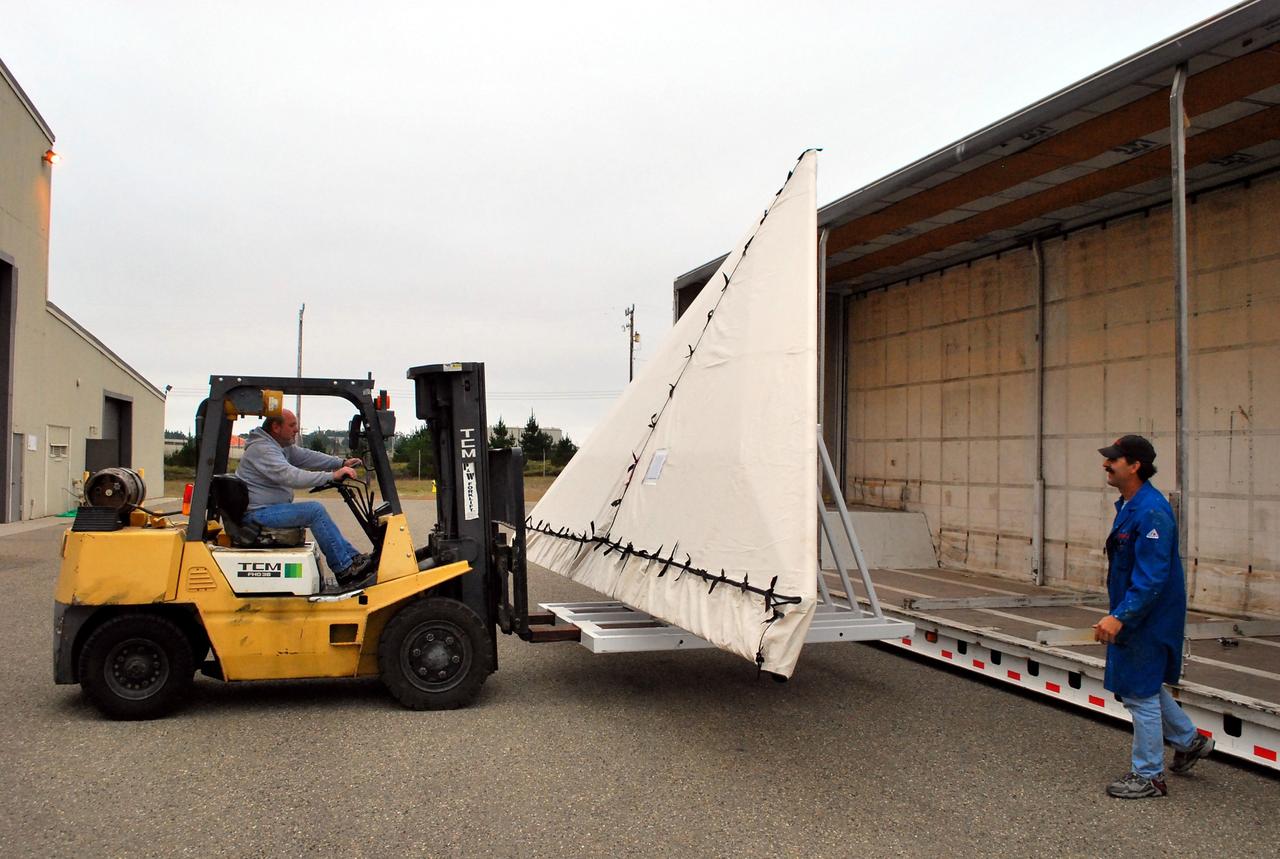
VANDENBERG AIR FORCE BASE, Calif. -- Orbital Sciences Corp. workers uncrate the wing of the Pegasus XL launch vehicle at Vandenberg Air Force Base in California. Orbital's Pegasus rocket is being processed to launch the Nuclear Spectroscopic Telescope Array (NuSTAR) into space. After the rocket and spacecraft are processed at Vandenberg, they will be flown on the Orbital Sciences' L-1011 carrier aircraft to the Ronald Reagan Ballistic Missile Defense Test Site at the Pacific Ocean’s Kwajalein Atoll for launch. The high-energy X-ray telescope will conduct a census for black holes, map radioactive material in young supernovae remnants, and study the origins of cosmic rays and the extreme physics around collapsed stars. For more information, visit science.nasa.gov/missions/nustar/. Photo credit: NASA/Randy Beaudoin, VAFB
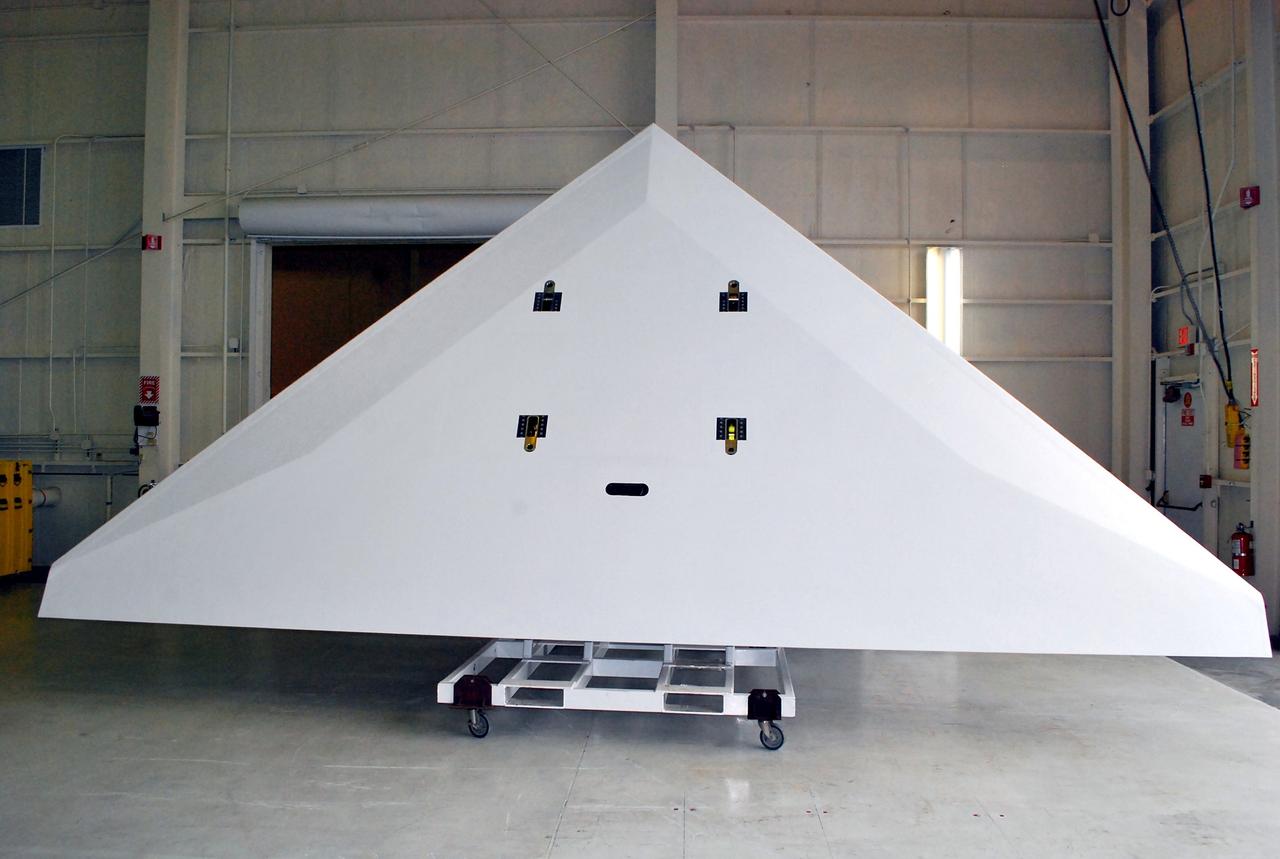
VANDENBERG AIR FORCE BASE, Calif. -- The wing of the Pegasus XL launch vehicle awaits processing in a clean room at Vandenberg Air Force Base in California. The Orbital Sciences Corp. Pegasus rocket will launch the Nuclear Spectroscopic Telescope Array (NuSTAR) into space. After the rocket and spacecraft are processed at Vandenberg, they will be flown on the Orbital Sciences' L-1011 carrier aircraft to the Ronald Reagan Ballistic Missile Defense Test Site at the Pacific Ocean’s Kwajalein Atoll for launch. The high-energy X-ray telescope will conduct a census for black holes, map radioactive material in young supernovae remnants, and study the origins of cosmic rays and the extreme physics around collapsed stars. For more information, visit science.nasa.gov/missions/nustar/. Photo credit: NASA/Randy Beaudoin, VAFB
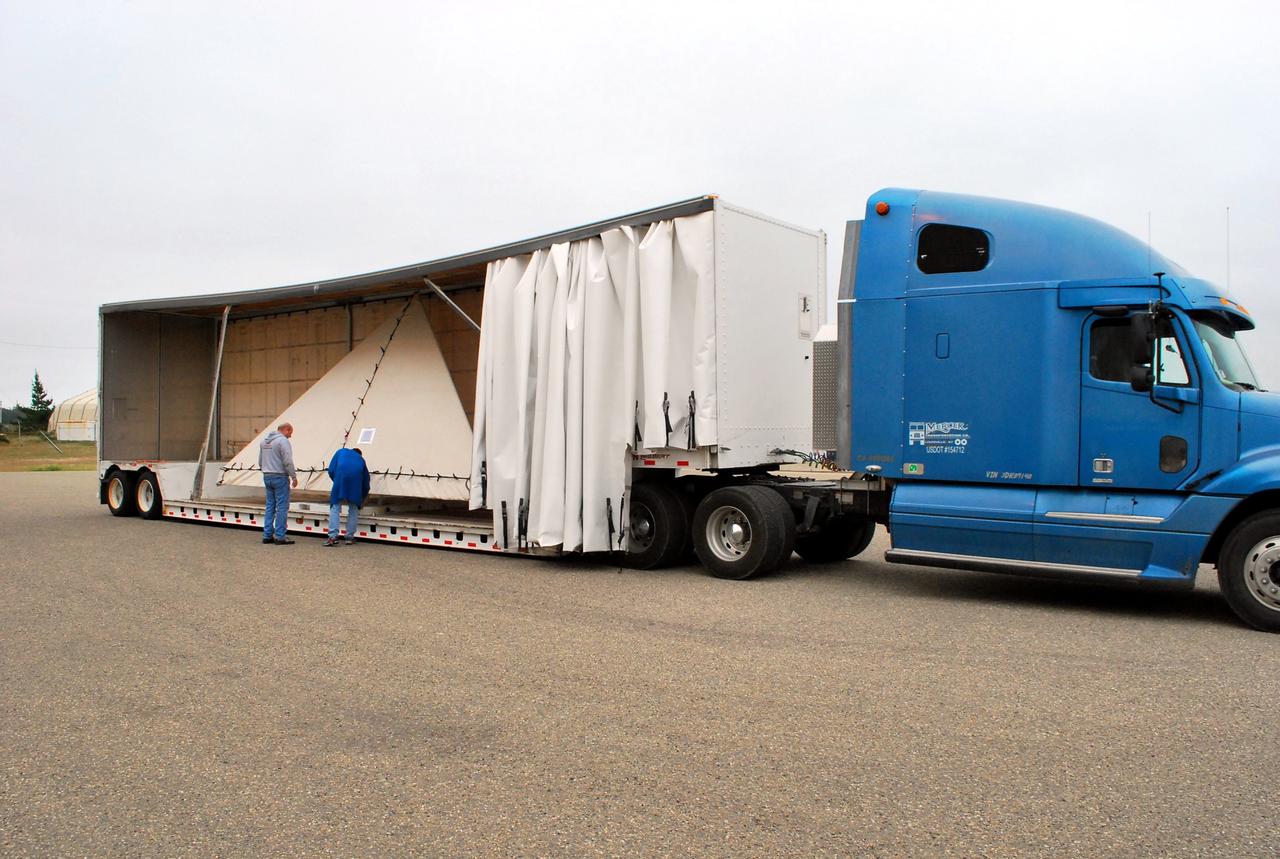
VANDENBERG AIR FORCE BASE, Calif. -- The wing of the Pegasus XL launch vehicle arrives at Vandenberg Air Force Base in California. The Orbital Sciences Corp. Pegasus rocket is being processed to launch the Nuclear Spectroscopic Telescope Array (NuSTAR) into space. After the rocket and spacecraft are processed at Vandenberg, they will be flown on the Orbital Sciences' L-1011 carrier aircraft to the Ronald Reagan Ballistic Missile Defense Test Site at the Pacific Ocean’s Kwajalein Atoll for launch. The high-energy X-ray telescope will conduct a census for black holes, map radioactive material in young supernovae remnants, and study the origins of cosmic rays and the extreme physics around collapsed stars. For more information, visit science.nasa.gov/missions/nustar/. Photo credit: NASA/Randy Beaudoin, VAFB
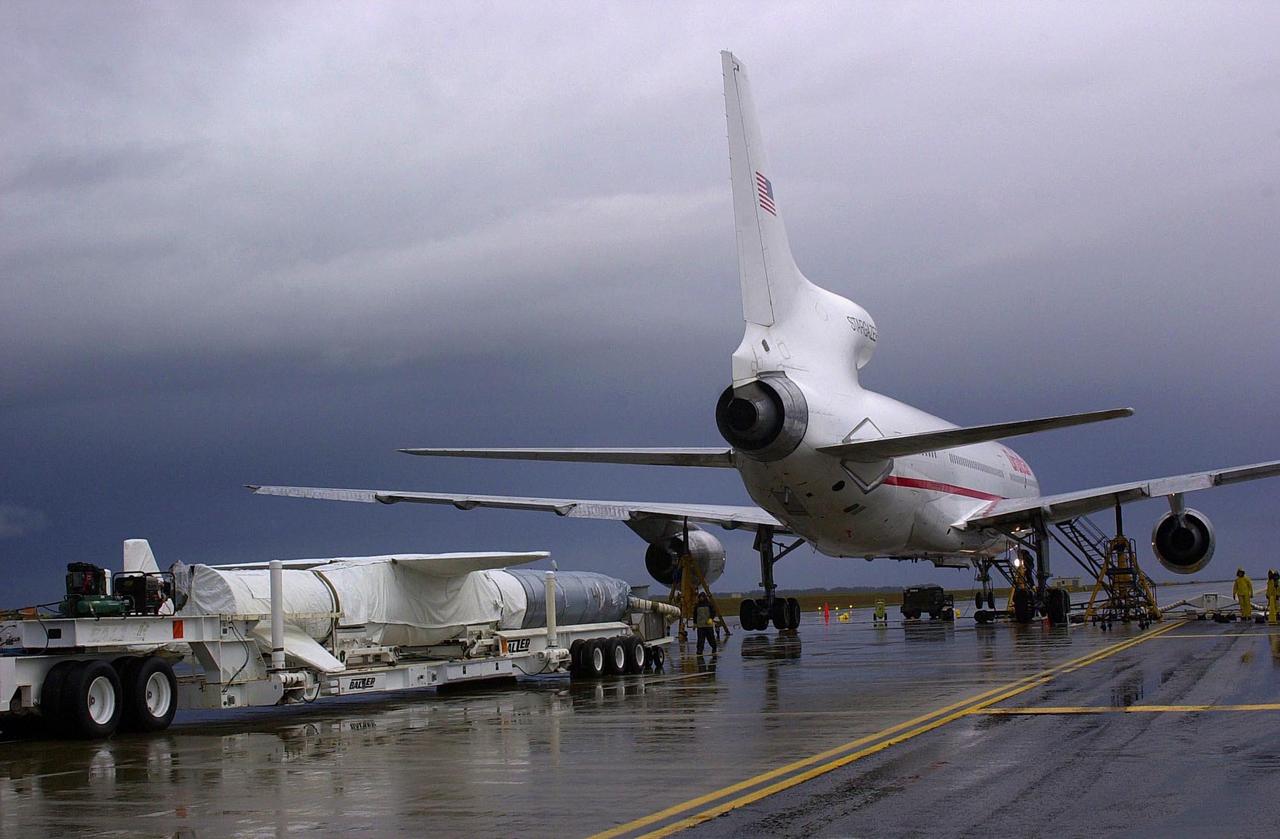
VANDENBERG AIR FORCE BASE, CALIF. - On the ramp adjacent to the runway at Vandenberg Air Force Base in California, the Space Technology 5's Pegasus rocket is placed in position to be mated to the underside of an Orbital Sciences L-1011 carrier aircraft. The ST5, which contains three microsatellites with miniaturized redundant components and technologies, is mated to its launch vehicle, Orbital Sciences' Pegasus XL. Each of the ST5 microsatellites will validate New Millennium Program selected technologies, such as the Cold Gas Micro-Thruster and X-Band Transponder Communication System. After deployment from the Pegasus, the micro-satellites will be positioned in a “string of pearls” constellation that demonstrates the ability to position them to perform simultaneous multi-point measurements of the magnetic field using highly sensitive magnetometers. The data will help scientists understand and map the intensity and direction of the Earth’s magnetic field, its relation to space weather events, and affects on our planet. Launch of ST5 and the Pegasus XL will be from underneath the belly of an L-1011 carrier aircraft from Vandenberg Air Force Base.

VANDENBERG AIR FORCE BASE, CALIF. - Workers prepare to transport the Space Technology 5 (ST5) spacecraft from Orbital Sciences’ Building 1555 at Vandenberg Air Force Base in California to the L-1011 carrier aircraft in position on the ramp adjacent to the Vandenberg runway. The ST5, which contains three microsatellites with miniaturized redundant components and technologies, is mated to its launch vehicle, Orbital Sciences' Pegasus XL. Each of the ST5 microsatellites will validate New Millennium Program selected technologies, such as the Cold Gas Micro-Thruster and X-Band Transponder Communication System. After deployment from the Pegasus, the micro-satellites will be positioned in a “string of pearls” constellation that demonstrates the ability to position them to perform simultaneous multi-point measurements of the magnetic field using highly sensitive magnetometers. The data will help scientists understand and map the intensity and direction of the Earth’s magnetic field, its relation to space weather events, and affects on our planet. Launch of ST5 and the Pegasus XL will be from underneath the belly of an L-1011 carrier aircraft from Vandenberg Air Force Base.
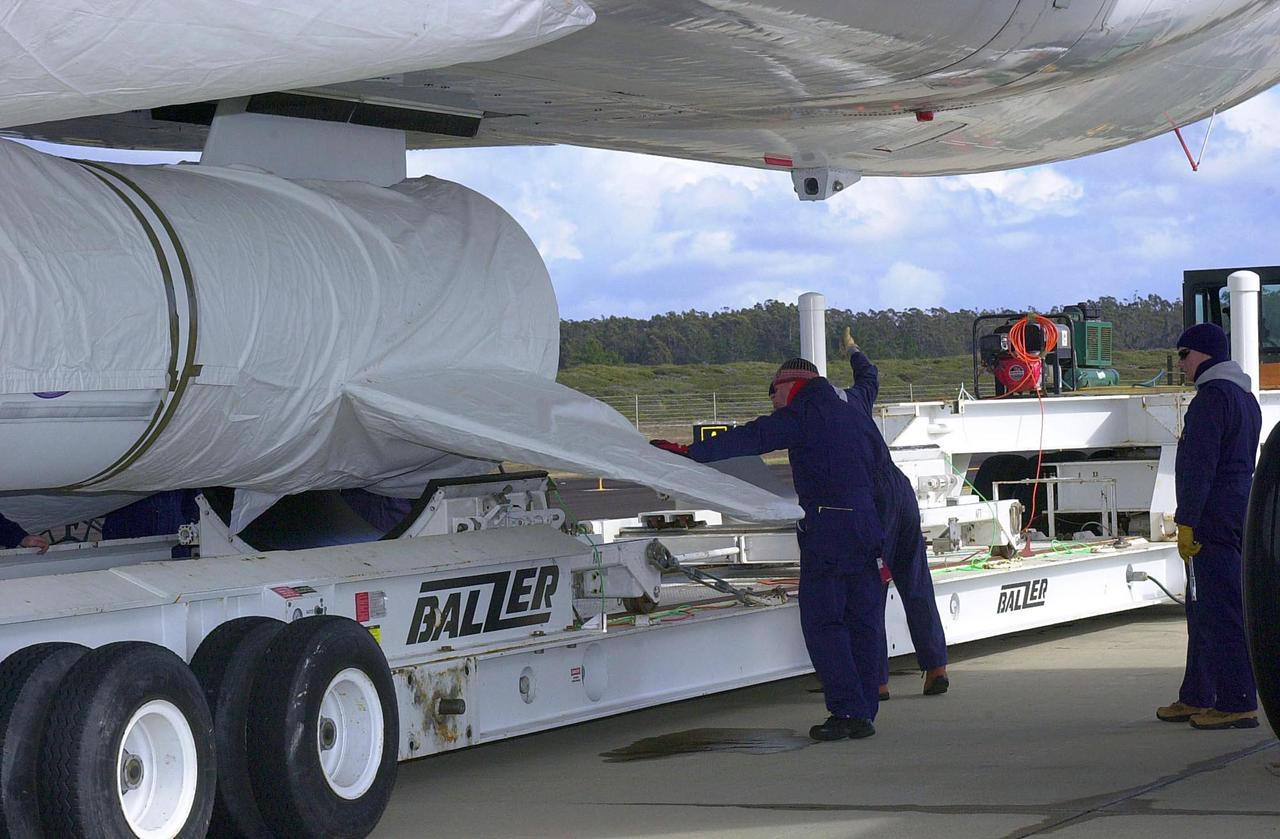
VANDENBERG AIR FORCE BASE, CALIF. - On the ramp adjacent to the runway at Vandenberg Air Force Base in California, workers secure the Space Technology 5's Pegasus rocket to the underside of an Orbital Sciences L-1011 carrier aircraft. The ST5, which contains three microsatellites with miniaturized redundant components and technologies, is mated to its launch vehicle, Orbital Sciences' Pegasus XL. Each of the ST5 microsatellites will validate New Millennium Program selected technologies, such as the Cold Gas Micro-Thruster and X-Band Transponder Communication System. After deployment from the Pegasus, the micro-satellites will be positioned in a “string of pearls” constellation that demonstrates the ability to position them to perform simultaneous multi-point measurements of the magnetic field using highly sensitive magnetometers. The data will help scientists understand and map the intensity and direction of the Earth’s magnetic field, its relation to space weather events, and affects on our planet. Launch of ST5 and the Pegasus XL will be from underneath the belly of an L-1011 carrier aircraft from Vandenberg Air Force Base.
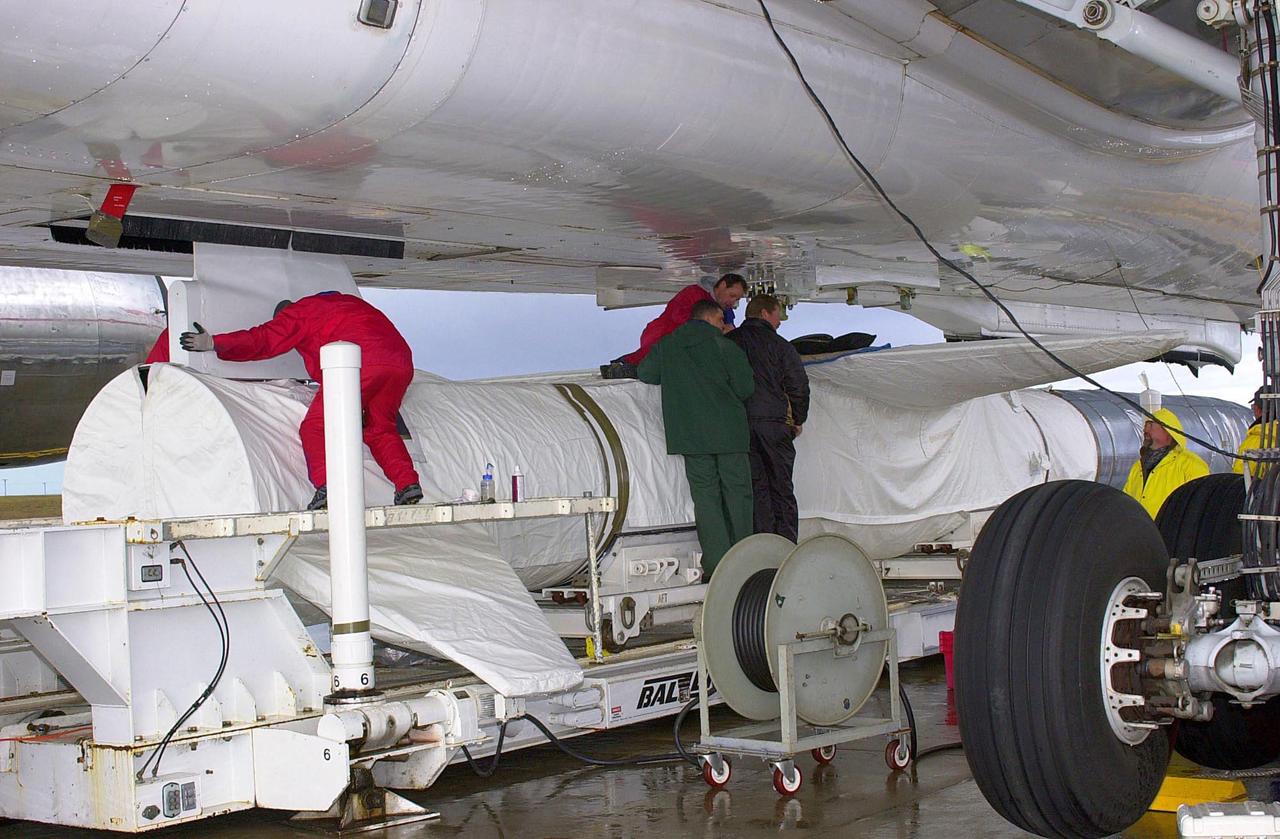
VANDENBERG AIR FORCE BASE, CALIF. - On the ramp adjacent to the runway at Vandenberg Air Force Base in California, a worker positions the vertical fin within the Orbital Sciences L-1011 aircraft. The fin will then be attached to the Space Technology 5's Pegasus rocket which will be mated to the underside of the carrier aircraft. The ST5, which contains three microsatellites with miniaturized redundant components and technologies, is mated to its launch vehicle, Orbital Sciences' Pegasus XL. Each of the ST5 microsatellites will validate New Millennium Program selected technologies, such as the Cold Gas Micro-Thruster and X-Band Transponder Communication System. After deployment from the Pegasus, the micro-satellites will be positioned in a “string of pearls” constellation that demonstrates the ability to position them to perform simultaneous multi-point measurements of the magnetic field using highly sensitive magnetometers. The data will help scientists understand and map the intensity and direction of the Earth’s magnetic field, its relation to space weather events, and affects on our planet. Launch of ST5 and the Pegasus XL will be from underneath the belly of an L-1011 carrier aircraft from Vandenberg Air Force Base.
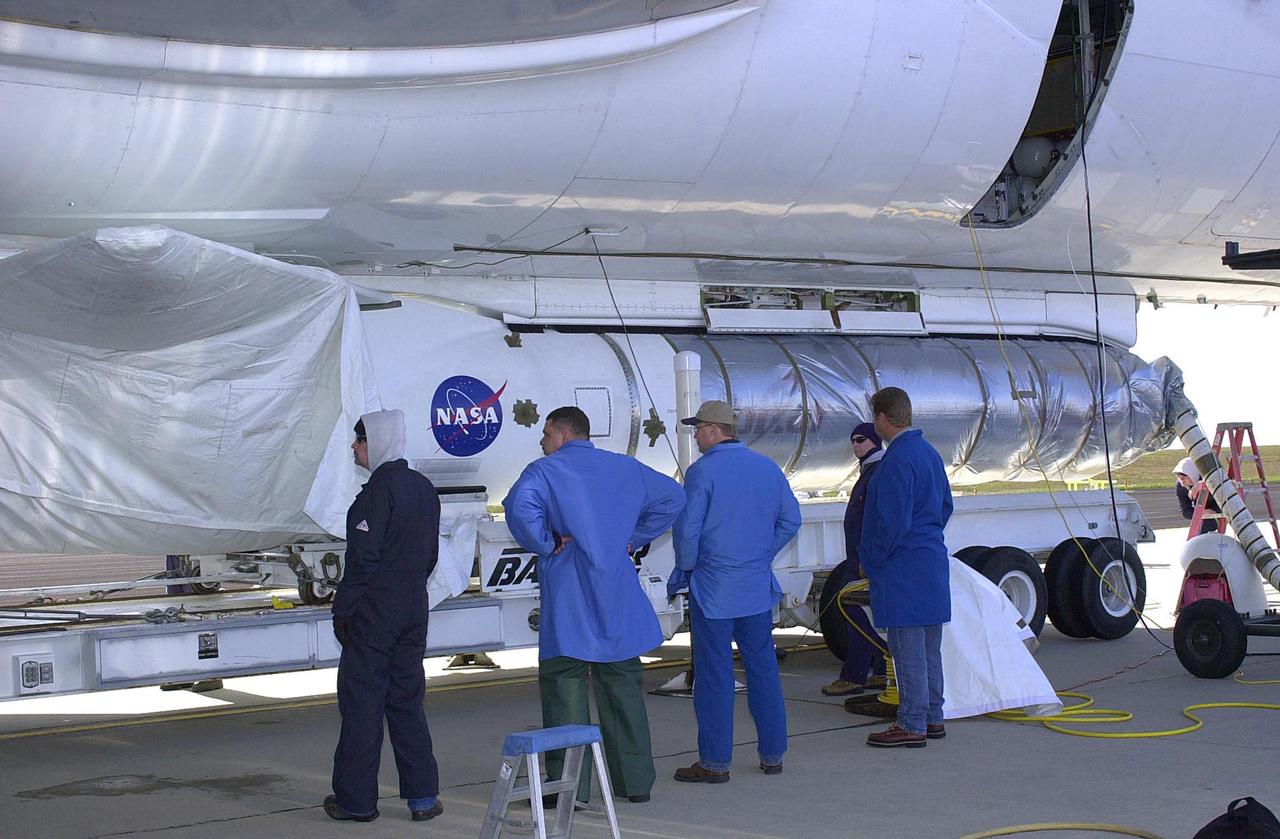
VANDENBERG AIR FORCE BASE, CALIF. - On the ramp adjacent to the runway at Vandenberg Air Force Base in California, workers install the Space Technology 5's Pegasus rocket beneath an Orbital Sciences L-1011 carrier aircraft. The ST5, which contains three microsatellites with miniaturized redundant components and technologies, is mated to its launch vehicle, Orbital Sciences' Pegasus XL. Each of the ST5 microsatellites will validate New Millennium Program selected technologies, such as the Cold Gas Micro-Thruster and X-Band Transponder Communication System. After deployment from the Pegasus, the micro-satellites will be positioned in a “string of pearls” constellation that demonstrates the ability to position them to perform simultaneous multi-point measurements of the magnetic field using highly sensitive magnetometers. The data will help scientists understand and map the intensity and direction of the Earth’s magnetic field, its relation to space weather events, and affects on our planet. Launch of ST5 and the Pegasus XL will be from underneath the belly of an L-1011 carrier aircraft from Vandenberg Air Force Base.
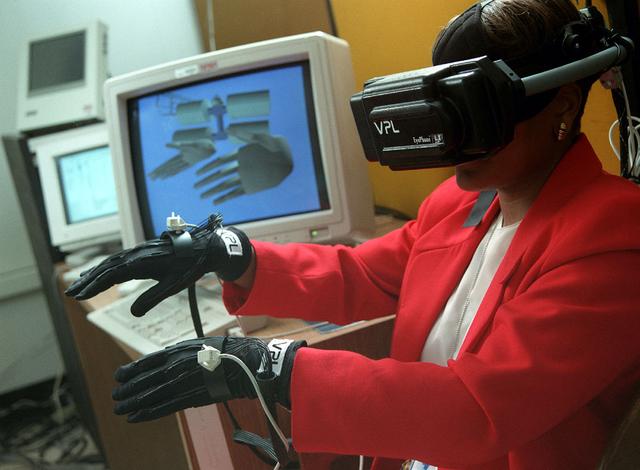
Virtual Reality (VR) can provide cost effective methods to design and evaluate components and systems for maintenance and refurbishment operations. The Marshall Space Flight Centerr (MSFC) in Huntsville, Alabama began to utilize VR for design analysis in the X-34 experimental reusable space vehicle. Analysts at MSFC's Computer Applications and Virtual Environments (CAVE) used Head Mounted Displays (HMD) (pictured), spatial trackers and gesture inputs as a means to animate or inhabit a properly sized virtual human model. These models were used in a VR scenario as a way to determine functionality of space and maintenance requirements for the virtual X-34. The primary functions of the virtual X-34 mockup was to support operations development and design analysis for engine removal, the engine compartment and the aft fuselage. This capability provided general visualization support to engineers and designers at MSFC and to the System Design Freeze Review at Orbital Sciences Corporation (OSC). The X-34 program was cancelled in 2001.
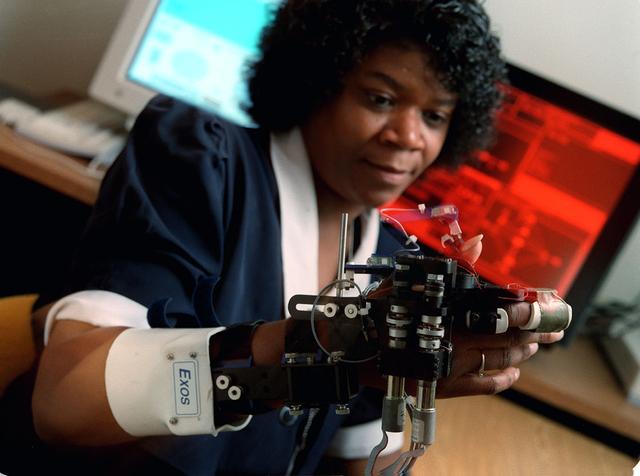
Virtual Reality (VR) can provide cost effective methods to design and evaluate components and systems for maintenance and refurbishment operations. The Marshall Space Flight Center (MSFC) in Huntsville, Alabama began to utilize VR for design analysis in the X-34 experimental reusable space vehicle. Analysts at MSFC's Computer Applications and Virtual Environments (CAVE) used Head Mounted Displays (HMD) (pictured), spatial trackers and gesture inputs as a means to animate or inhabit a properly sized virtual human model. These models were used in a VR scenario as a way to determine functionality of space and maintenance requirements for the virtual X-34. The primary functions of the virtual X-34 mockup was to support operations development and design analysis for engine removal, the engine compartment and the aft fuselage. This capability providedgeneral visualization support to engineers and designers at MSFC and to the System Design Freeze Review at Orbital Sciences Corporation (OSC). The X-34 program was cancelled in 2001.
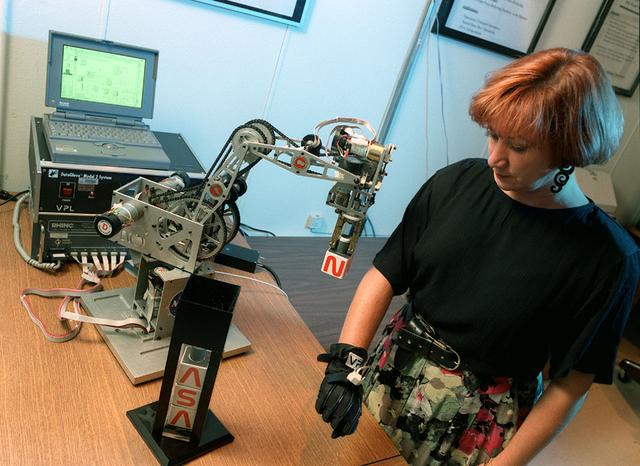
Virtual Reality (VR) can provide cost effective methods to design and evaluate components and systems for maintenance and refurbishment operations. Marshall Spce Flight Center (MSFC) is begirning to utilize VR for design analysis in the X-34 experimental reusable space vehicle. Analysts at MSFC's Computer Applications and Virtual Environments (CAVE) used Head Mounted Displays (HMD) (pictured), spatial trackers and gesture inputs as a means to animate or inhabit a properly sized virtual human model. These models are used in a VR scenario as a way to determine functionality of space and maintenance requirements for the virtual X-34. The primary functions of the virtual X-34 mockup is to support operations development and design analysis for engine removal, the engine compartment and the aft fuselage. This capability provides general visualization support to engineers and designers at MSFC and to the System Design Freeze Review at Orbital Sciences Corporation (OSC).