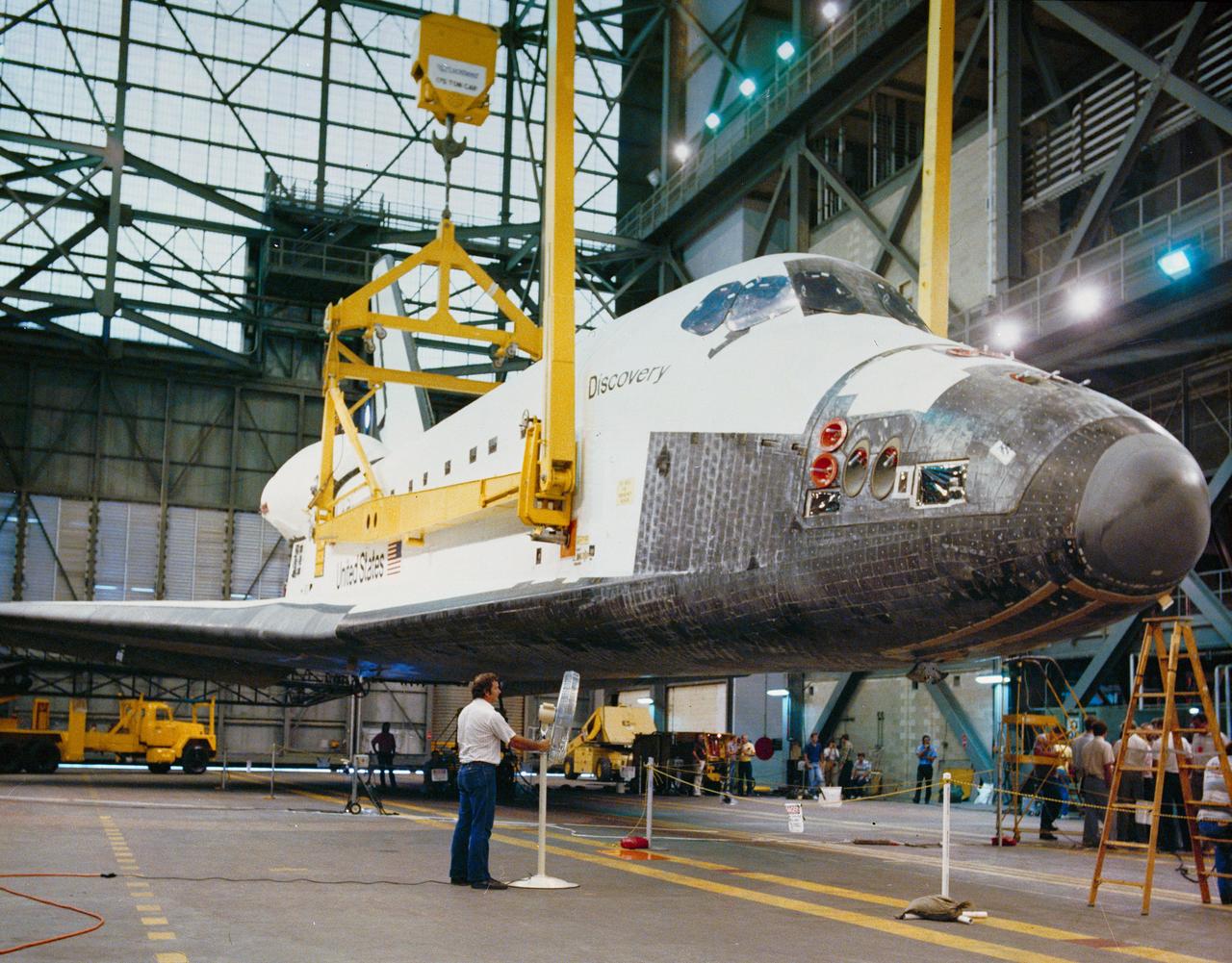
S88-41541 (7 July 1988) --- STS-26 Discovery, Orbiter Vehicle (OV) 103, is suspended by overhead crane and large frame attached to vehicle at four points. A ground-level view shows OV-103 during operations to accomplish its mating to two solid rocket boosters (SRBs) and an external fuel tank (ET) in the vehicle assembly building (VAB) at the Kennedy Space Center (KSC). From this step OV-103 will be lifted vertically and hoisted high inside the VAB for mating with the already connected ET and SRBs. In less than two weeks, the combined components will be rolled to Pad 39B atop a mobile launch platform.
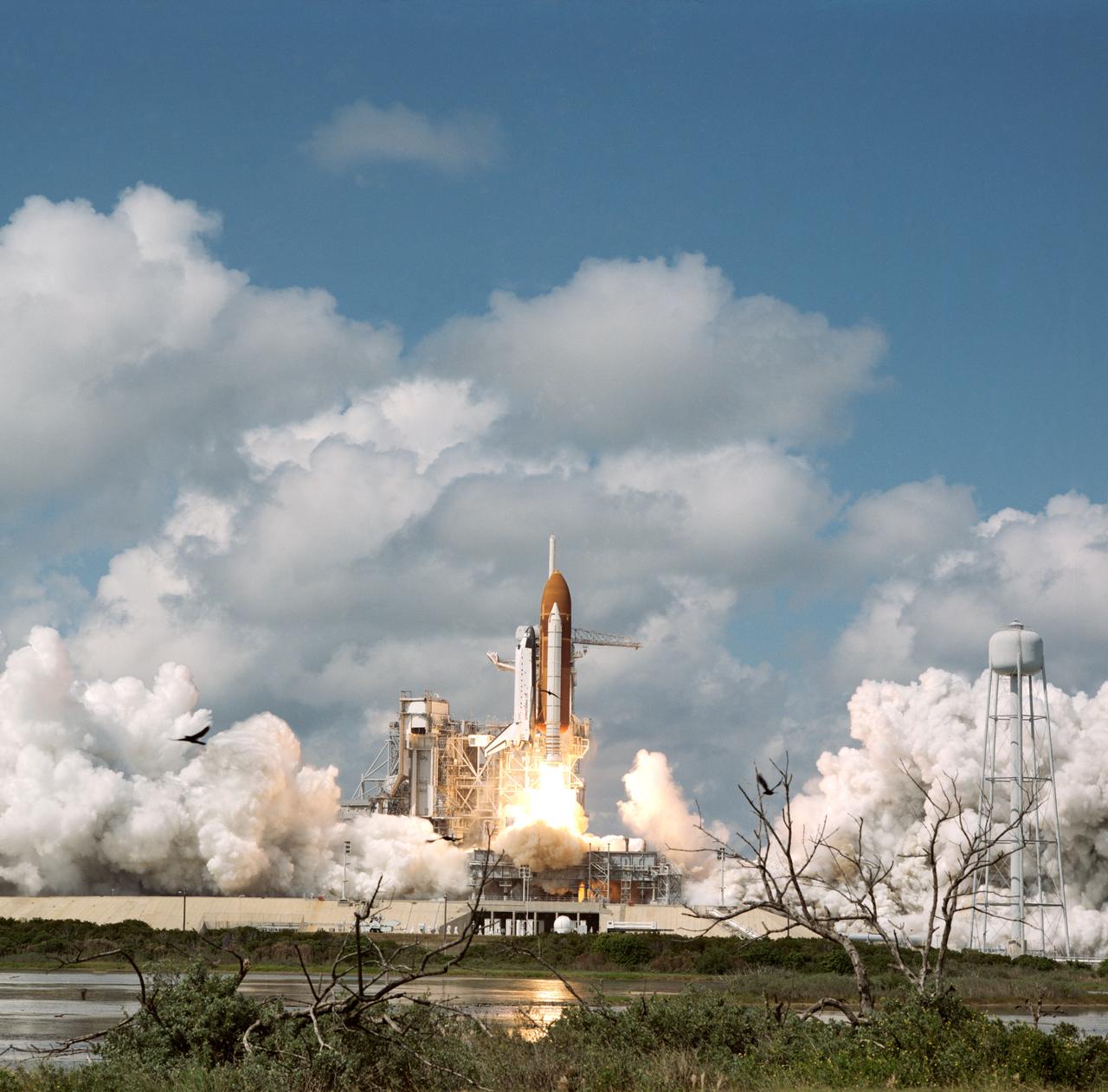
STS-26 Discovery, Orbiter Vehicle (OV) 103, lifts off from mobile launcher platform at Kennedy Space Center (KSC) Launch Complex (LC) pad 39B. Riding atop the orange external tank (ET), OV-103 heads for Earth orbit as the exhaust plumes from the two solid rocket boosters (SRBs) cover the mobile launcher platform and the area surrounding the launch pad. SRB firings are reflected in a nearby waterway. In the foreground are trees and several birds in flight. STS-26 marks OV-103's first flight since September 1985 and NASA's first manned mission since the 51L Challenger accident, 01-28-86.
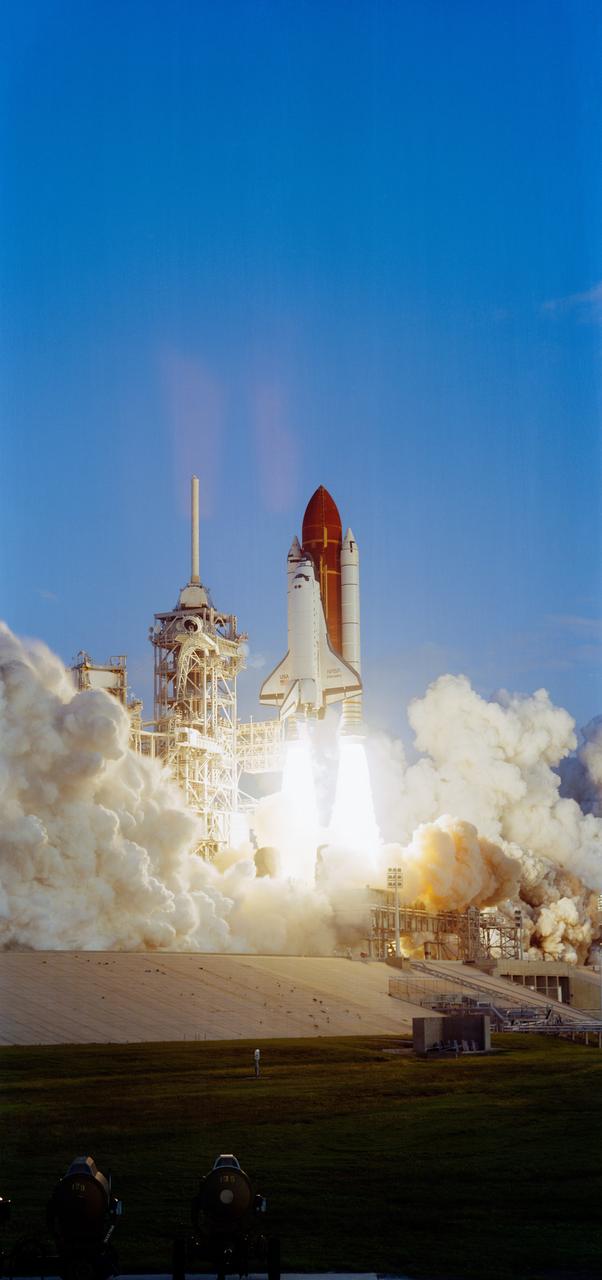
STS-41 Discovery, Orbiter Vehicle (OV) 103, lifts off from the Kennedy Space Center (KSC) Launch Complex (LC) Pad 39 mobile launcher platform at 7:47 am (Eastern Daylight Time (EDT)). OV-103 riding atop the external tank (ET) and flanked by two solid rocket boosters (SRBs), is captured just moments after liftoff. Not yet clear of the fixed service structure (FSS) tower, OV-103 is highlighted against the cloudless morning sky. Exhaust smoke billows from the SRBs and the space shuttle main engines (SSMEs) creating a cloud over the launch pad area.
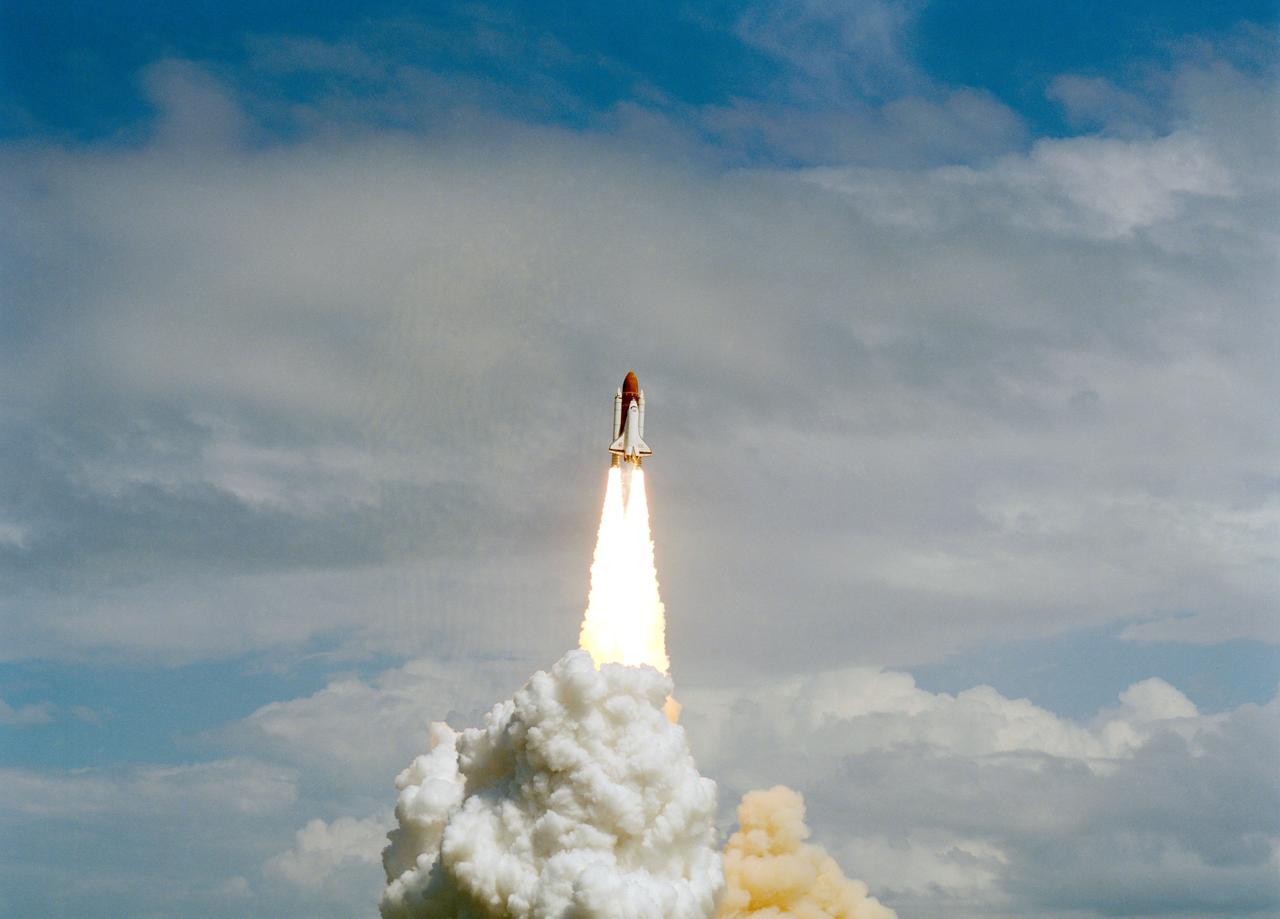
STS-26 Discovery, Orbiter Vehicle (OV) 103, rises into a cloudy sky and heads for Earth orbit atop the external tank (ET) as exhaust plumes billow from the two solid rocket boosters (SRBs) during liftoff from Kennedy Space Center (KSC) Launch Complex (LC) pad 39B. STS-26 marks OV-103's first flight since September 1985 and NASA's first manned mission since 51L Challenger accident, 01-28-86.
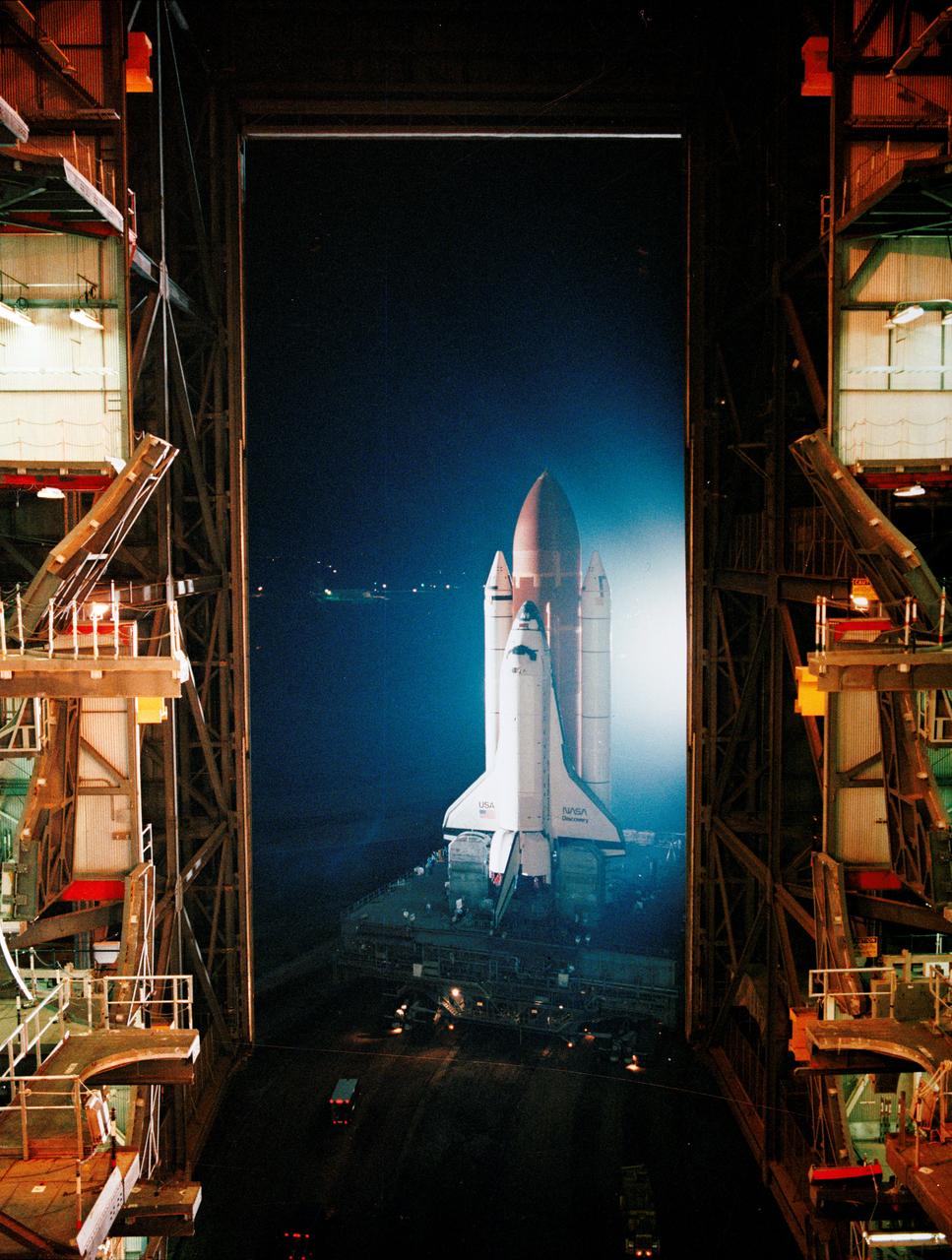
STS-26 Discovery, Orbiter Vehicle (OV) 103, mated with the external tank (ET) and solid rocket boosters (SRBs), is framed by Kennedy Space Center's (KSC's) vehicle assembly building (VAB) doorway as it rolled out. This high angle view shows OV-103 atop the mobile launch pad and crawler transporter as it begins its slow exit from VAB en route to launch complex (LC) pad 39B. The move began shortly after midnight on the nation's 212th birthday. Ceremonies marking the event were held later during daylight hours.
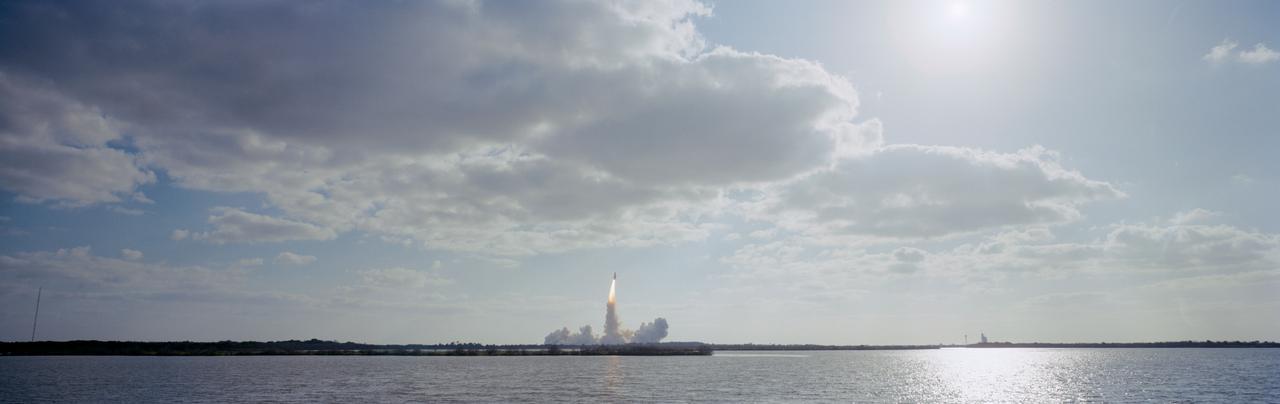
In this distant view, STS-31 Discovery, Orbiter Vehicle (OV) 103, is seen as it heads skyward after liftoff from Kennedy Space Center (KSC) Launch Complex (LC) Pad 39B at 8:33:51.0492 am (Eastern Daylight Time (EDT)). OV-103's silhouette atop the external tank (ET) appears above the glow of the solid rocket booster (SRB) and space shuttle main engine (SSME) firings. An exhaust plume trails behind and covers the launch pad area below the orbiter. A nearby waterway reflects the SRB/SSME glow in the foreground. At the far right and barely discernible is KSC LC Pad 39A and the Sound Supression Water System tower. Columbia, OV-102, is on LC Pad 39A which is separated by a distance of 1.6 miles. This was the first time since January 1986 that there was a shuttle on each pad.
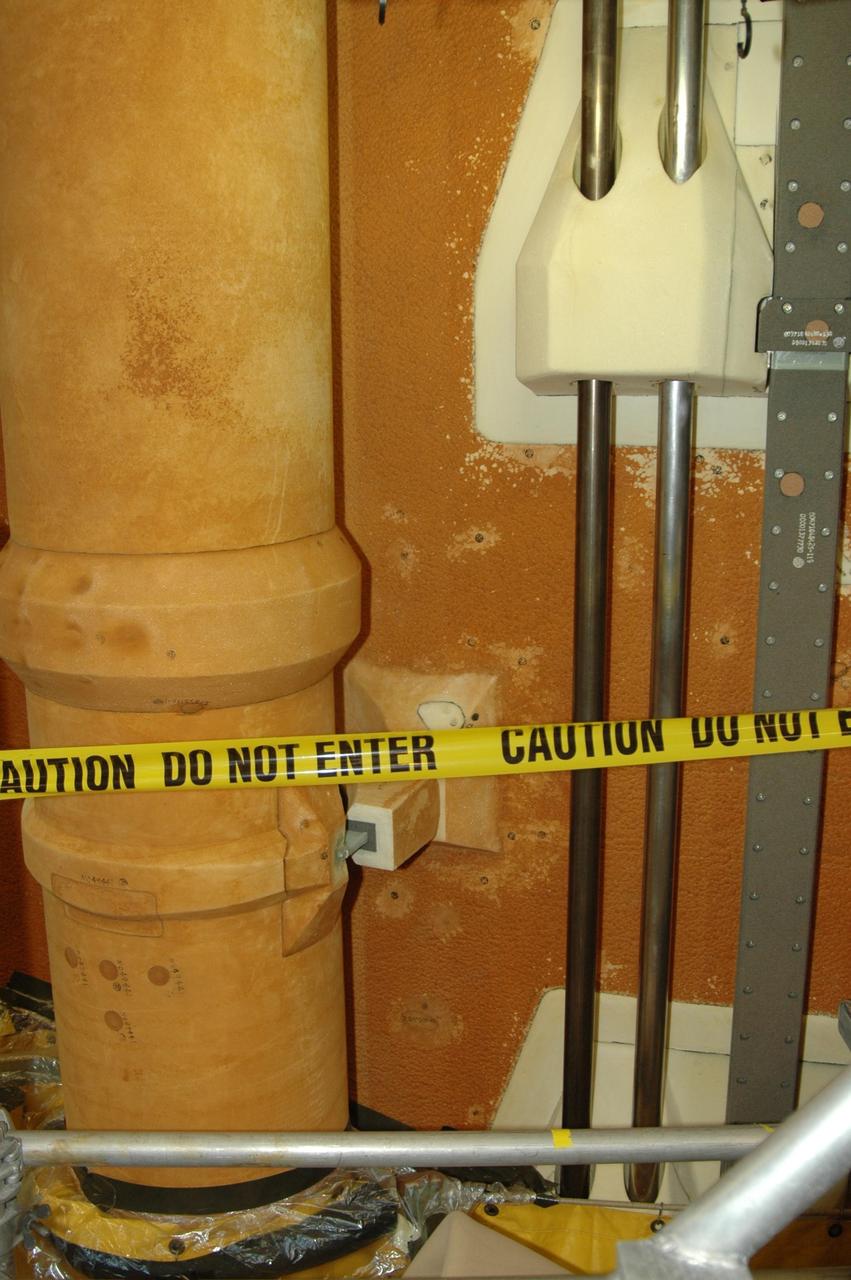
KENNEDY SPACE CENTER, FLA. -- The BX265 foam insulation and super lightweight ablator, or SLA, cork insulation has been removed from the L02 feed line bracket that is attached to the external tank. Also visible is the adjacent LO2 feed line. The BX265 foam insulation will later be reapplied without the SLA. The tank is scheduled to fly on Space Shuttle Discovery in October 2007 on mission STS-120. Discovery's crew will add the module Harmony that will serve as a port for installing additional international laboratories. Harmony will be the first expansion of the living and working space on the complex since the Russian Pirs airlock was installed in 2001. The mission also will move the first set of solar arrays installed on the station to a permanent location on the complex and redeploy them. Photo credit: NASA/Jim Grossmann
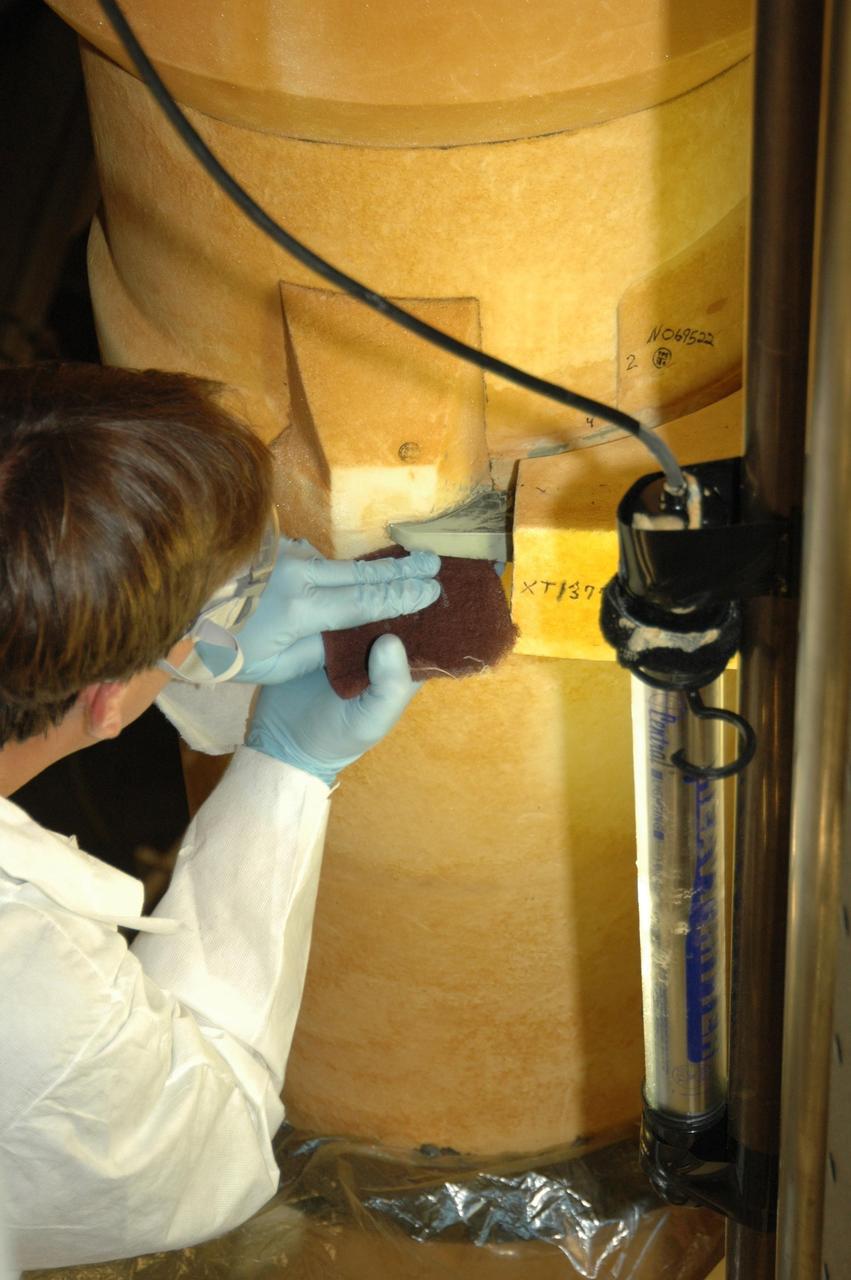
KENNEDY SPACE CENTER, FLA. -- The super lightweight ablator, or SLA, cork insulation has been removed from the external tank and a United Space Alliance external tank technician sands off the residue from the LO2 feed line bracket. The BX265 foam insulation will later be reapplied without the SLA. The tank is scheduled to fly on Space Shuttle Discovery in October 2007 on mission STS-120. Discovery's crew will add the module Harmony that will serve as a port for installing additional international laboratories. Harmony will be the first expansion of the living and working space on the complex since the Russian Pirs airlock was installed in 2001. The mission also will move the first set of solar arrays installed on the station to a permanent location on the complex and redeploy them. Photo credit: NASA/Jim Grossmann
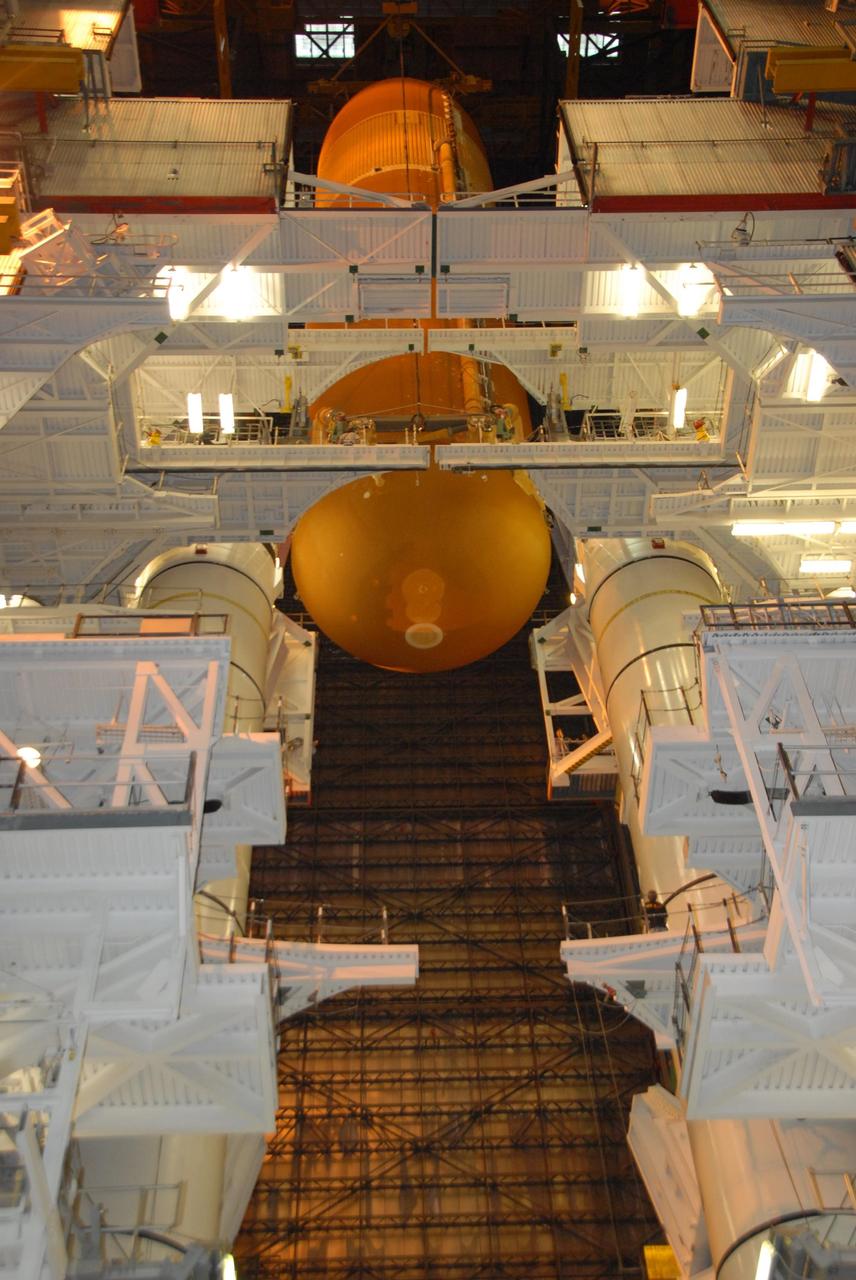
KENNEDY SPACE CENTER, FLA. -- In the Vehicle Assembly Building at NASA's Kennedy Space Center, external tank No. 120 is lowered toward the mobile launcher platform in high bay 1 where it will be mated with the solid rocket boosters already there. The external tank-SRB stack is being prepared for the orbiter Discovery, which will be mated to the stack in the VAB in two weeks. Space Shuttle Discovery is targeted to launch Oct. 23 on mission STS-120 to the International Space Station. Photo credit: NASA/George Shelton
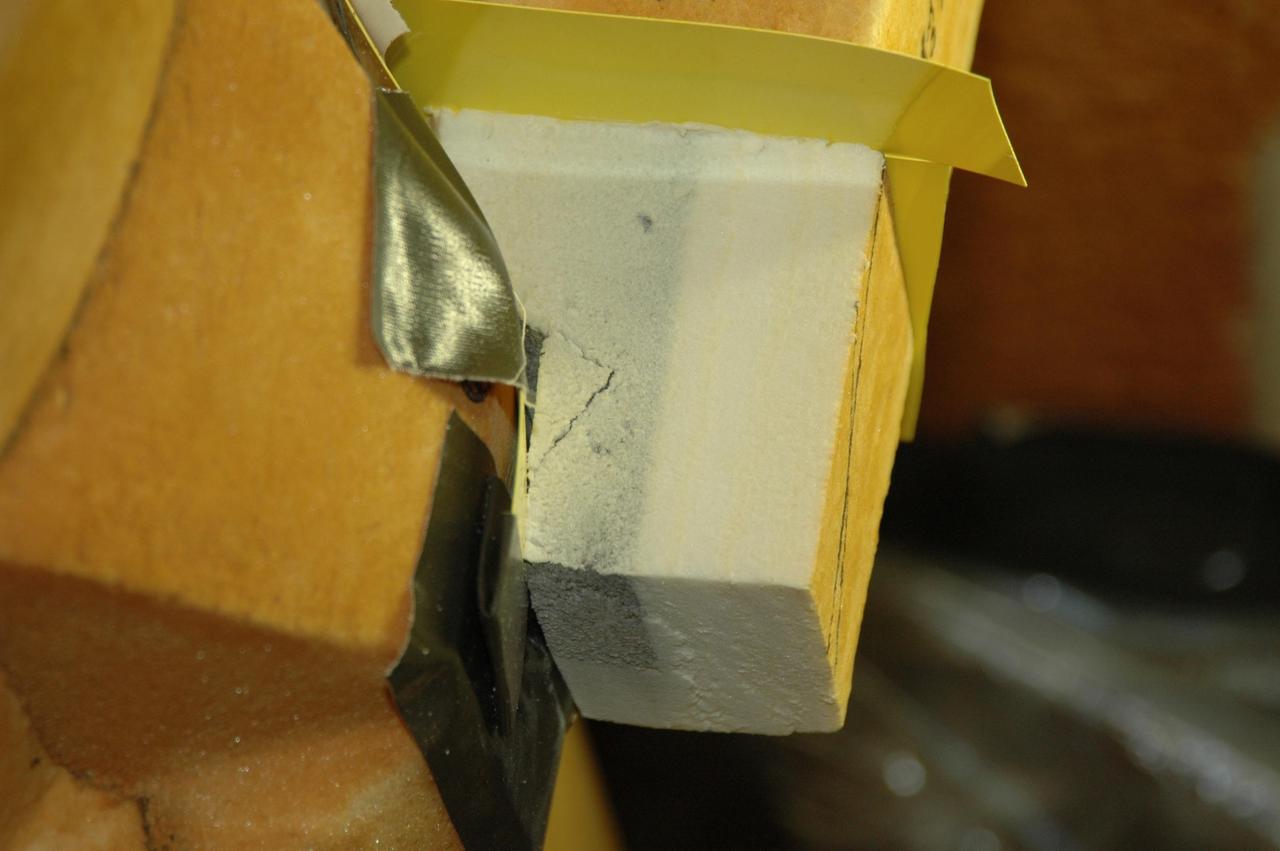
KENNEDY SPACE CENTER, FLA. -- Now that the foam insulation is removed from the external tank, the crack in the super lightweight ablator, or SLA, cork insulation is visible as had been observed previously by X-rays. The BX265 foam insulation will later be reapplied without the SLA. The tank is scheduled to fly on Space Shuttle Discovery in October 2007 on mission STS-120. Discovery's crew will add the module Harmony that will serve as a port for installing additional international laboratories. Harmony will be the first expansion of the living and working space on the complex since the Russian Pirs airlock was installed in 2001. The mission also will move the first set of solar arrays installed on the station to a permanent location on the complex and redeploy them. Photo credit: NASA/Jim Grossmann
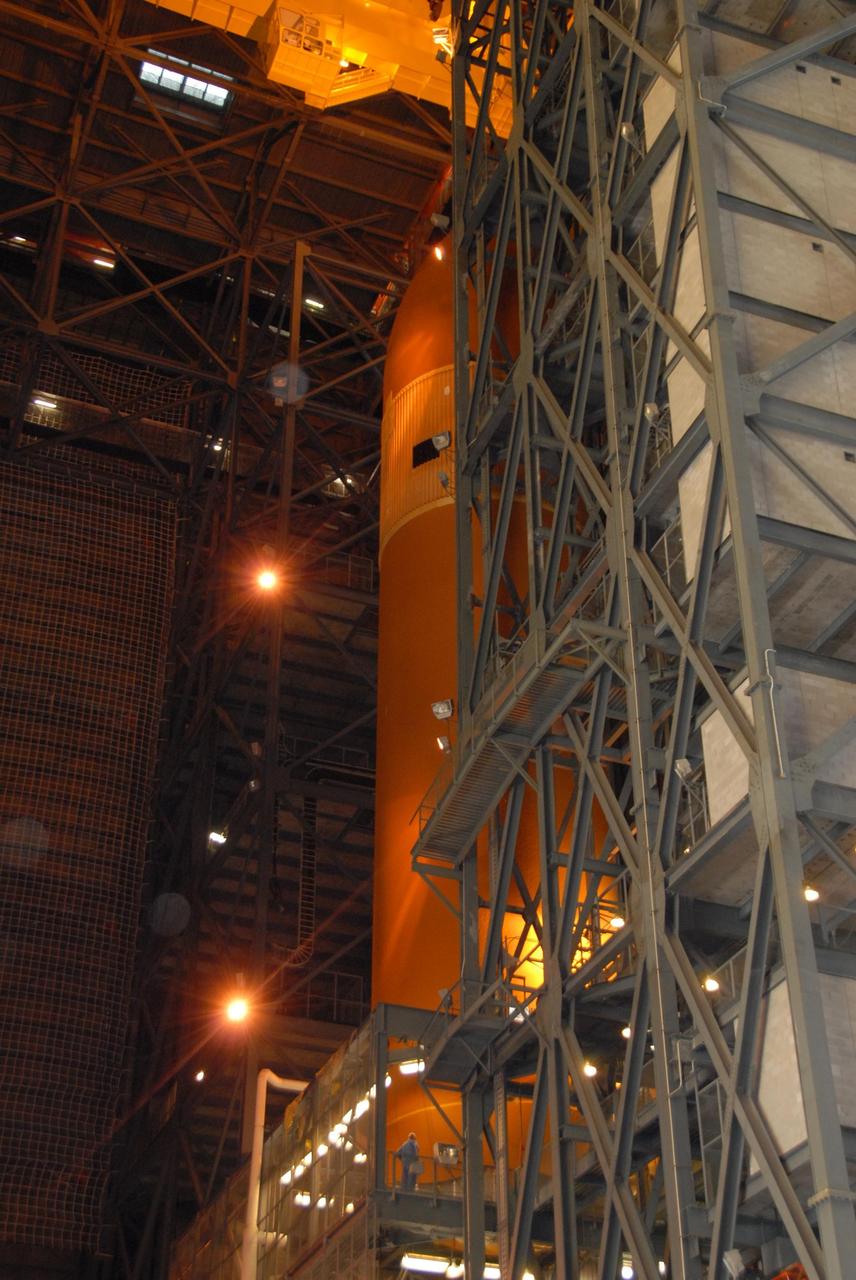
KENNEDY SPACE CENTER, FLA. -- In the Vehicle Assembly Building at NASA's Kennedy Space Center, external tank No. 120 is being lifted out of the checkout cell to high bay 1 where it will be mated with the solid rocket boosters. The external tank-SRB stack is being prepared for the orbiter Discovery, which will be mated to the stack in the VAB in two weeks. Space Shuttle Discovery is targeted to launch Oct. 23 on mission STS-120 to the International Space Station. Photo credit: NASA/George Shelton
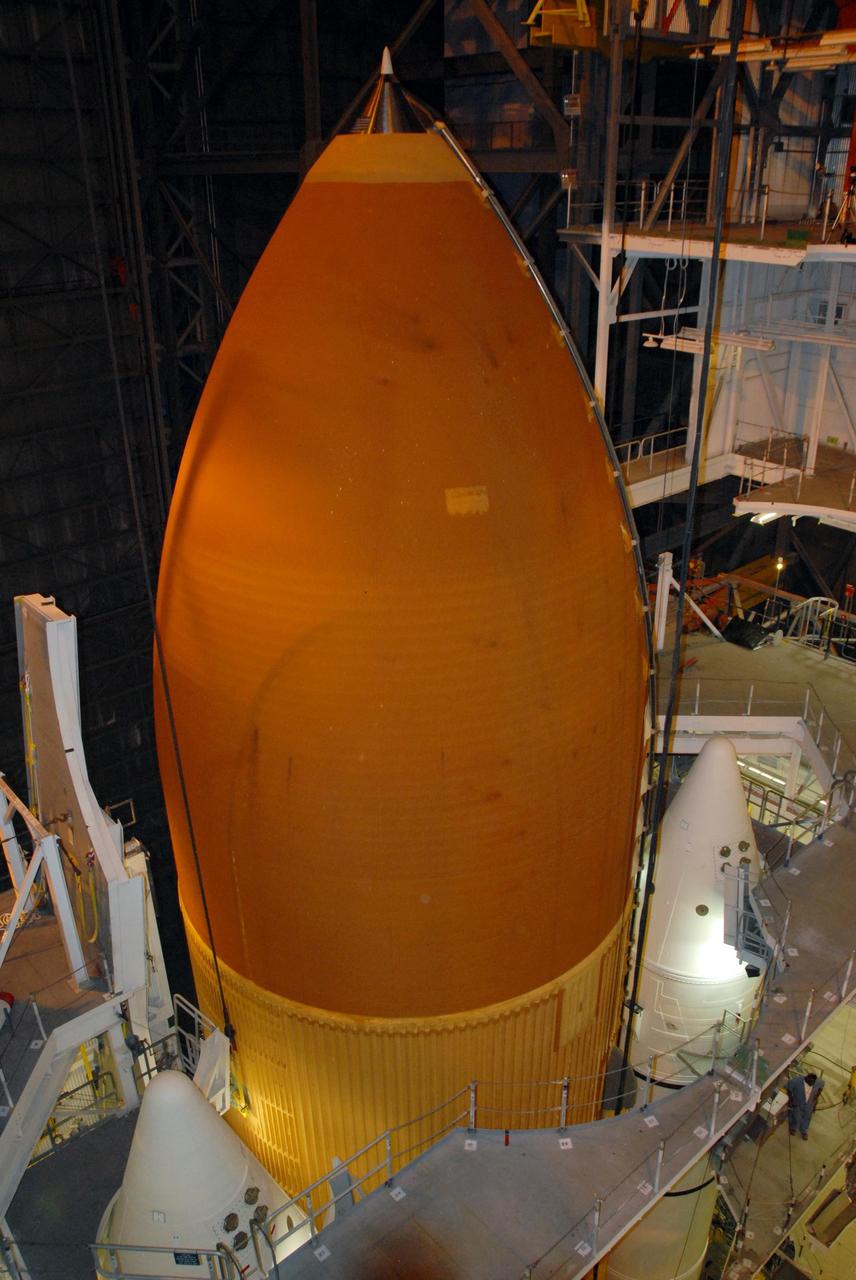
KENNEDY SPACE CENTER, FLA. -- In the Vehicle Assembly Building at NASA's Kennedy Space Center, the top of external tank No. 120 is seen as the tank is lowered between the solid rocket boosters for mating on the mobile launcher platform. The external tank-SRB stack is being prepared for the orbiter Discovery, which will be mated to the stack in the VAB in two weeks. Space Shuttle Discovery is targeted to launch Oct. 23 on mission STS-120 to the International Space Station. Photo credit: NASA/George Shelton
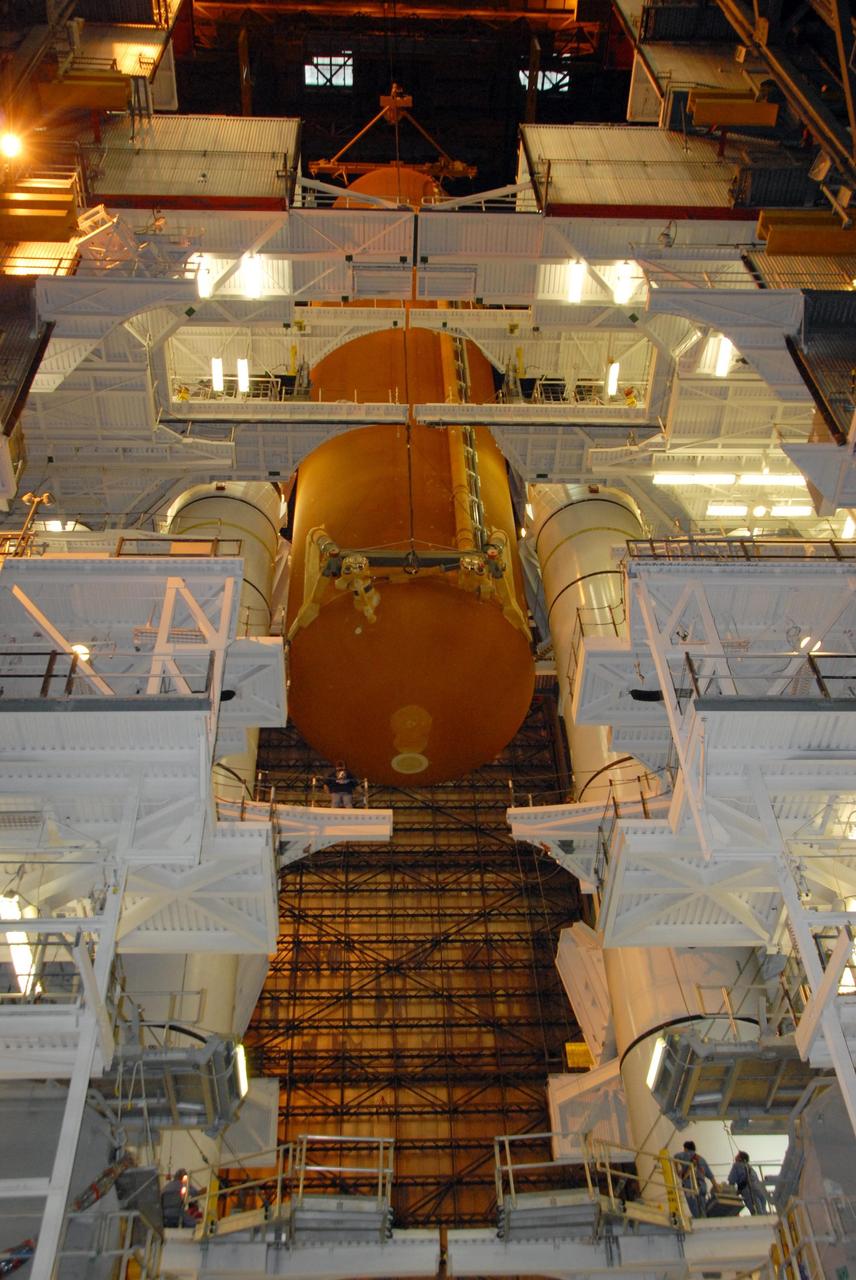
KENNEDY SPACE CENTER, FLA. -- In the Vehicle Assembly Building at NASA's Kennedy Space Center, external tank No. 120 is lowered between the solid rocket boosters for mating on the mobile launcher platform. The external tank-SRB stack is being prepared for the orbiter Discovery, which will be mated to the stack in the VAB in two weeks. Space Shuttle Discovery is targeted to launch Oct. 23 on mission STS-120 to the International Space Station. Photo credit: NASA/George Shelton
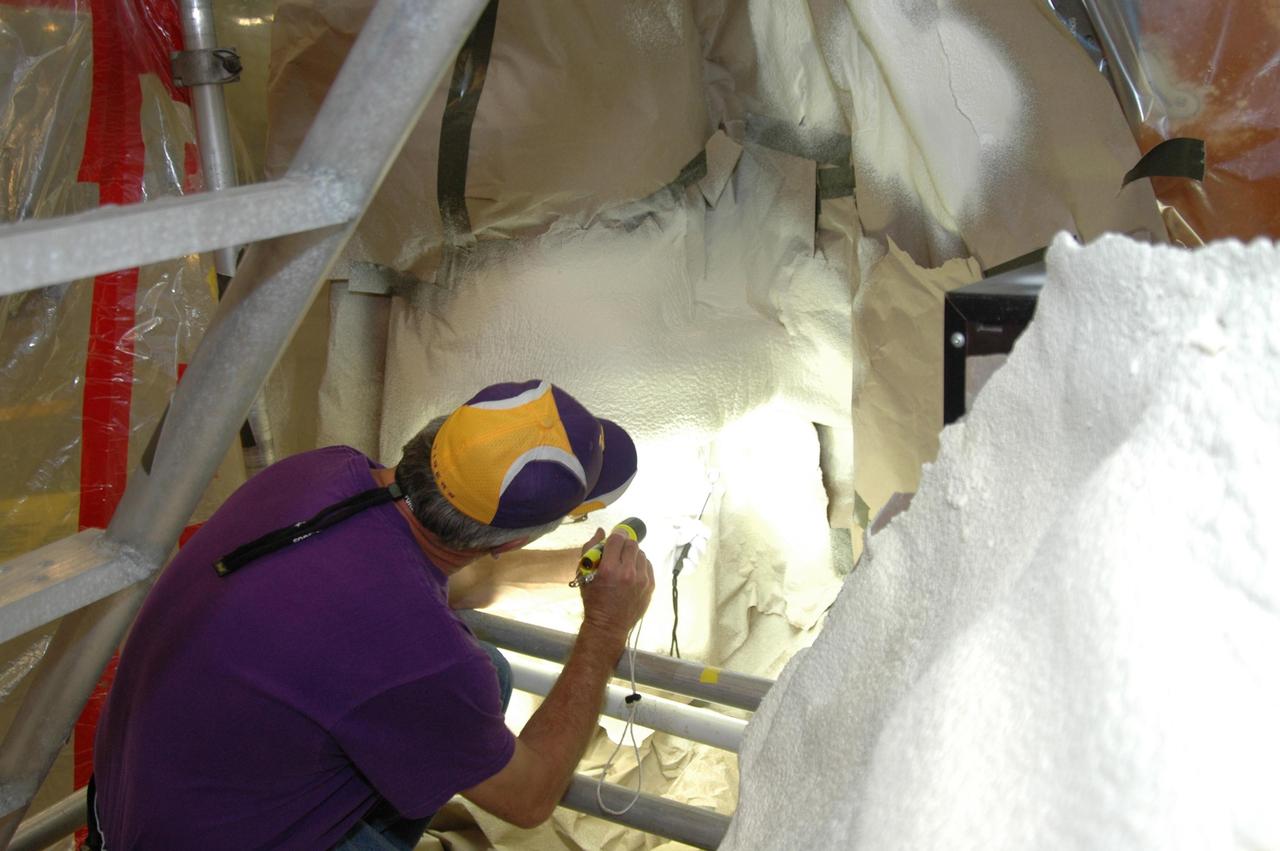
KENNEDY SPACE CENTER, FLA. -- A Lockheed Martin external tank technician from the Michoud Assembly Facility in New Orleans inspects the foam modification on external tank 120 in the Vehicle Assembly Building. The foam insulation and super lightweight ablator cork insulation were removed from the external tank and LO2 feed line bracket on Aug. 24 and replaced only with BX265 foam insulation. The tank is scheduled to fly on Space Shuttle Discovery in October 2007 on mission STS-120. Photo credit: NASA/Jim Grossmann

KENNEDY SPACE CENTER, FLA. -- In the Vehicle Assembly Building at NASA's Kennedy Space Center, external tank No. 120 is lowered between the solid rocket boosters for mating on the mobile launcher platform. The external tank-SRB stack is being prepared for the orbiter Discovery, which will be mated to the stack in the VAB in two weeks. Space Shuttle Discovery is targeted to launch Oct. 23 on mission STS-120 to the International Space Station. Photo credit: NASA/George Shelton
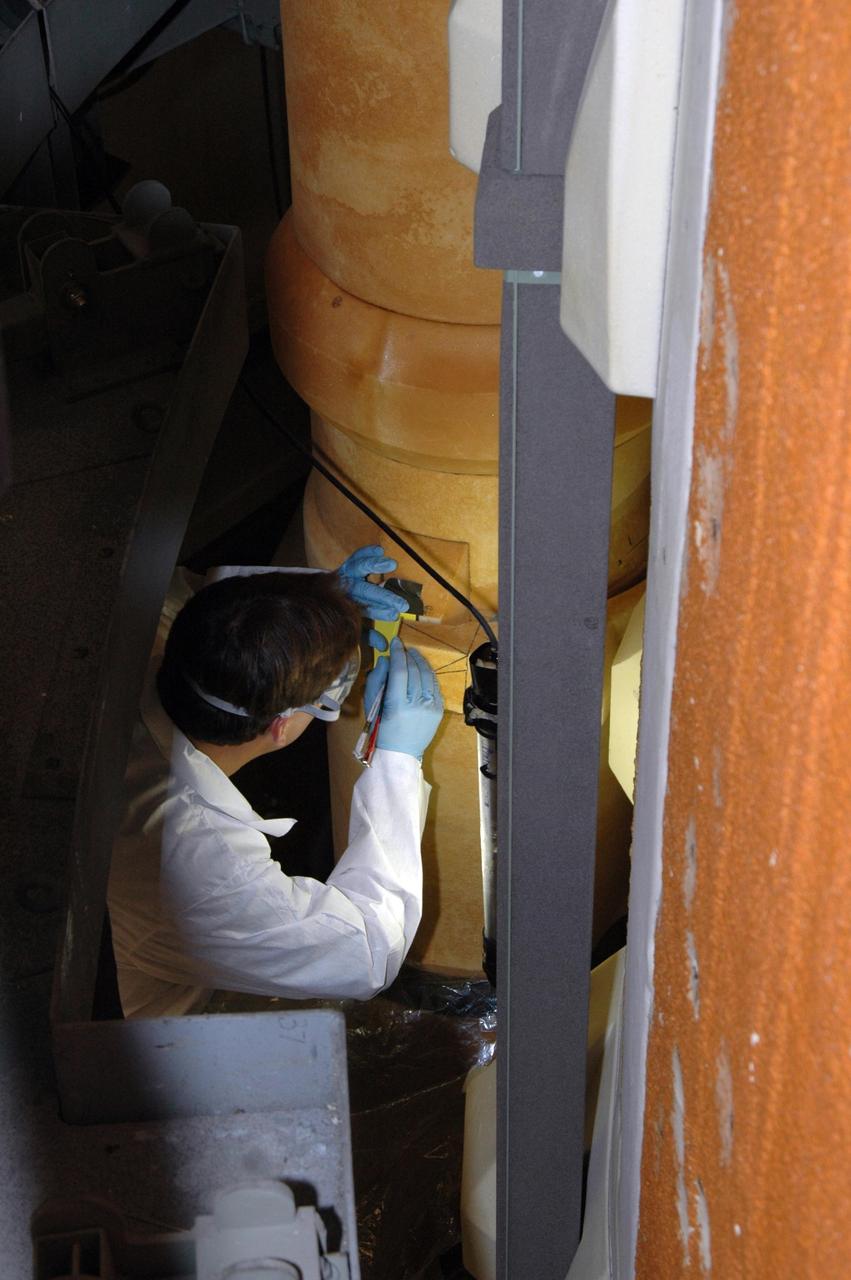
KENNEDY SPACE CENTER, FLA. -- A United Space Alliance external tank technician maps out the cutting area of the liquid oxygen (LO2) feed line bracket where BX265 foam insulation and super lightweight ablator, or SLA, cork insulation is to be removed. The BX265 foam insulation will later be reapplied without the SLA. The tank is scheduled to fly on Space Shuttle Discovery in October 2007 on mission STS-120. Discovery's crew will add the module Harmony that will serve as a port for installing additional international laboratories. Harmony will be the first expansion of the living and working space on the complex since the Russian Pirs airlock was installed in 2001. The mission also will move the first set of solar arrays installed on the station to a permanent location on the complex and redeploy them. Photo credit: NASA/Jim Grossmann

KENNEDY SPACE CENTER, FLA. -- A close-up view of the LO2 feed line bracket with the BX265foam insulation and super lightweight ablator, or SLA, cork insulation removed. The BX265 foam insulation will later be reapplied without the SLA. The tank is scheduled to fly on Space Shuttle Discovery in October 2007 on mission STS-120. Discovery's crew will add the module Harmony that will serve as a port for installing additional international laboratories. Harmony will be the first expansion of the living and working space on the complex since the Russian Pirs airlock was installed in 2001. The mission also will move the first set of solar arrays installed on the station to a permanent location on the complex and redeploy them. Photo credit: NASA/Jim Grossmann
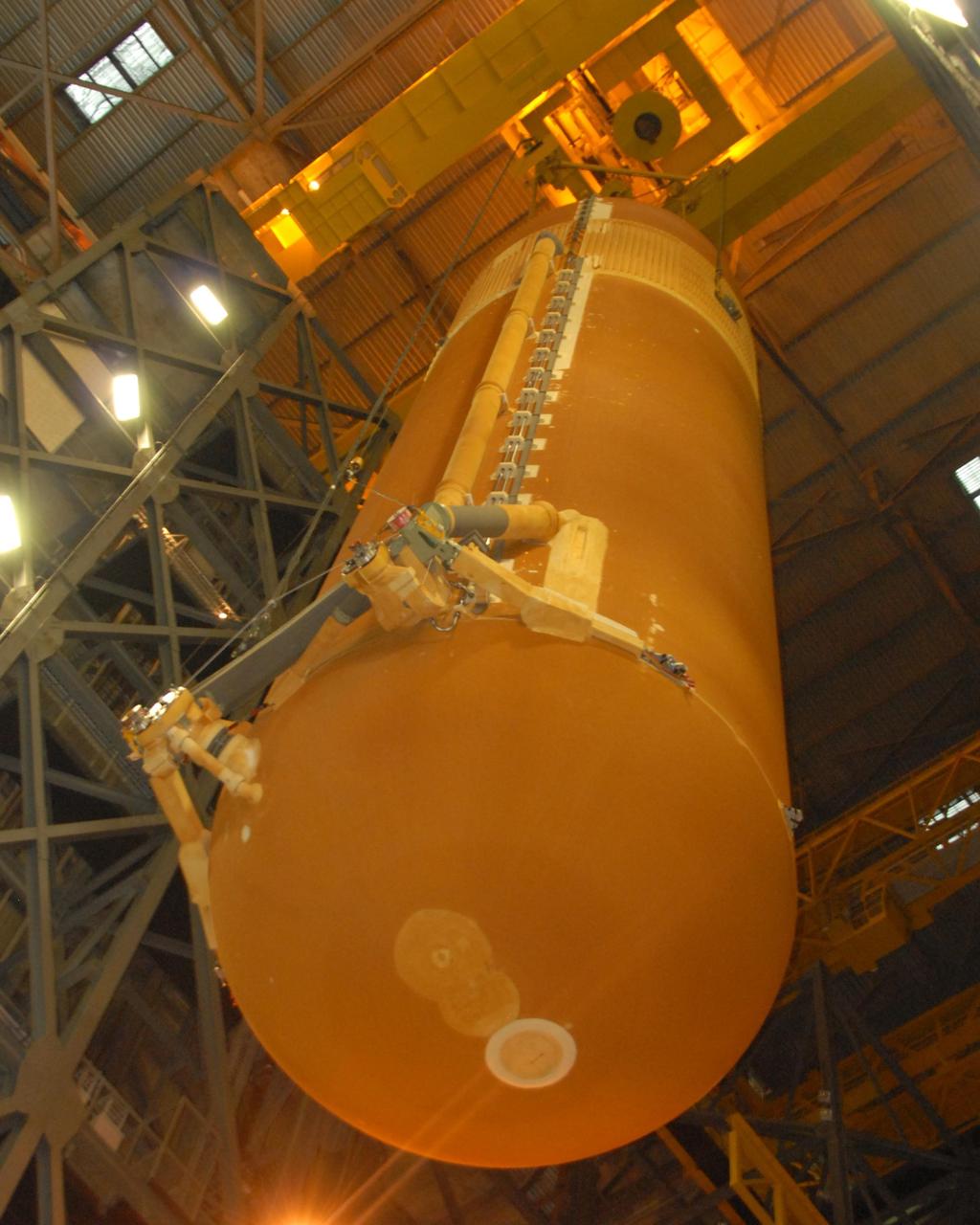
KENNEDY SPACE CENTER, FLA. -- In the Vehicle Assembly Building at NASA's Kennedy Space Center, external tank No. 120 is lowered into high bay 1 where it will be mated with the solid rocket boosters. Seen on the tank are the sites of modification to the foam where BX265 foam insulation and super lightweight ablator, cork insulation was removed and the BX265 foam insulation alone reapplied. The external tank-SRB stack is being prepared for the orbiter Discovery, which will be mated to the stack in the VAB in two weeks. Space Shuttle Discovery is targeted to launch Oct. 23 on mission STS-120 to the International Space Station. Photo credit: NASA/George Shelton
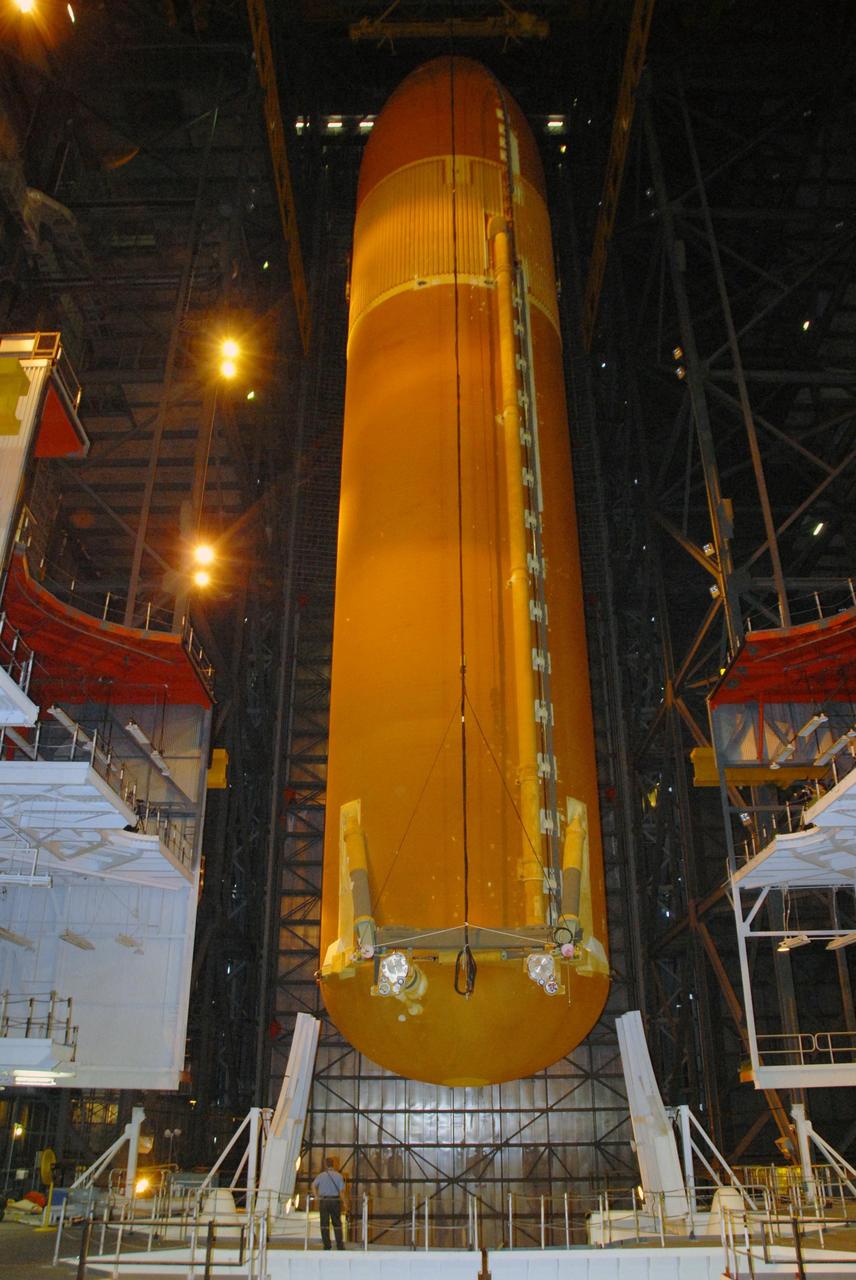
KENNEDY SPACE CENTER, FLA. -- In the Vehicle Assembly Building at NASA's Kennedy Space Center, external tank No. 120 is lowered toward the mobile launcher platform in high bay 1 where it will be mated with the solid rocket boosters already there. The external tank-SRB stack is being prepared for the orbiter Discovery, which will be mated to the stack in the VAB in two weeks. Space Shuttle Discovery is targeted to launch Oct. 23 on mission STS-120 to the International Space Station. Photo credit: NASA/George Shelton
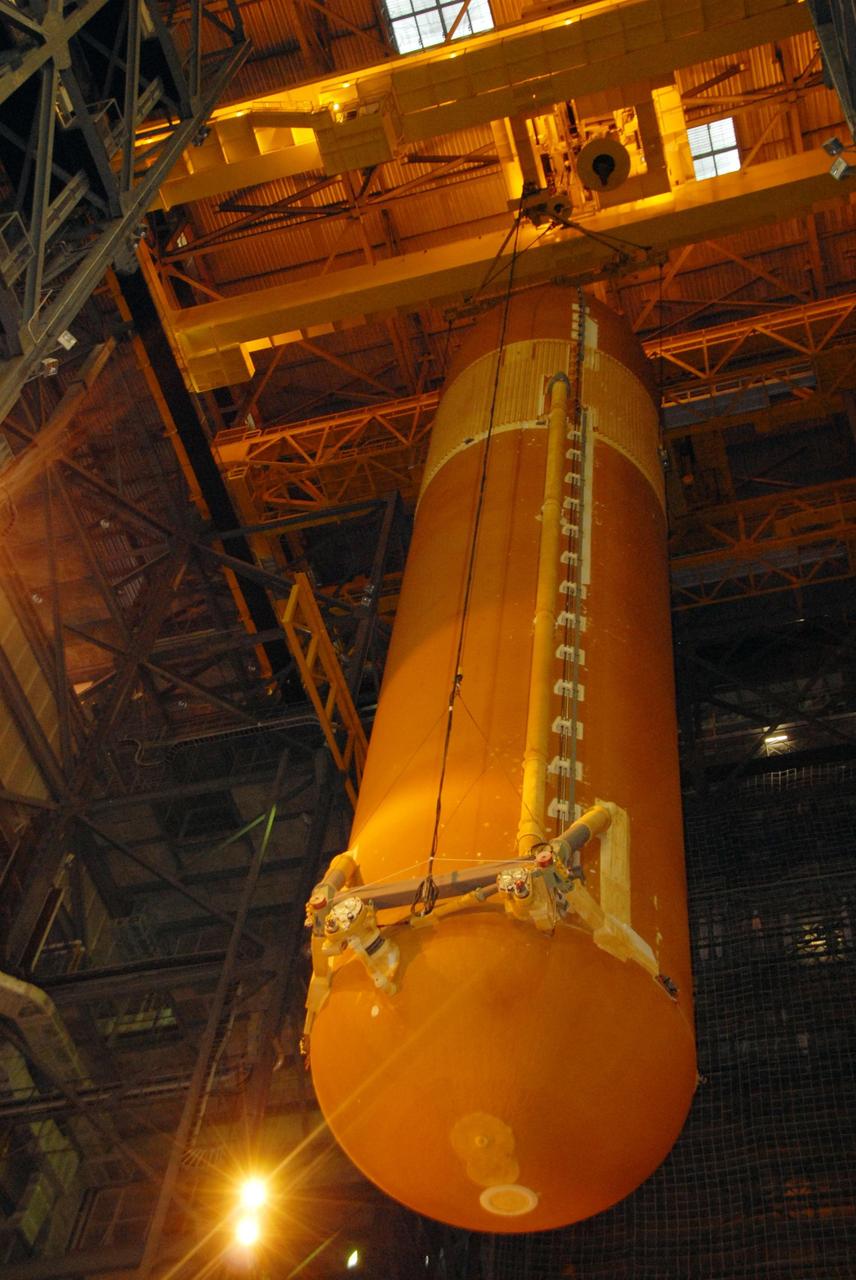
KENNEDY SPACE CENTER, FLA. -- In the Vehicle Assembly Building at NASA's Kennedy Space Center, external tank No. 120 is lowered into high bay 1 where it will be mated with the solid rocket boosters. Seen on the tank are the sites of modification to the foam where BX265 foam insulation and super lightweight ablator, cork insulation was removed and the BX265 foam insulation alone reapplied. The external tank-SRB stack is being prepared for the orbiter Discovery, which will be mated to the stack in the VAB in two weeks. Space Shuttle Discovery is targeted to launch Oct. 23 on mission STS-120 to the International Space Station. Photo credit: NASA/George Shelton
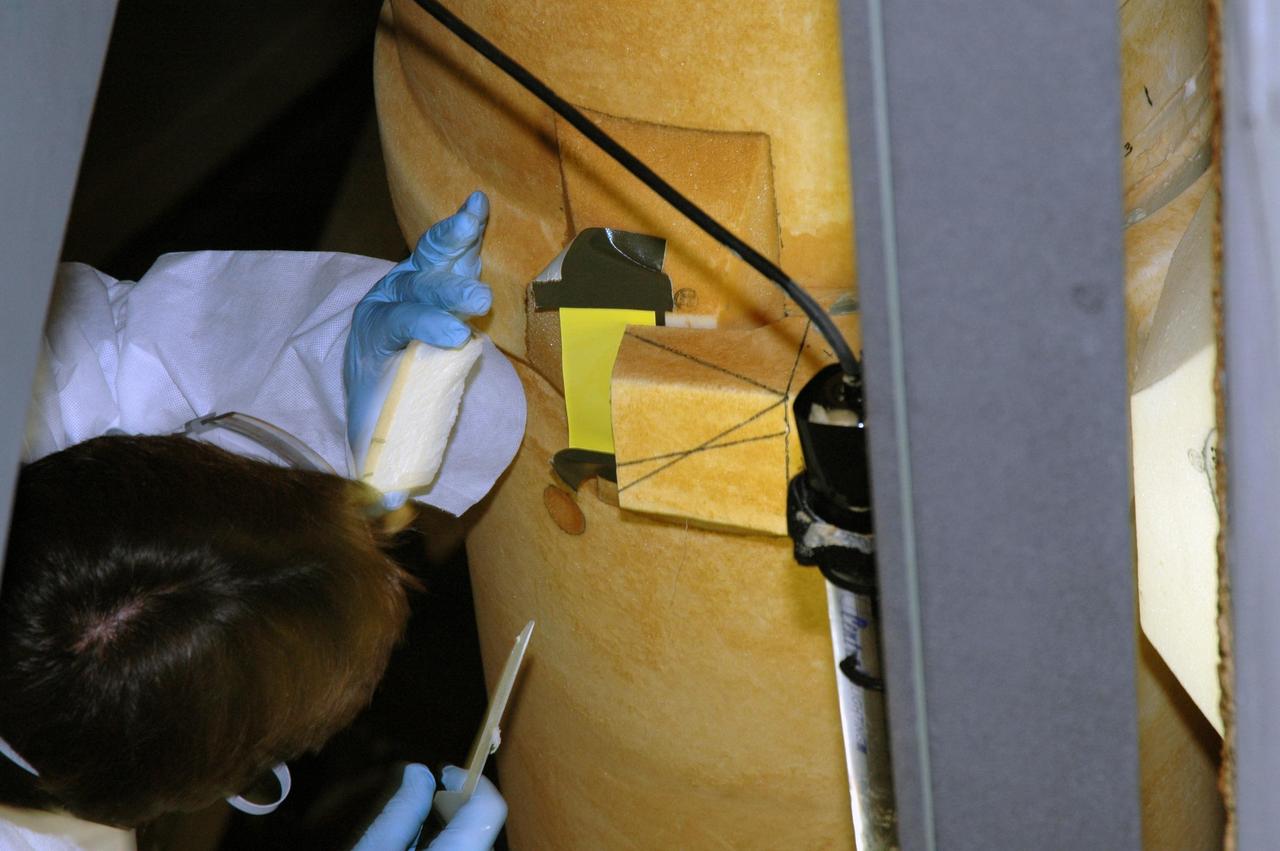
KENNEDY SPACE CENTER, FLA. -- A United Space Alliance external tank technician has completed the removal of a layer of BX265 foam insulation from the LO2 feed line bracket on the external tank. The BX265 foam insulation will later be reapplied without the super lightweight ablator, or SLA, cork insulation. The tank is scheduled to fly on Space Shuttle Discovery in October 2007 on mission STS-120. Discovery's crew will add the module Harmony that will serve as a port for installing additional international laboratories. Harmony will be the first expansion of the living and working space on the complex since the Russian Pirs airlock was installed in 2001. The mission also will move the first set of solar arrays installed on the station to a permanent location on the complex and redeploy them. Photo credit: NASA/Jim Grossmann
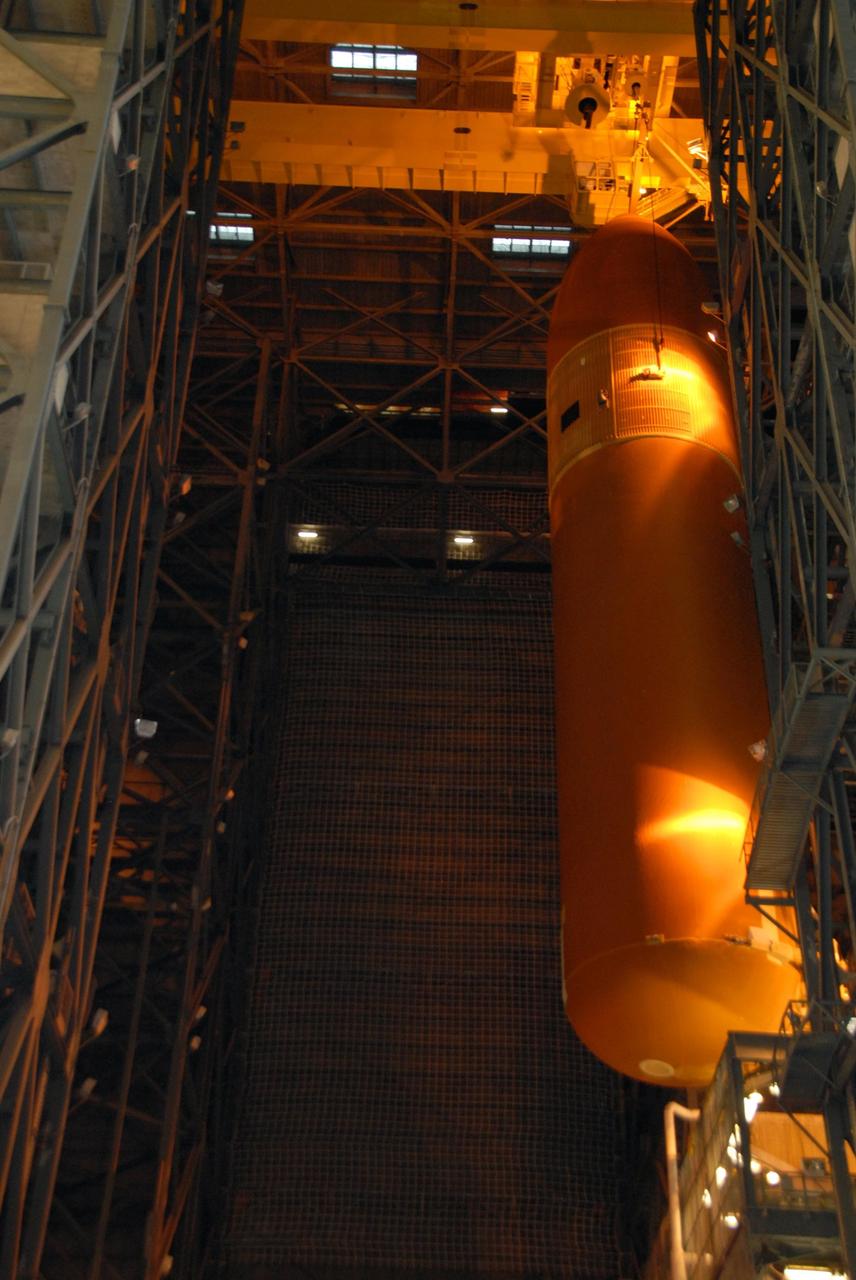
KENNEDY SPACE CENTER, FLA. -- In the Vehicle Assembly Building at NASA's Kennedy Space Center, external tank No. 120 is being lifted out of the checkout cell to high bay 1 where it will be mated with the solid rocket boosters. The external tank-SRB stack is being prepared for the orbiter Discovery, which will be mated to the stack in the VAB in two weeks. Space Shuttle Discovery is targeted to launch Oct. 23 on mission STS-120 to the International Space Station. Photo credit: NASA/George Shelton
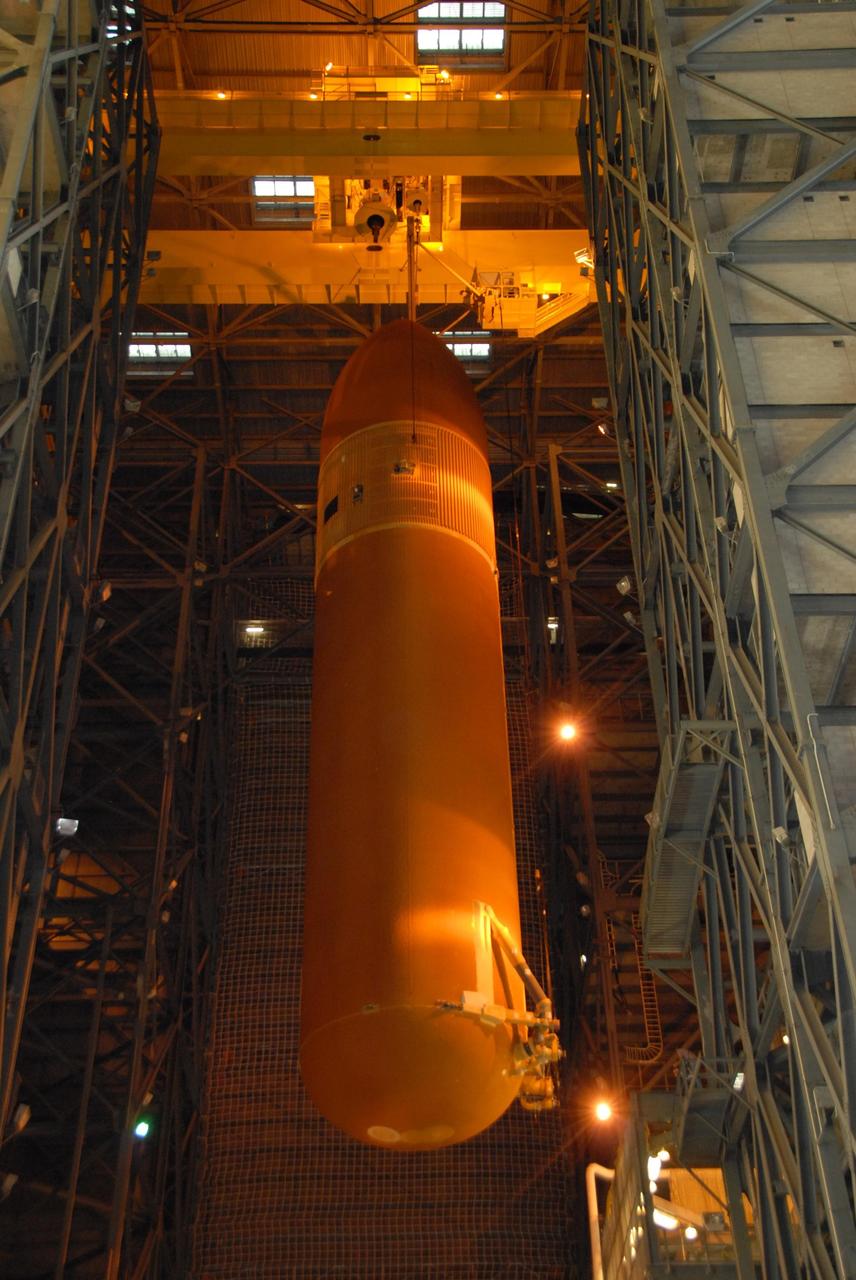
KENNEDY SPACE CENTER, FLA. -- In the Vehicle Assembly Building at NASA's Kennedy Space Center, external tank No. 120 is lowered into high bay 1 where it will be mated with the solid rocket boosters. The external tank-SRB stack is being prepared for the orbiter Discovery, which will be mated to the stack in the VAB in two weeks. Space Shuttle Discovery is targeted to launch Oct. 23 on mission STS-120 to the International Space Station. Photo credit: NASA/George Shelton
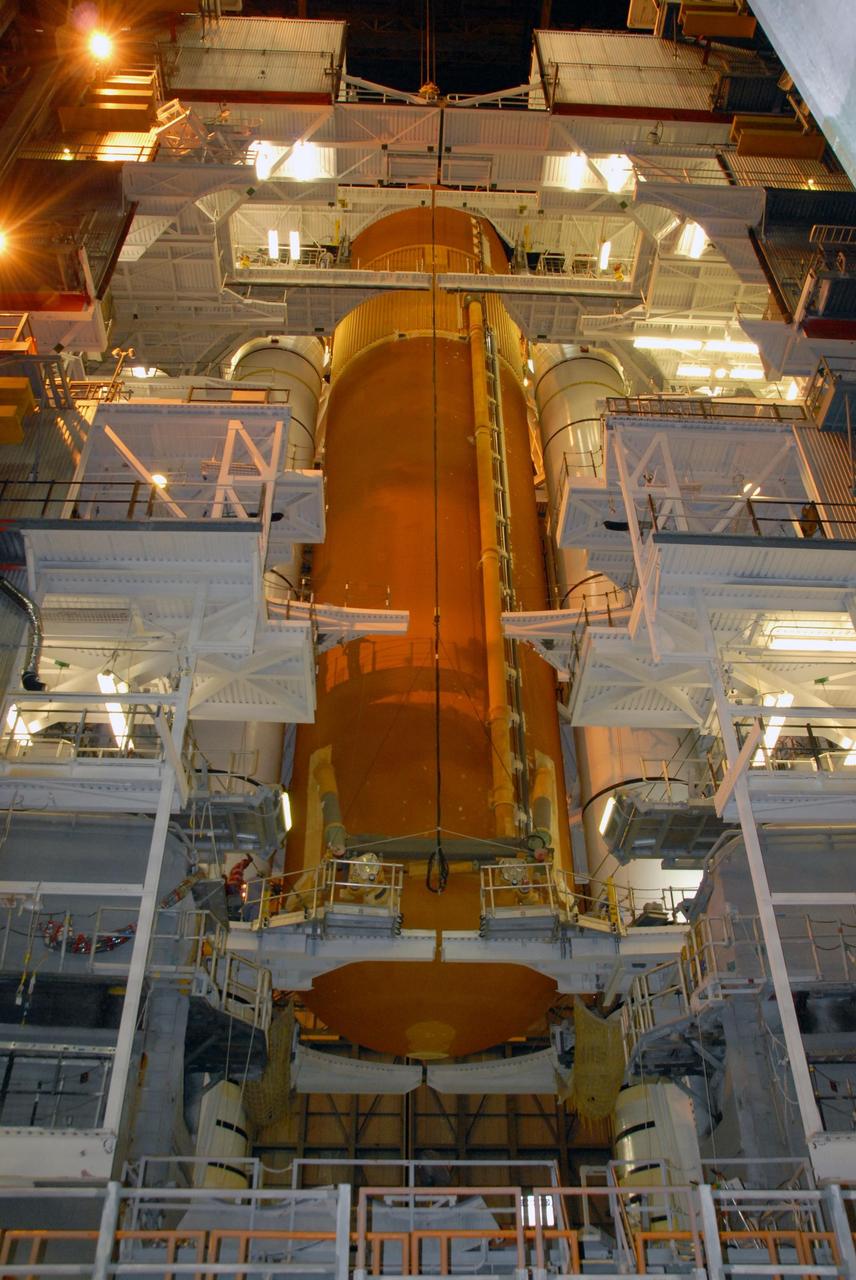
KENNEDY SPACE CENTER, FLA. -- In the Vehicle Assembly Building at NASA's Kennedy Space Center, external tank No. 120 has been lowered between the solid rocket boosters for mating on the mobile launcher platform. The external tank-SRB stack is being prepared for the orbiter Discovery, which will be mated to the stack in the VAB in two weeks. Space Shuttle Discovery is targeted to launch Oct. 23 on mission STS-120 to the International Space Station. Photo credit: NASA/George Shelton
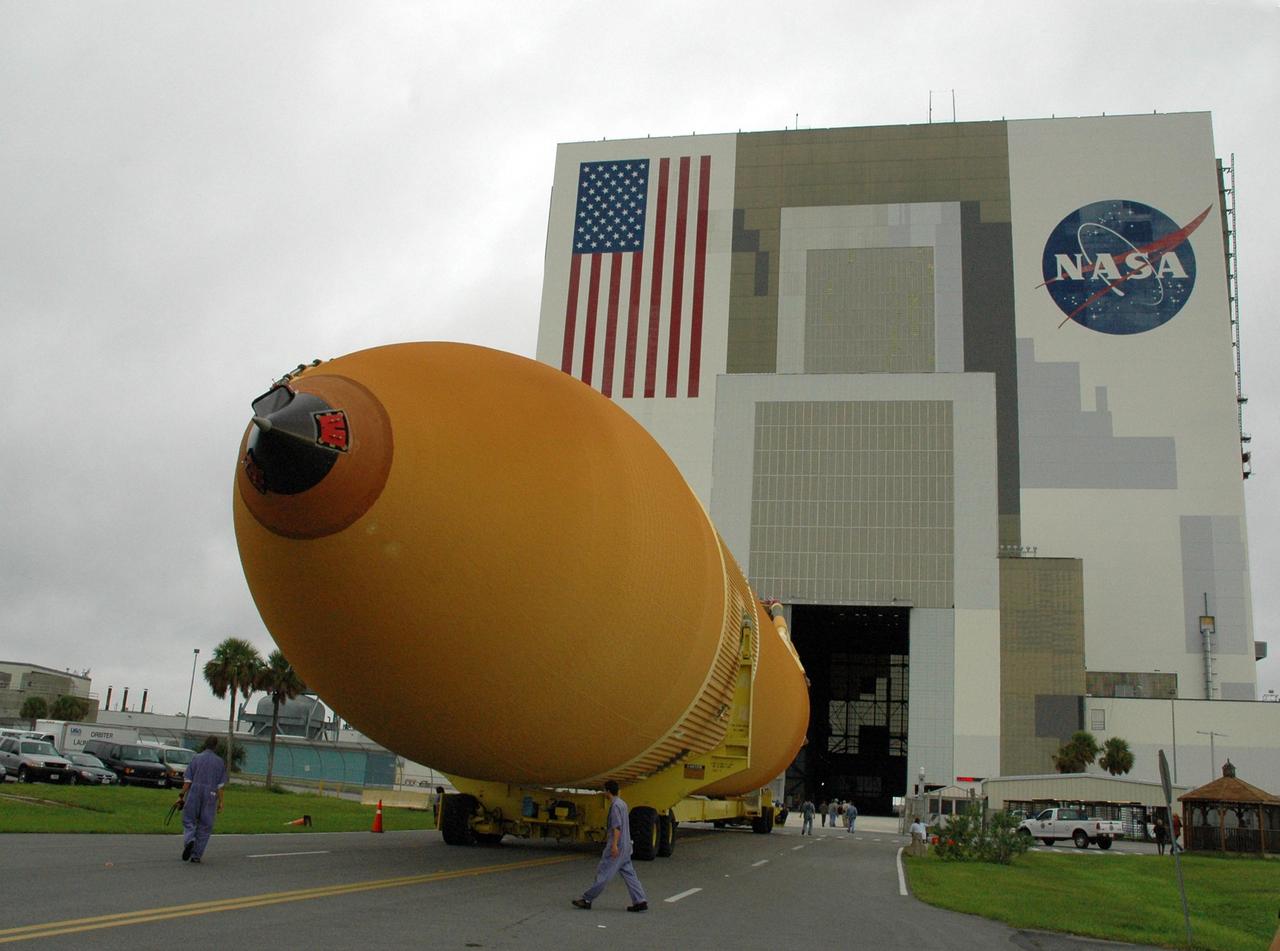
KENNEDY SPACE CENTER, FLA. - External tank No. 123 heads toward the open doorway of the Vehicle Assembly Building. Once inside the VAB, the tank will be lifted into a checkout cell for further work. Shipped from NASA's Michoud Assembly Facility in New Orleans aboard the Pegasus barge, the tank has undergone major safety changes, including removal of the protuberance air load ramps. It is designated to launch Space Shuttle Discovery on mission STS-116 in December. Mission STS-116 will deliver the P5 truss segment, a SPACEHAB module and other key components to the International Space Station. Launch is currently scheduled no earlier than Dec. 14. Photo credit: NASA/Jack Pfaller
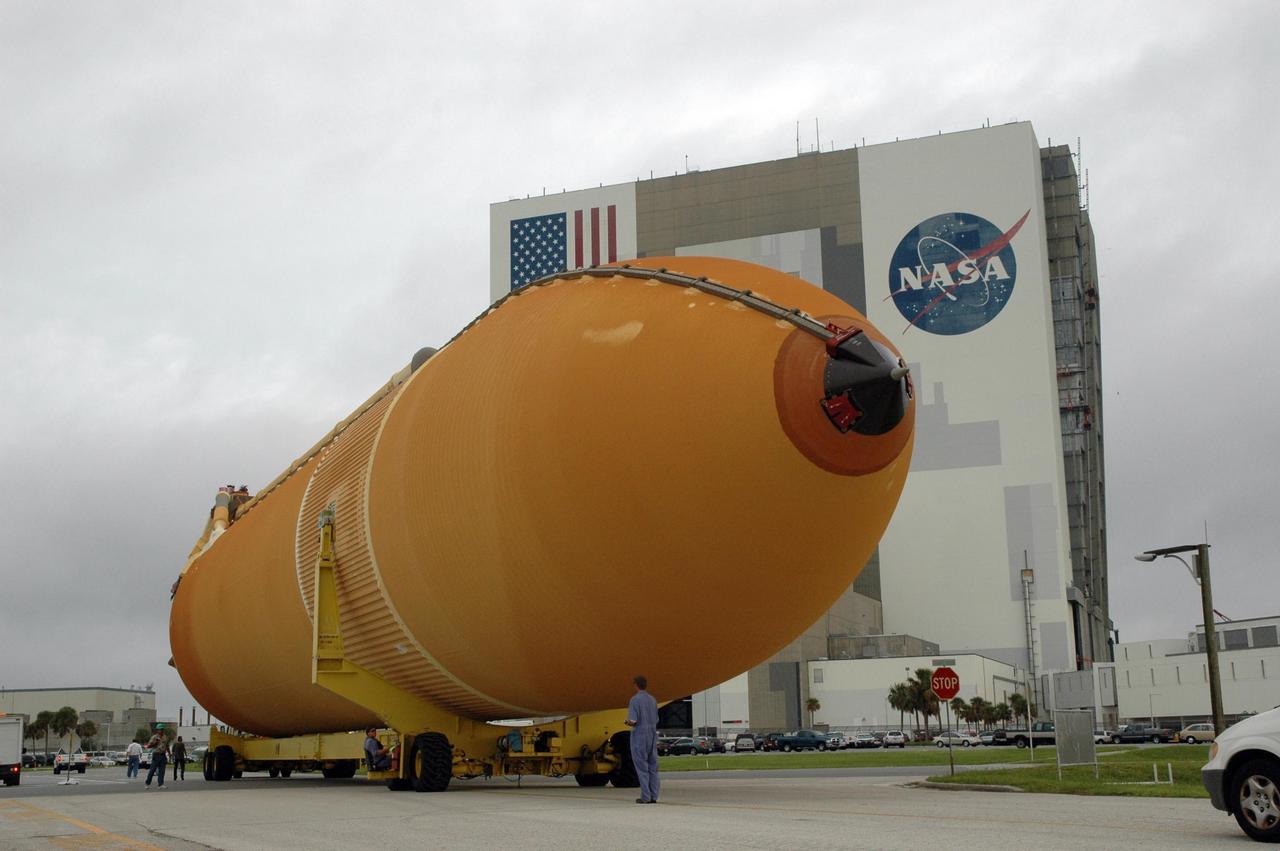
KENNEDY SPACE CENTER, FLA. - External tank No. 123 makes the turn toward the Vehicle Assembly Building after being offloaded from the Pegasus barge in the turn basin at the Launch Complex 39 Area. Once inside the VAB, the tank will be lifted into a checkout cell for further work. Shipped from NASA's Michoud Assembly Facility in New Orleans, the tank has undergone major safety changes, including removal of the protuberance air load ramps. It is designated to launch Space Shuttle Discovery on mission STS-116 in December. Mission STS-116 will deliver the P5 truss segment, a SPACEHAB module and other key components to the International Space Station. Launch is currently scheduled no earlier than Dec. 14. Photo credit: NASA/Jack Pfaller
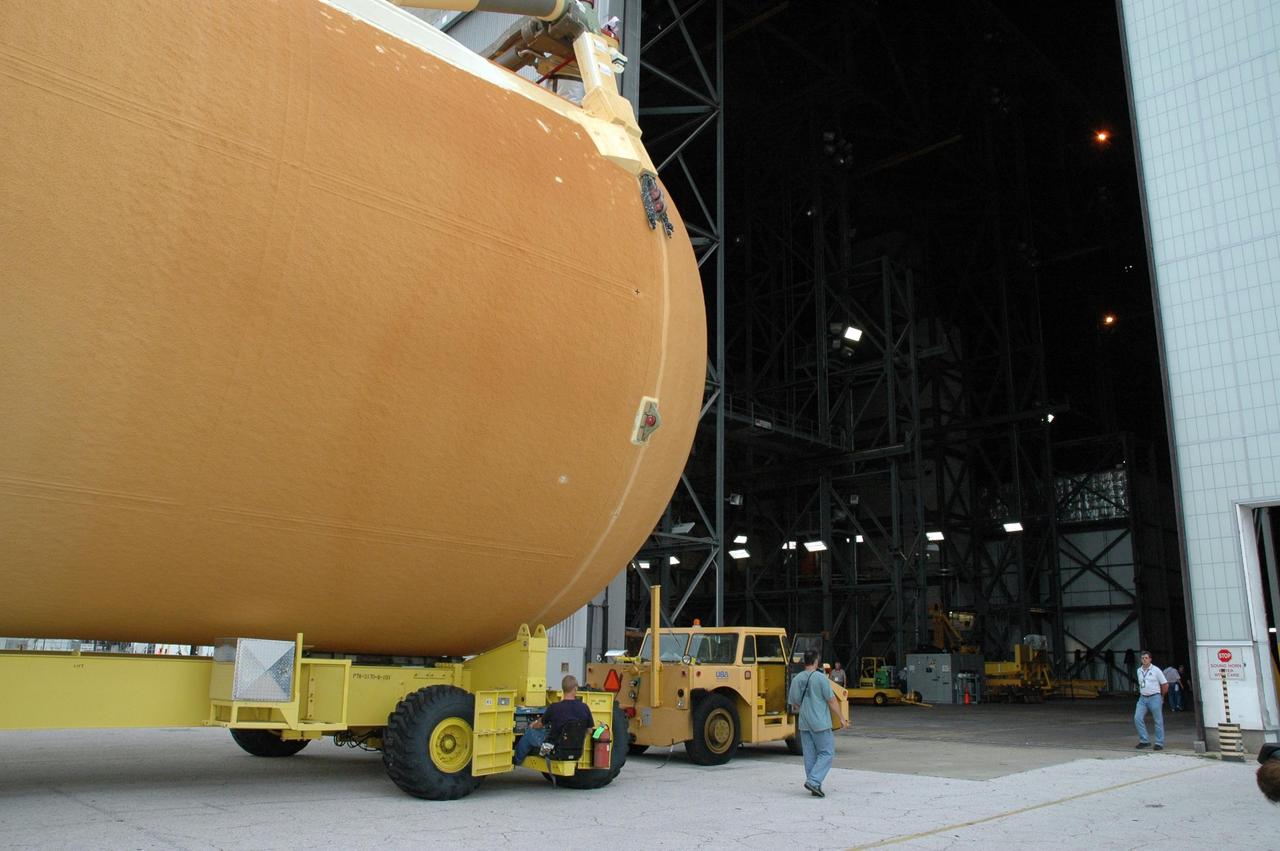
KENNEDY SPACE CENTER, FLA. - External tank No. 123 heads into the open doorway of the Vehicle Assembly Building. Once inside the VAB, the tank will be lifted into a checkout cell for further work. Shipped from NASA's Michoud Assembly Facility in New Orleans aboard the Pegasus barge, the tank has undergone major safety changes, including removal of the protuberance air load ramps. It is designated to launch Space Shuttle Discovery on mission STS-116 in December. Mission STS-116 will deliver the P5 truss segment, a SPACEHAB module and other key components to the International Space Station. Launch is currently scheduled no earlier than Dec. 14. Photo credit: NASA/Jack Pfaller
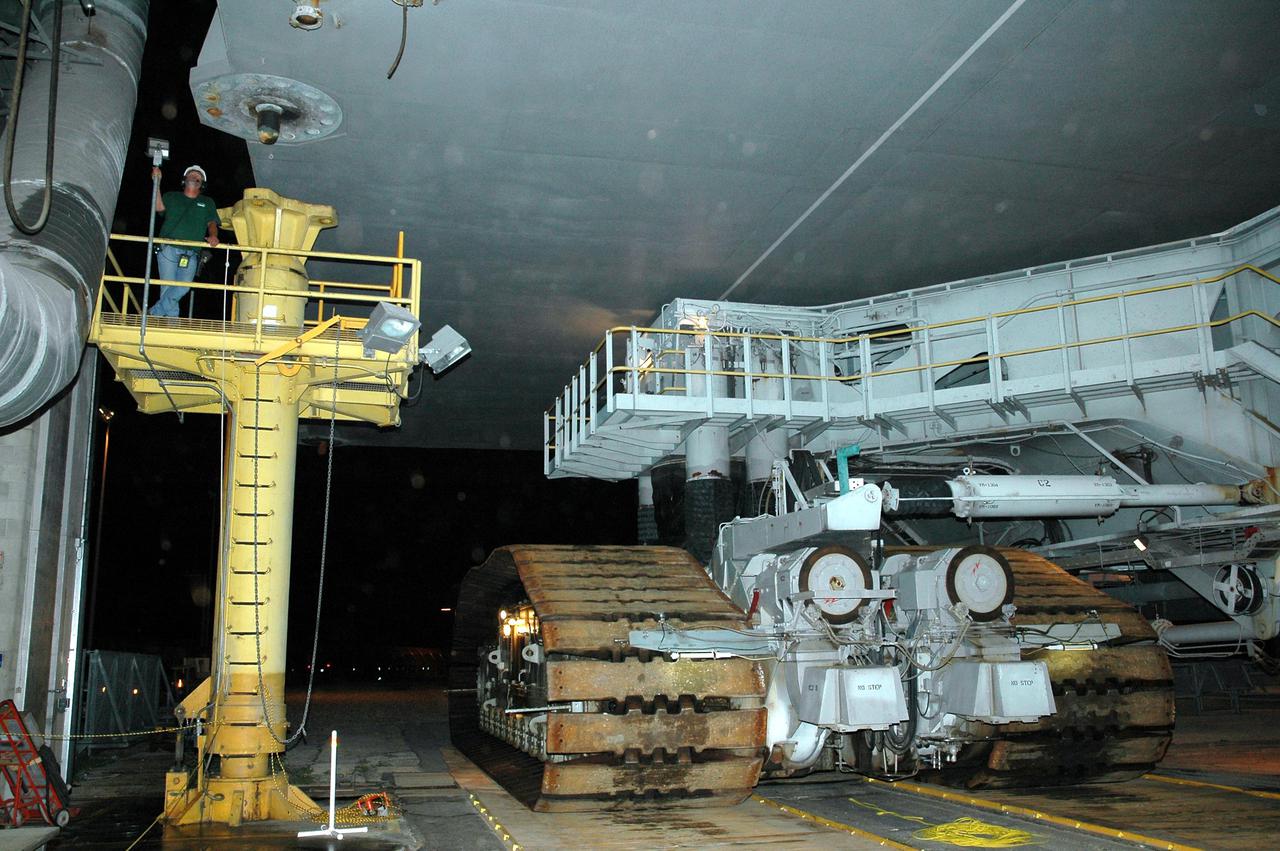
KENNEDY SPACE CENTER, FLA. - In the Vehicle Assembly Building (VAB) at NASA’s Kennedy Space Center, a technician monitors the clearance of a Crawler-Transporter as it moves Space Shuttle Discovery out of high bay 3 to Launch Pad 39B, a 4-mile, 6-hour journey. First motion was at 1:58 a.m. EDT. The Space Shuttle rests on a Mobile Launcher Platform which sits atop the Crawler-Transporter. This is the second rollout of Discovery after being returned to the Vehicle Assembly Building for connection to an improved External Tank. Launch of Discovery on its Return to Flight mission STS-114 is targeted for a launch window extending from July 13 to July 31. During its 12-day mission, Discovery’s seven-person crew will test new hardware and techniques to improve Shuttle safety, as well as deliver supplies to the International Space Station.
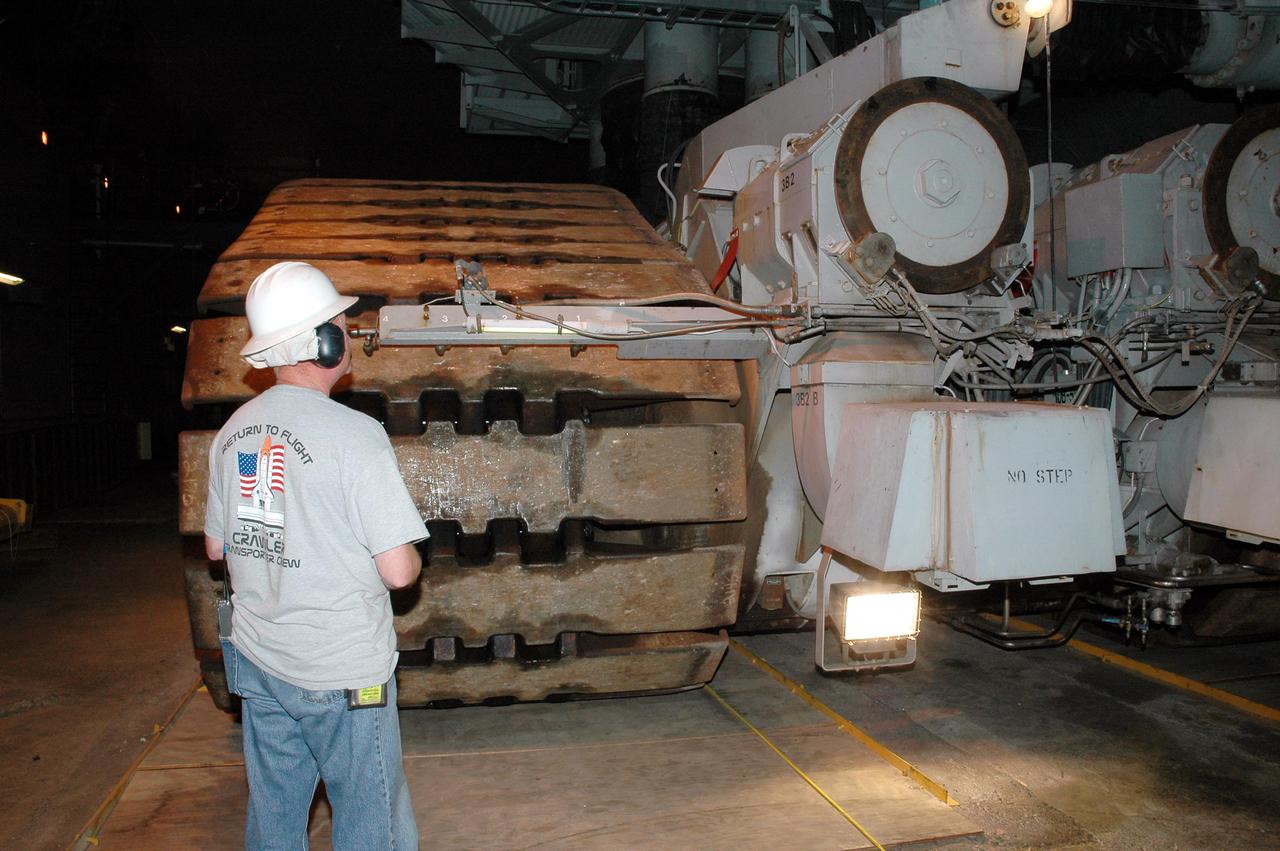
KENNEDY SPACE CENTER, FLA. - In the Vehicle Assembly Building (VAB) at NASA’s Kennedy Space Center, a technician monitors the preparations for a Crawler-Transporter to move Space Shuttle Discovery from high bay 3 to Launch Pad 39B, a 4-mile, 6-hour journey. First motion was at 1:58 a.m. EDT. The Space Shuttle rests on a Mobile Launcher Platform which sits atop the Crawler-Transporter. This is the second rollout of Discovery after being returned to the Vehicle Assembly Building for connection to an improved External Tank. Launch of Discovery on its Return to Flight mission STS-114 is targeted for a launch window extending from July 13 to July 31. During its 12-day mission, Discovery’s seven-person crew will test new hardware and techniques to improve Shuttle safety, as well as deliver supplies to the International Space Station.
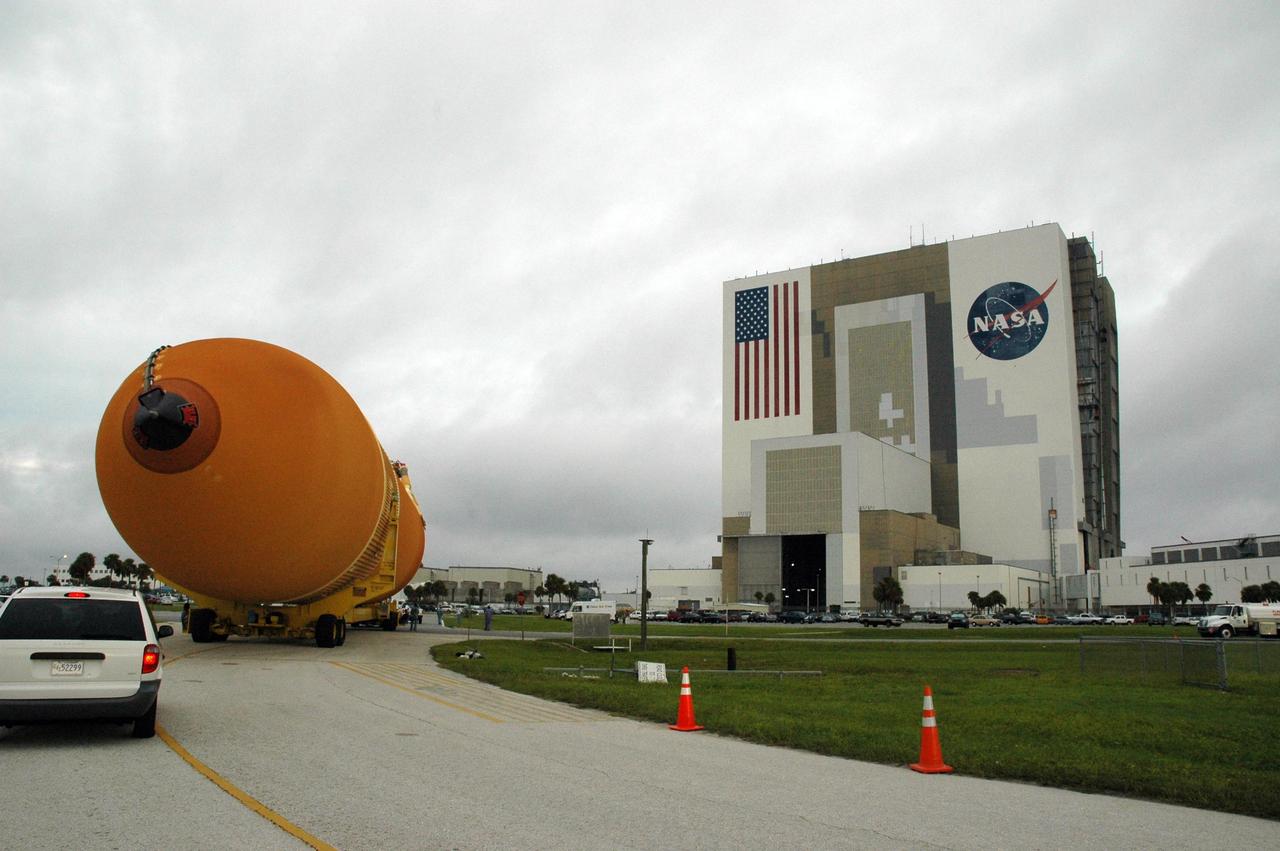
KENNEDY SPACE CENTER, FLA. - External tank No. 123 makes the turn toward the Vehicle Assembly Building after being offloaded from the Pegasus barge in the turn basin at the Launch Complex 39 Area. Once inside the VAB, the tank will be lifted into a checkout cell for further work. Shipped from NASA's Michoud Assembly Facility in New Orleans, the tank has undergone major safety changes, including removal of the protuberance air load ramps. It is designated to launch Space Shuttle Discovery on mission STS-116 in December. Mission STS-116 will deliver the P5 truss segment, a SPACEHAB module and other key components to the International Space Station. Launch is currently scheduled no earlier than Dec. 14. Photo credit: NASA/Jack Pfaller
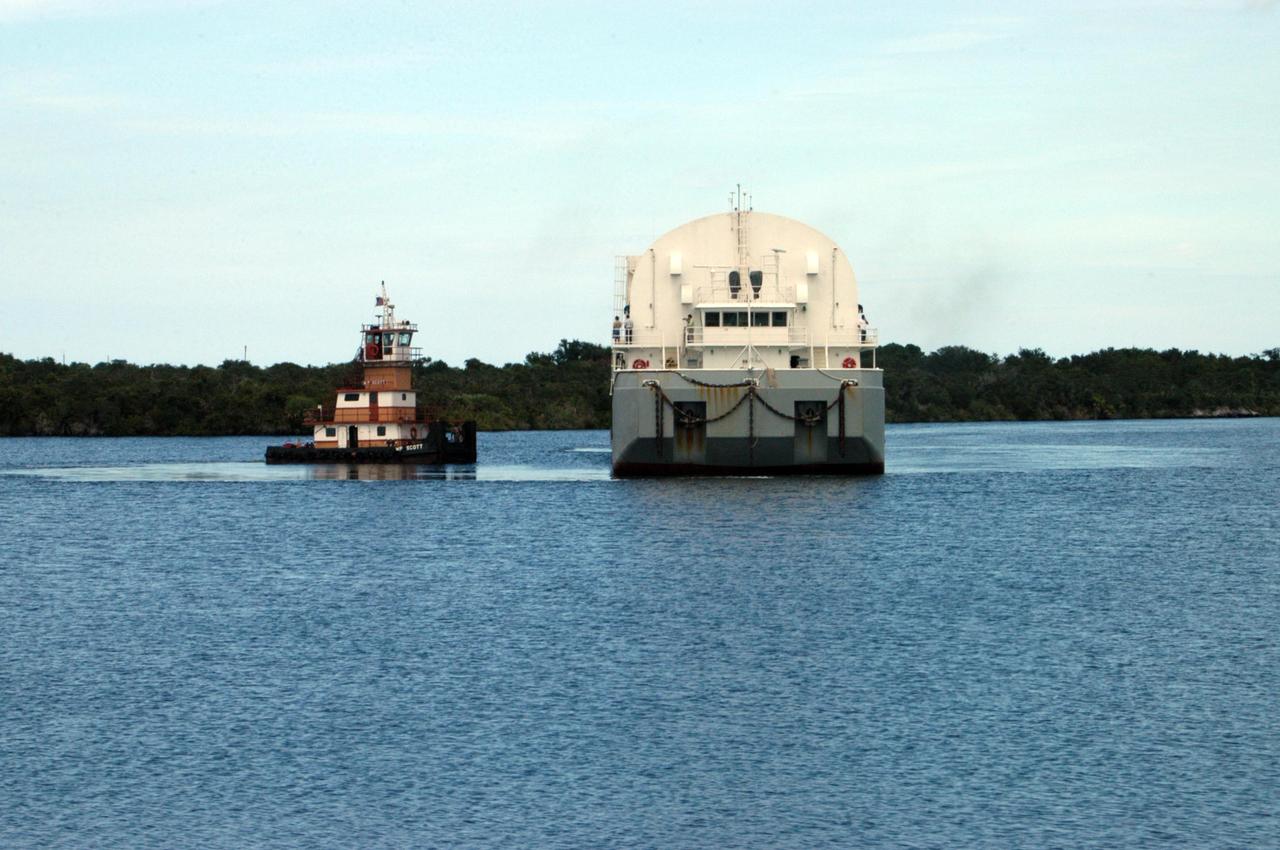
KENNEDY SPACE CENTER, FLA. - One of the boats towing the Pegasus barge moves beside it to help with docking at the turn basin in the Launch Complex 39 Area at NASA's Kennedy Space Center. Onboard the barge is the external tank No. 123, designated to launch Space Shuttle Discovery on mission STS-116 in December. The tank, which was shipped from NASA's Michoud Assembly Facility in New Orleans, has undergone major safety changes, including removal of the protuberance air load ramps. Mission STS-116 will deliver the P5 truss segment, a SPACEHAB module and other key components to the International Space Station. Launch is currently scheduled no earlier than Dec. 14. Photo credit: NASA/George Shelton
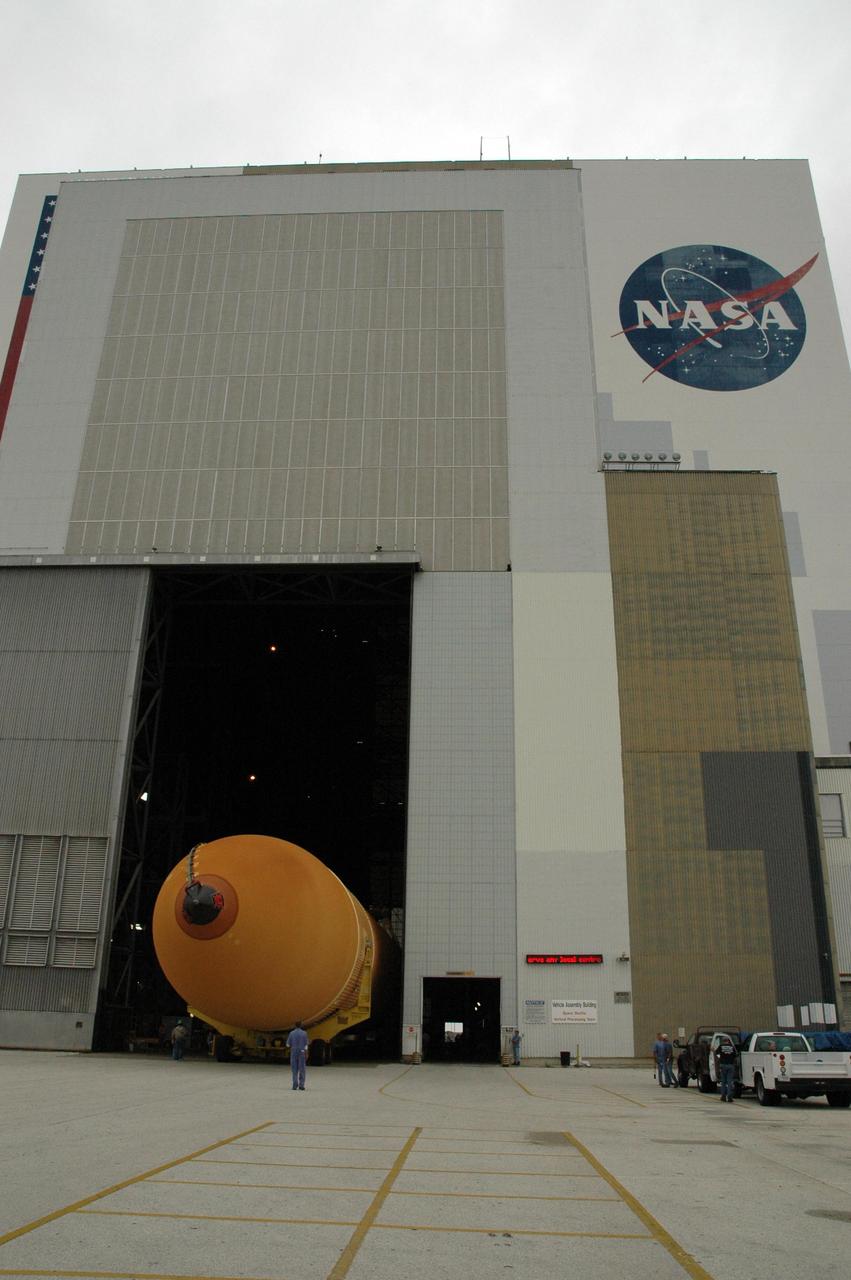
KENNEDY SPACE CENTER, FLA. - External tank No. 123 moves into the Vehicle Assembly Building where it will be lifted into a checkout cell for further work. Shipped from NASA's Michoud Assembly Facility in New Orleans aboard the Pegasus barge, the tank has undergone major safety changes, including removal of the protuberance air load ramps. It is designated to launch Space Shuttle Discovery on mission STS-116 in December. Mission STS-116 will deliver the P5 truss segment, a SPACEHAB module and other key components to the International Space Station. Launch is currently scheduled no earlier than Dec. 14. Photo credit: NASA/Jack Pfaller
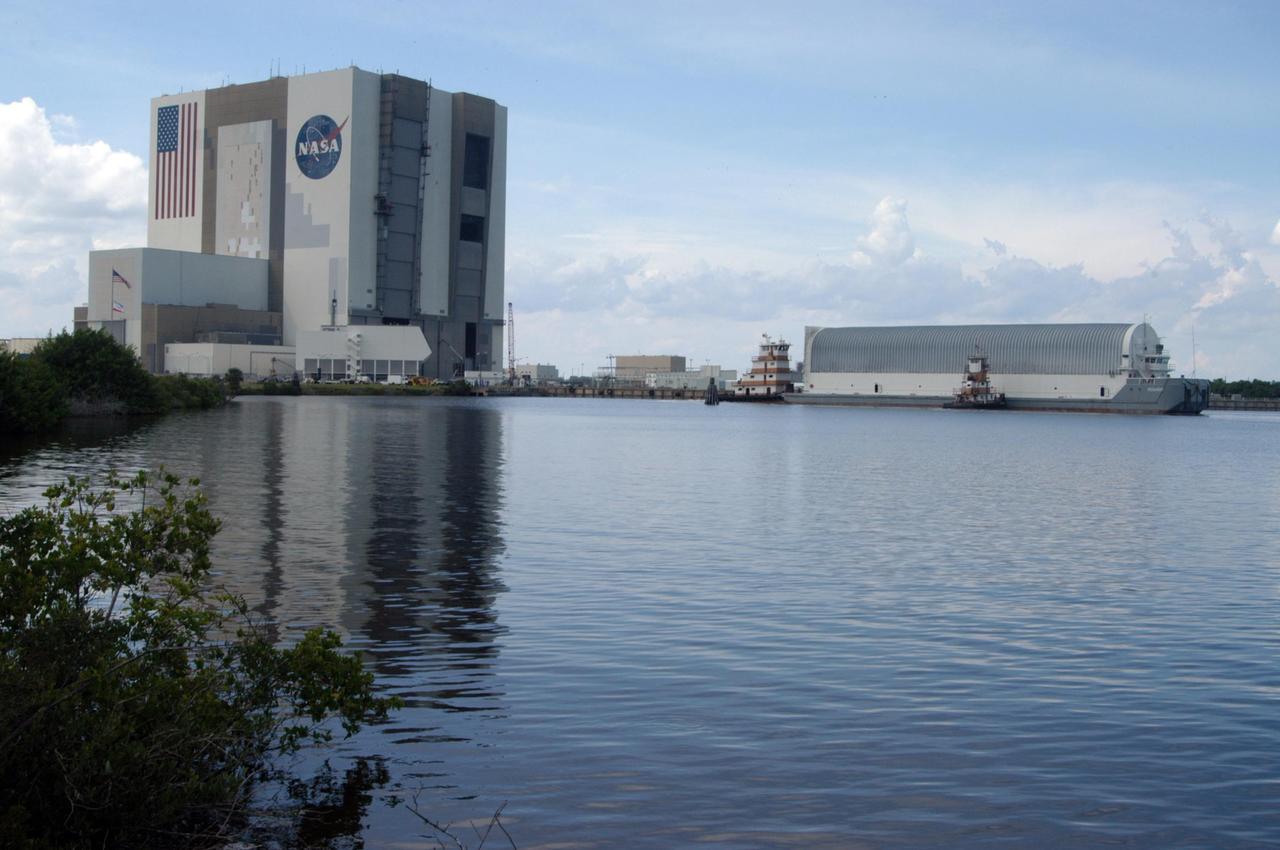
KENNEDY SPACE CENTER, FLA. - The Pegasus barge approaches the turn basin dock in the Launch Complex 39 Area at NASA's Kennedy Space Center. Onboard the barge is the external tank No. 123, designated to launch Space Shuttle Discovery on mission STS-116 in December. At left is the 525-foot-high Vehicle Assembly Building where the external tank will go after offloading from the barge. The tank, which was shipped from NASA's Michoud Assembly Facility in New Orleans, has undergone major safety changes, including removal of the protuberance air load ramps. Mission STS-116 will deliver the P5 truss segment, a SPACEHAB module and other key components to the International Space Station. Launch is currently scheduled no earlier than Dec. 14. Photo credit: NASA/George Shelton
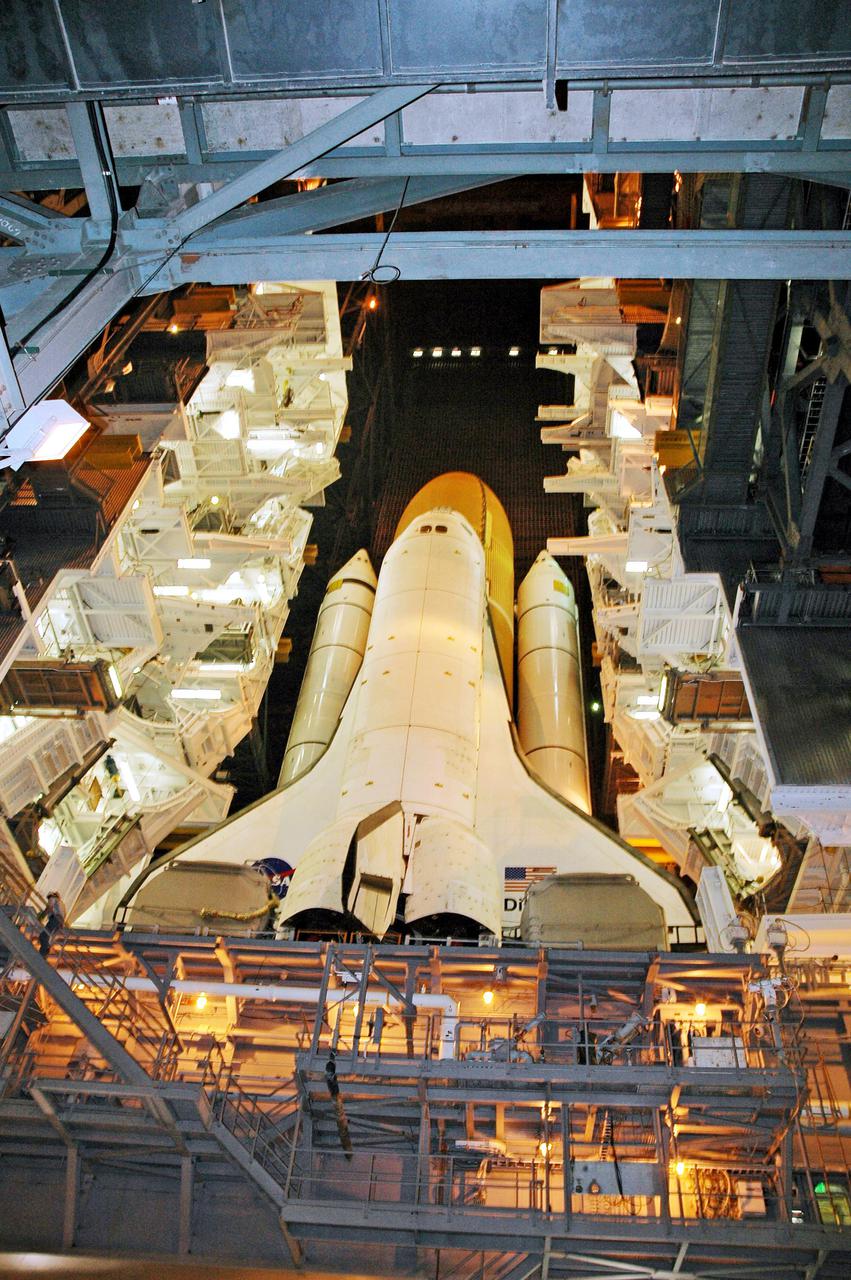
KENNEDY SPACE CENTER, FLA. - In the Vehicle Assembly Building (VAB) at NASA’s Kennedy Space Center, Space Shuttle Discovery awaits the start of its trip from high bay 3 to Launch Pad 39B, a 4-mile, 6-hour journey. First motion was at 1:58 a.m. EDT. The Space Shuttle rests on a Mobile Launcher Platform which sits atop a Crawler-Transporter. This is the second rollout of Discovery after being returned to the Vehicle Assembly Building for connection to an improved External Tank. Launch of Discovery on its Return to Flight mission STS-114 is targeted for a launch window extending from July 13 to July 31. During its 12-day mission, Discovery’s seven-person crew will test new hardware and techniques to improve Shuttle safety, as well as deliver supplies to the International Space Station.
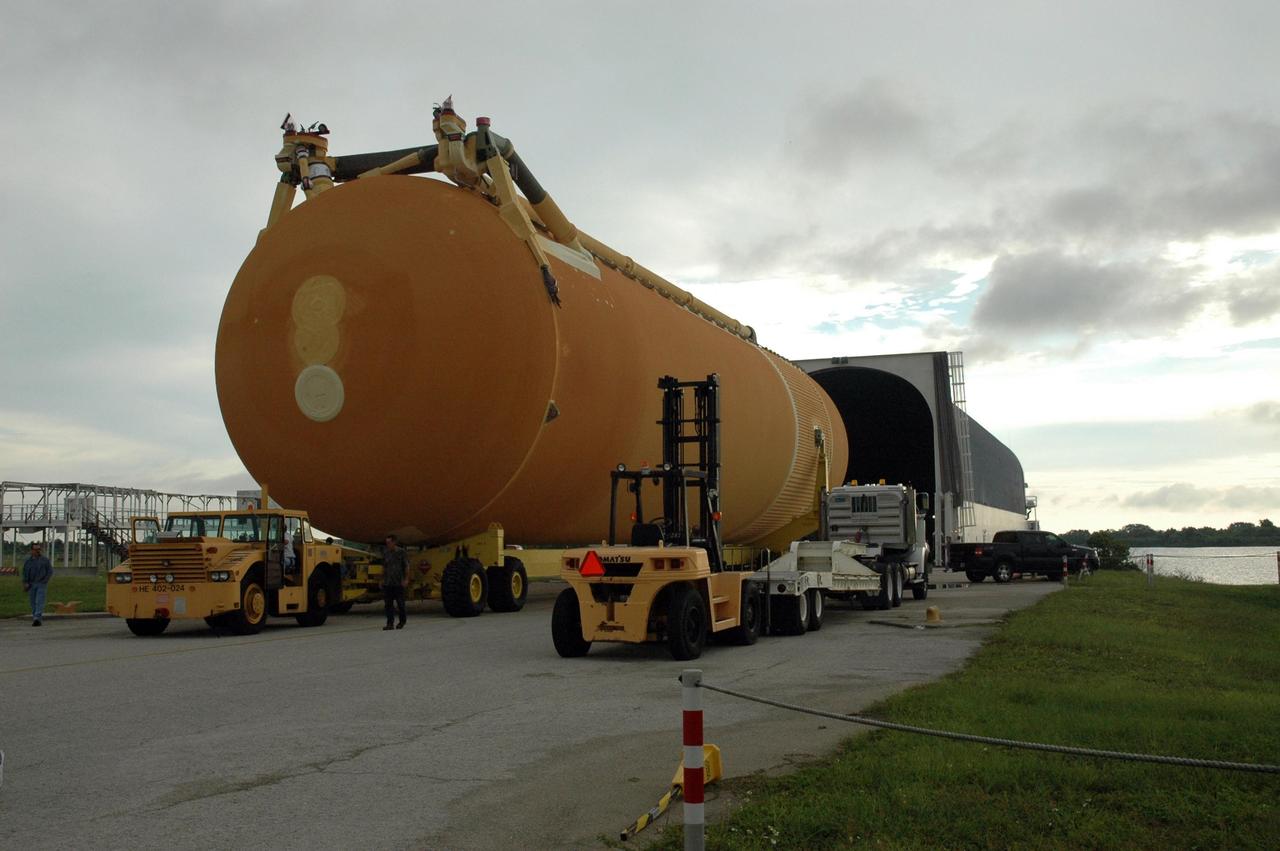
KENNEDY SPACE CENTER, FLA. - External tank No. 123 is offloaded from the Pegasus barge in the turn basin at the Launch Complex 39 Area. Designated to launch Space Shuttle Discovery on mission STS-116 in December, the tank is being moved to the Vehicle Assembly Building where it will be lifted into a checkout cell for further work. The tank, which was shipped from NASA's Michoud Assembly Facility in New Orleans, has undergone major safety changes, including removal of the protuberance air load ramps. Mission STS-116 will deliver the P5 truss segment, a SPACEHAB module and other key components to the International Space Station. Launch is currently scheduled no earlier than Dec. 14. Photo credit: NASA/Jack Pfaller
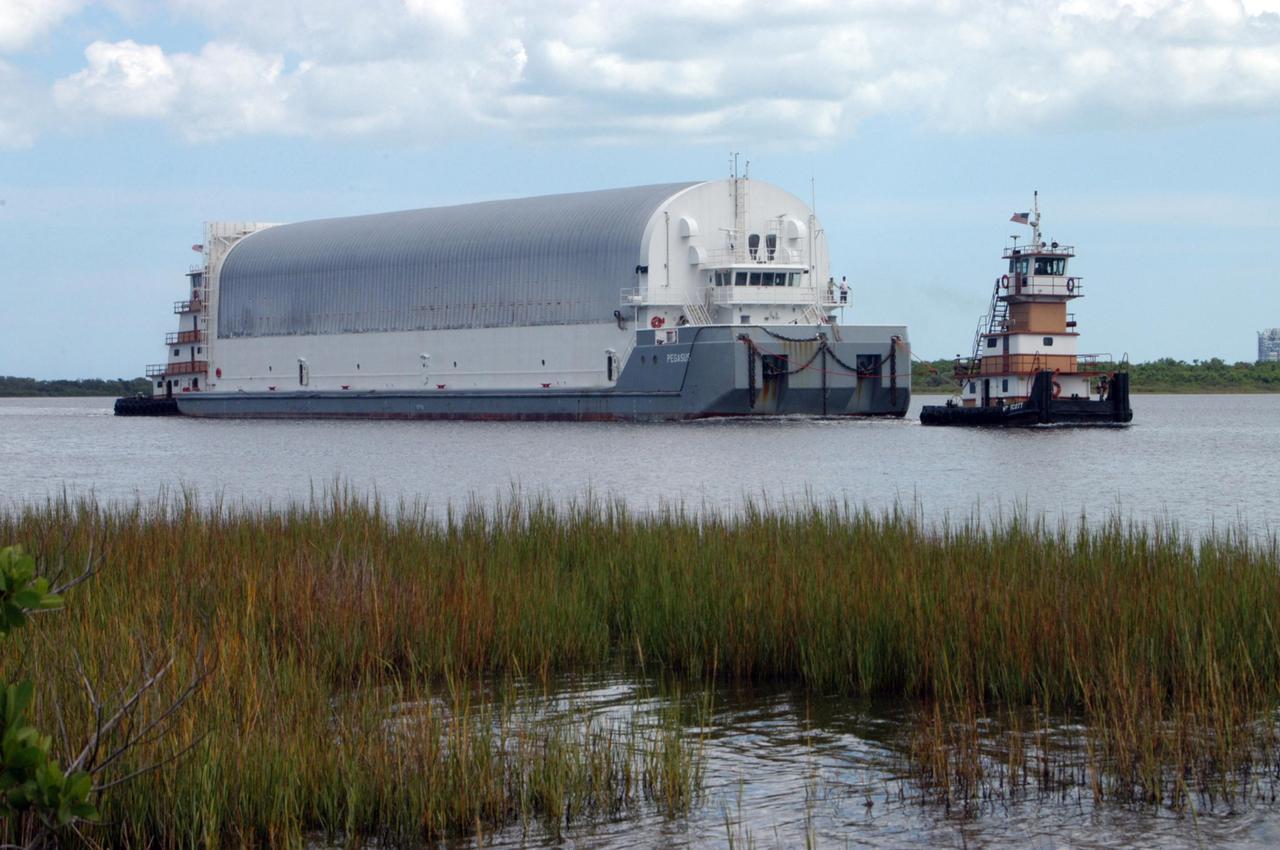
KENNEDY SPACE CENTER, FLA. - The Pegasus barge is towed toward the turn basin dock in the Launch Complex 39 Area at NASA's Kennedy Space Center. Onboard the barge is the external tank No. 123, designated to launch Space Shuttle Discovery on mission STS-116 in December. The tank, which was shipped from NASA's Michoud Assembly Facility in New Orleans, has undergone major safety changes, including removal of the protuberance air load ramps. Mission STS-116 will deliver the P5 truss segment, a SPACEHAB module and other key components to the International Space Station. Launch is currently scheduled no earlier than Dec. 14. Photo credit: NASA/George Shelton
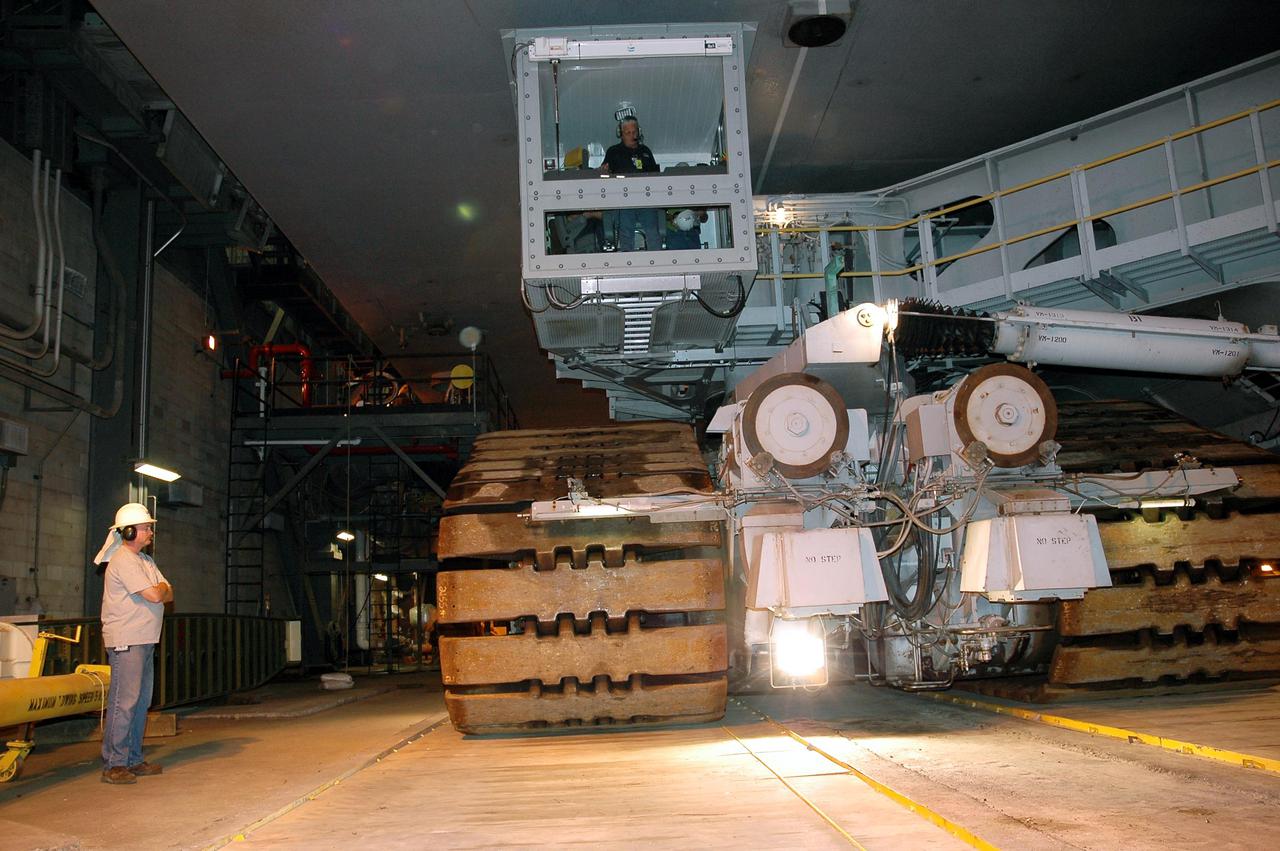
KENNEDY SPACE CENTER, FLA. - In the Vehicle Assembly Building (VAB) at NASA’s Kennedy Space Center, a Crawler-Transporter prepares to move Space Shuttle Discovery from high bay 3 to Launch Pad 39B, a 4-mile, 6-hour journey. First motion was at 1:58 a.m. EDT. The Space Shuttle rests on a Mobile Launcher Platform which sits atop the Crawler-Transporter. This is the second rollout of Discovery after being returned to the Vehicle Assembly Building for connection to an improved External Tank. Launch of Discovery on its Return to Flight mission STS-114 is targeted for a launch window extending from July 13 to July 31. During its 12-day mission, Discovery’s seven-person crew will test new hardware and techniques to improve Shuttle safety, as well as deliver supplies to the International Space Station.
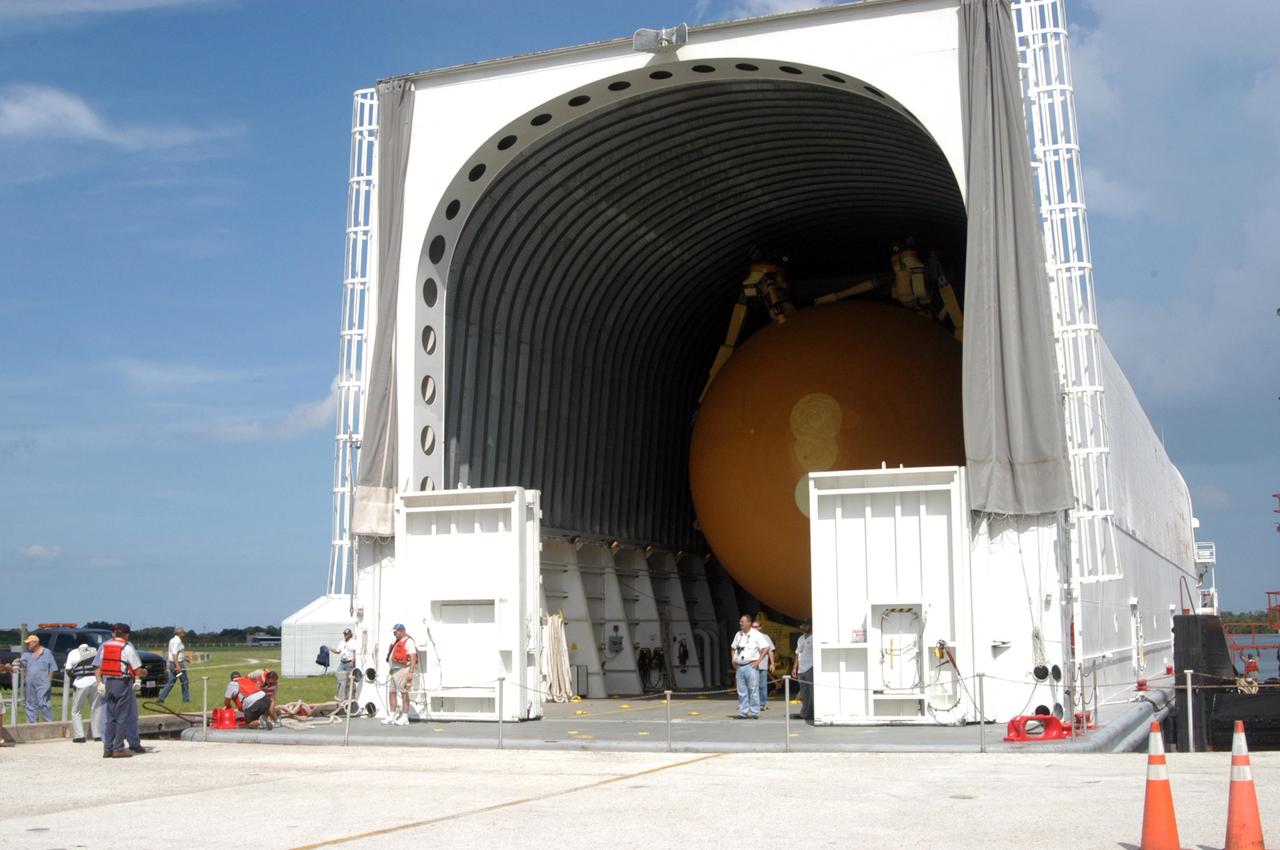
KENNEDY SPACE CENTER, FLA. - Inside the Pegasus barge can be seen external tank No. 123, designated to launch Space Shuttle Discovery on mission STS-116 in December. Now docked at the turn basin dock in the Launch Complex 39 Area at NASA's Kennedy Space Center, the barge was towed from NASA's Michoud Assembly Facility in New Orleans. The tank has undergone major safety changes, including removal of the protuberance air load ramps. The tank will be offloaded and transported to the Vehicle Assembly Building. Mission STS-116 will deliver the P5 truss segment, a SPACEHAB module and other key components to the International Space Station. Launch is currently scheduled no earlier than Dec. 14. Photo credit: NASA/George Shelton
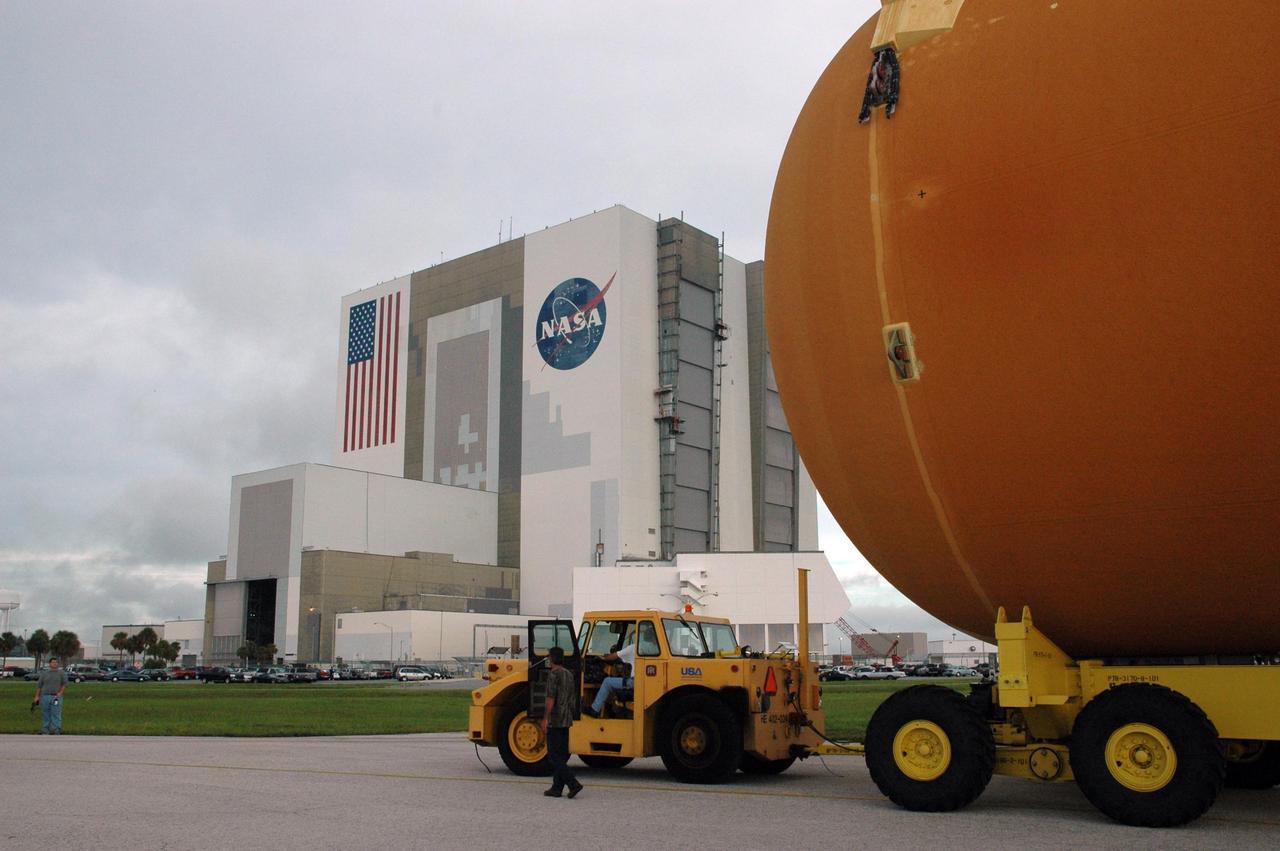
KENNEDY SPACE CENTER, FLA. - External tank No. 123 is being transported from the Pegasus barge in the turn basin at the Launch Complex 39 Area to the Vehicle Assembly Building where it will be lifted into a checkout cell for further work. The tank, shipped from NASA's Michoud Assembly Facility in New Orleans, has undergone major safety changes, including removal of the protuberance air load ramps. It is designated to launch Space Shuttle Discovery on mission STS-116 in December. Mission STS-116 will deliver the P5 truss segment, a SPACEHAB module and other key components to the International Space Station. Launch is currently scheduled no earlier than Dec. 14. Photo credit: NASA/Jack Pfaller
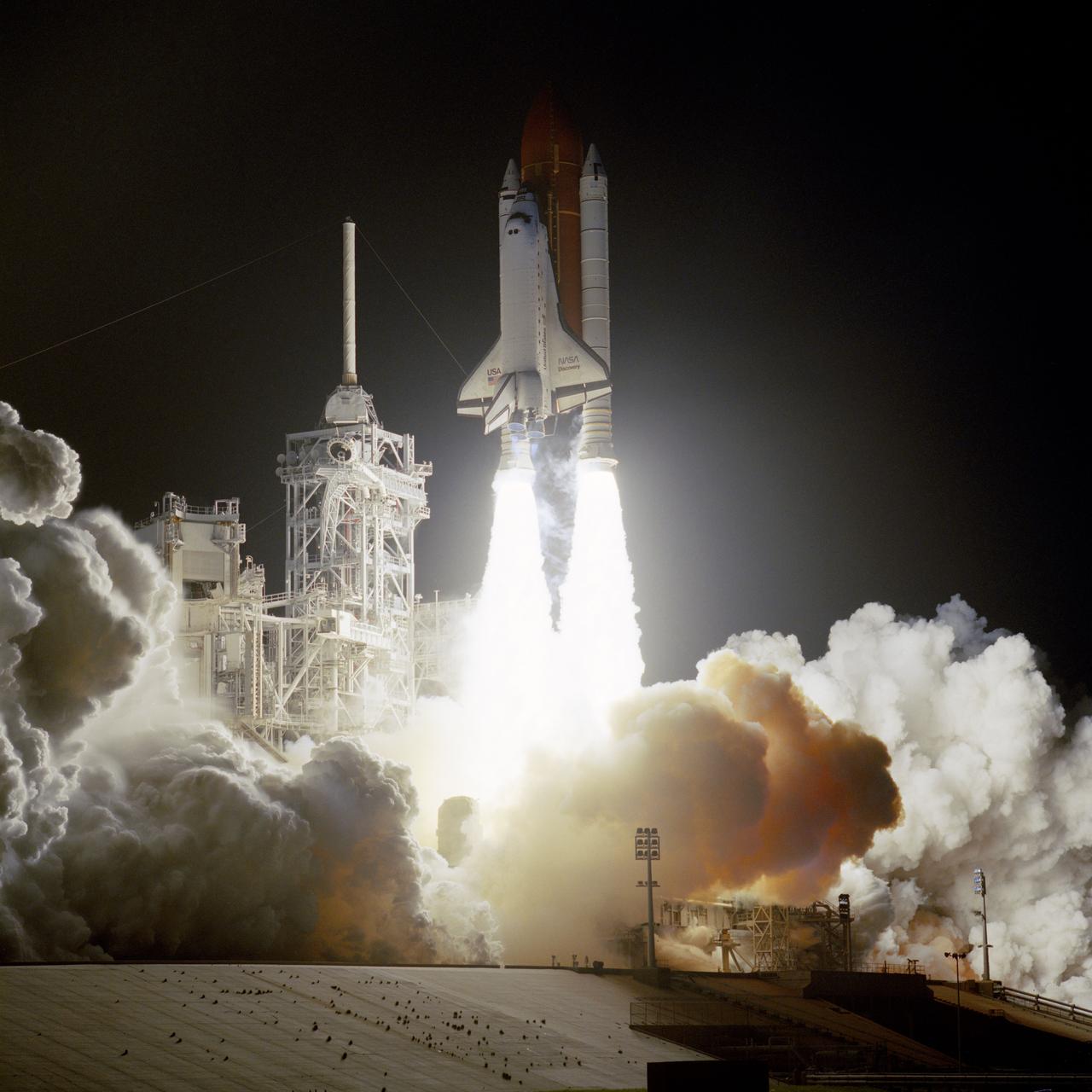
STS-56 Discovery, Orbiter Vehicle (OV) 103, riding atop its external tank (ET) and flanked by two solid rocket boosters (SRBs), lifts off from Kennedy Space Center (KSC) Launch Complex (LC) Pad 39B into the early morning darkness at 1:29 am (Eastern Daylight Time (EDT)). In this nocturnal scene, OV-102's nose section is obscured in the shadowy darkness as it clears the fixed service structure (FSS) tower. Exhaust plumes trail from the SRB skirts and cover the launch pad area in a billowy cloud. The SRB / Space Shuttle Main Engine (SSME) firings illuminate the FSS and the retracted rotating service structure (RSS). Debris is visible on the base of the launch pad.
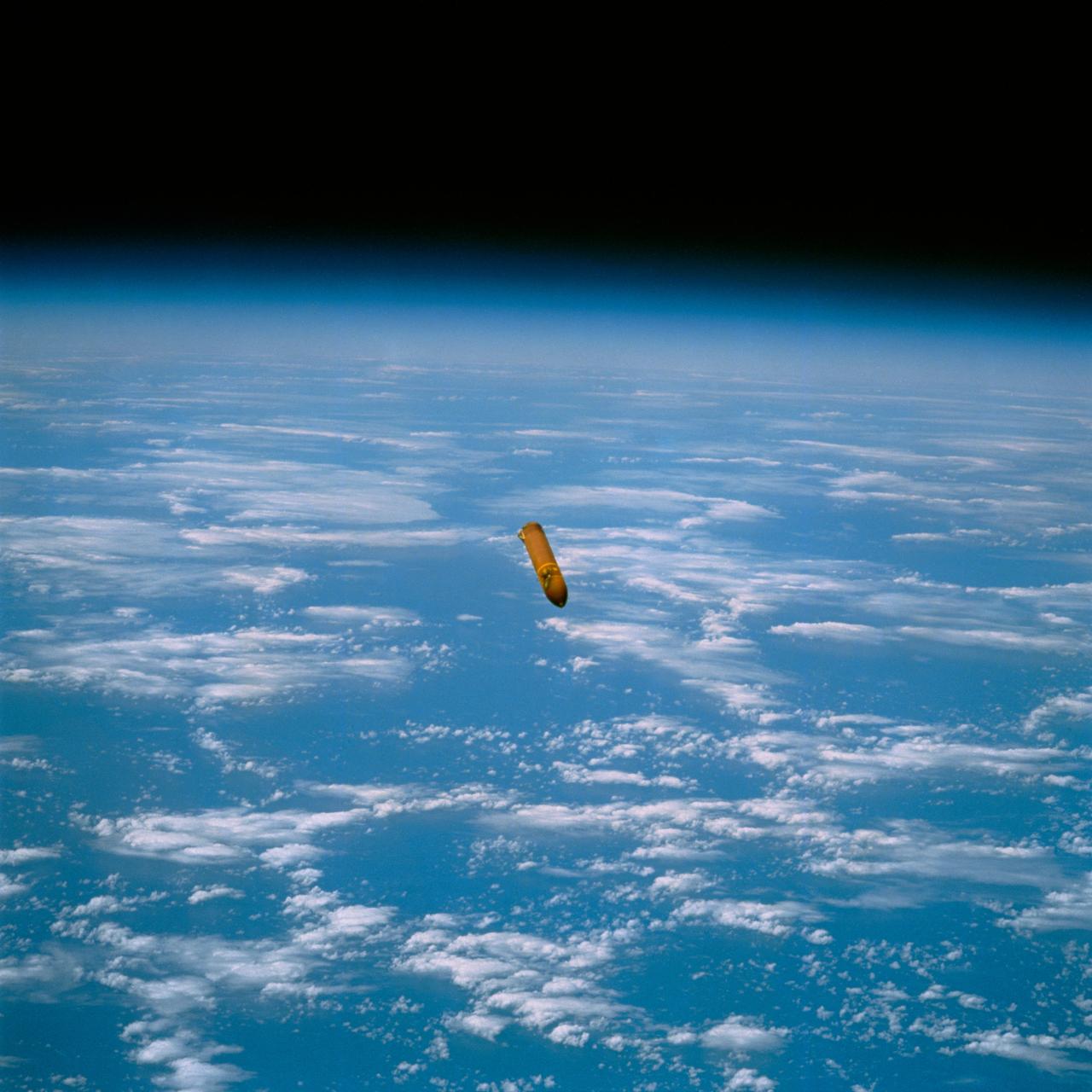
STS029-72-059 (13 March 1989) --- This 70mm photograph, taken by Astronaut James P. Bagian 16 minutes and 7 seconds after liftoff of Discovery, shows the external fuel tank (ET) against the background of Earth. The tank is falling away from the orbiter following ET separation. The left side shows the burn scar above the solid rocket booster (SRB) forward attach point. The burn is caused by the forward SRB separation motors firing during SRB separation. Post 51-L analysis of the thermal and pressure effects of the separation motor exhaust plume indicate that the scarring is not a safety hazard. However, photographs such as this one were requested for additional missions in order to document the phenomenon and corroborate this conclusion. The photo was made at 15:13:07 GMT, March 13, 1989. It was among the visuals used by the crew at its Mar. 28, 1989 post-flight press conference.
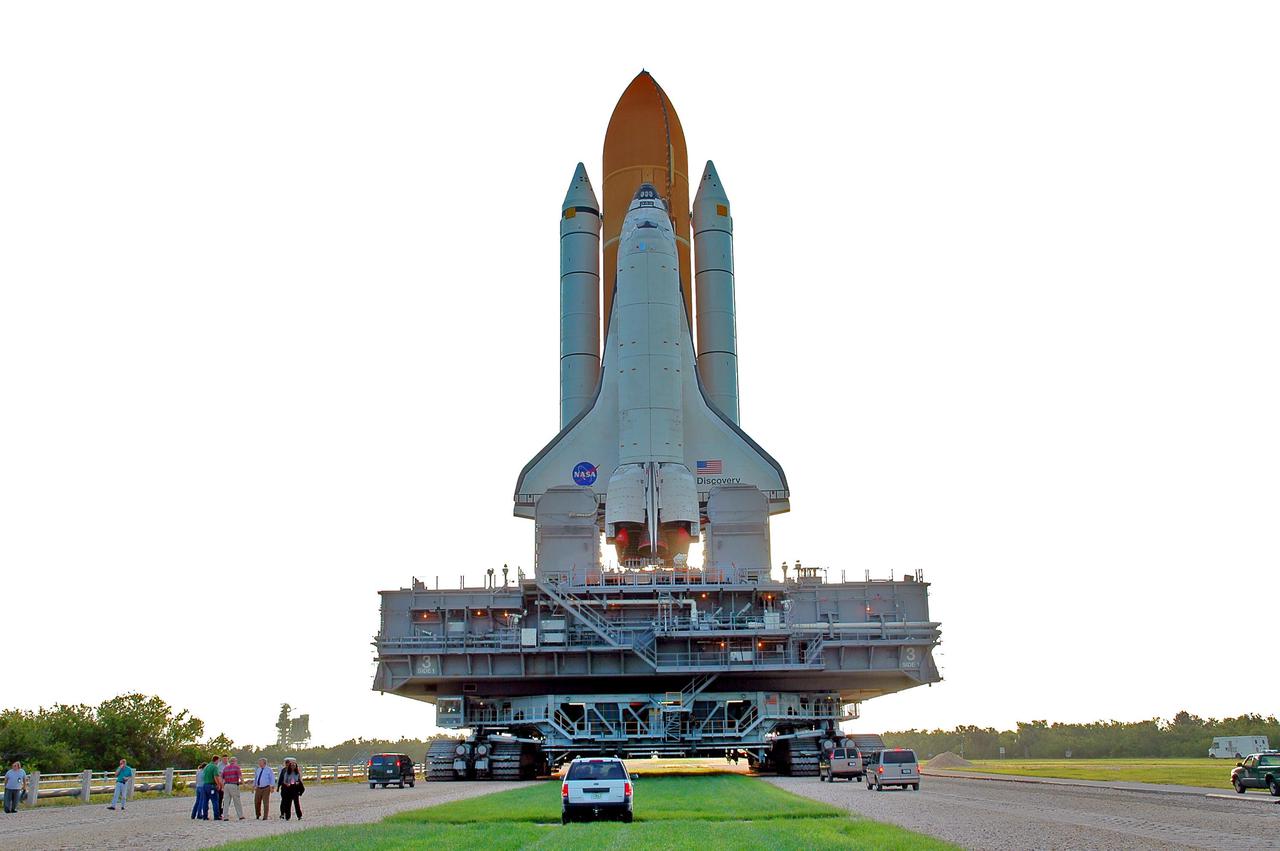
KENNEDY SPACE CENTER, FLA. - Space Shuttle Discovery makes its way along the crawlerway to Launch Pad 39B. First motion for the 4-mile, 6-hour journey was at 1:58 a.m. EDT. The Space Shuttle rests on a Mobile Launcher Platform that sits atop a Crawler-Transporter. This is the second rollout of Discovery after being returned to the Vehicle Assembly Building for connection to an improved External Tank. Launch of Discovery on its Return to Flight mission STS-114 is targeted for a launch window extending from July 13 to July 31.
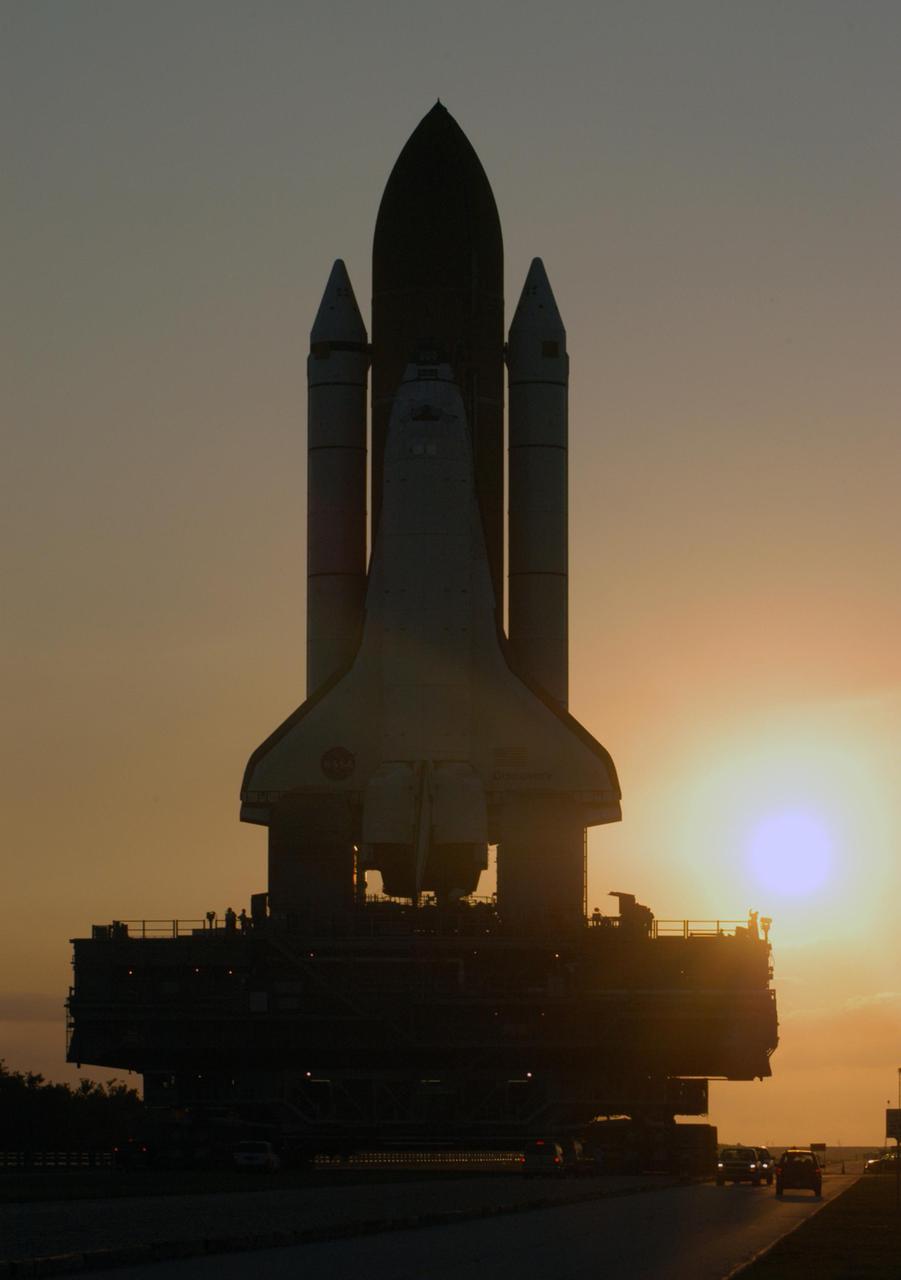
KENNEDY SPACE CENTER, FLA. - Space Shuttle Discovery makes its way along the crawlerway from high bay 3 to Launch Pad 39B as the sun rises. First motion for the 4-mile, 6-hour journey was at 1:58 a.m. EDT. The Space Shuttle rests on a Mobile Launcher Platform which sits atop a Crawler-Transporter. This is the second rollout of Discovery after being returned to the Vehicle Assembly Building for connection to an improved External Tank. Launch of Discovery on its Return to Flight mission STS-114 is targeted for a launch window extending from July 13 to July 31. During its 12-day mission, Discovery’s seven-person crew will test new hardware and techniques to improve Shuttle safety, as well as deliver supplies to the International Space Station.
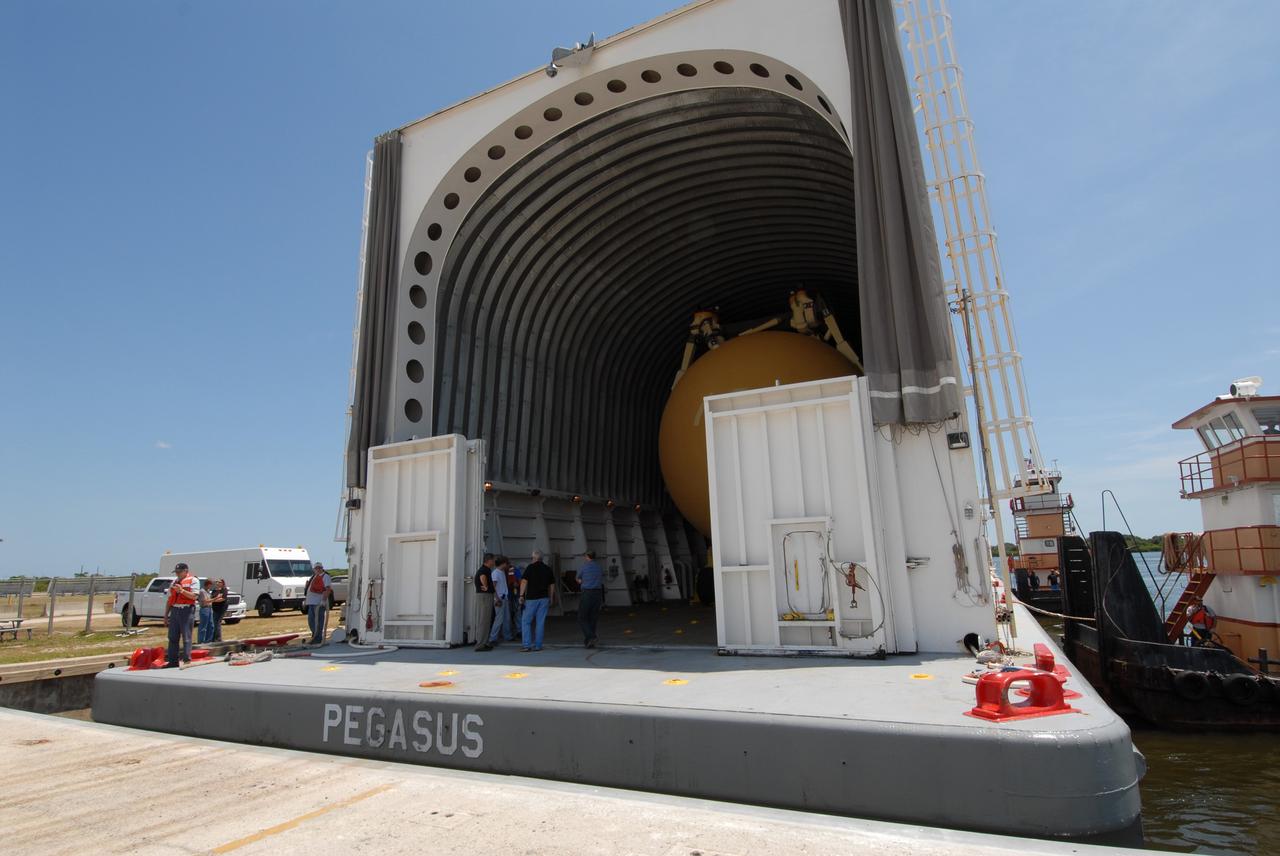
CAPE CANAVERAL, Fla. – The Pegasus barge is docked in the turn basin in the Launch Complex 39 Area at NASA's Kennedy Space Center in Florida. Inside is the external fuel tank, ET- 132, designated for space shuttle Discovery on the STS-128 mission. The tank will be offloaded and transported to a high bay in the Vehicle Assembly Building for checkout. On the STS-128 mission, Discovery will carry science and storage racks to the International Space Station. Launch of Discovery is targeted for Aug. 6. Photo credit: NASA/Troy Cryder
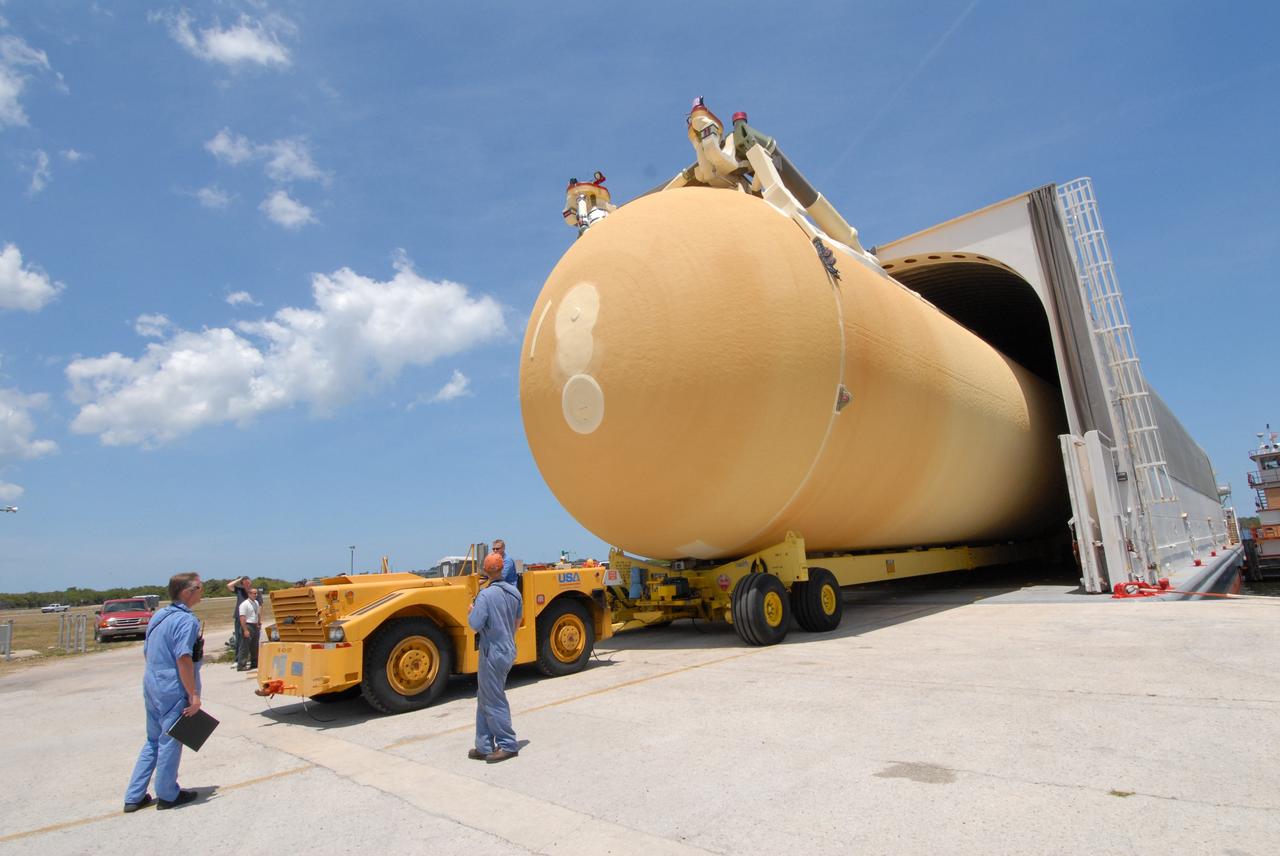
CAPE CANAVERAL, Fla. – The external fuel tank, ET- 132, designated for use with space shuttle Discovery on the STS-128 mission is moved out of the Pegasus barge in the turn basin at NASA's Kennedy Space Center in Florida. It will be transported to a high bay in the Vehicle Assembly Building for checkout. On the STS-128 mission, Discovery will carry science and storage racks to the International Space Station. Launch of Discovery is targeted for Aug. 6. Photo credit: NASA/Jack Pfaller
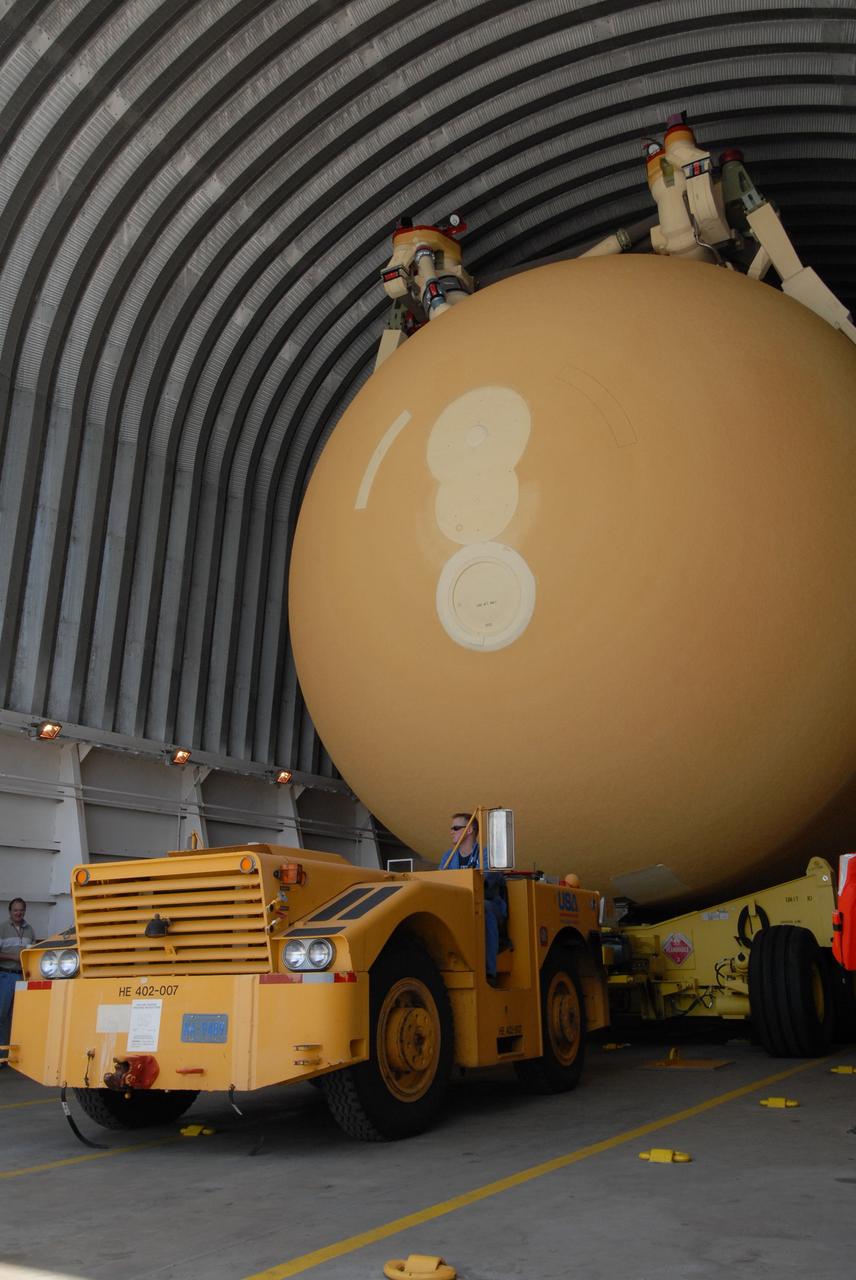
CAPE CANAVERAL, Fla. – The external fuel tank, ET- 132, designated for use with space shuttle Discovery on the STS-128 mission is being offloaded from the Pegasus barge at NASA's Kennedy Space Center in Florida. It will be transported to a high bay in the Vehicle Assembly Building for checkout. On the STS-128 mission, Discovery will carry science and storage racks to the International Space Station. Launch of Discovery is targeted for Aug. 6. Photo credit: NASA/Jack Pfaller
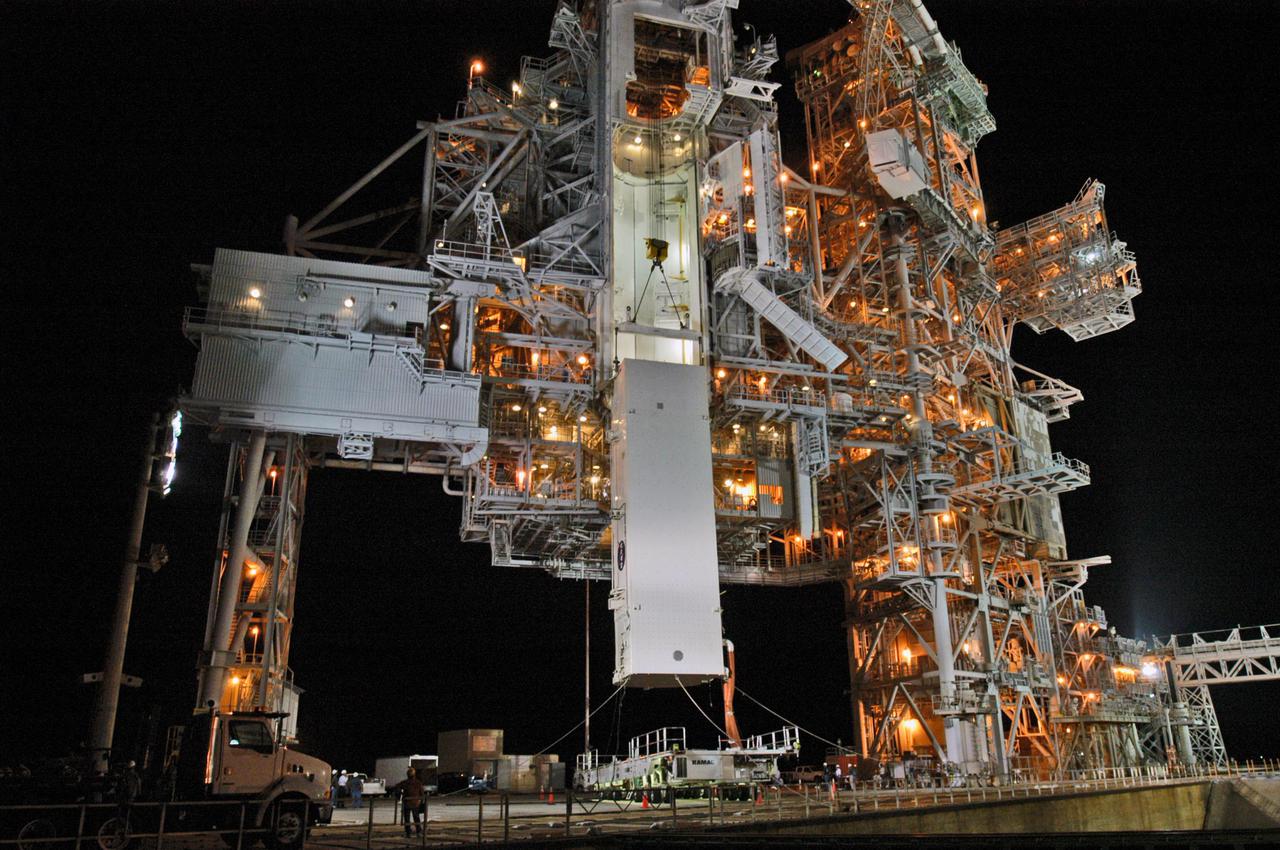
KENNEDY SPACE CENTER, FLA. - At Launch Pad 39B, the payload canister that delivered payloads launching aboard Space Shuttle Discovery's Return to Flight mission STS-114 is lowered from the Payload Changeout Room. The payloads will be installed into Discovery, scheduled to arrive at the pad later today. Discovery’s payloads include the Multi-Purpose Logistics Module Raffaello, the Lightweight Multi-Purpose Experiment Support Structure Carrier (LMC), and the External Stowage Platform-2 (ESP-2). Raffaello will deliver supplies to the International Space Station including food, clothing and research equipment. The LMC will carry a replacement Control Moment Gyroscope and a tile repair sample box. The ESP-2 is outfitted with replacement parts. Discovery’s launch window extends from July 13 through July 31.
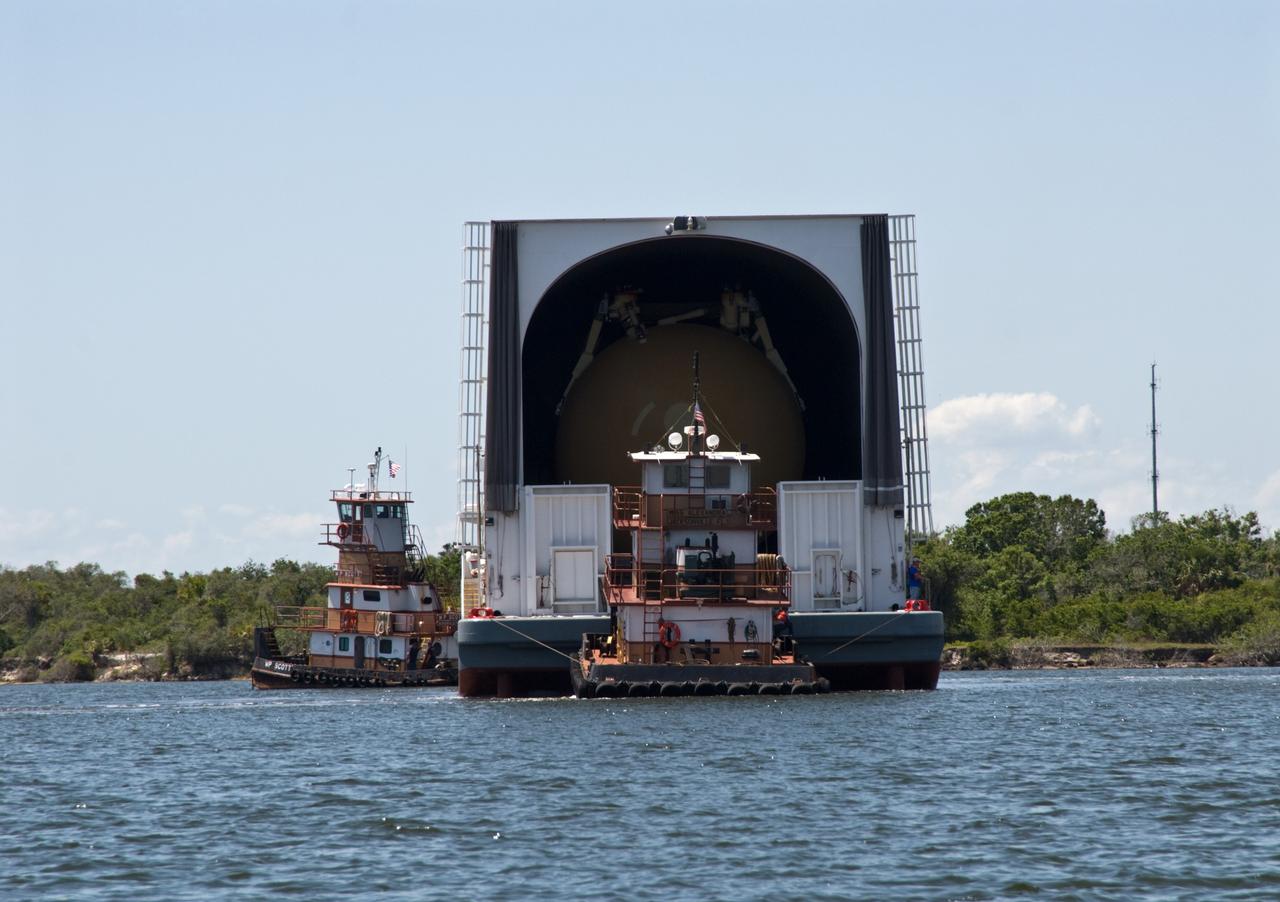
CAPE CANAVERAL, Fla. – Tugboats maneuver the Pegasus barge toward the dock in the turn basin in the Launch Complex 39 Area at NASA's Kennedy Space Center in Florida. The barge holds the external fuel tank, ET- 132, designated for space shuttle Discovery on the STS-128 mission. The tank will be offloaded and transported to a high bay in the Vehicle Assembly Building for checkout. On the STS-128 mission, Discovery will carry science and storage racks to the International Space Station. Launch of Discovery is targeted for Aug. 6. Photo credit: NASA/Troy Cryder

KENNEDY SPACE CENTER, FLA. - In the Vehicle Assembly Building (VAB) at NASA’s Kennedy Space Center, a technician monitors the progress of a Crawler-Transporter as it moves Space Shuttle Discovery out of high bay 3 to Launch Pad 39B, a 4-mile, 6-hour journey. First motion was at 1:58 a.m. EDT. The Space Shuttle rests on a Mobile Launcher Platform which sits atop the Crawler-Transporter. This is the second rollout of Discovery after being returned to the Vehicle Assembly Building for connection to an improved External Tank. Launch of Discovery on its Return to Flight mission STS-114 is targeted for a launch window extending from July 13 to July 31. During its 12-day mission, Discovery’s seven-person crew will test new hardware and techniques to improve Shuttle safety, as well as deliver supplies to the International Space Station.
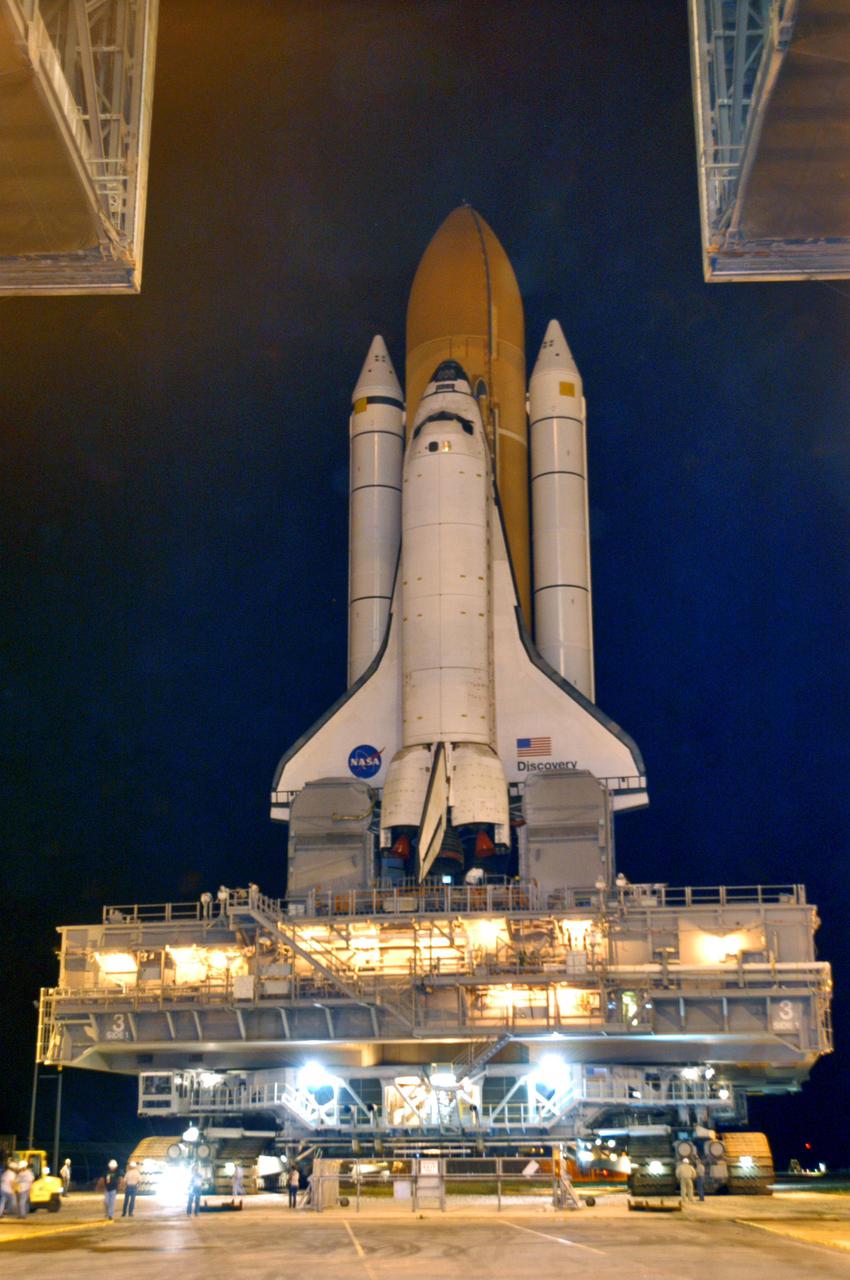
KENNEDY SPACE CENTER, FLA. - In the Vehicle Assembly Building (VAB) at NASA’s Kennedy Space Center, Space Shuttle Discovery rolls outside high bay 3 to begin its trip to Launch Pad 39B, a 4-mile, 6-hour journey. First motion was at 1:58 a.m. EDT. The Space Shuttle rests on a Mobile Launcher Platform which sits atop a Crawler-Transporter. This is the second rollout of Discovery after being returned to the Vehicle Assembly Building for connection to an improved External Tank. Launch of Discovery on its Return to Flight mission STS-114 is targeted for a launch window extending from July 13 to July 31. During its 12-day mission, Discovery’s seven-person crew will test new hardware and techniques to improve Shuttle safety, as well as deliver supplies to the International Space Station.
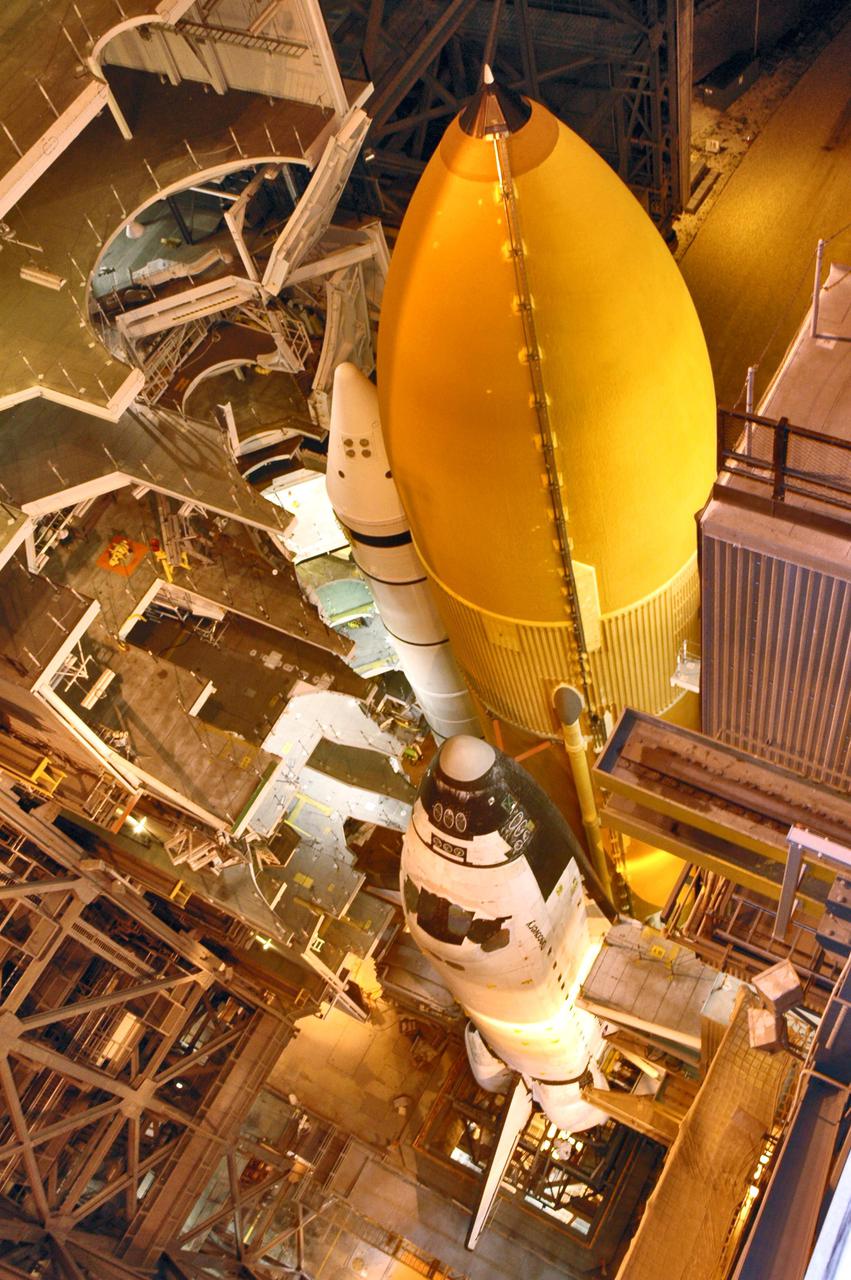
KENNEDY SPACE CENTER, FLA. - In the Vehicle Assembly Building (VAB) at NASA’s Kennedy Space Center, Space Shuttle Discovery is viewed from above as it departs high bay 3 for its trip to Launch Pad 39B, a 4-mile, 6-hour journey. First motion was at 1:58 a.m. EDT. The Space Shuttle rests on a Mobile Launcher Platform which sits atop a Crawler-Transporter. This is the second rollout of Discovery after being returned to the Vehicle Assembly Building for connection to an improved External Tank. Launch of Discovery on its Return to Flight mission STS-114 is targeted for a launch window extending from July 13 to July 31. During its 12-day mission, Discovery’s seven-person crew will test new hardware and techniques to improve Shuttle safety, as well as deliver supplies to the International Space Station.
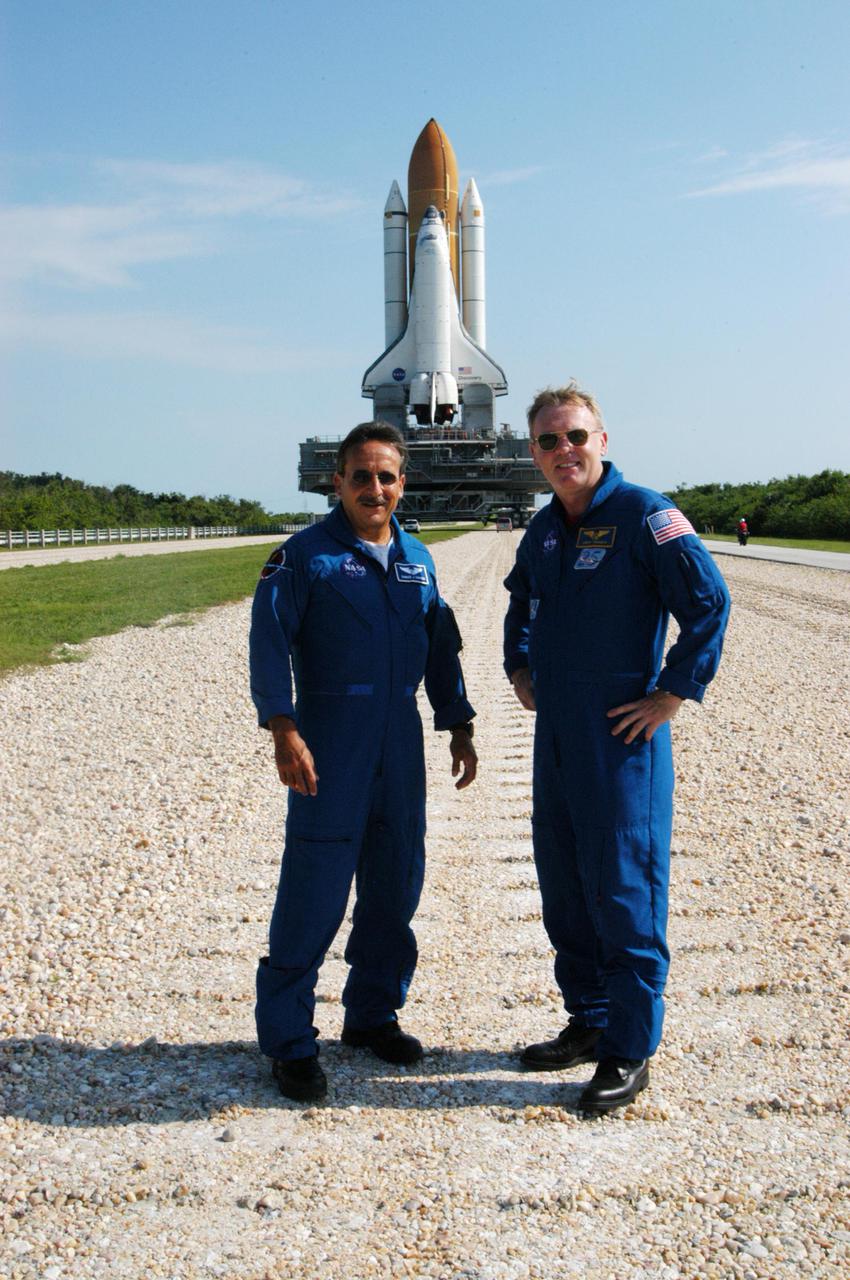
KENNEDY SPACE CENTER, FLA. - STS-114 Mission Specialists Charles Camarda (left) and Andrew Thomas monitor the progress of Space Shuttle Discovery as it makes its way along the crawlerway to Launch Pad 39B. First motion for the 4.2-mile journey was at 1:58 a.m. EDT. The Space Shuttle rests on a Mobile Launcher Platform that sits atop a Crawler-Transporter. This is the second rollout of Discovery. The vehicle was returned to the Vehicle Assembly Building for connection to an improved External Tank. Launch of Discovery on its Return to Flight mission STS-114 is targeted for a launch window extending from July 13 to July 31.
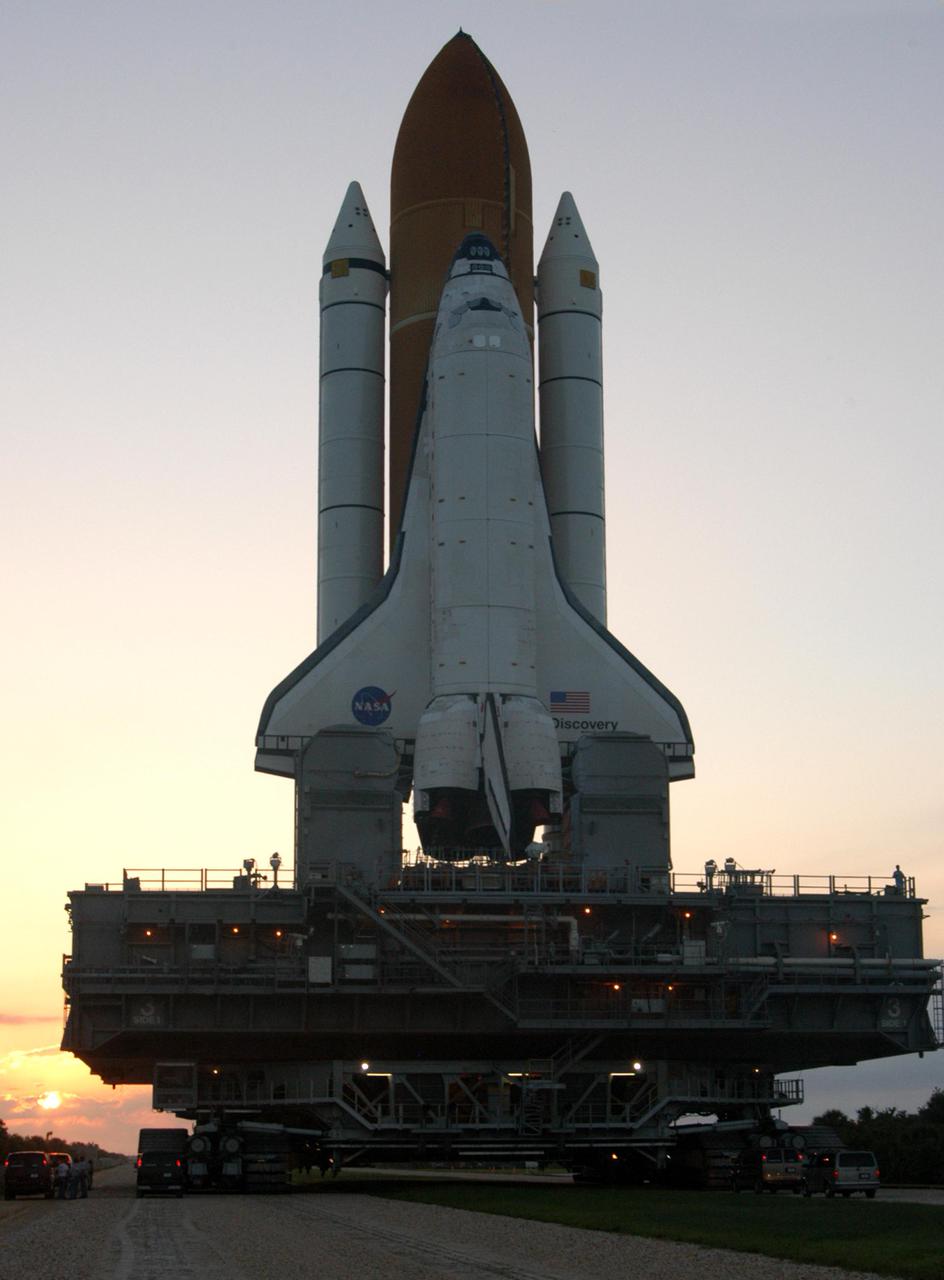
KENNEDY SPACE CENTER, FLA. - Space Shuttle Discovery makes its way along the crawlerway from high bay 3 to Launch Pad 39B as the sun rises. First motion for the 4-mile, 6-hour journey was at 1:58 a.m. EDT. The Space Shuttle rests on a Mobile Launcher Platform which sits atop a Crawler-Transporter. This is the second rollout of Discovery after being returned to the Vehicle Assembly Building for connection to an improved External Tank. Launch of Discovery on its Return to Flight mission STS-114 is targeted for a launch window extending from July 13 to July 31. During its 12-day mission, Discovery’s seven-person crew will test new hardware and techniques to improve Shuttle safety, as well as deliver supplies to the International Space Station.
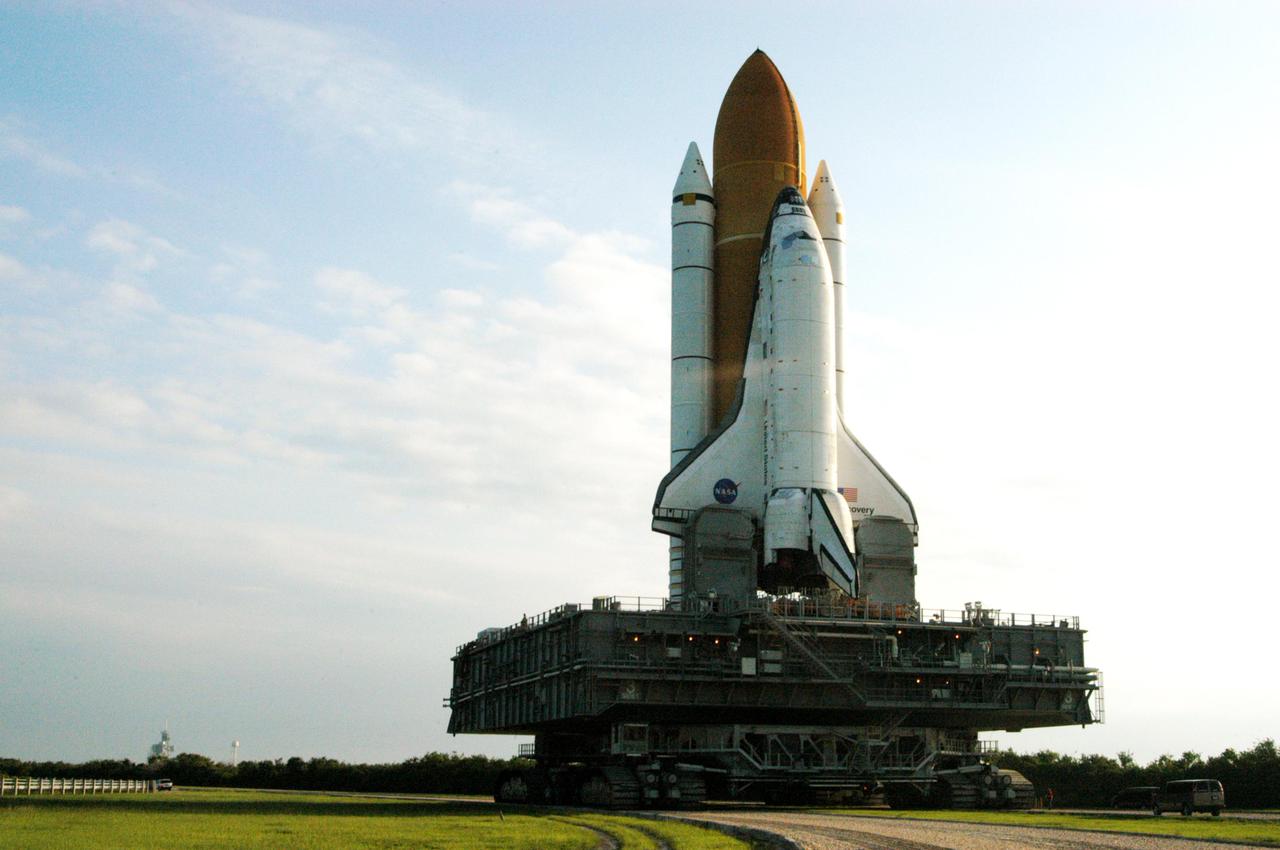
KENNEDY SPACE CENTER, FLA. - Space Shuttle Discovery makes its way along the crawlerway to Launch Pad 39B, seen at left. First motion for the 4.2-mile journey was at 1:58 a.m. EDT. The Space Shuttle rests on a Mobile Launcher Platform that sits atop a Crawler-Transporter. This is the second rollout of Discovery. The vehicle was returned to the Vehicle Assembly Building for connection to an improved External Tank. Launch of Discovery on its Return to Flight mission STS-114 is targeted for a launch window extending from July 13 to July 31.
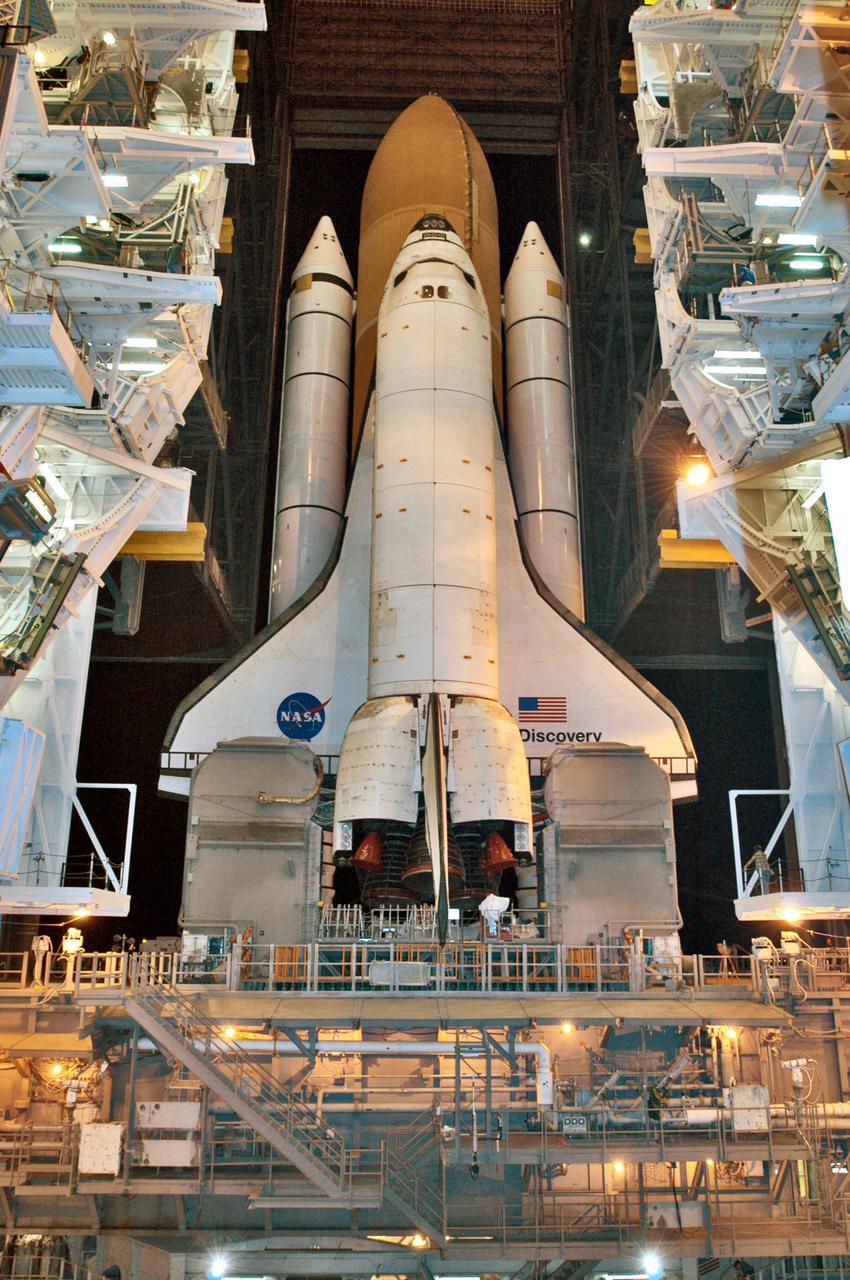
KENNEDY SPACE CENTER, FLA. - In the Vehicle Assembly Building (VAB) at NASA’s Kennedy Space Center, Space Shuttle Discovery exits high bay 3 to begin its trip to Launch Pad 39B, a 4-mile, 6-hour journey. First motion was at 1:58 a.m. EDT. The Space Shuttle rests on a Mobile Launcher Platform which sits atop a Crawler-Transporter. This is the second rollout of Discovery after being returned to the Vehicle Assembly Building for connection to an improved External Tank. Launch of Discovery on its Return to Flight mission STS-114 is targeted for a launch window extending from July 13 to July 31. During its 12-day mission, Discovery’s seven-person crew will test new hardware and techniques to improve Shuttle safety, as well as deliver supplies to the International Space Station.
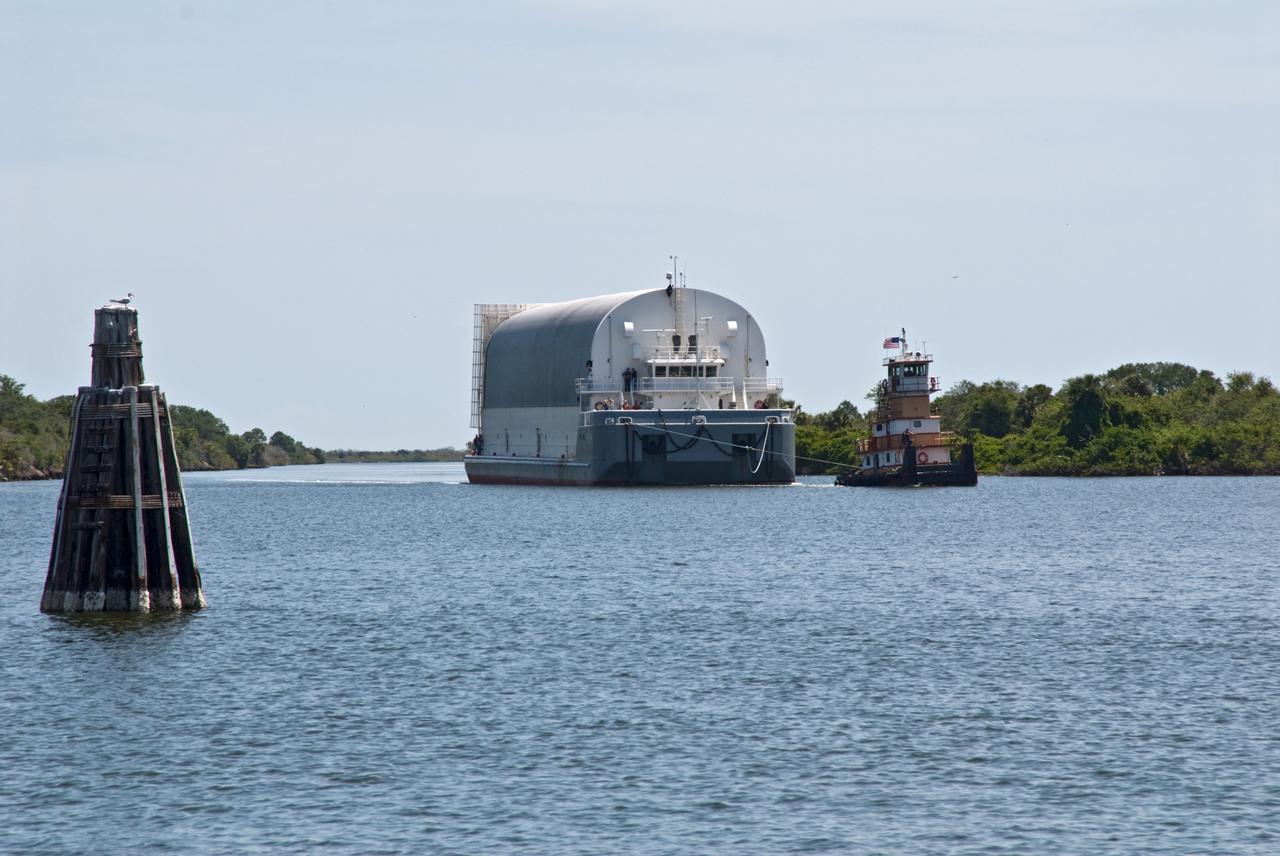
CAPE CANAVERAL, Fla. – The Pegasus barge, towed by a tugboat, enters the turn basin in the Launch Complex 39 Area at NASA's Kennedy Space Center in Florida. The barge holds the external fuel tank, ET- 132, designated for space shuttle Discovery on the STS-128 mission. The tank will be offloaded and transported to a high bay in the Vehicle Assembly Building for checkout. On the STS-128 mission, Discovery will carry science and storage racks to the International Space Station. Launch of Discovery is targeted for Aug. 6. Photo credit: NASA/Troy Cryder
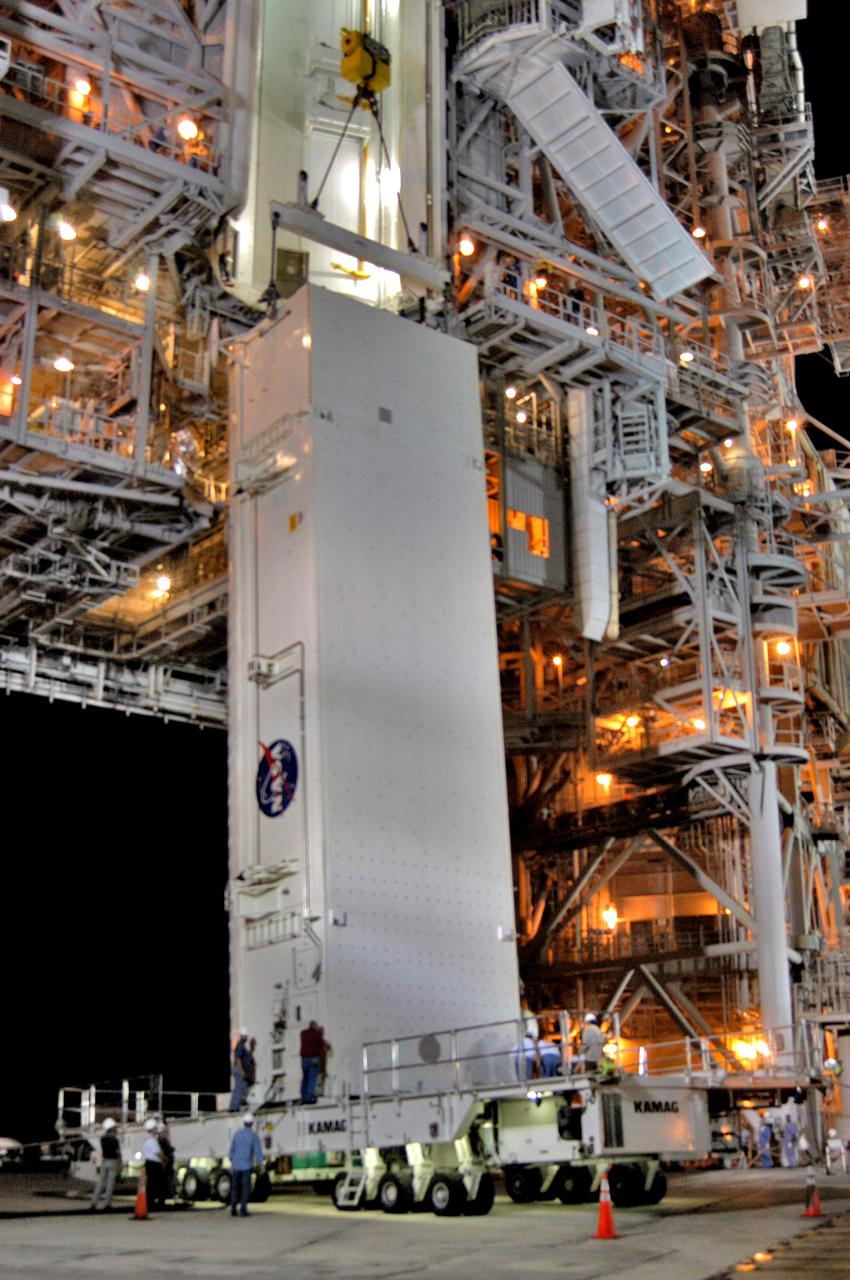
KENNEDY SPACE CENTER, FLA. - At Launch Pad 39B, the payload canister that delivered payloads launching aboard Space Shuttle Discovery's Return to Flight mission STS-114 is lowered from the Payload Changeout Room onto a transporter. The payloads will be installed into Discovery, scheduled to arrive at the pad later today. Discovery’s payloads include the Multi-Purpose Logistics Module Raffaello, the Lightweight Multi-Purpose Experiment Support Structure Carrier (LMC), and the External Stowage Platform-2 (ESP-2). Raffaello will deliver supplies to the International Space Station including food, clothing and research equipment. The LMC will carry a replacement Control Moment Gyroscope and a tile repair sample box. The ESP-2 is outfitted with replacement parts. Discovery’s launch window extends from July 13 through July 31.
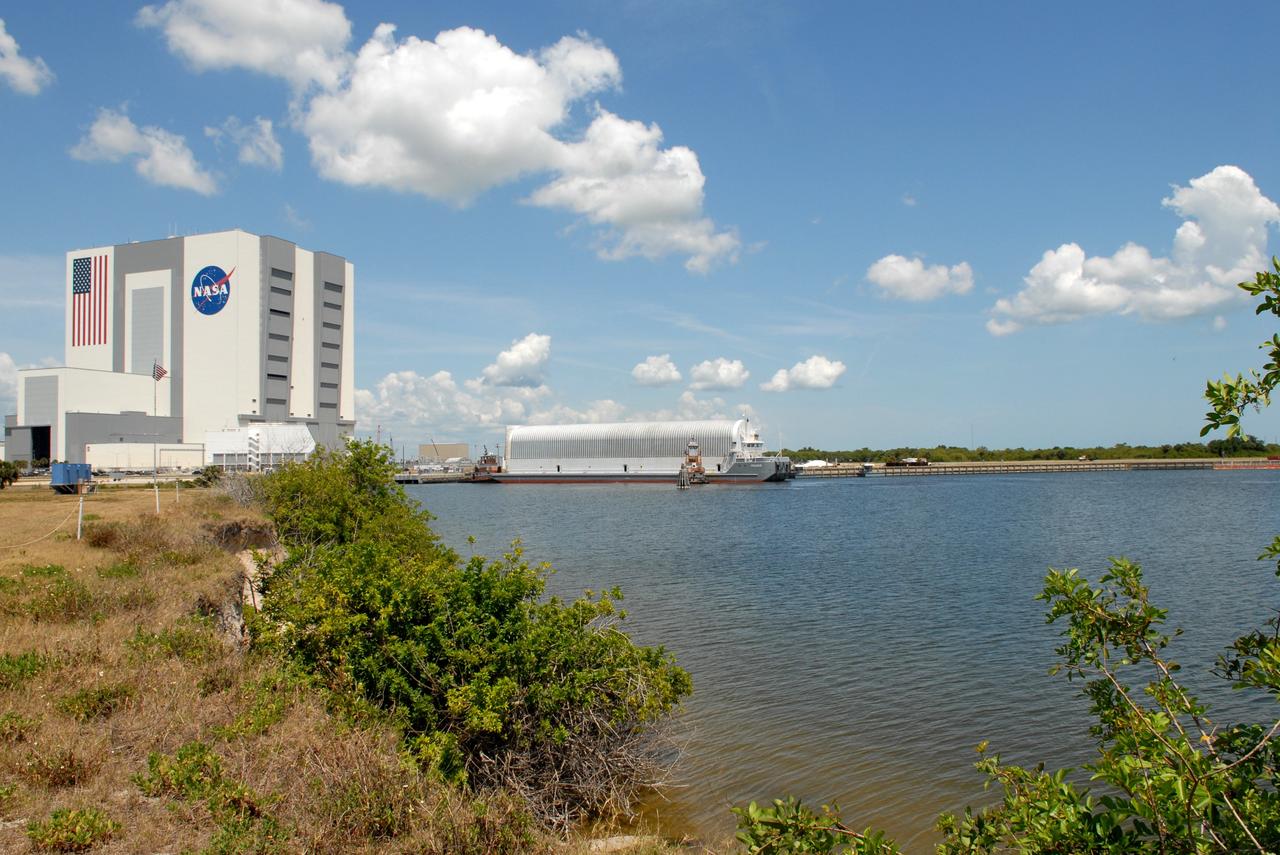
CAPE CANAVERAL, Fla. – Viewed from across the turn basin in the Launch Complex 39 Area at NASA's Kennedy Space Center in Florida, the Pegasus barge is maneuvered up to the dock. In the background at left is the Vehicle Assembly Building. The barge holds the external fuel tank, ET- 132, designated for space shuttle Discovery on the STS-128 mission. The tank will be offloaded and transported to a high bay in the VAB for checkout. On the STS-128 mission, Discovery will carry science and storage racks to the International Space Station. Launch of Discovery is targeted for Aug. 6. Photo credit: NASA/Troy Cryder
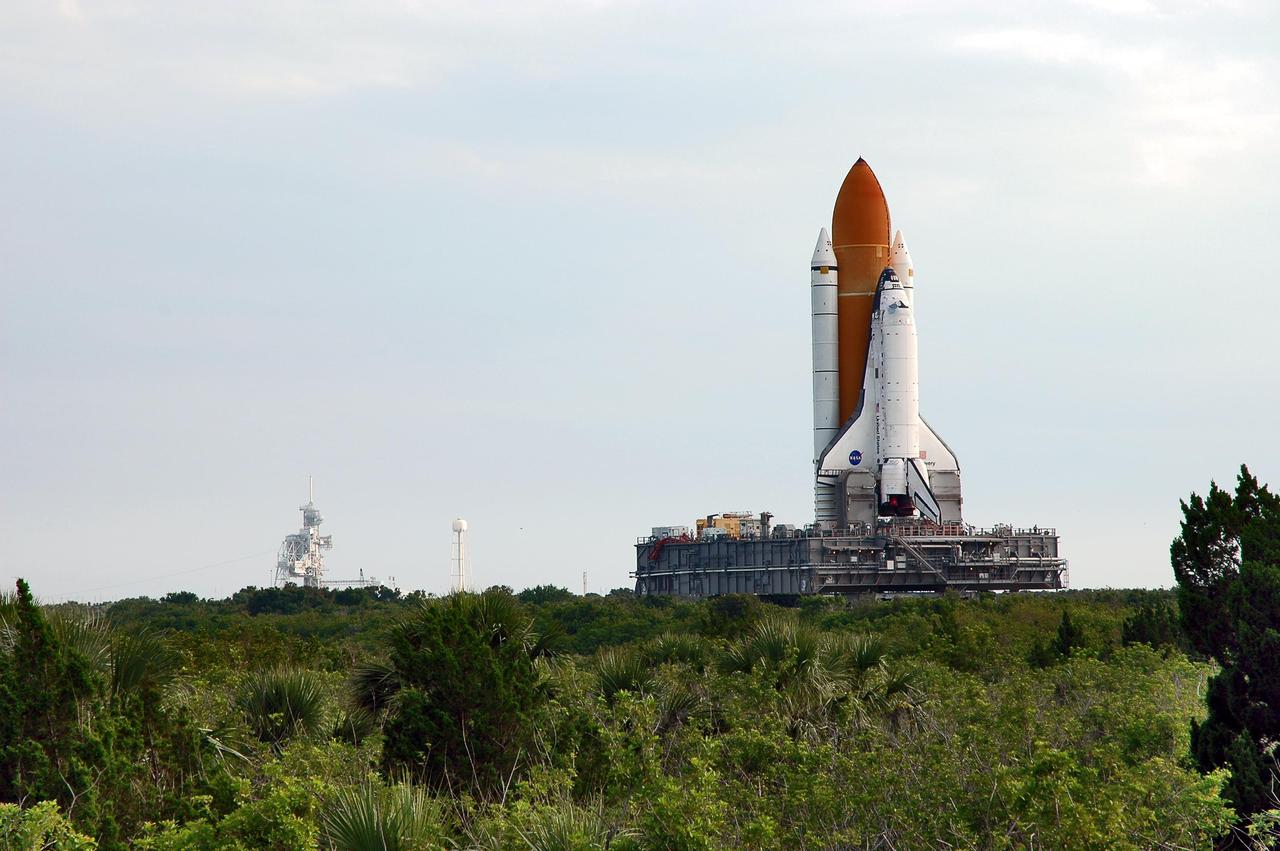
KENNEDY SPACE CENTER, FLA. - Space Shuttle Discovery makes its way along the crawlerway to Launch Pad 39B, seen at left. First motion for the 4-mile, 6-hour journey was at 1:58 a.m. EDT. The Space Shuttle rests on a Mobile Launcher Platform that sits atop a Crawler-Transporter. This is the second rollout of Discovery after being returned to the Vehicle Assembly Building for connection to an improved External Tank. Launch of Discovery on its Return to Flight mission STS-114 is targeted for a launch window extending from July 13 to July 31.
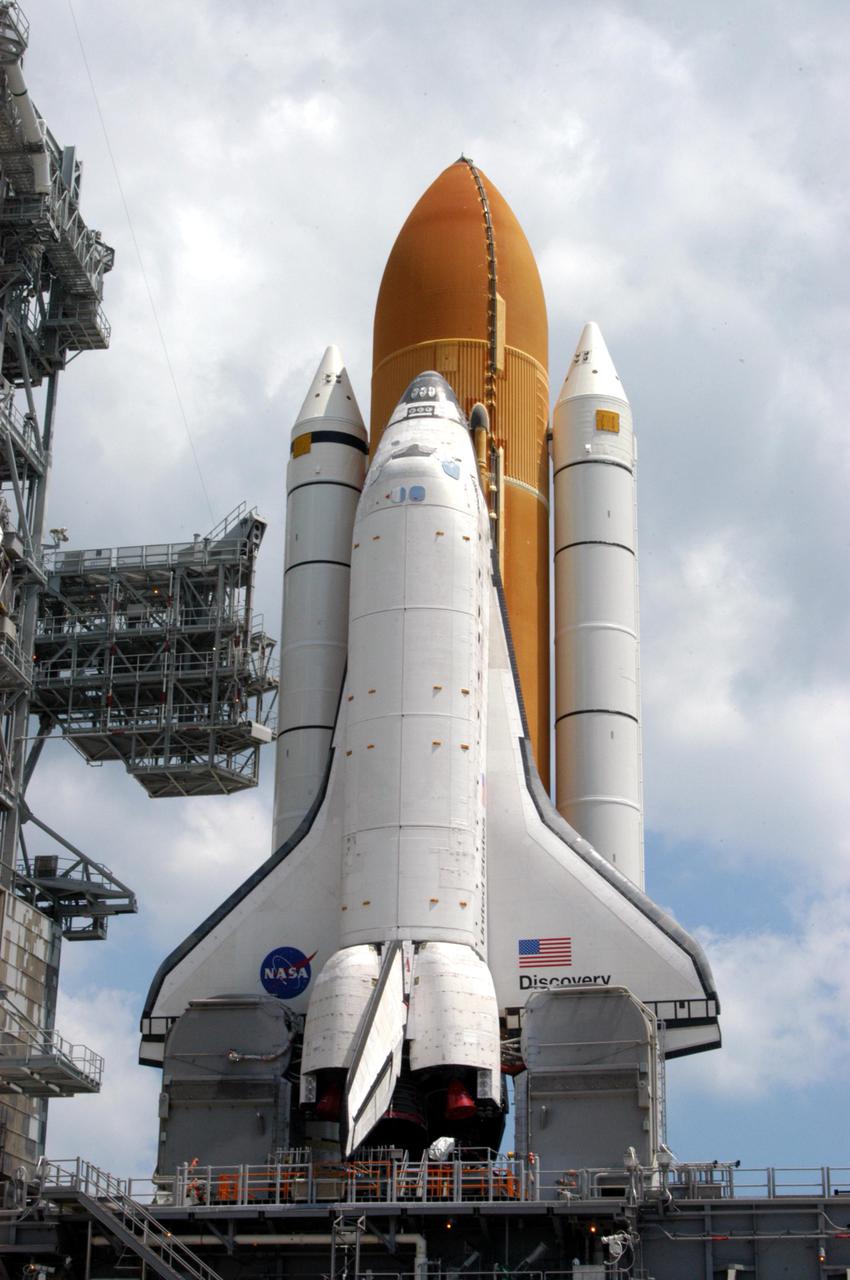
KENNEDY SPACE CENTER, FLA. - Space Shuttle Discovery moves into position on the hardstand of Launch Pad 39B. First motion for the 4.2-mile journey was at 1:58 a.m. EDT. The Space Shuttle rests on a Mobile Launcher Platform that sits atop a Crawler-Transporter. This is the second rollout of Discovery. The orbiter was returned to the Vehicle Assembly Building for connection to an improved External Tank. Launch of Discovery on its Return to Flight mission STS-114 is targeted for a launch window extending from July 13 to July 31.
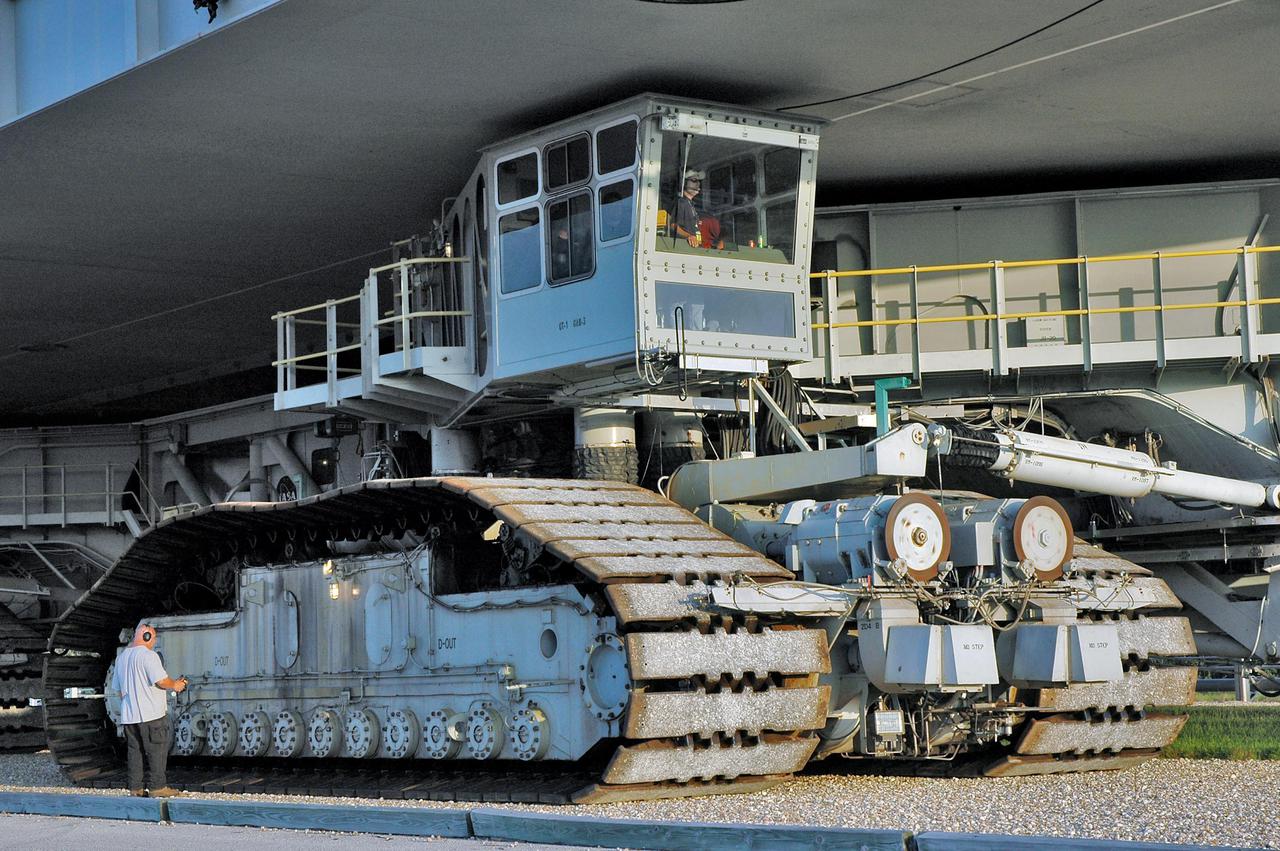
KENNEDY SPACE CENTER, FLA. - The Crawler-Transporter carries Space Shuttle Discovery and the Mobile Launcher Platform to Launch Pad 39B. The crawler is operated by a United Space Alliance driver, seen in the cab above the crawler tracks. The transporter uses a laser guidance system and a leveling system for the journey that keeps the top of the Space Shuttle vertical. This is the second rollout of Discovery after being returned to the Vehicle Assembly Building for connection to an improved External Tank. Launch of Discovery on its Return to Flight mission STS-114 is targeted for a launch window extending from July 13 to July 31.
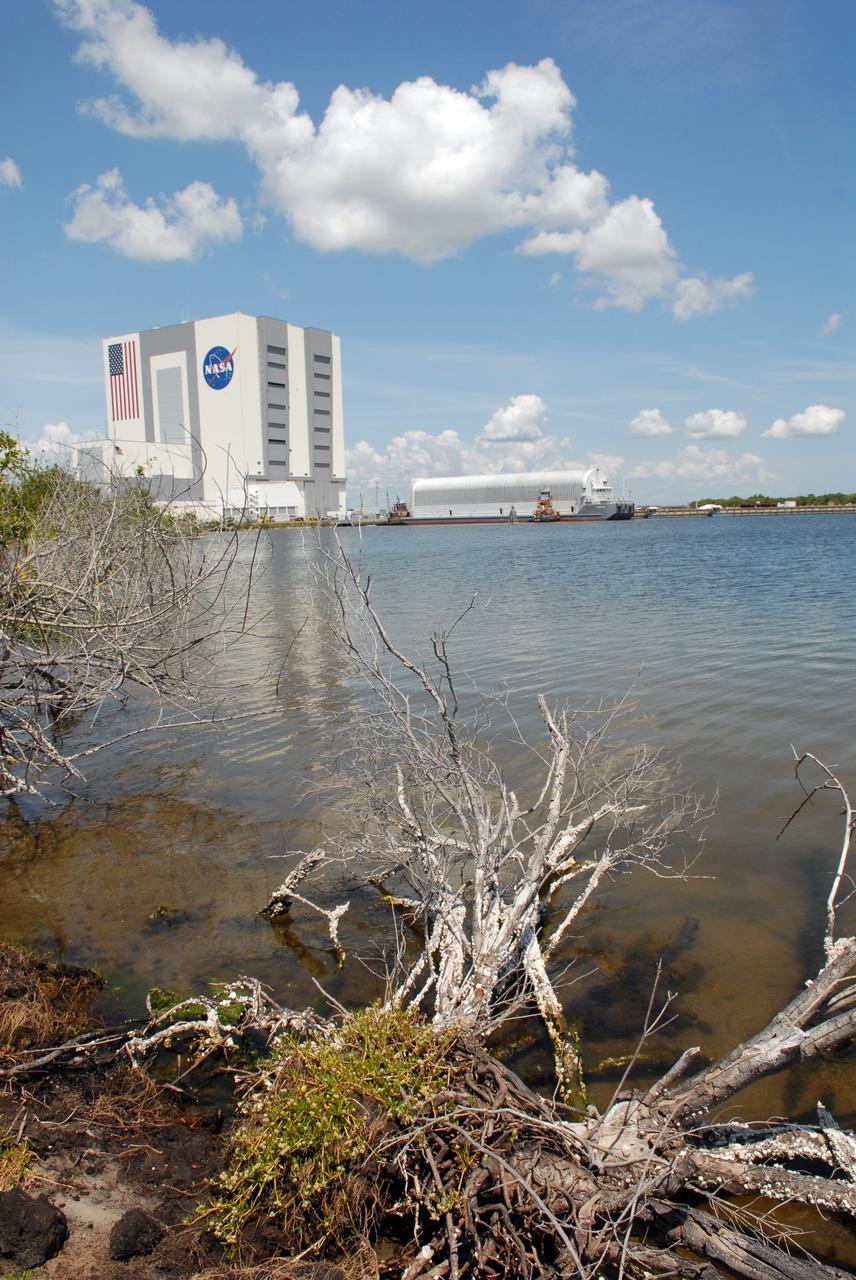
CAPE CANAVERAL, Fla. – Viewed from across the turn basin in the Launch Complex 39 Area at NASA's Kennedy Space Center in Florida, the Pegasus barge is maneuvered up to the dock. In the background at left is the Vehicle Assembly Building. The barge holds the external fuel tank, ET- 132, designated for space shuttle Discovery on the STS-128 mission. The tank will be offloaded and transported to a high bay in the VAB for checkout. On the STS-128 mission, Discovery will carry science and storage racks to the International Space Station. Launch of Discovery is targeted for Aug. 6. Photo credit: NASA/Troy Cryder
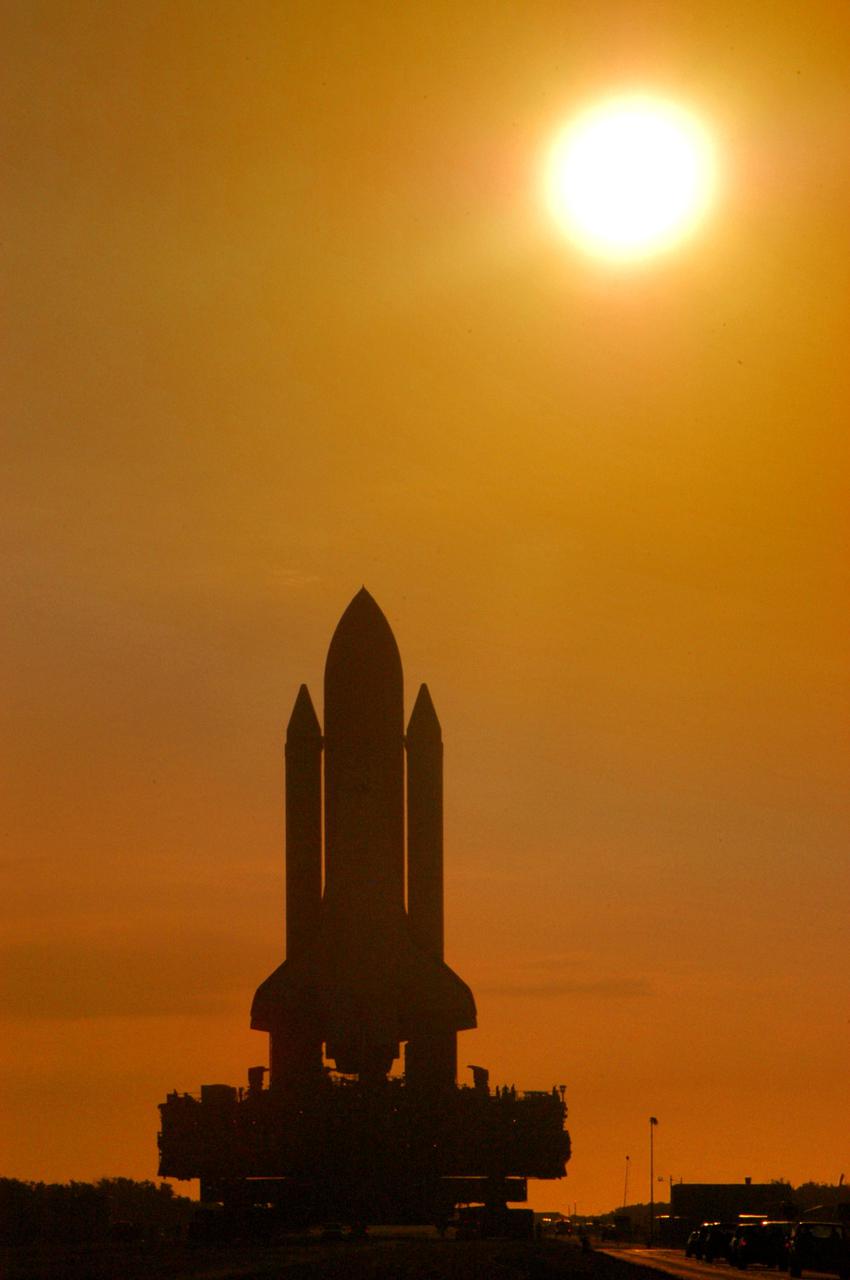
KENNEDY SPACE CENTER, FLA. - Space Shuttle Discovery makes its way along the crawlerway from high bay 3 to Launch Pad 39B as the sun rises. First motion for the 4-mile, 6-hour journey was at 1:58 a.m. EDT. The Space Shuttle rests on a Mobile Launcher Platform which sits atop a Crawler-Transporter. This is the second rollout of Discovery after being returned to the Vehicle Assembly Building for connection to an improved External Tank. Launch of Discovery on its Return to Flight mission STS-114 is targeted for a launch window extending from July 13 to July 31. During its 12-day mission, Discovery’s seven-person crew will test new hardware and techniques to improve Shuttle safety, as well as deliver supplies to the International Space Station.
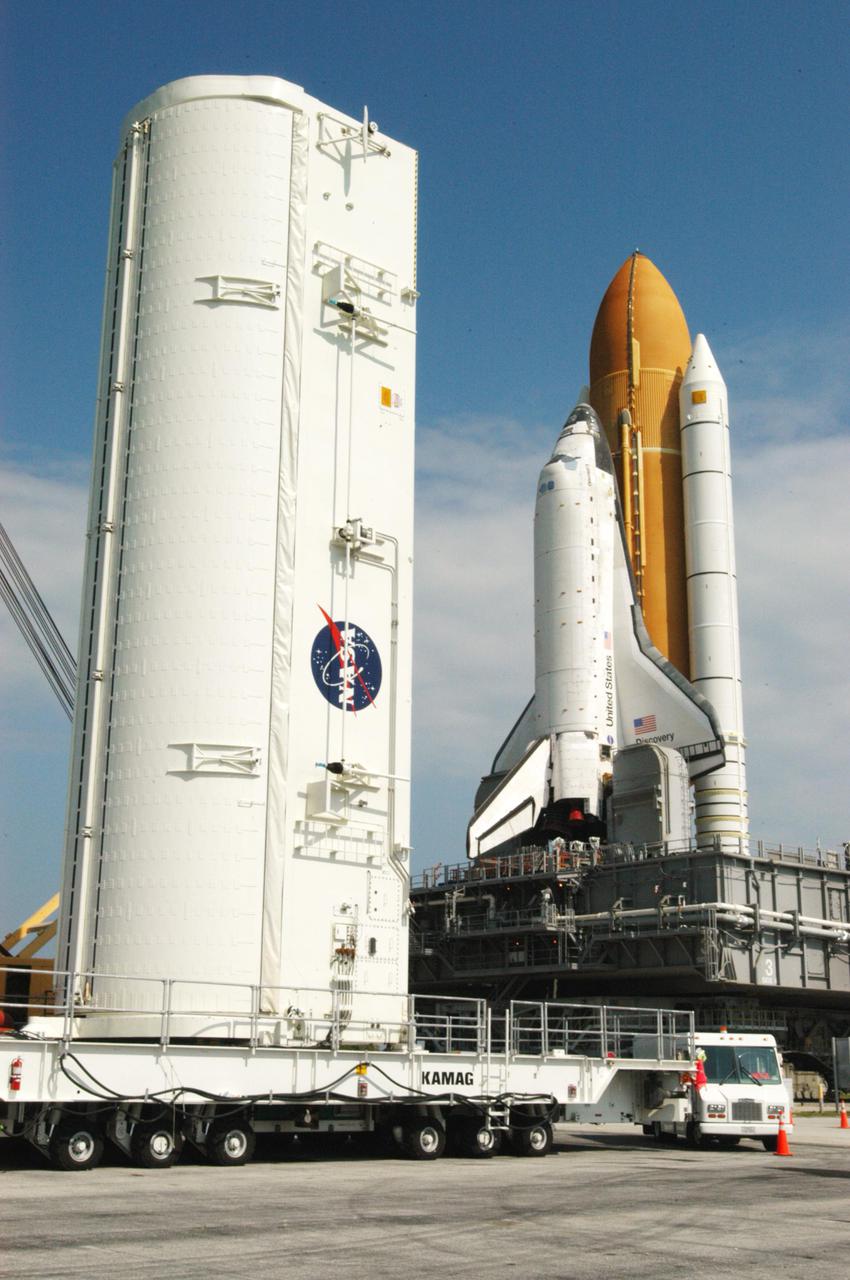
KENNEDY SPACE CENTER, FLA. - As Space Shuttle Discovery approaches Launch Pad 39B, the canister that delivered the mission STS-114 payloads to the pad departs. First motion for the 4.2-mile journey was at 1:58 a.m. EDT. The Space Shuttle rests on a Mobile Launcher Platform that sits atop a Crawler-Transporter. This is the second rollout of Discovery. The vehicle was returned to the Vehicle Assembly Building for connection to an improved External Tank. Launch of Discovery on its Return to Flight mission STS-114 is targeted for a launch window extending from July 13 to July 31.
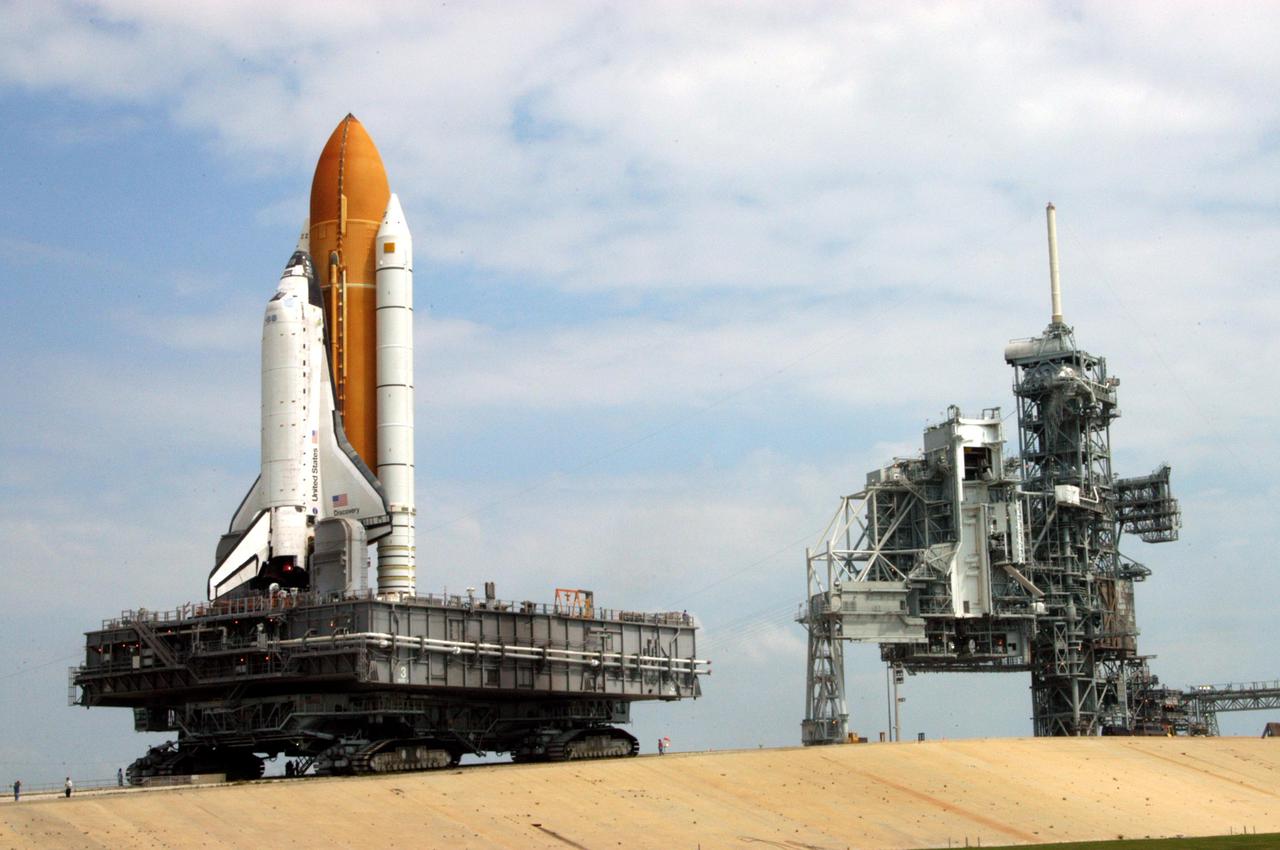
KENNEDY SPACE CENTER, FLA. - Space Shuttle Discovery makes its way up the 5 percent grade to the hardstand of Launch Pad 39B. First motion for the 4.2-mile journey was at 1:58 a.m. EDT. The Space Shuttle rests on a Mobile Launcher Platform that sits atop a Crawler-Transporter. This is the second rollout of Discovery. The orbiter was returned to the Vehicle Assembly Building for connection to an improved External Tank. Launch of Discovery on its Return to Flight mission STS-114 is targeted for a launch window extending from July 13 to July 31.
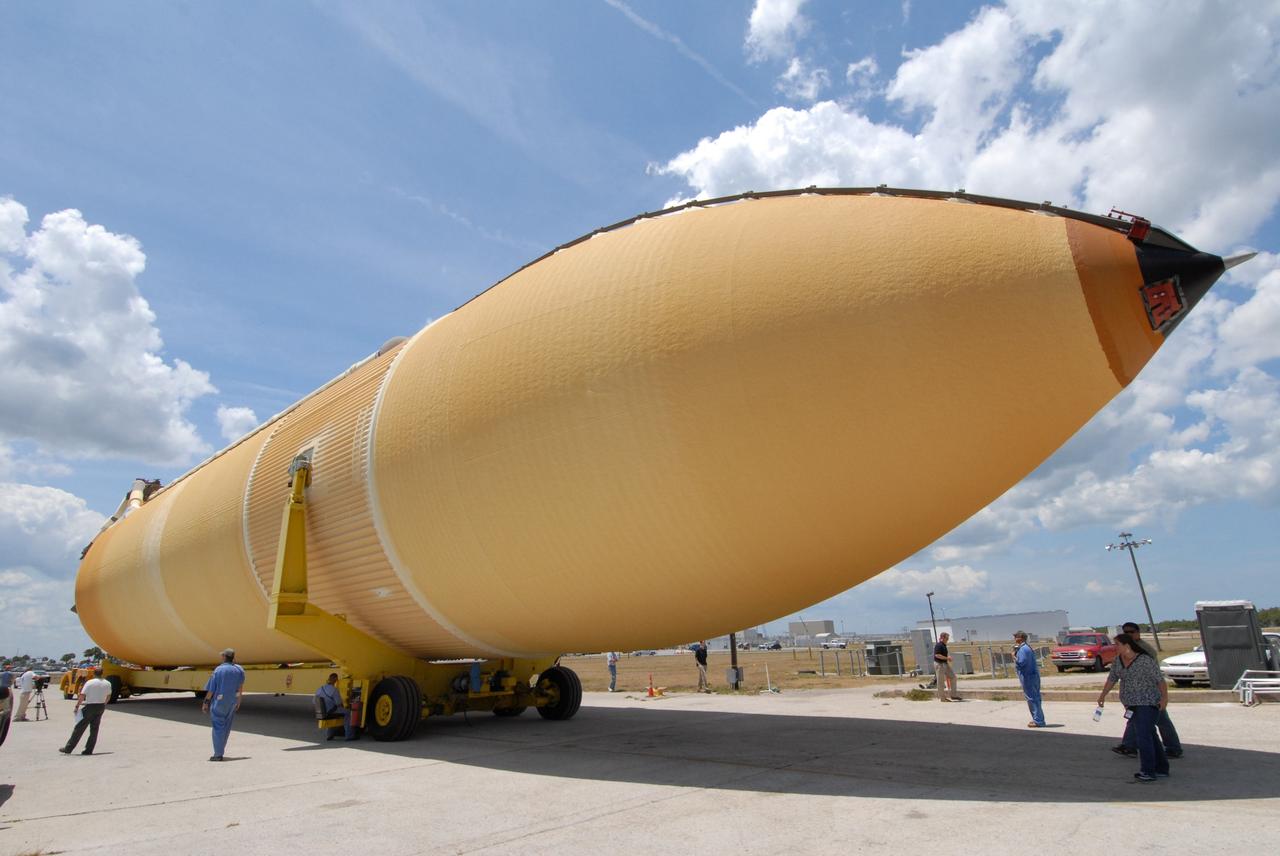
CAPE CANAVERAL, Fla. – The external fuel tank, ET- 132, designated for use with space shuttle Discovery on the STS-128 mission is moved away from the turn basin, heading for the Vehicle Assembly Building (at left) at NASA's Kennedy Space Center in Florida for checkout in a high bay. On the STS-128 mission, Discovery will carry science and storage racks to the International Space Station. Launch of Discovery is targeted for Aug. 6. Photo credit: NASA/Jack Pfaller
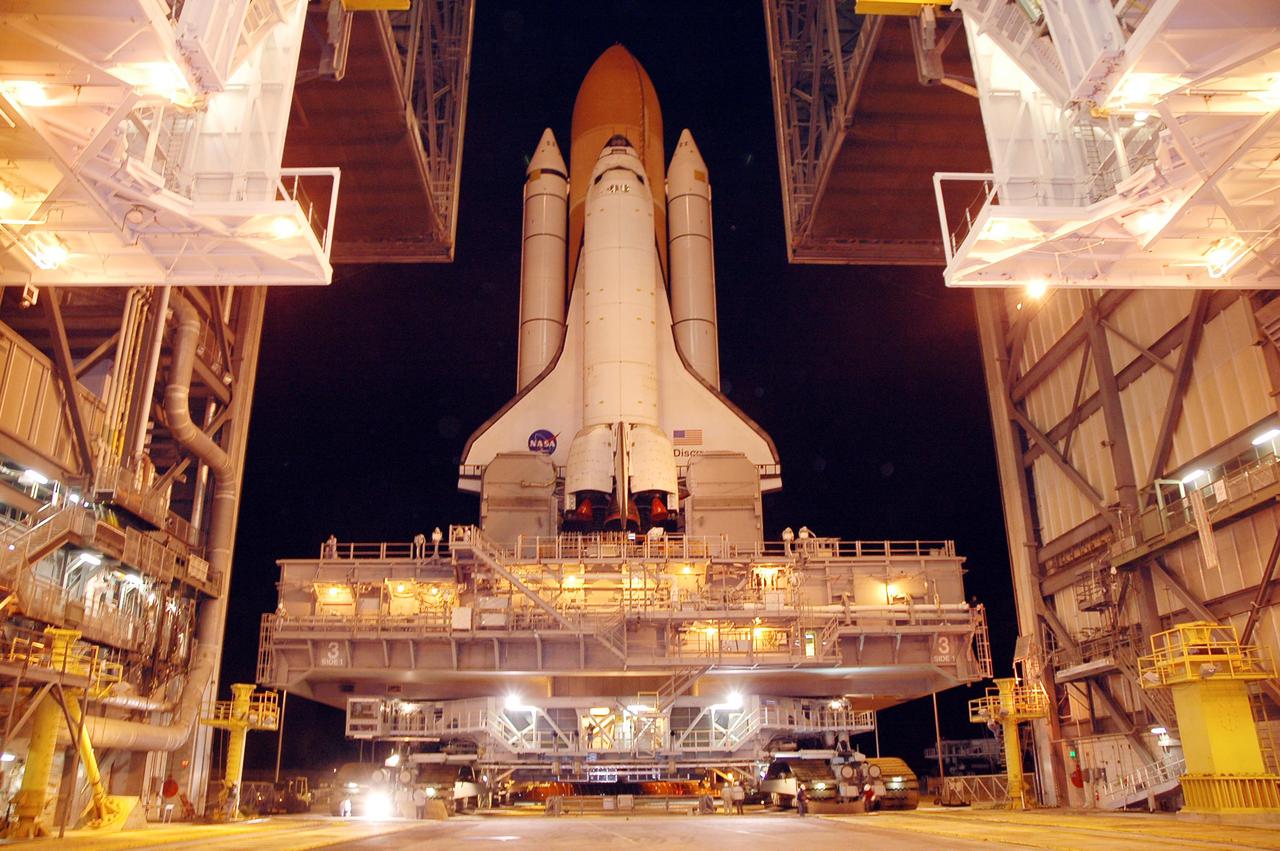
KENNEDY SPACE CENTER, FLA. - In the Vehicle Assembly Building (VAB) at NASA’s Kennedy Space Center, Space Shuttle Discovery rolls outside high bay 3 to begin its trip to Launch Pad 39B, a 4-mile, 6-hour journey. First motion was at 1:58 a.m. EDT. The Space Shuttle rests on a Mobile Launcher Platform which sits atop a Crawler-Transporter. This is the second rollout of Discovery after being returned to the Vehicle Assembly Building for connection to an improved External Tank. Launch of Discovery on its Return to Flight mission STS-114 is targeted for a launch window extending from July 13 to July 31. During its 12-day mission, Discovery’s seven-person crew will test new hardware and techniques to improve Shuttle safety, as well as deliver supplies to the International Space Station.

KENNEDY SPACE CENTER, FLA. - Space Shuttle Discovery makes its way along the crawlerway from high bay 3 to Launch Pad 39B as the sun rises. First motion for the 4-mile, 6-hour journey was at 1:58 a.m. EDT. The Space Shuttle rests on a Mobile Launcher Platform which sits atop a Crawler-Transporter. This is the second rollout of Discovery after being returned to the Vehicle Assembly Building for connection to an improved External Tank. Launch of Discovery on its Return to Flight mission STS-114 is targeted for a launch window extending from July 13 to July 31. During its 12-day mission, Discovery’s seven-person crew will test new hardware and techniques to improve Shuttle safety, as well as deliver supplies to the International Space Station.
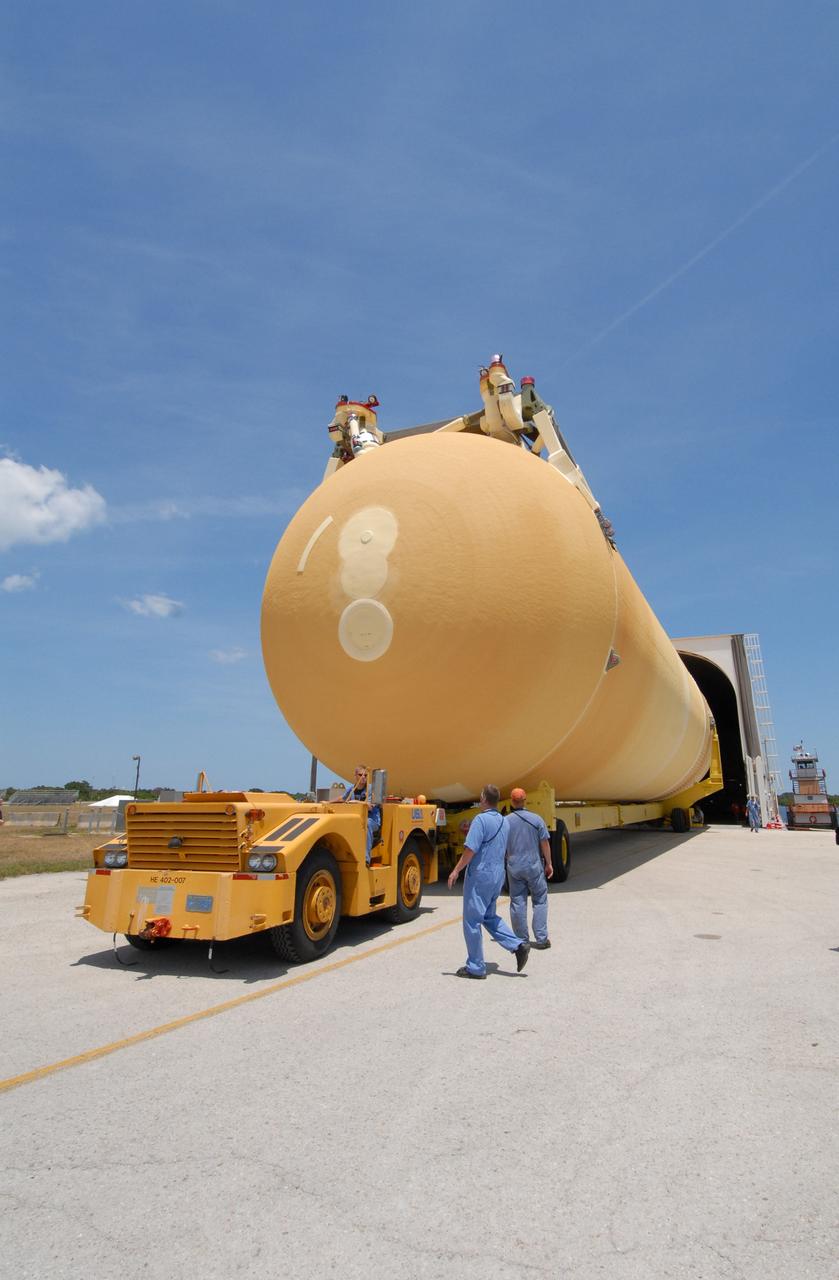
CAPE CANAVERAL, Fla. – The external fuel tank, ET- 132, designated for use with space shuttle Discovery on the STS-128 mission is moved out of the Pegasus barge in the turn basin at NASA's Kennedy Space Center in Florida. It will be transported to a high bay in the Vehicle Assembly Building for checkout. On the STS-128 mission, Discovery will carry science and storage racks to the International Space Station. Launch of Discovery is targeted for Aug. 6. Photo credit: NASA/Jack Pfaller
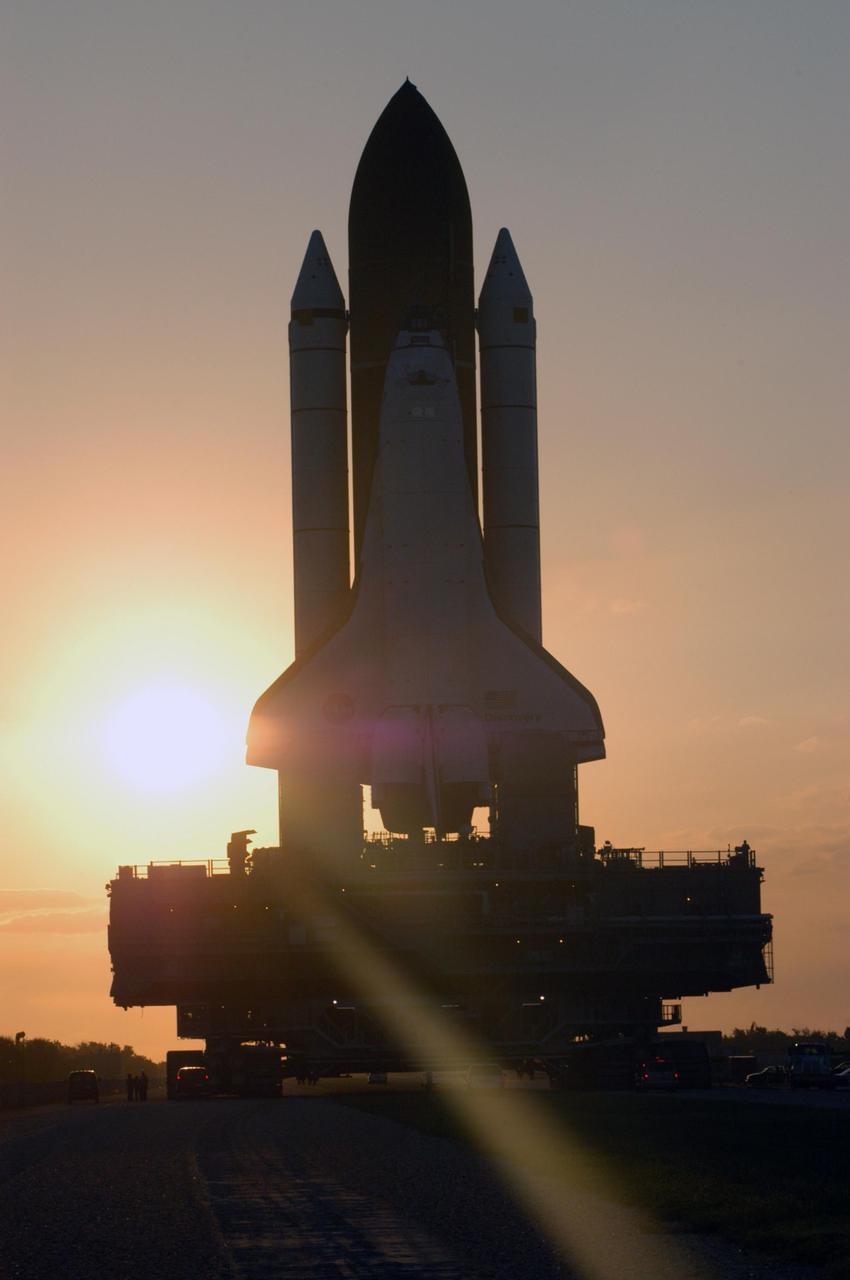
KENNEDY SPACE CENTER, FLA. - Space Shuttle Discovery makes its way along the crawlerway from high bay 3 to Launch Pad 39B as the sun rises. First motion for the 4-mile, 6-hour journey was at 1:58 a.m. EDT. The Space Shuttle rests on a Mobile Launcher Platform which sits atop a Crawler-Transporter. This is the second rollout of Discovery after being returned to the Vehicle Assembly Building for connection to an improved External Tank. Launch of Discovery on its Return to Flight mission STS-114 is targeted for a launch window extending from July 13 to July 31. During its 12-day mission, Discovery’s seven-person crew will test new hardware and techniques to improve Shuttle safety, as well as deliver supplies to the International Space Station.
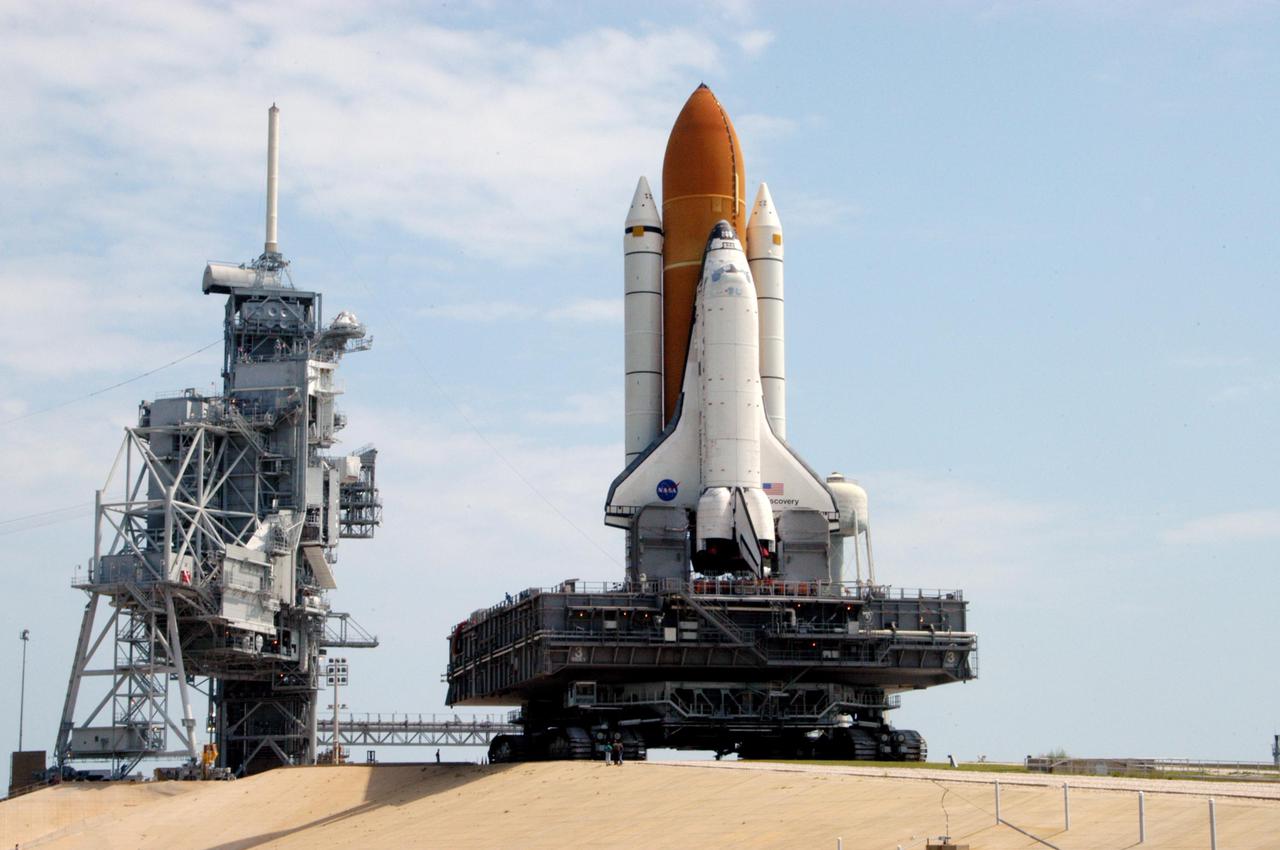
KENNEDY SPACE CENTER, FLA. - Space Shuttle Discovery makes its way up the 5 percent grade to the hardstand of Launch Pad 39B. First motion for the 4.2-mile journey was at 1:58 a.m. EDT. The Space Shuttle rests on a Mobile Launcher Platform that sits atop a Crawler-Transporter. This is the second rollout of Discovery. The orbiter was returned to the Vehicle Assembly Building for connection to an improved External Tank. Launch of Discovery on its Return to Flight mission STS-114 is targeted for a launch window extending from July 13 to July 31.
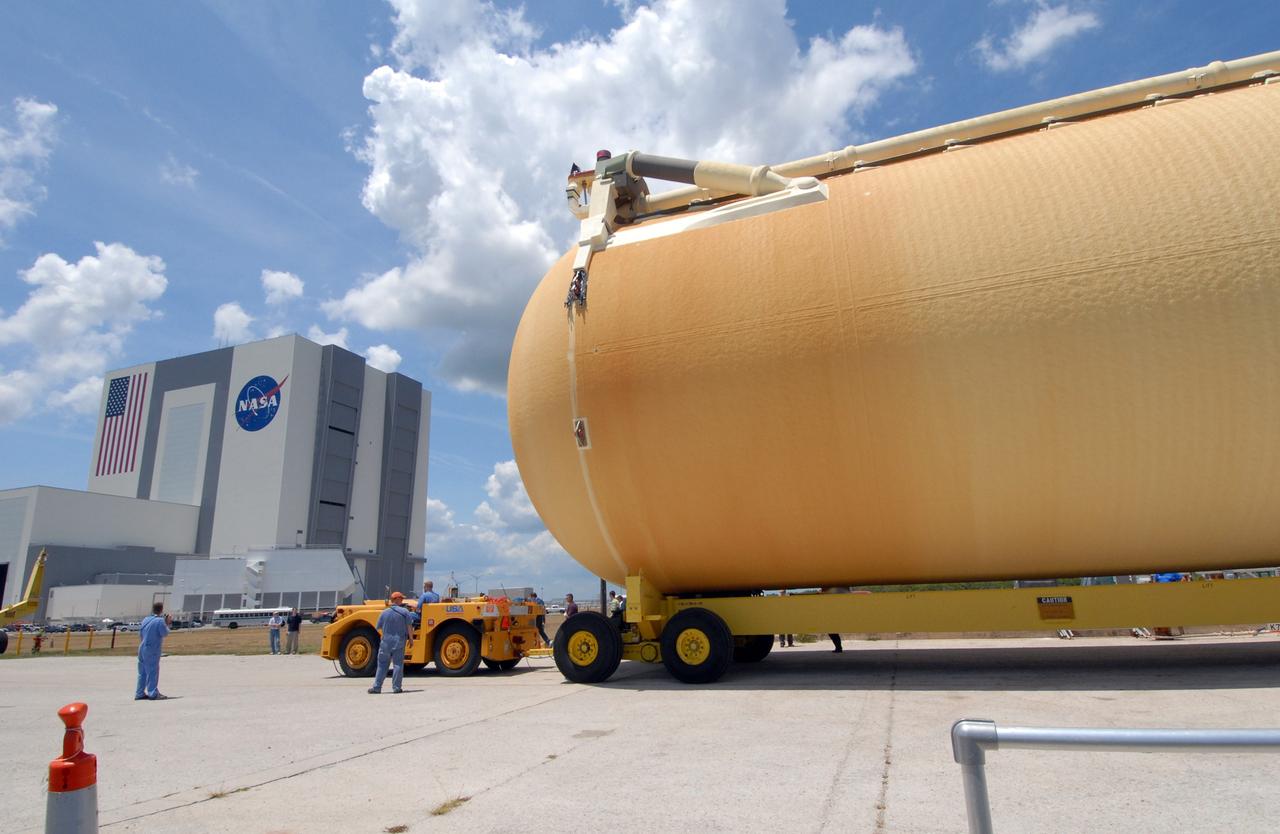
CAPE CANAVERAL, Fla. – The external fuel tank, ET- 132, designated for use with space shuttle Discovery on the STS-128 mission is moved away from the turn basin, heading for a high bay in the Vehicle Assembly Building, at left, for checkout. On the STS-128 mission, Discovery will carry science and storage racks to the International Space Station. Launch of Discovery is targeted for Aug. 6. Photo credit: NASA/Jack Pfaller
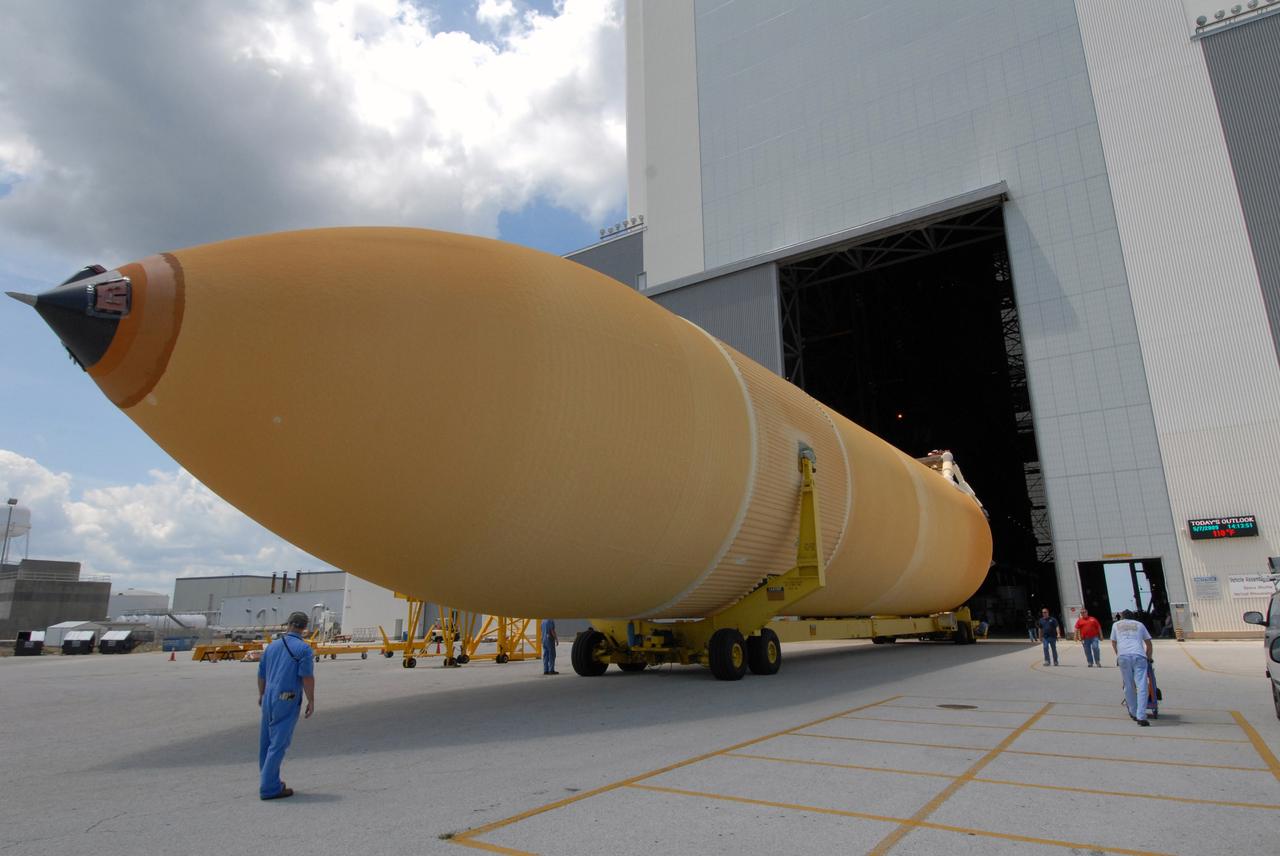
CAPE CANAVERAL, Fla. – The external fuel tank, ET- 132, designated for use with space shuttle Discovery on the STS-128 mission moves toward the open door of the Vehicle Assembly Building at NASA's Kennedy Space Center in Florida. The tank will be moved into a high bay for checkout. On the STS-128 mission, Discovery will carry science and storage racks to the International Space Station. Launch of Discovery is targeted for Aug. 6. Photo credit: NASA/Jack Pfaller

KENNEDY SPACE CENTER, FLA. - The Rotating Service Structure at Launch Pad 39B is ready to enfold Space Shuttle Discovery upon its arrival. First motion for the 4.2-mile journey was at 1:58 a.m. EDT. The Space Shuttle rests on a Mobile Launcher Platform that sits atop a Crawler-Transporter. This is the second rollout of Discovery. The orbiter was returned to the Vehicle Assembly Building for connection to an improved External Tank. Launch of Discovery on its Return to Flight mission STS-114 is targeted for a launch window extending from July 13 to July 31.
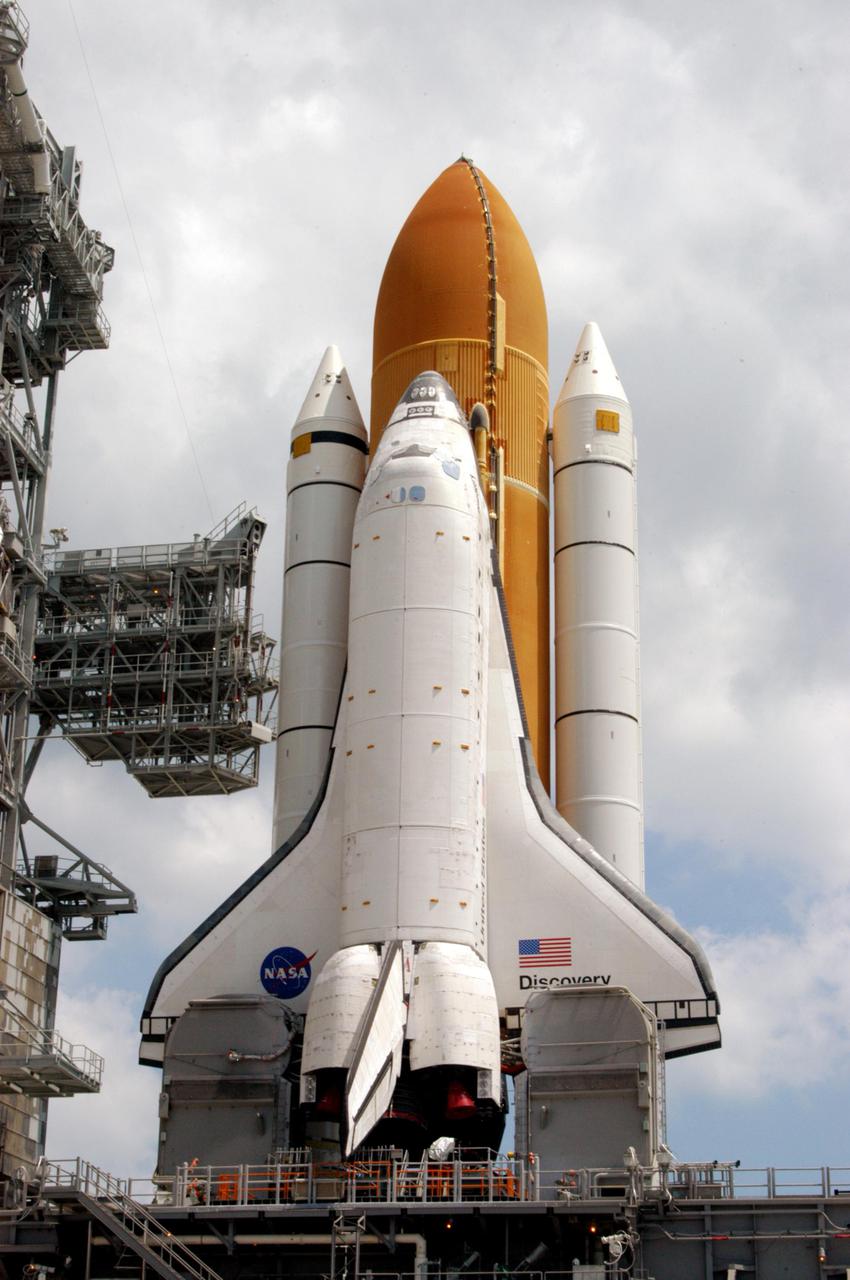
KENNEDY SPACE CENTER, FLA. - The work to secure Space Shuttle Discovery is under way at Launch Pad 39B following its move from the Vehicle Assembly Building. First motion for the 4.2-mile journey was at 1:58 a.m. EDT. The Space Shuttle rests on a Mobile Launcher Platform that sits atop a Crawler-Transporter. This is the second rollout of Discovery. The orbiter was returned to the Vehicle Assembly Building for connection to an improved External Tank. Launch of Discovery on its Return to Flight mission STS-114 is targeted for a launch window extending from July 13 to July 31.
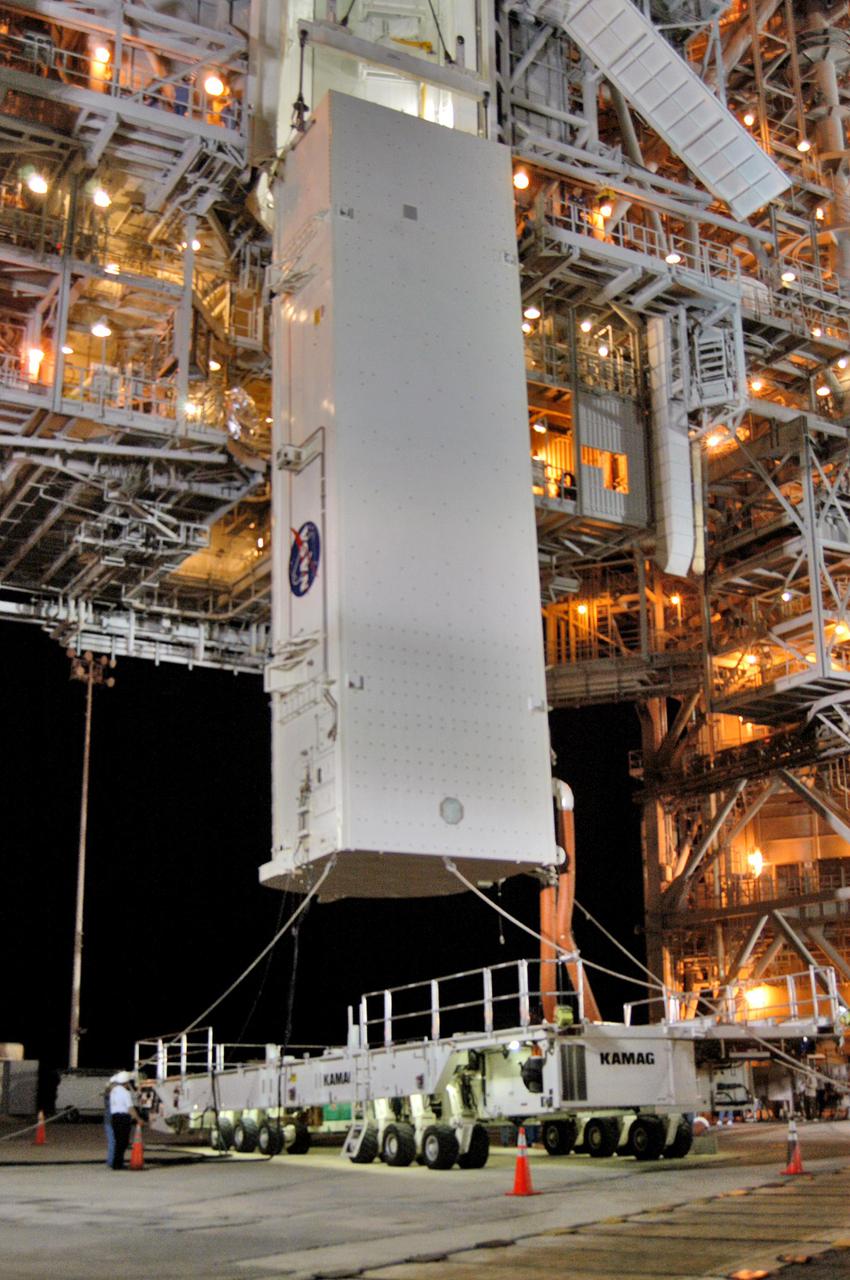
KENNEDY SPACE CENTER, FLA. - At Launch Pad 39B, the payload canister that delivered payloads launching aboard Space Shuttle Discovery's Return to Flight mission STS-114 is lowered from the Payload Changeout Room. The payloads will be installed into Discovery, scheduled to arrive at the pad later today. Discovery’s payloads include the Multi-Purpose Logistics Module Raffaello, the Lightweight Multi-Purpose Experiment Support Structure Carrier (LMC), and the External Stowage Platform-2 (ESP-2). Raffaello will deliver supplies to the International Space Station including food, clothing and research equipment. The LMC will carry a replacement Control Moment Gyroscope and a tile repair sample box. The ESP-2 is outfitted with replacement parts. Discovery’s launch window extends from July 13 through July 31.
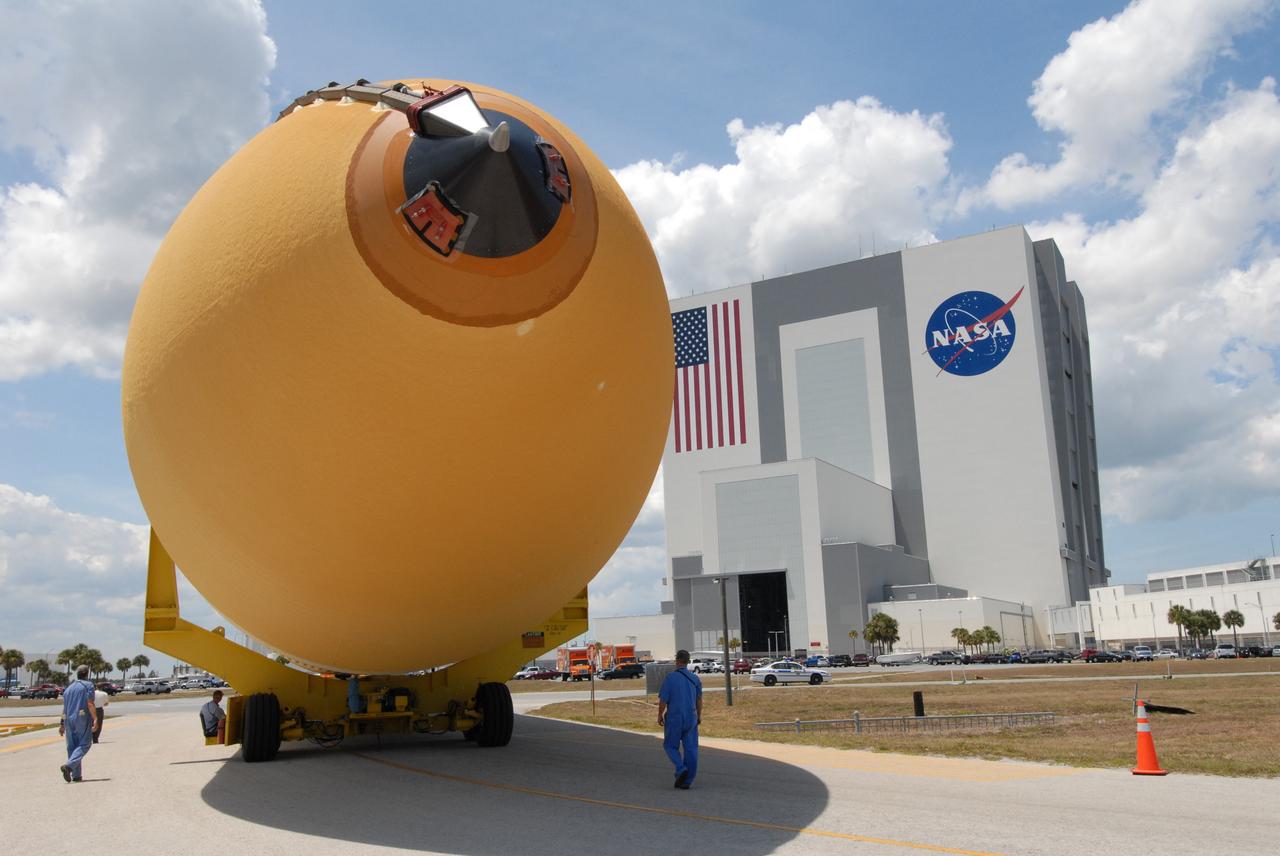
CAPE CANAVERAL, Fla. – The external fuel tank, ET- 132, designated for use with space shuttle Discovery on the STS-128 mission makes the turn toward the Vehicle Assembly Building (at right) at NASA's Kennedy Space Center in Florida. It will be moved into a high bay for checkout. On the STS-128 mission, Discovery will carry science and storage racks to the International Space Station. Launch of Discovery is targeted for Aug. 6. Photo credit: NASA/Jack Pfaller
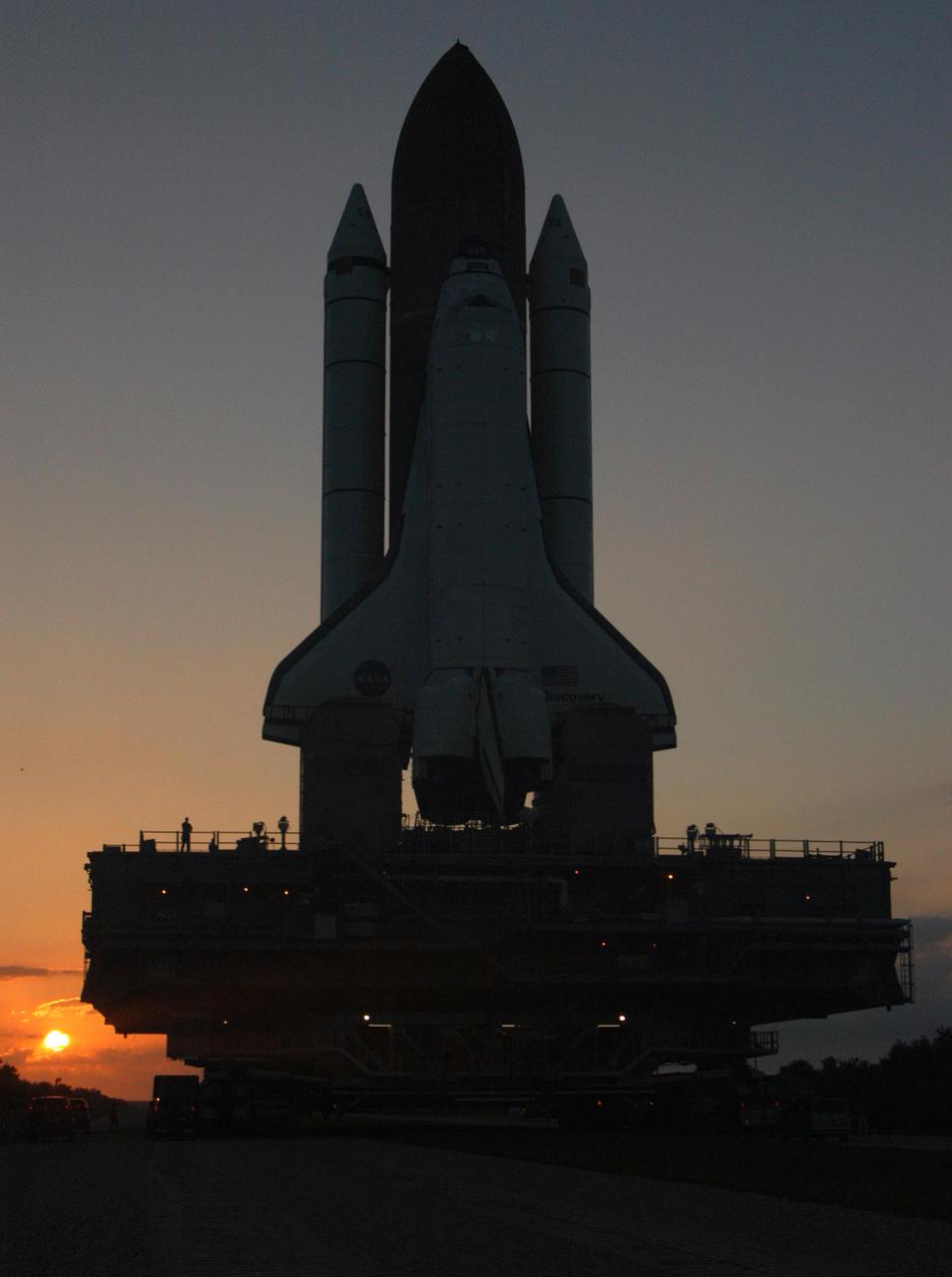
KENNEDY SPACE CENTER, FLA. - Space Shuttle Discovery makes its way along the crawlerway from high bay 3 to Launch Pad 39B as the sun rises. First motion for the 4-mile, 6-hour journey was at 1:58 a.m. EDT. The Space Shuttle rests on a Mobile Launcher Platform which sits atop a Crawler-Transporter. This is the second rollout of Discovery after being returned to the Vehicle Assembly Building for connection to an improved External Tank. Launch of Discovery on its Return to Flight mission STS-114 is targeted for a launch window extending from July 13 to July 31. During its 12-day mission, Discovery’s seven-person crew will test new hardware and techniques to improve Shuttle safety, as well as deliver supplies to the International Space Station.
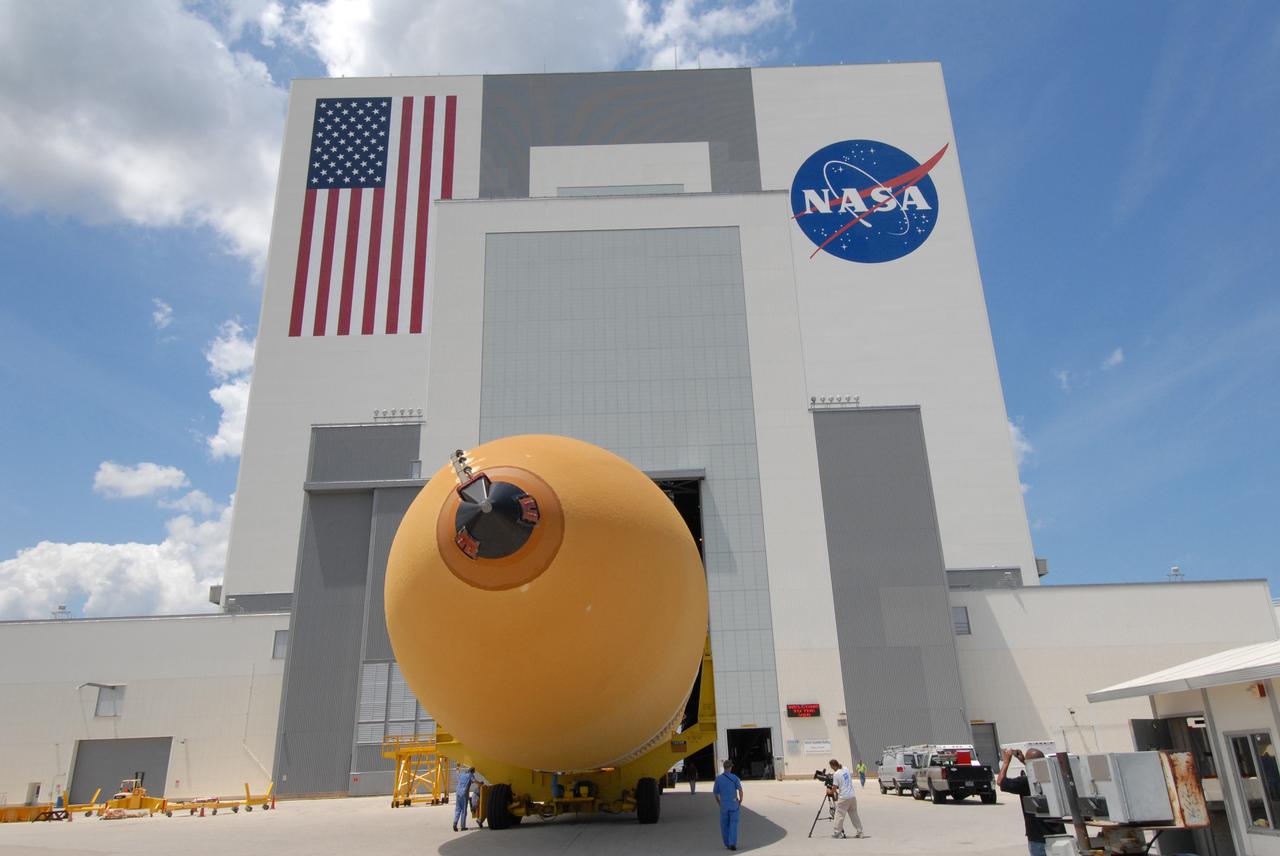
CAPE CANAVERAL, Fla. – The external fuel tank, ET- 132, designated for use with space shuttle Discovery on the STS-128 mission moves toward the open door of the Vehicle Assembly Building at NASA's Kennedy Space Center in Florida. The tank will be moved into a high bay for checkout. On the STS-128 mission, Discovery will carry science and storage racks to the International Space Station. Launch of Discovery is targeted for Aug. 6. Photo credit: NASA/Jack Pfaller
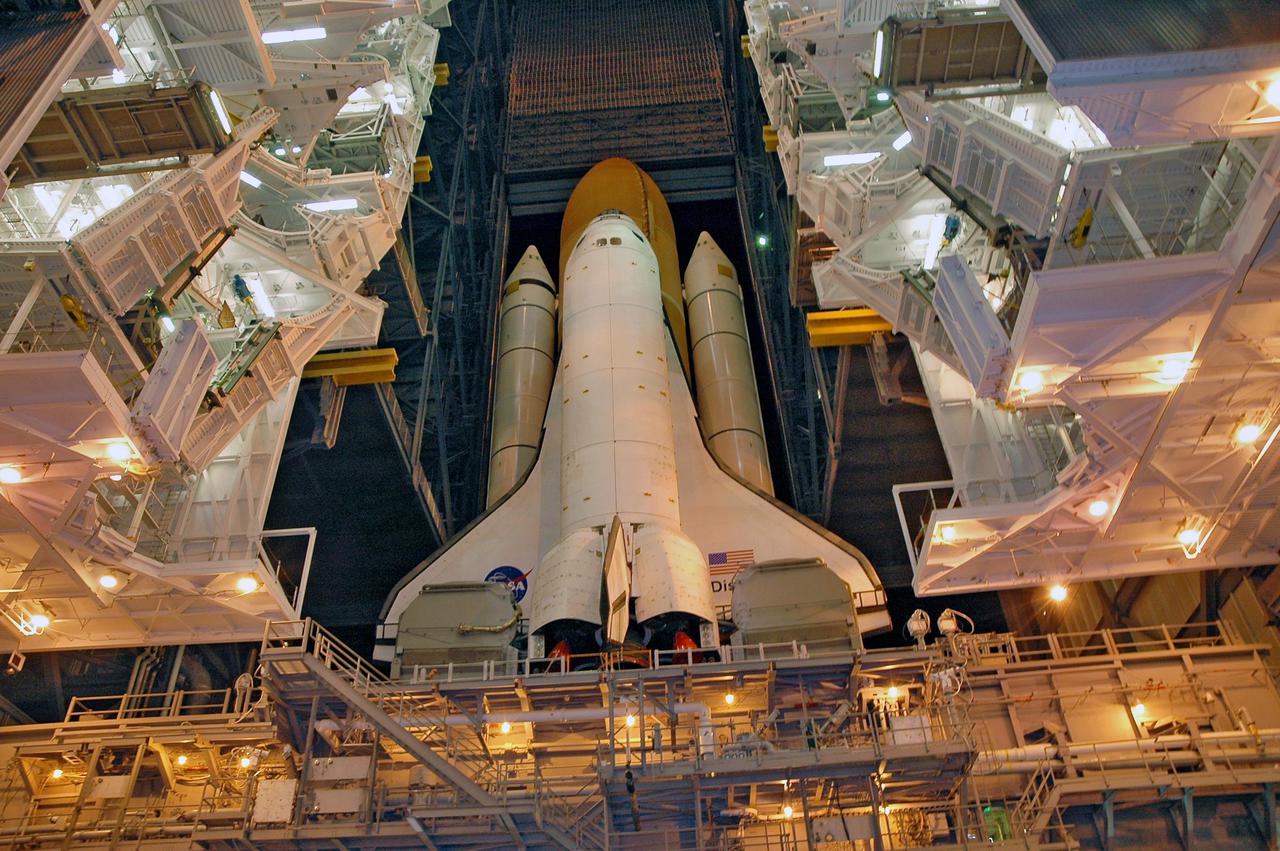
KENNEDY SPACE CENTER, FLA. - In the Vehicle Assembly Building (VAB) at NASA’s Kennedy Space Center, Space Shuttle Discovery begins its trip from high bay 3 to Launch Pad 39B, a 4-mile, 6-hour journey. First motion was at 1:58 a.m. EDT. The Space Shuttle rests on a Mobile Launcher Platform which sits atop a Crawler-Transporter. This is the second rollout of Discovery after being returned to the Vehicle Assembly Building for connection to an improved External Tank. Launch of Discovery on its Return to Flight mission STS-114 is targeted for a launch window extending from July 13 to July 31. During its 12-day mission, Discovery’s seven-person crew will test new hardware and techniques to improve Shuttle safety, as well as deliver supplies to the International Space Station.
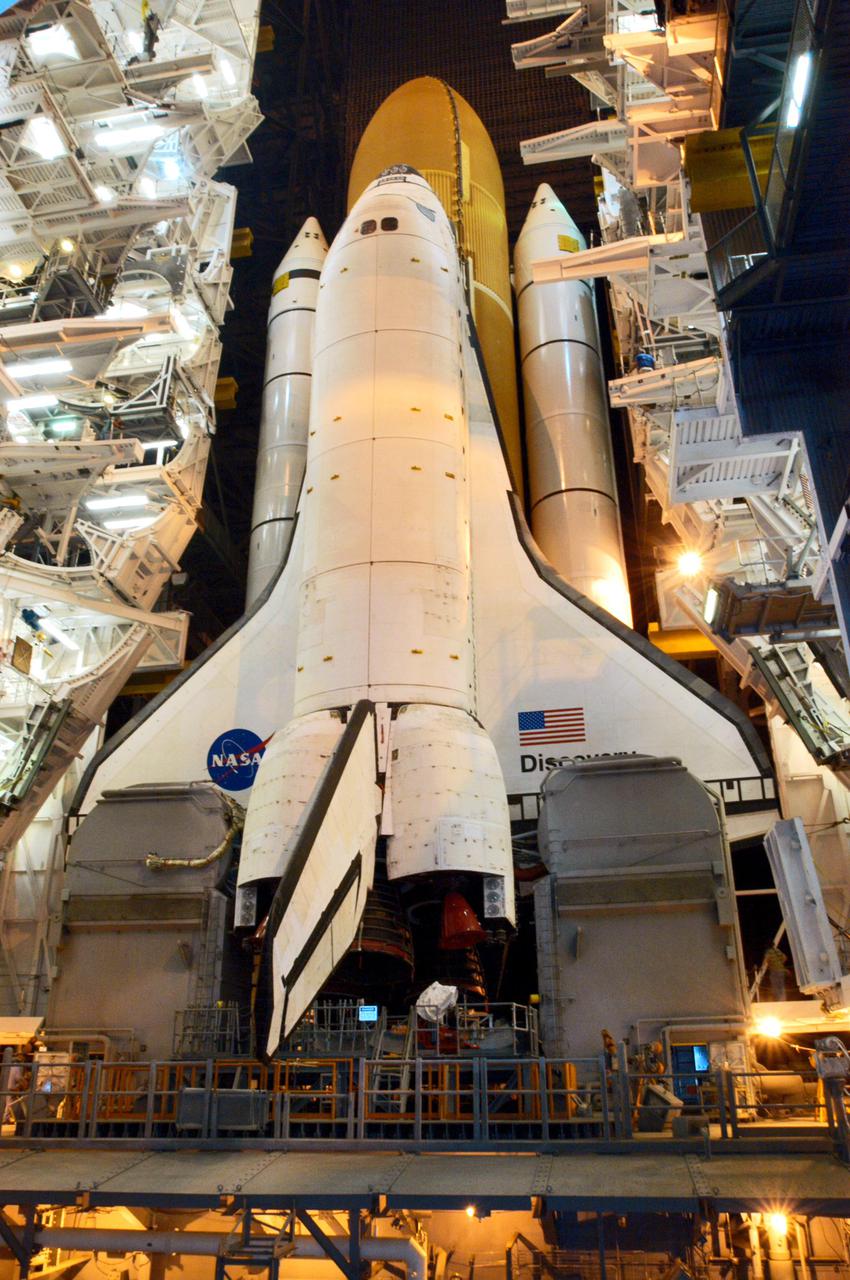
KENNEDY SPACE CENTER, FLA. - In the Vehicle Assembly Building (VAB) at NASA’s Kennedy Space Center, Space Shuttle Discovery exits high bay 3 to begin its trip to Launch Pad 39B, a 4-mile, 6-hour journey. First motion was at 1:58 a.m. EDT. The Space Shuttle rests on a Mobile Launcher Platform which sits atop a Crawler-Transporter. This is the second rollout of Discovery after being returned to the Vehicle Assembly Building for connection to an improved External Tank. Launch of Discovery on its Return to Flight mission STS-114 is targeted for a launch window extending from July 13 to July 31. During its 12-day mission, Discovery’s seven-person crew will test new hardware and techniques to improve Shuttle safety, as well as deliver supplies to the International Space Station.
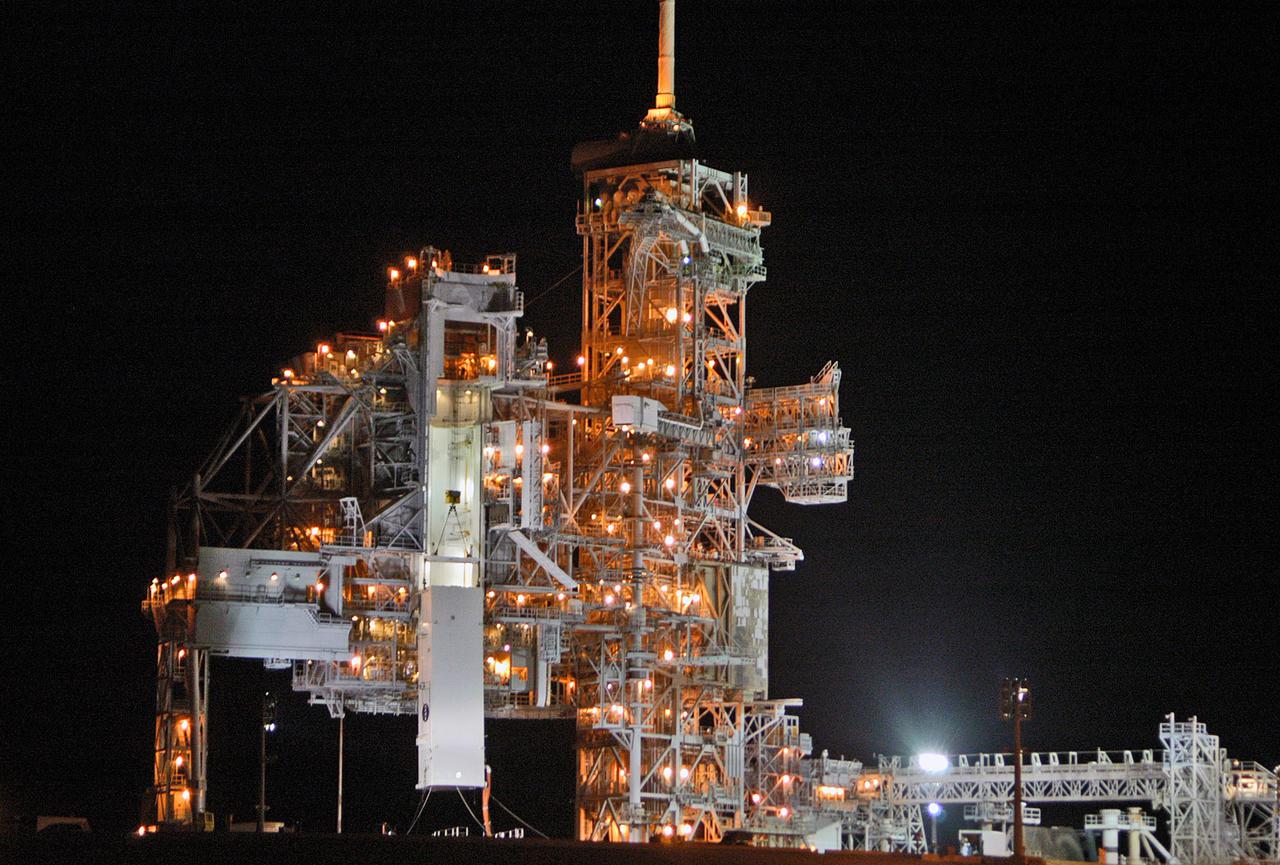
KENNEDY SPACE CENTER, FLA. - At Launch Pad 39B, the payload canister that delivered payloads launching aboard Space Shuttle Discovery's Return to Flight mission STS-114 is lowered from the Payload Changeout Room. The payloads will be installed into Discovery, scheduled to arrive at the pad later today. Discovery’s payloads include the Multi-Purpose Logistics Module Raffaello, the Lightweight Multi-Purpose Experiment Support Structure Carrier (LMC), and the External Stowage Platform-2 (ESP-2). Raffaello will deliver supplies to the International Space Station including food, clothing and research equipment. The LMC will carry a replacement Control Moment Gyroscope and a tile repair sample box. The ESP-2 is outfitted with replacement parts. Discovery’s launch window extends from July 13 through July 31.
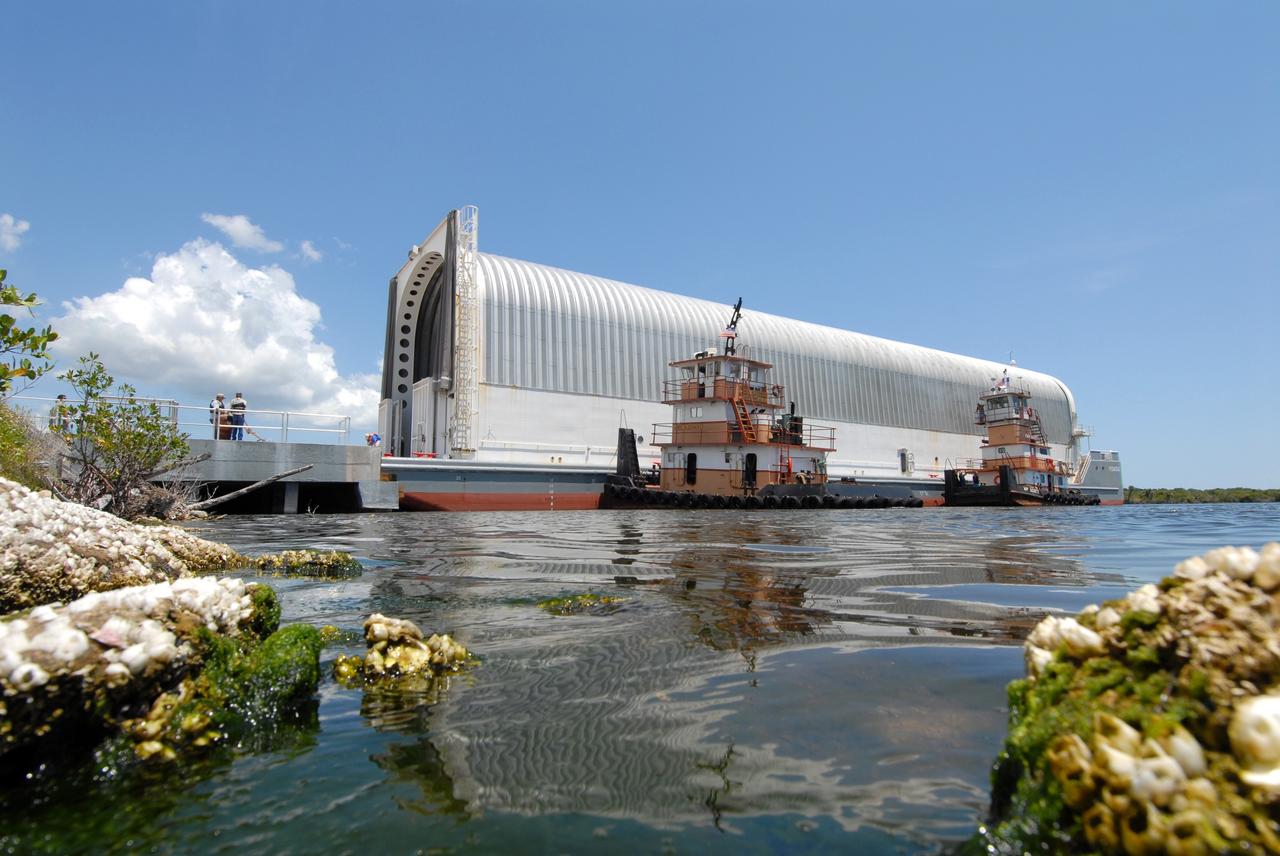
CAPE CANAVERAL, Fla. – The Pegasus barge is docked in the turn basin in the Launch Complex 39 Area at NASA's Kennedy Space Center in Florida. Inside is the external fuel tank, ET- 132, designated for space shuttle Discovery on the STS-128 mission. The tank will be offloaded and transported to a high bay in the Vehicle Assembly Building for checkout. On the STS-128 mission, Discovery will carry science and storage racks to the International Space Station. Launch of Discovery is targeted for Aug. 6. Photo credit: NASA/Troy Cryder
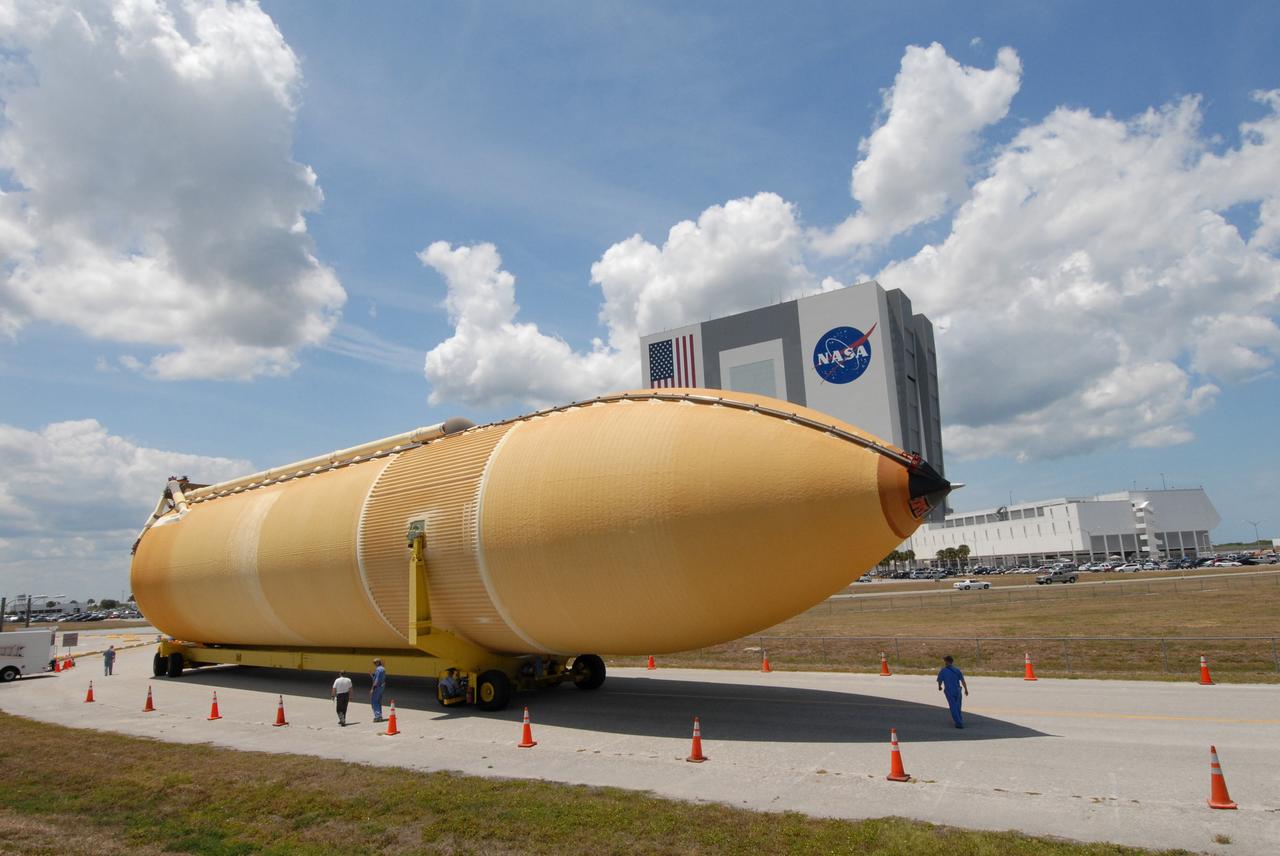
CAPE CANAVERAL, Fla. – The external fuel tank, ET- 132, designated for use with space shuttle Discovery on the STS-128 mission is transported to the Vehicle Assembly Building (at left) at NASA's Kennedy Space Center in Florida, for checkout in a high bay. It arrived at Kennedy aboard the Pegasus barge. On the STS-128 mission, Discovery will carry science and storage racks to the International Space Station. Launch of Discovery is targeted for Aug. 6. Photo credit: NASA/Jack Pfaller
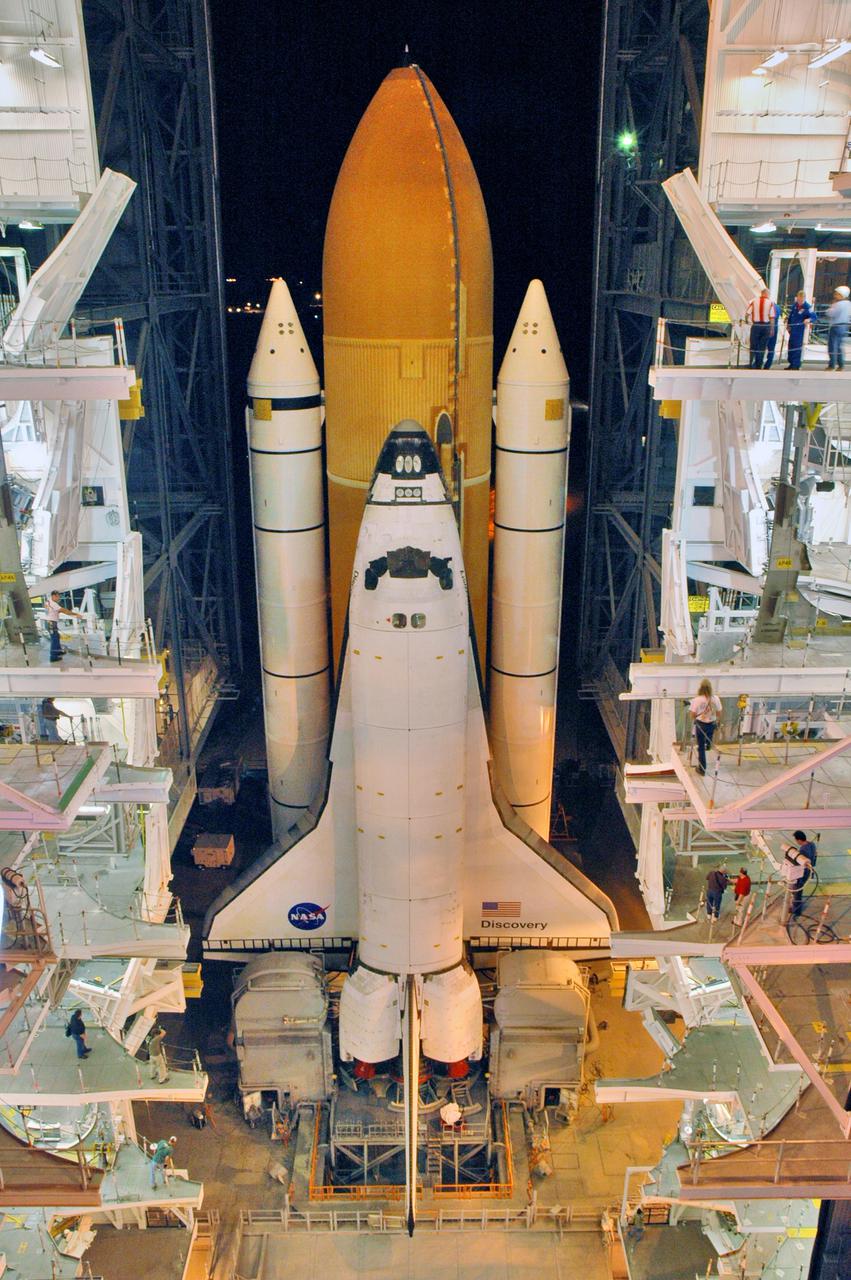
KENNEDY SPACE CENTER, FLA. - In the Vehicle Assembly Building (VAB) at NASA’s Kennedy Space Center, Space Shuttle Discovery begins its trip from high bay 3 to Launch Pad 39B, a 4-mile, 6-hour journey. First motion was at 1:58 a.m. EDT. The Space Shuttle rests on a Mobile Launcher Platform which sits atop a Crawler-Transporter. This is the second rollout of Discovery after being returned to the Vehicle Assembly Building for connection to an improved External Tank. Launch of Discovery on its Return to Flight mission STS-114 is targeted for a launch window extending from July 13 to July 31. During its 12-day mission, Discovery’s seven-person crew will test new hardware and techniques to improve Shuttle safety, as well as deliver supplies to the International Space Station.
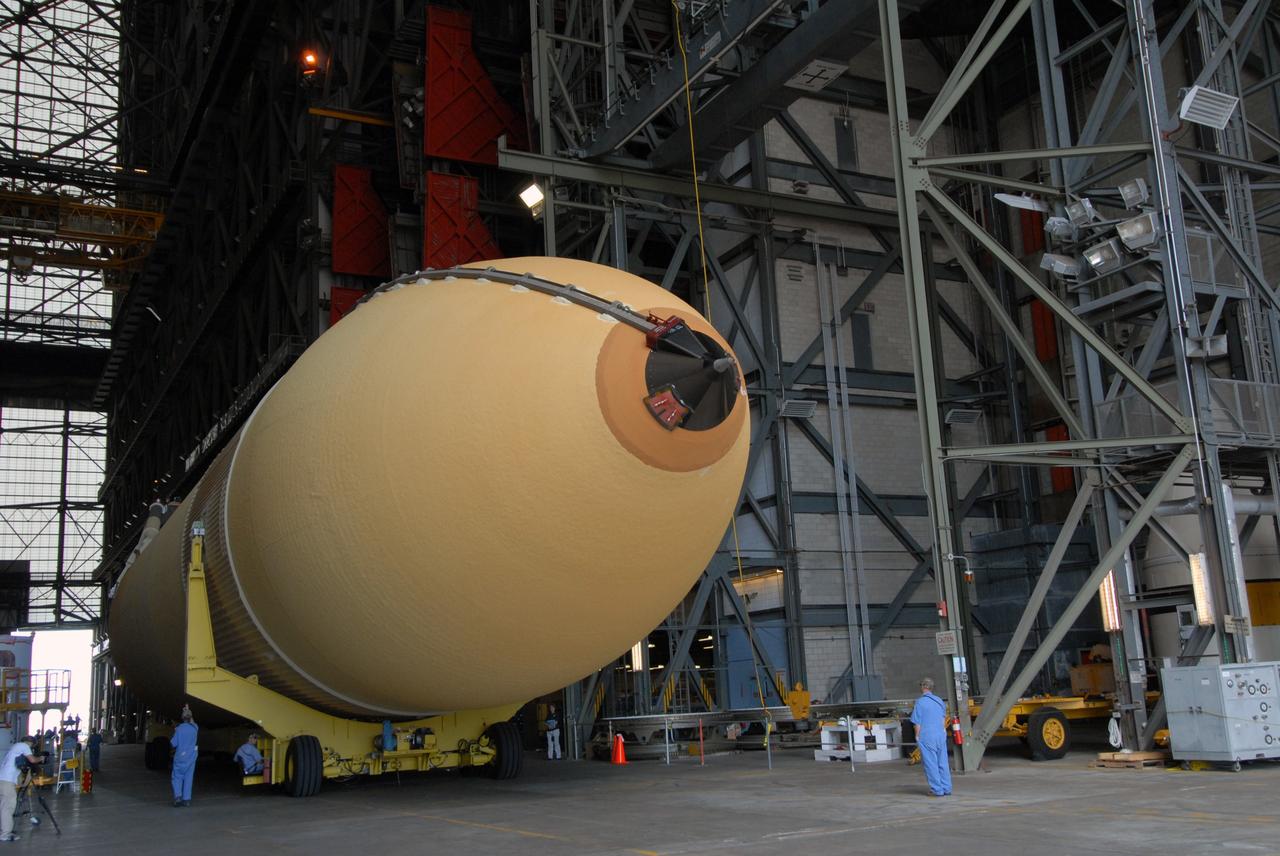
CAPE CANAVERAL, Fla. – The external fuel tank, ET- 132, designated for use with space shuttle Discovery on the STS-128 mission moves into the transfer aisle of the Vehicle Assembly Building at NASA's Kennedy Space Center in Florida. The tank will be moved into a high bay for checkout. On the STS-128 mission, Discovery will carry science and storage racks to the International Space Station. Launch of Discovery is targeted for Aug. 6. Photo credit: NASA/Jack Pfaller
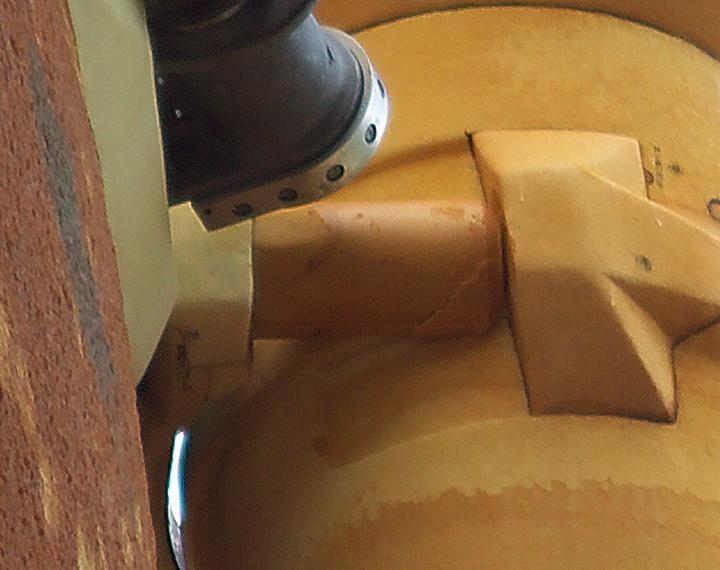
KENNEDY SPACE CENTER, FLA. - A crack formed on a piece of insulation on a strut that attaches the liquid oxygen feedline to External Tank-119, being used to launch space shuttle mission STS-121. This piece of foam, weighing approximately 0.0057 pounds, is three inches long and one-eighth to one-quarter inch wide. It fell from the tank and was recovered by the Ice Team from the mobile launch platform at Pad 39B. It is believed that the rain experienced during yesterday’s launch attempt of Discovery caused water to run down the feedline and form ice near the strut next to the feedline bracket. As the tank warmed and expanded, the ice that formed most likely pinched the foam on the top of the strut, causing a crack and eventual loss of the small piece of foam. Photo credit: NASA
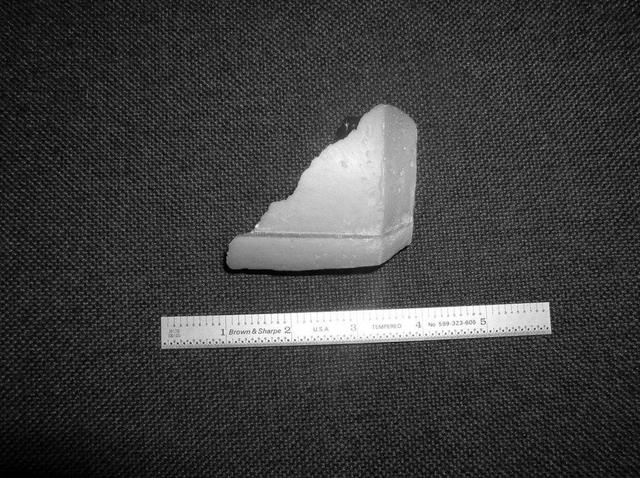
KENNEDY SPACE CENTER, FLA. - A piece of insulation - three inches long, one-eighth to one-quarter inch wide and weighing approximately 0.0057 pounds - was liberated from a strut that attaches the liquid oxygen feedline to External Tank-119. The tank is being used to launch space shuttle mission STS-121. It was recovered by the Ice Team from the mobile launch platform at Pad 39B. It is believed that the rain experienced during yesterday’s launch attempt of Discovery caused water to run down the feedline and form ice near the strut next to the feedline bracket. As the tank warmed and expanded, the ice that formed most likely pinched the foam on the top of the strut, causing a crack and eventual loss of the small piece of foam. Photo credit: NASA
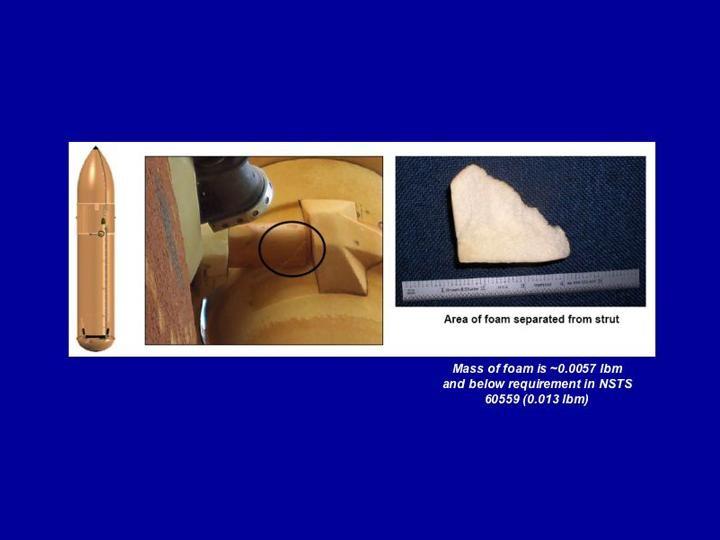
KENNEDY SPACE CENTER, FLA. - A composite image illustrates the size and location of a piece of insulation that was liberated from a strut that attaches the liquid oxygen feedline to External Tank-119. The tank is being used to launch space shuttle mission STS-121. This piece of foam, weighing approximately 0.0057 pounds, is three inches long and one-eighth to one-quarter inch wide and was recovered by the Ice Team from the mobile launch platform at Pad 39B. It is believed that the rain experienced during yesterday’s launch attempt of Discovery caused water to run down the feedline and form ice near the strut next to the feedline bracket. As the tank warmed and expanded, the ice that formed most likely pinched the foam on the top of the strut, causing a crack and eventual loss of the small piece of foam. Photo credit: NASA

S89-28089 (24 Jan 1989) --- The Space Shuttle Discovery is lowered for mating to the external tank and two solid rockert boosters in the vehicle assembly building (VAB) at the Kennedy Space Center. Onboard the spacecraft in mid-March for a five-day mission, on which will be deployed a third tracking and data relay satellite (TDRS-D), will be Astronauts Michael L. Coats, John E. Blaha, James F. Buchli, James P. Bagian and Robert C. Springer.
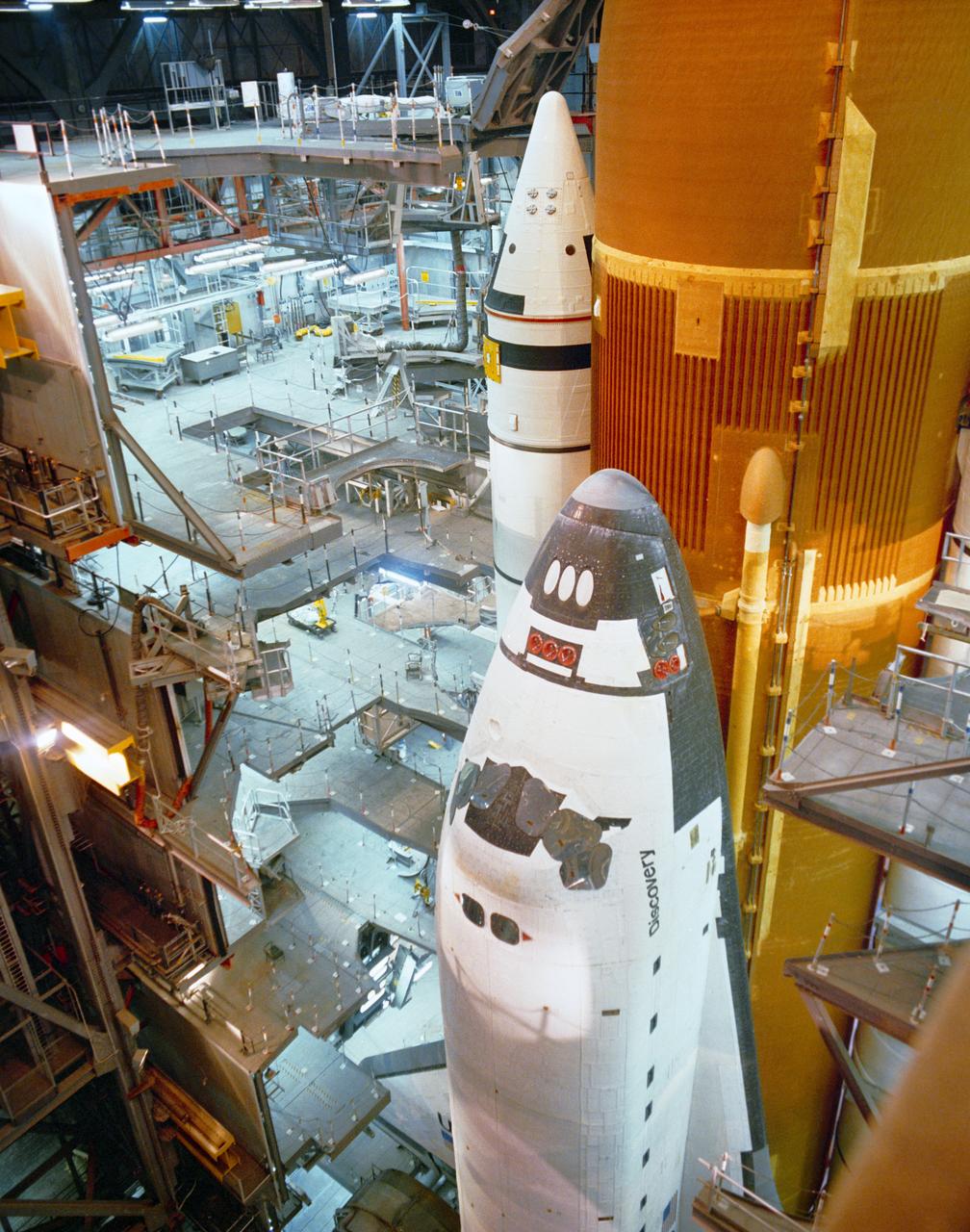
S89-49412 (25 Oct 1989) --- Preparations are underway to rollout the Space Shuttle orbiter Discovery from the Vehicle Assembly Building (VAB) to Pad 39B, as KSC employees work toward the mid-November launch of STS-33, a Department of Defense Devoted mission. Poor weather has thus far hampered attempts to roll out the Discovery and the next attempt is scheduled for midnight tomorrow.
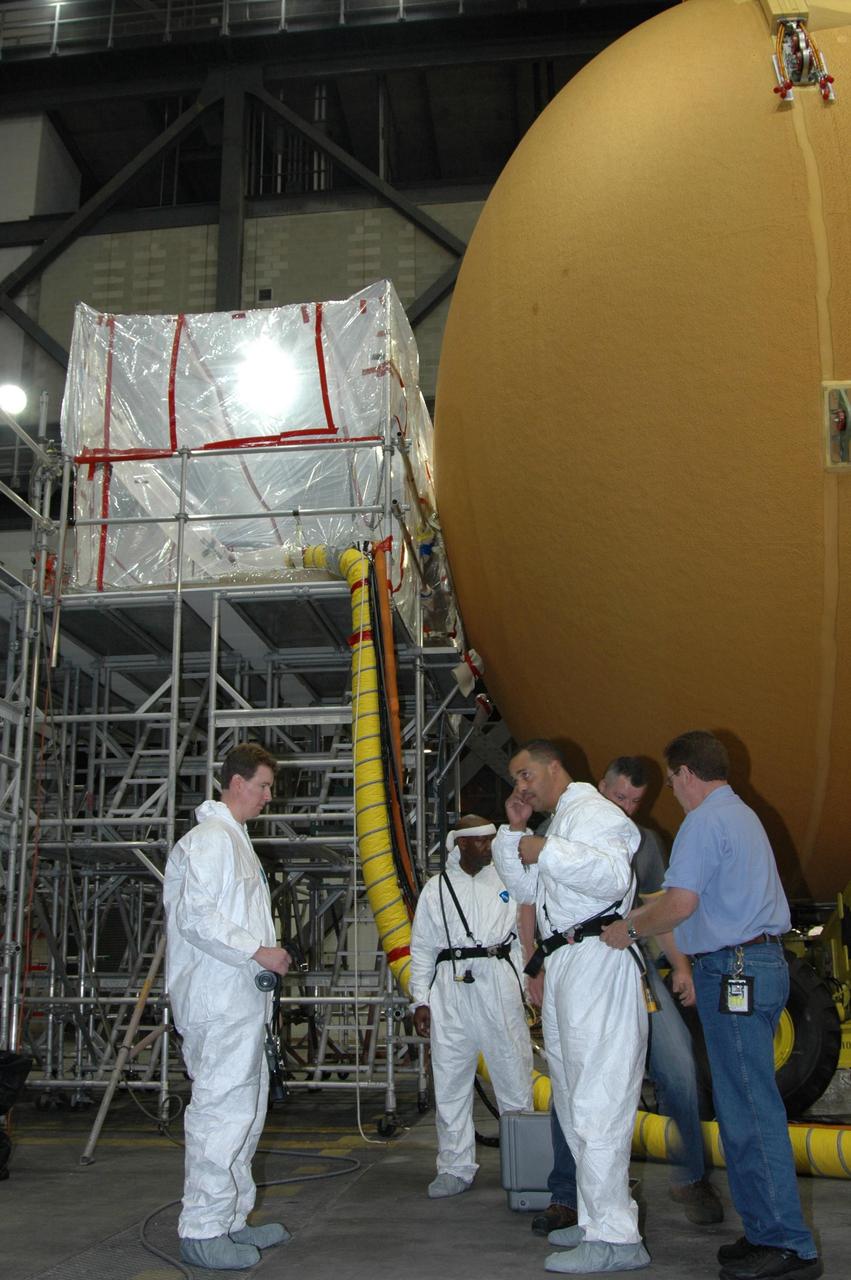
KENNEDY SPACE CENTER, FLA. -- Lockheed Martin technicians in the Vehicle Assembly Building at NASA's Kennedy Space Center prepare for the application of new foam over the manhole cover on the lower end of external tank No. 119. The manhole was removed to access the area where the tank's four liquid hydrogen engine cutoff sensors were replaced. Once reinstalled, the manhole required new foam to be applied. The tank is being prepared to launch Space Shuttle Discovery on mission STS-121 in July. Photo credit: NASA/Jim Grossmann
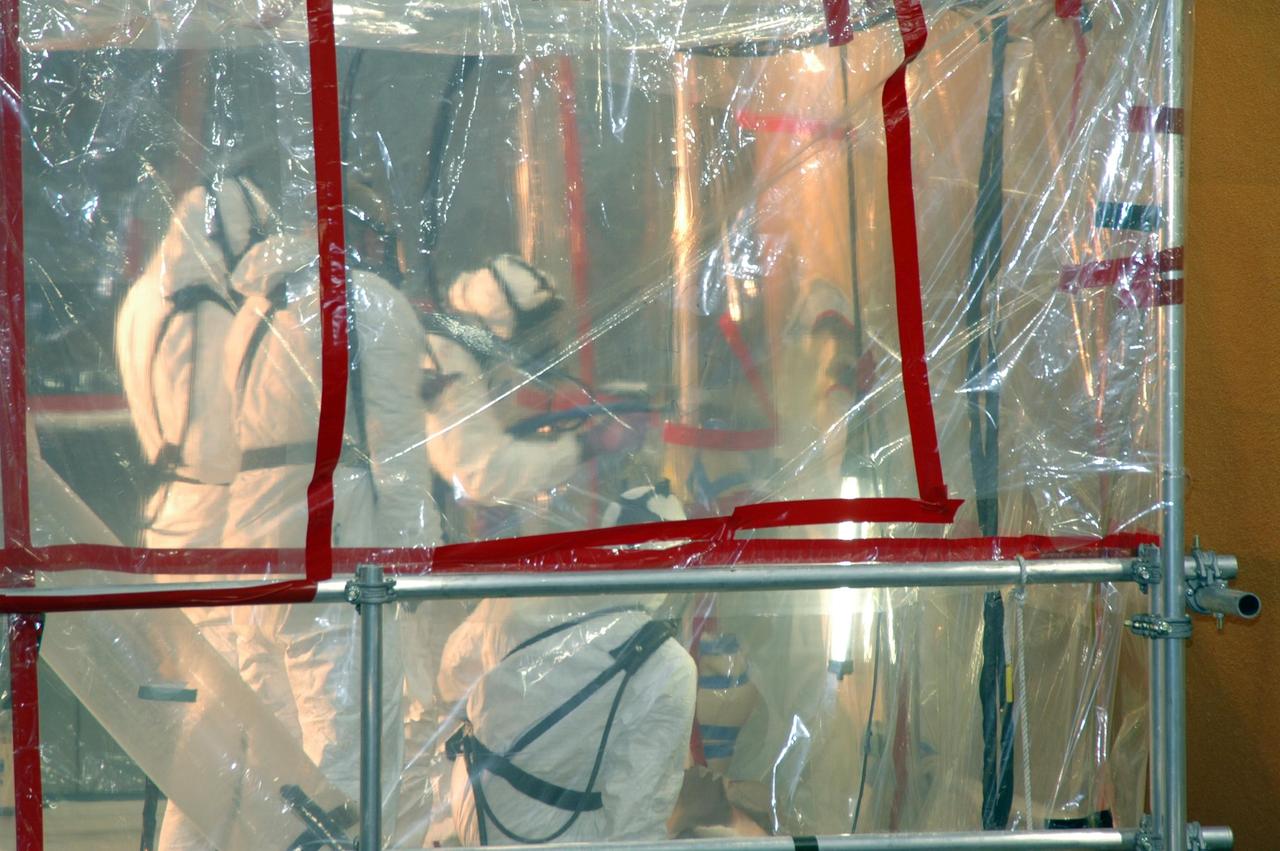
KENNEDY SPACE CENTER, FLA. -- Lockheed Martin technicians in the Vehicle Assembly Building at NASA's Kennedy Space Center apply new foam over the manhole cover on the lower end of external tank No. 119. The manhole was removed to access the area where the tank's four liquid hydrogen engine cutoff sensors were replaced. Once reinstalled, the manhole required new foam to be applied. The tank is being prepared to launch Space Shuttle Discovery on mission STS-121 in July. Photo credit: NASA/Jim Grossmann

KENNEDY SPACE CENTER, FLA. -- Lockheed Martin technicians in the Vehicle Assembly Building at NASA's Kennedy Space Center begin to apply new foam over the manhole cover on the lower end of external tank No. 119. The manhole was removed to access the area where the tank's four liquid hydrogen engine cutoff sensors were replaced. Once reinstalled, the manhole required new foam to be applied. The tank is being prepared to launch Space Shuttle Discovery on mission STS-121 in July. Photo credit: NASA/Jim Grossmann
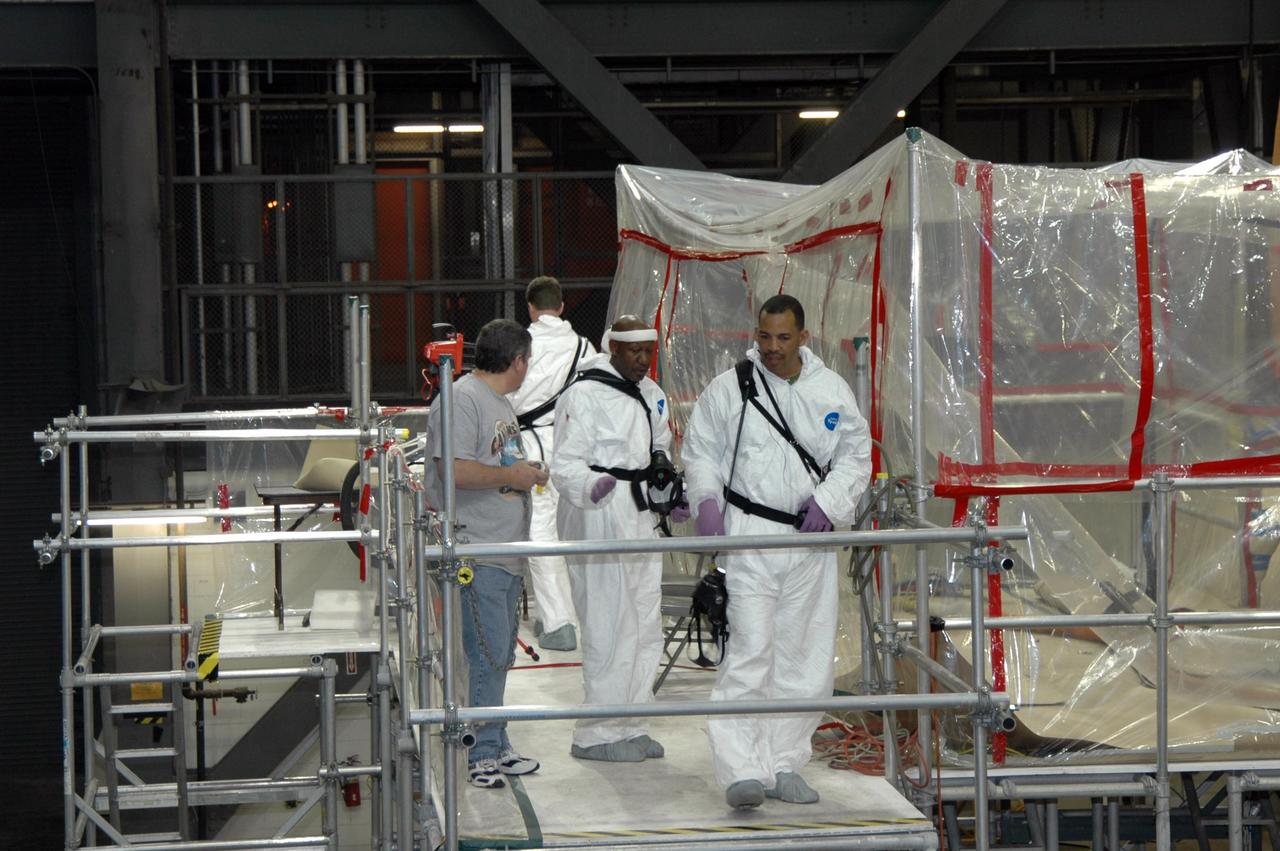
KENNEDY SPACE CENTER, FLA. -- Lockheed Martin technicians in the Vehicle Assembly Building at NASA's Kennedy Space Center prepare for the application of new foam over the manhole cover on the lower end of external tank No. 119. The manhole was removed to access the area where the tank's four liquid hydrogen engine cutoff sensors were replaced. Once reinstalled, the manhole required new foam to be applied. The tank is being prepared to launch Space Shuttle Discovery on mission STS-121 in July. Photo credit: NASA/Jim Grossmann