
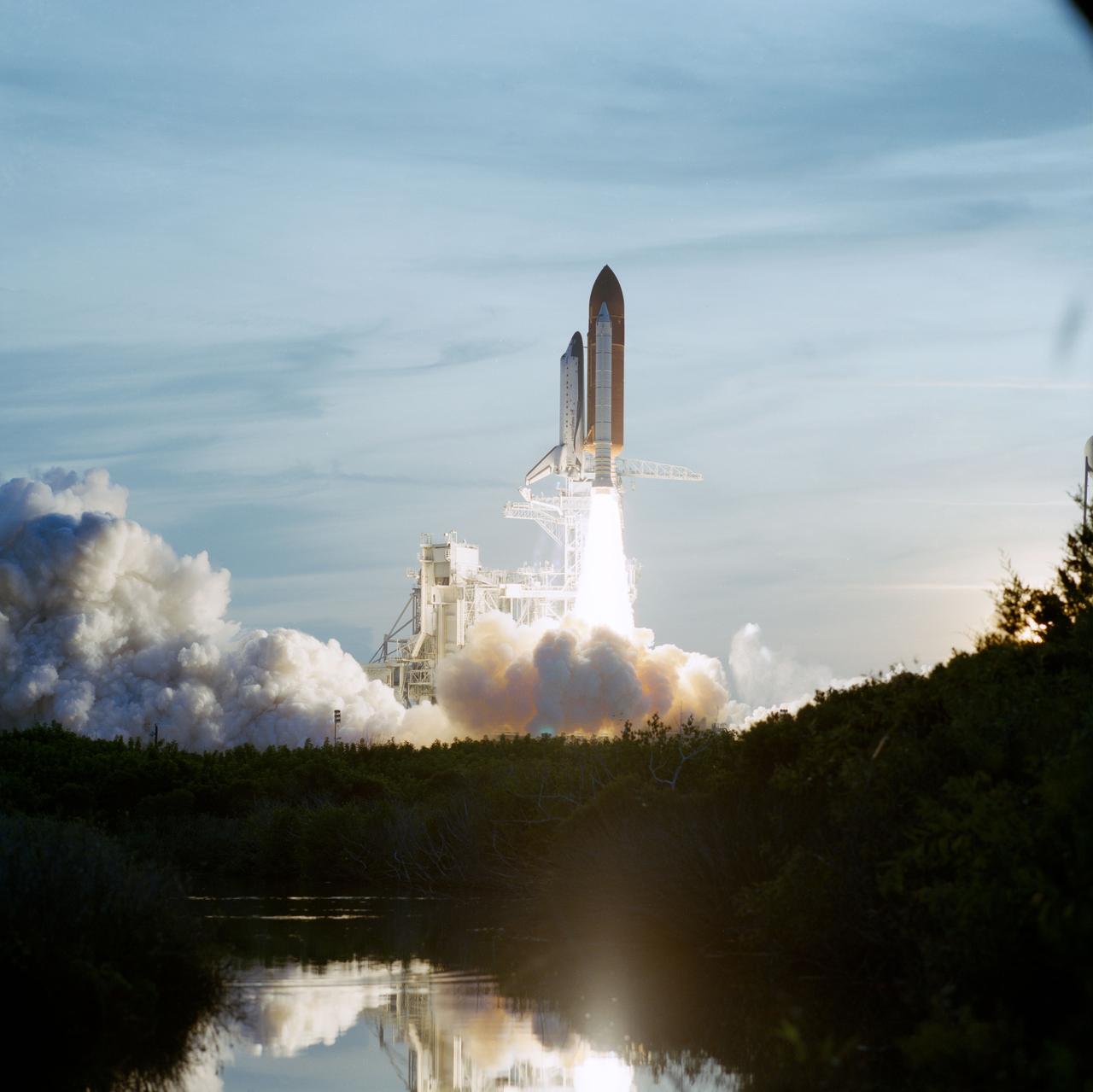
In this distant view, STS-31 Discovery, Orbiter Vehicle (OV) 103, is seen as it heads skyward after liftoff from Kennedy Space Center (KSC) Launch Complex (LC) Pad 39B at 8:33:51.0492 am (Eastern Daylight Time (EDT)). OV-103's silhouette atop the external tank (ET) appears above the glow of the solid rocket booster (SRB) and space shuttle main engine (SSME) firings. An exhaust plume trails behind and covers the launch pad area below the orbiter. A nearby waterway reflects the SRB/SSME glow in the foreground. At the far right and barely discernible is KSC LC Pad 39A and the Sound Supression Water System tower. Columbia, OV-102, is on LC Pad 39A which is separated by a distance of 1.6 miles. This was the first time since January 1986 that there was a shuttle on each pad.
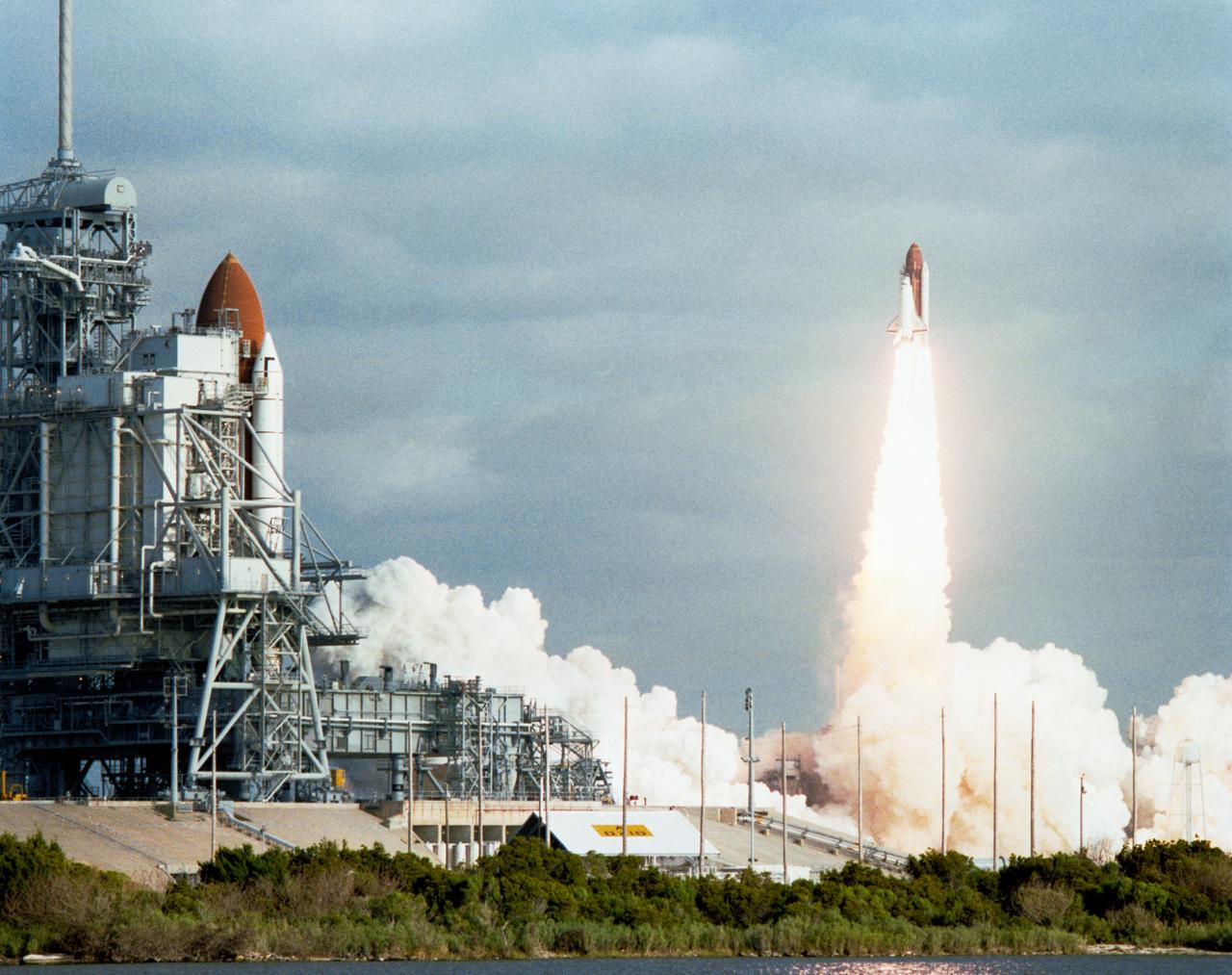
STS-31 Discovery, Orbiter Vehicle (OV) 103, lifts off from Kennedy Space Center (KSC) Launch Complex (LC) 39 Pad B. In the foreground STS-35 Columbia, OV-102, is visible on launch pad 39A. This event marked the first time since January 1986 that there was an orbiter on each pad. LC 39 pads are separated by 1.6 miles. View provided by KSC with alternate number KSC-90PC-610.
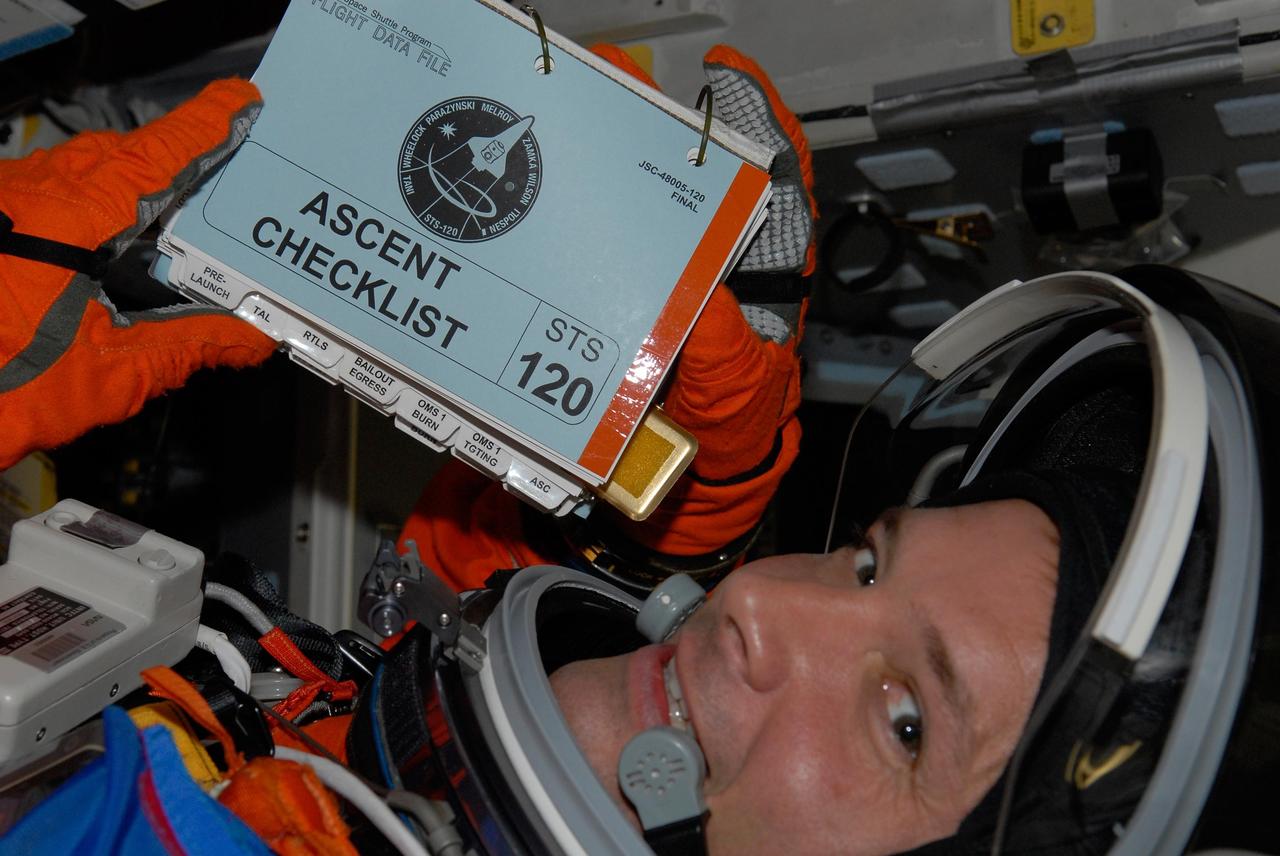
KENNEDY SPACE CENTER, FLA. -- Inside space shuttle Discovery, STS-120 Mission Specialist Doug Wheelock is ready with his checklist for the simulated launch countdown, culmination of the prelaunch terminal countdown demonstration test, or TCDT. The TCDT at NASA's Kennedy Space Center provides astronauts and ground crews an opportunity to participate in various launch preparation activities, including equipment familiarization and emergency training. The STS-120 mission will deliver the U.S. Node 2 module, named Harmony, aboard space shuttle Discovery to the International Space Station. Discovery is targeted to launch on its 14-day mission at 11:38 a.m. EDT on Oct. 23. Photo credit: NASA/Kim Shiflett
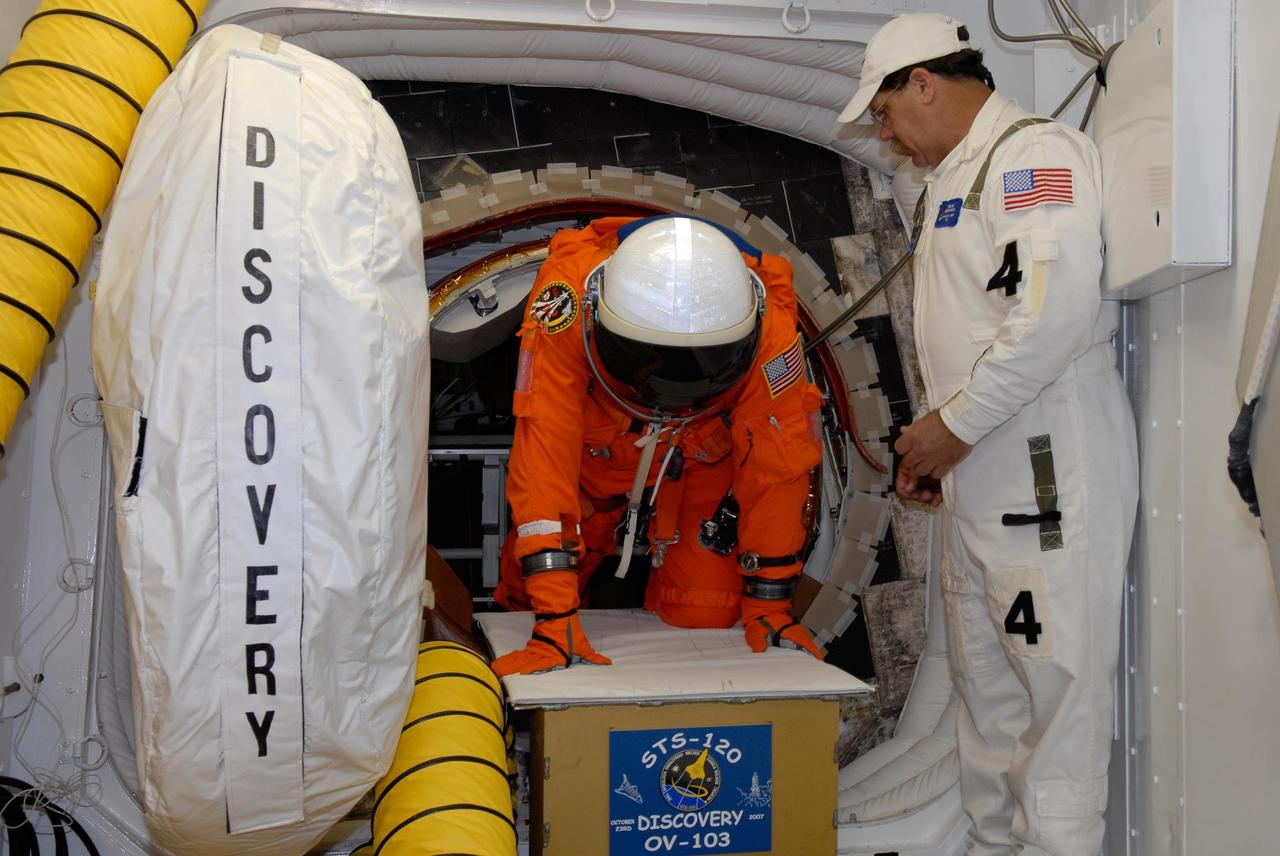
KENNEDY SPACE CENTER, FLA. -- In the white room on Launch Pad 39A, an STS-120 crew member crawls through the hatch after the simulated launch countdown, culmination of the prelaunch terminal countdown demonstration test, or TCDT. The crew will also practice emergency egress from the pad. The TCDT at NASA's Kennedy Space Center provides astronauts and ground crews an opportunity to participate in various launch preparation activities, including equipment familiarization and emergency training. The STS-120 mission will deliver the U.S. Node 2 module, named Harmony, aboard space shuttle Discovery to the International Space Station. Discovery is targeted to launch on its 14-day mission at 11:38 a.m. EDT on Oct. 23. Photo credit: NASA/Kim Shiflett

KENNEDY SPACE CENTER, FLA. -- In the Vehicle Assembly Building at NASA's Kennedy Space Center, the frustum is ready to be lifted from a transporter to move onto a stand. The solid rocket booster segment will be added to the stack for space shuttle Atlantis, launch vehicle for mission STS-122 targeted for a December launch. Atlantis will be carrying the Columbus Laboratory, Europe’s largest contribution to the construction of the International Space Station. It will support scientific and technological research in a microgravity environment. Columbus, a program of ESA, is a multifunctional, pressurized laboratory that will be permanently attached to Node 2 of the space station to carry out experiments in materials science, fluid physics and biosciences, as well as to perform a number of technological applications. Photo credit: NASA/Jack Pfaller

KENNEDY SPACE CENTER, FLA. -- During emergency egress from Launch Pad 39A, STS-120 Mission Specialists Stephanie Wilson (left) and Doug Wheelock settle in the slidewire basket. The basket can carry them to a safe landing site below, if needed. The activity is part of the prelaunch terminal countdown demonstration test, or TCDT. The TCDT at NASA's Kennedy Space Center provides astronauts and ground crews an opportunity to participate in various launch preparation activities, including equipment familiarization and emergency training. The STS-120 mission will deliver the U.S. Node 2 module, named Harmony, aboard space shuttle Discovery to the International Space Station. Discovery is targeted to launch on its 14-day mission at 11:38 a.m. EDT on Oct. 23. Photo credit: NASA/Kim Shiflett
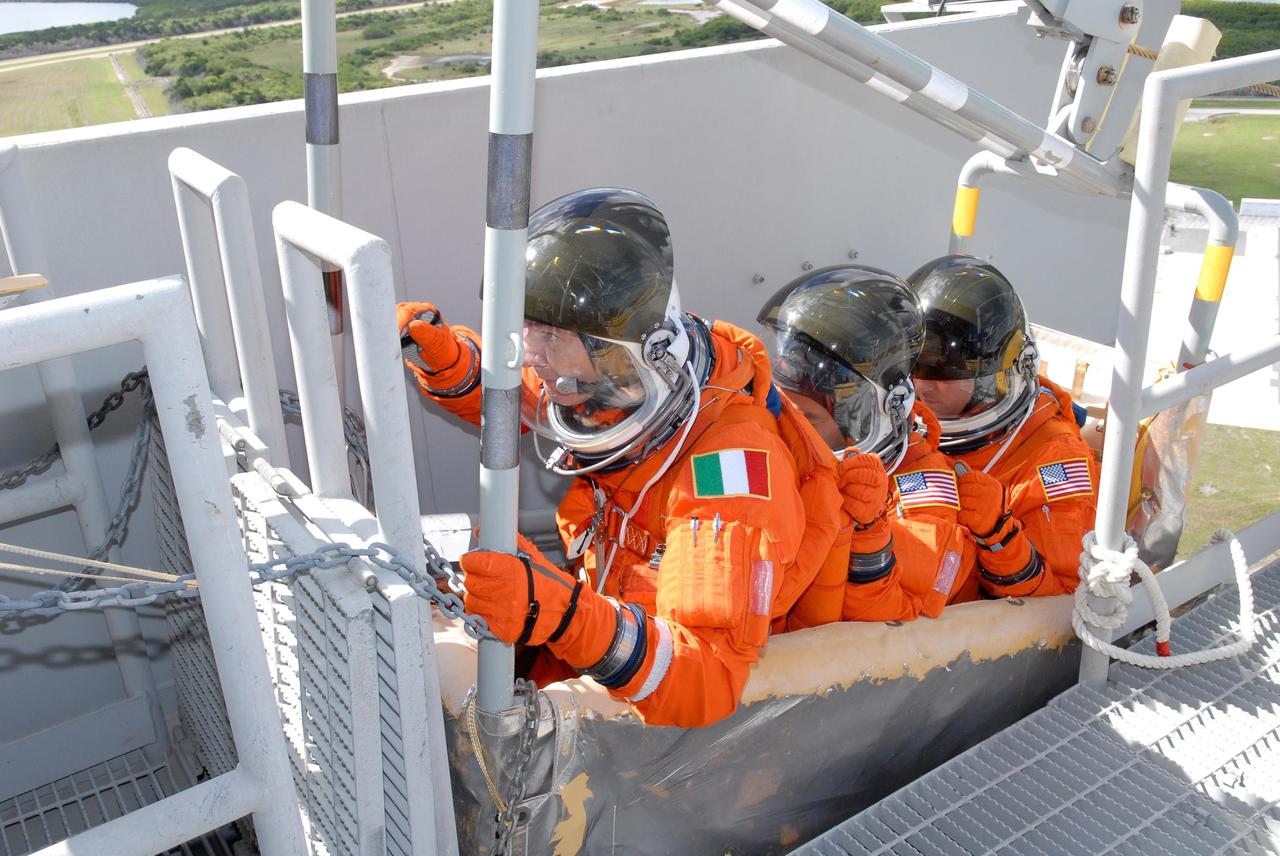
KENNEDY SPACE CENTER, FLA. -- During emergency egress from Launch Pad 39A, STS-120 crew members are in the slidewire basket. In front, Mission Specialist Paolo Nespoli holds the release lever. Behind him are Mission Specialists Daniel Tani and Scott Parazynski. The basket can carry them to a safe landing site below, if needed. Nespoli represents the European Space Agency. The activity is part of the prelaunch terminal countdown demonstration test, or TCDT. The TCDT at NASA's Kennedy Space Center provides astronauts and ground crews an opportunity to participate in various launch preparation activities, including equipment familiarization and emergency training. The STS-120 mission will deliver the U.S. Node 2 module, named Harmony, aboard space shuttle Discovery to the International Space Station. Discovery is targeted to launch on its 14-day mission at 11:38 a.m. EDT on Oct. 23. Photo credit: NASA/Kim Shiflett
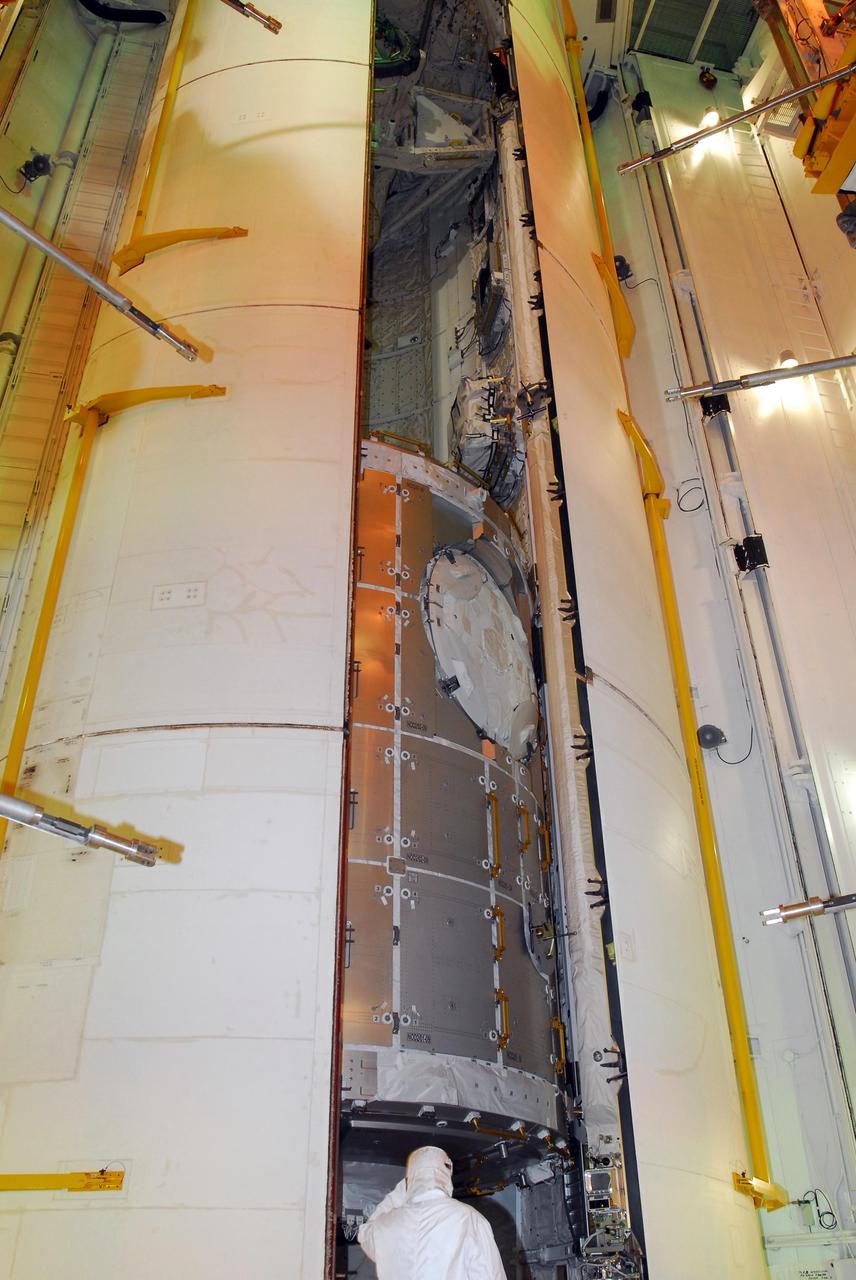
KENNEDY SPACE CENTER, FLA. -- At Launch Pad 39A, space shuttle Discovery's payload bay doors slowly enclose the U.S. Node 2 module, named Harmony. The name was chosen from an academic competition involving more than 2,200 U. S. students in kindergarten through high school. The module will be delivered to the International Space Station aboard Discovery on the 14-day STS-120 mission. An orbiter's payload bay door closure at the pad is a milestone signaling that the launch date is near. Discovery's launch is targeted for Oct. 23 at 11:38 a.m. EDT. Photo credit: NASA/George Shelton

KENNEDY SPACE CENTER, FLA. -- The crew members of space shuttle mission STS-120 prepare for their return to NASA's Johnson Space Center in Houston following three days of terminal countdown demonstration test, or TCDT, activities. At Kennedy Space Center's Shuttle Landing Facility, Mission Specialist Doug Wheelock prepares to board his T-38 jet aircraft. The TCDT provides astronauts and ground crews with equipment familiarization, emergency egress training and a simulated launch countdown. The STS-120 mission will deliver the U.S. Node 2 module, named Harmony, aboard space shuttle Discovery to the International Space Station on a 14-day mission. Discovery's launch is targeted for Oct. 23 at 11:38 a.m. EDT. Photo credit: NASA/Kim Shiflett
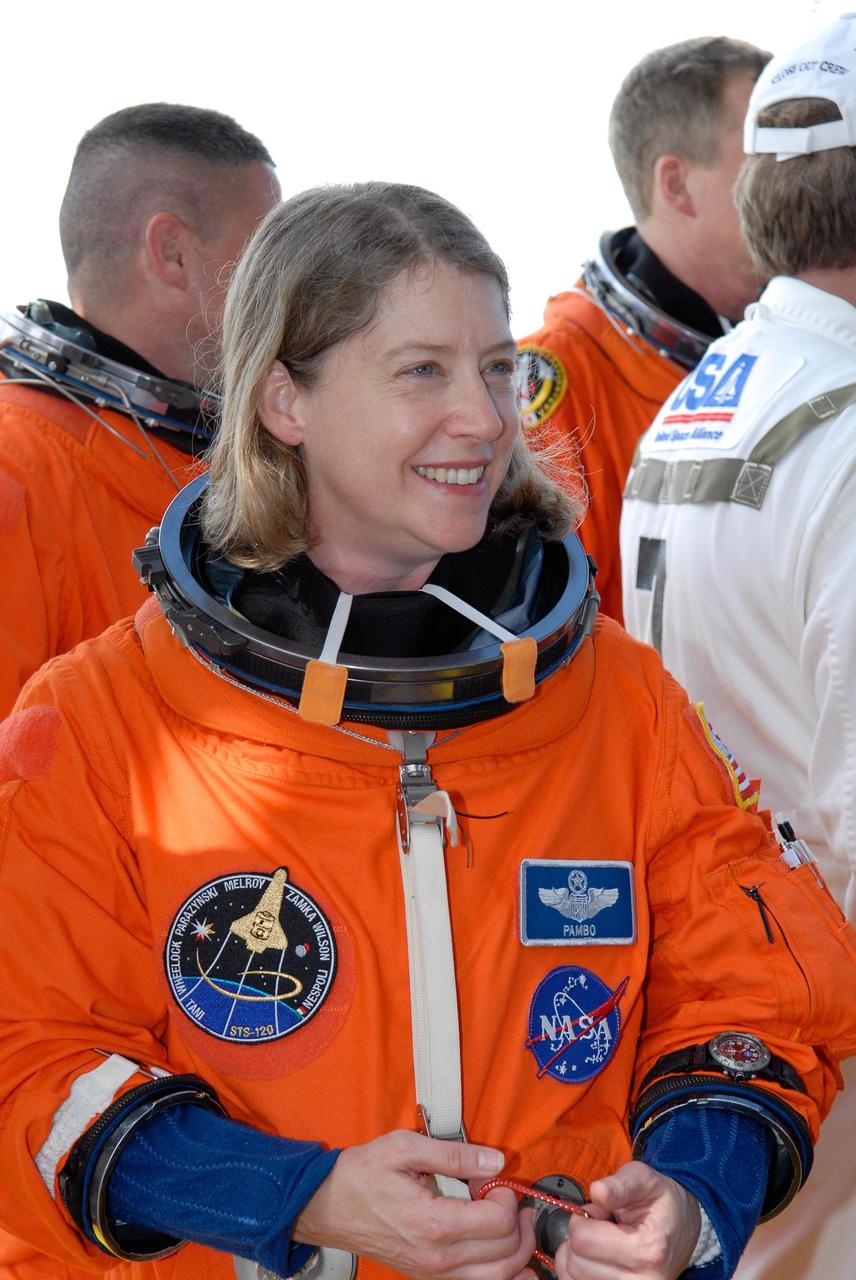
KENNEDY SPACE CENTER, FLA. -- The STS-120 crew gathers at the slidewire basket area on Launch Pad 39A after practicing emergency egress, part of the prelaunch terminal countdown demonstration test, or TCDT. Seen here in their launch and entry suits are (from left) Pilot George Zamka, Commander Pamela Melroy and Mission Specialist Scott Parazynski. Their name patches reflect the nicknames the crew gave each other for the event. The TCDT at NASA's Kennedy Space Center provides astronauts and ground crews an opportunity to participate in various launch preparation activities, including equipment familiarization and emergency training. The STS-120 mission will deliver the U.S. Node 2 module, named Harmony, aboard space shuttle Discovery to the International Space Station. Discovery is targeted to launch on its 14-day mission at 11:38 a.m. EDT on Oct. 23. Photo credit: NASA/Kim Shiflett
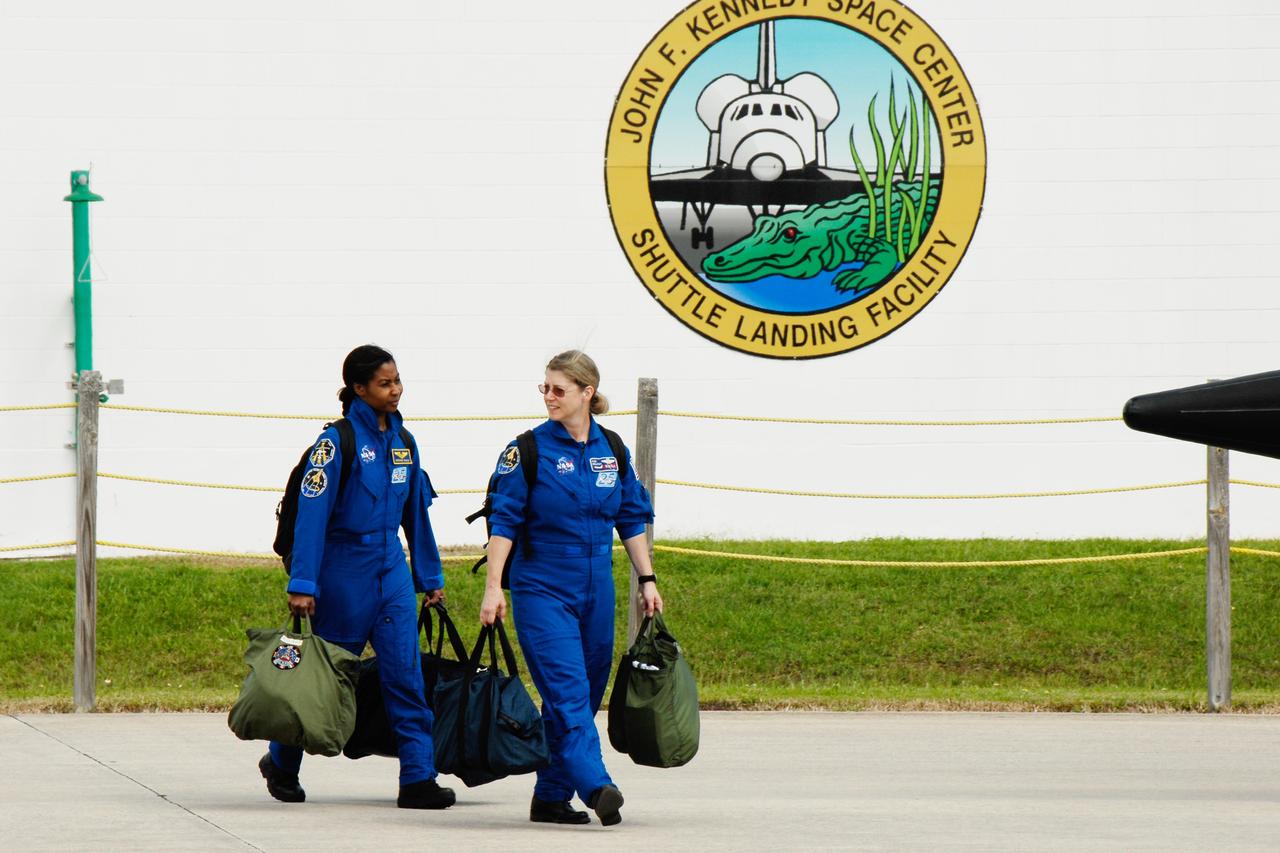
KENNEDY SPACE CENTER, FLA. -- The crew members of space shuttle mission STS-120 prepare for their return to NASA's Johnson Space Center in Houston following three days of terminal countdown demonstration test, or TCDT, activities. At Kennedy Space Center's Shuttle Landing Facility, Mission Specialist Stephanie Wilson, at left, and Commander Pam Melroy are packed and ready to board their aircraft. Melroy is the second woman to command a shuttle mission. The TCDT provides astronauts and ground crews with equipment familiarization, emergency egress training and a simulated launch countdown. The STS-120 mission will deliver the U.S. Node 2 module, named Harmony, aboard space shuttle Discovery to the International Space Station on a 14-day mission. Discovery's launch is targeted for Oct. 23 at 11:38 a.m. EDT. Photo credit: NASA/Kim Shiflett
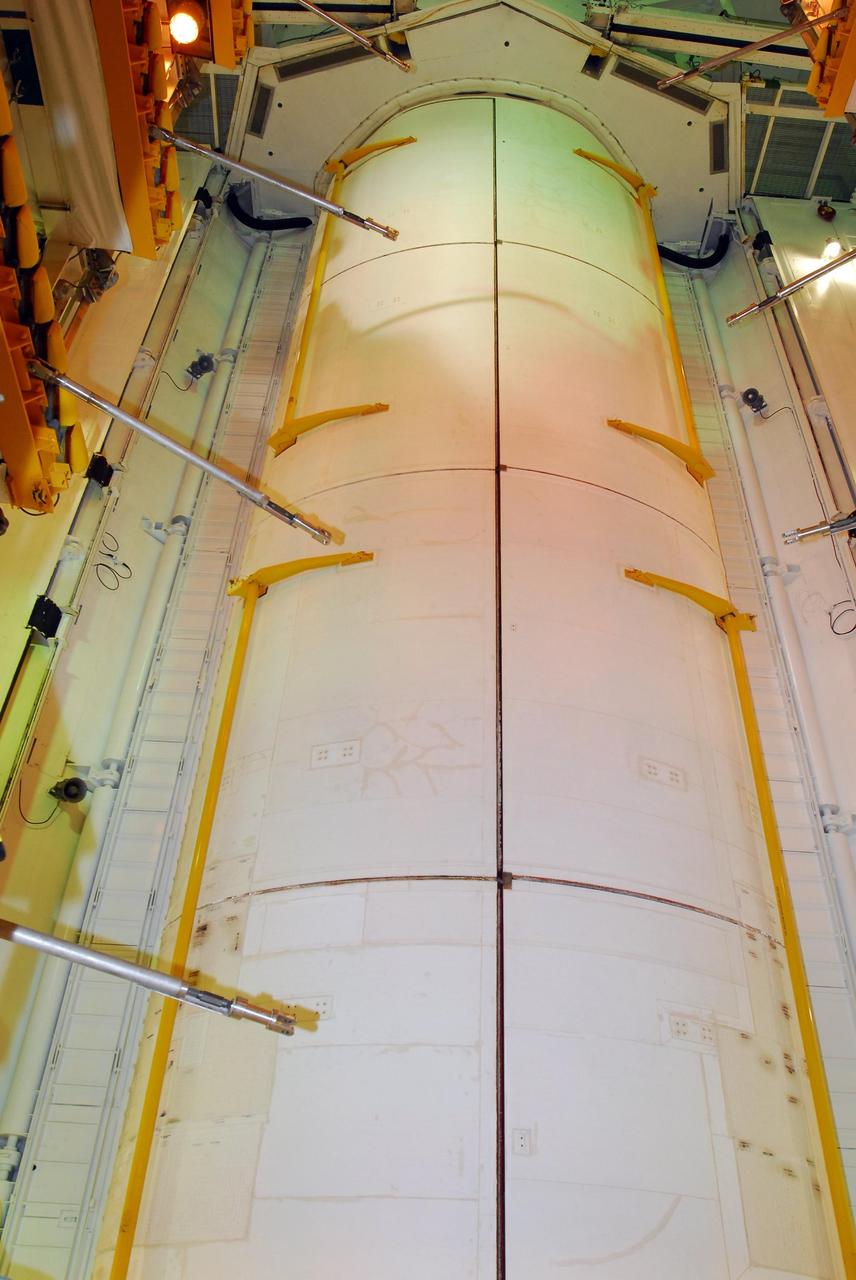
KENNEDY SPACE CENTER, FLA. -- At Launch Pad 39A, space shuttle Discovery's payload bay doors are closed around the U.S. Node 2 module, named Harmony. The name was chosen from an academic competition involving more than 2,200 U. S. students in kindergarten through high school. The module will be delivered to the International Space Station aboard Discovery on the 14-day STS-120 mission. An orbiter's payload bay door closure at the pad is a milestone signaling that the launch date is near. Discovery's launch is targeted for Oct. 23 at 11:38 a.m. EDT. Photo credit: NASA/George Shelton

KENNEDY SPACE CENTER, FLA. -- During emergency egress from Launch Pad 39A, STS-120 Pilot George Zamka and Commander Pamela Melroy are in one of the slidewire baskets. Zamka, at left, reaches for the release lever. The basket can carry them to a safe landing site below, if needed. The activity is part of the prelaunch terminal countdown demonstration test, or TCDT. The TCDT at NASA's Kennedy Space Center provides astronauts and ground crews an opportunity to participate in various launch preparation activities, including equipment familiarization and emergency training. The STS-120 mission will deliver the U.S. Node 2 module, named Harmony, aboard space shuttle Discovery to the International Space Station. Discovery is targeted to launch on its 14-day mission at 11:38 a.m. EDT on Oct. 23. Photo credit: NASA/Kim Shiflett
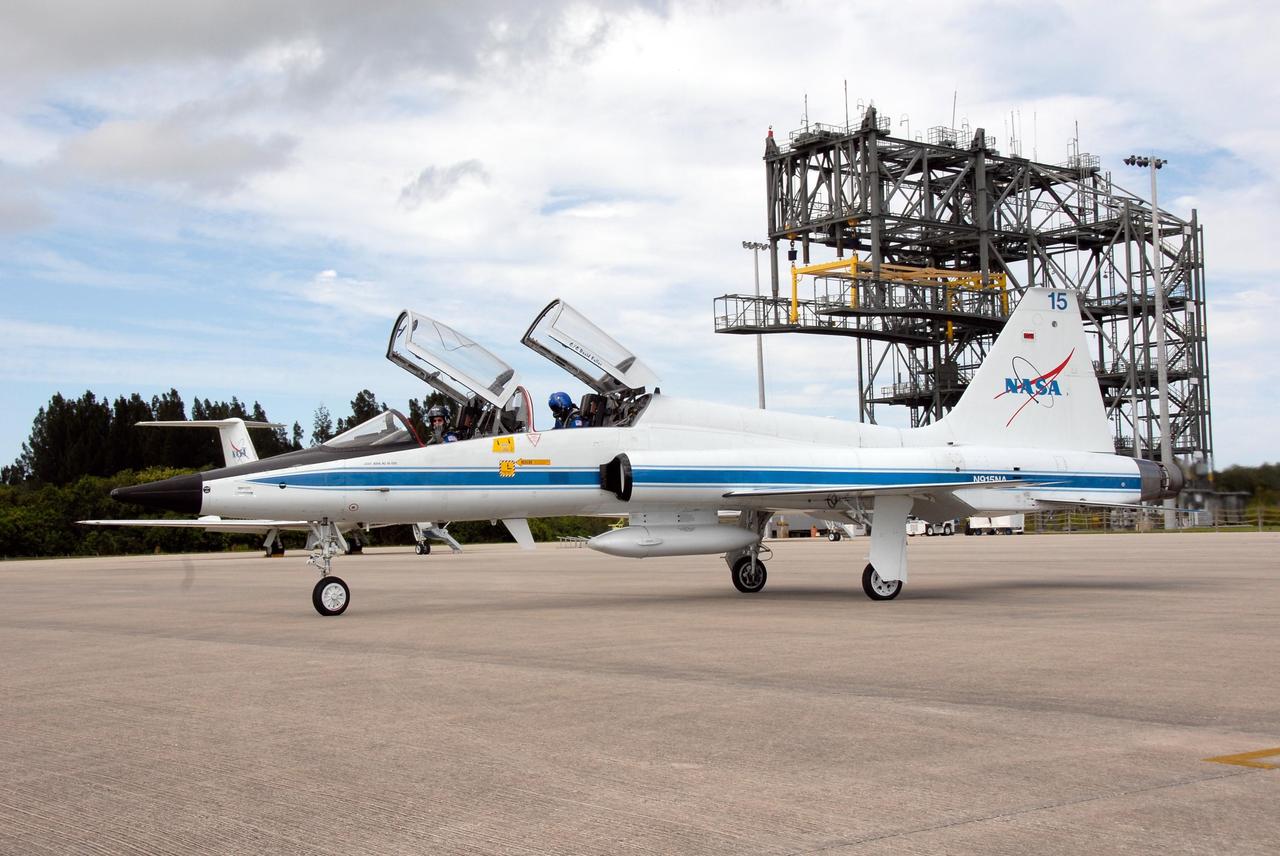
KENNEDY SPACE CENTER, FLA. -- The crew members of space shuttle mission STS-120 prepare for their return to NASA's Johnson Space Center in Houston following three days of terminal countdown demonstration test, or TCDT, activities. At Kennedy Space Center's Shuttle Landing Facility, Commander Pam Melroy, in front, and Mission Specialist Stephanie Wilson complete the final tasks before takeoff in a T-38 jet aircraft. Melroy is the second woman to command a shuttle mission. The TCDT provides astronauts and ground crews with equipment familiarization, emergency egress training and a simulated launch countdown. The STS-120 mission will deliver the U.S. Node 2 module, named Harmony, aboard space shuttle Discovery to the International Space Station on a 14-day mission. Discovery's launch is targeted for Oct. 23 at 11:38 a.m. EDT. Photo credit: NASA/Kim Shiflett
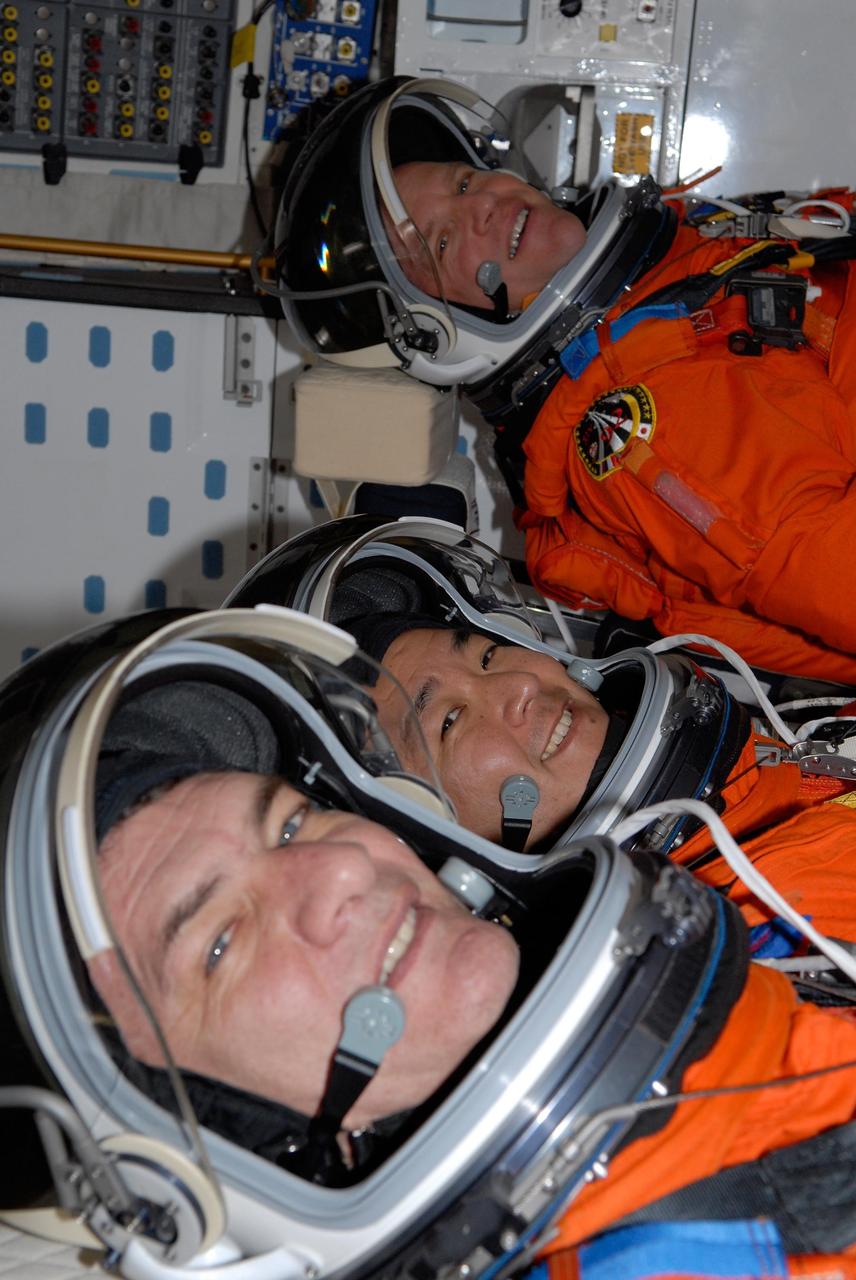
KENNEDY SPACE CENTER, FLA. -- Inside space shuttle Discovery, STS-120 Mission Specialists Paolo Nespoli, Daniel Tani and Scott Parazynski have been taking part in a simulated launch countdown, culmination of the prelaunch terminal countdown demonstration test, or TCDT. Nespoli represents the European Space Agency. The TCDT at NASA's Kennedy Space Center provides astronauts and ground crews an opportunity to participate in various launch preparation activities, including equipment familiarization and emergency training. The STS-120 mission will deliver the U.S. Node 2 module, named Harmony, aboard space shuttle Discovery to the International Space Station. Discovery is targeted to launch on its 14-day mission at 11:38 a.m. EDT on Oct. 23. Photo credit: NASA/Kim Shiflett
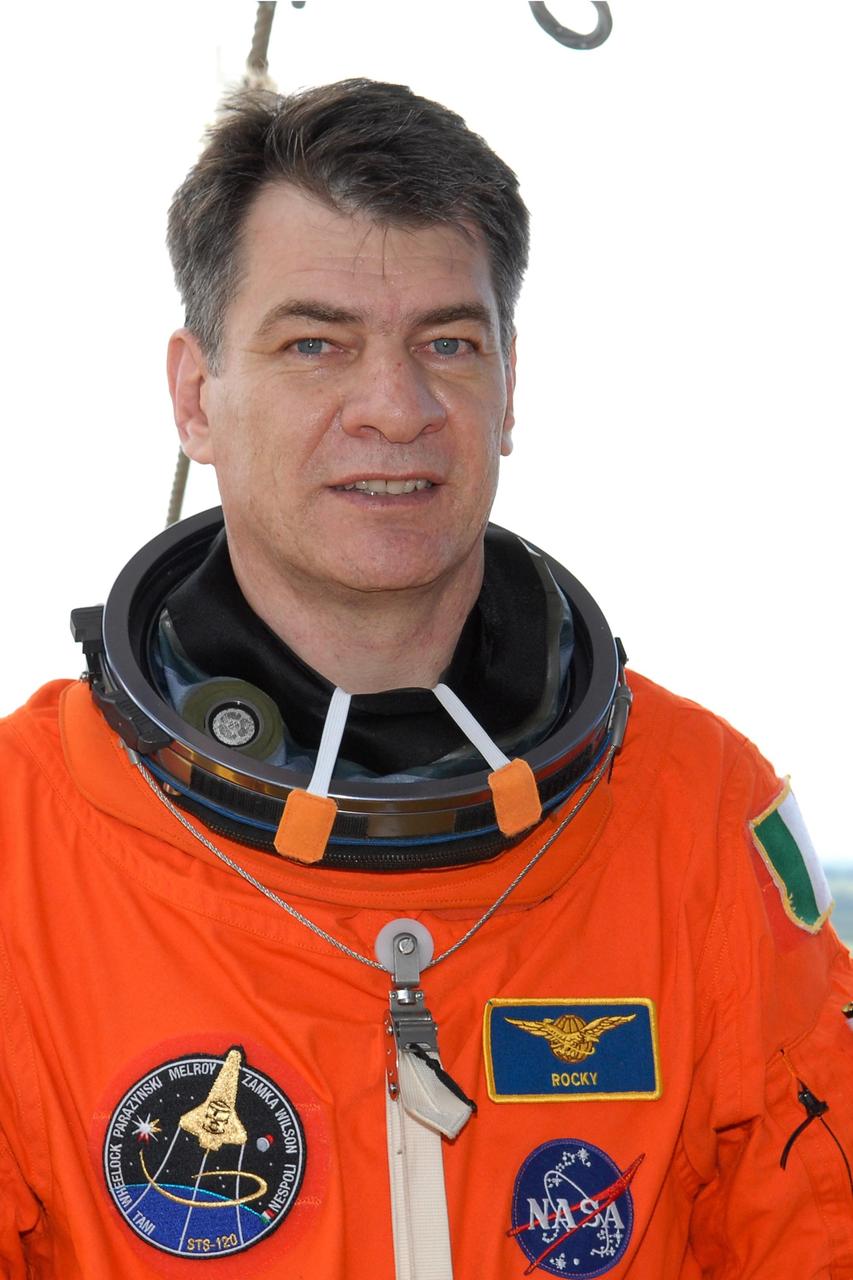
KENNEDY SPACE CENTER, FLA. -- STS-120 Mission Specialist Paolo Nespoli relaxes after practicing emergency egress, part of the prelaunch terminal countdown demonstration test, or TCDT. His name patch reflects the nicknames the crew gave each other for the event. The TCDT at NASA's Kennedy Space Center provides astronauts and ground crews an opportunity to participate in various launch preparation activities, including equipment familiarization and emergency training. The STS-120 mission will deliver the U.S. Node 2 module, named Harmony, aboard space shuttle Discovery to the International Space Station. Discovery is targeted to launch on its 14-day mission at 11:38 a.m. EDT on Oct. 23. Photo credit: NASA/Kim Shiflett

KENNEDY SPACE CENTER, FLA. -- The crew members of space shuttle mission STS-120 prepare for their return to NASA's Johnson Space Center in Houston following three days of terminal countdown demonstration test, or TCDT, activities. At Kennedy Space Center's Shuttle Landing Facility, Pilot George Zamka, at left, and Mission Specialist Paolo Nespoli are packed and ready to board their aircraft. Nespoli is representing the European Space Agency on STS-120. The TCDT provides astronauts and ground crews with equipment familiarization, emergency egress training and a simulated launch countdown. The STS-120 mission will deliver the U.S. Node 2 module, named Harmony, aboard space shuttle Discovery to the International Space Station on a 14-day mission. Discovery's launch is targeted for Oct. 23 at 11:38 a.m. EDT. Photo credit: NASA/Kim Shiflett
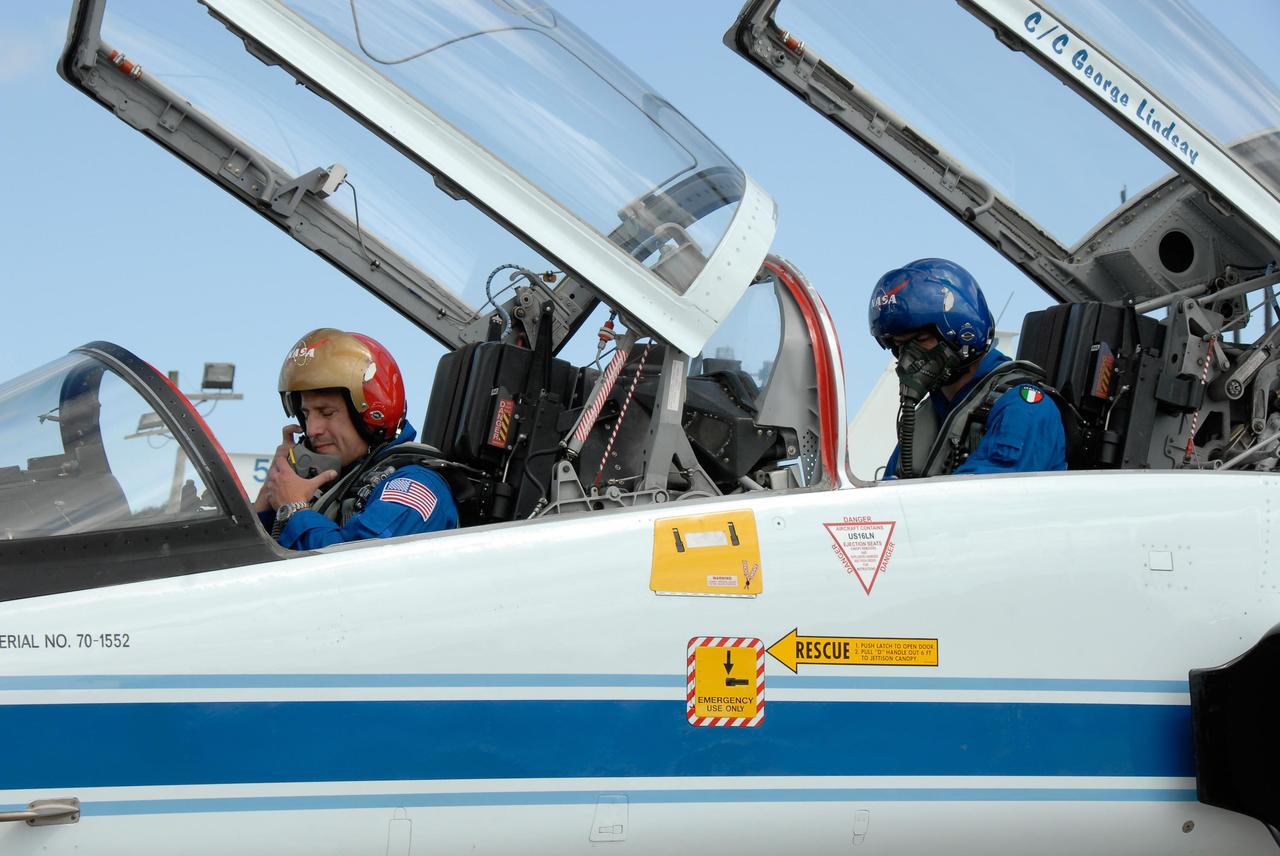
KENNEDY SPACE CENTER, FLA. -- The crew members of space shuttle mission STS-120 prepare for their return to NASA's Johnson Space Center in Houston following three days of terminal countdown demonstration test, or TCDT, activities. At Kennedy Space Center's Shuttle Landing Facility, Pilot George Zamka, in front, and Mission Specialist Paolo Nespoli secure themselves in a T-38 jet aircraft for takeoff. Nespoli is representing the European Space Agency on STS-120. The TCDT provides astronauts and ground crews with equipment familiarization, emergency egress training and a simulated launch countdown. The STS-120 mission will deliver the U.S. Node 2 module, named Harmony, aboard space shuttle Discovery to the International Space Station on a 14-day mission. Discovery's launch is targeted for Oct. 23 at 11:38 a.m. EDT. Photo credit: NASA/Kim Shiflett

KENNEDY SPACE CENTER, FLA. -- During emergency egress from Launch Pad 39A, STS-120 Mission Specialists Stephanie Wilson (foreground) and Doug Wheelock settle in the slidewire basket. Wilson reaches for the release lever. The basket can carry them to a safe landing site below, if needed. The activity is part of the prelaunch terminal countdown demonstration test, or TCDT. The TCDT at NASA's Kennedy Space Center provides astronauts and ground crews an opportunity to participate in various launch preparation activities, including equipment familiarization and emergency training. The STS-120 mission will deliver the U.S. Node 2 module, named Harmony, aboard space shuttle Discovery to the International Space Station. Discovery is targeted to launch on its 14-day mission at 11:38 a.m. EDT on Oct. 23. Photo credit: NASA/Kim Shiflett
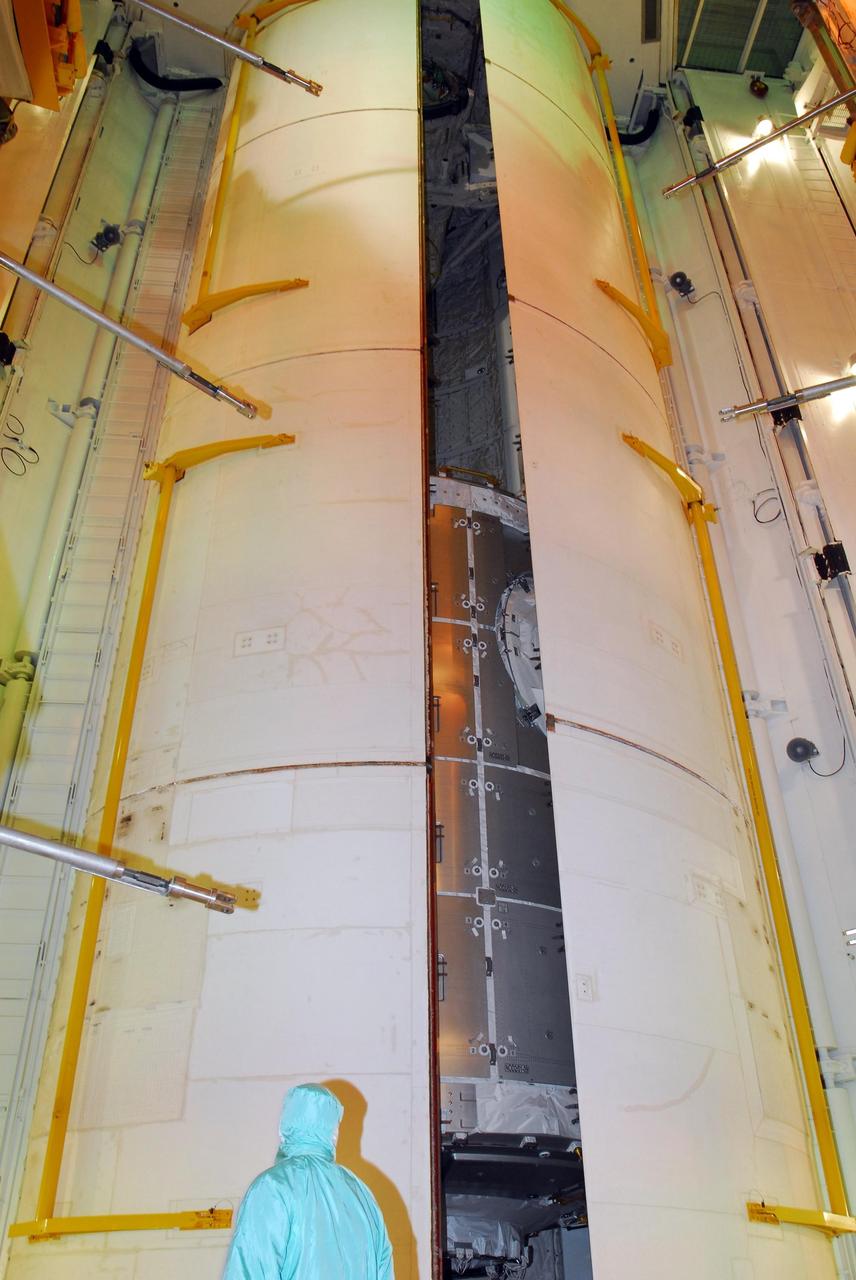
KENNEDY SPACE CENTER, FLA. -- At Launch Pad 39A, space shuttle Discovery's payload bay doors are nearly closed around the U.S. Node 2 module, named Harmony. The name was chosen from an academic competition involving more than 2,200 U. S. students in kindergarten through high school. The module will be delivered to the International Space Station aboard Discovery on the 14-day STS-120 mission. An orbiter's payload bay door closure at the pad is a milestone signaling that the launch date is near. Discovery's launch is targeted for Oct. 23 at 11:38 a.m. EDT. Photo credit: NASA/George Shelton
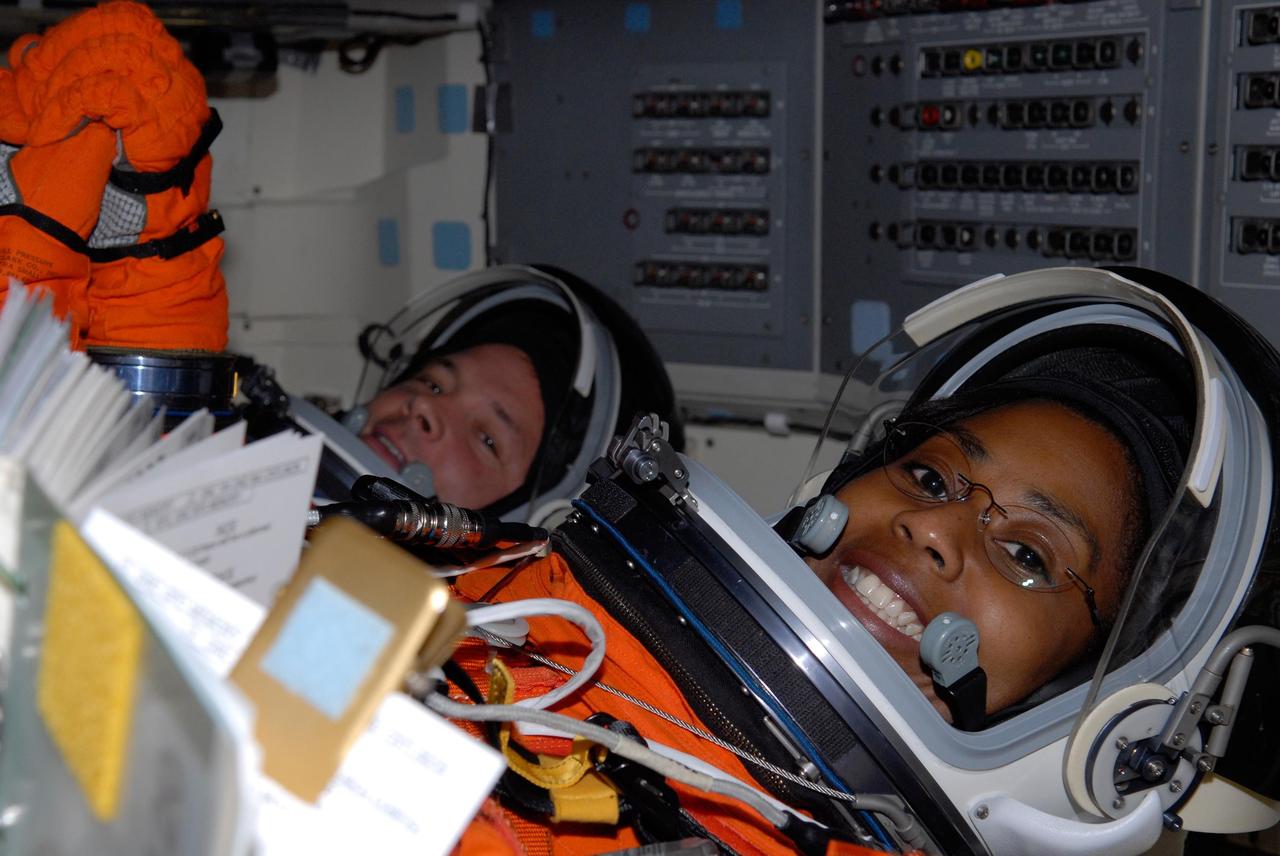
KENNEDY SPACE CENTER, FLA. -- Inside space shuttle Discovery, STS-120 Mission Specialists Doug Wheelock and Stephanie Wilson are in their assigned seats for the simulated launch countdown, culmination of the prelaunch terminal countdown demonstration test, or TCDT. The TCDT at NASA's Kennedy Space Center provides astronauts and ground crews an opportunity to participate in various launch preparation activities, including equipment familiarization and emergency training. The STS-120 mission will deliver the U.S. Node 2 module, named Harmony, aboard space shuttle Discovery to the International Space Station. Discovery is targeted to launch on its 14-day mission at 11:38 a.m. EDT on Oct. 23. Photo credit: NASA/Kim Shiflett

KENNEDY SPACE CENTER, FLA. -- Inside space shuttle Discovery, STS-120 Pilot George Zamka is ready for the simulated launch countdown, culmination of the prelaunch terminal countdown demonstration test, or TCDT. The TCDT at NASA's Kennedy Space Center provides astronauts and ground crews an opportunity to participate in various launch preparation activities, including equipment familiarization and emergency training. The STS-120 mission will deliver the U.S. Node 2 module, named Harmony, aboard space shuttle Discovery to the International Space Station. Discovery is targeted to launch on its 14-day mission at 11:38 a.m. EDT on Oct. 23. Photo credit: NASA/Kim Shiflett
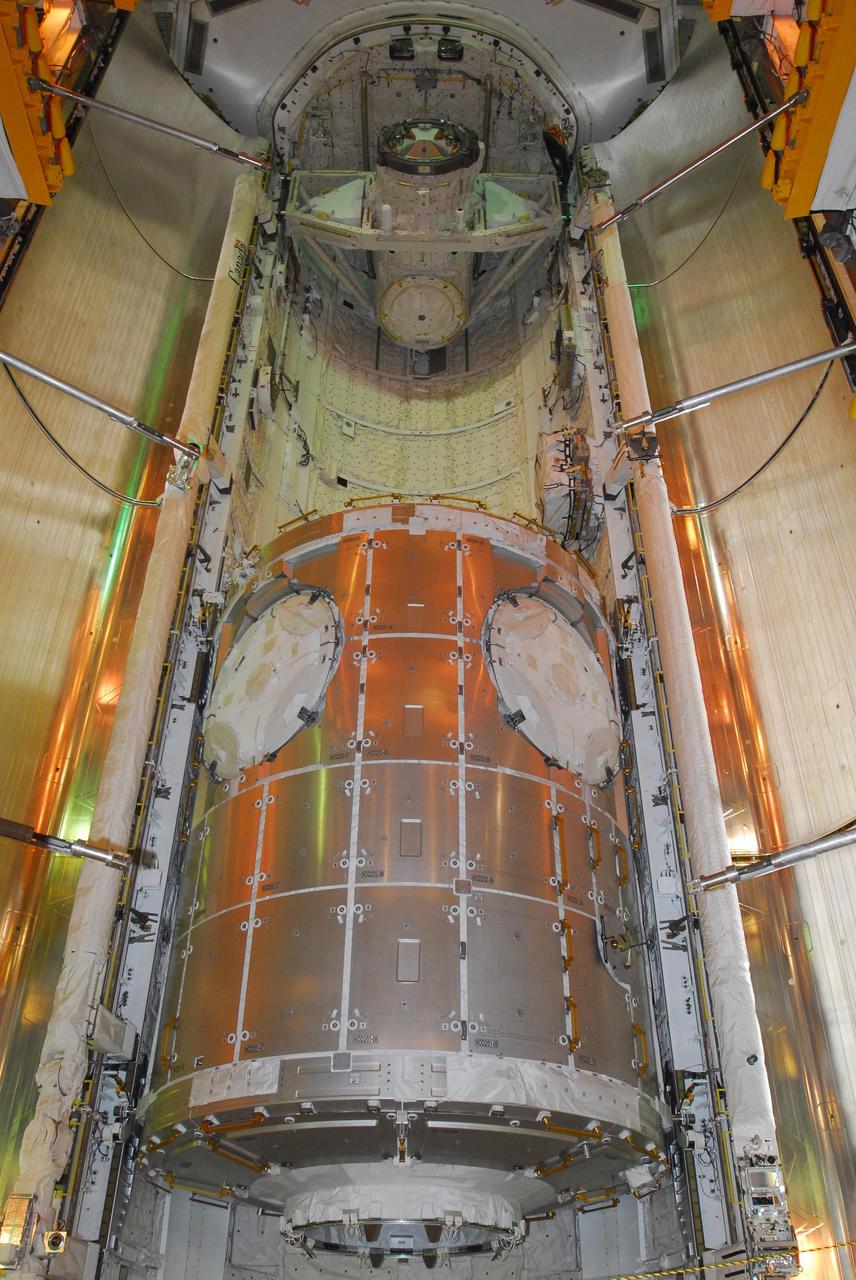
KENNEDY SPACE CENTER, FLA. -- At Launch Pad 39A, space shuttle Discovery's payload bay doors begin to close around the U.S. Node 2 module, named Harmony. The name was chosen from an academic competition involving more than 2,200 U. S. students in kindergarten through high school. The module will be delivered to the International Space Station aboard Discovery on the 14-day STS-120 mission. An orbiter's payload bay door closure at the pad is a milestone signaling that the launch date is near. Discovery's launch is targeted for Oct. 23 at 11:38 a.m. EDT. Photo credit: NASA/George Shelton
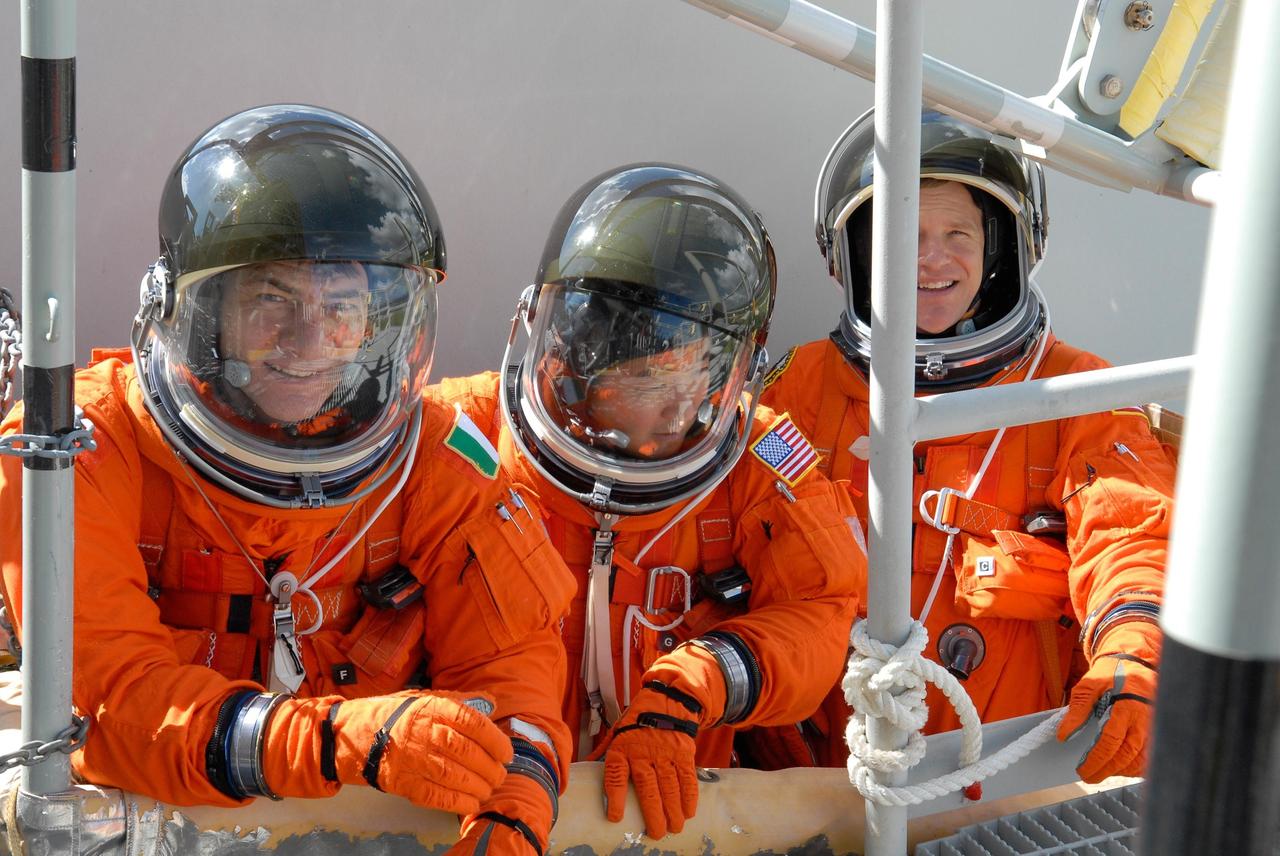
KENNEDY SPACE CENTER, FLA. -- During emergency egress from Launch Pad 39A, STS-120 Mission Specialists relax inside the slidewire basket. From left are Mission Specialists Paolo Nespoli, Daniel Tani and Scott Parazynski. The basket can carry them to a safe landing site below, if needed. The activity is part of the prelaunch terminal countdown demonstration test, or TCDT. The TCDT at NASA's Kennedy Space Center provides astronauts and ground crews an opportunity to participate in various launch preparation activities, including equipment familiarization and emergency training. The STS-120 mission will deliver the U.S. Node 2 module, named Harmony, aboard space shuttle Discovery to the International Space Station. Discovery is targeted to launch on its 14-day mission at 11:38 a.m. EDT on Oct. 23. Photo credit: NASA/Kim Shiflett
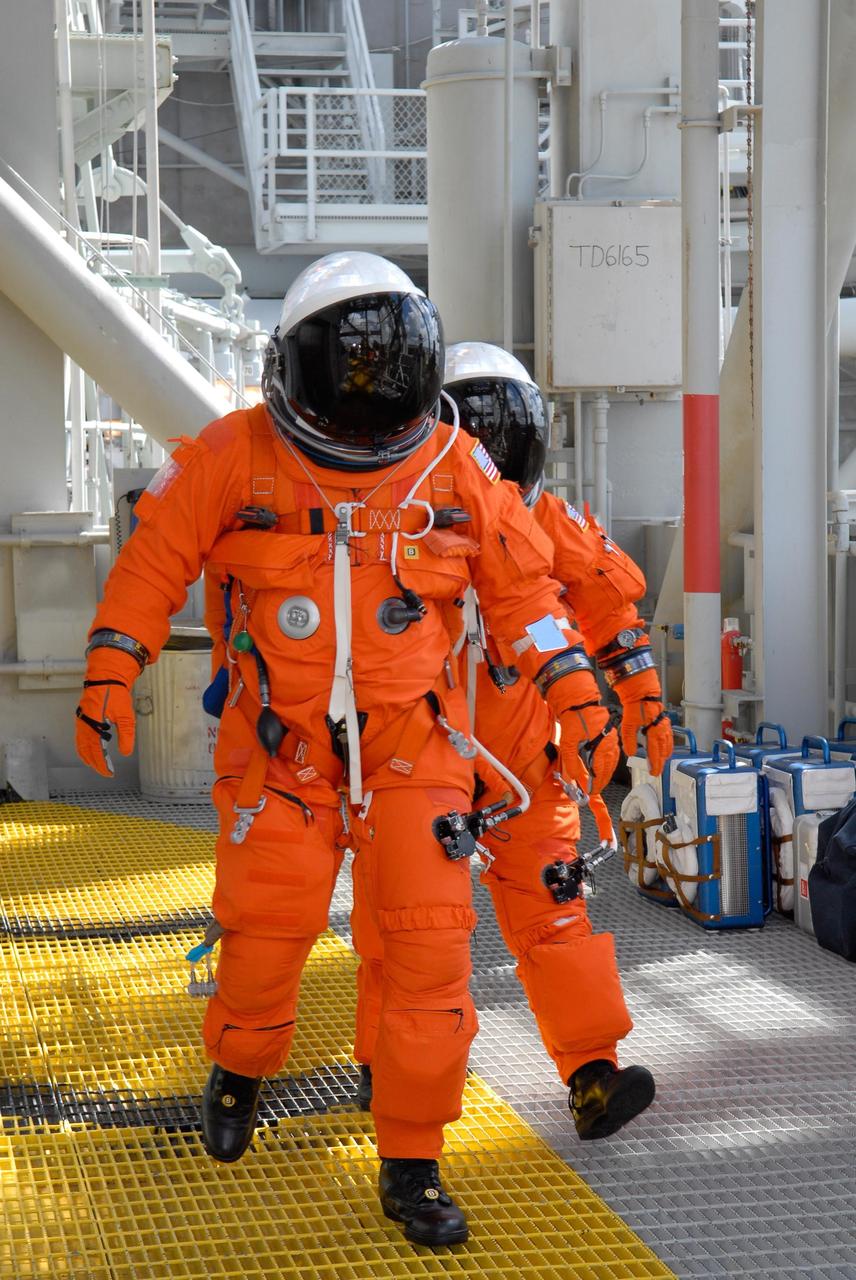
KENNEDY SPACE CENTER, FLA. -- During emergency egress from Launch Pad 39A, STS-120 Pilot George Zamka and Commander Pamela Melroy head for the slidewire baskets. The basket can carry them to a safe landing site below, if needed. The activity is part of the prelaunch terminal countdown demonstration test, or TCDT. The TCDT at NASA's Kennedy Space Center provides astronauts and ground crews an opportunity to participate in various launch preparation activities, including equipment familiarization and emergency training. The STS-120 mission will deliver the U.S. Node 2 module, named Harmony, aboard space shuttle Discovery to the International Space Station. Discovery is targeted to launch on its 14-day mission at 11:38 a.m. EDT on Oct. 23. Photo credit: NASA/Kim Shiflett
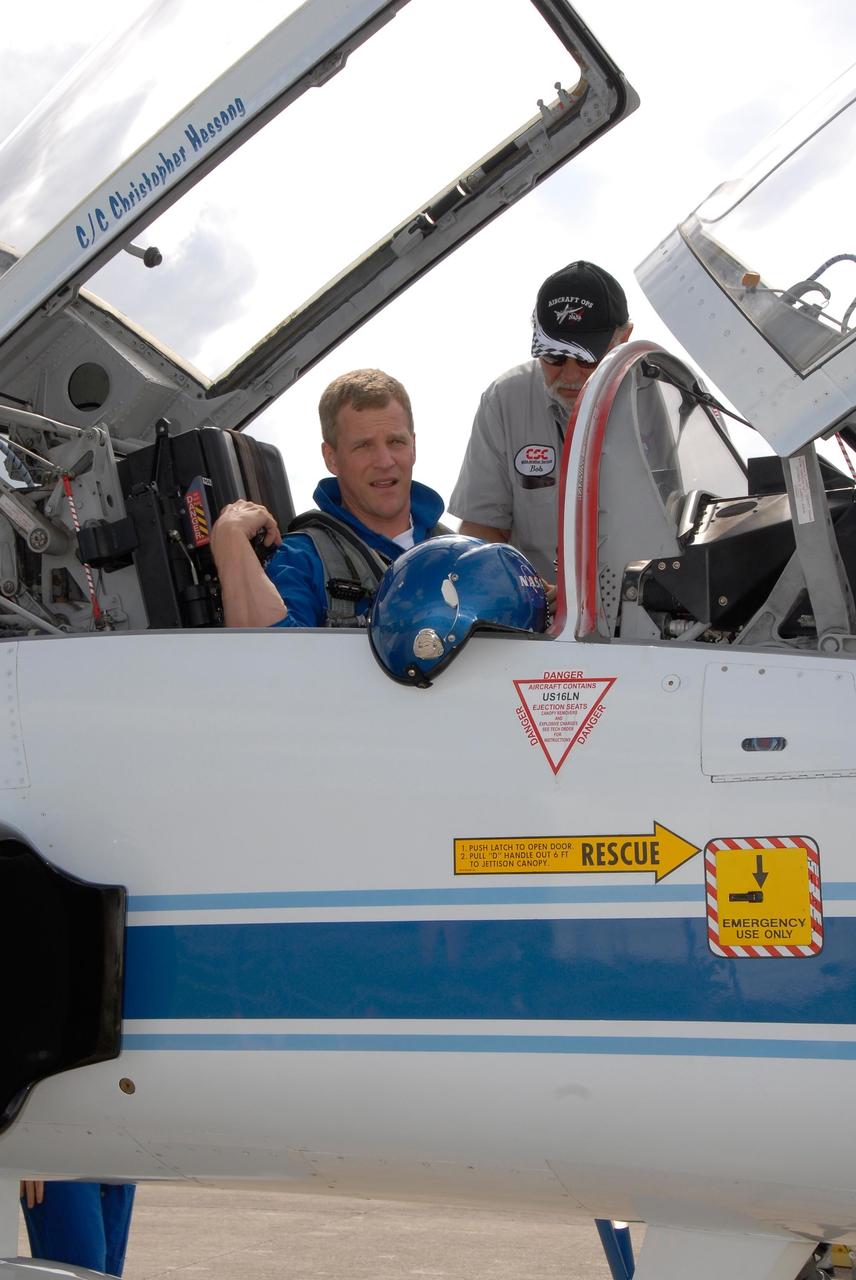
KENNEDY SPACE CENTER, FLA. -- The crew members of space shuttle mission STS-120 prepare for their return to NASA's Johnson Space Center in Houston following three days of terminal countdown demonstration test, or TCDT, activities. At Kennedy Space Center's Shuttle Landing Facility, Mission Specialist Scott Parazynski is strapped into his T-38 jet aircraft prior to takeoff. The TCDT provides astronauts and ground crews with equipment familiarization, emergency egress training and a simulated launch countdown. The STS-120 mission will deliver the U.S. Node 2 module, named Harmony, aboard space shuttle Discovery to the International Space Station on a 14-day mission. Discovery's launch is targeted for Oct. 23 at 11:38 a.m. EDT. Photo credit: NASA/Kim Shiflett
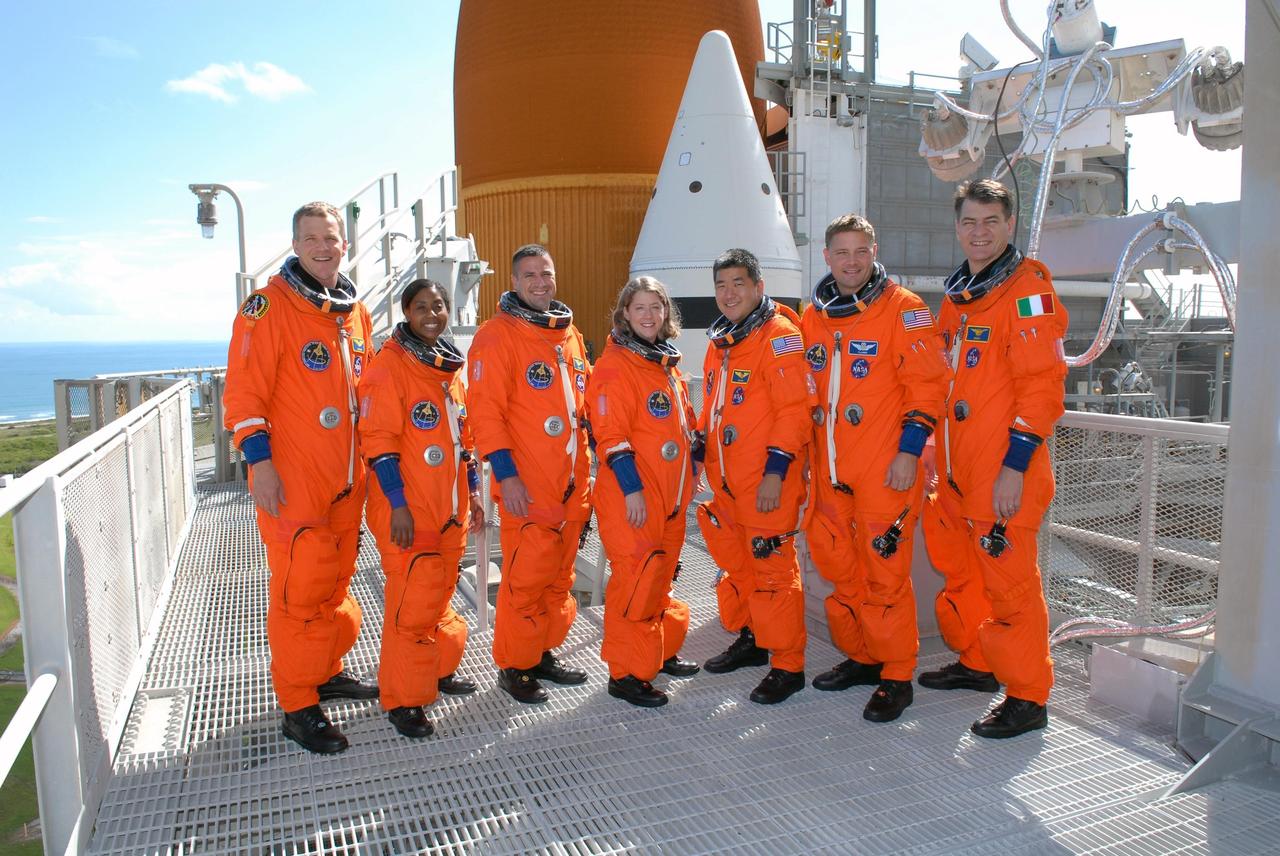
KENNEDY SPACE CENTER, FLA. -- Following the successful simulated launch countdown and emergency egress practice, the STS-120 crew gathers for the traditional photo near the top of the fixed service structure. From left are Mission Specialists Scott Parazynski and Stephanie Wilson, Pilot George Zamka, Commander Pamela Melroy, and Mission Specialists Daniel Tani, Doug Wheelock and Paolo Nespoli, who represents the European Space Agency. The countdown was the culmination of the prelaunch terminal countdown demonstration test, or TCDT. The TCDT at NASA's Kennedy Space Center provides astronauts and ground crews an opportunity to participate in various launch preparation activities, including equipment familiarization and emergency training. The STS-120 mission will deliver the U.S. Node 2 module, named Harmony, aboard space shuttle Discovery to the International Space Station. Discovery is targeted to launch on its 14-day mission at 11:38 a.m. EDT on Oct. 23. Photo credit: NASA/Kim Shiflett
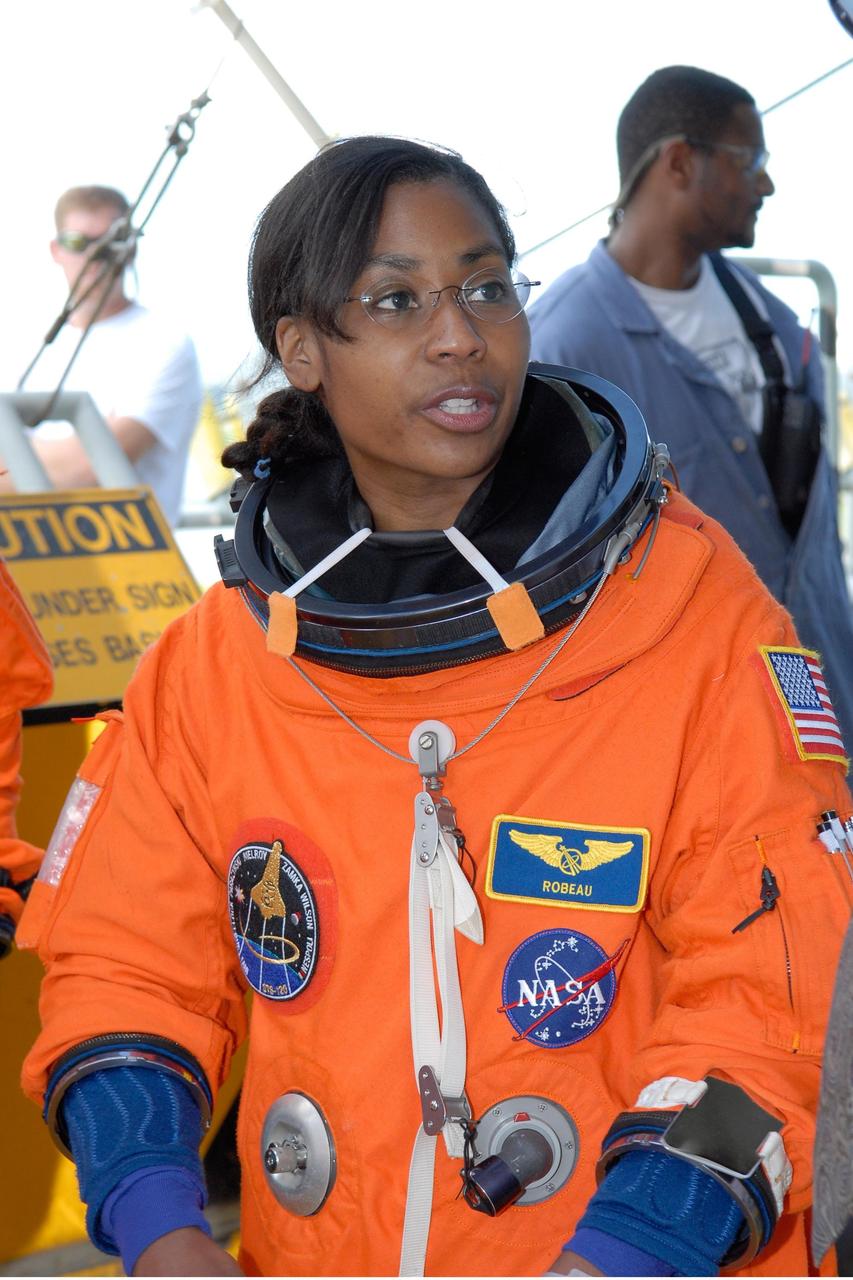
KENNEDY SPACE CENTER, FLA. -- STS-120 Mission Specialist Stephanie Wilson relaxes after practicing emergency egress, part of the prelaunch terminal countdown demonstration test, or TCDT. Her name patch reflects the nicknames the crew gave each other for the event. The TCDT at NASA's Kennedy Space Center provides astronauts and ground crews an opportunity to participate in various launch preparation activities, including equipment familiarization and emergency training. The STS-120 mission will deliver the U.S. Node 2 module, named Harmony, aboard space shuttle Discovery to the International Space Station. Discovery is targeted to launch on its 14-day mission at 11:38 a.m. EDT on Oct. 23. Photo credit: NASA/Kim Shiflett
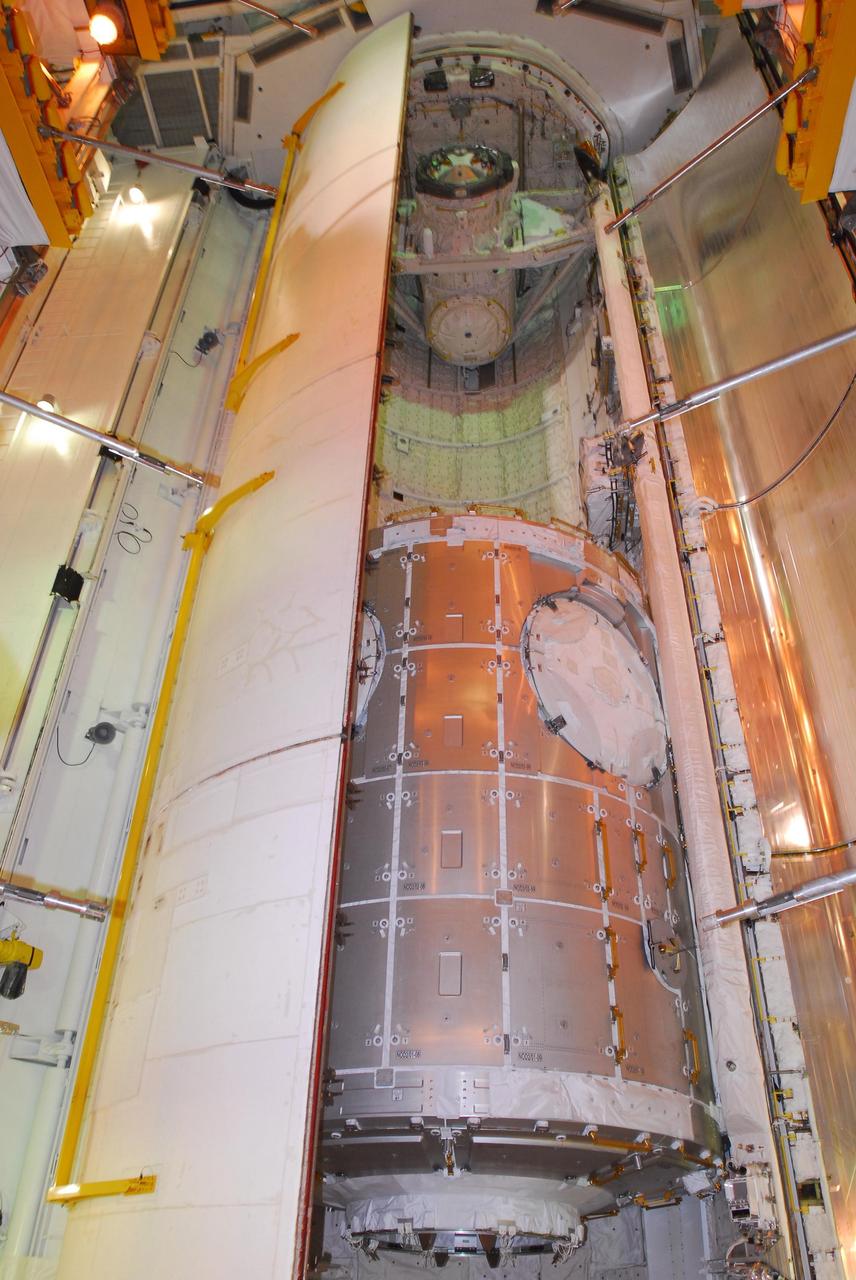
KENNEDY SPACE CENTER, FLA. -- At Launch Pad 39A, space shuttle Discovery's payload bay doors are partially closed around the U.S. Node 2 module, named Harmony. The name was chosen from an academic competition involving more than 2,200 U. S. students in kindergarten through high school. The module will be delivered to the International Space Station aboard Discovery on the 14-day STS-120 mission. An orbiter's payload bay door closure at the pad is a milestone signaling that the launch date is near. Discovery's launch is targeted for Oct. 23 at 11:38 a.m. EDT. Photo credit: NASA/George Shelton
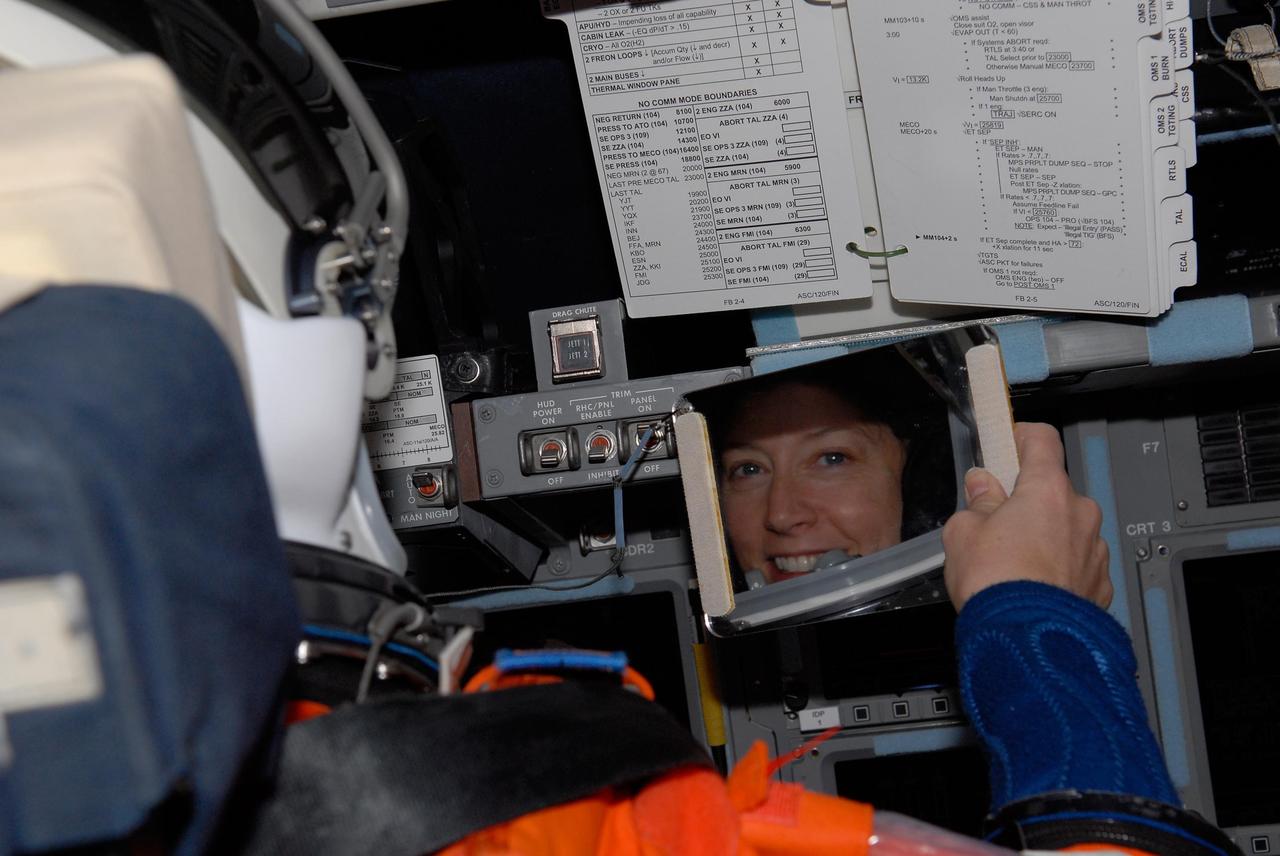
KENNEDY SPACE CENTER, FLA. -- Inside space shuttle Discovery, STS-120 Commander Pamela Melroy's reflection shows her happiness taking part in a simulated launch countdown, culmination of the prelaunch terminal countdown demonstration test, or TCDT. The TCDT at NASA's Kennedy Space Center provides astronauts and ground crews an opportunity to participate in various launch preparation activities, including equipment familiarization and emergency training. The STS-120 mission will deliver the U.S. Node 2 module, named Harmony, aboard space shuttle Discovery to the International Space Station. Discovery is targeted to launch on its 14-day mission at 11:38 a.m. EDT on Oct. 23. Photo credit: NASA/Kim Shiflett
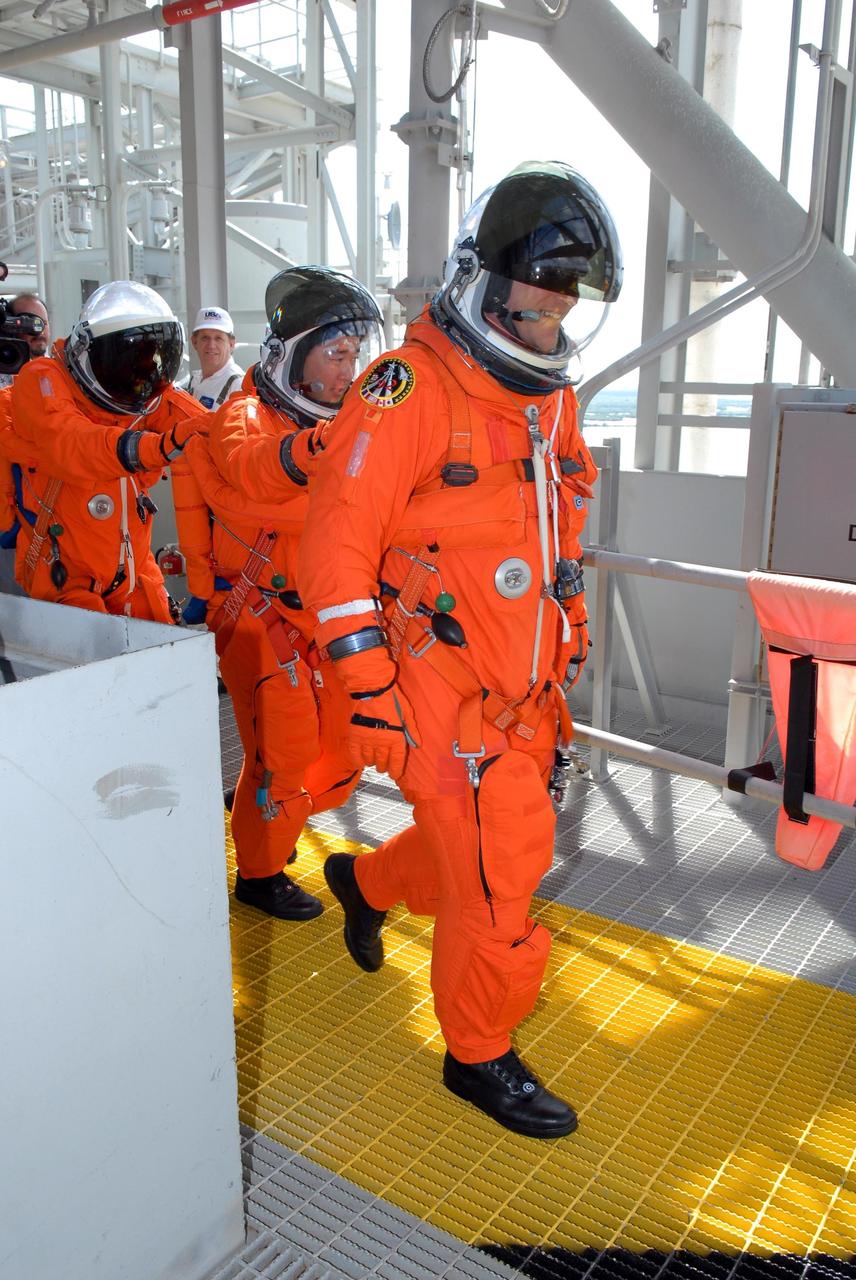
KENNEDY SPACE CENTER, FLA. -- STS-120 crew members practice emergency egress from Launch Pad 39A after completing a simulated launch countdown, culmination of the prelaunch terminal countdown demonstration test, or TCDT. Leading the way to the slidewire baskets is Mission Specialist Scott Parazynski, with Mission Specialist Daniel Tani and others behind him. The TCDT at NASA's Kennedy Space Center provides astronauts and ground crews an opportunity to participate in various launch preparation activities, including equipment familiarization and emergency training. The STS-120 mission will deliver the U.S. Node 2 module, named Harmony, aboard space shuttle Discovery to the International Space Station. Discovery is targeted to launch on its 14-day mission at 11:38 a.m. EDT on Oct. 23. Photo credit: NASA/Kim Shiflett
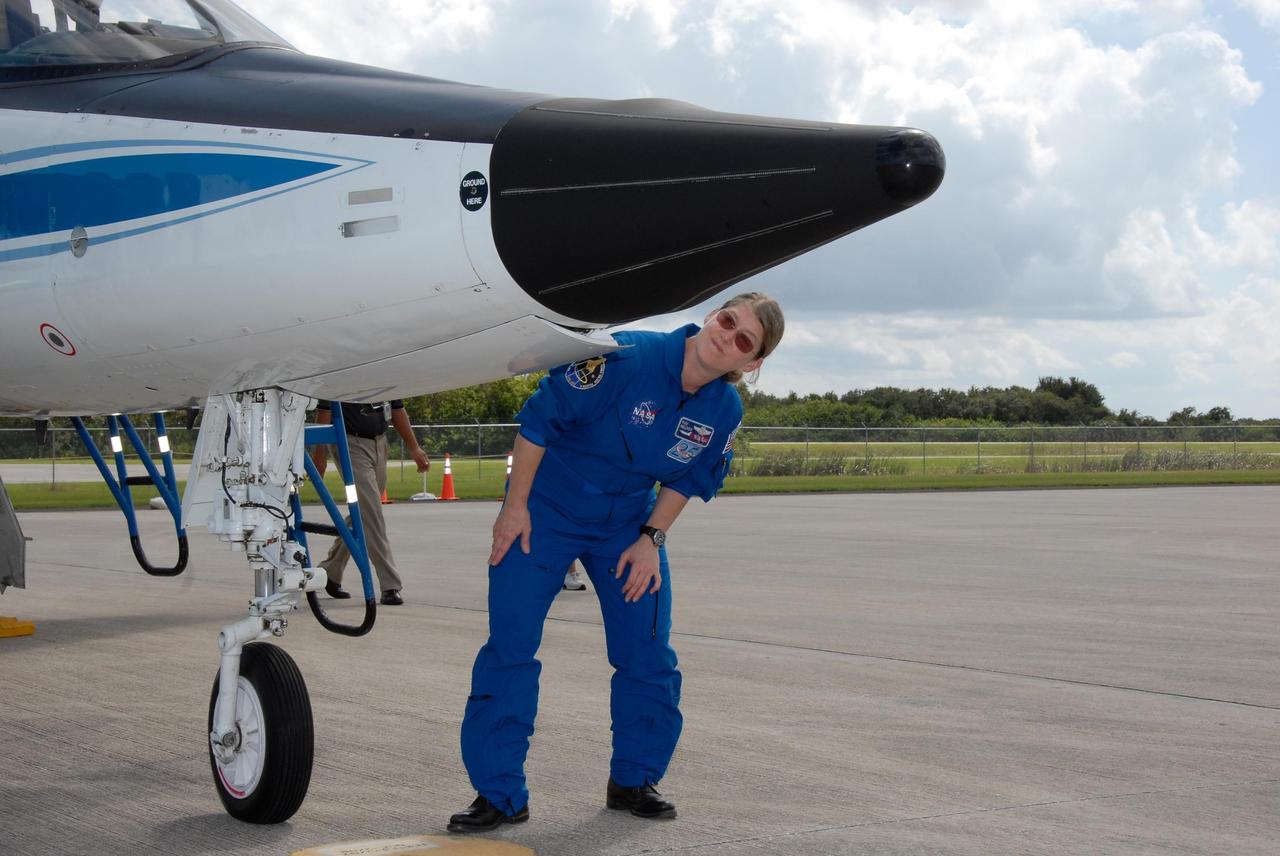
KENNEDY SPACE CENTER, FLA. -- The crew members of space shuttle mission STS-120 prepare for their return to NASA's Johnson Space Center in Houston following three days of terminal countdown demonstration test, or TCDT, activities. At Kennedy Space Center's Shuttle Landing Facility, Commander Pam Melroy checks the readiness of her T-38 jet aircraft before takeoff. Melroy is the second woman to command a shuttle mission. The TCDT provides astronauts and ground crews with equipment familiarization, emergency egress training and a simulated launch countdown. The STS-120 mission will deliver the U.S. Node 2 module, named Harmony, aboard space shuttle Discovery to the International Space Station on a 14-day mission. Discovery's launch is targeted for Oct. 23 at 11:38 a.m. EDT. Photo credit: NASA/Kim Shiflett

KENNEDY SPACE CENTER, FLA. -- During emergency egress from Launch Pad 39A, STS-120 Mission Specialists Stephanie Wilson (left) and Doug Wheelock head for the slidewire baskets. The basket can carry them to a safe landing site below, if needed. The activity is part of the prelaunch terminal countdown demonstration test, or TCDT. The TCDT at NASA's Kennedy Space Center provides astronauts and ground crews an opportunity to participate in various launch preparation activities, including equipment familiarization and emergency training. The STS-120 mission will deliver the U.S. Node 2 module, named Harmony, aboard space shuttle Discovery to the International Space Station. Discovery is targeted to launch on its 14-day mission at 11:38 a.m. EDT on Oct. 23. Photo credit: NASA/Kim Shiflett
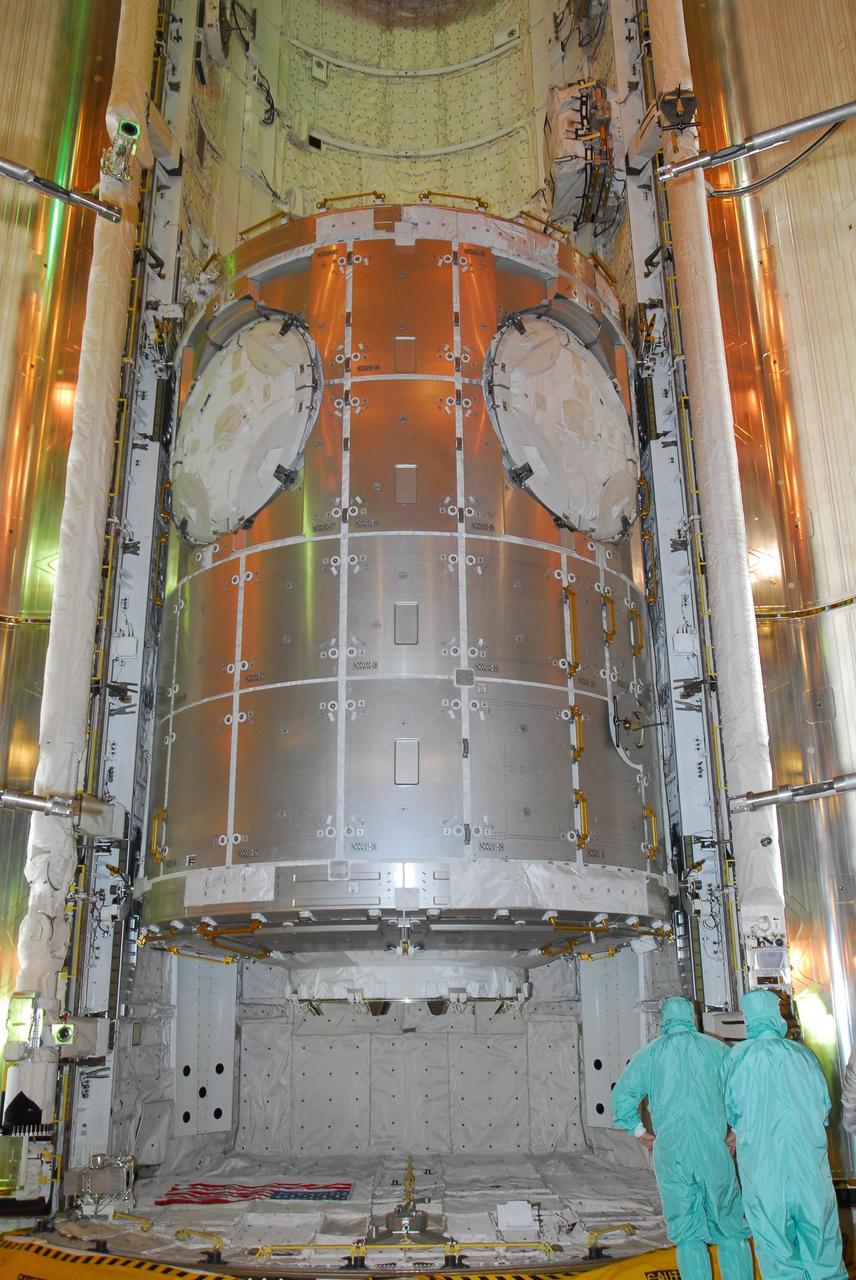
KENNEDY SPACE CENTER, FLA. -- At Launch Pad 39A, preparations are under way to close space shuttle Discovery's payload bay doors around the U.S. Node 2 module, named Harmony. The name was chosen from an academic competition involving more than 2,200 U. S. students in kindergarten through high school. The module will be delivered to the International Space Station aboard Discovery on the 14-day STS-120 mission. An orbiter's payload bay door closure at the pad is a milestone signaling that the launch date is near. Discovery's launch is targeted for Oct. 23 at 11:38 a.m. EDT. Photo credit: NASA/George Shelton
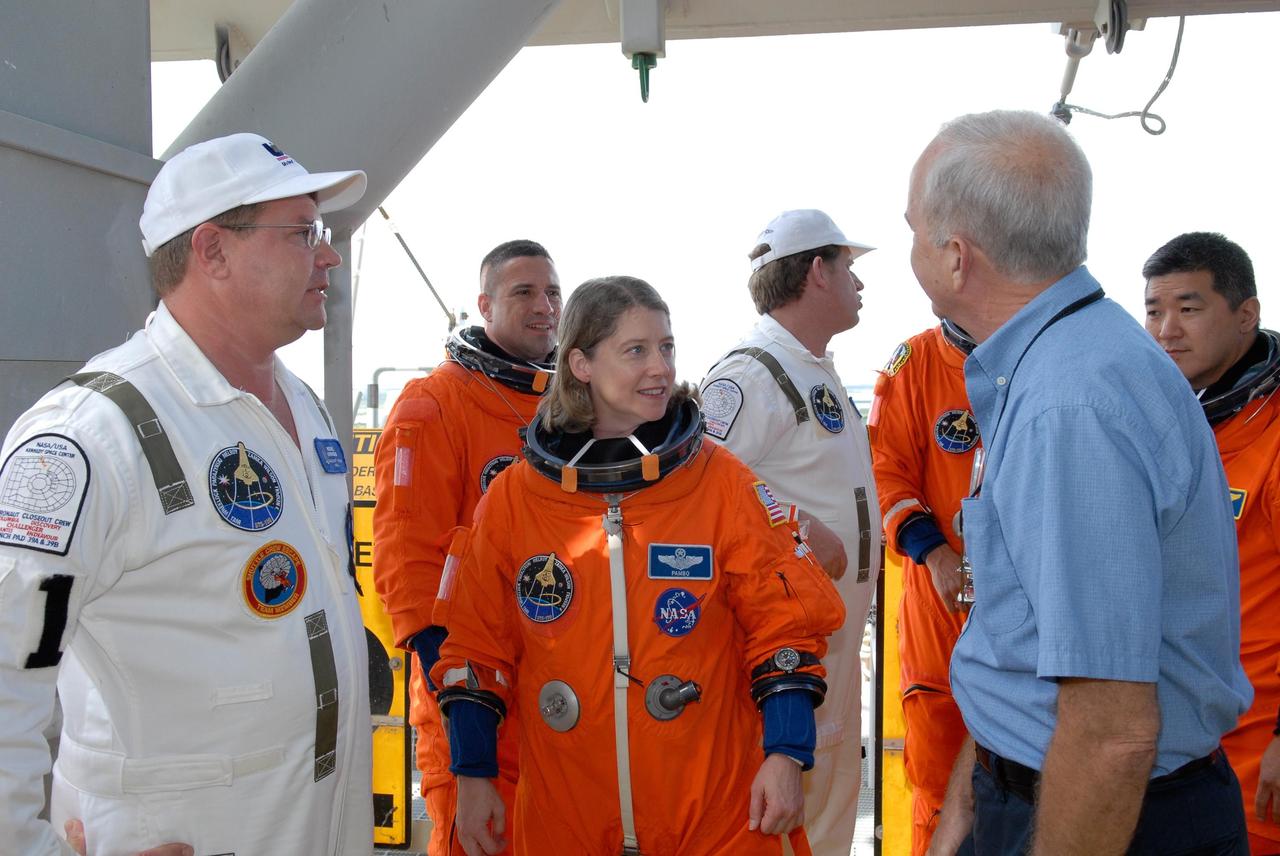
KENNEDY SPACE CENTER, FLA. -- The STS-120 crew gathers at the slidewire basket area on Launch Pad 39A after practicing emergency egress, part of the prelaunch terminal countdown demonstration test, or TCDT. Seen here in their launch and entry suits are (from left) Pilot George Zamka, Commander Pamela Melroy and (far right) Mission Specialist Daniel Tani. Their name patches reflect the nicknames the crew gave each other for the event. The TCDT at NASA's Kennedy Space Center provides astronauts and ground crews an opportunity to participate in various launch preparation activities, including equipment familiarization and emergency training. The STS-120 mission will deliver the U.S. Node 2 module, named Harmony, aboard space shuttle Discovery to the International Space Station. Discovery is targeted to launch on its 14-day mission at 11:38 a.m. EDT on Oct. 23. Photo credit: NASA/Kim Shiflett
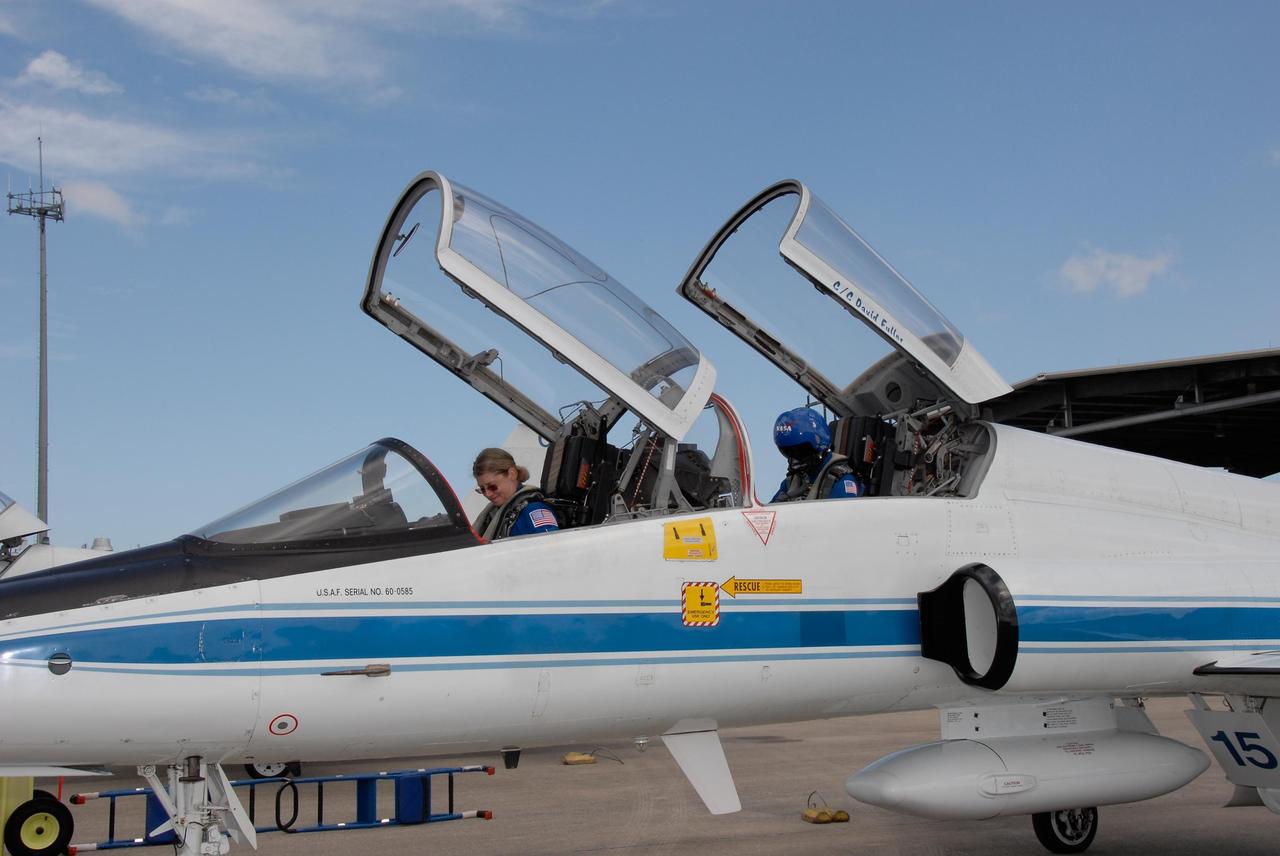
KENNEDY SPACE CENTER, FLA. -- The crew members of space shuttle mission STS-120 prepare for their return to NASA's Johnson Space Center in Houston following three days of terminal countdown demonstration test, or TCDT, activities. At Kennedy Space Center's Shuttle Landing Facility, Commander Pam Melroy, in front, and Mission Specialist Stephanie Wilson secure themselves in a T-38 jet aircraft for takeoff. Melroy is the second woman to command a shuttle mission. The TCDT provides astronauts and ground crews with equipment familiarization, emergency egress training and a simulated launch countdown. The STS-120 mission will deliver the U.S. Node 2 module, named Harmony, aboard space shuttle Discovery to the International Space Station on a 14-day mission. Discovery's launch is targeted for Oct. 23 at 11:38 a.m. EDT. Photo credit: NASA/Kim Shiflett
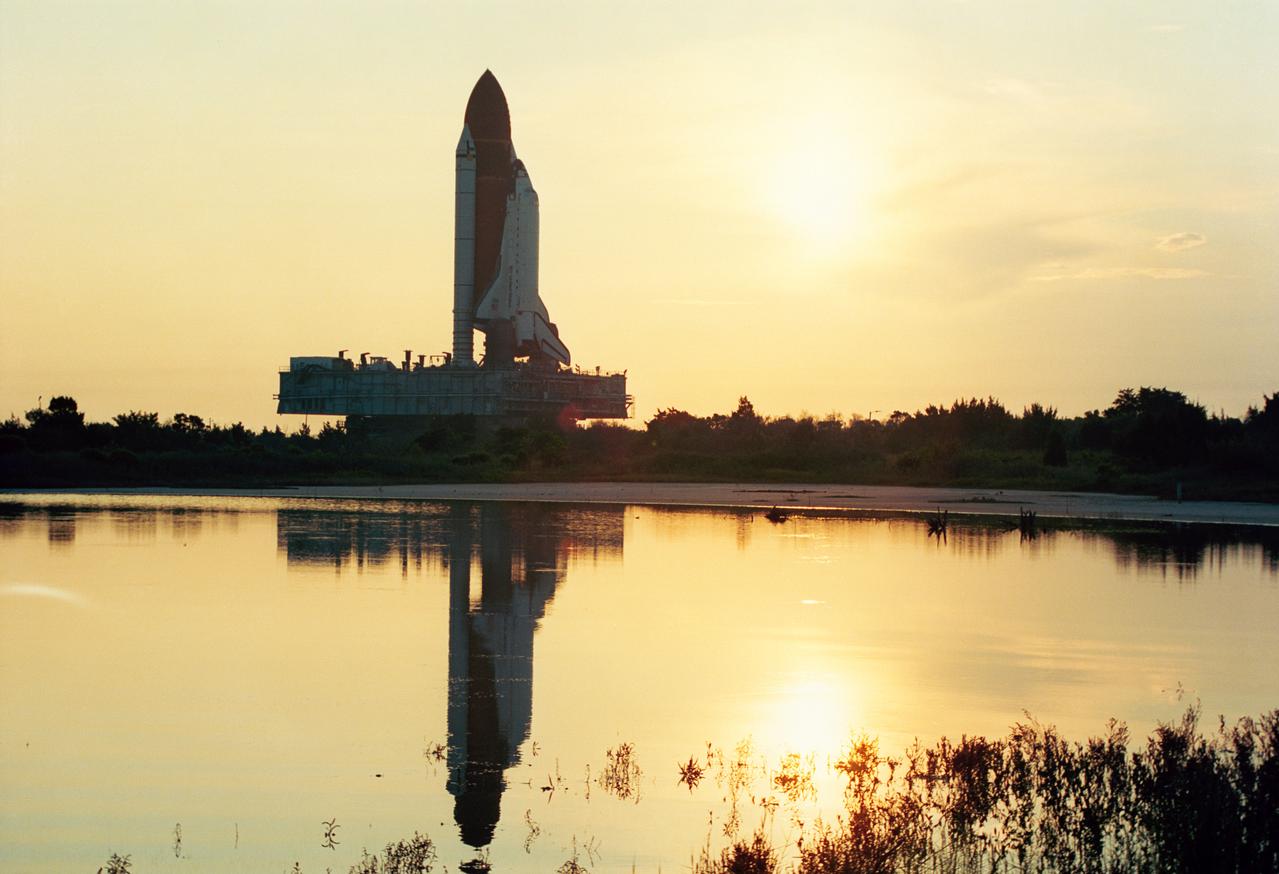
S91-44810 (12 Aug 1991) --- The Space Shuttle Discovery is rolled to launch pad 39A atop the mobile launcher platform and crawler/transporter. Already at the pad and awaiting installation in the orbiter cargo bay is the Upper Atmosphere Research Satellite (UARS), the primary payload which Discovery will carry into space on NASA?s STS-48 mission. A crew of five astronauts will be on board when Discovery lifts off in September. (KSC photo id: KSC-91PC-1474)
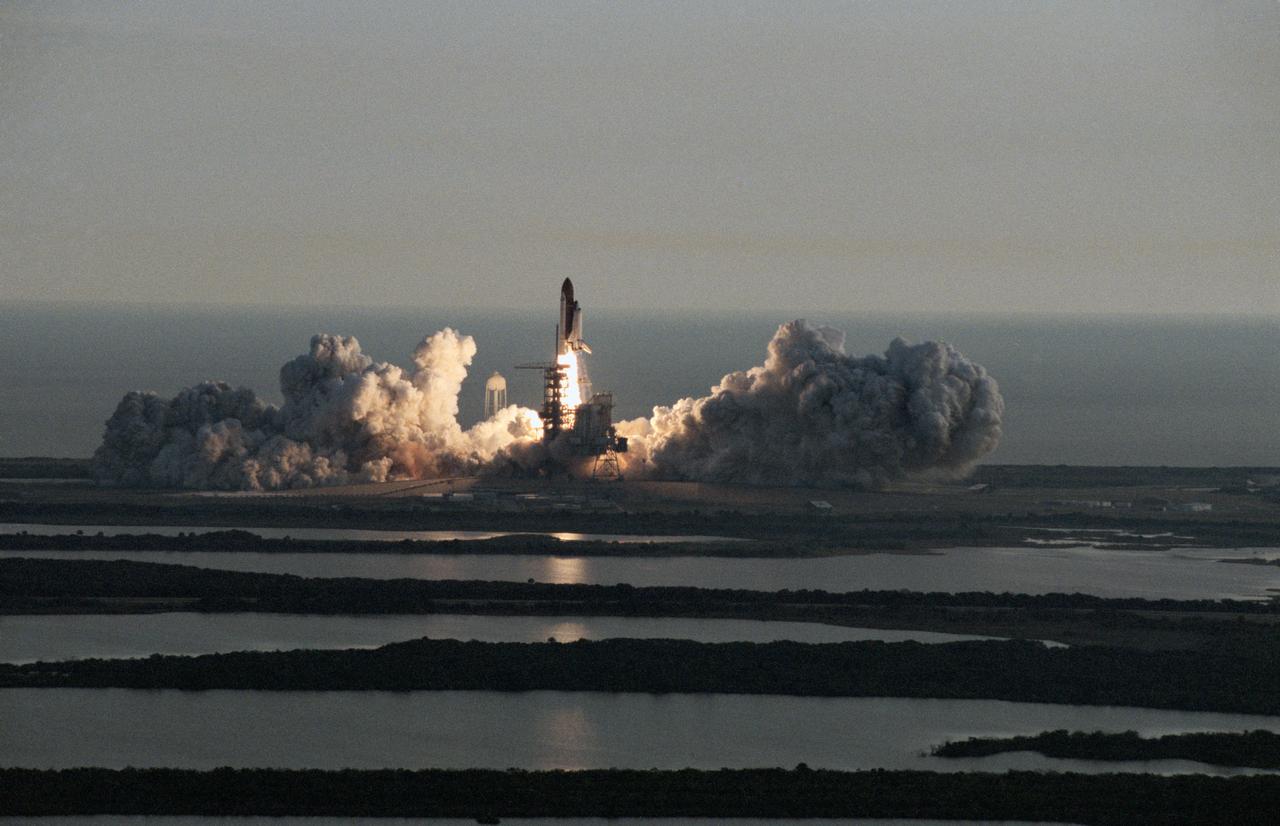
STS053-S-054 (2 Dec 1992) --- The Space Shuttle Discovery, with a crew of five astronauts onboard, launches from Kennedy Space Center?s (KSC) Pad 39A at 8:24:00 a.m. (EST), December 2, 1992. The photograph was taken from the top of the giant Vehicle Assembly Building (VAB). The all-military crew supporting the Department of Defense (DOD) flight included astronauts David M. Walker, Robert D. Cabana, Guion S. Bluford, Jr., James S. Voss and Michael R. U. (Rick) Clifford.
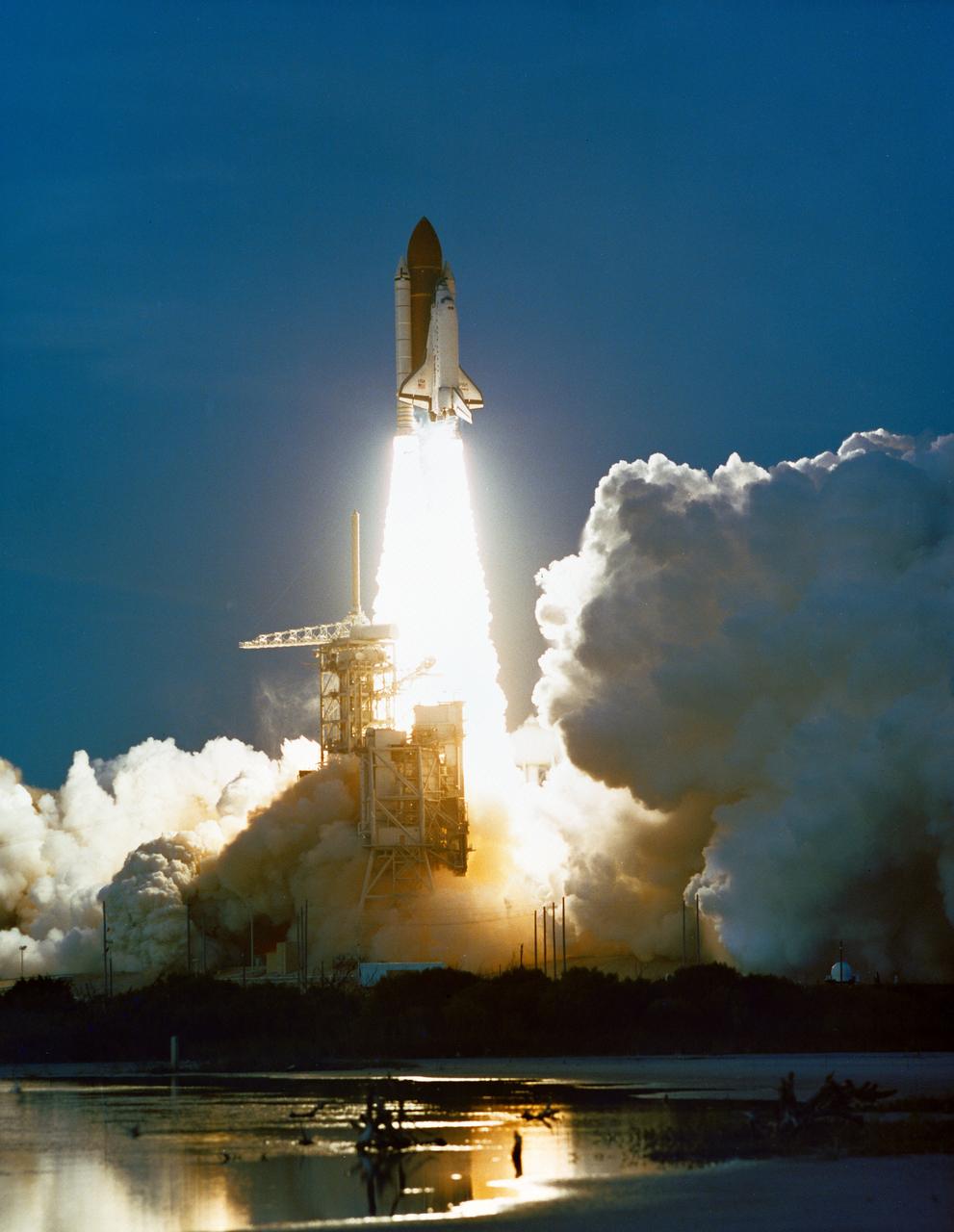
STS048-S-171 (12 Sept 1991) --- With five astronauts and the Upper Atmosphere Research Satellite (UARS) onboard, the Space Shuttle Discovery heads toward a six day mission in Earth orbit. Onboard are astronauts John O. Creighton, Kenneth S. Reightler, Charles D. (Sam) Gemar, James F. Buchli and Mark N. Brown. Liftoff occurred at 7:11:04 p.m. (EDT), September 12, 1991.
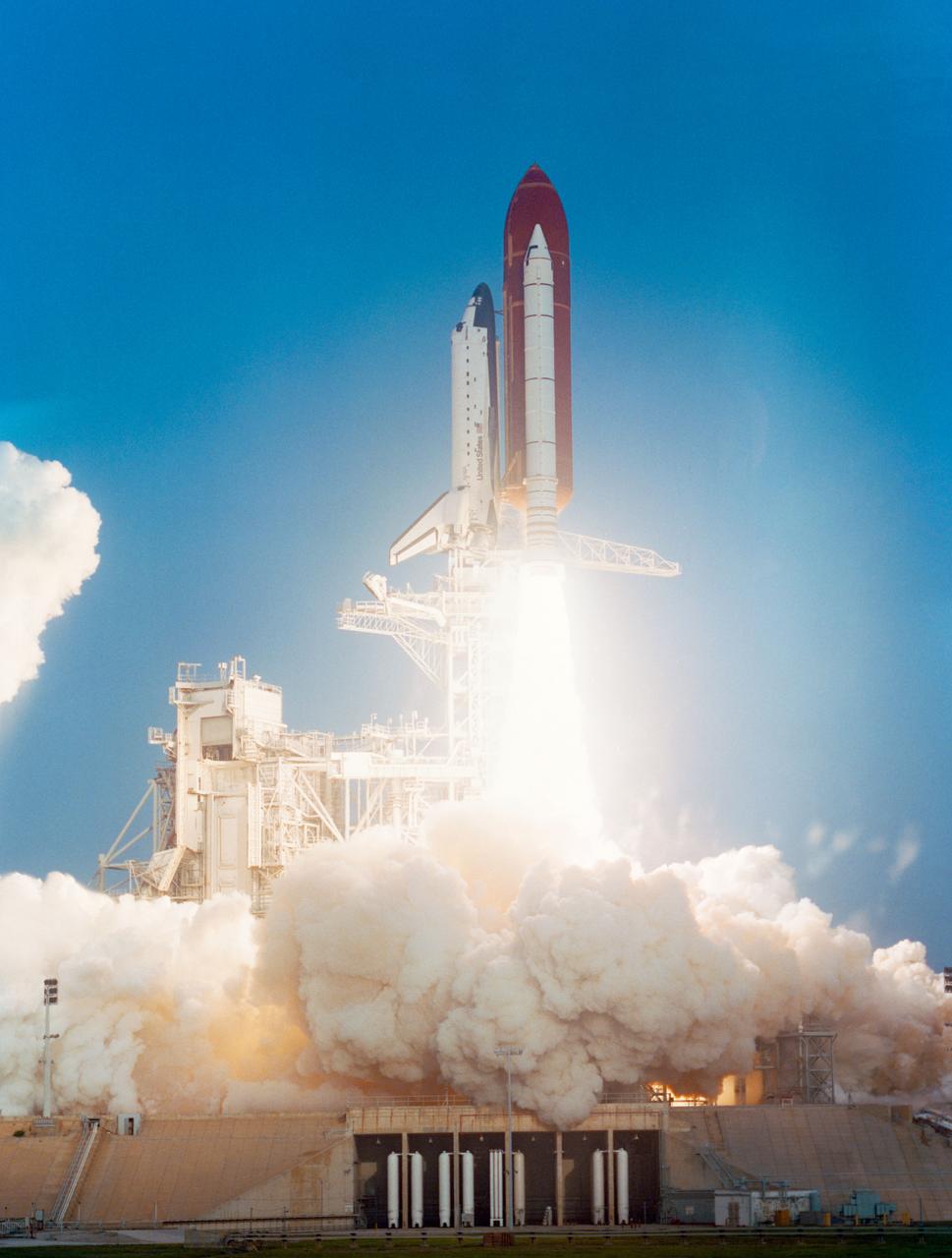
STS039-S-048 (28 April 1991)--- This side view of liftoff of the Space Shuttle Discovery was provided by a pre-set camera at KSC's Launch Pad 39A. Launch occurred at 7:33:14 a.m. (EDT), April 28, 1991. Onboard were astronauts Michael L. Coats, L. Blaine Hammond, Guion S. Bluford Jr., Charles L. (Lacy) Veach, Richard J. Hieb, Gregory J. Harbaugh and Donald R. McMonagle.
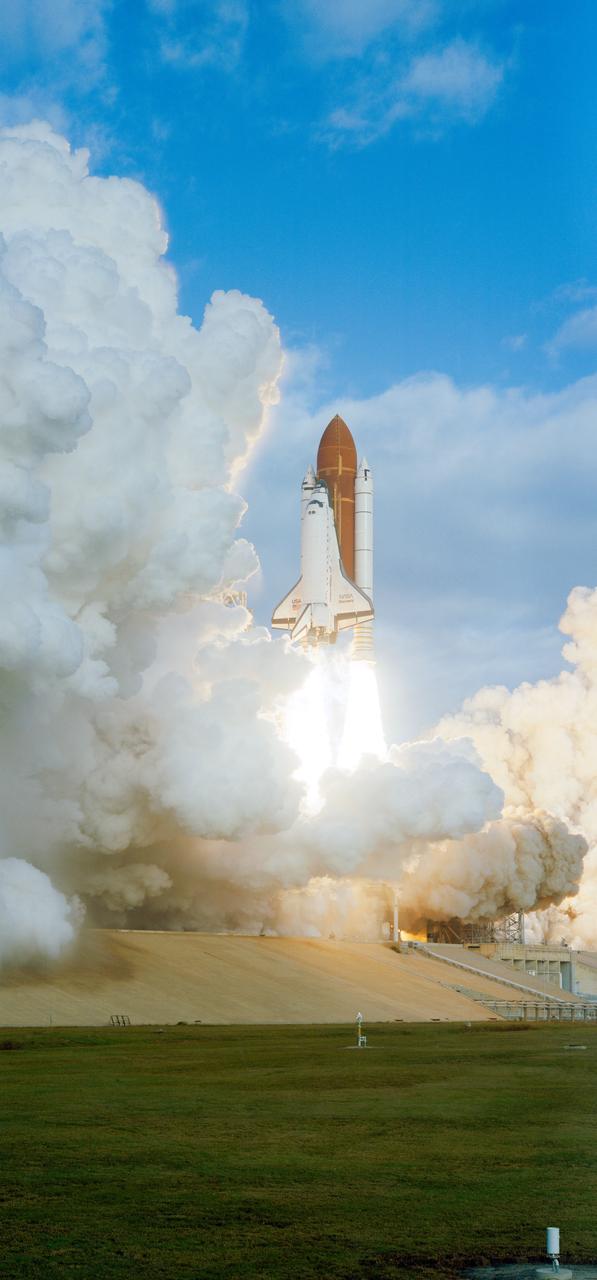
STS053-S-056 (2 Dec 1992) --- The Space Shuttle Discovery, with a crew of five astronauts onboard, launches from Kennedy Space Center's (KSC) Pad 39A at 8:24:00 a.m. (EST), December 2, 1992. The all military crew supporting the Department of Defense (DOD) flight included astronauts David M. Walker, Robert D. Cabana, Guion S. Bluford Jr., James S. Voss and Michael R. U. (Rick) Clifford.
STS048-S-172 (12 Sept 1991) ---- With five astronauts and the Upper Atmosphere Research Satellite (UARS) onboard, the Space Shuttle Discovery heads toward a six day mission in Earth orbit. Onboard are astronauts John O. Creighton, Kenneth S. Reightler, Charles D. (Sam) Gemar, James F. Buchli and Mark N. Brown. Liftoff occurred at 7:11:04 p.m. (EDT), September 12, 1991.