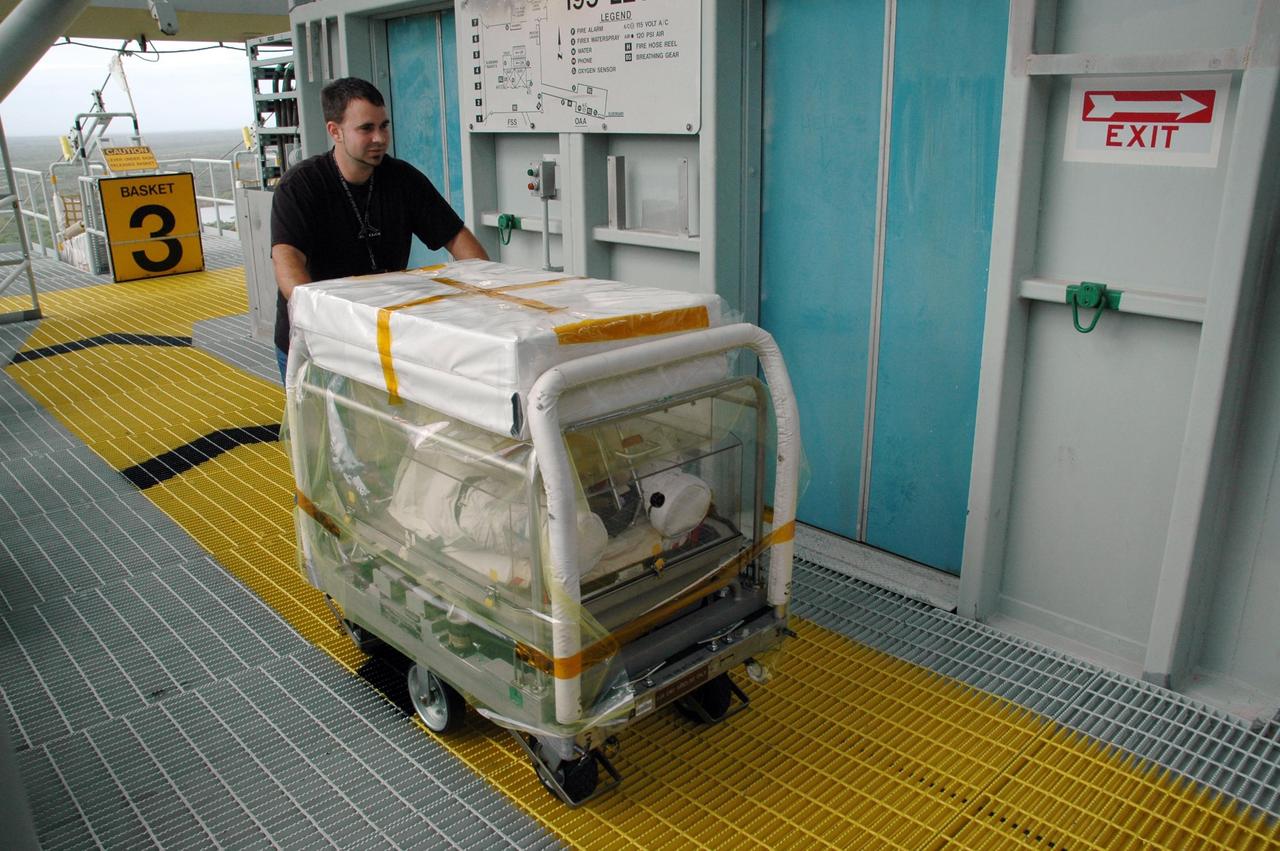
KENNEDY SPACE CENTER, FLA. -- A worker on Launch Pad 39B arrives on the 195-foot level of the fixed service structure with a cart containing the extravehicular mobility units (or spacewalk suits) to be used on mission STS-116. The suits will be stored inside Space Shuttle Discovery. Launch of Discovery is scheduled for 9:35 p.m. Dec. 7. The crew will deliver the P5 integrated truss to the International Space Station and install it during one or more extravehicular activities. Photo credit: NASA/Jack Pfaller
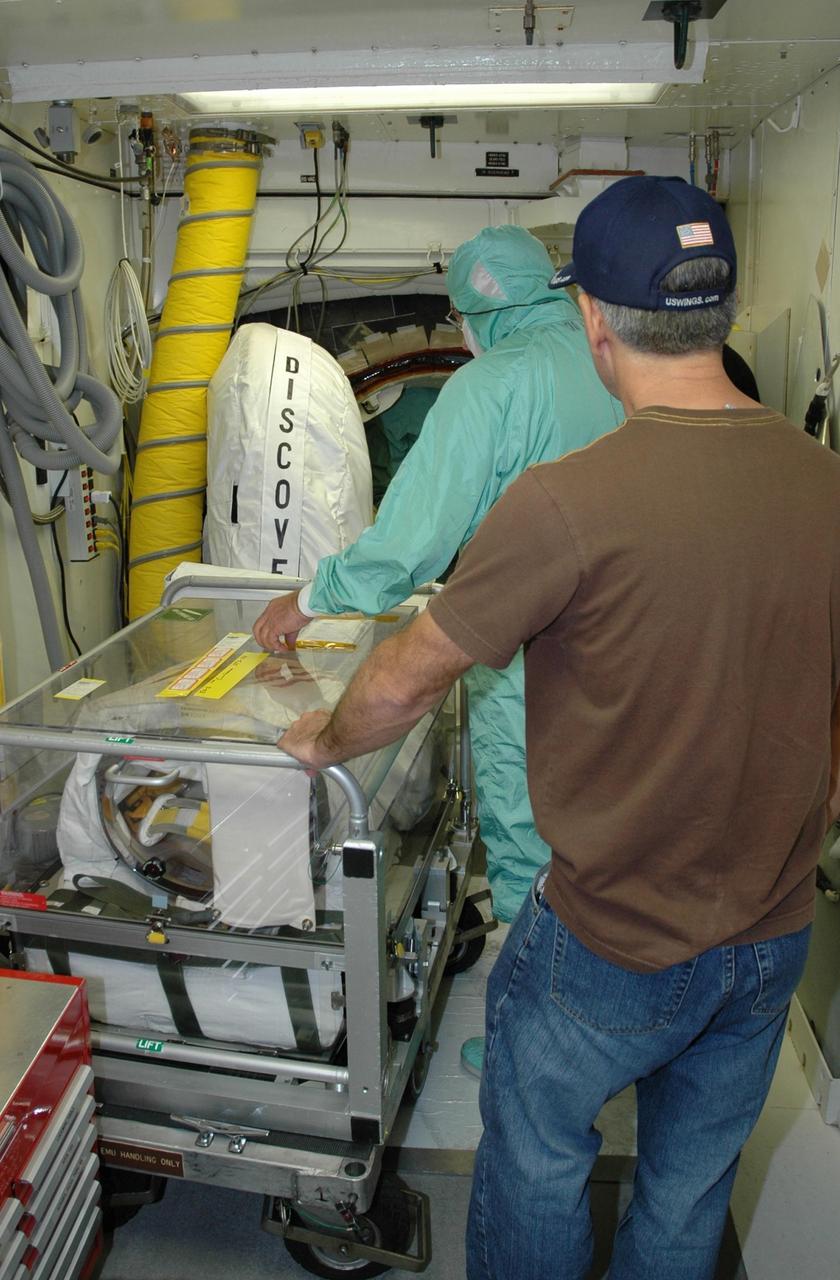
KENNEDY SPACE CENTER, FLA. -- Inside the White Room on Launch Pad 39B, the worker in the foreground hands off the cart to another worker in a protective suit who will move it inside Space Shuttle Discovery for storage. The cart contains the extravehicular mobility units (or spacewalk suits) to be used on mission STS-116. Launch of Discovery is scheduled for 9:35 p.m. Dec. 7. The crew will deliver the P5 integrated truss to the International Space Station and install it during one or more extravehicular activities. Photo credit: NASA/Jack Pfaller
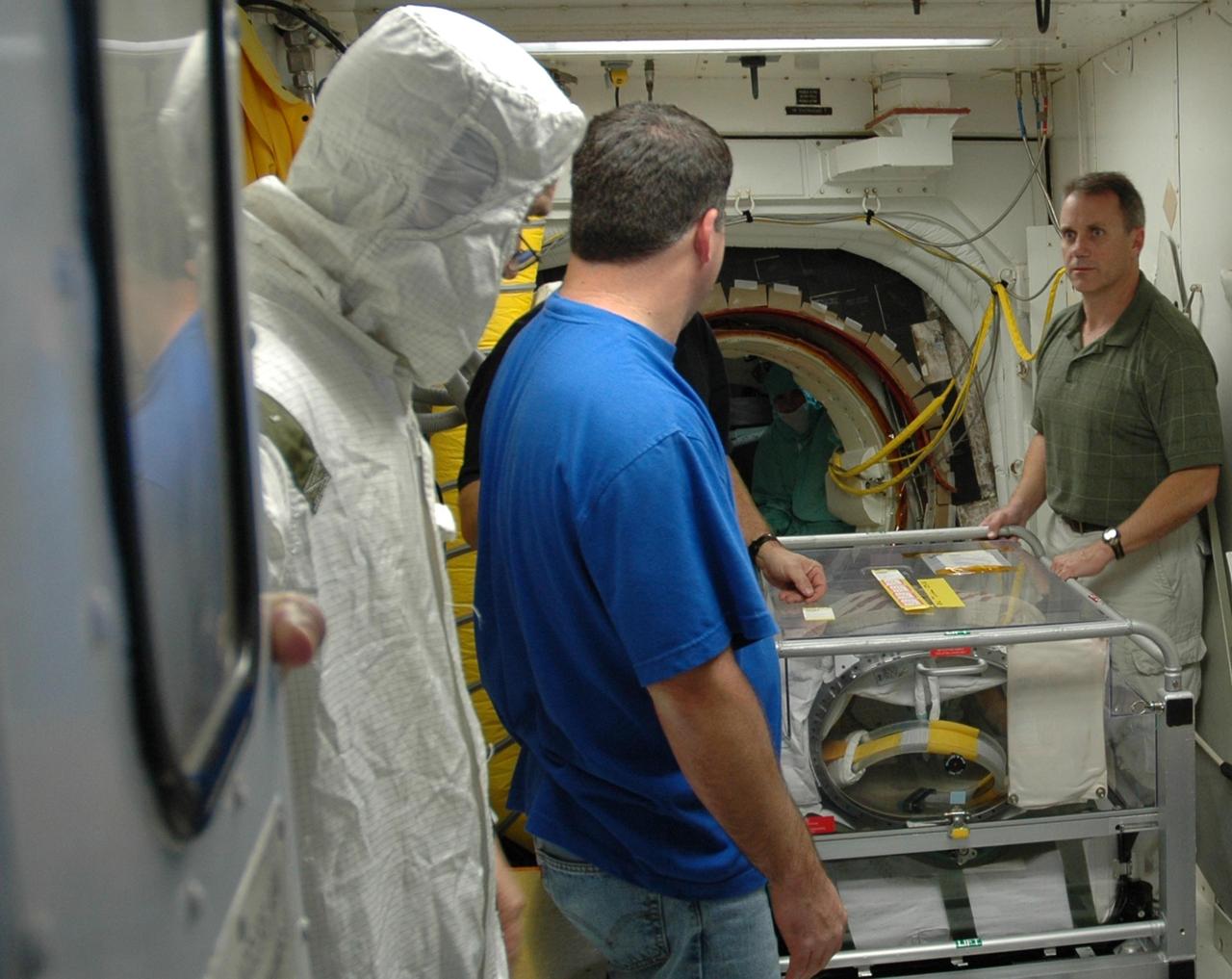
KENNEDY SPACE CENTER, FLA. -- Inside the White Room on Launch Pad 39B, workers get ready to move a cart through the hatch into Space Shuttle Discovery. The cart contains the extravehicular mobility units (or spacewalk suits) to be used on mission STS-116. The suits will be stored inside Discovery. Launch of Discovery is scheduled for 9:35 p.m. Dec. 7. The crew will deliver the P5 integrated truss to the International Space Station and install it during one or more extravehicular activities. Photo credit: NASA/Jack Pfaller
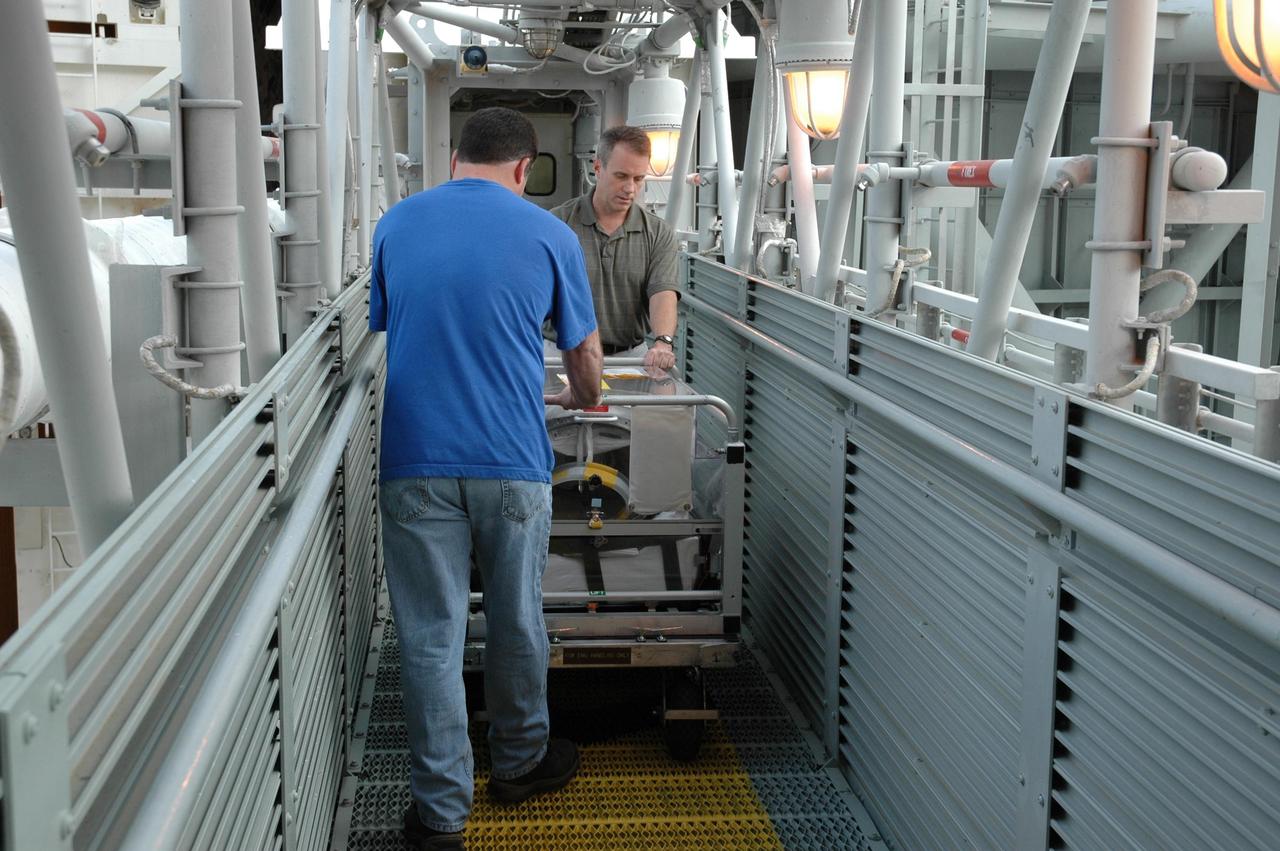
KENNEDY SPACE CENTER, FLA. -- Two workers on Launch Pad 39B maneuver a cart along the orbiter access arm toward the White Room. The cart contains the extravehicular mobility units (or spacewalk suits) to be used on mission STS-116. The suits will be stored inside Space Shuttle Discovery, which has access from the White Room. Launch of Discovery is scheduled for 9:35 p.m. Dec. 7. The crew will deliver the P5 integrated truss to the International Space Station and install it during one or more extravehicular activities. Photo credit: NASA/Jack Pfaller