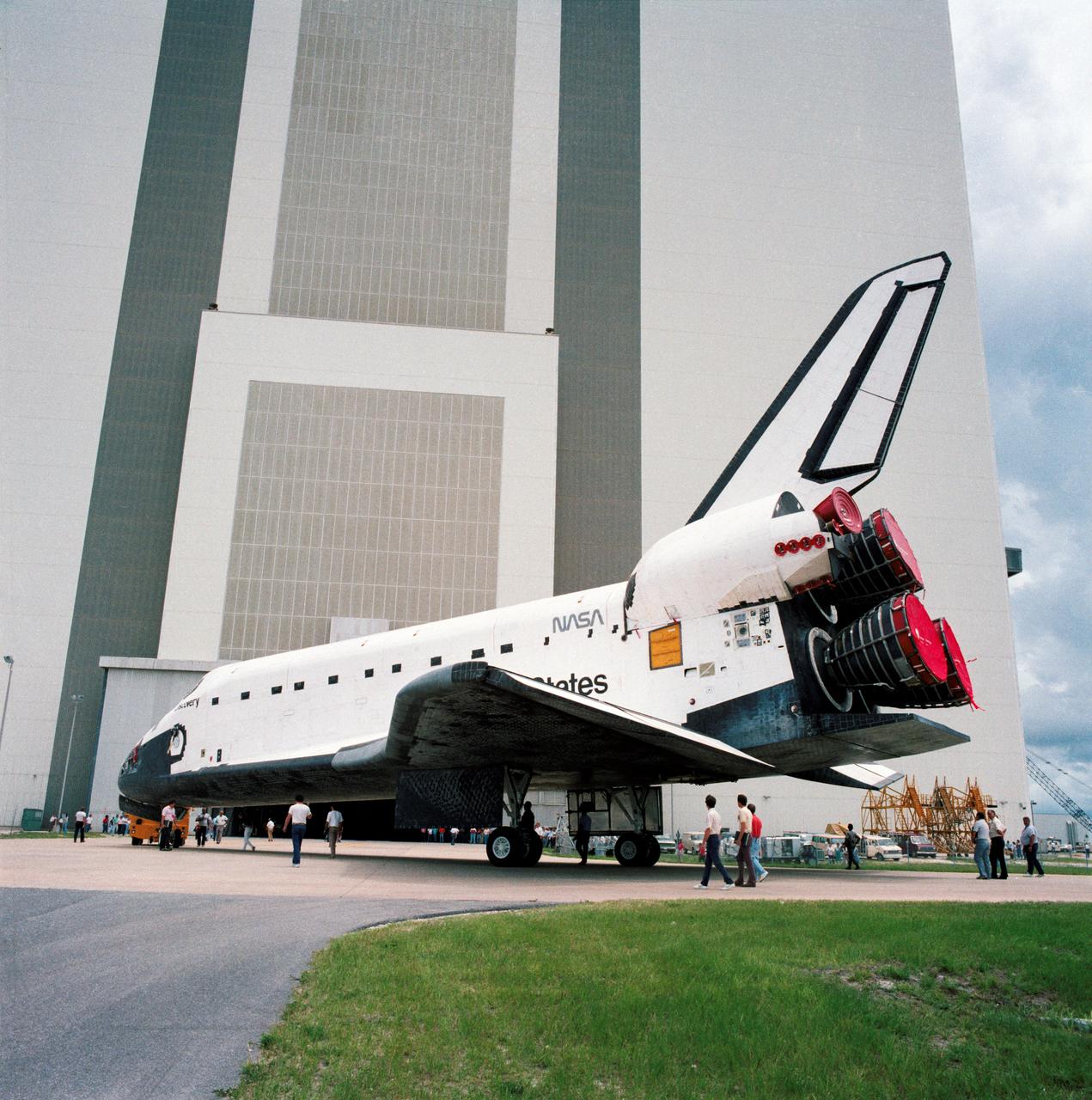
S88-42092 (15 July 1988) --- STS-26 Discovery, Orbiter Vehicle (OV) 103, rollover at Kennedy Space Center (KSC) is closely monitored by engineers and technicians in the late stages of the move from the orbiter processing facility (OPF) to the vehicle assembly building (VAB) as preflight preparations continue. A large crowd of KSC employees and other spectators watches in the background as OV-103, supported by its landing gear, is pulled toward VAB (background). While in the VAB, OV-103 will be mated to two solid rocket boosters (SRBs) and an external fuel tank.
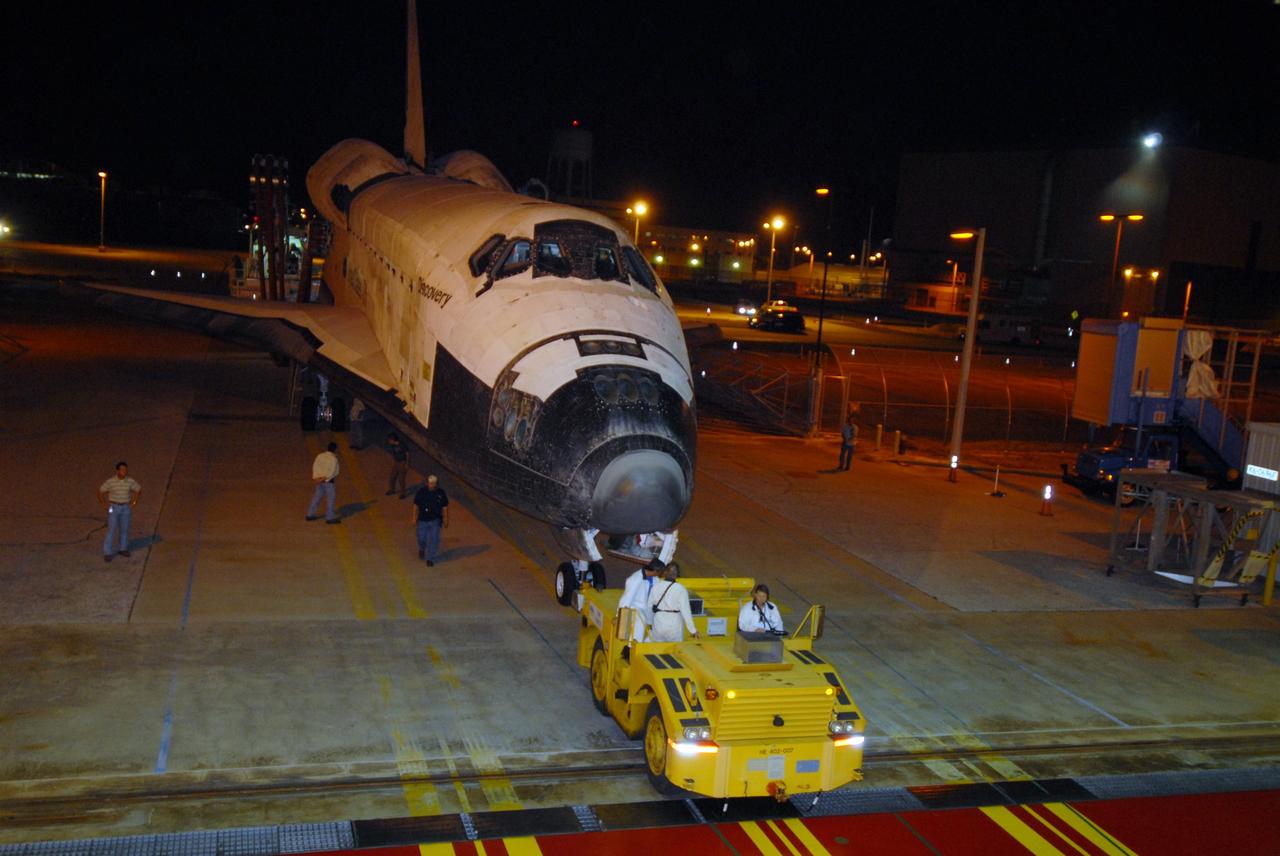
CAPE CANAVERAL, Fla. – Space shuttle Discovery is towed into Orbiter Processing Facility 3 at NASA's Kennedy Space Center in Florida. Discovery landed at 3:13:17 p.m. EDT after completing a 13-day journey of more than 5.3 million miles on the STS-119 mission. The mission was the 28th flight to the station, the 36th flight of Discovery and the 125th in the Space Shuttle Program, as well as the 70th landing at Kennedy. Photo credit: NASA/Jack Pfaller
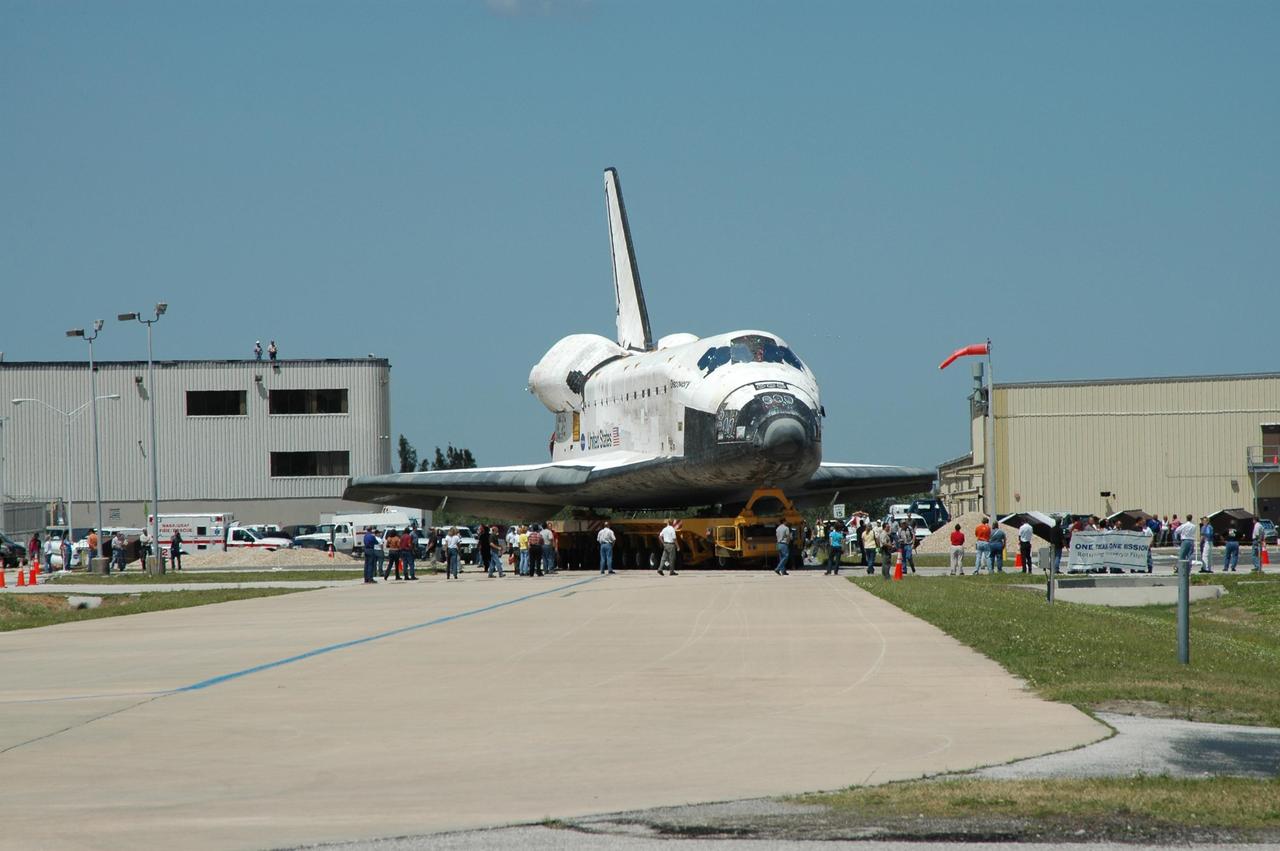
KENNEDY SPACE CENTER, FLA. - The orbiter Discovery, sitting on an orbiter transporter, turns the corner after gliding out of NASA's Orbiter Processing Facility to begin the rollover to the Vehicle Assembly Building (VAB). The rollover marks the start of the journey to the launch pad and, ultimately, launch. Once inside the VAB, Discovery will be raised to vertical and lifted up and over into high bay 3 for stacking with its redesigned external tank and twin solid rocket boosters. The rollout of Space Shuttle Discovery to Launch Pad 39B is expected in approximately a week. Launch of Discovery on mission STS-121 is scheduled to take place in a window extending July 1 to July 19. Photo credit: NASA/Jim Grossmann
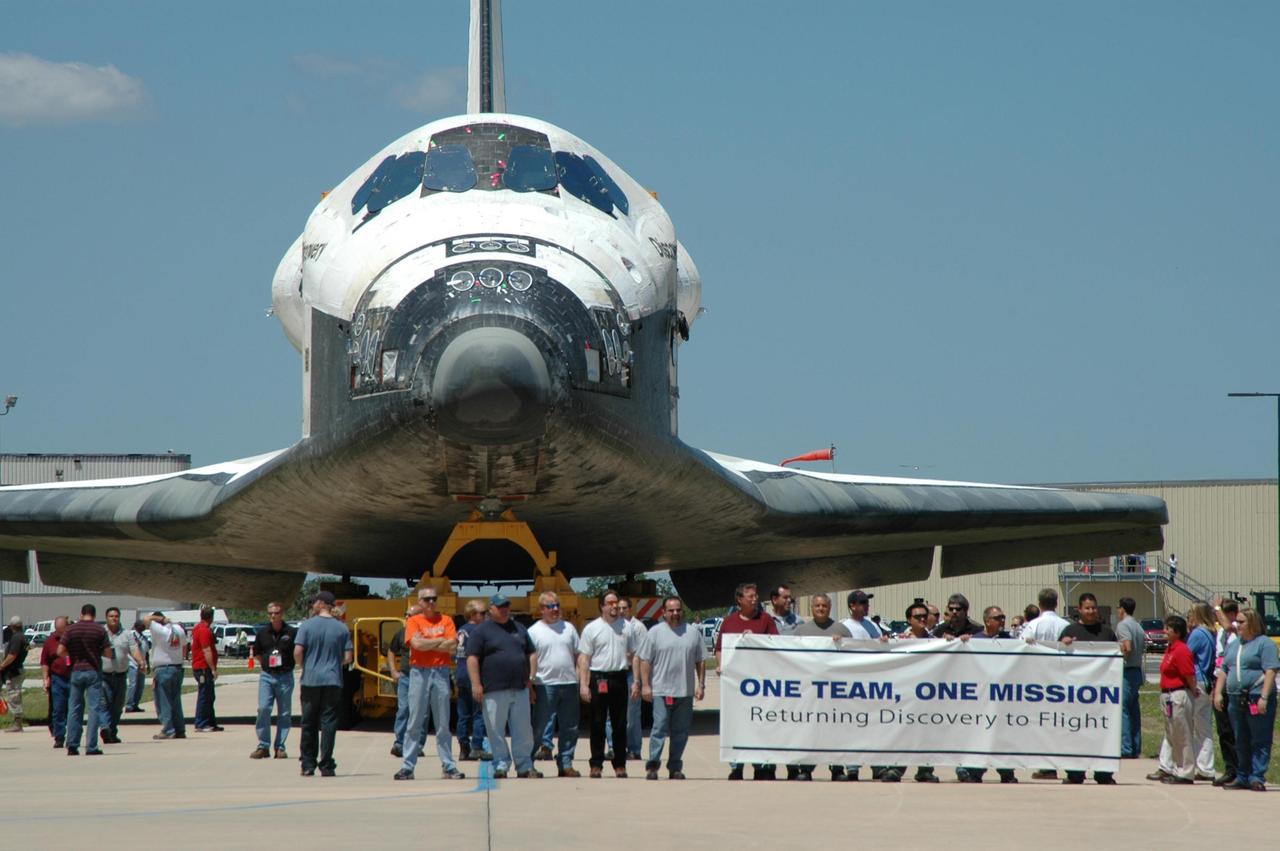
KENNEDY SPACE CENTER, FLA. - As the orbiter Discovery, sitting on an orbiter transporter, moves away from NASA's Orbiter Processing Facility toward the Vehicle Assembly Building (VAB), workers accompany the vehicle. The rollover to the VAB marks the start of the journey to the launch pad and, ultimately, launch. Once inside the VAB, Discovery will be raised to vertical and lifted up and over into high bay 3 for stacking with its redesigned external tank and twin solid rocket boosters. The rollout of Space Shuttle Discovery to Launch Pad 39B is expected in approximately a week. Launch of Discovery on mission STS-121 is scheduled to take place in a window extending July 1 to July 19. Photo credit: NASA/Jim Grossmann
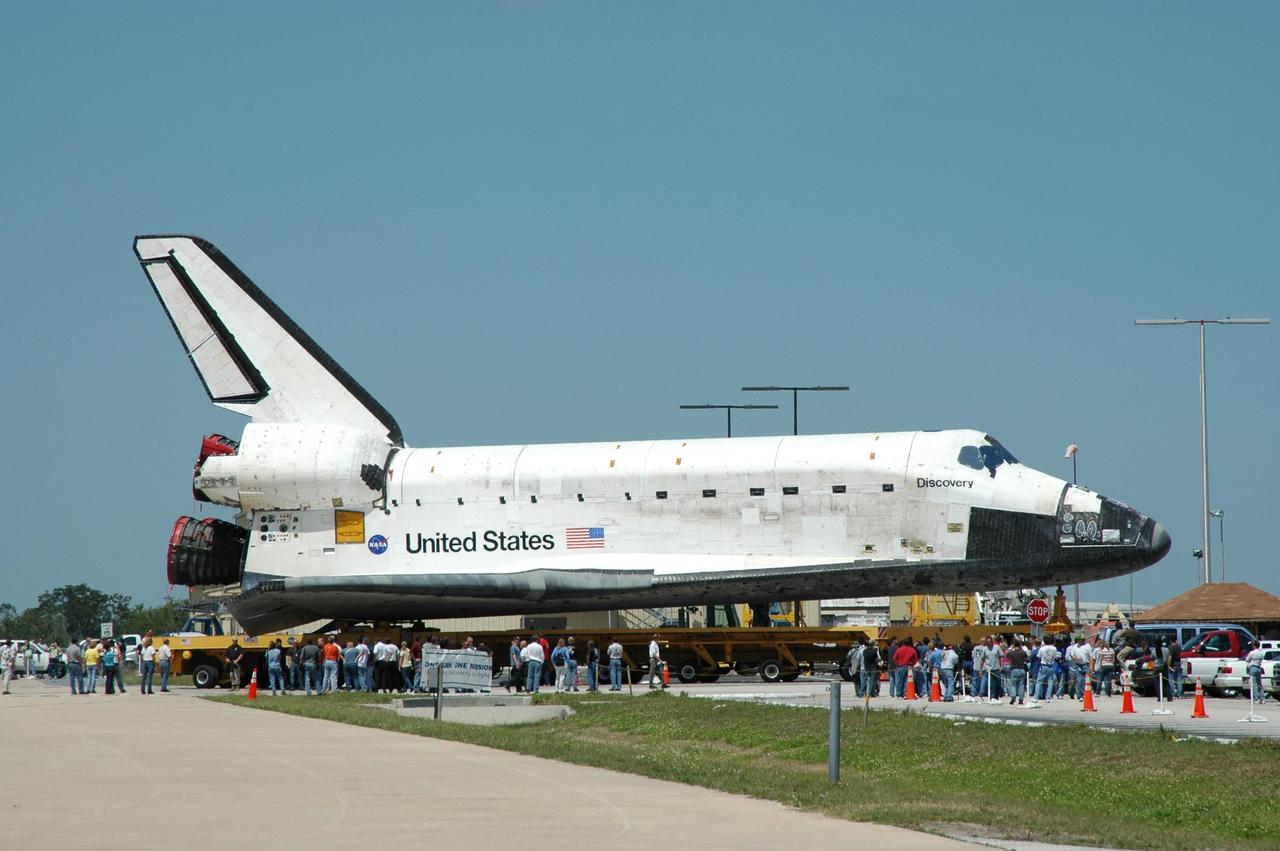
KENNEDY SPACE CENTER, FLA. - Workers crowd around the orbiter Discovery, sitting on an orbiter transporter, as it glides out of NASA's Orbiter Processing Facility to begin the rollover to the Vehicle Assembly Building (VAB). The rollover marks the start of the journey to the launch pad and, ultimately, launch. Once inside the VAB, Discovery will be raised to vertical and lifted up and over into high bay 3 for stacking with its redesigned external tank and twin solid rocket boosters. The rollout of Space Shuttle Discovery to Launch Pad 39B is expected in approximately a week. Launch of Discovery on mission STS-121 is scheduled to take place in a window extending July 1 to July 19. Photo credit: NASA/Jim Grossmann
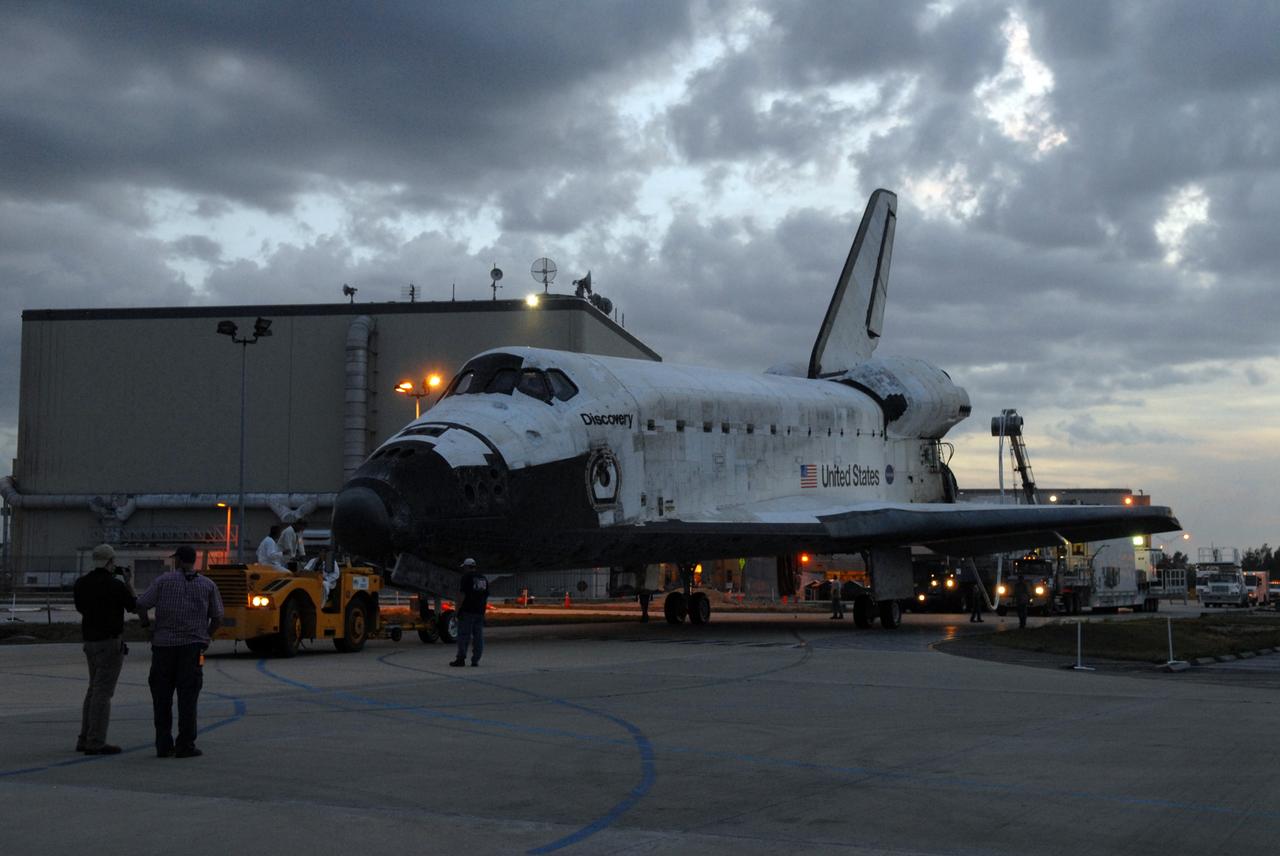
CAPE CANAVERAL, Fla. – Surrounding lights cast a glow as space shuttle Discovery is towed to Orbiter Processing Facility 3 at NASA's Kennedy Space Center in Florida. Discovery landed at 3:13:17 p.m. EDT after completing a 13-day journey of more than 5.3 million miles on the STS-119 mission. The mission was the 28th flight to the station, the 36th flight of Discovery and the 125th in the Space Shuttle Program, as well as the 70th landing at Kennedy. Photo credit: NASA/Jack Pfaller
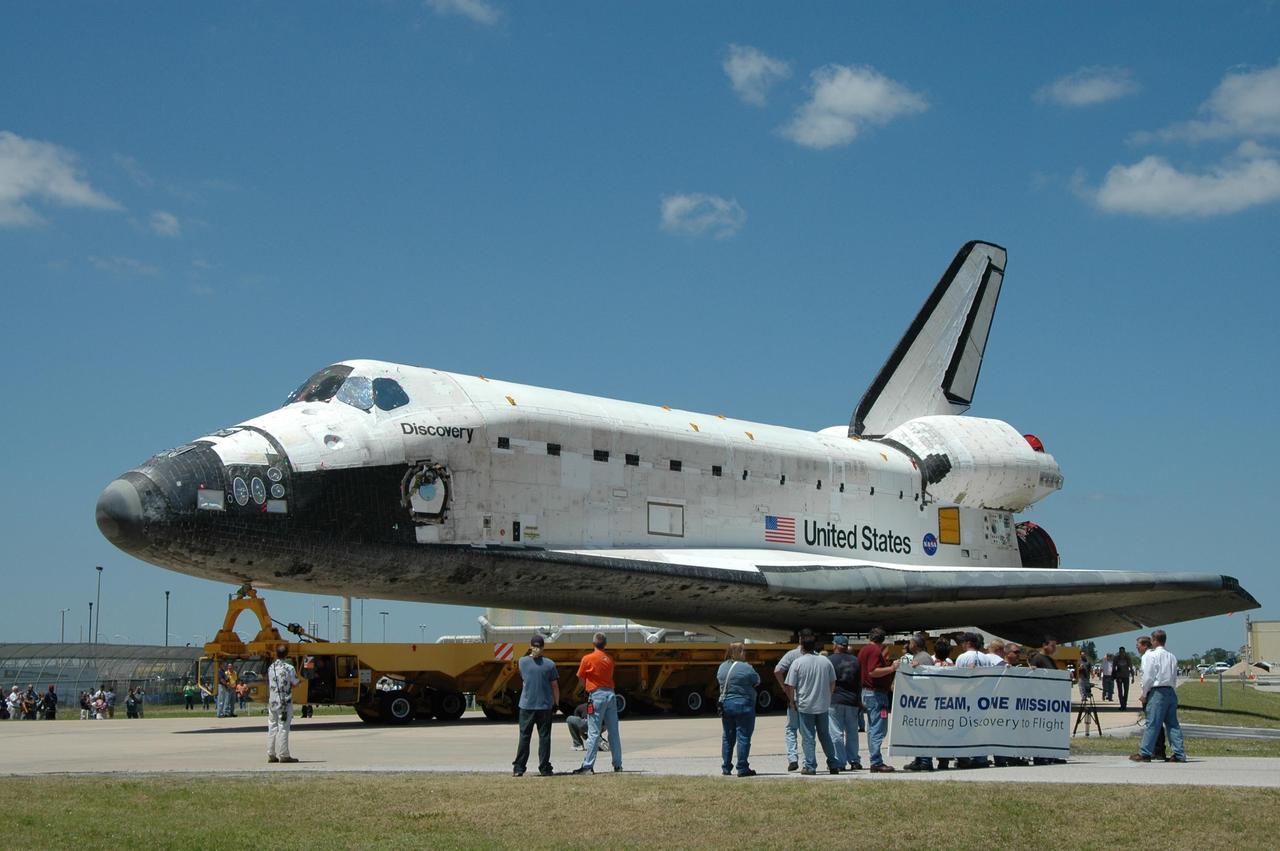
KENNEDY SPACE CENTER, FLA. - The orbiter Discovery, sitting on an orbiter transporter, turns away from NASA's Orbiter Processing Facility to roll toward the Vehicle Assembly Building (VAB). The rollover to the VAB marks the start of the journey to the launch pad and, ultimately, launch. Once inside the VAB, Discovery will be raised to vertical and lifted up and over into high bay 3 for stacking with its redesigned external tank and twin solid rocket boosters. The rollout of Space Shuttle Discovery to Launch Pad 39B is expected in approximately a week. Launch of Discovery on mission STS-121 is scheduled to take place in a window extending July 1 to July 19. Photo credit: NASA/Jim Grossmann
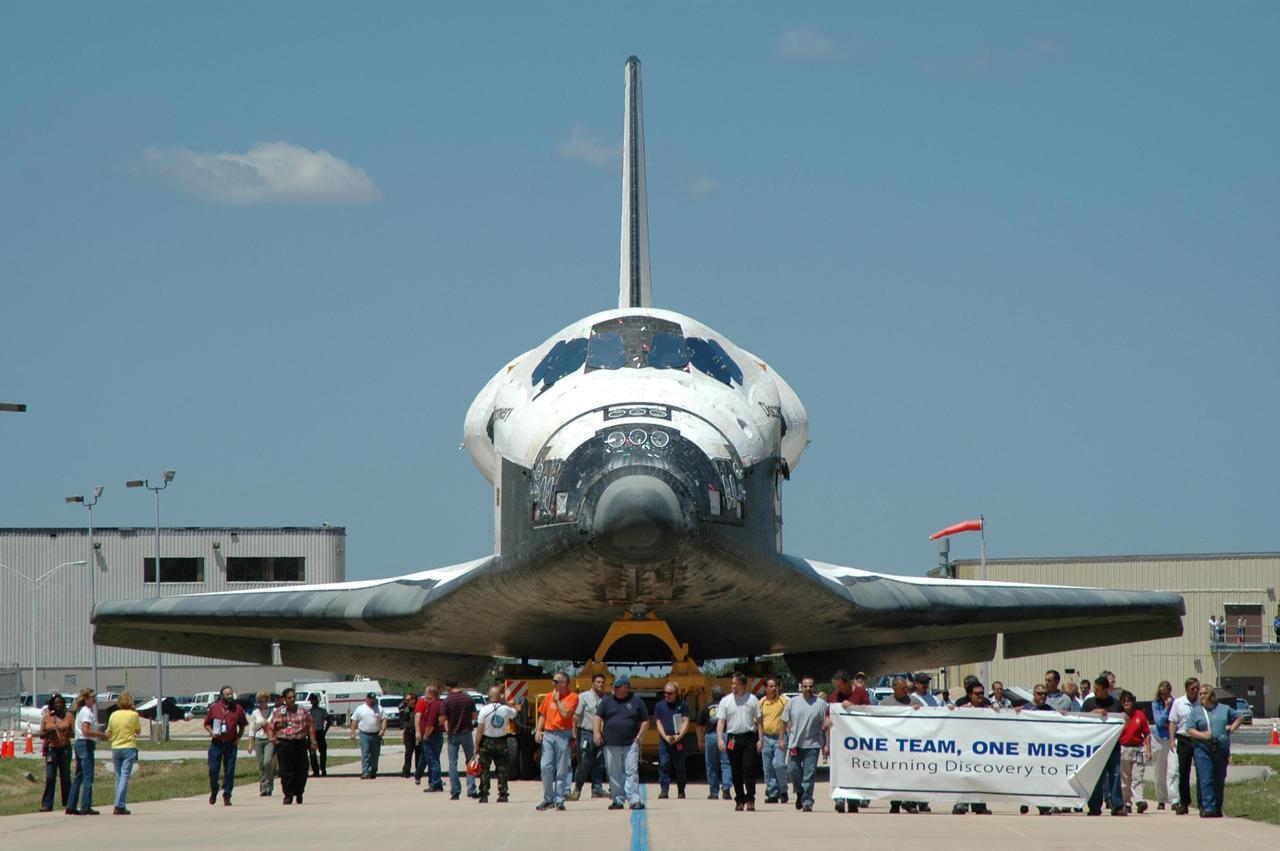
KENNEDY SPACE CENTER, FLA. - As the orbiter Discovery, sitting on an orbiter transporter, moves away from NASA's Orbiter Processing Facility toward the Vehicle Assembly Building (VAB), workers accompany the vehicle. The rollover to the VAB marks the start of the journey to the launch pad and, ultimately, launch. Once inside the VAB, Discovery will be raised to vertical and lifted up and over into high bay 3 for stacking with its redesigned external tank and twin solid rocket boosters. The rollout of Space Shuttle Discovery to Launch Pad 39B is expected in approximately a week. Launch of Discovery on mission STS-121 is scheduled to take place in a window extending July 1 to July 19. Photo credit: NASA/Jim Grossmann
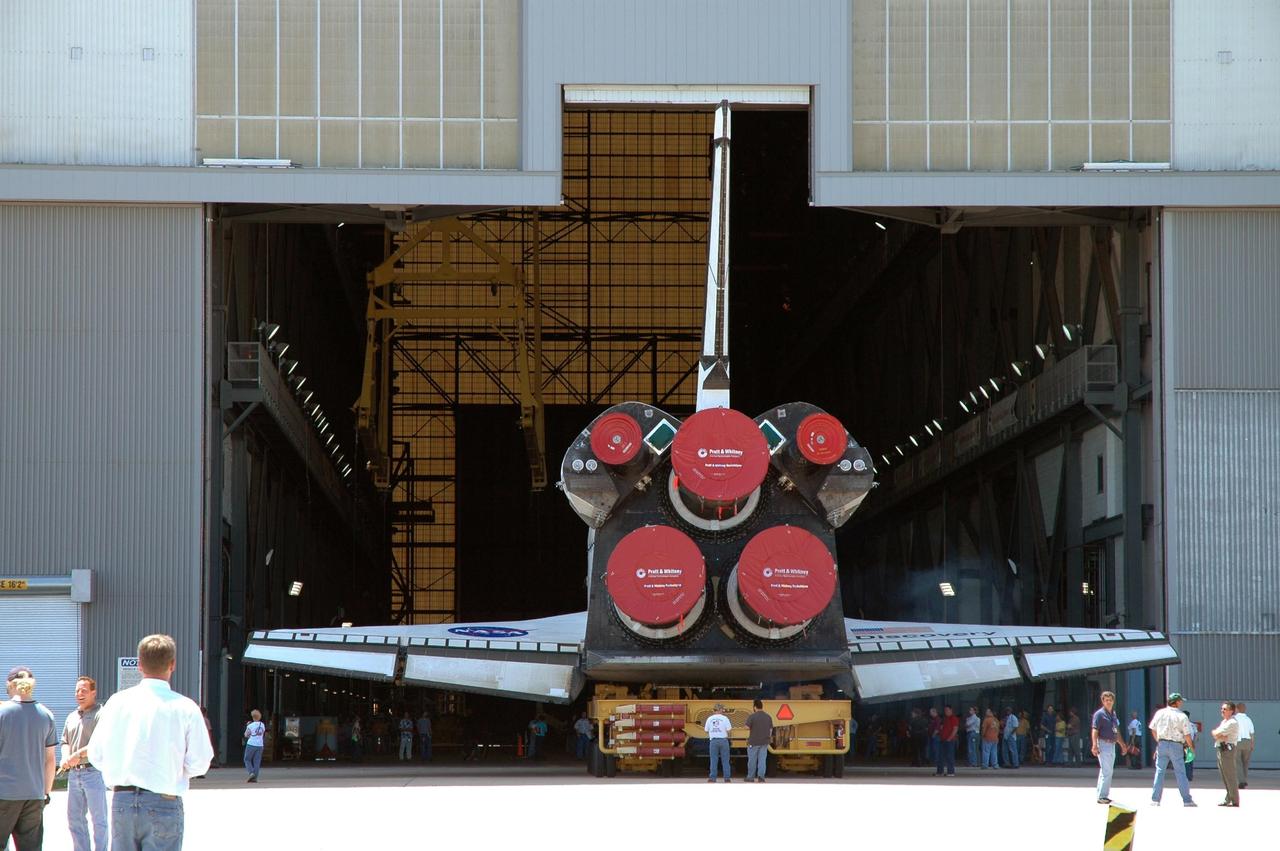
KENNEDY SPACE CENTER, FLA. - The orbiter Discovery, on top of an orbiter transporter, rolls into NASA's Vehicle Assembly Building (VAB) after leaving the Orbiter Processing Facility. The rollover to the VAB marks the start of the journey to the launch pad and, ultimately, launch. Once inside the VAB, Discovery will be raised to vertical and lifted up and over into high bay 3 for stacking with its redesigned external tank and twin solid rocket boosters. The rollout of Space Shuttle Discovery to Launch Pad 39B is expected in approximately a week. Launch of Discovery on mission STS-121 is scheduled to take place in a window extending July 1 to July 19. Photo credit: NASA/Jim Grossmann
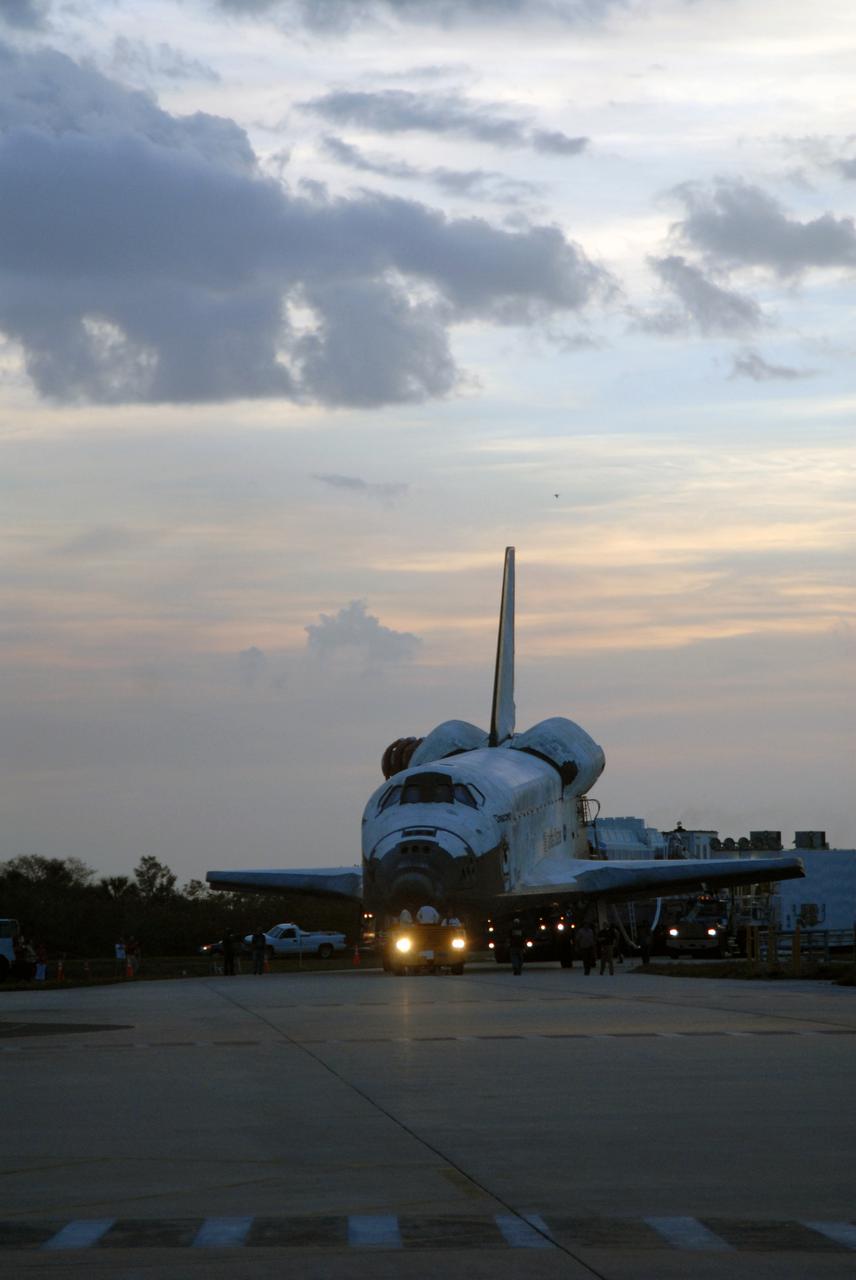
CAPE CANAVERAL, Fla. – Space shuttle Discovery is silhouetted against a fading sunset sky at NASA's Kennedy Space Center in Florida as it is towed to Orbiter Processing Facility 3. Discovery landed at 3:13:17 p.m. EDT after completing a 13-day journey of more than 5.3 million miles on the STS-119 mission. The mission was the 28th flight to the station, the 36th flight of Discovery and the 125th in the Space Shuttle Program, as well as the 70th landing at Kennedy. Photo credit: NASA_Jack Pfaller
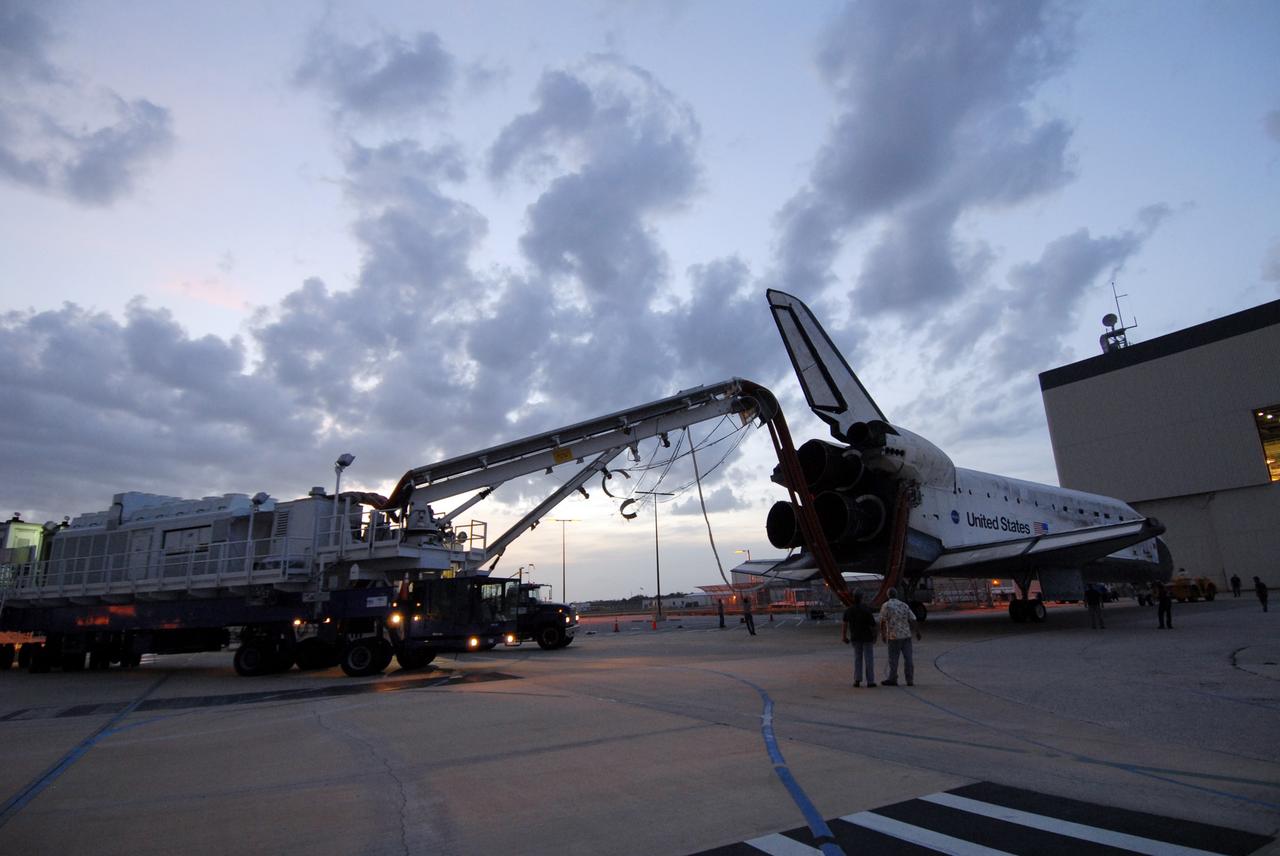
CAPE CANAVERAL, Fla. – Space shuttle Discovery rolls toward Orbiter Processing Facility 3 at NASA's Kennedy Space Center in Florida. Discovery landed at 3:13:17 p.m. EDT after completing a 13-day journey of more than 5.3 million miles on the STS-119 mission. The mission was the 28th flight to the station, the 36th flight of Discovery and the 125th in the Space Shuttle Program, as well as the 70th landing at Kennedy. Photo credit: NASA/Jack Pfaller
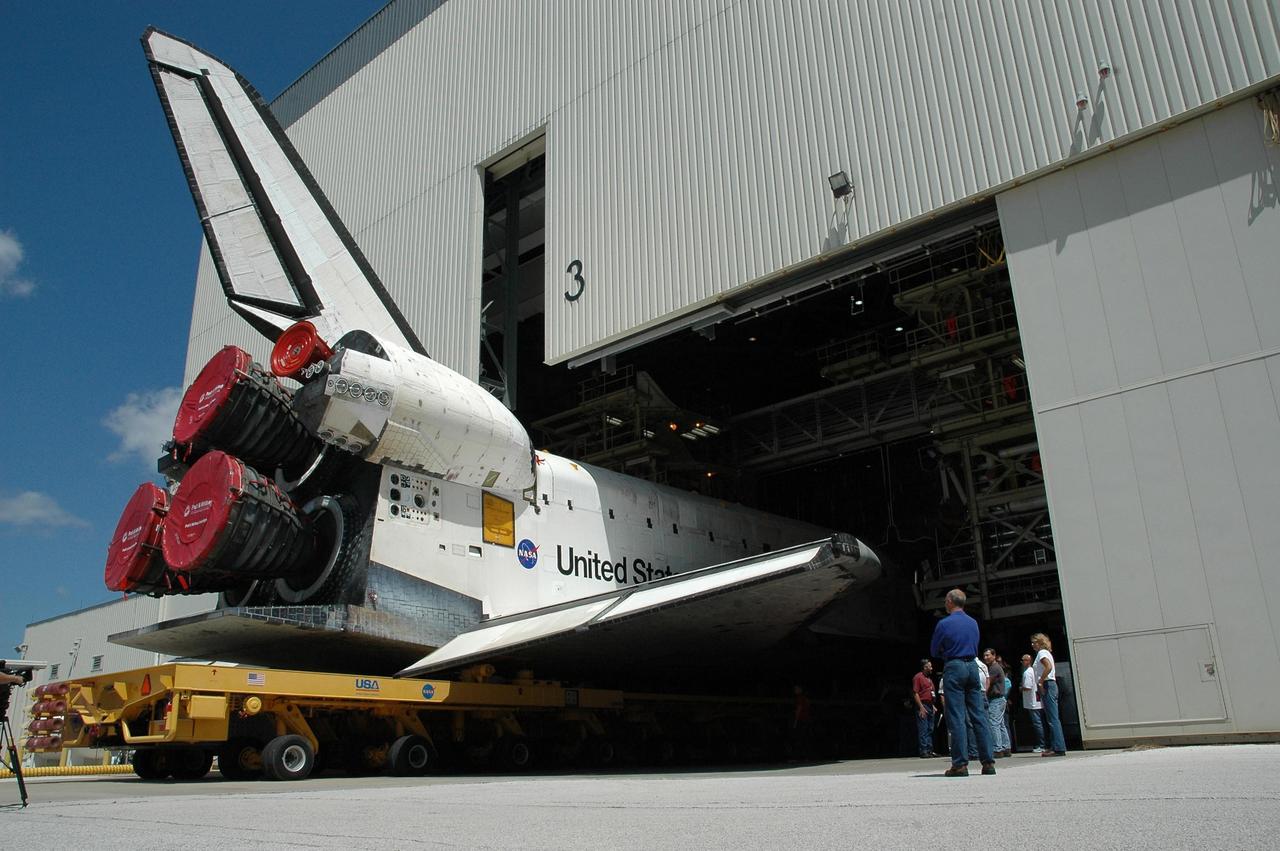
KENNEDY SPACE CENTER, FLA. - The orbiter Discovery, sitting on an orbiter transporter, slowly backs out of NASA's Orbiter Processing Facility to begin the rollover to the Vehicle Assembly Building (VAB). The rollover marks the start of the journey to the launch pad and, ultimately, launch. Once inside the VAB, Discovery will be raised to vertical and lifted up and over into high bay 3 for stacking with its redesigned external tank and twin solid rocket boosters. The rollout of Space Shuttle Discovery to Launch Pad 39B is expected in approximately a week. Launch of Discovery on mission STS-121 is scheduled to take place in a window extending July 1 to July 19. Photo credit: NASA/Jack Pfaller
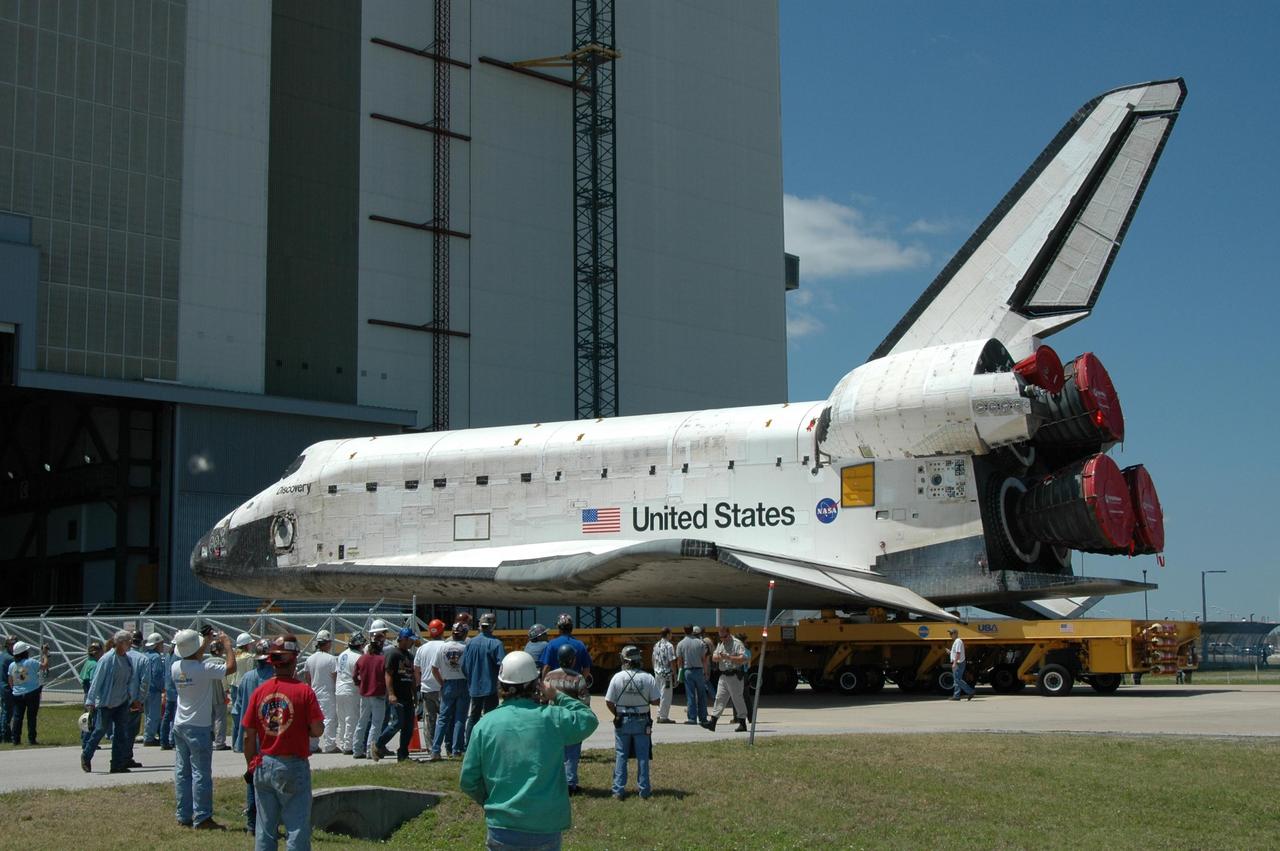
KENNEDY SPACE CENTER, FLA. - The orbiter Discovery, on top of an orbiter transporter, heads toward NASA's Vehicle Assembly Building (VAB) after leaving the Orbiter Processing Facility. The rollover to the VAB marks the start of the journey to the launch pad and, ultimately, launch. Once inside the VAB, Discovery will be raised to vertical and lifted up and over into high bay 3 for stacking with its redesigned external tank and twin solid rocket boosters. The rollout of Space Shuttle Discovery to Launch Pad 39B is expected in approximately a week. Launch of Discovery on mission STS-121 is scheduled to take place in a window extending July 1 to July 19. Photo credit: NASA/Jim Grossmann
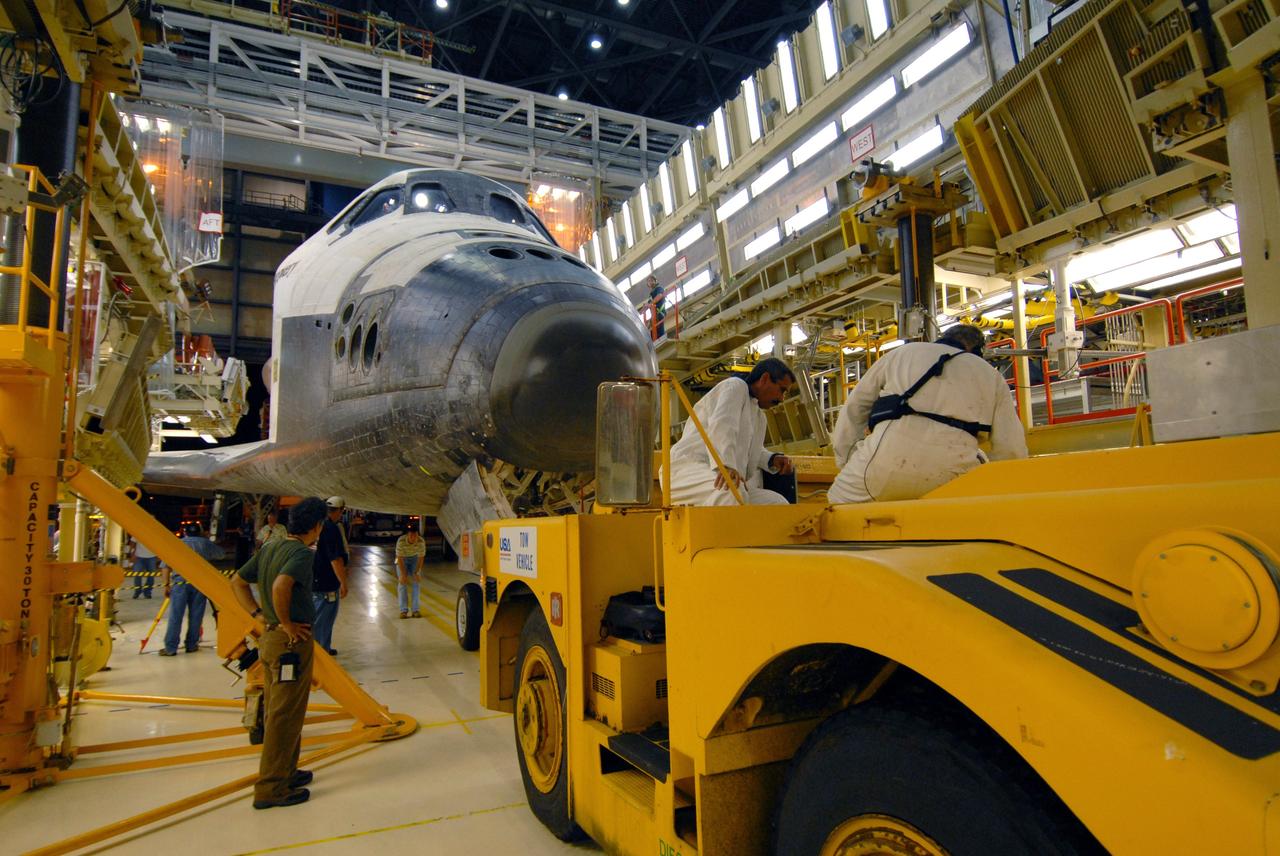
CAPE CANAVERAL, Fla. –Space shuttle Discovery arrives inside Orbiter Processing Facility 3 at NASA's Kennedy Space Center in Florida. Discovery landed at 3:13:17 p.m. EDT after completing a 13-day journey of more than 5.3 million miles on the STS-119 mission. The mission was the 28th flight to the station, the 36th flight of Discovery and the 125th in the Space Shuttle Program, as well as the 70th landing at Kennedy. Photo credit: NASA/Jack Pfaller
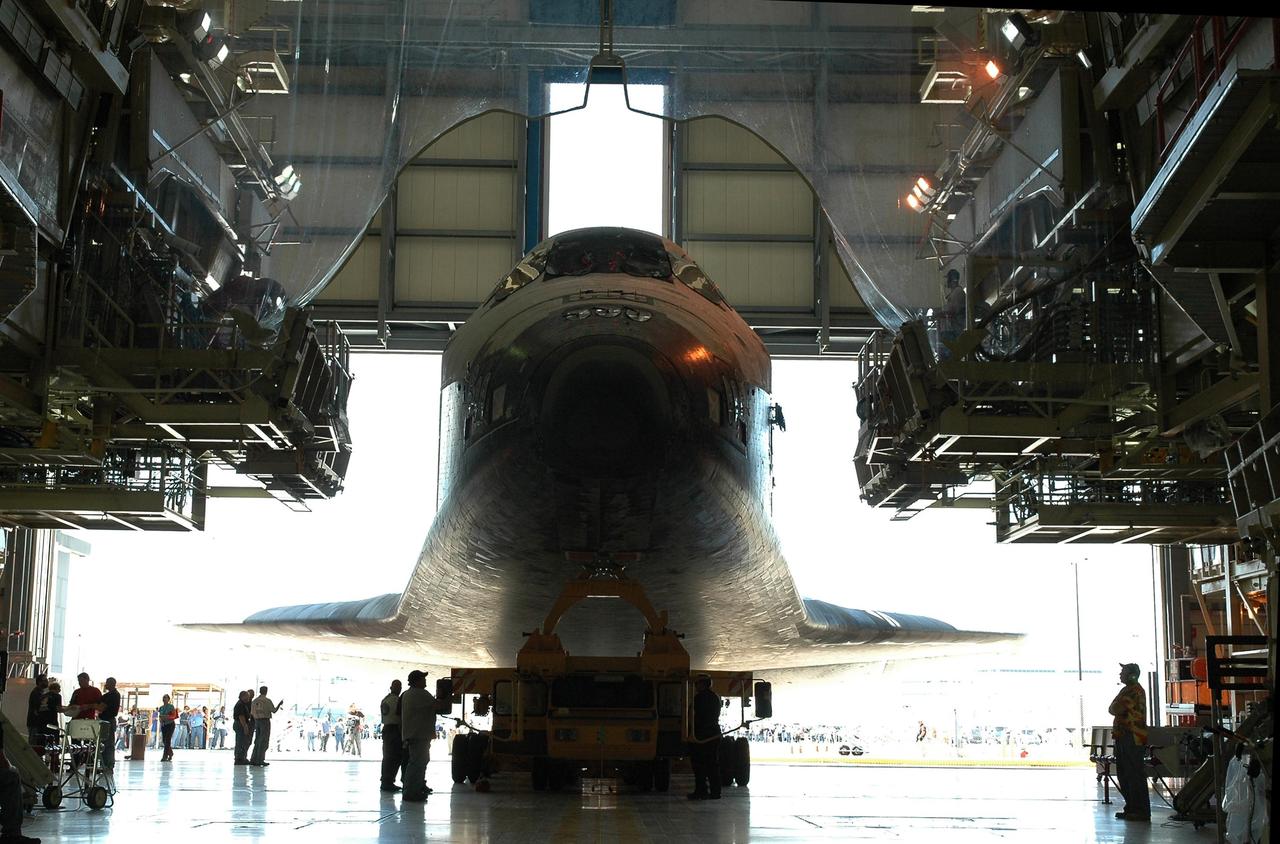
KENNEDY SPACE CENTER, FLA. - The orbiter Discovery, sitting on an orbiter transporter, slowly backs out of NASA's Orbiter Processing Facility to begin the rollover to the Vehicle Assembly Building (VAB). The rollover marks the start of the journey to the launch pad and, ultimately, launch. Once inside the VAB, Discovery will be raised to vertical and lifted up and over into high bay 3 for stacking with its redesigned external tank and twin solid rocket boosters. The rollout of Space Shuttle Discovery to Launch Pad 39B is expected in approximately a week. Launch of Discovery on mission STS-121 is scheduled to take place in a window extending July 1 to July 19. Photo credit: NASA/Jack Pfaller
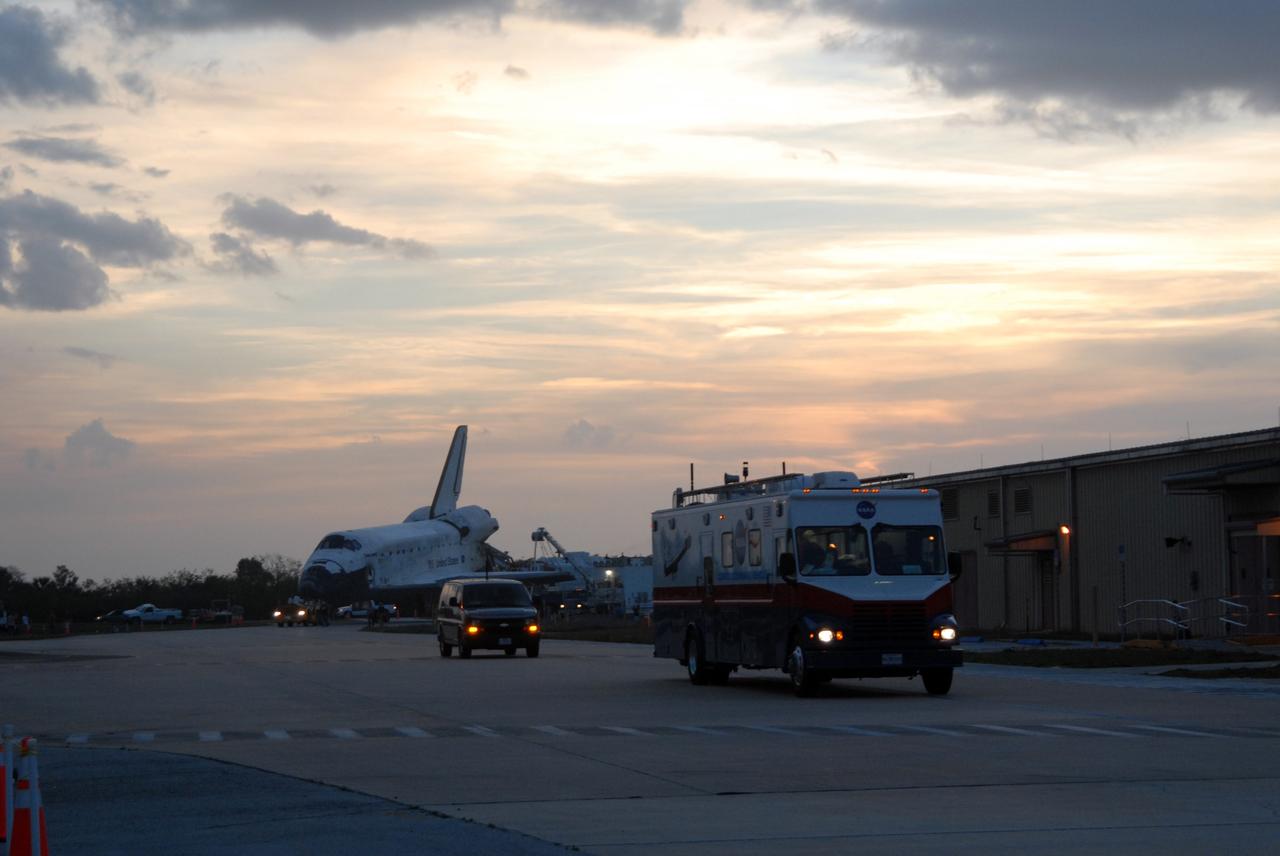
CAPE CANAVERAL, Fla. – After sunset, space shuttle Discovery is towed from the Shuttle Landing Facility at NASA's Kennedy Space Center in Florida to Orbiter Processing Facility 3. Discovery landed at 3:13:17 p.m. EDT after completing a 13-day journey of more than 5.3 million miles on the STS-119 mission. The mission was the 28th flight to the station, the 36th flight of Discovery and the 125th in the Space Shuttle Program, as well as the 70th landing at Kennedy. Photo credit: NASA/Jack Pfaller
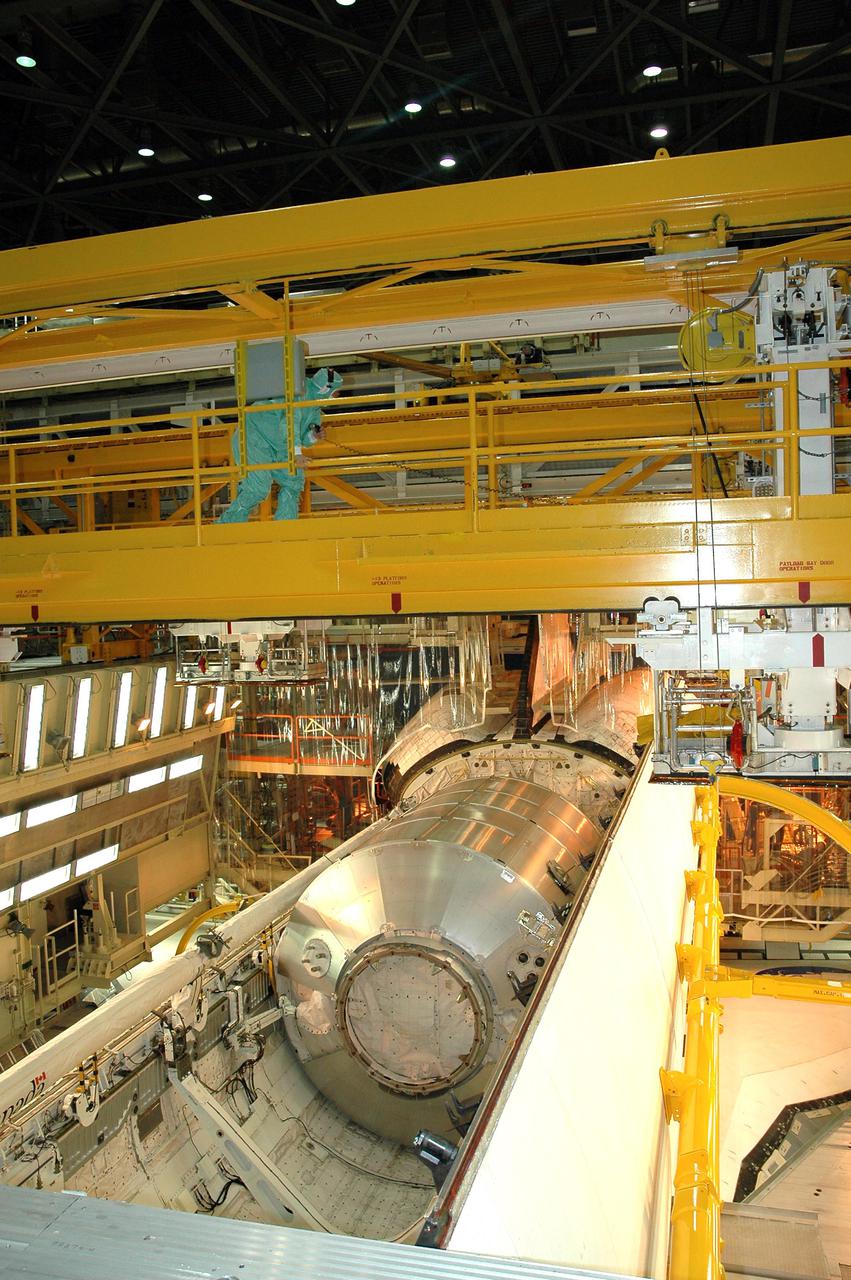
KENNEDY SPACE CENTER, FLA. - In bay 3 of NASA Kennedy Space Center’s Orbiter Processing Facility, the payload bay doors on Discovery are being opened. Seen inside is the Multi-Purpose Logistics Module Raffaello, which holds material being returned to KSC from the International Space Station as part of Return to Flight mission STS-114. The module will be lifted out of the payload bay and transferred to the Space Station Processing Facility to be emptied. Discovery will begin processing for the second Return to Flight mission, STS-121.
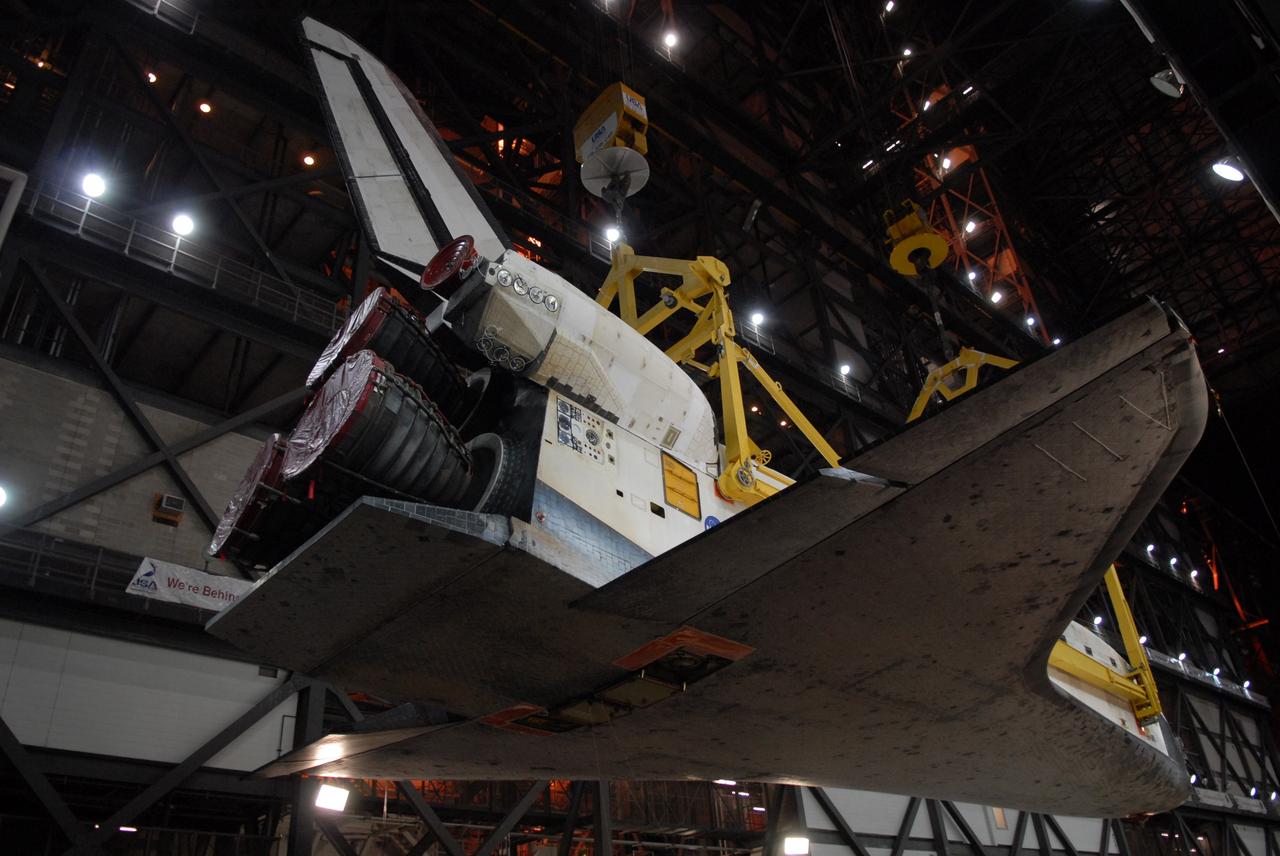
CAPE CANAVERAL, Fla. -- In the Vehicle Assembly Building transfer aisle at NASA's Kennedy Space Center in Florida, space shuttle Discovery is lifted from its transporter by an overhead crane. The shuttle will be raised to a vertical position and lifted into high bay 3 where it will be mated with its external fuel tank and solid rocket boosters on the mobile launcher platform. After additional preparations are made, the shuttle will be rolled out to Launch Pad 39A for a targeted launch on Feb. 12. Discovery will carry the final starboard truss (S6) in the assembly of the International Space Station. Photo credit: NASA/Troy Cryder
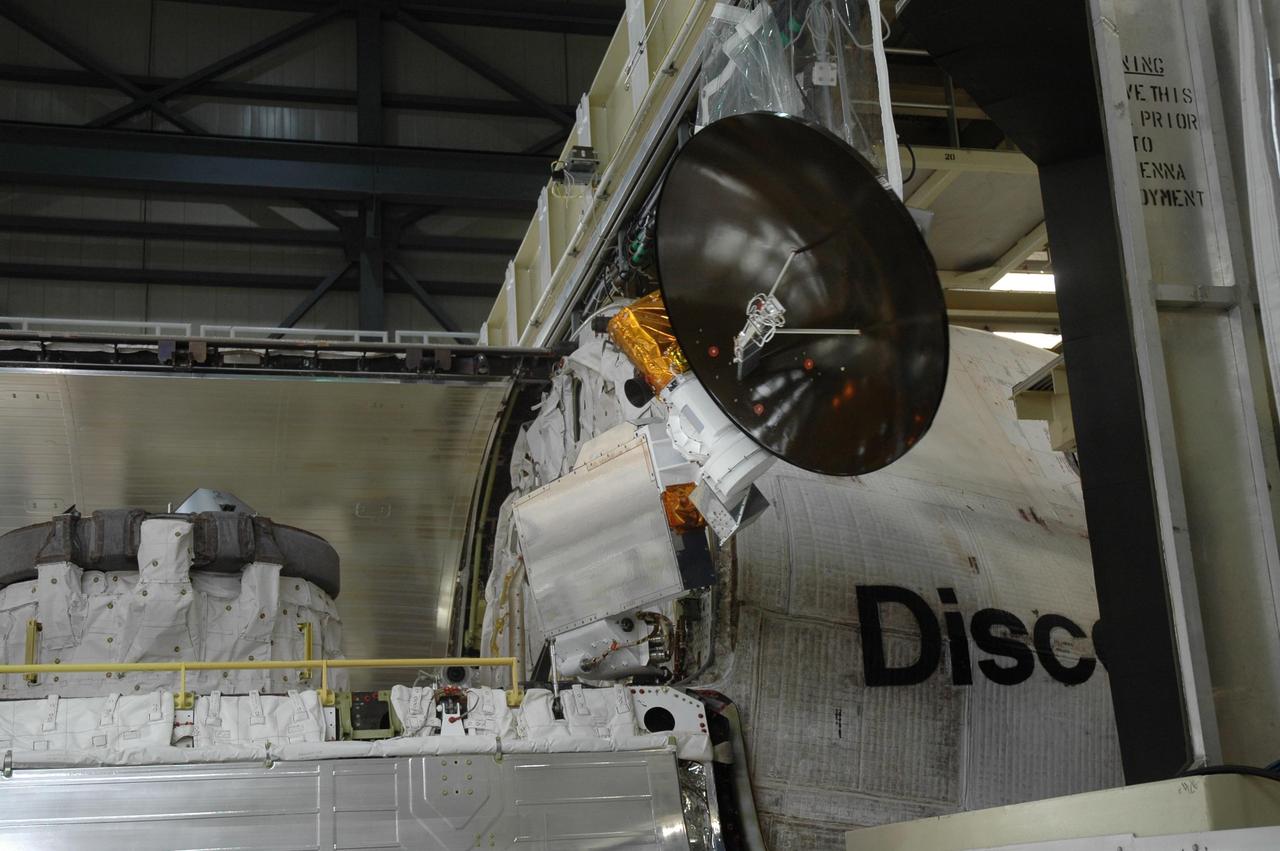
KENNEDY SPACE CENTER, FLA. -- In the Orbiter Processing Facility, the Ku-band communications antenna is stowed in the payload bay of Discovery before the bay's doors are closed. The stowage is in preparation for the rollover of the orbiter to the Vehicle Assembly Building. The primary payload, the U.S. Node 2, which is named Harmony, will be installed in the payload bay at the pad prior to Discovery's liftoff on mission STS-120. The mission will be the 23rd flight for the assembly of the International Space Station. Space Shuttle Discovery is targeted for launch on Oct. 23. Photo credit: NASA/Jim Grossmann
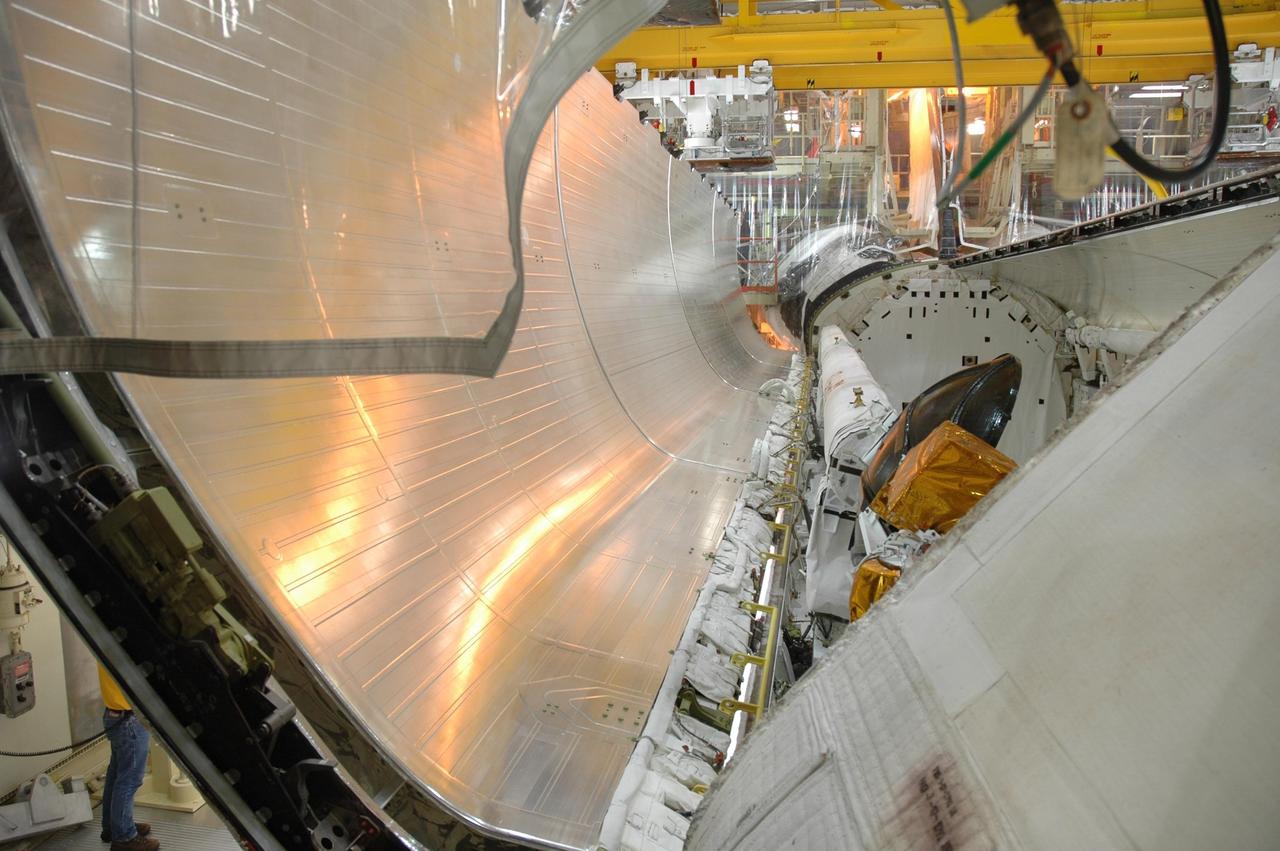
KENNEDY SPACE CENTER, FLA. -- In the Orbiter Processing Facility, the payload bay doors of Discovery are being closed in preparation for the rollover of the orbiter to the Vehicle Assembly Building. The primary payload, the U.S. Node 2, which is named Harmony, will be installed in the payload bay at the pad prior to Discovery's liftoff on mission STS-120. The mission will be the 23rd flight for the assembly of the International Space Station. Space Shuttle Discovery is targeted for launch on Oct. 23. Photo credit: NASA/Jim Grossmann
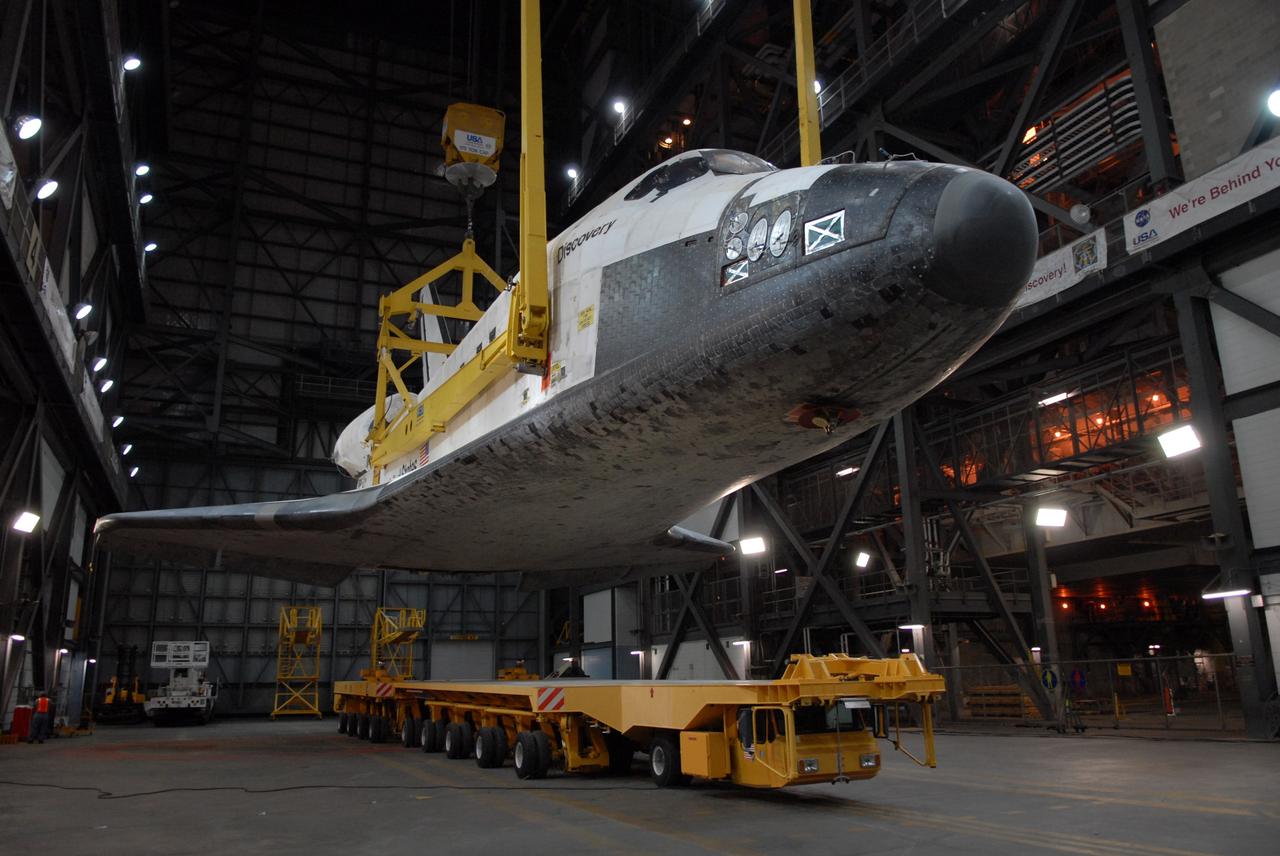
CAPE CANAVERAL, Fla. -- In the Vehicle Assembly Building transfer aisle at NASA's Kennedy Space Center in Florida, space shuttle Discovery is lifted from its transporter by an overhead crane. The shuttle will be raised to a vertical position and lifted into high bay 3 where it will be mated with its external fuel tank and solid rocket boosters on the mobile launcher platform. After additional preparations are made, the shuttle will be rolled out to Launch Pad 39A for a targeted launch on Feb. 12. Discovery will carry the final starboard truss (S6) in the assembly of the International Space Station. Photo credit: NASA/Troy Cryder
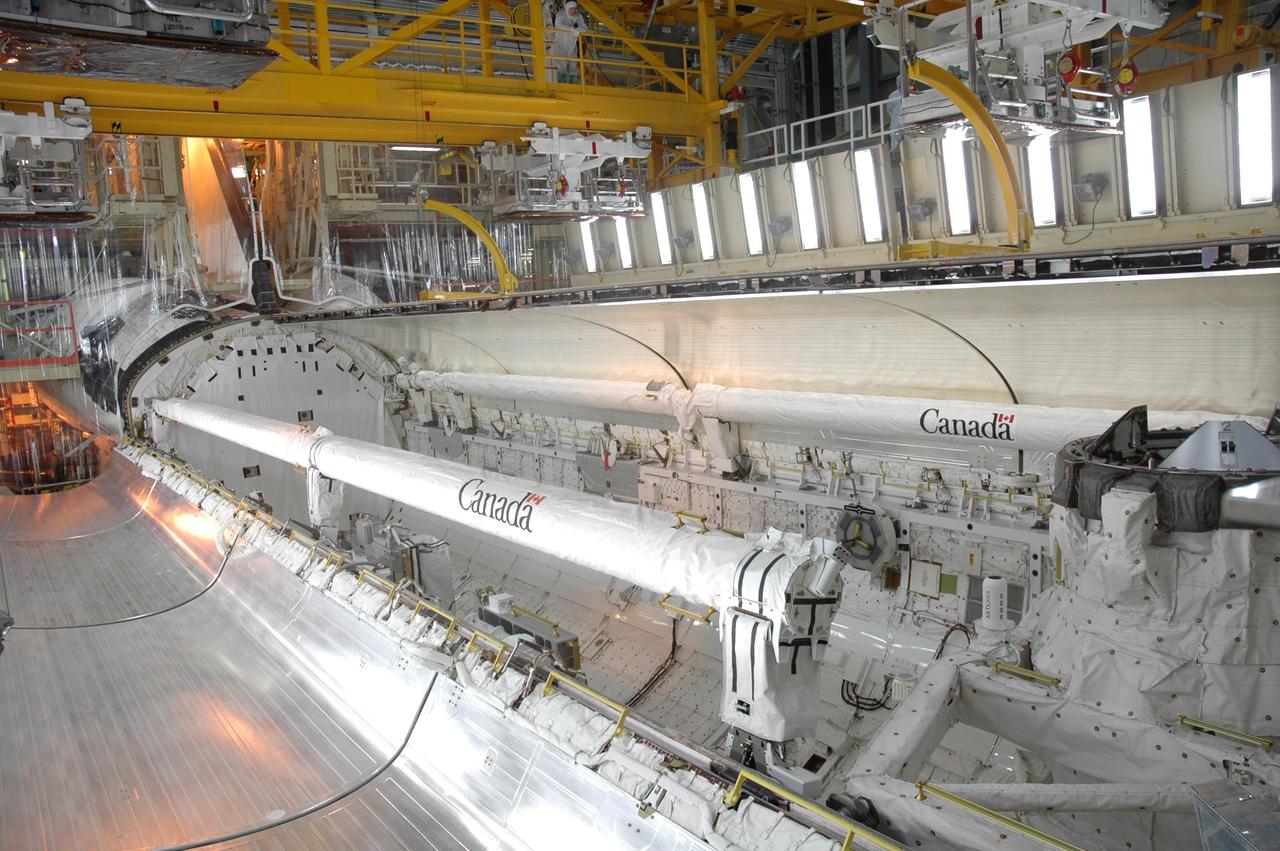
KENNEDY SPACE CENTER, FLA. -- In the Orbiter Processing Facility, the left payload bay door of Discovery is being closed in preparation for the rollover of the orbiter to the Vehicle Assembly Building. Seen along the edges of the bay are the Canadian-built shuttle robotic arm and orbiter boom sensor system. The primary payload, the U.S. Node 2, which is named Harmony, will be installed in the payload bay at the pad prior to Discovery's liftoff on mission STS-120. The mission will be the 23rd flight for the assembly of the International Space Station. Space Shuttle Discovery is targeted for launch on Oct. 23. Photo credit: NASA/Jim Grossmann
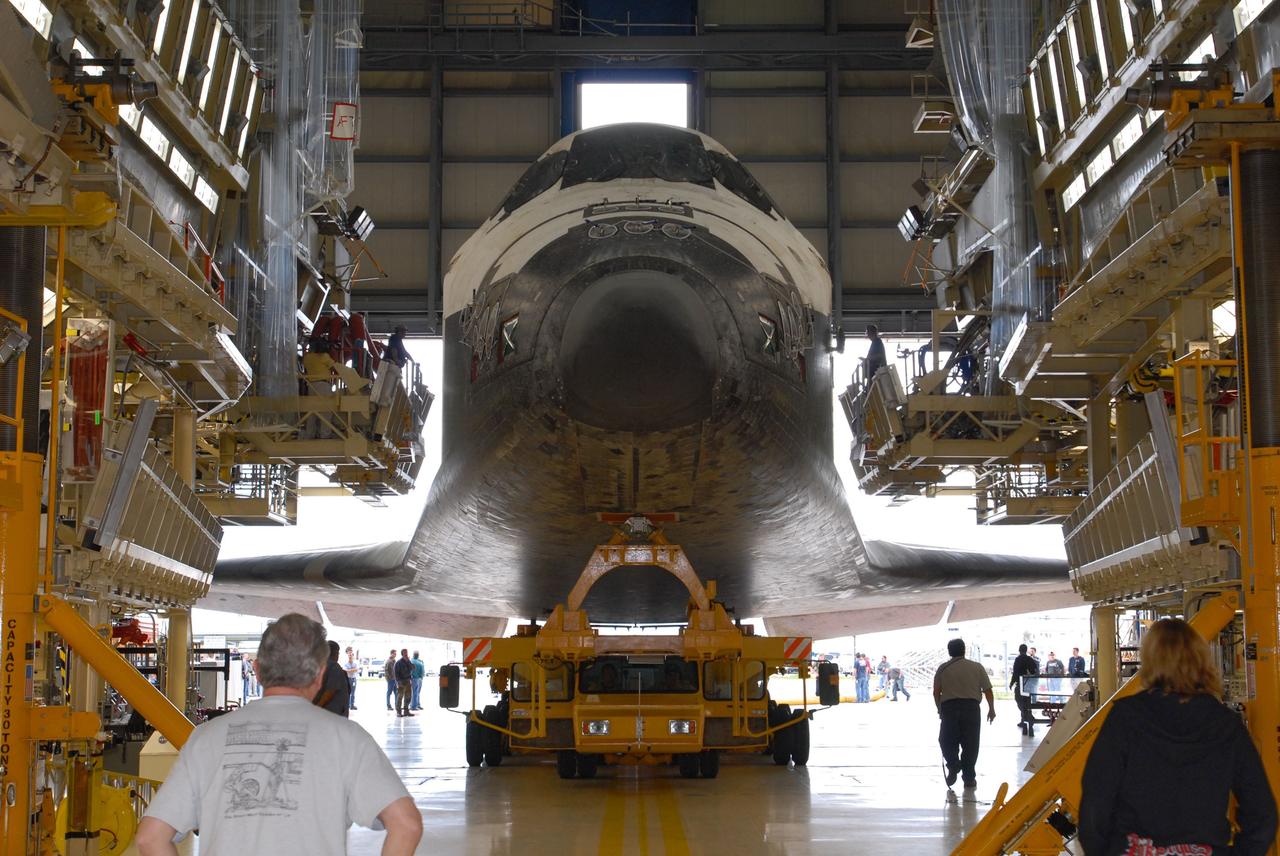
CAPE CANAVERAL, Fla. -- Space shuttle Discovery rolls out of Orbiter Processing Facility 3 at NASA's Kennedy Space Center in Florida to head to the Vehicle Assembly Building at NASA's Kennedy Space Center. First motion was at 2:30 p.m. EST. In the VAB, Discovery will be attached to its external fuel tank and twin solid rocket boosters. After additional preparations are made, the shuttle will be rolled out to Launch Pad 39A for a targeted launch to the International Space Station on Feb. 12. Photo credit: NASA/Jim Grossmann
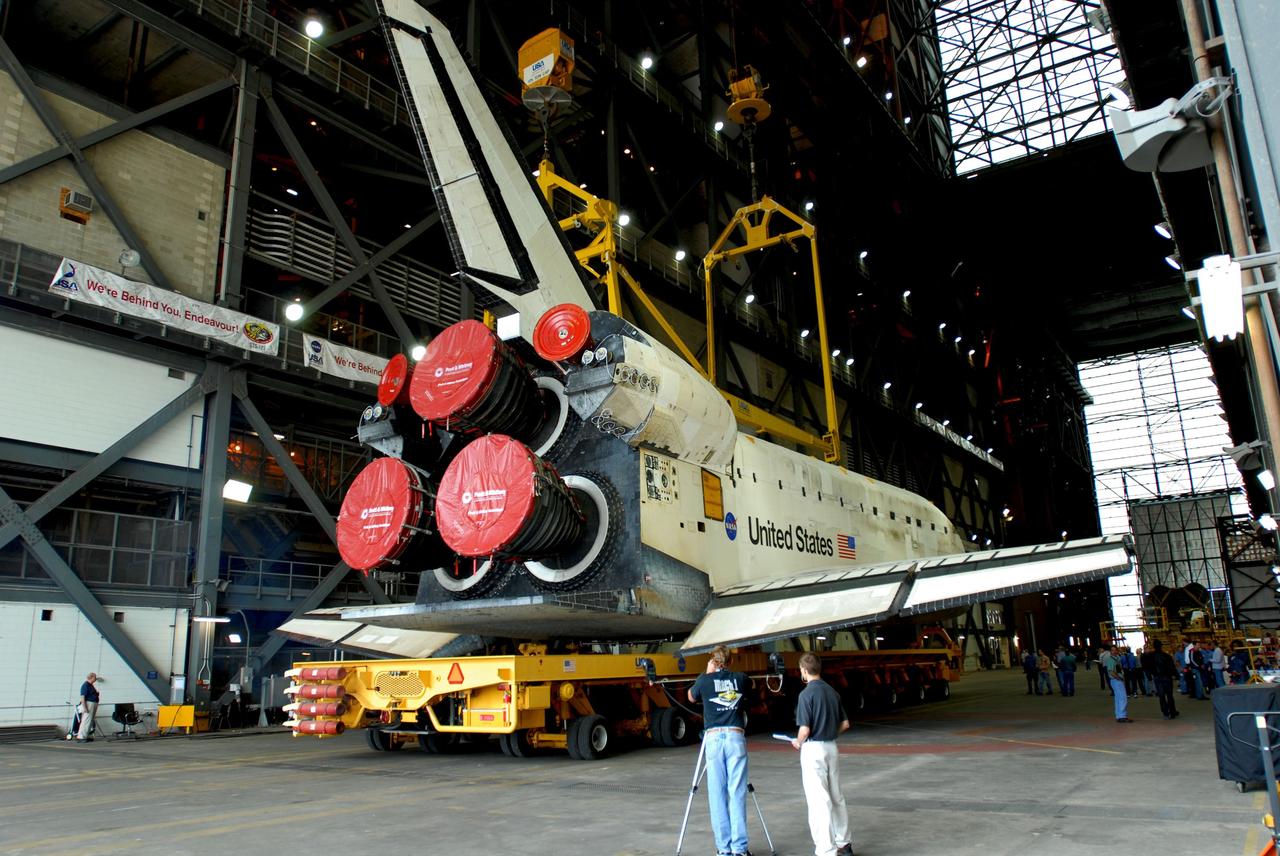
CAPE CANAVERAL, Fla. -- Aboard its transporter, space shuttle Discovery rolls into the transfer aisle of the Vehicle Assembly Building at NASA's Kennedy Space Center in Florida. Discovery left Orbiter Processing Facility 3 at 2:30 p.m. EST. In the VAB, Discovery will be attached to its external fuel tank and twin solid rocket boosters. After additional preparations are made, the shuttle will be rolled out to Launch Pad 39A for a targeted launch to the International Space Station on Feb. 12. Photo credit: NASA/Jim Grossmann
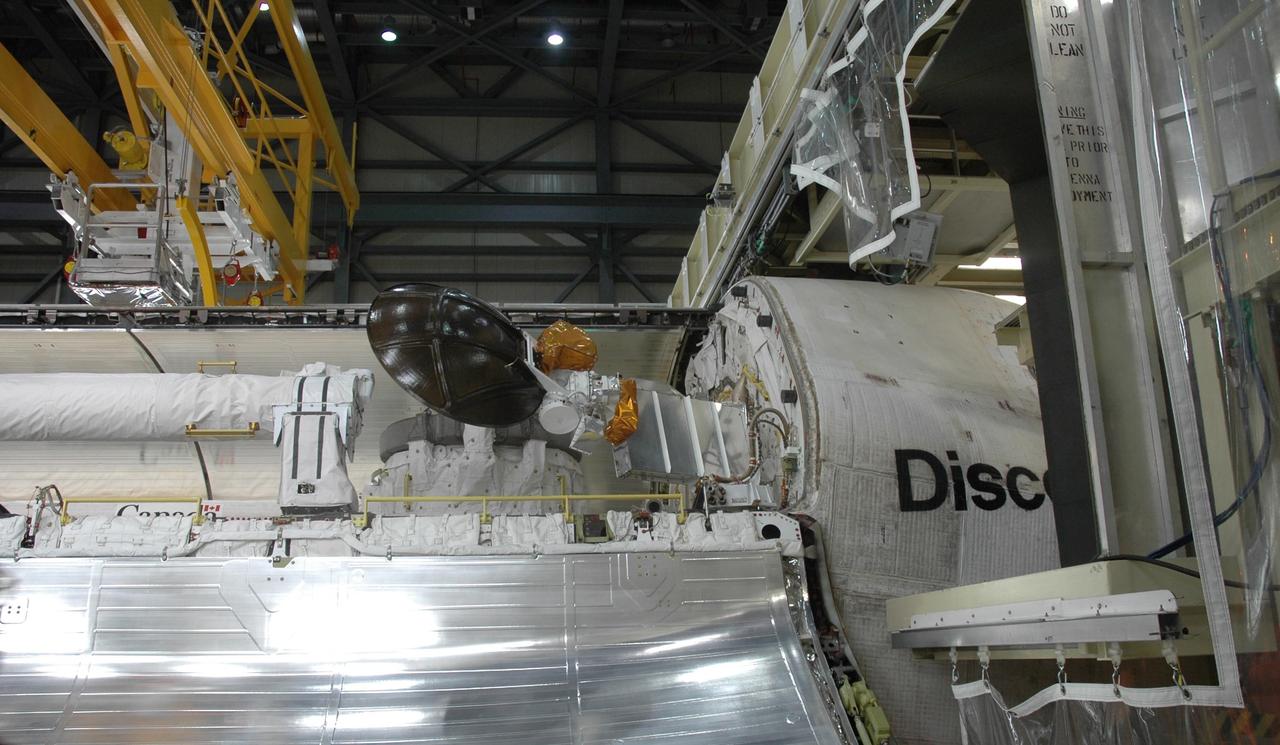
KENNEDY SPACE CENTER, FLA. -- In the Orbiter Processing Facility, the Ku-band communications antenna is stowed in the payload bay of Discovery before the bay's doors are closed. The stowage is in preparation for the rollover of the orbiter to the Vehicle Assembly Building. The primary payload, the U.S. Node 2, which is named Harmony, will be installed in the payload bay at the pad prior to Discovery's liftoff on mission STS-120. The mission will be the 23rd flight for the assembly of the International Space Station. Space Shuttle Discovery is targeted for launch on Oct. 23. Photo credit: NASA/Jim Grossmann
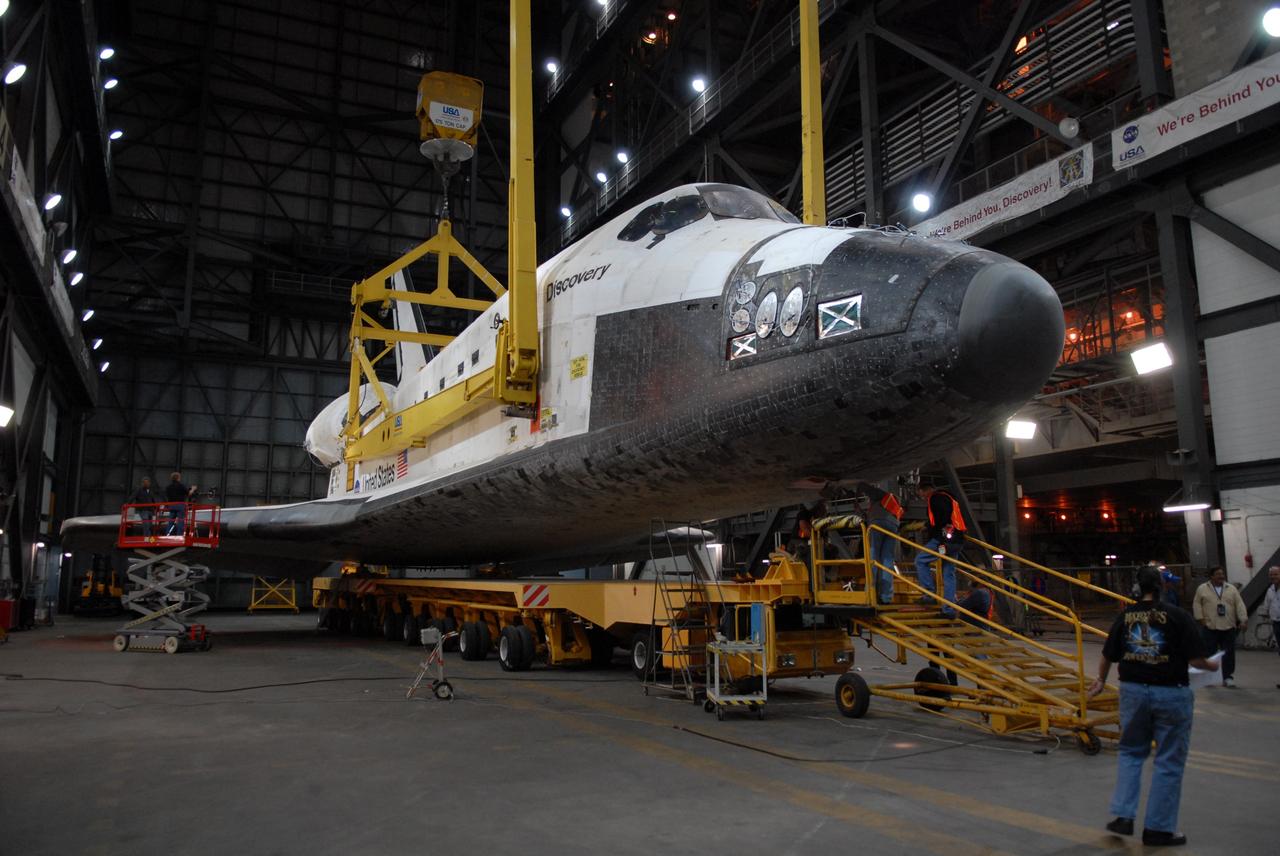
CAPE CANAVERAL, Fla. -- In the Vehicle Assembly Building transfer aisle at NASA's Kennedy Space Center in Florida, space shuttle Discovery is lifted from its transporter by an overhead crane. The shuttle will be raised to a vertical position and lifted into high bay 3 where it will be mated with its external fuel tank and solid rocket boosters on the mobile launcher platform. After additional preparations are made, the shuttle will be rolled out to Launch Pad 39A for a targeted launch on Feb. 12. Discovery will carry the final starboard truss (S6) in the assembly of the International Space Station. Photo credit: NASA/Troy Cryder
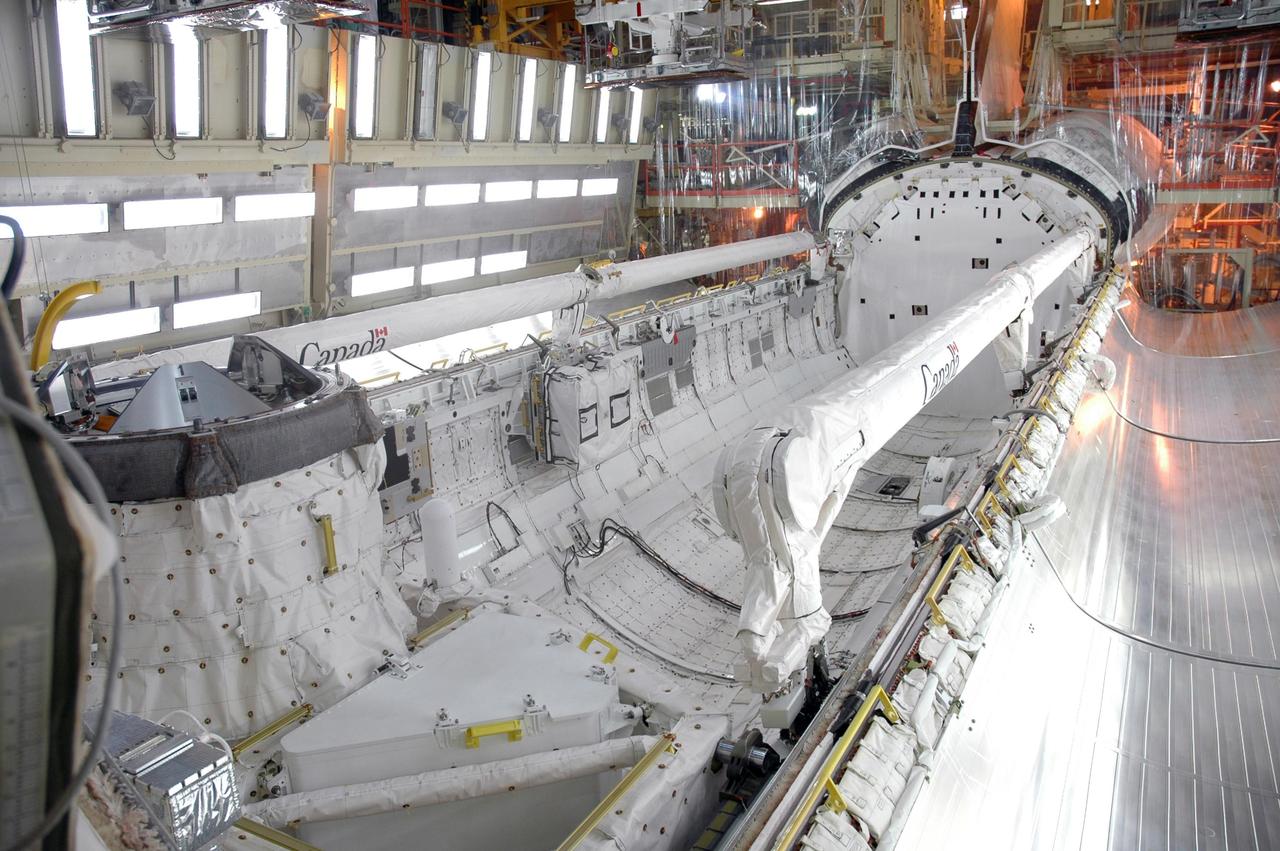
KENNEDY SPACE CENTER, FLA. -- In the Orbiter Processing Facility, preparations are under way to close the payload bay doors of Discovery for the rollover of the orbiter to the Vehicle Assembly Building. Seen along the edges of the bay are the Canadian-built shuttle robotic arm and orbiter boom sensor system. The primary payload, the U.S. Node 2, which is named Harmony, will be installed in the payload bay at the pad prior to Discovery's liftoff on mission STS-120. The mission will be the 23rd flight for the assembly of the International Space Station. Space Shuttle Discovery is targeted for launch on Oct. 23. Photo credit: NASA/Jim Grossmann
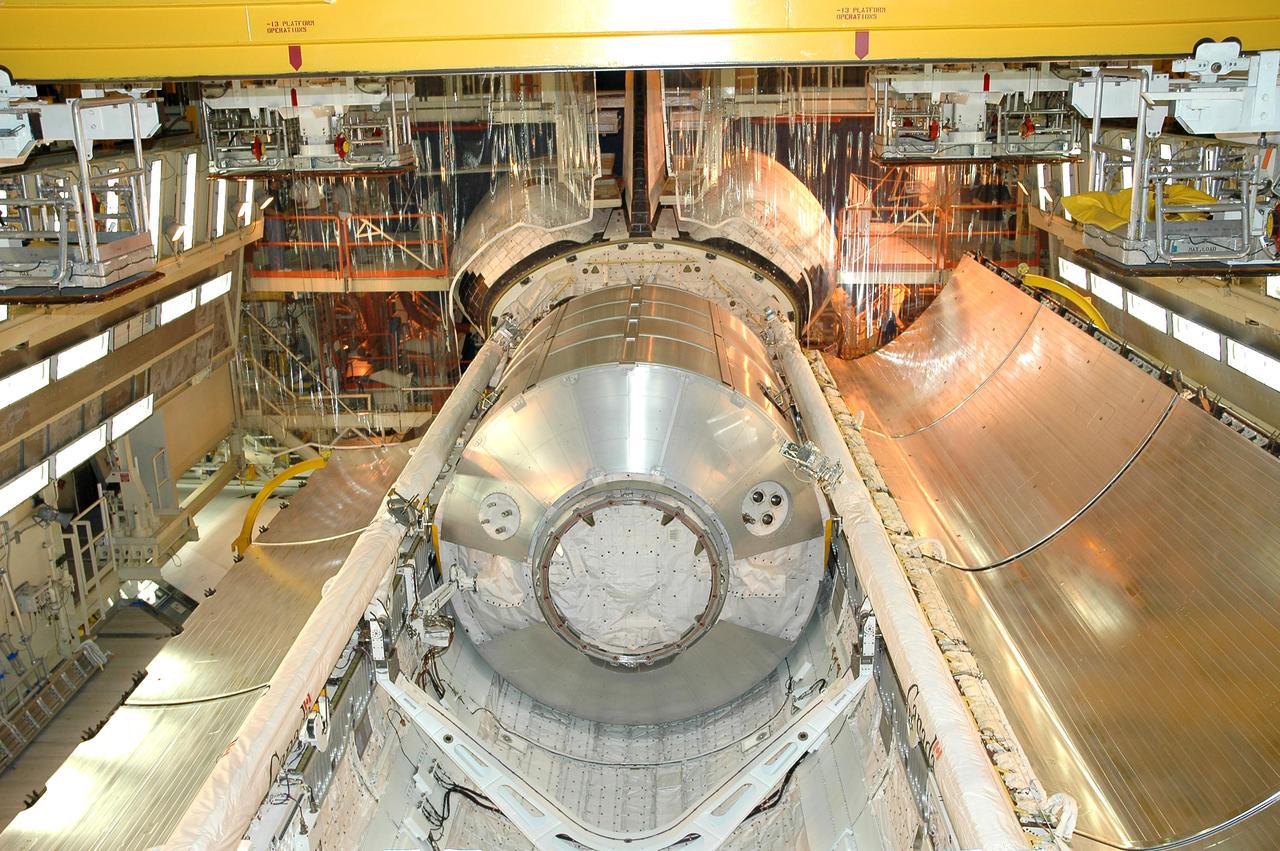
KENNEDY SPACE CENTER, FLA. - In bay 3 of NASA Kennedy Space Center’s Orbiter Processing Facility, the payload bay doors on Discovery are open. Seen inside is the Multi-Purpose Logistics Module Raffaello, which holds material being returned to KSC from the International Space Station as part of Return to Flight mission STS-114. The module will be lifted out of the payload bay and transferred to the Space Station Processing Facility to be emptied. Discovery will begin processing for the second Return to Flight mission, STS-121.
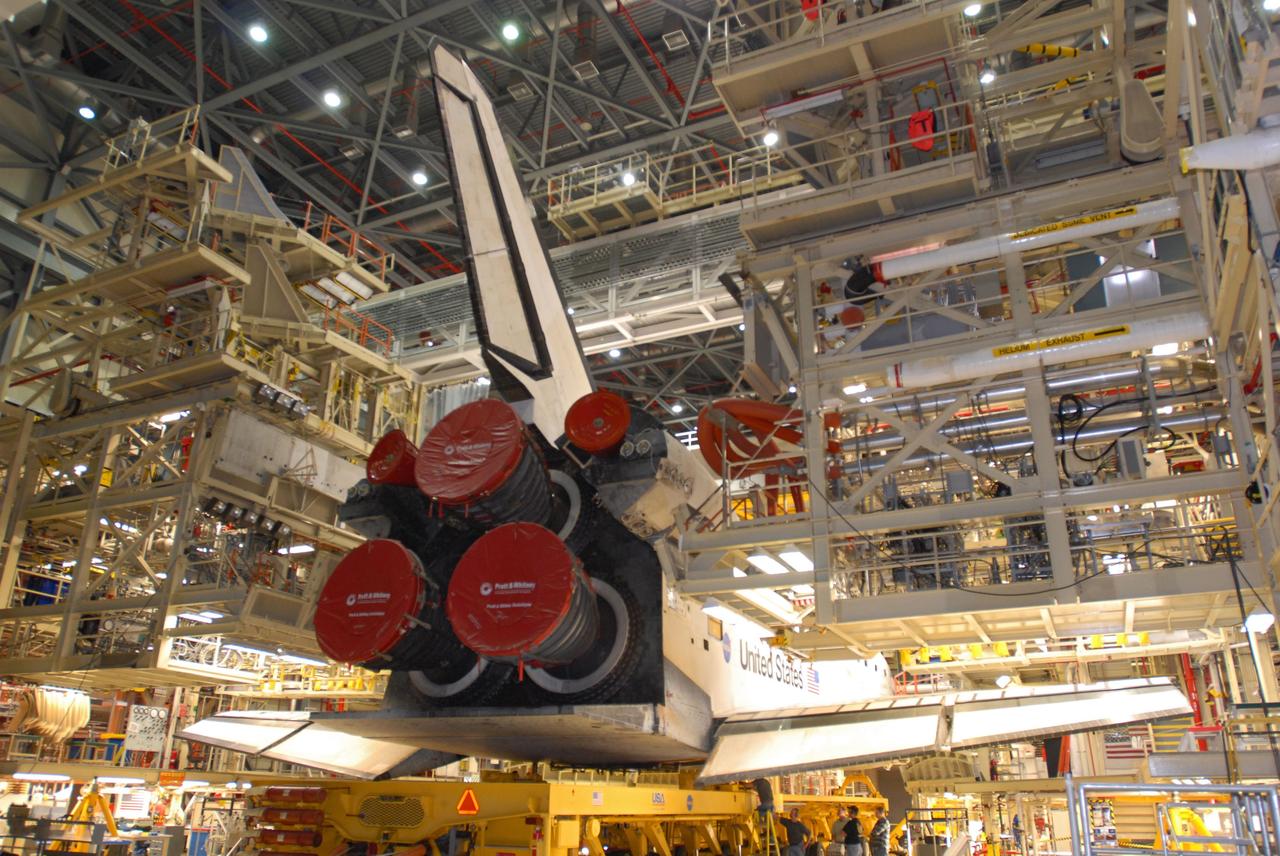
CAPE CANAVERAL, Fla. -- In Orbiter Processing Facility 3 at NASA's Kennedy Space Center in Florida, space shuttle Discovery is lowered onto a transporter for its move to the Vehicle Assembly Building at NASA's Kennedy Space Center. In the VAB, Discovery will be attached to its external fuel tank and twin solid rocket boosters. After additional preparations are made, the shuttle will be rolled out to Launch Pad 39A for a targeted launch to the International Space Station on Feb. 12. Photo credit: NASA/Jim Grossmann
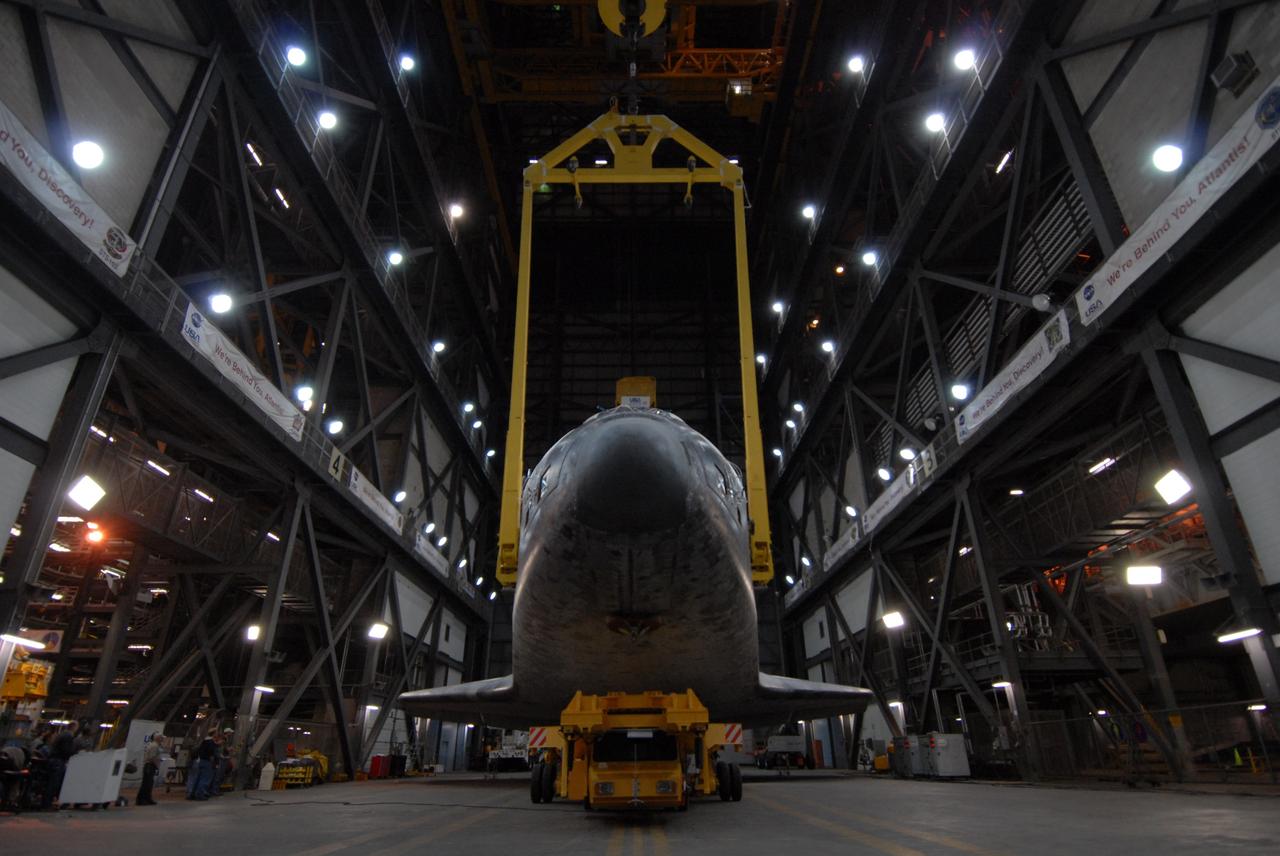
CAPE CANAVERAL, Fla. -- In the Vehicle Assembly Building transfer aisle at NASA's Kennedy Space Center in Florida, space shuttle Discovery is lifted from its transporter by an overhead crane. The shuttle will be raised to a vertical position and lifted into high bay 3 where it will be mated with its external fuel tank and solid rocket boosters on the mobile launcher platform. After additional preparations are made, the shuttle will be rolled out to Launch Pad 39A for a targeted launch on Feb. 12. Discovery will carry the final starboard truss (S6) in the assembly of the International Space Station. Photo credit: NASA/Troy Cryder
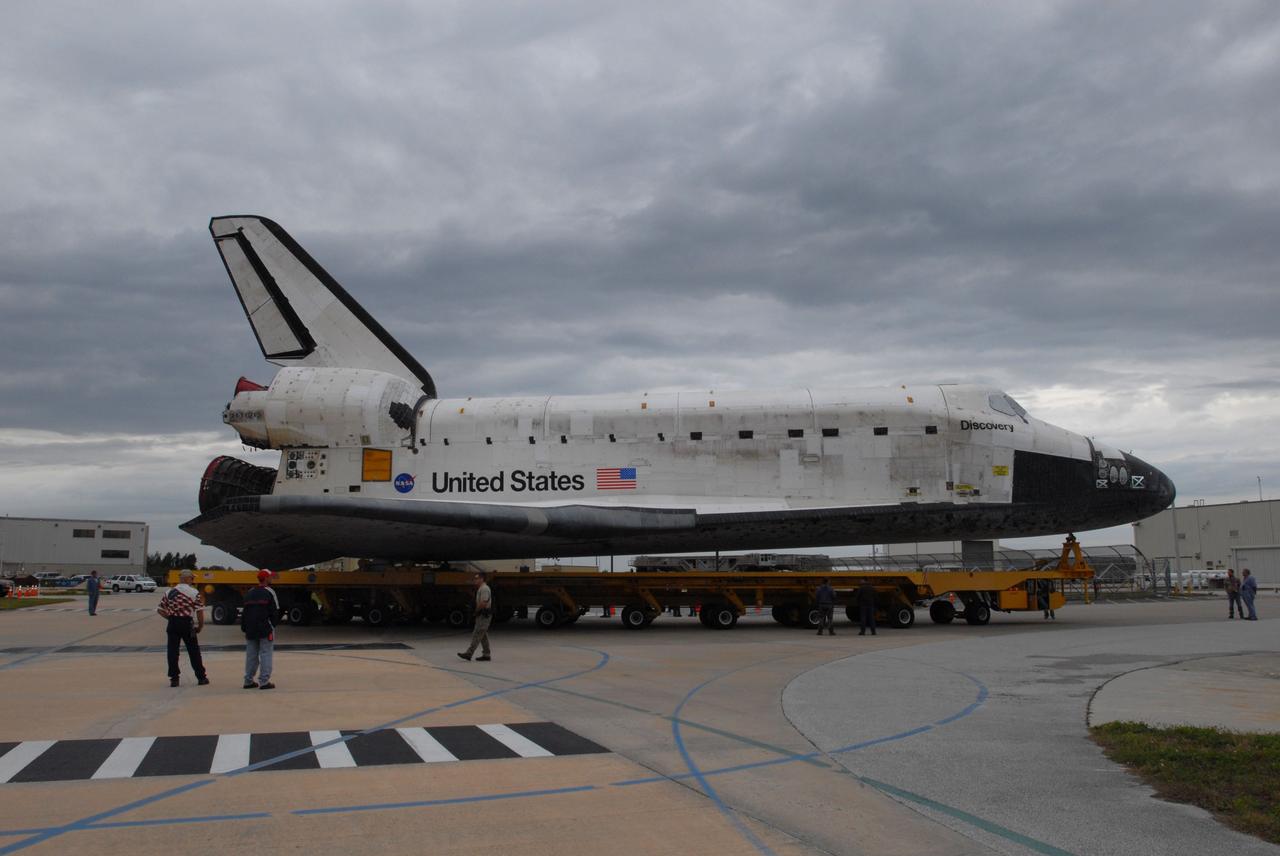
CAPE CANAVERAL, Fla. -- After rolling out of Orbiter Processing Facility 3 at NASA's Kennedy Space Center in Florida, space shuttle Discovery turns toward the Vehicle Assembly Building. First motion was at 2:30 p.m. EST. In the VAB, Discovery will be attached to its external fuel tank and twin solid rocket boosters. After additional preparations are made, the shuttle will be rolled out to Launch Pad 39A for a targeted launch to the International Space Station on Feb. 12. Photo credit: NASA/Jim Grossmann
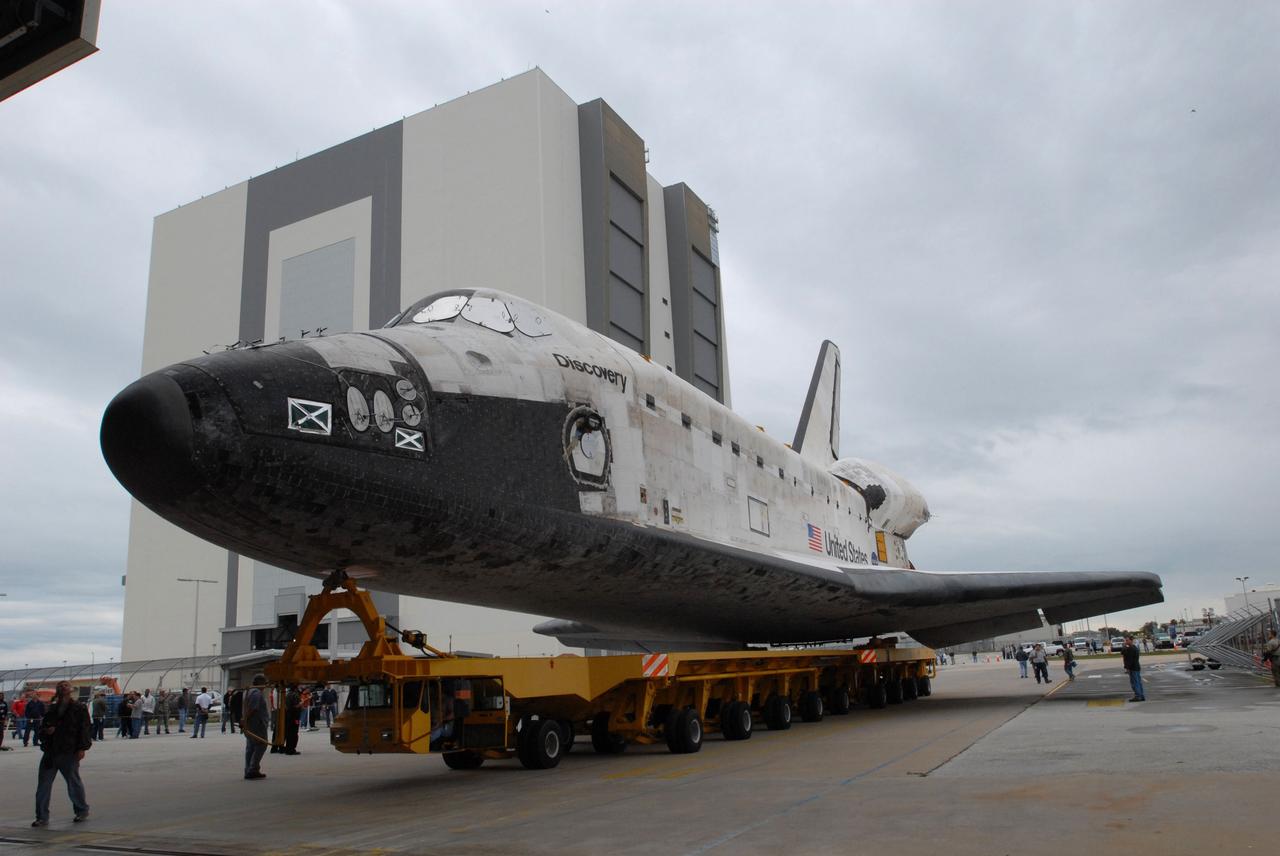
CAPE CANAVERAL, Fla. -- Space shuttle Discovery rolls out of Orbiter Processing Facility 3 at NASA's Kennedy Space Center in Florida to head to the Vehicle Assembly Building (in the background). First motion was at 2:30 p.m. EST. In the VAB, Discovery will be attached to its external fuel tank and twin solid rocket boosters. After additional preparations are made, the shuttle will be rolled out to Launch Pad 39A for a targeted launch to the International Space Station on Feb. 12. Photo credit: NASA/Jim Grossmann
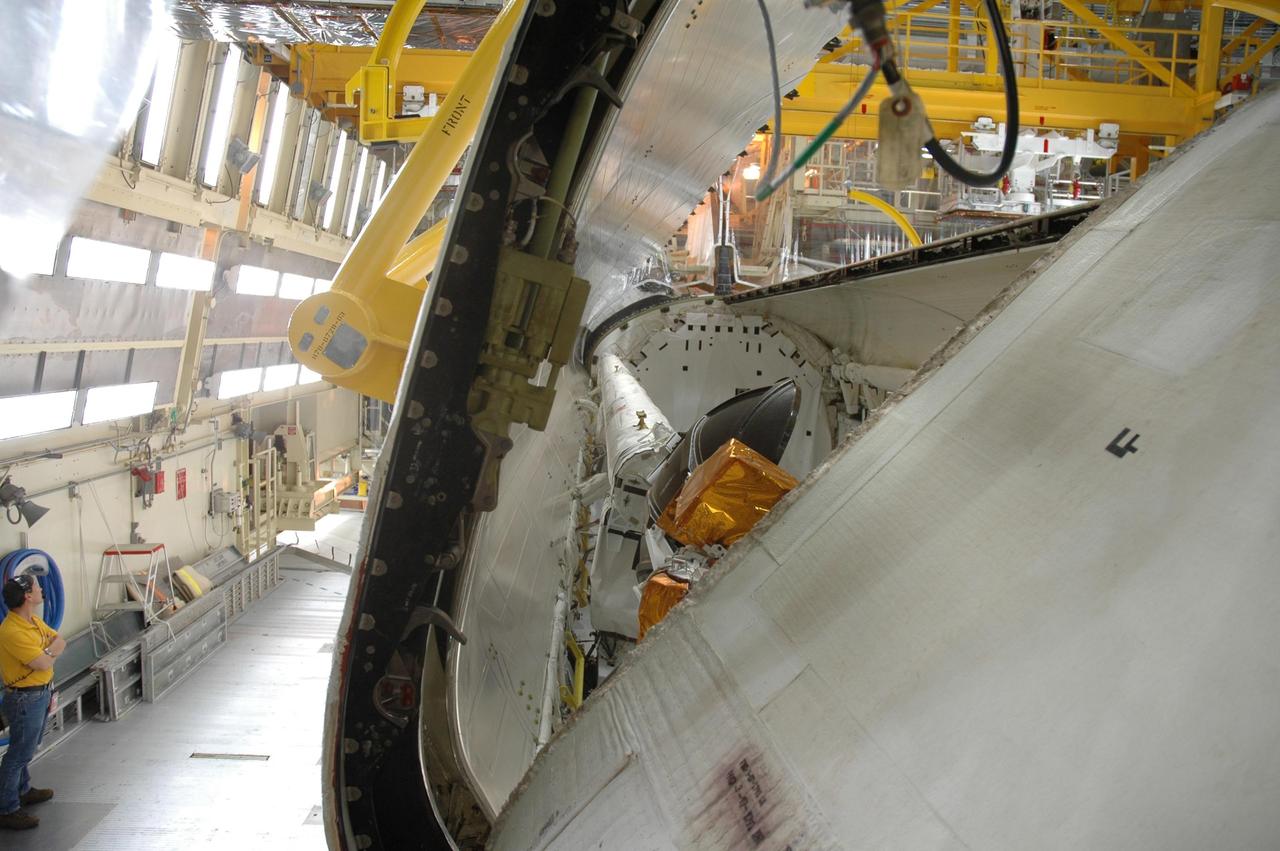
KENNEDY SPACE CENTER, FLA. -- In the Orbiter Processing Facility, the right payload bay door of Discovery is being closed in preparation for the rollover of the orbiter to the Vehicle Assembly Building. The primary payload, the U.S. Node 2, which is named Harmony, will be installed in the payload bay at the pad prior to Discovery's liftoff on mission STS-120. The mission will be the 23rd flight for the assembly of the International Space Station. Space Shuttle Discovery is targeted for launch on Oct. 23. Photo credit: NASA/Jim Grossmann
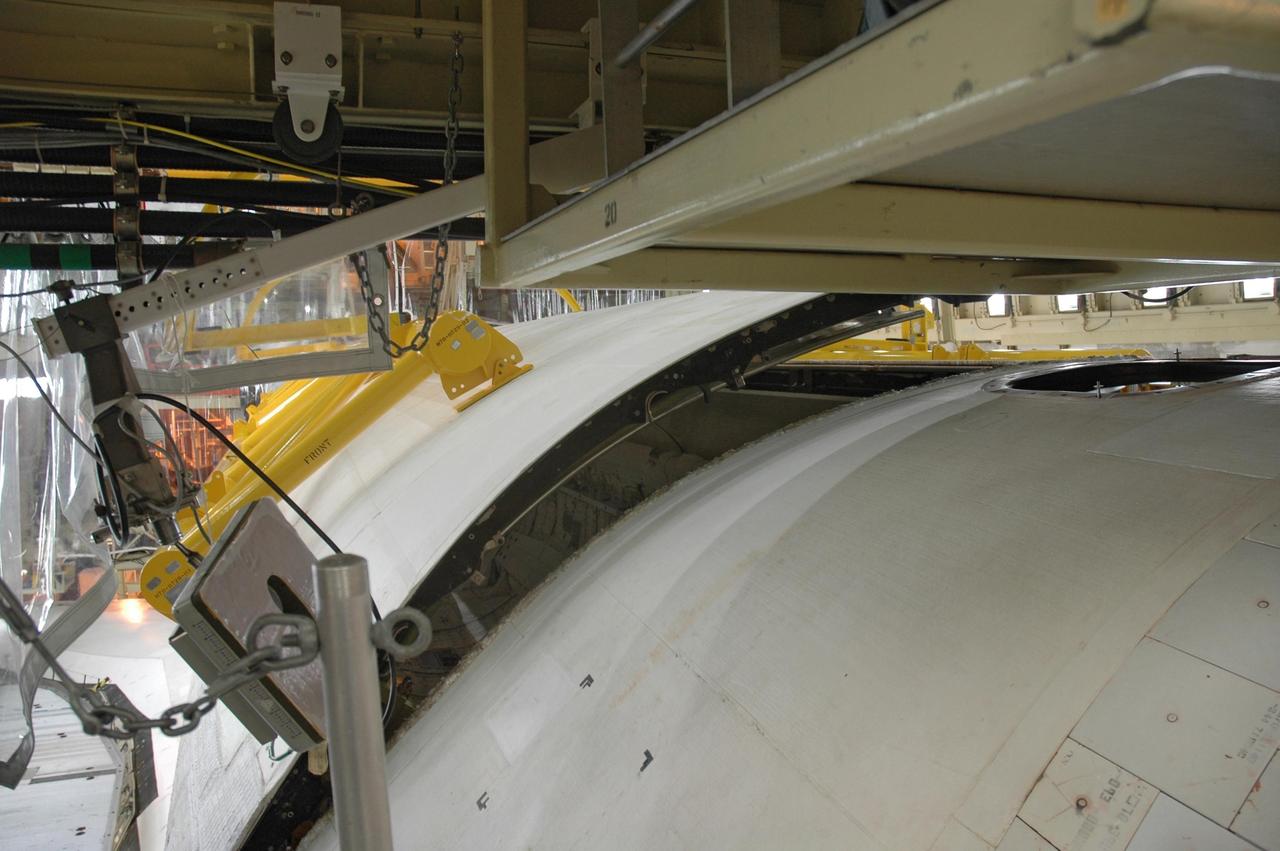
KENNEDY SPACE CENTER, FLA. -- In the Orbiter Processing Facility, the right payload bay door of Discovery is nearly closed in preparation for the rollover of the orbiter to the Vehicle Assembly Building. The primary payload, the U.S. Node 2, which is named Harmony, will be installed in the payload bay at the pad prior to Discovery's liftoff on mission STS-120. The mission will be the 23rd flight for the assembly of the International Space Station. Space Shuttle Discovery is targeted for launch on Oct. 23. Photo credit: NASA/Jim Grossmann
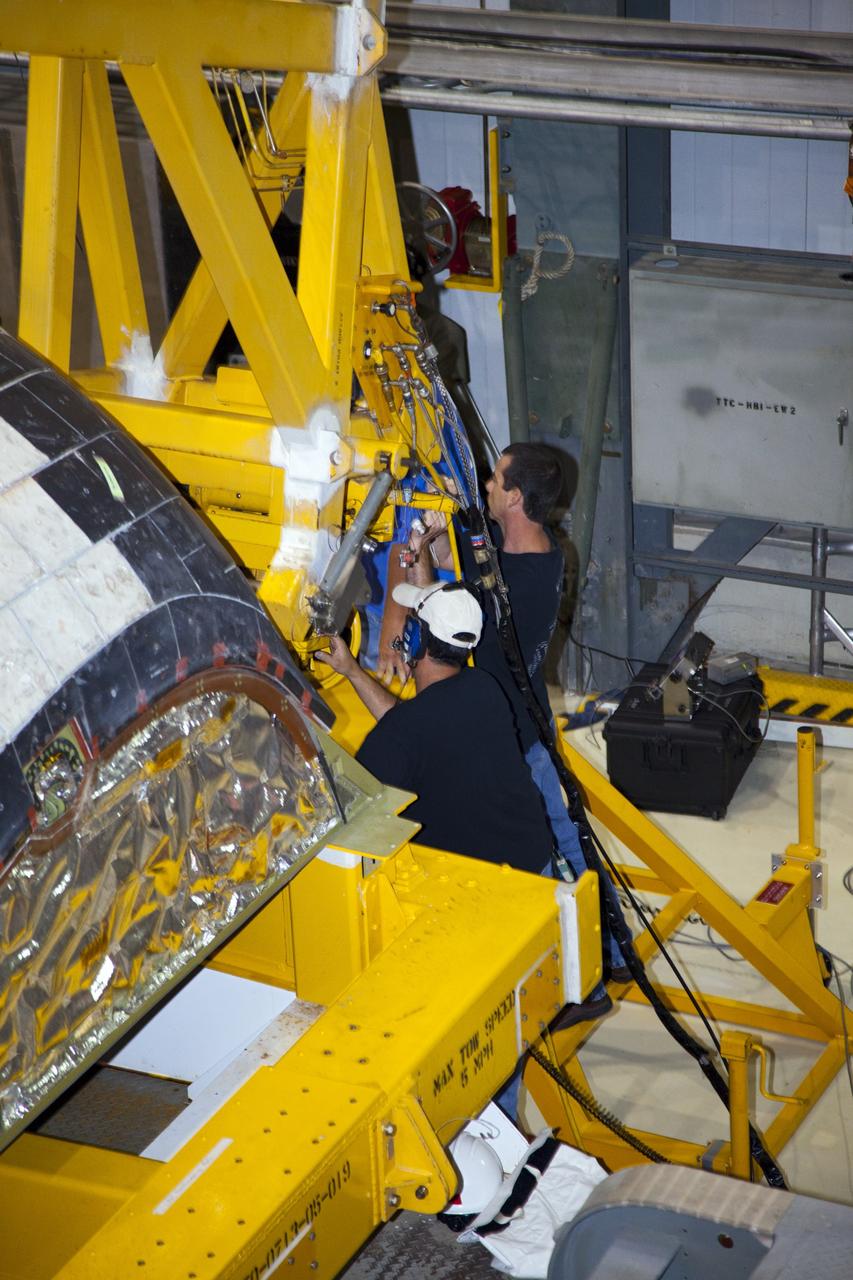
CAPE CANAVERAL, Fla. – In Orbiter Processing Facility-1 at NASA’s Kennedy Space Center in Florida, technicians assist as a crane is lowered toward an orbital maneuvering system (OMS) pod that will be installed on space shuttle Discovery. The OMS pod was returned from White Sands Space Harbor in New Mexico where it underwent a complete deservicing and cleaning. The work is part of the Space Shuttle Program’s transition and retirement processing of space shuttle Discovery. The shuttle will go to the Smithsonian’s National Air and Space Museum, Steven F. Udvar-Hazy Center in Chantilly, Va., in April 2012. For more information, visit http://www.nasa.gov/shuttle. Photo credit: NASA/Frankie Martin
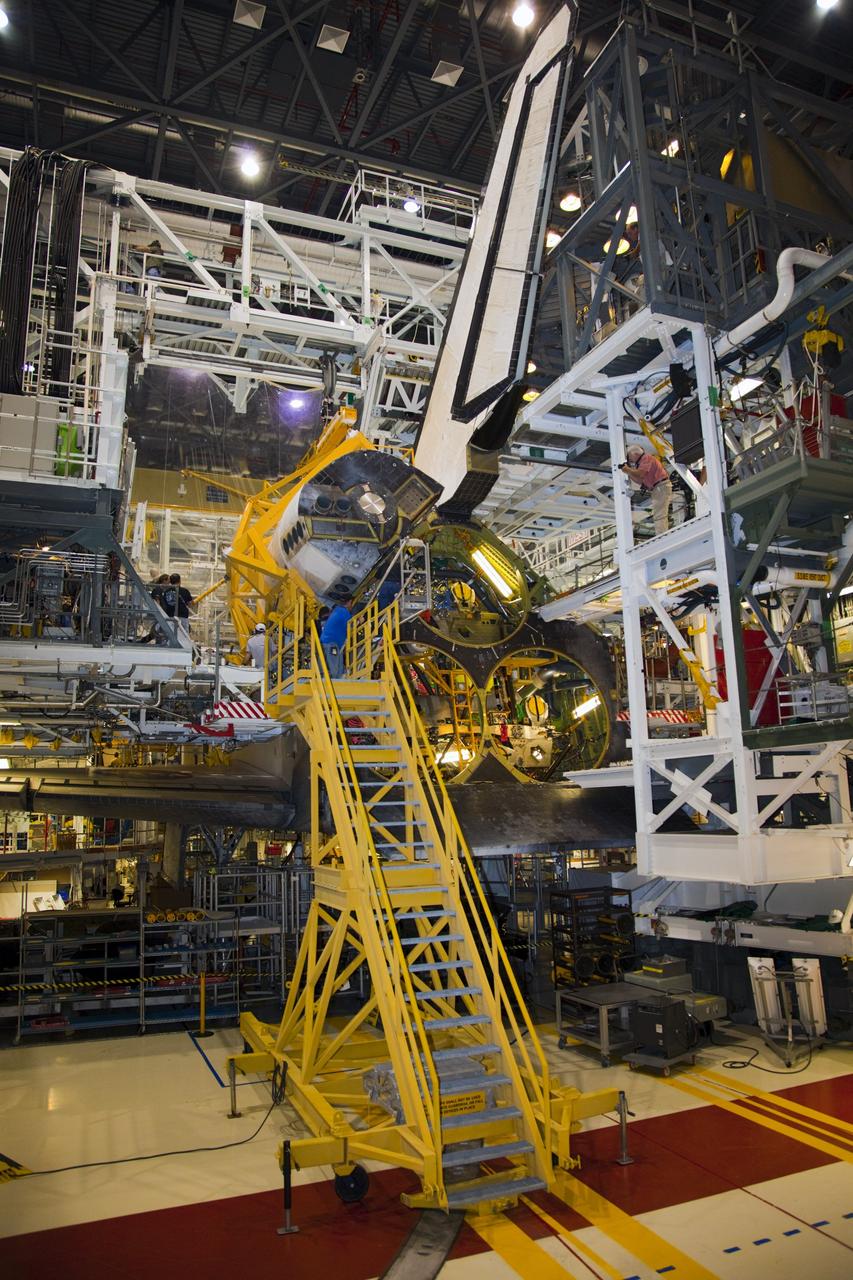
CAPE CANAVERAL, Fla. – In Orbiter Processing Facility-1 at NASA’s Kennedy Space Center in Florida, technicians assist as a crane lowers an orbital maneuvering system (OMS) pod for installation on space shuttle Discovery. The OMS pod was returned from White Sands Space Harbor in New Mexico where it underwent a complete deservicing and cleaning. The work is part of the Space Shuttle Program’s transition and retirement processing of space shuttle Discovery. The shuttle will go to the Smithsonian’s National Air and Space Museum, Steven F. Udvar-Hazy Center in Chantilly, Va., in April 2012. For more information, visit http://www.nasa.gov/shuttle. Photo credit: NASA/Frankie Martin
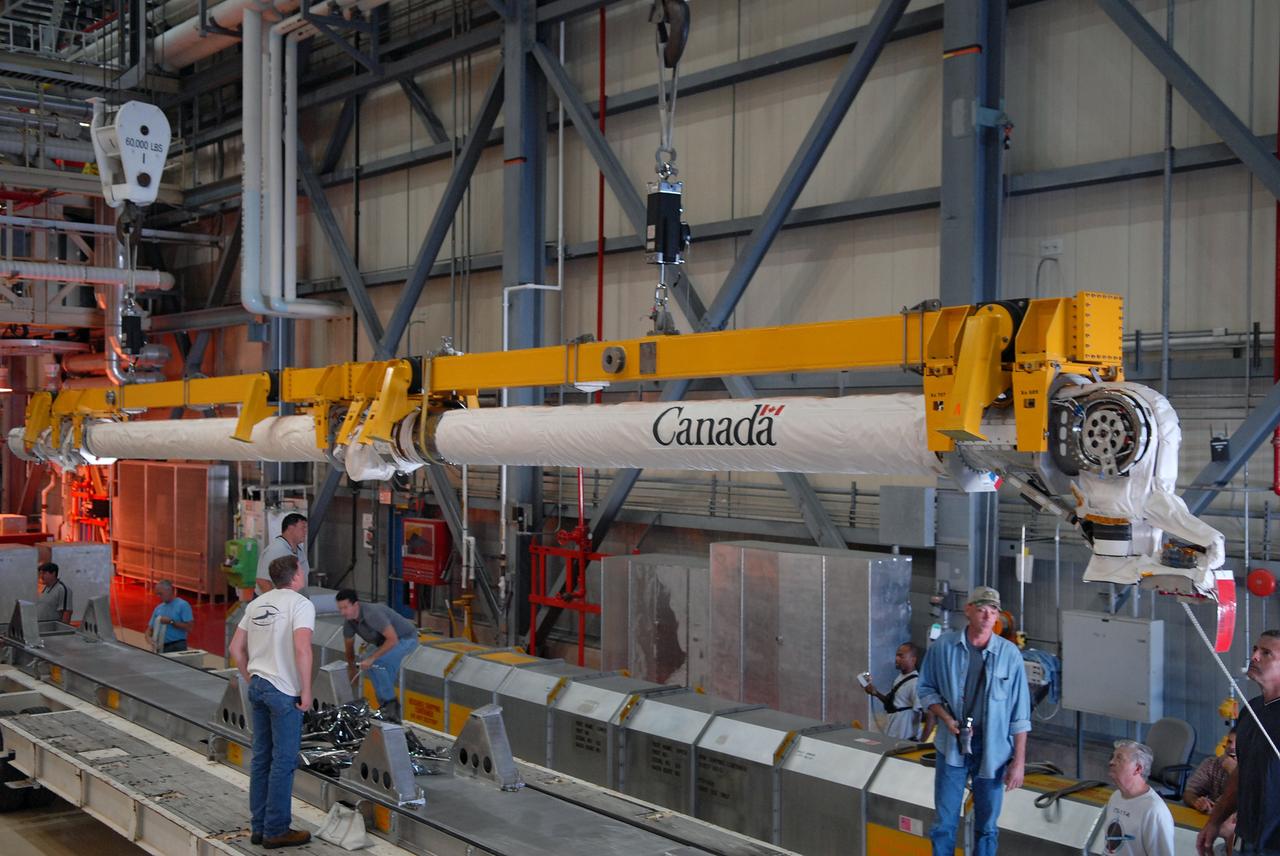
CAPE CANAVERAL, Fla. – In Orbiter Processing Facility bay 3 at NASA's Kennedy Space Center in Florida, the remote manipulator system, or RMS, removed from space shuttle Discovery is lowered toward a storage platform. The RMS is used to grab, or grapple, the payload as well as retrieve, repair and deploy satellites; provide a mobile extension ladder for spacewalking crewmembers; and be used as an inspection aid to allow flight crew members to view the orbiter’s or payload’s surfaces through a TV camera on the arm. Discovery is targeted to launch Aug. 6 on the STS-128 mission. Photo credit: NASA/Jack Pfaller
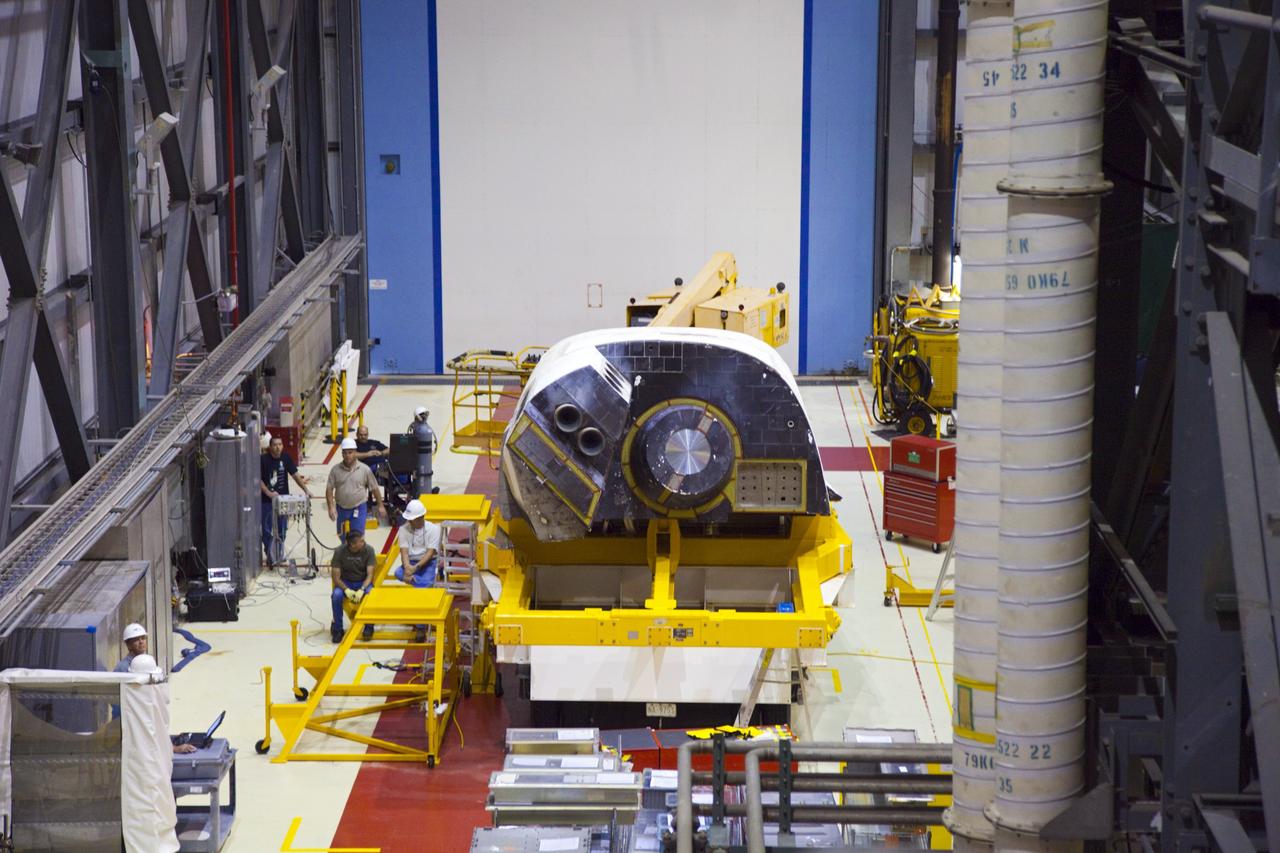
CAPE CANAVERAL, Fla. – At NASA’s Kennedy Space Center in Florida, an orbital maneuvering system (OMS) pod awaits installation on space shuttle Discovery in Orbiter Processing Facility-1. The OMS pod was returned from White Sands Space Harbor in New Mexico where it underwent a complete deservicing and cleaning. The work is part of the Space Shuttle Program’s transition and retirement processing of space shuttle Discovery. The shuttle will go to the Smithsonian’s National Air and Space Museum, Steven F. Udvar-Hazy Center in Chantilly, Va., in April 2012. For more information, visit http://www.nasa.gov/shuttle. Photo credit: NASA/Frankie Martin
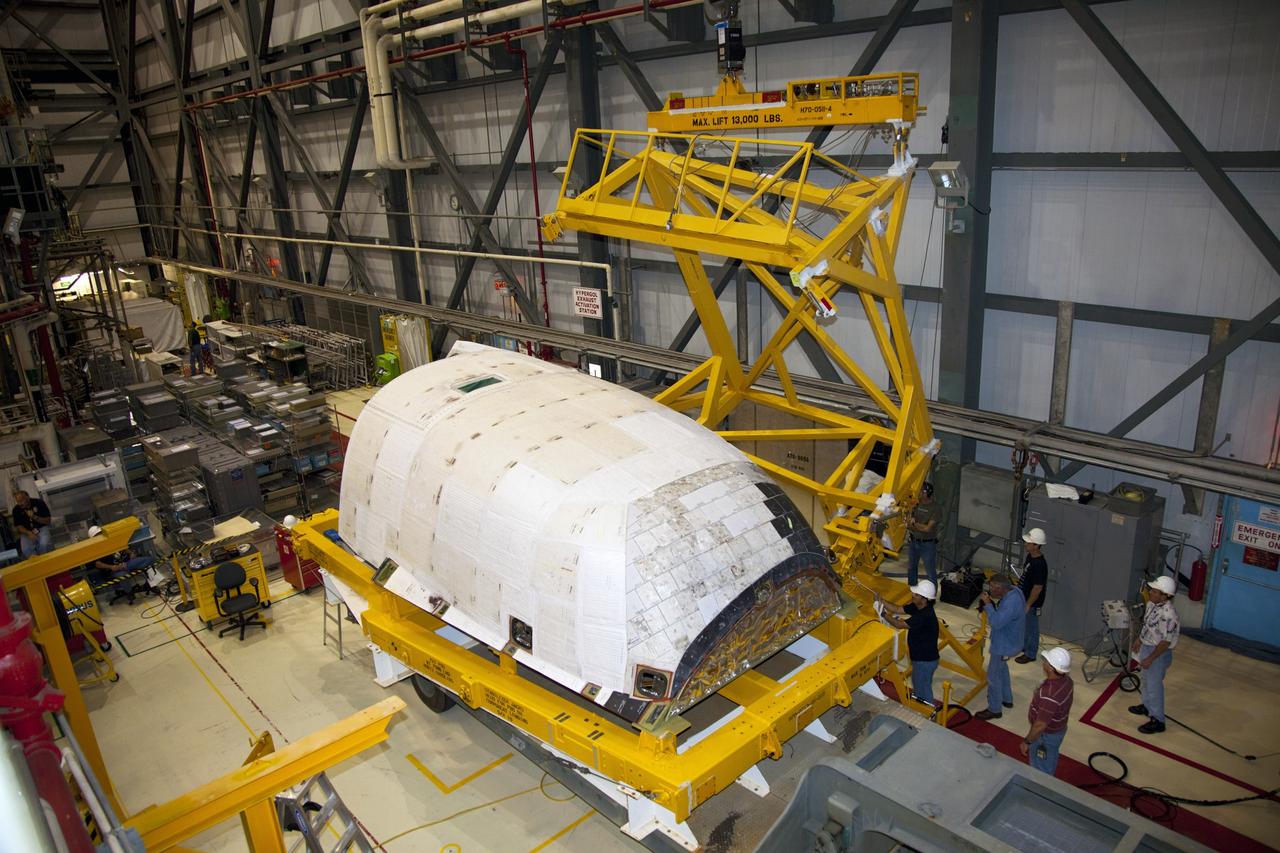
CAPE CANAVERAL, Fla. – At NASA’s Kennedy Space Center in Florida, a crane is lowered toward an orbital maneuvering system (OMS) pod that awaits installation on space shuttle Discovery in Orbiter Processing Facility-1. The OMS pod was returned from White Sands Space Harbor in New Mexico where it underwent a complete deservicing and cleaning. The work is part of the Space Shuttle Program’s transition and retirement processing of space shuttle Discovery. The shuttle will go to the Smithsonian’s National Air and Space Museum, Steven F. Udvar-Hazy Center in Chantilly, Va., in April 2012. For more information, visit http://www.nasa.gov/shuttle. Photo credit: NASA/Frankie Martin
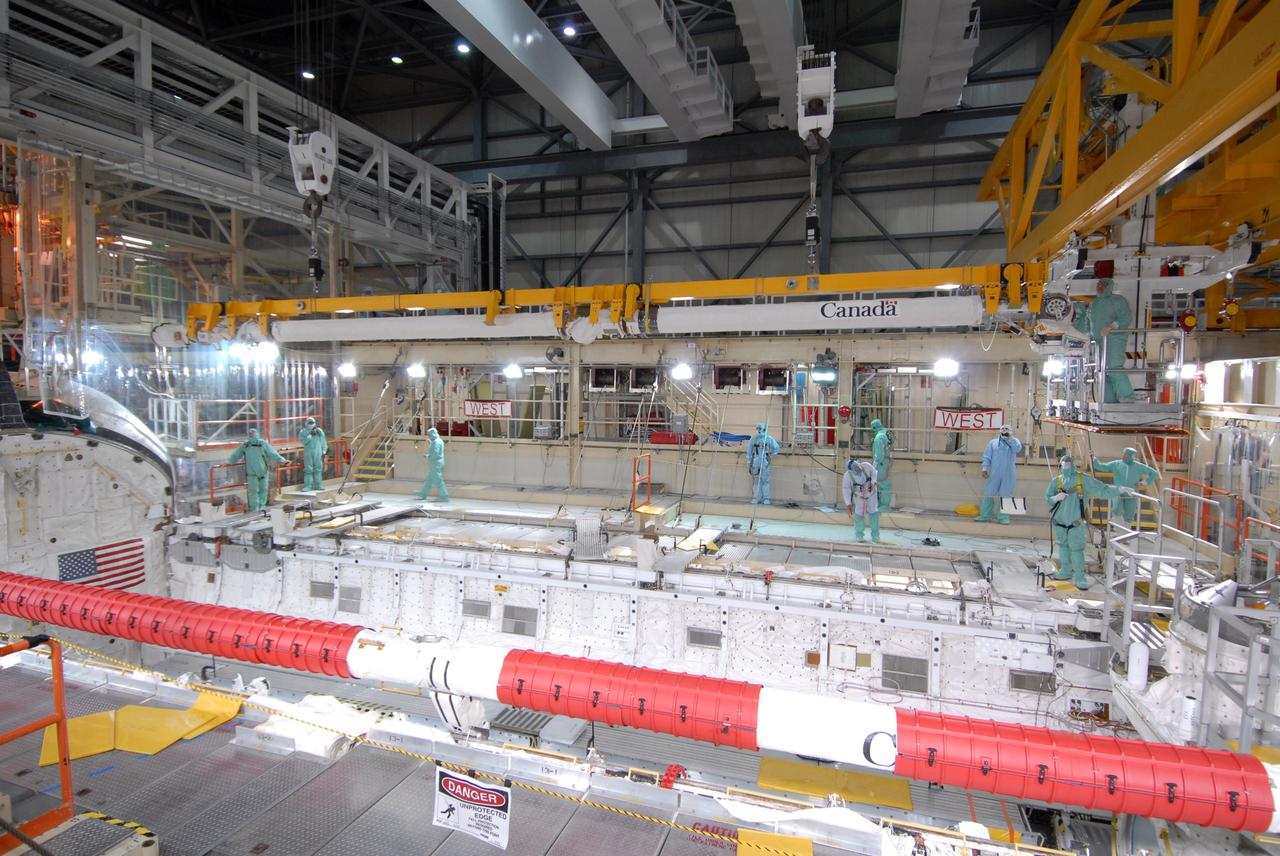
CAPE CANAVERAL, Fla. – In Orbiter Processing Facility bay 3 at NASA's Kennedy Space Center in Florida, the remote manipulator system, or RMS, arm is lifted away from the payload bay of space shuttle Discovery. The RMS is used to grab, or grapple, the payload as well as retrieve, repair and deploy satellites; provide a mobile extension ladder for spacewalking crewmembers; and be used as an inspection aid to allow flight crew members to view the orbiter’s or payload’s surfaces through a TV camera on the arm. Discovery is targeted to launch Aug. 6 on the STS-128 mission. Photo credit: NASA/Jack Pfaller
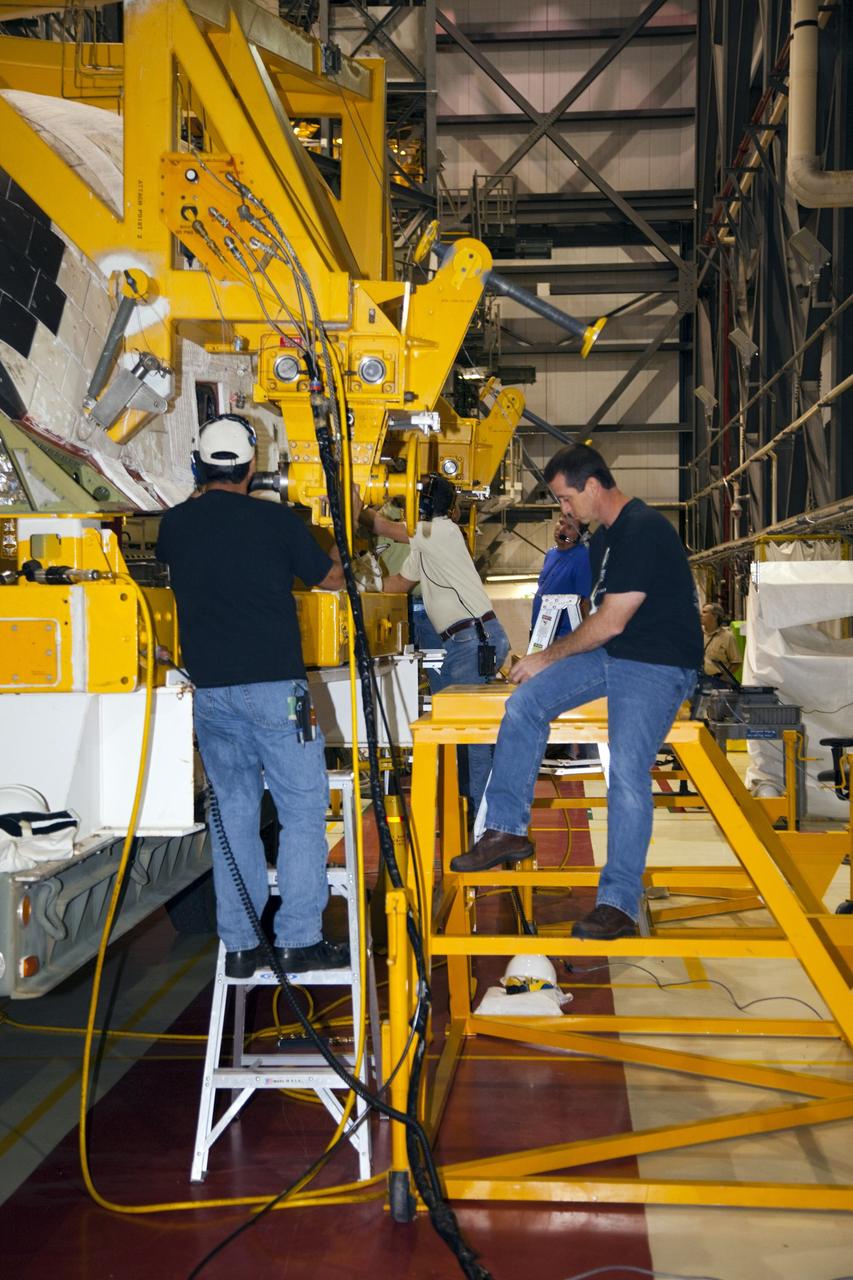
CAPE CANAVERAL, Fla. – In Orbiter Processing Facility-1 at NASA’s Kennedy Space Center in Florida, technicians assist as a crane is secured around an orbital maneuvering system (OMS) pod that will be installed on space shuttle Discovery. The OMS pod was returned from White Sands Space Harbor in New Mexico where it underwent a complete deservicing and cleaning. The work is part of the Space Shuttle Program’s transition and retirement processing of space shuttle Discovery. The shuttle will go to the Smithsonian’s National Air and Space Museum, Steven F. Udvar-Hazy Center in Chantilly, Va., in April 2012. For more information, visit http://www.nasa.gov/shuttle. Photo credit: NASA/Frankie Martin
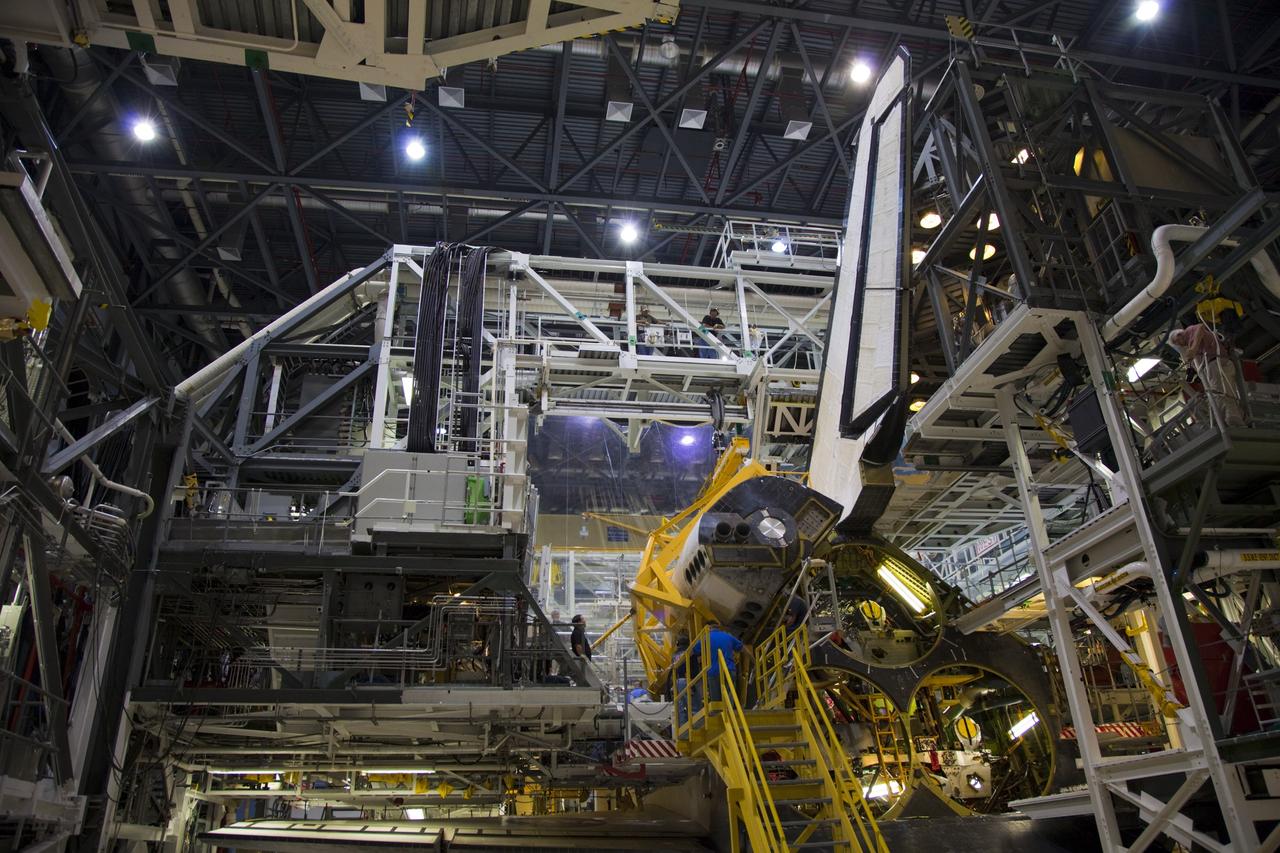
CAPE CANAVERAL, Fla. – In Orbiter Processing Facility-1 at NASA’s Kennedy Space Center in Florida, technicians assist as a crane lowers an orbital maneuvering system (OMS) pod for installation on space shuttle Discovery. The OMS pod was returned from White Sands Space Harbor in New Mexico where it underwent a complete deservicing and cleaning. The work is part of the Space Shuttle Program’s transition and retirement processing of space shuttle Discovery. The shuttle will go to the Smithsonian’s National Air and Space Museum, Steven F. Udvar-Hazy Center in Chantilly, Va., in April 2012. For more information, visit http://www.nasa.gov/shuttle. Photo credit: NASA/Frankie Martin
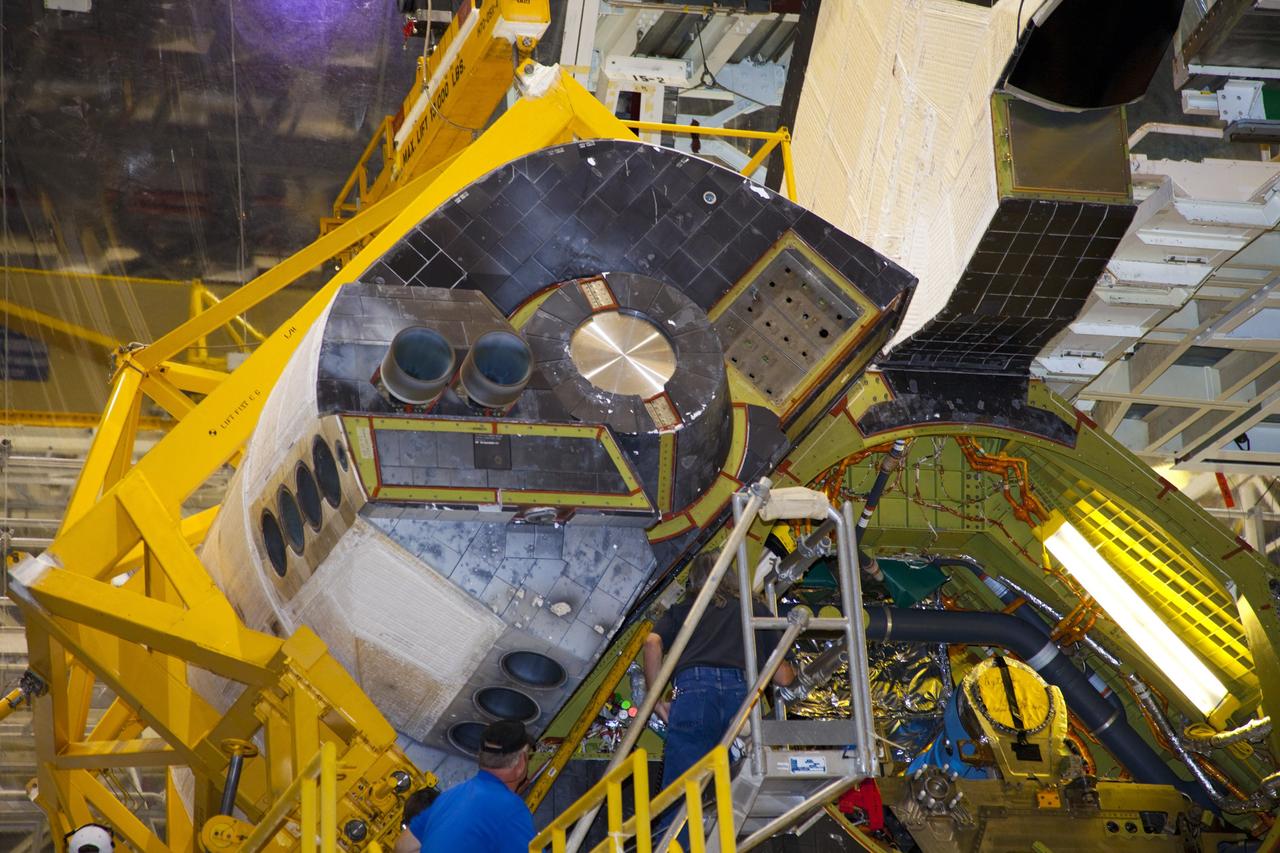
CAPE CANAVERAL, Fla. – In Orbiter Processing Facility-1 at NASA’s Kennedy Space Center in Florida, technicians assist as a crane lowers an orbital maneuvering system (OMS) pod for installation on space shuttle Discovery. The OMS pod was returned from White Sands Space Harbor in New Mexico where it underwent a complete deservicing and cleaning. The work is part of the Space Shuttle Program’s transition and retirement processing of space shuttle Discovery. The shuttle will go to the Smithsonian’s National Air and Space Museum, Steven F. Udvar-Hazy Center in Chantilly, Va., in April 2012. For more information, visit http://www.nasa.gov/shuttle. Photo credit: NASA/Frankie Martin
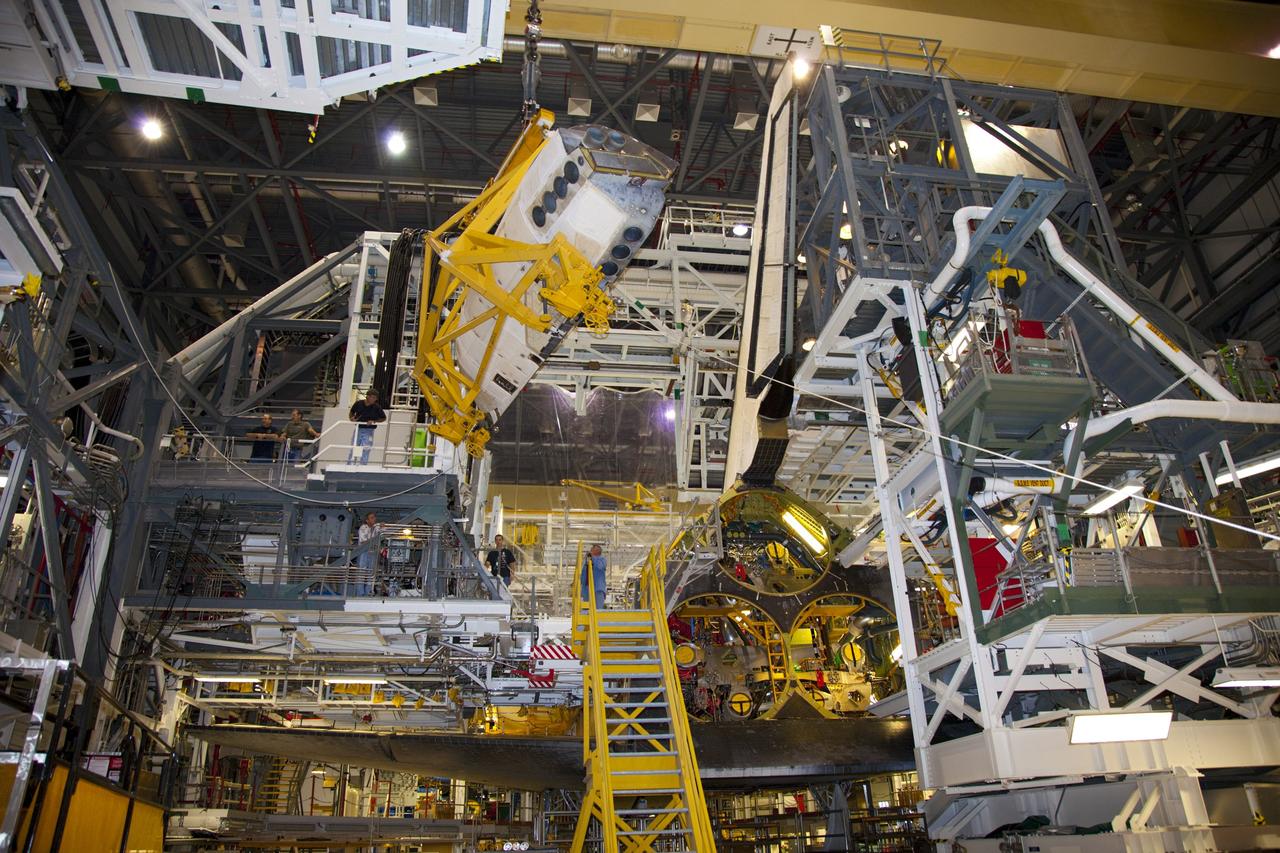
CAPE CANAVERAL, Fla. – In Orbiter Processing Facility-1 at NASA’s Kennedy Space Center in Florida, a crane transports an orbital maneuvering system (OMS) pod closer to space shuttle Discovery. The OMS pod will be installed on Discovery. The OMS pod was returned from White Sands Space Harbor in New Mexico where it underwent a complete deservicing and cleaning. The work is part of the Space Shuttle Program’s transition and retirement processing of space shuttle Discovery. The shuttle will go to the Smithsonian’s National Air and Space Museum, Steven F. Udvar-Hazy Center in Chantilly, Va., in April 2012. For more information, visit http://www.nasa.gov/shuttle. Photo credit: NASA/Frankie Martin
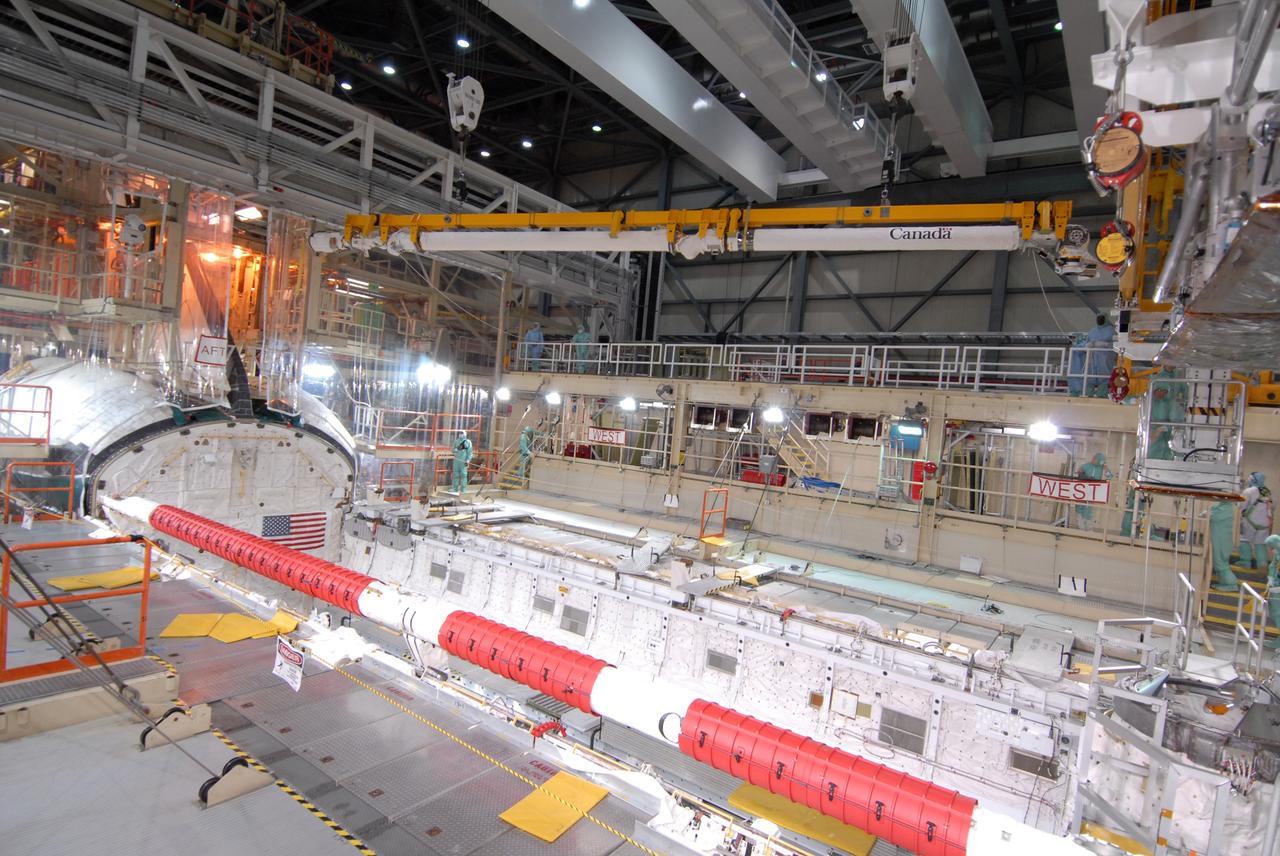
CAPE CANAVERAL, Fla. – In Orbiter Processing Facility bay 3 at NASA's Kennedy Space Center in Florida, the remote manipulator system, or RMS, arm is lifted out of space shuttle Discovery's payload bay. The RMS is used to grab, or grapple, the payload as well as retrieve, repair and deploy satellites; provide a mobile extension ladder for spacewalking crewmembers; and be used as an inspection aid to allow flight crew members to view the orbiter’s or payload’s surfaces through a TV camera on the arm. Discovery is targeted to launch Aug. 6 on the STS-128 mission. Photo credit: NASA/Jack Pfaller
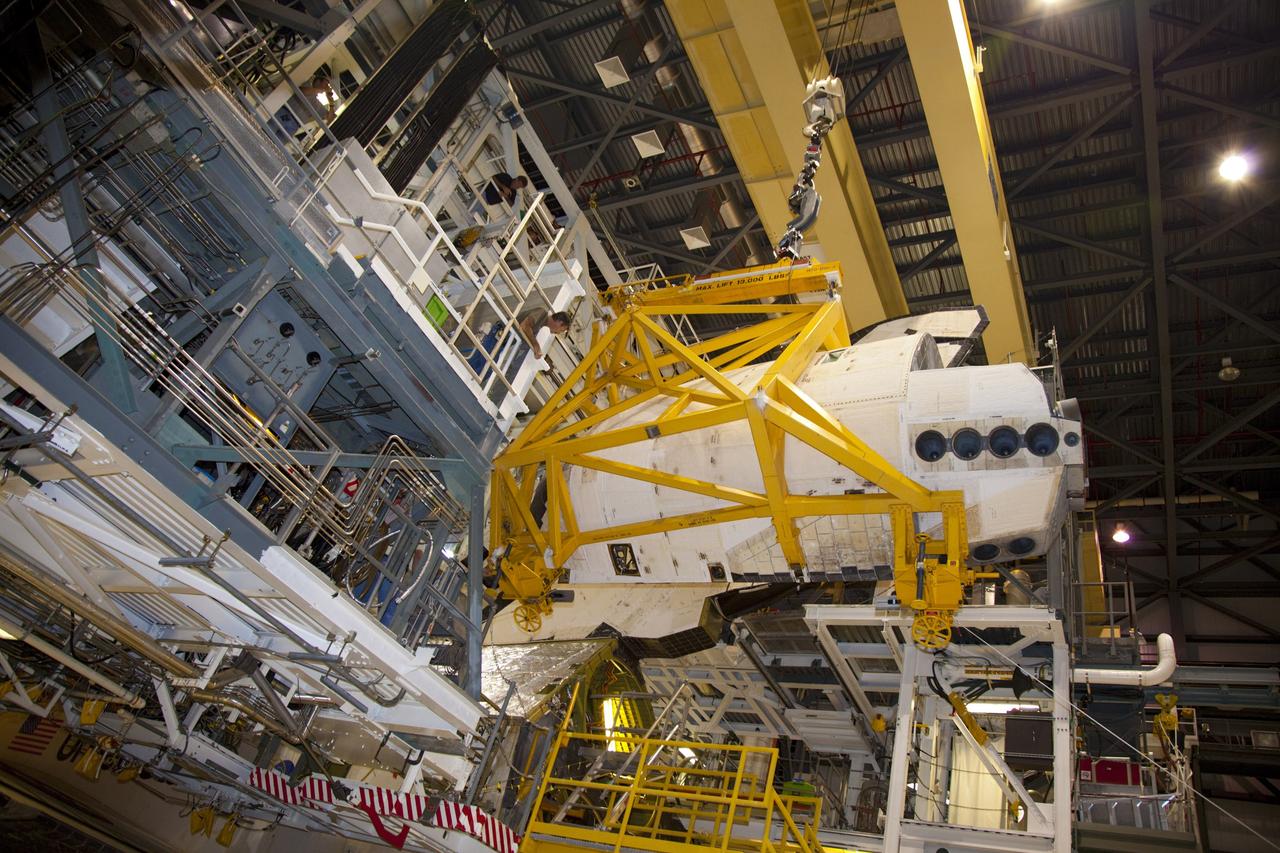
CAPE CANAVERAL, Fla. – In Orbiter Processing Facility-1 at NASA’s Kennedy Space Center in Florida, a crane carries an orbital maneuvering system (OMS) pod closer to space shuttle Discovery. The OMS pod will be installed on Discovery. The OMS pod was returned from White Sands Space Harbor in New Mexico where it underwent a complete deservicing and cleaning. The work is part of the Space Shuttle Program’s transition and retirement processing of space shuttle Discovery. The shuttle will go to the Smithsonian’s National Air and Space Museum, Steven F. Udvar-Hazy Center in Chantilly, Va., in April 2012. For more information, visit http://www.nasa.gov/shuttle. Photo credit: NASA/Frankie Martin
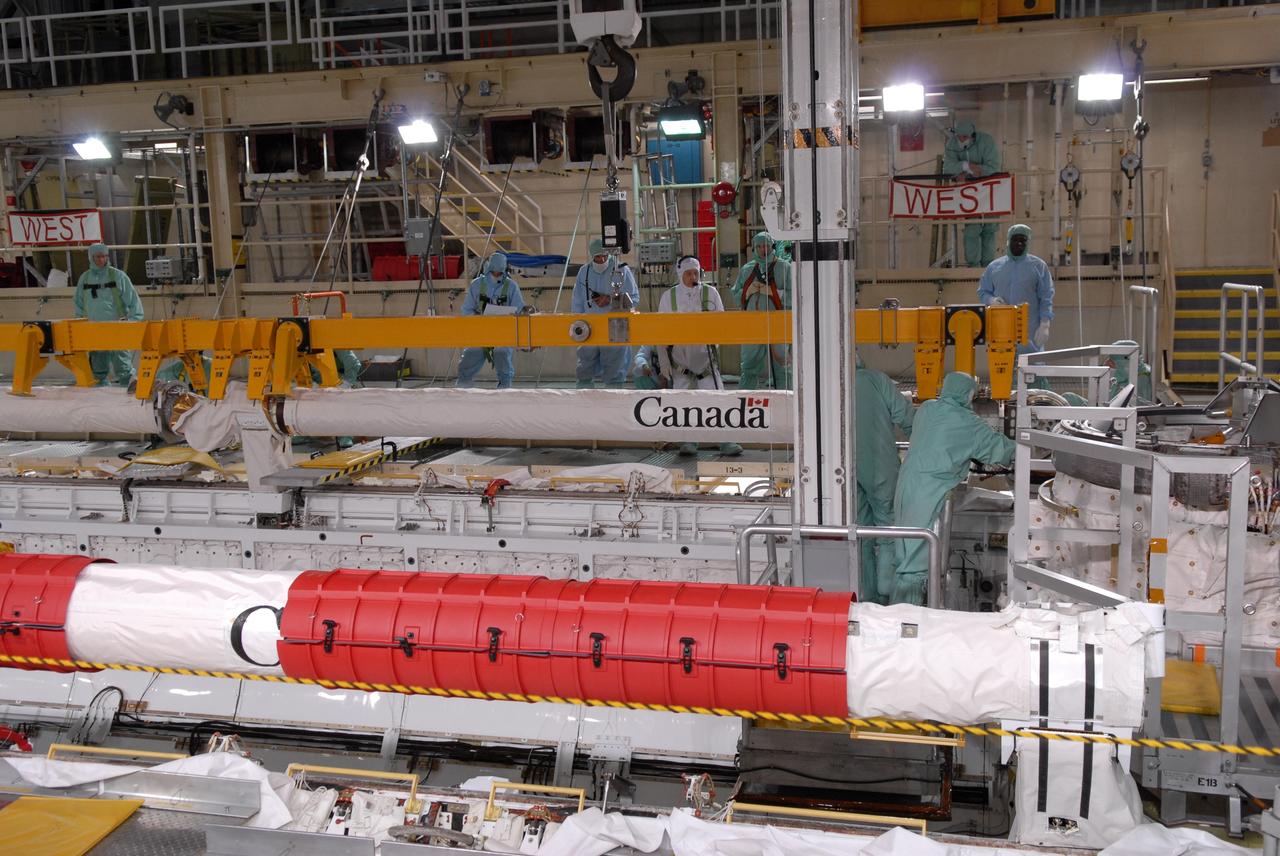
CAPE CANAVERAL, Fla. – In Orbiter Processing Facility bay 3 at NASA's Kennedy Space Center in Florida, technicians prepare to remove the remote manipulator system, or RMS, arm in the payload bay of space shuttle Discovery. The RMS is used to grab, or grapple, the payload as well as retrieve, repair and deploy satellites; provide a mobile extension ladder for spacewalking crewmembers; and be used as an inspection aid to allow flight crew members to view the orbiter’s or payload’s surfaces through a TV camera on the arm. Discovery is targeted to launch Aug. 6 on the STS-128 mission. Photo credit: NASA/Jack Pfaller

CAPE CANAVERAL, Fla. – In Orbiter Processing Facility-1 at NASA’s Kennedy Space Center in Florida, a crane lowers an orbital maneuvering system (OMS) pod closer for installation on space shuttle Discovery. The OMS pod was returned from White Sands Space Harbor in New Mexico where it underwent a complete deservicing and cleaning. The work is part of the Space Shuttle Program’s transition and retirement processing of space shuttle Discovery. The shuttle will go to the Smithsonian’s National Air and Space Museum, Steven F. Udvar-Hazy Center in Chantilly, Va., in April 2012. For more information, visit http://www.nasa.gov/shuttle. Photo credit: NASA/Frankie Martin
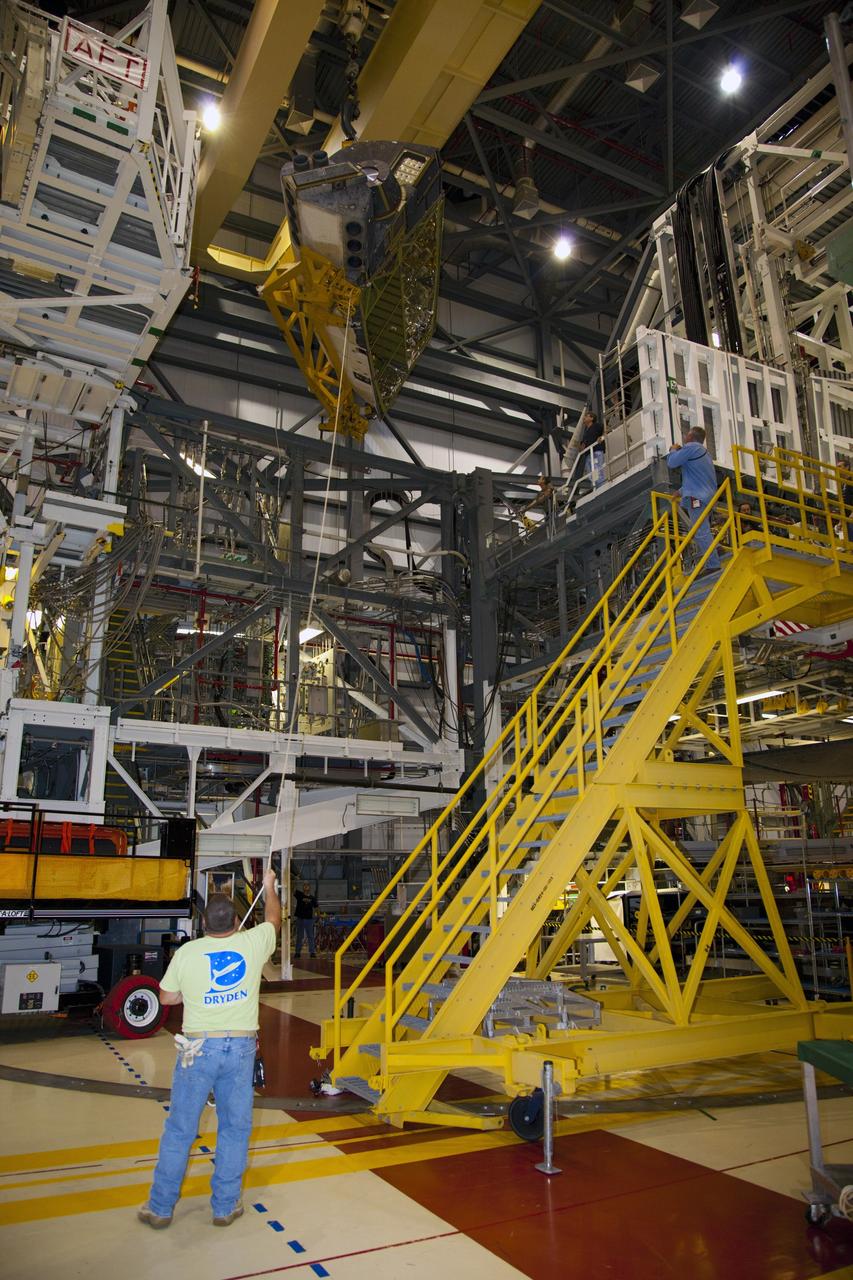
CAPE CANAVERAL, Fla. – In Orbiter Processing Facility-1 at NASA’s Kennedy Space Center in Florida, a technician monitors the progress as a crane is used to carry an orbital maneuvering system (OMS) pod that will be installed on space shuttle Discovery. The OMS pod was returned from White Sands Space Harbor in New Mexico where it underwent a complete deservicing and cleaning. The work is part of the Space Shuttle Program’s transition and retirement processing of space shuttle Discovery. The shuttle will go to the Smithsonian’s National Air and Space Museum, Steven F. Udvar-Hazy Center in Chantilly, Va., in April 2012. For more information, visit http://www.nasa.gov/shuttle. Photo credit: NASA/Frankie Martin
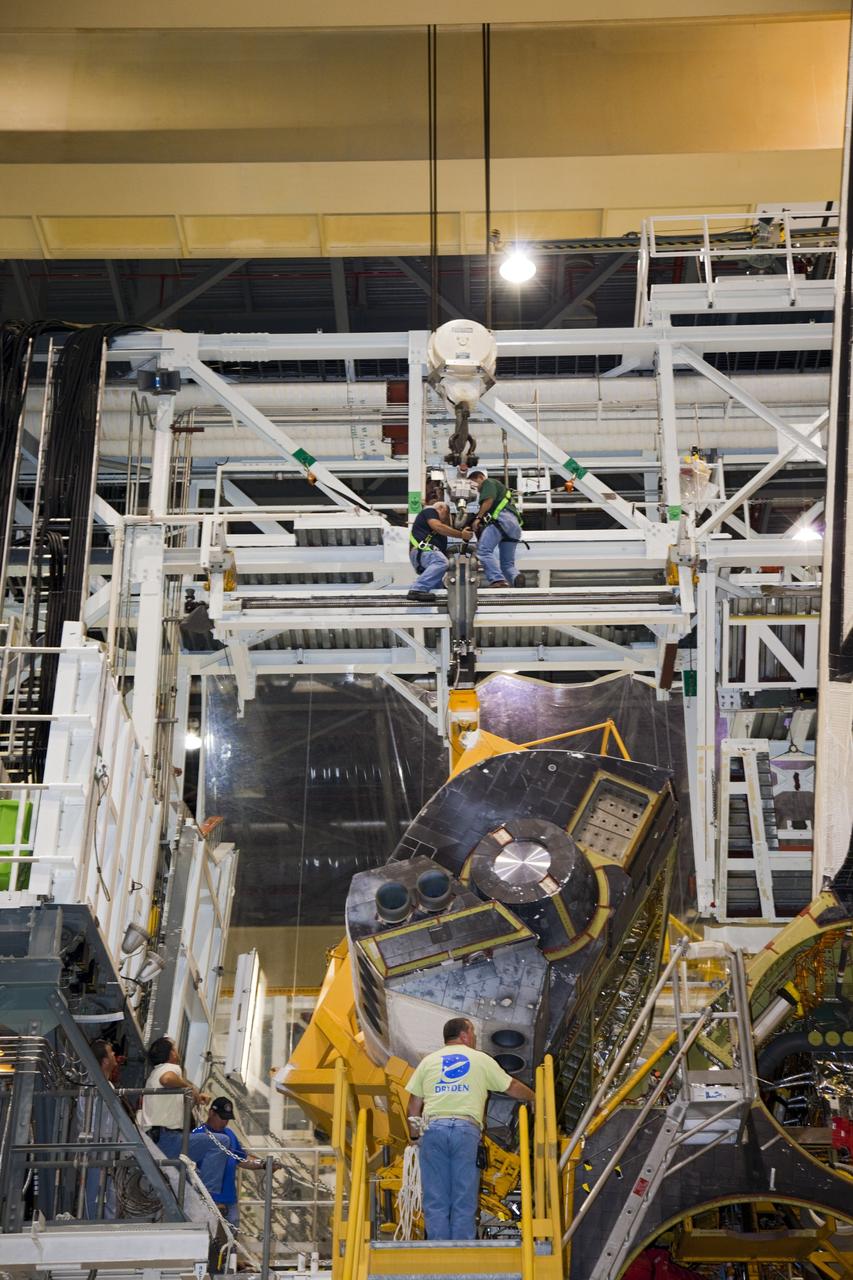
CAPE CANAVERAL, Fla. – In Orbiter Processing Facility-1 at NASA’s Kennedy Space Center in Florida, technicians assist as a crane lowers an orbital maneuvering system (OMS) pod for installation on space shuttle Discovery. The OMS pod was returned from White Sands Space Harbor in New Mexico where it underwent a complete deservicing and cleaning. The work is part of the Space Shuttle Program’s transition and retirement processing of space shuttle Discovery. The shuttle will go to the Smithsonian’s National Air and Space Museum, Steven F. Udvar-Hazy Center in Chantilly, Va., in April 2012. For more information, visit http://www.nasa.gov/shuttle. Photo credit: NASA/Frankie Martin
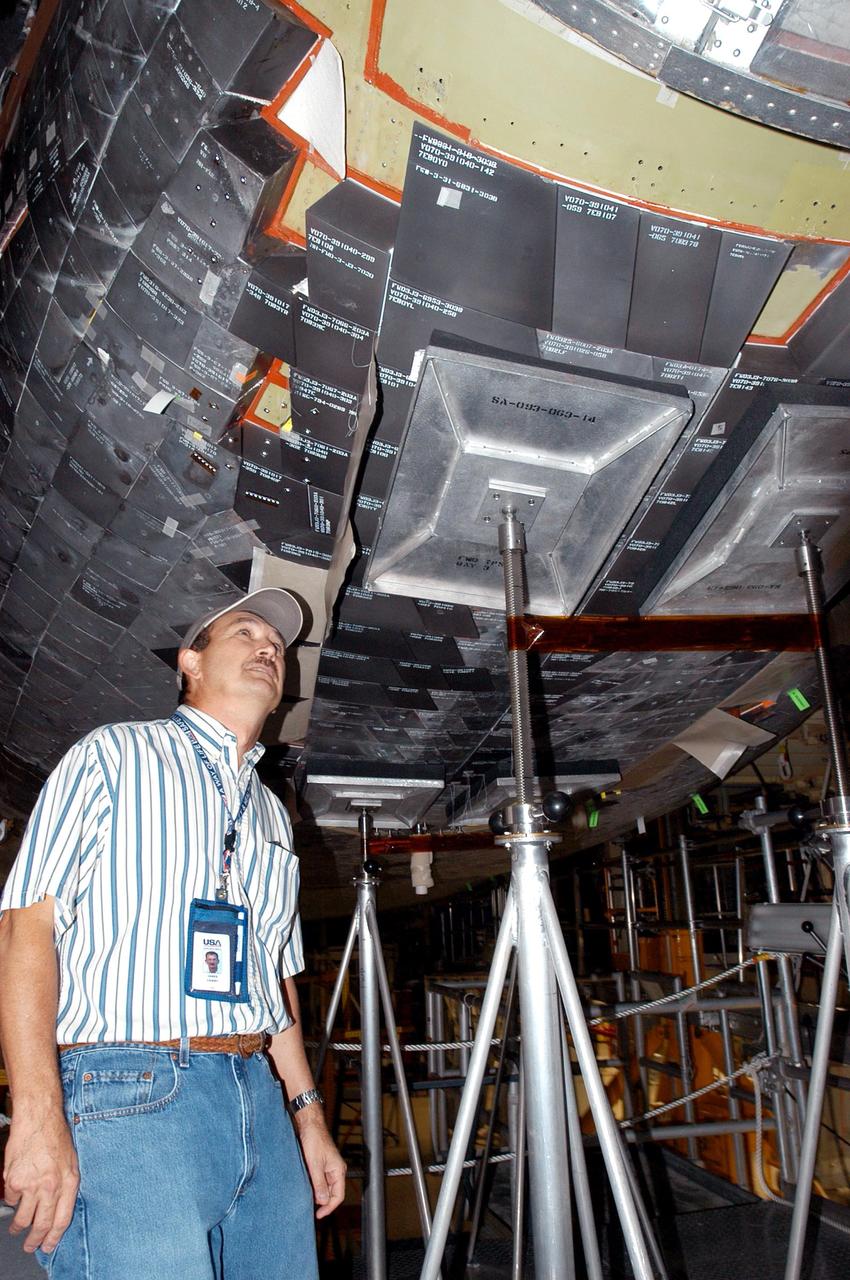
KENNEDY SPACE CENTER, FLA. - United Space Alliance employee Dan Coleman inspects Space Shuttle Discovery in the Orbiter Processing Facility following Hurricane Frances. The storm's path over Florida took it through Cape Canaveral and KSC property during Labor Day weekend. There was no damage to the Space Shuttle orbiters or to any other flight hardware.
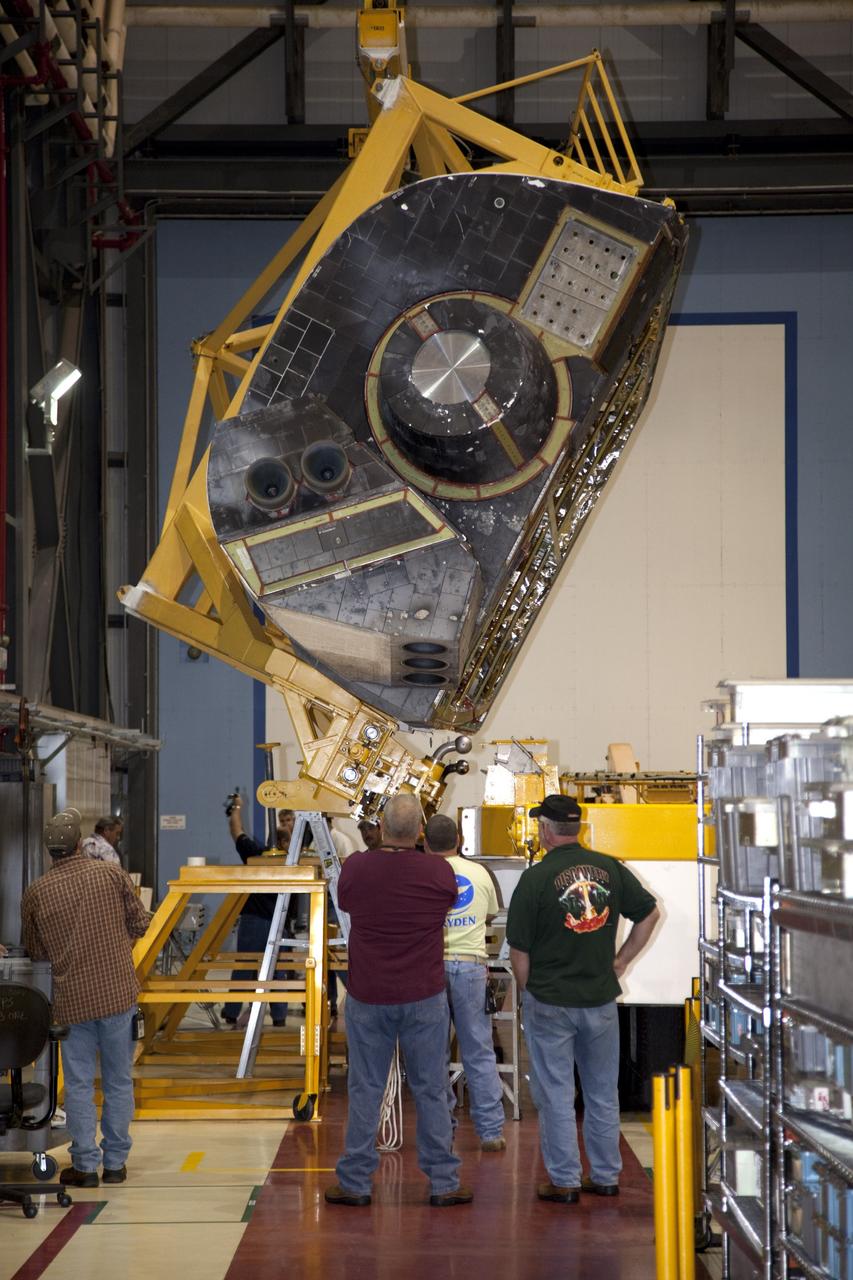
CAPE CANAVERAL, Fla. – In Orbiter Processing Facility-1 at NASA’s Kennedy Space Center in Florida, technicians monitor the progress as a crane is used to carry an orbital maneuvering system (OMS) pod that will be installed on space shuttle Discovery. The OMS pod was returned from White Sands Space Harbor in New Mexico where it underwent a complete deservicing and cleaning. The work is part of the Space Shuttle Program’s transition and retirement processing of space shuttle Discovery. The shuttle will go to the Smithsonian’s National Air and Space Museum, Steven F. Udvar-Hazy Center in Chantilly, Va., in April 2012. For more information, visit http://www.nasa.gov/shuttle. Photo credit: NASA/Frankie Martin
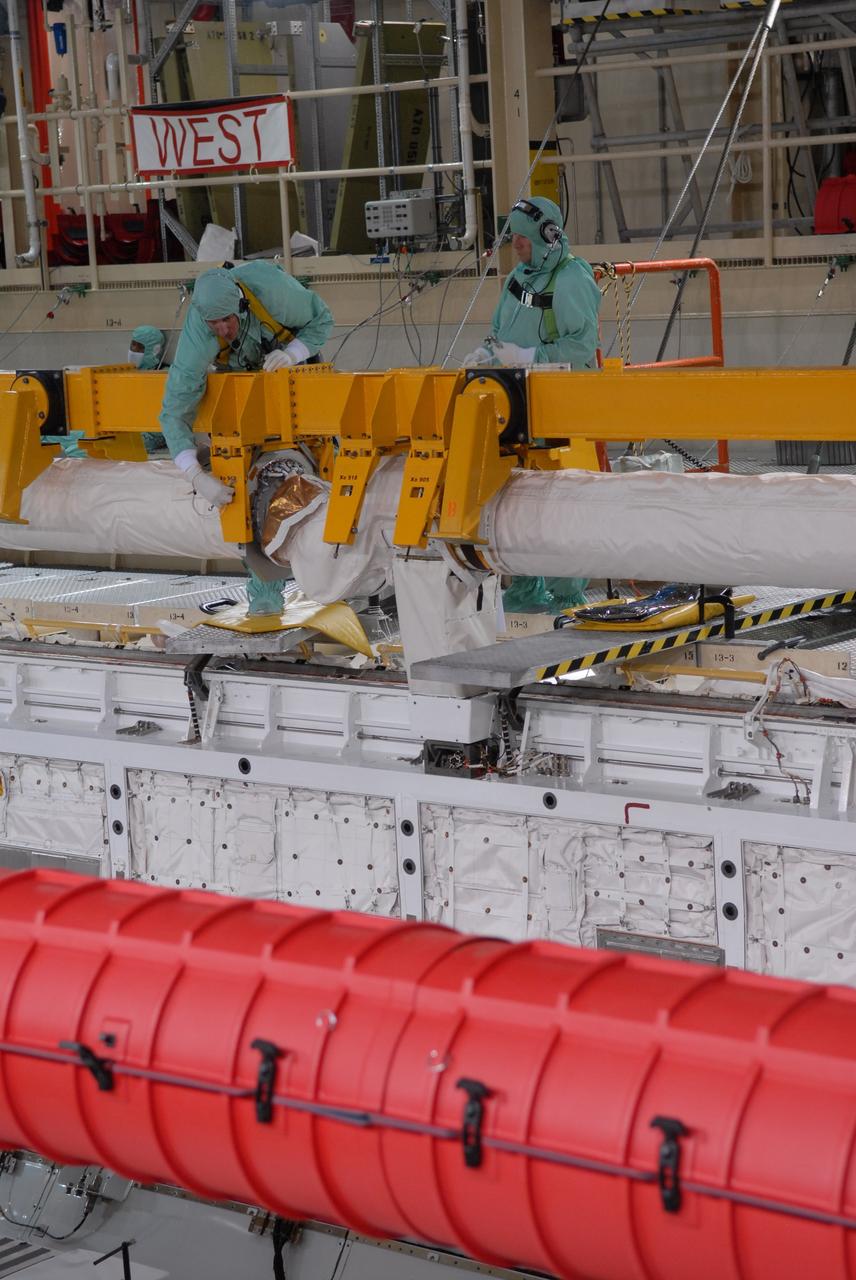
CAPE CANAVERAL, Fla. – In Orbiter Processing Facility bay 3 at NASA's Kennedy Space Center in Florida, technicians prepare to remove remote manipulator system, or RMS, arm in the payload bay of space shuttle Discovery. The RMS is used to grab, or grapple, the payload as well as retrieve, repair and deploy satellites; provide a mobile extension ladder for spacewalking crewmembers; and be used as an inspection aid to allow flight crew members to view the orbiter’s or payload’s surfaces through a TV camera on the arm. Discovery is targeted to launch Aug. 6 on the STS-128 mission. Photo credit: NASA/Jack Pfaller
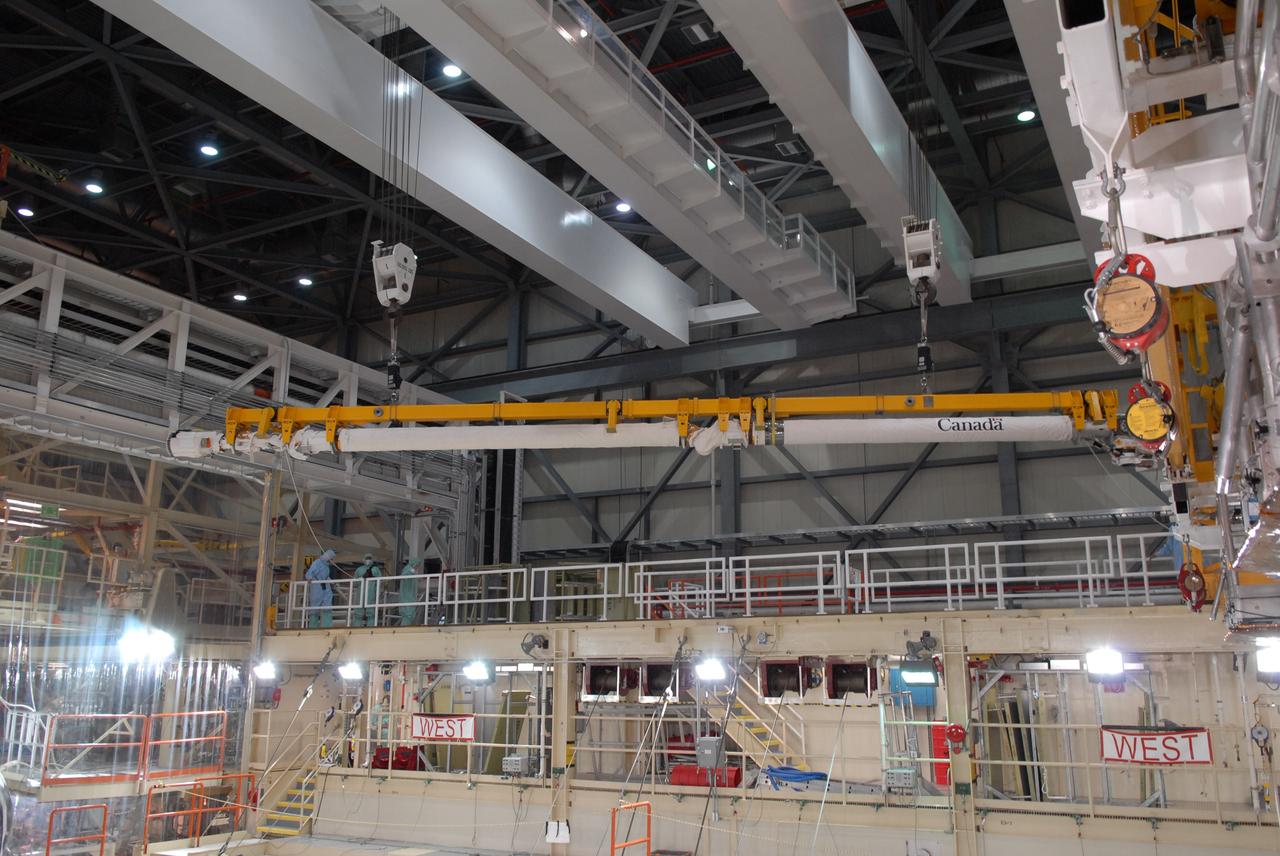
CAPE CANAVERAL, Fla. – In Orbiter Processing Facility bay 3 at NASA's Kennedy Space Center in Florida, the remote manipulator system, or RMS, arm is lifted away from space shuttle Discovery's payload bay. The RMS is used to grab, or grapple, the payload as well as retrieve, repair and deploy satellites; provide a mobile extension ladder for spacewalking crewmembers; and be used as an inspection aid to allow flight crew members to view the orbiter’s or payload’s surfaces through a TV camera on the arm. Discovery is targeted to launch Aug. 6 on the STS-128 mission. Photo credit: NASA/Jack Pfaller
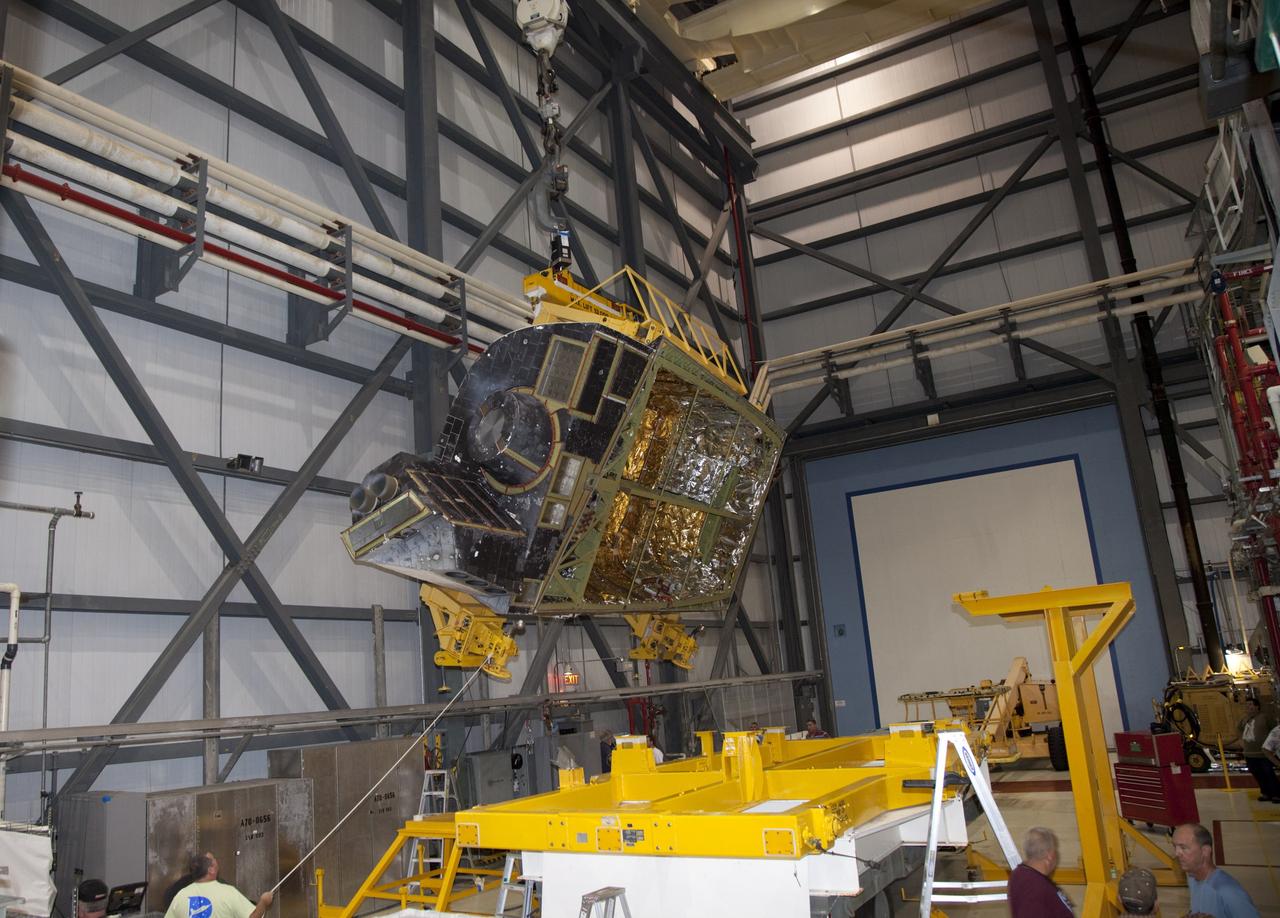
CAPE CANAVERAL, Fla. – In Orbiter Processing Facility-1 at NASA’s Kennedy Space Center in Florida, technicians monitor the progress as a crane is used to carry an orbital maneuvering system (OMS) pod that will be installed on space shuttle Discovery. The OMS pod was returned from White Sands Space Harbor in New Mexico where it underwent a complete deservicing and cleaning. The work is part of the Space Shuttle Program’s transition and retirement processing of space shuttle Discovery. The shuttle will go to the Smithsonian’s National Air and Space Museum, Steven F. Udvar-Hazy Center in Chantilly, Va., in April 2012. For more information, visit http://www.nasa.gov/shuttle. Photo credit: NASA/Frankie Martin
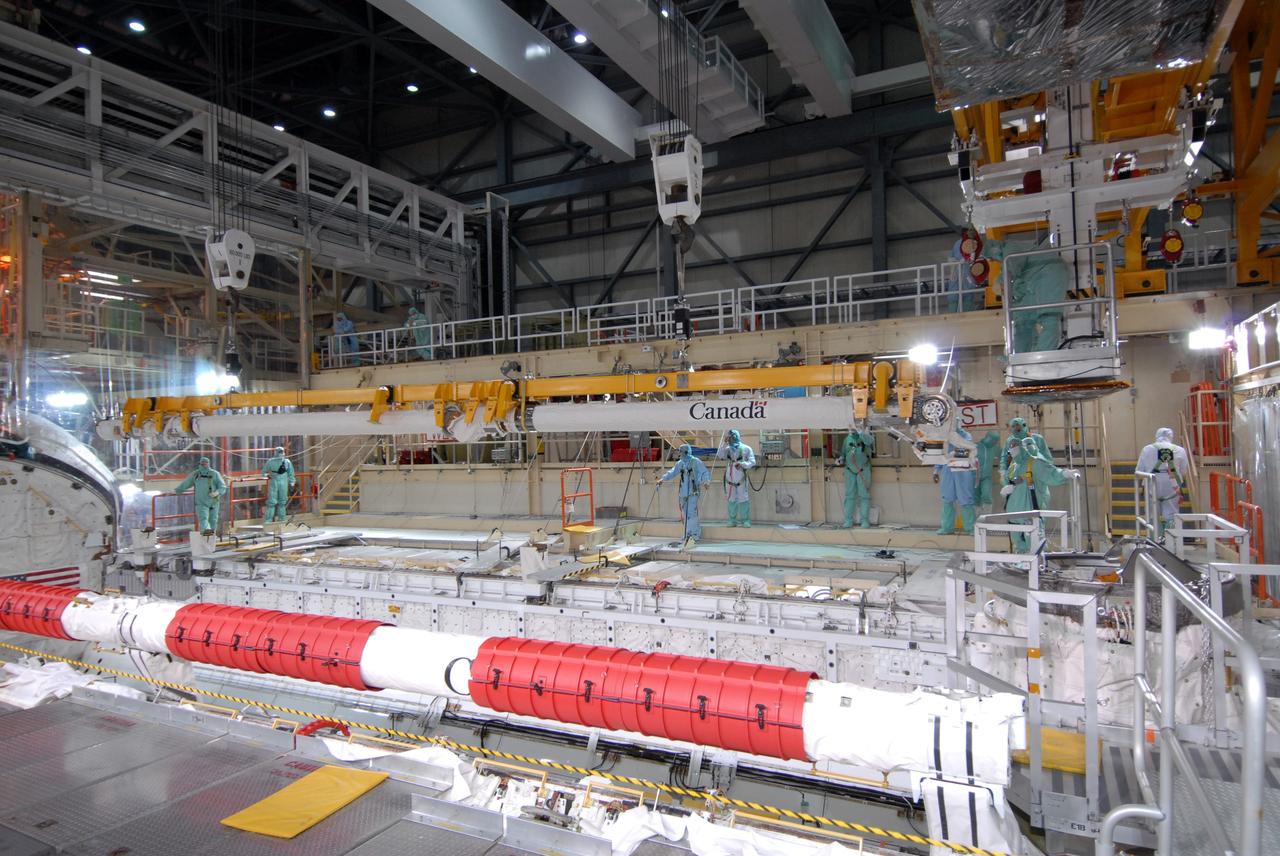
CAPE CANAVERAL, Fla. – In Orbiter Processing Facility bay 3 at NASA's Kennedy Space Center in Florida, the remote manipulator system, or RMS, arm is moved out of the payload bay of space shuttle Discovery. The RMS is used to grab, or grapple, the payload as well as retrieve, repair and deploy satellites; provide a mobile extension ladder for spacewalking crewmembers; and be used as an inspection aid to allow flight crew members to view the orbiter’s or payload’s surfaces through a TV camera on the arm. Discovery is targeted to launch Aug. 6 on the STS-128 mission. Photo credit: NASA/Jack Pfaller
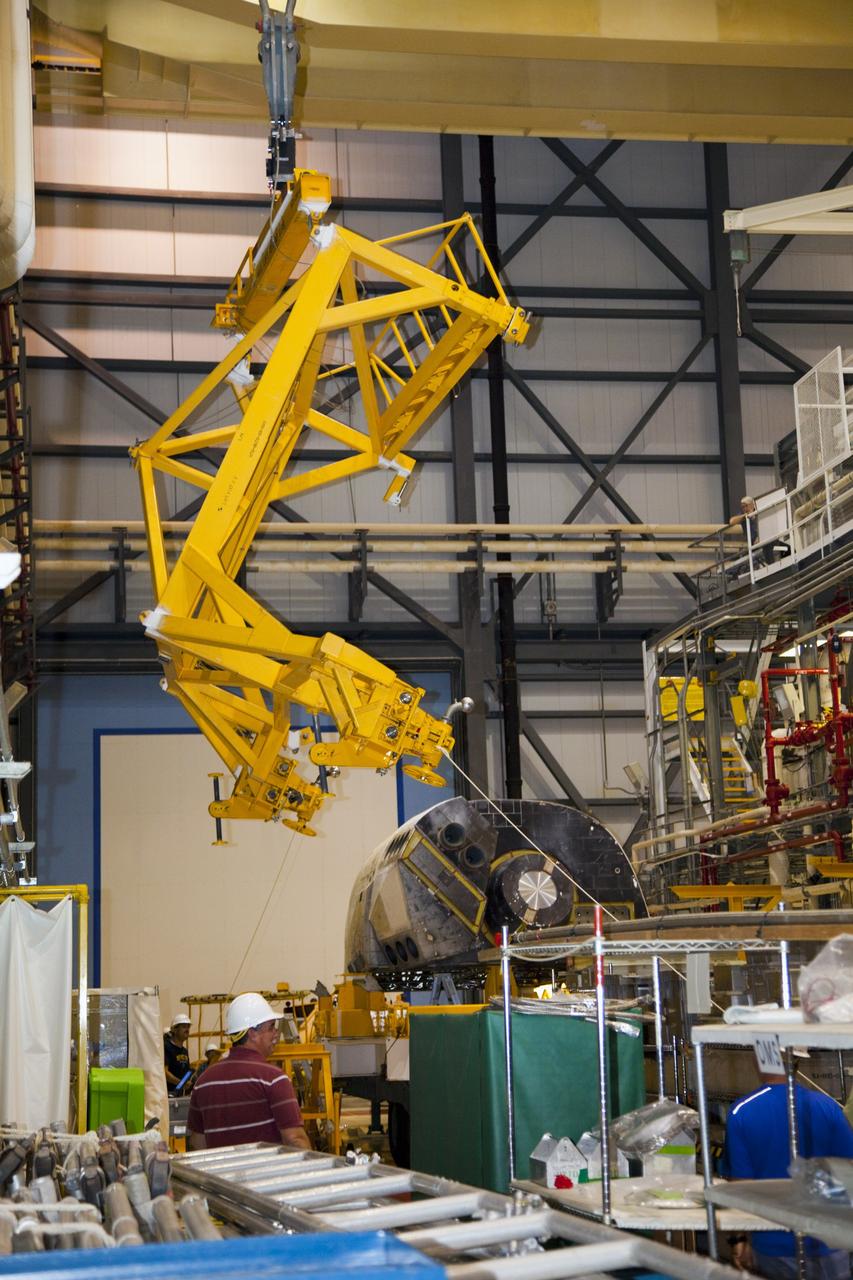
CAPE CANAVERAL, Fla. – At NASA’s Kennedy Space Center in Florida, a crane is lowered toward an orbital maneuvering system (OMS) pod that awaits installation on space shuttle Discovery in Orbiter Processing Facility-1. The OMS pod was returned from White Sands Space Harbor in New Mexico where it underwent a complete deservicing and cleaning. The work is part of the Space Shuttle Program’s transition and retirement processing of space shuttle Discovery. The shuttle will go to the Smithsonian’s National Air and Space Museum, Steven F. Udvar-Hazy Center in Chantilly, Va., in April 2012. For more information, visit http://www.nasa.gov/shuttle. Photo credit: NASA/Frankie Martin
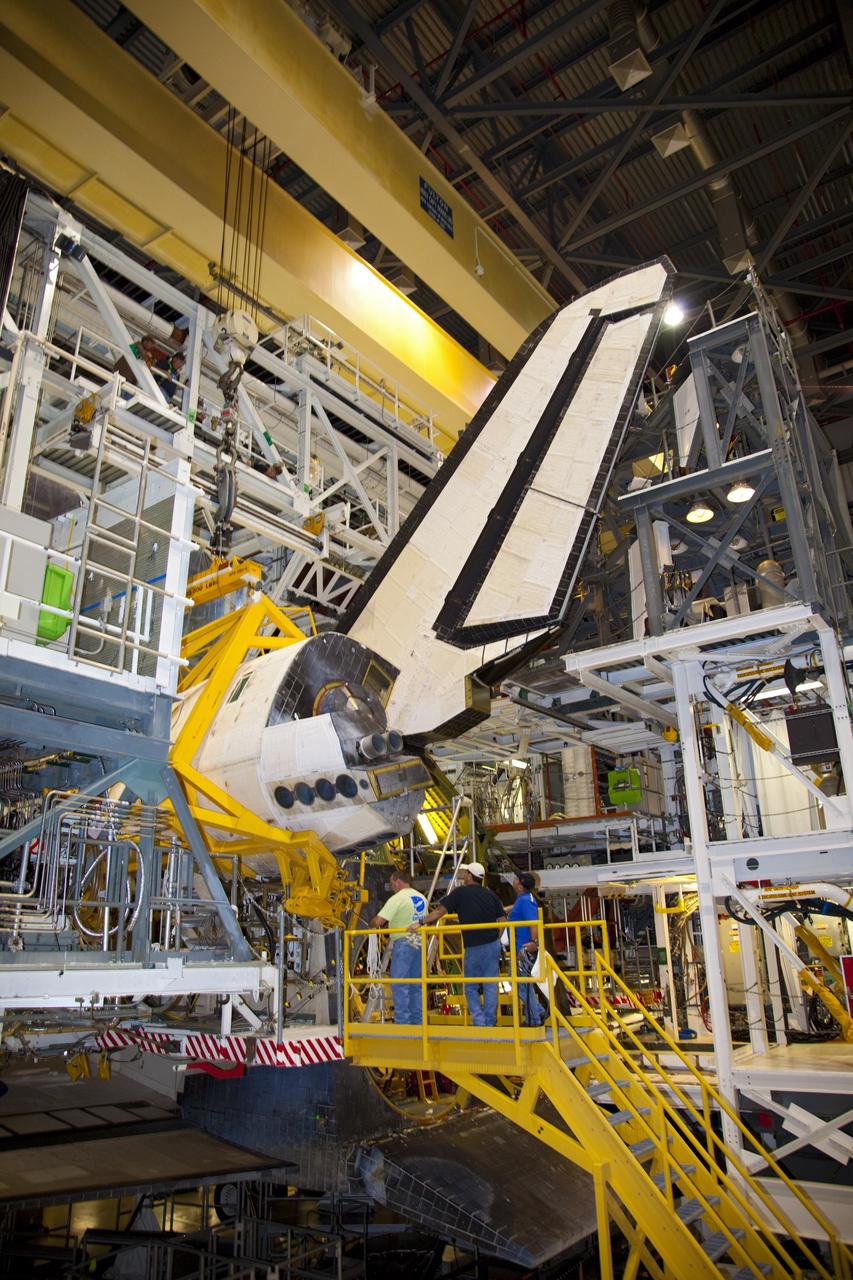
CAPE CANAVERAL, Fla. – In Orbiter Processing Facility-1 at NASA’s Kennedy Space Center in Florida, technicians monitor the progress as a crane lowers an orbital maneuvering system (OMS) pod closer for installation on space shuttle Discovery. The OMS pod was returned from White Sands Space Harbor in New Mexico where it underwent a complete deservicing and cleaning. The work is part of the Space Shuttle Program’s transition and retirement processing of space shuttle Discovery. The shuttle will go to the Smithsonian’s National Air and Space Museum, Steven F. Udvar-Hazy Center in Chantilly, Va., in April 2012. For more information, visit http://www.nasa.gov/shuttle. Photo credit: NASA/Frankie Martin
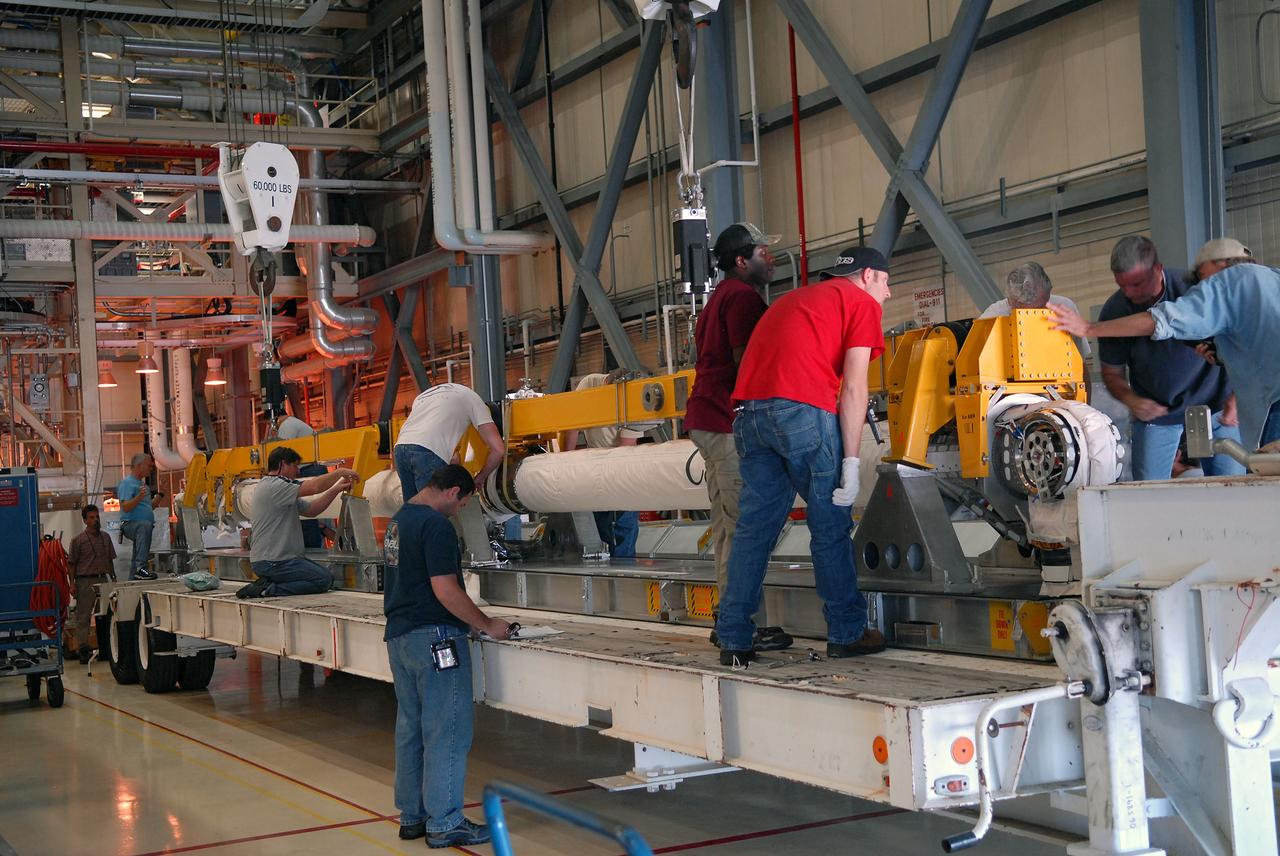
CAPE CANAVERAL, Fla. – In Orbiter Processing Facility bay 3 at NASA's Kennedy Space Center in Florida, technicians secure the remote manipulator system, or RMS, removed from space shuttle Discovery onto a storage platform. The RMS is used to grab, or grapple, the payload as well as retrieve, repair and deploy satellites; provide a mobile extension ladder for spacewalking crewmembers; and be used as an inspection aid to allow flight crew members to view the orbiter’s or payload’s surfaces through a TV camera on the arm. Discovery is targeted to launch Aug. 6 on the STS-128 mission. Photo credit: NASA/Jack Pfaller
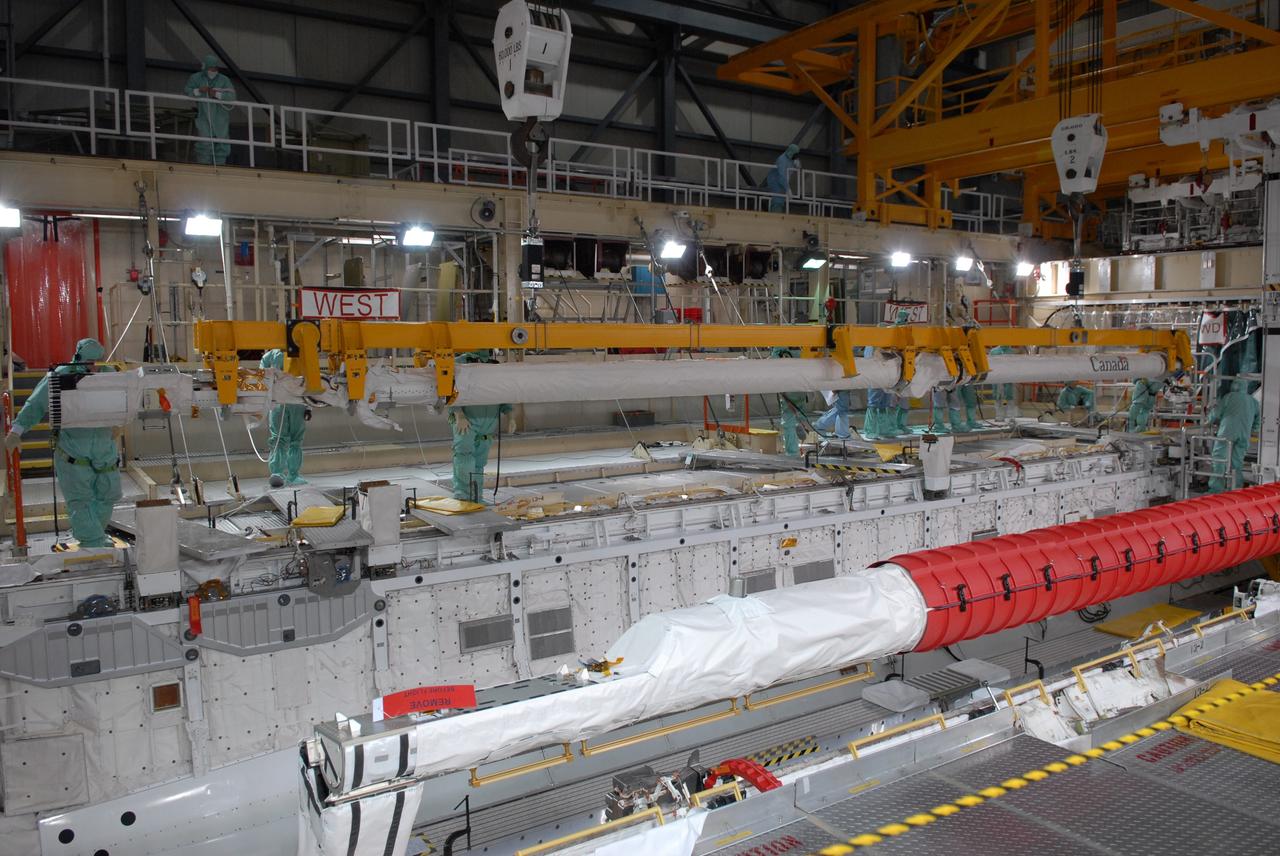
CAPE CANAVERAL, Fla. – In Orbiter Processing Facility bay 3 at NASA's Kennedy Space Center in Florida, remote manipulator system, or RMS, arm is lifted out of the payload bay of space shuttle Discovery. The RMS is used to grab, or grapple, the payload as well as retrieve, repair and deploy satellites; provide a mobile extension ladder for spacewalking crewmembers; and be used as an inspection aid to allow flight crew members to view the orbiter’s or payload’s surfaces through a TV camera on the arm. Discovery is targeted to launch Aug. 6 on the STS-128 mission. Photo credit: NASA/Jack Pfaller
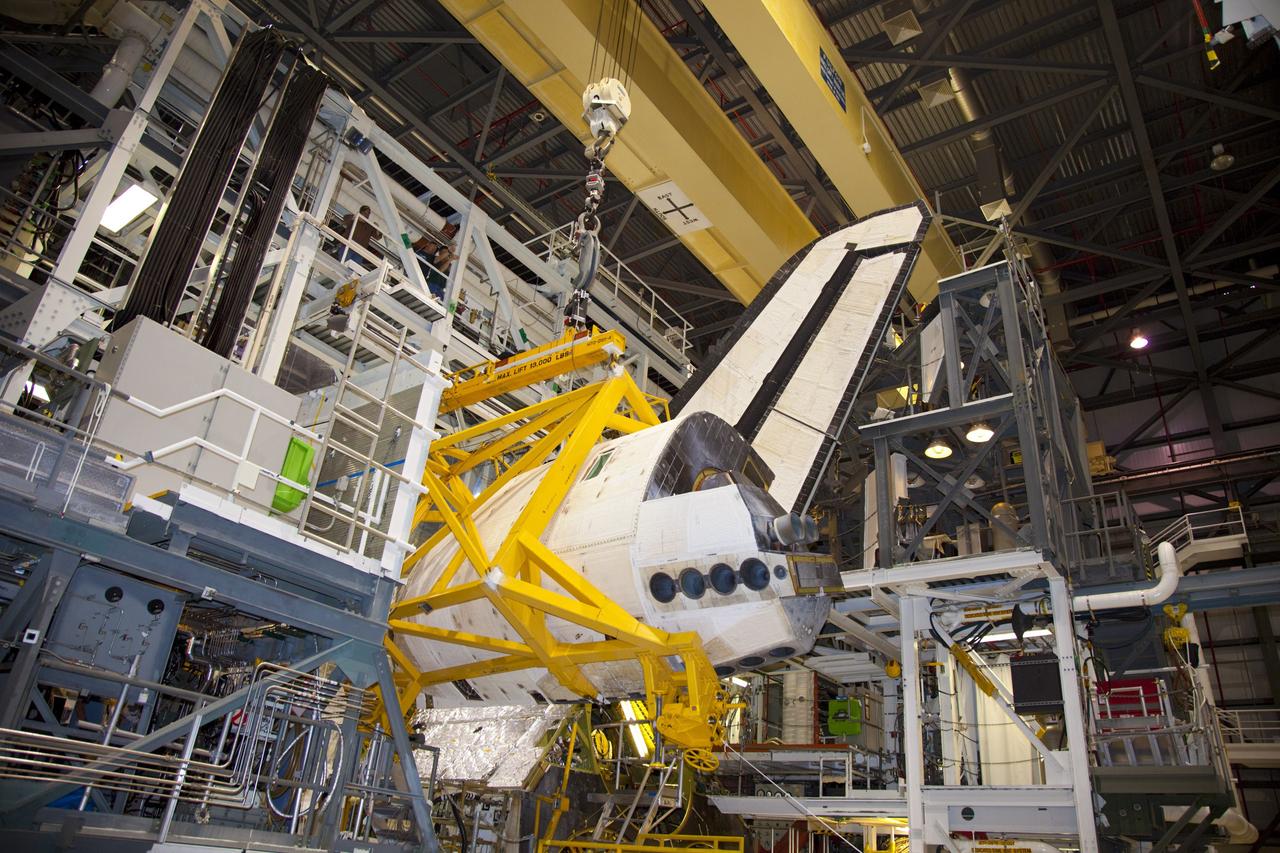
CAPE CANAVERAL, Fla. – In Orbiter Processing Facility-1 at NASA’s Kennedy Space Center in Florida, a crane carries an orbital maneuvering system (OMS) pod closer to space shuttle Discovery. The OMS pod will be installed on Discovery. The OMS pod was returned from White Sands Space Harbor in New Mexico where it underwent a complete deservicing and cleaning. The work is part of the Space Shuttle Program’s transition and retirement processing of space shuttle Discovery. The shuttle will go to the Smithsonian’s National Air and Space Museum, Steven F. Udvar-Hazy Center in Chantilly, Va., in April 2012. For more information, visit http://www.nasa.gov/shuttle. Photo credit: NASA/Frankie Martin
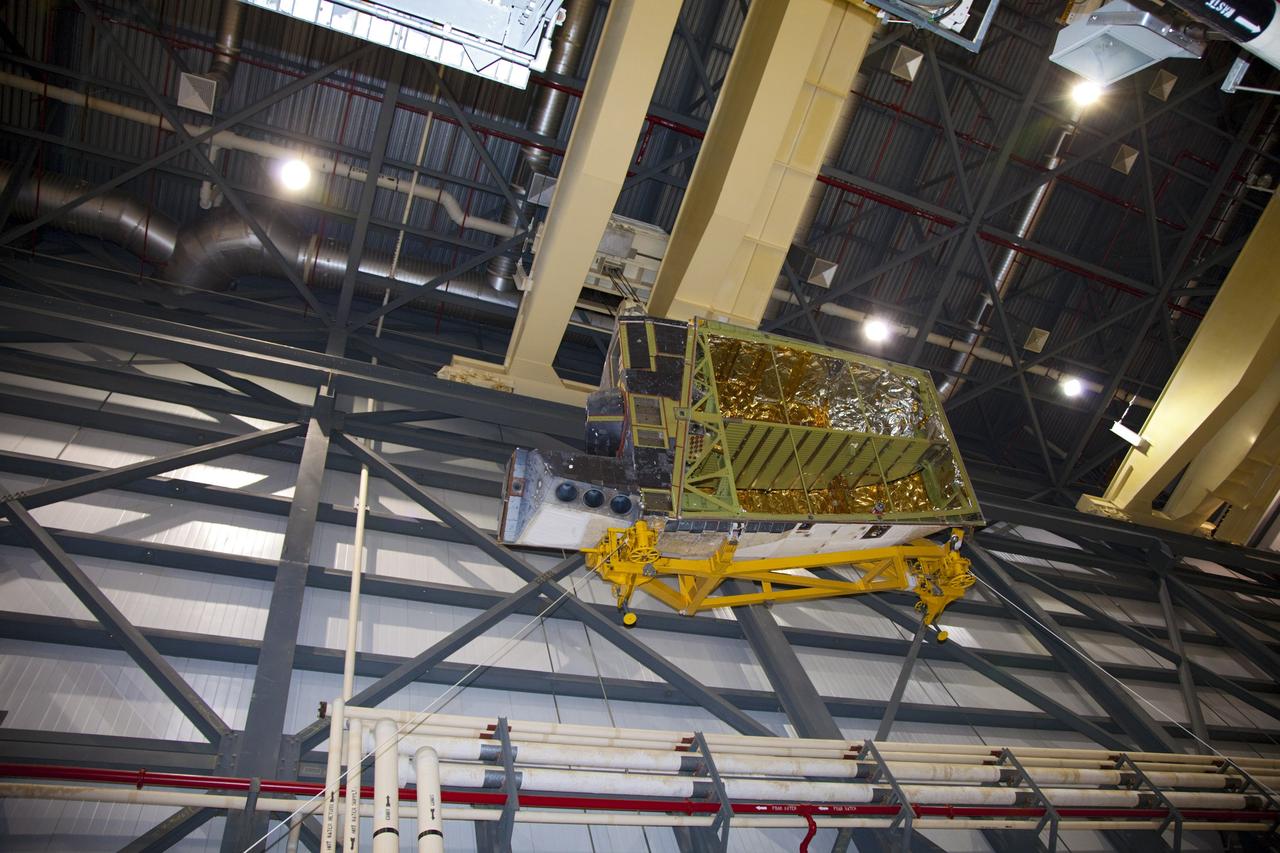
CAPE CANAVERAL, Fla. – In Orbiter Processing Facility-1 at NASA’s Kennedy Space Center in Florida, a crane carries an orbital maneuvering system (OMS) pod that will be installed on space shuttle Discovery. The OMS pod was returned from White Sands Space Harbor in New Mexico where it underwent a complete deservicing and cleaning. The work is part of the Space Shuttle Program’s transition and retirement processing of space shuttle Discovery. The shuttle will go to the Smithsonian’s National Air and Space Museum, Steven F. Udvar-Hazy Center in Chantilly, Va., in April 2012. For more information, visit http://www.nasa.gov/shuttle. Photo credit: NASA/Frankie Martin
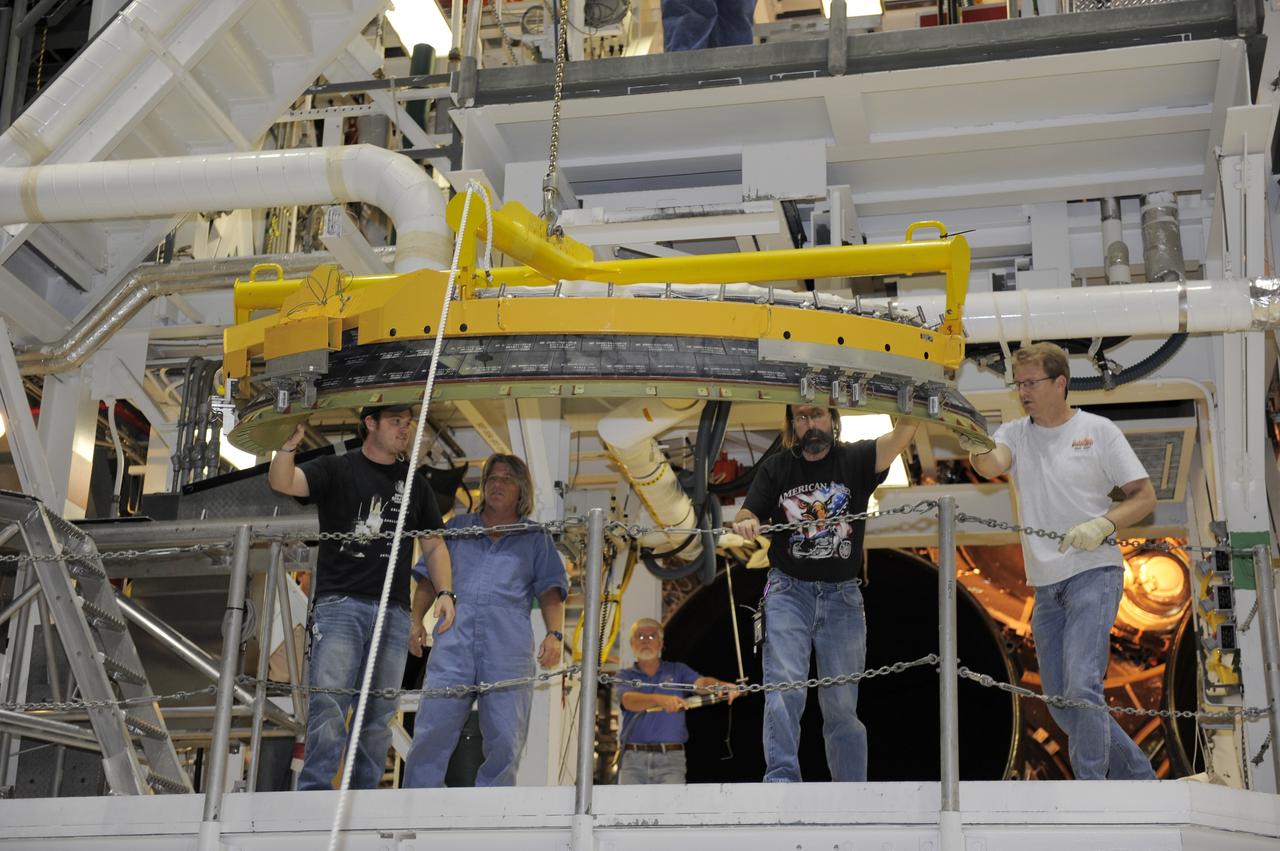
CAPE CANAVERAL, Fla. - Crews in Orbiter Processing Facility-2 at NASA's Kennedy Space Center in Florida remove space shuttle Discovery's right-hand inner heat shield from engine No. 1. The removal is part of Discovery's transition and retirement processing. Work performed on Discovery is expected to help rocket designers build next-generation spacecraft and prepare the shuttle for future public display.Photo credit: NASA/Kim Shiflett
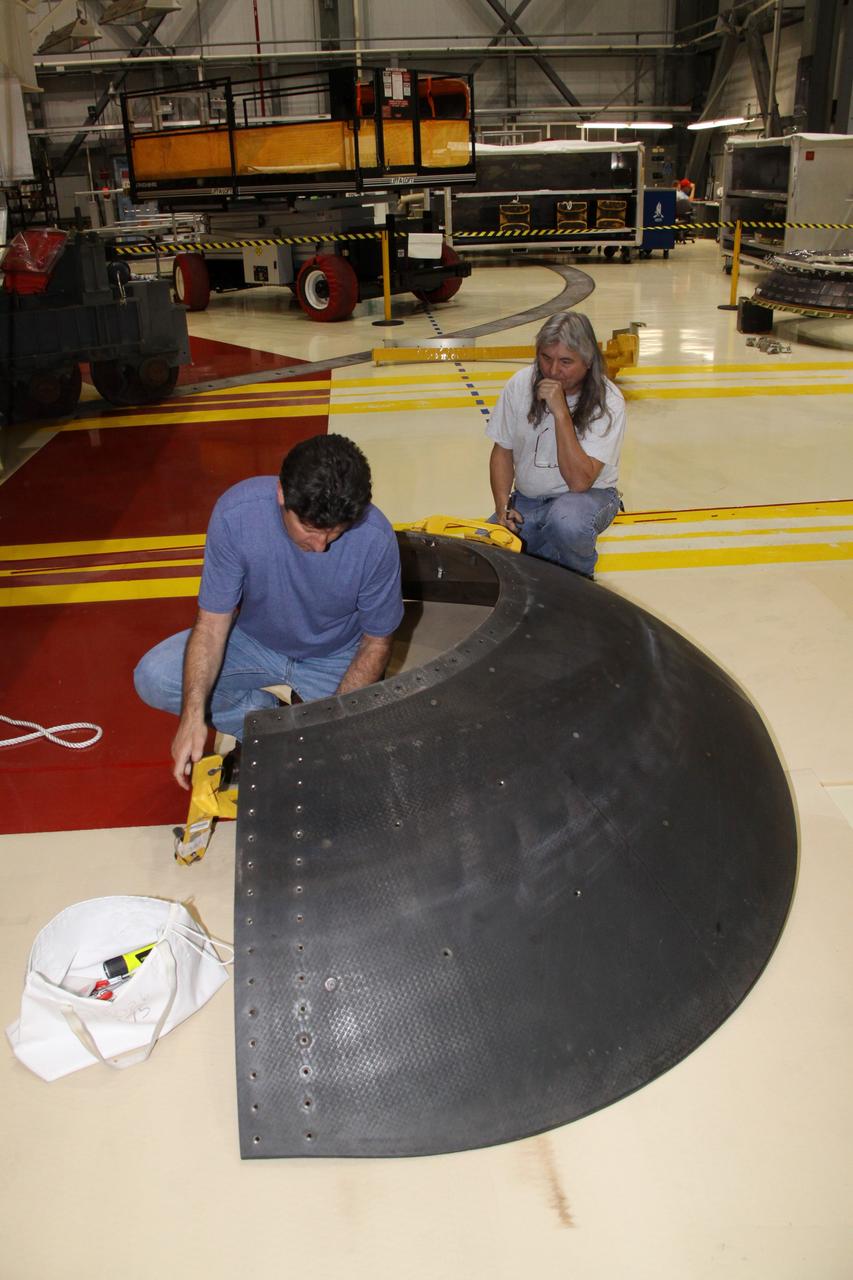
CAPE CANAVERAL, Fla. - Crews in Orbiter Processing Facility-2 at NASA's Kennedy Space Center in Florida remove space shuttle Discovery's right-hand inner heat shield from engine No. 1. The removal is part of Discovery's transition and retirement processing. Work performed on Discovery is expected to help rocket designers build next-generation spacecraft and prepare the shuttle for future public display.Photo credit: NASA/Jack Pfaller
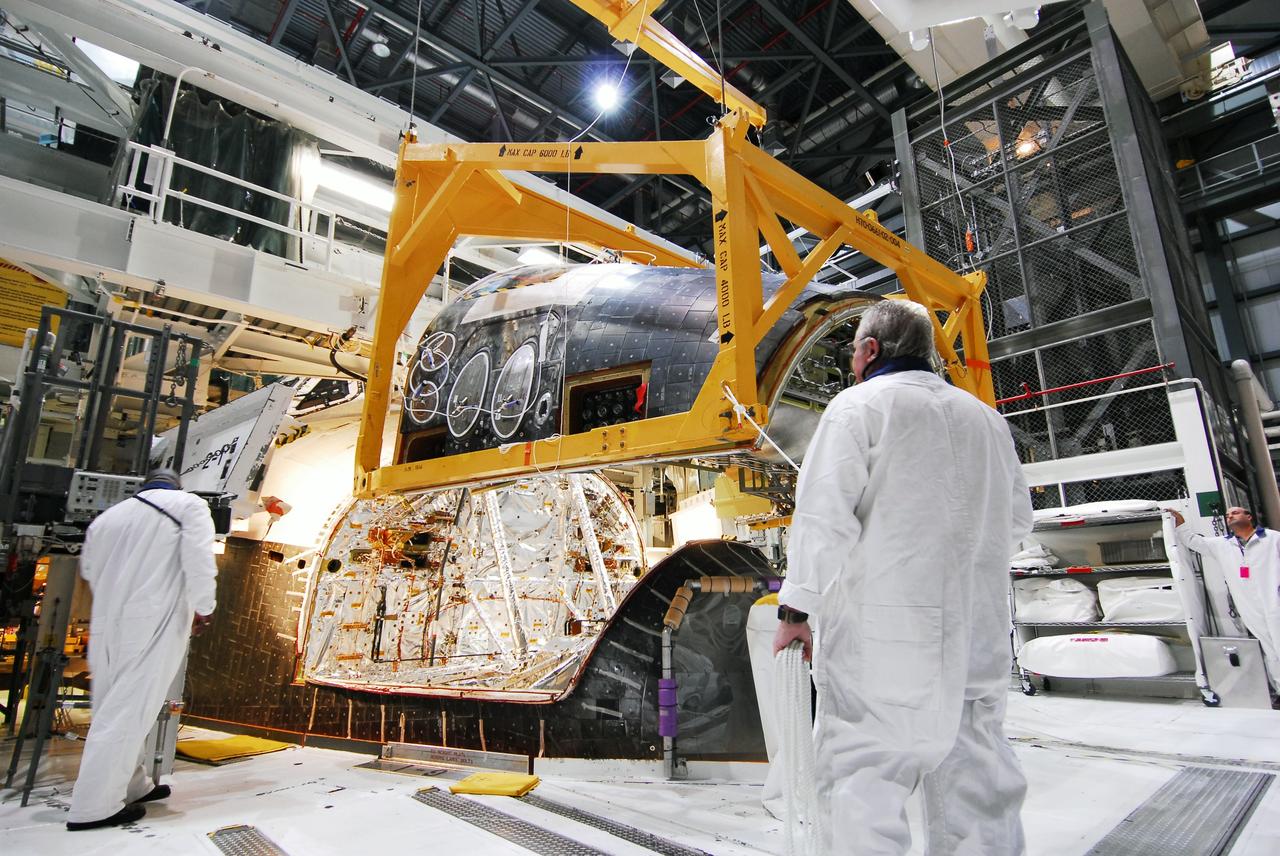
CAPE CANAVERAL, Fla. - Crews in Orbiter Processing Facility-2 at NASA's Kennedy Space Center in Florida remove space shuttle Discovery's forward reaction control system (FRCS), which helped steer the shuttle in orbit. To maneuver, the FRCS used hypergolic fuel and oxidizer, which were purged from Discovery after its final spaceflight, STS-133. Next, the FRCS will be shipped to a maintenance facility at White Sands Space Harbor in New Mexico, where additional inspections will be performed and its components made safe to go on public display. The transition and retirement processing is expected to help rocket designers build next-generation spacecraft and prepare the shuttle for display. Photo credit: NASA/Jim Grossmann
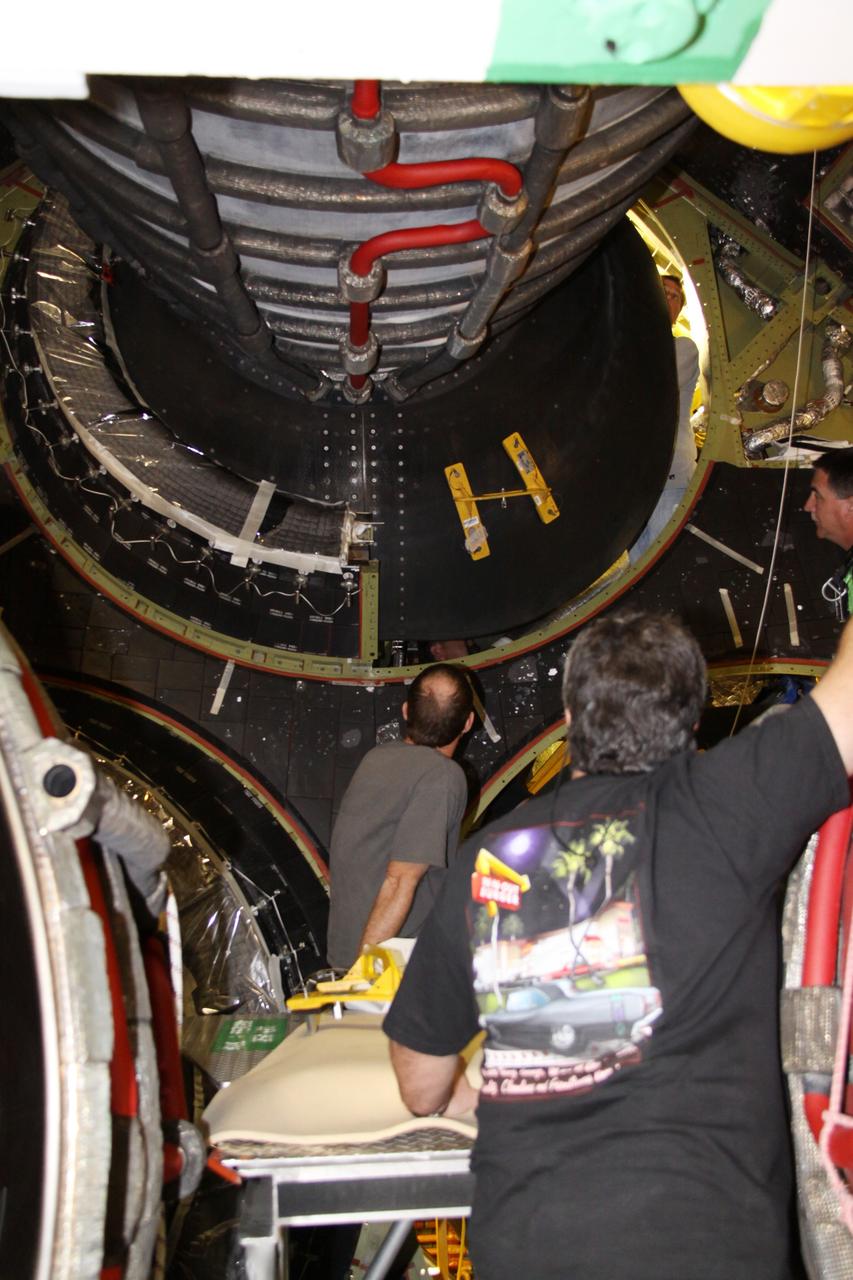
CAPE CANAVERAL, Fla. - Crews in Orbiter Processing Facility-2 at NASA's Kennedy Space Center in Florida remove space shuttle Discovery's right-hand inner heat shield from engine No. 1. The removal is part of Discovery's transition and retirement processing. Work performed on Discovery is expected to help rocket designers build next-generation spacecraft and prepare the shuttle for future public display.Photo credit: NASA/Jack Pfaller
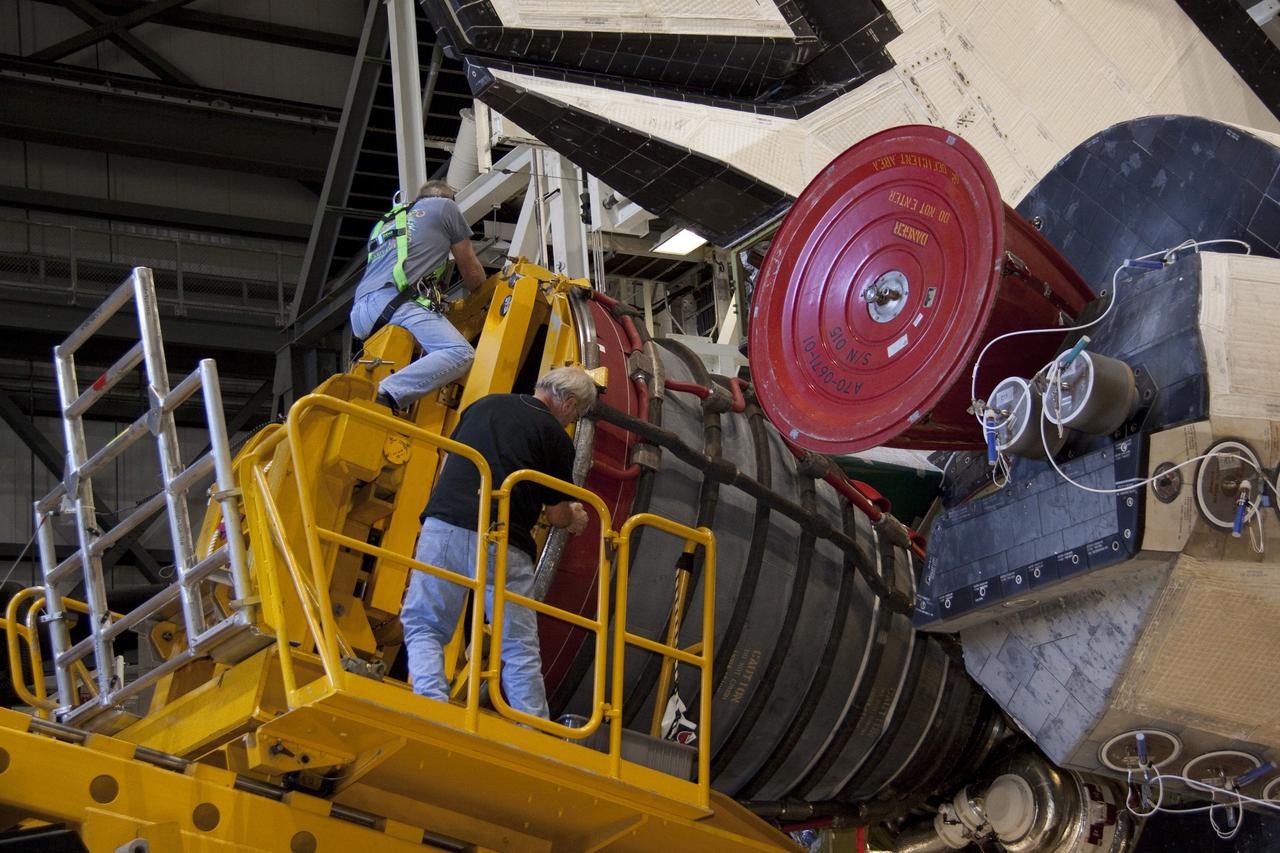
CAPE CANAVERAL, Fla. - Technicians carefully remove main engine No. 1 from space shuttle Discovery using a specially designed engine installer, called a Hyster forklift. The work is taking place in Orbiter Processing Facility-2 at NASA's Kennedy Space Center in Florida. The removal is part of Discovery's transition and retirement processing. Work performed on Discovery is expected to help rocket designers build next-generation spacecraft and prepare the shuttle for future public display. Photo credit: NASA/Jack Pfaller
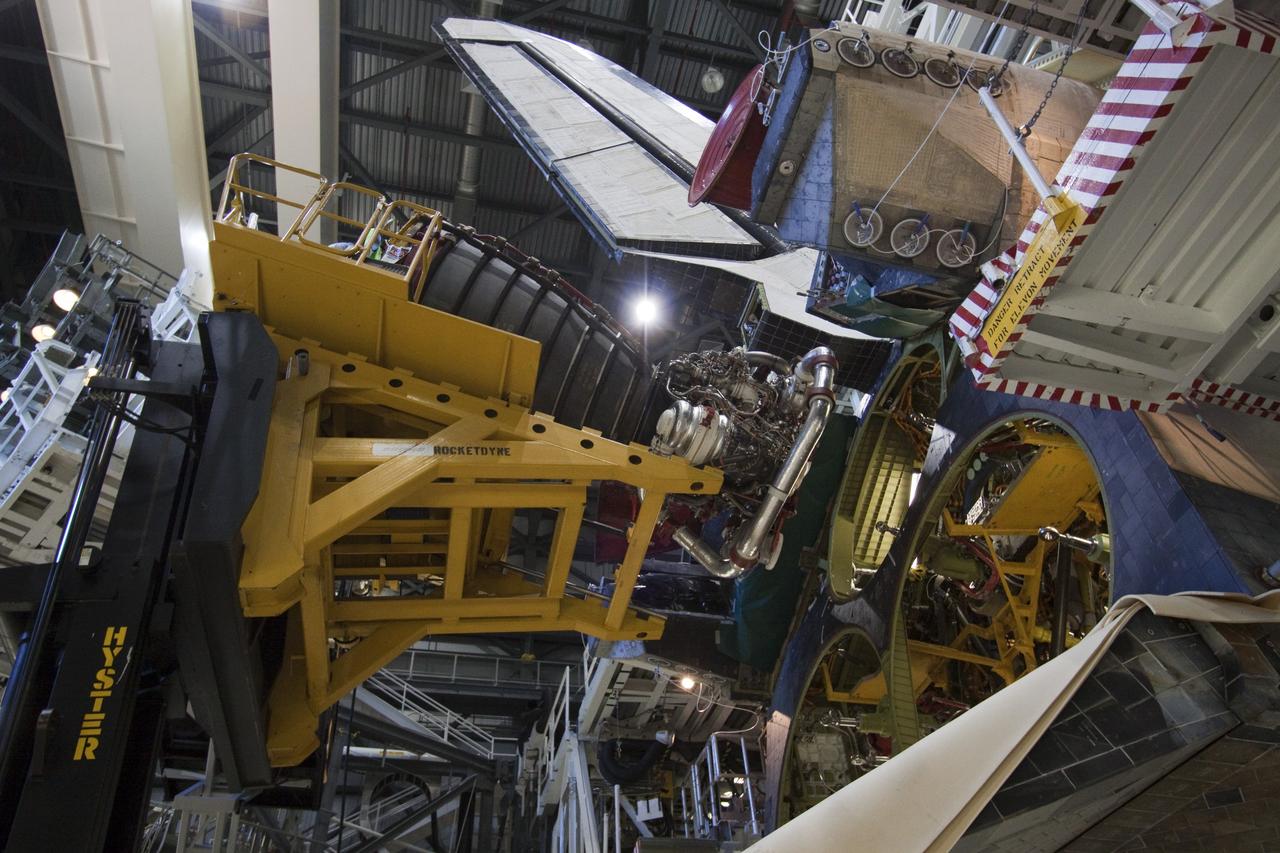
CAPE CANAVERAL, Fla. - Technicians complete the removal of main engine No. 1 from space shuttle Discovery using a specially designed engine installer, called a Hyster forklift. The work is taking place in Orbiter Processing Facility-2 at NASA's Kennedy Space Center in Florida. The removal is part of Discovery's transition and retirement processing. Work performed on Discovery is expected to help rocket designers build next-generation spacecraft and prepare the shuttle for future public display. Photo credit: NASA/Jack Pfaller
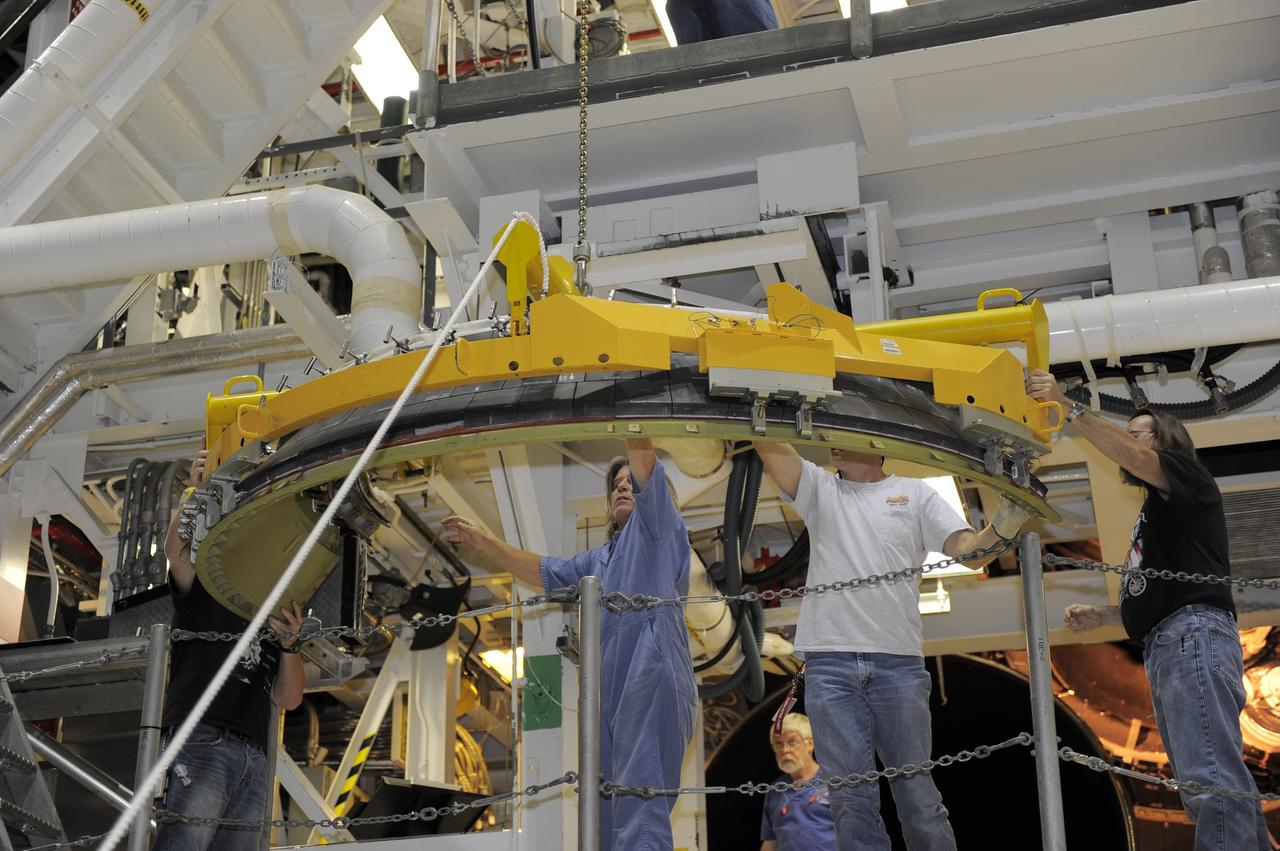
CAPE CANAVERAL, Fla. - Crews in Orbiter Processing Facility-2 at NASA's Kennedy Space Center in Florida remove space shuttle Discovery's right-hand inner heat shield from engine No. 1. The removal is part of Discovery's transition and retirement processing. Work performed on Discovery is expected to help rocket designers build next-generation spacecraft and prepare the shuttle for future public display.Photo credit: NASA/Kim Shiflett
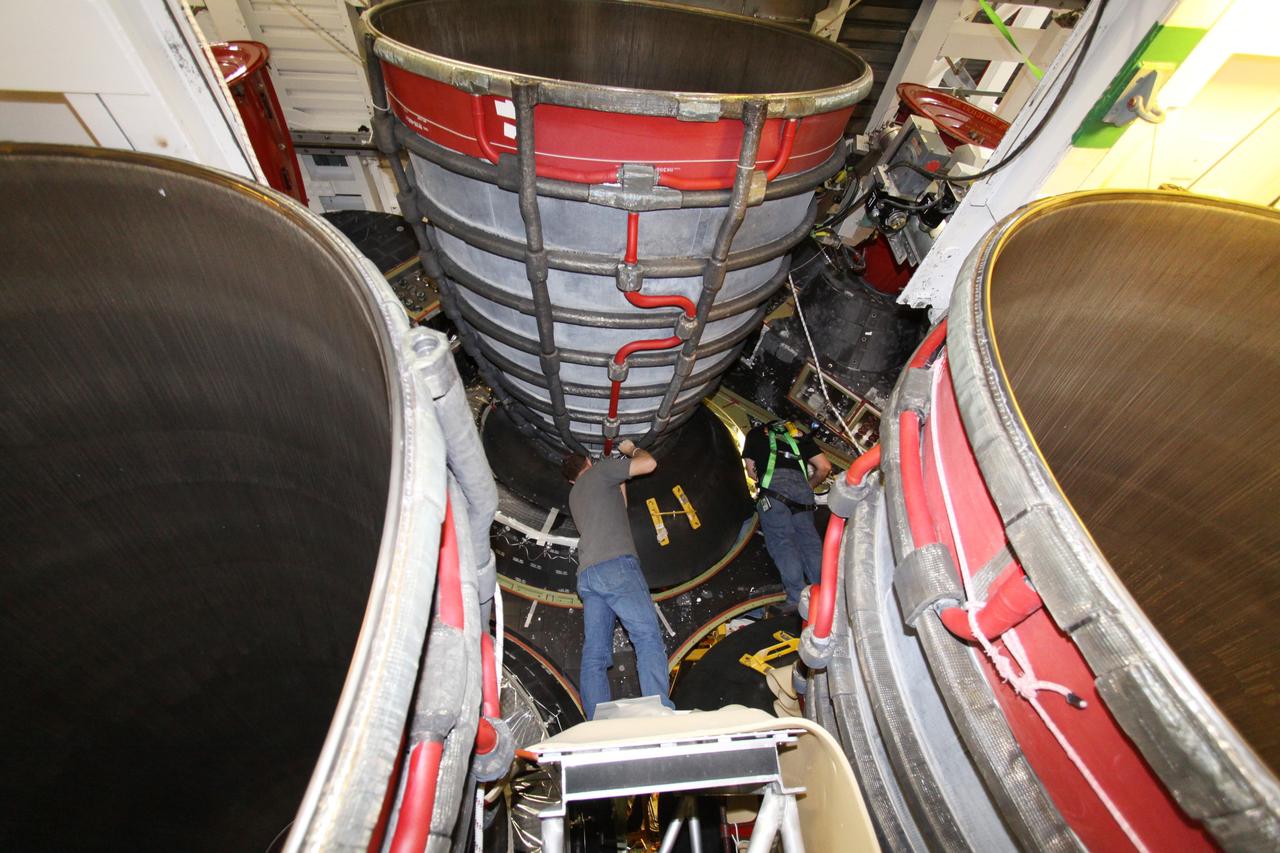
CAPE CANAVERAL, Fla. - Crews in Orbiter Processing Facility-2 at NASA's Kennedy Space Center in Florida remove space shuttle Discovery's right-hand inner heat shield from engine No. 1. The removal is part of Discovery's transition and retirement processing. Work performed on Discovery is expected to help rocket designers build next-generation spacecraft and prepare the shuttle for future public display.Photo credit: NASA/Jack Pfaller
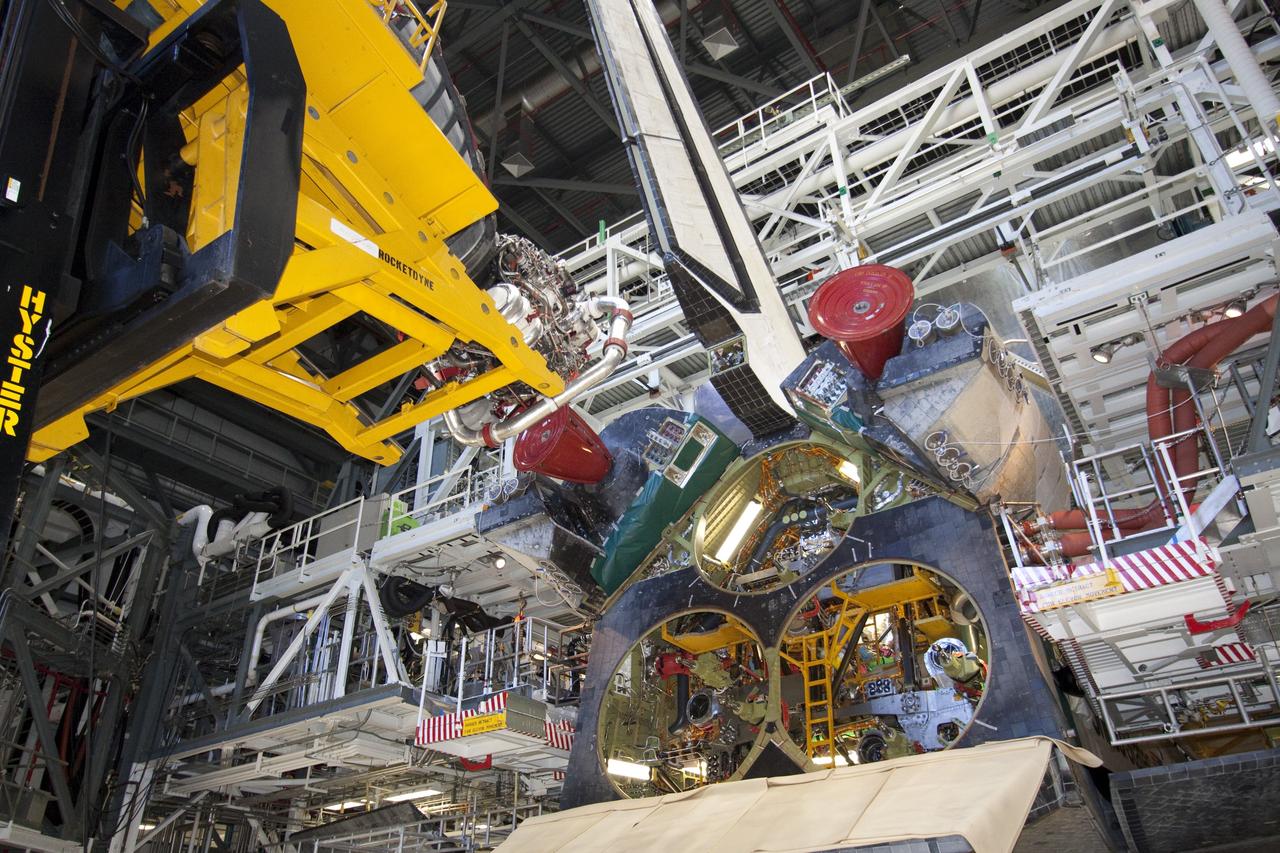
CAPE CANAVERAL, Fla. - Technicians complete the removal of main engine No. 1 from space shuttle Discovery using a specially designed engine installer, called a Hyster forklift. The work is taking place in Orbiter Processing Facility-2 at NASA's Kennedy Space Center in Florida. The removal is part of Discovery's transition and retirement processing. Work performed on Discovery is expected to help rocket designers build next-generation spacecraft and prepare the shuttle for future public display. Photo credit: NASA/Jack Pfaller
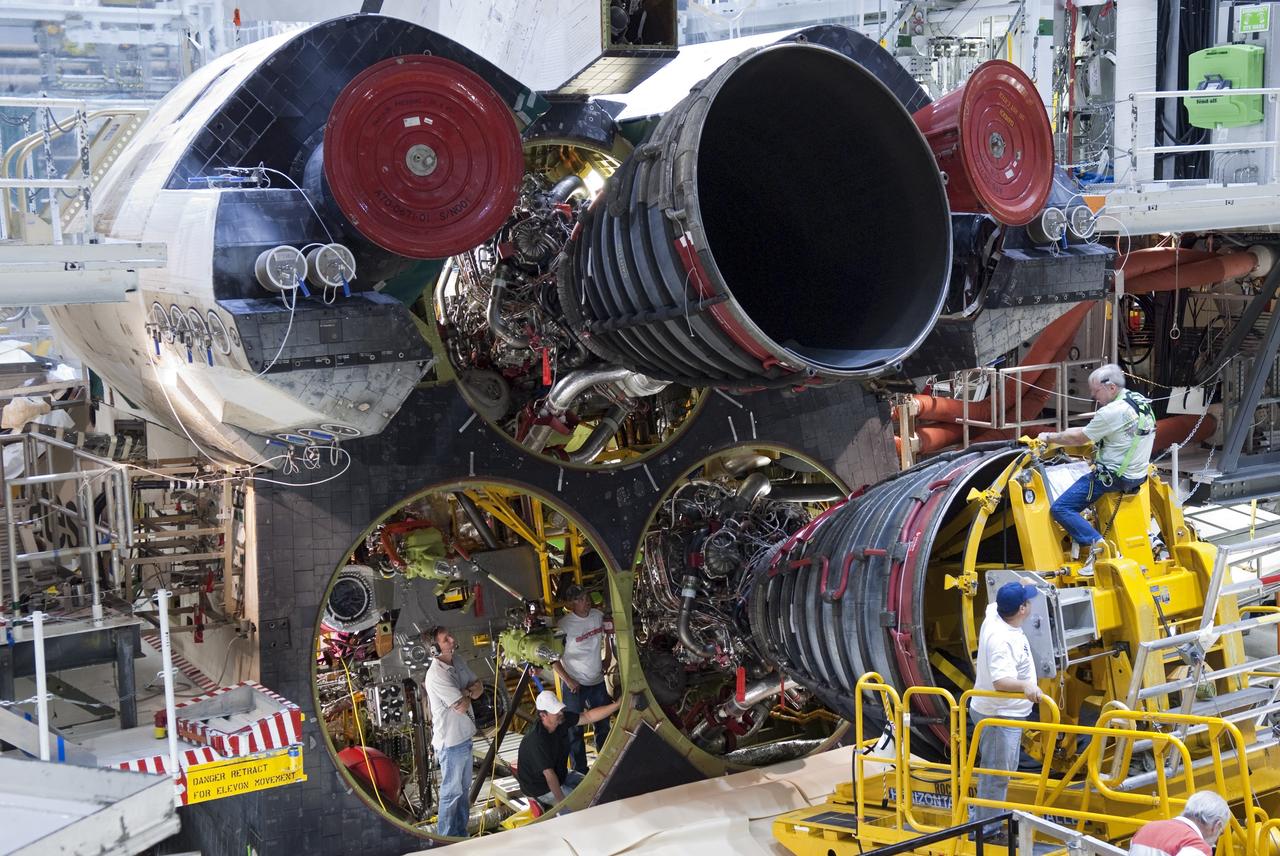
CAPE CANAVERAL, Fla. - Technicians carefully remove main engine No. 3 from space shuttle Discovery using a specially designed engine installer, called a Hyster forklift. The work is taking place in Orbiter Processing Facility-2 at NASA's Kennedy Space Center in Florida. The removal is part of Discovery's transition and retirement processing. Work performed on Discovery is expected to help rocket designers build next-generation spacecraft and prepare the shuttle for future public display. NASA/Jim Grossmann
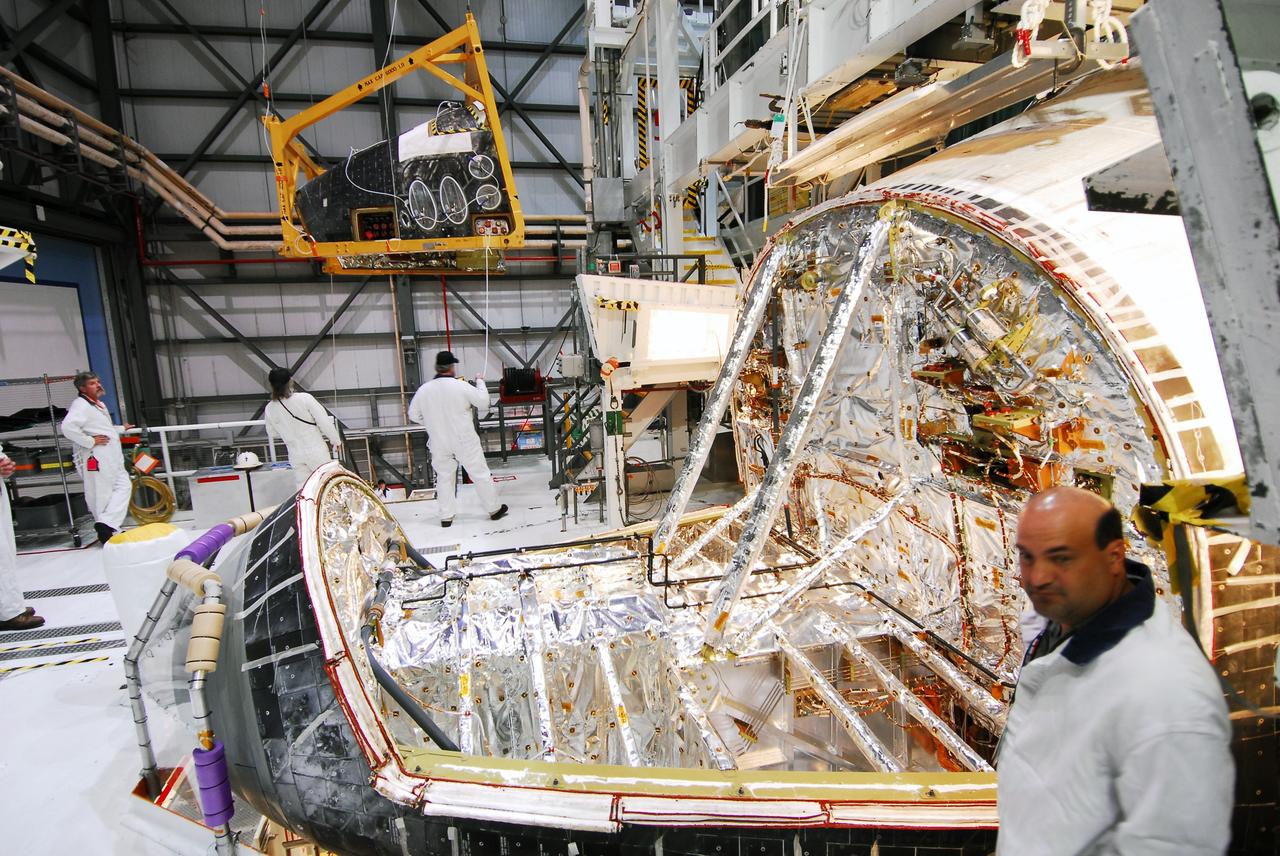
CAPE CANAVERAL, Fla. - Crews in Orbiter Processing Facility-2 at NASA's Kennedy Space Center in Florida remove space shuttle Discovery's forward reaction control system (FRCS), which helped steer the shuttle in orbit. To maneuver, the FRCS used hypergolic fuel and oxidizer, which were purged from Discovery after its final spaceflight, STS-133. Next, the FRCS will be shipped to a maintenance facility at White Sands Space Harbor in New Mexico, where additional inspections will be performed and its components made safe to go on public display. The transition and retirement processing is expected to help rocket designers build next-generation spacecraft and prepare the shuttle for display. Photo credit: NASA/Jim Grossmann
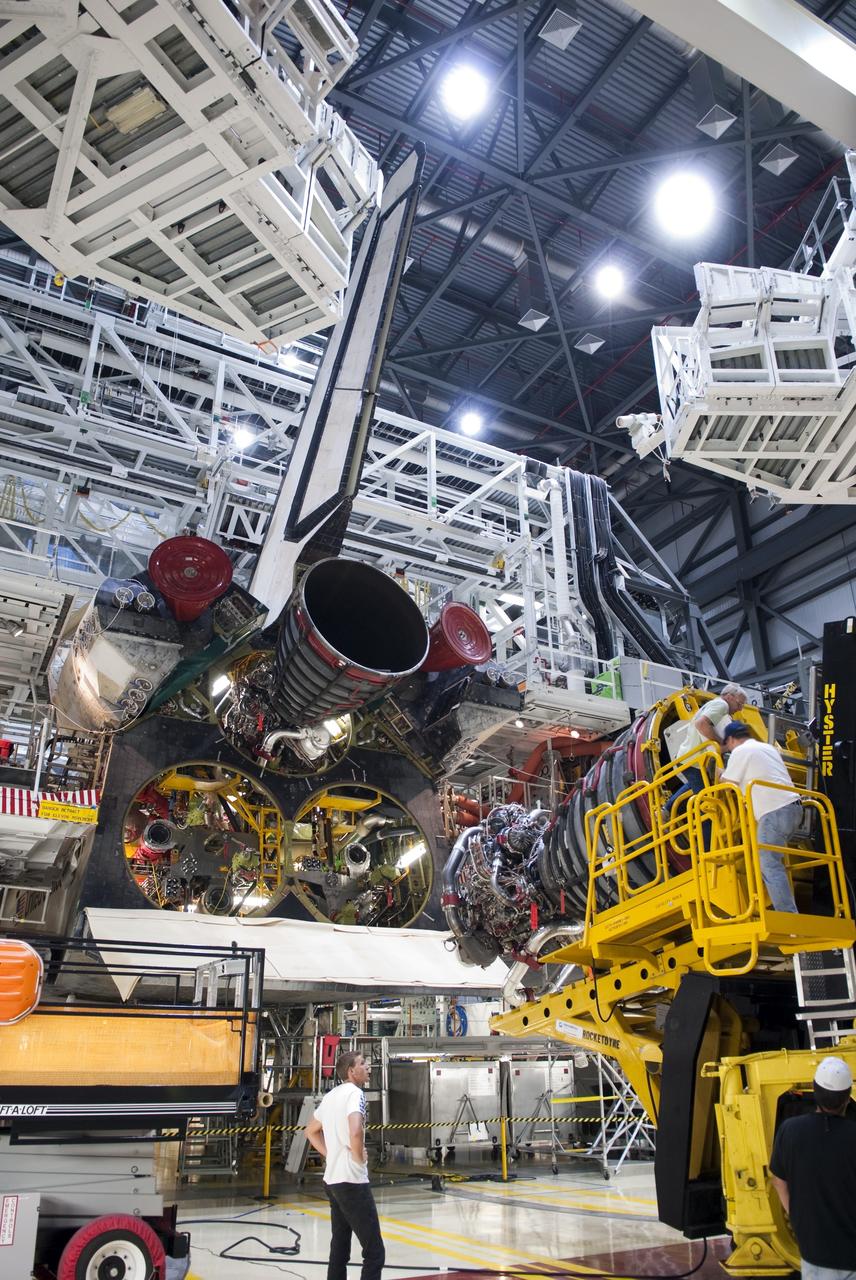
CAPE CANAVERAL, Fla. - Technicians complete the removal of main engine No. 3 from space shuttle Discovery using a specially designed engine installer, called a Hyster forklift. The work is taking place in Orbiter Processing Facility-2 at NASA's Kennedy Space Center in Florida. The removal is part of Discovery's transition and retirement processing. Work performed on Discovery is expected to help rocket designers build next-generation spacecraft and prepare the shuttle for future public display. NASA/Jim Grossmann
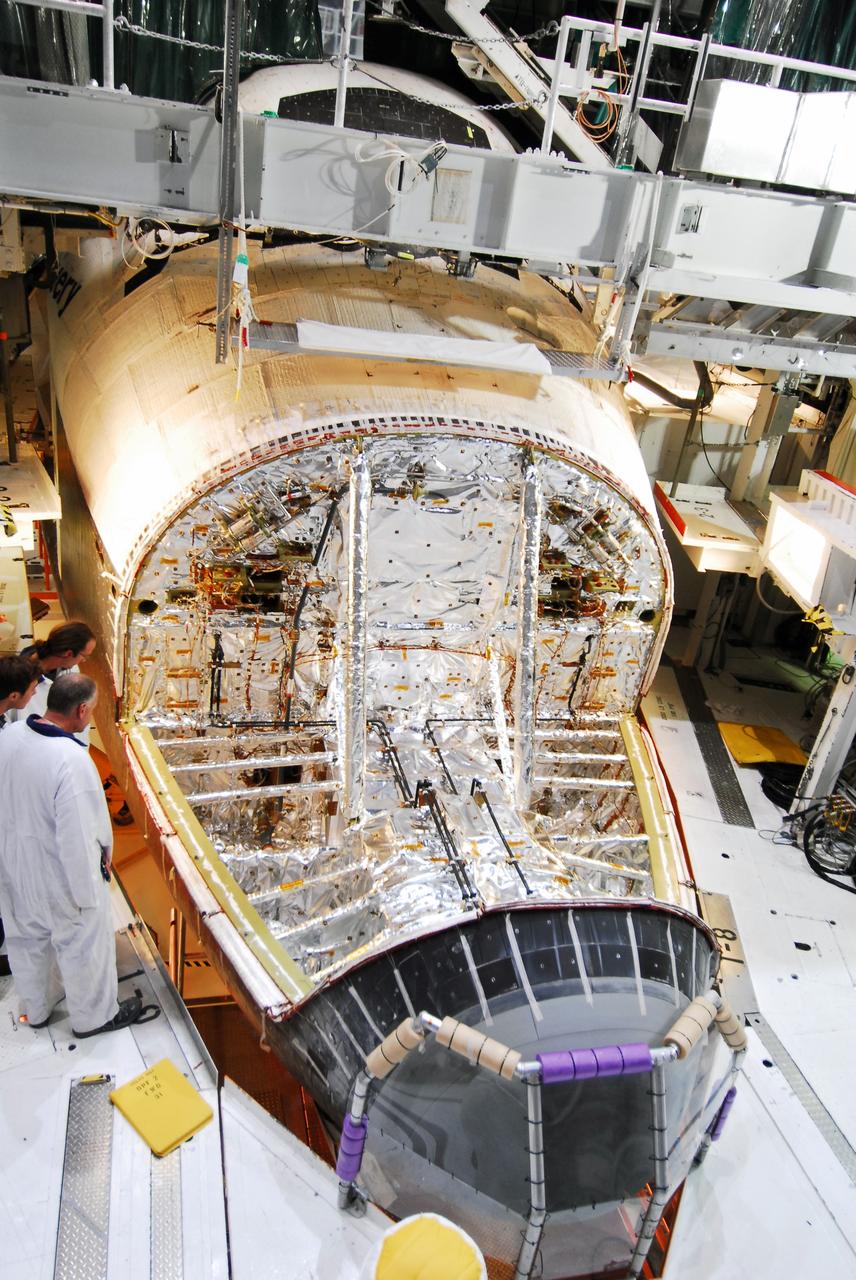
CAPE CANAVERAL, Fla. - Space shuttle Discovery's forward reaction control system (FRCS), which helped steer the shuttle in orbit, is removed in Orbiter Processing Facility-2 at NASA's Kennedy Space Center in Florida. To maneuver, the FRCS used hypergolic fuel and oxidizer, which were purged from Discovery after its final spaceflight, STS-133. Next, the FRCS will be shipped to a maintenance facility at White Sands Space Harbor in New Mexico, where additional inspections will be performed and its components made safe to go on public display. The transition and retirement processing is expected to help rocket designers build next-generation spacecraft and prepare the shuttle for display. Photo credit: NASA/Jim Grossmann
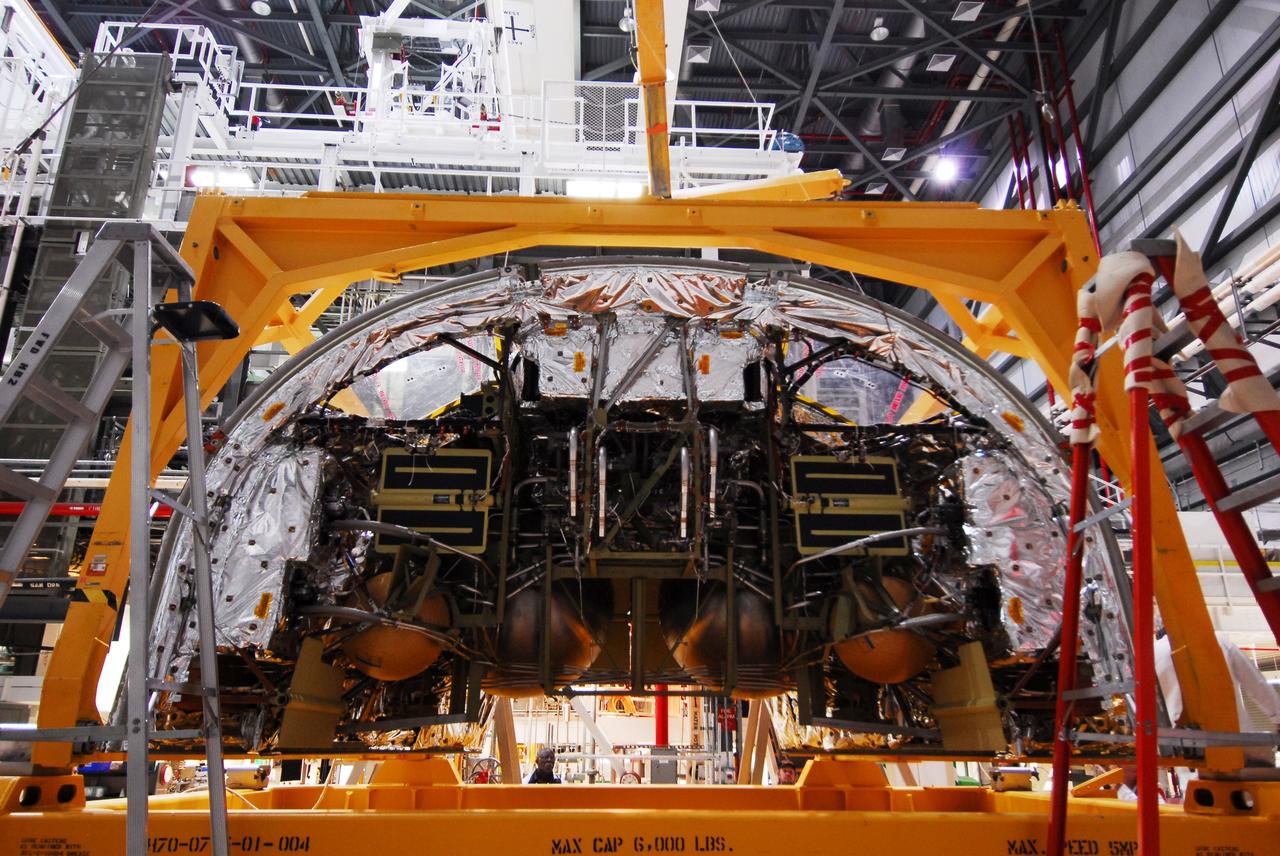
CAPE CANAVERAL, Fla. - Space shuttle Discovery's forward reaction control system (FRCS), which helped steer the shuttle in orbit, is atop a transporter in Orbiter Processing Facility-2 at NASA's Kennedy Space Center in Florida. To maneuver, the FRCS used hypergolic fuel and oxidizer, which were purged from Discovery after its final spaceflight, STS-133. Next, the FRCS will be shipped to a maintenance facility at White Sands Space Harbor in New Mexico, where additional inspections will be performed and its components made safe to go on public display. The transition and retirement processing is expected to help rocket designers build next-generation spacecraft and prepare the shuttle for display. Photo credit: NASA/Jim Grossmann
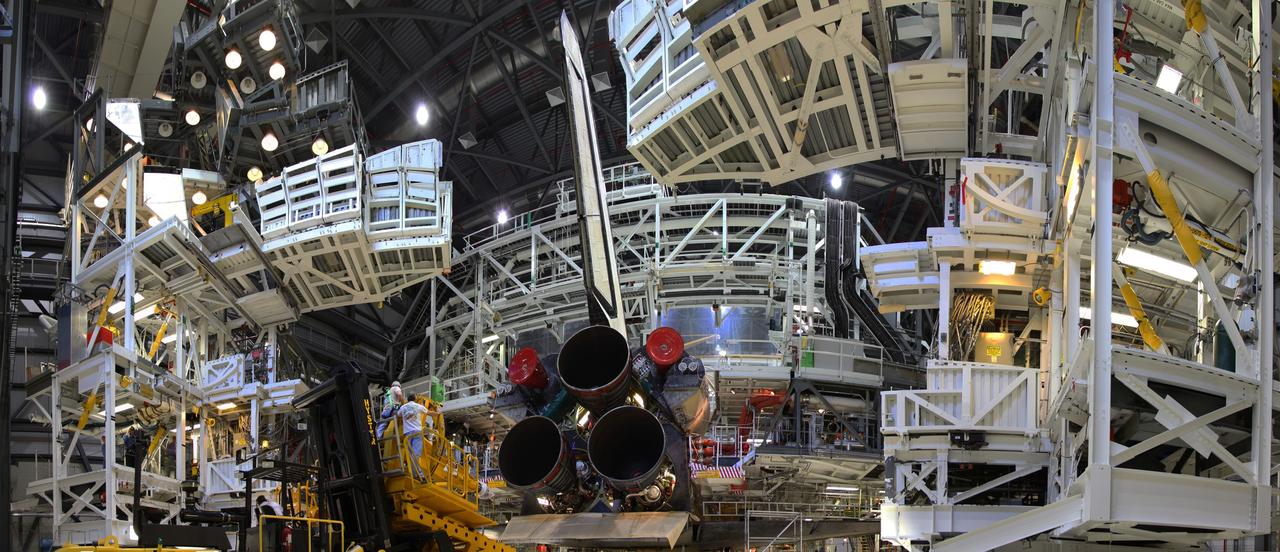
CAPE CANAVERAL, Fla. - A panoramic photo shows space shuttle Discovery during the main engine removal phase in Orbiter Processing Facility-2 at NASA's Kennedy Space Center in Florida. The removal is part of Discovery's transition and retirement processing. Work performed on Discovery is expected to help rocket designers build next-generation spacecraft and prepare the shuttle for future public display. NASA/Frankie Martin
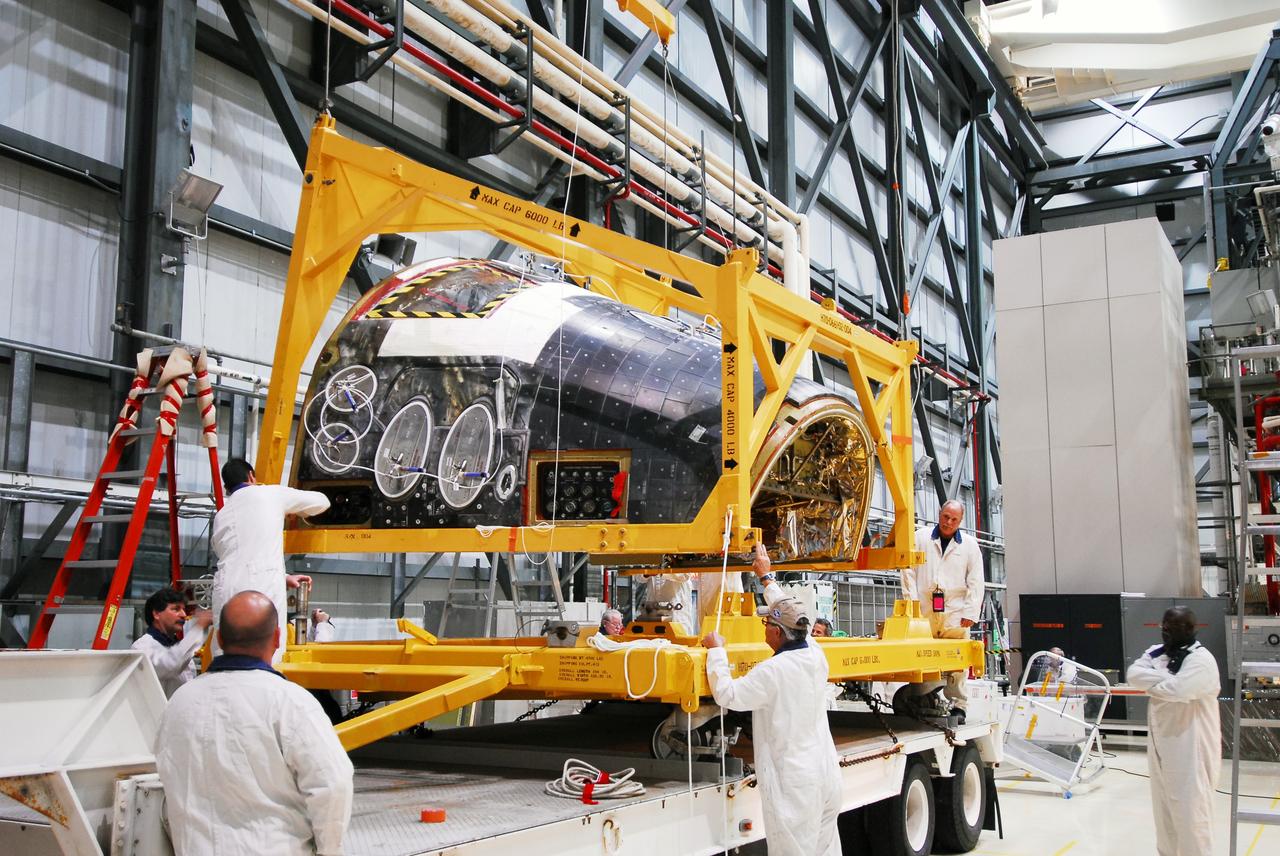
CAPE CANAVERAL, Fla. - Space shuttle Discovery's forward reaction control system (FRCS), which helped steer the shuttle in orbit, is moved to a transporter in Orbiter Processing Facility-2 at NASA's Kennedy Space Center in Florida. To maneuver, the FRCS used hypergolic fuel and oxidizer, which were purged from Discovery after its final spaceflight, STS-133. Next, the FRCS will be shipped to a maintenance facility at White Sands Space Harbor in New Mexico, where additional inspections will be performed and its components made safe to go on public display. The transition and retirement processing is expected to help rocket designers build next-generation spacecraft and prepare the shuttle for display. Photo credit: NASA/Jim Grossmann
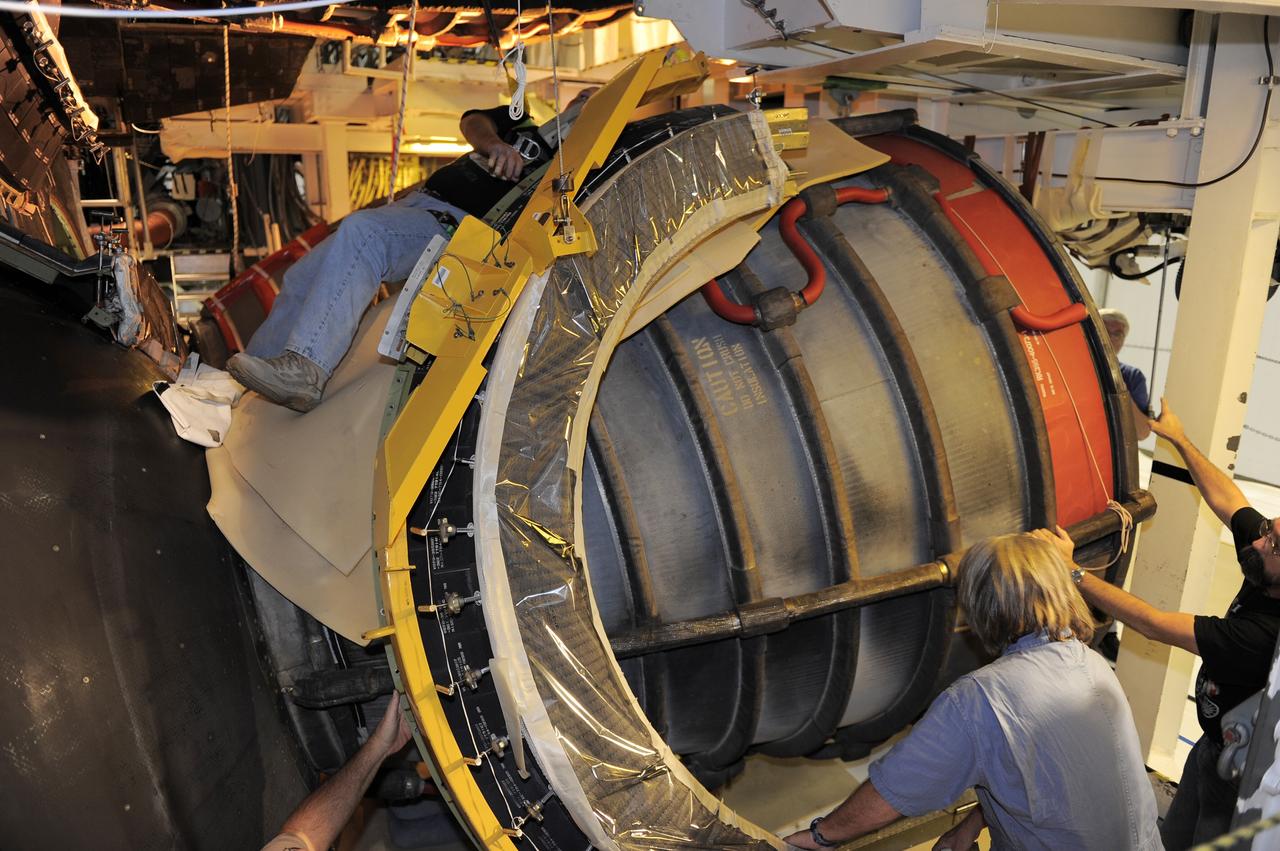
CAPE CANAVERAL, Fla. - Crews in Orbiter Processing Facility-2 at NASA's Kennedy Space Center in Florida remove space shuttle Discovery's right-hand inner heat shield from engine No. 1. The removal is part of Discovery's transition and retirement processing. Work performed on Discovery is expected to help rocket designers build next-generation spacecraft and prepare the shuttle for future public display.Photo credit: NASA/Kim Shiflett
CAPE CANAVERAL, Fla. - Technicians complete the removal of main engine No. 1 from space shuttle Discovery using a specially designed engine installer, called a Hyster forklift. The work is taking place in Orbiter Processing Facility-2 at NASA's Kennedy Space Center in Florida. The removal is part of Discovery's transition and retirement processing. Work performed on Discovery is expected to help rocket designers build next-generation spacecraft and prepare the shuttle for future public display. Photo credit: NASA/Jack Pfaller
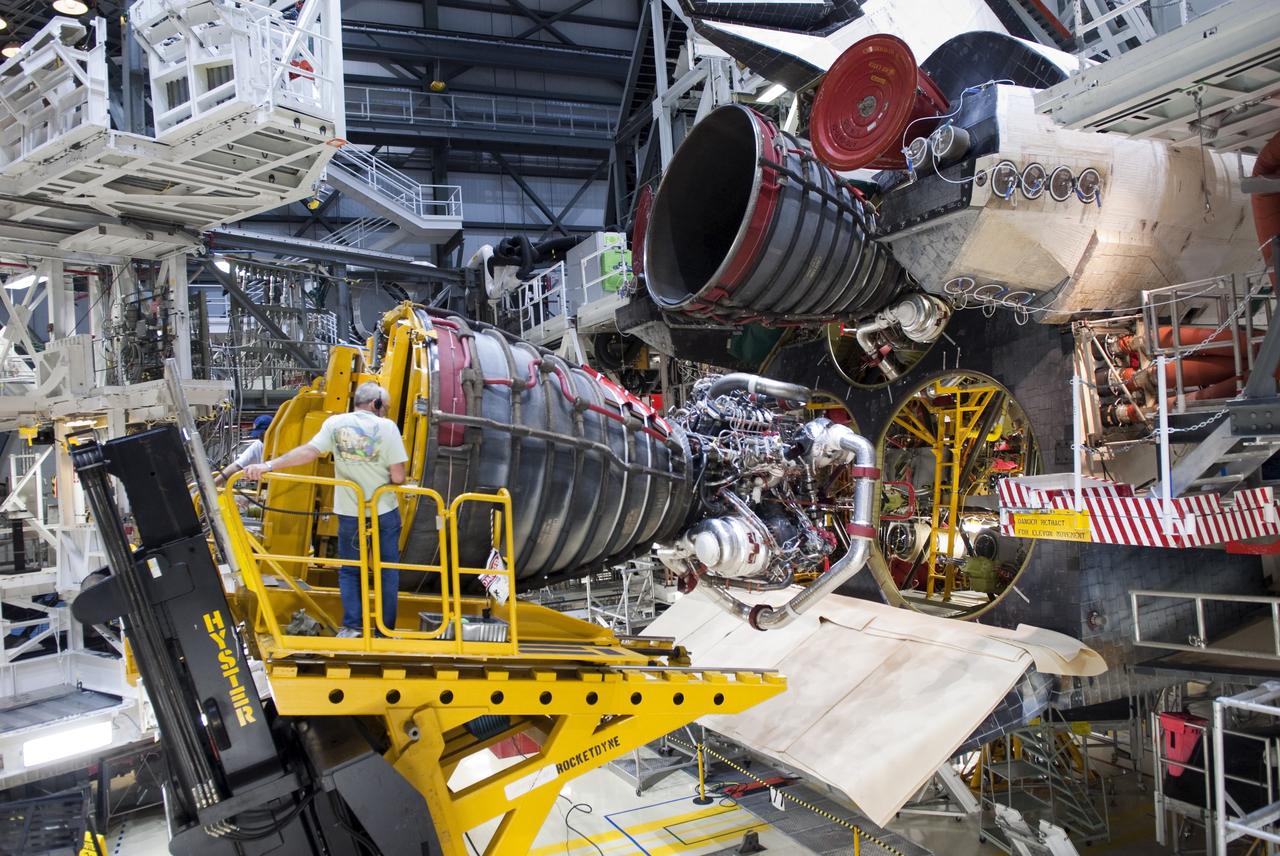
CAPE CANAVERAL, Fla. - Technicians complete the removal of main engine No. 3 from space shuttle Discovery using a specially designed engine installer, called a Hyster forklift. The work is taking place in Orbiter Processing Facility-2 at NASA's Kennedy Space Center in Florida. The removal is part of Discovery's transition and retirement processing. Work performed on Discovery is expected to help rocket designers build next-generation spacecraft and prepare the shuttle for future public display. NASA/Jim Grossmann
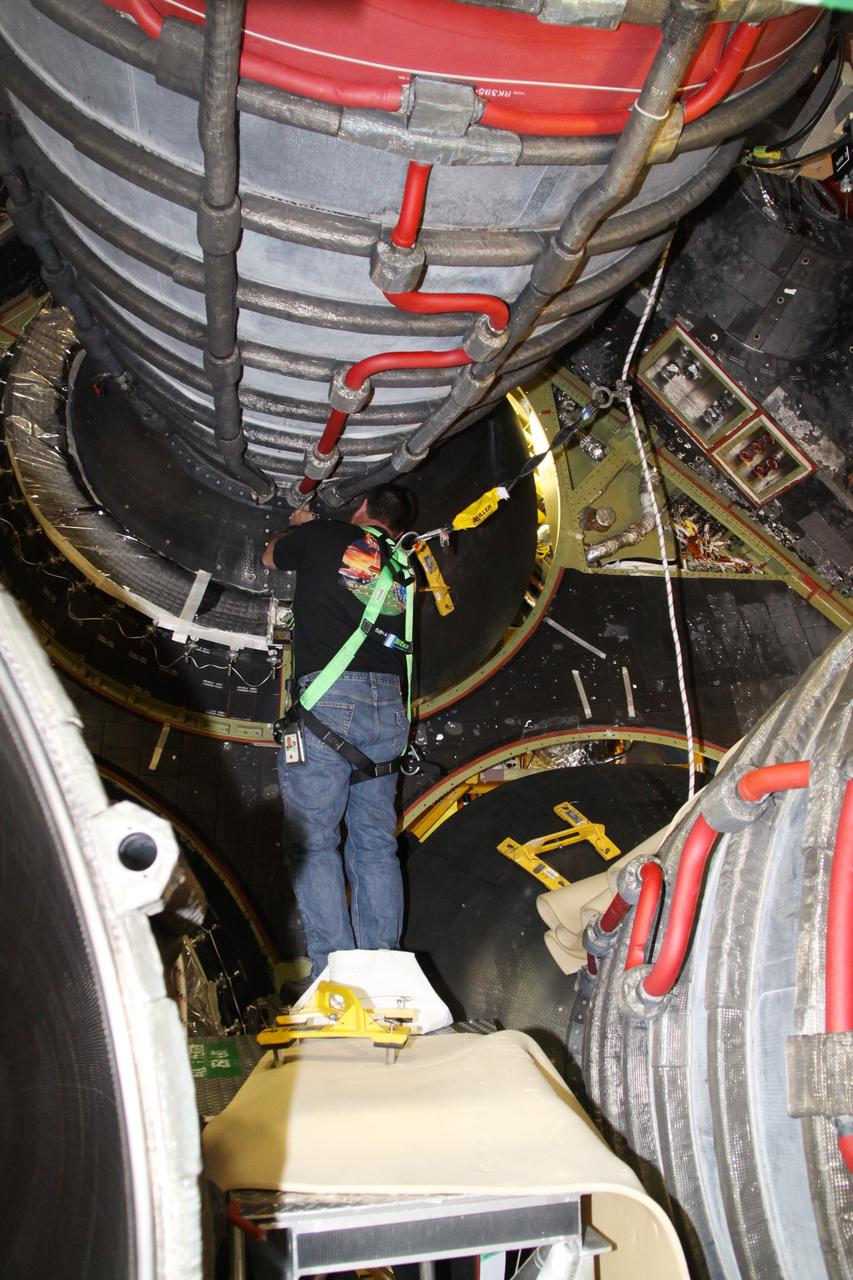
CAPE CANAVERAL, Fla. - Crews in Orbiter Processing Facility-2 at NASA's Kennedy Space Center in Florida remove space shuttle Discovery's right-hand inner heat shield from engine No. 1. The removal is part of Discovery's transition and retirement processing. Work performed on Discovery is expected to help rocket designers build next-generation spacecraft and prepare the shuttle for future public display.Photo credit: NASA/Jack Pfaller
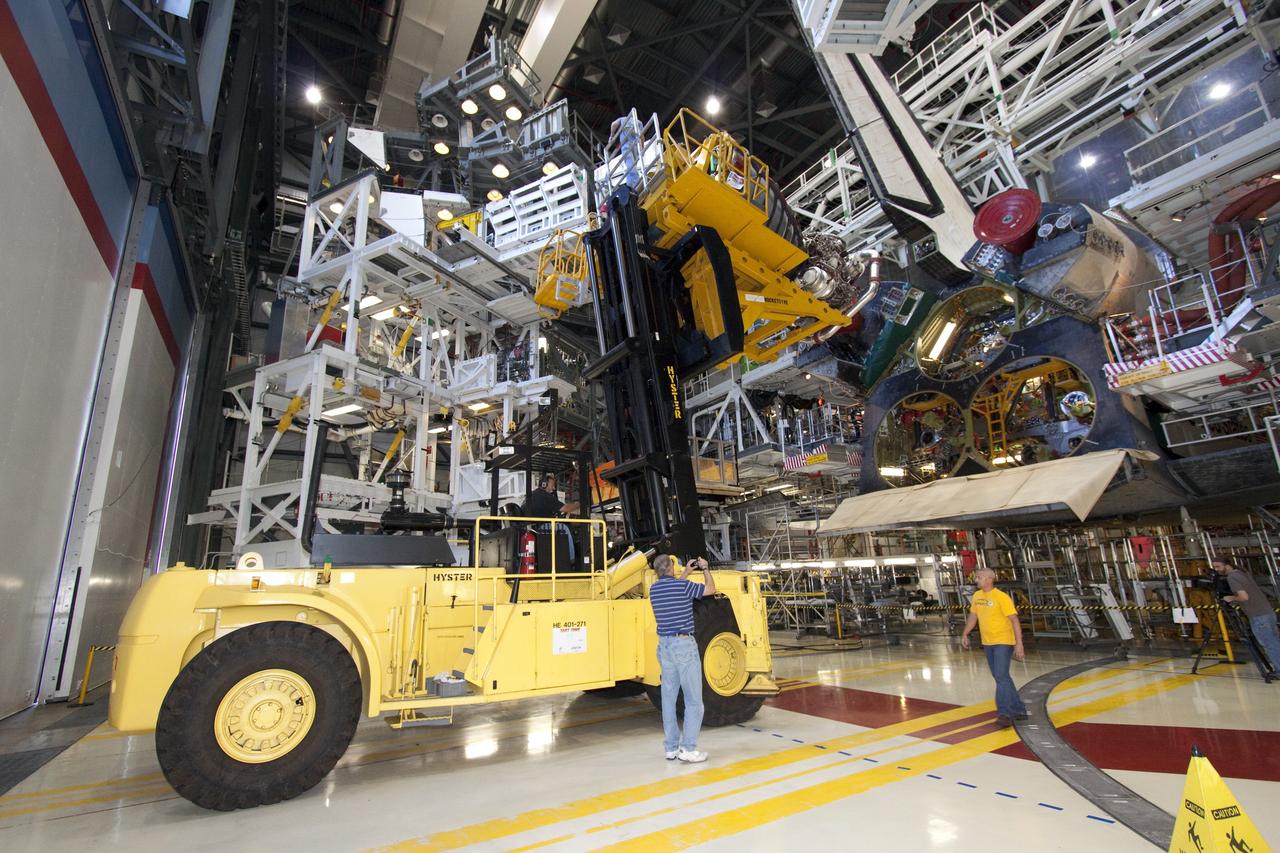
CAPE CANAVERAL, Fla. - Technicians complete the removal of main engine No. 1 from space shuttle Discovery using a specially designed engine installer, called a Hyster forklift. The work is taking place in Orbiter Processing Facility-2 at NASA's Kennedy Space Center in Florida. The removal is part of Discovery's transition and retirement processing. Work performed on Discovery is expected to help rocket designers build next-generation spacecraft and prepare the shuttle for future public display. Photo credit: NASA/Jack Pfaller
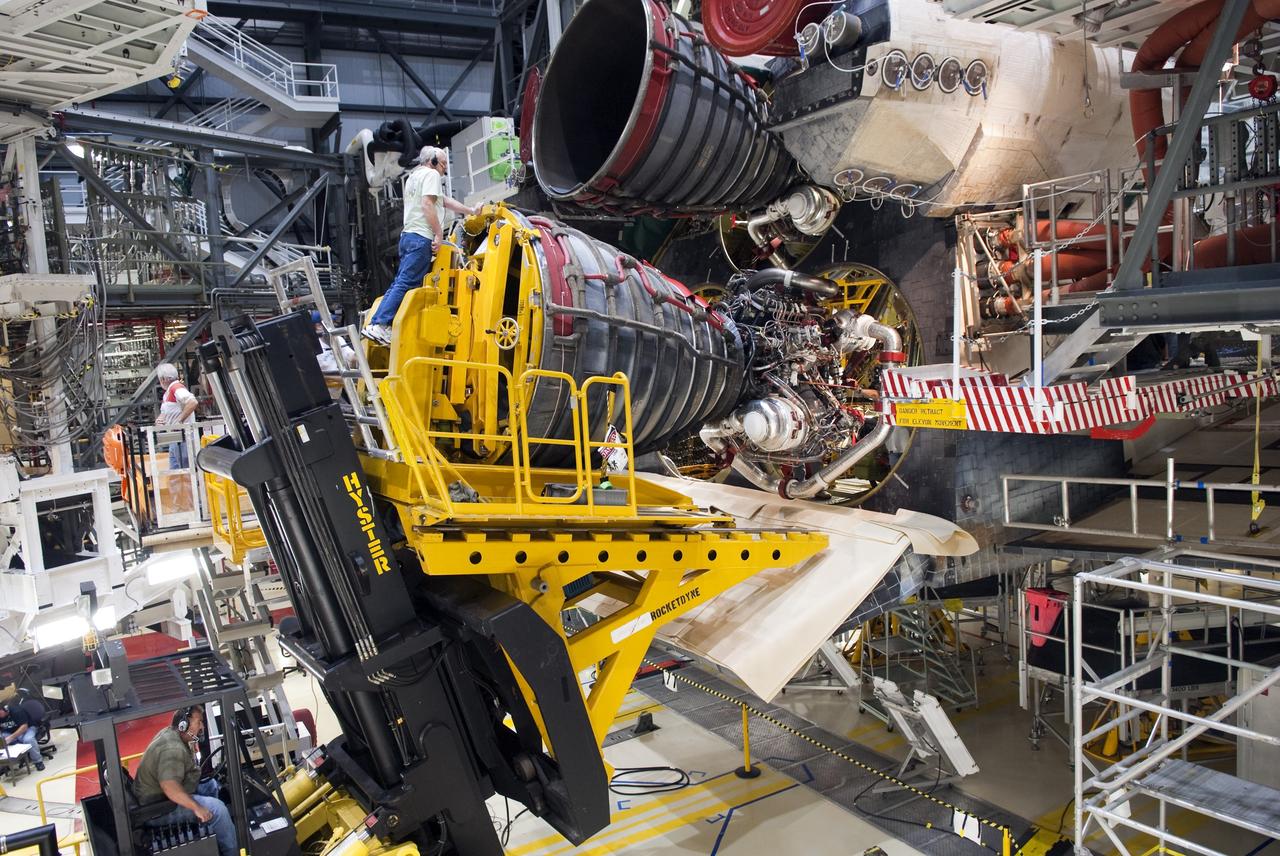
CAPE CANAVERAL, Fla. - Technicians carefully remove main engine No. 3 from space shuttle Discovery using a specially designed engine installer, called a Hyster forklift. The work is taking place in Orbiter Processing Facility-2 at NASA's Kennedy Space Center in Florida. The removal is part of Discovery's transition and retirement processing. Work performed on Discovery is expected to help rocket designers build next-generation spacecraft and prepare the shuttle for future public display. NASA/Jim Grossmann
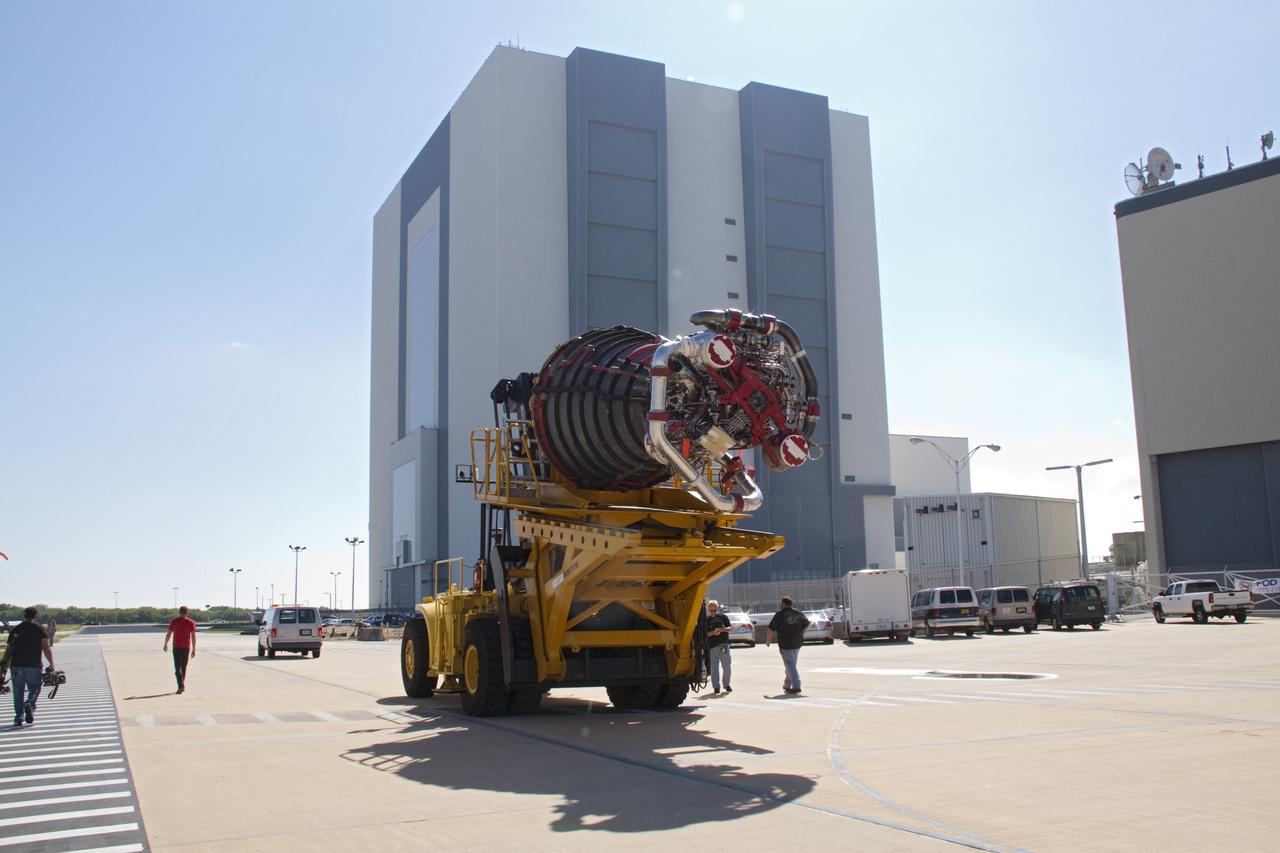
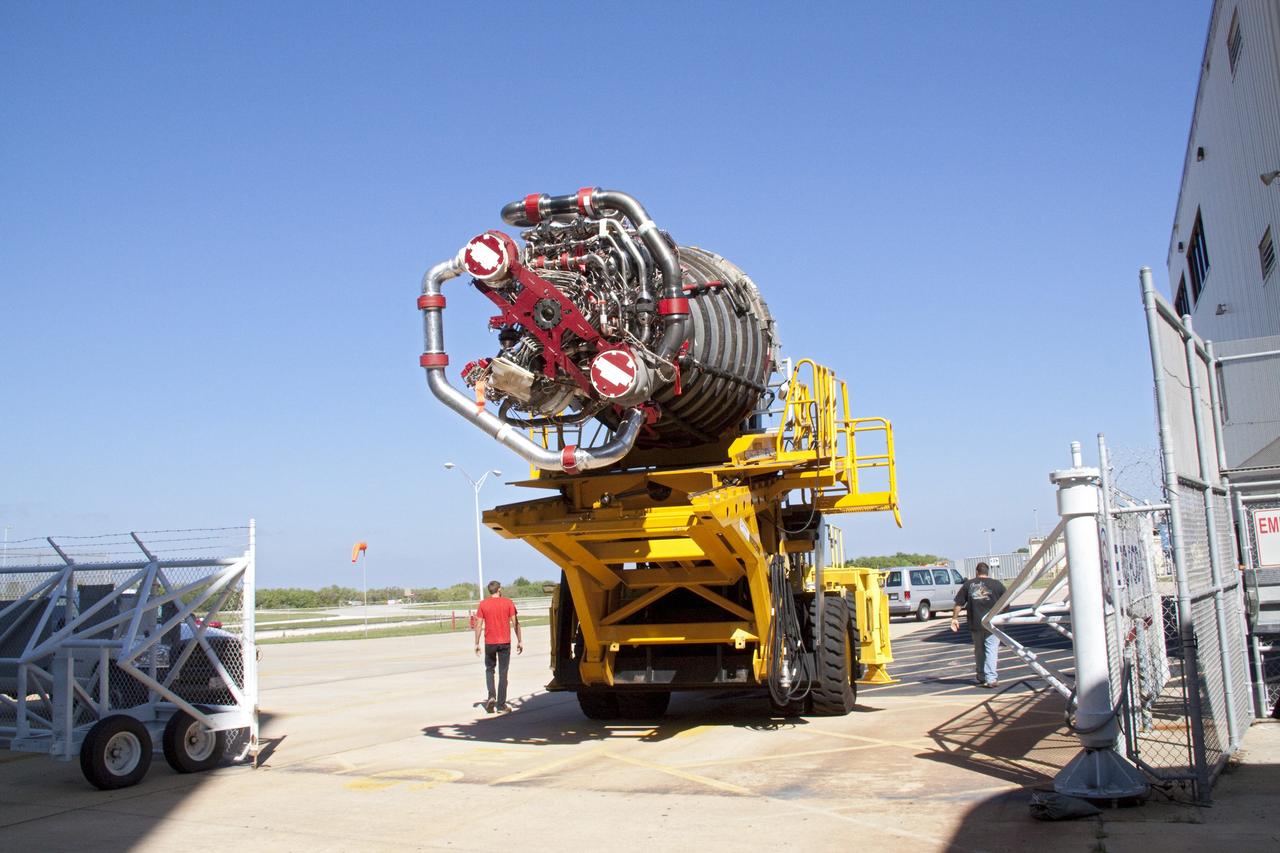
CAPE CANAVERAL, Fla. - Main engine No. 1, which was removed from space shuttle Discovery, is transported from Orbiter Processing Facility-2 to the Space Shuttle Main Engine Processing Facility at NASA's Kennedy Space Center in Florida. The removal was part of Discovery's transition and retirement processing. Work performed on Discovery is expected to help rocket designers build next-generation spacecraft and prepare the shuttle for future public display. Photo credit: NASA/Jack Pfaller
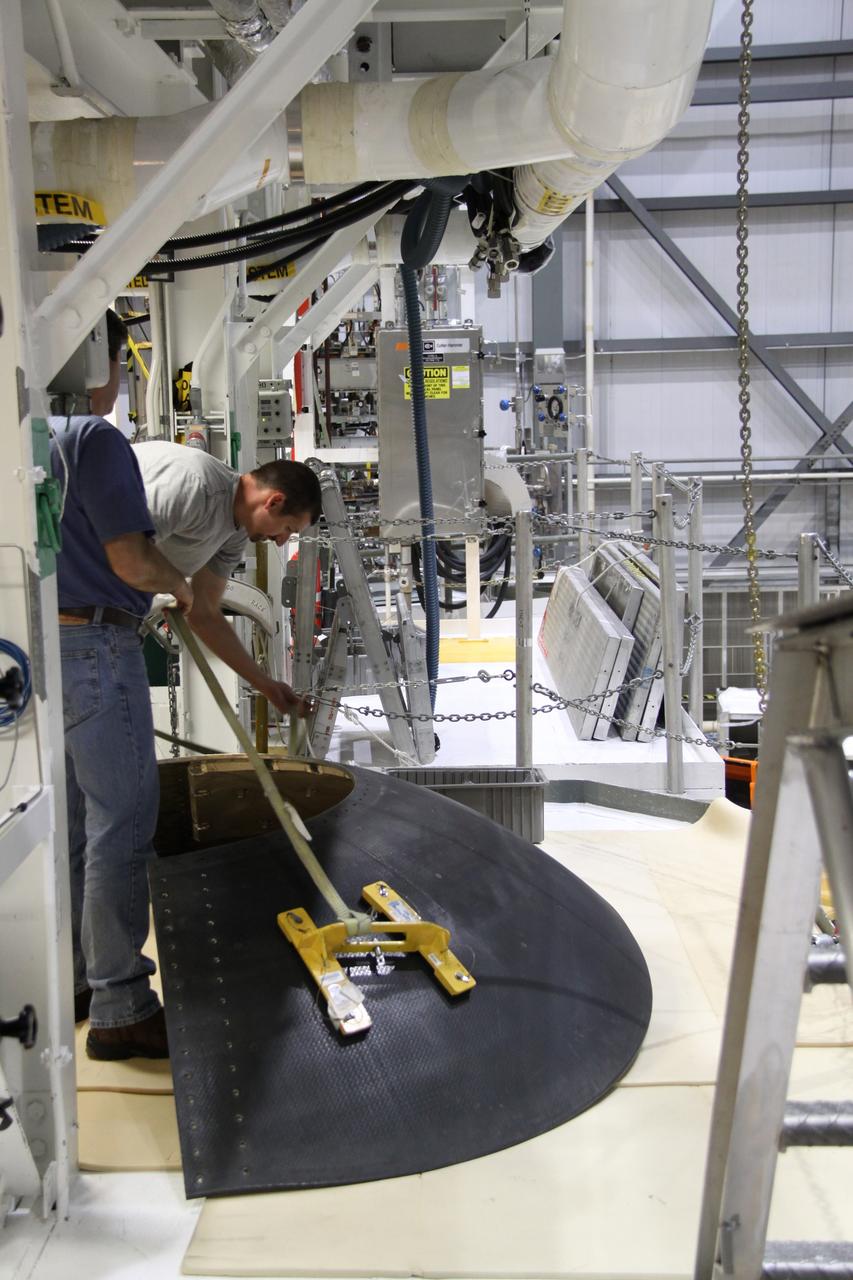
CAPE CANAVERAL, Fla. - Crews in Orbiter Processing Facility-2 at NASA's Kennedy Space Center in Florida remove space shuttle Discovery's right-hand inner heat shield from engine No. 1. The removal is part of Discovery's transition and retirement processing. Work performed on Discovery is expected to help rocket designers build next-generation spacecraft and prepare the shuttle for future public display.Photo credit: NASA/Jack Pfaller
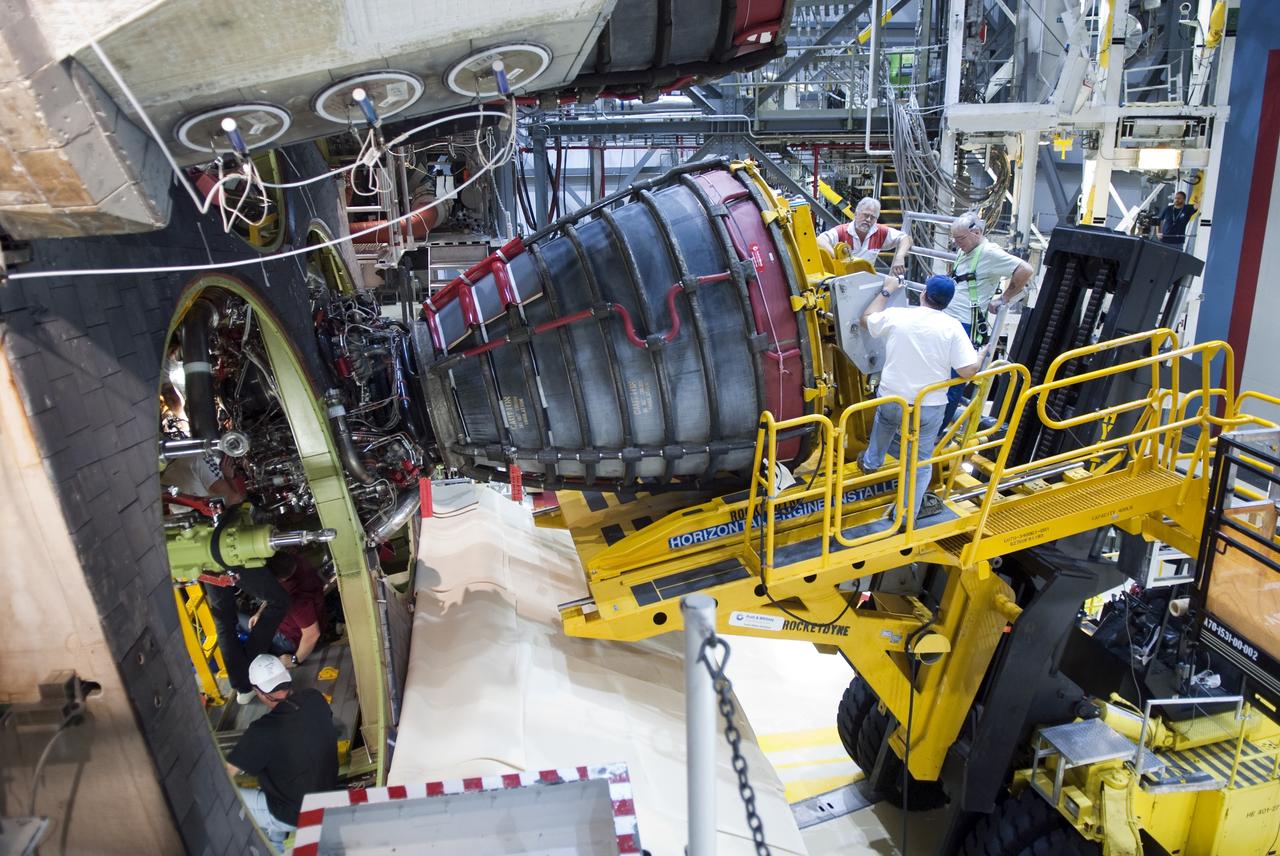
CAPE CANAVERAL, Fla. - Technicians carefully remove main engine No. 3 from space shuttle Discovery using a specially designed engine installer, called a Hyster forklift. The work is taking place in Orbiter Processing Facility-2 at NASA's Kennedy Space Center in Florida. The removal is part of Discovery's transition and retirement processing. Work performed on Discovery is expected to help rocket designers build next-generation spacecraft and prepare the shuttle for future public display. NASA/Jim Grossmann
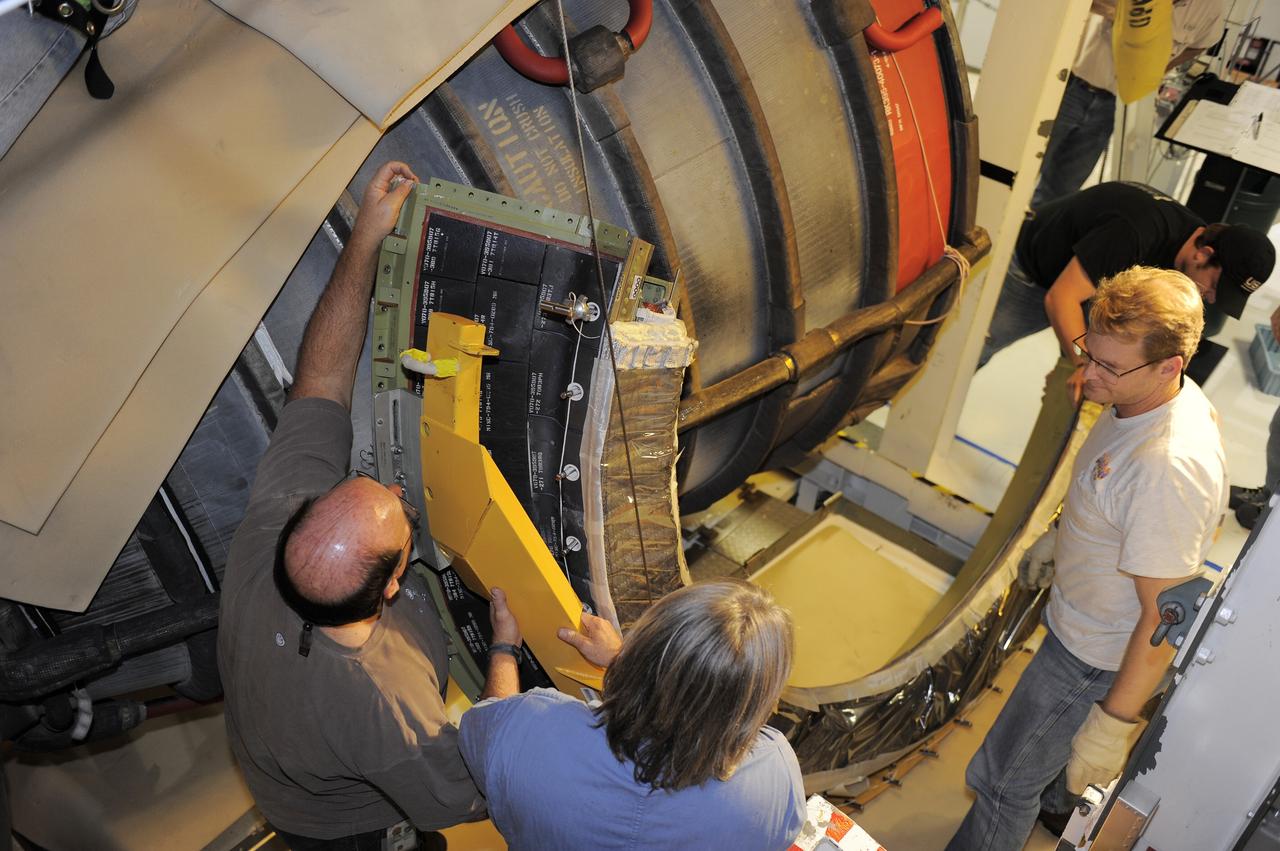
CAPE CANAVERAL, Fla. - Crews in Orbiter Processing Facility-2 at NASA's Kennedy Space Center in Florida remove space shuttle Discovery's right-hand inner heat shield from engine No. 1. The removal is part of Discovery's transition and retirement processing. Work performed on Discovery is expected to help rocket designers build next-generation spacecraft and prepare the shuttle for future public display.Photo credit: NASA/Kim Shiflett
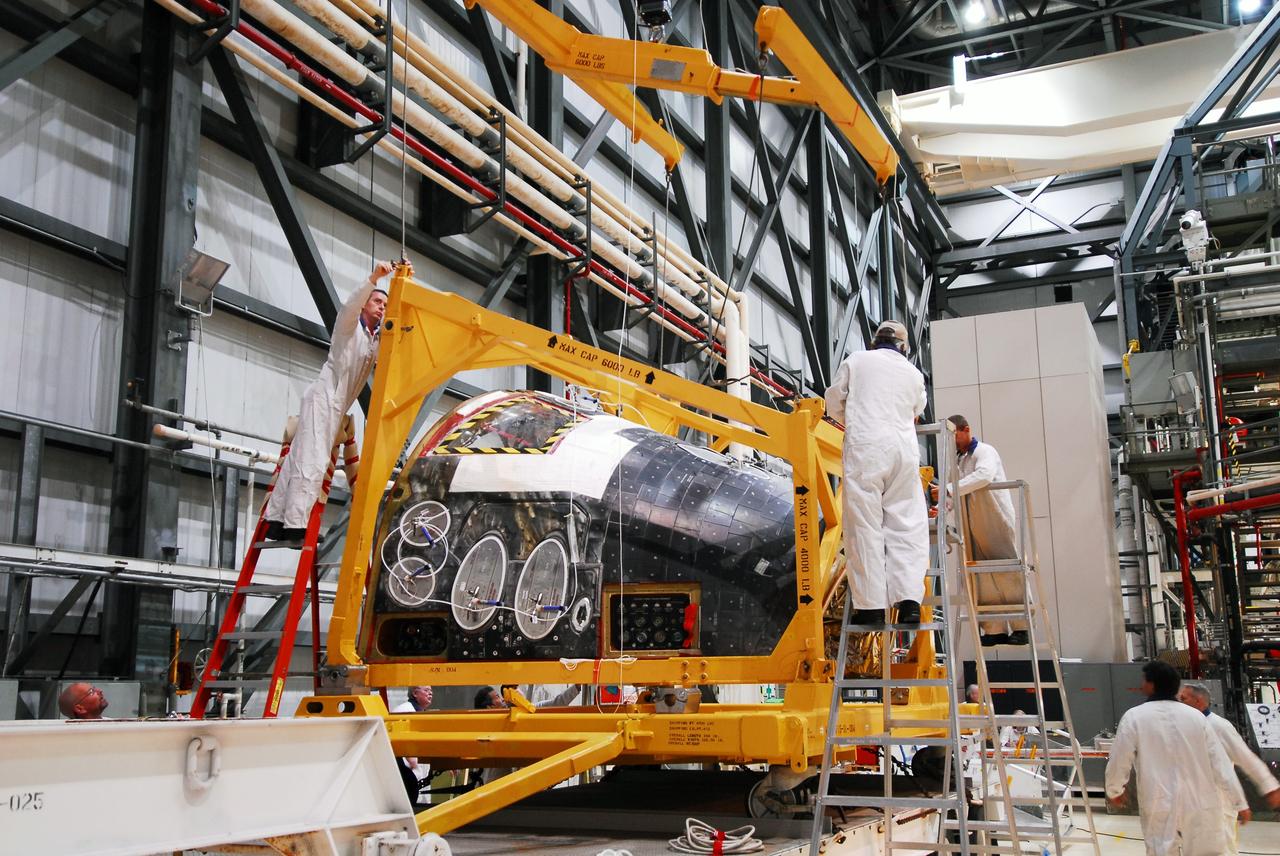
CAPE CANAVERAL, Fla. - Space shuttle Discovery's forward reaction control system (FRCS), which helped steer the shuttle in orbit, is moved to a transporter in Orbiter Processing Facility-2 at NASA's Kennedy Space Center in Florida. To maneuver, the FRCS used hypergolic fuel and oxidizer, which were purged from Discovery after its final spaceflight, STS-133. Next, the FRCS will be shipped to a maintenance facility at White Sands Space Harbor in New Mexico, where additional inspections will be performed and its components made safe to go on public display. The transition and retirement processing is expected to help rocket designers build next-generation spacecraft and prepare the shuttle for display. Photo credit: NASA/Jim Grossmann
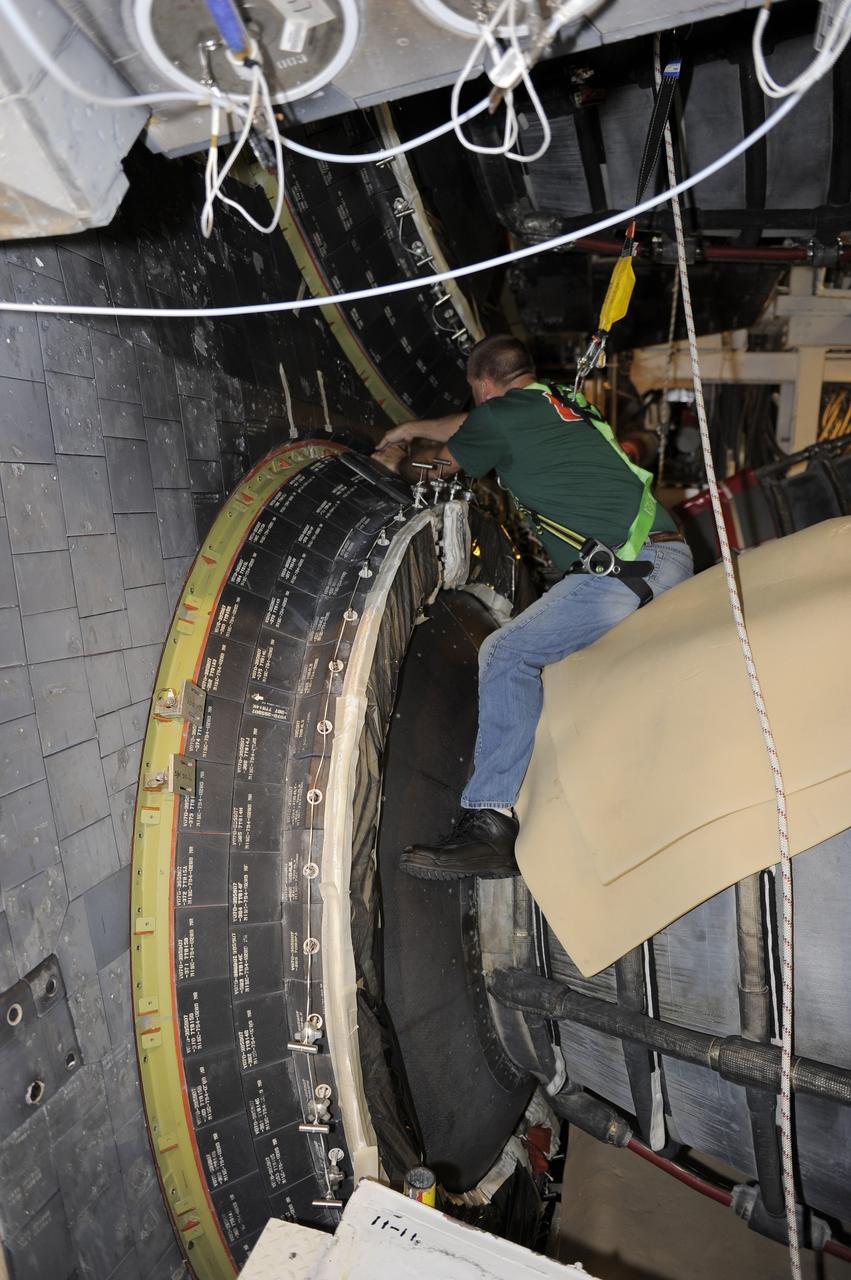
CAPE CANAVERAL, Fla. - Crews in Orbiter Processing Facility-2 at NASA's Kennedy Space Center in Florida remove space shuttle Discovery's right-hand inner heat shield from engine No. 1. The removal is part of Discovery's transition and retirement processing. Work performed on Discovery is expected to help rocket designers build next-generation spacecraft and prepare the shuttle for future public display.Photo credit: NASA/Kim Shiflett
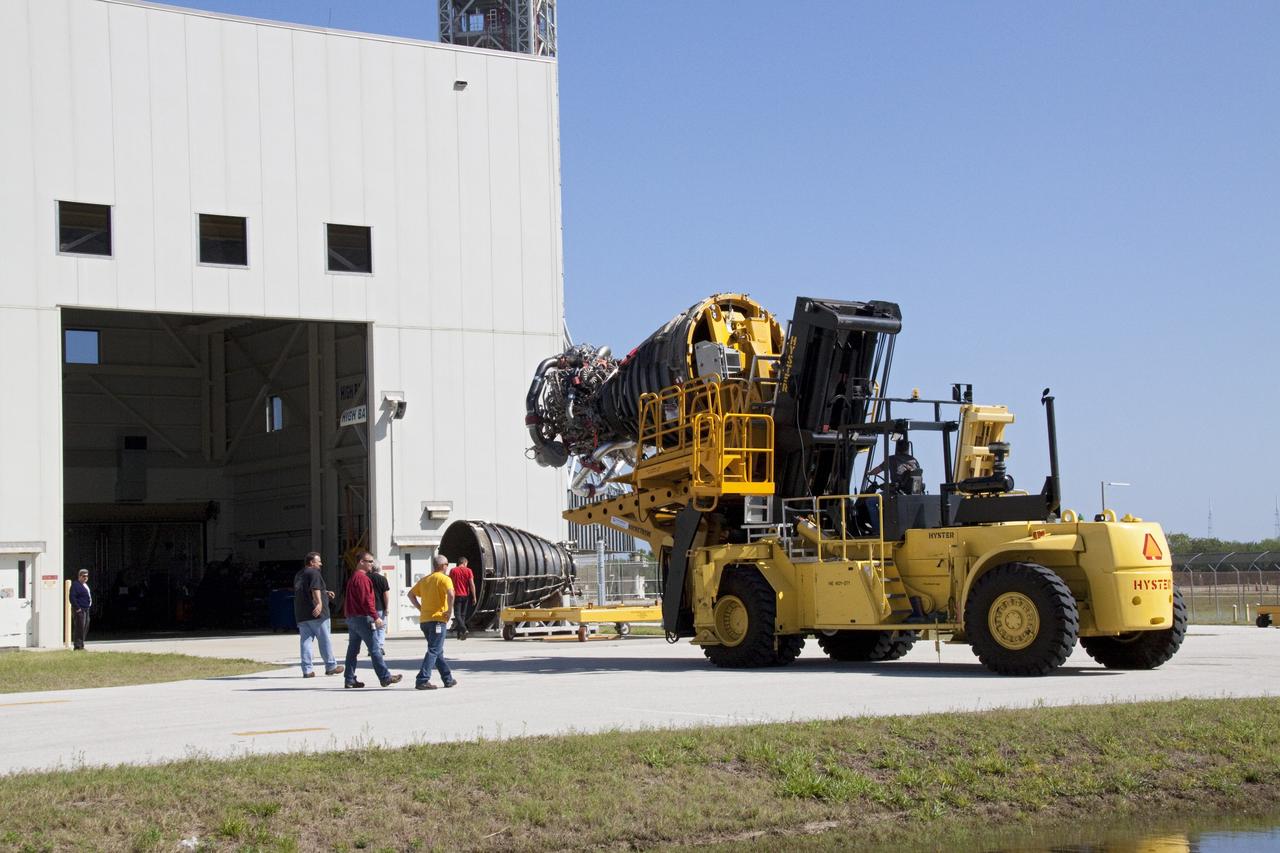
CAPE CANAVERAL, Fla. - Main engine No. 1, which was removed from space shuttle Discovery, is transported from Orbiter Processing Facility-2 to the Space Shuttle Main Engine Processing Facility at NASA's Kennedy Space Center in Florida. The removal was part of Discovery's transition and retirement processing. Work performed on Discovery is expected to help rocket designers build next-generation spacecraft and prepare the shuttle for future public display. Photo credit: NASA/Jack Pfaller
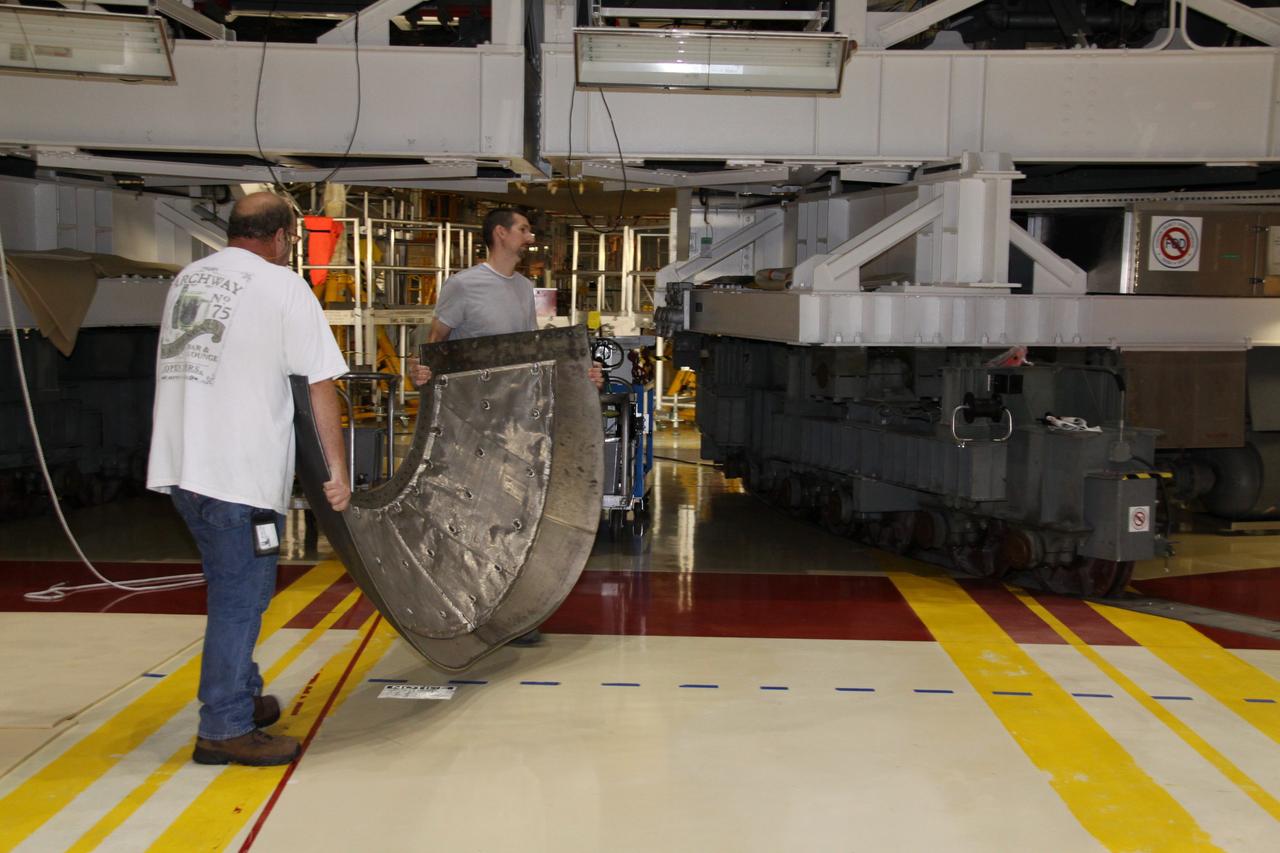
CAPE CANAVERAL, Fla. - Crews in Orbiter Processing Facility-2 at NASA's Kennedy Space Center in Florida remove space shuttle Discovery's right-hand inner heat shield from engine No. 1. The removal is part of Discovery's transition and retirement processing. Work performed on Discovery is expected to help rocket designers build next-generation spacecraft and prepare the shuttle for future public display.Photo credit: NASA/Jack Pfaller
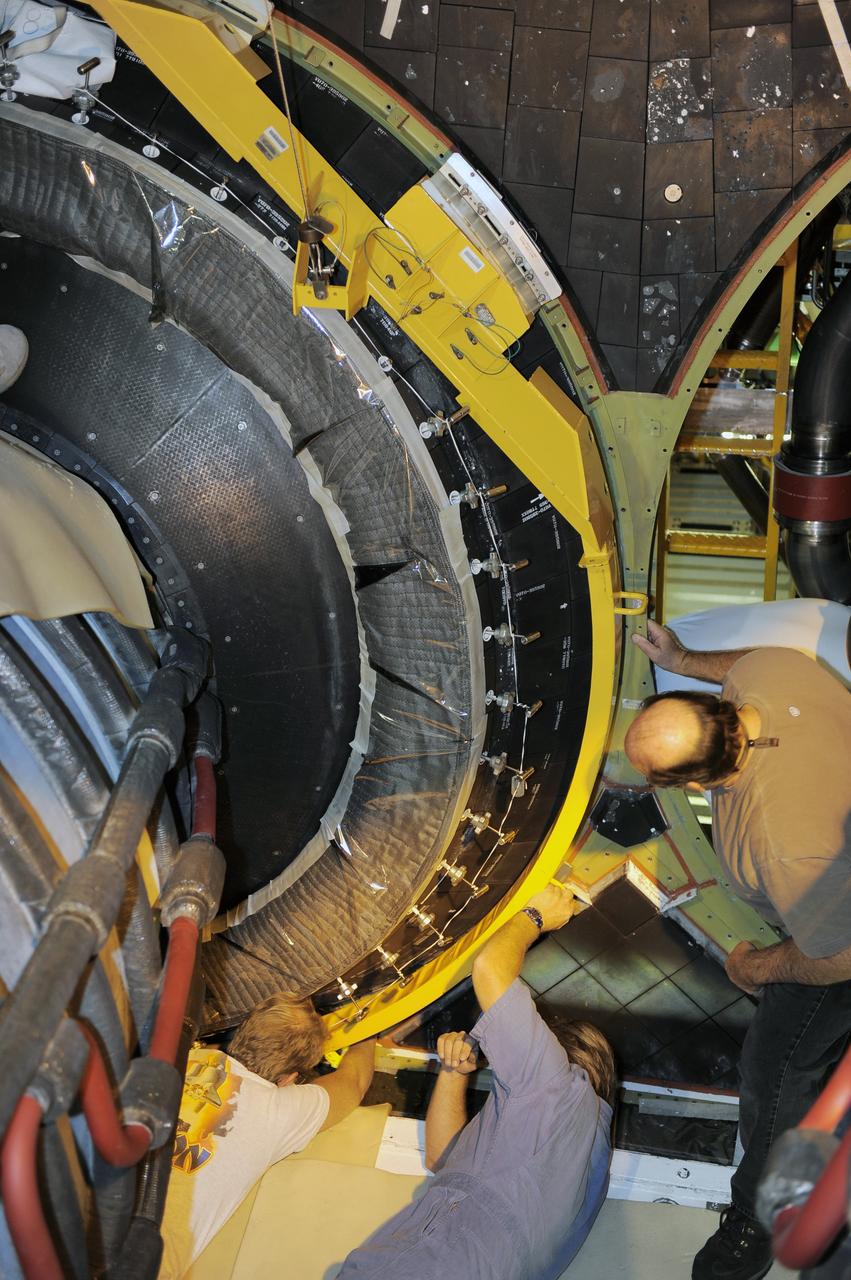
CAPE CANAVERAL, Fla. - Crews in Orbiter Processing Facility-2 at NASA's Kennedy Space Center in Florida remove space shuttle Discovery's right-hand inner heat shield from engine No. 1. The removal is part of Discovery's transition and retirement processing. Work performed on Discovery is expected to help rocket designers build next-generation spacecraft and prepare the shuttle for future public display.Photo credit: NASA/Kim Shiflett
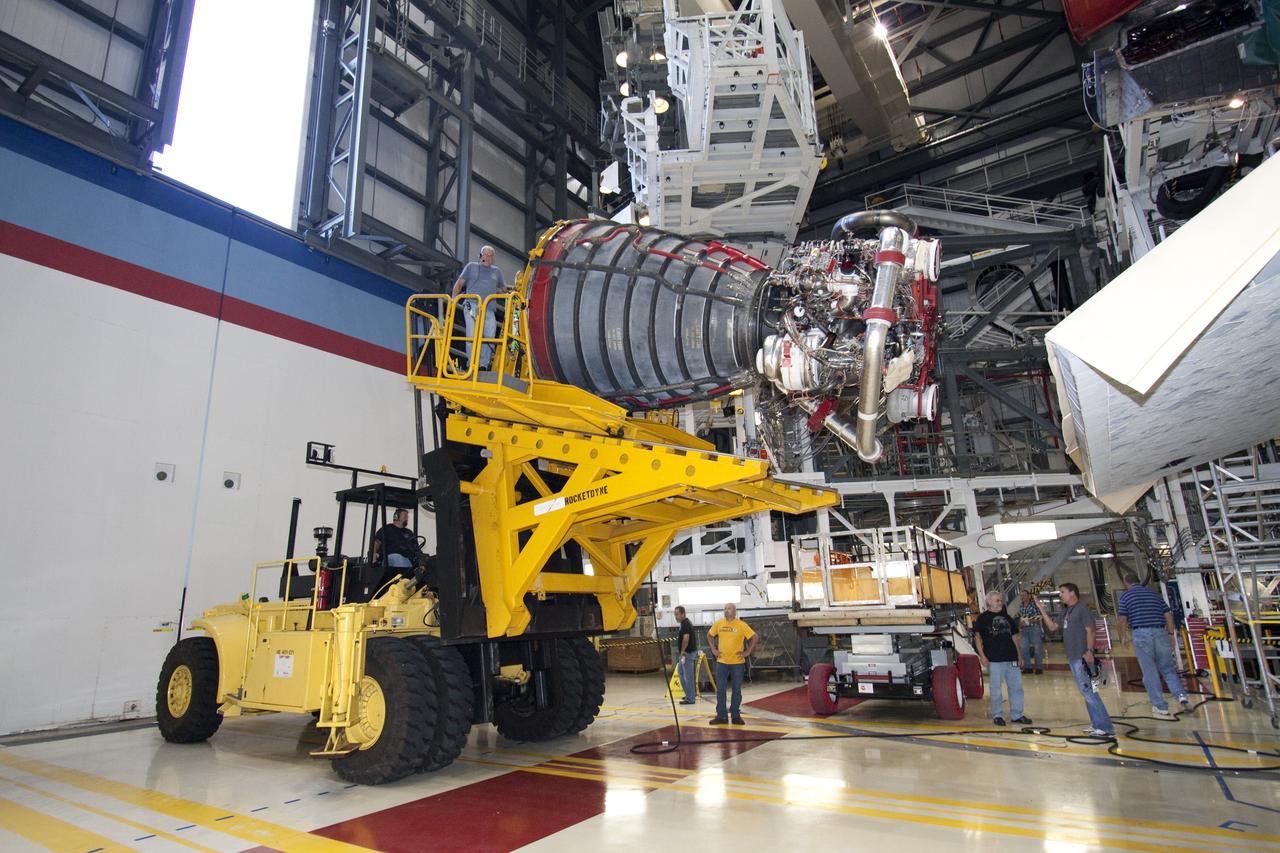
CAPE CANAVERAL, Fla. - Technicians complete the removal of main engine No. 1 from space shuttle Discovery using a specially designed engine installer, called a Hyster forklift. The work is taking place in Orbiter Processing Facility-2 at NASA's Kennedy Space Center in Florida. The removal is part of Discovery's transition and retirement processing. Work performed on Discovery is expected to help rocket designers build next-generation spacecraft and prepare the shuttle for future public display. Photo credit: NASA/Jack Pfaller
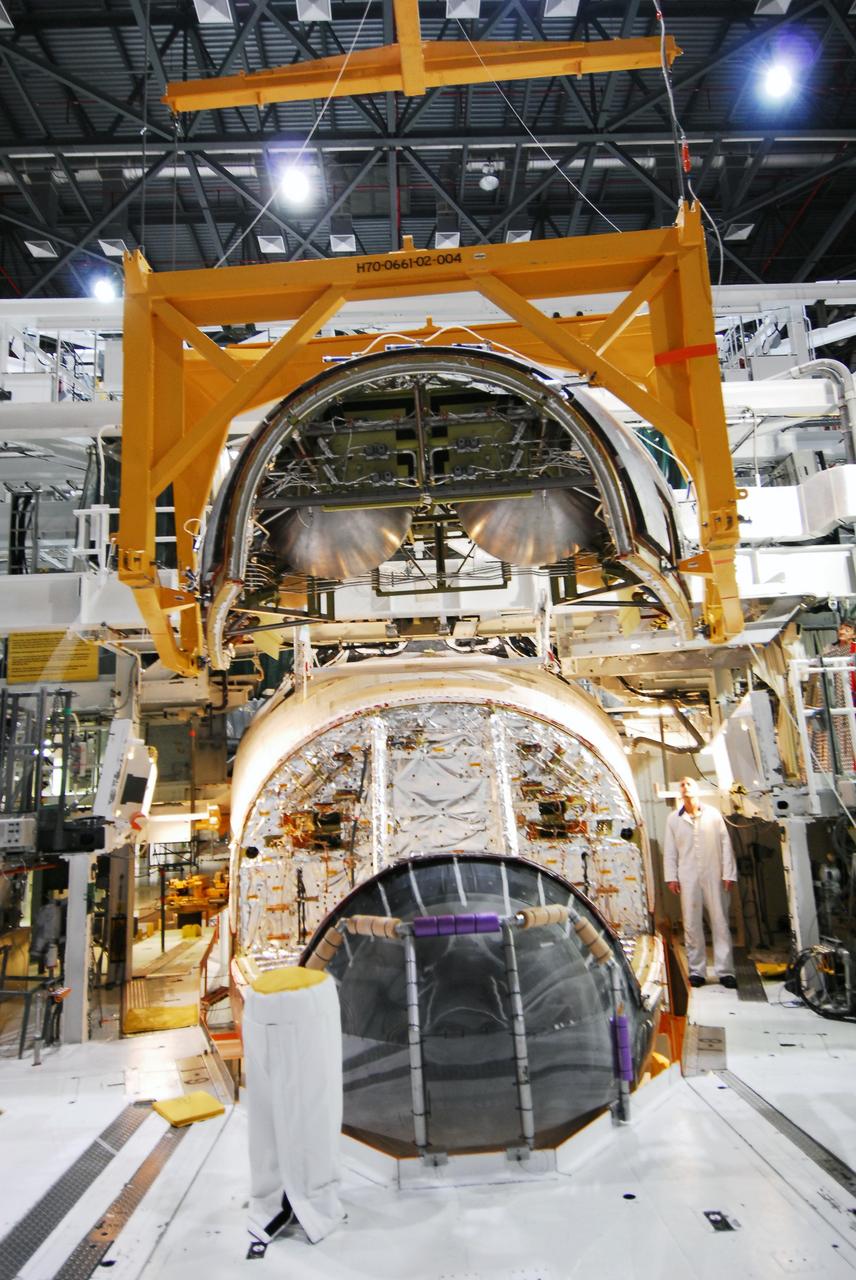
CAPE CANAVERAL, Fla. - Crews in Orbiter Processing Facility-2 at NASA's Kennedy Space Center in Florida remove space shuttle Discovery's forward reaction control system (FRCS), which helped steer the shuttle in orbit. To maneuver, the FRCS used hypergolic fuel and oxidizer, which were purged from Discovery after its final spaceflight, STS-133. Next, the FRCS will be shipped to a maintenance facility at White Sands Space Harbor in New Mexico, where additional inspections will be performed and its components made safe to go on public display. The transition and retirement processing is expected to help rocket designers build next-generation spacecraft and prepare the shuttle for display. Photo credit: NASA/Jim Grossmann
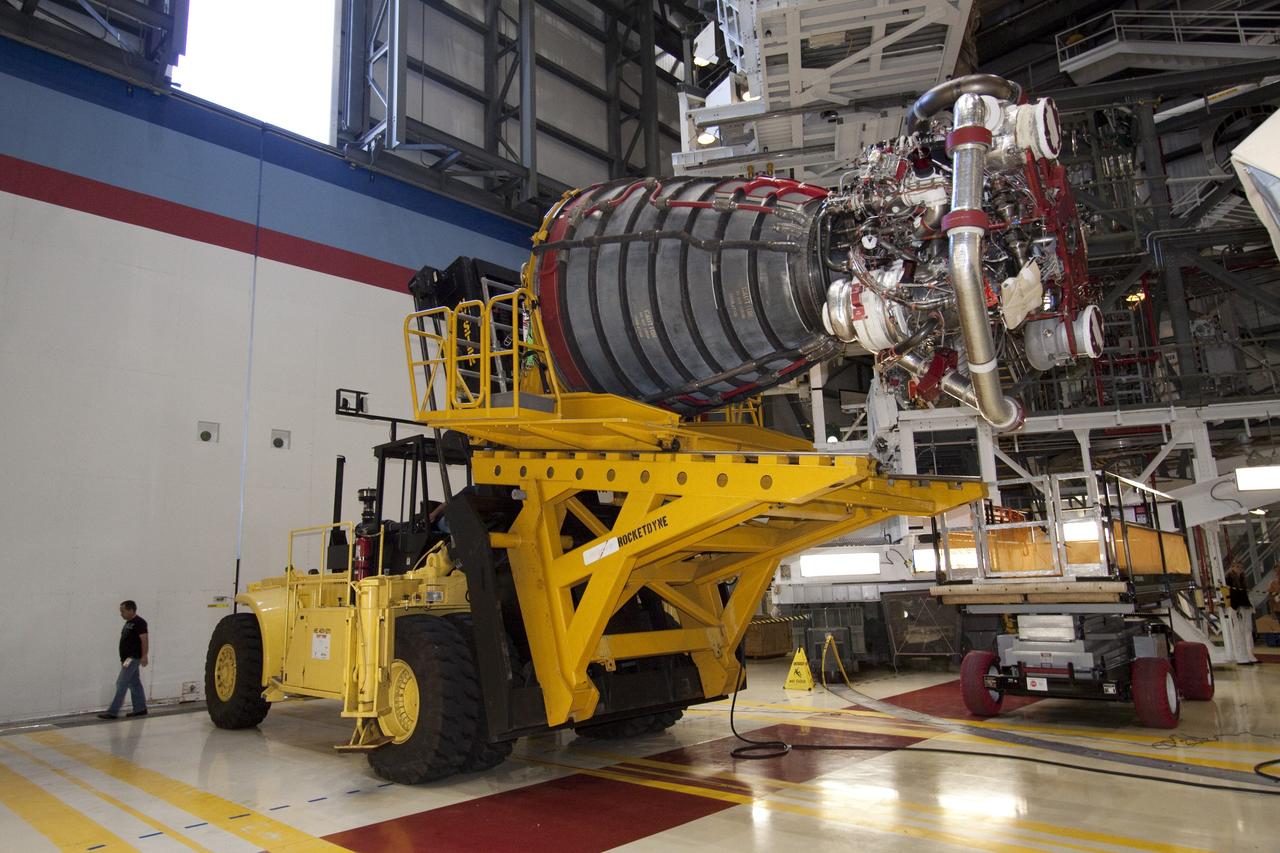
CAPE CANAVERAL, Fla. - Technicians complete the removal of main engine No. 1 from space shuttle Discovery using a specially designed engine installer, called a Hyster forklift. The work is taking place in Orbiter Processing Facility-2 at NASA's Kennedy Space Center in Florida. The removal is part of Discovery's transition and retirement processing. Work performed on Discovery is expected to help rocket designers build next-generation spacecraft and prepare the shuttle for future public display. Photo credit: NASA/Jack Pfaller
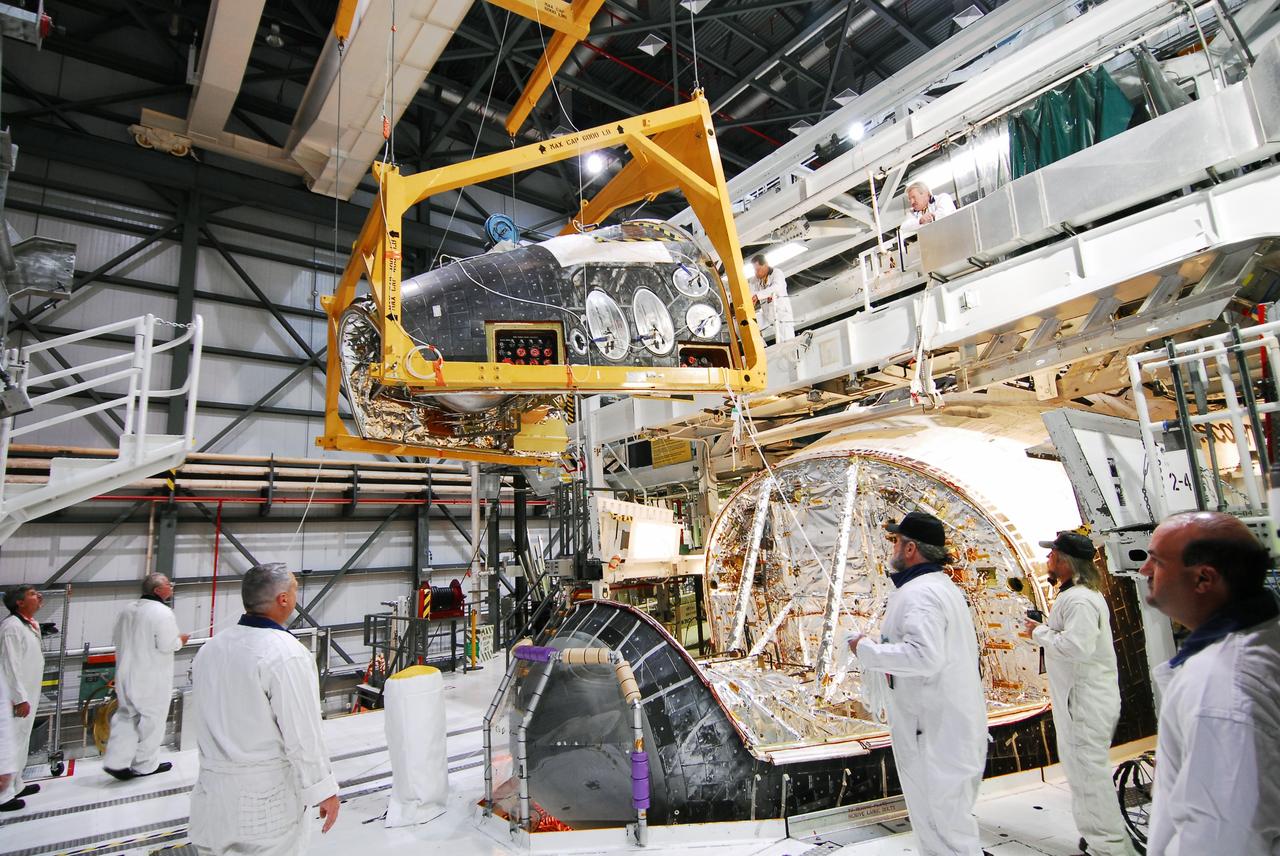
CAPE CANAVERAL, Fla. - Crews in Orbiter Processing Facility-2 at NASA's Kennedy Space Center in Florida remove space shuttle Discovery's forward reaction control system (FRCS), which helped steer the shuttle in orbit. To maneuver, the FRCS used hypergolic fuel and oxidizer, which were purged from Discovery after its final spaceflight, STS-133. Next, the FRCS will be shipped to a maintenance facility at White Sands Space Harbor in New Mexico, where additional inspections will be performed and its components made safe to go on public display. The transition and retirement processing is expected to help rocket designers build next-generation spacecraft and prepare the shuttle for display. Photo credit: NASA/Jim Grossmann
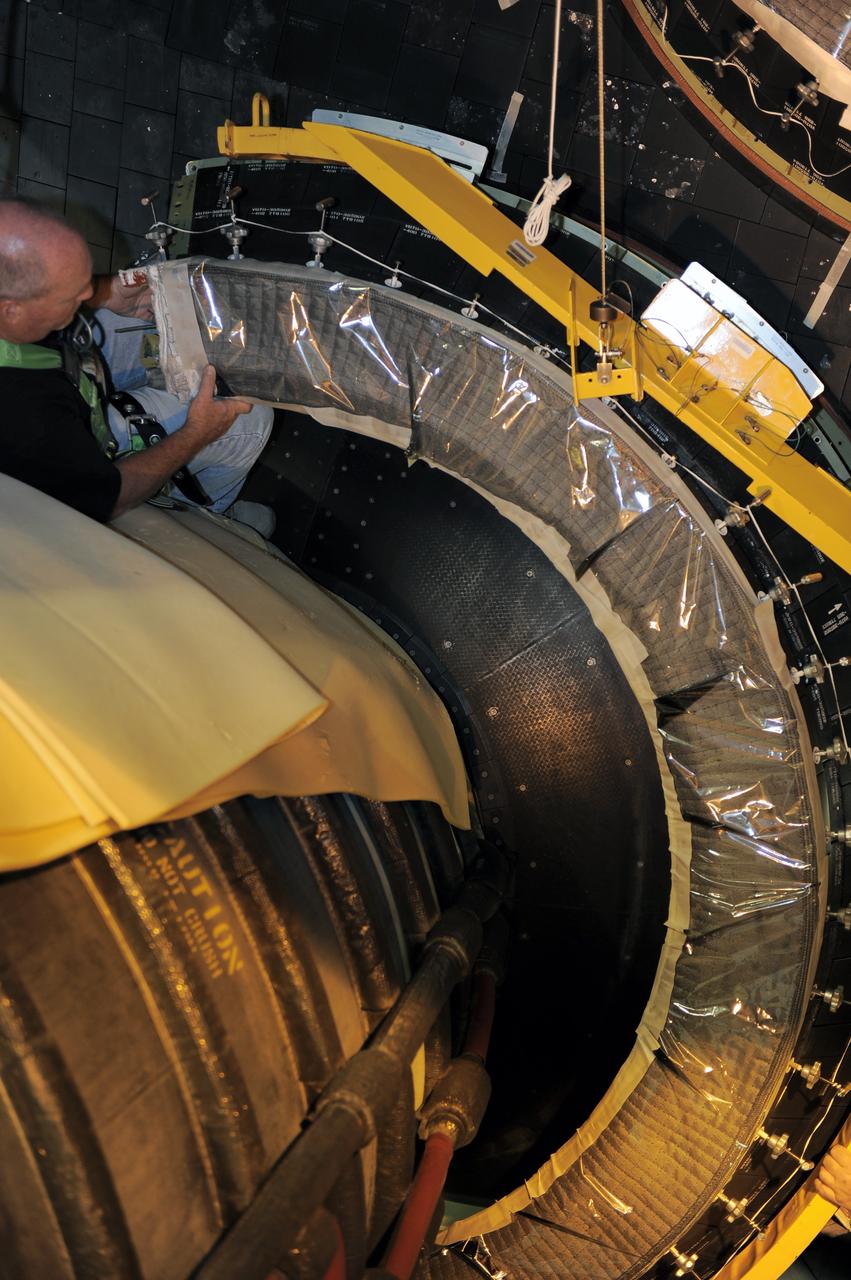
CAPE CANAVERAL, Fla. - Crews in Orbiter Processing Facility-2 at NASA's Kennedy Space Center in Florida remove space shuttle Discovery's right-hand inner heat shield from engine No. 1. The removal is part of Discovery's transition and retirement processing. Work performed on Discovery is expected to help rocket designers build next-generation spacecraft and prepare the shuttle for future public display.Photo credit: NASA/Kim Shiflett
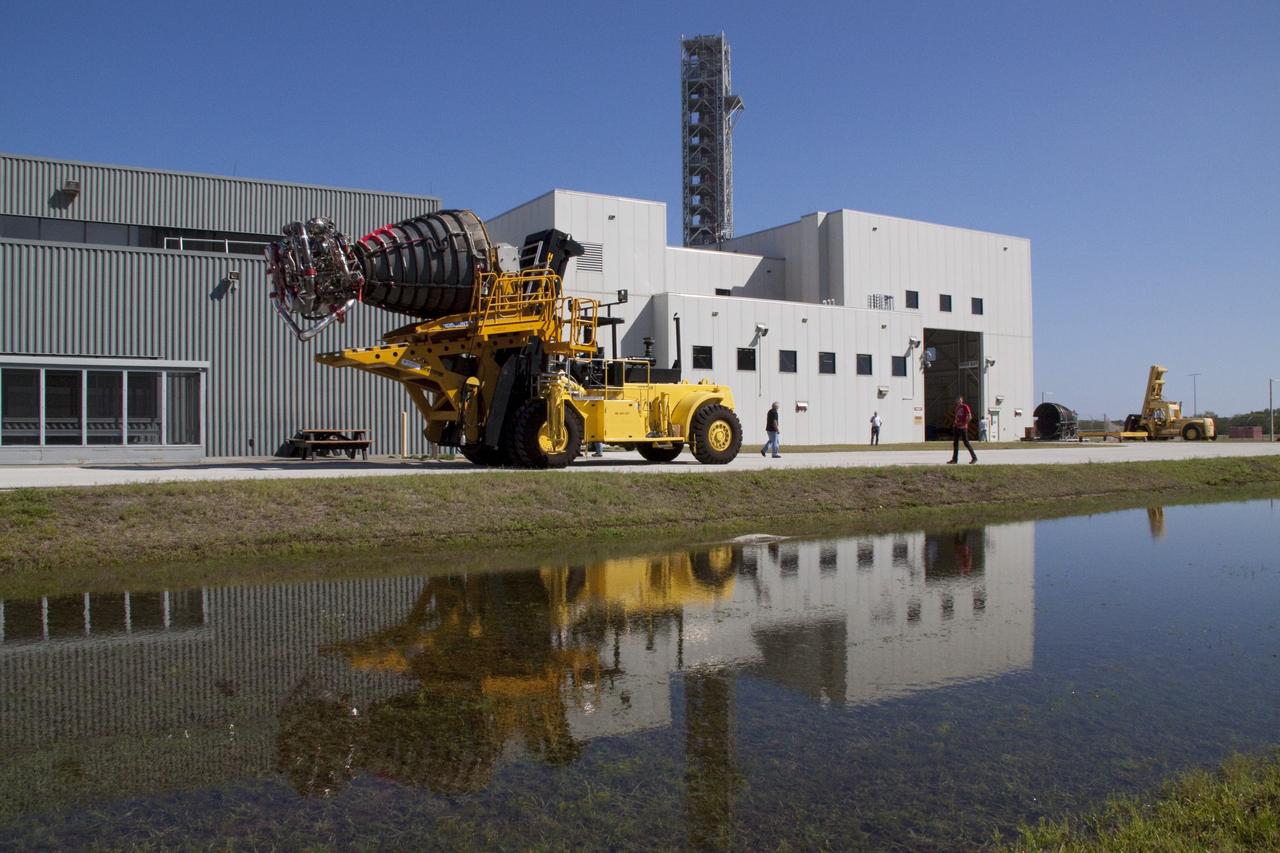
CAPE CANAVERAL, Fla. - Main engine No. 1, which was removed from space shuttle Discovery, is transported from Orbiter Processing Facility-2 to the Space Shuttle Main Engine Processing Facility at NASA's Kennedy Space Center in Florida. The removal was part of Discovery's transition and retirement processing. Work performed on Discovery is expected to help rocket designers build next-generation spacecraft and prepare the shuttle for future public display. Photo credit: NASA/Jack Pfaller
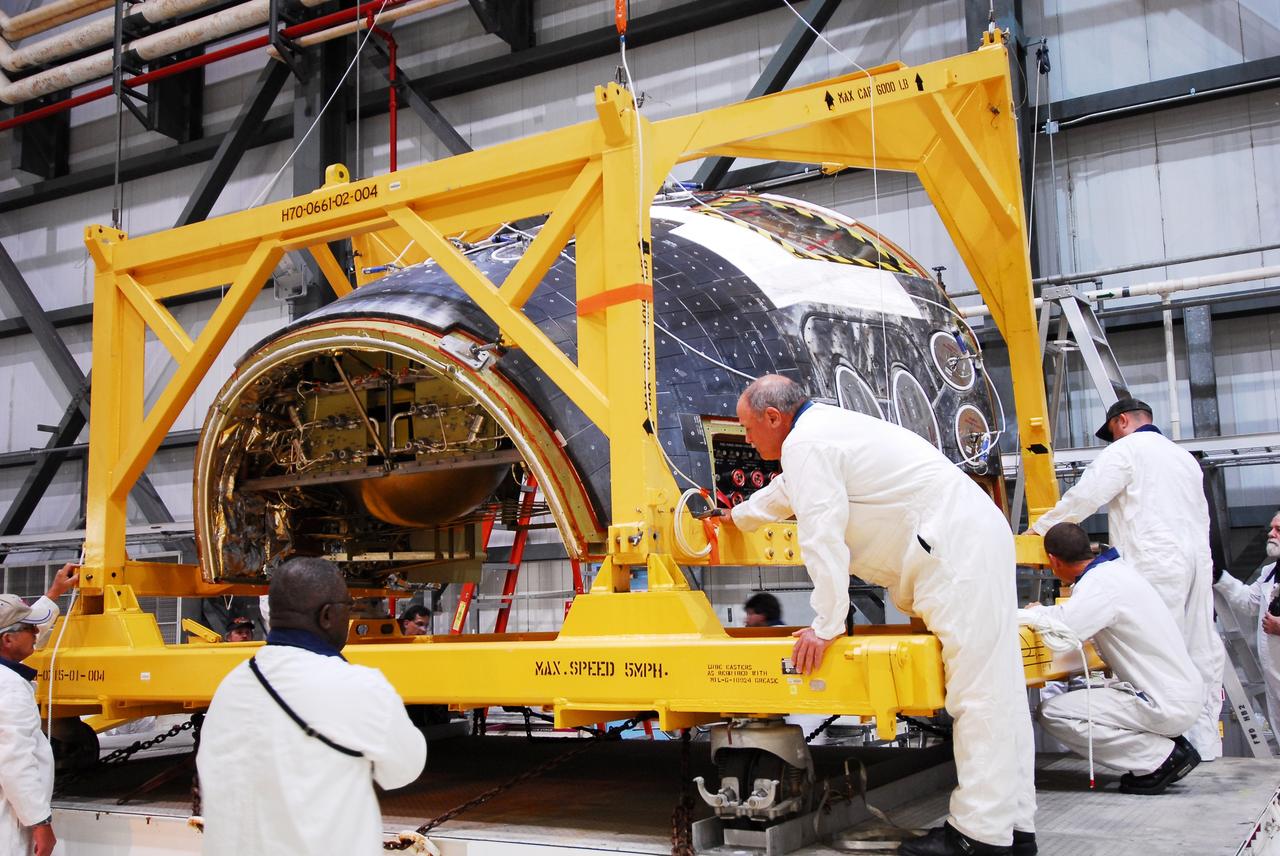
CAPE CANAVERAL, Fla. - Space shuttle Discovery's forward reaction control system (FRCS), which helped steer the shuttle in orbit, is moved to a transporter in Orbiter Processing Facility-2 at NASA's Kennedy Space Center in Florida. To maneuver, the FRCS used hypergolic fuel and oxidizer, which were purged from Discovery after its final spaceflight, STS-133. Next, the FRCS will be shipped to a maintenance facility at White Sands Space Harbor in New Mexico, where additional inspections will be performed and its components made safe to go on public display. The transition and retirement processing is expected to help rocket designers build next-generation spacecraft and prepare the shuttle for display. Photo credit: NASA/Jim Grossmann