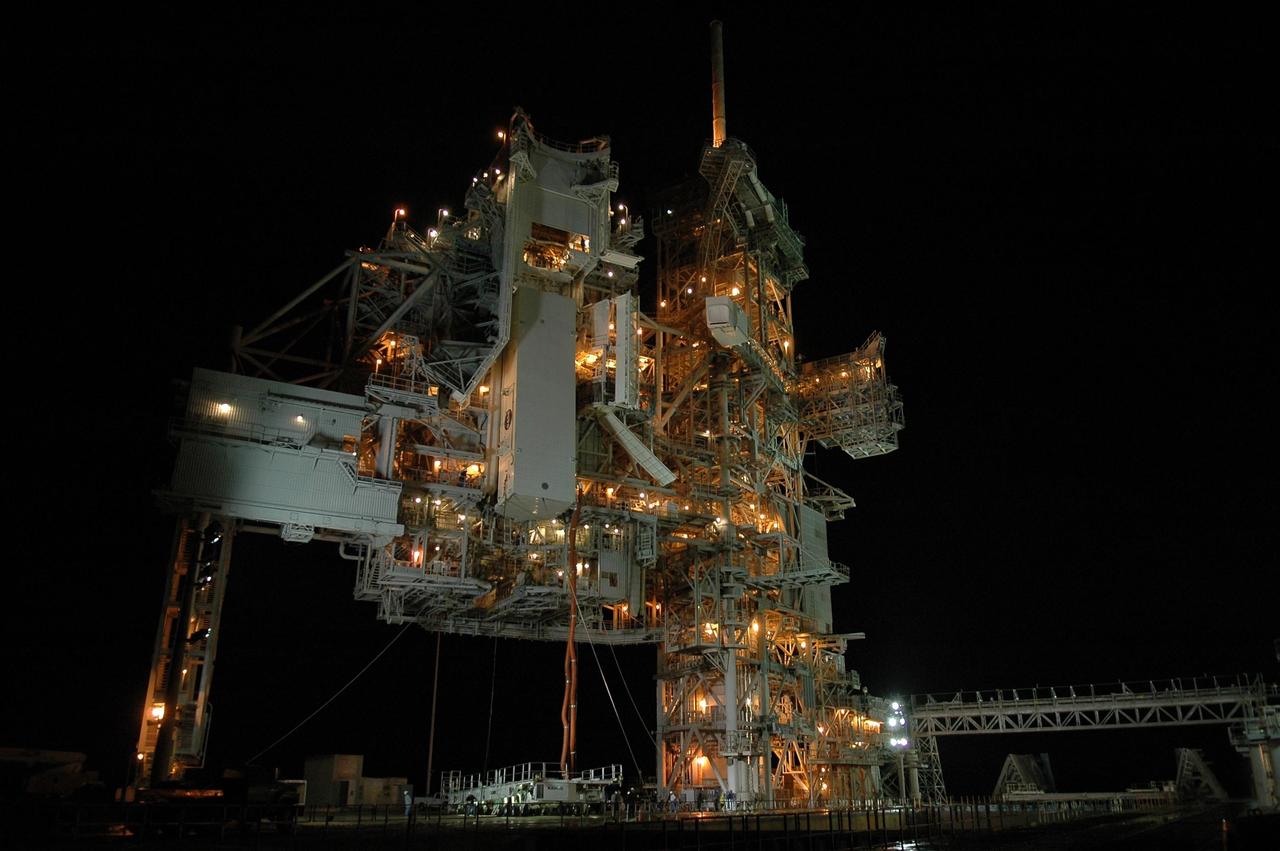
KENNEDY SPACE CENTER, FLA. -- With umbilical lines still attached, the payload canister is lifted up to the payload changeout room (PCR) on the rotating service structure (RSS) on Launch Pad 39B. Inside the canister are the SPACEHAB module and the port 5 truss segment for mission STS-116. Once inside the PCR, they will be transferred into Space Shuttle Discovery's payload bay once the vehicle has rolled out to the pad. On the right is the fixed service structure. The PCR is the enclosed, environmentally controlled portion of the RSS that supports cargo delivery to the pad and subsequent vertical installation into the orbiter payload bay. Seals around the mating surface of the PCR fit against the orbiter and allow the opening of the payload bay or canister doors and removal of the cargo without exposure to outside air and contaminants. A clean-air purge in the PCR maintains environmental control during PCR cargo operations. Cargo is removed from the payload canister and installed vertically in the orbiter by the payload ground handling mechanism (PGHM). Photo credit: NASA/Kim Shiflett
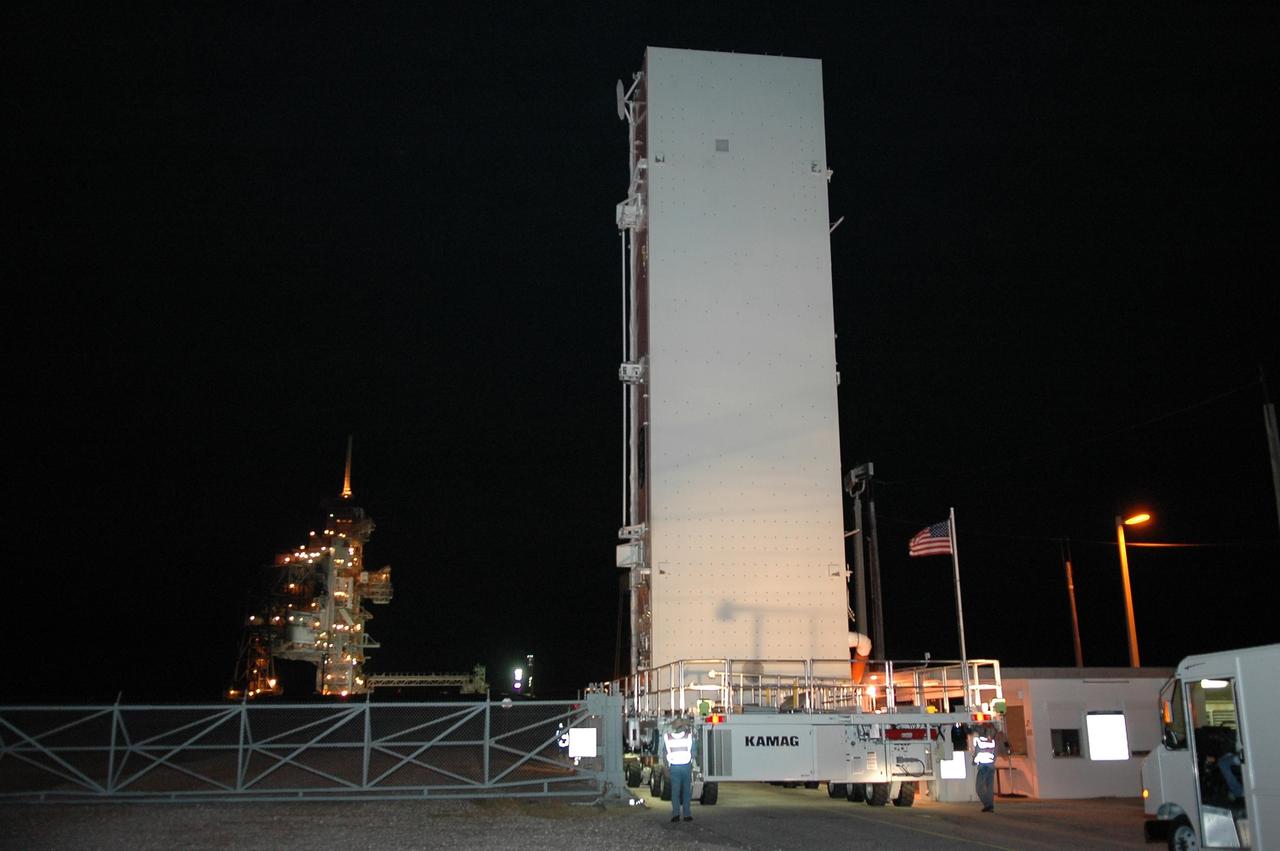
KENNEDY SPACE CENTER, FLA. -- The payload canister transporter and canister arrive at the gate to Launch Pad 39B. Inside the canister are the SPACEHAB module and the port 5 truss segment for mission STS-116. They will be moved into the payload changeout room (PCR) at the pad and transferred into Space Shuttle Discovery's payload bay once the vehicle has rolled out to the pad. The PCR is the enclosed, environmentally controlled portion of the RSS that supports cargo delivery to the pad and subsequent vertical installation into the orbiter payload bay. Seals around the mating surface of the PCR fit against the orbiter and allow the opening of the payload bay or canister doors and removal of the cargo without exposure to outside air and contaminants. A clean-air purge in the PCR maintains environmental control during PCR cargo operations. Cargo is removed from the payload canister and installed vertically in the orbiter by the payload ground handling mechanism (PGHM). Photo credit: NASA/Kim Shiflett
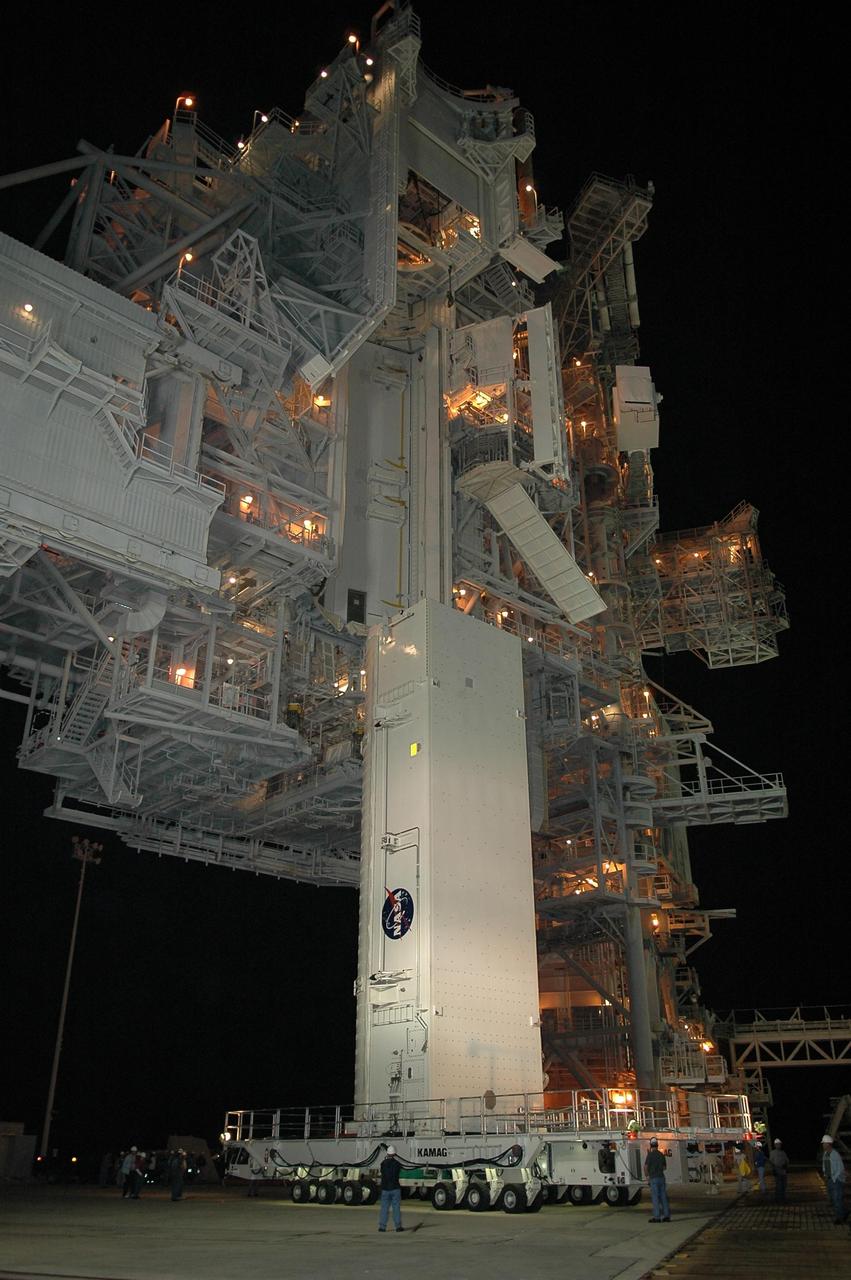
KENNEDY SPACE CENTER, FLA. -- The payload canister transporter and canister move into place under the payload changeout room (PCR) on the rotating service structure (RSS) on Launch Pad 39B. Inside the canister are the SPACEHAB module and the port 5 truss segment for mission STS-116. Once inside the PCR, they will be transferred into Space Shuttle Discovery's payload bay once the vehicle has rolled out to the pad. The PCR is the enclosed, environmentally controlled portion of the RSS that supports cargo delivery to the pad and subsequent vertical installation into the orbiter payload bay. Seals around the mating surface of the PCR fit against the orbiter and allow the opening of the payload bay or canister doors and removal of the cargo without exposure to outside air and contaminants. A clean-air purge in the PCR maintains environmental control during PCR cargo operations. Cargo is removed from the payload canister and installed vertically in the orbiter by the payload ground handling mechanism (PGHM). Photo credit: NASA/Kim Shiflett
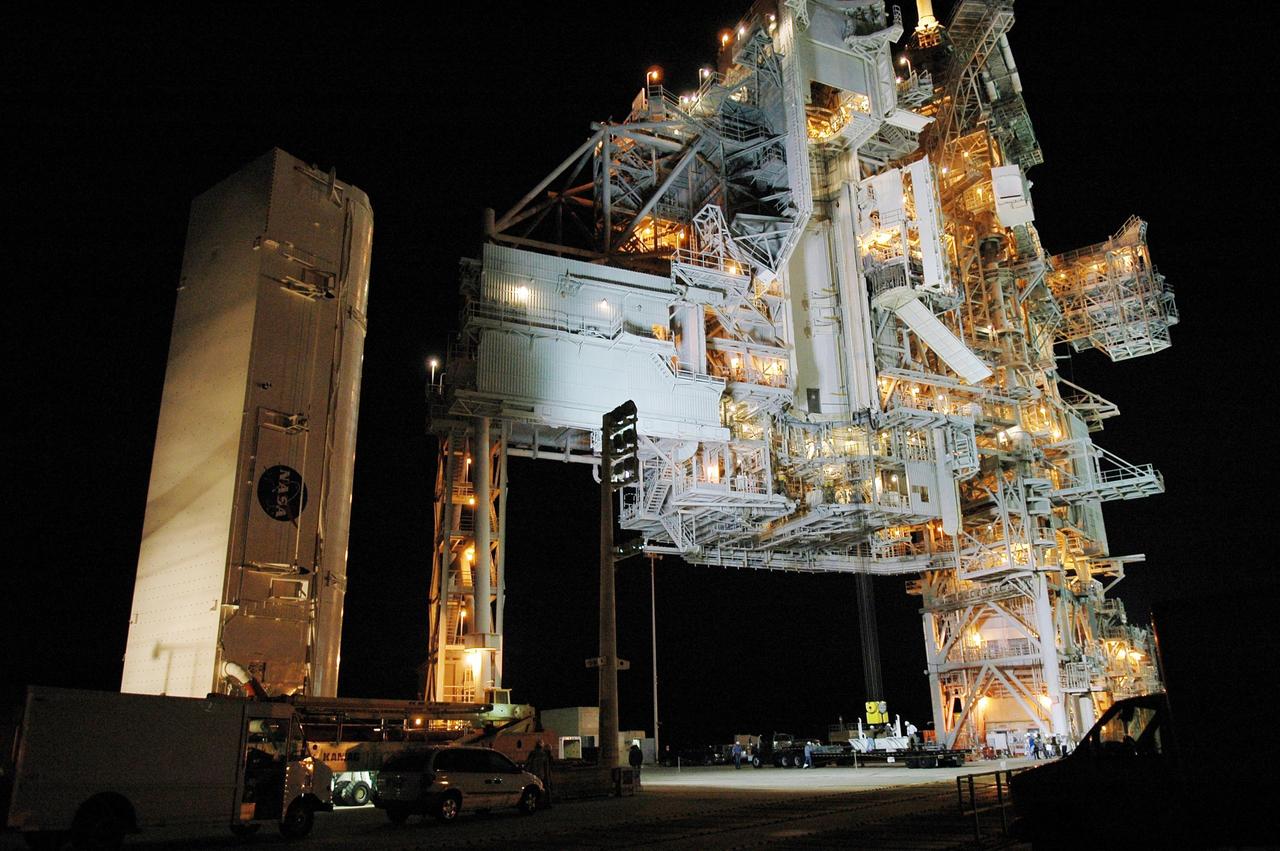
KENNEDY SPACE CENTER, FLA. -- The payload canister transporter and canister approach the rotating service structure (RSS) on Launch Pad 39B. Inside the canister are the SPACEHAB module and the port 5 truss segment for mission STS-116. They will be moved into the payload changeout room (PCR) on the RSS and transferred into Space Shuttle Discovery's payload bay once the vehicle has rolled out to the pad. The PCR is the enclosed, environmentally controlled portion of the RSS that supports cargo delivery to the pad and subsequent vertical installation into the orbiter payload bay. Seals around the mating surface of the PCR fit against the orbiter and allow the opening of the payload bay or canister doors and removal of the cargo without exposure to outside air and contaminants. A clean-air purge in the PCR maintains environmental control during PCR cargo operations. Cargo is removed from the payload canister and installed vertically in the orbiter by the payload ground handling mechanism (PGHM). Photo credit: NASA/Kim Shiflett
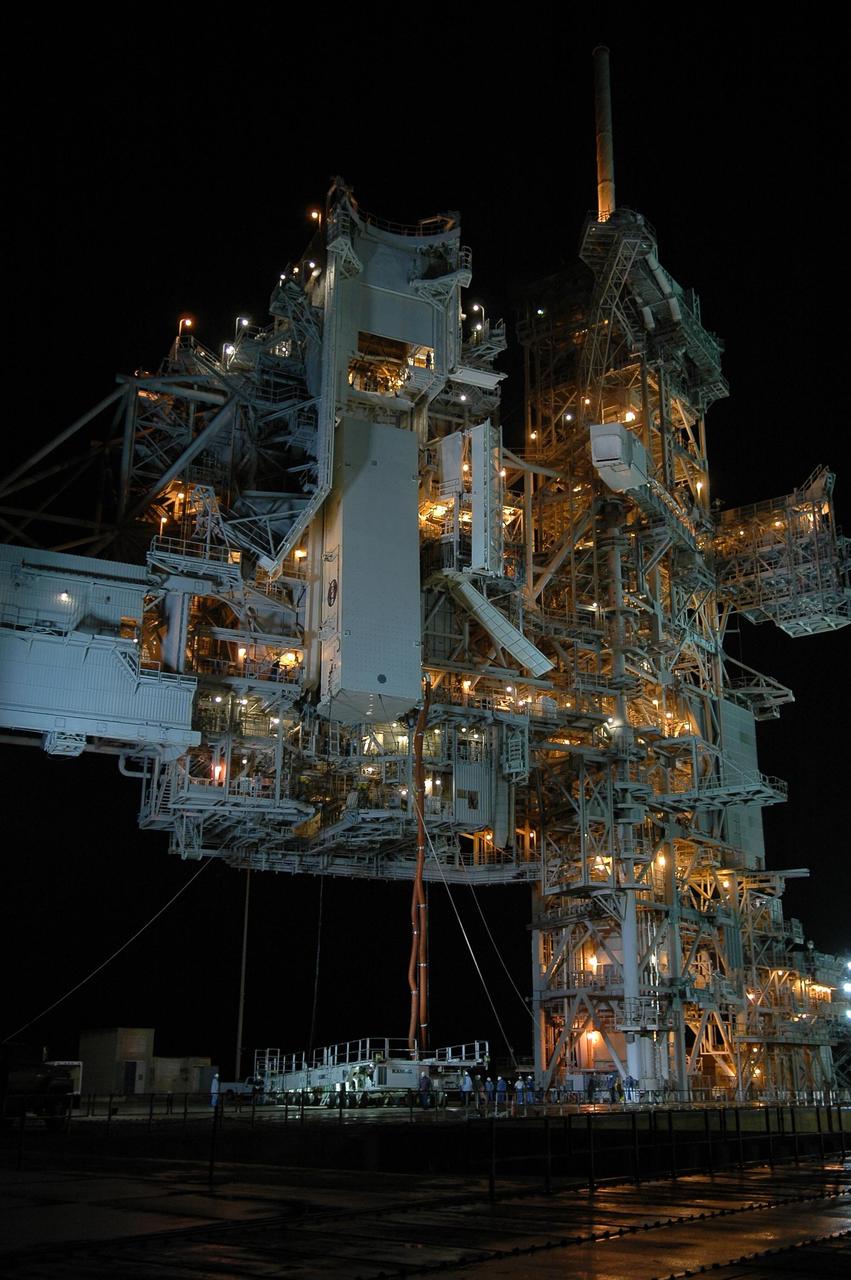
KENNEDY SPACE CENTER, FLA. -- With umbilical lines still attached, the payload canister is lifted up to the payload changeout room (PCR) on the rotating service structure (RSS) on Launch Pad 39B. Inside the canister are the SPACEHAB module and the port 5 truss segment for mission STS-116. Once inside the PCR, they will be transferred into Space Shuttle Discovery's payload bay once the vehicle has rolled out to the pad. On the right is the fixed service structure. The PCR is the enclosed, environmentally controlled portion of the RSS that supports cargo delivery to the pad and subsequent vertical installation into the orbiter payload bay. Seals around the mating surface of the PCR fit against the orbiter and allow the opening of the payload bay or canister doors and removal of the cargo without exposure to outside air and contaminants. A clean-air purge in the PCR maintains environmental control during PCR cargo operations. Cargo is removed from the payload canister and installed vertically in the orbiter by the payload ground handling mechanism (PGHM). Photo credit: NASA/Kim Shiflett
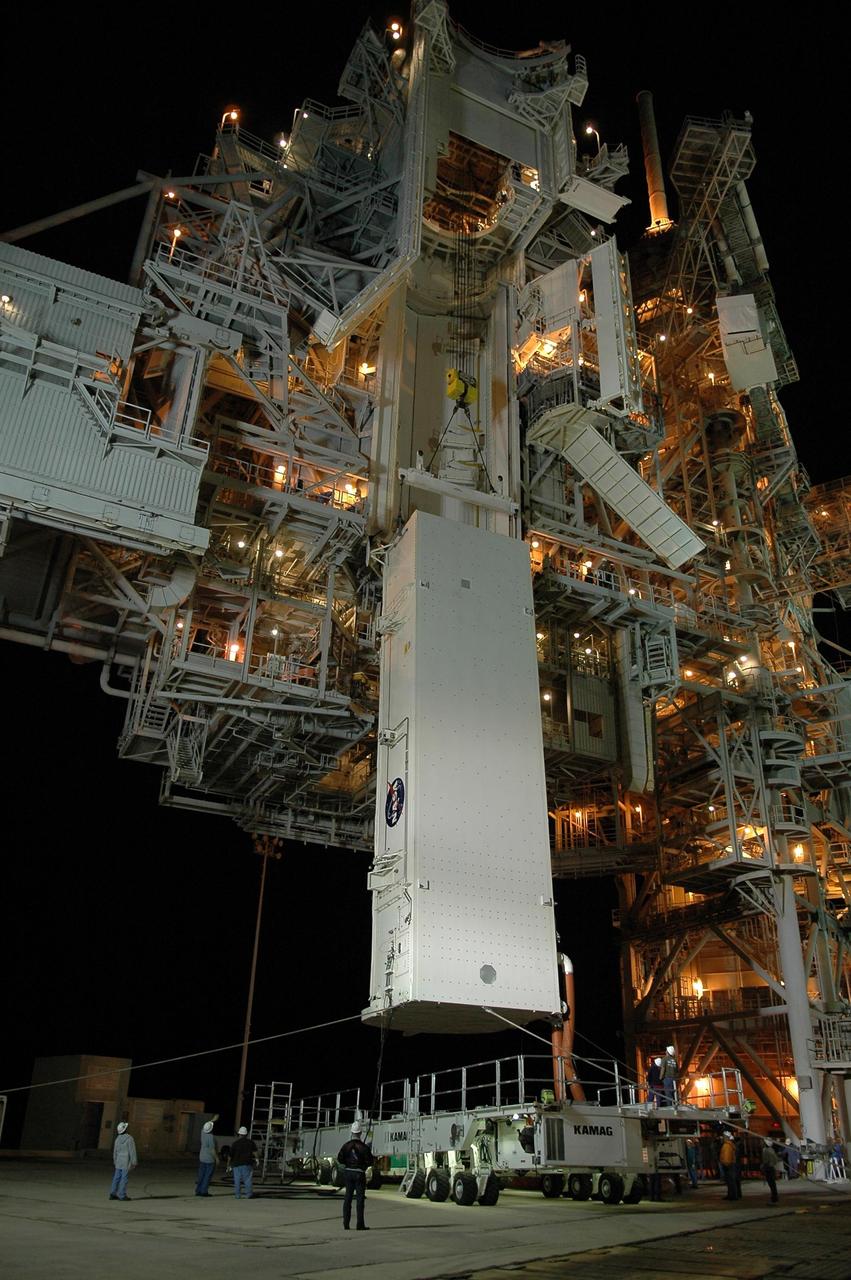
KENNEDY SPACE CENTER, FLA. -- With umbilical lines still attached, the payload canister is lifted up to the payload changeout room (PCR) on the rotating service structure (RSS) on Launch Pad 39B. Inside the canister are the SPACEHAB module and the port 5 truss segment for mission STS-116. Once inside the PCR, they will be transferred into Space Shuttle Discovery's payload bay once the vehicle has rolled out to the pad. On the right is the fixed service structure. The PCR is the enclosed, environmentally controlled portion of the RSS that supports cargo delivery to the pad and subsequent vertical installation into the orbiter payload bay. Seals around the mating surface of the PCR fit against the orbiter and allow the opening of the payload bay or canister doors and removal of the cargo without exposure to outside air and contaminants. A clean-air purge in the PCR maintains environmental control during PCR cargo operations. Cargo is removed from the payload canister and installed vertically in the orbiter by the payload ground handling mechanism (PGHM). Photo credit: NASA/Kim Shiflett
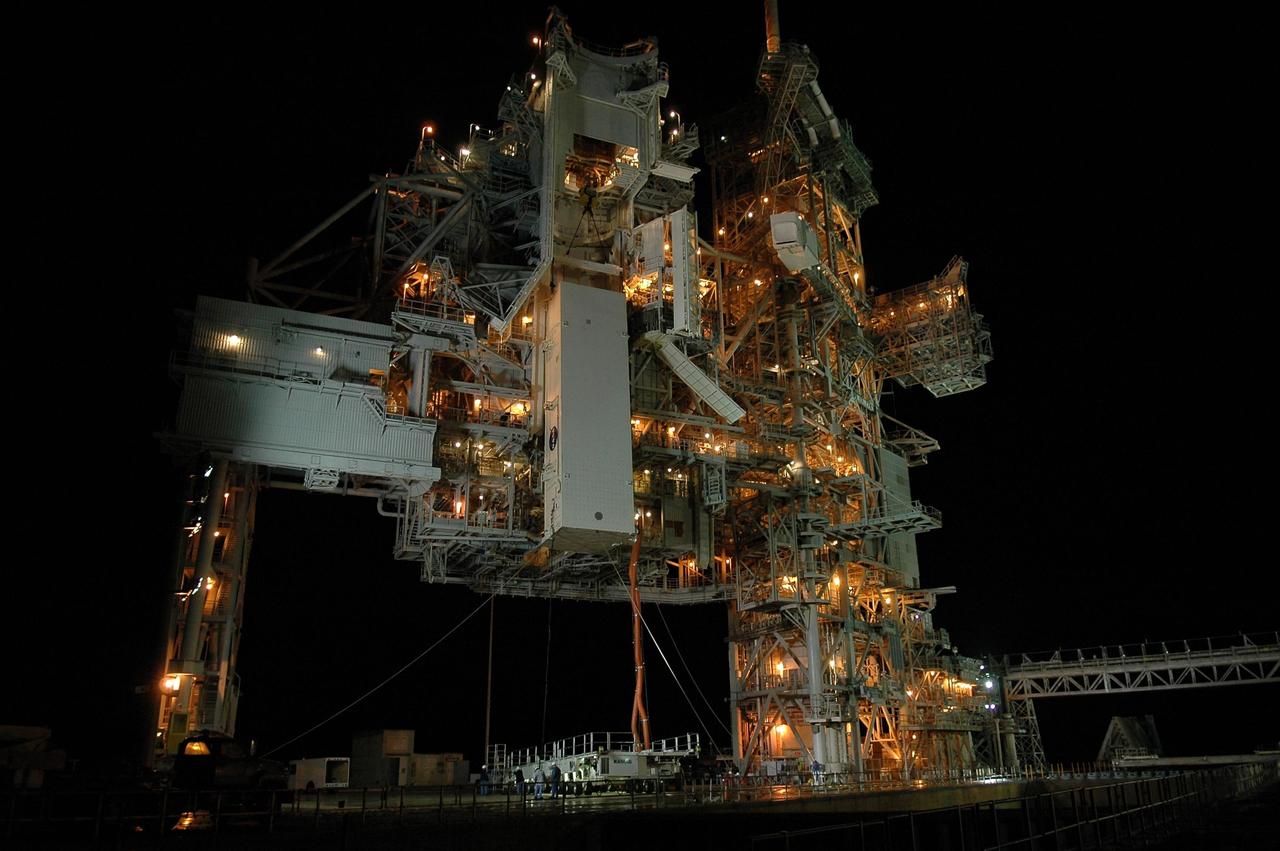
KENNEDY SPACE CENTER, FLA. -- With umbilical lines still attached, the payload canister is lifted up to the payload changeout room (PCR) on the rotating service structure (RSS) on Launch Pad 39B. Inside the canister are the SPACEHAB module and the port 5 truss segment for mission STS-116. Once inside the PCR, they will be transferred into Space Shuttle Discovery's payload bay after the vehicle has rolled out to the pad. On the right is the fixed service structure. The PCR is the enclosed, environmentally controlled portion of the RSS that supports cargo delivery to the pad and subsequent vertical installation into the orbiter payload bay. Seals around the mating surface of the PCR fit against the orbiter and allow the opening of the payload bay or canister doors and removal of the cargo without exposure to outside air and contaminants. A clean-air purge in the PCR maintains environmental control during PCR cargo operations. Cargo is removed from the payload canister and installed vertically in the orbiter by the payload ground handling mechanism (PGHM). Photo credit: NASA/Kim Shiflett
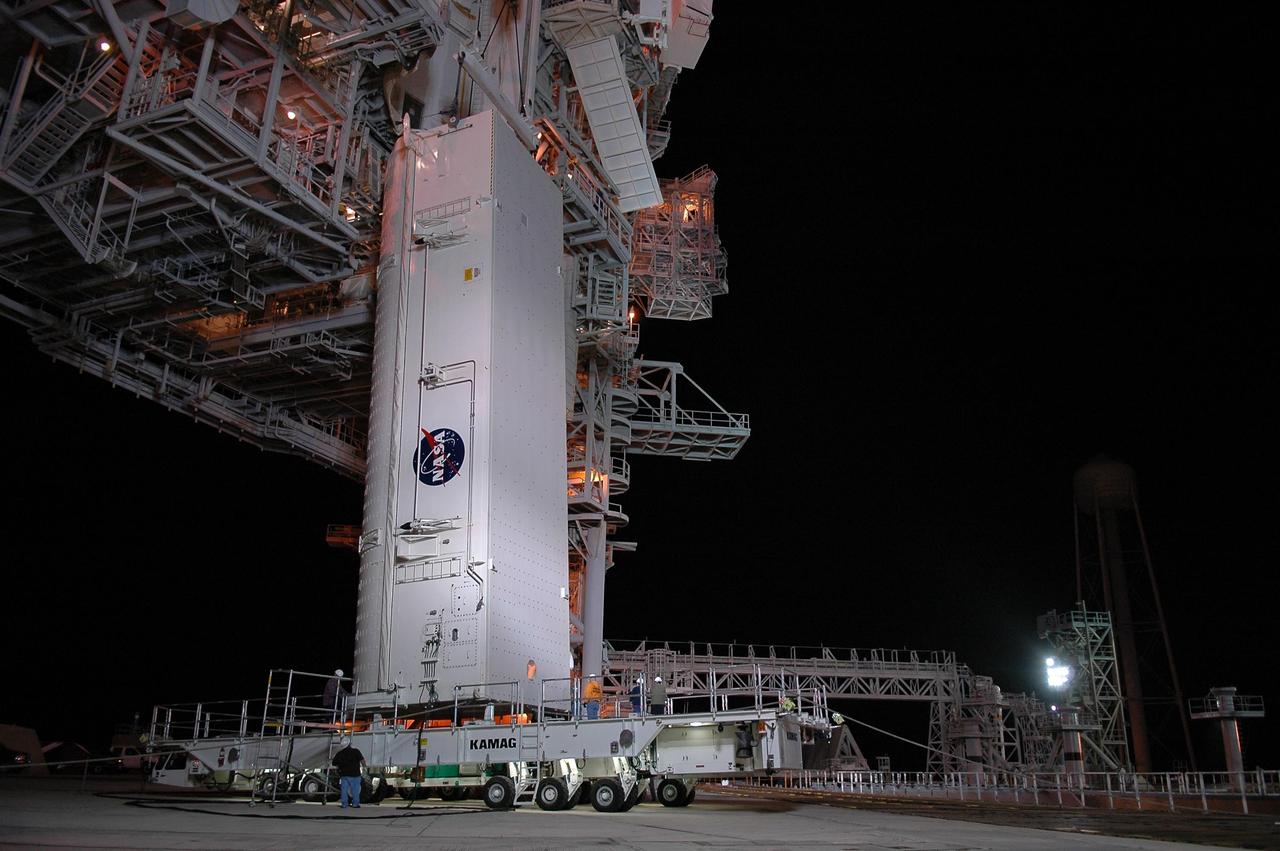
KENNEDY SPACE CENTER, FLA. -- The payload canister is raised off the transporter and will be lifted up to the payload changeout room (PCR) on the rotating service structure (RSS) on Launch Pad 39B. Inside the canister are the SPACEHAB module and the port 5 truss segment for mission STS-116. Once inside the PCR, they will be transferred into Space Shuttle Discovery's payload bay once the vehicle has rolled out to the pad. The PCR is the enclosed, environmentally controlled portion of the RSS that supports cargo delivery to the pad and subsequent vertical installation into the orbiter payload bay. Seals around the mating surface of the PCR fit against the orbiter and allow the opening of the payload bay or canister doors and removal of the cargo without exposure to outside air and contaminants. A clean-air purge in the PCR maintains environmental control during PCR cargo operations. Cargo is removed from the payload canister and installed vertically in the orbiter by the payload ground handling mechanism (PGHM). Photo credit: NASA/Kim Shiflett