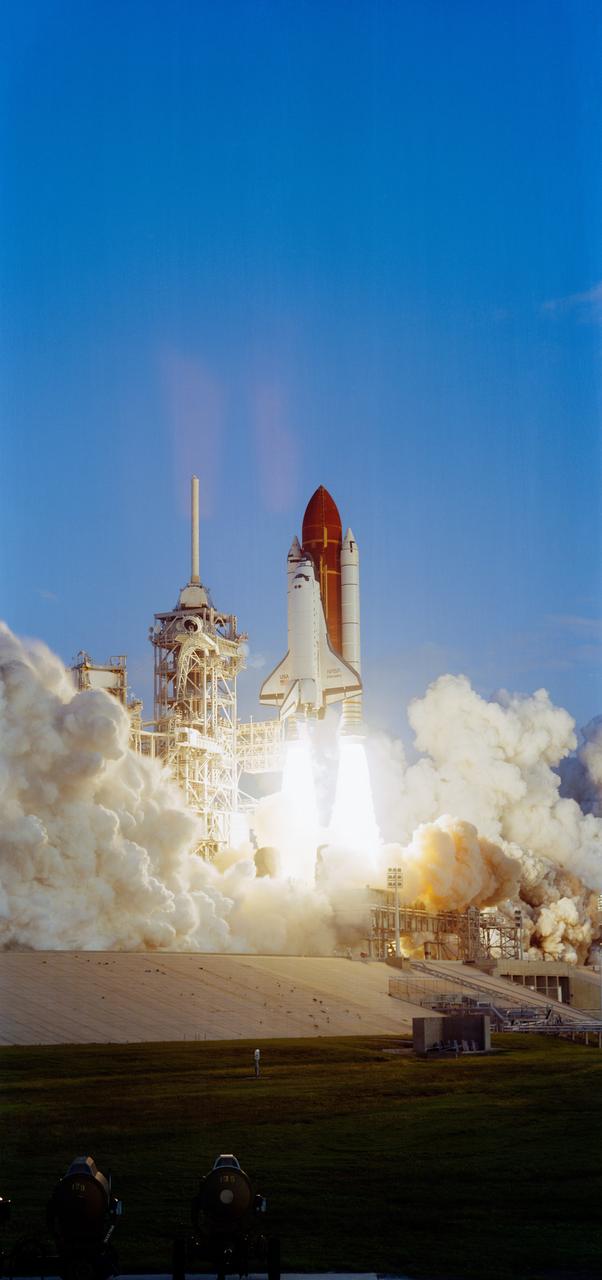
STS-41 Discovery, Orbiter Vehicle (OV) 103, lifts off from the Kennedy Space Center (KSC) Launch Complex (LC) Pad 39 mobile launcher platform at 7:47 am (Eastern Daylight Time (EDT)). OV-103 riding atop the external tank (ET) and flanked by two solid rocket boosters (SRBs), is captured just moments after liftoff. Not yet clear of the fixed service structure (FSS) tower, OV-103 is highlighted against the cloudless morning sky. Exhaust smoke billows from the SRBs and the space shuttle main engines (SSMEs) creating a cloud over the launch pad area.
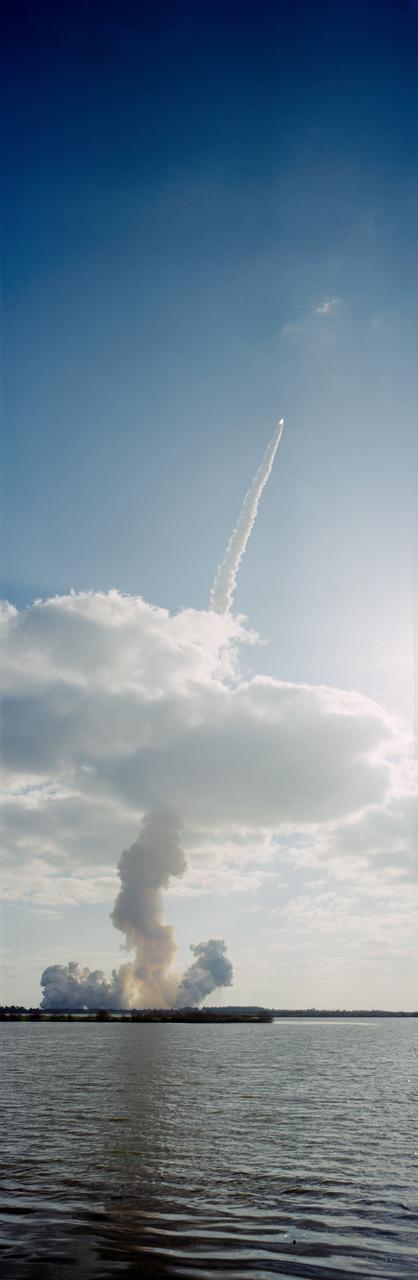
STS-31 Discovery, Orbiter Vehicle (OV) 103, rides above the firey glow of the solid rocket boosters (SRBs) and space shuttle main engines (SSMEs) and a long trail of exhaust as it heads toward Earth orbit. Kennedy Space Center (KSC) Launch Complex (LC) Pad 39B is covered in an exhaust cloud moments after the liftoff of OV-103 at 8:33:51.0492 am (Eastern Daylight Time (EDT)). The exhaust plume pierces the low-lying clouds as OV-103 soars into the clear skies above. A nearby waterway appears in the foreground.
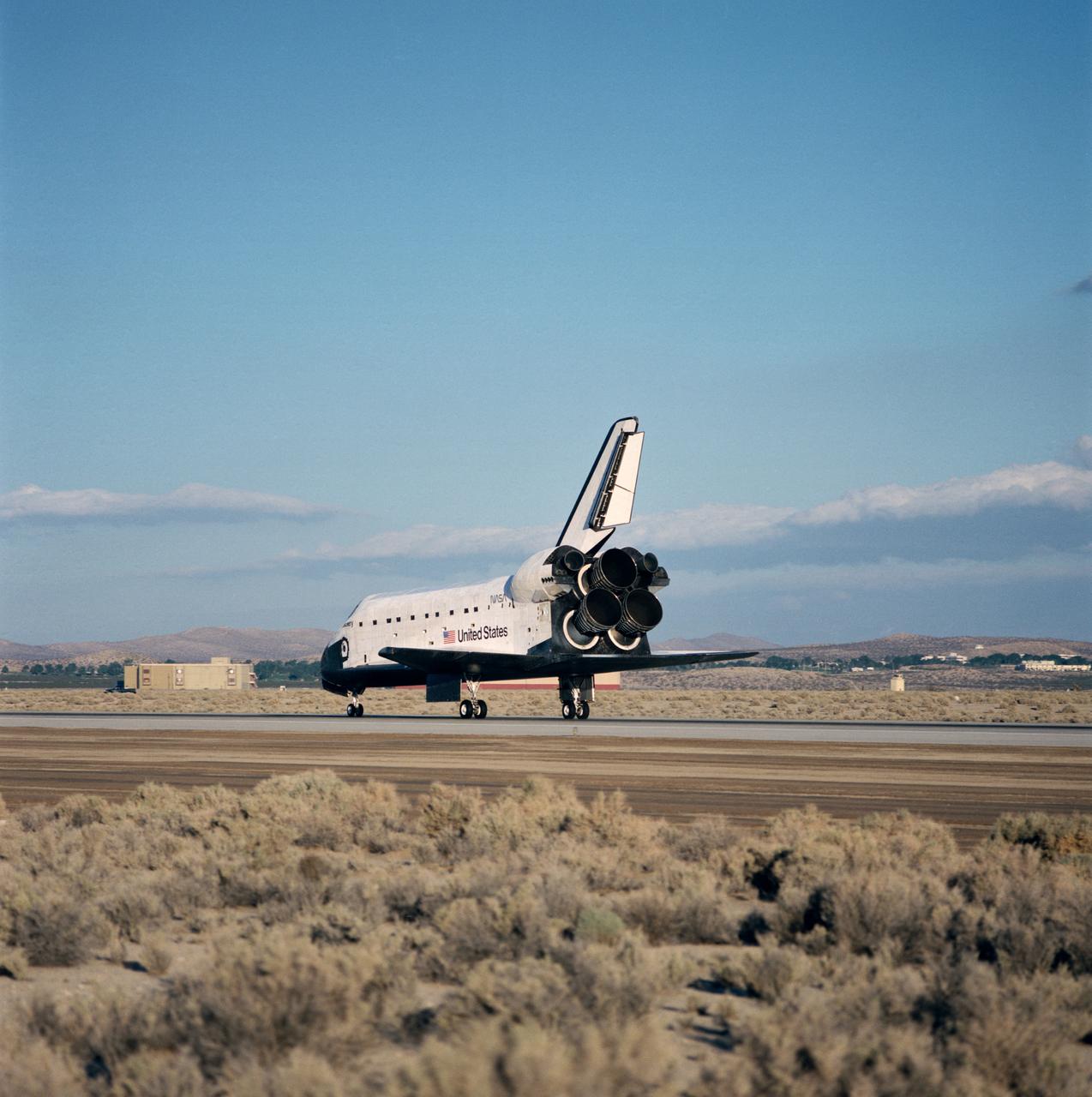
STS-31 Discovery, Orbiter Vehicle (OV) 103, rolls along concrete runway 22 at Edwards Air Force Base (EAFB), California, after nose landing gear (NLG) and main landing gear (MLG) touchdown. This view looks down OV-103's port side from the space shuttle main engines (SSMEs) to the nose section. The SSMEs are gimbaled to their descent position and the rudder/speedbrake is deployed on the vertical stabilizer. Wheel stop occurred at 6:51 am (Pacific Daylight Time (PDT)). In the distance EAFB facilities are visible.
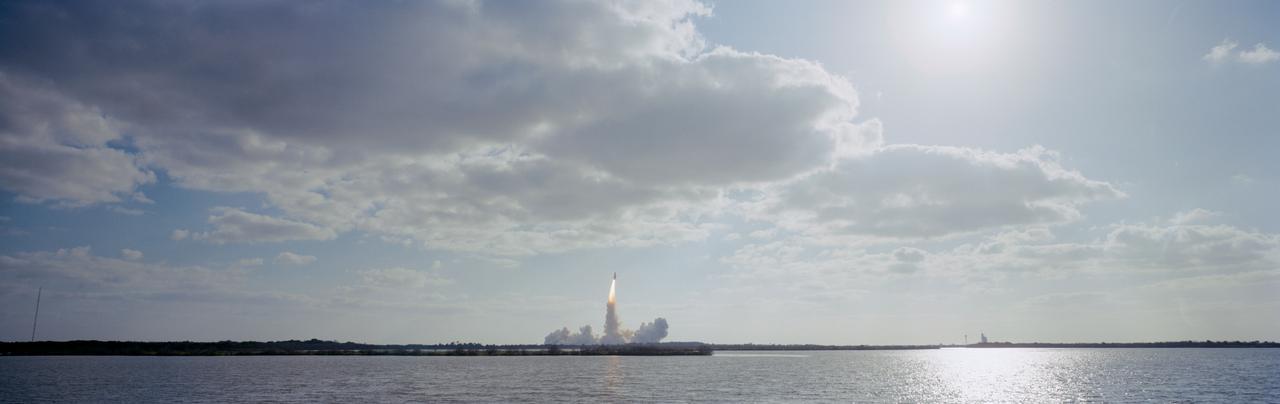
In this distant view, STS-31 Discovery, Orbiter Vehicle (OV) 103, is seen as it heads skyward after liftoff from Kennedy Space Center (KSC) Launch Complex (LC) Pad 39B at 8:33:51.0492 am (Eastern Daylight Time (EDT)). OV-103's silhouette atop the external tank (ET) appears above the glow of the solid rocket booster (SRB) and space shuttle main engine (SSME) firings. An exhaust plume trails behind and covers the launch pad area below the orbiter. A nearby waterway reflects the SRB/SSME glow in the foreground. At the far right and barely discernible is KSC LC Pad 39A and the Sound Supression Water System tower. Columbia, OV-102, is on LC Pad 39A which is separated by a distance of 1.6 miles. This was the first time since January 1986 that there was a shuttle on each pad.

STS-31 Discovery, Orbiter Vehicle (OV) 103, is hidden in low-lying cloud cover as it rises above Kennedy Space Center (KSC) Launch Complex (LC) Pad 39B just after its liftoff at 8:33:51.0492 am (Eastern Daylight Time (EDT)). The glow of the solid rocket booster (SRB) and the space shuttle main engine (SSME) firings appears just below the cloud cover and is reflected in the nearby waterway (foreground). An exhaust plume trails from OV-103 and its SRBs and covers the launch pad area.
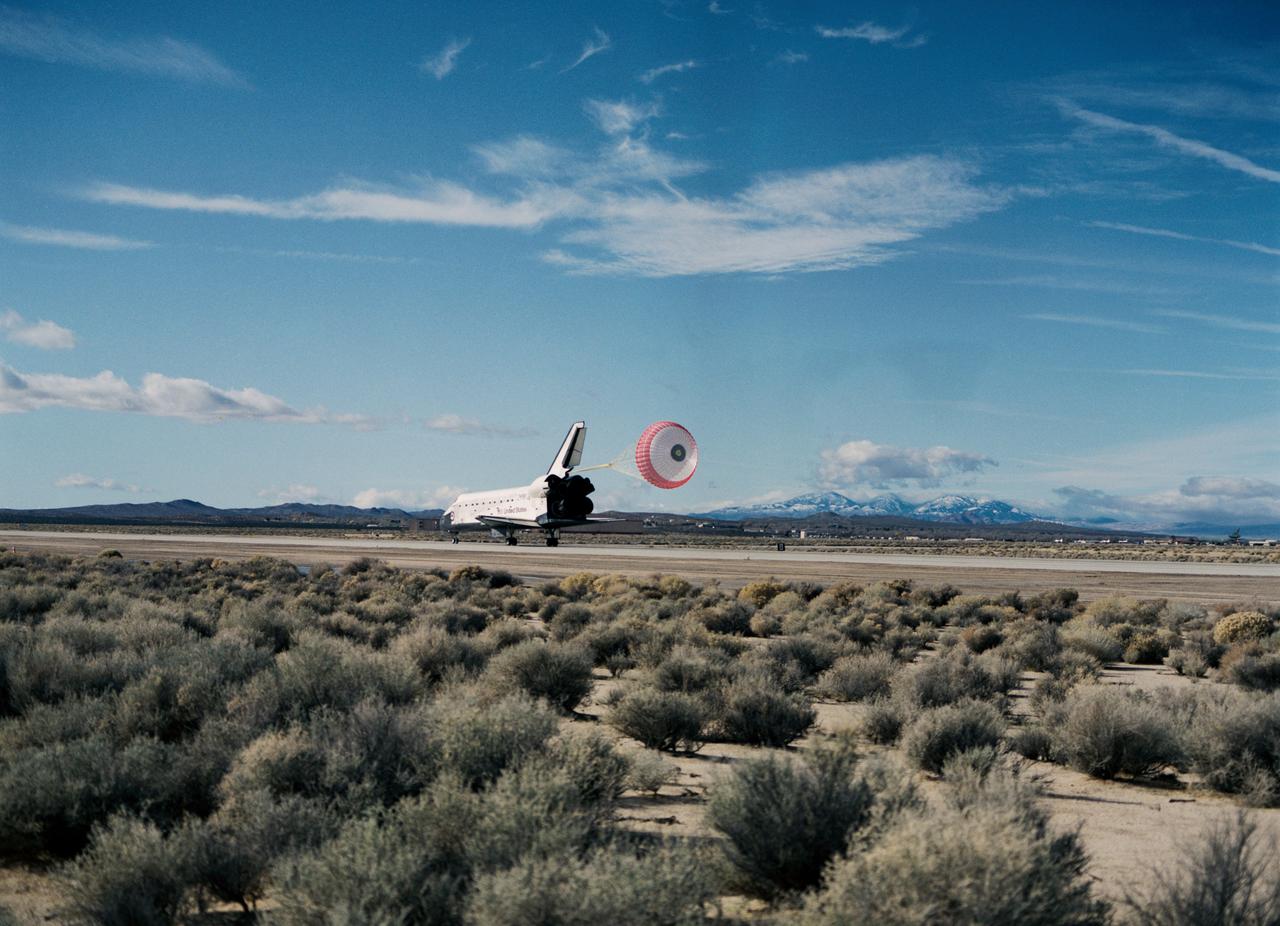
STS-53 Discovery, Orbiter Vehicle (OV) 103, is slowed by a red, white, and blue drag chute during its landing on concrete runway 22 at Edwards Air Force Base (EAFB), California. Main landing gear (MLG) touchdown occurred at 12:43:17 pm (Pacific Standard Time (PST)). This aft view of OV-103 shows the drag chute deployed from its compartment at the base of the vertical tail, the speedbrake/rudder flaps open, and the space shuttle main engines (SSMEs). Both MLG and nose landing gear (NLG) ride along the runway surface. Desert scrub brush appears in the foreground and mountains are seen in the background.
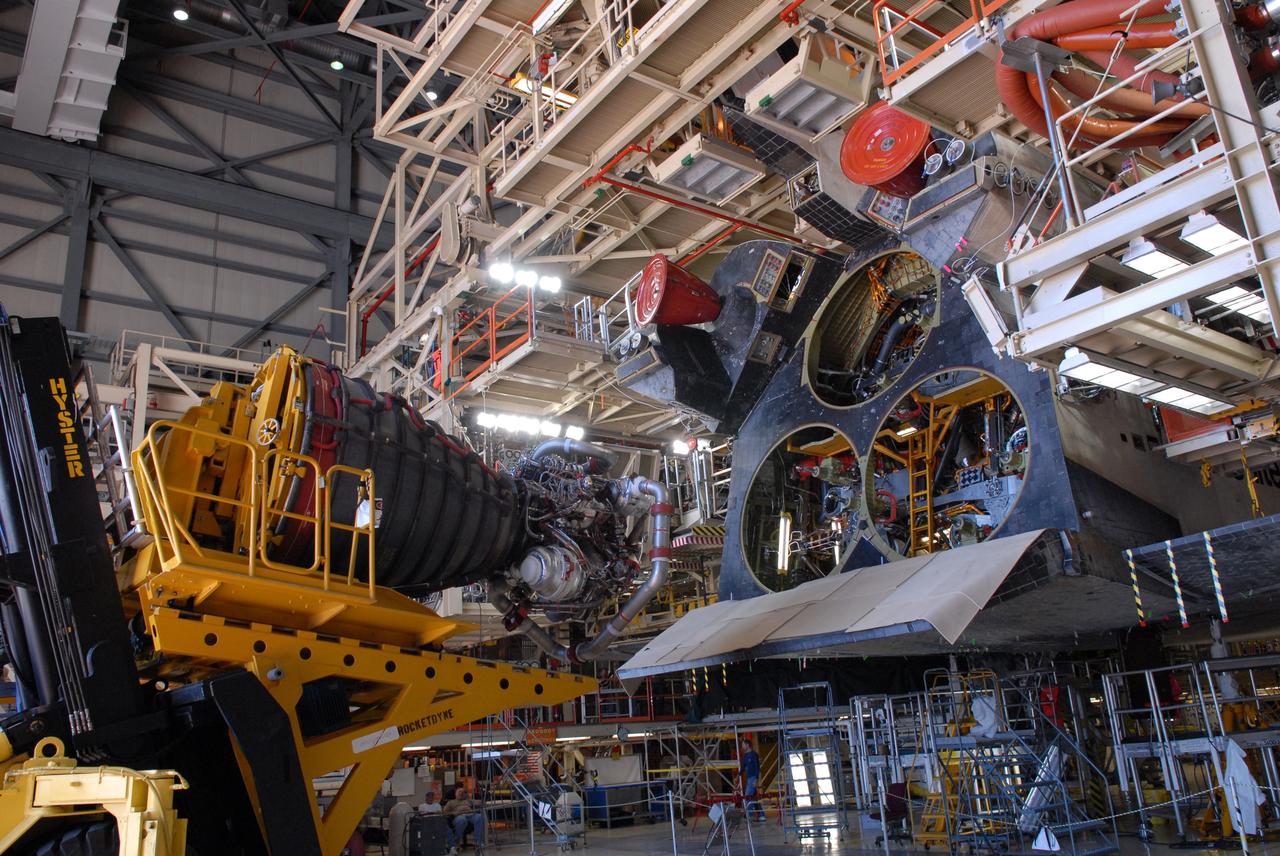
CAPE CANAVERAL, Fla. – At NASA's Kennedy Space Center in Florida, the third and final main engine has been removed from space shuttle Discovery. Engine removal is part of the post-landing processing. Discovery completed the STS-119 mission March 28 with a landing at Kennedy's Shuttle Landing Facility. Each engine is 14 feet long, weighs about 6,700 pounds, and is 7.5 feet in diameter at the end of the nozzle. Discovery next will be used on the STS-128 mission to deliver supplies and equipment to the International Space Station. The launch is targeted for Aug. 6. Photo credit: NASA/Tim Jacobs
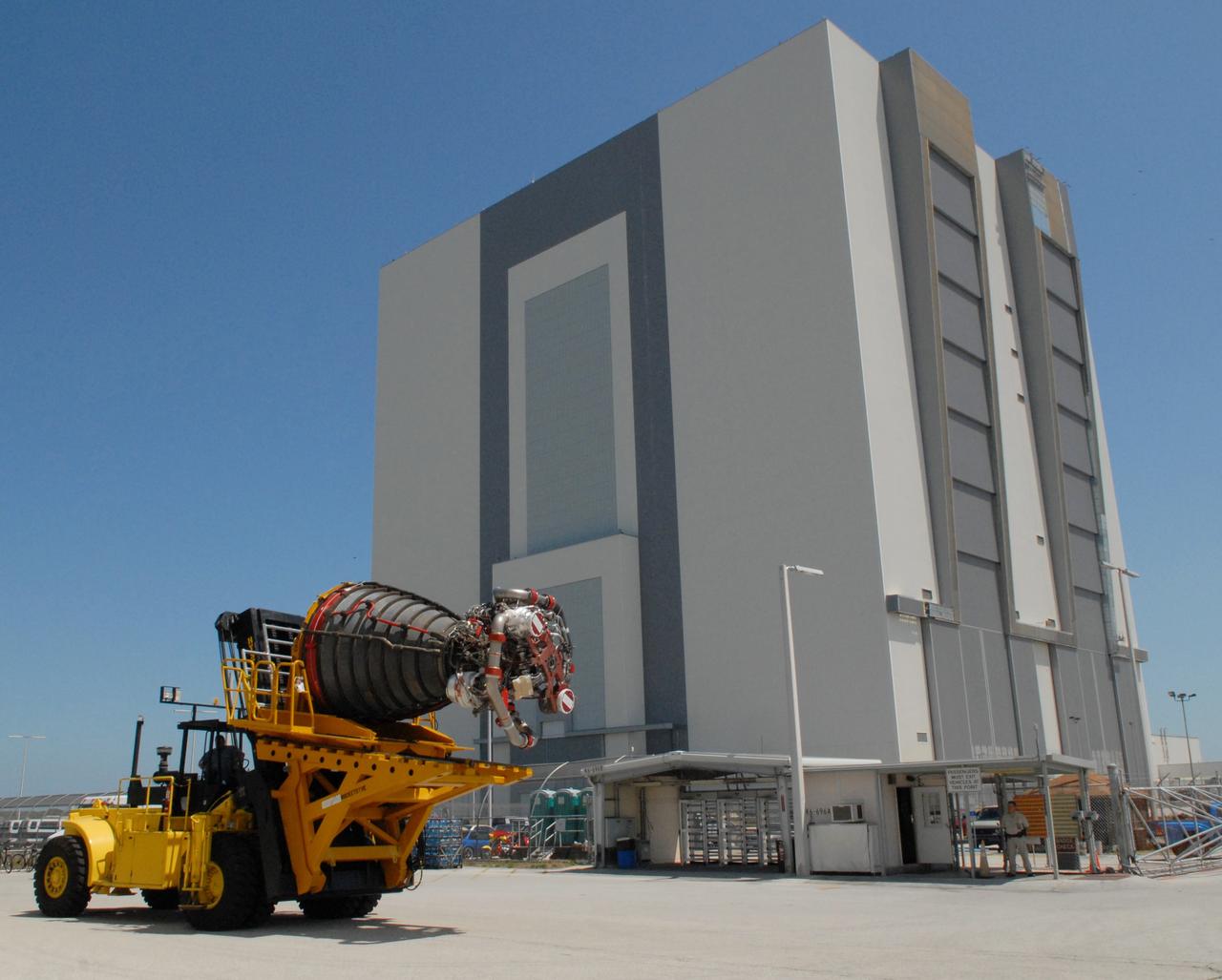
CAPE CANAVERAL, Fla. – After removal from space shuttle Discovery, the third and final main engine has left Orbiter Processing Facility 3 at NASA's Kennedy Space Center in Florida. Behind the Hyster forklift holding the engine is the Vehicle Assembly Building. Each engine is 14 feet long, weighs about 6,700 pounds, and is 7.5 feet in diameter at the end of the nozzle. Discovery next will be used on the STS-128 mission to deliver supplies and equipment to the International Space Station. The launch is targeted for Aug. 6. Photo credit: NASA/Tim Jacobs
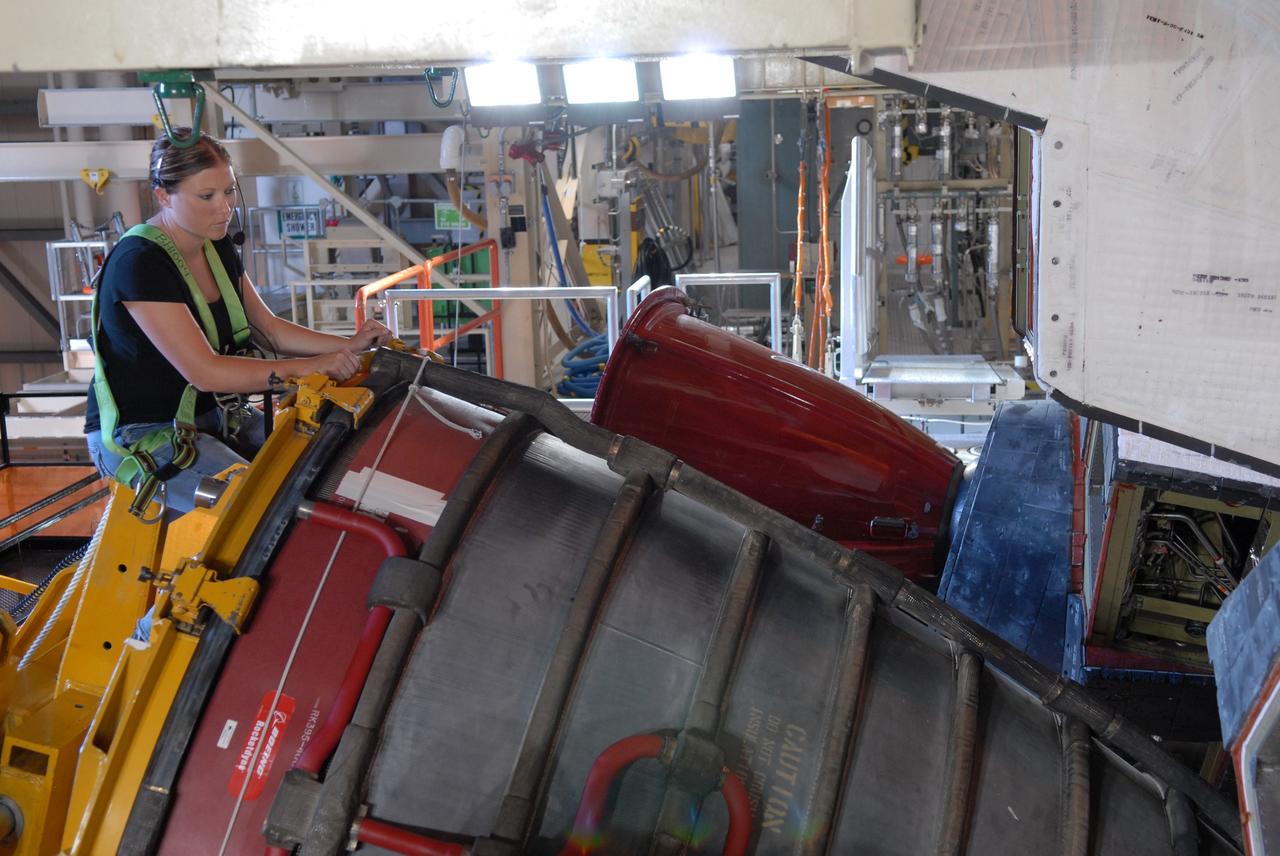
CAPE CANAVERAL, Fla. – At NASA's Kennedy Space Center in Florida, a technician using a Hyster forklift begins removing one of the three main engines on space shuttle Discovery. Engine removal is part of the post-landing processing. Discovery completed the STS-119 mission March 28 with a landing at Kennedy's Shuttle Landing Facility. Each engine is 14 feet long, weighs about 6,700 pounds, and is 7.5 feet in diameter at the end of the nozzle. Discovery next will be used on the STS-128 mission to deliver supplies and equipment to the International Space Station. The launch is targeted for Aug. 6. Photo credit: NASA/Tim Jacobs
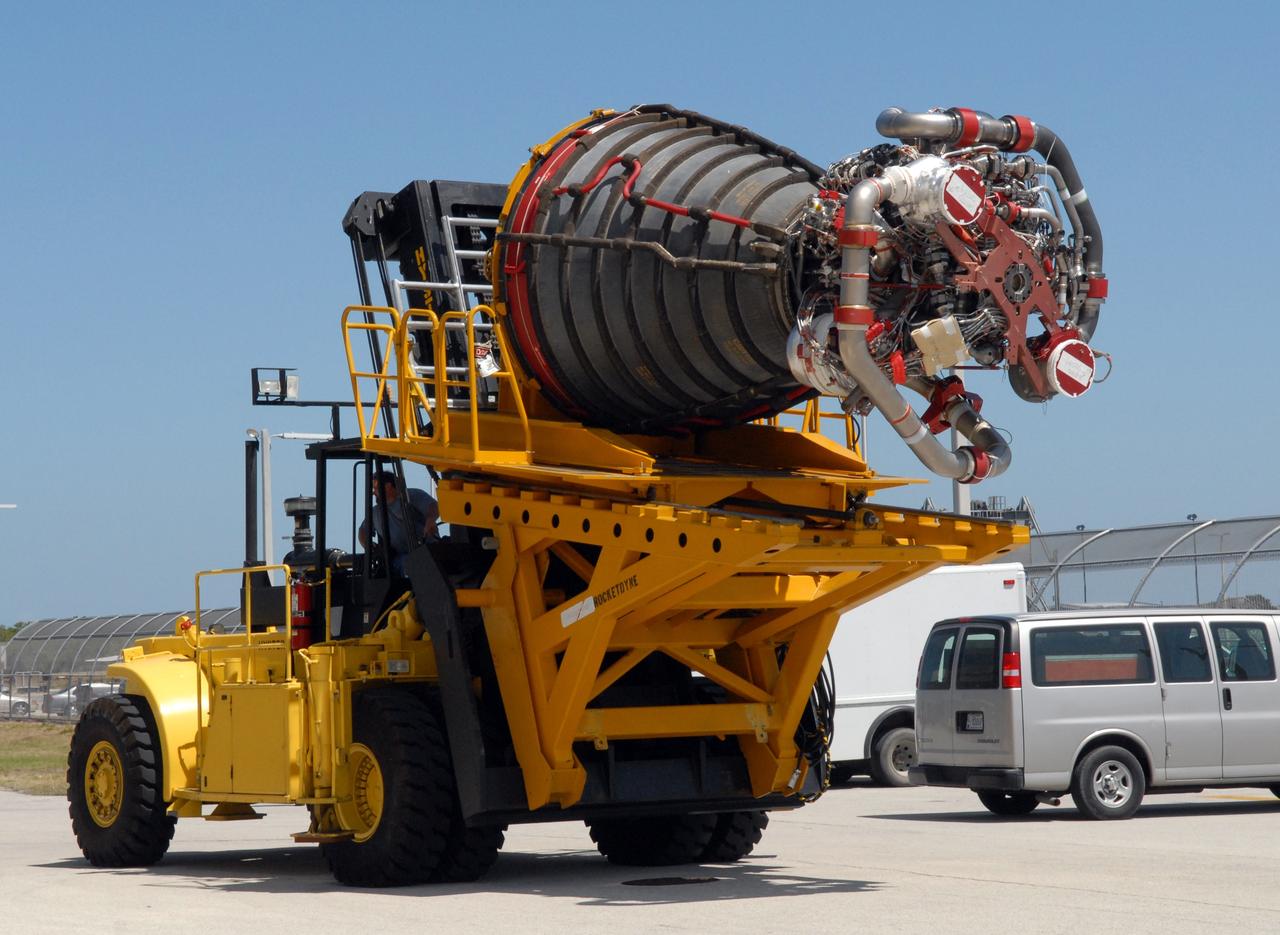
CAPE CANAVERAL, Fla. – After removal from space shuttle Discovery, the third and final main engine, carried by the Hyster forklift, has left Orbiter Processing Facility 3 at NASA's Kennedy Space Center in Florida. Each engine is 14 feet long, weighs about 6,700 pounds, and is 7.5 feet in diameter at the end of the nozzle. Discovery next will be used on the STS-128 mission to deliver supplies and equipment to the International Space Station. The launch is targeted for Aug. 6. Photo credit: NASA/Tim Jacobs
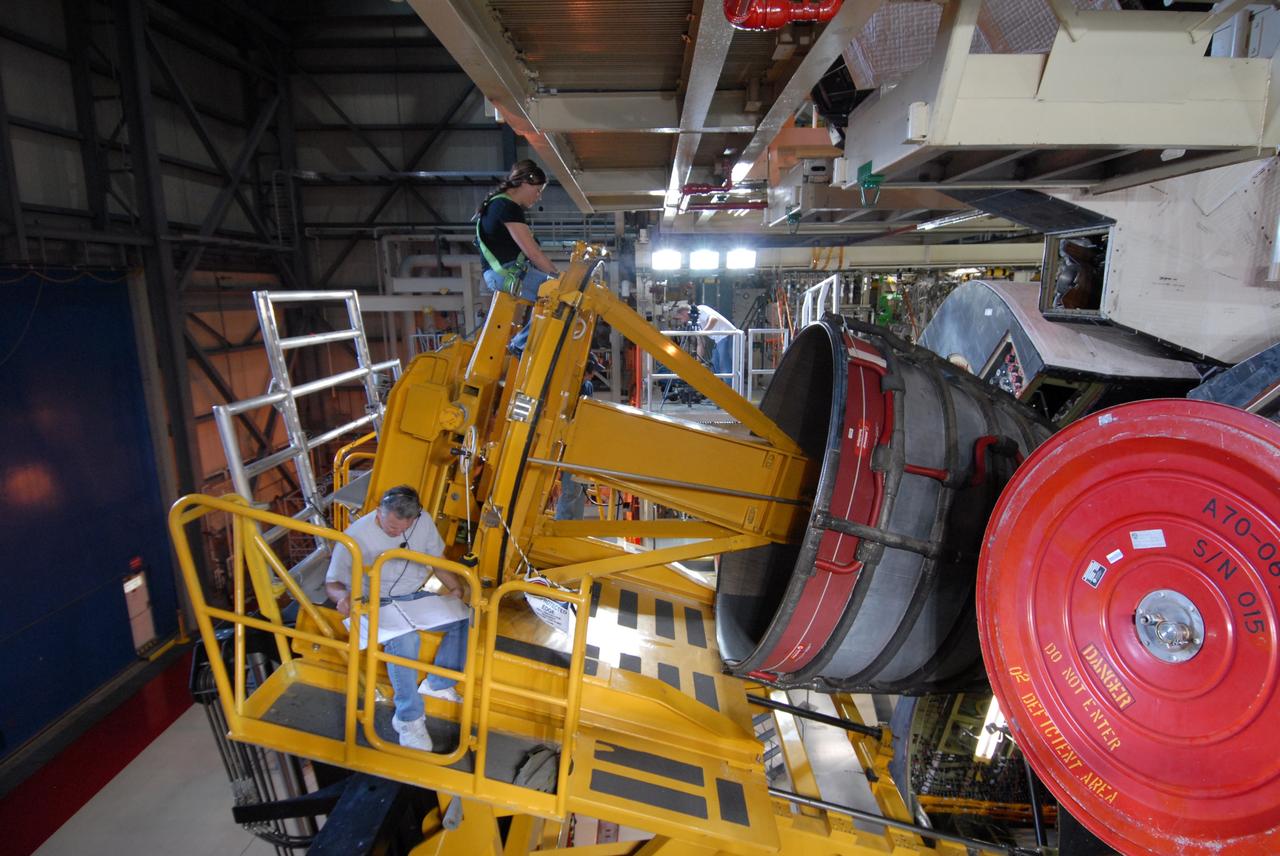
CAPE CANAVERAL, Fla. – At NASA's Kennedy Space Center in Florida, technicians using a Hyster forklift prepare to remove one of the three main engines on space shuttle Discovery. Engine removal is part of the post-landing processing. Discovery completed the STS-119 mission March 28 with a landing at Kennedy's Shuttle Landing Facility. Each engine is 14 feet long, weighs about 6,700 pounds, and is 7.5 feet in diameter at the end of the nozzle. Discovery next will be used on the STS-128 mission to deliver supplies and equipment to the International Space Station. The launch is targeted for Aug. 6. Photo credit: NASA/Tim Jacobs
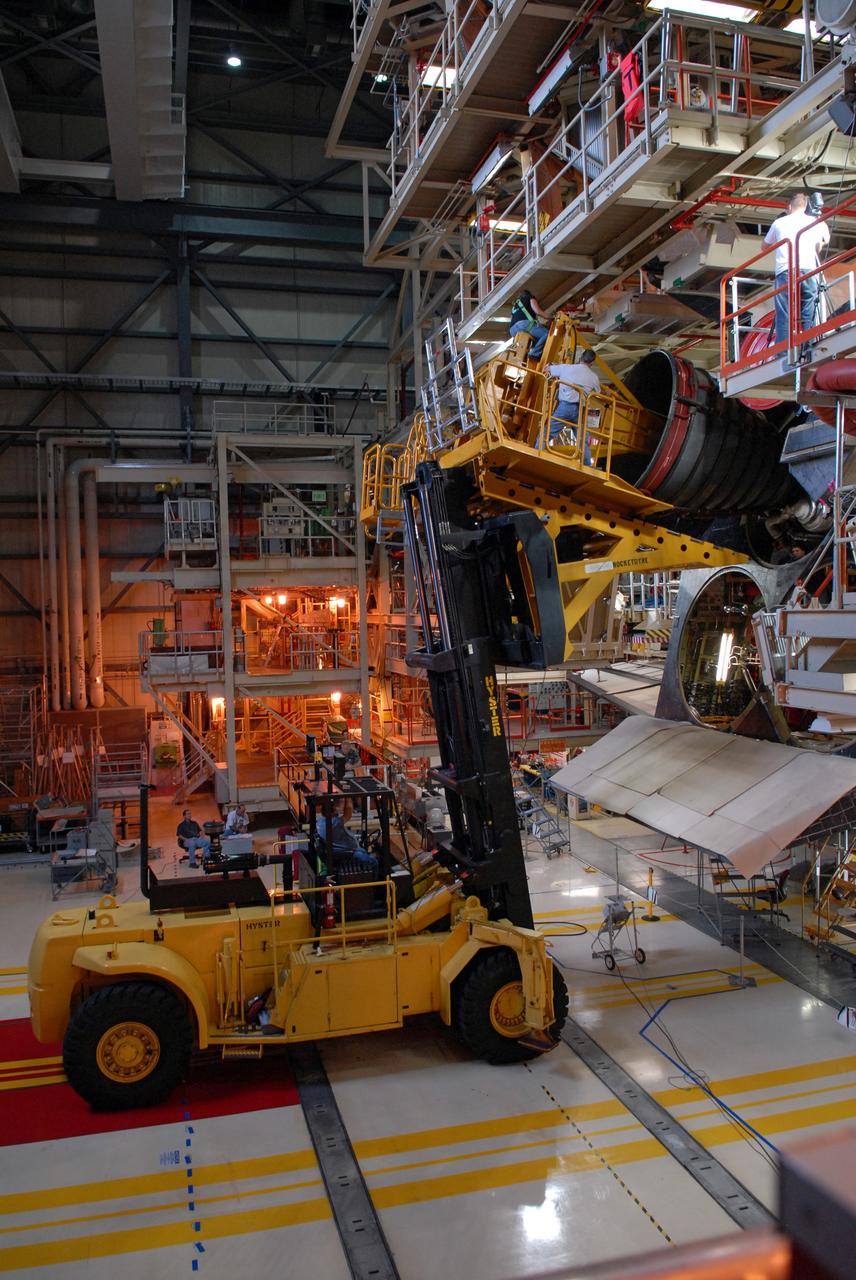
CAPE CANAVERAL, Fla. – At NASA's Kennedy Space Center in Florida, technicians using a Hyster forklift "stab" one of the three main engines on space shuttle Discovery to remove it. Engine removal is part of the post-landing processing. Discovery completed the STS-119 mission March 28 with a landing at Kennedy's Shuttle Landing Facility. Each engine is 14 feet long, weighs about 6,700 pounds, and is 7.5 feet in diameter at the end of the nozzle. Discovery next will be used on the STS-128 mission to deliver supplies and equipment to the International Space Station. The launch is targeted for Aug. 6. Photo credit: NASA/Tim Jacobs
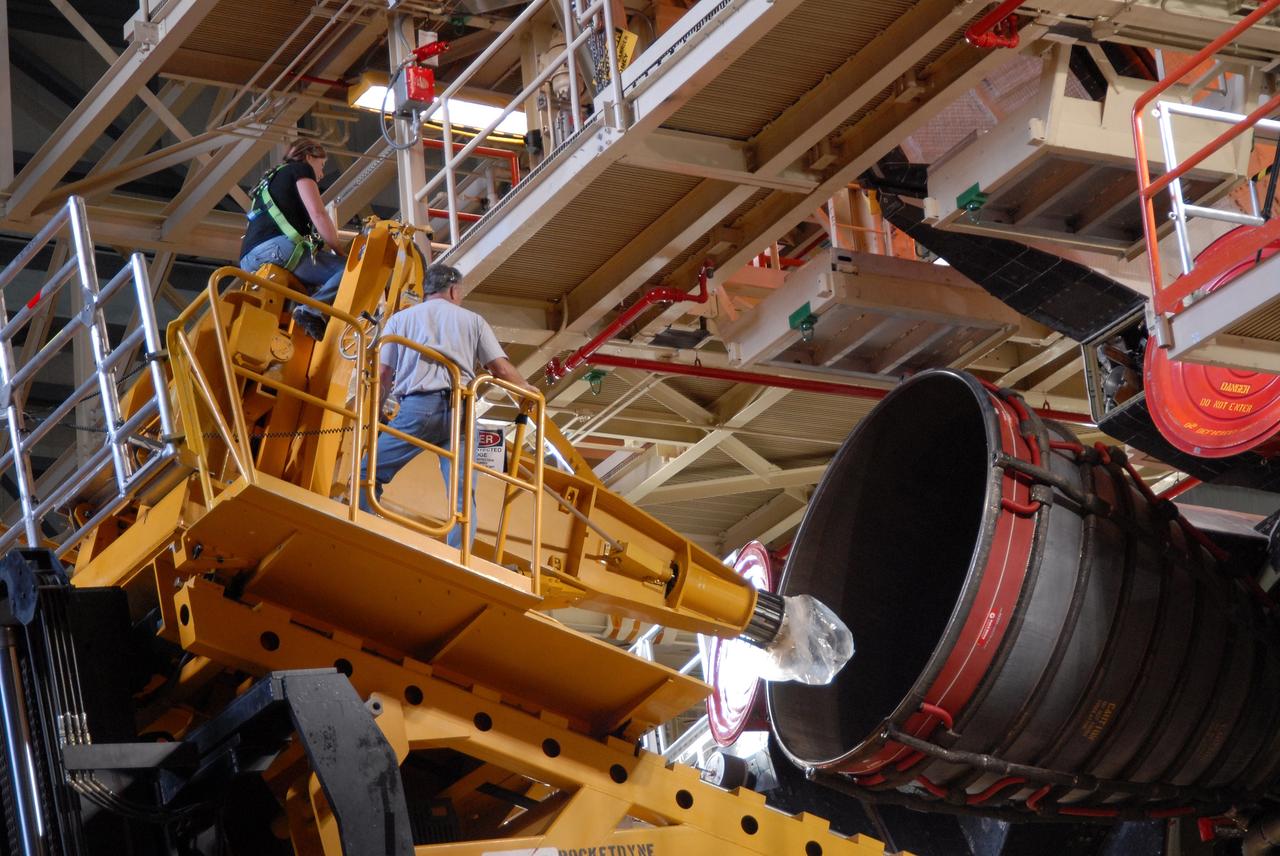
CAPE CANAVERAL, Fla. – At NASA's Kennedy Space Center in Florida, technicians use a Hyster forklift to close in on one of the three main engines on space shuttle Discovery to remove it. Engine removal is part of the post-landing processing. Discovery completed the STS-119 mission March 28 with a landing at Kennedy's Shuttle Landing Facility. Each engine is 14 feet long, weighs about 6,700 pounds, and is 7.5 feet in diameter at the end of the nozzle. Discovery next will be used on the STS-128 mission to deliver supplies and equipment to the International Space Station. The launch is targeted for Aug. 6. Photo credit: NASA/Tim Jacobs
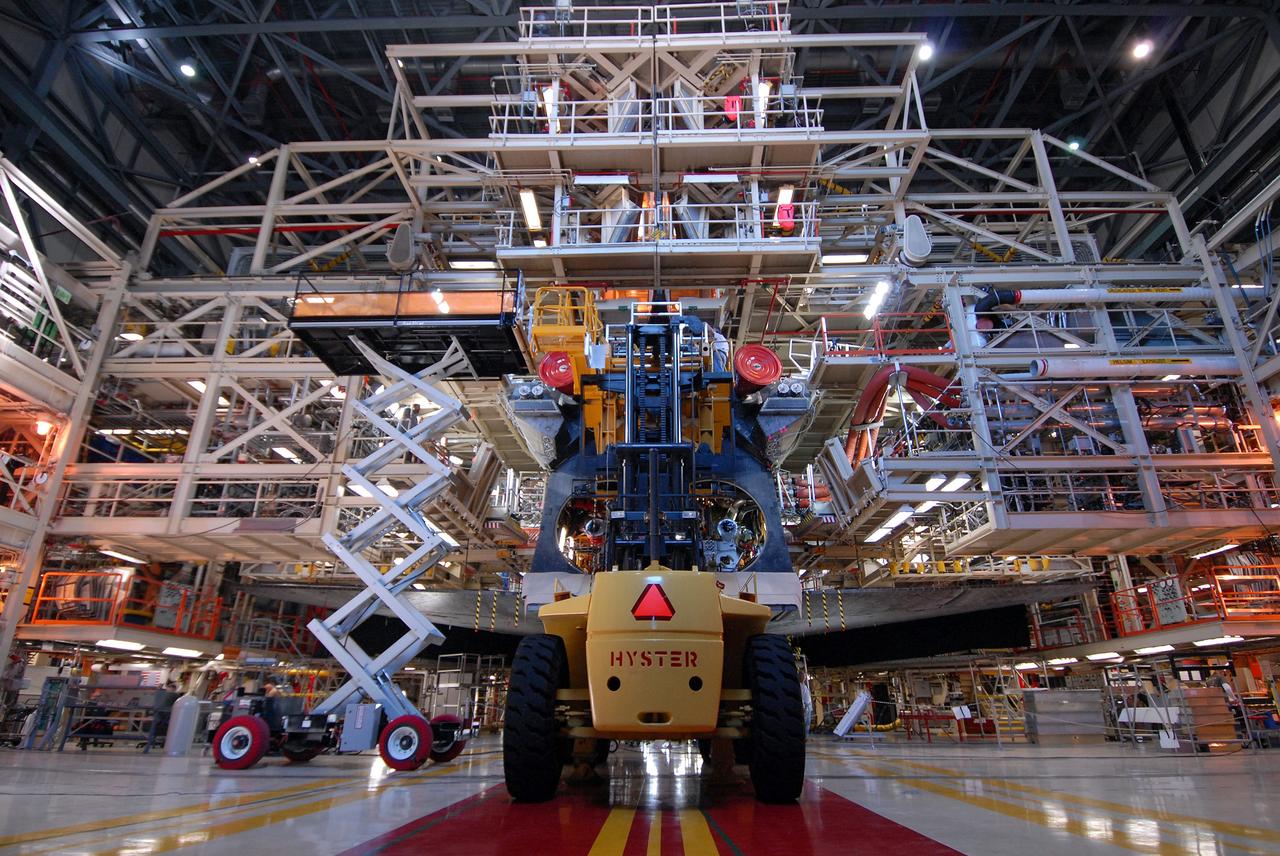
CAPE CANAVERAL, Fla. – At NASA's Kennedy Space Center in Florida, the Hyster forklift is ready to move away from space shuttle Discovery after removing one of the three main engines. Engine removal is part of the post-landing processing. Discovery completed the STS-119 mission March 28 with a landing at Kennedy's Shuttle Landing Facility. Each engine is 14 feet long, weighs about 6,700 pounds, and is 7.5 feet in diameter at the end of the nozzle. Discovery next will be used on the STS-128 mission to deliver supplies and equipment to the International Space Station. The launch is targeted for Aug. 6. Photo credit: NASA/Tim Jacobs
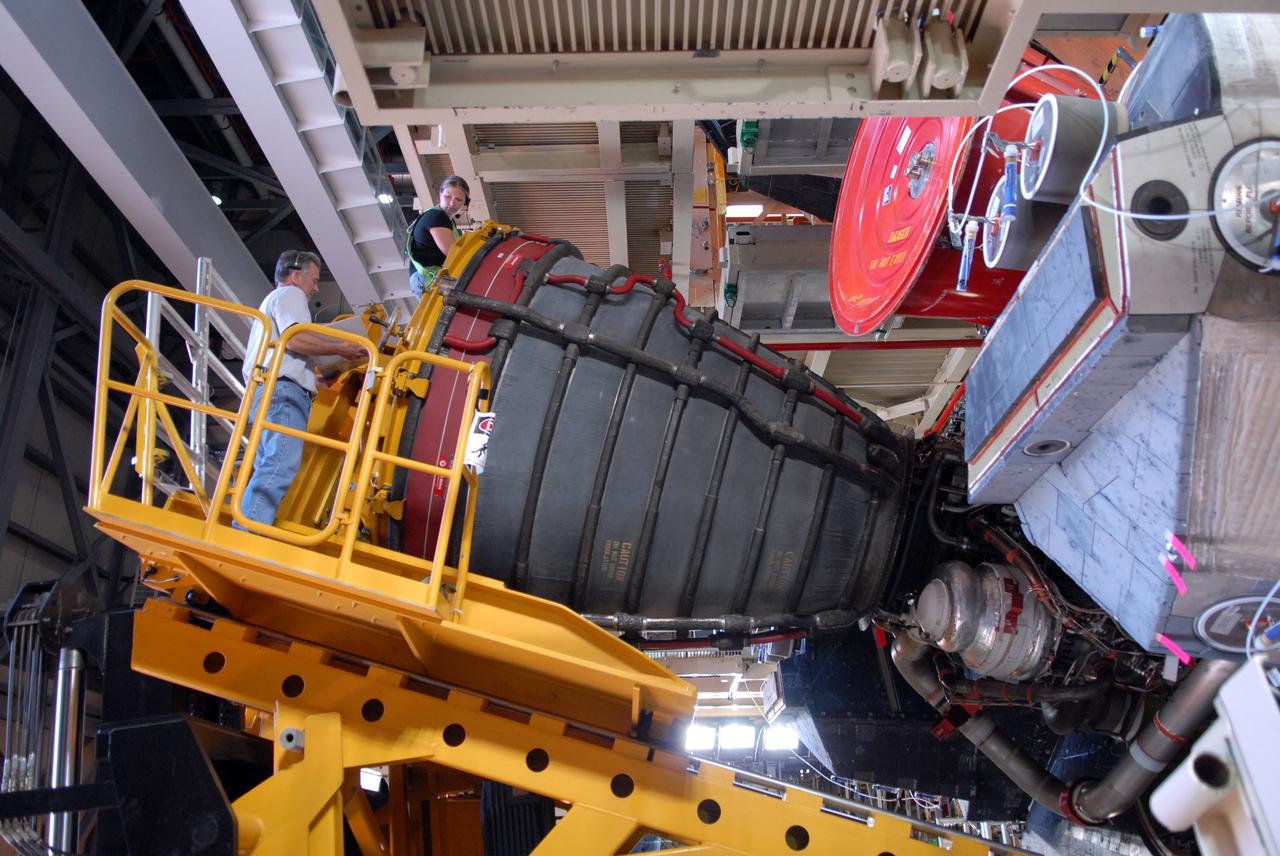
CAPE CANAVERAL, Fla. – At NASA's Kennedy Space Center in Florida, technicians plan the next move after removal of one of the three main engines on space shuttle Discovery. Engine removal is part of the post-landing processing. Discovery completed the STS-119 mission March 28 with a landing at Kennedy's Shuttle Landing Facility. Each engine is 14 feet long, weighs about 6,700 pounds, and is 7.5 feet in diameter at the end of the nozzle. Discovery next will be used on the STS-128 mission to deliver supplies and equipment to the International Space Station. The launch is targeted for Aug. 6. Photo credit: NASA/Tim Jacobs
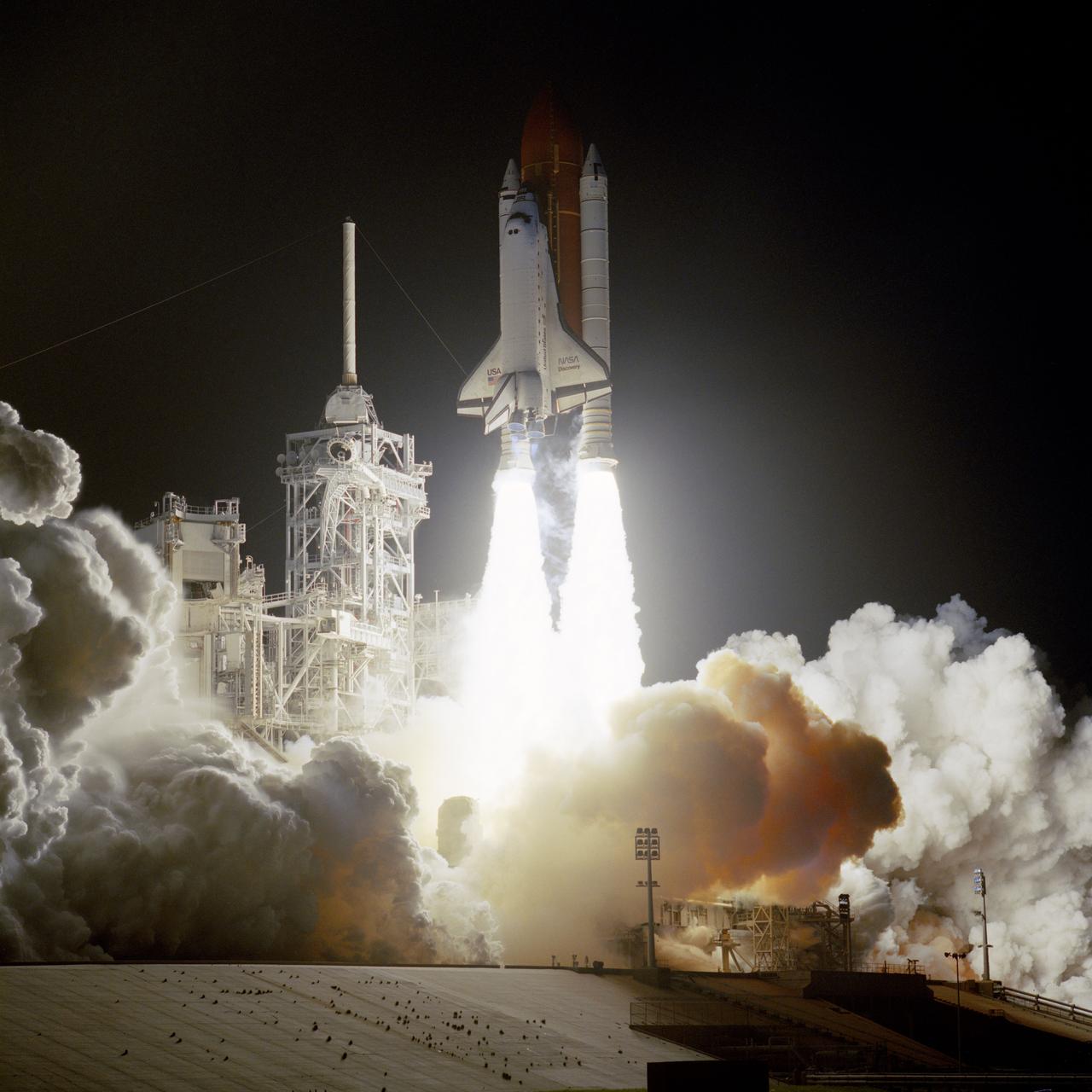
STS-56 Discovery, Orbiter Vehicle (OV) 103, riding atop its external tank (ET) and flanked by two solid rocket boosters (SRBs), lifts off from Kennedy Space Center (KSC) Launch Complex (LC) Pad 39B into the early morning darkness at 1:29 am (Eastern Daylight Time (EDT)). In this nocturnal scene, OV-102's nose section is obscured in the shadowy darkness as it clears the fixed service structure (FSS) tower. Exhaust plumes trail from the SRB skirts and cover the launch pad area in a billowy cloud. The SRB / Space Shuttle Main Engine (SSME) firings illuminate the FSS and the retracted rotating service structure (RSS). Debris is visible on the base of the launch pad.
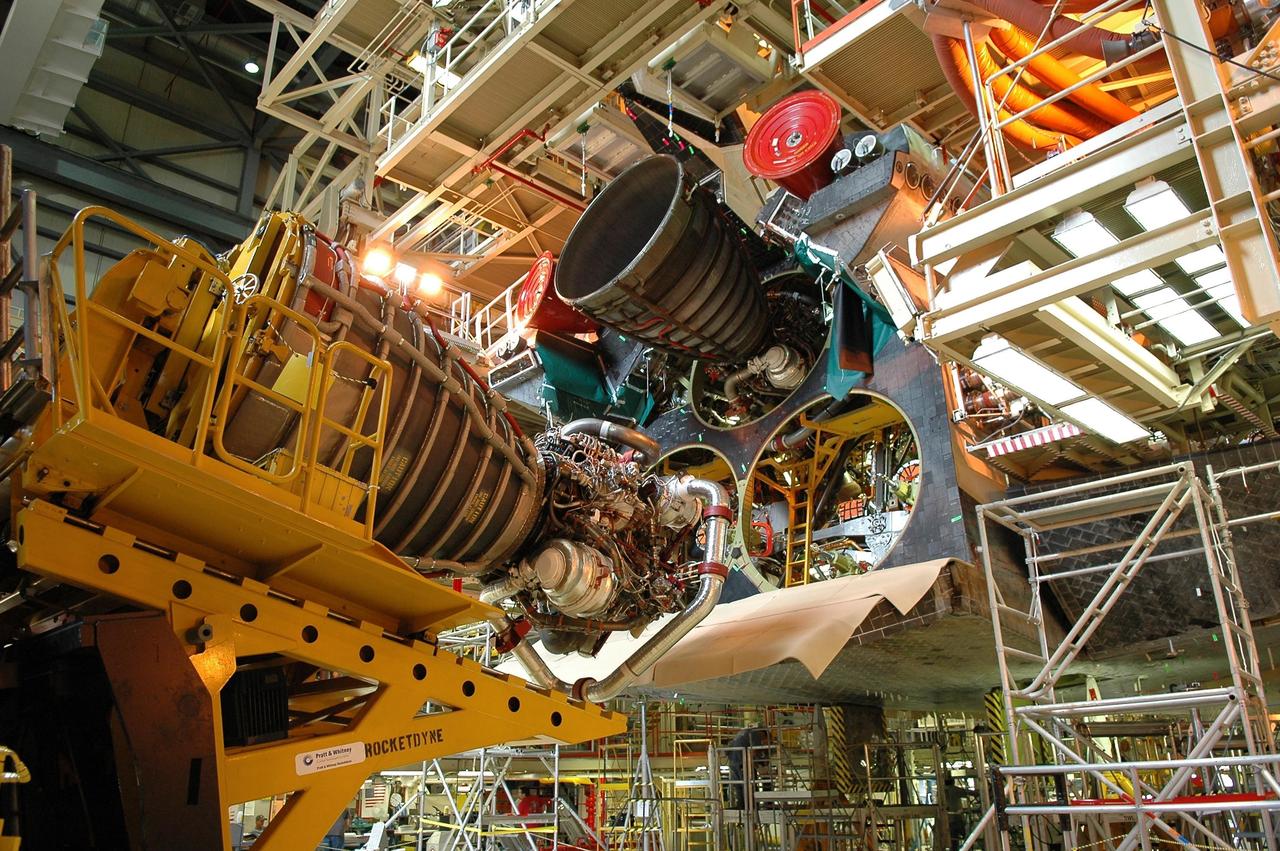
KENNEDY SPACE CENTER, FLA. - Engine No. 3 is ready to be installed on Discovery in the Orbiter Processing Facility bay 3. The main engine configuration is manufactured by Pratt & Whitney Rocketdyne in Canoga Park, Calif., and includes a Pratt & Whitney high-pressure fuel turbo pump. Each space shuttle main engine is 14 feet long, weighs about 6,700 pounds, and is 7.5 feet in diameter at the end of the nozzle. Discovery is being processed for its next mission, STS-116 (12A.1), to deliver a third truss segment, a SPACEHAB module and other key components to the International Space Station. The launch is currently scheduled no earlier than Dec. 14. Photo credit: NASA/Kim Shiflett
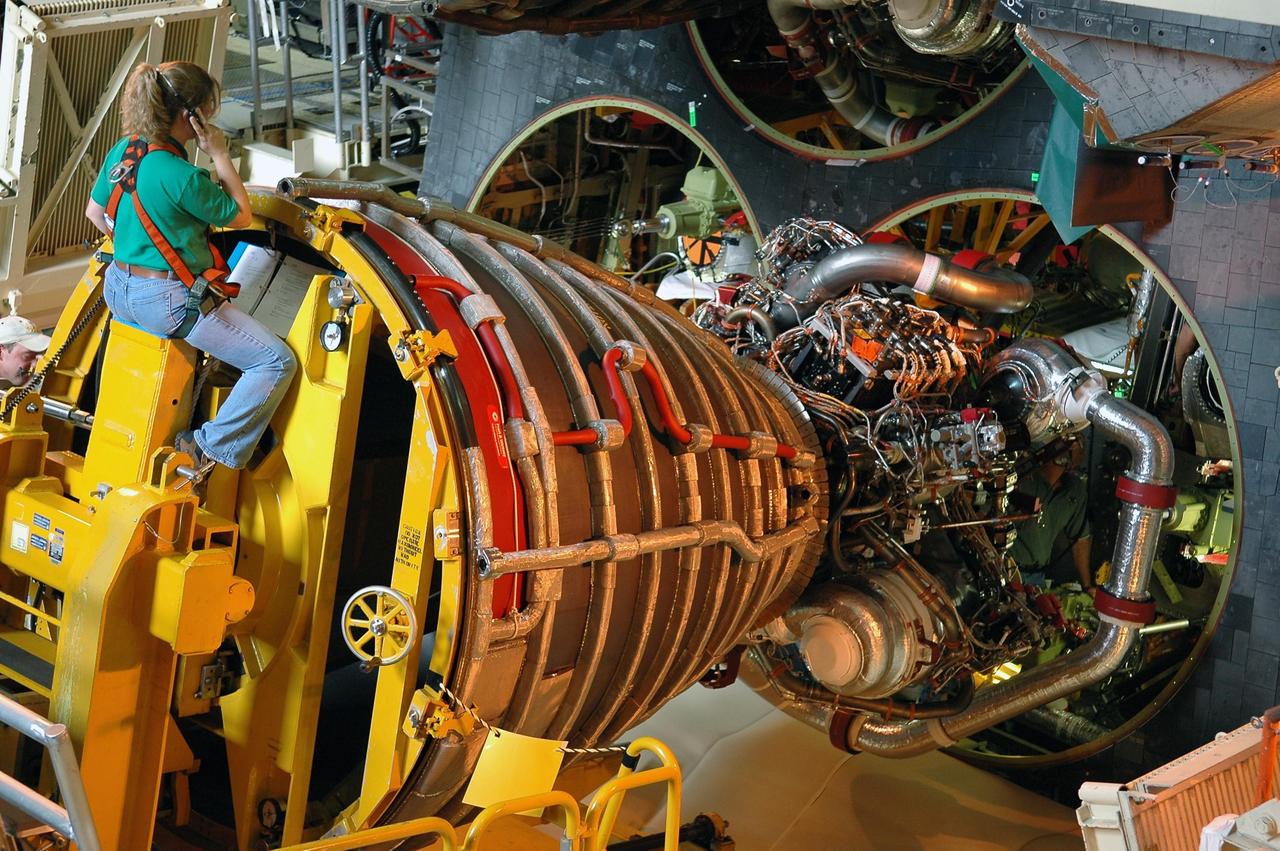
KENNEDY SPACE CENTER, FLA. - In the Orbiter Processing Facility bay 3, technicians on the Hyster forklift maneuver main engine No. 3 into place in Discovery. The main engine configuration is manufactured by Pratt & Whitney Rocketdyne in Canoga Park, Calif., and includes a Pratt & Whitney high-pressure fuel turbo pump. Each space shuttle main engine is 14 feet long, weighs about 6,700 pounds, and is 7.5 feet in diameter at the end of the nozzle. Discovery is being processed for its next mission, STS-116 (12A.1), to deliver a third truss segment, a SPACEHAB module and other key components to the International Space Station. The launch is currently scheduled no earlier than Dec. 14. Photo credit: NASA/Kim Shiflett
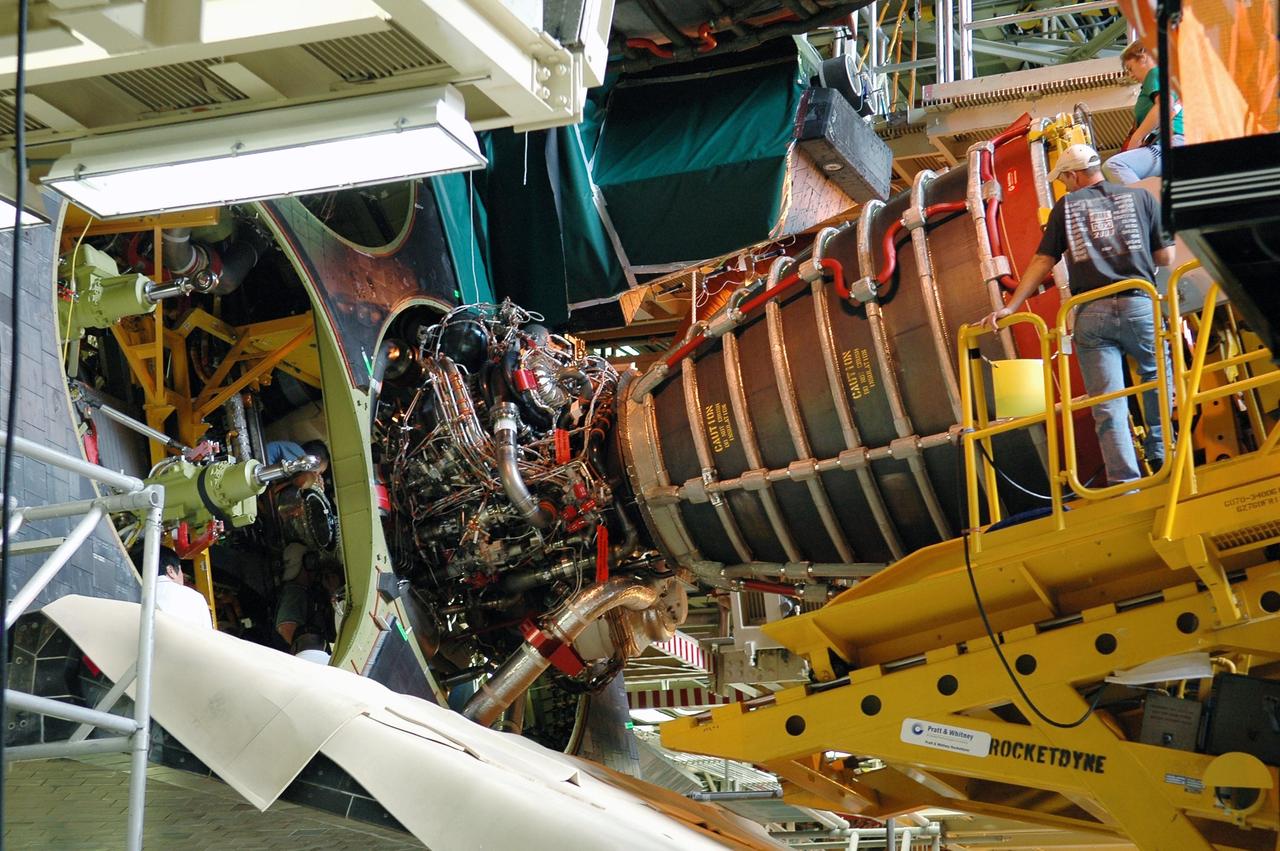
KENNEDY SPACE CENTER, FLA. - In the Orbiter Processing Facility bay 3, technicians on the Hyster forklift maneuver main engine No. 3 into place in Discovery. The main engine configuration is manufactured by Pratt & Whitney Rocketdyne in Canoga Park, Calif., and includes a Pratt & Whitney high-pressure fuel turbo pump. Each space shuttle main engine is 14 feet long, weighs about 6,700 pounds, and is 7.5 feet in diameter at the end of the nozzle. Discovery is being processed for its next mission, STS-116 (12A.1), to deliver a third truss segment, a SPACEHAB module and other key components to the International Space Station. The launch is currently scheduled no earlier than Dec. 14. Photo credit: NASA/Kim Shiflett
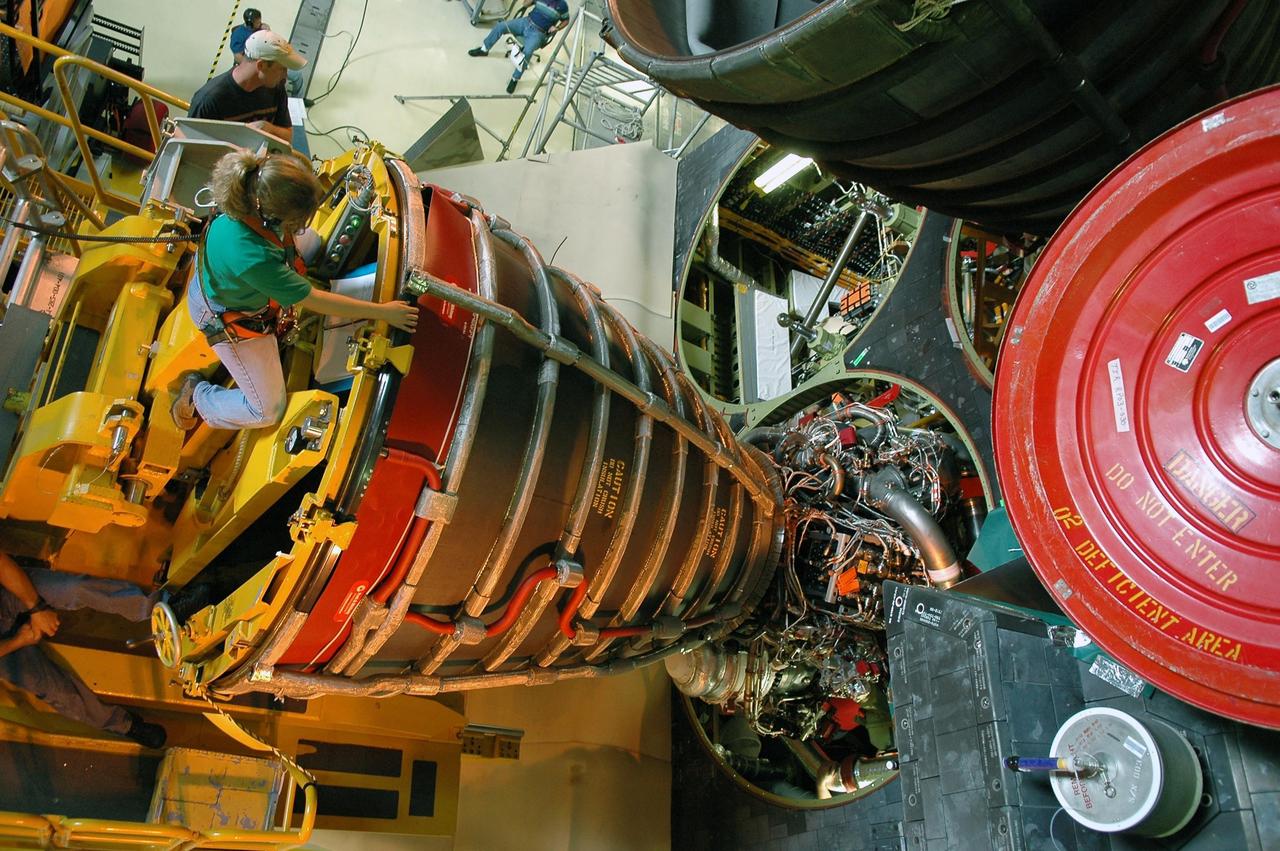
KENNEDY SPACE CENTER, FLA. - In the Orbiter Processing Facility bay 3, technicians on the Hyster forklift maneuver main engine No. 3 into place in Discovery. The main engine configuration is manufactured by Pratt & Whitney Rocketdyne in Canoga Park, Calif., and includes a Pratt & Whitney high-pressure fuel turbo pump. Each space shuttle main engine is 14 feet long, weighs about 6,700 pounds, and is 7.5 feet in diameter at the end of the nozzle. Discovery is being processed for its next mission, STS-116 (12A.1), to deliver a third truss segment, a SPACEHAB module and other key components to the International Space Station. The launch is currently scheduled no earlier than Dec. 14. Photo credit: NASA/Kim Shiflett
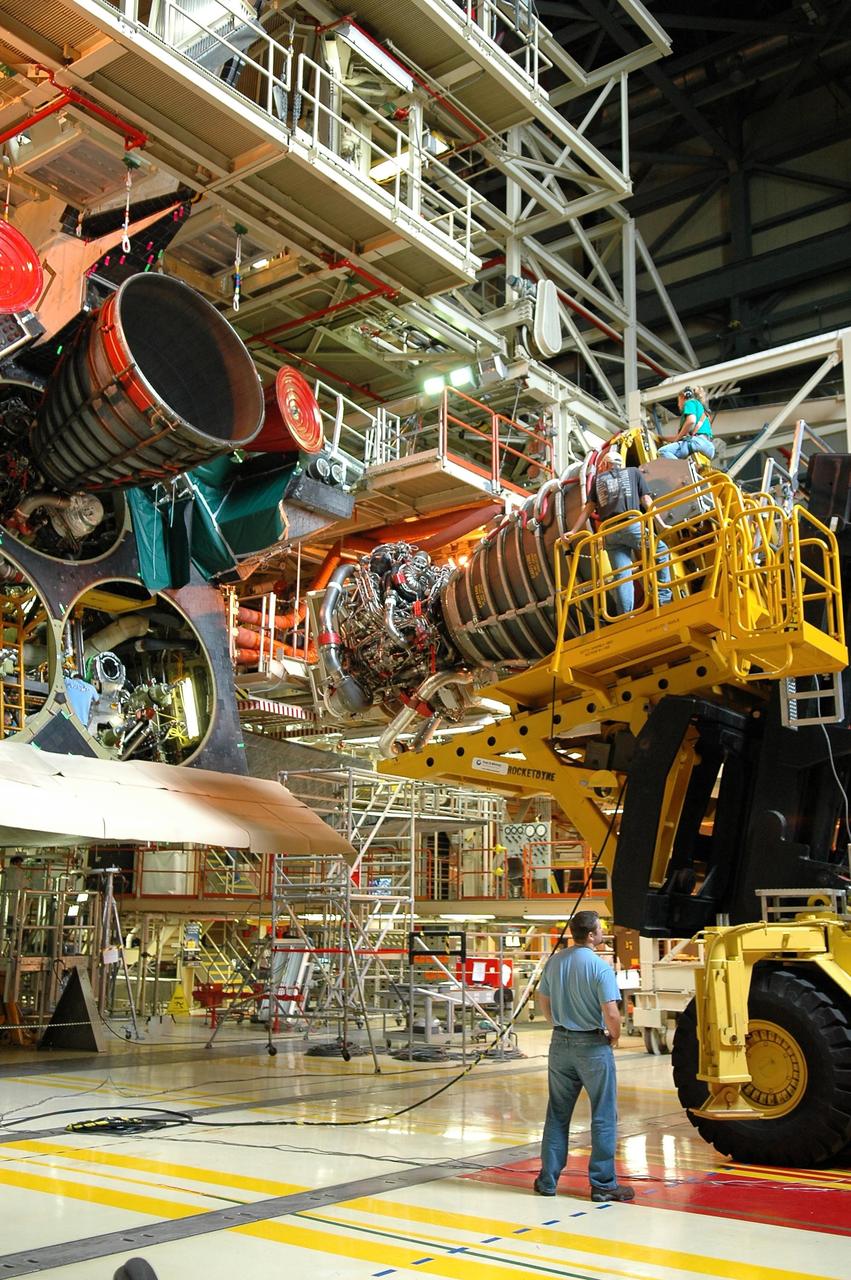
KENNEDY SPACE CENTER, FLA. - In the Orbiter Processing Facility bay 3, technicians on the Hyster forklift are ready to install main engine No. 3 on Discovery. The main engine configuration is manufactured by Pratt & Whitney Rocketdyne in Canoga Park, Calif., and includes a Pratt & Whitney high-pressure fuel turbo pump. Each space shuttle main engine is 14 feet long, weighs about 6,700 pounds, and is 7.5 feet in diameter at the end of the nozzle. Discovery is being processed for its next mission, STS-116 (12A.1), to deliver a third truss segment, a SPACEHAB module and other key components to the International Space Station. The launch is currently scheduled no earlier than Dec. 14. Photo credit: NASA/Kim Shiflett
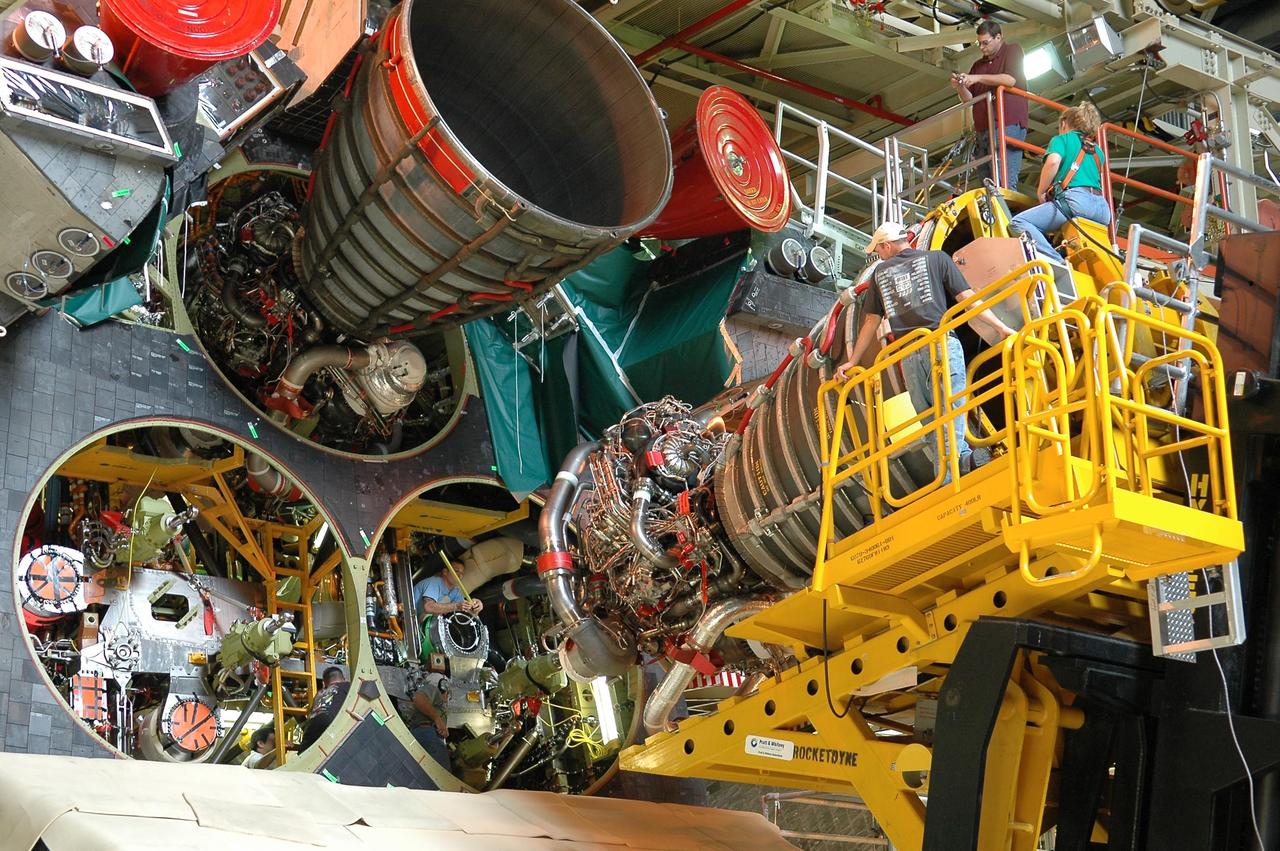
KENNEDY SPACE CENTER, FLA. - In the Orbiter Processing Facility bay 3, technicians on the Hyster forklift maneuver main engine No. 3 into place in Discovery. The main engine configuration is manufactured by Pratt & Whitney Rocketdyne in Canoga Park, Calif., and includes a Pratt & Whitney high-pressure fuel turbo pump. Each space shuttle main engine is 14 feet long, weighs about 6,700 pounds, and is 7.5 feet in diameter at the end of the nozzle. Discovery is being processed for its next mission, STS-116 (12A.1), to deliver a third truss segment, a SPACEHAB module and other key components to the International Space Station. The launch is currently scheduled no earlier than Dec. 14. Photo credit: NASA/Kim Shiflett
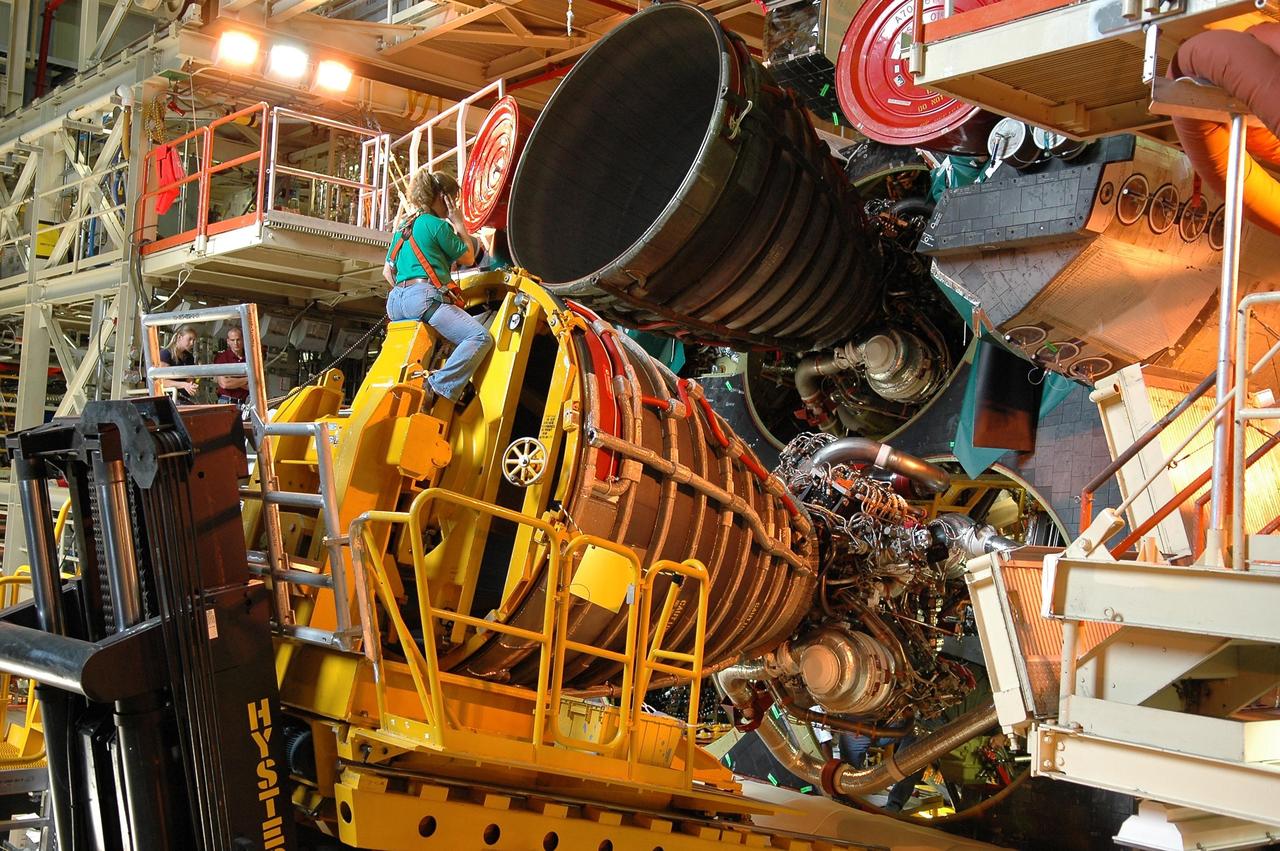
KENNEDY SPACE CENTER, FLA. - In the Orbiter Processing Facility bay 3, technicians on the Hyster forklift maneuver main engine No. 3 into place in Discovery. The main engine configuration is manufactured by Pratt & Whitney Rocketdyne in Canoga Park, Calif., and includes a Pratt & Whitney high-pressure fuel turbo pump. Each space shuttle main engine is 14 feet long, weighs about 6,700 pounds, and is 7.5 feet in diameter at the end of the nozzle. Discovery is being processed for its next mission, STS-116 (12A.1), to deliver a third truss segment, a SPACEHAB module and other key components to the International Space Station. The launch is currently scheduled no earlier than Dec. 14. Photo credit: NASA/Kim Shiflett
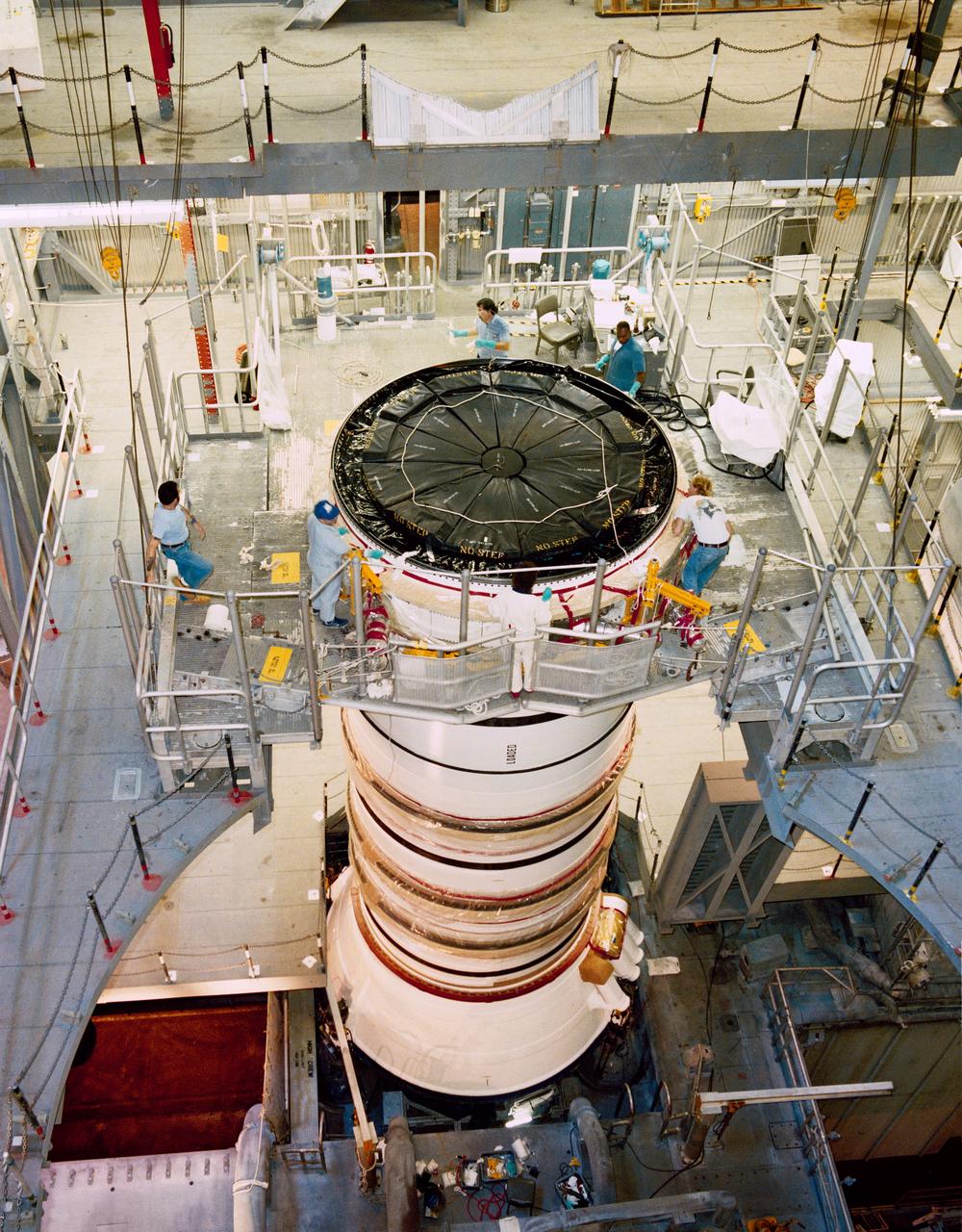
STS-29 Discovery, Orbiter Vehicle (OV) 103, solid rocket booster (SRB) right aft segment is being prepared for stacking in the Kennedy Space Center (KSC) Vehicle Assembly Building (VAB). Technicians examine and work with SRB seal from scaffolding platform. The twin sets of boosters provide 80 percent of the space shuttle launch thrust. Each SRB is made up of four "loaded" or fueled segments. The SRBs operate in parallel with the space shuttle main engines (SSMEs) for the first two minutes of flight providing additional thrust needed to escape the gravitational pull of the Earth. At an altitude of approximately 24 nautical miles, the SRBs separate, descend on parachutes, and land in the Atlantic Ocean where they are recovered and reused on future flights. View provided by KSC with alternate number KSC-88PC-1323.
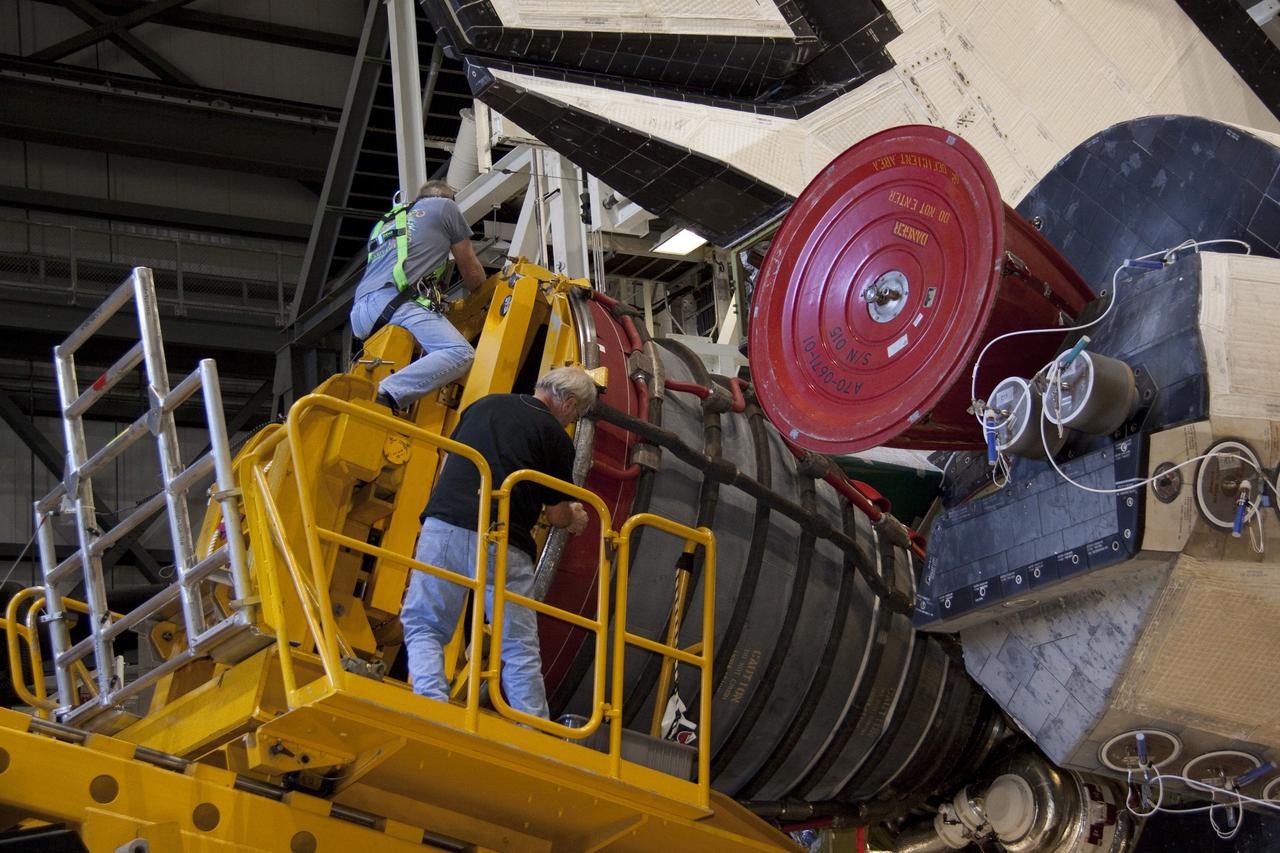
CAPE CANAVERAL, Fla. - Technicians carefully remove main engine No. 1 from space shuttle Discovery using a specially designed engine installer, called a Hyster forklift. The work is taking place in Orbiter Processing Facility-2 at NASA's Kennedy Space Center in Florida. The removal is part of Discovery's transition and retirement processing. Work performed on Discovery is expected to help rocket designers build next-generation spacecraft and prepare the shuttle for future public display. Photo credit: NASA/Jack Pfaller
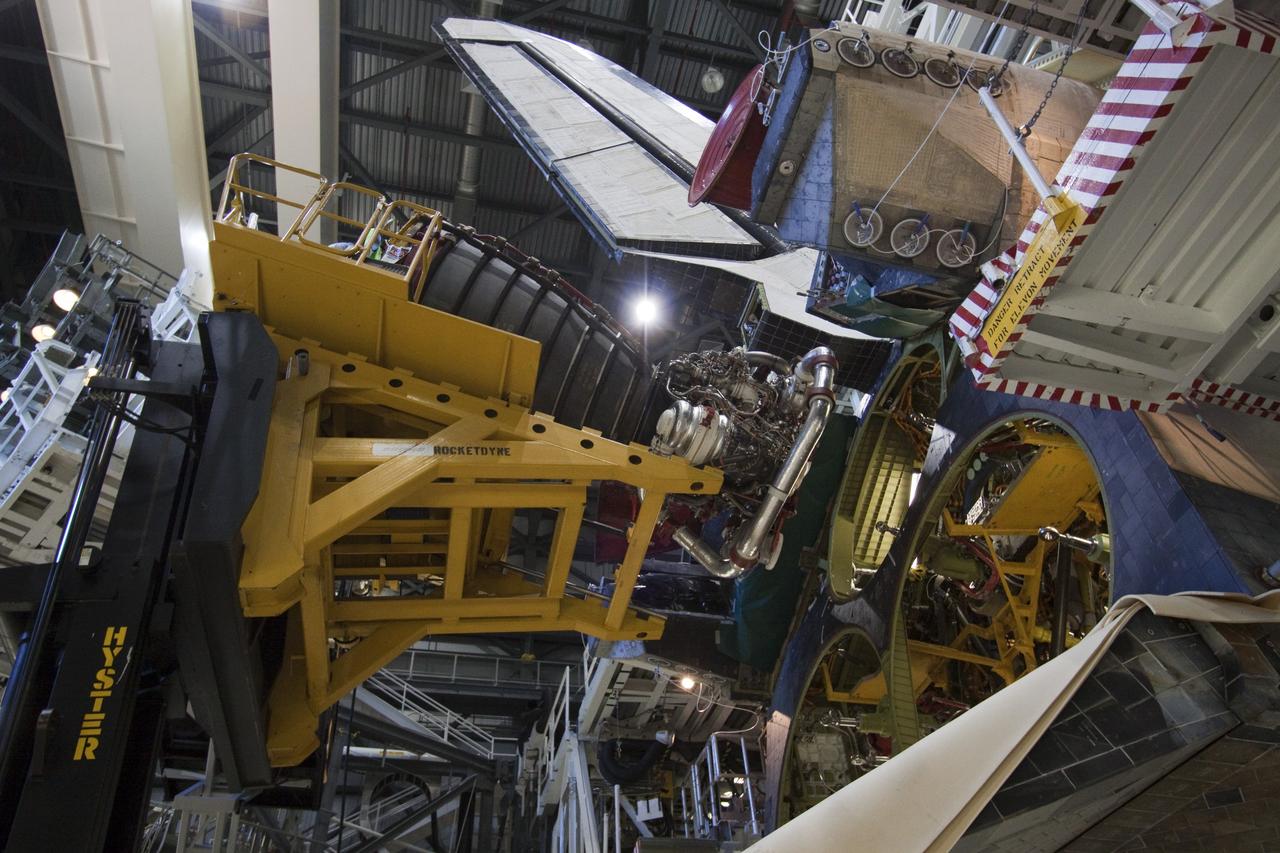
CAPE CANAVERAL, Fla. - Technicians complete the removal of main engine No. 1 from space shuttle Discovery using a specially designed engine installer, called a Hyster forklift. The work is taking place in Orbiter Processing Facility-2 at NASA's Kennedy Space Center in Florida. The removal is part of Discovery's transition and retirement processing. Work performed on Discovery is expected to help rocket designers build next-generation spacecraft and prepare the shuttle for future public display. Photo credit: NASA/Jack Pfaller
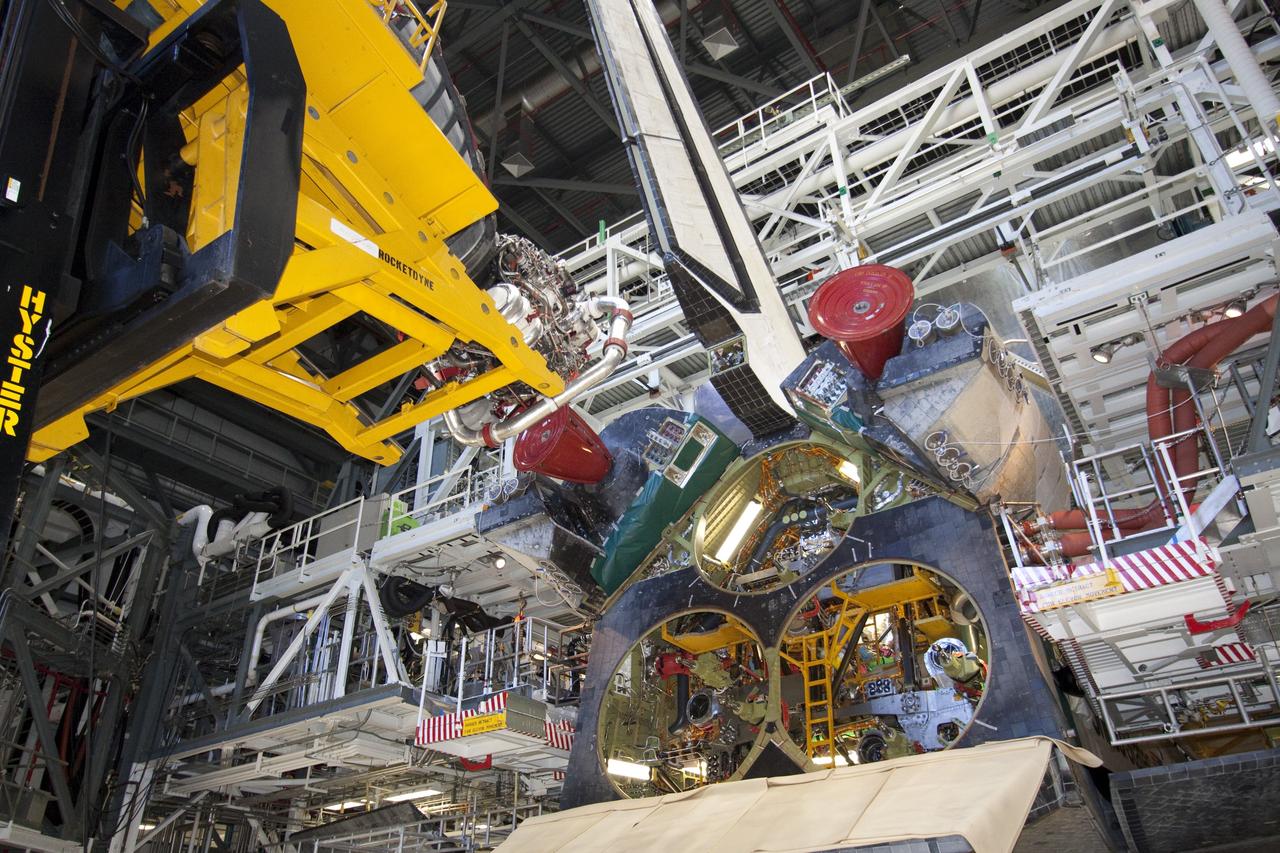
CAPE CANAVERAL, Fla. - Technicians complete the removal of main engine No. 1 from space shuttle Discovery using a specially designed engine installer, called a Hyster forklift. The work is taking place in Orbiter Processing Facility-2 at NASA's Kennedy Space Center in Florida. The removal is part of Discovery's transition and retirement processing. Work performed on Discovery is expected to help rocket designers build next-generation spacecraft and prepare the shuttle for future public display. Photo credit: NASA/Jack Pfaller
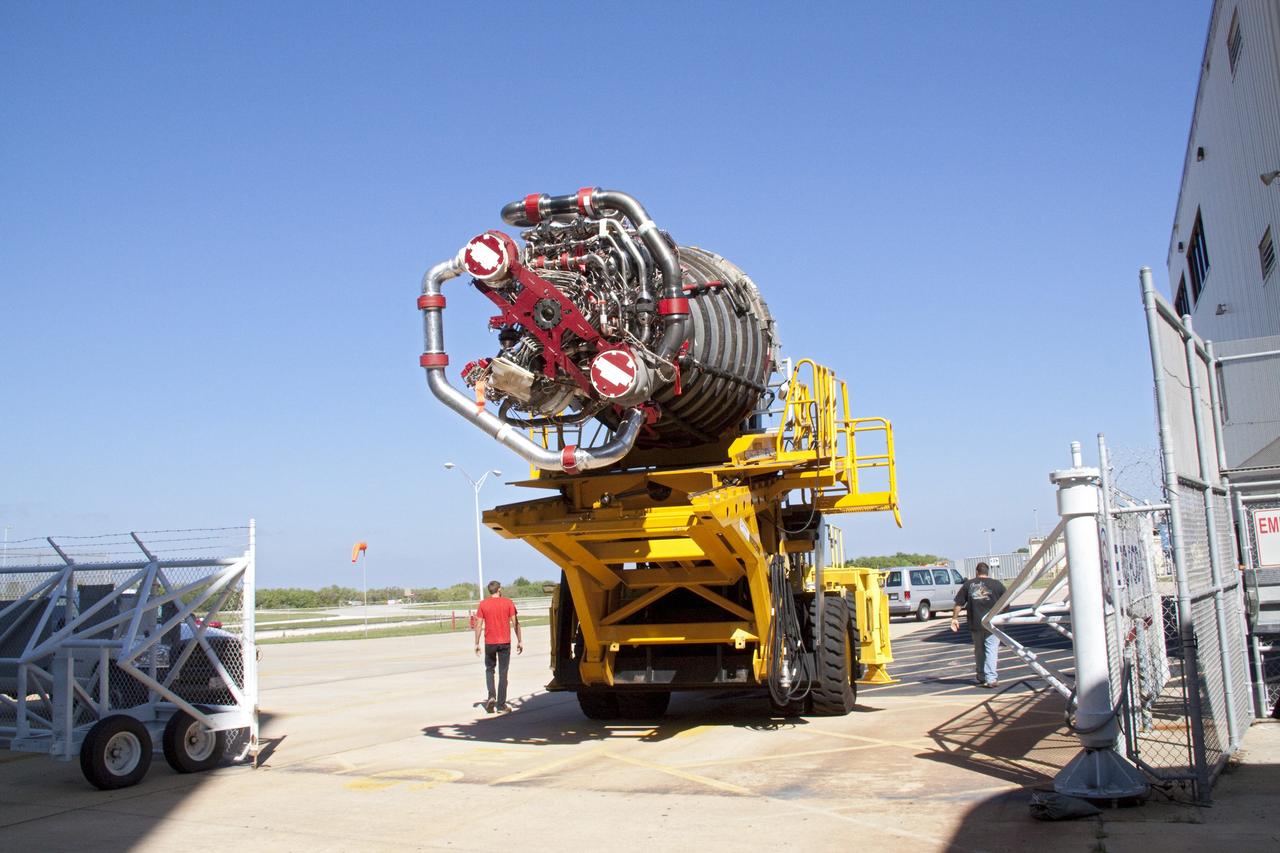
CAPE CANAVERAL, Fla. - Technicians complete the removal of main engine No. 1 from space shuttle Discovery using a specially designed engine installer, called a Hyster forklift. The work is taking place in Orbiter Processing Facility-2 at NASA's Kennedy Space Center in Florida. The removal is part of Discovery's transition and retirement processing. Work performed on Discovery is expected to help rocket designers build next-generation spacecraft and prepare the shuttle for future public display. Photo credit: NASA/Jack Pfaller
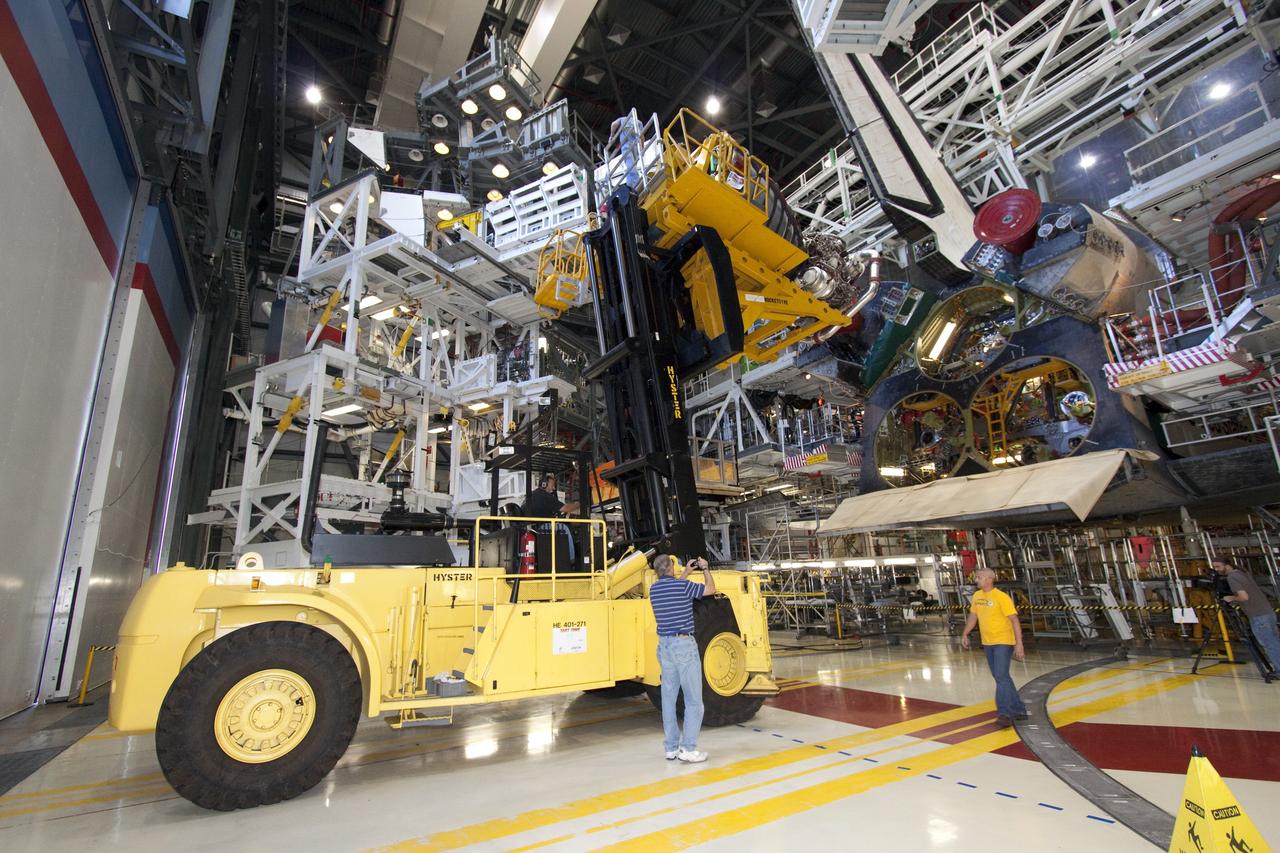
CAPE CANAVERAL, Fla. - Technicians complete the removal of main engine No. 1 from space shuttle Discovery using a specially designed engine installer, called a Hyster forklift. The work is taking place in Orbiter Processing Facility-2 at NASA's Kennedy Space Center in Florida. The removal is part of Discovery's transition and retirement processing. Work performed on Discovery is expected to help rocket designers build next-generation spacecraft and prepare the shuttle for future public display. Photo credit: NASA/Jack Pfaller
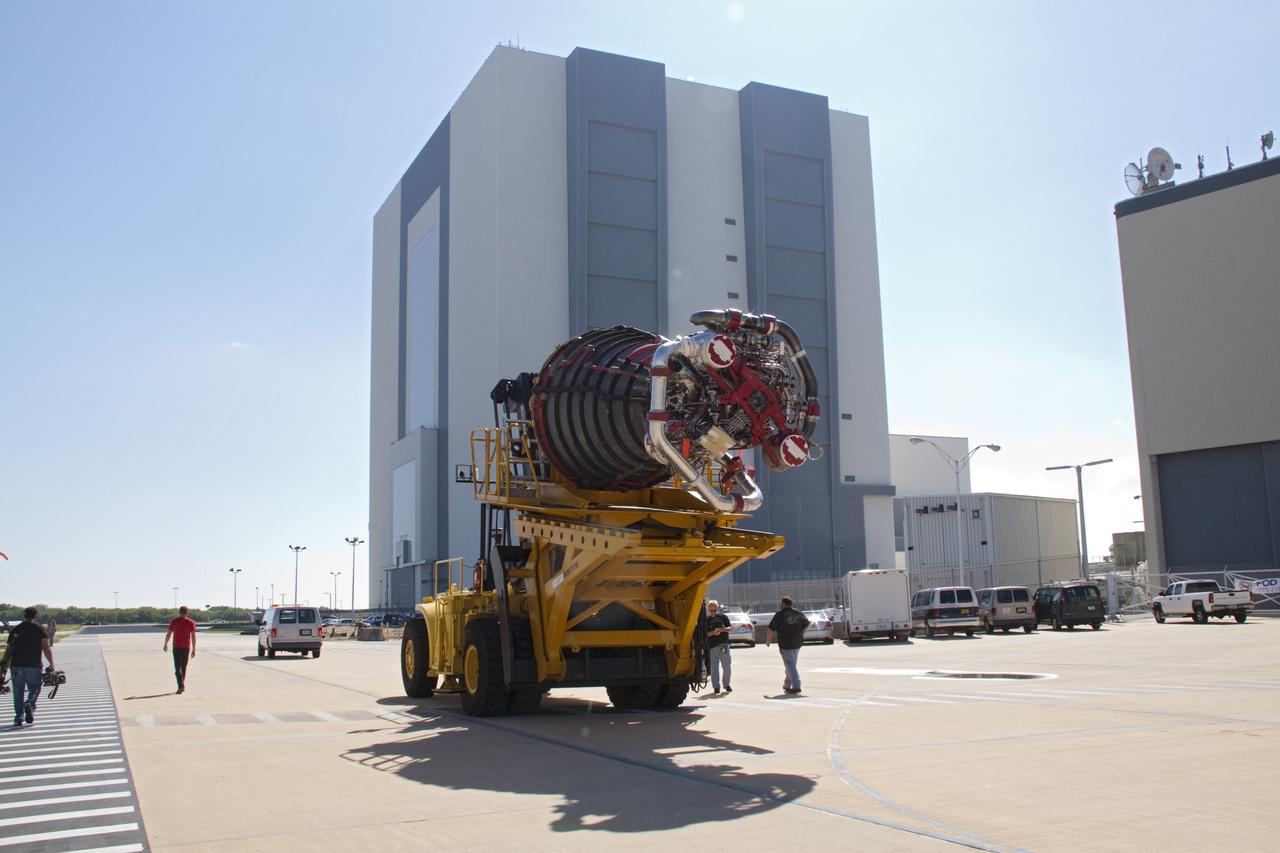
CAPE CANAVERAL, Fla. - Main engine No. 1, which was removed from space shuttle Discovery, is transported from Orbiter Processing Facility-2 to the Space Shuttle Main Engine Processing Facility at NASA's Kennedy Space Center in Florida. The removal was part of Discovery's transition and retirement processing. Work performed on Discovery is expected to help rocket designers build next-generation spacecraft and prepare the shuttle for future public display. Photo credit: NASA/Jack Pfaller
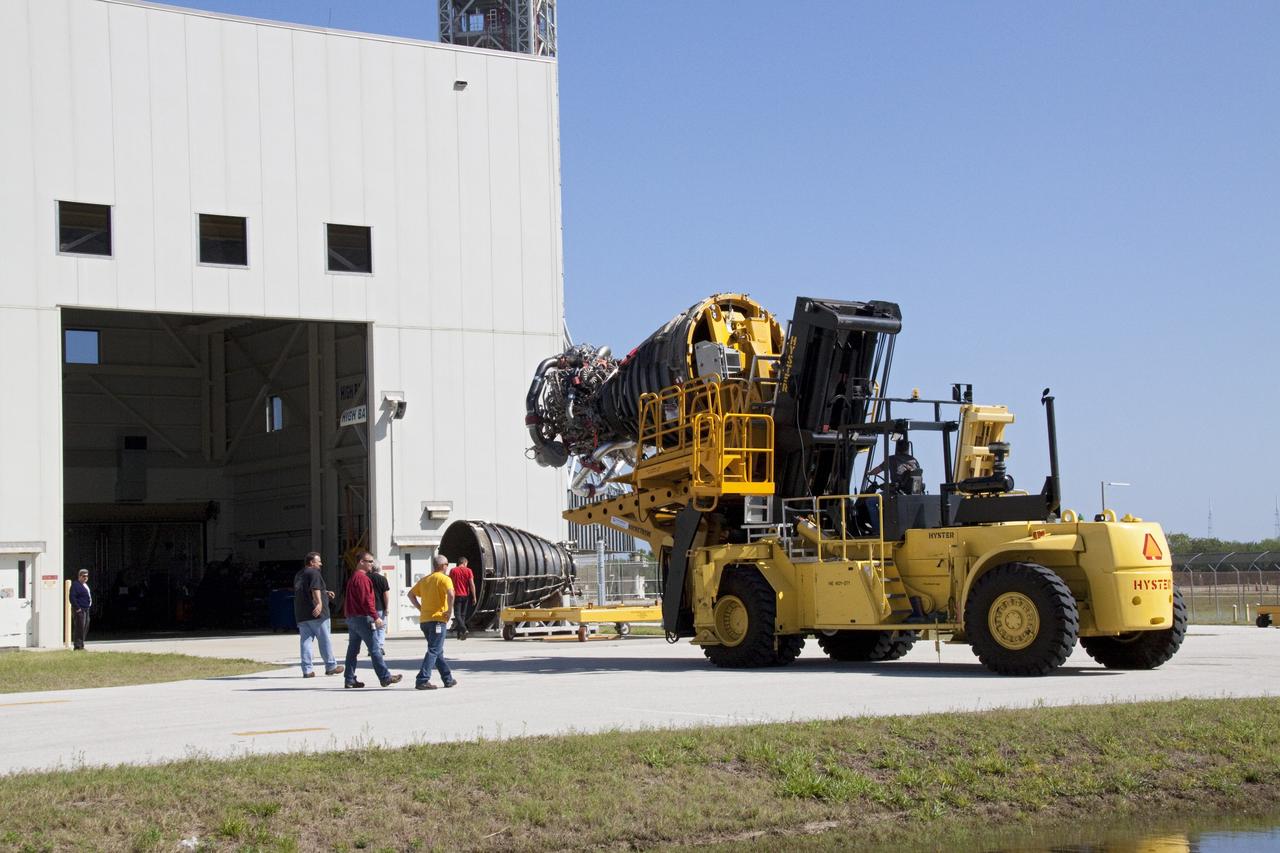
CAPE CANAVERAL, Fla. - Main engine No. 1, which was removed from space shuttle Discovery, is transported from Orbiter Processing Facility-2 to the Space Shuttle Main Engine Processing Facility at NASA's Kennedy Space Center in Florida. The removal was part of Discovery's transition and retirement processing. Work performed on Discovery is expected to help rocket designers build next-generation spacecraft and prepare the shuttle for future public display. Photo credit: NASA/Jack Pfaller
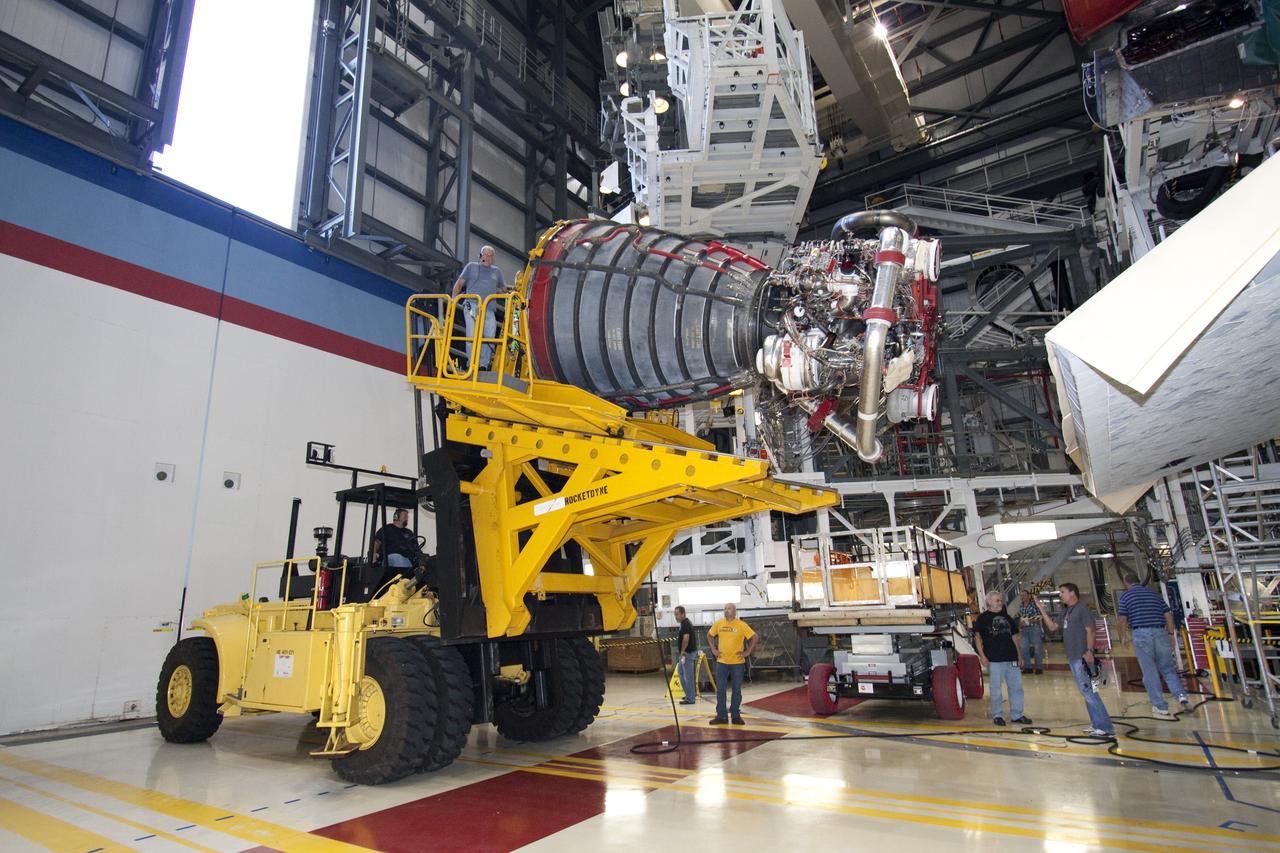
CAPE CANAVERAL, Fla. - Technicians complete the removal of main engine No. 1 from space shuttle Discovery using a specially designed engine installer, called a Hyster forklift. The work is taking place in Orbiter Processing Facility-2 at NASA's Kennedy Space Center in Florida. The removal is part of Discovery's transition and retirement processing. Work performed on Discovery is expected to help rocket designers build next-generation spacecraft and prepare the shuttle for future public display. Photo credit: NASA/Jack Pfaller
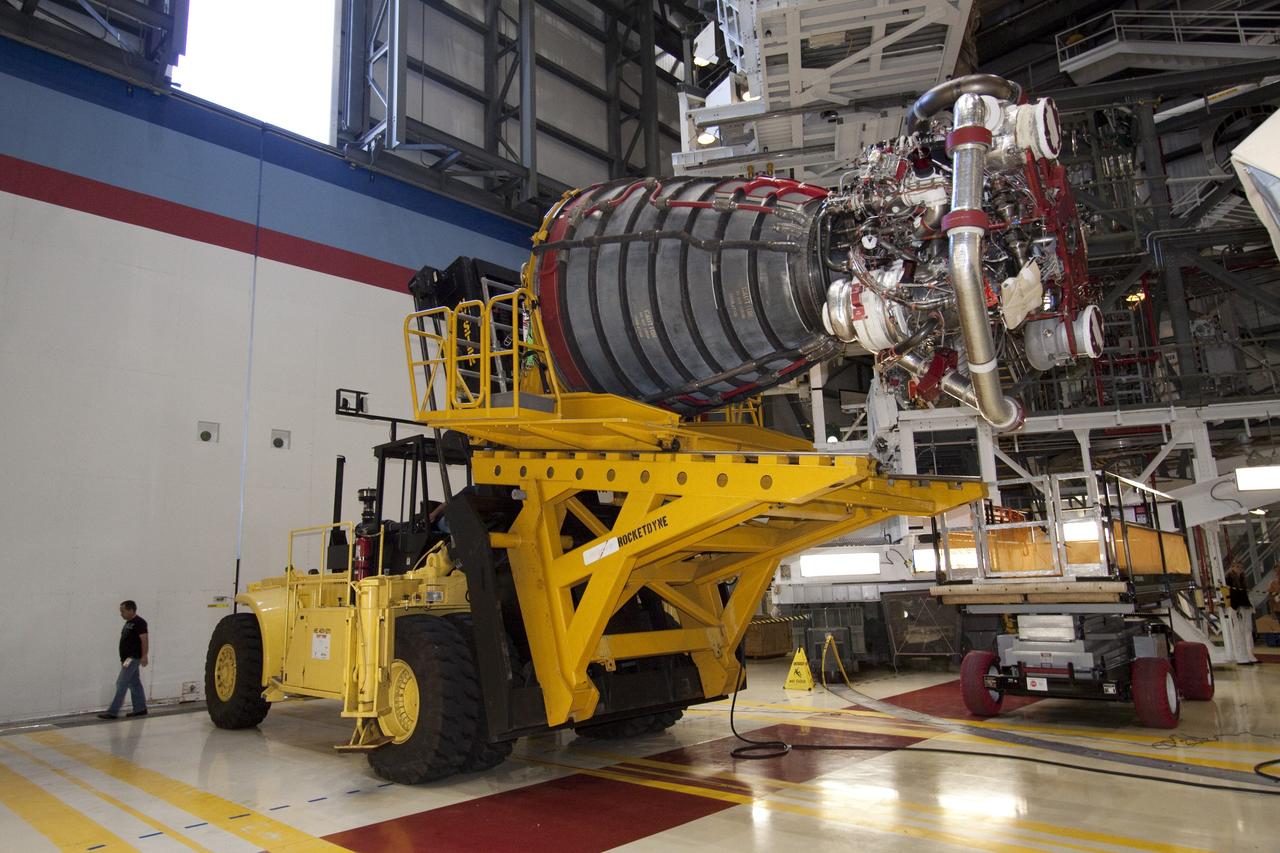
CAPE CANAVERAL, Fla. - Technicians complete the removal of main engine No. 1 from space shuttle Discovery using a specially designed engine installer, called a Hyster forklift. The work is taking place in Orbiter Processing Facility-2 at NASA's Kennedy Space Center in Florida. The removal is part of Discovery's transition and retirement processing. Work performed on Discovery is expected to help rocket designers build next-generation spacecraft and prepare the shuttle for future public display. Photo credit: NASA/Jack Pfaller
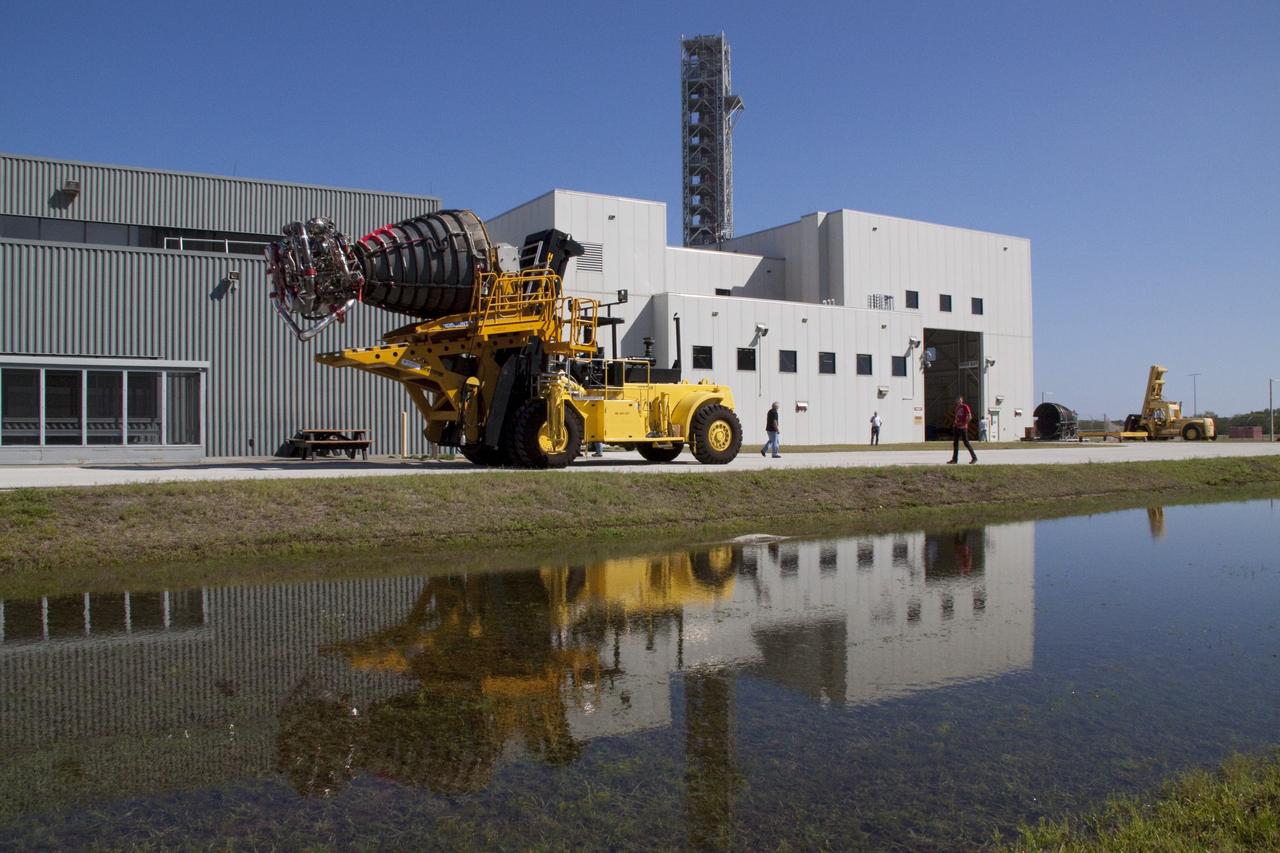
CAPE CANAVERAL, Fla. - Main engine No. 1, which was removed from space shuttle Discovery, is transported from Orbiter Processing Facility-2 to the Space Shuttle Main Engine Processing Facility at NASA's Kennedy Space Center in Florida. The removal was part of Discovery's transition and retirement processing. Work performed on Discovery is expected to help rocket designers build next-generation spacecraft and prepare the shuttle for future public display. Photo credit: NASA/Jack Pfaller
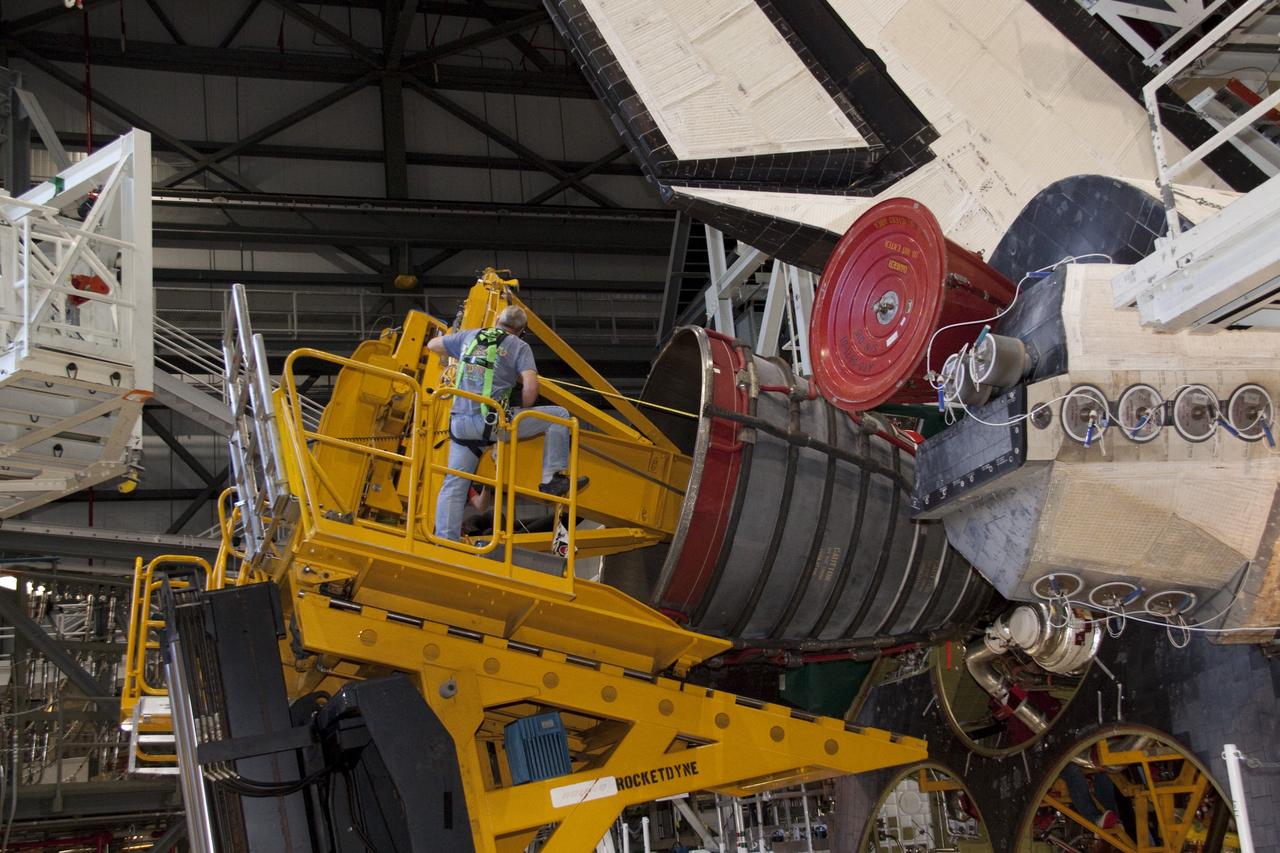
CAPE CANAVERAL, Fla. - Technicians carefully remove main engine No. 1 from space shuttle Discovery using a specially designed engine installer, called a Hyster forklift. The work is taking place in Orbiter Processing Facility-2 at NASA's Kennedy Space Center in Florida. The removal is part of Discovery's transition and retirement processing. Work performed on Discovery is expected to help rocket designers build next-generation spacecraft and prepare the shuttle for future public display. Photo credit: NASA/Jack Pfaller
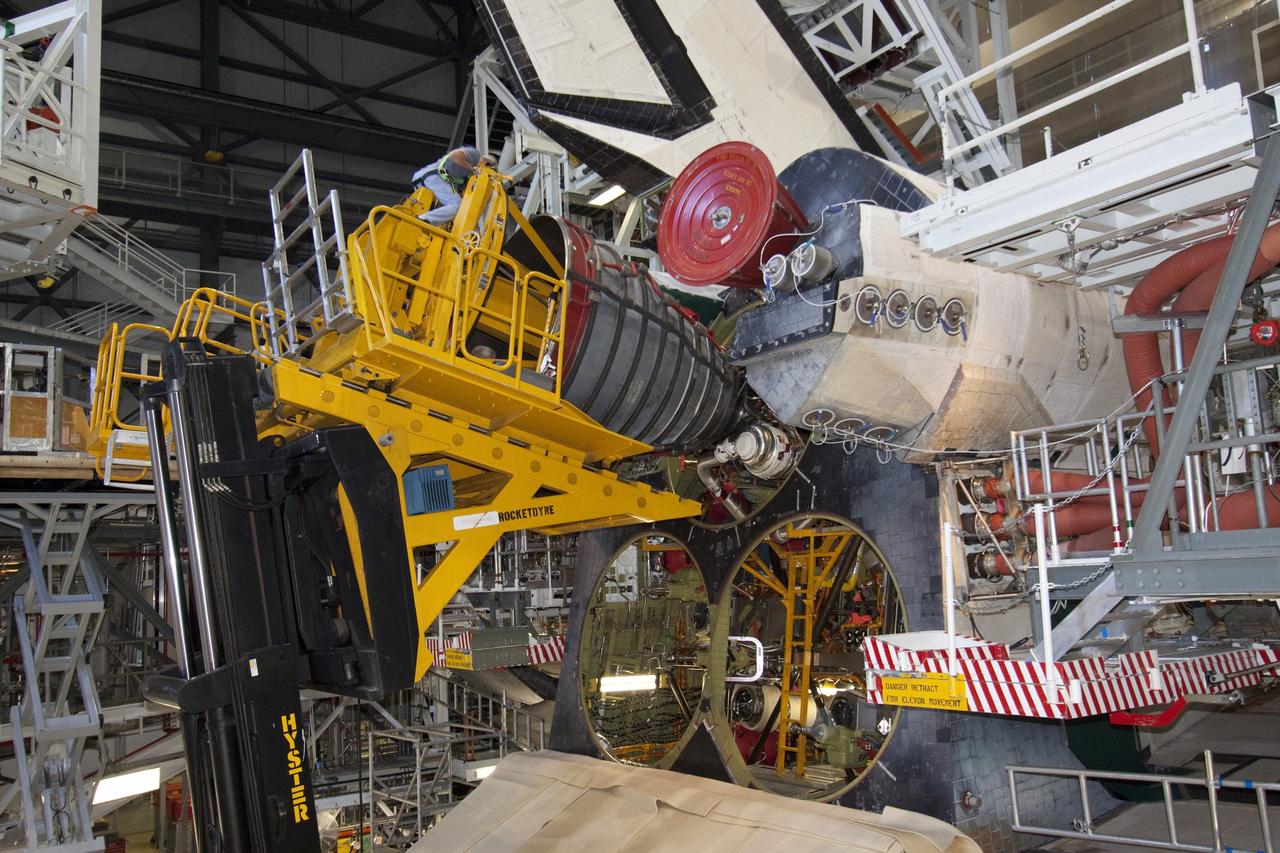
CAPE CANAVERAL, Fla. - Technicians carefully remove main engine No. 1 from space shuttle Discovery using a specially designed engine installer, called a Hyster forklift. The work is taking place in Orbiter Processing Facility-2 at NASA's Kennedy Space Center in Florida. The removal is part of Discovery's transition and retirement processing. Work performed on Discovery is expected to help rocket designers build next-generation spacecraft and prepare the shuttle for future public display. Photo credit: NASA/Jack Pfaller
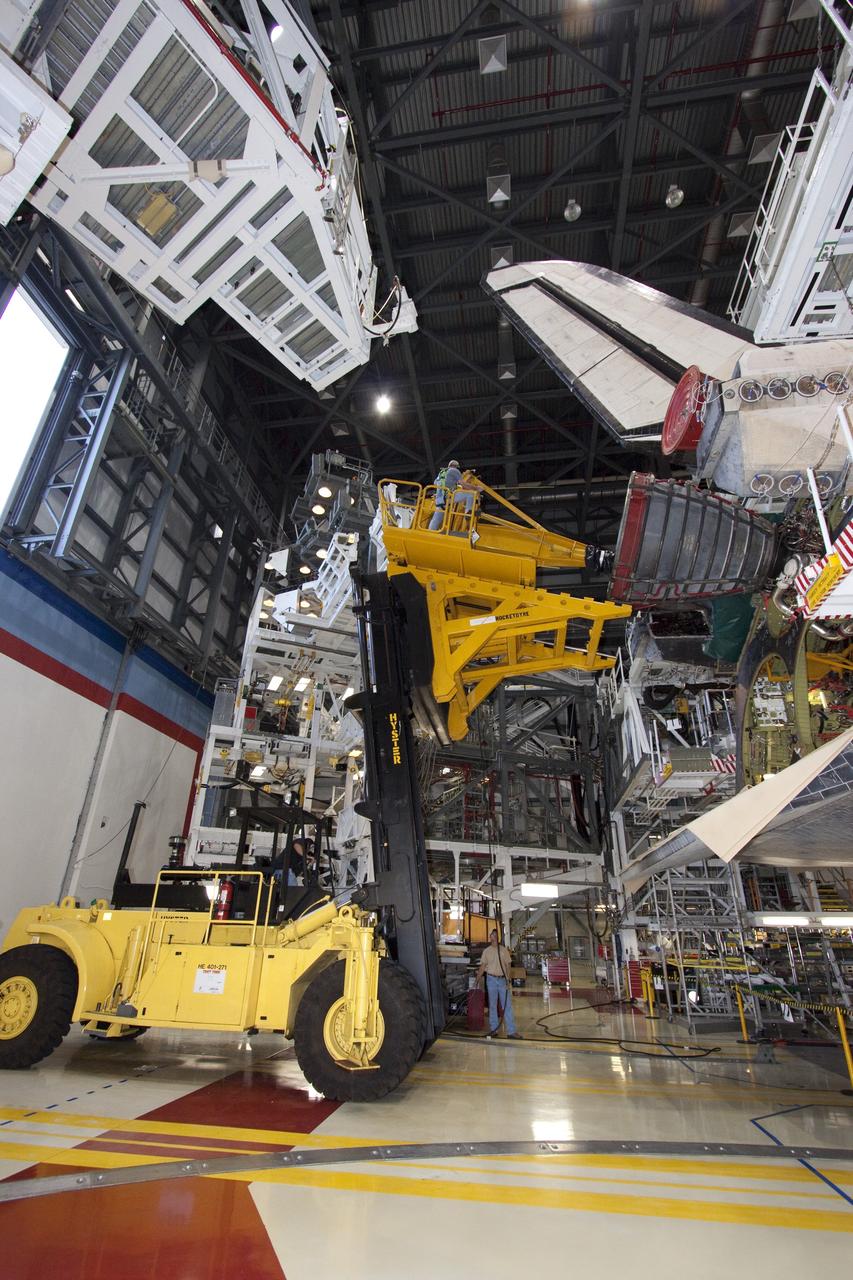
CAPE CANAVERAL, Fla. - Technicians carefully remove main engine No. 1 from space shuttle Discovery using a specially designed engine installer, called a Hyster forklift. The work is taking place in Orbiter Processing Facility-2 at NASA's Kennedy Space Center in Florida. The removal is part of Discovery's transition and retirement processing. Work performed on Discovery is expected to help rocket designers build next-generation spacecraft and prepare the shuttle for future public display. Photo credit: NASA/Jack Pfaller
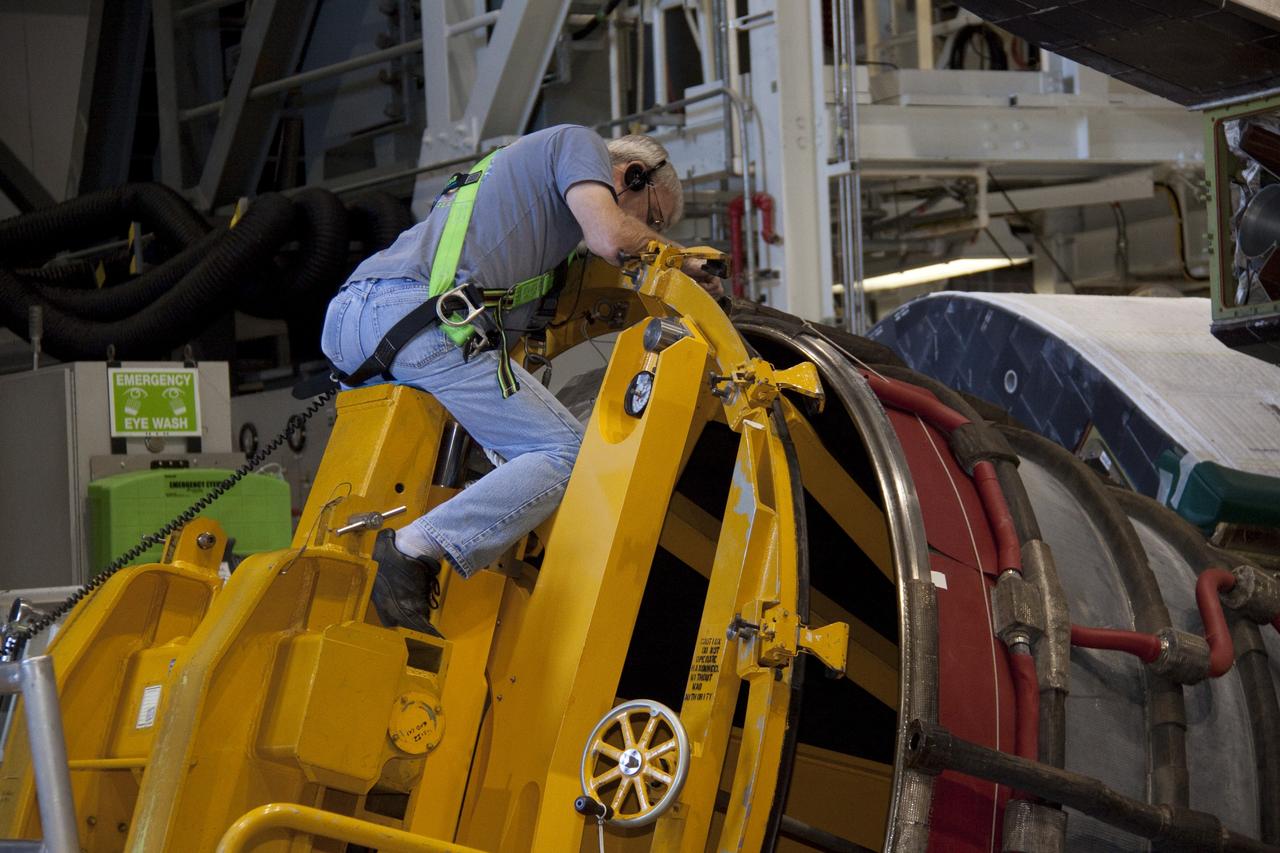
CAPE CANAVERAL, Fla. - Technicians carefully remove main engine No. 1 from space shuttle Discovery using a specially designed engine installer, called a Hyster forklift. The work is taking place in Orbiter Processing Facility-2 at NASA's Kennedy Space Center in Florida. The removal is part of Discovery's transition and retirement processing. Work performed on Discovery is expected to help rocket designers build next-generation spacecraft and prepare the shuttle for future public display. Photo credit: NASA/Jack Pfaller
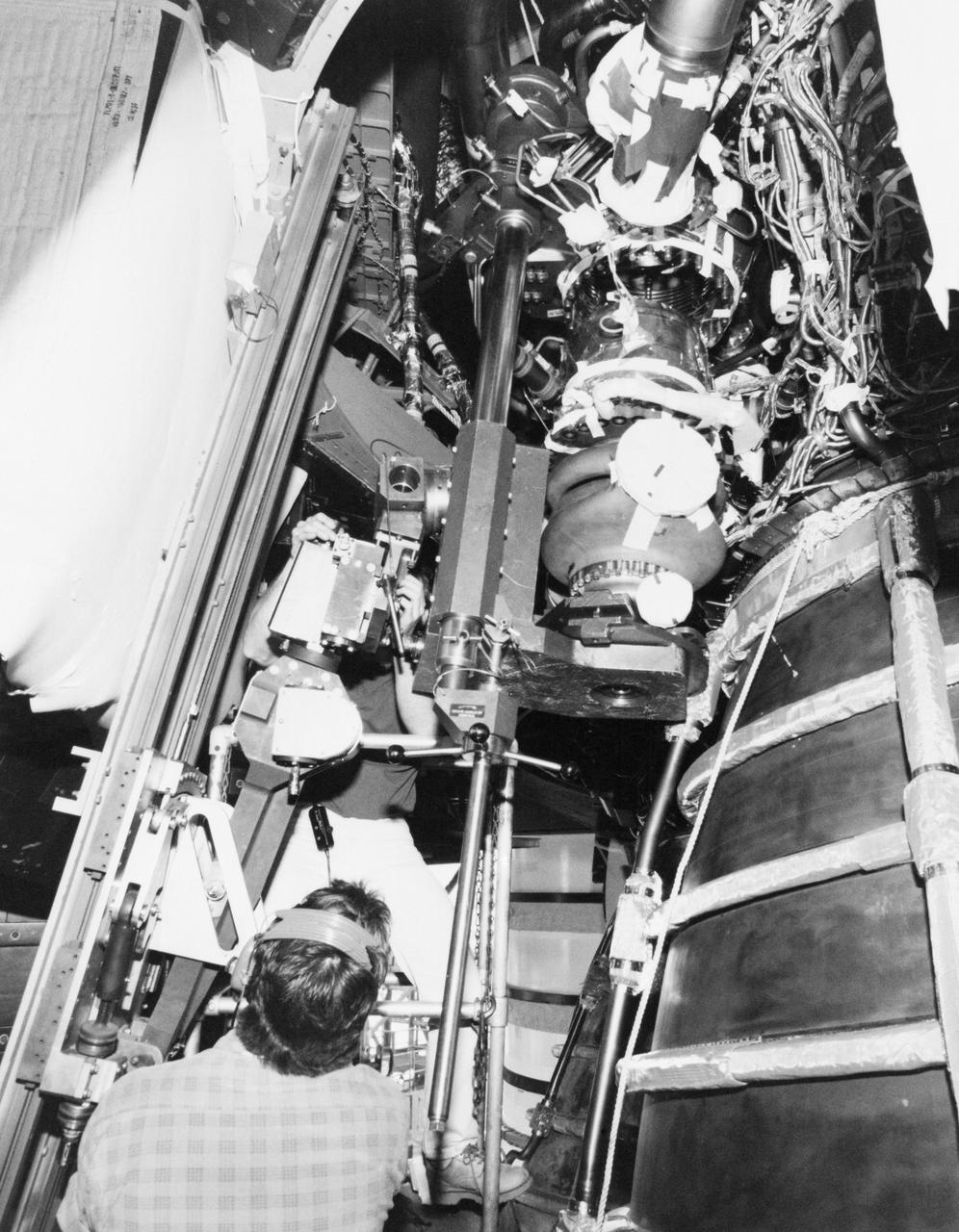
S89-28092 (7 Feb 1989) --- Kennedy Space Center technicians inspect an area near the three main engines of the Space Shuttle Discovery prior to the removal of one of three oxidozer turbo pumps. New pumps are scheduled to be installed soon. Now at Launch Pad 39-B, Discovery is set for launch in mid-March for Mission STS-29. Primary payload will be TDRS-D. Crewmembers are Astronauts Michael L. Coats, mission commander, John E. Blaha, pilot; along with James F. Buchli, Robert C. Springer and James P. Bagian, all mission specialists.
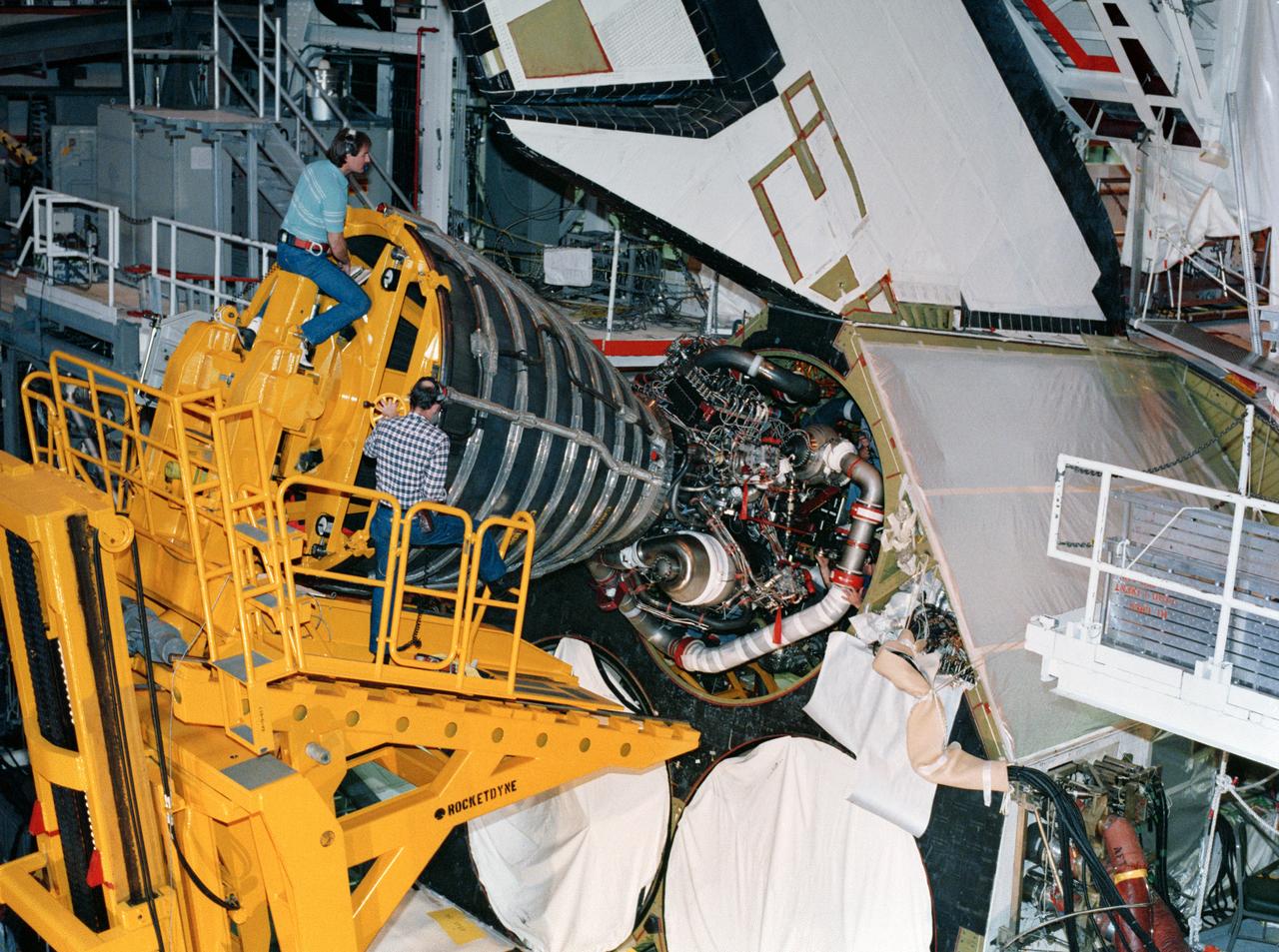
S88-29076 (10 Jan 1988) --- KSC employees work together to carefully guide a 7,000 pound main engine into the number one position in Discovery's aft compartment. Because of the engine's weight and size, special handling equipment is needed to perform the installation. Discovery is currently being prepared for the upcoming STS-26 mission in bay 1 of the Orbiter Processing Facility. This engine, 2019, arrived at KSC on Jan. 6 and was installed Jan. 10. The other two engines are scheduled to be installed later this month. The shuttle's three main liquid fueled engines provide the main propulsion for the orbiter vehicle. The cluster of three engines operate in parallel with the solid rocket boosters during the initial ascent.