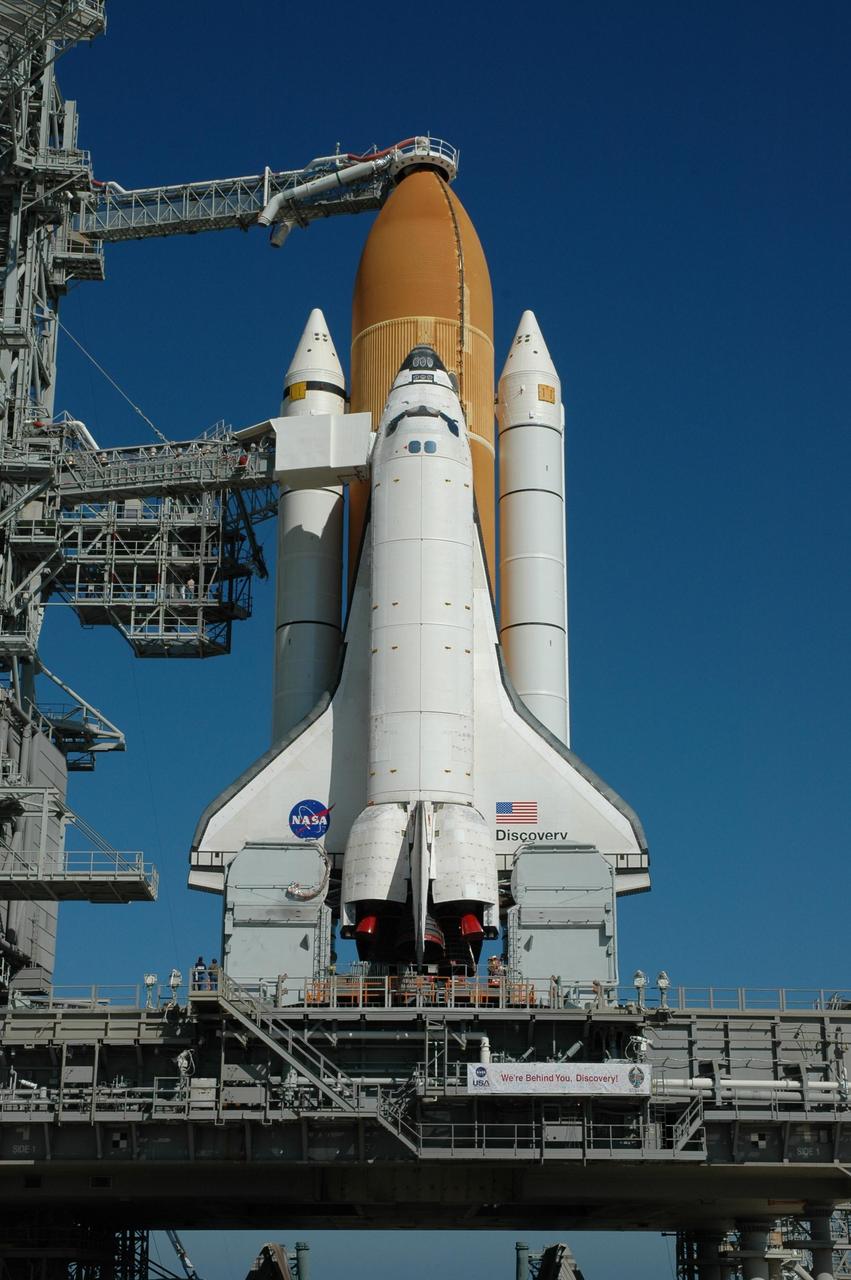
KENNEDY SPACE CENTER, FLA. -- Space Shuttle Discovery and the mobile launcher platform sit on Launch Pad 39B. The shuttle's external tank is capped by the oxygen vent hood (at top). Below it is the orbiter access arm which swings out from the fixed service structure to the orbiter crew compartment hatch to allow personnel to enter the crew compartment. The outer end of the access arm ends in an environmental chamber (white room) that mates with the orbiter and holds six persons. The arm remains in the extended position until seven minutes 24 seconds before launch to provide emergency egress for the flight crew. The rollout of Discovery from the Vehicle Assembly Building began at 12:29 a.m. The shuttle was harddown on the pad at 9:03 a.m. The mission is No. 20 to the International Space Station and construction flight 12A.1. The mission payload is the SPACEHAB module, the P5 integrated truss structure and other key components. The launch window for mission STS-116 opens Dec. 7. Photo credit: NASA/Jim Grossmann

KENNEDY SPACE CENTER, FLA. -- Space Shuttle Discovery sits on Launch Pad 39B for launch of mission STS-116. On the left can be seen the rotating service structure, which will be rolled to enclose the shuttle for servicing and payload transfer. Above the shuttle on the fixed service structure is the 80-foot tall lightning mast. The shuttle was harddown on the pad at 9:03 a.m. The rollout from the Vehicle Assembly Building began at 12:29 a.m. The mission is No. 20 to the International Space Station and construction flight 12A.1. The mission payload is the SPACEHAB module, the P5 integrated truss structure and other key components. The launch window for mission STS-116 opens Dec. 7. Photo credit: NASA/George Shelton

KENNEDY SPACE CENTER, FLA. -- Space Shuttle Discovery and the mobile launcher platform sit on Launch Pad 39B for mission STS-116. The shuttle's external tank is capped by the oxygen vent hood (at top). Below it is the orbiter access arm which swings out from the fixed service structure to the orbiter crew compartment hatch to allow personnel to enter the crew compartment. The outer end of the access arm ends in an environmental chamber (white room) that mates with the orbiter and holds six persons. The arm remains in the extended position until seven minutes 24 seconds before launch to provide emergency egress for the flight crew. At right, the U.S. flag flies at half-staff in accordance with special Presidential Proclamation No. 3044, due to the death of Senior Border Patrol Agent David N. Webb. The rollout of Discovery from the Vehicle Assembly Building began at 12:29 a.m. The shuttle was harddown on the pad at 9:03 a.m. The mission is No. 20 to the International Space Station and construction flight 12A.1. The mission payload is the SPACEHAB module, the P5 integrated truss structure and other key components. The launch window for mission STS-116 opens Dec. 7. Photo credit: NASA/George Shelton
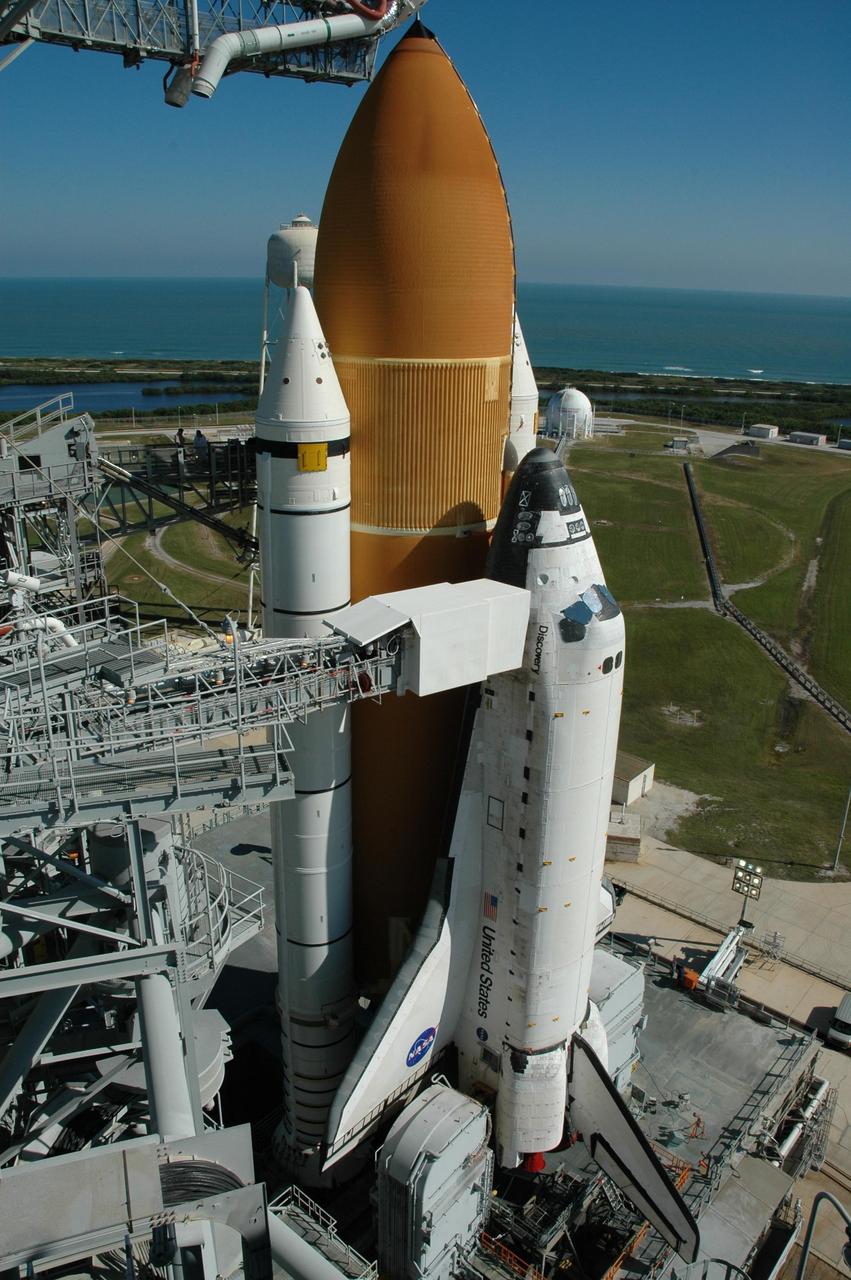
KENNEDY SPACE CENTER, FLA. -- Space Shuttle Discovery and the mobile launcher platform sit on Launch Pad 39B for mission STS-116. Beyond the pad is the Atlantic Ocean. The shuttle's external tank is capped by the oxygen vent hood (at top). Below it is the orbiter access arm which swings out from the fixed service structure to the orbiter crew compartment hatch to allow personnel to enter the crew compartment. The outer end of the access arm ends in an environmental chamber (white room) that mates with the orbiter and holds six persons. The arm remains in the extended position until seven minutes 24 seconds before launch to provide emergency egress for the flight crew. The rollout of Discovery from the Vehicle Assembly Building began at 12:29 a.m. The shuttle was harddown on the pad at 9:03 a.m. The mission is No. 20 to the International Space Station and construction flight 12A.1. The mission payload is the SPACEHAB module, the P5 integrated truss structure and other key components. The launch window for mission STS-116 opens Dec. 7. Photo credit: NASA/Jim Grossmann
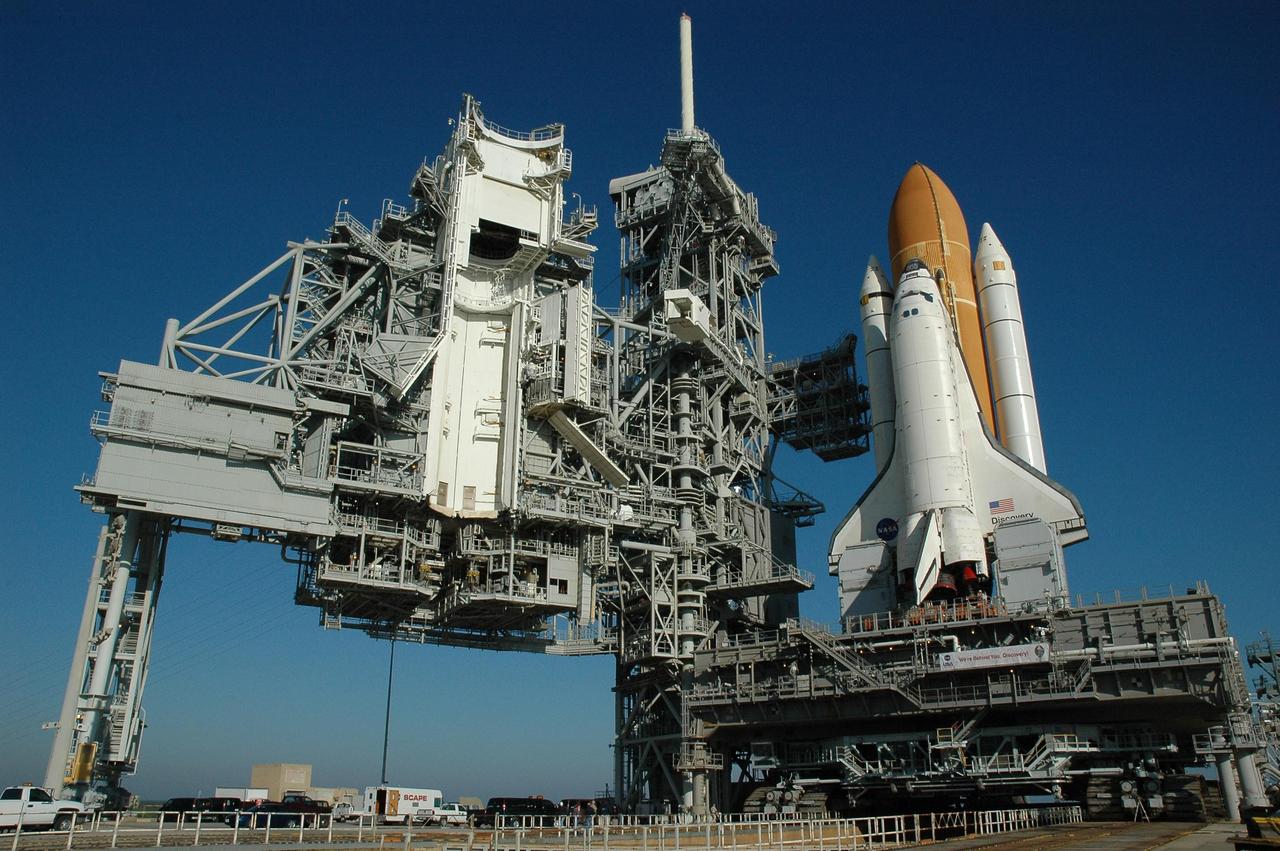
KENNEDY SPACE CENTER, FLA. -- Space Shuttle Discovery sits on Launch Pad 39B for launch of mission STS-116. On the left can be seen the rotating service structure, which will be rolled to enclose the shuttle for servicing and payload transfer. The shuttle was harddown on the pad at 9:03 a.m. The rollout from the Vehicle Assembly Building began at 12:29 a.m. The mission is No. 20 to the International Space Station and construction flight 12A.1. The mission payload is the SPACEHAB module, the P5 integrated truss structure and other key components. The launch window for mission STS-116 opens Dec. 7. Photo credit: NASA/Amanda Diller
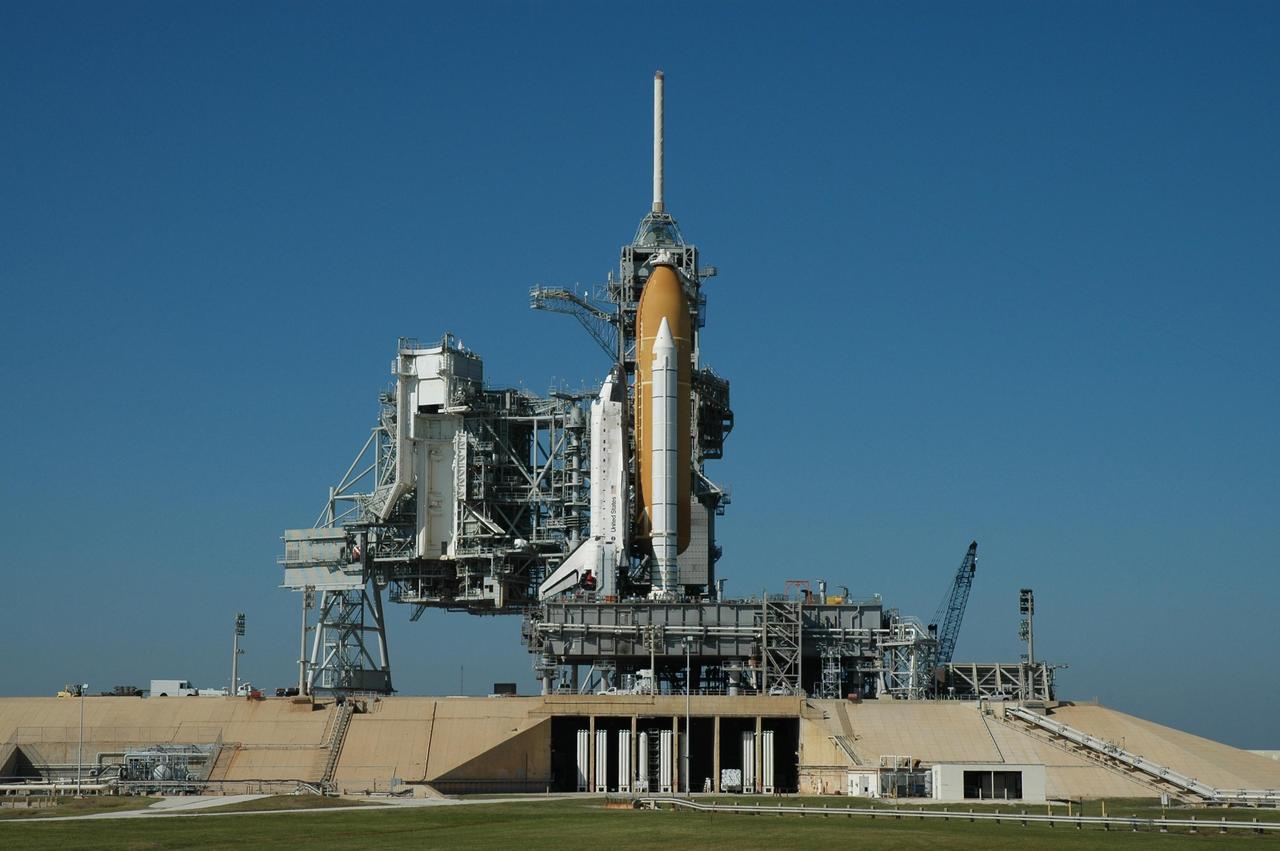
KENNEDY SPACE CENTER, FLA. -- Space Shuttle Discovery sits on Launch Pad 39B for launch of mission STS-116. On the left can be seen the rotating service structure, which will be rolled to enclose the shuttle for servicing and payload transfer. Above the shuttle on the fixed service structure is the 80-foot tall lightning mast. The shuttle was harddown on the pad at 9:03 a.m. The rollout from the Vehicle Assembly Building began at 12:29 a.m. The mission is No. 20 to the International Space Station and construction flight 12A.1. The mission payload is the SPACEHAB module, the P5 integrated truss structure and other key components. The launch window for mission STS-116 opens Dec. 7. Photo credit: NASA/Jim Grossmann
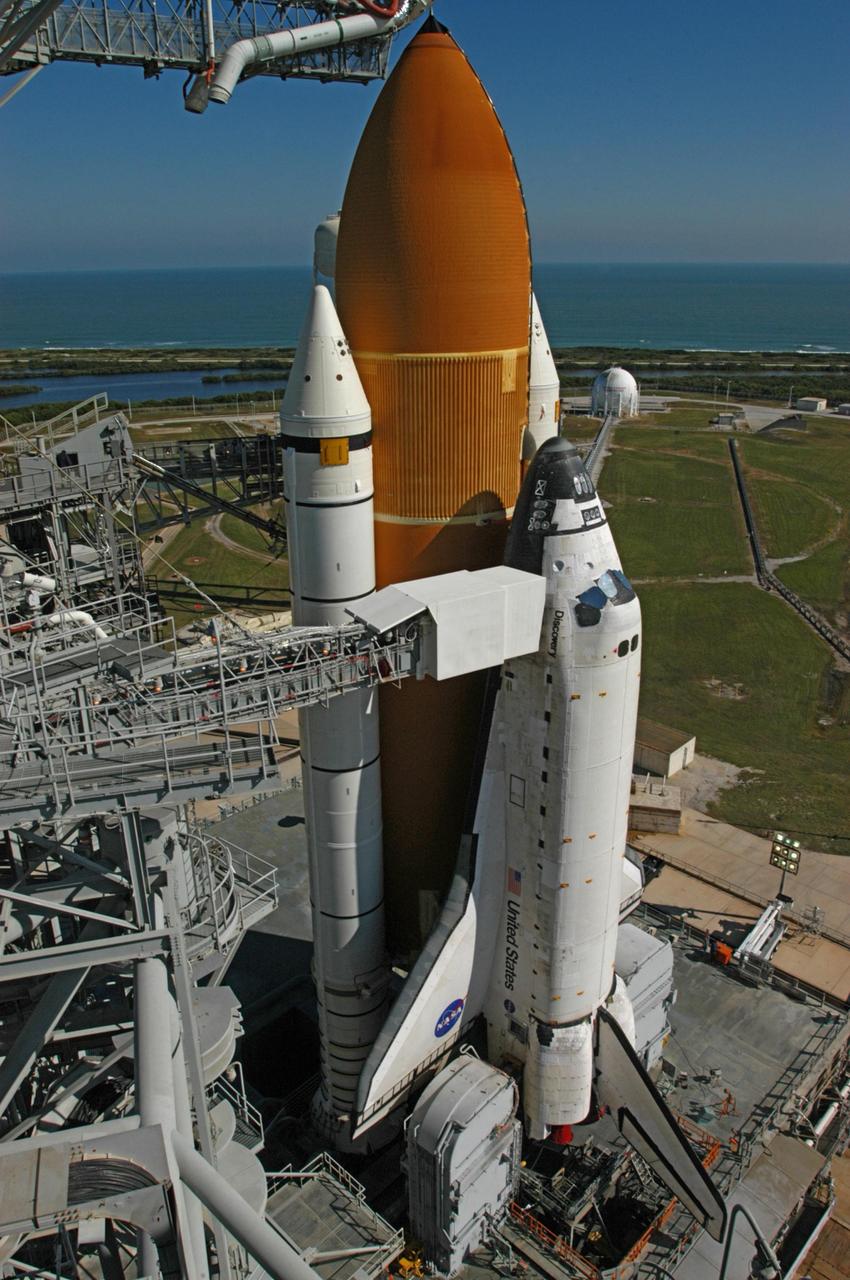
KENNEDY SPACE CENTER, FLA. -- Space Shuttle Discovery and the mobile launcher platform sit on Launch Pad 39B for mission STS-116. Beyond the pad is the Atlantic Ocean. The shuttle's external tank is capped by the oxygen vent hood (at top). Below it is the orbiter access arm which swings out from the fixed service structure to the orbiter crew compartment hatch to allow personnel to enter the crew compartment. The outer end of the access arm ends in an environmental chamber (white room) that mates with the orbiter and holds six persons. The arm remains in the extended position until seven minutes 24 seconds before launch to provide emergency egress for the flight crew. The rollout of Discovery from the Vehicle Assembly Building began at 12:29 a.m. The shuttle was harddown on the pad at 9:03 a.m. The mission is No. 20 to the International Space Station and construction flight 12A.1. The mission payload is the SPACEHAB module, the P5 integrated truss structure and other key components. The launch window for mission STS-116 opens Dec. 7. Photo credit: NASA/George Shelton
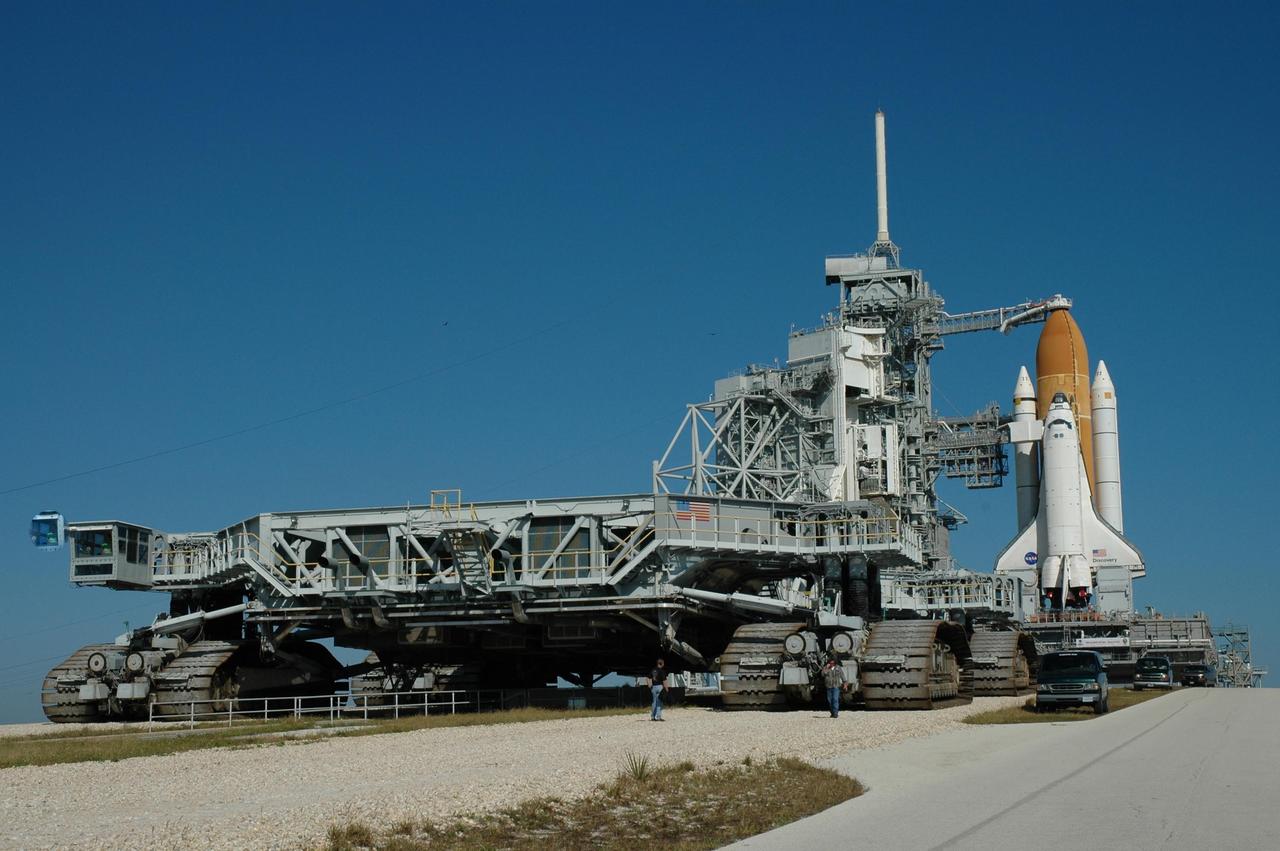
KENNEDY SPACE CENTER, FLA. -- The crawler-transporter moves away from Launch Pad 39B after depositing its cargo, Space Shuttle Discovery and the mobile launcher platform. The shuttle's external tank is capped by the oxygen vent hood. Farther to the left above the fixed service structure is the 80-foot tall lightning mast. The rollout from the Vehicle Assembly Building began at 12:29 a.m. The shuttle was harddown on the pad at 9:03 a.m. The mission is No. 20 to the International Space Station and construction flight 12A.1. The mission payload is the SPACEHAB module, the P5 integrated truss structure and other key components. The launch window for mission STS-116 opens Dec. 7. Photo credit: NASA/Jim Grossmann