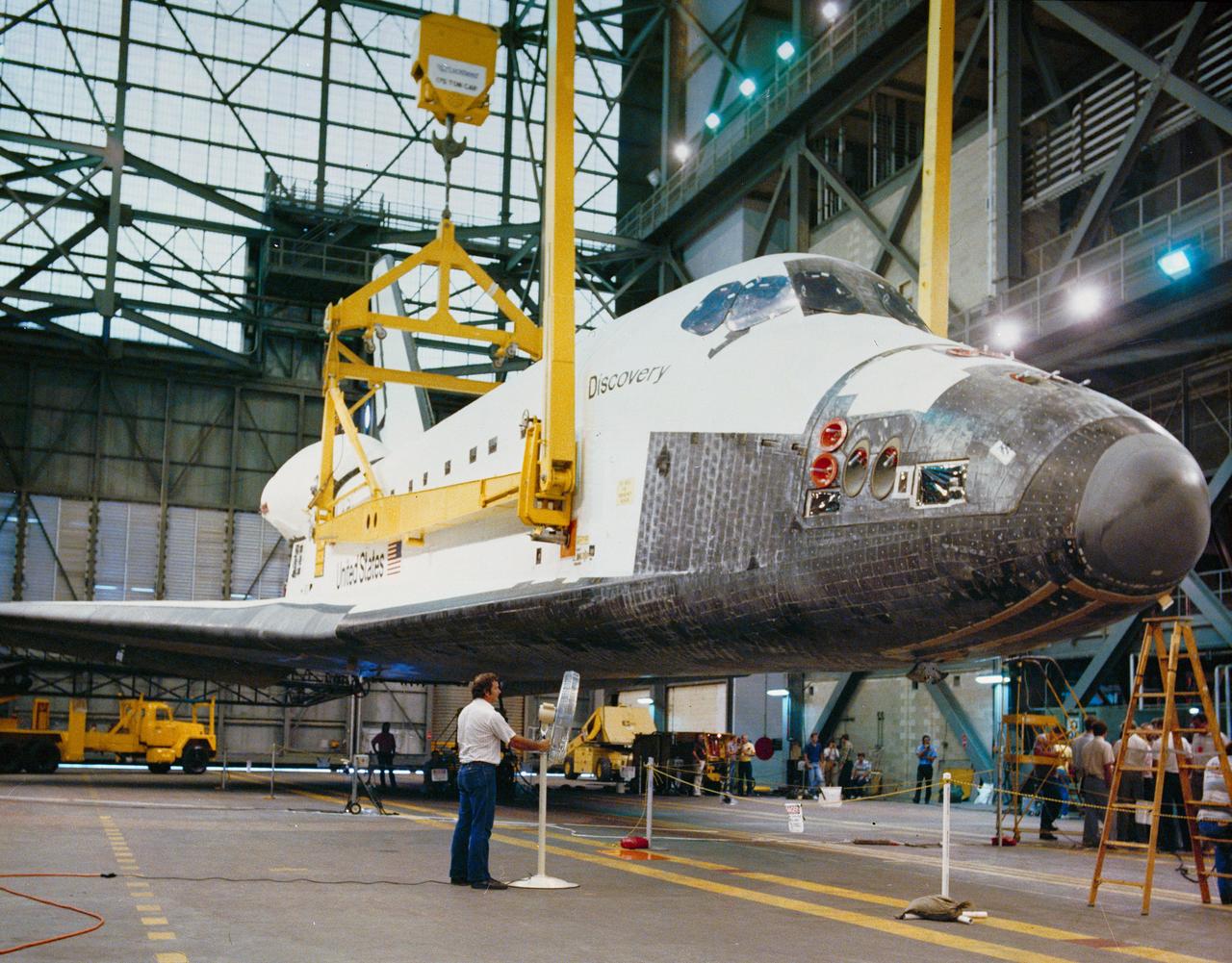
S88-41541 (7 July 1988) --- STS-26 Discovery, Orbiter Vehicle (OV) 103, is suspended by overhead crane and large frame attached to vehicle at four points. A ground-level view shows OV-103 during operations to accomplish its mating to two solid rocket boosters (SRBs) and an external fuel tank (ET) in the vehicle assembly building (VAB) at the Kennedy Space Center (KSC). From this step OV-103 will be lifted vertically and hoisted high inside the VAB for mating with the already connected ET and SRBs. In less than two weeks, the combined components will be rolled to Pad 39B atop a mobile launch platform.
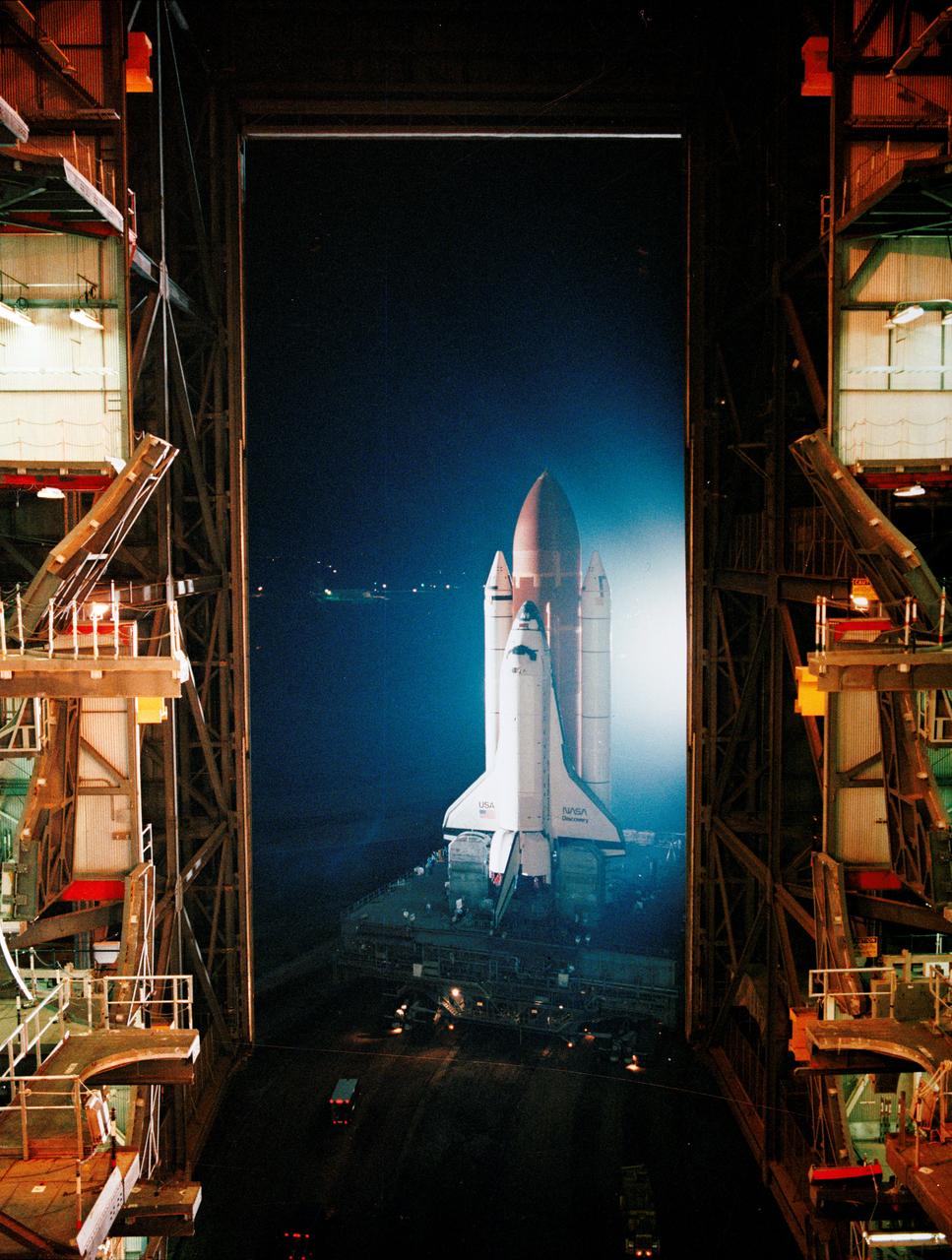
STS-26 Discovery, Orbiter Vehicle (OV) 103, mated with the external tank (ET) and solid rocket boosters (SRBs), is framed by Kennedy Space Center's (KSC's) vehicle assembly building (VAB) doorway as it rolled out. This high angle view shows OV-103 atop the mobile launch pad and crawler transporter as it begins its slow exit from VAB en route to launch complex (LC) pad 39B. The move began shortly after midnight on the nation's 212th birthday. Ceremonies marking the event were held later during daylight hours.
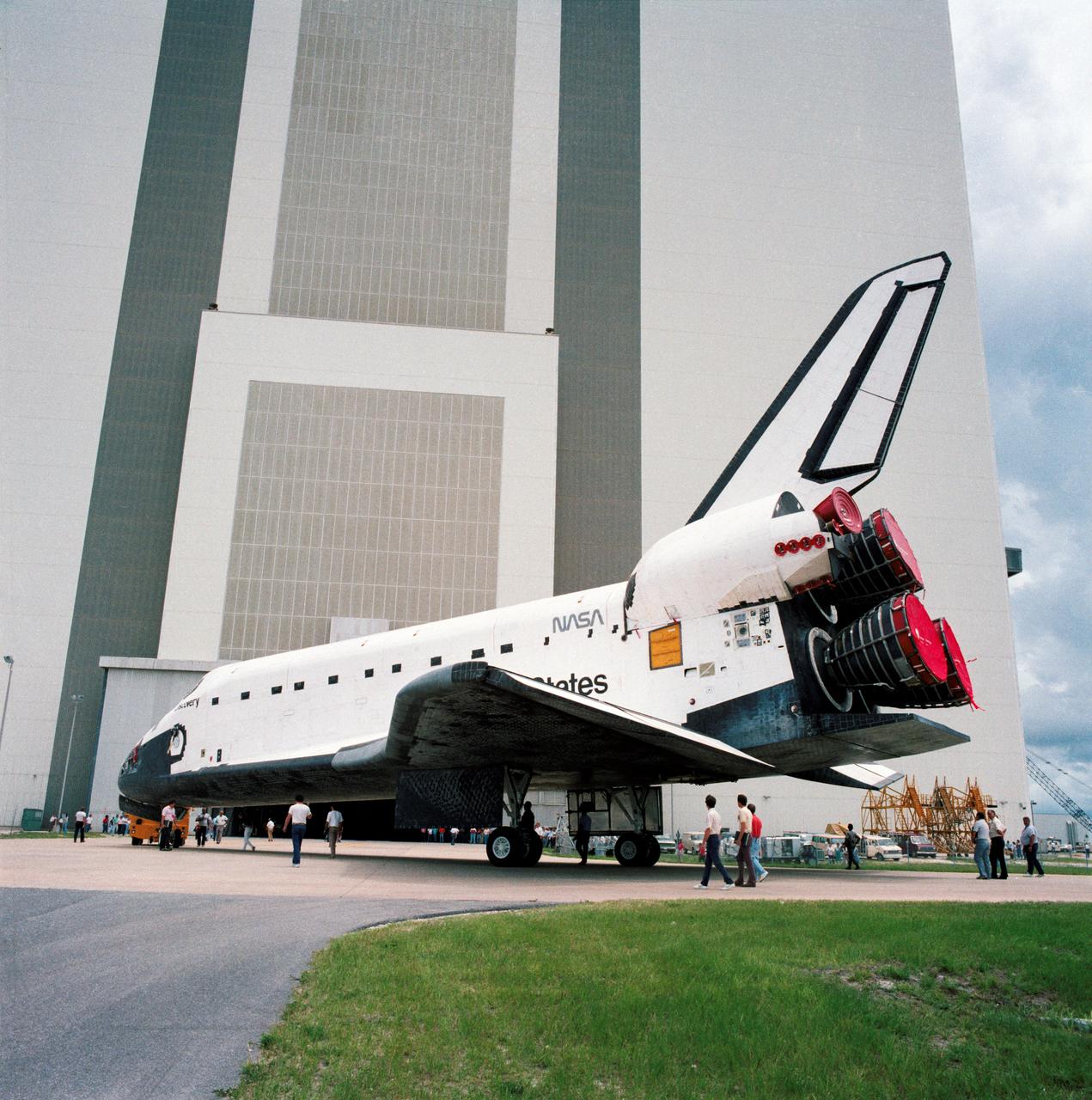
S88-42092 (15 July 1988) --- STS-26 Discovery, Orbiter Vehicle (OV) 103, rollover at Kennedy Space Center (KSC) is closely monitored by engineers and technicians in the late stages of the move from the orbiter processing facility (OPF) to the vehicle assembly building (VAB) as preflight preparations continue. A large crowd of KSC employees and other spectators watches in the background as OV-103, supported by its landing gear, is pulled toward VAB (background). While in the VAB, OV-103 will be mated to two solid rocket boosters (SRBs) and an external fuel tank.
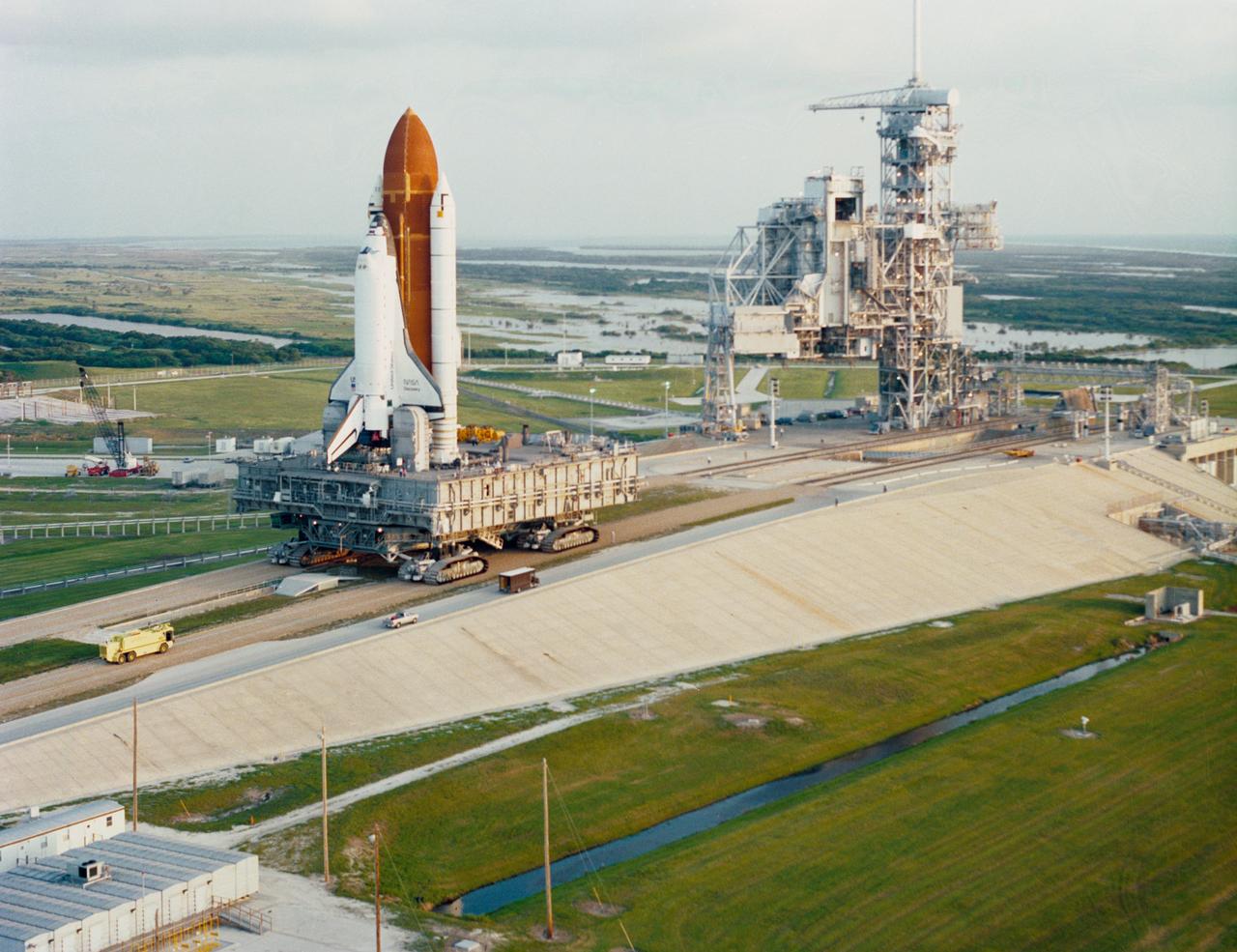
STS-26 Discovery, Orbiter Vehicle (OV) 103, rolls out to Kennedy Space Center (KSC) launch complex (LC) pad 39B on top of the crawler transporter. OV-103 nears LC pad 39B after a six-hour journey from the vehicle assembly building (VAB). When locked onto the nearby rotating service structure (RSS), work will continue to ready the vehicle for the STS-26 launch later in the summer.
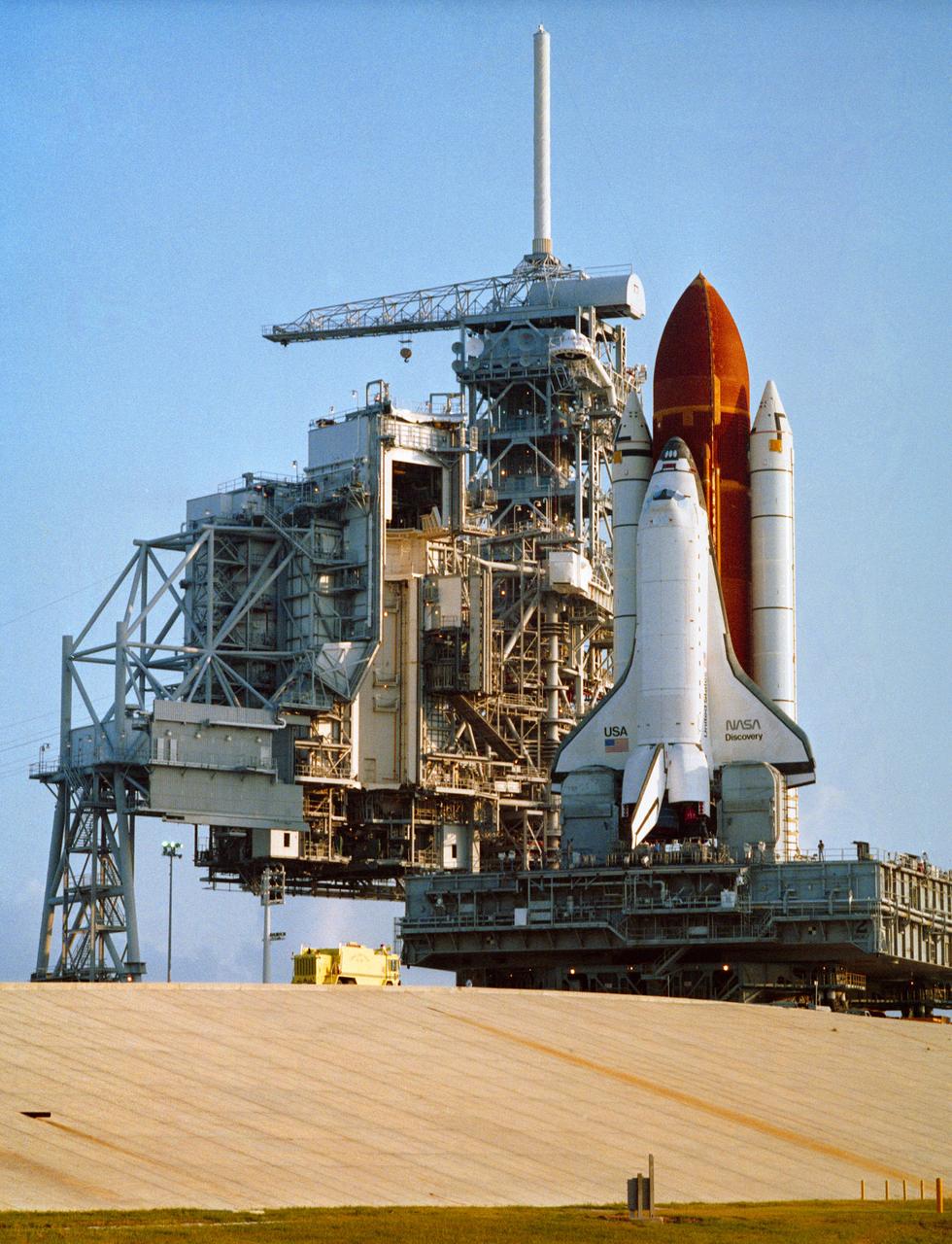
S88-42101 (15 July 1988) --- STS-26 Discovery, Orbiter Vehicle (OV) 103, awaits further processing at Kennedy Space Center (KSC) launch complex (LC) pad 39B. OV-103 arrived at LC pad 39B after a six-hour journey from the vehicle assembly building (VAB). The rotating service structure is retracted.
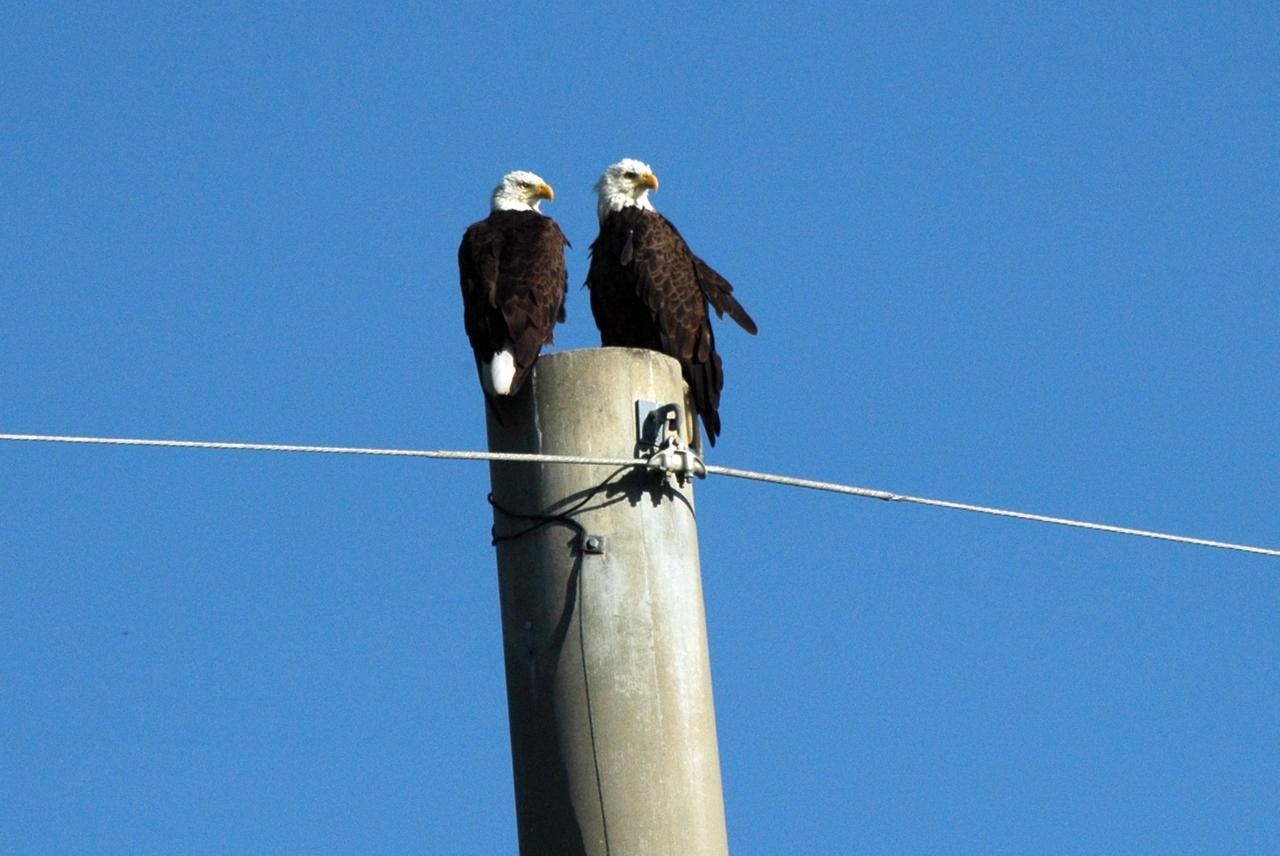
KENNEDY SPACE CENTER, FLA. - These bald eagles scan the landscape of Kennedy Space Center from the top of a utility pole on S.R. 3. There are a dozen active nests of bald eagles throughout the Merritt Island National Wildlife Refuge, which shares a boundary with the Center. Eagles' habitats are near lakes, rivers, marshes and seacoasts. Nests are masses of sticks, usually in the top of a tall tree. Even though they are fish eaters, bald eagles will take whatever prey is available and easiest to obtain. Bald eagles that live along the coast and on major lakes and rivers feed mainly on fish.
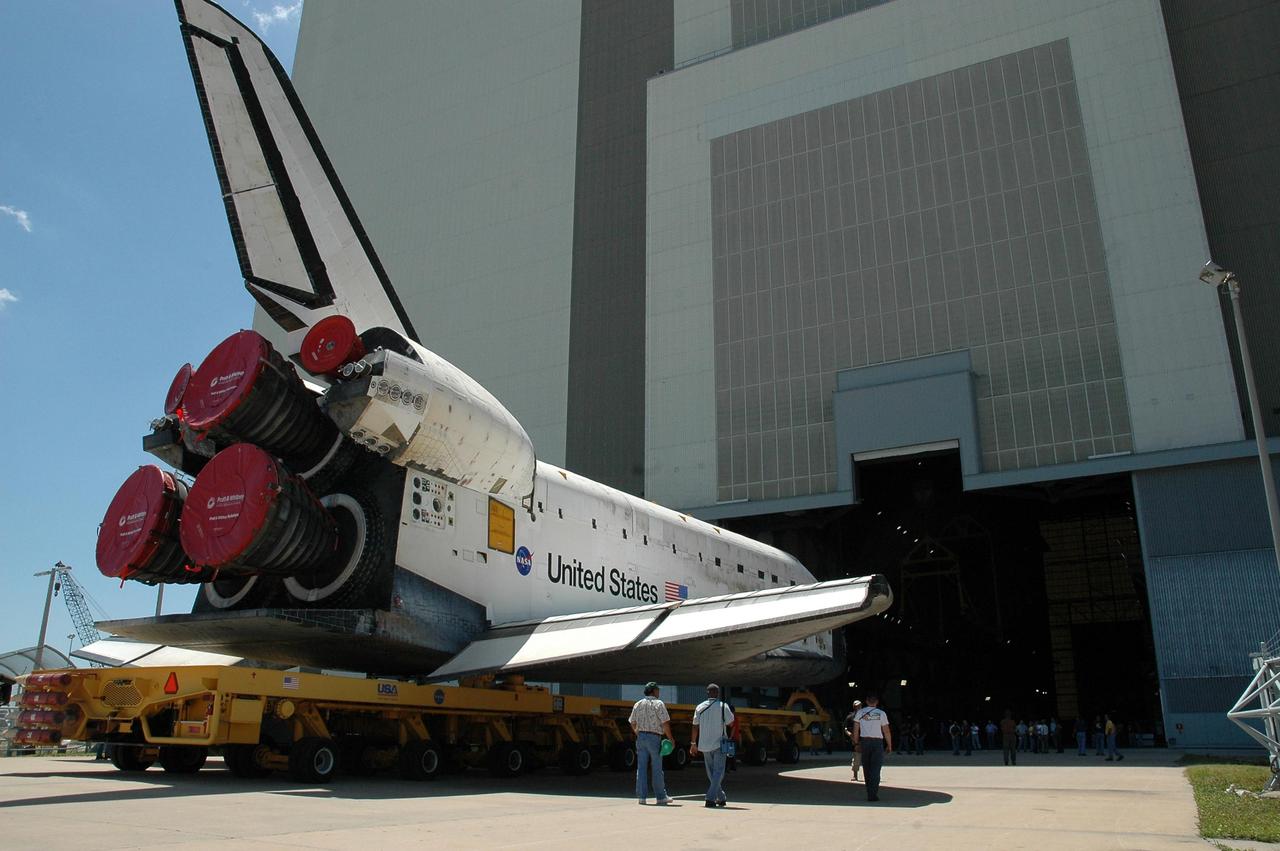
KENNEDY SPACE CENTER, FLA. - The orbiter Discovery, atop an orbiter transporter, nears the open panel on NASA's Vehicle Assembly Building (VAB). The rollover marks the start of the journey to the launch pad and, ultimately, launch. Once inside the VAB, Discovery will be raised to vertical and lifted up and over into high bay 3 for stacking with its redesigned external tank and twin solid rocket boosters. The rollout of Space Shuttle Discovery to Launch Pad 39B is expected in approximately a week. Launch of Discovery on mission STS-121 is scheduled to take place in a window extending July 1 to July 19. Photo credit: NASA/Jack Pfaller
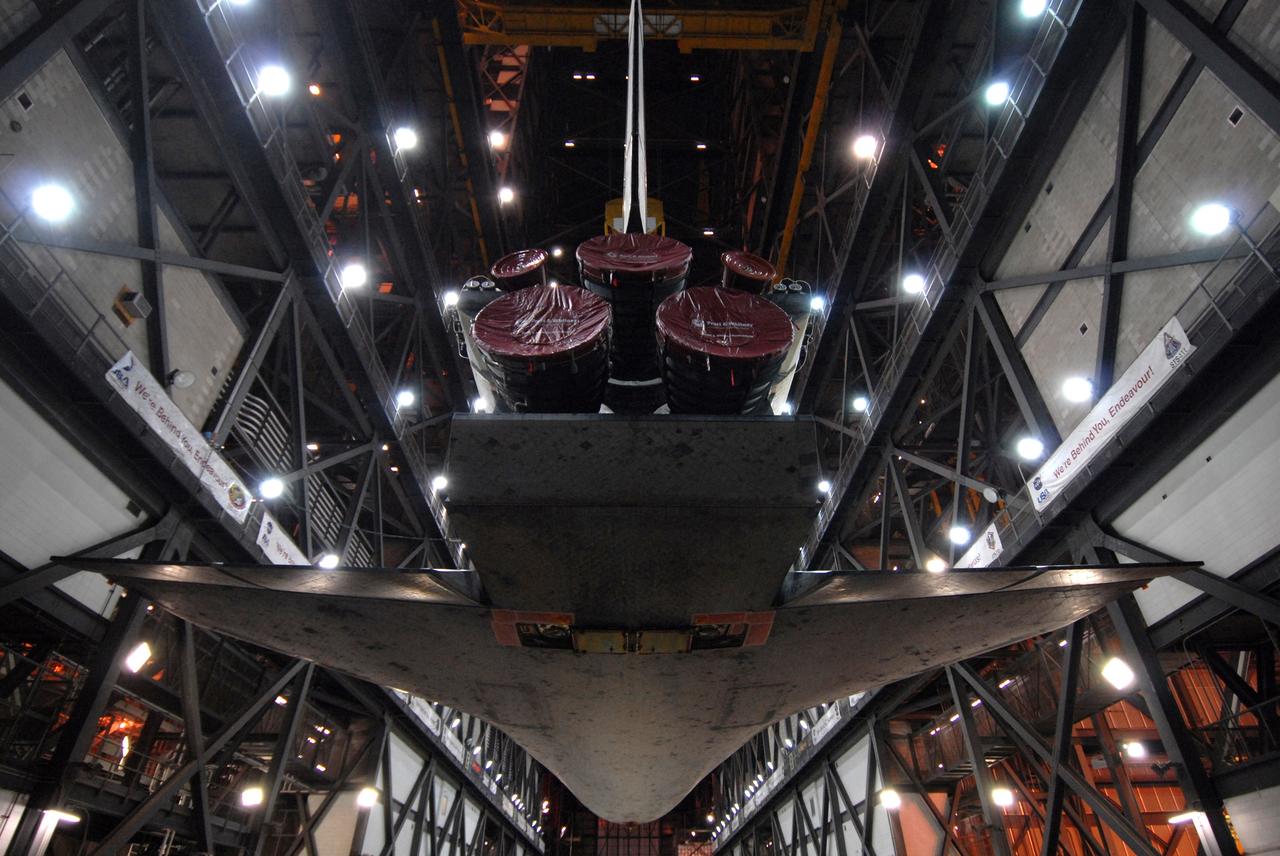
CAPE CANAVERAL, Fla. -- In the Vehicle Assembly Building transfer aisle at NASA's Kennedy Space Center in Florida, space shuttle Discovery is viewed from underneath as it is lifted from its transporter by an overhead crane. The shuttle will be raised to a vertical position and lifted into high bay 3 where it will be mated with its external fuel tank and solid rocket boosters on the mobile launcher platform. After additional preparations are made, the shuttle will be rolled out to Launch Pad 39A for a targeted launch on Feb. 12. Discovery will carry the final starboard truss (S6) in the assembly of the International Space Station. Photo credit: NASA/Troy Cryder
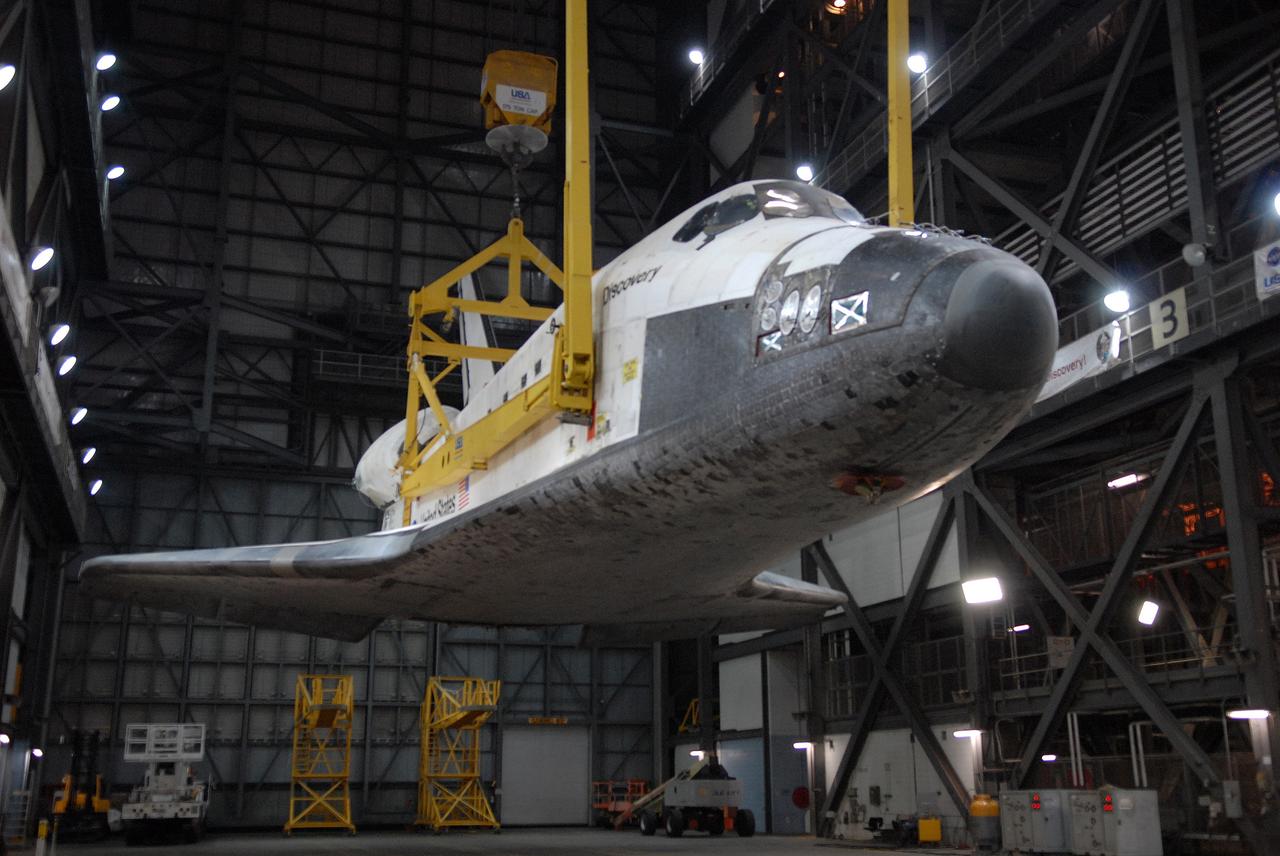
CAPE CANAVERAL, Fla. -- In the Vehicle Assembly Building at NASA's Kennedy Space Center in Florida, space shuttle Discovery is lifted away from its transporter above the transfer aisle. The shuttle will be raised to a vertical position and lifted into high bay 3 where it will be mated with its external fuel tank and solid rocket boosters on the mobile launcher platform. After additional preparations are made, the shuttle will be rolled out to Launch Pad 39A for a targeted launch on Feb. 12. Discovery will carry the final starboard truss (S6) in the assembly of the International Space Station. Photo credit: NASA/Troy Cryder
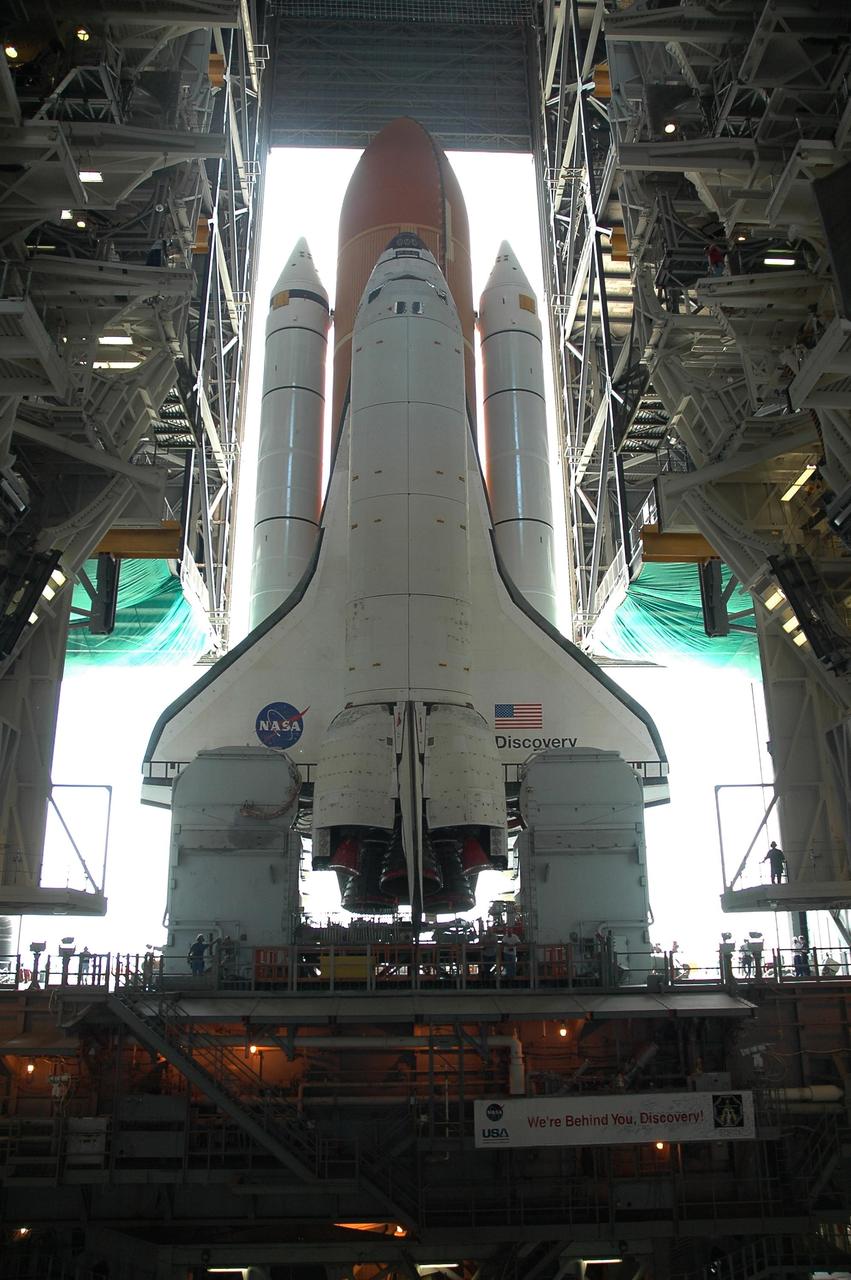
KENNEDY SPACE CENTER, FLA. -- From high bay 3 of NASA's Vehicle Assembly Building, Space Shuttle Discovery begins its slow 4.2-mile journey via the crawlerway to Launch Pad 39B. The shuttle rests on a mobile launcher platform that sits atop a crawler-transporter. First motion was at 12:45 p.m. EDT. The rollout is an important step before launch of Discovery on mission STS-121 to the International Space Station. Discovery's launch is targeted for July 1 in a launch window that extends to July 19. During the 12-day mission, Discovery's crew will test new hardware and techniques to improve shuttle safety, as well as deliver supplies and make repairs to the station. Photo credit: NASA/Jack Pfaller
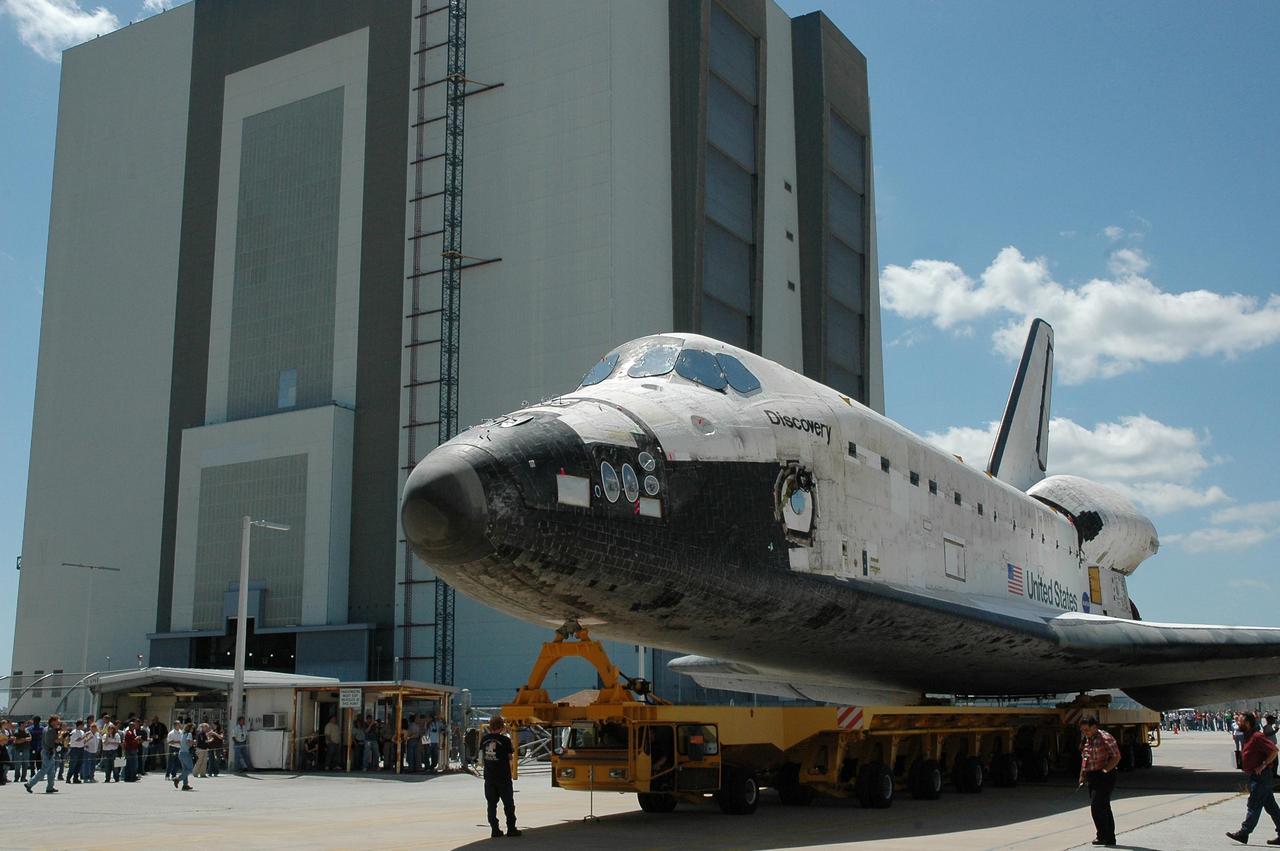
KENNEDY SPACE CENTER, FLA. - The orbiter Discovery, sitting on an orbiter transporter, begins making the short trip to NASA's Vehicle Assembly Building (VAB) , seen behind it. The rollover marks the start of the journey to the launch pad and, ultimately, launch. Once inside the VAB, Discovery will be raised to vertical and lifted up and over into high bay 3 for stacking with its redesigned external tank and twin solid rocket boosters. The rollout of Space Shuttle Discovery to Launch Pad 39B is expected in approximately a week. Launch of Discovery on mission STS-121 is scheduled to take place in a window extending July 1 to July 19. Photo credit: NASA/Jack Pfaller
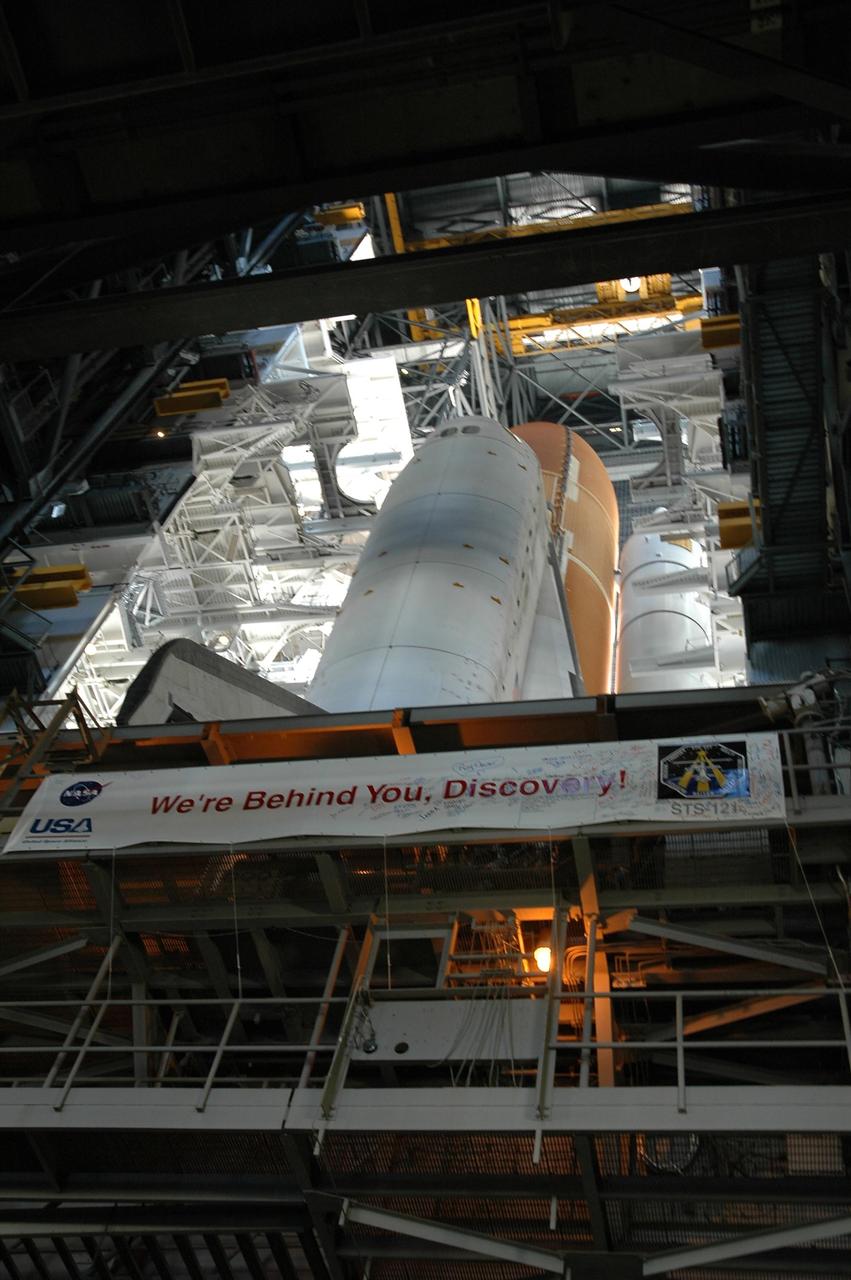
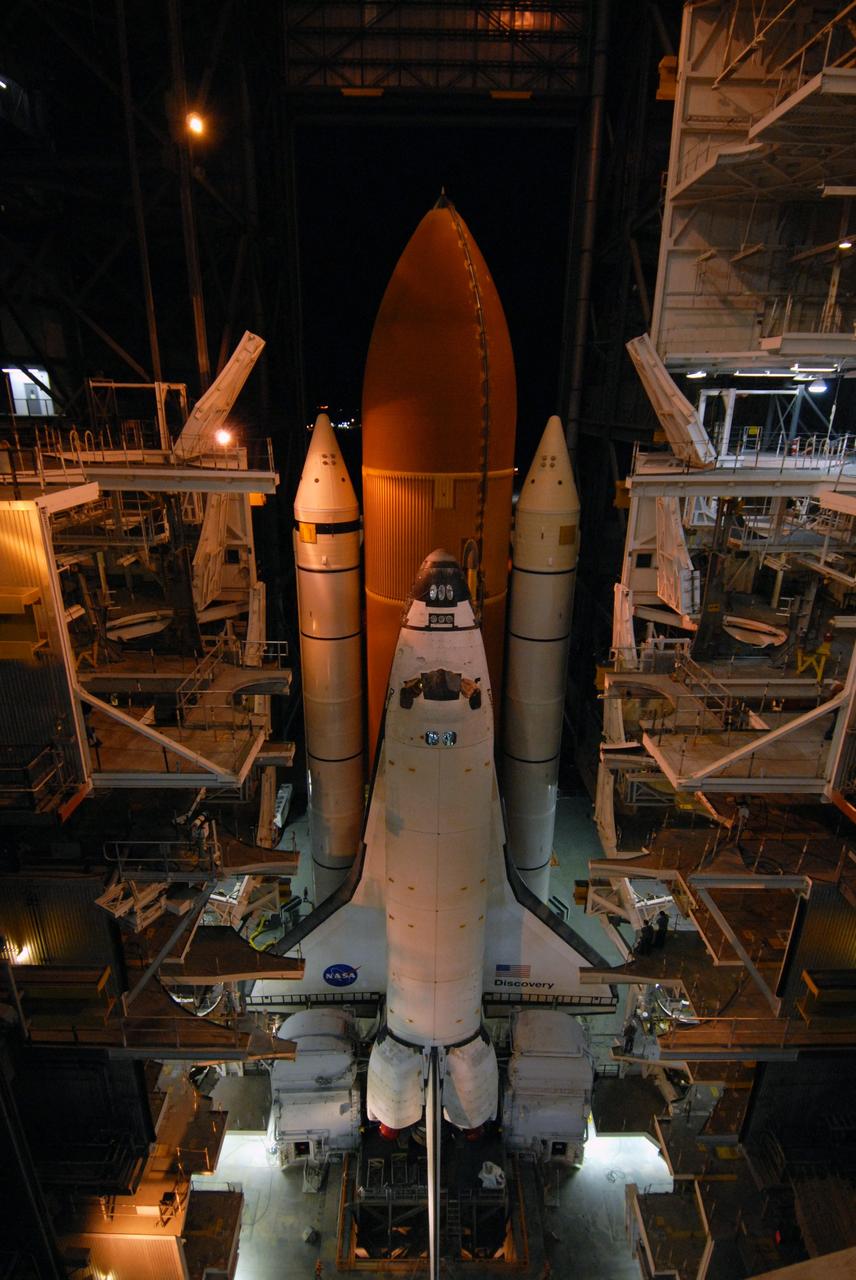
KENNEDY SPACE CENTER, FLA. -- Inside NASA's Vehicle Assembly Building, Space Shuttle Discovery stretches high above the floor as it waits for rollout to Launch Pad 39B. The shuttle sits on a mobile launcher platform atop the crawler-transporter. The rollout is an important step before launch of Discovery on mission STS-121 to the International Space Station. Discovery's launch is targeted for July 1 in a launch window that extends to July 19. During the 12-day mission, Discovery's crew will test new hardware and techniques to improve shuttle safety, as well as deliver supplies and make repairs to the station. Photo credit: NASA/Jack Pfaller
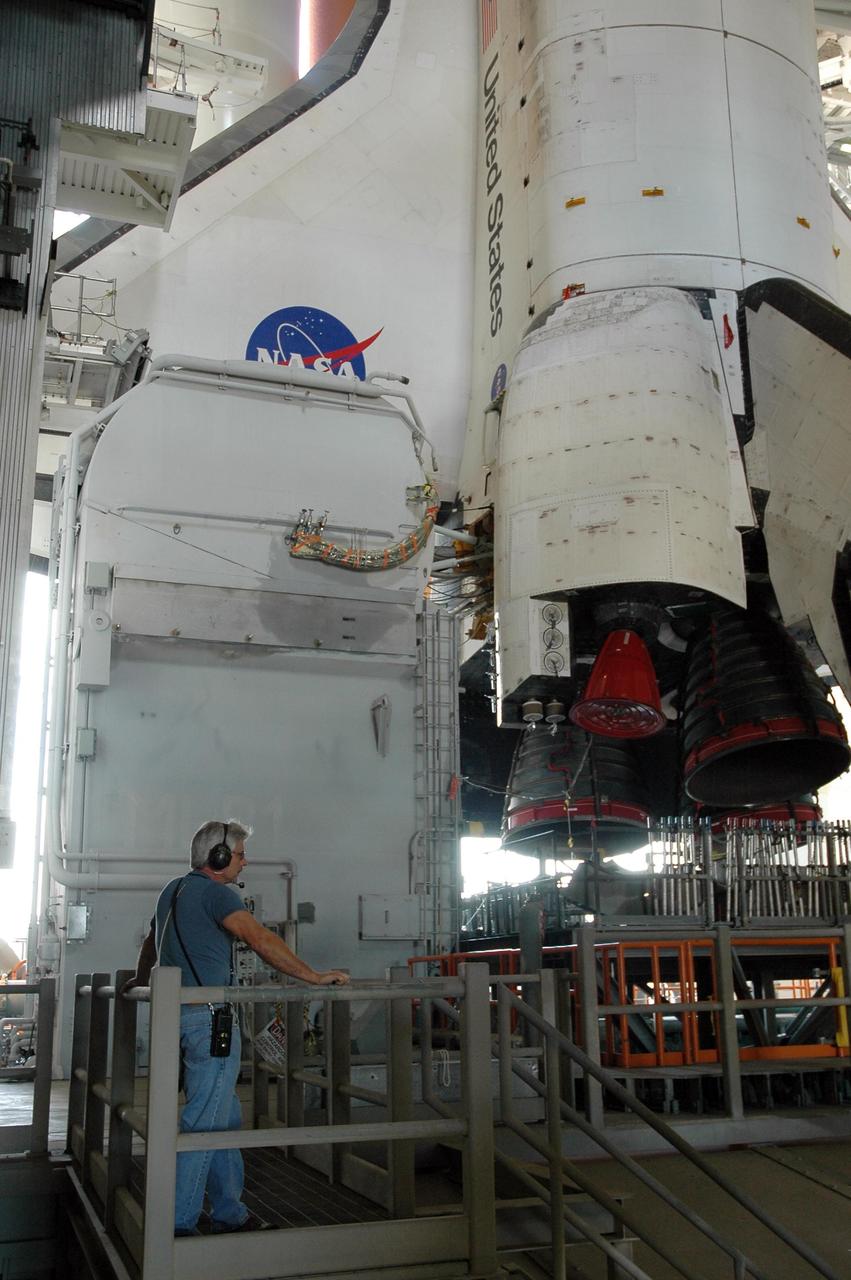
KENNEDY SPACE CENTER, FLA. -- A worker on a stand behind the mobile launcher platform holding Space Shuttle Discovery waits for first motion of the shuttle out of NASA's Vehicle Assembly Building. The rollout is an important step before launch of Discovery on mission STS-121 to the International Space Station. Discovery's launch is targeted for July 1 in a launch window that extends to July 19. During the 12-day mission, Discovery's crew will test new hardware and techniques to improve shuttle safety, as well as deliver supplies and make repairs to the station. Photo credit: NASA/Jack Pfaller

KENNEDY SPACE CENTER, FLA. - Accompanied by Center employees, the orbiter Discovery, sitting on an orbiter transporter, rolls to NASA's Vehicle Assembly Building (VAB). The rollover marks the start of the journey to the launch pad and, ultimately, launch. Once inside the VAB, Discovery will be raised to vertical and lifted up and over into high bay 3 for stacking with its redesigned external tank and twin solid rocket boosters. The rollout of Space Shuttle Discovery to Launch Pad 39B is expected in approximately a week. Launch of Discovery on mission STS-121 is scheduled to take place in a window extending July 1 to July 19. Photo credit: NASA/Jack Pfaller

KENNEDY SPACE CENTER, FLA. -- Inside NASA's Vehicle Assembly Building, the crawler transporter supporting Space Shuttle Discovery on its mobile launcher platform is ready to roll out to Launch Pad 39B with its cargo. The open area above the crawler is the opening for the exhaust of one of the solid rocket boosters (two other openings are provided for main engines and second booster). The rollout is an important step before launch of Discovery on mission STS-121 to the International Space Station. Discovery's launch is targeted for July 1 in a launch window that extends to July 19. During the 12-day mission, Discovery's crew will test new hardware and techniques to improve shuttle safety, as well as deliver supplies and make repairs to the station. Photo credit: NASA/Jack Pfaller

KENNEDY SPACE CENTER, FLA. - The orbiter Discovery, atop an orbiter transporter, reaches its destination, the transfer aisle of NASA's Vehicle Assembly Building (VAB). The rollover to the VAB marks the start of the journey to the launch pad and, ultimately, launch. After the slings of the overhead crane are in place, Discovery will be raised to vertical and lifted up and over into high bay 3 for stacking with its redesigned external tank and twin solid rocket boosters. The rollout of Space Shuttle Discovery to Launch Pad 39B is expected in approximately a week. Launch of Discovery on mission STS-121 is scheduled to take place in a window extending July 1 to July 19. Photo credit: NASA/Jack Pfaller

KENNEDY SPACE CENTER, FLA. - The orbiter Discovery, atop an orbiter transporter, heads for NASA's Vehicle Assembly Building (VAB).The rollover marks the start of the journey to the launch pad and, ultimately, launch. Once inside the VAB, Discovery will be raised to vertical and lifted up and over into high bay 3 for stacking with its redesigned external tank and twin solid rocket boosters. The rollout of Space Shuttle Discovery to Launch Pad 39B is expected in approximately a week. Launch of Discovery on mission STS-121 is scheduled to take place in a window extending July 1 to July 19. Photo credit: NASA/Jack Pfaller
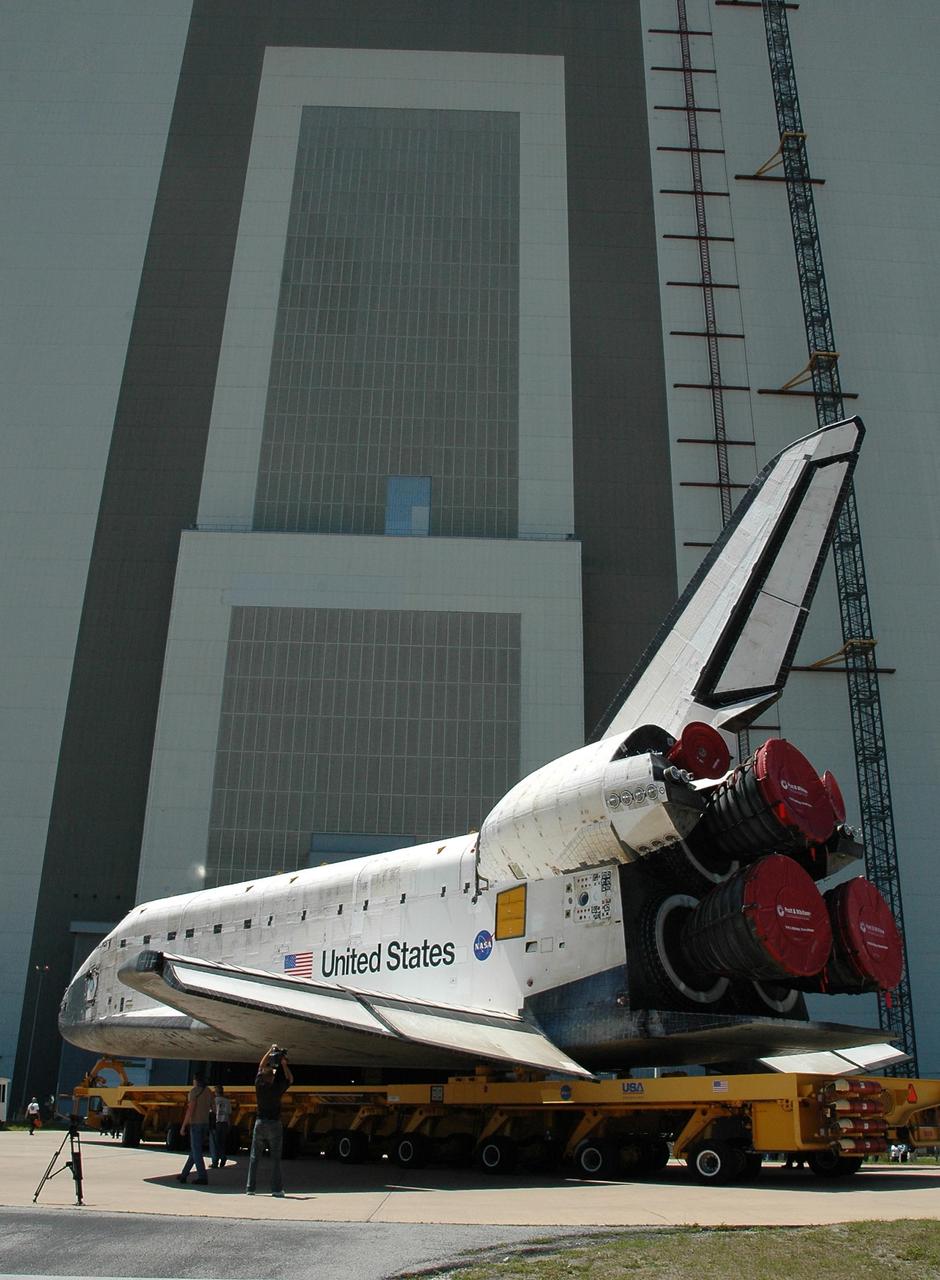
KENNEDY SPACE CENTER, FLA. - The orbiter Discovery, atop an orbiter transporter, turns toward NASA's Vehicle Assembly Building (VAB). The rollover marks the start of the journey to the launch pad and, ultimately, launch. Once inside the VAB, Discovery will be raised to vertical and lifted up and over into high bay 3 for stacking with its redesigned external tank and twin solid rocket boosters. The rollout of Space Shuttle Discovery to Launch Pad 39B is expected in approximately a week. Launch of Discovery on mission STS-121 is scheduled to take place in a window extending July 1 to July 19. Photo credit: NASA/Jack Pfaller
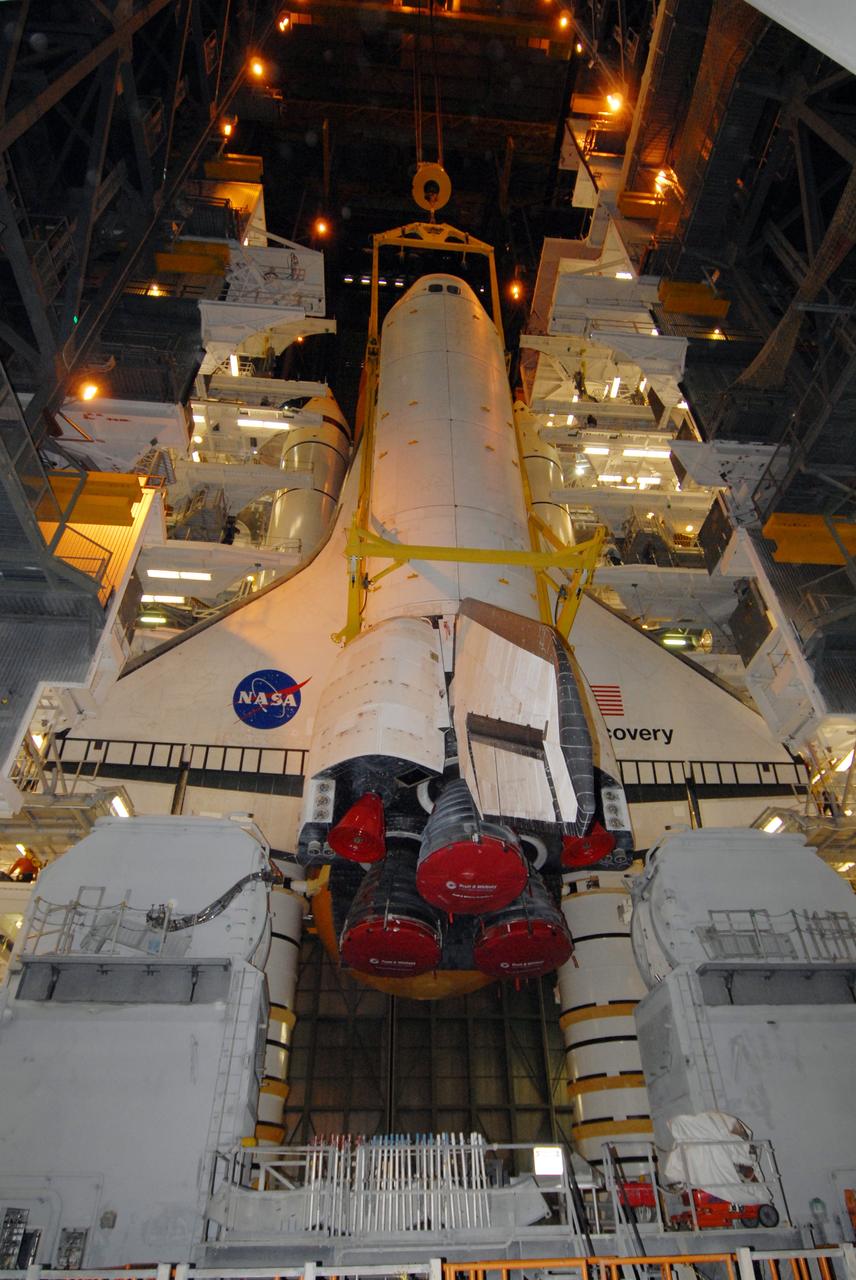
CAPE CANAVERAL, Fla. -- In the Vehicle Assembly Building at NASA's Kennedy Space Center in Florida, space shuttle Discovery is lowered alongside the external fuel tank and solid rocket boosters already stacked on the mobile launcher platform. Discovery will be mated with the stack. After additional preparations are made, the shuttle will be rolled out to Launch Pad 39A for a targeted launch on Feb. 12. Discovery will carry the final starboard truss (S6) in the assembly of the International Space Station. Photo credit: NASA/Jack Pfaller
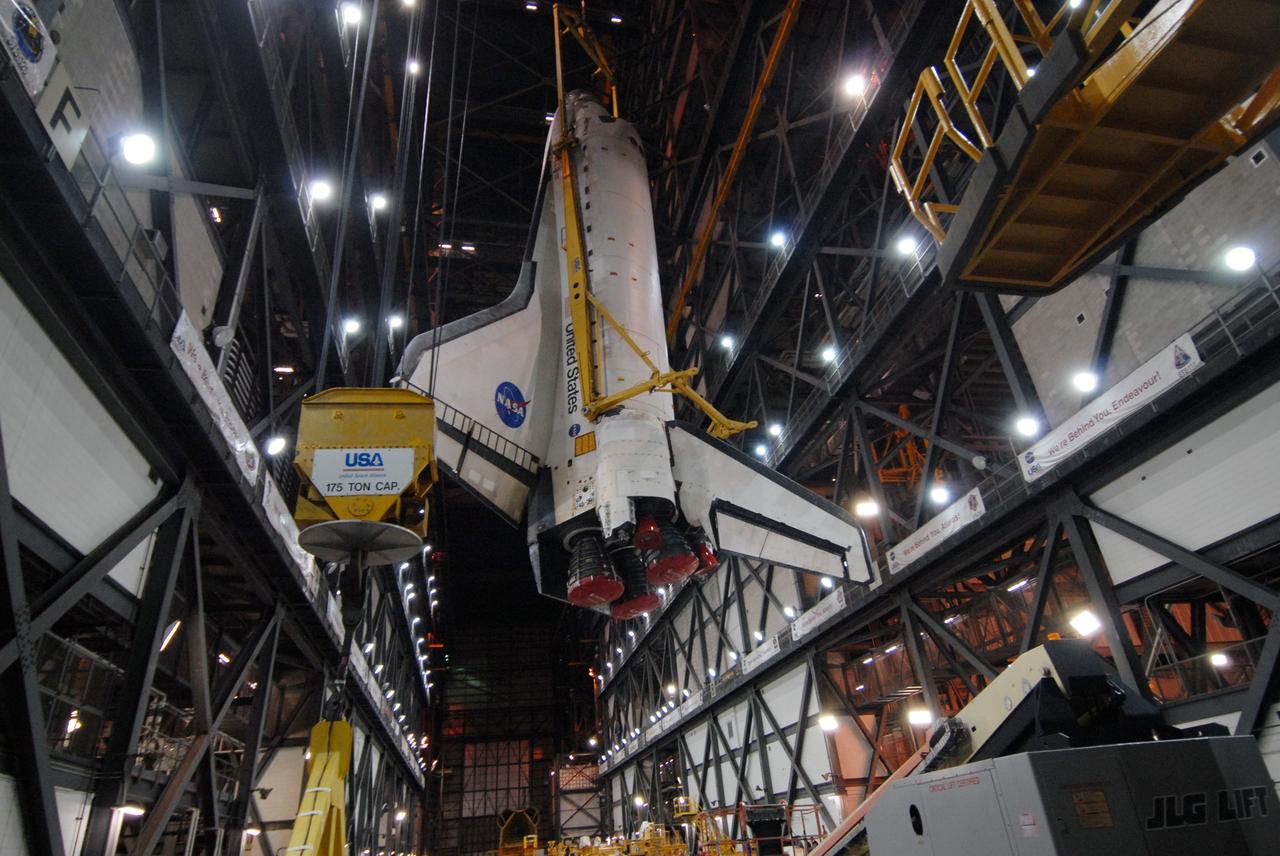
CAPE CANAVERAL, Fla. -- In the Vehicle Assembly Building at NASA's Kennedy Space Center in Florida, space shuttle Discovery is lifted into the upper levels for transfer to high bay 3. The shuttle will then be lowered onto the mobile launcher platform for mating with its external fuel tank and solid rocket boosters. After additional preparations are made, the shuttle will be rolled out to Launch Pad 39A for a targeted launch on Feb. 12. Discovery will carry the final starboard truss (S6) in the assembly of the International Space Station. Photo credit: NASA/Jack Pfaller
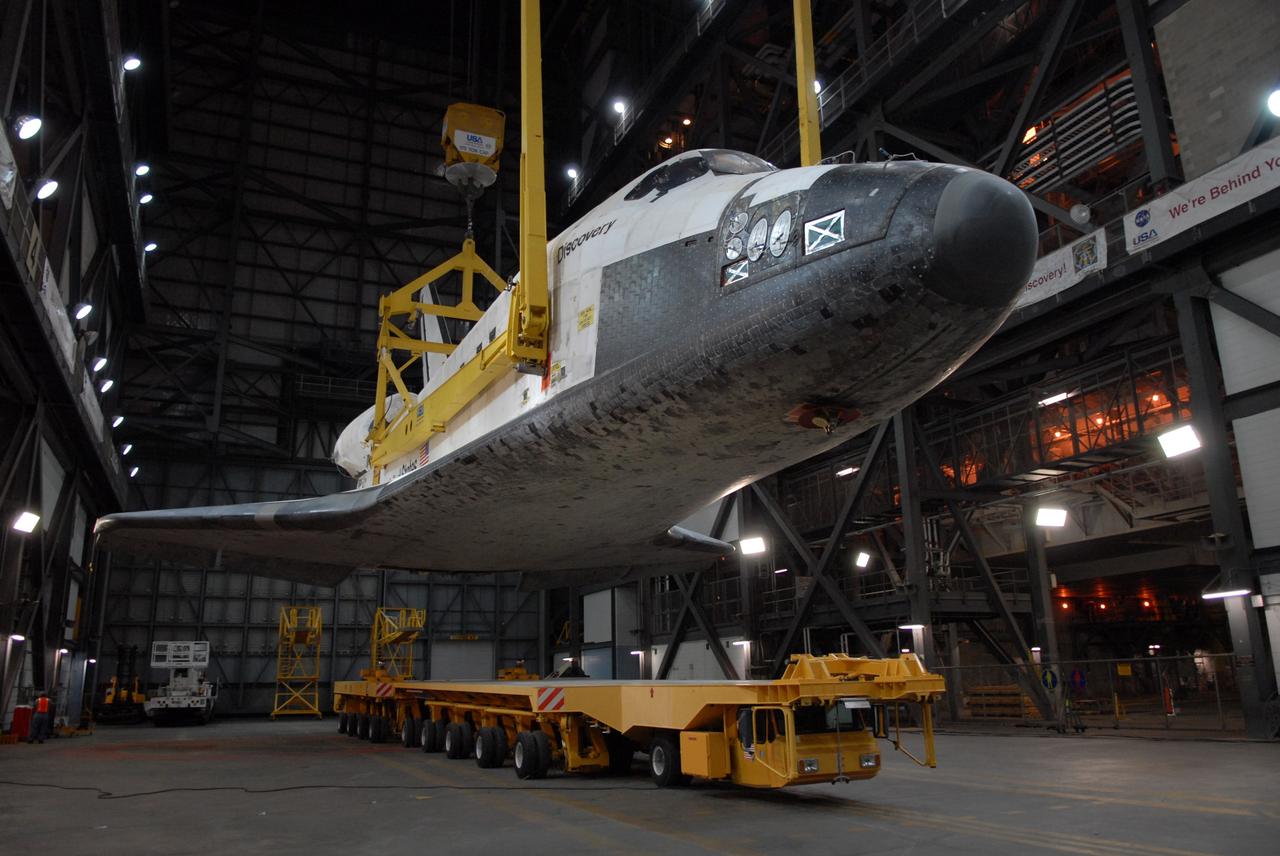
CAPE CANAVERAL, Fla. -- In the Vehicle Assembly Building transfer aisle at NASA's Kennedy Space Center in Florida, space shuttle Discovery is lifted from its transporter by an overhead crane. The shuttle will be raised to a vertical position and lifted into high bay 3 where it will be mated with its external fuel tank and solid rocket boosters on the mobile launcher platform. After additional preparations are made, the shuttle will be rolled out to Launch Pad 39A for a targeted launch on Feb. 12. Discovery will carry the final starboard truss (S6) in the assembly of the International Space Station. Photo credit: NASA/Troy Cryder
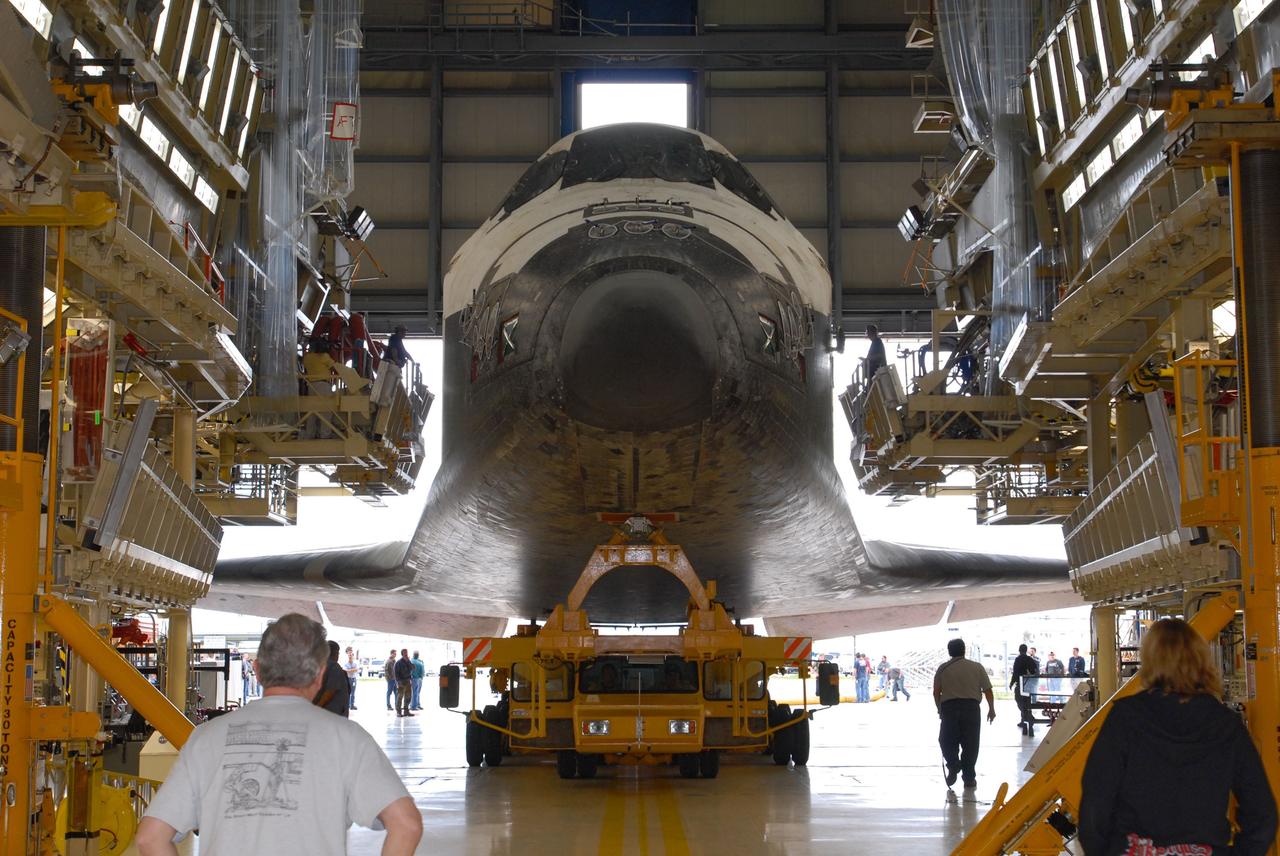
CAPE CANAVERAL, Fla. -- Space shuttle Discovery rolls out of Orbiter Processing Facility 3 at NASA's Kennedy Space Center in Florida to head to the Vehicle Assembly Building at NASA's Kennedy Space Center. First motion was at 2:30 p.m. EST. In the VAB, Discovery will be attached to its external fuel tank and twin solid rocket boosters. After additional preparations are made, the shuttle will be rolled out to Launch Pad 39A for a targeted launch to the International Space Station on Feb. 12. Photo credit: NASA/Jim Grossmann
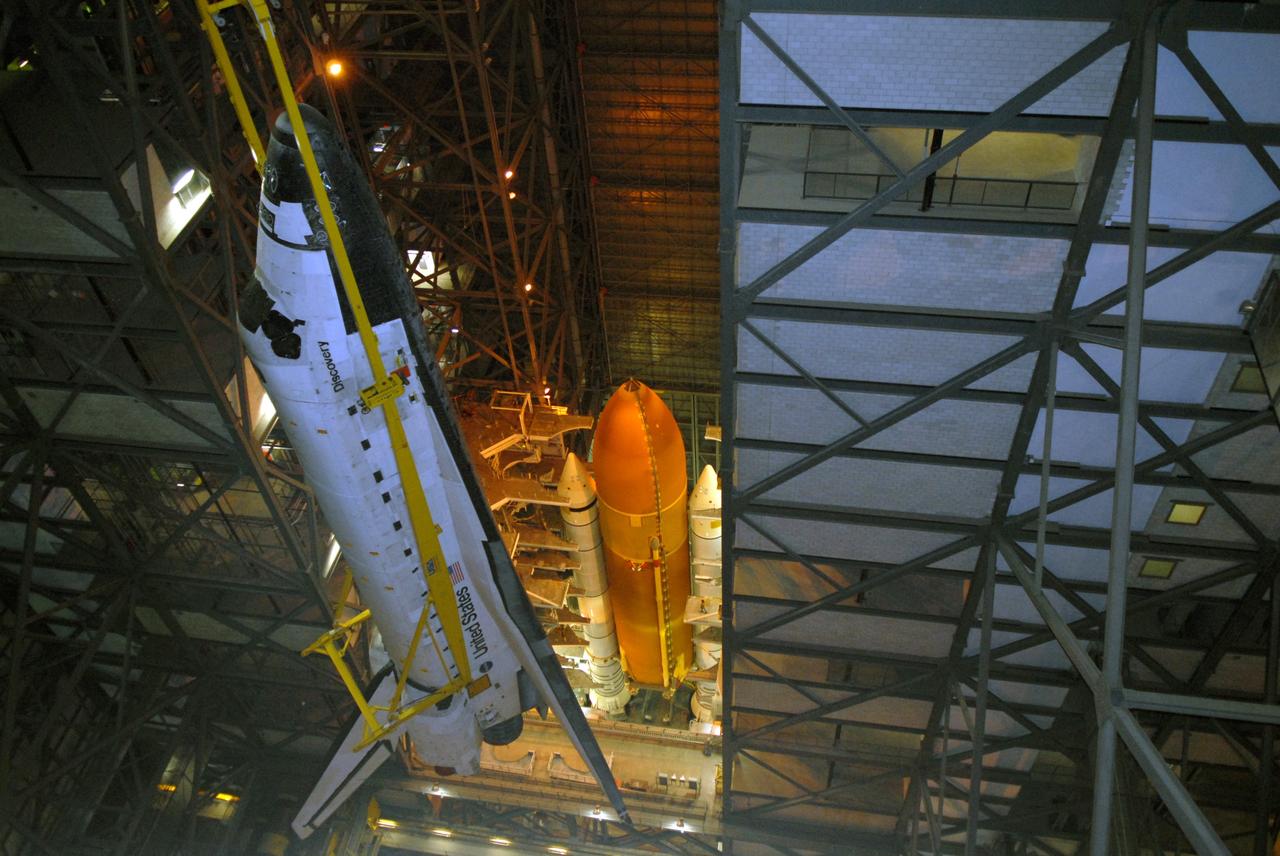
CAPE CANAVERAL, Fla. -- In the upper levels of the Vehicle Assembly Building at NASA's Kennedy Space Center in Florida, space shuttle Discovery is moved toward high bay 3 where the external fuel tank and solid rocket boosters are already stacked on the mobile launcher platform. Discovery will be lowered onto the platform and mated with the stack. After additional preparations are made, the shuttle will be rolled out to Launch Pad 39A for a targeted launch on Feb. 12. Discovery will carry the final starboard truss (S6) in the assembly of the International Space Station. Photo credit: NASA/Jack Pfaller
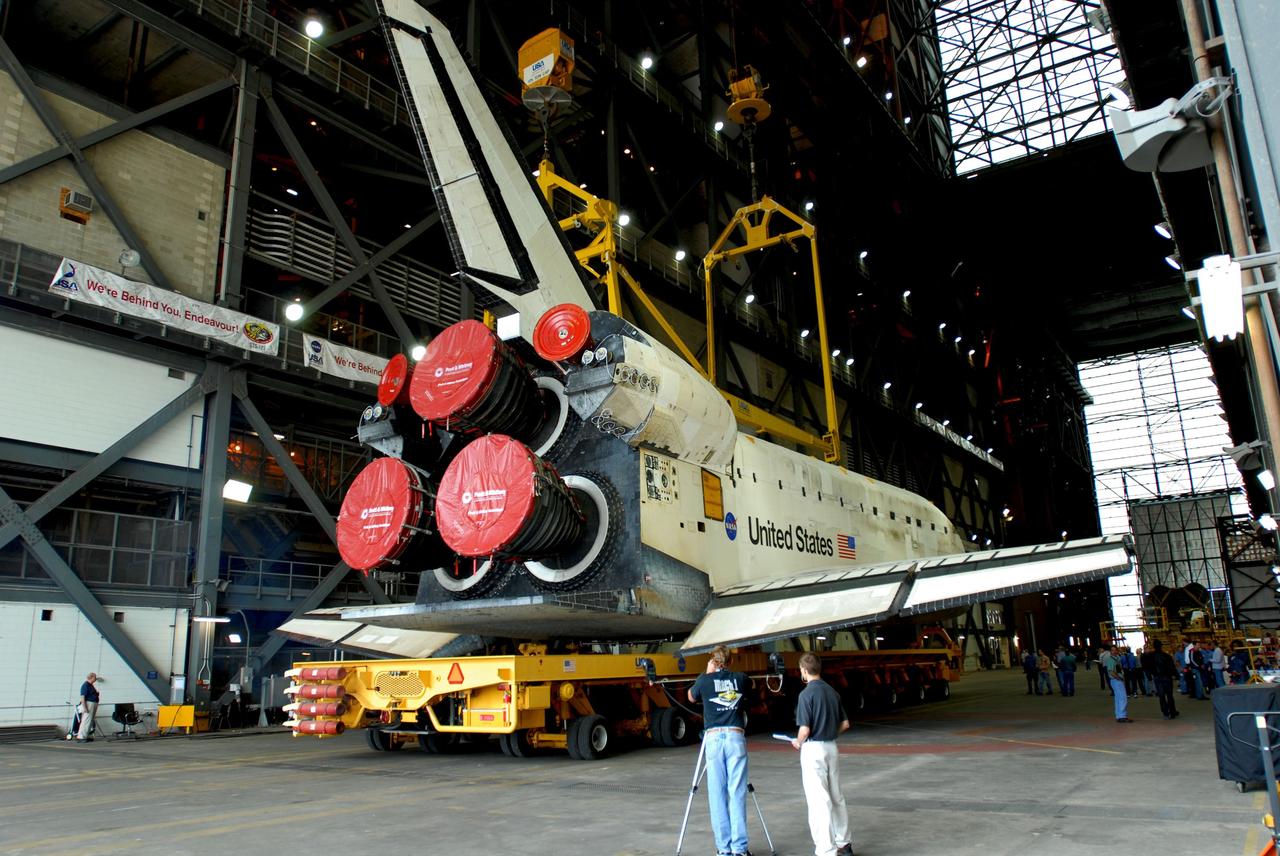
CAPE CANAVERAL, Fla. -- Aboard its transporter, space shuttle Discovery rolls into the transfer aisle of the Vehicle Assembly Building at NASA's Kennedy Space Center in Florida. Discovery left Orbiter Processing Facility 3 at 2:30 p.m. EST. In the VAB, Discovery will be attached to its external fuel tank and twin solid rocket boosters. After additional preparations are made, the shuttle will be rolled out to Launch Pad 39A for a targeted launch to the International Space Station on Feb. 12. Photo credit: NASA/Jim Grossmann
CAPE CANAVERAL, Fla. -- In the Vehicle Assembly Building at NASA's Kennedy Space Center in Florida, space shuttle Discovery is lowered into high bay 3 alongside the external fuel tank and solid rocket boosters are already stacked on the mobile launcher platform. Discovery will be mated with the stack. After additional preparations are made, the shuttle will be rolled out to Launch Pad 39A for a targeted launch on Feb. 12. Discovery will carry the final starboard truss (S6) in the assembly of the International Space Station. Photo credit: NASA/Jack Pfaller
CAPE CANAVERAL, Fla. -- In the Vehicle Assembly Building at NASA's Kennedy Space Center in Florida, space shuttle Discovery is lifted into the upper levels for transfer to high bay 3. The shuttle will then be lowered onto the mobile launcher platform for mating with its external fuel tank and solid rocket boosters. After additional preparations are made, the shuttle will be rolled out to Launch Pad 39A for a targeted launch on Feb. 12. Discovery will carry the final starboard truss (S6) in the assembly of the International Space Station. Photo credit: NASA/Jack Pfaller
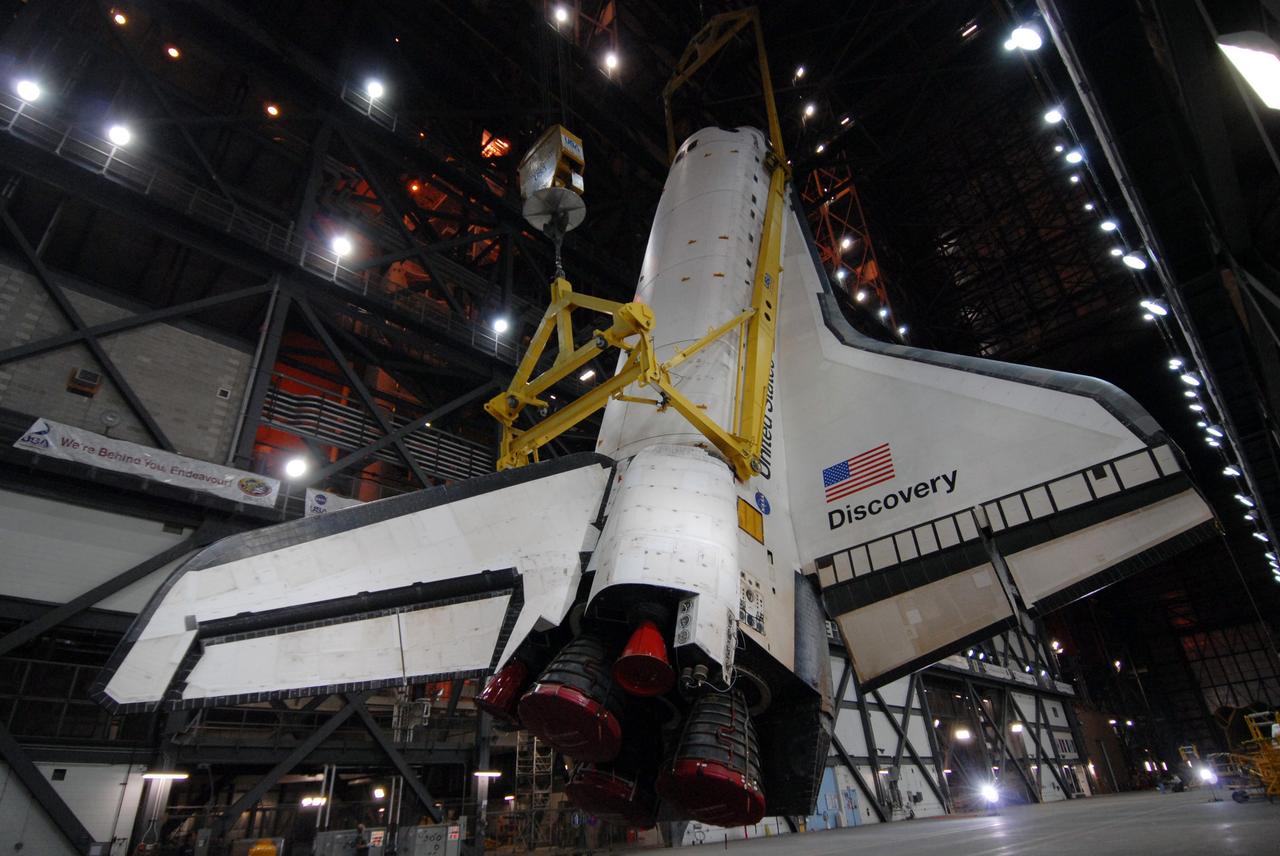
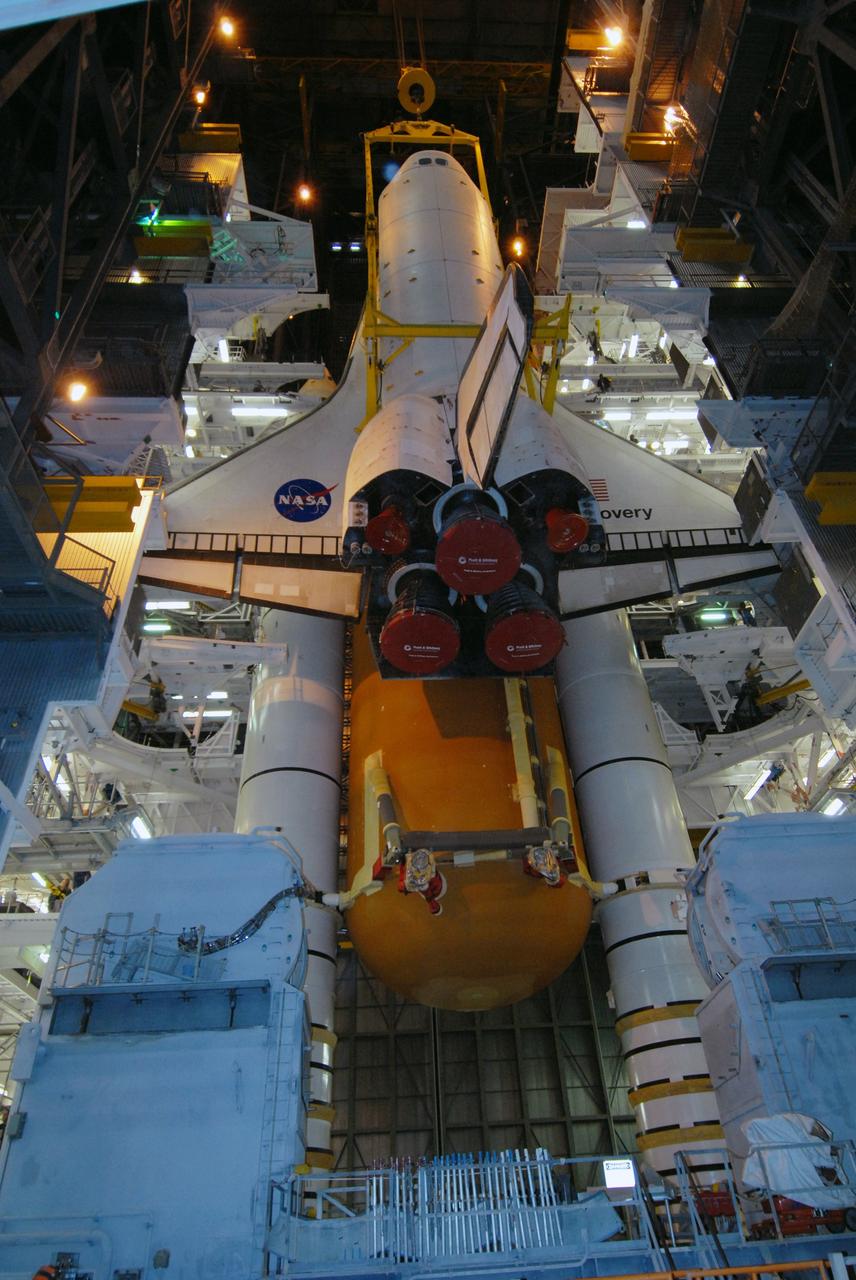
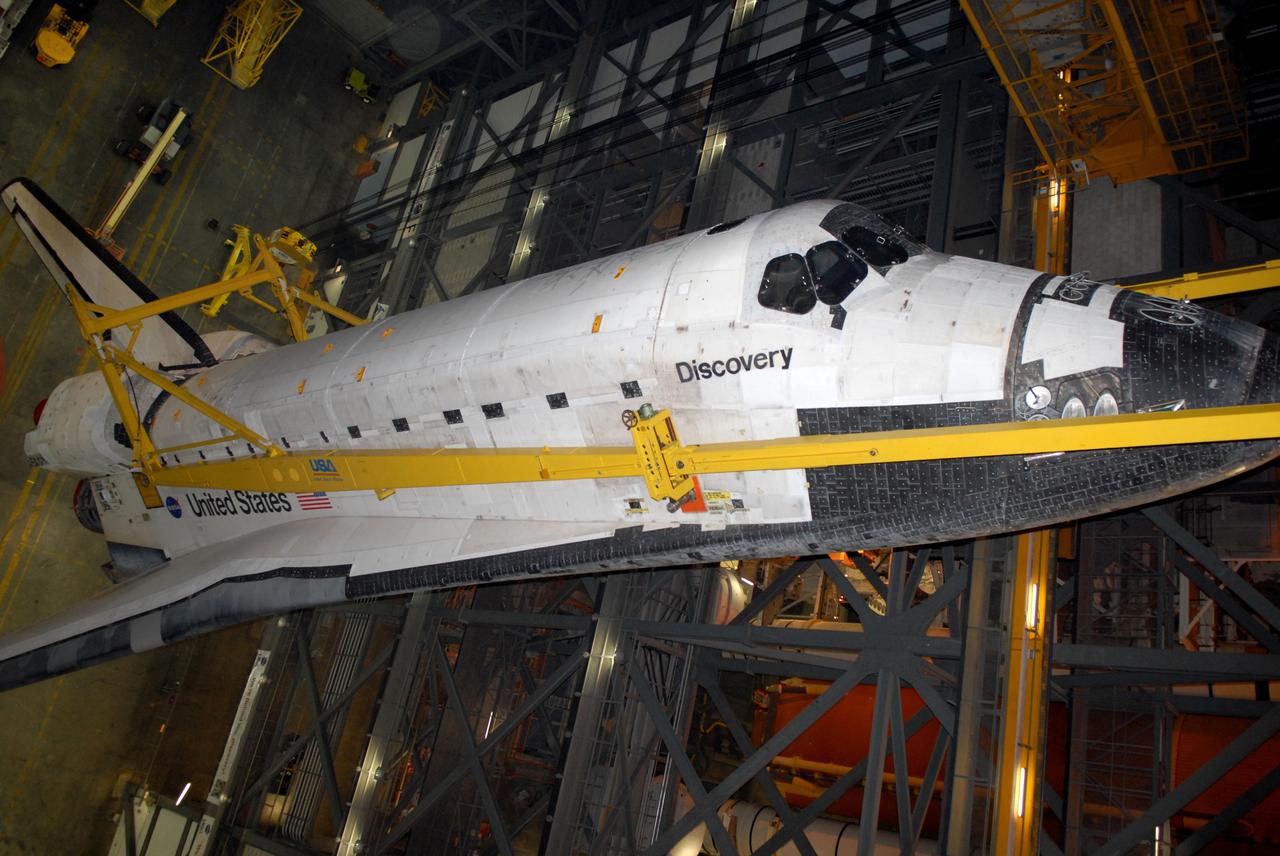
CAPE CANAVERAL, Fla. -- In the Vehicle Assembly Building at NASA's Kennedy Space Center in Florida, space shuttle Discovery is raised to a vertical position above the transfer aisle. The shuttle will be lifted into high bay 3 where it will be mated with its external fuel tank and solid rocket boosters on the mobile launcher platform. After additional preparations are made, the shuttle will be rolled out to Launch Pad 39A for a targeted launch on Feb. 12. Discovery will carry the final starboard truss (S6) in the assembly of the International Space Station. Photo credit: NASA/Jack Pfaller
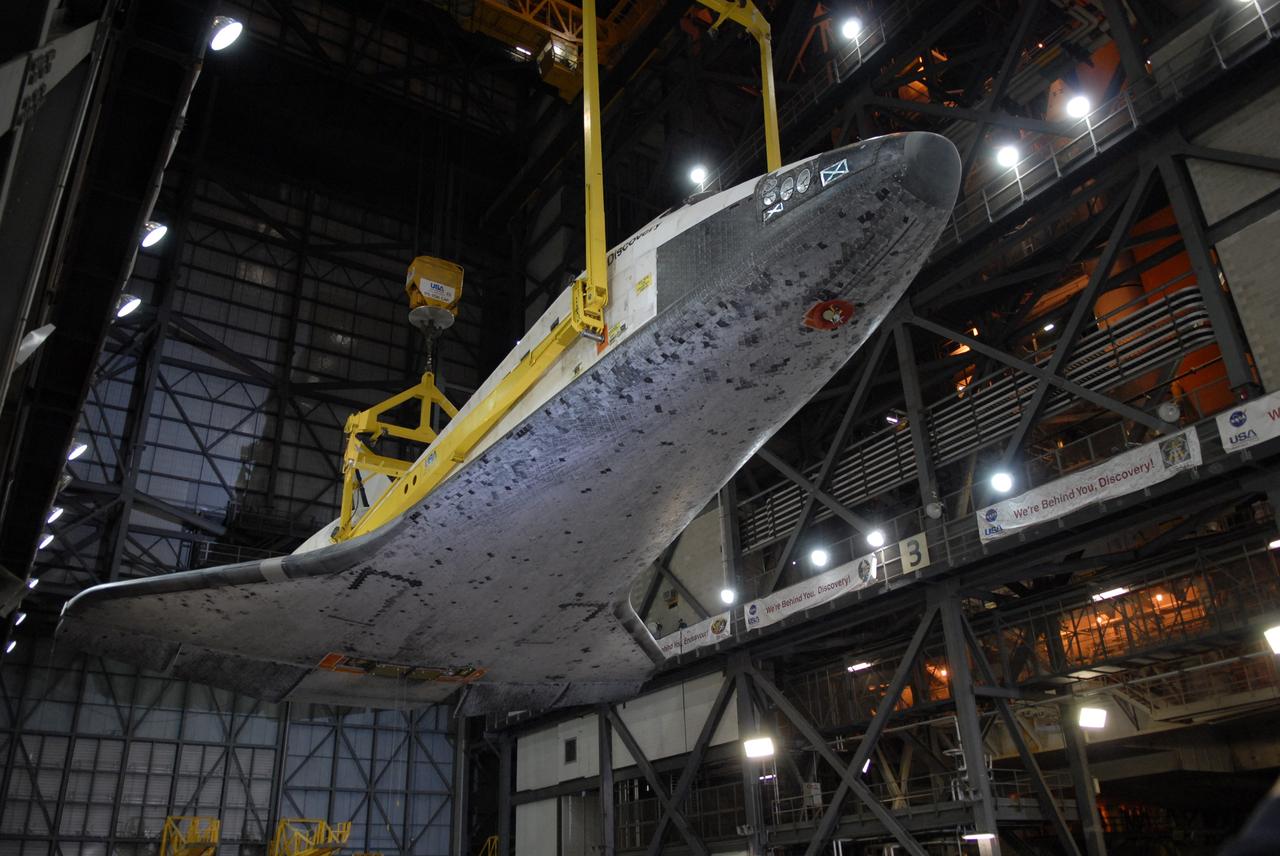
CAPE CANAVERAL, Fla. -- In the Vehicle Assembly Building at NASA's Kennedy Space Center in Florida, space shuttle Discovery is lifted above the transfer aisle. The shuttle will be raised to a vertical position and lifted into high bay 3 where it will be mated with its external fuel tank and solid rocket boosters on the mobile launcher platform. After additional preparations are made, the shuttle will be rolled out to Launch Pad 39A for a targeted launch on Feb. 12. Discovery will carry the final starboard truss (S6) in the assembly of the International Space Station. Photo credit: NASA/Jack Pfaller
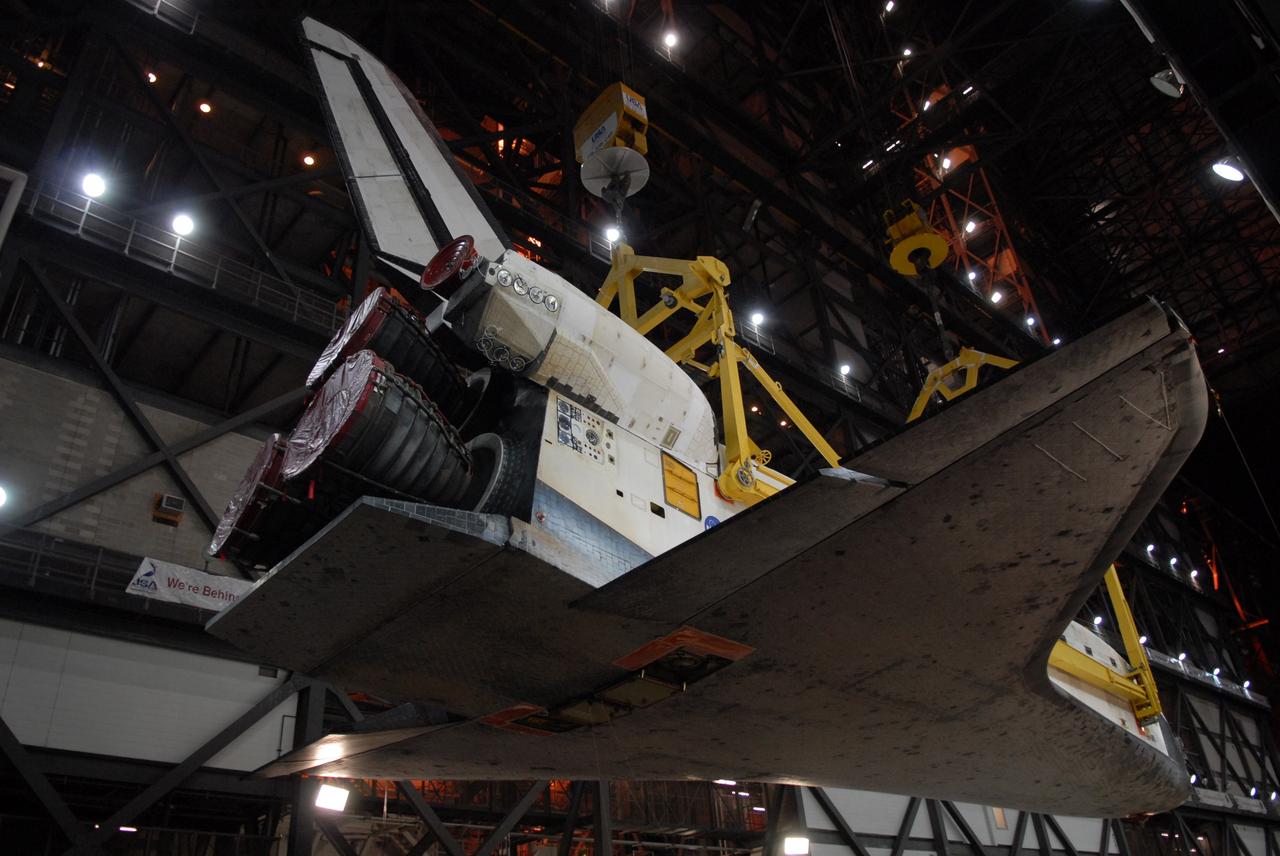
CAPE CANAVERAL, Fla. -- In the Vehicle Assembly Building transfer aisle at NASA's Kennedy Space Center in Florida, space shuttle Discovery is lifted from its transporter by an overhead crane. The shuttle will be raised to a vertical position and lifted into high bay 3 where it will be mated with its external fuel tank and solid rocket boosters on the mobile launcher platform. After additional preparations are made, the shuttle will be rolled out to Launch Pad 39A for a targeted launch on Feb. 12. Discovery will carry the final starboard truss (S6) in the assembly of the International Space Station. Photo credit: NASA/Troy Cryder
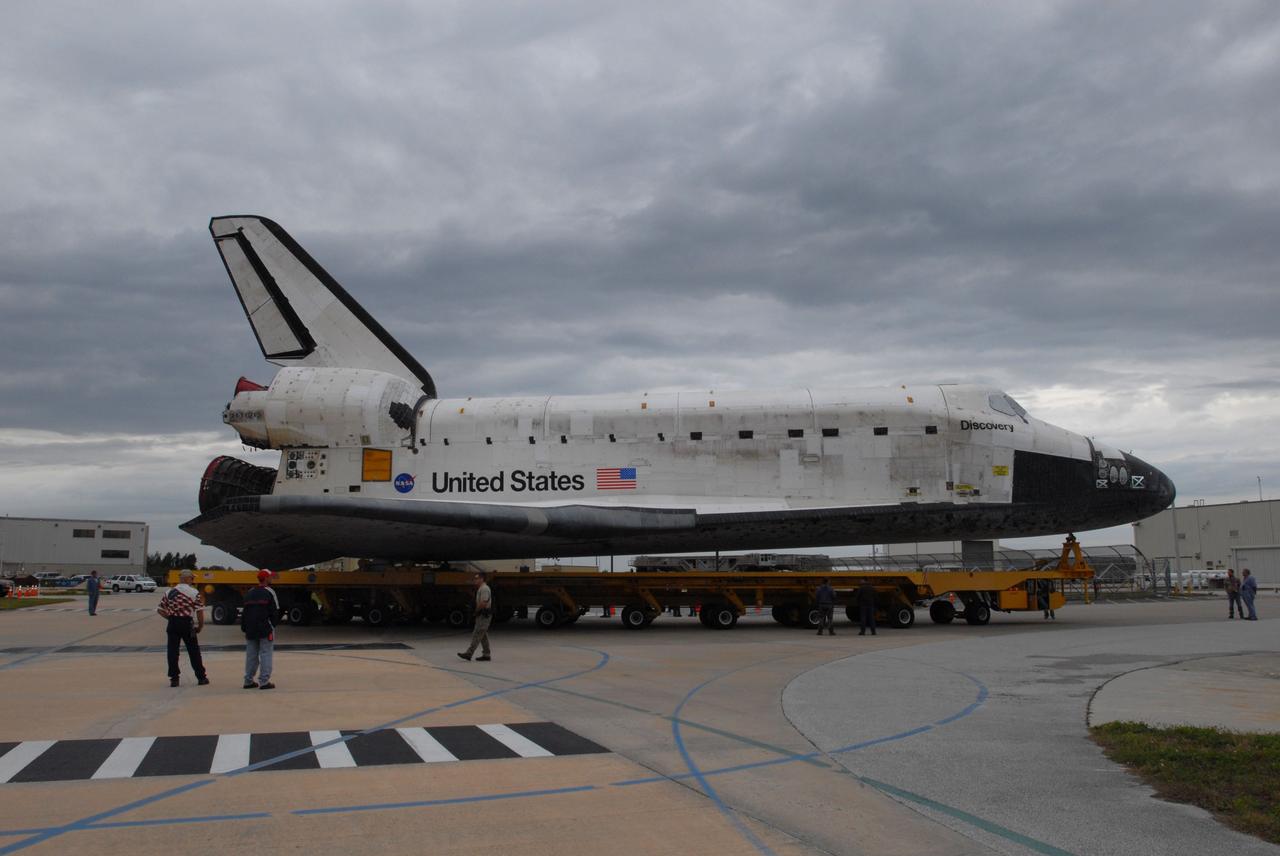
CAPE CANAVERAL, Fla. -- After rolling out of Orbiter Processing Facility 3 at NASA's Kennedy Space Center in Florida, space shuttle Discovery turns toward the Vehicle Assembly Building. First motion was at 2:30 p.m. EST. In the VAB, Discovery will be attached to its external fuel tank and twin solid rocket boosters. After additional preparations are made, the shuttle will be rolled out to Launch Pad 39A for a targeted launch to the International Space Station on Feb. 12. Photo credit: NASA/Jim Grossmann
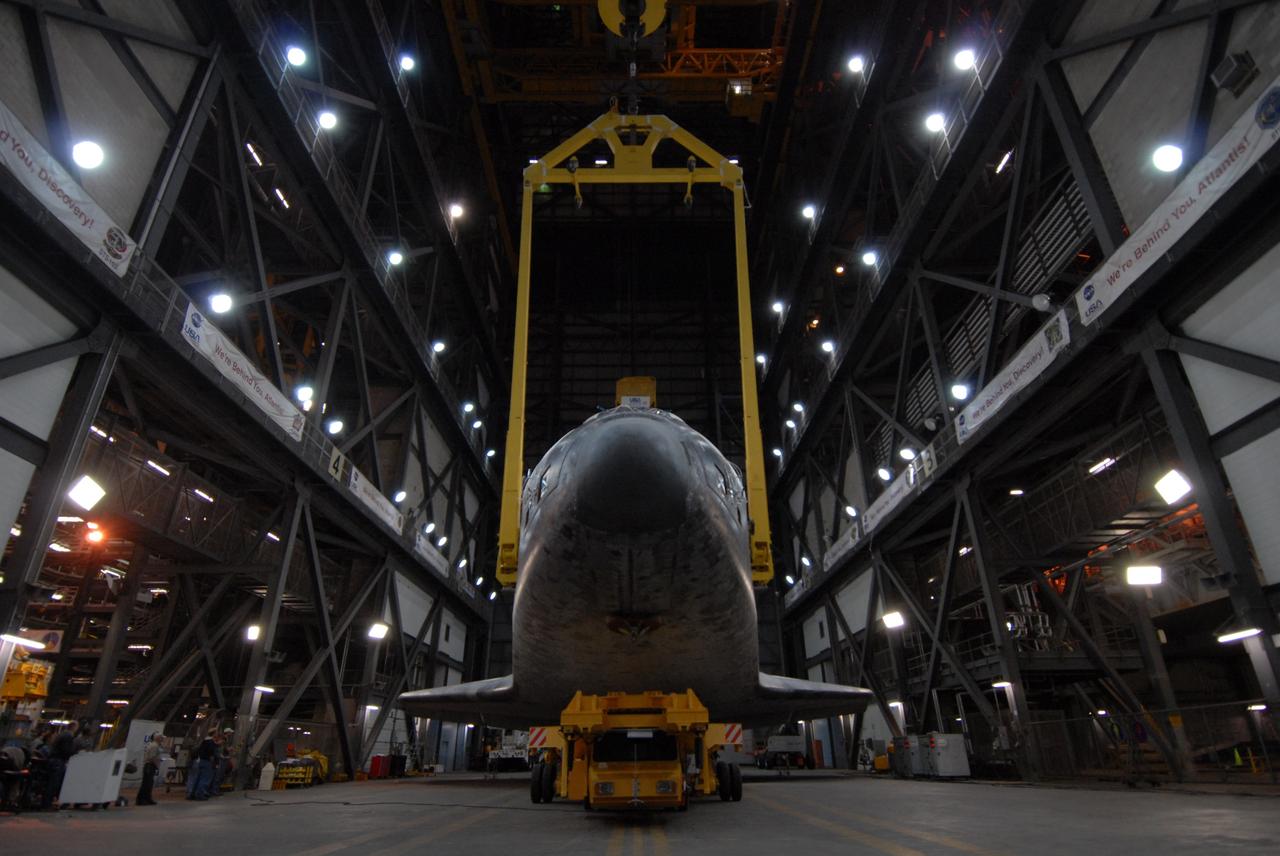
CAPE CANAVERAL, Fla. -- In the Vehicle Assembly Building transfer aisle at NASA's Kennedy Space Center in Florida, space shuttle Discovery is lifted from its transporter by an overhead crane. The shuttle will be raised to a vertical position and lifted into high bay 3 where it will be mated with its external fuel tank and solid rocket boosters on the mobile launcher platform. After additional preparations are made, the shuttle will be rolled out to Launch Pad 39A for a targeted launch on Feb. 12. Discovery will carry the final starboard truss (S6) in the assembly of the International Space Station. Photo credit: NASA/Troy Cryder
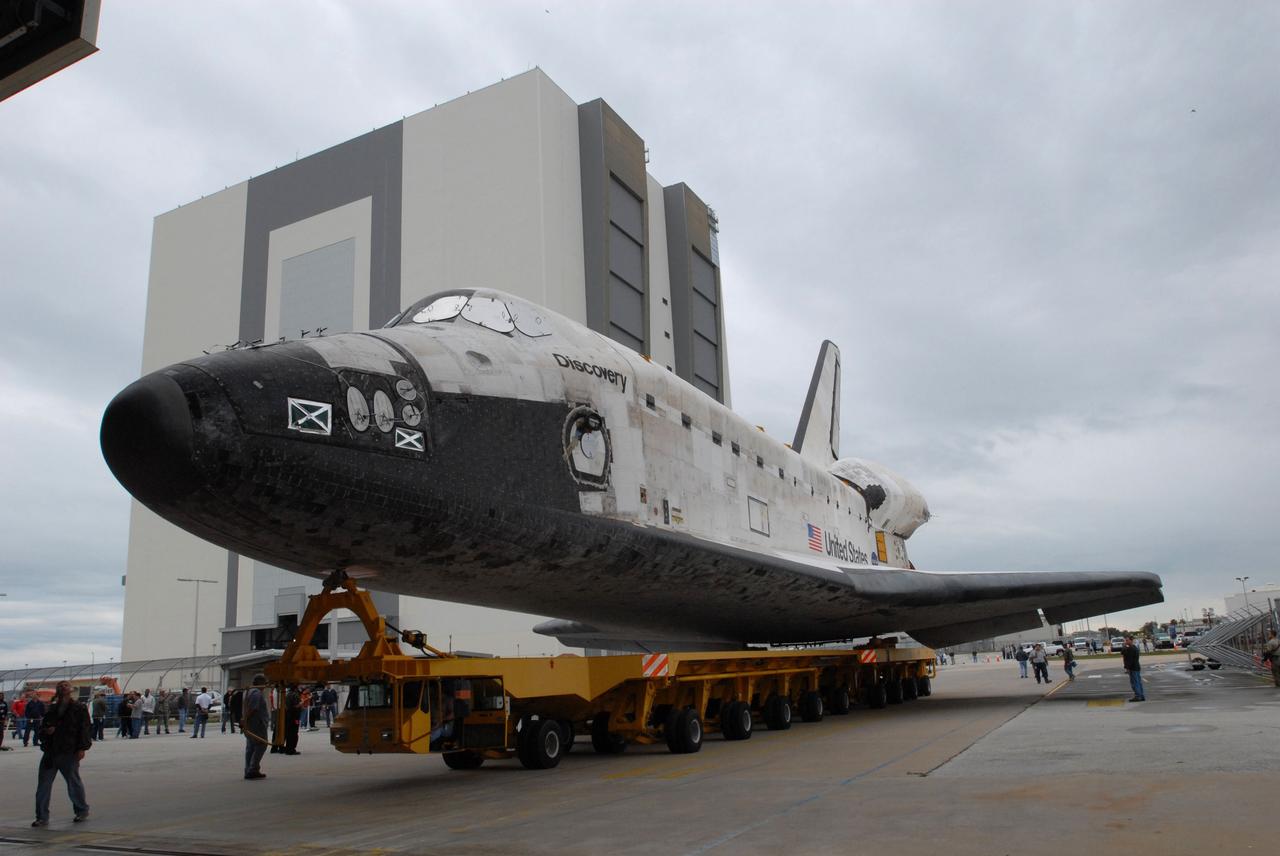
CAPE CANAVERAL, Fla. -- Space shuttle Discovery rolls out of Orbiter Processing Facility 3 at NASA's Kennedy Space Center in Florida to head to the Vehicle Assembly Building (in the background). First motion was at 2:30 p.m. EST. In the VAB, Discovery will be attached to its external fuel tank and twin solid rocket boosters. After additional preparations are made, the shuttle will be rolled out to Launch Pad 39A for a targeted launch to the International Space Station on Feb. 12. Photo credit: NASA/Jim Grossmann
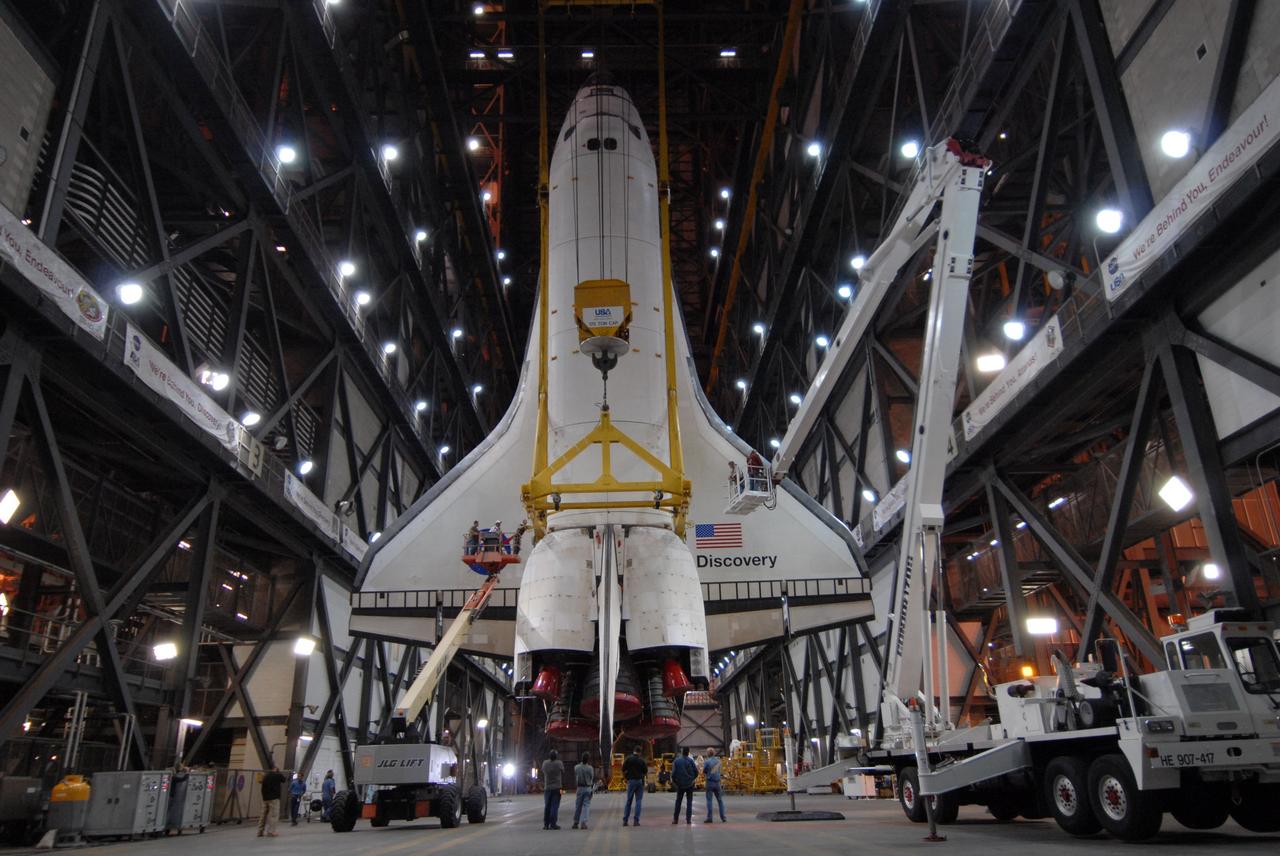
CAPE CANAVERAL, Fla. -- In the Vehicle Assembly Building at NASA's Kennedy Space Center in Florida, space shuttle Discovery is suspended vertically above the transfer aisle. The shuttle will be lifted into high bay 3 where it will be mated with its external fuel tank and solid rocket boosters on the mobile launcher platform. After additional preparations are made, the shuttle will be rolled out to Launch Pad 39A for a targeted launch on Feb. 12. Discovery will carry the final starboard truss (S6) in the assembly of the International Space Station. Photo credit: NASA/Jack Pfaller
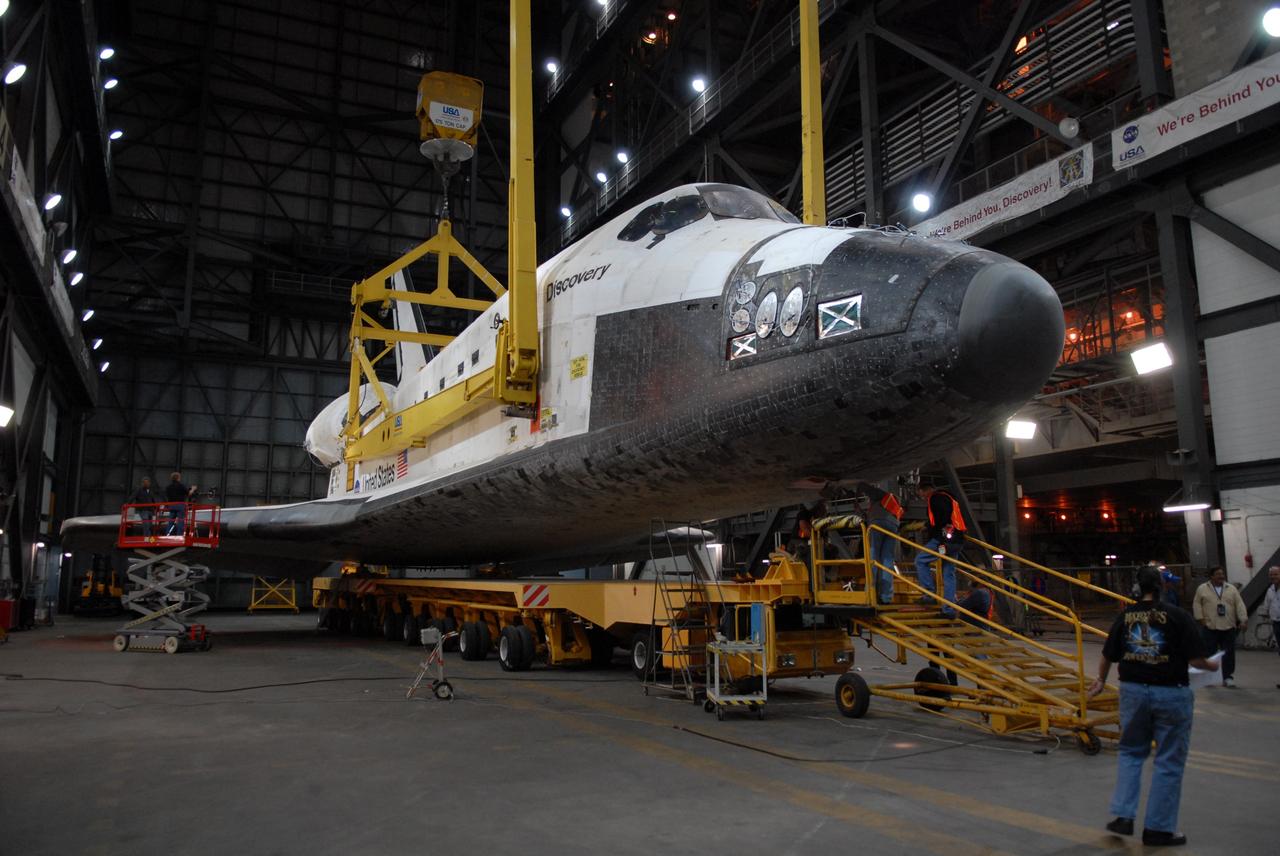
CAPE CANAVERAL, Fla. -- In the Vehicle Assembly Building transfer aisle at NASA's Kennedy Space Center in Florida, space shuttle Discovery is lifted from its transporter by an overhead crane. The shuttle will be raised to a vertical position and lifted into high bay 3 where it will be mated with its external fuel tank and solid rocket boosters on the mobile launcher platform. After additional preparations are made, the shuttle will be rolled out to Launch Pad 39A for a targeted launch on Feb. 12. Discovery will carry the final starboard truss (S6) in the assembly of the International Space Station. Photo credit: NASA/Troy Cryder
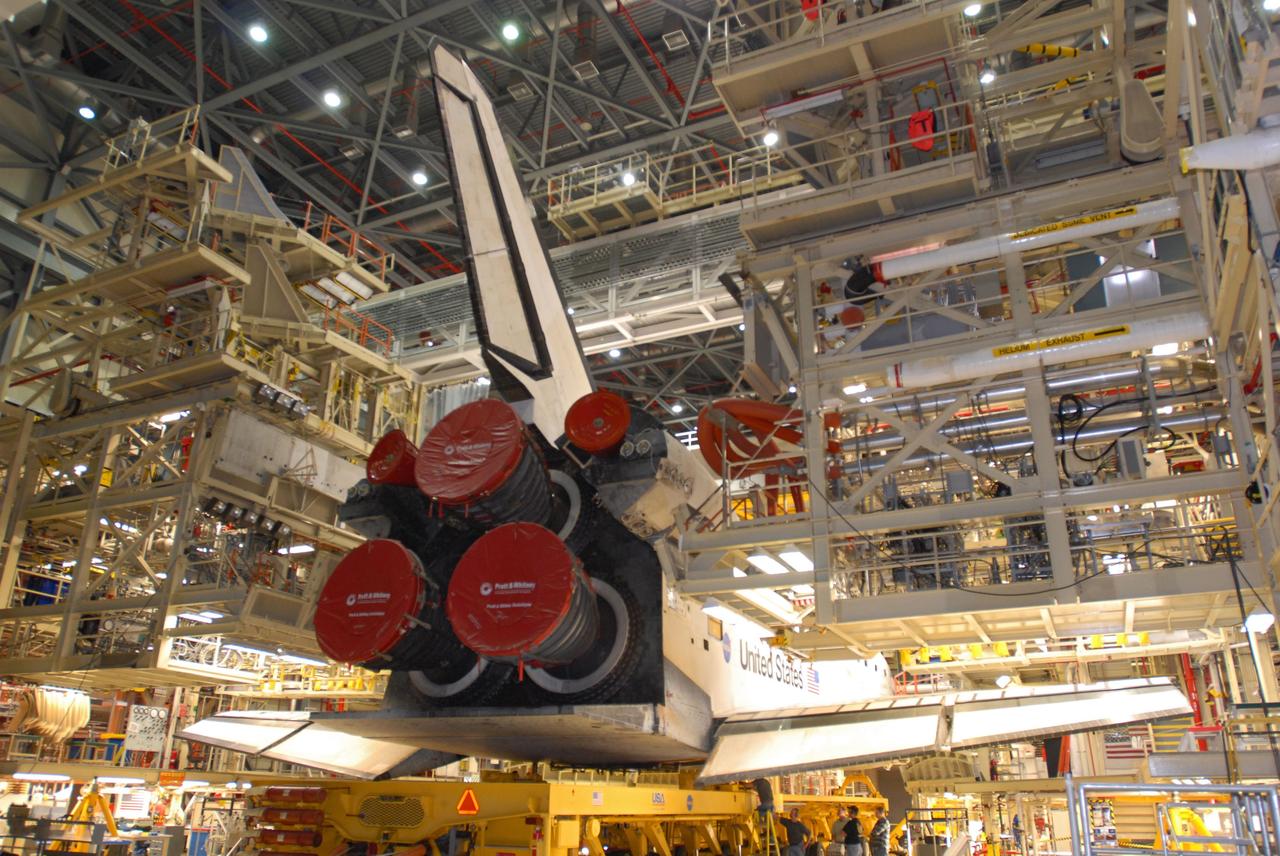
CAPE CANAVERAL, Fla. -- In Orbiter Processing Facility 3 at NASA's Kennedy Space Center in Florida, space shuttle Discovery is lowered onto a transporter for its move to the Vehicle Assembly Building at NASA's Kennedy Space Center. In the VAB, Discovery will be attached to its external fuel tank and twin solid rocket boosters. After additional preparations are made, the shuttle will be rolled out to Launch Pad 39A for a targeted launch to the International Space Station on Feb. 12. Photo credit: NASA/Jim Grossmann
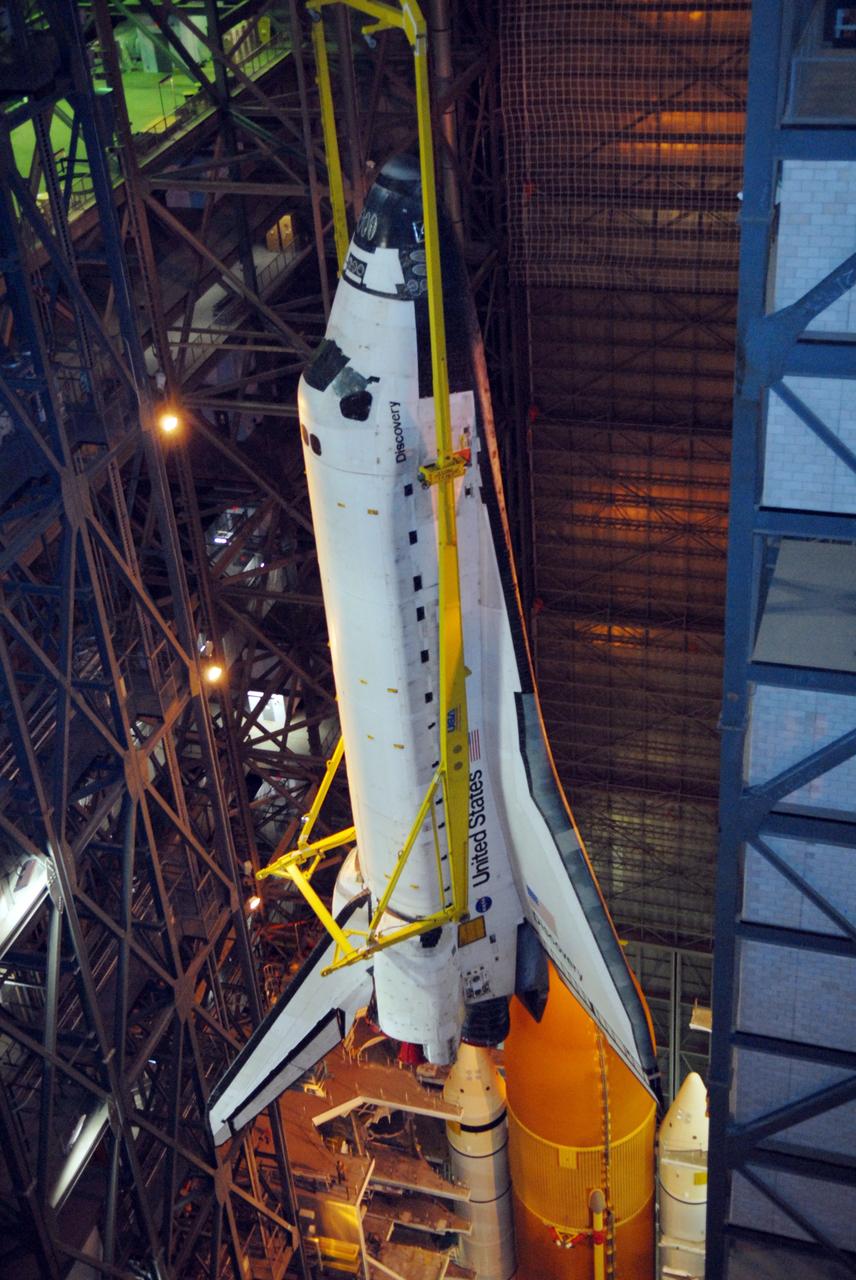
CAPE CANAVERAL, Fla. -- From the upper levels of the Vehicle Assembly Building at NASA's Kennedy Space Center in Florida, space shuttle Discovery is lowered into high bay 3 where the external fuel tank and solid rocket boosters are already stacked on the mobile launcher platform. Discovery will be mated with the stack. After additional preparations are made, the shuttle will be rolled out to Launch Pad 39A for a targeted launch on Feb. 12. Discovery will carry the final starboard truss (S6) in the assembly of the International Space Station. Photo credit: NASA/Jack Pfaller
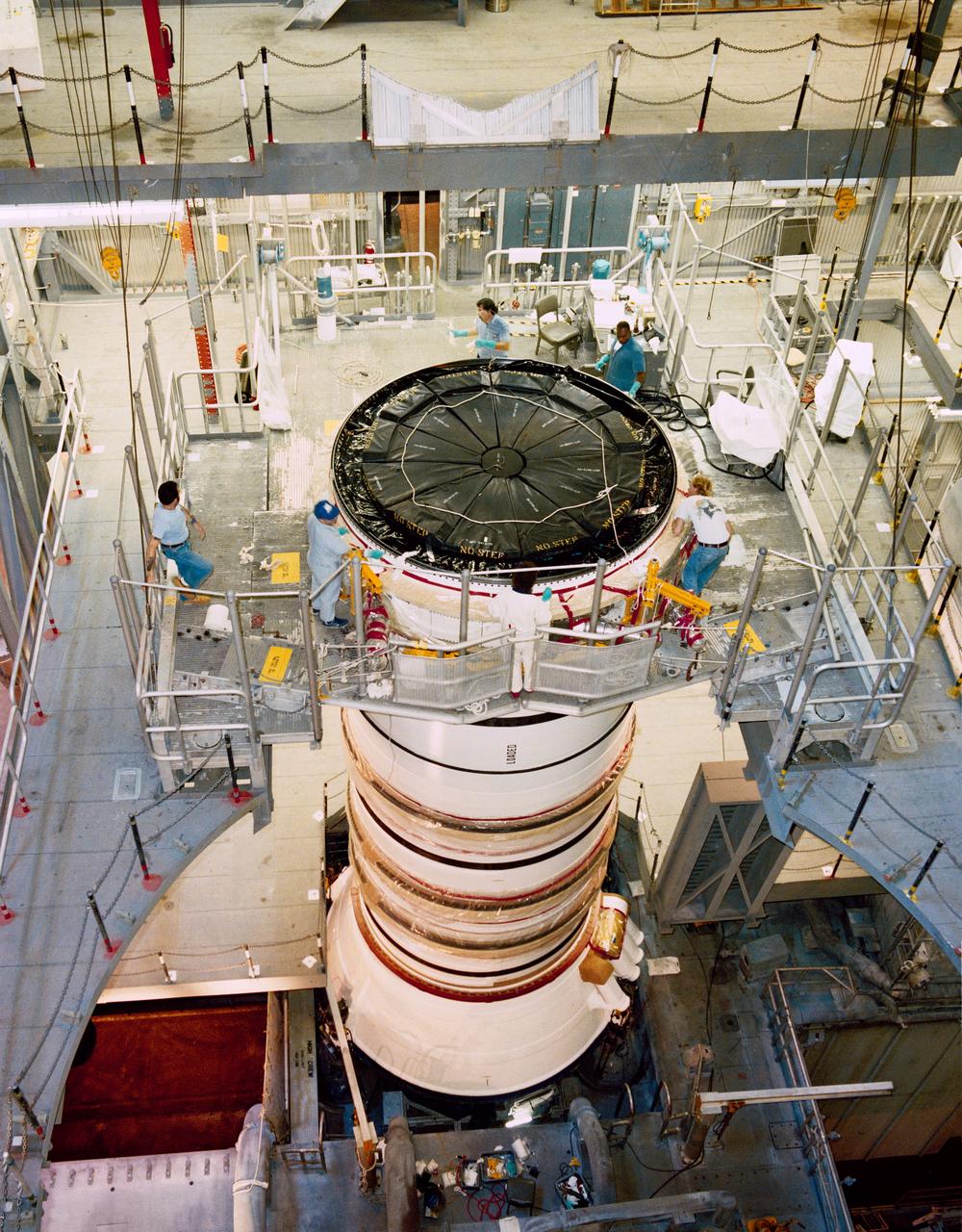
STS-29 Discovery, Orbiter Vehicle (OV) 103, solid rocket booster (SRB) right aft segment is being prepared for stacking in the Kennedy Space Center (KSC) Vehicle Assembly Building (VAB). Technicians examine and work with SRB seal from scaffolding platform. The twin sets of boosters provide 80 percent of the space shuttle launch thrust. Each SRB is made up of four "loaded" or fueled segments. The SRBs operate in parallel with the space shuttle main engines (SSMEs) for the first two minutes of flight providing additional thrust needed to escape the gravitational pull of the Earth. At an altitude of approximately 24 nautical miles, the SRBs separate, descend on parachutes, and land in the Atlantic Ocean where they are recovered and reused on future flights. View provided by KSC with alternate number KSC-88PC-1323.
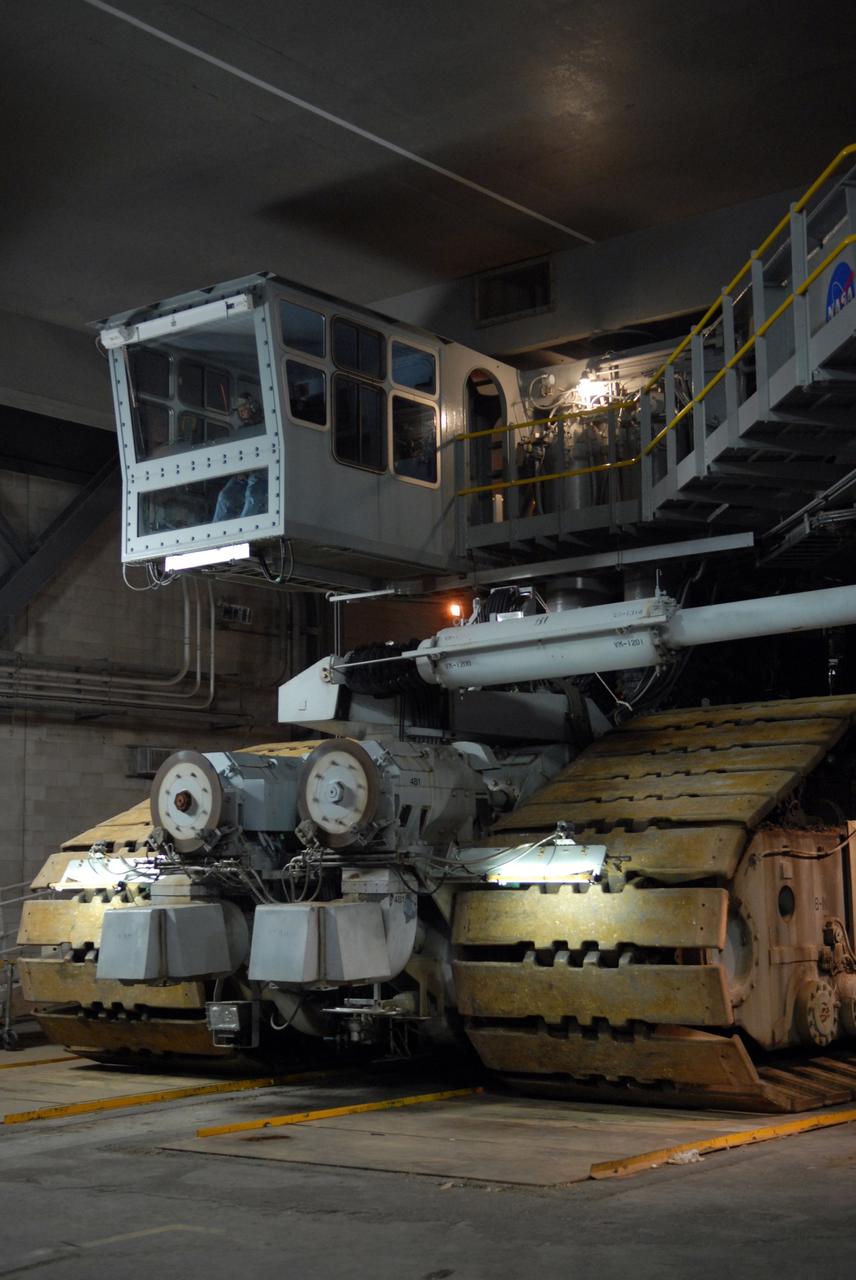
CAPE CANAVERAL, Fla. -- The massive crawler-transporter begins moving its cargo of space shuttle Discovery and mobile launcher platform out of the Vehicle Assembly Building at NASA's Kennedy Space Center in Florida to Launch Pad 39A. At upper left is one of the two operator control cabs, one at each end of the chassis, used to control all crawler systems. First motion was at 5:17 a.m. EST. Discovery is targeted to launch to the International Space Station Feb. 12. During Discovery's 14-day mission, the crew will install the S6 truss segment and its solar arrays to the starboard side of the station, completing the station's backbone, or truss, enabling a six-person crew to live there starting in May. Photo credit: NASA/Troy Cryder
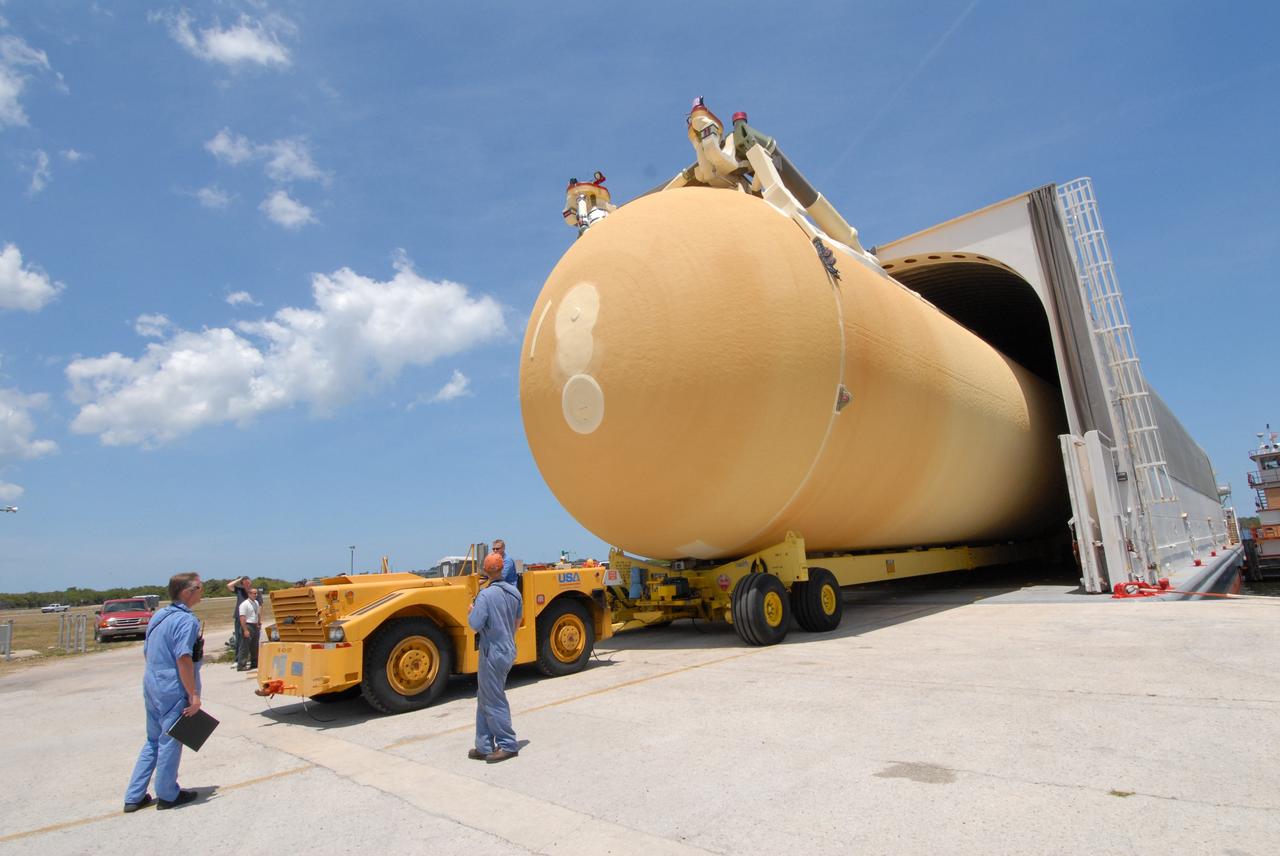
CAPE CANAVERAL, Fla. – The external fuel tank, ET- 132, designated for use with space shuttle Discovery on the STS-128 mission is moved out of the Pegasus barge in the turn basin at NASA's Kennedy Space Center in Florida. It will be transported to a high bay in the Vehicle Assembly Building for checkout. On the STS-128 mission, Discovery will carry science and storage racks to the International Space Station. Launch of Discovery is targeted for Aug. 6. Photo credit: NASA/Jack Pfaller
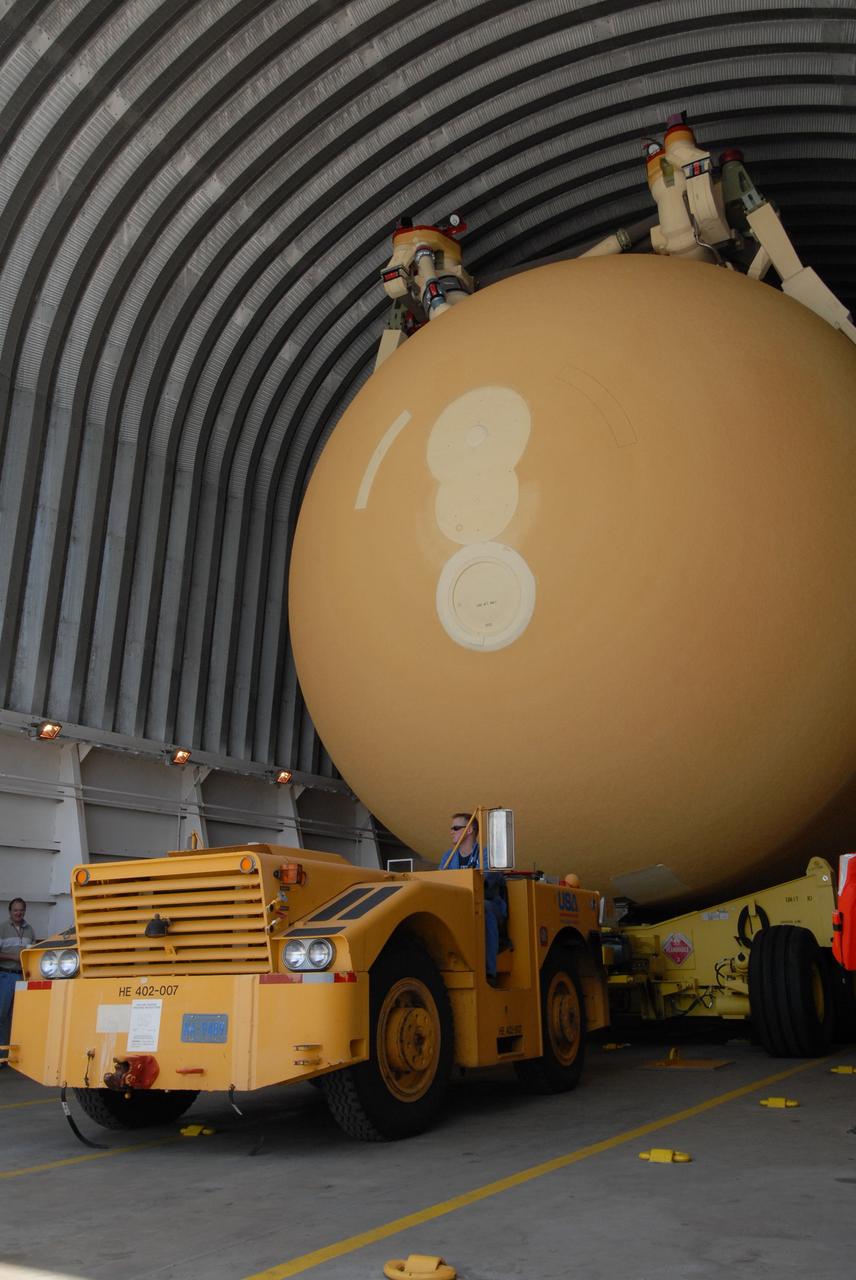
CAPE CANAVERAL, Fla. – The external fuel tank, ET- 132, designated for use with space shuttle Discovery on the STS-128 mission is being offloaded from the Pegasus barge at NASA's Kennedy Space Center in Florida. It will be transported to a high bay in the Vehicle Assembly Building for checkout. On the STS-128 mission, Discovery will carry science and storage racks to the International Space Station. Launch of Discovery is targeted for Aug. 6. Photo credit: NASA/Jack Pfaller
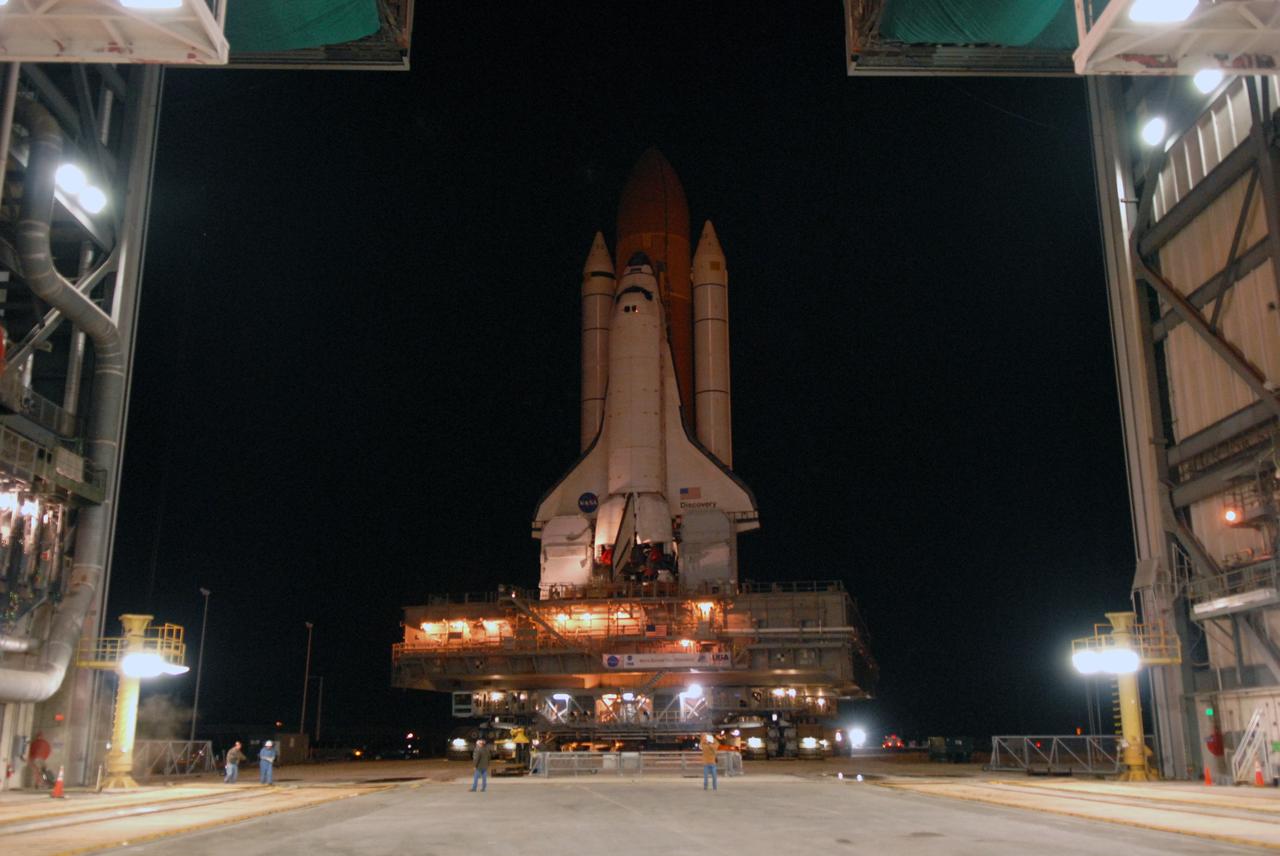
CAPE CANAVERAL, Fla. -- Transported by the massive crawler-transporter underneath, space shuttle Discovery atop the mobile launcher platform head for Launch Pad 39A at NASA's Kennedy Space Center in Florida. First motion was at 5:17 a.m. EST. Discovery is targeted to launch to the International Space Station Feb. 12. During Discovery's 14-day mission, the crew will install the S6 truss segment and its solar arrays to the starboard side of the station, completing the station's backbone, or truss, enabling a six-person crew to live there starting in May. Photo credit: NASA/Troy Cryder
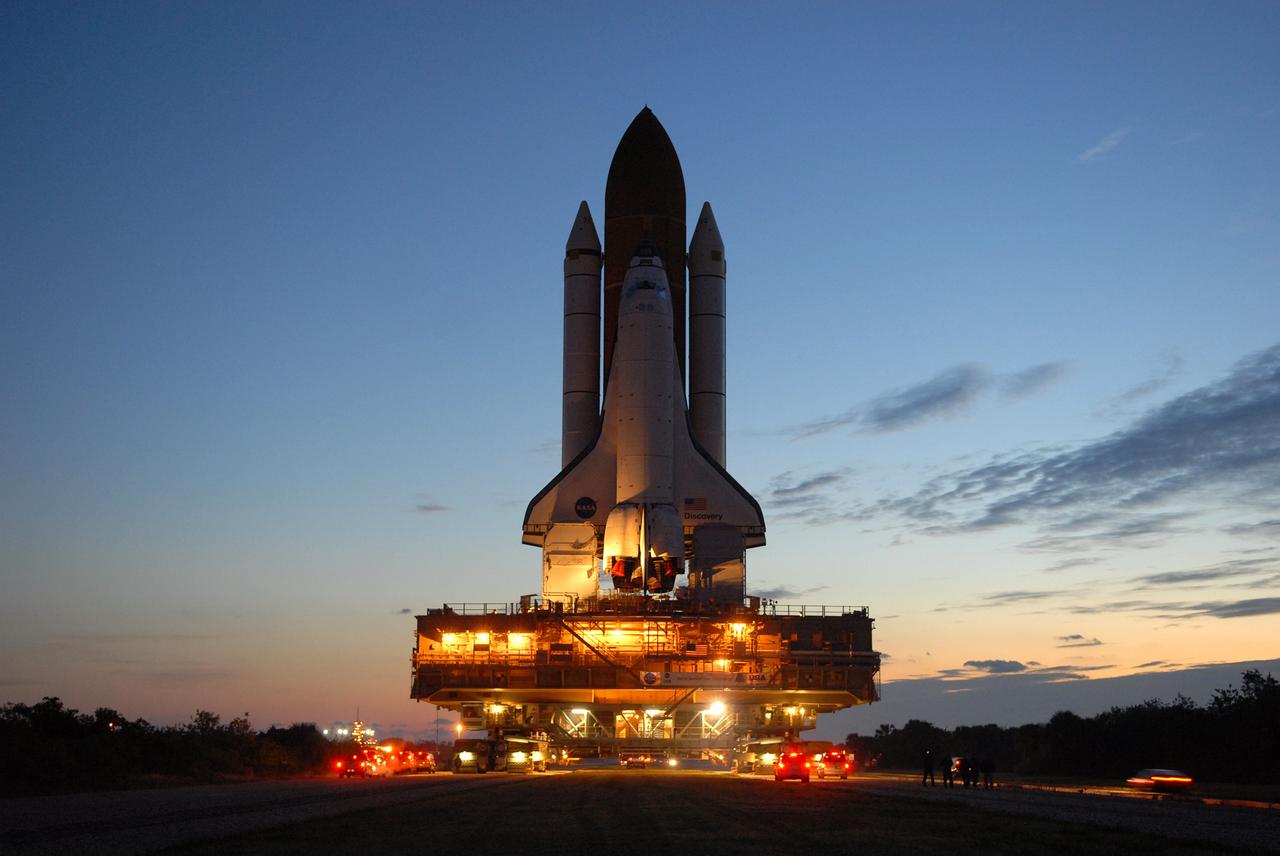
CAPE CANAVERAL, Fla. -- Space shuttle Discovery is silhouetted against the dawn's early light as it makes the slow 3.4-mile journey to Launch Pad 39A. The shuttle sits atop the mobile launcher platform, which are being moved by the massive crawler-transporter beneath. First motion out of the Vehicle Assembly Building was at 5:17 a.m. EST. Discovery is targeted to launch to the International Space Station Feb. 12. During Discovery's 14-day mission, the crew will install the S6 truss segment and its solar arrays to the starboard side of the station, completing the station's backbone, or truss, enabling a six-person crew to live there starting in May. Photo credit: NASA/Troy Cryder
CAPE CANAVERAL, Fla. -- Space shuttle Discovery is silhouetted against the dawn's early light as it makes the slow 3.4-mile journey to Launch Pad 39A. The shuttle sits atop the mobile launcher platform, which are being moved by the massive crawler-transporter beneath. First motion out of the Vehicle Assembly Building was at 5:17 a.m. EST. Discovery is targeted to launch to the International Space Station Feb. 12. During Discovery's 14-day mission, the crew will install the S6 truss segment and its solar arrays to the starboard side of the station, completing the station's backbone, or truss, enabling a six-person crew to live there starting in May. Photo credit: NASA/Troy Cryder
CAPE CANAVERAL, Fla. -- A bright moon bears witness to space shuttle Discovery's rollout from the Vehicle Assembly Building at NASA’s Kennedy Space Center, traveling at less than 1 mph atop a massive crawler-transporter. First motion was at 5:17 a.m. EST. The shuttle and mobile launcher platform are being moved by the massive crawler-transporter to Launch Pad 39A. Discovery is targeted to launch to the International Space Station Feb. 12. During Discovery's 14-day mission, the crew will install the S6 truss segment and its solar arrays to the starboard side of the station, completing the station's backbone, or truss, enabling a six-person crew to live there starting in May. Photo credit: NASA/Troy Cryder
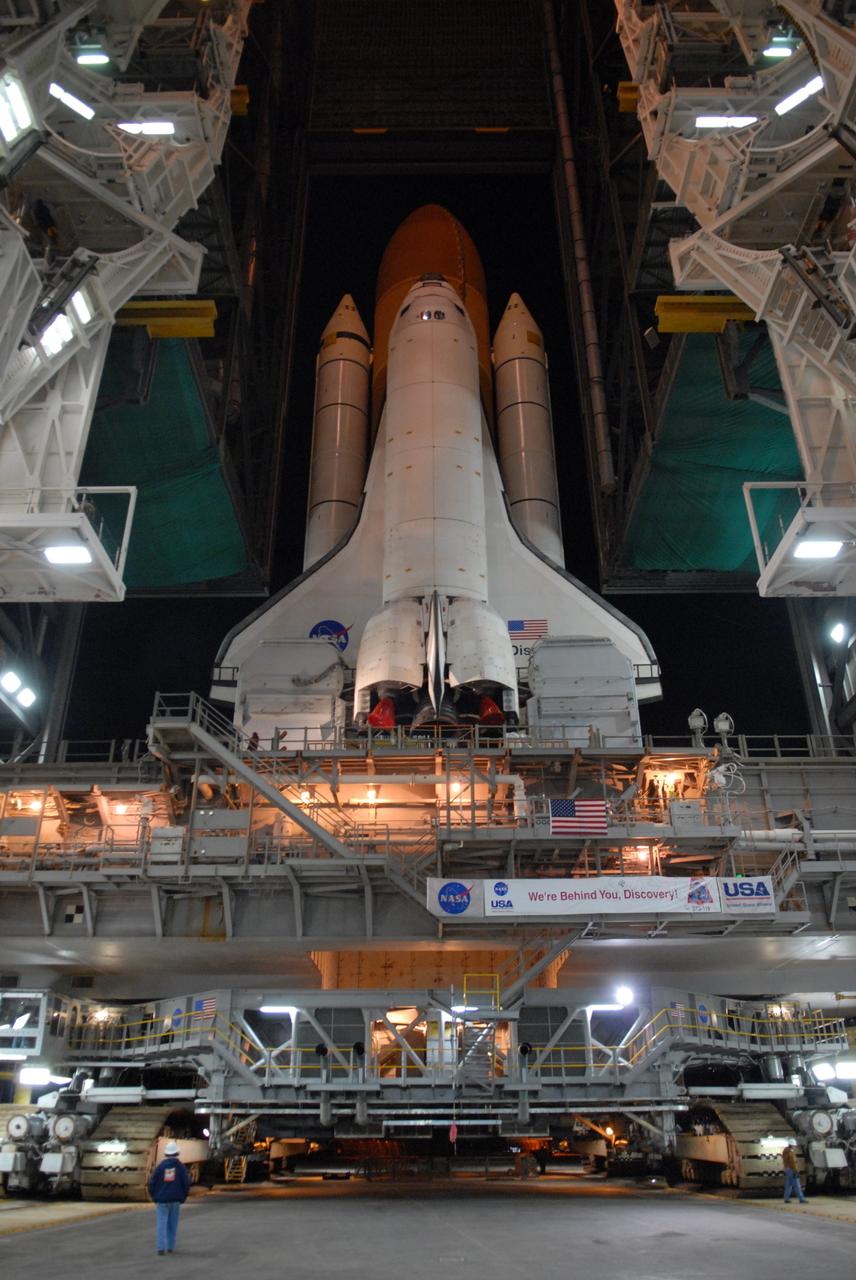
CAPE CANAVERAL, Fla. -- The massive crawler-transporter moves its cargo of space shuttle Discovery and mobile launcher platform out of the Vehicle Assembly Building at NASA's Kennedy Space Center in Florida to Launch Pad 39A. First motion was at 5:17 a.m. EST. Discovery is targeted to launch to the International Space Station Feb. 12. During Discovery's 14-day mission, the crew will install the S6 truss segment and its solar arrays to the starboard side of the station, completing the station's backbone, or truss, enabling a six-person crew to live there starting in May. Photo credit: NASA/Troy Cryder
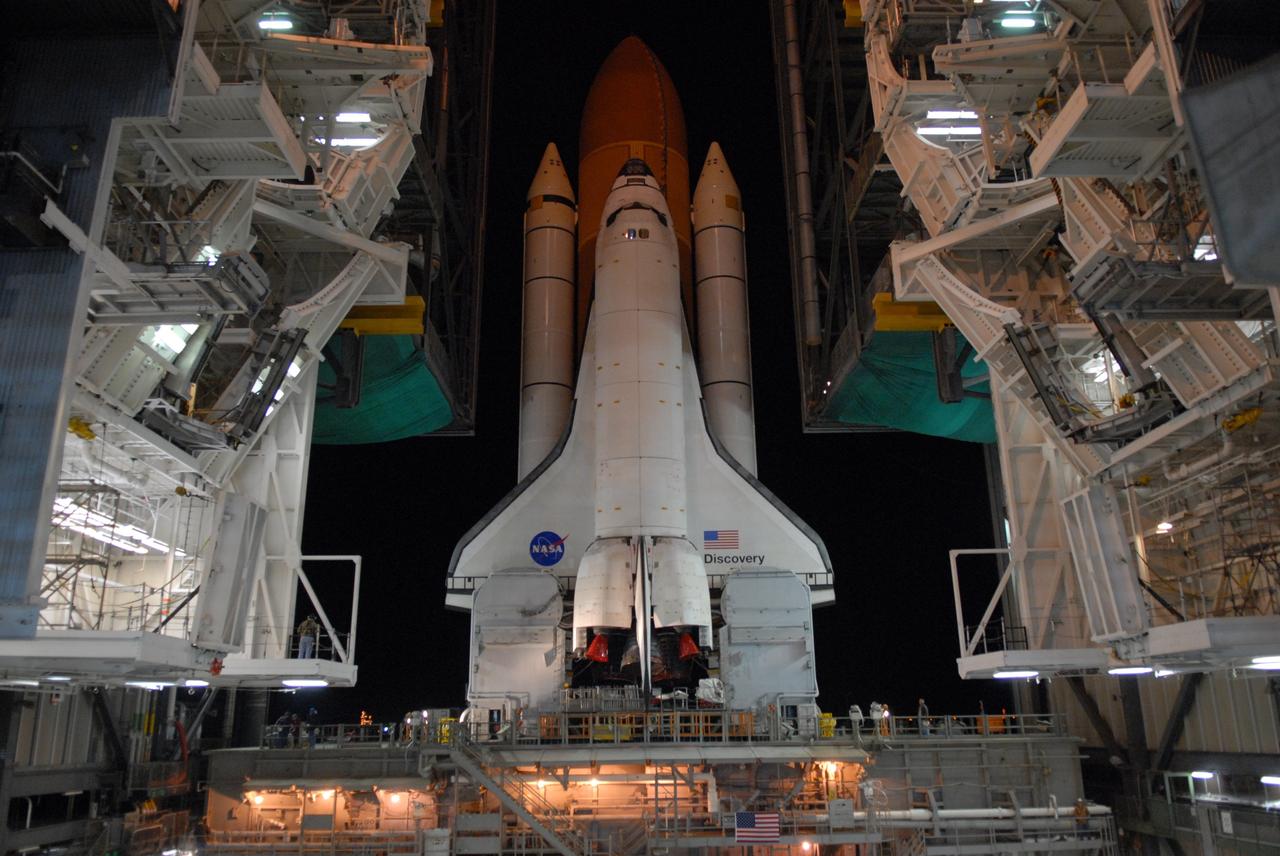
CAPE CANAVERAL, Fla. -- Space shuttle Discovery atop the mobile launcher platform moves on the crawler-transporter through the doors of the Vehicle Assembly Building at NASA's Kennedy Space Center in Florida on its way to Launch pad 39A. First motion was at 5:17 a.m. EST. Discovery is targeted to launch to the International Space Station Feb. 12. During Discovery's 14-day mission, the crew will install the S6 truss segment and its solar arrays to the starboard side of the station, completing the station's backbone, or truss, enabling a six-person crew to live there starting in May. Photo credit: NASA/Troy Cryder
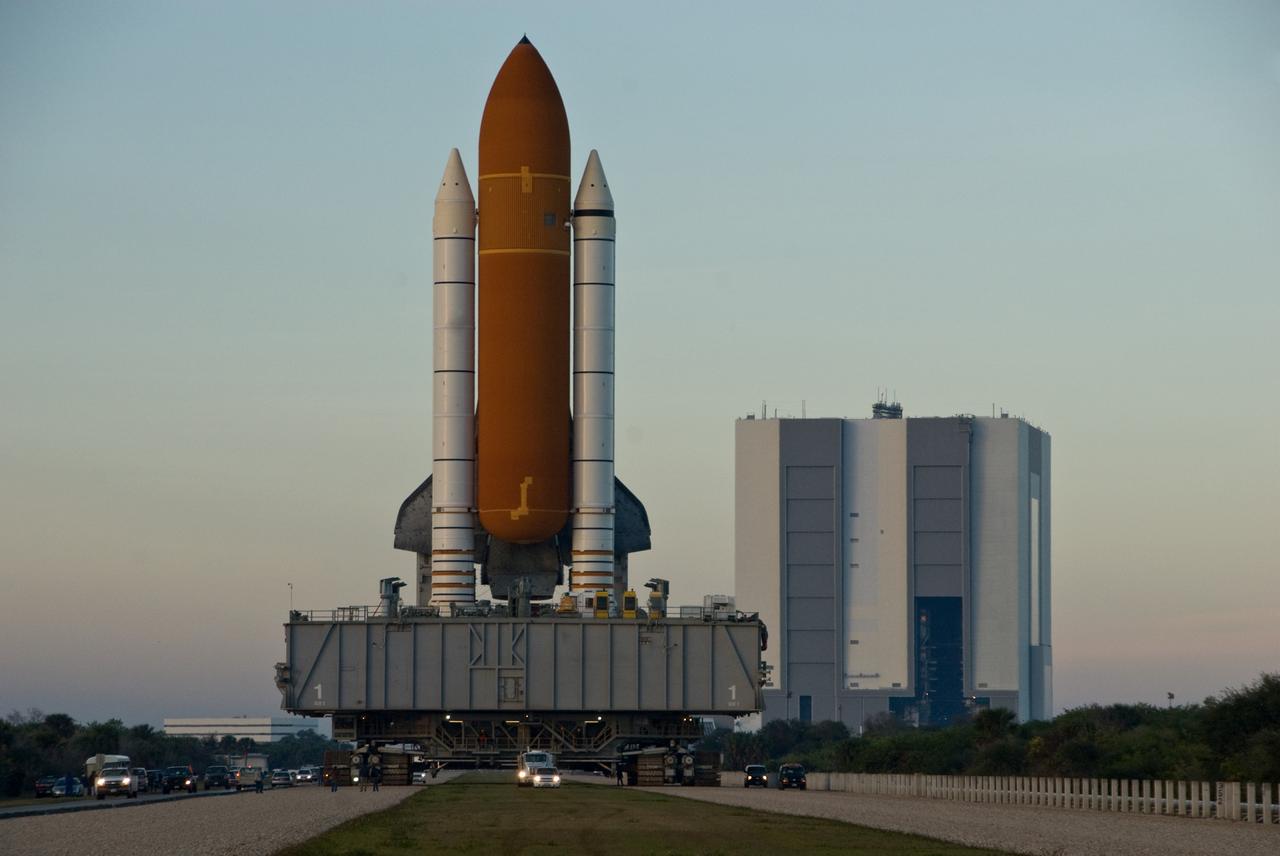
CAPE CANAVERAL, Fla. -- Space shuttle Discovery, atop the mobile launcher platform, makes the slow 3.4-mile journey via the broad, two-track crawlerway to Launch Pad 39A at NASA's Kennedy Space Center in Florida. First motion out of the Vehicle Assembly Building (at right) was at 5:17 a.m. EST. Discovery is targeted to launch to the International Space Station Feb. 12. During Discovery's 14-day mission, the crew will install the S6 truss segment and its solar arrays to the starboard side of the station, completing the station's backbone, or truss, enabling a six-person crew to live there starting in May. Photo credit: NASA/Troy Cryder
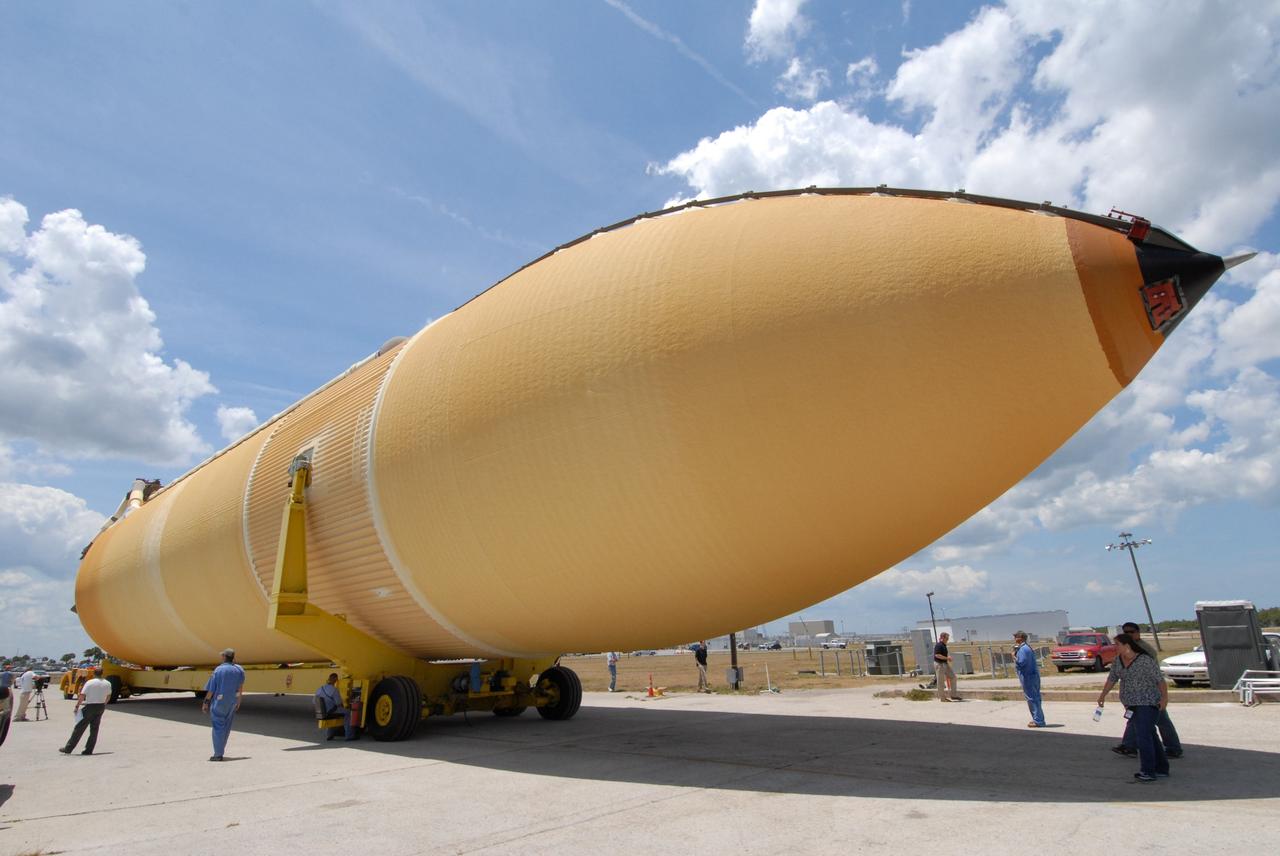
CAPE CANAVERAL, Fla. – The external fuel tank, ET- 132, designated for use with space shuttle Discovery on the STS-128 mission is moved away from the turn basin, heading for the Vehicle Assembly Building (at left) at NASA's Kennedy Space Center in Florida for checkout in a high bay. On the STS-128 mission, Discovery will carry science and storage racks to the International Space Station. Launch of Discovery is targeted for Aug. 6. Photo credit: NASA/Jack Pfaller

CAPE CANAVERAL, Fla. -- Before dawn, space shuttle Discovery, atop the mobile launcher platform, makes the slow 3.4-mile journey to Launch Pad 39A at NASA's Kennedy Space Center in Florida. First motion out of the Vehicle Assembly Building (far left) was at 5:17 a.m. EST. Discovery is targeted to launch to the International Space Station Feb. 12. During Discovery's 14-day mission, the crew will install the S6 truss segment and its solar arrays to the starboard side of the station, completing the station's backbone, or truss, enabling a six-person crew to live there starting in May. Photo credit: NASA/Troy Cryder
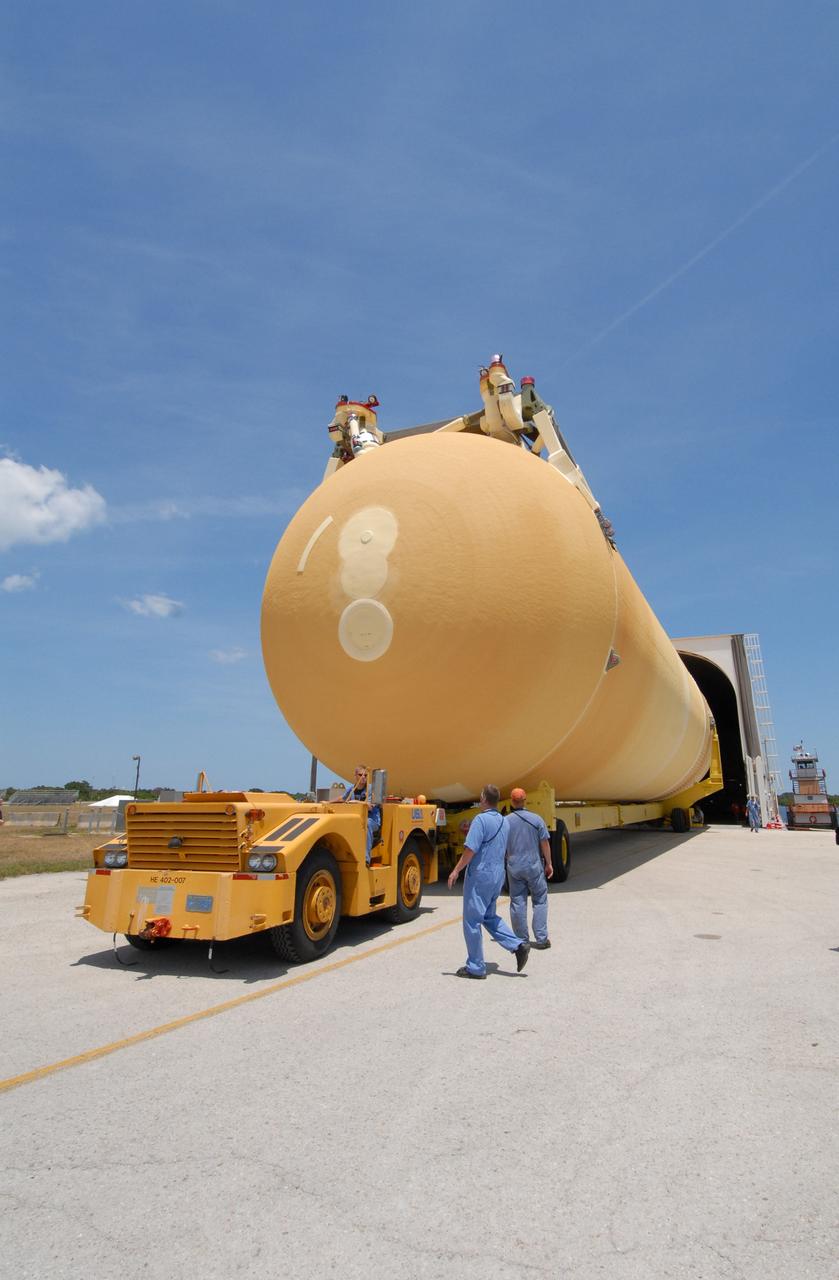
CAPE CANAVERAL, Fla. – The external fuel tank, ET- 132, designated for use with space shuttle Discovery on the STS-128 mission is moved out of the Pegasus barge in the turn basin at NASA's Kennedy Space Center in Florida. It will be transported to a high bay in the Vehicle Assembly Building for checkout. On the STS-128 mission, Discovery will carry science and storage racks to the International Space Station. Launch of Discovery is targeted for Aug. 6. Photo credit: NASA/Jack Pfaller
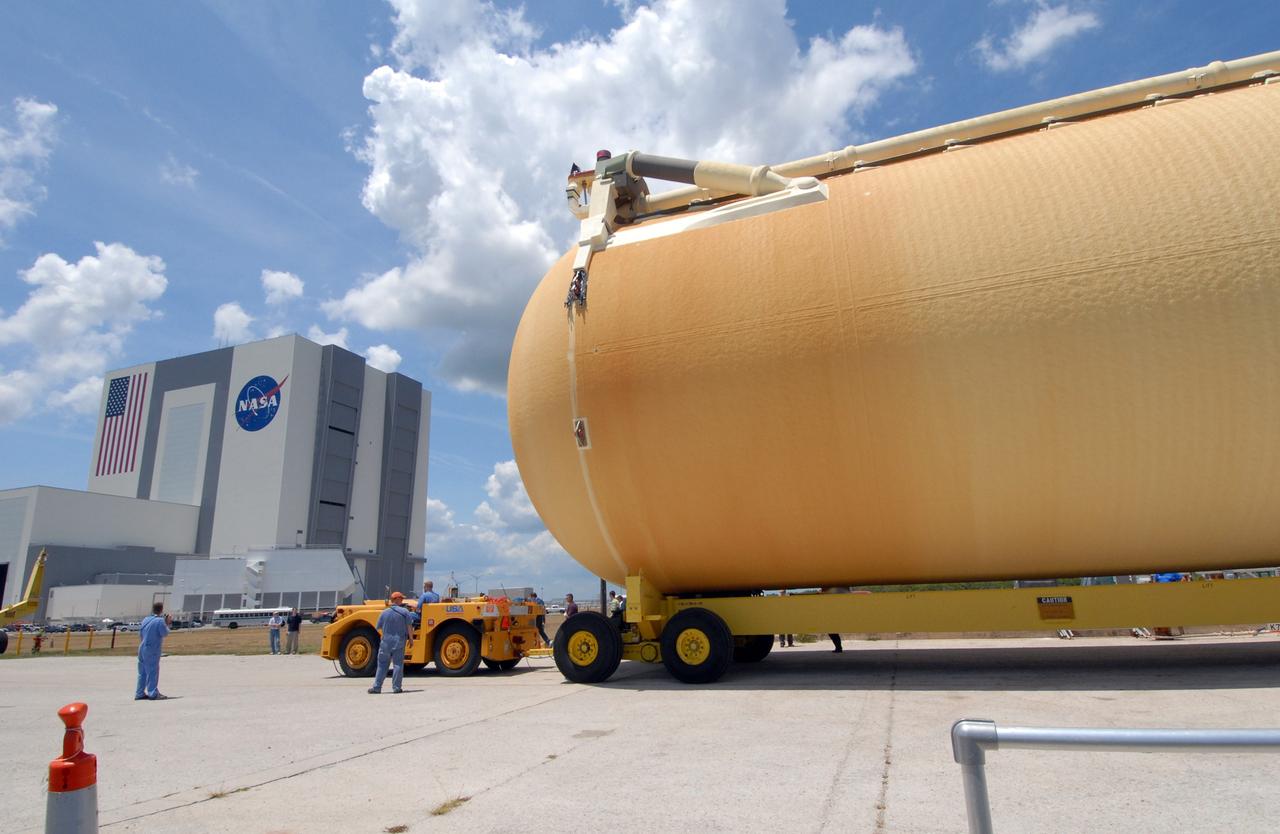
CAPE CANAVERAL, Fla. – The external fuel tank, ET- 132, designated for use with space shuttle Discovery on the STS-128 mission is moved away from the turn basin, heading for a high bay in the Vehicle Assembly Building, at left, for checkout. On the STS-128 mission, Discovery will carry science and storage racks to the International Space Station. Launch of Discovery is targeted for Aug. 6. Photo credit: NASA/Jack Pfaller
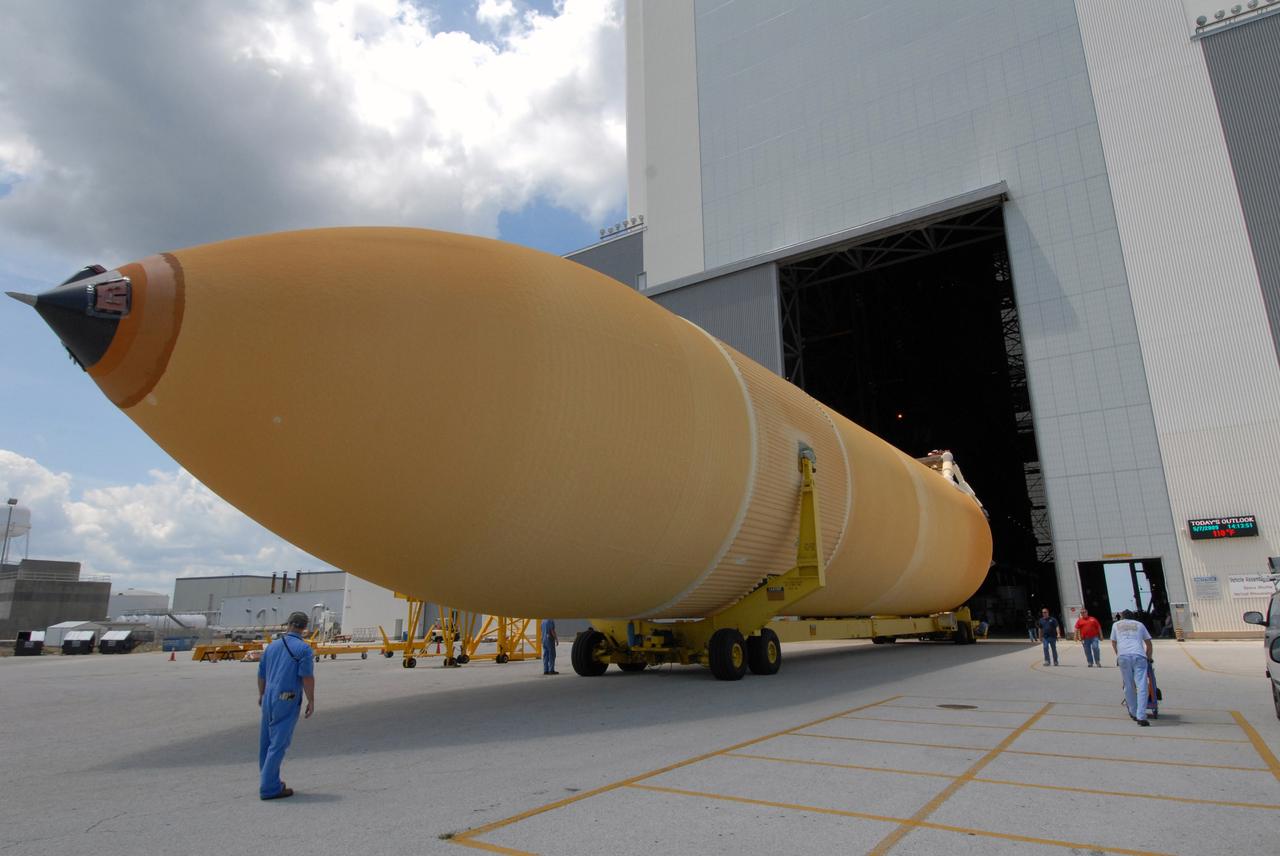
CAPE CANAVERAL, Fla. – The external fuel tank, ET- 132, designated for use with space shuttle Discovery on the STS-128 mission moves toward the open door of the Vehicle Assembly Building at NASA's Kennedy Space Center in Florida. The tank will be moved into a high bay for checkout. On the STS-128 mission, Discovery will carry science and storage racks to the International Space Station. Launch of Discovery is targeted for Aug. 6. Photo credit: NASA/Jack Pfaller
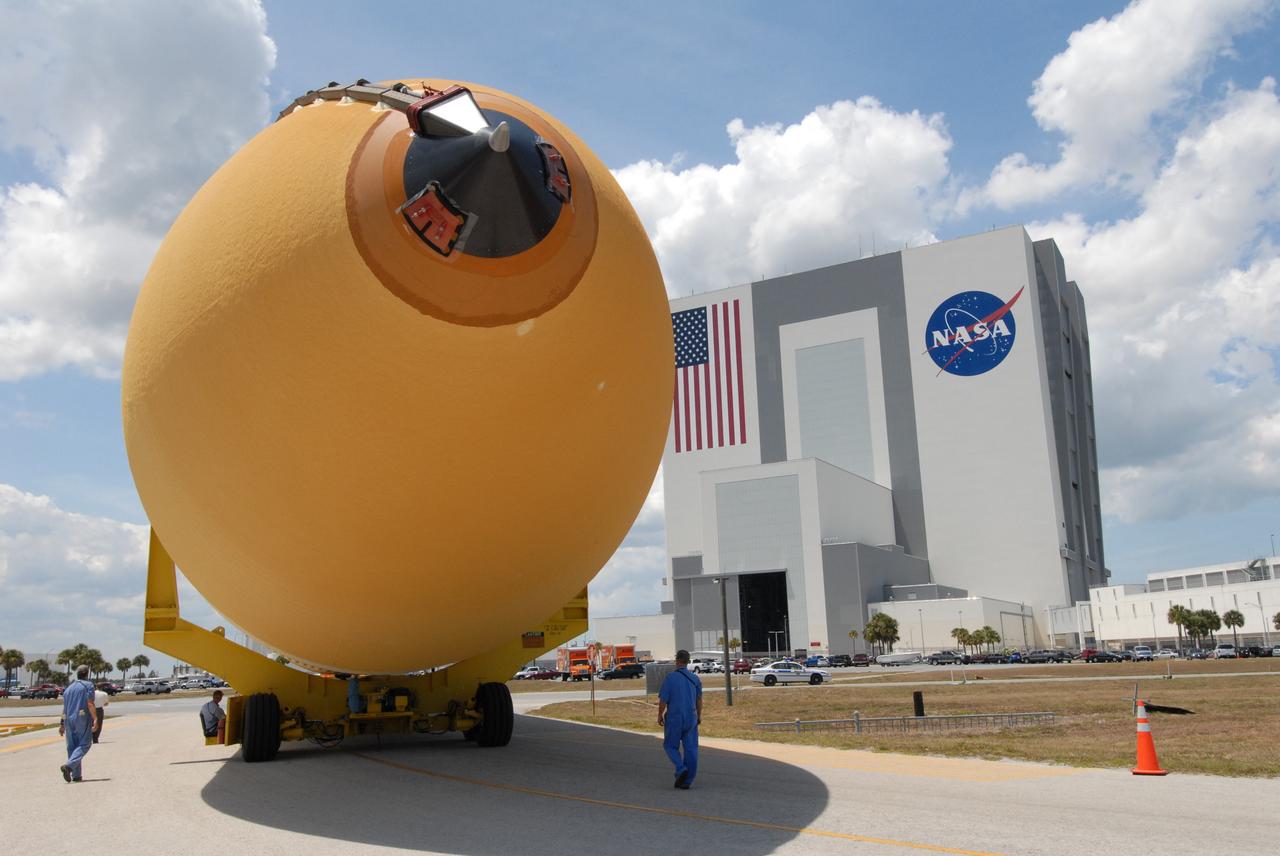
CAPE CANAVERAL, Fla. – The external fuel tank, ET- 132, designated for use with space shuttle Discovery on the STS-128 mission makes the turn toward the Vehicle Assembly Building (at right) at NASA's Kennedy Space Center in Florida. It will be moved into a high bay for checkout. On the STS-128 mission, Discovery will carry science and storage racks to the International Space Station. Launch of Discovery is targeted for Aug. 6. Photo credit: NASA/Jack Pfaller
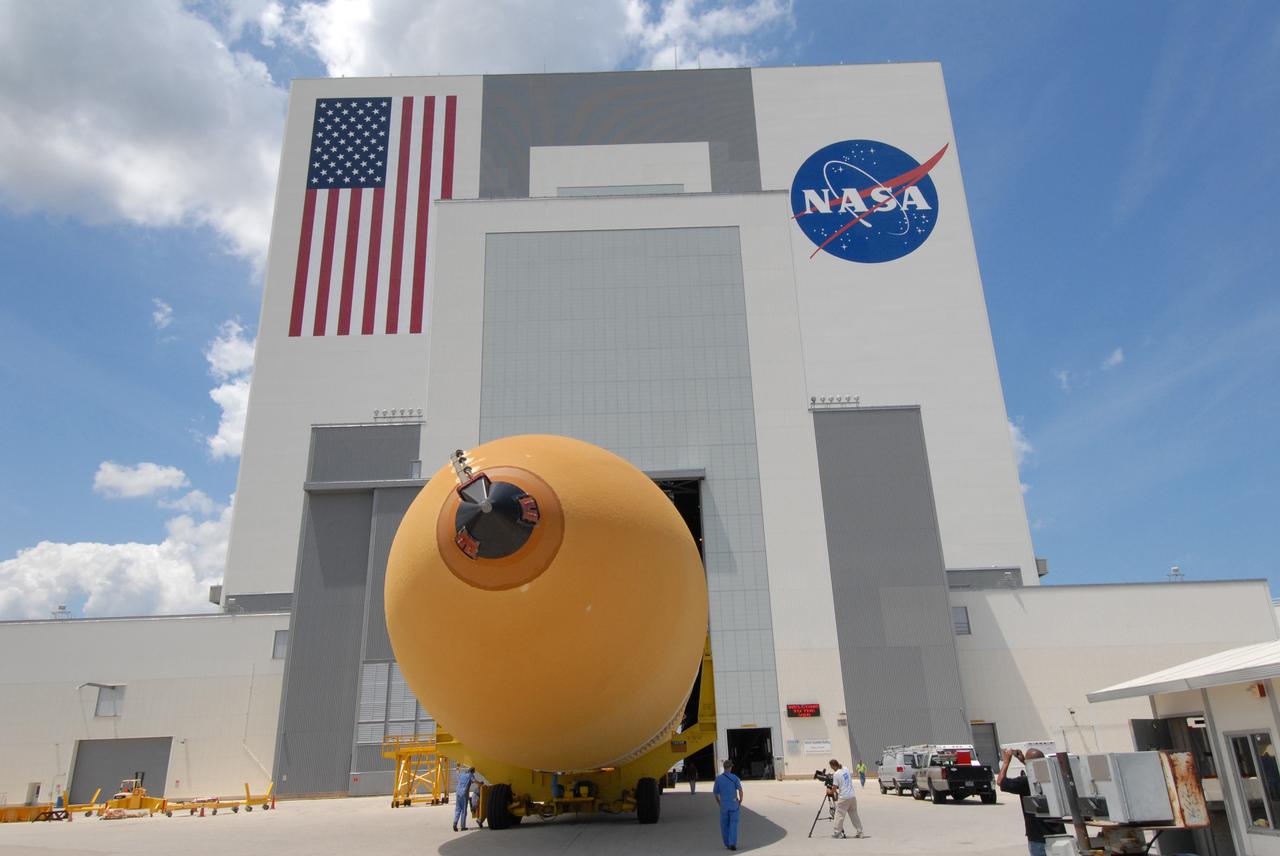
CAPE CANAVERAL, Fla. – The external fuel tank, ET- 132, designated for use with space shuttle Discovery on the STS-128 mission moves toward the open door of the Vehicle Assembly Building at NASA's Kennedy Space Center in Florida. The tank will be moved into a high bay for checkout. On the STS-128 mission, Discovery will carry science and storage racks to the International Space Station. Launch of Discovery is targeted for Aug. 6. Photo credit: NASA/Jack Pfaller
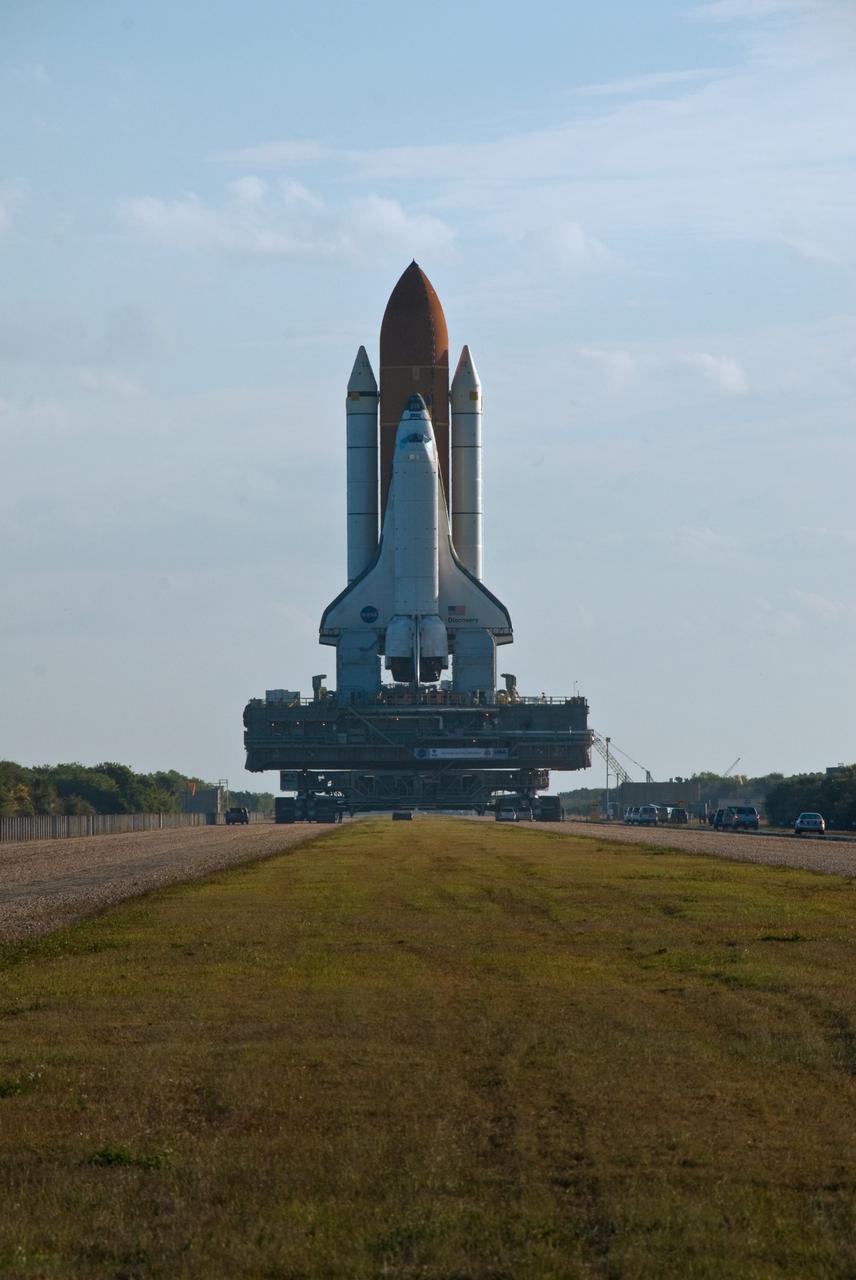
CAPE CANAVERAL, Fla. -- Space Space shuttle Discovery, atop the mobile launcher platform, makes the slow 3.4-mile journey via the broad, two-track crawlerway to Launch Pad 39A at NASA's Kennedy Space Center in Florida. First motion out of the Vehicle Assembly Building (at right) was at 5:17 a.m. EST. Discovery is targeted to launch to the International Space Station Feb. 12. During Discovery's 14-day mission, the crew will install the S6 truss segment and its solar arrays to the starboard side of the station, completing the station's backbone, or truss, enabling a six-person crew to live there starting in May. Photo credit: NASA/Troy Cryder
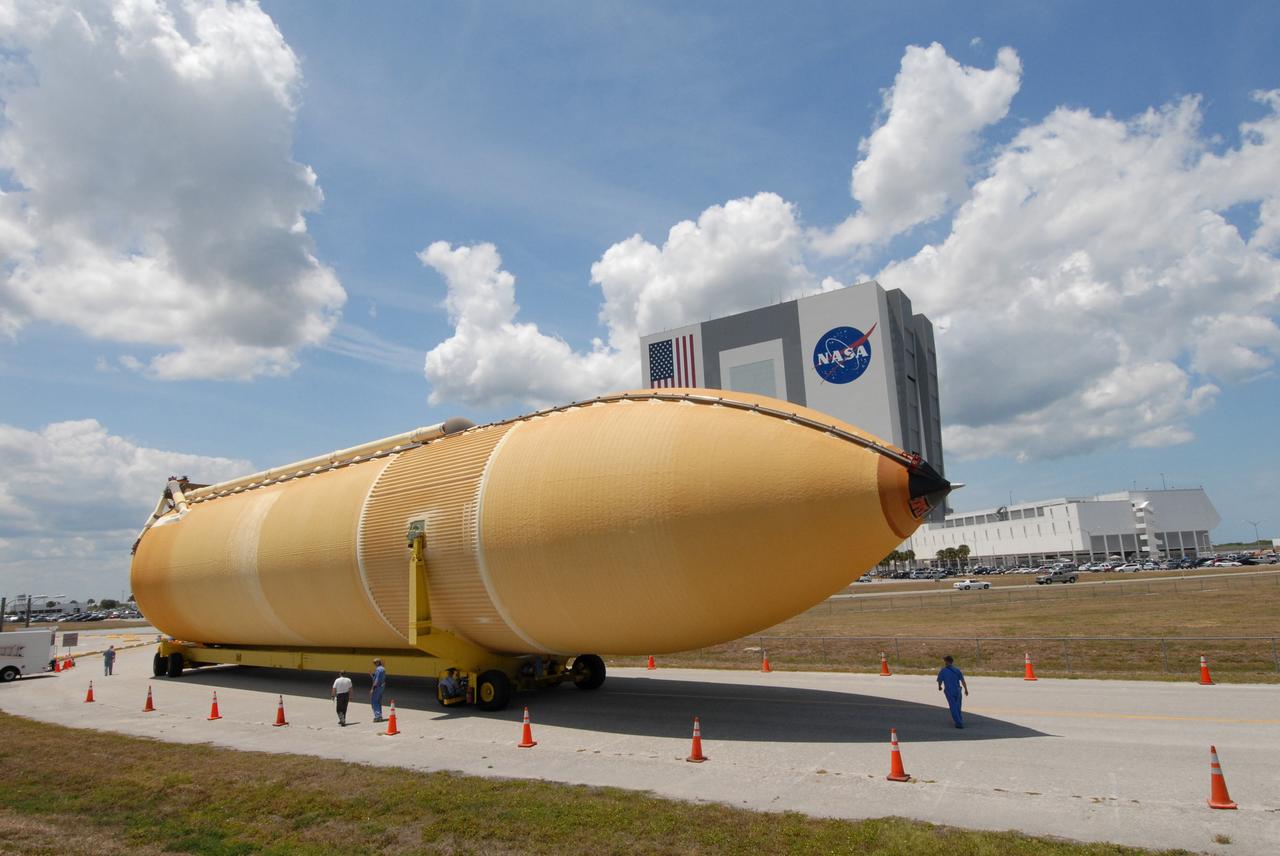
CAPE CANAVERAL, Fla. – The external fuel tank, ET- 132, designated for use with space shuttle Discovery on the STS-128 mission is transported to the Vehicle Assembly Building (at left) at NASA's Kennedy Space Center in Florida, for checkout in a high bay. It arrived at Kennedy aboard the Pegasus barge. On the STS-128 mission, Discovery will carry science and storage racks to the International Space Station. Launch of Discovery is targeted for Aug. 6. Photo credit: NASA/Jack Pfaller
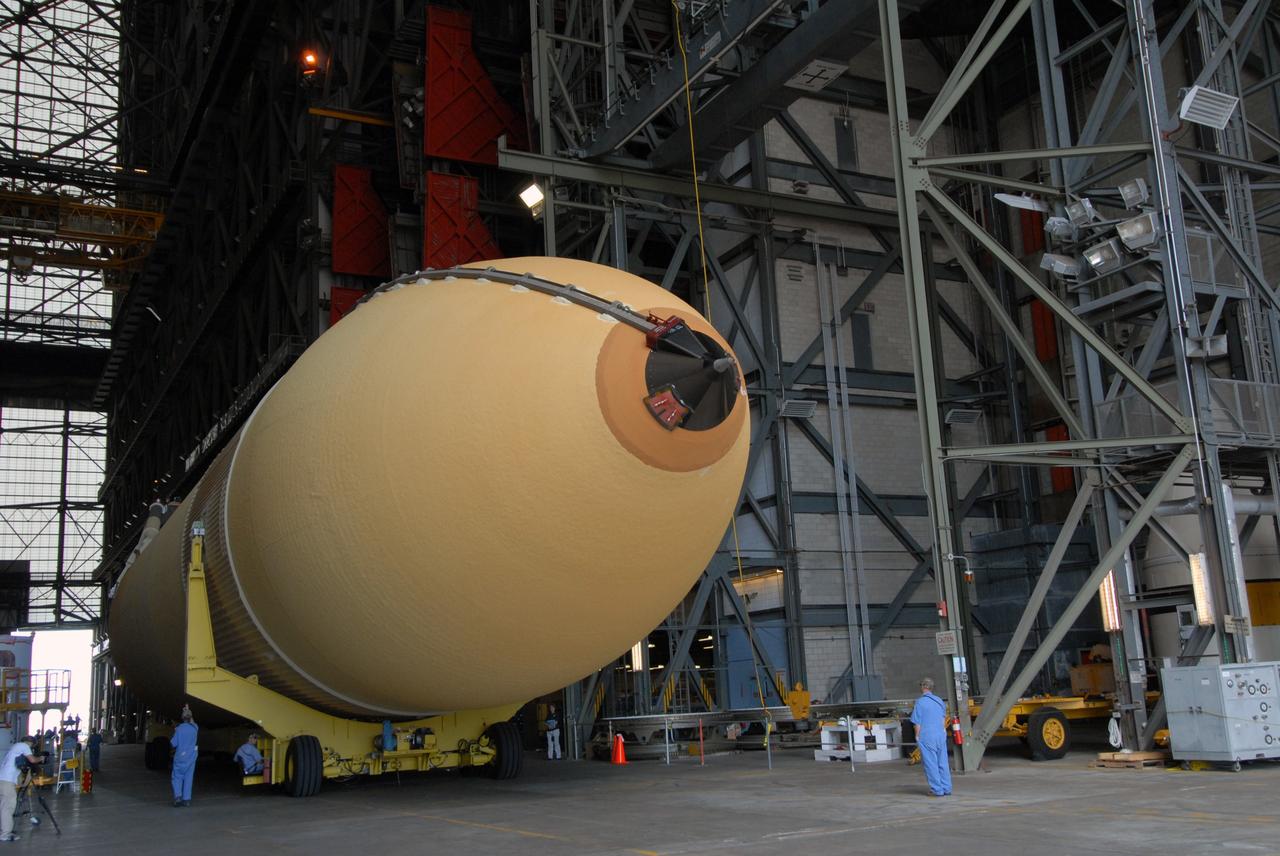
CAPE CANAVERAL, Fla. – The external fuel tank, ET- 132, designated for use with space shuttle Discovery on the STS-128 mission moves into the transfer aisle of the Vehicle Assembly Building at NASA's Kennedy Space Center in Florida. The tank will be moved into a high bay for checkout. On the STS-128 mission, Discovery will carry science and storage racks to the International Space Station. Launch of Discovery is targeted for Aug. 6. Photo credit: NASA/Jack Pfaller
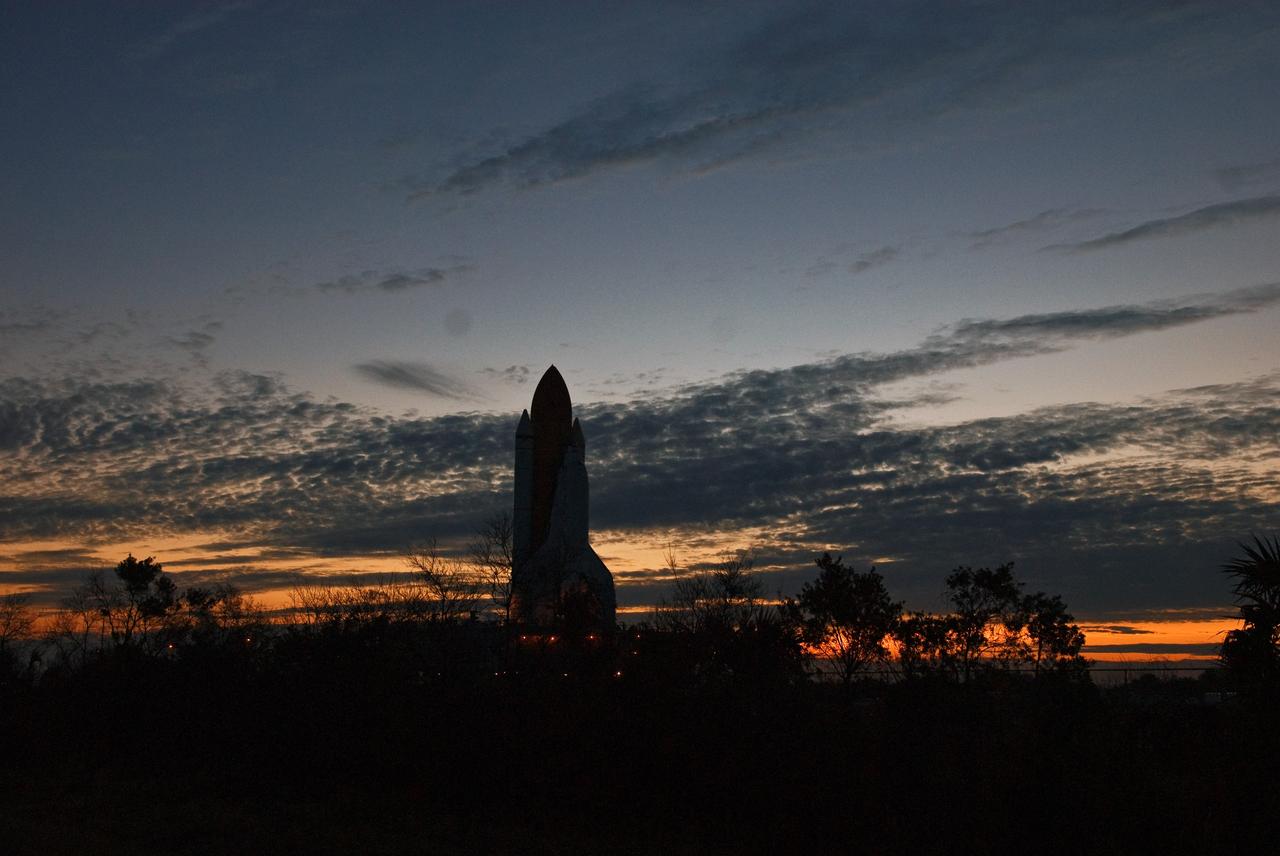
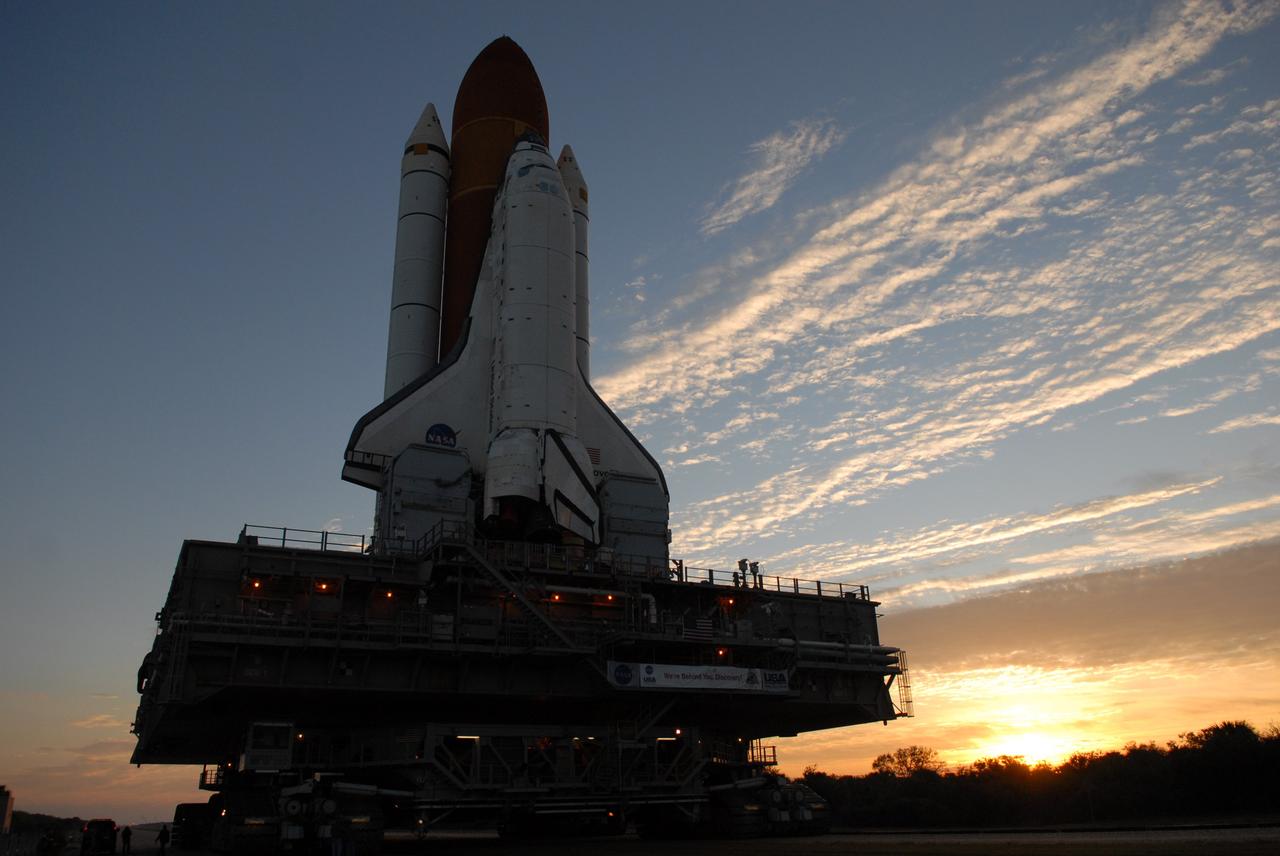
CAPE CANAVERAL, Fla. -- Space shuttle Discovery looms against the pre-dawn, cloud-streaked sky as it makes the slow 3.4-mile journey to Launch Pad 39A. The shuttle sits atop the mobile launcher platform, which are being moved by the massive crawler-transporter beneath. First motion out of the Vehicle Assembly Building was at 5:17 a.m. EST. Discovery is targeted to launch to the International Space Station Feb. 12. During Discovery's 14-day mission, the crew will install the S6 truss segment and its solar arrays to the starboard side of the station, completing the station's backbone, or truss, enabling a six-person crew to live there starting in May. Photo credit: NASA/Troy Cryder
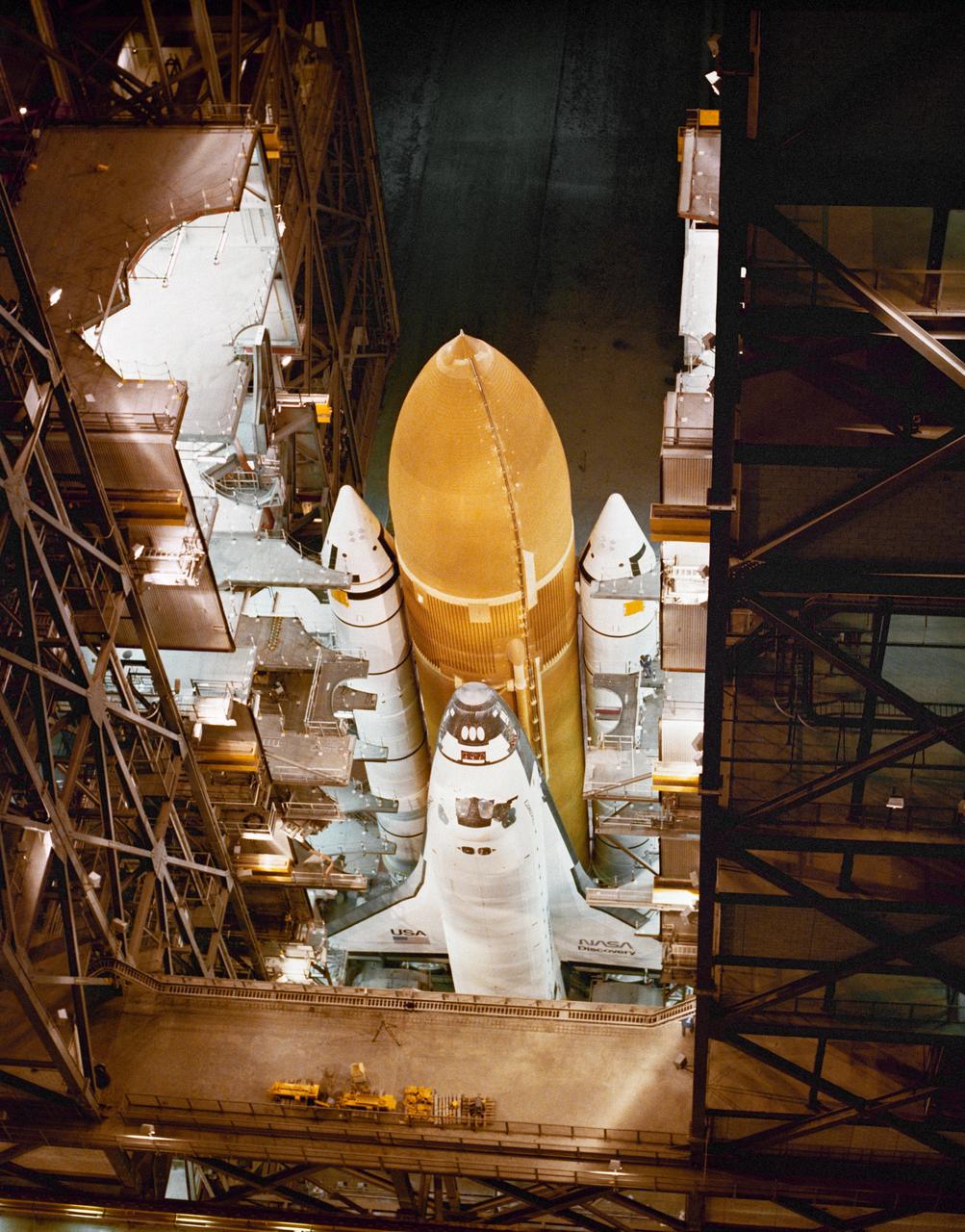
S89-28111 (3 Feb 1989) --- The Space Shuttle Discovery, atop a mobile launch platform, is rolled through the doors of the huge vehicle assembly building (VAB) at 6 a.m., Feb. 3, 1989 on its way to Launch Complex 39. The trip to the pad takes approximately 5 and 1/2 hours. Onboard the spacecraft in mid-March for a five-day mission, on which will be deployed a third tracking and data relay satellite (TDRS-D), will be Astronauts Michael L. Coats, John E. Blaha, James F. Buchli, James P. Bagian and Robert C. Springer.
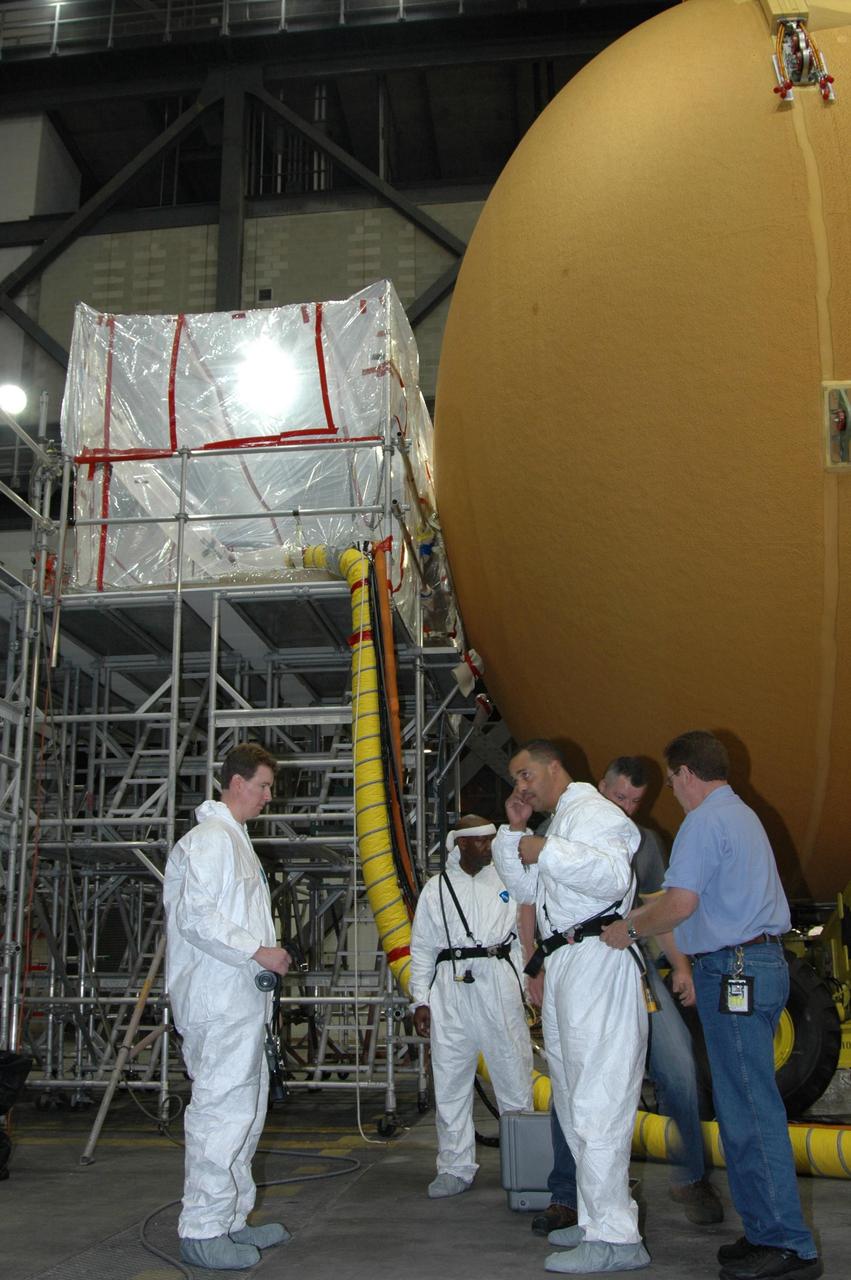
KENNEDY SPACE CENTER, FLA. -- Lockheed Martin technicians in the Vehicle Assembly Building at NASA's Kennedy Space Center prepare for the application of new foam over the manhole cover on the lower end of external tank No. 119. The manhole was removed to access the area where the tank's four liquid hydrogen engine cutoff sensors were replaced. Once reinstalled, the manhole required new foam to be applied. The tank is being prepared to launch Space Shuttle Discovery on mission STS-121 in July. Photo credit: NASA/Jim Grossmann
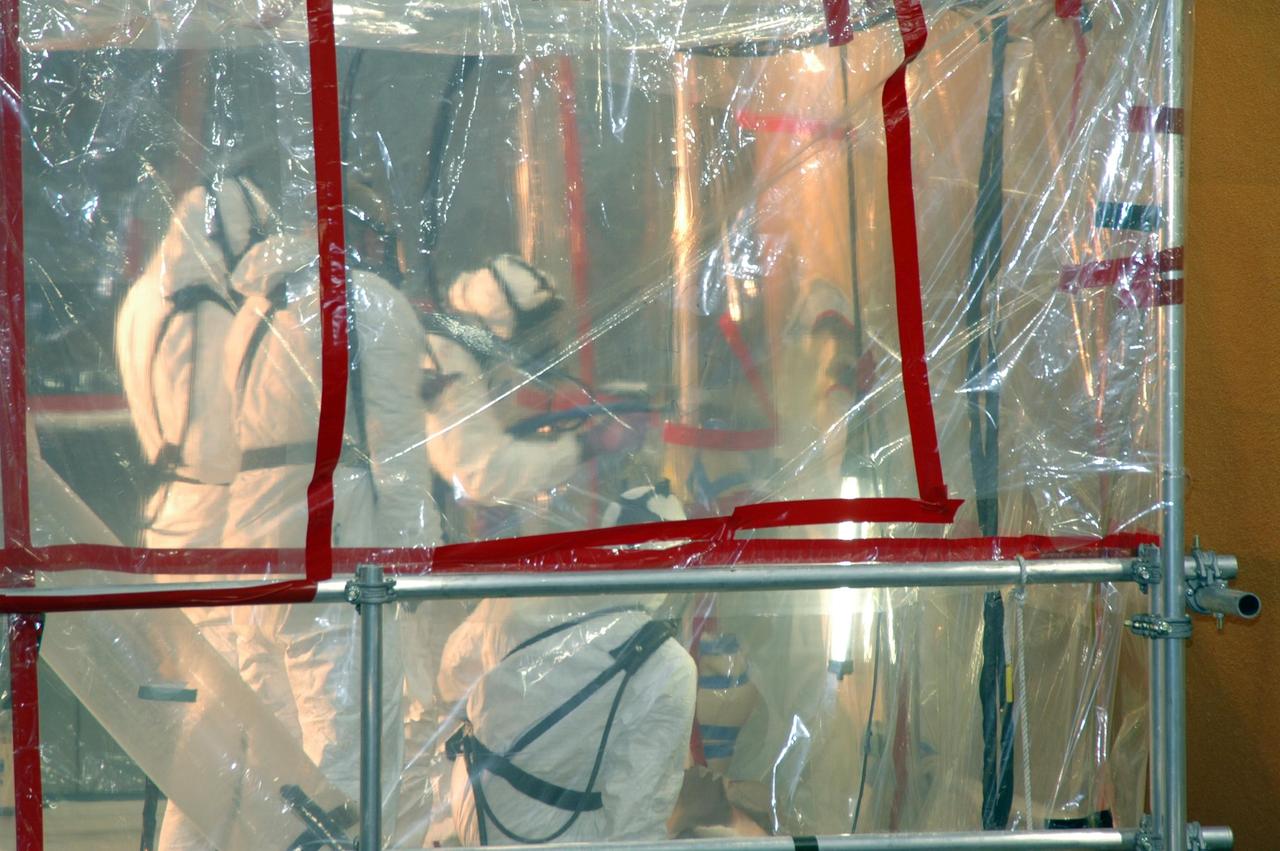
KENNEDY SPACE CENTER, FLA. -- Lockheed Martin technicians in the Vehicle Assembly Building at NASA's Kennedy Space Center apply new foam over the manhole cover on the lower end of external tank No. 119. The manhole was removed to access the area where the tank's four liquid hydrogen engine cutoff sensors were replaced. Once reinstalled, the manhole required new foam to be applied. The tank is being prepared to launch Space Shuttle Discovery on mission STS-121 in July. Photo credit: NASA/Jim Grossmann

KENNEDY SPACE CENTER, FLA. -- Lockheed Martin technicians in the Vehicle Assembly Building at NASA's Kennedy Space Center begin to apply new foam over the manhole cover on the lower end of external tank No. 119. The manhole was removed to access the area where the tank's four liquid hydrogen engine cutoff sensors were replaced. Once reinstalled, the manhole required new foam to be applied. The tank is being prepared to launch Space Shuttle Discovery on mission STS-121 in July. Photo credit: NASA/Jim Grossmann
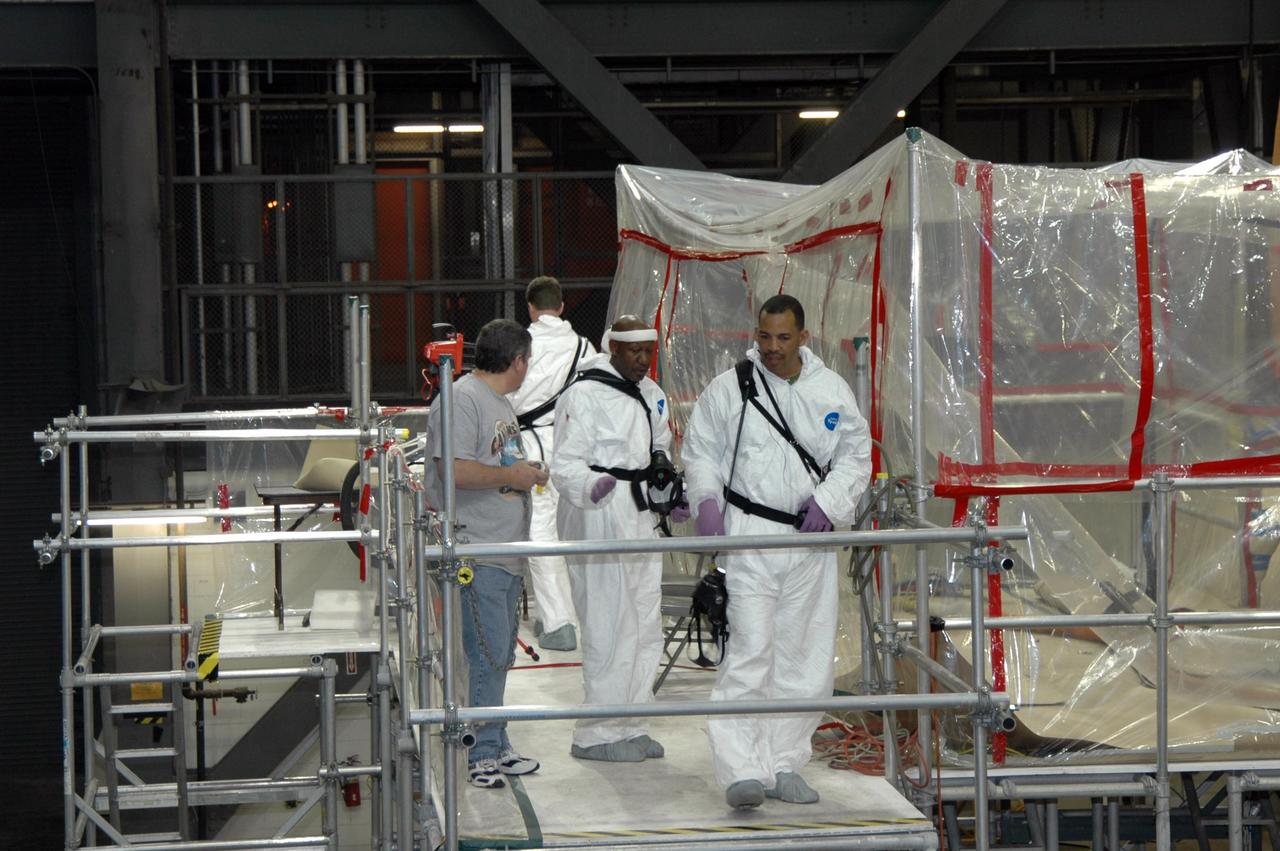
KENNEDY SPACE CENTER, FLA. -- Lockheed Martin technicians in the Vehicle Assembly Building at NASA's Kennedy Space Center prepare for the application of new foam over the manhole cover on the lower end of external tank No. 119. The manhole was removed to access the area where the tank's four liquid hydrogen engine cutoff sensors were replaced. Once reinstalled, the manhole required new foam to be applied. The tank is being prepared to launch Space Shuttle Discovery on mission STS-121 in July. Photo credit: NASA/Jim Grossmann