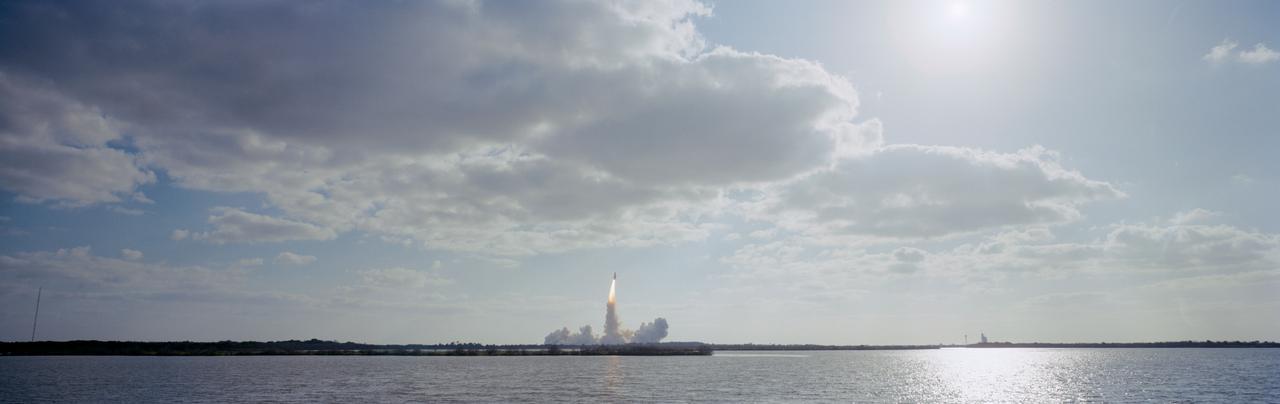
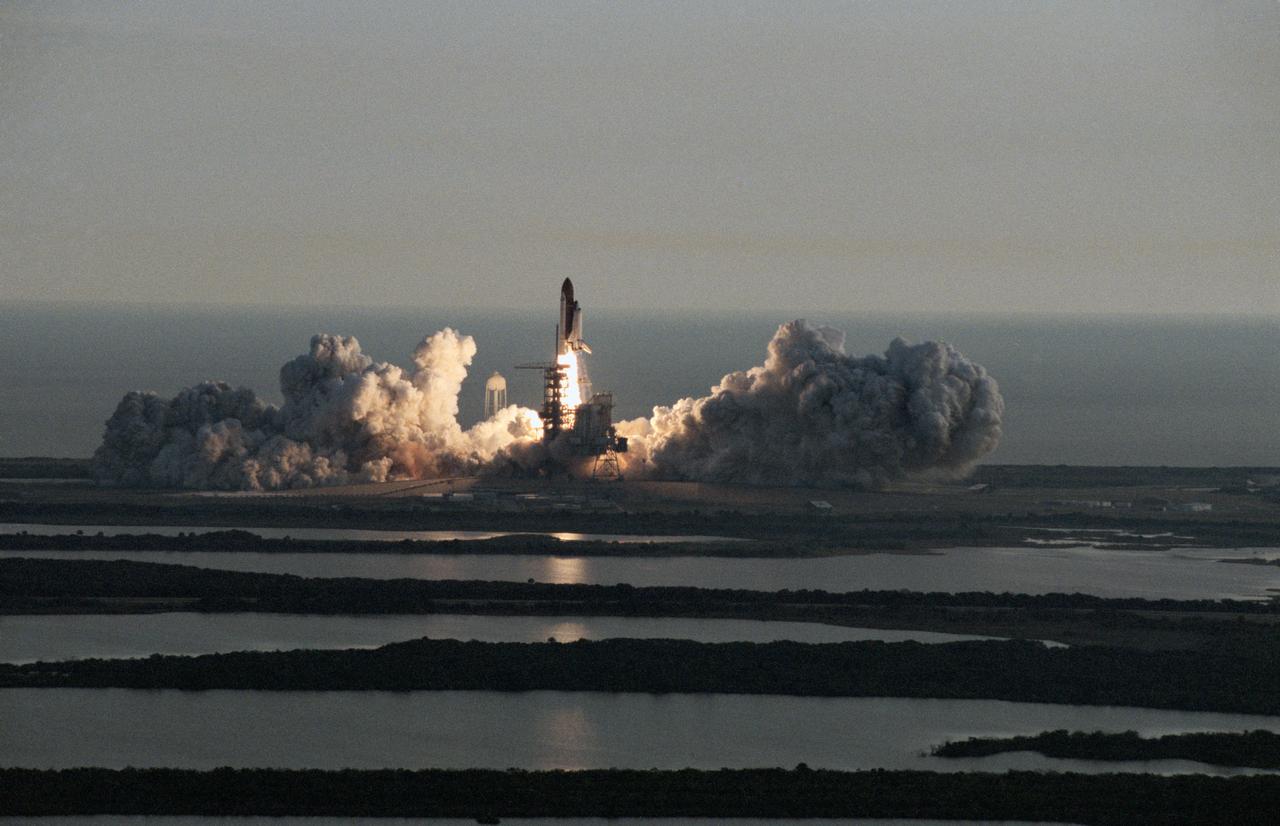
In this distant view, STS-31 Discovery, Orbiter Vehicle (OV) 103, is seen as it heads skyward after liftoff from Kennedy Space Center (KSC) Launch Complex (LC) Pad 39B at 8:33:51.0492 am (Eastern Daylight Time (EDT)). OV-103's silhouette atop the external tank (ET) appears above the glow of the solid rocket booster (SRB) and space shuttle main engine (SSME) firings. An exhaust plume trails behind and covers the launch pad area below the orbiter. A nearby waterway reflects the SRB/SSME glow in the foreground. At the far right and barely discernible is KSC LC Pad 39A and the Sound Supression Water System tower. Columbia, OV-102, is on LC Pad 39A which is separated by a distance of 1.6 miles. This was the first time since January 1986 that there was a shuttle on each pad.
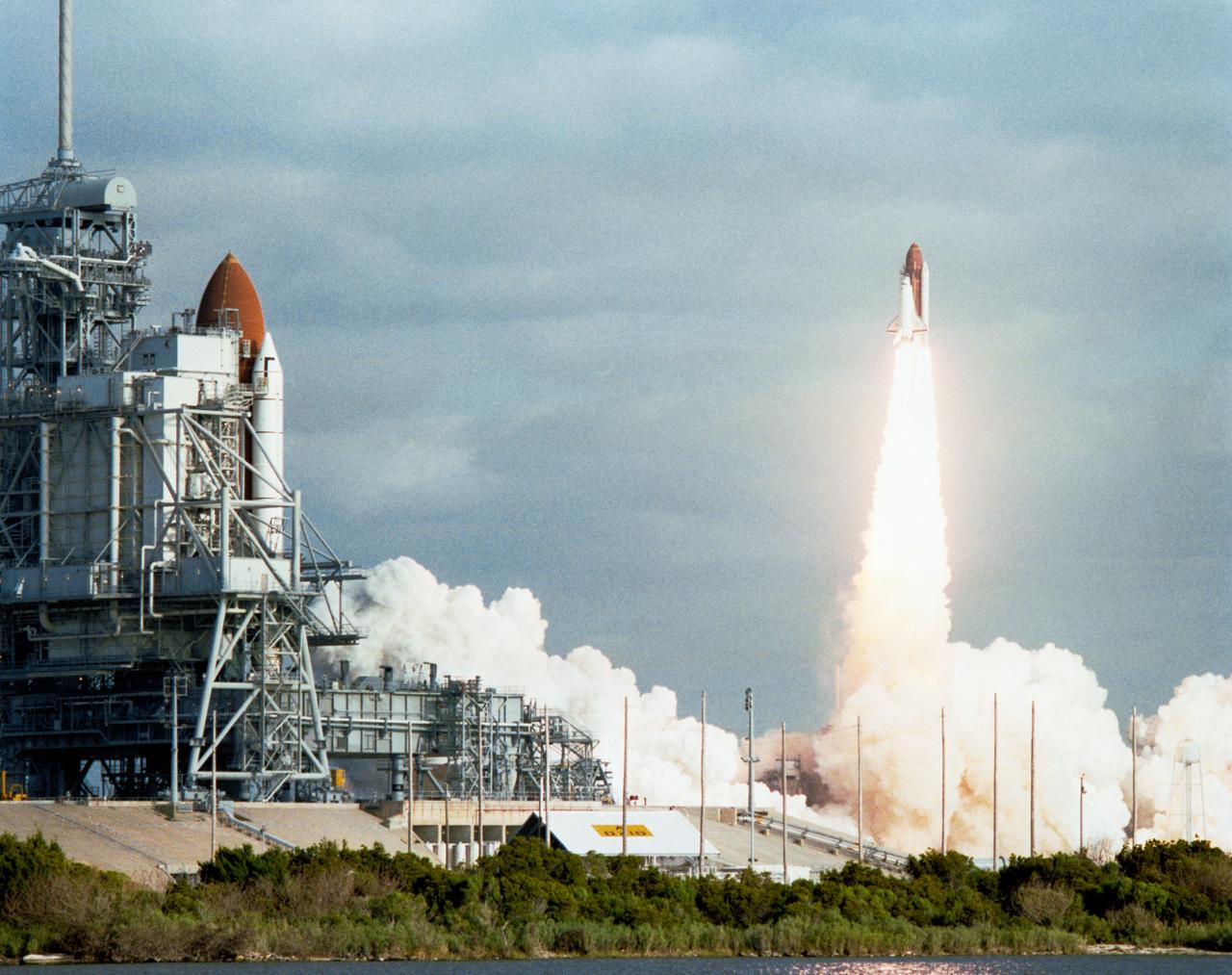
STS-31 Discovery, Orbiter Vehicle (OV) 103, lifts off from Kennedy Space Center (KSC) Launch Complex (LC) 39 Pad B. In the foreground STS-35 Columbia, OV-102, is visible on launch pad 39A. This event marked the first time since January 1986 that there was an orbiter on each pad. LC 39 pads are separated by 1.6 miles. View provided by KSC with alternate number KSC-90PC-610.
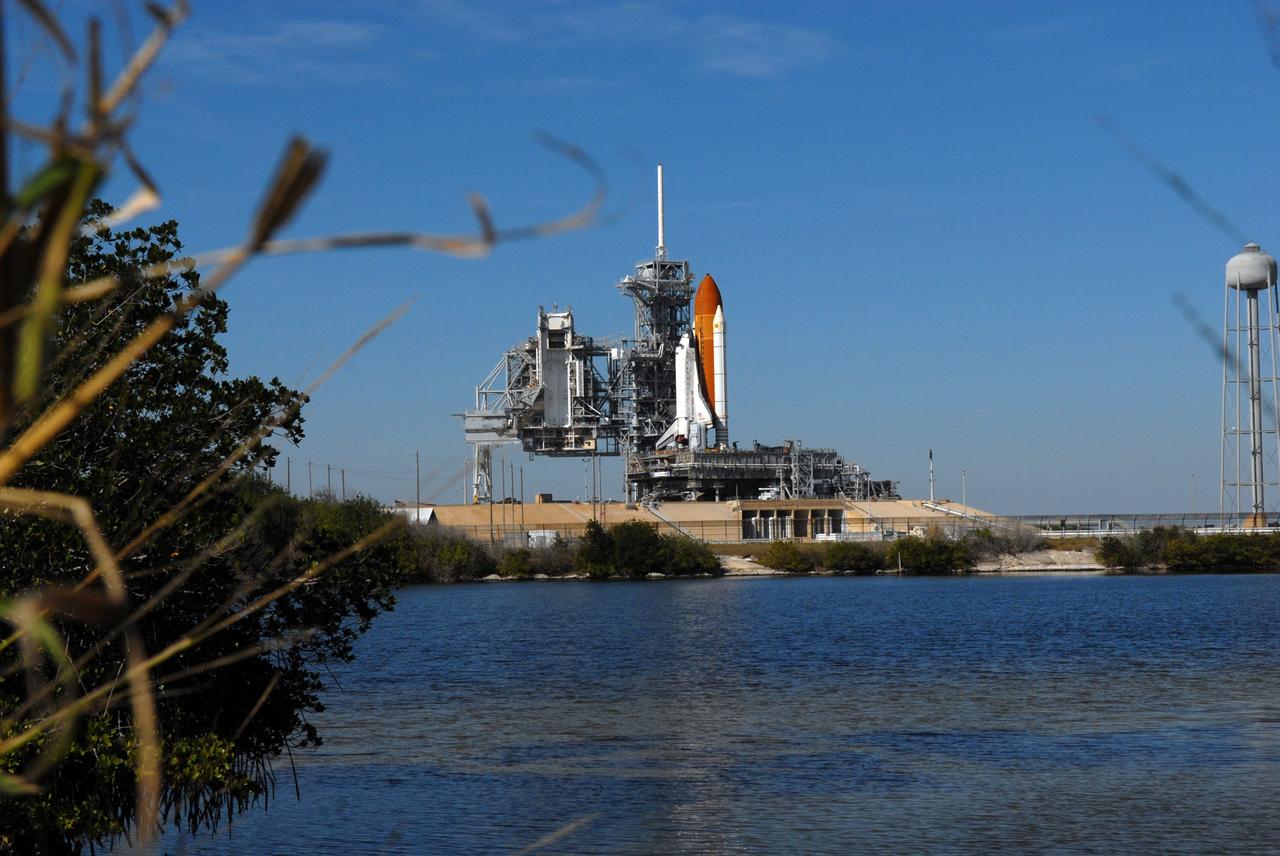
CAPE CANAVERAL, Fla. -- Viewed across the waters of the Banana River at NASA's Kennedy Space Center in Florida, space shuttle Discovery is secured on Launch Pad 39A. First motion was at 5:17 a.m. EST. Discovery was secured to the pad at 12:16 p.m. Discovery is targeted to launch to the International Space Station Feb. 12. During Discovery's 14-day mission, the crew will install the S6 truss segment and its solar arrays to the starboard side of the station, completing the station's backbone, or truss, enabling a six-person crew to live there starting in May. Photo credit: NASA/Troy Cryder
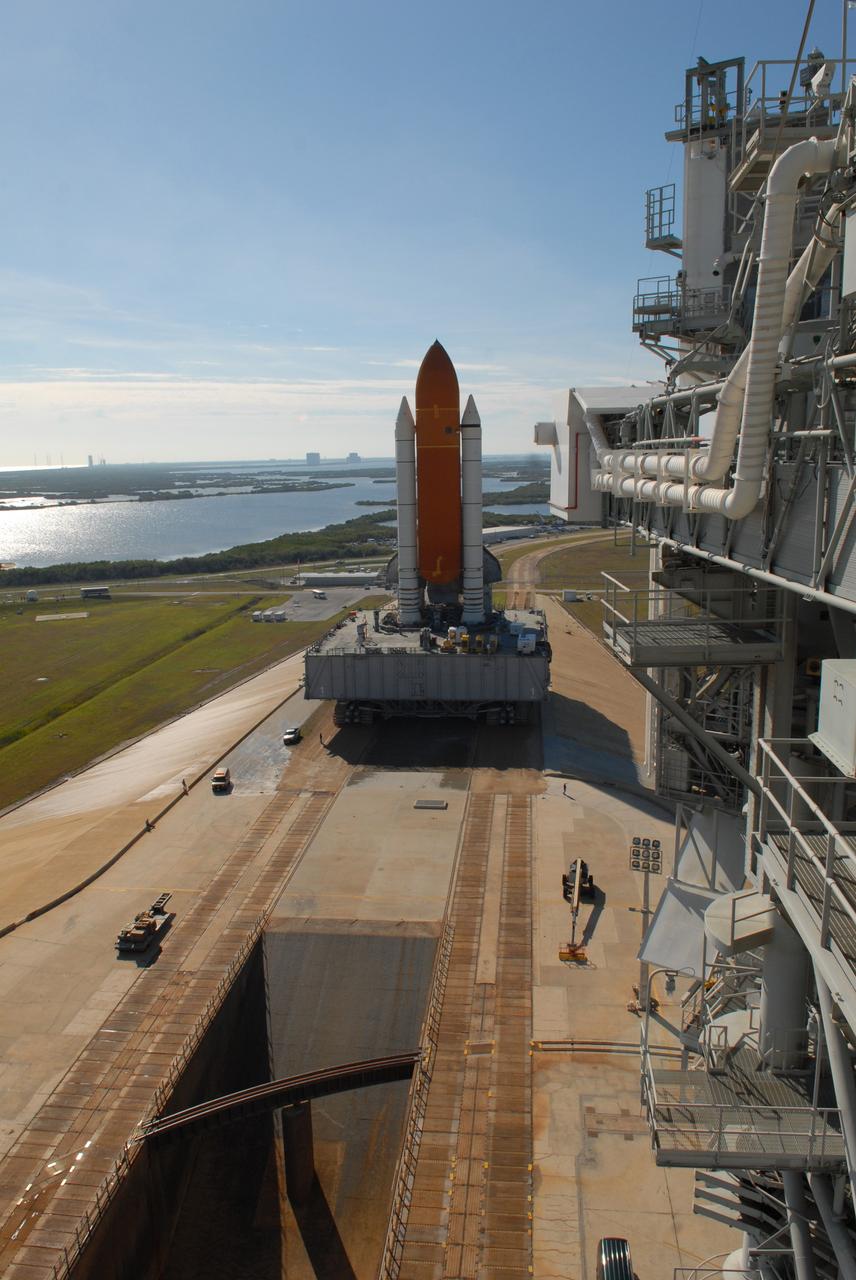
CAPE CANAVERAL, Fla. -- Space shuttle Discovery, atop the mobile launcher platform and crawler-transporter, reaches the top of Launch Pad 39A at NASA's Kennedy Space Center in Florida. in the foreground is the flame trench, which the launcher platform will straddle for launch. At right is the rotating service structure. Behind the shuttle, the grounds of the space center spread out toward the horizon. Discovery's first motion out of the Vehicle Assembly Building was at 5:17 a.m. EST. Discovery was secured to the pad at 12:16 p.m. Discovery is targeted to launch to the International Space Station Feb. 12. During Discovery's 14-day mission, the crew will install the S6 truss segment and its solar arrays to the starboard side of the station, completing the station's backbone, or truss, enabling a six-person crew to live there starting in May. Photo credit: NASA/Troy Cryder
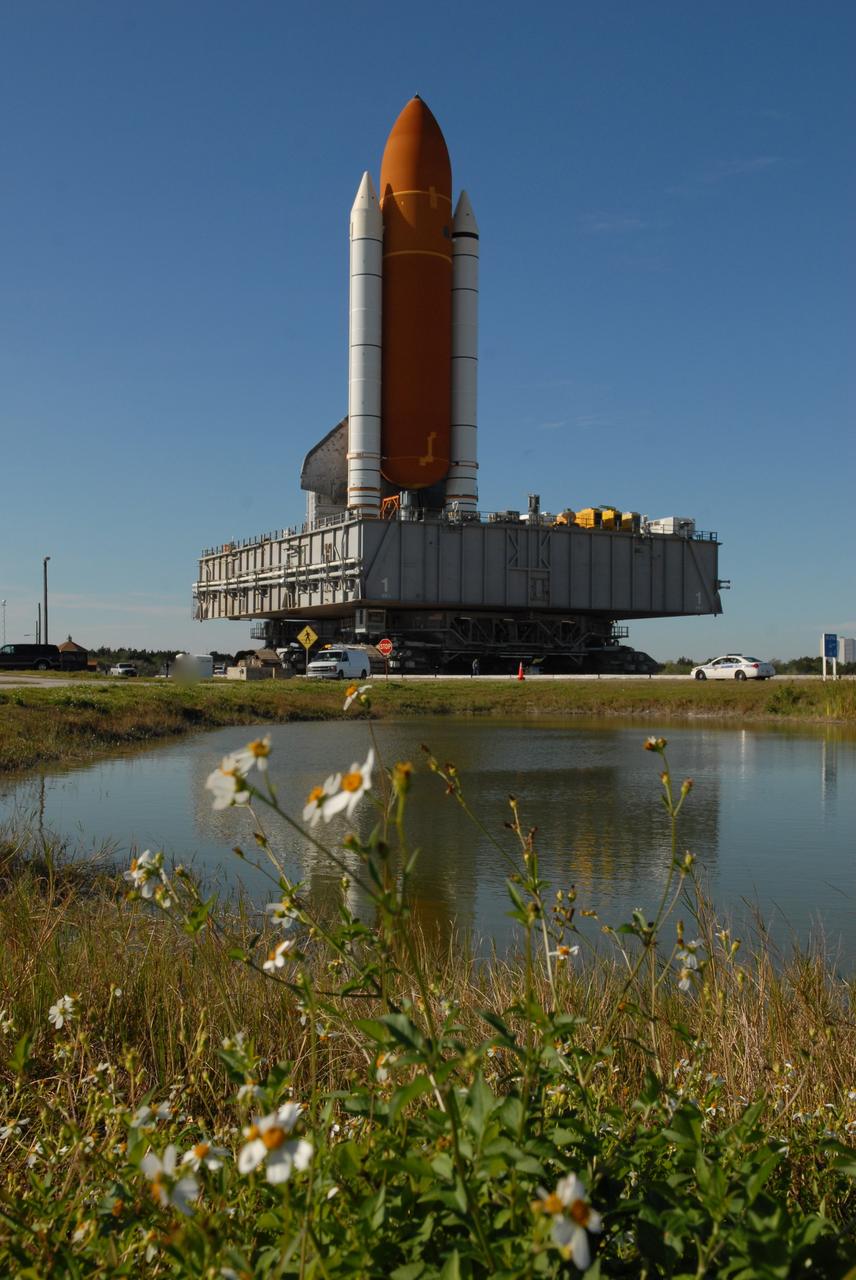
CAPE CANAVERAL, Fla. -- Space shuttle Discovery, atop the mobile launcher platform, wends its way past a wildflower-edged canal on the slow 3.4-mile journey to Launch Pad 39A at NASA's Kennedy Space Center in Florida. First motion out of the Vehicle Assembly Building was at 5:17 a.m. EST. Discovery was secured to the pad at 12:16 p.m. Discovery is targeted to launch to the International Space Station Feb. 12. During Discovery's 14-day mission, the crew will install the S6 truss segment and its solar arrays to the starboard side of the station, completing the station's backbone, or truss, enabling a six-person crew to live there starting in May. Photo credit: NASA/Troy Cryder
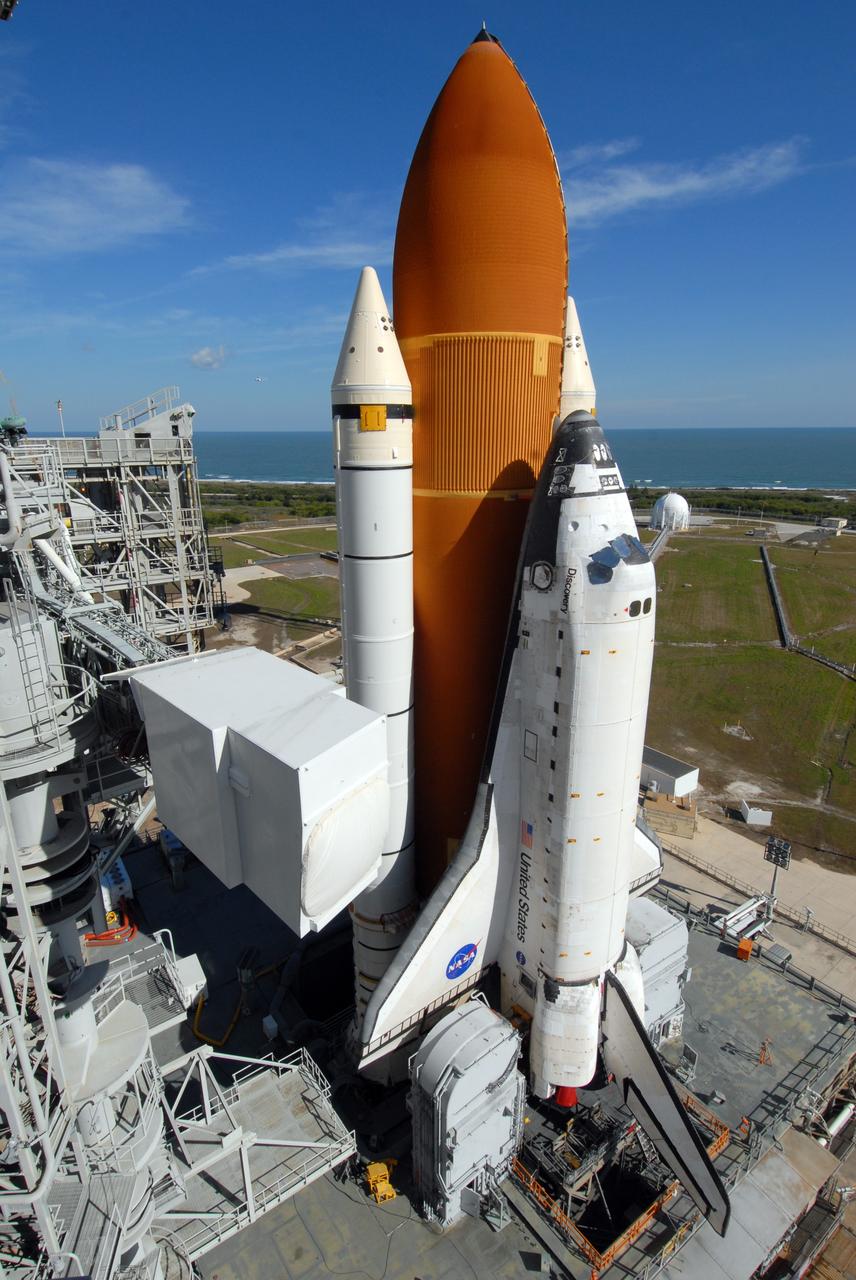
CAPE CANAVERAL, Fla. -- Space shuttle Discovery, atop the mobile launcher platform, reaches the top of Launch Pad 39A at NASA's Kennedy Space Center in Florida. At left is the White Room, attached to the end of the orbiter access arm. Behind the shuttle can be seen the Atlantic Ocean. Discovery's first motion out of the Vehicle Assembly Building was at 5:17 a.m. EST. Discovery was secured to the pad at 12:16 p.m. Discovery is targeted to launch to the International Space Station Feb. 12. During Discovery's 14-day mission, the crew will install the S6 truss segment and its solar arrays to the starboard side of the station, completing the station's backbone, or truss, enabling a six-person crew to live there starting in May. Photo credit: NASA/Troy Cryder
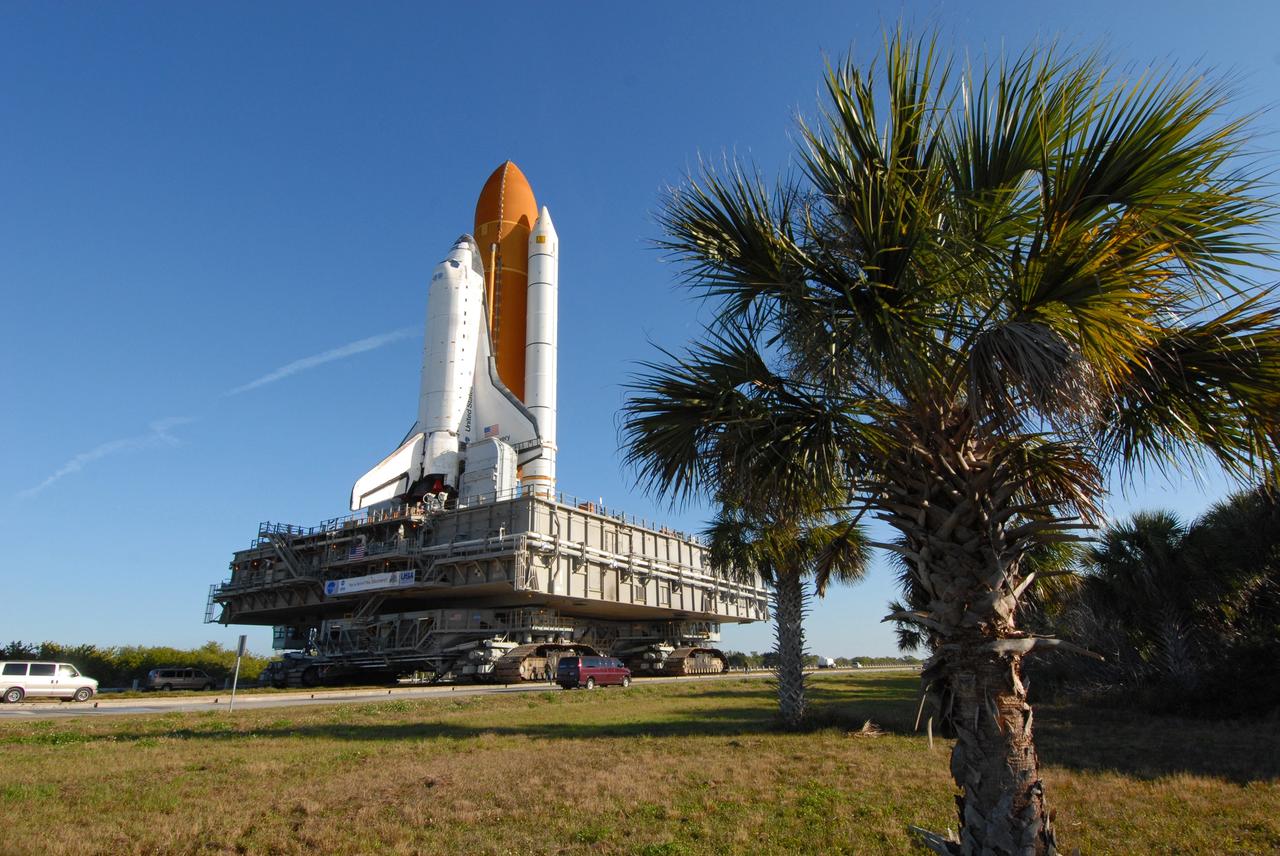
CAPE CANAVERAL, Fla. -- Space shuttle Discovery, atop the mobile launcher platform, makes the slow 3.4-mile journey via the massive crawler-transporter to Launch Pad 39A at NASA's Kennedy Space Center in Florida. First motion out of the Vehicle Assembly Building was at 5:17 a.m. EST. Discovery was secured to the pad at 12:16 p.m. Discovery is targeted to launch to the International Space Station Feb. 12. During Discovery's 14-day mission, the crew will install the S6 truss segment and its solar arrays to the starboard side of the station, completing the station's backbone, or truss, enabling a six-person crew to live there starting in May. Photo credit: NASA/Troy Cryder
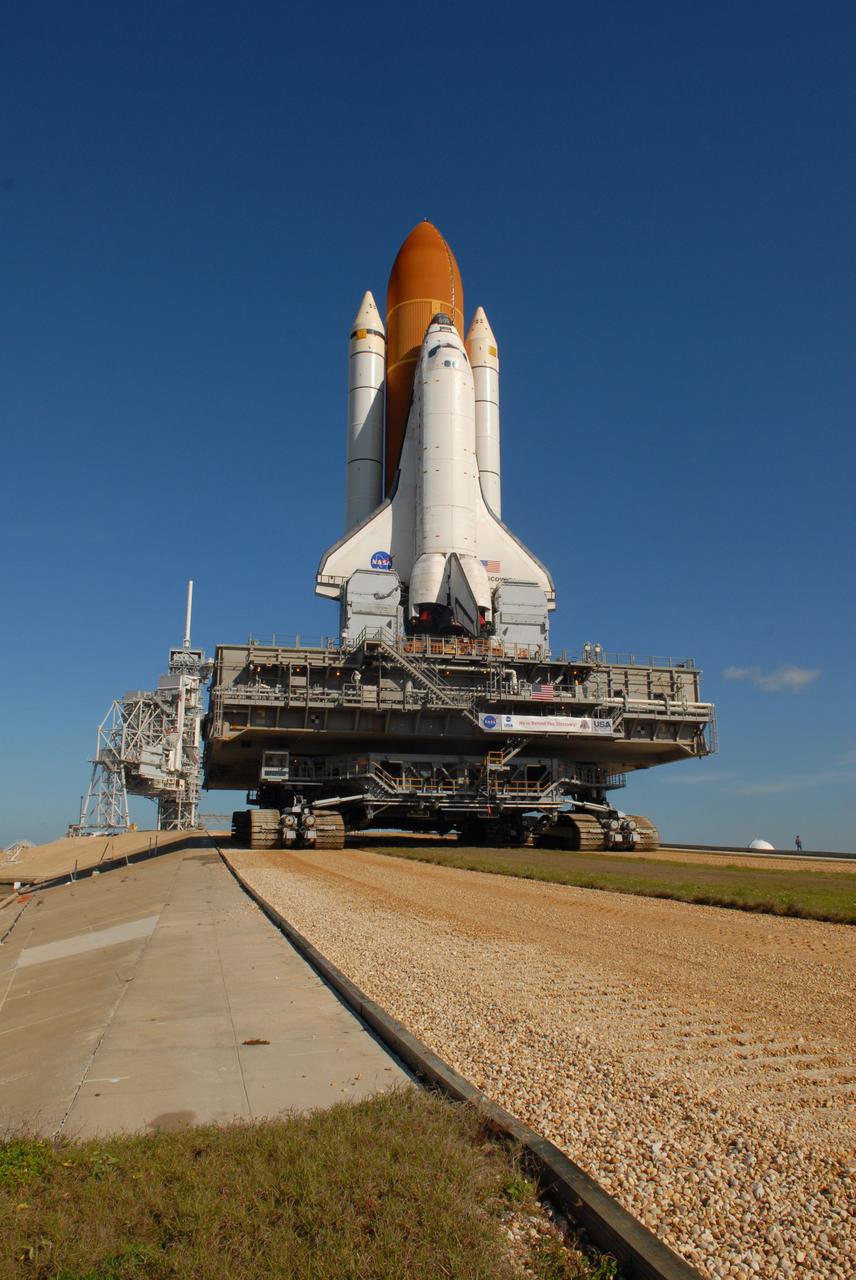
CAPE CANAVERAL, Fla. -- Space shuttle Discovery, atop the mobile launcher platform and crawler-transporter, climbs the ramp to Launch Pad 39A at NASA's Kennedy Space Center in Florida. A laser guidance system and a leveling system on the crawler keeps the shuttle level as it moves up the ramp. At left is seen the fixed service structure with the 80-foot lightning mast on top. First motion out of the Vehicle Assembly Building was at 5:17 a.m. EST. Discovery was secured to the pad at 12:16 p.m. Discovery is targeted to launch to the International Space Station Feb. 12. During Discovery's 14-day mission, the crew will install the S6 truss segment and its solar arrays to the starboard side of the station, completing the station's backbone, or truss, enabling a six-person crew to live there starting in May. Photo credit: NASA/Troy Cryder
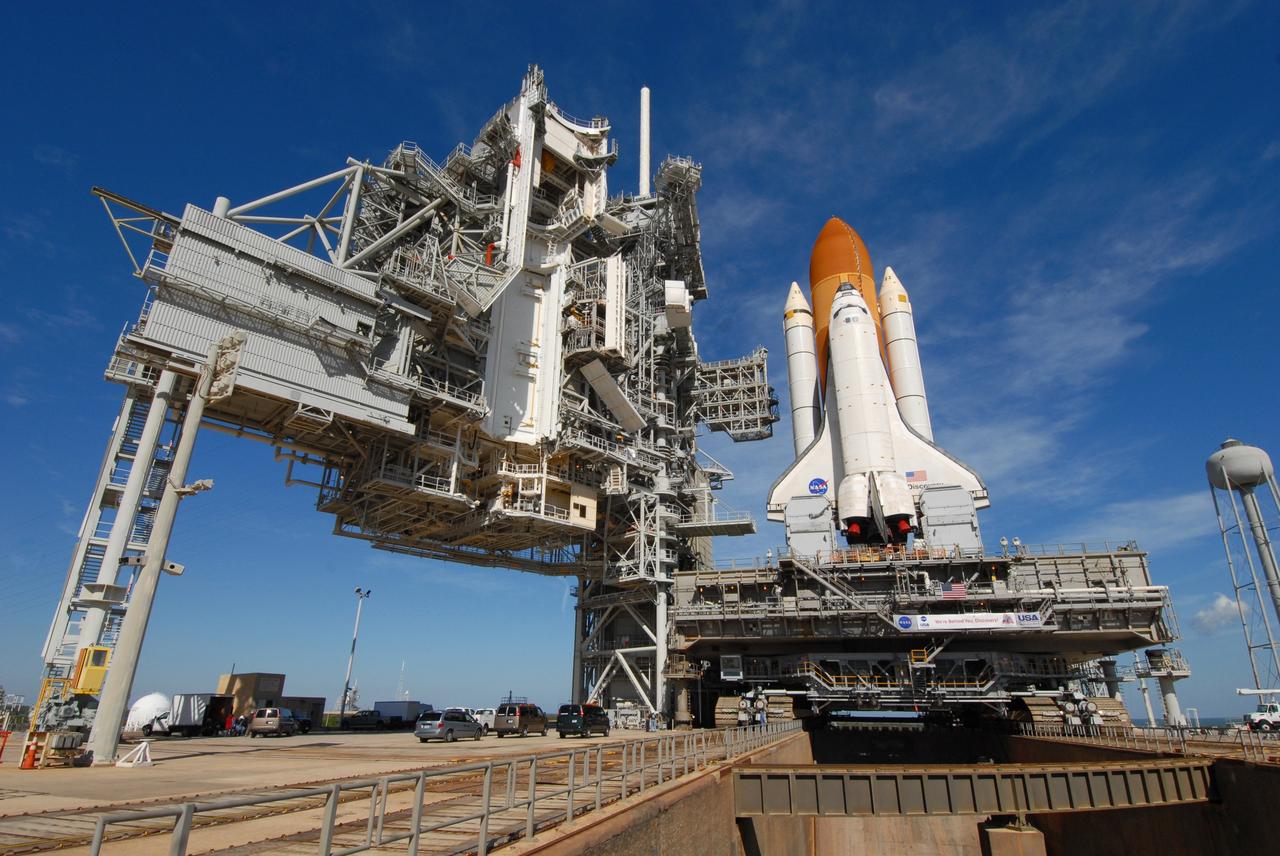
CAPE CANAVERAL, Fla. -- Space shuttle Discovery rests on Launch Pad 39A after a seven-hour rollout from the Vehicle Assembly Building at NASA's Kennedy Space Center in Florida. At left are the fixed service structure (next to the shuttle) and the rotating service structure. First motion was at 5:17 a.m. EST. Discovery was secured to the pad at 12:16 p.m. Discovery is targeted to launch to the International Space Station Feb. 12. During Discovery's 14-day mission, the crew will install the S6 truss segment and its solar arrays to the starboard side of the station, completing the station's backbone, or truss, enabling a six-person crew to live there starting in May. Photo credit: NASA/Troy Cryder
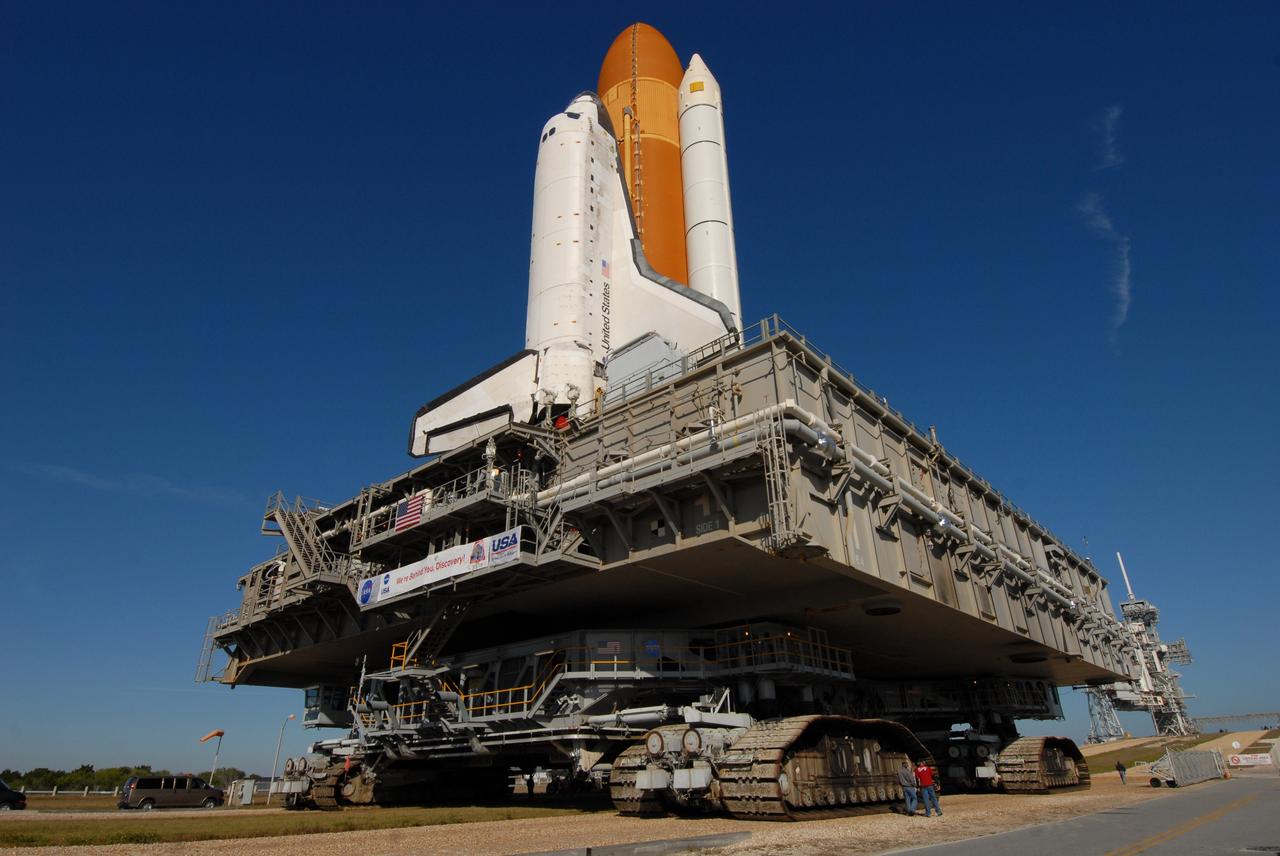
CAPE CANAVERAL, Fla. -- Space shuttle Discovery, atop the mobile launcher platform and crawler-transporter, approaches the ramp to Launch Pad 39A at NASA's Kennedy Space Center in Florida. First motion out of the Vehicle Assembly Building was at 5:17 a.m. EST. Discovery was secured to the pad at 12:16 p.m. Discovery is targeted to launch to the International Space Station Feb. 12. During Discovery's 14-day mission, the crew will install the S6 truss segment and its solar arrays to the starboard side of the station, completing the station's backbone, or truss, enabling a six-person crew to live there starting in May. Photo credit: NASA/Troy Cryder
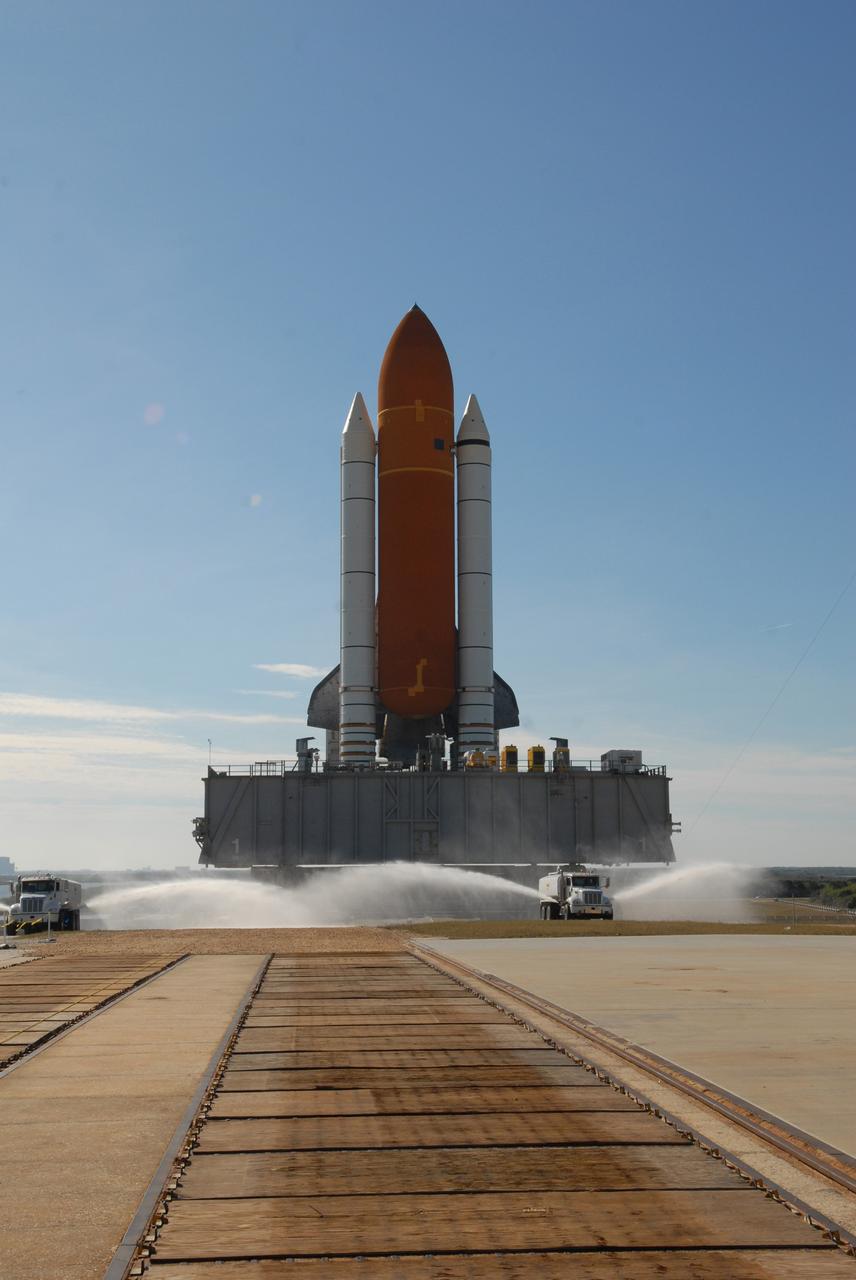
CAPE CANAVERAL, Fla. -- Water trucks spray the crawlerway at NASA's Kennedy Space Center in Florida to reduce dust as space shuttle Discovery, atop the mobile launcher platform and crawler-transporter, makes the slow journey onto Launch Pad 39A. First motion out of the Vehicle Assembly Building was at 5:17 a.m. EST. Discovery was secured to the pad at 12:16 p.m. Discovery is targeted to launch to the International Space Station Feb. 12. During Discovery's 14-day mission, the crew will install the S6 truss segment and its solar arrays to the starboard side of the station, completing the station's backbone, or truss, enabling a six-person crew to live there starting in May. Photo credit: NASA/Troy Cryder
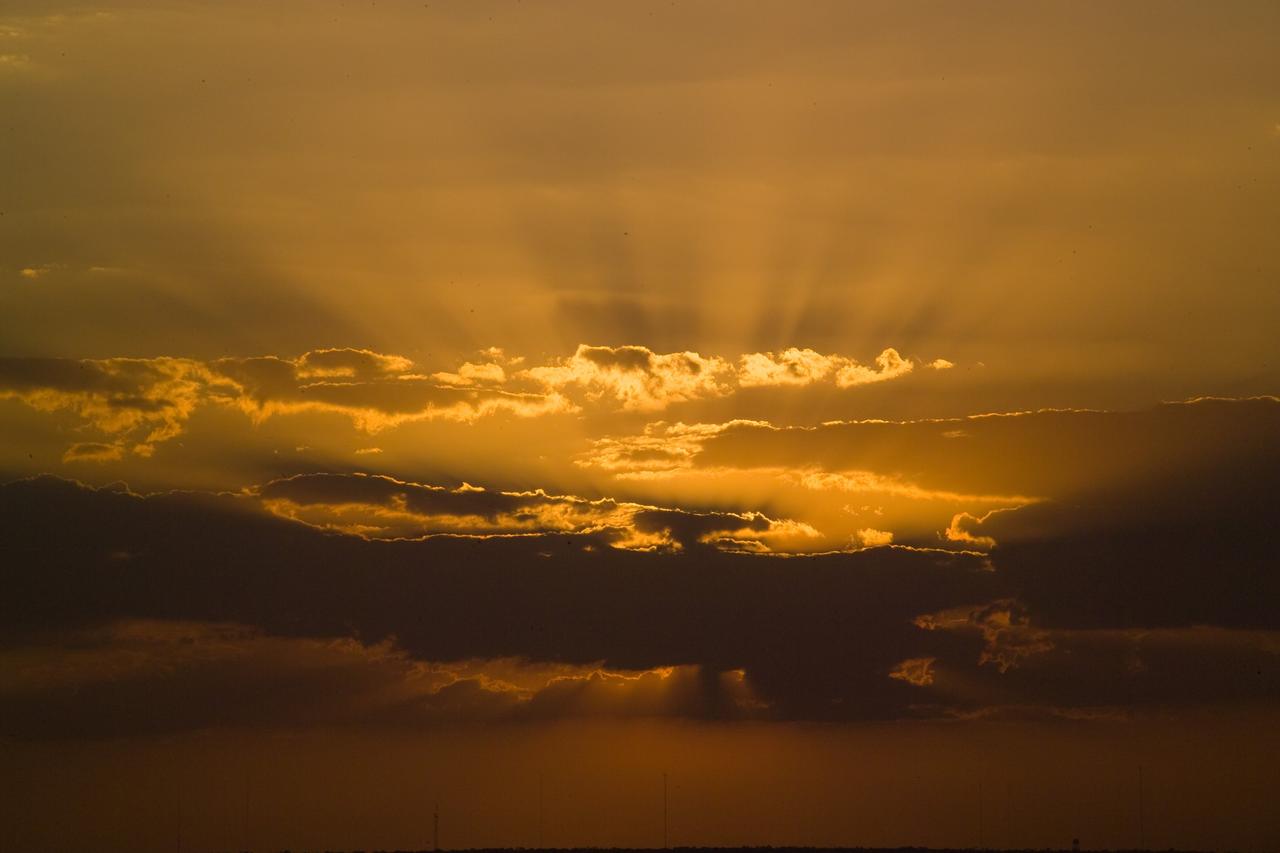
CAPE CANAVERAL, Fla. – The setting sun paints the clouds over NASA's Kennedy Space Center in Florida before the launch of space shuttle Discovery on the STS-119 mission. Liftoff of Discovery was on time at 7:43 p.m. EDT. The STS-119 mission is the 28th to the International Space Station and the 125th space shuttle flight. Discovery will deliver the final pair of power-generating solar array wings and the S6 truss segment. Installation of S6 will signal the station's readiness to house a six-member crew for conducting increased science. Photo credit: NASA/Jeff Wolfe
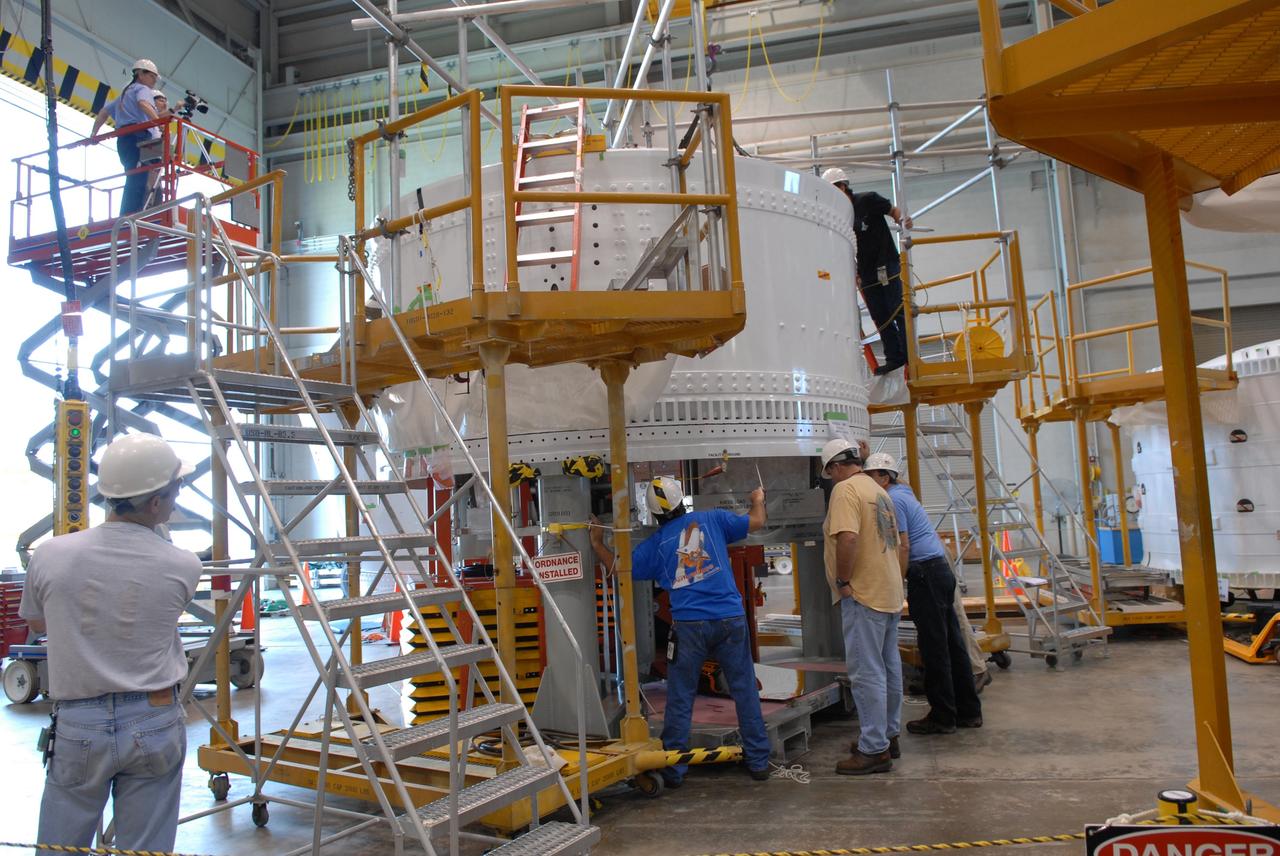
CAPE CANAVERAL, Fla. – In the Assembly and Refurbishment Facility at NASA's Kennedy Space Center in Florida, workers install a parachute pack in the Ares I-X forward skirt segment. The forward skirt is the initial piece of first-stage hardware in preparation for the July 2009 test flight of the agency's next-generation spacecraft and launch vehicle system. Photo credit: NASA/Jack Pfaller
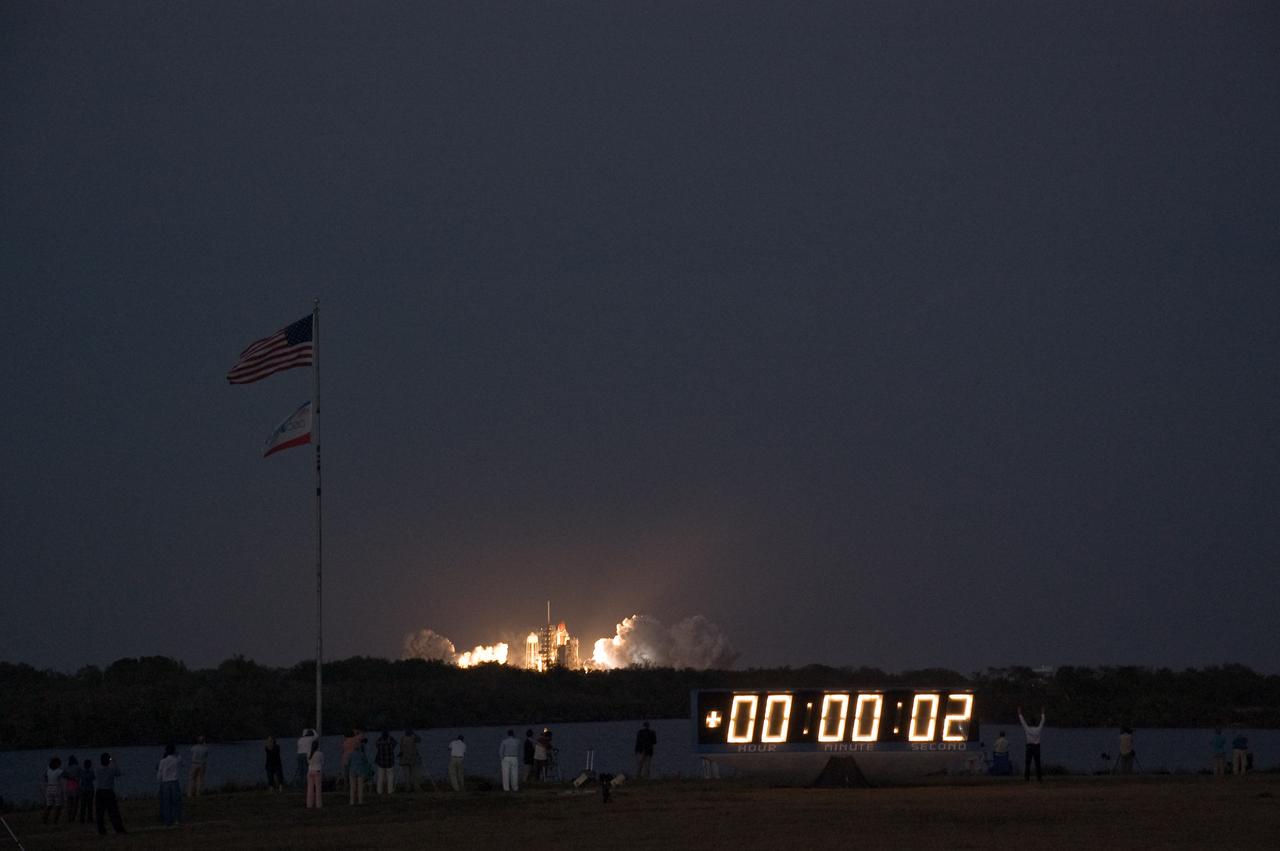
CAPE CANAVERAL, Fla. – Space shuttle Discovery lights up the sky after sunset as it roars off Launch Pad 39A at NASA's Kennedy Space Center in Florida on its mission to the International Space Station. Liftoff was on time at 7:43 p.m. EDT. The STS-119 mission is the 28th to the space station and Discovery's 36th flight. Discovery will deliver the final pair of power-generating solar array wings and the S6 truss segment. Installation of S6 will signal the station's readiness to house a six-member crew for conducting increased science. Photo credit: NASA/Fletch Hildreth
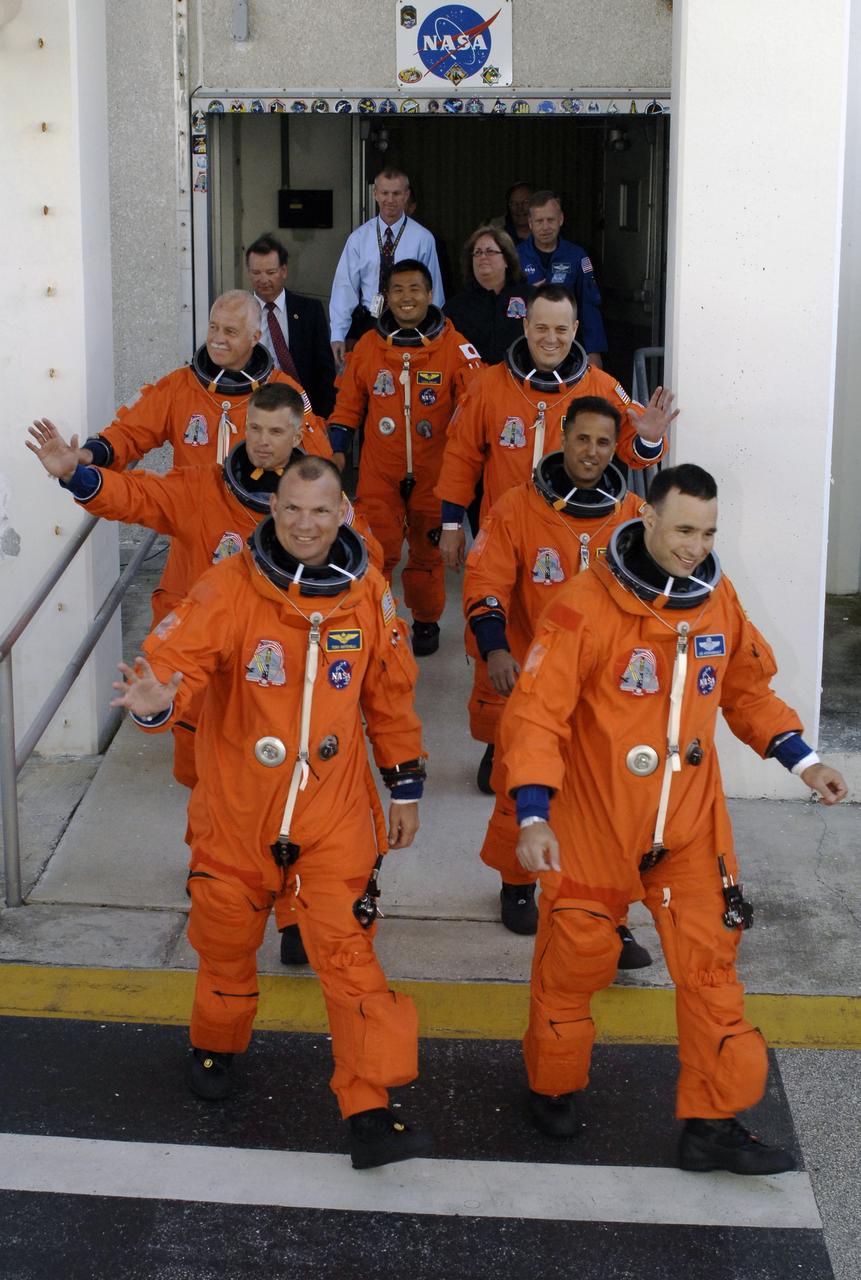
CAPE CANAVERAL, Fla. – The crew members of the STS-119 mission stride out of the Operations and Checkout Building at NASA's Kennedy Space Center in Florida, heading for the Astrovan that will take them to Launch Pad 39A. Clockwise from left are Pilot Tony Antonelli, Mission Specialists Steve Swanson, John Phillips, Koichi Wakata, Richard Arnold and Joseph Acaba, and Commander Lee Archambault. Wakata represents the Japan Aerospace Exploration Agency and will remain on the International Space Station, replacing Expedition 18 Flight Engineer Sandra Magnus, who returns to Earth with the STS-119 crew. Liftoff of Discovery is scheduled for 7:43 p.m. EDT. The STS-119 mission is the 28th to the space station and the 125th space shuttle flight. Discovery will deliver the final pair of power-generating solar array wings and the S6 truss segment. Installation of S6 will signal the station's readiness to house a six-member crew for conducting increased science. Photo credit: NASA/Kim Shiflett
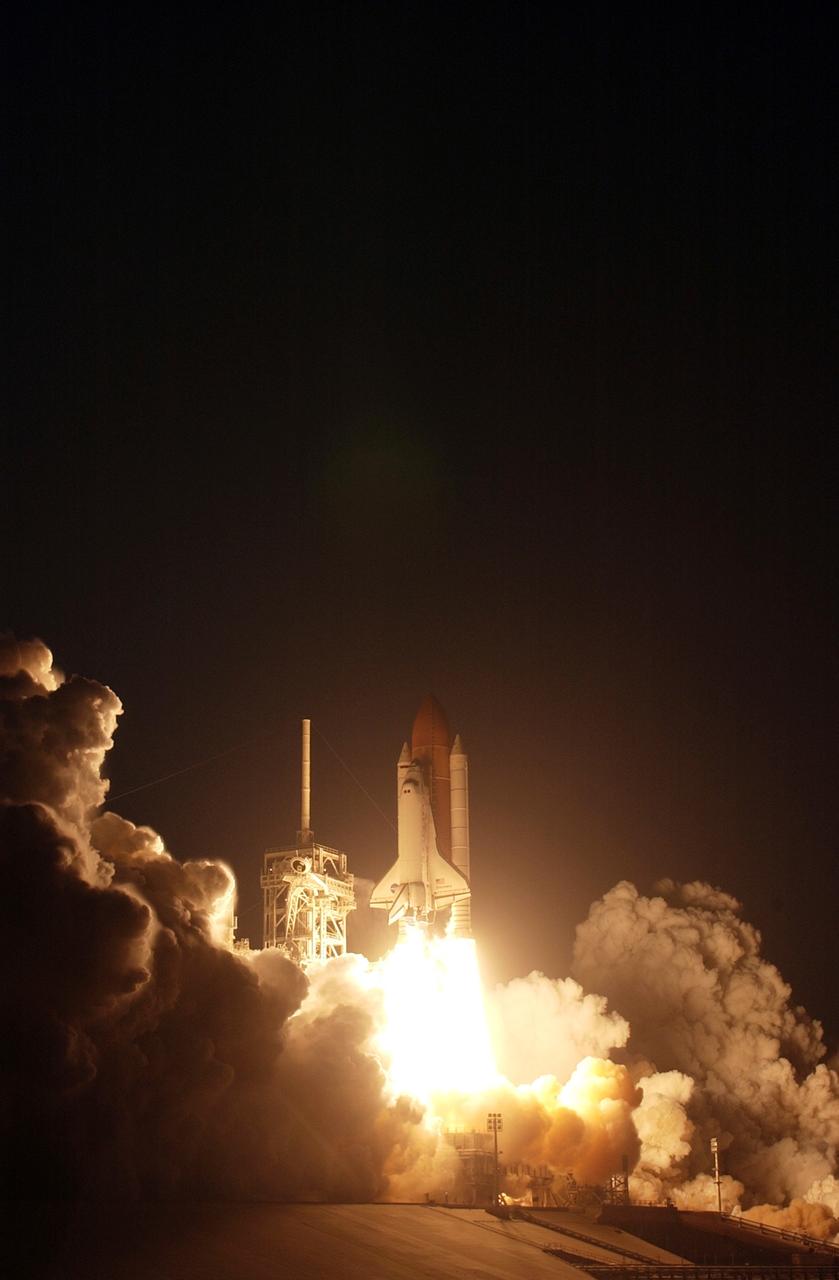
CAPE CANAVERAL, Fla. – Clouds of smoke and steam roll across Launch Pad 39A at NASA's Kennedy Space Center in Florida as space shuttle Discovery races toward space on mission STS-119. Launch was on time at 7:43 p.m. EDT. The STS-119 mission is the 28th to the International Space Station and the 125th space shuttle flight. Discovery will deliver the final pair of power-generating solar array wings and the S6 truss segment. Installation of S6 will signal the station's readiness to house a six-member crew for conducting increased science. Photo credit: NASA/Sandra Joseph, Kevin O'Connell
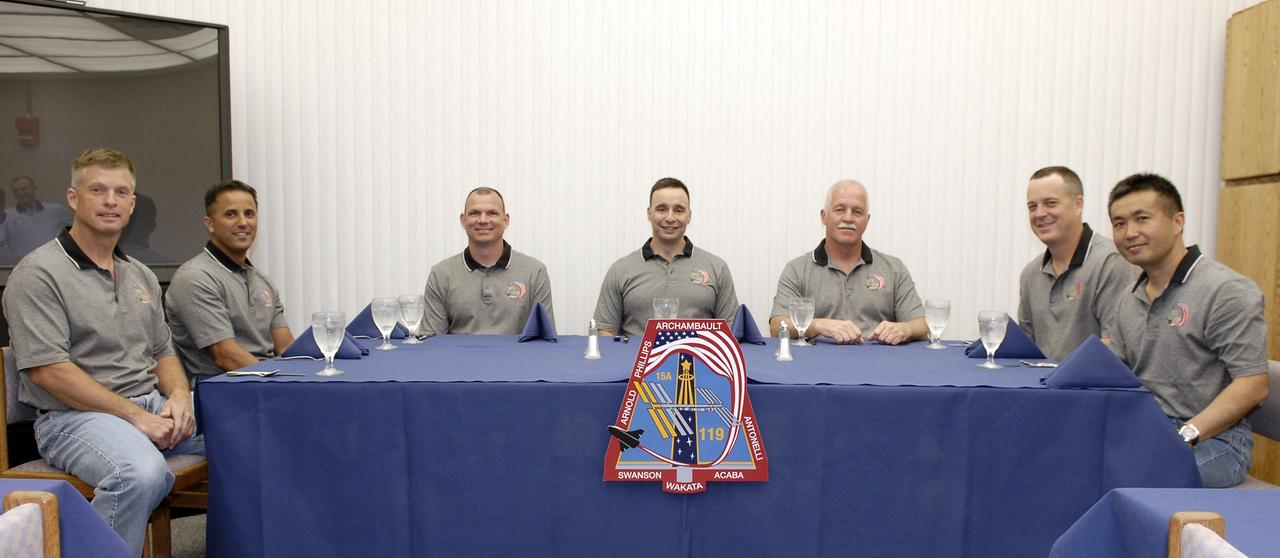
CAPE CANAVERAL, Fla. – Honoring tradition, the crew of space shuttle Discovery's STS-119 mission pose for a photo at the breakfast table at NASA's Kennedy Space Center in Florida. From left are Mission Specialists Steve Swanson, Joseph Acaba, Pilot Tony Antonelli, Commander Lee Archambault, and Mission Specialists John Phillips, Richard Arnold and Koichi Wakata, who represents the Japan Aerospace Exploration Agency. Following the meal, the crew members will put on their launch-and-entry suits and head for Launch Pad 39A. An earlier launch attempt March 11 was scrubbed at 2:36 p.m. due to a gaseous hydrogen leak from the external tank at the Ground Umbilical Carrier Plate during tanking. A seven-inch quick disconnect and two seals were replaced. The STS-119 mission is the 28th to the International Space Station and the 125th space shuttle flight. Discovery will deliver the final pair of power-generating solar array wings and the S6 truss segment. Installation of S6 will signal the station's readiness to house a six-member crew for conducting increased science. Liftoff of Discovery is scheduled for 7:43 p.m. EDT on March 15. Photo credit: NASA/Jack Pfaller
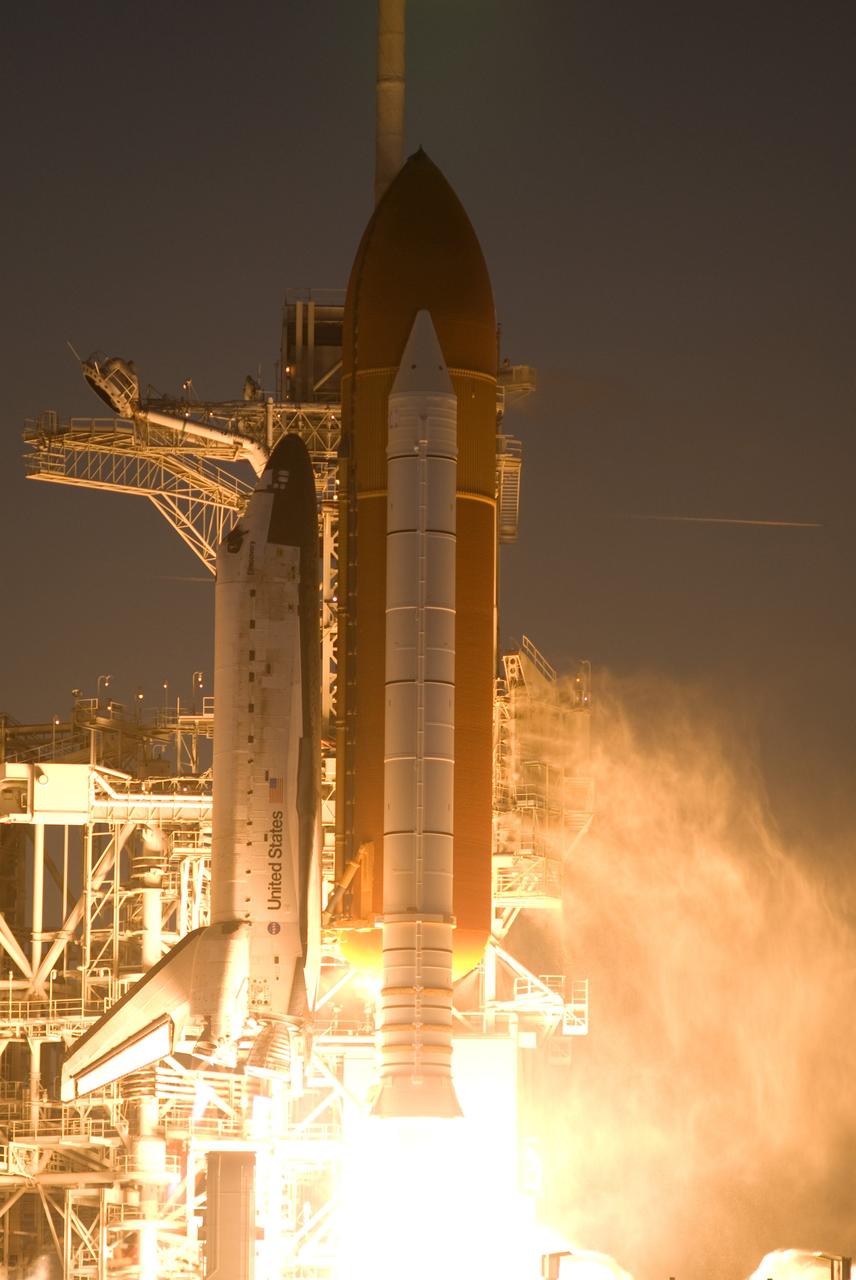
CAPE CANAVERAL, Fla. – Steam rises from Launch Pad 39A at NASA's Kennedy Space Center in Florida as space shuttle Discovery lifts off on mission STS-119. Launch was on time at 7:43 p.m. EDT. The STS-119 mission is the 28th to the International Space Station and the 125th space shuttle flight. Discovery will deliver the final pair of power-generating solar array wings and the S6 truss segment. Installation of S6 will signal the station's readiness to house a six-member crew for conducting increased science. Photo credit: NASA/Rusty Backer, George Roberts
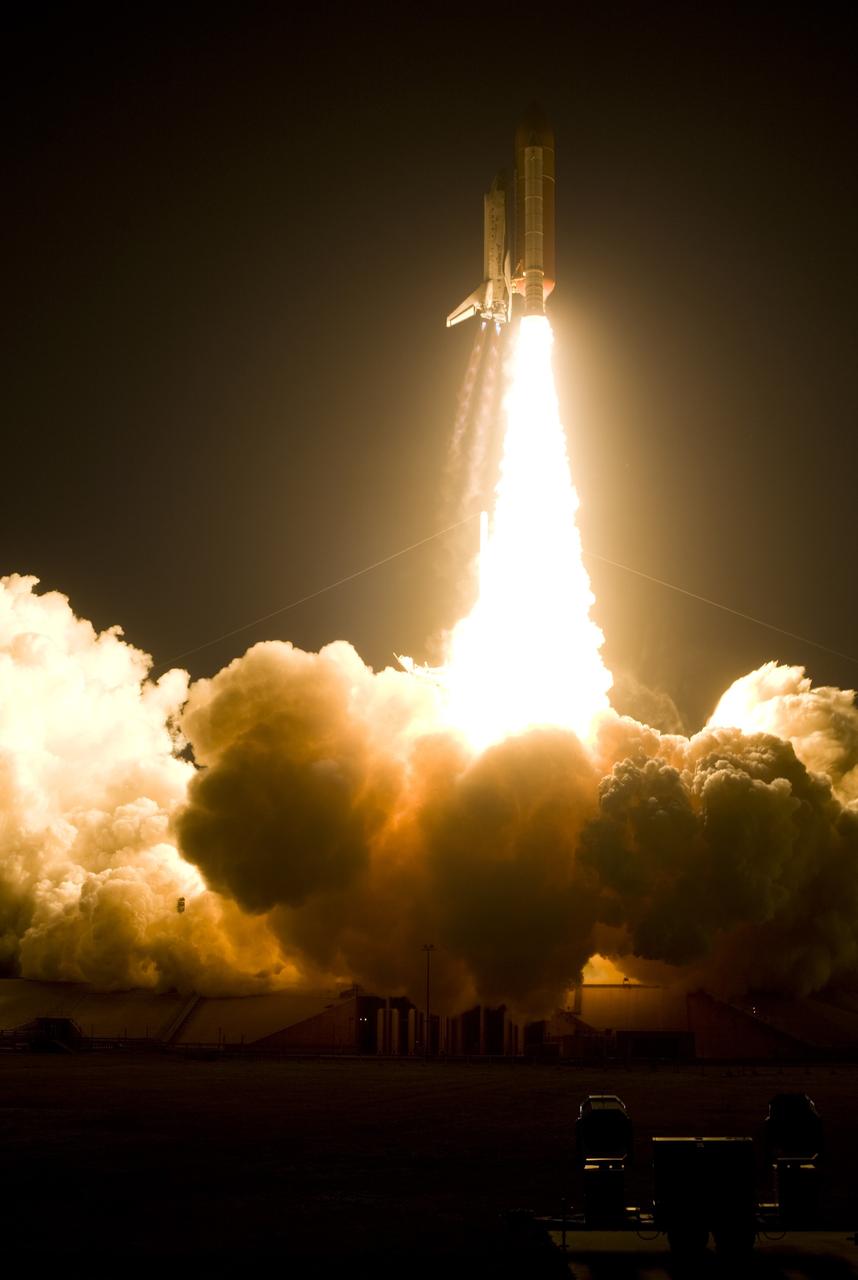
CAPE CANAVERAL, Fla. – Propelled by a column of fire, space shuttle Discovery races toward space on the STS-119 mission after liftoff from Launch Pad 39A at NASA's Kennedy Space Center in Florida. Launch was on time at 7:43 p.m. EDT. The STS-119 mission is the 28th to the International Space Station and the 125th space shuttle flight. Discovery will deliver the final pair of power-generating solar array wings and the S6 truss segment. Installation of S6 will signal the station's readiness to house a six-member crew for conducting increased science. Photo courtesy of Scott Andrews
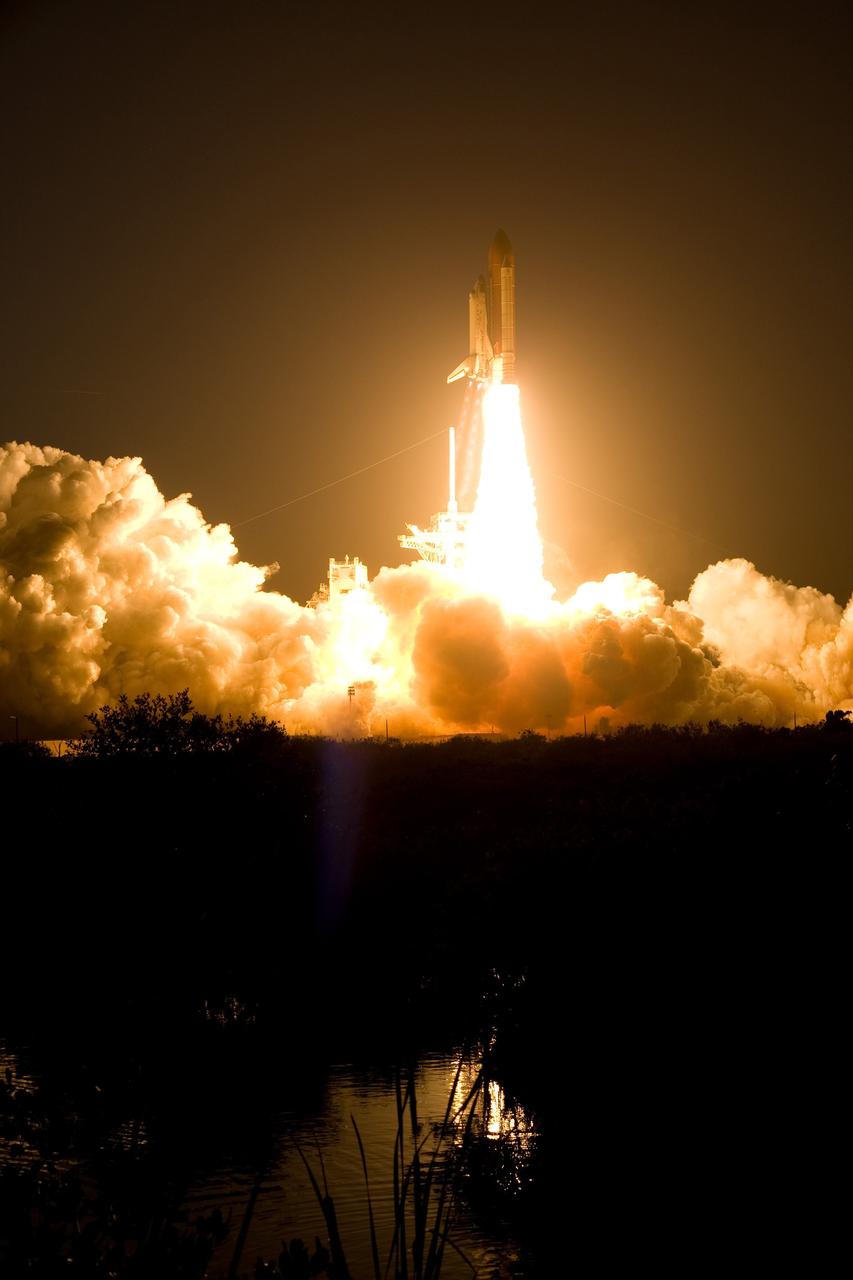
CAPE CANAVERAL, Fla. – Brilliant flames ignite the sky over Launch Pad 39A at NASA's Kennedy Space Center in Florida as space shuttle Discovery roars toward space on the STS-119 mission. Liftoff was on time at 7:43 p.m. EDT. The STS-119 mission is the 28th to the International Space Station and the 125th space shuttle flight. Discovery will deliver the final pair of power-generating solar array wings and the S6 truss segment. Installation of S6 will signal the station's readiness to house a six-member crew for conducting increased science. Photo credit: NASA/Sandra Joseph, Kevin O'Connell
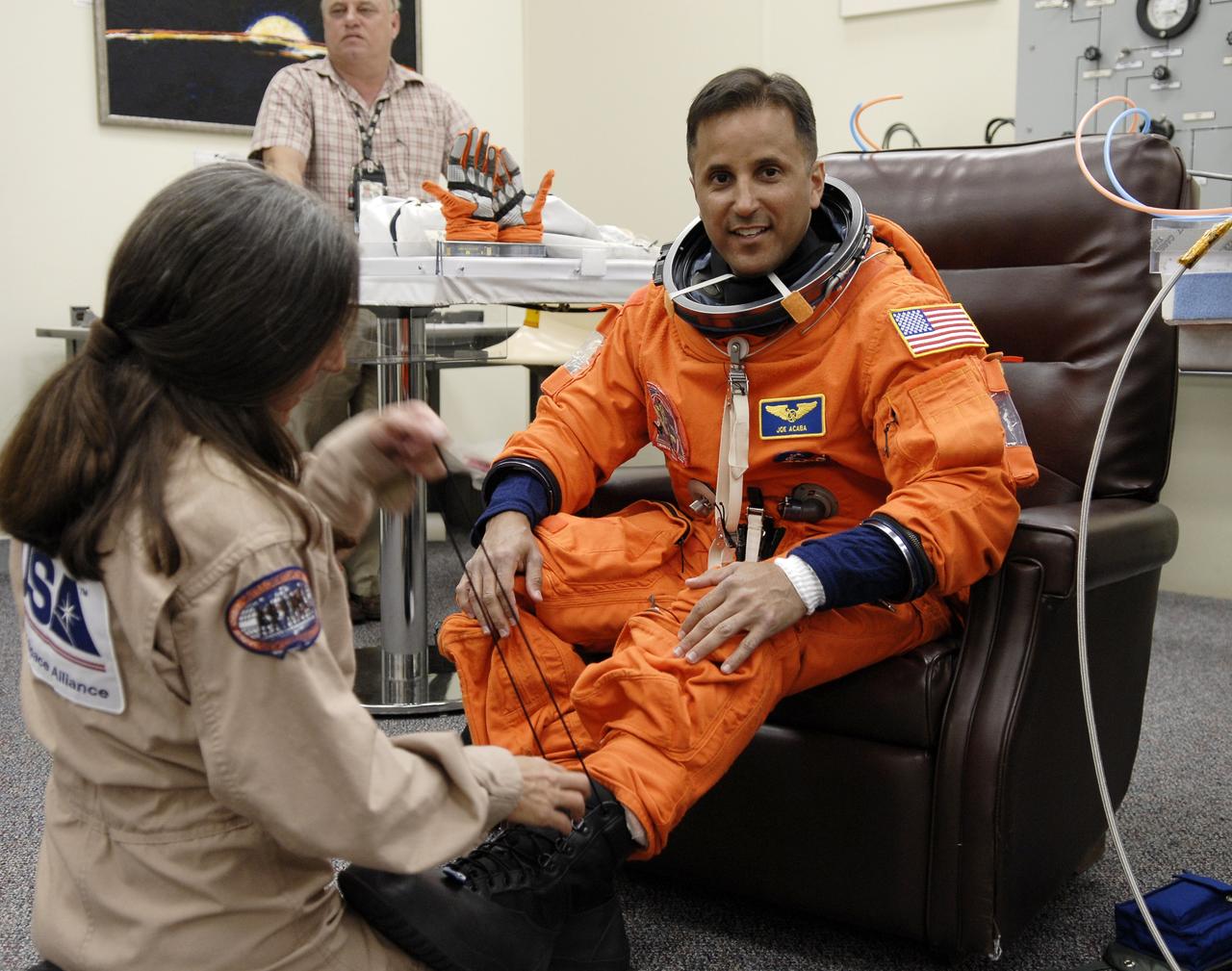
CAPE CANAVERAL, Fla. – In the Operations and Checkout Building at NASA's Kennedy Space Center in Florida, STS-119 Mission Specialist Joseph Acaba is helped putting on his boots with his launch-and-entry suit. The crew will be heading for Launch Pad 39A and liftoff of space shuttle Discovery, scheduled for 7:43 p.m. EDT on March 15. An earlier launch attempt March 11 was scrubbed at 2:36 p.m. due to a gaseous hydrogen leak from the external tank at the Ground Umbilical Carrier Plate during tanking. A seven-inch quick disconnect and two seals were replaced. The STS-119 mission is the 28th to the International Space Station and the 125th space shuttle flight. Discovery will deliver the final pair of power-generating solar array wings and the S6 truss segment. Installation of S6 will signal the station's readiness to house a six-member crew for conducting increased science. Photo credit: NASA/Kim Shiflett
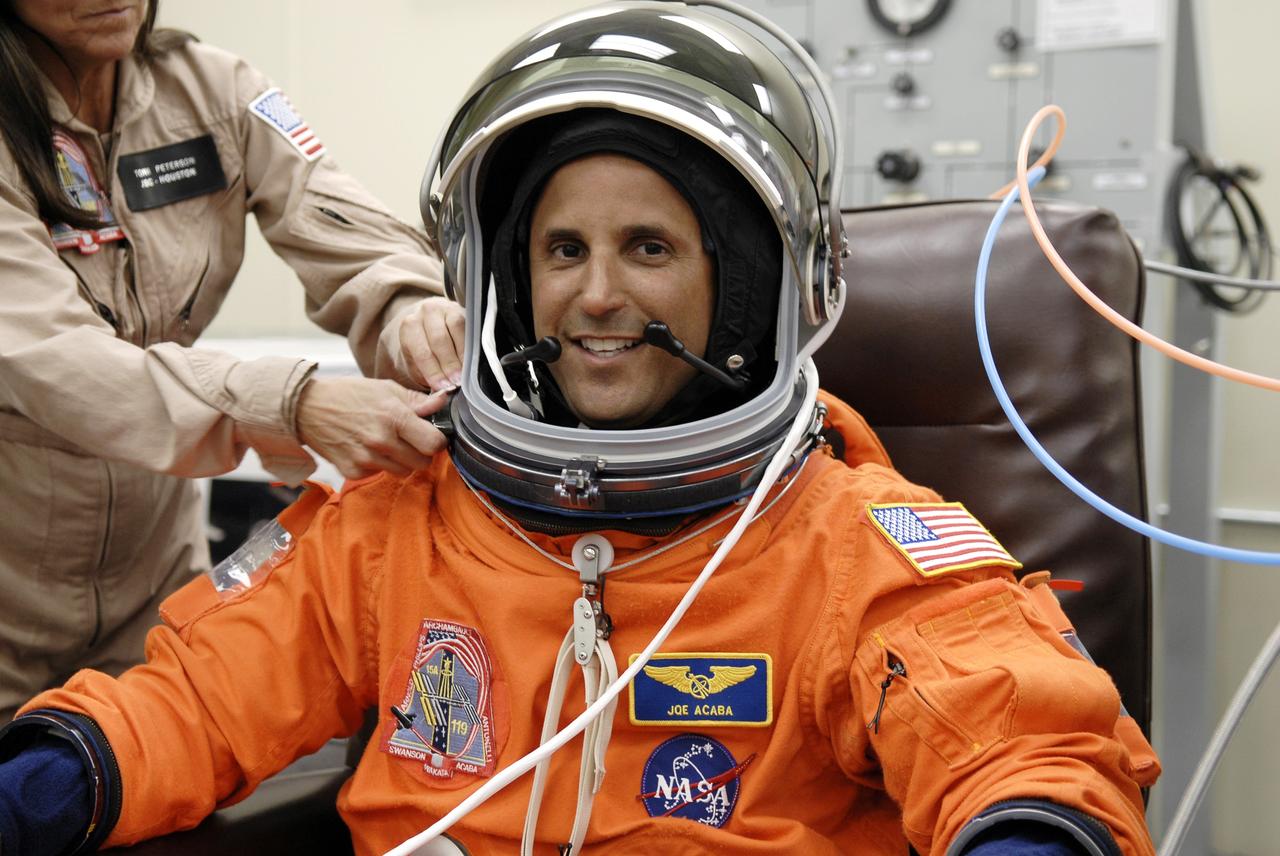
CAPE CANAVERAL, Fla. – In the Operations and Checkout Building at NASA's Kennedy Space Center in Florida, STS-119 Mission Specialist Joseph Acaba has his helmet fitted on his launch-and-entry suit. The crew will be heading for Launch Pad 39A and liftoff of space shuttle Discovery, scheduled for 7:43 p.m. EDT on March 15. An earlier launch attempt March 11 was scrubbed at 2:36 p.m. due to a gaseous hydrogen leak from the external tank at the Ground Umbilical Carrier Plate during tanking. A seven-inch quick disconnect and two seals were replaced. The STS-119 mission is the 28th to the International Space Station and the 125th space shuttle flight. Discovery will deliver the final pair of power-generating solar array wings and the S6 truss segment. Installation of S6 will signal the station's readiness to house a six-member crew for conducting increased science. Photo credit: NASA/Kim Shiflett
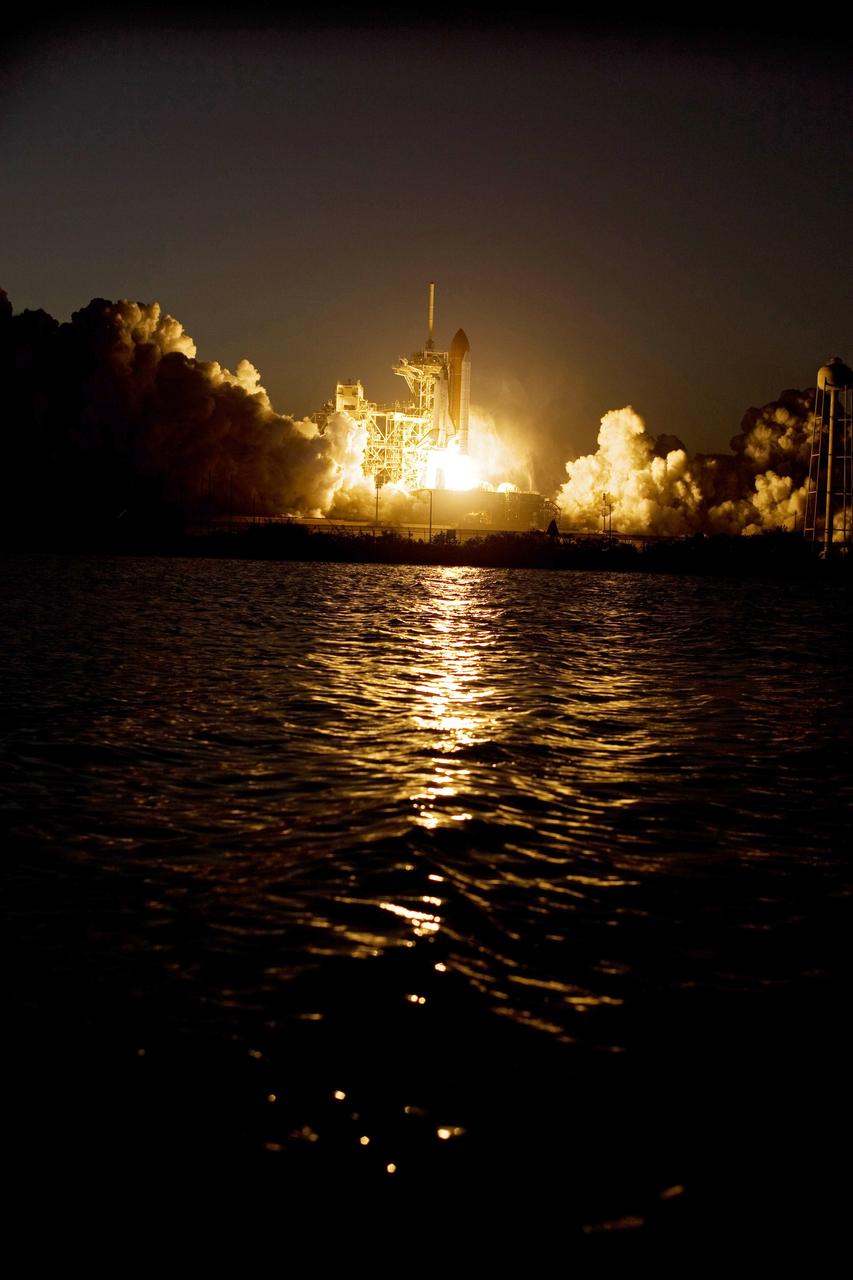
CAPE CANAVERAL, Fla. – Clouds of smoke and steam billow across Launch Pad 39A at NASA's Kennedy Space Center in Florida as space shuttle Discovery roars into the evening sky. Liftoff was on time at 7:43 p.m. EDT. The STS-119 mission is the 28th to the International Space Station and the 125th space shuttle flight. Discovery will deliver the final pair of power-generating solar array wings and the S6 truss segment. Installation of S6 will signal the station's readiness to house a six-member crew for conducting increased science. Photo credit: NASA/Tony Gray, Tom Farrar
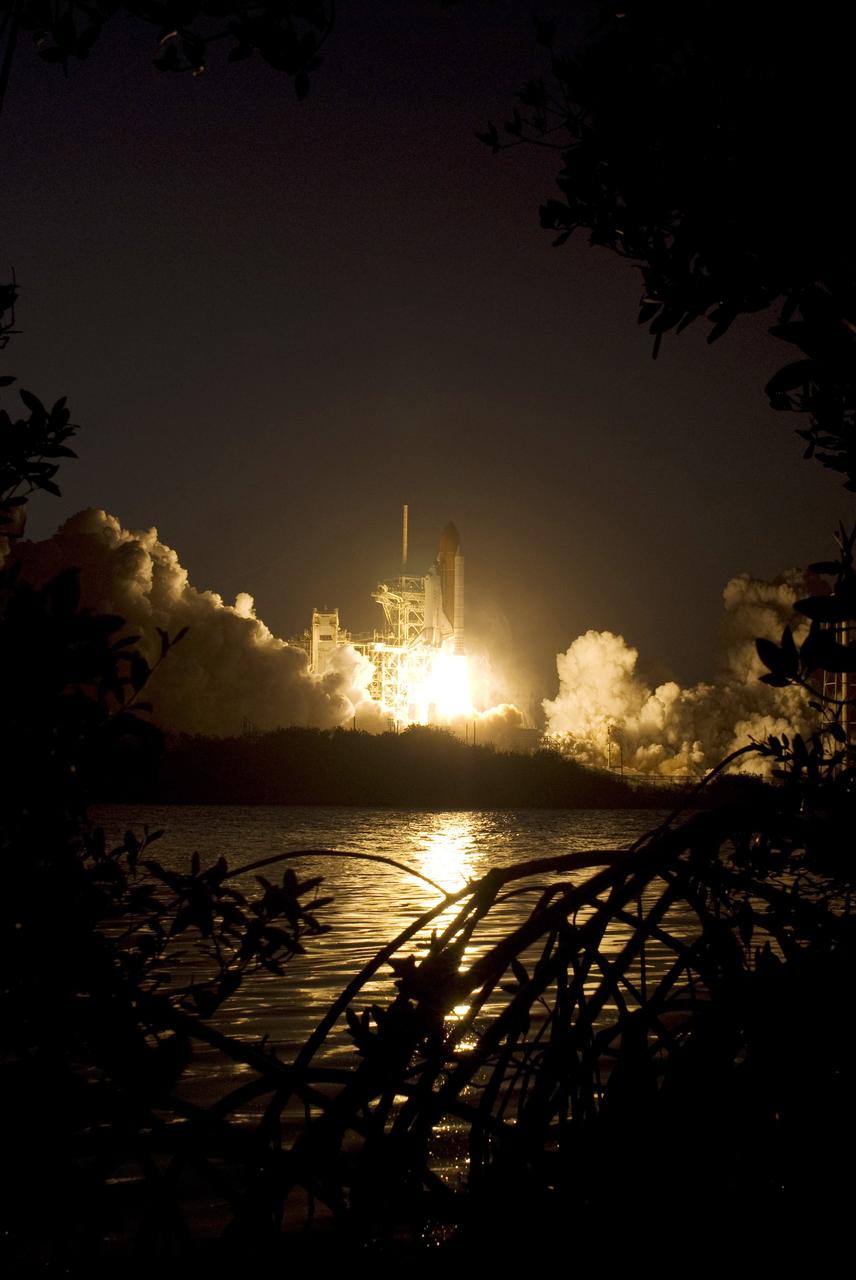
CAPE CANAVERAL, Fla. – Viewed across the water near Launch Pad 39A at NASA's Kennedy Space Center in Florida, launch of space shuttle Discovery on the STS-119 mission spews fire into the night. The launch was on time at 7:43 p.m. EDT. The STS-119 mission is the 28th to the International Space Station and the 125th space shuttle flight. Discovery will deliver the final pair of power-generating solar array wings and the S6 truss segment. Installation of S6 will signal the station's readiness to house a six-member crew for conducting increased science. Photo credit: NASA/Sandra Joseph, Kevin O'Connell
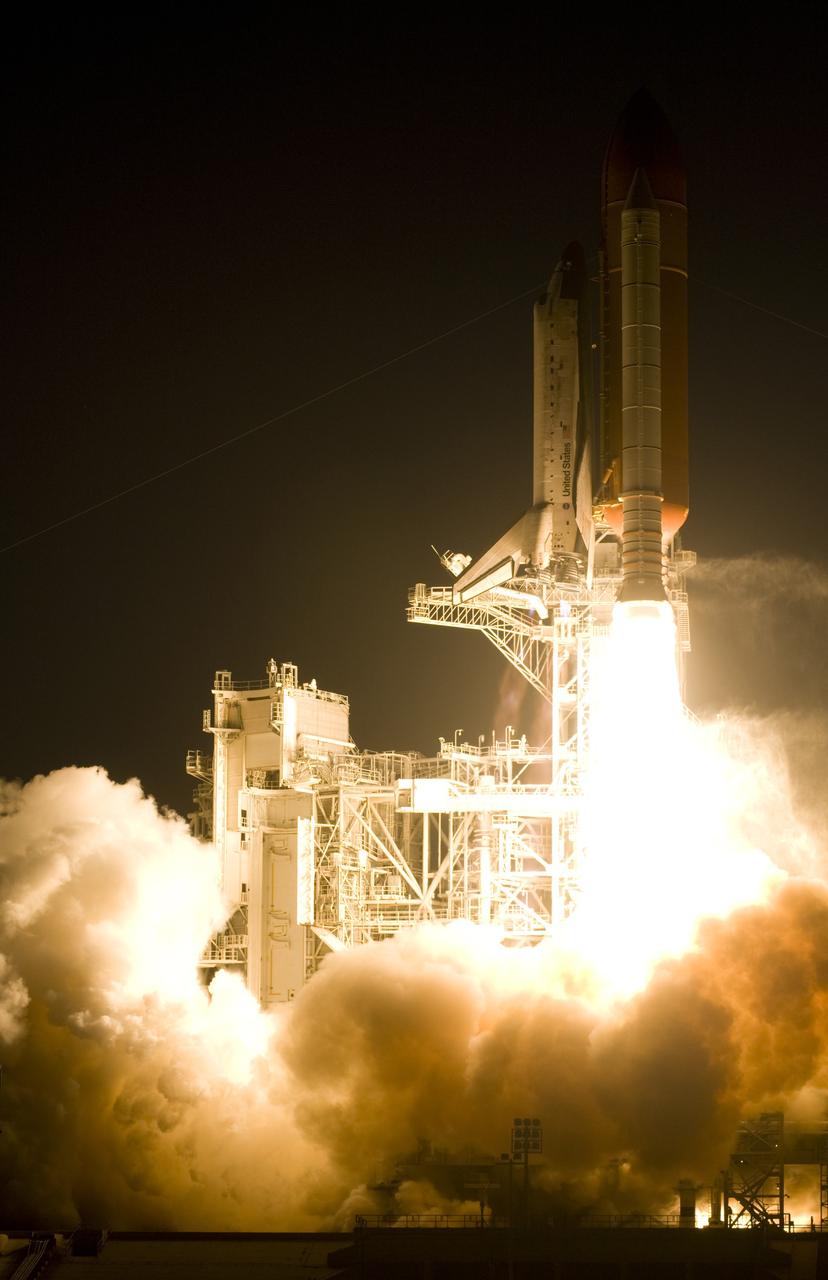
CAPE CANAVERAL, Fla. – At NASA's Kennedy Space Center in Florida, twin columns of fire propel space shuttle Discovery from Launch Pad 39A toward space on mission STS-119. Launch was on time at 7:43 p.m. EDT. The STS-119 mission is the 28th to the International Space Station and the 125th space shuttle flight. Discovery will deliver the final pair of power-generating solar array wings and the S6 truss segment. Installation of S6 will signal the station's readiness to house a six-member crew for conducting increased science. Photo courtesy of Scott Andrews
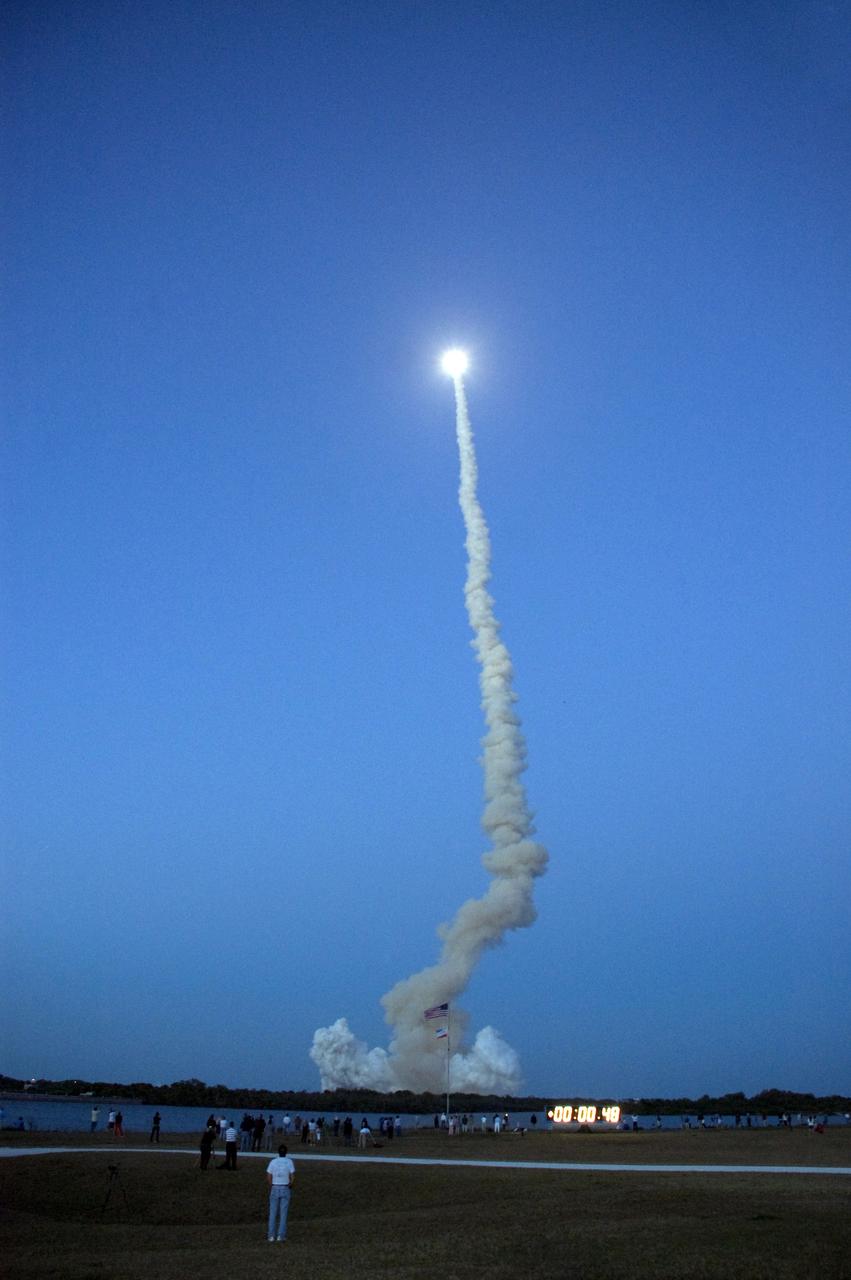
CAPE CANAVERAL, Fla. – Looking like a sun riding a column of smoke, space shuttle Discovery hurtles into the evening sky on the STS-119 mission. Liftoff was on time at 7:43 p.m. EDT. The STS-119 mission is the 28th to the International Space Station and the 125th space shuttle flight. Discovery will deliver the final pair of power-generating solar array wings and the S6 truss segment. Installation of S6 will signal the station's readiness to house a six-member crew for conducting increased science. Photo credit: NASA/Fletch Hildreth
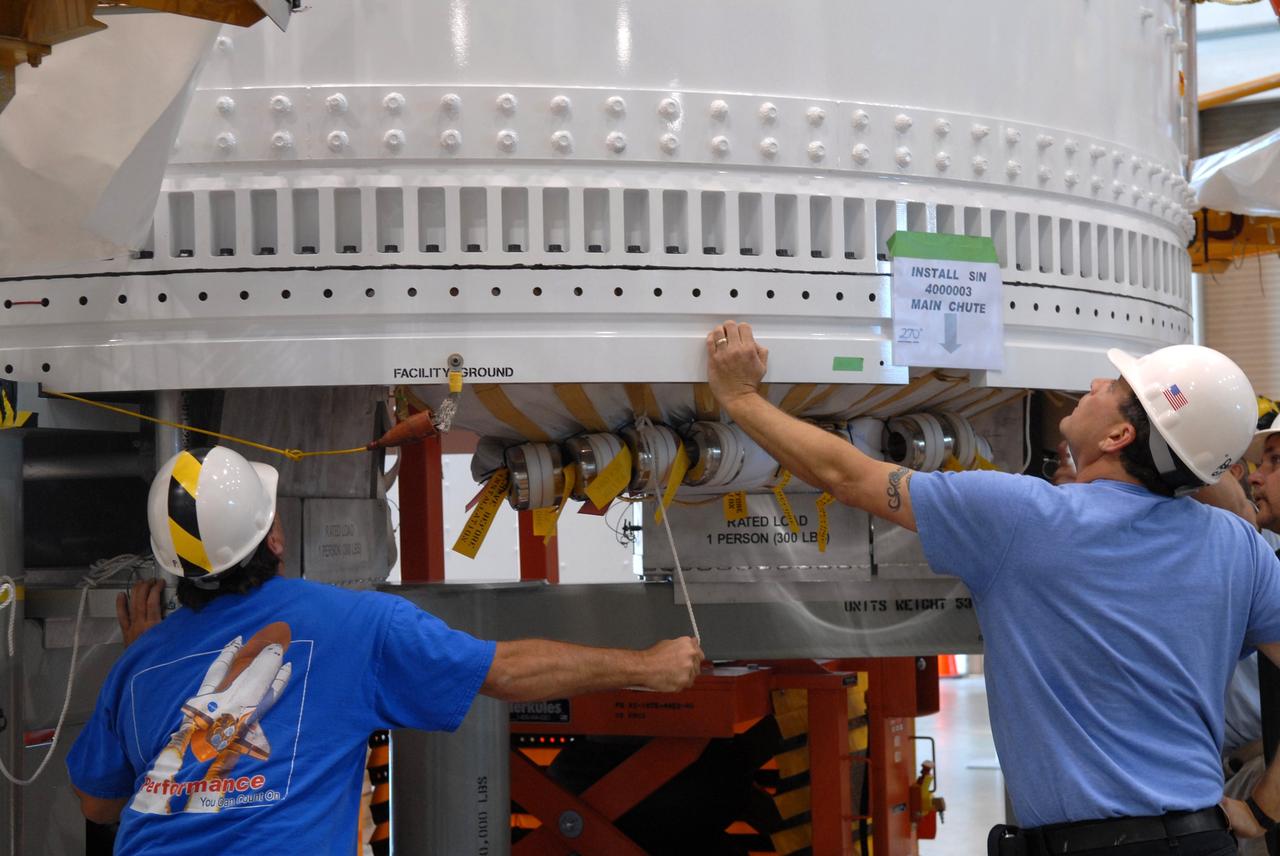
CAPE CANAVERAL, Fla. – In the Assembly and Refurbishment Facility at NASA's Kennedy Space Center in Florida, workers install a parachute pack in the Ares I-X forward skirt segment. The forward skirt is the initial piece of first-stage hardware in preparation for the July 2009 test flight of the agency's next-generation spacecraft and launch vehicle system. Photo credit: NASA/Jack Pfaller
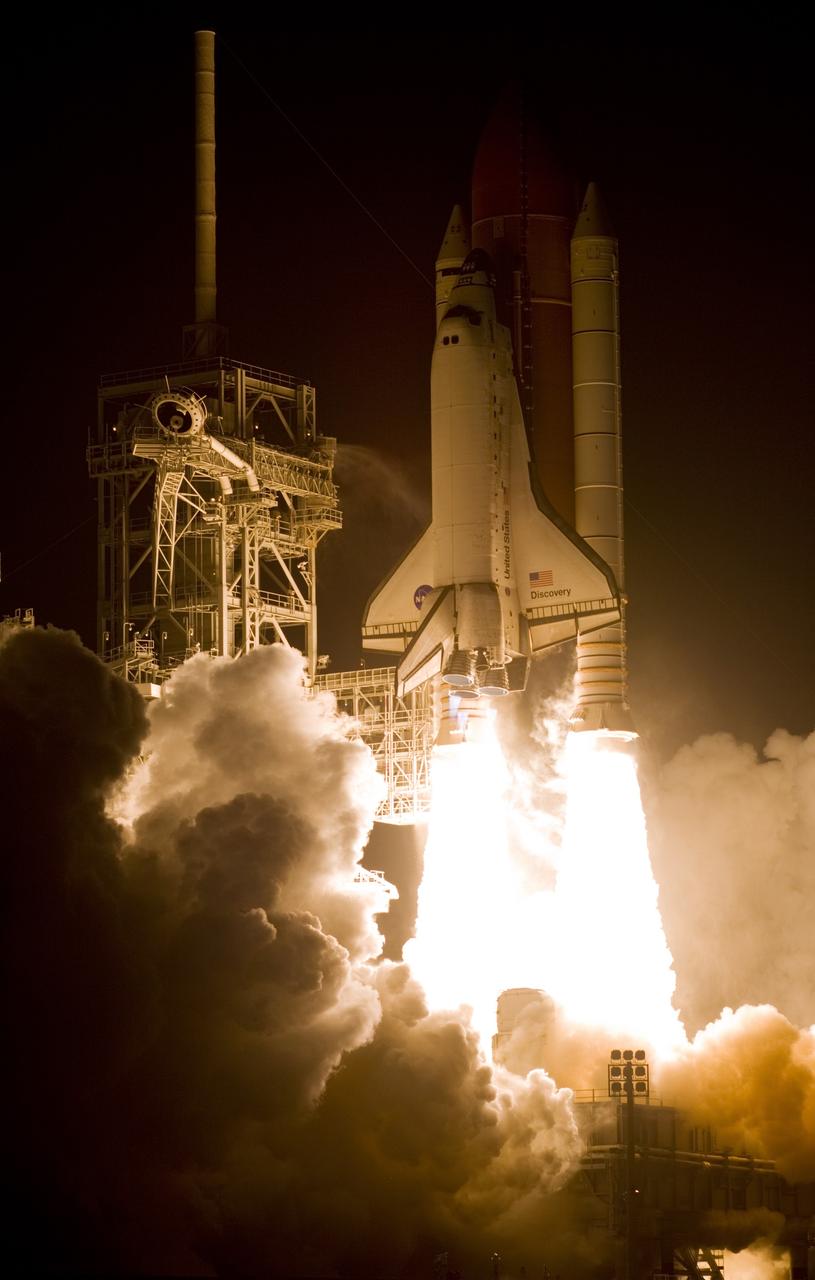
CAPE CANAVERAL, Fla. – Propelled by a column of fire, space shuttle Discovery races toward space on the STS-119 mission after liftoff from Launch Pad 39A at NASA's Kennedy Space Center in Florida. Clouds of smoke and steam roll across the pad. Launch was on time at 7:43 p.m. EDT. The STS-119 mission is the 28th to the International Space Station and the 125th space shuttle flight. Discovery will deliver the final pair of power-generating solar array wings and the S6 truss segment. Installation of S6 will signal the station's readiness to house a six-member crew for conducting increased science. Photo courtesy of Scott Andrews
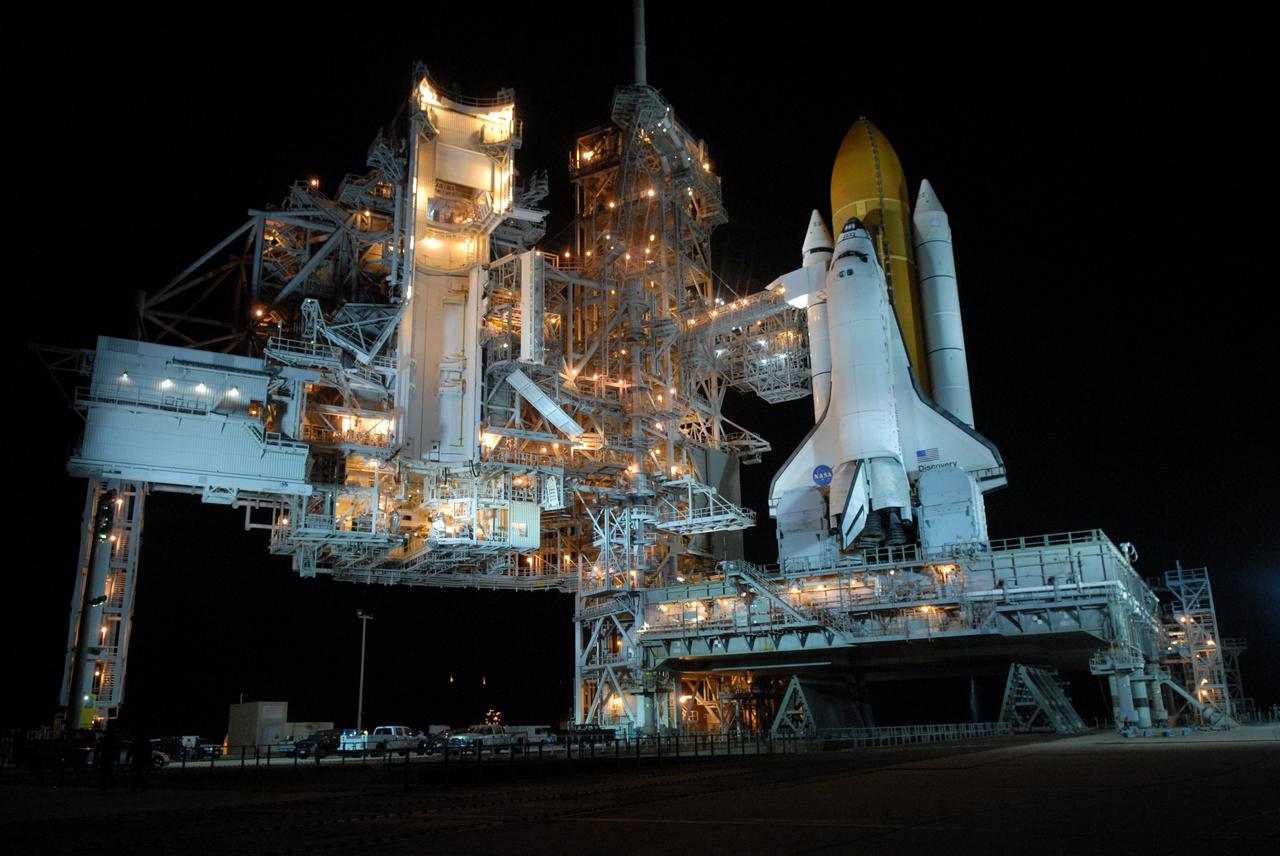
CAPE CANAVERAL, Fla. – Lights glow on the structures on Launch Pad 39A at NASA's Kennedy Space Center in Florida, after rollback of the rotating service structure from around space shuttle Discovery. The orbiter access arm and White Room are extended toward Discovery The White Room provides crew access into the shuttle. The rollback is in preparation for Discovery's liftoff on the STS-119 mission with a crew of seven. An earlier launch attempt March 11 was scrubbed at 2:36 p.m. due to a gaseous hydrogen leak from the external tank at the Ground Umbilical Carrier Plate during tanking. A seven-inch quick disconnect and two seals were replaced. The STS-119 mission is the 28th to the International Space Station and the 125th space shuttle flight. Discovery will deliver the final pair of power-generating solar array wings and the S6 truss segment. Installation of S6 will signal the station's readiness to house a six-member crew for conducting increased science. Liftoff of Discovery is scheduled for 7:43 p.m. EDT on March 15. Photo credit: NASA/Jack Pfaller
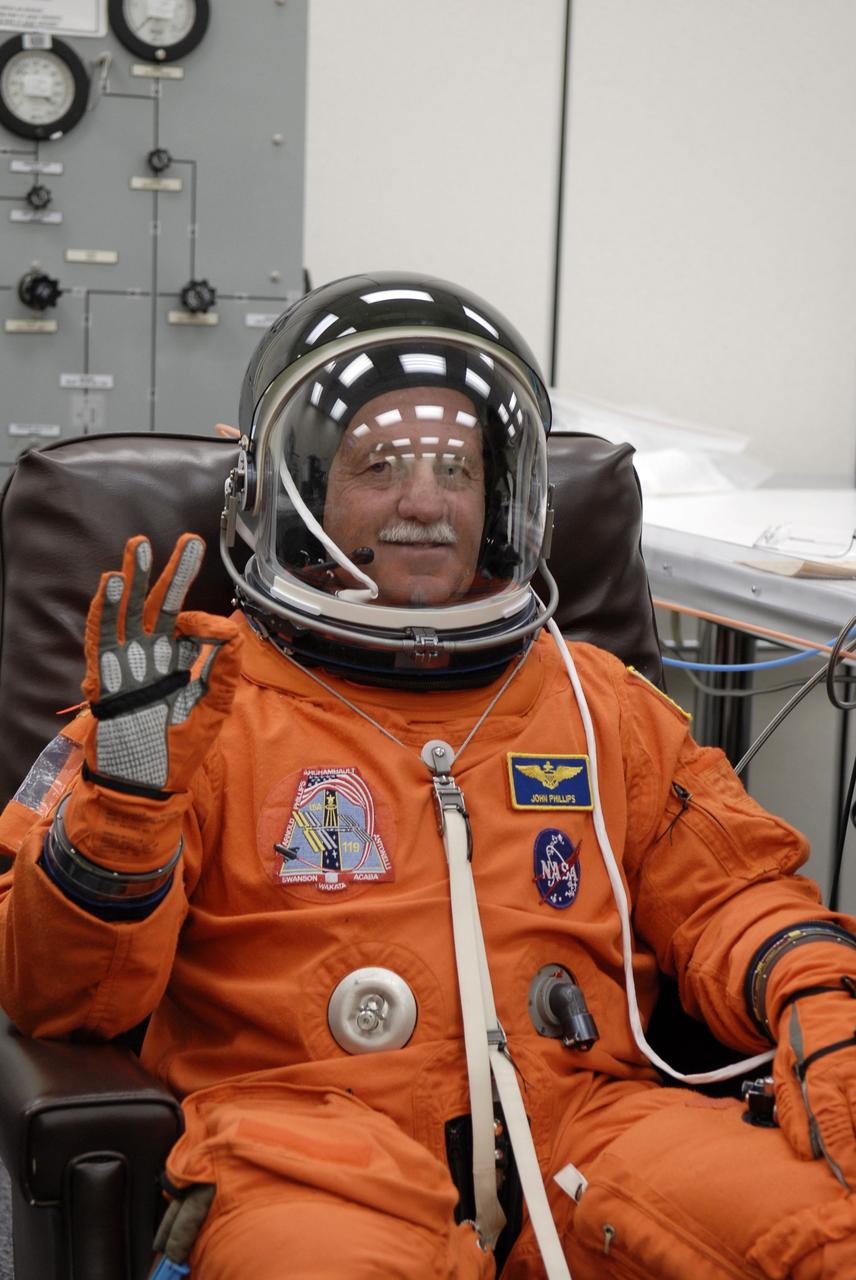
CAPE CANAVERAL, Fla. – In the Operations and Checkout Building at NASA's Kennedy Space Center in Florida, STS-119 Mission Specialist John Phillips is eager for launch as he puts on his launch-and-entry suit. The crew will be heading for Launch Pad 39A and liftoff of space shuttle Discovery, scheduled for 7:43 p.m. EDT on March 15. An earlier launch attempt March 11 was scrubbed at 2:36 p.m. due to a gaseous hydrogen leak from the external tank at the Ground Umbilical Carrier Plate during tanking. A seven-inch quick disconnect and two seals were replaced. The STS-119 mission is the 28th to the International Space Station and the 125th space shuttle flight. Discovery will deliver the final pair of power-generating solar array wings and the S6 truss segment. Installation of S6 will signal the station's readiness to house a six-member crew for conducting increased science. Photo credit: NASA/Kim Shiflett
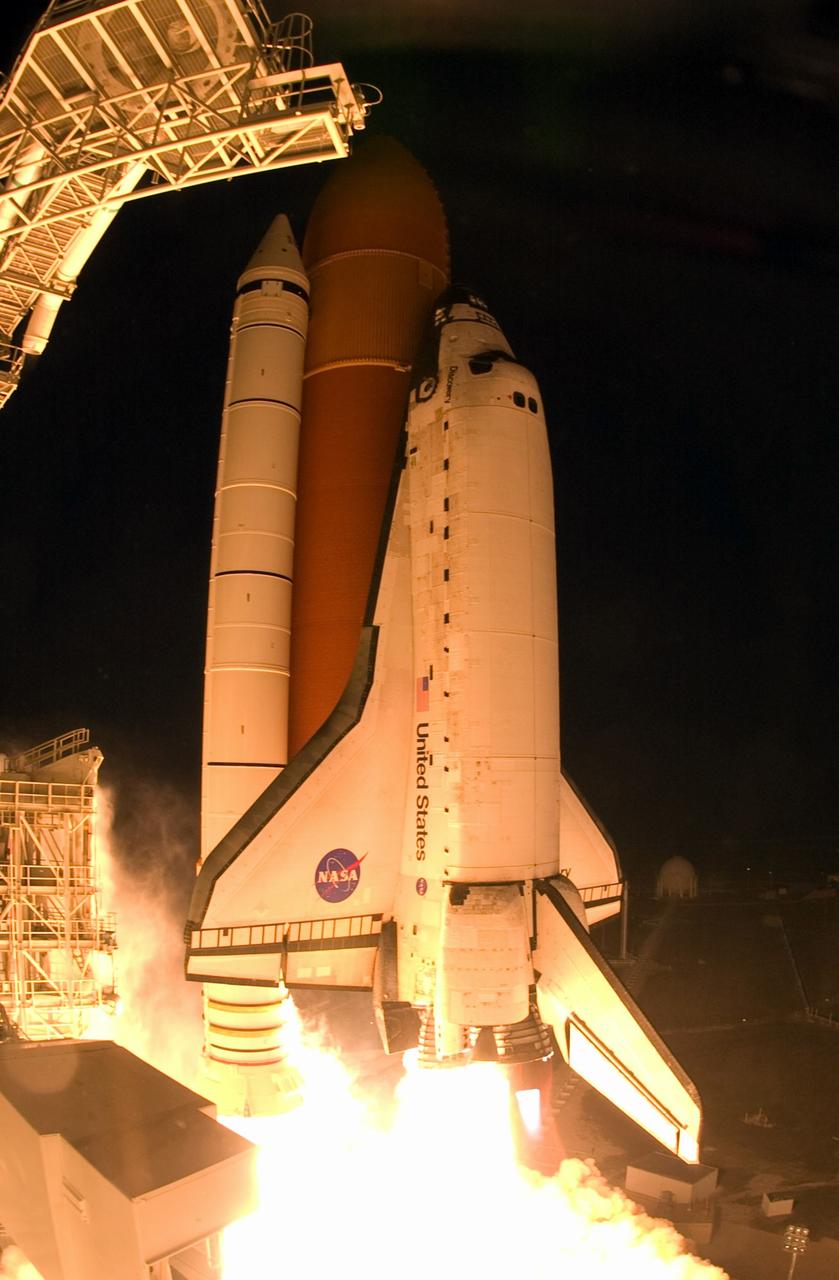
CAPE CANAVERAL, Fla. – Fire seems to surround Launch Pad 39A at NASA's Kennedy Space Center in Florida as space shuttle Discovery leaps from the pad to begin its STS-119 mission. Launch was on time at 7:43 p.m. EDT. The STS-119 mission is the 28th to the International Space Station and the 125th space shuttle flight. Discovery will deliver the final pair of power-generating solar array wings and the S6 truss segment. Installation of S6 will signal the station's readiness to house a six-member crew for conducting increased science. Photo credit: NASA/Tony Gray, Tom Farrar
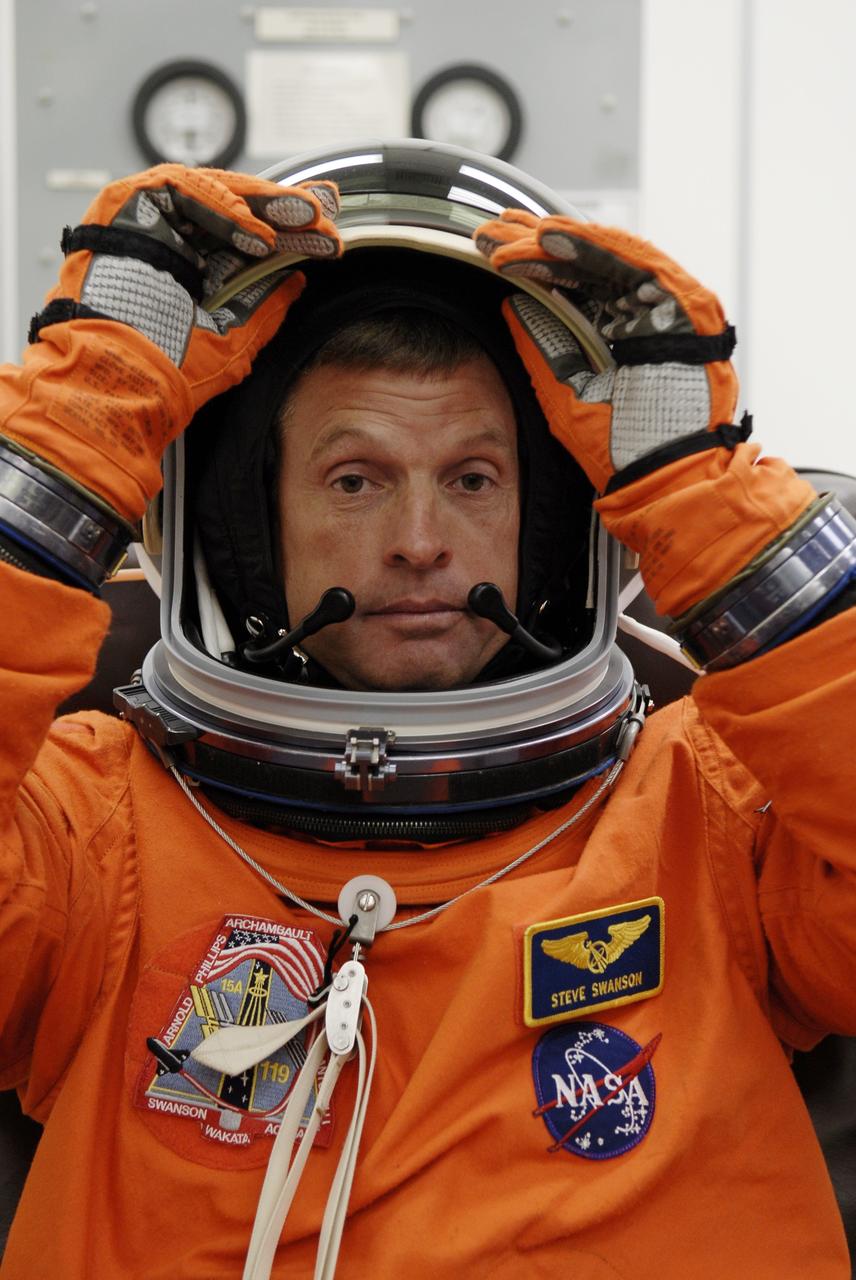
CAPE CANAVERAL, Fla. – In the Operations and Checkout Building at NASA's Kennedy Space Center in Florida, STS-119 Mission Specialist Steve Swanson adjusts his helmet as he puts on the launch-and-entry suit for the launch of space shuttle Discovery. The crew will be heading for Launch Pad 39A and liftoff of Discovery, scheduled for 7:43 p.m. EDT on March 15. An earlier launch attempt March 11 was scrubbed at 2:36 p.m. due to a gaseous hydrogen leak from the external tank at the Ground Umbilical Carrier Plate during tanking. A seven-inch quick disconnect and two seals were replaced. The STS-119 mission is the 28th to the International Space Station and the 125th space shuttle flight. Discovery will deliver the final pair of power-generating solar array wings and the S6 truss segment. Installation of S6 will signal the station's readiness to house a six-member crew for conducting increased science. Photo credit: NASA/Kim Shiflett
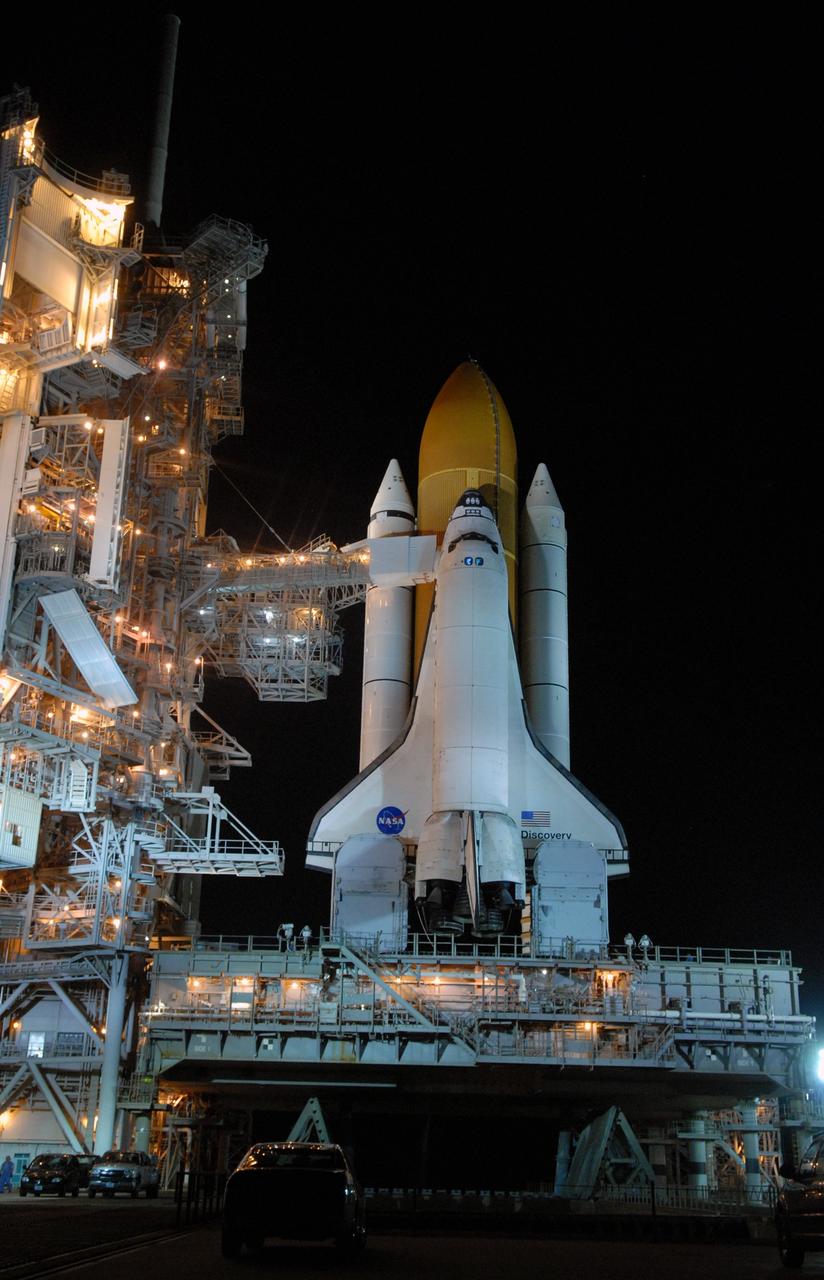
CAPE CANAVERAL, Fla. – On Launch Pad 39A at NASA's Kennedy Space Center in Florida, the orbiter access arm and White Room are extended toward space shuttle Discovery after rollback of the rotating service structure. The White Room provides crew access into the shuttle. The rollback is in preparation for Discovery's liftoff on the STS-119 mission with a crew of seven. An earlier launch attempt March 11 was scrubbed at 2:36 p.m. due to a gaseous hydrogen leak from the external tank at the Ground Umbilical Carrier Plate during tanking. A seven-inch quick disconnect and two seals were replaced. The STS-119 mission is the 28th to the International Space Station and the 125th space shuttle flight. Discovery will deliver the final pair of power-generating solar array wings and the S6 truss segment. Installation of S6 will signal the station's readiness to house a six-member crew for conducting increased science. Liftoff of Discovery is scheduled for 7:43 p.m. EDT on March 15. Photo credit: NASA/Jack Pfaller
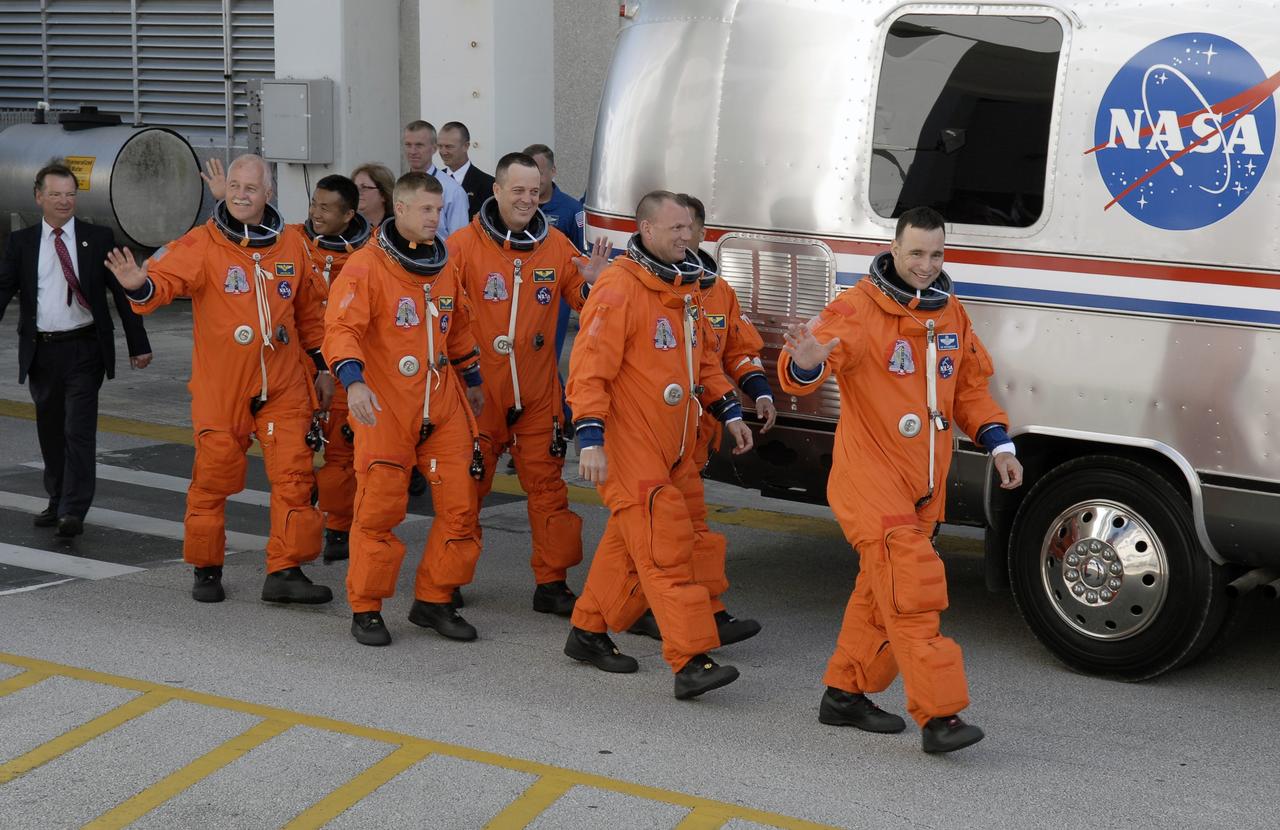
CAPE CANAVERAL, Fla. – The STS-119 crew members head for the Astrovan to take them to Launch Pad 39A at NASA's Kennedy Space Center in Florida for launch of space shuttle Discovery to the International Space Station. From left are Mission Specialists John Phillips, Koichi Wakata, Steve Swanson and Richard Arnold, Pilot Tony Antonelli, Mission Specialist Joseph Acaba (behind Antonelli) and Commander Lee Archambault. Wakata represents the Japan Aerospace Exploration Agency and will remain on the International Space Station, replacing Expedition 18 Flight Engineer Sandra Magnus, who returns to Earth with the STS-119 crew. Liftoff of Discovery is scheduled for 7:43 p.m. EDT on March 15. An earlier launch attempt March 11 was scrubbed at 2:36 p.m. due to a gaseous hydrogen leak from the external tank at the Ground Umbilical Carrier Plate during tanking. A seven-inch quick disconnect and two seals were replaced. The STS-119 mission is the 28th to the space station and the 125th space shuttle flight. Discovery will deliver the final pair of power-generating solar array wings and the S6 truss segment. Installation of S6 will signal the station's readiness to house a six-member crew for conducting increased science. Photo credit: NASA/Kim Shiflett
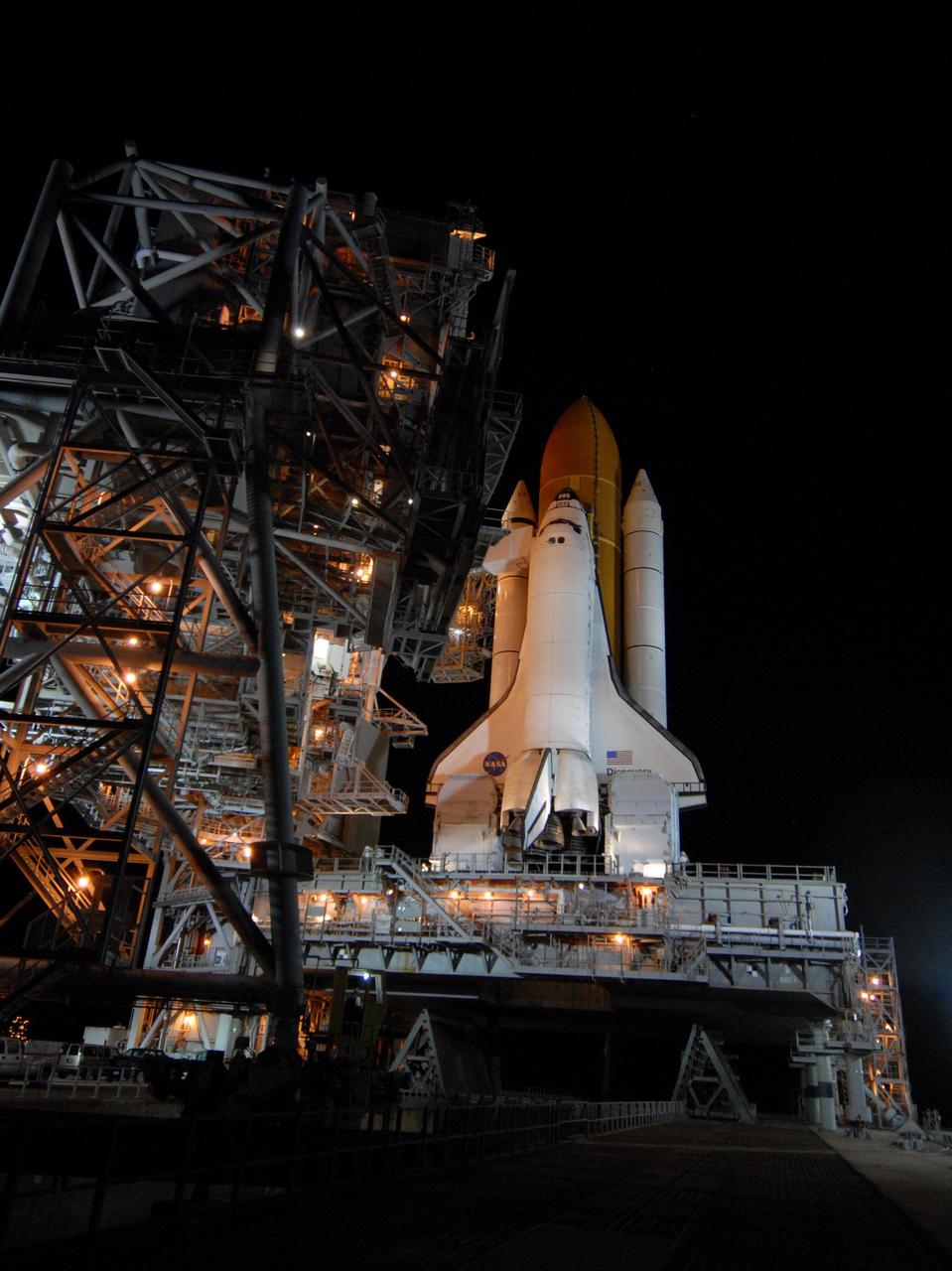
CAPE CANAVERAL, Fla. – Bathed in light on Launch Pad 39A at NASA's Kennedy Space Center in Florida, space shuttle Discovery is revealed after the rotating service structure has been rolled back. The rollback is in preparation for Discovery's liftoff on the STS-119 mission with a crew of seven. An earlier launch attempt March 11 was scrubbed at 2:36 p.m. due to a gaseous hydrogen leak from the external tank at the Ground Umbilical Carrier Plate during tanking. A seven-inch quick disconnect and two seals were replaced. The STS-119 mission is the 28th to the International Space Station and the 125th space shuttle flight. Discovery will deliver the final pair of power-generating solar array wings and the S6 truss segment. Installation of S6 will signal the station's readiness to house a six-member crew for conducting increased science. Liftoff of Discovery is scheduled for 7:43 p.m. EDT on March 15. Photo credit: NASA/Jack Pfaller
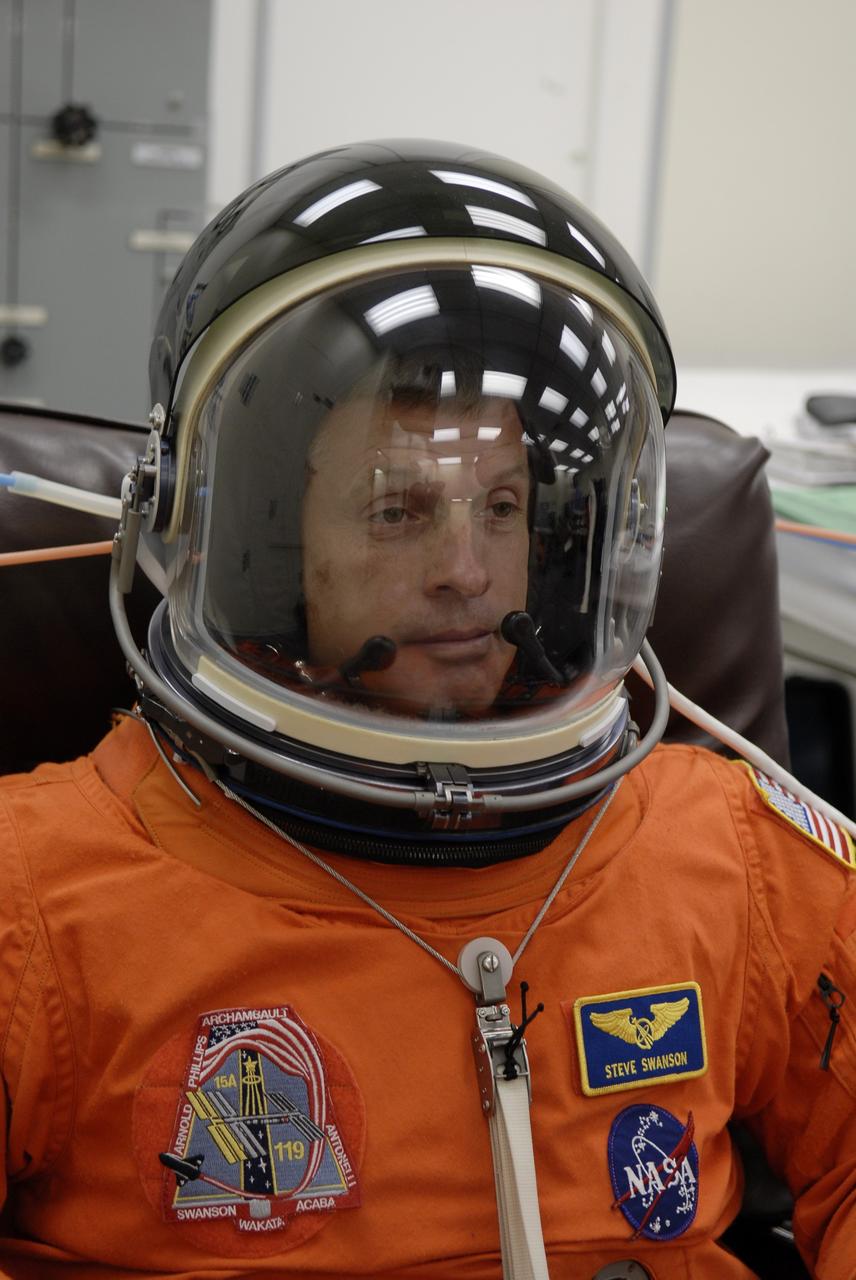
CAPE CANAVERAL, Fla. – In the Operations and Checkout Building at NASA's Kennedy Space Center in Florida, STS-119 Mission Specialist Steve Swanson completes putting on the launch-and-entry suit, with the helmet, for the launch of space shuttle Discovery. The crew will be heading for Launch Pad 39A and liftoff of Discovery, scheduled for 7:43 p.m. EDT on March 15. An earlier launch attempt March 11 was scrubbed at 2:36 p.m. due to a gaseous hydrogen leak from the external tank at the Ground Umbilical Carrier Plate during tanking. A seven-inch quick disconnect and two seals were replaced. The STS-119 mission is the 28th to the International Space Station and the 125th space shuttle flight. Discovery will deliver the final pair of power-generating solar array wings and the S6 truss segment. Installation of S6 will signal the station's readiness to house a six-member crew for conducting increased science. Photo credit: NASA/Kim Shiflett
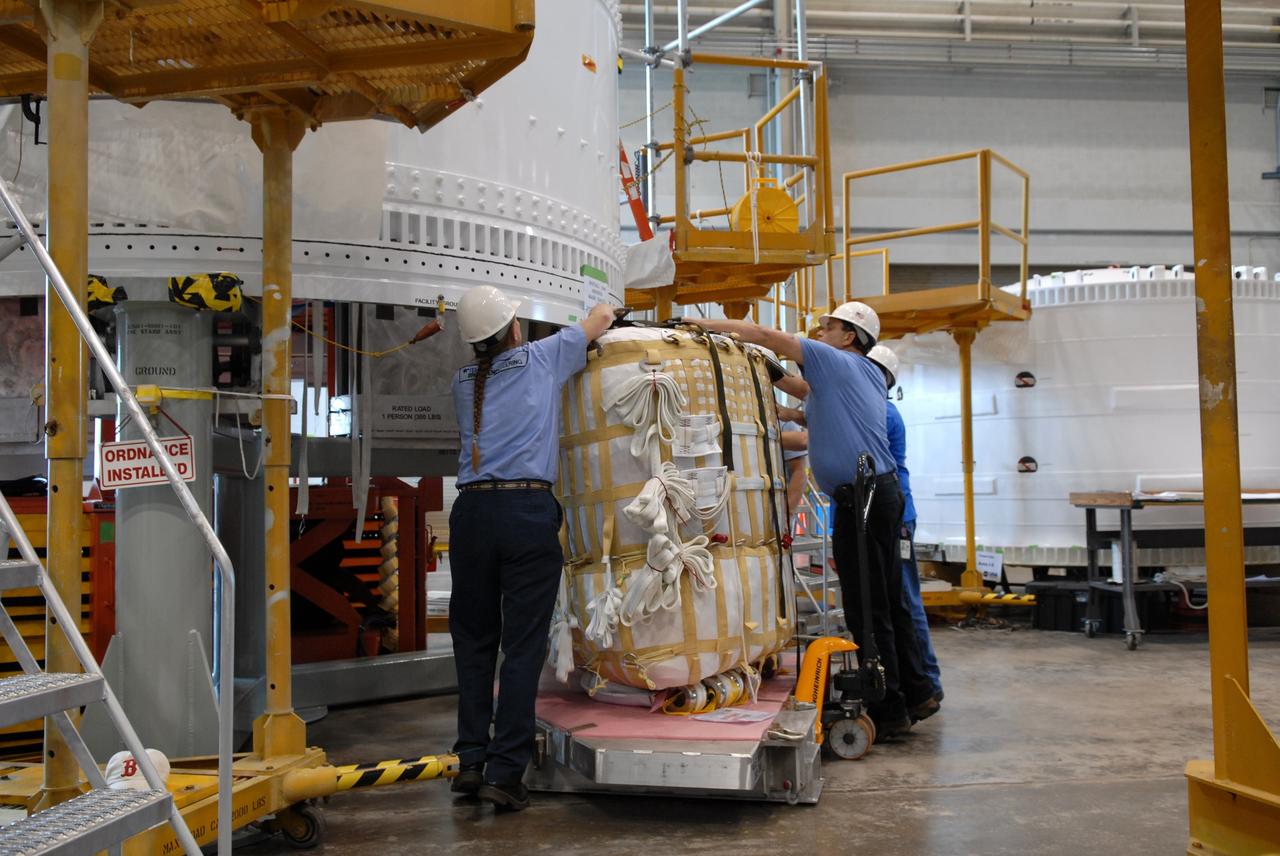
CAPE CANAVERAL, Fla. – In the Assembly and Refurbishment Facility at NASA's Kennedy Space Center in Florida, workers move a parachute pack to the Ares I-X forward skirt segment, in which it will be installed. The forward skirt is the initial piece of first-stage hardware in preparation for the July 2009 test flight of the agency's next-generation spacecraft and launch vehicle system. Photo credit: NASA/Jack Pfaller
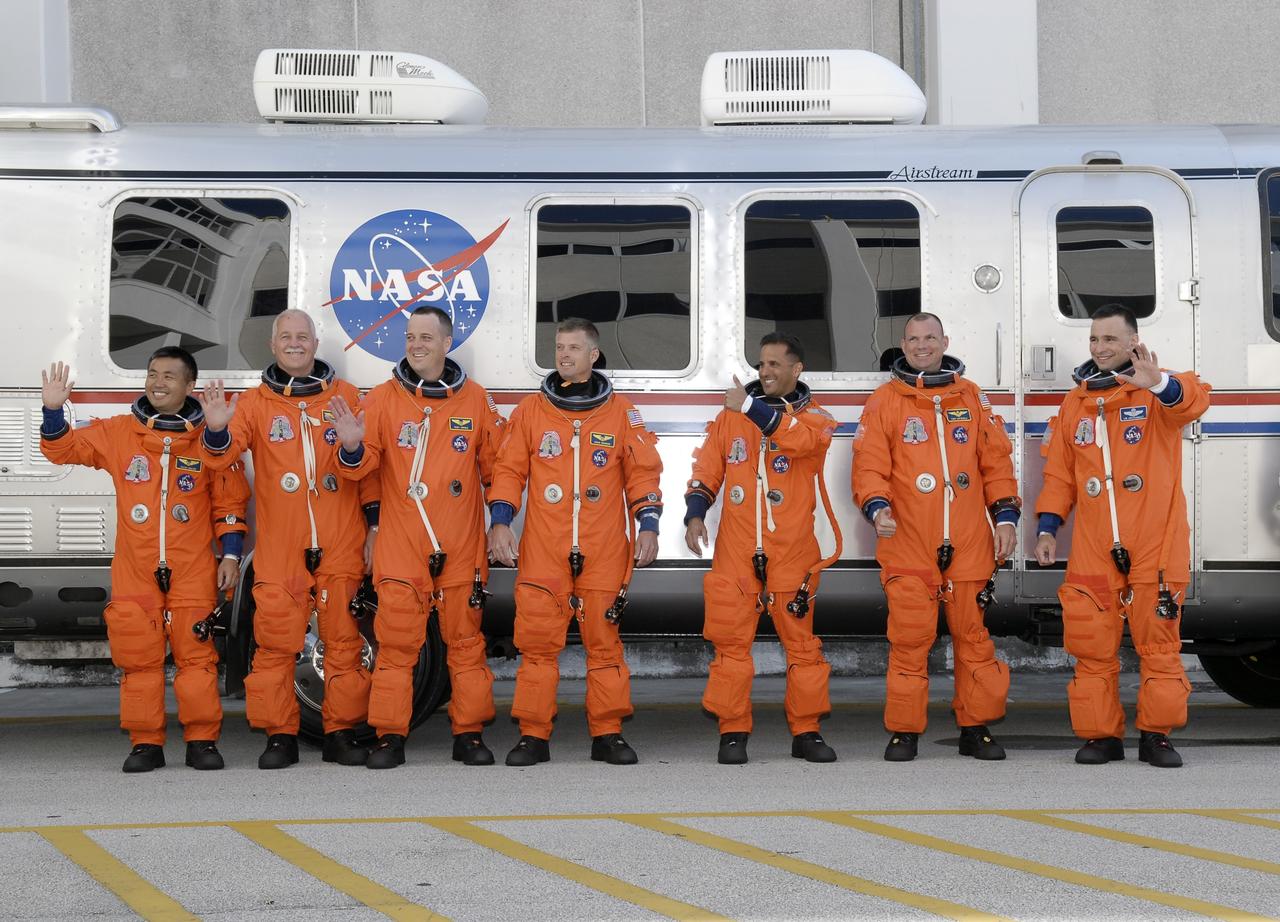
CAPE CANAVERAL, Fla. – The STS-119 crew members pause for photos before boarding the Astrovan to take them to Launch Pad 39A at NASA's Kennedy Space Center in Florida for launch of space shuttle Discovery to the International Space Station. From left are Mission Specialists Koichi Wakata, John Phillips, Richard Arnold, Steve Swanson and Joseph Acaba, Pilot Tony Antonelli and Commander Lee Archambault. Wakata represents the Japan Aerospace Exploration Agency and will remain on the International Space Station, replacing Expedition 18 Flight Engineer Sandra Magnus, who returns to Earth with the STS-119 crew. Liftoff of Discovery is scheduled for 7:43 p.m. EDT on March 15. An earlier launch attempt March 11 was scrubbed at 2:36 p.m. due to a gaseous hydrogen leak from the external tank at the Ground Umbilical Carrier Plate during tanking. A seven-inch quick disconnect and two seals were replaced. The STS-119 mission is the 28th to the space station and the 125th space shuttle flight. Discovery will deliver the final pair of power-generating solar array wings and the S6 truss segment. Installation of S6 will signal the station's readiness to house a six-member crew for conducting increased science. Photo credit: NASA/Kim Shiflett
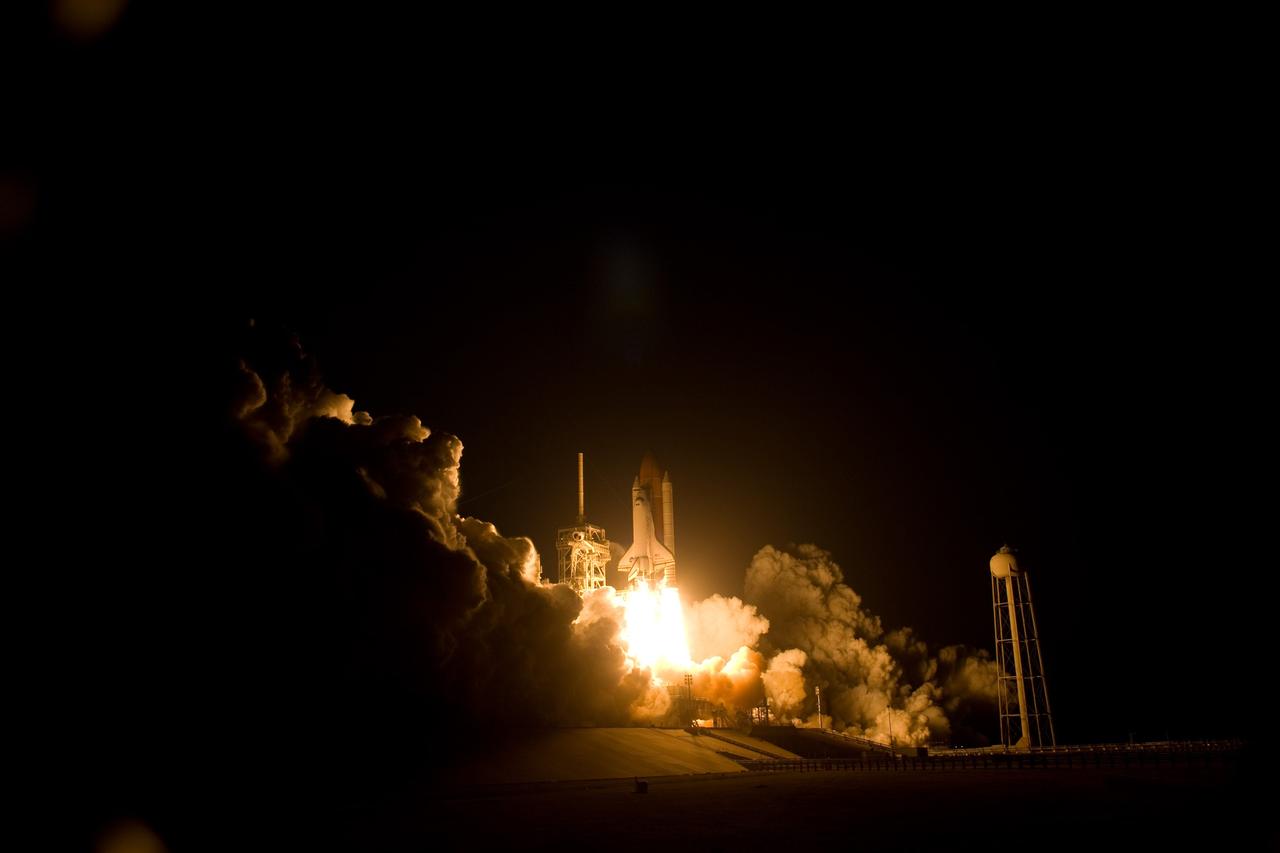
CAPE CANAVERAL, Fla. – Clouds of smoke and steam roll across Launch Pad 39A at NASA's Kennedy Space Center in Florida as space shuttle Discovery roars into the night sky on the STS-119 mission. The launch was on time at 7:43 p.m. EDT. The STS-119 mission is the 28th to the International Space Station and the 125th space shuttle flight. Discovery will deliver the final pair of power-generating solar array wings and the S6 truss segment. Installation of S6 will signal the station's readiness to house a six-member crew for conducting increased science. Photo credit: NASA/Sandra Joseph, Kevin O'Connell
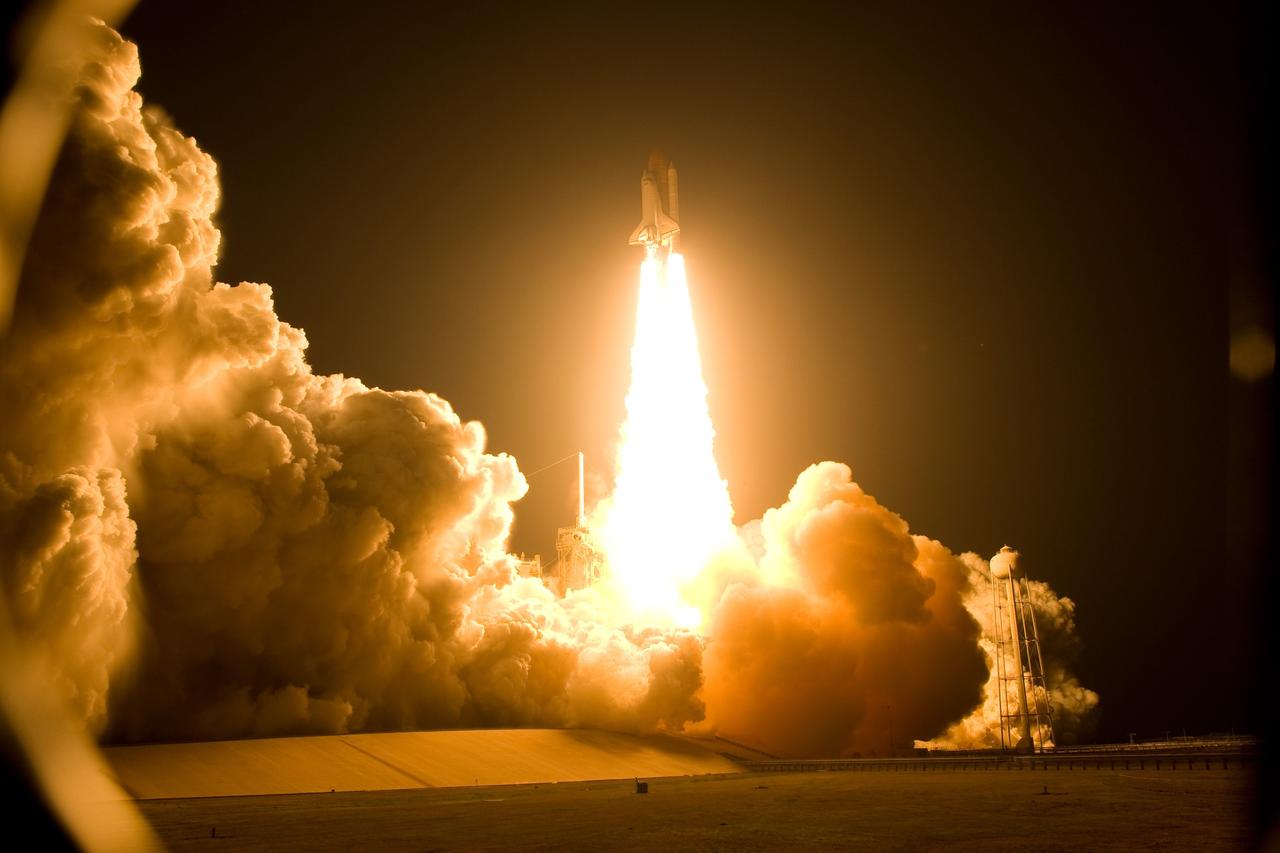
CAPE CANAVERAL, Fla. – Liftoff of space shuttle Discovery from Launch Pad 39A at NASA's Kennedy Space Center in Florida lights up the evening sky as it begins the STS-119 mission. The launch was on time at 7:43 p.m. EDT. The STS-119 mission is the 28th to the International Space Station and the 125th space shuttle flight. Discovery will deliver the final pair of power-generating solar array wings and the S6 truss segment. Installation of S6 will signal the station's readiness to house a six-member crew for conducting increased science. Photo credit: NASA/Sandra Joseph, Kevin O'Connell
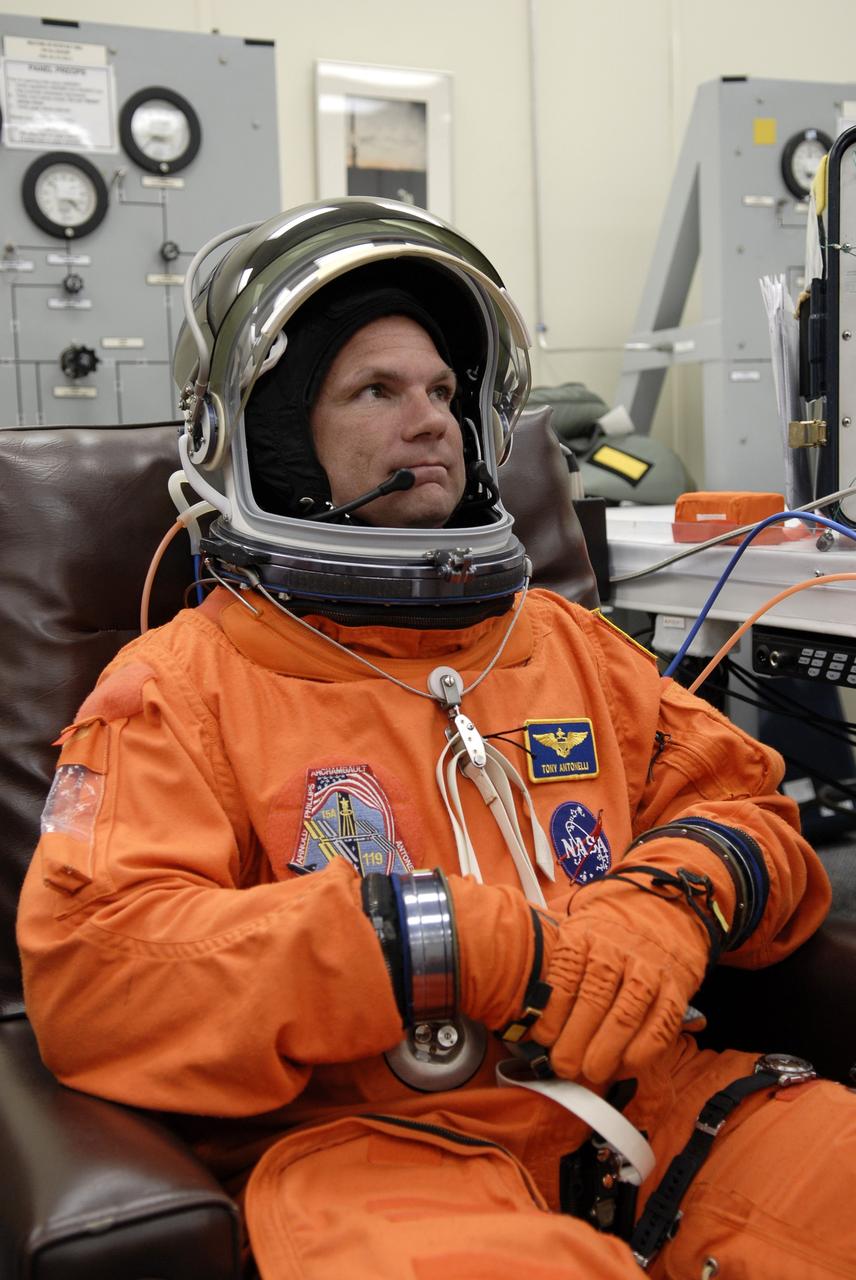
CAPE CANAVERAL, Fla. – – In the Operations and Checkout Building at NASA's Kennedy Space Center in Florida, STS-119 Pilot Tony Antonelli adds the helmet as he puts on his launch-and-entry suit for the launch of space shuttle Discovery. The crew will be heading for Launch Pad 39A and liftoff of Discovery, scheduled for 7:43 p.m. EDT on March 15. An earlier launch attempt March 11 was scrubbed at 2:36 p.m. due to a gaseous hydrogen leak from the external tank at the Ground Umbilical Carrier Plate during tanking. A seven-inch quick disconnect and two seals were replaced. The STS-119 mission is the 28th to the International Space Station and the 125th space shuttle flight. Discovery will deliver the final pair of power-generating solar array wings and the S6 truss segment. Installation of S6 will signal the station's readiness to house a six-member crew for conducting increased science. Photo credit: NASA/Kim Shiflett
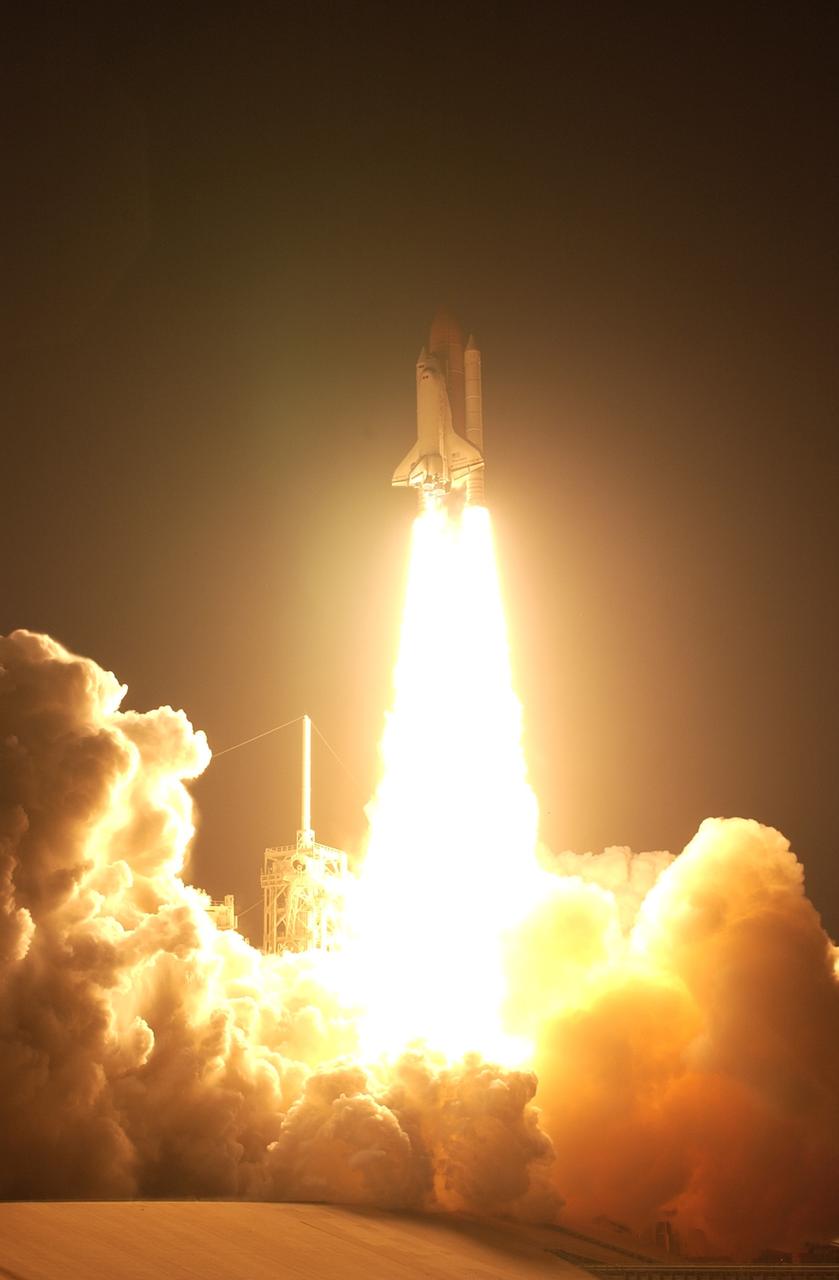
CAPE CANAVERAL, Fla. – Propelled by columns of fire, space shuttle Discovery races toward space on the STS-119 mission after liftoff from Launch Pad 39A at NASA's Kennedy Space Center in Florida. Clouds of smoke and steam roll across the pad. Launch was on time at 7:43 p.m. EDT. The STS-119 mission is the 28th to the International Space Station and the 125th space shuttle flight. Discovery will deliver the final pair of power-generating solar array wings and the S6 truss segment. Installation of S6 will signal the station's readiness to house a six-member crew for conducting increased science. Photo credit: NASA/Sandra Joseph, Kevin O'Connell
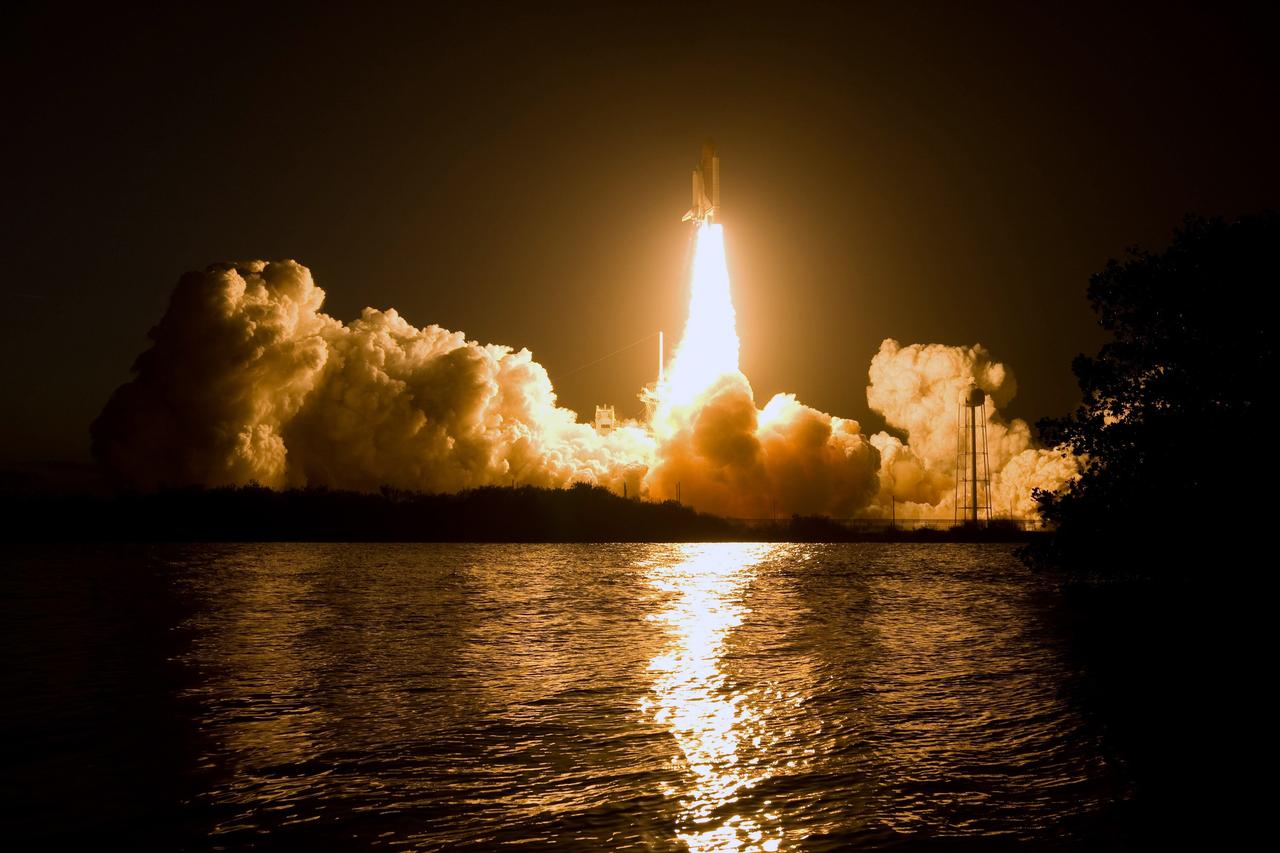
CAPE CANAVERAL, Fla. – Billows of smoke and the water near Launch Pad 39A at NASA's Kennedy Space Center in Florida capture the brilliant light of space shuttle Discovery's lift-off on the STS-119 mission. The launch was on time at 7:43 p.m. EDT. The STS-119 mission is the 28th to the International Space Station and the 125th space shuttle flight. Discovery will deliver the final pair of power-generating solar array wings and the S6 truss segment. Installation of S6 will signal the station's readiness to house a six-member crew for conducting increased science. Photo credit: NASA/Sandra Joseph, Kevin O'Connell
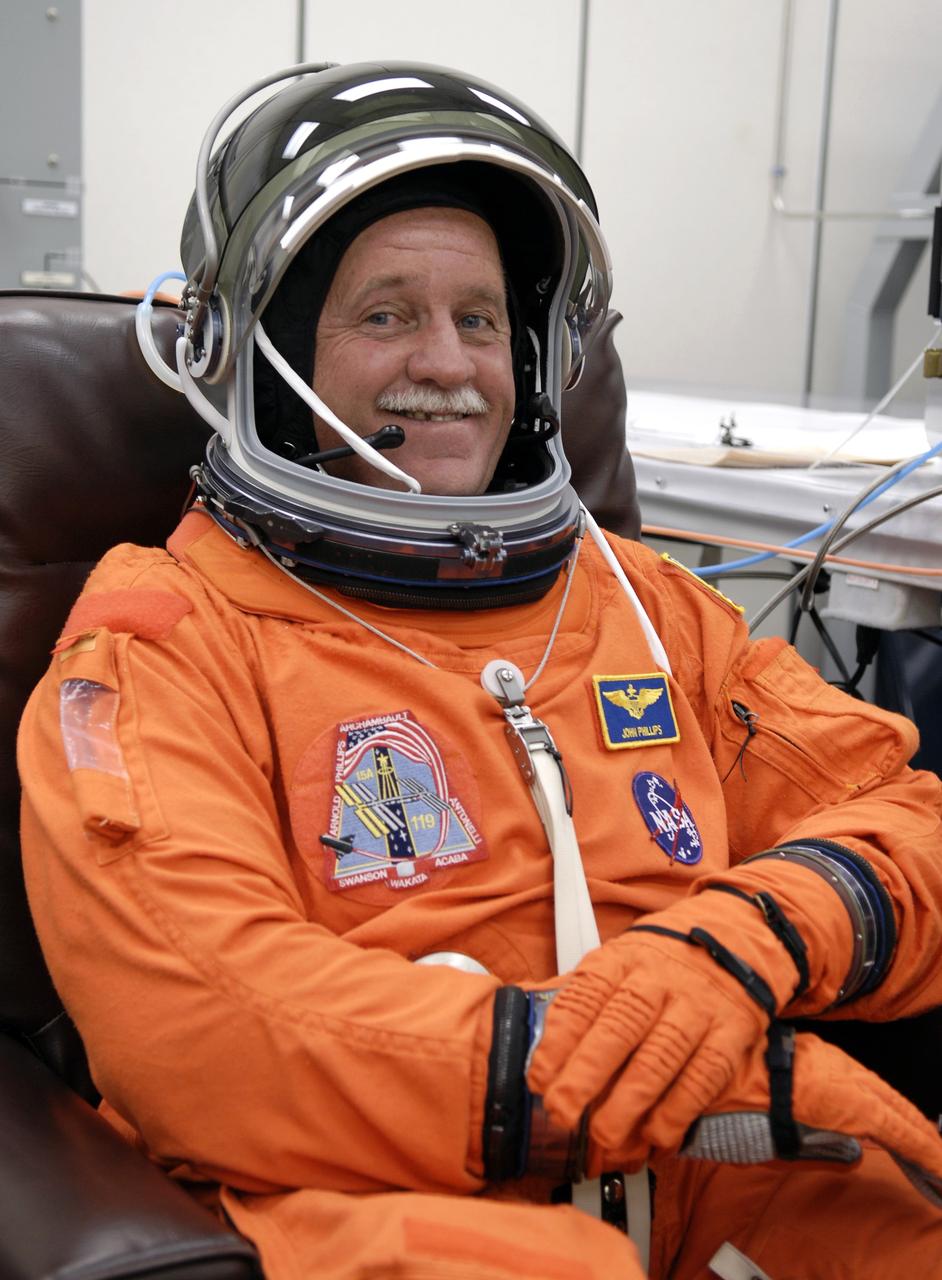
CAPE CANAVERAL, Fla. – In the Operations and Checkout Building at NASA's Kennedy Space Center in Florida, STS-119 Mission Specialist John Phillips completes putting on his launch-and-entry suit, including the helmet, for the launch of space shuttle Discovery. The crew will be heading for Launch Pad 39A and liftoff of Discovery, scheduled for 7:43 p.m. EDT on March 15. An earlier launch attempt March 11 was scrubbed at 2:36 p.m. due to a gaseous hydrogen leak from the external tank at the Ground Umbilical Carrier Plate during tanking. A seven-inch quick disconnect and two seals were replaced. The STS-119 mission is the 28th to the International Space Station and the 125th space shuttle flight. Discovery will deliver the final pair of power-generating solar array wings and the S6 truss segment. Installation of S6 will signal the station's readiness to house a six-member crew for conducting increased science. Photo credit: NASA/Kim Shiflett

CAPE CANAVERAL, Fla. – In the Operations and Checkout Building at NASA's Kennedy Space Center in Florida, STS-119 Pilot Tony Antonelli puts on his launch-and-entry suit for the launch of space shuttle Discovery. The crew will be heading for Launch Pad 39A and liftoff of Discovery, scheduled for 7:43 p.m. EDT on March 15. An earlier launch attempt March 11 was scrubbed at 2:36 p.m. due to a gaseous hydrogen leak from the external tank at the Ground Umbilical Carrier Plate during tanking. A seven-inch quick disconnect and two seals were replaced. The STS-119 mission is the 28th to the International Space Station and the 125th space shuttle flight. Discovery will deliver the final pair of power-generating solar array wings and the S6 truss segment. Installation of S6 will signal the station's readiness to house a six-member crew for conducting increased science. Photo credit: NASA/Kim Shiflett
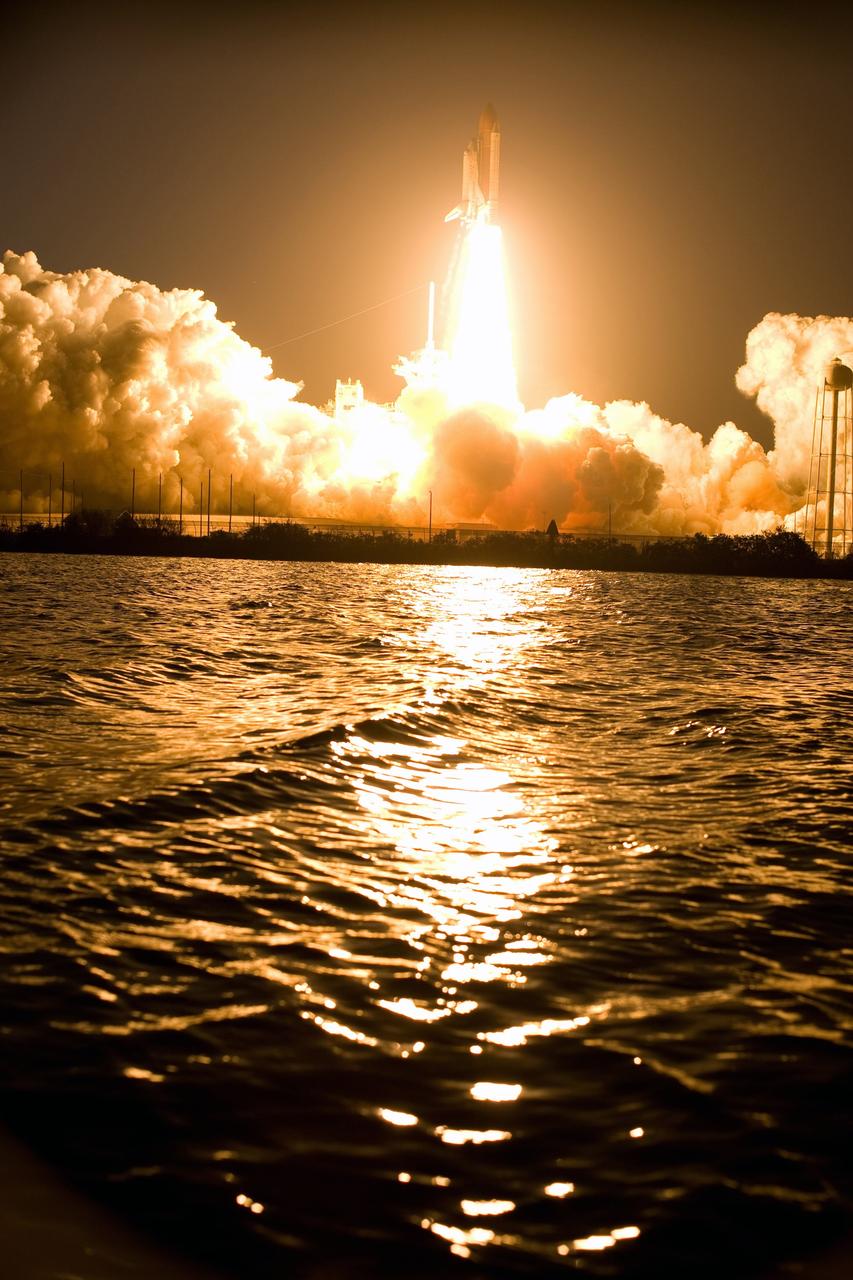
CAPE CANAVERAL, Fla. – Water near Launch Pad 39A at NASA's Kennedy Space Center in Florida captures the brilliant flames as space shuttle Discovery lifts off on the STS-119 mission. The launch was on time at 7:43 p.m. EDT. The STS-119 mission is the 28th to the International Space Station and the 125th space shuttle flight. Discovery will deliver the final pair of power-generating solar array wings and the S6 truss segment. Installation of S6 will signal the station's readiness to house a six-member crew for conducting increased science. Photo credit: NASA/Tony Gray, Tom Farrar
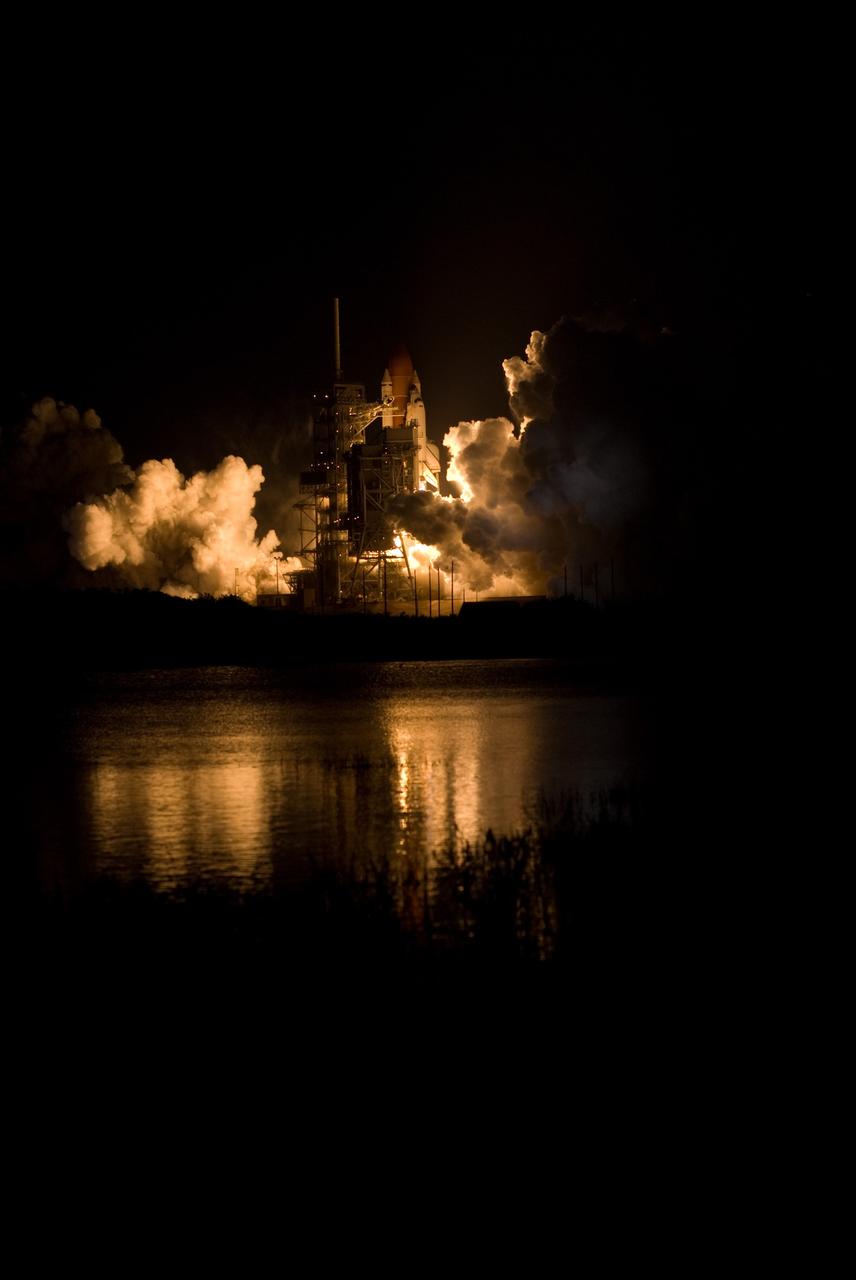
CAPE CANAVERAL, Fla. – Billows of smoke and the water near Launch Pad 39A at NASA's Kennedy Space Center in Florida capture the brilliant light of space shuttle Discovery's lift-off on the STS-119 mission. The launch was on time at 7:43 p.m. EDT.The STS-119 mission is the 28th to the International Space Station and the 125th space shuttle flight. Discovery will deliver the final pair of power-generating solar array wings and the S6 truss segment. Installation of S6 will signal the station's readiness to house a six-member crew for conducting increased science. Photo credit: NASA/Tony Gray, Tom Farrar
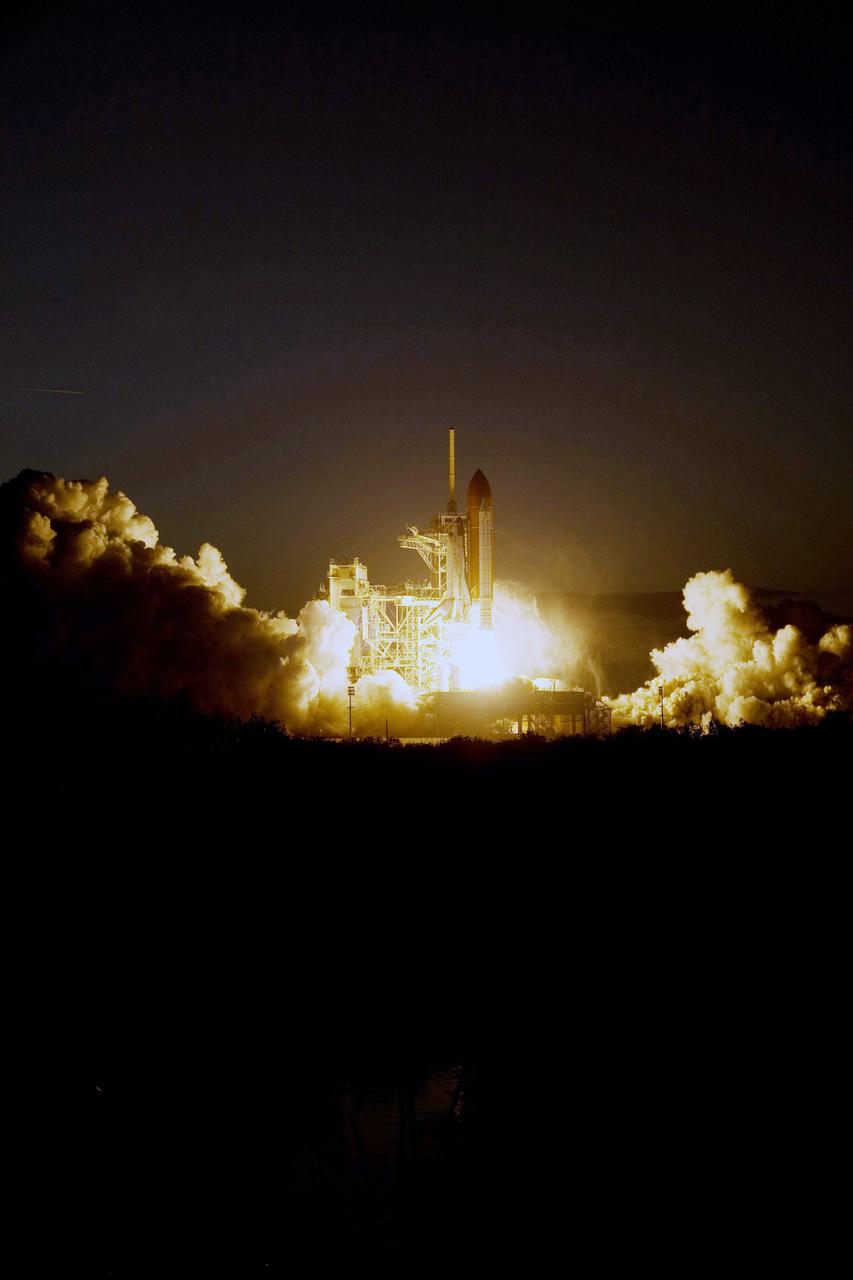
CAPE CANAVERAL, Fla. – The fiery light of ignition spills over Launch Pad 39A at NASA's Kennedy Space Center in Florida as space shuttle Discovery roars toward space on the STS-119 mission. Liftoff was on time at 7:43 p.m. EDT. The STS-119 mission is the 28th to the International Space Station and the 125th space shuttle flight. Discovery will deliver the final pair of power-generating solar array wings and the S6 truss segment. Installation of S6 will signal the station's readiness to house a six-member crew for conducting increased science. Photo credit: NASA/Sandra Joseph, Kevin O'Connell
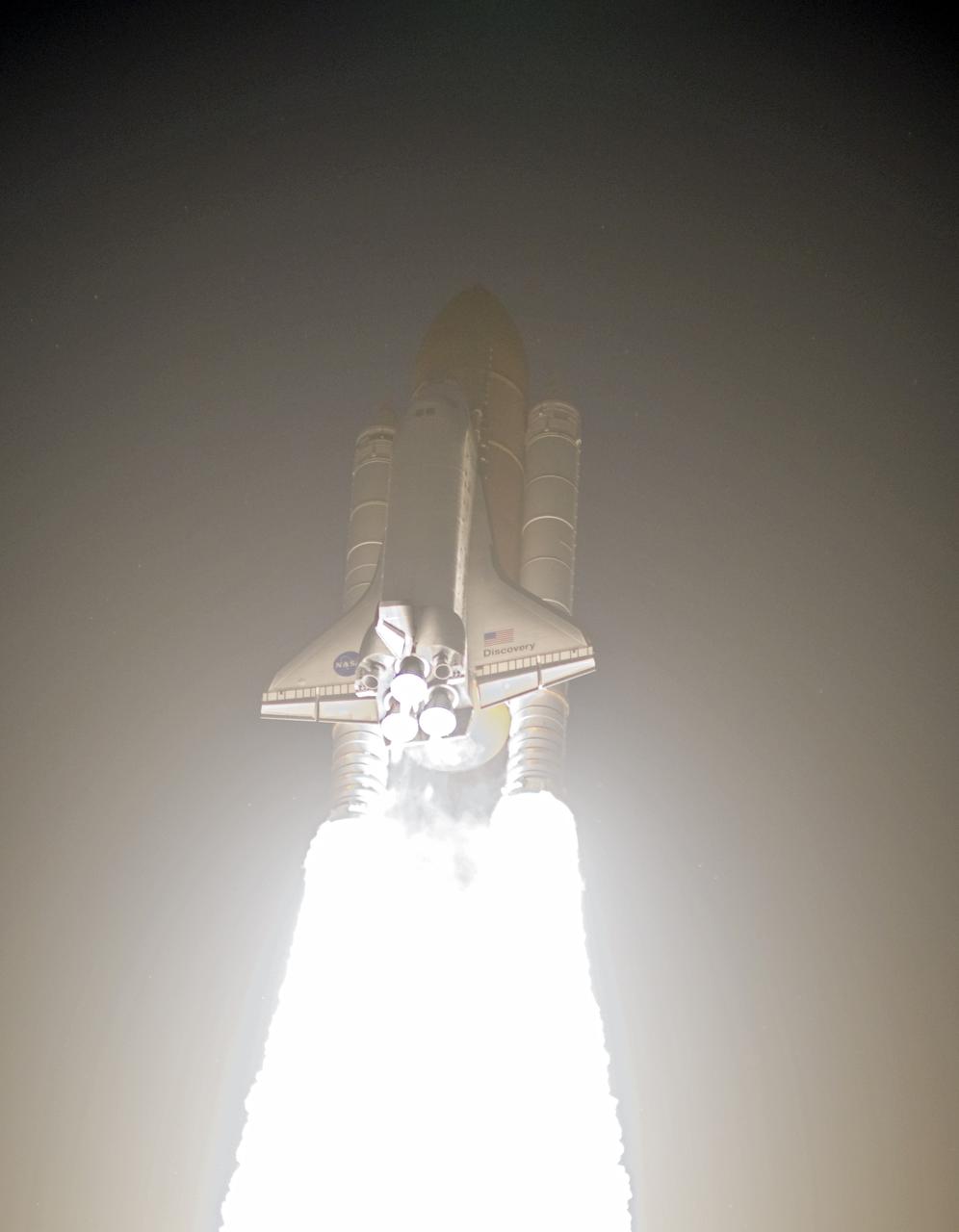
CAPE CANAVERAL, Fla. – As space shuttle Discovery roars toward space after launch from Launch Pad 39A at NASA's Kennedy Space Center in Florida, mach diamonds can be seen beneath the engine nozzles. Blue cones of light, the mach diamonds are a formation of shock waves in the exhaust plume of an aerospace propulsion system. Launch was on time at 7:43 p.m. EDT. The STS-119 mission is the 28th to the International Space Station and the 125th space shuttle flight. Discovery will deliver the final pair of power-generating solar array wings and the S6 truss segment. Installation of S6 will signal the station's readiness to house a six-member crew for conducting increased science. Photo credit: NASA/Rusty Backer, George Roberts
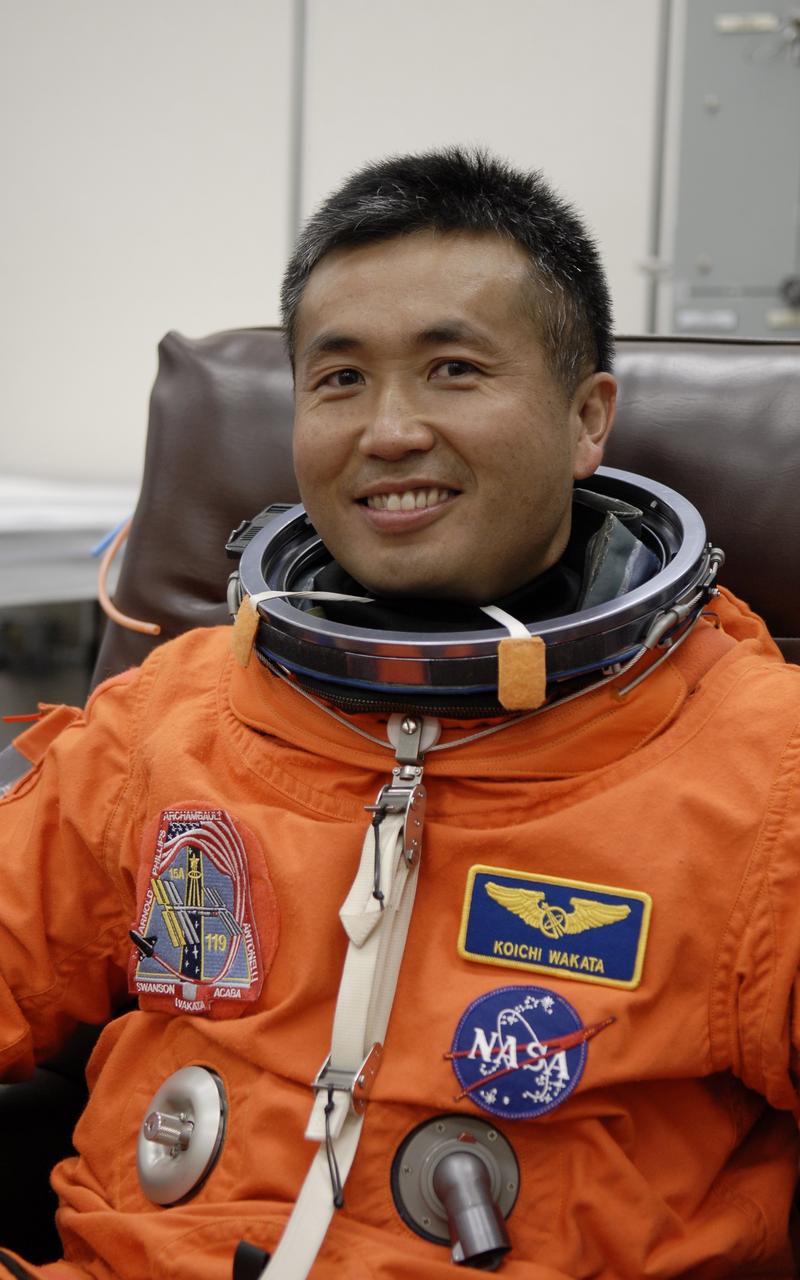
CAPE CANAVERAL, Fla. – In the Operations and Checkout Building at NASA's Kennedy Space Center in Florida, STS-119 Mission Specialist Koichi Wakata is happy to be suiting up for the launch of space shuttle Discovery. The crew will be heading for Launch Pad 39A and liftoff of Discovery, scheduled for 7:43 p.m. EDT on March 15. An earlier launch attempt March 11 was scrubbed at 2:36 p.m. due to a gaseous hydrogen leak from the external tank at the Ground Umbilical Carrier Plate during tanking. A seven-inch quick disconnect and two seals were replaced. The STS-119 mission is the 28th to the International Space Station and the 125th space shuttle flight. Discovery will deliver the final pair of power-generating solar array wings and the S6 truss segment. Installation of S6 will signal the station's readiness to house a six-member crew for conducting increased science. Photo credit: NASA/Kim Shiflett
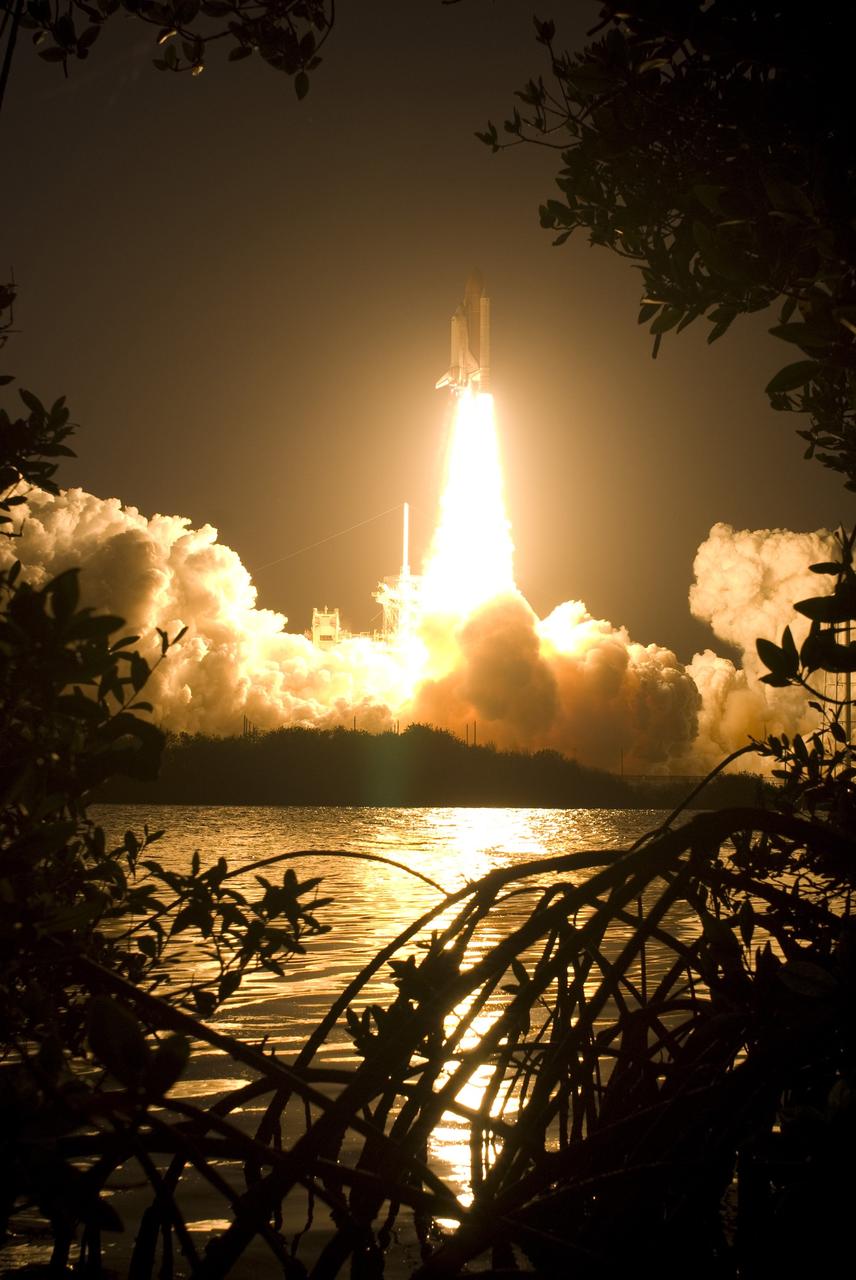
CAPE CANAVERAL, Fla. – Atop a column of fire, space shuttle Discovery roars toward space as it lifts off Launch Pad 39A at NASA's Kennedy Space Center in Florida on the STS-119 mission. The launch was on time at 7:43 p.m. EDT. The STS-119 mission is the 28th to the International Space Station and the 125th space shuttle flight. Discovery will deliver the final pair of power-generating solar array wings and the S6 truss segment. Installation of S6 will signal the station's readiness to house a six-member crew for conducting increased science. Photo credit: NASA/Sandra Joseph, Kevin O'Connell
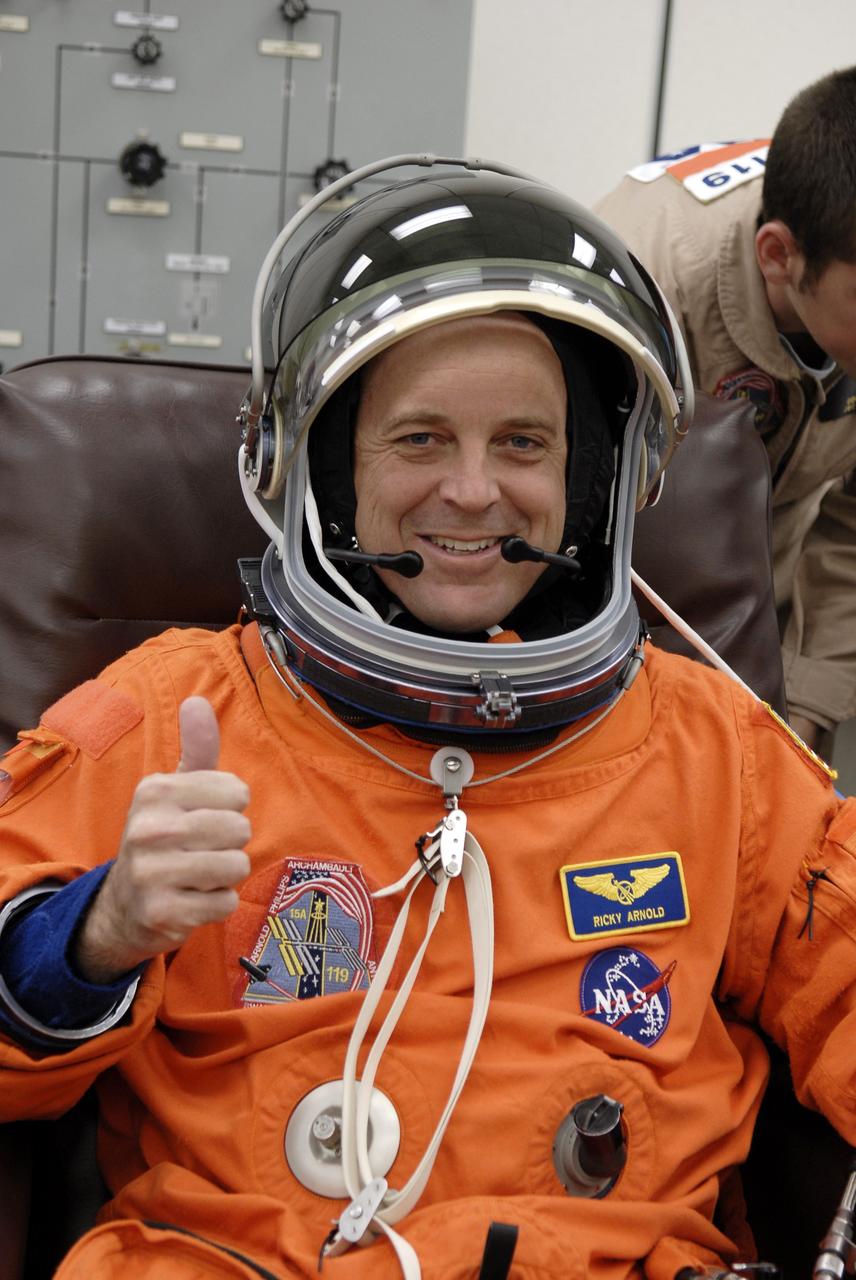
CAPE CANAVERAL, Fla. – In the Operations and Checkout Building at NASA's Kennedy Space Center in Florida, STS-119 Mission Specialist Richard Arnold completes putting on his launch-and-entry suit, including the helmet, for the launch of space shuttle Discovery. The crew will be heading for Launch Pad 39A and liftoff of Discovery, scheduled for 7:43 p.m. EDT on March 15. An earlier launch attempt March 11 was scrubbed at 2:36 p.m. due to a gaseous hydrogen leak from the external tank at the Ground Umbilical Carrier Plate during tanking. A seven-inch quick disconnect and two seals were replaced. The STS-119 mission is the 28th to the International Space Station and the 125th space shuttle flight. Discovery will deliver the final pair of power-generating solar array wings and the S6 truss segment. Installation of S6 will signal the station's readiness to house a six-member crew for conducting increased science. Photo credit: NASA/Kim Shiflett
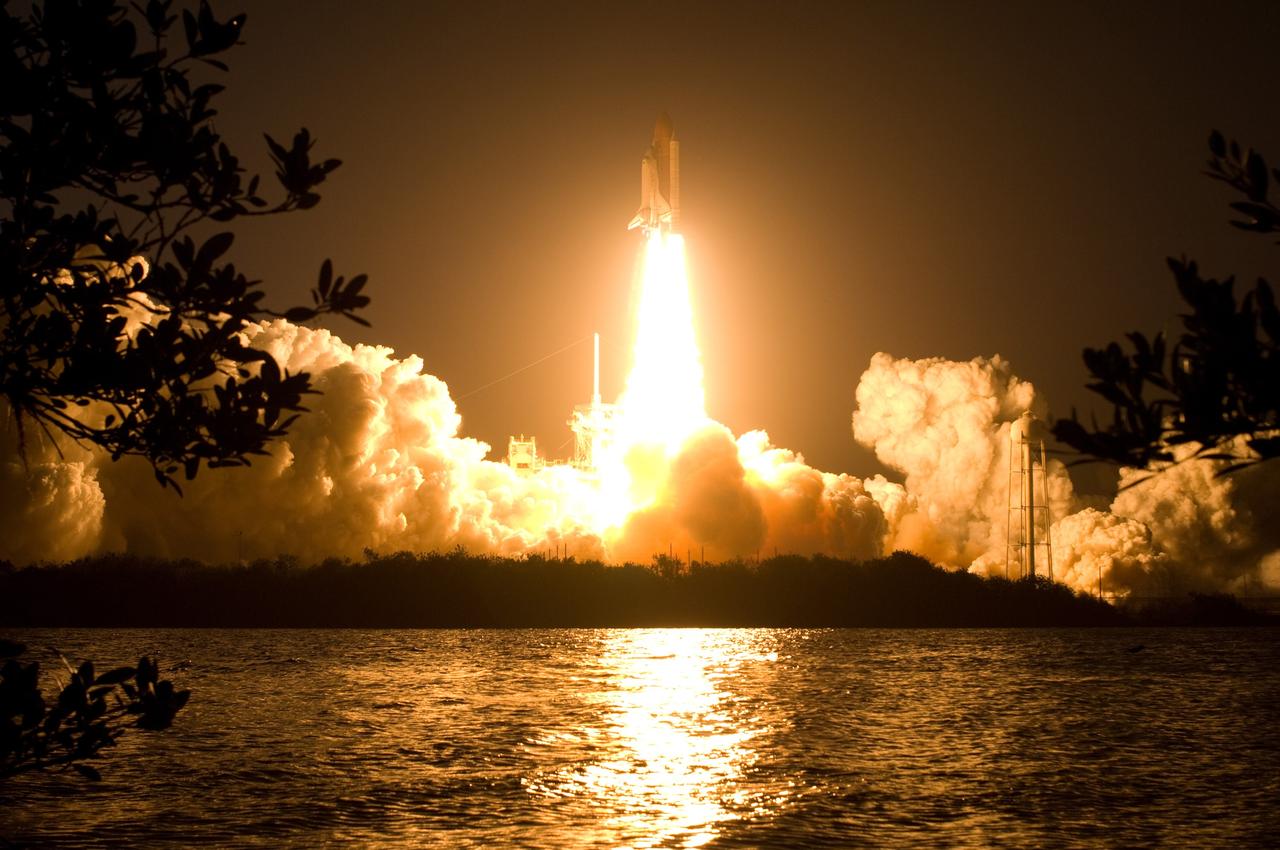
CAPE CANAVERAL, Fla. – Billows of smoke and the water near Launch Pad 39A at NASA's Kennedy Space Center in Florida capture the brilliant light of space shuttle Discovery's lift-off on the STS-119 mission. The launch was on time at 7:43 p.m. EDT. The STS-119 mission is the 28th to the International Space Station and the 125th space shuttle flight. Discovery will deliver the final pair of power-generating solar array wings and the S6 truss segment. Installation of S6 will signal the station's readiness to house a six-member crew for conducting increased science. Photo credit: NASA/Sandra Joseph, Kevin O'Connell
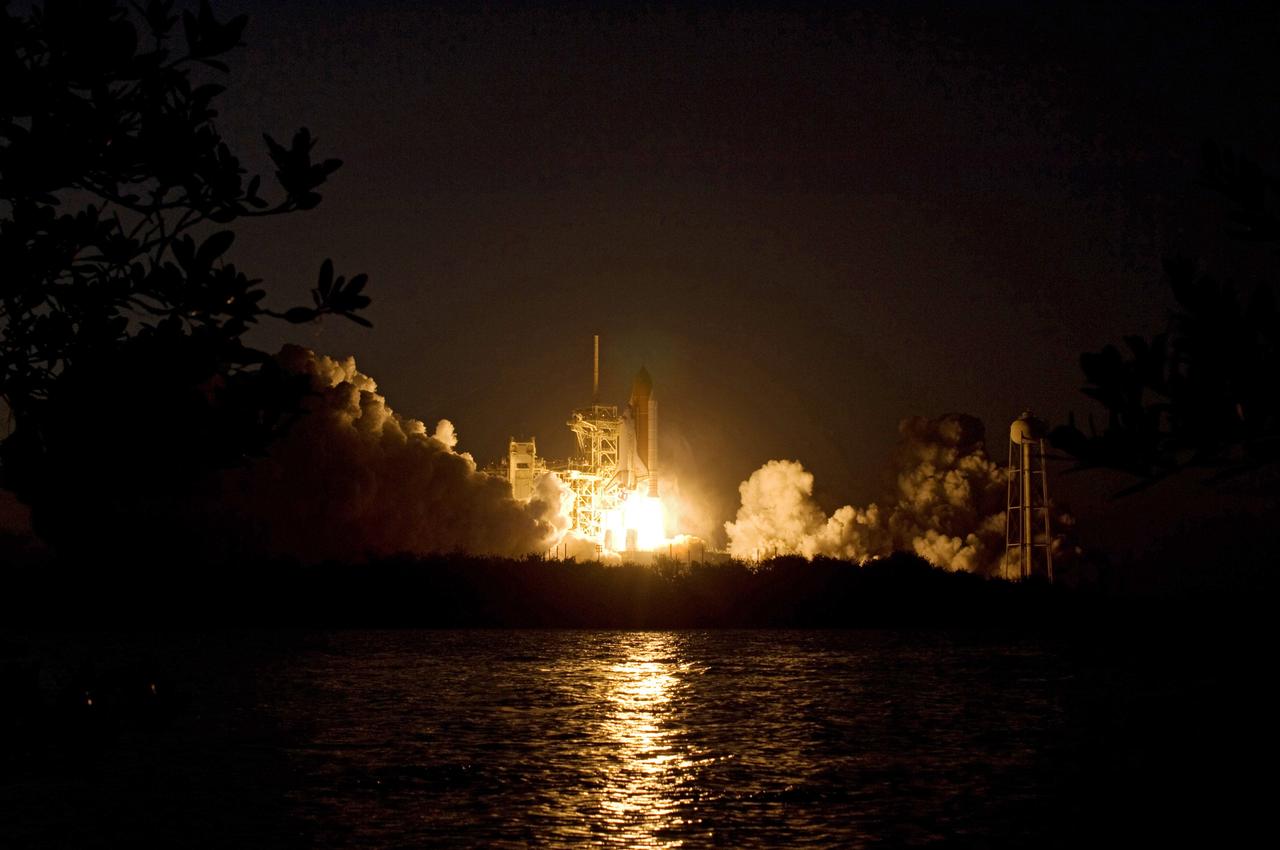
CAPE CANAVERAL, Fla. – The brilliant light of space shuttle Discovery's lift-off on the STS-119 mission lights up the clouds of smoke and the water near Launch Pad 39A at NASA's Kennedy Space Center in Florida. The launch was on time at 7:43 p.m. EDT. The STS-119 mission is the 28th to the International Space Station and the 125th space shuttle flight. Discovery will deliver the final pair of power-generating solar array wings and the S6 truss segment. Installation of S6 will signal the station's readiness to house a six-member crew for conducting increased science. Photo credit: NASA/Sandra Joseph, Kevin O'Connell
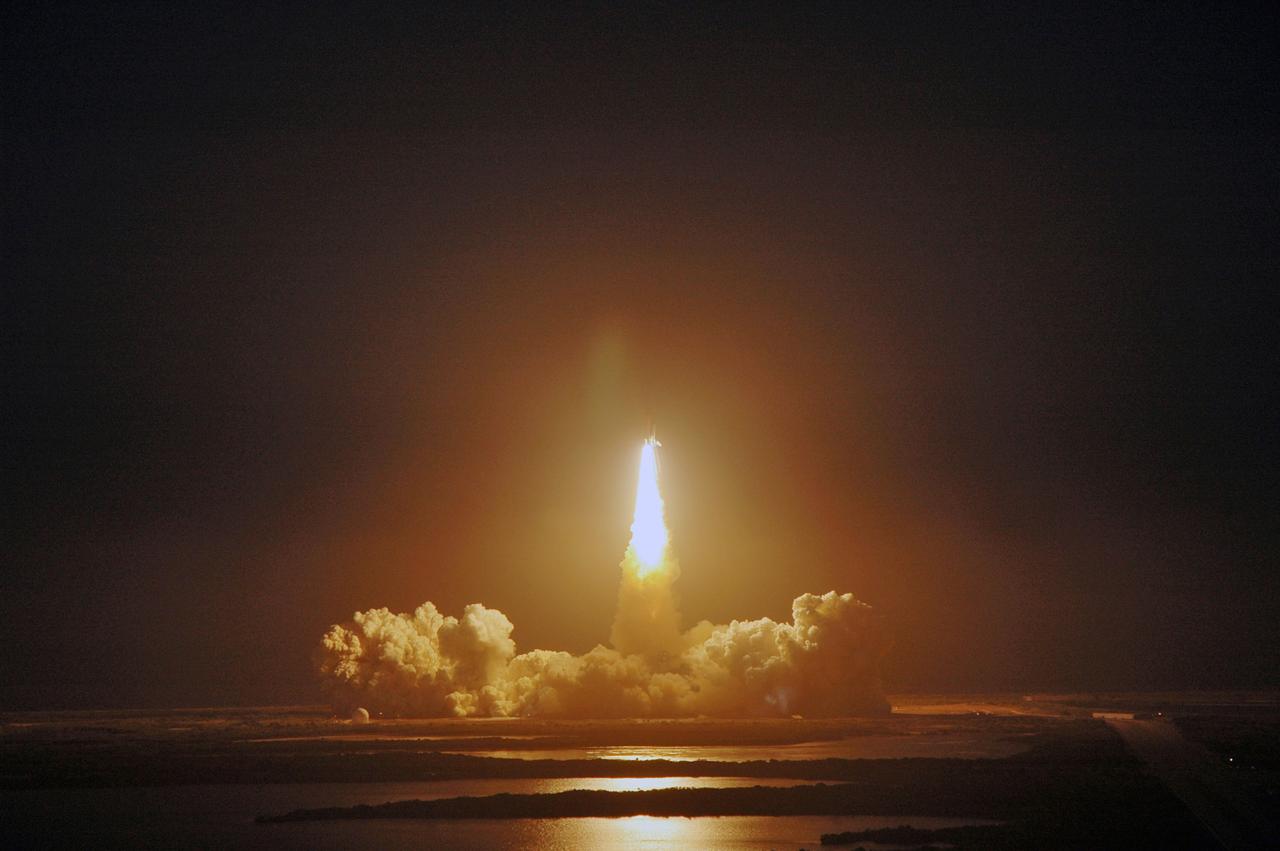
CAPE CANAVERAL, Fla. – Viewed from the roof of the Vehicle Assembly Building at NASA's Kennedy Space Center in Florida, space shuttle Discovery rides the tower of flames as it roars into space on the STS-119 mission. Liftoff was on time at 7:43 p.m. EDT. The STS-119 mission is the 28th to the International Space Station and the 125th space shuttle flight. Discovery will deliver the final pair of power-generating solar array wings and the S6 truss segment. Installation of S6 will signal the station's readiness to house a six-member crew for conducting increased science. Photo credit: NASA/Marino Jeffrey
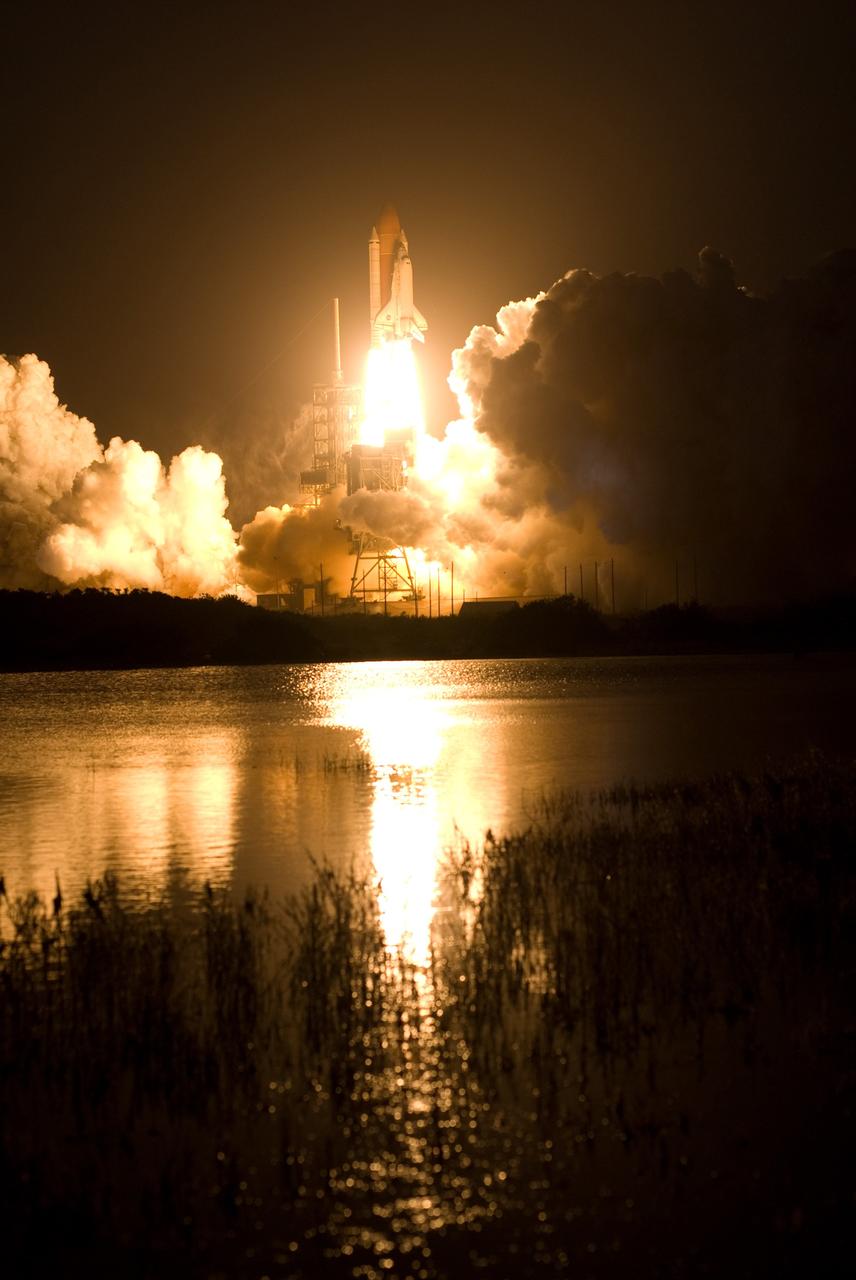
CAPE CANAVERAL, Fla. – The brilliant light of space shuttle Discovery's lift-off on the STS-119 mission lights up the clouds of smoke and the water near Launch Pad 39A at NASA's Kennedy Space Center in Florida. The launch was on time at 7:43 p.m. EDT. The STS-119 mission is the 28th to the International Space Station and the 125th space shuttle flight. Discovery will deliver the final pair of power-generating solar array wings and the S6 truss segment. Installation of S6 will signal the station's readiness to house a six-member crew for conducting increased science. Photo credit: NASA/Tony Gray, Tom Farrar
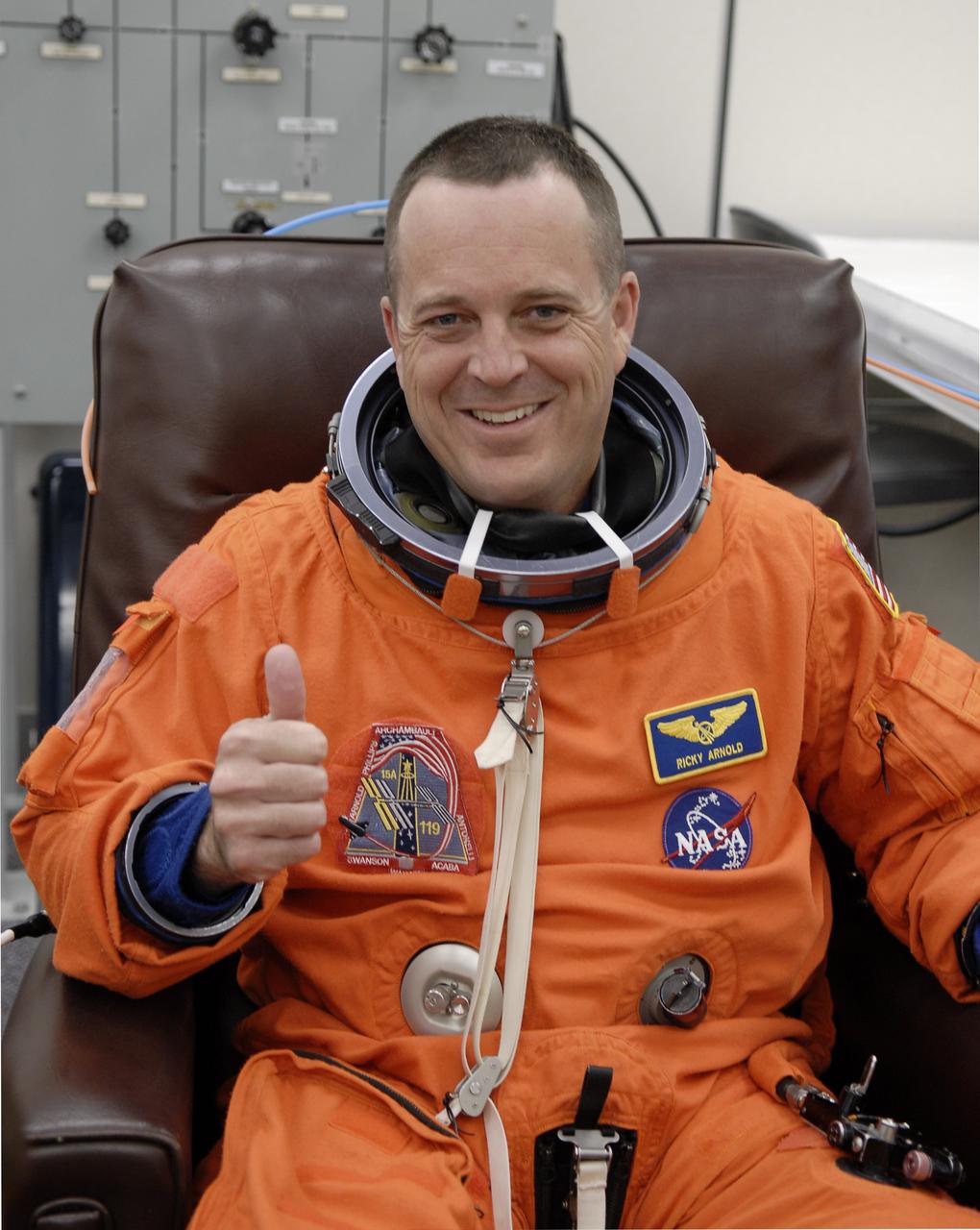
CAPE CANAVERAL, Fla. – In the Operations and Checkout Building at NASA's Kennedy Space Center in Florida, STS-119 Mission Specialist Richard Arnold is eager for launch as he puts on his launch-and-entry suit. The crew will be heading for Launch Pad 39A and liftoff of space shuttle Discovery, scheduled for 7:43 p.m. EDT on March 15. An earlier launch attempt March 11 was scrubbed at 2:36 p.m. due to a gaseous hydrogen leak from the external tank at the Ground Umbilical Carrier Plate during tanking. A seven-inch quick disconnect and two seals were replaced. The STS-119 mission is the 28th to the International Space Station and the 125th space shuttle flight. Discovery will deliver the final pair of power-generating solar array wings and the S6 truss segment. Installation of S6 will signal the station's readiness to house a six-member crew for conducting increased science. Photo credit: NASA/Kim Shiflett
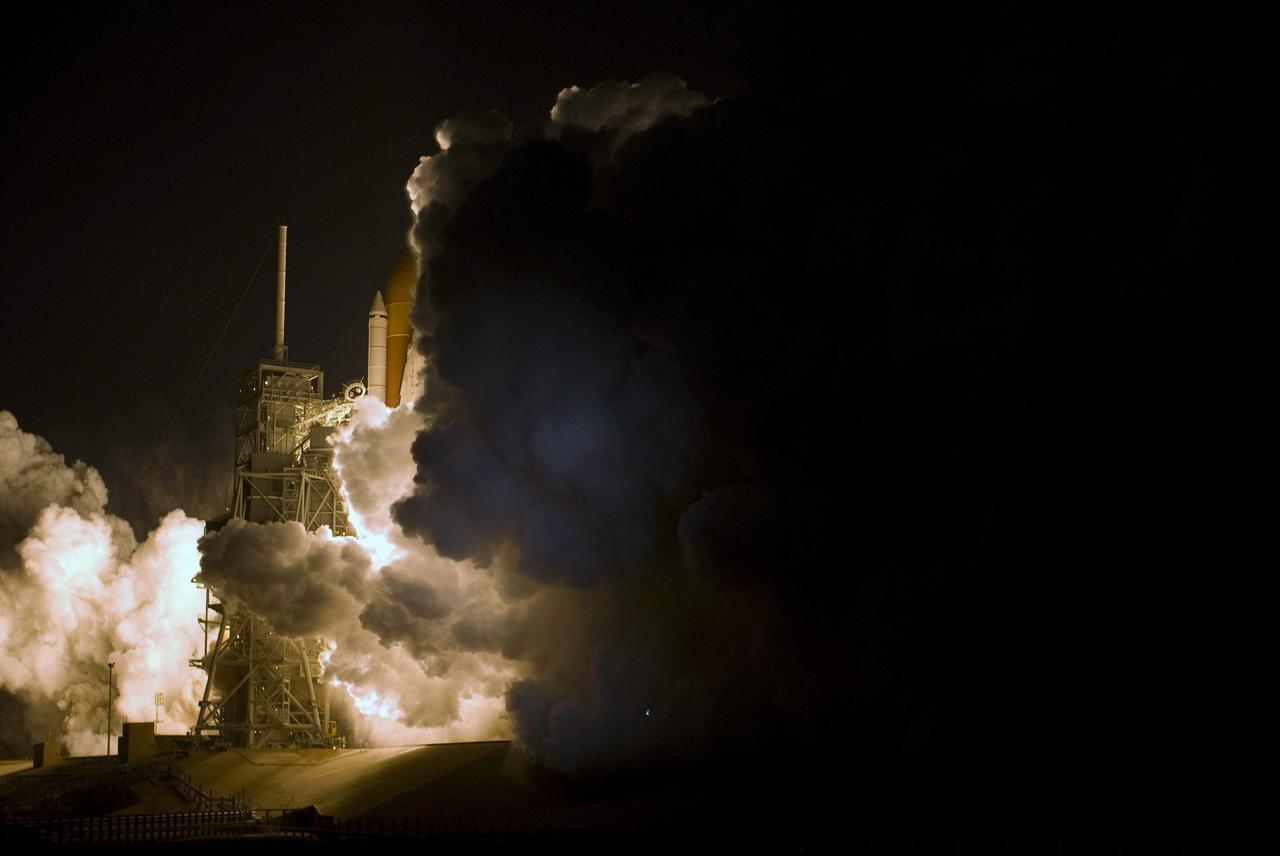
CAPE CANAVERAL, Fla. – Light and dark clouds of smoke and steam, spawned by the fire of liftoff, roll across Launch Pad 39A at NASA's Kennedy Space Center in Florida as space shuttle Discovery heads to space on the STS-119 mission. Liftoff was on time at 7:43 p.m. EDT. The STS-119 mission is the 28th to the International Space Station and the 125th space shuttle flight. Discovery will deliver the final pair of power-generating solar array wings and the S6 truss segment. Installation of S6 will signal the station's readiness to house a six-member crew for conducting increased science. Photo credit: NASA/Tony Gray, Tom Farrar
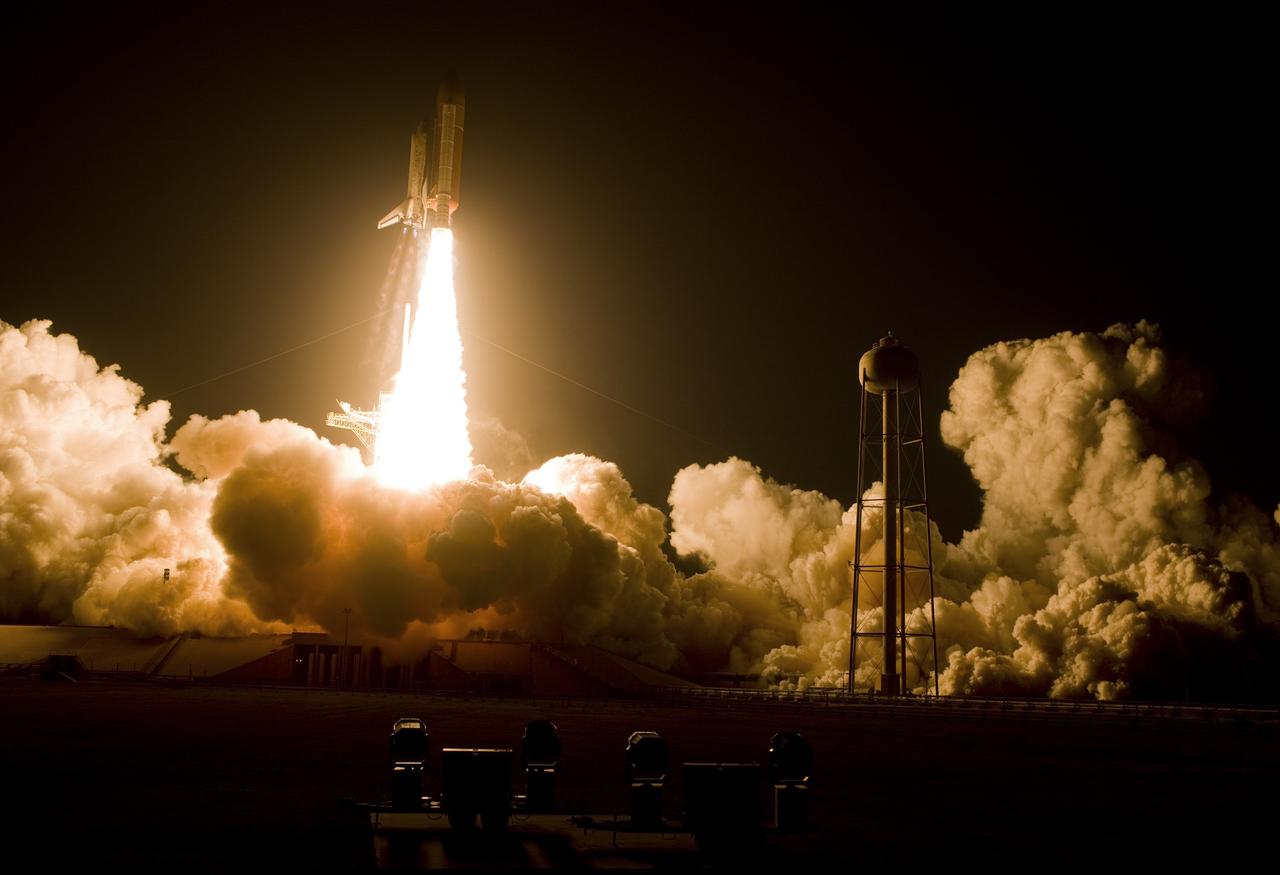
CAPE CANAVERAL, Fla. – Clouds of smoke and steam roll across Launch Pad 39A at NASA's Kennedy Space Center in Florida as space shuttle Discovery races toward space on mission STS-119. Launch was on time at 7:43 p.m. EDT. The STS-119 mission is the 28th to the International Space Station and the 125th space shuttle flight. Discovery will deliver the final pair of power-generating solar array wings and the S6 truss segment. Installation of S6 will signal the station's readiness to house a six-member crew for conducting increased science. Photo courtesy of Scott Andrews
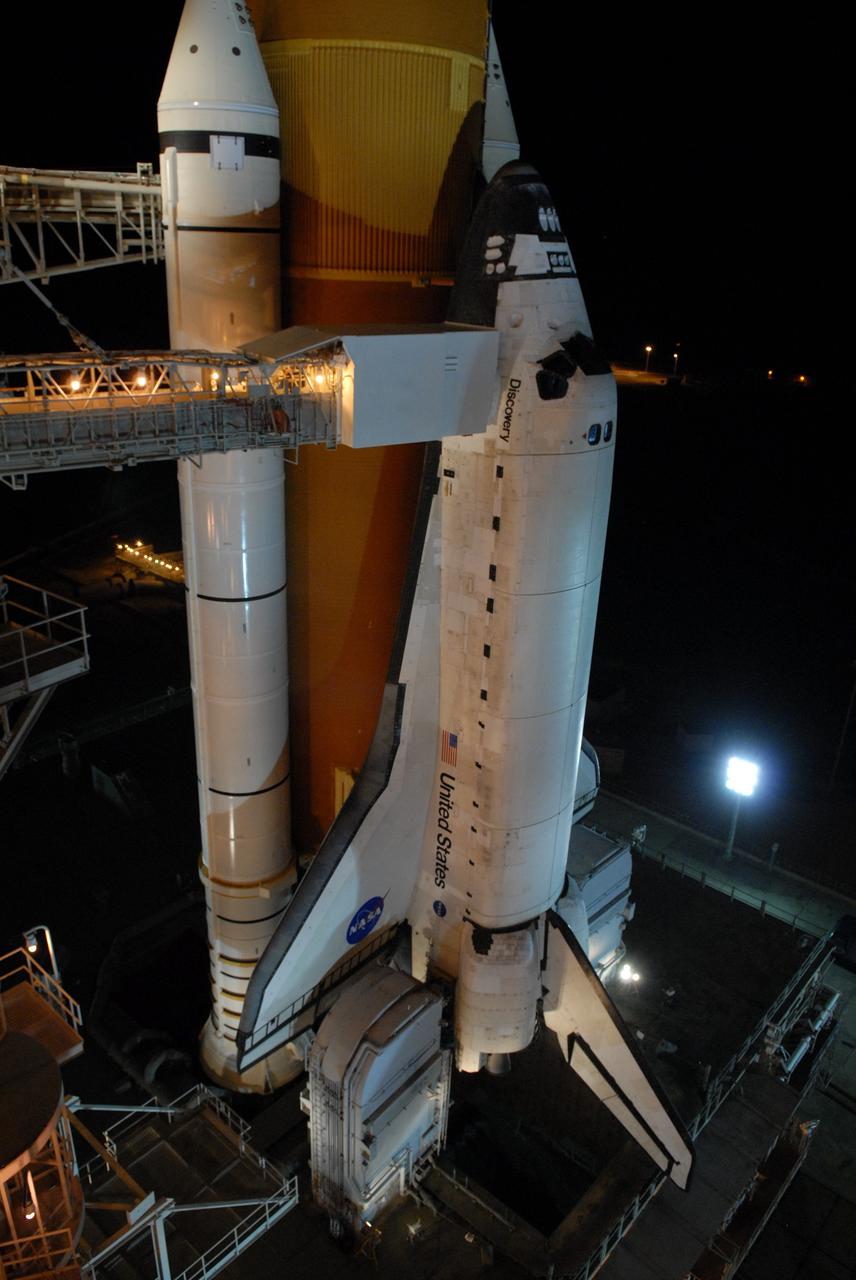
CAPE CANAVERAL, Fla. – On Launch Pad 39A at NASA's Kennedy Space Center in Florida, the orbiter access arm and White Room are extended toward space shuttle Discovery after rollback of the rotating service structure. The White Room provides crew access into the shuttle. The rollback is in preparation for Discovery's liftoff on the STS-119 mission with a crew of seven. An earlier launch attempt March 11 was scrubbed at 2:36 p.m. due to a gaseous hydrogen leak from the external tank at the Ground Umbilical Carrier Plate during tanking. A seven-inch quick disconnect and two seals were replaced. The STS-119 mission is the 28th to the International Space Station and the 125th space shuttle flight. Discovery will deliver the final pair of power-generating solar array wings and the S6 truss segment. Installation of S6 will signal the station's readiness to house a six-member crew for conducting increased science. Liftoff of Discovery is scheduled for 7:43 p.m. EDT on March 15. Photo credit: NASA/Jack Pfaller
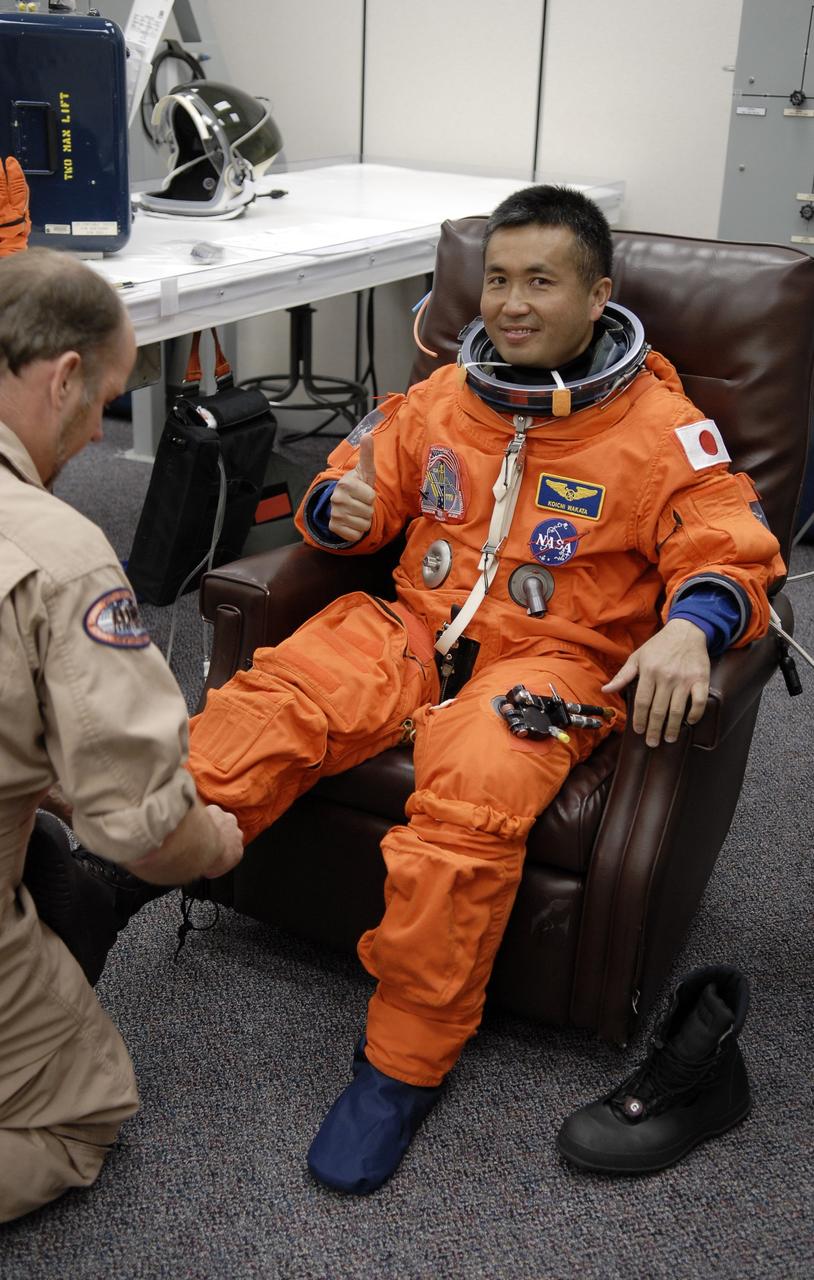
CAPE CANAVERAL, Fla. – In the Operations and Checkout Building at NASA's Kennedy Space Center in Florida, STS-119 Mission Specialist Koichi Wakata is helped with his boots as he puts on his launch-and-entry suit. The crew will be heading for Launch Pad 39A and liftoff of space shuttle Discovery, scheduled for 7:43 p.m. EDT on March 15. An earlier launch attempt March 11 was scrubbed at 2:36 p.m. due to a gaseous hydrogen leak from the external tank at the Ground Umbilical Carrier Plate during tanking. A seven-inch quick disconnect and two seals were replaced. The STS-119 mission is the 28th to the International Space Station and the 125th space shuttle flight. Discovery will deliver the final pair of power-generating solar array wings and the S6 truss segment. Installation of S6 will signal the station's readiness to house a six-member crew for conducting increased science. Photo credit: NASA/Kim Shiflett
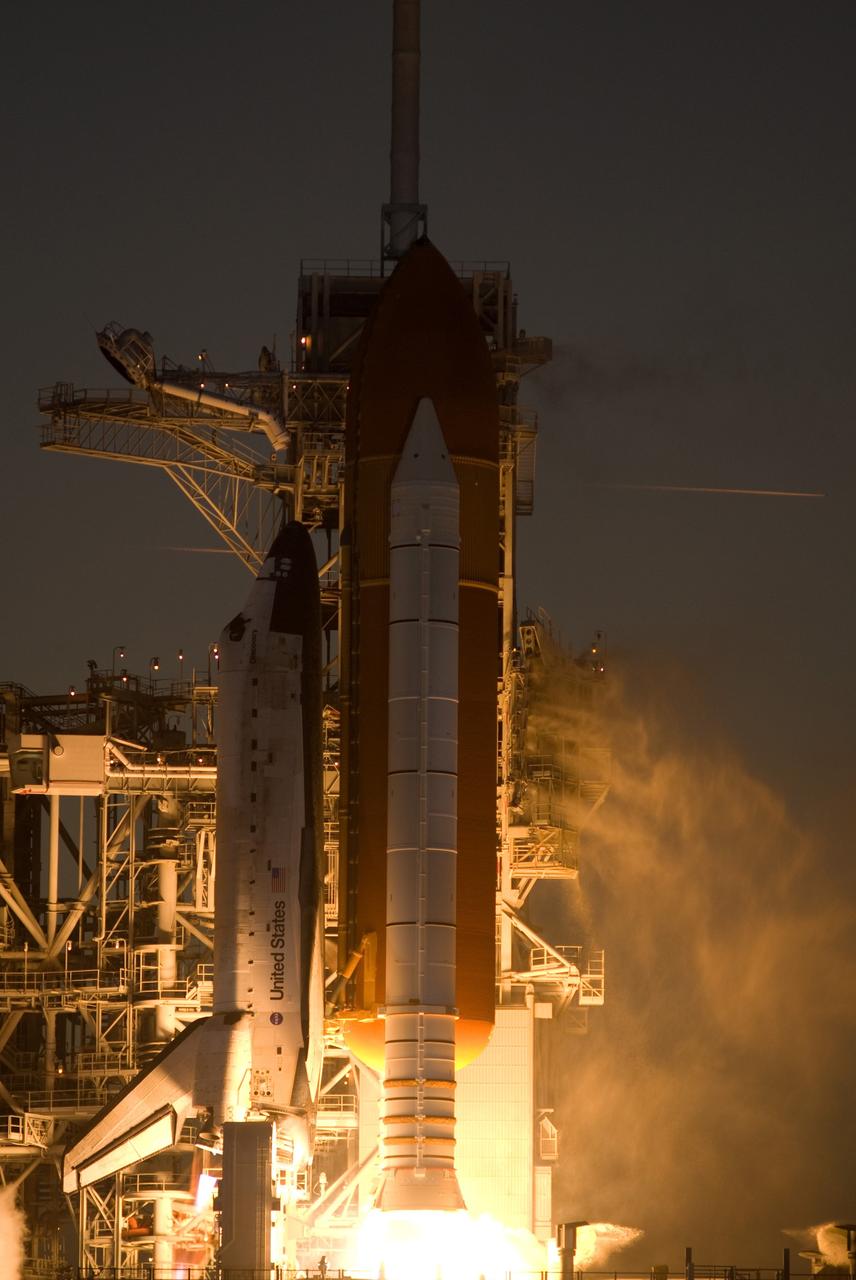
CAPE CANAVERAL, Fla. – At NASA's Kennedy Space Center in Florida, space shuttle Discovery rises from Launch Pad 39A on columns of fire as it begins its 13-day journey into space on mission STS-119. Launch was on time at 7:43 p.m. EDT. The STS-119 mission is the 28th to the International Space Station and the 125th space shuttle flight. Discovery will deliver the final pair of power-generating solar array wings and the S6 truss segment. Installation of S6 will signal the station's readiness to house a six-member crew for conducting increased science. Photo credit: NASA/Rusty Backer, George Roberts
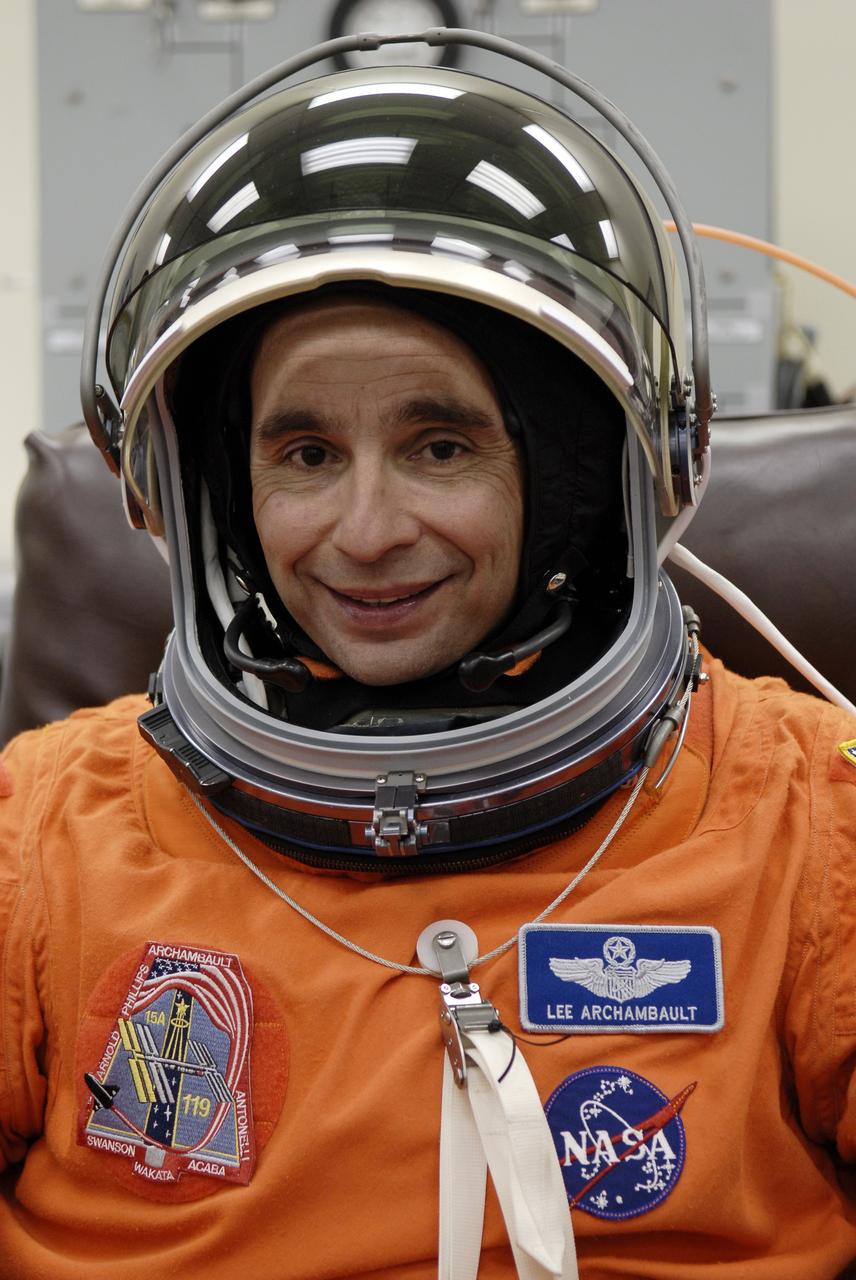
CAPE CANAVERAL, Fla. – In the Operations and Checkout Building at NASA's Kennedy Space Center in Florida, STS-119 Commander Lee Archambault fits the helmet on his launch-and-entry suit for the launch of space shuttle Discovery. The crew will be heading for Launch Pad 39A and liftoff of Discovery, scheduled for 7:43 p.m. EDT on March 15. An earlier launch attempt March 11 was scrubbed at 2:36 p.m. due to a gaseous hydrogen leak from the external tank at the Ground Umbilical Carrier Plate during tanking. A seven-inch quick disconnect and two seals were replaced. The STS-119 mission is the 28th to the International Space Station and the 125th space shuttle flight. Discovery will deliver the final pair of power-generating solar array wings and the S6 truss segment. Installation of S6 will signal the station's readiness to house a six-member crew for conducting increased science. Photo credit: NASA/Kim Shiflett
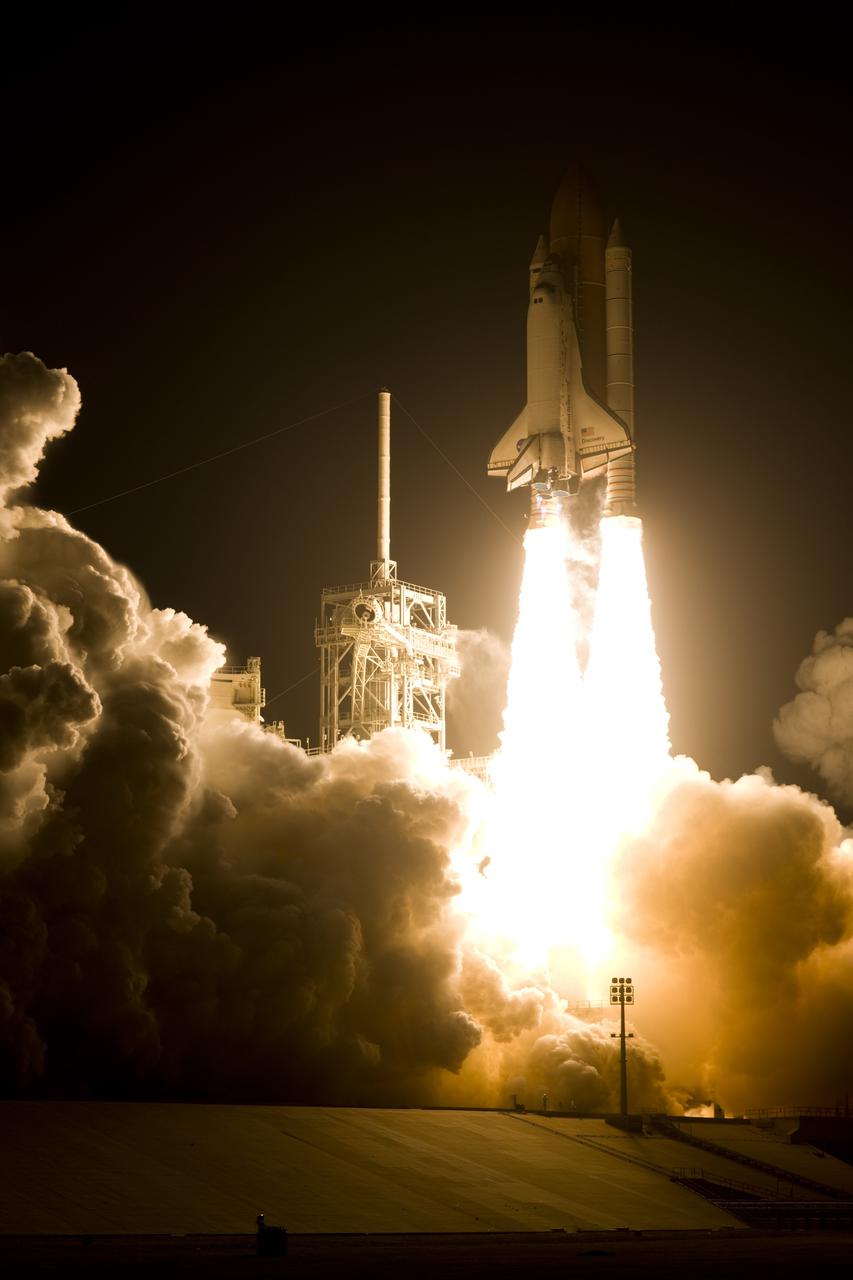
CAPE CANAVERAL, Fla. – At NASA's Kennedy Space Center in Florida, twin columns of fire propel space shuttle Discovery past the lightning mast on Launch Pad 39A toward space on mission STS-119. Launch was on time at 7:43 p.m. EDT. The STS-119 mission is the 28th to the International Space Station and the 125th space shuttle flight. Discovery will deliver the final pair of power-generating solar array wings and the S6 truss segment. Installation of S6 will signal the station's readiness to house a six-member crew for conducting increased science. Photo courtesy of Scott Andrews
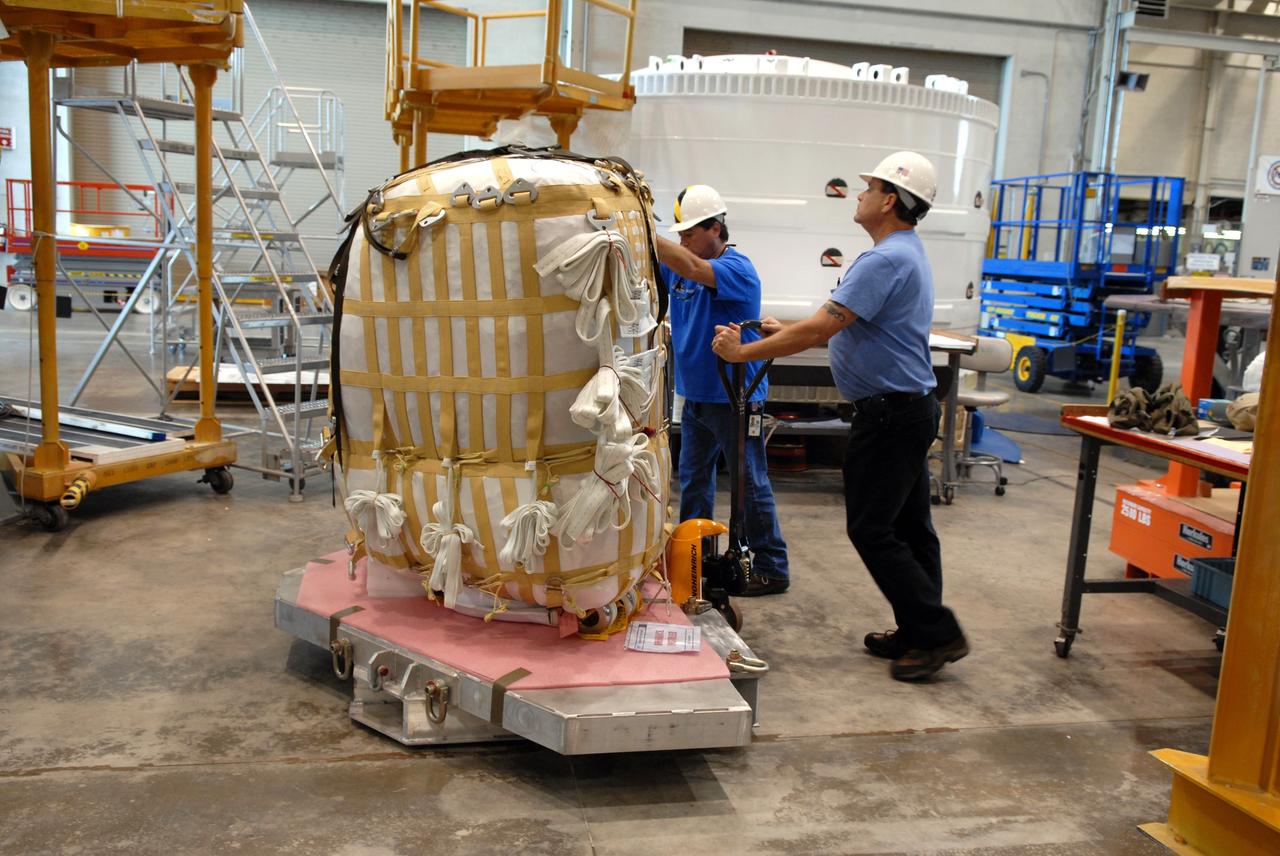
CAPE CANAVERAL, Fla. – In the Assembly and Refurbishment Facility at NASA's Kennedy Space Center in Florida, workers move a parachute pack for installation in the Ares I-X forward skirt segment. The forward skirt is the initial piece of first-stage hardware in preparation for the July 2009 test flight of the agency's next-generation spacecraft and launch vehicle system. Photo credit: NASA/Jack Pfaller
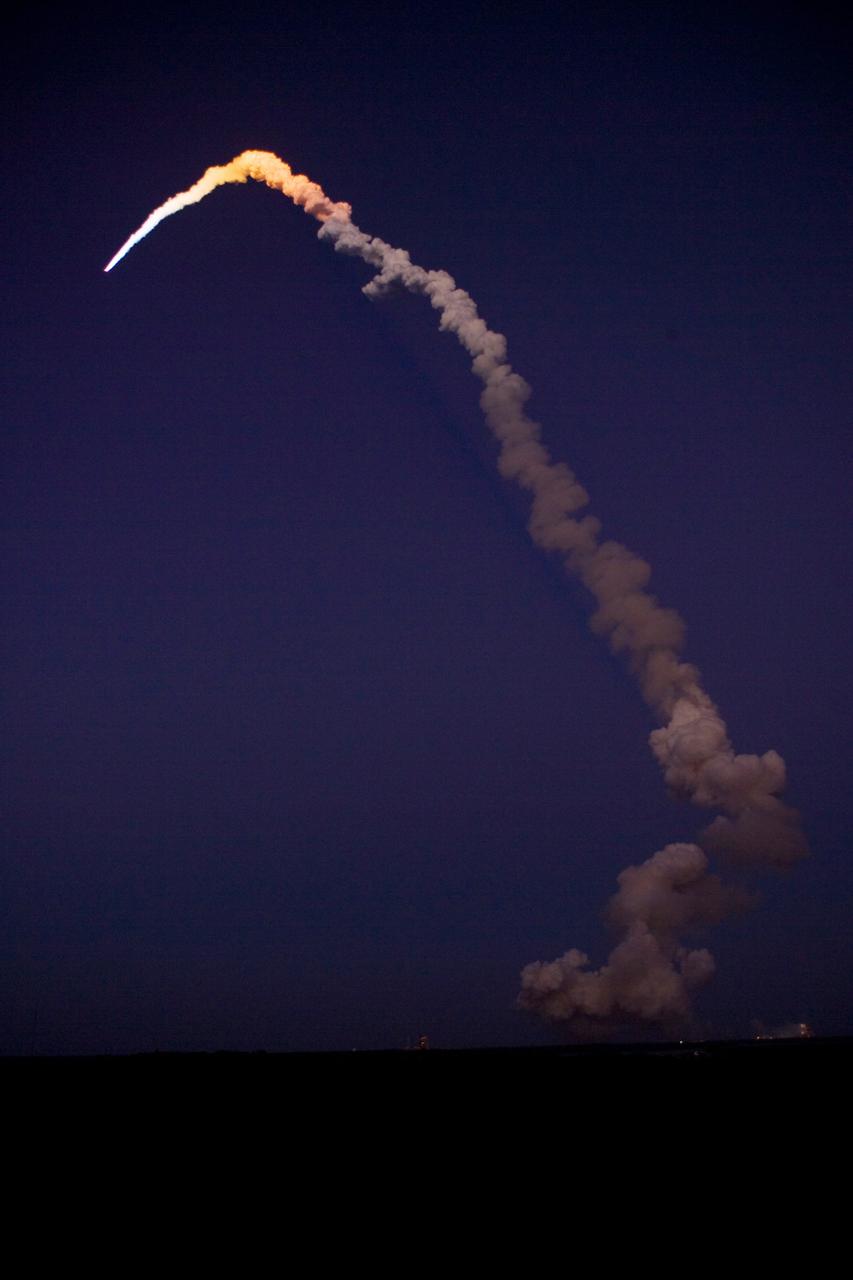
CAPE CANAVERAL, Fla. – As it arcs into space, space shuttle Discovery is lighted by sunlight after leaving the darker skies over NASA's Kennedy Space Center in Florida on the STS-119 mission. Liftoff was on time at 7:43 p.m. EDT. The STS-119 mission is the 28th to the International Space Station and the 125th space shuttle flight. Discovery will deliver the final pair of power-generating solar array wings and the S6 truss segment. Installation of S6 will signal the station's readiness to house a six-member crew for conducting increased science. Photo credit: NASA/Jeff Wolfe

CAPE CANAVERAL, Fla. – In the Assembly and Refurbishment Facility at NASA's Kennedy Space Center in Florida, workers move a parachute pack under the Ares I-X forward skirt segment, in which it will be installed. The forward skirt is the initial piece of first-stage hardware in preparation for the July 2009 test flight of the agency's next-generation spacecraft and launch vehicle system. Photo credit: NASA/Jack Pfaller
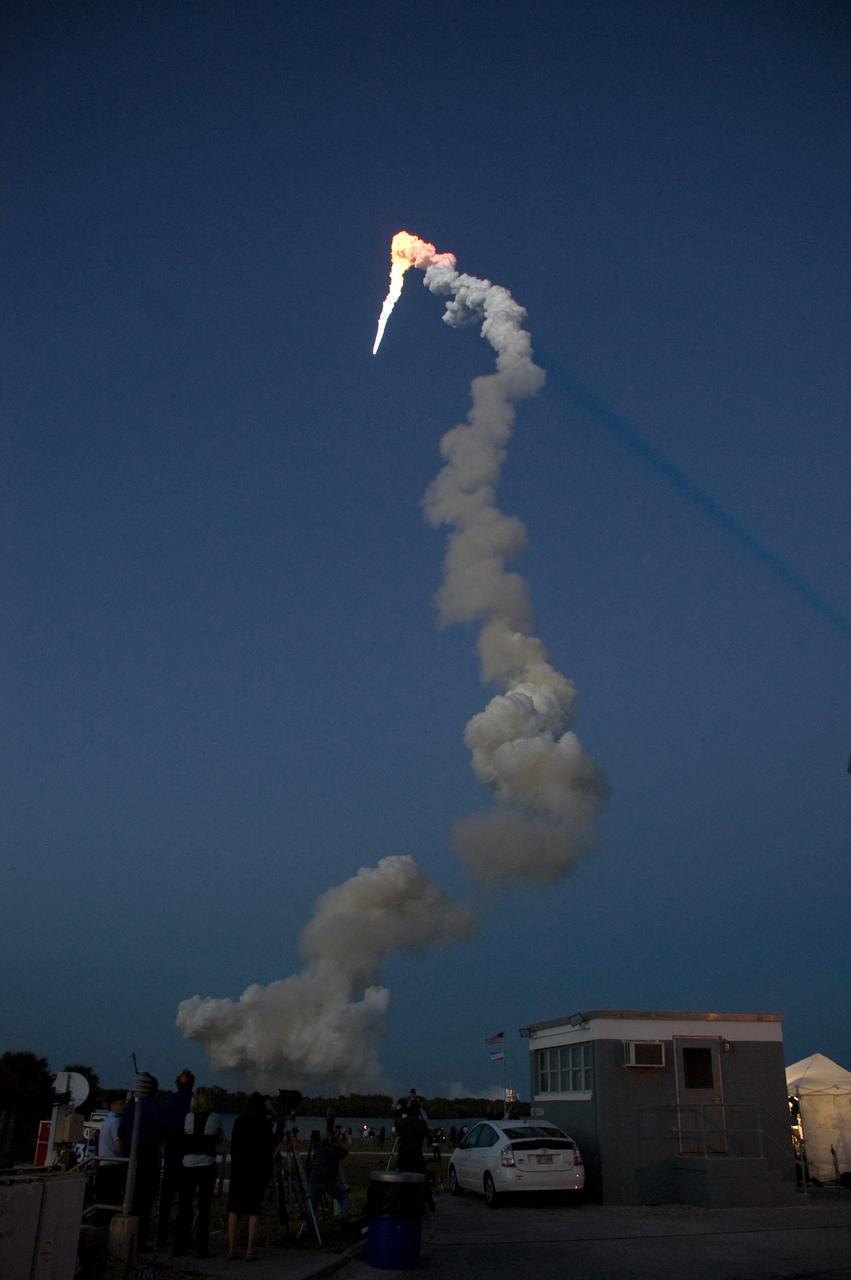
CAPE CANAVERAL, Fla. – As it arcs into space, space shuttle Discovery is lighted by sunlight after leaving the darker skies over NASA's Kennedy Space Center in Florida on the STS-119 mission. Liftoff was on time at 7:43 p.m. EDT. The STS-119 mission is the 28th to the International Space Station and the 125th space shuttle flight. Discovery will deliver the final pair of power-generating solar array wings and the S6 truss segment. Installation of S6 will signal the station's readiness to house a six-member crew for conducting increased science. Photo credit: NASA/Fletch Hildreth
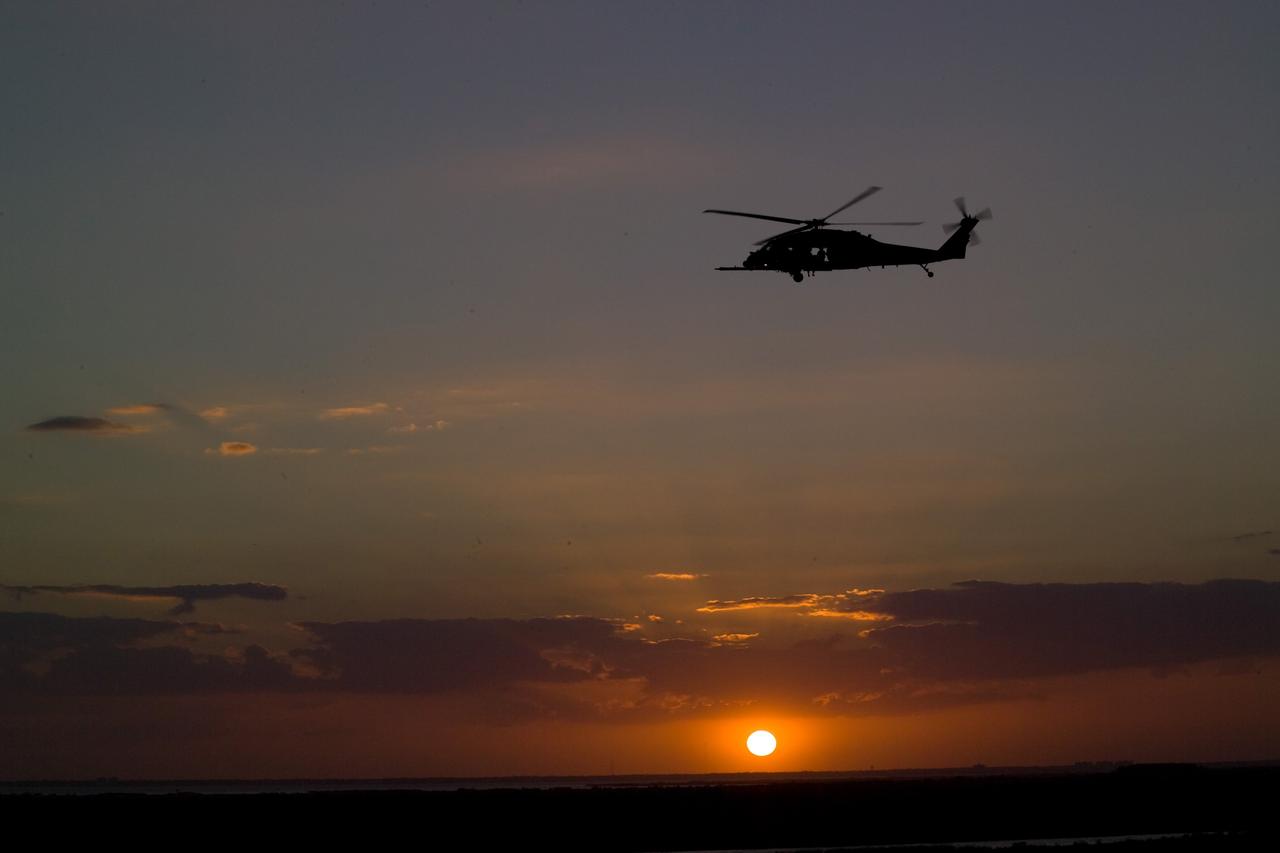
CAPE CANAVERAL, Fla. – A helicopter patrols the sky over NASA's Kennedy Space Center in Florida before launch of space shuttle Discovery on the STS-119 mission. Liftoff of Discovery was on time at 7:43 p.m. EDT. The STS-119 mission is the 28th to the International Space Station and the 125th space shuttle flight. Discovery will deliver the final pair of power-generating solar array wings and the S6 truss segment. Installation of S6 will signal the station's readiness to house a six-member crew for conducting increased science. Photo credit: NASA/Jeff Wolfe
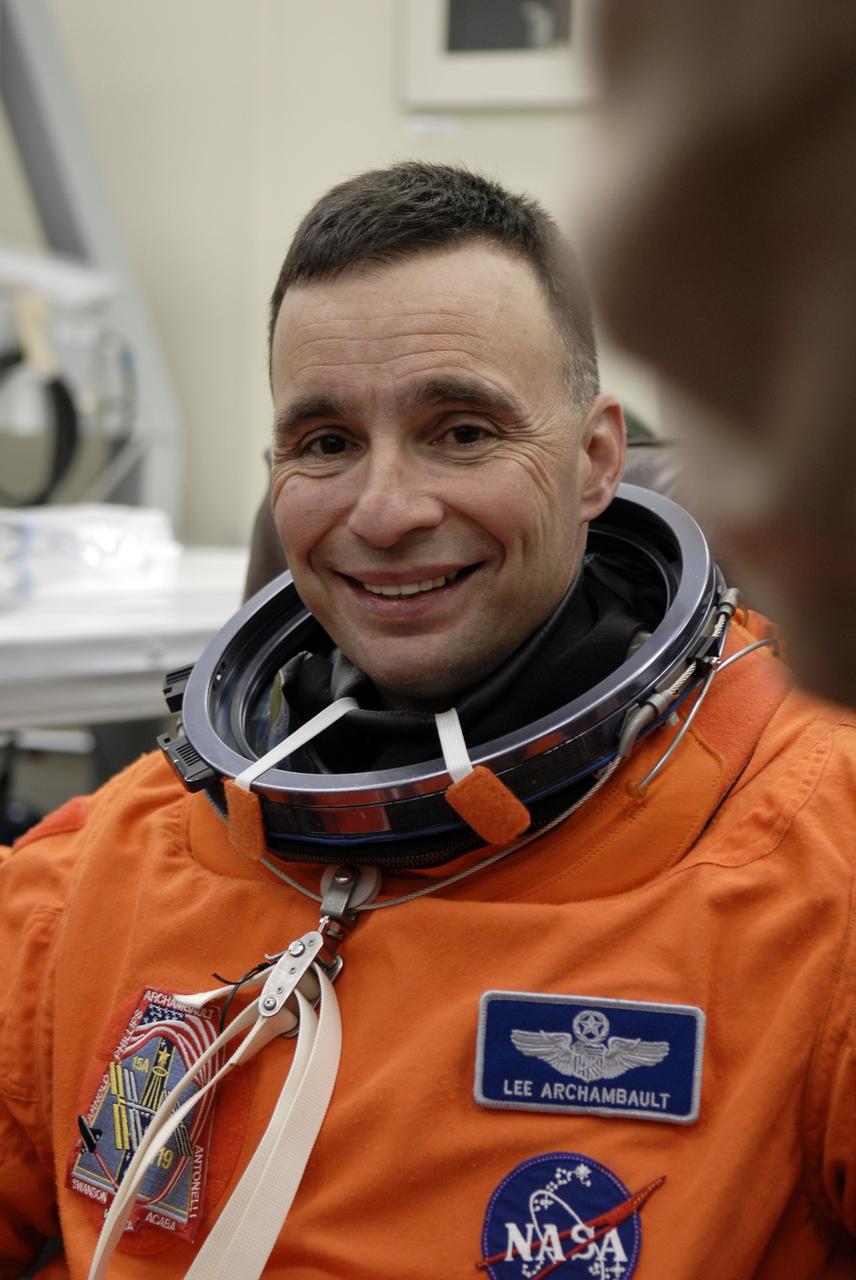
CAPE CANAVERAL, Fla. – In the Operations and Checkout Building at NASA's Kennedy Space Center in Florida, STS-119 Commander Lee Archambault puts on his launch-and-entry suit for the launch of space shuttle Discovery. The crew will be heading for Launch Pad 39A and liftoff of Discovery, scheduled for 7:43 p.m. EDT on March 15. An earlier launch attempt March 11 was scrubbed at 2:36 p.m. due to a gaseous hydrogen leak from the external tank at the Ground Umbilical Carrier Plate during tanking. A seven-inch quick disconnect and two seals were replaced. The STS-119 mission is the 28th to the International Space Station and the 125th space shuttle flight. Discovery will deliver the final pair of power-generating solar array wings and the S6 truss segment. Installation of S6 will signal the station's readiness to house a six-member crew for conducting increased science. Photo credit: NASA/Kim Shiflett
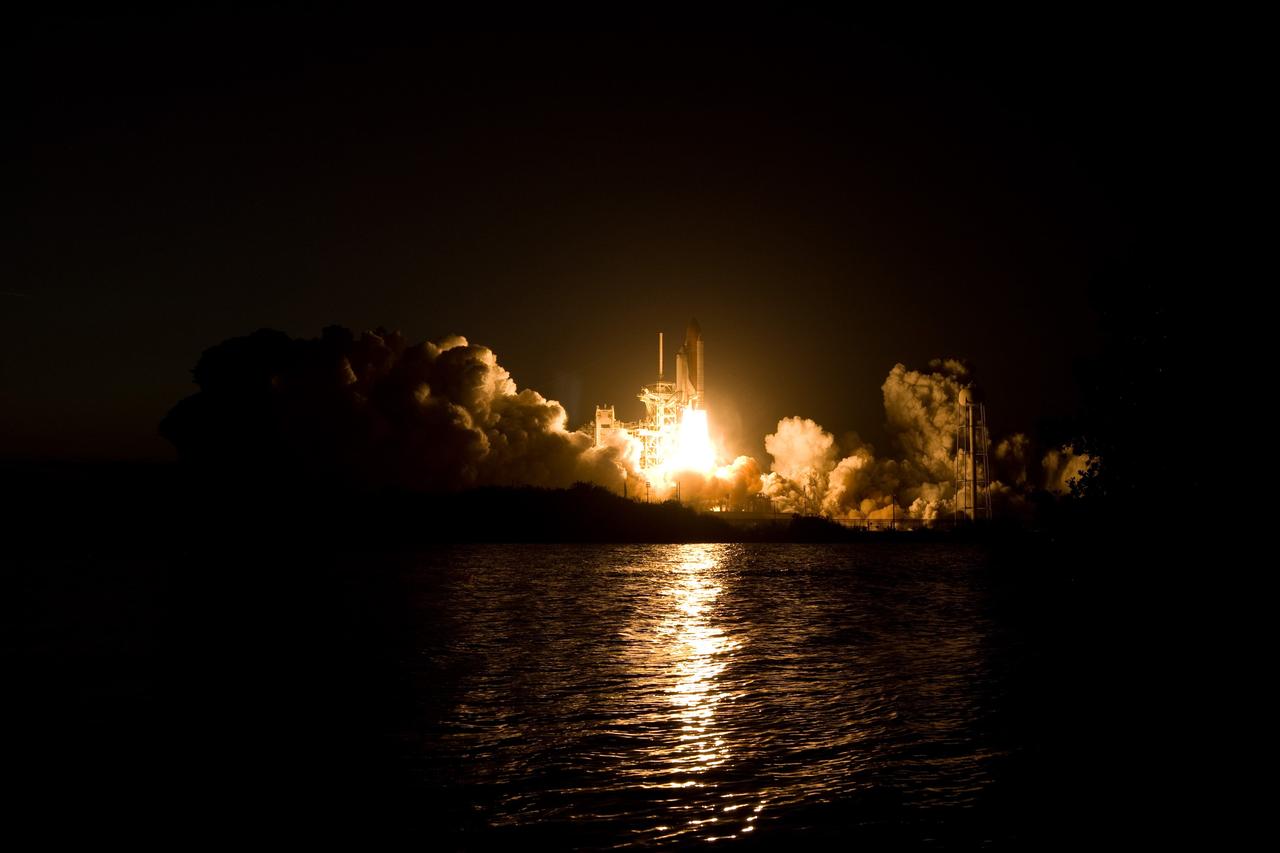
CAPE CANAVERAL, Fla. – Billows of smoke and the water near Launch Pad 39A at NASA's Kennedy Space Center in Florida capture the brilliant light of space shuttle Discovery's lift-off on the STS-119 mission. The launch was on time at 7:43 p.m. EDT. The STS-119 mission is the 28th to the International Space Station and the 125th space shuttle flight. Discovery will deliver the final pair of power-generating solar array wings and the S6 truss segment. Installation of S6 will signal the station's readiness to house a six-member crew for conducting increased science. Photo credit: NASA/Sandra Joseph, Kevin O'Connell
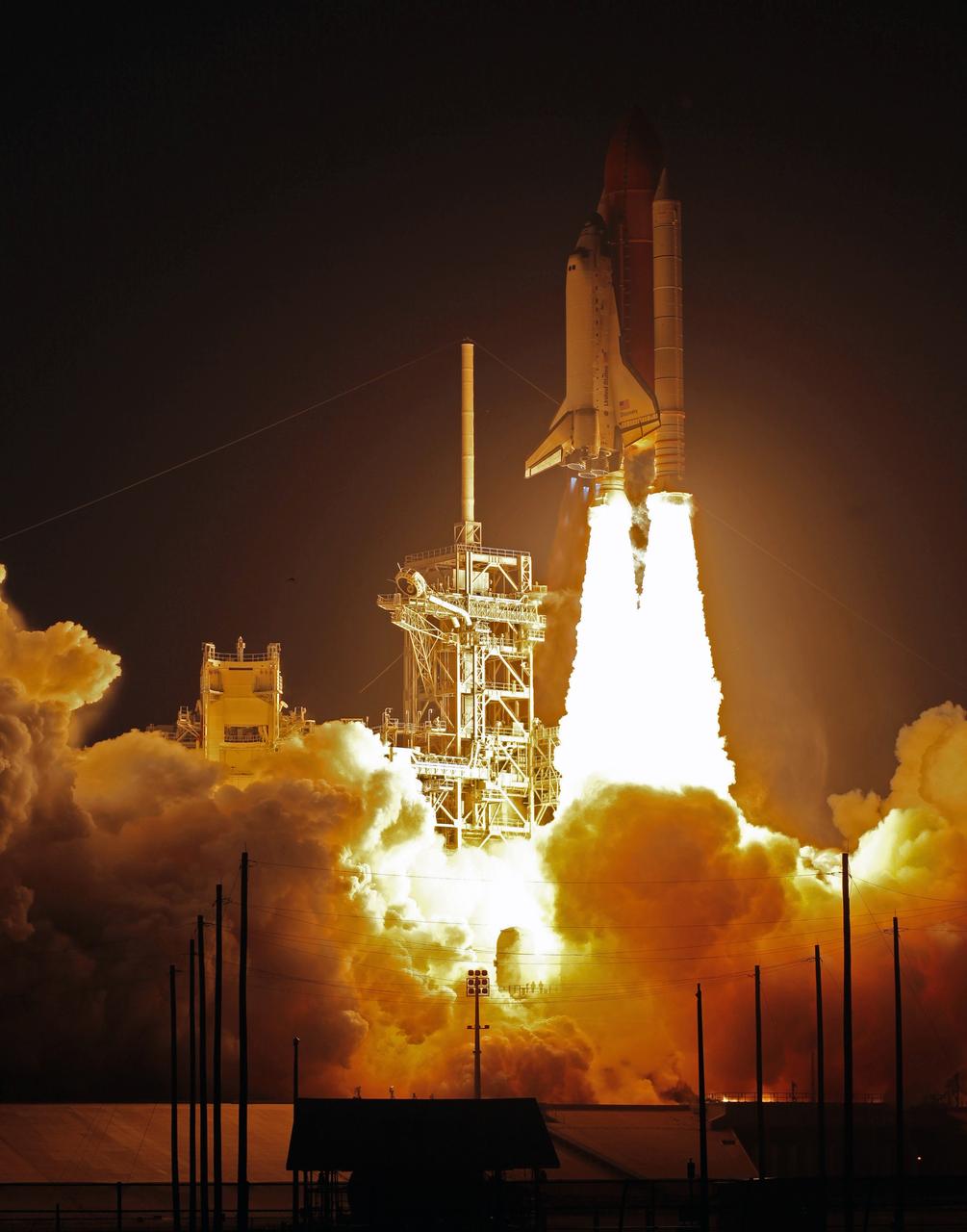
CAPE CANAVERAL, Fla. – Space shuttle Discovery roars off Launch Pad 39A on the STS-119 mission atop twin towers of fire that light up the sky after sunset at NASA's Kennedy Space Center in Florida. Liftoff was on time at 7:43 p.m. EDT. The STS-119 mission is the 28th to the International Space Station and the 125th space shuttle flight. Discovery will deliver the final pair of power-generating solar array wings and the S6 truss segment. Installation of S6 will signal the station's readiness to house a six-member crew for conducting increased science. Photo courtesy of Scott Andrews
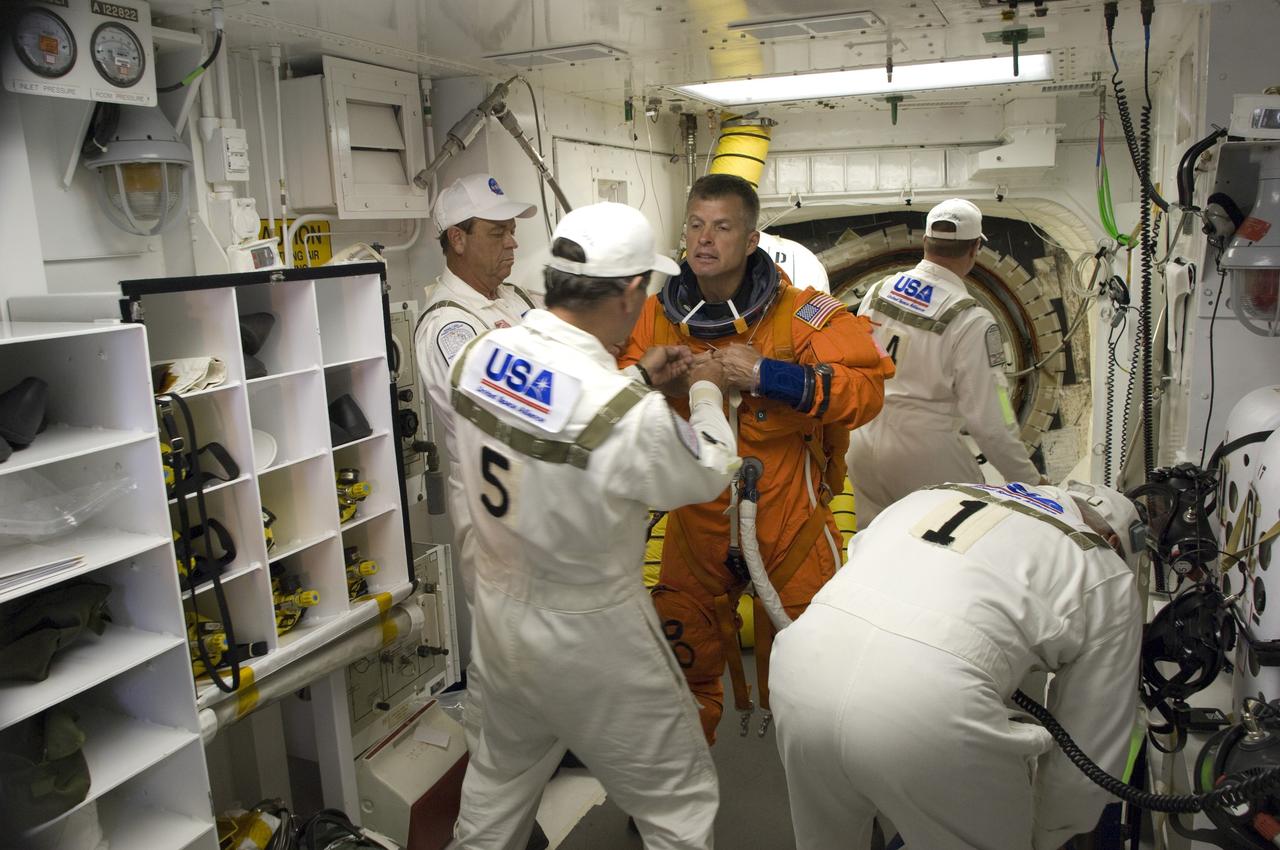
CAPE CANAVERAL, Fla. – In the White Room on Launch Pad 39A at NASA's Kennedy Space Center in Florida, STS-119 Mission Specialist Steve Swanson is helped by the closeout crew putting on his harness, which includes a parachute pack, before crawling through the open hatch into space shuttle Discovery. The White Room is at the end of the orbiter access arm on the fixed service structure and provides access into the shuttle. The STS-119 mission is the 28th to the International Space Station and the 125th space shuttle flight. Discovery will deliver the final pair of power-generating solar array wings and the S6 truss segment. Installation of S6 will signal the station's readiness to house a six-member crew for conducting increased science. Liftoff is scheduled for 7:43 p.m. EDT. Photo credit: NASA/Tony Gray, Tom Farrar
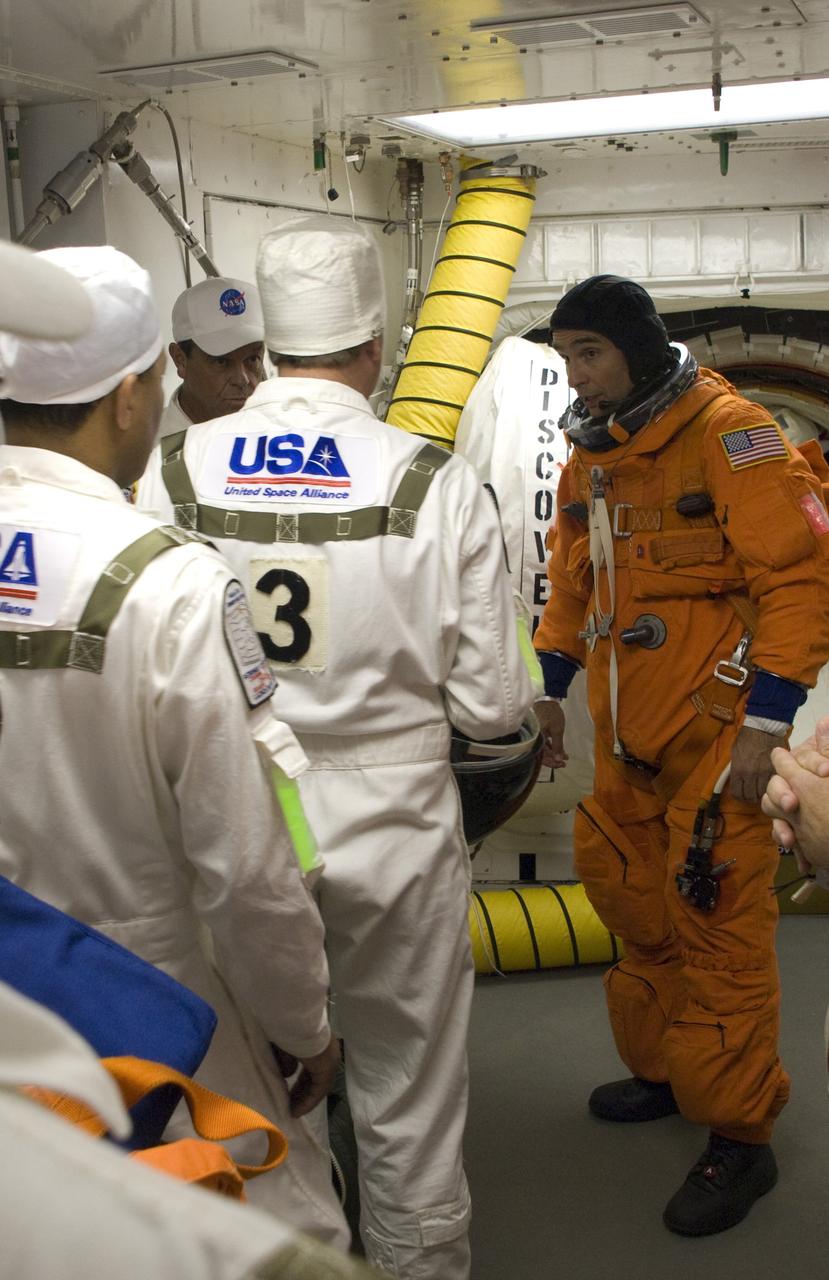
CAPE CANAVERAL, Fla. – In the White Room on Launch Pad 39A at NASA's Kennedy Space Center in Florida, STS-119 Commander Lee Archambault talks to the closeout crew who will put on his harness, which includes a parachute pack, before crawling through the open hatch into the shuttle. The White Room is at the end of the orbiter access arm on the fixed service structure and provides access into space shuttle Discovery. The STS-119 mission is the 28th to the International Space Station and the 125th space shuttle flight. Discovery will deliver the final pair of power-generating solar array wings and the S6 truss segment. Installation of S6 will signal the station's readiness to house a six-member crew for conducting increased science. Liftoff is scheduled for 7:43 p.m. EDT. Photo credit: Photo credit: NASA/Tony Gray, Tom Farrar
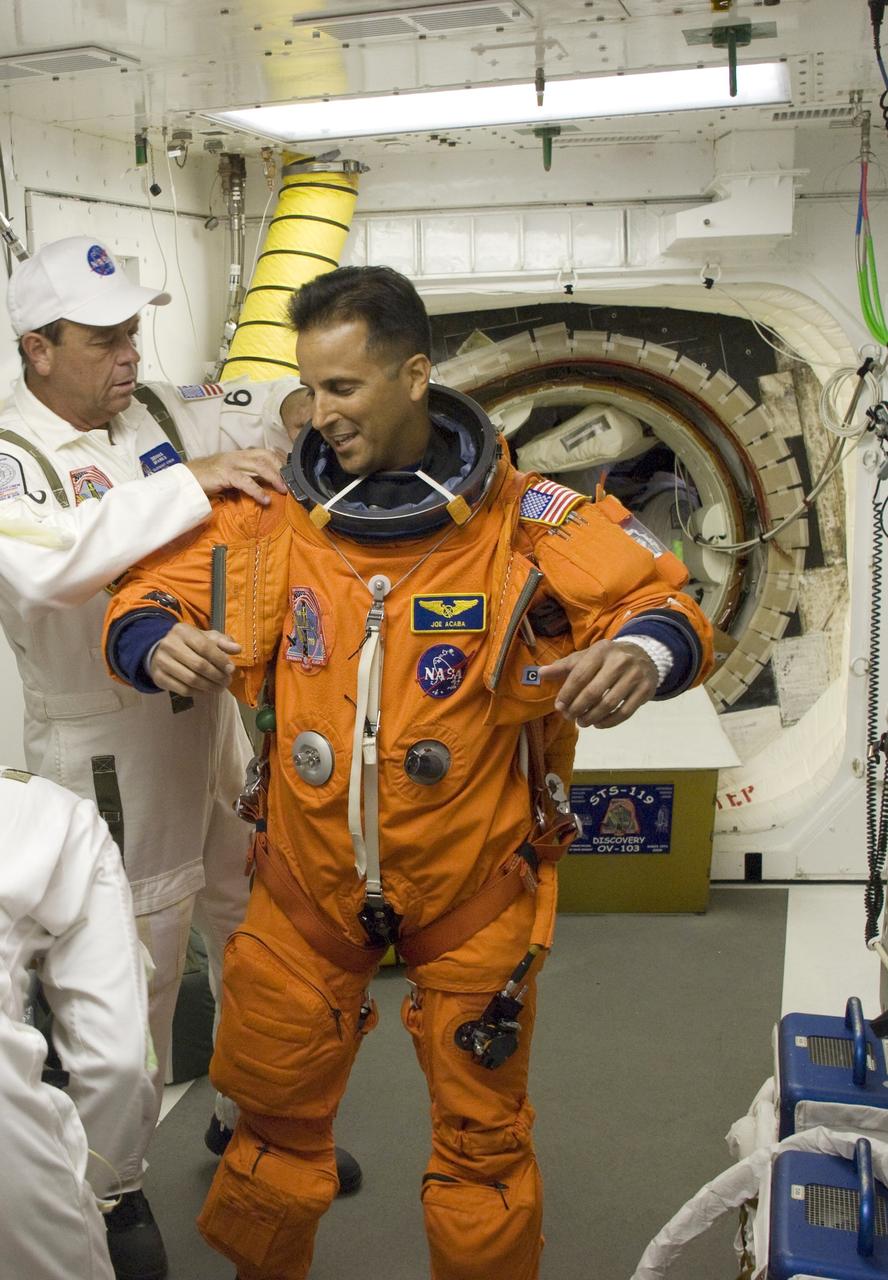
CAPE CANAVERAL, Fla. – In the White Room on Launch Pad 39A at NASA's Kennedy Space Center in Florida, STS-119 Mission Specialist Joseph Acaba is helped by the closeout crew putting on his harness, which includes a parachute pack, before crawling through the open hatch into space shuttle Discovery. The White Room is at the end of the orbiter access arm on the fixed service structure and provides access into the shuttle. The STS-119 mission is the 28th to the International Space Station and the 125th space shuttle flight. Discovery will deliver the final pair of power-generating solar array wings and the S6 truss segment. Installation of S6 will signal the station's readiness to house a six-member crew for conducting increased science. Liftoff is scheduled for 7:43 p.m. EDT. Photo credit: NASA/Tony Gray, Tom Farrar
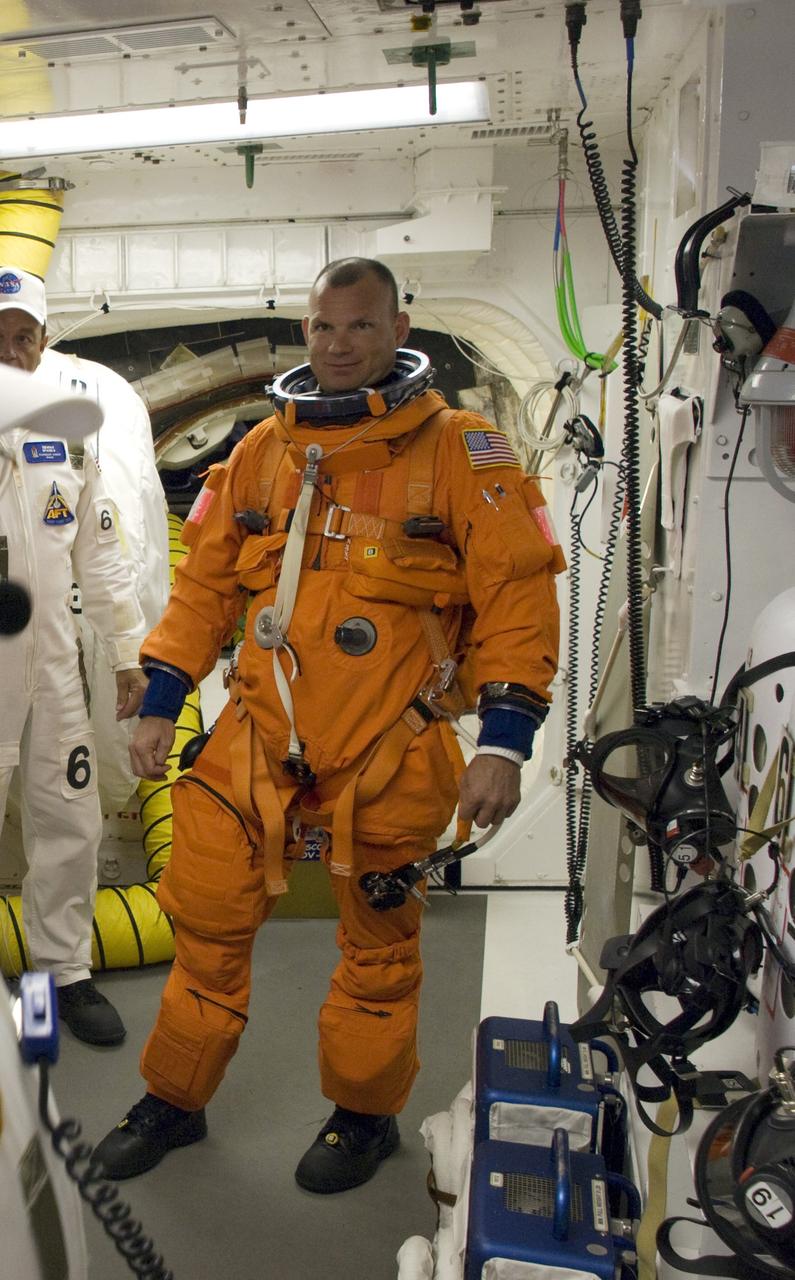
CAPE CANAVERAL, Fla. – In the White Room on Launch Pad 39A at NASA's Kennedy Space Center in Florida, STS-119 Pilot Tony Antonelli is getting into his harness, which includes a parachute pack, before crawling through the open hatch into space shuttle Discovery. The White Room is at the end of the orbiter access arm on the fixed service structure and provides access into the shuttle. The STS-119 mission is the 28th to the International Space Station and the 125th space shuttle flight. Discovery will deliver the final pair of power-generating solar array wings and the S6 truss segment. Installation of S6 will signal the station's readiness to house a six-member crew for conducting increased science. Liftoff is scheduled for 7:43 p.m. EDT. Photo credit: NASA/Tony Gray, Tom Farrar
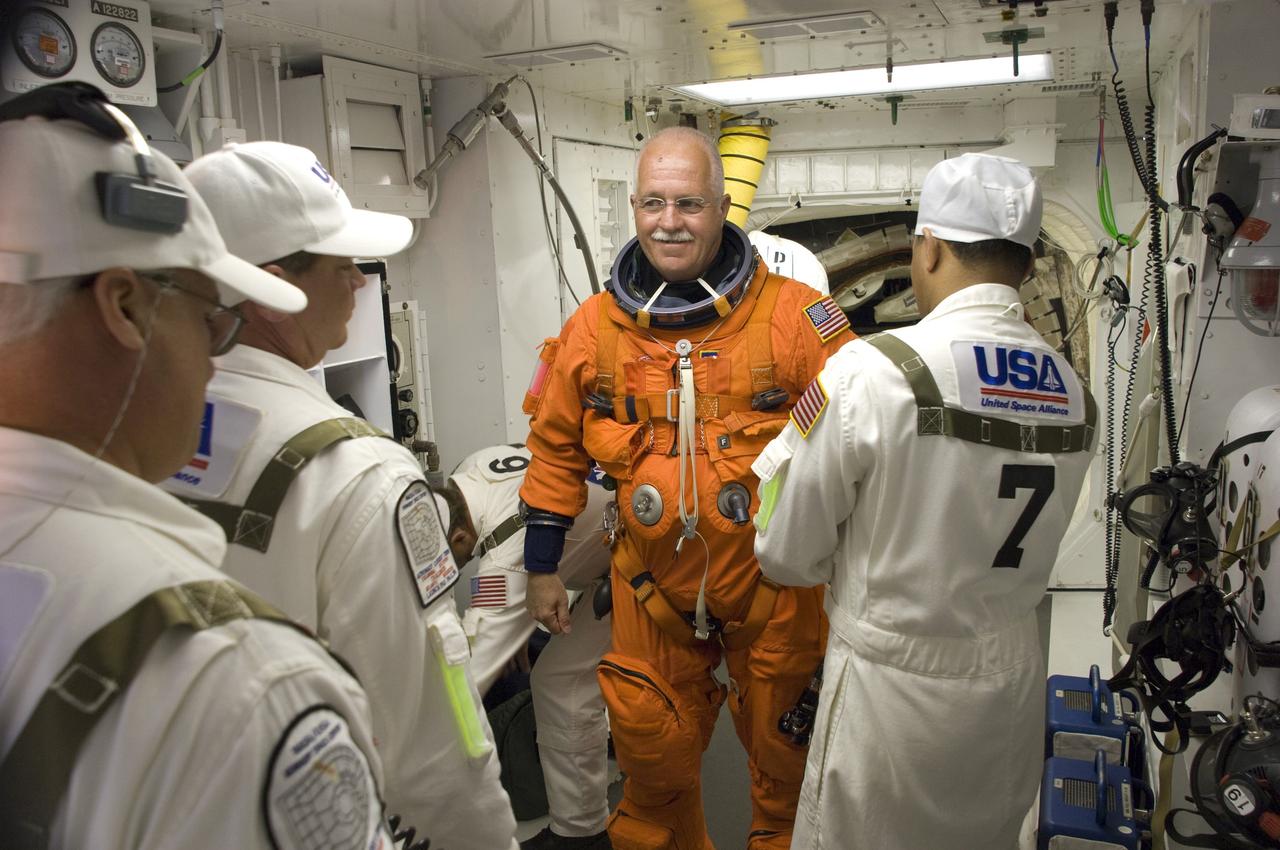
CAPE CANAVERAL, Fla. – In the White Room on Launch Pad 39A at NASA's Kennedy Space Center in Florida, STS-119 Mission Specialist John Phillips is helped by the closeout crew putting on his harness, which includes a parachute pack, before crawling through the open hatch into space shuttle Discovery. The White Room is at the end of the orbiter access arm on the fixed service structure and provides access into the shuttle. The STS-119 mission is the 28th to the International Space Station and the 125th space shuttle flight. Discovery will deliver the final pair of power-generating solar array wings and the S6 truss segment. Installation of S6 will signal the station's readiness to house a six-member crew for conducting increased science. Liftoff is scheduled for 7:43 p.m. EDT. Photo credit: NASA/Tony Gray, Tom Farrar
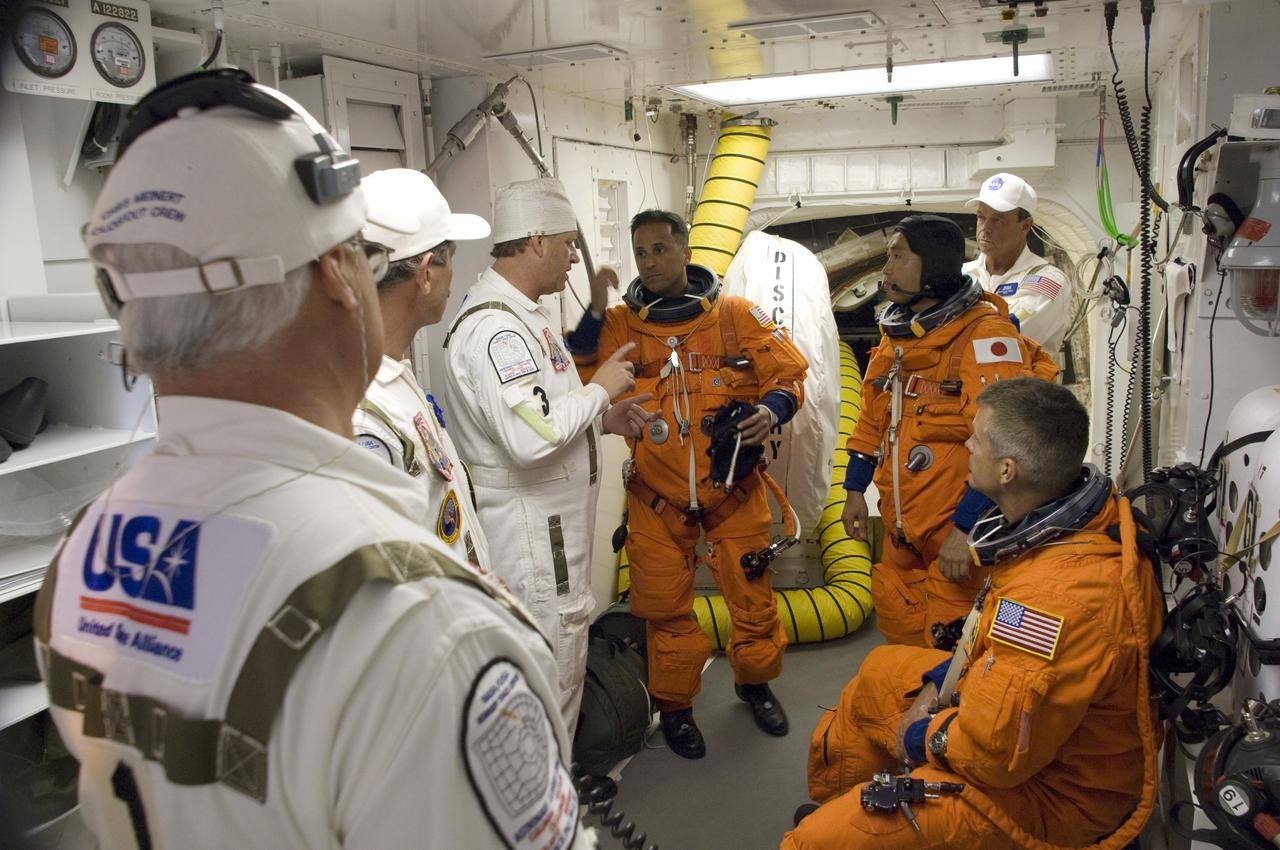
CAPE CANAVERAL, Fla. – In the White Room on Launch Pad 39A at NASA's Kennedy Space Center in Florida, STS-119 Mission Specialists Joseph Acaba (left), Koichi Wakata (center) and Steve Swanson (right) talk to the closeout crew as they prepare to go through the open hatch into space shuttle Discovery. The White Room is at the end of the orbiter access arm on the fixed service structure and provides access into the shuttle. The STS-119 mission is the 28th to the International Space Station and the 125th space shuttle flight. Discovery will deliver the final pair of power-generating solar array wings and the S6 truss segment. Installation of S6 will signal the station's readiness to house a six-member crew for conducting increased science. Liftoff is scheduled for 7:43 p.m. EDT. Photo credit: NASA/Tony Gray, Tom Farrar
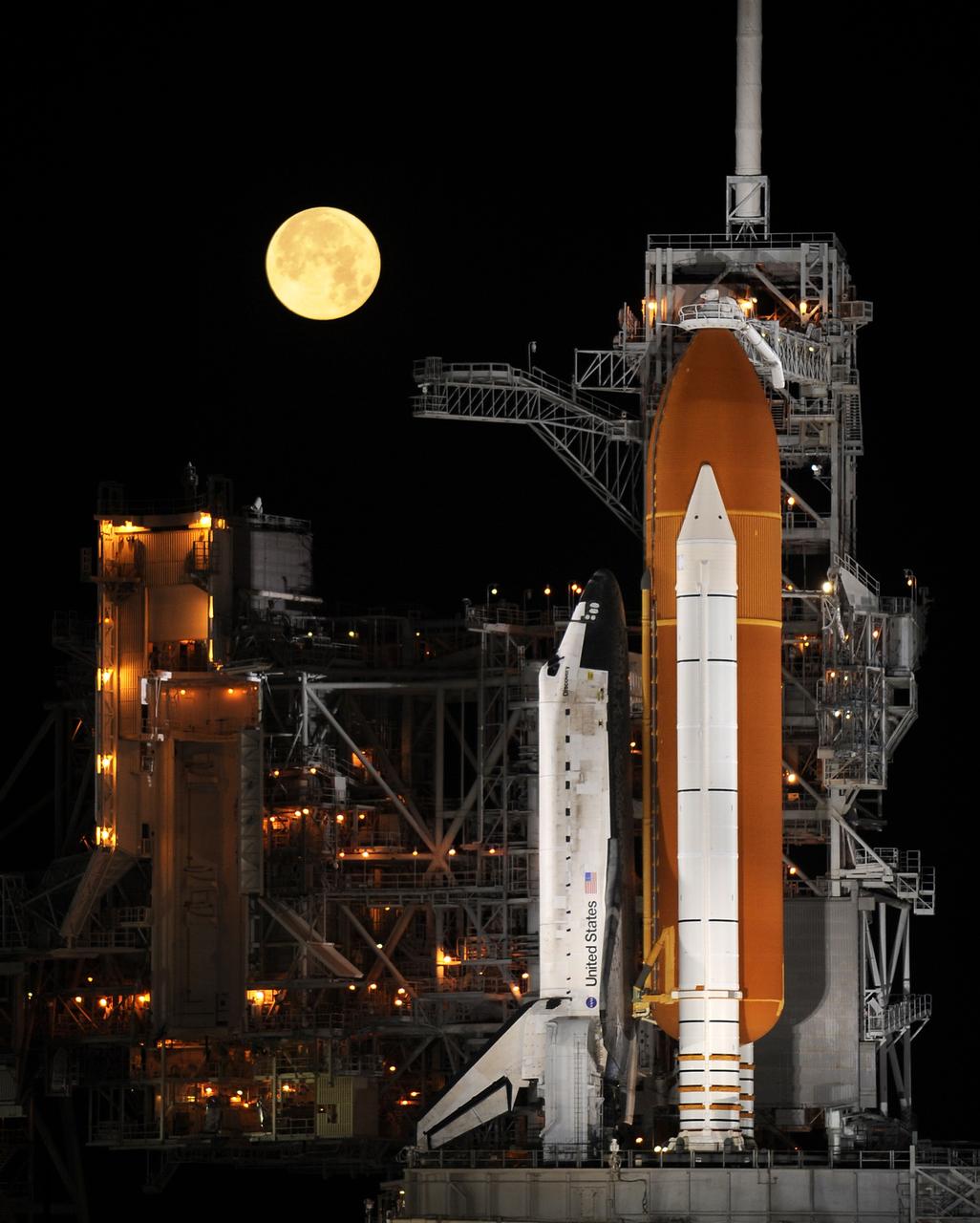
CAPE CANAVERAL, Fla. – Under a full moon on Launch Pad 39A at NASA's Kennedy Space Center in Florida, space shuttle Discovery is revealed after the rotating service structure has been rolled back. The rollback is in preparation for Discovery's liftoff on the STS-119 mission with a crew of seven. The rotating structure provides protected access to the shuttle for changeout and servicing of payloads at the pad. It is supported by a rotating bridge that pivots on a vertical axis on the west side of the pad's flame trench. After the RSS is rolled back, the orbiter is ready for fuel cell activation and external tank cryogenic propellant loading operations. The mission is the 28th to the International Space Station and the 125th space shuttle flight. Discovery will deliver the final pair of power-generating solar array wings and the S6 truss segment. Installation of S6 will signal the station's readiness to house a six-member crew for conducting increased science. Liftoff of Discovery is scheduled for 9:20 p.m. EDT on March 11. Photo courtesy of NASA/Bill Ingalls
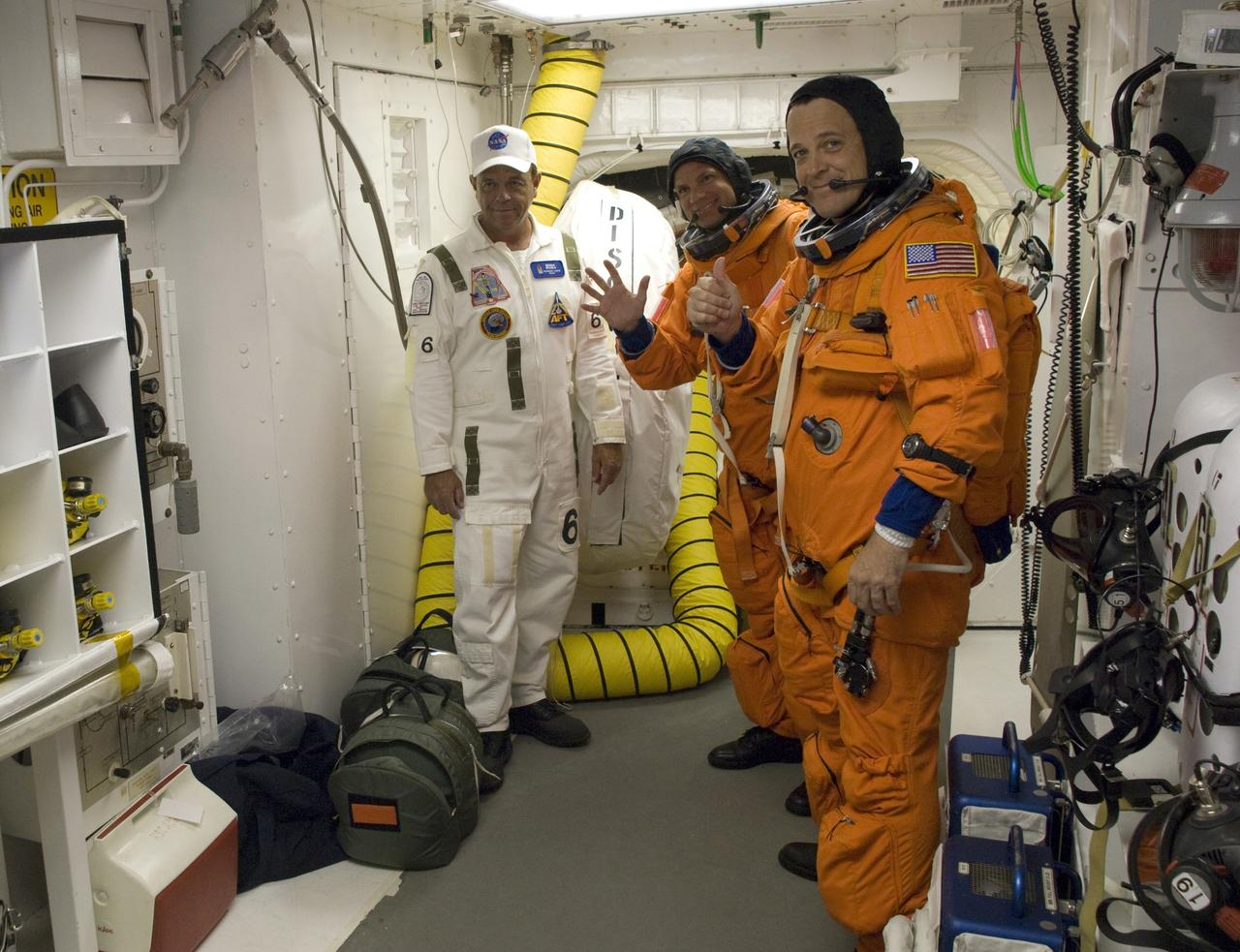
CAPE CANAVERAL, Fla. – In the White Room on Launch Pad 39A at NASA's Kennedy Space Center in Florida, STS-119 Pilot Tony Antonelli (center) and Mission Specialist Richard Arnold are getting ready to enter the open hatch into space shuttle Discovery. The White Room is at the end of the orbiter access arm on the fixed service structure and provides access into the shuttle. The STS-119 mission is the 28th to the International Space Station and the 125th space shuttle flight. Discovery will deliver the final pair of power-generating solar array wings and the S6 truss segment. Installation of S6 will signal the station's readiness to house a six-member crew for conducting increased science. Liftoff is scheduled for 7:43 p.m. EDT. Photo credit: NASA/Tony Gray, Tom Farrar
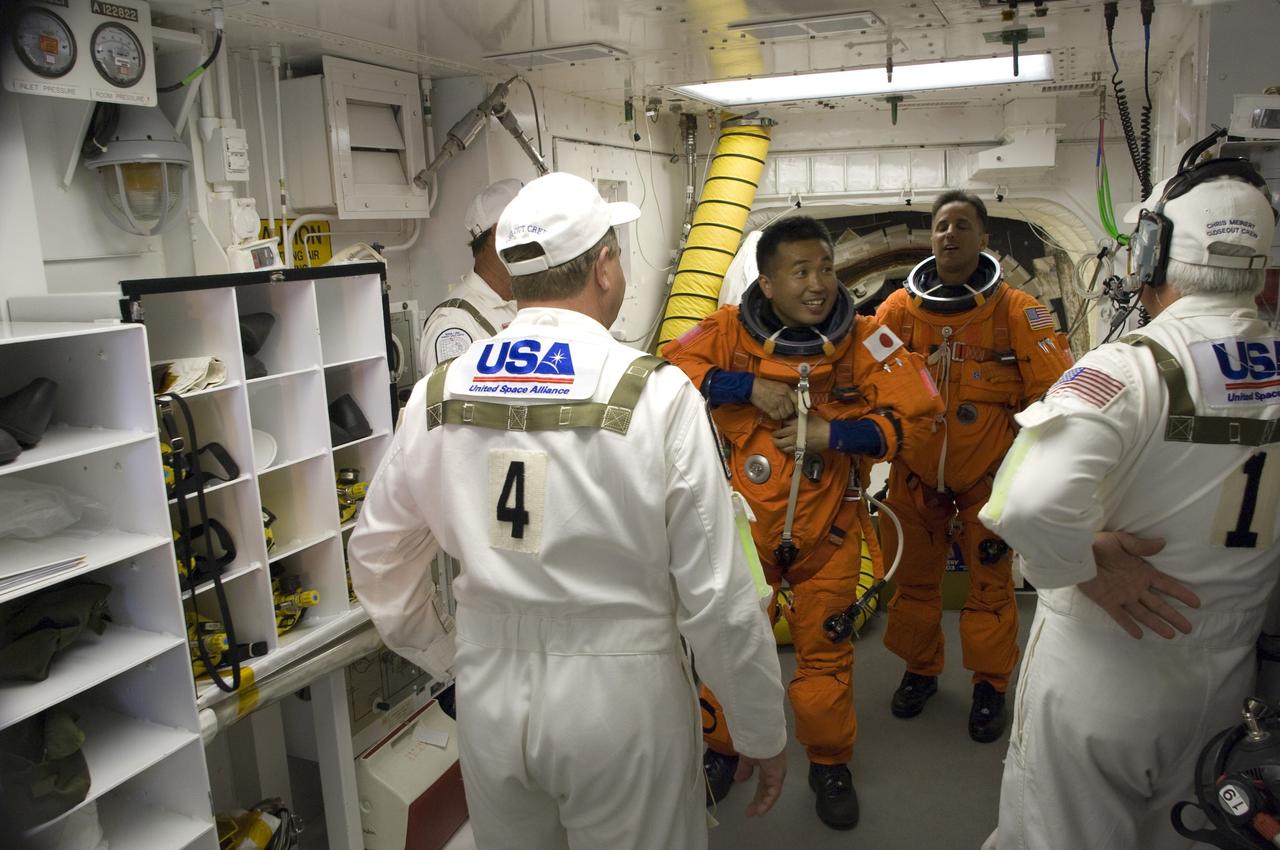
CAPE CANAVERAL, Fla. – In the White Room on Launch Pad 39A at NASA's Kennedy Space Center in Florida, STS-119 Mission Specialists Koichi Wakata (center) and Steve Swanson are getting into their harnesses, which include a parachute pack, before crawling through the open hatch into space shuttle Discovery. The White Room is at the end of the orbiter access arm on the fixed service structure and provides access into the shuttle. The STS-119 mission is the 28th to the International Space Station and the 125th space shuttle flight. Discovery will deliver the final pair of power-generating solar array wings and the S6 truss segment. Installation of S6 will signal the station's readiness to house a six-member crew for conducting increased science. Liftoff is scheduled for 7:43 p.m. EDT. Photo credit: NASA/Tony Gray, Tom Farrar
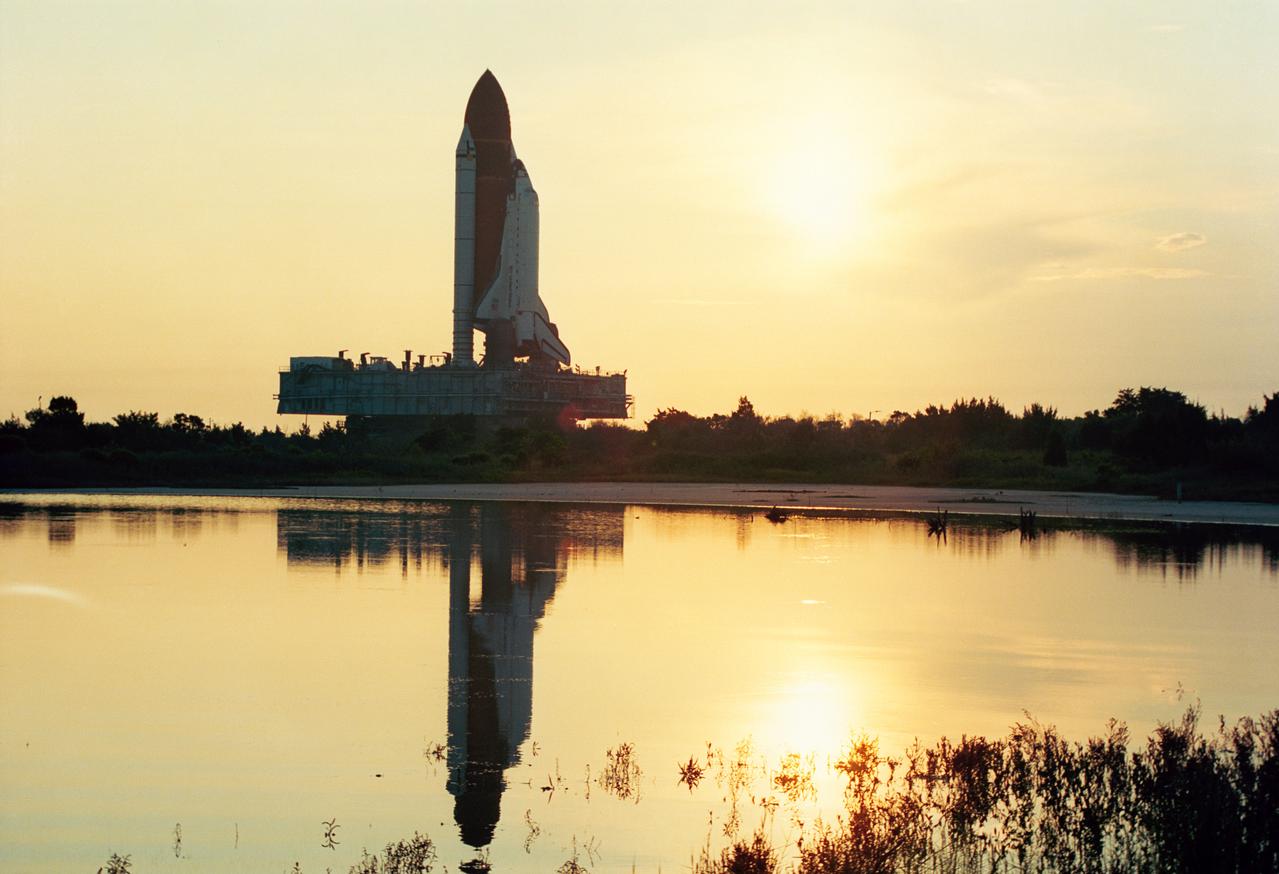
S91-44810 (12 Aug 1991) --- The Space Shuttle Discovery is rolled to launch pad 39A atop the mobile launcher platform and crawler/transporter. Already at the pad and awaiting installation in the orbiter cargo bay is the Upper Atmosphere Research Satellite (UARS), the primary payload which Discovery will carry into space on NASA?s STS-48 mission. A crew of five astronauts will be on board when Discovery lifts off in September. (KSC photo id: KSC-91PC-1474)
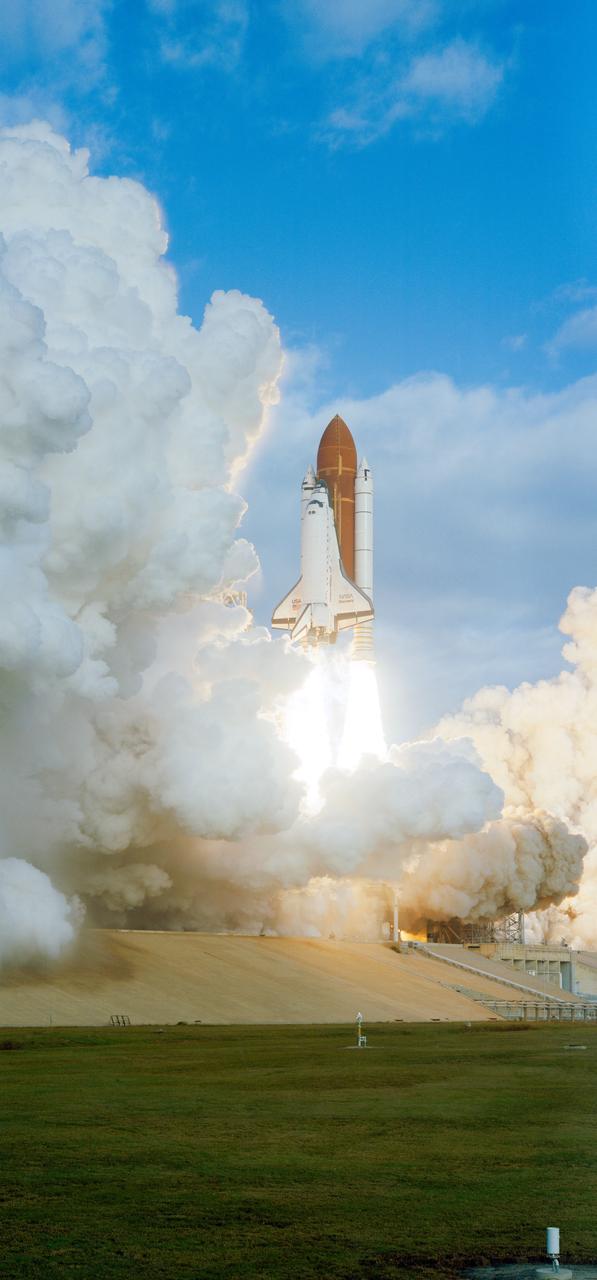
STS053-S-054 (2 Dec 1992) --- The Space Shuttle Discovery, with a crew of five astronauts onboard, launches from Kennedy Space Center?s (KSC) Pad 39A at 8:24:00 a.m. (EST), December 2, 1992. The photograph was taken from the top of the giant Vehicle Assembly Building (VAB). The all-military crew supporting the Department of Defense (DOD) flight included astronauts David M. Walker, Robert D. Cabana, Guion S. Bluford, Jr., James S. Voss and Michael R. U. (Rick) Clifford.
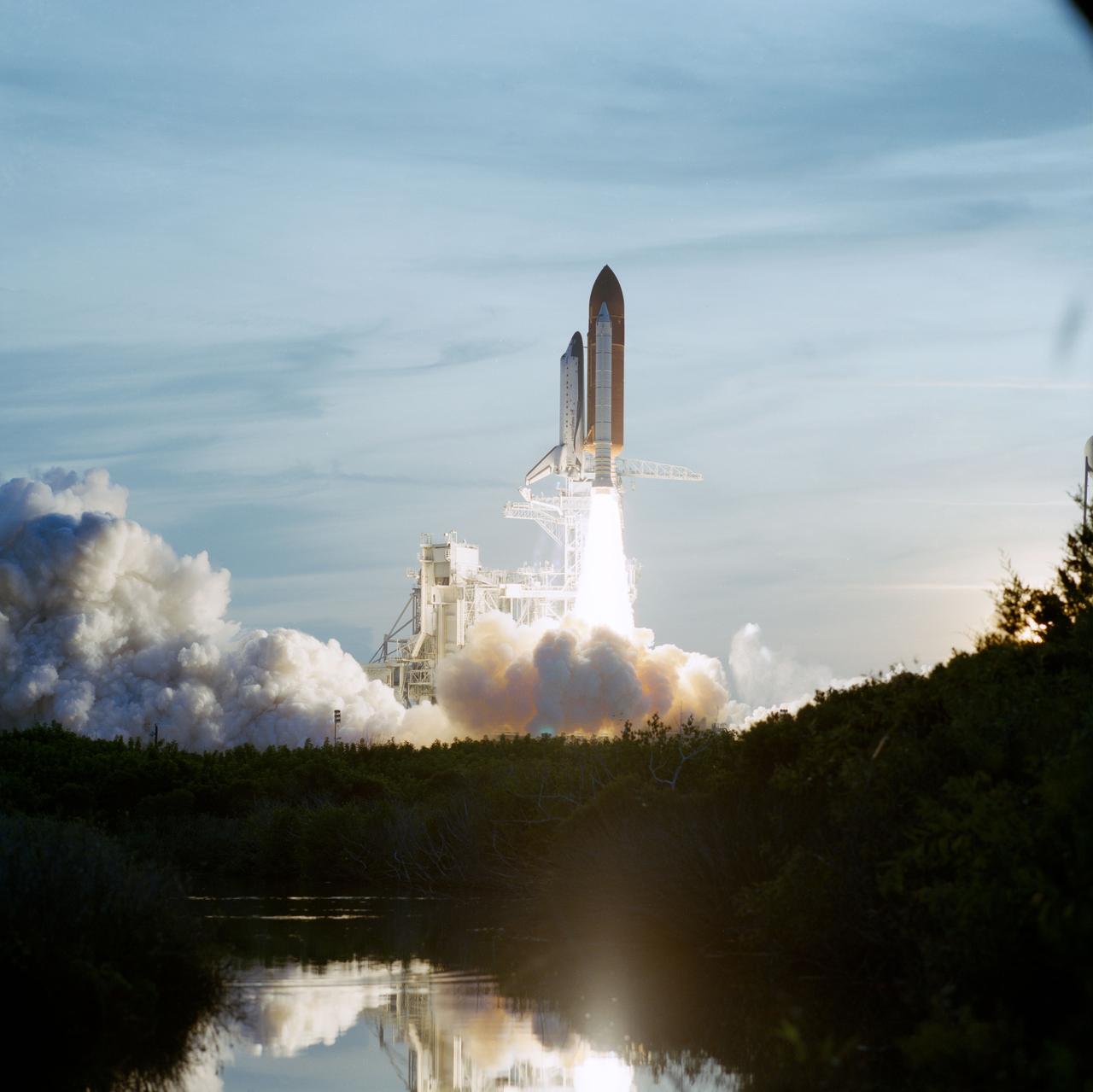
STS053-S-056 (2 Dec 1992) --- The Space Shuttle Discovery, with a crew of five astronauts onboard, launches from Kennedy Space Center's (KSC) Pad 39A at 8:24:00 a.m. (EST), December 2, 1992. The all military crew supporting the Department of Defense (DOD) flight included astronauts David M. Walker, Robert D. Cabana, Guion S. Bluford Jr., James S. Voss and Michael R. U. (Rick) Clifford.
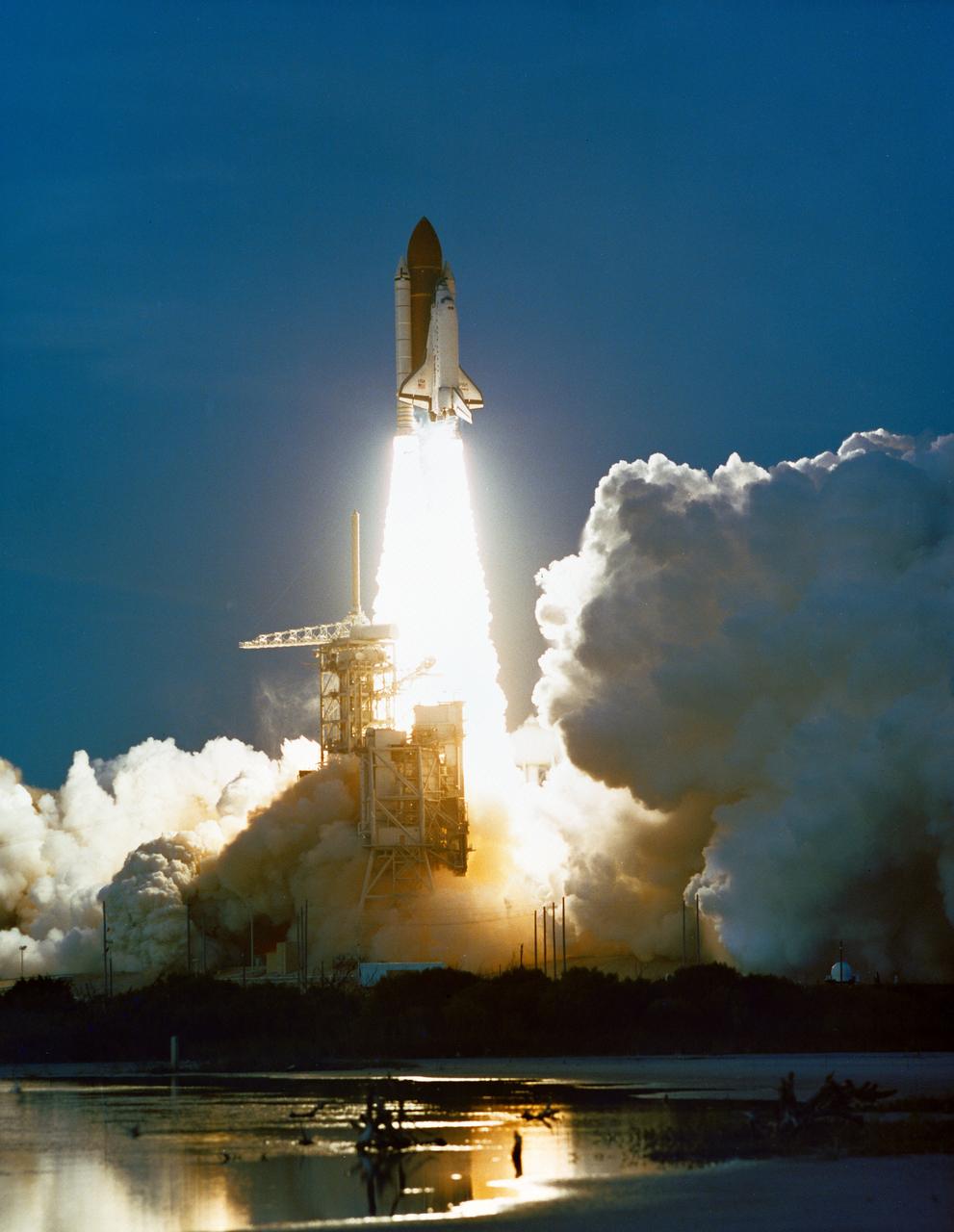
STS048-S-172 (12 Sept 1991) ---- With five astronauts and the Upper Atmosphere Research Satellite (UARS) onboard, the Space Shuttle Discovery heads toward a six day mission in Earth orbit. Onboard are astronauts John O. Creighton, Kenneth S. Reightler, Charles D. (Sam) Gemar, James F. Buchli and Mark N. Brown. Liftoff occurred at 7:11:04 p.m. (EDT), September 12, 1991.
STS048-S-171 (12 Sept 1991) --- With five astronauts and the Upper Atmosphere Research Satellite (UARS) onboard, the Space Shuttle Discovery heads toward a six day mission in Earth orbit. Onboard are astronauts John O. Creighton, Kenneth S. Reightler, Charles D. (Sam) Gemar, James F. Buchli and Mark N. Brown. Liftoff occurred at 7:11:04 p.m. (EDT), September 12, 1991.
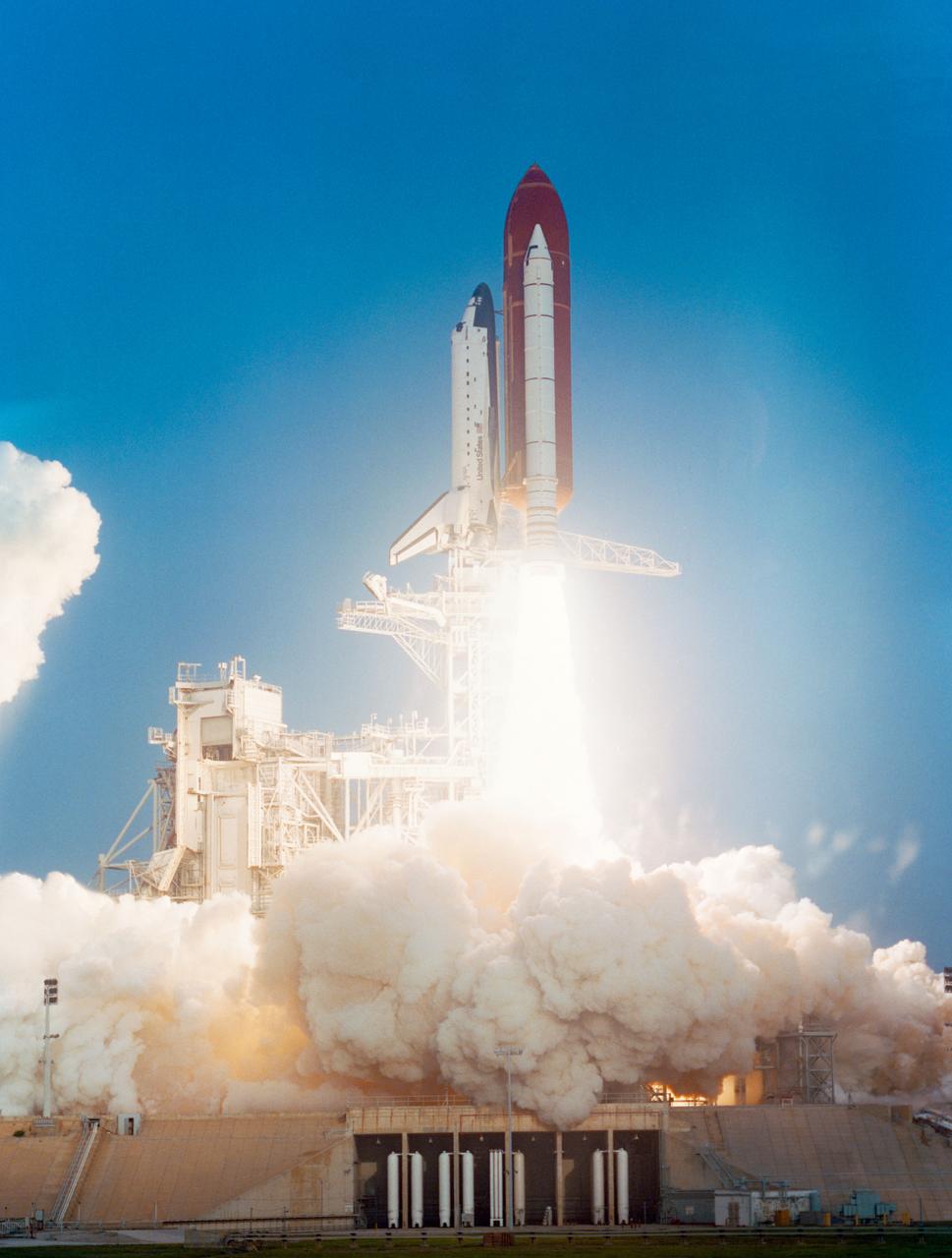
STS039-S-048 (28 April 1991)--- This side view of liftoff of the Space Shuttle Discovery was provided by a pre-set camera at KSC's Launch Pad 39A. Launch occurred at 7:33:14 a.m. (EDT), April 28, 1991. Onboard were astronauts Michael L. Coats, L. Blaine Hammond, Guion S. Bluford Jr., Charles L. (Lacy) Veach, Richard J. Hieb, Gregory J. Harbaugh and Donald R. McMonagle.
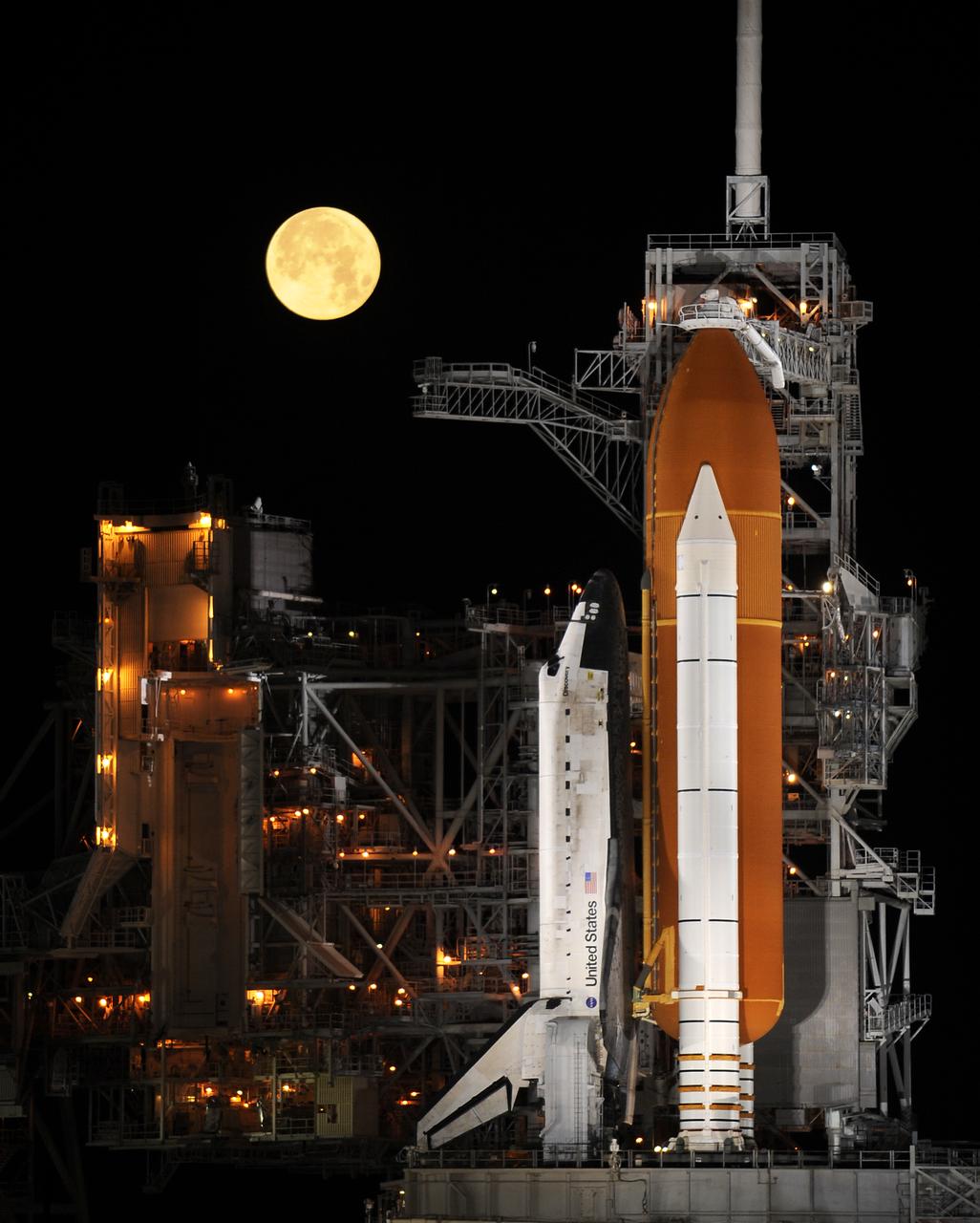
A nearly full Moon sets as the space shuttle Discovery sits atop Launch pad 39A at the Kennedy Space Center in Cape Canaveral, Florida, Wednesday, March 11, 2009. Photo Credit: (NASA/Bill Ingalls)
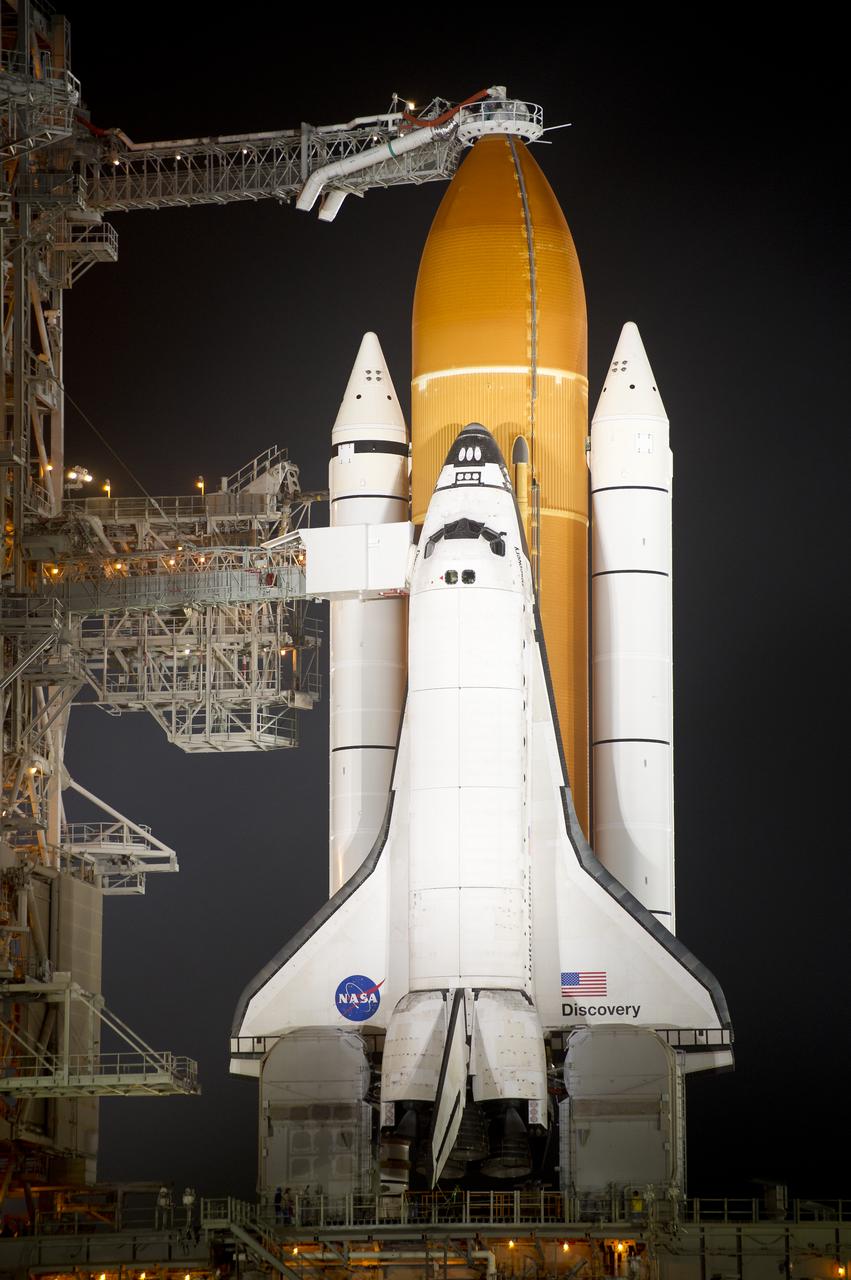
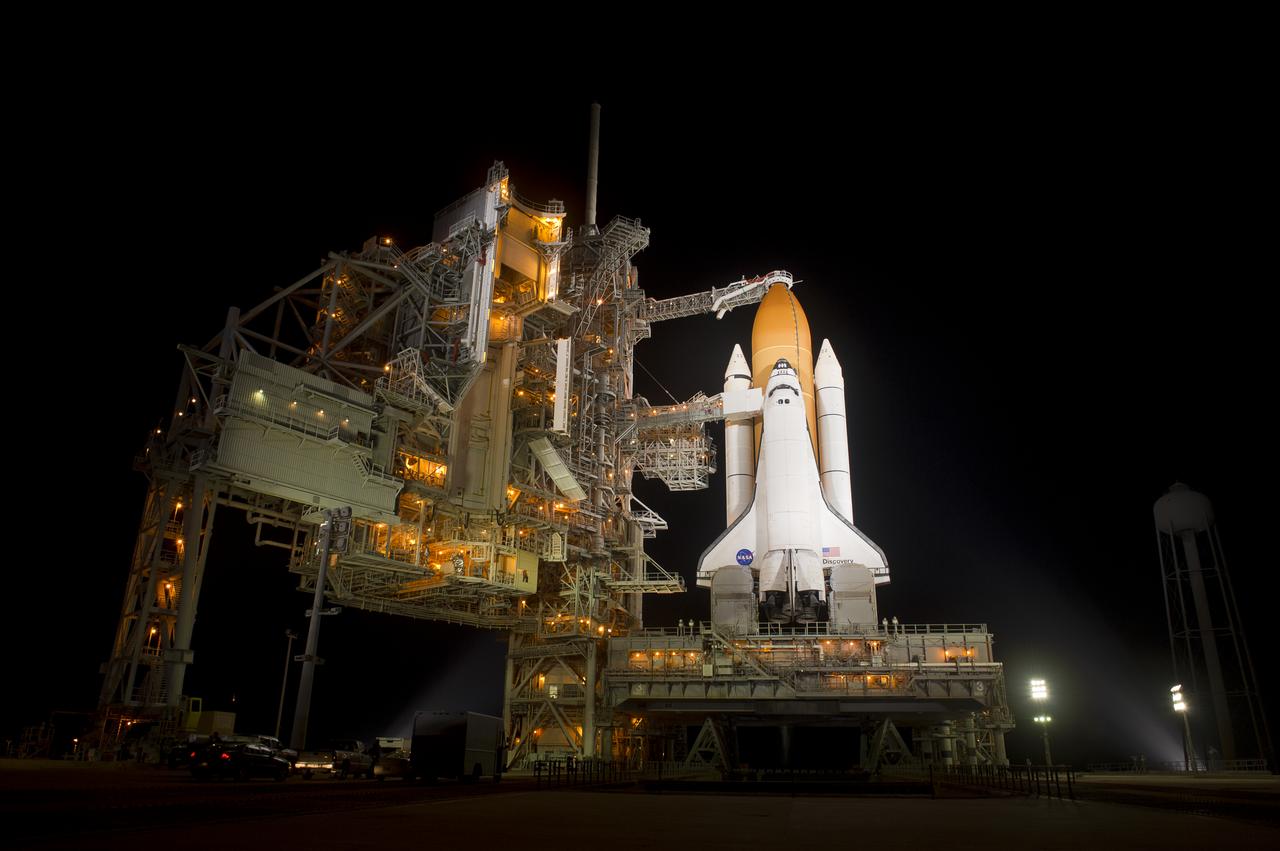
The space shuttle Discovery is seen shortly after the Rotating Service Structure was rolled back at launch pad 39A, at the Kennedy Space Center in Cape Canaveral, Florida, on Wednesday, Feb. 23, 2011. Discovery, on its 39th and final flight, will carry the Italian-built Permanent Multipurpose Module (PMM), Express Logistics Carrier 4 (ELC4) and Robonaut 2, the first humanoid robot in space to the International Space Station. Photo Credit: (NASA/Bill Ingalls)
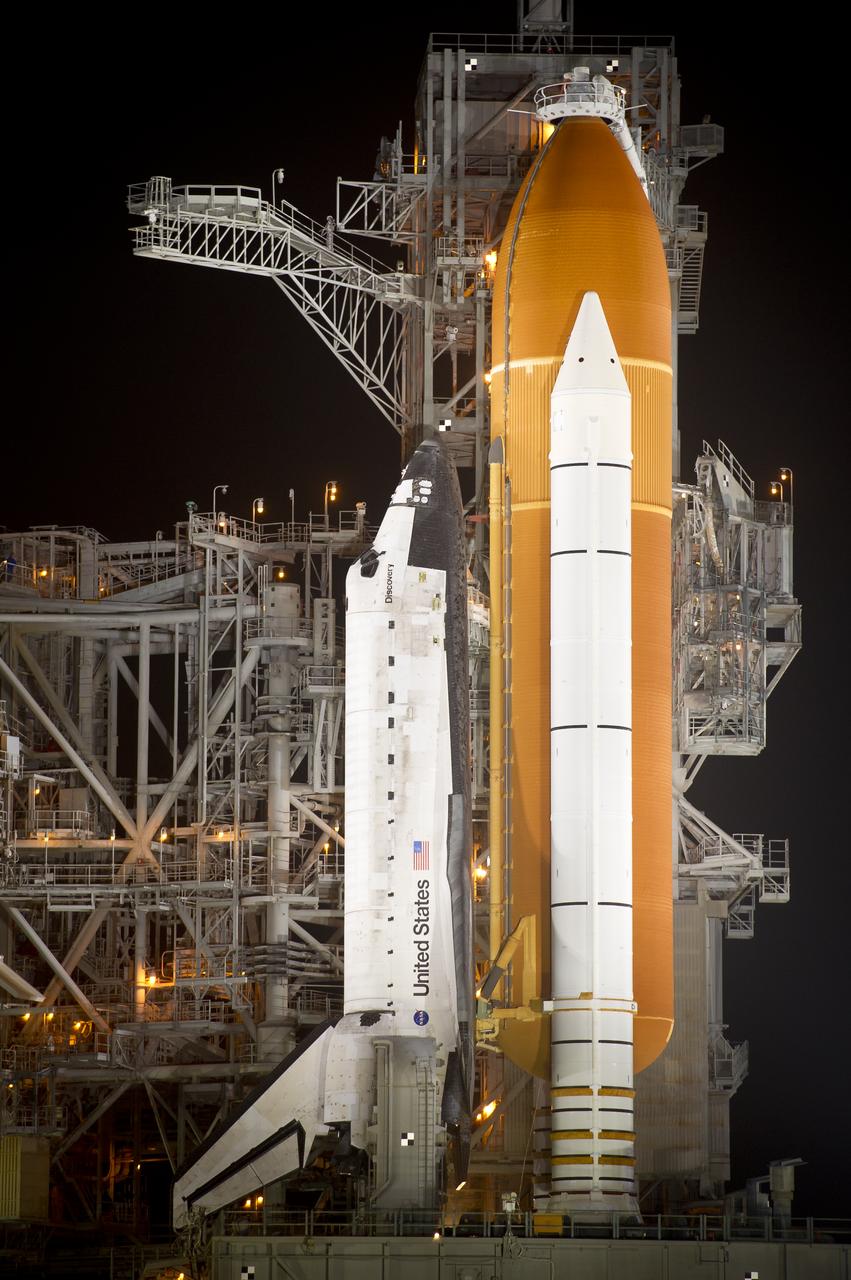
The space shuttle Discovery is seen shortly after the Rotating Service Structure was rolled back at launch pad 39A, at the Kennedy Space Center in Cape Canaveral, Florida, on Wednesday, Feb. 23, 2011. Discovery, on its 39th and final flight, will carry the Italian-built Permanent Multipurpose Module (PMM), Express Logistics Carrier 4 (ELC4) and Robonaut 2, the first humanoid robot in space to the International Space Station. Photo Credit: (NASA/Bill Ingalls)
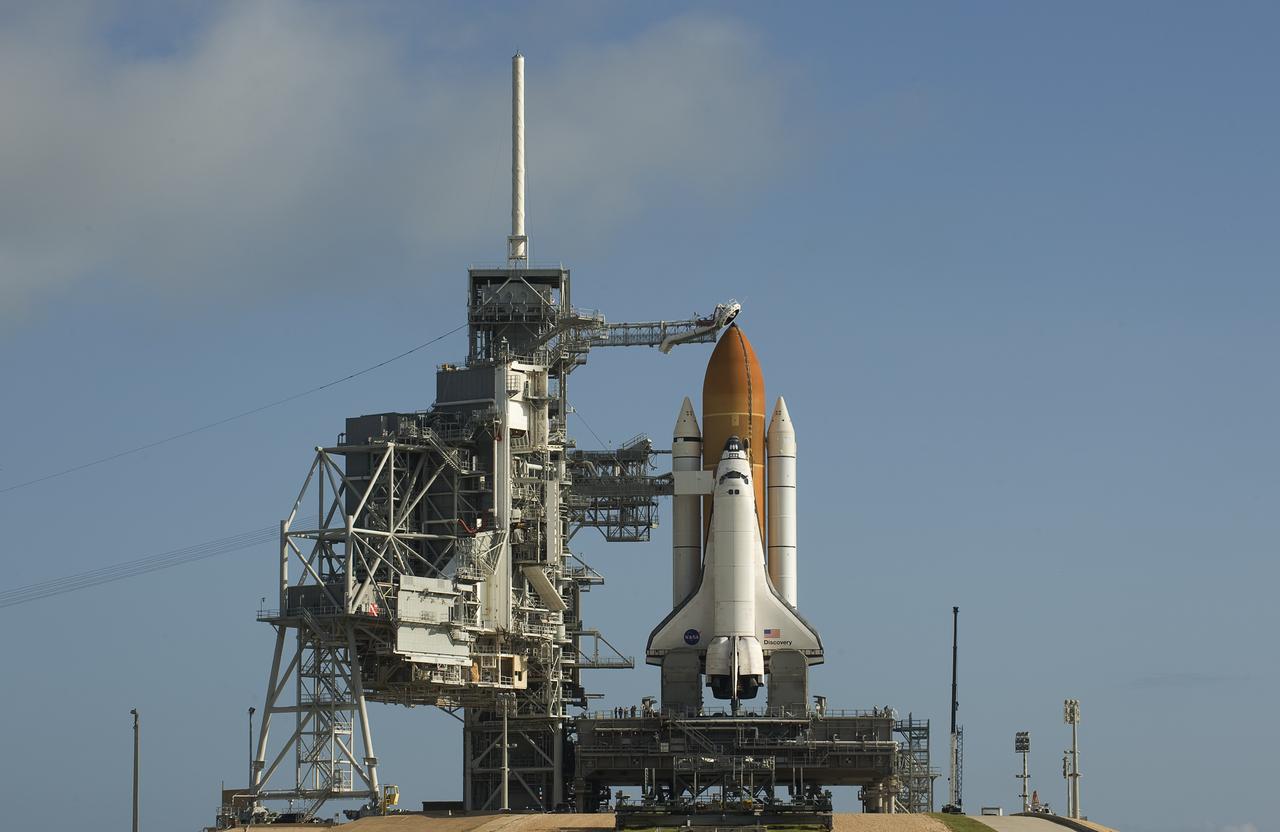
The space shuttle Discovery is poised for liftoff on the STS-128 mission from pad 39a at the Kennedy Space Center in Cape Canaveral, Fla., Monday, Aug. 24, 2009. Discovery is scheduled to launch early Tuesday morning. Photo Credit: (NASA/Bill Ingalls)
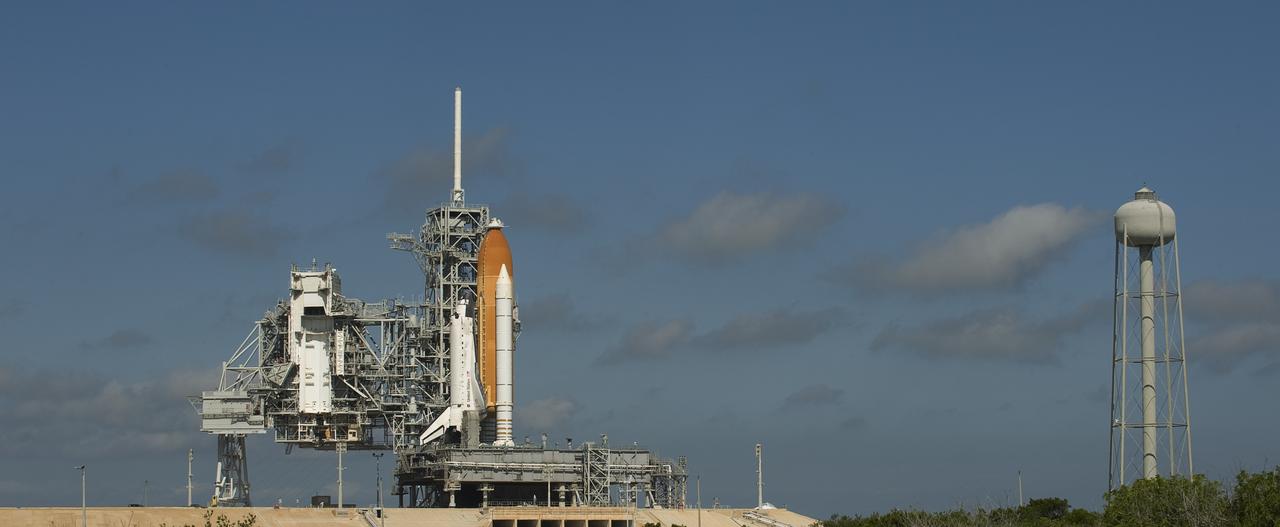
The space shuttle Discovery is poised for liftoff on the STS-128 mission from pad 39a at the Kennedy Space Center in Cape Canaveral, Fla., Monday, Aug. 24, 2009. Discovery is scheduled to launch early Tuesday morning. Photo Credit: (NASA/Bill Ingalls)
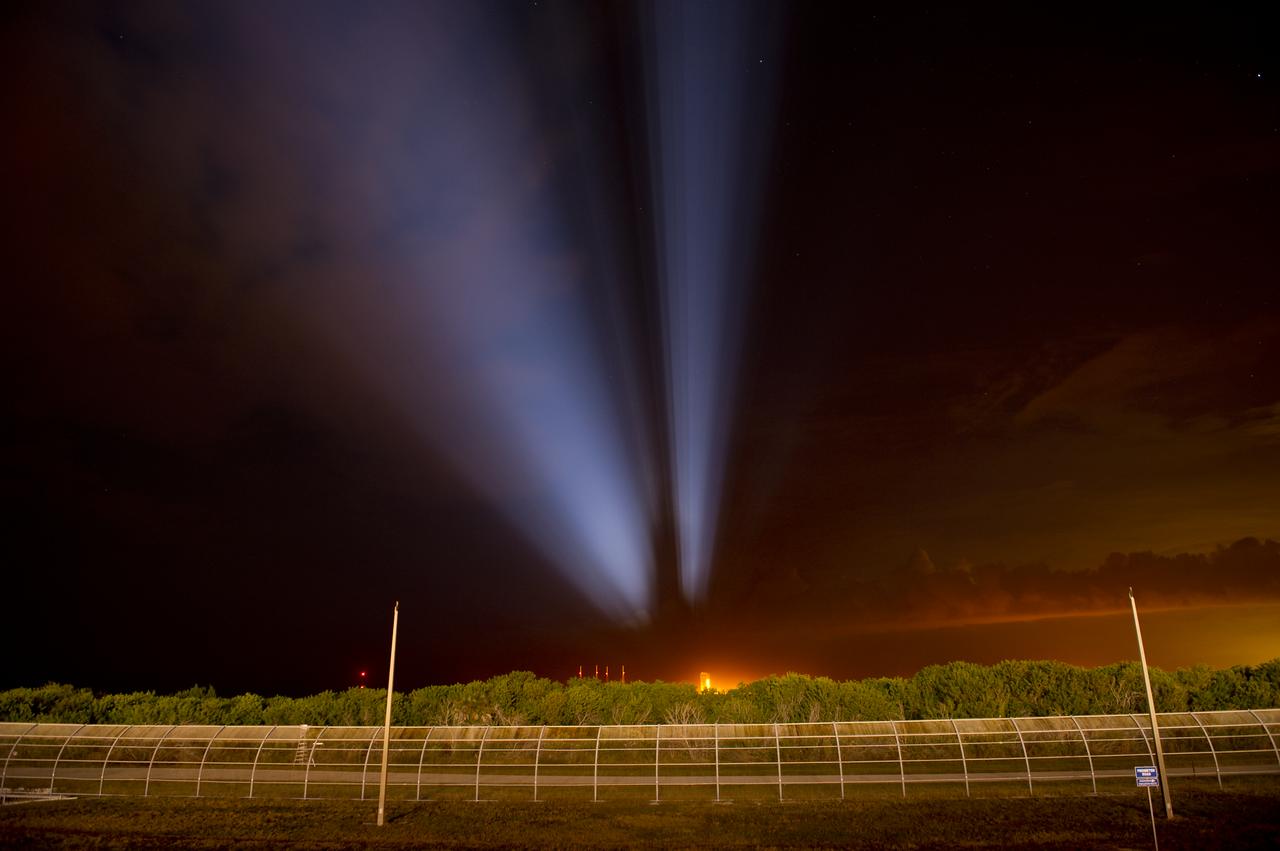
An faint profile outline of the space shuttle Discovery and launch pad 39a are seen projected in the sky as powerful xenon lights illuminate launch pad 39a on Wednesday, Nov. 3, 2010 at the NASA Kennedy Space Center in Cape Canaveral, Fla. During space shuttle Discovery's final spaceflight, the STS-133 crew members will take important spare parts to the International Space Station along with the Express Logistics Carrier-4. Photo Credit: (NASA/Bill Ingalls)
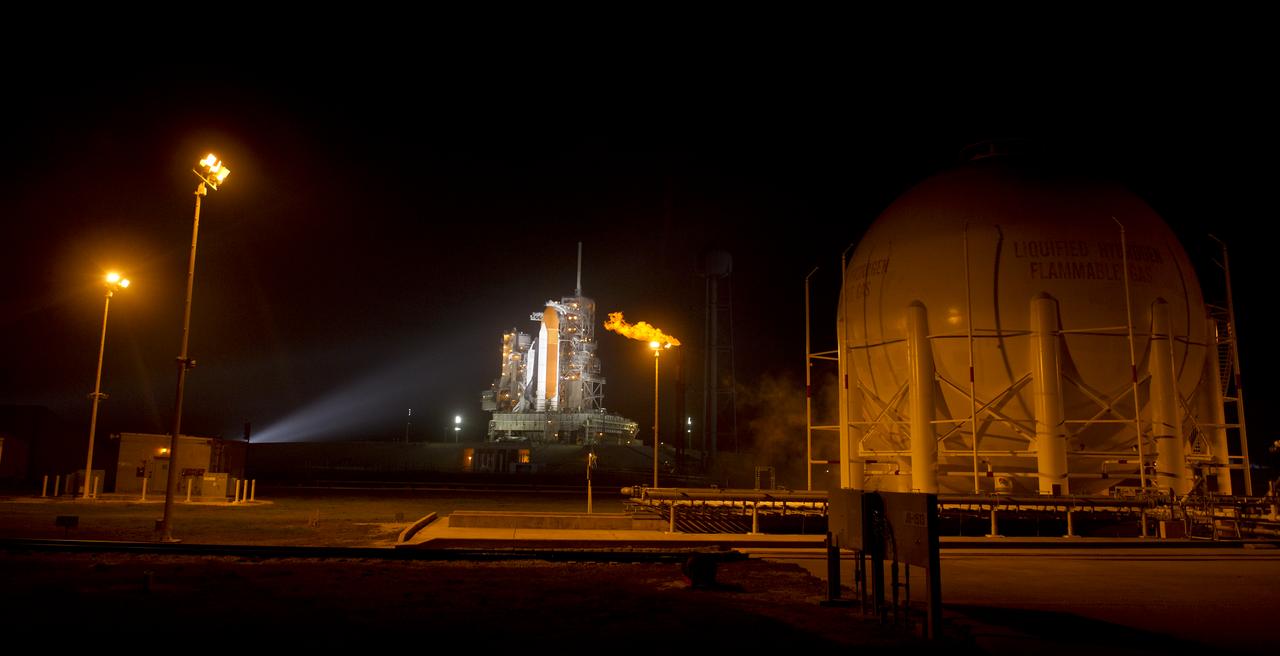
The space shuttle Discovery is seen shortly after the Rotating Service Structure was rolled back at launch pad 39A, at the Kennedy Space Center in Cape Canaveral, Florida, on Wednesday, Feb. 23, 2011. Discovery, on its 39th and final flight, will carry the Italian-built Permanent Multipurpose Module (PMM), Express Logistics Carrier 4 (ELC4) and Robonaut 2, the first humanoid robot in space to the International Space Station. Photo Credit: (NASA/Bill Ingalls)
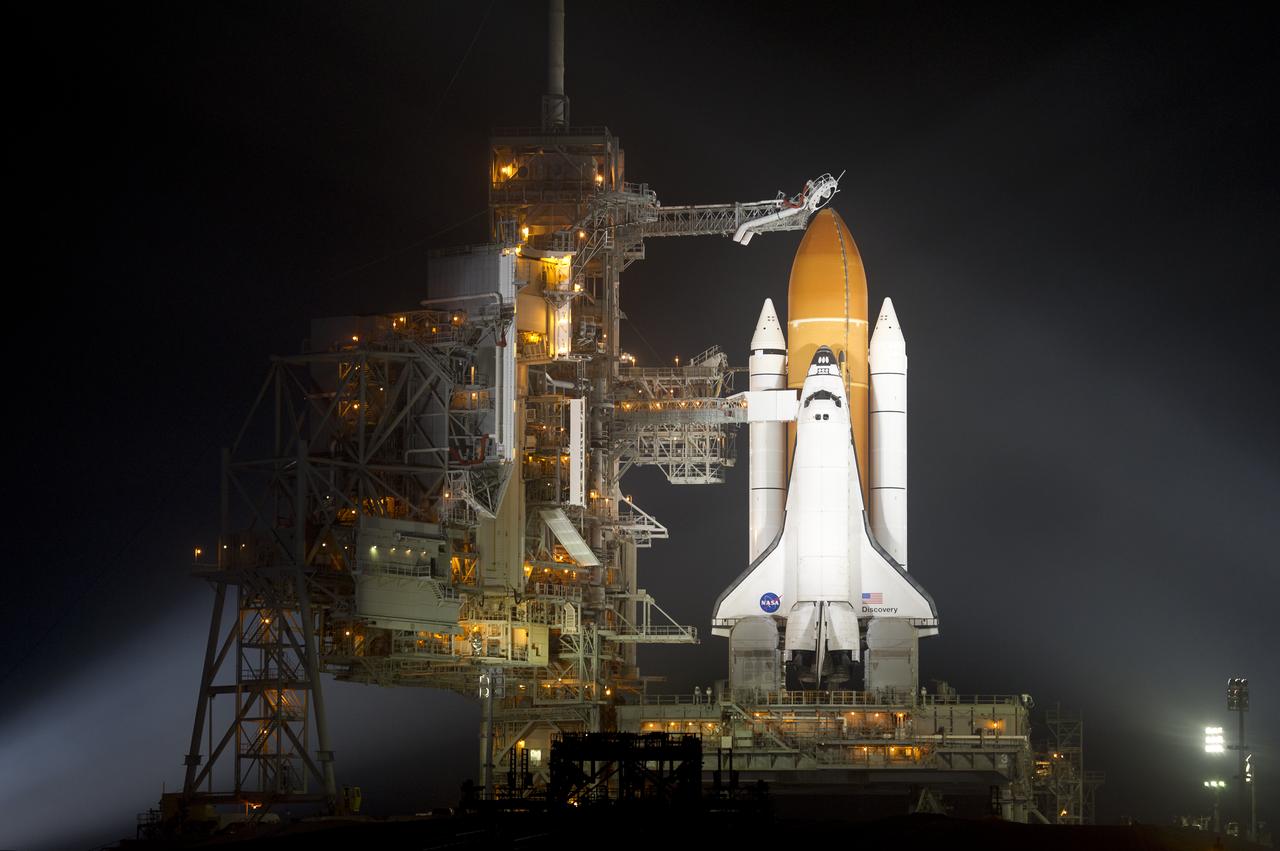
The space shuttle Discovery is seen on launch Pad 39a after the Rotating Service Structure (RSS) is rolled back on Wednesday, Nov. 3, 2010 at the NASA Kennedy Space Center in Cape Canaveral, Fla. During space shuttle Discovery's final spaceflight, the STS-133 crew members will take important spare parts to the International Space Station along with the Express Logistics Carrier-4. Photo Credit: (NASA/Bill Ingalls)
The space shuttle Discovery is seen shortly after the Rotating Service Structure was rolled back at launch pad 39A, at the Kennedy Space Center in Cape Canaveral, Florida, on Wednesday, Feb. 23, 2011. Discovery, on its 39th and final flight, will carry the Italian-built Permanent Multipurpose Module (PMM), Express Logistics Carrier 4 (ELC4) and Robonaut 2, the first humanoid robot in space to the International Space Station. Photo Credit: (NASA/Bill Ingalls)
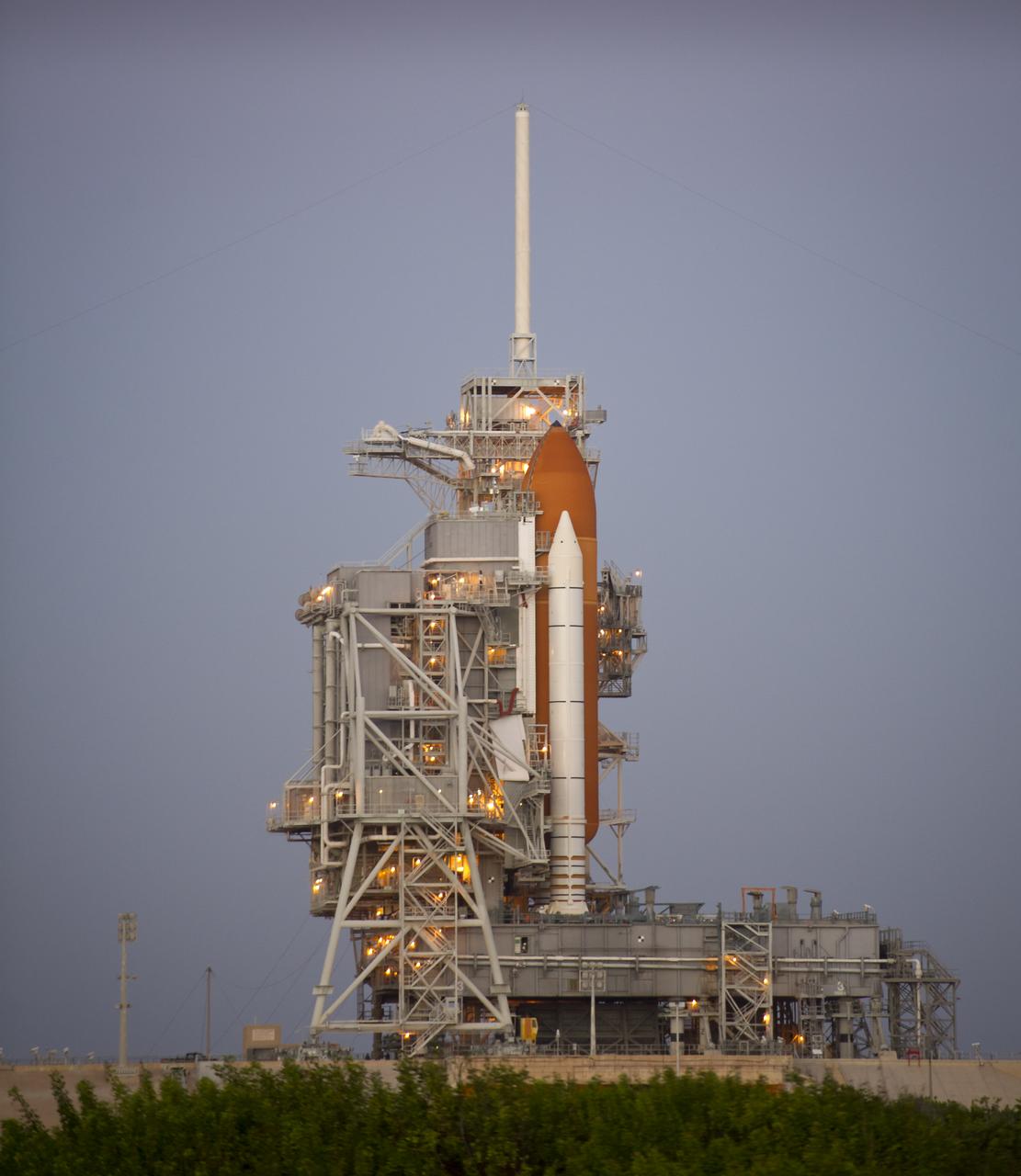
The space shuttle Discovery is seen on launch pad 39a early in the morning of Sunday, Oct. 31, 2010 at the NASA Kennedy Space Center in Cape Canaveral, Fla. During Space Shuttle Discovery's final spaceflight, the STS-133 crew members will take important spare parts to the International Space Station along with the Express Logistics Carrier-4. Discovery is targeted for launch at 3:52 p.m. Wednesday, Nov. 3, 2010. Photo Credit: (NASA/Bill Ingalls)
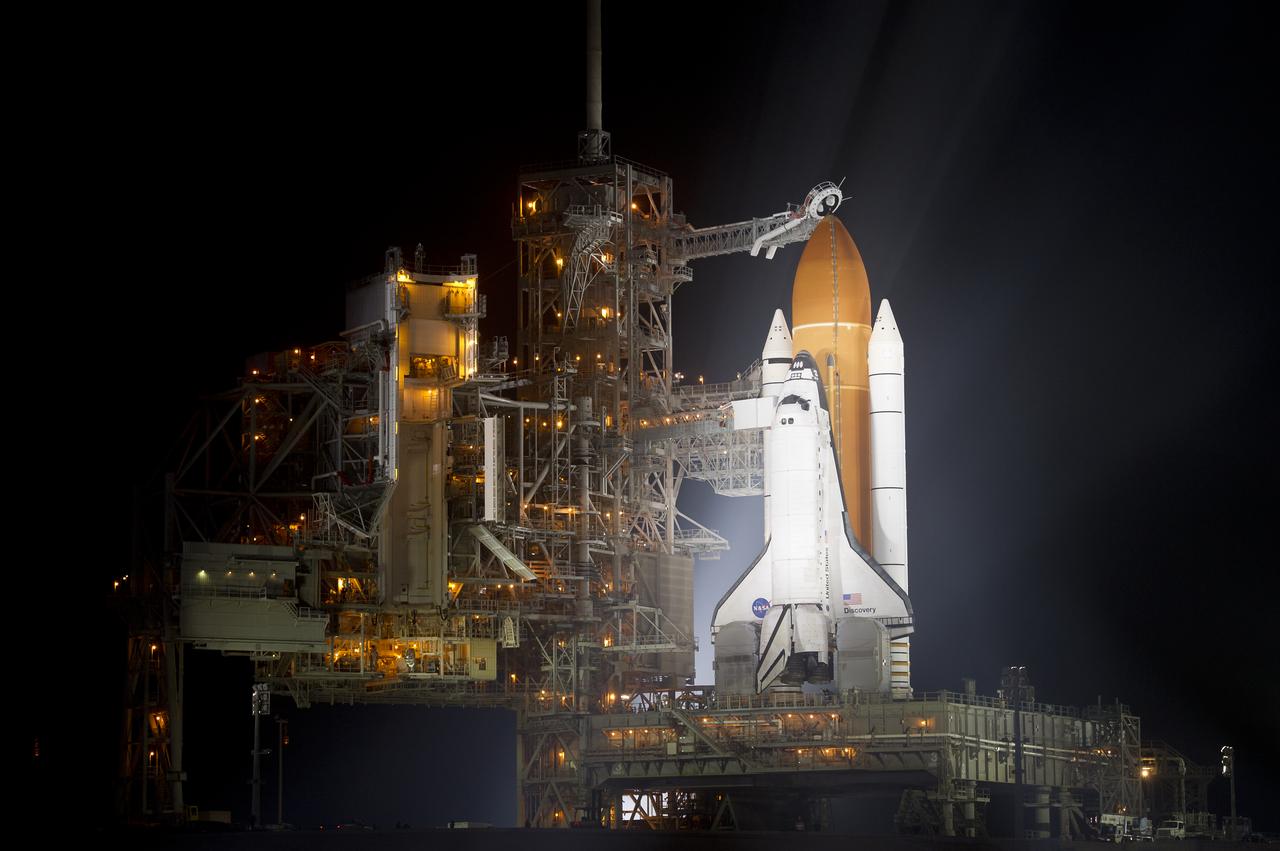
The space shuttle Discovery is seen shortly after the Rotating Service Structure was rolled back at launch pad 39A, at the Kennedy Space Center in Cape Canaveral, Florida, on Wednesday, Feb. 23, 2011. Discovery, on its 39th and final flight, will carry the Italian-built Permanent Multipurpose Module (PMM), Express Logistics Carrier 4 (ELC4) and Robonaut 2, the first humanoid robot in space to the International Space Station. Photo Credit: (NASA/Bill Ingalls)
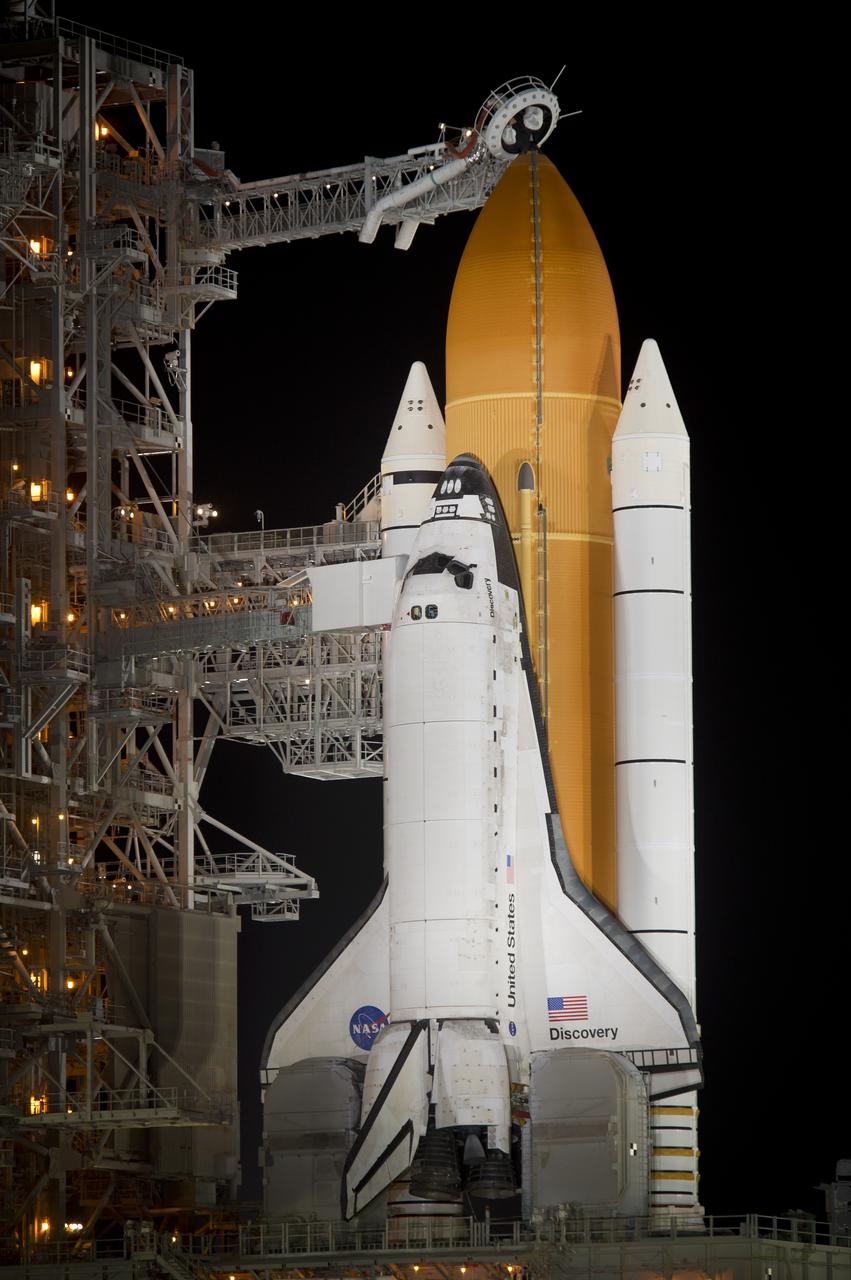
The space shuttle Discovery is seen on launch Pad 39a after the Rotating Service Structure (RSS) is rolled back on Wednesday, Nov. 3, 2010 at the NASA Kennedy Space Center in Cape Canaveral, Fla. During space shuttle Discovery's final spaceflight, the STS-133 crew members will take important spare parts to the International Space Station along with the Express Logistics Carrier-4. Photo Credit: (NASA/Bill Ingalls)
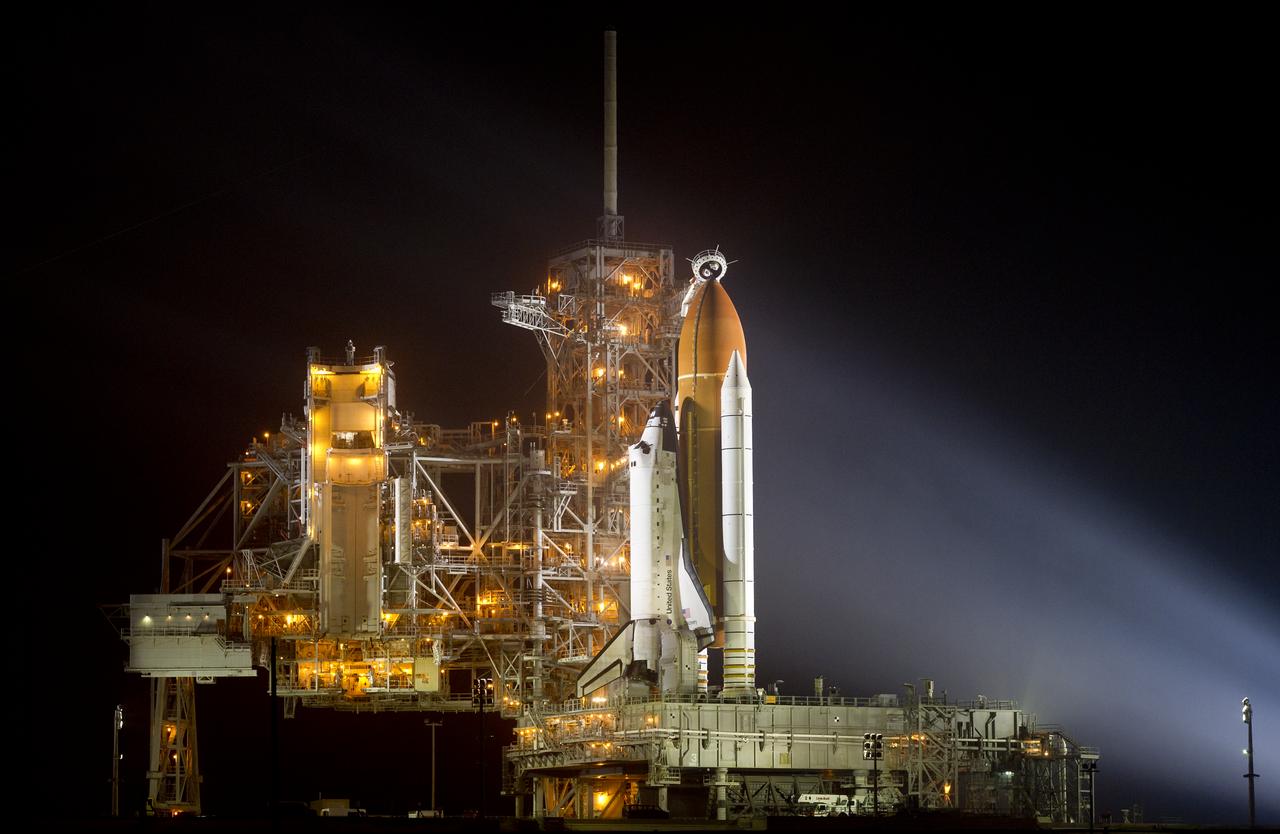
The space shuttle Discovery is seen shortly after the Rotating Service Structure was rolled back at launch pad 39A, at the Kennedy Space Center in Cape Canaveral, Florida, on Wednesday, Feb. 23, 2011. Discovery, on its 39th and final flight, will carry the Italian-built Permanent Multipurpose Module (PMM), Express Logistics Carrier 4 (ELC4) and Robonaut 2, the first humanoid robot in space to the International Space Station. Photo Credit: (NASA/Bill Ingalls)