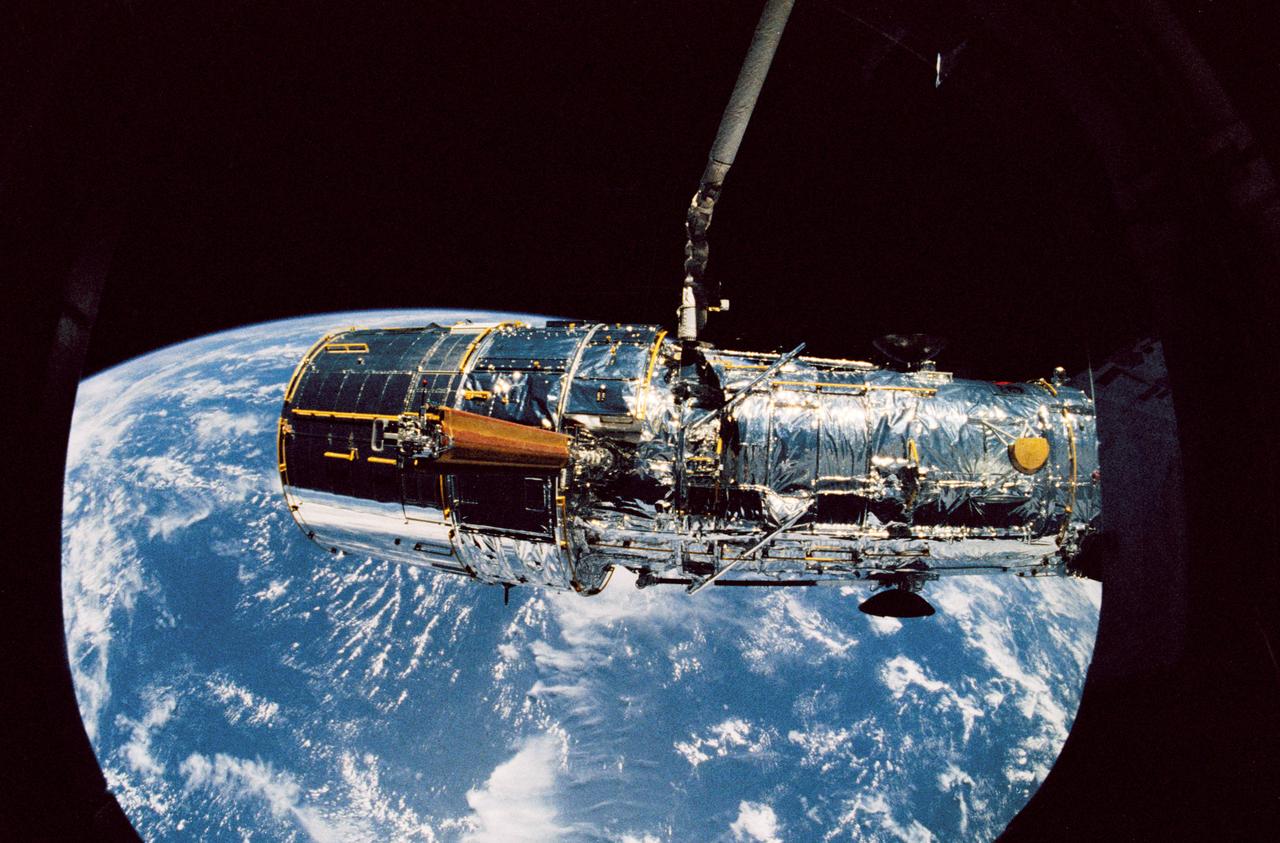
Held in appendage deploy position by Discovery's, Orbiter Vehicle (OV) 103's, remote manipulator system (RMS), the Hubble Space Telescope's (HST's) starboard solar array (SA) bistem cassette is released from its stowed position on the Support System Module (SSM) forward shell. The spreader bar & bistem begin to unfurl the SA wing. View was taken by an STS-31 crewmember through an overhead window & is backdropped against the surface of the Earth.
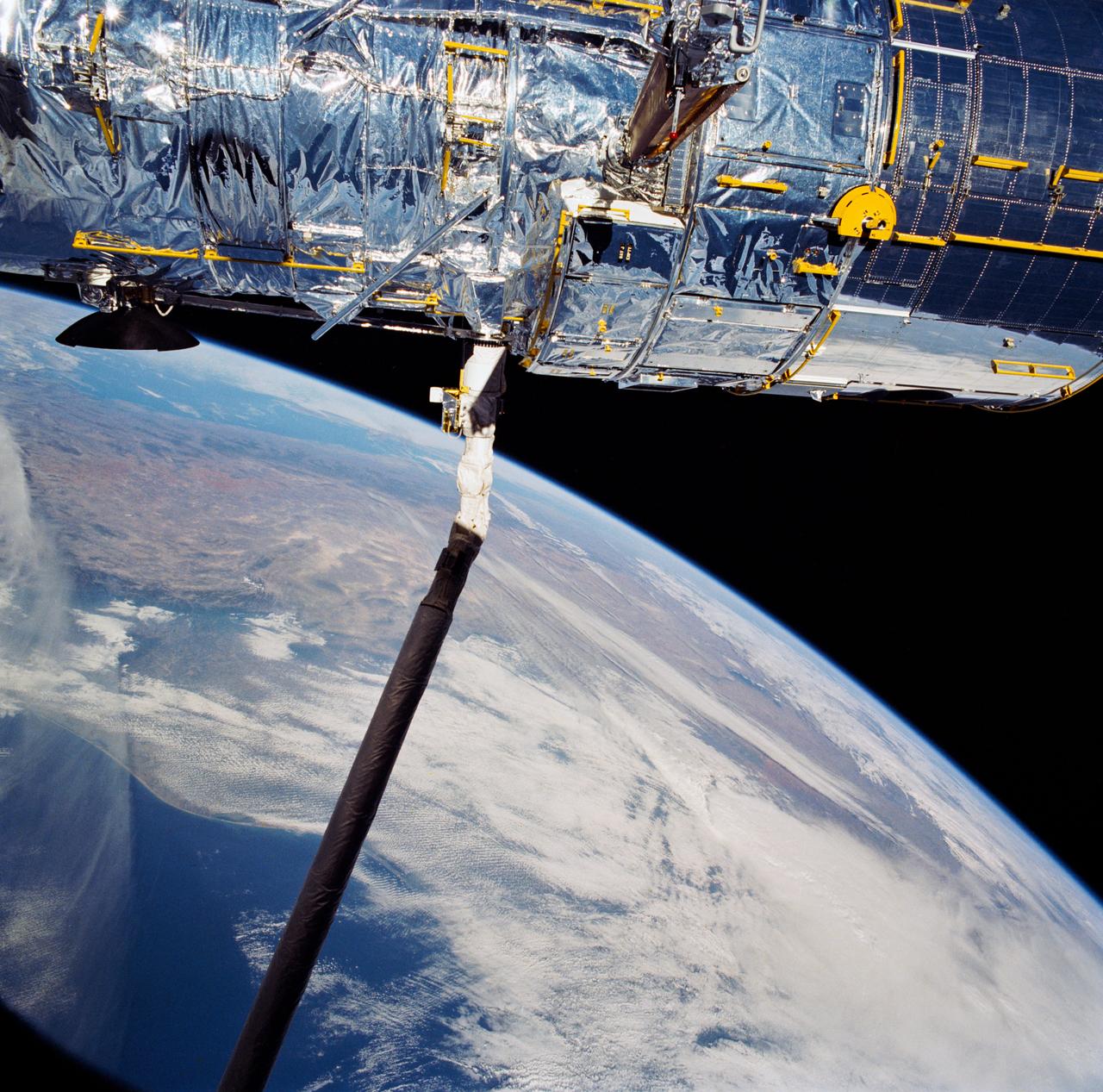
During STS-31, the Hubble Space Telescope (HST) is held in appendage deploy position by Discovery's, Orbiter Vehicle (OV) 103's, remote manipulator system (RMS) above the payload bay (PLB) and crew compartment cabin. While in this position the solar array (SA) wing bistem cassette (HST center) is deployed from its stowed location along side the Support System Module (SSM) forward shell. A high gain antenna (HGA) remains stowed along the SSM. The Earth's surface and the Earth limb creates a dramatic backdrop.
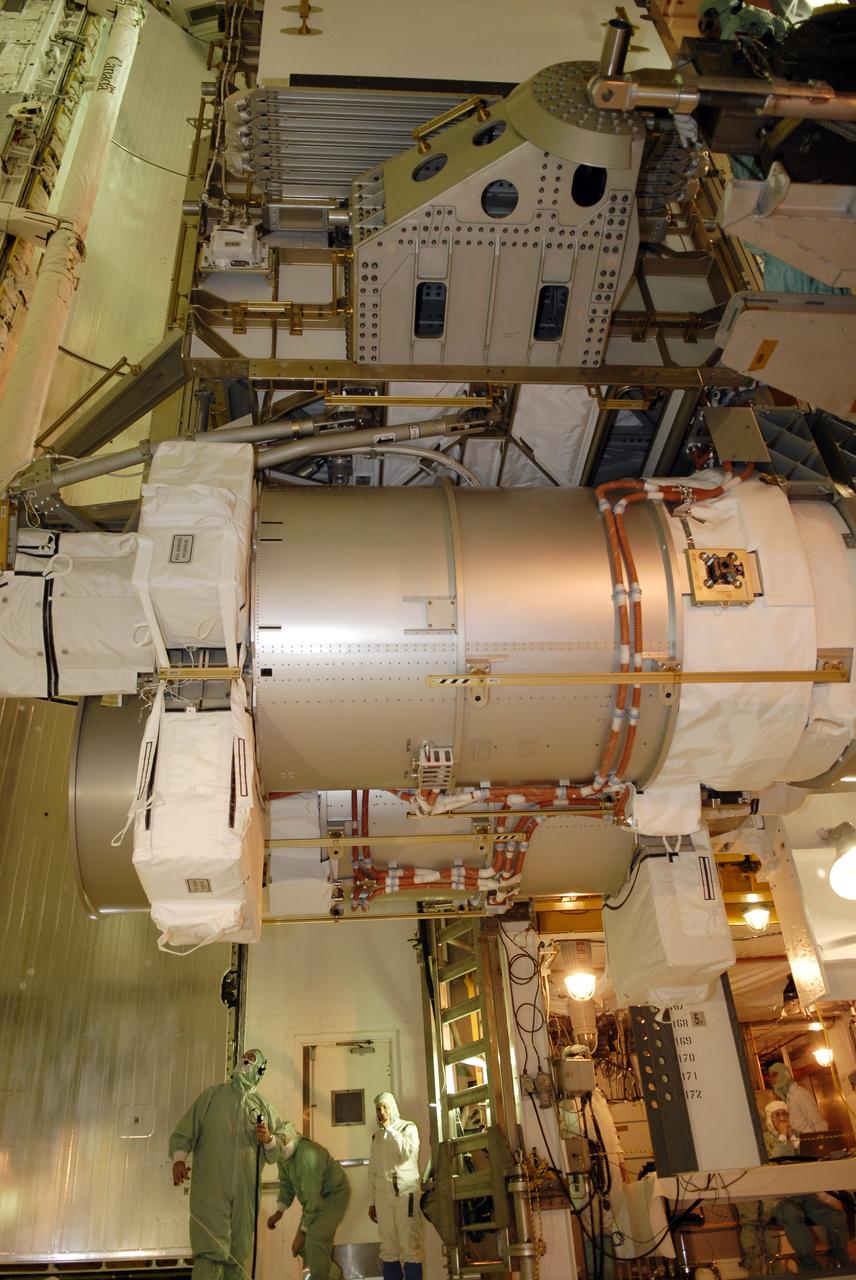
CAPE CANAVERAL, Fla. – In the Payload Changeout Room on Launch Pad 39A at NASA's Kennedy Space Center in Florida, workers check the progress of the payload for the STS-119 mission as it is transferred to space shuttle Discovery's cargo bay (bottom of photo). The payload consists of the integrated truss structure S6 and solar arrays. During Discovery's 14-day mission, the shuttle's seven astronauts will install the S6 truss segment and solar arrays to the starboard side of the International Space Station, completing the station's truss, or backbone. Launch of Discovery on the STS-119 mission is targeted for Feb. 12. Photo credit: NASA/Kim Shiflett

CAPE CANAVERAL, Fla. – On Launch Pad 39A at NASA's Kennedy Space Center in Florida, workers check the installation of the payload for the STS-119 mission in space shuttle Discovery's cargo bay. The payload consists of the integrated truss structure S6 and solar arrays. During Discovery's 14-day mission, the shuttle's seven astronauts will install the S6 truss segment and solar arrays to the starboard side of the International Space Station, completing the station's truss, or backbone. Launch of Discovery on the STS-119 mission is targeted for Feb. 12. Photo credit: NASA/Kim Shiflett
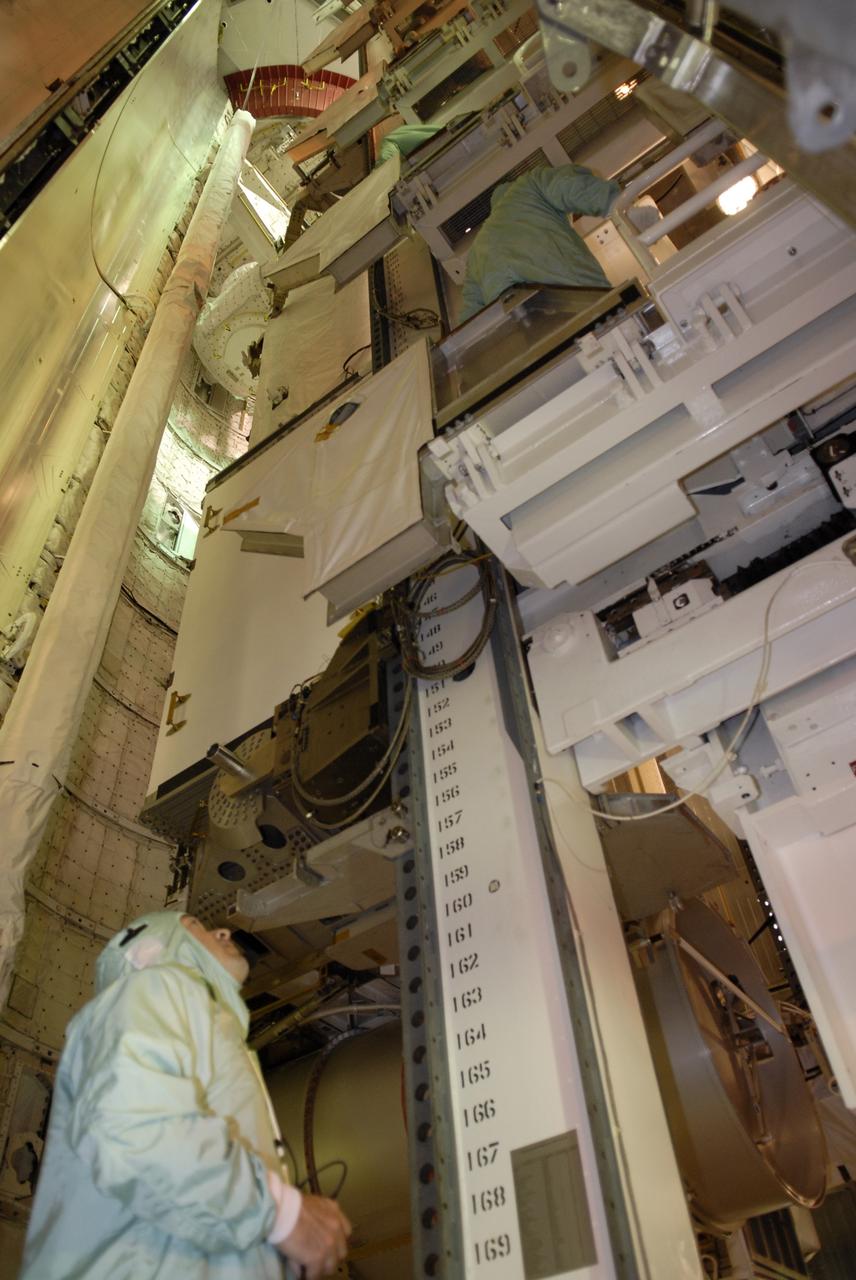
CAPE CANAVERAL, Fla. – On Launch Pad 39A at NASA's Kennedy Space Center in Florida, workers check the installation of the payload for the STS-119 mission in space shuttle Discovery's cargo bay. The payload consists of the integrated truss structure S6 and solar arrays. During Discovery's 14-day mission, the shuttle's seven astronauts will install the S6 truss segment and solar arrays to the starboard side of the International Space Station, completing the station's truss, or backbone. Launch of Discovery on the STS-119 mission is targeted for Feb. 12. Photo credit: NASA/Kim Shiflett
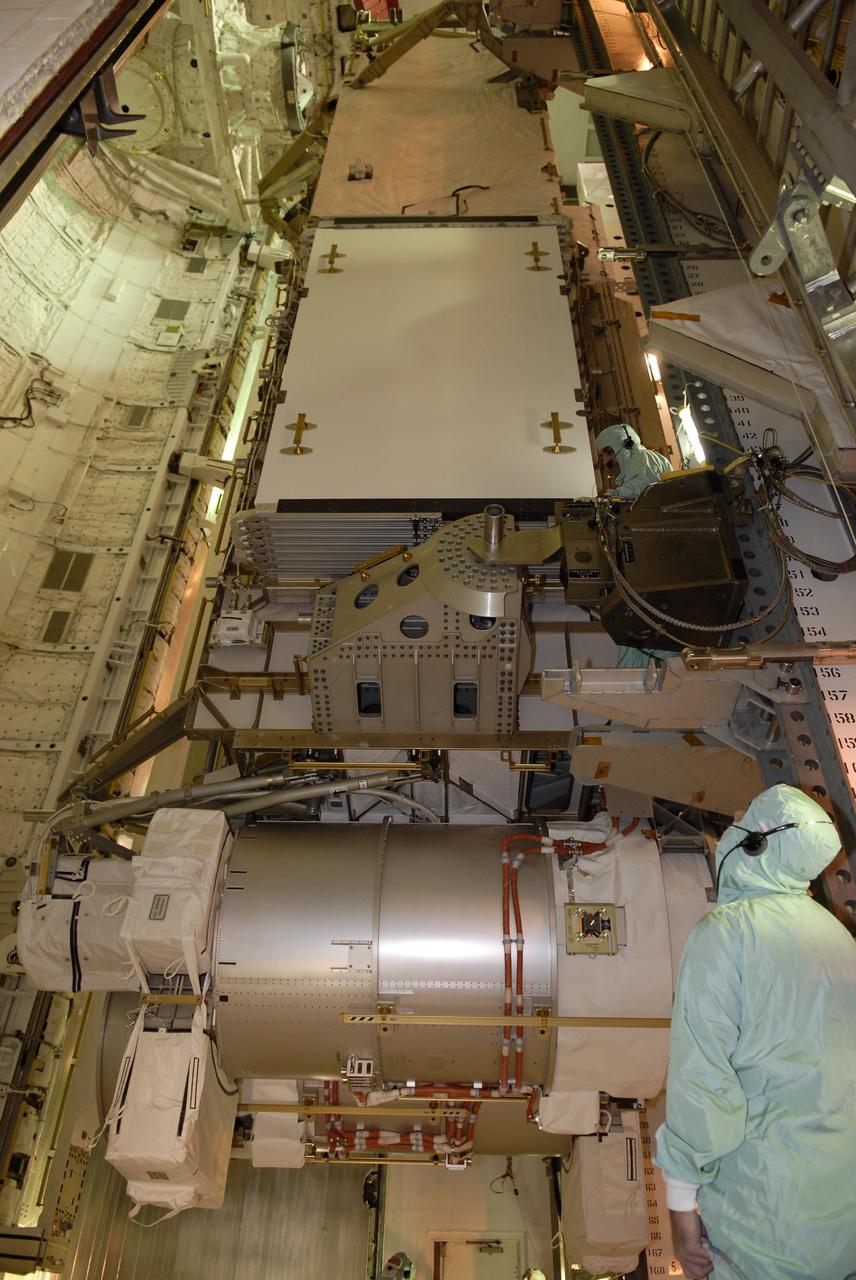
CAPE CANAVERAL, Fla. – On Launch Pad 39A at NASA's Kennedy Space Center in Florida, the payload for the STS-119 mission is installed in space shuttle Discovery's cargo bay. The payload consists of the integrated truss structure S6 and solar arrays. During Discovery's 14-day mission, the shuttle's seven astronauts will install the S6 truss segment and solar arrays to the starboard side of the International Space Station, completing the station's truss, or backbone. Launch of Discovery on the STS-119 mission is targeted for Feb. 12. Photo credit: NASA/Kim Shiflett
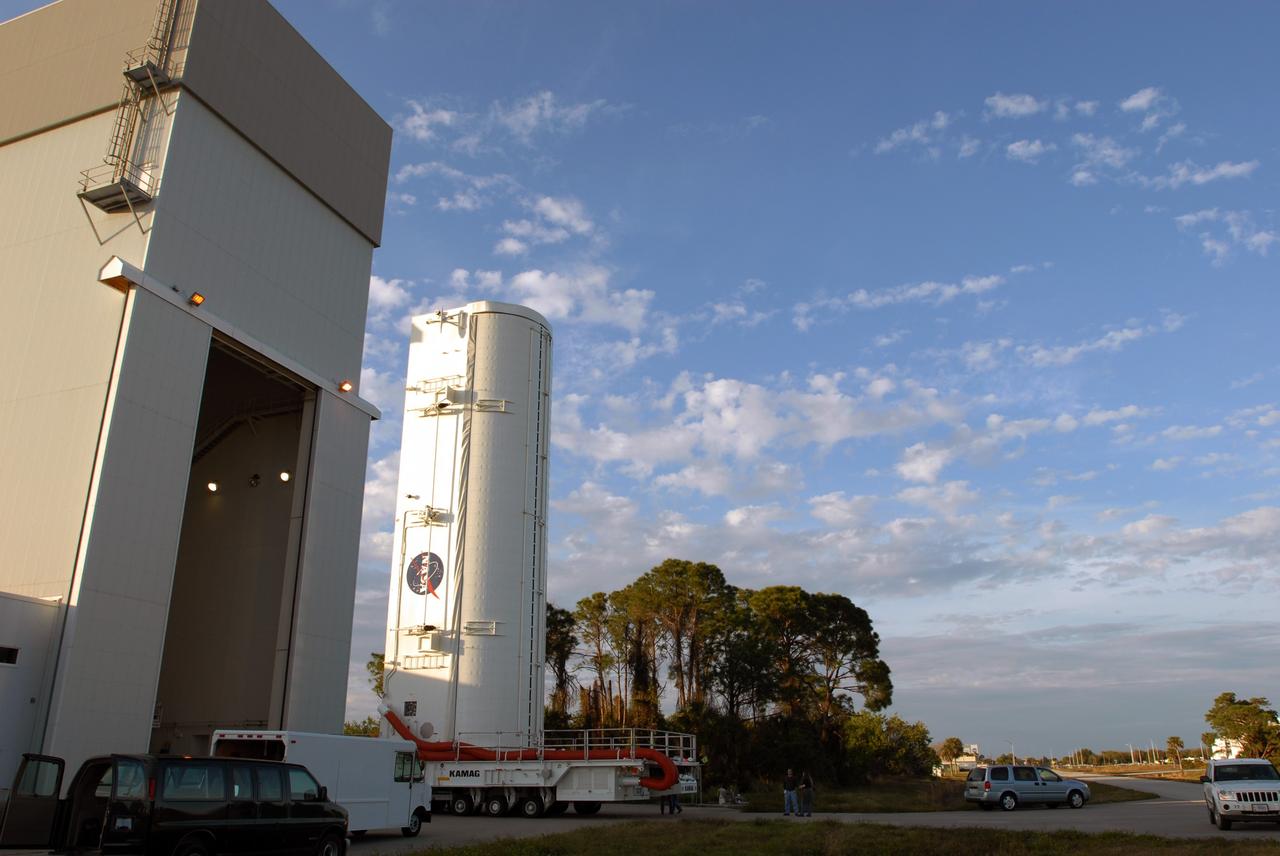
CAPE CANAVERAL, Fla. -- The payload canister containing the S6 truss and solar arrays leaves the Canister Rotation Facility at NASA's Kennedy Space Center in Florida to head for Launch Pad 39A. The truss and arrays are space shuttle Discovery's payload for the STS-119 mission to the International Space Station. Launch of Discovery on the STS-119 mission is scheduled for Feb. 12. During Discovery's 14-day mission, the crew will install the S6 truss segment and its solar arrays to the starboard side of the station, completing the station's backbone, or truss Photo credit: NASA/Jim Grossmann
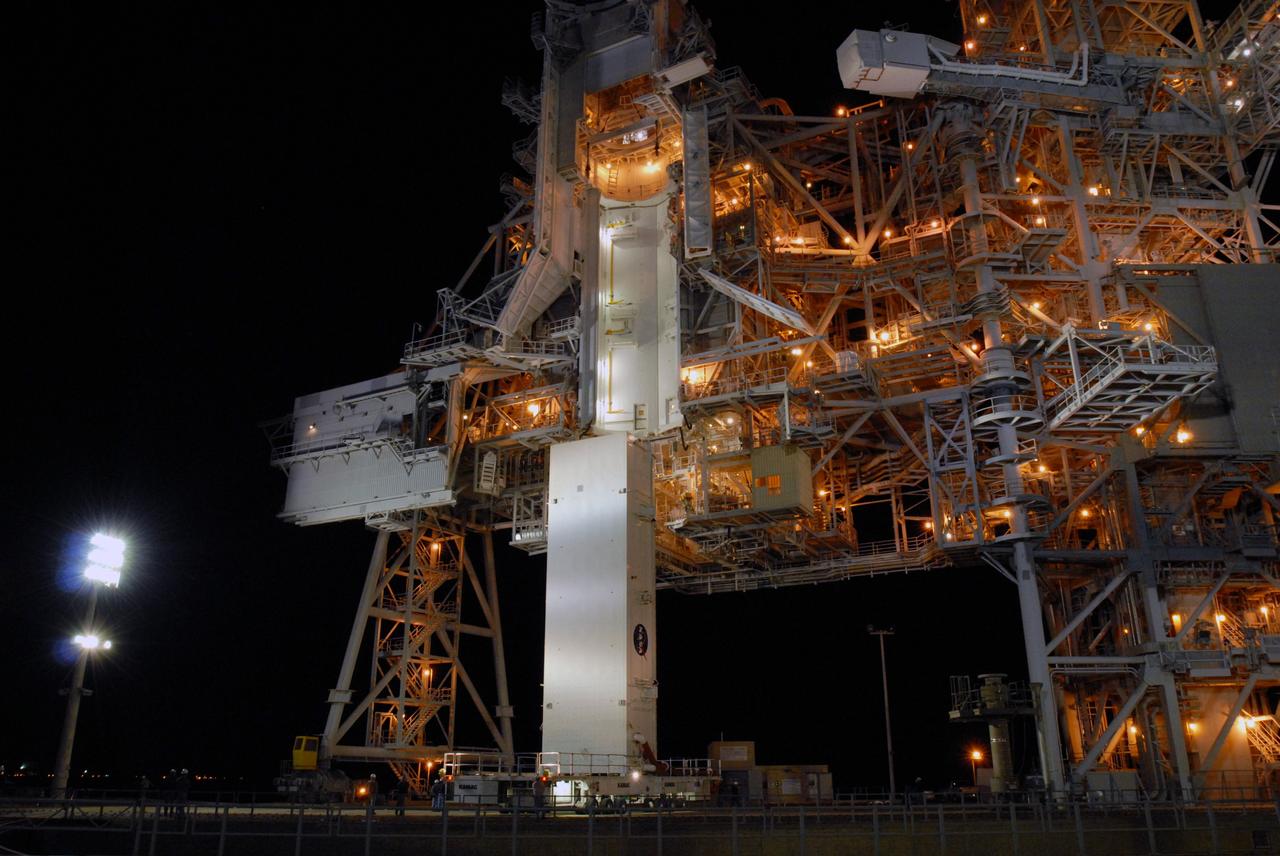
CAPE CANAVERAL, Fla. -- The payload canister containing the S6 truss and solar arrays arrives at Launch Pad 39A at NASA's Kennedy Space Center in Florida. The canister sits below the Payload Changeout Room, or PCR. It will be lifted up to the PCR and space shuttle Discovery's payload transferred inside. After Discovery rolls out to the pad, the payload will be installed in the shuttle's payload bay. Launch of Discovery on the STS-119 mission is scheduled for Feb. 12. During Discovery's 14-day mission, the crew will install the S6 truss segment and its solar arrays to the starboard side of the station, completing the station's backbone, or truss Photo credit: NASA/Jim Grossmann
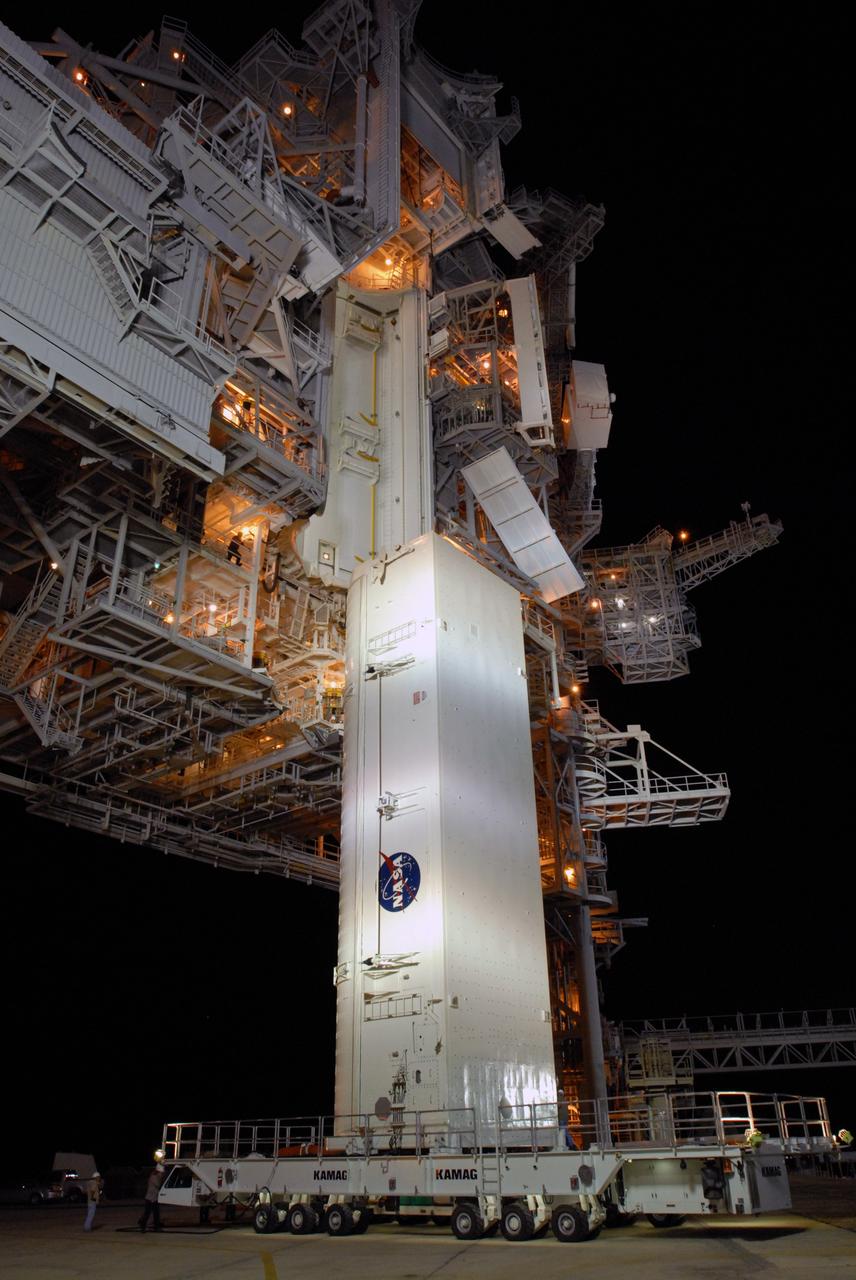
CAPE CANAVERAL, Fla. -- The payload canister containing the S6 truss and solar arrays arrives at Launch Pad 39A at NASA's Kennedy Space Center in Florida. The canister sits below the Payload Changeout Room, or PCR. It will be lifted up to the PCR and space shuttle Discovery's payload transferred inside. After Discovery rolls out to the pad, the payload will be installed in the shuttle's payload bay. Launch of Discovery on the STS-119 mission is scheduled for Feb. 12. During Discovery's 14-day mission, the crew will install the S6 truss segment and its solar arrays to the starboard side of the station, completing the station's backbone, or truss Photo credit: NASA/Jim Grossmann
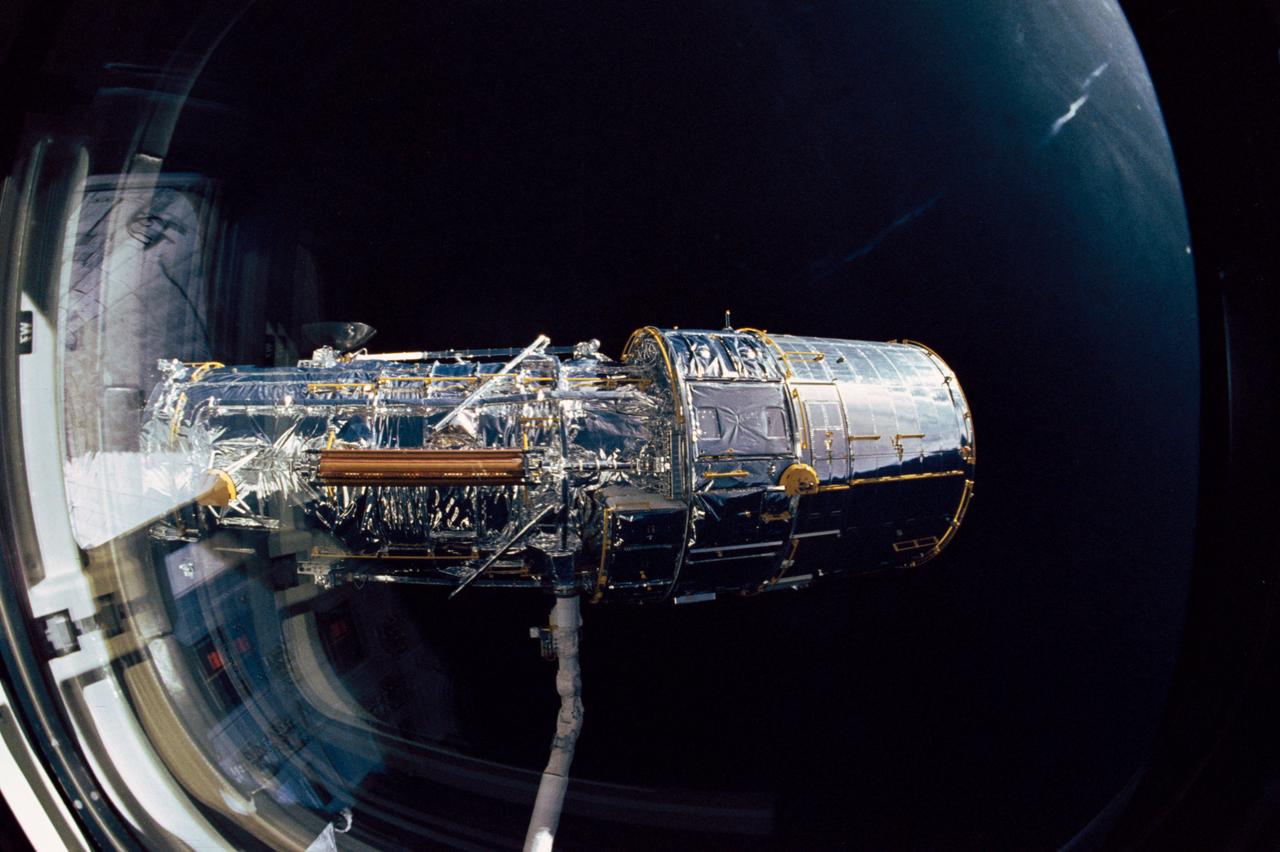
The Hubble Space Telescope (HST), grappled by Discovery's, Orbiter Vehicle (OV) 103's, remote manipulator system (RMS), is held in a pre-deployment position. During STS-31 checkout procedures, the solar array (SA) panels and the high gain antennae (HGA) will be deployed. The starboard SA (center) and the two HGA are stowed along side the Support System Module (SSM) forward shell. The sun highlights HST against the blackness of space.
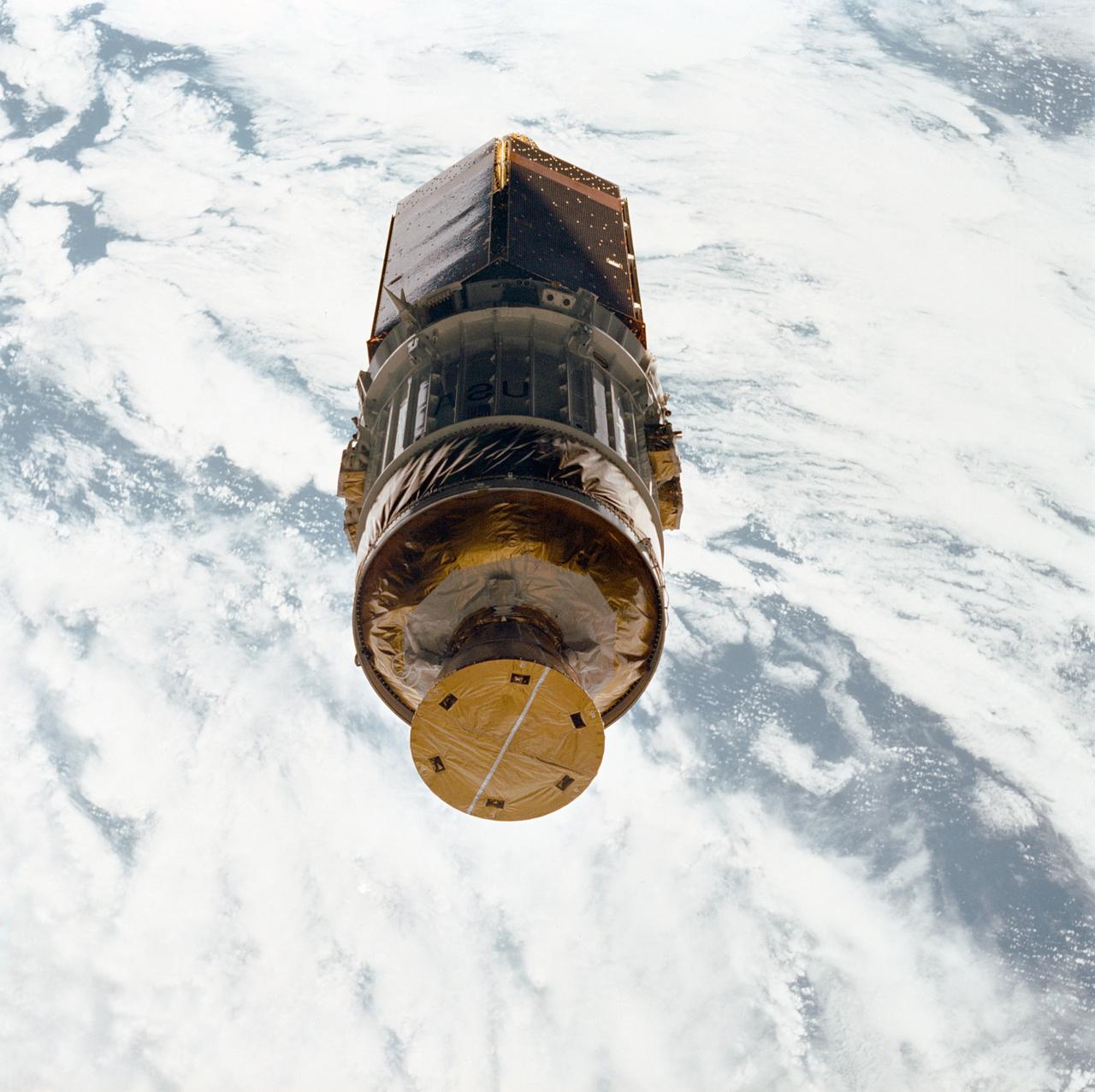
STS026-31-071 (3 Oct 1988) --- After deployment from Discovery, Orbiter Vehicle (OV) 103, the inertial upper stage (IUS) with the tracking and data relay satellite C (TDRS-C) drifts above the cloud-covered Earth surface. TDRS-C, in stowed configuration (solar array panels visible), is mounted atop the IUS with the interstage and solid rocket motor and nozzle seen in the foreground.
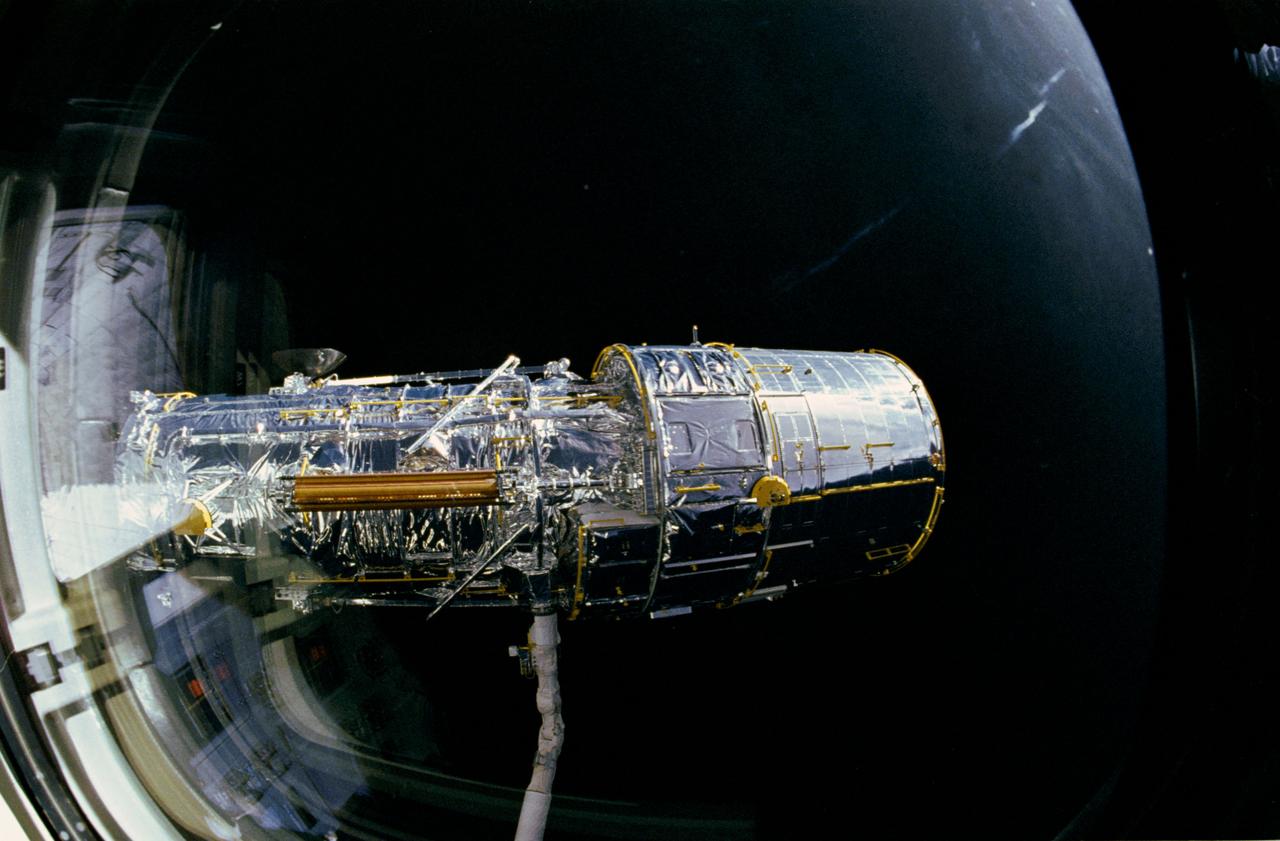
During STS-31 checkout, the Hubble Space Telescope (HST) is held in a pre-deployment position by Discovery's, Orbiter Vehicle (OV) 103's, remote manipulator system (RMS). The view, taken from the crew cabin overhead window W7, shows the starboard solar array (SA) panel (center) and two high gain antennae (HGA) (on either side) stowed along side the Support System Module (SSM) forward shell. The sun highlights HST against the blackness of space.
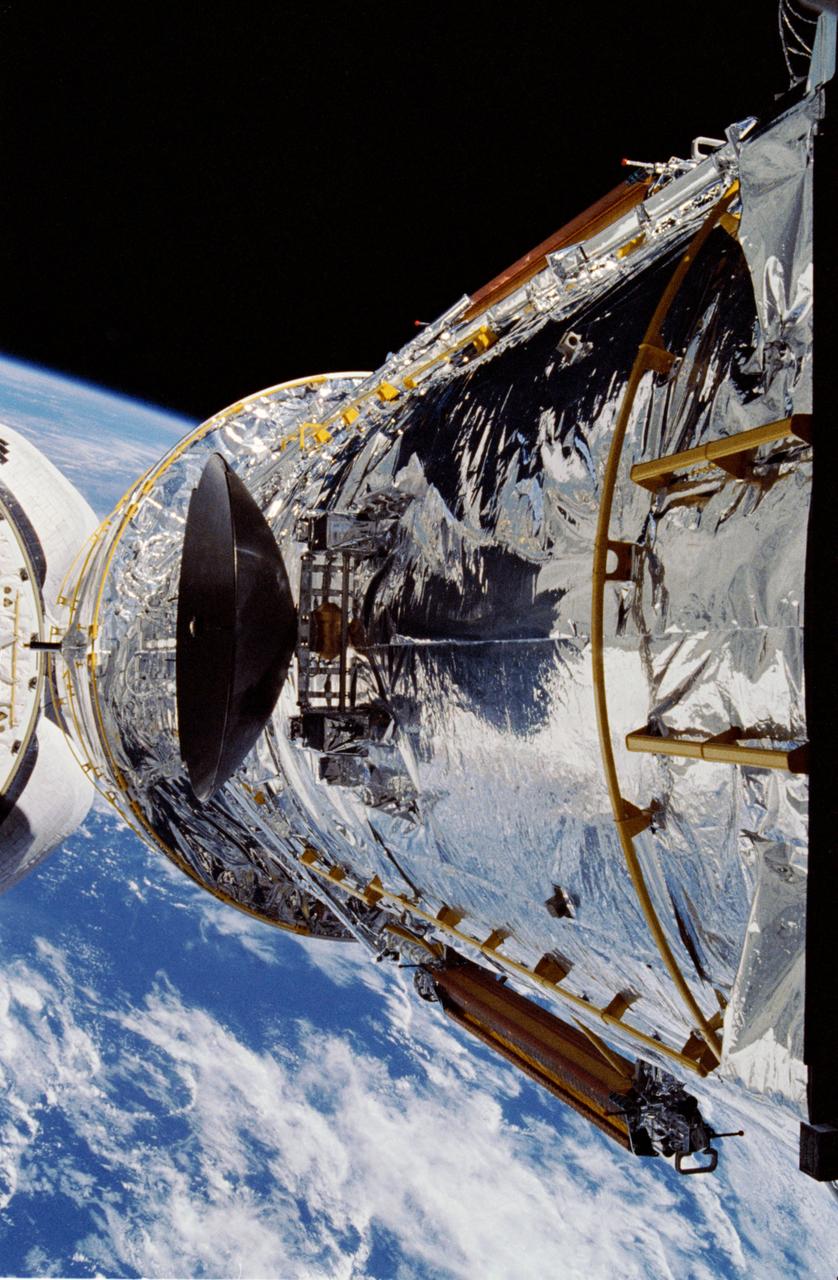
The Hubble Space Telescope (HST) is raised above the payload bay (PLB) in low hover position during STS-31 checkout and pre-deployment procedures aboard Discovery, Orbiter Vehicle (OV) 103. Stowed along the HST Support System Module (SSM) are the high gain antenna (HGA) (center) and the two solar arrays (one either side). In the background are the orbital maneuvering system (OMS) pods and the Earth's surface.
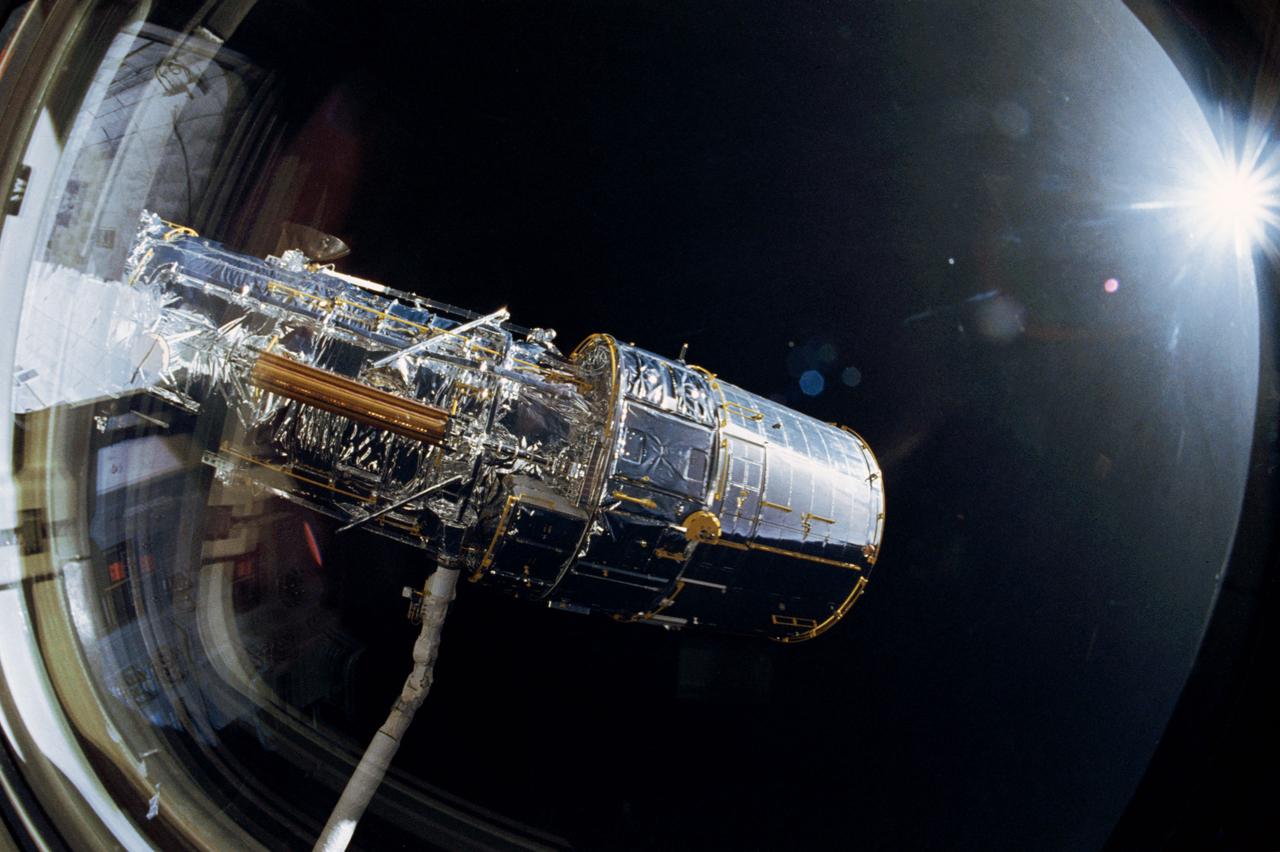
The Hubble Space Telescope (HST), grappled by Discovery's, Orbiter Vehicle (OV) 103's, remote manipulator system (RMS), is oriented in a 90 degree pitch position during STS-31 pre-deployment checkout procedures. The solar array (SA) panel (center) and high gain antennae (HGA) (on either side) are stowed along the Support System Module (SSM) forward shell prior to deployment. The sun highlights HST against the blackness of space.
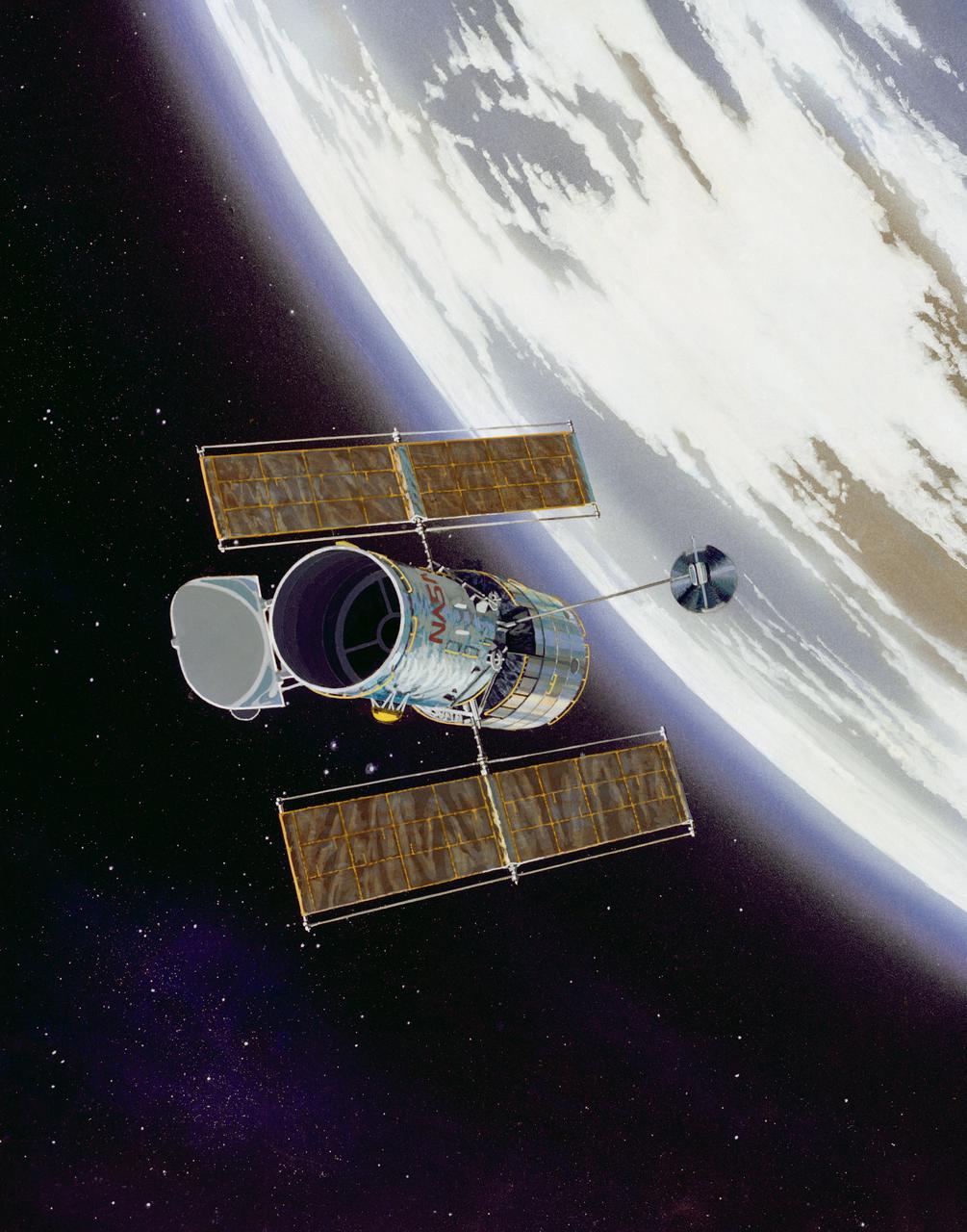
This artist concept shows the Hubble Space Telescope (HST) in operational configuration orbiting the Earth after its deploy from Discovery, Orbiter Vehicle (OV) 103 during STS-31. The high gain antennas (HGAs) and solar arrays (SAs) have been extended. HST's aperature door is open as it views the universe from a vantage point above the Earth's atmosphere. View provided by the Marshall Space Flight Center (MSFC).
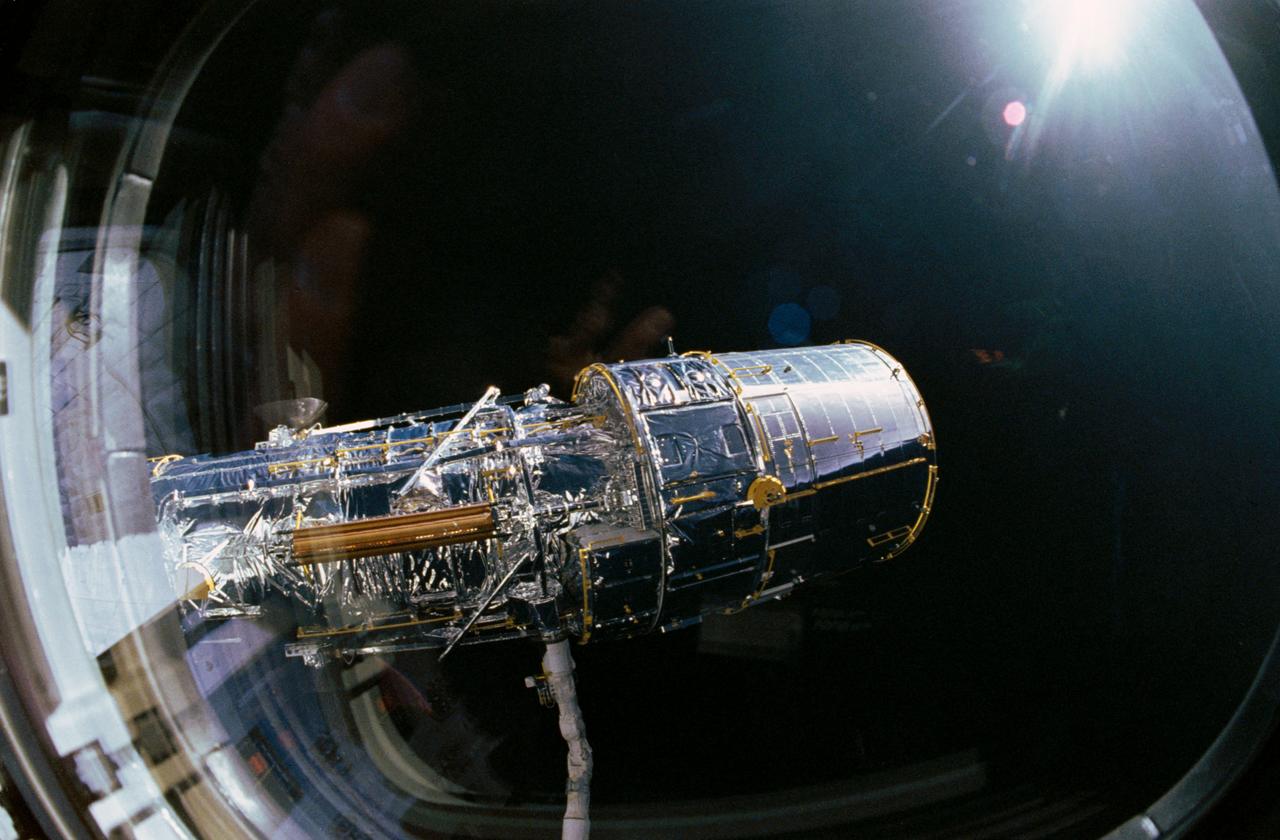
View taken through overhead window W7 aboard Discovery, Orbiter Vehicle (OV) 103, shows the Hubble Space Telescope (HST) grappled by the remote manipulator system (RMS) and held in a 90 degree pitch position against the blackness of space. The solar array (SA) panel (center) and the high gain antennae (HGA) (on either side) are visible along the Support System Module (SSM) forward shell prior to deployment during STS-31.
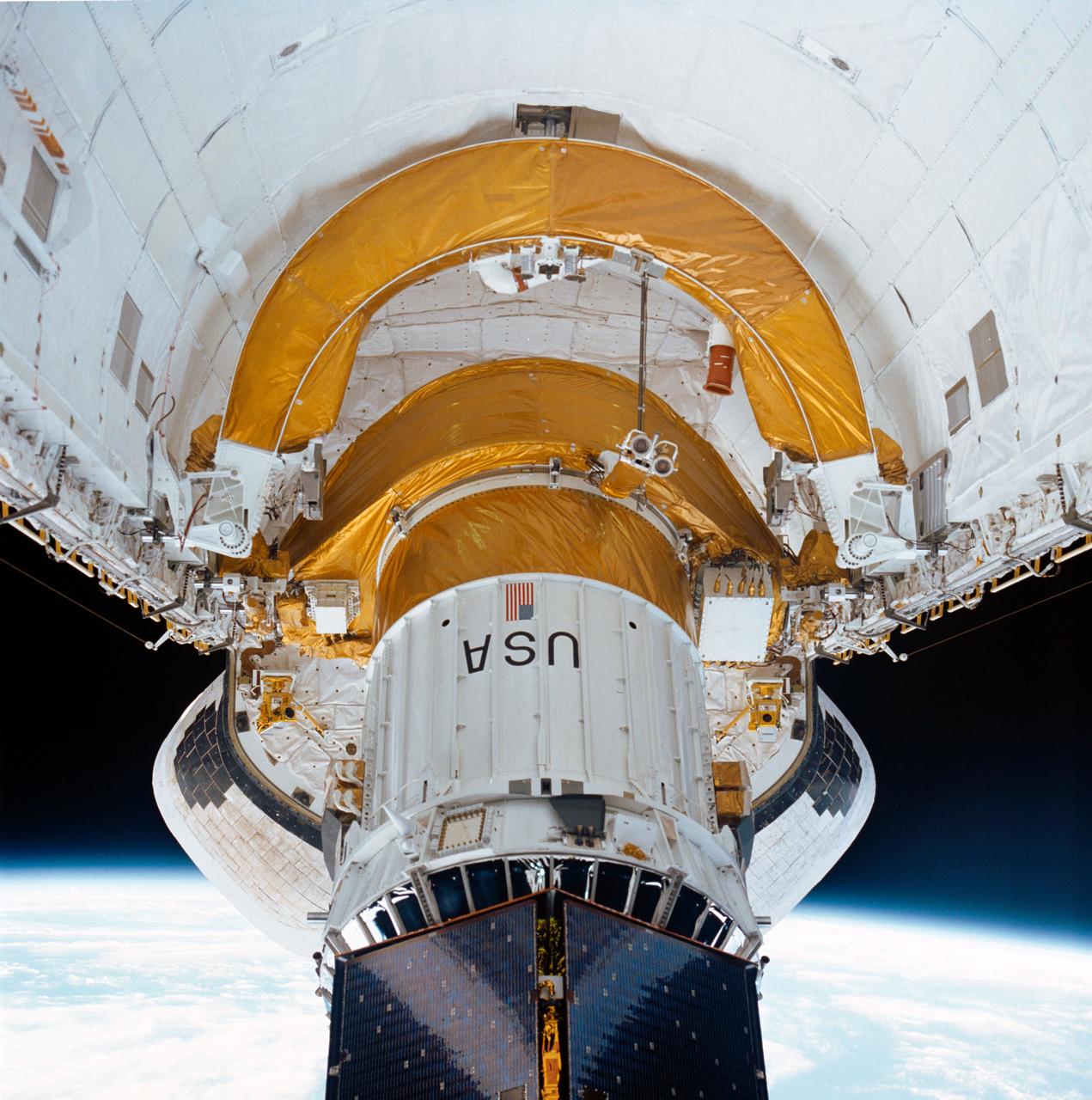
During STS-26, inertial upper stage (IUS) with the tracking and data relay satellite C (TDRS-C) located in the payload bay (PLB) of Discovery, Orbiter Vehicle (OV) 103, is raised into deployment attitude (an angle of 50 degrees) by the airborne support equipment (ASE). ASE aft frame tilt actuator (AFTA) table supports the IUS as it is positioned in the PLB and the ASE umbilical boom drifts away from IUS toward ASE forward cradle. TDRS-C solar array panels (in stowed configuration) are visible on top of the IUS. In the background are the orbital maneuvering system (OMS) pods and the Earth's limb.
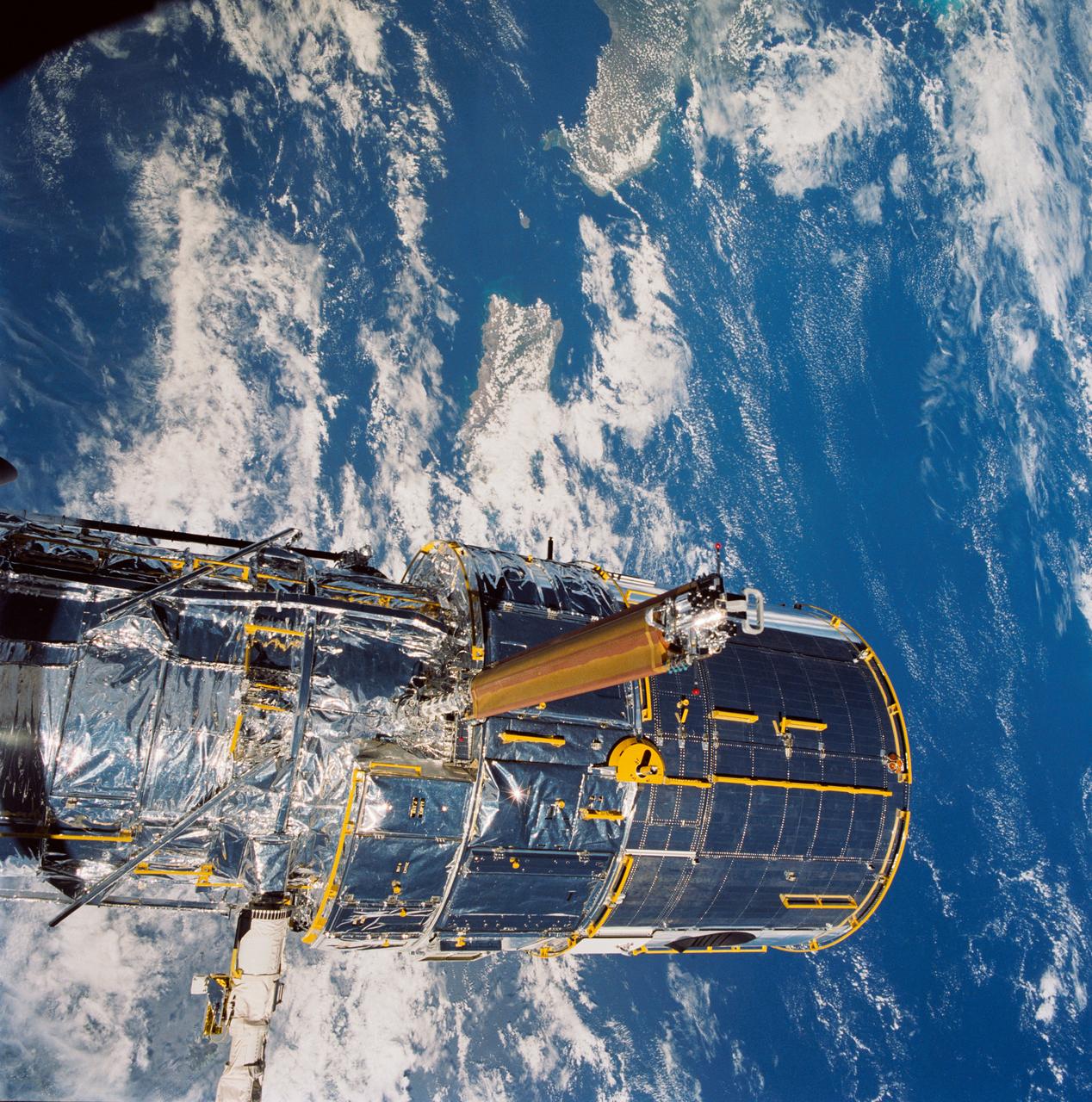
During STS-31, the Hubble Space Telescope (HST) grappled by the remote manipulator system (RMS) end effector is held in appendage deploy position above Discovery, Orbiter Vehicle (OV) 103. The solar array (SA) bistem cassette has been released from its latch fittings. The bistem spreader bars begin to unfurl the SA wing. The secondary deployment mechanism (SDM) handle is visible at the SA end. Stowed against either side of the HST System Support Module (SSM) forward shell are the high-gain antennae (HGA). Puerto Rico and the Dominican Republic are recognizable at the left of the frame.
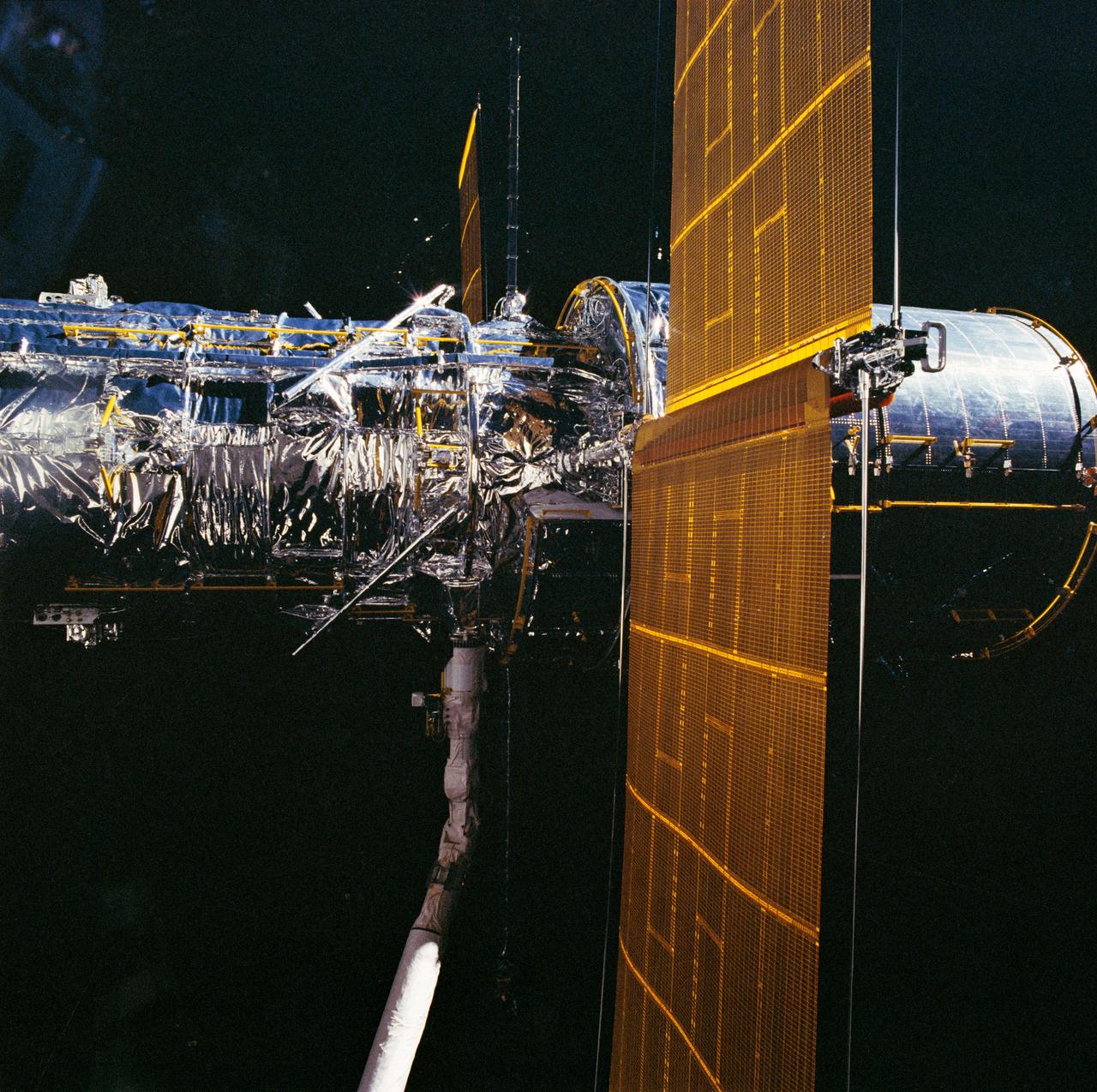
During STS-31, the Hubble Space Telescope (HST), grappled by the remote manipulator system (RMS) end effector, is held against the blackness of space. The two solar array (SA) wings (large gold panels) are fully extended with bistem cassette and secondary deployment mechanism (SDM) handle clearly visible. The two deployed high gain antennae (HGA) masts are parallel to the SA panels. RMS end effector is positioned on the starboard fixture during the predeployment checkout operations above Discovery's, Orbiter Vehicle (OV) 103's, payload bay (PLB).
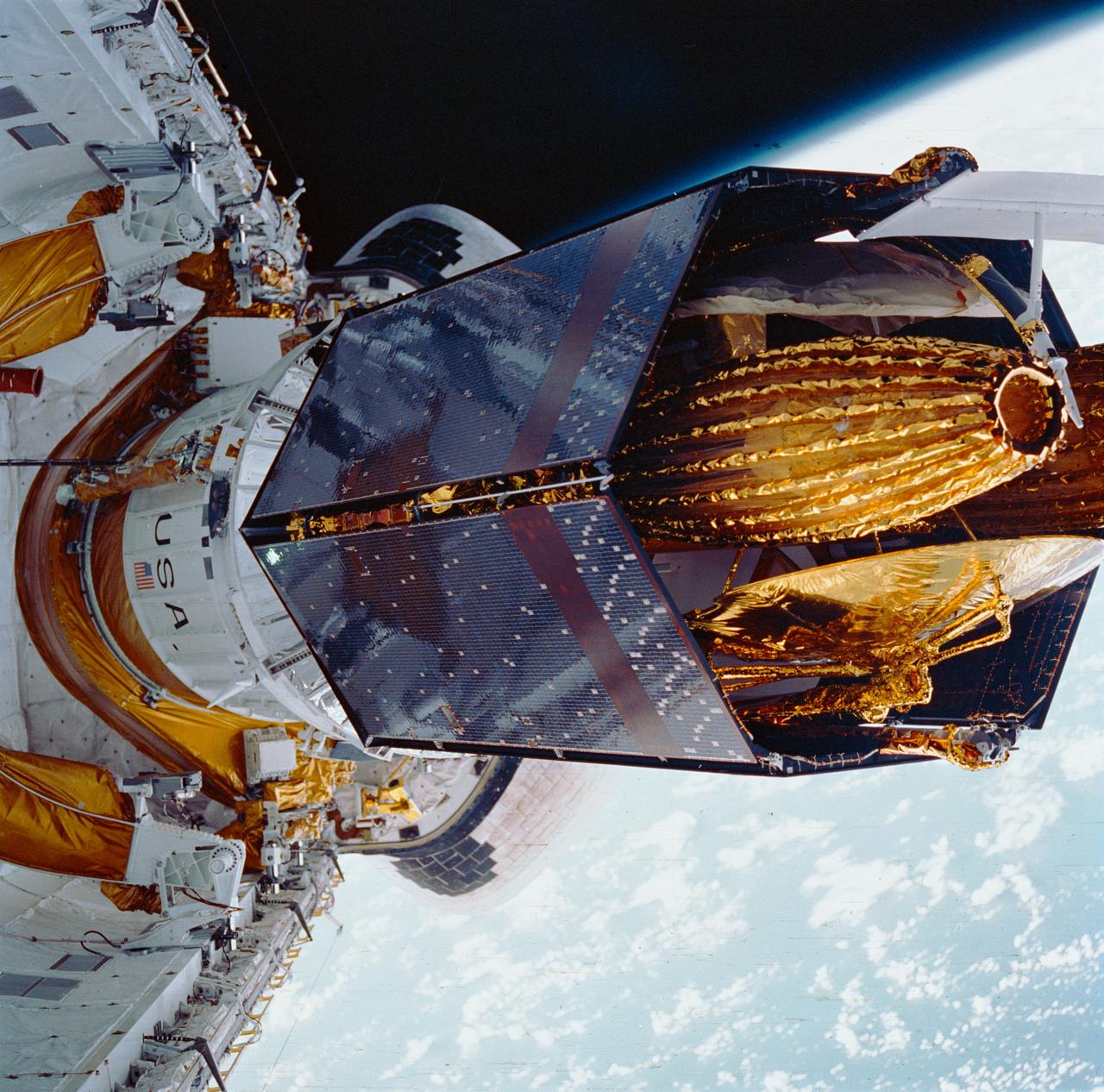
During STS-26, inertial upper stage (IUS) with tracking and data relay satellite C (TDRS-C) located in the payload bay (PLB) of Discovery, Orbiter Vehicle (OV) 103, is positioned into its proper deployment attitude (an angle of 50 degrees) by the airborne support equipment (ASE). In the foreground, the ASE forward cradle is visible. The IUS is mounted in the ASE aft frame tilt actuator (AFTA) table. TDRS-C components in stowed configuration include solar array panels, TDRS single access #1 and #2, TDRS SGL, and S-Band omni antenna. In the background are the orbital maneuvering system (OMS) pods, the Earth's cloud-covered surface, and the Earth's limb.
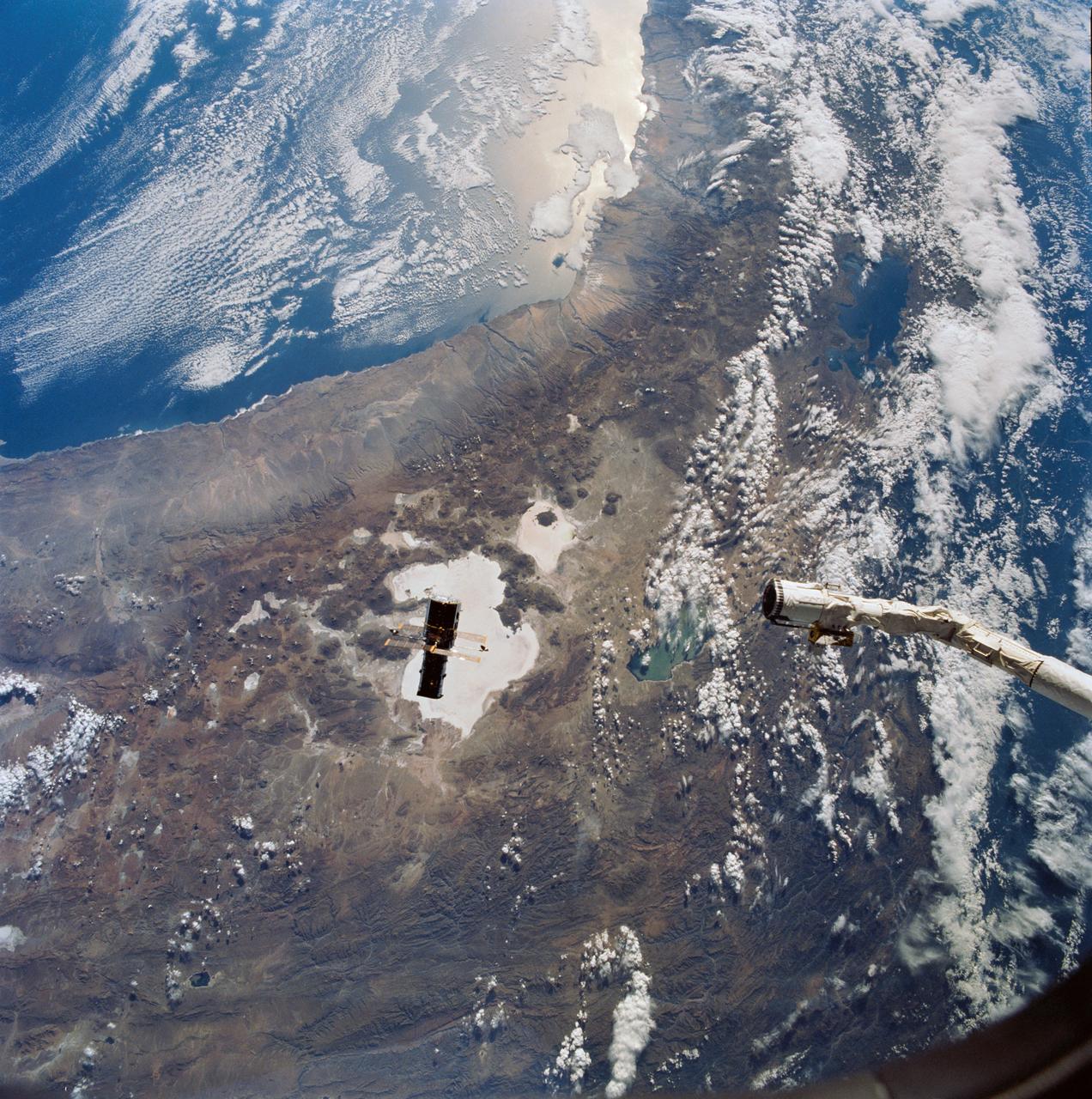
Hubble Space Telescope (HST), with its solar array (SA) wings and high gain antennae (HGA) fully extended,is released from Discovery's, Orbiter Vehicle (OV) 103's, remote manipulator system (RMS) end effector and is set free into Earth orbit by the STS-31 crew. HST drifts away from the end effector over the Andes Mountains.Parts of Bolivia, Peru, Chile, and Argentina are visible. The view covers a huge area of the western half of South America stretching from 14 degrees south latitude to 23 degrees, about 1,000 kilometers.
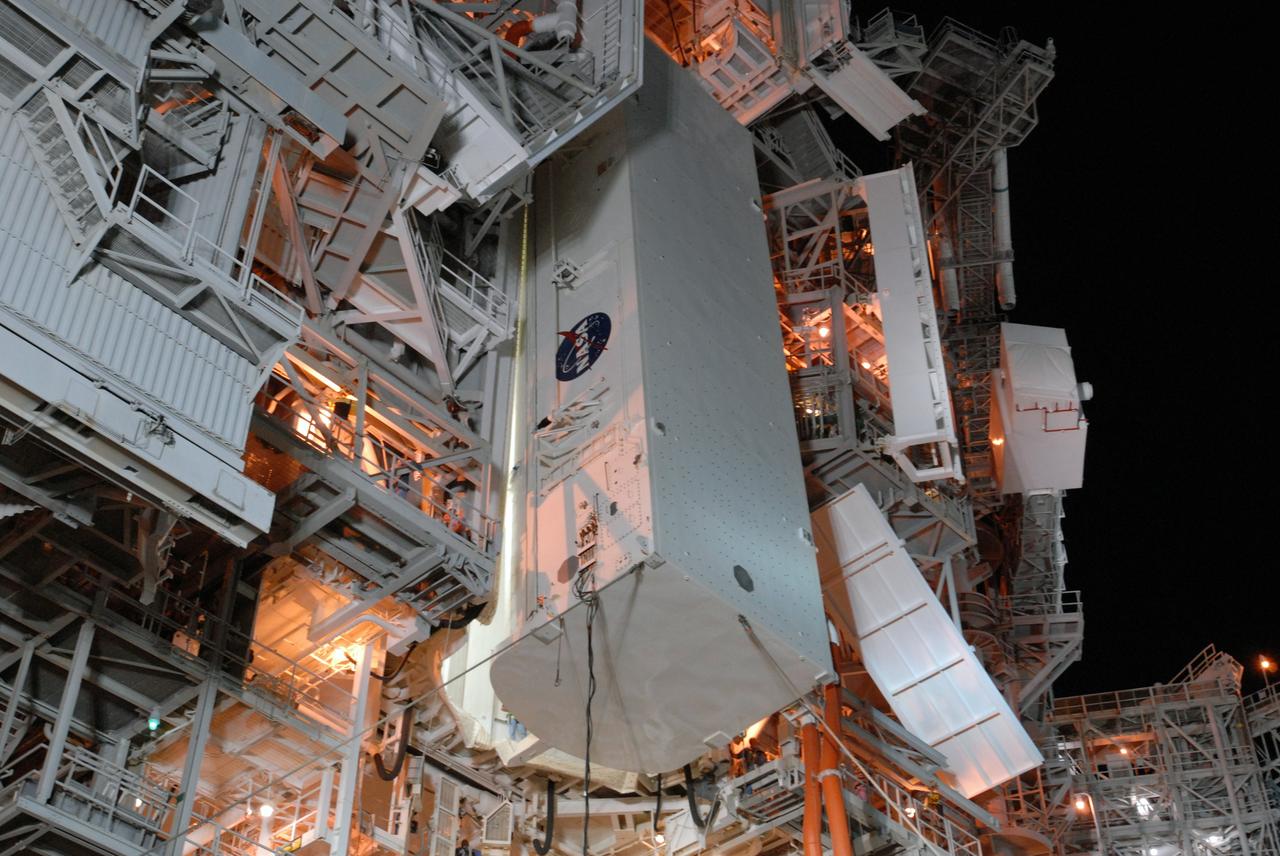
CAPE CANAVERAL, Fla. -- With red umbilical lines attached, the payload containing space shuttle Discovery's S6 truss and solar arrays is lifted up to the Payload Changeout Room, or PCR, on Launch Pad 39A at NASA's Kennedy Space Center in Florida. The payload will be transferred inside the PCR where it will wait until Discovery rolls out to the pad. Then the payload will be installed in the shuttle's payload bay. Launch of Discovery on the STS-119 mission is scheduled for Feb. 12. During Discovery's 14-day mission, the crew will install the S6 truss segment and its solar arrays to the starboard side of the station, completing the station's backbone, or truss Photo credit: NASA/Jim Grossmann
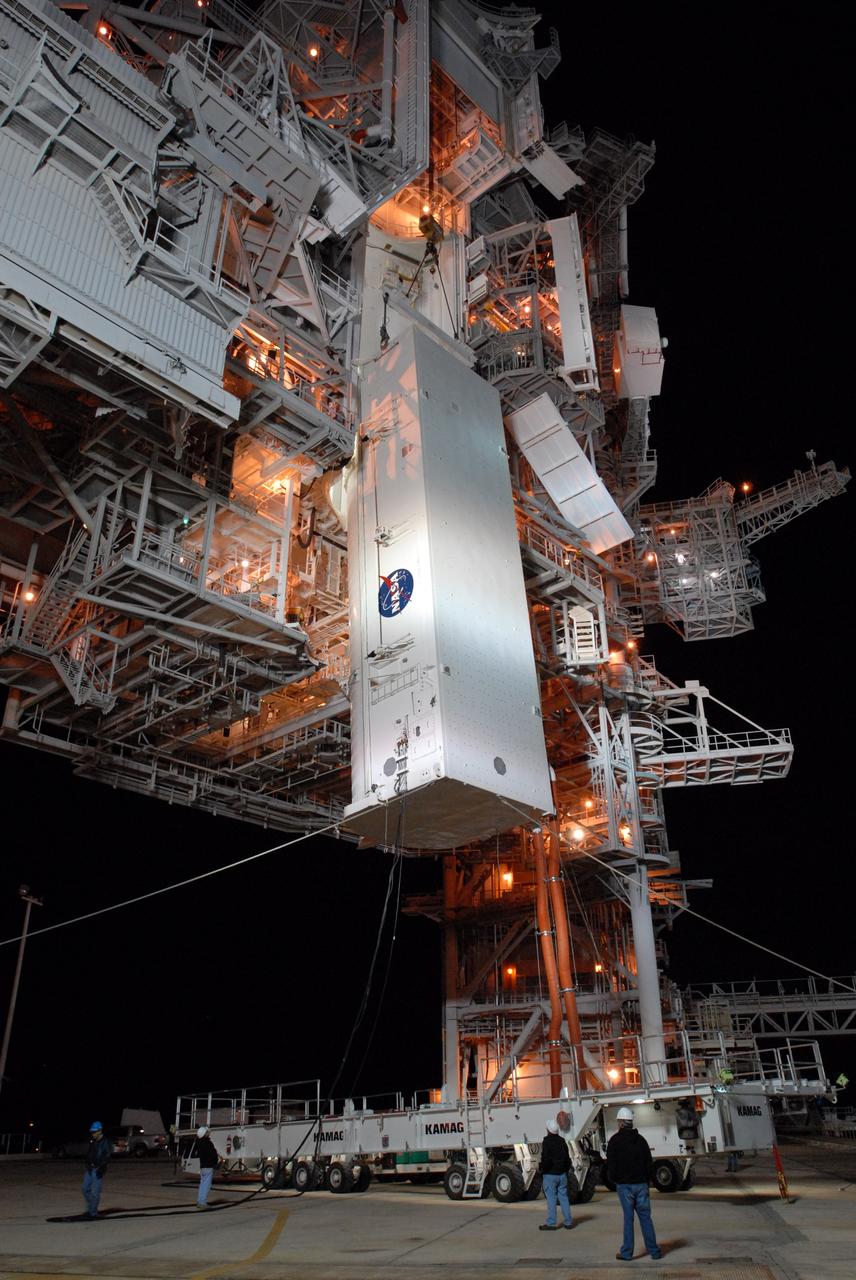
CAPE CANAVERAL, Fla. -- With red umbilical lines attached, the payload containing space shuttle Discovery's S6 truss and solar arrays is lifted up to the Payload Changeout Room, or PCR, on Launch Pad 39A at NASA's Kennedy Space Center in Florida. The payload will be transferred inside the PCR where it will wait until Discovery rolls out to the pad. Then the payload will be installed in the shuttle's payload bay. Launch of Discovery on the STS-119 mission is scheduled for Feb. 12. During Discovery's 14-day mission, the crew will install the S6 truss segment and its solar arrays to the starboard side of the station, completing the station's backbone, or truss. Photo credit: NASA/Jim Grossmann
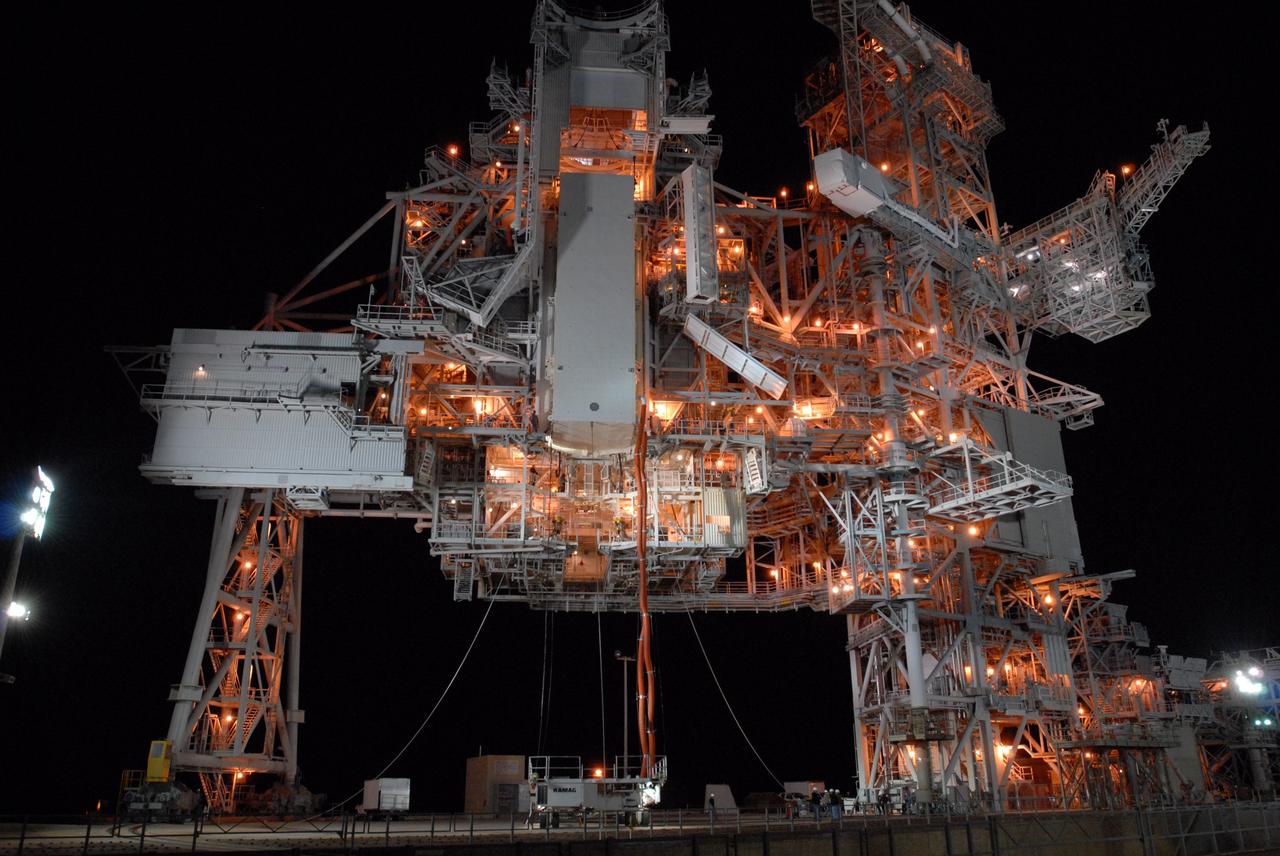
CAPE CANAVERAL, Fla. -- With red umbilical lines attached, the payload containing space shuttle Discovery's S6 truss and solar arrays is lifted up to the Payload Changeout Room, or PCR, on Launch Pad 39A at NASA's Kennedy Space Center in Florida. The payload will be transferred inside the PCR where it will wait until Discovery rolls out to the pad. Then the payload will be installed in the shuttle's payload bay. Launch of Discovery on the STS-119 mission is scheduled for Feb. 12. During Discovery's 14-day mission, the crew will install the S6 truss segment and its solar arrays to the starboard side of the station, completing the station's backbone, or truss Photo credit: NASA/Jim Grossmann
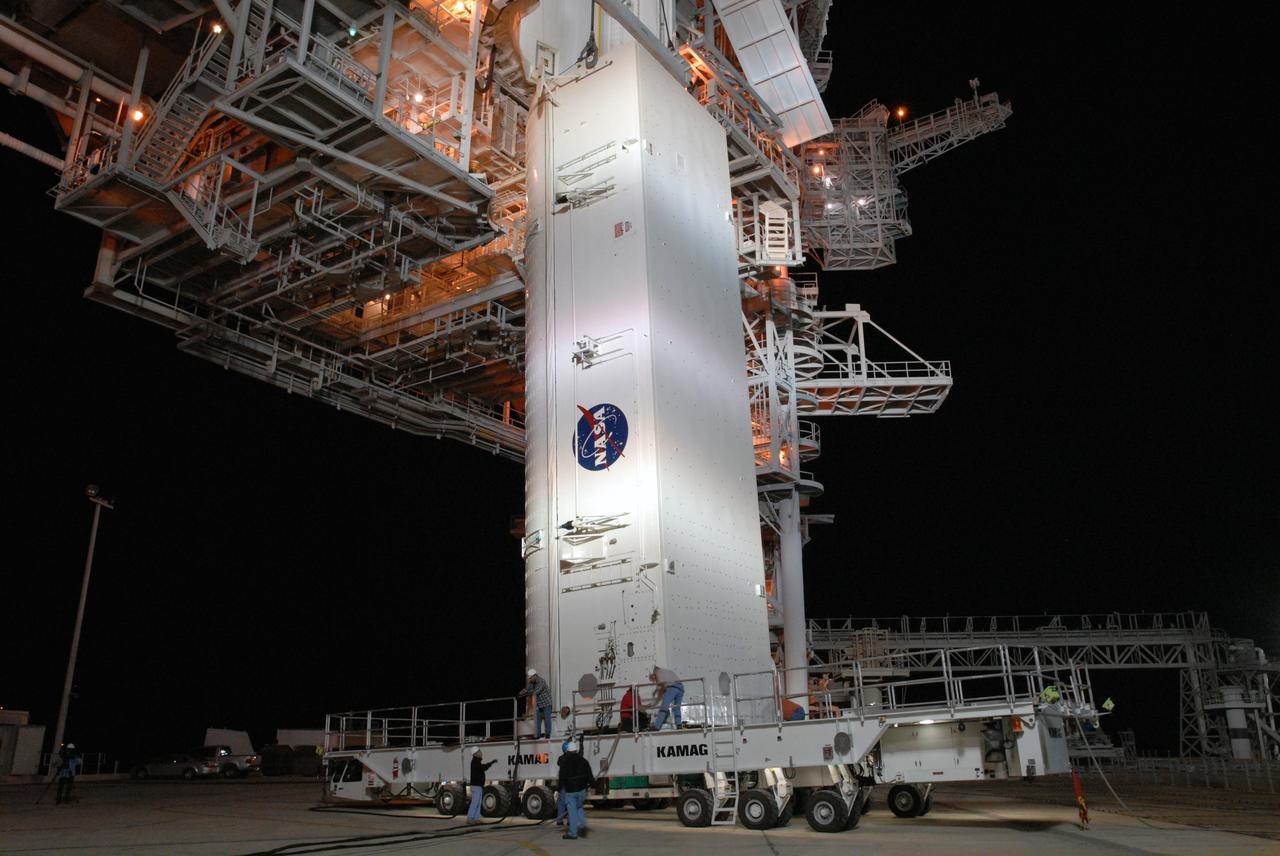
CAPE CANAVERAL, Fla. -- The payload canister containing the S6 truss and solar arrays arrives at Launch Pad 39A at NASA's Kennedy Space Center in Florida. The canister sits below the Payload Changeout Room, or PCR. It will be lifted up to the PCR and space shuttle Discovery's payload transferred inside. After Discovery rolls out to the pad, the payload will be installed in the shuttle's payload bay. Launch of Discovery on the STS-119 mission is scheduled for Feb. 12. During Discovery's 14-day mission, the crew will install the S6 truss segment and its solar arrays to the starboard side of the station, completing the station's backbone, or truss Photo credit: NASA/Jim Grossmann
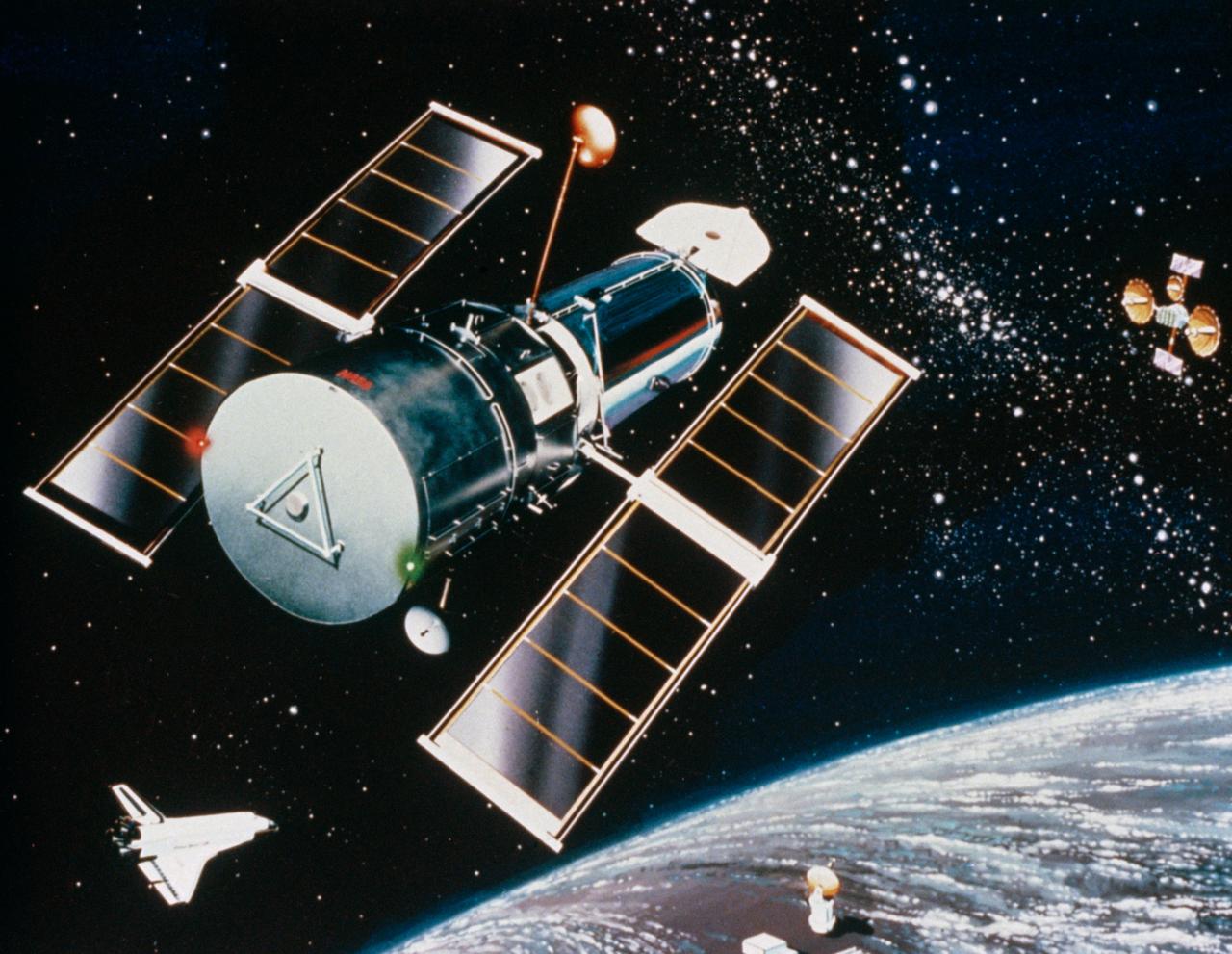
Artist concept shows the Hubble Space Telescope (HST) placed in orbit above the Earth's distorting layer of atmosphere by Discovery, Orbiter Vehicle (OV) 103, during mission STS-31. Tracking and data relay satellite (TDRS) is visible in the background and ground station is visible below on the Earth's surface. HST is the first of the great observatories to go into service and one of NASA's highest priority scientific spacecraft. Capable of observing in both visible and ultraviolet wavelengths, HST has been termed the most important scientific instrument ever designed for use on orbit. It will literally be able to look back in time, observing the universe as it existed early in its lifetime and providing information on how matter has evolved over the eons. The largest scientific payload ever built, the 12 1/2-ton, 43-foot HST was developed by Lockheed Missiles & Space Company, spacecraft prime contractor, and Perkin-Elmer Corporation, prime contractor for the optical assembly. The European Space Agency (ESA) furnished the power generating solar array and one of the system's five major instruments. Marshall Space Flight Center (MSFC) manages the HST project; Goddard Space Flight Center (GSFC) will be responsible, when the spacecraft is in orbit, for controlling the telescope and processing the images and instrument data returns.