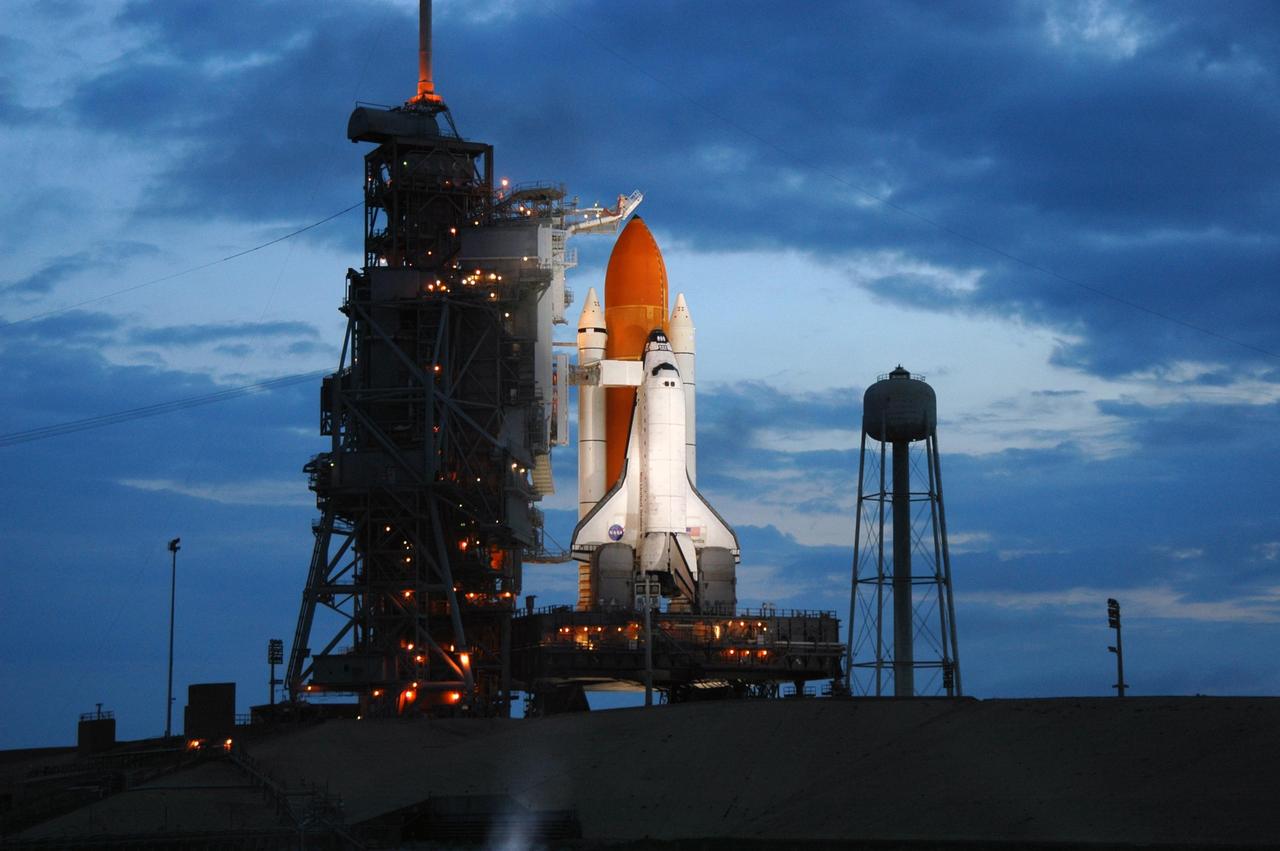
KENNEDY SPACE CENTER, FLA. - The morning sky lightens behind Space Shuttle Atlantis while lights on the fixed service structure (FSS) still illuminate the orbiter on Launch Pad 39B. Atlantis was originally scheduled to launch at 12:29 p.m. EDT on this date, but a 24-hour scrub was called by mission managers due to a concern with Fuel Cell 1. Seen poised above the orange external tank is the vent hood (known as the "beanie cap") at the end of the gaseous oxygen vent arm. Vapors are created as the liquid oxygen in the external tank boil off. The hood vents the gaseous oxygen vapors away from the space shuttle vehicle. Extending from the FSS to Atlantis is the orbiter access arm with the White Room at the end. The White Room provides entry into the orbiter through the hatch. At right is the 300,000-gallon water tank that releases its contents onto the mobile launcher platform during liftoff to aid sound suppression. During the STS-115 mission, Atlantis' astronauts will deliver and install the 17.5-ton, bus-sized P3/P4 integrated truss segment on the station. The girder-like truss includes a set of giant solar arrays, batteries and associated electronics and will provide one-fourth of the total power-generation capability for the completed station. This mission is the 116th space shuttle flight, the 27th flight for orbiter Atlantis, and the 19th U.S. flight to the International Space Station. STS-115 is scheduled to last 11 days with a planned landing at KSC. Photo credit: NASA/Troy Cryder
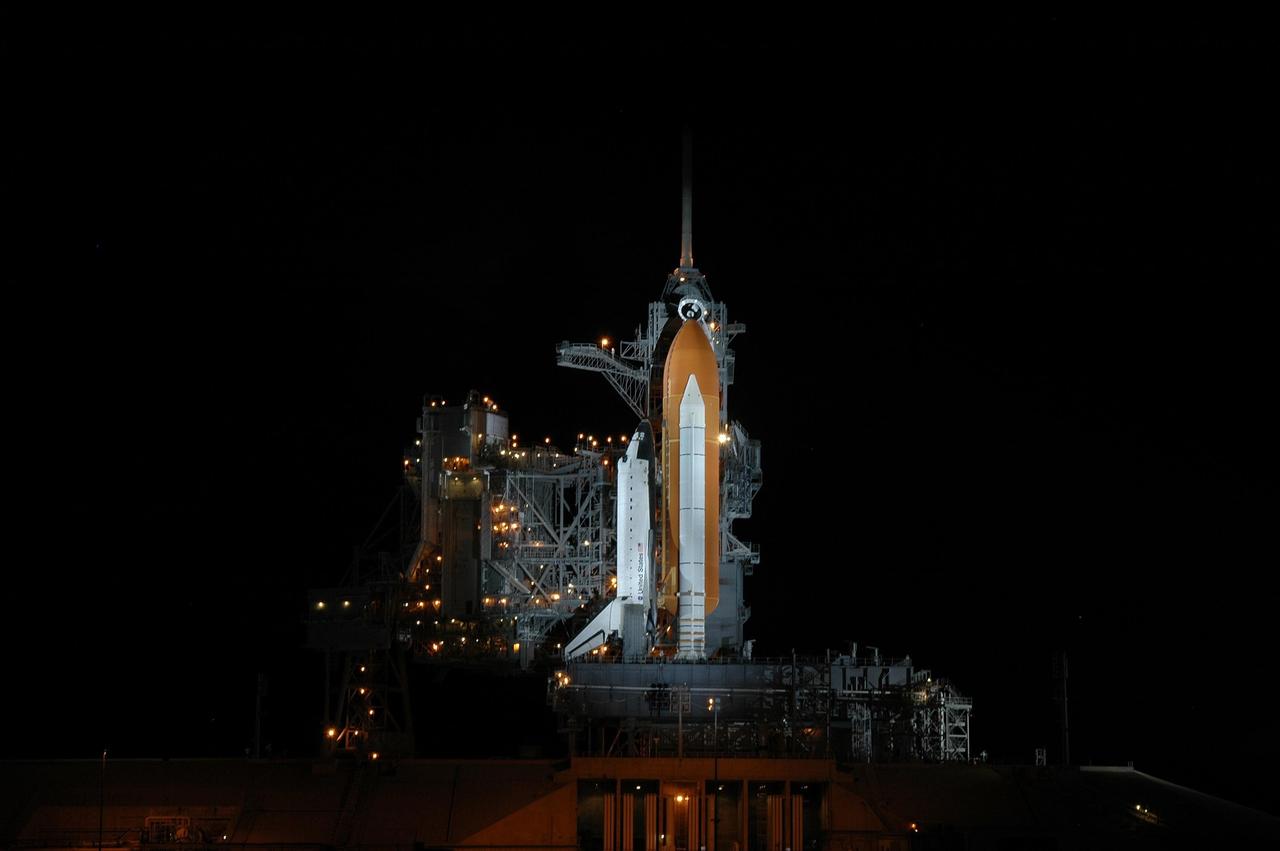
KENNEDY SPACE CENTER, FLA. - Space Shuttle Atlantis is bathed in light on Launch Pad 39B. Atlantis was originally scheduled to launch at 12:29 p.m. EDT on this date, but a 24-hour scrub was called by mission managers due to a concern with Fuel Cell 1. During the STS-115 mission, Atlantis' astronauts will deliver and install the 17.5-ton, bus-sized P3/P4 integrated truss segment on the station. The girder-like truss includes a set of giant solar arrays, batteries and associated electronics and will provide one-fourth of the total power-generation capability for the completed station. This mission is the 116th space shuttle flight, the 27th flight for orbiter Atlantis, and the 19th U.S. flight to the International Space Station. STS-115 is scheduled to last 11 days with a planned landing at KSC. Photo credit: NASA/Jim Grossmann
KENNEDY SPACE CENTER, FLA. - Although it appears to be standing on twin columns of fire, Space Shuttle Atlantis leaps off the launch pad, heading toward space for a rendezvous with the International Space Station on mission STS-115. Liftoff was on-time at 11:14:55 a.m. EDT. After launch attempts were scrubbed Aug. 27 and 29 and Sept. 3 and 8 due to weather and technical concerns, this launch was executed perfectly. Mission STS-115 is the 116th space shuttle flight, the 27th flight for orbiter Atlantis, and the 19th U.S. flight to the International Space Station. During the mission, Atlantis' astronauts will deliver and install the 17.5-ton, bus-sized P3/P4 integrated truss segment on the station. The girder-like truss includes a set of giant solar arrays, batteries and associated electronics and will provide one-fourth of the total power-generation capability for the completed station. STS-115 is scheduled to last 11 days with a planned landing at KSC. Photo credit: NASA/Sandra Joseph & Robert Murray
KENNEDY SPACE CENTER, FLA. - With a fiery liftoff, Space Shuttle Atlantis roars off the launch pad for a rendezvous with the International Space Station on mission STS-115. After launch attempts were scrubbed Aug. 27 and 29 and Sept. 3 and 8 due to weather and technical concerns, this launch was executed perfectly. During the STS-115 mission, Atlantis' astronauts will deliver and install the 17.5-ton, bus-sized P3/P4 integrated truss segment on the station. The girder-like truss includes a set of giant solar arrays, batteries and associated electronics and will provide one-fourth of the total power-generation capability for the completed station. This mission is the 116th space shuttle flight, the 27th flight for orbiter Atlantis, and the 19th U.S. flight to the ISS. STS-115 is scheduled to last 11 days with a planned landing at KSC. Photo credit: NASA/Dennis Sabo
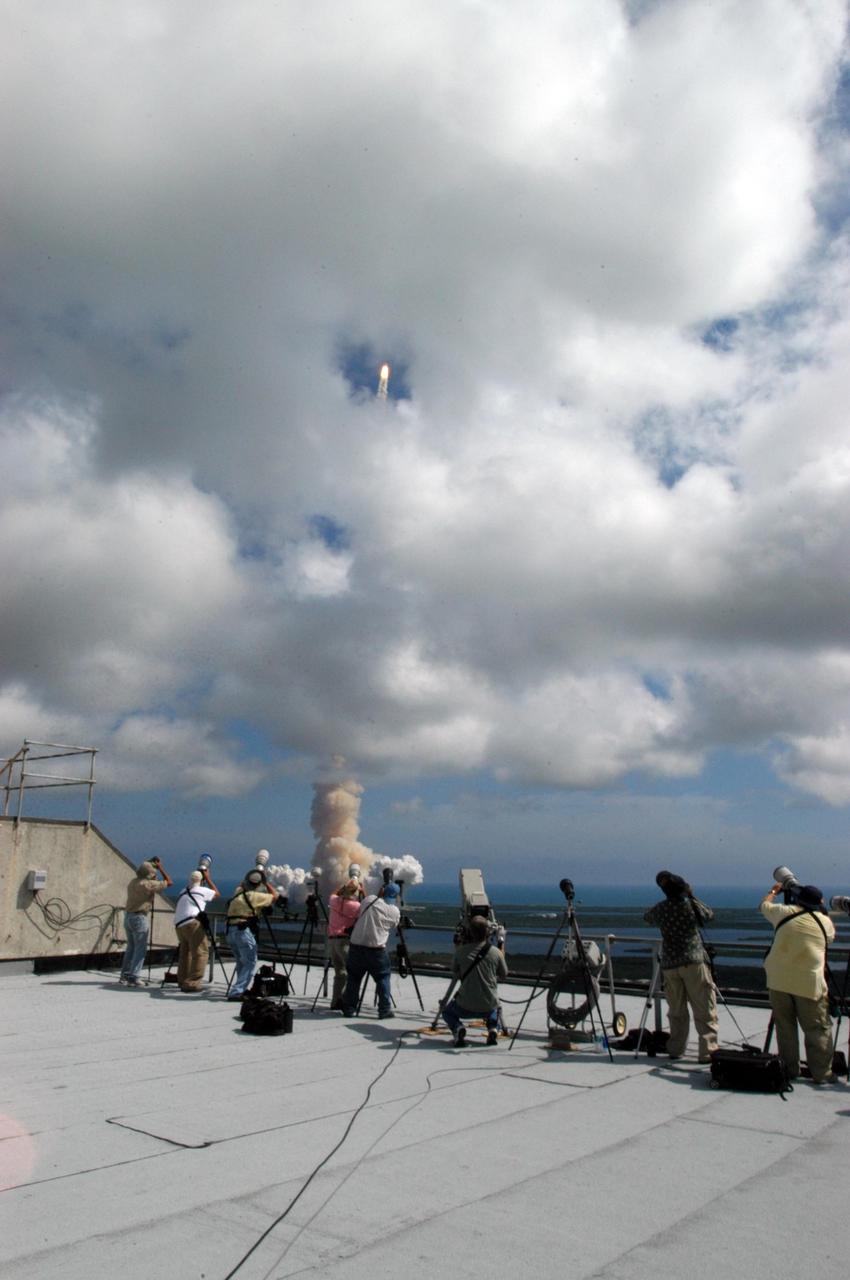
KENNEDY SPACE CENTER, FLA. - A phalanx of photographers line the roof of the Vehicle Assembly Building as Space Shuttle Atlantis roars off the launch pad at 11:14:55 a.m. EDT for a rendezvous with the International Space Station on mission STS-115. After launch attempts were scrubbed Aug. 27 and 29 and Sept. 3 and 8 due to weather and technical concerns, this launch was executed perfectly. During the STS-115 mission, Atlantis' astronauts will deliver and install the 17.5-ton, bus-sized P3/P4 integrated truss segment on the station. The girder-like truss includes a set of giant solar arrays, batteries and associated electronics and will provide one-fourth of the total power-generation capability for the completed station. This mission is the 116th space shuttle flight, the 27th flight for orbiter Atlantis, and the 19th U.S. flight to the ISS. STS-115 is scheduled to last 11 days with a planned landing at KSC. Photo credit: NASA/George Shelton
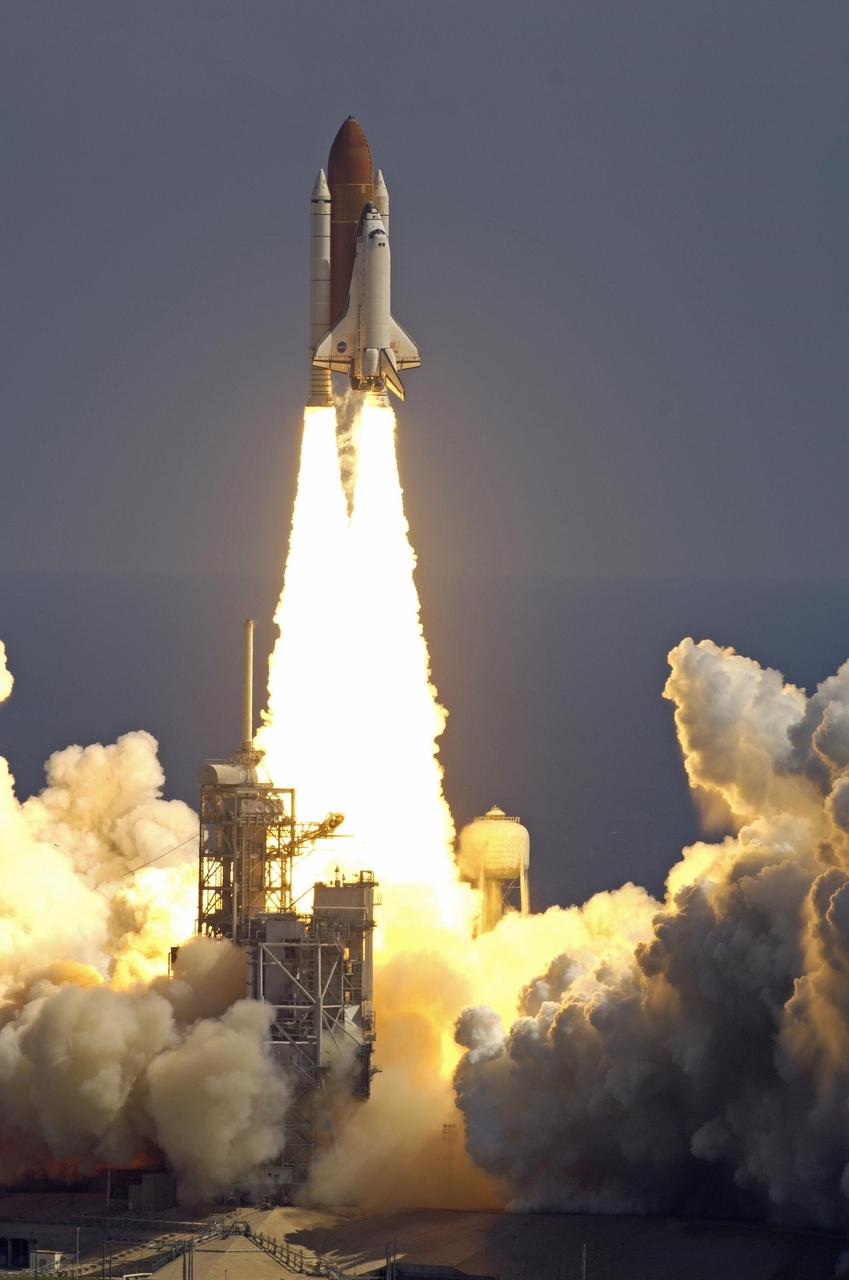
KENNEDY SPACE CENTER, FLA. - Flaming rockets propel Space Shuttle Atlantis into the sky for a rendezvous with the International Space Station on mission STS-115. Liftoff was on-time at 11:14:55 a.m. EDT. After launch attempts were scrubbed Aug. 27 and 29 and Sept. 3 and 8 due to weather and technical concerns, this launch was executed perfectly. Mission STS-115 is the 116th space shuttle flight, the 27th flight for orbiter Atlantis, and the 19th U.S. flight to the International Space Station. During the mission, Atlantis' astronauts will deliver and install the 17.5-ton, bus-sized P3/P4 integrated truss segment on the station. The girder-like truss includes a set of giant solar arrays, batteries and associated electronics and will provide one-fourth of the total power-generation capability for the completed station. STS-115 is scheduled to last 11 days with a planned landing at KSC. Photo courtesy of Nikon/Scott Andrews
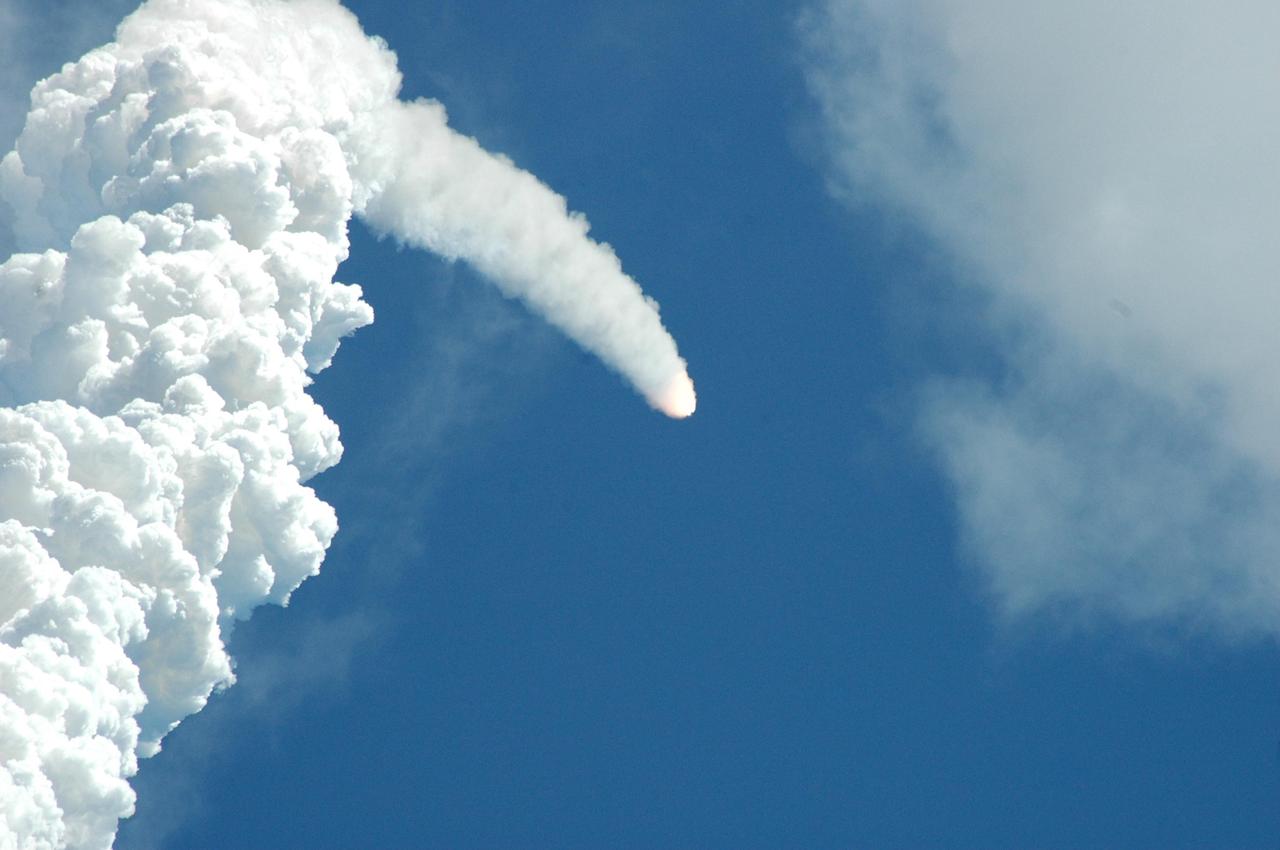
KENNEDY SPACE CENTER, FLA. - Nearly obscured by its own contrail, Space Shuttle Atlantis hurtles toward space for a rendezvous with the International Space Station on mission STS-115. Liftoff was on-time at 11:14:55 a.m. EDT. After launch attempts were scrubbed Aug. 27 and 29 and Sept. 3 and 8 due to weather and technical concerns, this launch was executed perfectly. Mission STS-115 is the 116th space shuttle flight, the 27th flight for orbiter Atlantis, and the 19th U.S. flight to the International Space Station. During the mission, Atlantis' astronauts will deliver and install the 17.5-ton, bus-sized P3/P4 integrated truss segment on the station. The girder-like truss includes a set of giant solar arrays, batteries and associated electronics and will provide one-fourth of the total power-generation capability for the completed station. STS-115 is scheduled to last 11 days with a planned landing at KSC. Photo credit: NASA/Ken Thornsley
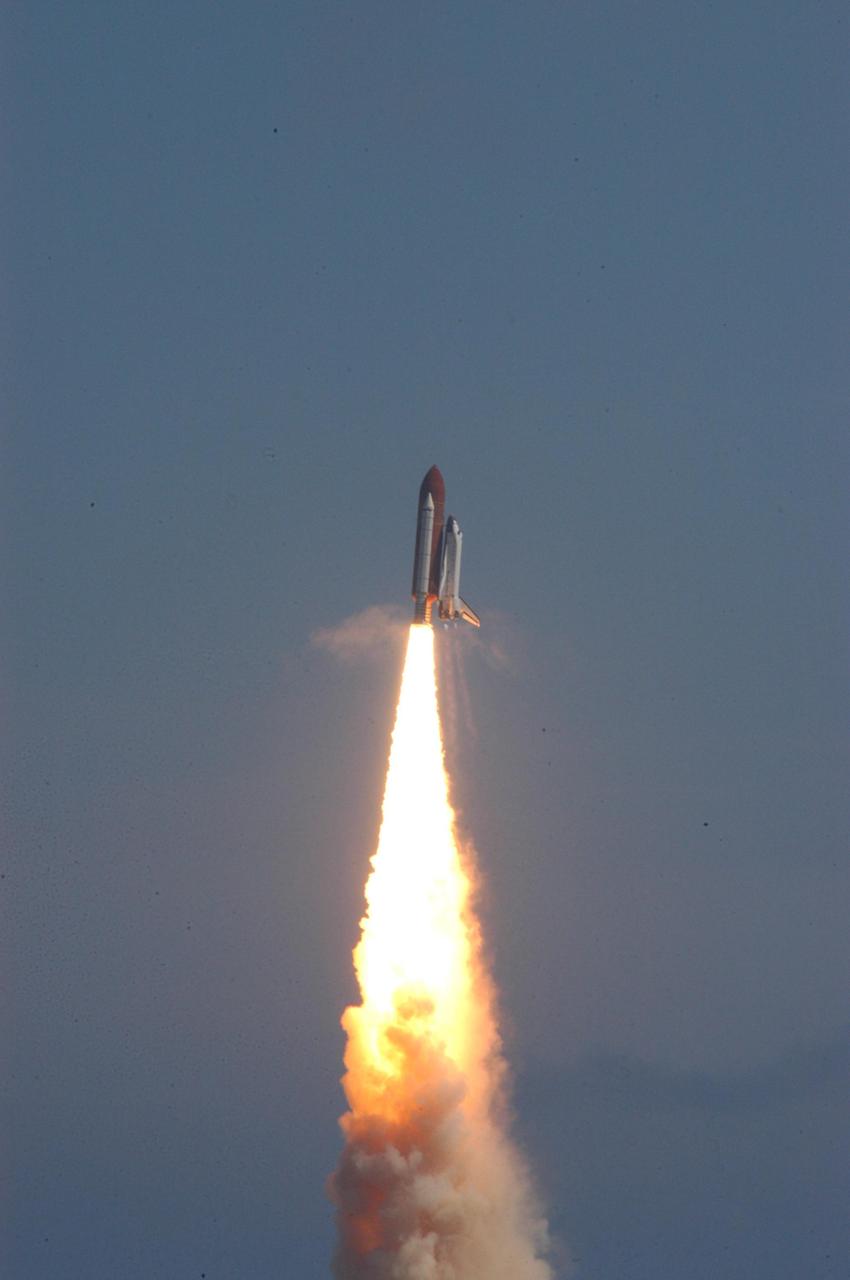
KENNEDY SPACE CENTER, FLA. - The fiery launch of Space Shuttle Atlantis makes a perfect picture against the blue Florida sky as Atlantis heads for a rendezvous with the International Space Station on mission STS-115. After launch attempts were scrubbed Aug. 27 and 29 and Sept. 3 and 8 due to weather and technical concerns, this launch was executed perfectly. During the STS-115 mission, Atlantis' astronauts will deliver and install the 17.5-ton, bus-sized P3/P4 integrated truss segment on the station. The girder-like truss includes a set of giant solar arrays, batteries and associated electronics and will provide one-fourth of the total power-generation capability for the completed station. This mission is the 116th space shuttle flight, the 27th flight for orbiter Atlantis, and the 19th U.S. flight to the ISS. STS-115 is scheduled to last 11 days with a planned landing at KSC. Photo credit: NASA/George Shelton
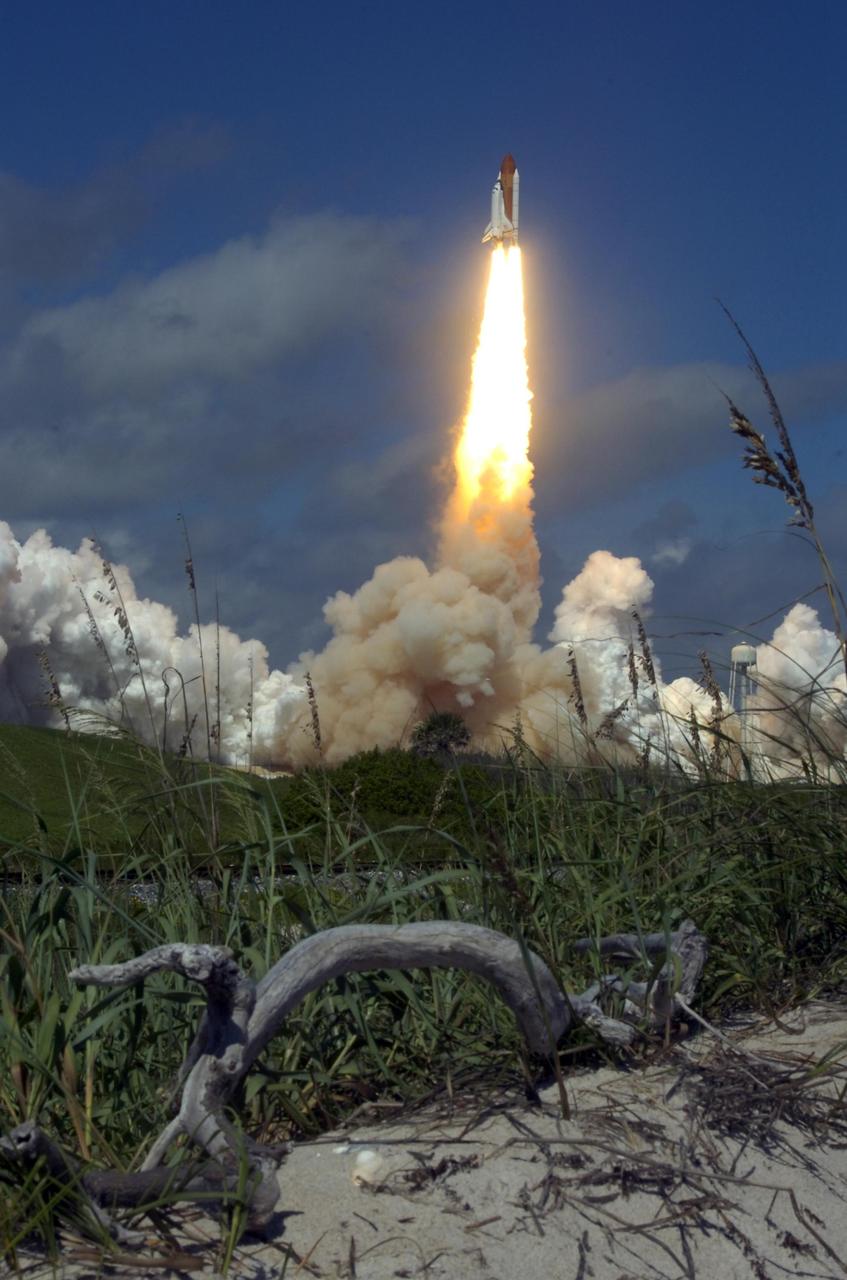
KENNEDY SPACE CENTER, FLA. - Space Shuttle Atlantis roars into the sky above the primitive sand dunes in the foreground. Heading for its rendezvous with the International Space Station on mission STS-115, liftoff was on-time at 11:14:55 a.m. EDT. After launch attempts were scrubbed Aug. 27 and 29 and Sept. 3 and 8 due to weather and technical concerns, this launch was executed perfectly. Mission STS-115 is the 116th space shuttle flight, the 27th flight for orbiter Atlantis, and the 19th U.S. flight to the International Space Station. During the mission, Atlantis' astronauts will deliver and install the 17.5-ton, bus-sized P3/P4 integrated truss segment on the station. The girder-like truss includes a set of giant solar arrays, batteries and associated electronics and will provide one-fourth of the total power-generation capability for the completed station. STS-115 is scheduled to last 11 days with a planned landing at KSC. Photo credit: NASA/Sandra Joseph & Robert Murray
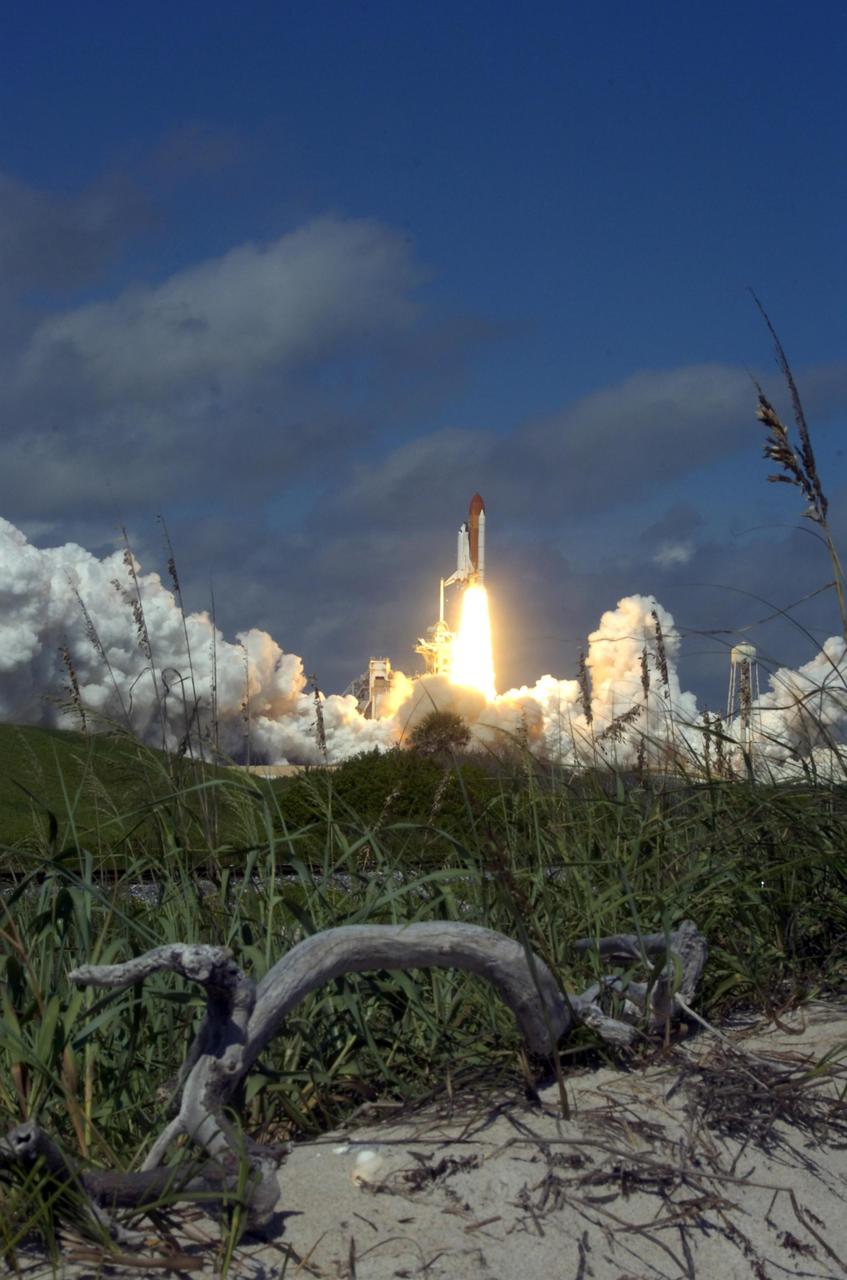
KENNEDY SPACE CENTER, FLA. - The primitiveness of the dunes (foreground) clash with the technology exhibited in the launch of Space Shuttle Atlantis for its rendezvous with the International Space Station on mission STS-115. Liftoff was on-time at 11:14:55 a.m. EDT. After launch attempts were scrubbed Aug. 27 and 29 and Sept. 3 and 8 due to weather and technical concerns, this launch was executed perfectly. Mission STS-115 is the 116th space shuttle flight, the 27th flight for orbiter Atlantis, and the 19th U.S. flight to the International Space Station. During the mission, Atlantis' astronauts will deliver and install the 17.5-ton, bus-sized P3/P4 integrated truss segment on the station. The girder-like truss includes a set of giant solar arrays, batteries and associated electronics and will provide one-fourth of the total power-generation capability for the completed station. STS-115 is scheduled to last 11 days with a planned landing at KSC. Photo credit: NASA/Sandra Joseph & Robert Murray
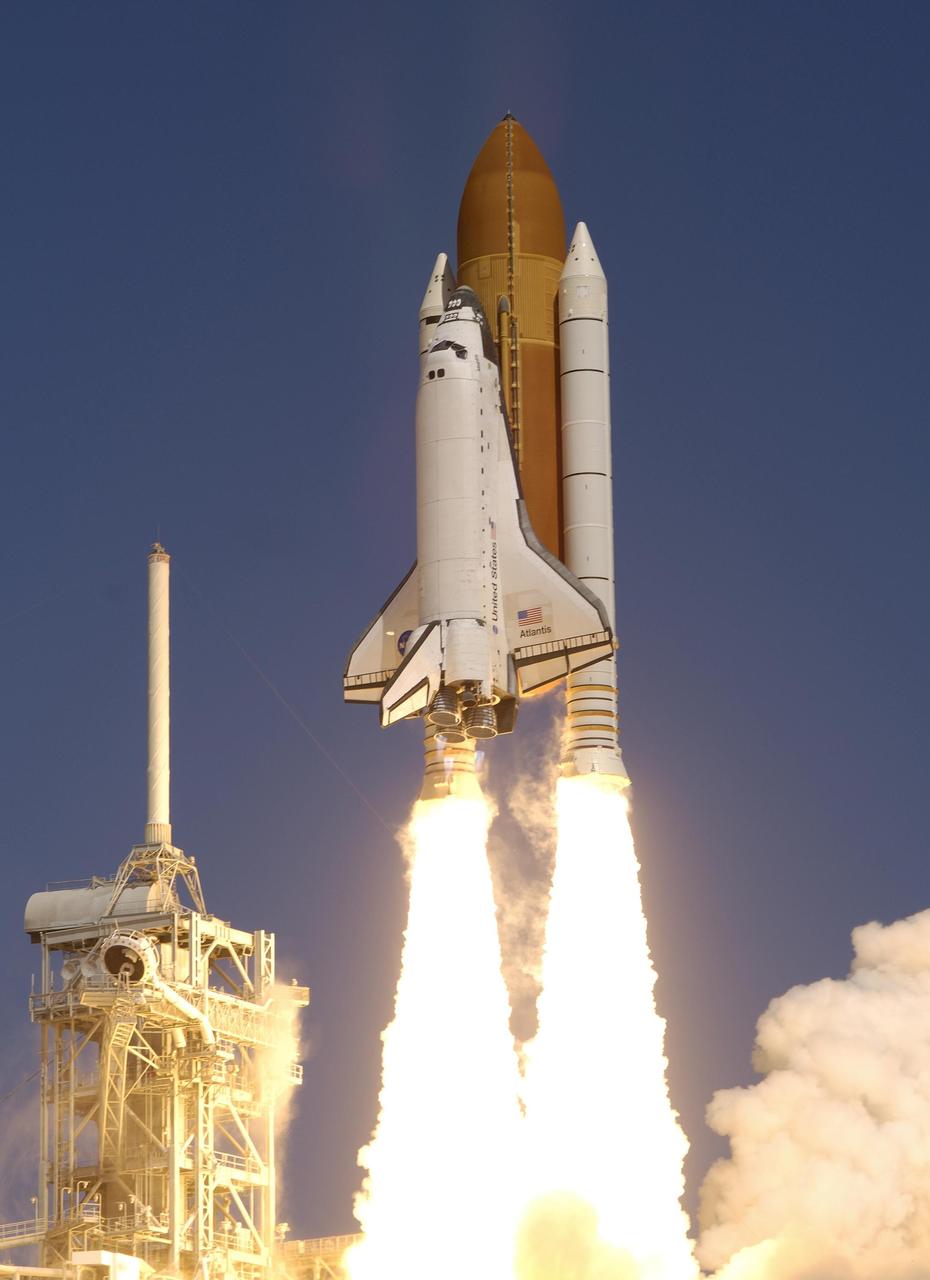
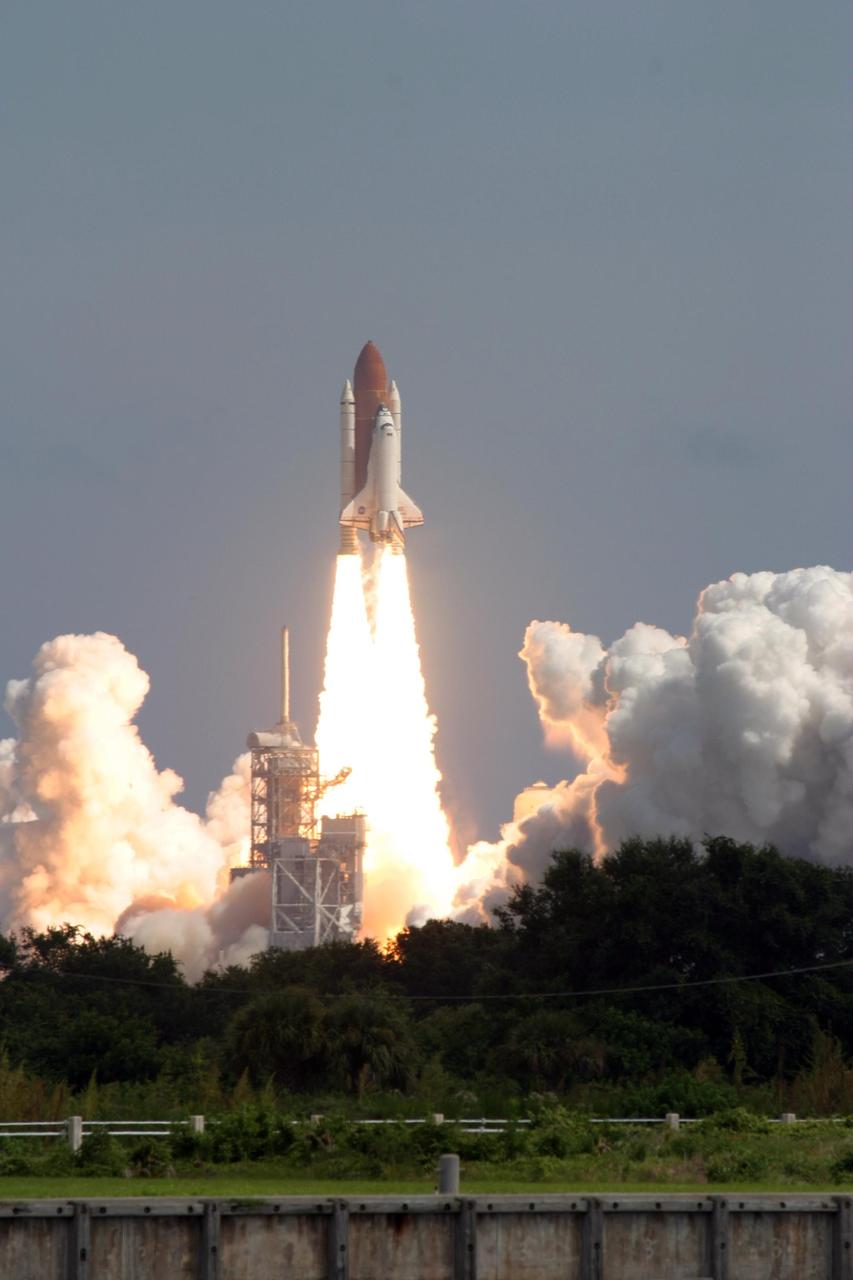
KENNEDY SPACE CENTER, FLA. - Space Shuttle Atlantis leaps off the launch pad past the lightning mast on top of the fixed service structure at left. Atlantis is heading for space and its rendezvous with the International Space Station on mission STS-115. Liftoff was on-time at 11:14:55 a.m. EDT. After several earlier launch attempts were scrubbed due to weather and technical concerns, this launch was executed perfectly. Mission STS-115 is the 116th space shuttle flight, the 27th flight for orbiter Atlantis, and the 19th U.S. flight to the International Space Station. During the mission, Atlantis' astronauts will deliver and install the 17.5-ton, bus-sized P3/P4 integrated truss segment on the station. The girder-like truss includes a set of giant solar arrays, batteries and associated electronics and will provide one-fourth of the total power-generation capability for the completed station. STS-115 is scheduled to last 11 days with a planned landing at KSC. Photo courtesy of Nikon/Scott Andrews
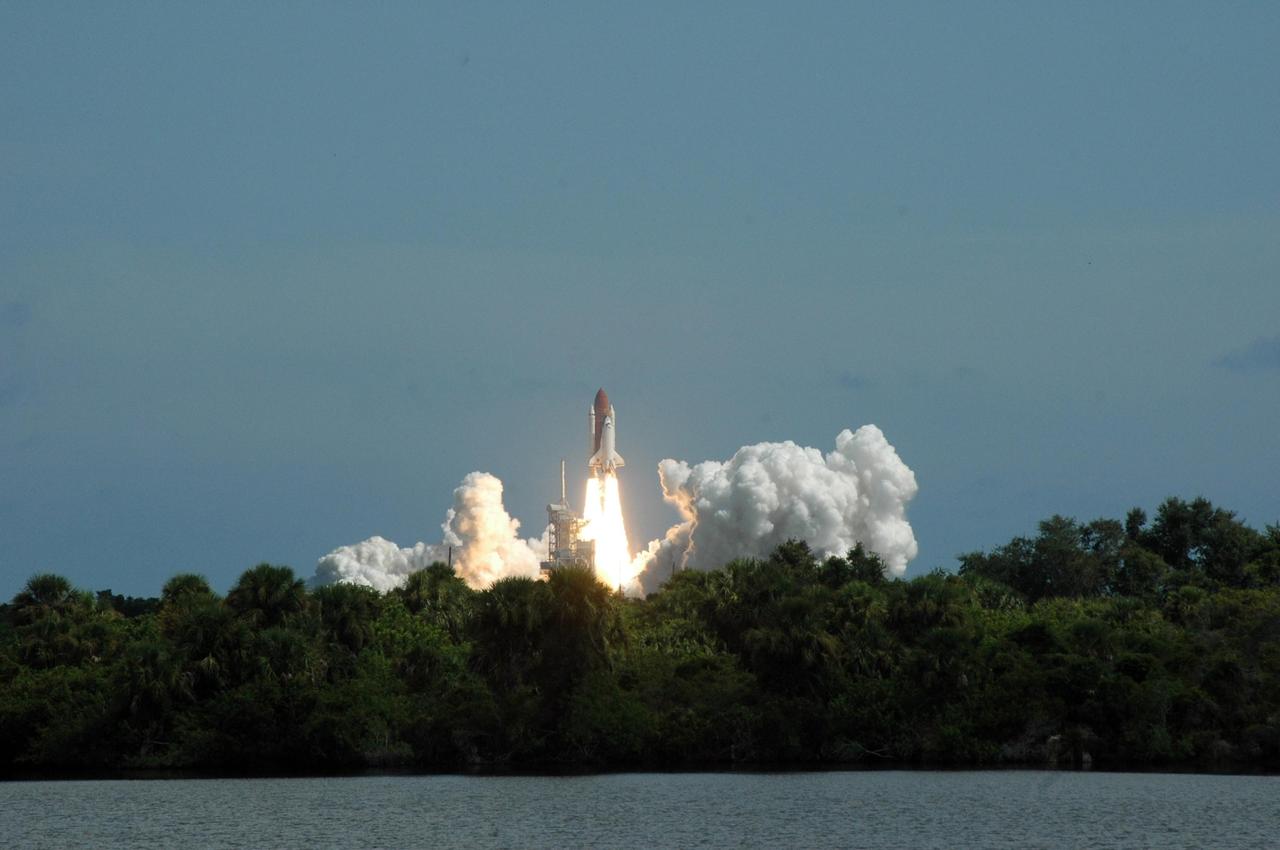
KENNEDY SPACE CENTER, FLA. -As if leaping out from amidst the woods, Space Shuttle Atlantis roars off Launch Pad 39B for a rendezvous with the International Space Station on mission STS-115. Liftoff was on-time at 11:14:55 a.m. EDT. After launch attempts were scrubbed Aug. 27 and 29 and Sept. 3 and 8 due to weather and technical concerns, this launch was executed perfectly. Mission STS-115 is the 116th space shuttle flight, the 27th flight for orbiter Atlantis, and the 19th U.S. flight to the International Space Station. During the mission, Atlantis' astronauts will deliver and install the 17.5-ton, bus-sized P3/P4 integrated truss segment on the station. The girder-like truss includes a set of giant solar arrays, batteries and associated electronics and will provide one-fourth of the total power-generation capability for the completed station. STS-115 is scheduled to last 11 days with a planned landing at KSC. Photo credit: NASA/Ken Thornsley
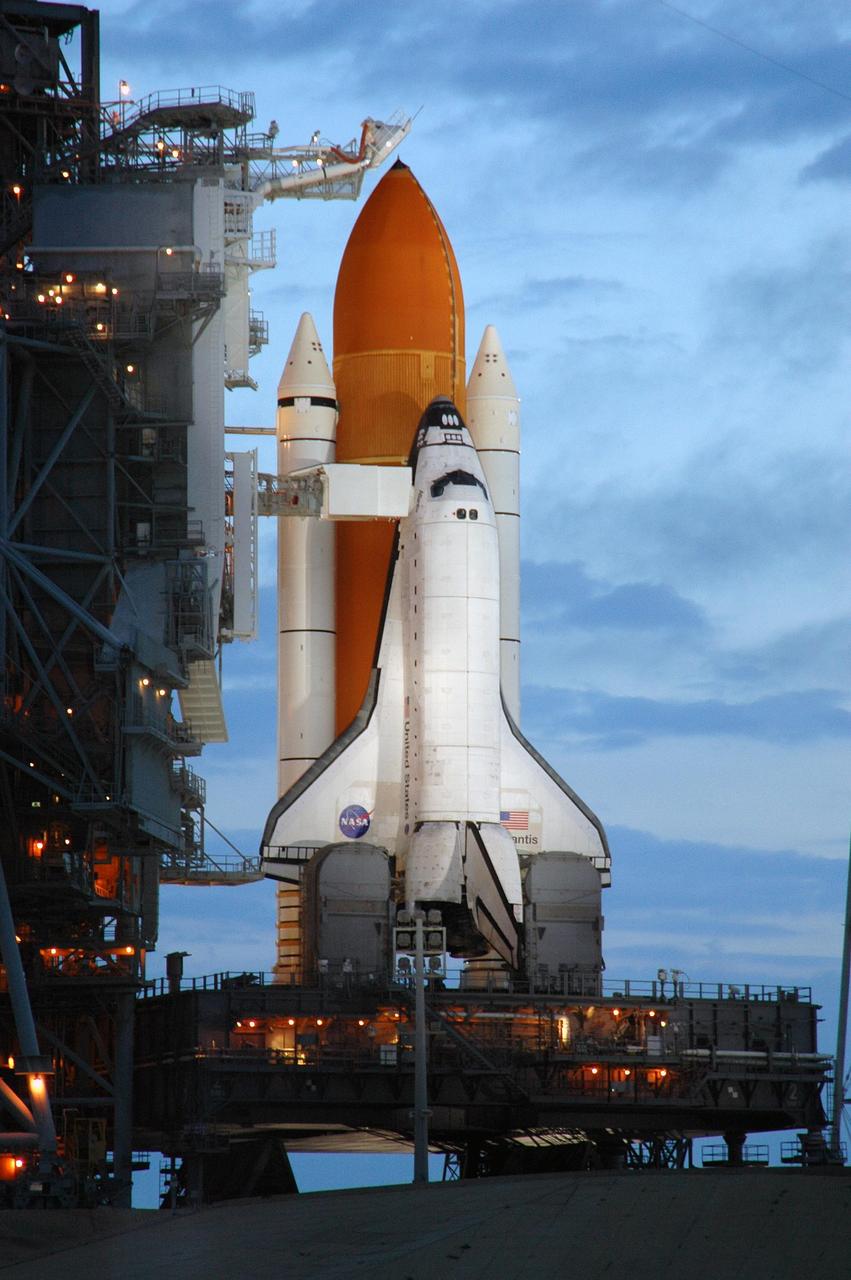
KENNEDY SPACE CENTER, FLA. - The morning sky lightens behind Space Shuttle Atlantis while lights on the fixed service structure (FSS) still illuminate the orbiter on Launch Pad 39B. Atlantis was originally scheduled to launch at 12:29 p.m. EDT on this date, but a 24-hour scrub was called by mission managers due to a concern with Fuel Cell 1. Seen poised above the orange external tank is the vent hood (known as the "beanie cap") at the end of the gaseous oxygen vent arm. Vapors are created as the liquid oxygen in the external tank boil off. The hood vents the gaseous oxygen vapors away from the space shuttle vehicle. Extending from the FSS to Atlantis is the orbiter access arm with the White Room at the end. The White Room provides entry into the orbiter through the hatch. During the STS-115 mission, Atlantis' astronauts will deliver and install the 17.5-ton, bus-sized P3/P4 integrated truss segment on the station. The girder-like truss includes a set of giant solar arrays, batteries and associated electronics and will provide one-fourth of the total power-generation capability for the completed station. This mission is the 116th space shuttle flight, the 27th flight for orbiter Atlantis, and the 19th U.S. flight to the International Space Station. STS-115 is scheduled to last 11 days with a planned landing at KSC. Photo credit: NASA/Troy Cryder
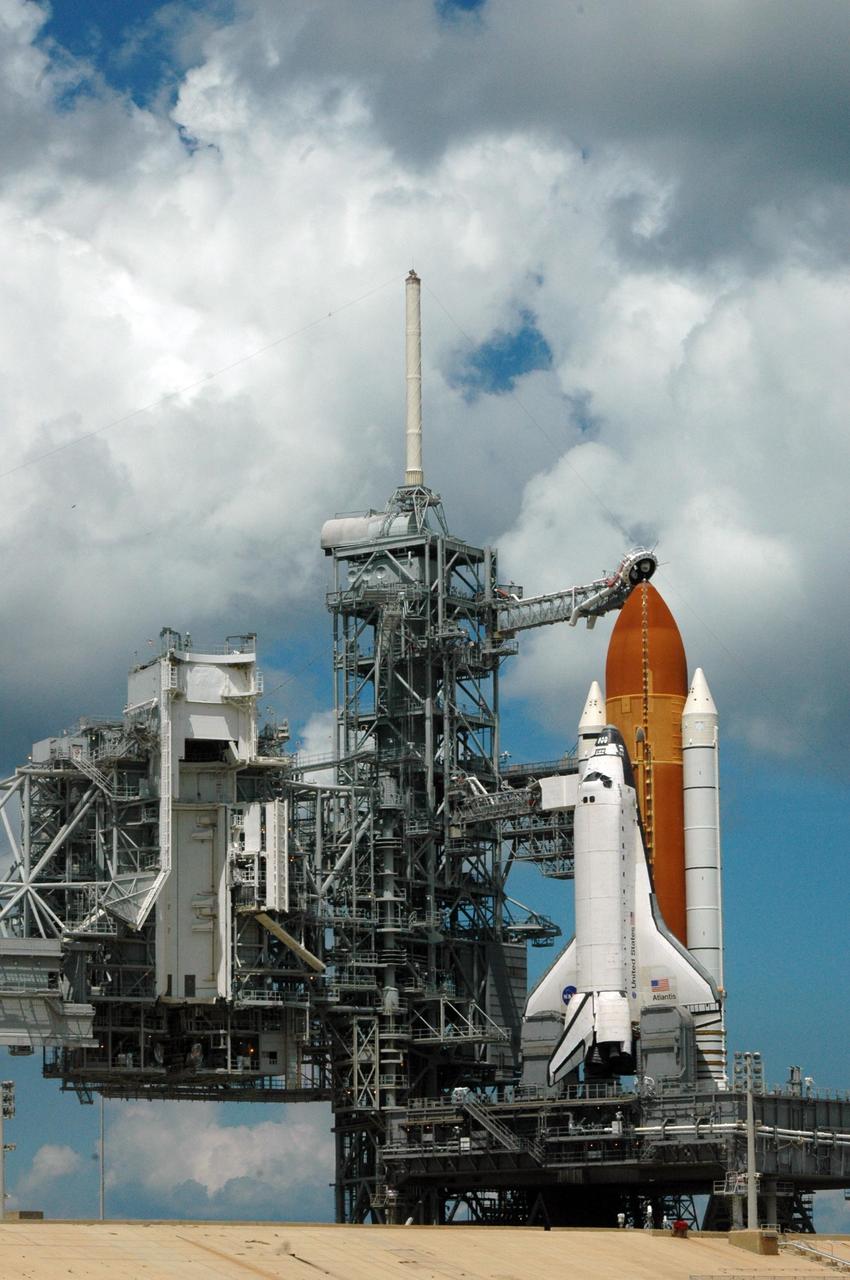
KENNEDY SPACE CENTER, FLA. - Huge clouds roll over Launch Pad 39B where Space Shuttle Atlantis still sits after the scrub of its launch on mission STS-115. Atlantis was originally scheduled to launch at 12:29 p.m. EDT on this date, but a 24-hour scrub was called by mission managers due to a concern with fuel cell 1. Towering above the shuttle is the 80-foot lightning mast. At left is the rolled-back rotating service structure with the payload changeout room open. Just above the orange external tank is the vent hood (known as the "beanie cap") at the end of the gaseous oxygen vent arm. Vapors are created as the liquid oxygen in the external tank boil off. The hood vents the gaseous oxygen vapors away from the space shuttle vehicle. During the STS-115 mission, Atlantis' astronauts will deliver and install the 17.5-ton, bus-sized P3/P4 integrated truss segment on the station. The girder-like truss includes a set of giant solar arrays, batteries and associated electronics and will provide one-fourth of the total power-generation capability for the completed station. This mission is the 116th space shuttle flight, the 27th flight for orbiter Atlantis, and the 19th U.S. flight to the International Space Station. STS-115 is scheduled to last 11 days with a planned landing at KSC. Photo credit: NASA/Ken Thornsley
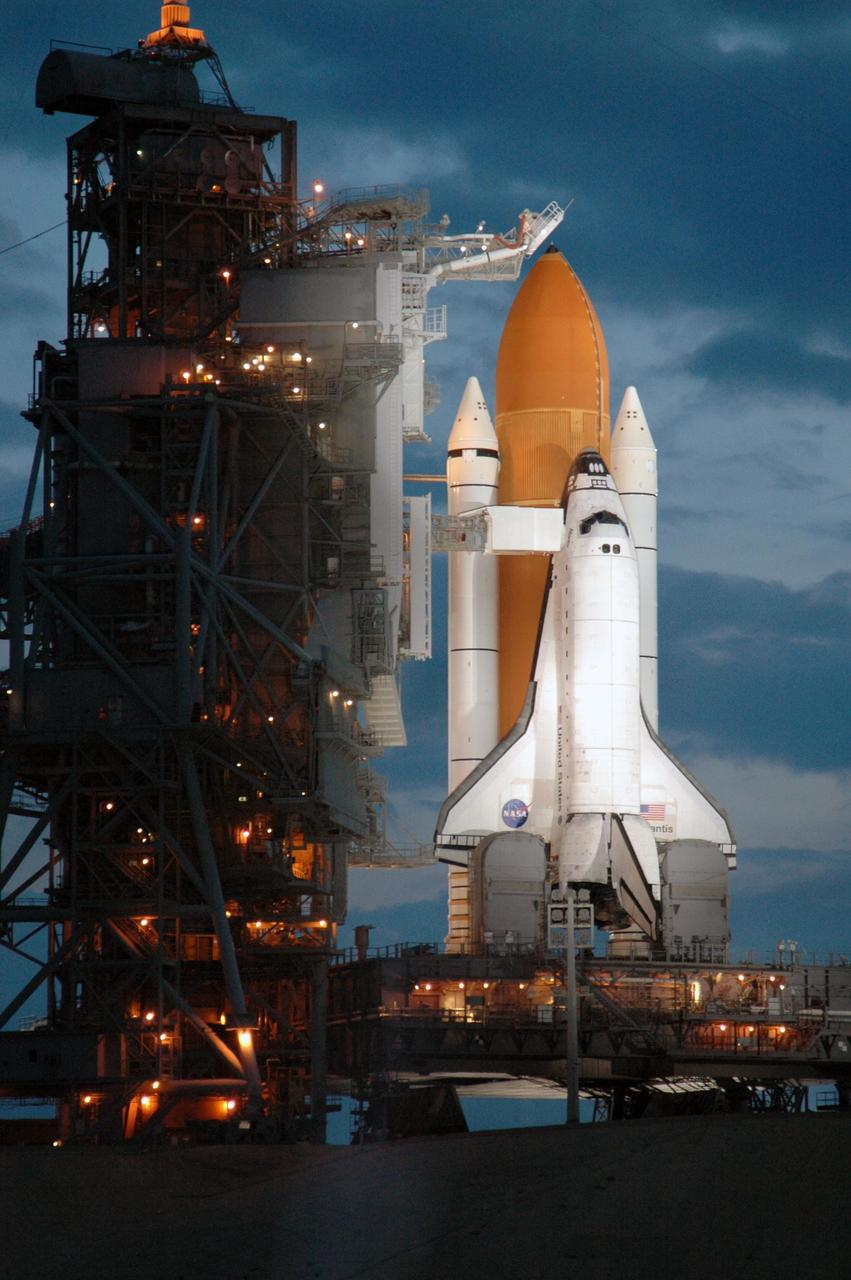
KENNEDY SPACE CENTER, FLA. - The morning sky lightens behind Space Shuttle Atlantis while lights on the fixed service structure (FSS) still illuminate the orbiter on Launch Pad 39B. Atlantis was originally scheduled to launch at 12:29 p.m. EDT on this date, but a 24-hour scrub was called by mission managers due to a concern with Fuel Cell 1. Seen poised above the orange external tank is the vent hood (known as the "beanie cap") at the end of the gaseous oxygen vent arm. Vapors are created as the liquid oxygen in the external tank boil off. The hood vents the gaseous oxygen vapors away from the space shuttle vehicle. Extending from the FSS to Atlantis is the orbiter access arm with the White Room at the end. The White Room provides entry into the orbiter through the hatch. During the STS-115 mission, Atlantis' astronauts will deliver and install the 17.5-ton, bus-sized P3/P4 integrated truss segment on the station. The girder-like truss includes a set of giant solar arrays, batteries and associated electronics and will provide one-fourth of the total power-generation capability for the completed station. This mission is the 116th space shuttle flight, the 27th flight for orbiter Atlantis, and the 19th U.S. flight to the International Space Station. STS-115 is scheduled to last 11 days with a planned landing at KSC. Photo credit: NASA/Troy Cryder
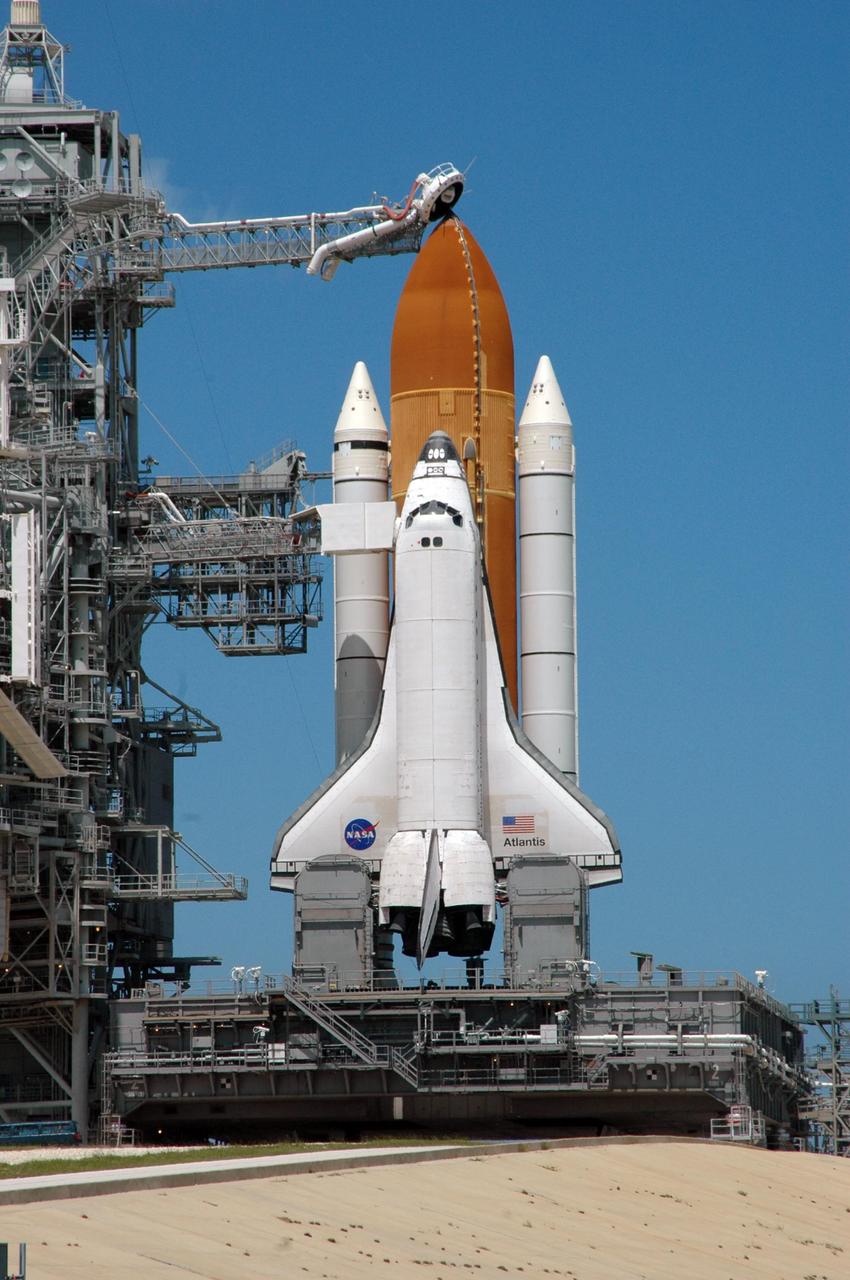
KENNEDY SPACE CENTER, FLA. - The sky is finally clear behind Launch Pad 39B where Space Shuttle Atlantis still sits after the scrub of its launch on mission STS-115. Atlantis was originally scheduled to launch at 12:29 p.m. EDT on this date, but a 24-hour scrub was called by mission managers due to a concern with fuel cell 1. Just above the orange external tank is the vent hood (known as the "beanie cap") at the end of the gaseous oxygen vent arm. Vapors are created as the liquid oxygen in the external tank boil off. The hood vents the gaseous oxygen vapors away from the space shuttle vehicle. Below, the orbiter access arm extends toward the cockpit of Atlantis with the White Room at the end. The White Room provides access into the cockpit of the vehicle. During the STS-115 mission, Atlantis' astronauts will deliver and install the 17.5-ton, bus-sized P3/P4 integrated truss segment on the station. The girder-like truss includes a set of giant solar arrays, batteries and associated electronics and will provide one-fourth of the total power-generation capability for the completed station. This mission is the 116th space shuttle flight, the 27th flight for orbiter Atlantis, and the 19th U.S. flight to the International Space Station. STS-115 is scheduled to last 11 days with a planned landing at KSC. Photo credit: NASA/Ken Thornsley

KENNEDY SPACE CENTER, FLA. -Through a haze of clouds, Space Shuttle Atlantis hurtles toward space for a rendezvous with the International Space Station on mission STS-115. Liftoff was on-time at 11:14:55 a.m. EDT. After launch attempts were scrubbed Aug. 27 and 29 and Sept. 3 and 8 due to weather and technical concerns, this launch was executed perfectly. Mission STS-115 is the 116th space shuttle flight, the 27th flight for orbiter Atlantis, and the 19th U.S. flight to the International Space Station. During the mission, Atlantis' astronauts will deliver and install the 17.5-ton, bus-sized P3/P4 integrated truss segment on the station. The girder-like truss includes a set of giant solar arrays, batteries and associated electronics and will provide one-fourth of the total power-generation capability for the completed station. STS-115 is scheduled to last 11 days with a planned landing at KSC. Photo courtesy of Nikon/Scott Andrews
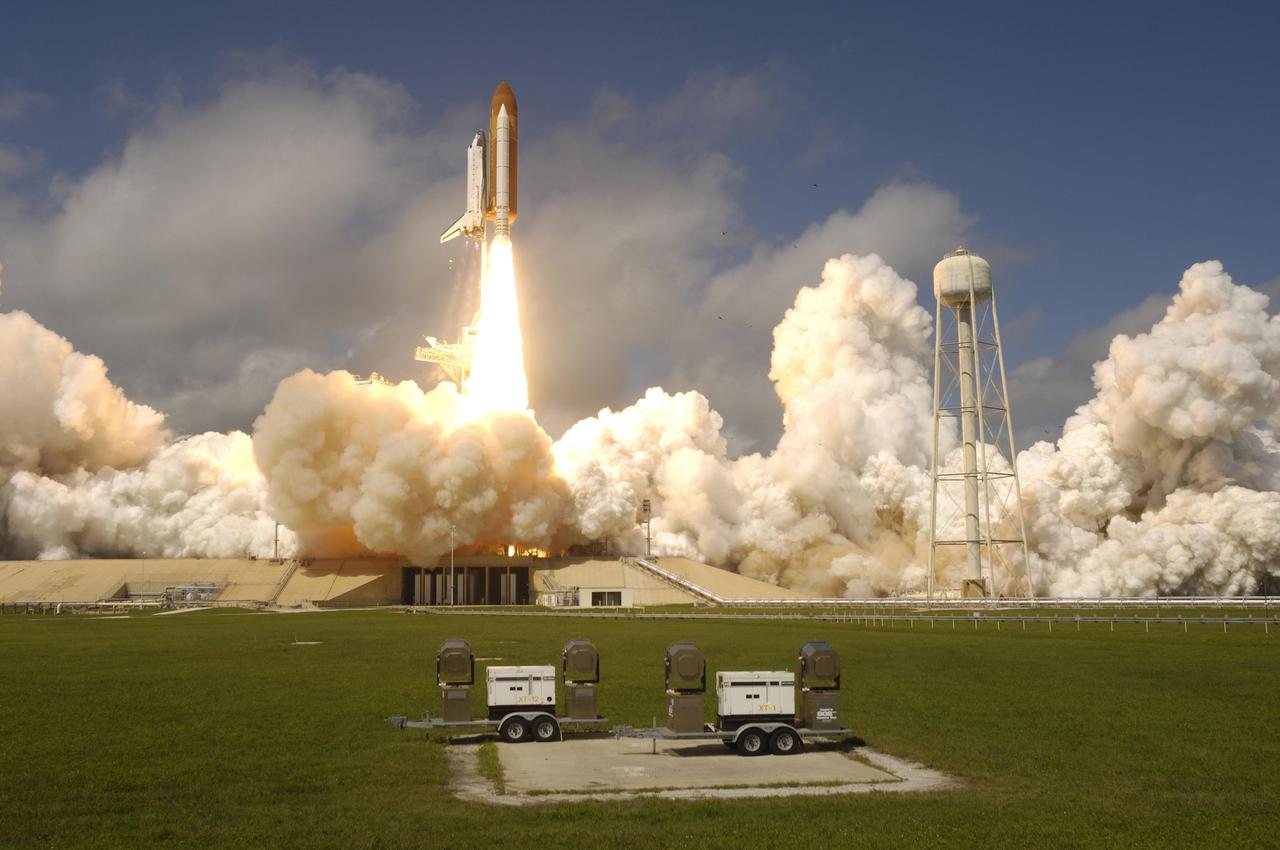
KENNEDY SPACE CENTER, FLA. - Smoke and steam billow across Launch Pad 39B as Space Shuttle Atlantis hurtles into the sky for its rendezvous with the International Space Station on mission STS-115. Liftoff was on-time at 11:14:55 a.m. EDT. After several earlier launch attempts were scrubbed due to weather and technical concerns, this launch was executed perfectly. Mission STS-115 is the 116th space shuttle flight, the 27th flight for orbiter Atlantis, and the 19th U.S. flight to the International Space Station. During the mission, Atlantis' astronauts will deliver and install the 17.5-ton, bus-sized P3/P4 integrated truss segment on the station. The girder-like truss includes a set of giant solar arrays, batteries and associated electronics and will provide one-fourth of the total power-generation capability for the completed station. STS-115 is scheduled to last 11 days with a planned landing at KSC. Photo courtesy of Nikon/Scott Andrews
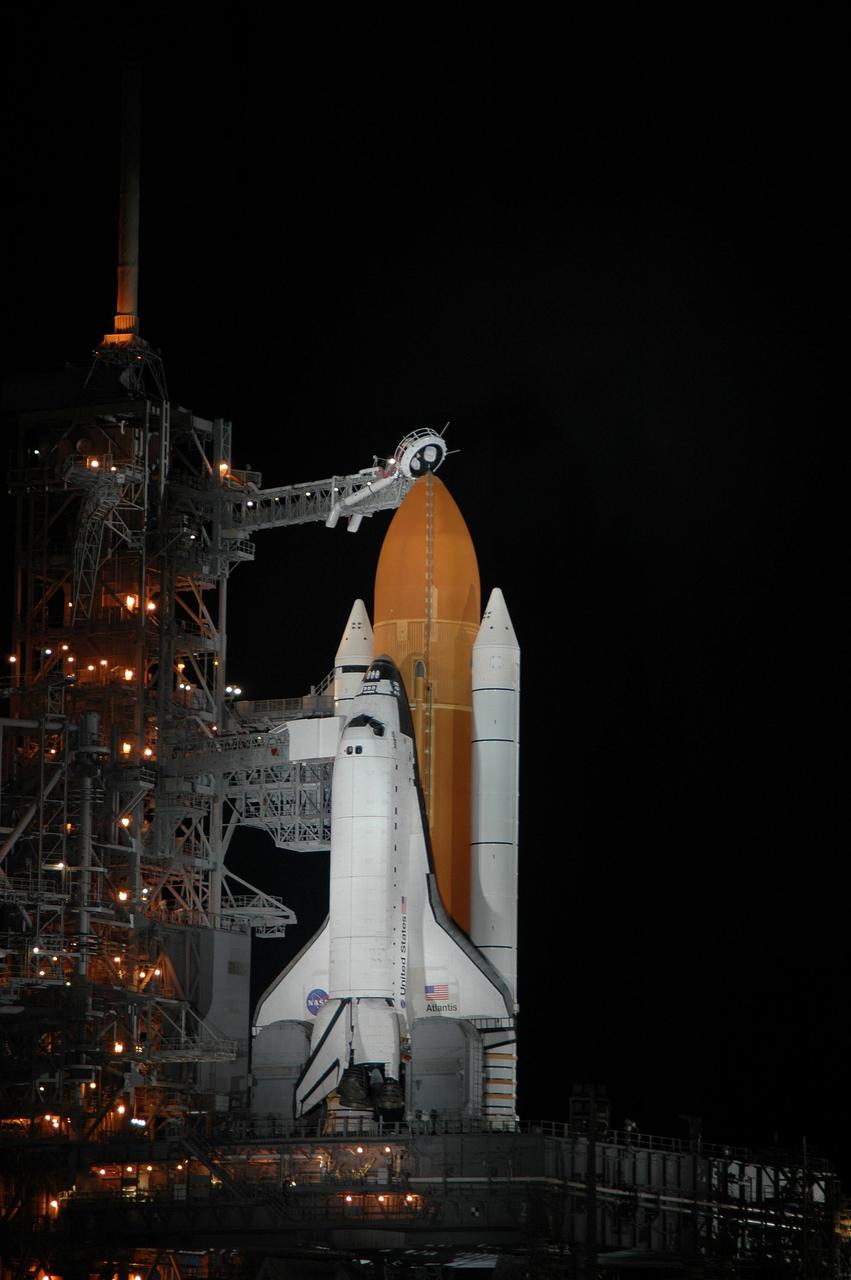
KENNEDY SPACE CENTER, FLA. - Space Shuttle Atlantis is in the spotlight on Launch Pad 39B. Atlantis was originally scheduled to launch at 12:29 p.m. EDT on this date, but a 24-hour scrub was called by mission managers due to a concern with Fuel Cell 1. Seen poised above the orange external tank is the vent hood (known as the "beanie cap") at the end of the gaseous oxygen vent arm. Vapors are created as the liquid oxygen in the external tank boil off. The hood vents the gaseous oxygen vapors away from the space shuttle vehicle. During the STS-115 mission, Atlantis' astronauts will deliver and install the 17.5-ton, bus-sized P3/P4 integrated truss segment on the station. The girder-like truss includes a set of giant solar arrays, batteries and associated electronics and will provide one-fourth of the total power-generation capability for the completed station. This mission is the 116th space shuttle flight, the 27th flight for orbiter Atlantis, and the 19th U.S. flight to the International Space Station. STS-115 is scheduled to last 11 days with a planned landing at KSC. Photo credit: NASA/Jim Grossmann
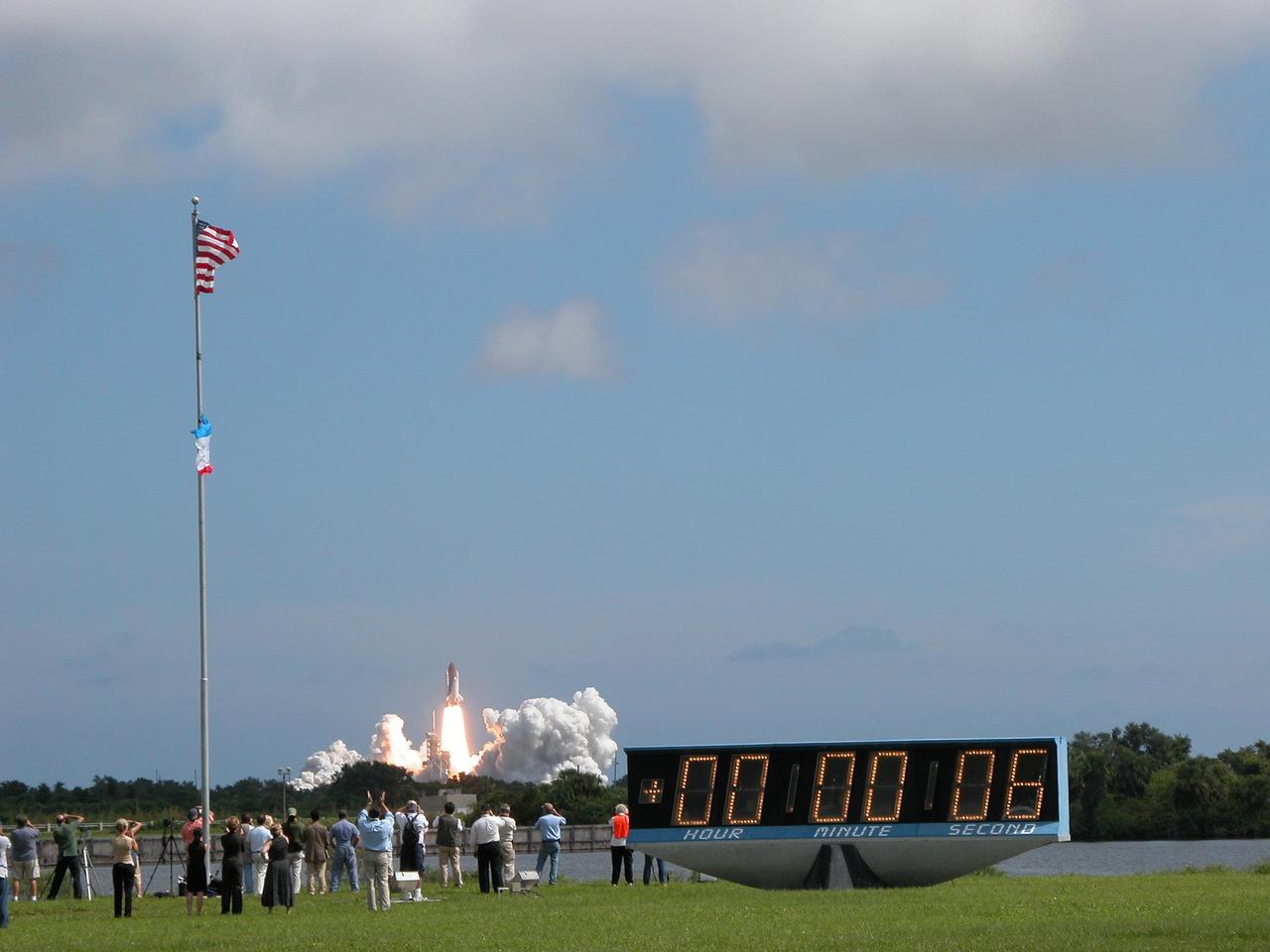
KENNEDY SPACE CENTER, FLA. - With applause and cheers from the onlookers, Space Shuttle Atlantis roars off the launch pad for a rendezvous with the International Space Station on mission STS-115. In the foreground is the countdown clock, marking launch and mission-elapsed time, on the grounds of the NASA News Center. After launch attempts were scrubbed Aug. 27 and 29 and Sept. 3 and 8 due to weather and technical concerns, this launch was executed perfectly. During the STS-115 mission, Atlantis' astronauts will deliver and install the 17.5-ton, bus-sized P3/P4 integrated truss segment on the station. The girder-like truss includes a set of giant solar arrays, batteries and associated electronics and will provide one-fourth of the total power-generation capability for the completed station. This mission is the 116th space shuttle flight, the 27th flight for orbiter Atlantis, and the 19th U.S. flight to the ISS. STS-115 is scheduled to last 11 days with a planned landing at KSC. Photo credit: NASA/Debbie Odom
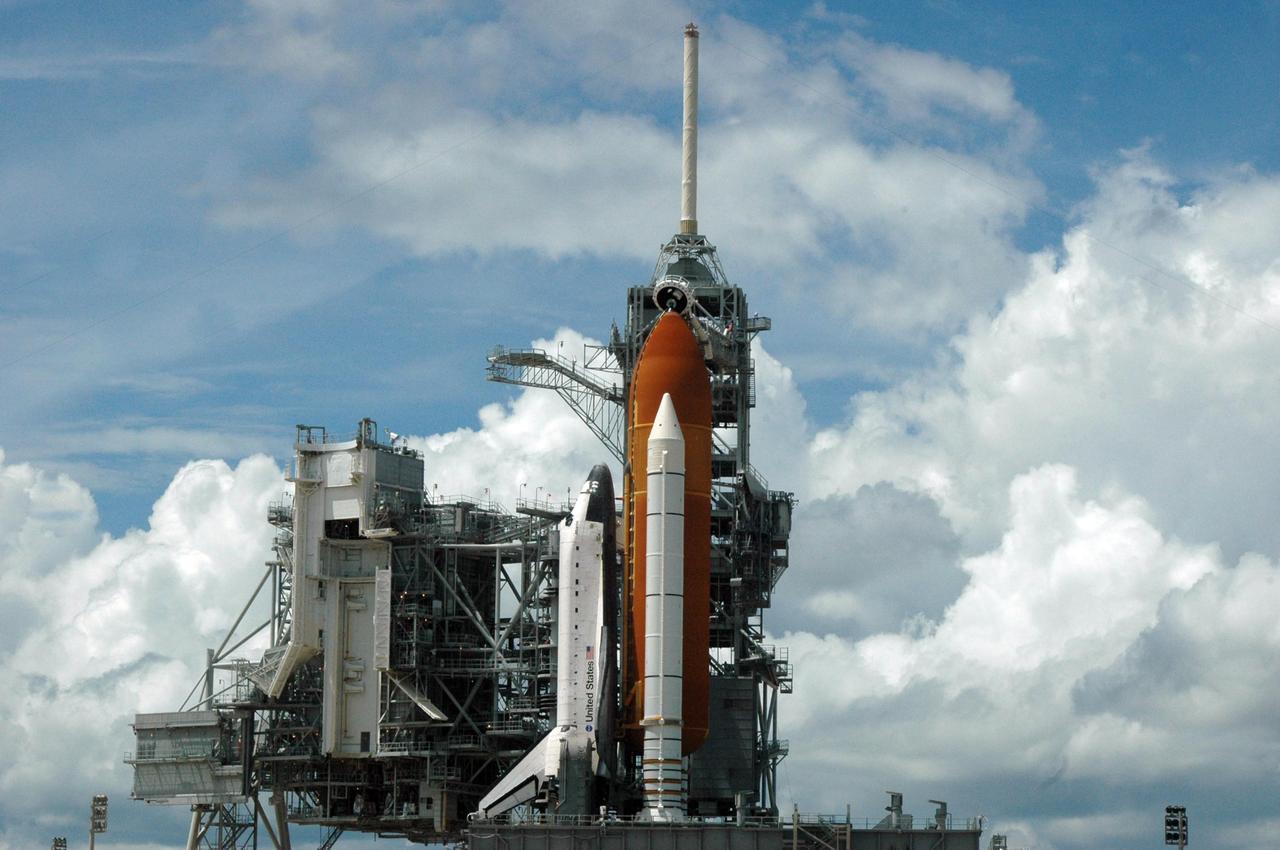
KENNEDY SPACE CENTER, FLA. - Huge clouds billow on the horizon behind Space Shuttle Atlantis still sitting on Launch Pad 39B after the scrub of its launch on mission STS-115. Atlantis was originally scheduled to launch at 12:29 p.m. EDT on this date, but a 24-hour scrub was called by mission managers due to a concern with fuel cell 1. Towering above the shuttle is the 80-foot lightning mast. At left is the rolled-back rotating service structure with the payload changeout room open. During the STS-115 mission, Atlantis' astronauts will deliver and install the 17.5-ton, bus-sized P3/P4 integrated truss segment on the station. The girder-like truss includes a set of giant solar arrays, batteries and associated electronics and will provide one-fourth of the total power-generation capability for the completed station. This mission is the 116th space shuttle flight, the 27th flight for orbiter Atlantis, and the 19th U.S. flight to the International Space Station. STS-115 is scheduled to last 11 days with a planned landing at KSC. Photo credit: NASA/Ken Thornsley
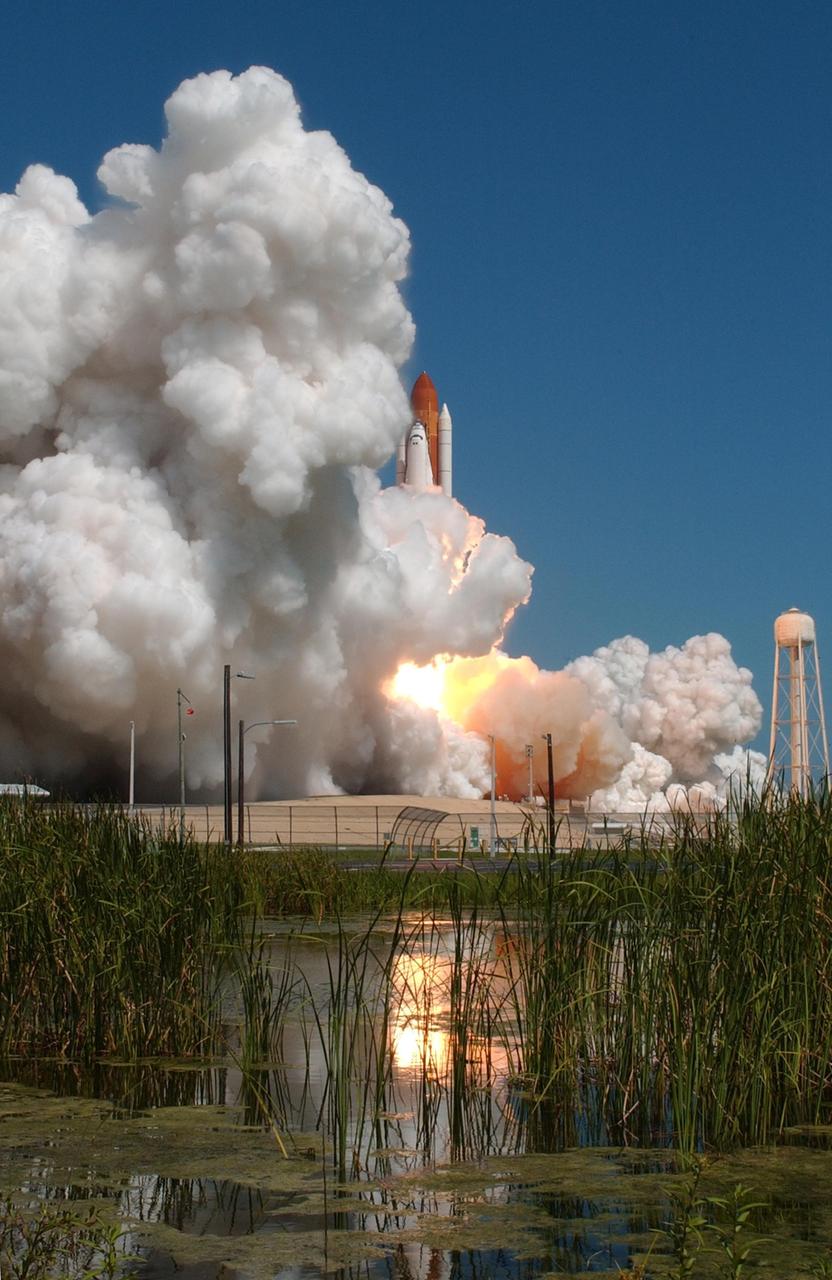
KENNEDY SPACE CENTER, FLA. - Space Shuttle Atlantis appears enveloped in the smoke and steam created at liftoff from Launch Pad 39B. Liftoff was on-time at 11:14:55 a.m. EDT. Atlantis is heading for space and its rendezvous with the International Space Station on mission STS-115. After launch attempts were scrubbed Aug. 27 and 29 and Sept. 3 and 8 due to weather and technical concerns, this launch was executed perfectly. Mission STS-115 is the 116th space shuttle flight, the 27th flight for orbiter Atlantis, and the 19th U.S. flight to the International Space Station. During the mission, Atlantis' astronauts will deliver and install the 17.5-ton, bus-sized P3/P4 integrated truss segment on the station. The girder-like truss includes a set of giant solar arrays, batteries and associated electronics and will provide one-fourth of the total power-generation capability for the completed station. STS-115 is scheduled to last 11 days with a planned landing at KSC. Photo credit: NASA/Sandra Joseph & Robert Murray
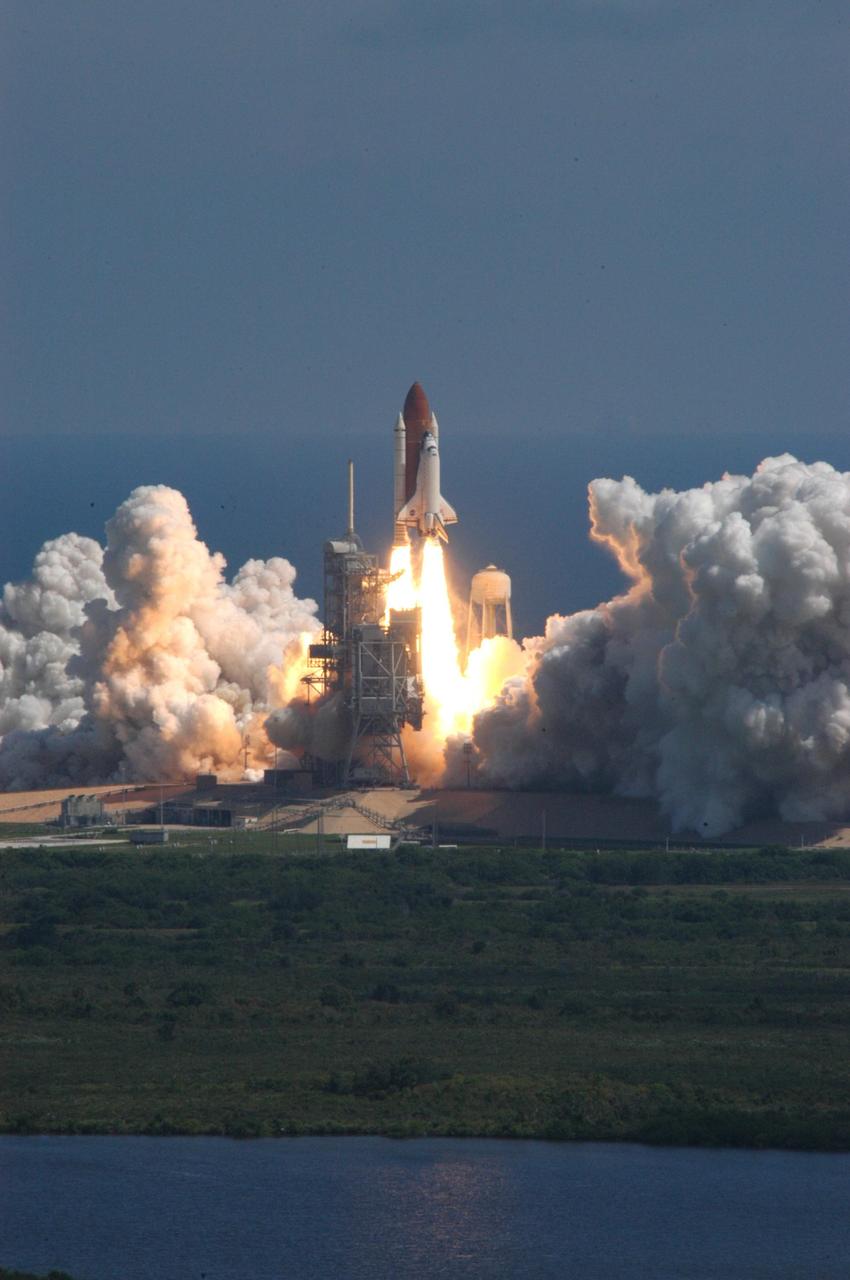
KENNEDY SPACE CENTER, FLA. - From the top of the Vehicle Assembly Building, the fiery launch of Space Shuttle Atlantis is seen against the background of the Atlantic Ocean to the east while billows of smoke and steam roll across the launch pad. Atlantis is heading for a rendezvous with the International Space Station on mission STS-115. After launch attempts were scrubbed Aug. 27 and 29 and Sept. 3 and 8 due to weather and technical concerns, this launch was executed perfectly. During the STS-115 mission, Atlantis' astronauts will deliver and install the 17.5-ton, bus-sized P3/P4 integrated truss segment on the station. The girder-like truss includes a set of giant solar arrays, batteries and associated electronics and will provide one-fourth of the total power-generation capability for the completed station. This mission is the 116th space shuttle flight, the 27th flight for orbiter Atlantis, and the 19th U.S. flight to the ISS. STS-115 is scheduled to last 11 days with a planned landing at KSC. Photo credit: NASA/George Shelton

KENNEDY SPACE CENTER, FLA. - Flaming rockets propel Space Shuttle Atlantis away from the smoke and steam below and into the sky for a rendezvous with the International Space Station on mission STS-115. Liftoff was on-time at 11:14:55 a.m. EDT. After launch attempts were scrubbed Aug. 27 and 29 and Sept. 3 and 8 due to weather and technical concerns, this launch was executed perfectly. Mission STS-115 is the 116th space shuttle flight, the 27th flight for orbiter Atlantis, and the 19th U.S. flight to the International Space Station. During the mission, Atlantis' astronauts will deliver and install the 17.5-ton, bus-sized P3/P4 integrated truss segment on the station. The girder-like truss includes a set of giant solar arrays, batteries and associated electronics and will provide one-fourth of the total power-generation capability for the completed station. STS-115 is scheduled to last 11 days with a planned landing at KSC. Photo credit: NASA/Sandra Joseph & Robert Murray
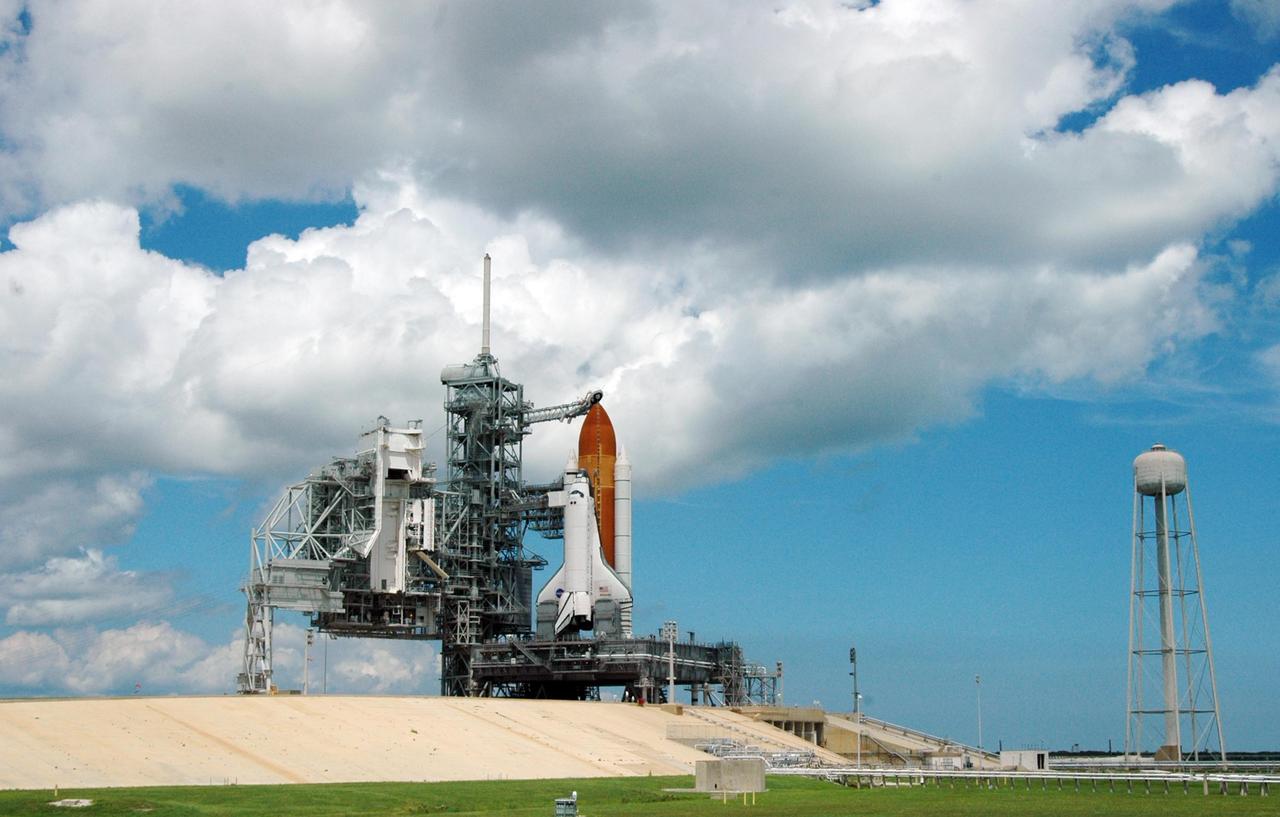
KENNEDY SPACE CENTER, FLA. - Huge clouds roll over Launch Pad 39B where Space Shuttle Atlantis still sits after the scrub of its launch on mission STS-115. Atlantis was originally scheduled to launch at 12:29 p.m. EDT on this date, but a 24-hour scrub was called by mission managers due to a concern with fuel cell 1. Towering above the shuttle is the 80-foot lightning mast. At right is the 300,000-gallon water tank that releases its contents onto the mobile launcher platform during liftoff to aid sound suppression. During the STS-115 mission, Atlantis' astronauts will deliver and install the 17.5-ton, bus-sized P3/P4 integrated truss segment on the station. The girder-like truss includes a set of giant solar arrays, batteries and associated electronics and will provide one-fourth of the total power-generation capability for the completed station. This mission is the 116th space shuttle flight, the 27th flight for orbiter Atlantis, and the 19th U.S. flight to the International Space Station. STS-115 is scheduled to last 11 days with a planned landing at KSC. Photo credit: NASA/Ken Thornsley
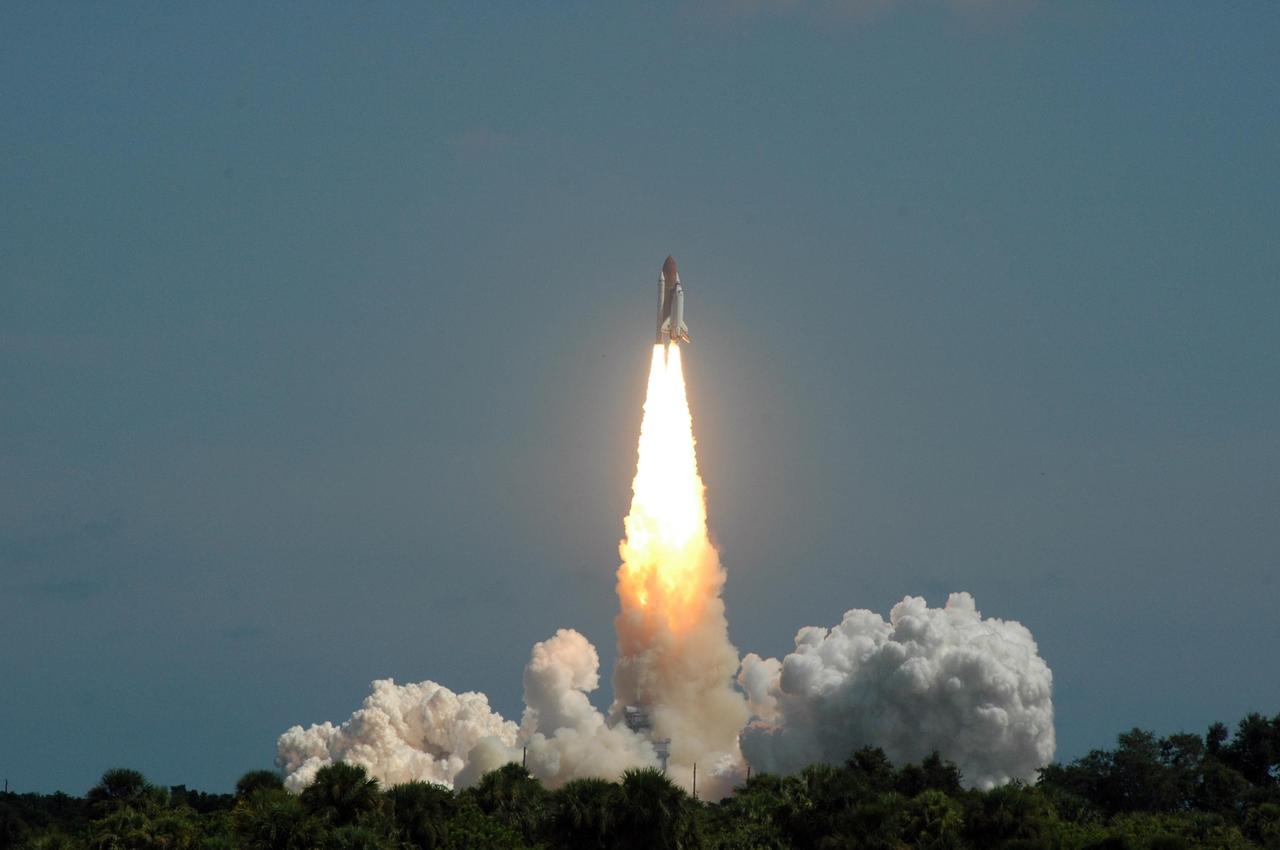
KENNEDY SPACE CENTER, FLA. - Flaming rockets propel Space Shuttle Atlantis away from the smoke and steam below and into the sky for a rendezvous with the International Space Station on mission STS-115. Liftoff was on-time at 11:14:55 a.m. EDT. After launch attempts were scrubbed Aug. 27 and 29 and Sept. 3 and 8 due to weather and technical concerns, this launch was executed perfectly. Mission STS-115 is the 116th space shuttle flight, the 27th flight for orbiter Atlantis, and the 19th U.S. flight to the International Space Station. During the mission, Atlantis' astronauts will deliver and install the 17.5-ton, bus-sized P3/P4 integrated truss segment on the station. The girder-like truss includes a set of giant solar arrays, batteries and associated electronics and will provide one-fourth of the total power-generation capability for the completed station. STS-115 is scheduled to last 11 days with a planned landing at KSC. Photo credit: NASA/Ken Thornsley
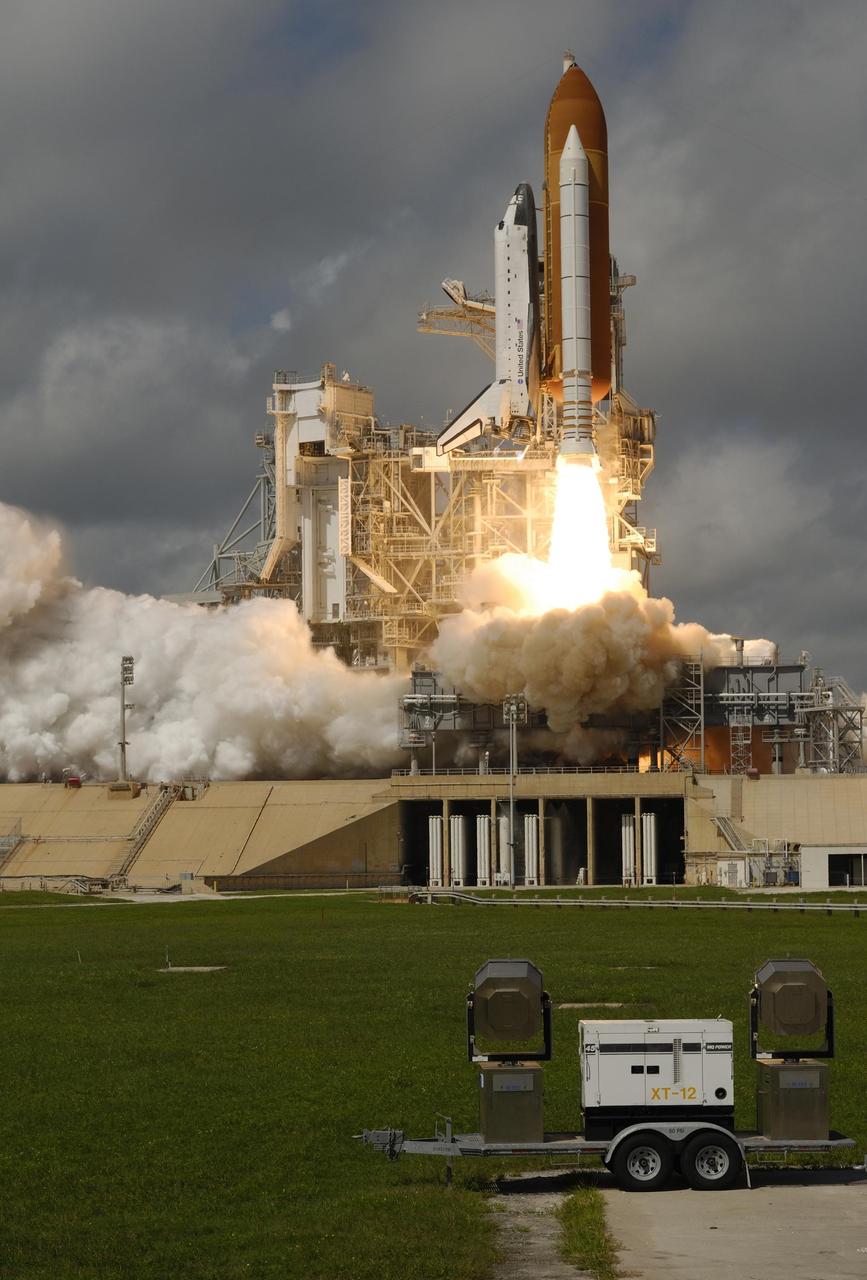
KENNEDY SPACE CENTER, FLA. - Space Shuttle Atlantis leaps off the launch pad as smoke and steam billow behind it. Atlantis is heading for space and its rendezvous with the International Space Station on mission STS-115. Liftoff was on-time at 11:14:55 a.m. EDT. After several earlier launch attempts were scrubbed due to weather and technical concerns, this launch was executed perfectly. Mission STS-115 is the 116th space shuttle flight, the 27th flight for orbiter Atlantis, and the 19th U.S. flight to the International Space Station. During the mission, Atlantis' astronauts will deliver and install the 17.5-ton, bus-sized P3/P4 integrated truss segment on the station. The girder-like truss includes a set of giant solar arrays, batteries and associated electronics and will provide one-fourth of the total power-generation capability for the completed station. STS-115 is scheduled to last 11 days with a planned landing at KSC. Photo courtesy of Nikon/Scott Andrews
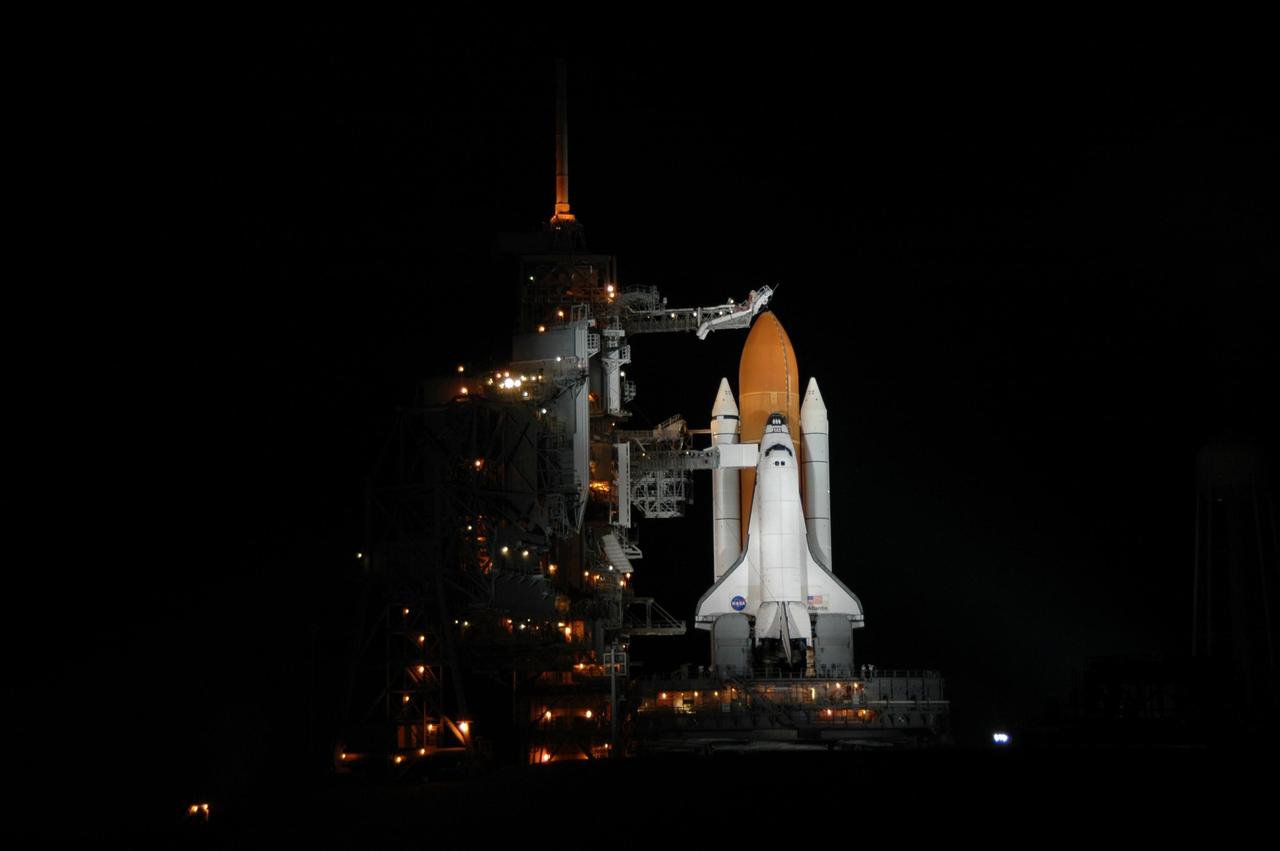
KENNEDY SPACE CENTER, FLA. - Space Shuttle Atlantis is bathed in light on Launch Pad 39B. Atlantis was originally scheduled to launch at 12:29 p.m. EDT on this date, but a 24-hour scrub was called by mission managers due to a concern with Fuel Cell 1. Seen poised above the orange external tank is the vent hood (known as the "beanie cap") at the end of the gaseous oxygen vent arm. Vapors are created as the liquid oxygen in the external tank boil off. The hood vents the gaseous oxygen vapors away from the space shuttle vehicle. During the STS-115 mission, Atlantis' astronauts will deliver and install the 17.5-ton, bus-sized P3/P4 integrated truss segment on the station. The girder-like truss includes a set of giant solar arrays, batteries and associated electronics and will provide one-fourth of the total power-generation capability for the completed station. This mission is the 116th space shuttle flight, the 27th flight for orbiter Atlantis, and the 19th U.S. flight to the International Space Station. STS-115 is scheduled to last 11 days with a planned landing at KSC. Photo credit: NASA/Jim Grossmann
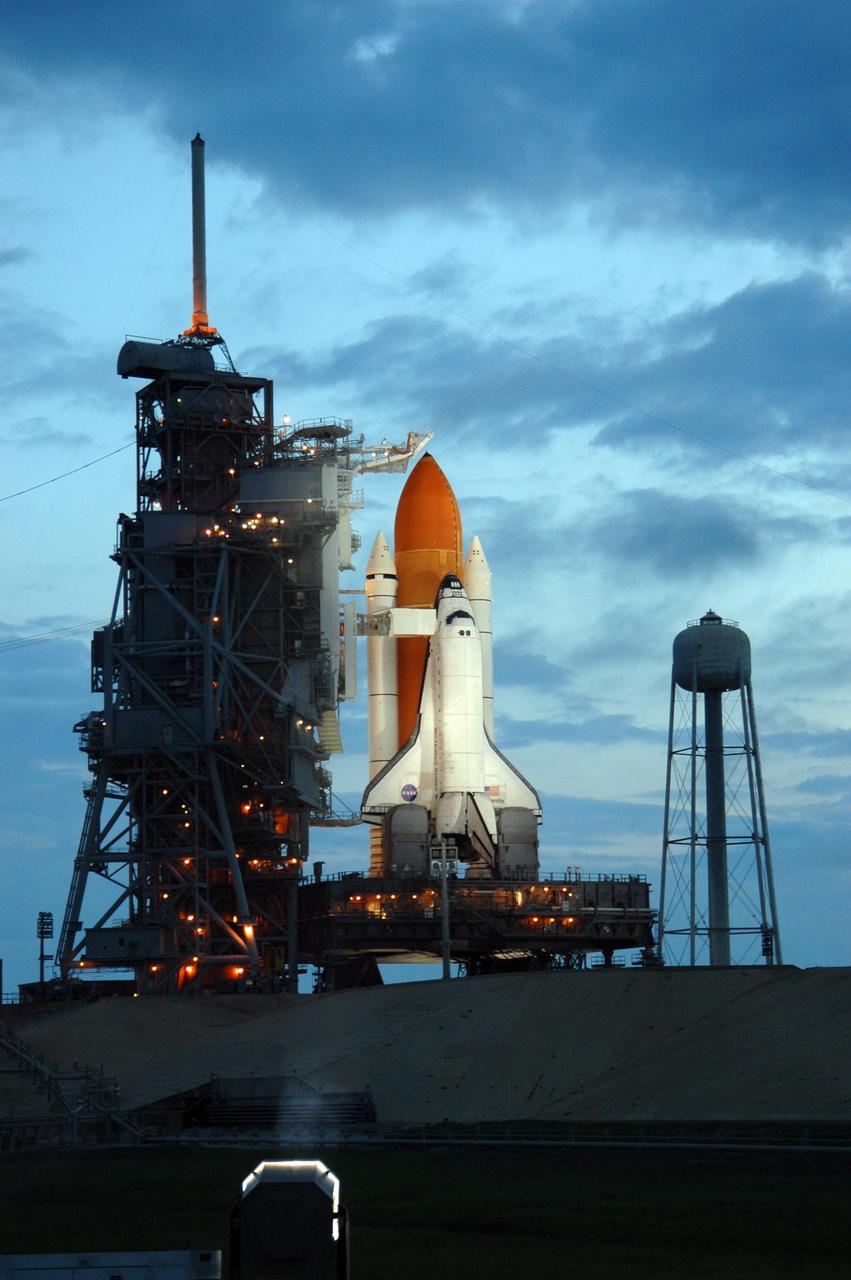
KENNEDY SPACE CENTER, FLA. - The morning sky lightens behind Space Shuttle Atlantis while lights on the fixed service structure (FSS) still illuminate the orbiter on Launch Pad 39B. Atlantis was originally scheduled to launch at 12:29 p.m. EDT on this date, but a 24-hour scrub was called by mission managers due to a concern with Fuel Cell 1. Seen poised above the orange external tank is the vent hood (known as the "beanie cap") at the end of the gaseous oxygen vent arm. Vapors are created as the liquid oxygen in the external tank boil off. The hood vents the gaseous oxygen vapors away from the space shuttle vehicle. Extending from the FSS to Atlantis is the orbiter access arm with the White Room at the end. The White Room provides entry into the orbiter through the hatch. At right is the 300,000-gallon water tank that releases its contents onto the mobile launcher platform during liftoff to aid sound suppression. During the STS-115 mission, Atlantis' astronauts will deliver and install the 17.5-ton, bus-sized P3/P4 integrated truss segment on the station. The girder-like truss includes a set of giant solar arrays, batteries and associated electronics and will provide one-fourth of the total power-generation capability for the completed station. This mission is the 116th space shuttle flight, the 27th flight for orbiter Atlantis, and the 19th U.S. flight to the International Space Station. STS-115 is scheduled to last 11 days with a planned landing at KSC. Photo credit: NASA/Troy Cryder
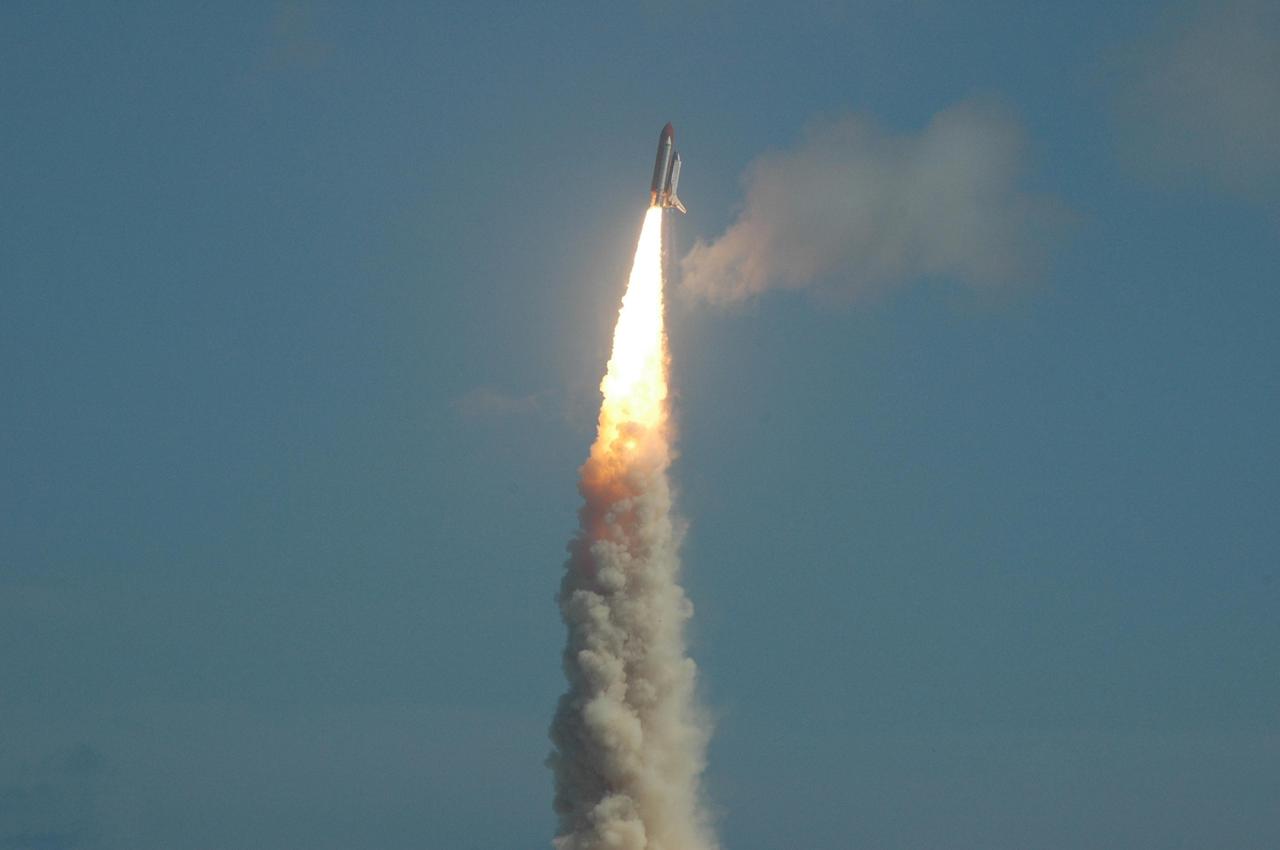
KENNEDY SPACE CENTER, FLA. - Through a slight haze of clouds, Space Shuttle Atlantis hurtles toward space for a rendezvous with the International Space Station on mission STS-115. Liftoff was on-time at 11:14:55 a.m. EDT. After launch attempts were scrubbed Aug. 27 and 29 and Sept. 3 and 8 due to weather and technical concerns, this launch was executed perfectly. Mission STS-115 is the 116th space shuttle flight, the 27th flight for orbiter Atlantis, and the 19th U.S. flight to the International Space Station. During the mission, Atlantis' astronauts will deliver and install the 17.5-ton, bus-sized P3/P4 integrated truss segment on the station. The girder-like truss includes a set of giant solar arrays, batteries and associated electronics and will provide one-fourth of the total power-generation capability for the completed station. STS-115 is scheduled to last 11 days with a planned landing at KSC. Photo credit: NASA/Ken Thornsley
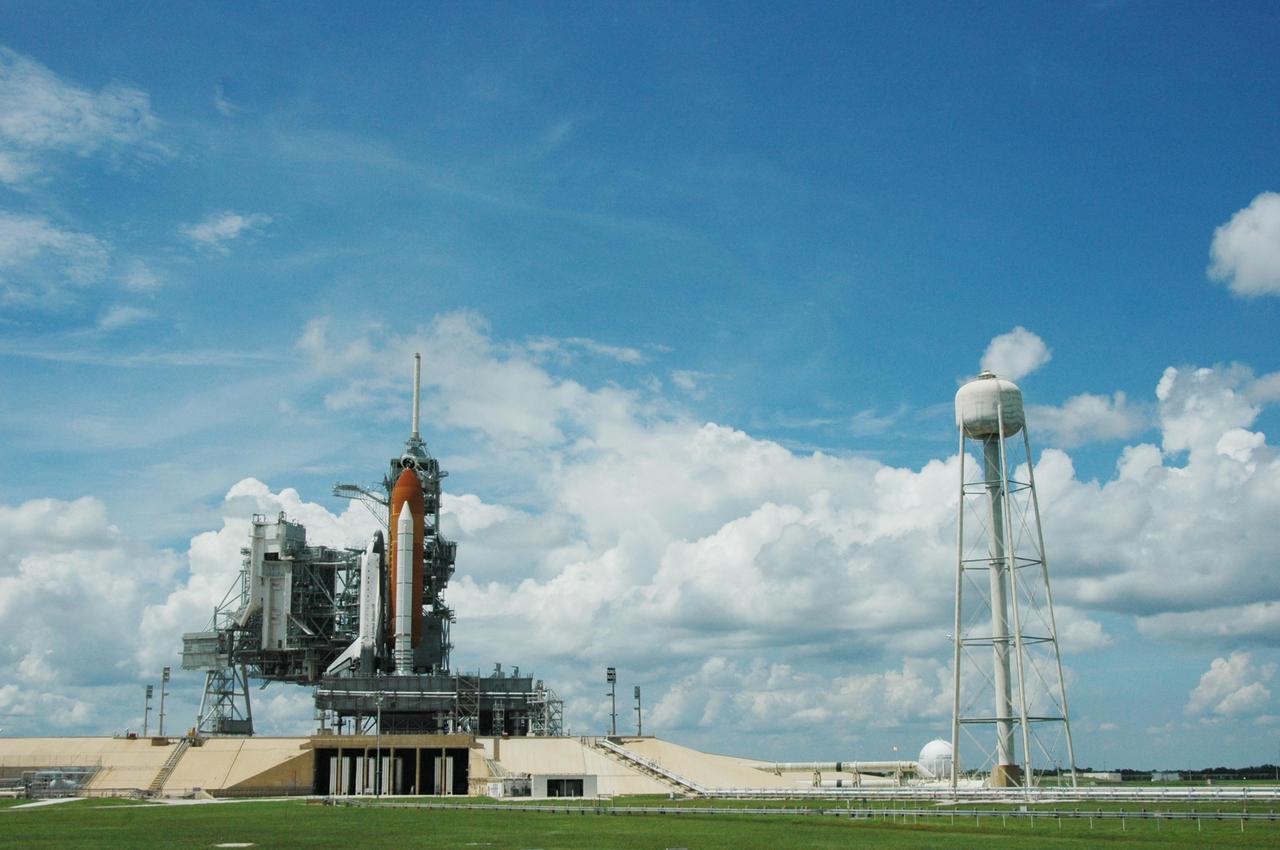
KENNEDY SPACE CENTER, FLA. - Clouds spread throughout the sky behind Launch Pad 39B where Space Shuttle Atlantis still sits after the scrub of its launch on mission STS-115. Atlantis was originally scheduled to launch at 12:29 p.m. EDT on this date, but a 24-hour scrub was called by mission managers due to a concern with fuel cell 1. Towering above the shuttle is the 80-foot lightning mast. At right is the 300,000-gallon water tank that releases its contents onto the mobile launcher platform during liftoff to aid sound suppression. During the STS-115 mission, Atlantis' astronauts will deliver and install the 17.5-ton, bus-sized P3/P4 integrated truss segment on the station. The girder-like truss includes a set of giant solar arrays, batteries and associated electronics and will provide one-fourth of the total power-generation capability for the completed station. This mission is the 116th space shuttle flight, the 27th flight for orbiter Atlantis, and the 19th U.S. flight to the International Space Station. STS-115 is scheduled to last 11 days with a planned landing at KSC. Photo credit: NASA/Ken Thornsley
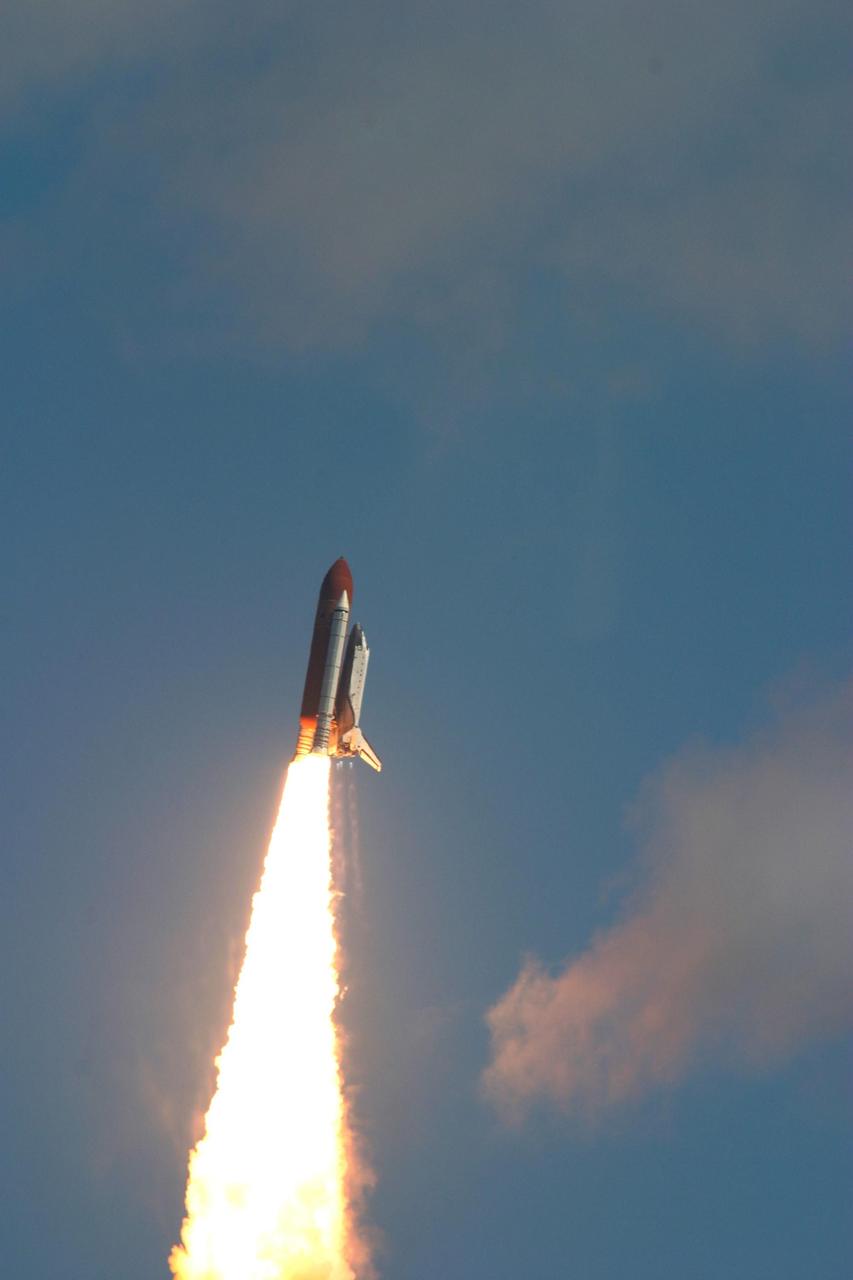
KENNEDY SPACE CENTER, FLA. - Looking like a work of art, Space Shuttle Atlantis roars into the blue Florida sky atop a column of fire for a rendezvous with the International Space Station on mission STS-115. After launch attempts were scrubbed Aug. 27 and 29 and Sept. 3 and 8 due to weather and technical concerns, this launch was executed perfectly. During the STS-115 mission, Atlantis' astronauts will deliver and install the 17.5-ton, bus-sized P3/P4 integrated truss segment on the station. The girder-like truss includes a set of giant solar arrays, batteries and associated electronics and will provide one-fourth of the total power-generation capability for the completed station. This mission is the 116th space shuttle flight, the 27th flight for orbiter Atlantis, and the 19th U.S. flight to the ISS. STS-115 is scheduled to last 11 days with a planned landing at KSC. Photo credit: NASA/Dennis Sabo

KENNEDY SPACE CENTER, FLA. - Space Shuttle Atlantis is bathed in light on Launch Pad 39B. Atlantis was originally scheduled to launch at 12:29 p.m. EDT on this date, but a 24-hour scrub was called by mission managers due to a concern with Fuel Cell 1. Seen poised above the orange external tank is the vent hood (known as the "beanie cap") at the end of the gaseous oxygen vent arm. Vapors are created as the liquid oxygen in the external tank boil off. The hood vents the gaseous oxygen vapors away from the space shuttle vehicle. During the STS-115 mission, Atlantis' astronauts will deliver and install the 17.5-ton, bus-sized P3/P4 integrated truss segment on the station. The girder-like truss includes a set of giant solar arrays, batteries and associated electronics and will provide one-fourth of the total power-generation capability for the completed station. This mission is the 116th space shuttle flight, the 27th flight for orbiter Atlantis, and the 19th U.S. flight to the International Space Station. STS-115 is scheduled to last 11 days with a planned landing at KSC. Photo credit: NASA/Jim Grossmann
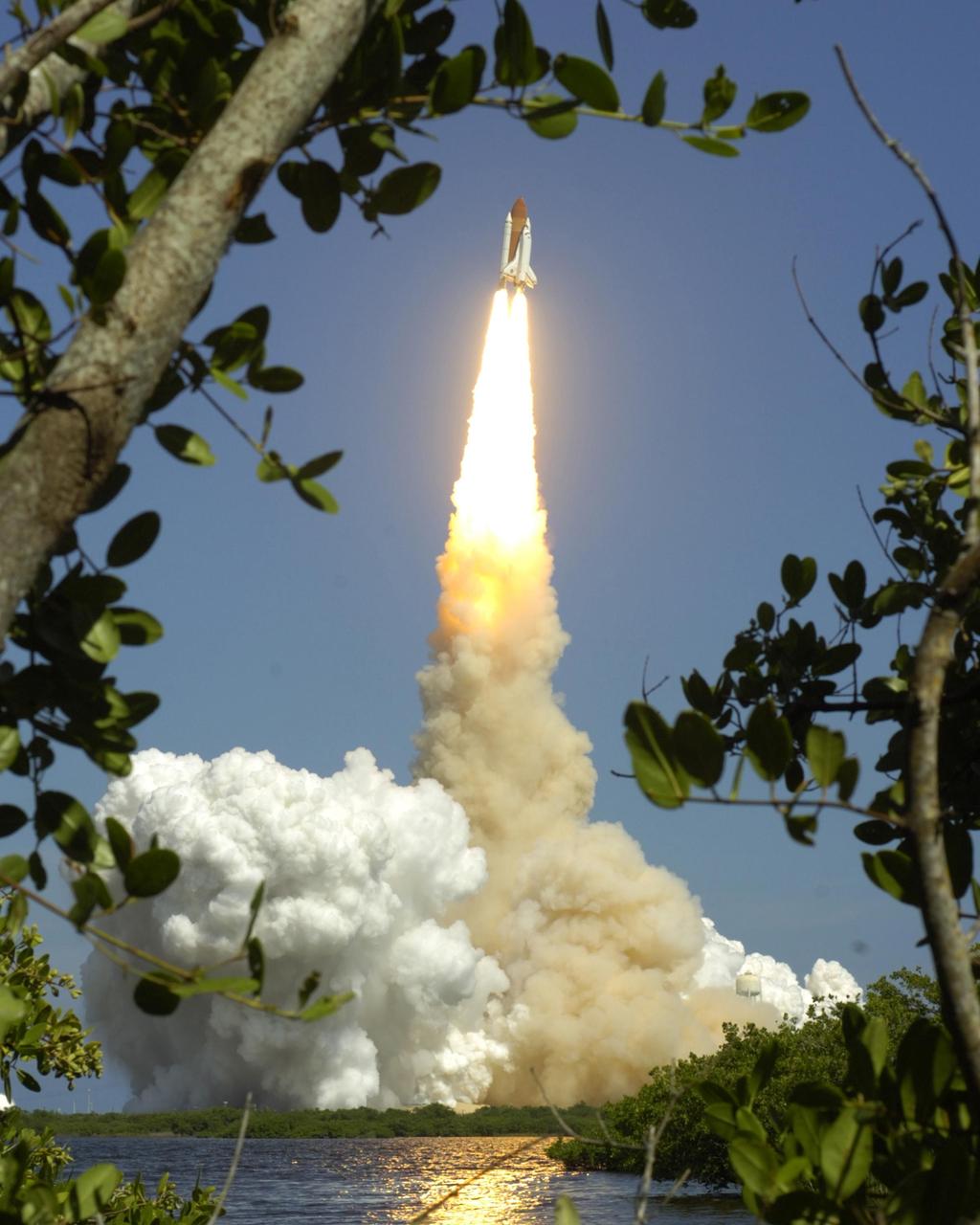
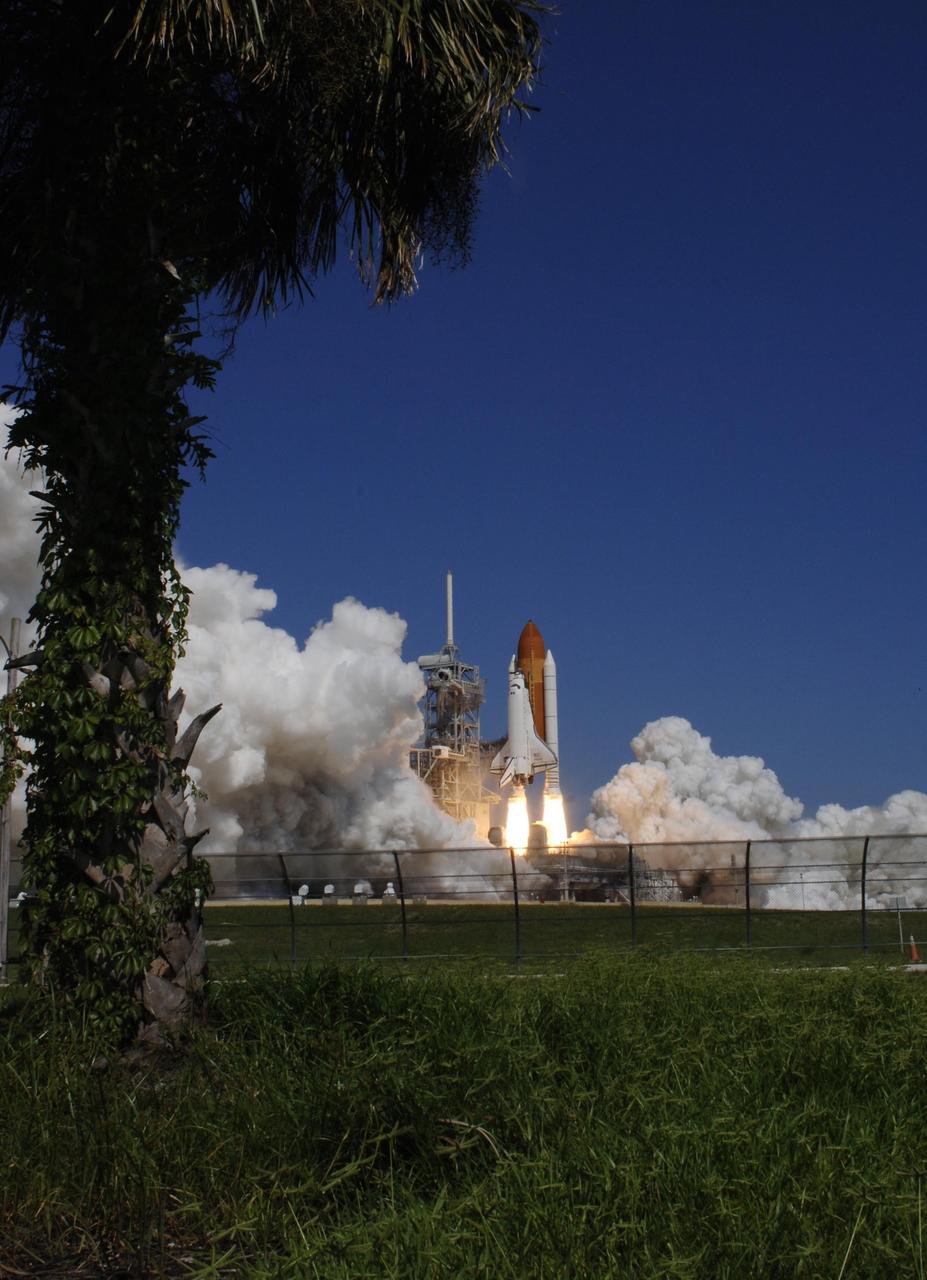
KENNEDY SPACE CENTER, FLA. - Tree limbs frame the brilliant launch of Space Shuttle Atlantis as it flees the smoke and steam below, heading for a rendezvous with the International Space Station on mission STS-115. Liftoff was on-time at 11:14:55 a.m. EDT. After launch attempts were scrubbed Aug. 27 and 29 and Sept. 3 and 8 due to weather and technical concerns, this launch was executed perfectly. Mission STS-115 is the 116th space shuttle flight, the 27th flight for orbiter Atlantis, and the 19th U.S. flight to the International Space Station. During the mission, Atlantis' astronauts will deliver and install the 17.5-ton, bus-sized P3/P4 integrated truss segment on the station. The girder-like truss includes a set of giant solar arrays, batteries and associated electronics and will provide one-fourth of the total power-generation capability for the completed station. STS-115 is scheduled to last 11 days with a planned landing at KSC. Photo courtesy of Nikon/Scott Andrews