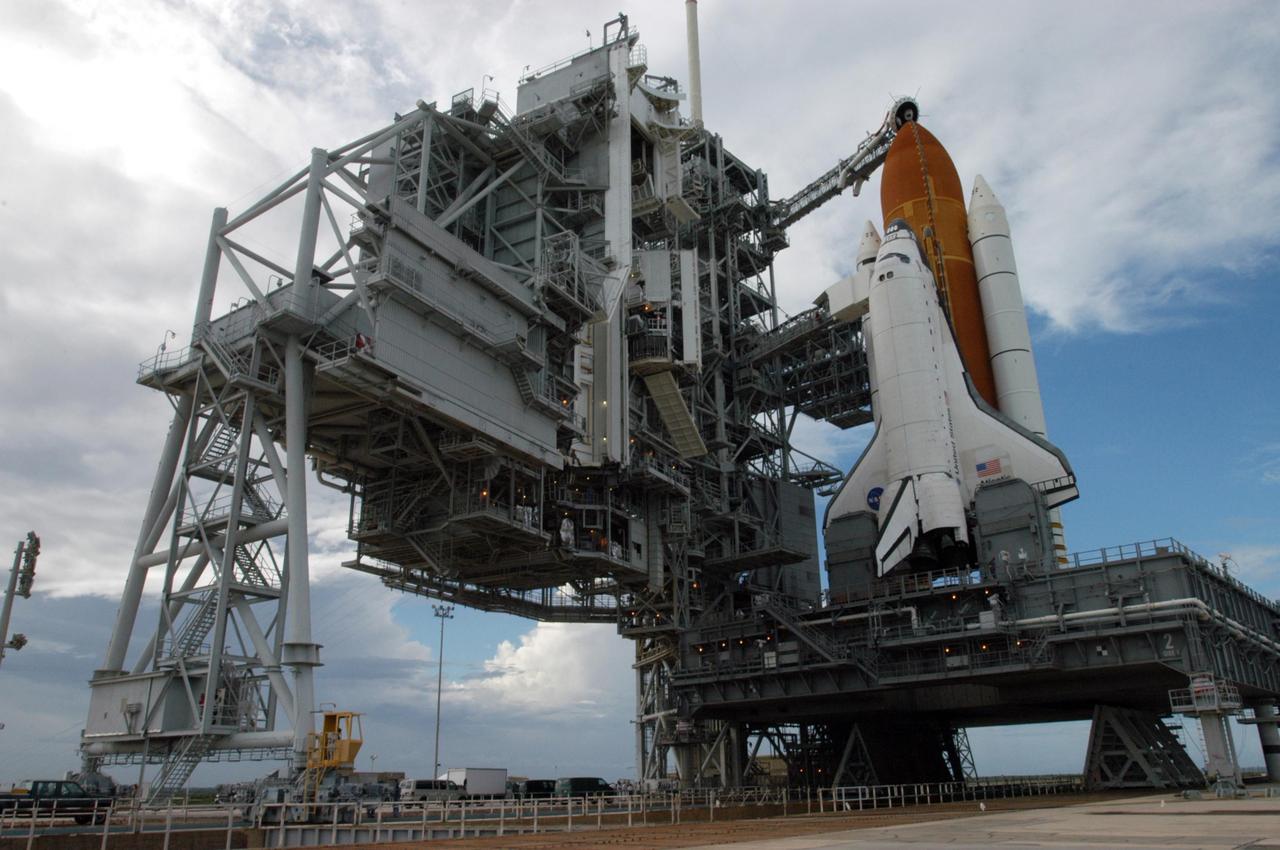
KENNEDY SPACE CENTER, FLA. - The rotating service structure (left) on Launch Pad 39B is rolled back to reveal Space Shuttle Atlantis. The RSS provides protected access to the orbiter for changeout and servicing of payloads at the pad and then is rolled away before liftoff. Atlantis is scheduled to launch Sept. 6 at 12:29 p.m. EDT on mission STS-115. During the mission, Atlantis' astronauts will deliver and install the 17.5-ton, bus-sized P3/P4 integrated truss segment on the station. The girder-like truss includes a set of giant solar arrays, batteries and associated electronics and will provide one-fourth of the total power-generation capability for the completed station. This mission is the 116th space shuttle flight, the 27th flight for orbiter Atlantis, and the 19th U.S. flight to the International Space Station. STS-115 is scheduled to last 11 days with a planned KSC landing at about 8:03 a.m. EDT on Sept. 17. Photo credit: NASA/George Shelton
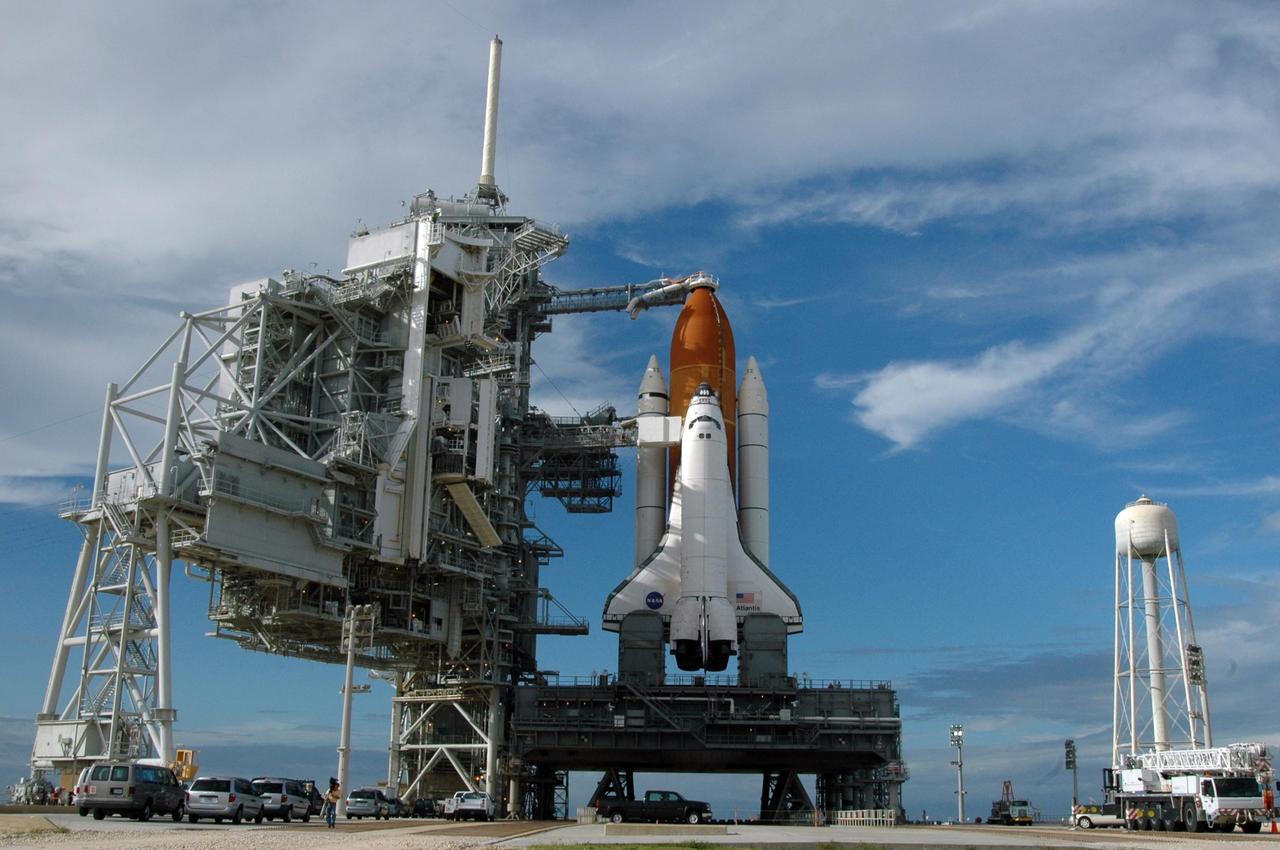
KENNEDY SPACE CENTER, FLA. - After rollback of the rotating service structure on Launch Pad 39B, Space Shuttle Atlantis shines in the late afternoon sun. The RSS provides protected access to the orbiter for changeout and servicing of payloads at the pad and then is rolled away before liftoff. At right is the 300,000-gallon water tank that releases a deluge of water across the mobile launcher platform during liftoff to aid sound suppression. Atlantis is scheduled to launch Sept. 6 at 12:29 p.m. EDT on mission STS-115. During the mission, Atlantis' astronauts will deliver and install the 17.5-ton, bus-sized P3/P4 integrated truss segment on the station. The girder-like truss includes a set of giant solar arrays, batteries and associated electronics and will provide one-fourth of the total power-generation capability for the completed station. This mission is the 116th space shuttle flight, the 27th flight for orbiter Atlantis, and the 19th U.S. flight to the International Space Station. STS-115 is scheduled to last 11 days with a planned KSC landing at about 8:03 a.m. EDT on Sept. 17. Photo credit: NASA/Ken Thornsley

KENNEDY SPACE CENTER, FLA. - The late afternoon sun highlights Space Shuttle Atlantis after rollback of the rotating service structure. The RSS provides protected access to the orbiter for changeout and servicing of payloads at the pad and then is rolled away before liftoff. Seen above the golden external tank is the vent hood (known as the "beanie cap") at the end of the gaseous oxygen vent arm. Vapors are created as the liquid oxygen in the external tank boil off. The hood vents the gaseous oxygen vapors away from the space shuttle vehicle. Below it, extending from the fixed service structure, is the orbiter access arm with the White Room at the end. The White Room provides entry into the orbiter. Atlantis is scheduled to launch Sept. 6 at 12:29 p.m. EDT on mission STS-115. During the mission, Atlantis' astronauts will deliver and install the 17.5-ton, bus-sized P3/P4 integrated truss segment on the station. The girder-like truss includes a set of giant solar arrays, batteries and associated electronics and will provide one-fourth of the total power-generation capability for the completed station. This mission is the 116th space shuttle flight, the 27th flight for orbiter Atlantis, and the 19th U.S. flight to the International Space Station. STS-115 is scheduled to last 11 days with a planned KSC landing at about 8:03 a.m. EDT on Sept. 17. Photo credit: NASA/Ken Thornsley
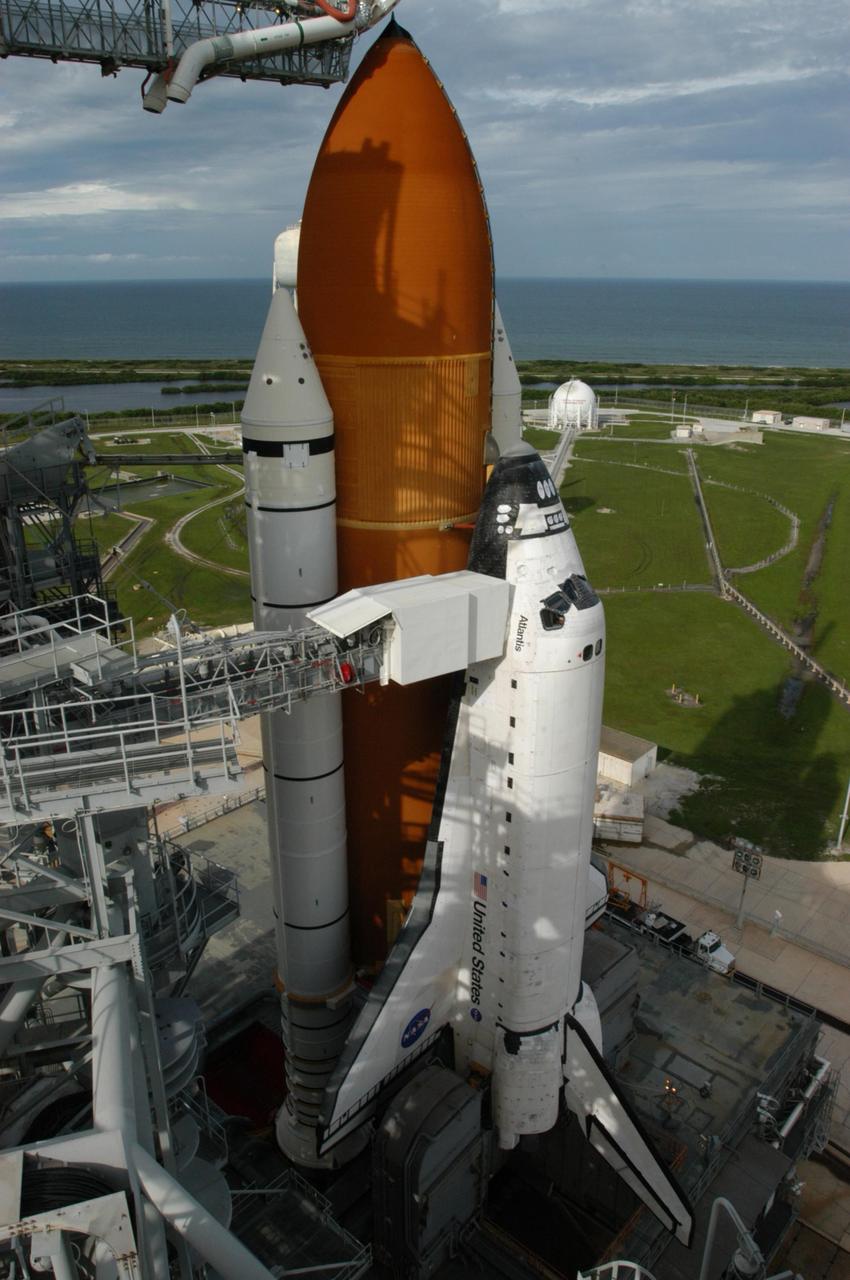
KENNEDY SPACE CENTER, FLA. - Early evening shadows glide across Space Shuttle Atlantis after rollback of the rotating service structure on Launch Pad 39B. The RSS provides protected access to the orbiter for changeout and servicing of payloads at the pad and then is rolled away before liftoff. In the background is the Atlantic Ocean. Extended from the fixed service structure at left is the orbiter access arm with the White Room at the end. The White Room provides entry into the orbiter. Seen above the golden external tank is the vent hood (known as the "beanie cap") at the end of the gaseous oxygen vent arm. Vapors are created as the liquid oxygen in the external tank boil off. The hood vents the gaseous oxygen vapors away from the space shuttle vehicle. Atlantis is scheduled to launch Sept. 6 at 12:29 p.m. EDT on mission STS-115. During the mission, Atlantis' astronauts will deliver and install the 17.5-ton, bus-sized P3/P4 integrated truss segment on the station. The girder-like truss includes a set of giant solar arrays, batteries and associated electronics and will provide one-fourth of the total power-generation capability for the completed station. This mission is the 116th space shuttle flight, the 27th flight for orbiter Atlantis, and the 19th U.S. flight to the International Space Station. STS-115 is scheduled to last 11 days with a planned KSC landing at about 8:03 a.m. EDT on Sept. 17. Photo credit: NASA/George Shelton
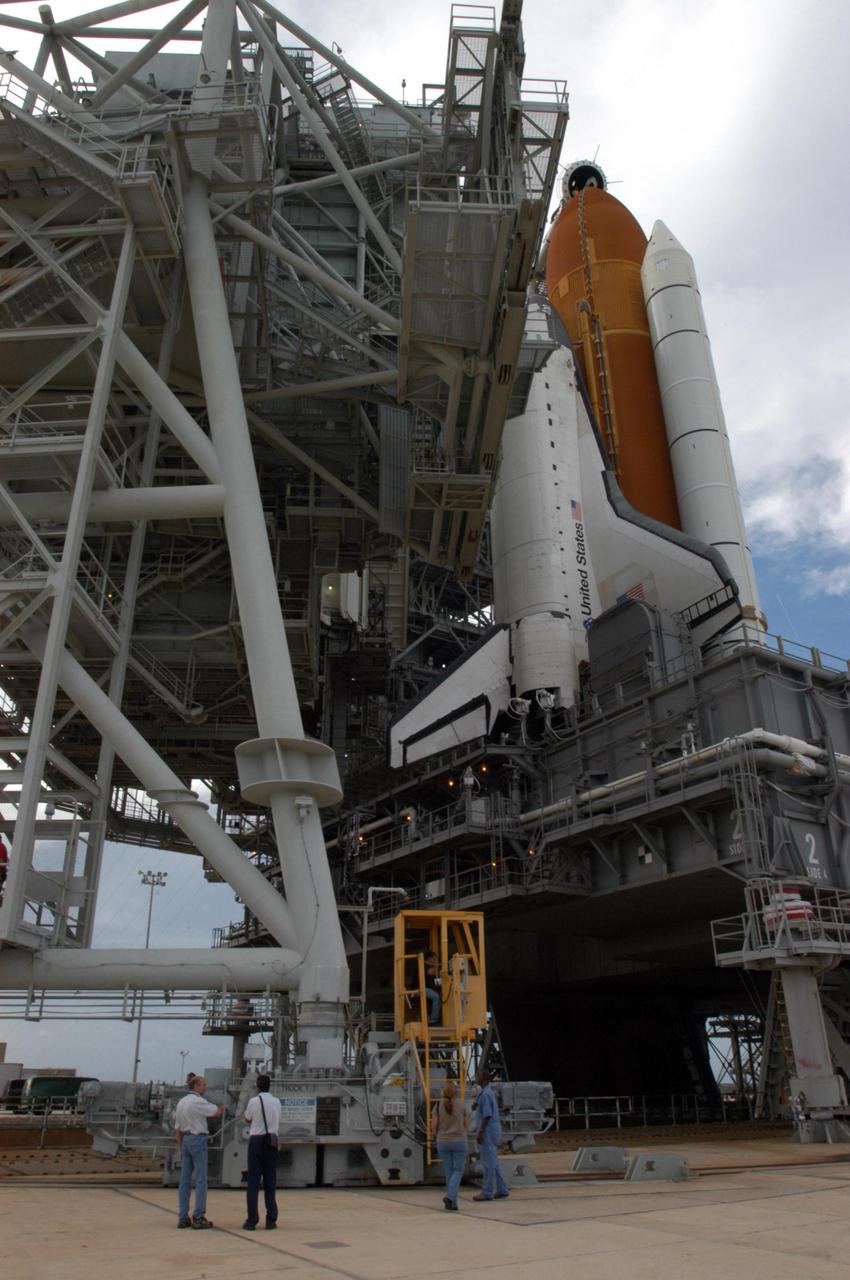
KENNEDY SPACE CENTER, FLA. - The rotating service structure (left) on Launch Pad 39B is ready to roll away from Space Shuttle Atlantis in preparation for launch. The RSS provides protected access to the orbiter for changeout and servicing of payloads at the pad and then is rolled away before liftoff. Atlantis is scheduled to launch Sept. 6 at 12:29 p.m. EDT on mission STS-115. During the mission, Atlantis' astronauts will deliver and install the 17.5-ton, bus-sized P3/P4 integrated truss segment on the station. The girder-like truss includes a set of giant solar arrays, batteries and associated electronics and will provide one-fourth of the total power-generation capability for the completed station. This mission is the 116th space shuttle flight, the 27th flight for orbiter Atlantis, and the 19th U.S. flight to the International Space Station. STS-115 is scheduled to last 11 days with a planned KSC landing at about 8:03 a.m. EDT on Sept. 17. Photo credit: NASA/George Shelton
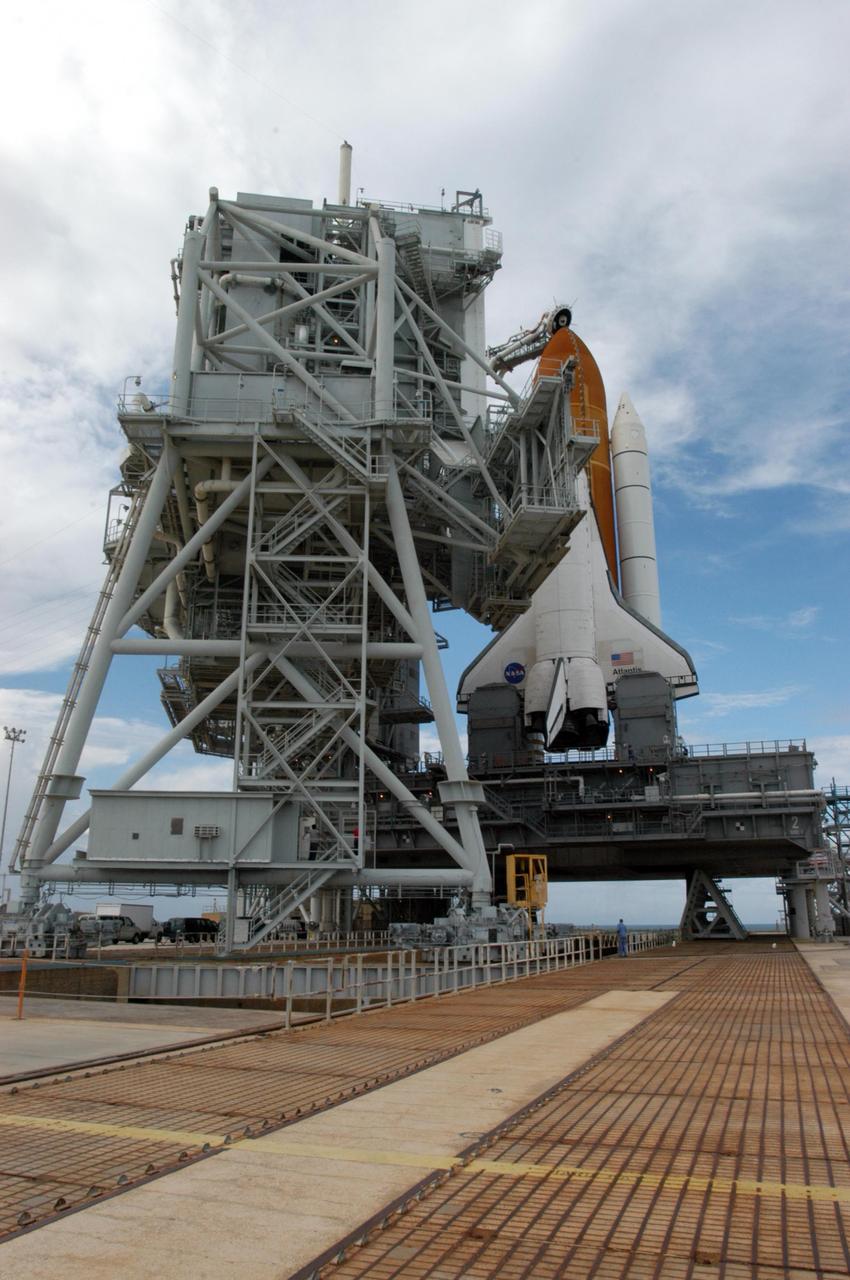
KENNEDY SPACE CENTER, FLA. - The rotating service structure (left) on Launch Pad 39B begins rolling back to reveal Space Shuttle Atlantis. The RSS provides protected access to the orbiter for changeout and servicing of payloads at the pad and then is rolled away before liftoff. Atlantis is scheduled to launch Sept. 6 at 12:29 p.m. EDT on mission STS-115. During the mission, Atlantis' astronauts will deliver and install the 17.5-ton, bus-sized P3/P4 integrated truss segment on the station. The girder-like truss includes a set of giant solar arrays, batteries and associated electronics and will provide one-fourth of the total power-generation capability for the completed station. This mission is the 116th space shuttle flight, the 27th flight for orbiter Atlantis, and the 19th U.S. flight to the International Space Station. STS-115 is scheduled to last 11 days with a planned KSC landing at about 8:03 a.m. EDT on Sept. 17. Photo credit: NASA/George Shelton
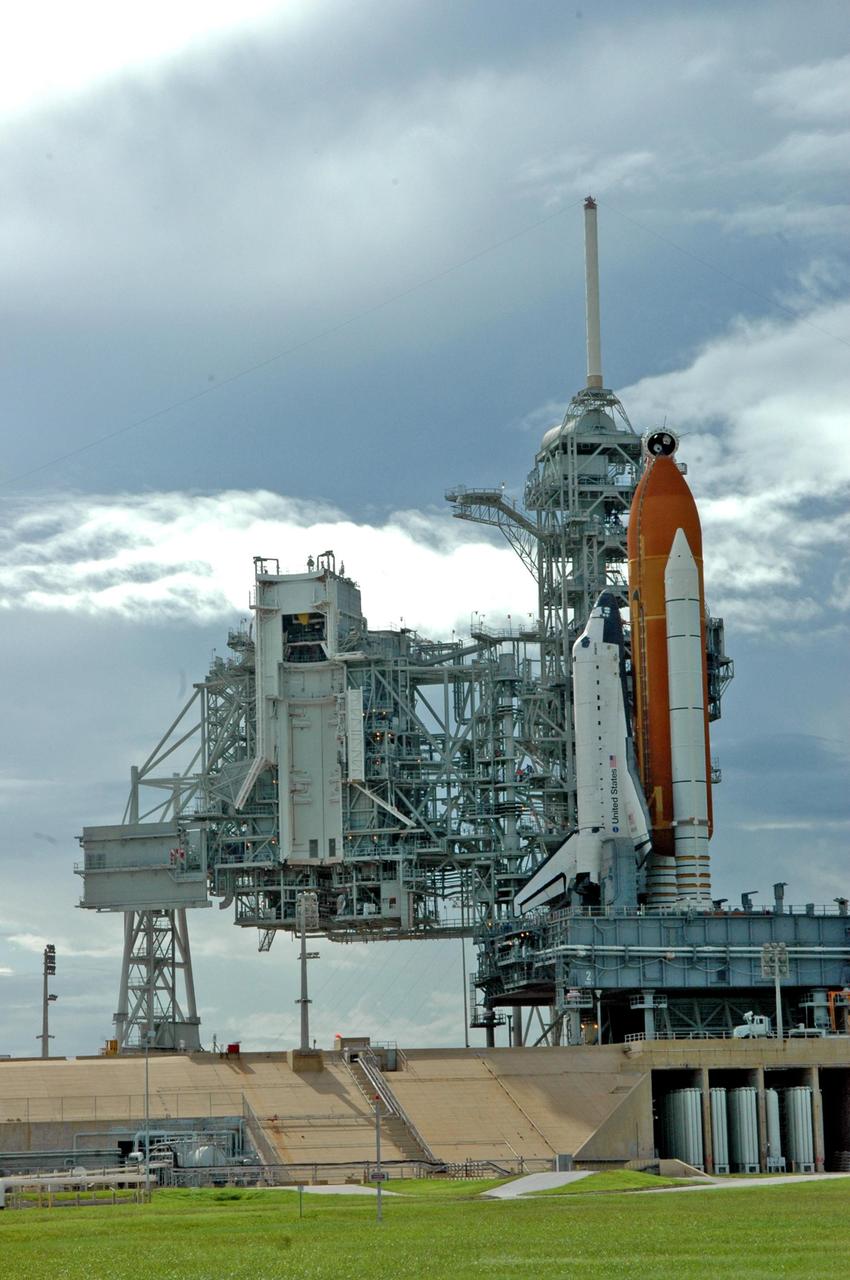
KENNEDY SPACE CENTER, FLA. - The rotating service structure (left) on Launch Pad 39B is rolled back to reveal Space Shuttle Atlantis. The RSS provides protected access to the orbiter for changeout and servicing of payloads at the pad and then is rolled away before liftoff. Atlantis is scheduled to launch Sept. 6 at 12:29 p.m. EDT on mission STS-115. During the mission, Atlantis' astronauts will deliver and install the 17.5-ton, bus-sized P3/P4 integrated truss segment on the station. The girder-like truss includes a set of giant solar arrays, batteries and associated electronics and will provide one-fourth of the total power-generation capability for the completed station. This mission is the 116th space shuttle flight, the 27th flight for orbiter Atlantis, and the 19th U.S. flight to the International Space Station. STS-115 is scheduled to last 11 days with a planned KSC landing at about 8:03 a.m. EDT on Sept. 17. Photo credit: NASA/Ken Thornsley
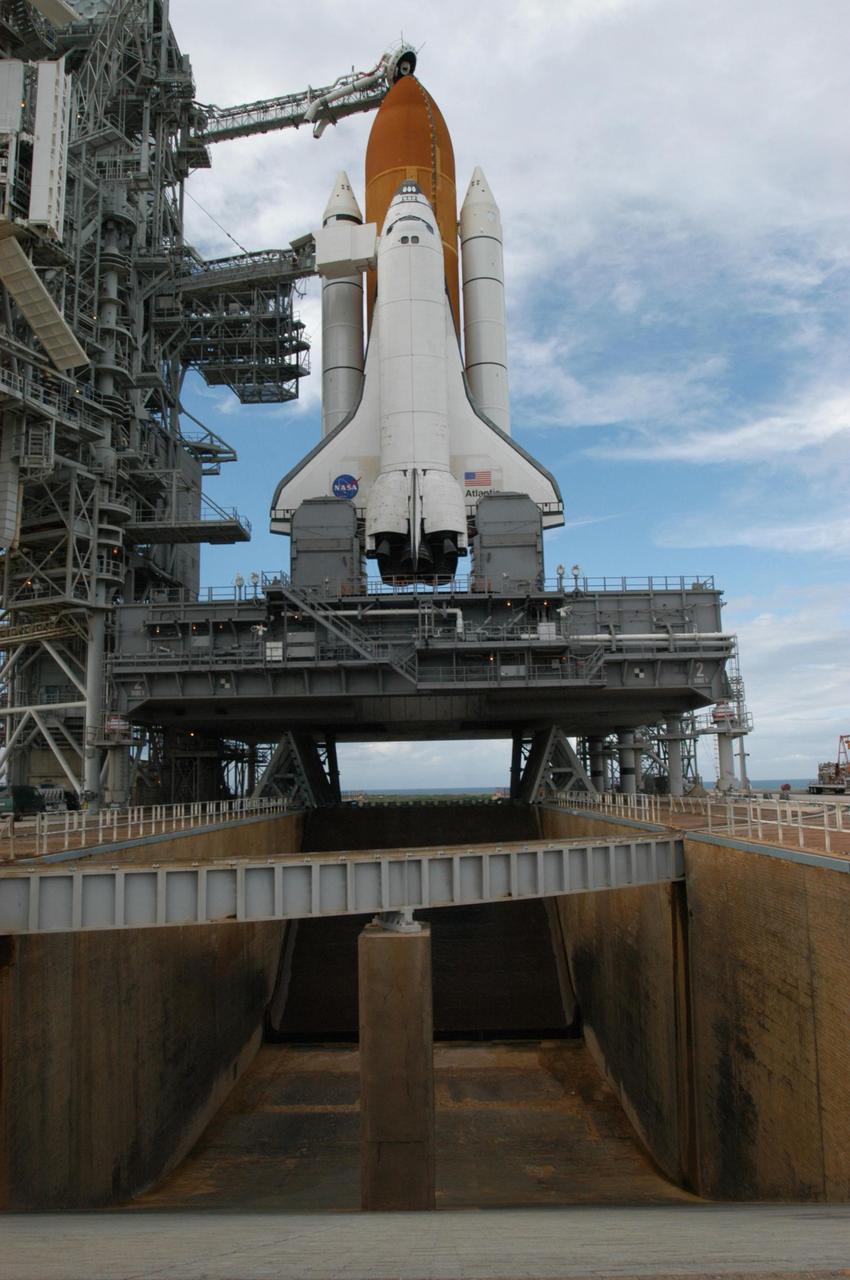
KENNEDY SPACE CENTER, FLA. - After rollback of the rotating service structure on Launch Pad 39B, Space Shuttle Atlantis is revealed. The RSS provides protected access to the orbiter for changeout and servicing of payloads at the pad and then is rolled away before liftoff. Seen above the golden external tank is the vent hood (known as the "beanie cap") at the end of the gaseous oxygen vent arm. Vapors are created as the liquid oxygen in the external tank boil off. The hood vents the gaseous oxygen vapors away from the space shuttle vehicle. Below it, extending from the fixed service structure, is the orbiter access arm with the White Room at the end. The White Room provides entry into the orbiter. Atlantis is scheduled to launch Sept. 6 at 12:29 p.m. EDT on mission STS-115. During the mission, Atlantis' astronauts will deliver and install the 17.5-ton, bus-sized P3/P4 integrated truss segment on the station. The girder-like truss includes a set of giant solar arrays, batteries and associated electronics and will provide one-fourth of the total power-generation capability for the completed station. This mission is the 116th space shuttle flight, the 27th flight for orbiter Atlantis, and the 19th U.S. flight to the International Space Station. STS-115 is scheduled to last 11 days with a planned KSC landing at about 8:03 a.m. EDT on Sept. 17. Photo credit: NASA/George Shelton
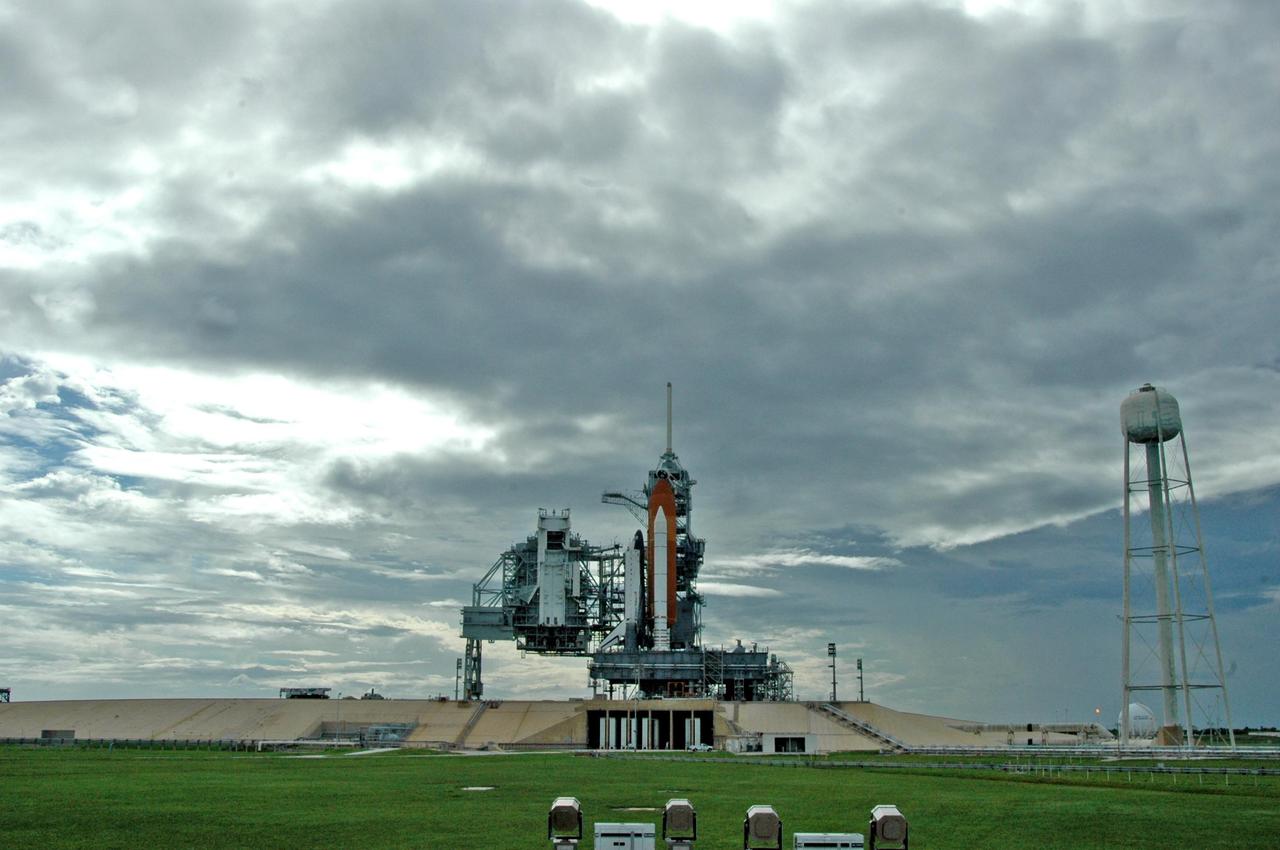
KENNEDY SPACE CENTER, FLA. - Launch Pad 39B looks like a movie screen in this photo of Space Shuttle Atlantis after rollback of the rotating service structure. The RSS provides protected access to the orbiter for changeout and servicing of payloads at the pad and then is rolled away before liftoff. At right is the 300,000-gallon water tank that releases a deluge of water across the mobile launcher platform during liftoff to aid sound suppression. Atlantis is scheduled to launch Sept. 6 at 12:29 p.m. EDT on mission STS-115. During the mission, Atlantis' astronauts will deliver and install the 17.5-ton, bus-sized P3/P4 integrated truss segment on the station. The girder-like truss includes a set of giant solar arrays, batteries and associated electronics and will provide one-fourth of the total power-generation capability for the completed station. This mission is the 116th space shuttle flight, the 27th flight for orbiter Atlantis, and the 19th U.S. flight to the International Space Station. STS-115 is scheduled to last 11 days with a planned KSC landing at about 8:03 a.m. EDT on Sept. 17. Photo credit: NASA/Ken Thornsley