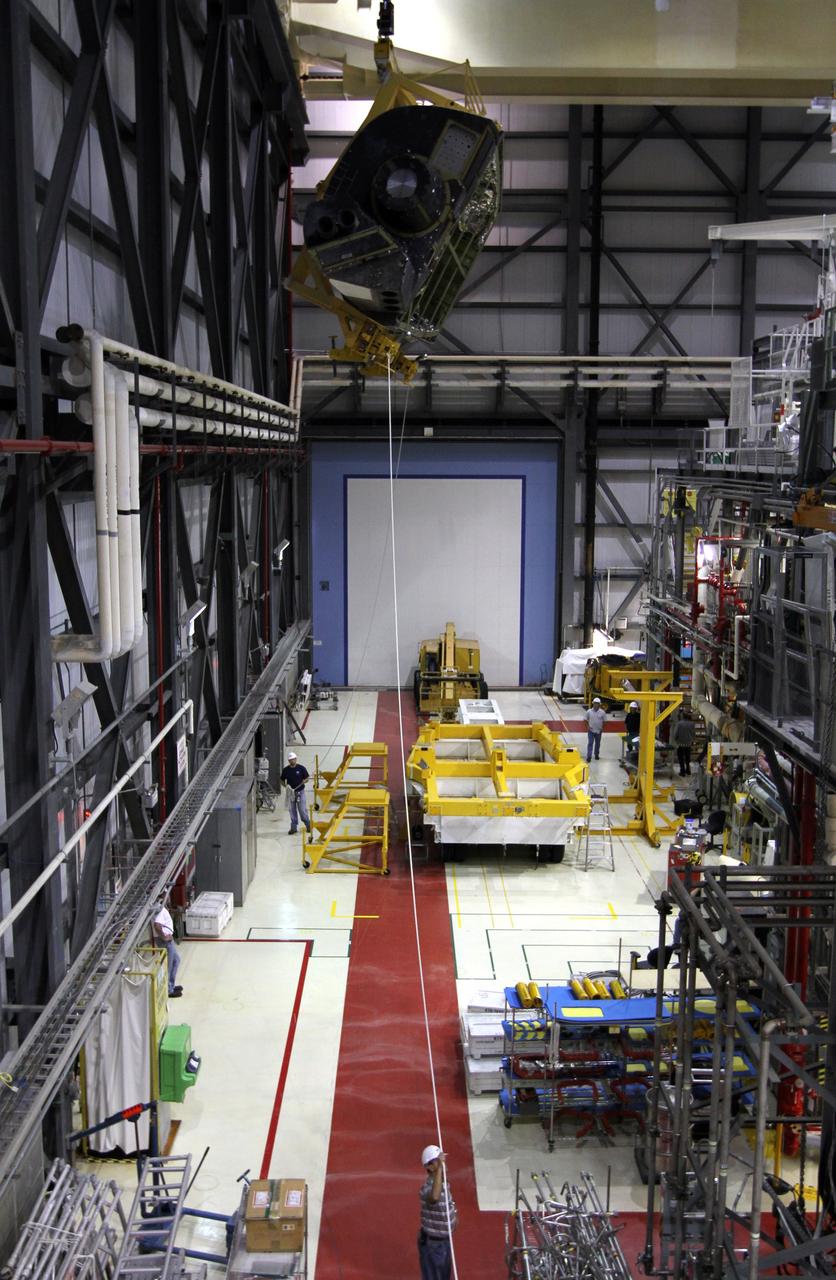
CAPE CANAVERAL, Fla. – An orbital maneuvering system, or OMS, pod glides across the ceiling away from its transporter in Orbiter Processing Facility-1 at NASA’s Kennedy Space Center in Florida. The pod will be reinstalled on space shuttle Atlantis. The orbital maneuvering system provided the shuttle with thrust for orbit insertion, rendezvous and deorbit, and could provide up to 1,000 pounds of propellant to the aft reaction control system. The OMS is housed in two independent pods located on each side of the shuttle's aft fuselage. Each pod contains one OMS engine and the hardware needed to pressurize, store and distribute the propellants to perform the velocity maneuvers. Atlantis’ OMS pods were removed and sent to White Sands Test Facility in New Mexico to be cleaned of residual toxic propellant. The work is part of the Space Shuttle Program’s transition and retirement processing of the shuttle fleet. A groundbreaking was held Jan. 18 for Atlantis' future home, a 65,000-square-foot exhibit hall in Shuttle Plaza at the Kennedy Space Center Visitor Complex. Atlantis is scheduled to roll over to the visitor complex in November in preparation for the exhibit’s grand opening in July 2013. For more information, visit http://www.nasa.gov/transition. Photo credit: NASA/Kim Shiflett

CAPE CANAVERAL, Fla. – In Orbiter Processing Facility-1 at NASA’s Kennedy Space Center in Florida, United Space Alliance technicians reinstall the left orbital maneuvering system, or OMS, pod on space shuttle Atlantis. The orbital maneuvering system provided the shuttle with thrust for orbit insertion, rendezvous and deorbit, and could provide up to 1,000 pounds of propellant to the aft reaction control system. The OMS is housed in two independent pods located on each side of the shuttle's aft fuselage. Each pod contains one OMS engine and the hardware needed to pressurize, store and distribute the propellants to perform the velocity maneuvers. Atlantis’ OMS pods were removed and sent to White Sands Test Facility in New Mexico to be cleaned of residual toxic propellant. The work is part of the Space Shuttle Program’s transition and retirement processing of the shuttle fleet. A groundbreaking was held Jan. 18 for Atlantis' future home, a 65,000-square-foot exhibit hall in Shuttle Plaza at the Kennedy Space Center Visitor Complex. Atlantis is scheduled to roll over to the visitor complex in November in preparation for the exhibit’s grand opening in July 2013. For more information, visit http://www.nasa.gov/transition. Photo credit: NASA/Ben Smegelsky
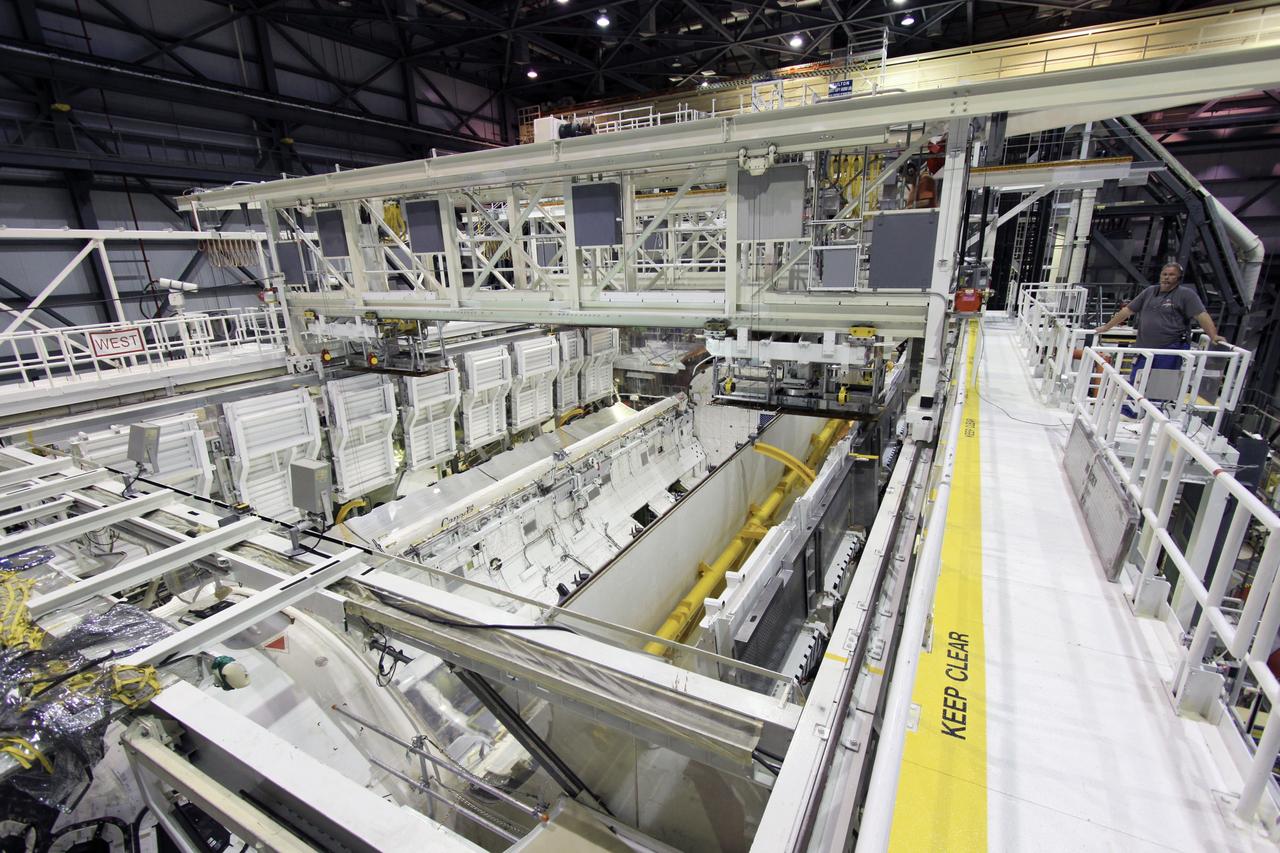
CAPE CANAVERAL, Fla. – In Orbiter Processing Facility-1 at NASA’s Kennedy Space Center in Florida, operations to open the payload bay doors of space shuttle Atlantis are well under way. The work is part of the Space Shuttle Program’s transition and retirement processing of shuttle Atlantis. A groundbreaking was held Jan. 18 for Atlantis' future home -- a 65,000-square-foot exhibit hall in Shuttle Plaza at the Kennedy Space Center Visitor Complex. For more information, visit http://www.nasa.gov/shuttle. Photo credit: NASA/Jim Grossmann
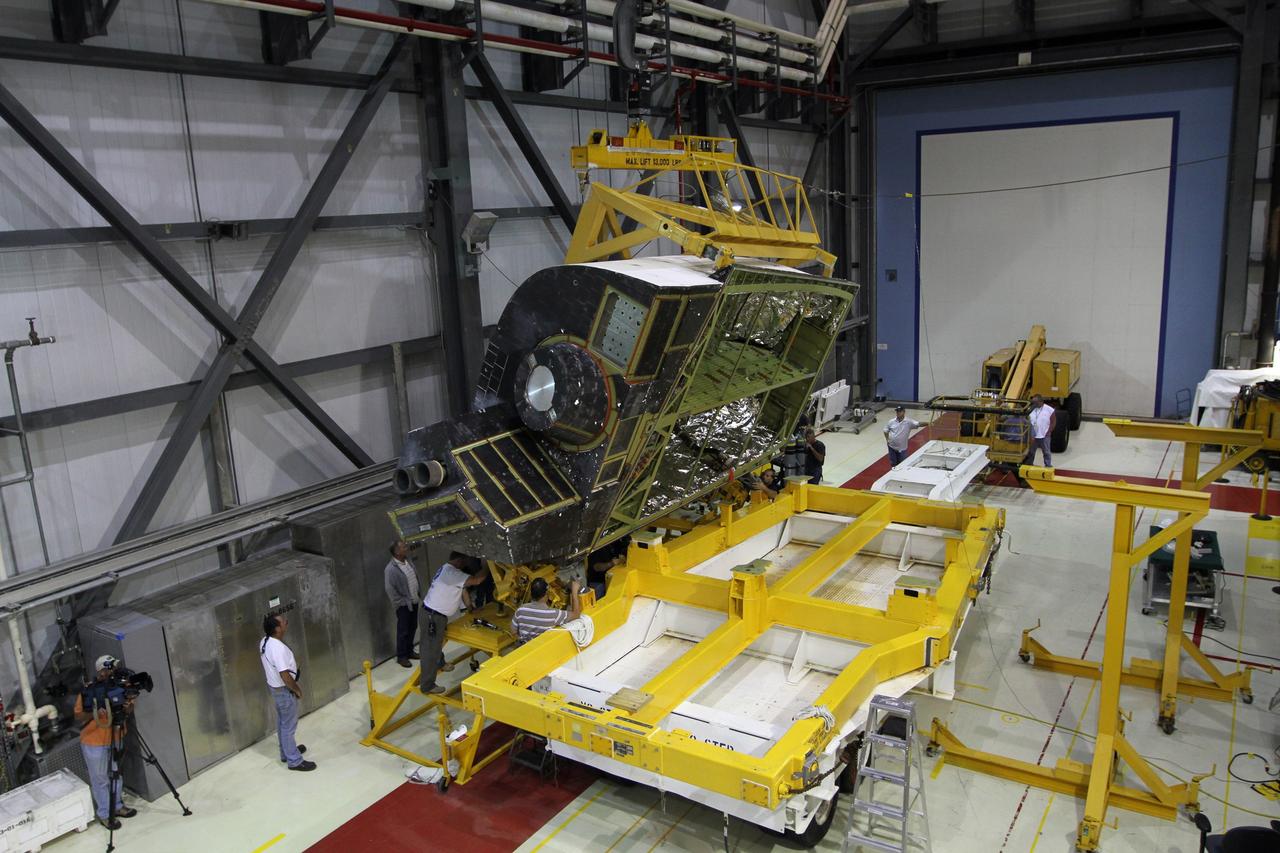
CAPE CANAVERAL, Fla. – In Orbiter Processing Facility-1 at NASA’s Kennedy Space Center in Florida, the underbelly of an orbital maneuvering system, or OMS, pod comes into view as it is lifted from its transporter. The pod will be reinstalled on space shuttle Atlantis. The orbital maneuvering system provided the shuttle with thrust for orbit insertion, rendezvous and deorbit, and could provide up to 1,000 pounds of propellant to the aft reaction control system. The OMS is housed in two independent pods located on each side of the shuttle's aft fuselage. Each pod contains one OMS engine and the hardware needed to pressurize, store and distribute the propellants to perform the velocity maneuvers. Atlantis’ OMS pods were removed and sent to White Sands Test Facility in New Mexico to be cleaned of residual toxic propellant. The work is part of the Space Shuttle Program’s transition and retirement processing of the shuttle fleet. A groundbreaking was held Jan. 18 for Atlantis' future home, a 65,000-square-foot exhibit hall in Shuttle Plaza at the Kennedy Space Center Visitor Complex. Atlantis is scheduled to roll over to the visitor complex in November in preparation for the exhibit’s grand opening in July 2013. For more information, visit http://www.nasa.gov/transition. Photo credit: NASA/Kim Shiflett

CAPE CANAVERAL, Fla. – In Orbiter Processing Facility-1 at NASA’s Kennedy Space Center in Florida, a United Space Alliance technician prepares to attach a yellow strongback to one of space shuttle Atlantis’ payload bay doors. Strongbacks are used to support and operate the doors when the shuttle is not in space. The work is part of the Space Shuttle Program’s transition and retirement processing of shuttle Atlantis. A groundbreaking was held Jan. 18 for Atlantis' future home -- a 65,000-square-foot exhibit hall in Shuttle Plaza at the Kennedy Space Center Visitor Complex. For more information, visit http://www.nasa.gov/shuttle. Photo credit: NASA/Jim Grossmann

CAPE CANAVERAL, Fla. – An orbital maneuvering system, or OMS, pod is lifted across the ceiling in Orbiter Processing Facility-1 at NASA’s Kennedy Space Center in Florida. The pod will be reinstalled on space shuttle Atlantis. The orbital maneuvering system provided the shuttle with thrust for orbit insertion, rendezvous and deorbit, and could provide up to 1,000 pounds of propellant to the aft reaction control system. The OMS is housed in two independent pods located on each side of the shuttle's aft fuselage. Each pod contains one OMS engine and the hardware needed to pressurize, store and distribute the propellants to perform the velocity maneuvers. Atlantis’ OMS pods were removed and sent to White Sands Test Facility in New Mexico to be cleaned of residual toxic propellant. The work is part of the Space Shuttle Program’s transition and retirement processing of the shuttle fleet. A groundbreaking was held Jan. 18 for Atlantis' future home, a 65,000-square-foot exhibit hall in Shuttle Plaza at the Kennedy Space Center Visitor Complex. Atlantis is scheduled to roll over to the visitor complex in November in preparation for the exhibit’s grand opening in July 2013. For more information, visit http://www.nasa.gov/transition. Photo credit: NASA/Kim Shiflett
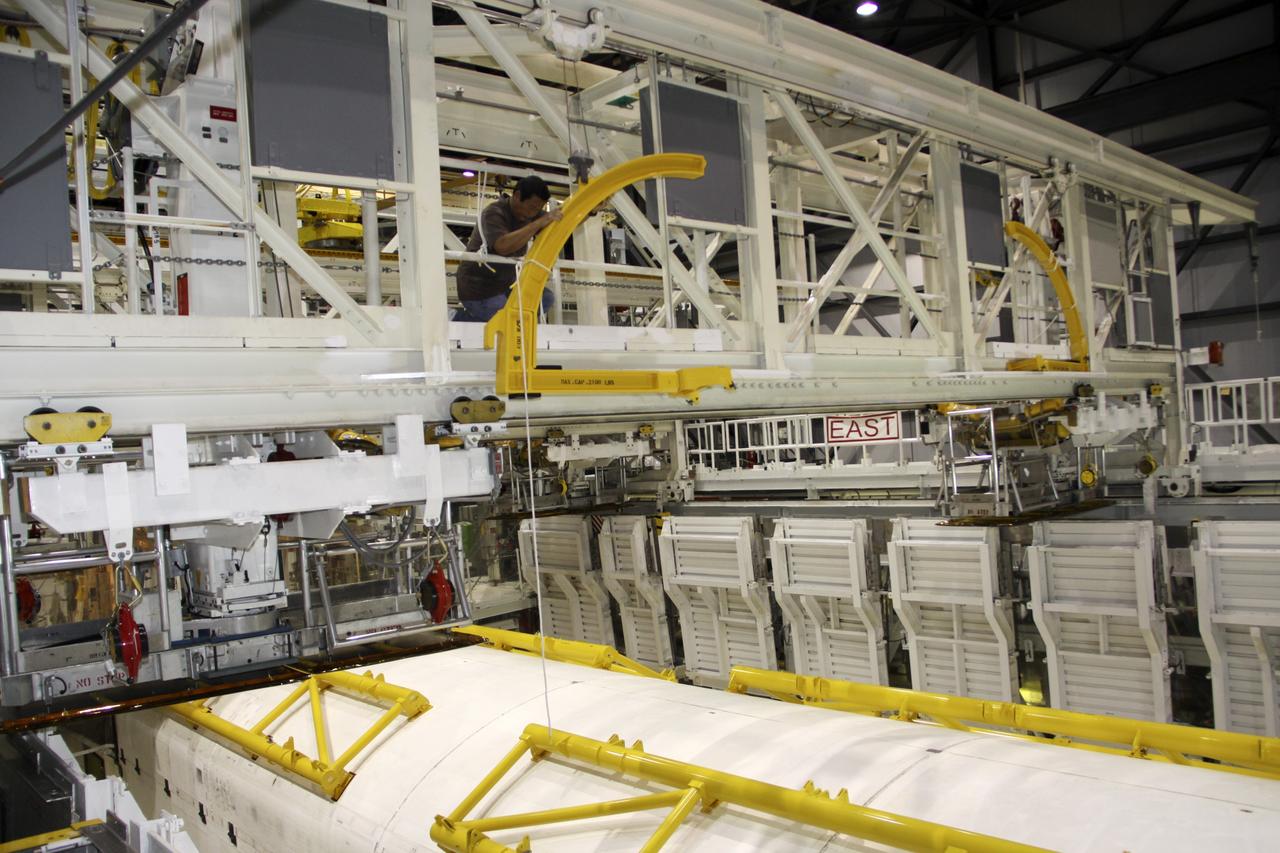
CAPE CANAVERAL, Fla. – In Orbiter Processing Facility-1 at NASA’s Kennedy Space Center in Florida, a United Space Alliance technician prepares to open the payload bay doors of space shuttle Atlantis with the assistance of the yellow strongbacks attached to the doors. Strongbacks are used to support and operate the doors when the shuttle is not in space. The work is part of the Space Shuttle Program’s transition and retirement processing of shuttle Atlantis. A groundbreaking was held Jan. 18 for Atlantis' future home -- a 65,000-square-foot exhibit hall in Shuttle Plaza at the Kennedy Space Center Visitor Complex. For more information, visit http://www.nasa.gov/shuttle. Photo credit: NASA/Jim Grossmann
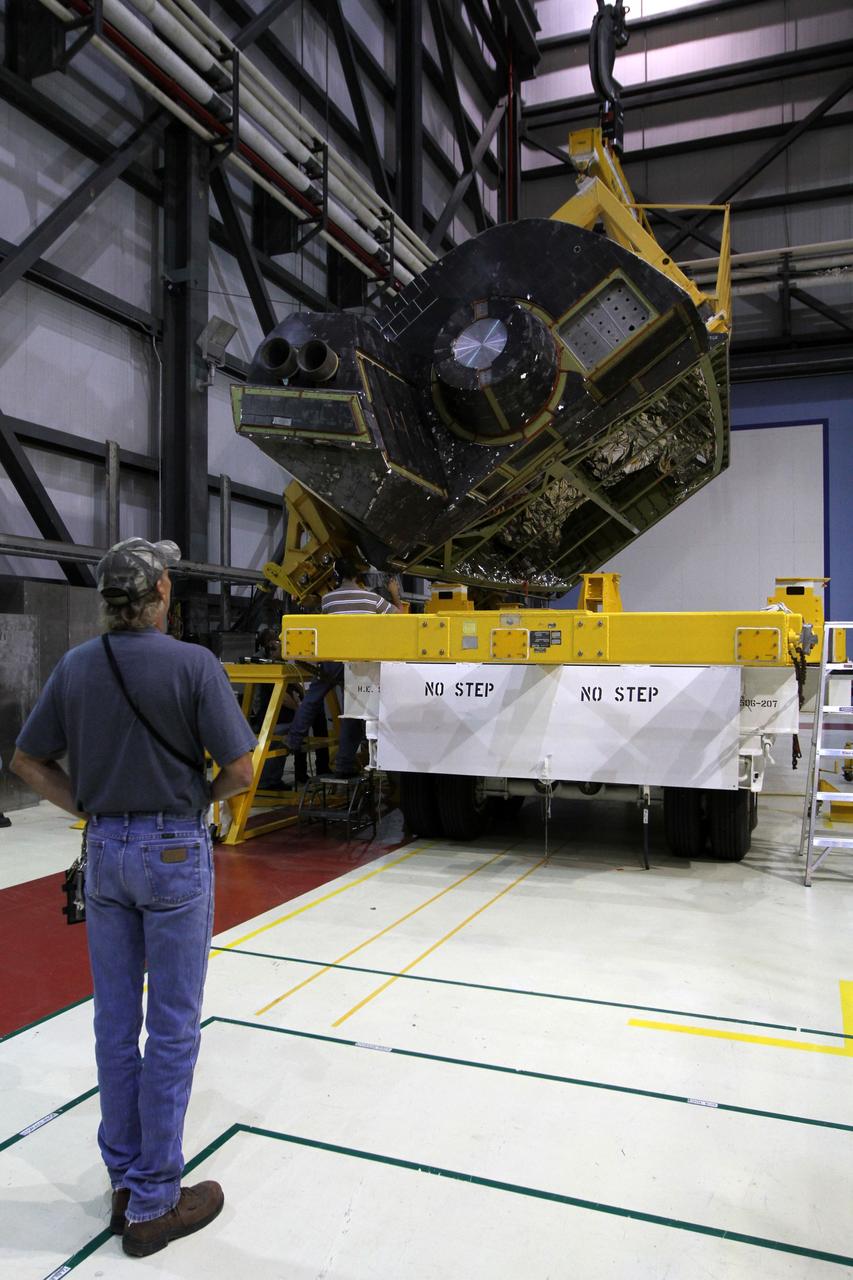
CAPE CANAVERAL, Fla. – In Orbiter Processing Facility-1 at NASA’s Kennedy Space Center in Florida, a handling fixture lifts an orbital maneuvering system, or OMS, pod from its transporter. The pod will be reinstalled on space shuttle Atlantis. The orbital maneuvering system provided the shuttle with thrust for orbit insertion, rendezvous and deorbit, and could provide up to 1,000 pounds of propellant to the aft reaction control system. The OMS is housed in two independent pods located on each side of the shuttle's aft fuselage. Each pod contains one OMS engine and the hardware needed to pressurize, store and distribute the propellants to perform the velocity maneuvers. Atlantis’ OMS pods were removed and sent to White Sands Test Facility in New Mexico to be cleaned of residual toxic propellant. The work is part of the Space Shuttle Program’s transition and retirement processing of the shuttle fleet. A groundbreaking was held Jan. 18 for Atlantis' future home, a 65,000-square-foot exhibit hall in Shuttle Plaza at the Kennedy Space Center Visitor Complex. Atlantis is scheduled to roll over to the visitor complex in November in preparation for the exhibit’s grand opening in July 2013. For more information, visit http://www.nasa.gov/transition. Photo credit: NASA/Kim Shiflett
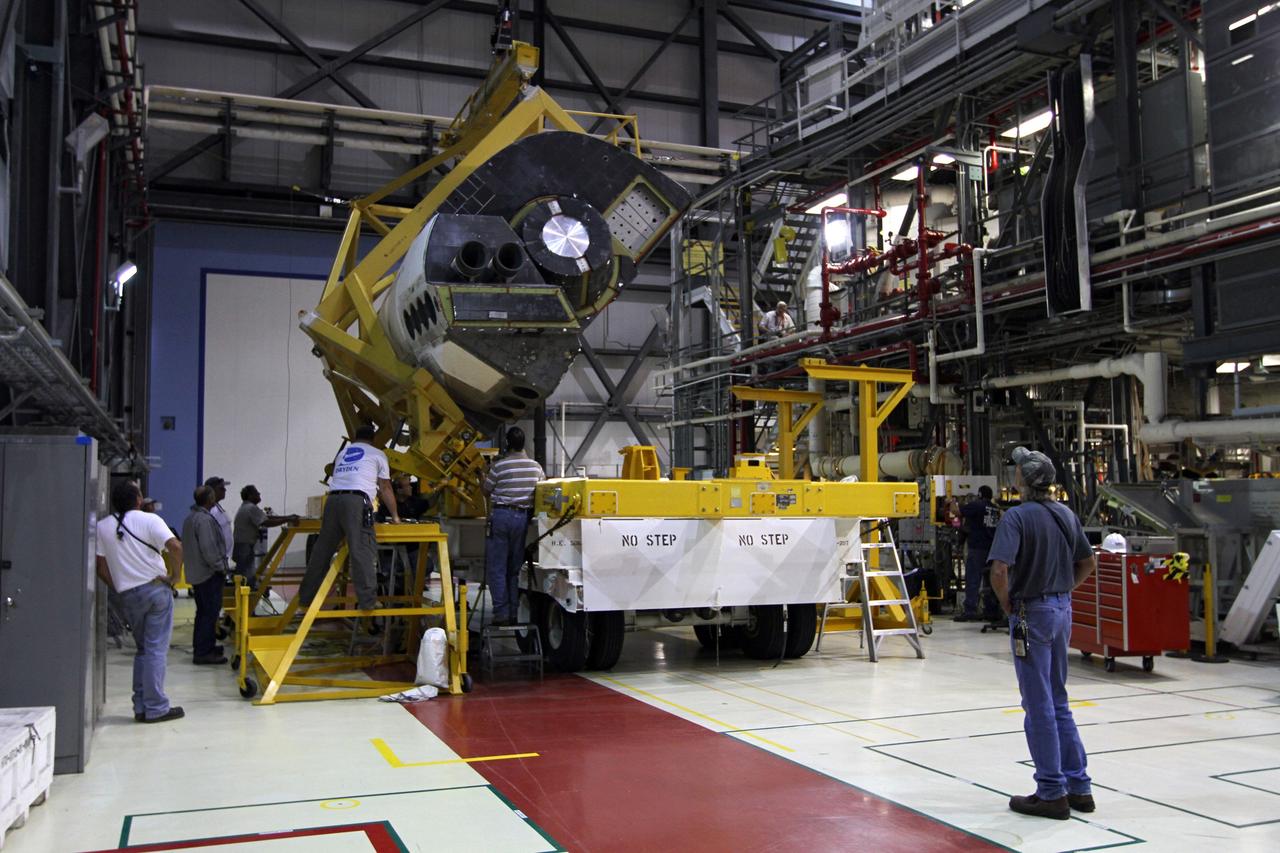
CAPE CANAVERAL, Fla. – In Orbiter Processing Facility-1 at NASA’s Kennedy Space Center in Florida, an orbital maneuvering system, or OMS, pod is lifted from its transporter under the careful supervision of United Space Alliance technicians. The pod will be reinstalled on space shuttle Atlantis. The orbital maneuvering system provided the shuttle with thrust for orbit insertion, rendezvous and deorbit, and could provide up to 1,000 pounds of propellant to the aft reaction control system. The OMS is housed in two independent pods located on each side of the shuttle's aft fuselage. Each pod contains one OMS engine and the hardware needed to pressurize, store and distribute the propellants to perform the velocity maneuvers. Atlantis’ OMS pods were removed and sent to White Sands Test Facility in New Mexico to be cleaned of residual toxic propellant. The work is part of the Space Shuttle Program’s transition and retirement processing of the shuttle fleet. A groundbreaking was held Jan. 18 for Atlantis' future home, a 65,000-square-foot exhibit hall in Shuttle Plaza at the Kennedy Space Center Visitor Complex. Atlantis is scheduled to roll over to the visitor complex in November in preparation for the exhibit’s grand opening in July 2013. For more information, visit http://www.nasa.gov/transition. Photo credit: NASA/Kim Shiflett
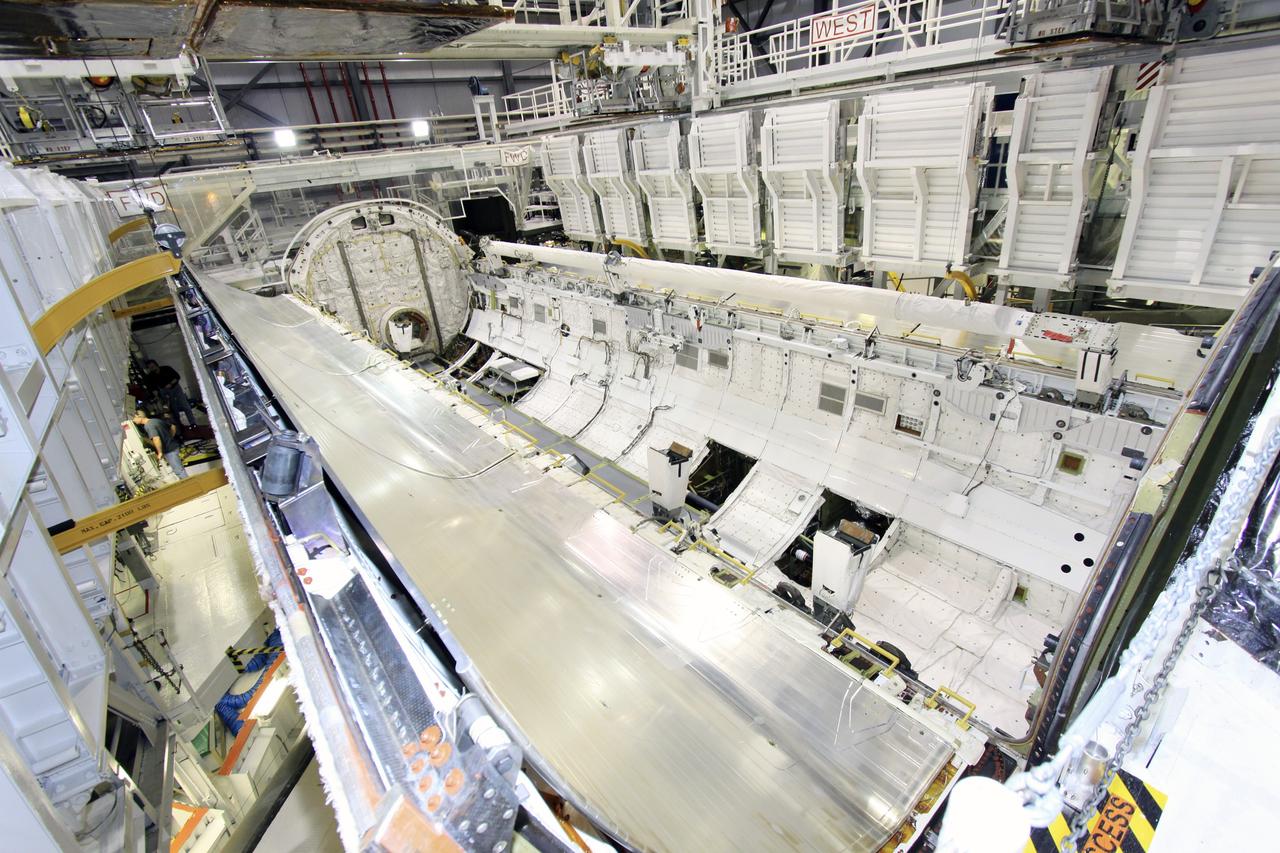
CAPE CANAVERAL, Fla. – In Orbiter Processing Facility-1 at NASA’s Kennedy Space Center in Florida, the payload bay of space shuttle Atlantis is accessible and ready for processing activities following the opening of its doors. The work is part of the Space Shuttle Program’s transition and retirement processing of shuttle Atlantis. A groundbreaking was held Jan. 18 for Atlantis' future home -- a 65,000-square-foot exhibit hall in Shuttle Plaza at the Kennedy Space Center Visitor Complex. For more information, visit http://www.nasa.gov/shuttle. Photo credit: NASA/Jim Grossmann
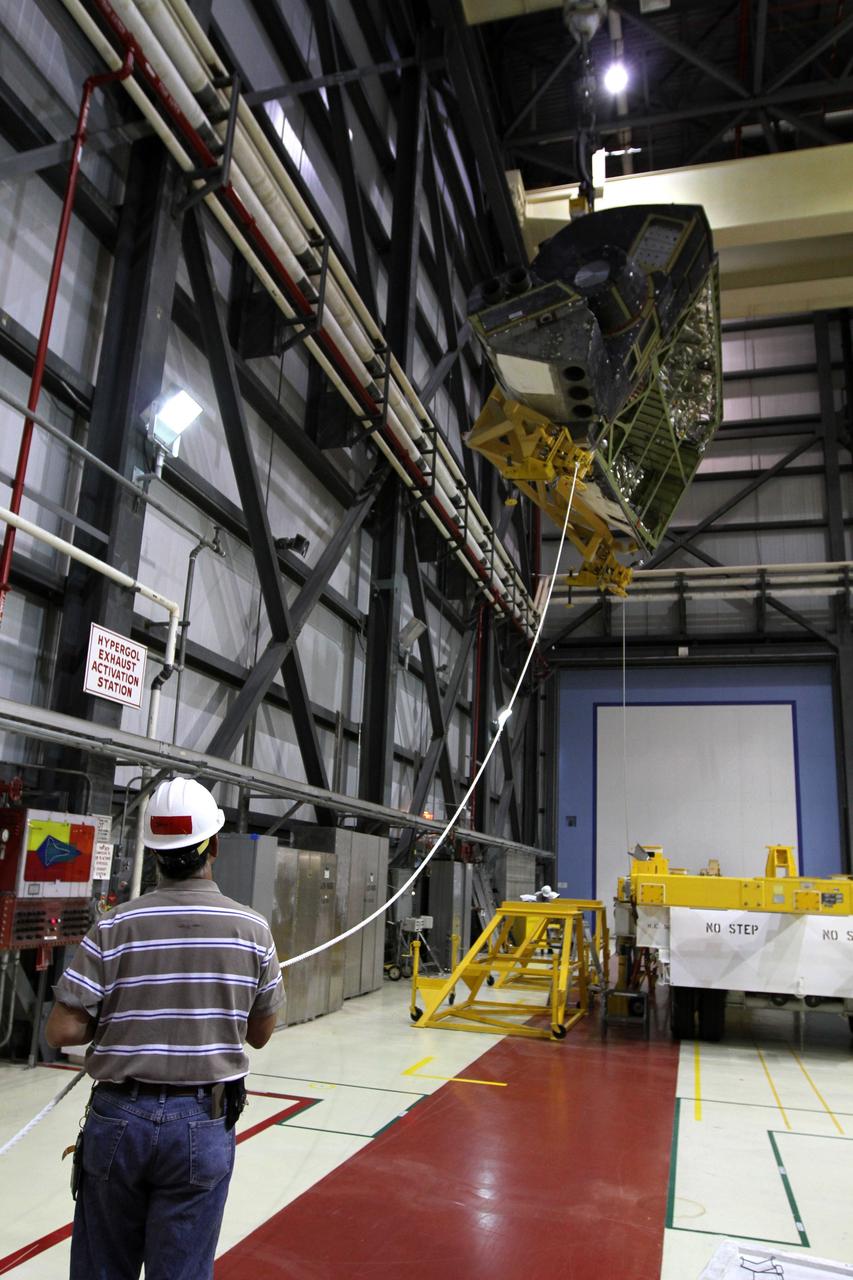
CAPE CANAVERAL, Fla. – An orbital maneuvering system, or OMS, pod hovers above its transporter in Orbiter Processing Facility-1 at NASA’s Kennedy Space Center in Florida. The pod will be reinstalled on space shuttle Atlantis. The orbital maneuvering system provided the shuttle with thrust for orbit insertion, rendezvous and deorbit, and could provide up to 1,000 pounds of propellant to the aft reaction control system. The OMS is housed in two independent pods located on each side of the shuttle's aft fuselage. Each pod contains one OMS engine and the hardware needed to pressurize, store and distribute the propellants to perform the velocity maneuvers. Atlantis’ OMS pods were removed and sent to White Sands Test Facility in New Mexico to be cleaned of residual toxic propellant. The work is part of the Space Shuttle Program’s transition and retirement processing of the shuttle fleet. A groundbreaking was held Jan. 18 for Atlantis' future home, a 65,000-square-foot exhibit hall in Shuttle Plaza at the Kennedy Space Center Visitor Complex. Atlantis is scheduled to roll over to the visitor complex in November in preparation for the exhibit’s grand opening in July 2013. For more information, visit http://www.nasa.gov/transition. Photo credit: NASA/Kim Shiflett
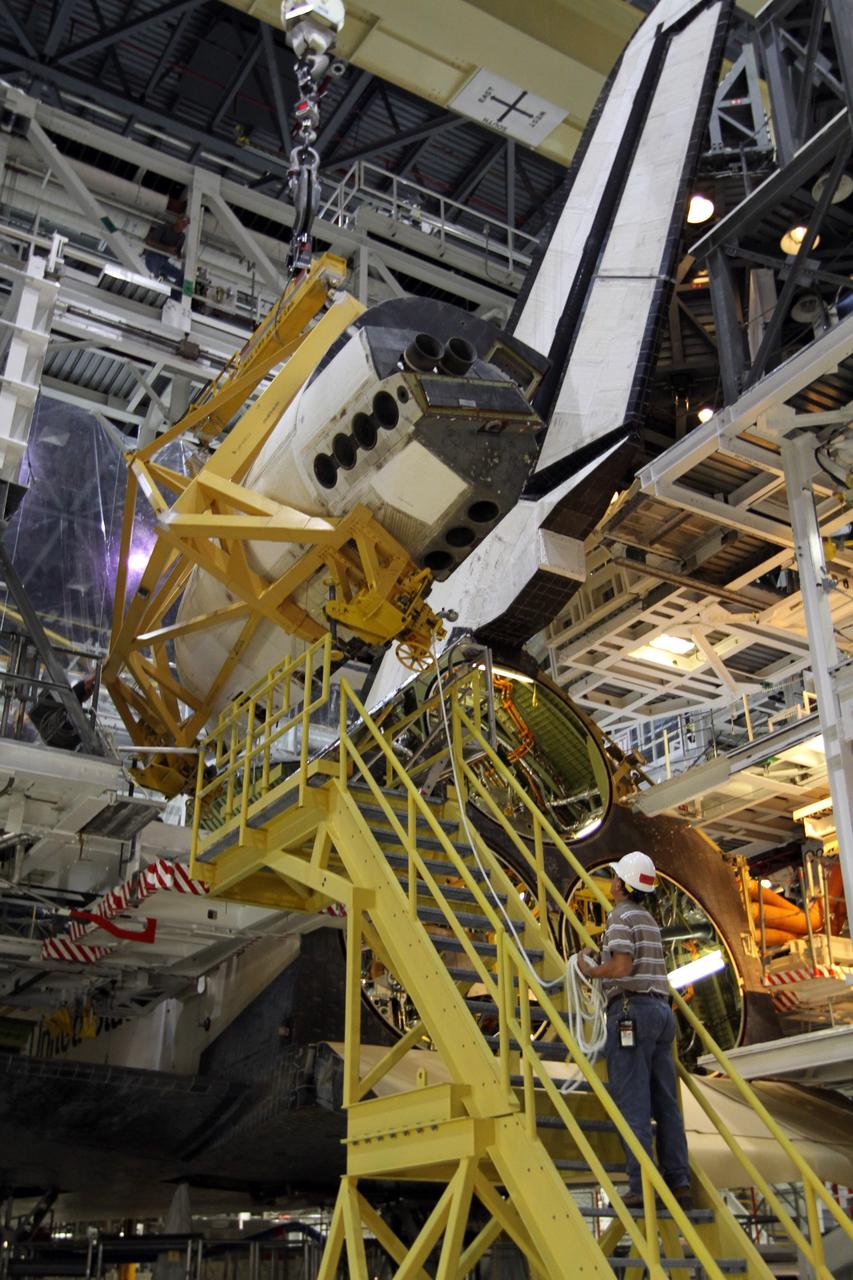
CAPE CANAVERAL, Fla. – In Orbiter Processing Facility-1 at NASA’s Kennedy Space Center in Florida, a United Space Alliance technician prepares to steady the orbital maneuvering system, or OMS, pod being lowered into position alongside space shuttle Atlantis. The orbital maneuvering system provided the shuttle with thrust for orbit insertion, rendezvous and deorbit, and could provide up to 1,000 pounds of propellant to the aft reaction control system. The OMS is housed in two independent pods located on each side of the shuttle's aft fuselage. Each pod contains one OMS engine and the hardware needed to pressurize, store and distribute the propellants to perform the velocity maneuvers. Atlantis’ OMS pods were removed and sent to White Sands Test Facility in New Mexico to be cleaned of residual toxic propellant. The work is part of the Space Shuttle Program’s transition and retirement processing of the shuttle fleet. A groundbreaking was held Jan. 18 for Atlantis' future home, a 65,000-square-foot exhibit hall in Shuttle Plaza at the Kennedy Space Center Visitor Complex. Atlantis is scheduled to roll over to the visitor complex in November in preparation for the exhibit’s grand opening in July 2013. For more information, visit http://www.nasa.gov/transition. Photo credit: NASA/Kim Shiflett
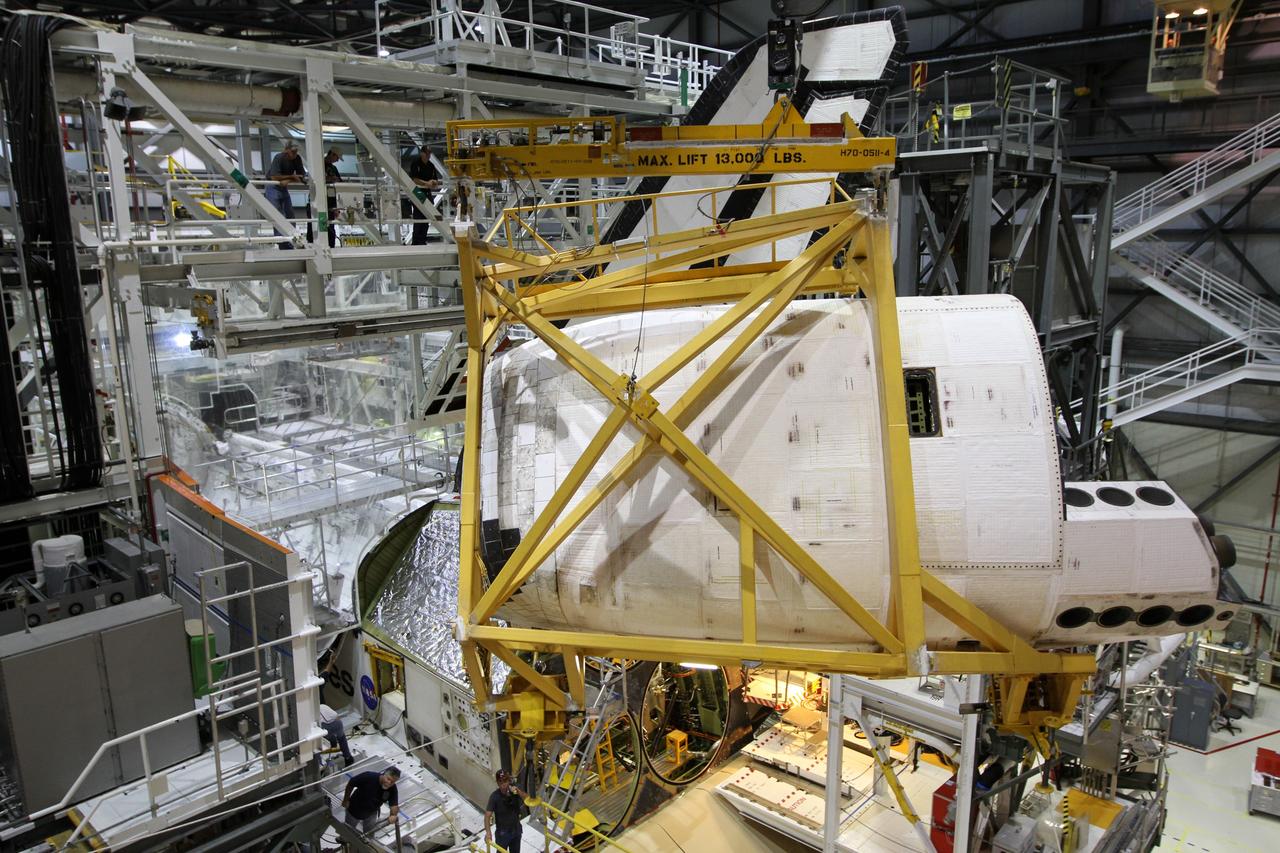
CAPE CANAVERAL, Fla. – In Orbiter Processing Facility-1 at NASA’s Kennedy Space Center in Florida, an orbital maneuvering system, or OMS, pod glides across the ceiling toward space shuttle Atlantis on which it will be installed. The orbital maneuvering system provided the shuttle with thrust for orbit insertion, rendezvous and deorbit, and could provide up to 1,000 pounds of propellant to the aft reaction control system. The OMS is housed in two independent pods located on each side of the shuttle's aft fuselage. Each pod contains one OMS engine and the hardware needed to pressurize, store and distribute the propellants to perform the velocity maneuvers. Atlantis’ OMS pods were removed and sent to White Sands Test Facility in New Mexico to be cleaned of residual toxic propellant. The work is part of the Space Shuttle Program’s transition and retirement processing of the shuttle fleet. A groundbreaking was held Jan. 18 for Atlantis' future home, a 65,000-square-foot exhibit hall in Shuttle Plaza at the Kennedy Space Center Visitor Complex. Atlantis is scheduled to roll over to the visitor complex in November in preparation for the exhibit’s grand opening in July 2013. For more information, visit http://www.nasa.gov/transition. Photo credit: NASA/Kim Shiflett
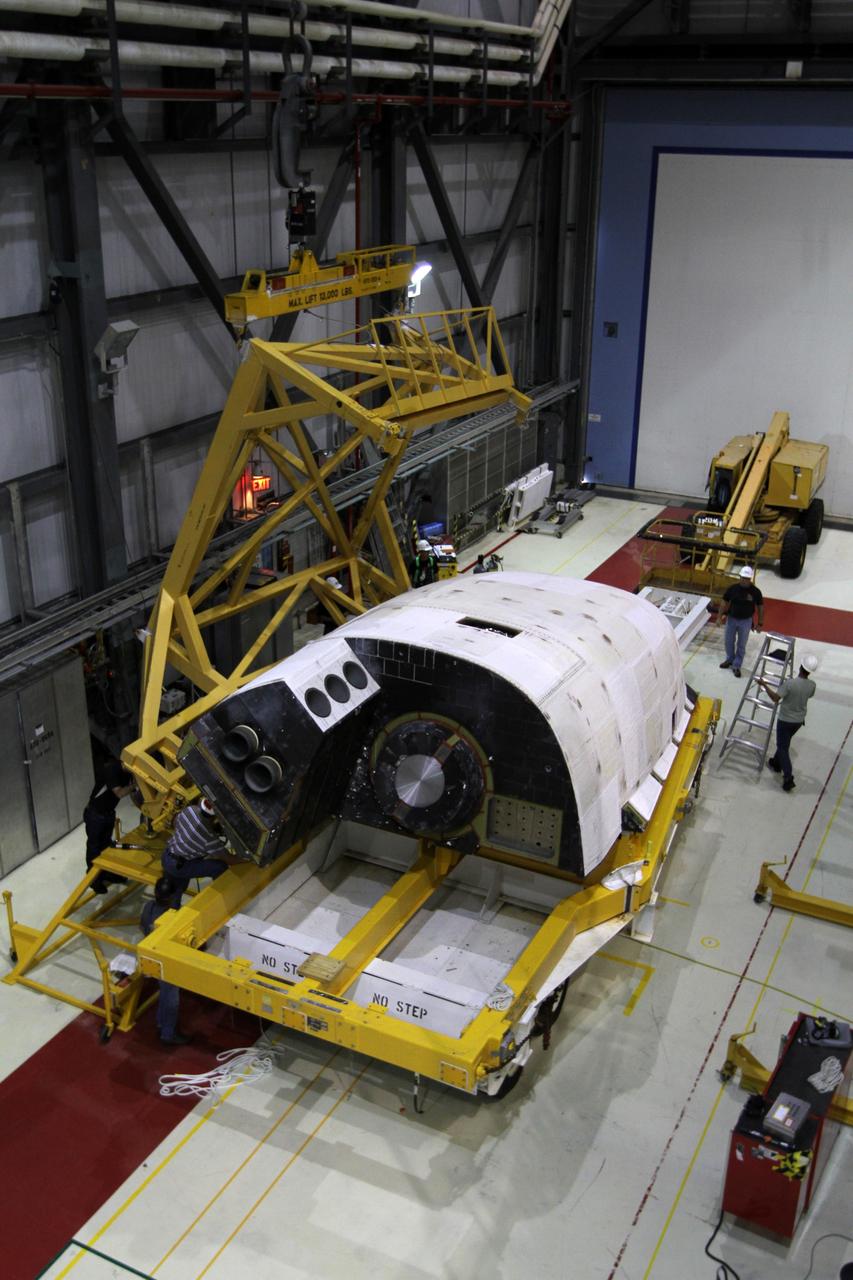
CAPE CANAVERAL, Fla. – In Orbiter Processing Facility-1 at NASA’s Kennedy Space Center in Florida, preparations are under way to lift an orbital maneuvering system, or OMS, pod from its transporter. The pod will be reinstalled on space shuttle Atlantis. The orbital maneuvering system provided the shuttle with thrust for orbit insertion, rendezvous and deorbit, and could provide up to 1,000 pounds of propellant to the aft reaction control system. The OMS is housed in two independent pods located on each side of the shuttle's aft fuselage. Each pod contains one OMS engine and the hardware needed to pressurize, store and distribute the propellants to perform the velocity maneuvers. Atlantis’ OMS pods were removed and sent to White Sands Test Facility in New Mexico to be cleaned of residual toxic propellant. The work is part of the Space Shuttle Program’s transition and retirement processing of the shuttle fleet. A groundbreaking was held Jan. 18 for Atlantis' future home, a 65,000-square-foot exhibit hall in Shuttle Plaza at the Kennedy Space Center Visitor Complex. Atlantis is scheduled to roll over to the visitor complex in November in preparation for the exhibit’s grand opening in July 2013. For more information, visit http://www.nasa.gov/transition. Photo credit: NASA/Kim Shiflett

CAPE CANAVERAL, Fla. – In Orbiter Processing Facility-1 at NASA’s Kennedy Space Center in Florida, preparations are under way to open the payload bay doors of space shuttle Atlantis. The work is part of the Space Shuttle Program’s transition and retirement processing of shuttle Atlantis. A groundbreaking was held Jan. 18 for Atlantis' future home -- a 65,000-square-foot exhibit hall in Shuttle Plaza at the Kennedy Space Center Visitor Complex. For more information, visit http://www.nasa.gov/shuttle. Photo credit: NASA/Jim Grossmann
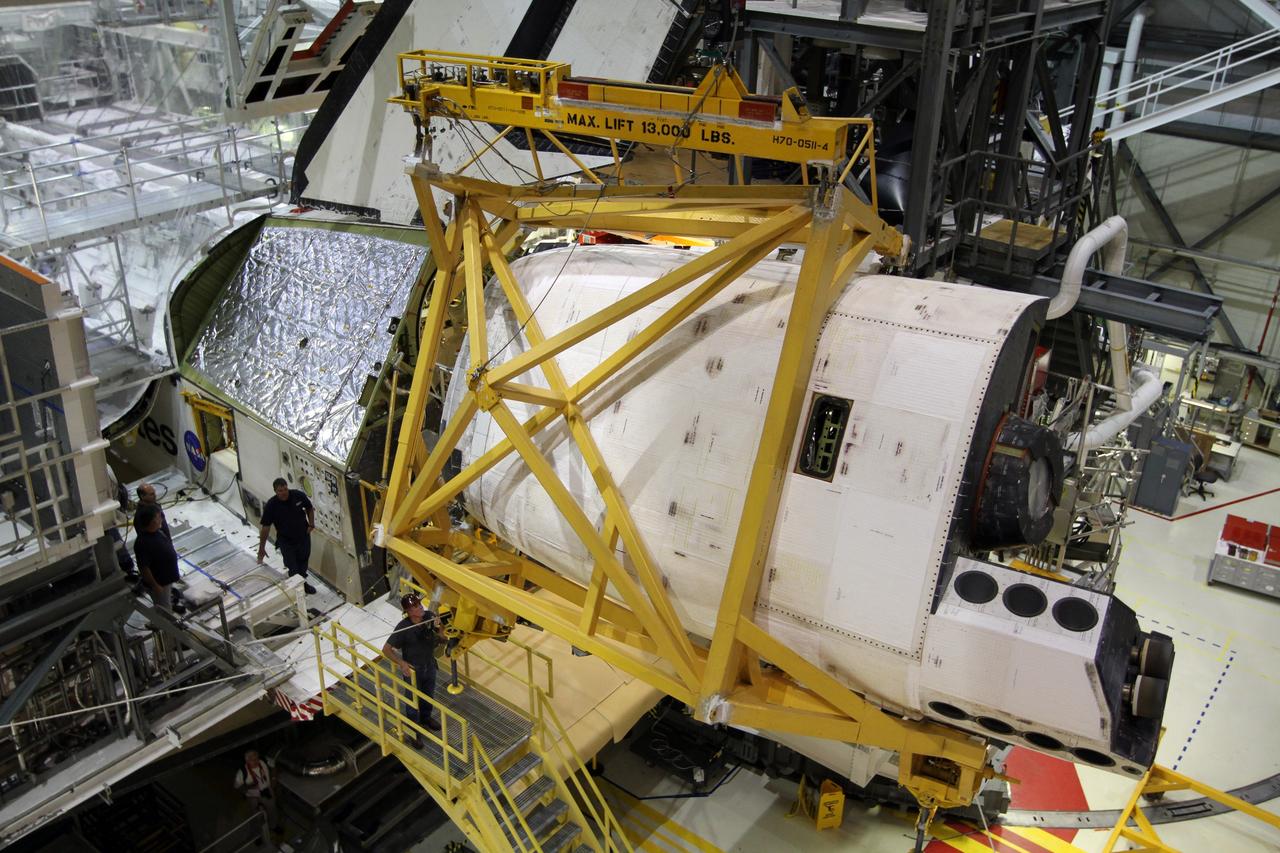
CAPE CANAVERAL, Fla. – In Orbiter Processing Facility-1 at NASA’s Kennedy Space Center in Florida, United Space Alliance technicians prepare to reinstall on space shuttle Atlantis the orbital maneuvering system, or OMS, pod heading their way. The orbital maneuvering system provided the shuttle with thrust for orbit insertion, rendezvous and deorbit, and could provide up to 1,000 pounds of propellant to the aft reaction control system. The OMS is housed in two independent pods located on each side of the shuttle's aft fuselage. Each pod contains one OMS engine and the hardware needed to pressurize, store and distribute the propellants to perform the velocity maneuvers. Atlantis’ OMS pods were removed and sent to White Sands Test Facility in New Mexico to be cleaned of residual toxic propellant. The work is part of the Space Shuttle Program’s transition and retirement processing of the shuttle fleet. A groundbreaking was held Jan. 18 for Atlantis' future home, a 65,000-square-foot exhibit hall in Shuttle Plaza at the Kennedy Space Center Visitor Complex. Atlantis is scheduled to roll over to the visitor complex in November in preparation for the exhibit’s grand opening in July 2013. For more information, visit http://www.nasa.gov/transition. Photo credit: NASA/Kim Shiflett
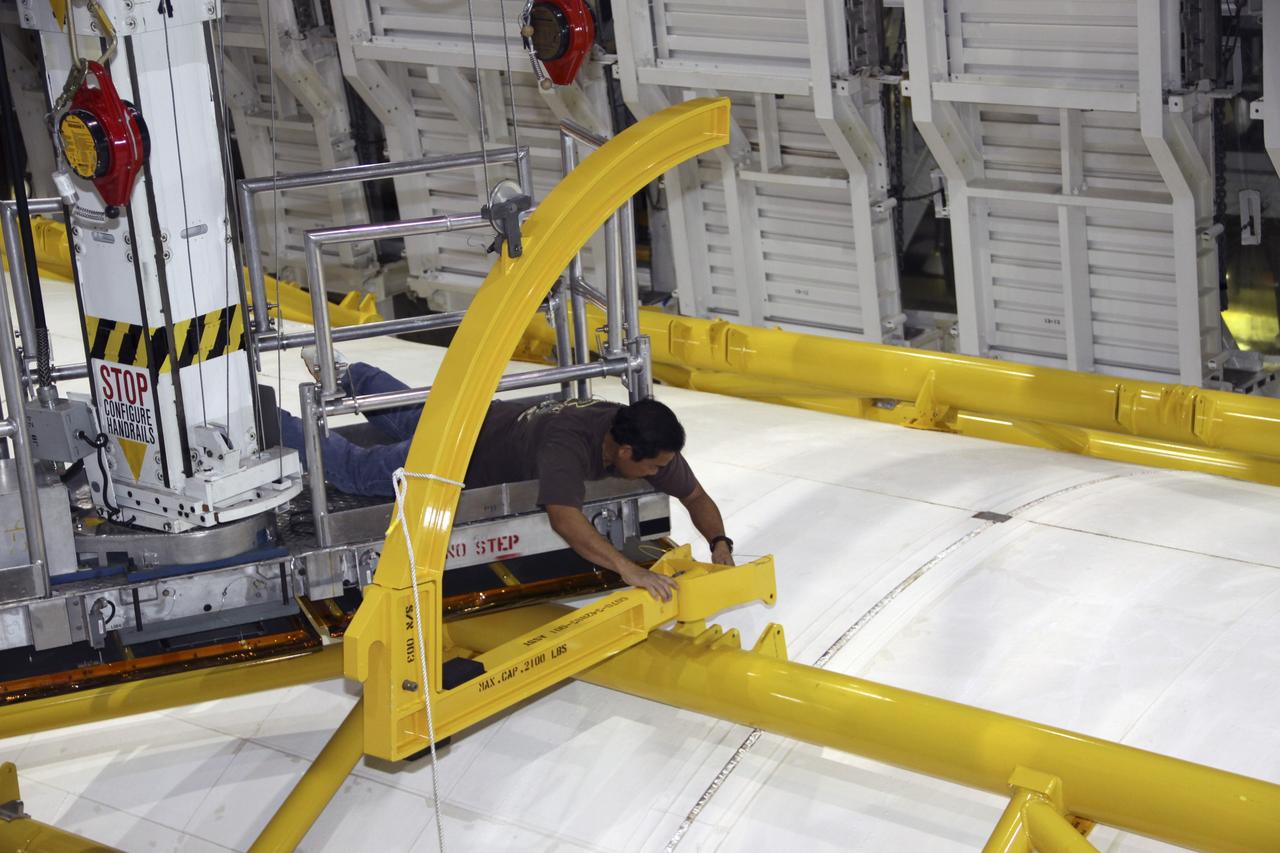
CAPE CANAVERAL, Fla. – In Orbiter Processing Facility-1 at NASA’s Kennedy Space Center in Florida, a United Space Alliance technician attaches a yellow strongback to one of space shuttle Atlantis’ payload bay doors. Strongbacks are used to support and operate the doors when the shuttle is not in space. The work is part of the Space Shuttle Program’s transition and retirement processing of shuttle Atlantis. A groundbreaking was held Jan. 18 for Atlantis' future home -- a 65,000-square-foot exhibit hall in Shuttle Plaza at the Kennedy Space Center Visitor Complex. For more information, visit http://www.nasa.gov/shuttle. Photo credit: NASA/Jim Grossmann

CAPE CANAVERAL, Fla. – In Orbiter Processing Facility-1 at NASA’s Kennedy Space Center in Florida, yellow strongbacks swing into action to open one of space shuttle Atlantis’ payload bay doors. Strongbacks are used to support and operate the doors when the shuttle is not in space. The work is part of the Space Shuttle Program’s transition and retirement processing of shuttle Atlantis. A groundbreaking was held Jan. 18 for Atlantis' future home -- a 65,000-square-foot exhibit hall in Shuttle Plaza at the Kennedy Space Center Visitor Complex. For more information, visit http://www.nasa.gov/shuttle. Photo credit: NASA/Jim Grossmann
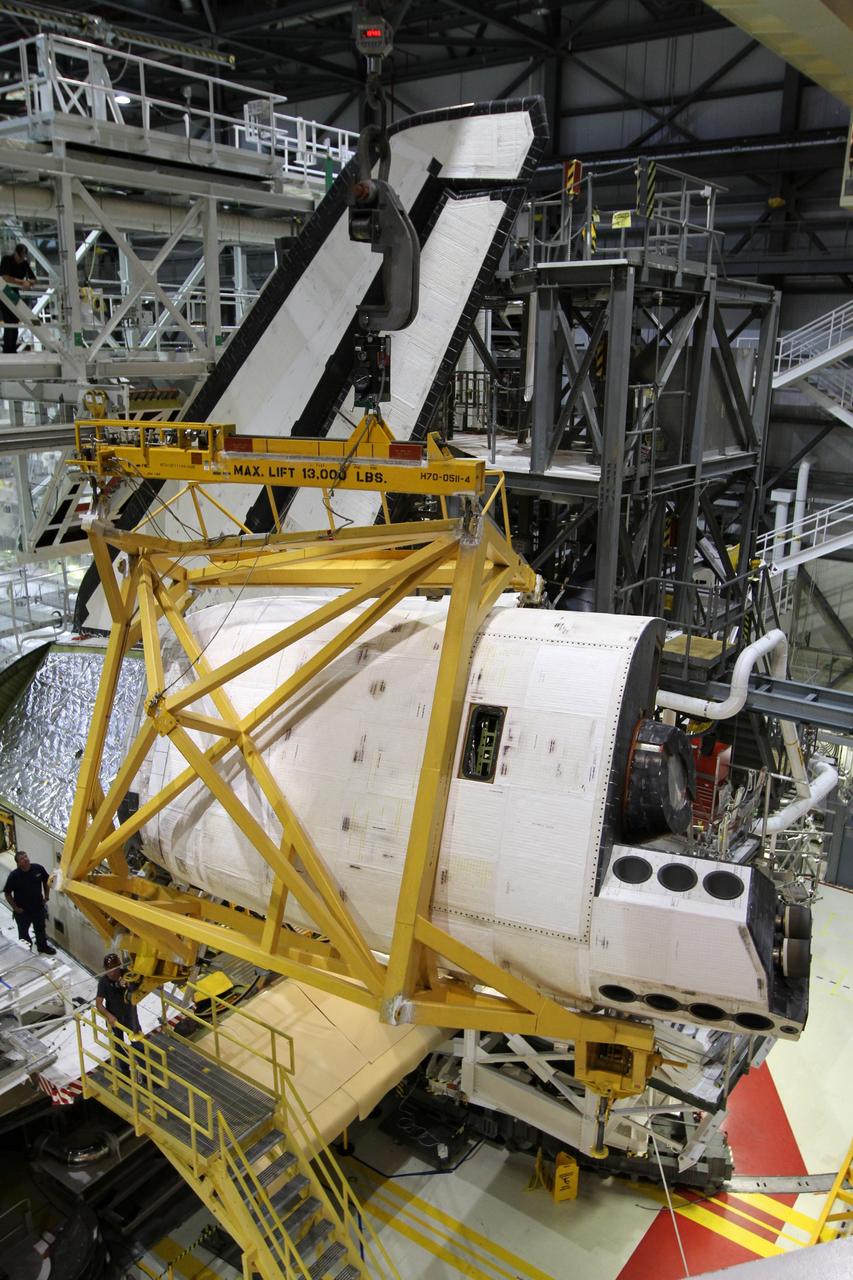
CAPE CANAVERAL, Fla. – In Orbiter Processing Facility-1 at NASA’s Kennedy Space Center in Florida, an orbital maneuvering system, or OMS, pod is lifted toward space shuttle Atlantis on which it will be installed. The orbital maneuvering system provided the shuttle with thrust for orbit insertion, rendezvous and deorbit, and could provide up to 1,000 pounds of propellant to the aft reaction control system. The OMS is housed in two independent pods located on each side of the shuttle's aft fuselage. Each pod contains one OMS engine and the hardware needed to pressurize, store and distribute the propellants to perform the velocity maneuvers. Atlantis’ OMS pods were removed and sent to White Sands Test Facility in New Mexico to be cleaned of residual toxic propellant. The work is part of the Space Shuttle Program’s transition and retirement processing of the shuttle fleet. A groundbreaking was held Jan. 18 for Atlantis' future home, a 65,000-square-foot exhibit hall in Shuttle Plaza at the Kennedy Space Center Visitor Complex. Atlantis is scheduled to roll over to the visitor complex in November in preparation for the exhibit’s grand opening in July 2013. For more information, visit http://www.nasa.gov/transition. Photo credit: NASA/Kim Shiflett
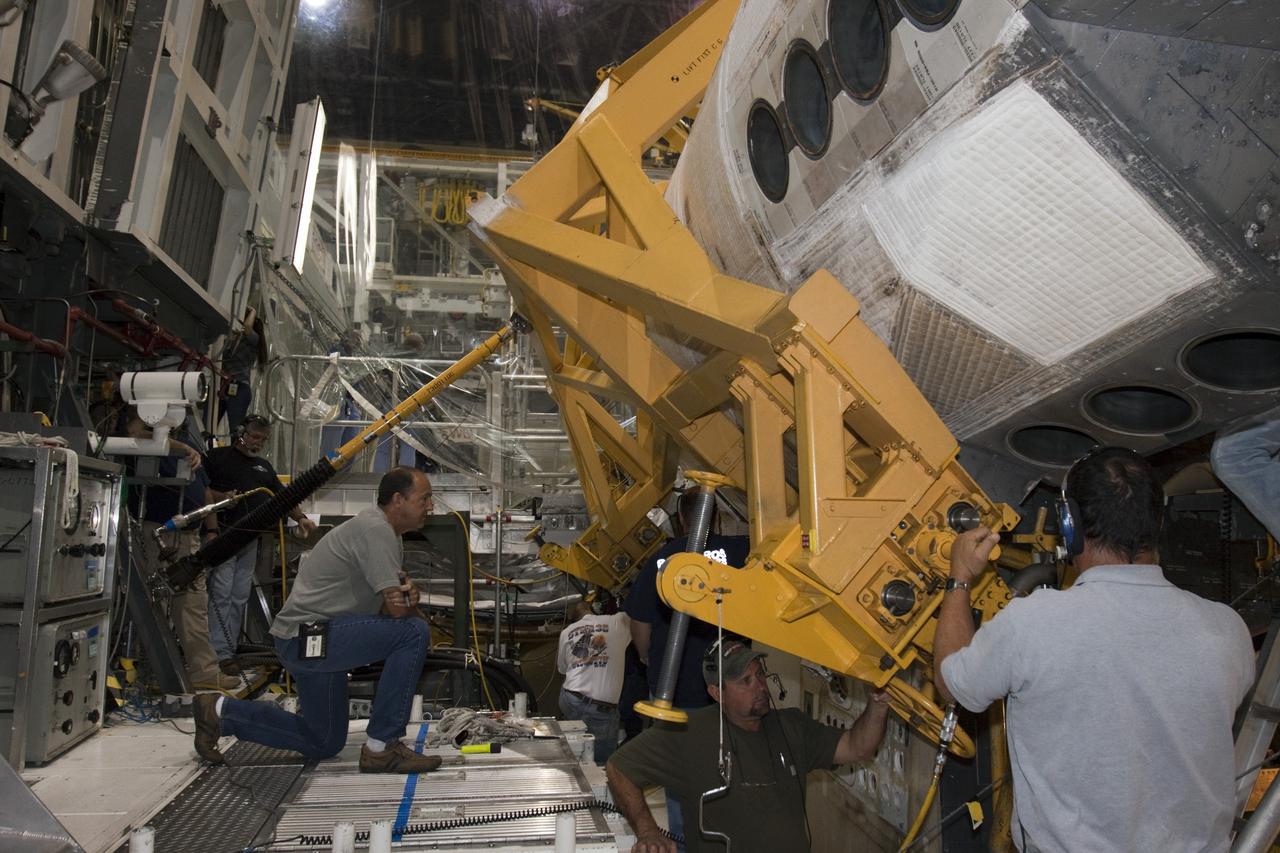
CAPE CANAVERAL, Fla. – In Orbiter Processing Facility-1 at NASA’s Kennedy Space Center in Florida, reinstallation of the left orbital maneuvering system, or OMS, pod on space shuttle Atlantis is under way. The orbital maneuvering system provided the shuttle with thrust for orbit insertion, rendezvous and deorbit, and could provide up to 1,000 pounds of propellant to the aft reaction control system. The OMS is housed in two independent pods located on each side of the shuttle's aft fuselage. Each pod contains one OMS engine and the hardware needed to pressurize, store and distribute the propellants to perform the velocity maneuvers. Atlantis’ OMS pods were removed and sent to White Sands Test Facility in New Mexico to be cleaned of residual toxic propellant. The work is part of the Space Shuttle Program’s transition and retirement processing of the shuttle fleet. A groundbreaking was held Jan. 18 for Atlantis' future home, a 65,000-square-foot exhibit hall in Shuttle Plaza at the Kennedy Space Center Visitor Complex. Atlantis is scheduled to roll over to the visitor complex in November in preparation for the exhibit’s grand opening in July 2013. For more information, visit http://www.nasa.gov/transition. Photo credit: NASA/Ben Smegelsky
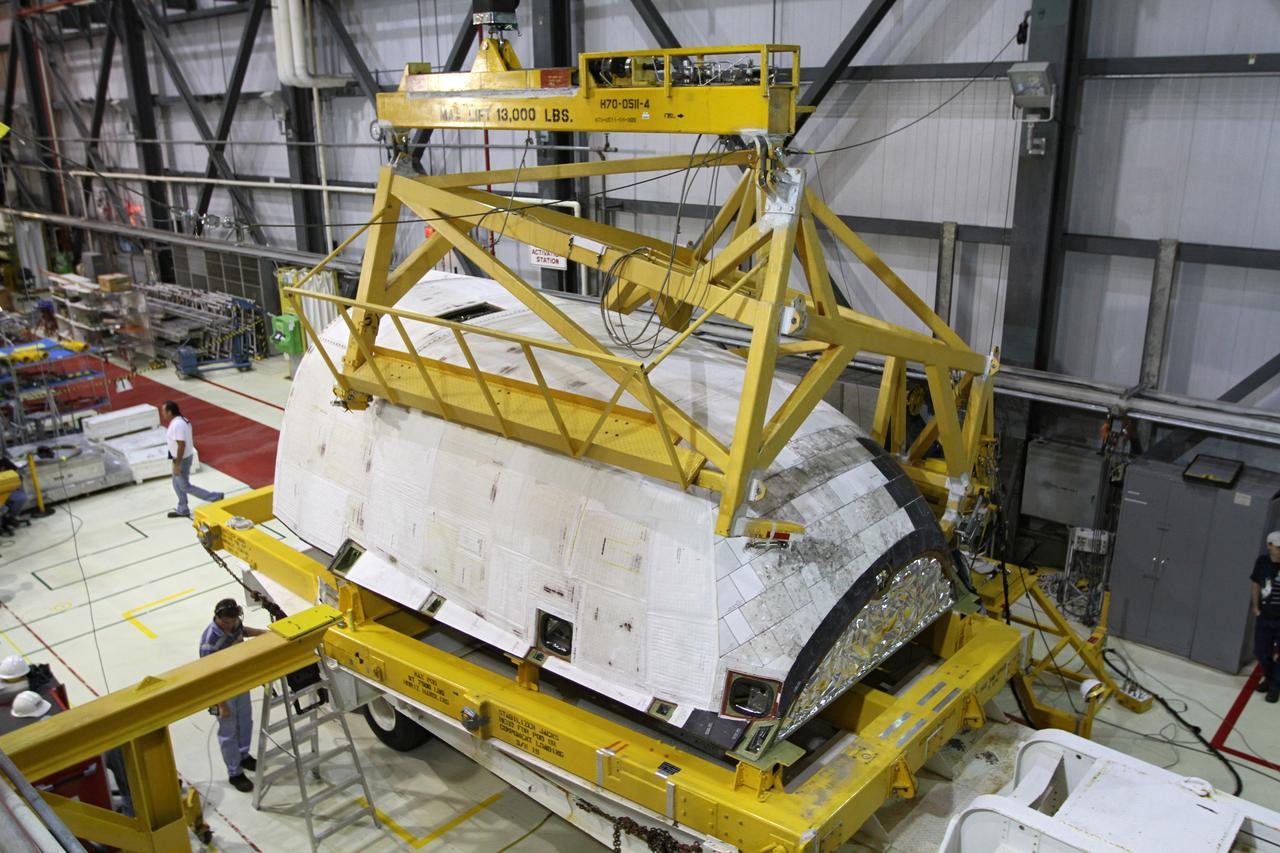
CAPE CANAVERAL, Fla. – In Orbiter Processing Facility-1 at NASA’s Kennedy Space Center in Florida, a handling fixture is attached to an orbital maneuvering system, or OMS, pod to lift it from its transporter. The pod will be reinstalled on space shuttle Atlantis. The orbital maneuvering system provided the shuttle with thrust for orbit insertion, rendezvous and deorbit, and could provide up to 1,000 pounds of propellant to the aft reaction control system. The OMS is housed in two independent pods located on each side of the shuttle's aft fuselage. Each pod contains one OMS engine and the hardware needed to pressurize, store and distribute the propellants to perform the velocity maneuvers. Atlantis’ OMS pods were removed and sent to White Sands Test Facility in New Mexico to be cleaned of residual toxic propellant. The work is part of the Space Shuttle Program’s transition and retirement processing of the shuttle fleet. A groundbreaking was held Jan. 18 for Atlantis' future home, a 65,000-square-foot exhibit hall in Shuttle Plaza at the Kennedy Space Center Visitor Complex. Atlantis is scheduled to roll over to the visitor complex in November in preparation for the exhibit’s grand opening in July 2013. For more information, visit http://www.nasa.gov/transition. Photo credit: NASA/Kim Shiflett

CAPE CANAVERAL, Fla. – In Orbiter Processing Facility-1 at NASA’s Kennedy Space Center in Florida, one of space shuttle Atlantis’ payload bay doors begins to open with the help of the yellow strongbacks attached. Strongbacks are used to support and operate the doors when the shuttle is not in space. The work is part of the Space Shuttle Program’s transition and retirement processing of shuttle Atlantis. A groundbreaking was held Jan. 18 for Atlantis' future home -- a 65,000-square-foot exhibit hall in Shuttle Plaza at the Kennedy Space Center Visitor Complex. For more information, visit http://www.nasa.gov/shuttle. Photo credit: NASA/Jim Grossmann
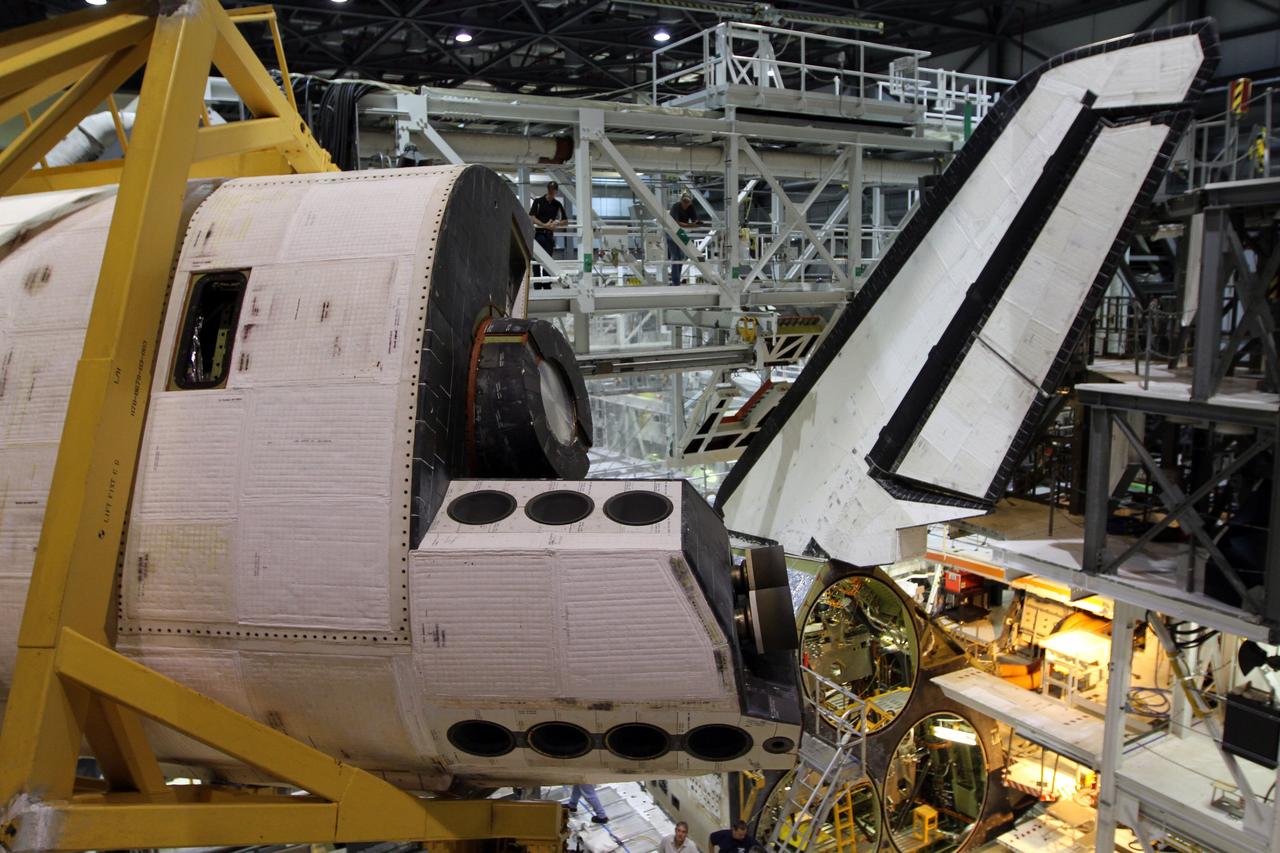
CAPE CANAVERAL, Fla. – An orbital maneuvering system, or OMS, pod appears to be in flight as it glides across the ceiling in Orbiter Processing Facility-1 at NASA’s Kennedy Space Center in Florida. The pod will be reinstalled on space shuttle Atlantis. The orbital maneuvering system provided the shuttle with thrust for orbit insertion, rendezvous and deorbit, and could provide up to 1,000 pounds of propellant to the aft reaction control system. The OMS is housed in two independent pods located on each side of the shuttle's aft fuselage. Each pod contains one OMS engine and the hardware needed to pressurize, store and distribute the propellants to perform the velocity maneuvers. Atlantis’ OMS pods were removed and sent to White Sands Test Facility in New Mexico to be cleaned of residual toxic propellant. The work is part of the Space Shuttle Program’s transition and retirement processing of the shuttle fleet. A groundbreaking was held Jan. 18 for Atlantis' future home, a 65,000-square-foot exhibit hall in Shuttle Plaza at the Kennedy Space Center Visitor Complex. Atlantis is scheduled to roll over to the visitor complex in November in preparation for the exhibit’s grand opening in July 2013. For more information, visit http://www.nasa.gov/transition. Photo credit: NASA/Kim Shiflett
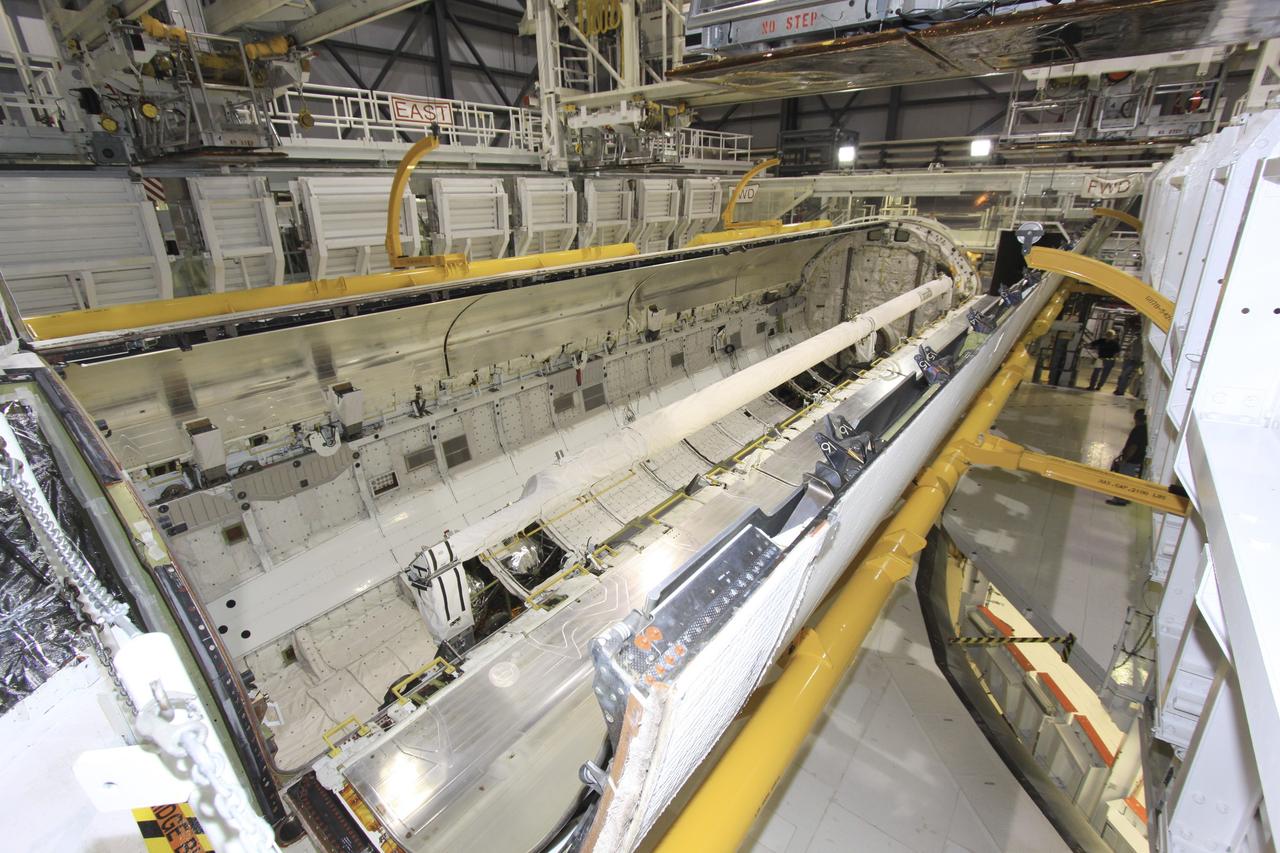
CAPE CANAVERAL, Fla. – In Orbiter Processing Facility-1 at NASA’s Kennedy Space Center in Florida, the payload bay of space shuttle Atlantis comes into view as one of the bay doors swings open with the help of the strongbacks attached. Strongbacks are used to support and operate the doors when the shuttle is not in space. The work is part of the Space Shuttle Program’s transition and retirement processing of shuttle Atlantis. A groundbreaking was held Jan. 18 for Atlantis' future home -- a 65,000-square-foot exhibit hall in Shuttle Plaza at the Kennedy Space Center Visitor Complex. For more information, visit http://www.nasa.gov/shuttle. Photo credit: NASA/Jim Grossmann
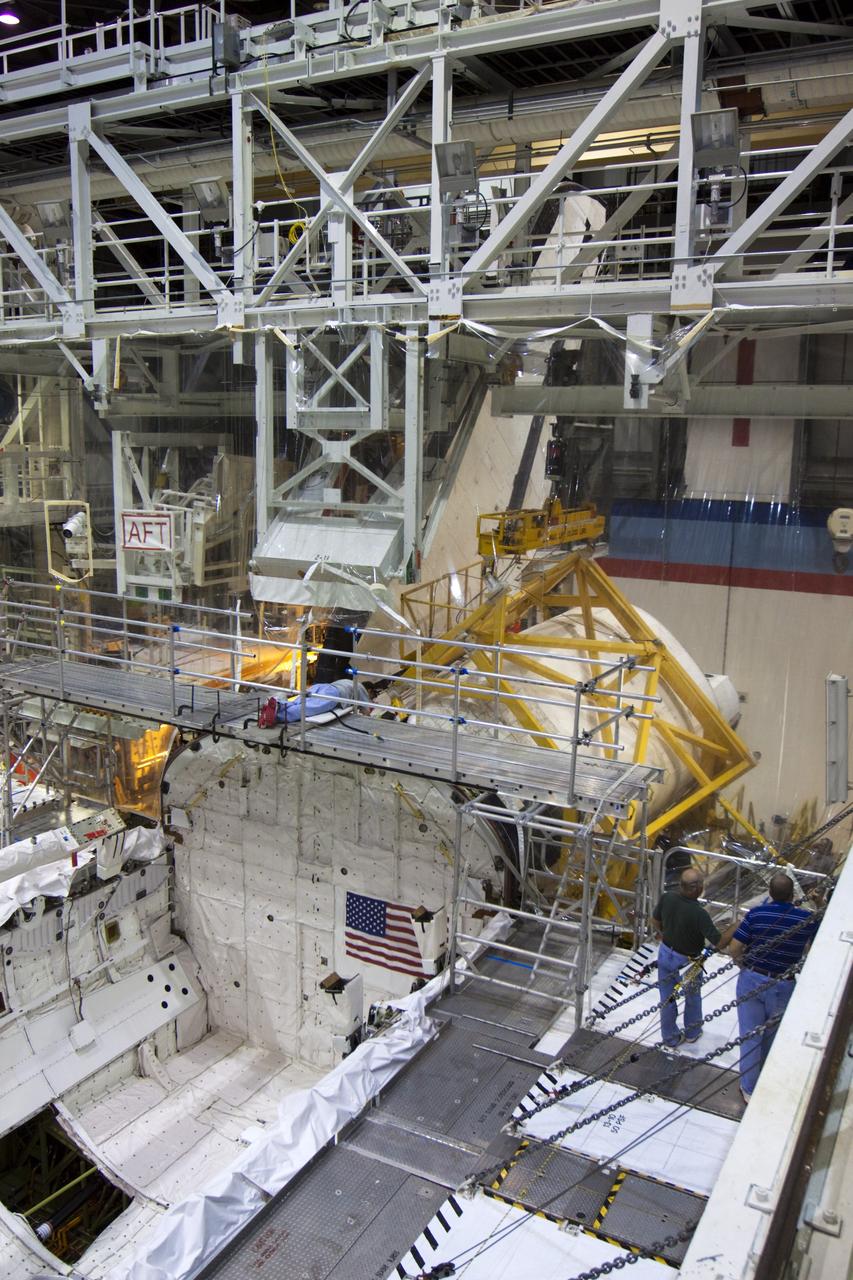
CAPE CANAVERAL, Fla. – In Orbiter Processing Facility-1 at NASA’s Kennedy Space Center in Florida, reinstallation of the left orbital maneuvering system, or OMS, pod on space shuttle Atlantis is under way. The orbital maneuvering system provided the shuttle with thrust for orbit insertion, rendezvous and deorbit, and could provide up to 1,000 pounds of propellant to the aft reaction control system. The OMS is housed in two independent pods located on each side of the shuttle's aft fuselage. Each pod contains one OMS engine and the hardware needed to pressurize, store and distribute the propellants to perform the velocity maneuvers. Atlantis’ OMS pods were removed and sent to White Sands Test Facility in New Mexico to be cleaned of residual toxic propellant. The work is part of the Space Shuttle Program’s transition and retirement processing of the shuttle fleet. A groundbreaking was held Jan. 18 for Atlantis' future home, a 65,000-square-foot exhibit hall in Shuttle Plaza at the Kennedy Space Center Visitor Complex. Atlantis is scheduled to roll over to the visitor complex in November in preparation for the exhibit’s grand opening in July 2013. For more information, visit http://www.nasa.gov/transition. Photo credit: NASA/Ben Smegelsky
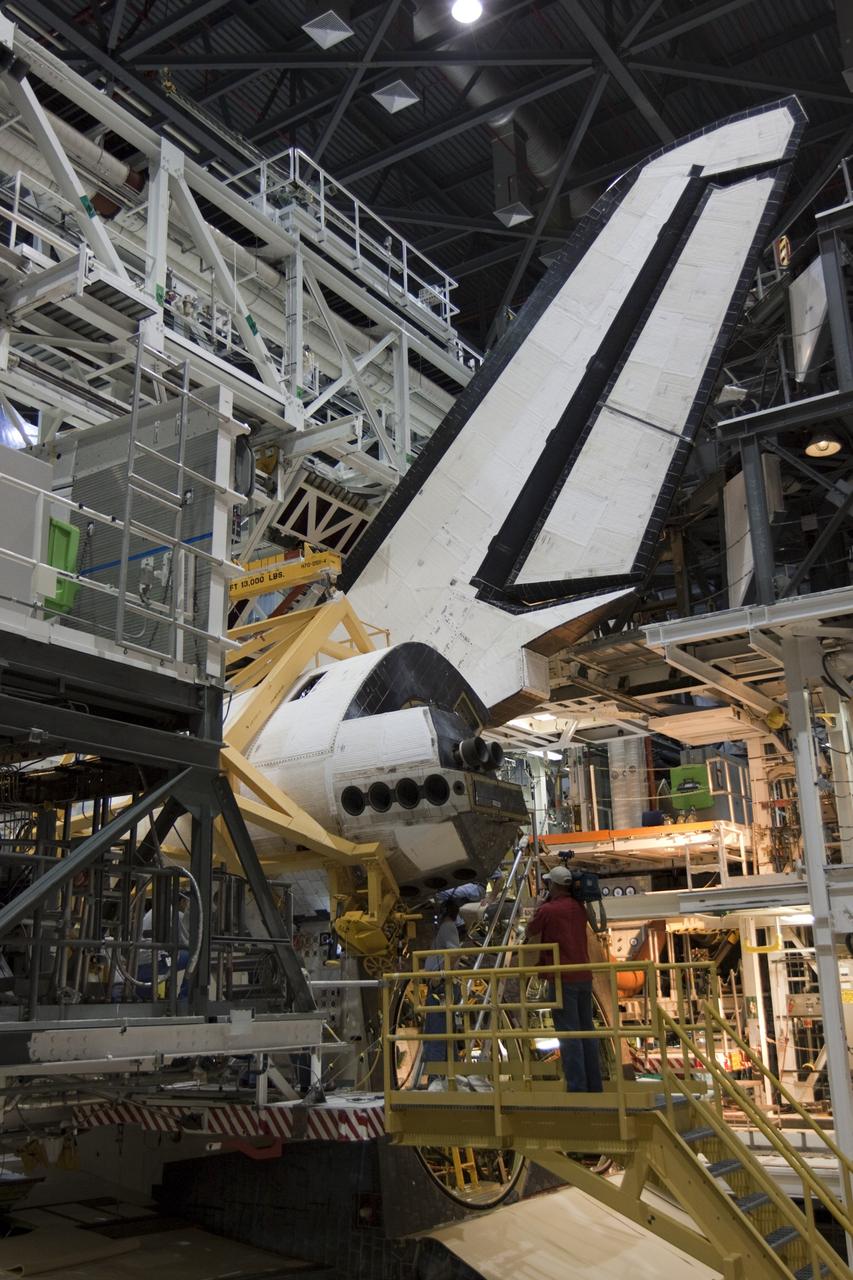
CAPE CANAVERAL, Fla. – In Orbiter Processing Facility-1 at NASA’s Kennedy Space Center in Florida, preparations are under way to reinstall the left orbital maneuvering system, or OMS, pod on space shuttle Atlantis. The orbital maneuvering system provided the shuttle with thrust for orbit insertion, rendezvous and deorbit, and could provide up to 1,000 pounds of propellant to the aft reaction control system. The OMS is housed in two independent pods located on each side of the shuttle's aft fuselage. Each pod contains one OMS engine and the hardware needed to pressurize, store and distribute the propellants to perform the velocity maneuvers. Atlantis’ OMS pods were removed and sent to White Sands Test Facility in New Mexico to be cleaned of residual toxic propellant. The work is part of the Space Shuttle Program’s transition and retirement processing of the shuttle fleet. A groundbreaking was held Jan. 18 for Atlantis' future home, a 65,000-square-foot exhibit hall in Shuttle Plaza at the Kennedy Space Center Visitor Complex. Atlantis is scheduled to roll over to the visitor complex in November in preparation for the exhibit’s grand opening in July 2013. For more information, visit http://www.nasa.gov/transition. Photo credit: NASA/Ben Smegelsky
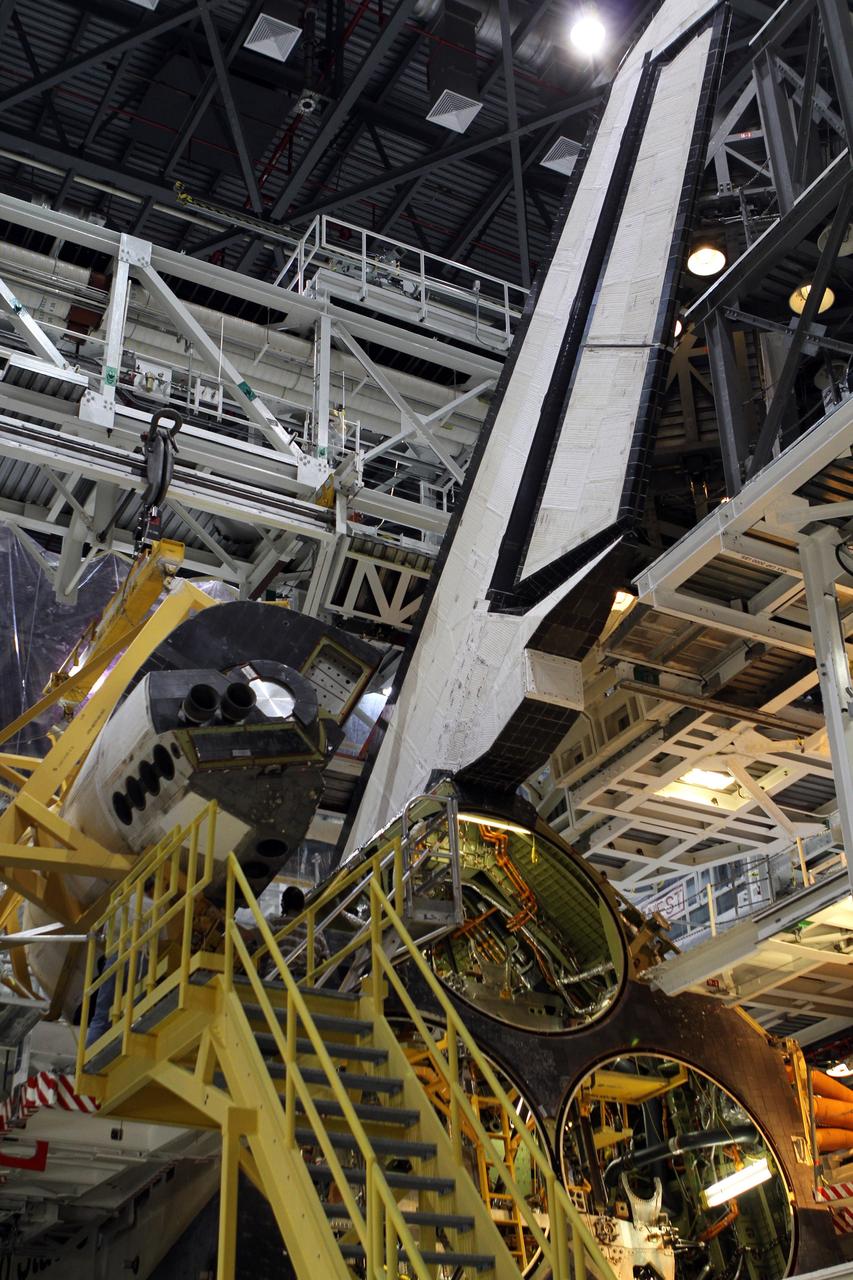
CAPE CANAVERAL, Fla. – In Orbiter Processing Facility-1 at NASA’s Kennedy Space Center in Florida, the left orbital maneuvering system, or OMS, pod glides into position next to space shuttle Atlantis for reinstallation. The orbital maneuvering system provided the shuttle with thrust for orbit insertion, rendezvous and deorbit, and could provide up to 1,000 pounds of propellant to the aft reaction control system. The OMS is housed in two independent pods located on each side of the shuttle's aft fuselage. Each pod contains one OMS engine and the hardware needed to pressurize, store and distribute the propellants to perform the velocity maneuvers. Atlantis’ OMS pods were removed and sent to White Sands Test Facility in New Mexico to be cleaned of residual toxic propellant. The work is part of the Space Shuttle Program’s transition and retirement processing of the shuttle fleet. A groundbreaking was held Jan. 18 for Atlantis' future home, a 65,000-square-foot exhibit hall in Shuttle Plaza at the Kennedy Space Center Visitor Complex. Atlantis is scheduled to roll over to the visitor complex in November in preparation for the exhibit’s grand opening in July 2013. For more information, visit http://www.nasa.gov/transition. Photo credit: NASA/Kim Shiflett
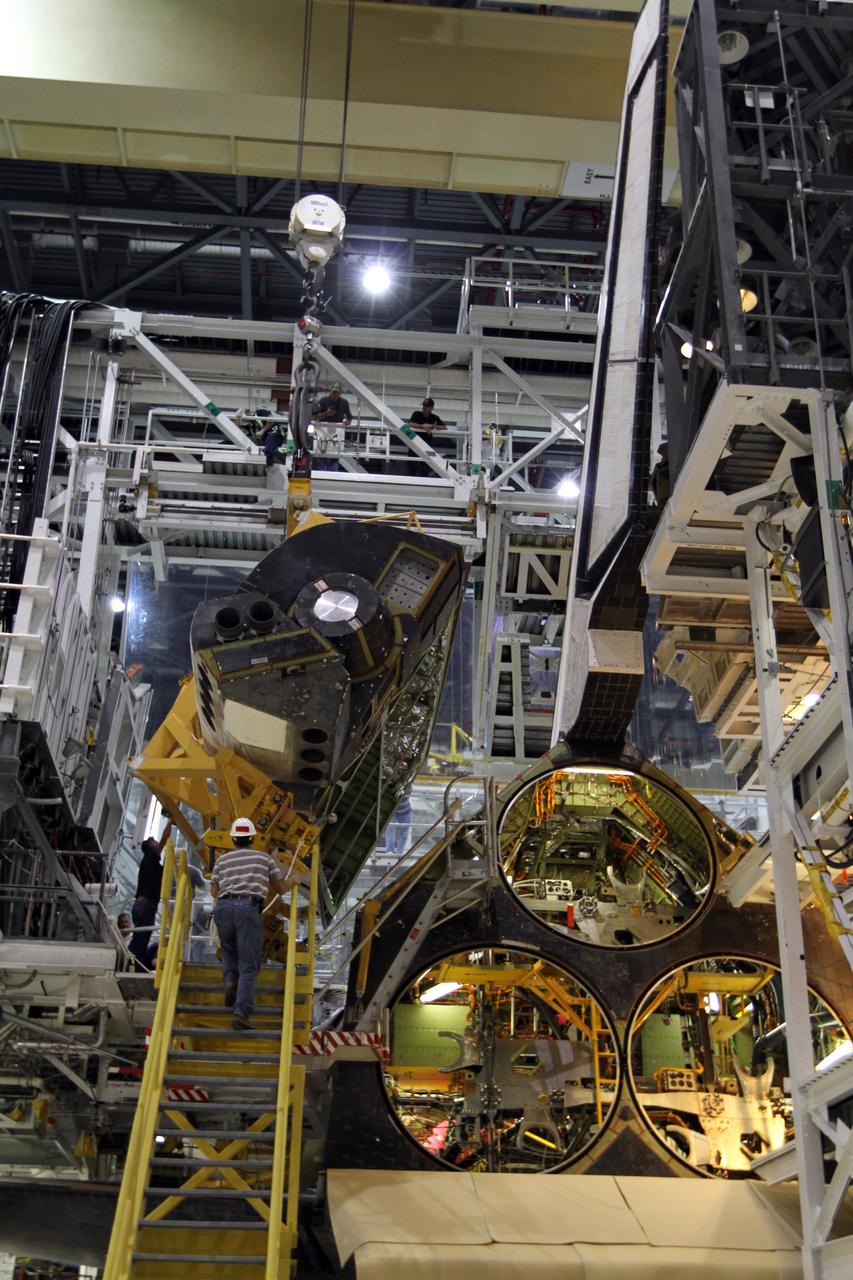
CAPE CANAVERAL, Fla. – In Orbiter Processing Facility-1 at NASA’s Kennedy Space Center in Florida, the left orbital maneuvering system, or OMS, pod is rotated into position on space shuttle Atlantis for reinstallation. The orbital maneuvering system provided the shuttle with thrust for orbit insertion, rendezvous and deorbit, and could provide up to 1,000 pounds of propellant to the aft reaction control system. The OMS is housed in two independent pods located on each side of the shuttle's aft fuselage. Each pod contains one OMS engine and the hardware needed to pressurize, store and distribute the propellants to perform the velocity maneuvers. Atlantis’ OMS pods were removed and sent to White Sands Test Facility in New Mexico to be cleaned of residual toxic propellant. The work is part of the Space Shuttle Program’s transition and retirement processing of the shuttle fleet. A groundbreaking was held Jan. 18 for Atlantis' future home, a 65,000-square-foot exhibit hall in Shuttle Plaza at the Kennedy Space Center Visitor Complex. Atlantis is scheduled to roll over to the visitor complex in November in preparation for the exhibit’s grand opening in July 2013. For more information, visit http://www.nasa.gov/transition. Photo credit: NASA/Kim Shiflett
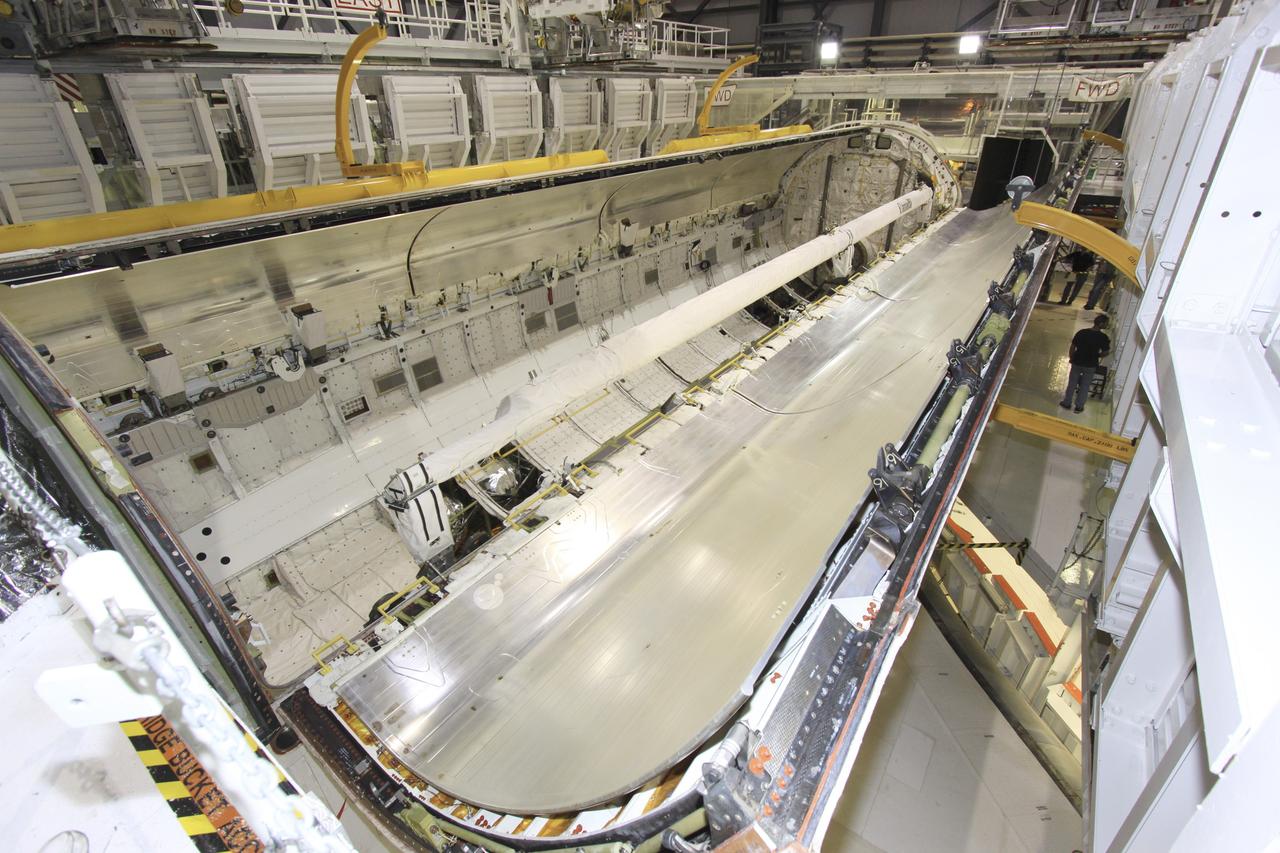
CAPE CANAVERAL, Fla. – In Orbiter Processing Facility-1 at NASA’s Kennedy Space Center in Florida, one of space shuttle Atlantis’ payload bay doors is opened by the yellow strongbacks attached. Strongbacks are used to support and operate the doors when the shuttle is not in space. The work is part of the Space Shuttle Program’s transition and retirement processing of shuttle Atlantis. A groundbreaking was held Jan. 18 for Atlantis' future home -- a 65,000-square-foot exhibit hall in Shuttle Plaza at the Kennedy Space Center Visitor Complex. For more information, visit http://www.nasa.gov/shuttle. Photo credit: NASA/Jim Grossmann
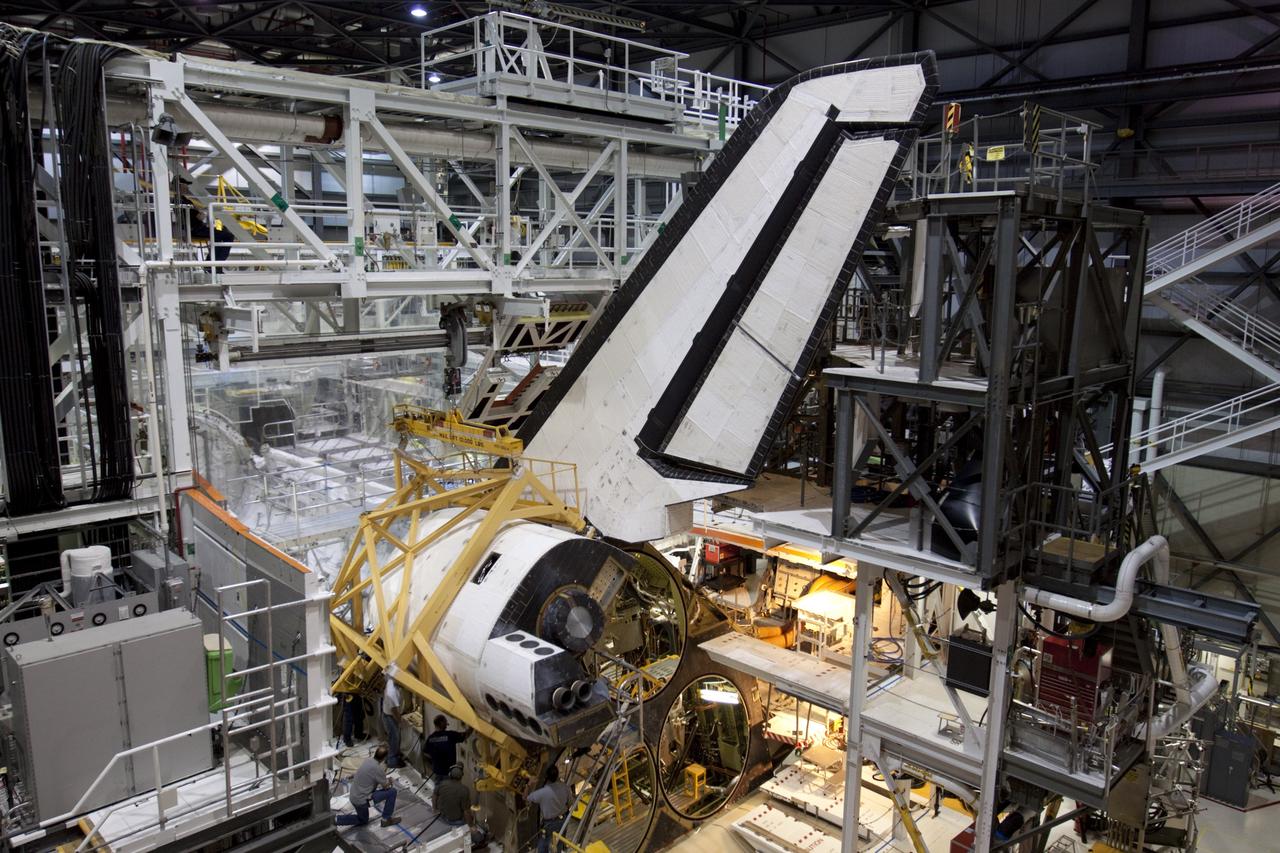
CAPE CANAVERAL, Fla. – In Orbiter Processing Facility-1 at NASA’s Kennedy Space Center in Florida, United Space Alliance technicians reinstall the left orbital maneuvering system, or OMS, pod on space shuttle Atlantis. The orbital maneuvering system provided the shuttle with thrust for orbit insertion, rendezvous and deorbit, and could provide up to 1,000 pounds of propellant to the aft reaction control system. The OMS is housed in two independent pods located on each side of the shuttle's aft fuselage. Each pod contains one OMS engine and the hardware needed to pressurize, store and distribute the propellants to perform the velocity maneuvers. Atlantis’ OMS pods were removed and sent to White Sands Test Facility in New Mexico to be cleaned of residual toxic propellant. The work is part of the Space Shuttle Program’s transition and retirement processing of the shuttle fleet. A groundbreaking was held Jan. 18 for Atlantis' future home, a 65,000-square-foot exhibit hall in Shuttle Plaza at the Kennedy Space Center Visitor Complex. Atlantis is scheduled to roll over to the visitor complex in November in preparation for the exhibit’s grand opening in July 2013. For more information, visit http://www.nasa.gov/transition. Photo credit: NASA/Ben Smegelsky
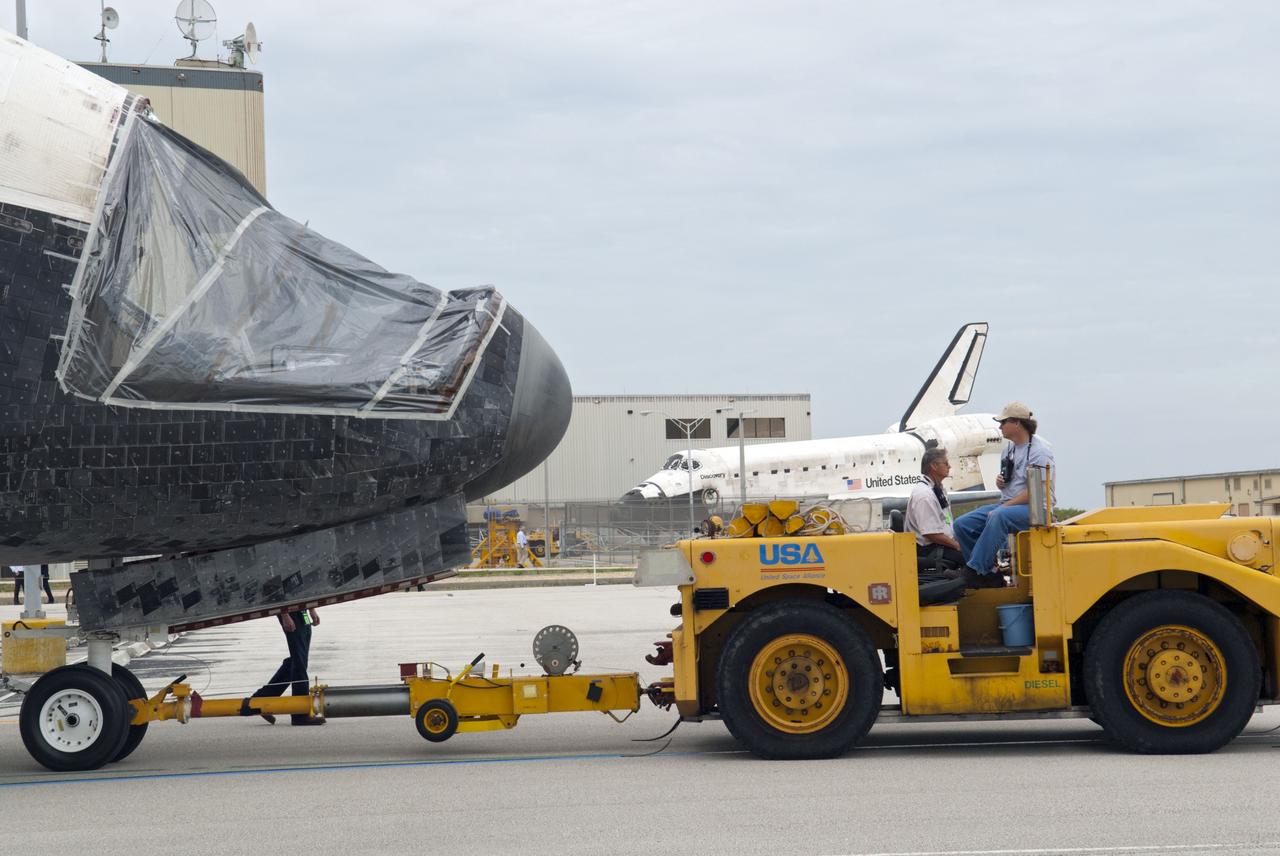
CAPE CANAVERAL, Fla. – At NASA’s Kennedy Space Center in Florida, space shuttle Atlantis is being towed on its way from the Vehicle Assembly Building to Orbiter Processing Facility-1 OPF-1. A view of Atlantis’ nose cone area shows that the forward reaction control system has been removed. In the background is space shuttle Discovery after it was towed out of OPF-1. The work is part of the Space Shuttle Program’s transition and retirement processing of the three space shuttles. Atlantis is being prepared for display at the Kennedy Space Center Visitor Complex and is scheduled to rollover to the complex in November. Photo credit: NASA/Tim Jacobs
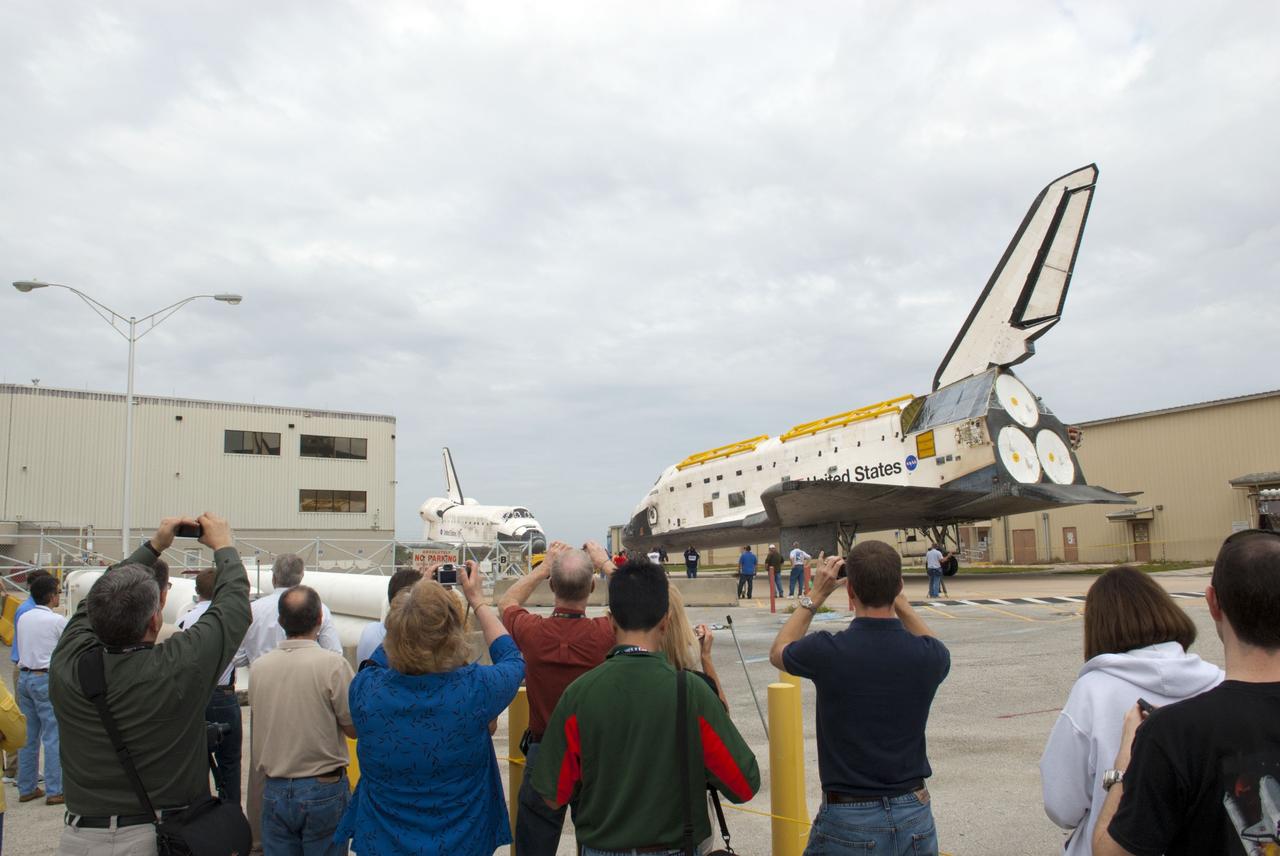
CAPE CANAVERAL, Fla. – At NASA’s Kennedy Space Center in Florida, photographers and workers snap pictures as space shuttle Atlantis is towed from the Vehicle Assembly Building toward Orbiter Processing Facility-1 OPF-1. Facing Atlantis is space shuttle Discovery after it was completely towed out from OPF-1. The work is part of the Space Shuttle Program’s transition and retirement processing of the three space shuttles. Atlantis is being prepared for display at the Kennedy Space Center Visitor Complex and is scheduled to rollover to the complex in November. Photo credit: NASA/Tim Jacobs
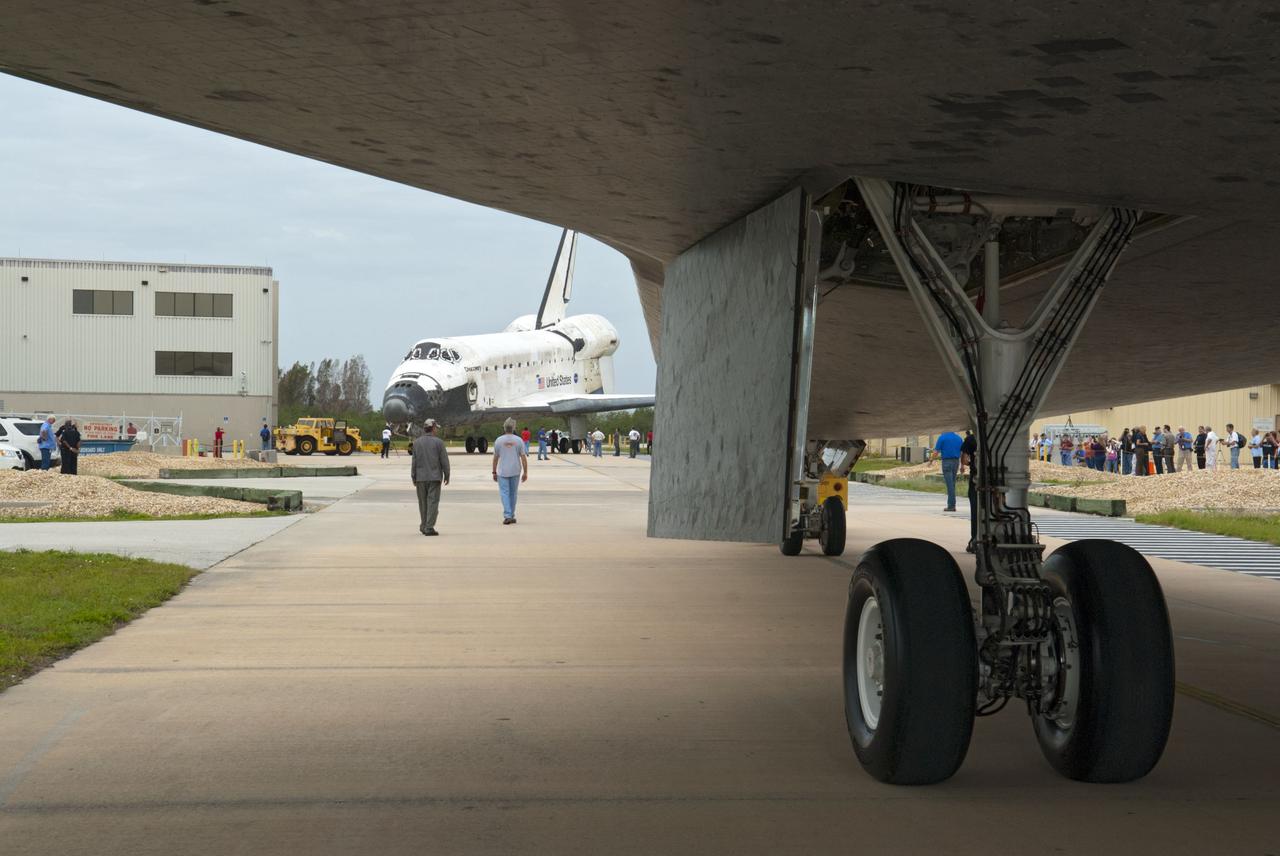
CAPE CANAVERAL, Fla. – At NASA’s Kennedy Space Center in Florida, space shuttle Atlantis is towed from the Vehicle Assembly Building toward Orbiter Processing Facility-1 OPF-1. In the background, space shuttle Discovery faces Atlantis after it was completely towed out from OPF-1. The work is part of the Space Shuttle Program’s transition and retirement processing of the three space shuttles. Atlantis is being prepared for display at the Kennedy Space Center Visitor Complex and is scheduled to rollover to the complex in November. Photo credit: NASA/Tim Jacobs
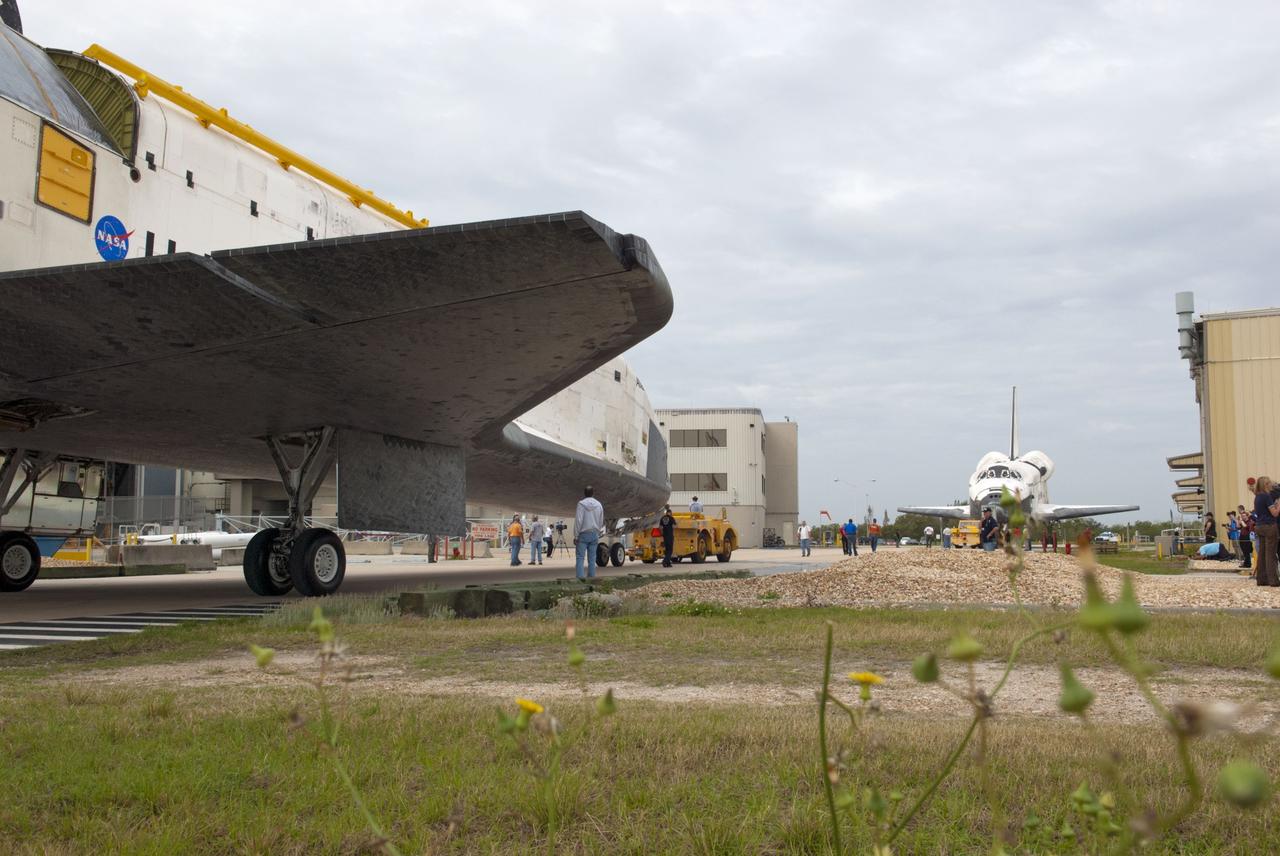
CAPE CANAVERAL, Fla. – At NASA’s Kennedy Space Center in Florida, space shuttle Atlantis is towed from the Vehicle Assembly Building toward Orbiter Processing Facility-1 OPF-1. In the background, space shuttle Discovery faces Atlantis after it was completely towed out from OPF-1. The work is part of the Space Shuttle Program’s transition and retirement processing of the three space shuttles. Atlantis is being prepared for display at the Kennedy Space Center Visitor Complex and is scheduled to rollover to the complex in November. Photo credit: NASA/Tim Jacobs
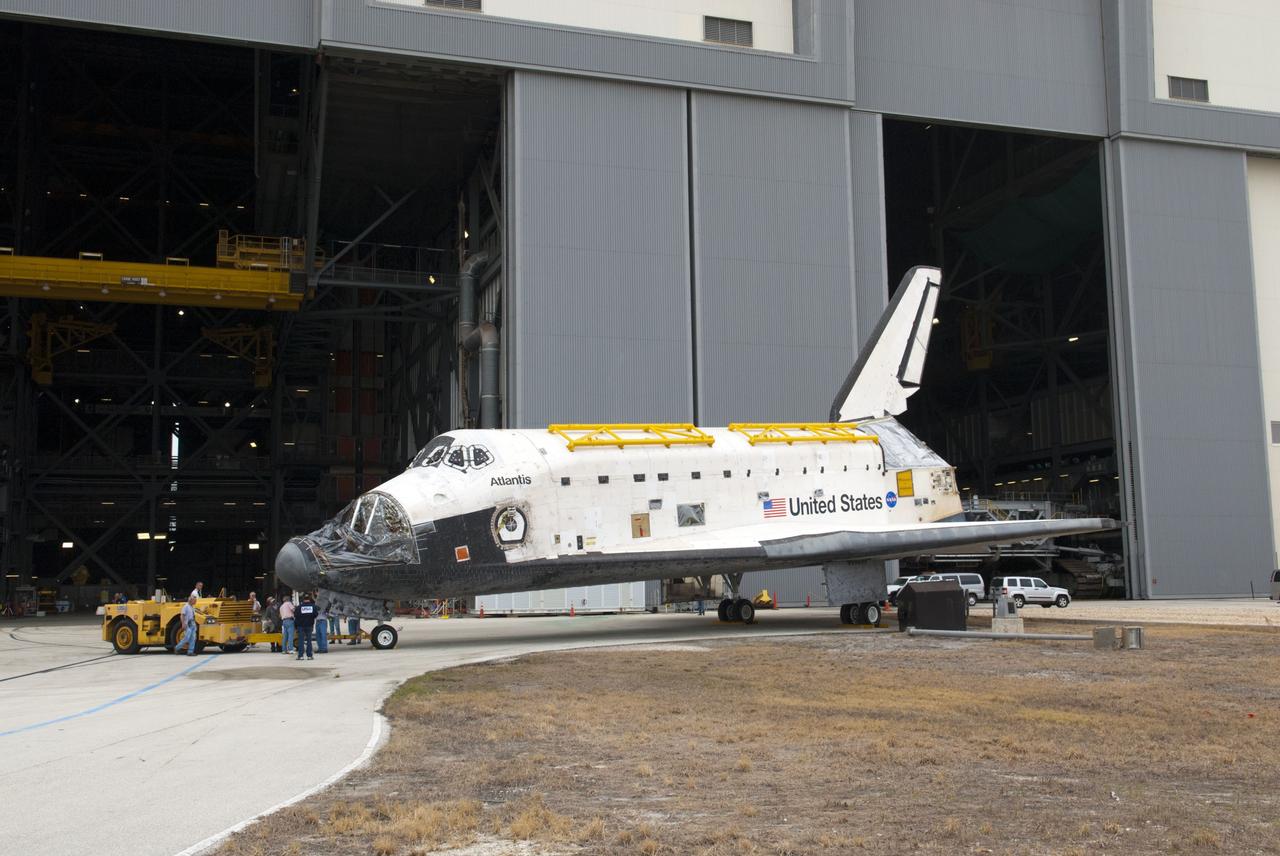
CAPE CANAVERAL, Fla. – At NASA’s Kennedy Space Center in Florida, space shuttle Atlantis is being towed from the Vehicle Assembly Building over to Orbiter Processing Facility-1. Atlantis’ forward reaction control system, orbiter maneuvering system pods and three space shuttle main engines have been removed. The work is part of the Space Shuttle Program’s transition and retirement processing of the three space shuttles. Atlantis is being prepared for display at the Kennedy Space Center Visitor Complex and is scheduled to rollover to the complex in November. Photo credit: NASA/Tim Jacobs
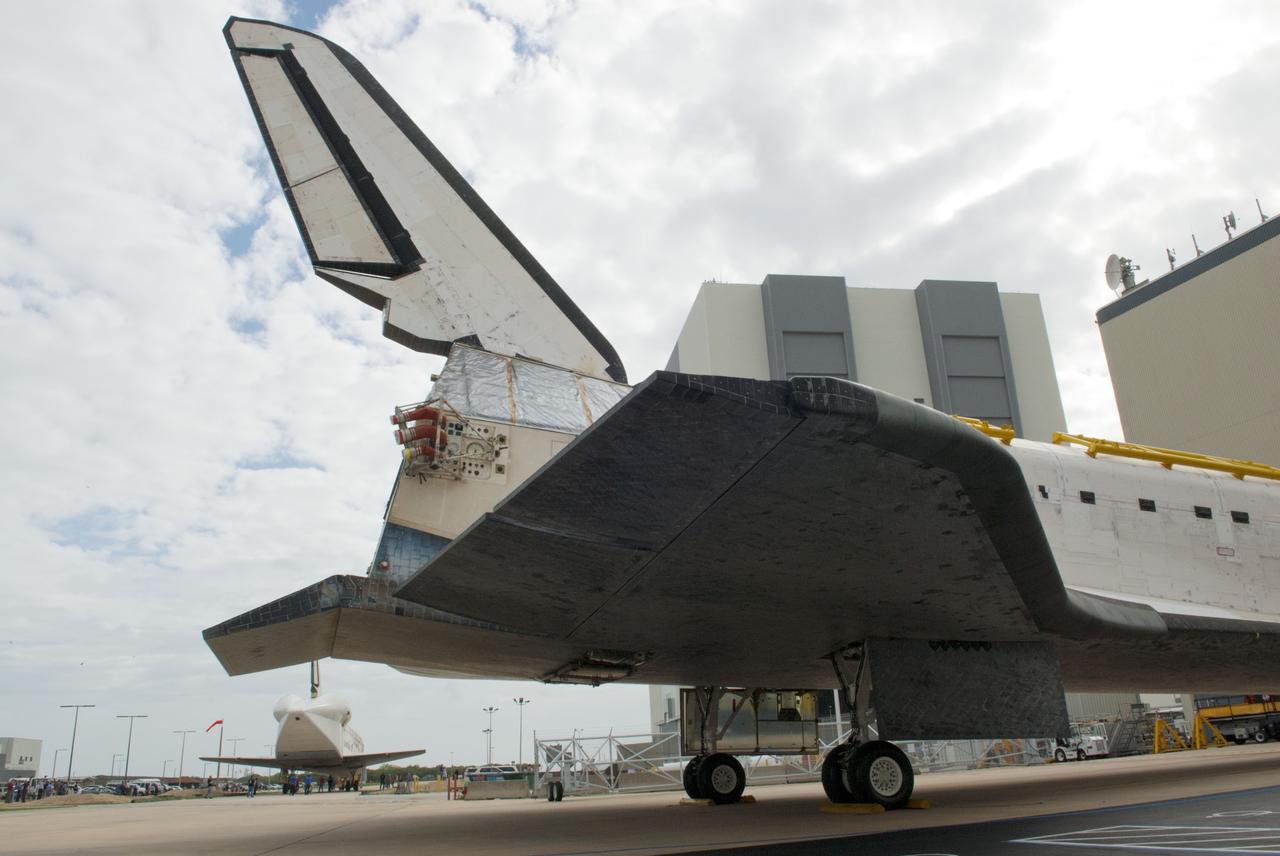
CAPE CANAVERAL, Fla. – At NASA’s Kennedy Space Center in Florida, space shuttle Atlantis has been towed to the doors of Orbiter Processing Facility-1 OPF-1 after being towed from the Vehicle Assembly Building VAB. At left, space shuttle Discovery is being towed to the VAB after being towed out of OPF-1. The tail cone protects Discovery’s three replica shuttle main engines. The work is part of the Space Shuttle Program’s transition and retirement processing of the three space shuttles. Atlantis is being prepared for display at the Kennedy Space Center Visitor Complex and is scheduled to rollover to the complex in November. Photo credit: NASA/Tim Jacobs
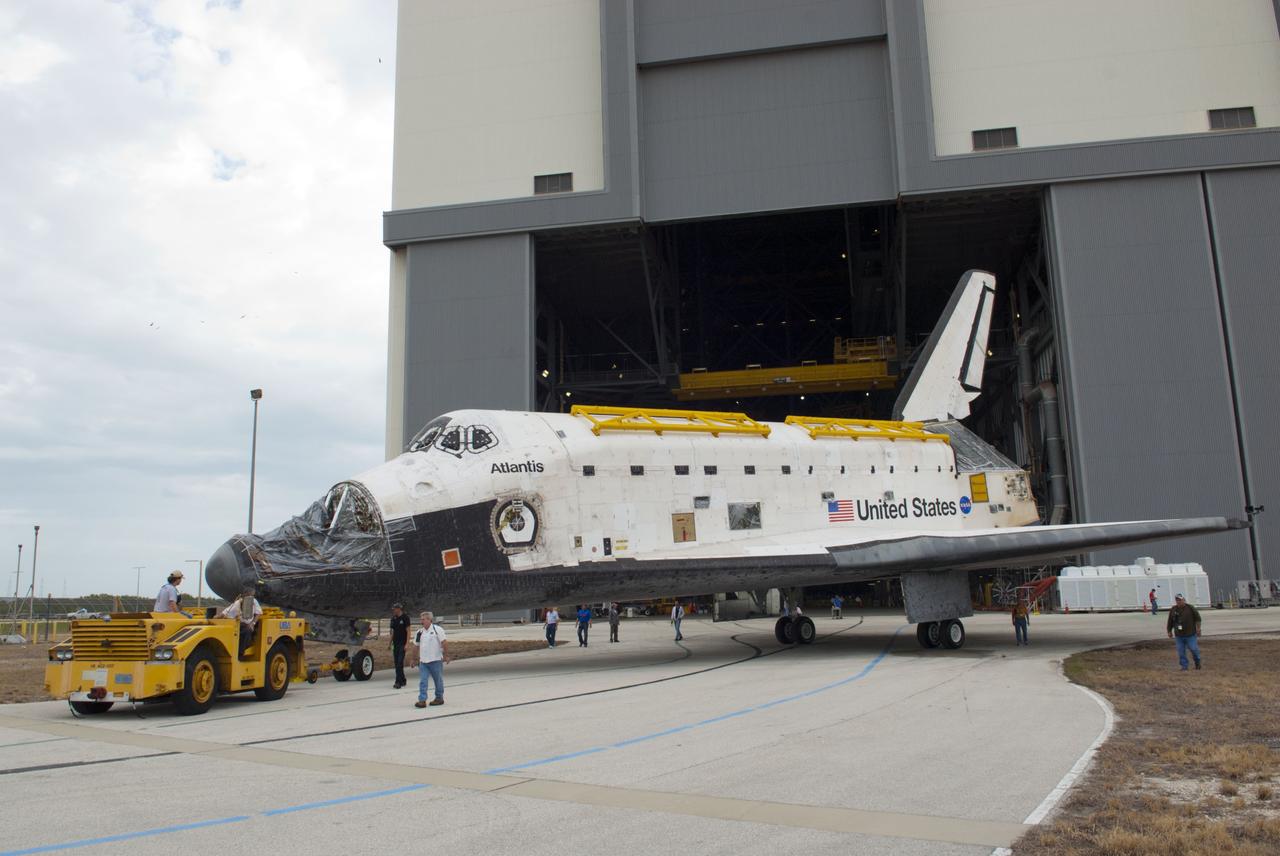
CAPE CANAVERAL, Fla. – At NASA’s Kennedy Space Center in Florida, workers walk alongside as space shuttle Atlantis is towed out of the Vehicle Assembly Building and over to Orbiter Processing Facility-1. Atlantis’ forward reaction control system, orbiter maneuvering system pods and three space shuttle main engines have been removed. The work is part of the Space Shuttle Program’s transition and retirement processing of the three space shuttles. Atlantis is being prepared for display at the Kennedy Space Center Visitor Complex and is scheduled to rollover to the complex in November. Photo credit: NASA/Tim Jacobs
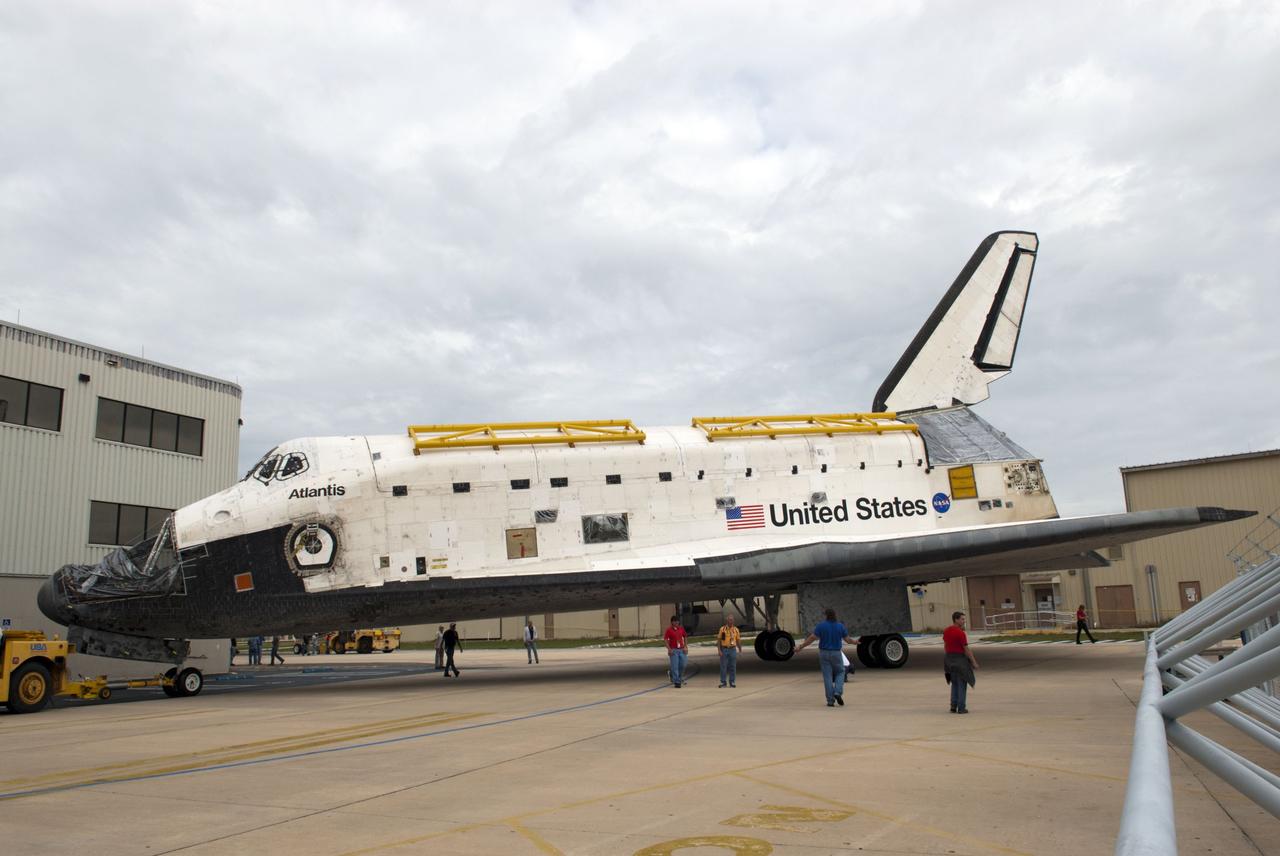
CAPE CANAVERAL, Fla. – At NASA’s Kennedy Space Center in Florida, space shuttle Atlantis is towed toward Orbiter Processing Facility-1 after being towed from the Vehicle Assembly Building. The work is part of the Space Shuttle Program’s transition and retirement processing of the three space shuttles. Atlantis is being prepared for display at the Kennedy Space Center Visitor Complex and is scheduled to rollover to the complex in November. Photo credit: NASA/Tim Jacobs
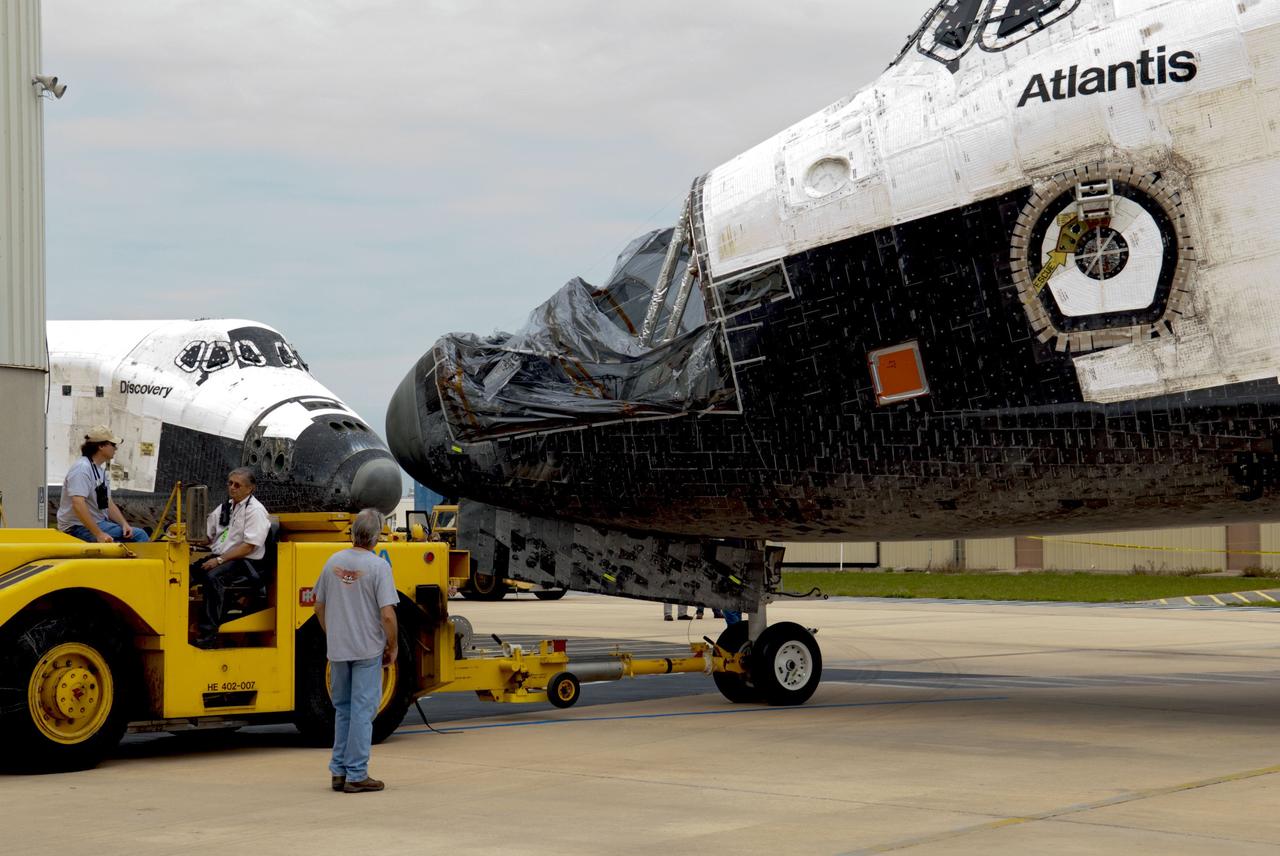
CAPE CANAVERAL, Fla. – At NASA’s Kennedy Space Center in Florida, space shuttles Atlantis foreground and Discovery appear to be nose to nose. Atlantis was towed from the Vehicle Assembly Building VAB and is being towed to Orbiter Processing Facility-1 OPF-1. Discovery was towed out of OPF-1 for its trip to the VAB. The work is part of the Space Shuttle Program’s transition and retirement processing of the three space shuttles. Atlantis is being prepared for display at the Kennedy Space Center Visitor Complex and is scheduled to rollover to the complex in November. Photo credit: NASA/Tim Jacobs

CAPE CANAVERAL, Fla. – At NASA’s Kennedy Space Center in Florida, space shuttles Atlantis foreground and Discovery appear to be nose to nose. Atlantis was towed from the Vehicle Assembly Building VAB and is being towed to Orbiter Processing Facility-1 OPF-1. Discovery was towed out of OPF-1 for its trip to the VAB. The work is part of the Space Shuttle Program’s transition and retirement processing of the three space shuttles. Atlantis is being prepared for display at the Kennedy Space Center Visitor Complex and is scheduled to rollover to the complex in November. Photo credit: NASA/Tim Jacobs
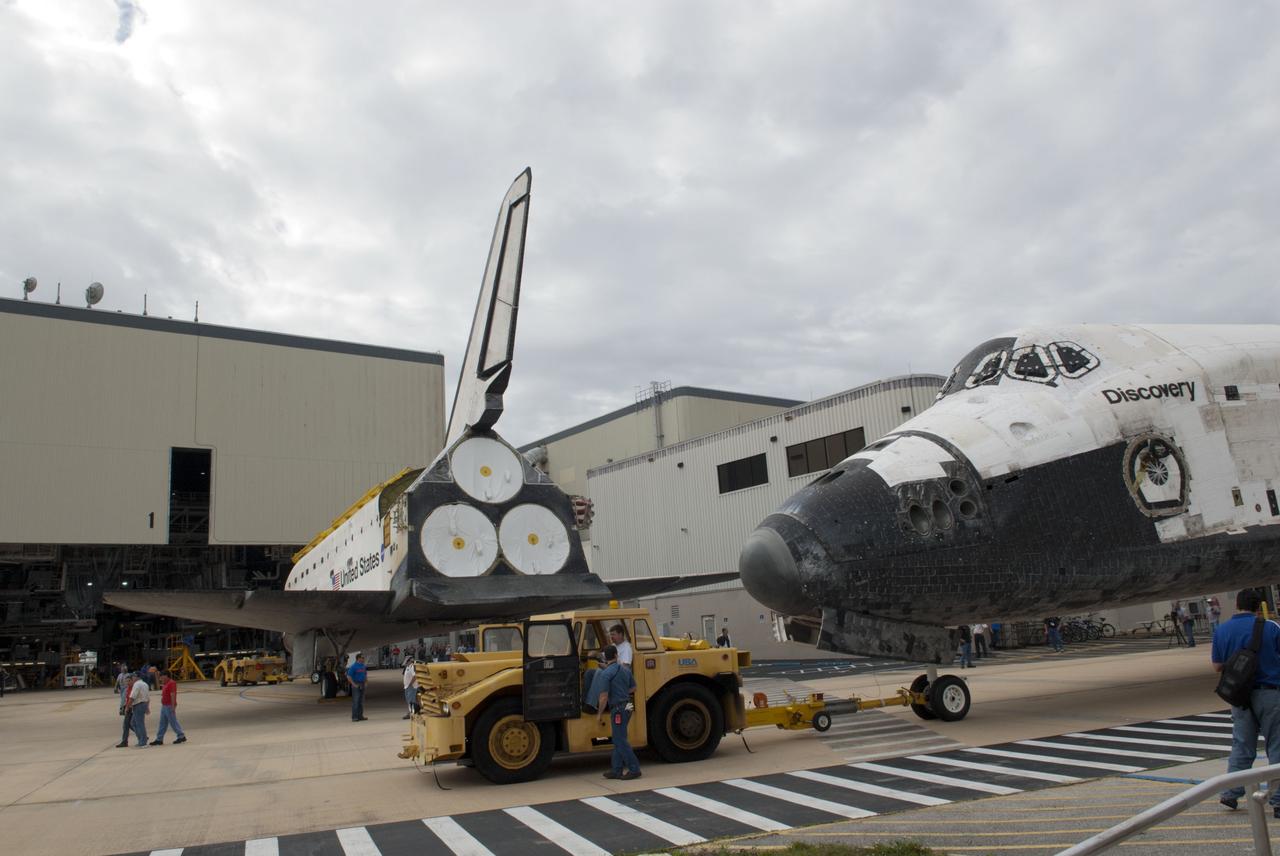
CAPE CANAVERAL, Fla. – At NASA’s Kennedy Space Center in Florida, space shuttle Atlantis is towed toward Orbiter Processing Facility-1 OPF-1 after being towed from the Vehicle Assembly Building VAB. In the foreground, space shuttle Discovery is being towed to the VAB after being towed out of OPF-1. The work is part of the Space Shuttle Program’s transition and retirement processing of the three space shuttles. Atlantis is being prepared for display at the Kennedy Space Center Visitor Complex and is scheduled to rollover to the complex in November. Photo credit: NASA/Tim Jacobs
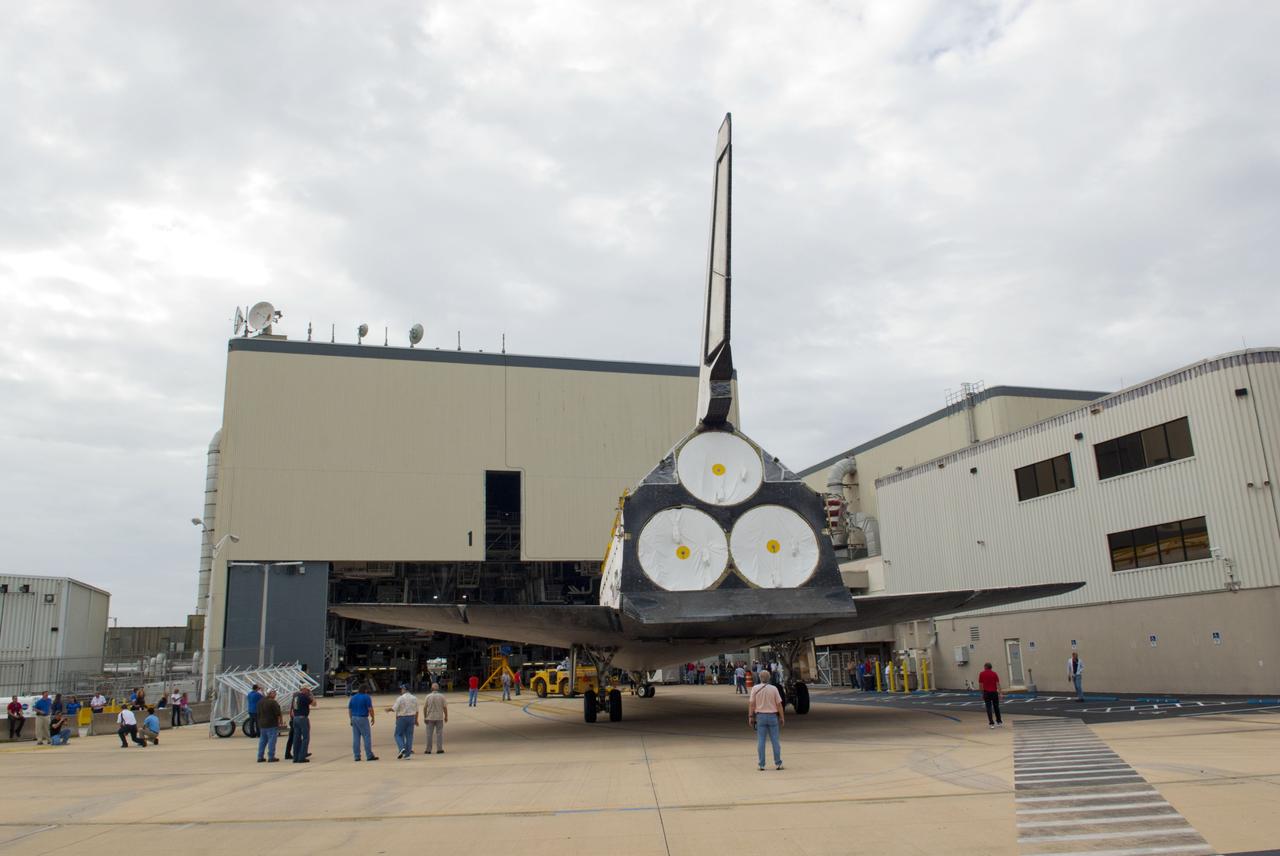
CAPE CANAVERAL, Fla. – At NASA’s Kennedy Space Center in Florida, workers monitor the progress as space shuttle Atlantis is towed toward Orbiter Processing Facility-1 after being towed from the Vehicle Assembly Building. The work is part of the Space Shuttle Program’s transition and retirement processing of the three space shuttles. Atlantis is being prepared for display at the Kennedy Space Center Visitor Complex and is scheduled to rollover to the complex in November. Photo credit: NASA/Tim Jacobs
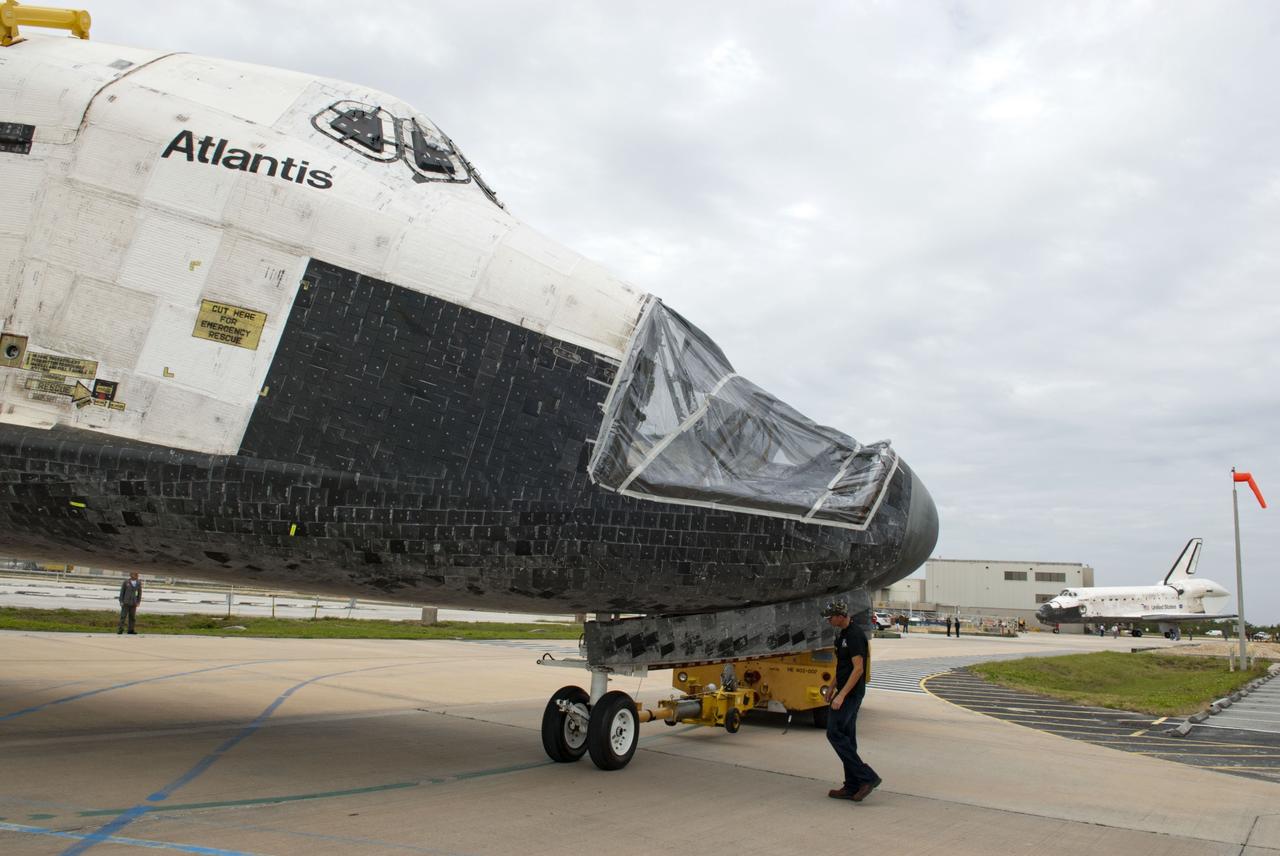
CAPE CANAVERAL, Fla. – At NASA’s Kennedy Space Center in Florida, a technician monitors space shuttle Atlantis as it is towed from the Vehicle Assembly Building toward Orbiter Processing Facility-1. A view of Atlantis’ nose cone area shows that the forward reaction control system has been removed. The work is part of the Space Shuttle Program’s transition and retirement processing of the three space shuttles. Atlantis is being prepared for display at the Kennedy Space Center Visitor Complex and is scheduled to rollover to the complex in November. Photo credit: NASA/Tim Jacobs
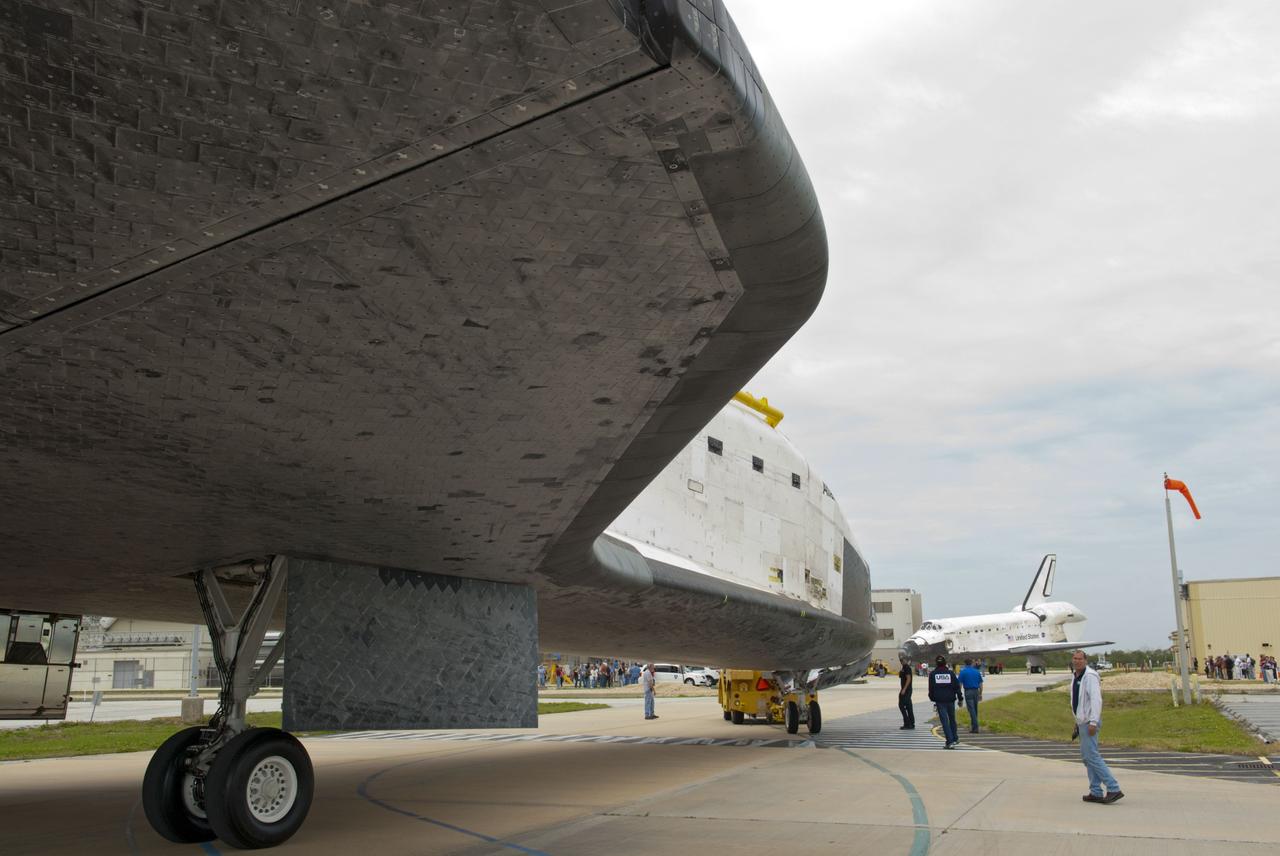
CAPE CANAVERAL, Fla. – At NASA’s Kennedy Space Center in Florida, technicians monitor space shuttle Atlantis as it is towed from the Vehicle Assembly Building toward Orbiter Processing Facility-1 OPF-1. In the background is space shuttle Discovery after it was towed out of OPF-1. The work is part of the Space Shuttle Program’s transition and retirement processing of the three space shuttles. Atlantis is being prepared for display at the Kennedy Space Center Visitor Complex and is scheduled to rollover to the complex in November. Photo credit: NASA/Tim Jacobs
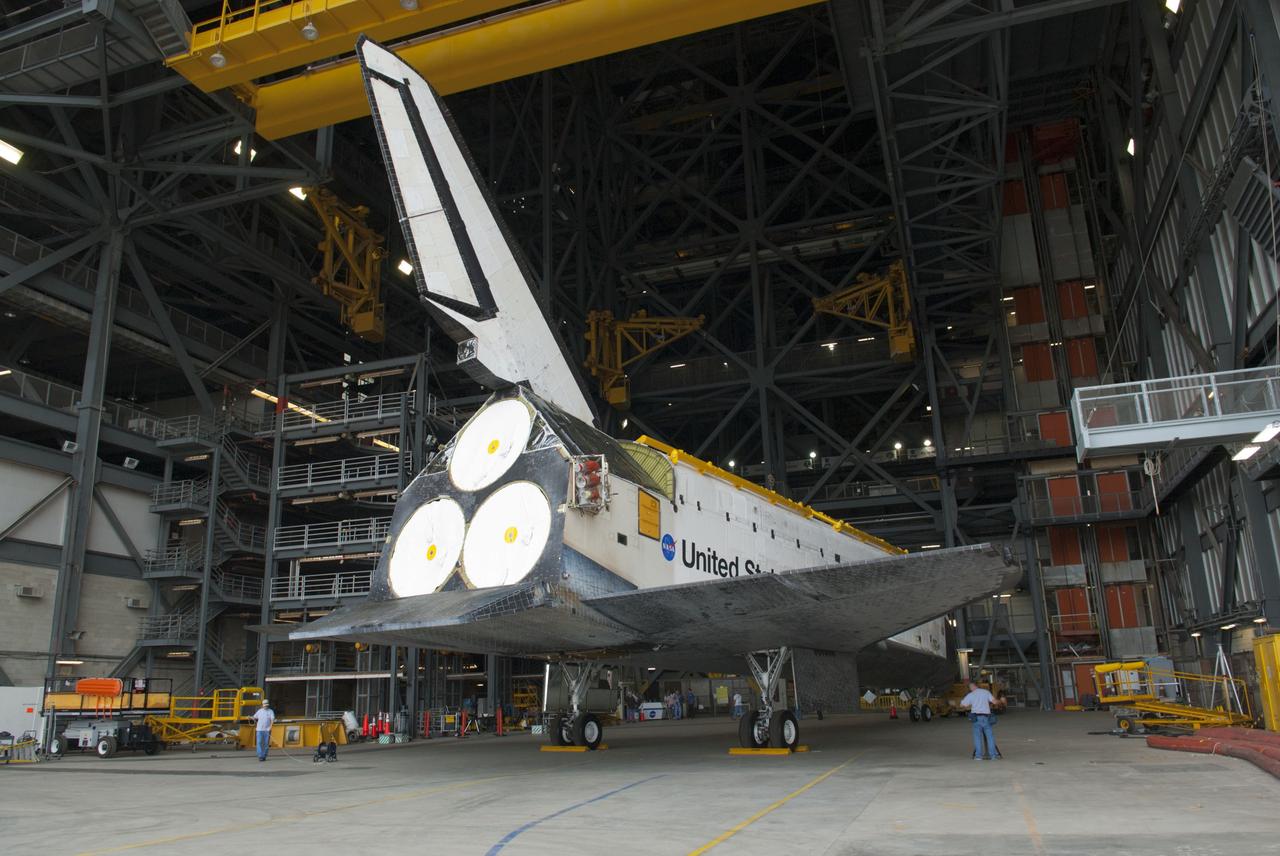
CAPE CANAVERAL, Fla. – Inside the Vehicle Assembly Building at NASA’s Kennedy Space Center in Florida, technicians prepare space shuttle Atlantis to be towed out of the transfer aisle and over to Orbiter Processing Facility-1. The work is part of the Space Shuttle Program’s transition and retirement processing of the three space shuttles. Atlantis is being prepared for display at the Kennedy Space Center Visitor Complex and is scheduled to rollover to the complex in November. Photo credit: NASA/Tim Jacobs
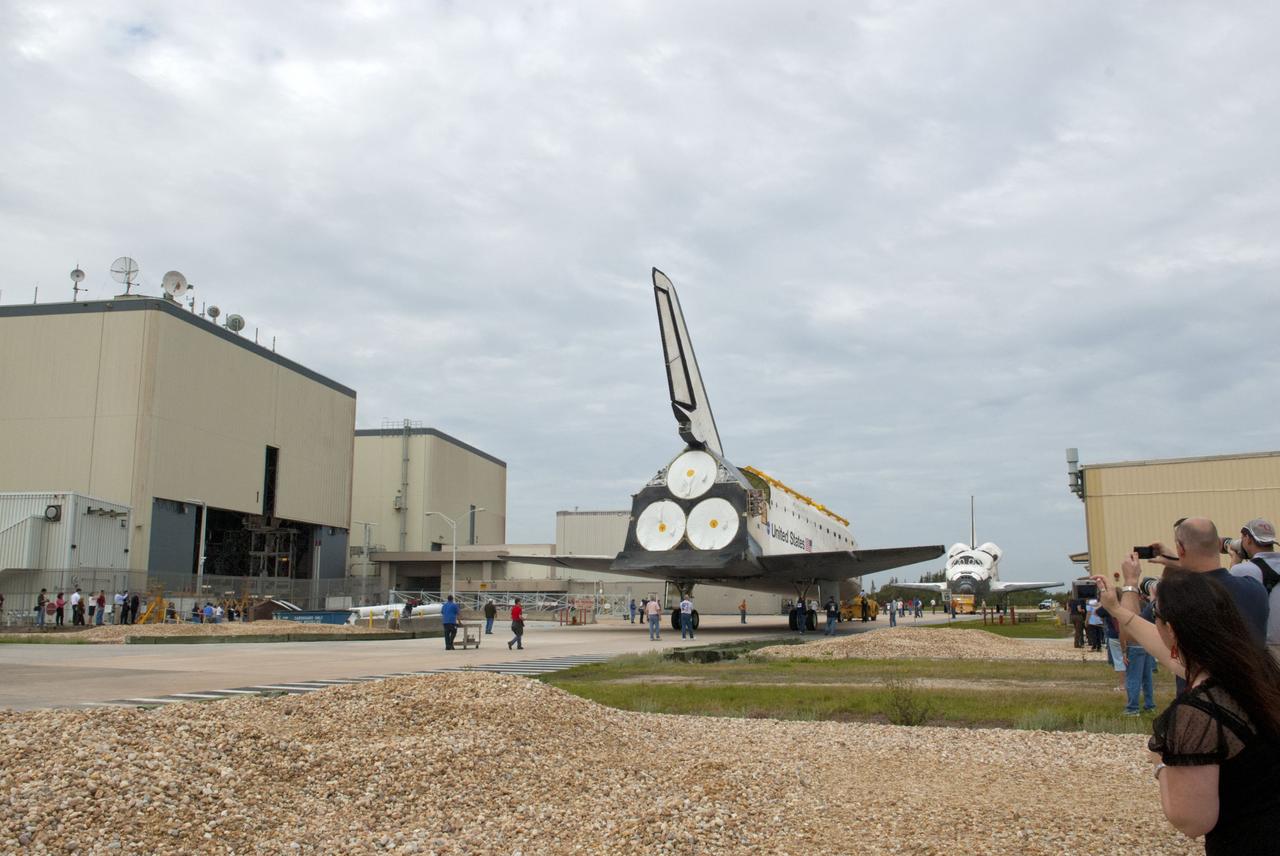
CAPE CANAVERAL, Fla. – At NASA’s Kennedy Space Center in Florida, space shuttle Atlantis is towed from the Vehicle Assembly Building toward Orbiter Processing Facility-1 OPF-1. In the background, space shuttle Discovery faces Atlantis after it was completely towed out from OPF-1. The work is part of the Space Shuttle Program’s transition and retirement processing of the three space shuttles. Atlantis is being prepared for display at the Kennedy Space Center Visitor Complex and is scheduled to rollover to the complex in November. Photo credit: NASA/Tim Jacobs
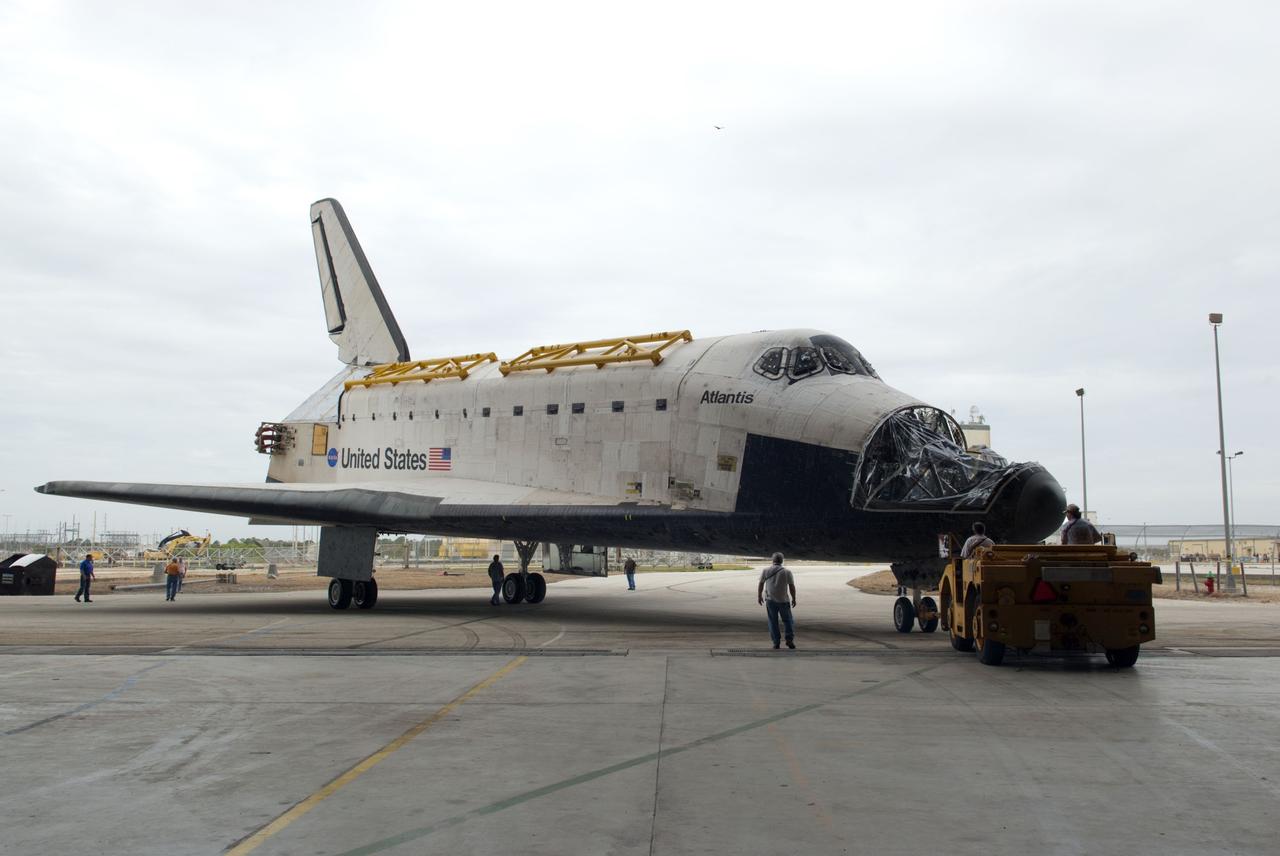
CAPE CANAVERAL, Fla. – At NASA’s Kennedy Space Center in Florida, space shuttle Atlantis is being towed from the Vehicle Assembly Building over to Orbiter Processing Facility-1. Atlantis’ forward reaction control system, orbiter maneuvering system pods and three space shuttle main engines have been removed. The work is part of the Space Shuttle Program’s transition and retirement processing of the three space shuttles. Atlantis is being prepared for display at the Kennedy Space Center Visitor Complex and is scheduled to rollover to the complex in November. Photo credit: NASA/Tim Jacobs
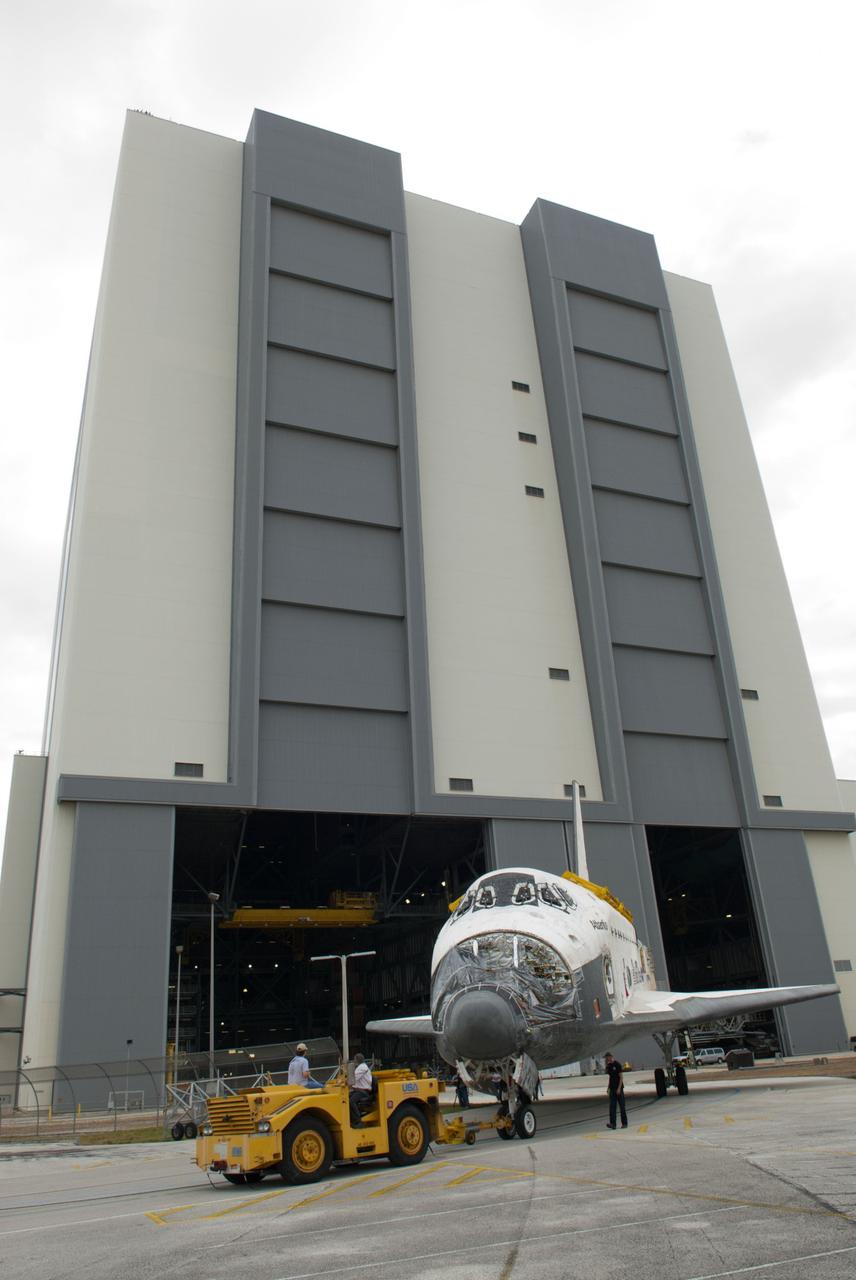
CAPE CANAVERAL, Fla. – At NASA’s Kennedy Space Center in Florida, space shuttle Atlantis is towed out of the Vehicle Assembly Building and over to Orbiter Processing Facility-1. Atlantis’ forward reaction control system, orbiter maneuvering system pods and three space shuttle main engines have been removed. The work is part of the Space Shuttle Program’s transition and retirement processing of the three space shuttles. Atlantis is being prepared for display at the Kennedy Space Center Visitor Complex and is scheduled to rollover to the complex in November. Photo credit: NASA/Tim Jacobs

CAPE CANAVERAL, Fla. – At NASA’s Kennedy Space Center in Florida, space shuttle Atlantis is towed toward Orbiter Processing Facility-1 OPF-1 after being towed from the Vehicle Assembly Building VAB. At left, space shuttle Discovery is being towed to the VAB after being towed out of OPF-1. The tail cone protects Discovery’s three replica shuttle main engines. The work is part of the Space Shuttle Program’s transition and retirement processing of the three space shuttles. Atlantis is being prepared for display at the Kennedy Space Center Visitor Complex and is scheduled to rollover to the complex in November. Photo credit: NASA/Tim Jacobs
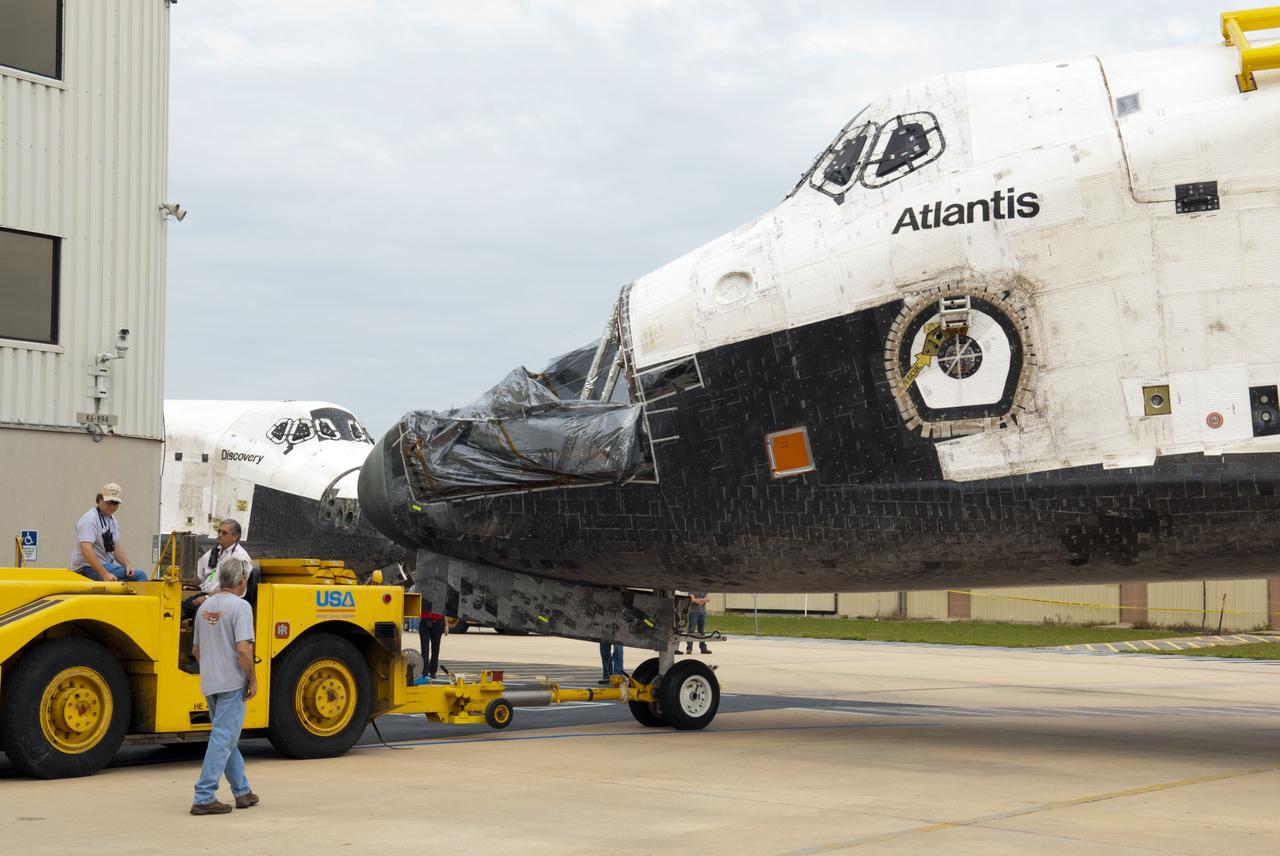
CAPE CANAVERAL, Fla. – At NASA’s Kennedy Space Center in Florida, space shuttle Atlantis is towed toward Orbiter Processing Facility-1 OPF-1 from the Vehicle Assembly Building VAB. In the background, space shuttle Discovery waits for its move to the VAB after being towed out of OPF-1. The work is part of the Space Shuttle Program’s transition and retirement processing of the three space shuttles. Atlantis is being prepared for display at the Kennedy Space Center Visitor Complex and is scheduled to rollover to the complex in November. Photo credit: NASA/Tim Jacobs
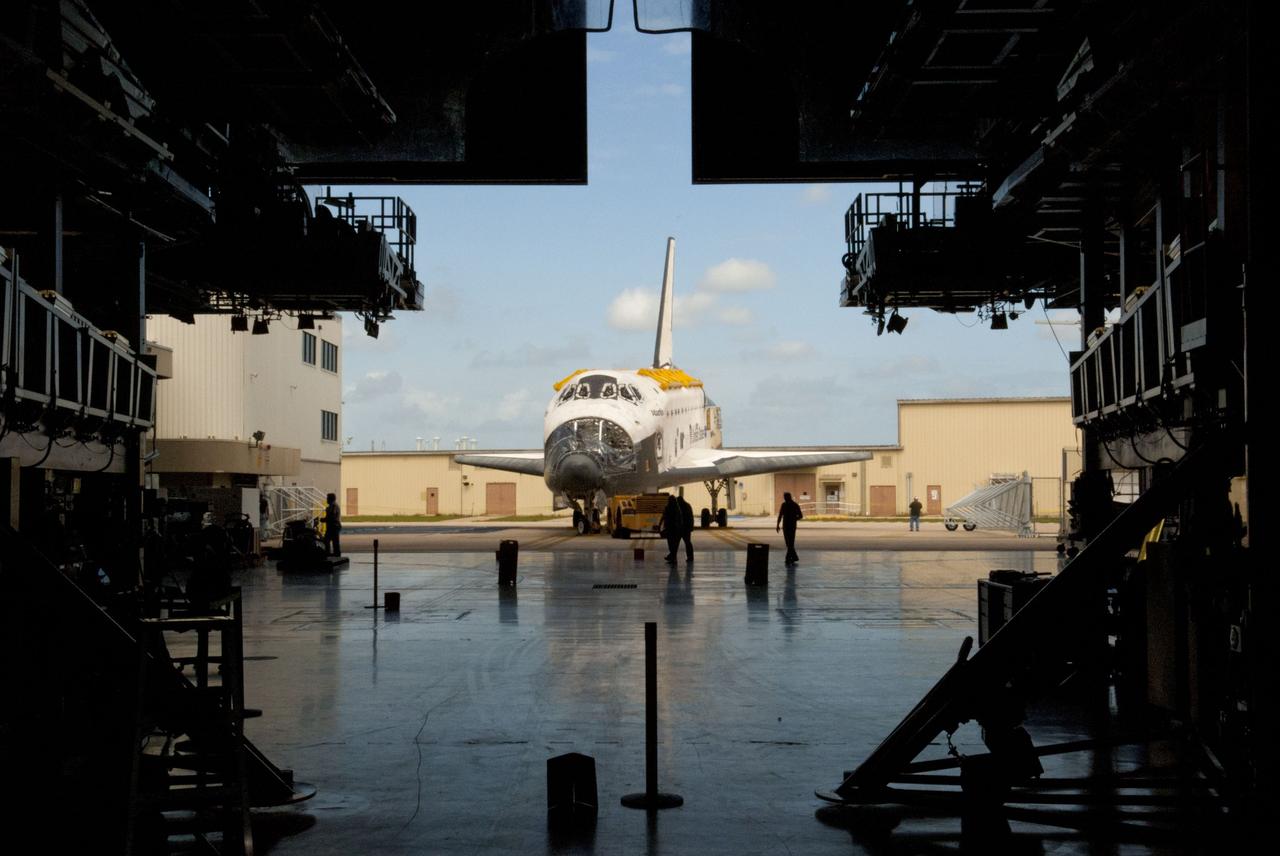
CAPE CANAVERAL, Fla. – At NASA’s Kennedy Space Center in Florida, space shuttle Atlantis has been towed to the doors of Orbiter Processing Facility-1 after being towed from the Vehicle Assembly Building. The work is part of the Space Shuttle Program’s transition and retirement processing of the three space shuttles. Atlantis is being prepared for display at the Kennedy Space Center Visitor Complex and is scheduled to rollover to the complex in November. Photo credit: NASA/Tim Jacobs
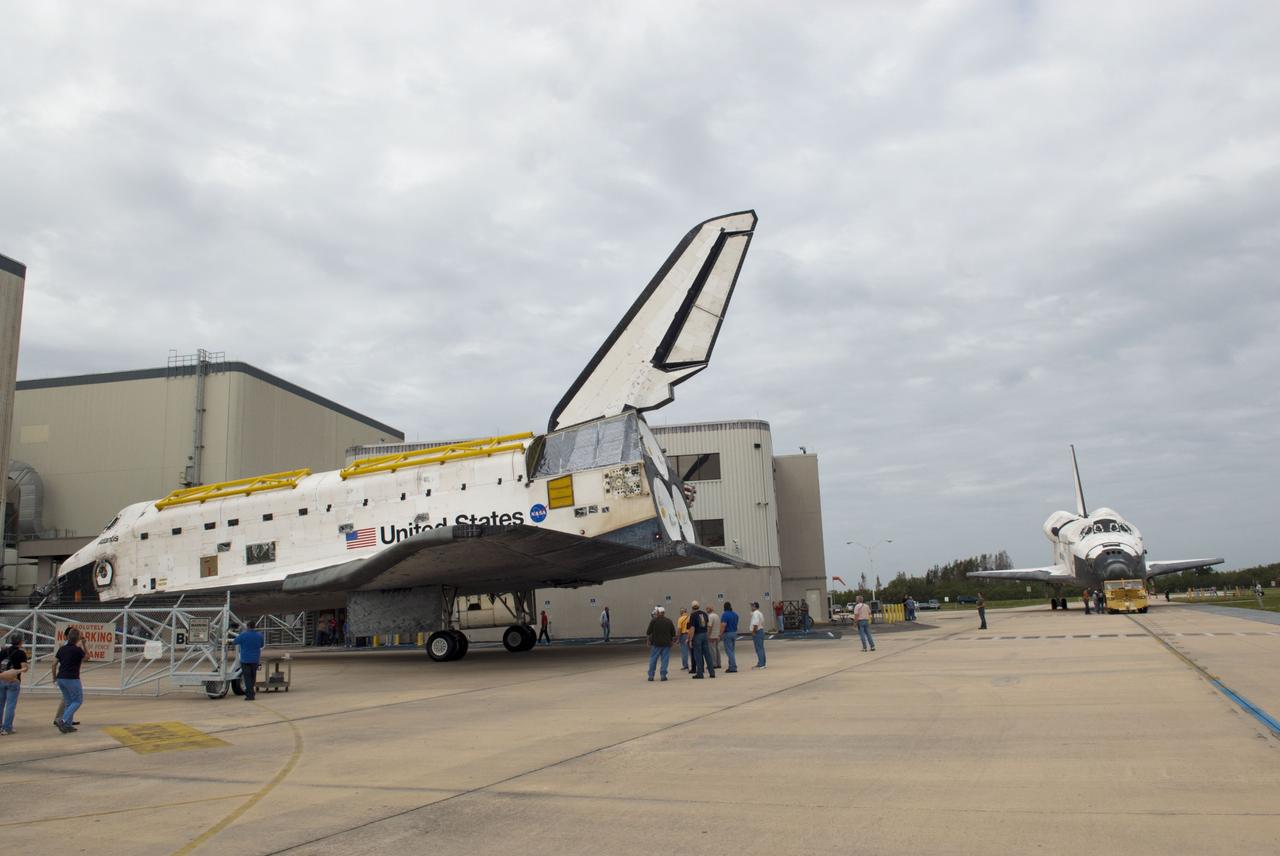
CAPE CANAVERAL, Fla. – At NASA’s Kennedy Space Center in Florida, space shuttle Atlantis is towed toward Orbiter Processing Facility-1 OPF-1 after being towed from the Vehicle Assembly Building VAB. In the background, space shuttle Discovery waits for its move to the VAB after being towed out of OPF-1. The work is part of the Space Shuttle Program’s transition and retirement processing of the three space shuttles. Atlantis is being prepared for display at the Kennedy Space Center Visitor Complex and is scheduled to rollover to the complex in November. Photo credit: NASA/Tim Jacobs
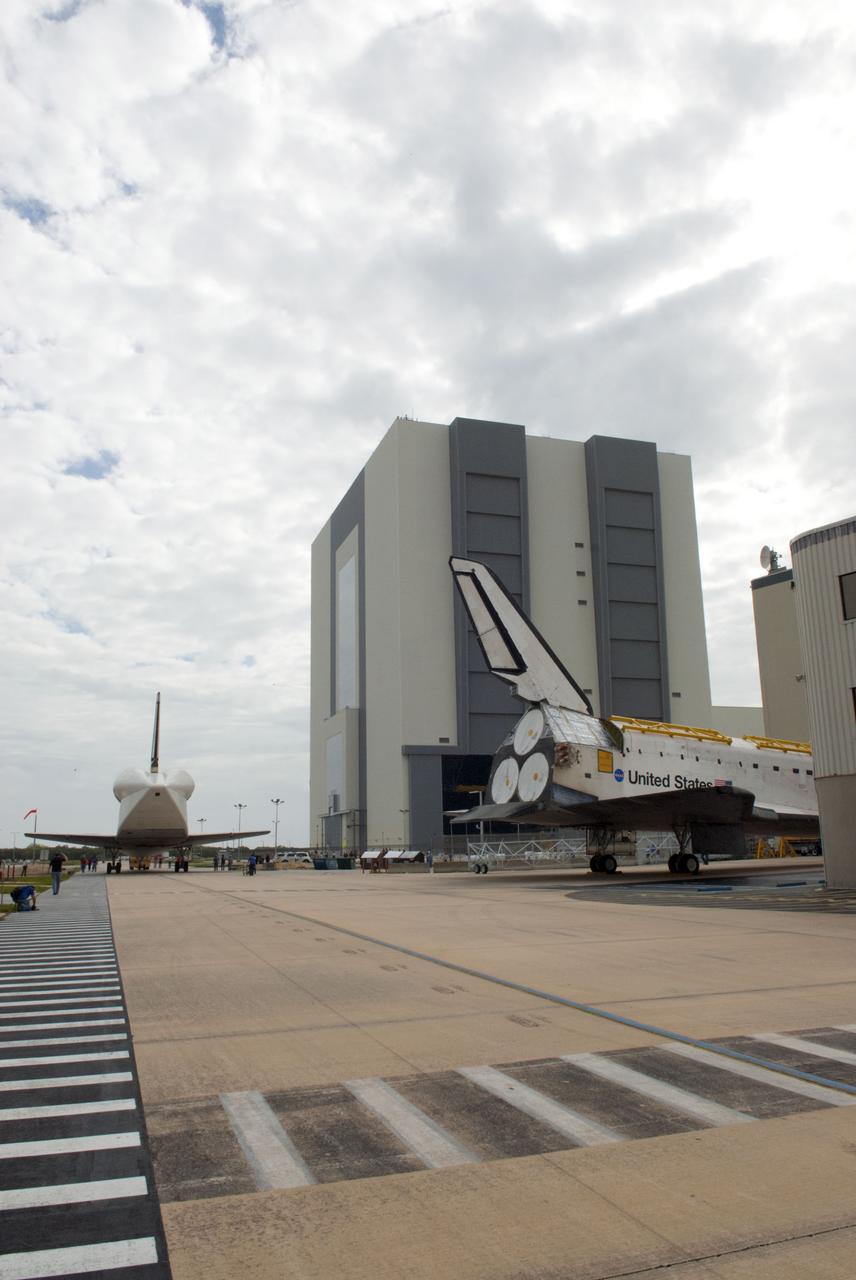
CAPE CANAVERAL, Fla. – At NASA’s Kennedy Space Center in Florida, space shuttle Atlantis is towed toward Orbiter Processing Facility-1 OPF-1 after being towed from the Vehicle Assembly Building VAB. At left, space shuttle Discovery is being towed to the VAB after being towed out of OPF-1. The tail cone protects Discovery’s three replica shuttle main engines. The work is part of the Space Shuttle Program’s transition and retirement processing of the three space shuttles. Atlantis is being prepared for display at the Kennedy Space Center Visitor Complex and is scheduled to rollover to the complex in November. Photo credit: NASA/Tim Jacobs
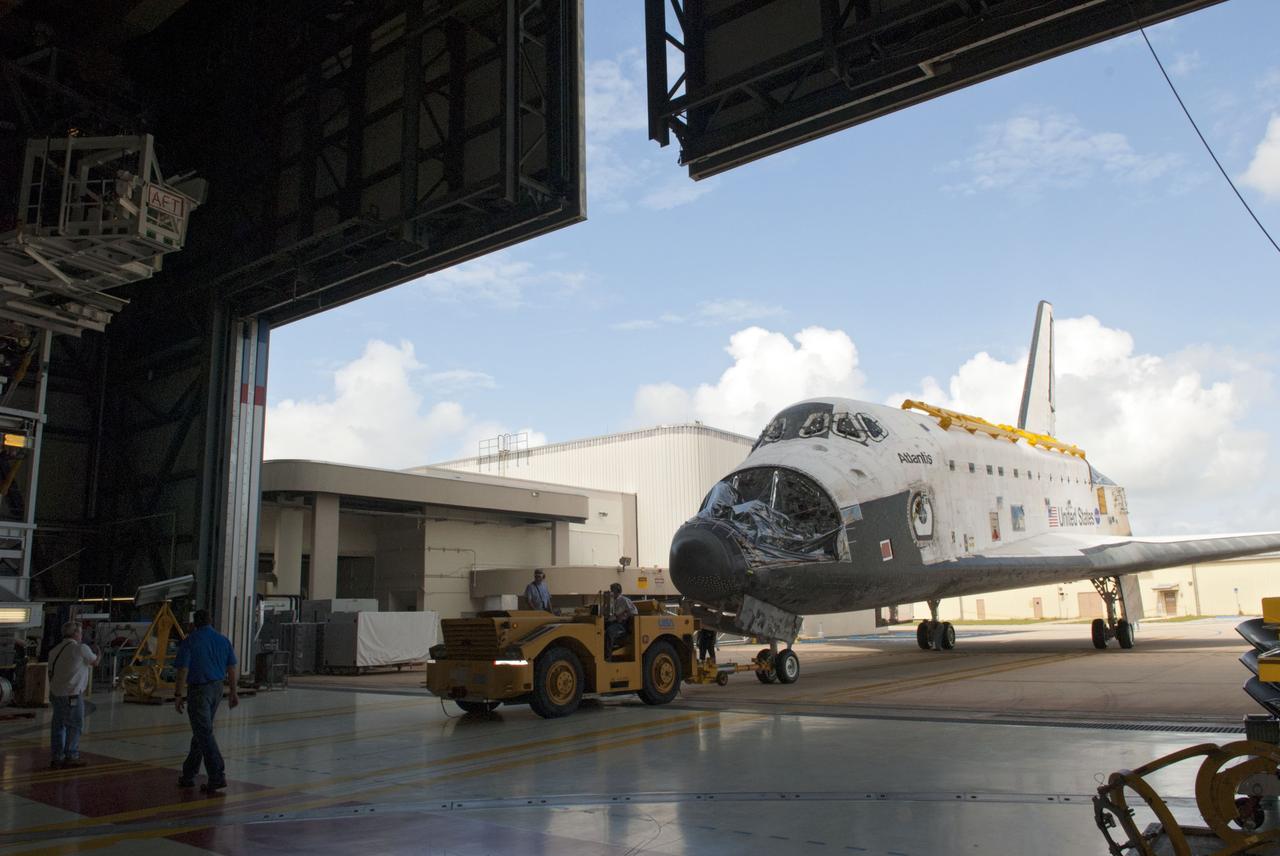
CAPE CANAVERAL, Fla. – At NASA’s Kennedy Space Center in Florida, space shuttle Atlantis is towed inside Orbiter Processing Facility-1 after being towed earlier in the day from the Vehicle Assembly Building. The work is part of the Space Shuttle Program’s transition and retirement processing of the three space shuttles. Atlantis is being prepared for display at the Kennedy Space Center Visitor Complex and is scheduled to rollover to the complex in November. Photo credit: NASA/Tim Jacobs
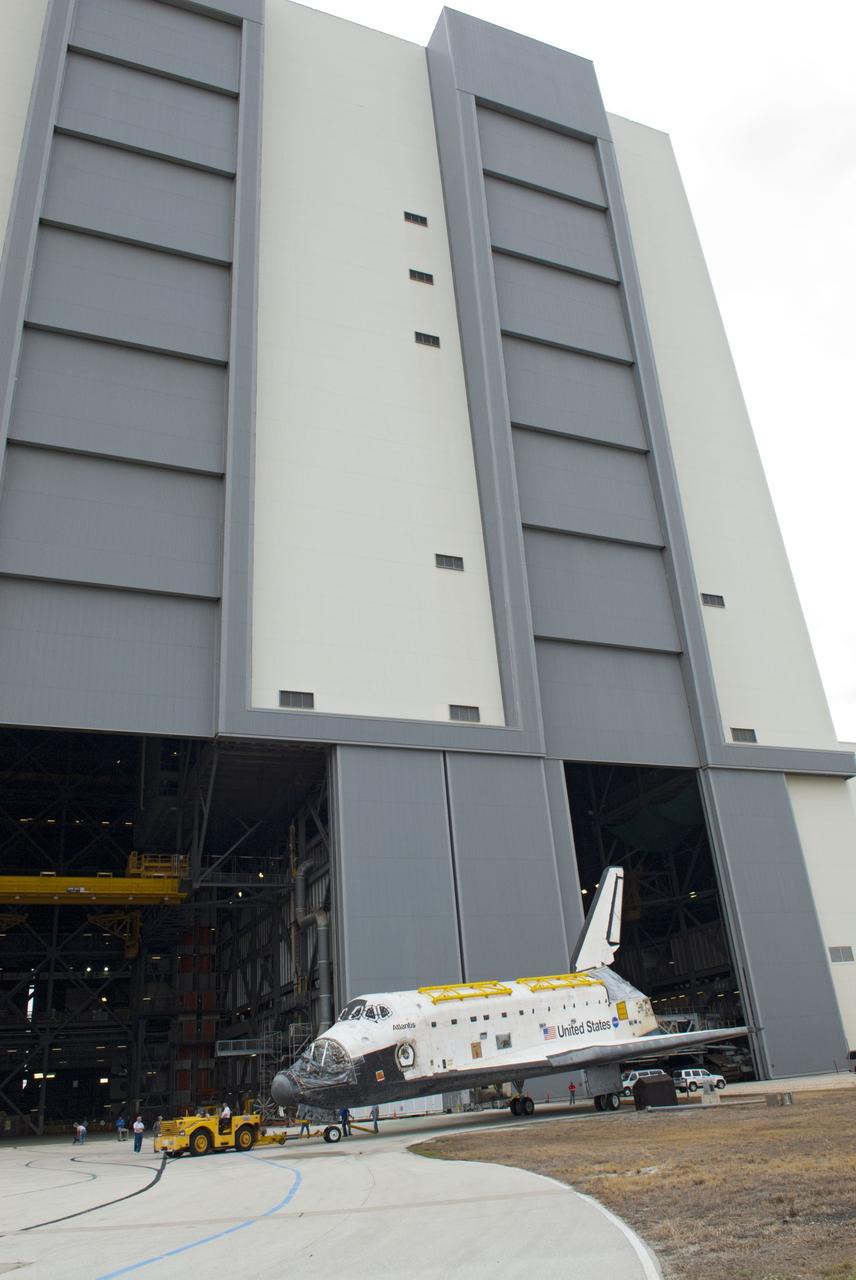
CAPE CANAVERAL, Fla. – At NASA’s Kennedy Space Center in Florida, space shuttle Atlantis is being towed from the Vehicle Assembly Building over to Orbiter Processing Facility-1. Atlantis’ forward reaction control system, orbiter maneuvering system pods and three space shuttle main engines have been removed. The work is part of the Space Shuttle Program’s transition and retirement processing of the three space shuttles. Atlantis is being prepared for display at the Kennedy Space Center Visitor Complex and is scheduled to rollover to the complex in November. Photo credit: NASA/Tim Jacobs
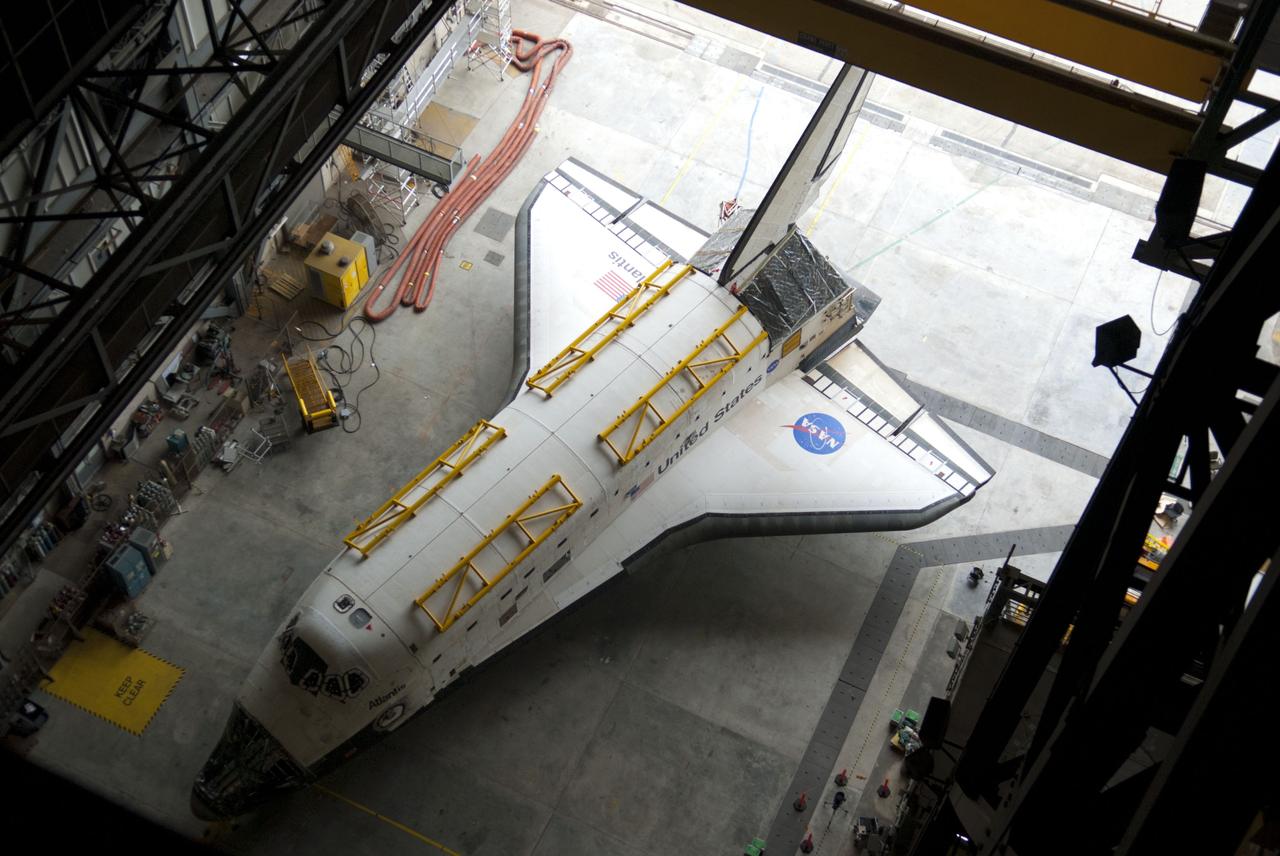
CAPE CANAVERAL, Fla. – Inside the Vehicle Assembly Building at NASA’s Kennedy Space Center in Florida, a view from above shows space shuttle Atlantis as it waits to be towed out of the transfer aisle and over to Orbiter Processing Facility-1. The work is part of the Space Shuttle Program’s transition and retirement processing of the three space shuttles. Atlantis is being prepared for display at the Kennedy Space Center Visitor Complex and is scheduled to rollover to the complex in November. Photo credit: NASA/Tim Jacobs
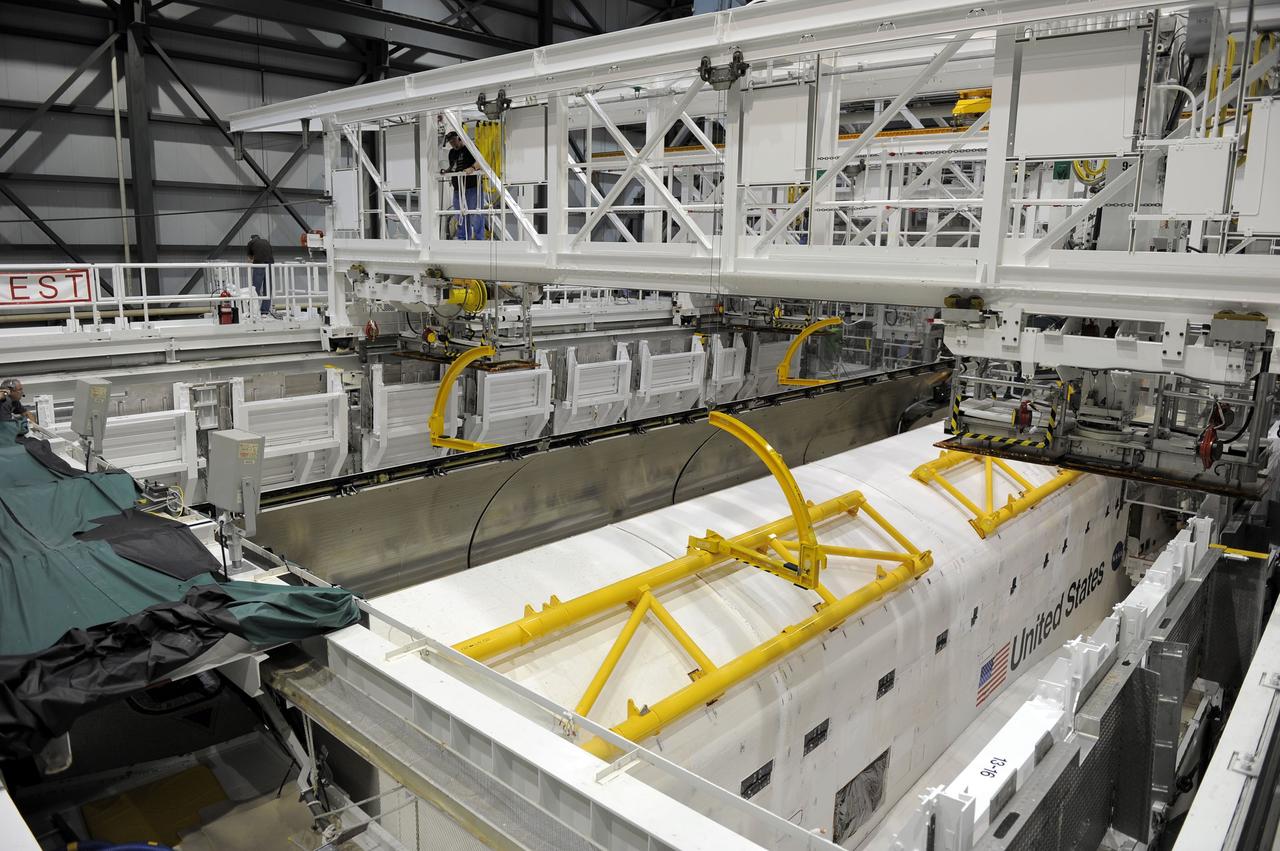
CAPE CANAVERAL, Fla. -- In Orbiter Processing Facility-2 at NASA’s Kennedy Space Center in Florida, technicians begin to open space shuttle Endeavour’s payload bay doors in order to retract an antenna. Space Shuttle Program transition and retirement work continues on Discovery and Endeavour in the orbiter processing facilities, while shuttle Atlantis is in temporary storage in high bay 4 of the Vehicle Assembly Building. Endeavour is being prepared for display at the California Science Center in Los Angeles. Photo credit: NASA/Kim Shiflett
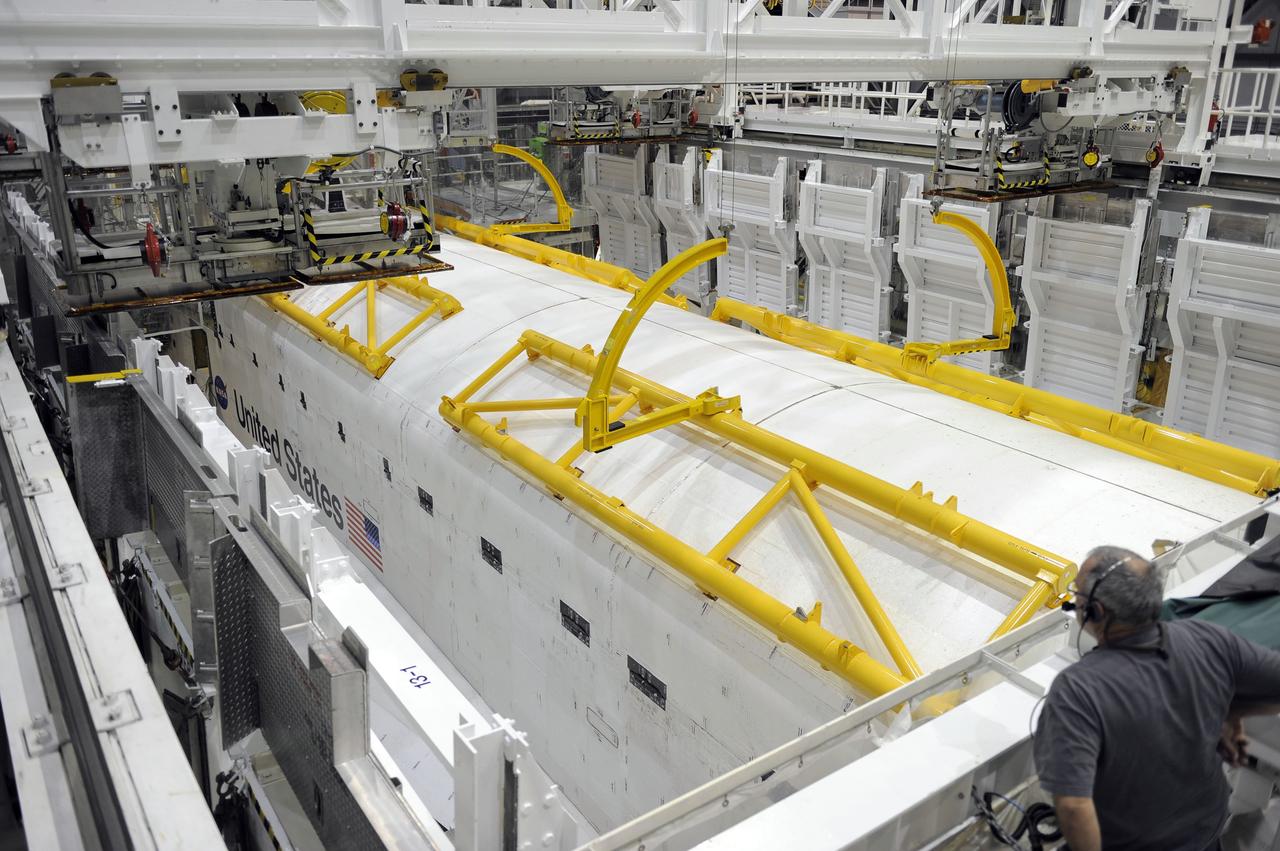
CAPE CANAVERAL, Fla. – In Orbiter Processing Facility-2 at NASA’s Kennedy Space Center in Florida, technicians prepare to open space shuttle Endeavour’s payload bay doors in order to retract an antenna. Space Shuttle Program transition and retirement work continues on Discovery and Endeavour in the orbiter processing facilities, while shuttle Atlantis is in temporary storage in high bay 4 of the Vehicle Assembly Building. Endeavour is being prepared for display at the California Science Center in Los Angeles. Photo credit: NASA/Kim Shiflett