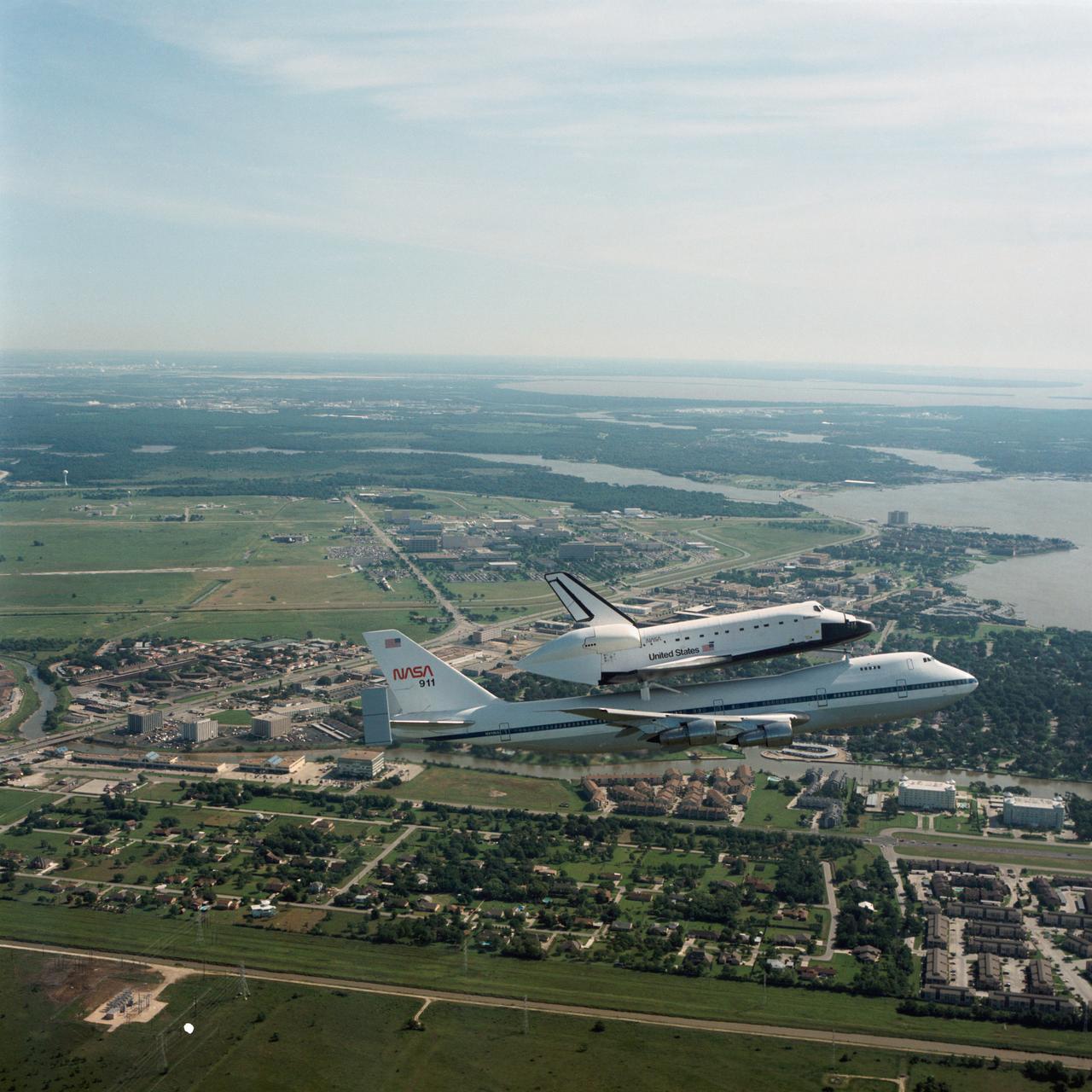
Air to air views of Endeavour, Orbiter Vehicle (OV) 105, transported via the Shuttle Carrier Aircraft (SCA), NASA 911, on its way to KSC, 05-06-91. JSC with Clear Creek and Egret Bay Blvd in the foreground and Clear Lake and Galveston Bay in the background
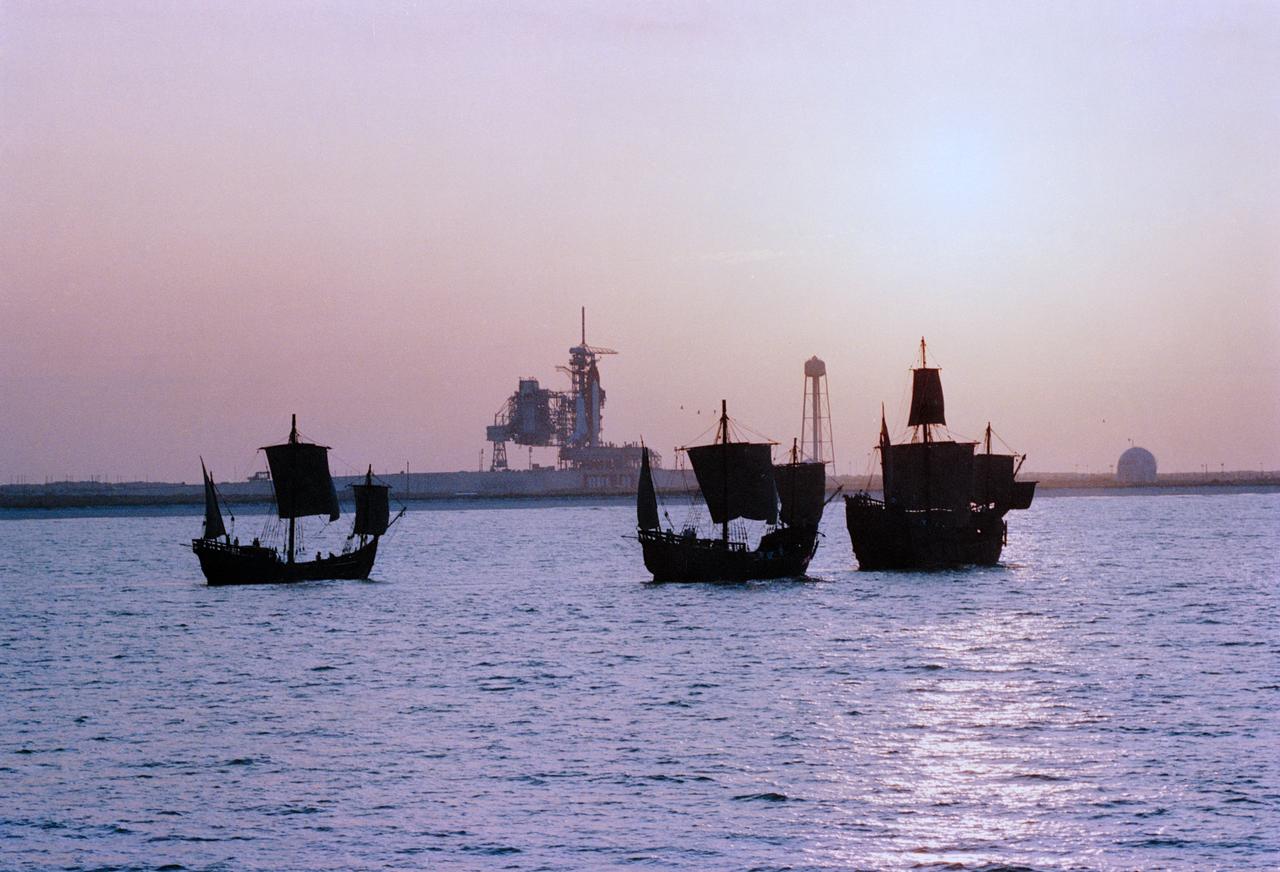
Replicas of Christopher Columbus' sailing ships Santa Maria, Nina, and Pinta sail by Endeavour, Orbiter Vehicle (OV) 105, on Kennedy Space Center (KSC) Launch Complex (LC) Pad 39B awaiting liftoff on its maiden voyage, STS-49. This view was taken from the water showing the three ships silhouetted in the foreground with OV-105 on mobile launcher platform profiled against fixed service structure (FSS) tower and rectracted rotating service structure (RSS) in the background. Next to the launch pad (at right) are the sound suppression water system tower and the liquid hydrogen (LH2) storage tank. View provided by KSC with alternate number KSC-92PC-970.
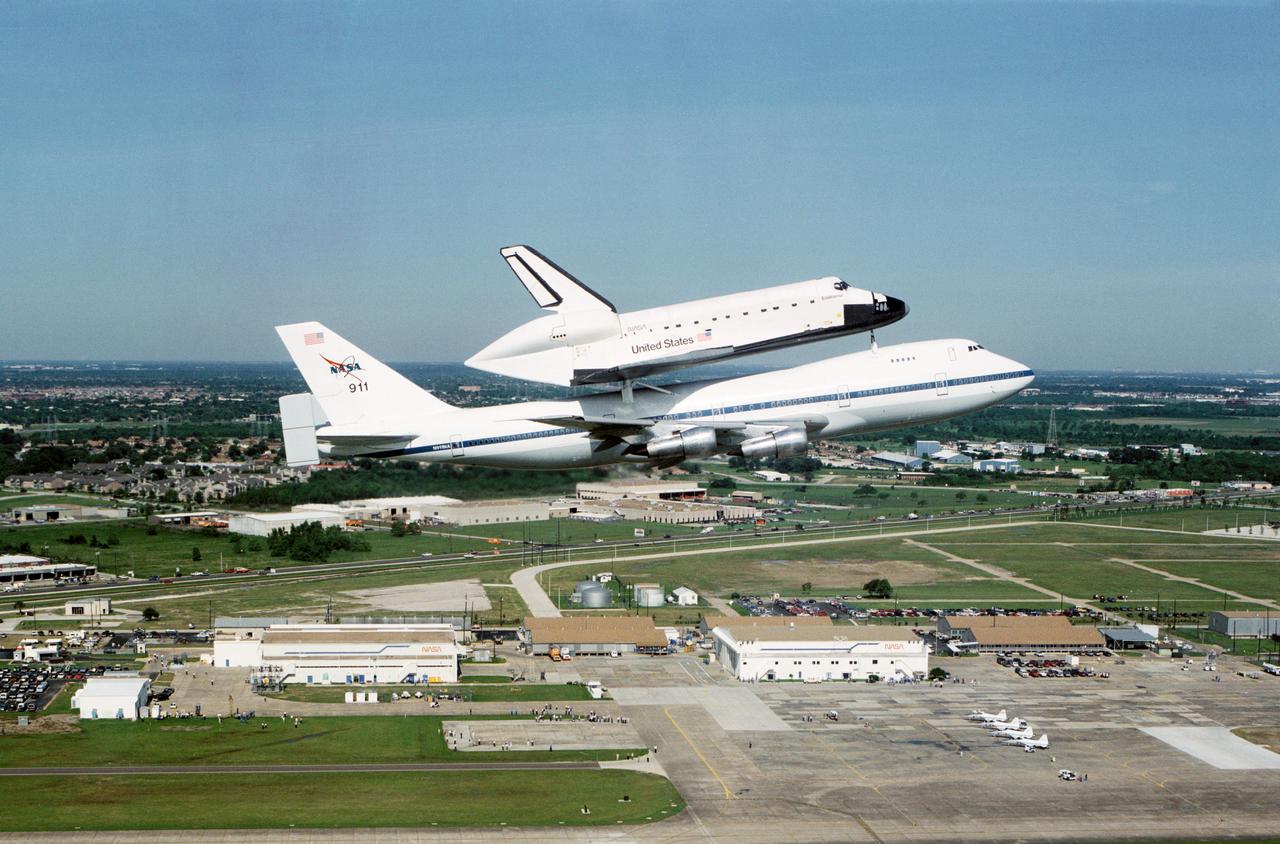
S91-36097 (6 May 1991) --- Air to air view of Endeavour, Orbiter Vehicle (OV) 105, atop a Shuttle Carrier Aircraft (SCA) NASA 911, a modified Boeing 747, approaches touchdown for a brief stopover at Ellington Field, near JSC. Visible below the spacecraft/aircraft combination are the NASA T-38 flight line, NASA aircraft hangars and facilities, and a runway. OV-105 rolled out at Rockwell's Palmdale facility on 04-25-91 to once more bring to four the total of NASA Shuttles available for flight assignment. The spacecraft and aircraft-tandem left Houston later on this day headed for another stop in Mississippi before landing in Florida on 05-07-91. This photograph was taken from a T-38 aircraft by Sheri J. Dunnette of JSC's Image Science Division (ISD).
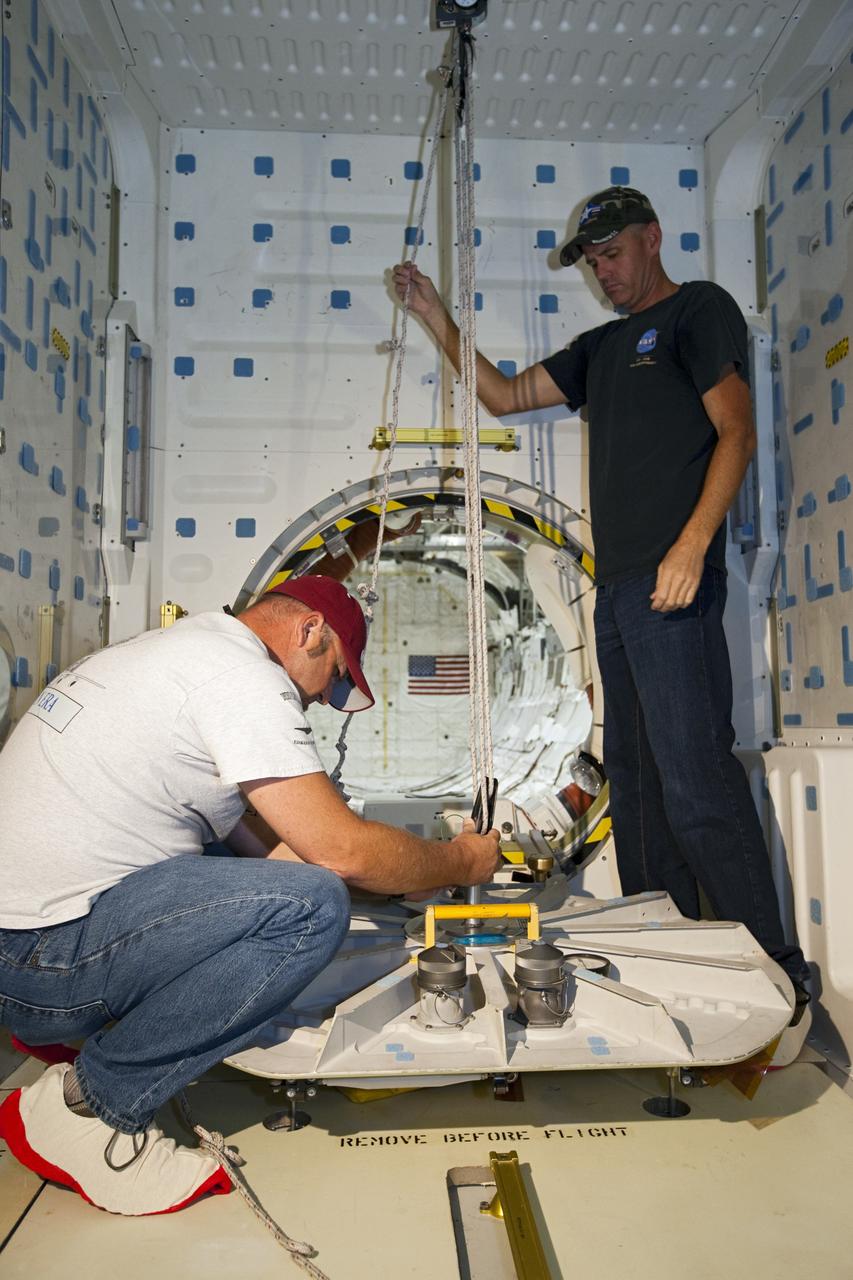
CAPE CANAVERAL, Fla. – In Orbiter Processing Facility-2 at NASA’s Kennedy Space Center in Florida, United Space Alliance technicians prepare to lift the hatch of space shuttle Endeavour’s airlock for its final closure during processing for the shuttle’s retirement. Endeavour is being prepared for public display at the California Science Center in Los Angeles. Its ferry flight to California is targeted for mid-September. Endeavour, designated OV-105, was the last space shuttle added to NASA’s orbiter fleet. Over the course of its 19-year career, Endeavour spent 299 days in space during 25 missions. For more information, visit http://www.nasa.gov/transition. Photo credit: NASA/Dimitri Gerondidakis
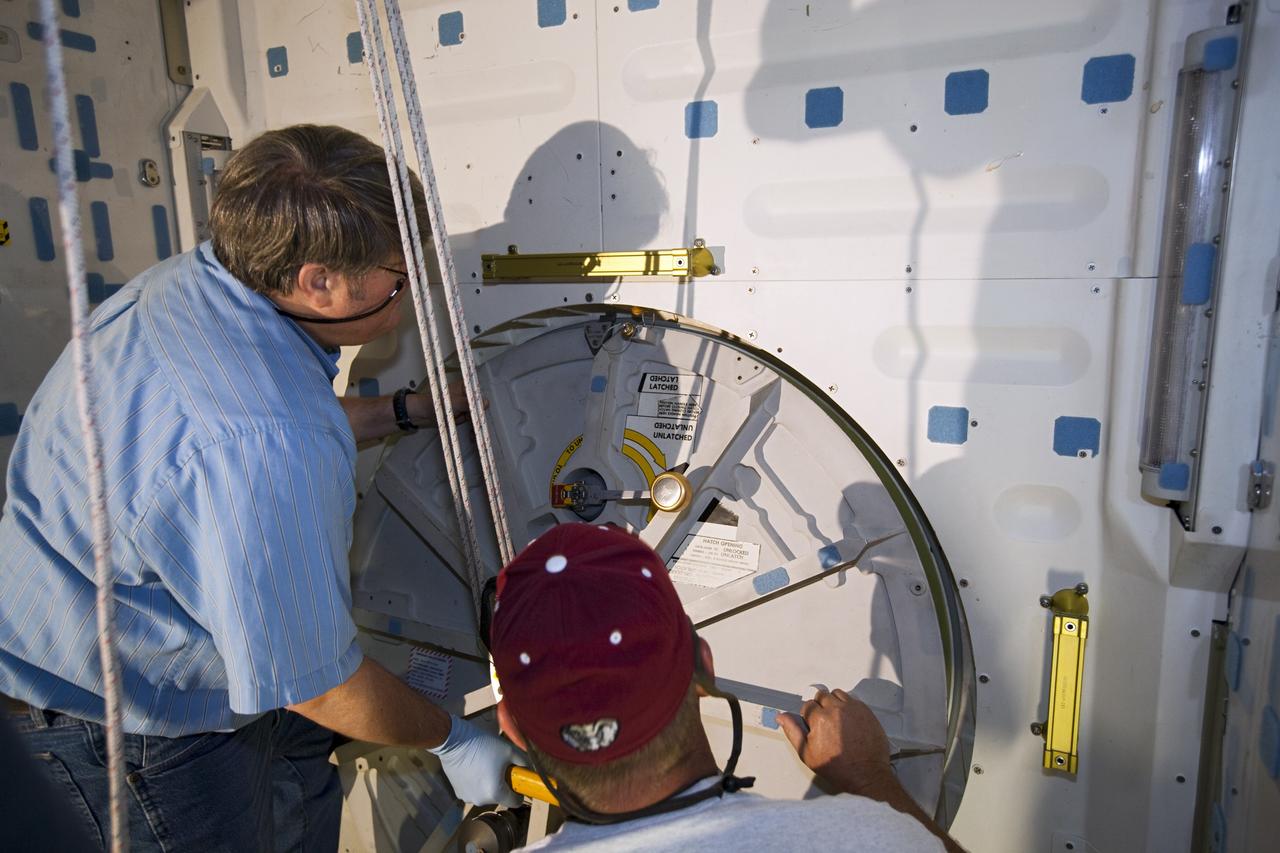
CAPE CANAVERAL, Fla. – In Orbiter Processing Facility-2 at NASA’s Kennedy Space Center in Florida, United Space Alliance technicians align the hatch of space shuttle Endeavour’s airlock for its final closure during processing for the shuttle’s retirement. Endeavour is being prepared for public display at the California Science Center in Los Angeles. Its ferry flight to California is targeted for mid-September. Endeavour, designated OV-105, was the last space shuttle added to NASA’s orbiter fleet. Over the course of its 19-year career, Endeavour spent 299 days in space during 25 missions. For more information, visit http://www.nasa.gov/transition. Photo credit: NASA/Dimitri Gerondidakis
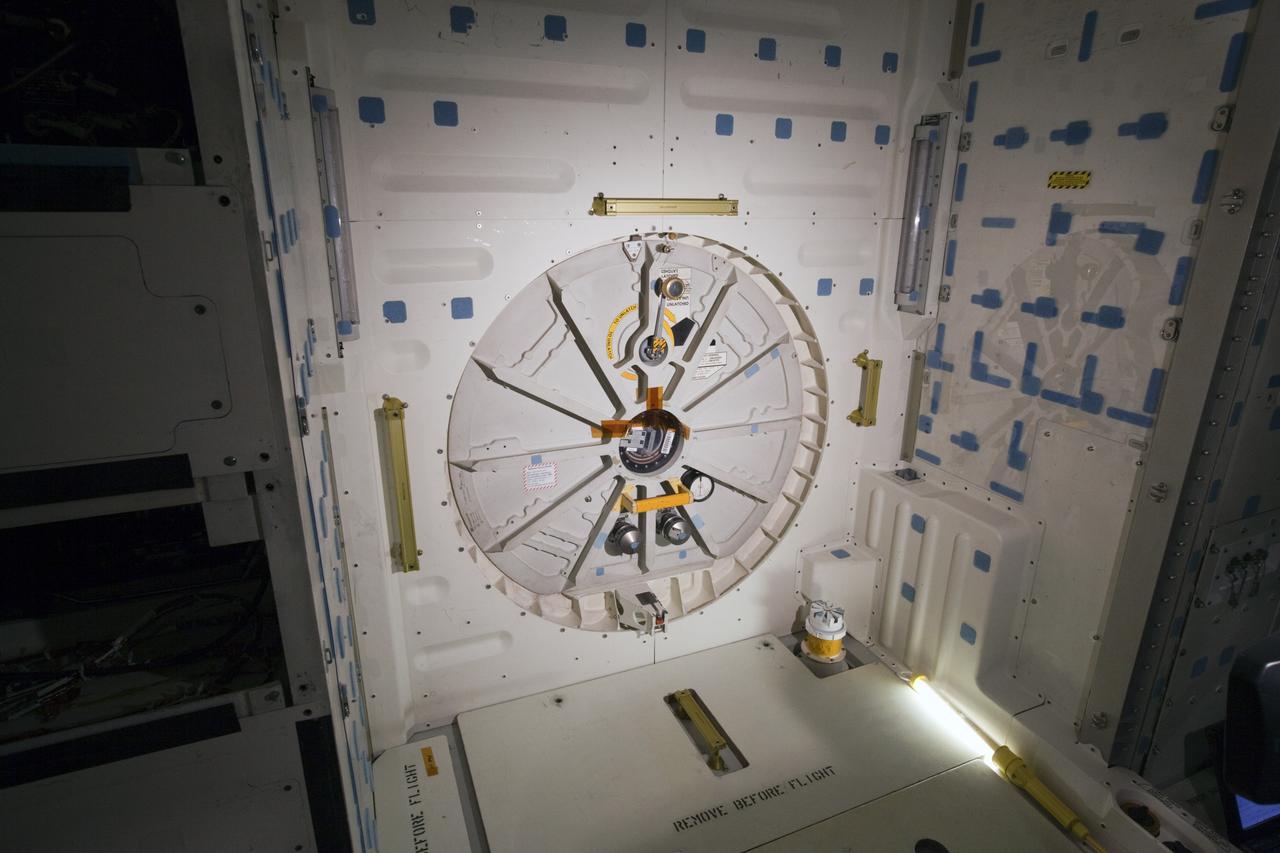
CAPE CANAVERAL, Fla. – In Orbiter Processing Facility-2 at NASA’s Kennedy Space Center in Florida, the hatch of space shuttle Endeavour’s airlock has been closed and sealed for the final time during processing for the shuttle’s retirement. Endeavour is being prepared for public display at the California Science Center in Los Angeles. Its ferry flight to California is targeted for mid-September. Endeavour, designated OV-105, was the last space shuttle added to NASA’s orbiter fleet. Over the course of its 19-year career, Endeavour spent 299 days in space during 25 missions. For more information, visit http://www.nasa.gov/transition. Photo credit: NASA/Dimitri Gerondidakis
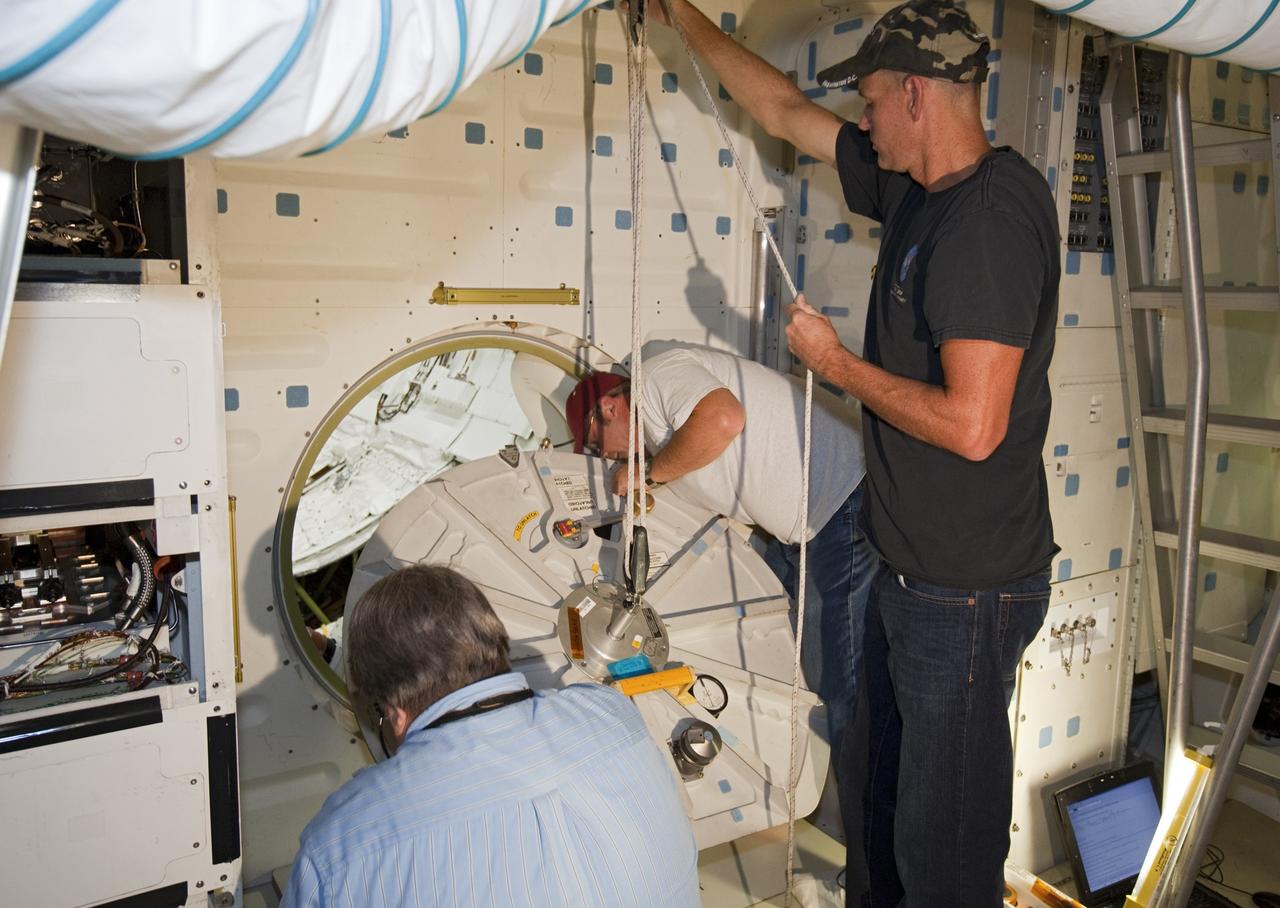
CAPE CANAVERAL, Fla. – In Orbiter Processing Facility-2 at NASA’s Kennedy Space Center in Florida, United Space Alliance technicians align the hatch of space shuttle Endeavour’s airlock for its final closure during processing for the shuttle’s retirement. Endeavour is being prepared for public display at the California Science Center in Los Angeles. Its ferry flight to California is targeted for mid-September. Endeavour, designated OV-105, was the last space shuttle added to NASA’s orbiter fleet. Over the course of its 19-year career, Endeavour spent 299 days in space during 25 missions. For more information, visit http://www.nasa.gov/transition. Photo credit: NASA/Dimitri Gerondidakis
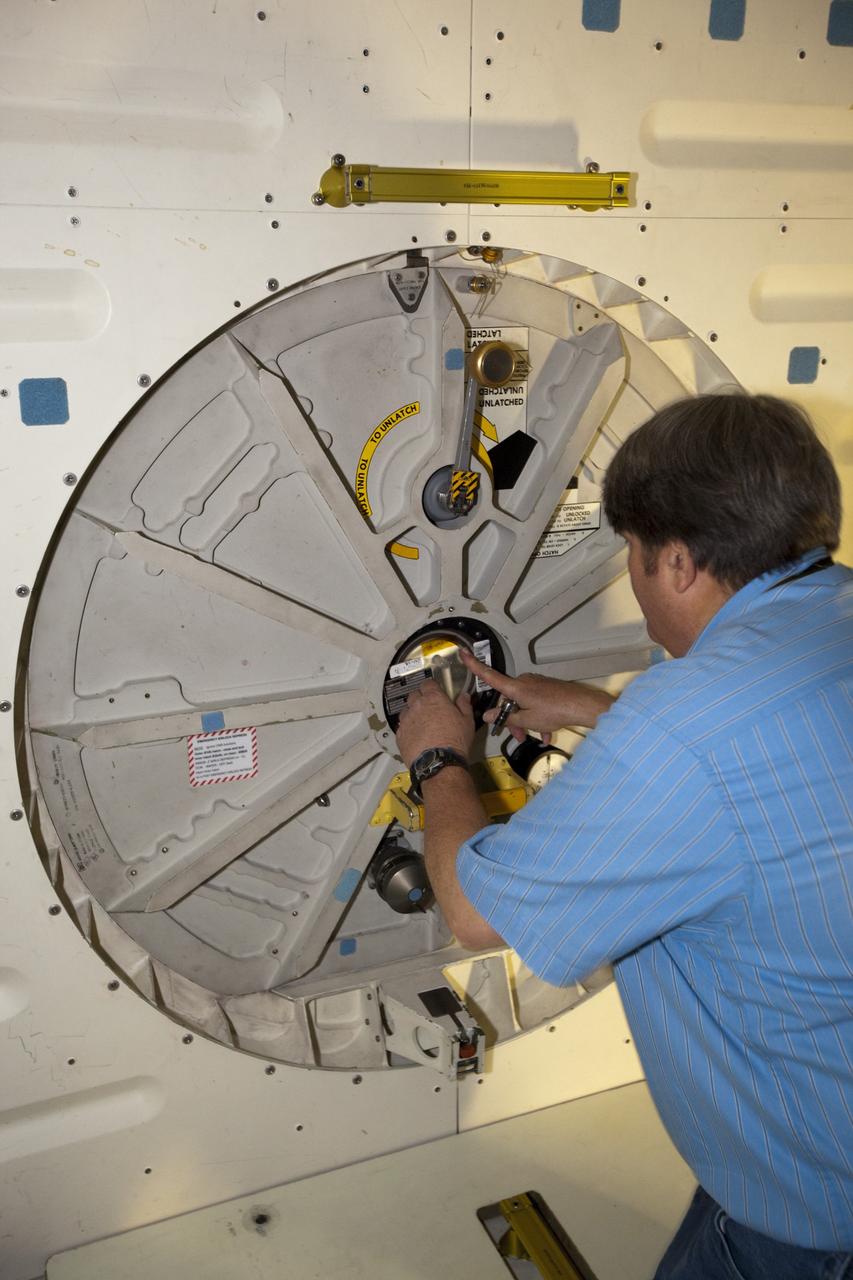
CAPE CANAVERAL, Fla. – In Orbiter Processing Facility-2 at NASA’s Kennedy Space Center in Florida, a United Space Alliance technician locks the hatch of space shuttle Endeavour’s airlock for the final time during processing for the shuttle’s retirement. Endeavour is being prepared for public display at the California Science Center in Los Angeles. Its ferry flight to California is targeted for mid-September. Endeavour, designated OV-105, was the last space shuttle added to NASA’s orbiter fleet. Over the course of its 19-year career, Endeavour spent 299 days in space during 25 missions. For more information, visit http://www.nasa.gov/transition. Photo credit: NASA/Dimitri Gerondidakis
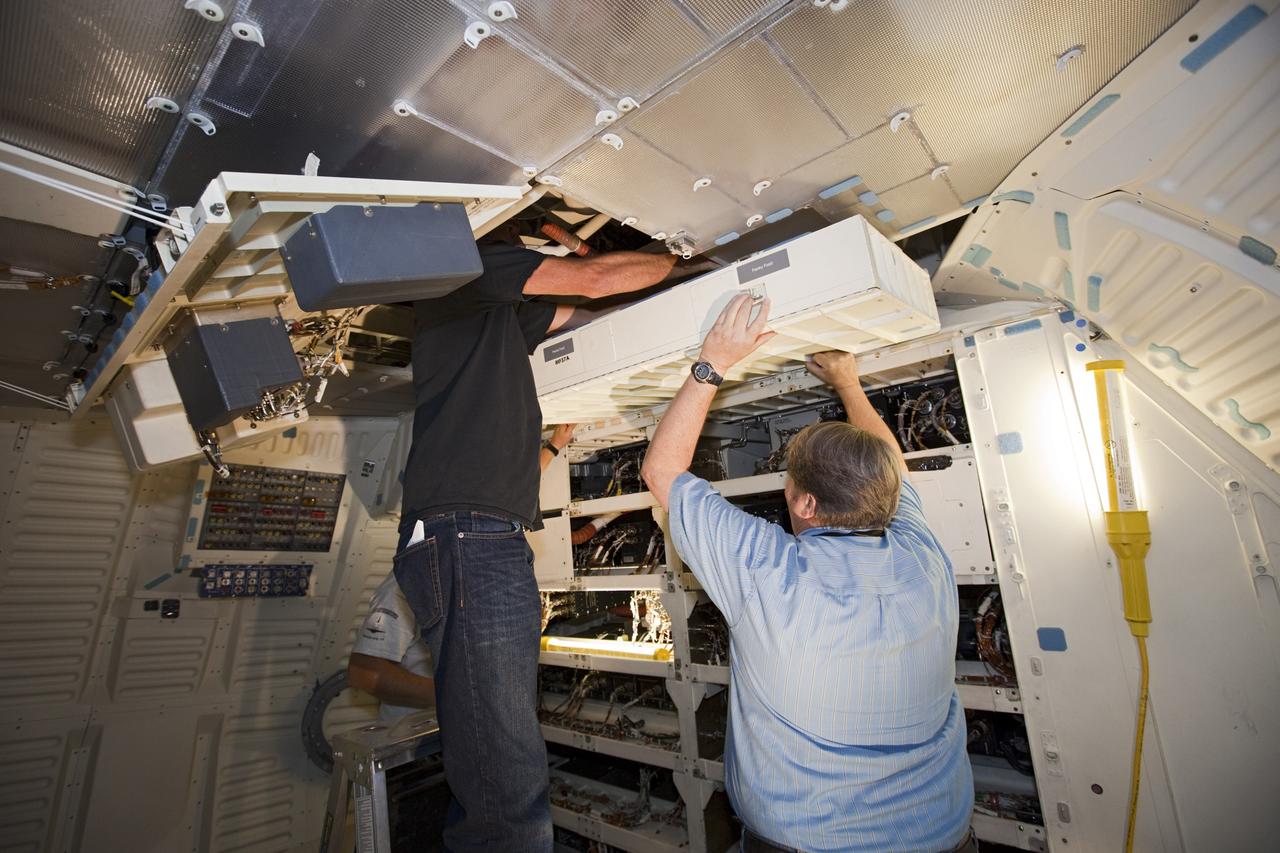
CAPE CANAVERAL, Fla. – In Orbiter Processing Facility-2 at NASA’s Kennedy Space Center in Florida, United Space Alliance technicians reinstall the food pantry locker in space shuttle Endeavour’s middeck during processing for the shuttle’s retirement. Endeavour is being prepared for public display at the California Science Center in Los Angeles. Its ferry flight to California is targeted for mid-September. Endeavour, designated OV-105, was the last space shuttle added to NASA’s orbiter fleet. Over the course of its 19-year career, Endeavour spent 299 days in space during 25 missions. For more information, visit http://www.nasa.gov/transition. Photo credit: NASA/Dimitri Gerondidakis
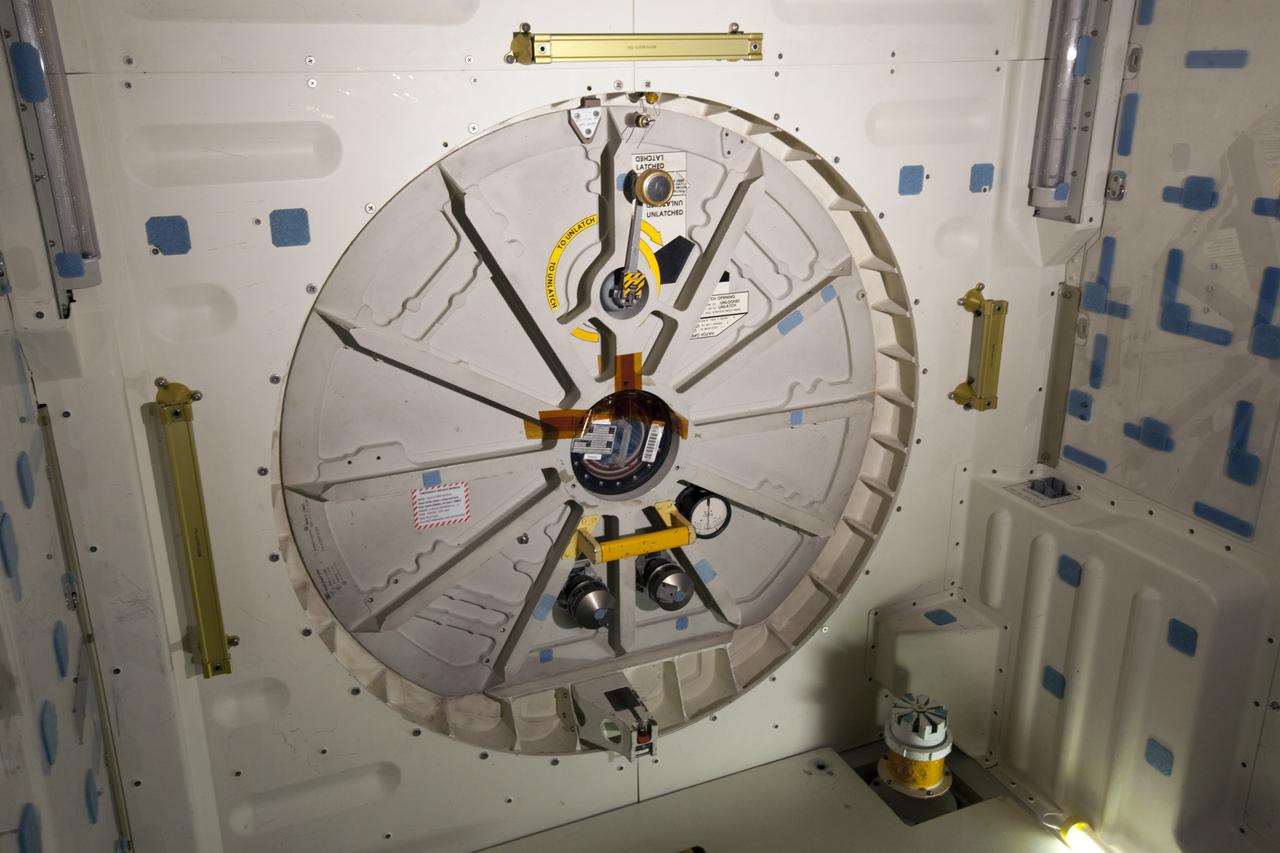
CAPE CANAVERAL, Fla. – In Orbiter Processing Facility-2 at NASA’s Kennedy Space Center in Florida, the hatch of space shuttle Endeavour’s airlock has been closed and sealed for the final time during processing for the shuttle’s retirement. Endeavour is being prepared for public display at the California Science Center in Los Angeles. Its ferry flight to California is targeted for mid-September. Endeavour, designated OV-105, was the last space shuttle added to NASA’s orbiter fleet. Over the course of its 19-year career, Endeavour spent 299 days in space during 25 missions. For more information, visit http://www.nasa.gov/transition. Photo credit: NASA/Dimitri Gerondidakis
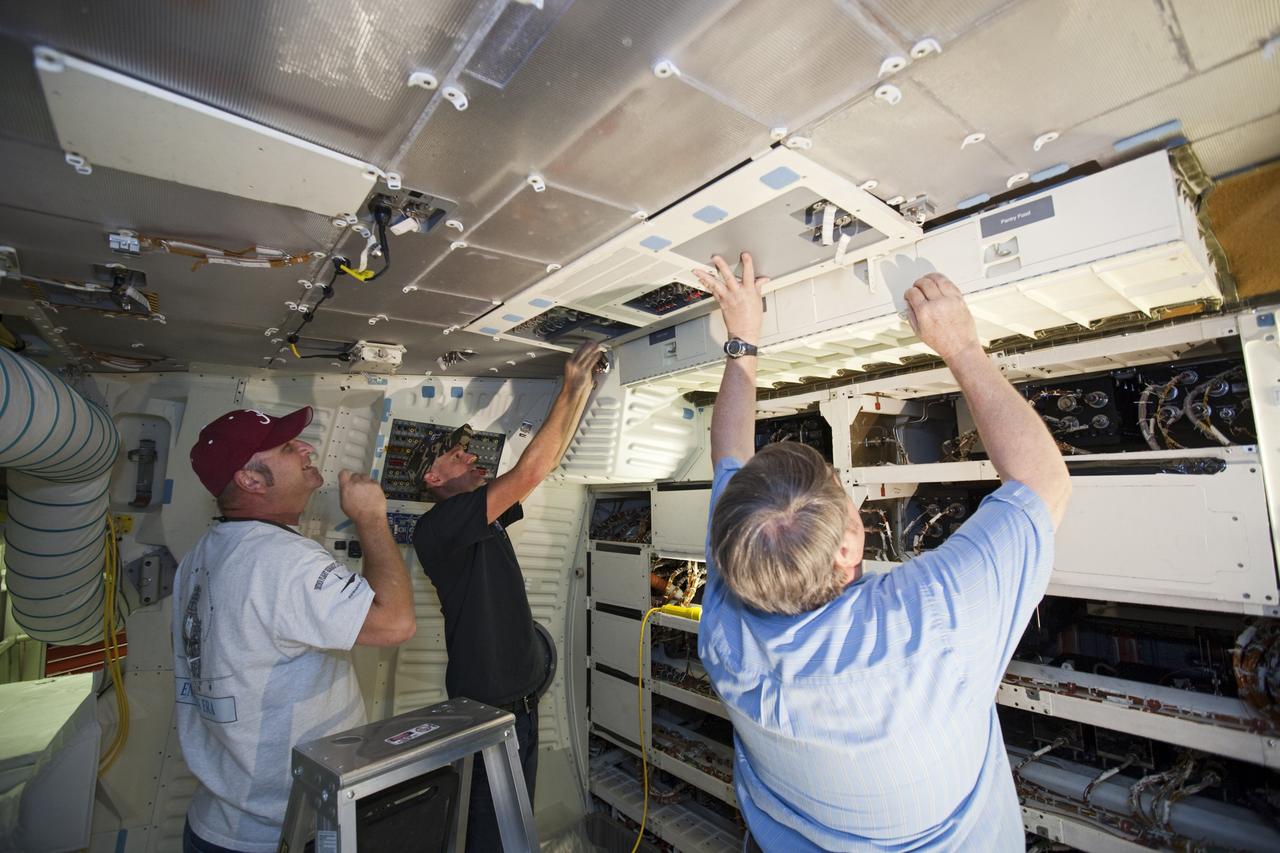
CAPE CANAVERAL, Fla. – In Orbiter Processing Facility-2 at NASA’s Kennedy Space Center in Florida, United Space Alliance technicians reinstall the food pantry locker in space shuttle Endeavour’s middeck during processing for the shuttle’s retirement. Endeavour is being prepared for public display at the California Science Center in Los Angeles. Its ferry flight to California is targeted for mid-September. Endeavour, designated OV-105, was the last space shuttle added to NASA’s orbiter fleet. Over the course of its 19-year career, Endeavour spent 299 days in space during 25 missions. For more information, visit http://www.nasa.gov/transition. Photo credit: NASA/Dimitri Gerondidakis
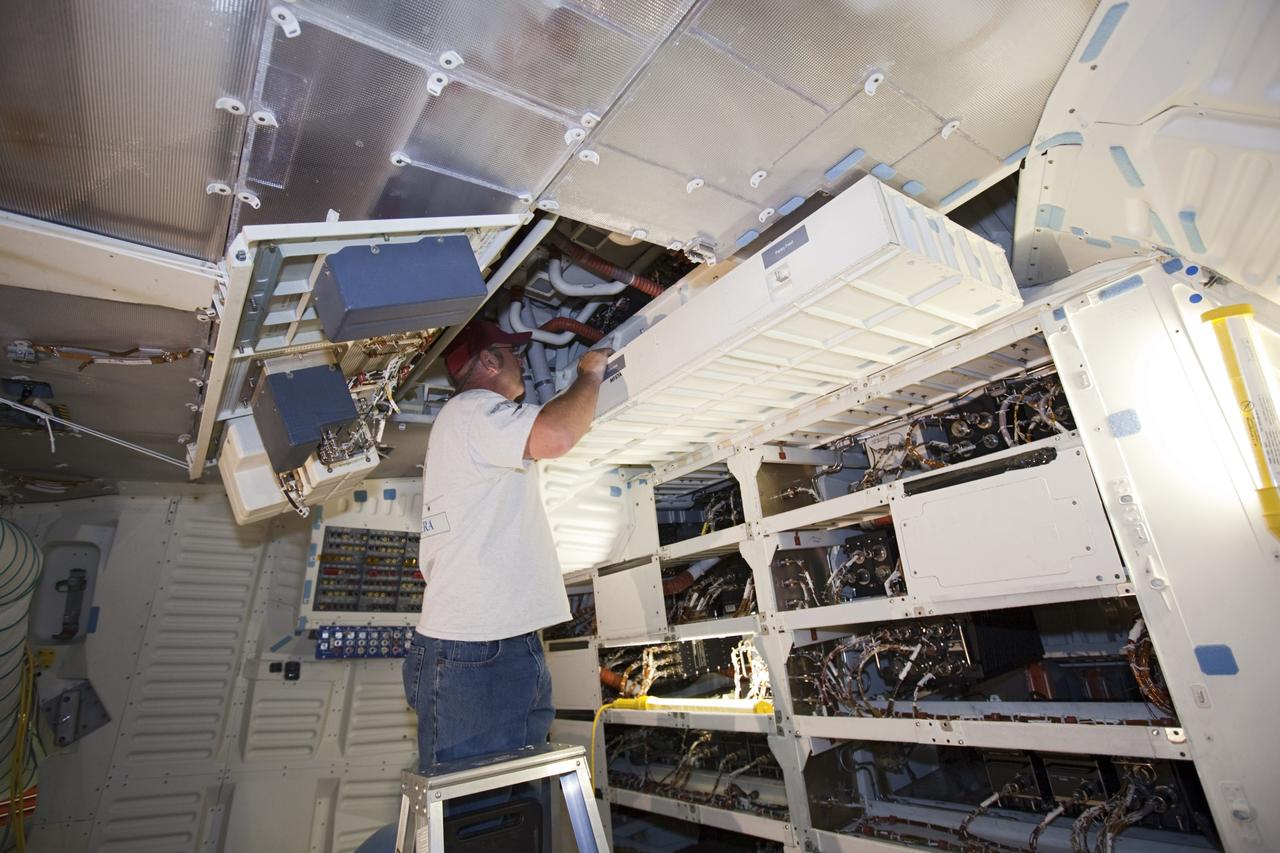
CAPE CANAVERAL, Fla. – In Orbiter Processing Facility-2 at NASA’s Kennedy Space Center in Florida, United Space Alliance technicians reinstall the food pantry locker in space shuttle Endeavour’s middeck during processing for the shuttle’s retirement. Endeavour is being prepared for public display at the California Science Center in Los Angeles. Its ferry flight to California is targeted for mid-September. Endeavour, designated OV-105, was the last space shuttle added to NASA’s orbiter fleet. Over the course of its 19-year career, Endeavour spent 299 days in space during 25 missions. For more information, visit http://www.nasa.gov/transition. Photo credit: NASA/Dimitri Gerondidakis
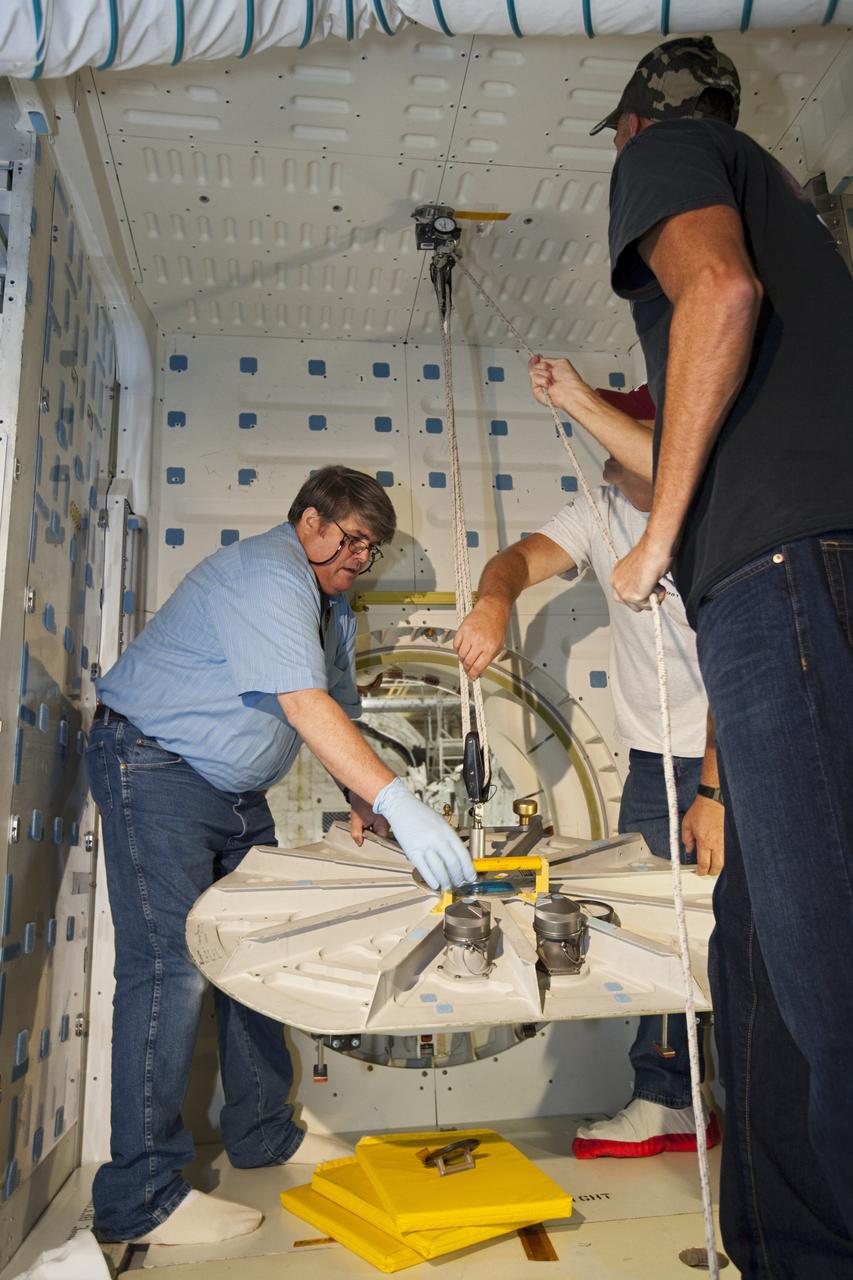
CAPE CANAVERAL, Fla. – In Orbiter Processing Facility-2 at NASA’s Kennedy Space Center in Florida, United Space Alliance technicians lift the hatch of space shuttle Endeavour’s airlock for its final closure during processing for the shuttle’s retirement. Endeavour is being prepared for public display at the California Science Center in Los Angeles. Its ferry flight to California is targeted for mid-September. Endeavour, designated OV-105, was the last space shuttle added to NASA’s orbiter fleet. Over the course of its 19-year career, Endeavour spent 299 days in space during 25 missions. For more information, visit http://www.nasa.gov/transition. Photo credit: NASA/Dimitri Gerondidakis
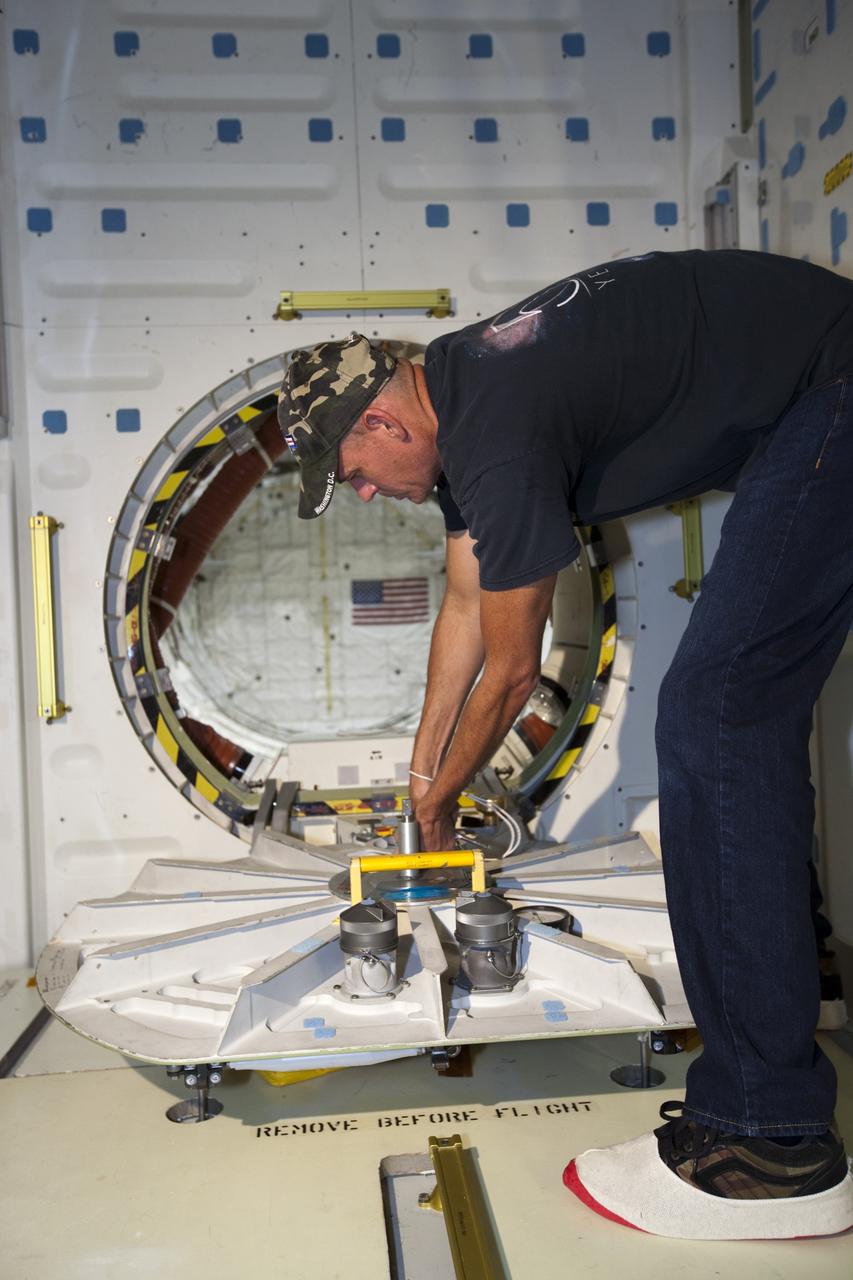
CAPE CANAVERAL, Fla. – In Orbiter Processing Facility-2 at NASA’s Kennedy Space Center in Florida, a United Space Alliance technician adjusts the hatch on space shuttle Endeavour’s airlock before it is closed for the final time during processing for the shuttle’s retirement. Endeavour is being prepared for public display at the California Science Center in Los Angeles. Its ferry flight to California is targeted for mid-September. Endeavour, designated OV-105, was the last space shuttle added to NASA’s orbiter fleet. Over the course of its 19-year career, Endeavour spent 299 days in space during 25 missions. For more information, visit http://www.nasa.gov/transition. Photo credit: NASA/Dimitri Gerondidakis
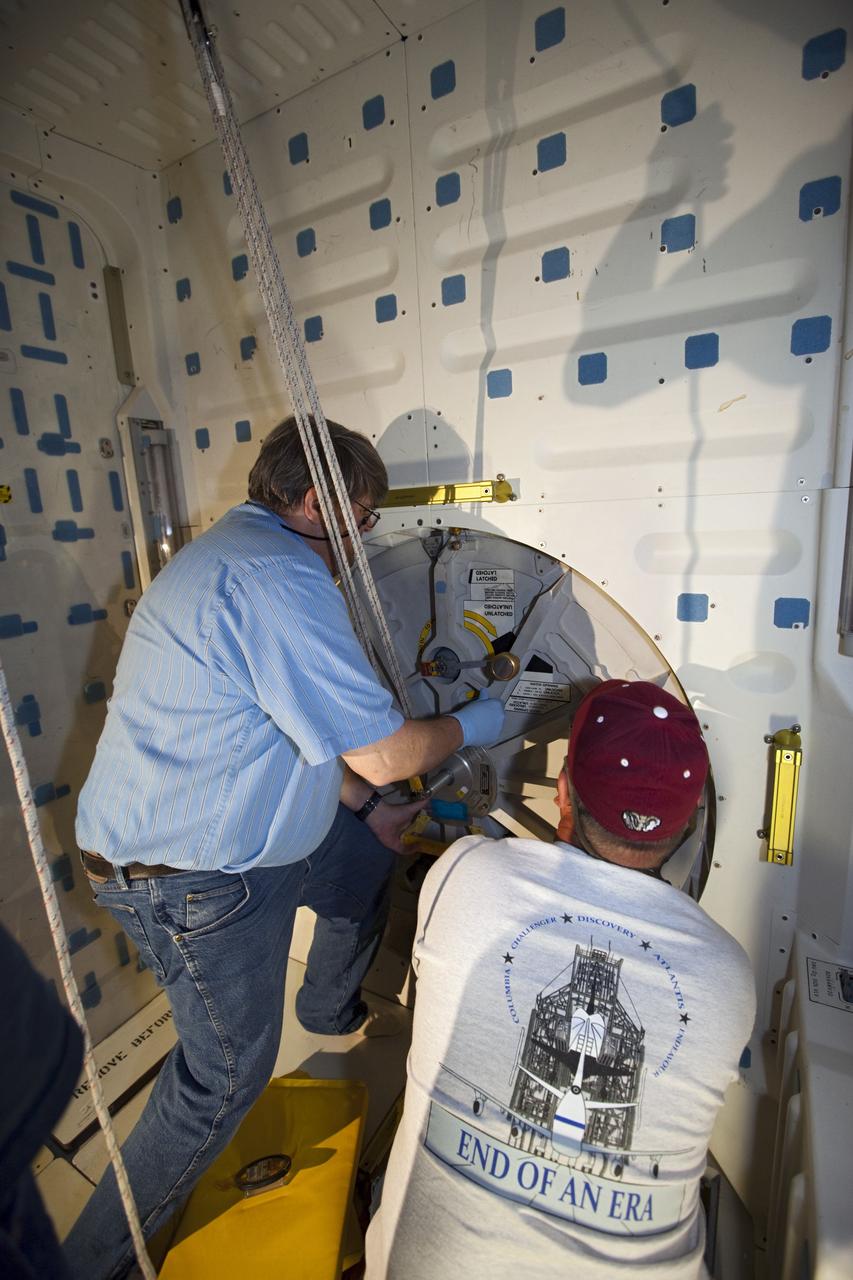
CAPE CANAVERAL, Fla. – In Orbiter Processing Facility-2 at NASA’s Kennedy Space Center in Florida, United Space Alliance technicians close the hatch of space shuttle Endeavour’s airlock for the final time during processing for the shuttle’s retirement. Endeavour is being prepared for public display at the California Science Center in Los Angeles. Its ferry flight to California is targeted for mid-September. Endeavour, designated OV-105, was the last space shuttle added to NASA’s orbiter fleet. Over the course of its 19-year career, Endeavour spent 299 days in space during 25 missions. For more information, visit http://www.nasa.gov/transition. Photo credit: NASA/Dimitri Gerondidakis
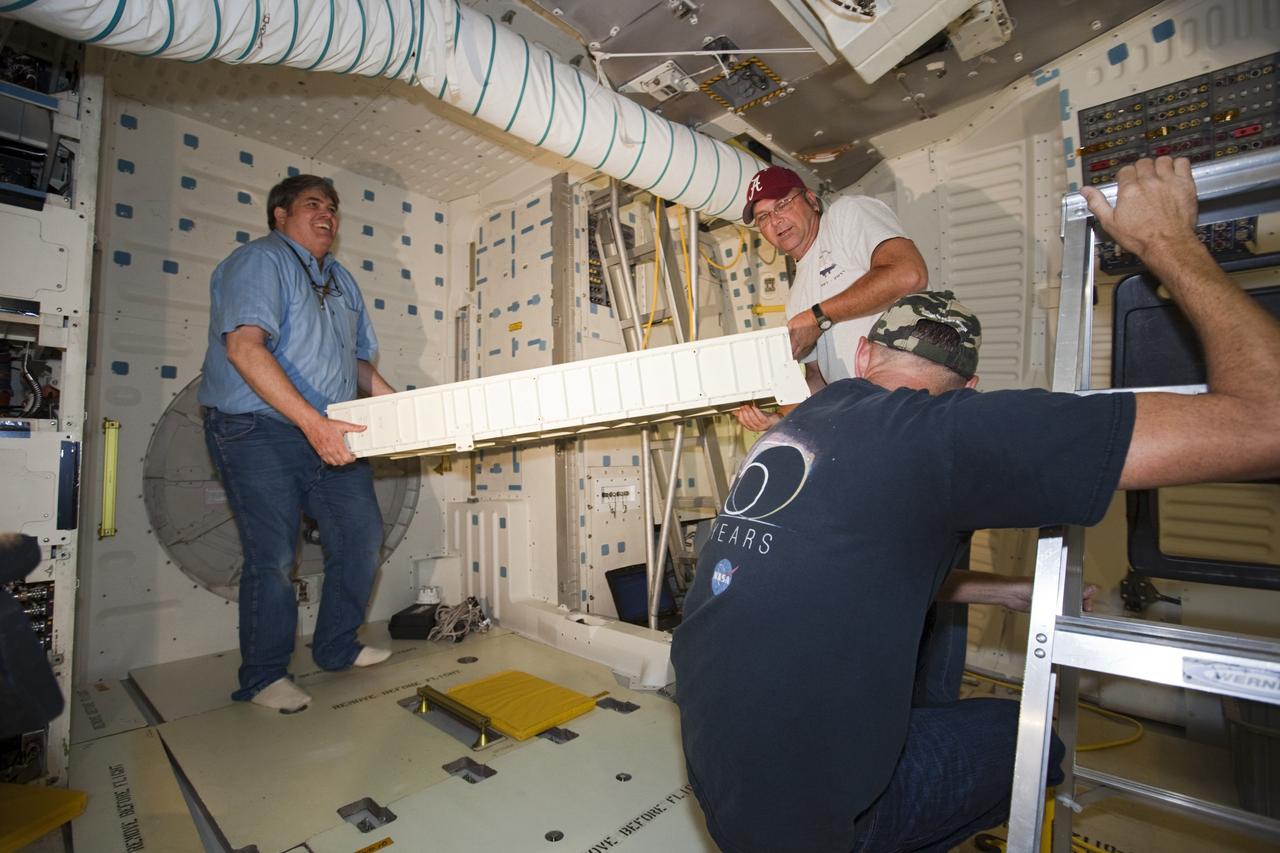
CAPE CANAVERAL, Fla. – In Orbiter Processing Facility-2 at NASA’s Kennedy Space Center in Florida, United Space Alliance technicians reinstall the food pantry locker in space shuttle Endeavour’s middeck during processing for the shuttle’s retirement. Endeavour is being prepared for public display at the California Science Center in Los Angeles. Its ferry flight to California is targeted for mid-September. Endeavour, designated OV-105, was the last space shuttle added to NASA’s orbiter fleet. Over the course of its 19-year career, Endeavour spent 299 days in space during 25 missions. For more information, visit http://www.nasa.gov/transition. Photo credit: NASA/Dimitri Gerondidakis

CAPE CANAVERAL, Fla. – In Orbiter Processing Facility-2 at NASA’s Kennedy Space Center in Florida, United Space Alliance technicians reinstall the food pantry locker in space shuttle Endeavour’s middeck during processing for the shuttle’s retirement. Endeavour is being prepared for public display at the California Science Center in Los Angeles. Its ferry flight to California is targeted for mid-September. Endeavour, designated OV-105, was the last space shuttle added to NASA’s orbiter fleet. Over the course of its 19-year career, Endeavour spent 299 days in space during 25 missions. For more information, visit http://www.nasa.gov/transition. Photo credit: NASA/Dimitri Gerondidakis
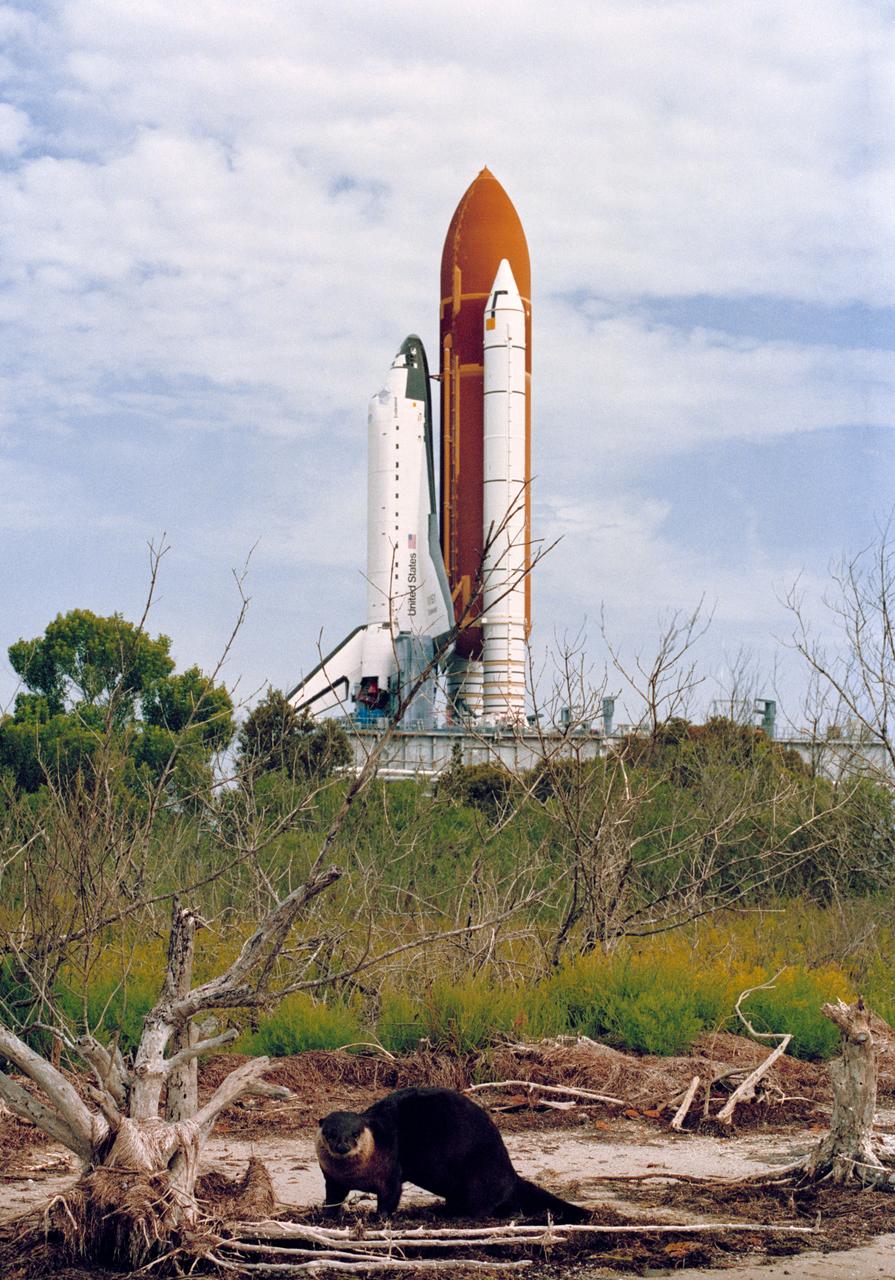
S92-34862 (13 March 1992) --- An otter, surprised by the unexpected presence of the photographer, seems unaware of the Space Shuttle Endeavour rolling behind it to Launch Pad 39B. Endeavour is the newest orbiter in the Shuttle fleet. Still ahead for Endeavour (OV-105) is a Flight Readiness Firing of its three main engines, and the Terminal Countdown Demonstration Test with the flight crew. Endeavour's maiden voyage on NASA's mission STS-49 will occur in late spring.
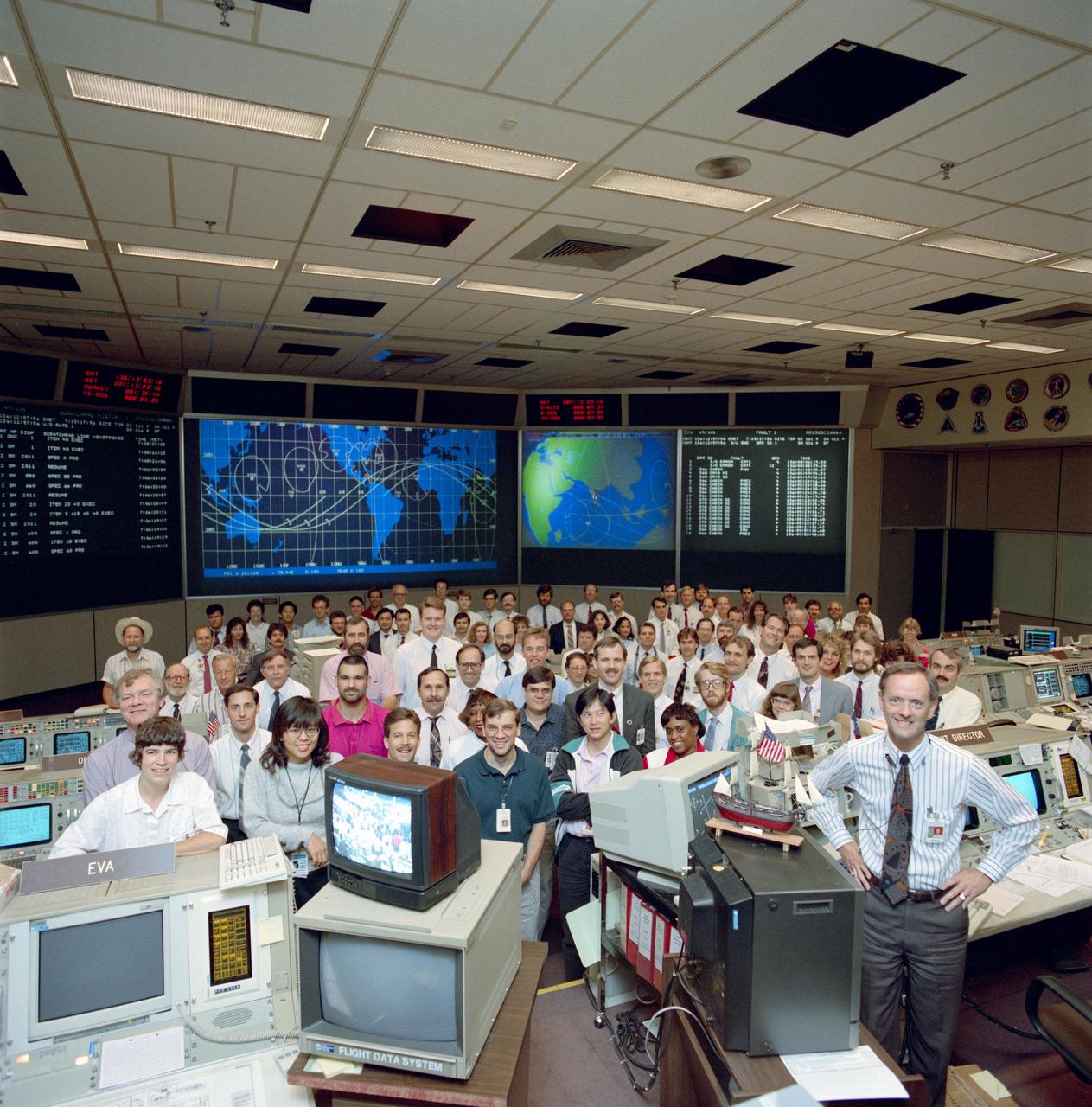
S92-36606 (20 May 1992) --- STS-49 Endeavour, Orbiter Vehicle (OV) 105, Planning Team with Flight Director (FD) James M. Heflin, Jr. (front right next to ship model) poses in Johnson Space Center?s (JSC) Mission Control Center (MCC) Bldg 30 Flight Control Room (FCR). The group stands in front of visual displays projecting STS-49 data and ground track map.
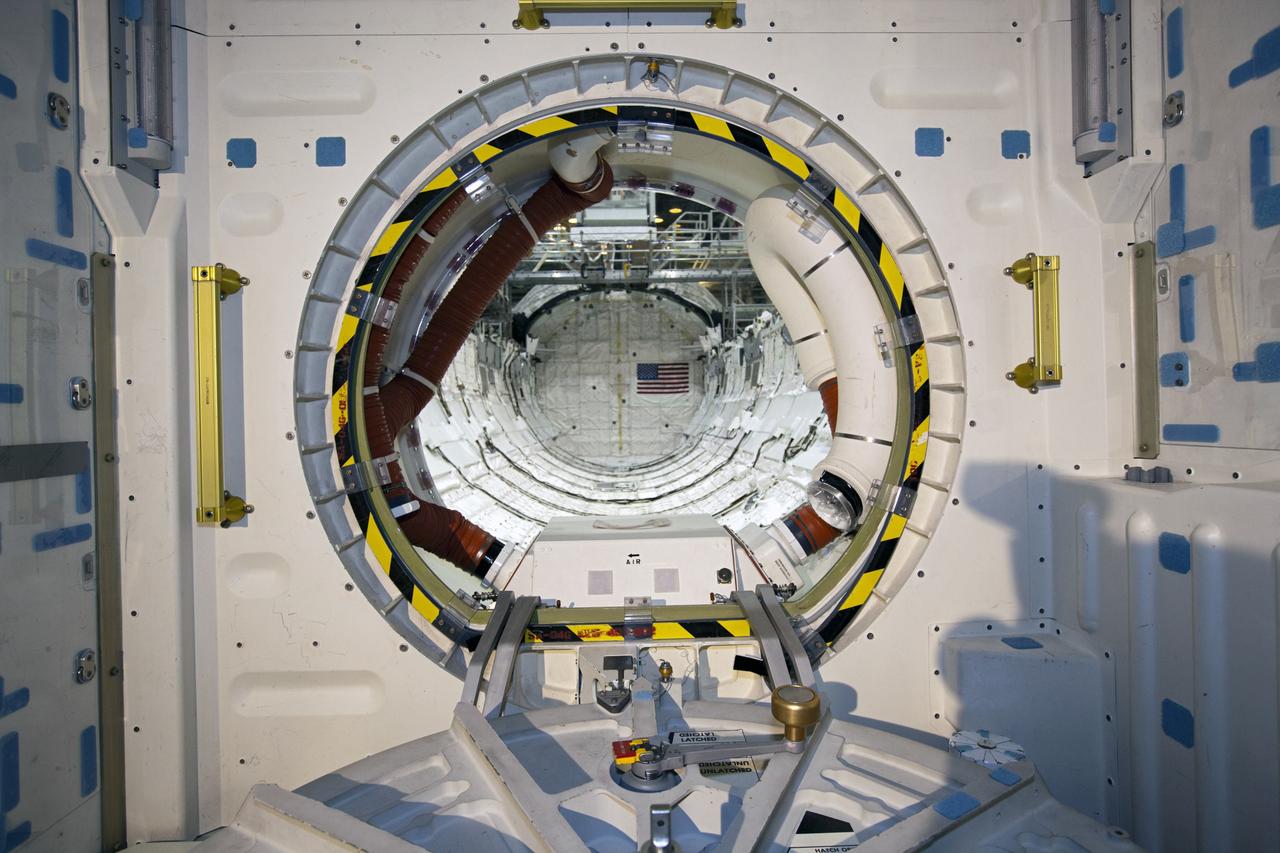
CAPE CANAVERAL, Fla. – In Orbiter Processing Facility-2 at NASA’s Kennedy Space Center in Florida, the camera captures a final view through space shuttle Endeavour’s airlock into the payload bay before the airlock's hatch is closed for the final time during processing for the shuttle’s retirement. Endeavour is being prepared for public display at the California Science Center in Los Angeles. Its ferry flight to California is targeted for mid-September. Endeavour, designated OV-105, was the last space shuttle added to NASA’s orbiter fleet. Over the course of its 19-year career, Endeavour spent 299 days in space during 25 missions. For more information, visit http://www.nasa.gov/transition. Photo credit: NASA/Dimitri Gerondidakis
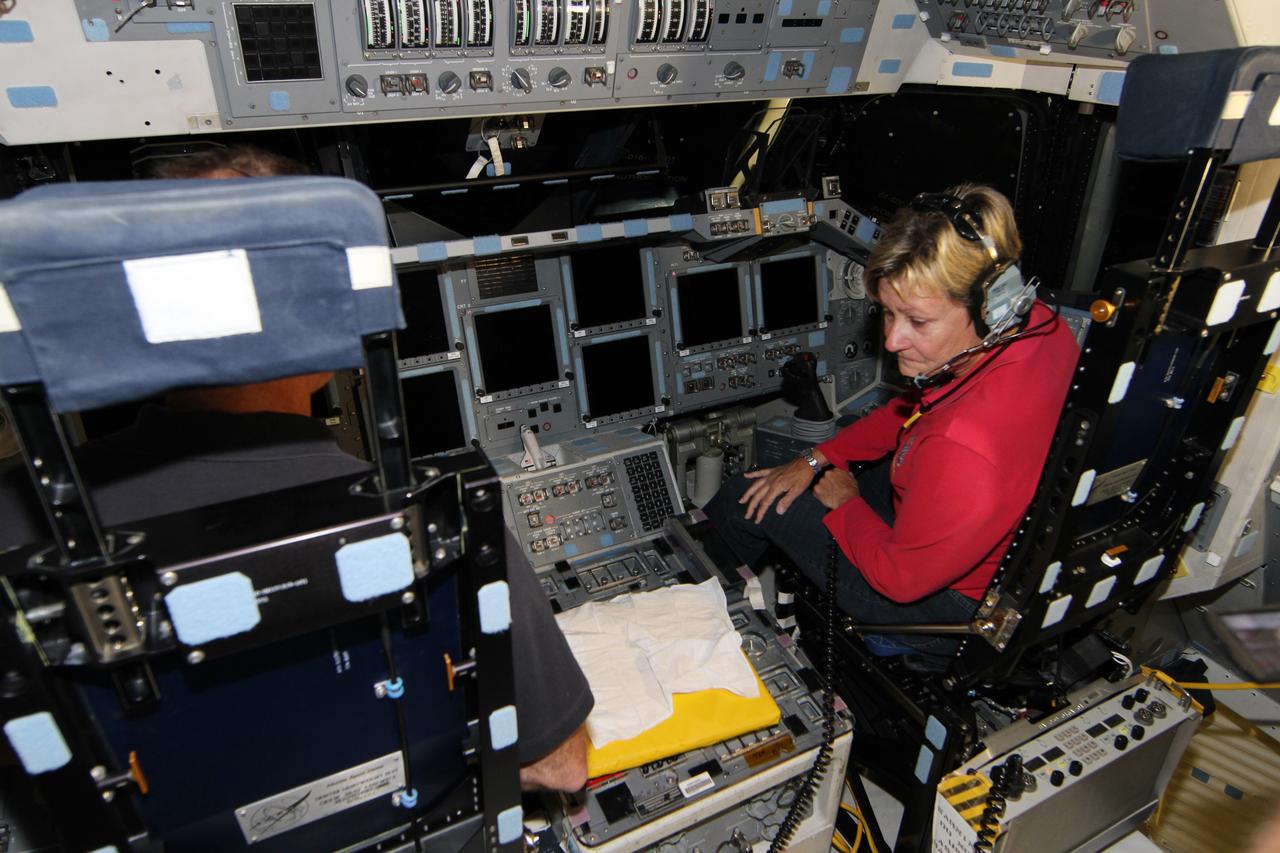
CAPE CANAVERAL, Fla. – In Orbiter Processing Facility-2 at NASA’s Kennedy Space Center in Florida, United Space Alliance OV-105 operations chief Mike Parrish, left, and associate operations chief Pat Leslie complete their respective tasks on space shuttle Endeavour’s flight deck as the shuttle is powered down for the final time. Endeavour is being prepared for public display at the California Science Center in Los Angeles. Its ferry flight to California is targeted for mid-September. Endeavour was the last space shuttle added to NASA’s orbiter fleet. Over the course of its 19-year career, Endeavour spent 299 days in space during 25 missions. For more information, visit http://www.nasa.gov/transition. Photo credit: NASA/Ben Smegelsky
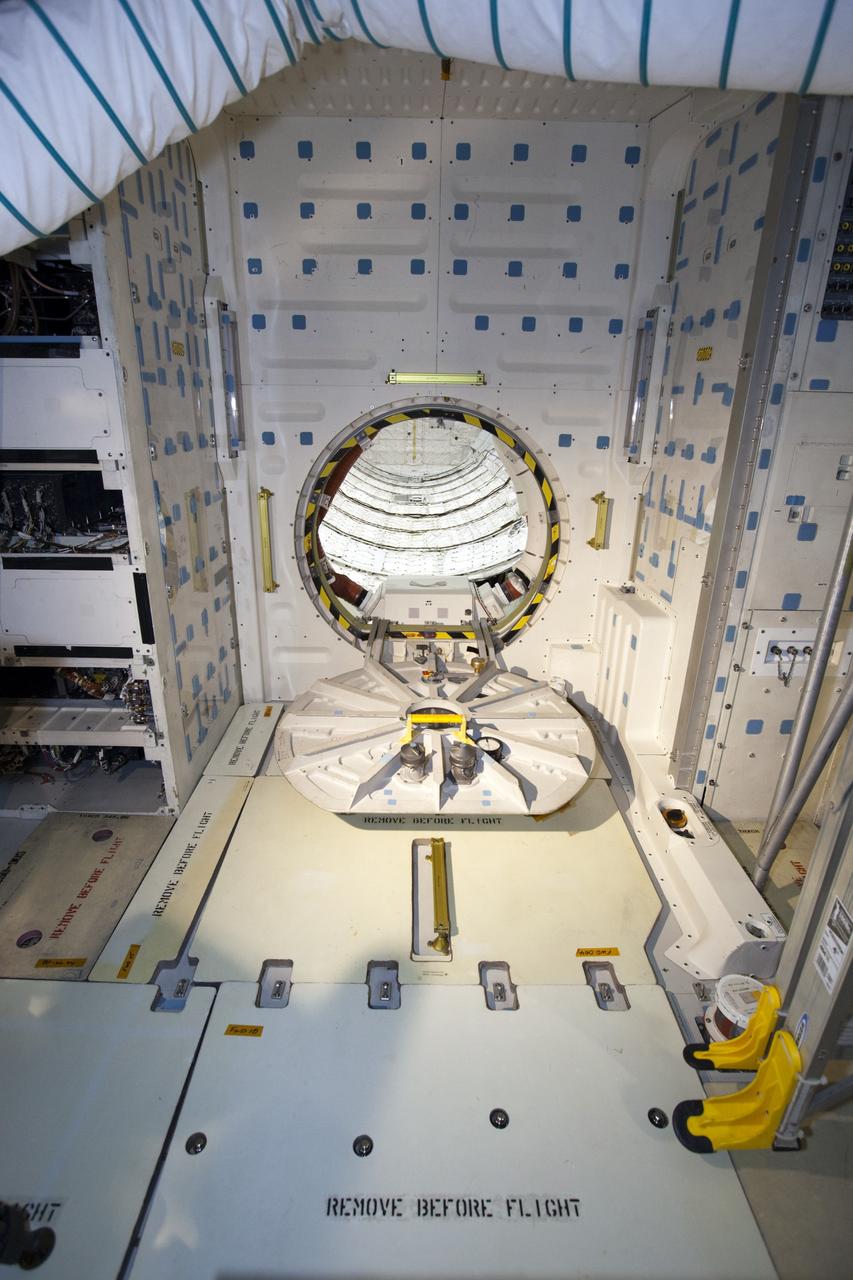
CAPE CANAVERAL, Fla. – In Orbiter Processing Facility-2 at NASA’s Kennedy Space Center in Florida, the area surrounding space shuttle Endeavour’s airlock is cleared of all tools and equipment before its hatch is closed for the final time during processing for the shuttle’s retirement. Endeavour is being prepared for public display at the California Science Center in Los Angeles. Its ferry flight to California is targeted for mid-September. Endeavour, designated OV-105, was the last space shuttle added to NASA’s orbiter fleet. Over the course of its 19-year career, Endeavour spent 299 days in space during 25 missions. For more information, visit http://www.nasa.gov/transition. Photo credit: NASA/Dimitri Gerondidakis
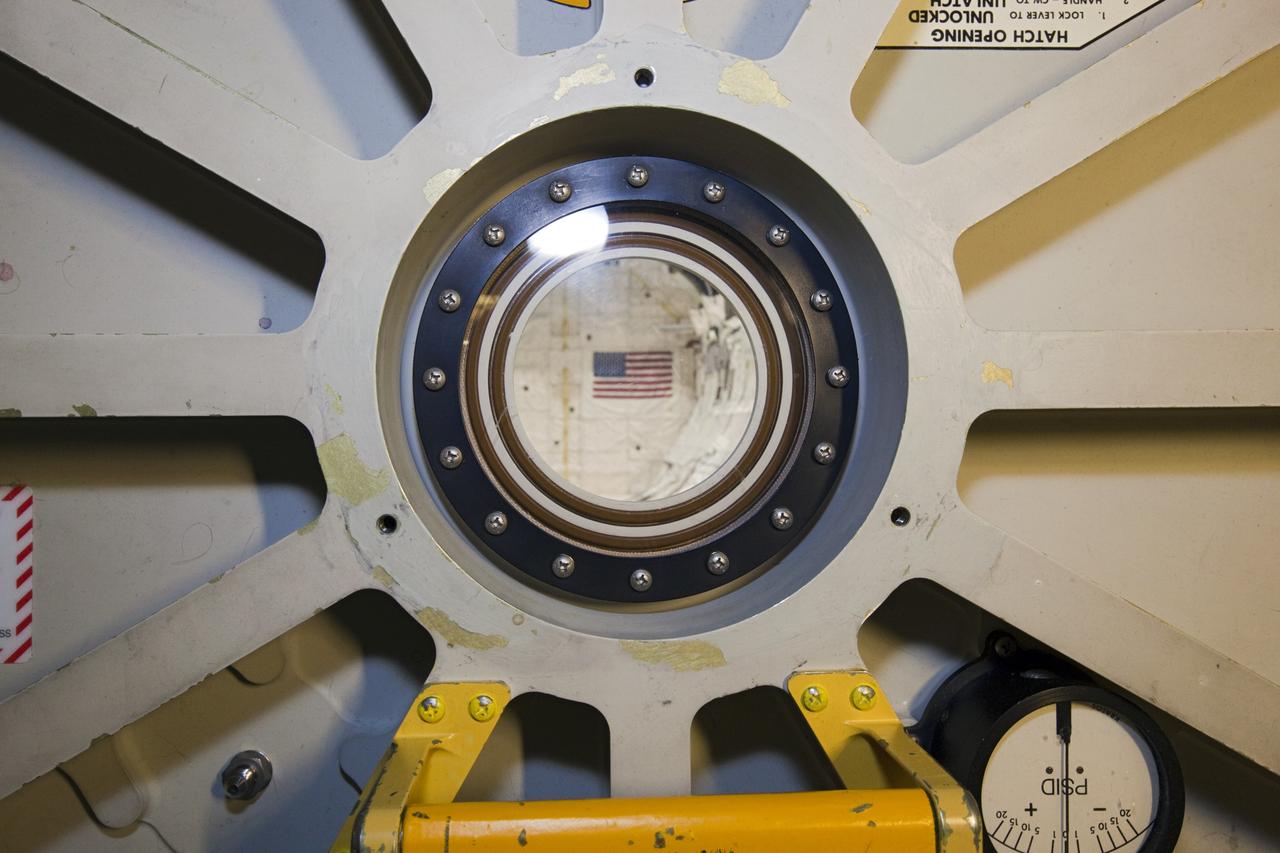
CAPE CANAVERAL, Fla. – In Orbiter Processing Facility-2 at NASA’s Kennedy Space Center in Florida, the camera captures a final view through space shuttle Endeavour’s airlock hatch into the payload bay after the hatch is closed for the final time during processing for the shuttle’s retirement. Endeavour is being prepared for public display at the California Science Center in Los Angeles. Its ferry flight to California is targeted for mid-September. Endeavour, designated OV-105, was the last space shuttle added to NASA’s orbiter fleet. Over the course of its 19-year career, Endeavour spent 299 days in space during 25 missions. For more information, visit http://www.nasa.gov/transition. Photo credit: NASA/Dimitri Gerondidakis
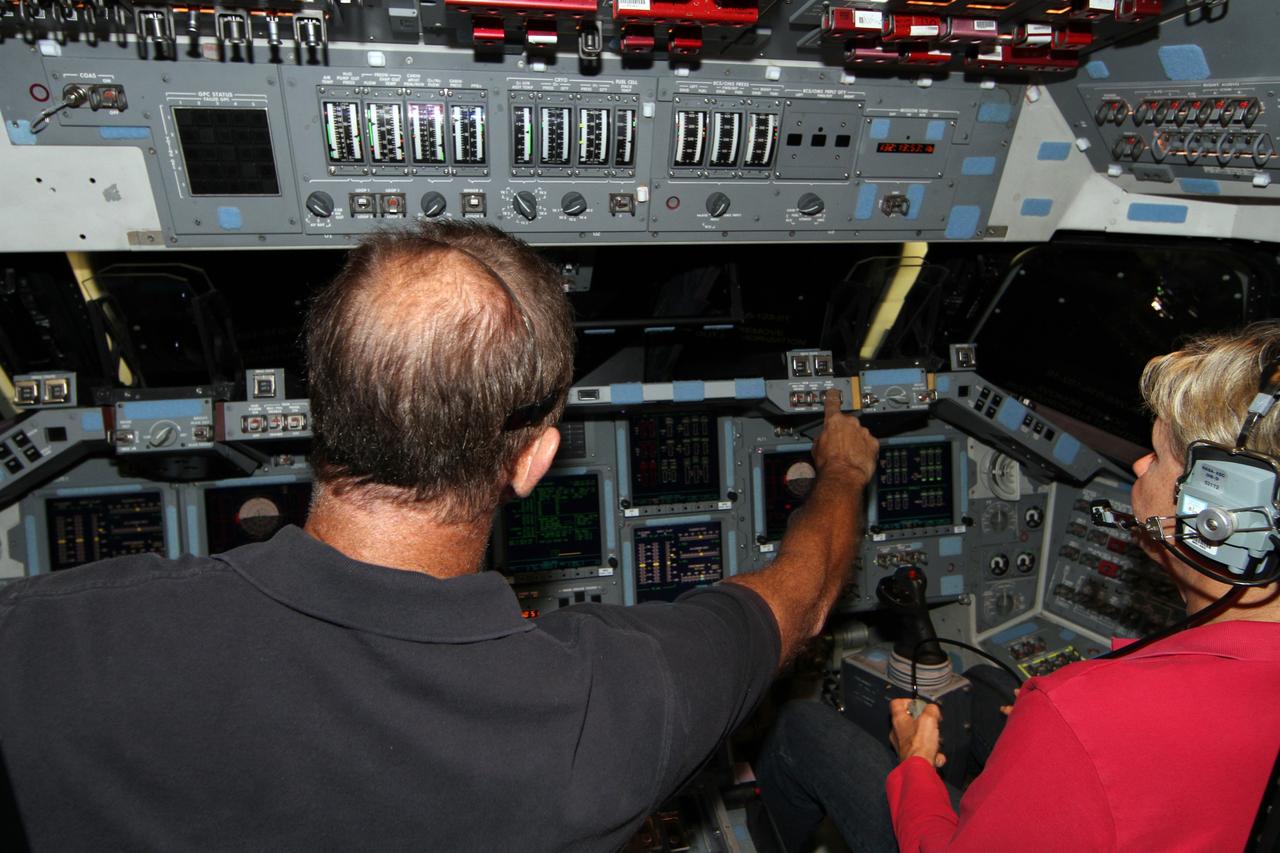
CAPE CANAVERAL, Fla. – In Orbiter Processing Facility-2 at NASA’s Kennedy Space Center in Florida, United Space Alliance OV-105 operations chief Mike Parrish, left, and associate operations chief Pat Leslie turn off consoles on space shuttle Endeavour’s flight deck for the final time during operations to power down the shuttle. Endeavour is being prepared for public display at the California Science Center in Los Angeles. Its ferry flight to California is targeted for mid-September. Endeavour was the last space shuttle added to NASA’s orbiter fleet. Over the course of its 19-year career, Endeavour spent 299 days in space during 25 missions. For more information, visit http://www.nasa.gov/transition. Photo credit: NASA/Ben Smegelsky
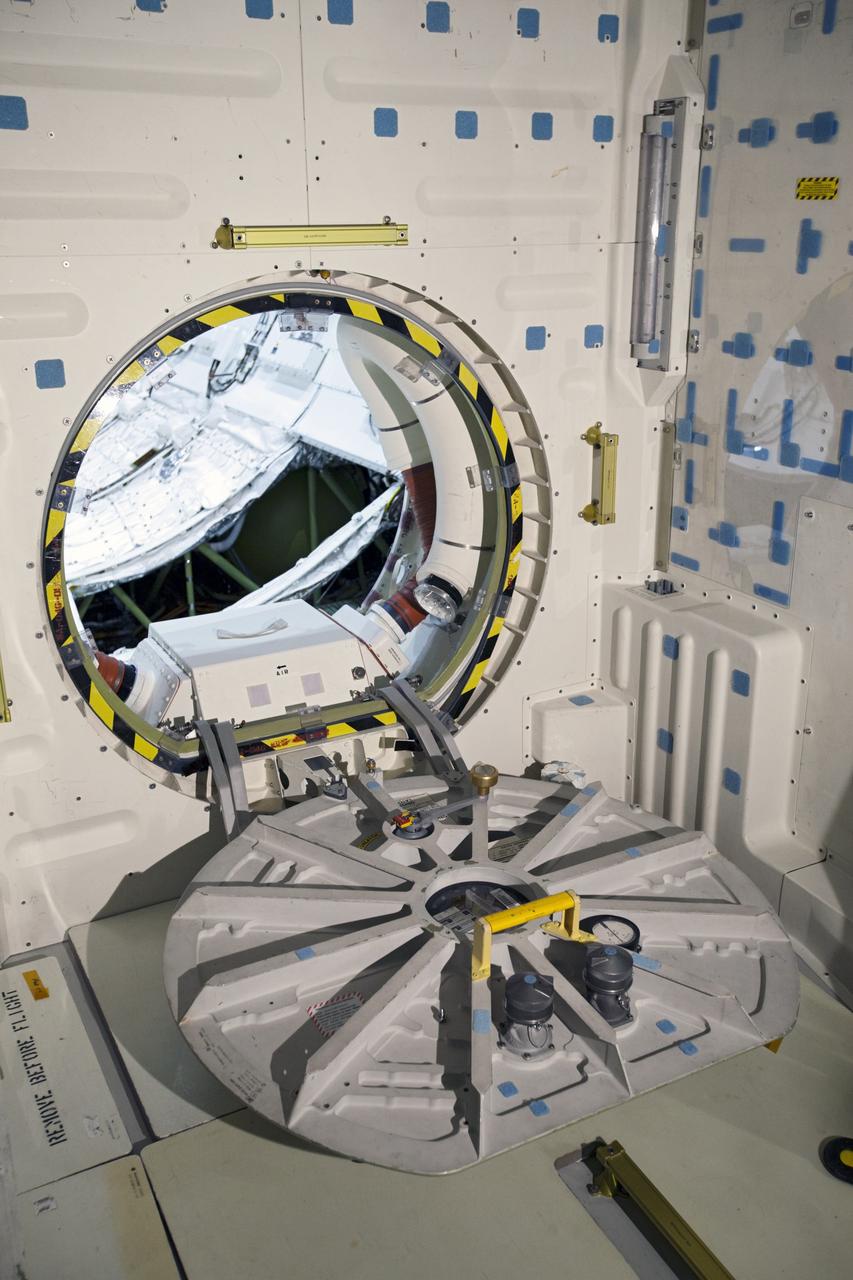
CAPE CANAVERAL, Fla. – In Orbiter Processing Facility-2 at NASA’s Kennedy Space Center in Florida, space shuttle Endeavour’s airlock has been reinstalled and preparations are under way for its hatch to be closed for the final time during processing for the shuttle’s retirement. Endeavour is being prepared for public display at the California Science Center in Los Angeles. Its ferry flight to California is targeted for mid-September. Endeavour, designated OV-105, was the last space shuttle added to NASA’s orbiter fleet. Over the course of its 19-year career, Endeavour spent 299 days in space during 25 missions. For more information, visit http://www.nasa.gov/transition. Photo credit: NASA/Dimitri Gerondidakis
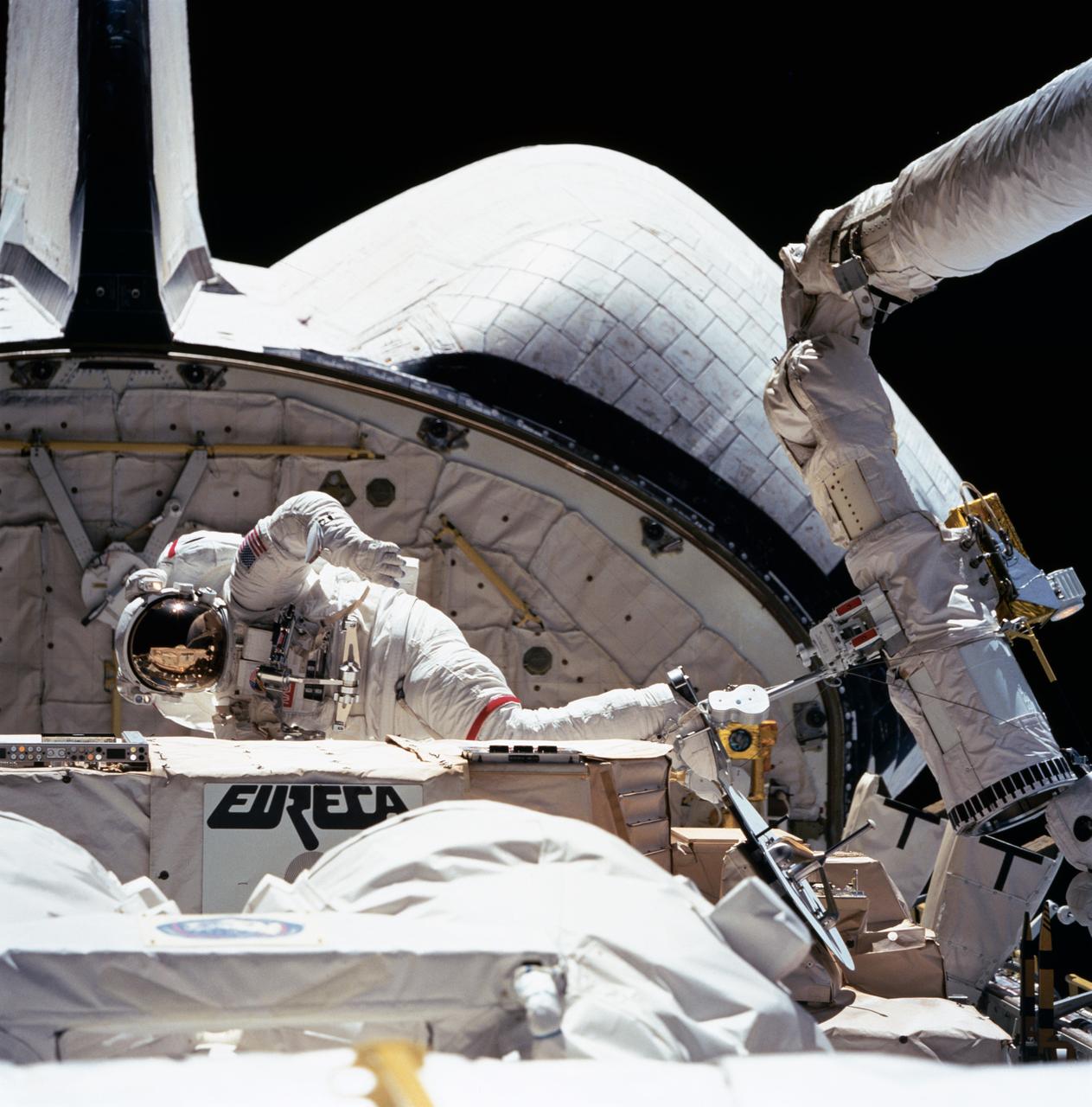
The darkness of space forms the backdrop for this extravehicular activity (EVA) scene captured by one of the STS-57 crewmembers in Endeavour's, Orbiter Vehicle (OV) 105's, crew cabin. Pictured near the recently "captured" European Retrievable Carrier (EURECA) at frame center is Mission Specialist (MS) and Payload Commander (PLC) G. David Low. Suited in an extravehicular mobility unit (EMU), Low, anchored to the remote manipulator system (RMS) via a portable foot restraint (PFR) (manipulator foot restraint (MFR)), is conducting Detailed Test Objective (DTO) 1210 procedures. Specifically, this activity will assist in refining several procedures being developed to service the Hubble Space Telescope (HST) on mission STS-61 in December 1993. The PFR is attached to the RMS end effector via a PFR attachment device (PAD). Partially visible in the foreground is the Superfluid Helium Onorbit Transfer (SHOOT) payload.
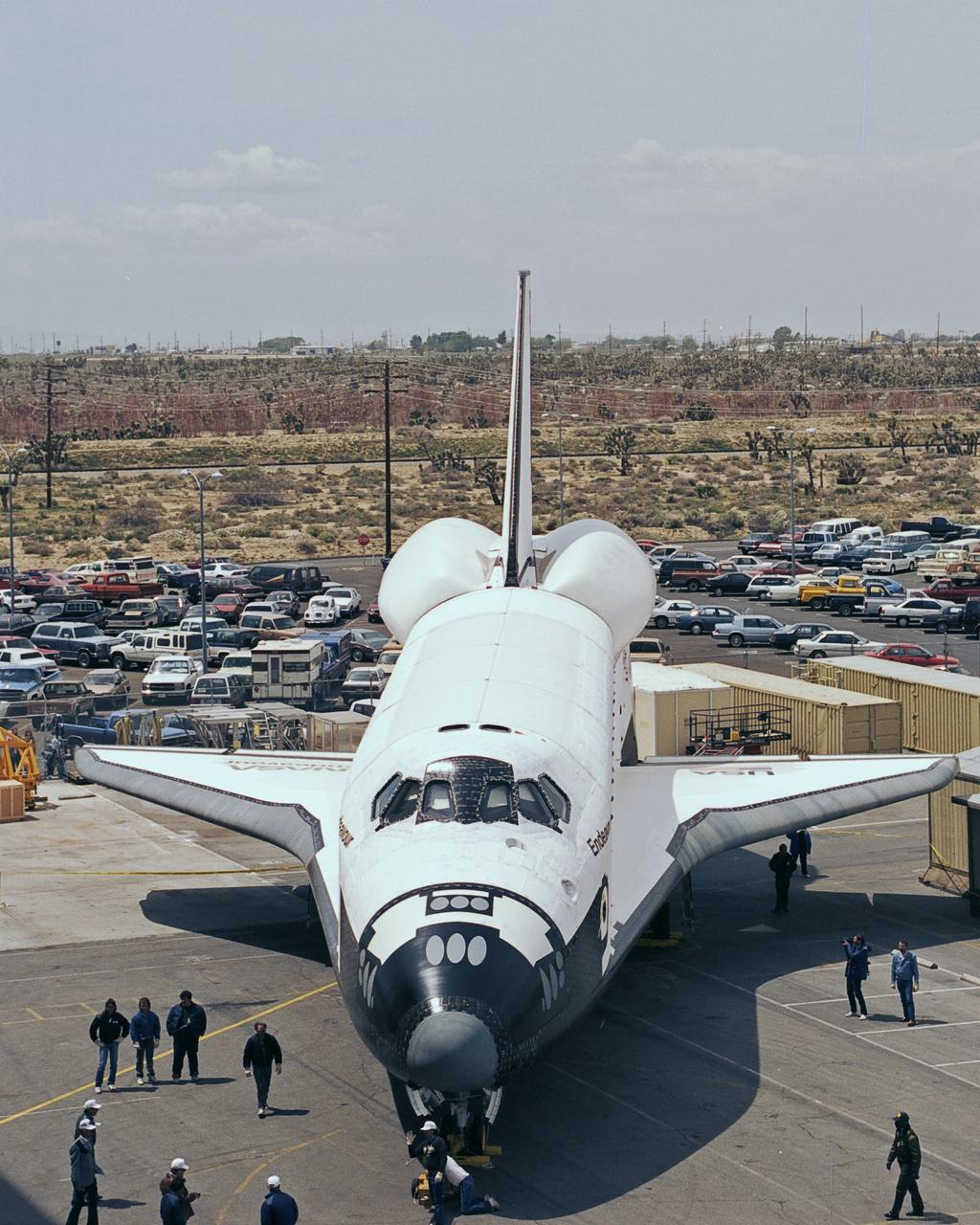
The newest space shuttle orbiter, Endeavour is ready to roll out of the hangar at Palmdale, Calif. OV-105 features many design enhancements, including drag chute for safer landings and equipment to allow the orbiter to remain in space for up to 28 days. Photo credit: NASA
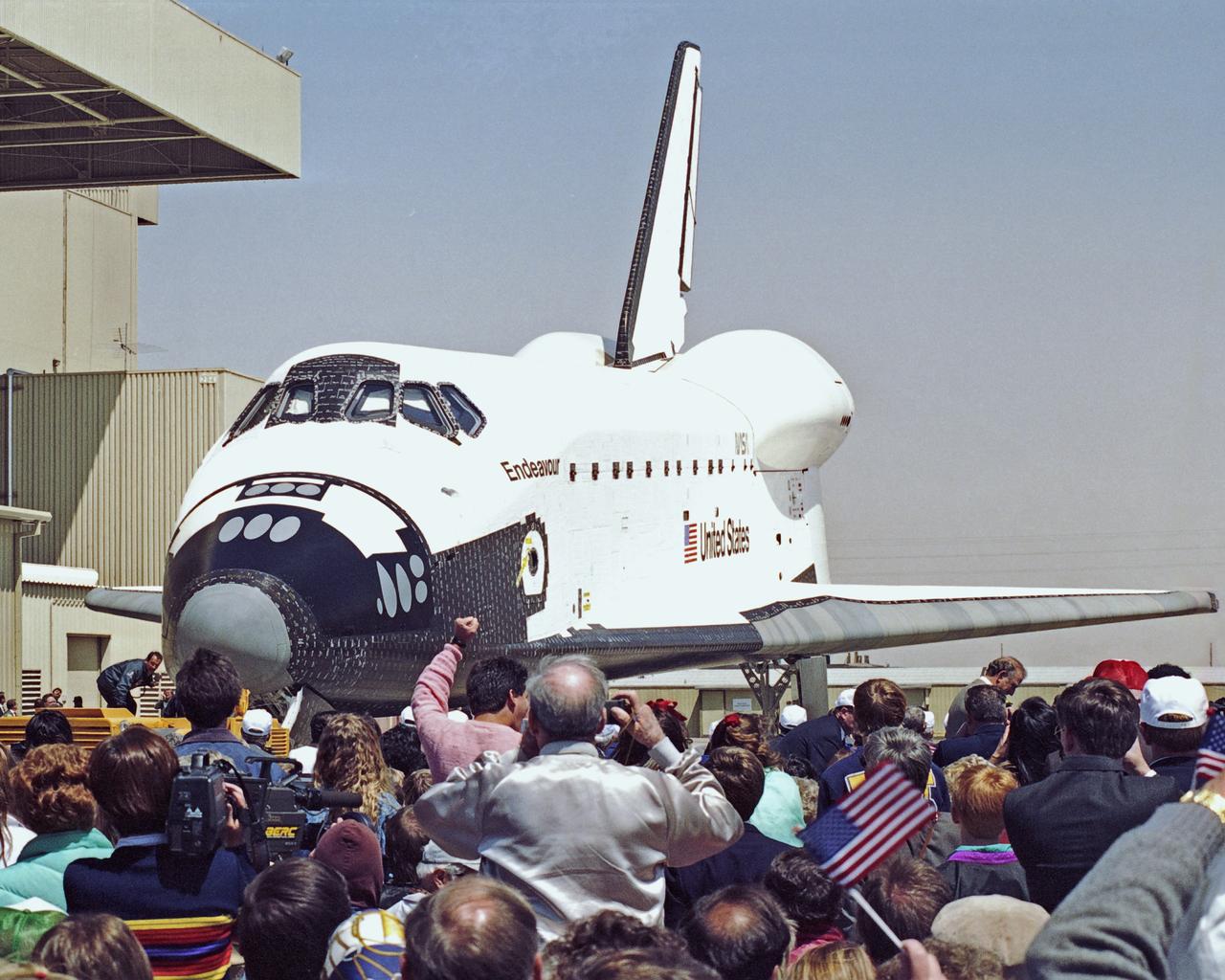
The newest space shuttle orbiter, Endeavour is ready to roll out of the hangar at Palmdale, Calif. OV-105 features many design enhancements, including a drag chute for safer landings and equipment to allow the orbiter to remain in space for up to 28 days. Photo credit: NASA
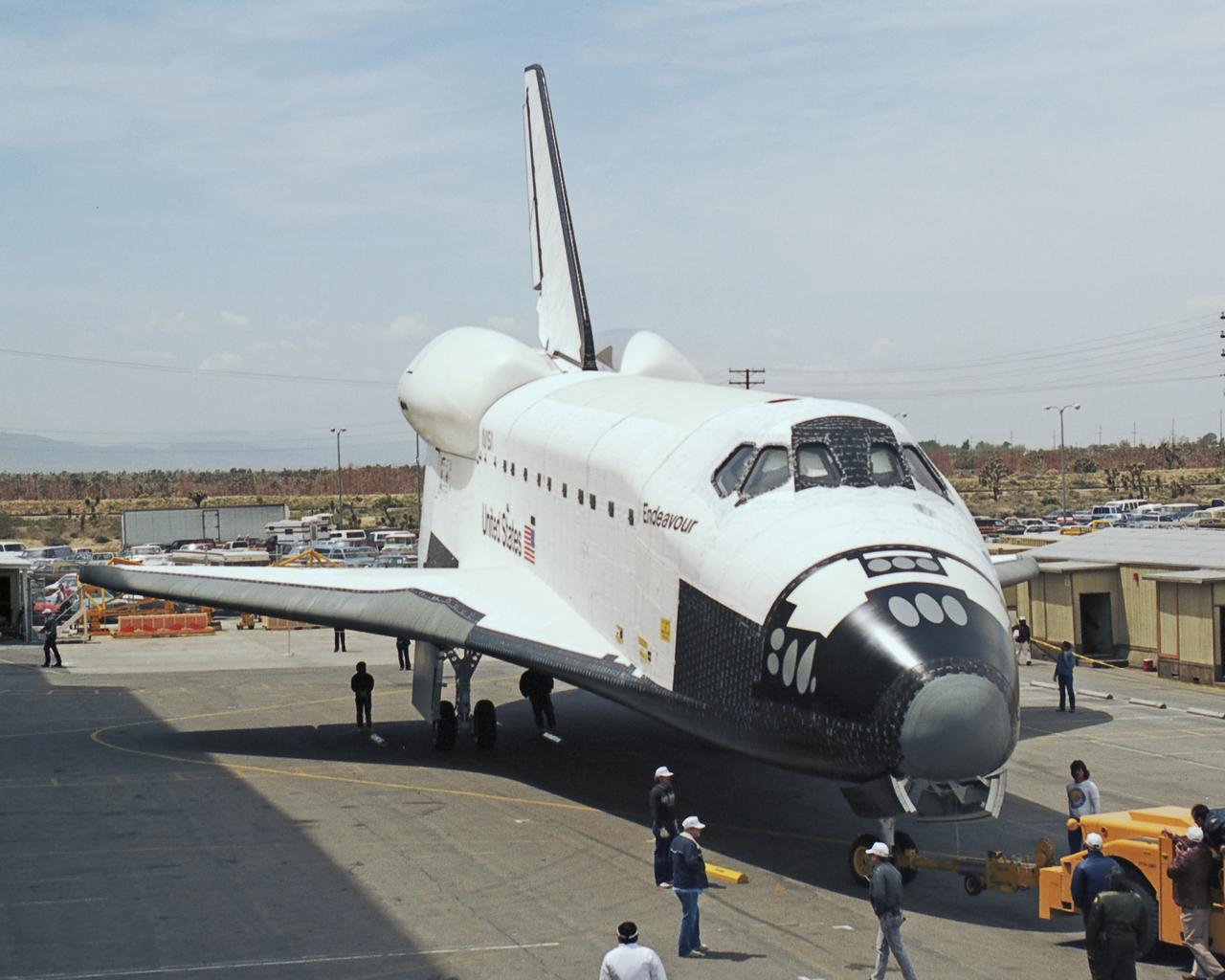
The newest space shuttle orbiter, Endeavour is ready to roll out of the hangar at Palmdale, Calif. OV-105 features many design enhancements, including a drag chute for safer landings and equipment to allow the orbiter to remain in space for up to 28 days.Photo credit: NASA
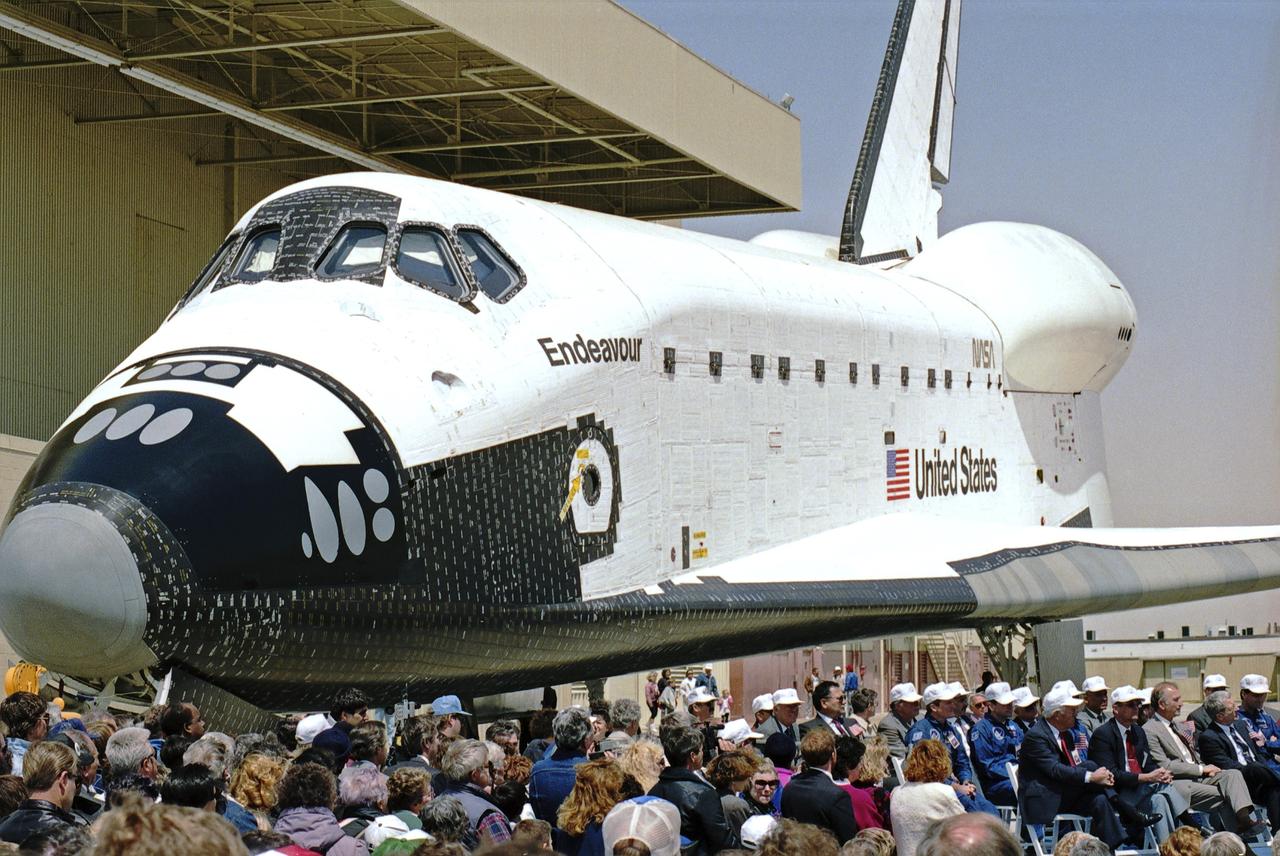
The newest space shuttle orbiter, Endeavour, rolls out of the hangar at Palmdale, Calif. OV-105 features many design enhancements, including a drag chute for safer landings and equipment to allow the orbiter to remain in space for up to 28 days. Photo credit: NASA
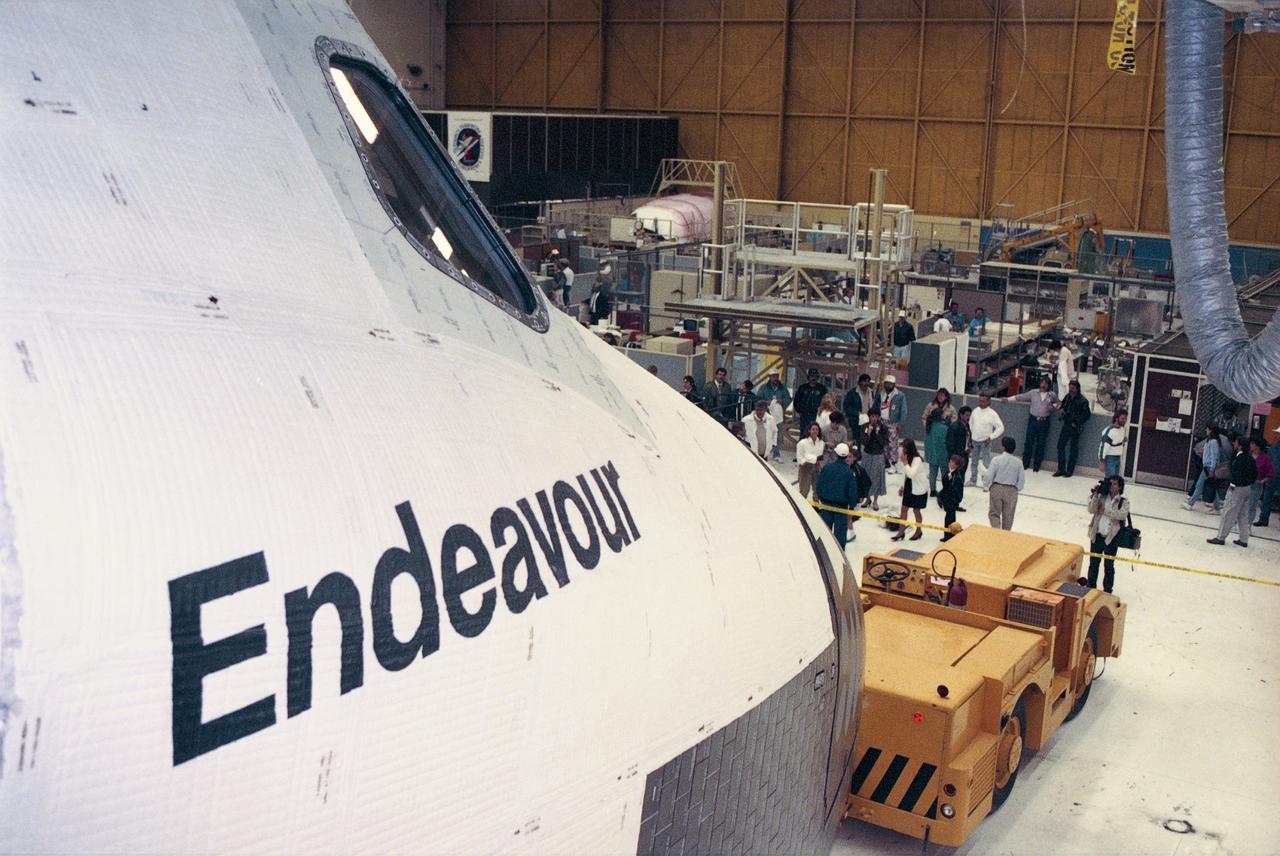
The newest space shuttle orbiter, Endeavour is ready to roll out of the hangar at Palmdale, Calif. OV-105 features many design enhancements, including a drag chute for safer landings and equipment to allow the orbiter to remain in space for up to 28 days. Photo credit: NASA
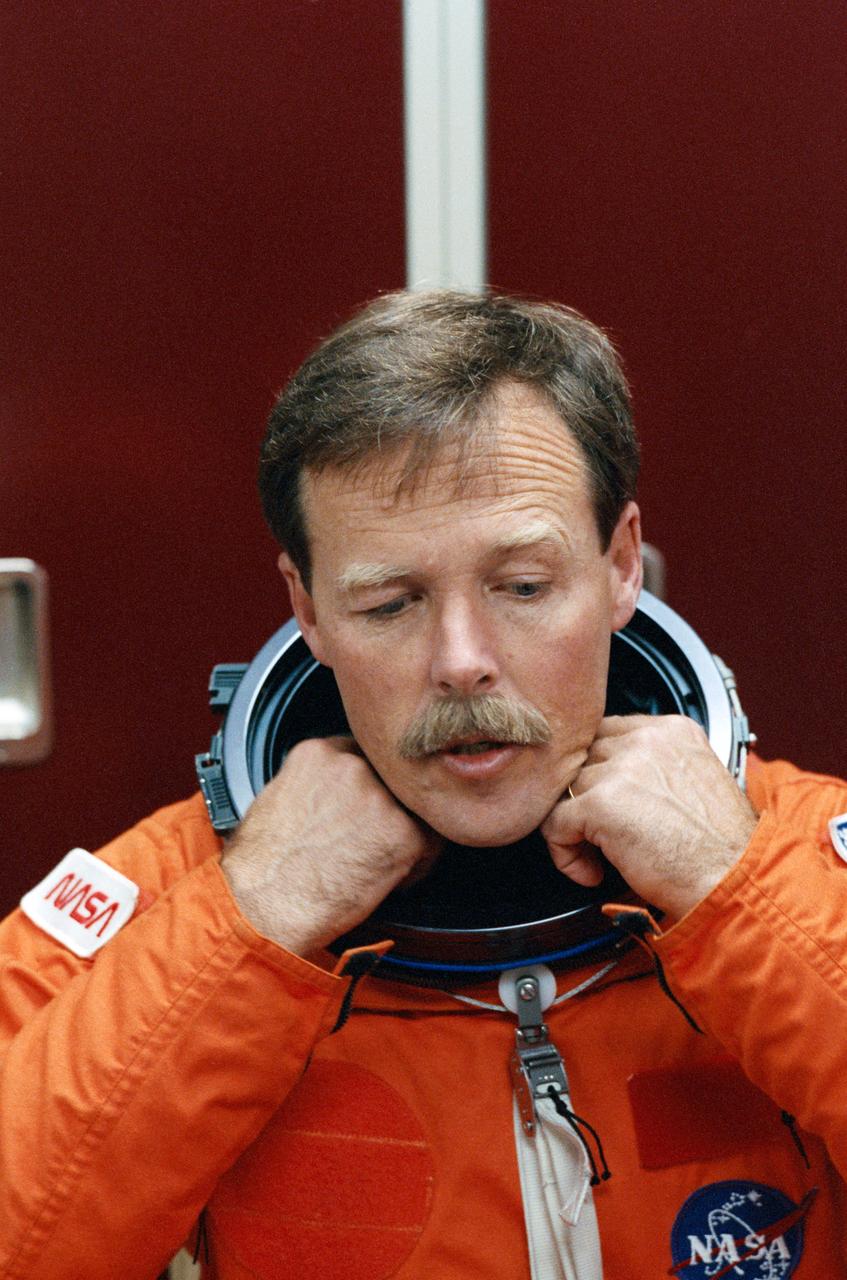
STS-47 Endeavour, Orbiter Vehicle (OV) 105, Commander Robert L. Gibson adjusts the launch and entry suit (LES) neck dam during suit donning in JSC's Mockup and Integration Laboratory (MAIL) Bldg 9A. Gibson is preparing for launch emergency egress (bailout) exercises in the Crew Compartment Trainer (CCT).
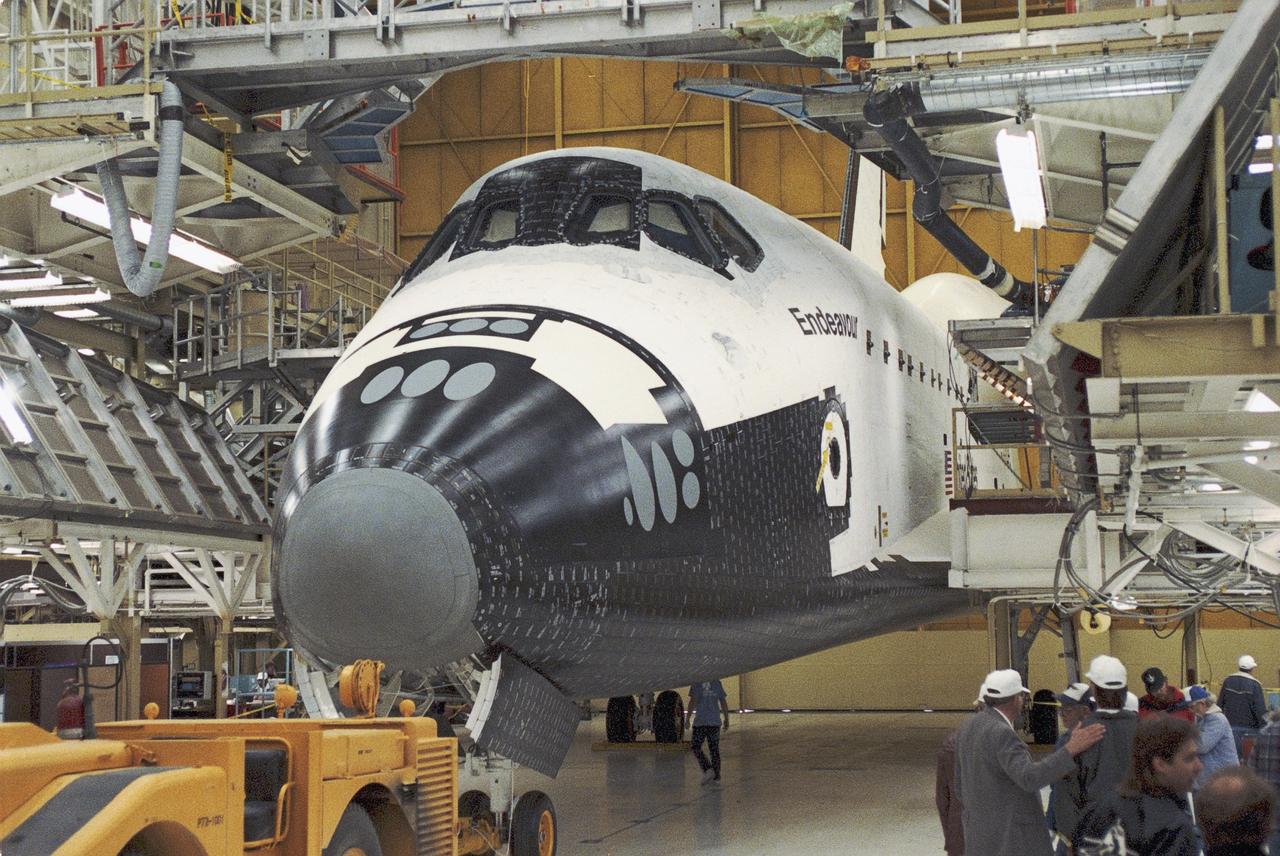
The newest space shuttle orbiter, Endeavour, is ready to roll out of the hangar at Palmdale, Calif. OV-105 features many design enhancements, including a drag chute for safer landings and equipment to allow the orbiter to remain in space for up to 28 days. Photo credit: NASA
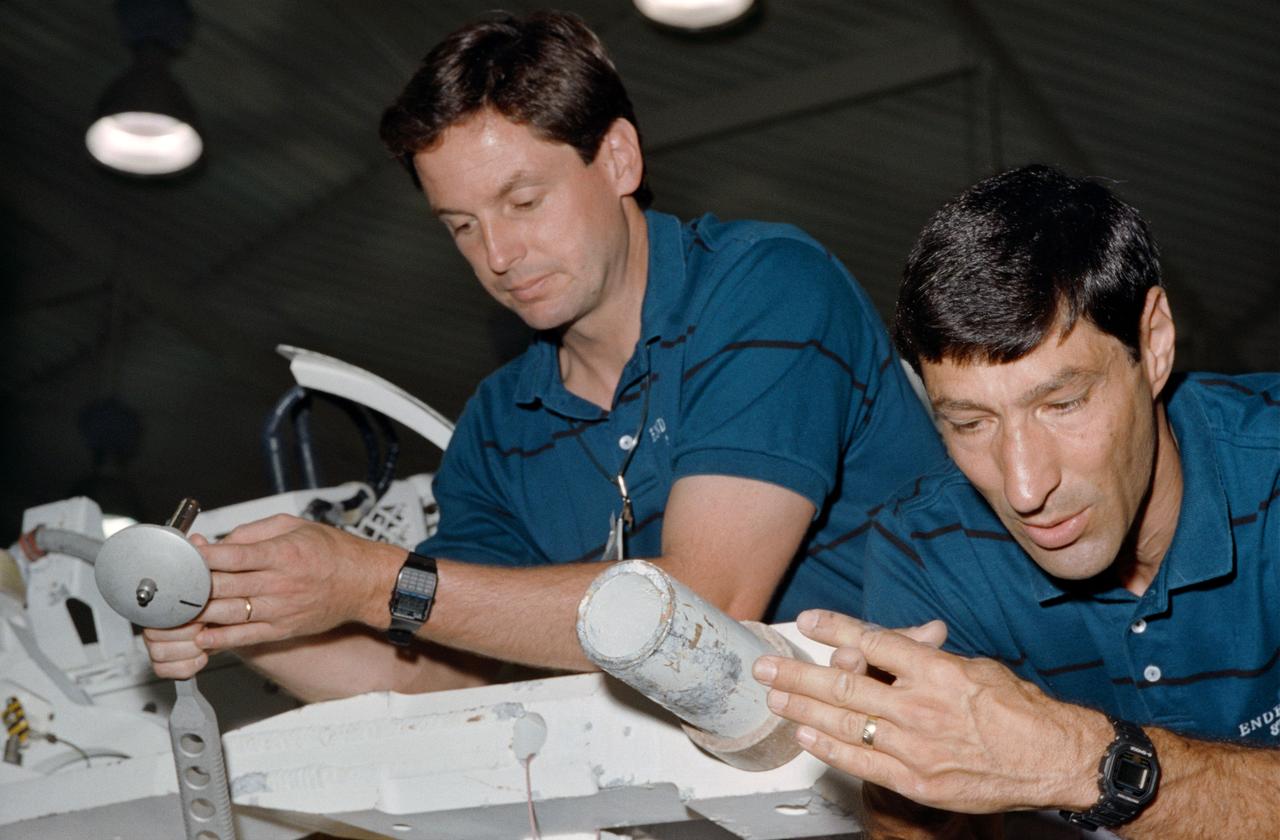
STS-54 Endeavour, Orbiter Vehicle (OV) 105, Mission Specialist 1 (MS1) Mario Runco, Jr (right) and MS2 Gregory J. Harbaugh, holding an ESSEX wrench, examine mockup and tools prior to an underwater simulation in JSC's Weightless Environment Training Facility (WETF) Bldg 29 pool. Runco and Harbaugh discuss the trunnion / payload retention latch assembly (PRLA) configuration.
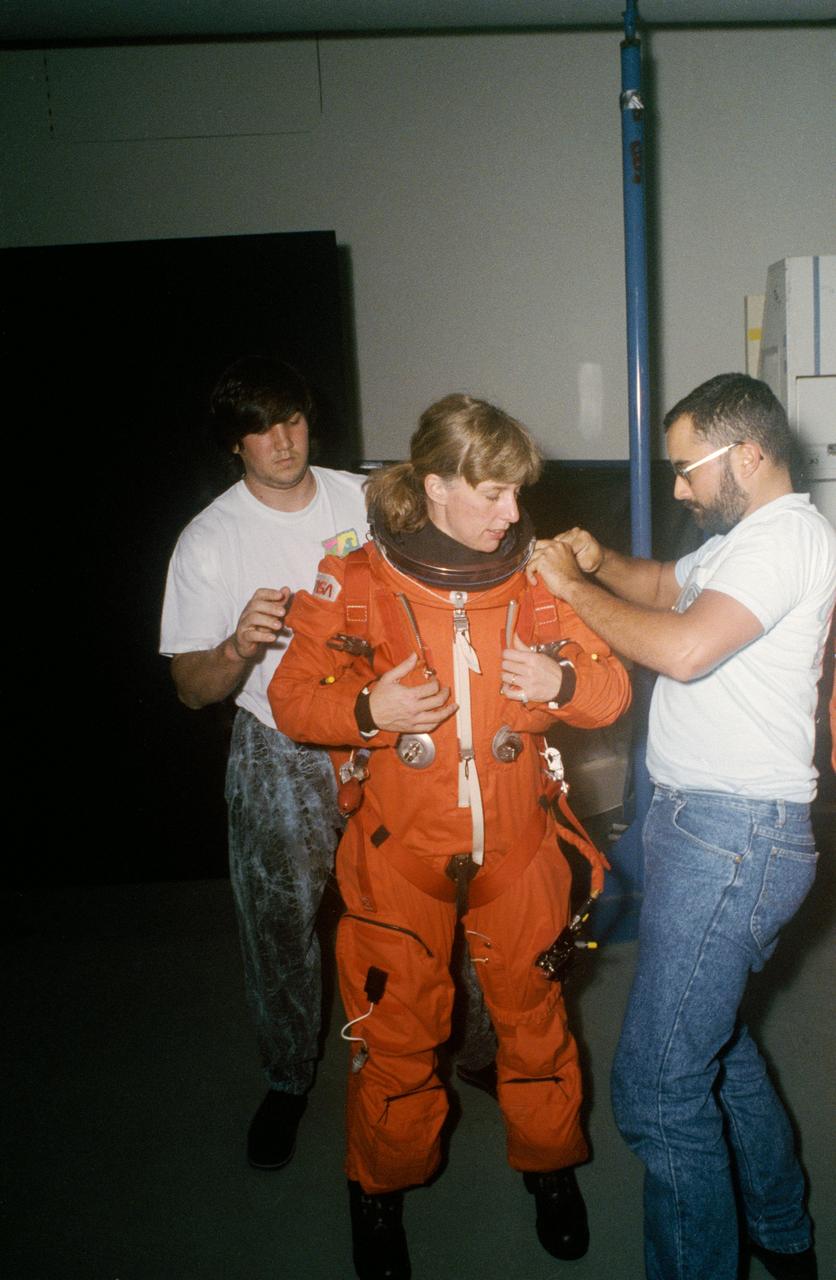
STS-47 Endeavour, Orbiter Vehicle (OV) 105, Mission Specialist (MS) N. Jan Davis, wearing a launch and entry suit (LES), looks on as technicians adjust her LES parachute pack prior to launch emergency egress (bailout) exercises in JSC's Mockup and Integration Laboratory (MAIL) Bldg 9A. Davis is making her first flight in space.
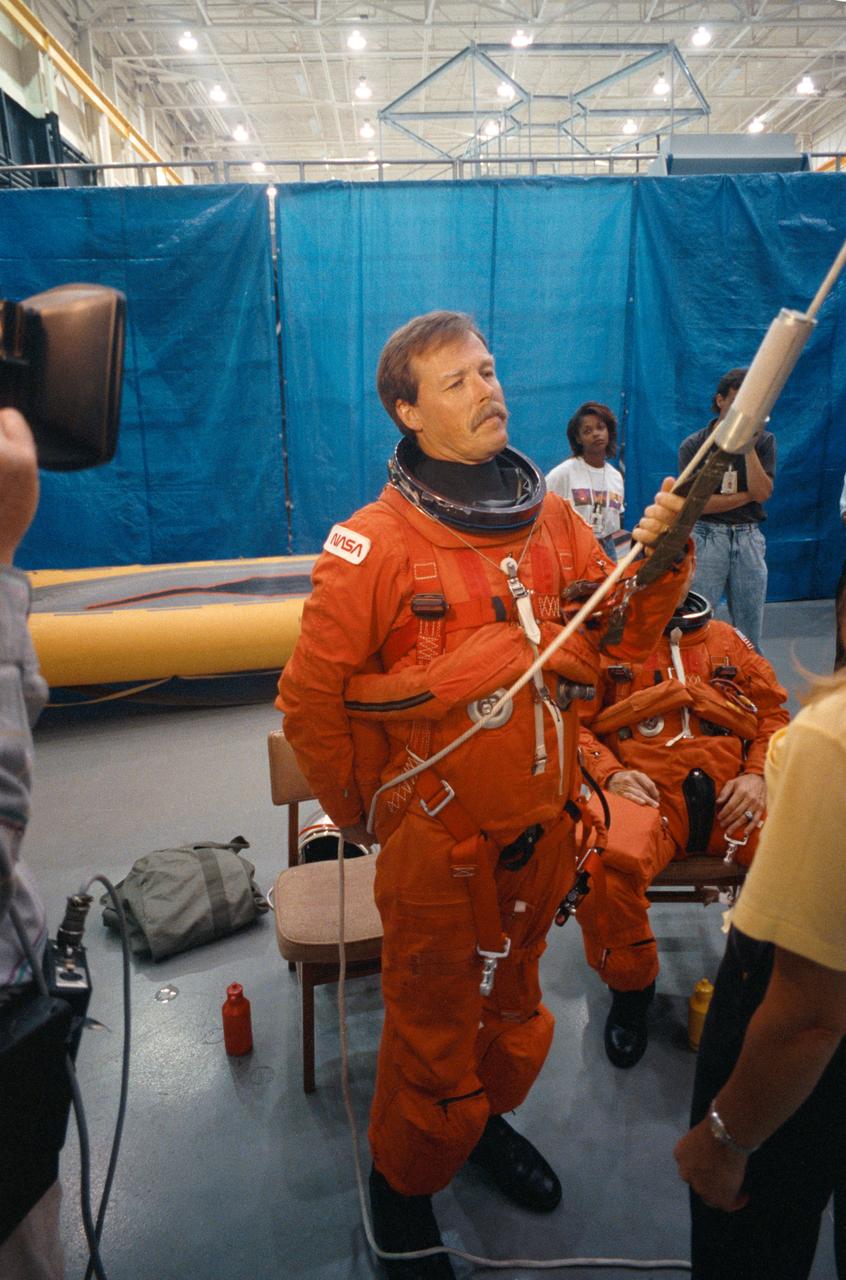
STS-47 Endeavour, Orbiter Vehicle (OV) 105, Spacelab Japan (SLJ) Commander Robert L. Gibson, wearing launch and entry suit (LES), holds sky genie equipment in proper position while listening to a training instructor's directions. Gibson along with the other STS-47 crewmembers is participating in post landing emergency egress procedures at JSC's Mockup and Integration Laboratory (MAIL) Bldg 9NE.
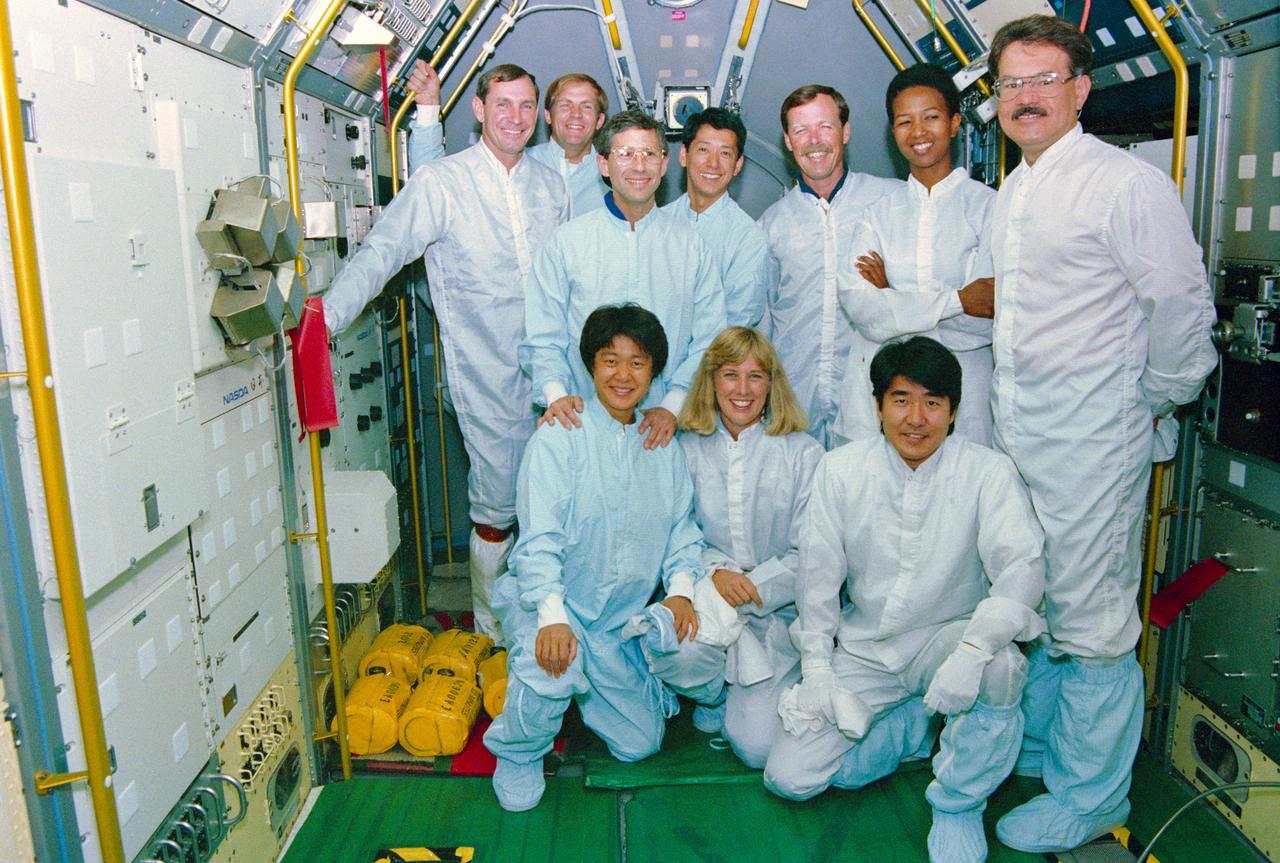
S92-44303 --- STS-47 Endeavour, Orbiter Vehicle (OV) 105, crew members and back-up payload specialists, wearing clean suits, pose for a group portrait in the Spacelab Japan (SLJ) module. The team is at the Kennedy Space Center's (KSC's) Orbiter Processing Facility (OPF) to inspect SLJ configuration and OV-105 preparations. Kneeling, from left, are back-up Payload Specialist Chiaki Naito-Mukai; Mission Specialist N. Jan Davis; and backup Payload Specialist Takao Doi. Standing, from the left, are Pilot Curtis L. Brown,Jr; Payload Commander Mark C. Lee; Jerome Apt; Payload Specialist Mamoru Mohri; Commander Robert L. Gibson; Mae C. Jemison; and back-up Payload Specialist Stanely L. Koszelak. Mohri, Mukai, and Doi represent the National Space Development Agency of Japan (NASDA). View provided by KSC with alternate KSC number KSC-92PC-1647. Photo credit: NASA
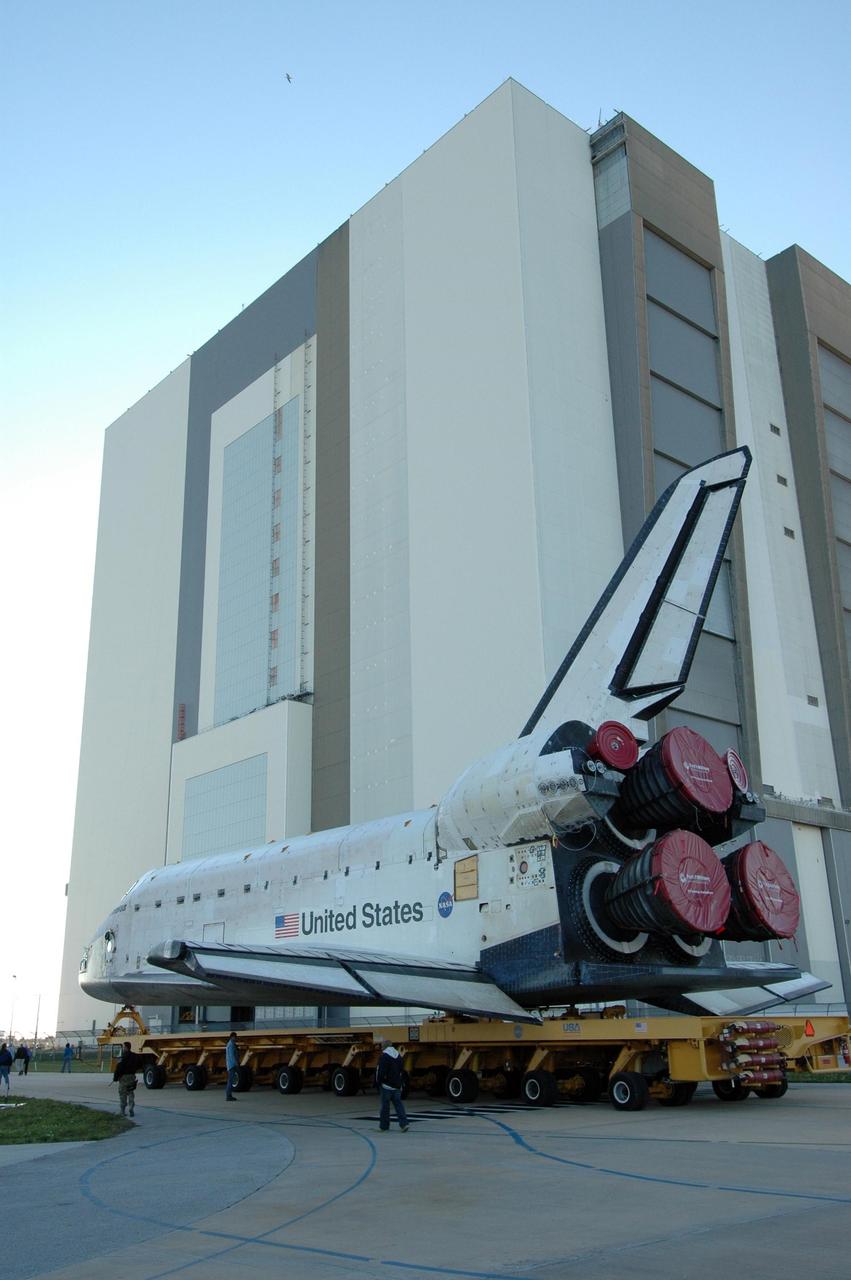
KENNEDY SPACE CENTER, FLA. -- On its transporter, space shuttle Endeavour rolls toward the Vehicle Assembly Building after leaving the Orbiter Processing Facility. In high bay 1 of the VAB, Endeavour will be attached to its external fuel tank and solid rocket boosters in preparation for its upcoming mission, STS-123, to the International Space Station targeted for March 11. The mission will deliver the first section of the Japan Aerospace Exploration Agency's Kibo laboratory and the Canadian Space Agency's two-armed robotic system, Dextre. Photo credit: NASA/Jim Grossmann
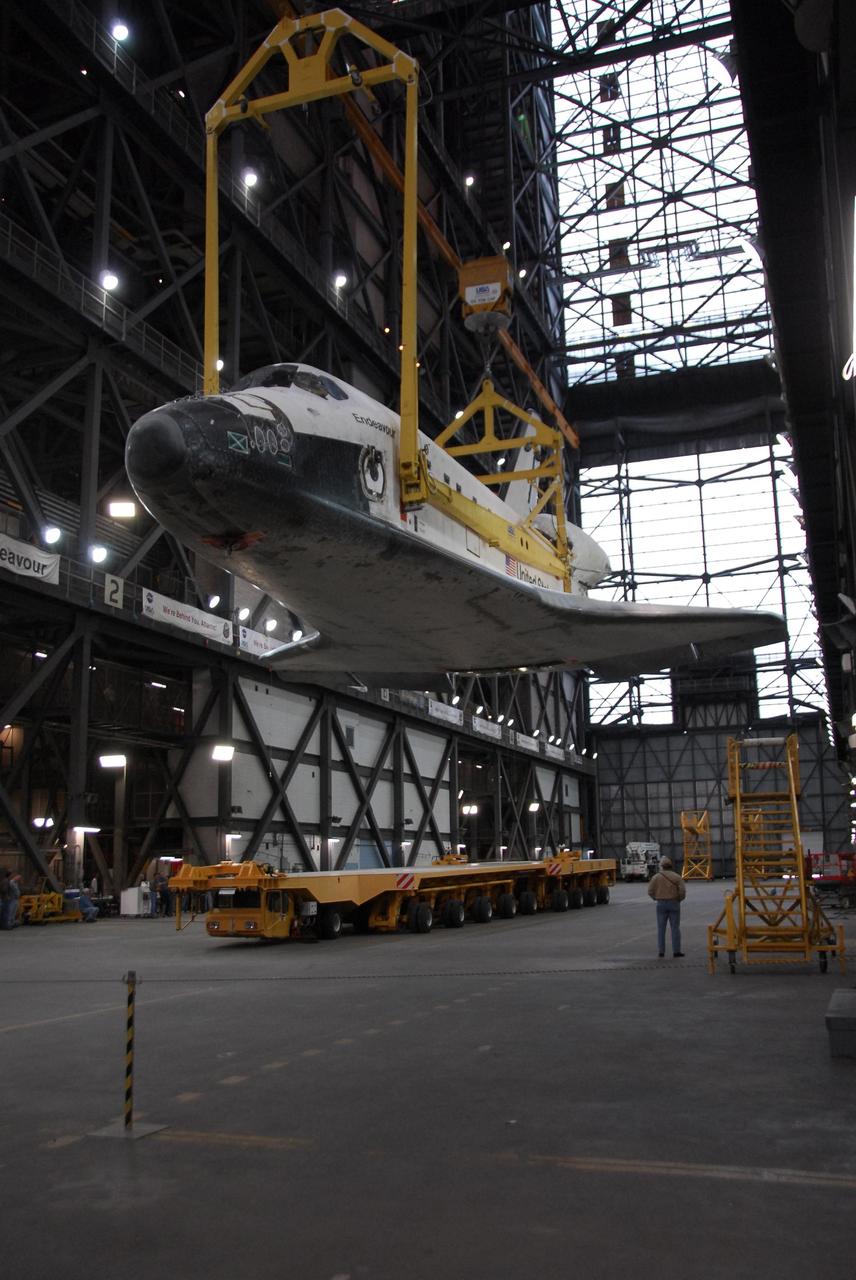
KENNEDY SPACE CENTER, FLA. -- In the transfer aisle of the Vehicle Assembly Building, space shuttle Endeavour is lifted off its transporter. The shuttle will be raised to a vertical position and lifted up into high bay 1 to be attached to its external fuel tank and solid rocket boosters in preparation for launch on the STS-123 mission, targeted for March 11. The mission will deliver the first section of the Japan Aerospace Exploration Agency's Kibo laboratory and the Canadian Space Agency's two-armed robotic system, Dextre. Photo credit: NASA/Dimitri Gerondidakis
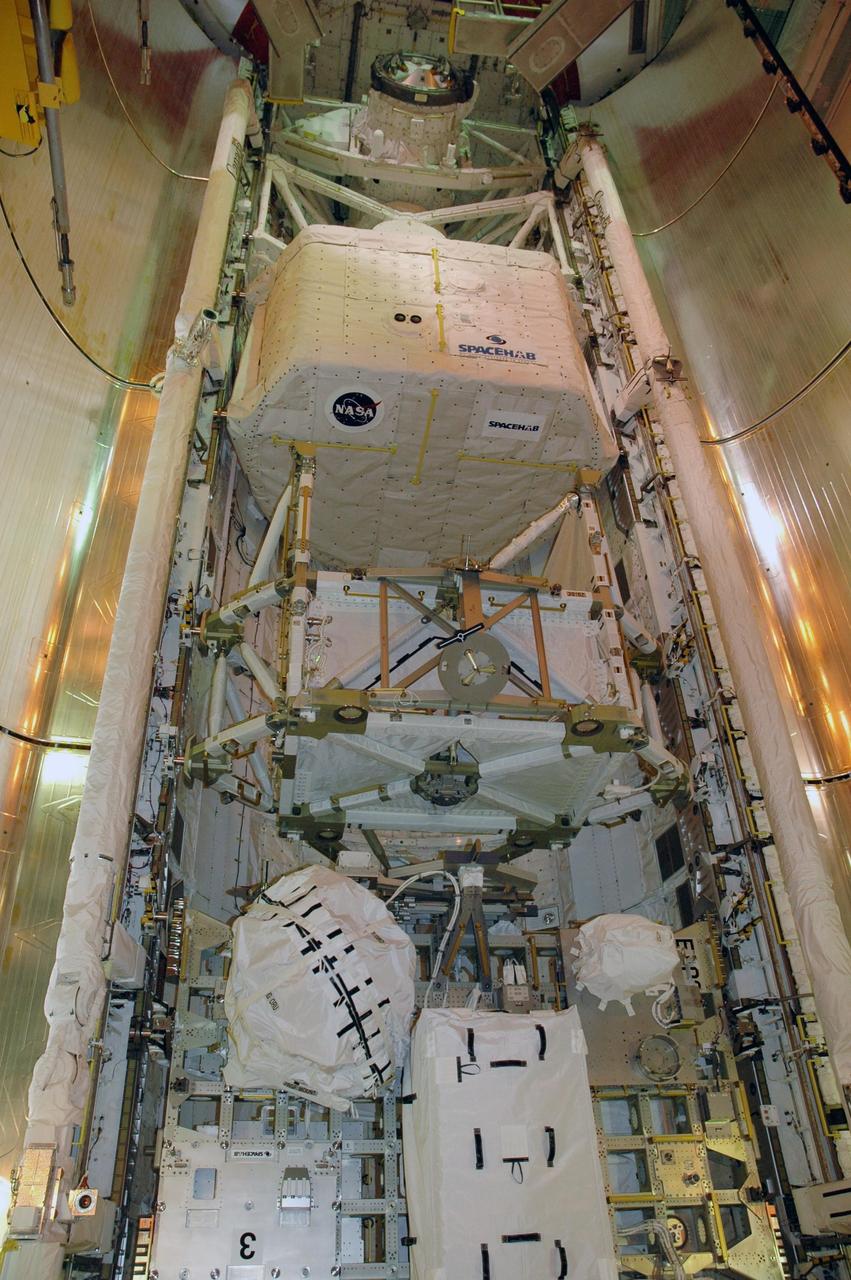
KENNEDY SPACE CENTER, FLA. -- On Launch Pad 39A, Endeavour's payload bay doors are open, revealing the cargo and equipment inside. At the top is the orbiter docking system; below it are the SPACEHAB module, the S5 truss and the external stowage platform 3 holding a control moment gyro at left and other supplies. The payload bay doors were opened to allow for payload closeouts, including camera tests on the shuttle robotic arm and the extension, known as the orbiter boom sensor system. Endeavour is scheduled to launch Aug. 7 on mission STS-118, the 22nd flight to the International Space Station. NASA/Charisse Nahser
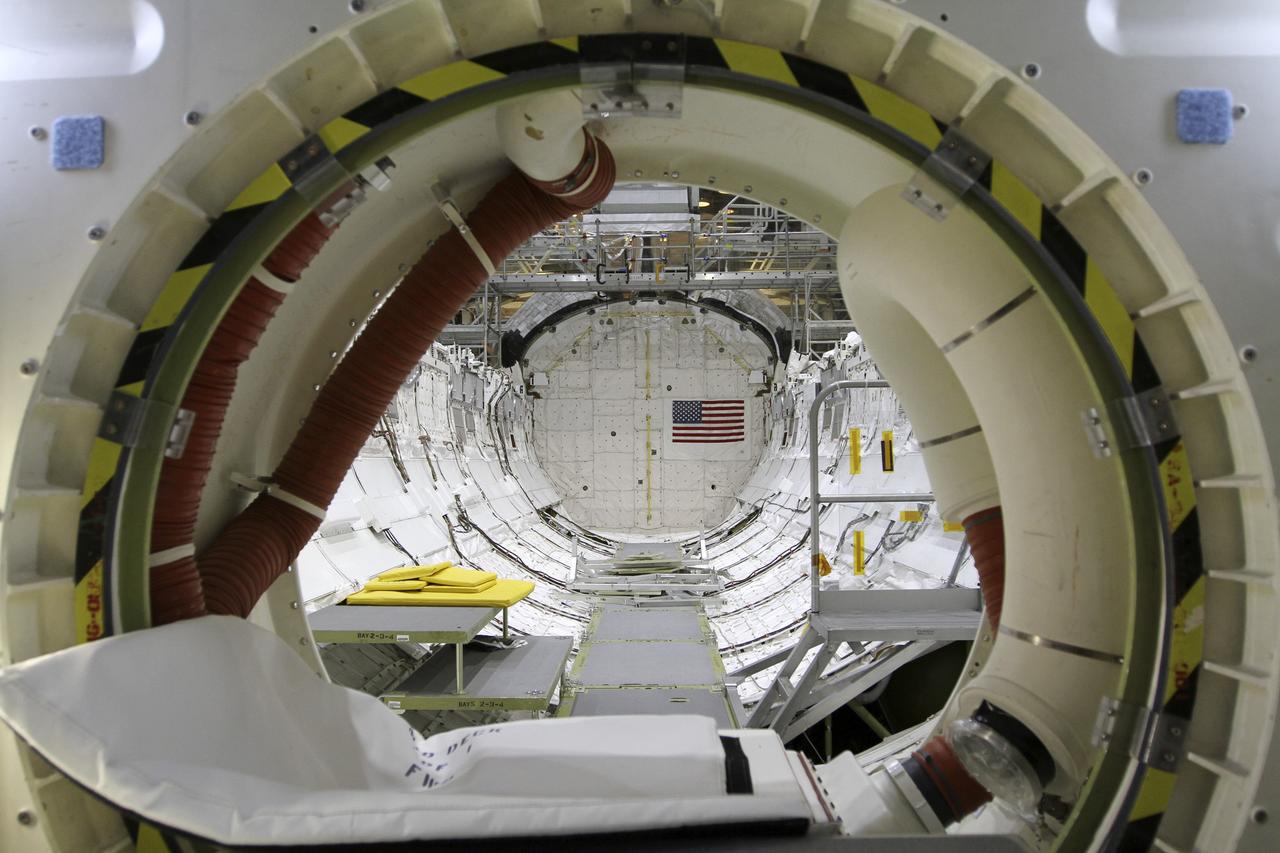
CAPE CANAVERAL, Fla. – In Orbiter Processing Facility-2 at NASA's Kennedy Space Center in Florida, there is an unobstructed line of sight from inside space shuttle Endeavour’s middeck to its payload bay following the removal of the airlock, which was the connecting point between the shuttle and the International Space Station. Endeavour is being prepared for public display at the California Science Center in Los Angeles. Over the course of its 19-year career, Endeavour spent 299 days in space during 25 missions. For more information, visit http://www.nasa.gov/transition. Photo credit: NASA/Kim Shiflett

KENNEDY SPACE CENTER, FLA. -- Inside the Orbiter Processing Facility, space shuttle Endeavour is ready for the rollover to the Vehicle Assembly Building. In high bay 1 of the VAB, Endeavour will be attached to its external fuel tank and solid rocket boosters in preparation for its upcoming mission, STS-123, to the International Space Station targeted for March 11. The mission will deliver the first section of the Japan Aerospace Exploration Agency's Kibo laboratory and the Canadian Space Agency's two-armed robotic system, Dextre. Photo credit: NASA/Jim Grossmann
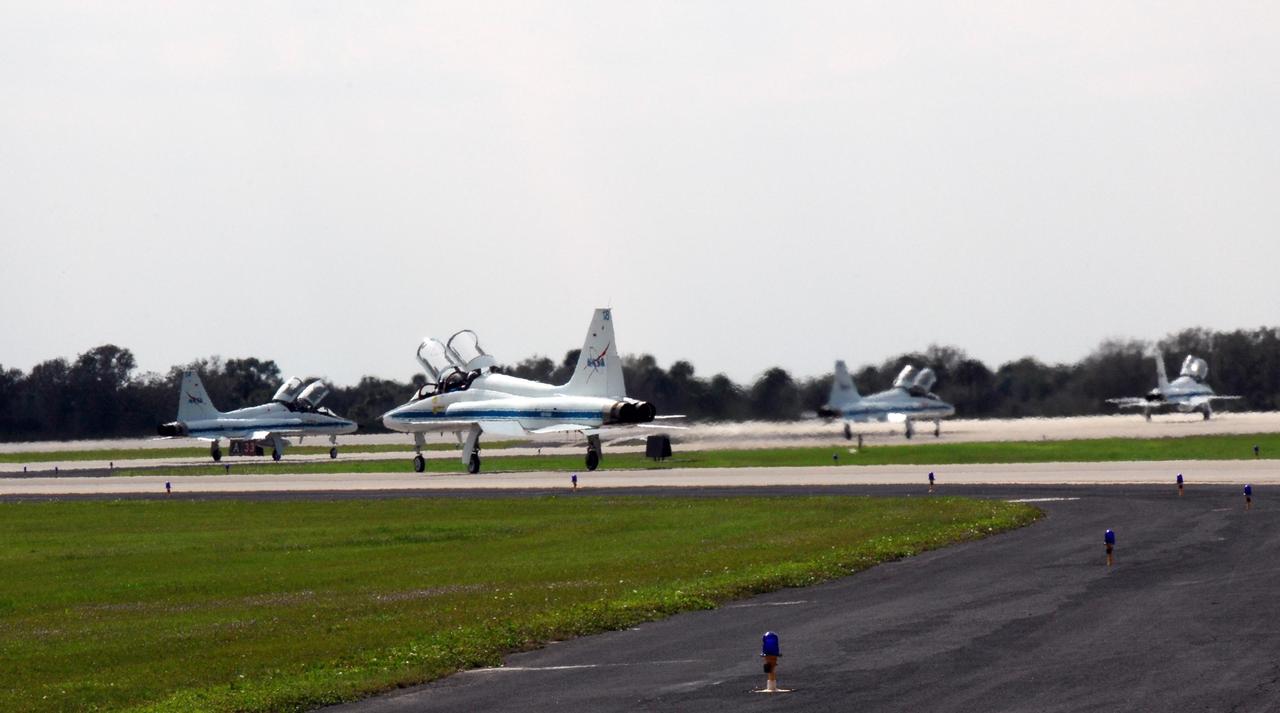
KENNEDY SPACE CENTER, FLA. -- At the NASA Kennedy Space Center's Shuttle Landing Facility, the jet aircraft carrying STS-123 crewmembers line up for takeoff on the return trip to Houston. The STS-123 crew took part in a terminal countdown demonstration test, or TCDT, in preparation for the launch of space shuttle Endeavour scheduled on March 11. The TCDT enables astronauts and ground crews to participate in various countdown activities, including equipment familiarization and emergency egress training. On the STS-123 mission, Endeavour and its crew will deliver the first section of the Japan Aerospace Exploration Agency's Kibo laboratory and the Canadian Space Agency's two-armed robotic system, Dextre Photo credit: NASA/Kim Shiflett
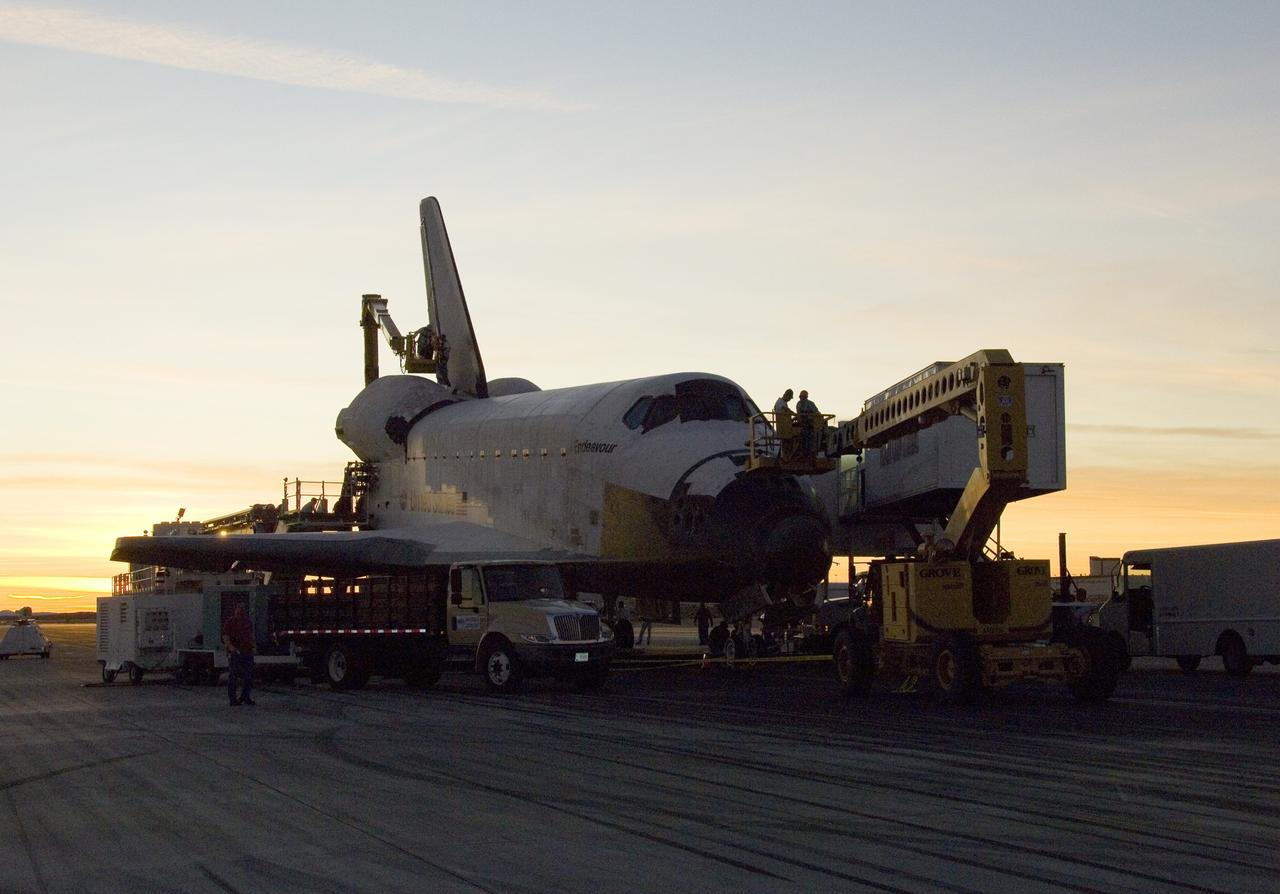
EDWARDS, Calif. – On Edwards Air Force Base in California, space shuttle Endeavour undergoes recovery operations after its landing. The orbiter convoy normally begins recovery operations in earnest about two hours before the shuttle is scheduled to land. Specially designed vehicles or units and a team of trained personnel “safe” the orbiter and prepare it for towing. Purge and Coolant Umbilical Access Vehicles are moved into position behind the orbiter to get access to the umbilical areas. The flight crew is replaced aboard the orbiter by exchange sup¬port personnel who prepare the orbiter for ground tow operations, install switch guards and remove data packages from any onboard experiments. After a total safety downgrade, vehicle ground personnel make numerous preparations for the towing operation, including install¬ing landing gear lock pins, disconnecting the nose landing gear drag link, positioning the towing vehicle in front of the orbiter and connecting the tow bar. The decision to land Endeavour at Edwards was made due to weather concerns at NASA's Kennedy Space Center in Florida. In the 52nd landing at Edwards, Endeavour touched down at 4:25 p.m. EST to end the STS-126 mission, completing its 16-day journey of more than 6.6 million miles in space. Endeavour will be returned to Kennedy atop a Shuttle Carrier Aircraft, or SCA, a modified Boeing 747 jetliner. Photo credit: NASA/Tony Landis, VAFB
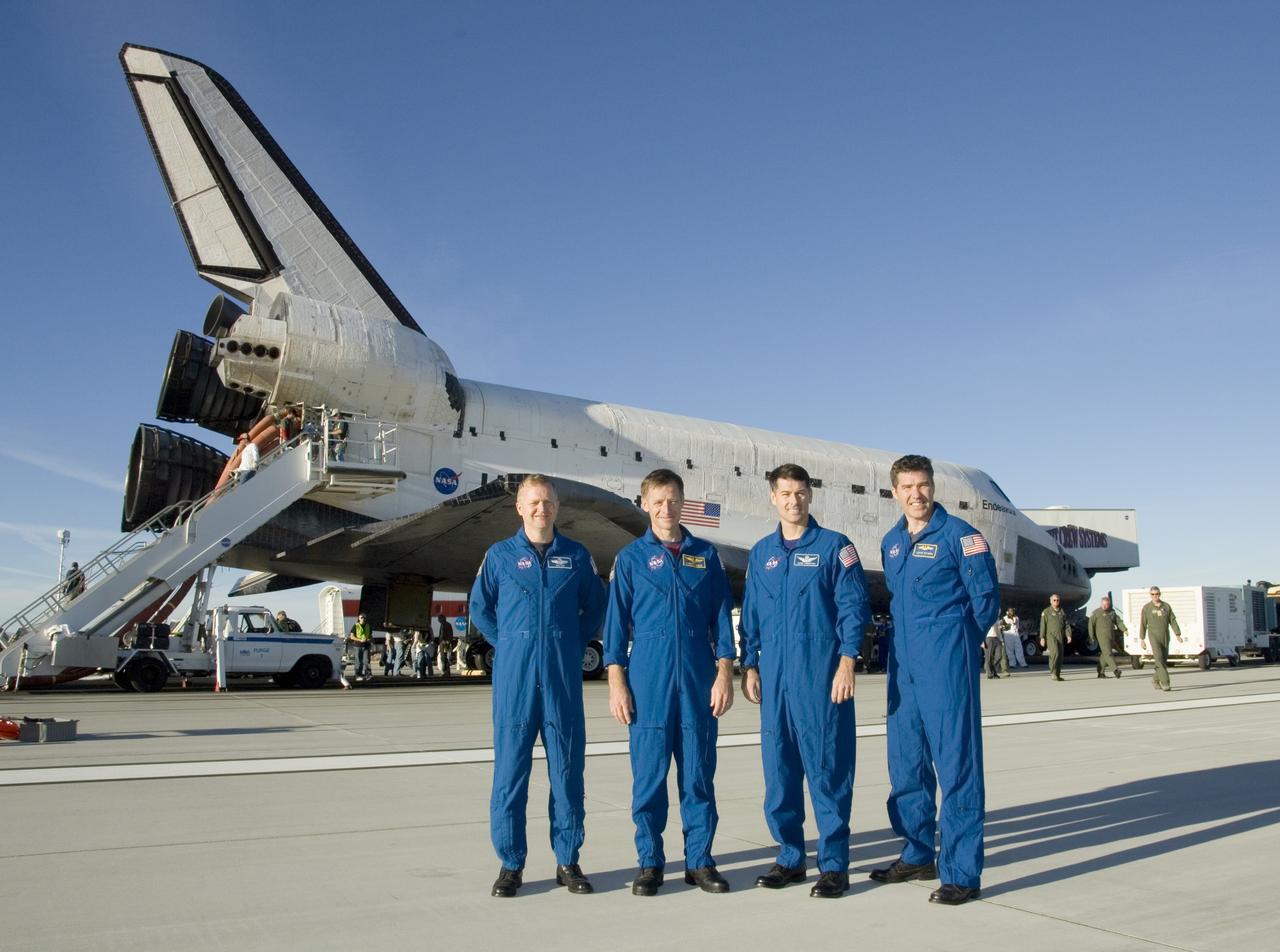
EDWARDS, Calif. – After space shuttle Endeavour's landing at Edwards Air Force Base in California, four of the STS-126 crew members pose for the media. From left are Pilot Eric Boe, Commander Chris Ferguson and Mission Specialists Shane Kimbrough and Steve Bowen. The decision to land at Edwards was made due to weather concerns at NASA's Kennedy Space Center in Florida. In the 52nd landing at Edwards, Endeavour touched down at 4:25 p.m. EST to end the STS-126 mission, completing its 16-day journey of over 6.6 million miles in space. The STS-126 mission was the 27th flight to the International Space Station, carrying equipment and supplies in the Multi-Purpose Logistics Module Leonardo. The mission featured four spacewalks and work to prepare the space station to house six crew members for long-duration missions. Photo credit: NASA/Tom Tschida, VAFB
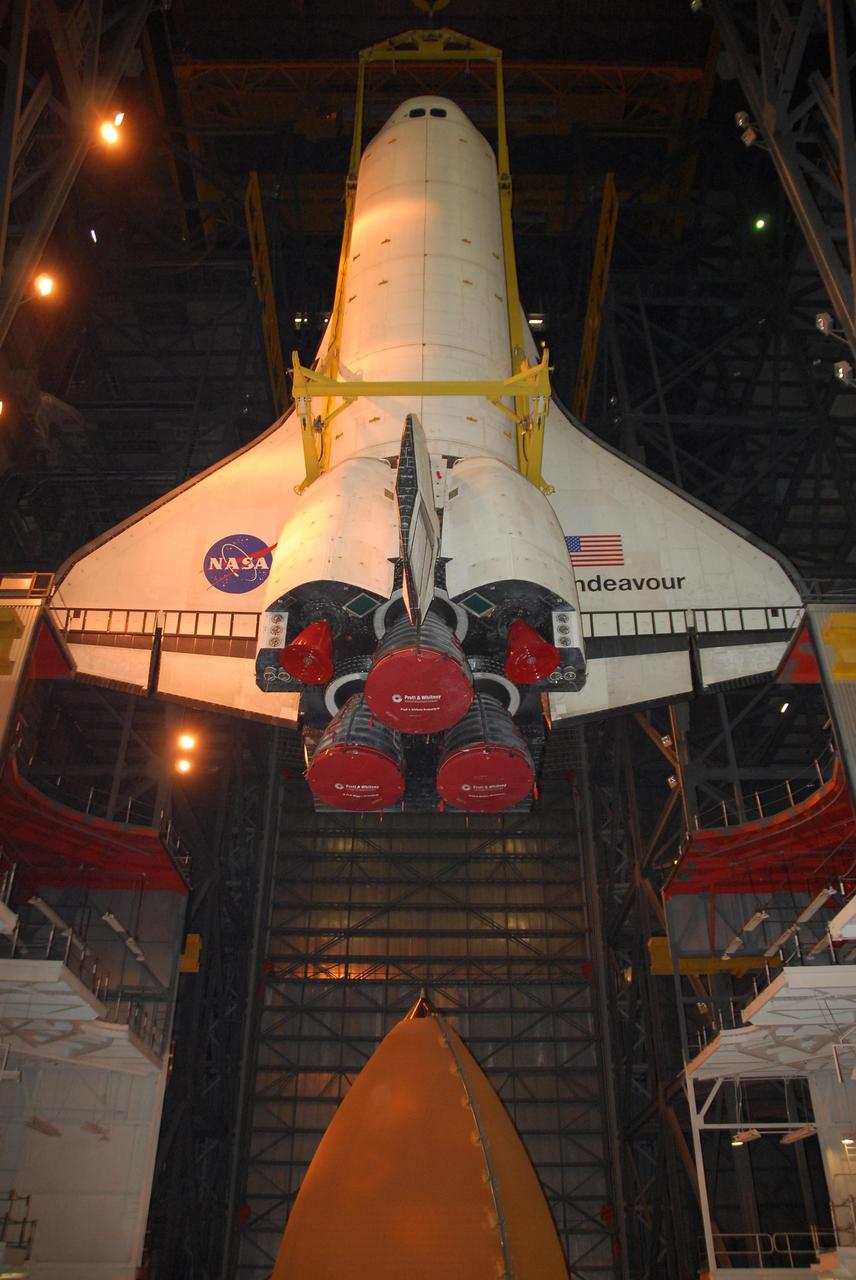
KENNEDY SPACE CENTER, FLA. -- In the Vehicle Assembly Building, space shuttle Endeavour is lowered into high bay 1 toward the external tank seen below. The shuttle will be mated with the tank and solid rocket boosters in preparation for launch on the STS-123 mission, targeted for March 11. The mission will deliver the first section of the Japan Aerospace Exploration Agency's Kibo laboratory and the Canadian Space Agency's two-armed robotic system, Dextre. Photo credit: NASA/Dimitri Gerondidakis
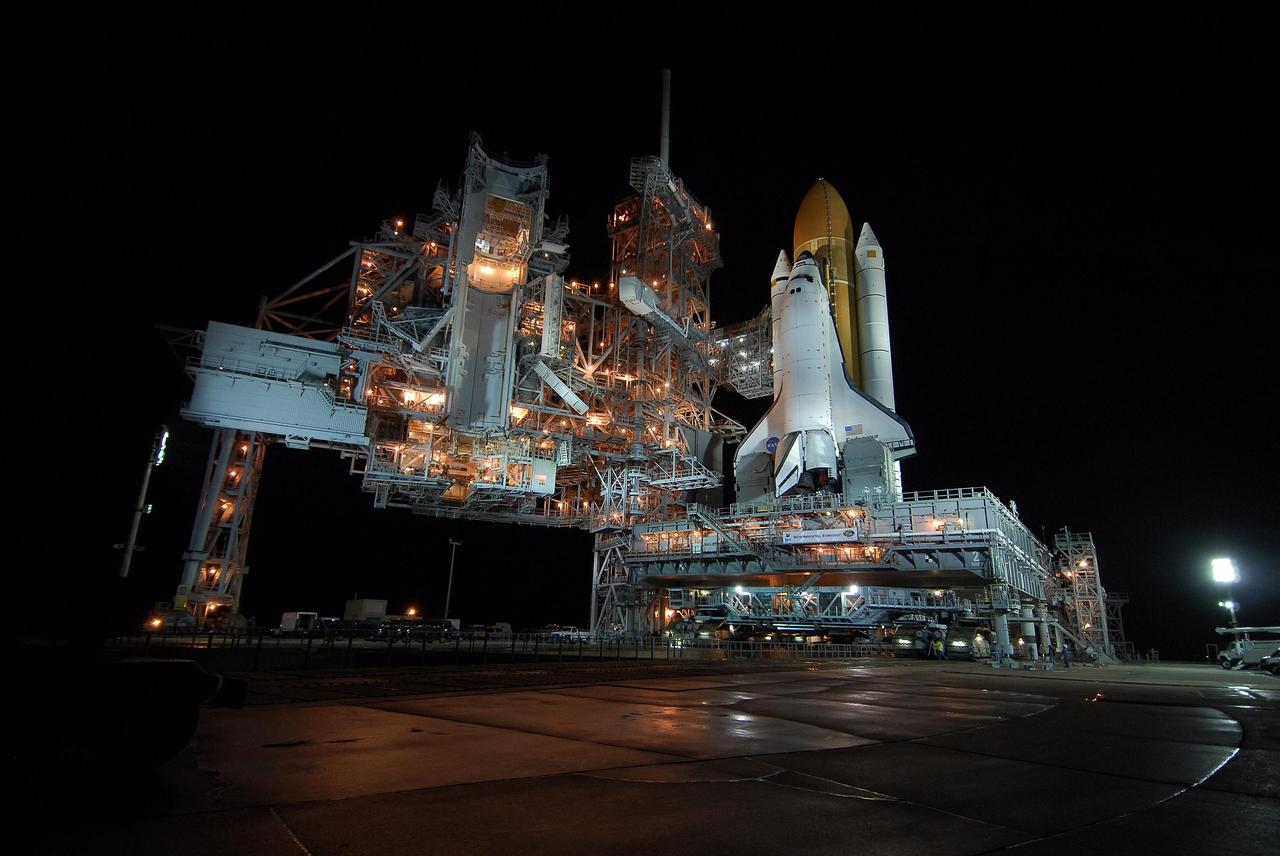
KENNEDY SPACE CENTER, FLA. -- Getting ready for the STS-123 mission, space shuttle Endeavour, atop the well-lighted mobile launcher platform, passes the rotating service structure (left) and flame trench (below) on Launch Pad 39A. The journey from the Vehicle Assembly Building began at 11:24 p.m. on Feb. 17, approximately 30 minutes before it's scheduled start time due to favorable weather conditions. The shuttle arrived at the launch pad at 4:45 a.m. Monday and was hard down at 6:22 a.m. On the mission, Endeavour and its crew will deliver the first section of the Japan Aerospace Exploration Agency's Kibo laboratory and the Canadian Space Agency's two-armed robotic system, Dextre. Launch is targeted for March 11. Photo credit: NASA/Amanda Diller
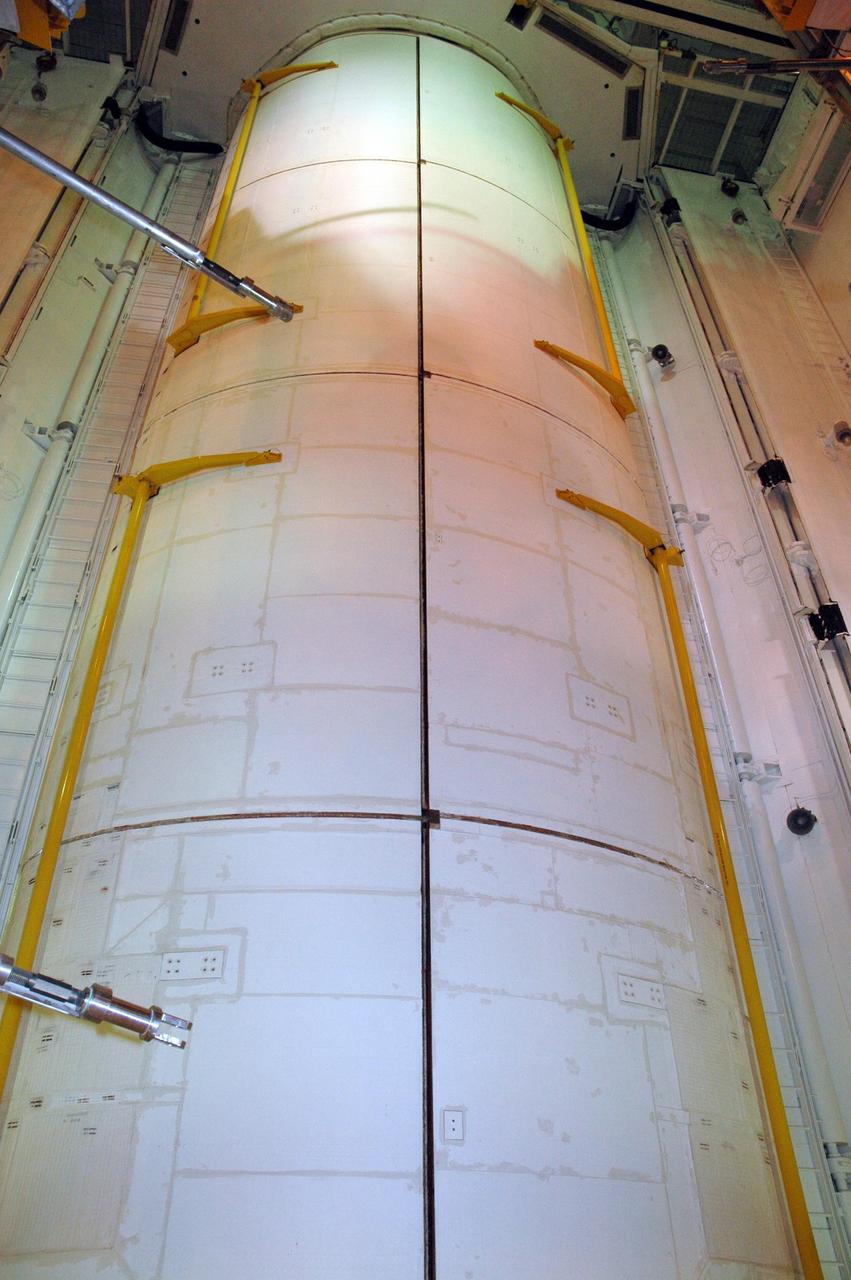
KENNEDY SPACE CENTER, FLA. -- On Launch Pad 39A, Endeavour's payload bay doors are again closed and secure for launch. The payload bay doors were opened to allow for payload closeouts, including camera tests on the shuttle robotic arm and the extension, known as the orbiter boom sensor system. Endeavour is scheduled to launch Aug. 7 on mission STS-118, the 22nd flight to the International Space Station. NASA/Charisse Nahser
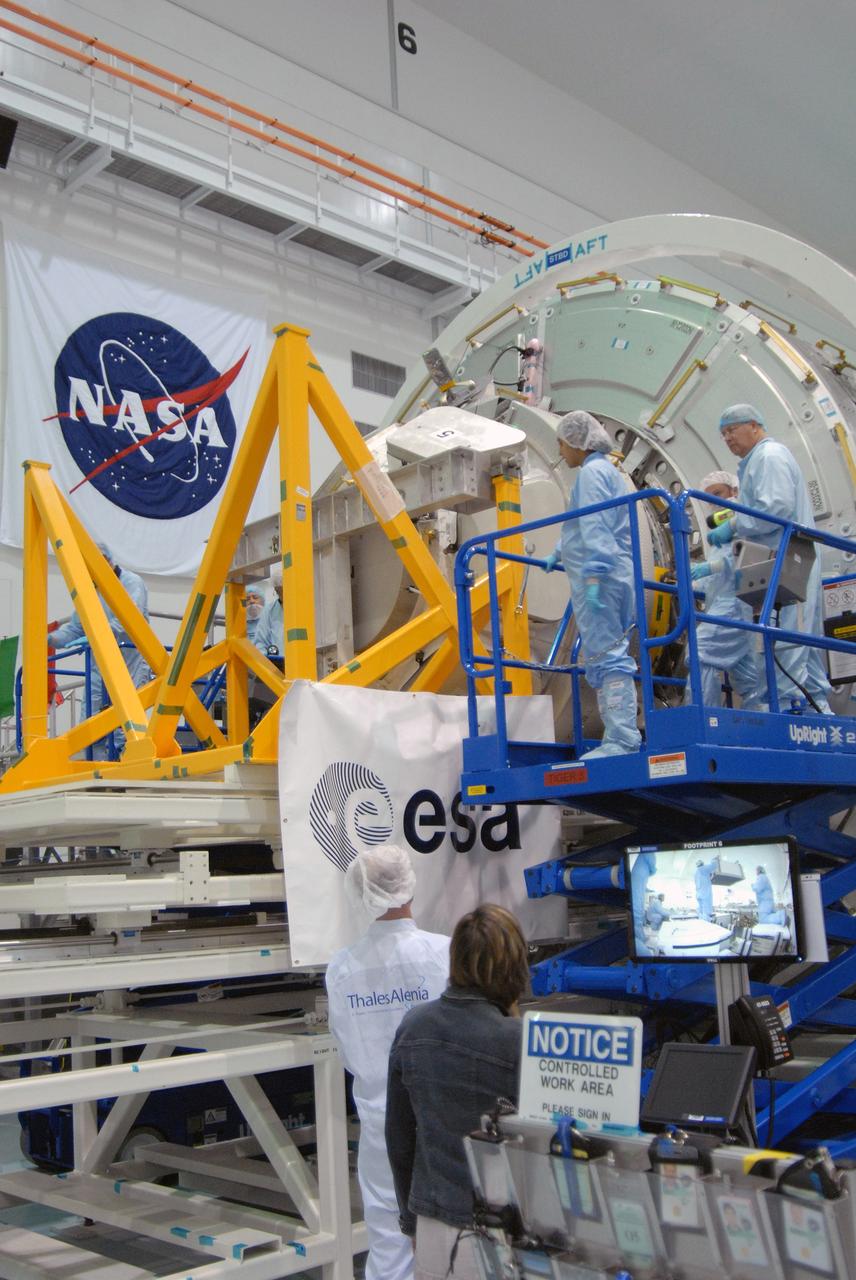
CAPE CANAVERAL, Fla. – In NASA Kennedy Space Center's Space Station Processing Facility, the Cupola module is being mated to the Tranquility node on the work stand. Cupola and Tranquility are the payload for space shuttle Endeavour's STS-130 mission to the International Space Station. The module was built for the European Space Agency by Alenia Spazio in Turin, Italy. When attached to the Tranquility Node 3 module, Cupola will resemble a circular bay window that will provide a vastly improved view of the station's exterior. Just under 10 feet in diameter, the module will accommodate two crew members and portable workstations that can control station and robotic activities. The multi-directional view will allow the crew to monitor spacewalks and docking operations, as well as provide a spectacular view of Earth and other celestial objects. Endeavour is targeted to launch Feb. 4, 2010. Photo credit: NASA/Cory Huston
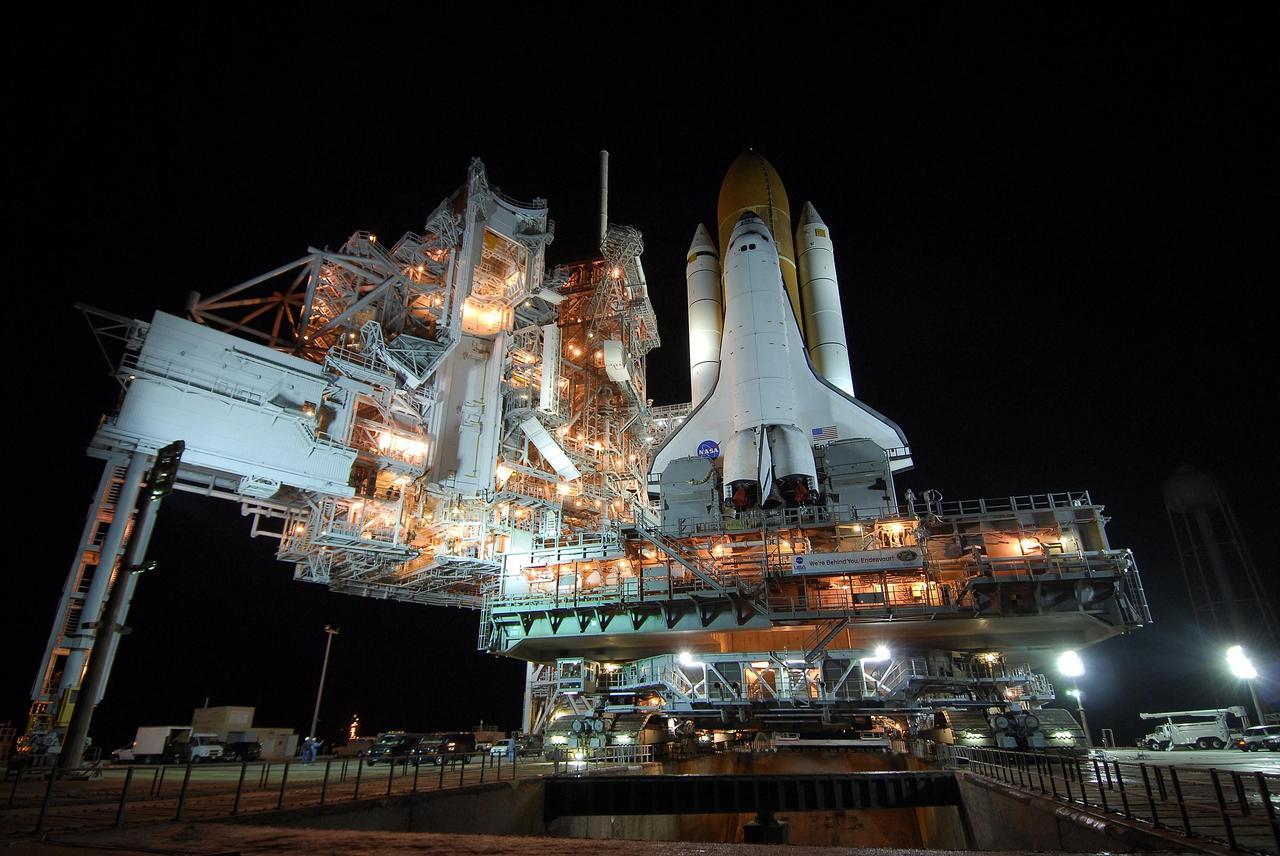
KENNEDY SPACE CENTER, FLA. -- The mobile launcher platform with space shuttle Endeavour on top comes to rest on Launch Pad 39A. Prior to launch on the STS-123 mission, Endeavour will undergo three weeks of processing at the pad. At left is the rotating service structure, or RSS, which will pivot and close around the shuttle. The RSS provides protected access to the orbiter for crew entry and servicing of payloads at the pad. The journey from the Vehicle Assembly Building began at 11:24 p.m. on Feb. 17, approximately 30 minutes before it's scheduled start time due to favorable weather conditions. The shuttle arrived at the launch pad at 4:45 a.m. Monday and was hard down at 6:22 a.m. On the mission, Endeavour and its crew will deliver the first section of the Japan Aerospace Exploration Agency's Kibo laboratory and the Canadian Space Agency's two-armed robotic system, Dextre. Launch is targeted for March 11. Photo credit: NASA/Amanda Diller

KENNEDY SPACE CENTER, FLA. -- Emergency egress training completed, the STS-123 crew members gather at the slidewire baskets. Clockwise from left are Mission Specialists Mike Foreman, Garrett Reisman and Robert L. Behnken, Commander Dominic Gorie, Mission Specialist Rick Linnehan, Pilot Gregory H. Johnson and Takao Doi. The TCDT provides astronauts and ground crews with an opportunity to participate in various countdown activities, including equipment familiarization and emergency egress training. Endeavour is targeted to launch at 2:28 a.m. EDT March 11 on the 16-day STS-123 mission to the International Space Station. Endeavour and its crew will deliver the first section of the Japan Aerospace Exploration Agency's Kibo laboratory and the Canadian Space Agency's two-armed robotic system, Dextre. Photo credit: NASA/Kim Shiflett
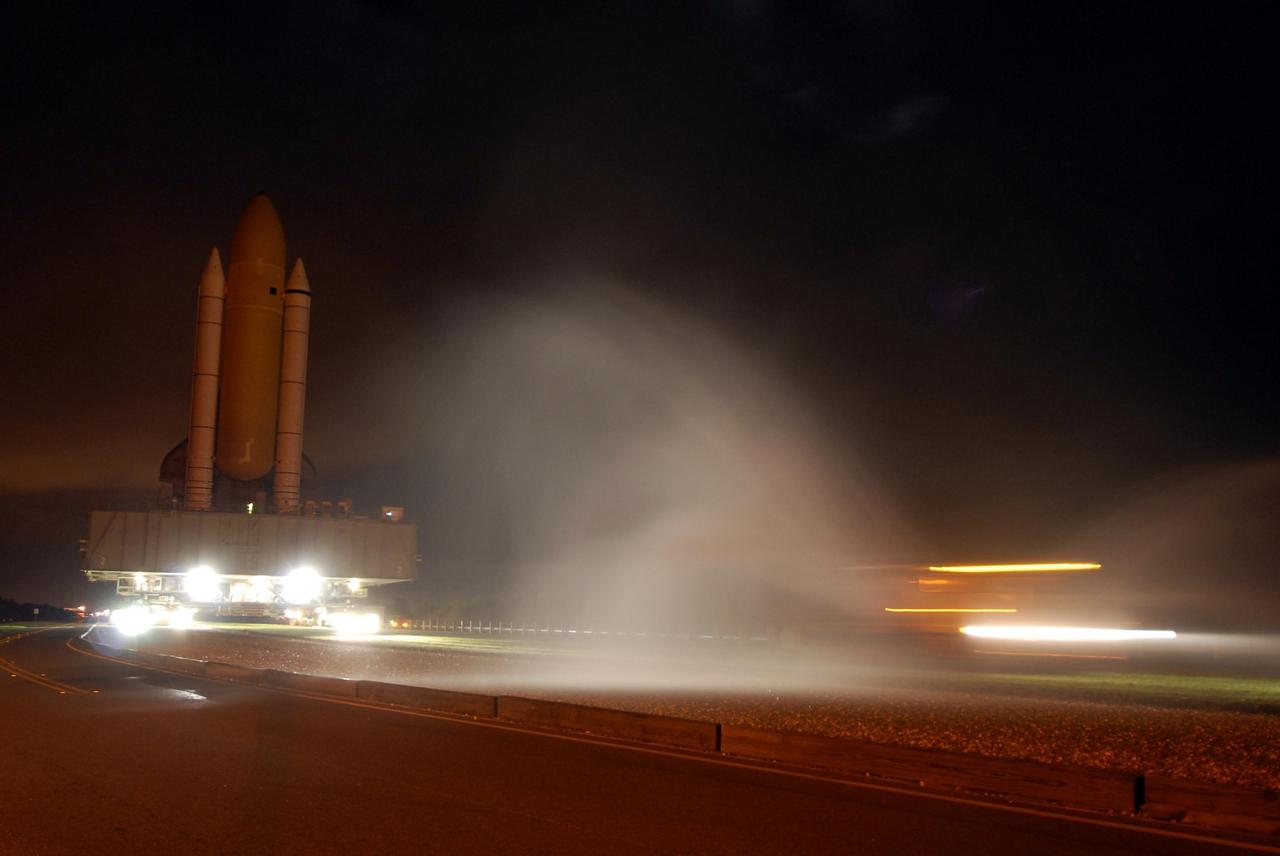
KENNEDY SPACE CENTER, FLA. -- A water truck (at right) creates a ghostlike image against the black sky as it sprays the dust on the dry crawlerway in front of space shuttle Endeavour (at left). The shuttle is rolling out to Launch Pad 39A for the STS-123 mission. The journey from the Vehicle Assembly Building began at 11:24 p.m. on Feb. 17, approximately 30 minutes before it's scheduled start time due to favorable weather conditions. The shuttle arrived at the launch pad at 4:45 a.m. Monday and was hard down at 6:22 a.m. On the mission, Endeavour and its crew will deliver the first section of the Japan Aerospace Exploration Agency's Kibo laboratory and the Canadian Space Agency's two-armed robotic system, Dextre. Launch is targeted for March 11. Photo credit: NASA/Amanda Diller
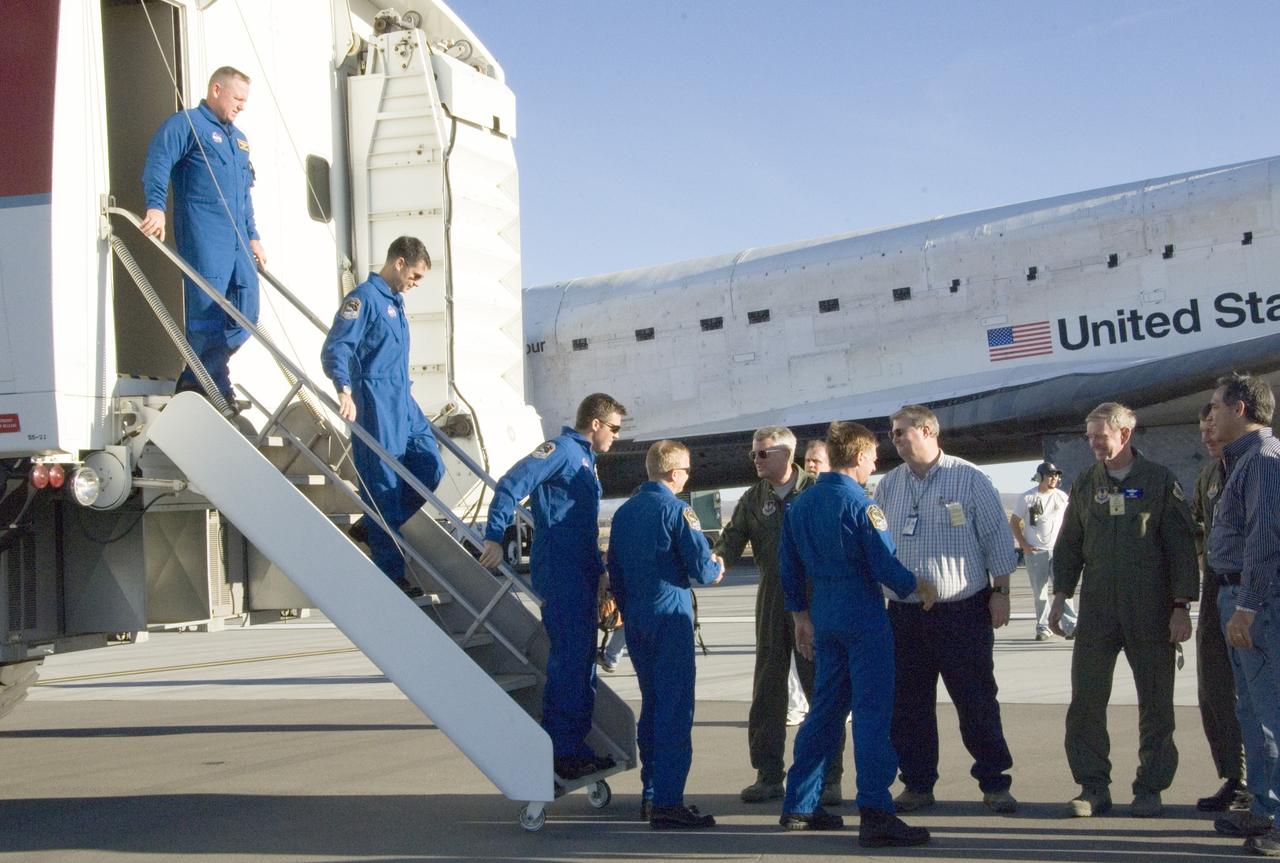
EDWARDS, Calif. – At Edwards Air Force Base in California, STS-126 crew members are greeted as they exit the crew transport vehicle after landing aboard space shuttle Endeavour. Leading the crew is Commander Chris Ferguson (right) followed by Pilot Eric Boe and Mission Specialists Steve Bowen and Shane Kimbrough. The decision to land at Edwards was made due to weather concerns at NASA's Kennedy Space Center in Florida. In the 52nd landing at Edwards, Endeavour touched down at 4:25 p.m. EST to end the STS-126 mission, completing its 16-day journey of over 6.6 million miles in space. The STS-126 mission was the 27th flight to the International Space Station, carrying equipment and supplies in the Multi-Purpose Logistics Module Leonardo. The mission featured four spacewalks and work to prepare the space station to house six crew members for long-duration missions. Photo credit: NASA/Tom Tschida, VAFB
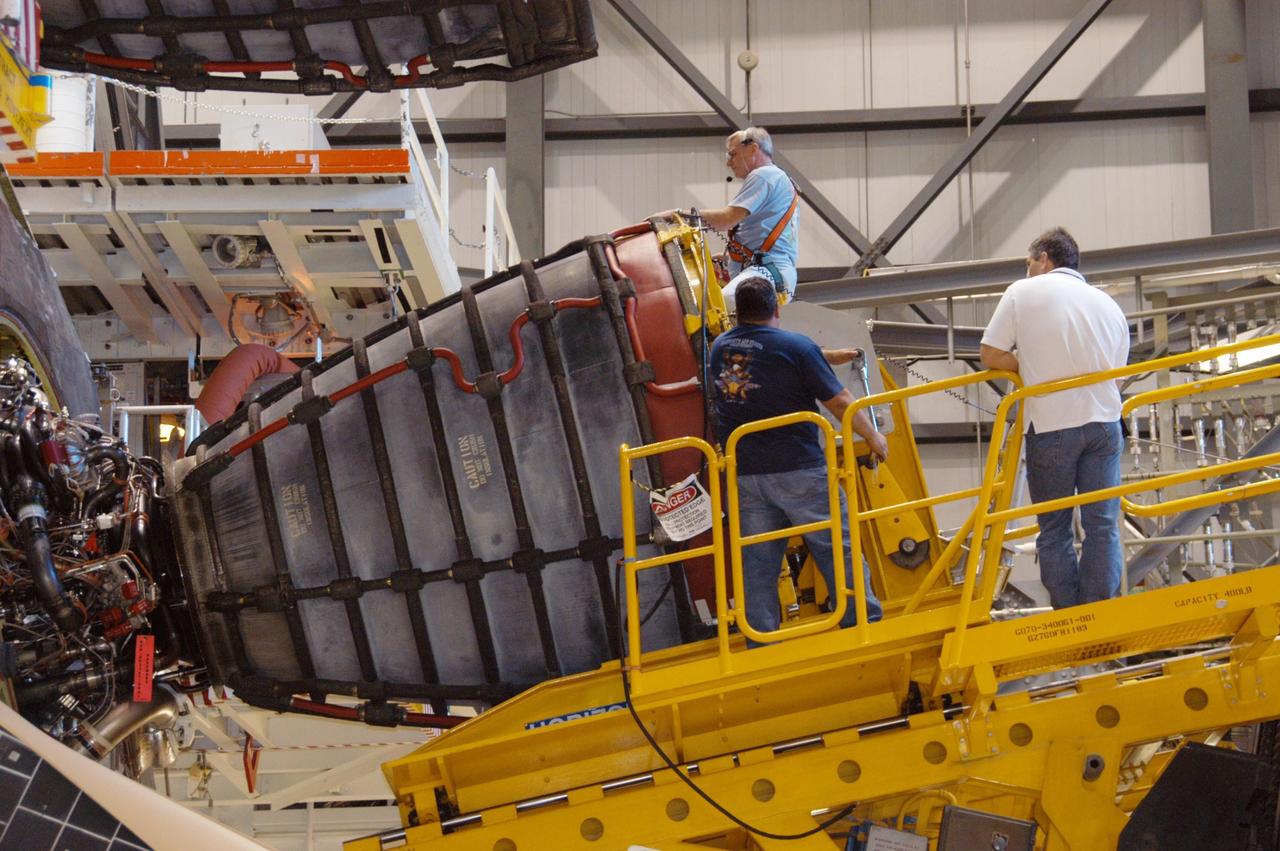
KENNEDY SPACE CENTER, FLA. -- In Orbiter Processing Facility bay 2, technicians on a Hyster forklift maneuver space shuttle main engine no. 3 into place on Endeavour. Each space shuttle main engine is 14 feet long, weighs about 6,700 pounds, and is 7.5 feet in diameter at the end of the nozzle. The orbiter is scheduled for mission STS-118, targeted for launch on June 28. The mission will be the 22nd flight to the International Space Station, carrying another starboard array, S5, for installation. Photo credit: NASA/George Shelton
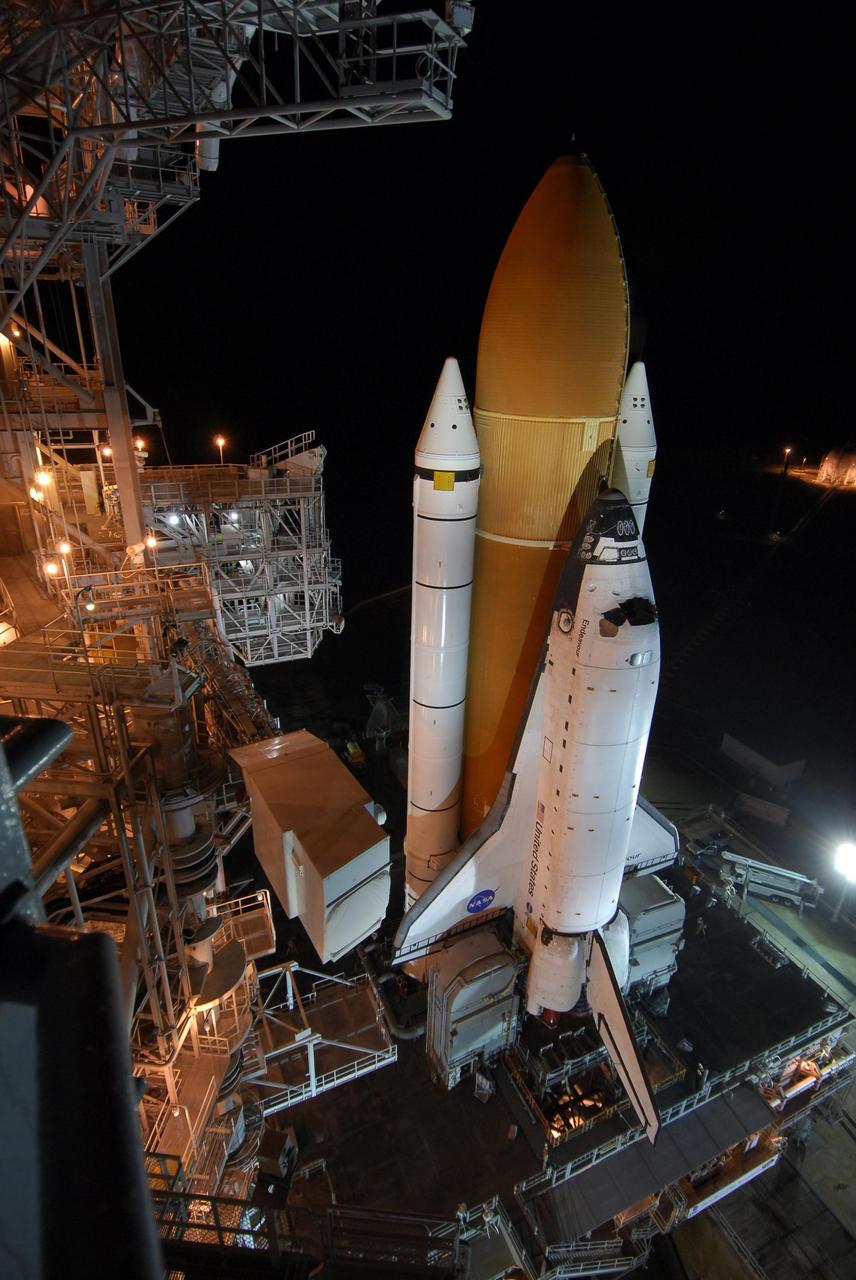
KENNEDY SPACE CENTER, FLA. -- The mobile launcher platform with space shuttle Endeavour on top comes to rest on Launch Pad 39A. Prior to launch on the STS-123 mission, Endeavour will undergo three weeks of processing at the pad. At left of the shuttle is the orbiter access arm with the White Room at the end. The arm will swing around so that the White Room rests next to the orbiter hatch, through which workers, the shuttle crew and closeout crew can enter the cockpit. The journey from the Vehicle Assembly Building began at 11:24 p.m. on Feb. 17, approximately 30 minutes before it's scheduled start time due to favorable weather conditions. The shuttle arrived at the launch pad at 4:45 a.m. Monday and was hard down at 6:22 a.m. On the mission, Endeavour and its crew will deliver the first section of the Japan Aerospace Exploration Agency's Kibo laboratory and the Canadian Space Agency's two-armed robotic system, Dextre. Launch is targeted for March 11. Photo credit: NASA/Amanda Diller
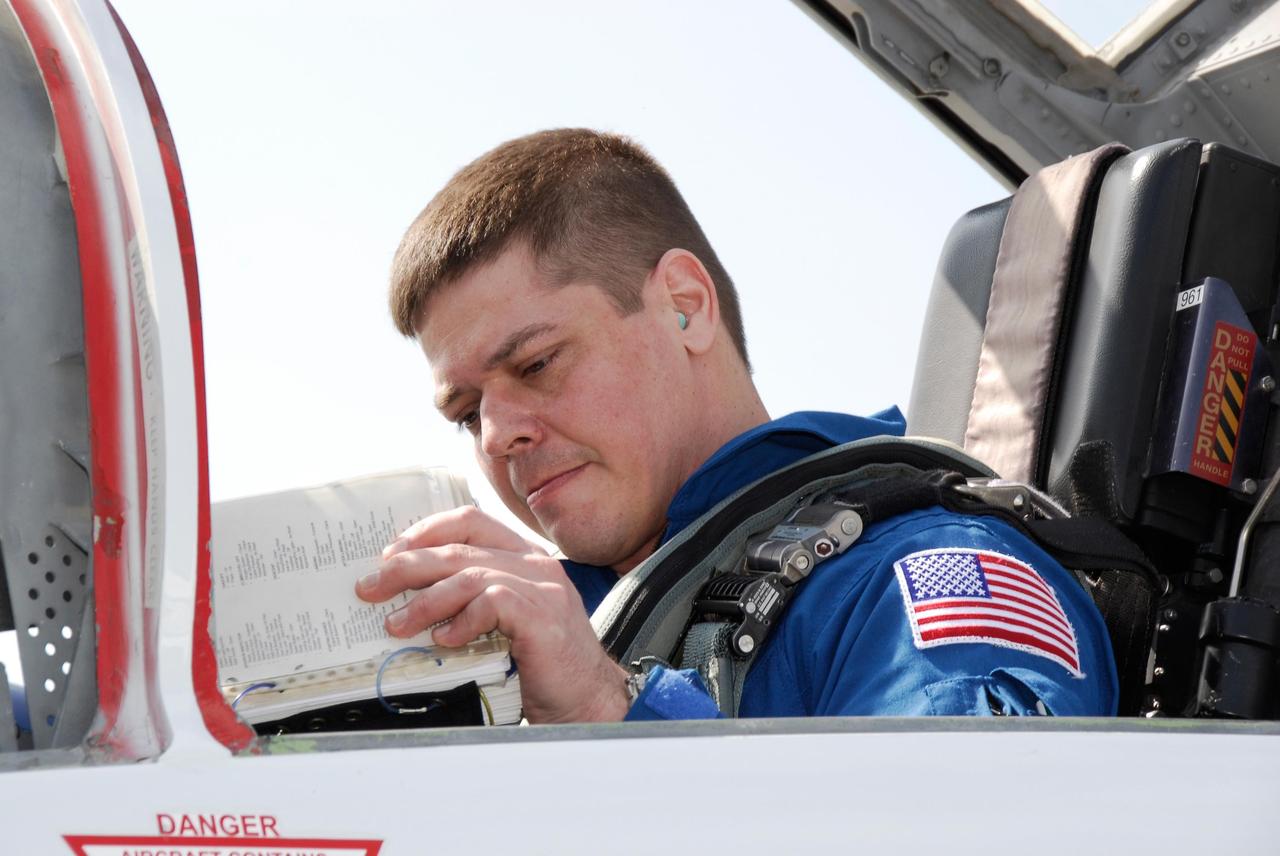
KENNEDY SPACE CENTER, FLA. -- At the NASA Kennedy Space Center's Shuttle Landing Facility, STS-123 Mission Specialist Robert L. Behnken waits in the aircraft that will return him to Houston. He and the other STS-123 crew members took part in a terminal countdown demonstration test, or TCDT, in preparation for the launch of space shuttle Endeavour scheduled on March 11. The TCDT enables astronauts and ground crews to participate in various countdown activities, including equipment familiarization and emergency egress training. On the STS-123 mission, Endeavour and its crew will deliver the first section of the Japan Aerospace Exploration Agency's Kibo laboratory and the Canadian Space Agency's two-armed robotic system, Dextre Photo credit: NASA/Kim Shiflett
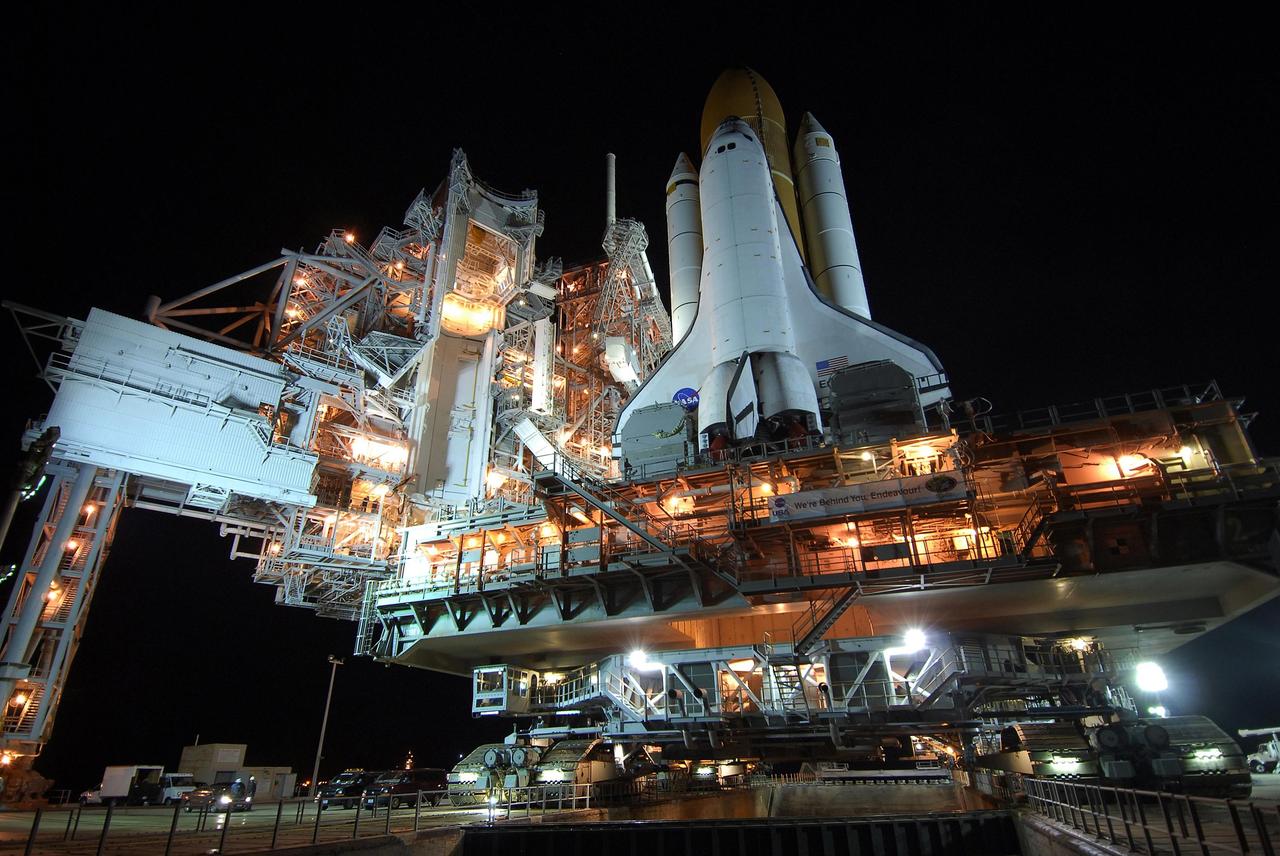
KENNEDY SPACE CENTER, FLA. -- Getting ready for the STS-123 mission, space shuttle Endeavour, atop the well-lighted mobile launcher platform, passes the rotating service structure on Launch Pad 39A. The journey from the Vehicle Assembly Building began at 11:24 p.m. on Feb. 17, approximately 30 minutes before it's scheduled start time due to favorable weather conditions. The shuttle arrived at the launch pad at 4:45 a.m. Monday and was hard down at 6:22 a.m. On the mission, Endeavour and its crew will deliver the first section of the Japan Aerospace Exploration Agency's Kibo laboratory and the Canadian Space Agency's two-armed robotic system, Dextre. Launch is targeted for March 11. Photo credit: NASA/Amanda Diller

CAPE CANAVERAL, Fla. – In Orbiter Processing Facility-2 at NASA's Kennedy Space Center in Florida, some of the consoles on space shuttle Endeavour’s flight deck are lit during transition and retirement processing of the shuttle. Endeavour is being prepared for public display at the California Science Center in Los Angeles. Over the course of its 19-year career, Endeavour spent 299 days in space during 25 missions. For more information, visit http://www.nasa.gov/transition. Photo credit: NASA/Kim Shiflett
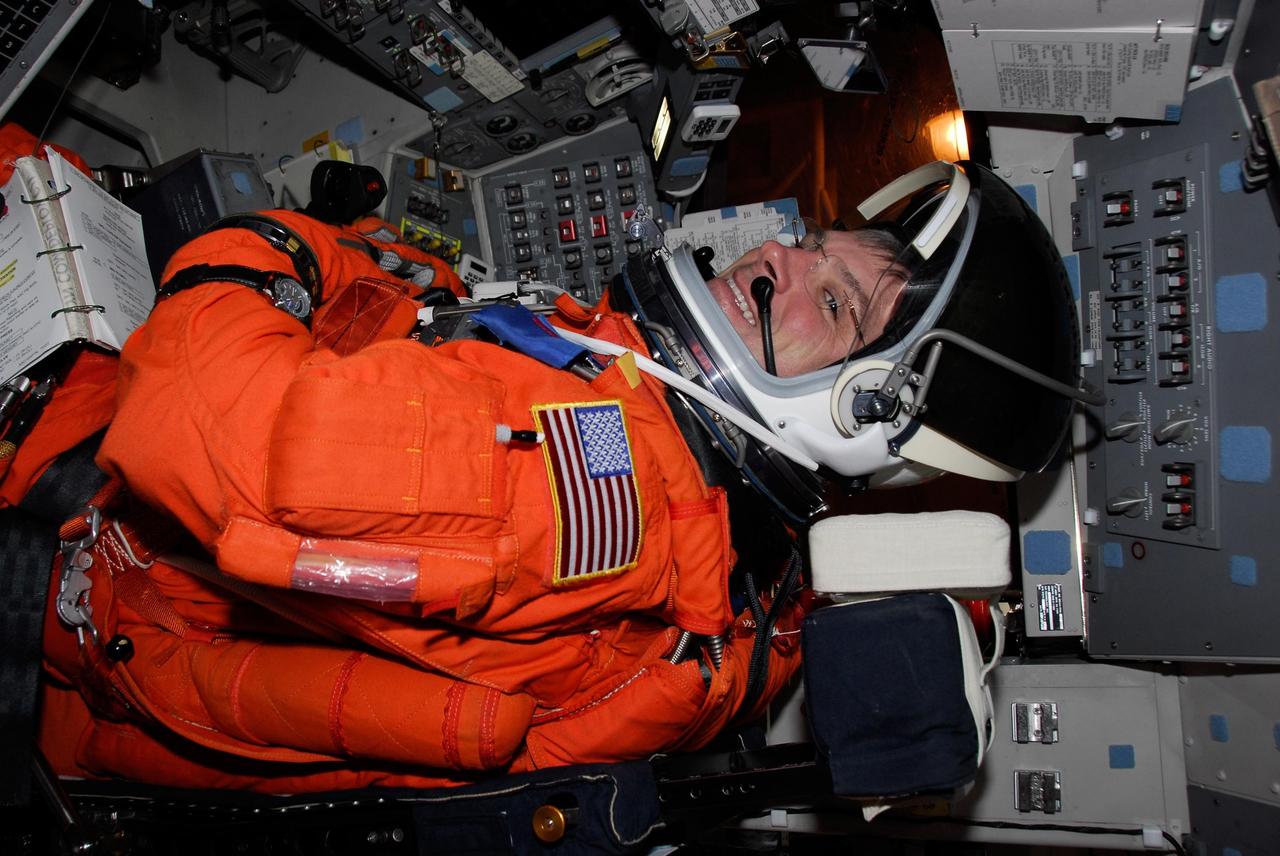
KENNEDY SPACE CENTER, FLA. -- Inside space shuttle Endeavour, STS-123 Pilot Gregory H. Johnson goes through a checklist for the simulated launch countdown, which is the culmination of the terminal countdown demonstration test, or TCDT. The TCDT provides astronauts and ground crews with an opportunity to participate in various countdown activities, including equipment familiarization and emergency egress training. Endeavour is targeted to launch at 2:28 a.m. EDT March 11 on the 16-day STS-123 mission to the International Space Station. Endeavour and its crew will deliver the first section of the Japan Aerospace Exploration Agency's Kibo laboratory and the Canadian Space Agency's two-armed robotic system, Dextre. Photo credit: NASA/Kim Shiflett
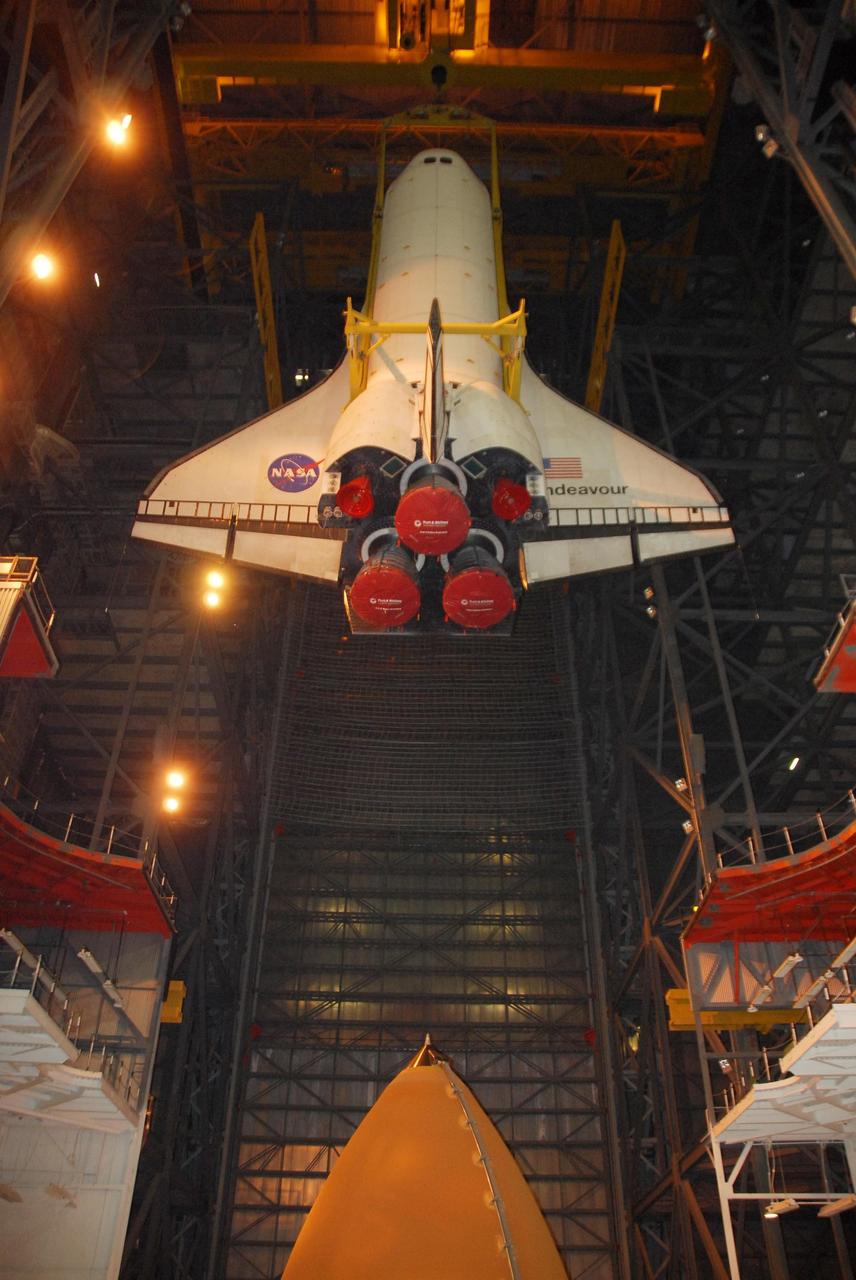
KENNEDY SPACE CENTER, FLA. -- In the Vehicle Assembly Building, space shuttle Endeavour is lowered into high bay 1 toward the external tank seen below. The shuttle will be mated with the tank and solid rocket boosters in preparation for launch on the STS-123 mission, targeted for March 11. The mission will deliver the first section of the Japan Aerospace Exploration Agency's Kibo laboratory and the Canadian Space Agency's two-armed robotic system, Dextre. Photo credit: NASA/Dimitri Gerondidakis
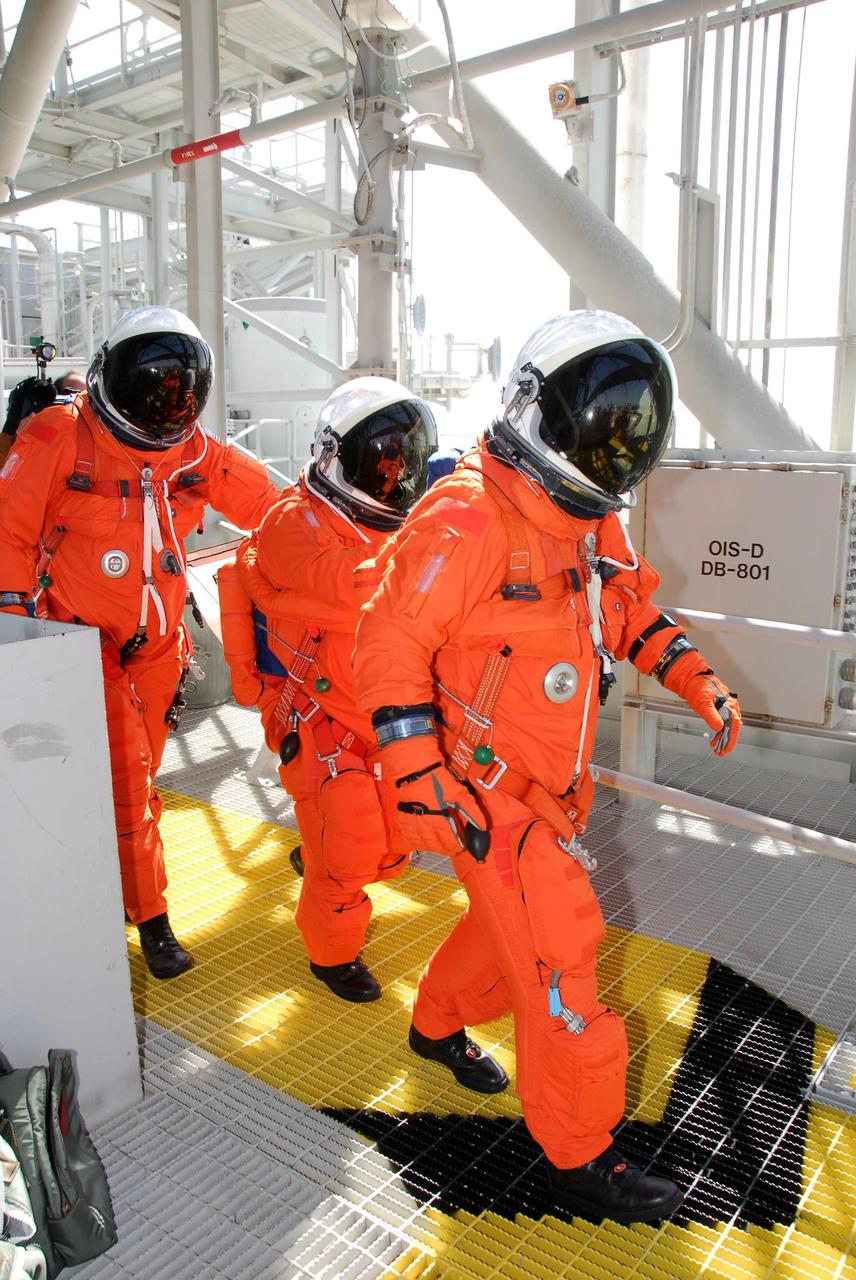
KENNEDY SPACE CENTER, FLA. -- Following the simulated launch countdown, STS-123 crew members head for the slidewire baskets on Launch Pad 39 at NASA's Kennedy Space Center. The crew is practicing emergency egress from the pad. The countdown was the culmination of the terminal countdown demonstration test, or TCDT. The TCDT provides astronauts and ground crews with an opportunity to participate in various countdown activities, including equipment familiarization and emergency egress training. Endeavour is targeted to launch at 2:28 a.m. EDT March 11 on the 16-day STS-123 mission to the International Space Station. Endeavour and its crew will deliver the first section of the Japan Aerospace Exploration Agency's Kibo laboratory and the Canadian Space Agency's two-armed robotic system, Dextre. Photo credit: NASA/Kim Shiflett
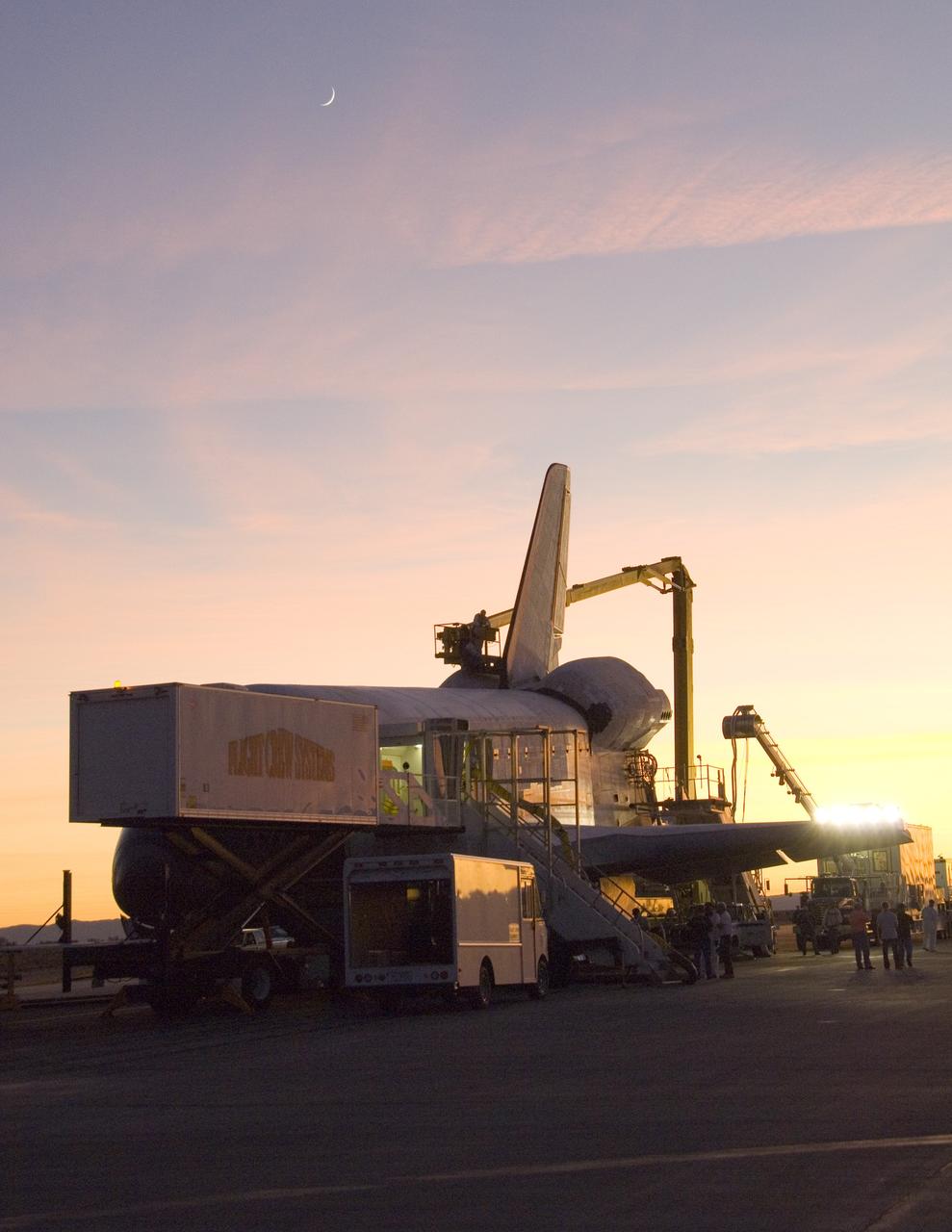
EDWARDS, Calif. – On Edwards Air Force Base in California, space shuttle Endeavour undergoes recovery operations after its landing. The orbiter convoy normally begins recovery operations in earnest about two hours before the shuttle is scheduled to land. Specially designed vehicles or units and a team of trained personnel “safe” the orbiter and prepare it for towing. Purge and Coolant Umbilical Access Vehicles are moved into position behind the orbiter to get access to the umbilical areas. The flight crew is replaced aboard the orbiter by exchange sup¬port personnel who prepare the orbiter for ground tow operations, install switch guards and remove data packages from any onboard experiments. After a total safety downgrade, vehicle ground personnel make numerous preparations for the towing operation, including install¬ing landing gear lock pins, disconnecting the nose landing gear drag link, positioning the towing vehicle in front of the orbiter and connecting the tow bar. The decision to land Endeavour at Edwards was made due to weather concerns at NASA's Kennedy Space Center in Florida. In the 52nd landing at Edwards, Endeavour touched down at 4:25 p.m. EST to end the STS-126 mission, completing its 16-day journey of more than 6.6 million miles in space. Endeavour will be returned to Kennedy atop a Shuttle Carrier Aircraft, or SCA, a modified Boeing 747 jetliner. Photo credit: NASA/Tony Landis, VAFB
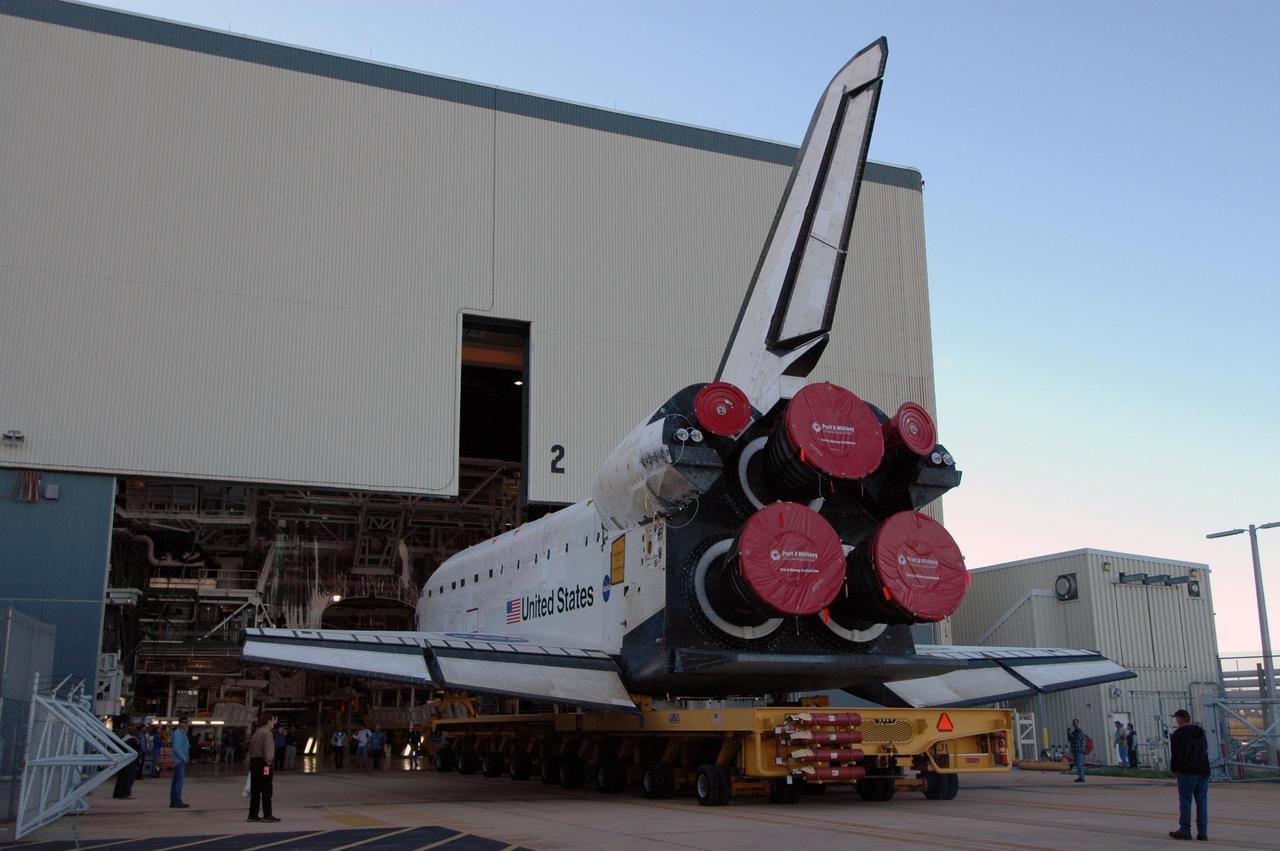
KENNEDY SPACE CENTER, FLA. -- On its transporter, space shuttle Endeavour rolls out of the Orbiter Processing Facility on its way to the Vehicle Assembly Building. In high bay 1 of the VAB, Endeavour will be attached to its external fuel tank and solid rocket boosters in preparation for its upcoming mission, STS-123, to the International Space Station targeted for March 11. The mission will deliver the first section of the Japan Aerospace Exploration Agency's Kibo laboratory and the Canadian Space Agency's two-armed robotic system, Dextre. Photo credit: NASA/Jim Grossmann
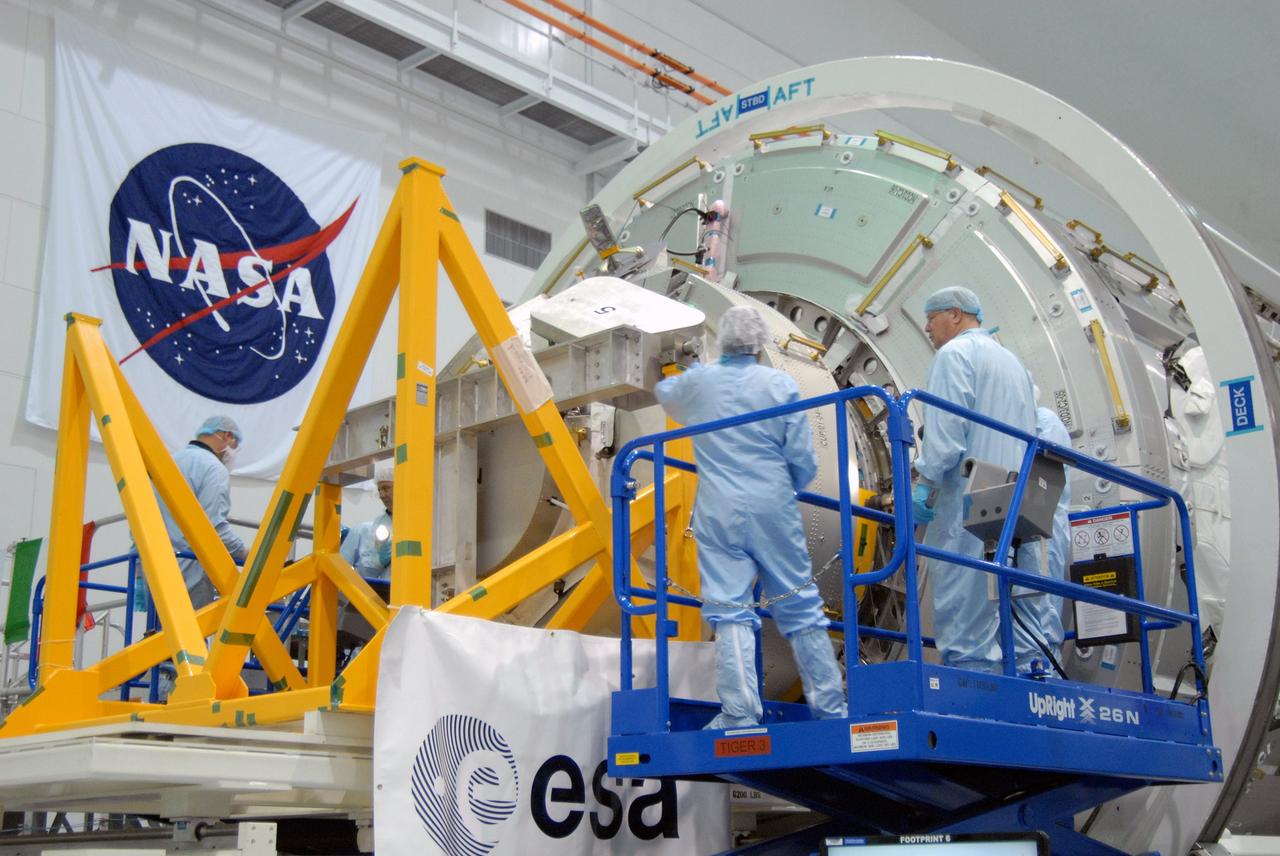
CAPE CANAVERAL, Fla. – In NASA Kennedy Space Center's Space Station Processing Facility, the Cupola module is being mated to the Tranquility node on the work stand. Cupola and Tranquility are the payload for space shuttle Endeavour's STS-130 mission to the International Space Station. The module was built for the European Space Agency by Alenia Spazio in Turin, Italy. When attached to the Tranquility Node 3 module, Cupola will resemble a circular bay window that will provide a vastly improved view of the station's exterior. Just under 10 feet in diameter, the module will accommodate two crew members and portable workstations that can control station and robotic activities. The multi-directional view will allow the crew to monitor spacewalks and docking operations, as well as provide a spectacular view of Earth and other celestial objects. Endeavour is targeted to launch Feb. 4, 2010. Photo credit: NASA/Cory Huston
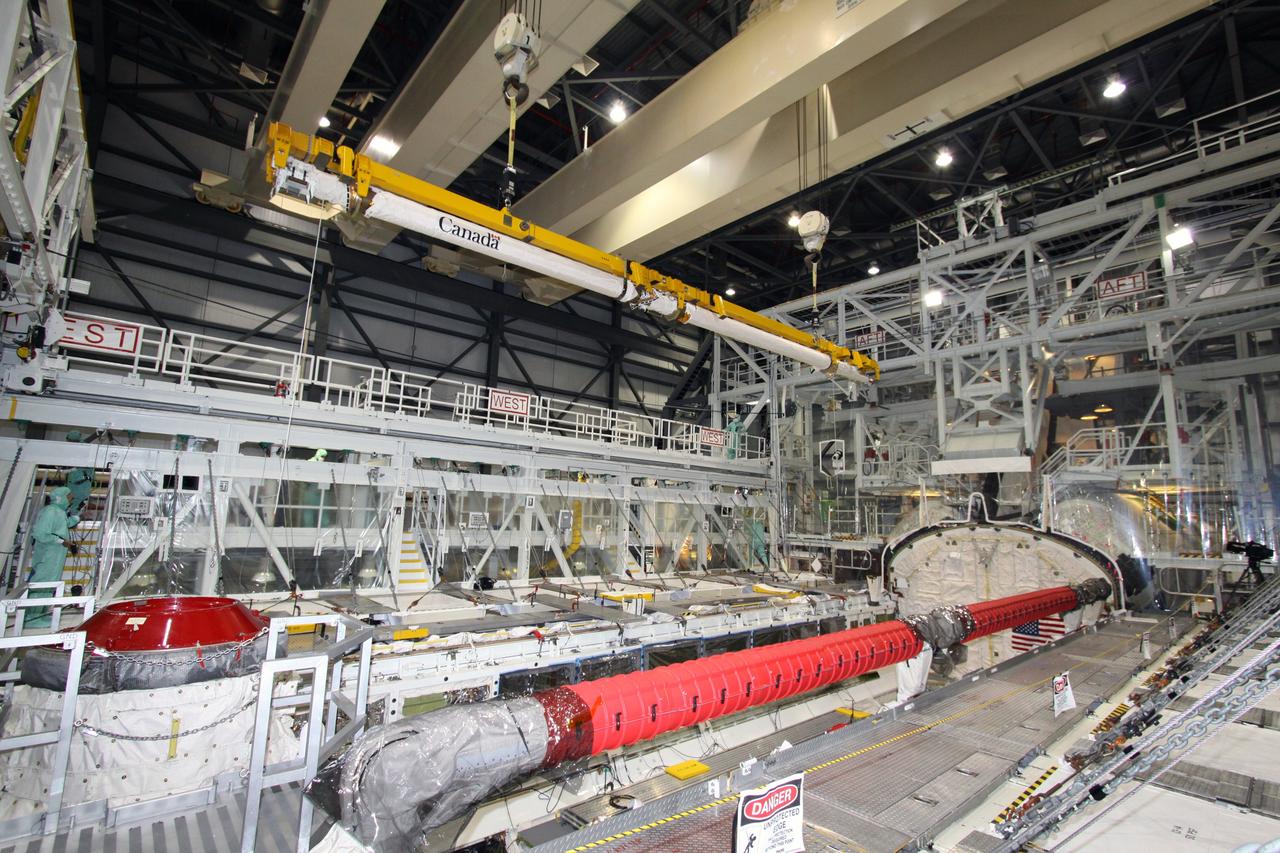
CAPE CANAVERAL, Fla. –In NASA Kennedy Space Center's Orbiter Processing Facility bay 2, a crane lifts space shuttle Endeavour's Orbiter Boom Sensor System out of the payload bay. After returning from the STS-127 mission July 31, 2009, Endeavour now is being processed for the STS-130 mission targeted for Feb. 4, 2010. Endeavour will deliver to the International Space Station the Tranquility pressurized module that will provide room for many of the station's life support systems. Photo credit: NASA/Jack Pfaller
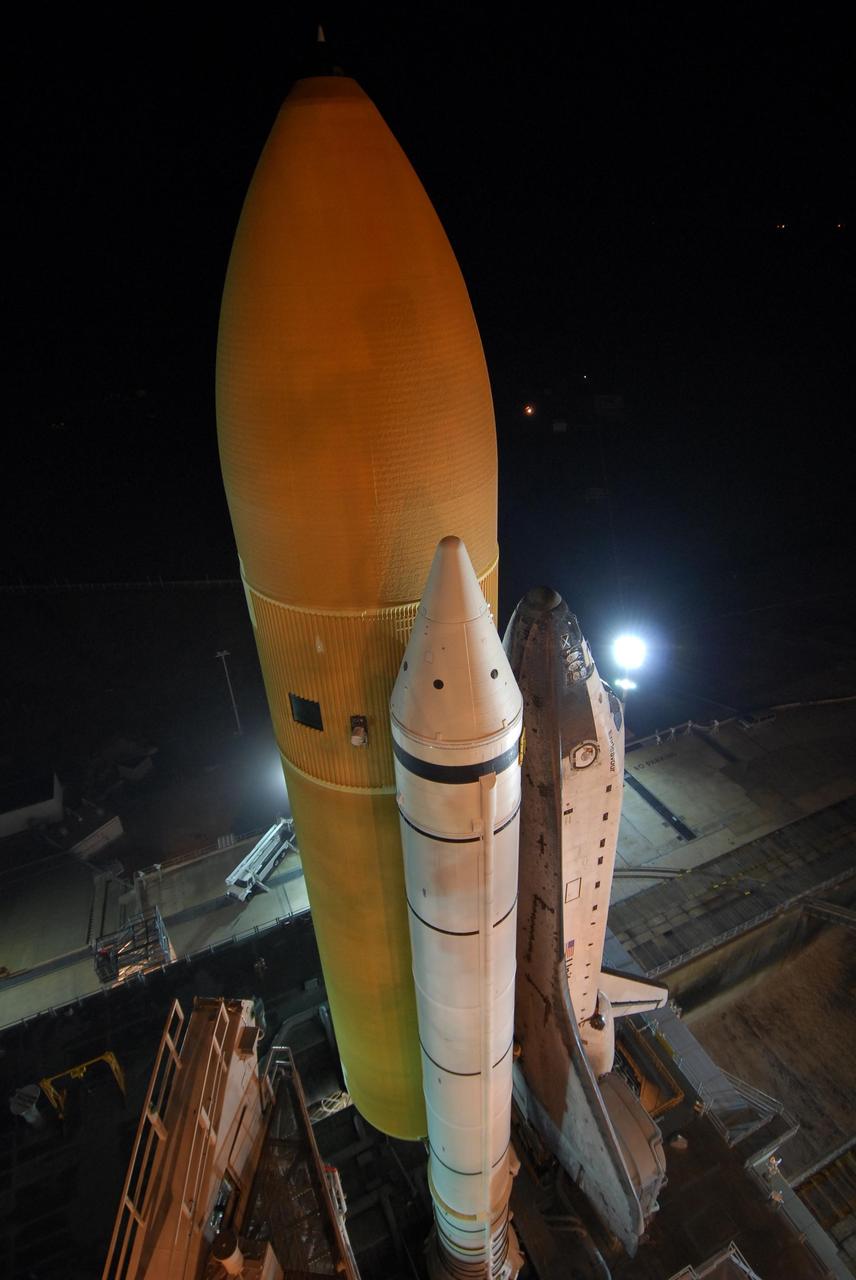
KENNEDY SPACE CENTER, FLA. -- The mobile launcher platform with space shuttle Endeavour on top comes to rest on Launch Pad 39A. Prior to launch on the STS-123 mission, Endeavour will undergo three weeks of processing at the pad. The journey from the Vehicle Assembly Building began at 11:24 p.m. on Feb. 17, approximately 30 minutes before it's scheduled start time due to favorable weather conditions. The shuttle arrived at the launch pad at 4:45 a.m. Monday and was hard down at 6:22 a.m. On the mission, Endeavour and its crew will deliver the first section of the Japan Aerospace Exploration Agency's Kibo laboratory and the Canadian Space Agency's two-armed robotic system, Dextre. Launch is targeted for March 11. Photo credit: NASA/Amanda Diller
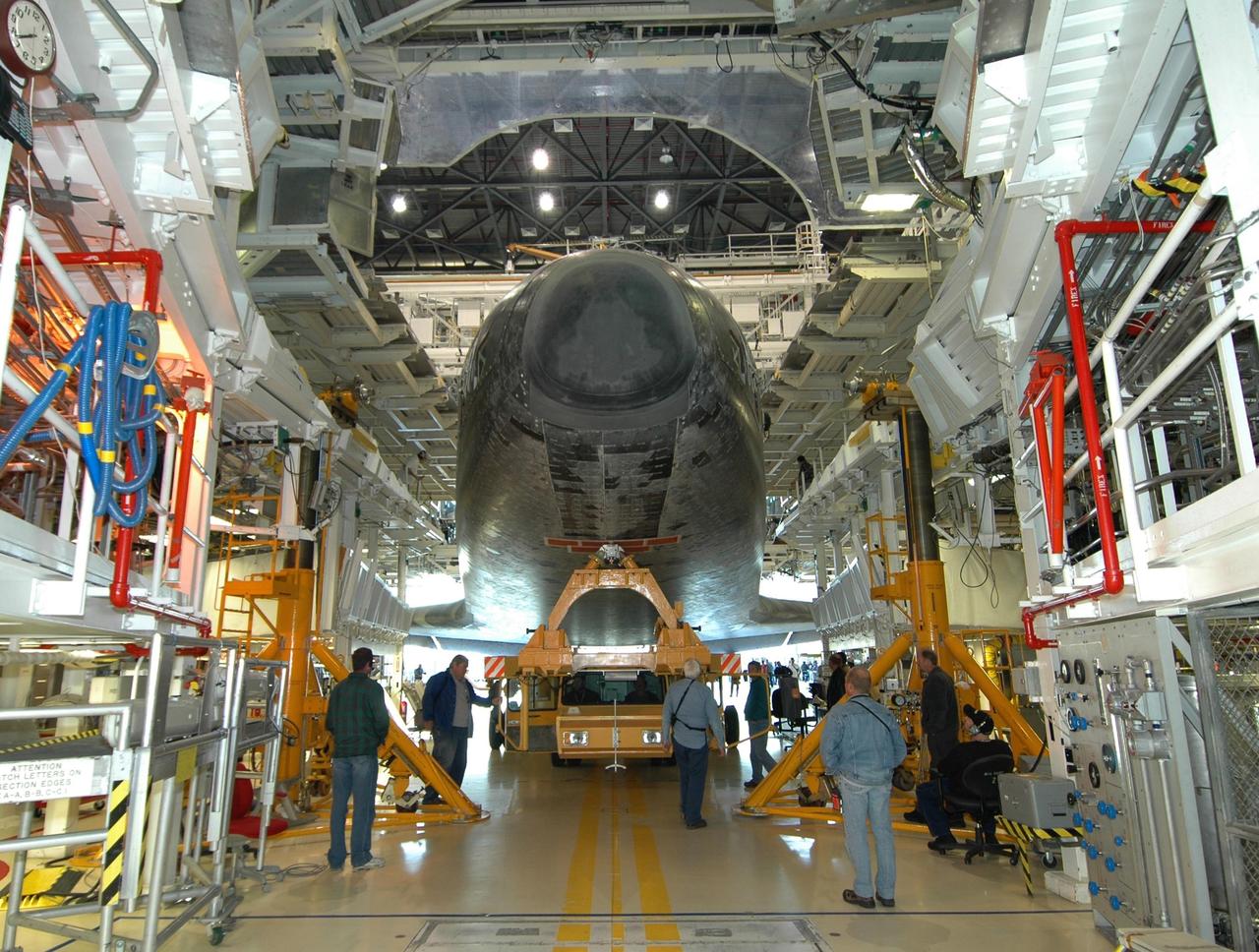
KENNEDY SPACE CENTER, FLA. -- Inside the Orbiter Processing Facility, space shuttle Endeavour settles on its transporter for the trip to the Vehicle Assembly Building. In high bay 1 of the VAB, Endeavour will be attached to its external fuel tank and solid rocket boosters in preparation for its upcoming mission, STS-123, to the International Space Station targeted for March 11. The mission will deliver the first section of the Japan Aerospace Exploration Agency's Kibo laboratory and the Canadian Space Agency's two-armed robotic system, Dextre. Photo credit: NASA/Jim Grossmann
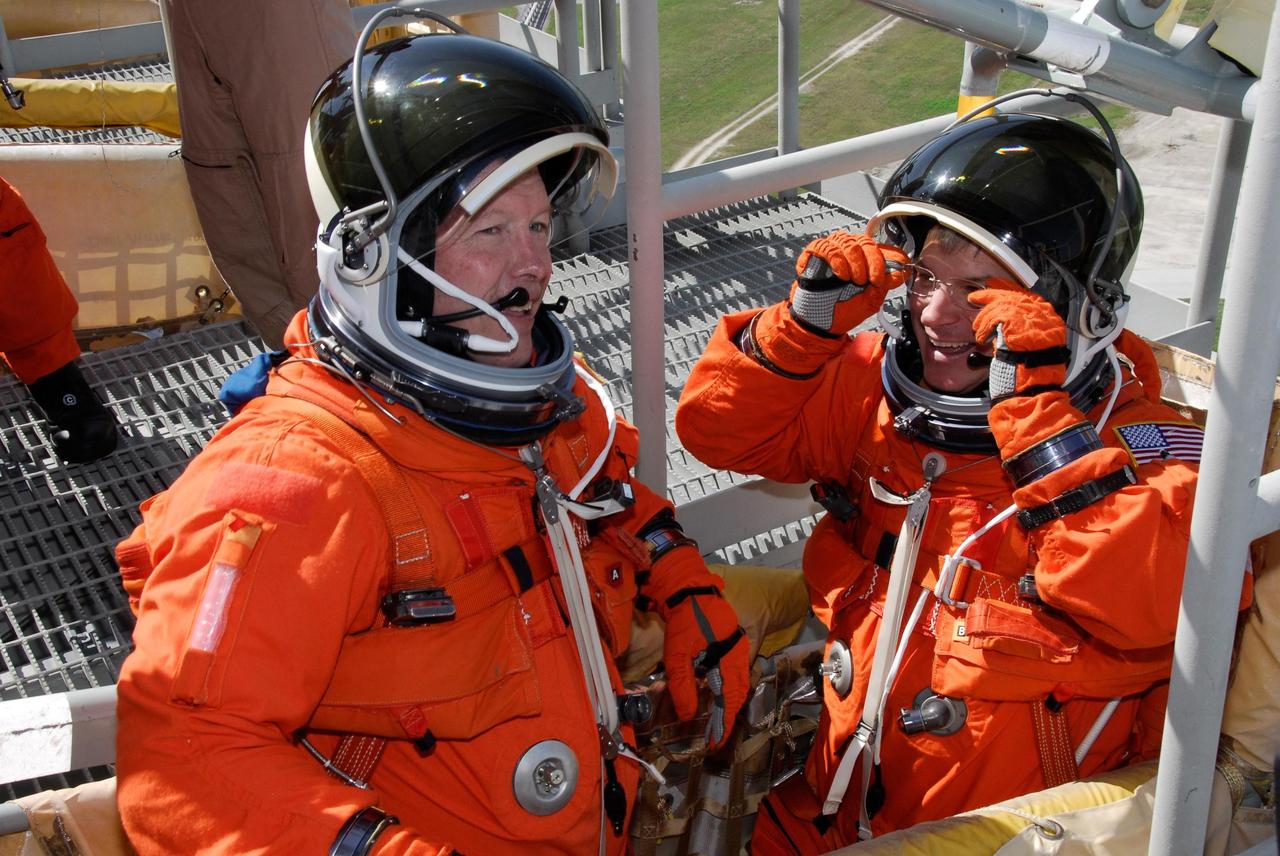
KENNEDY SPACE CENTER, FLA. -- Following the simulated launch countdown, STS-123 Commander Dominic Gorie (left) and Pilot Gregory H. Johnson sit in the slidewire basket, part of emergency egress training. The countdown was the culmination of the terminal countdown demonstration test, or TCDT. The TCDT provides astronauts and ground crews with an opportunity to participate in various countdown activities, including equipment familiarization and emergency egress training. Endeavour is targeted to launch at 2:28 a.m. EDT March 11 on the 16-day STS-123 mission to the International Space Station. Endeavour and its crew will deliver the first section of the Japan Aerospace Exploration Agency's Kibo laboratory and the Canadian Space Agency's two-armed robotic system, Dextre. Photo credit: NASA/Kim Shiflett

KENNEDY SPACE CENTER, FLA. -- In the Vehicle Assembly Building, space shuttle Endeavour hangs vertically suspended above the transfer aisle. Endeavour will be lifted up into high bay 1 to be attached to its external fuel tank and solid rocket boosters in preparation for launch on the STS-123 mission, targeted for March 11. The mission will deliver the first section of the Japan Aerospace Exploration Agency's Kibo laboratory and the Canadian Space Agency's two-armed robotic system, Dextre. Photo credit: NASA/Dimitri Gerondidakis
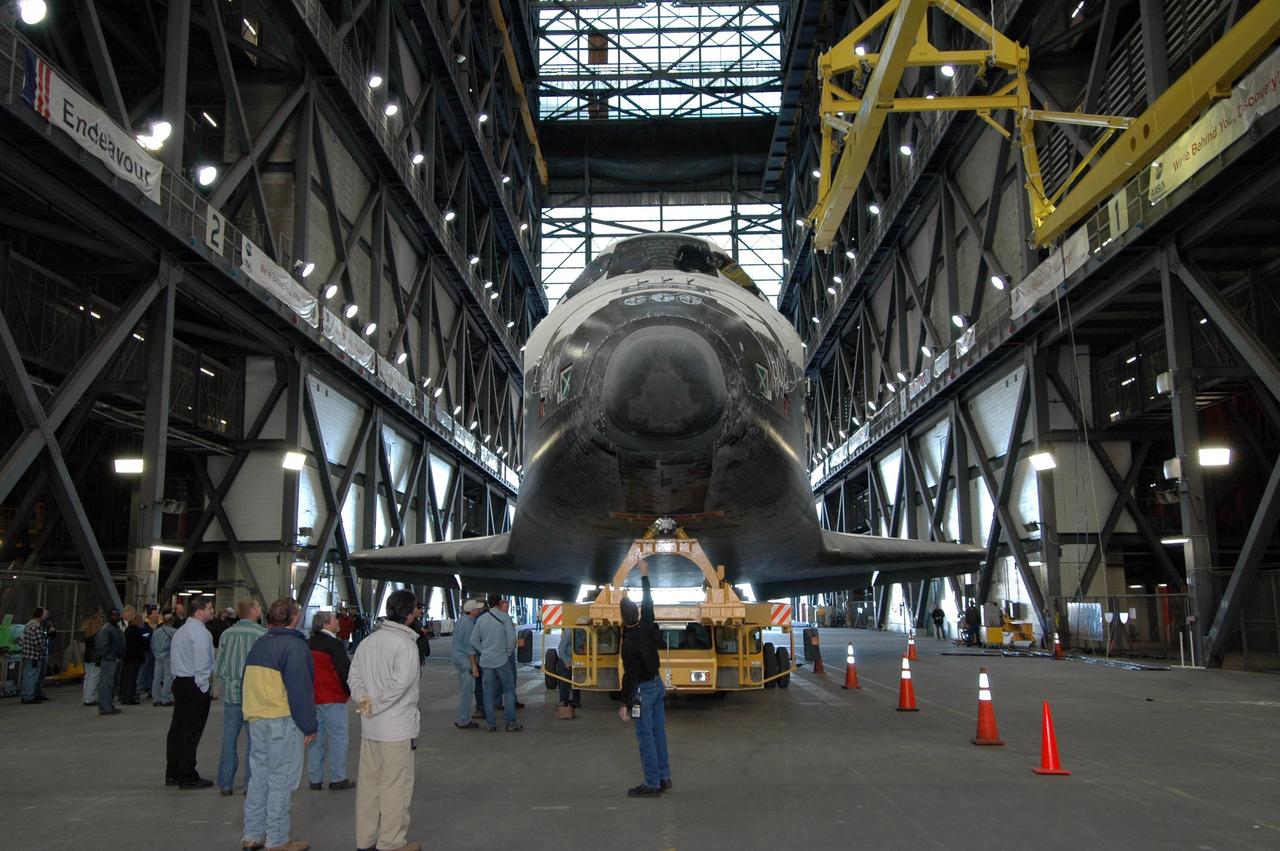
KENNEDY SPACE CENTER, FLA. -- In the transfer aisle of the Vehicle Assembly Building, space shuttle Endeavour waits for the overhead crane (upper right) to be attached. The crane will raise and then lift Endeavour into high bay 1. There, Endeavour will be attached to its external fuel tank and solid rocket boosters in preparation for its upcoming mission, STS-123, to the International Space Station targeted for March 11. The mission will deliver the first section of the Japan Aerospace Exploration Agency's Kibo laboratory and the Canadian Space Agency's two-armed robotic system, Dextre. Photo credit: NASA/Jim Grossmann
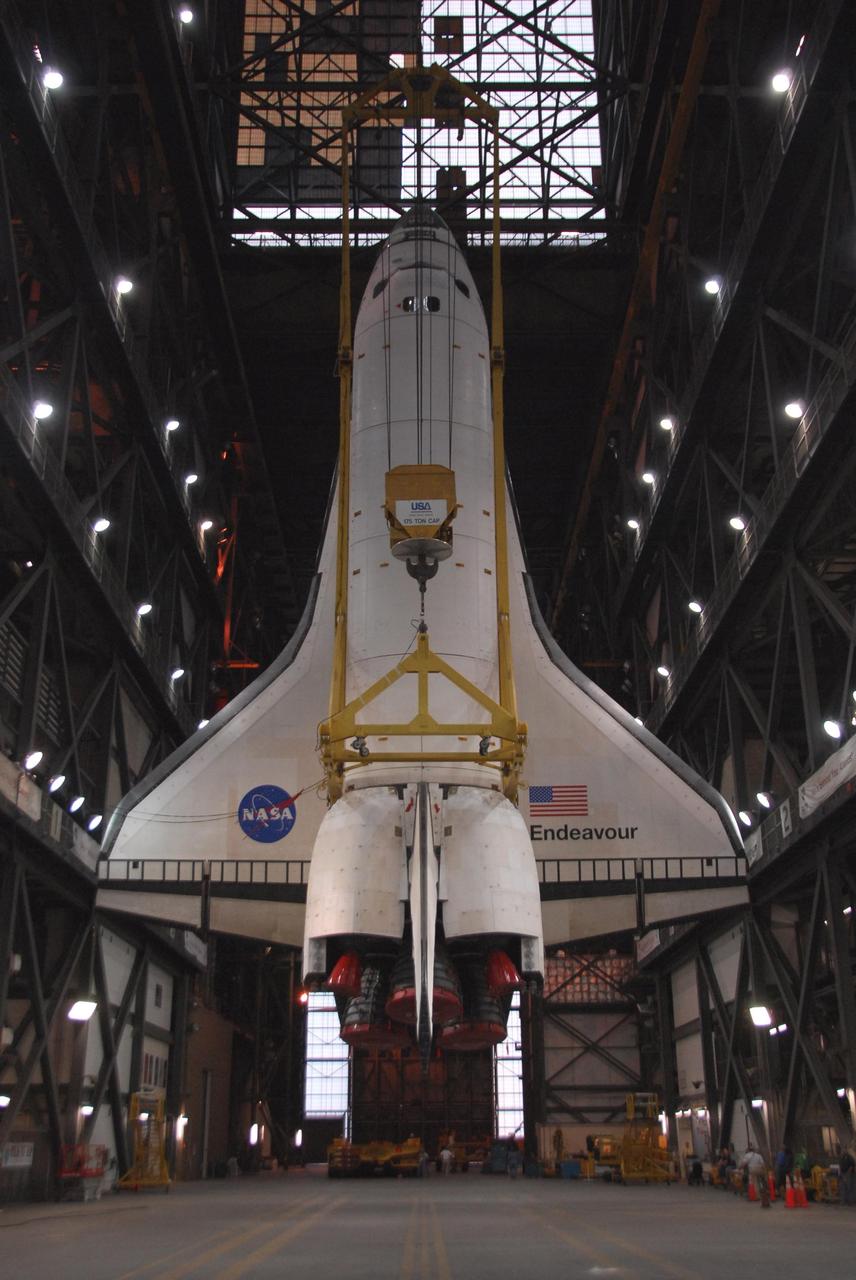
KENNEDY SPACE CENTER, FLA. -- In the Vehicle Assembly Building, space shuttle Endeavour hangs vertically suspended above the transfer aisle. Endeavour will be lifted up into high bay 1 to be lowered and attached to its external fuel tank and solid rocket boosters in preparation for launch on the STS-123 mission, targeted for March 11. The mission will deliver the first section of the Japan Aerospace Exploration Agency's Kibo laboratory and the Canadian Space Agency's two-armed robotic system, Dextre. Photo credit: NASA/Dimitri Gerondidakis
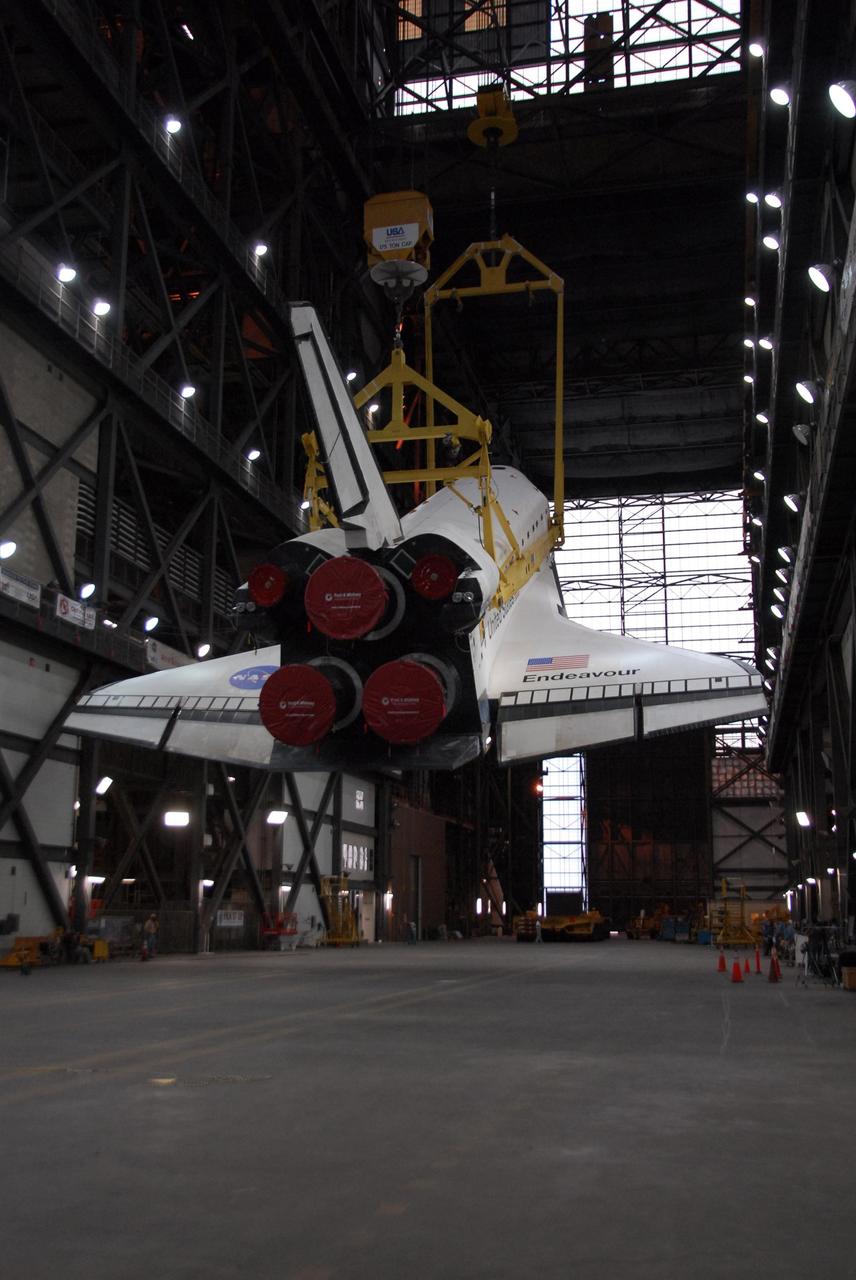
KENNEDY SPACE CENTER, FLA. -- In the transfer aisle of the Vehicle Assembly Building, the suspended space shuttle Endeavour is slowly being raised to a vertical position. It will then be lifted up into high bay 1 to be attached to its external fuel tank and solid rocket boosters in preparation for launch on the STS-123 mission, targeted for March 11. The mission will deliver the first section of the Japan Aerospace Exploration Agency's Kibo laboratory and the Canadian Space Agency's two-armed robotic system, Dextre. Photo credit: NASA/Dimitri Gerondidakis
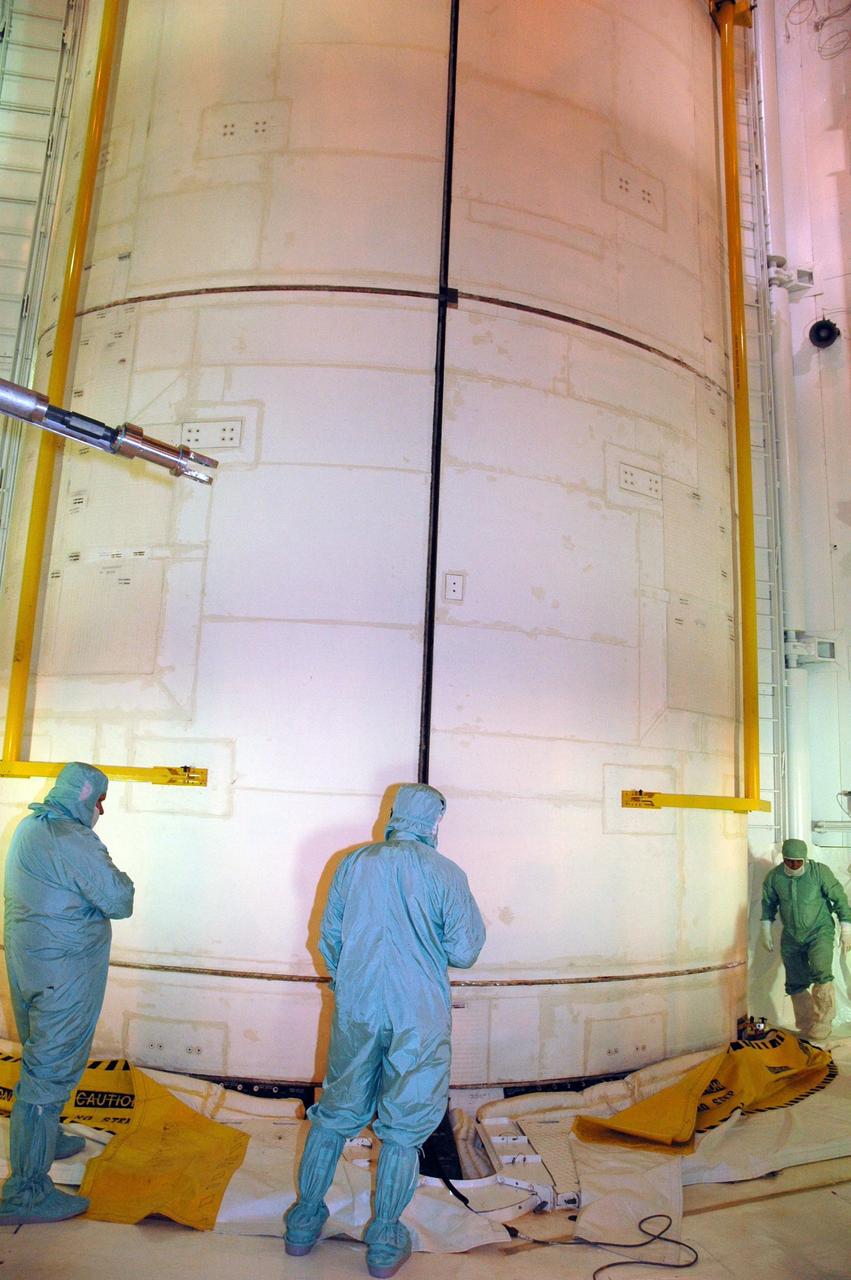
KENNEDY SPACE CENTER, FLA. -- On Launch Pad 39A, workers check the closing of Endeavour's payload bay doors. The payload bay doors were opened to allow for payload closeouts, including camera tests on the shuttle robotic arm and the extension, known as the orbiter boom sensor system. Endeavour is scheduled to launch Aug. 7 on mission STS-118, the 22nd flight to the International Space Station. NASA/Charisse Nahser
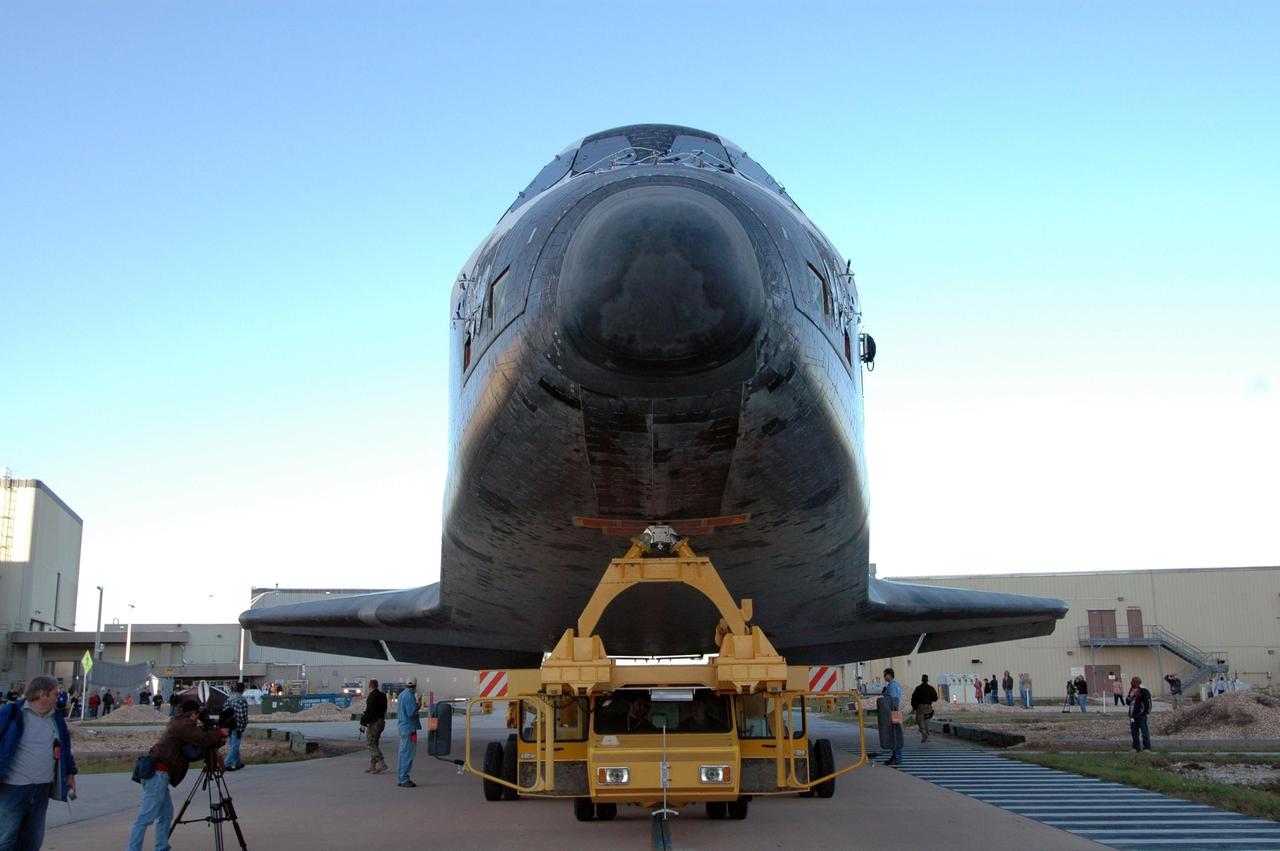
KENNEDY SPACE CENTER, FLA. -- On its transporter, space shuttle Endeavour begins the rollover to the Vehicle Assembly Building. In high bay 1 of the VAB, Endeavour will be attached to its external fuel tank and solid rocket boosters in preparation for its upcoming mission, STS-123, to the International Space Station targeted for March 11. The mission will deliver the first section of the Japan Aerospace Exploration Agency's Kibo laboratory and the Canadian Space Agency's two-armed robotic system, Dextre. Photo credit: NASA/Jim Grossmann

KENNEDY SPACE CENTER, FLA. -- Following the simulated launch countdown, STS-123 Mission Specialists Mike Foreman (left) and Robert L. Behnken complete their emergency egress practice on Launch Pad 39A at NASA's Kennedy Space Center. The countdown was the culmination of the terminal countdown demonstration test, or TCDT. The TCDT provides astronauts and ground crews with an opportunity to participate in various countdown activities, including equipment familiarization and emergency egress training. Endeavour is targeted to launch at 2:28 a.m. EDT March 11 on the 16-day STS-123 mission to the International Space Station. Endeavour and its crew will deliver the first section of the Japan Aerospace Exploration Agency's Kibo laboratory and the Canadian Space Agency's two-armed robotic system, Dextre. Photo credit: NASA/Kim Shiflett

KENNEDY SPACE CENTER, FLA. -- In Orbiter Processing Facility bay 2, technicians on a Hyster forklift install space shuttle main engine no. 3 into Endeavour. Each space shuttle main engine is 14 feet long, weighs about 6,700 pounds, and is 7.5 feet in diameter at the end of the nozzle. The orbiter is scheduled for mission STS-118, targeted for launch on June 28. The mission will be the 22nd flight to the International Space Station, carrying another starboard array, S5, for installation. Photo credit: NASA/George Shelton
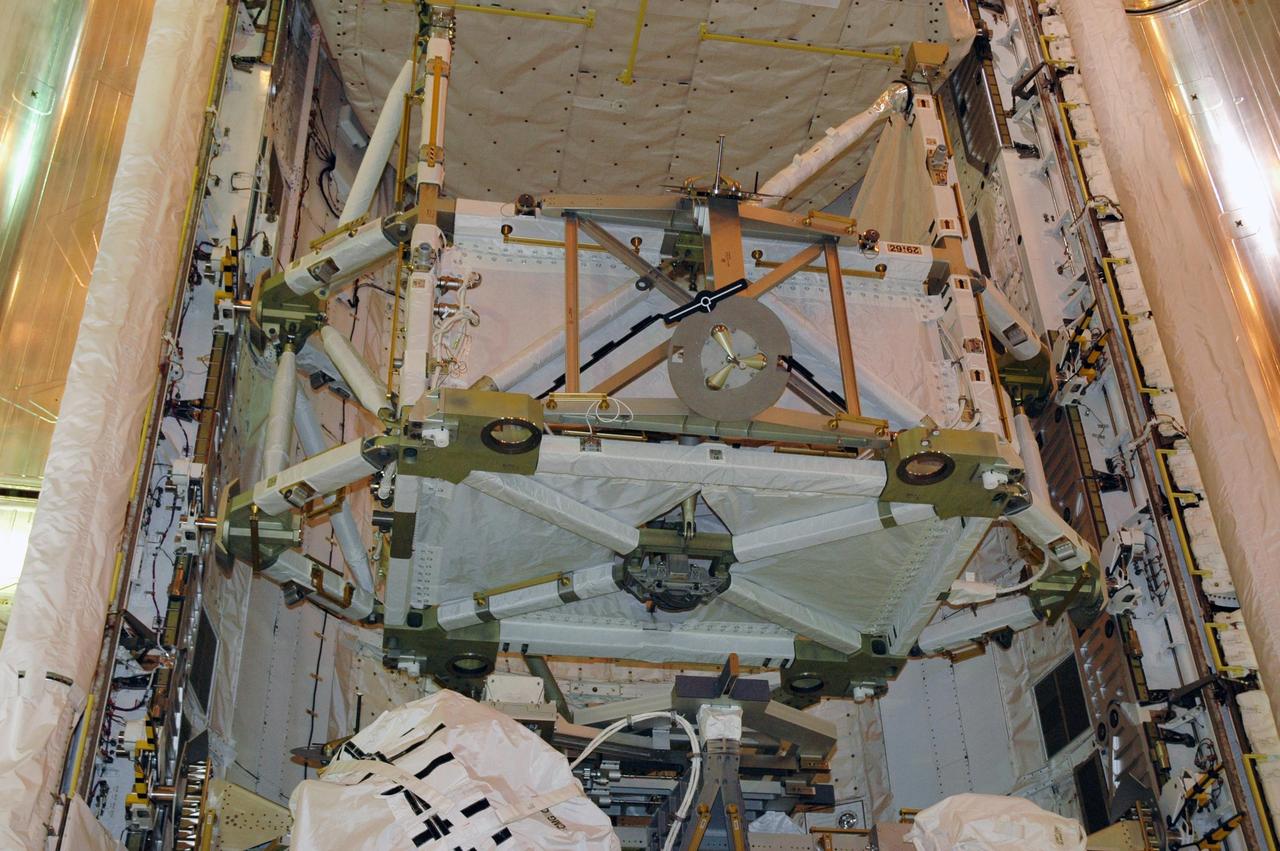
KENNEDY SPACE CENTER, FLA. -- Looking into the open payload bay doors of Space Shuttle Endeavour, the S5 truss takes the spotlight. Other cargo elements are the SPACEHAB module and the external stowage platform 3. At lower right is the control moment gyro. The payload bay doors were opened to allow for payload closeouts, including camera tests on the shuttle robotic arm and the extension, known as the orbiter boom sensor system. Endeavour is scheduled to launch Aug. 7 on mission STS-118, the 22nd flight to the International Space Station. NASA/Charisse Nahser
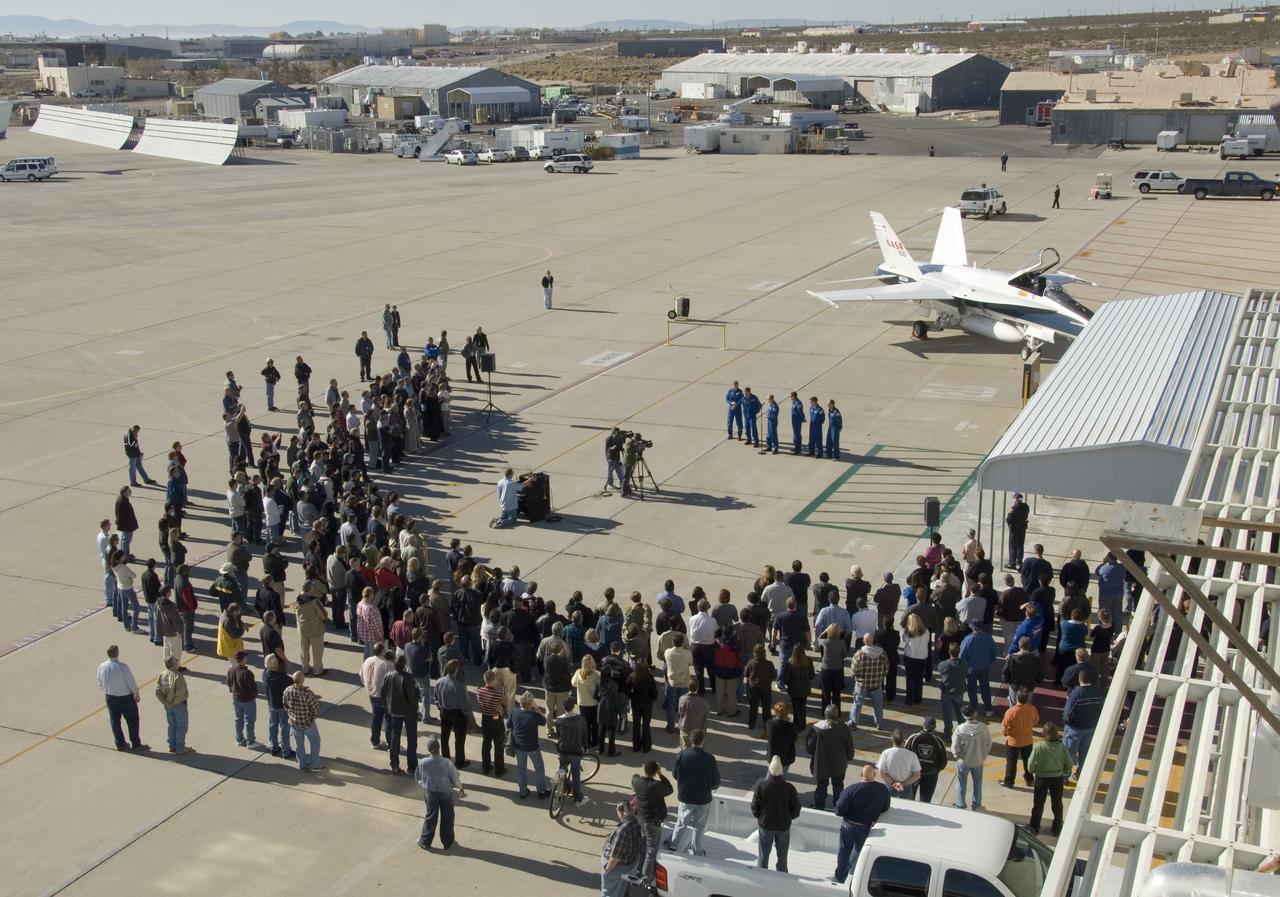
EDWARDS, Calif. – At Edwards Air Force Base in California, photographers and journalists circle STS-126 crew members before their departure for NASA's Johnson Space Center in Houston. The crew took time to talk to the media before they left. The decision to land space shuttle Endeavour at Edwards was made due to weather concerns at NASA's Kennedy Space Center in Florida. In the 52nd landing at Edwards, Endeavour touched down at 4:25 p.m. EST on Nov. 30 to end the STS-126 mission, completing its 16-day journey of over 6.6 million miles in space. The STS-126 mission was the 27th flight to the International Space Station, carrying equipment and supplies in the Multi-Purpose Logistics Module Leonardo. The mission featured four spacewalks and work to prepare the space station to house six crew members for long-duration missions. Photo credit: NASA/Tony Landis, VAFB

EDWARDS, Calif. – After space shuttle Endeavour's landing at Edwards Air Force Base in California, STS-126 Commander Chris Ferguson (left) and Pilot Eric Boe examine the tiles on space shuttle Endeavour for any visible damage. The decision to land at Edwards was made due to weather concerns at NASA's Kennedy Space Center in Florida. In the 52nd landing at Edwards, Endeavour touched down at 4:25 p.m. EST to end the STS-126 mission, completing its 16-day journey of over 6.6 million miles in space. The STS-126 mission was the 27th flight to the International Space Station, carrying equipment and supplies in the Multi-Purpose Logistics Module Leonardo. The mission featured four spacewalks and work to prepare the space station to house six crew members for long-duration missions. Photo credit: NASA/Tom Tschida, VAFB

KENNEDY SPACE CENTER, FLA. -- (From top) STS-123 Mission Specialists Mike Foreman, Takao Doi and Garrett Reisman are in their seats in space shuttle Endeavour to participate in a simulated launch countdown. The countdown is the culmination of the terminal countdown demonstration test, or TCDT. The TCDT provides astronauts and ground crews with an opportunity to participate in various countdown activities, including equipment familiarization and emergency egress training. Endeavour is targeted to launch at 2:28 a.m. EDT March 11 on the 16-day STS-123 mission to the International Space Station. Endeavour and its crew will deliver the first section of the Japan Aerospace Exploration Agency's Kibo laboratory and the Canadian Space Agency's two-armed robotic system, Dextre. Photo credit: NASA/Kim Shiflett
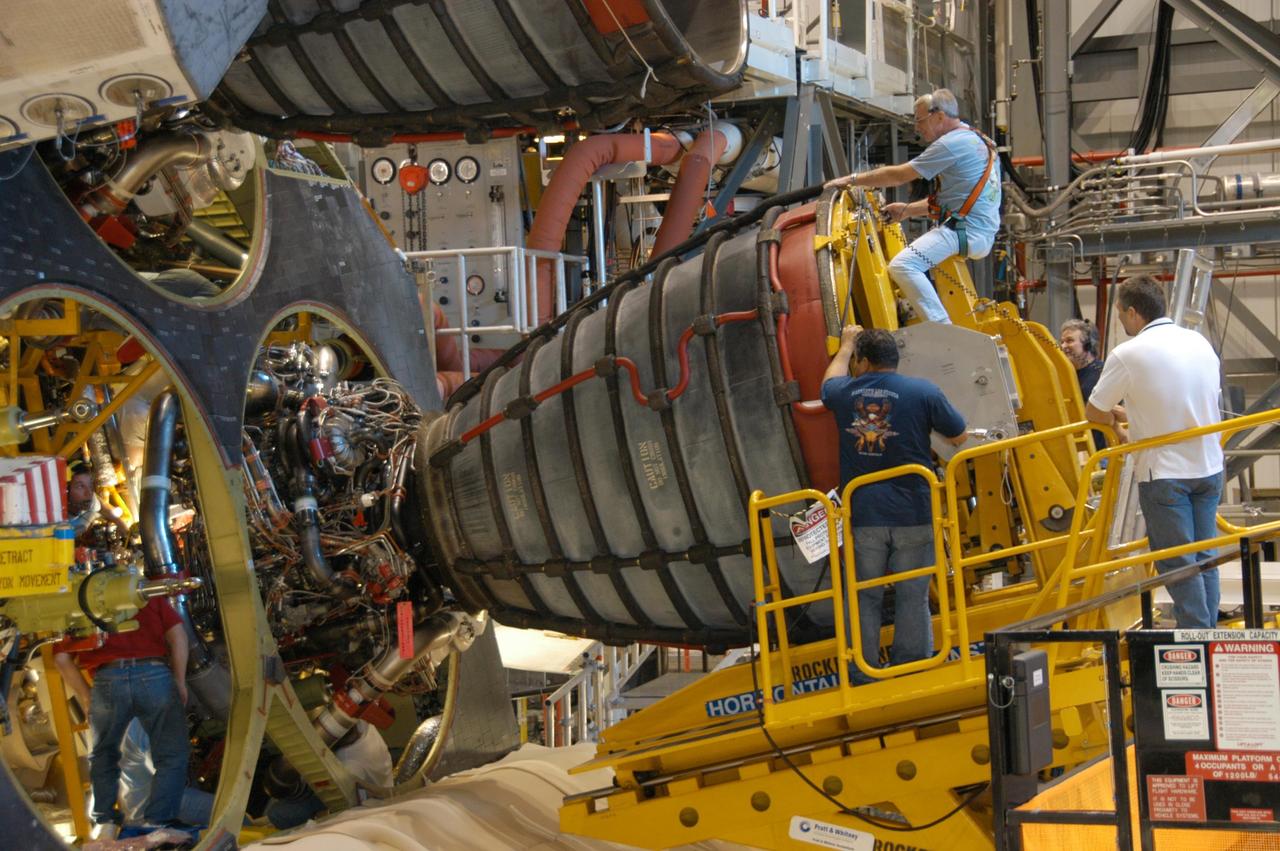
KENNEDY SPACE CENTER, FLA. -- In Orbiter Processing Facility bay 2, technicians on a Hyster forklift maneuver space shuttle main engine no. 3 into place on Endeavour. Each space shuttle main engine is 14 feet long, weighs about 6,700 pounds, and is 7.5 feet in diameter at the end of the nozzle. The orbiter is scheduled for mission STS-118, targeted for launch on June 28. The mission will be the 22nd flight to the International Space Station, carrying another starboard array, S5, for installation. Photo credit: NASA/George Shelton
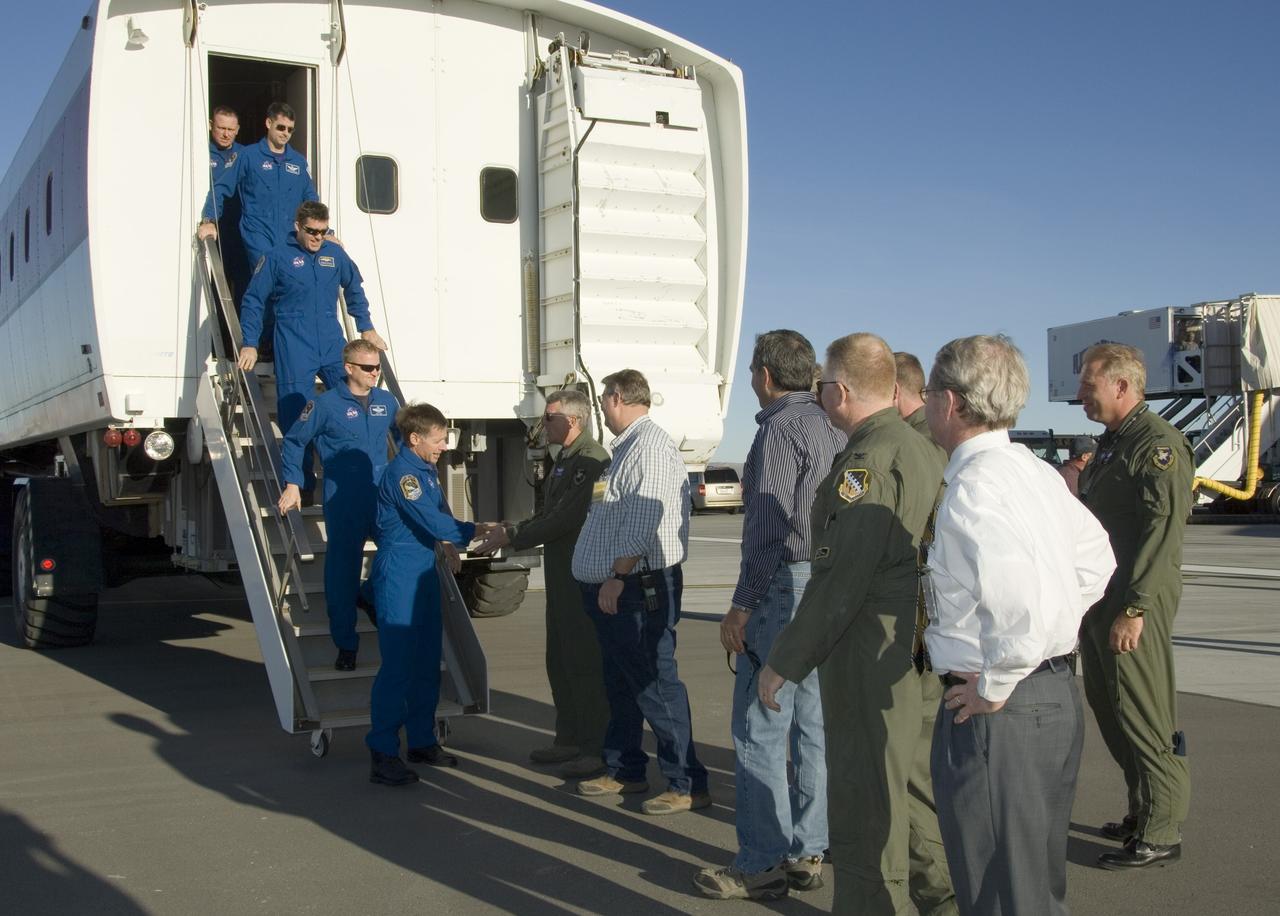
EDWARDS, Calif. – At Edwards Air Force Base in California, STS-126 crew members are greeted as they exit the crew transport vehicle after landing aboard space shuttle Endeavour. Leading the crew is Commander Chris Ferguson (right) followed by Pilot Eric Boe and Mission Specialists Steve Bowen and Shane Kimbrough. The decision to land at Edwards was made due to weather concerns at NASA's Kennedy Space Center in Florida. In the 52nd landing at Edwards, Endeavour touched down at 4:25 p.m. EST to end the STS-126 mission, completing its 16-day journey of over 6.6 million miles in space. The STS-126 mission was the 27th flight to the International Space Station, carrying equipment and supplies in the Multi-Purpose Logistics Module Leonardo. The mission featured four spacewalks and work to prepare the space station to house six crew members for long-duration missions. Photo credit: NASA/Tom Tschida, VAFB
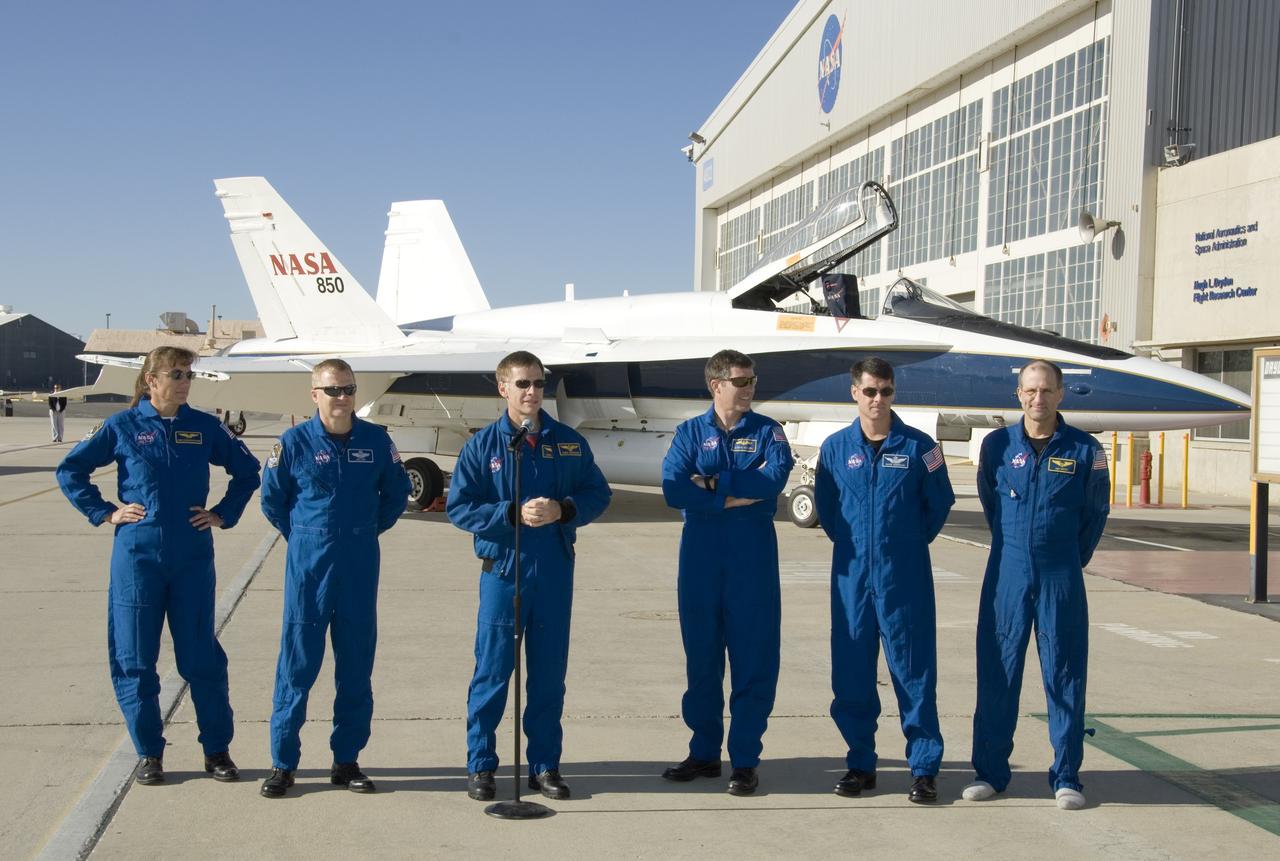
EDWARDS, Calif. – At Edwards Air Force Base in California, STS-126 crew members talk to the media before their departure for NASA's Johnson Space Center in Houston. From left are Mission Specialist Heidemarie Stefanyshyn-Piper, Pilot Eric Boe, Commander Chris Ferguson and Mission Specialists Steve Bowen, Shane Kimbrough and Donald Pettit. The decision to land space shuttle Endeavour at Edwards was made due to weather concerns at NASA's Kennedy Space Center in Florida. In the 52nd landing at Edwards, Endeavour touched down at 4:25 p.m. EST on Nov. 30 to end the STS-126 mission, completing its 16-day journey of over 6.6 million miles in space. The STS-126 mission was the 27th flight to the International Space Station, carrying equipment and supplies in the Multi-Purpose Logistics Module Leonardo. The mission featured four spacewalks and work to prepare the space station to house six crew members for long-duration missions. Photo credit: NASA/Tony Landis, VAFB

KENNEDY SPACE CENTER, FLA. -- Getting ready for the STS-123 mission, space shuttle Endeavour begins rollout to Launch Pad 39A. The journey from the Vehicle Assembly Building began at 11:24 p.m. on Feb. 17, approximately 30 minutes before it's scheduled start time due to favorable weather conditions. The shuttle arrived at the launch pad at 4:45 a.m. Monday and was hard down at 6:22 a.m. On the mission, Endeavour and its crew will deliver the first section of the Japan Aerospace Exploration Agency's Kibo laboratory and the Canadian Space Agency's two-armed robotic system, Dextre. Launch is targeted for March 11. Photo credit: NASA/Amanda Diller
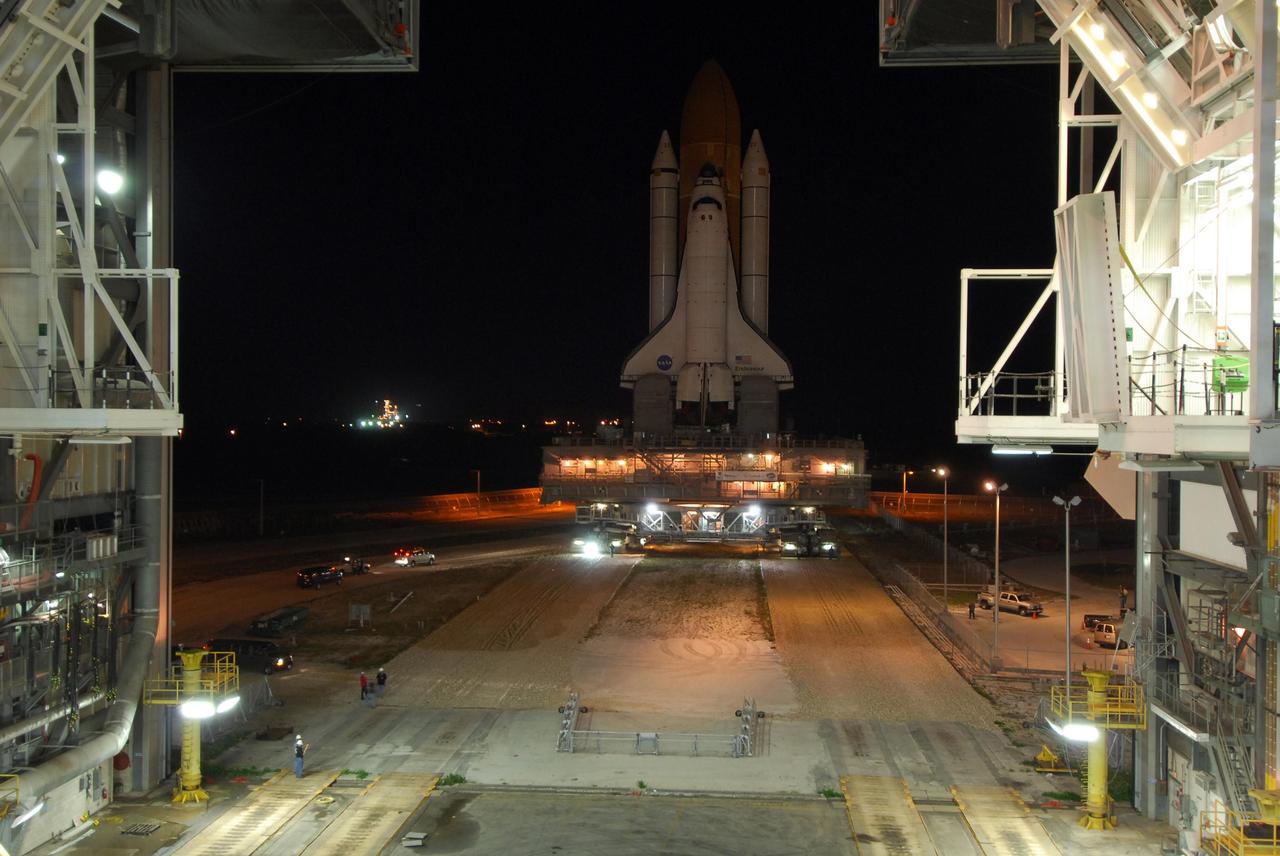
KENNEDY SPACE CENTER, FLA. -- Getting ready for the STS-123 mission, space shuttle Endeavour begins rollout to Launch Pad 39A. Lights below the shuttle fill the mobile launcher platform. The lights below that illuminate the crawler transporter. At left in the background is the lighted launch pad. The journey from the Vehicle Assembly Building began at 11:24 p.m. on Feb. 17, approximately 30 minutes before it's scheduled start time due to favorable weather conditions. The shuttle arrived at the launch pad at 4:45 a.m. Monday and was hard down at 6:22 a.m. On the mission, Endeavour and its crew will deliver the first section of the Japan Aerospace Exploration Agency's Kibo laboratory and the Canadian Space Agency's two-armed robotic system, Dextre. Launch is targeted for March 11. Photo credit: NASA/Amanda Diller
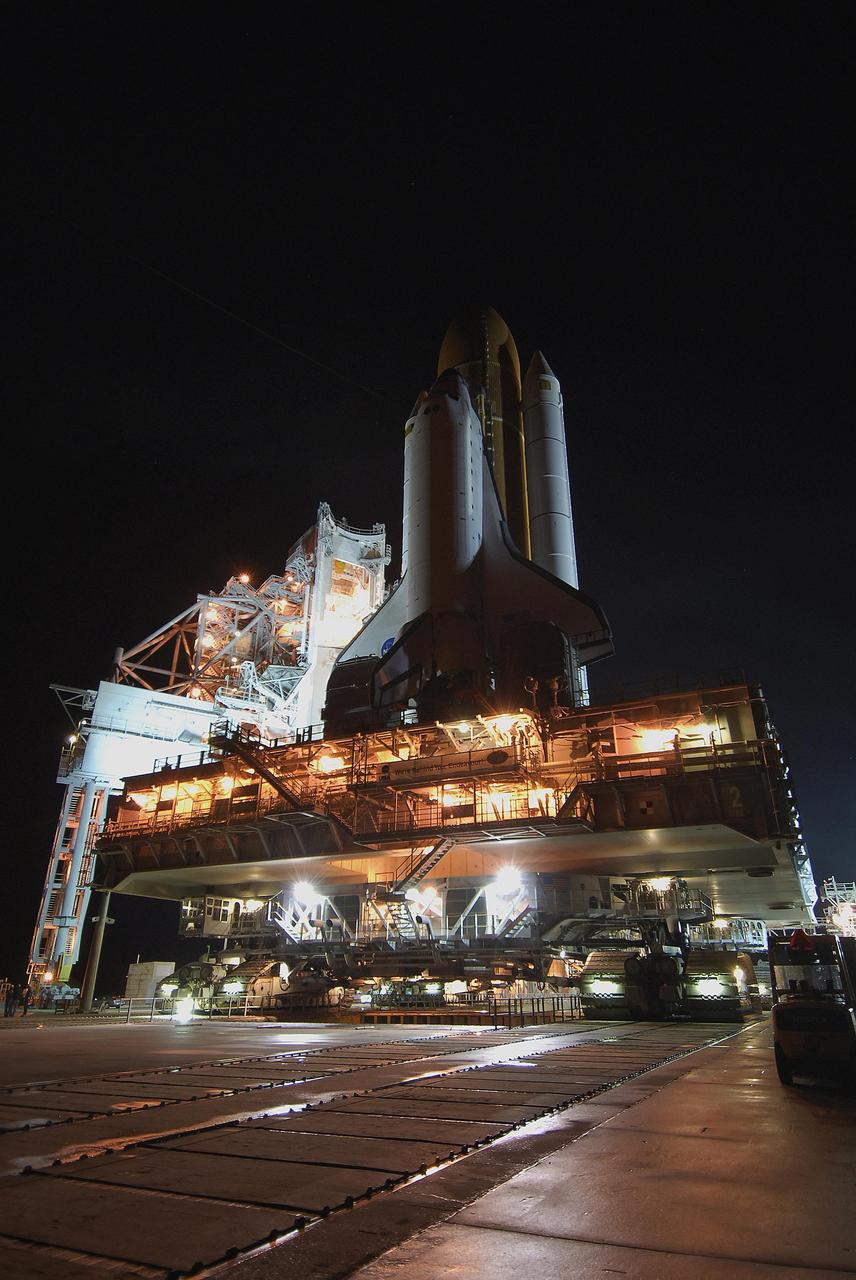
KENNEDY SPACE CENTER, FLA. -- Getting ready for the STS-123 mission, space shuttle Endeavour, atop the well-lighted mobile launcher platform, nears the rotating and fixed service structures on Launch Pad 39A. The journey from the Vehicle Assembly Building began at 11:24 p.m. on Feb. 17, approximately 30 minutes before it's scheduled start time due to favorable weather conditions. The shuttle arrived at the launch pad at 4:45 a.m. Monday and was hard down at 6:22 a.m. On the mission, Endeavour and its crew will deliver the first section of the Japan Aerospace Exploration Agency's Kibo laboratory and the Canadian Space Agency's two-armed robotic system, Dextre. Launch is targeted for March 11. Photo credit: NASA/Amanda Diller
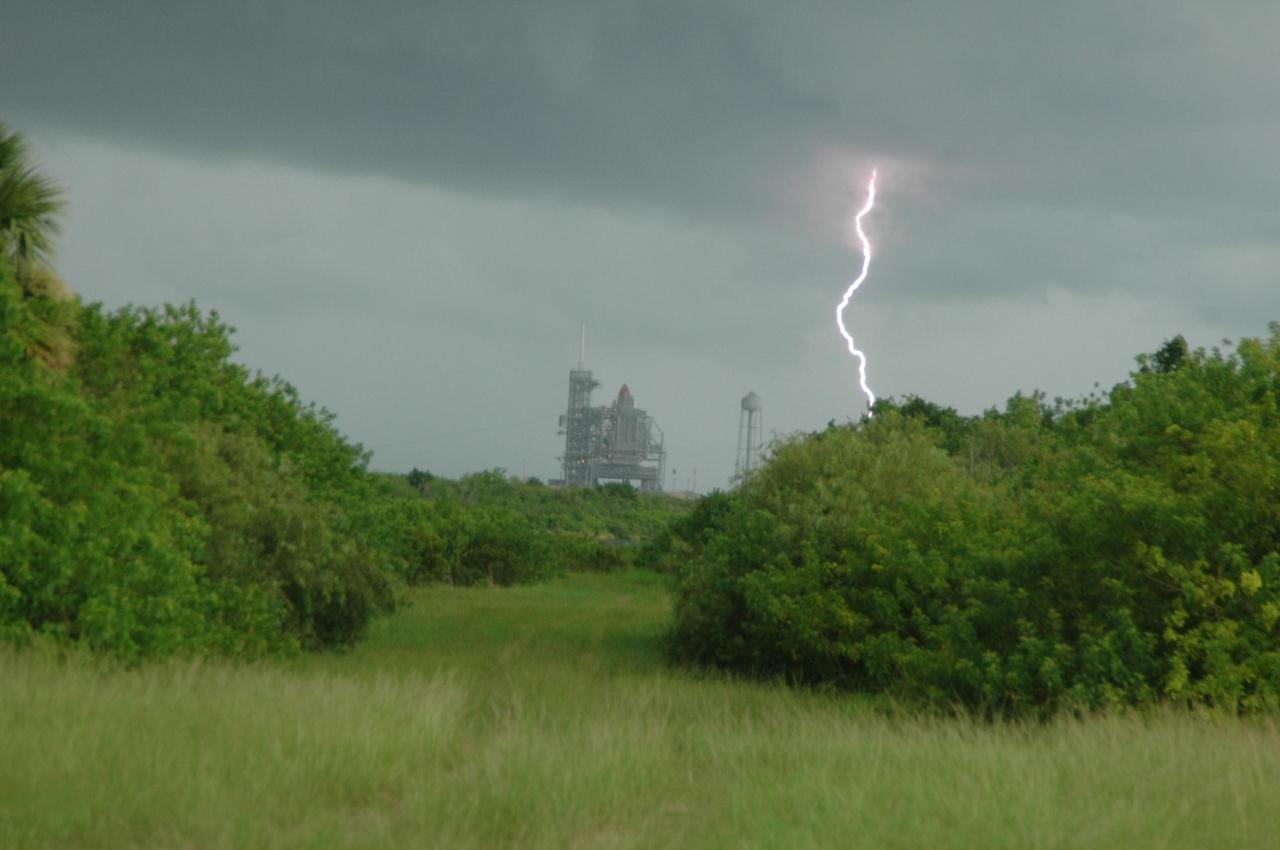
KENNEDY SPACE CENTER, FLA. -- A lightning strike is caught on camera during an afternoon thunderstorm at Kennedy Space Center, a common occurrence at this time of the year. In the background, the rotating service structure encloses Space Shuttle Endeavour on Launch Pad 39A. Endeavour is awaiting launch on mission STS-118. The mission is the 20th flight for orbiter Endeavour and the 22nd flight to the International Space Station. Launch is targeted for Aug. 7. Photo credit: NASA/Ken Thornsley

CAPE CANAVERAL, Fla. – In NASA Kennedy Space Center's Space Station Processing Facility, the Cupola module is being mated to the Tranquility node on the work stand. Cupola and Tranquility are the payload for space shuttle Endeavour's STS-130 mission to the International Space Station. The module was built for the European Space Agency by Alenia Spazio in Turin, Italy. When attached to the Tranquility Node 3 module, Cupola will resemble a circular bay window that will provide a vastly improved view of the station's exterior. Just under 10 feet in diameter, the module will accommodate two crew members and portable workstations that can control station and robotic activities. The multi-directional view will allow the crew to monitor spacewalks and docking operations, as well as provide a spectacular view of Earth and other celestial objects. Endeavour is targeted to launch Feb. 4, 2010. Photo credit: NASA/Cory Huston
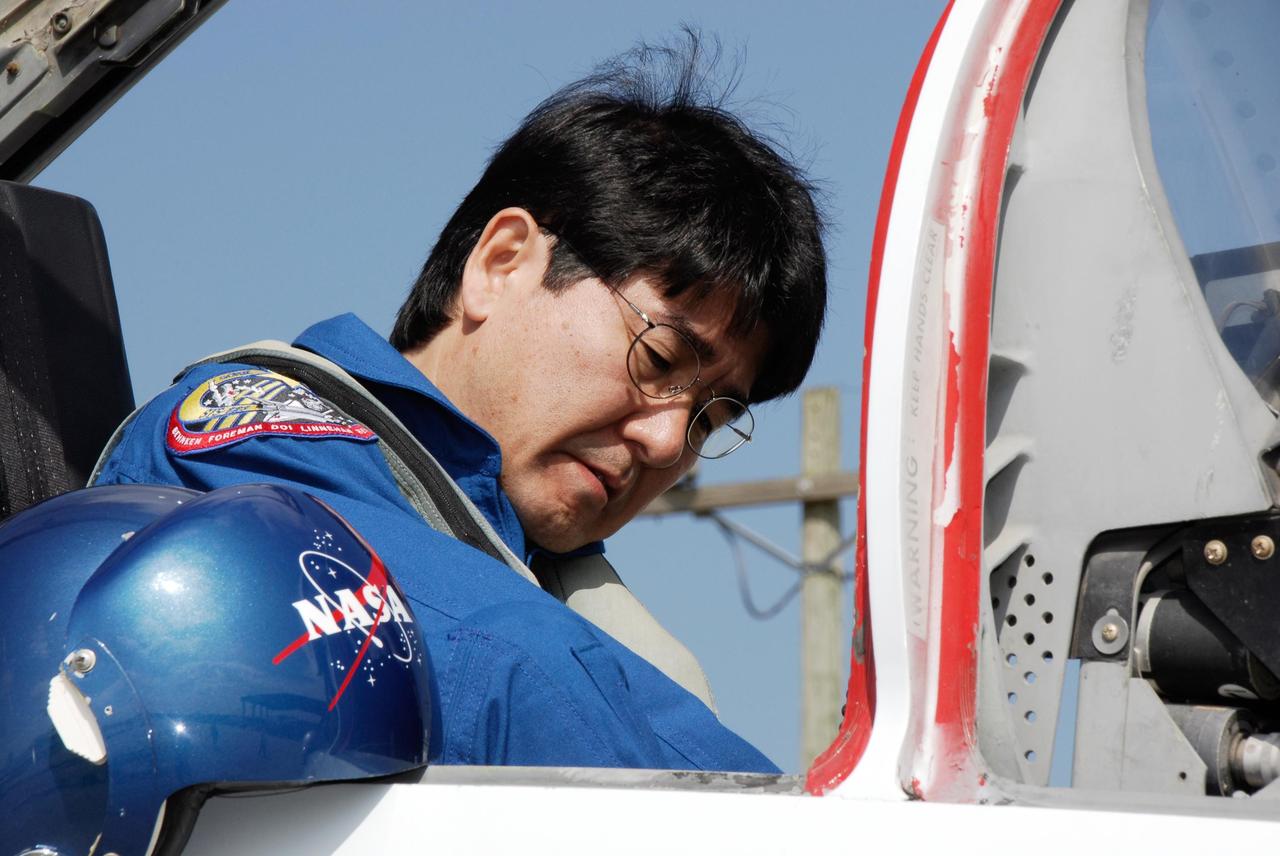
KENNEDY SPACE CENTER, FLA. -- At the NASA Kennedy Space Center's Shuttle Landing Facility, STS-123 Mission Specialist Takao Doi waits in the aircraft that will return him to Houston. He and the other STS-123 crew members took part in a terminal countdown demonstration test, or TCDT, in preparation for the launch of space shuttle Endeavour scheduled on March 11. Doi represents the Japan Aerospace Exploration Agency. The TCDT enables astronauts and ground crews to participate in various countdown activities, including equipment familiarization and emergency egress training. On the STS-123 mission, Endeavour and its crew will deliver the first section of the Japan Aerospace Exploration Agency's Kibo laboratory and the Canadian Space Agency's two-armed robotic system, Dextre Photo credit: NASA/Kim Shiflett

KENNEDY SPACE CENTER, FLA. -- In Orbiter Processing Facility bay 2, technicians Jesus Rodrigues (left) and James Johnson install a leading edge subsystem carrier panel on the right wing of Endeavour. The orbiter is scheduled for mission STS-118, targeted for launch on June 28. The mission will be the 22nd flight to the International Space Station, carrying another starboard array, S5, for installation. Photo credit: NASA/George Shelton
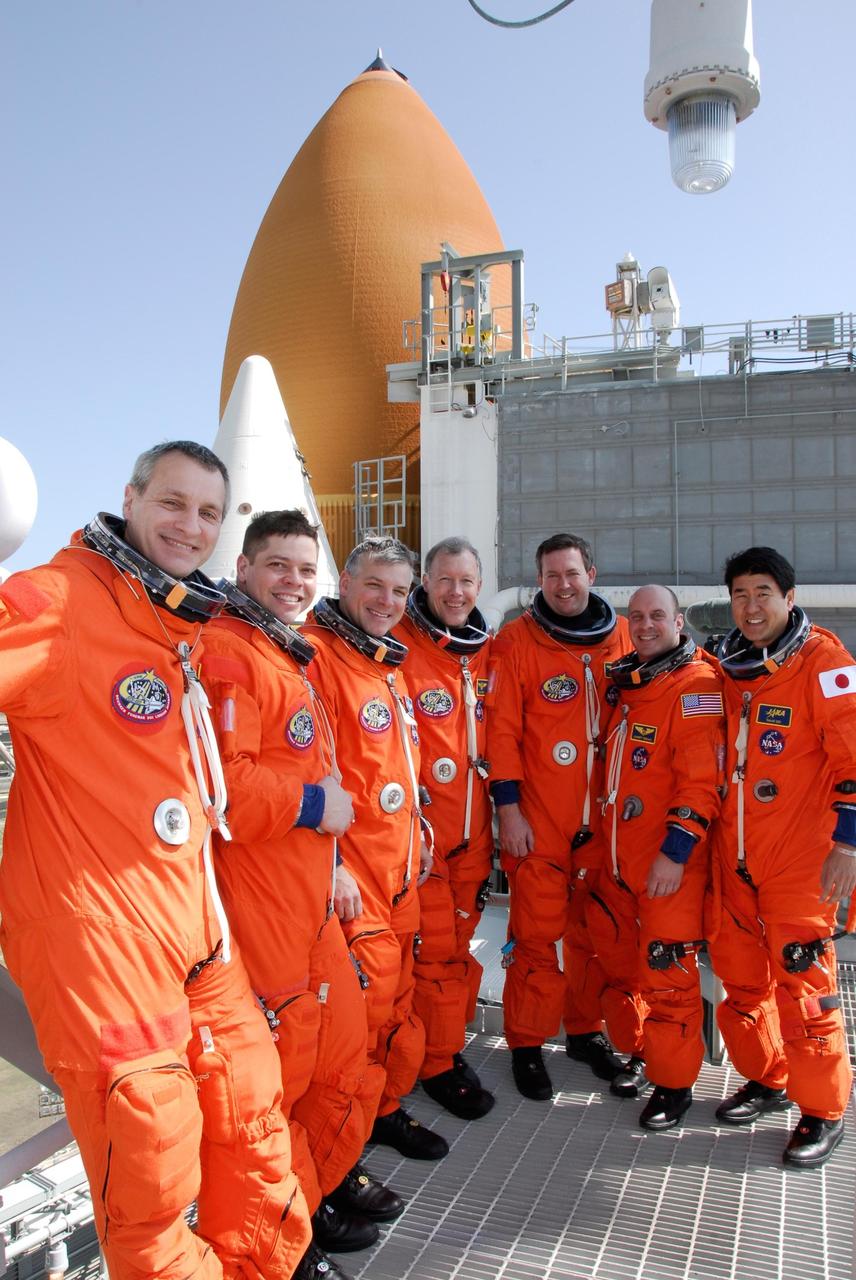
KENNEDY SPACE CENTER, FLA. -- Gathered again on the top level of the fixed service structure, the STS-123 crew poses for a photo after completing the simulated launch countdown. From left are Mission Specialists Rick Linnehan and Robert L. Behnken, Pilot Gregory H. Johnson, Commander Dominic Gorie, and Mission Specialists Mike Foreman, Garrett Reisman and Takao Doi. The countdown was the culmination of the terminal countdown demonstration test, or TCDT. The TCDT provides astronauts and ground crews with an opportunity to participate in various countdown activities, including equipment familiarization and emergency egress training. Endeavour is targeted to launch at 2:28 a.m. EDT March 11 on the 16-day STS-123 mission to the International Space Station. Endeavour and its crew will deliver the first section of the Japan Aerospace Exploration Agency's Kibo laboratory and the Canadian Space Agency's two-armed robotic system, Dextre. Photo credit: NASA/Kim Shiflett
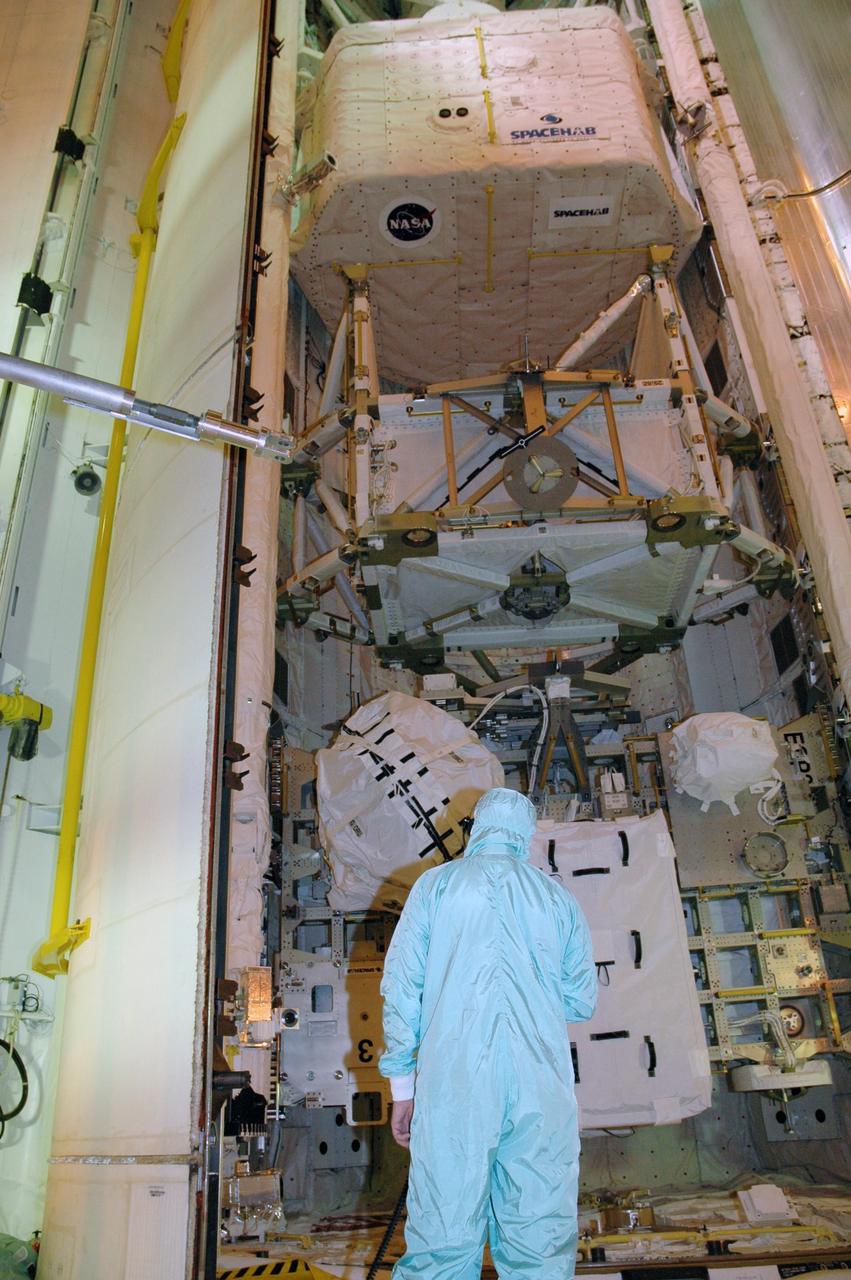
KENNEDY SPACE CENTER, FLA. -- On Launch Pad 39A, a worker checks the movement of one of Endeavour's payload bay doors as it closes. Seen in the photo are the cargo, from top, the SPACEHAB module, the S5 truss and the external stowage platform 3 with a control moment gyro at left. The payload bay doors were opened to allow for payload closeouts, including camera tests on the shuttle robotic arm and the extension, known as the orbiter boom sensor system. Endeavour is scheduled to launch Aug. 7 on mission STS-118, the 22nd flight to the International Space Station. NASA/Charisse Nahser

KENNEDY SPACE CENTER, FLA. -- Following the simulated launch countdown, STS-123 crew members are ready to release the slidewire basket on Launch Pad 39 at NASA's Kennedy Space Center. The crew is practicing emergency egress from the pad. The countdown was the culmination of the terminal countdown demonstration test, or TCDT. The TCDT provides astronauts and ground crews with an opportunity to participate in various countdown activities, including equipment familiarization and emergency egress training. Endeavour is targeted to launch at 2:28 a.m. EDT March 11 on the 16-day STS-123 mission to the International Space Station. Endeavour and its crew will deliver the first section of the Japan Aerospace Exploration Agency's Kibo laboratory and the Canadian Space Agency's two-armed robotic system, Dextre. Photo credit: NASA/Kim Shiflett
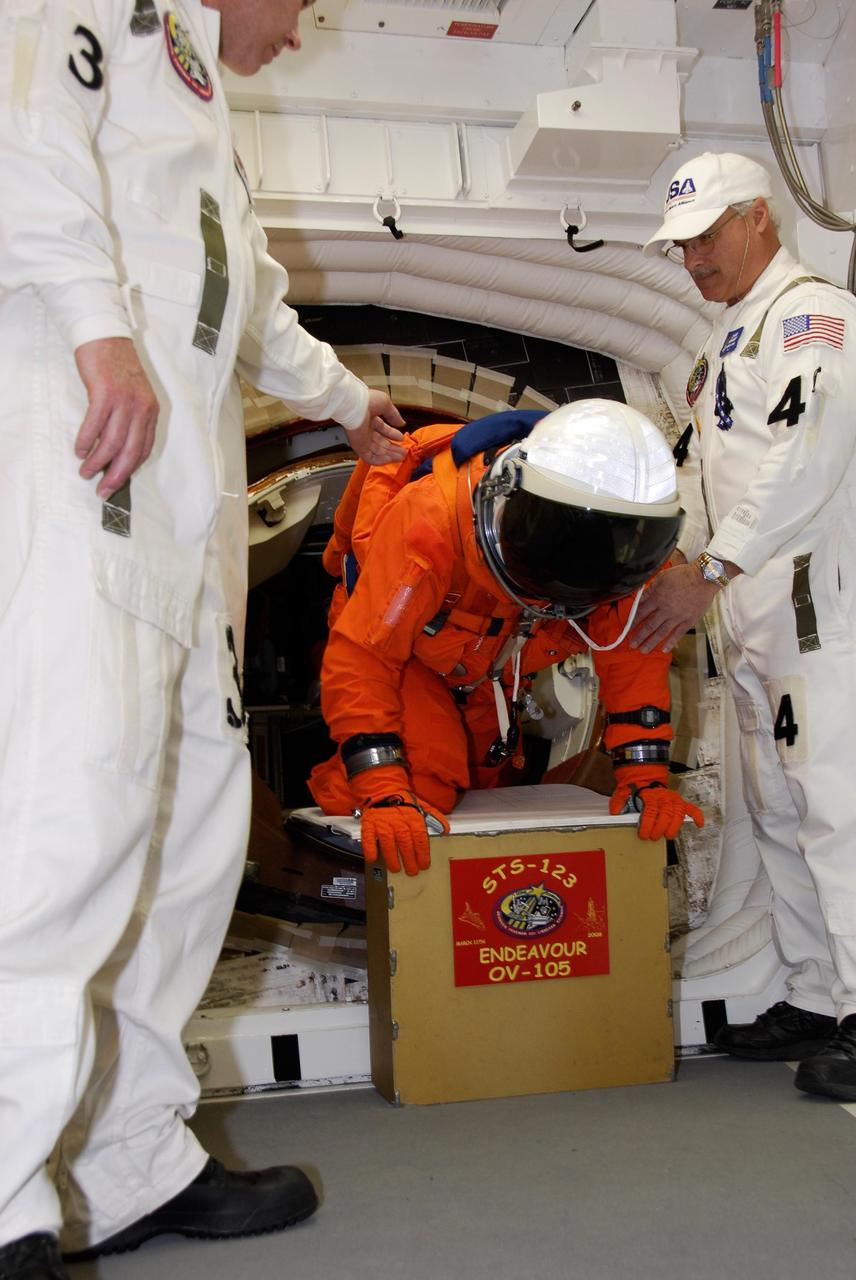
KENNEDY SPACE CENTER, FLA. -- Following the simulated launch countdown, STS-123 crew members begin exiting space shuttle Endeavour into the White Room on Launch Pad 39 at NASA's Kennedy Space Center. To leave the pad, the STS-123 crew will practice emergency egress using the slidewire baskets. The countdown was the culmination of the terminal countdown demonstration test, or TCDT. The TCDT provides astronauts and ground crews with an opportunity to participate in various countdown activities, including equipment familiarization and emergency egress training. Endeavour is targeted to launch at 2:28 a.m. EDT March 11 on the 16-day STS-123 mission to the International Space Station. Endeavour and its crew will deliver the first section of the Japan Aerospace Exploration Agency's Kibo laboratory and the Canadian Space Agency's two-armed robotic system, Dextre. Photo credit: NASA/Kim Shiflett
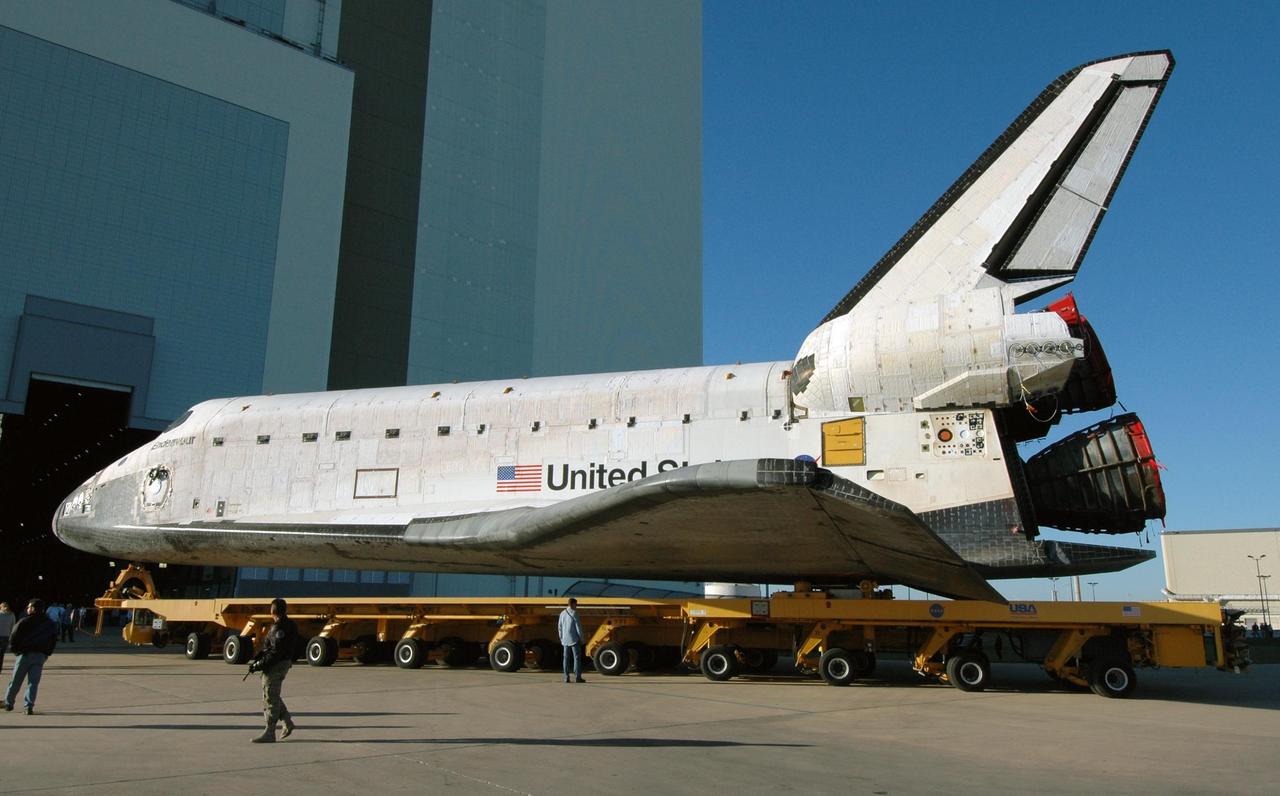
KENNEDY SPACE CENTER, FLA. -- On its transporter, space shuttle Endeavour turns toward the open door of the Vehicle Assembly Building. In high bay 1 of the VAB, Endeavour will be attached to its external fuel tank and solid rocket boosters in preparation for its upcoming mission, STS-123, to the International Space Station targeted for March 11. The mission will deliver the first section of the Japan Aerospace Exploration Agency's Kibo laboratory and the Canadian Space Agency's two-armed robotic system, Dextre. Photo credit: NASA/Jim Grossmann
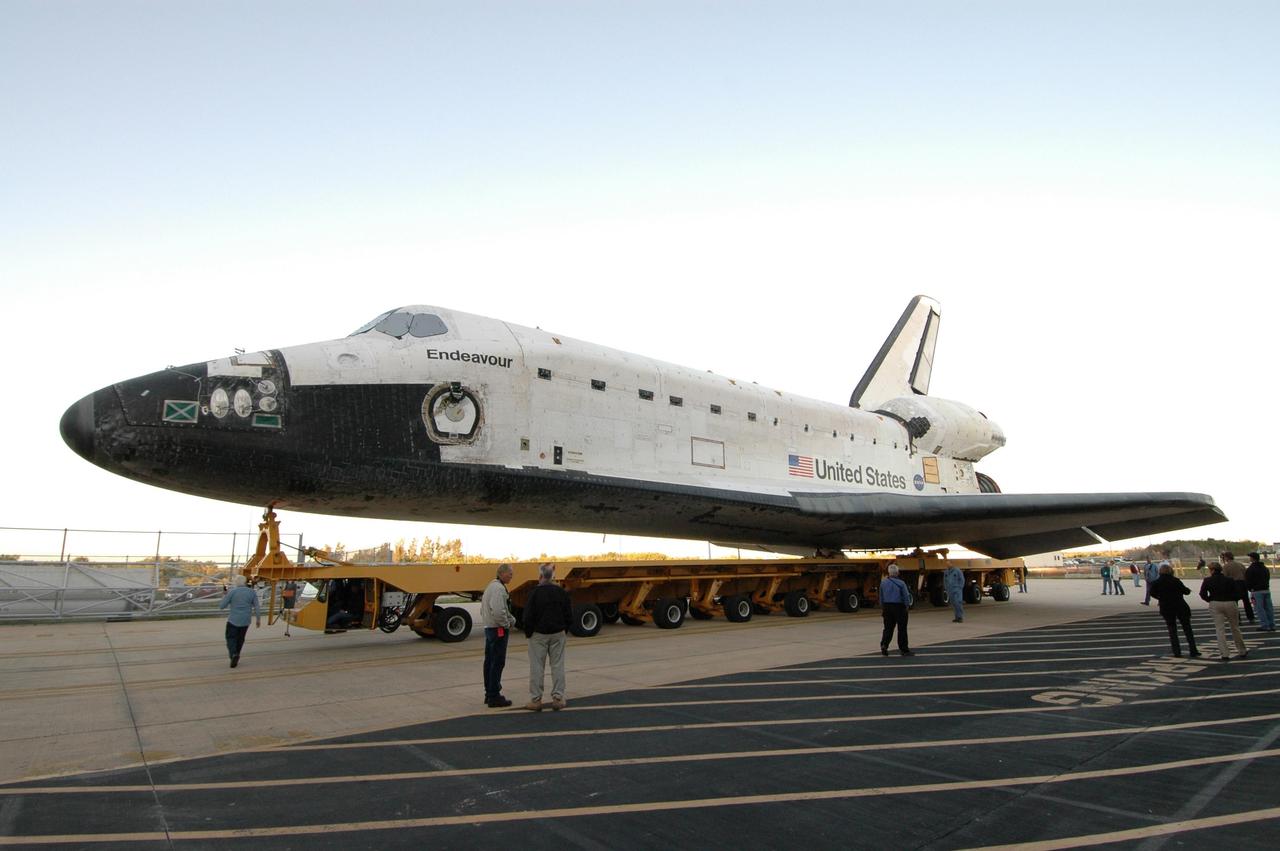
KENNEDY SPACE CENTER, FLA. -- On its transporter, space shuttle Endeavour turns away from the Orbiter Processing Facility to start the rollover to the Vehicle Assembly Building. In high bay 1 of the VAB, Endeavour will be attached to its external fuel tank and solid rocket boosters in preparation for its upcoming mission, STS-123, to the International Space Station targeted for March 11. The mission will deliver the first section of the Japan Aerospace Exploration Agency's Kibo laboratory and the Canadian Space Agency's two-armed robotic system, Dextre. Photo credit: NASA/Jim Grossmann
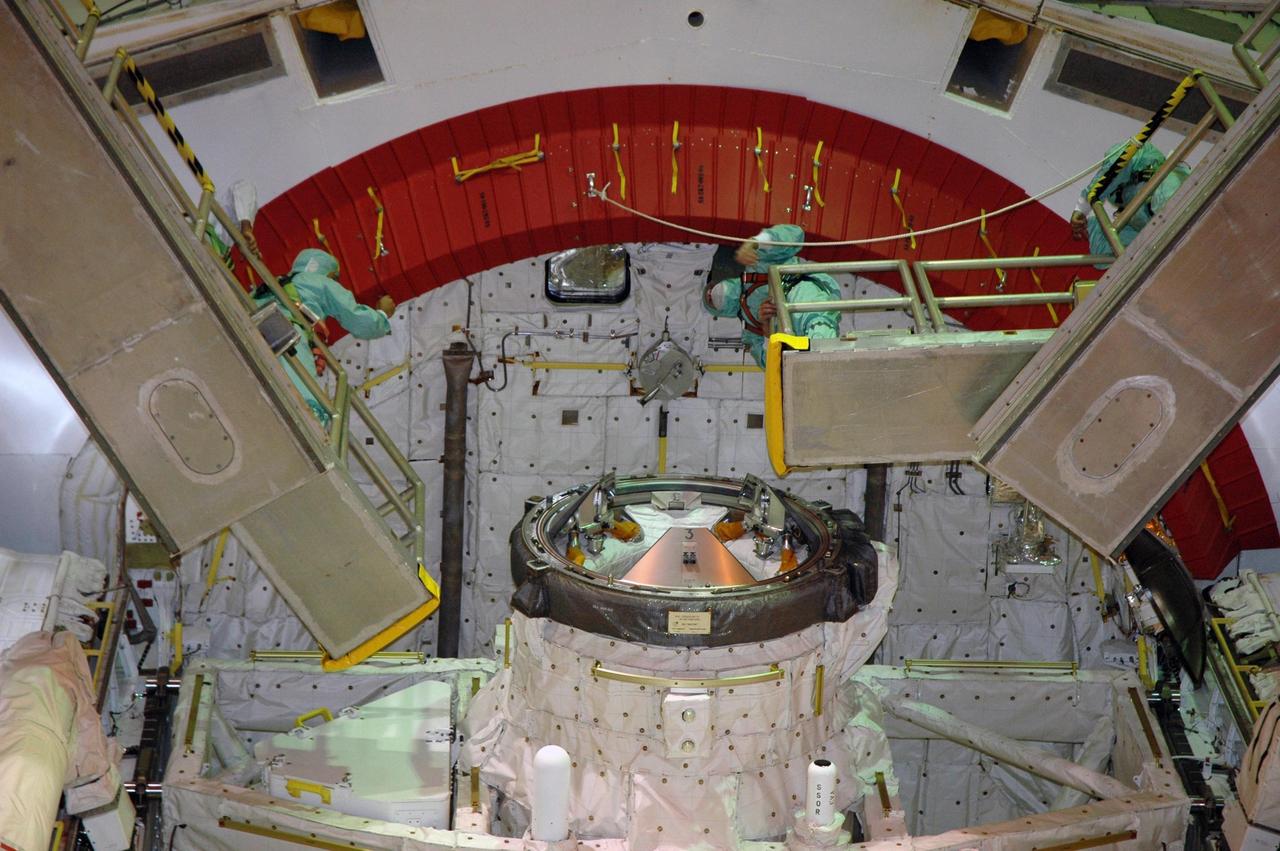
KENNEDY SPACE CENTER, FLA. -- Looking into the open payload bay doors of Space Shuttle Endeavour, workers conclude closeouts. At center foreground is the orbital docking system. The red ring at top comprises rain gutters to prevent leaks into the bay from rain while the shuttle is on the pad. The payload bay doors were opened to allow for payload closeouts, including camera tests on the shuttle robotic arm and the extension, known as the orbiter boom sensor system. Endeavour is scheduled to launch Aug. 7 on mission STS-118, the 22nd flight to the International Space Station. NASA/Charisse Nahser
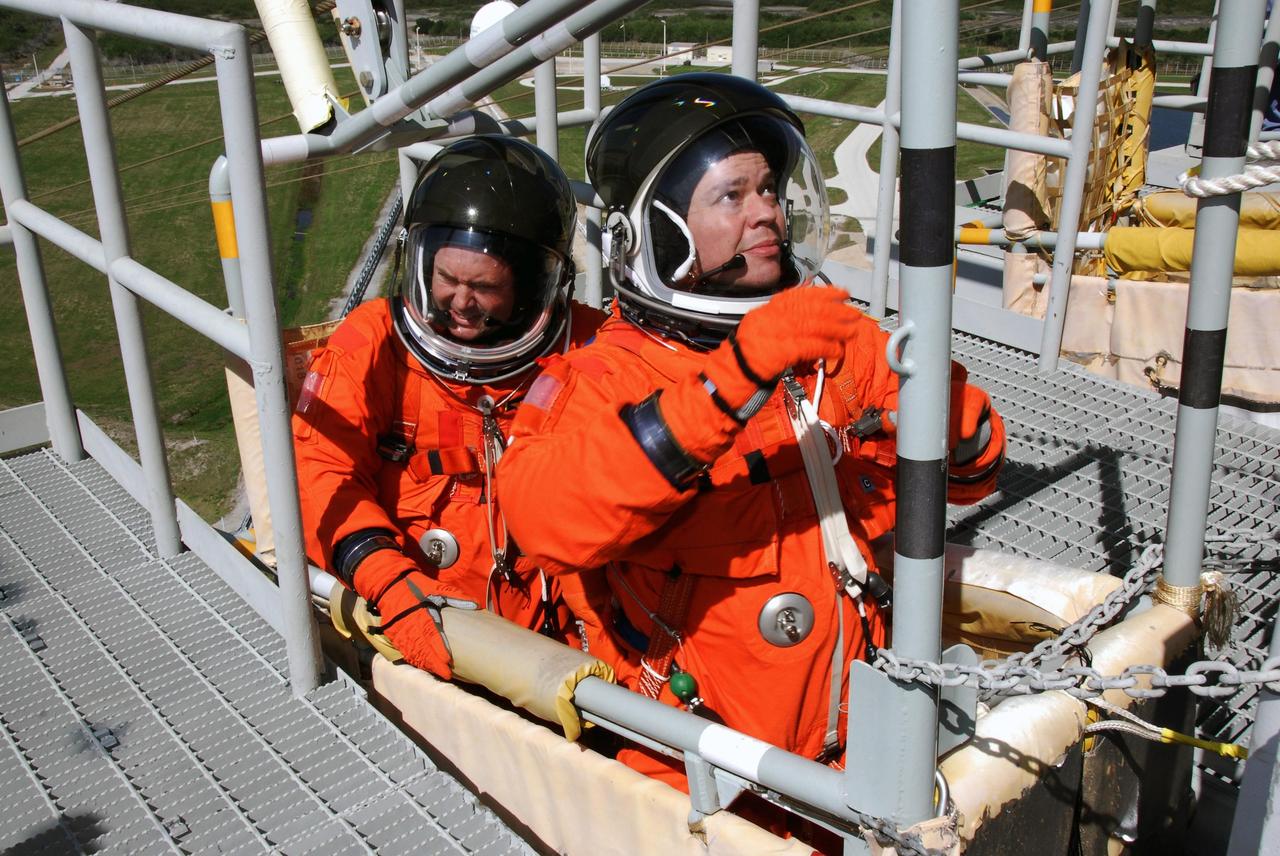
KENNEDY SPACE CENTER, FLA. -- Following the simulated launch countdown, STS-123 Mission Specialists Mike Foreman (left) and Robert L. Behnken settle in a slidewire basket on Launch Pad 39A at NASA's Kennedy Space Center. The crew is practicing emergency egress from the pad. The countdown was the culmination of the terminal countdown demonstration test, or TCDT. The TCDT provides astronauts and ground crews with an opportunity to participate in various countdown activities, including equipment familiarization and emergency egress training. Endeavour is targeted to launch at 2:28 a.m. EDT March 11 on the 16-day STS-123 mission to the International Space Station. Endeavour and its crew will deliver the first section of the Japan Aerospace Exploration Agency's Kibo laboratory and the Canadian Space Agency's two-armed robotic system, Dextre. Photo credit: NASA/Kim Shiflett
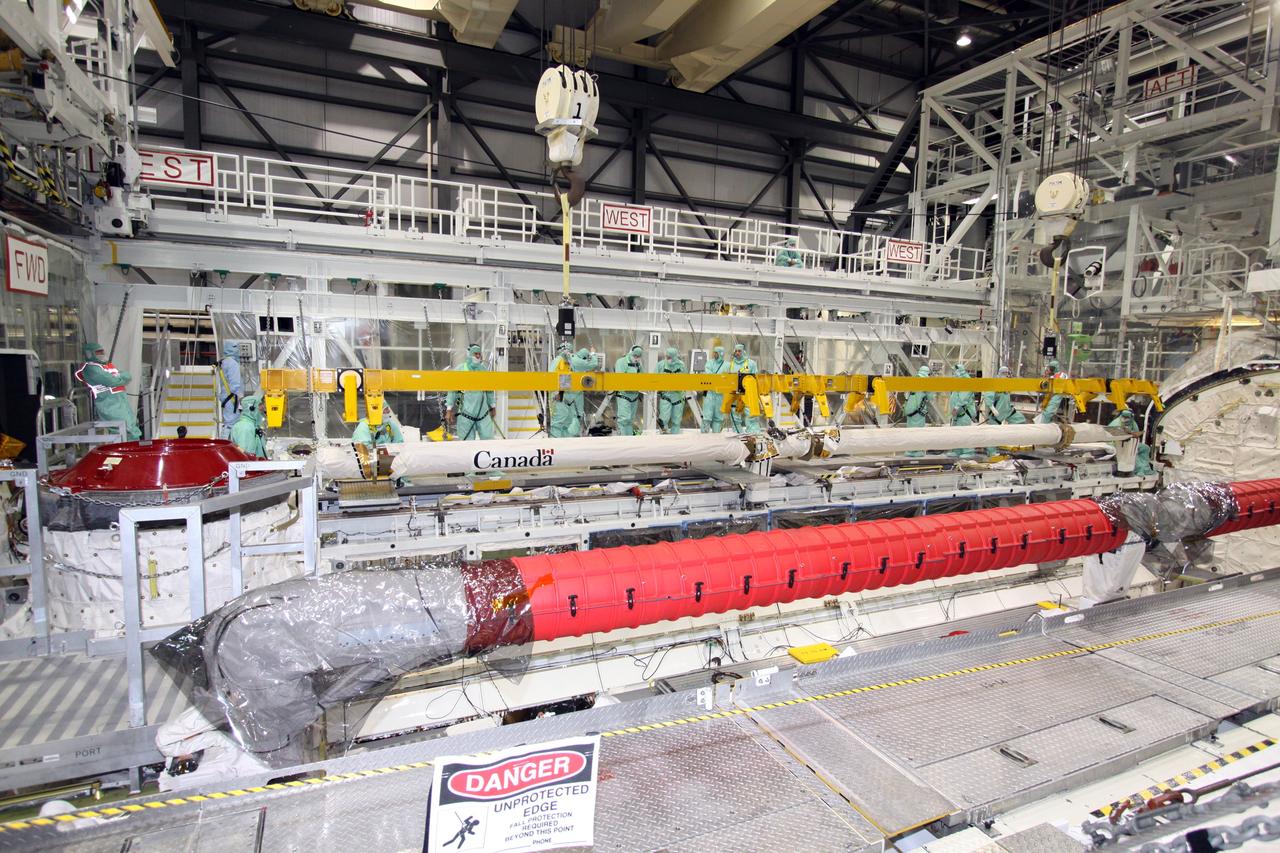
CAPE CANAVERAL, Fla. – The Orbiter Boom Sensor System is being removed from space shuttle Endeavour in NASA Kennedy Space Center's Orbiter Processing Facility bay 2. After returning from the STS-127 mission July 31, 2009, Endeavour now is being processed for the STS-130 mission targeted for Feb. 4, 2010. Endeavour will deliver to the International Space Station the Tranquility pressurized module that will provide room for many of the station's life support systems. Photo credit: NASA/Jack Pfaller
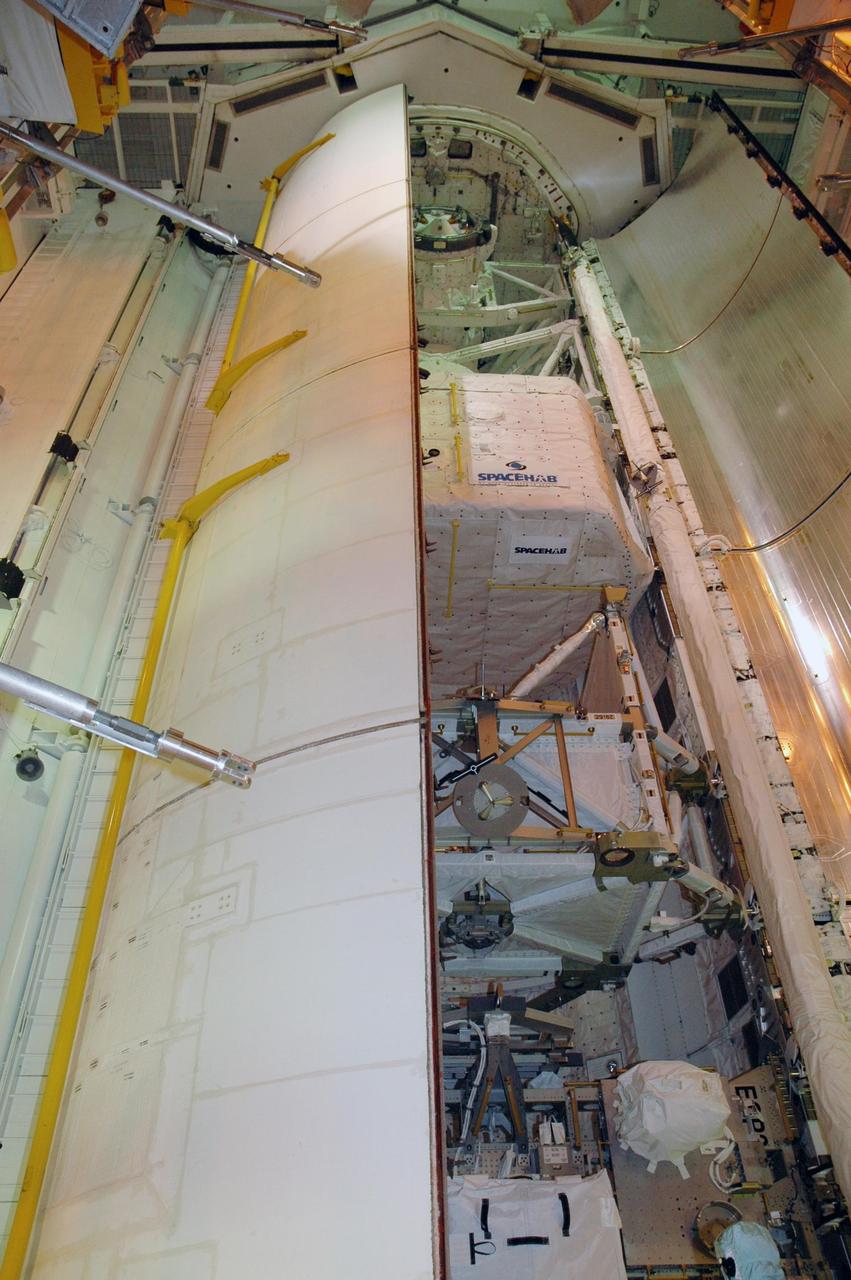
KENNEDY SPACE CENTER, FLA. -- On Launch Pad 39A, one of Endeavour's payload bay doors is closed. Part of the cargo inside can still be seen in the center: the SPACEHAB module and the S5 truss. The payload bay doors were opened to allow for payload closeouts, including camera tests on the shuttle robotic arm and the extension, known as the orbiter boom sensor system. Endeavour is scheduled to launch Aug. 7 on mission STS-118, the 22nd flight to the International Space Station. NASA/Charisse Nahser