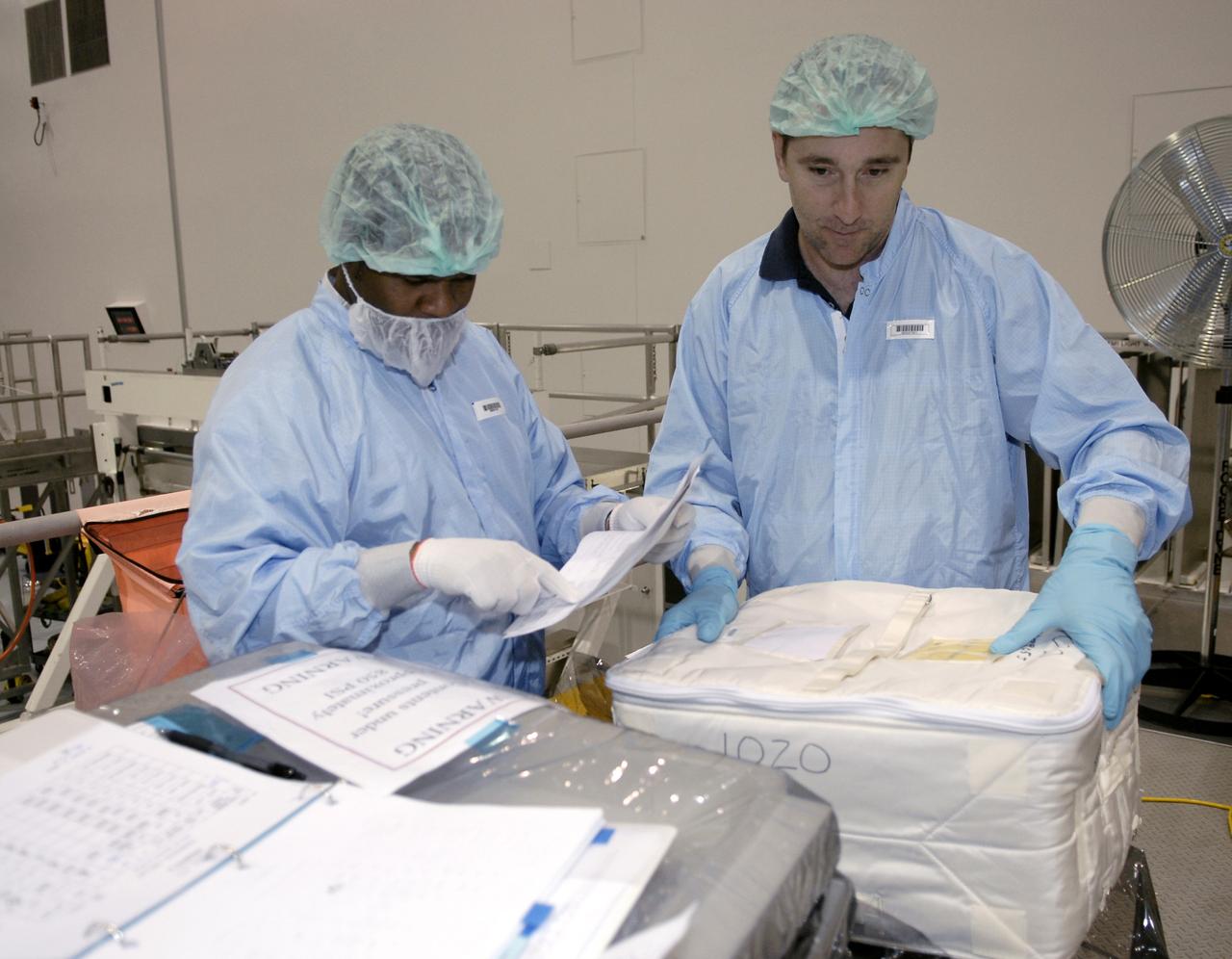
CAPE CANAVERAL, Fla. – In the Space Station Processing Facility at NASA's Kennedy Space Center in Florida, a worker, left, checks the manifest regarding the supply packages to be stowed in the Multi-Purpose Logistics Module Leonardo for the STS-126 mission to the International Space Station. The 15-day flight will deliver equipment and supplies to the International Space Station in preparation for expansion from a three- to six-person resident crew aboard the complex. The mission also will include four spacewalks to service the station Solar Alpha Rotary Joints. Leonardo holds supplies and equipment, including equipment for the regenerative life support system, additional crew quarters and exercise equipment and spare hardware. Photo credit: NASA/Kim Shiflett
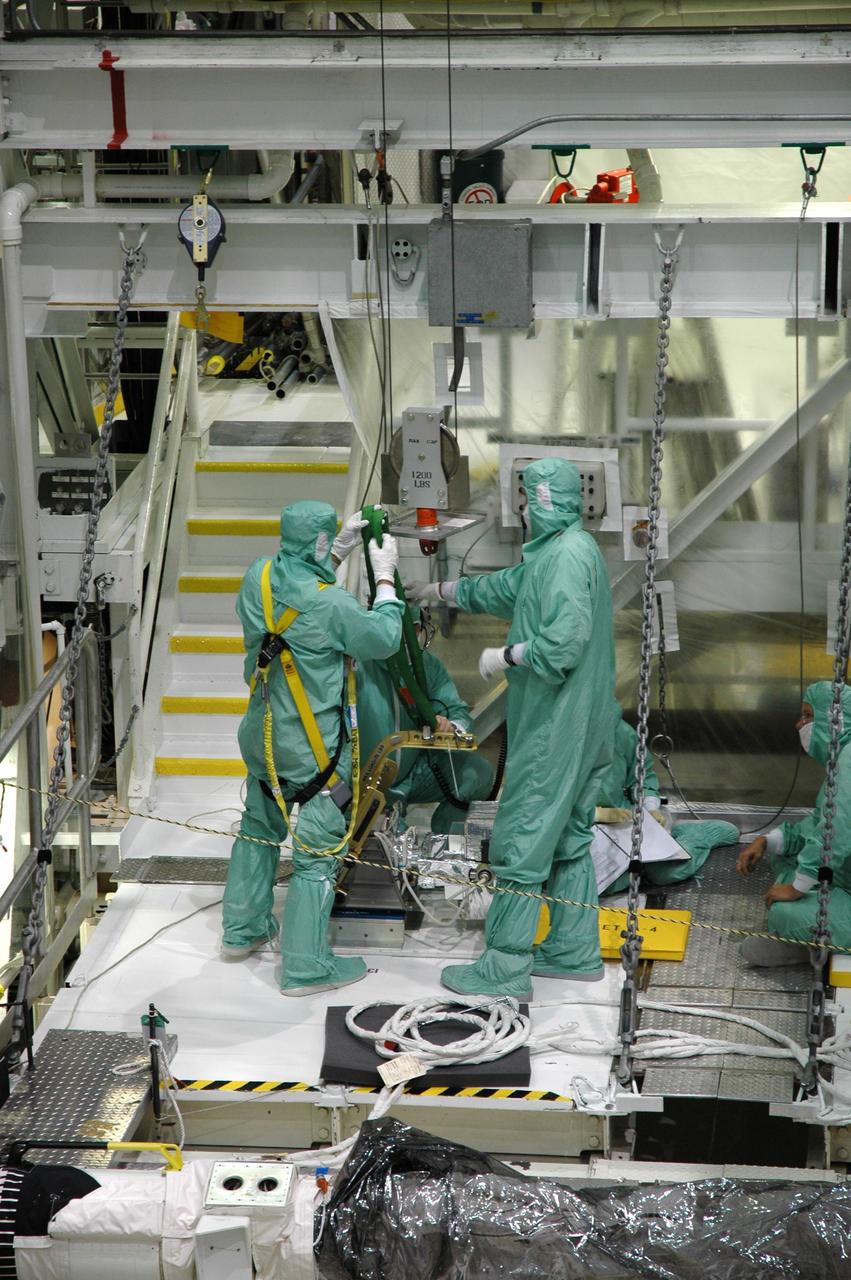
CAPE CANAVERAL, Fla. – In the Orbiter Processing Facility bay 2 at NASA's Kennedy Space Center, workers prepare to install a camera pack on the orbiter boom sensor system in space shuttle Endeavour's payload bay. The scheduled launch vehicle for the STS-126 missions, Endeavour will deliver a multi-purpose logistics module to the International Space Station. Launch is targeted for Nov. 10. Endeavour is also the backup shuttle, if needed for rescue, for the STS-125 mission in October that will make repairs on NASA's Hubble Space Telescope. For that purpose, it is designated STS-400. Photo credit: NASA/Jim Grossmann
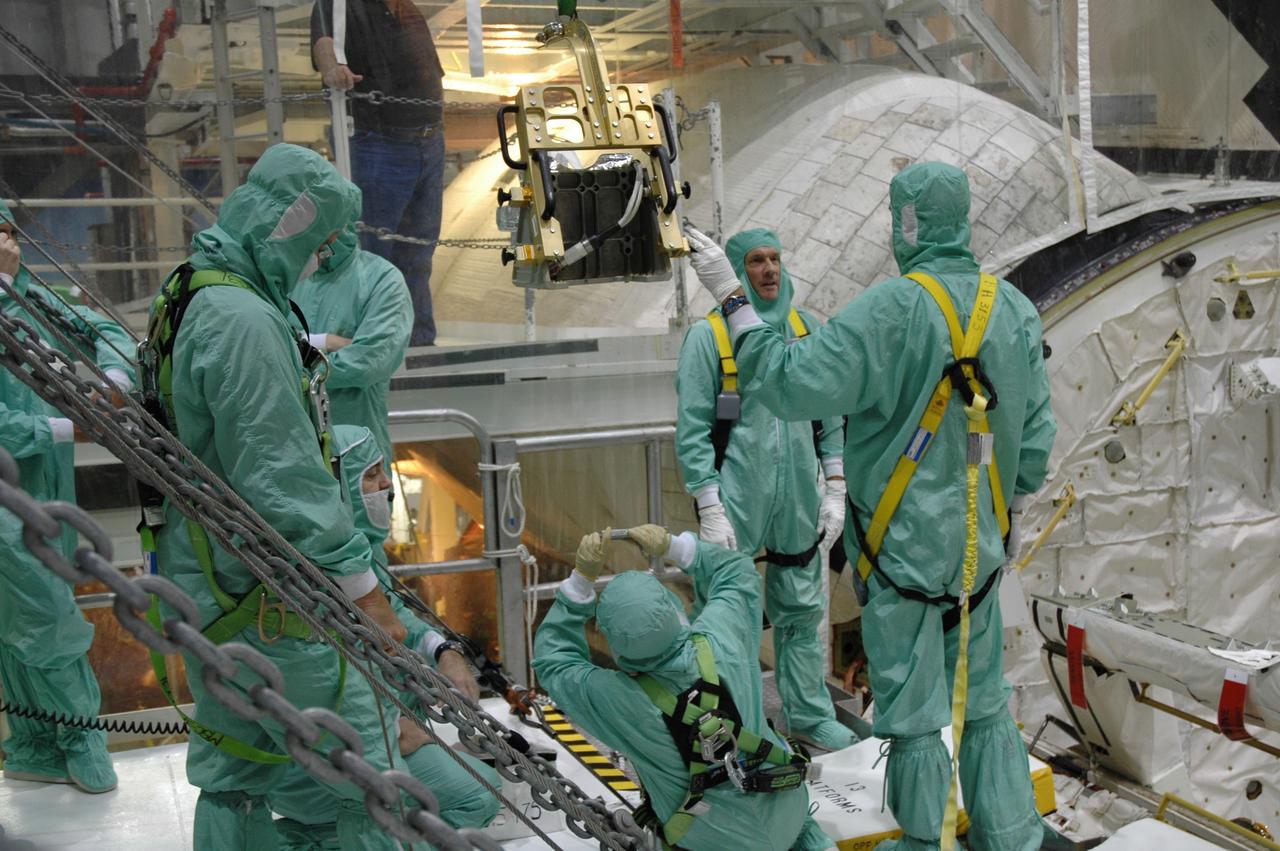
CAPE CANAVERAL, Fla. – In the Orbiter Processing Facility bay 2 at NASA's Kennedy Space Center, workers get ready to install a camera pack on the orbiter boom sensor system in space shuttle Endeavour's payload bay. The scheduled launch vehicle for the STS-126 missions, Endeavour will deliver a multi-purpose logistics module to the International Space Station. Launch is targeted for Nov. 10. Endeavour is also the backup shuttle, if needed for rescue, for the STS-125 mission in October that will make repairs on NASA's Hubble Space Telescope. For that purpose, it is designated STS-400. Photo credit: NASA/Jim Grossmann
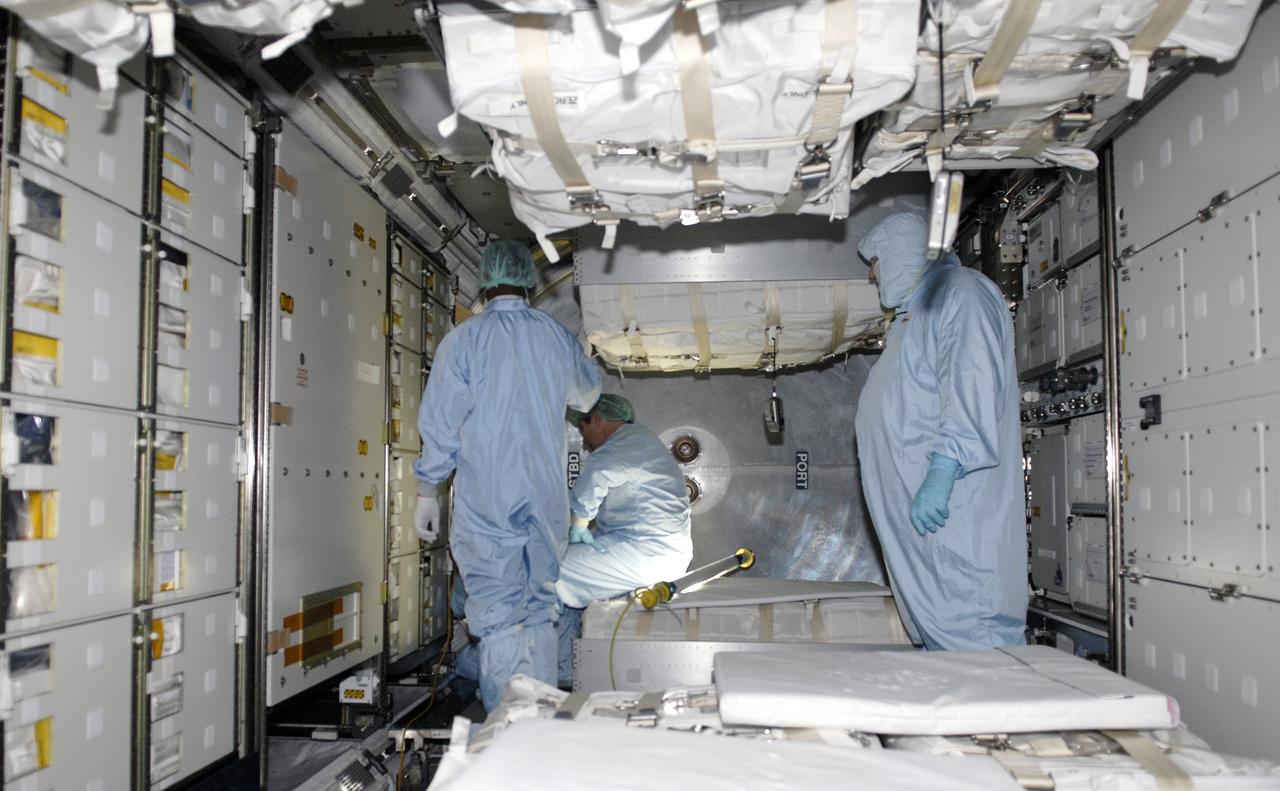
CAPE CANAVERAL, Fla. – In the Space Station Processing Facility at NASA's Kennedy Space Center in Florida, workers check the equipment in the Multi-Purpose Logistics Module Leonardo, which is the payload for the STS-126 mission to the International Space Station. The 15-day flight will deliver equipment and supplies to the International Space Station in preparation for expansion from a three- to six-person resident crew aboard the complex. The mission also will include four spacewalks to service the station Solar Alpha Rotary Joints. Leonardo holds supplies and equipment, including equipment for the regenerative life support system, additional crew quarters and exercise equipment and spare hardware. Photo credit: NASA/Kim Shiflett
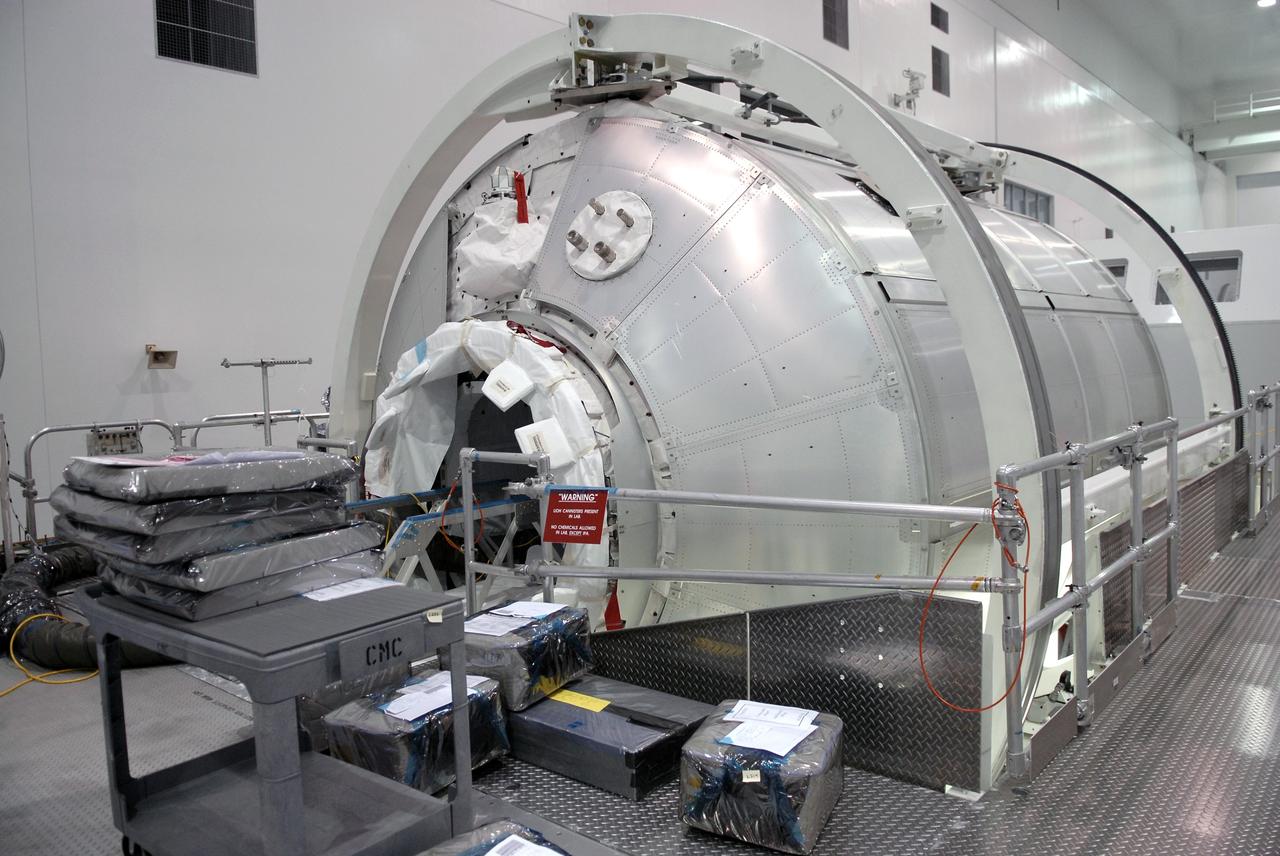
CAPE CANAVERAL, Fla. – In the Space Station Processing Facility at NASA's Kennedy Space Center in Florida, the Multi-Purpose Logistics Module Leonardo is open to receive the final supplies for the STS-126 mission to the International Space Station. The 15-day flight will deliver equipment and supplies to the International Space Station in preparation for expansion from a three- to six-person resident crew aboard the complex. The mission also will include four spacewalks to service the station Solar Alpha Rotary Joints. Leonardo holds supplies and equipment, including equipment for the regenerative life support system, additional crew quarters and exercise equipment and spare hardware. Photo credit: NASA/Kim Shiflett
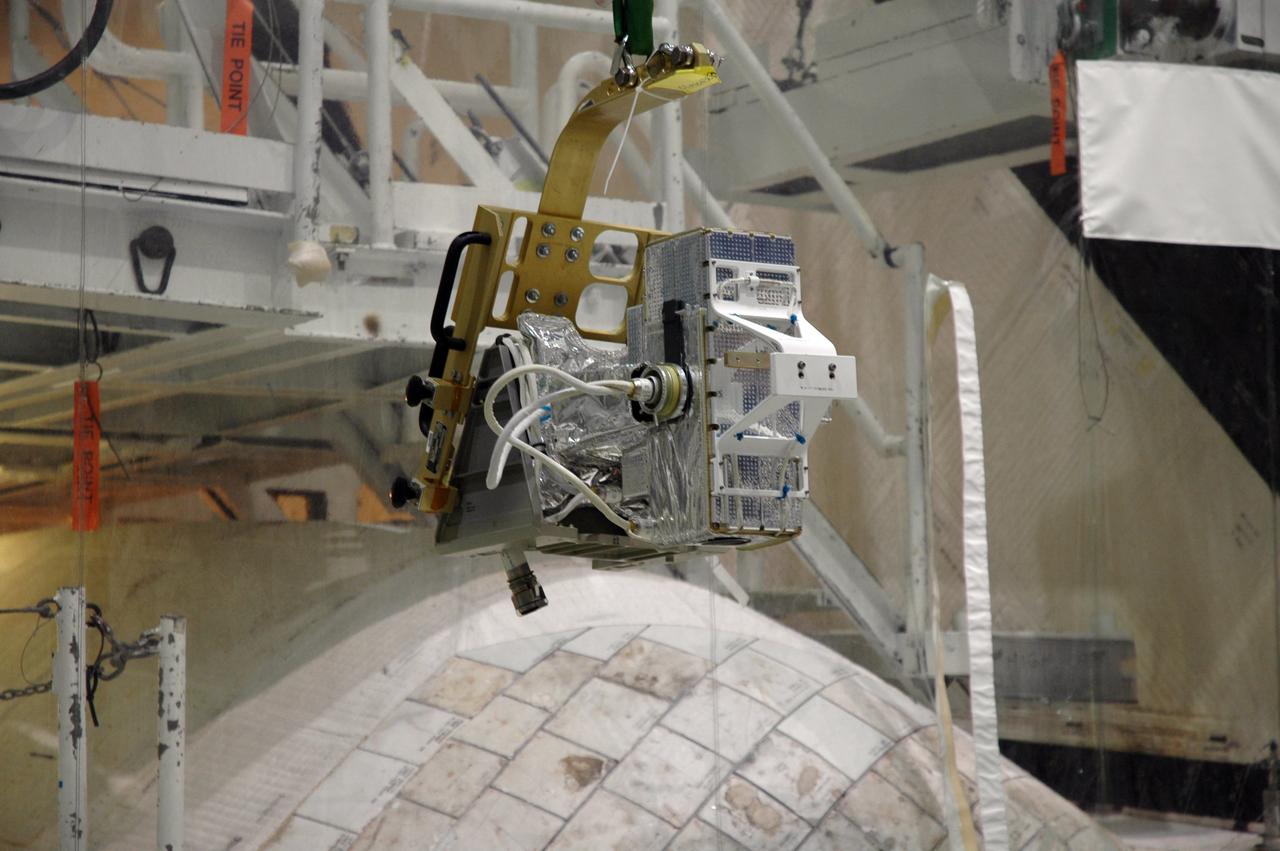
CAPE CANAVERAL, Fla. – A close-up of the camera pack to be installed on space shuttle Endeavour's orbiter boom sensor system. The work is being done in the Orbiter Processing Facility bay 2 at NASA's Kennedy Space Center. The scheduled launch vehicle for the STS-126 missions, Endeavour will deliver a multi-purpose logistics module to the International Space Station. Launch is targeted for Nov. 10. Endeavour is also the backup shuttle, if needed for rescue, for the STS-125 mission in October that will make repairs on NASA's Hubble Space Telescope. For that purpose, it is designated STS-400. Photo credit: NASA/Jim Grossmann
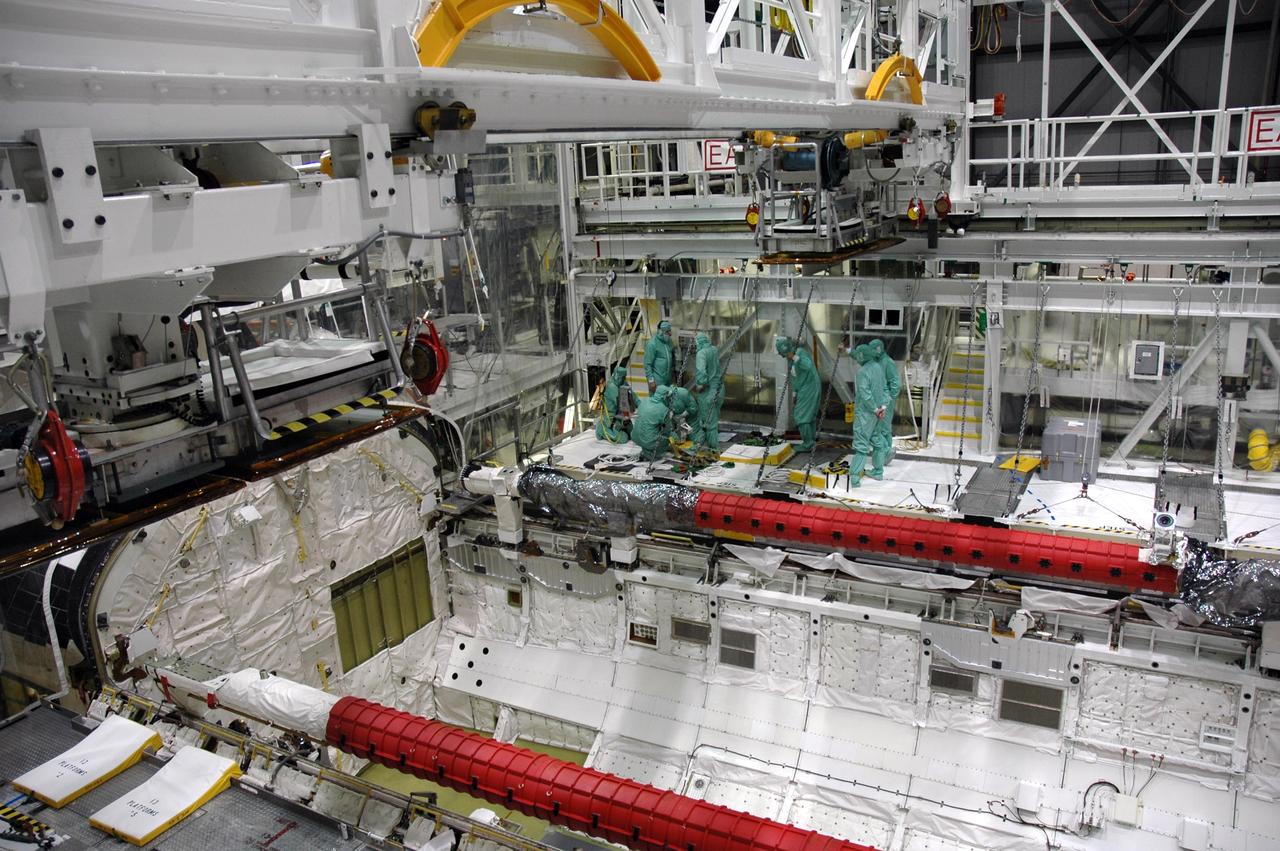
CAPE CANAVERAL, Fla. – In the Orbiter Processing Facility bay 2 at NASA's Kennedy Space Center, workers prepare to install a camera pack on the orbiter boom sensor system in space shuttle Endeavour's payload bay. The scheduled launch vehicle for the STS-126 missions, Endeavour will deliver a multi-purpose logistics module to the International Space Station. Launch is targeted for Nov. 10. Endeavour is also the backup shuttle, if needed for rescue, for the STS-125 mission in October that will make repairs on NASA's Hubble Space Telescope. For that purpose, it is designated STS-400. Photo credit: NASA/Jim Grossmann
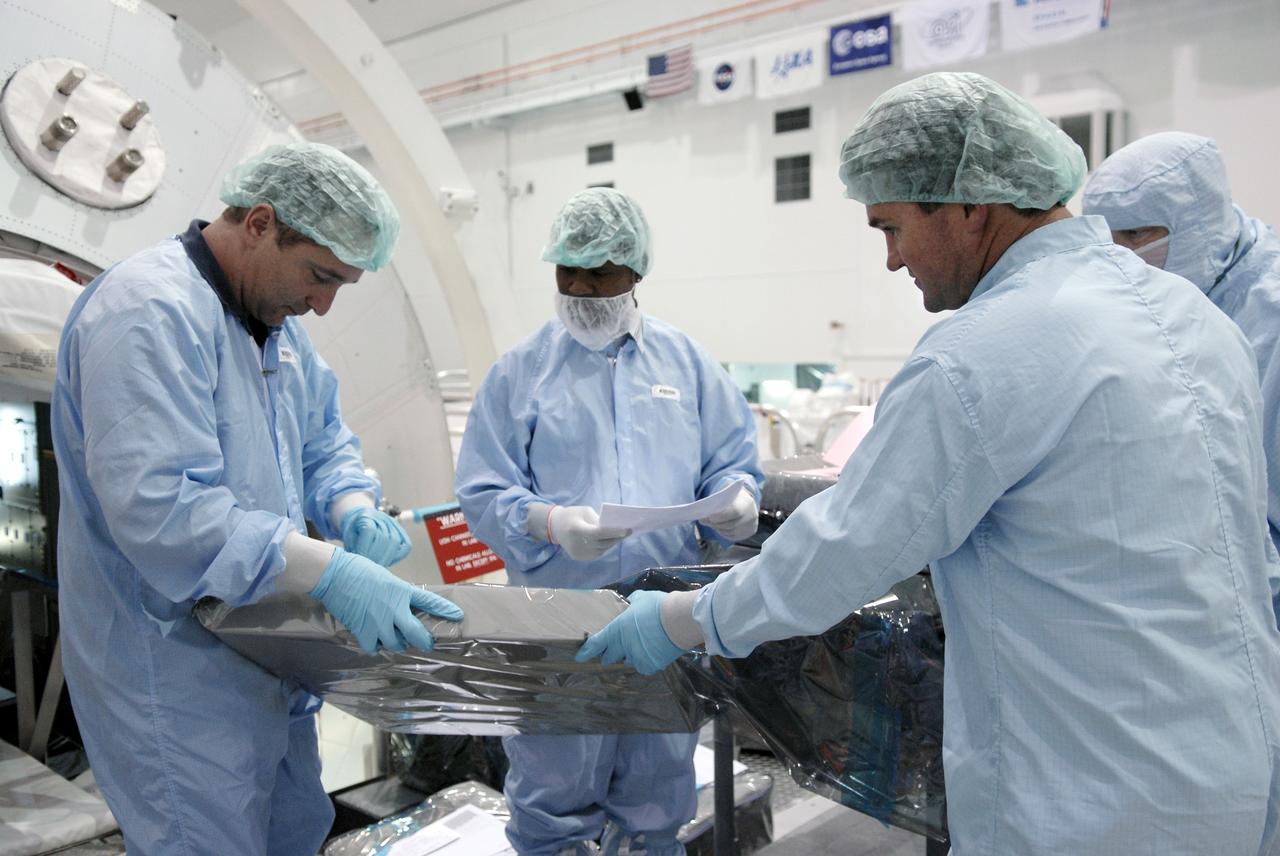
CAPE CANAVERAL, Fla. – In the Space Station Processing Facility at NASA's Kennedy Space Center in Florida, workers prepare supply packages that will be stowed in the Multi-Purpose Logistics Module Leonardo, at left, for the STS-126 mission to the International Space Station. The 15-day flight will deliver equipment and supplies to the International Space Station in preparation for expansion from a three- to six-person resident crew aboard the complex. The mission also will include four spacewalks to service the station Solar Alpha Rotary Joints. Leonardo holds supplies and equipment, including equipment for the regenerative life support system, additional crew quarters and exercise equipment and spare hardware. Photo credit: NASA/Kim Shiflett
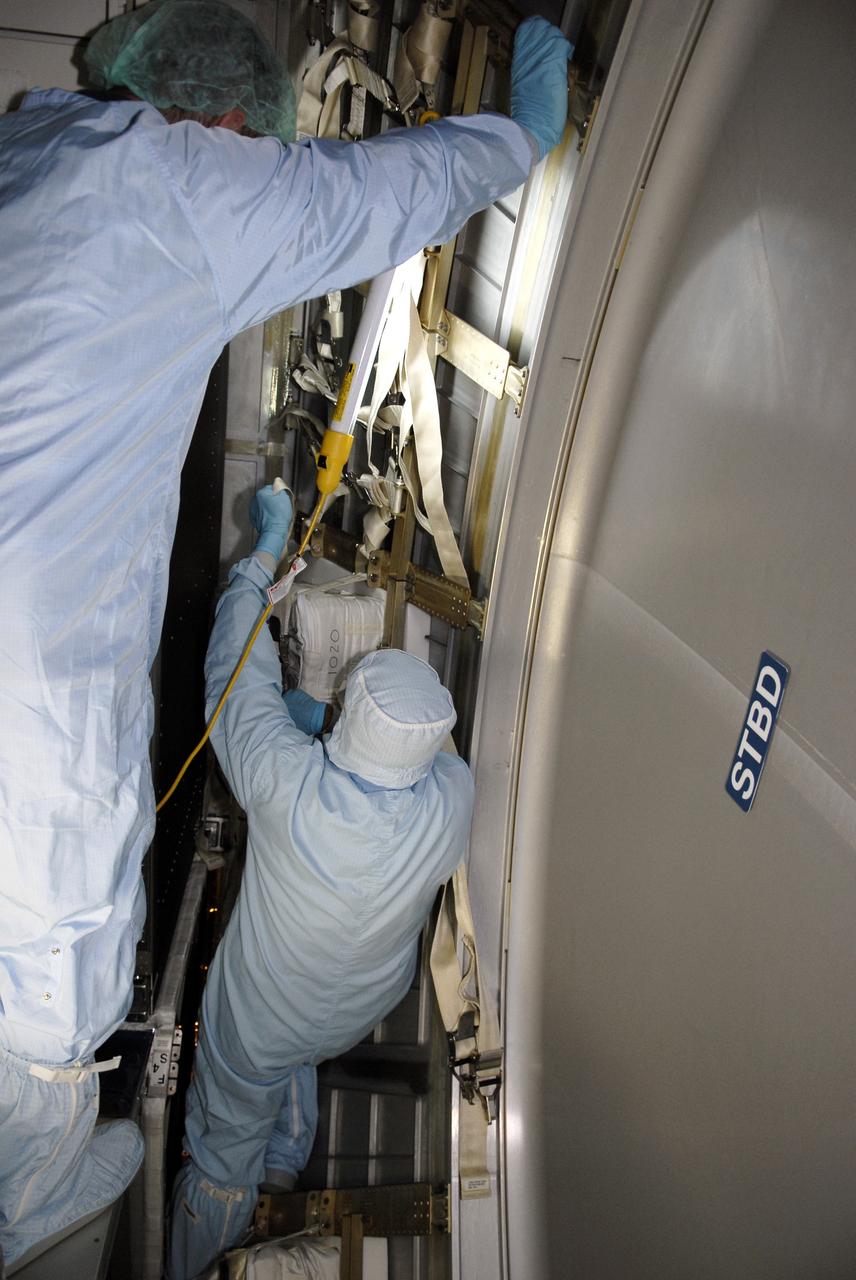
CAPE CANAVERAL, Fla. – In the Space Station Processing Facility at NASA's Kennedy Space Center in Florida, workers place a stowage container in a rack of the Multi-Purpose Logistics Module Leonardo for the STS-126 mission to the International Space Station. The 15-day flight will deliver equipment and supplies to the International Space Station in preparation for expansion from a three- to six-person resident crew aboard the complex. The mission also will include four spacewalks to service the station Solar Alpha Rotary Joints. Leonardo holds supplies and equipment, including equipment for the regenerative life support system, additional crew quarters and exercise equipment and spare hardware. Photo credit: NASA/Kim Shiflett
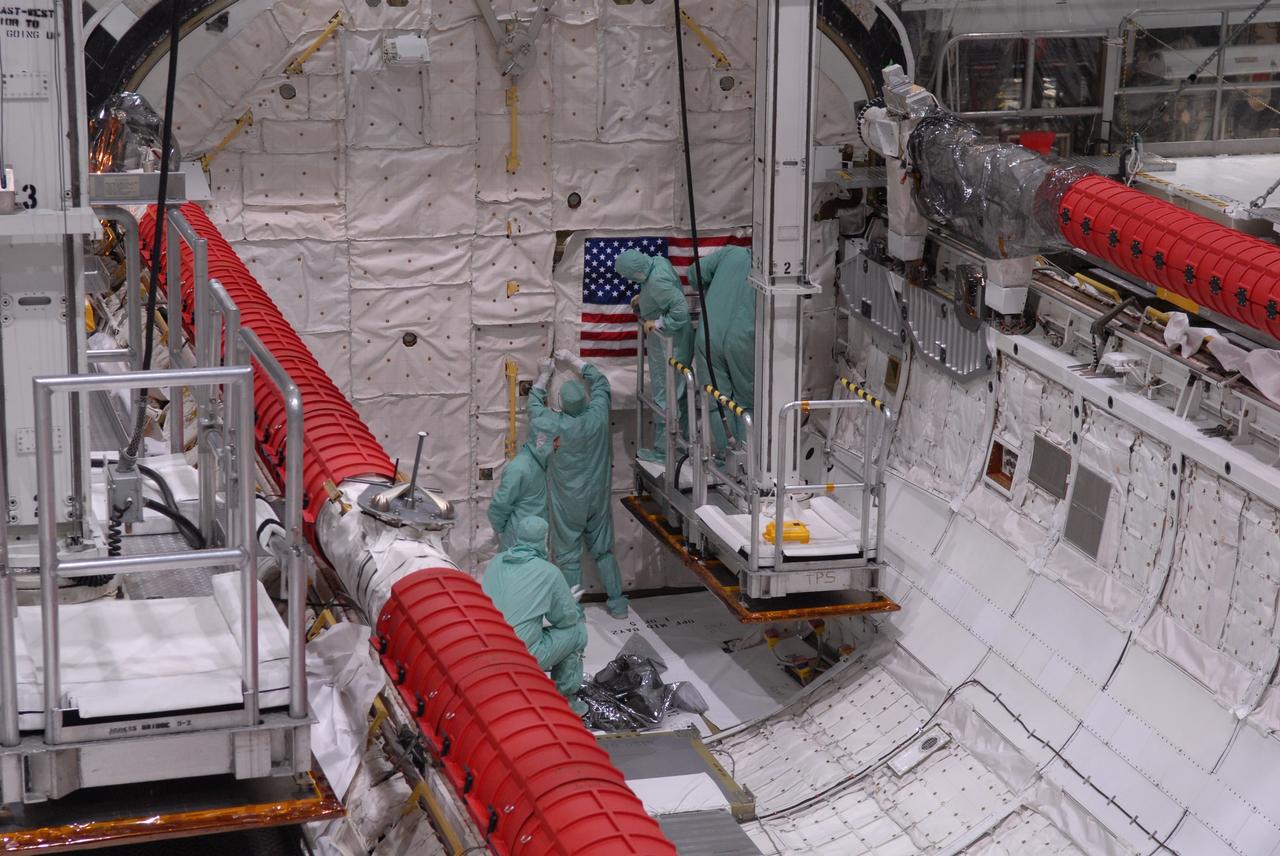
CAPE CANAVERAL, Fla. – Inside Orbiter Processing Facility 2 at NASA's Kennedy Space Center, United Space Alliance technicians secure the U.S. flag in space shuttle Endeavour's payload bay during processing. Endeavour will deliver a multi-purpose logistics module to the International Space Station on its STS-126 mission. Launch is targeted for Nov. 10. Photo credit: NASA/Amanda Diller
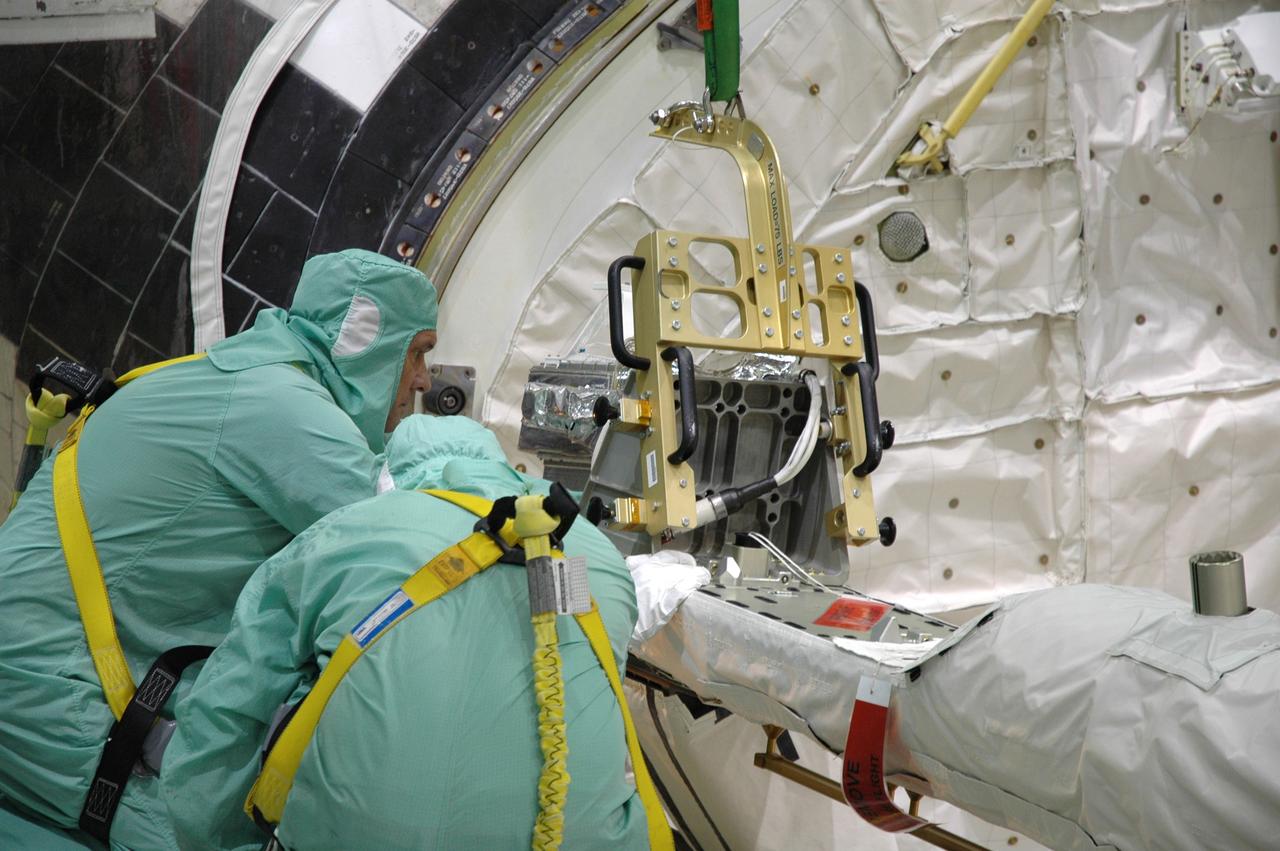
CAPE CANAVERAL, Fla. – In the Orbiter Processing Facility bay 2 at NASA's Kennedy Space Center, workers install a camera pack on the orbiter boom sensor system in space shuttle Endeavour's payload bay. The scheduled launch vehicle for the STS-126 missions, Endeavour will deliver a multi-purpose logistics module to the International Space Station. Launch is targeted for Nov. 10. Endeavour is also the backup shuttle, if needed for rescue, for the STS-125 mission in October that will make repairs on NASA's Hubble Space Telescope. For that purpose, it is designated STS-400. Photo credit: NASA/Jim Grossmann
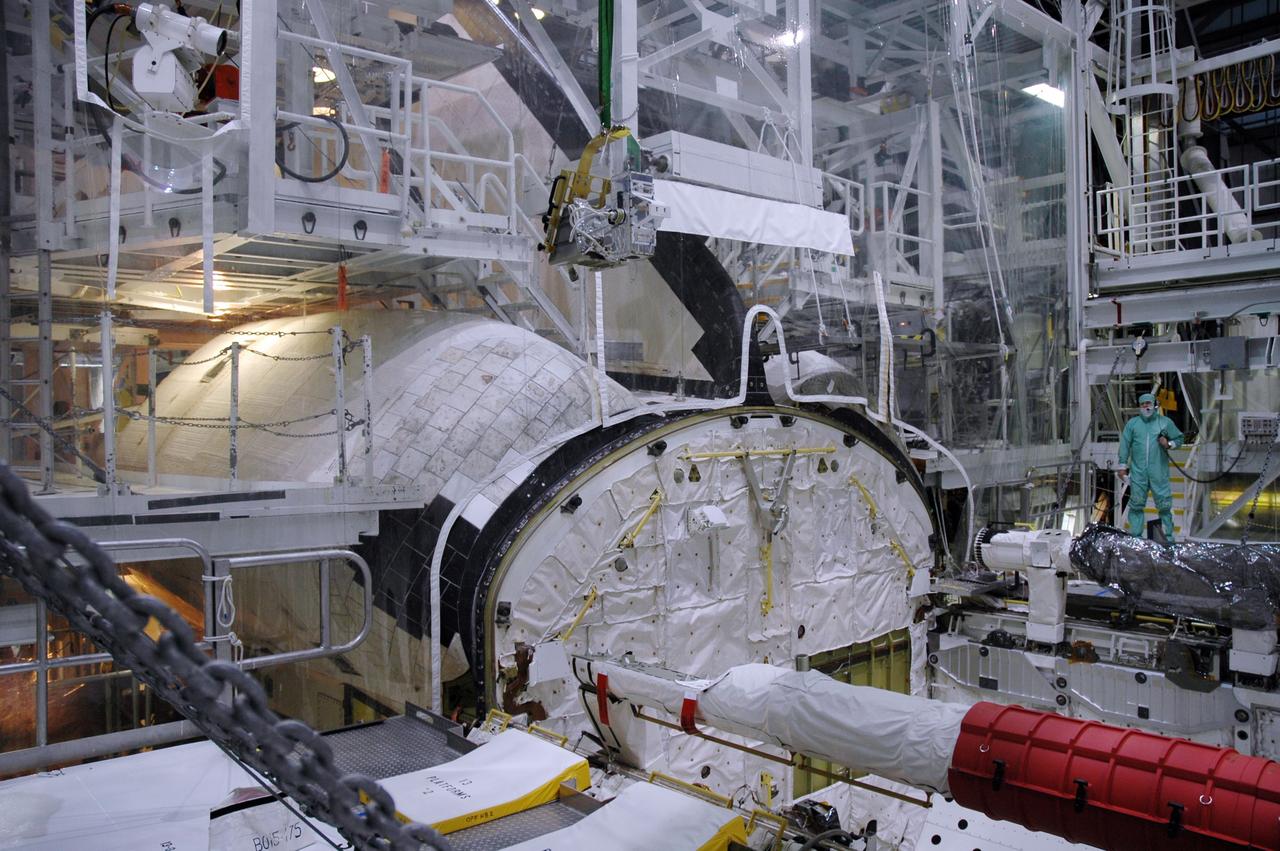
CAPE CANAVERAL, Fla. – In the Orbiter Processing Facility bay 2 at NASA's Kennedy Space Center, a camera pack is moved above space shuttle Endeavour's payload bay. The camera will be installed on the shuttle's orbiter boom sensor system. The scheduled launch vehicle for the STS-126 missions, Endeavour will deliver a multi-purpose logistics module to the International Space Station. Launch is targeted for Nov. 10. Endeavour is also the backup shuttle, if needed for rescue, for the STS-125 mission in October that will make repairs on NASA's Hubble Space Telescope. For that purpose, it is designated STS-400. Photo credit: NASA/Jim Grossmann
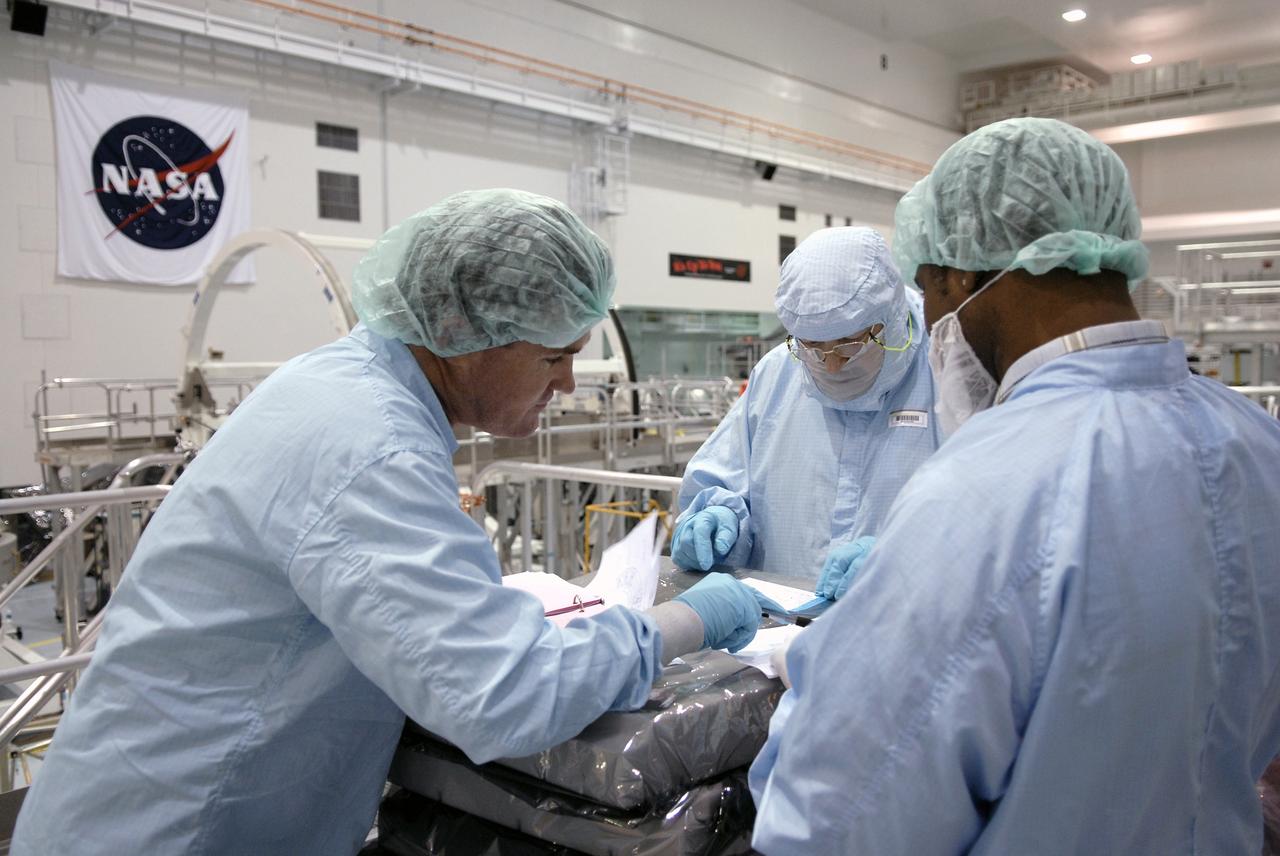
CAPE CANAVERAL, Fla. – In the Space Station Processing Facility at NASA's Kennedy Space Center in Florida, workers check data sheets associated with stowing supply packages in the Multi-Purpose Logistics Module Leonardo for the STS-126 mission to the International Space Station. The 15-day flight will deliver equipment and supplies to the International Space Station in preparation for expansion from a three- to six-person resident crew aboard the complex. The mission also will include four spacewalks to service the station Solar Alpha Rotary Joints. Leonardo holds supplies and equipment, including equipment for the regenerative life support system, additional crew quarters and exercise equipment and spare hardware. Photo credit: NASA/Kim Shiflett
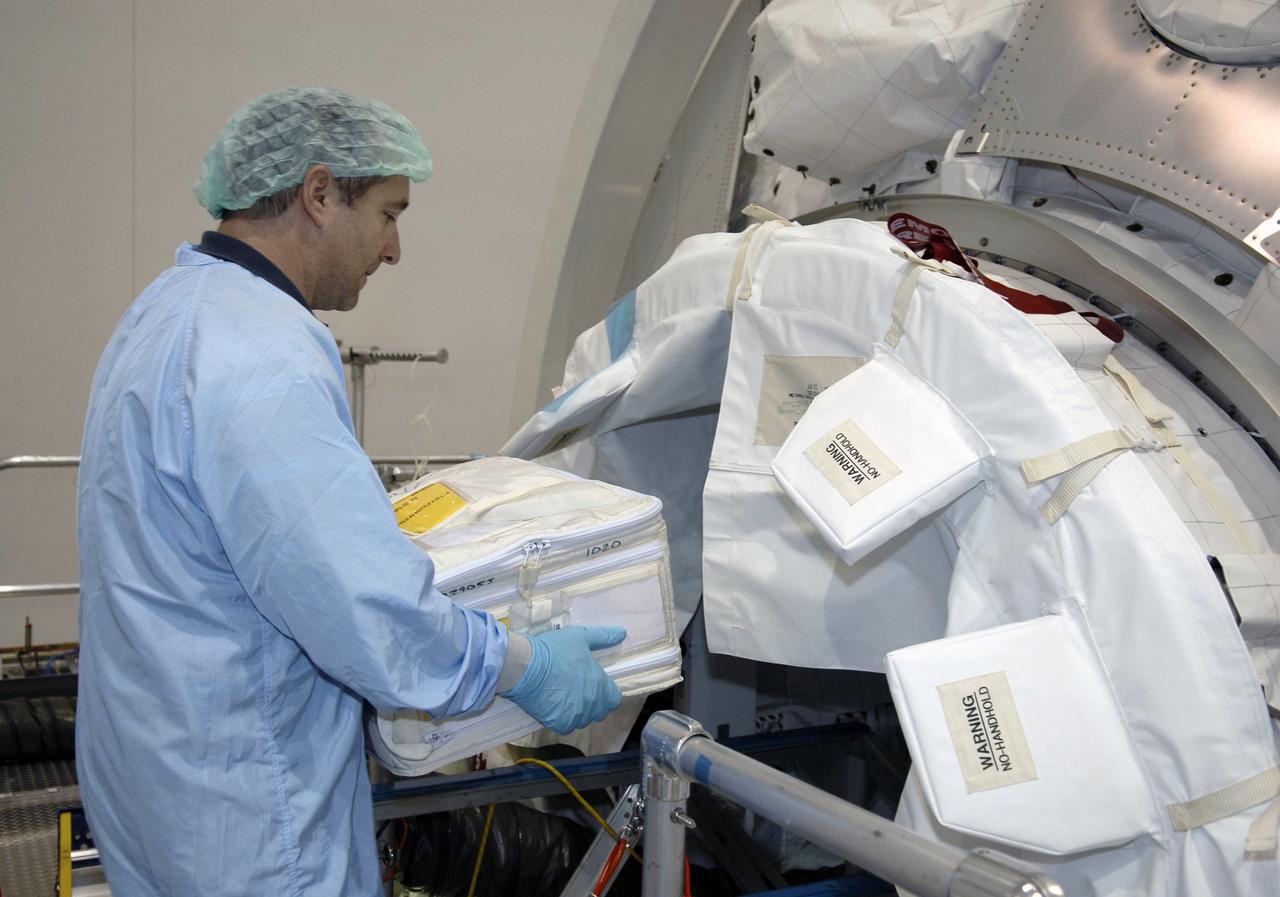
CAPE CANAVERAL, Fla. – In the Space Station Processing Facility at NASA's Kennedy Space Center in Florida, a worker carries one of the stowage containers into the Multi-Purpose Logistics Module Leonardo for the STS-126 mission to the International Space Station. The 15-day flight will deliver equipment and supplies to the International Space Station in preparation for expansion from a three- to six-person resident crew aboard the complex. The mission also will include four spacewalks to service the station Solar Alpha Rotary Joints. Leonardo holds supplies and equipment, including equipment for the regenerative life support system, additional crew quarters and exercise equipment and spare hardware. Photo credit: NASA/Kim Shiflett
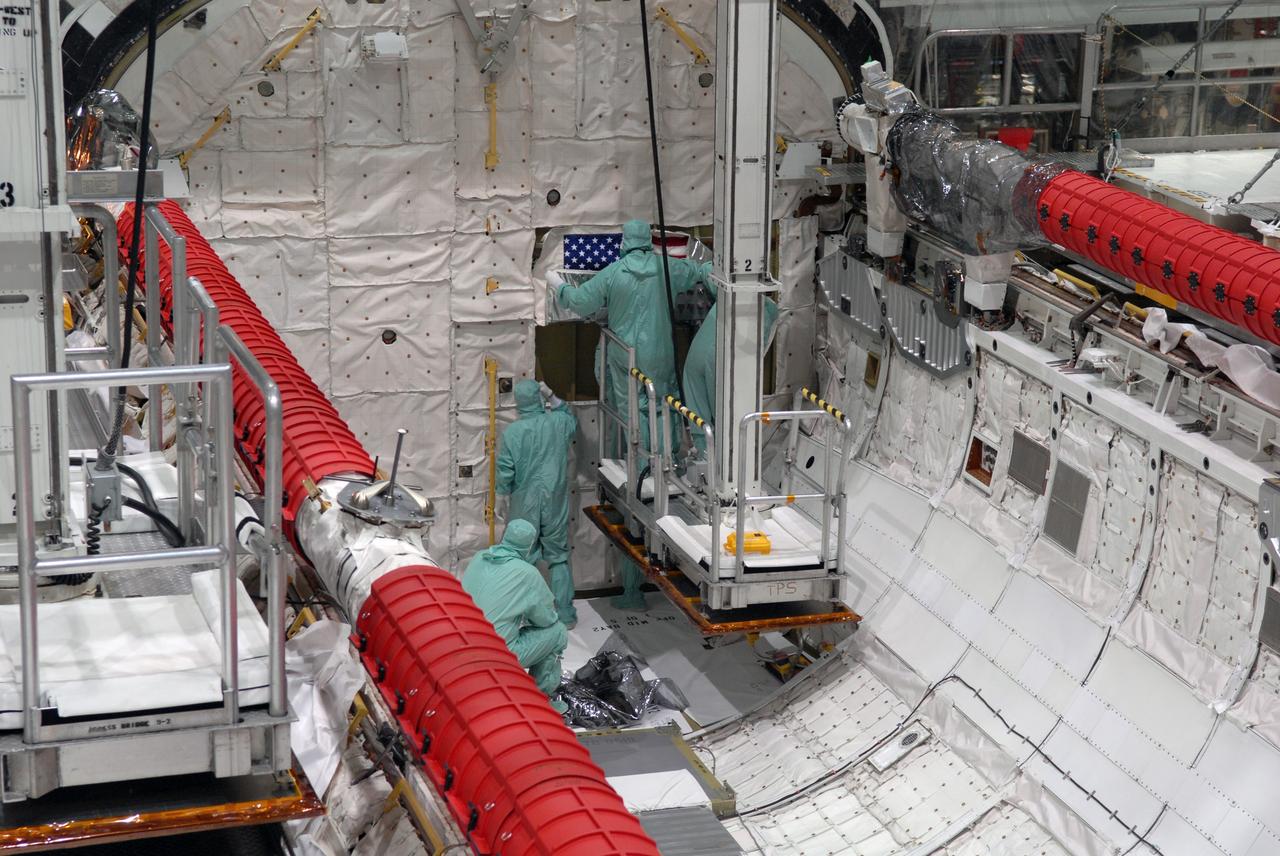
CAPE CANAVERAL, Fla. – Inside Orbiter Processing Facility 2 at NASA's Kennedy Space Center, United Space Alliance technicians secure the U.S. flag in space shuttle Endeavour's payload bay during processing. Endeavour will deliver a multi-purpose logistics module to the International Space Station on its STS-126 mission. Launch is targeted for Nov. 10. Photo credit: NASA/Amanda Diller
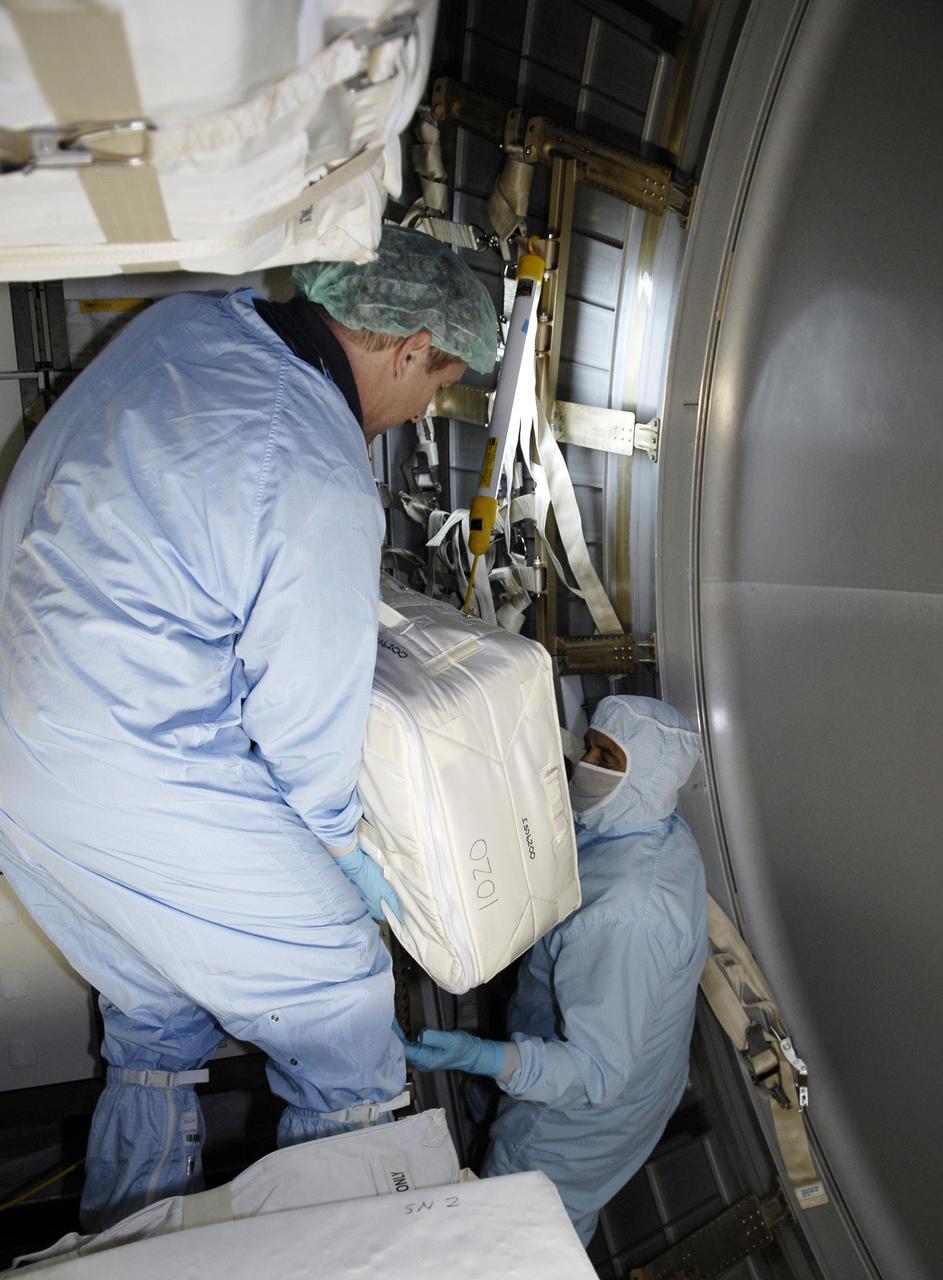
CAPE CANAVERAL, Fla. – In the Space Station Processing Facility at NASA's Kennedy Space Center in Florida, a worker, left, hands off a stowage container to another worker in the Multi-Purpose Logistics Module Leonardo for the STS-126 mission to the International Space Station. The 15-day flight will deliver equipment and supplies to the International Space Station in preparation for expansion from a three- to six-person resident crew aboard the complex. The mission also will include four spacewalks to service the station Solar Alpha Rotary Joints. Leonardo holds supplies and equipment, including equipment for the regenerative life support system, additional crew quarters and exercise equipment and spare hardware. Photo credit: NASA/Kim Shiflett
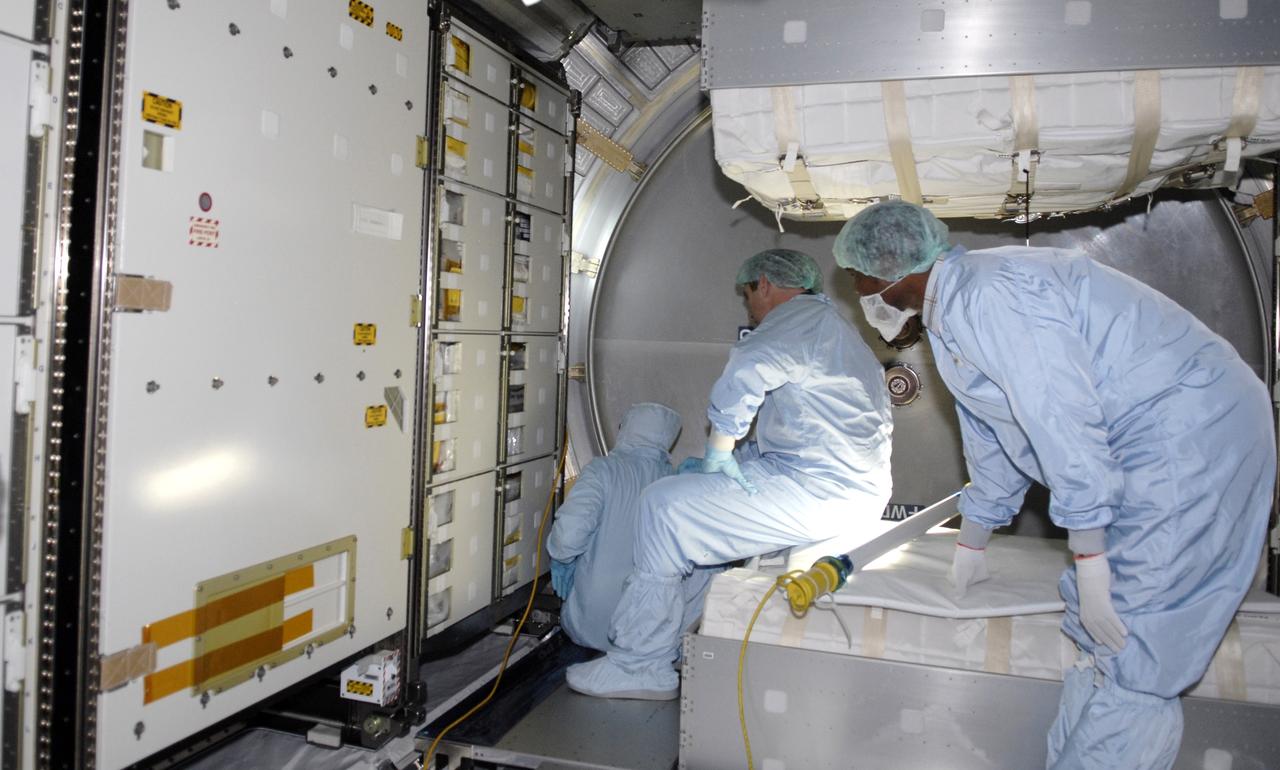
CAPE CANAVERAL, Fla. – In the Space Station Processing Facility at NASA's Kennedy Space Center in Florida, workers check the equipment in the Multi-Purpose Logistics Module Leonardo, which is the payload for the STS-126 mission to the International Space Station. The 15-day flight will deliver equipment and supplies to the International Space Station in preparation for expansion from a three- to six-person resident crew aboard the complex. The mission also will include four spacewalks to service the station Solar Alpha Rotary Joints. Leonardo holds supplies and equipment, including equipment for the regenerative life support system, additional crew quarters and exercise equipment and spare hardware. Photo credit: NASA/Kim Shiflett
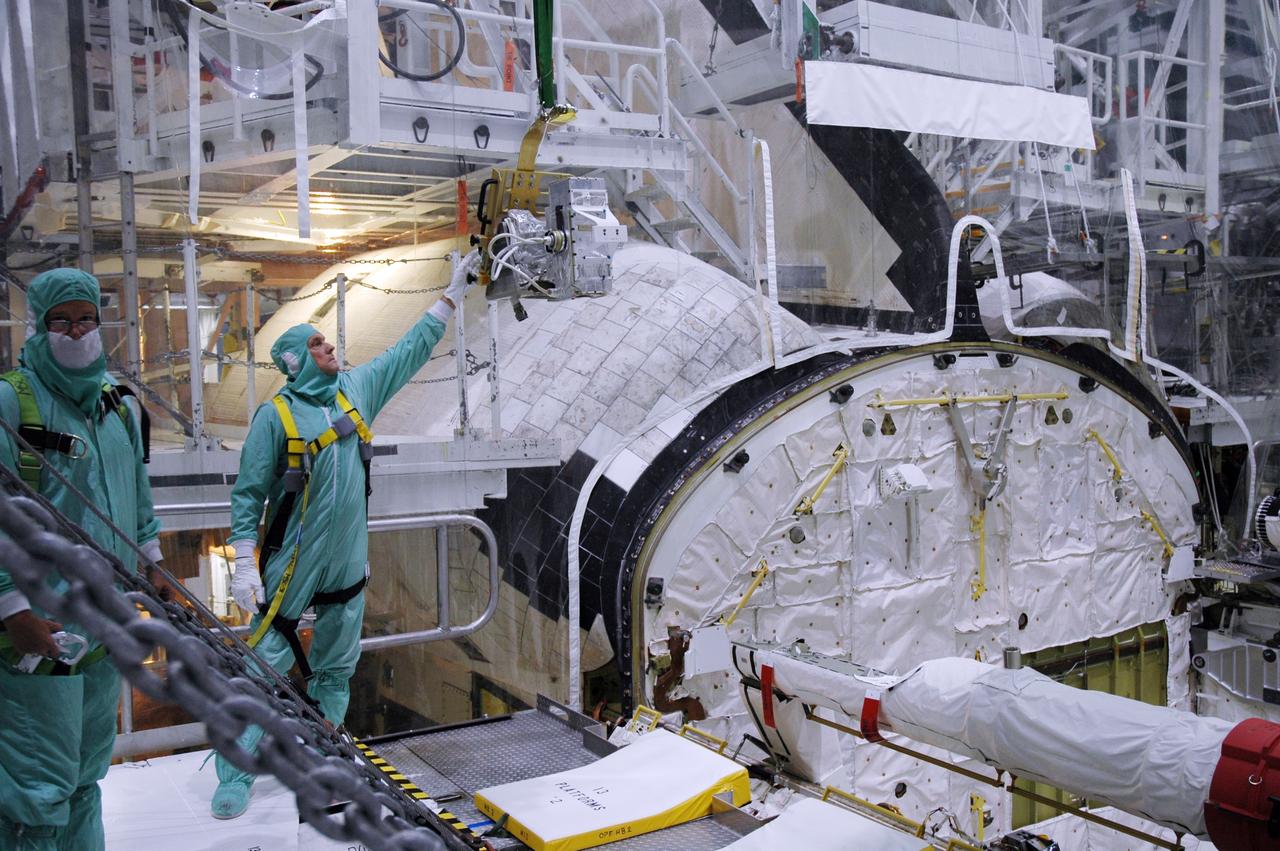
CAPE CANAVERAL, Fla. – In the Orbiter Processing Facility bay 2 at NASA's Kennedy Space Center, a worker reaches up to the camera pack to be installed on space shuttle Endeavour's orbiter boom sensor system. The scheduled launch vehicle for the STS-126 missions, Endeavour will deliver a multi-purpose logistics module to the International Space Station. Launch is targeted for Nov. 10. Endeavour is also the backup shuttle, if needed for rescue, for the STS-125 mission in October that will make repairs on NASA's Hubble Space Telescope. For that purpose, it is designated STS-400. Photo credit: NASA/Jim Grossmann
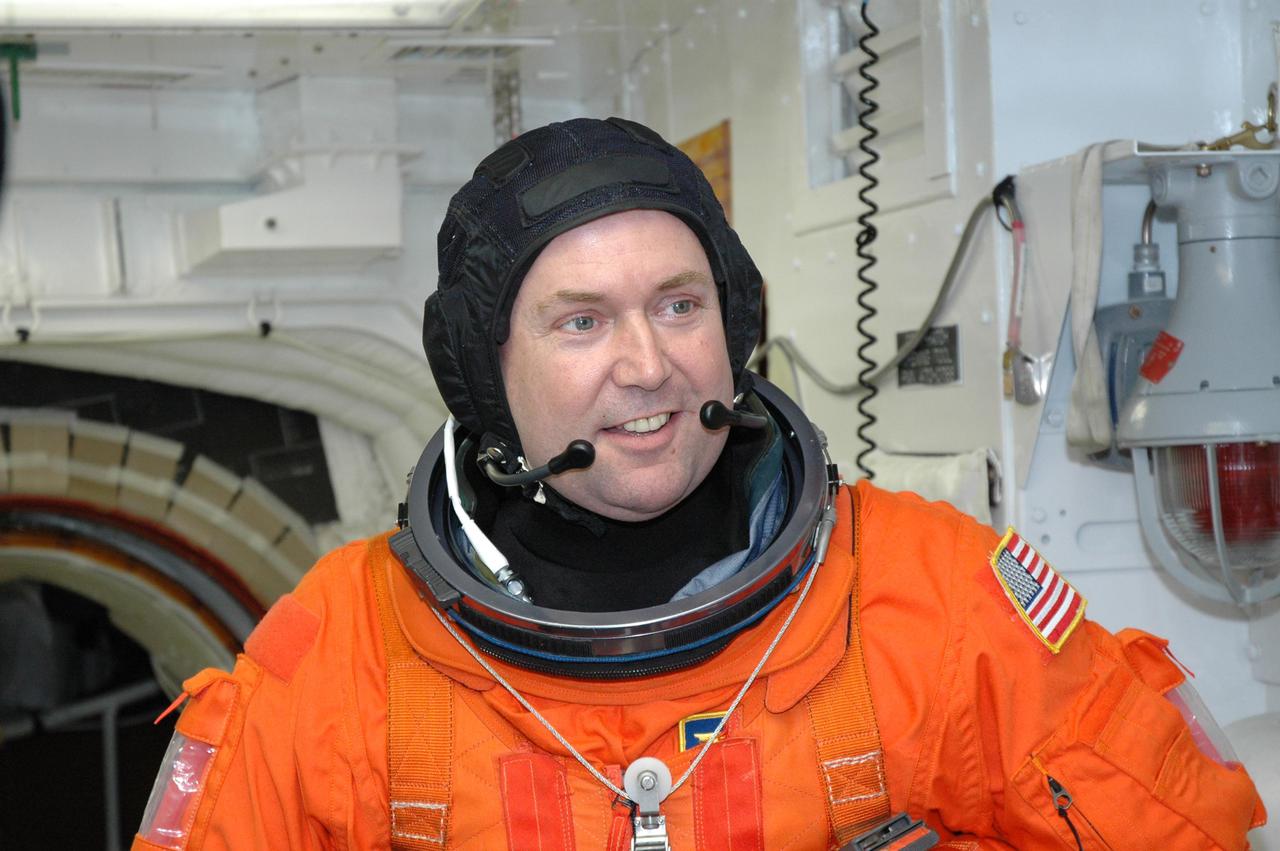
KENNEDY SPACE CENTER, FLA. -- In the White Room on NASA Kennedy Space Center's Launch Pad 39A, STS-123 Mission Specialist Mike Foreman is preparing to enter space shuttle Endeavour. He and the other STS-123 crew members are getting ready for the simulated launch countdown, which is the culmination of the terminal countdown demonstration test, or TCDT. The TCDT provides astronauts and ground crews with an opportunity to participate in various countdown activities, including equipment familiarization and emergency egress training. Endeavour is targeted to launch at 2:28 a.m. EDT March 11 on the 16-day STS-123 mission to the International Space Station. Endeavour and its crew will deliver the first section of the Japan Aerospace Exploration Agency's Kibo laboratory and the Canadian Space Agency's two-armed robotic system, Dextre. Photo credit: NASA_Jim Grossmann
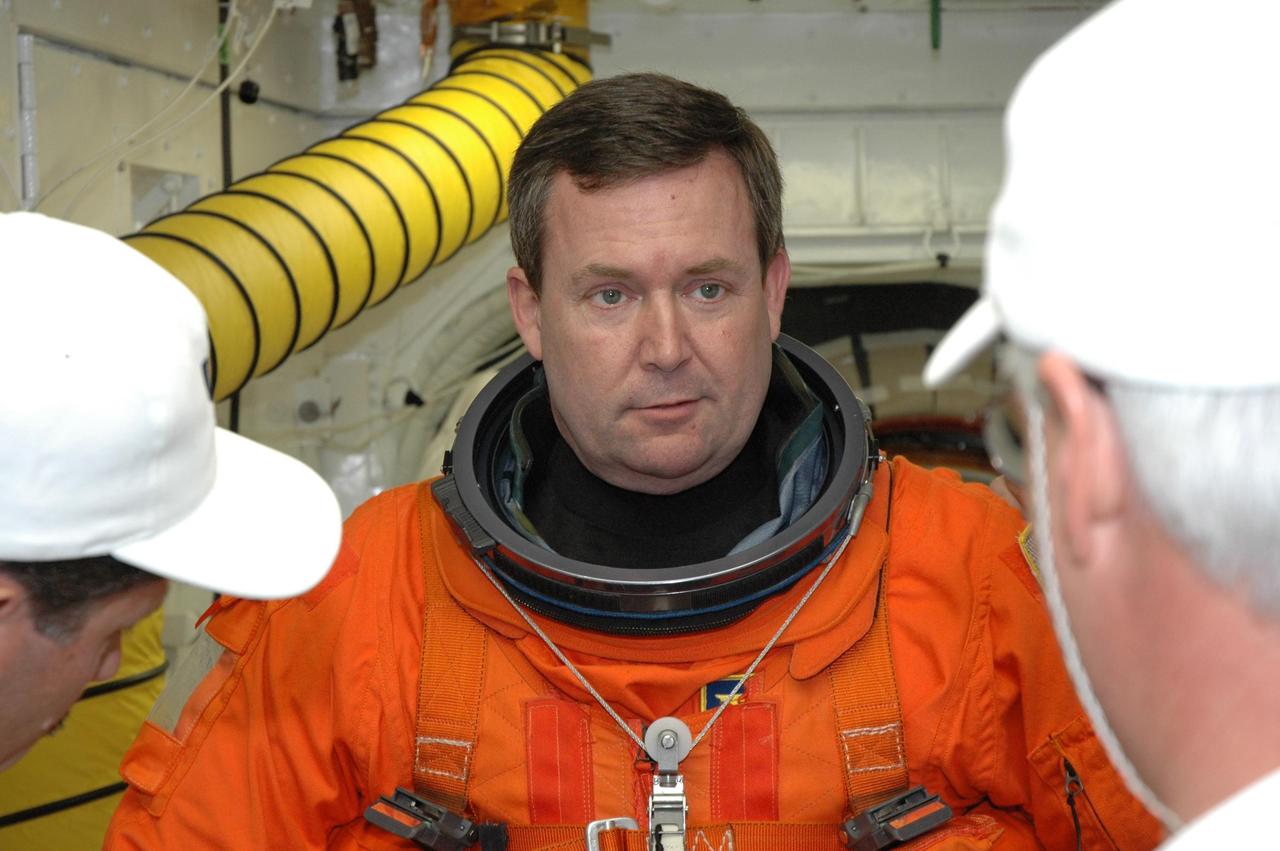
KENNEDY SPACE CENTER, FLA. -- In the White Room on NASA Kennedy Space Center's Launch Pad 39A, STS-123 Mission Specialist Mike Foreman gets help with his launch and entry suit before entering space shuttle Endeavour. He and the other STS-123 crew members are getting ready for the simulated launch countdown, which is the culmination of the terminal countdown demonstration test, or TCDT. The TCDT provides astronauts and ground crews with an opportunity to participate in various countdown activities, including equipment familiarization and emergency egress training. Endeavour is targeted to launch at 2:28 a.m. EDT March 11 on the 16-day STS-123 mission to the International Space Station. Endeavour and its crew will deliver the first section of the Japan Aerospace Exploration Agency's Kibo laboratory and the Canadian Space Agency's two-armed robotic system, Dextre. Photo credit: NASA/Jim Grossmann
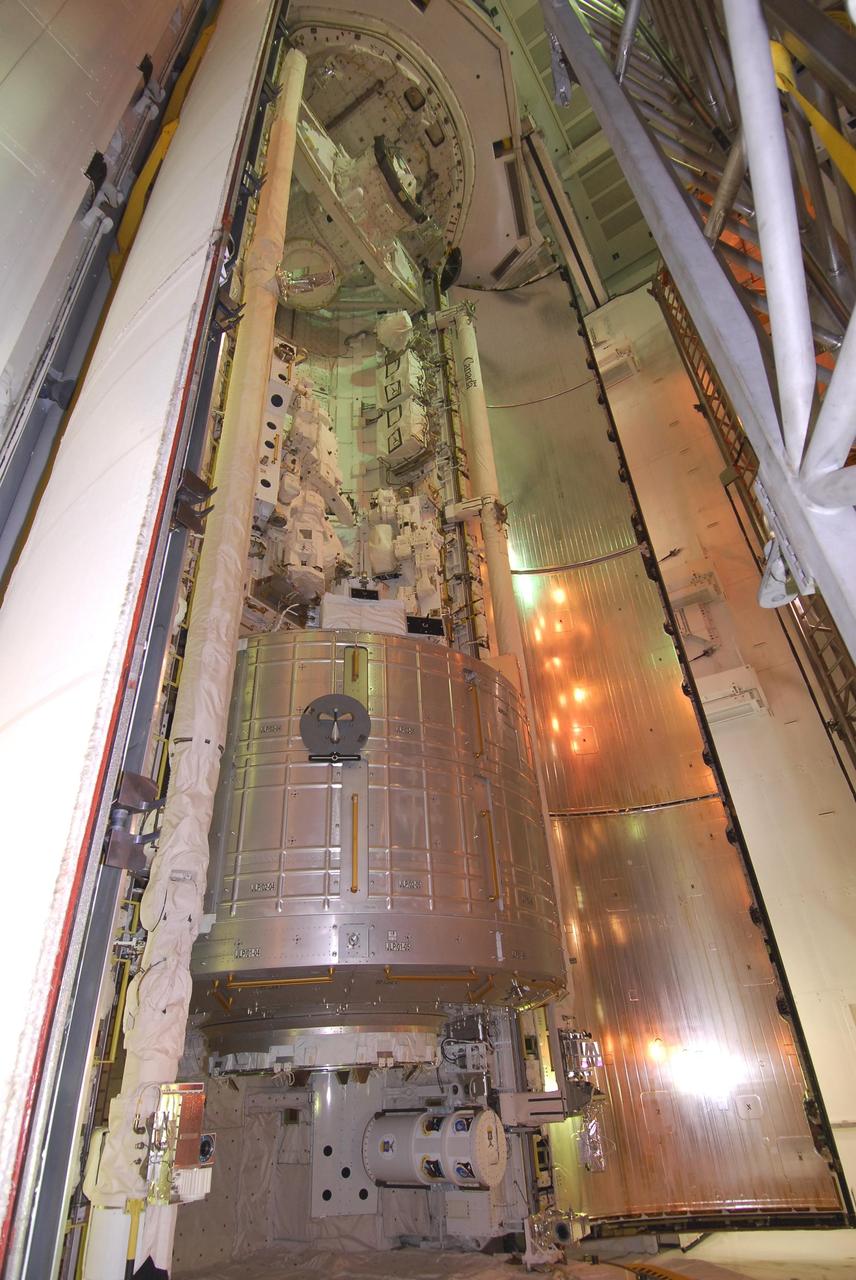
KENNEDY SPACE CENTER, FLA. -- On NASA Kennedy Space Center's Launch Pad 39A, one of space shuttle Endeavour's payload bay doors, at left, is closing to prepare for launch. Seen at the bottom is the first section of the Japan Aerospace Exploration Agency's Kibo laboratory, the Experiment Logistics Module Pressurized Section, or ELM-PS. Endeavour is targeted to launch March 11 at 2:28 a.m. EDT on the 16-day STS-123 mission to the International Space Station. Endeavour and its crew will deliver the ELM-PS and the Canadian Space Agency's two-armed robotic system, Dextre. Photo credit: NASA/Dimitri Gerondidakis
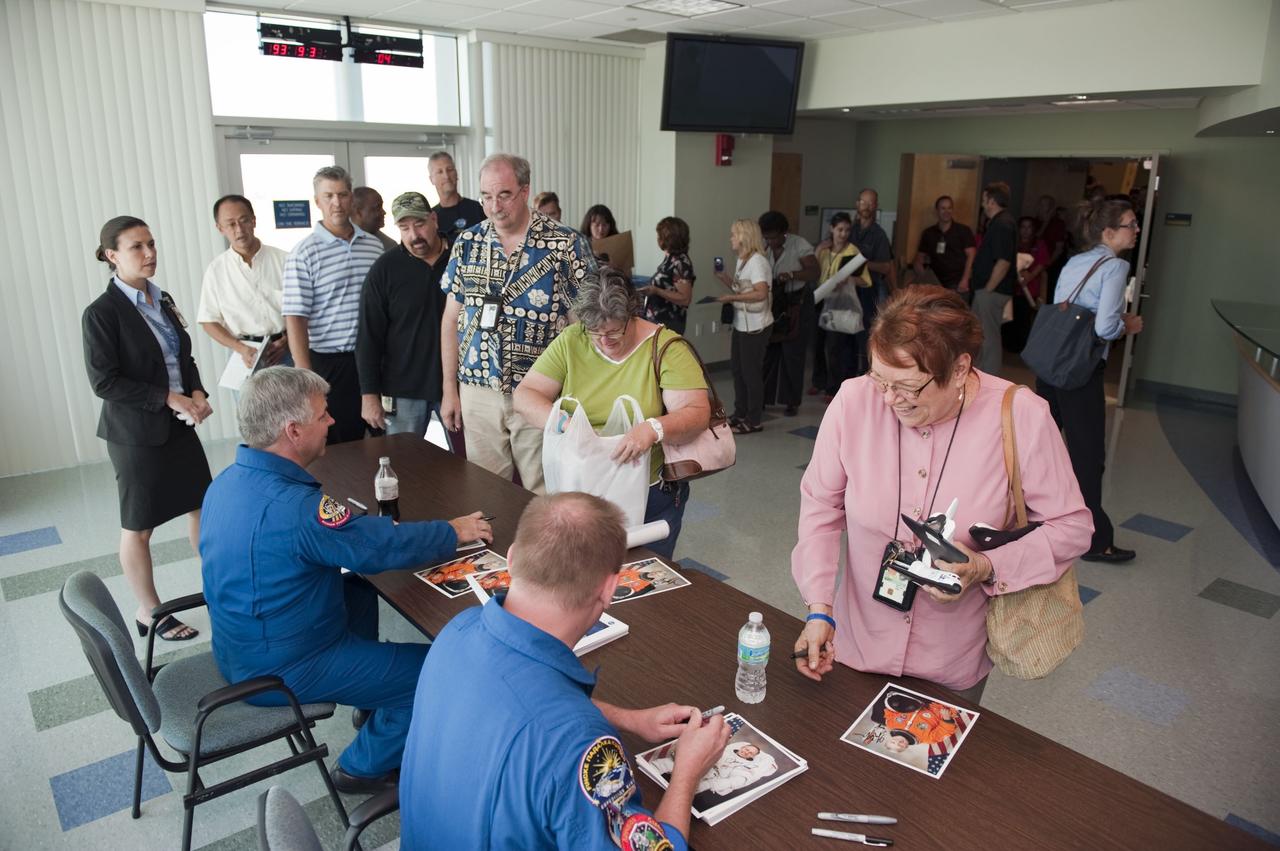
CAPE CANAVERAL, Fla. - Employees line up to visit with STS-134 Pilot Gregory H. Johnson, left, and Mission Specialist Michael Fincke following a crew return event at NASA's Kennedy Space Center in Florida. Commander Mark Kelly, Johnson and Mission Specialists Fincke, Greg Chamitoff, Andrew Feustel and European Space Agency astronaut Roberto Vittori lifted off May 16, 2011, aboard space shuttle Endeavour. During the nearly 16-day STS-134 mission, Endeavour delivered to the International Space Station the Alpha Magnetic Spectrometer (AMS) and spare parts, including two S-band communications antennas, a high-pressure gas tank and additional spare parts for Dextre. This was the 36th shuttle mission to the station and Endeavour's 25th and final flight. For more information, visit www.nasa.gov/mission_pages/shuttle/shuttlemissions/sts134/main/index.html. Photo credit: NASA/Kim Shiflett
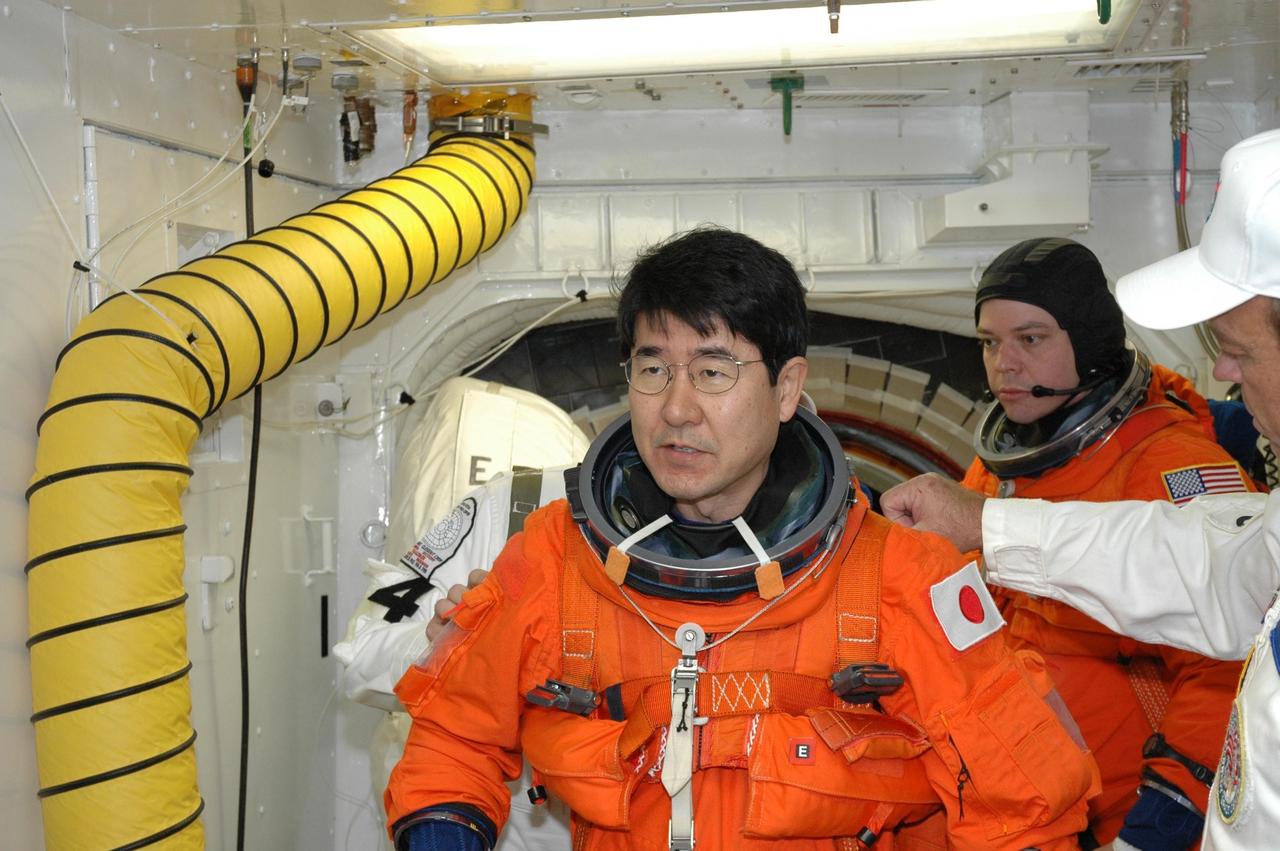
KENNEDY SPACE CENTER, FLA. -- In the White Room on NASA Kennedy Space Center's Launch Pad 39A, STS-123 Mission Specialist Takao Doi, who represents the Japan Aerospace Exploration Agency, gets help with his launch and entry suit before entering space shuttle Endeavour. Behind him is Mission Specialist Robert L. Behnken. Both are getting ready for the simulated launch countdown, which is the culmination of the terminal countdown demonstration test, or TCDT. The TCDT provides astronauts and ground crews with an opportunity to participate in various countdown activities, including equipment familiarization and emergency egress training. Endeavour is targeted to launch at 2:28 a.m. EDT March 11 on the 16-day STS-123 mission to the International Space Station. Endeavour and its crew will deliver the first section of the Japan Aerospace Exploration Agency's Kibo laboratory and the Canadian Space Agency's two-armed robotic system, Dextre. Photo credit: NASA/Jim Grossmann

CAPE CANAVERAL, Fla. – In the Space Station Processing Facility at NASA's Kennedy Space Center in Florida, a worker (right) help guides the progress of the Japan Aerospace Exploration Agency's Kibo Exposed Facility, or EF, as it moves across the room to another stand. The EF, along with the Experiment Logistics Module Exposed Section, will be carried aboard space shuttle Endeavour on the STS-127 mission to the International Space Station targeted for launch May 15, 2009. When it is installed on the Kibo laboratory,the EF will provide a multipurpose platform where science experiments can be deployed and operated in the exposed environment. The payloads attached to the EF can be exchanged or retrieved by Kibo's robotic arm, the JEM Remote Manipulator System. Photo credit: NASA/Kim Shiflett
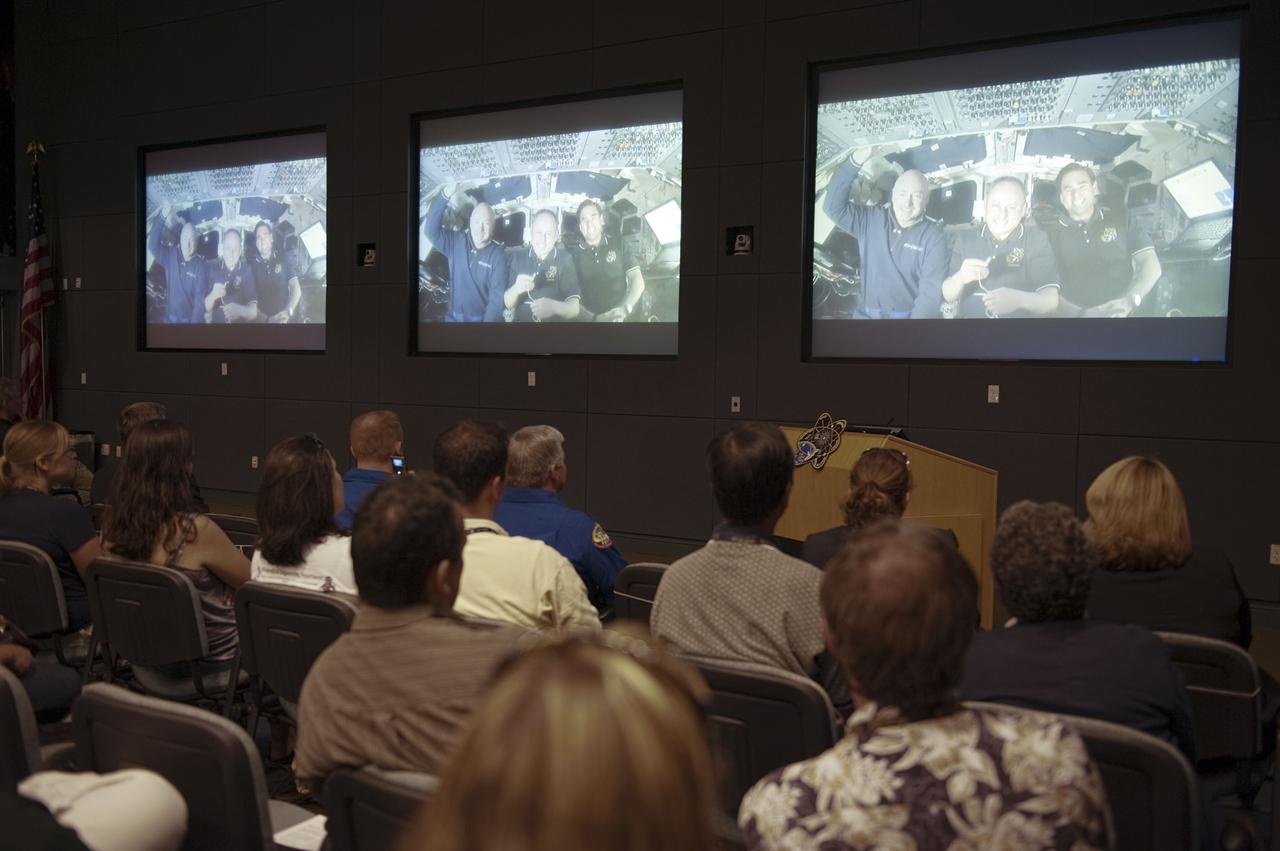
CAPE CANAVERAL, Fla. - Employees at NASA's Kennedy Space Center in Florida are joined by STS-134 Pilot Gregory H. Johnson and Mission Specialist Michael Fincke for a video presentation during a crew return event highlighting the flight. Commander Mark Kelly, Johnson and Mission Specialists Fincke, Greg Chamitoff, Andrew Feustel and European Space Agency astronaut Roberto Vittori lifted off May 16, 2011, aboard space shuttle Endeavour. During the nearly 16-day STS-134 mission, Endeavour delivered to the International Space Station the Alpha Magnetic Spectrometer (AMS) and spare parts, including two S-band communications antennas, a high-pressure gas tank and additional spare parts for Dextre. This was the 36th shuttle mission to the station and Endeavour's 25th and final flight. For more information, visit www.nasa.gov/mission_pages/shuttle/shuttlemissions/sts134/main/index.html. Photo credit: NASA/Kim Shiflett
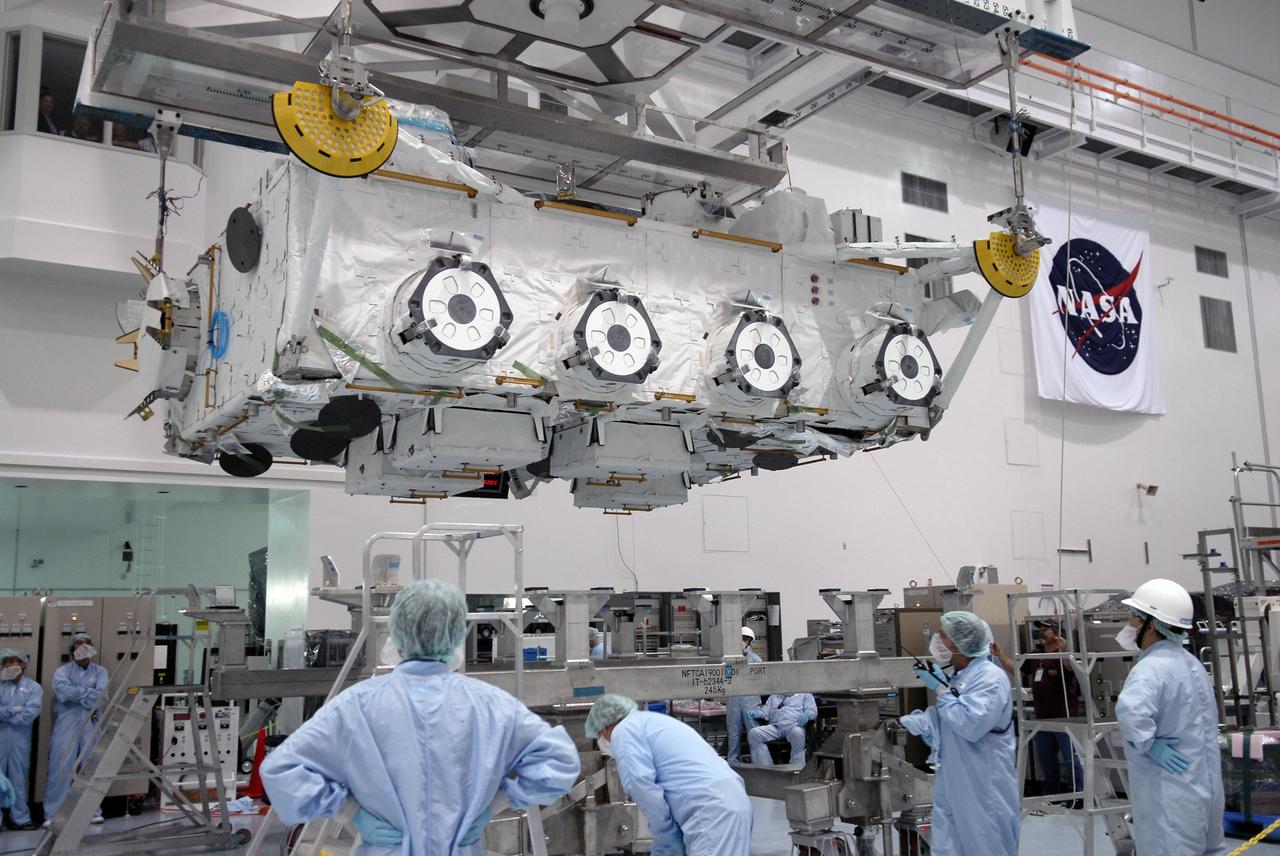
CAPE CANAVERAL, Fla. – In the Space Station Processing Facility at NASA's Kennedy Space Center in Florida, workers observe the movement of the Japan Aerospace Exploration Agency's Kibo Exposed Facility, or EF, as it is lowered toward a stand. The EF, along with the Experiment Logistics Module Exposed Section, will be carried aboard space shuttle Endeavour on the STS-127 mission to the International Space Station targeted for launch May 15, 2009. When it is installed on the Kibo laboratory,the EF will provide a multipurpose platform where science experiments can be deployed and operated in the exposed environment. The payloads attached to the EF can be exchanged or retrieved by Kibo's robotic arm, the JEM Remote Manipulator System. Photo credit: NASA/Kim Shiflett
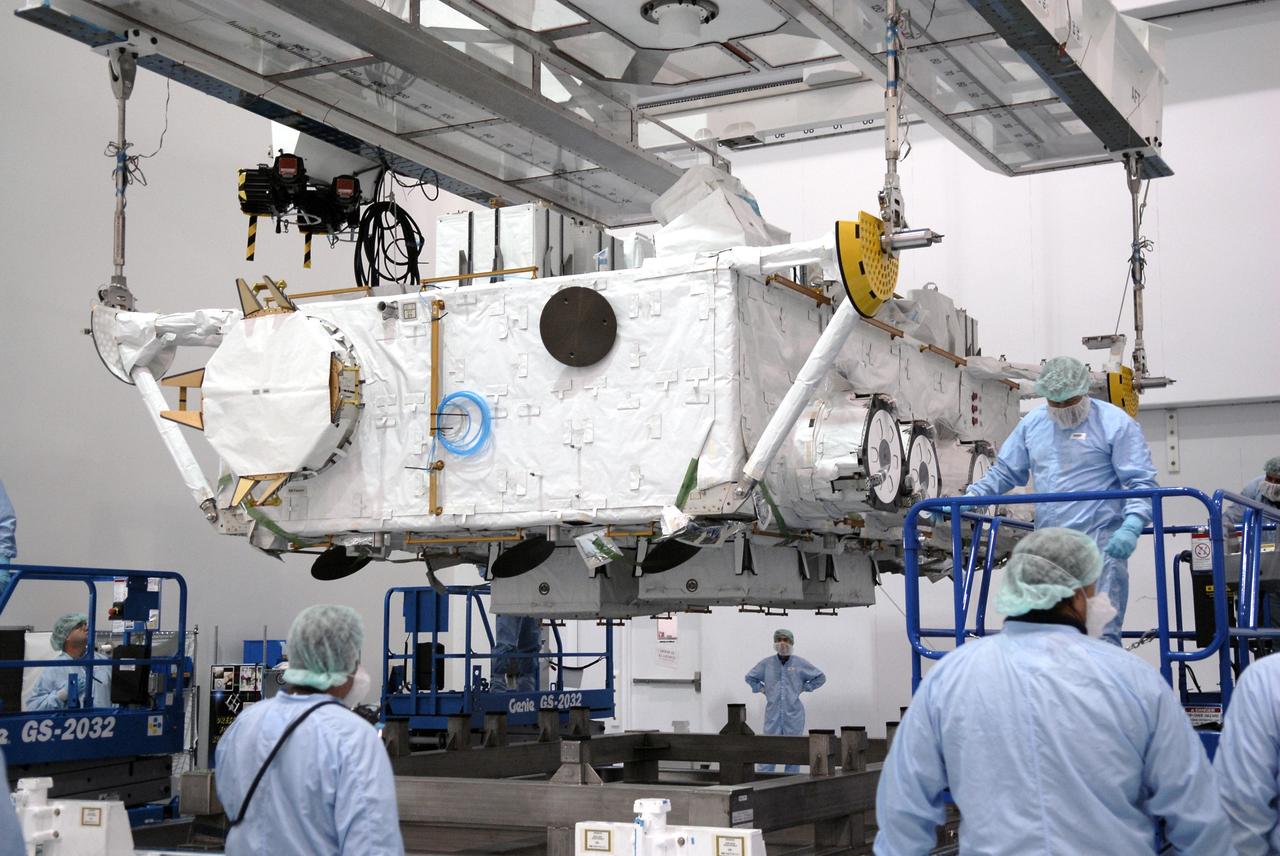
CAPE CANAVERAL, Fla. – In the Space Station Processing Facility at NASA's Kennedy Space Center in Florida, the Japan Aerospace Exploration Agency's Kibo Exposed Facility, or EF, is lifted for a move to another stand. The EF, along with the Experiment Logistics Module Exposed Section, will be carried aboard space shuttle Endeavour on the STS-127 mission to the International Space Station targeted for launch May 15, 2009. When it is installed on the Kibo laboratory,the EF will provide a multipurpose platform where science experiments can be deployed and operated in the exposed environment. The payloads attached to the EF can be exchanged or retrieved by Kibo's robotic arm, the JEM Remote Manipulator System. Photo credit: NASA/Kim Shiflett
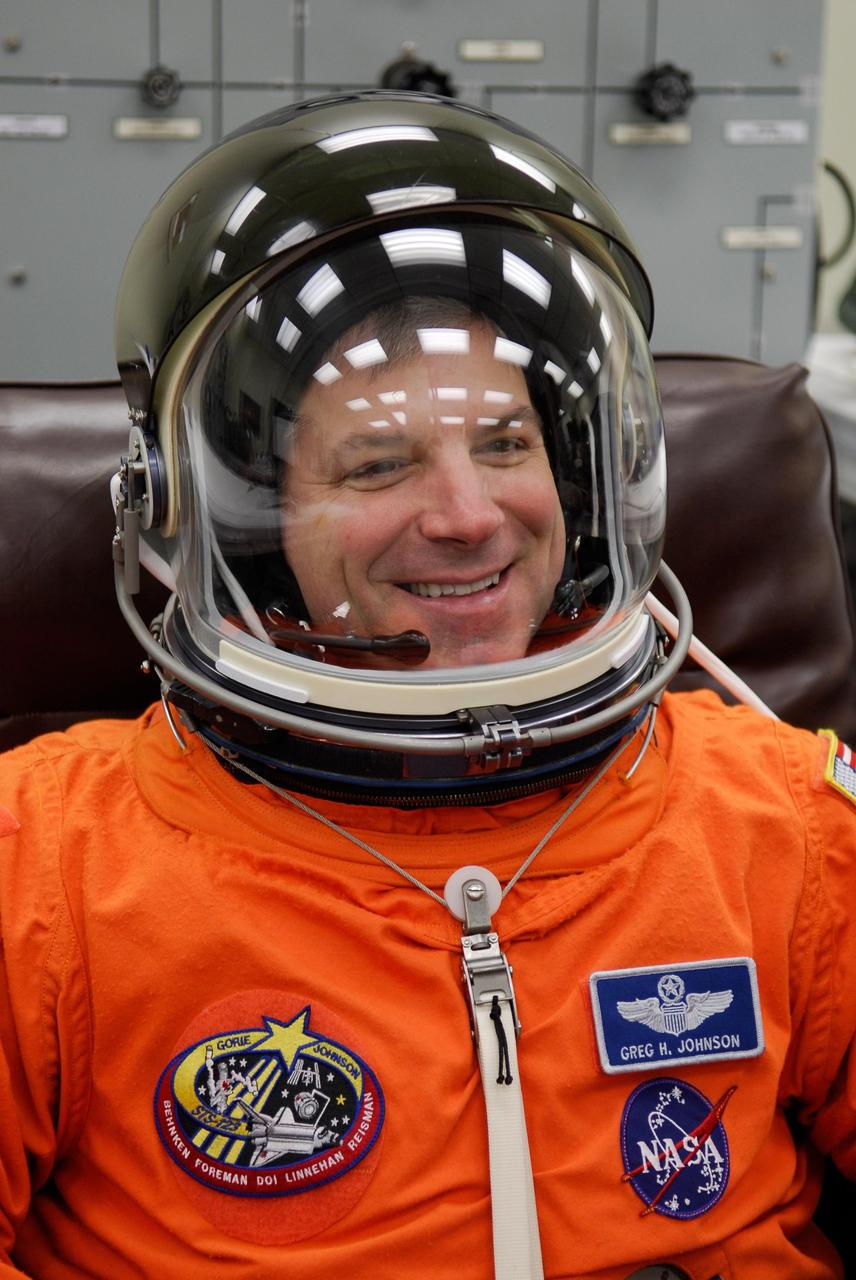
KENNEDY SPACE CENTER, FLA. -- STS-123 Pilot Gregory H. Johnson tests the communications in his helmet before the launch dress rehearsal, culmination of the terminal countdown demonstration test, or TCDT. The TCDT provides astronauts and ground crews with an opportunity to participate in various simulated countdown activities, including equipment familiarization and emergency training. Space shuttle Endeavour is targeted to launch March 11 at 2:28 a.m. EDT on the 16-day STS-123 mission to the International Space Station. Endeavour and its crew will deliver the first section of the Japan Aerospace Exploration Agency's Kibo laboratory and the Canadian Space Agency's two-armed robotic system, Dextre. Photo credit: NASA/Kim Shiflett
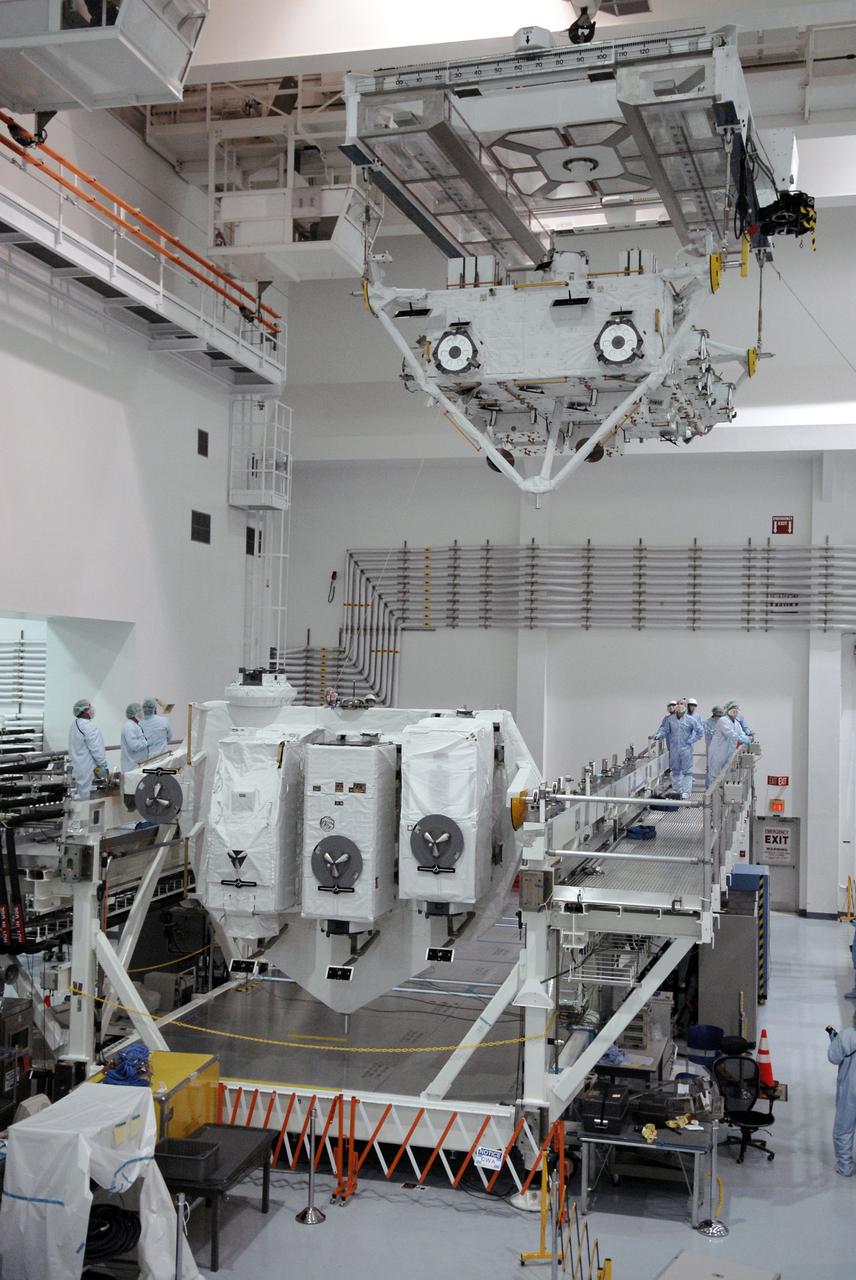
CAPE CANAVERAL, Fla. –– In the Space Station Processing Facility at NASA's Kennedy Space Center in Florida, the suspended Japan Aerospace Exploration Agency's Kibo Exposed Facility, or EF, is moved over a workstand. When it is installed on the Kibo laboratory, the EF will provide a multipurpose platform where science experiments can be deployed and operated in the exposed environment. The payloads attached to the EF can be exchanged or retrieved by Kibo's robotic arm, the JEM Remote Manipulator System. The EF, along with the Experiment Logistics Module Exposed Section, will be carried aboard space shuttle Endeavour on the STS-127 mission targeted for launch June 13, 2009. Photo credit: NASA/Kim Shiflett
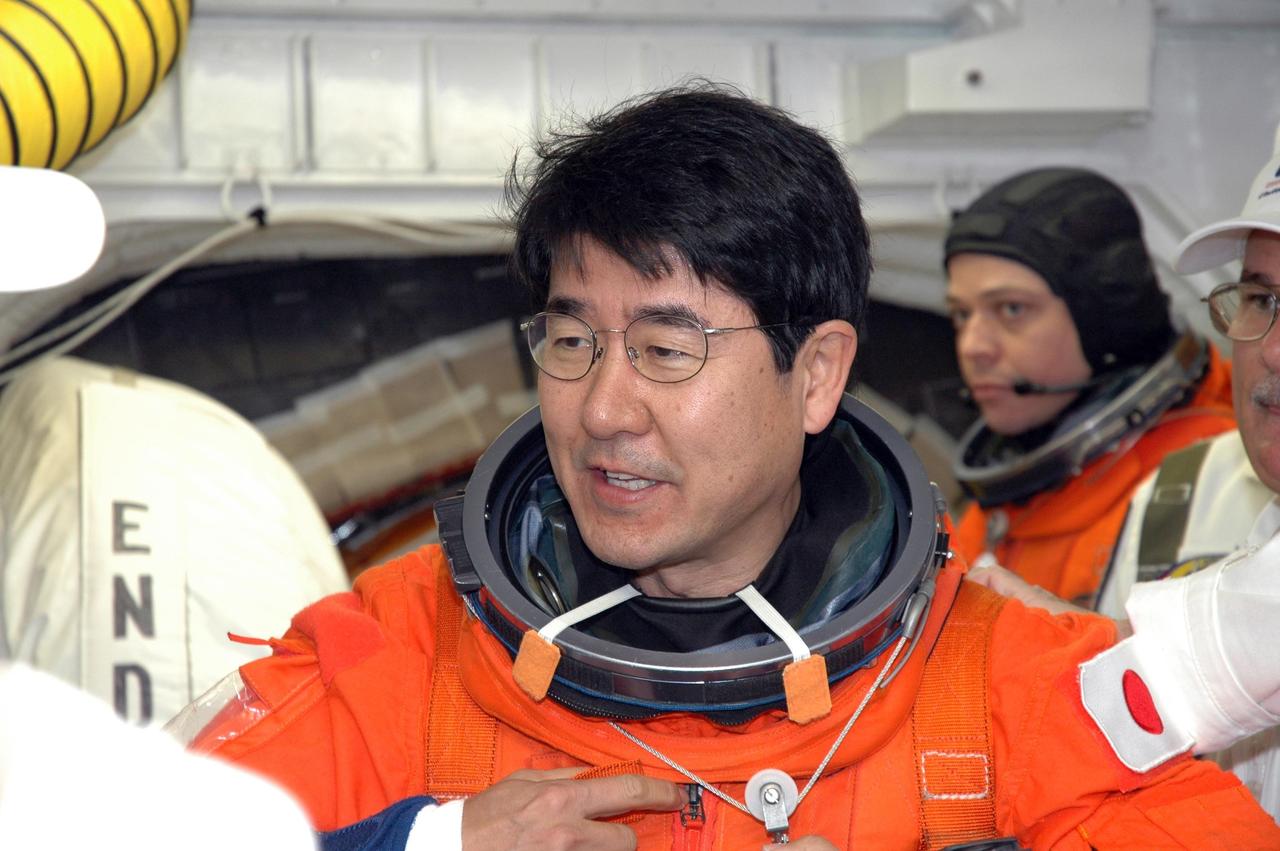
KENNEDY SPACE CENTER, FLA. -- In the White Room on NASA Kennedy Space Center's Launch Pad 39A, STS-123 Mission Specialist Takao Doi, who represents the Japan Aerospace Exploration Agency, gets help with his launch and entry suit before entering space shuttle Endeavour. He and the other STS-123 crew members are getting ready for the simulated launch countdown, which is the culmination of the terminal countdown demonstration test, or TCDT. The TCDT provides astronauts and ground crews with an opportunity to participate in various countdown activities, including equipment familiarization and emergency egress training. Endeavour is targeted to launch at 2:28 a.m. EDT March 11 on the 16-day STS-123 mission to the International Space Station. Endeavour and its crew will deliver the first section of the Japan Aerospace Exploration Agency's Kibo laboratory and the Canadian Space Agency's two-armed robotic system, Dextre. Photo credit: NASA/Jim Grossmann
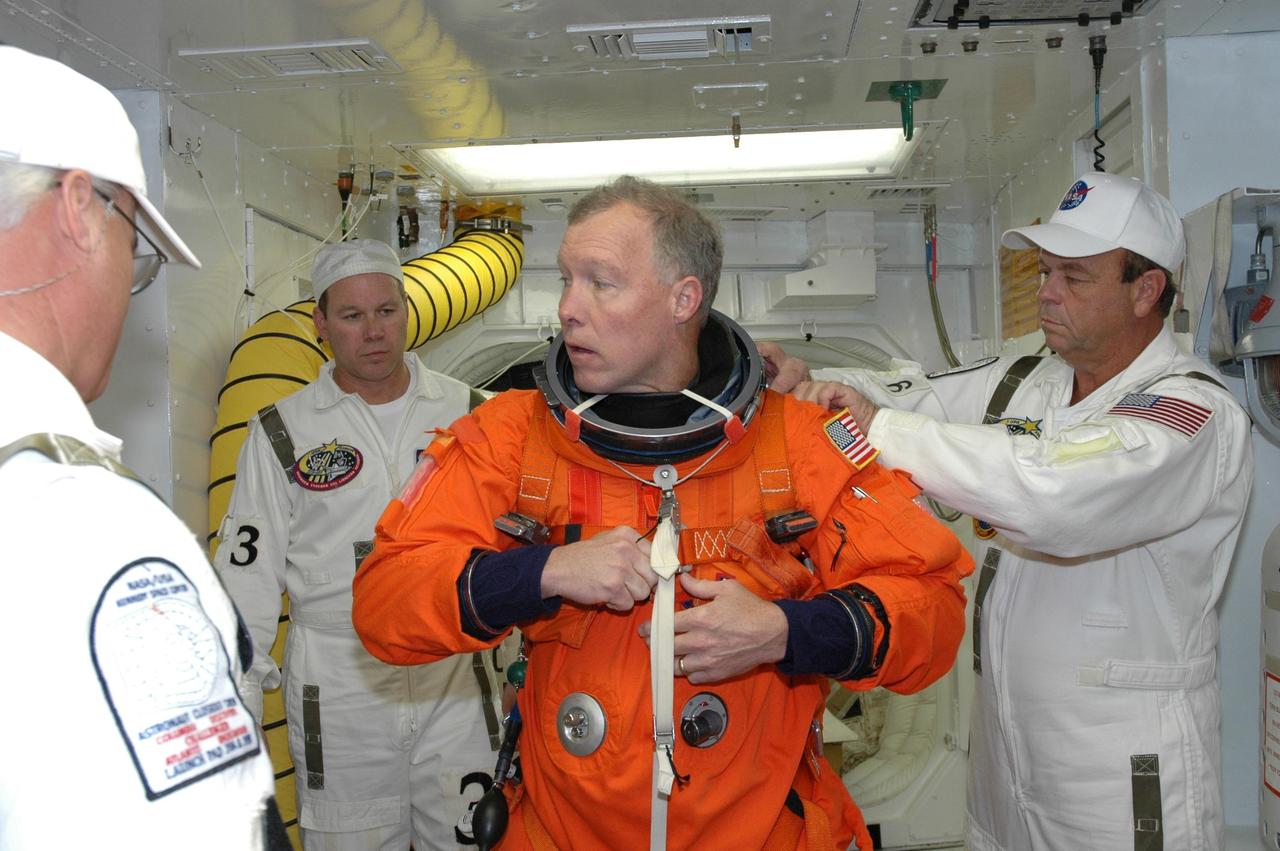
KENNEDY SPACE CENTER, FLA. -- STS-123 Commander Dominic Gorie is helped with his launch and entry suit before entering space shuttle Endeavour for the simulated launch countdown. The countdown is the culmination of the terminal countdown demonstration test, or TCDT. The TCDT provides astronauts and ground crews with an opportunity to participate in various countdown activities, including equipment familiarization and emergency egress training. Endeavour is targeted to launch at 2:28 a.m. EDT March 11 on the 16-day STS-123 mission to the International Space Station. Endeavour and its crew will deliver the first section of the Japan Aerospace Exploration Agency's Kibo laboratory and the Canadian Space Agency's two-armed robotic system, Dextre. Photo credit: NASA/Jim Grossmann
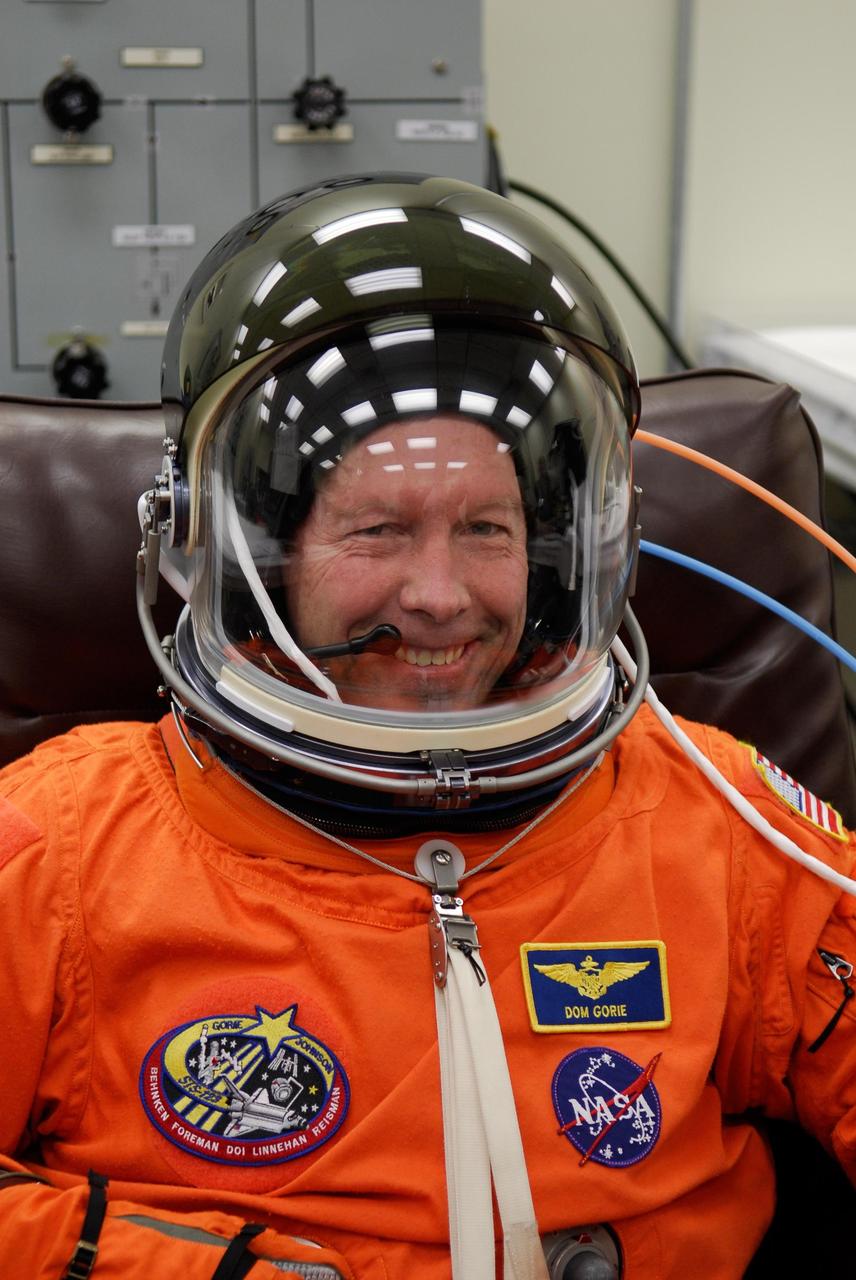
KENNEDY SPACE CENTER, FLA. -- STS-123 Commander Dominic Gorie tests the communications in his helmet before the launch dress rehearsal, culmination of the terminal countdown demonstration test, or TCDT. The TCDT provides astronauts and ground crews with an opportunity to participate in various simulated countdown activities, including equipment familiarization and emergency training. Space shuttle Endeavour is targeted to launch March 11 at 2:28 a.m. EDT on the 16-day STS-123 mission to the International Space Station. Endeavour and its crew will deliver the first section of the Japan Aerospace Exploration Agency's Kibo laboratory and the Canadian Space Agency's two-armed robotic system, Dextre. Photo credit: NASA/Kim Shiflett
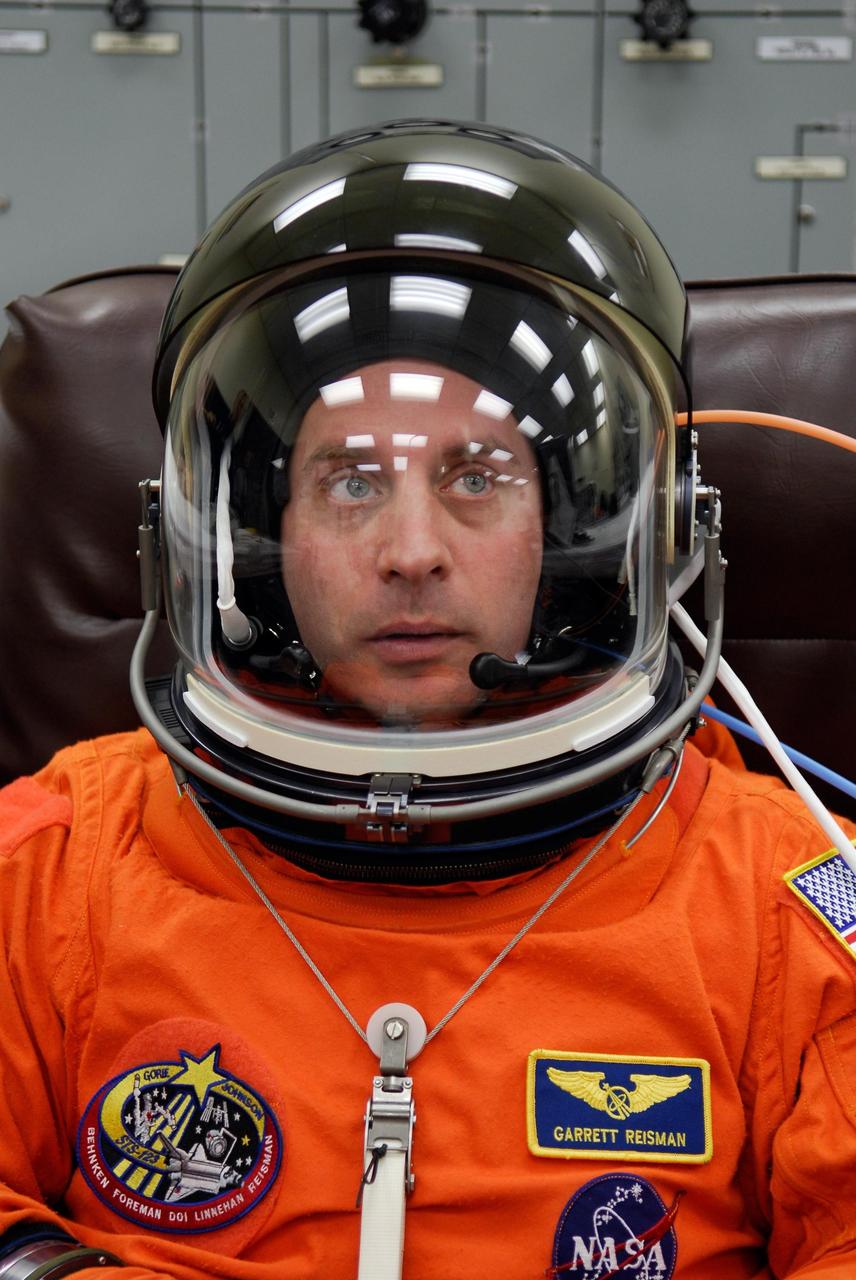
KENNEDY SPACE CENTER, FLA. -- STS-123 Mission Specialist Garrett Reisman tests the communications in his helmet while suiting up for the launch dress rehearsal, culmination of the terminal countdown demonstration test, or TCDT. The TCDT provides astronauts and ground crews with an opportunity to participate in various simulated countdown activities, including equipment familiarization and emergency training. Space shuttle Endeavour is targeted to launch March 11 at 2:28 a.m. EDT on the 16-day STS-123 mission to the International Space Station. Endeavour and its crew will deliver the first section of the Japan Aerospace Exploration Agency's Kibo laboratory and the Canadian Space Agency's two-armed robotic system, Dextre. Photo credit: NASA/Kim Shiflett
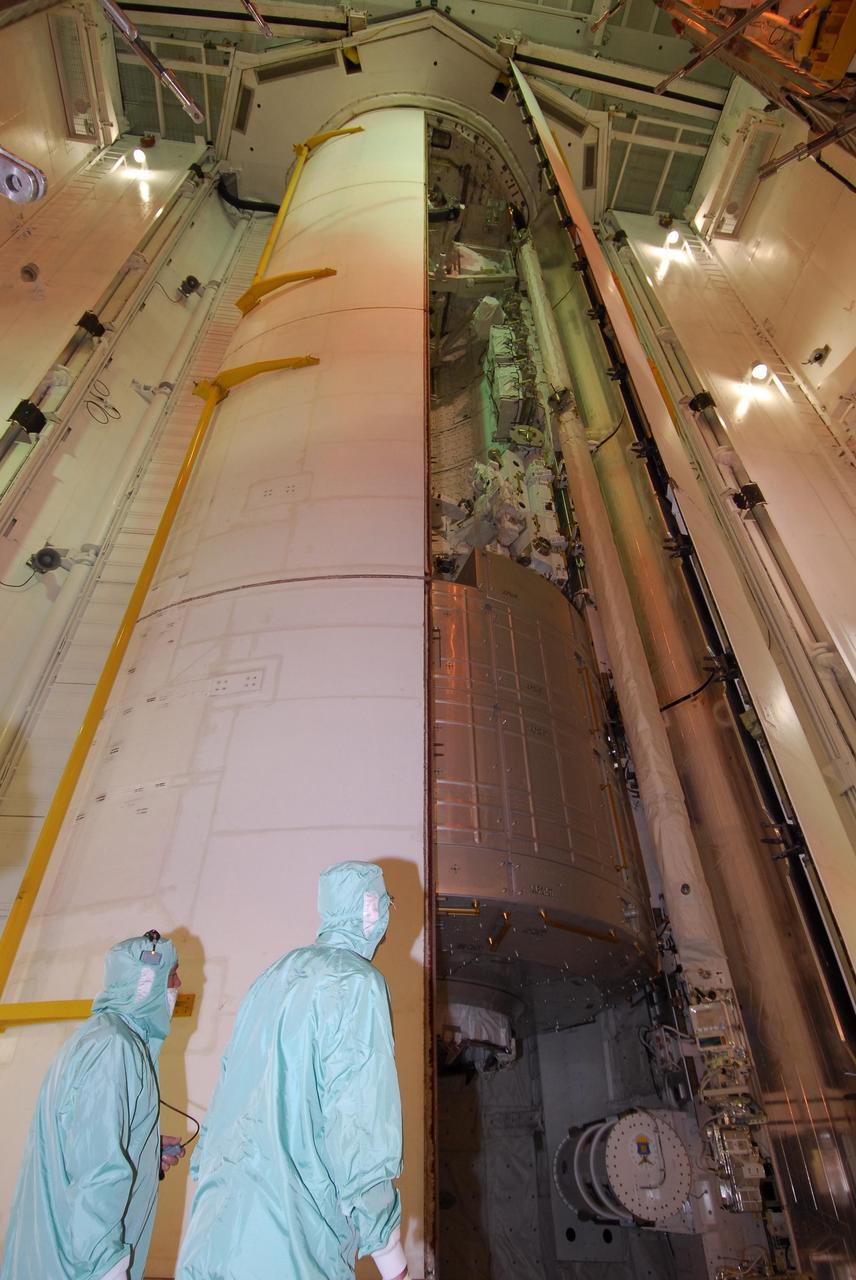
KENNEDY SPACE CENTER, FLA. -- On NASA Kennedy Space Center's Launch Pad 39A, two workers keep watch as the second payload bay door closes on space shuttle Endeavour. Still seen, at the bottom of the payload bay, is the first section of the Japan Aerospace Exploration Agency's Kibo laboratory, the Experiment Logistics Module Pressurized Section, or ELM-PS. Endeavour is targeted to launch March 11 at 2:28 a.m. EDT on the 16-day STS-123 mission to the International Space Station. Endeavour and its crew will deliver the ELM-PS and the Canadian Space Agency's two-armed robotic system, Dextre. Photo credit: NASA/Dimitri Gerondidakis
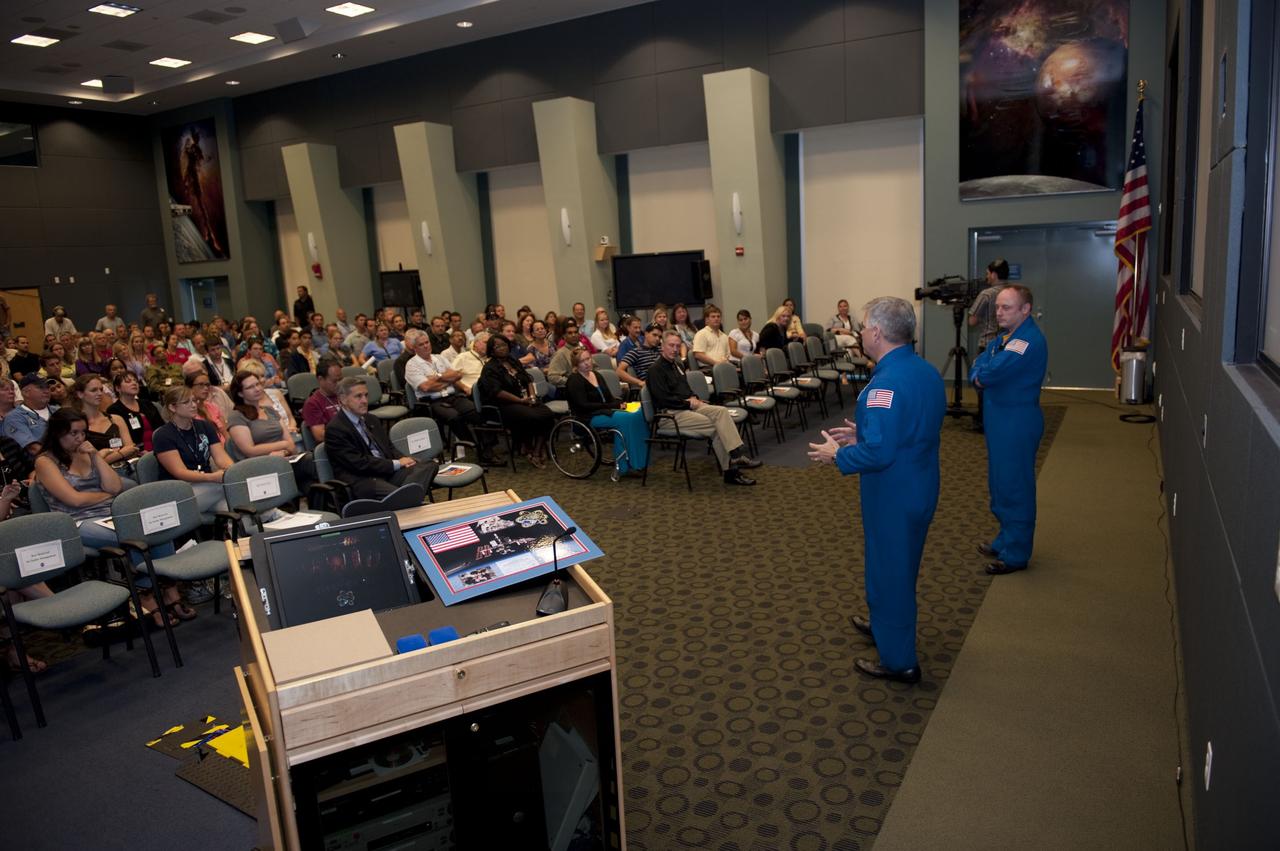
CAPE CANAVERAL, Fla. - In an auditorium packed with employees at NASA's Kennedy Space Center in Florida, STS-134 Pilot Gregory H. Johnson, left, and Mission Specialist Michael Fincke relate stories from their mission. The gathering is part of a crew return event at Kennedy. Commander Mark Kelly, Johnson and Mission Specialists Fincke, Greg Chamitoff, Andrew Feustel and European Space Agency astronaut Roberto Vittori lifted off May 16, 2011, aboard space shuttle Endeavour. During the nearly 16-day STS-134 mission, Endeavour delivered to the International Space Station the Alpha Magnetic Spectrometer (AMS) and spare parts, including two S-band communications antennas, a high-pressure gas tank and additional spare parts for Dextre. This was the 36th shuttle mission to the station and Endeavour's 25th and final flight. For more information, visit www.nasa.gov/mission_pages/shuttle/shuttlemissions/sts134/main/index.html. Photo credit: NASA/Kim Shiflett
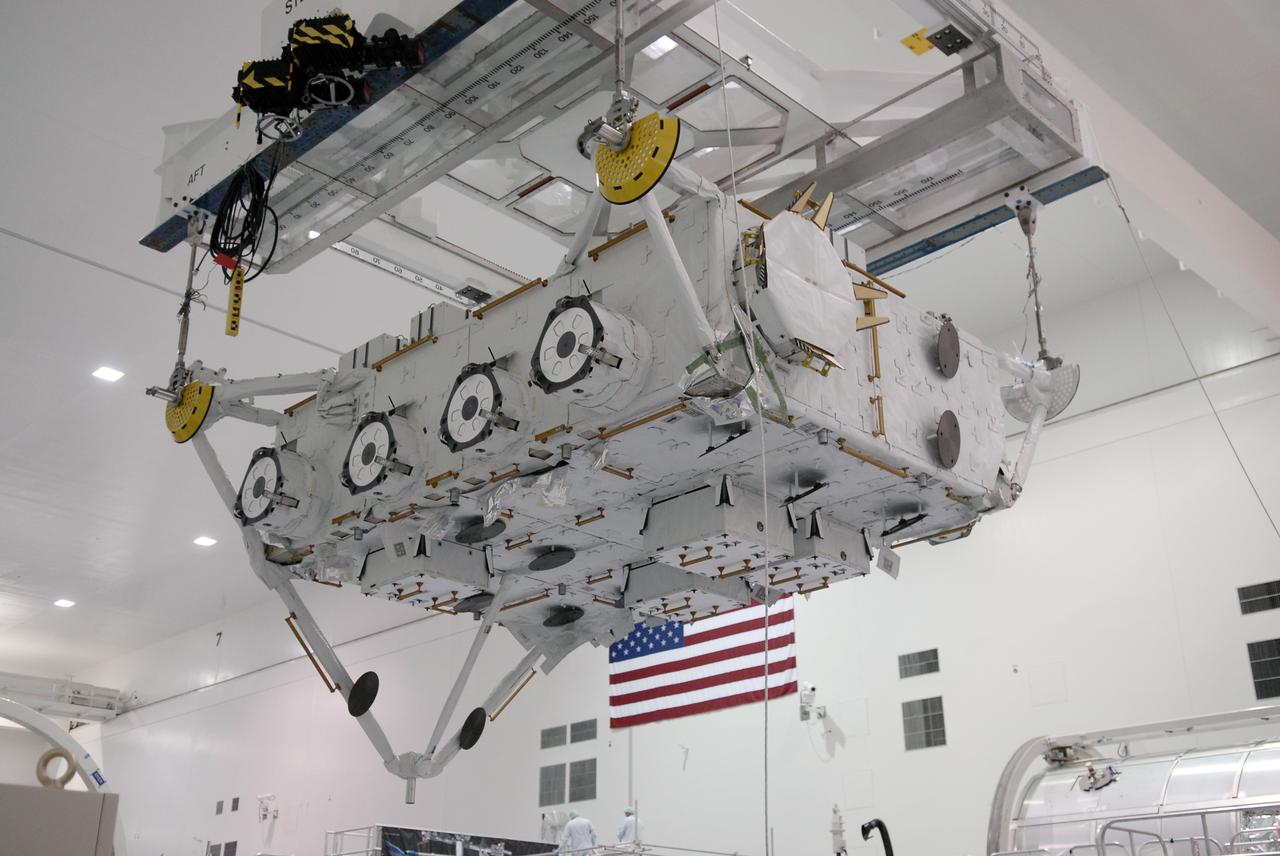
CAPE CANAVERAL, Fla. –– In the Space Station Processing Facility at NASA's Kennedy Space Center in Florida, the Japan Aerospace Exploration Agency's Kibo Exposed Facility, or EF, is lifted for transfer to a workstand. When it is installed on the Kibo laboratory, the EF will provide a multipurpose platform where science experiments can be deployed and operated in the exposed environment. The payloads attached to the EF can be exchanged or retrieved by Kibo's robotic arm, the JEM Remote Manipulator System. The EF, along with the Experiment Logistics Module Exposed Section, will be carried aboard space shuttle Endeavour on the STS-127 mission targeted for launch June 13, 2009. Photo credit: NASA/Kim Shiflett

CAPE CANAVERAL, Fla. –– In the Space Station Processing Facility at NASA's Kennedy Space Center in Florida, the suspended Japan Aerospace Exploration Agency's Kibo Exposed Facility, or EF, is lowered into a workstand. When it is installed on the Kibo laboratory, the EF will provide a multipurpose platform where science experiments can be deployed and operated in the exposed environment. The payloads attached to the EF can be exchanged or retrieved by Kibo's robotic arm, the JEM Remote Manipulator System. The EF, along with the Experiment Logistics Module Exposed Section, will be carried aboard space shuttle Endeavour on the STS-127 mission targeted for launch June 13, 2009. Photo credit: NASA/Kim Shiflett
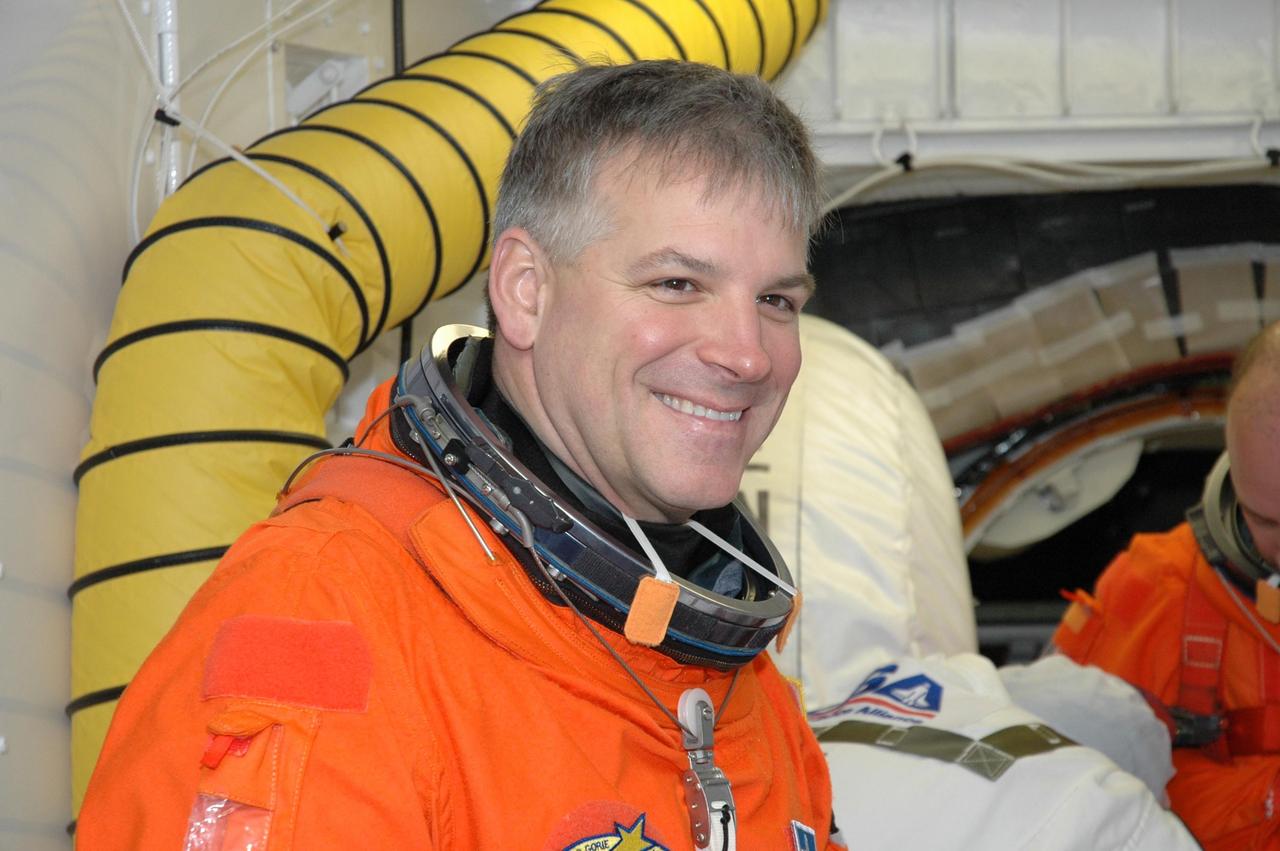
KENNEDY SPACE CENTER, FLA. -- STS-123 Pilot Gregory H. Johnson is in the White Room on NASA Kennedy Space Center's Launch Pad 39A, getting ready to enter space shuttle Endeavour for the simulated launch countdown. The countdown is the culmination of the terminal countdown demonstration test, or TCDT. The TCDT provides astronauts and ground crews with an opportunity to participate in various countdown activities, including equipment familiarization and emergency egress training. Endeavour is targeted to launch at 2:28 a.m. EDT March 11 on the 16-day STS-123 mission to the International Space Station. Endeavour and its crew will deliver the first section of the Japan Aerospace Exploration Agency's Kibo laboratory and the Canadian Space Agency's two-armed robotic system, Dextre. Photo credit: NASA/Jim Grossmann
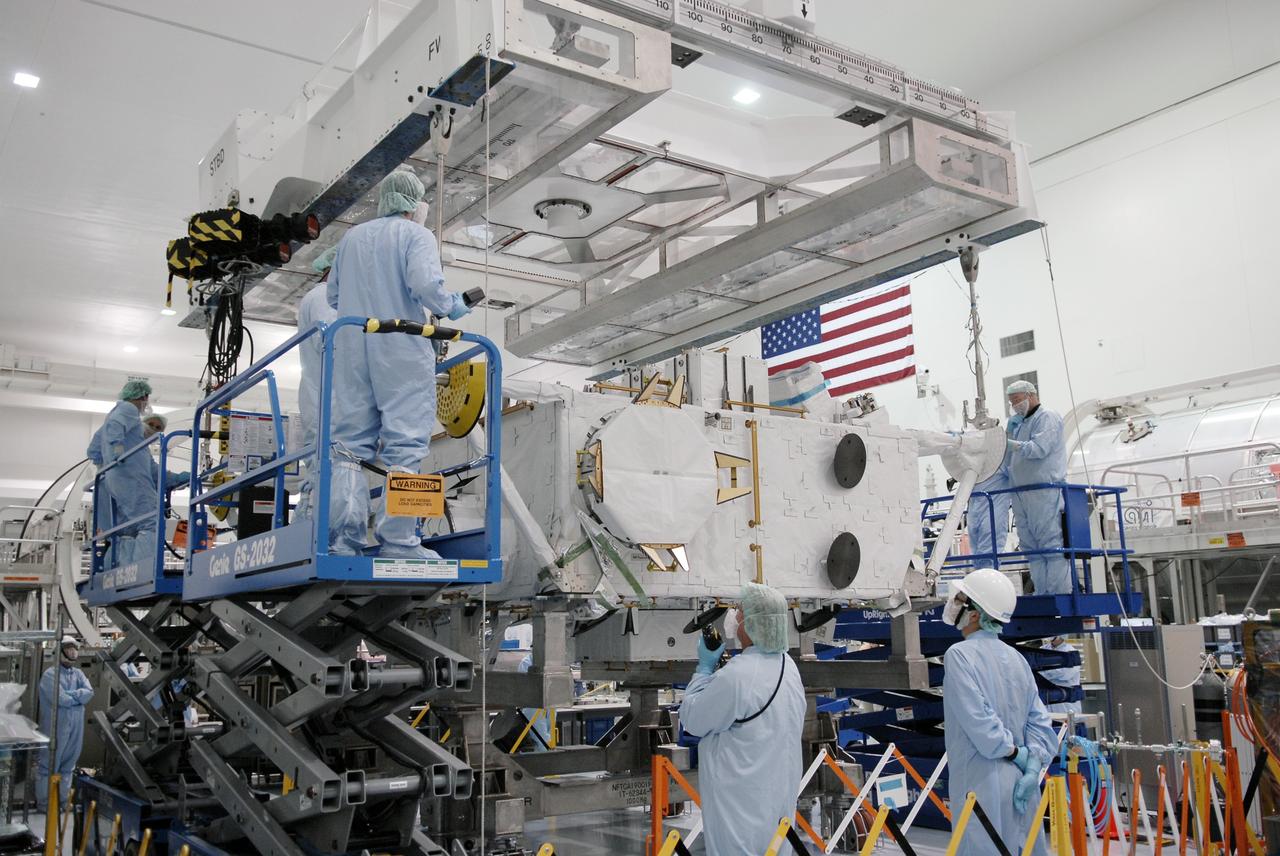
CAPE CANAVERAL, Fla. –– In the Space Station Processing Facility at NASA's Kennedy Space Center in Florida, the Japan Aerospace Exploration Agency's Kibo Exposed Facility, or EF, is being transferred to a workstand. When it is installed on the Kibo laboratory, the EF will provide a multipurpose platform where science experiments can be deployed and operated in the exposed environment. The payloads attached to the EF can be exchanged or retrieved by Kibo's robotic arm, the JEM Remote Manipulator System. The EF, along with the Experiment Logistics Module Exposed Section, will be carried aboard space shuttle Endeavour on the STS-127 mission targeted for launch June 13, 2009. Photo credit: NASA/Kim Shiflett
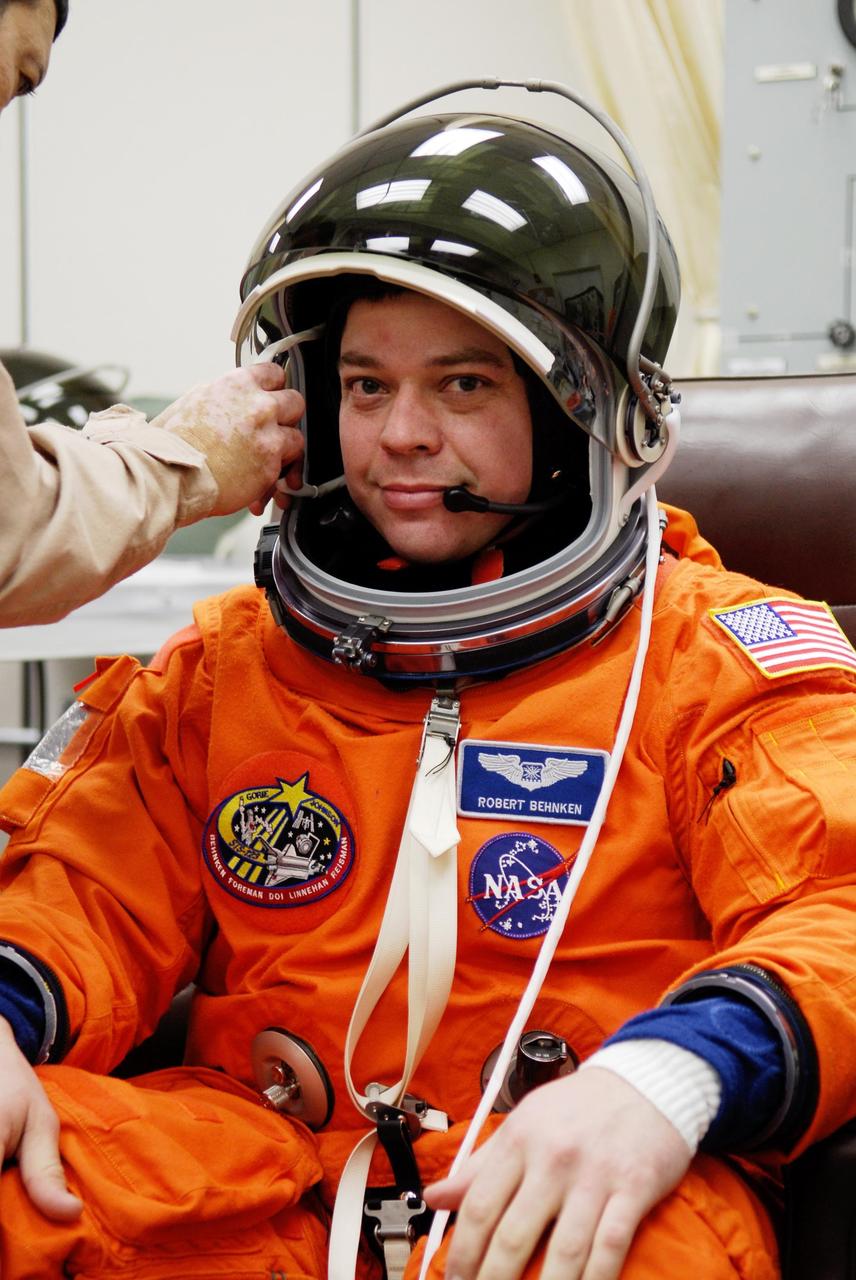
KENNEDY SPACE CENTER, FLA. -- STS-123 Mission Specialist Robert L. Behnken dons his helmet while suiting up for the launch dress rehearsal, culmination of the terminal countdown demonstration test, or TCDT. The TCDT provides astronauts and ground crews with an opportunity to participate in various simulated countdown activities, including equipment familiarization and emergency training. Space shuttle Endeavour is targeted to launch March 11 at 2:28 a.m. EDT on the 16-day STS-123 mission to the International Space Station. Endeavour and its crew will deliver the first section of the Japan Aerospace Exploration Agency's Kibo laboratory and the Canadian Space Agency's two-armed robotic system, Dextre. Photo credit: NASA/Kim Shiflett
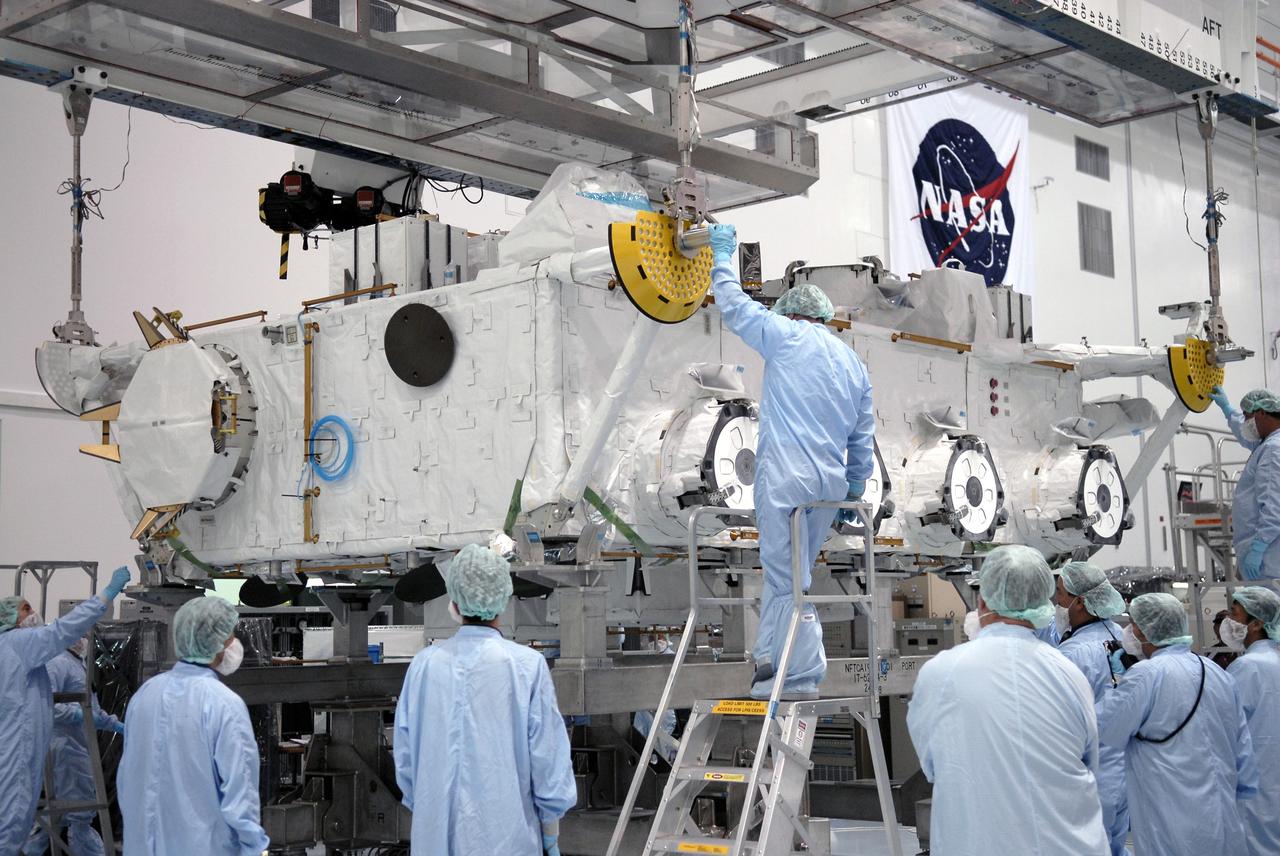
CAPE CANAVERAL, Fla. – In the Space Station Processing Facility at NASA's Kennedy Space Center in Florida, workers check the placement of the Japan Aerospace Exploration Agency's Kibo Exposed Facility, or EF, on the stand. The EF, along with the Experiment Logistics Module Exposed Section, will be carried aboard space shuttle Endeavour on the STS-127 mission to the International Space Station targeted for launch May 15, 2009. When it is installed on the Kibo laboratory,the EF will provide a multipurpose platform where science experiments can be deployed and operated in the exposed environment. The payloads attached to the EF can be exchanged or retrieved by Kibo's robotic arm, the JEM Remote Manipulator System. Photo credit: NASA/Kim Shiflett
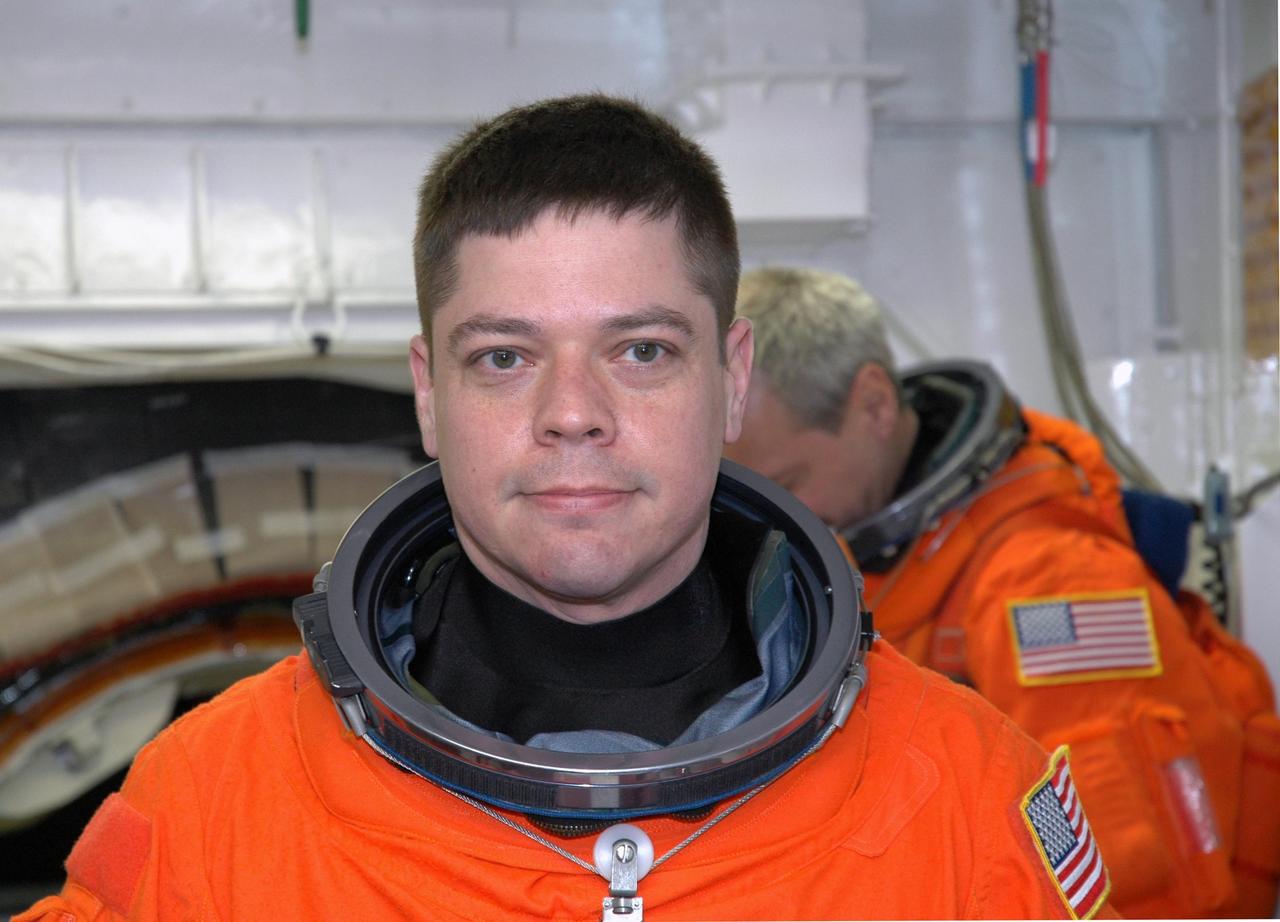
KENNEDY SPACE CENTER, FLA. -- In the White Room on NASA Kennedy Space Center's Launch Pad 39A, STS-123 Mission Specialist Robert L. Behnken is waiting for help with his launch and entry suit before entering space shuttle Endeavour. He and other crew members are getting ready for the simulated launch countdown, which is the culmination of the terminal countdown demonstration test, or TCDT. The TCDT provides astronauts and ground crews with an opportunity to participate in various countdown activities, including equipment familiarization and emergency egress training. Endeavour is targeted to launch at 2:28 a.m. EDT March 11 on the 16-day STS-123 mission to the International Space Station. Endeavour and its crew will deliver the first section of the Japan Aerospace Exploration Agency's Kibo laboratory and the Canadian Space Agency's two-armed robotic system, Dextre. Photo credit: NASA/Jim Grossmann
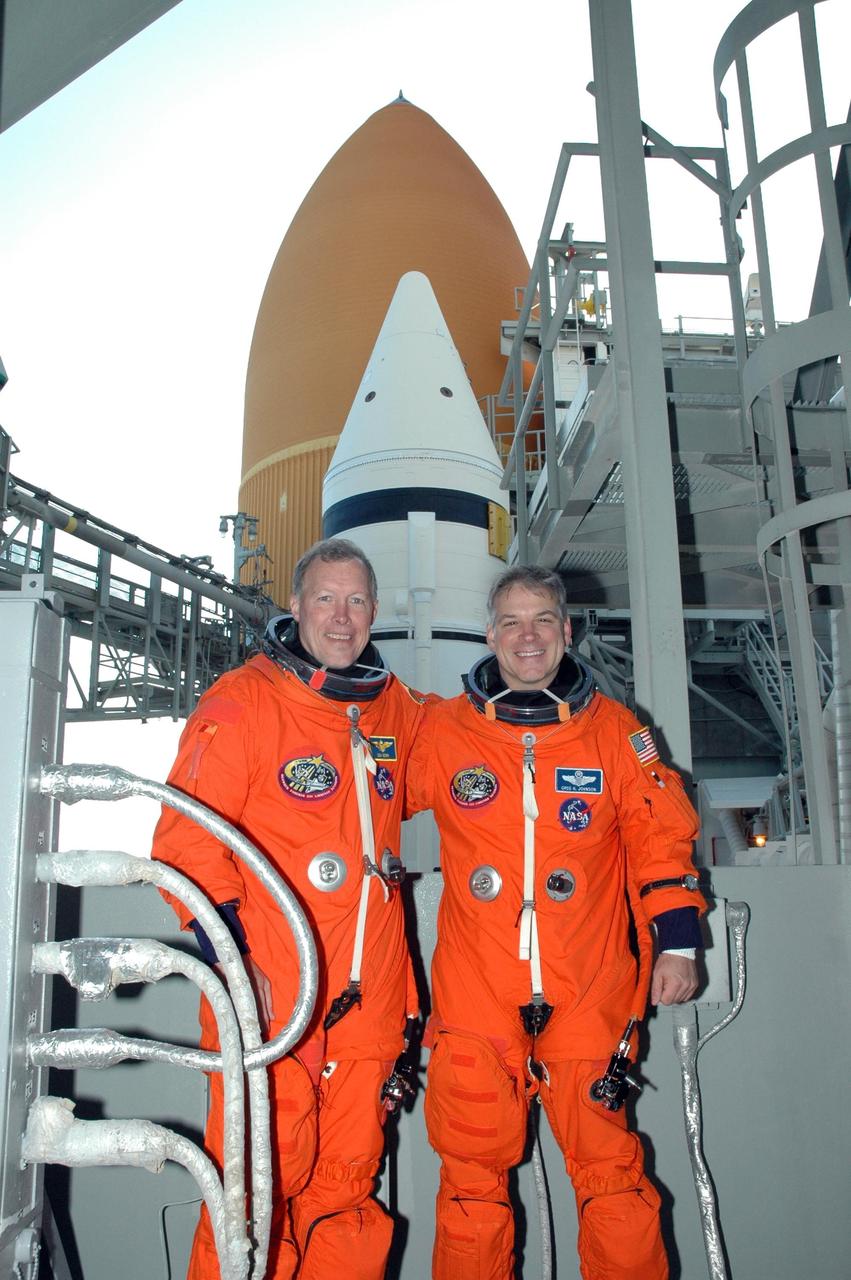
KENNEDY SPACE CENTER, FLA. -- Before the simulated launch countdown in space shuttle Endeavour, STS-123 Commander Dominic Gorie (left) and Pilot Gregory H. Johnson pose in front of Endeavour's solid rocket booster and external tank on NASA Kennedy Space Center's Launch Pad 39A. The countdown is the culmination of the terminal countdown demonstration test, or TCDT. The TCDT provides astronauts and ground crews with an opportunity to participate in various countdown activities, including equipment familiarization and emergency egress training. Endeavour is targeted to launch at 2:28 a.m. EDT March 11 on the 16-day STS-123 mission to the International Space Station. Endeavour and its crew will deliver the first section of the Japan Aerospace Exploration Agency's Kibo laboratory and the Canadian Space Agency's two-armed robotic system, Dextre. Photo credit: NASA/Jim Grossmann
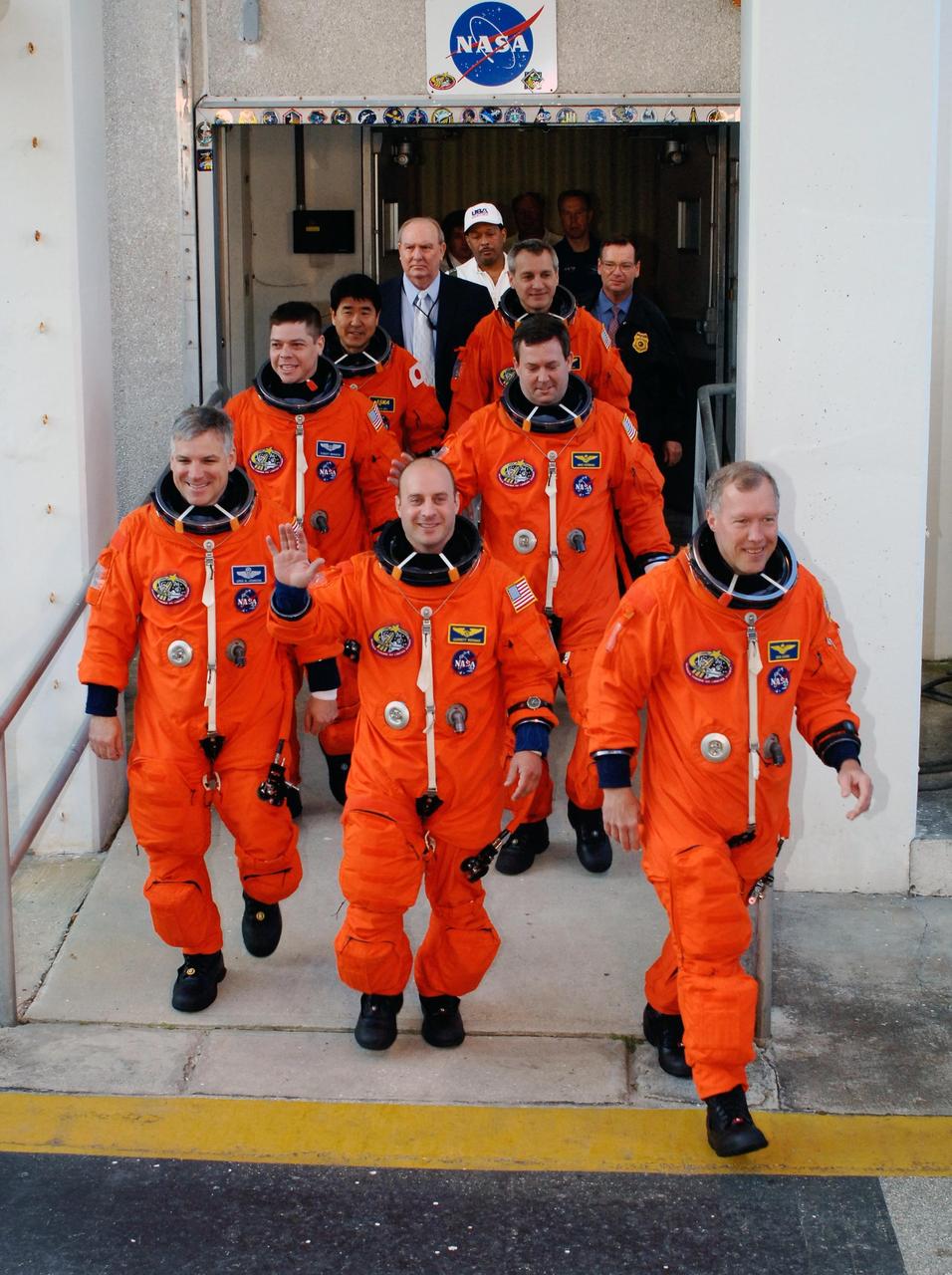
KENNEDY SPACE CENTER, FLA. -- The crew of mission STS-123 eagerly leave the Operations and Checkout Building on their way to NASA Kennedy Space Center's Launch Pad 39A. In front, from left, are Pilot Gregory H. Johnson, Mission Specialist Garrett Reisman and Commander Dominic Gorie. Behind them, from left, are Mission Specialists Robert L. Behnken, Takao Doi, Mike Foreman and Rick Linnehan. The crew is taking part in a simulated launch countdown, the culmination of the terminal countdown demonstration test, or TCDT. The TCDT provides astronauts and ground crews with an opportunity to participate in various simulated countdown activities, including equipment familiarization and emergency training. Space shuttle Endeavour is targeted to launch March 11 at 2:28 a.m. EDT on the 16-day STS-123 mission to the International Space Station. Endeavour and its crew will deliver the first section of the Japan Aerospace Exploration Agency's Kibo laboratory and the Canadian Space Agency's two-armed robotic system, Dextre. Photo credit: NASA/Kim Shiflett
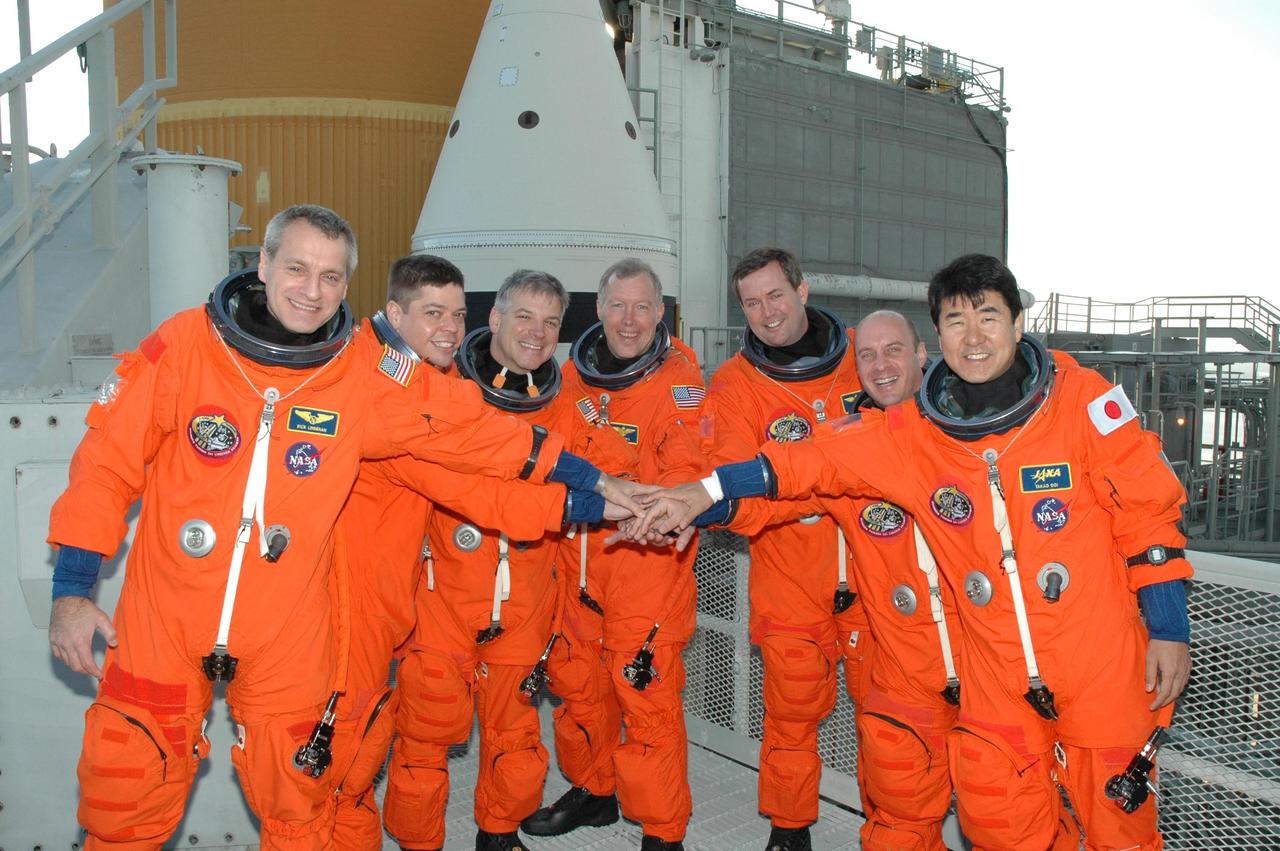
KENNEDY SPACE CENTER, FLA. -- Before the simulated launch countdown in space shuttle Endeavour, the STS-123 crew gathers near the top of the fixed service structure on NASA Kennedy Space Center's Launch Pad 39A. Seen from left are Mission Specialists Rick Linnehan and Robert L. Behnken, Pilot Gregory H. Johnson, Commander Dominic Gorie and Mission Specialists Mike Foreman, Garrett Reisman and Takao Doi. The countdown is the culmination of the terminal countdown demonstration test, or TCDT. The TCDT provides astronauts and ground crews with an opportunity to participate in various countdown activities, including equipment familiarization and emergency egress training. Endeavour is targeted to launch at 2:28 a.m. EDT March 11 on the 16-day STS-123 mission to the International Space Station. Endeavour and its crew will deliver the first section of the Japan Aerospace Exploration Agency's Kibo laboratory and the Canadian Space Agency's two-armed robotic system, Dextre. Photo credit: NASA/Jim Grossmann

CAPE CANAVERAL, Fla. - STS-134 Pilot Gregory H. Johnson, left, and Mission Specialist Michael Fincke speak to employees at NASA's Kennedy Space Center in Florida during a crew return event. Commander Mark Kelly, Johnson and Mission Specialists Fincke, Greg Chamitoff, Andrew Feustel and European Space Agency astronaut Roberto Vittori lifted off May 16, 2011, aboard space shuttle Endeavour. During the nearly 16-day STS-134 mission, Endeavour delivered to the International Space Station the Alpha Magnetic Spectrometer (AMS) and spare parts, including two S-band communications antennas, a high-pressure gas tank and additional spare parts for Dextre. This was the 36th shuttle mission to the station and Endeavour's 25th and final flight. For more information, visit www.nasa.gov/mission_pages/shuttle/shuttlemissions/sts134/main/index.html. Photo credit: NASA/Kim Shiflett
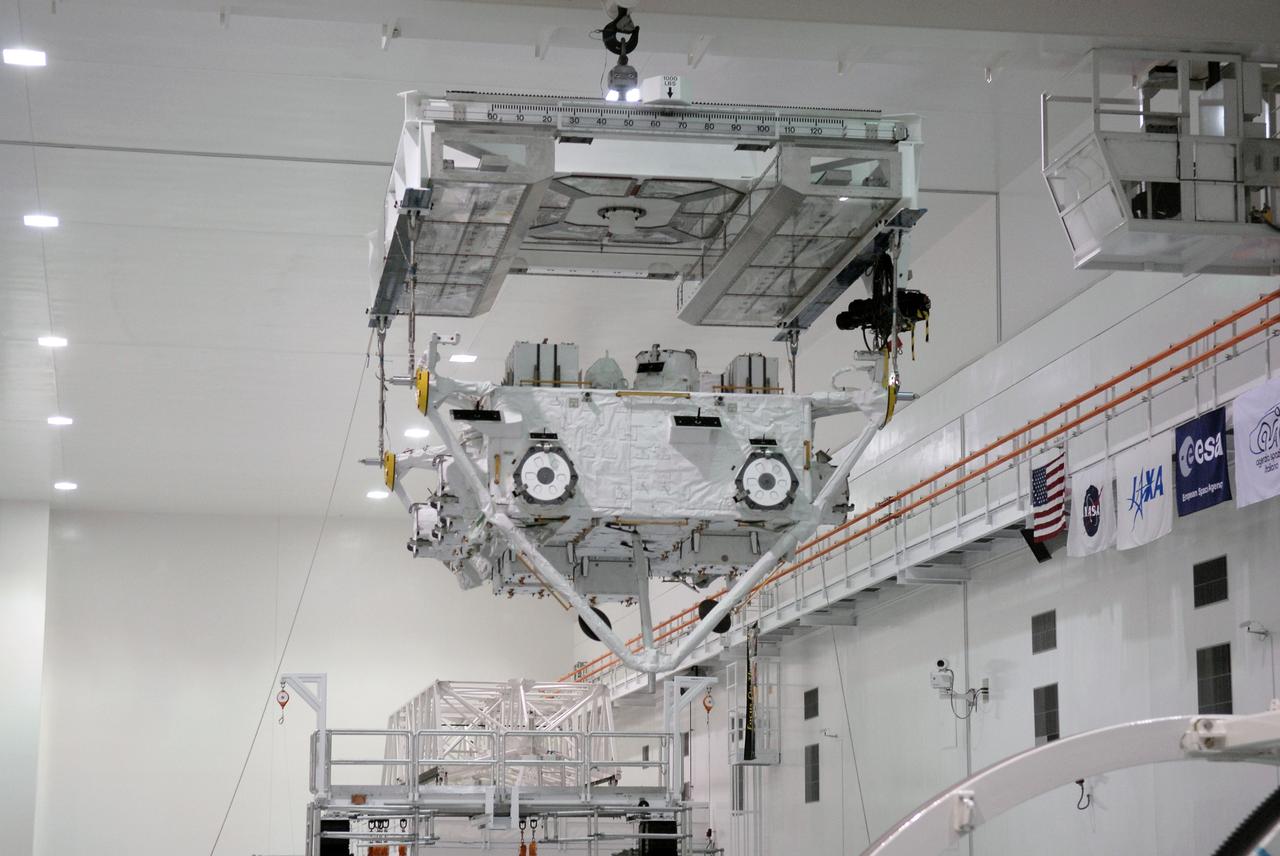
CAPE CANAVERAL, Fla. –– In the Space Station Processing Facility at NASA's Kennedy Space Center in Florida, the Japan Aerospace Exploration Agency's Kibo Exposed Facility, or EF, is moved across the room to transfer it to a workstand. When it is installed on the Kibo laboratory, the EF will provide a multipurpose platform where science experiments can be deployed and operated in the exposed environment. The payloads attached to the EF can be exchanged or retrieved by Kibo's robotic arm, the JEM Remote Manipulator System. The EF, along with the Experiment Logistics Module Exposed Section, will be carried aboard space shuttle Endeavour on the STS-127 mission targeted for launch June 13, 2009. Photo credit: NASA/Kim Shiflett
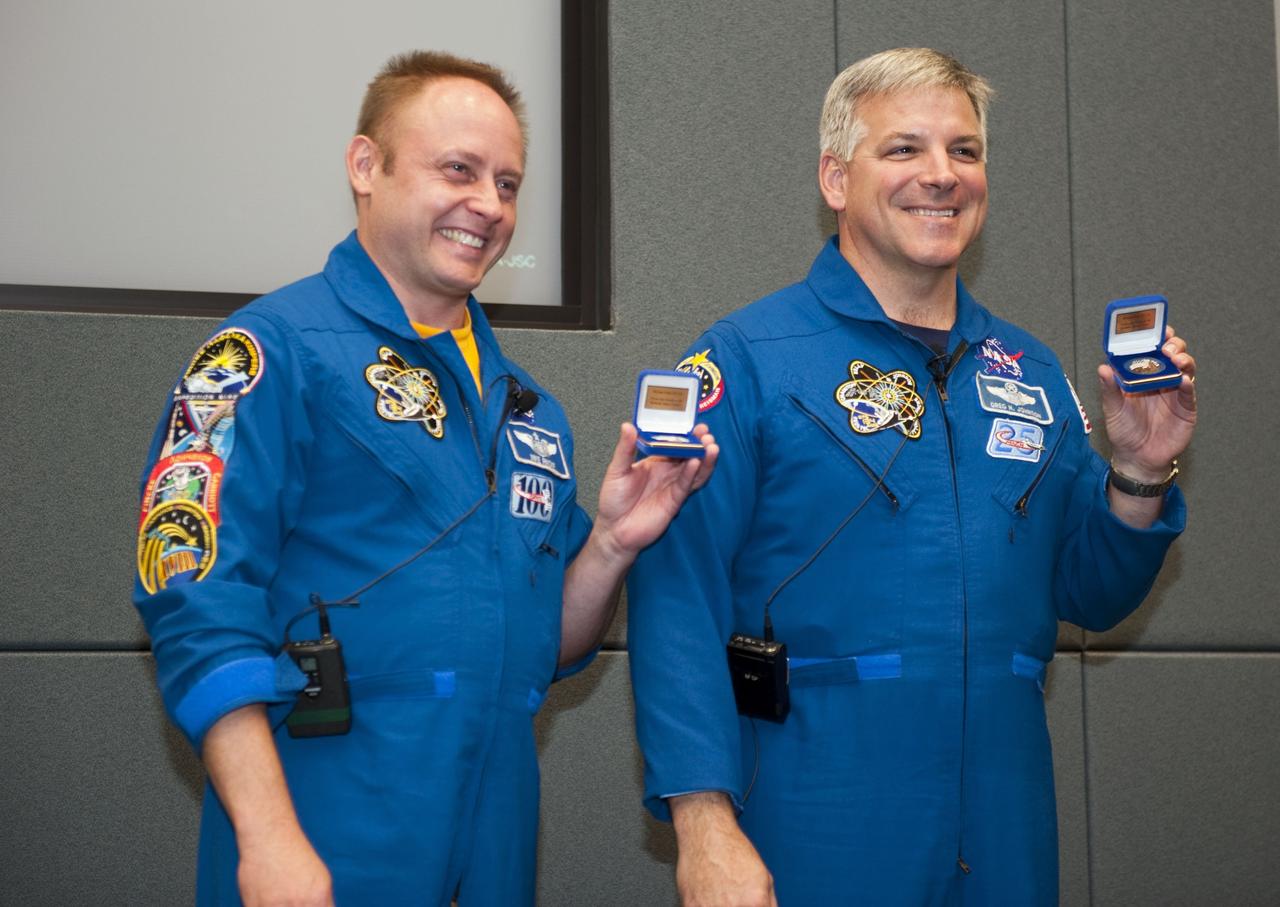
CAPE CANAVERAL, Fla. - During a crew return event at NASA's Kennedy Space Center in Florida, STS-134 Mission Specialist Michael Fincke, left, and Pilot Gregory H. Johnson display commemorative coins given to them by Center Director Bob Cabana. Commander Mark Kelly, Johnson and Mission Specialists Fincke, Greg Chamitoff, Andrew Feustel and European Space Agency astronaut Roberto Vittori lifted off May 16, 2011, aboard space shuttle Endeavour. During the nearly 16-day STS-134 mission, Endeavour delivered to the International Space Station the Alpha Magnetic Spectrometer (AMS) and spare parts, including two S-band communications antennas, a high-pressure gas tank and additional spare parts for Dextre. This was the 36th shuttle mission to the station and Endeavour's 25th and final flight. For more information, visit www.nasa.gov/mission_pages/shuttle/shuttlemissions/sts134/main/index.html. Photo credit: NASA/Kim Shiflett
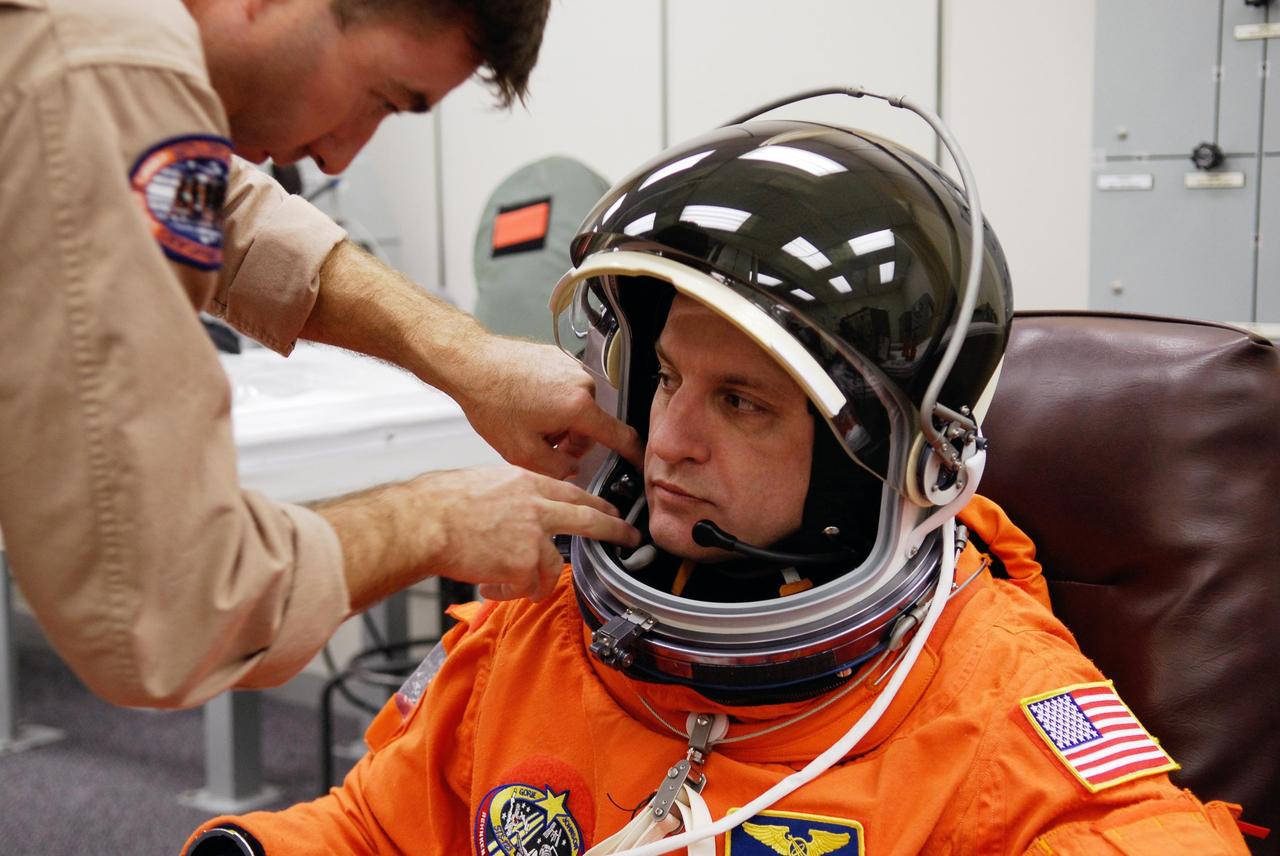
KENNEDY SPACE CENTER, FLA. -- STS-123 Mission Specialist Garrett Reisman is helped with his helmet while suiting up for the launch dress rehearsal, culmination of the terminal countdown demonstration test, or TCDT. The TCDT provides astronauts and ground crews with an opportunity to participate in various simulated countdown activities, including equipment familiarization and emergency training. Space shuttle Endeavour is targeted to launch March 11 at 2:28 a.m. EDT on the 16-day STS-123 mission to the International Space Station. Endeavour and its crew will deliver the first section of the Japan Aerospace Exploration Agency's Kibo laboratory and the Canadian Space Agency's two-armed robotic system, Dextre. Photo credit: NASA/Kim Shiflett
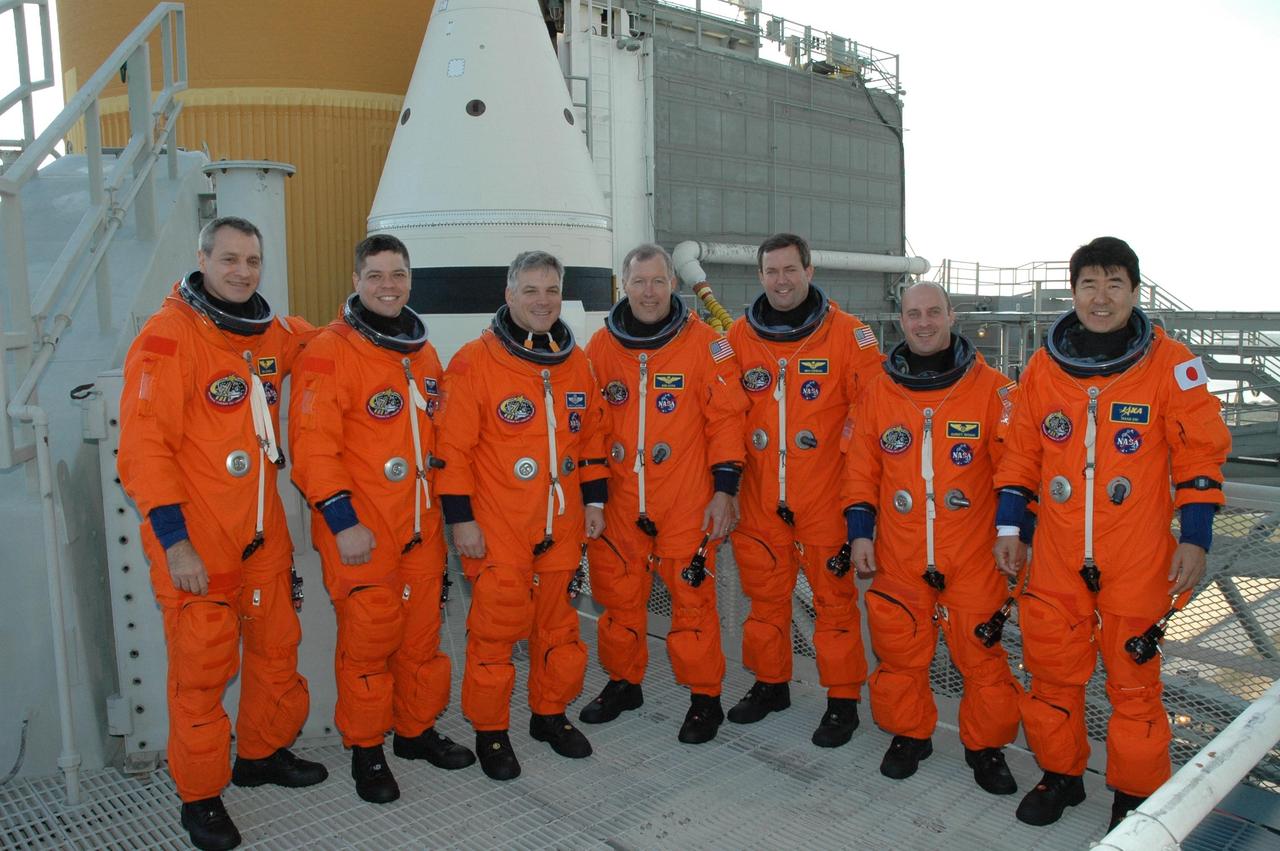
KENNEDY SPACE CENTER, FLA. -- Before the simulated launch countdown in space shuttle Endeavour, the STS-123 crew gathers near the top of the fixed service structure on NASA Kennedy Space Center's Launch Pad 39A. Seen from left are Mission Specialists Rick Linnehan and Robert L. Behnken, Pilot Gregory H. Johnson, Commander Dominic Gorie and Mission Specialists Mike Foreman, Garrett Reisman and Takao Doi. The countdown is the culmination of the terminal countdown demonstration test, or TCDT. The TCDT provides astronauts and ground crews with an opportunity to participate in various countdown activities, including equipment familiarization and emergency egress training. Endeavour is targeted to launch at 2:28 a.m. EDT March 11 on the 16-day STS-123 mission to the International Space Station. Endeavour and its crew will deliver the first section of the Japan Aerospace Exploration Agency's Kibo laboratory and the Canadian Space Agency's two-armed robotic system, Dextre. Photo credit: NASA/Jim Grossmann
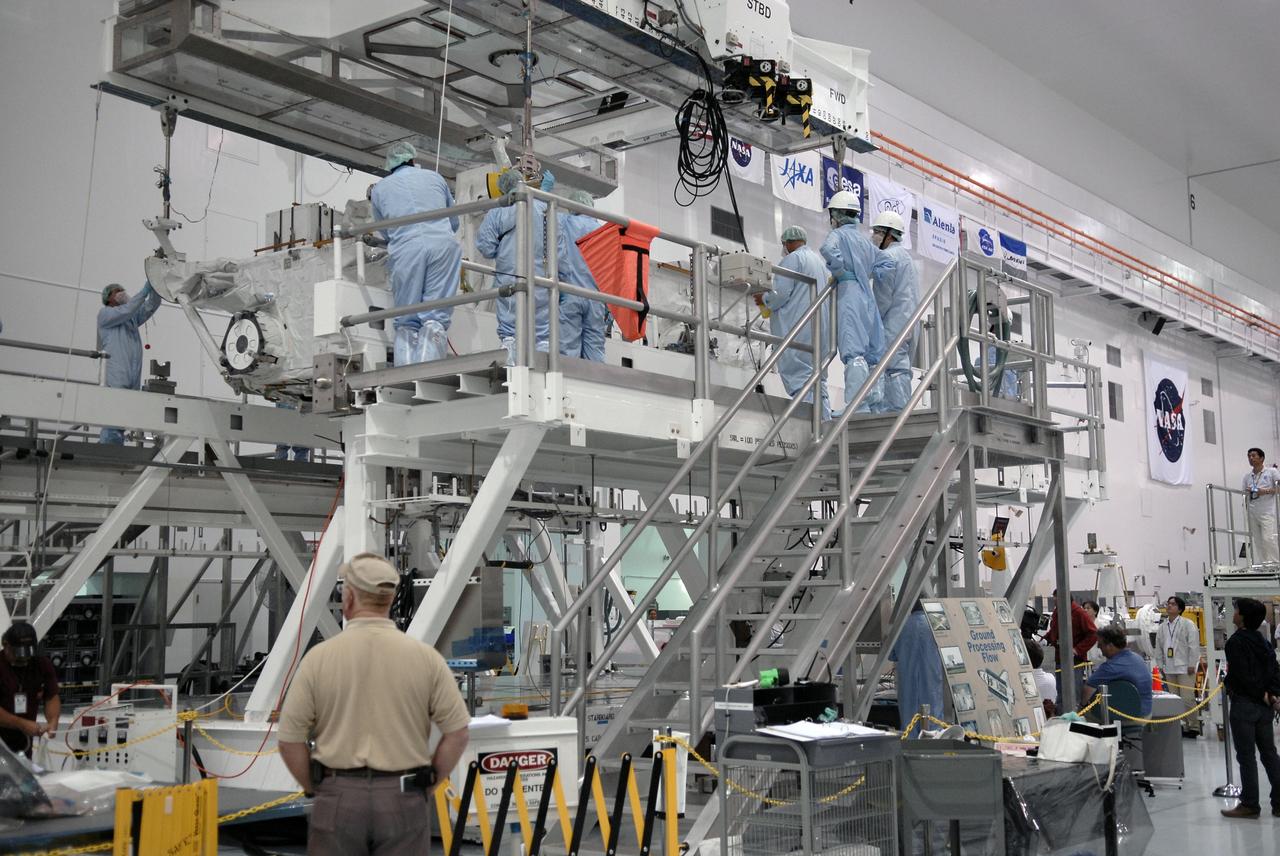
CAPE CANAVERAL, Fla. – In the Space Station Processing Facility at NASA's Kennedy Space Center in Florida, the Japan Aerospace Exploration Agency's Kibo Exposed Facility, or EF, is moved across the room to another stand. The EF, along with the Experiment Logistics Module Exposed Section, will be carried aboard space shuttle Endeavour on the STS-127 mission to the International Space Station targeted for launch May 15, 2009. When it is installed on the Kibo laboratory,the EF will provide a multipurpose platform where science experiments can be deployed and operated in the exposed environment. The payloads attached to the EF can be exchanged or retrieved by Kibo's robotic arm, the JEM Remote Manipulator System. Photo credit: NASA/Kim Shiflett
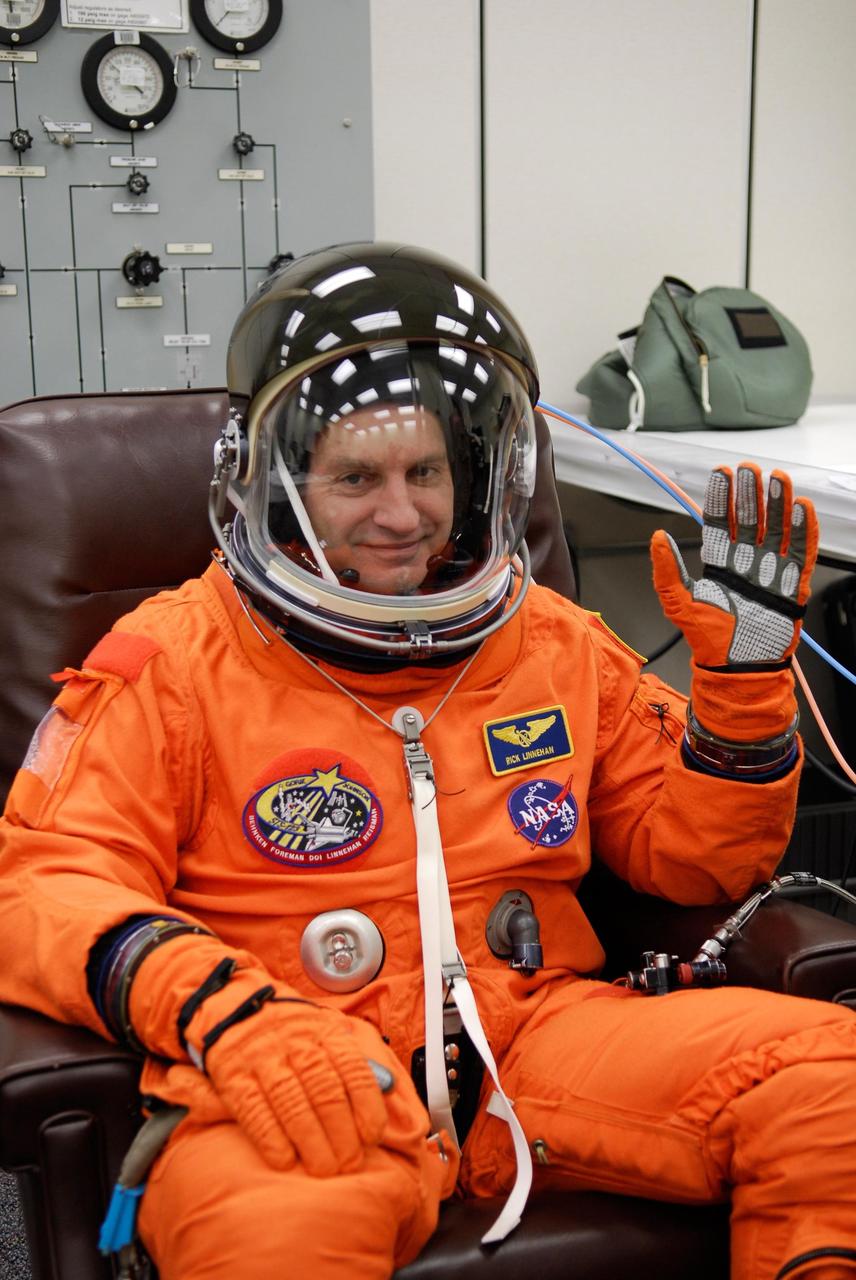
KENNEDY SPACE CENTER, FLA. -- STS-123 Mission Specialist Rick Linnehan is fully suited for the launch dress rehearsal, culmination of the terminal countdown demonstration test, or TCDT. The TCDT provides astronauts and ground crews with an opportunity to participate in various simulated countdown activities, including equipment familiarization and emergency training. Space shuttle Endeavour is targeted to launch March 11 at 2:28 a.m. EDT on the 16-day STS-123 mission to the International Space Station. Endeavour and its crew will deliver the first section of the Japan Aerospace Exploration Agency's Kibo laboratory and the Canadian Space Agency's two-armed robotic system, Dextre. Photo credit: NASA/Kim Shiflett
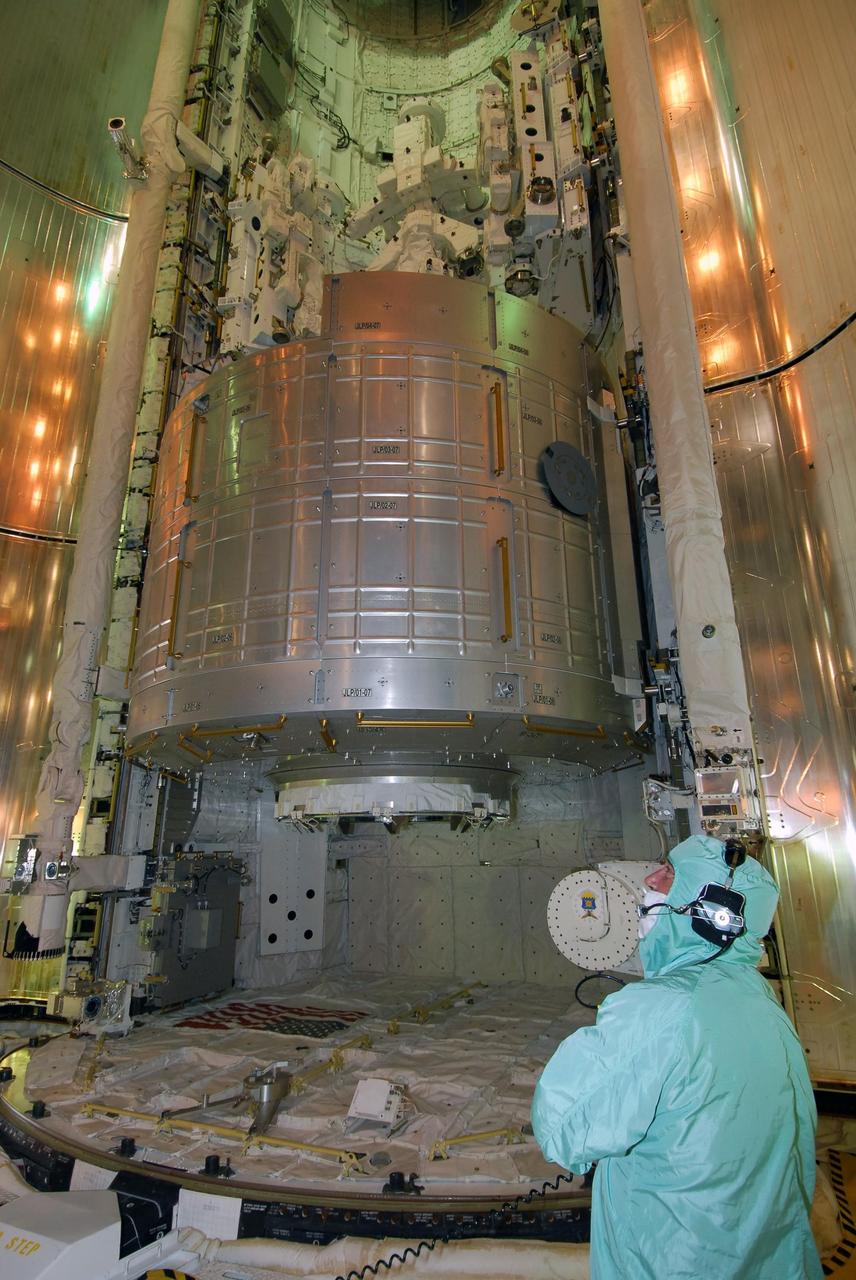
KENNEDY SPACE CENTER, FLA. -- On NASA Kennedy Space Center's Launch Pad 39A, a worker keeps watch as space shuttle Endeavour's payload bay doors begin closing for launch. Seen at the bottom of the payload bay is the first section of the Japan Aerospace Exploration Agency's Kibo laboratory, the Experiment Logistics Module Pressurized Section, or ELM-PS. Endeavour is targeted to launch March 11 at 2:28 a.m. EDT on the 16-day STS-123 mission to the International Space Station. Endeavour and its crew will deliver the ELM-PS and the Canadian Space Agency's two-armed robotic system, Dextre. Photo credit: NASA/Dimitri Gerondidakis
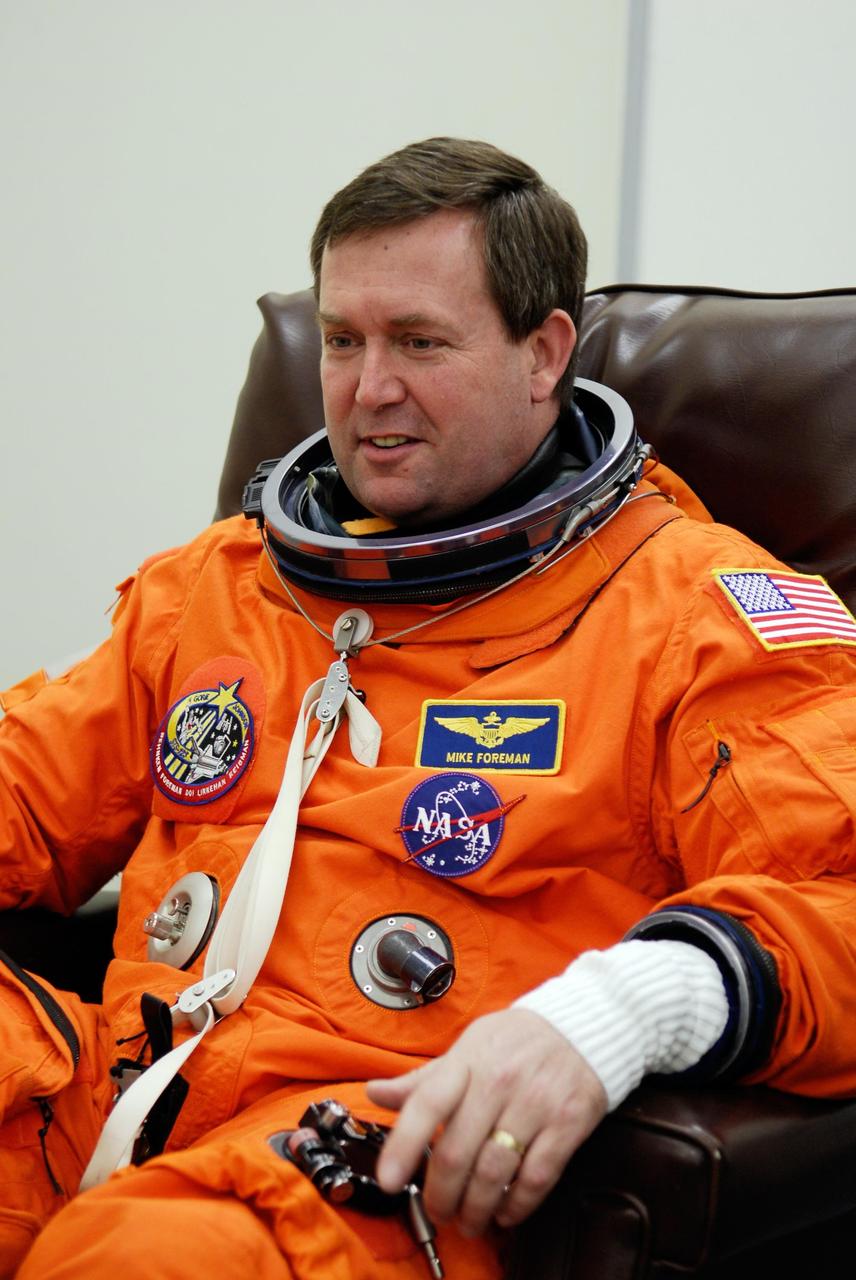
KENNEDY SPACE CENTER, FLA. -- STS-123 Mission Specialist Mike Foreman is ready to finish suiting up for the launch dress rehearsal, culmination of the terminal countdown demonstration test, or TCDT. The TCDT provides astronauts and ground crews with an opportunity to participate in various simulated countdown activities, including equipment familiarization and emergency training. Space shuttle Endeavour is targeted to launch March 11 at 2:28 a.m. EDT on the 16-day STS-123 mission to the International Space Station. Endeavour and its crew will deliver the first section of the Japan Aerospace Exploration Agency's Kibo laboratory and the Canadian Space Agency's two-armed robotic system, Dextre. Photo credit: NASA/Kim Shiflett
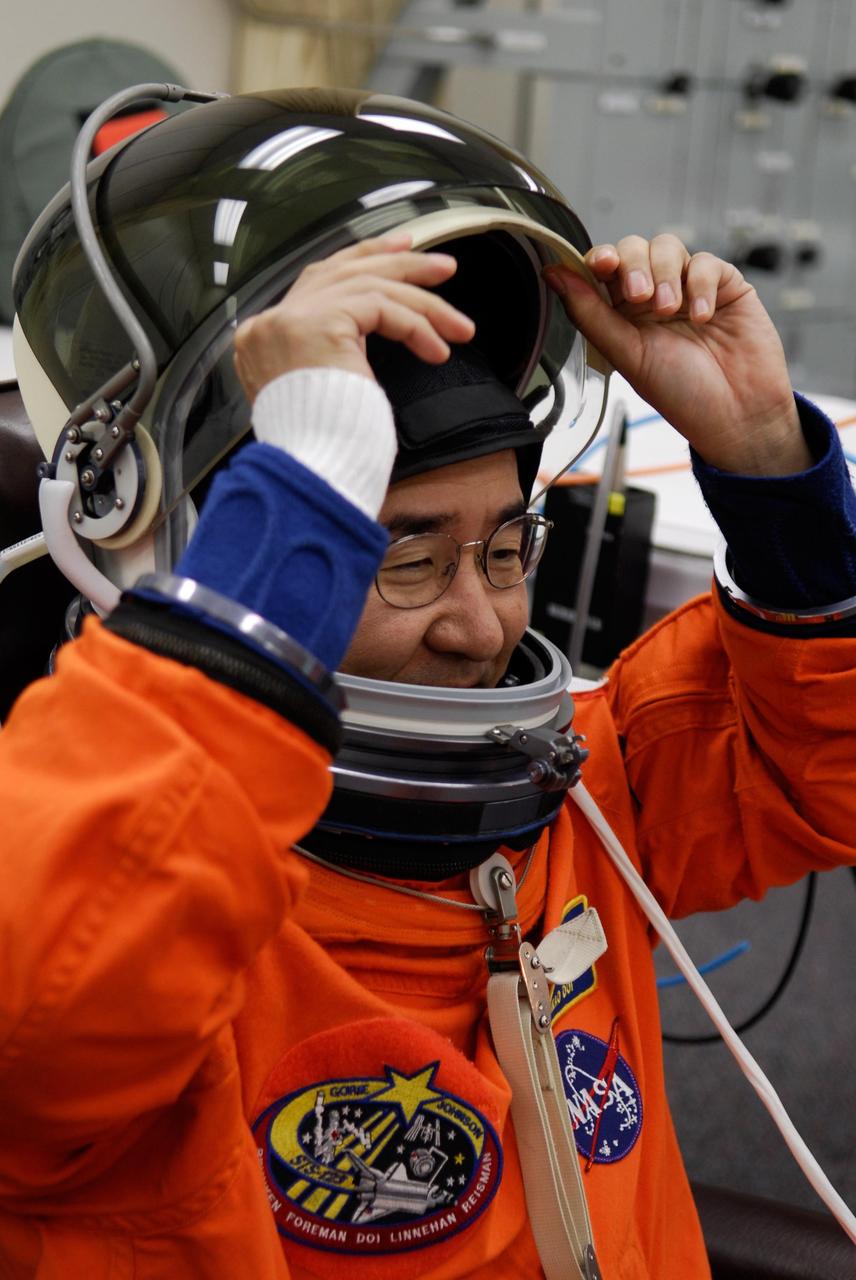
KENNEDY SPACE CENTER, FLA. -- STS-123 Mission Specialist Takao Doi tries on his helmet during suitup for the launch dress rehearsal, culmination of the terminal countdown demonstration test, or TCDT. Doi represents the Japan Aerospace Exploration Agency, or JAXA. The TCDT provides astronauts and ground crews with an opportunity to participate in various simulated countdown activities, including equipment familiarization and emergency training. Space shuttle Endeavour is targeted to launch March 11 at 2:28 a.m. EDT on the 16-day STS-123 mission to the International Space Station. Endeavour and its crew will deliver the first section of the Japan Aerospace Exploration Agency's Kibo laboratory and the Canadian Space Agency's two-armed robotic system, Dextre. Photo credit: NASA/Kim Shiflett
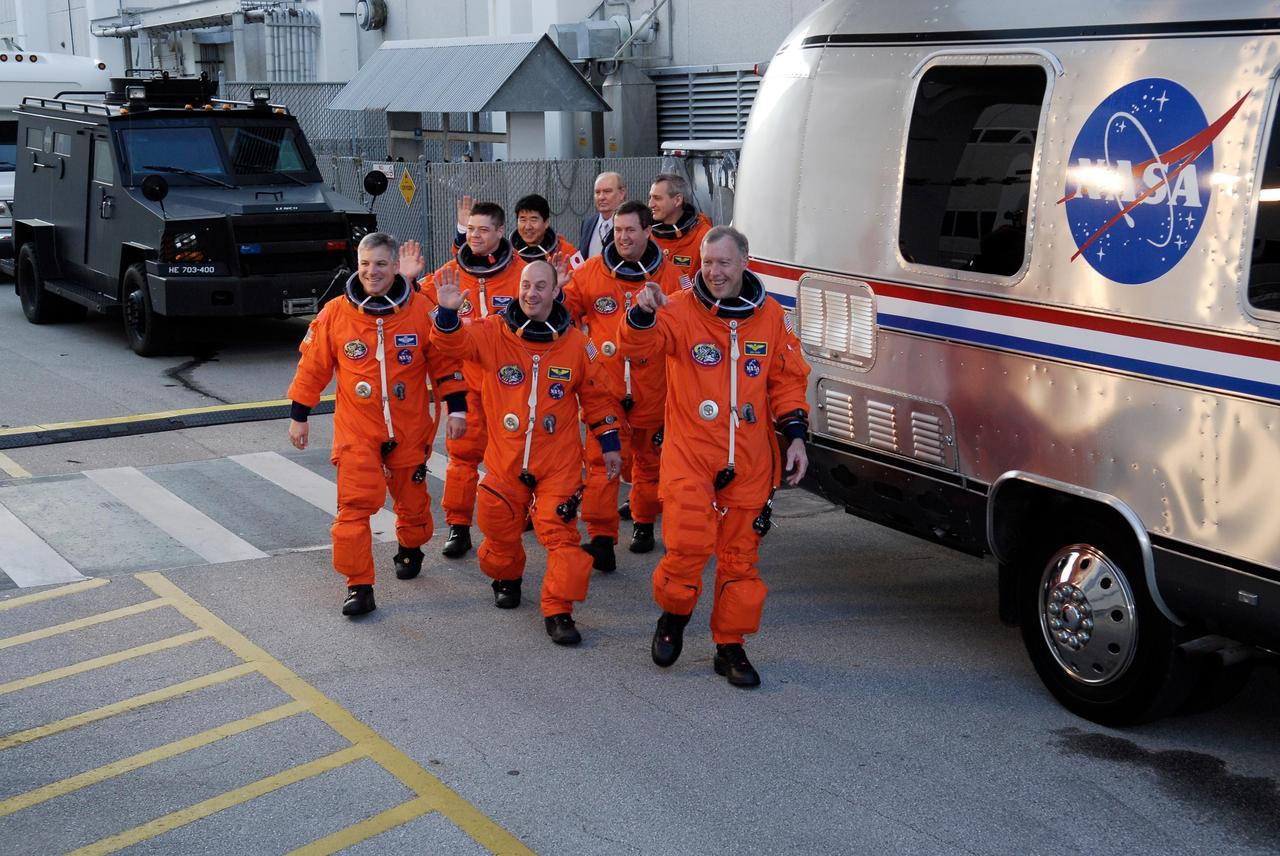
KENNEDY SPACE CENTER, FLA. -- The crew of mission STS-123 waves to spectators as they head for the Astrovan to take them to NASA Kennedy Space Center's Launch Pad 39A. In front, from left, are Pilot Gregory H. Johnson, Mission Specialist Garrett Reisman and Commander Dominic Gorie. Behind them, from left, are Mission Specialists Robert L. Behnken, Takao Doi, Mike Foreman and Rick Linnehan. The crew is taking part in a simulated launch countdown, the culmination of the terminal countdown demonstration test, or TCDT. The TCDT provides astronauts and ground crews with an opportunity to participate in various simulated countdown activities, including equipment familiarization and emergency training. Space shuttle Endeavour is targeted to launch March 11 at 2:28 a.m. EDT on the 16-day STS-123 mission to the International Space Station. Endeavour and its crew will deliver the first section of the Japan Aerospace Exploration Agency's Kibo laboratory and the Canadian Space Agency's two-armed robotic system, Dextre. Photo credit: NASA/Kim Shiflett
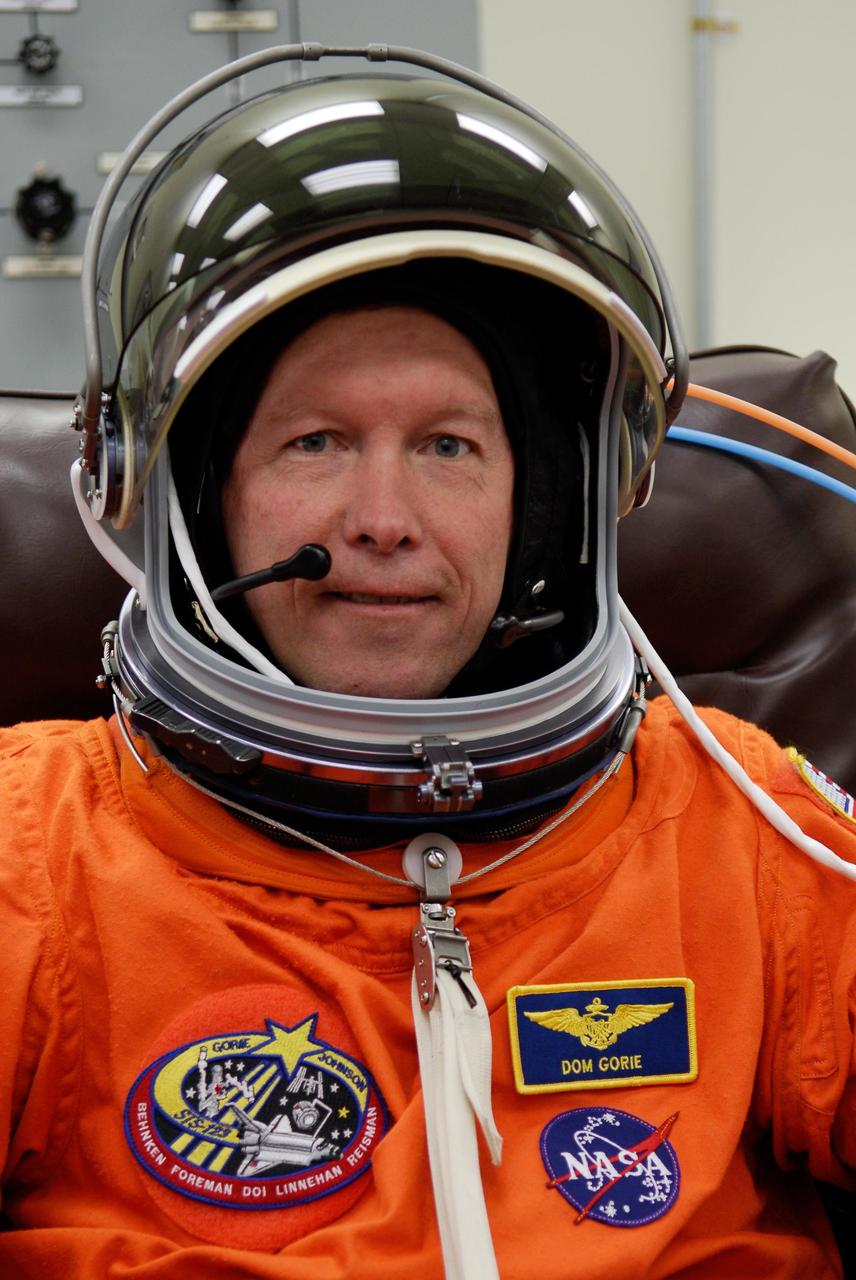
KENNEDY SPACE CENTER, FLA. -- STS-123 Commander Dominic Gorie is testing his helmet while suiting up for the launch dress rehearsal, culmination of the terminal countdown demonstration test, or TCDT. The TCDT provides astronauts and ground crews with an opportunity to participate in various simulated countdown activities, including equipment familiarization and emergency training. Space shuttle Endeavour is targeted to launch March 11 at 2:28 a.m. EDT on the 16-day STS-123 mission to the International Space Station. Endeavour and its crew will deliver the first section of the Japan Aerospace Exploration Agency's Kibo laboratory and the Canadian Space Agency's two-armed robotic system, Dextre. Photo credit: NASA/Kim Shiflett
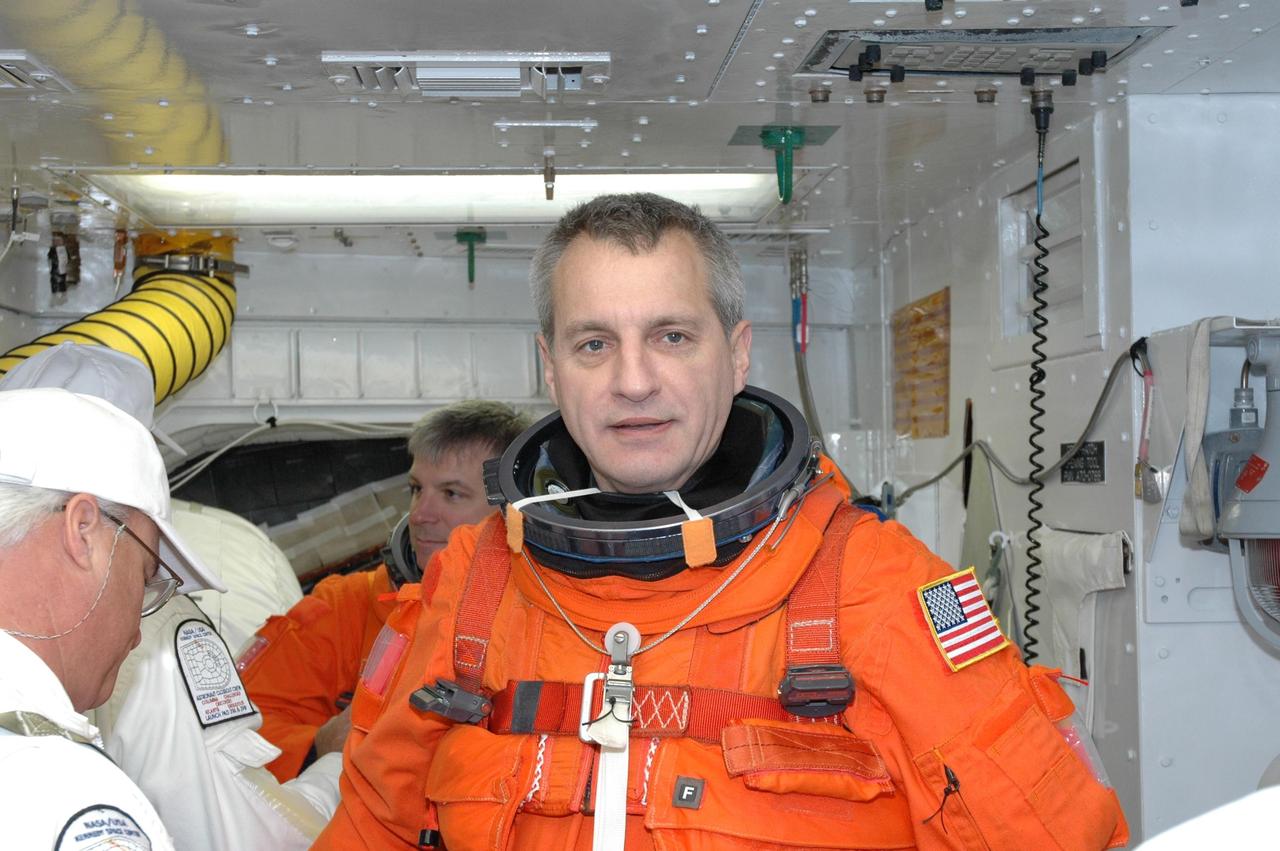
KENNEDY SPACE CENTER, FLA. -- In the White Room on NASA Kennedy Space Center's Launch Pad 39A, STS-123 Mission Specialist Rick Linnehan is getting ready to enter space shuttle Endeavour for the simulated launch countdown. Behind him is Mission Specialist Pilot Gregory H. Johnson. The countdown is the culmination of the terminal countdown demonstration test, or TCDT. The TCDT provides astronauts and ground crews with an opportunity to participate in various countdown activities, including equipment familiarization and emergency egress training. Endeavour is targeted to launch at 2:28 a.m. EDT March 11 on the 16-day STS-123 mission to the International Space Station. Endeavour and its crew will deliver the first section of the Japan Aerospace Exploration Agency's Kibo laboratory and the Canadian Space Agency's two-armed robotic system, Dextre. Photo credit: NASA/Jim Grossmann
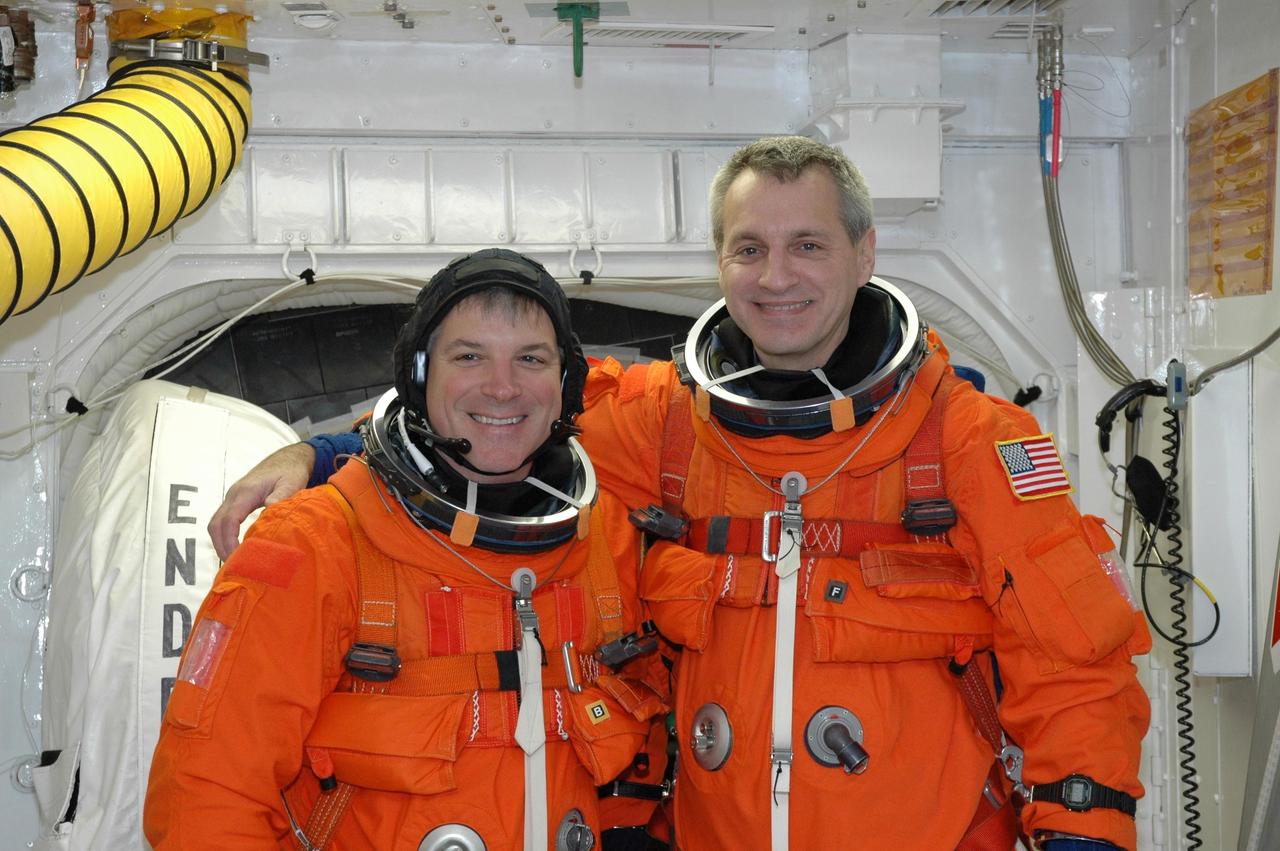
KENNEDY SPACE CENTER, FLA. -- In the White Room on NASA Kennedy Space Center's Launch Pad 39A, STS-123 Pilot Gregory H. Johnson (left) and Mission Specialist Rick Linnehan pause in front space shuttle Endeavour's open hatch. They are getting ready to enter Endeavour for the simulated launch countdown, which is the culmination of the terminal countdown demonstration test, or TCDT. The TCDT provides astronauts and ground crews with an opportunity to participate in various countdown activities, including equipment familiarization and emergency egress training. Endeavour is targeted to launch at 2:28 a.m. EDT March 11 on the 16-day STS-123 mission to the International Space Station. Endeavour and its crew will deliver the first section of the Japan Aerospace Exploration Agency's Kibo laboratory and the Canadian Space Agency's two-armed robotic system, Dextre. Photo credit: NASA/Jim Grossmann
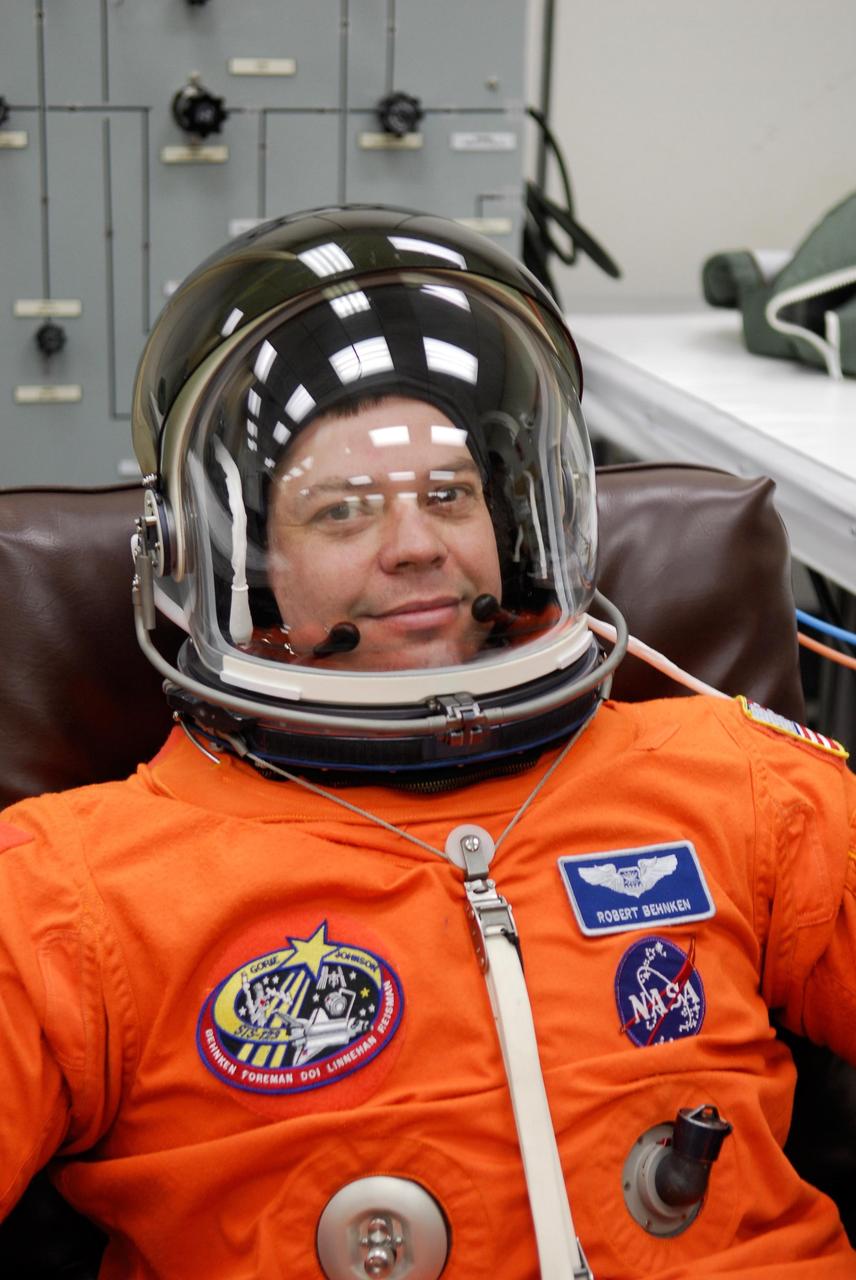
KENNEDY SPACE CENTER, FLA. -- STS-123 Mission Specialist Robert L. Behnken is fully suited for the launch dress rehearsal, culmination of the terminal countdown demonstration test, or TCDT. The TCDT provides astronauts and ground crews with an opportunity to participate in various simulated countdown activities, including equipment familiarization and emergency training. Space shuttle Endeavour is targeted to launch March 11 at 2:28 a.m. EDT on the 16-day STS-123 mission to the International Space Station. Endeavour and its crew will deliver the first section of the Japan Aerospace Exploration Agency's Kibo laboratory and the Canadian Space Agency's two-armed robotic system, Dextre. Photo credit: NASA/Kim Shiflett
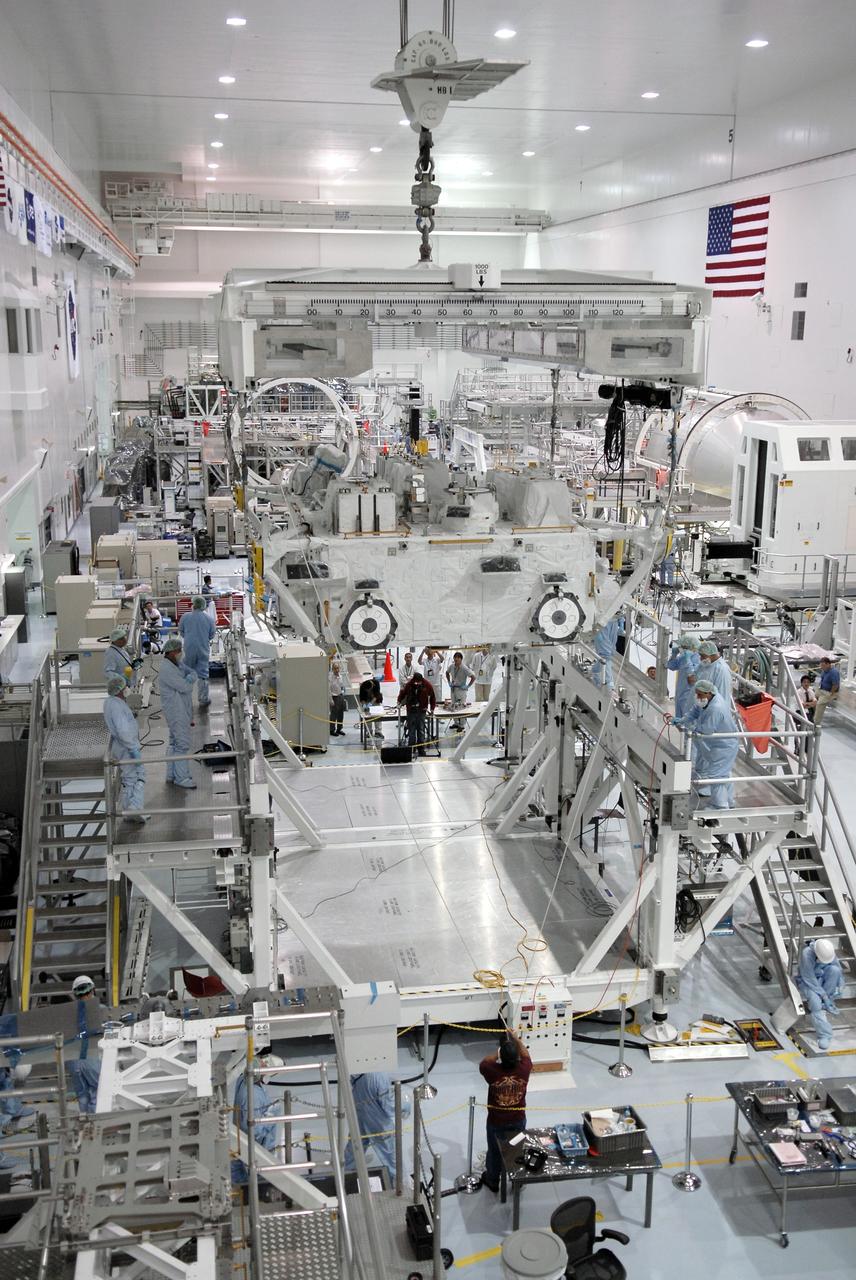
CAPE CANAVERAL, Fla. – In the Space Station Processing Facility at NASA's Kennedy Space Center in Florida, the Japan Aerospace Exploration Agency's Kibo Exposed Facility, or EF, is moved across the room to another stand. The EF, along with the Experiment Logistics Module Exposed Section, will be carried aboard space shuttle Endeavour on the STS-127 mission to the International Space Station targeted for launch May 15, 2009. When it is installed on the Kibo laboratory,the EF will provide a multipurpose platform where science experiments can be deployed and operated in the exposed environment. The payloads attached to the EF can be exchanged or retrieved by Kibo's robotic arm, the JEM Remote Manipulator System. Photo credit: NASA/Kim Shiflett
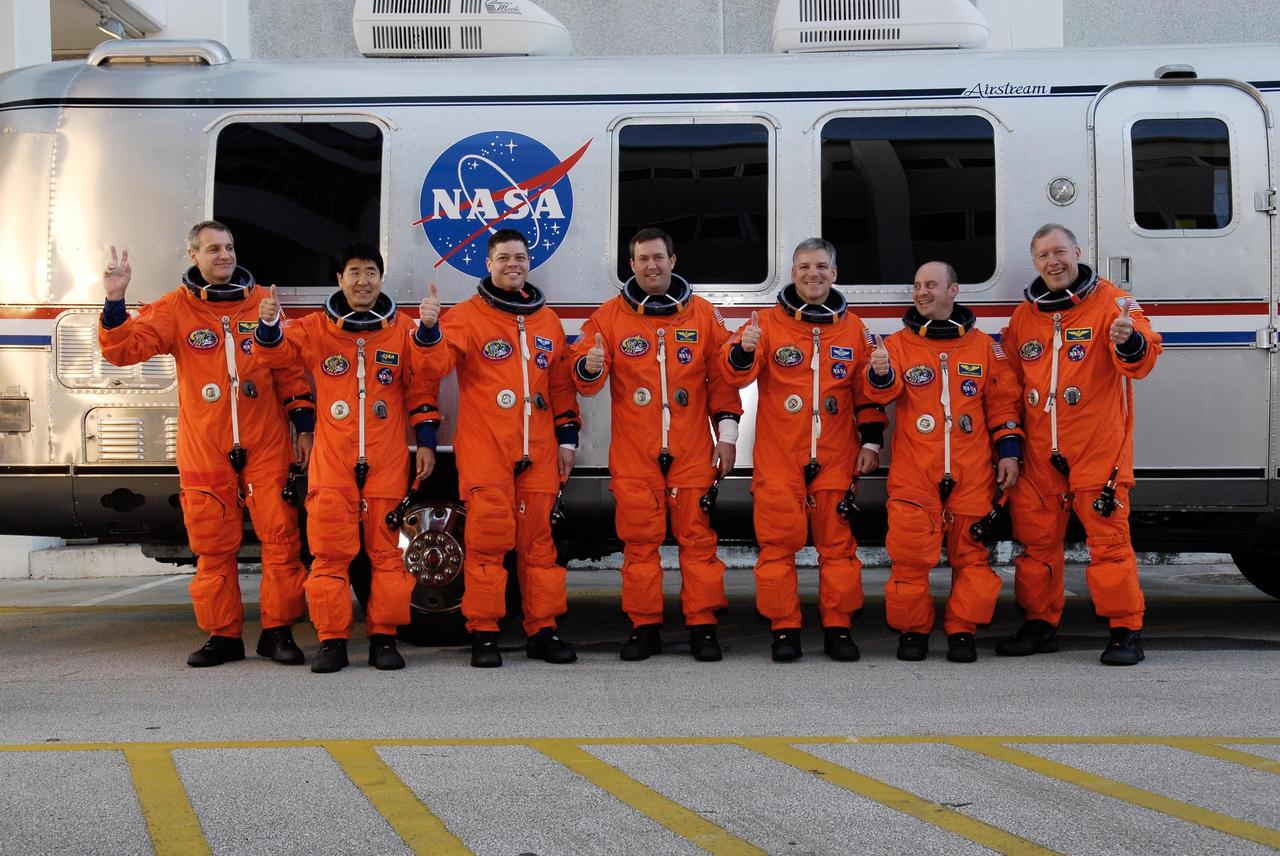
KENNEDY SPACE CENTER, FLA. -- The crew of mission STS-123 show their readiness to take part in a simulated launch countdown, the culmination of the terminal countdown demonstration test, or TCDT. From left are Mission Specialists Rick Linnehan, Takao Doi, Robert L. Behnken and Mike Foreman, Pilot Gregory H. Johnson, Mission Specialist Garrett Reisman and Commander Dominic Gorie. The TCDT provides astronauts and ground crews with an opportunity to participate in various simulated countdown activities, including equipment familiarization and emergency training. Space shuttle Endeavour is targeted to launch March 11 at 2:28 a.m. EDT on the 16-day STS-123 mission to the International Space Station. Endeavour and its crew will deliver the first section of the Japan Aerospace Exploration Agency's Kibo laboratory and the Canadian Space Agency's two-armed robotic system, Dextre. Photo credit: NASA/Kim Shiflett
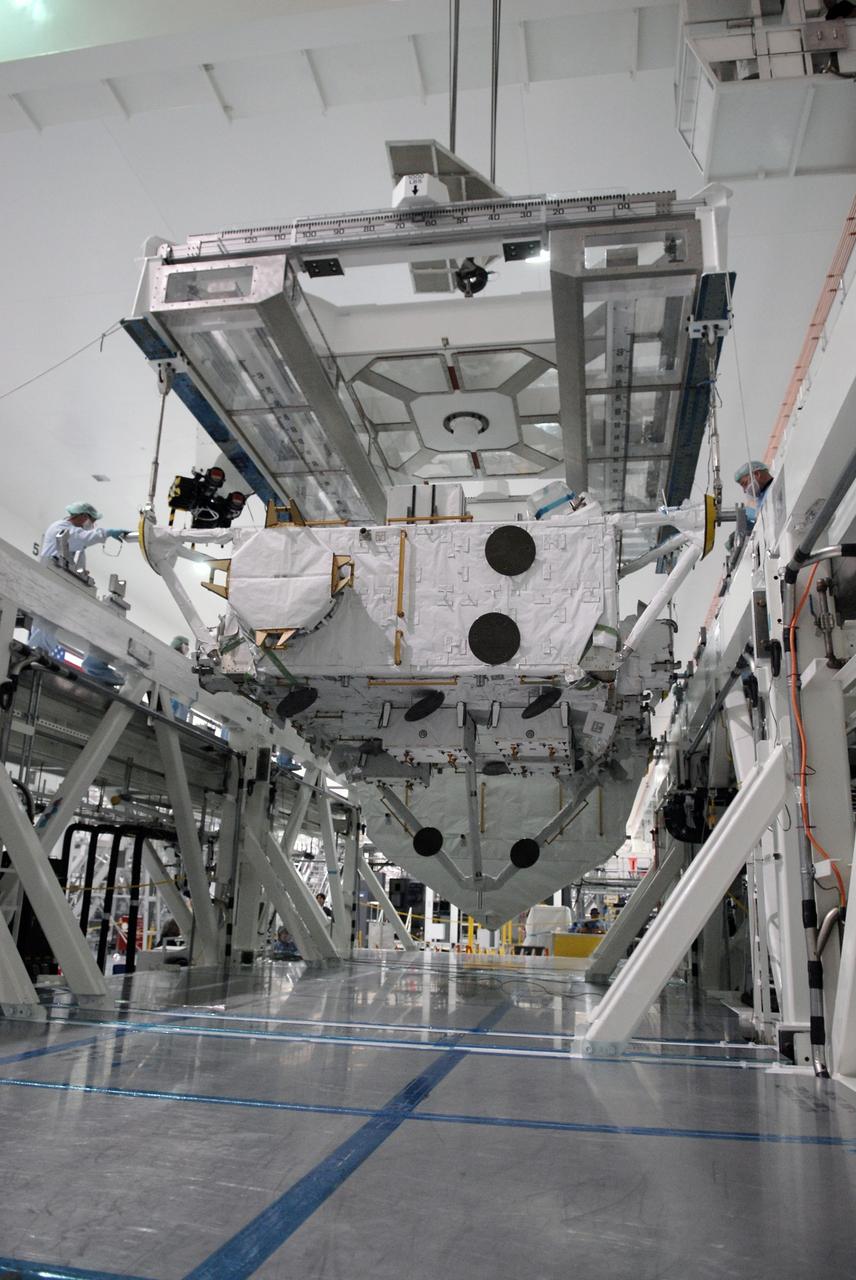
CAPE CANAVERAL, Fla. –– In the Space Station Processing Facility at NASA's Kennedy Space Center in Florida, the suspended Japan Aerospace Exploration Agency's Kibo Exposed Facility, or EF, is lowered into a workstand. When it is installed on the Kibo laboratory, the EF will provide a multipurpose platform where science experiments can be deployed and operated in the exposed environment. The payloads attached to the EF can be exchanged or retrieved by Kibo's robotic arm, the JEM Remote Manipulator System. The EF, along with the Experiment Logistics Module Exposed Section, will be carried aboard space shuttle Endeavour on the STS-127 mission targeted for launch June 13, 2009. Photo credit: NASA/Kim Shiflett
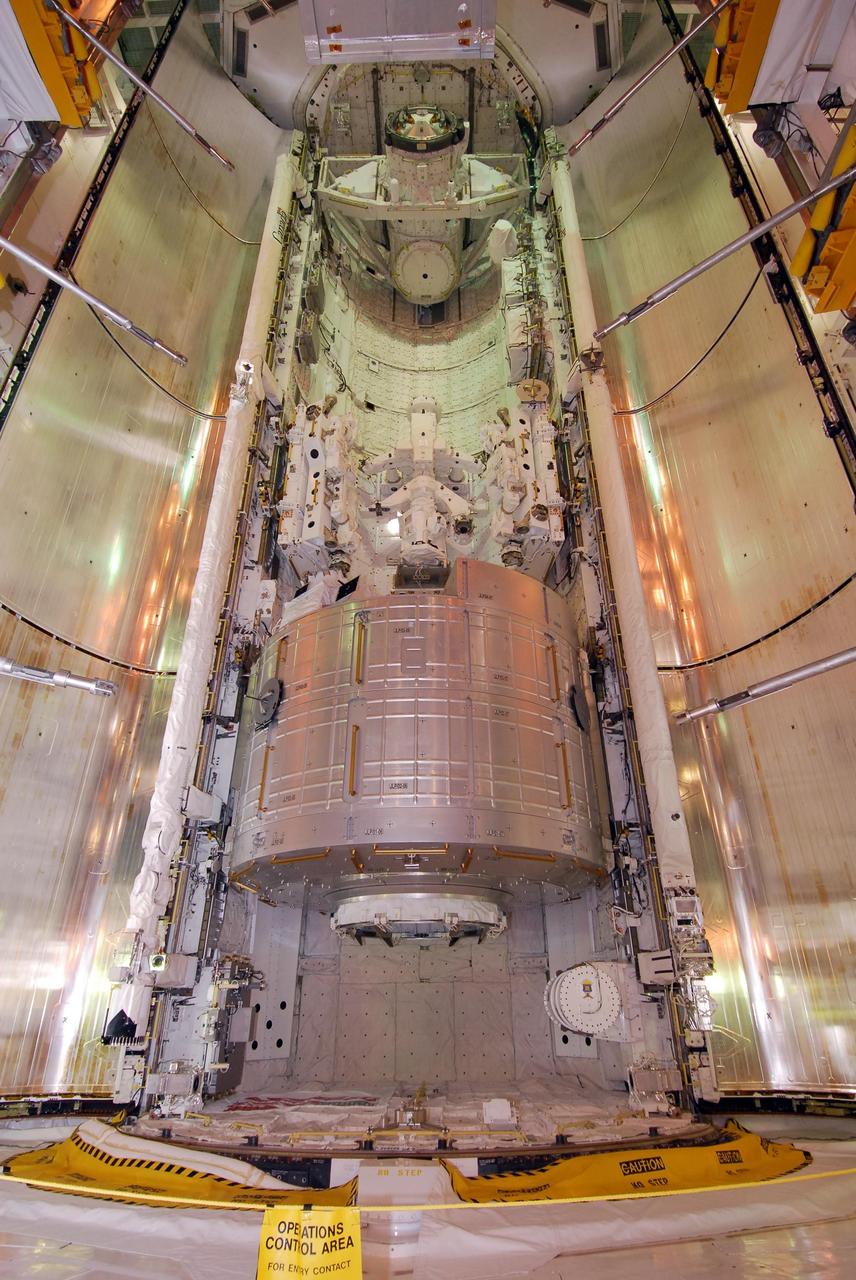
KENNEDY SPACE CENTER, FLA. -- On NASA Kennedy Space Center's Launch Pad 39A, space shuttle Endeavour's payload bay is ready for closure of the doors for launch. Seen at the bottom is the first section of the Japan Aerospace Exploration Agency's Kibo laboratory, the Experiment Logistics Module Pressurized Section, or ELM-PS. At the top is the orbiter docking system. Endeavour is targeted to launch March 11 at 2:28 a.m. EDT on the 16-day STS-123 mission to the International Space Station. Endeavour and its crew will deliver the ELM-PS and the Canadian Space Agency's two-armed robotic system, Dextre. Photo credit: NASA/Dimitri Gerondidakis
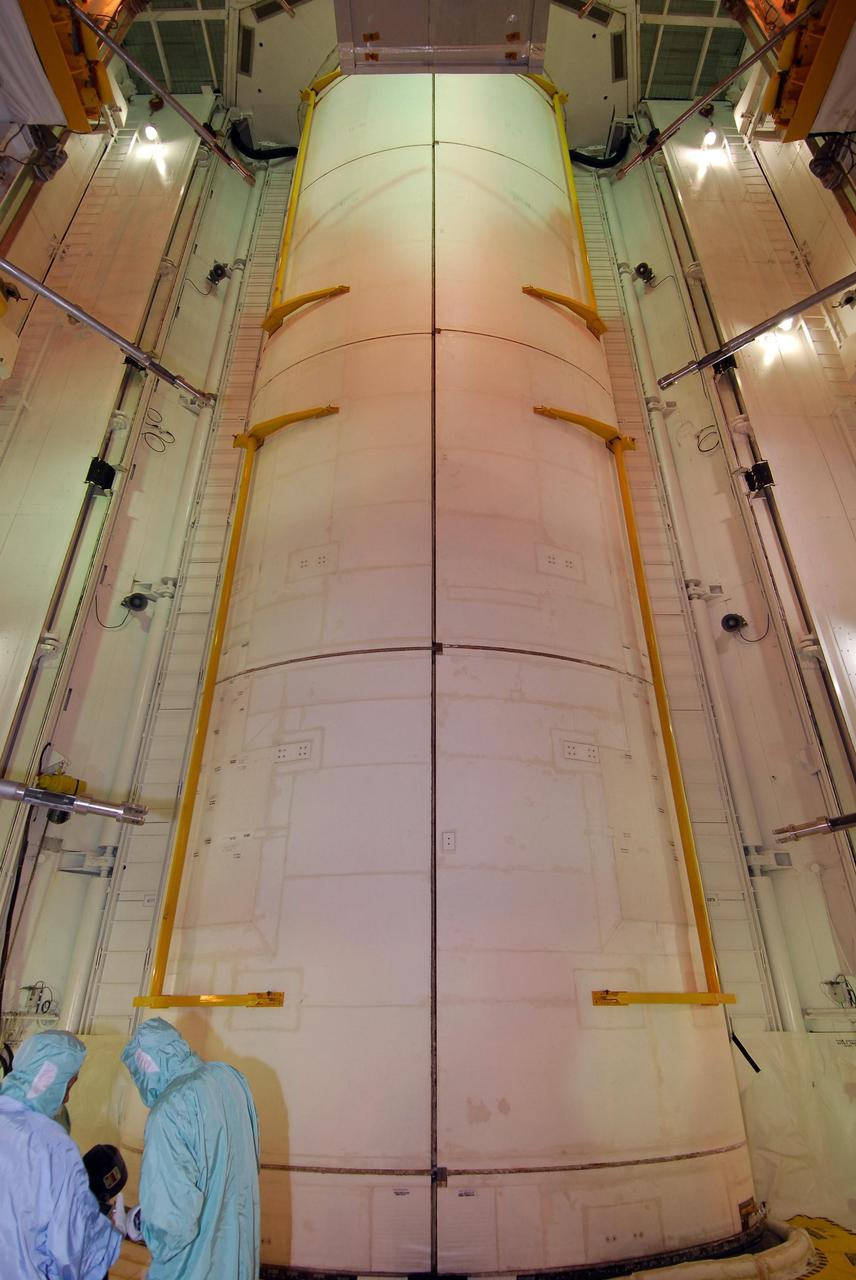
KENNEDY SPACE CENTER, FLA. -- On NASA Kennedy Space Center's Launch Pad 39A, workers check the fittings around space shuttle Endeavour's payload bay doors after closing. Endeavour is targeted to launch March 11 at 2:28 a.m. EDT on the 16-day STS-123 mission to the International Space Station. Endeavour and its crew will deliver the ELM-PS and the Canadian Space Agency's two-armed robotic system, Dextre. Photo credit: NASA/Dimitri Gerondidakis
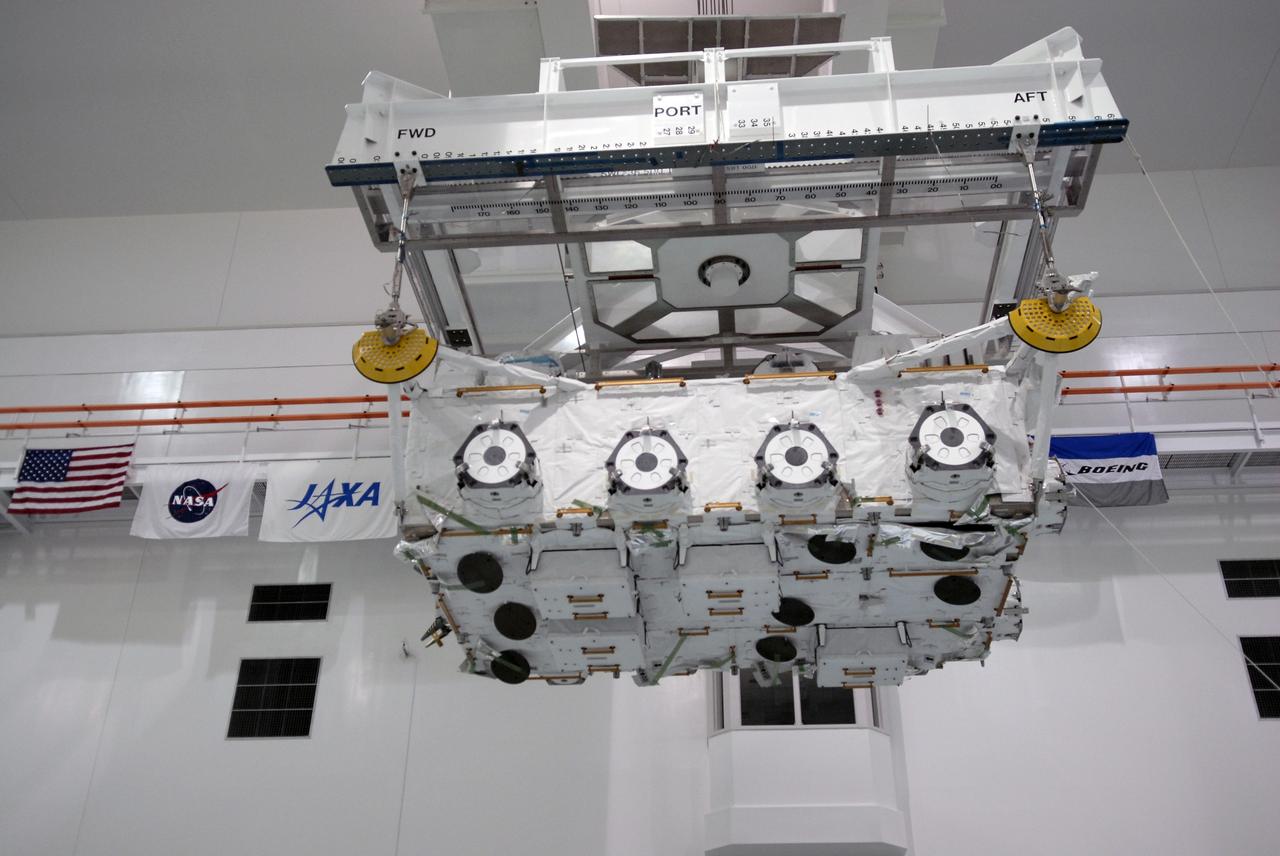
CAPE CANAVERAL, Fla. – In the Space Station Processing Facility at NASA's Kennedy Space Center in Florida, the Japan Aerospace Exploration Agency's Kibo Exposed Facility, or EF, is ready to be lowered onto a stand. The EF, along with the Experiment Logistics Module Exposed Section, will be carried aboard space shuttle Endeavour on the STS-127 mission to the International Space Station targeted for launch May 15, 2009. When it is installed on the Kibo laboratory,the EF will provide a multipurpose platform where science experiments can be deployed and operated in the exposed environment. The payloads attached to the EF can be exchanged or retrieved by Kibo's robotic arm, the JEM Remote Manipulator System. Photo credit: NASA/Kim Shiflett
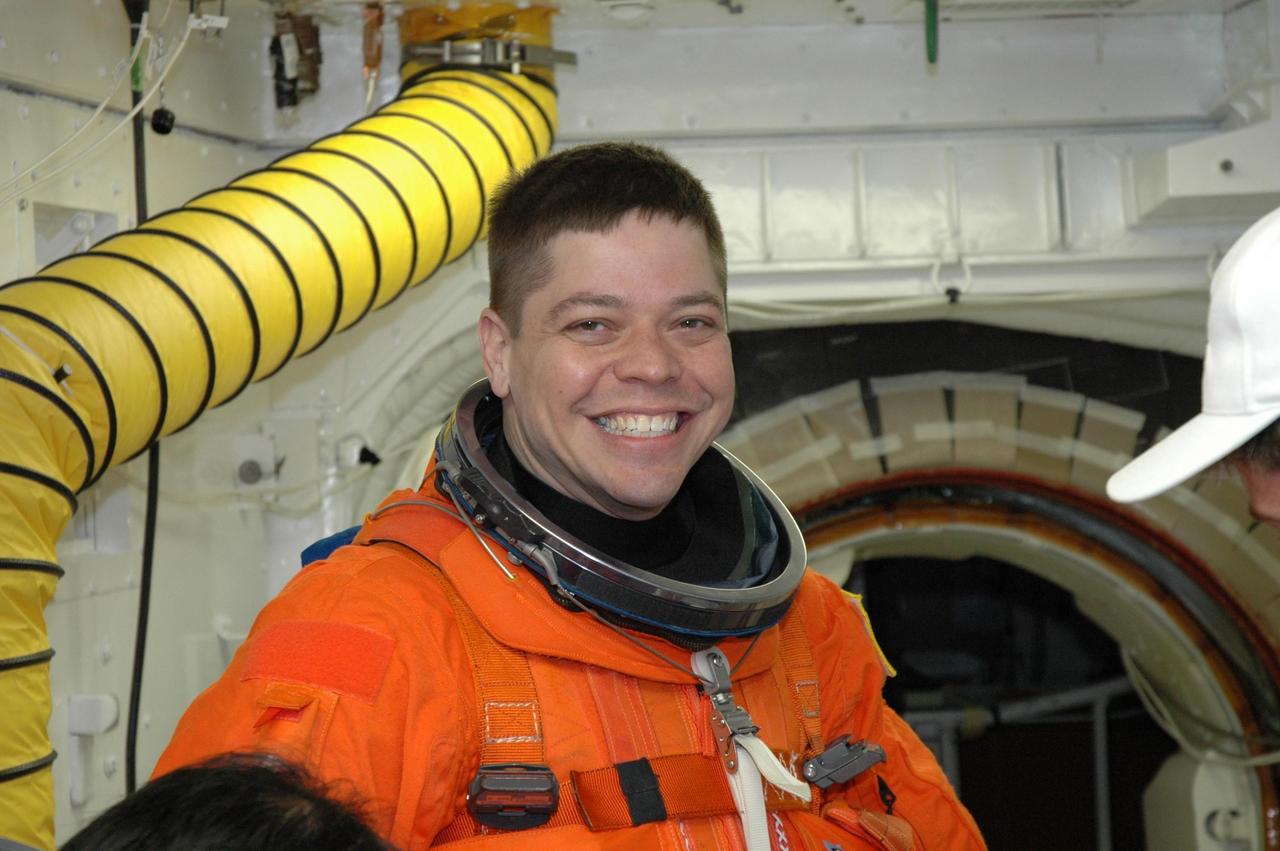
KENNEDY SPACE CENTER, FLA. -- In the White Room on NASA Kennedy Space Center's Launch Pad 39A, STS-123 Mission Specialist Robert L. Behnken is waiting for help with his launch and entry suit before entering space shuttle Endeavour. He and the other STS-123 crew members are getting ready for the simulated launch countdown, which is the culmination of the terminal countdown demonstration test, or TCDT. The TCDT provides astronauts and ground crews with an opportunity to participate in various countdown activities, including equipment familiarization and emergency egress training. Endeavour is targeted to launch at 2:28 a.m. EDT March 11 on the 16-day STS-123 mission to the International Space Station. Endeavour and its crew will deliver the first section of the Japan Aerospace Exploration Agency's Kibo laboratory and the Canadian Space Agency's two-armed robotic system, Dextre. Photo credit: NASA/Jim Grossmann
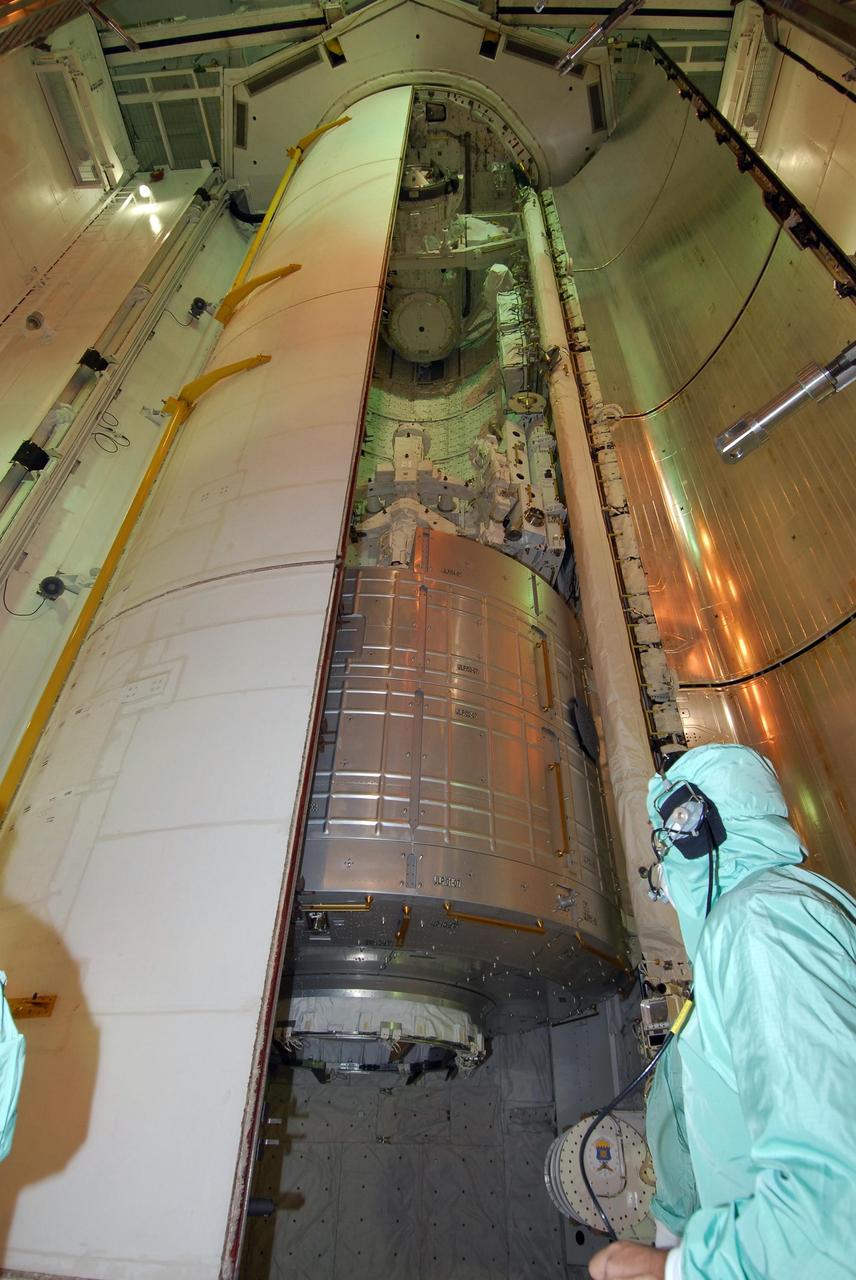
KENNEDY SPACE CENTER, FLA. -- On NASA Kennedy Space Center's Launch Pad 39A, a worker stands by as one of space shuttle Endeavour's payload bay doors closes. Still seen, at the bottom of the payload bay, is the first section of the Japan Aerospace Exploration Agency's Kibo laboratory, the Experiment Logistics Module Pressurized Section, or ELM-PS. Endeavour is targeted to launch March 11 at 2:28 a.m. EDT on the 16-day STS-123 mission to the International Space Station. Endeavour and its crew will deliver the ELM-PS and the Canadian Space Agency's two-armed robotic system, Dextre. Photo credit: NASA/Dimitri Gerondidakis
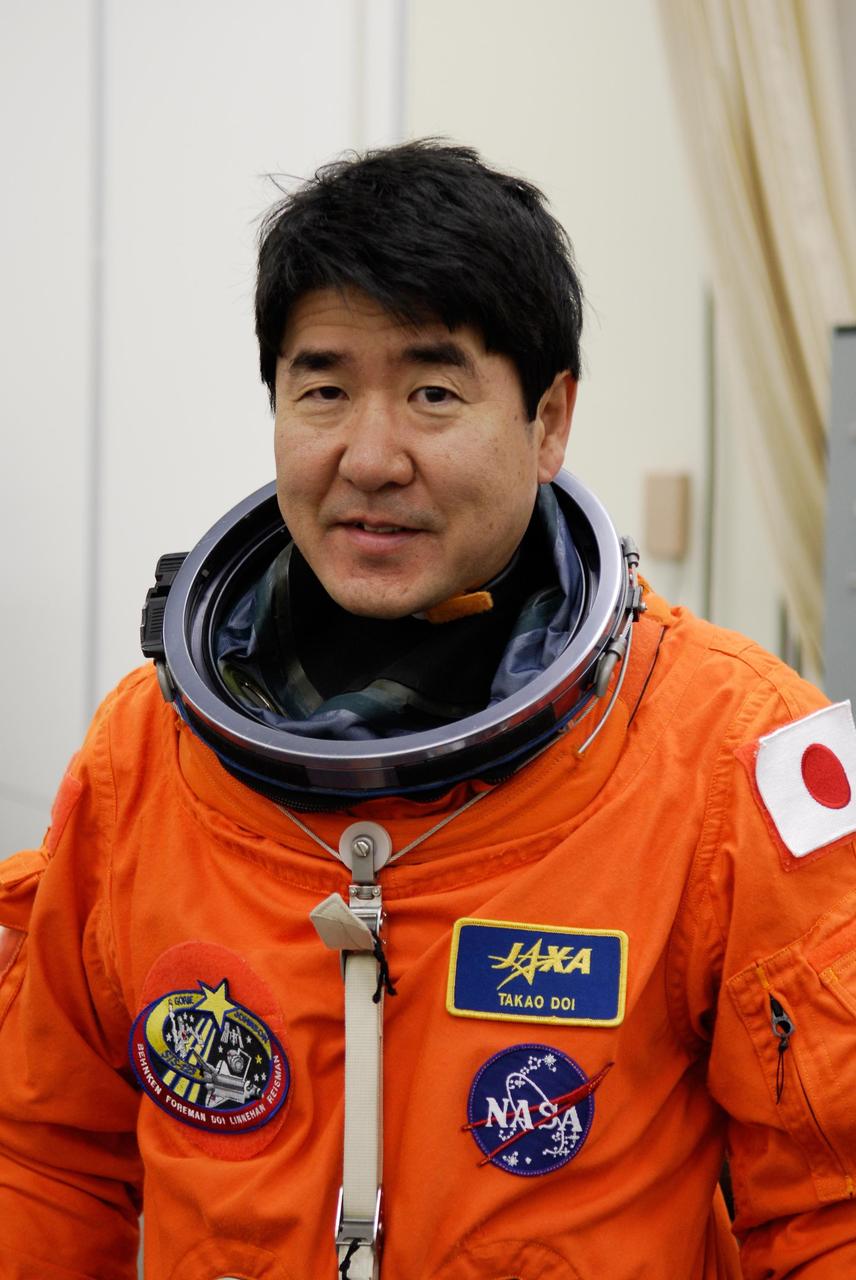
KENNEDY SPACE CENTER, FLA. -- STS-123 Mission Specialist Takao Doi suits up for the launch dress rehearsal, culmination of the terminal countdown demonstration test, or TCDT. Doi represents the Japan Aerospace Exploration Agency, or JAXA. The TCDT provides astronauts and ground crews with an opportunity to participate in various simulated countdown activities, including equipment familiarization and emergency training. Space shuttle Endeavour is targeted to launch March 11 at 2:28 a.m. EDT on the 16-day STS-123 mission to the International Space Station. Endeavour and its crew will deliver the first section of the Japan Aerospace Exploration Agency's Kibo laboratory and the Canadian Space Agency's two-armed robotic system, Dextre. Photo credit: NASA/Kim Shiflett
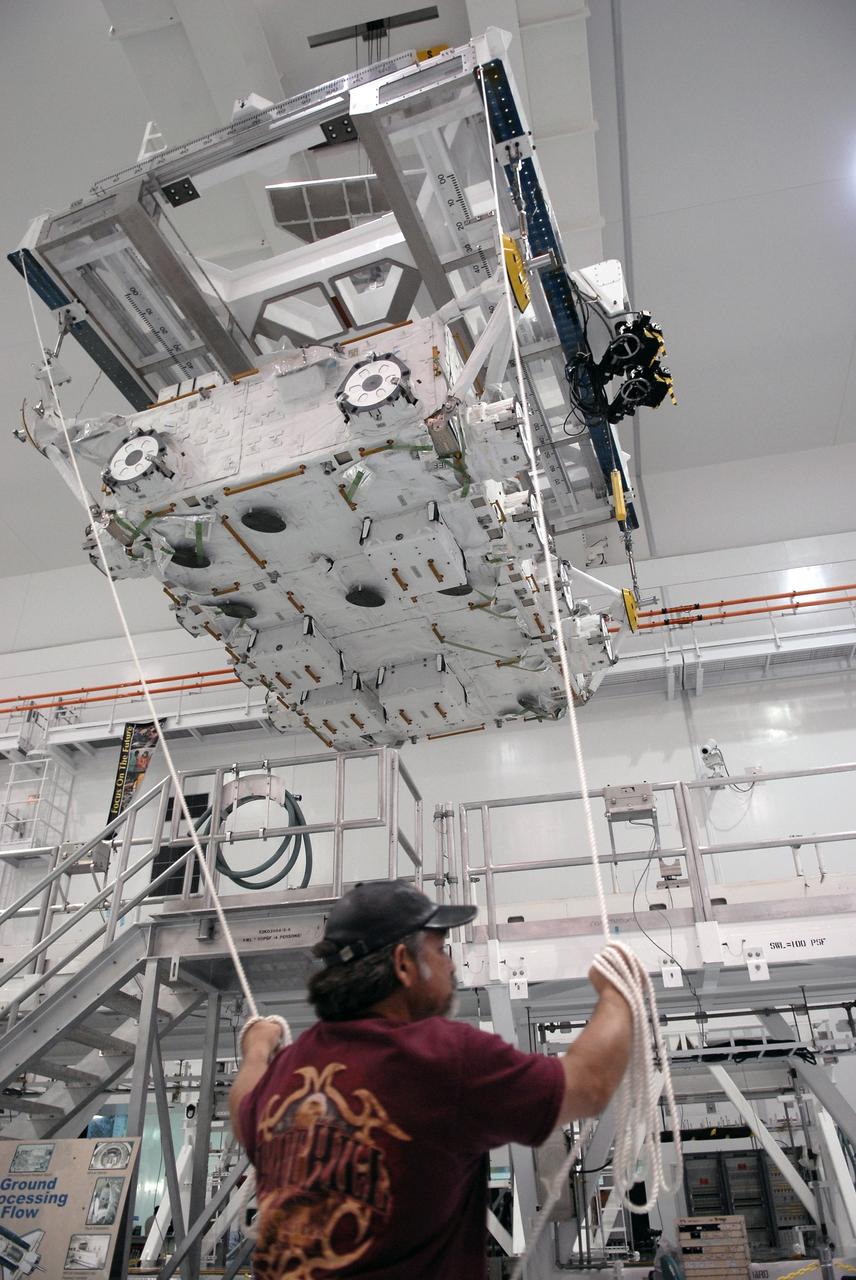
CAPE CANAVERAL, Fla. – In the Space Station Processing Facility at NASA's Kennedy Space Center in Florida, a worker help guides the progress of the Japan Aerospace Exploration Agency's Kibo Exposed Facility, or EF, as it moves across the room to another stand. The EF, along with the Experiment Logistics Module Exposed Section, will be carried aboard space shuttle Endeavour on the STS-127 mission to the International Space Station targeted for launch May 15, 2009. When it is installed on the Kibo laboratory,the EF will provide a multipurpose platform where science experiments can be deployed and operated in the exposed environment. The payloads attached to the EF can be exchanged or retrieved by Kibo's robotic arm, the JEM Remote Manipulator System. Photo credit: NASA/Kim Shiflett
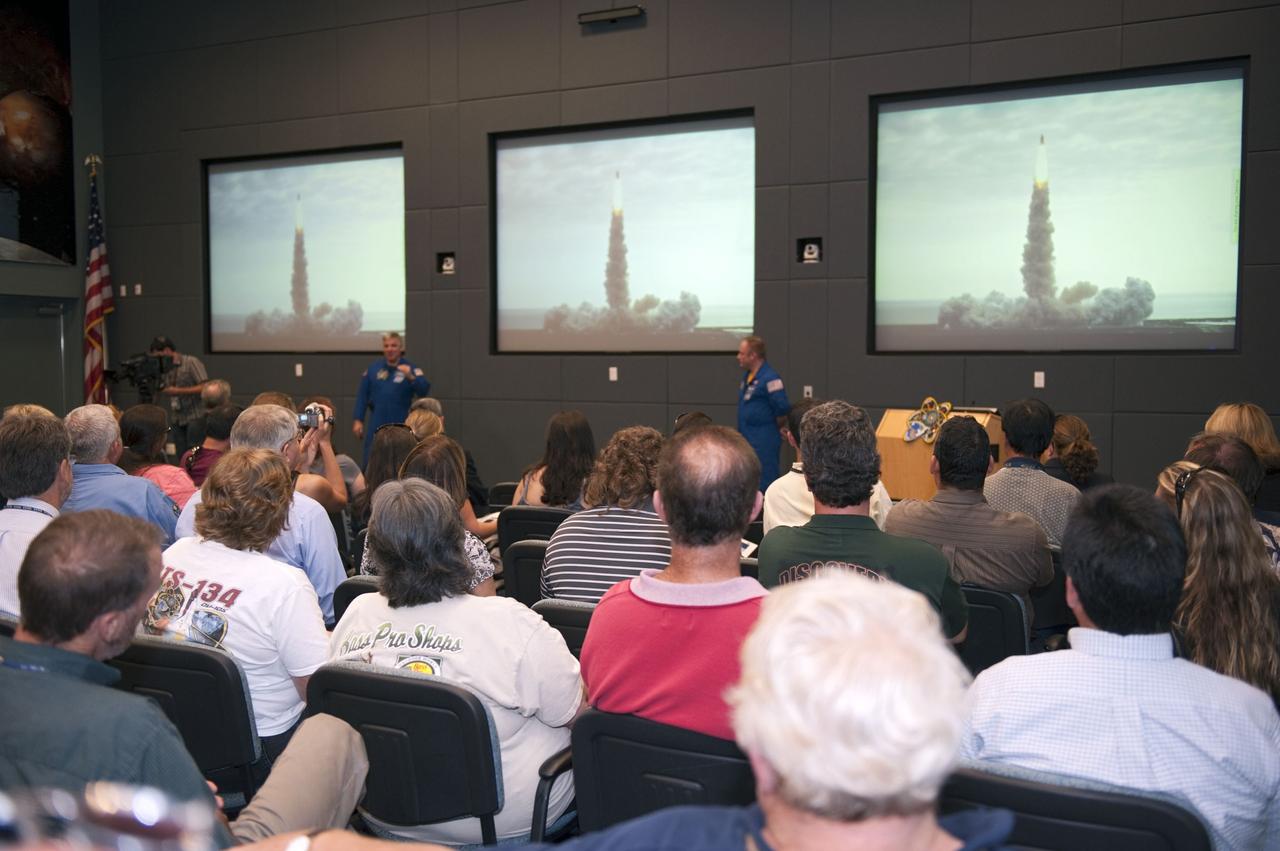
CAPE CANAVERAL, Fla. - STS-134 Pilot Gregory H. Johnson, left, and Mission Specialist Michael Fincke speak to employees at NASA's Kennedy Space Center in Florida during a video presentation, part of a crew return event. Commander Mark Kelly, Johnson and Mission Specialists Fincke, Greg Chamitoff, Andrew Feustel and European Space Agency astronaut Roberto Vittori lifted off May 16, 2011, aboard space shuttle Endeavour. During the nearly 16-day STS-134 mission, Endeavour delivered to the International Space Station the Alpha Magnetic Spectrometer (AMS) and spare parts, including two S-band communications antennas, a high-pressure gas tank and additional spare parts for Dextre. This was the 36th shuttle mission to the station and Endeavour's 25th and final flight. For more information, visit www.nasa.gov/mission_pages/shuttle/shuttlemissions/sts134/main/index.html. Photo credit: NASA/Kim Shiflett
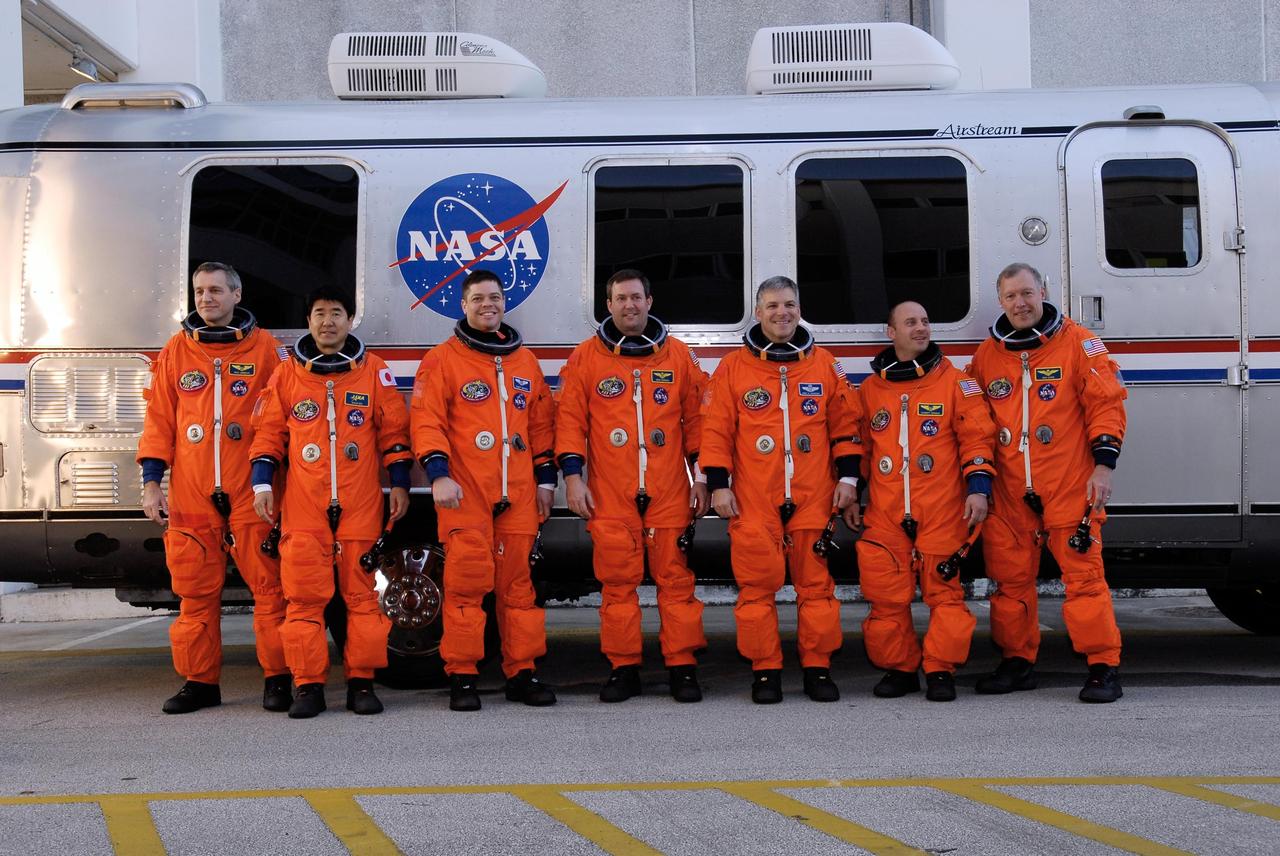
KENNEDY SPACE CENTER, FLA. -- The crew of mission STS-123 provides a photo opportunity in front of the Astrovan for spectators before heading out to NASA Kennedy Space Center's Launch Pad 39A. From left are Mission Specialists Rick Linnehan, Takao Doi, Robert L. Behnken and Mike Foreman, Pilot Gregory H. Johnson, Mission Specialist Garrett Reisman and Commander Dominic Gorie. The crew is taking part in a simulated launch countdown, the culmination of the terminal countdown demonstration test, or TCDT. The TCDT provides astronauts and ground crews with an opportunity to participate in various simulated countdown activities, including equipment familiarization and emergency training. Space shuttle Endeavour is targeted to launch March 11 at 2:28 a.m. EDT on the 16-day STS-123 mission to the International Space Station. Endeavour and its crew will deliver the first section of the Japan Aerospace Exploration Agency's Kibo laboratory and the Canadian Space Agency's two-armed robotic system, Dextre. Photo credit: NASA/Kim Shiflett
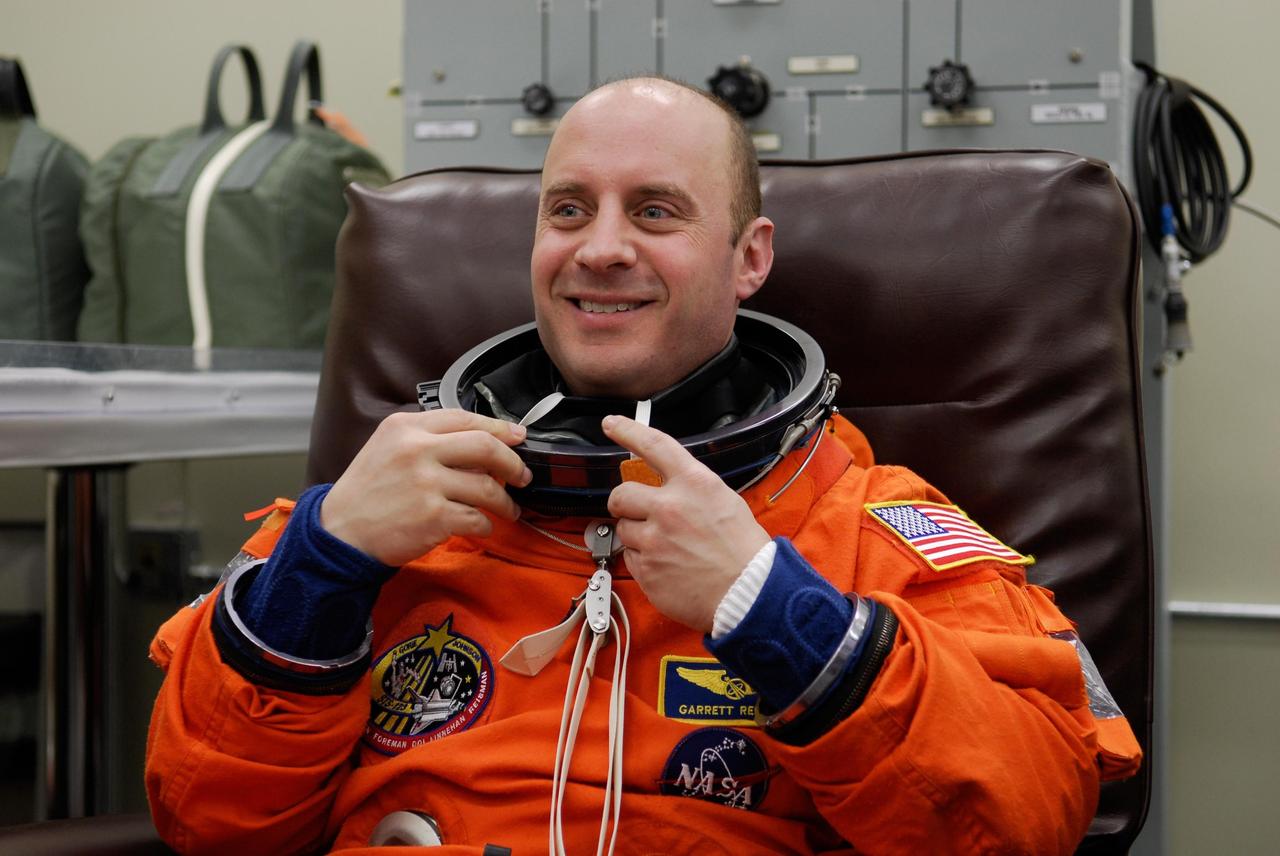
KENNEDY SPACE CENTER, FLA. -- STS-123 Mission Specialist Garrett Reisman dons his launch and entry suit for the launch dress rehearsal, culmination of the terminal countdown demonstration test, or TCDT.The TCDT provides astronauts and ground crews with an opportunity to participate in various simulated countdown activities, including equipment familiarization and emergency training. Space shuttle Endeavour is targeted to launch March 11 at 2:28 a.m. EDT on the 16-day STS-123 mission to the International Space Station. Endeavour and its crew will deliver the first section of the Japan Aerospace Exploration Agency's Kibo laboratory and the Canadian Space Agency's two-armed robotic system, Dextre. Photo credit: NASA/Kim Shiflett
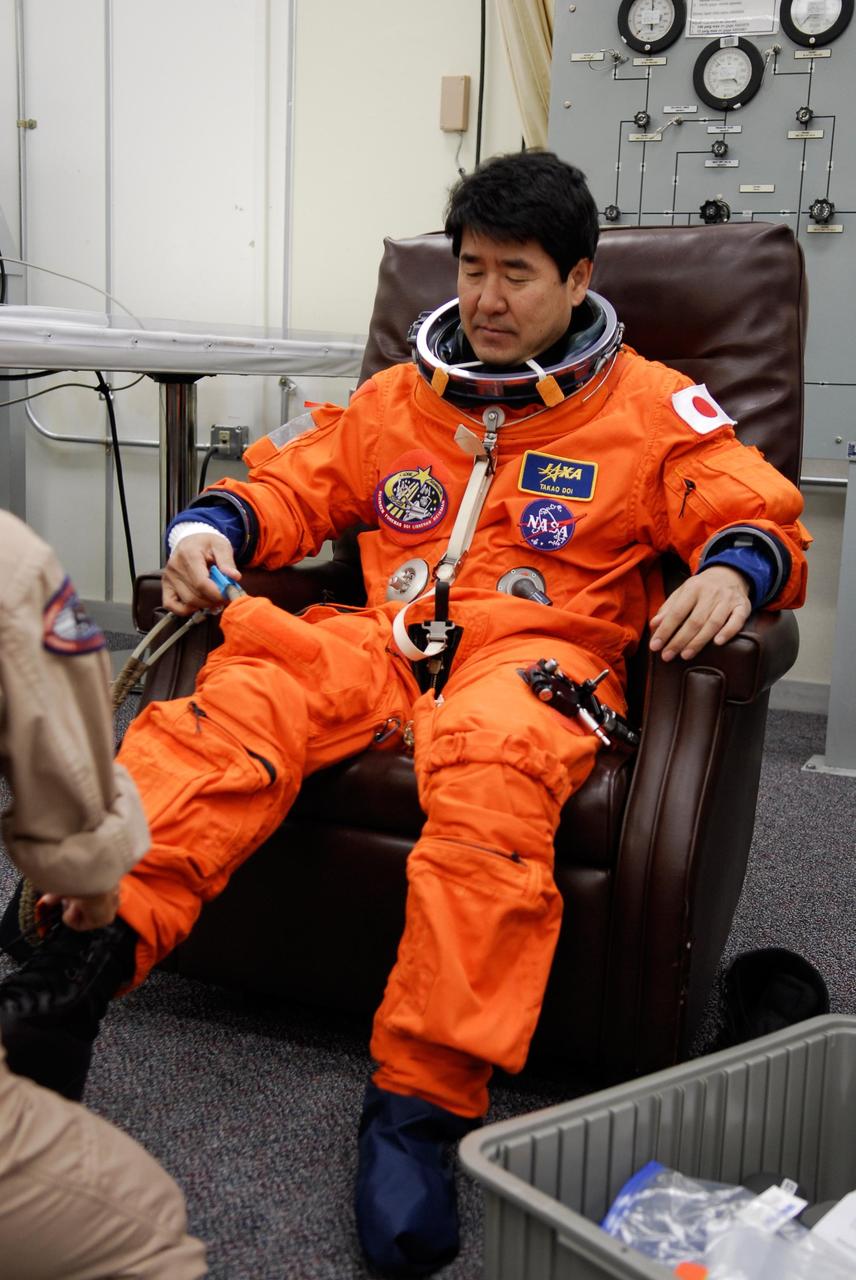
KENNEDY SPACE CENTER, FLA. -- STS-123 Mission Specialist Takao Doi is helped with his boots during suitup for the launch dress rehearsal, culmination of the terminal countdown demonstration test, or TCDT. Doi represents the Japan Aerospace and Exploration Agency, or JAXA. The TCDT provides astronauts and ground crews with an opportunity to participate in various simulated countdown activities, including equipment familiarization and emergency training. Space shuttle Endeavour is targeted to launch March 11 at 2:28 a.m. EDT on the 16-day STS-123 mission to the International Space Station. Endeavour and its crew will deliver the first section of the Japan Aerospace Exploration Agency's Kibo laboratory and the Canadian Space Agency's two-armed robotic system, Dextre. Photo credit: NASA/Kim Shiflett
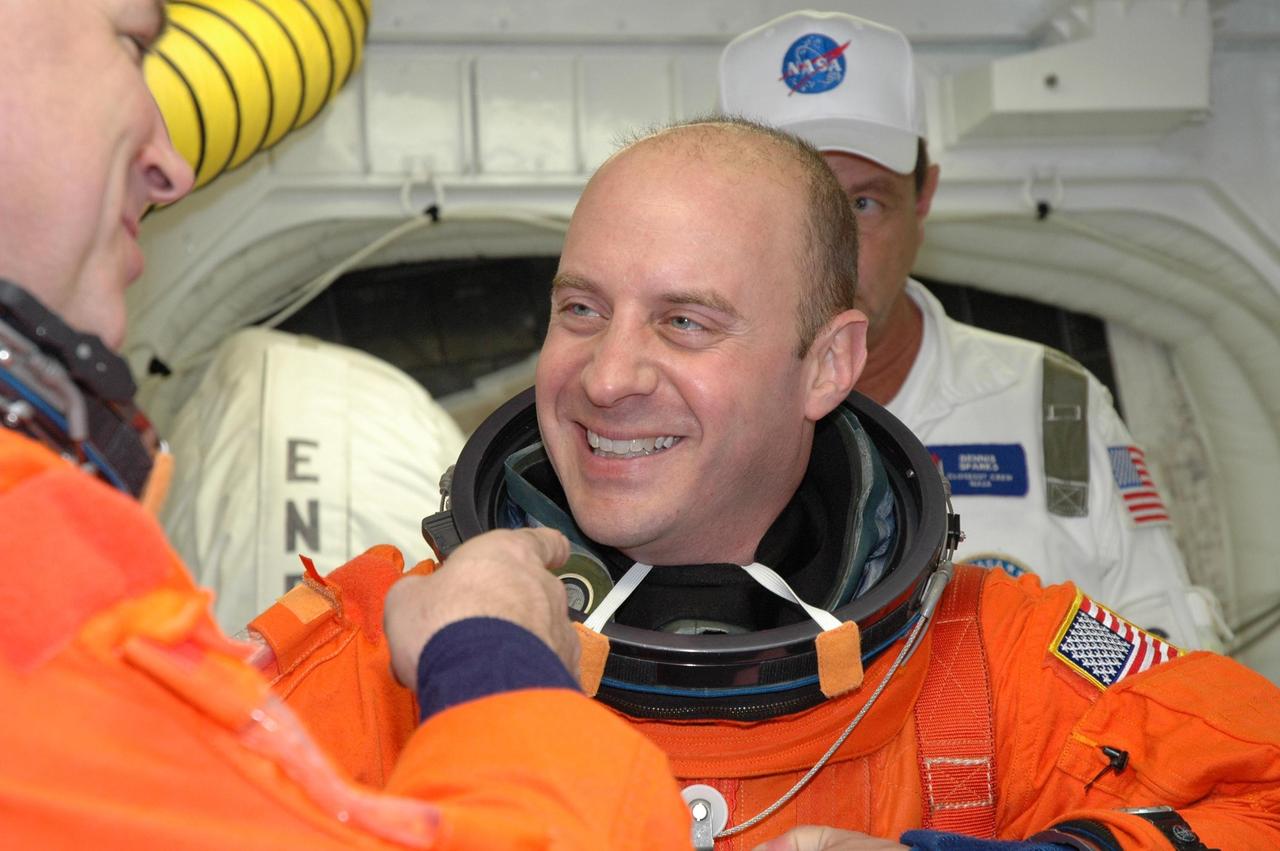
KENNEDY SPACE CENTER, FLA. -- STS-123 Mission Specialist Garrett Reisman is helped with his launch and entry suit before entering space shuttle Endeavour for the simulated launch countdown. The countdown is the culmination of the terminal countdown demonstration test, or TCDT. The TCDT provides astronauts and ground crews with an opportunity to participate in various countdown activities, including equipment familiarization and emergency egress training. Endeavour is targeted to launch at 2:28 a.m. EDT March 11 on the 16-day STS-123 mission to the International Space Station. Endeavour and its crew will deliver the first section of the Japan Aerospace Exploration Agency's Kibo laboratory and the Canadian Space Agency's two-armed robotic system, Dextre. Photo credit: NASA/Jim Grossmann
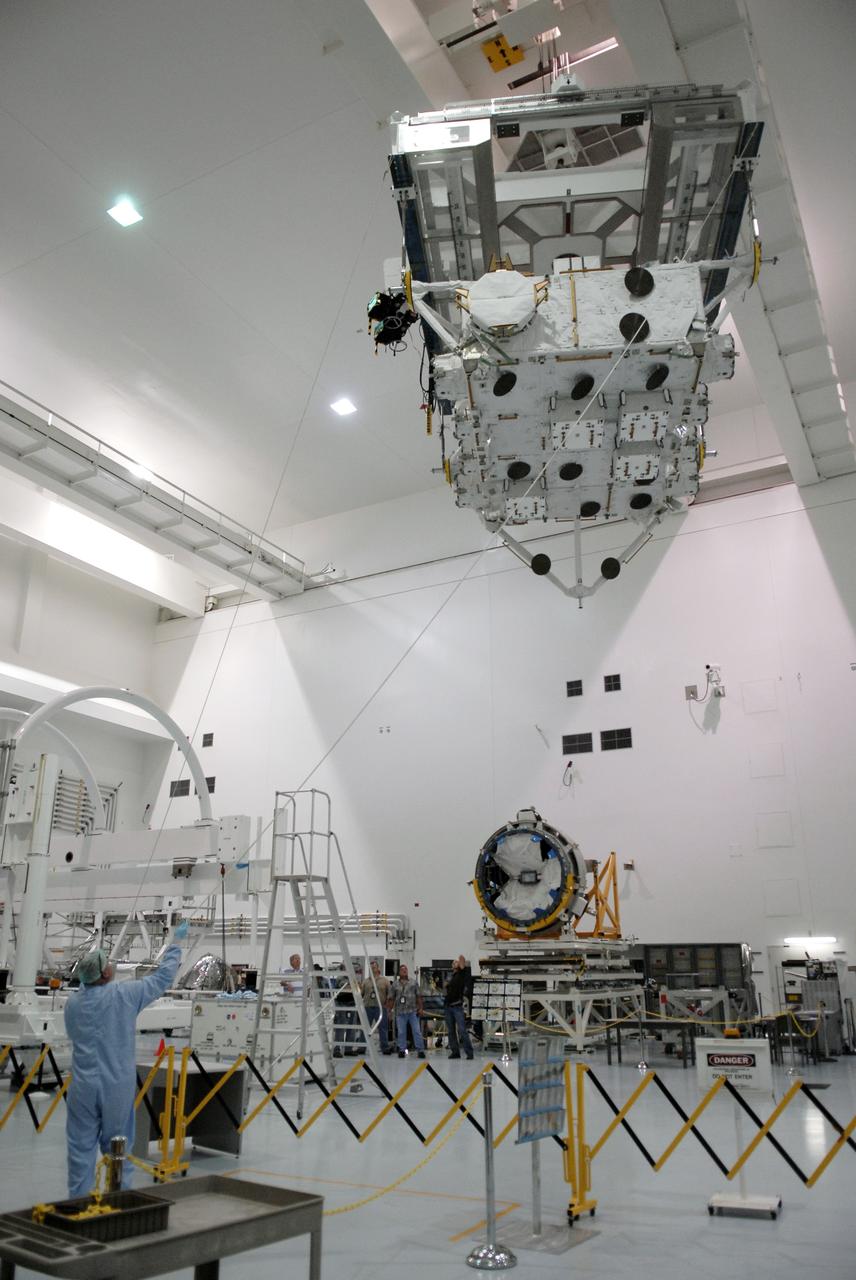
CAPE CANAVERAL, Fla. –– In the Space Station Processing Facility at NASA's Kennedy Space Center in Florida, the suspended Japan Aerospace Exploration Agency's Kibo Exposed Facility, or EF, is guided toward a workstand, at left. When it is installed on the Kibo laboratory, the EF will provide a multipurpose platform where science experiments can be deployed and operated in the exposed environment. The payloads attached to the EF can be exchanged or retrieved by Kibo's robotic arm, the JEM Remote Manipulator System. The EF, along with the Experiment Logistics Module Exposed Section, will be carried aboard space shuttle Endeavour on the STS-127 mission targeted for launch June 13, 2009. Photo credit: NASA/Kim Shiflett
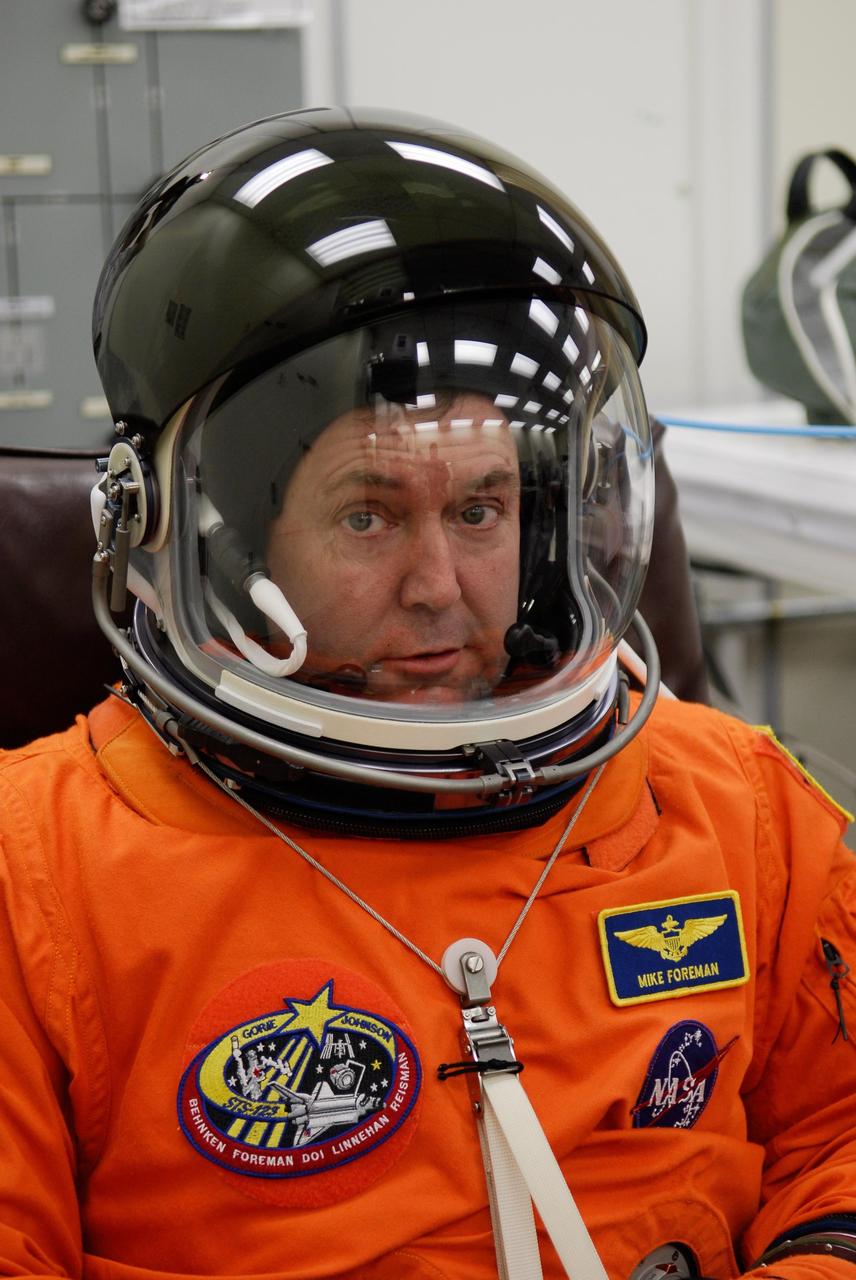
KENNEDY SPACE CENTER, FLA. -- STS-123 Mission Specialist Mike Foreman tests the communications in his helmet before the launch dress rehearsal, culmination of the terminal countdown demonstration test, or TCDT. The TCDT provides astronauts and ground crews with an opportunity to participate in various simulated countdown activities, including equipment familiarization and emergency training. Space shuttle Endeavour is targeted to launch March 11 at 2:28 a.m. EDT on the 16-day STS-123 mission to the International Space Station. Endeavour and its crew will deliver the first section of the Japan Aerospace Exploration Agency's Kibo laboratory and the Canadian Space Agency's two-armed robotic system, Dextre. Photo credit: NASA/Kim Shiflett
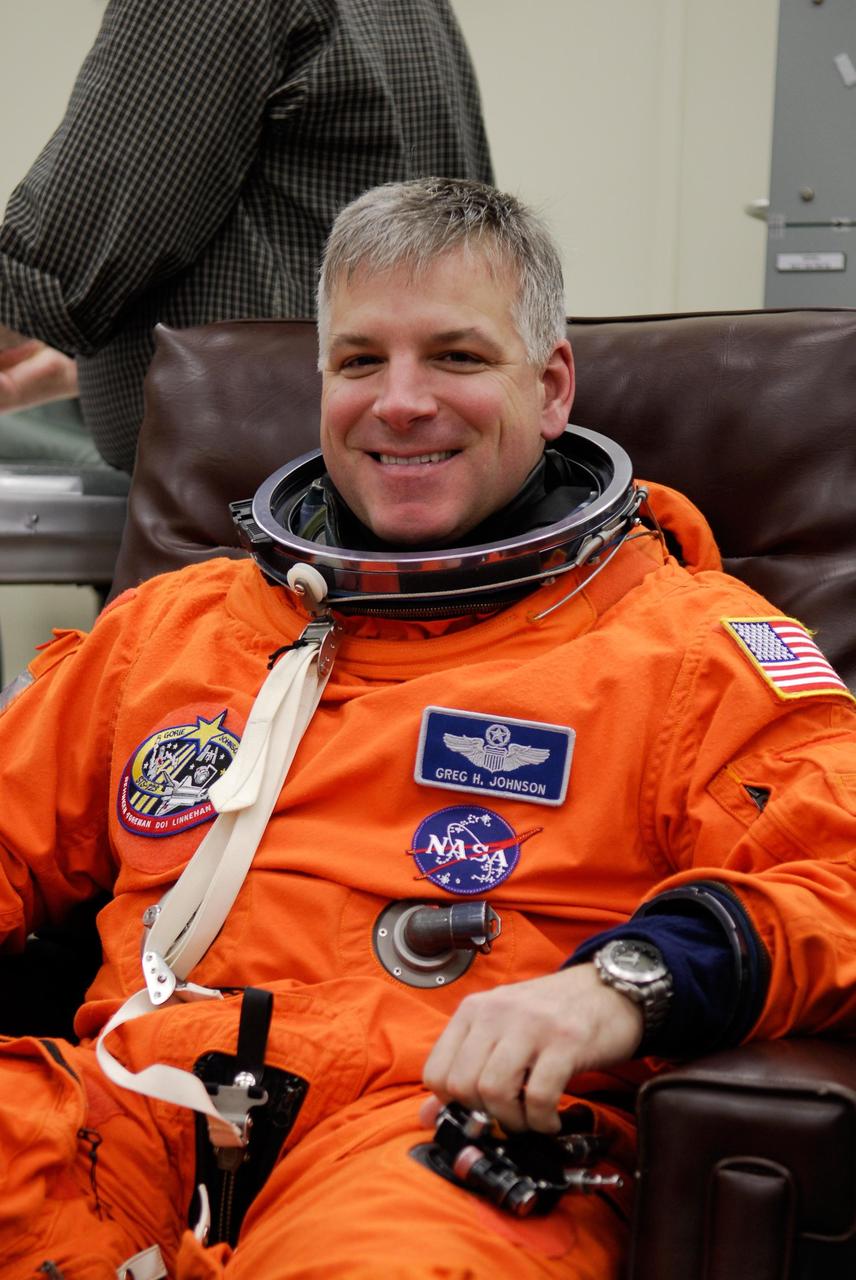
KENNEDY SPACE CENTER, FLA. -- STS-123 Pilot Gregory H. Johnson is ready to finish suiting up for the launch dress rehearsal, culmination of the terminal countdown demonstration test, or TCDT. The TCDT provides astronauts and ground crews with an opportunity to participate in various simulated countdown activities, including equipment familiarization and emergency training. Space shuttle Endeavour is targeted to launch March 11 at 2:28 a.m. EDT on the 16-day STS-123 mission to the International Space Station. Endeavour and its crew will deliver the first section of the Japan Aerospace Exploration Agency's Kibo laboratory and the Canadian Space Agency's two-armed robotic system, Dextre. Photo credit: NASA/Kim Shiflett
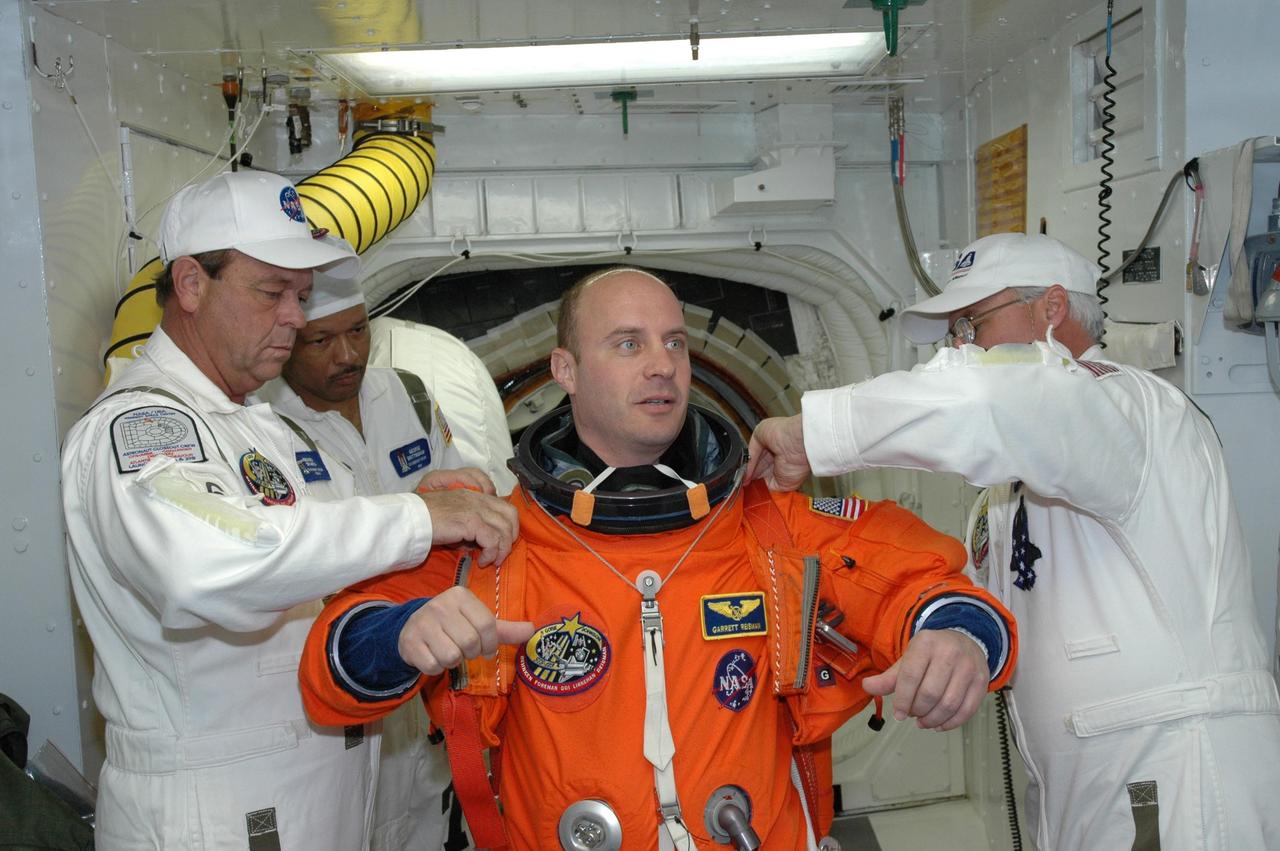
KENNEDY SPACE CENTER, FLA. -- STS-123 Mission Specialist Garrett Reisman is helped with his launch and entry suit before entering space shuttle Endeavour for the simulated launch countdown. The countdown is the culmination of the terminal countdown demonstration test, or TCDT. The TCDT provides astronauts and ground crews with an opportunity to participate in various countdown activities, including equipment familiarization and emergency egress training. Endeavour is targeted to launch at 2:28 a.m. EDT March 11 on the 16-day STS-123 mission to the International Space Station. Endeavour and its crew will deliver the first section of the Japan Aerospace Exploration Agency's Kibo laboratory and the Canadian Space Agency's two-armed robotic system, Dextre. Photo credit: NASA/Jim Grossmann
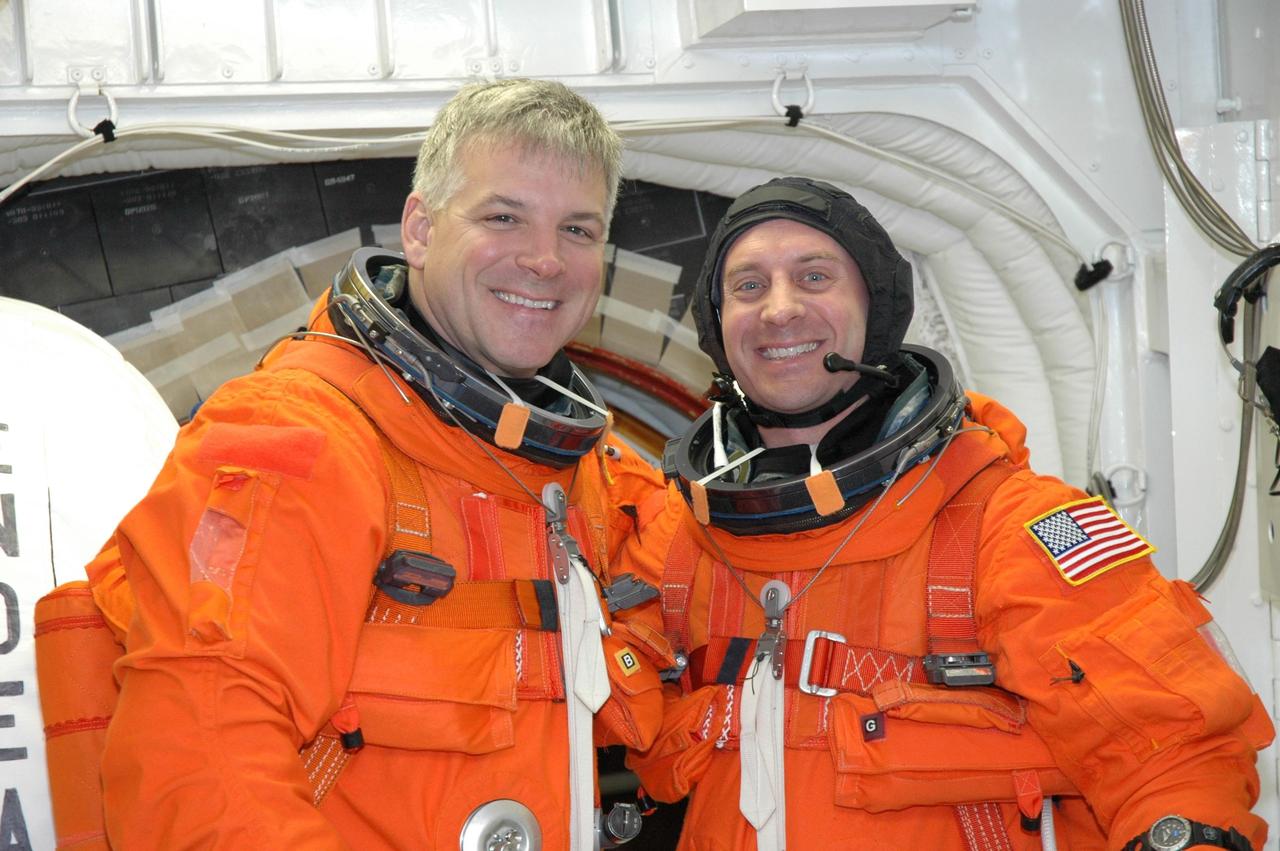
KENNEDY SPACE CENTER, FLA. -- In the White Room on NASA Kennedy Space Center's Launch Pad 39A, STS-123 Pilot Gregory H. Johnson and Mission Specialist Garrett Reisman pause in front of space shuttle Endeavour's open hatch. They are getting ready to enter Endeavour for the simulated launch countdown, which is the culmination of the terminal countdown demonstration test, or TCDT. The TCDT provides astronauts and ground crews with an opportunity to participate in various countdown activities, including equipment familiarization and emergency egress training. Endeavour is targeted to launch at 2:28 a.m. EDT March 11 on the 16-day STS-123 mission to the International Space Station. Endeavour and its crew will deliver the first section of the Japan Aerospace Exploration Agency's Kibo laboratory and the Canadian Space Agency's two-armed robotic system, Dextre. Photo credit: NASA/Jim Grossmann
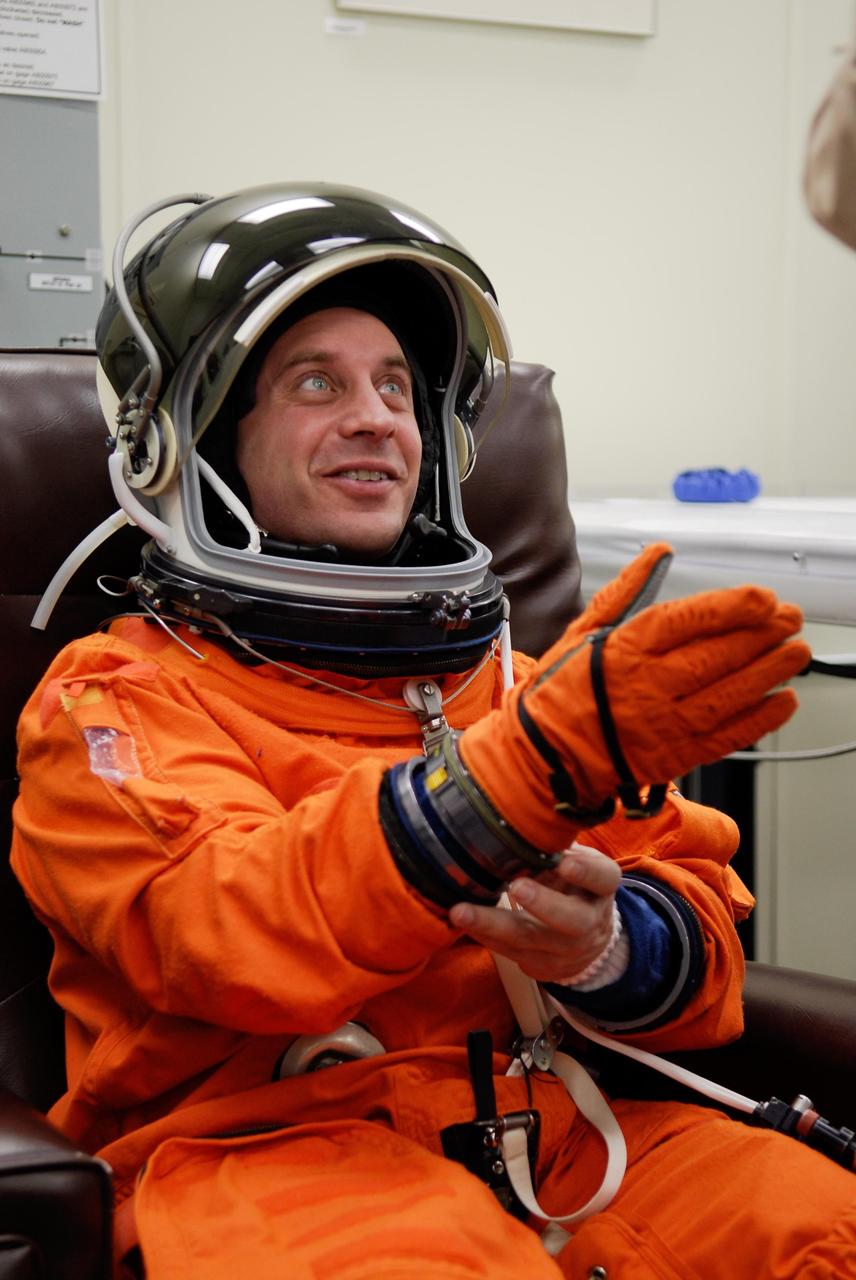
KENNEDY SPACE CENTER, FLA. -- STS-123 Mission Specialist Garrett Reisman works at putting on his gloves while suiting up for the launch dress rehearsal, culmination of the terminal countdown demonstration test, or TCDT. The TCDT provides astronauts and ground crews with an opportunity to participate in various simulated countdown activities, including equipment familiarization and emergency training. Space shuttle Endeavour is targeted to launch March 11 at 2:28 a.m. EDT on the 16-day STS-123 mission to the International Space Station. Endeavour and its crew will deliver the first section of the Japan Aerospace Exploration Agency's Kibo laboratory and the Canadian Space Agency's two-armed robotic system, Dextre. Photo credit: NASA/Kim Shiflett
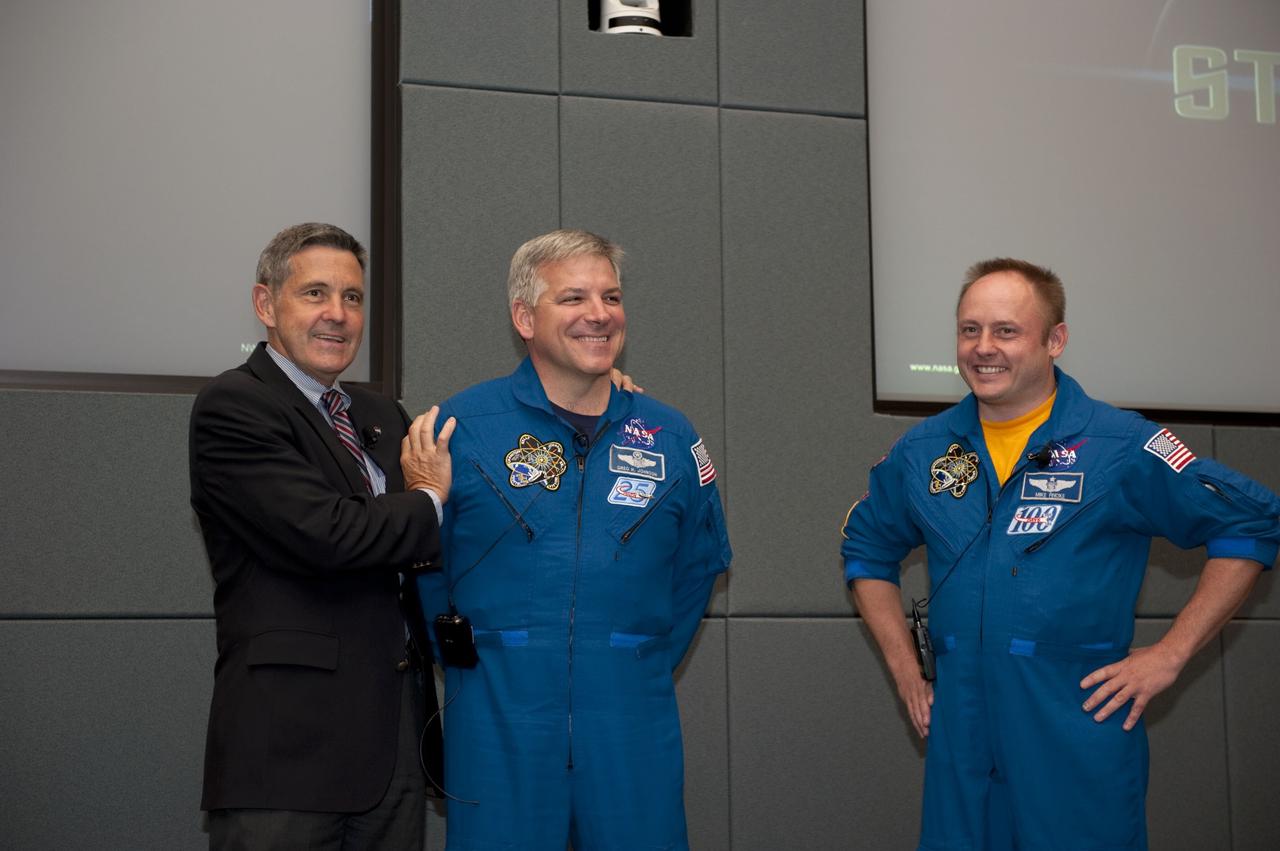
CAPE CANAVERAL, Fla. - Bob Cabana, director of NASA's Kennedy Space Center in Florida, introduces STS-134 Pilot Gregory H. Johnson and Mission Specialist Michael Fincke during a crew return event for employees. Commander Mark Kelly, Johnson and Mission Specialists Fincke, Greg Chamitoff, Andrew Feustel and European Space Agency astronaut Roberto Vittori lifted off May 16, 2011, aboard space shuttle Endeavour. During the nearly 16-day STS-134 mission, Endeavour delivered to the International Space Station the Alpha Magnetic Spectrometer (AMS) and spare parts, including two S-band communications antennas, a high-pressure gas tank and additional spare parts for Dextre. This was the 36th shuttle mission to the station and Endeavour's 25th and final flight. For more information, visit www.nasa.gov/mission_pages/shuttle/shuttlemissions/sts134/main/index.html. Photo credit: NASA/Kim Shiflett
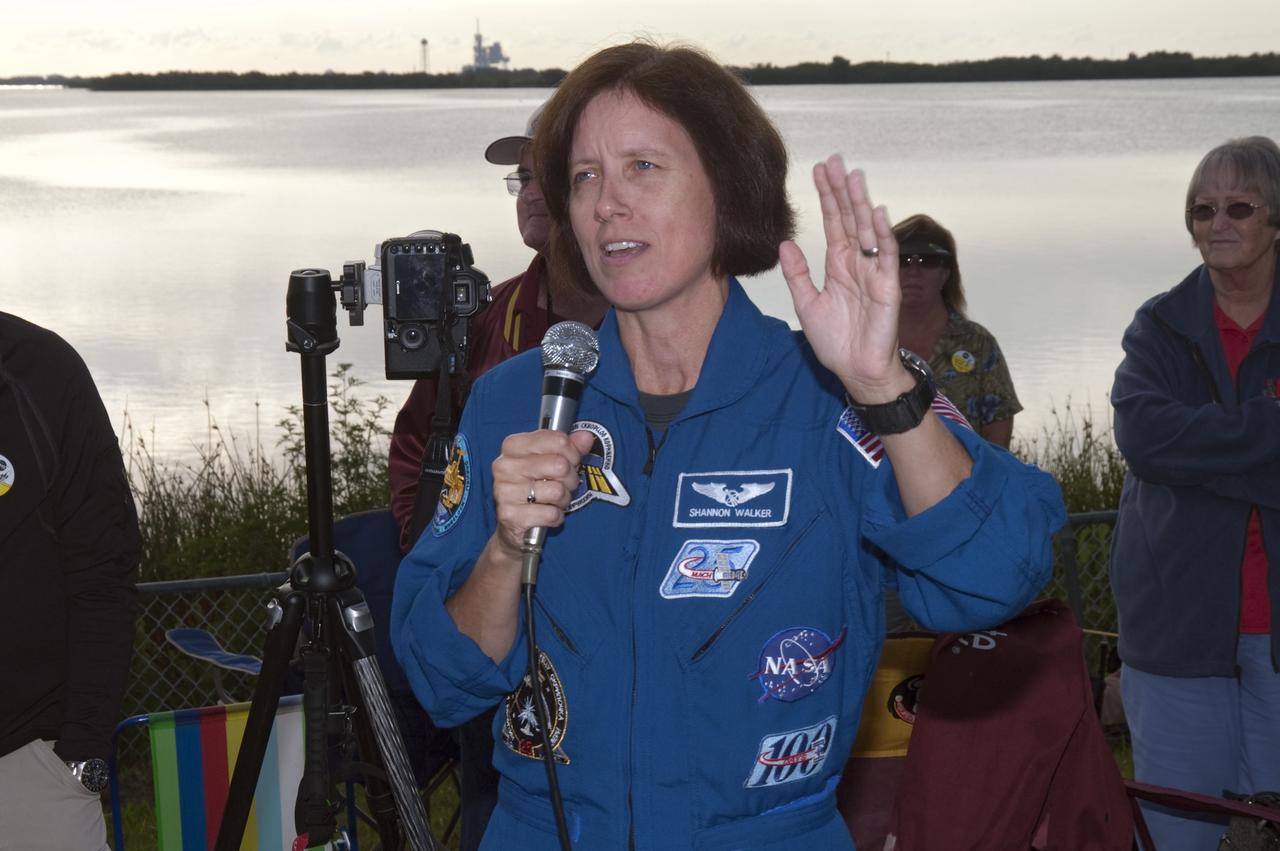
CAPE CANAVERAL, Fla. - NASA astronaut Shannon Walker talks to a crowd of spectators gathered at the Banana Creek Viewing Site near the Saturn V Center at NASA's Kennedy Space Center in Florida to watch the launch of space shuttle Endeavour. The shuttle lifted off on its STS-134 mission to the International Space Station on time at 8:56 a.m. EDT on May 16. The shuttle and its six-member crew are embarking on a mission to deliver the Alpha Magnetic Spectrometer-2 (AMS), Express Logistics Carrier-3, a high-pressure gas tank and additional spare parts for the Dextre robotic helper to the space station. Endeavour's first launch attempt on April 29 was scrubbed because of an issue associated with a faulty power distribution box called the aft load control assembly-2 (ALCA-2). For more information, visit www.nasa.gov/mission_pages/shuttle/shuttlemissions/sts134/index.html. Photo credit: NASA/Kurtis Korwan
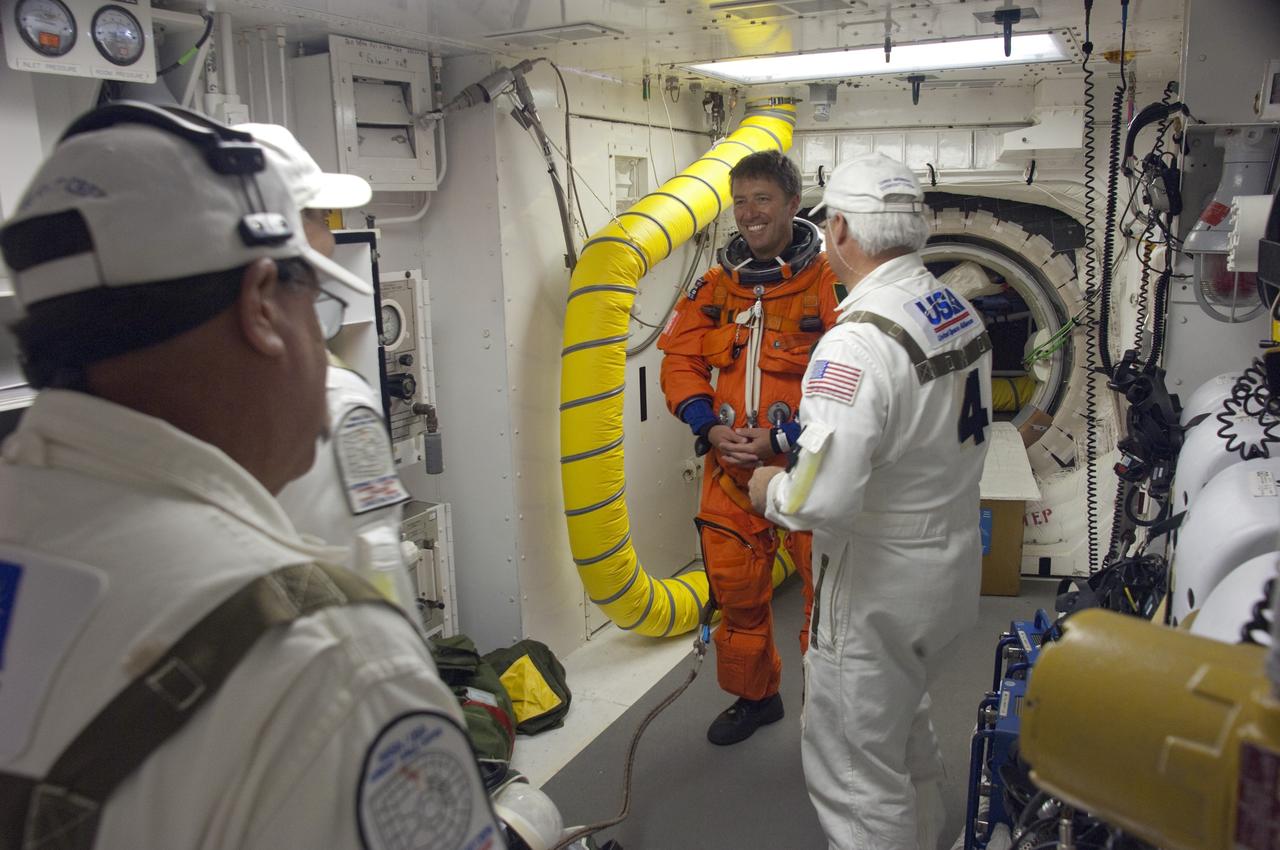
CAPE CANAVERAL, Fla. -- In the White Room at Launch Pad 39A at NASA's Kennedy Space Center in Florida, STS-134 Mission Specialist Roberto Vittori with the European Space Agency prepares to board space shuttle Endeavour through the crew hatch in the background. Members of the Closeout Crew, in white uniforms, are there to assist astronauts with their launch-and-entry suits and the boarding process. Vittori will be making his third trip to the International Space Station. His first mission was in 2002 and second in 2005, both of which were launched aboard a Russian Soyuz spacecraft. STS-134 will deliver the Alpha Magnetic Spectrometer-2 (AMS), Express Logistics Carrier-3, a high-pressure gas tank and additional spare parts for the Dextre robotic helper to the International Space Station. May 16 at 8:56 a.m. will be the second launch attempt for Endeavour. The first attempt on April 29 was scrubbed because of an issue associated with a faulty power distribution box called the aft load control assembly-2 (ALCA-2). STS-134 will be the final spaceflight for Endeavour. For more information visit, www.nasa.gov/mission_pages/shuttle/shuttlemissions/sts134/index.html. Photo credit: NASA/Sandra Joseph and Kevin O'Connell
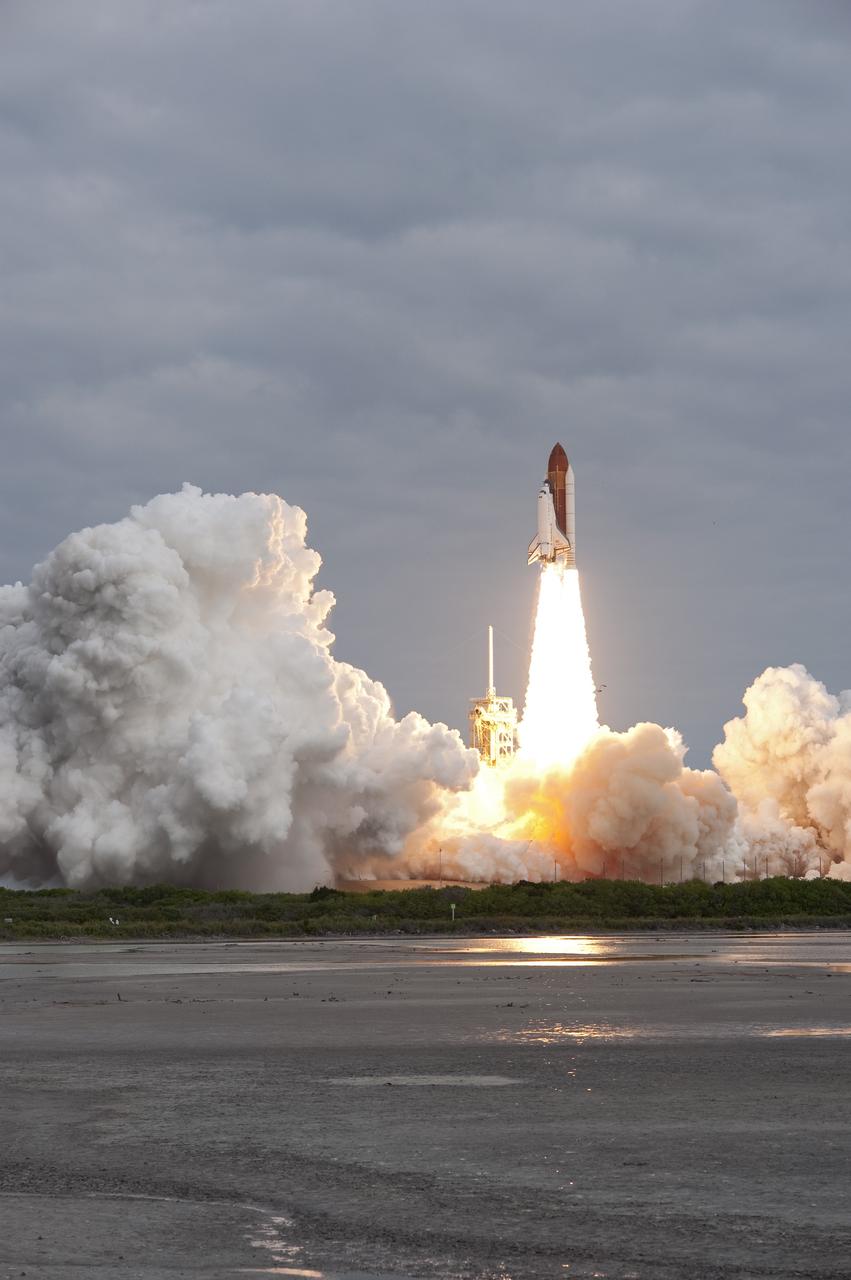
CAPE CANAVERAL, Fla. -- Amid the tranquility of a wildlife refuge, space shuttle Endeavour rumbles off Launch Pad 39A at NASA's Kennedy Space Center in Florida. Endeavour began its final flight, the STS-134 mission, to the International Space Station on time at 8:56 a.m. EDT on May 16. Endeavour and its six-member crew are embarking on a mission to deliver the Alpha Magnetic Spectrometer-2 (AMS), Express Logistics Carrier-3, a high-pressure gas tank and additional spare parts for the Dextre robotic helper to the space station. Endeavour's first launch attempt on April 29 was scrubbed because of an issue associated with a faulty power distribution box called the aft load control assembly-2 (ALCA-2). For more information visit, www.nasa.gov/mission_pages/shuttle/shuttlemissions/sts134/index.html. Kennedy coexists with the Merritt Island National Wildlife Refuge, habitat to more than 310 species of birds, 25 mammals, 117 fish and 65 amphibians and reptiles. Photo credit: NASA/Sandra Joseph and Kevin O'Connell
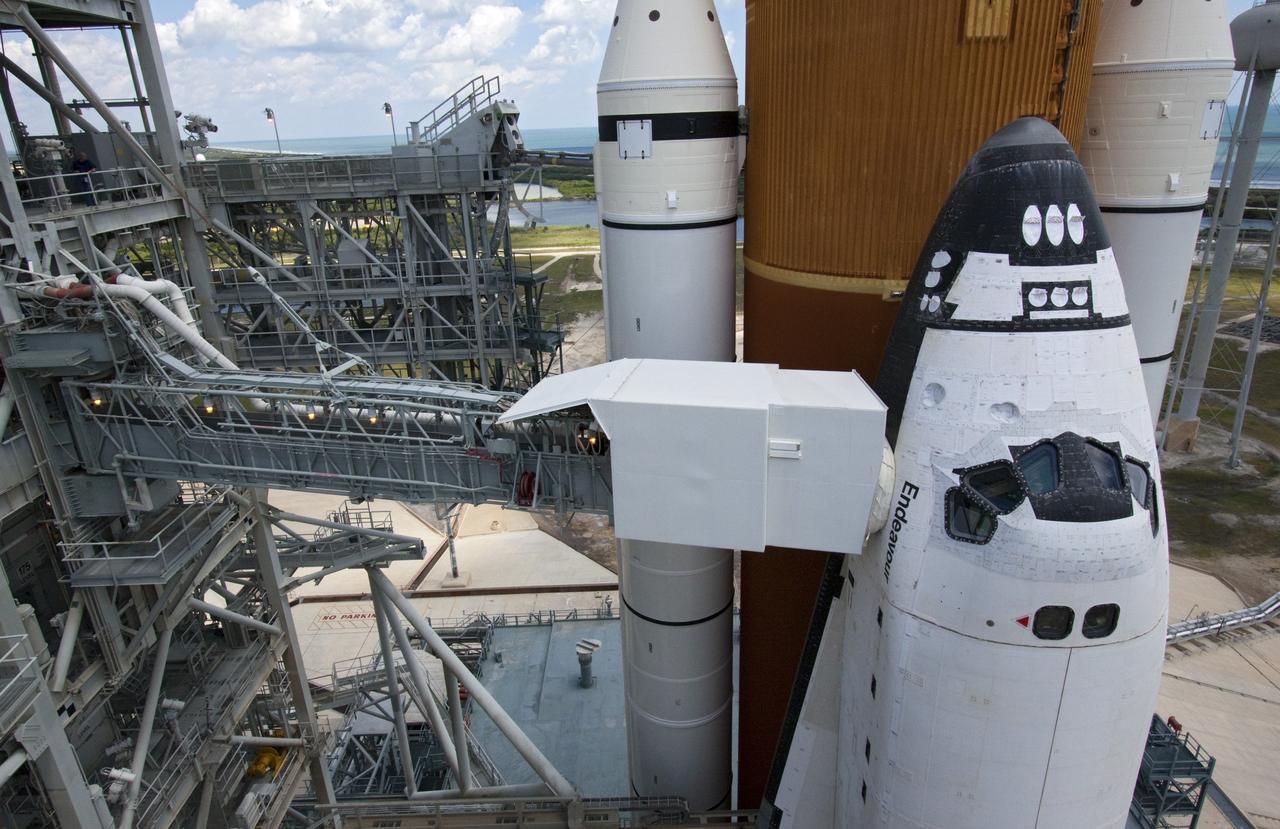
CAPE CANAVERAL, Fla. - Backdropped by a beautiful blue sky and the crystal-clear Atlantic Ocean, space shuttle Endeavour is revealed on Launch Pad 39A at NASA's Kennedy Space Center in Florida as the rotating service structure (RSS) moves away. The structure provides weather protection and access to the shuttle while it awaits lift off on the pad. RSS "rollback," as it's called, began at 11:44 a.m. EDT on May 15 and was completed at 12:24 p.m. STS-134 will deliver the Alpha Magnetic Spectrometer-2 (AMS), Express Logistics Carrier-3, a high-pressure gas tank and additional spare parts for the Dextre robotic helper to the International Space Station. May 16 at 8:56 a.m. will be the second launch attempt for Endeavour. The first attempt on April 29 was scrubbed because of an issue associated with a faulty power distribution box called the aft load control assembly-2 (ALCA-2). STS-134 will be the final spaceflight for Endeavour. For more information visit, www.nasa.gov/mission_pages/shuttle/shuttlemissions/sts134/index.html. Photo credit: NASA/Jack Pfaller
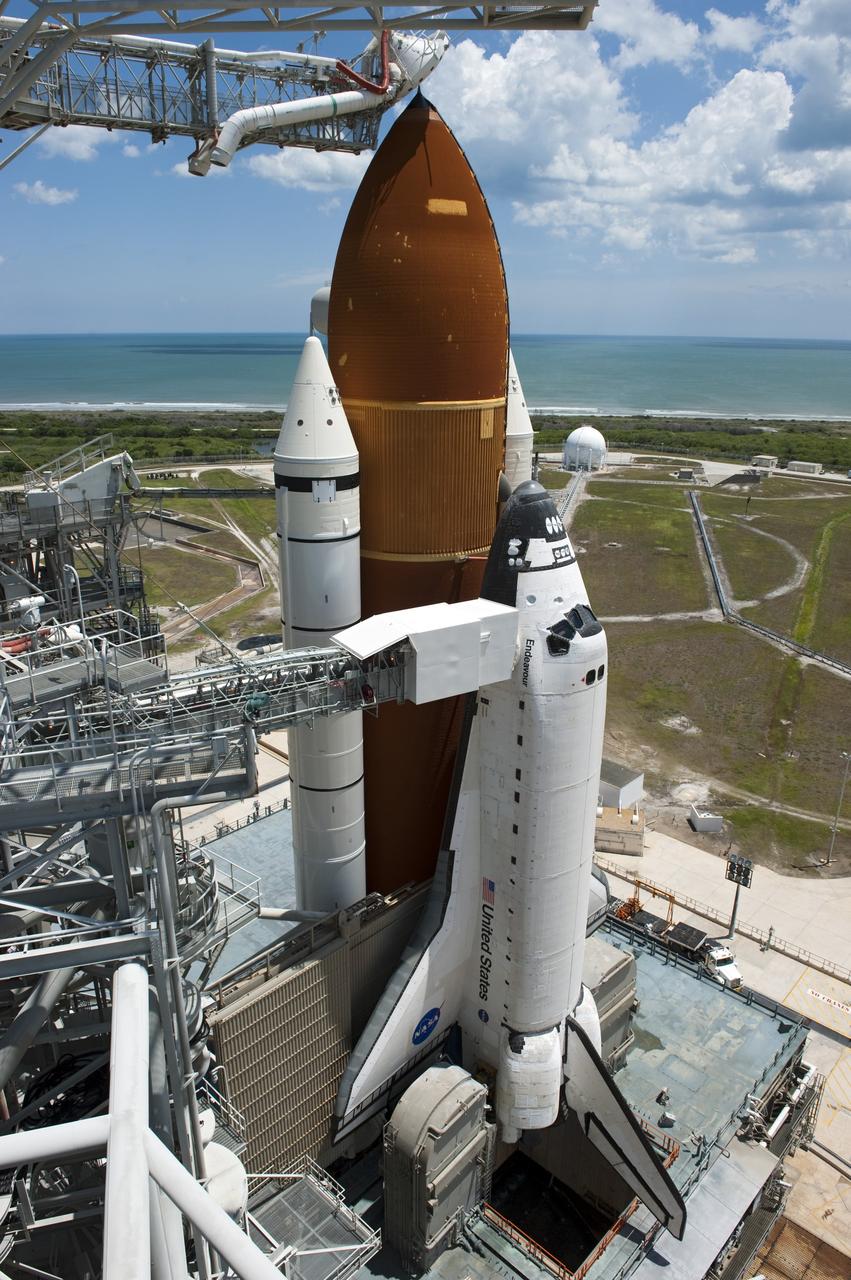
CAPE CANAVERAL, Fla. - Backdropped by a beautiful blue sky and the crystal-clear Atlantic Ocean, space shuttle Endeavour is revealed on Launch Pad 39A at NASA's Kennedy Space Center in Florida following the move of the rotating service structure (RSS). The structure provides weather protection and access to the shuttle while it awaits lift off on the pad. RSS "rollback," as it's called, began at 11:44 a.m. EDT on May 15 and was completed at 12:24 p.m. STS-134 will deliver the Alpha Magnetic Spectrometer-2 (AMS), Express Logistics Carrier-3, a high-pressure gas tank and additional spare parts for the Dextre robotic helper to the International Space Station. May 16 at 8:56 a.m. will be the second launch attempt for Endeavour. The first attempt on April 29 was scrubbed because of an issue associated with a faulty power distribution box called the aft load control assembly-2 (ALCA-2). STS-134 will be the final spaceflight for Endeavour. For more information visit, www.nasa.gov/mission_pages/shuttle/shuttlemissions/sts134/index.html. Photo credit: NASA/Kim Shiflett
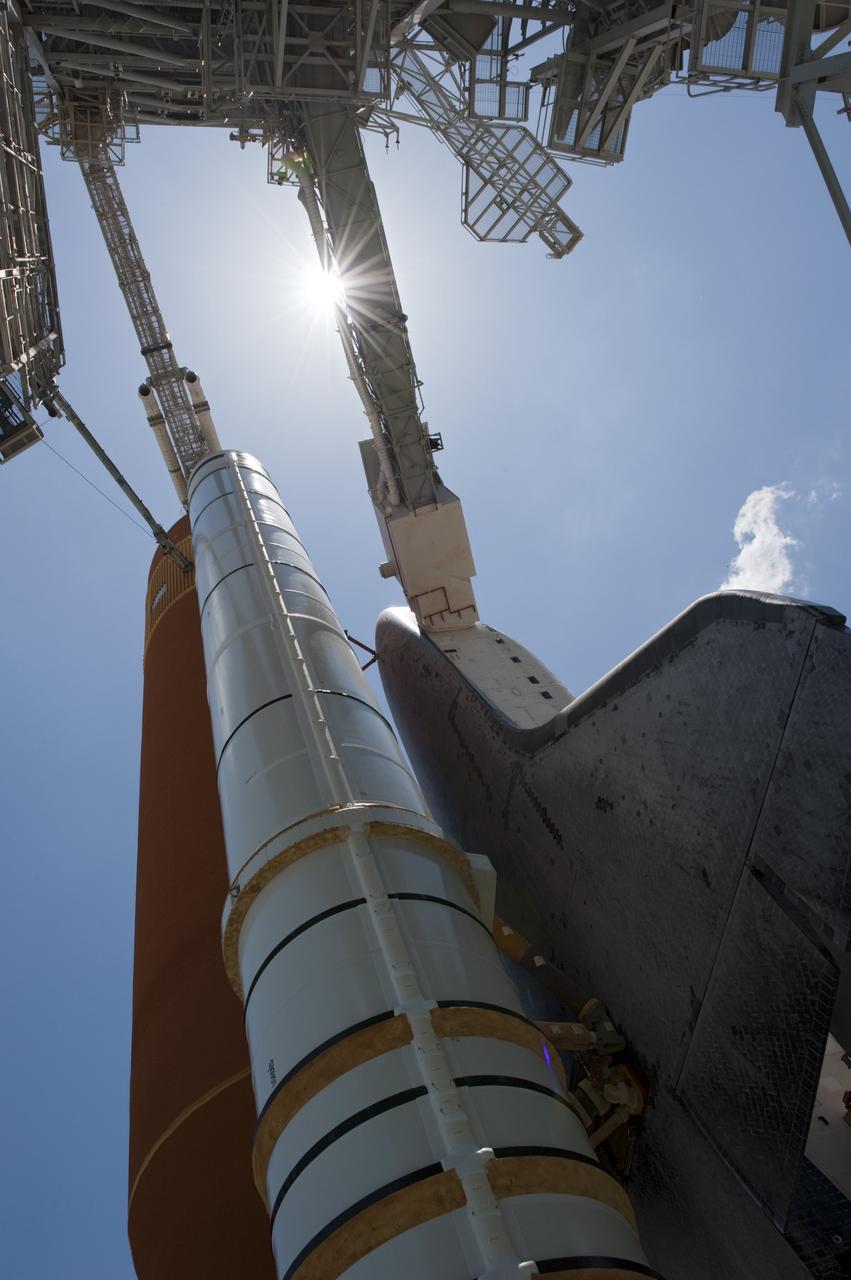
CAPE CANAVERAL, Fla. - At NASA's Kennedy Space Center in Florida, space shuttle Endeavour is revealed on Launch Pad 39A at NASA's Kennedy Space Center in Florida following the move of the rotating service structure (RSS). The structure provides weather protection and access to the shuttle while it awaits lift off on the pad. RSS "rollback," as it's called, began at 11:44 a.m. EDT on May 15 and was completed at 12:24 p.m. STS-134 will deliver the Alpha Magnetic Spectrometer-2 (AMS), Express Logistics Carrier-3, a high-pressure gas tank and additional spare parts for the Dextre robotic helper to the International Space Station. May 16 at 8:56 a.m. will be the second launch attempt for Endeavour. The first attempt on April 29 was scrubbed because of an issue associated with a faulty power distribution box called the aft load control assembly-2 (ALCA-2). STS-134 will be the final spaceflight for Endeavour. For more information visit, www.nasa.gov/mission_pages/shuttle/shuttlemissions/sts134/index.html. Photo credit: NASA/Kim Shiflett
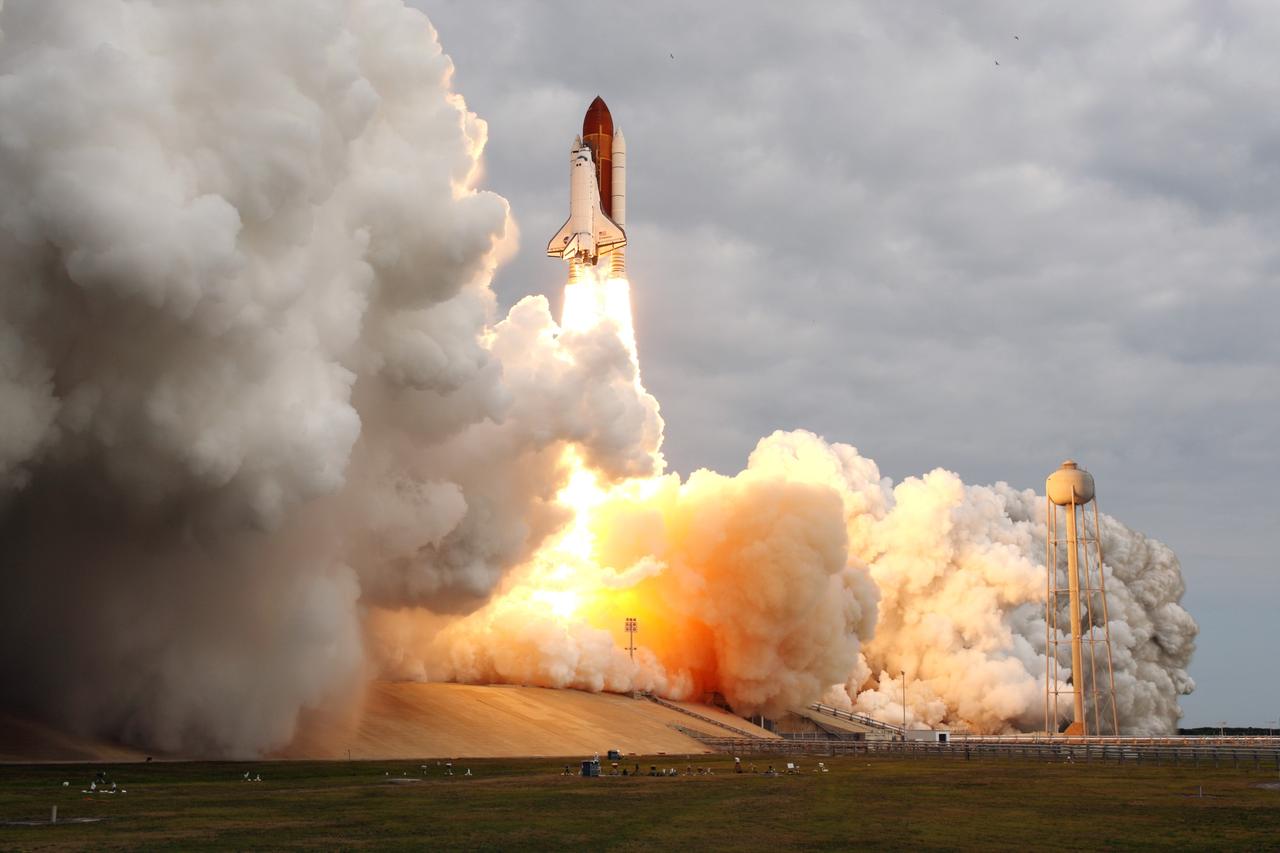
CAPE CANAVERAL, Fla. -- Rising on twin columns of fire and kicking up a trail of smoke and steam, space shuttle Endeavour lifts off from Launch Pad 39A at NASA's Kennedy Space Center in Florida beginning its final flight, the STS-134 mission, to the International Space Station. Launch was on time at 8:56 a.m. EDT on May 16. STS-134 and its six-member crew will deliver the Alpha Magnetic Spectrometer-2 (AMS), Express Logistics Carrier-3, a high-pressure gas tank and additional spare parts for the Dextre robotic helper to the space station. Endeavour's first launch attempt on April 29 was scrubbed because of an issue associated with a faulty power distribution box called the aft load control assembly-2 (ALCA-2). For more information visit, www.nasa.gov/mission_pages/shuttle/shuttlemissions/sts134/index.html. Photo credit: NASA
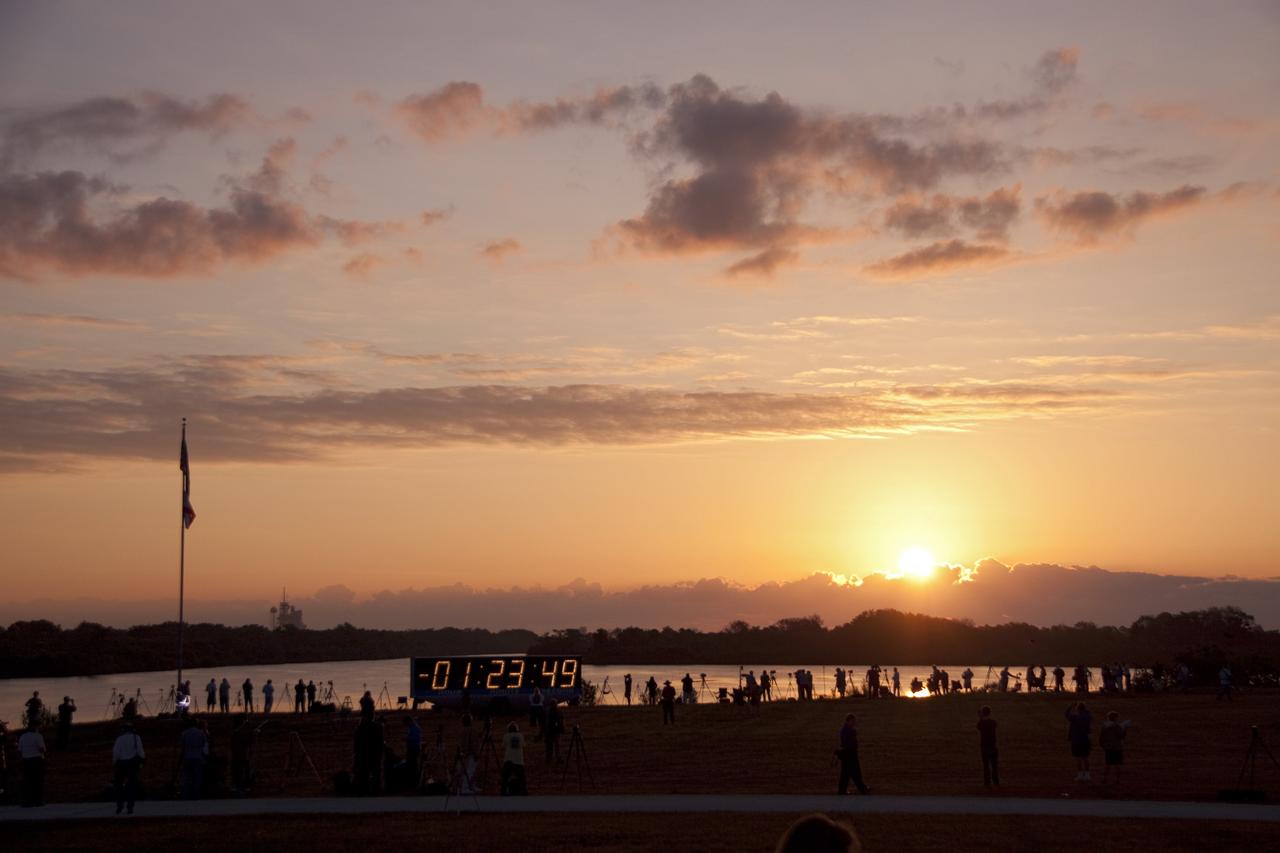
CAPE CANAVERAL, Fla. -- As the sun rises and paints a colorful skyline across NASA's Kennedy Space Center in Florida, media set up their cameras at the countdown clock in the Launch Complex 39 area. At 8:56 a.m. EDT on May 16, space shuttle Endeavour and its six-member STS-134 crew are scheduled to lift off Launch Pad 39A on a mission to the International Space Station. STS-134 will deliver the Alpha Magnetic Spectrometer-2 (AMS), Express Logistics Carrier-3, a high-pressure gas tank and additional spare parts for the Dextre robotic helper to the International Space Station. This will be the second launch attempt for Endeavour. The first attempt on April 29 was scrubbed because of an issue associated with a faulty power distribution box called the aft load control assembly-2 (ALCA-2). STS-134 will be the final spaceflight for Endeavour. For more information visit, www.nasa.gov/mission_pages/shuttle/shuttlemissions/sts134/index.html. Photo credit: NASA/Troy Cryder
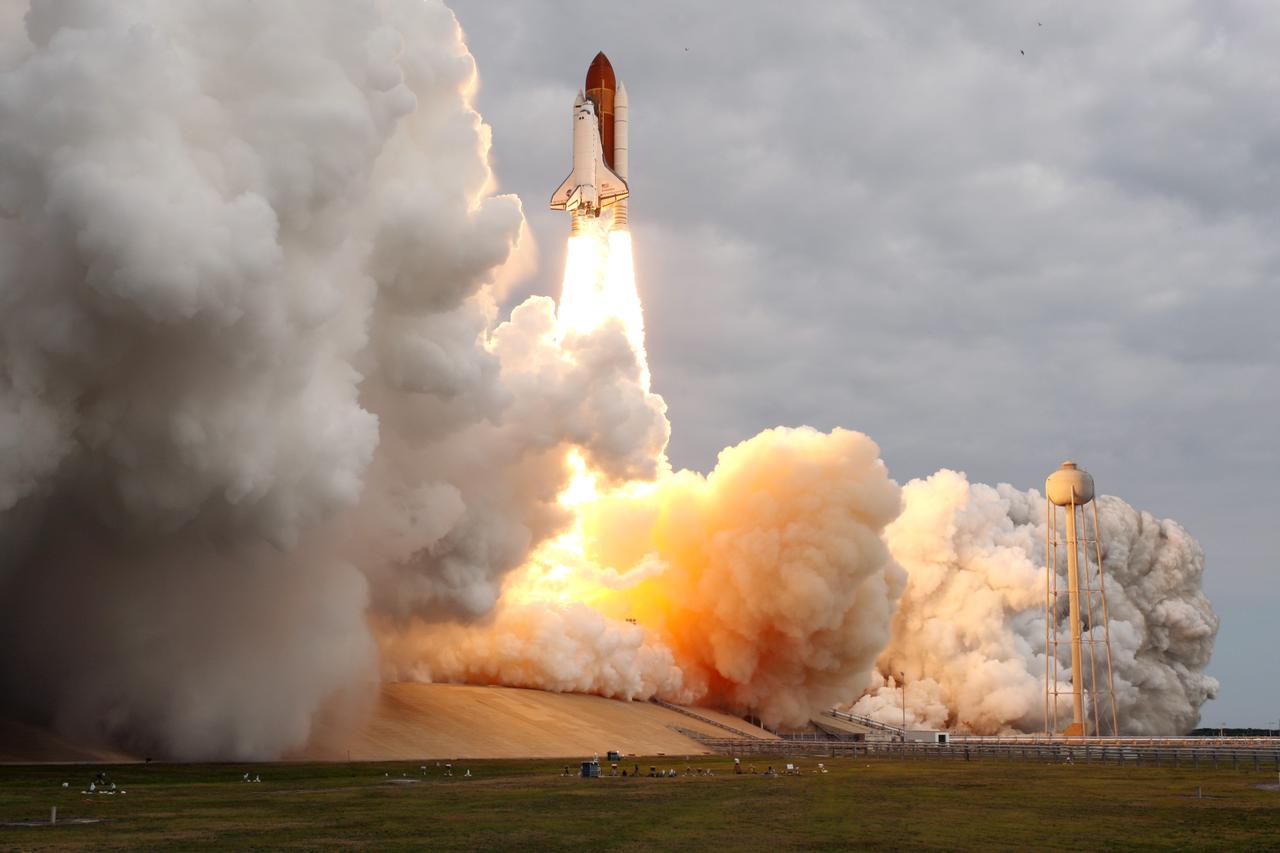
CAPE CANAVERAL, Fla. -- Rising on twin columns of fire and kicking up a trail of smoke and steam, space shuttle Endeavour lifts off from Launch Pad 39A at NASA's Kennedy Space Center in Florida beginning its final flight, the STS-134 mission, to the International Space Station. Launch was on time at 8:56 a.m. EDT on May 16. STS-134 and its six-member crew will deliver the Alpha Magnetic Spectrometer-2 (AMS), Express Logistics Carrier-3, a high-pressure gas tank and additional spare parts for the Dextre robotic helper to the space station. Endeavour's first launch attempt on April 29 was scrubbed because of an issue associated with a faulty power distribution box called the aft load control assembly-2 (ALCA-2). For more information visit, www.nasa.gov/mission_pages/shuttle/shuttlemissions/sts134/index.html. Photo credit: NASA

CAPE CANAVERAL, Fla. - Joe Dowdy, special operations manager at NASA's Kennedy Space Center, talks to a crowd of spectators gathered at the Banana Creek Viewing Site near the Saturn V Center at NASA's Kennedy Space Center in Florida to watch the launch of space shuttle Endeavour. The shuttle lifted off on its STS-134 mission to the International Space Station on time at 8:56 a.m. EDT on May 16. The shuttle and its six-member crew are embarking on a mission to deliver the Alpha Magnetic Spectrometer-2 (AMS), Express Logistics Carrier-3, a high-pressure gas tank and additional spare parts for the Dextre robotic helper to the space station. Endeavour's first launch attempt on April 29 was scrubbed because of an issue associated with a faulty power distribution box called the aft load control assembly-2 (ALCA-2). For more information, visit www.nasa.gov/mission_pages/shuttle/shuttlemissions/sts134/index.html. Photo credit: NASA/Chad Baumer
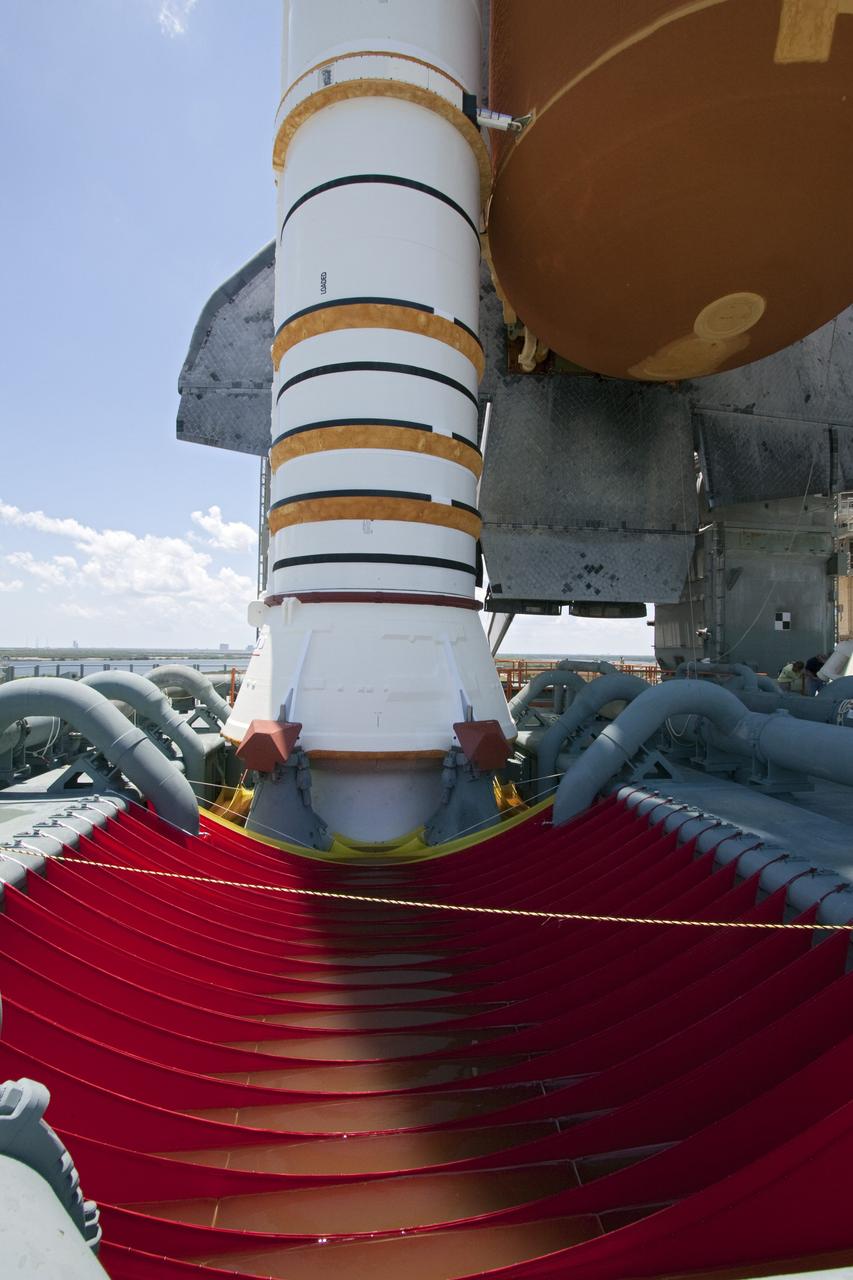
CAPE CANAVERAL, Fla. - Water bags, called red water sausages, are revealed on Launch Pad 39A at NASA's Kennedy Space Center in Florida following the move of the rotating service structure (RSS). RSS "rollback," as it's called, began at 11:44 a.m. EDT on May 15 and was completed at 12:24 p.m. The bags will dampen the wave of sound energy that is reflected back up toward space shuttle Endeavour when the solid rocket boosters ignite during launch. They suppress the powerful pulse of pressure to prevent dangerous stress on the wings of the shuttle. STS-134 will deliver the Alpha Magnetic Spectrometer-2 (AMS), Express Logistics Carrier-3, a high-pressure gas tank and additional spare parts for the Dextre robotic helper to the International Space Station. May 16 at 8:56 a.m. will be the second launch attempt for Endeavour. The first attempt on April 29 was scrubbed because of an issue associated with a faulty power distribution box called the aft load control assembly-2 (ALCA-2). STS-134 will be the final spaceflight for Endeavour. For more information visit, www.nasa.gov/mission_pages/shuttle/shuttlemissions/sts134/index.html. Photo credit: NASA/Jack Pfaller
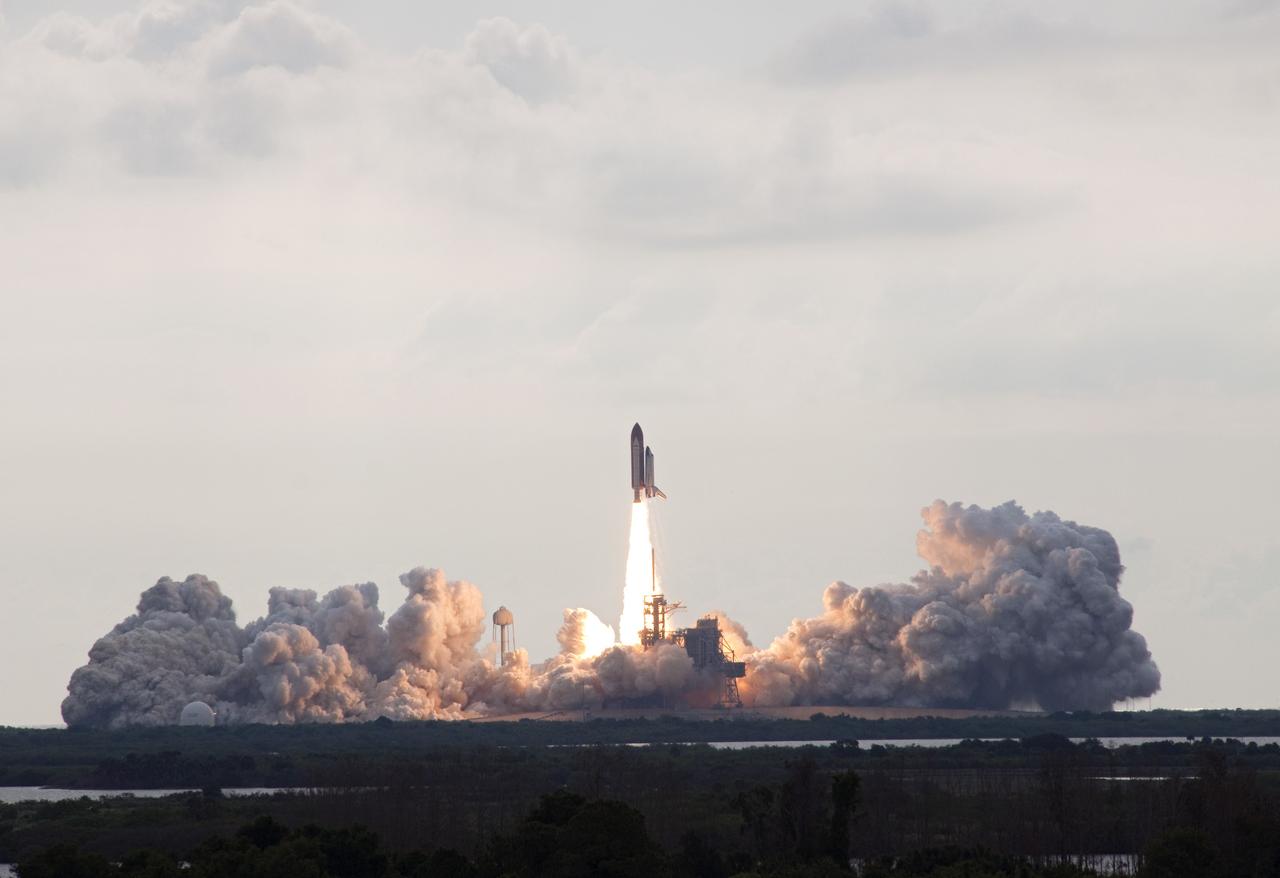
CAPE CANAVERAL, Fla. -- Kicking up a trail of smoke and steam, space shuttle Endeavour lifts off from Launch Pad 39A at NASA's Kennedy Space Center in Florida. Endeavour began its final flight, the STS-134 mission to the International Space Station, on time at 8:56 a.m. EDT on May 16. Endeavour and its six-member crew are embarking on a mission to deliver the Alpha Magnetic Spectrometer-2 (AMS), Express Logistics Carrier-3, a high-pressure gas tank and additional spare parts for the Dextre robotic helper to the space station. Endeavour's first launch attempt on April 29 was scrubbed because of an issue associated with a faulty power distribution box called the aft load control assembly-2 (ALCA-2). For more information, visit www.nasa.gov/mission_pages/shuttle/shuttlemissions/sts134/index.html. Photo credit: NASA/Jack Pfaller
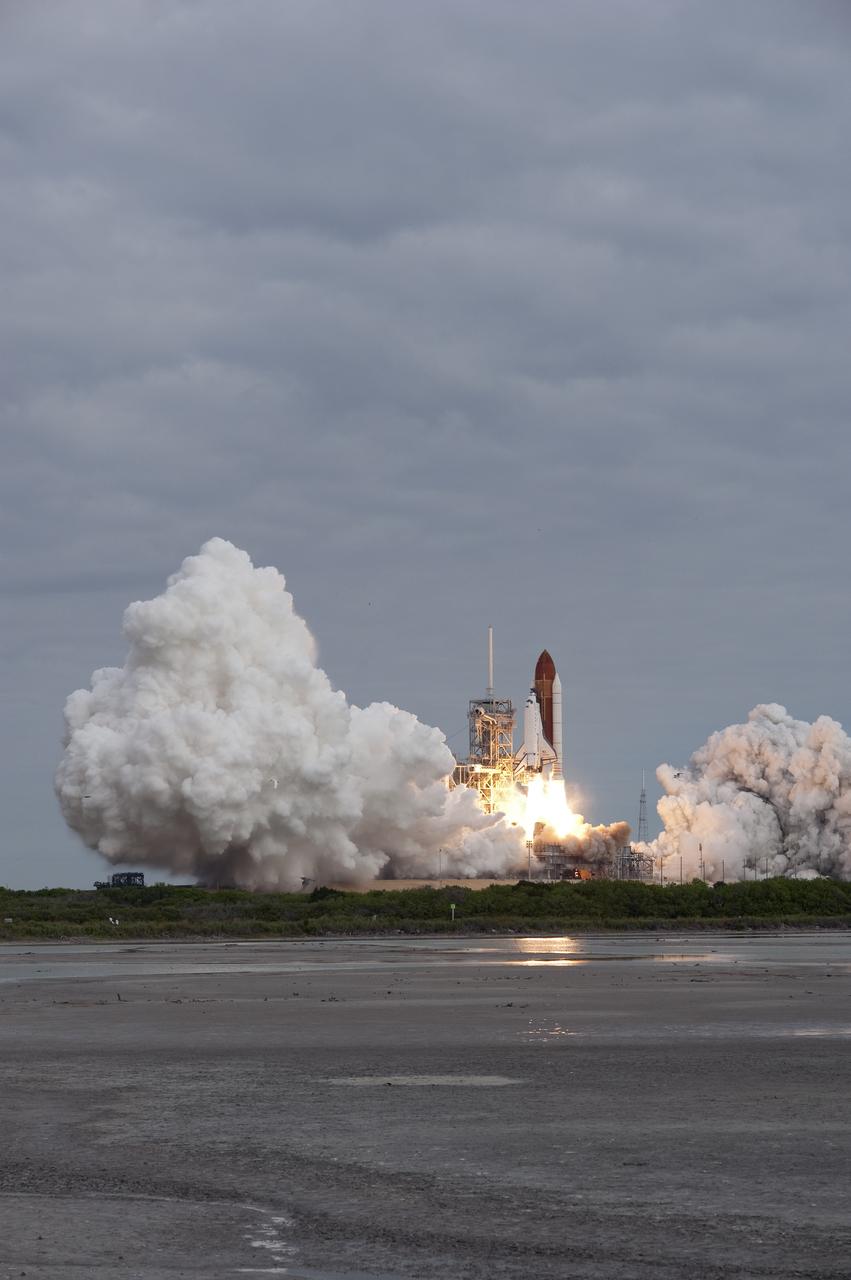
CAPE CANAVERAL, Fla. -- Amid the tranquility of a wildlife refuge, space shuttle Endeavour rumbles off Launch Pad 39A at NASA's Kennedy Space Center in Florida. Endeavour began its final flight, the STS-134 mission, to the International Space Station on time at 8:56 a.m. EDT on May 16. Endeavour and its six-member crew are embarking on a mission to deliver the Alpha Magnetic Spectrometer-2 (AMS), Express Logistics Carrier-3, a high-pressure gas tank and additional spare parts for the Dextre robotic helper to the space station. Endeavour's first launch attempt on April 29 was scrubbed because of an issue associated with a faulty power distribution box called the aft load control assembly-2 (ALCA-2). For more information visit, www.nasa.gov/mission_pages/shuttle/shuttlemissions/sts134/index.html. Kennedy coexists with the Merritt Island National Wildlife Refuge, habitat to more than 310 species of birds, 25 mammals, 117 fish and 65 amphibians and reptiles. Photo credit: NASA/Sandra Joseph and Kevin O'Connell
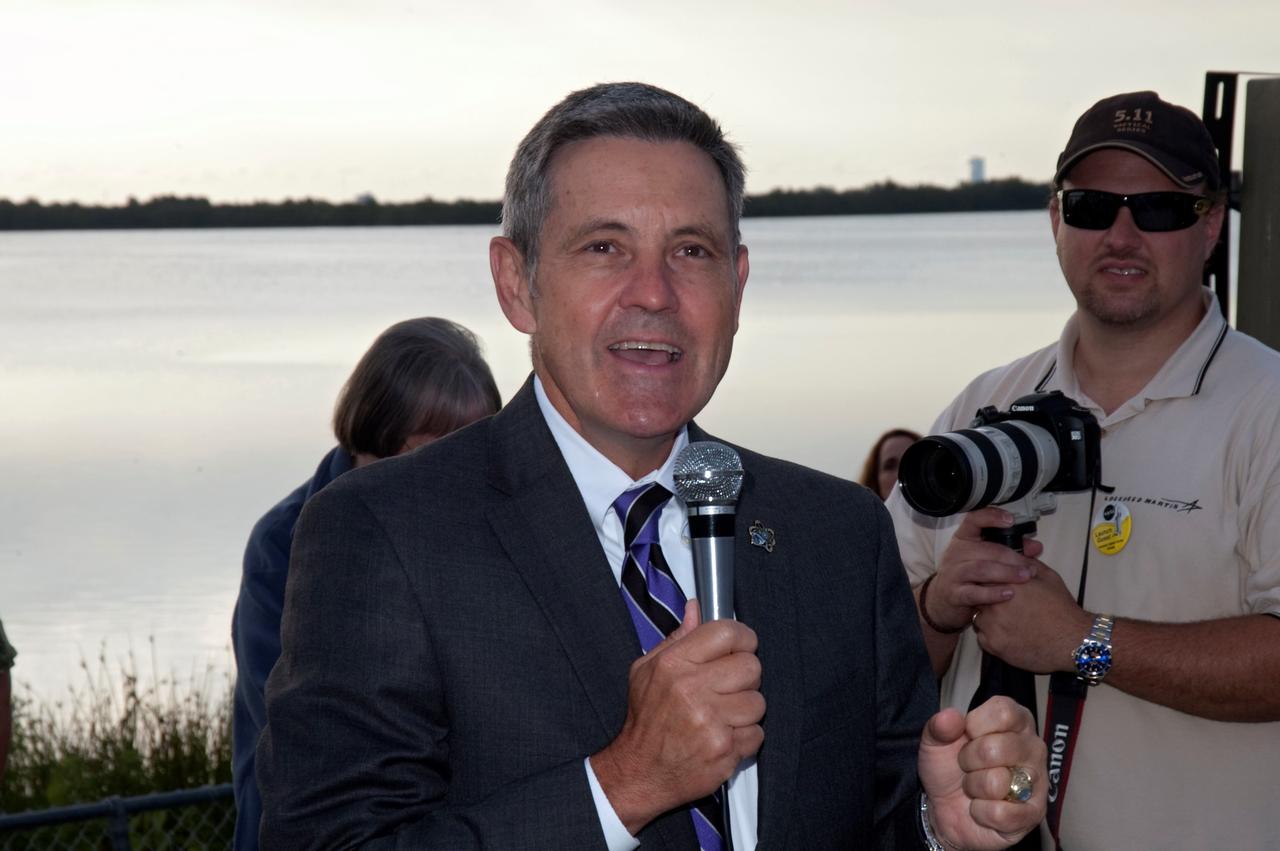
CAPE CANAVERAL, Fla. - NASA Kennedy Space Center Director Bob Cabana talks to a crowd of spectators gathered at the Banana Creek Viewing Site near the Saturn V Center at NASA's Kennedy Space Center in Florida to watch the launch of space shuttle Endeavour. The shuttle lifted off on its STS-134 mission to the International Space Station on time at 8:56 a.m. EDT on May 16. The shuttle and its six-member crew are embarking on a mission to deliver the Alpha Magnetic Spectrometer-2 (AMS), Express Logistics Carrier-3, a high-pressure gas tank and additional spare parts for the Dextre robotic helper to the space station. Endeavour's first launch attempt on April 29 was scrubbed because of an issue associated with a faulty power distribution box called the aft load control assembly-2 (ALCA-2). For more information, visit www.nasa.gov/mission_pages/shuttle/shuttlemissions/sts134/index.html. Photo credit: NASA/Kurtis Korwan
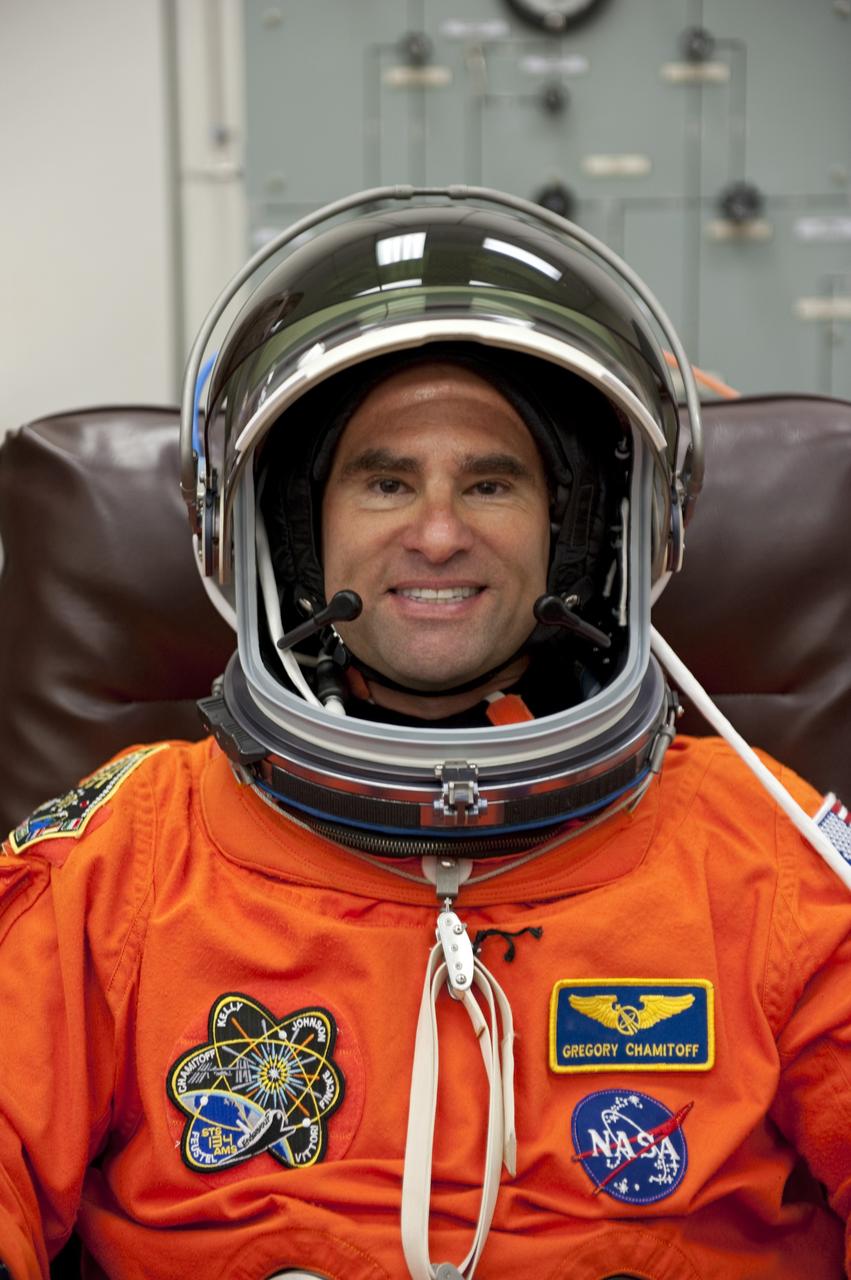
CAPE CANAVERAL, Fla. -- In the Operations and Checkout Building (O&C) at NASA's Kennedy Space Center in Florida, space shuttle Endeavour's STS-134 astronauts put on their launch-and-entry suits and check the fit of their helmets and gloves before heading to the Astrovan for the ride to Launch Pad 39A. Mission Specialist Greg Chamitoff, seen here, last served as flight engineer and science officer aboard the International Space Station in 2008. STS-134 will deliver the Alpha Magnetic Spectrometer-2 (AMS), Express Logistics Carrier-3, a high-pressure gas tank and additional spare parts for the Dextre robotic helper to the International Space Station. May 16 at 8:56 a.m. will be the second launch attempt for Endeavour. The first attempt on April 29 was scrubbed because of an issue associated with a faulty power distribution box called the aft load control assembly-2 (ALCA-2). STS-134 will be the final spaceflight for Endeavour. For more information visit, www.nasa.gov/mission_pages/shuttle/shuttlemissions/sts134/index.html. Photo credit: NASA/Kim Shiflett
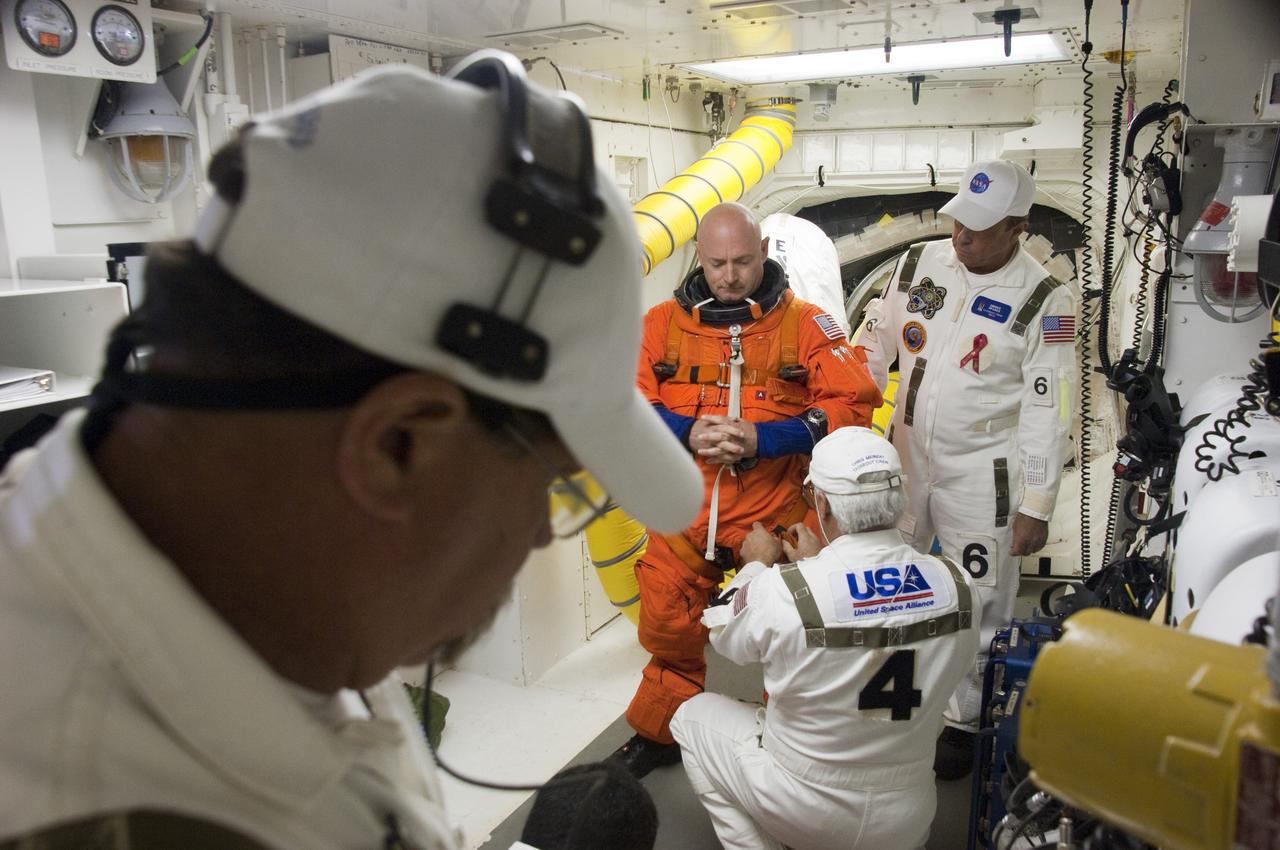
CAPE CANAVERAL, Fla. -- In the White Room at Launch Pad 39A at NASA's Kennedy Space Center in Florida, the Closeout Crew helps STS-134 Commander Mark Kelly put on the parachute for his launch-and-entry suit before he boards space shuttle Endeavour through the crew hatch in the background. Kelly last commanded space shuttle Discovery during its STS-124 mission in 2008. STS-134 will deliver the Alpha Magnetic Spectrometer-2 (AMS), Express Logistics Carrier-3, a high-pressure gas tank and additional spare parts for the Dextre robotic helper to the International Space Station. May 16 at 8:56 a.m. will be the second launch attempt for Endeavour. The first attempt on April 29 was scrubbed because of an issue associated with a faulty power distribution box called the aft load control assembly-2 (ALCA-2). STS-134 will be the final spaceflight for Endeavour. For more information visit, www.nasa.gov/mission_pages/shuttle/shuttlemissions/sts134/index.html. Photo credit: NASA/Sandra Joseph and Kevin O'Connell
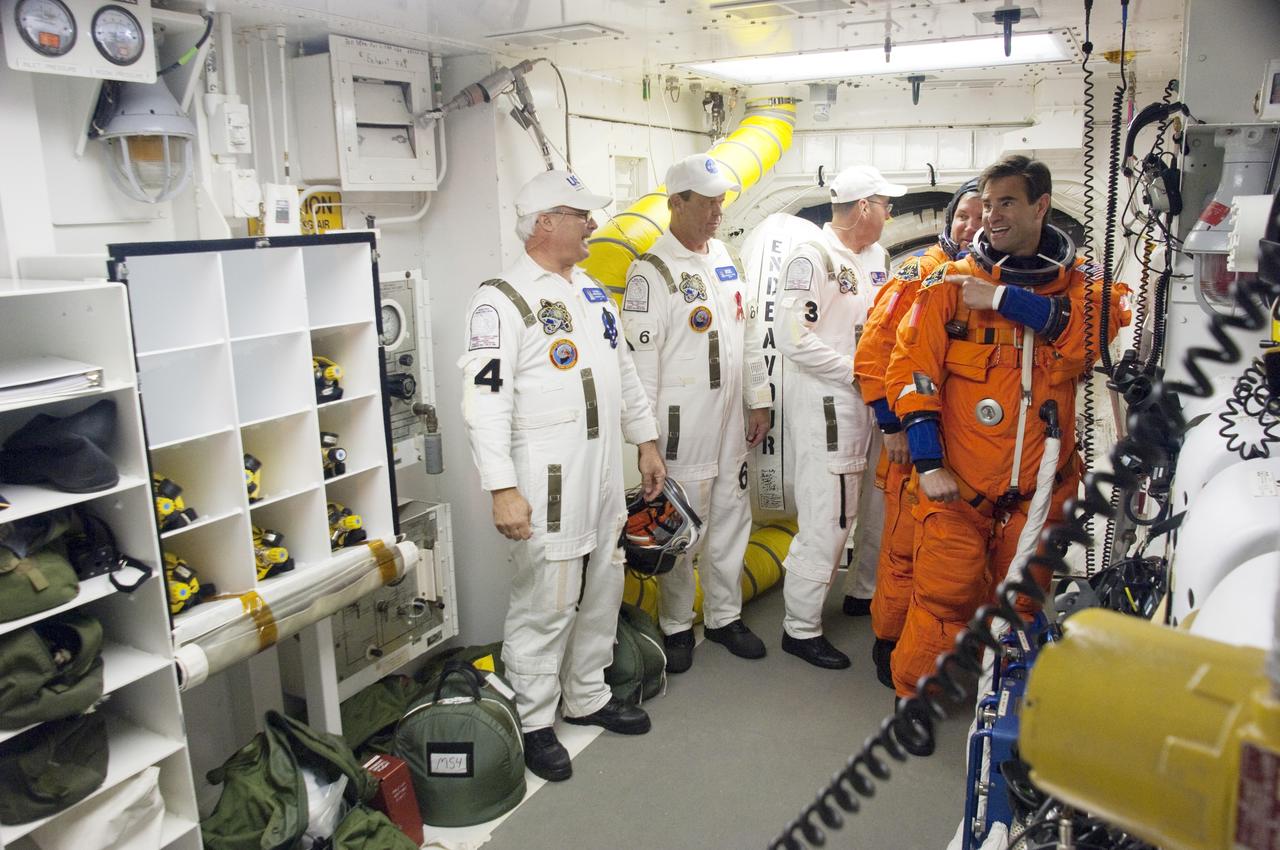
CAPE CANAVERAL, Fla. -- In the White Room at Launch Pad 39A at NASA's Kennedy Space Center in Florida, STS-134 Pilot Greg H. Johnson, left, and Mission Specialist Greg Chamitoff prepare to board space shuttle Endeavour through the crew hatch in the background. Members of the Closeout Crew, in white uniforms, are there to assist astronauts with their launch-and-entry suits and the boarding process. Johnson piloted space shuttle Endeavour during its STS-123 mission in 2008. Chamitoff last served as flight engineer and science officer aboard the International Space Station in 2008. STS-134 will deliver the Alpha Magnetic Spectrometer-2 (AMS), Express Logistics Carrier-3, a high-pressure gas tank and additional spare parts for the Dextre robotic helper to the International Space Station. May 16 at 8:56 a.m. will be the second launch attempt for Endeavour. The first attempt on April 29 was scrubbed because of an issue associated with a faulty power distribution box called the aft load control assembly-2 (ALCA-2). STS-134 will be the final spaceflight for Endeavour. For more information visit, www.nasa.gov/mission_pages/shuttle/shuttlemissions/sts134/index.html. Photo credit: NASA/Sandra Joseph and Kevin O'Connell
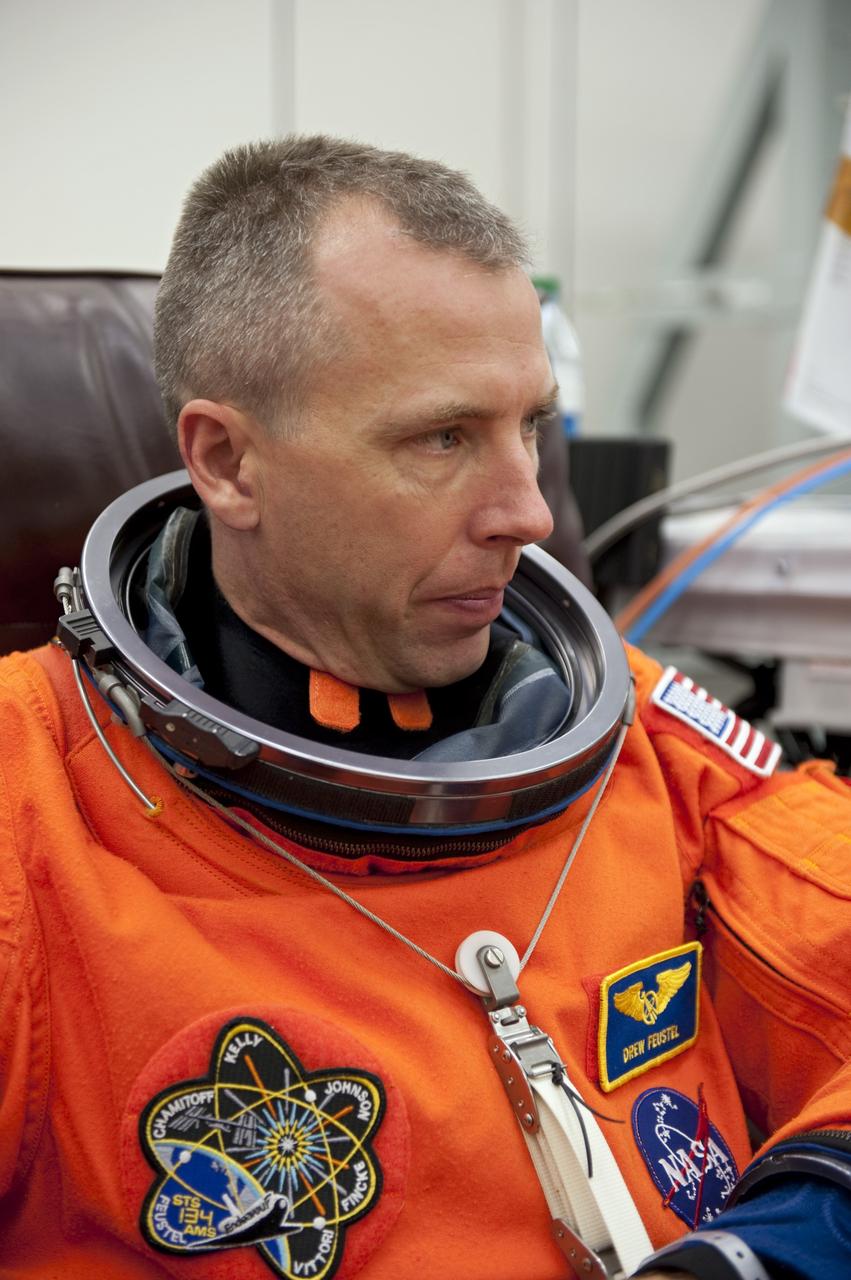
CAPE CANAVERAL, Fla. -- In the Operations and Checkout Building (O&C) at NASA's Kennedy Space Center in Florida, space shuttle Endeavour's STS-134 astronauts put on their launch-and-entry suits and check the fit of their helmets and gloves before heading to the Astrovan for the ride to Launch Pad 39A. Mission Specialist Andrew Feustel, seen here, last flew on a mission to NASA's Hubble Space Telescope in 2009. STS-134 will deliver the Alpha Magnetic Spectrometer-2 (AMS), Express Logistics Carrier-3, a high-pressure gas tank and additional spare parts for the Dextre robotic helper to the International Space Station. May 16 at 8:56 a.m. will be the second launch attempt for Endeavour. The first attempt on April 29 was scrubbed because of an issue associated with a faulty power distribution box called the aft load control assembly-2 (ALCA-2). STS-134 will be the final spaceflight for Endeavour. For more information visit, www.nasa.gov/mission_pages/shuttle/shuttlemissions/sts134/index.html. Photo credit: NASA/Kim Shiflett