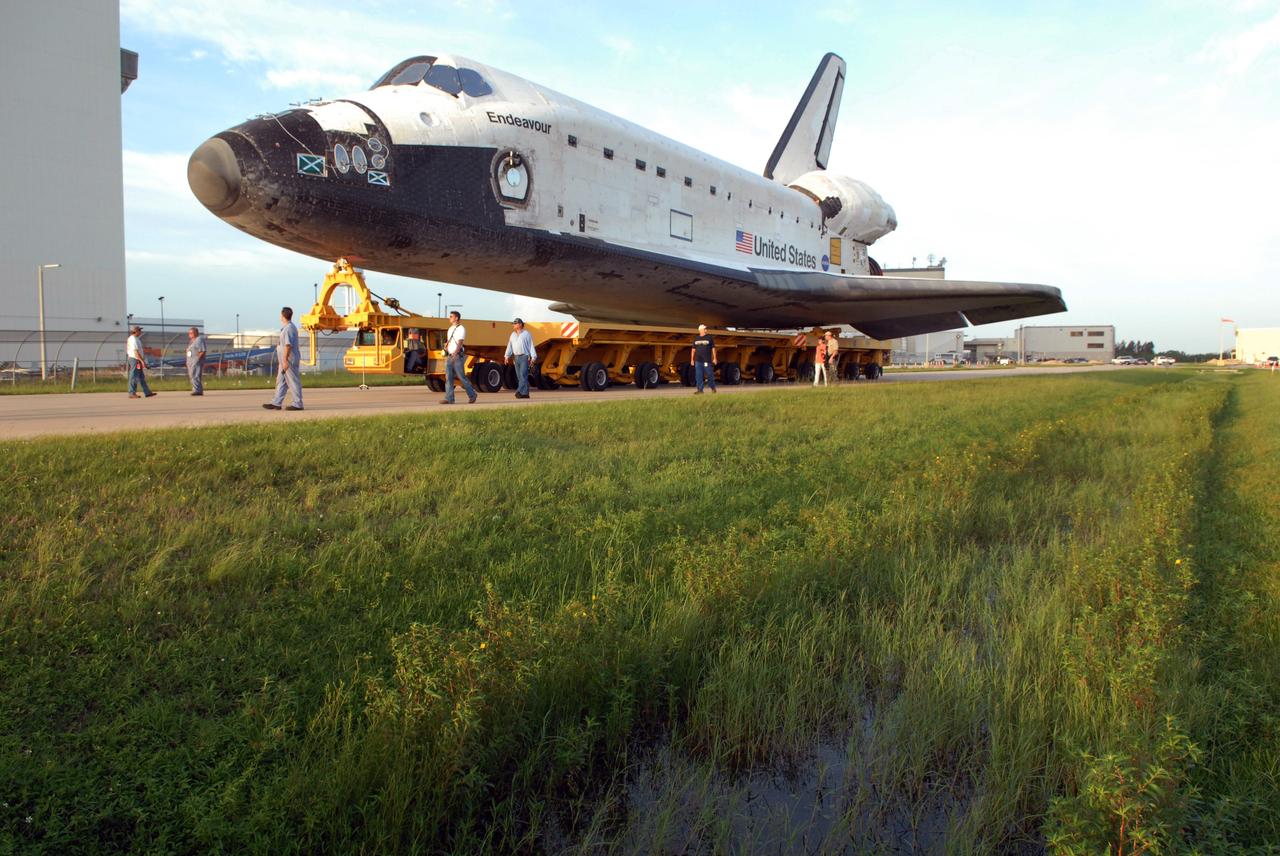
CAPE CANAVERAL, Fla. – Workers accompany space shuttle Endeavour as it rolls toward the Vehicle Assembly Building at NASA's Kennedy Space Center. The shuttle left Orbiter Processing Facility 2 with first motion at 7:01 am. EDT. In the VAB, Endeavour will be attached to its external fuel tank and twin solid rocket boosters. After additional preparations are made, the shuttle will be rolled out to Launch Pad 39B. Endeavour is the backup shuttle, if needed for rescue, for space shuttle Atlantis’ STS-125 mission to NASA’s Hubble Space Telescope targeted for October. Photo credit: NASA/Troy Cryder
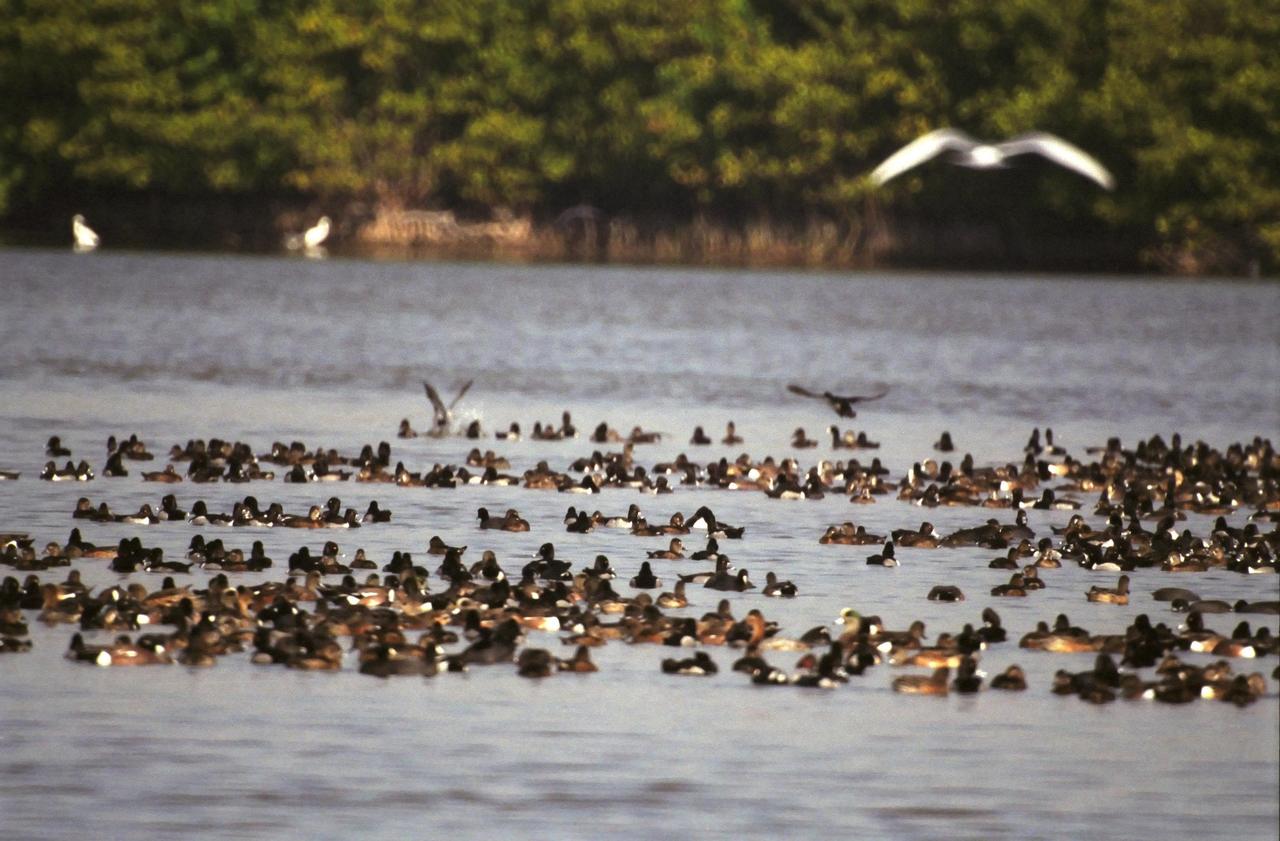
KENNEDY SPACE CENTER, FLA. - The waters of the Merritt Island National Wildlife Refuge, which shares a boundary with Kennedy Space Center, attract coots, ducks, herons and other water birds as shown here. Coots are readily identified by their slate-gray bodies and conspicuous white bill. They inhabit open ponds and marshes from southern Canada to northern South America. Excellent swimmers and divers, they eat various aquatic plants, but also feed on seeds grass and waste grain on land. The 92,000-acre refuge is a habitat for more than 330 species of birds, 31 mammals, 117 fishes and 65 amphibians and reptiles. The marshes and open water of the refuge provide wintering areas for 23 species of migratory waterfowl, as well as a year-round home for great blue herons, great egrets, wood storks, cormorants, brown pelicans and other species of marsh and shore birds.
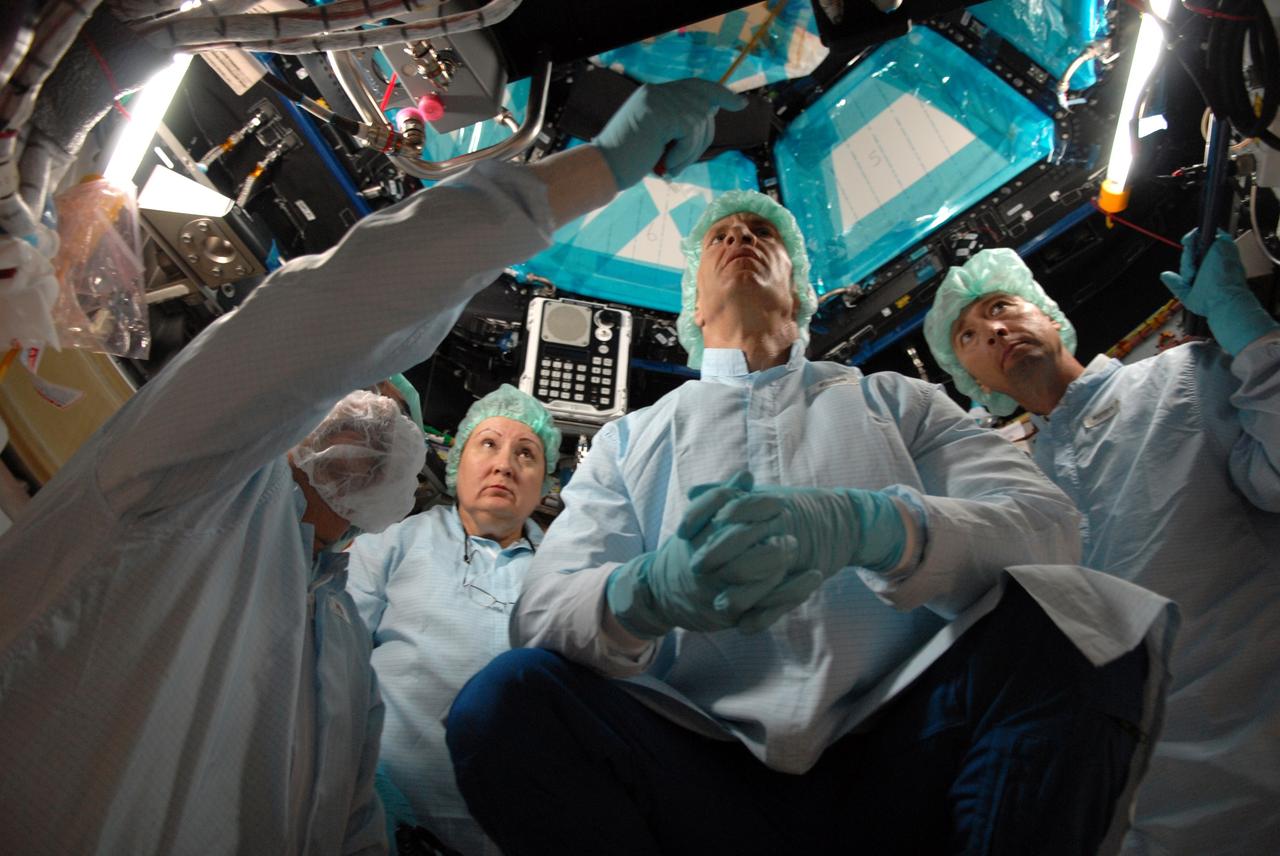
CAPE CANAVERAL, Fla. – In the Space Station Processing Facility at NASA's Kennedy Space Center, astronaut Charles Hobaugh, hands folded, conducts a fit check of the robotic workstation, or RWS, in the International Space Station's Cupola module. From left, he is assisted by Boeing technician Terry Camarata, vehicle integration test engineer Louise Kleba of Flight Crew Operations, and engineer David Jackson, from Johnson Space Center. The RWS is provided by the Canadian Space Agency. The module was delivered by the European Space Agency in 2004 to Kennedy from Alenia Spazio in Turin, Italy. Cupola will provide unprecedented views of activities outside the station and spectacular views of the Earth. Crew members working inside the module will have a 360-degree panoramic view. Cupola has the capability for command and control workstations to be installed to assist in space station remote manipulator system and extra vehicular activities. Cupola is the final element of the space station core and is scheduled for launch on space shuttle Endeavour's STS-130 mission, targeted for Dec. 10, 2009. Photo credit: NASA/Cory Huston
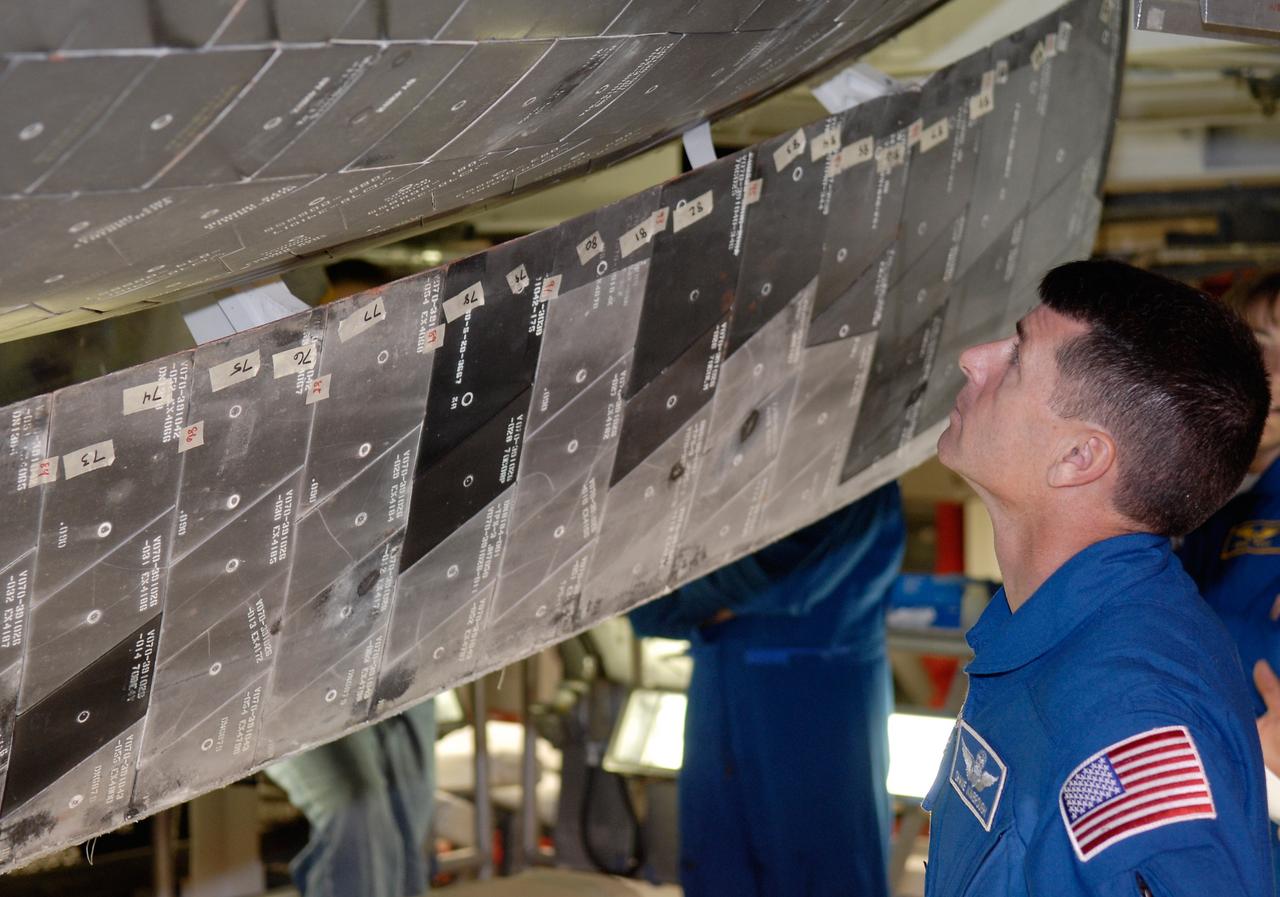
CAPE CANAVERAL, Fla. – In Orbiter Processing Facility 2 at NASA's Kennedy Space Center, members of space shuttle Endeavour's STS-126 crew participate in a crew equipment interface test, or CEIT. Here, Mission Specialist Shane Kimbrough examines the thermal protection system tile on Endeavour. The CEIT provides hands-on experience with hardware and equipment slated to fly on their mission. Endeavour will deliver a multi-purpose logistics module to the International Space Station on the STS-126 mission. Launch is targeted for Nov. 10. Photo credit: NASA/Kim Shiflett
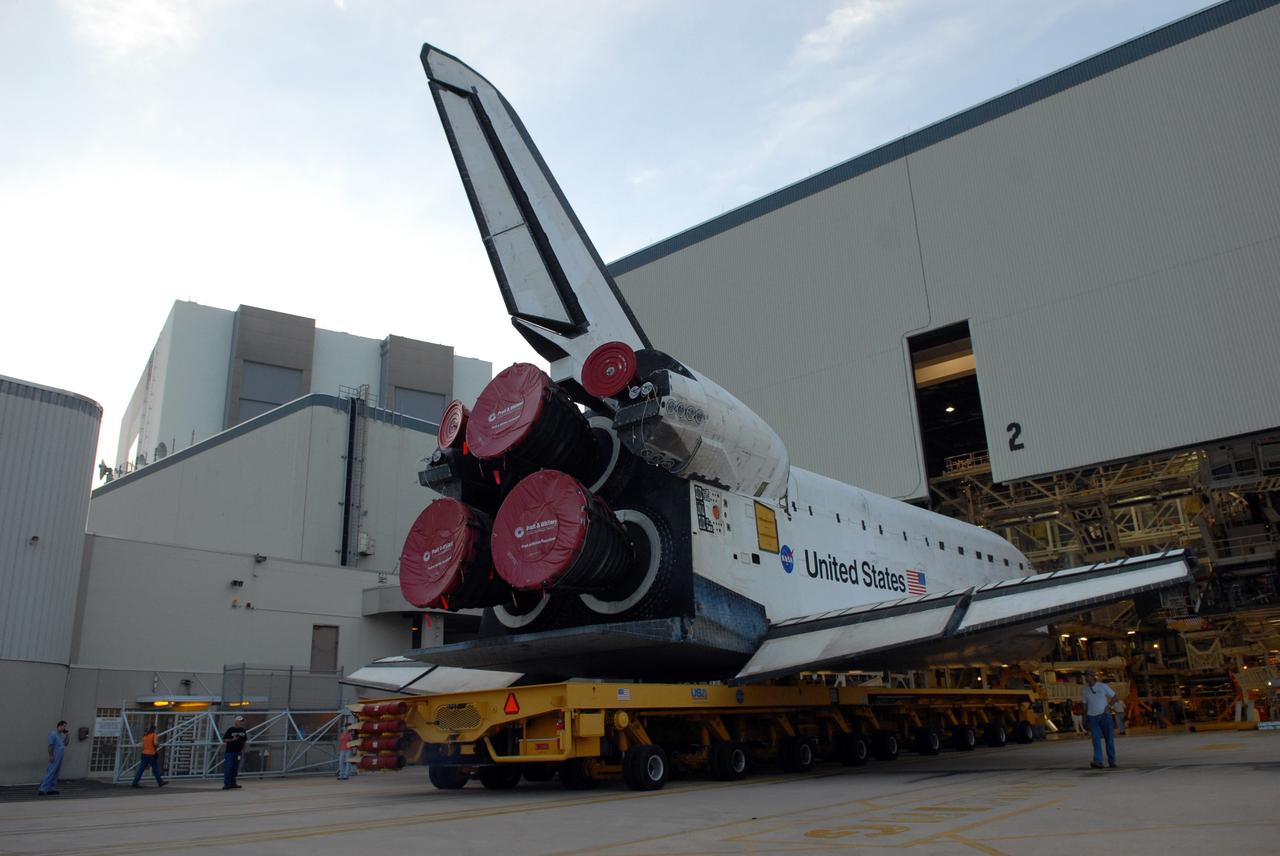
CAPE CANAVERAL, Fla. – Space shuttle Endeavour rolls out of Orbiter Processing Facility 2 to head to the Vehicle Assembly Building at NASA's Kennedy Space Center. First motion was 7:01 a.m. EDT. In the VAB, Endeavour will be attached to its external fuel tank and twin solid rocket boosters. After additional preparations are made, the shuttle will be rolled out to Launch Pad 39B. Endeavour is the backup shuttle, if needed for rescue, for space shuttle Atlantis’ STS-125 mission to NASA’s Hubble Space Telescope targeted for October. Photo credit: NASA/Troy Cryder
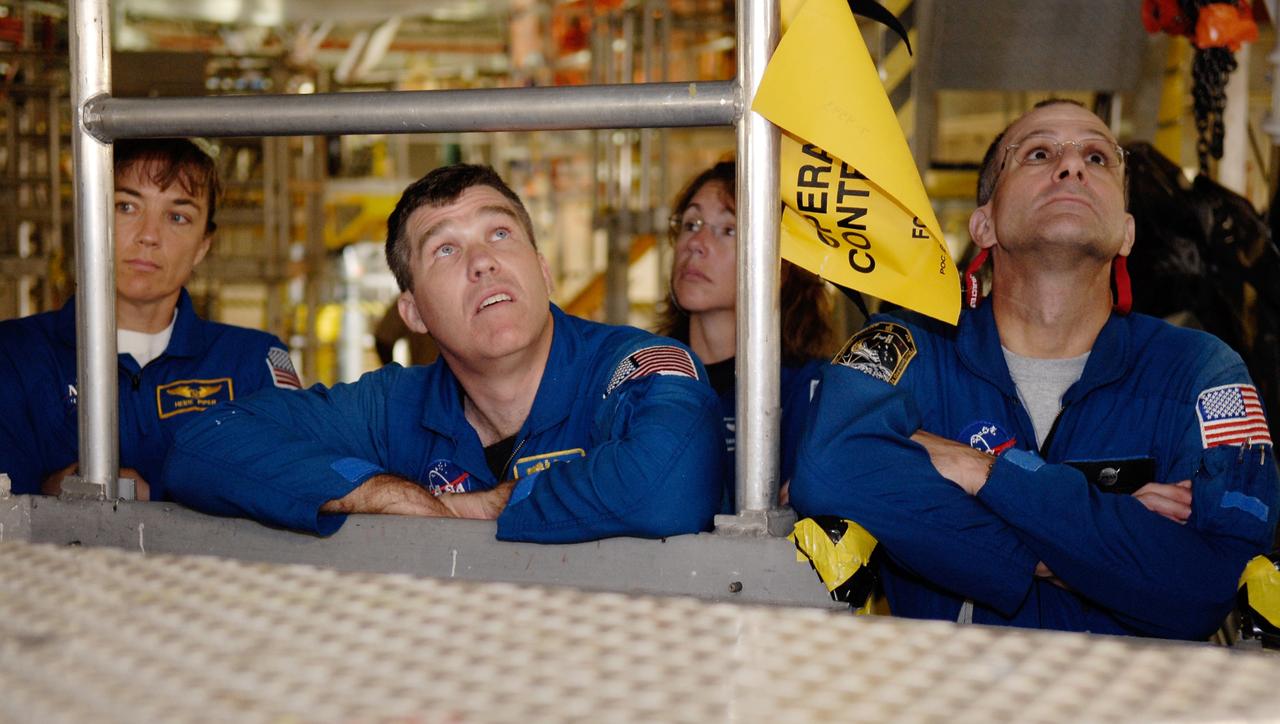
CAPE CANAVERAL, Fla. – In Orbiter Processing Facility 2 at NASA's Kennedy Space Center, members of space shuttle Endeavour's STS-126 crew participate in a crew equipment interface test, or CEIT. From left are Mission Specialists Heidemarie Stefanyshyn-Piper and Steve Bowen, International Space Station Expedition 18 flight engineer Sandra Magnus and Mission Specialist Donald Pettit. The CEIT provides hands-on experience with hardware and equipment slated to fly on their mission. Endeavour will deliver a multi-purpose logistics module to the International Space Station on the STS-126 mission. Launch is targeted for Nov. 10. Photo credit: NASA/Kim Shiflett
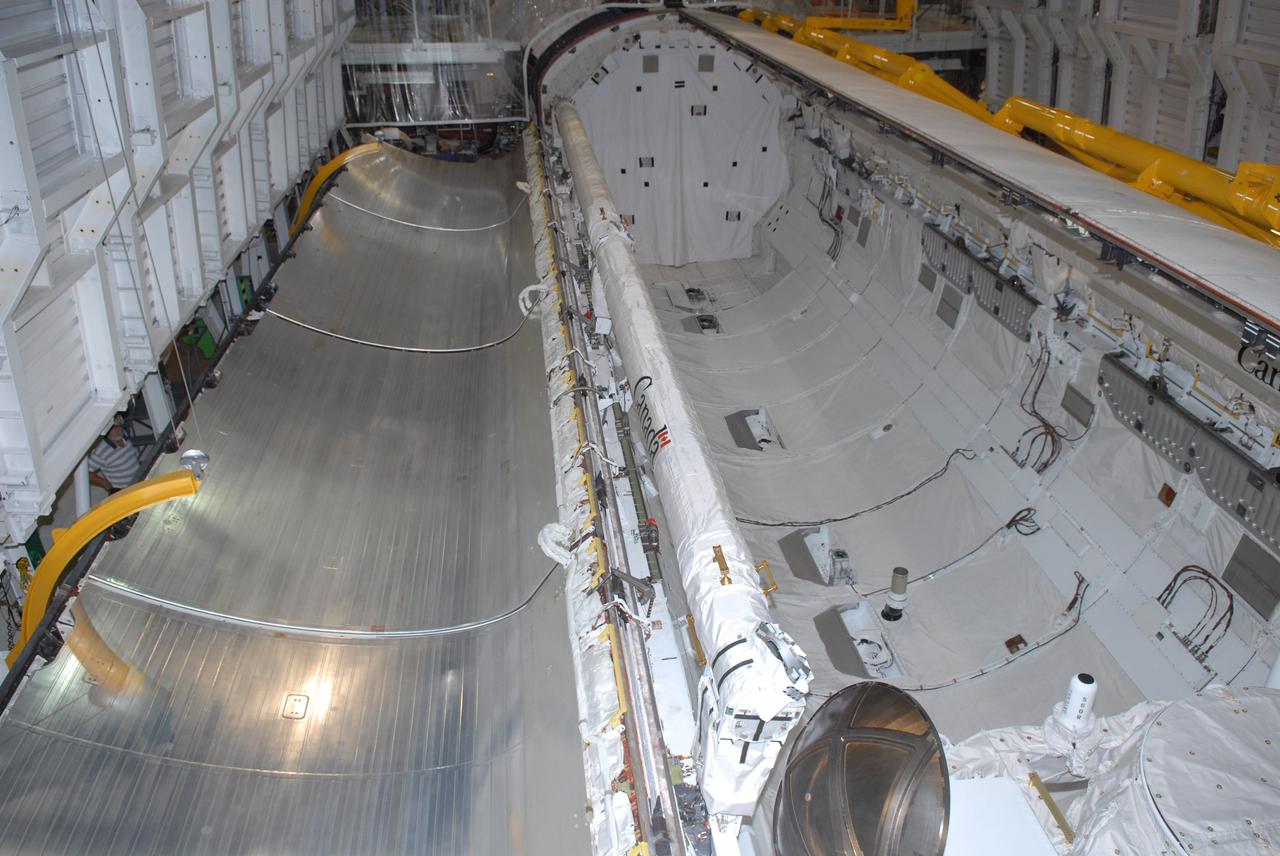
CAPE CANAVERAL, Fla. – In Orbiter Processing Facility 1 at NASA's Kennedy Space Center, space shuttle Atlantis' payload bay has been thoroughly cleaned and is ready to receive the carriers transporting the instruments and equipment needed to service the Hubble Space Telescope. Atlantis is targeted to launch Oct. 8 on the STS-125 mission to service Hubble. The mission crew will perform history-making, on-orbit “surgery” on two important science instruments aboard the telescope. After capturing the telescope, two teams of spacewalking astronauts will perform the repairs during five planned spacewalks. Photo credit: NASA/Jack Pfaller
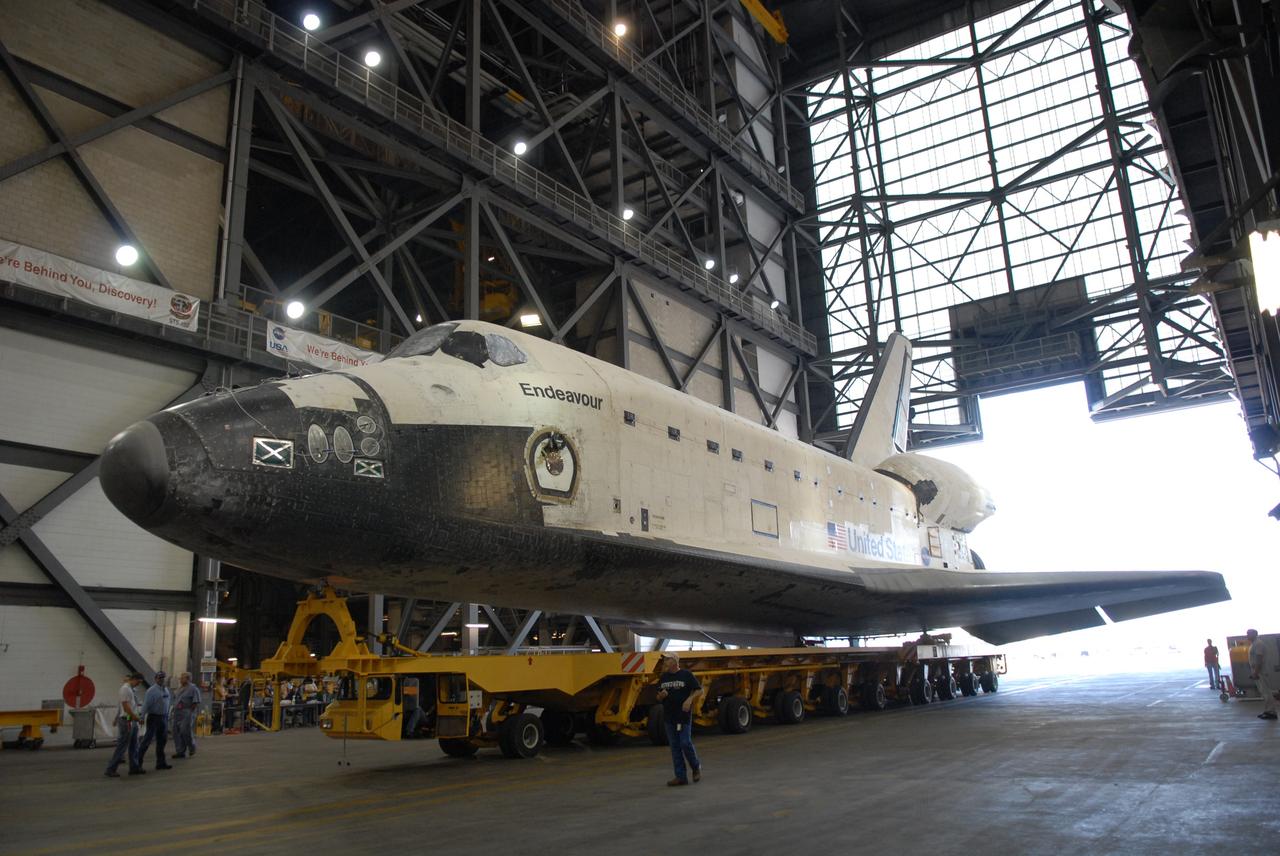
CAPE CANAVERAL, Fla. – After a short journey from Orbiter Processing Facility 2, space shuttle Endeavour arrives in the transfer aisle of the Vehicle Assembly Building at NASA's Kennedy Space Center. In the VAB, Endeavour will be attached to its external fuel tank and twin solid rocket boosters. After additional preparations are made, the shuttle will be rolled out to Launch Pad 39B. Endeavour is the backup shuttle, if needed for rescue, for space shuttle Atlantis’ STS-125 mission to NASA’s Hubble Space Telescope targeted for October. Photo credit: NASA/Troy Cryder
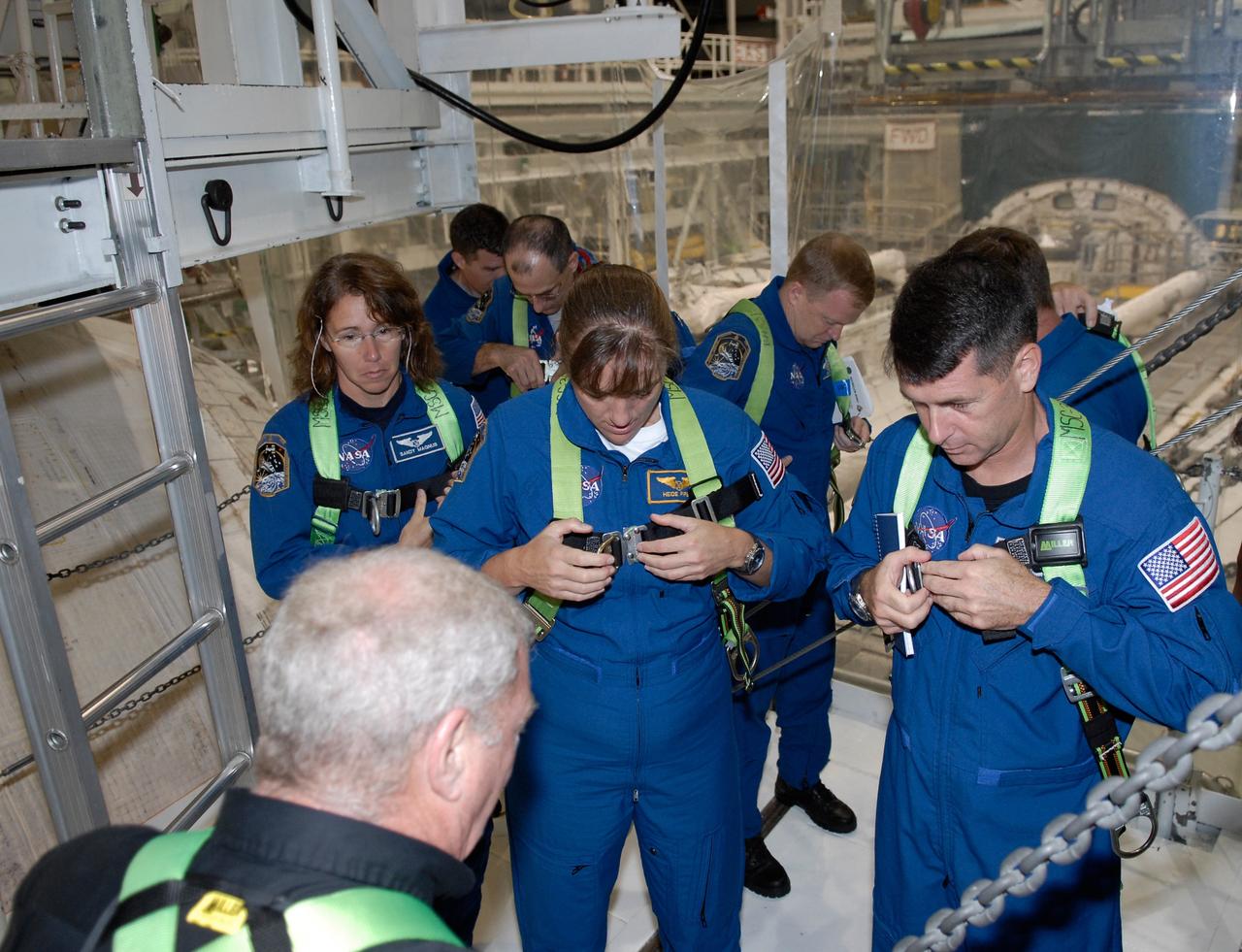
CAPE CANAVERAL, Fla. – In Orbiter Processing Facility 2 at NASA's Kennedy Space Center, members of space shuttle Endeavour's STS-126 crew participate in a crew equipment interface test, or CEIT. From left in the blue flight suits are International Space Station Expedition 18 flight engineer Sandra Magnus, Mission Specialist Heidemarie Stefanyshyn-Piper, Pilot Eric Boe and Mission Specialist Shane Kimbrough. The CEIT provides hands-on experience with hardware and equipment slated to fly on their mission. Endeavour will deliver a multi-purpose logistics module to the International Space Station on the STS-126 mission. Launch is targeted for Nov. 10. Photo credit: NASA/Kim Shiflett
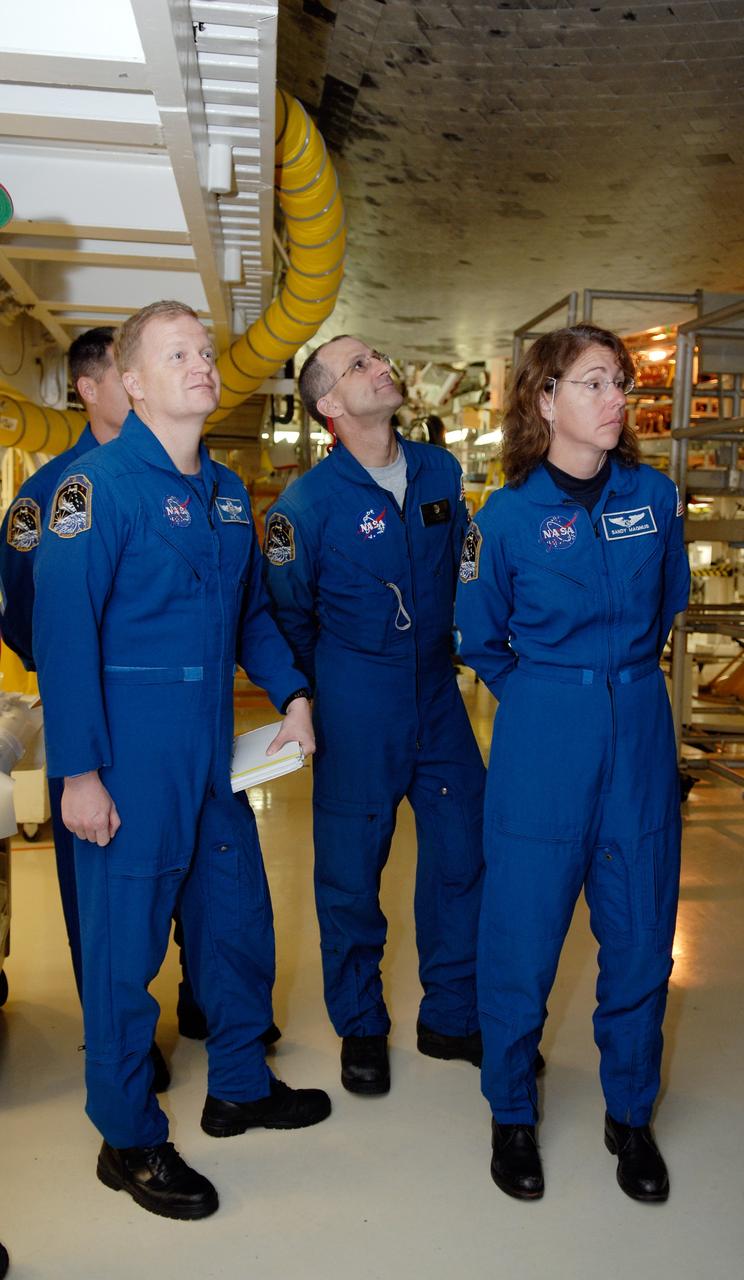
CAPE CANAVERAL, Fla. – In Orbiter Processing Facility 2 at NASA's Kennedy Space Center, members of space shuttle Endeavour's STS-126 crew participate in a crew equipment interface test, or CEIT. From left in the blue flight suits are Pilot Eric Boe, Mission Specialist Donald Pettit and International Space Station Expedition 18 flight engineer Sandra Magnus. The CEIT provides hands-on experience with hardware and equipment slated to fly on their mission. Endeavour will deliver a multi-purpose logistics module to the International Space Station on the STS-126 mission. Launch is targeted for Nov. 10. Photo credit: NASA/Kim Shiflett
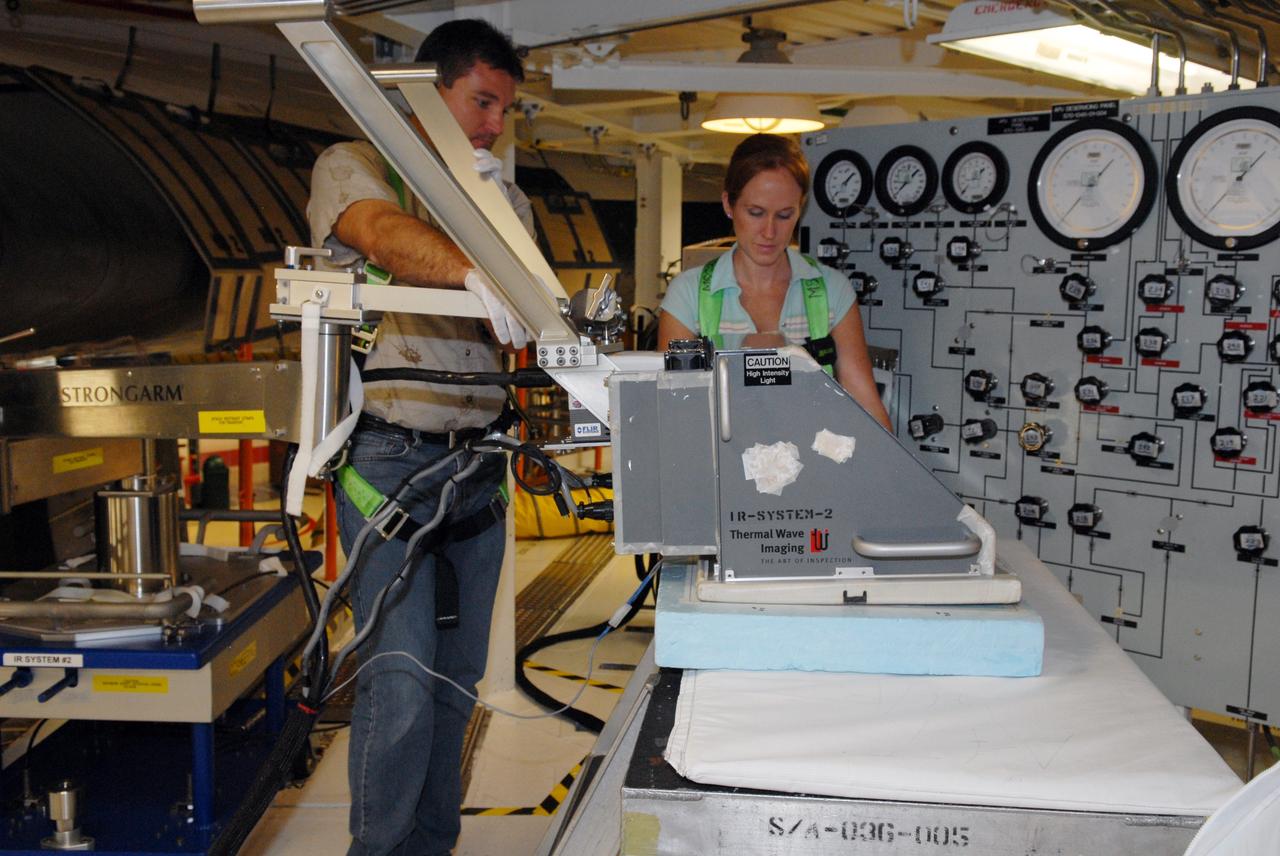
CAPE CANAVERAL, Fla. – Inside Orbiter Processing Facility 2 at NASA's Kennedy Space Center, United Space Alliance technicians inspect a reinforced carbon-carbon panel on Endeavour's wing leading edge using thermography to detect structural abnormalities. Endeavour will deliver a multi-purpose logistics module to the International Space Station on its STS-126 mission. Launch is targeted for Nov. 10. Photo credit: NASA/Amanda Diller

CAPE CANAVERAL, Fla. – In Orbiter Processing Facility 2 at NASA's Kennedy Space Center, members of space shuttle Endeavour's STS-126 crew participate in a crew equipment interface test, or CEIT. From left in the blue flight suits are Mission Specialists Donald Pettit and Heidemarie Stefanyshyn-Piper, Commander Chris Ferguson and Mission Specialist Shane Kimbrough. The CEIT provides hands-on experience with hardware and equipment slated to fly on their mission. Endeavour will deliver a multi-purpose logistics module to the International Space Station on the STS-126 mission. Launch is targeted for Nov. 10. Photo credit: NASA/Kim Shiflett
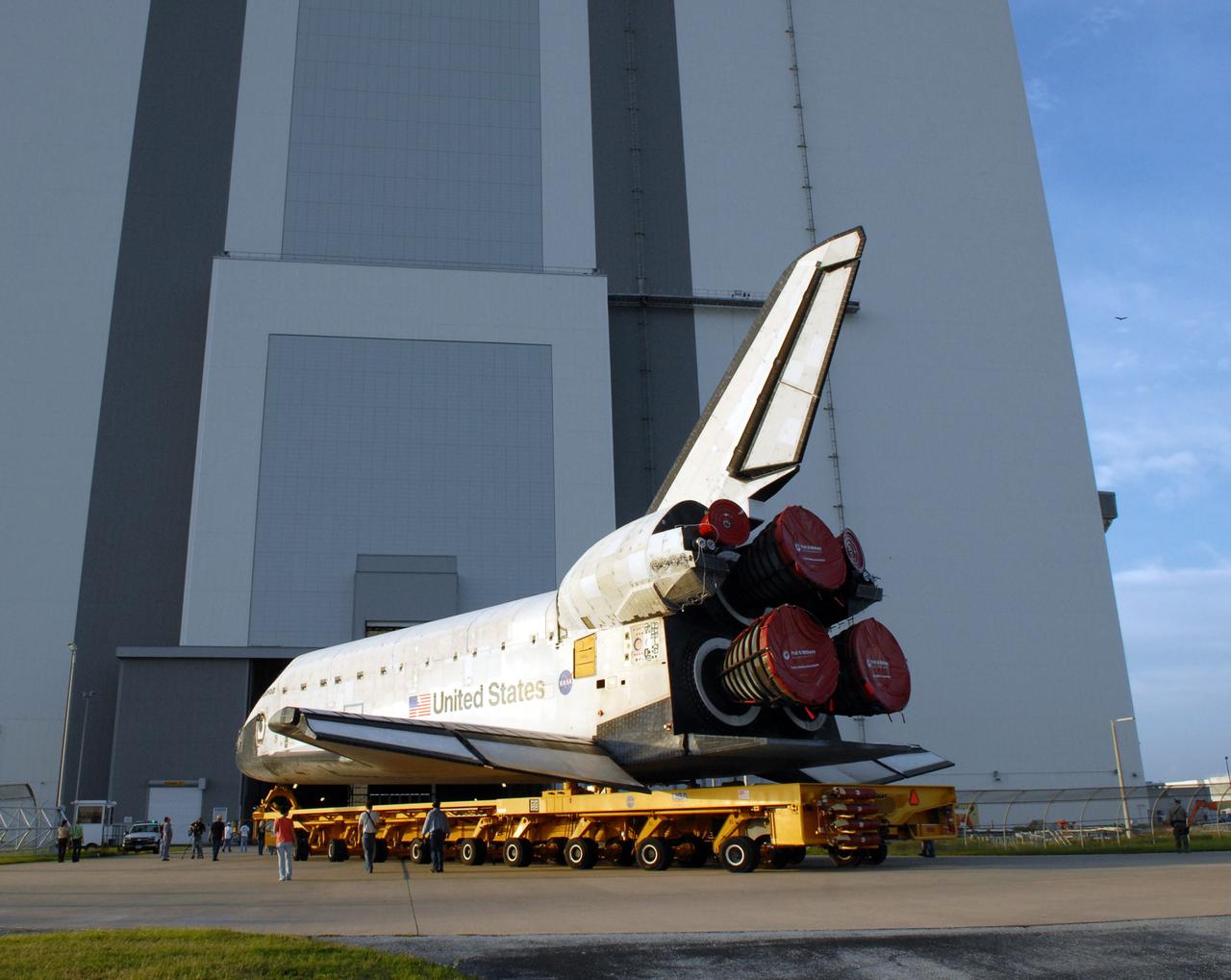
CAPE CANAVERAL, Fla. – After rolling out of Orbiter Processing Facility 2, space shuttle Endeavour turns toward the Vehicle Assembly Building at NASA's Kennedy Space Center. In the VAB, Endeavour will be attached to its external fuel tank and twin solid rocket boosters. After additional preparations are made, the shuttle will be rolled out to Launch Pad 39B. Endeavour is the backup shuttle, if needed for rescue, for space shuttle Atlantis’ STS-125 mission to NASA’s Hubble Space Telescope targeted for October. Photo credit: NASA/Troy Cryder
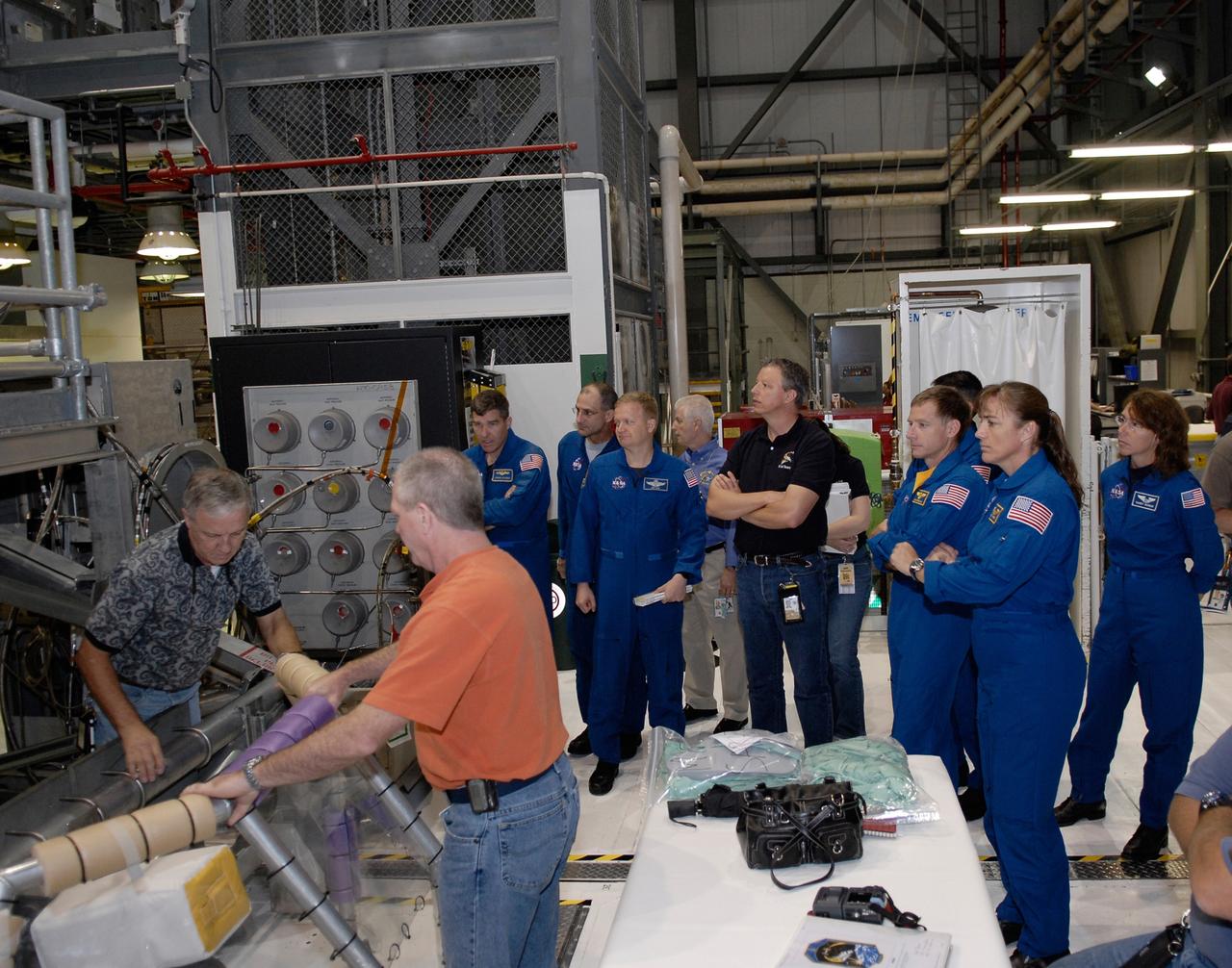
CAPE CANAVERAL, Fla. – In Orbiter Processing Facility 2 at NASA's Kennedy Space Center, members of space shuttle Endeavour's STS-126 crew participate in a crew equipment interface test, or CEIT. From left in the blue flight suits are Mission Specialists Steve Bowen and Donald Pettit, Pilot Eric Boe, Commander Chirs Ferguson, Mission Specialist Heidemarie Stefanyshyn-Piper and International Space Station Expedition 18 flight engineer Sandra Magnus. The CEIT provides hands-on experience with hardware and equipment slated to fly on their mission. Endeavour will deliver a multi-purpose logistics module to the International Space Station on the STS-126 mission. Launch is targeted for Nov. 10. Photo credit: NASA/Kim Shiflett
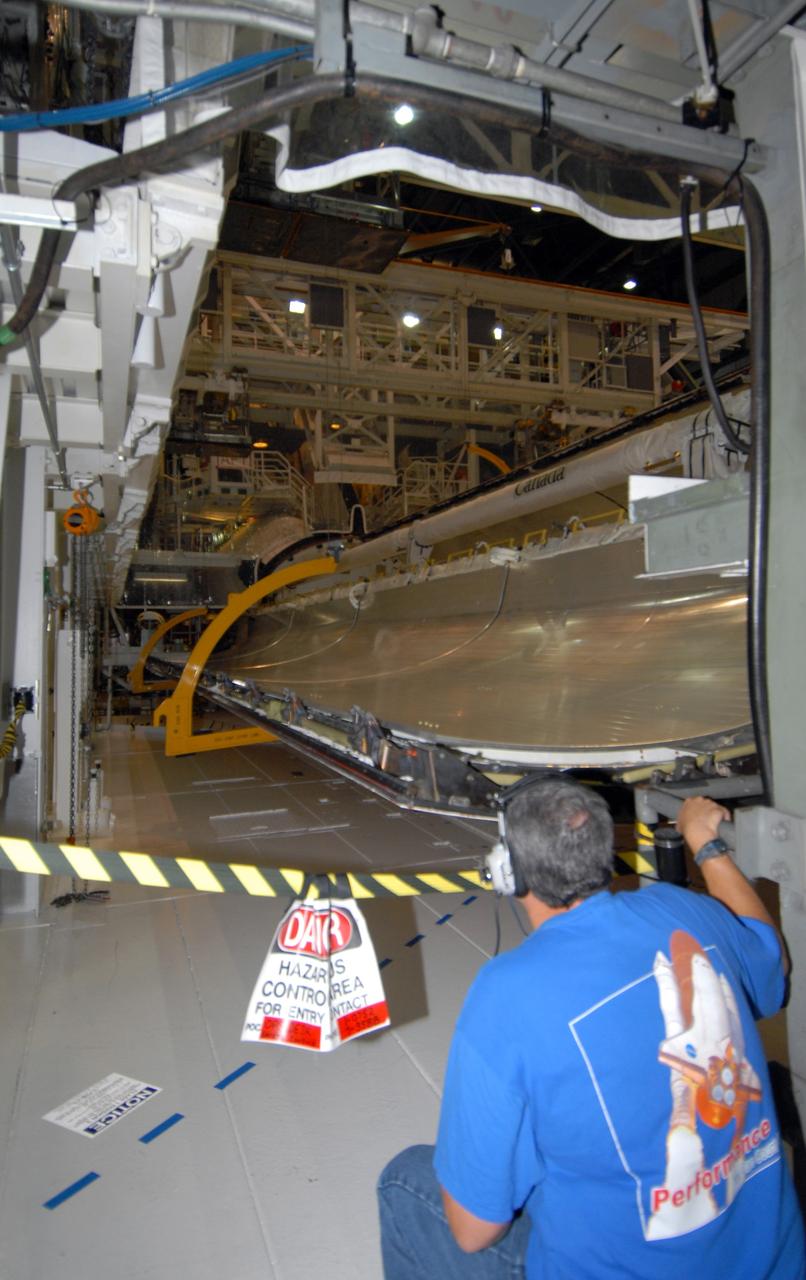
CAPE CANAVERAL, Fla. – In Orbiter Processing Facility 1 at NASA's Kennedy Space Center, a worker from United Space Alliance prepares to close the payload bay doors on space shuttle Atlantis. The payload bay has been thoroughly cleaned and is ready to receive the carriers transporting the instruments and equipment needed to service the Hubble Space Telescope. Atlantis is targeted to launch Oct. 8 on the STS-125 mission to service Hubble. The mission crew will perform history-making, on-orbit “surgery” on two important science instruments aboard the telescope. After capturing the telescope, two teams of spacewalking astronauts will perform the repairs during five planned spacewalks. Photo credit: NASA/Jack Pfaller
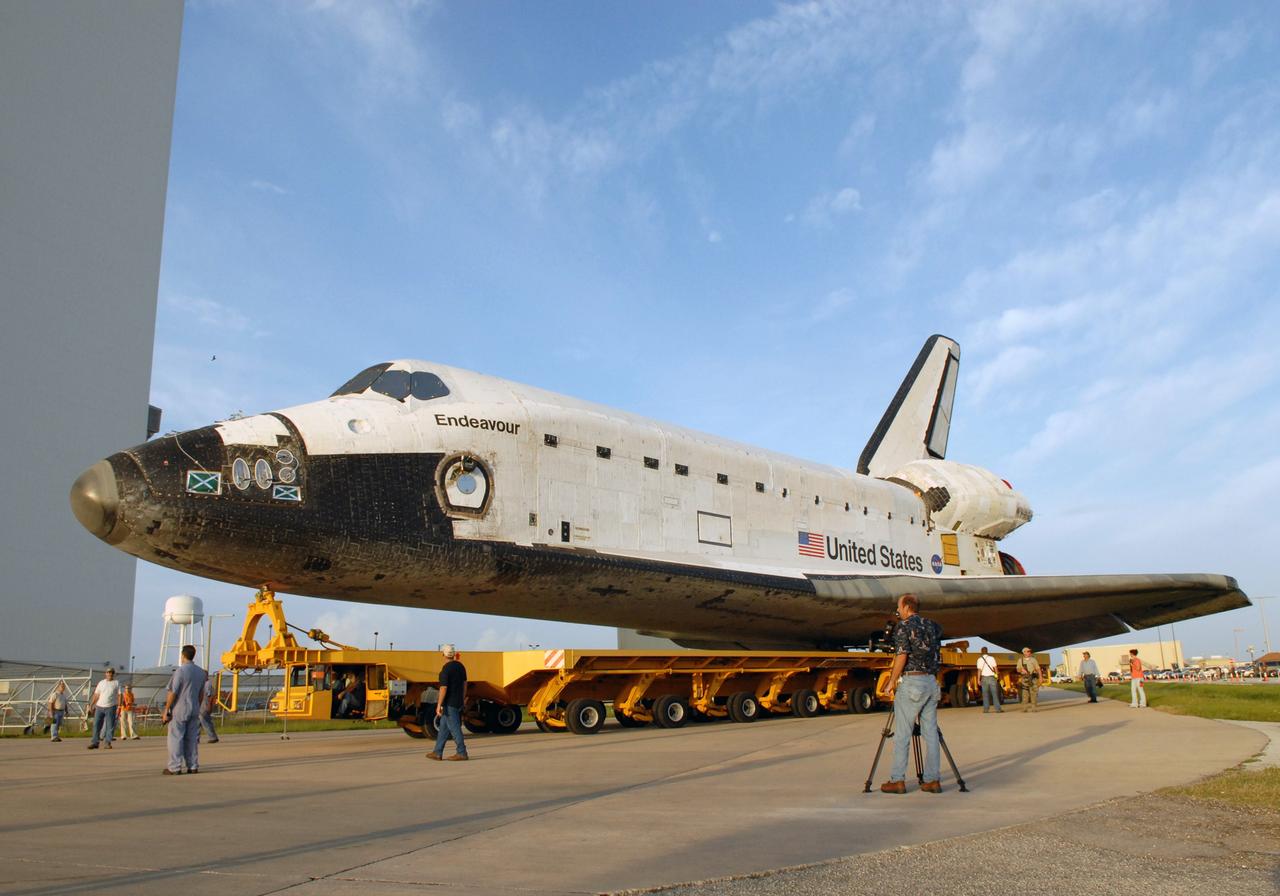
CAPE CANAVERAL, Fla. – After rolling out of Orbiter Processing Facility 2, space shuttle Endeavour begins the turn toward the Vehicle Assembly Building at NASA's Kennedy Space Center. In the VAB, Endeavour will be attached to its external fuel tank and twin solid rocket boosters. After additional preparations are made, the shuttle will be rolled out to Launch Pad 39B. Endeavour is the backup shuttle, if needed for rescue, for space shuttle Atlantis’ STS-125 mission to NASA’s Hubble Space Telescope targeted for October. Photo credit: NASA/Troy Cryder
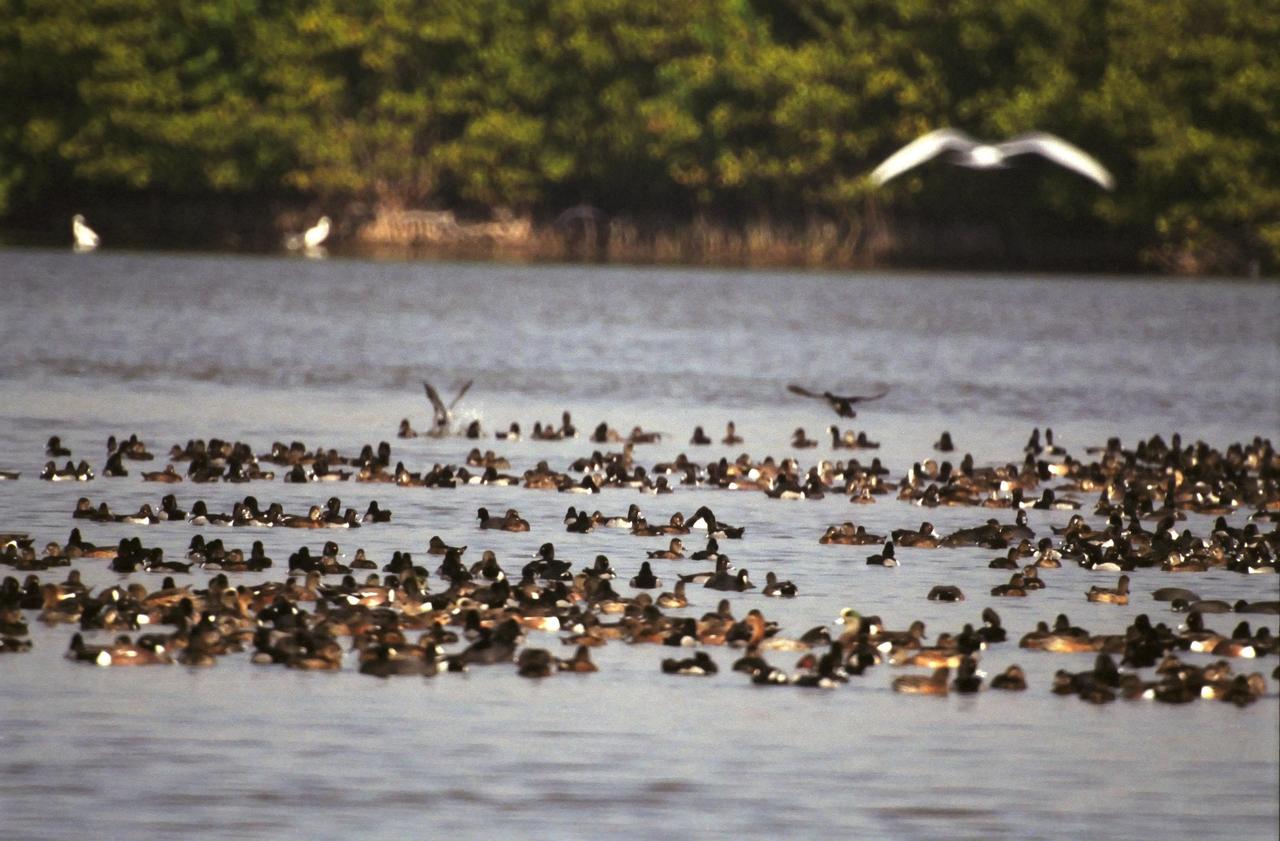
KENNEDY SPACE CENTER, FLA. - The waters of the Merritt Island National Wildlife Refuge, which shares a boundary with Kennedy Space Center, attract coots, ducks, herons and other water birds as shown here. Coots are readily identified by their slate-gray bodies and conspicuous white bill. They inhabit open ponds and marshes from southern Canada to northern South America. Excellent swimmers and divers, they eat various aquatic plants, but also feed on seeds grass and waste grain on land. The 92,000-acre refuge is a habitat for more than 330 species of birds, 31 mammals, 117 fishes and 65 amphibians and reptiles. The marshes and open water of the refuge provide wintering areas for 23 species of migratory waterfowl, as well as a year-round home for great blue herons, great egrets, wood storks, cormorants, brown pelicans and other species of marsh and shore birds.
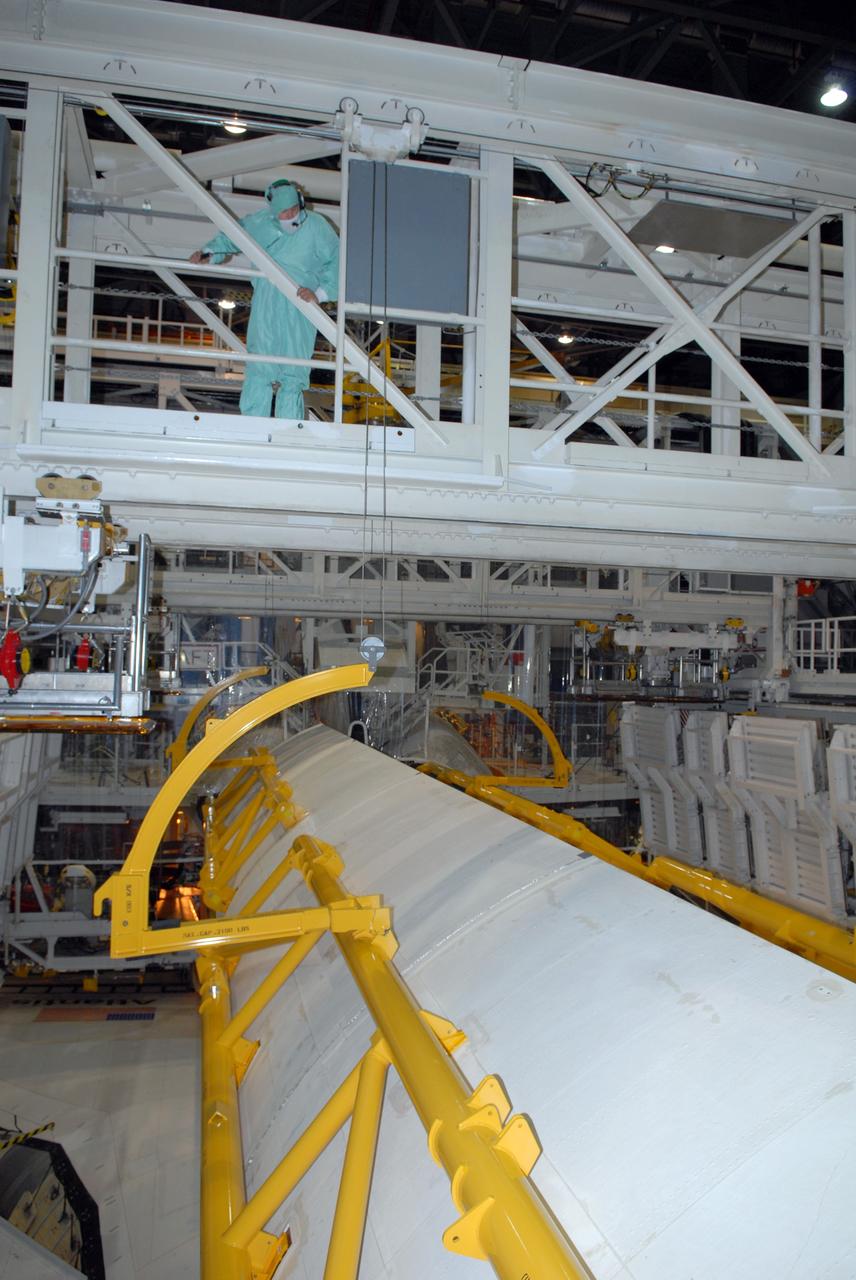
CAPE CANAVERAL, Fla. – In Orbiter Processing Facility 1 at NASA's Kennedy Space Center, a worker from United Space Alliance supervises the closure of the payload bay doors on space shuttle Atlantis. The payload bay has been thoroughly cleaned and is ready to receive the carriers transporting the instruments and equipment needed to service the Hubble Space Telescope. Atlantis is targeted to launch Oct. 8 on the STS-125 mission to service Hubble. The mission crew will perform history-making, on-orbit “surgery” on two important science instruments aboard the telescope. After capturing the telescope, two teams of spacewalking astronauts will perform the repairs during five planned spacewalks. Photo credit: NASA/Jack Pfaller
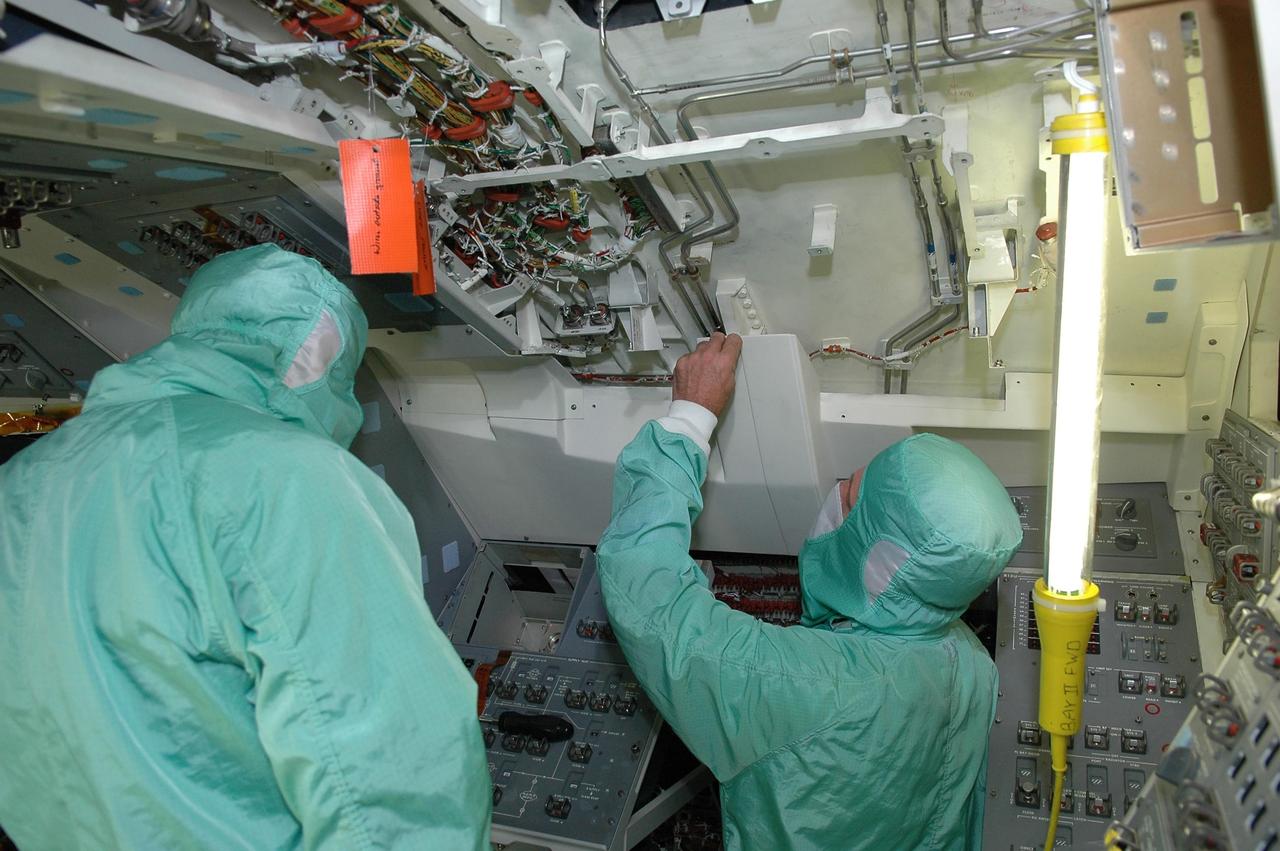
KENNEDY SPACE CENTER, FLA. - In bay 2 of the Orbiter Processing Facility, workers are installing the Multifunction Electronic Display Subsystem - a state-of-the-art “glass cockpit” - on the orbiter Endeavour. The “bunny suits” they are wearing are clean room attire required for anyone coming in close proximity to the orbiter. The full-color, flat-panel MEDS upgrade improves crew/orbiter interaction with easy-to-read, graphic portrayals of key flight indicators like attitude display and mach speed. Endeavour is undergoing major modifications, which include inspecting more than 150 miles of wiring and bonding 1,000 thermal tiles, along with installing the display system.
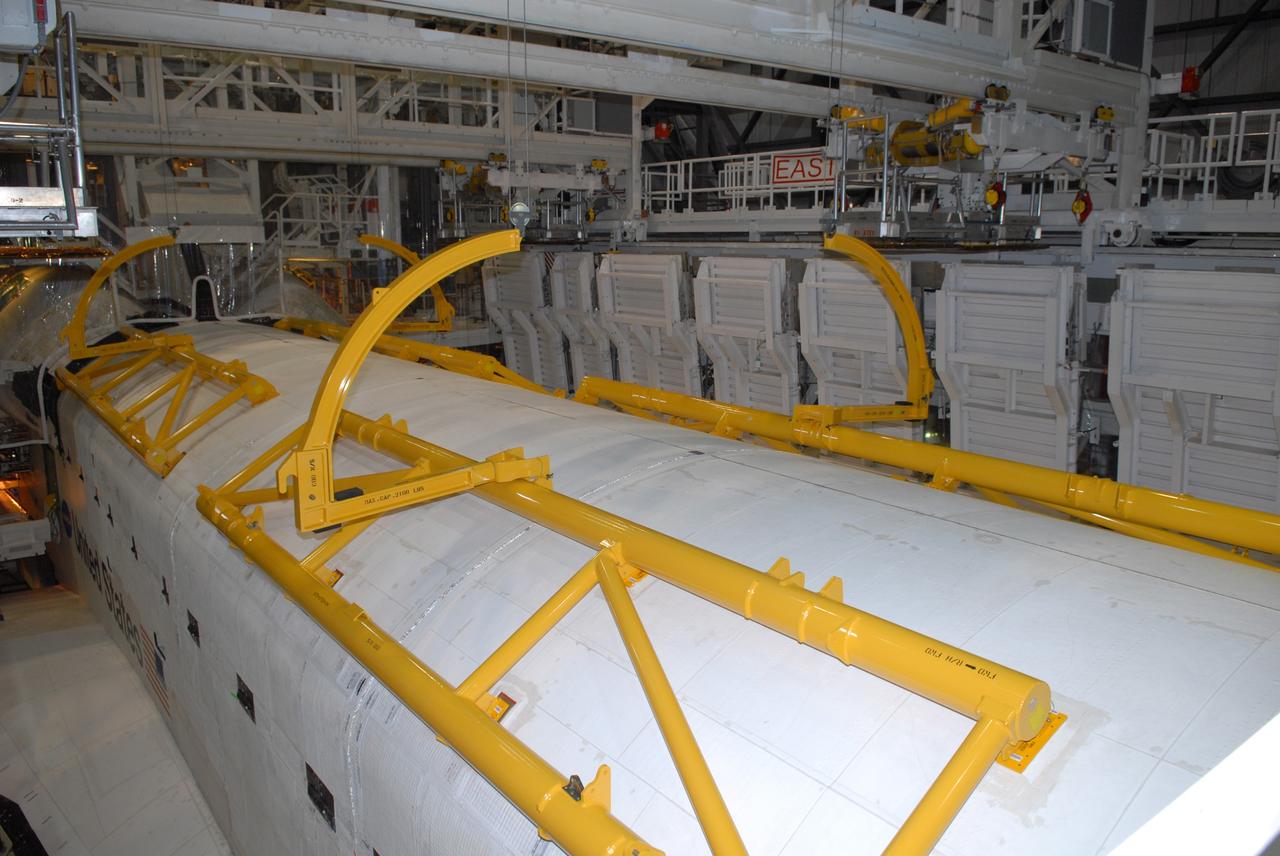
CAPE CANAVERAL, Fla. – In Orbiter Processing Facility 1 at NASA's Kennedy Space Center, the payload bay doors on space shuttle Atlantis are nearly closed. The payload bay has been thoroughly cleaned and is ready to receive the carriers transporting the instruments and equipment needed to service the Hubble Space Telescope. Atlantis is targeted to launch Oct. 8 on the STS-125 mission to service Hubble. The mission crew will perform history-making, on-orbit “surgery” on two important science instruments aboard the telescope. After capturing the telescope, two teams of spacewalking astronauts will perform the repairs during five planned spacewalks. Photo credit: NASA/Jack Pfaller
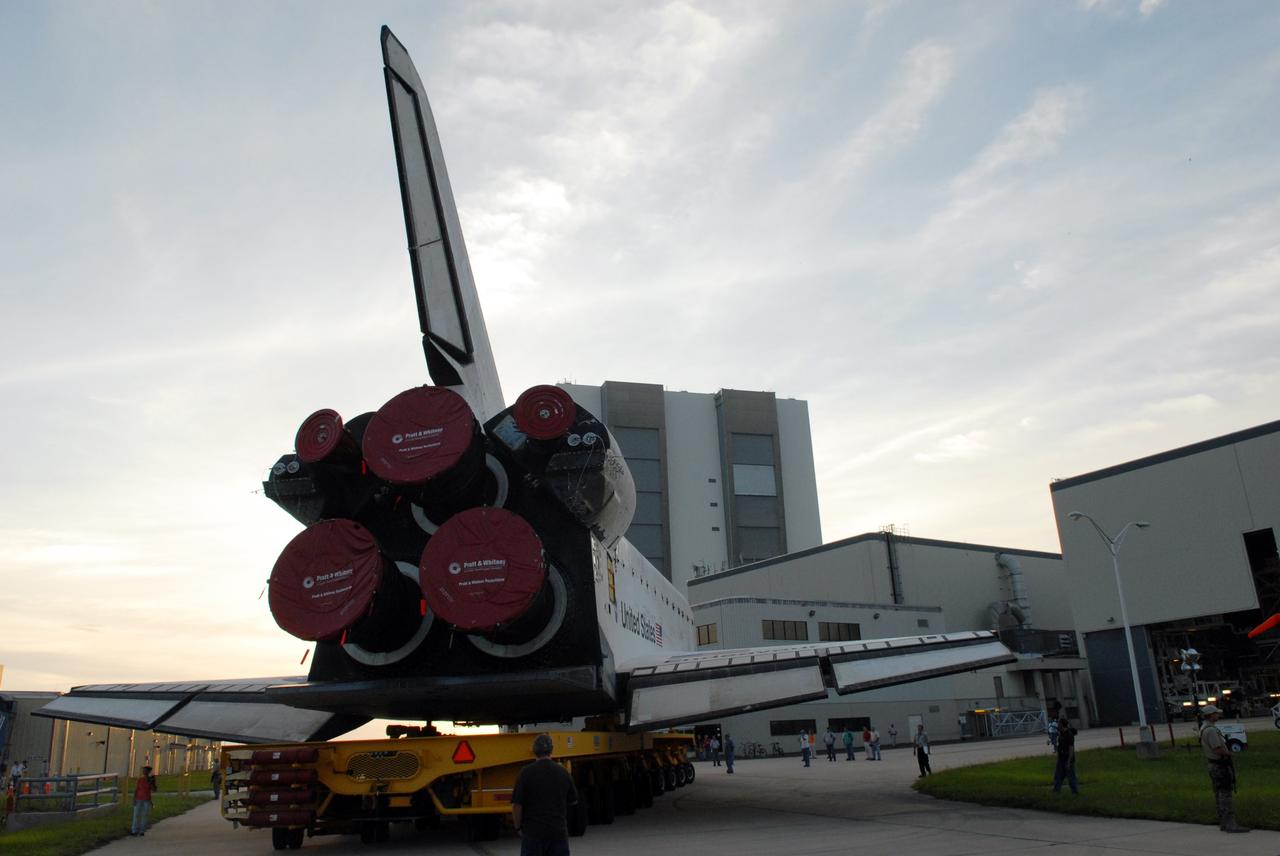
CAPE CANAVERAL, Fla. – Moved by the orbiter transporter, space shuttle Endeavour turns away from Orbiter Processing Facility 2 after rolling out to head to the Vehicle Assembly Building at NASA's Kennedy Space Center. First motion was 7:01 a.m. EDT. In the VAB, Endeavour will be attached to its external fuel tank and twin solid rocket boosters. After additional preparations are made, the shuttle will be rolled out to Launch Pad 39B. Endeavour is the backup shuttle, if needed for rescue, for space shuttle Atlantis’ STS-125 mission to NASA’s Hubble Space Telescope targeted for October. Photo credit: NASA/Troy Cryder
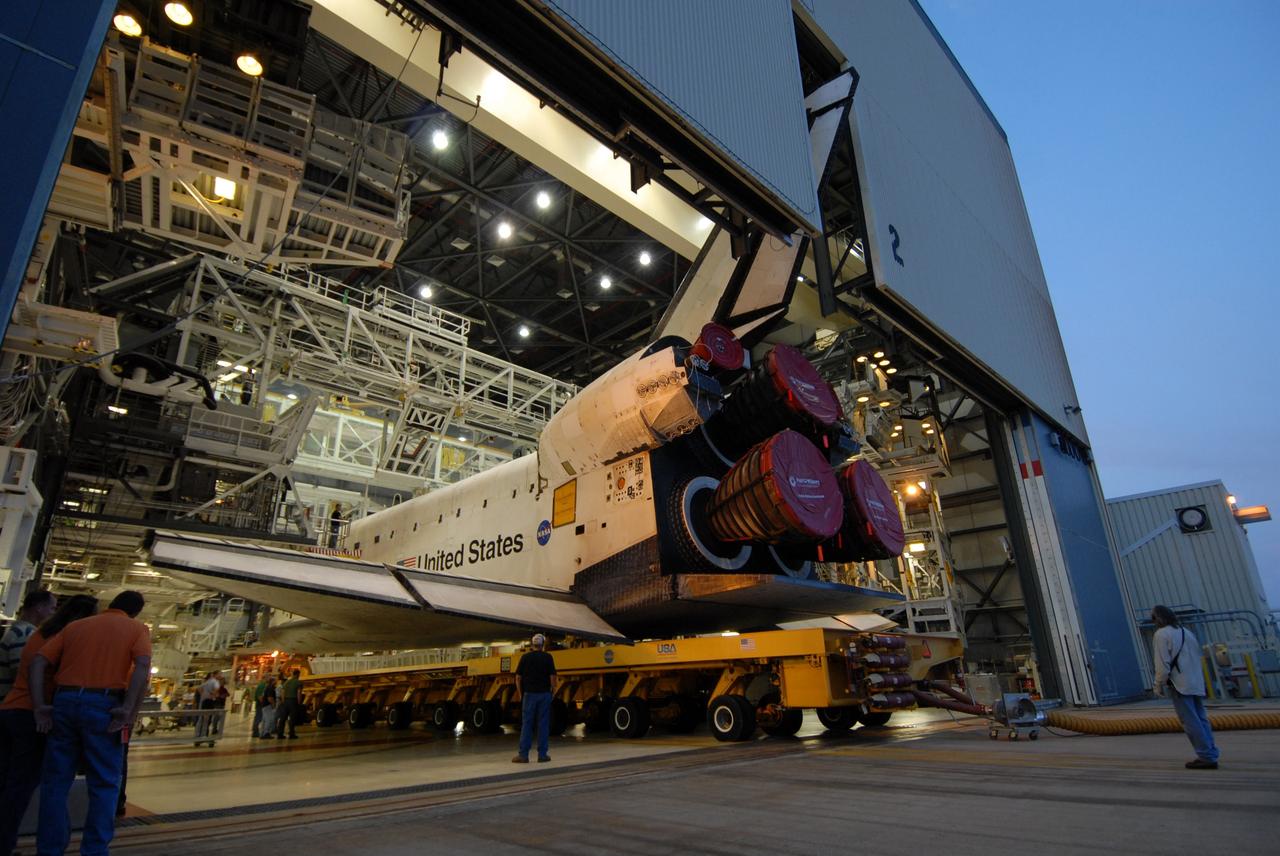
CAPE CANAVERAL, Fla. – Space shuttle Endeavour begins rolling out of Orbiter Processing Facility 2 to head to the Vehicle Assembly Building at NASA's Kennedy Space Center. First motion was 7:01 a.m. EDT. In the VAB, Endeavour will be attached to its external fuel tank and twin solid rocket boosters. After additional preparations are made, the shuttle will be rolled out to Launch Pad 39B. Endeavour is the backup shuttle, if needed for rescue, for space shuttle Atlantis’ STS-125 mission to NASA’s Hubble Space Telescope targeted for October. Photo credit: NASA/Troy Cryder

CAPE CANAVERAL, Fla. – Workers accompany space shuttle Endeavour as it rolls toward the Vehicle Assembly Building at NASA's Kennedy Space Center. The shuttle left Orbiter Processing Facility 2 with first motion at 7:01 am. EDT. In the VAB, Endeavour will be attached to its external fuel tank and twin solid rocket boosters. After additional preparations are made, the shuttle will be rolled out to Launch Pad 39B. Endeavour is the backup shuttle, if needed for rescue, for space shuttle Atlantis’ STS-125 mission to NASA’s Hubble Space Telescope targeted for October. Photo credit: NASA/Troy Cryder
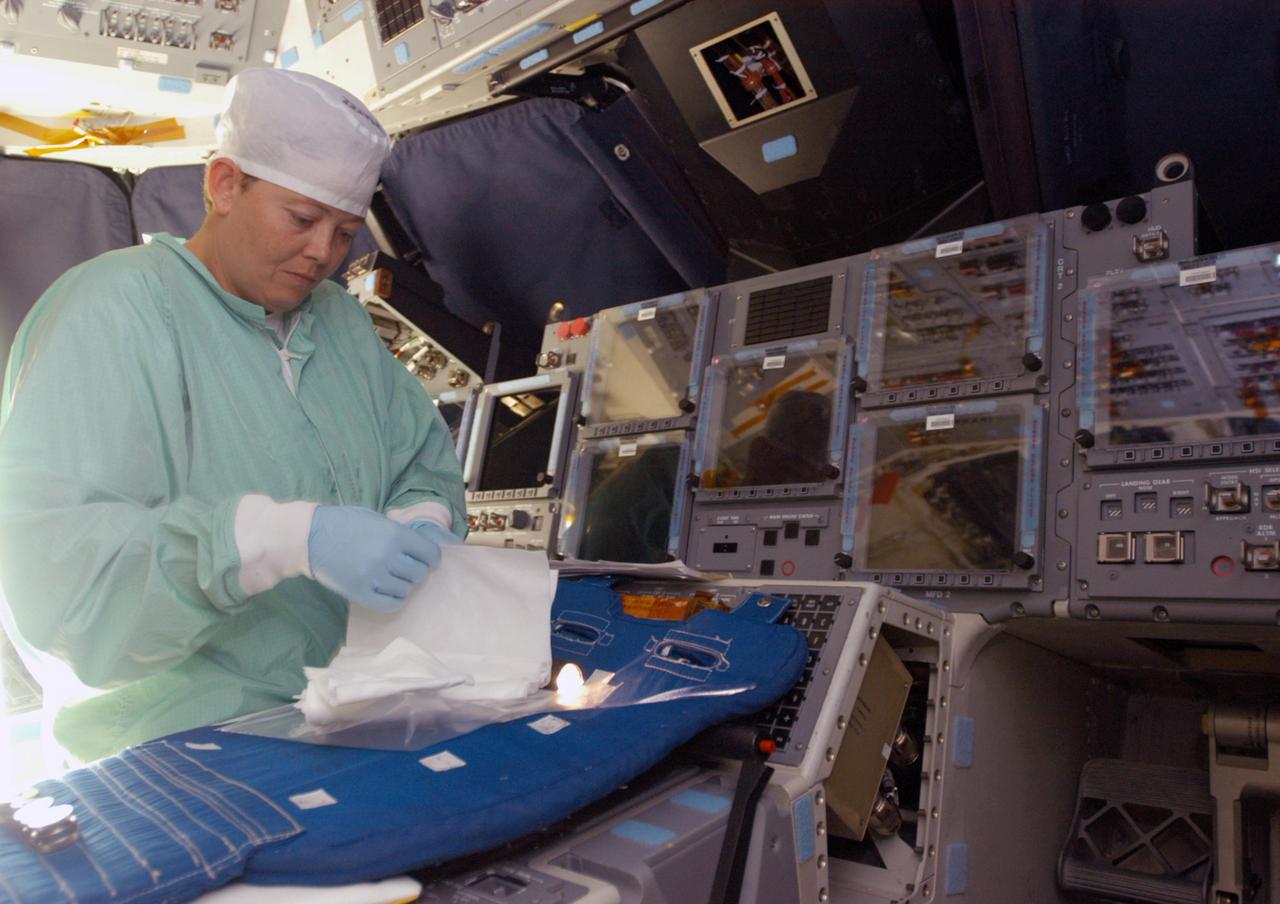
KENNEDY SPACE CENTER, FLA. - Carmen Prater, with United Space Alliance, works on the flight deck of the orbiter Endeavour in bay 2 of the Orbiter Processing Facility. She wears a “bunny suit,” clean room attire required for anyone coming in close proximity to the orbiter. Endeavour is undergoing major modifications, which include inspecting more than 150 miles of wiring, bonding 1,000 thermal tiles, and installing the Multifunction Electronic Display Subsystem - a state-of-the-art “glass cockpit.” The full-color, flat-panel MEDS upgrade improves crew/orbiter interaction with easy-to-read, graphic portrayals of key flight indicators like attitude display and mach speed.
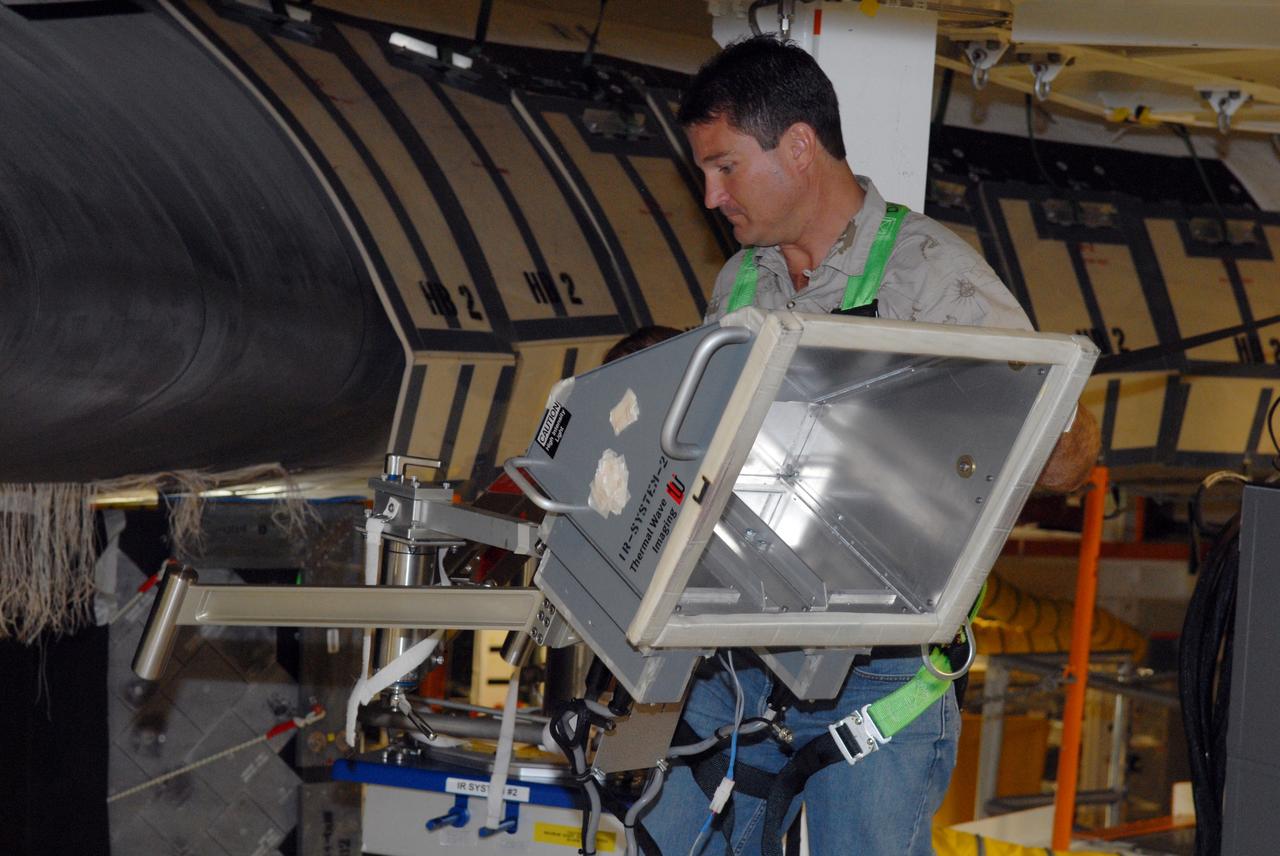
CAPE CANAVERAL, Fla. – Inside Orbiter Processing Facility 2 at NASA's Kennedy Space Center, a United Space Alliance technician inspects the reinforced carbon-carbon, or RCC, panels on Endeavour's wing leading edge using thermography to detect structural abnormalities. Endeavour will deliver a multi-purpose logistics module to the International Space Station on its STS-126 mission. Launch is targeted for Nov. 10. Photo credit: NASA/Amanda Diller
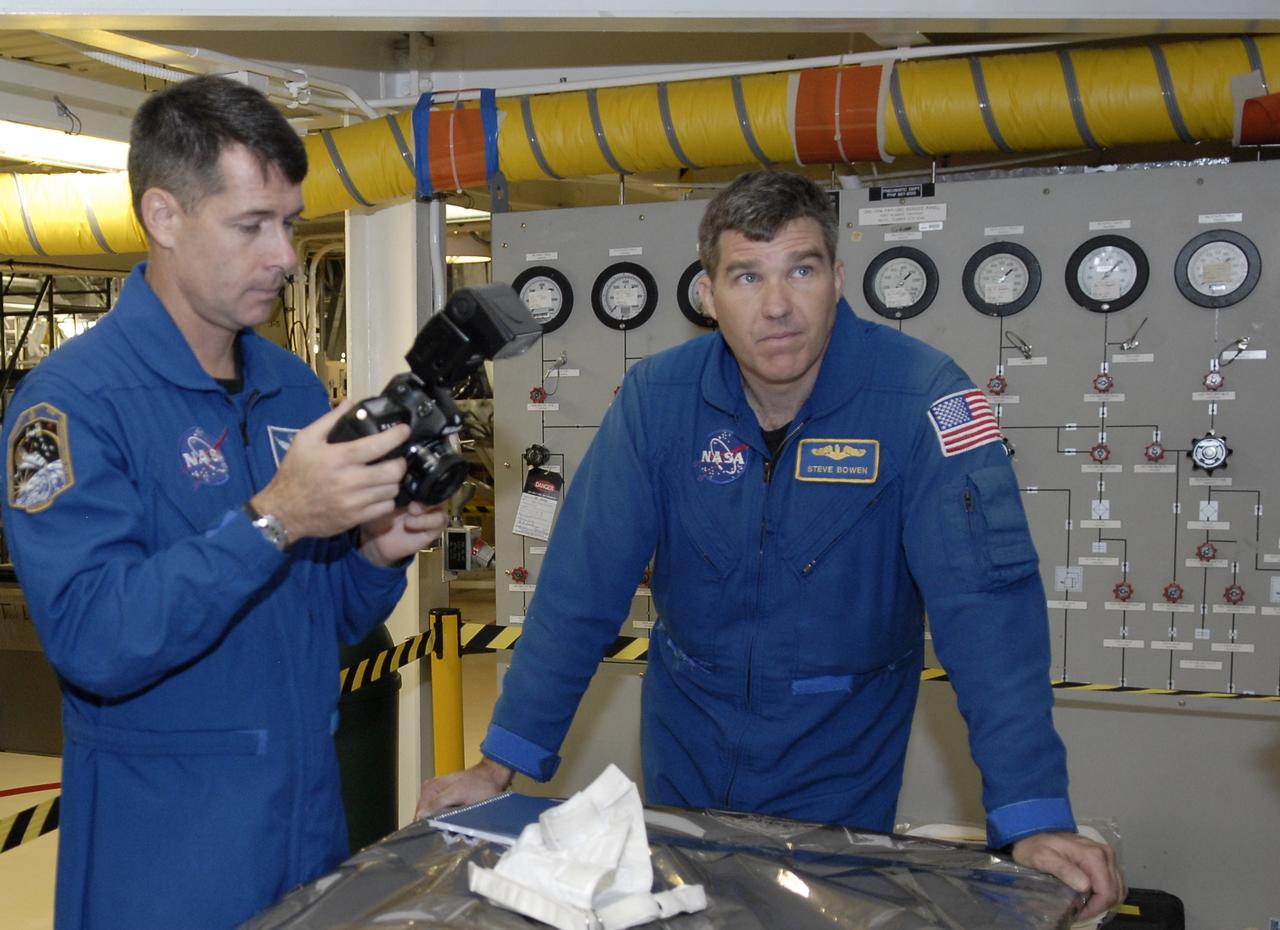
CAPE CANAVERAL, Fla. – In Orbiter Processing Facility 2 at NASA's Kennedy Space Center, members of space shuttle Endeavour's STS-126 crew participate in a crew equipment interface test, or CEIT. From left are Mission Specialists Shane Kimbrough and Steve Bowen. The CEIT provides hands-on experience with hardware and equipment slated to fly on their mission. Endeavour will deliver a multi-purpose logistics module to the International Space Station on the STS-126 mission. Launch is targeted for Nov. 10. Photo credit: NASA/Kim Shiflett
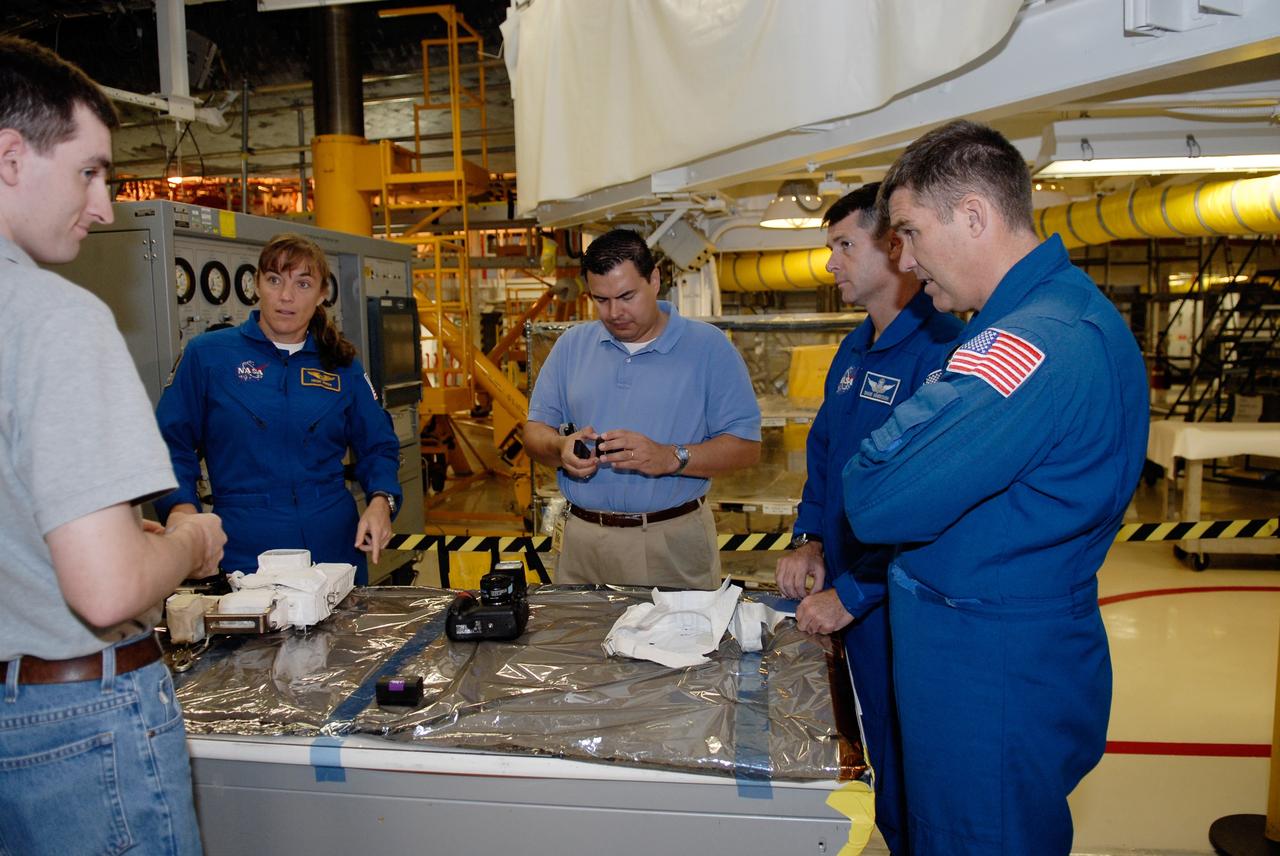
CAPE CANAVERAL, Fla. – In Orbiter Processing Facility 2 at NASA's Kennedy Space Center, members of space shuttle Endeavour's STS-126 crew participate in a crew equipment interface test, or CEIT. From left in the blue flight suits are Mission Specialists Heidemarie Stefanyshyn-Piper, Shane Kimbrough and Steve Bowen. The CEIT provides hands-on experience with hardware and equipment slated to fly on their mission. Endeavour will deliver a multi-purpose logistics module to the International Space Station on the STS-126 mission. Launch is targeted for Nov. 10. Photo credit: NASA/Kim Shiflett
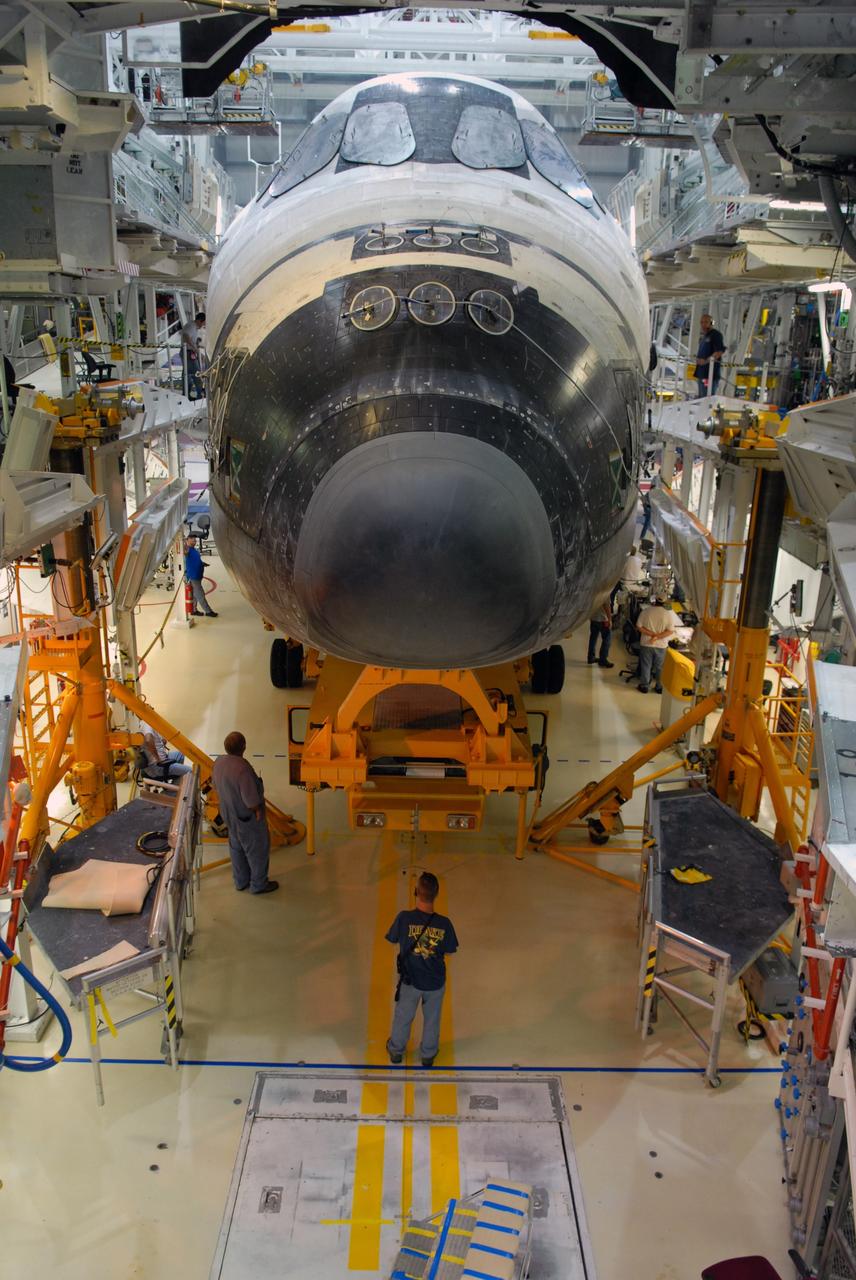
CAPE CANAVERAL, Fla. – Space shuttle Endeavour is ready to roll out of Orbiter Processing Facility 2 and head to the Vehicle Assembly Building at NASA's Kennedy Space Center. First motion was 7:01 a.m. EDT. In the VAB, Endeavour will be attached to its external fuel tank and twin solid rocket boosters. After additional preparations are made, the shuttle will be rolled out to Launch Pad 39B. Endeavour is the backup shuttle, if needed for rescue, for space shuttle Atlantis’ STS-125 mission to NASA’s Hubble Space Telescope targeted for October. Photo credit: NASA/Troy Cryder
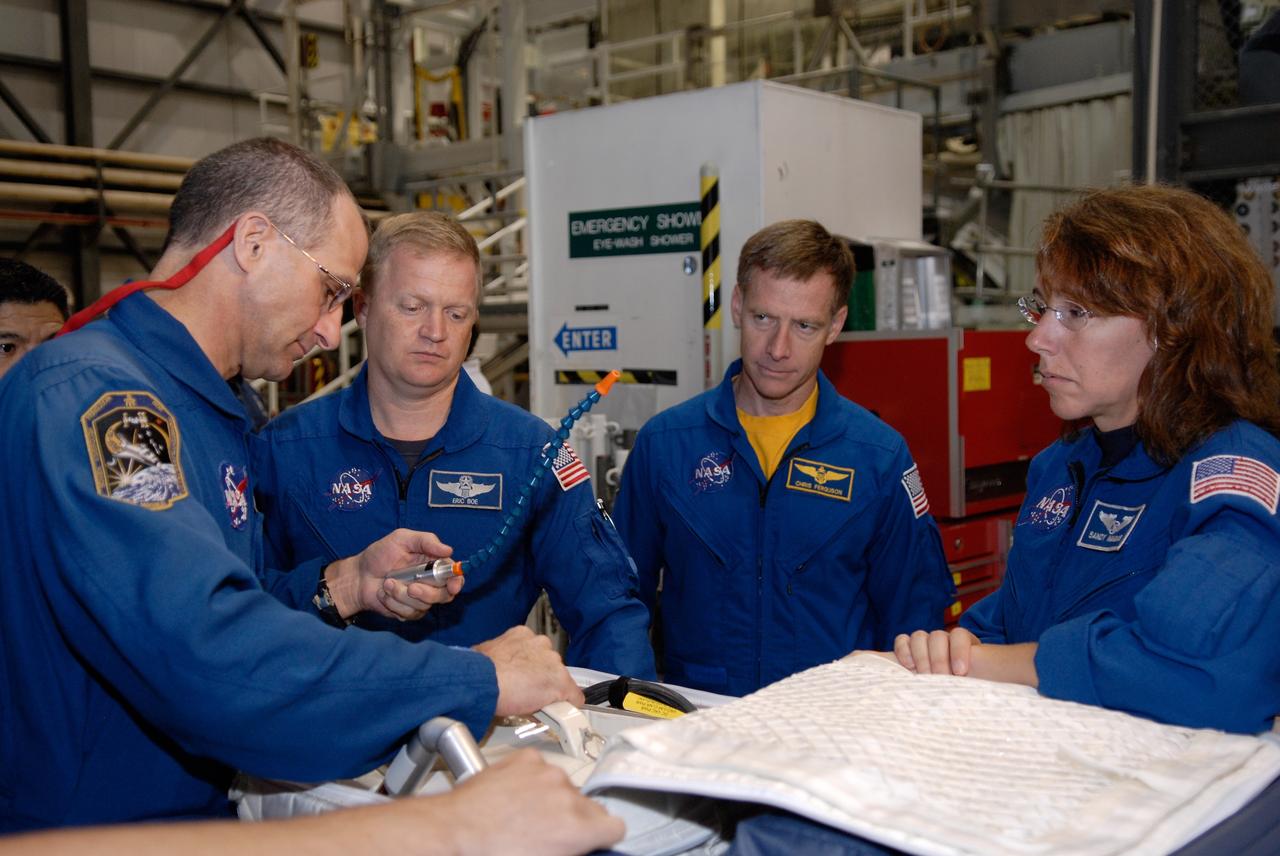
CAPE CANAVERAL, Fla. – In Orbiter Processing Facility 2 at NASA's Kennedy Space Center, members of space shuttle Endeavour's STS-126 crew participate in a crew equipment interface test, or CEIT. From left in the blue flight suits are Mission Specialists Donald Pettit, Pilot Eric Boe, Commander Chris Ferguson and International Space Station Expedition 18 flight engineer Sandra Magnus. The CEIT provides hands-on experience with hardware and equipment slated to fly on their mission. Endeavour will deliver a multi-purpose logistics module to the International Space Station on the STS-126 mission. Launch is targeted for Nov. 10. Photo credit: NASA/Kim Shiflett
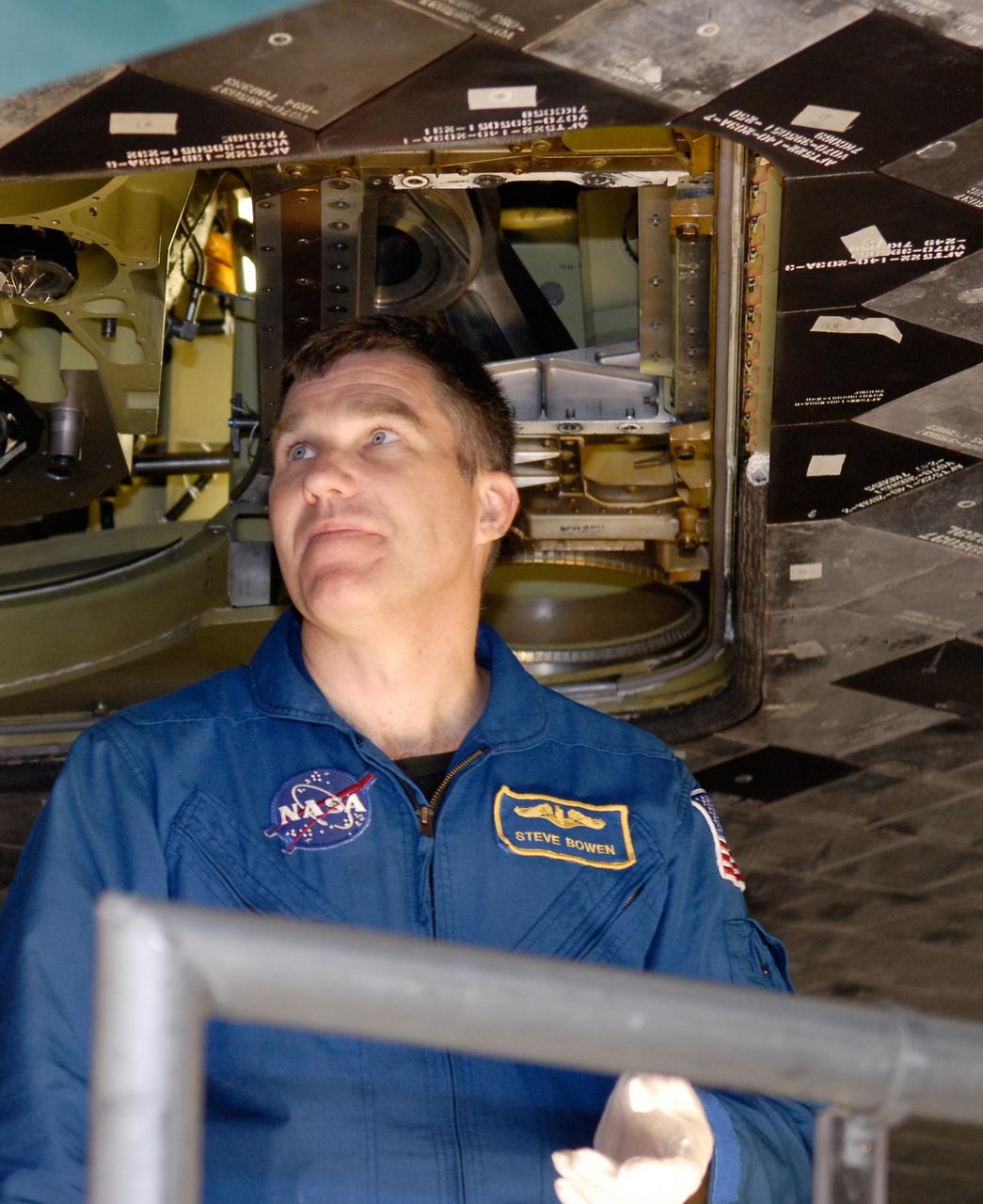
CAPE CANAVERAL, Fla. – In Orbiter Processing Facility 2 at NASA's Kennedy Space Center, members of space shuttle Endeavour's STS-126 crew participate in a crew equipment interface test, or CEIT. Shown here is Mission Specialist Steve Bowen. The CEIT provides hands-on experience with hardware and equipment slated to fly on their mission. Endeavour will deliver a multi-purpose logistics module to the International Space Station on the STS-126 mission. Launch is targeted for Nov. 10. Photo credit: NASA/Kim Shiflett
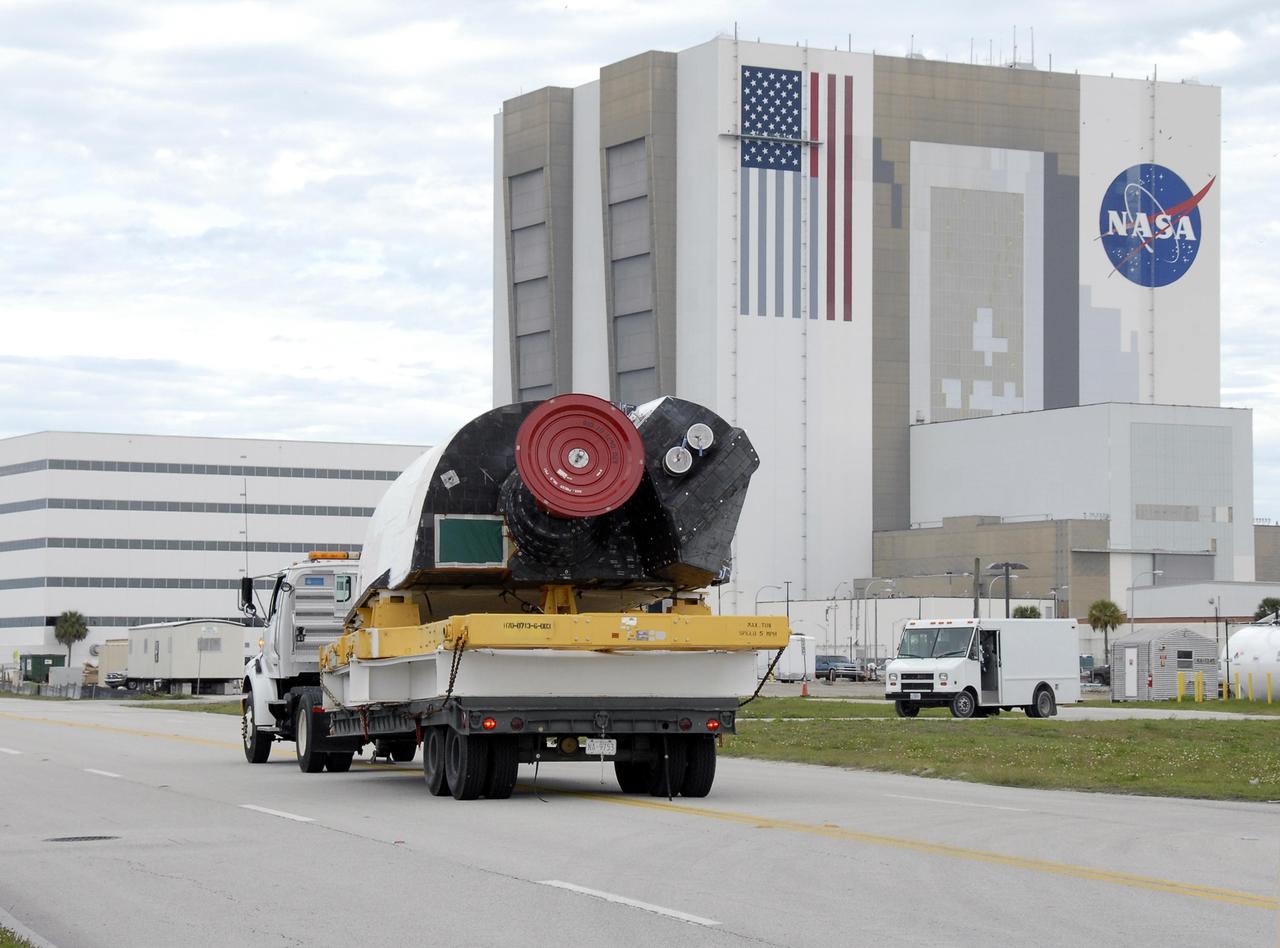
KENNEDY SPACE CENTER, FLA. -- The right-hand orbital maneuvering system pod is driven past the Vehicle Assembly Building on its way to Orbiter Processing Facility bay 2 for installation on the orbiter Endeavour. The orbital maneuvering system/reaction control system left- and right-hand pods are attached to the upper aft fuselage left and right sides. Each pod is fabricated primarily of graphite epoxy composite and aluminum. Each pod is 21.8 feet long and 11.37 feet wide at its aft end and 8.41 feet wide at its forward end, with a surface area of approximately 435 square feet. The orbiter is being prepared for its first launch in just over four years. The vehicle has undergone an extensive modification period, including the addition of all of the return-to-flight safety upgrades added to both Discovery and Atlantis. Endeavour is targeted for launch of mission STS-118 on June 28. Photo credit: NASA/Kim Shiflett
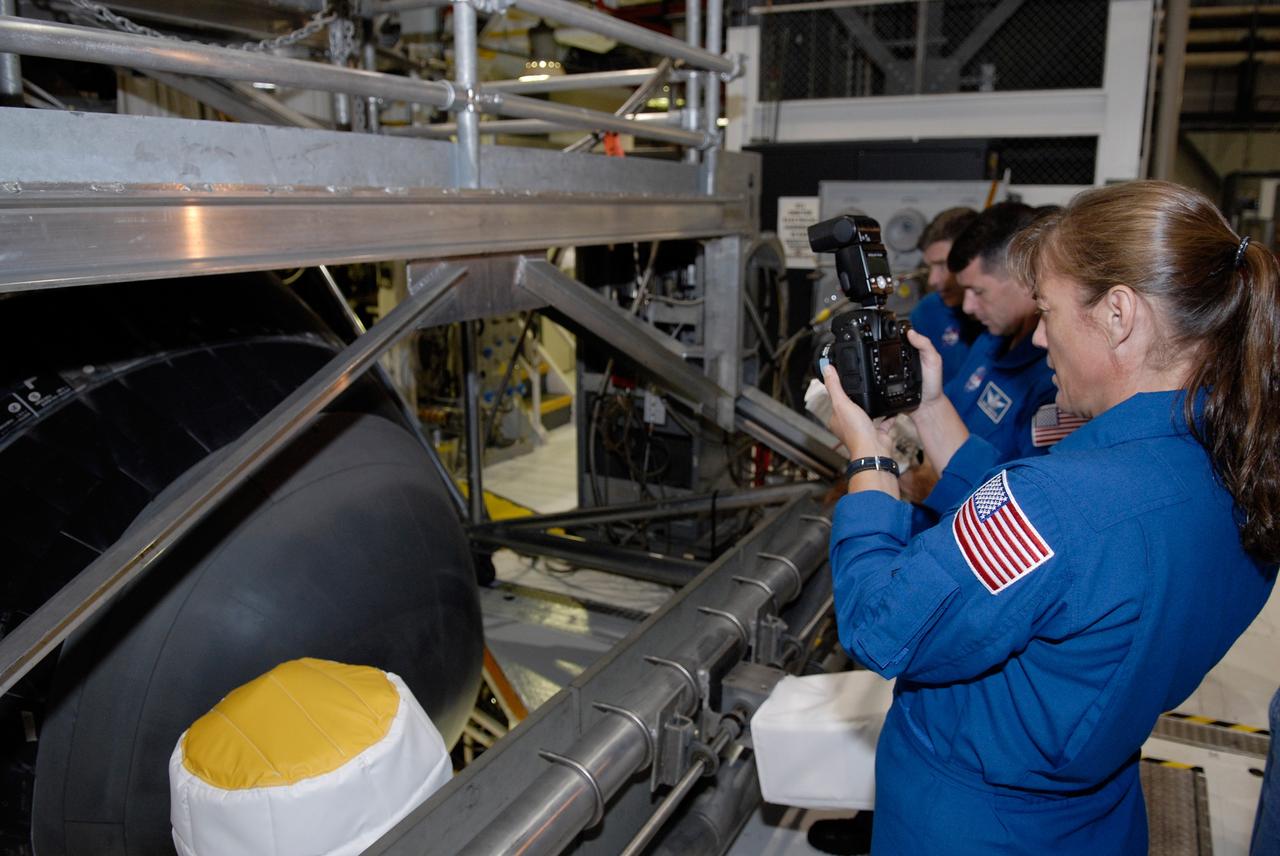
CAPE CANAVERAL, Fla. – In Orbiter Processing Facility 2 at NASA's Kennedy Space Center, members of space shuttle Endeavour's STS-126 crew participate in a crew equipment interface test, or CEIT. Here, Mission Specialist Heidemarie Stefanyshyn-Piper practices using one of the cameras that will fly on the mission. The CEIT provides hands-on experience with hardware and equipment slated to fly on their mission. Endeavour will deliver a multi-purpose logistics module to the International Space Station on the STS-126 mission. Launch is targeted for Nov. 10. Photo credit: NASA/Kim Shiflett
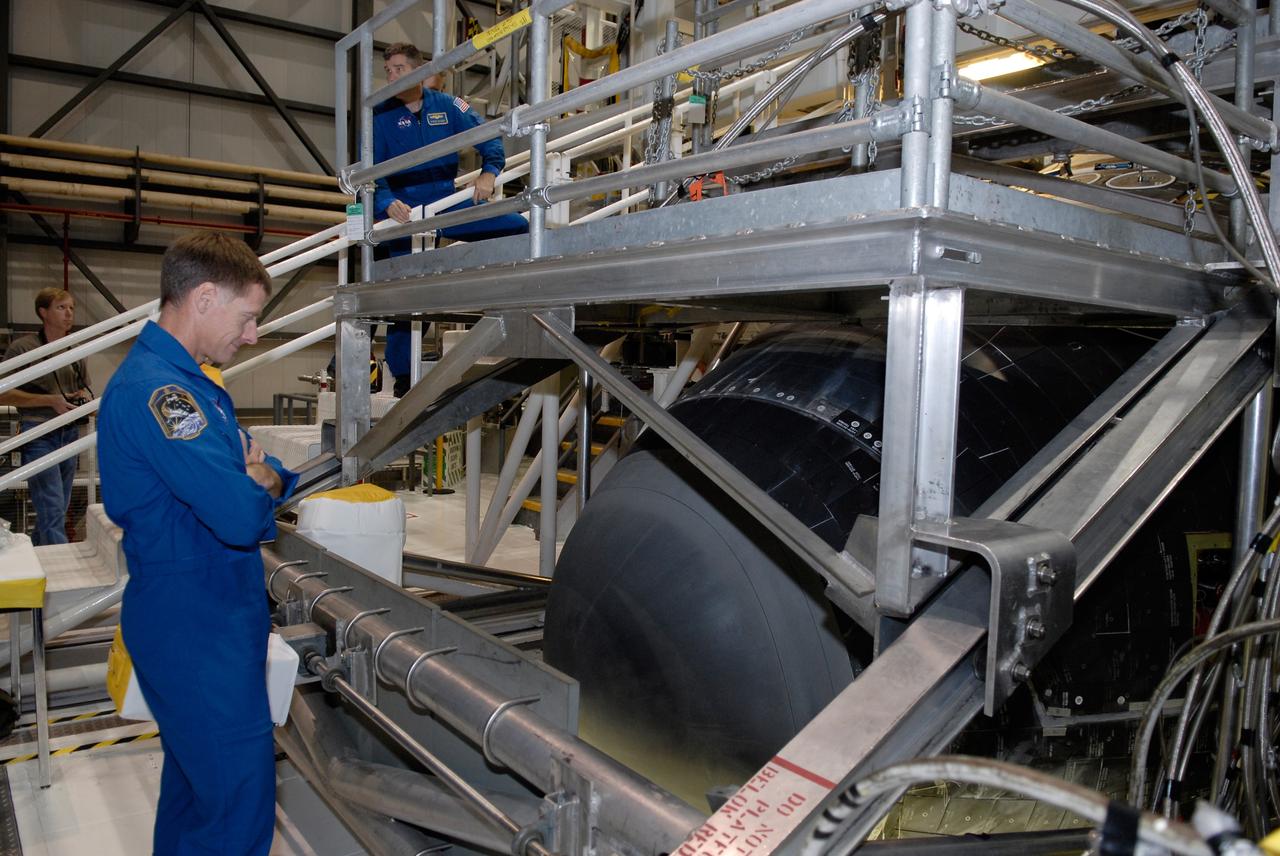
CAPE CANAVERAL, Fla. – In Orbiter Processing Facility 2 at NASA's Kennedy Space Center, members of space shuttle Endeavour's STS-126 crew participate in a crew equipment interface test, or CEIT. Here, Commander Chris Ferguson examines the nose cone of Endeavour. The CEIT provides hands-on experience with hardware and equipment slated to fly on their mission. Endeavour will deliver a multi-purpose logistics module to the International Space Station on the STS-126 mission. Launch is targeted for Nov. 10. Photo credit: NASA/Kim Shiflett
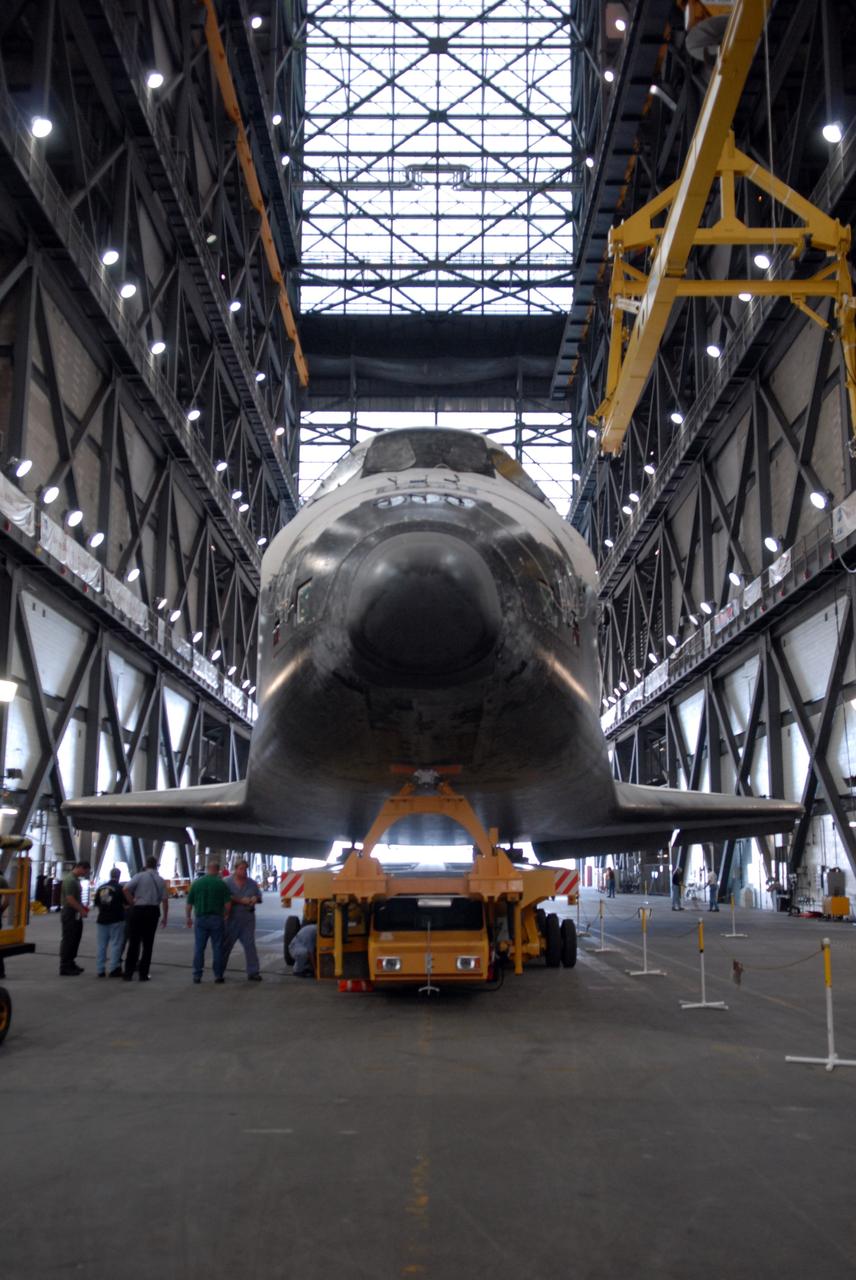
CAPE CANAVERAL, Fla. – After a short journey from Orbiter Processing Facility 2, space shuttle Endeavour is parked in the transfer aisle of the Vehicle Assembly Building at NASA's Kennedy Space Center. In the VAB, Endeavour will be attached to its external fuel tank and twin solid rocket boosters. After additional preparations are made, the shuttle will be rolled out to Launch Pad 39B. Endeavour is the backup shuttle, if needed for rescue, for space shuttle Atlantis’ STS-125 mission to NASA’s Hubble Space Telescope targeted for October. Photo credit: NASA/Troy Cryder
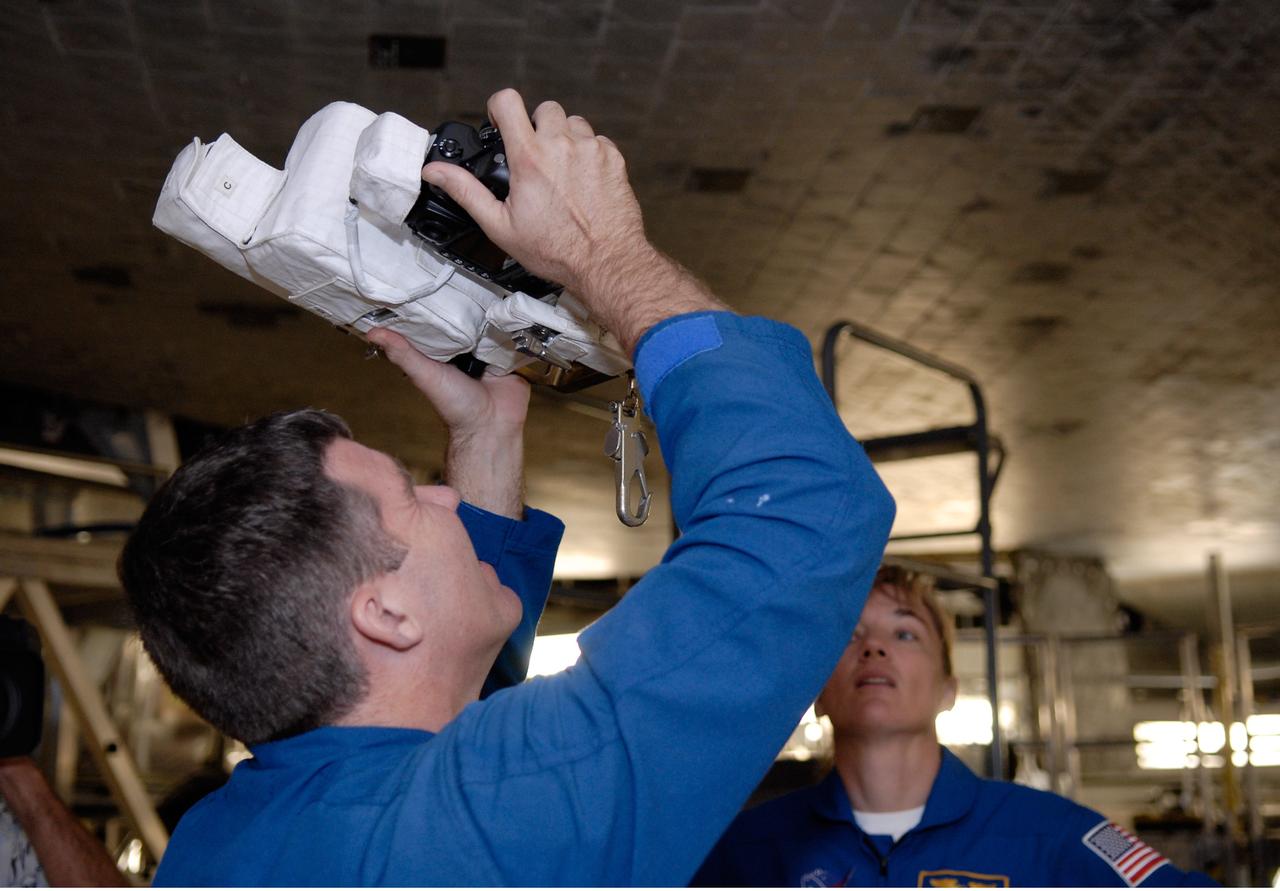
CAPE CANAVERAL, Fla. – In Orbiter Processing Facility 2 at NASA's Kennedy Space Center, members of space shuttle Endeavour's STS-126 crew participate in a crew equipment interface test, or CEIT. From left are Mission Specialists Steve Bowen and Heidemarie Stefanyshyn-Piper. The CEIT provides hands-on experience with hardware and equipment slated to fly on their mission. Endeavour will deliver a multi-purpose logistics module to the International Space Station on the STS-126 mission. Launch is targeted for Nov. 10. Photo credit: NASA/Kim Shiflett
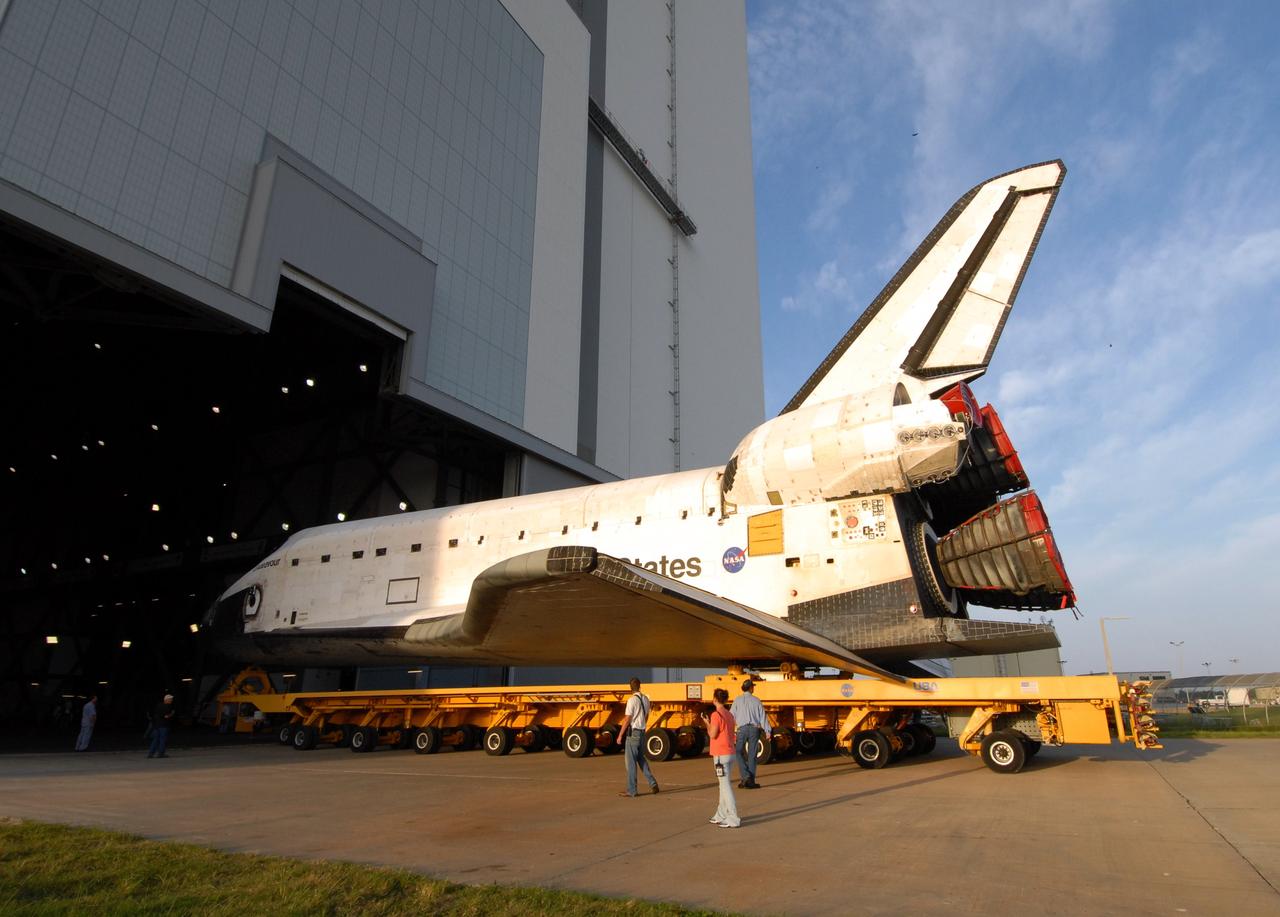
CAPE CANAVERAL, Fla. – After rolling out of Orbiter Processing Facility 2, space shuttle Endeavour rolls through the open doors of the Vehicle Assembly Building at NASA's Kennedy Space Center. In the VAB, Endeavour will be attached to its external fuel tank and twin solid rocket boosters. After additional preparations are made, the shuttle will be rolled out to Launch Pad 39B. Endeavour is the backup shuttle, if needed for rescue, for space shuttle Atlantis’ STS-125 mission to NASA’s Hubble Space Telescope targeted for October. Photo credit: NASA/Troy Cryder
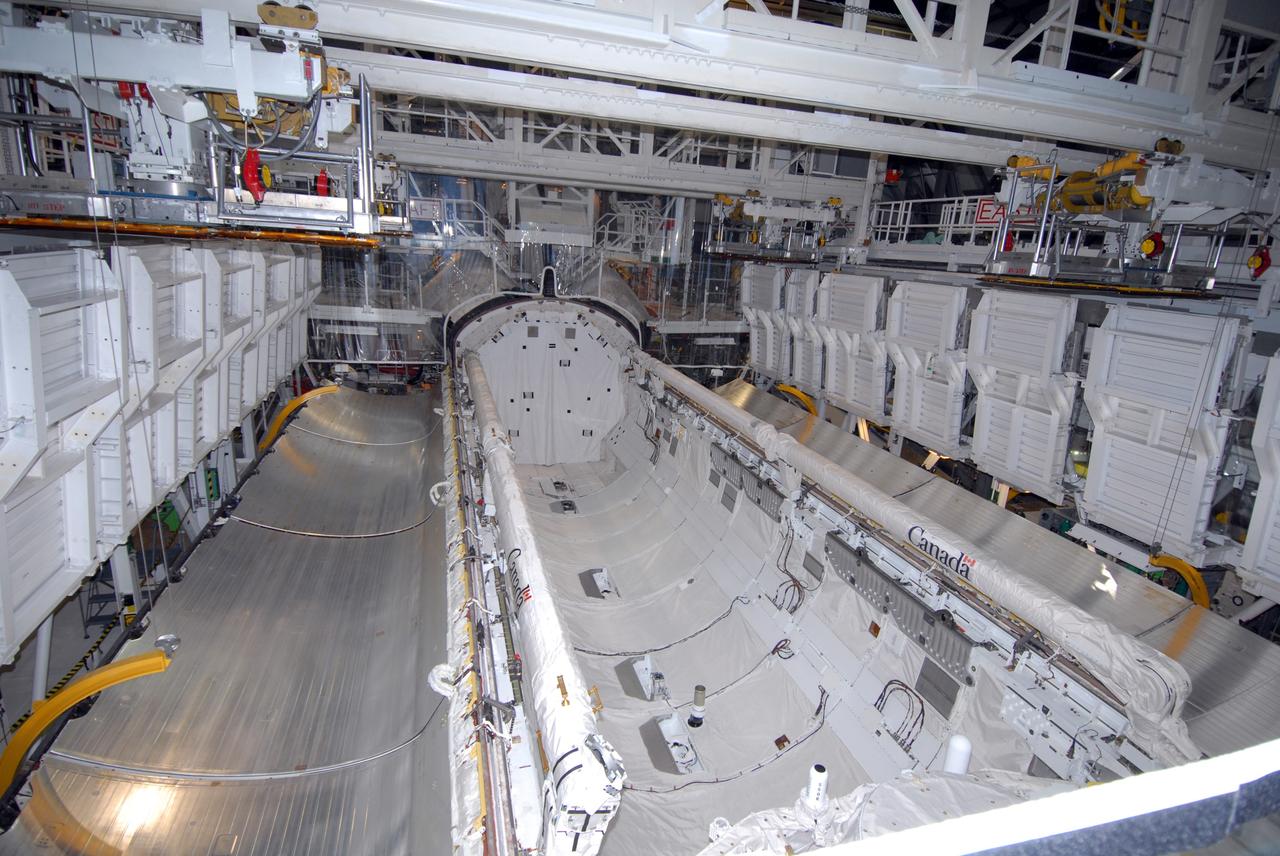
CAPE CANAVERAL, Fla. – In Orbiter Processing Facility 1 at NASA's Kennedy Space Center, space shuttle Atlantis' payload bay has been thoroughly cleaned and is ready to receive the carriers transporting the instruments and equipment needed to service the Hubble Space Telescope. Atlantis is targeted to launch Oct. 8 on the STS-125 mission to service Hubble. The mission crew will perform history-making, on-orbit “surgery” on two important science instruments aboard the telescope. After capturing the telescope, two teams of spacewalking astronauts will perform the repairs during five planned spacewalks. Photo credit: NASA/Jack Pfaller
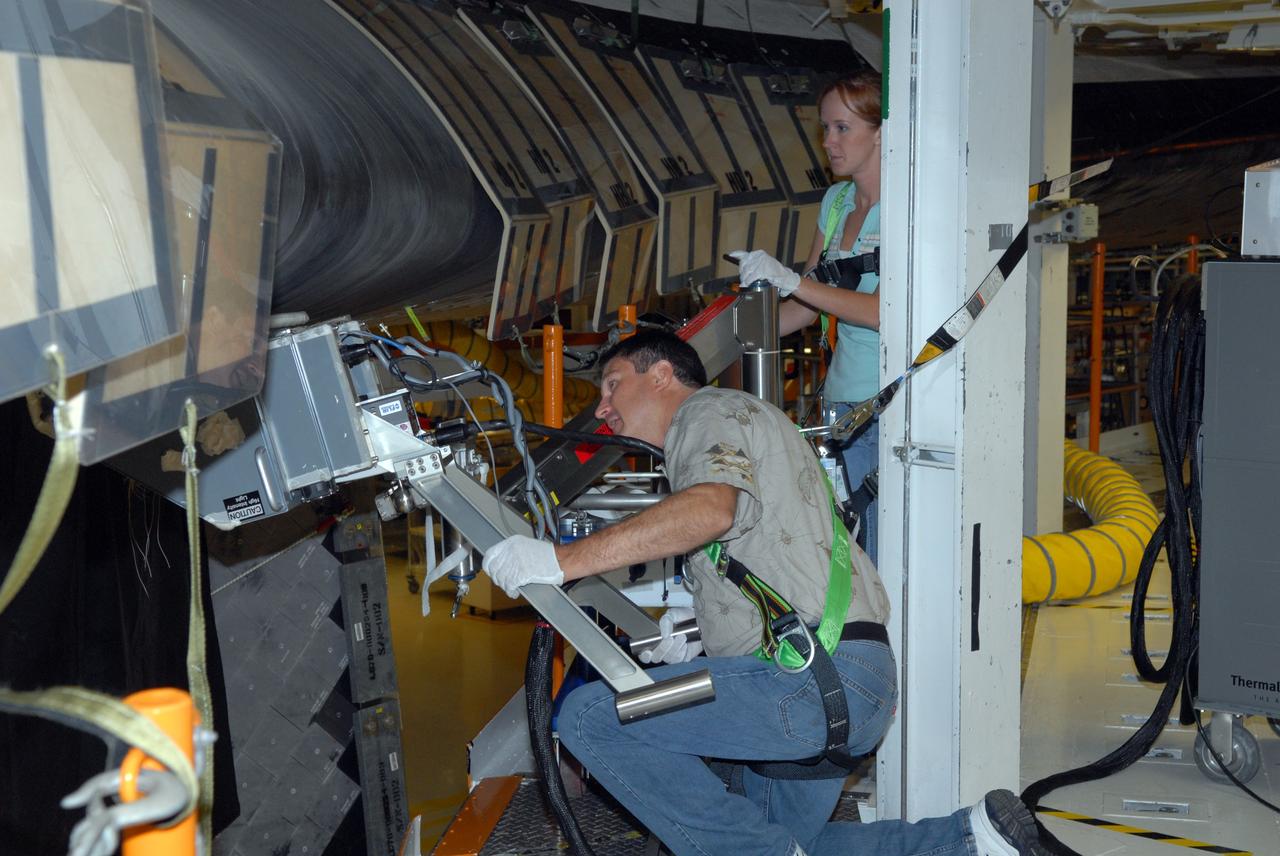
CAPE CANAVERAL, Fla. – Inside Orbiter Processing Facility 2 at NASA's Kennedy Space Center, United Space Alliance technicians inspect the reinforced carbon-carbon, or RCC, panels on Endeavour's wing leading edge using thermography to detect structural abnormalities. Endeavour will deliver a multi-purpose logistics module to the International Space Station on its STS-126 mission. Launch is targeted for Nov. 10. Photo credit: NASA/Amanda Diller
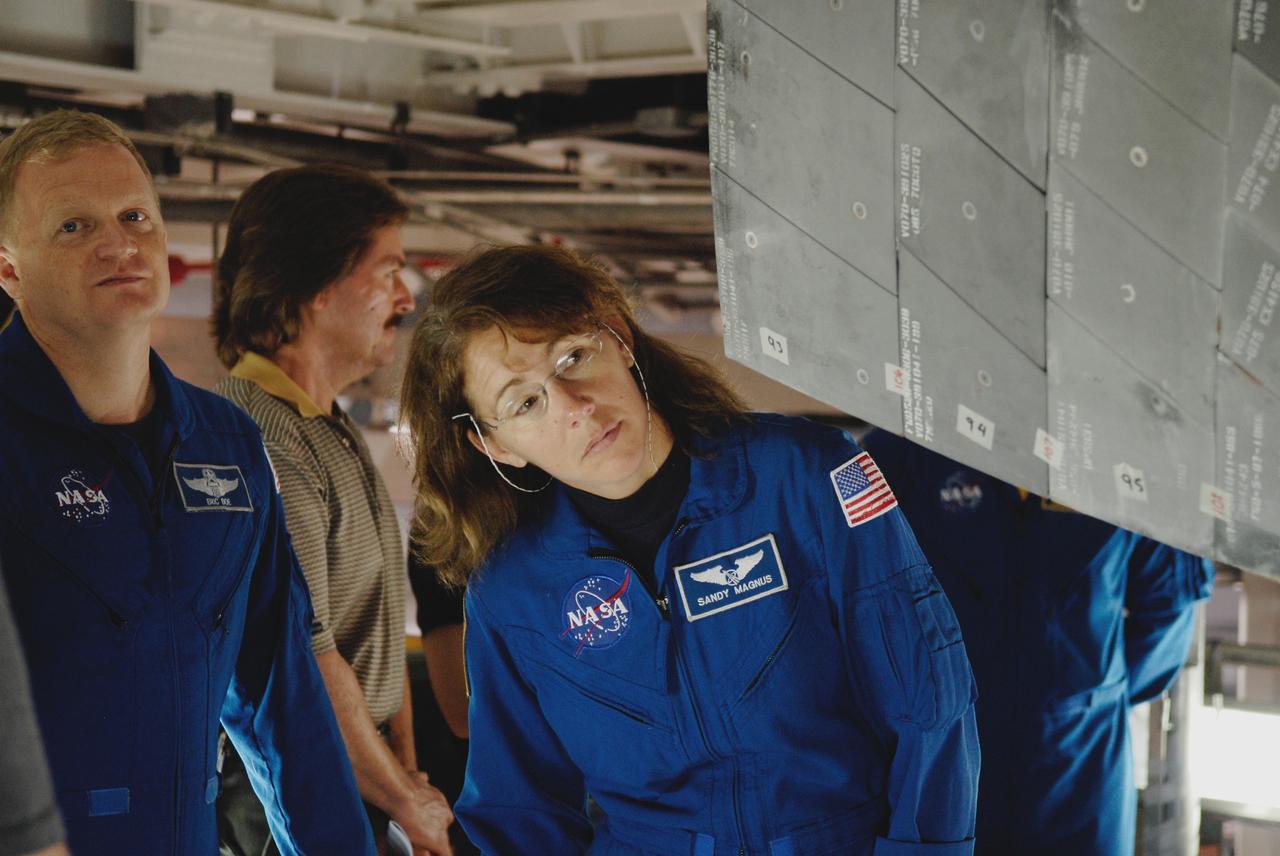
CAPE CANAVERAL, Fla. – In Orbiter Processing Facility 2 at NASA's Kennedy Space Center, members of space shuttle Endeavour's STS-126 crew participate in a crew equipment interface test, or CEIT. Here, Pilot Eric Boe, left, and International Space Station Expedition 18 flight engineer Sandra Magnus examine the thermal protection system tile on Endeavour. The CEIT provides hands-on experience with hardware and equipment slated to fly on their mission. Endeavour will deliver a multi-purpose logistics module to the International Space Station on the STS-126 mission. Launch is targeted for Nov. 10. Photo credit: NASA/Kim Shiflett
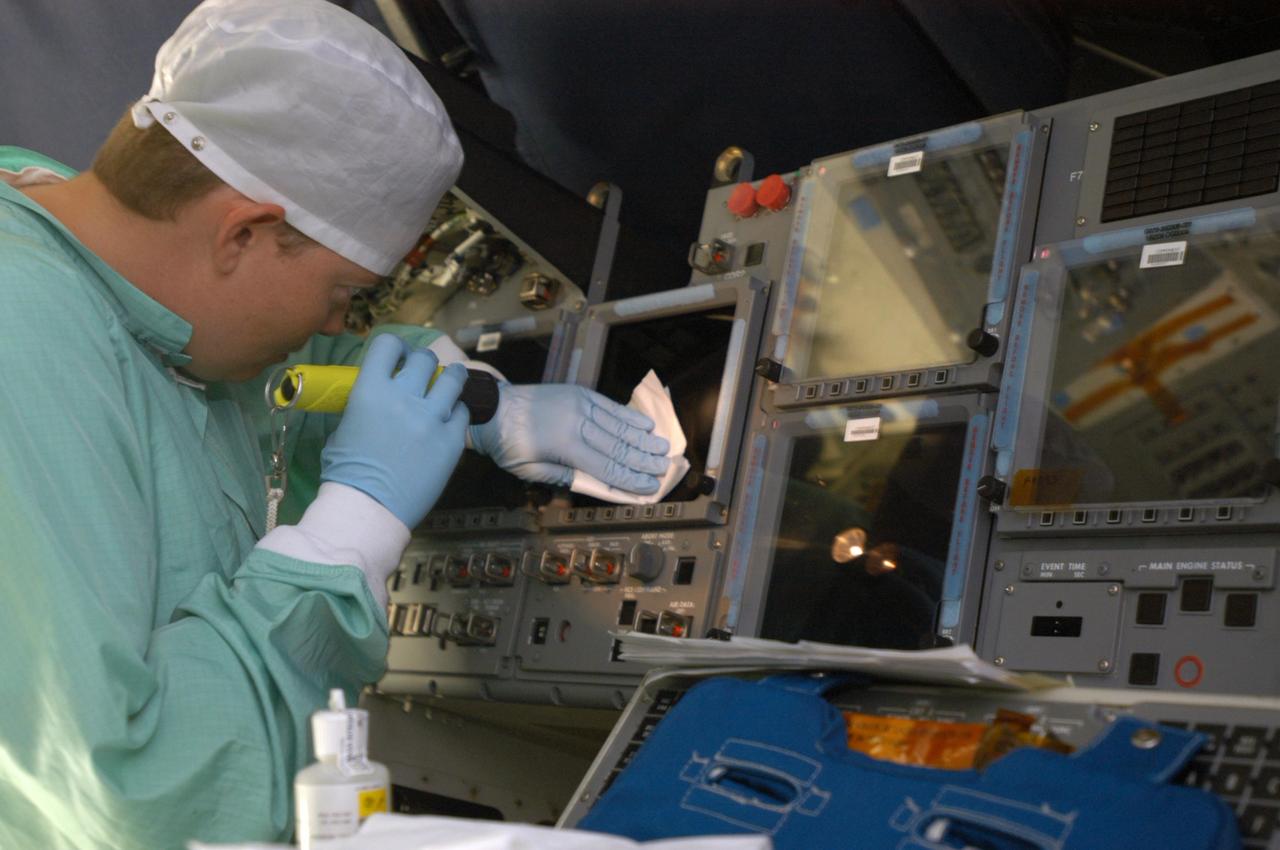
KENNEDY SPACE CENTER, FLA. - Carmen Prater, with United Space Alliance, cleans a screen on the flight deck of the orbiter Endeavour in bay 2 of the Orbiter Processing Facility. She wears a “bunny suit,” clean room attire required for anyone coming in close proximity to the orbiter. Endeavour is undergoing major modifications, which include inspecting more than 150 miles of wiring, bonding 1,000 thermal tiles, and installing the Multifunction Electronic Display Subsystem - a state-of-the-art “glass cockpit.” The full-color, flat-panel MEDS upgrade improves crew/orbiter interaction with easy-to-read, graphic portrayals of key flight indicators like attitude display and mach speed.
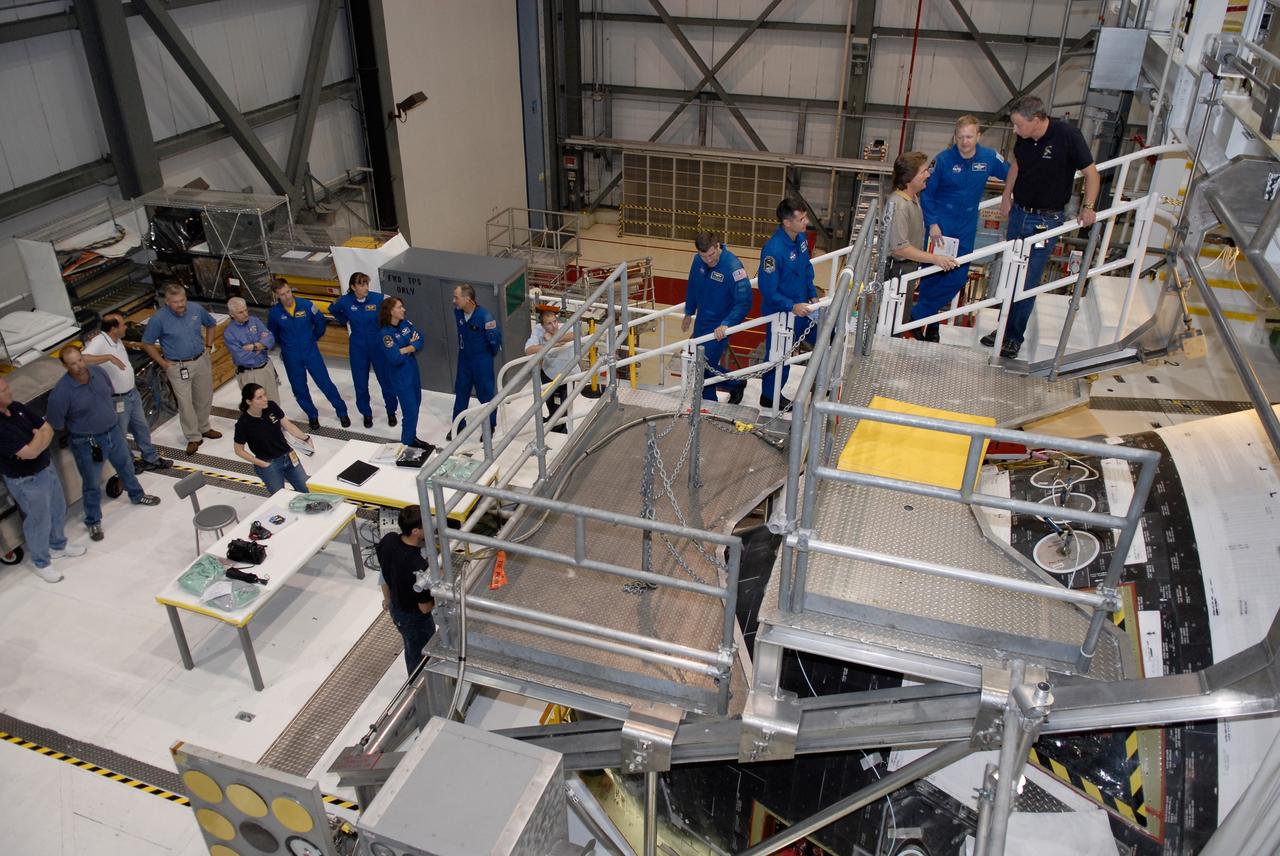
CAPE CANAVERAL, Fla. – In Orbiter Processing Facility 2 at NASA's Kennedy Space Center, members of space shuttle Endeavour's STS-126 crew participate in a crew equipment interface test, or CEIT. From left in the blue flight suits are Commander Chirs Ferguson; Mission Specialist Heidemarie Stefanyshyn-Piper; International Space Station Expedition 18 flight engineer Sandra Magnus; Mission Specialists Donald Pettit, Steve Bowen and Shane Kimbrough; and Pilot Eric Boe. The CEIT provides hands-on experience with hardware and equipment slated to fly on their mission. Endeavour will deliver a multi-purpose logistics module to the International Space Station on the STS-126 mission. Launch is targeted for Nov. 10. Photo credit: NASA/Kim Shiflett

CAPE CANAVERAL, Fla. – Inside Orbiter Processing Facility 2 at NASA's Kennedy Space Center, United Space Alliance technicians inspect a reinforced carbon-carbon panel on Endeavour's wing leading edge using thermography to detect structural abnormalities. Endeavour will deliver a multi-purpose logistics module to the International Space Station on its STS-126 mission. Launch is targeted for Nov. 10. Photo credit: NASA/Amanda Diller

CAPE CANAVERAL, Fla. – In Orbiter Processing Facility 1 at NASA's Kennedy Space Center, preparations are under way to close the payload bay doors on space shuttle Atlantis. The payload bay has been thoroughly cleaned and is ready to receive the carriers transporting the instruments and equipment needed to service the Hubble Space Telescope. Atlantis is targeted to launch Oct. 8 on the STS-125 mission to service Hubble. The mission crew will perform history-making, on-orbit “surgery” on two important science instruments aboard the telescope. After capturing the telescope, two teams of spacewalking astronauts will perform the repairs during five planned spacewalks. Photo credit: NASA/Jack Pfaller
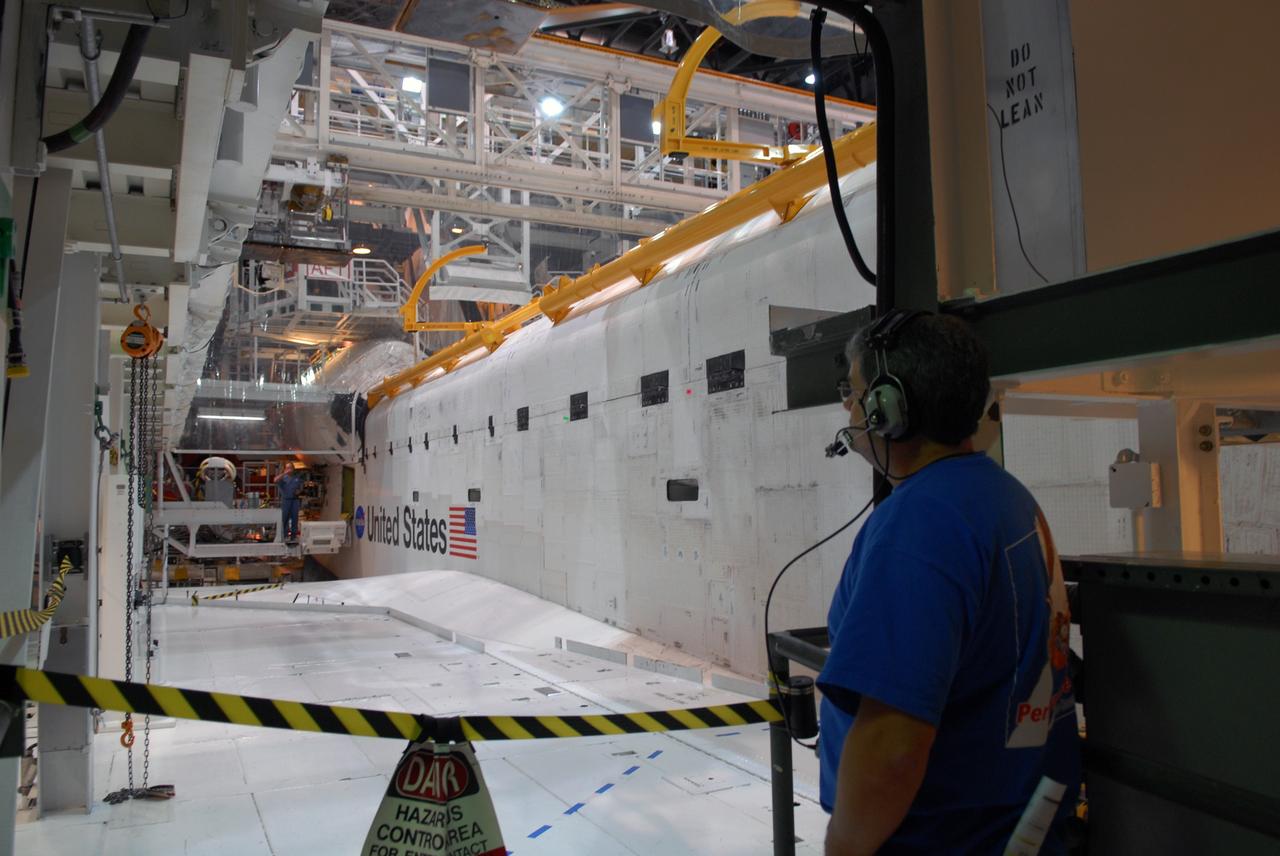
CAPE CANAVERAL, Fla. – In Orbiter Processing Facility 1 at NASA's Kennedy Space Center, a worker from United Space Alliance gives the signal that the payload bay doors on space shuttle Atlantis are closed. The payload bay has been thoroughly cleaned and is ready to receive the carriers transporting the instruments and equipment needed to service the Hubble Space Telescope. Atlantis is targeted to launch Oct. 8 on the STS-125 mission to service Hubble. The mission crew will perform history-making, on-orbit “surgery” on two important science instruments aboard the telescope. After capturing the telescope, two teams of spacewalking astronauts will perform the repairs during five planned spacewalks. Photo credit: NASA/Jack Pfaller
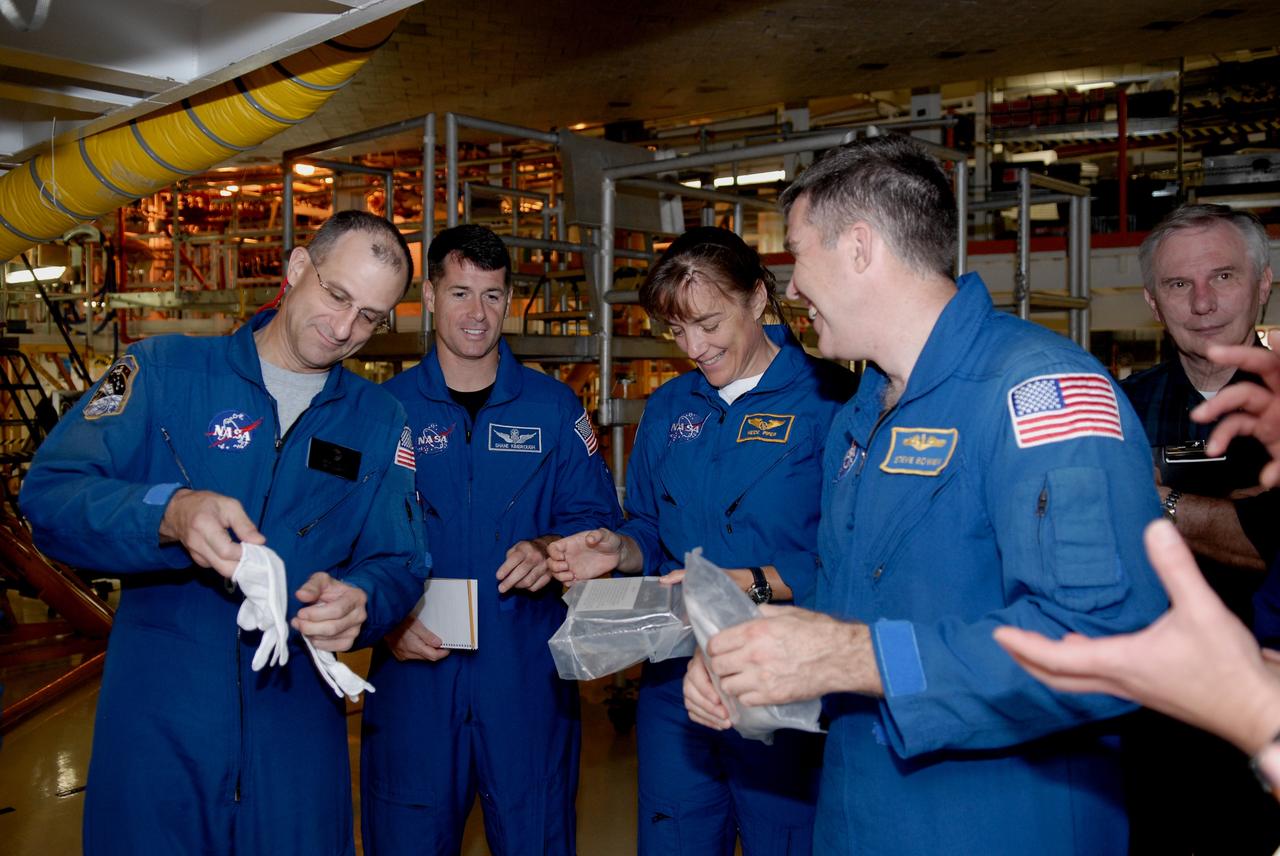
CAPE CANAVERAL, Fla. – In Orbiter Processing Facility 2 at NASA's Kennedy Space Center, members of space shuttle Endeavour's STS-126 crew participate in a crew equipment interface test, or CEIT. From left in the blue flight suits are Mission Specialists Donald Pettit, Shane Kimbrough, Heidemarie Stefanyshyn-Piper and Steve Bowen. The CEIT provides hands-on experience with hardware and equipment slated to fly on their mission. Endeavour will deliver a multi-purpose logistics module to the International Space Station on the STS-126 mission. Launch is targeted for Nov. 10. Photo credit: NASA/Kim Shiflett
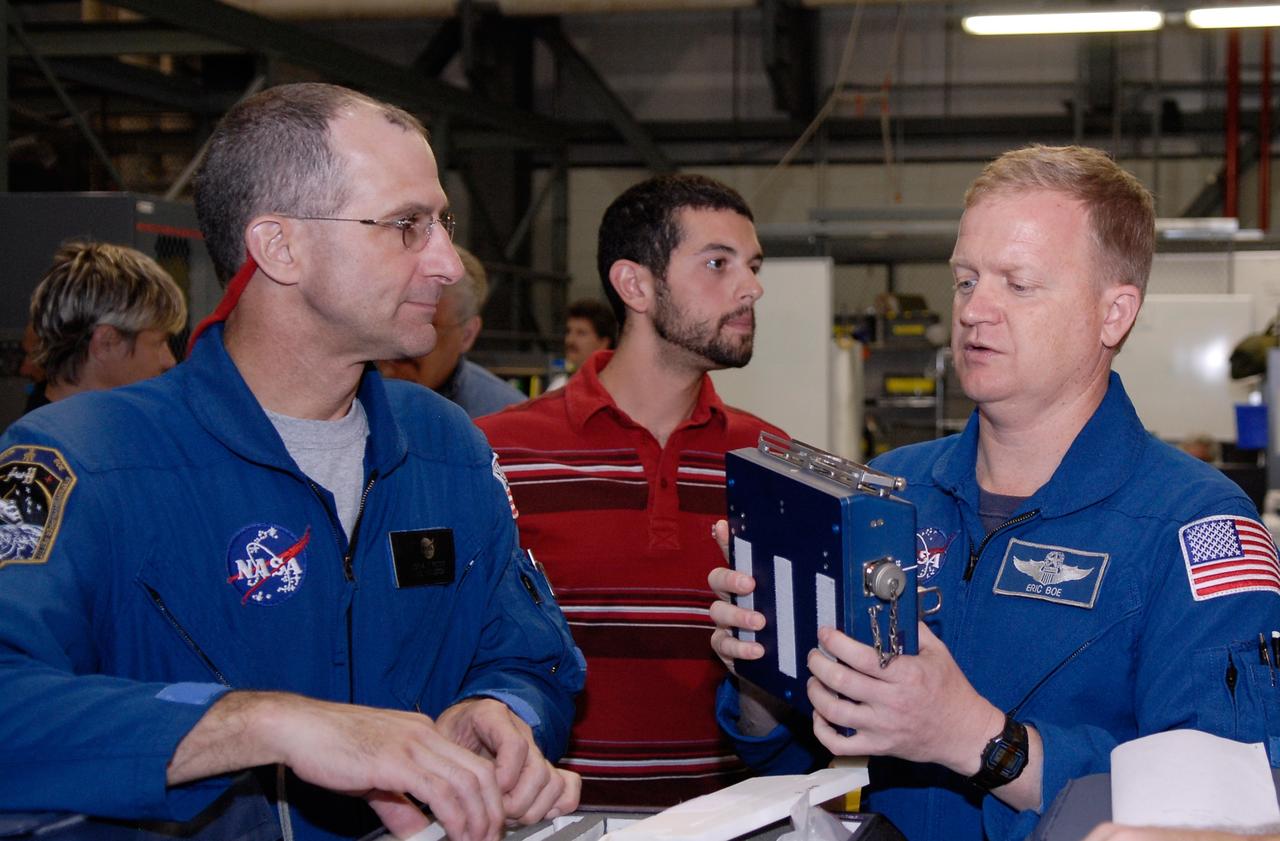
CAPE CANAVERAL, Fla. – In Orbiter Processing Facility 2 at NASA's Kennedy Space Center, members of space shuttle Endeavour's STS-126 crew participate in a crew equipment interface test, or CEIT. From left are Mission Specialist Donald Pettit and Pilot Eric Boe. The CEIT provides hands-on experience with hardware and equipment slated to fly on their mission. Endeavour will deliver a multi-purpose logistics module to the International Space Station on the STS-126 mission. Launch is targeted for Nov. 10. Photo credit: NASA/Kim Shiflett
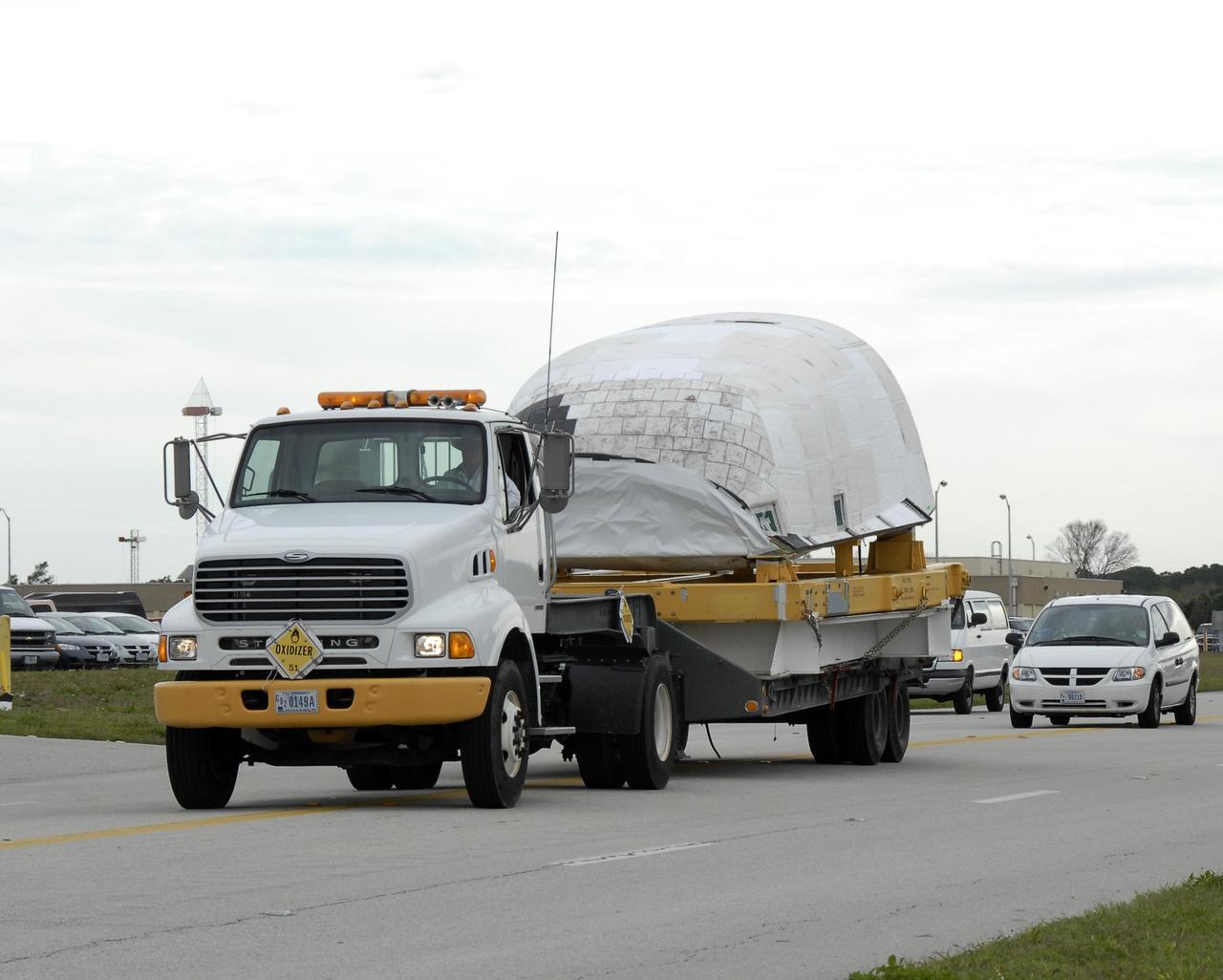
KENNEDY SPACE CENTER, FLA. -- The right-hand orbital maneuvering system pod is being delivered to Orbiter Processing Facility bay 2 for installation on the orbiter Endeavour. The orbital maneuvering system/reaction control system left- and right-hand pods are attached to the upper aft fuselage left and right sides. Each pod is fabricated primarily of graphite epoxy composite and aluminum. Each pod is 21.8 feet long and 11.37 feet wide at its aft end and 8.41 feet wide at its forward end, with a surface area of approximately 435 square feet. The orbiter is being prepared for its first launch in just over four years. The vehicle has undergone an extensive modification period, including the addition of all of the return-to-flight safety upgrades added to both Discovery and Atlantis. Endeavour is targeted for launch of mission STS-118 on June 28. Photo credit: NASA/Kim Shiflett
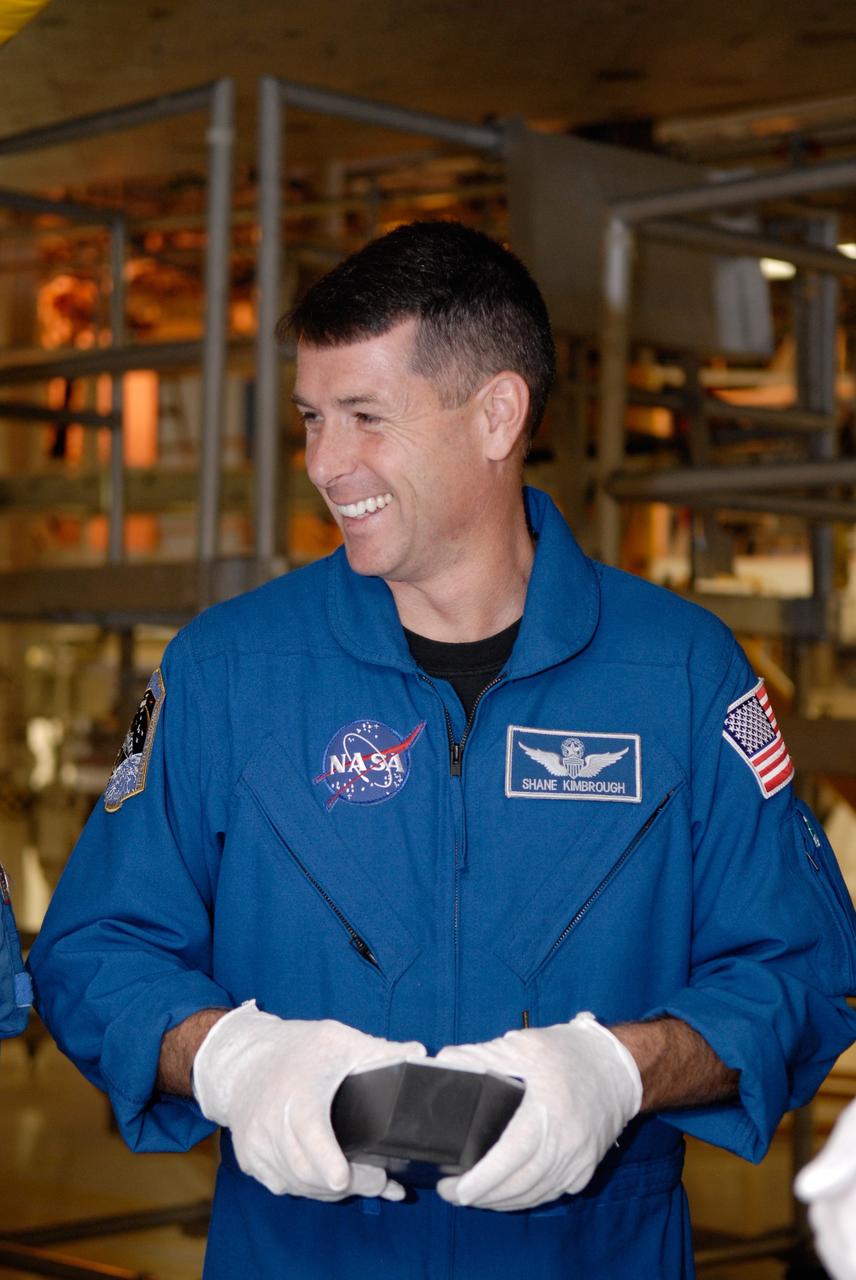
CAPE CANAVERAL, Fla. – In Orbiter Processing Facility 2 at NASA's Kennedy Space Center, members of space shuttle Endeavour's STS-126 crew participate in a crew equipment interface test, or CEIT. Shown here is Mission Specialist Shane Kimbrough. The CEIT provides hands-on experience with hardware and equipment slated to fly on their mission. Endeavour will deliver a multi-purpose logistics module to the International Space Station on the STS-126 mission. Launch is targeted for Nov. 10. Photo credit: NASA/Kim Shiflett
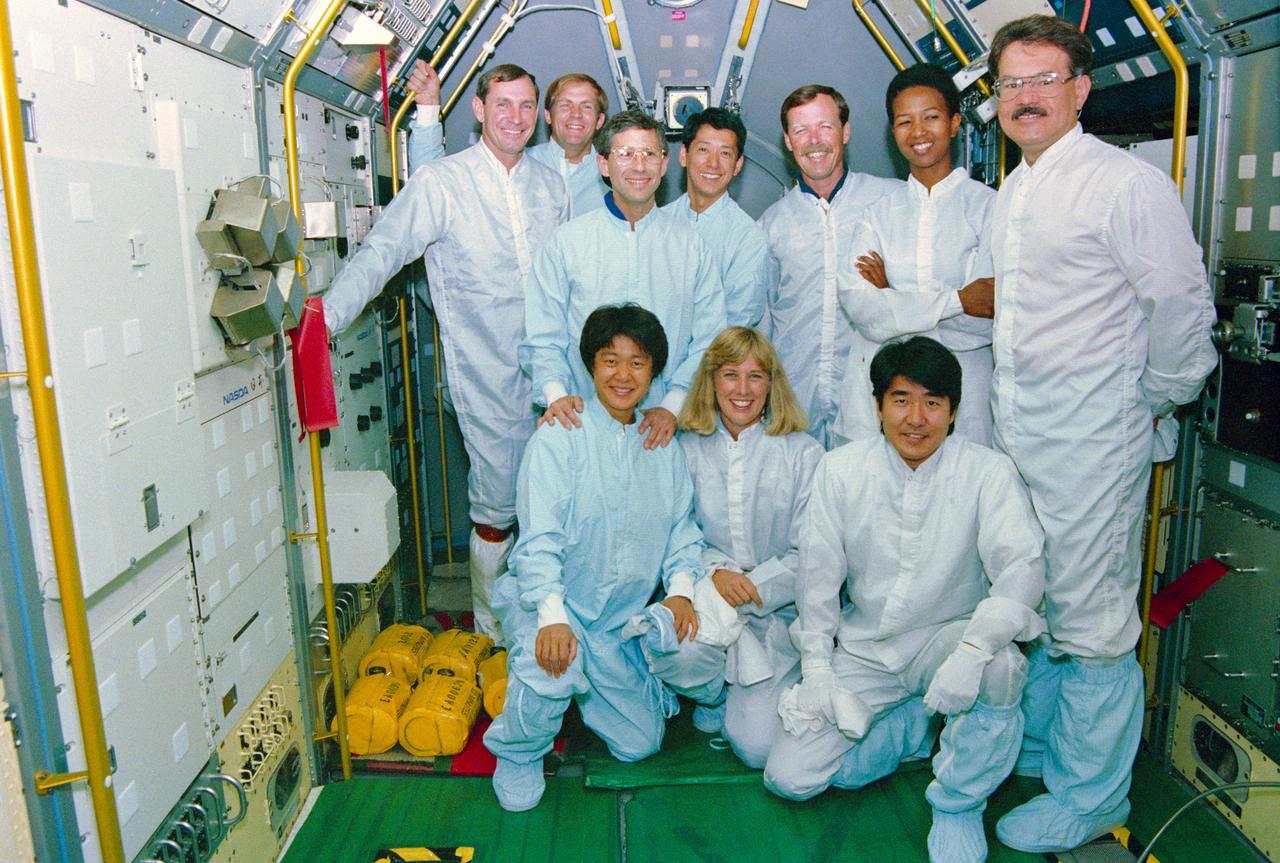
S92-44303 --- STS-47 Endeavour, Orbiter Vehicle (OV) 105, crew members and back-up payload specialists, wearing clean suits, pose for a group portrait in the Spacelab Japan (SLJ) module. The team is at the Kennedy Space Center's (KSC's) Orbiter Processing Facility (OPF) to inspect SLJ configuration and OV-105 preparations. Kneeling, from left, are back-up Payload Specialist Chiaki Naito-Mukai; Mission Specialist N. Jan Davis; and backup Payload Specialist Takao Doi. Standing, from the left, are Pilot Curtis L. Brown,Jr; Payload Commander Mark C. Lee; Jerome Apt; Payload Specialist Mamoru Mohri; Commander Robert L. Gibson; Mae C. Jemison; and back-up Payload Specialist Stanely L. Koszelak. Mohri, Mukai, and Doi represent the National Space Development Agency of Japan (NASDA). View provided by KSC with alternate KSC number KSC-92PC-1647. Photo credit: NASA
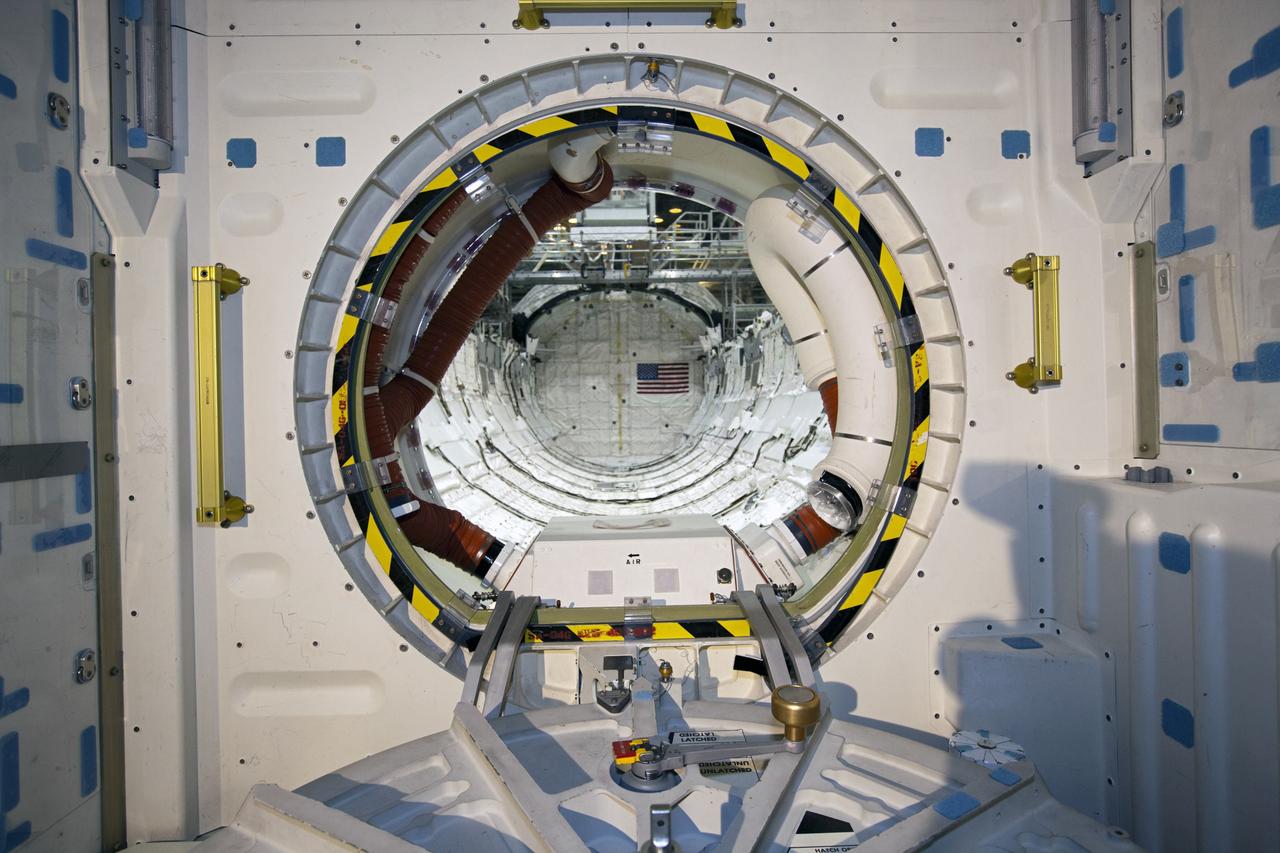
CAPE CANAVERAL, Fla. – In Orbiter Processing Facility-2 at NASA’s Kennedy Space Center in Florida, the camera captures a final view through space shuttle Endeavour’s airlock into the payload bay before the airlock's hatch is closed for the final time during processing for the shuttle’s retirement. Endeavour is being prepared for public display at the California Science Center in Los Angeles. Its ferry flight to California is targeted for mid-September. Endeavour, designated OV-105, was the last space shuttle added to NASA’s orbiter fleet. Over the course of its 19-year career, Endeavour spent 299 days in space during 25 missions. For more information, visit http://www.nasa.gov/transition. Photo credit: NASA/Dimitri Gerondidakis
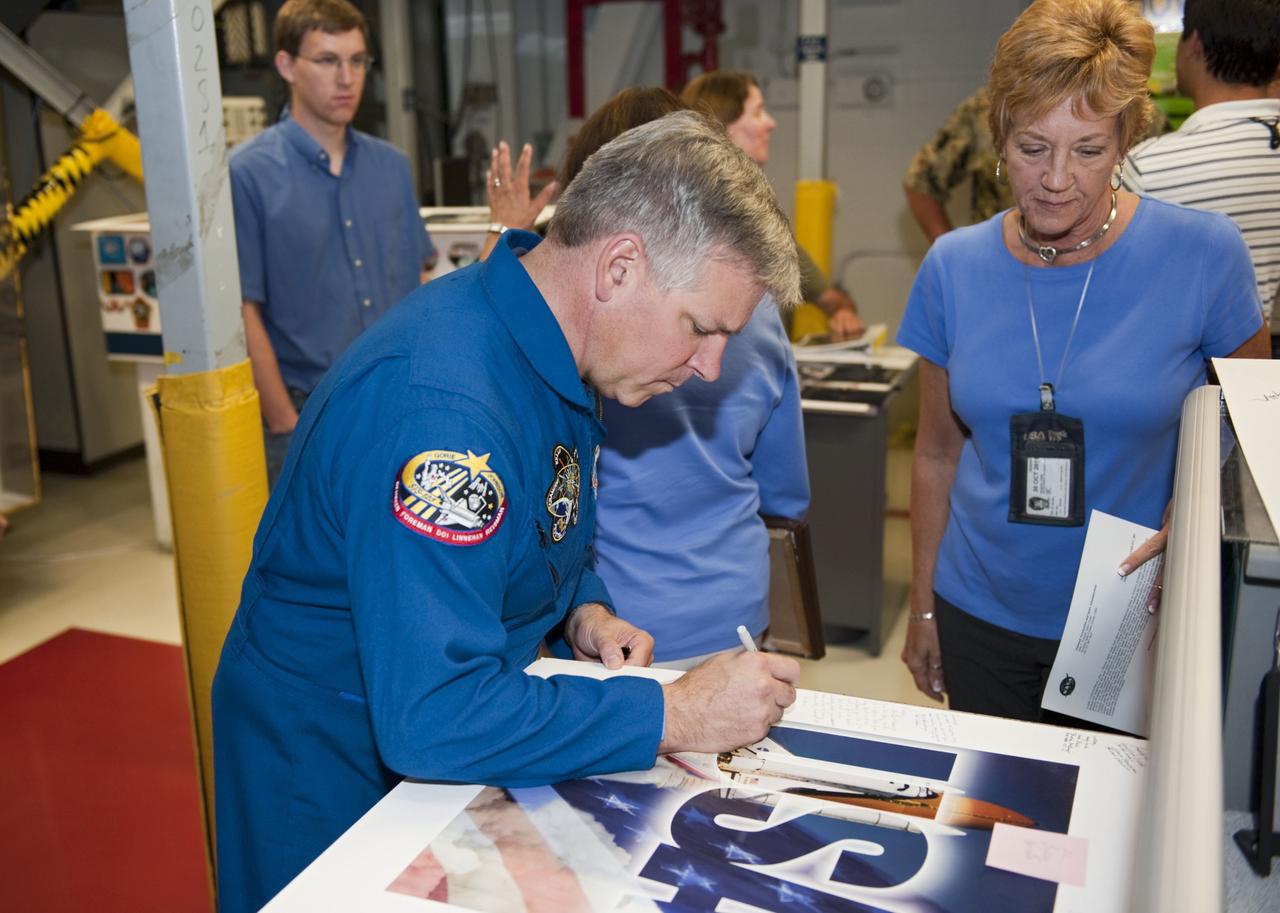
CAPE CANAVERAL, Fla. - STS-134 Pilot Gregory H. Johnson is joined by several employees as he signs a poster inside Orbiter Processing Facility-1 at NASA's Kennedy Space Center in Florida. Also attending the crew return event was STS-134 Mission Specialist Michael Fincke. Commander Mark Kelly, Johnson and Mission Specialists Fincke, Greg Chamitoff, Andrew Feustel and European Space Agency astronaut Roberto Vittori lifted off May 16, 2011 aboard space shuttle Endeavour. During the nearly 16-day STS-134 mission, Endeavour delivered to the International Space Station the Alpha Magnetic Spectrometer (AMS) and spare parts, including two S-band communications antennas, a high-pressure gas tank and additional spare parts for Dextre. This was the 36th shuttle mission to the station and Endeavour's 25th and final flight. For more information, visit www.nasa.gov/mission_pages/shuttle/shuttlemissions/sts134/main/index.html. Photo credit: NASA/Kim Shiflett
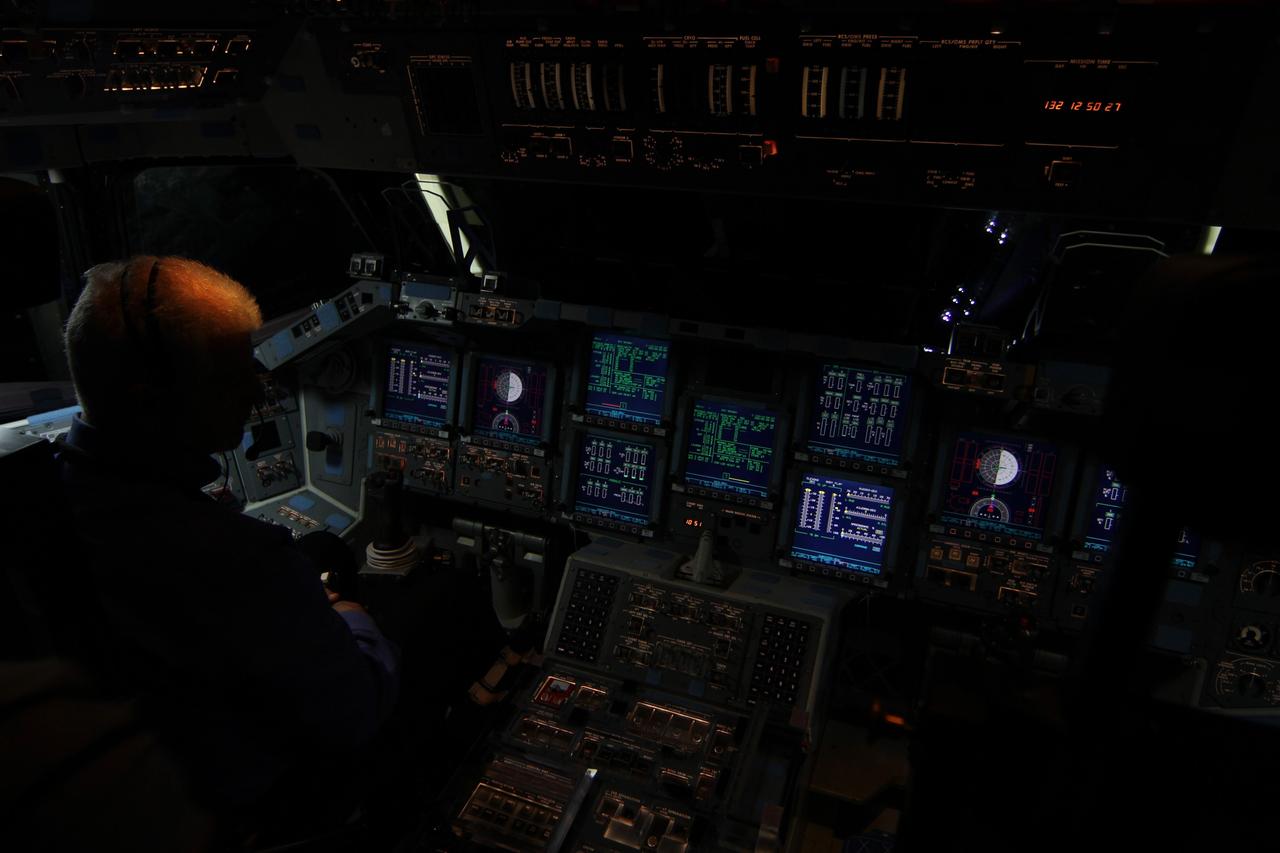
CAPE CANAVERAL, Fla. – In Orbiter Processing Facility-2 at NASA’s Kennedy Space Center in Florida, United Space Alliance manager Walter “Buddy” McKenzie monitors the consoles on space shuttle Endeavour’s flight deck as operations to power down the shuttle for the final time get under way. Endeavour is being prepared for public display at the California Science Center in Los Angeles. Its ferry flight to California is targeted for mid-September. Endeavour was the last space shuttle added to NASA’s orbiter fleet. Over the course of its 19-year career, Endeavour spent 299 days in space during 25 missions. For more information, visit http://www.nasa.gov/transition. Photo credit: NASA/Ben Smegelsky
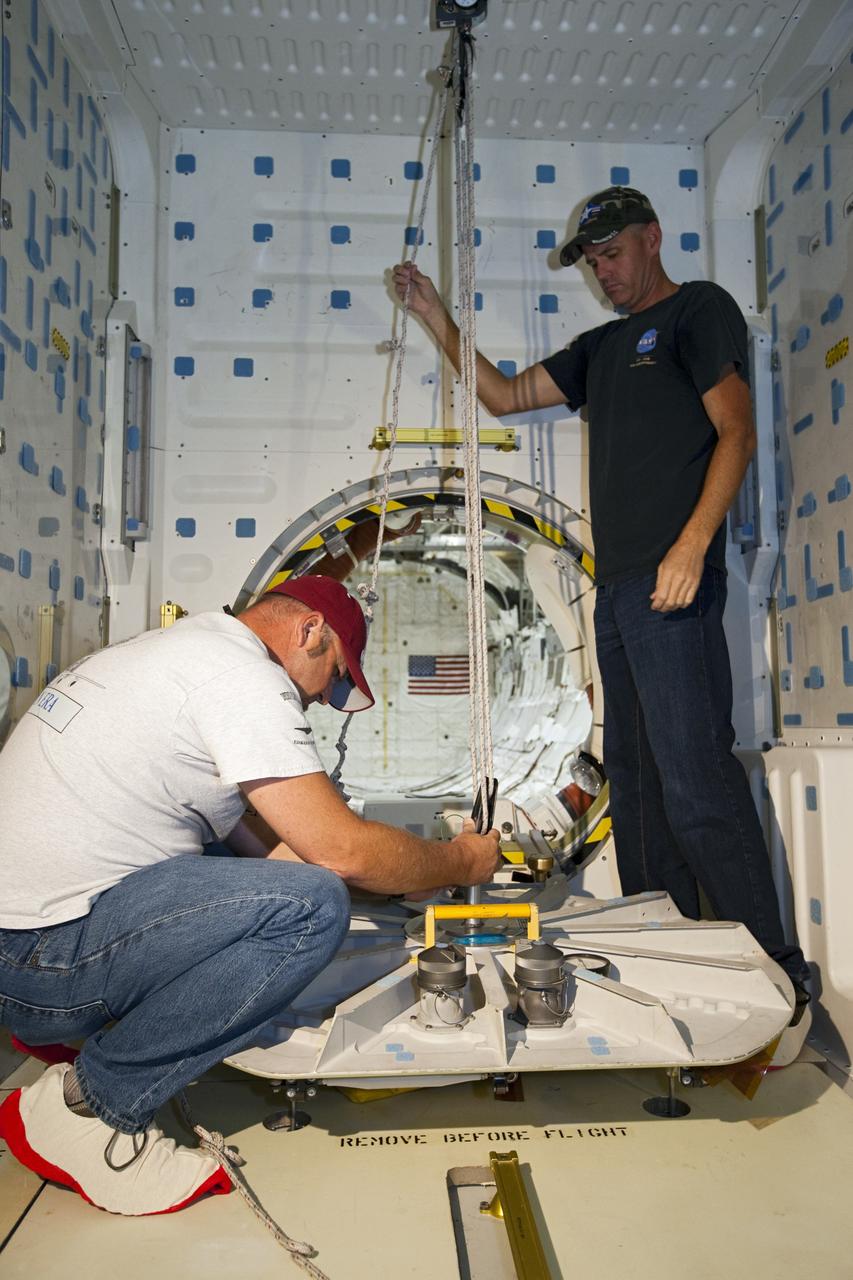
CAPE CANAVERAL, Fla. – In Orbiter Processing Facility-2 at NASA’s Kennedy Space Center in Florida, United Space Alliance technicians prepare to lift the hatch of space shuttle Endeavour’s airlock for its final closure during processing for the shuttle’s retirement. Endeavour is being prepared for public display at the California Science Center in Los Angeles. Its ferry flight to California is targeted for mid-September. Endeavour, designated OV-105, was the last space shuttle added to NASA’s orbiter fleet. Over the course of its 19-year career, Endeavour spent 299 days in space during 25 missions. For more information, visit http://www.nasa.gov/transition. Photo credit: NASA/Dimitri Gerondidakis
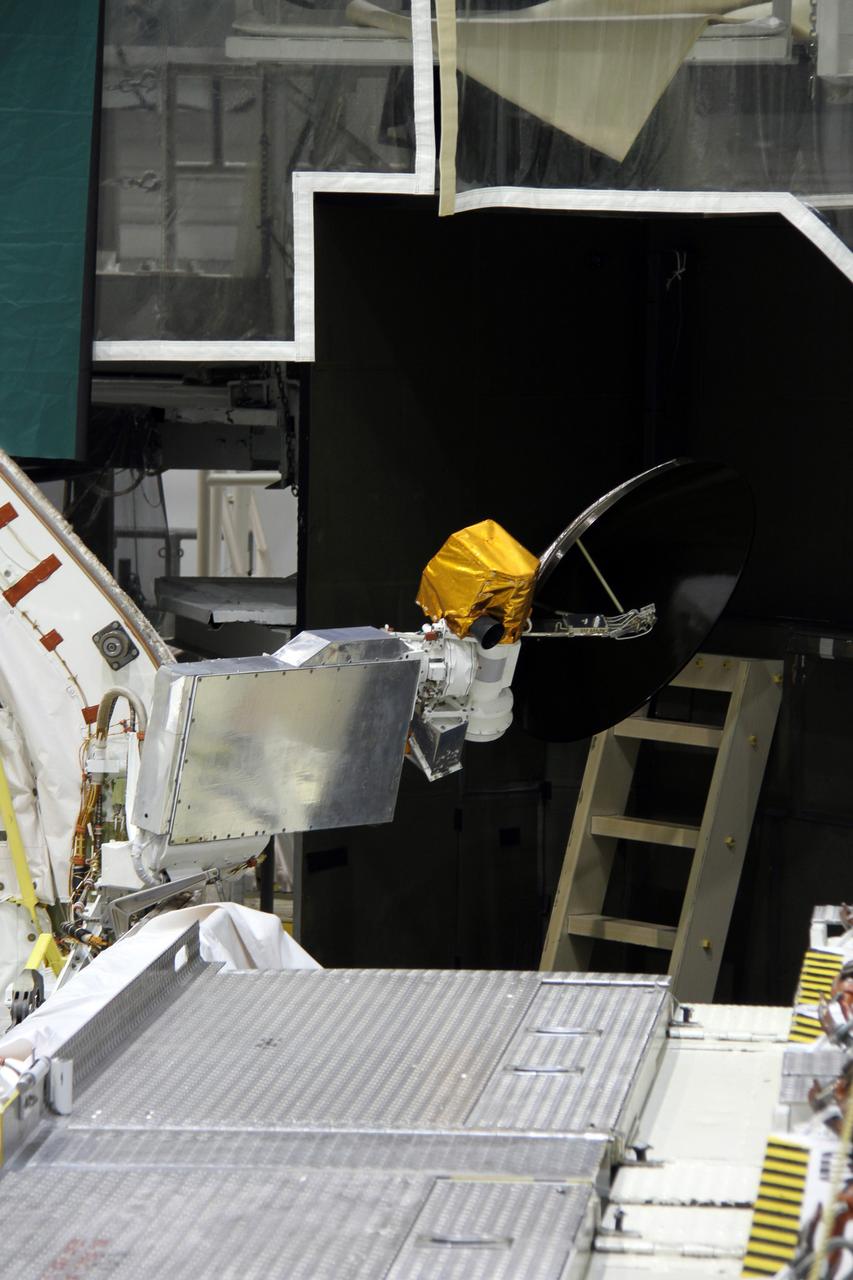
CAPE CANAVERAL, Fla. – In Orbiter Processing Facility-2 at NASA's Kennedy Space Center in Florida, operations are under way to stow a Ku-band antenna in space shuttle Endeavour’s payload bay in preparation for final closure of the shuttle’s payload bay doors. The antenna, which resembles a mini-satellite dish, was used to transmit audio, video and data between the shuttle and ground stations on Earth. Endeavour is being prepared for public display at the California Science Center in Los Angeles. Its ferry flight to California is targeted for mid-September. Endeavour was the last space shuttle added to NASA’s orbiter fleet. Over the course of its 19-year career, Endeavour spent 299 days in space during 25 missions. For more information, visit http://www.nasa.gov/transition. Photo credit: NASA/Cory Huston
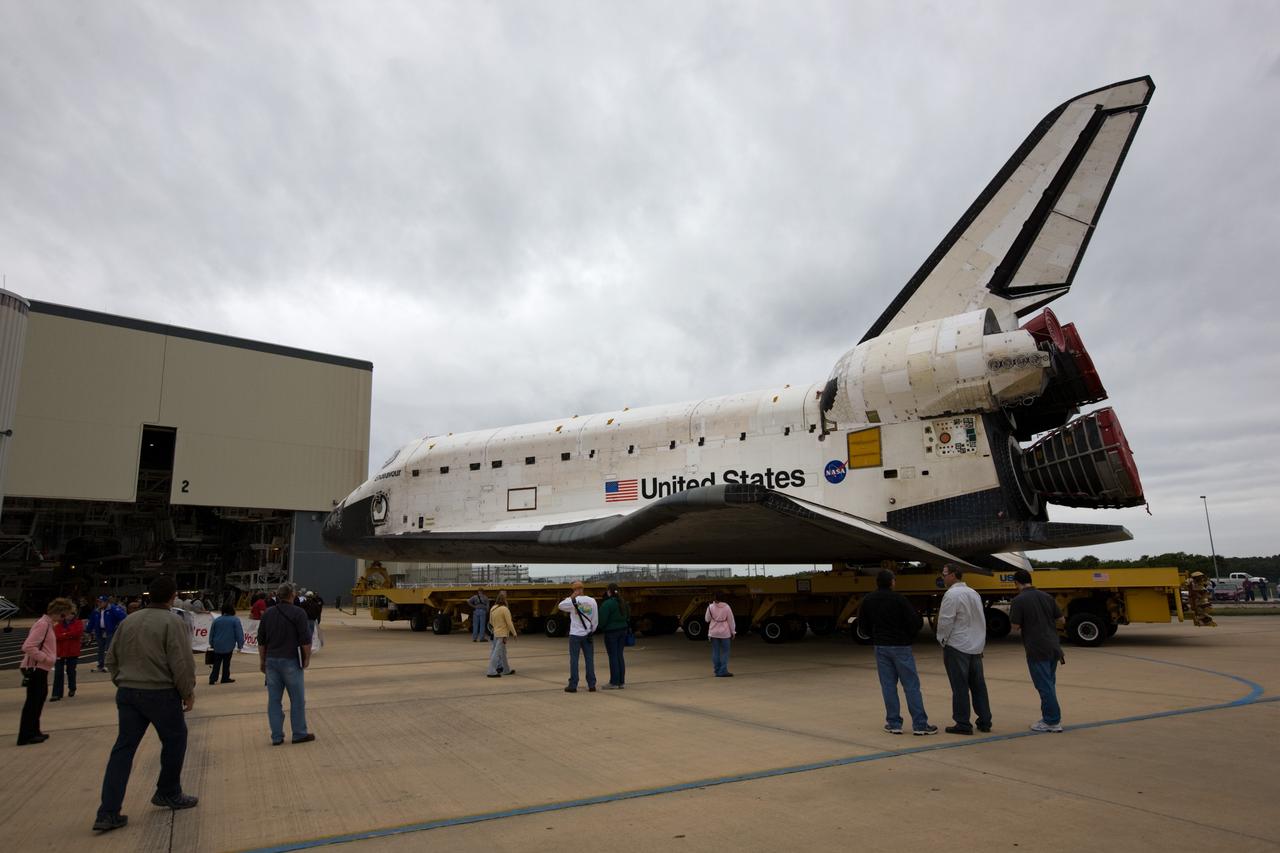
CAPE CANAVERAL, Fla. – At NASA's Kennedy Space Center in Florida, workers monitor the progress of space shuttle Endeavour as it is transferred from Orbiter Processing Facility-2 to the Vehicle Assembly Building. The rollover began at 12:53 a.m. EST and was completed at 2:08 p.m. when Endeavour was towed into the VAB's transfer aisle. Next, Endeavour will be attached to a lifting sling, hoisted over a transom and lowered into High Bay 1, where it will be attached to its external fuel tank and solid rocket boosters. Rollout of the shuttle stack to Kennedy’s Launch Pad 39A, a significant milestone in launch processing activities, is planned for early January 2010. The Italian-built Tranquility module, the primary payload for Endeavour's STS-130 mission, will be installed in the payload bay after the shuttle arrives at the pad. Launch is targeted for early February. For information on the STS-130 mission and crew, visit http://www.nasa.gov/mission_pages/shuttle/shuttlemissions/sts130/index.html. Photo credit: NASA/Dimitri Gerondidakis
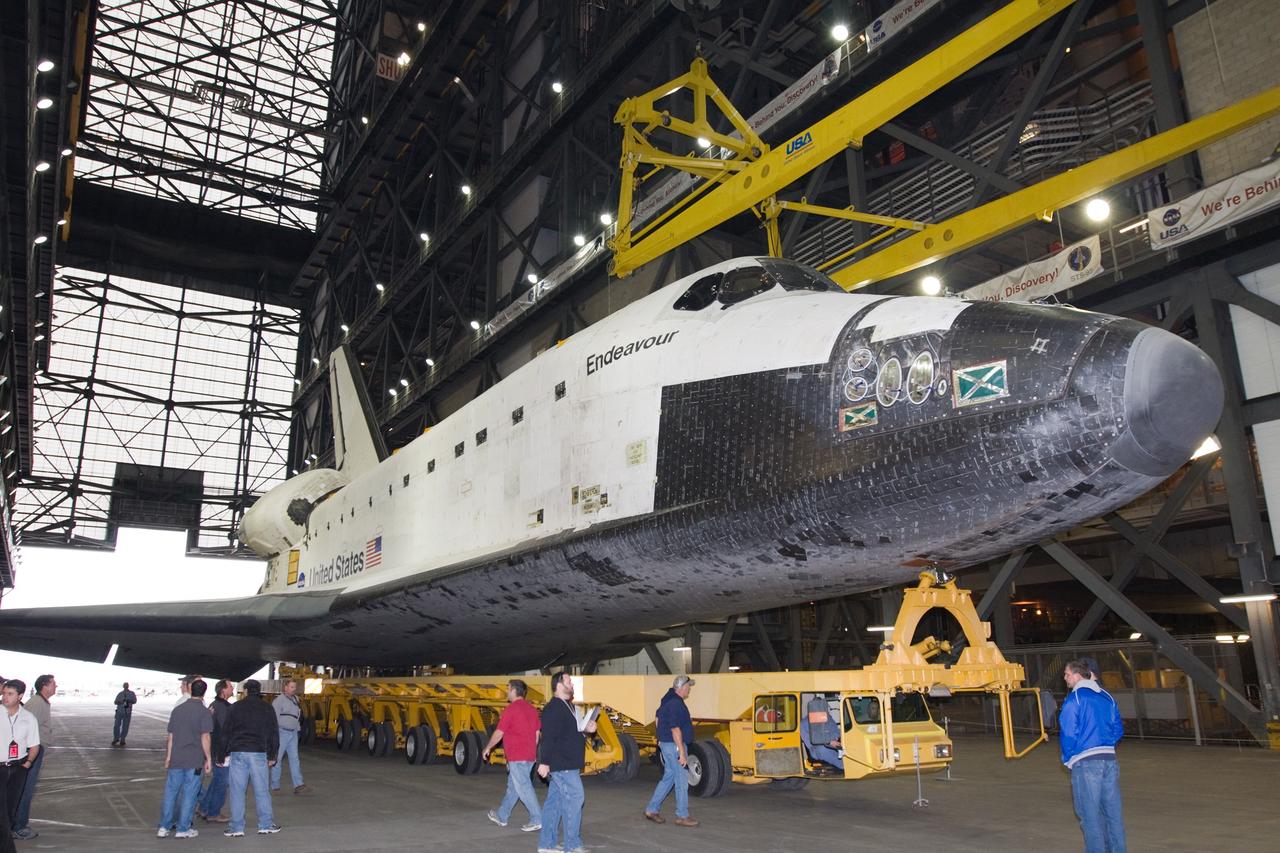
CAPE CANAVERAL, Fla. – At NASA's Kennedy Space Center in Florida, workers prepare to attach a lifting sling on space shuttle Endeavour following its arrival in the Vehicle Assembly Building transfer aisle. The rollover began at 12:53 a.m. EST and was completed at 2:08 p.m. when Endeavour was towed into the VAB's transfer aisle. Next, Endeavour will be attached to the sling, hoisted over a transom and lowered into High Bay 1, where it will be attached to its external fuel tank and solid rocket boosters. Rollout of the shuttle stack to Kennedy’s Launch Pad 39A, a significant milestone in launch processing activities, is planned for early January 2010. The Italian-built Tranquility module, the primary payload for Endeavour's STS-130 mission, will be installed in the payload bay after the shuttle arrives at the pad. Launch is targeted for early February. For information on the STS-130 mission and crew, visit http://www.nasa.gov/mission_pages/shuttle/shuttlemissions/sts130/index.html. Photo credit: NASA/Dimitri Gerondidakis

CAPE CANAVERAL, Fla. - STS-134 Pilot Gregory H. Johnson, left, and Mission Specialist Michael Fincke talk to employees inside NASA Kennedy Space Center's Orbiter Processing Facility-1, where space shuttle Endeavour is being prepared for public display. Commander Mark Kelly, Johnson and Mission Specialists Fincke, Greg Chamitoff, Andrew Feustel and European Space Agency astronaut Roberto Vittori lifted off May 16, 2011 aboard space shuttle Endeavour. During the nearly 16-day STS-134 mission, Endeavour delivered to the International Space Station the Alpha Magnetic Spectrometer (AMS) and spare parts, including two S-band communications antennas, a high-pressure gas tank and additional spare parts for Dextre. This was the 36th shuttle mission to the station and Endeavour's 25th and final flight. For more information, visit www.nasa.gov/mission_pages/shuttle/shuttlemissions/sts134/main/index.html. Photo credit: NASA/Kim Shiflett
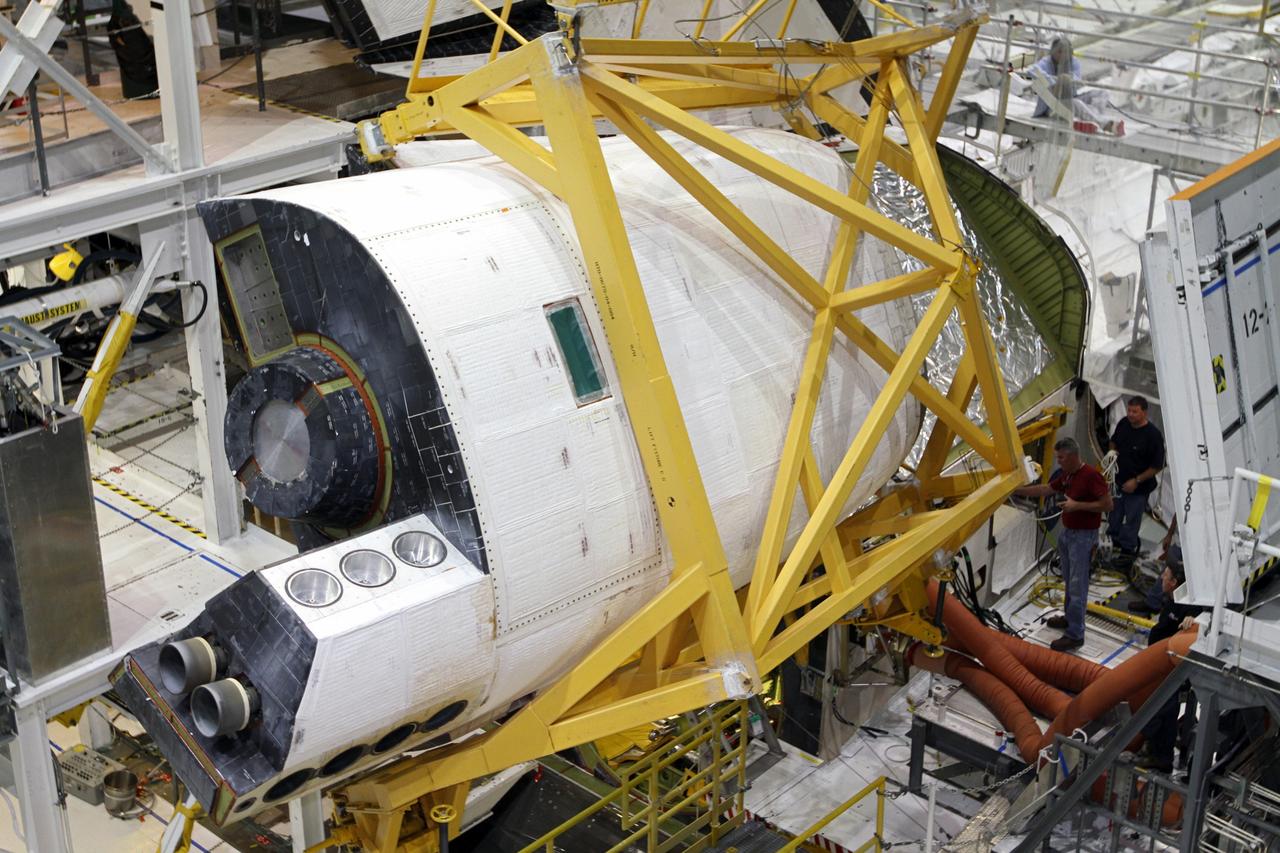
CAPE CANAVERAL, Fla. – In Orbiter Processing Facility-2 at NASA’s Kennedy Space Center in Florida, a large crane moves the right orbital maneuvering system OMS pod closer to space shuttle Endeavour for installation. The OMS pod underwent complete deservicing and cleaning at White Sands Space Harbor in New Mexico, part of the transition and retirement processing of each shuttle. Endeavour is being prepared for public display at the California Science Center in Los Angeles. Over the course of its 19-year career, Endeavour spent 299 days in space during 25 missions. For more information, visit http://www.nasa.gov/shuttle. Photo credit: NASA/Kim Shiflett
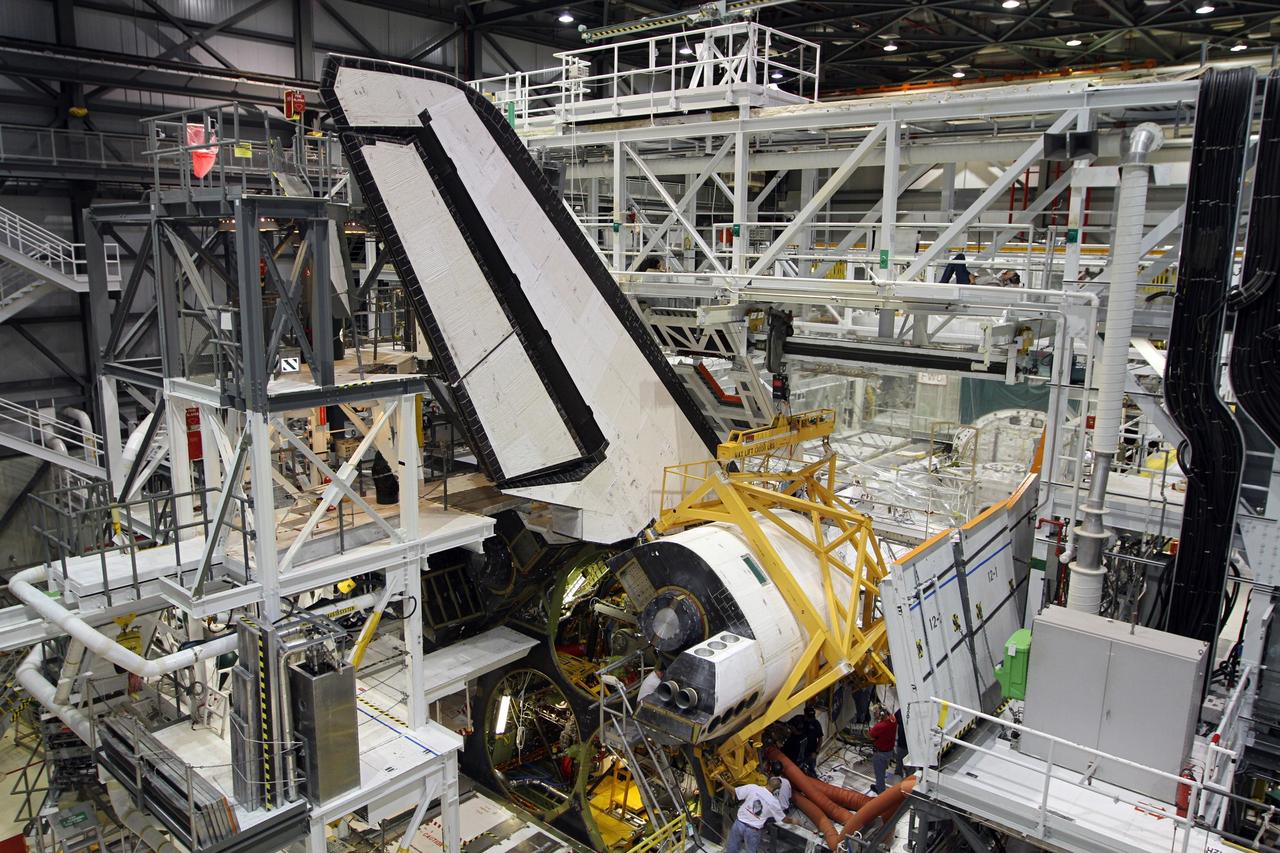
CAPE CANAVERAL, Fla. – In Orbiter Processing Facility-2 at NASA’s Kennedy Space Center in Florida, United Space Alliance technicians assist with the installation of the right orbital maneuvering system OMS pod on space shuttle Endeavour. The OMS pod underwent complete deservicing and cleaning at White Sands Space Harbor in New Mexico, part of the transition and retirement processing of each shuttle. Endeavour is being prepared for public display at the California Science Center in Los Angeles. Over the course of its 19-year career, Endeavour spent 299 days in space during 25 missions. For more information, visit http://www.nasa.gov/shuttle. Photo credit: NASA/Kim Shiflett
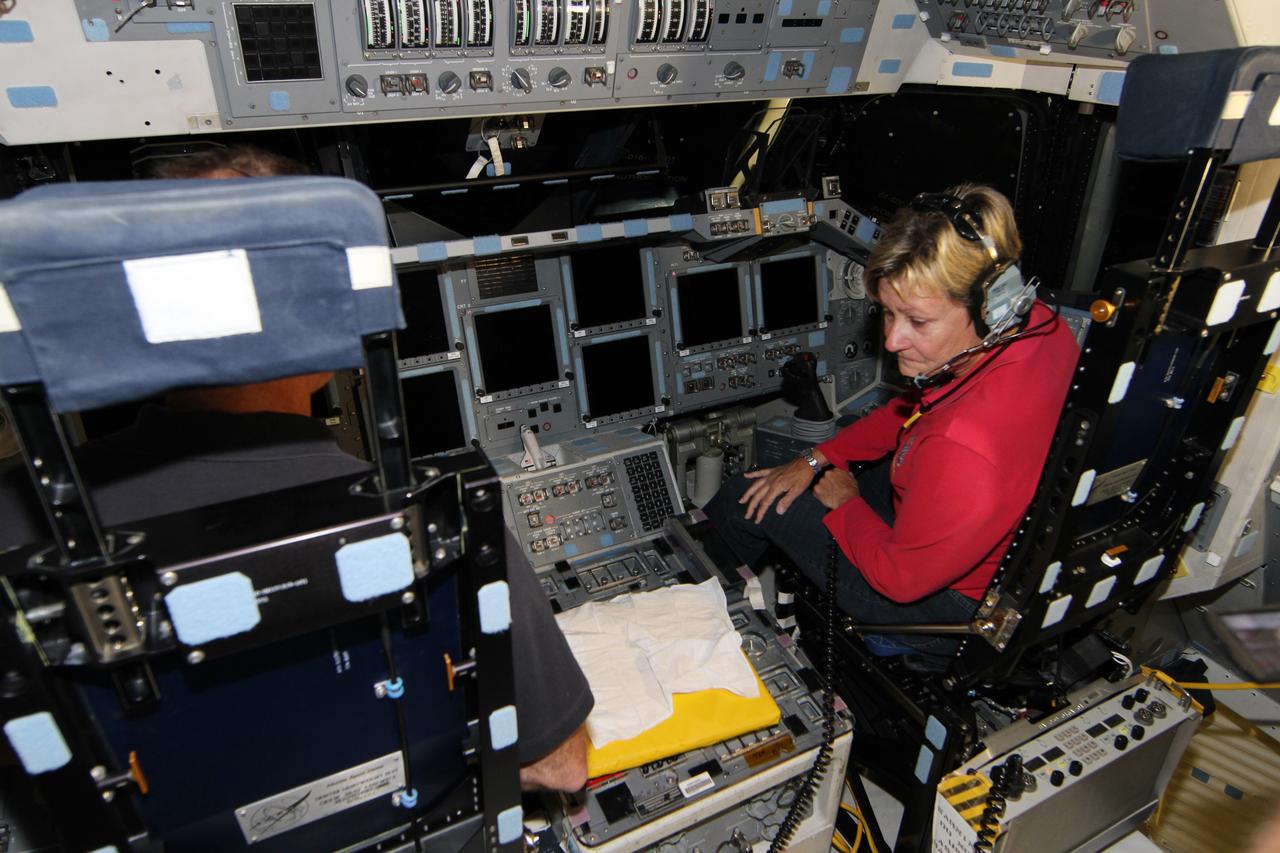
CAPE CANAVERAL, Fla. – In Orbiter Processing Facility-2 at NASA’s Kennedy Space Center in Florida, United Space Alliance OV-105 operations chief Mike Parrish, left, and associate operations chief Pat Leslie complete their respective tasks on space shuttle Endeavour’s flight deck as the shuttle is powered down for the final time. Endeavour is being prepared for public display at the California Science Center in Los Angeles. Its ferry flight to California is targeted for mid-September. Endeavour was the last space shuttle added to NASA’s orbiter fleet. Over the course of its 19-year career, Endeavour spent 299 days in space during 25 missions. For more information, visit http://www.nasa.gov/transition. Photo credit: NASA/Ben Smegelsky
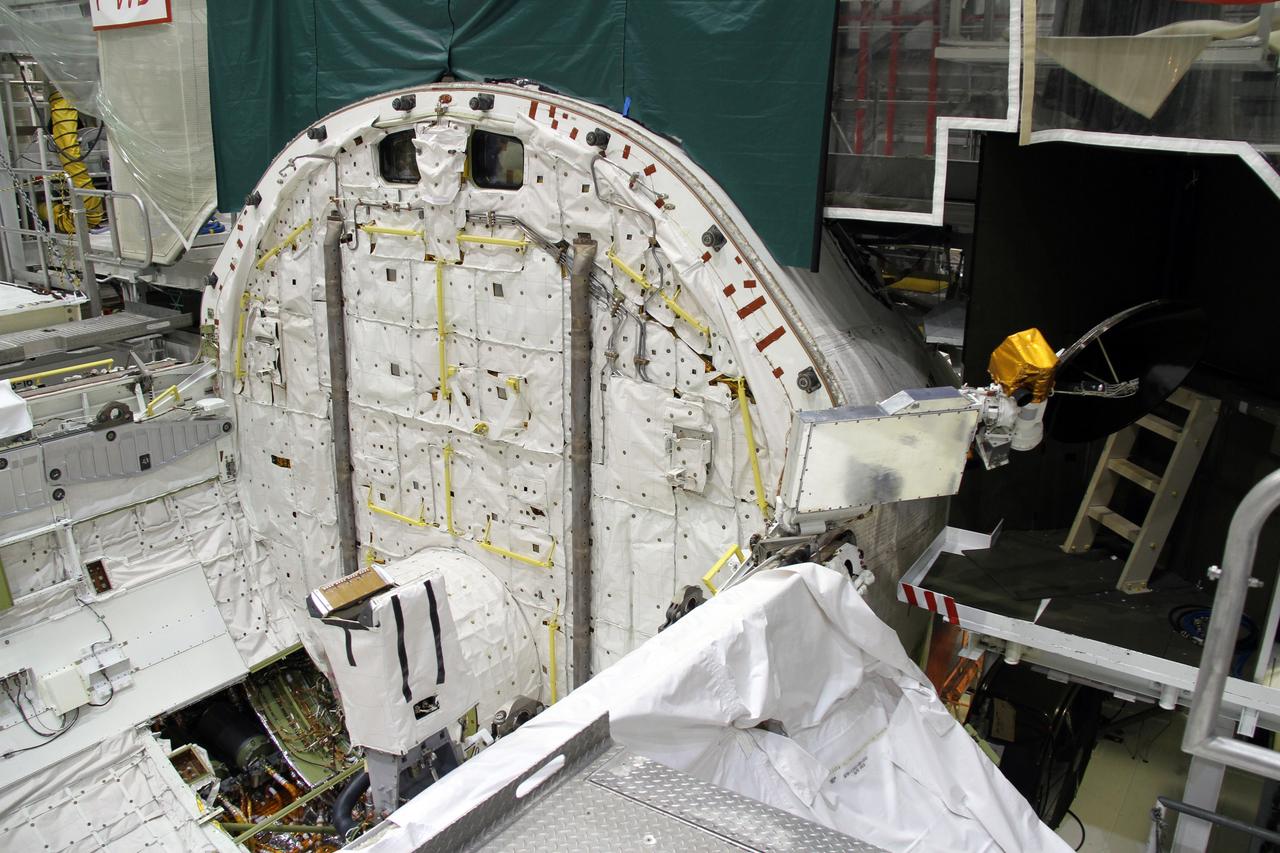
CAPE CANAVERAL, Fla. – In Orbiter Processing Facility-2 at NASA's Kennedy Space Center in Florida, a Ku-band antenna is being stowed in space shuttle Endeavour’s payload bay in preparation for final closure of the shuttle’s payload bay doors. The antenna, which resembles a mini-satellite dish, was used to transmit audio, video and data between the shuttle and ground stations on Earth. Endeavour is being prepared for public display at the California Science Center in Los Angeles. Its ferry flight to California is targeted for mid-September. Endeavour was the last space shuttle added to NASA’s orbiter fleet. Over the course of its 19-year career, Endeavour spent 299 days in space during 25 missions. For more information, visit http://www.nasa.gov/transition. Photo credit: NASA/Cory Huston
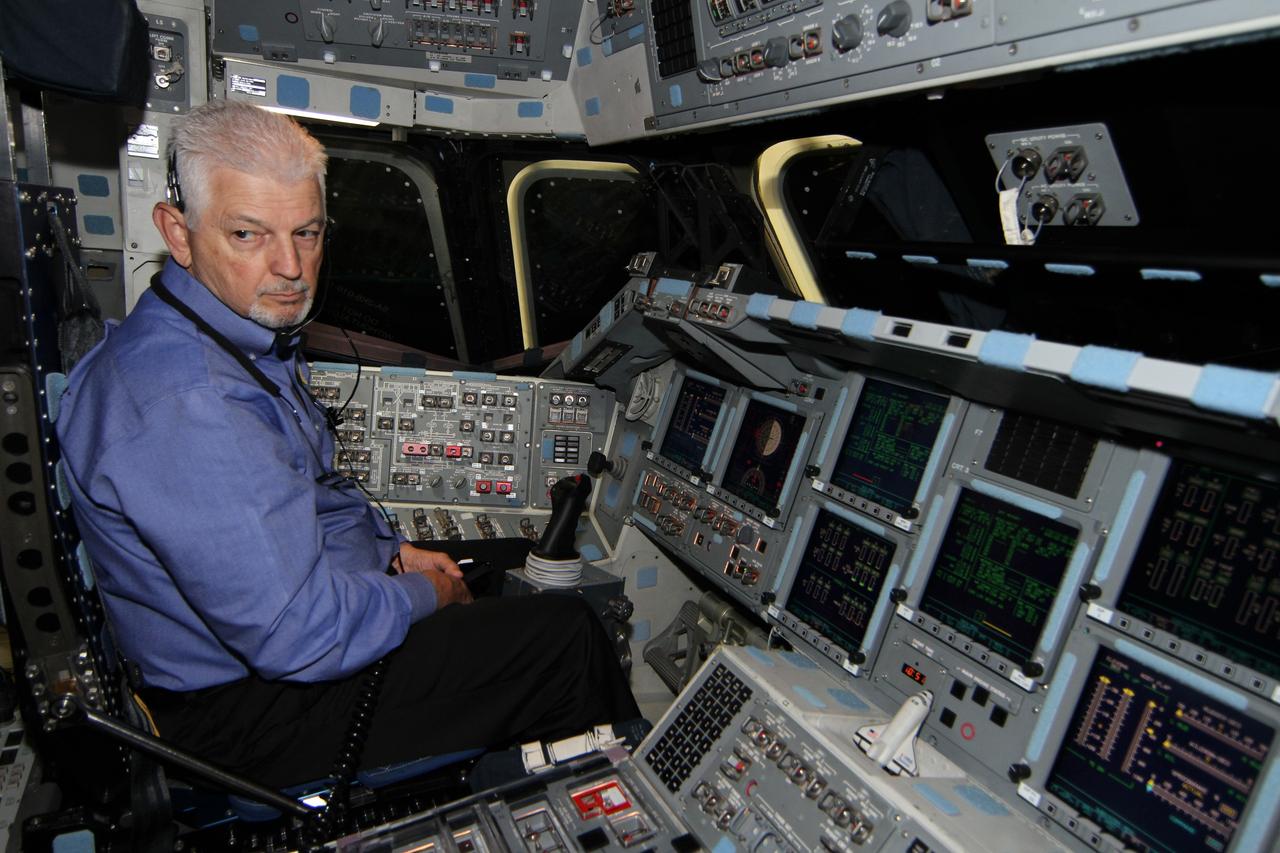
CAPE CANAVERAL, Fla. – In Orbiter Processing Facility-2 at NASA’s Kennedy Space Center in Florida, United Space Alliance manager Walter “Buddy” McKenzie monitors the consoles on space shuttle Endeavour’s flight deck as operations to power down the shuttle for the final time get under way. Endeavour is being prepared for public display at the California Science Center in Los Angeles. Its ferry flight to California is targeted for mid-September. Endeavour was the last space shuttle added to NASA’s orbiter fleet. Over the course of its 19-year career, Endeavour spent 299 days in space during 25 missions. For more information, visit http://www.nasa.gov/transition. Photo credit: NASA/Ben Smegelsky
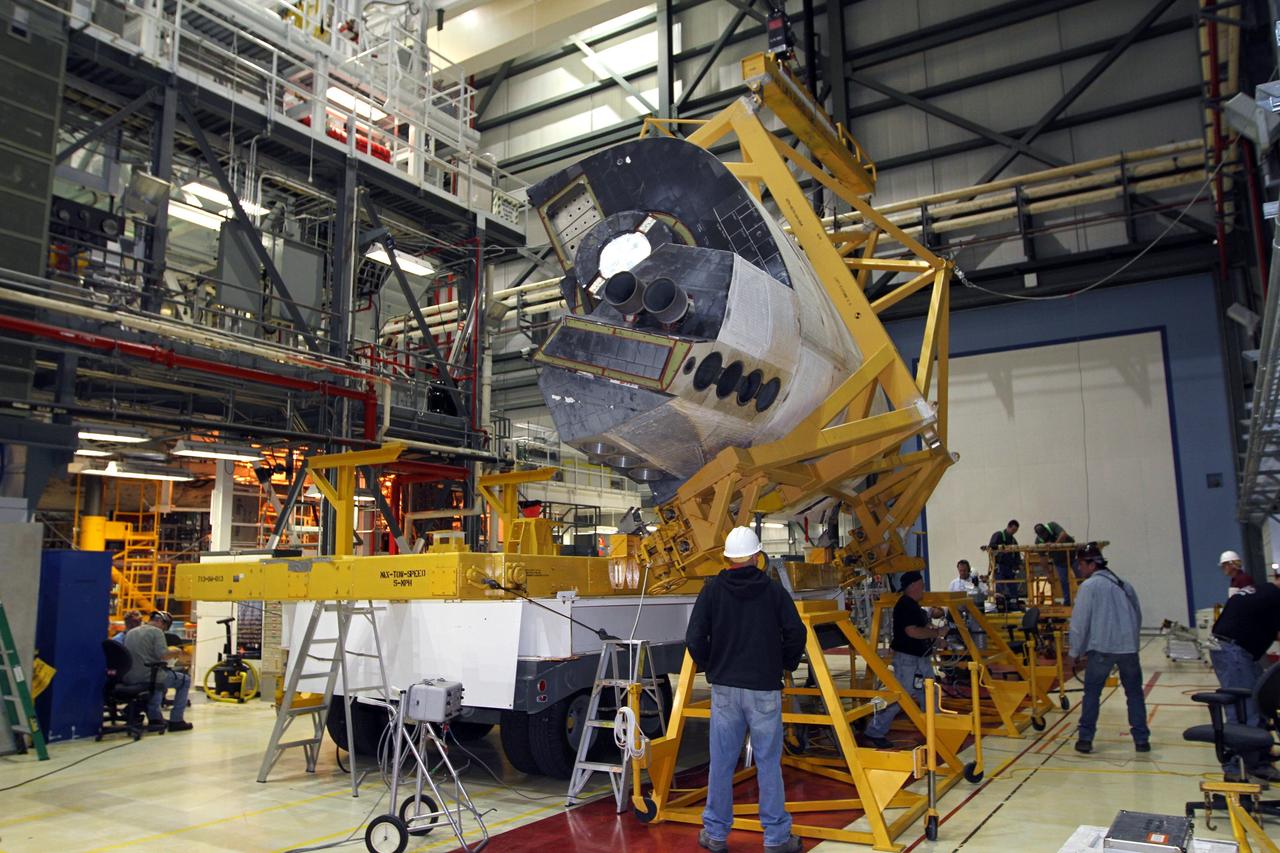
CAPE CANAVERAL, Fla. – In Orbiter Processing Facility-2 at NASA’s Kennedy Space Center in Florida, United Space Alliance technicians monitor the progress as a large crane lifts the right orbital maneuvering system OMS pod for installation on space shuttle Endeavour. The OMS pod underwent complete deservicing and cleaning at White Sands Space Harbor in New Mexico, part of the transition and retirement processing of each shuttle. Endeavour is being prepared for public display at the California Science Center in Los Angeles. Over the course of its 19-year career, Endeavour spent 299 days in space during 25 missions. For more information, visit http://www.nasa.gov/shuttle. Photo credit: NASA/Kim Shiflett
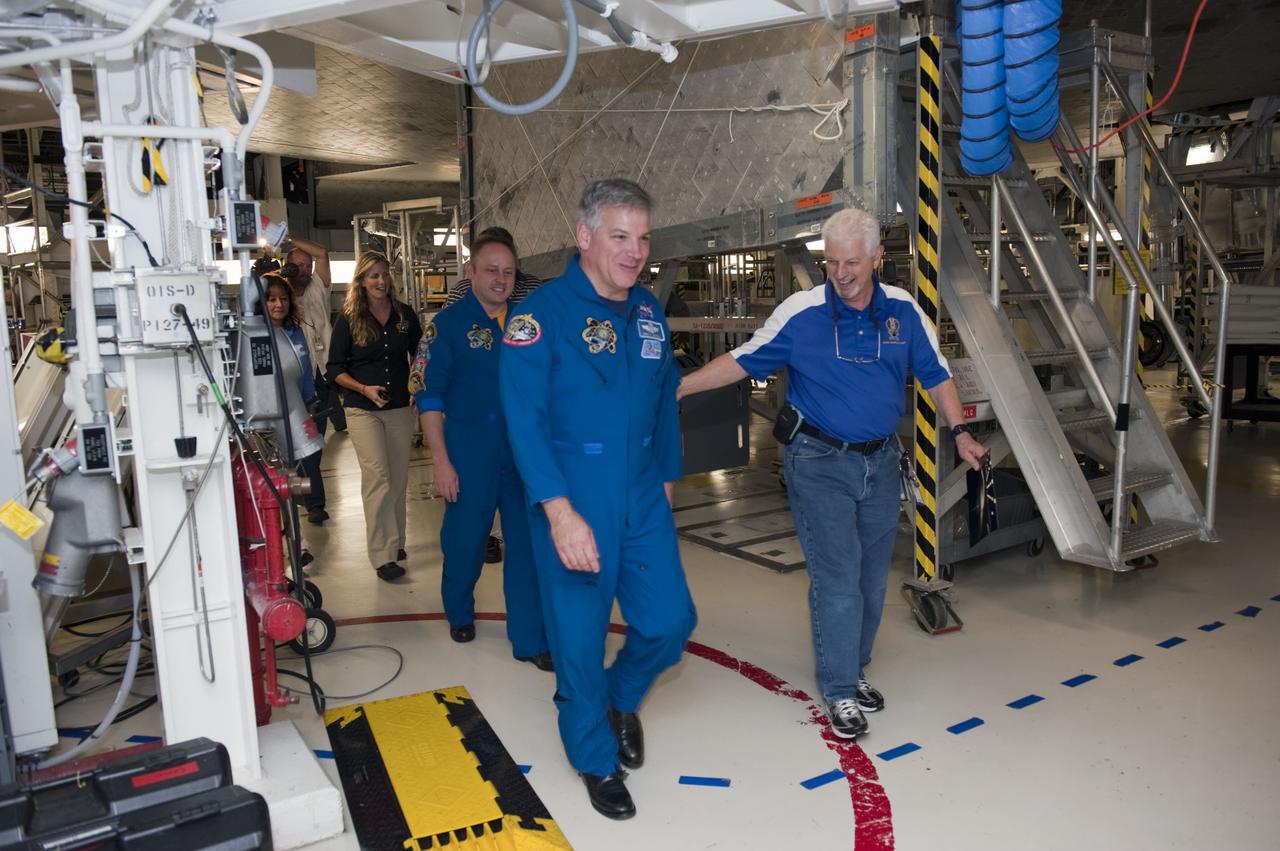
CAPE CANAVERAL, Fla. - Walter "Buddy" McKenzie leads STS-134 Pilot Gregory H. Johnson, foreground, Mission Specialist Michael Fincke, space shuttle Endeavour Flow Director Dana Hutcherson and others through Orbiter Processing Facility-1 following a crew return event. Commander Mark Kelly, Johnson and Mission Specialists Fincke, Greg Chamitoff, Andrew Feustel and European Space Agency astronaut Roberto Vittori lifted off May 16, 2011 aboard space shuttle Endeavour. During the nearly 16-day STS-134 mission, Endeavour delivered to the International Space Station the Alpha Magnetic Spectrometer (AMS) and spare parts, including two S-band communications antennas, a high-pressure gas tank and additional spare parts for Dextre. This was the 36th shuttle mission to the station and Endeavour's 25th and final flight. For more information, visit www.nasa.gov/mission_pages/shuttle/shuttlemissions/sts134/main/index.html. Photo credit: NASA/Kim Shiflett
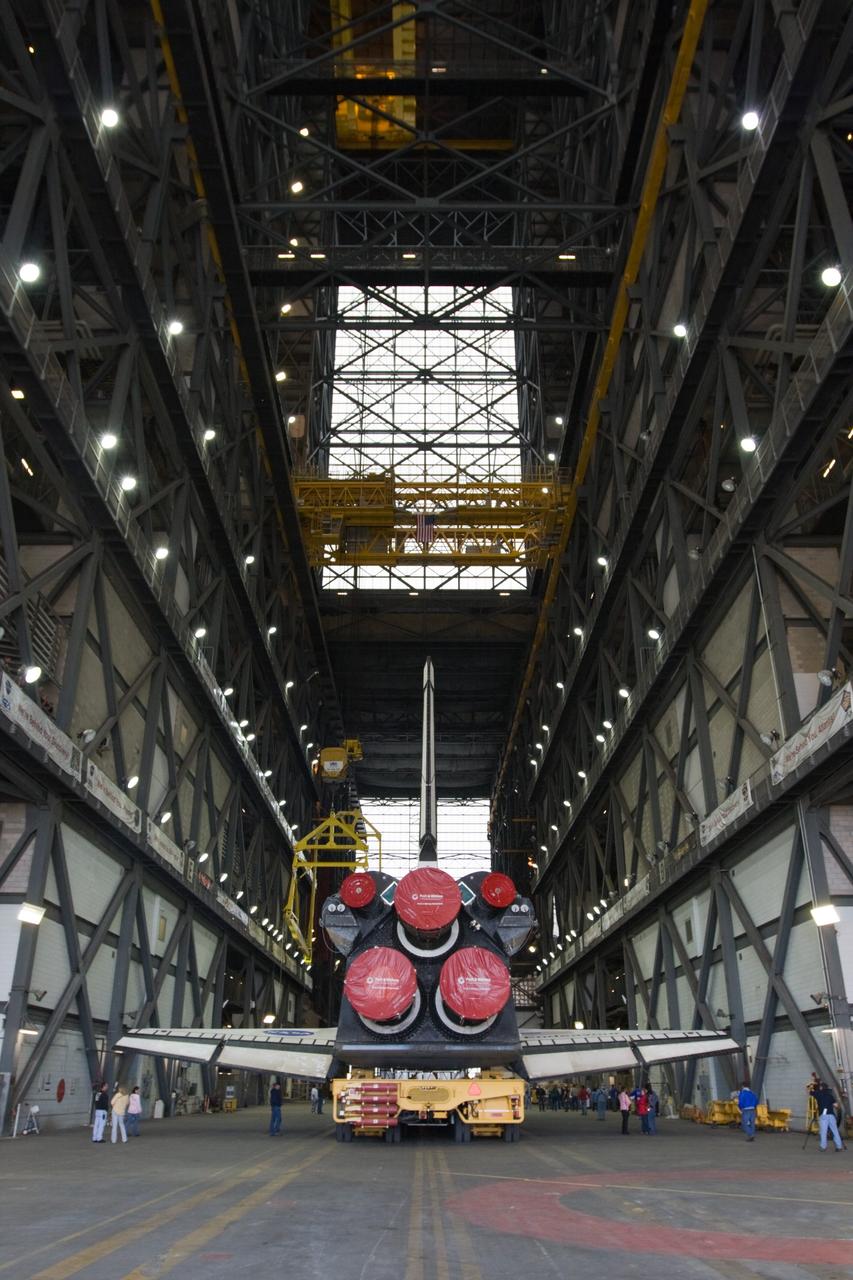
CAPE CANAVERAL, Fla. – At NASA's Kennedy Space Center in Florida, space shuttle Endeavour arrives in the Vehicle Assembly Building transfer aisle. The rollover began at 12:53 a.m. EST and was completed at 2:08 p.m. when Endeavour was towed into the VAB's transfer aisle. Next, Endeavour will be attached to a lifting sling, hoisted over a transom and lowered into High Bay 1, where it will be attached to its external fuel tank and solid rocket boosters. Rollout of the shuttle stack to Kennedy’s Launch Pad 39A, a significant milestone in launch processing activities, is planned for early January 2010. The Italian-built Tranquility module, the primary payload for Endeavour's STS-130 mission, will be installed in the payload bay after the shuttle arrives at the pad. Launch is targeted for early February. For information on the STS-130 mission and crew, visit http://www.nasa.gov/mission_pages/shuttle/shuttlemissions/sts130/index.html. Photo credit: NASA/Dimitri Gerondidakis
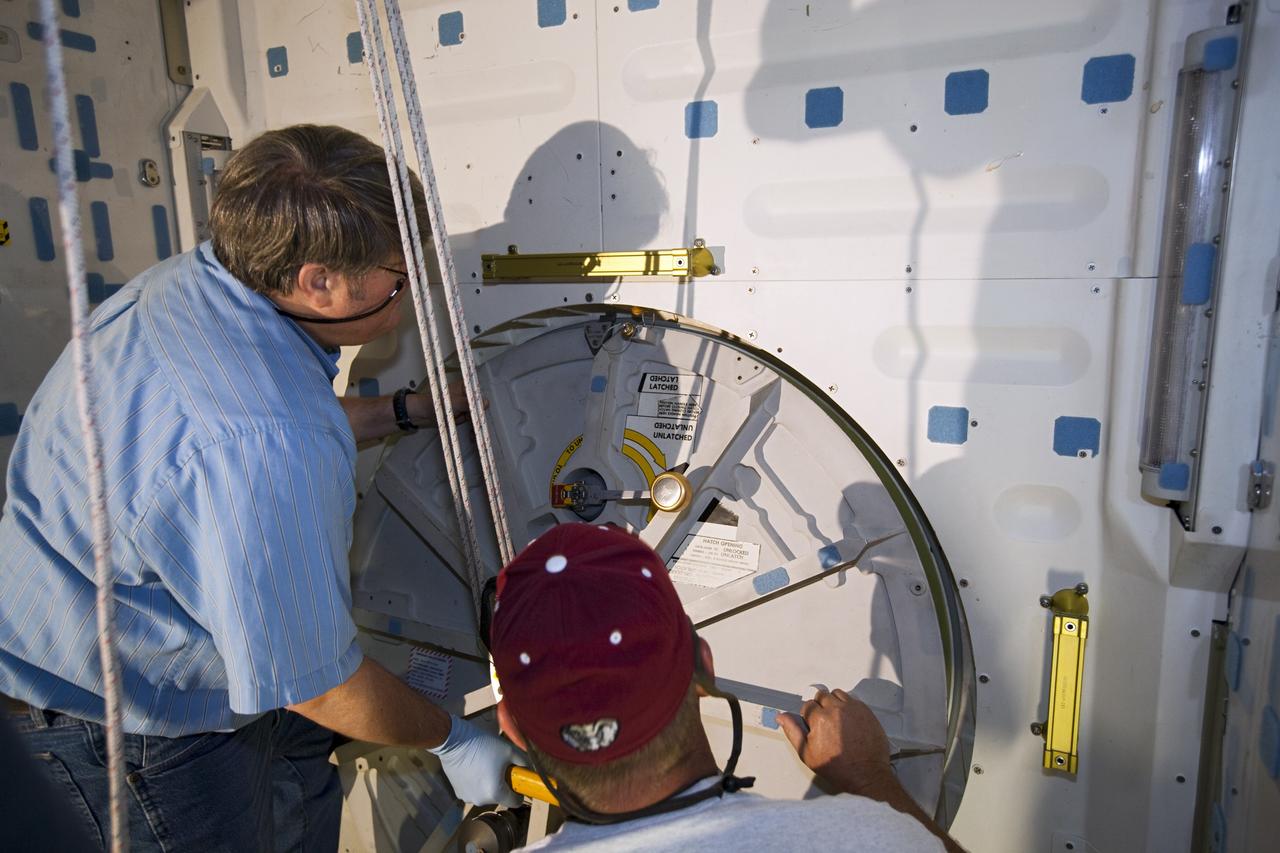
CAPE CANAVERAL, Fla. – In Orbiter Processing Facility-2 at NASA’s Kennedy Space Center in Florida, United Space Alliance technicians align the hatch of space shuttle Endeavour’s airlock for its final closure during processing for the shuttle’s retirement. Endeavour is being prepared for public display at the California Science Center in Los Angeles. Its ferry flight to California is targeted for mid-September. Endeavour, designated OV-105, was the last space shuttle added to NASA’s orbiter fleet. Over the course of its 19-year career, Endeavour spent 299 days in space during 25 missions. For more information, visit http://www.nasa.gov/transition. Photo credit: NASA/Dimitri Gerondidakis
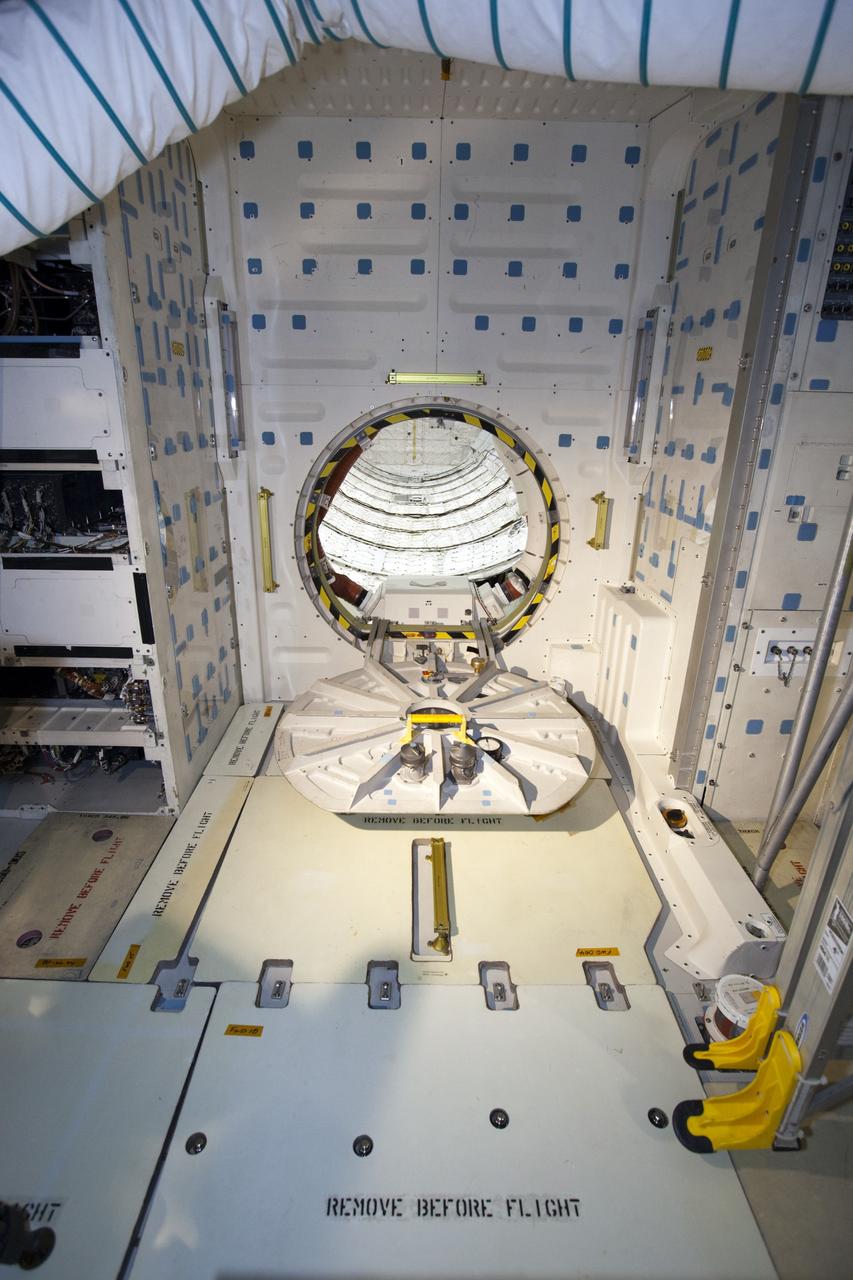
CAPE CANAVERAL, Fla. – In Orbiter Processing Facility-2 at NASA’s Kennedy Space Center in Florida, the area surrounding space shuttle Endeavour’s airlock is cleared of all tools and equipment before its hatch is closed for the final time during processing for the shuttle’s retirement. Endeavour is being prepared for public display at the California Science Center in Los Angeles. Its ferry flight to California is targeted for mid-September. Endeavour, designated OV-105, was the last space shuttle added to NASA’s orbiter fleet. Over the course of its 19-year career, Endeavour spent 299 days in space during 25 missions. For more information, visit http://www.nasa.gov/transition. Photo credit: NASA/Dimitri Gerondidakis
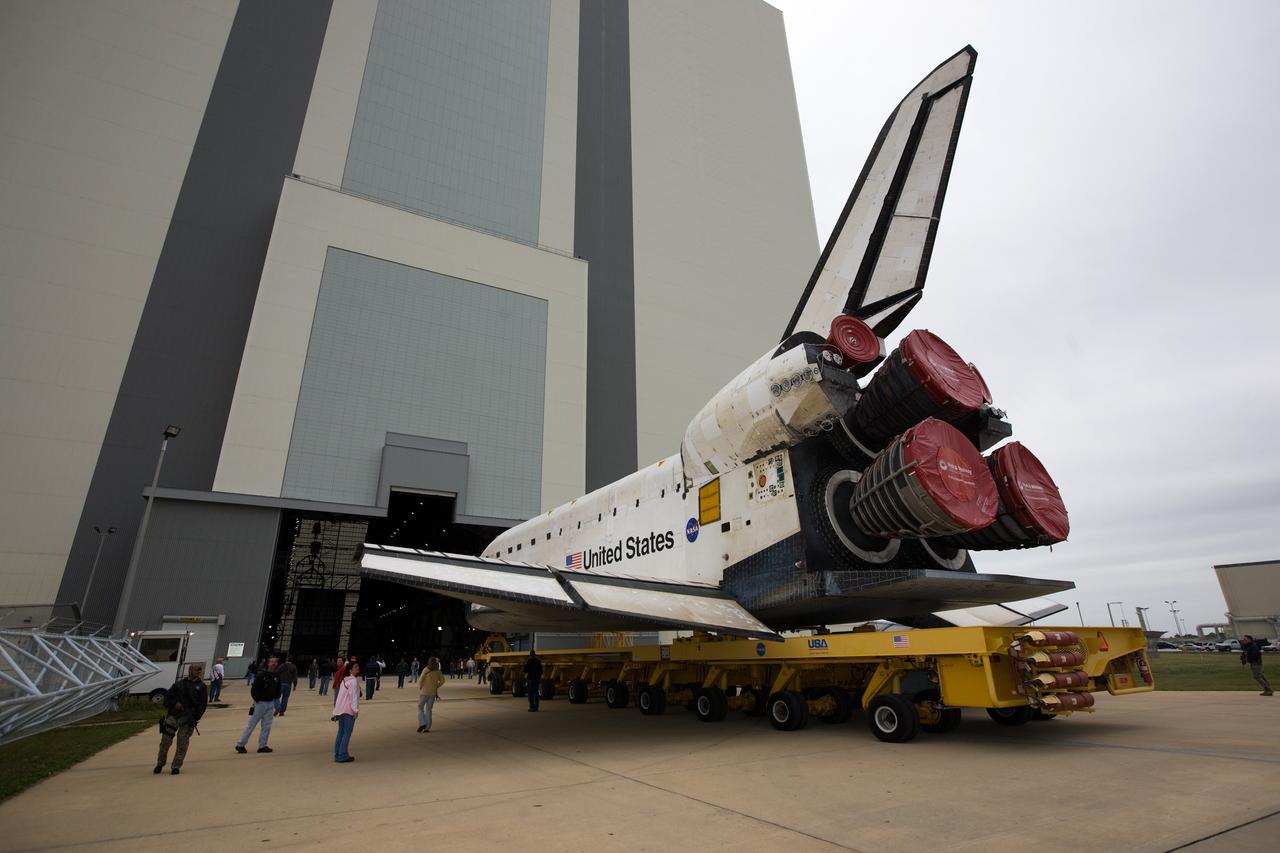
CAPE CANAVERAL, Fla. – At NASA's Kennedy Space Center in Florida, space shuttle Endeavour rolls into the Vehicle Assembly Building transfer aisle. The rollover began at 12:53 a.m. EST and was completed at 2:08 p.m. when Endeavour was towed into the VAB's transfer aisle. Next, Endeavour will be attached to a lifting sling, hoisted over a transom and lowered into High Bay 1, where it will be attached to its external fuel tank and solid rocket boosters. Rollout of the shuttle stack to Kennedy’s Launch Pad 39A, a significant milestone in launch processing activities, is planned for early January 2010. The Italian-built Tranquility module, the primary payload for Endeavour's STS-130 mission, will be installed in the payload bay after the shuttle arrives at the pad. Launch is targeted for early February. For information on the STS-130 mission and crew, visit http://www.nasa.gov/mission_pages/shuttle/shuttlemissions/sts130/index.html. Photo credit: NASA/Dimitri Gerondidakis
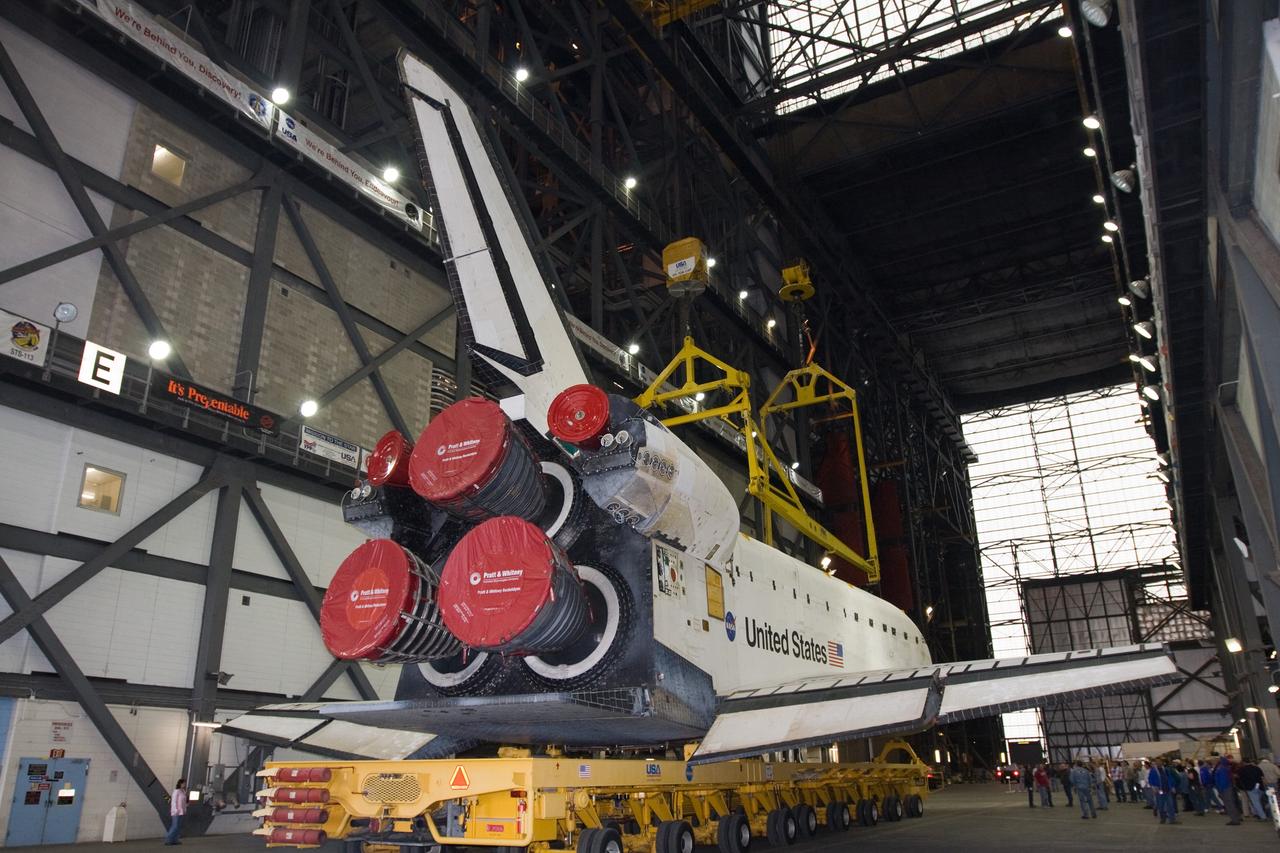
CAPE CANAVERAL, Fla. – At NASA's Kennedy Space Center in Florida, a lifting sling is lowered toward space shuttle Endeavour following its arrival in the Vehicle Assembly Building transfer aisle. The rollover began at 12:53 a.m. EST and was completed at 2:08 p.m. when Endeavour was towed into the VAB's transfer aisle. Next, Endeavour will be attached to the sling, hoisted over a transom and lowered into High Bay 1, where it will be attached to its external fuel tank and solid rocket boosters. Rollout of the shuttle stack to Kennedy’s Launch Pad 39A, a significant milestone in launch processing activities, is planned for early January 2010. The Italian-built Tranquility module, the primary payload for Endeavour's STS-130 mission, will be installed in the payload bay after the shuttle arrives at the pad. Launch is targeted for early February. For information on the STS-130 mission and crew, visit http://www.nasa.gov/mission_pages/shuttle/shuttlemissions/sts130/index.html. Photo credit: NASA/Dimitri Gerondidakis
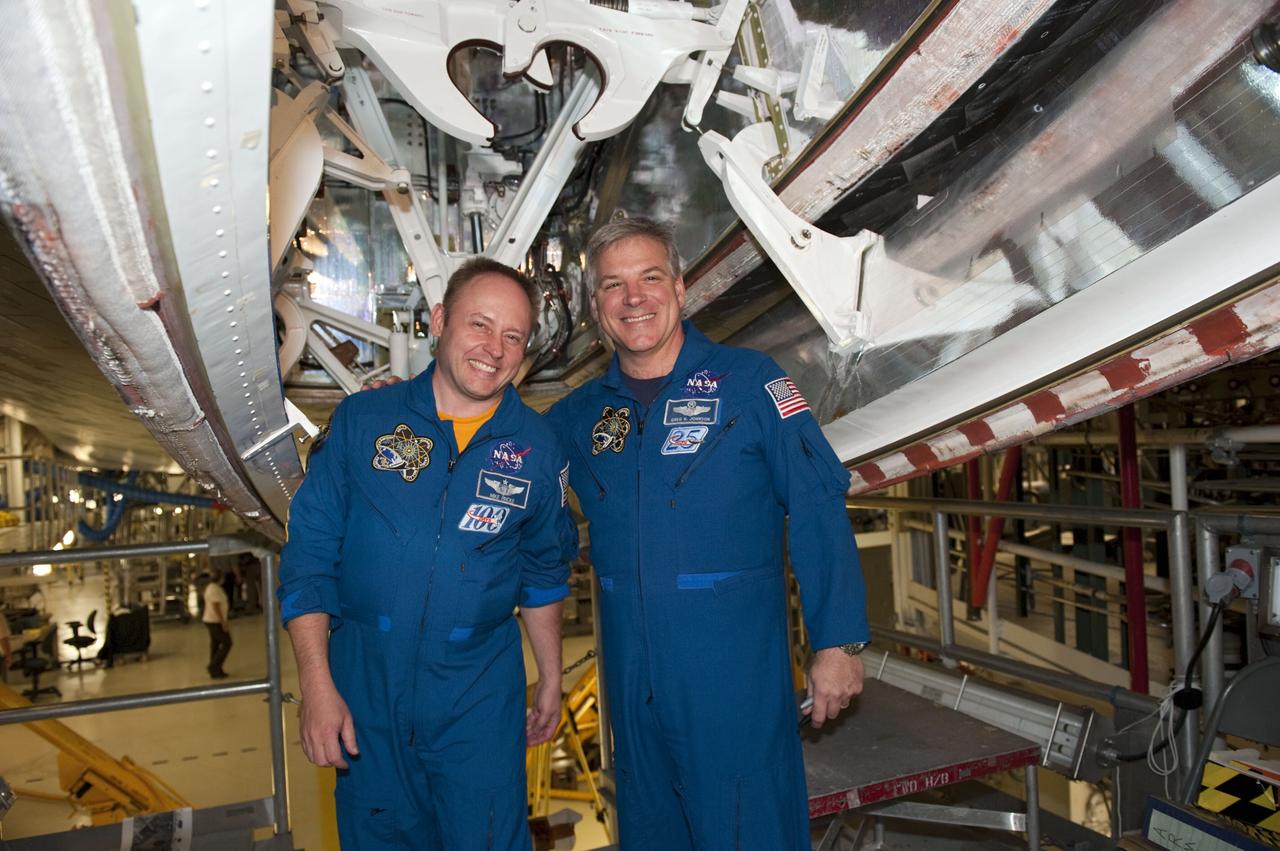
CAPE CANAVERAL, Fla. - STS-134 Mission Specialist Michael Fincke, left, and Pilot Gregory H. Johnson pose in front of space shuttle Endeavour's landing gear inside NASA Kennedy Space Center's Orbiter Processing Facility-1 following a crew return event. Commander Mark Kelly, Johnson and Mission Specialists Fincke, Greg Chamitoff, Andrew Feustel and European Space Agency astronaut Roberto Vittori lifted off May 16, 2011 aboard space shuttle Endeavour. During the nearly 16-day STS-134 mission, Endeavour delivered to the International Space Station the Alpha Magnetic Spectrometer (AMS) and spare parts, including two S-band communications antennas, a high-pressure gas tank and additional spare parts for Dextre. This was the 36th shuttle mission to the station and Endeavour's 25th and final flight. For more information, visit www.nasa.gov/mission_pages/shuttle/shuttlemissions/sts134/main/index.html. Photo credit: NASA/Kim Shiflett
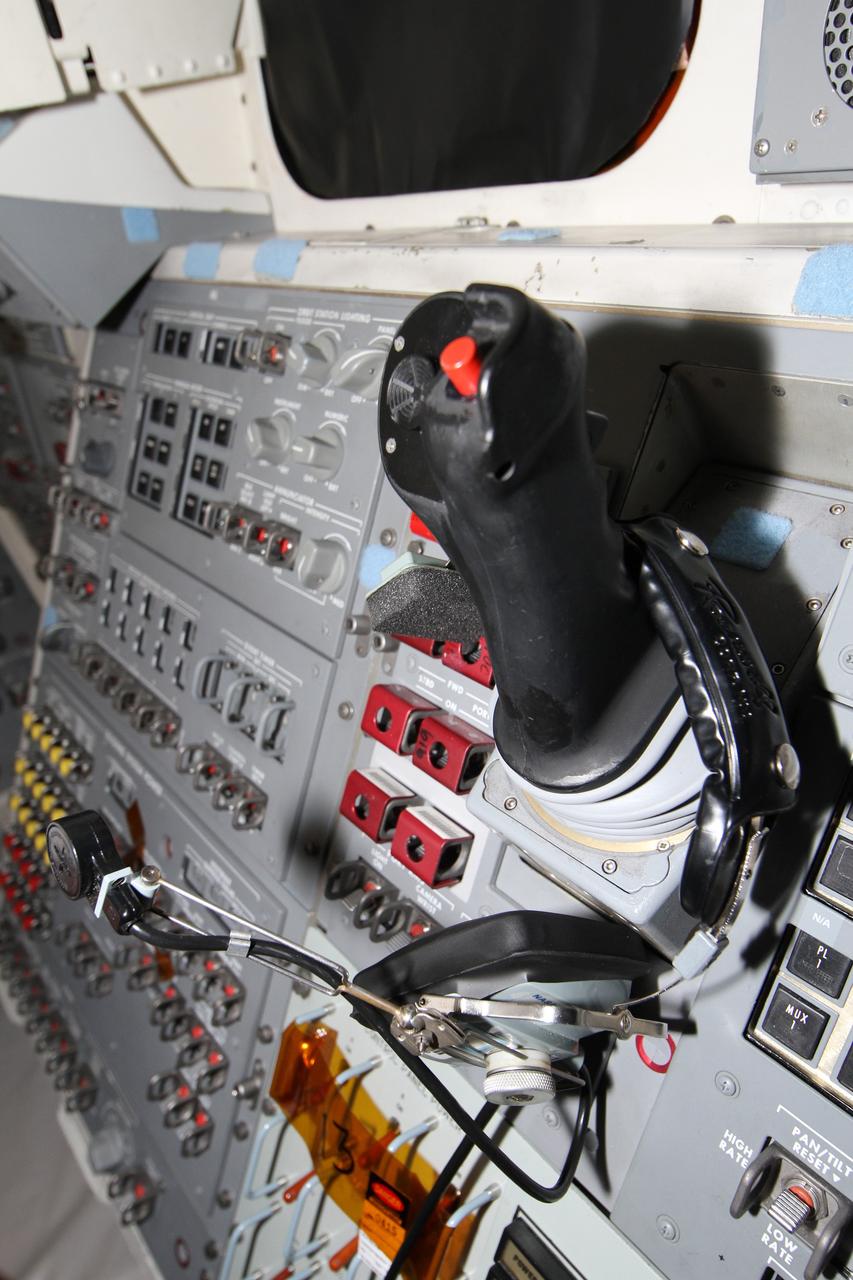
CAPE CANAVERAL, Fla. – Communication no longer required between Orbiter Processing Facility-2 and the Launch Control Center at NASA’s Kennedy Space Center in Florida, a headset is left on a console on space shuttle Endeavour’s flight deck after the shuttle is powered down for the final time. Endeavour is being prepared for public display at the California Science Center in Los Angeles. Its ferry flight to California is targeted for mid-September. Endeavour was the last space shuttle added to NASA’s orbiter fleet. Over the course of its 19-year career, Endeavour spent 299 days in space during 25 missions. For more information, visit http://www.nasa.gov/transition. Photo credit: NASA/Ben Smegelsky

CAPE CANAVERAL, Fla. – In Orbiter Processing Facility-2 at NASA’s Kennedy Space Center in Florida, a view from above shows United Space Alliance technicians assisting with the removal of the large crane that was used to lower the right orbital maneuvering system OMS pod onto space shuttle Endeavour. The OMS pod underwent complete deservicing and cleaning at White Sands Space Harbor in New Mexico, part of the transition and retirement processing of each shuttle. Endeavour is being prepared for public display at the California Science Center in Los Angeles. Over the course of its 19-year career, Endeavour spent 299 days in space during 25 missions. For more information, visit http://www.nasa.gov/shuttle. Photo credit: NASA/Kim Shiflett
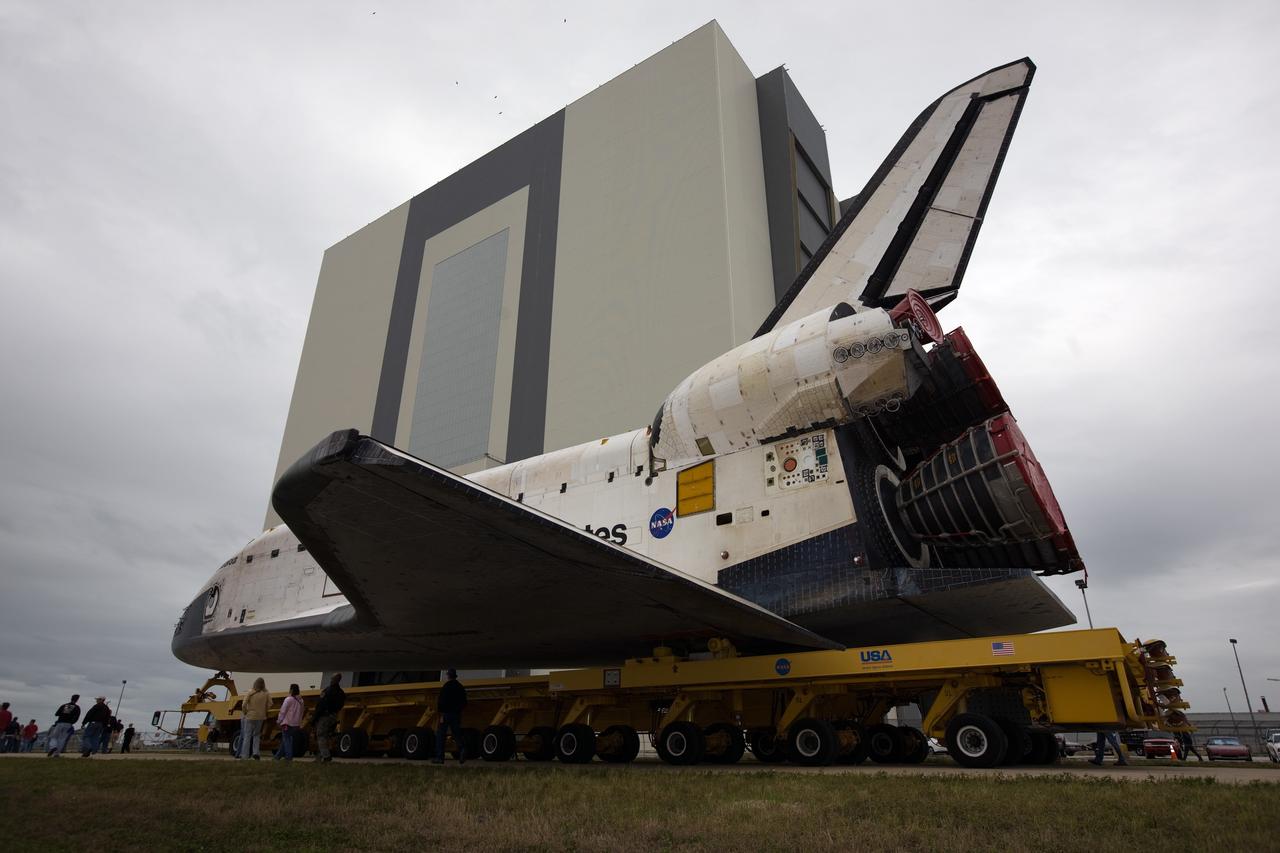
CAPE CANAVERAL, Fla. – At NASA's Kennedy Space Center in Florida, space shuttle Endeavour approaches the Vehicle Assembly Building on its transfer from Orbiter Processing Facility-2. The rollover began at 12:53 a.m. EST and was completed at 2:08 p.m. when Endeavour was towed into the VAB's transfer aisle. Next, Endeavour will be attached to a lifting sling, hoisted over a transom and lowered into High Bay 1, where it will be attached to its external fuel tank and solid rocket boosters. Rollout of the shuttle stack to Kennedy’s Launch Pad 39A, a significant milestone in launch processing activities, is planned for early January 2010. The Italian-built Tranquility module, the primary payload for Endeavour's STS-130 mission, will be installed in the payload bay after the shuttle arrives at the pad. Launch is targeted for early February. For information on the STS-130 mission and crew, visit http://www.nasa.gov/mission_pages/shuttle/shuttlemissions/sts130/index.html. Photo credit: NASA/Dimitri Gerondidakis
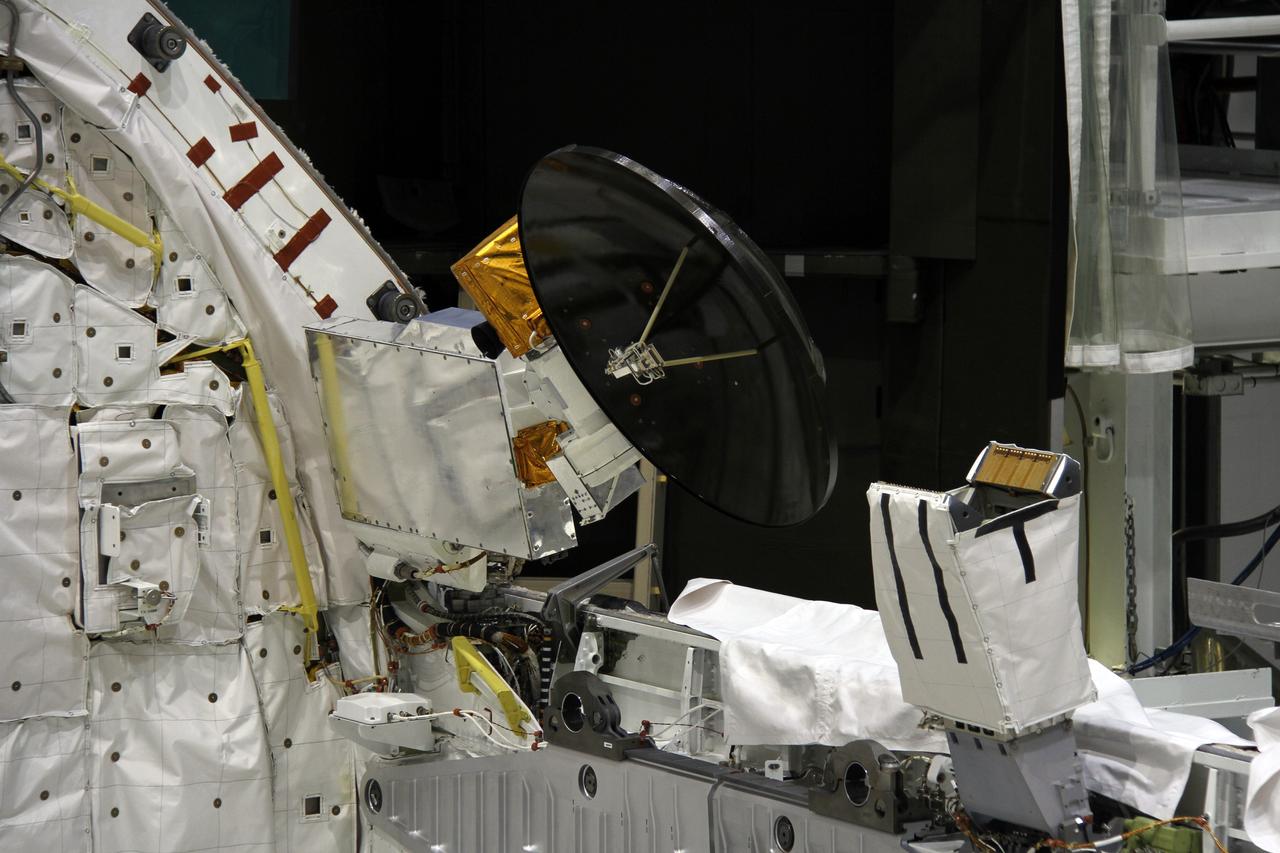
CAPE CANAVERAL, Fla. – In Orbiter Processing Facility-2 at NASA's Kennedy Space Center in Florida, a Ku-band antenna is stowed at the forward end of space shuttle Endeavour’s payload bay in preparation for final closure of the shuttle’s payload bay doors. The antenna, which resembles a mini-satellite dish, was used to transmit audio, video and data between the shuttle and ground stations on Earth. Endeavour is being prepared for public display at the California Science Center in Los Angeles. Its ferry flight to California is targeted for mid-September. Endeavour was the last space shuttle added to NASA’s orbiter fleet. Over the course of its 19-year career, Endeavour spent 299 days in space during 25 missions. For more information, visit http://www.nasa.gov/transition. Photo credit: NASA/Cory Huston
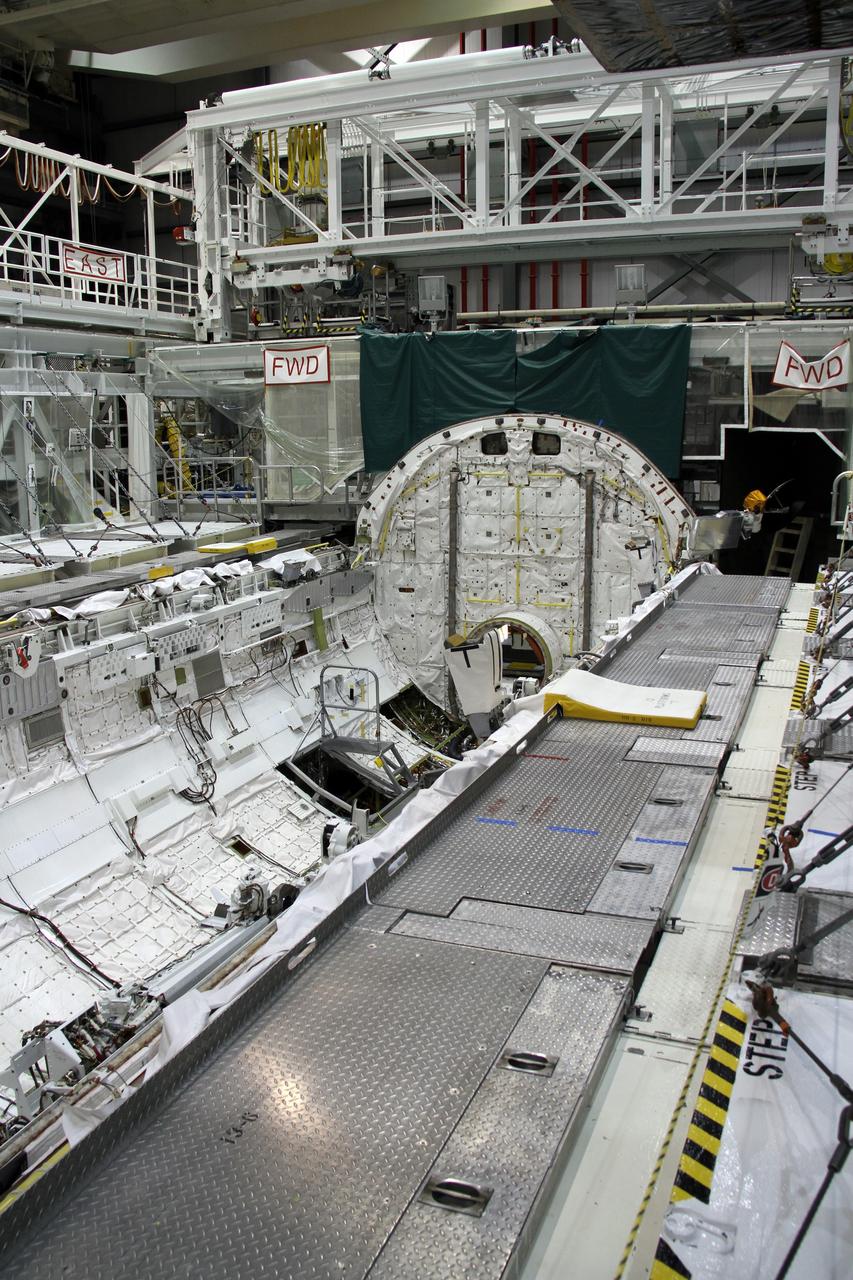
CAPE CANAVERAL, Fla. – In Orbiter Processing Facility-2 at NASA's Kennedy Space Center in Florida, stowage of a Ku-band antenna at the forward end of space shuttle Endeavour’s payload bay is in progress in preparation for final closure of the shuttle’s payload bay doors. The antenna, which resembles a mini-satellite dish, was used to transmit audio, video and data between the shuttle and ground stations on Earth. Endeavour is being prepared for public display at the California Science Center in Los Angeles. Its ferry flight to California is targeted for mid-September. Endeavour was the last space shuttle added to NASA’s orbiter fleet. Over the course of its 19-year career, Endeavour spent 299 days in space during 25 missions. For more information, visit http://www.nasa.gov/transition. Photo credit: NASA/Cory Huston
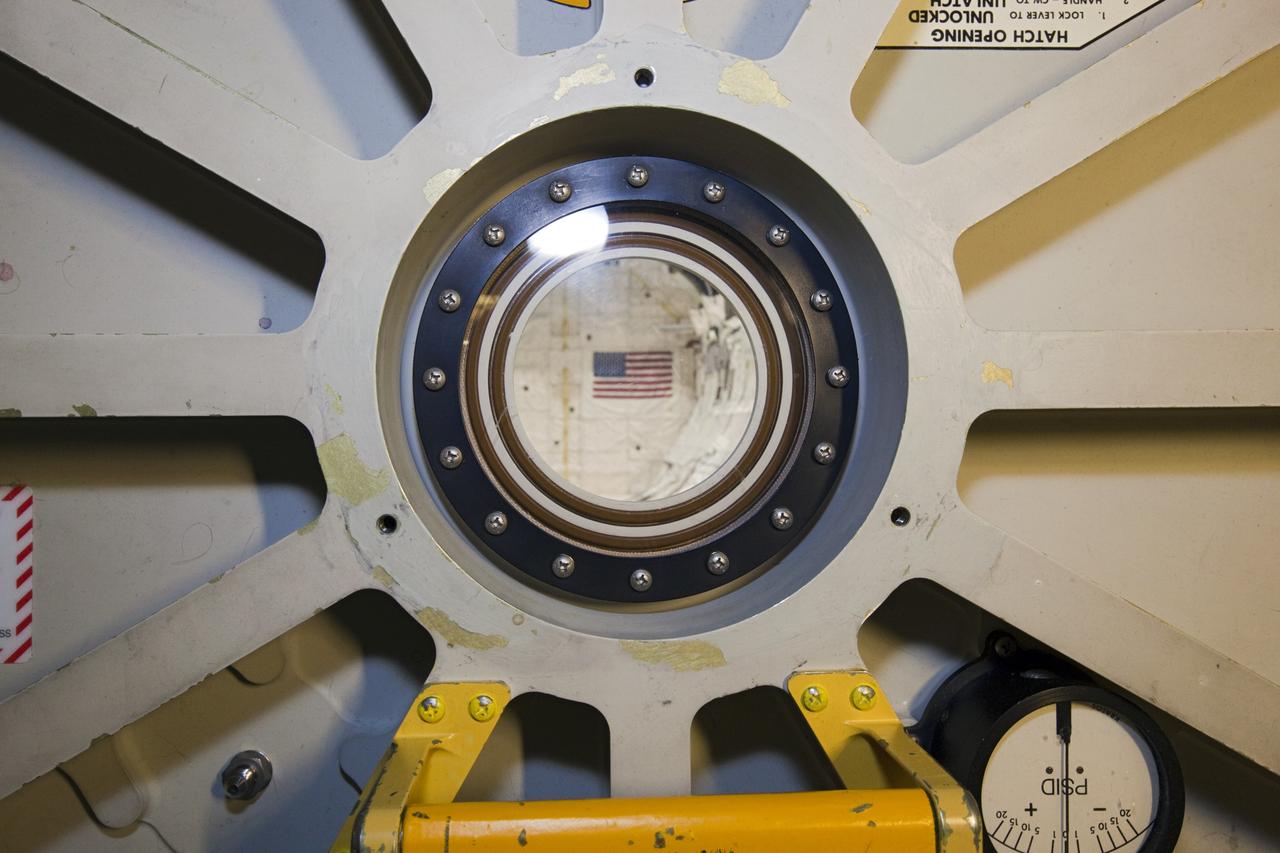
CAPE CANAVERAL, Fla. – In Orbiter Processing Facility-2 at NASA’s Kennedy Space Center in Florida, the camera captures a final view through space shuttle Endeavour’s airlock hatch into the payload bay after the hatch is closed for the final time during processing for the shuttle’s retirement. Endeavour is being prepared for public display at the California Science Center in Los Angeles. Its ferry flight to California is targeted for mid-September. Endeavour, designated OV-105, was the last space shuttle added to NASA’s orbiter fleet. Over the course of its 19-year career, Endeavour spent 299 days in space during 25 missions. For more information, visit http://www.nasa.gov/transition. Photo credit: NASA/Dimitri Gerondidakis
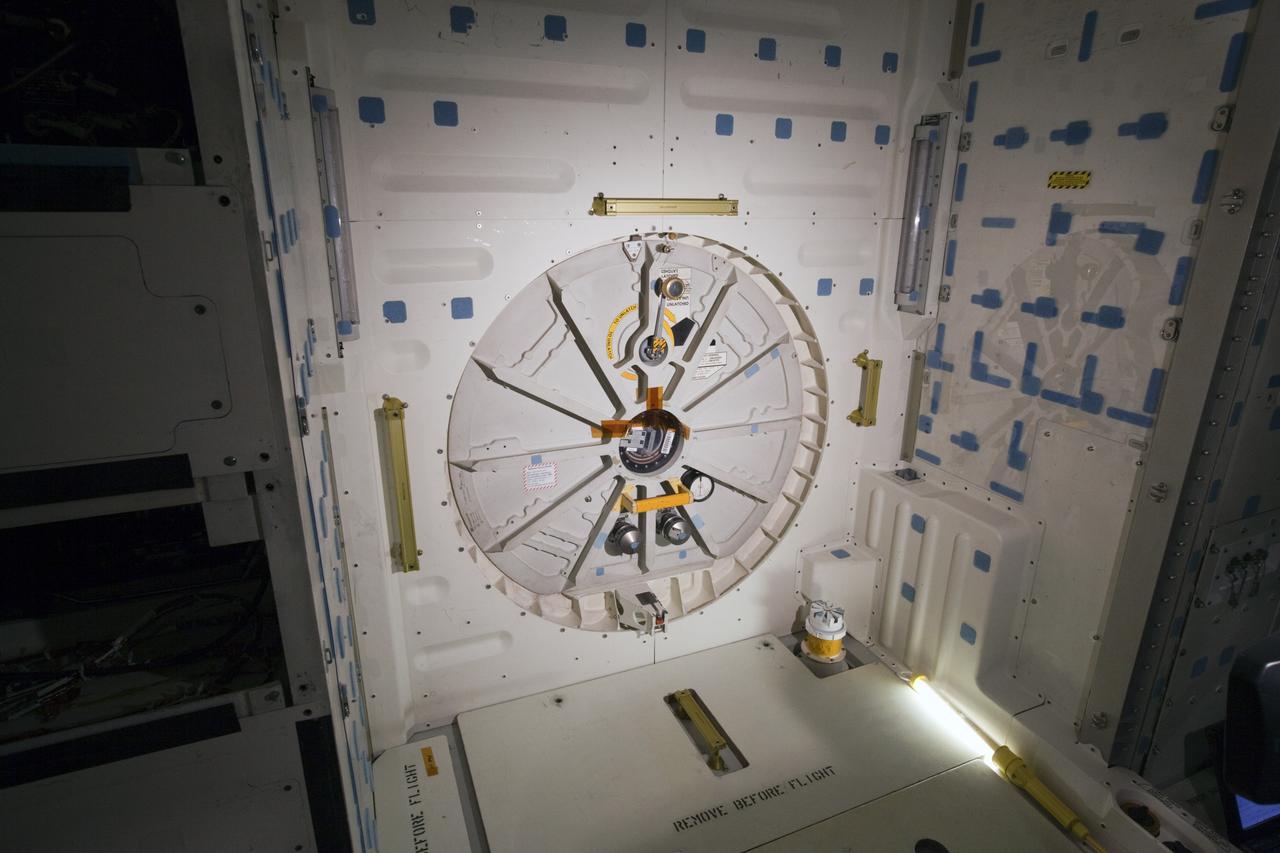
CAPE CANAVERAL, Fla. – In Orbiter Processing Facility-2 at NASA’s Kennedy Space Center in Florida, the hatch of space shuttle Endeavour’s airlock has been closed and sealed for the final time during processing for the shuttle’s retirement. Endeavour is being prepared for public display at the California Science Center in Los Angeles. Its ferry flight to California is targeted for mid-September. Endeavour, designated OV-105, was the last space shuttle added to NASA’s orbiter fleet. Over the course of its 19-year career, Endeavour spent 299 days in space during 25 missions. For more information, visit http://www.nasa.gov/transition. Photo credit: NASA/Dimitri Gerondidakis
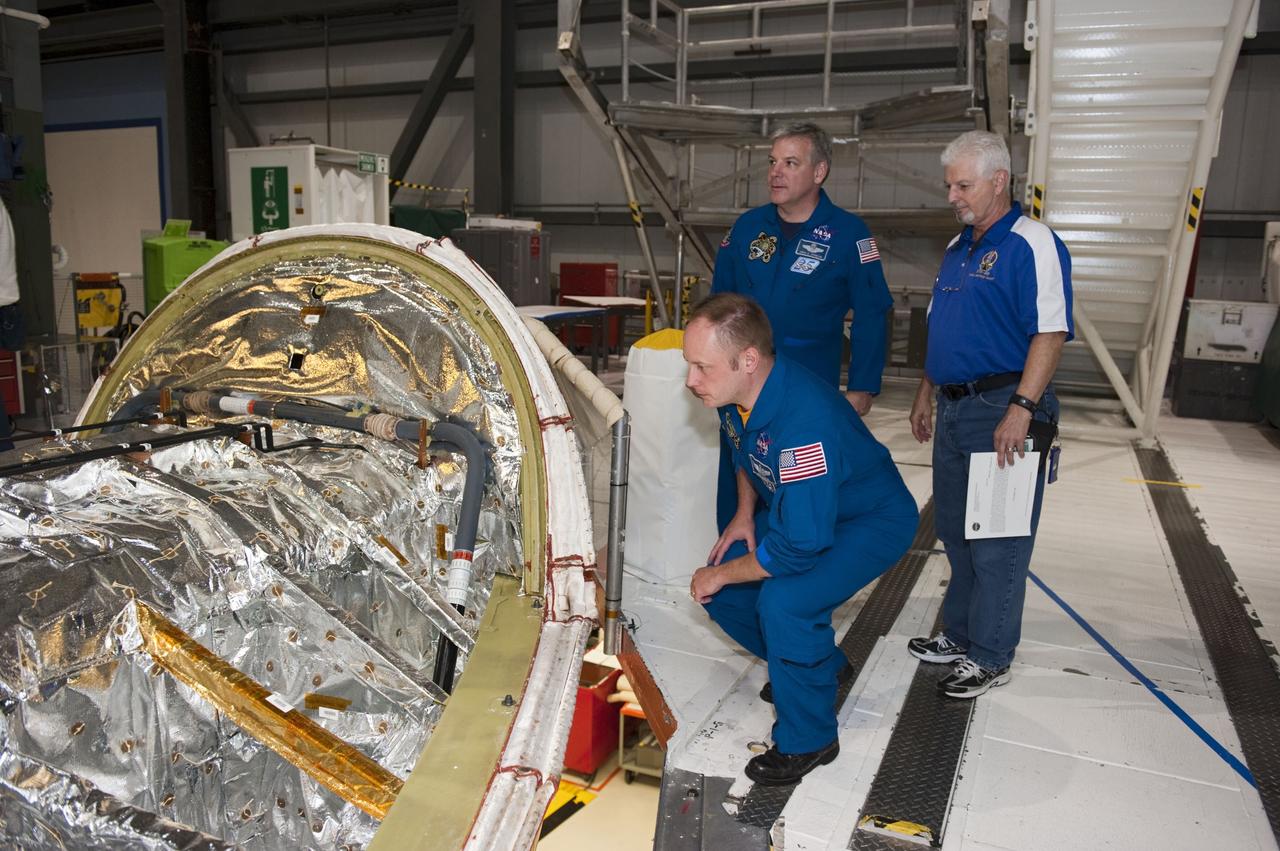
CAPE CANAVERAL, Fla. - STS-134 Mission Specialist Michael Fincke, foreground, and Pilot Gregory H. Johnson are joined by Walter "Buddy" McKenzie as the astronauts get a close look at space shuttle Endeavour inside NASA Kennedy Space Center's Orbiter Processing Facility-1. The spacecraft is being prepared for public display. Commander Mark Kelly, Johnson and Mission Specialists Fincke, Greg Chamitoff, Andrew Feustel and European Space Agency astronaut Roberto Vittori lifted off May 16, 2011 aboard space shuttle Endeavour. During the nearly 16-day STS-134 mission, Endeavour delivered to the International Space Station the Alpha Magnetic Spectrometer (AMS) and spare parts, including two S-band communications antennas, a high-pressure gas tank and additional spare parts for Dextre. This was the 36th shuttle mission to the station and Endeavour's 25th and final flight. For more information, visit www.nasa.gov/mission_pages/shuttle/shuttlemissions/sts134/main/index.html. Photo credit: NASA/Kim Shiflett
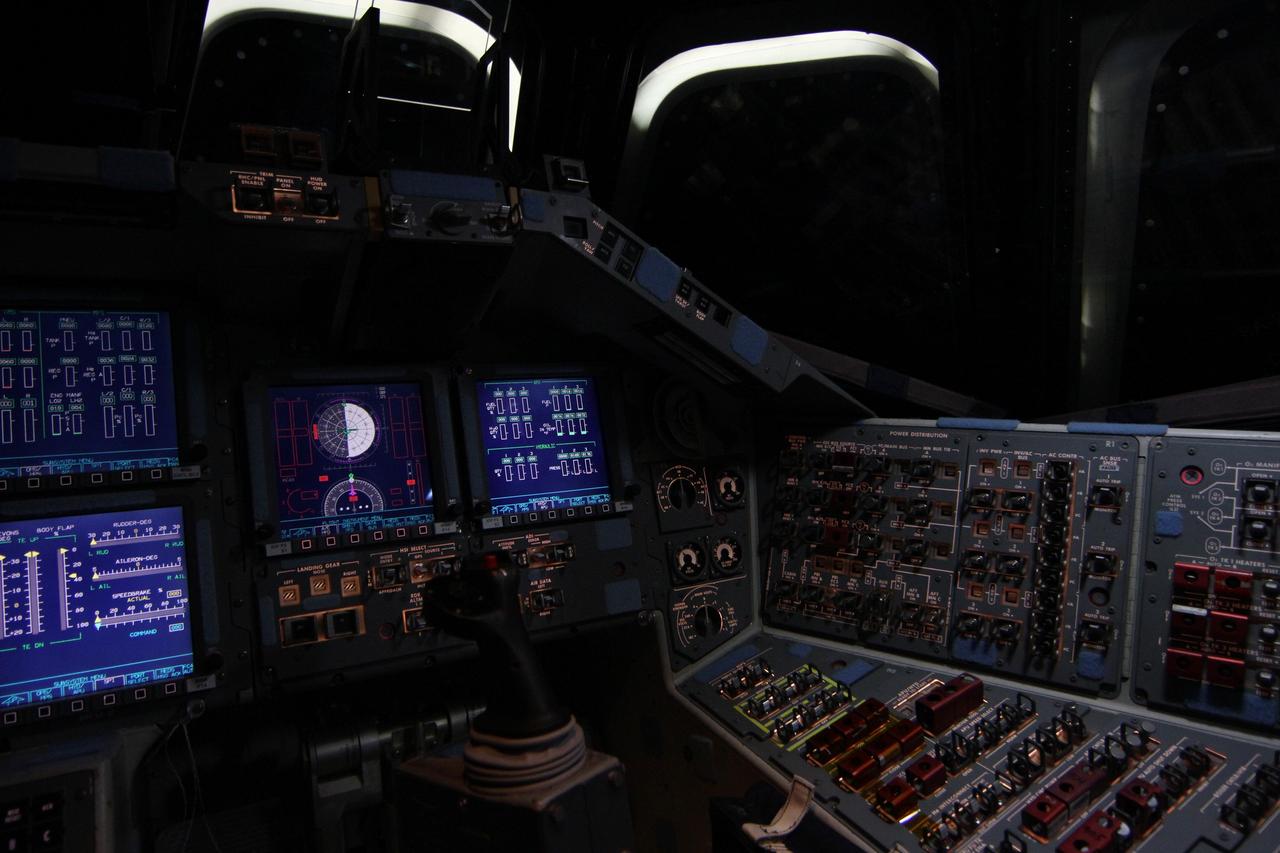
CAPE CANAVERAL, Fla. – In Orbiter Processing Facility-2 at NASA’s Kennedy Space Center in Florida, the consoles on space shuttle Endeavour’s flight deck are illuminated for the final time during operations to power down the shuttle. Endeavour is being prepared for public display at the California Science Center in Los Angeles. Its ferry flight to California is targeted for mid-September. Endeavour was the last space shuttle added to NASA’s orbiter fleet. Over the course of its 19-year career, Endeavour spent 299 days in space during 25 missions. For more information, visit http://www.nasa.gov/transition. Photo credit: NASA/Ben Smegelsky
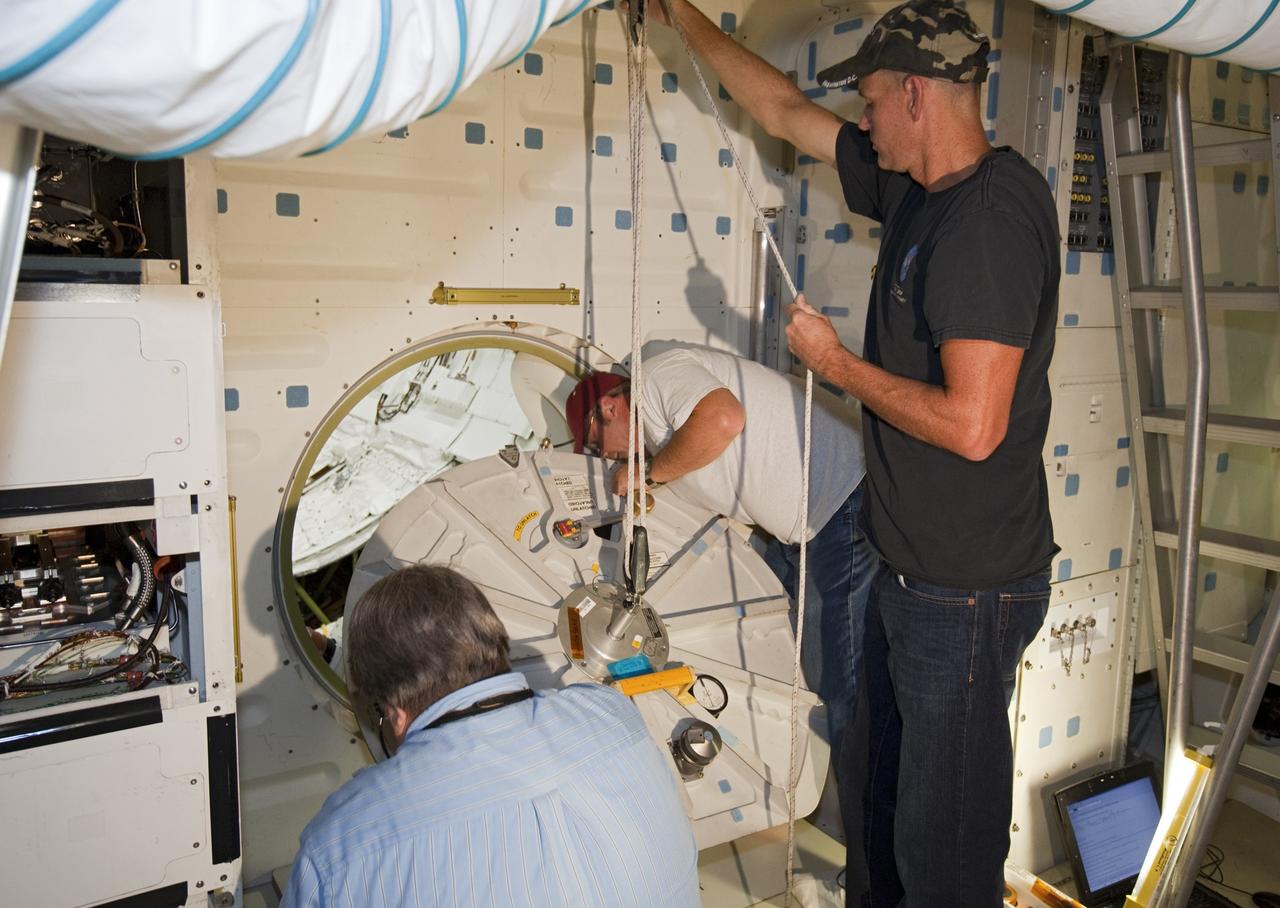
CAPE CANAVERAL, Fla. – In Orbiter Processing Facility-2 at NASA’s Kennedy Space Center in Florida, United Space Alliance technicians align the hatch of space shuttle Endeavour’s airlock for its final closure during processing for the shuttle’s retirement. Endeavour is being prepared for public display at the California Science Center in Los Angeles. Its ferry flight to California is targeted for mid-September. Endeavour, designated OV-105, was the last space shuttle added to NASA’s orbiter fleet. Over the course of its 19-year career, Endeavour spent 299 days in space during 25 missions. For more information, visit http://www.nasa.gov/transition. Photo credit: NASA/Dimitri Gerondidakis
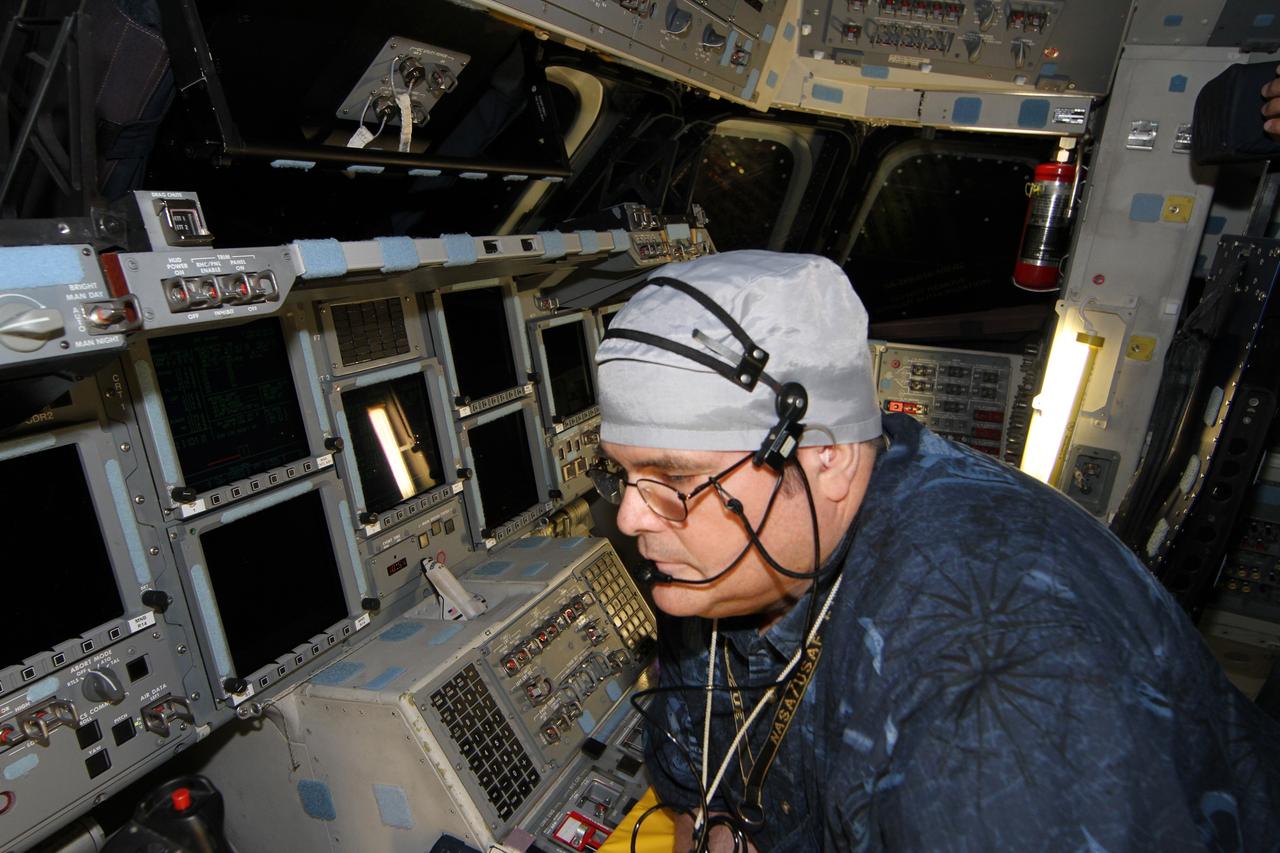
CAPE CANAVERAL, Fla. – In Orbiter Processing Facility-2 at NASA’s Kennedy Space Center in Florida, United Space Alliance spacecraft operator Bill Powers monitors the consoles on space shuttle Endeavour’s flight deck as operations to power down the shuttle for the final time get under way. Endeavour is being prepared for public display at the California Science Center in Los Angeles. Its ferry flight to California is targeted for mid-September. Endeavour was the last space shuttle added to NASA’s orbiter fleet. Over the course of its 19-year career, Endeavour spent 299 days in space during 25 missions. For more information, visit http://www.nasa.gov/transition. Photo credit: NASA/Ben Smegelsky
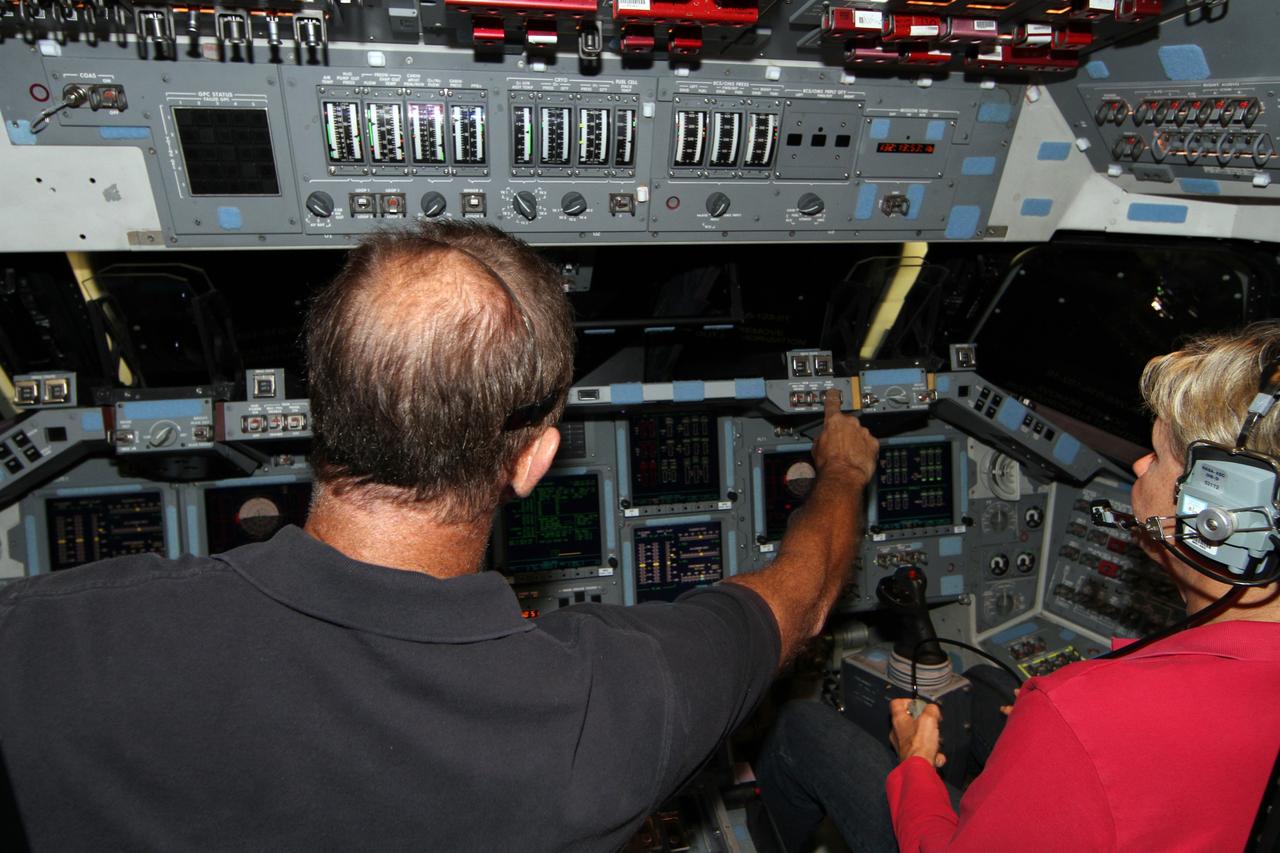
CAPE CANAVERAL, Fla. – In Orbiter Processing Facility-2 at NASA’s Kennedy Space Center in Florida, United Space Alliance OV-105 operations chief Mike Parrish, left, and associate operations chief Pat Leslie turn off consoles on space shuttle Endeavour’s flight deck for the final time during operations to power down the shuttle. Endeavour is being prepared for public display at the California Science Center in Los Angeles. Its ferry flight to California is targeted for mid-September. Endeavour was the last space shuttle added to NASA’s orbiter fleet. Over the course of its 19-year career, Endeavour spent 299 days in space during 25 missions. For more information, visit http://www.nasa.gov/transition. Photo credit: NASA/Ben Smegelsky
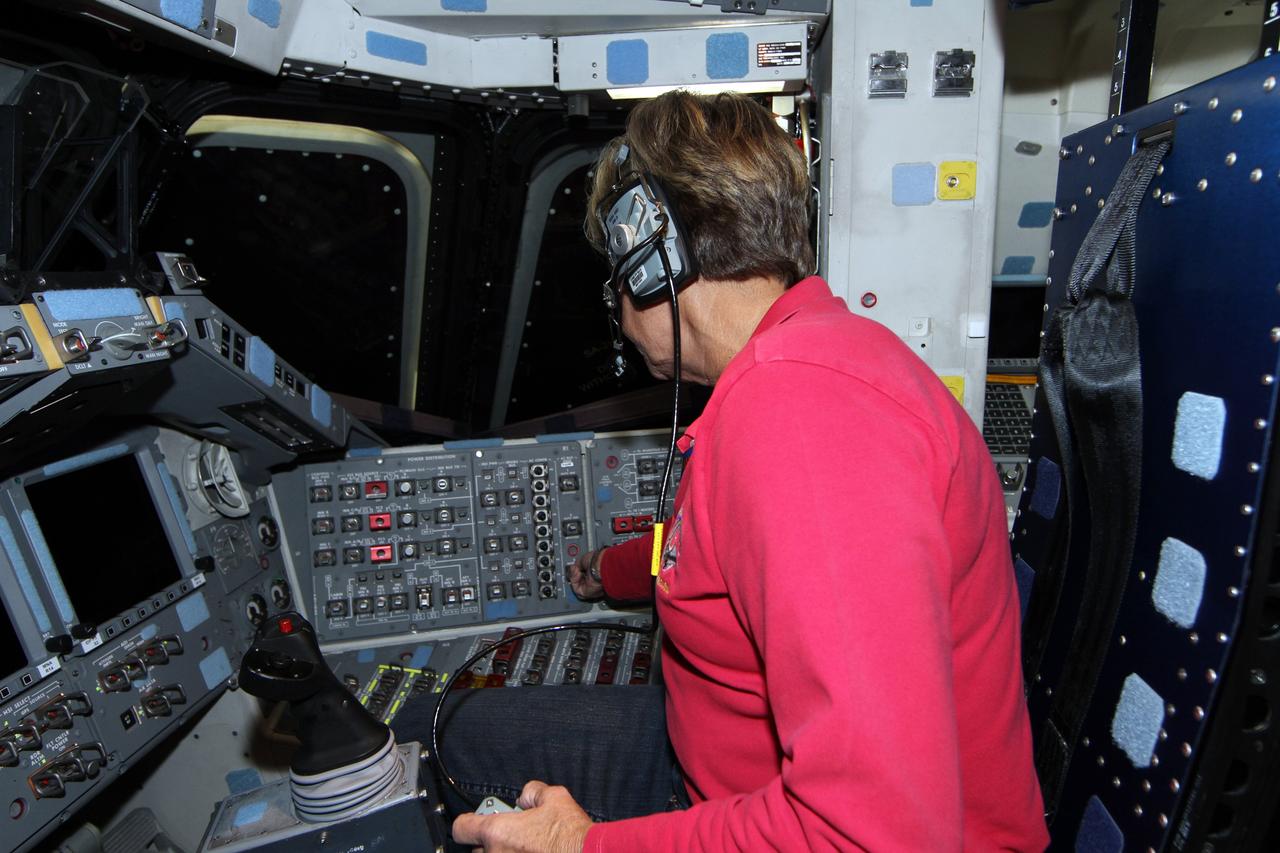
CAPE CANAVERAL, Fla. – In Orbiter Processing Facility-2 at NASA’s Kennedy Space Center in Florida, United Space Alliance associate operations chief Pat Leslie toggles the switches to turn off consoles on space shuttle Endeavour’s flight deck for the final time during operations to power down the shuttle. Endeavour is being prepared for public display at the California Science Center in Los Angeles. Its ferry flight to California is targeted for mid-September. Endeavour was the last space shuttle added to NASA’s orbiter fleet. Over the course of its 19-year career, Endeavour spent 299 days in space during 25 missions. For more information, visit http://www.nasa.gov/transition. Photo credit: NASA/Ben Smegelsky
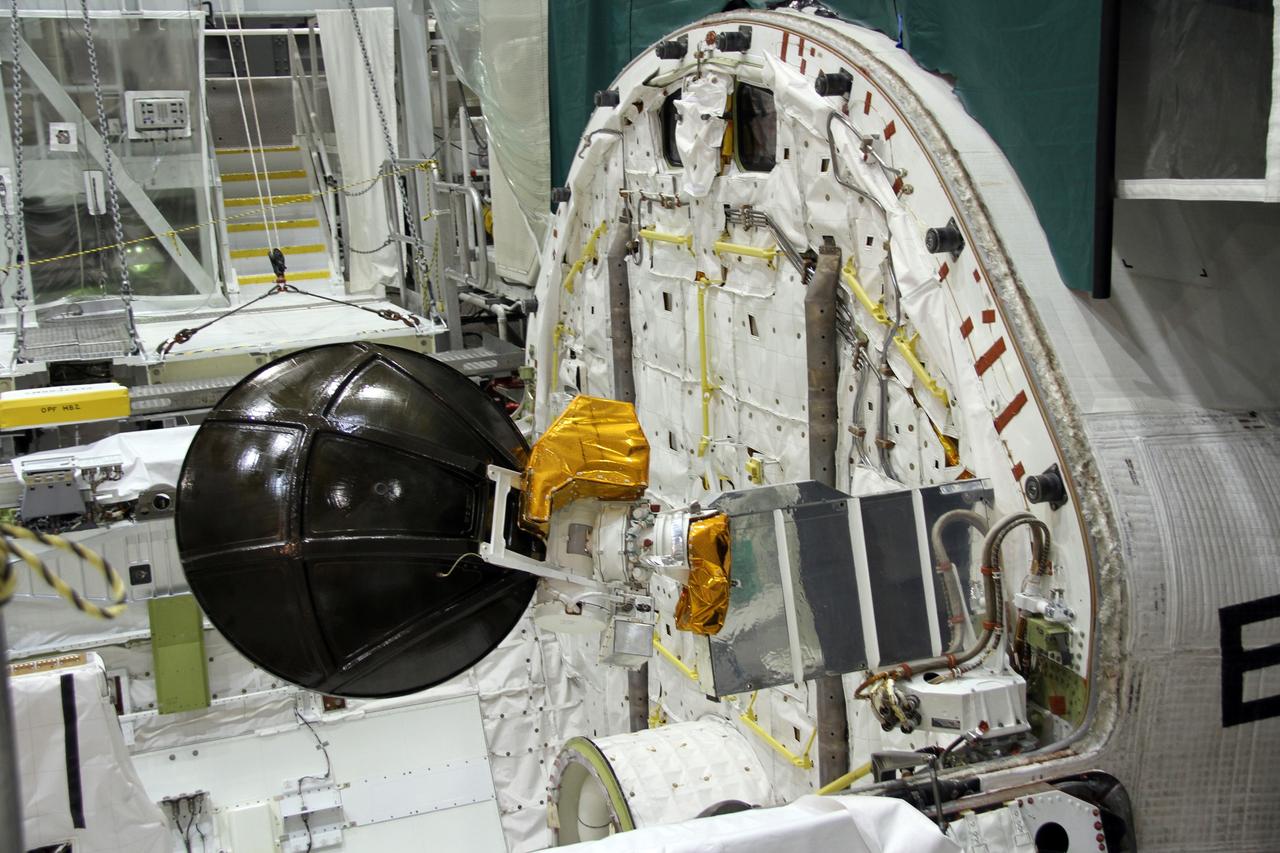
CAPE CANAVERAL, Fla. – In Orbiter Processing Facility-2 at NASA's Kennedy Space Center in Florida, a Ku-band antenna is stowed in space shuttle Endeavour’s payload bay in preparation for final closure of the shuttle’s payload bay doors. The antenna, which resembles a mini-satellite dish, was used to transmit audio, video and data between the shuttle and ground stations on Earth. Endeavour is being prepared for public display at the California Science Center in Los Angeles. Its ferry flight to California is targeted for mid-September. Endeavour was the last space shuttle added to NASA’s orbiter fleet. Over the course of its 19-year career, Endeavour spent 299 days in space during 25 missions. For more information, visit http://www.nasa.gov/transition. Photo credit: NASA/Cory Huston
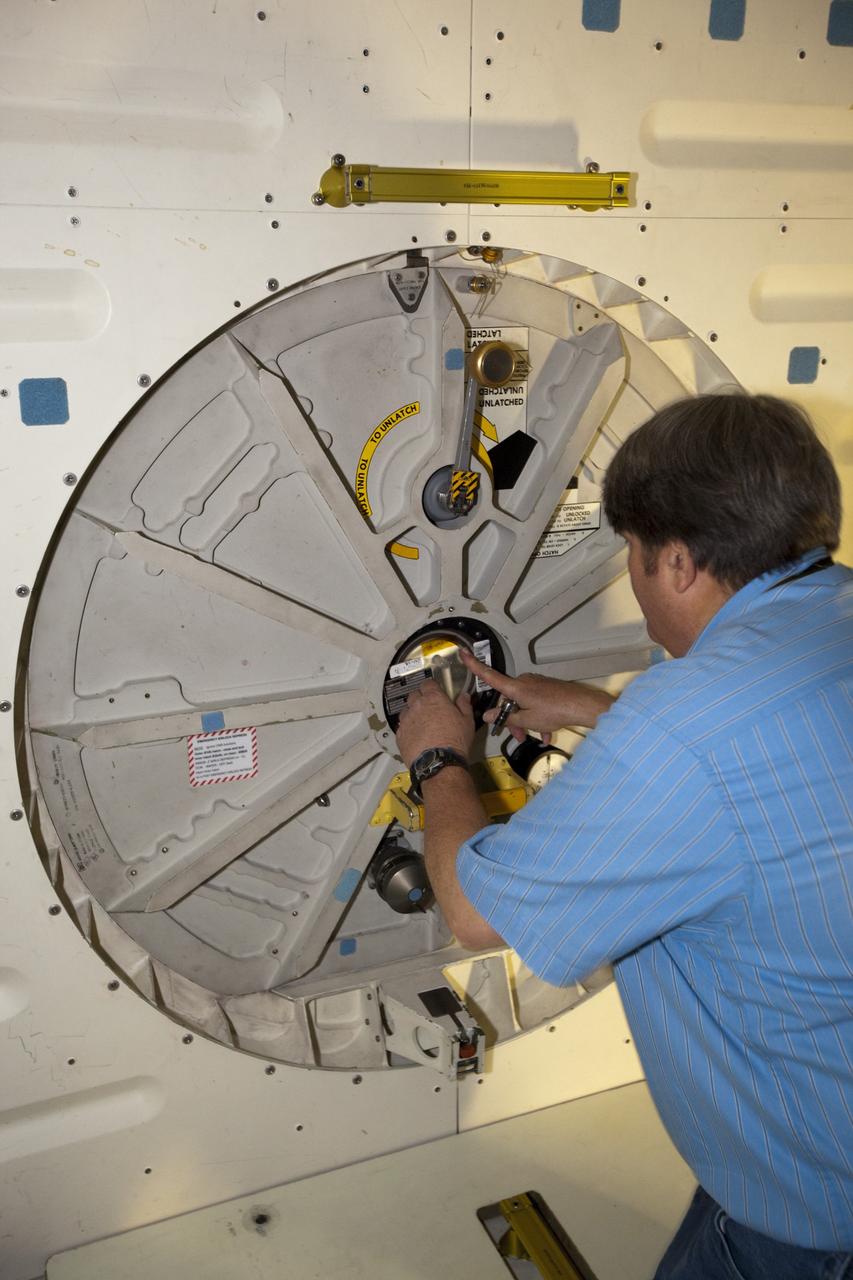
CAPE CANAVERAL, Fla. – In Orbiter Processing Facility-2 at NASA’s Kennedy Space Center in Florida, a United Space Alliance technician locks the hatch of space shuttle Endeavour’s airlock for the final time during processing for the shuttle’s retirement. Endeavour is being prepared for public display at the California Science Center in Los Angeles. Its ferry flight to California is targeted for mid-September. Endeavour, designated OV-105, was the last space shuttle added to NASA’s orbiter fleet. Over the course of its 19-year career, Endeavour spent 299 days in space during 25 missions. For more information, visit http://www.nasa.gov/transition. Photo credit: NASA/Dimitri Gerondidakis
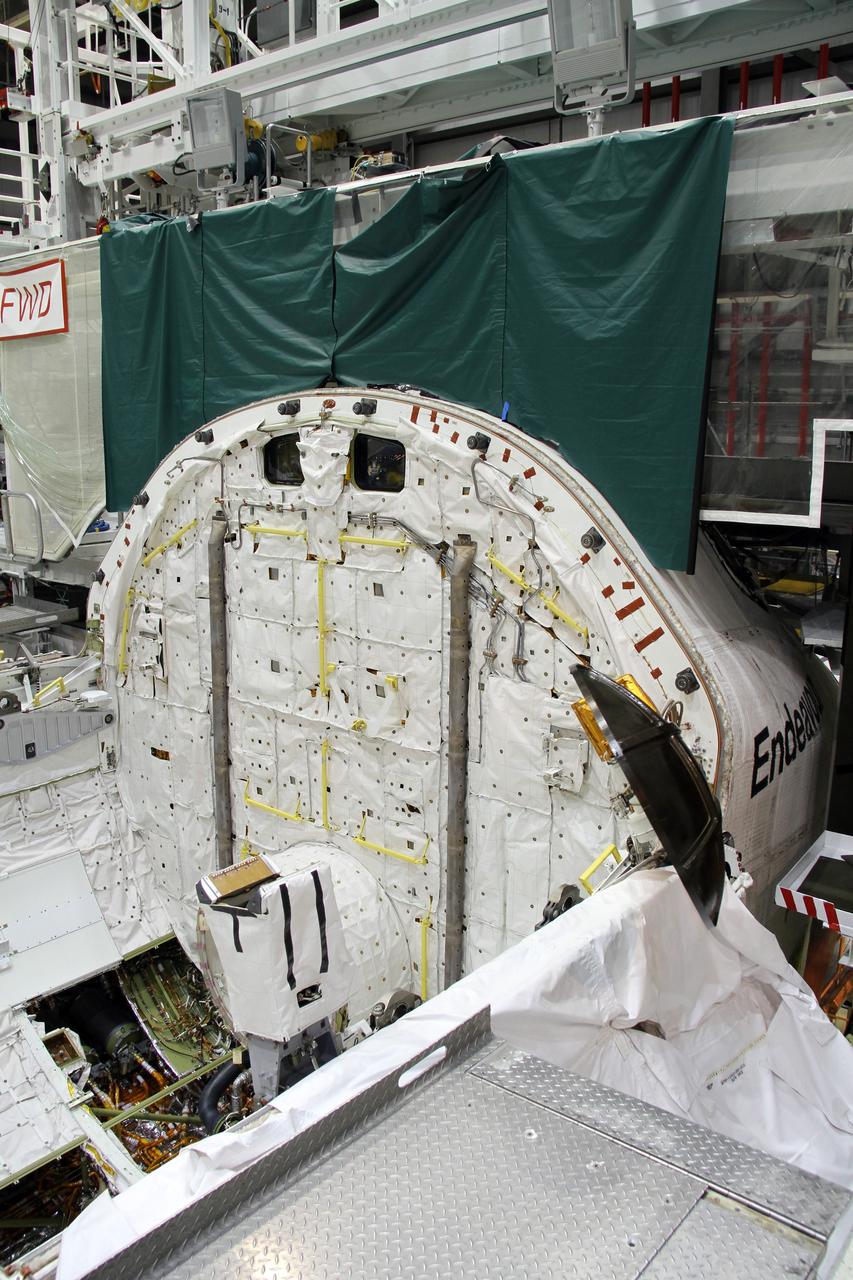
CAPE CANAVERAL, Fla. – In Orbiter Processing Facility-2 at NASA's Kennedy Space Center in Florida, stowage of a Ku-band antenna in space shuttle Endeavour’s payload bay is under way in preparation for final closure of the shuttle’s payload bay doors. The antenna, which resembles a mini-satellite dish, was used to transmit audio, video and data between the shuttle and ground stations on Earth. Endeavour is being prepared for public display at the California Science Center in Los Angeles. Its ferry flight to California is targeted for mid-September. Endeavour was the last space shuttle added to NASA’s orbiter fleet. Over the course of its 19-year career, Endeavour spent 299 days in space during 25 missions. For more information, visit http://www.nasa.gov/transition. Photo credit: NASA/Cory Huston
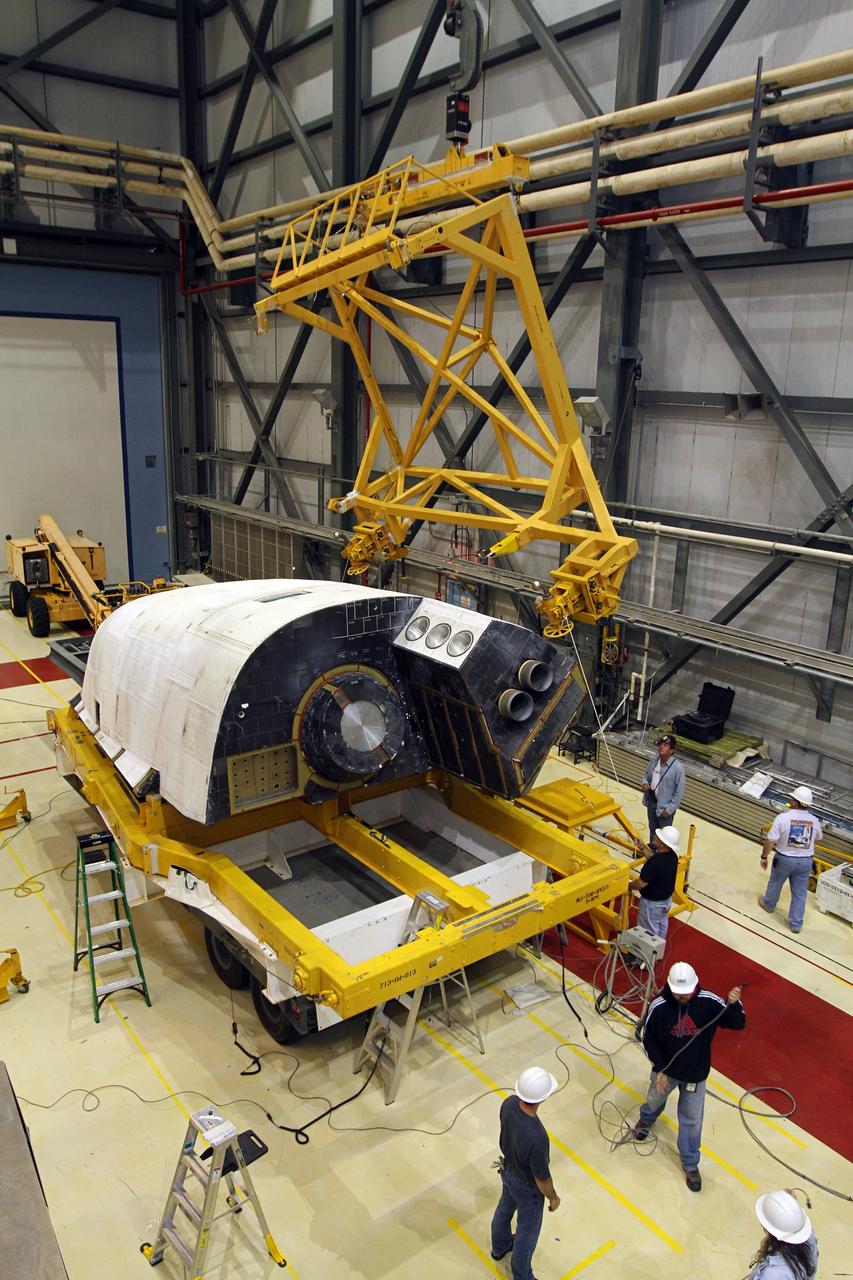
CAPE CANAVERAL, Fla. – In Orbiter Processing Facility-2 at NASA’s Kennedy Space Center in Florida, United Space Alliance technicians monitor the progress as a large crane is lowered toward the right orbital maneuvering system OMS pod that will be installed on space shuttle Endeavour. The OMS pod underwent complete deservicing and cleaning at White Sands Space Harbor in New Mexico, part of the transition and retirement processing of each shuttle. Endeavour is being prepared for public display at the California Science Center in Los Angeles. Over the course of its 19-year career, Endeavour spent 299 days in space during 25 missions. For more information, visit http://www.nasa.gov/shuttle. Photo credit: NASA/Kim Shiflett
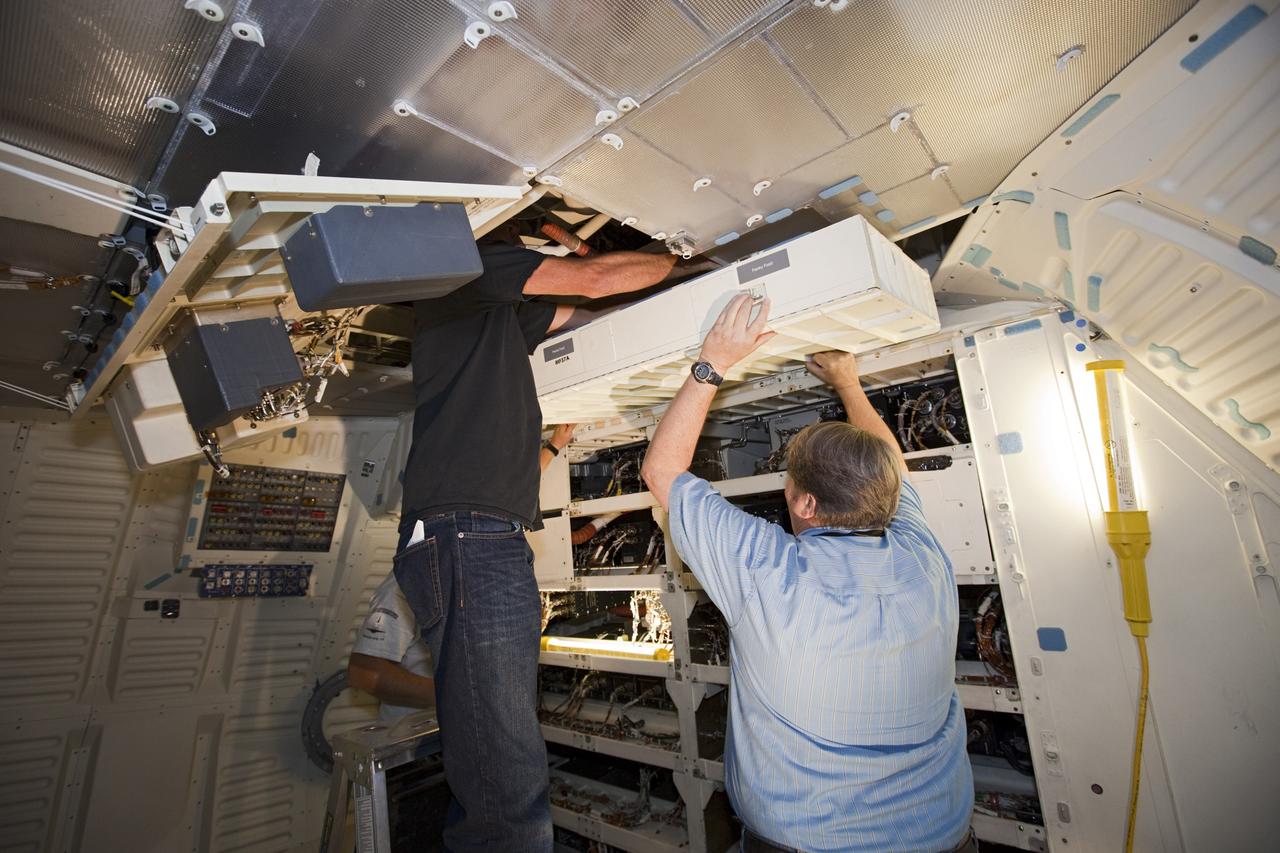
CAPE CANAVERAL, Fla. – In Orbiter Processing Facility-2 at NASA’s Kennedy Space Center in Florida, United Space Alliance technicians reinstall the food pantry locker in space shuttle Endeavour’s middeck during processing for the shuttle’s retirement. Endeavour is being prepared for public display at the California Science Center in Los Angeles. Its ferry flight to California is targeted for mid-September. Endeavour, designated OV-105, was the last space shuttle added to NASA’s orbiter fleet. Over the course of its 19-year career, Endeavour spent 299 days in space during 25 missions. For more information, visit http://www.nasa.gov/transition. Photo credit: NASA/Dimitri Gerondidakis

CAPE CANAVERAL, Fla. – In Orbiter Processing Facility-2 at NASA’s Kennedy Space Center in Florida, a large crane is used to lift and move the right orbital maneuvering system OMS pod for installation on space shuttle Endeavour. The OMS pod underwent complete deservicing and cleaning at White Sands Space Harbor in New Mexico, part of the transition and retirement processing of each shuttle. Endeavour is being prepared for public display at the California Science Center in Los Angeles. Over the course of its 19-year career, Endeavour spent 299 days in space during 25 missions. For more information, visit http://www.nasa.gov/shuttle. Photo credit: NASA/Kim Shiflett
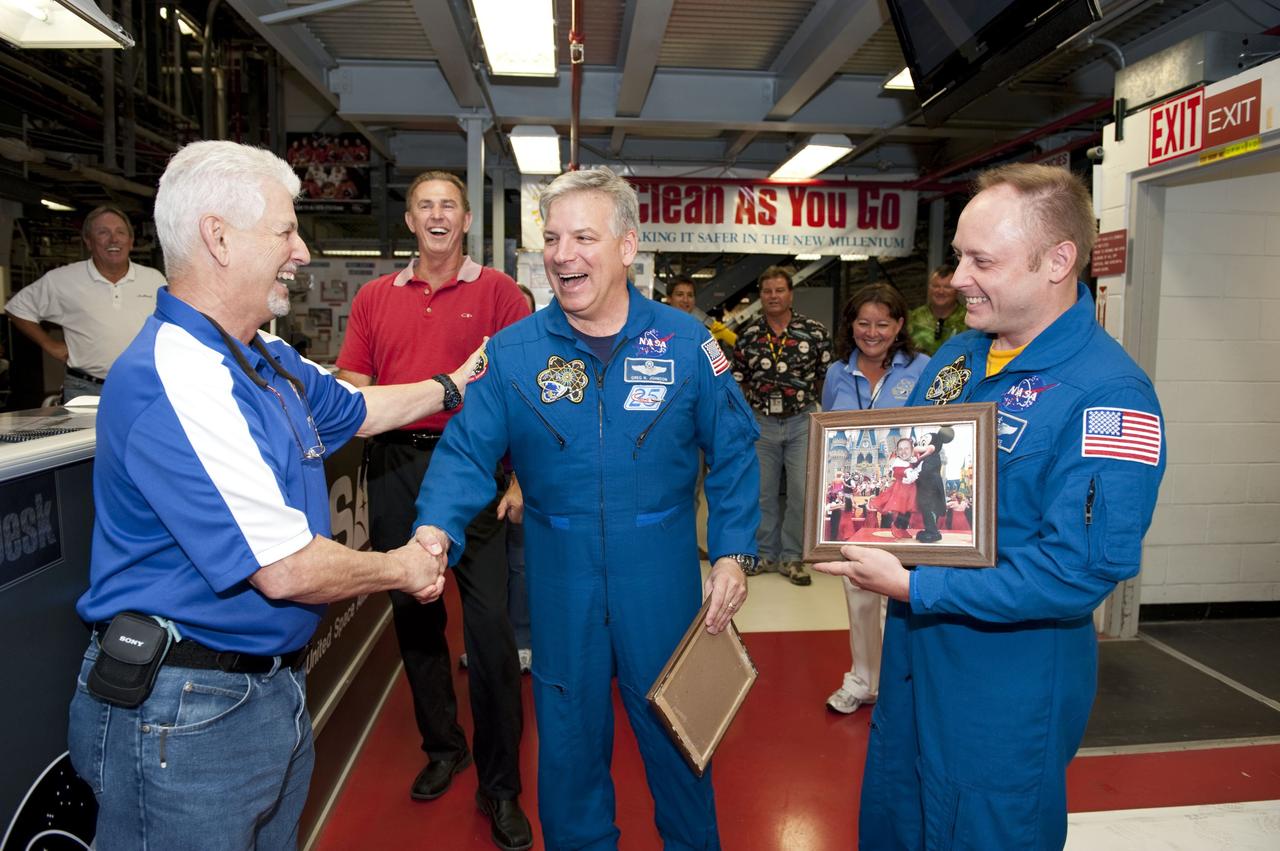
CAPE CANAVERAL, Fla. - Walter "Buddy" McKenzie shakes hands with STS-134 Pilot Gregory H. Johnson as Mission Specialist Michael Fincke, right, looks on. The astronauts visited with employees inside NASA Kennedy Space Center's Orbiter Processing Facility-1, where space shuttle Endeavour is being prepared for public display. Commander Mark Kelly, Johnson and Mission Specialists Fincke, Greg Chamitoff, Andrew Feustel and European Space Agency astronaut Roberto Vittori lifted off May 16, 2011 aboard space shuttle Endeavour. During the nearly 16-day STS-134 mission, Endeavour delivered to the International Space Station the Alpha Magnetic Spectrometer (AMS) and spare parts, including two S-band communications antennas, a high-pressure gas tank and additional spare parts for Dextre. This was the 36th shuttle mission to the station and Endeavour's 25th and final flight. For more information, visit www.nasa.gov/mission_pages/shuttle/shuttlemissions/sts134/main/index.html. Photo credit: NASA/Kim Shiflett
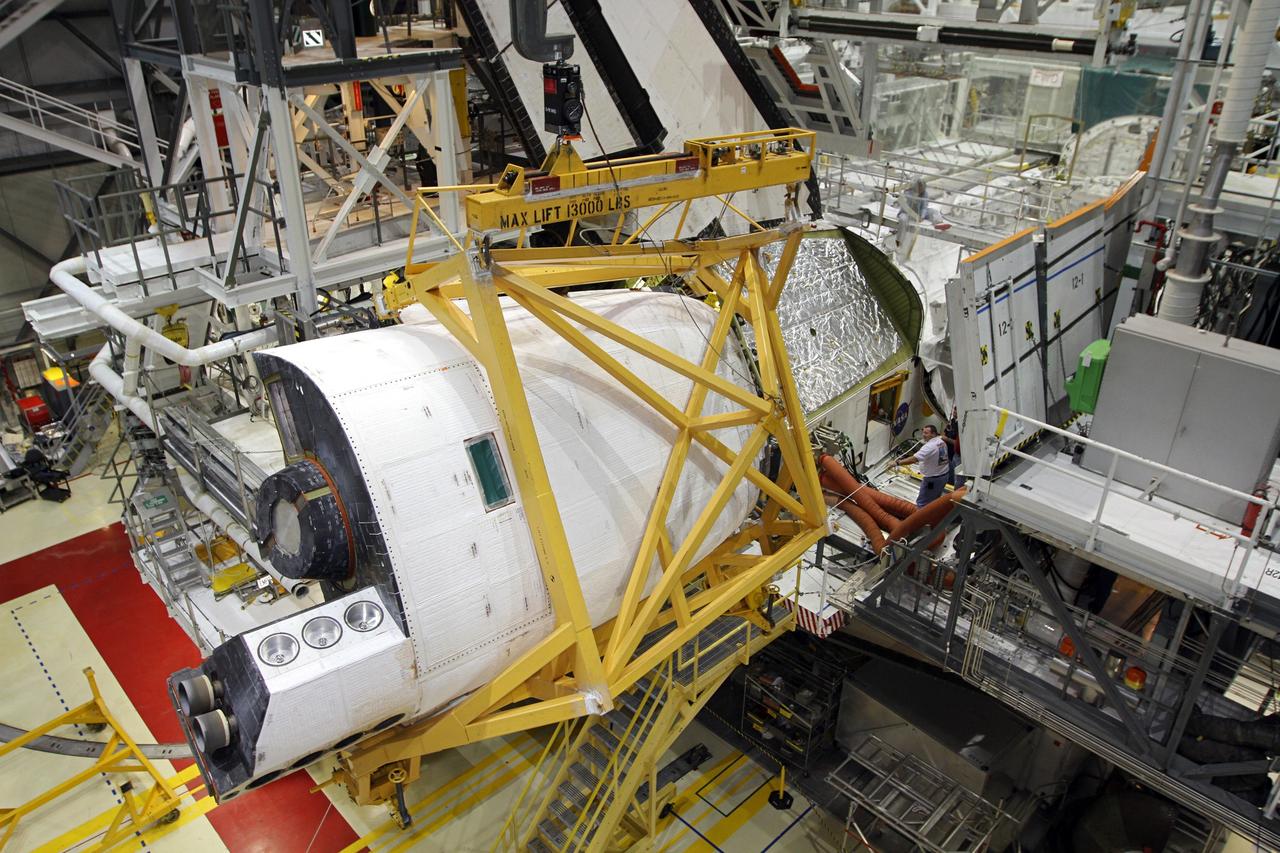
CAPE CANAVERAL, Fla. – In Orbiter Processing Facility-2 at NASA’s Kennedy Space Center in Florida, a large crane moves the right orbital maneuvering system OMS pod closer to space shuttle Endeavour for installation. The OMS pod underwent complete deservicing and cleaning at White Sands Space Harbor in New Mexico, part of the transition and retirement processing of each shuttle. Endeavour is being prepared for public display at the California Science Center in Los Angeles. Over the course of its 19-year career, Endeavour spent 299 days in space during 25 missions. For more information, visit http://www.nasa.gov/shuttle. Photo credit: NASA/Kim Shiflett
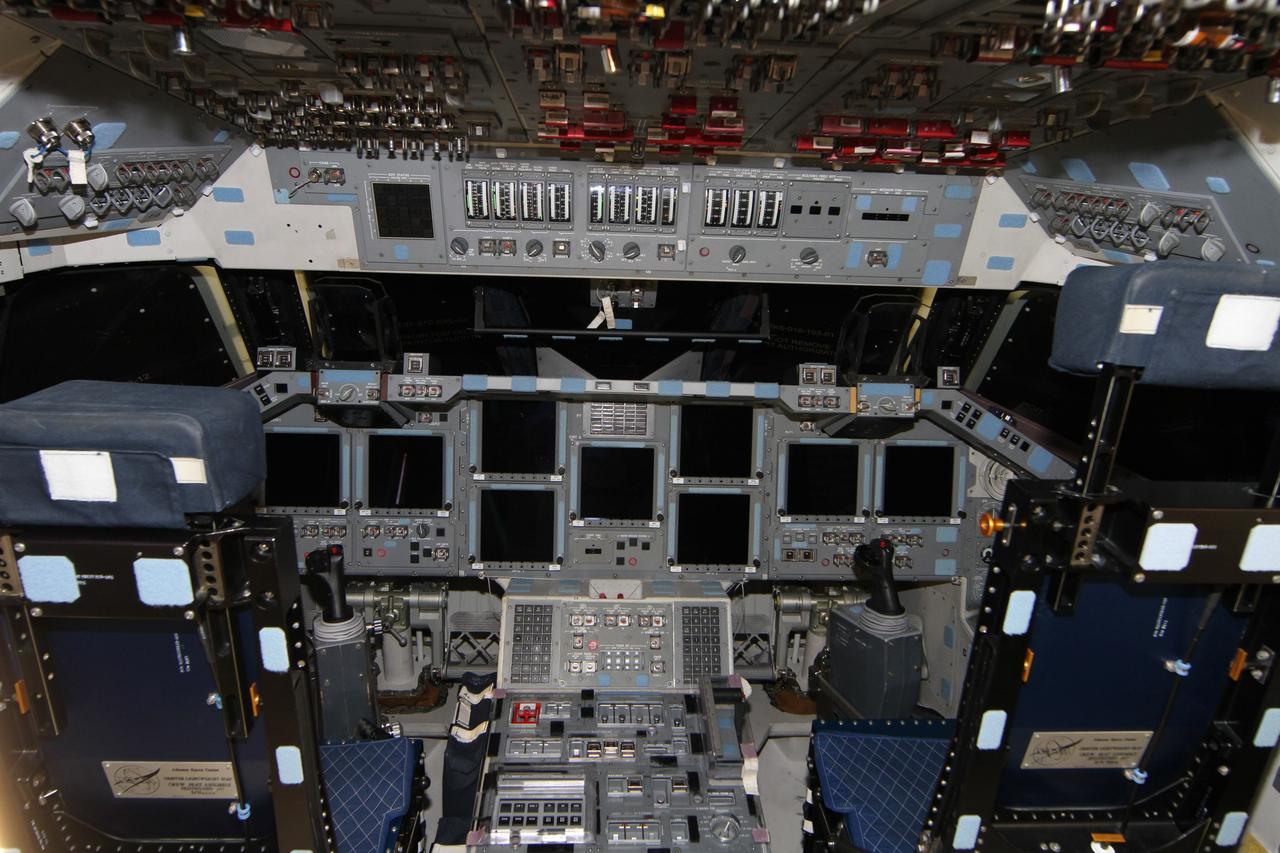
CAPE CANAVERAL, Fla. – In Orbiter Processing Facility-2 at NASA’s Kennedy Space Center in Florida, the consoles on space shuttle Endeavour’s flight deck have gone dark after the shuttle is powered down for the final time. Endeavour is being prepared for public display at the California Science Center in Los Angeles. Its ferry flight to California is targeted for mid-September. Endeavour was the last space shuttle added to NASA’s orbiter fleet. Over the course of its 19-year career, Endeavour spent 299 days in space during 25 missions. For more information, visit http://www.nasa.gov/transition. Photo credit: NASA/Ben Smegelsky
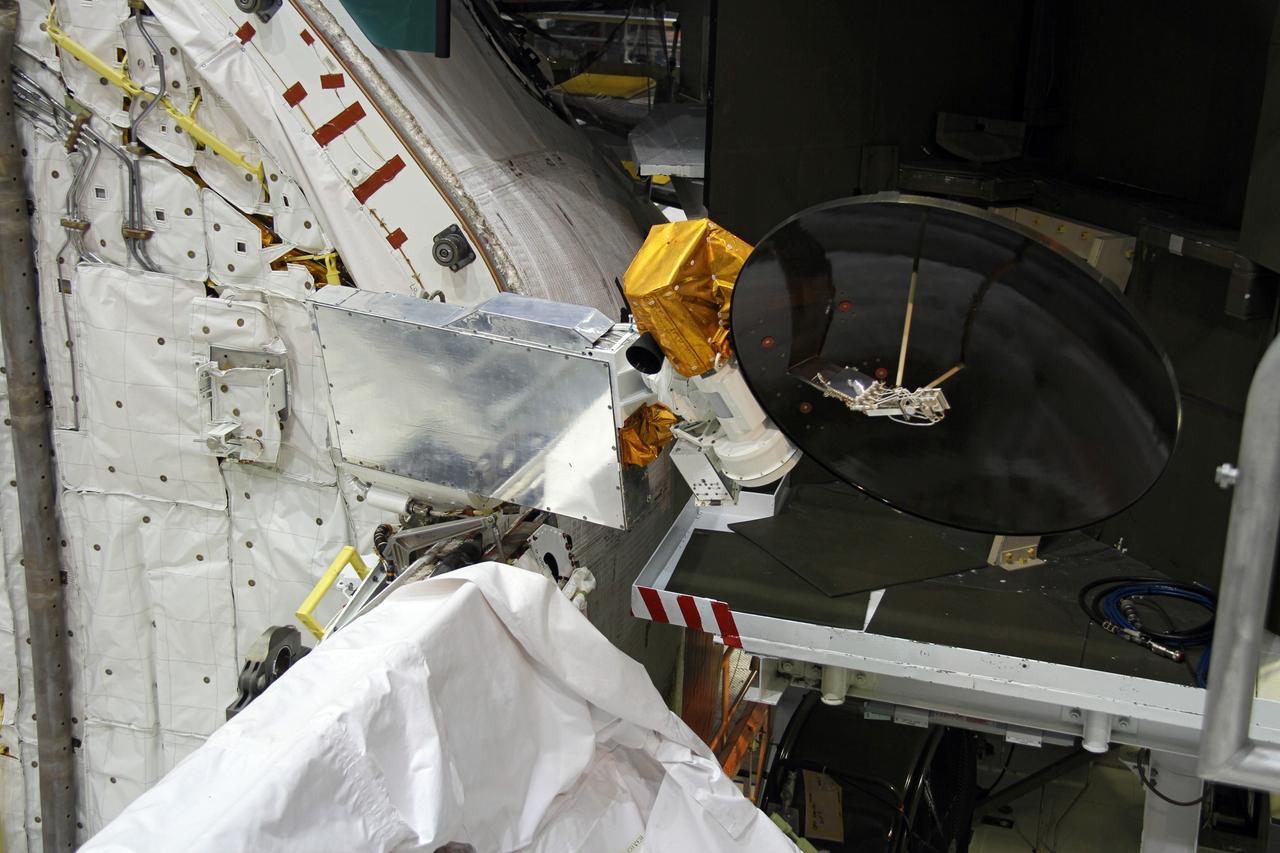
CAPE CANAVERAL, Fla. – In Orbiter Processing Facility-2 at NASA's Kennedy Space Center in Florida, a Ku-band antenna is being stowed in space shuttle Endeavour’s payload bay in preparation for final closure of the shuttle’s payload bay doors. The antenna, which resembles a mini-satellite dish, was used to transmit audio, video and data between the shuttle and ground stations on Earth. Endeavour is being prepared for public display at the California Science Center in Los Angeles. Its ferry flight to California is targeted for mid-September. Endeavour was the last space shuttle added to NASA’s orbiter fleet. Over the course of its 19-year career, Endeavour spent 299 days in space during 25 missions. For more information, visit http://www.nasa.gov/transition. Photo credit: NASA/Cory Huston
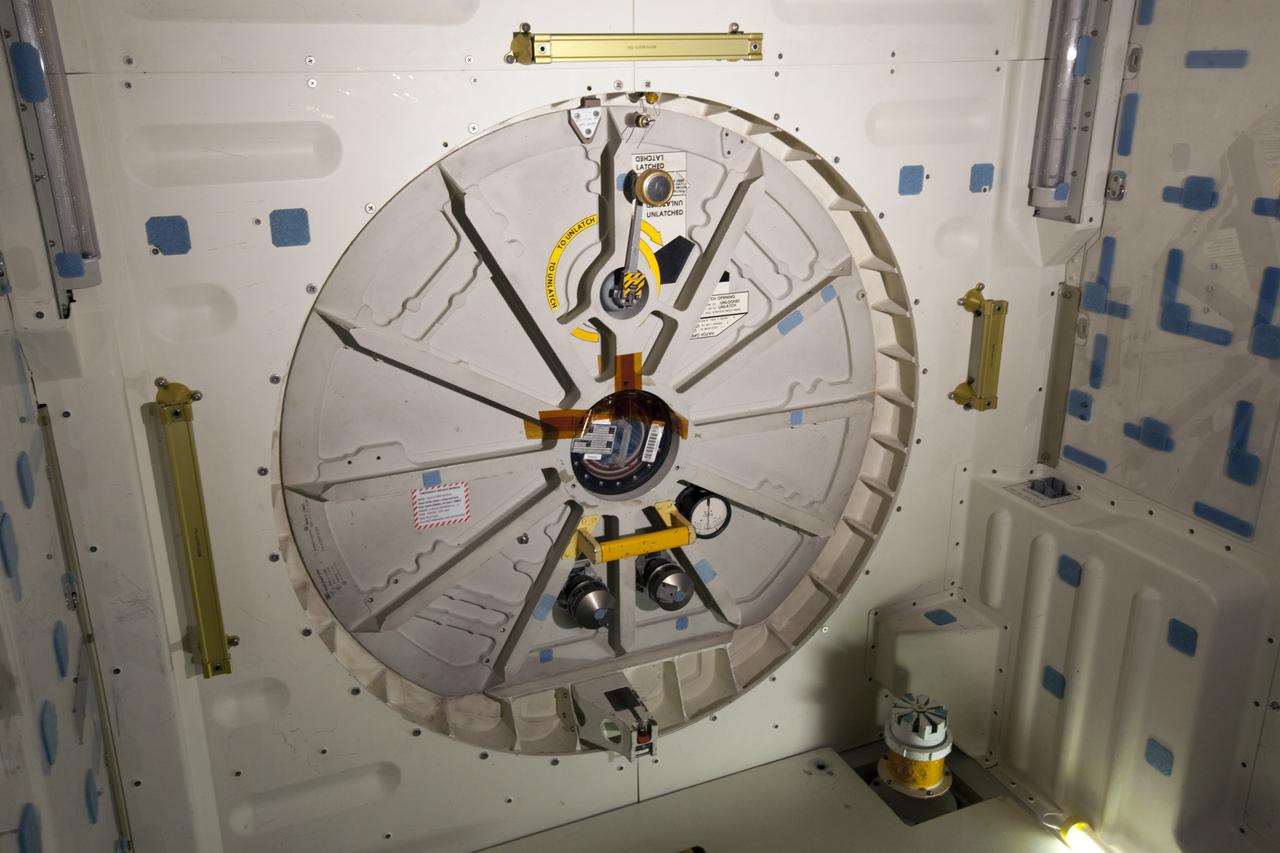
CAPE CANAVERAL, Fla. – In Orbiter Processing Facility-2 at NASA’s Kennedy Space Center in Florida, the hatch of space shuttle Endeavour’s airlock has been closed and sealed for the final time during processing for the shuttle’s retirement. Endeavour is being prepared for public display at the California Science Center in Los Angeles. Its ferry flight to California is targeted for mid-September. Endeavour, designated OV-105, was the last space shuttle added to NASA’s orbiter fleet. Over the course of its 19-year career, Endeavour spent 299 days in space during 25 missions. For more information, visit http://www.nasa.gov/transition. Photo credit: NASA/Dimitri Gerondidakis
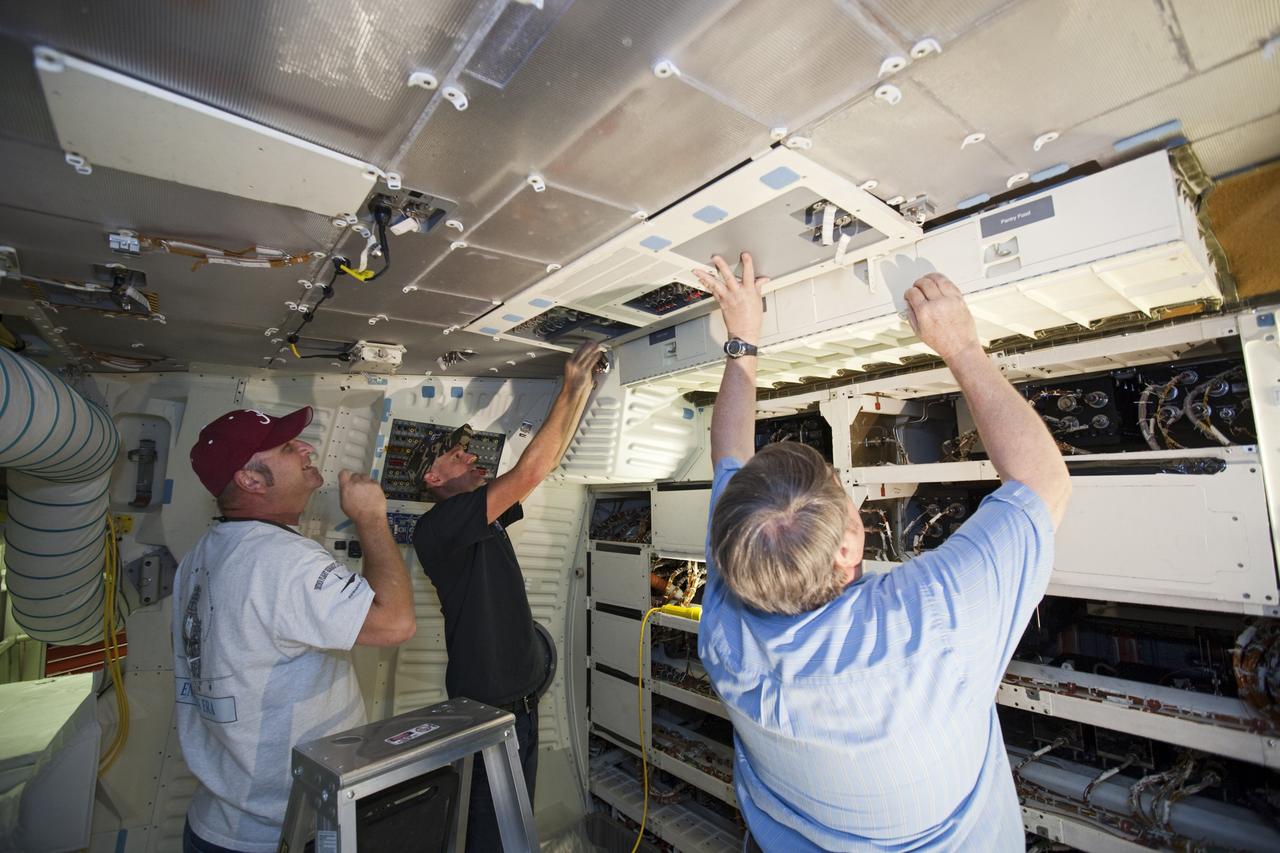
CAPE CANAVERAL, Fla. – In Orbiter Processing Facility-2 at NASA’s Kennedy Space Center in Florida, United Space Alliance technicians reinstall the food pantry locker in space shuttle Endeavour’s middeck during processing for the shuttle’s retirement. Endeavour is being prepared for public display at the California Science Center in Los Angeles. Its ferry flight to California is targeted for mid-September. Endeavour, designated OV-105, was the last space shuttle added to NASA’s orbiter fleet. Over the course of its 19-year career, Endeavour spent 299 days in space during 25 missions. For more information, visit http://www.nasa.gov/transition. Photo credit: NASA/Dimitri Gerondidakis
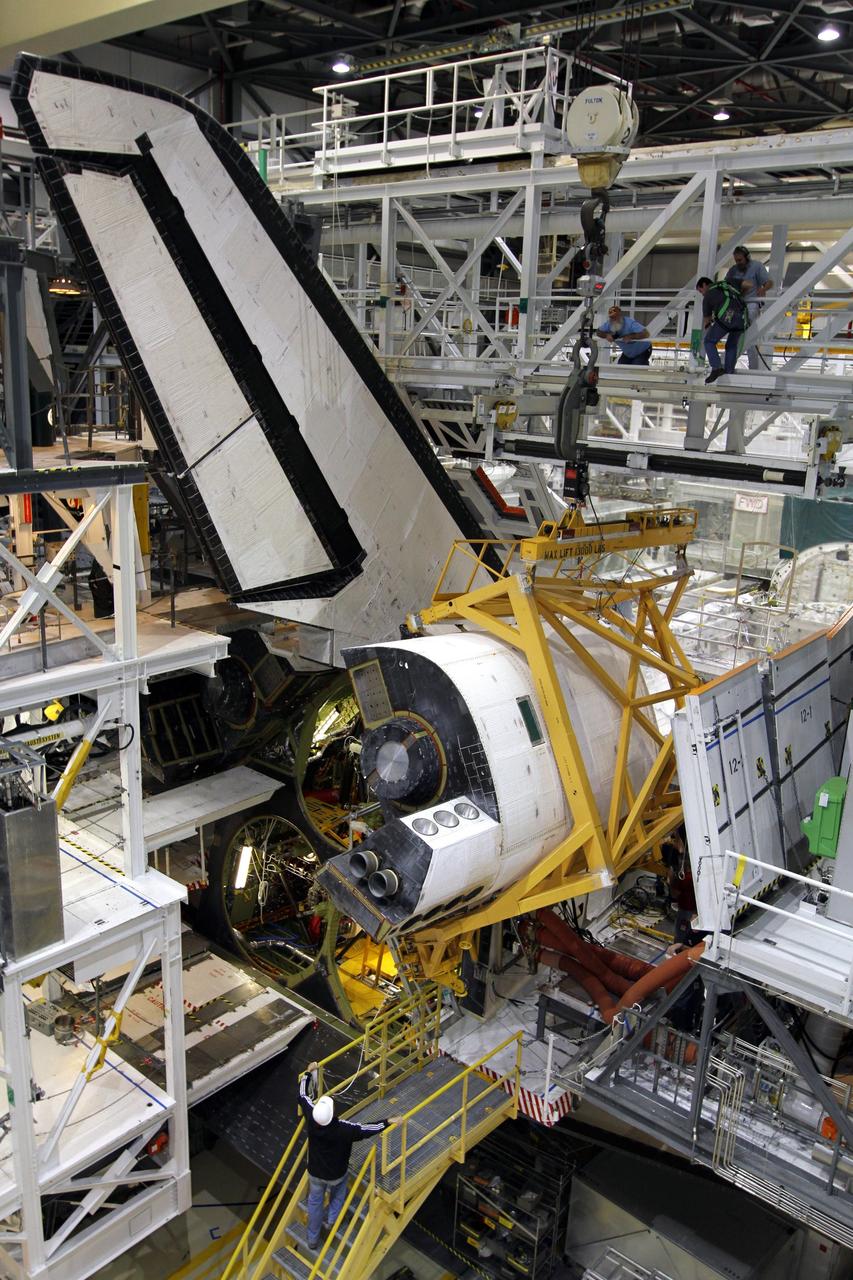
CAPE CANAVERAL, Fla. – In Orbiter Processing Facility-2 at NASA’s Kennedy Space Center in Florida, a large crane has lowered the right orbital maneuvering system OMS pod for installation on space shuttle Endeavour. The OMS pod underwent complete deservicing and cleaning at White Sands Space Harbor in New Mexico, part of the transition and retirement processing of each shuttle. Endeavour is being prepared for public display at the California Science Center in Los Angeles. Over the course of its 19-year career, Endeavour spent 299 days in space during 25 missions. For more information, visit http://www.nasa.gov/shuttle. Photo credit: NASA/Kim Shiflett
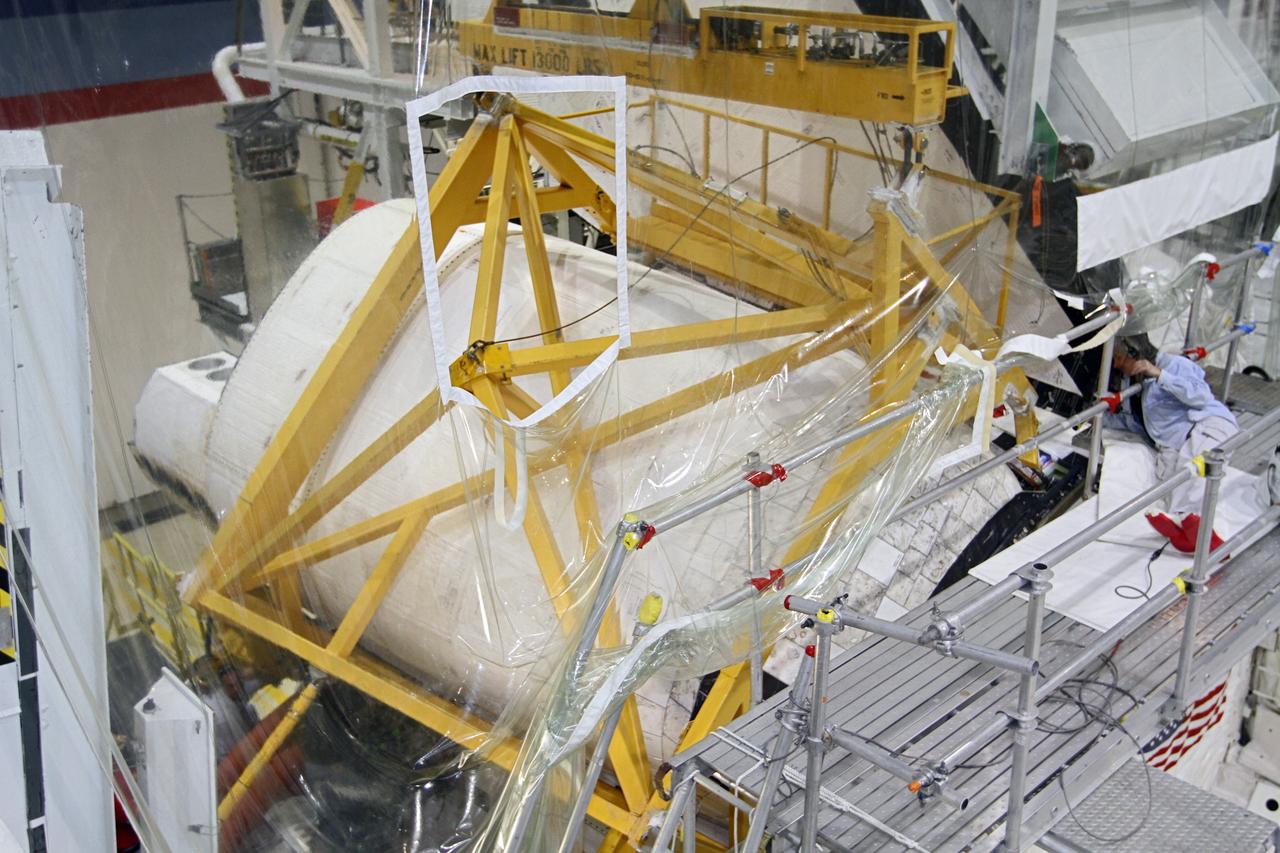
CAPE CANAVERAL, Fla. – In Orbiter Processing Facility-2 at NASA’s Kennedy Space Center in Florida, United Space Alliance technicians assist with removal of the large crane that was used to lower the right orbital maneuvering system OMS pod onto space shuttle Endeavour. The OMS pod underwent complete deservicing and cleaning at White Sands Space Harbor in New Mexico, part of the transition and retirement processing of each shuttle. Endeavour is being prepared for public display at the California Science Center in Los Angeles. Over the course of its 19-year career, Endeavour spent 299 days in space during 25 missions. For more information, visit http://www.nasa.gov/shuttle. Photo credit: NASA/Kim Shiflett
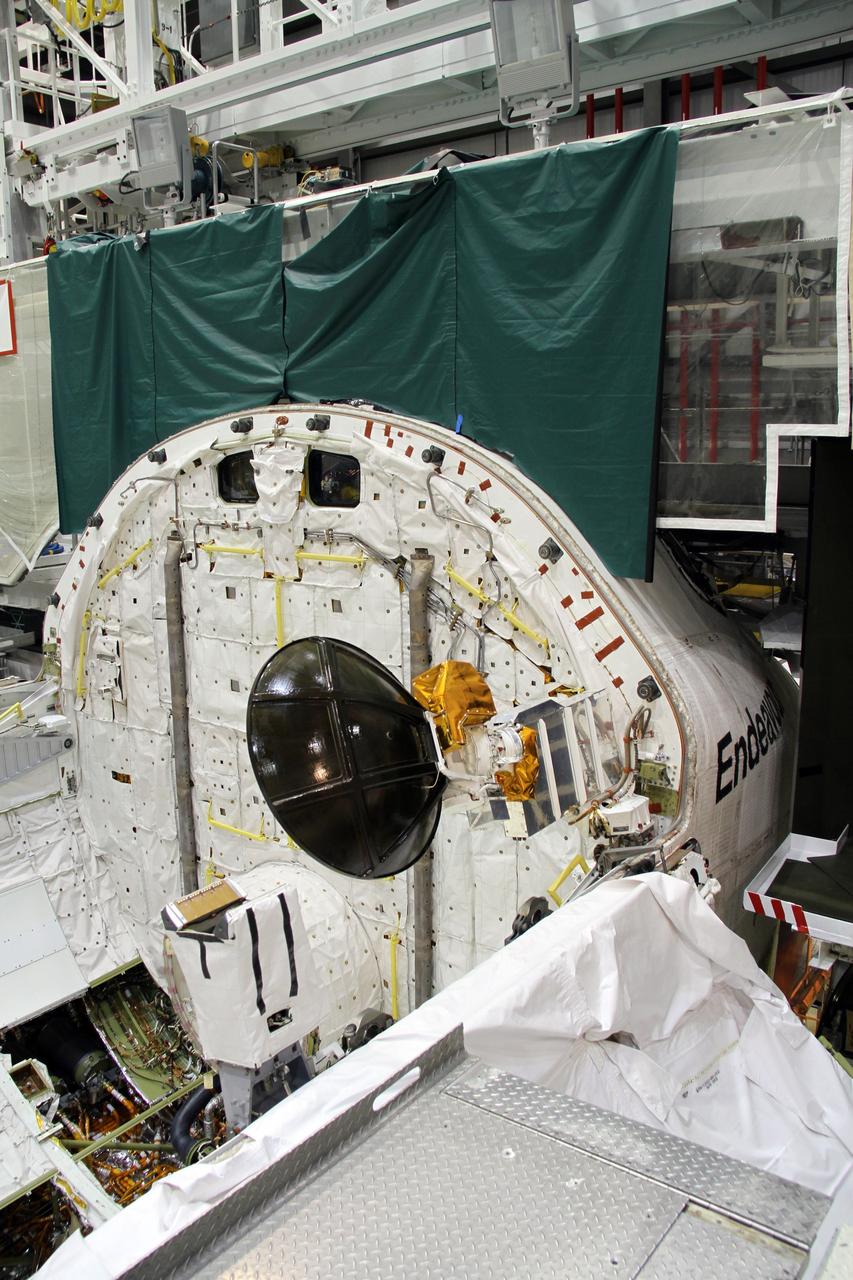
CAPE CANAVERAL, Fla. – In Orbiter Processing Facility-2 at NASA's Kennedy Space Center in Florida, stowage of a Ku-band antenna in space shuttle Endeavour’s payload bay is under way in preparation for final closure of the shuttle’s payload bay doors. The antenna, which resembles a mini-satellite dish, was used to transmit audio, video and data between the shuttle and ground stations on Earth. Endeavour is being prepared for public display at the California Science Center in Los Angeles. Its ferry flight to California is targeted for mid-September. Endeavour was the last space shuttle added to NASA’s orbiter fleet. Over the course of its 19-year career, Endeavour spent 299 days in space during 25 missions. For more information, visit http://www.nasa.gov/transition. Photo credit: NASA/Cory Huston
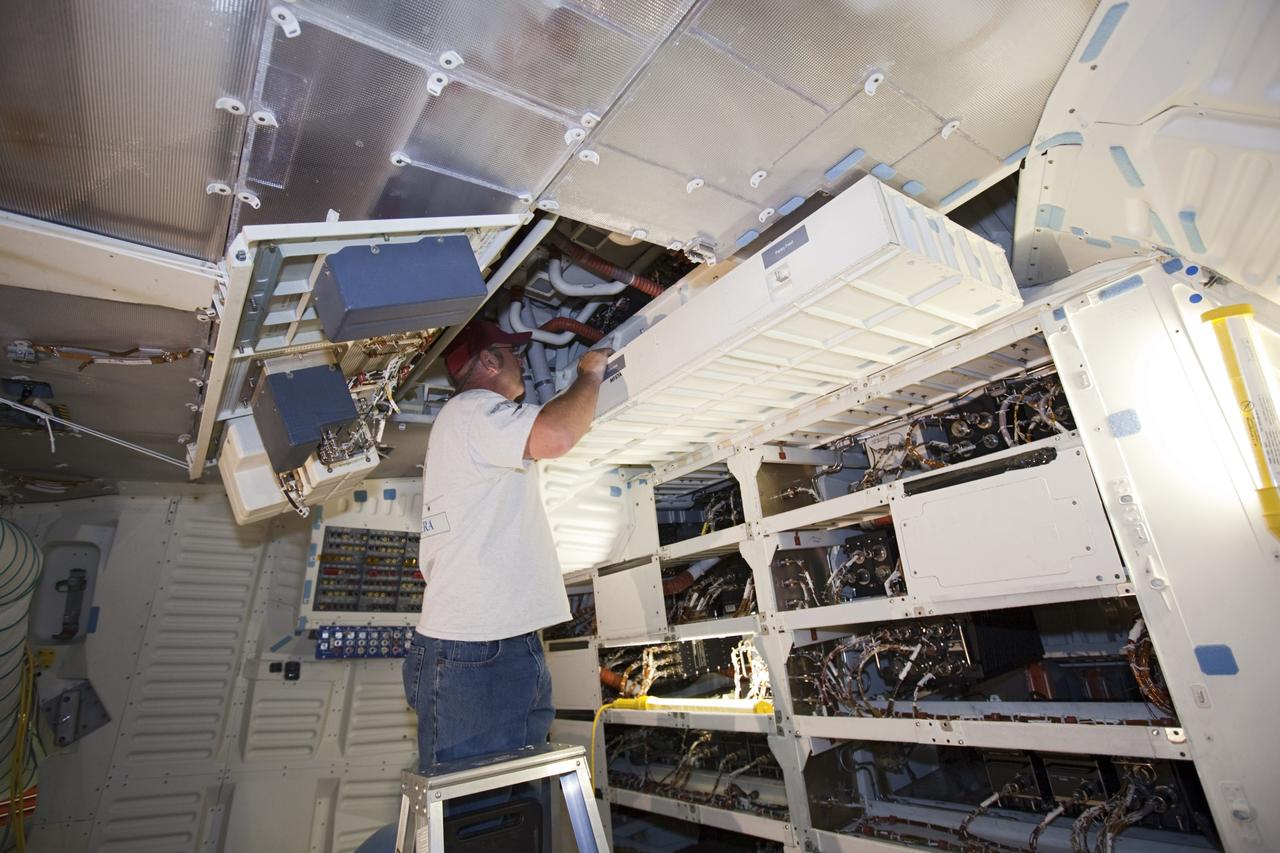
CAPE CANAVERAL, Fla. – In Orbiter Processing Facility-2 at NASA’s Kennedy Space Center in Florida, United Space Alliance technicians reinstall the food pantry locker in space shuttle Endeavour’s middeck during processing for the shuttle’s retirement. Endeavour is being prepared for public display at the California Science Center in Los Angeles. Its ferry flight to California is targeted for mid-September. Endeavour, designated OV-105, was the last space shuttle added to NASA’s orbiter fleet. Over the course of its 19-year career, Endeavour spent 299 days in space during 25 missions. For more information, visit http://www.nasa.gov/transition. Photo credit: NASA/Dimitri Gerondidakis
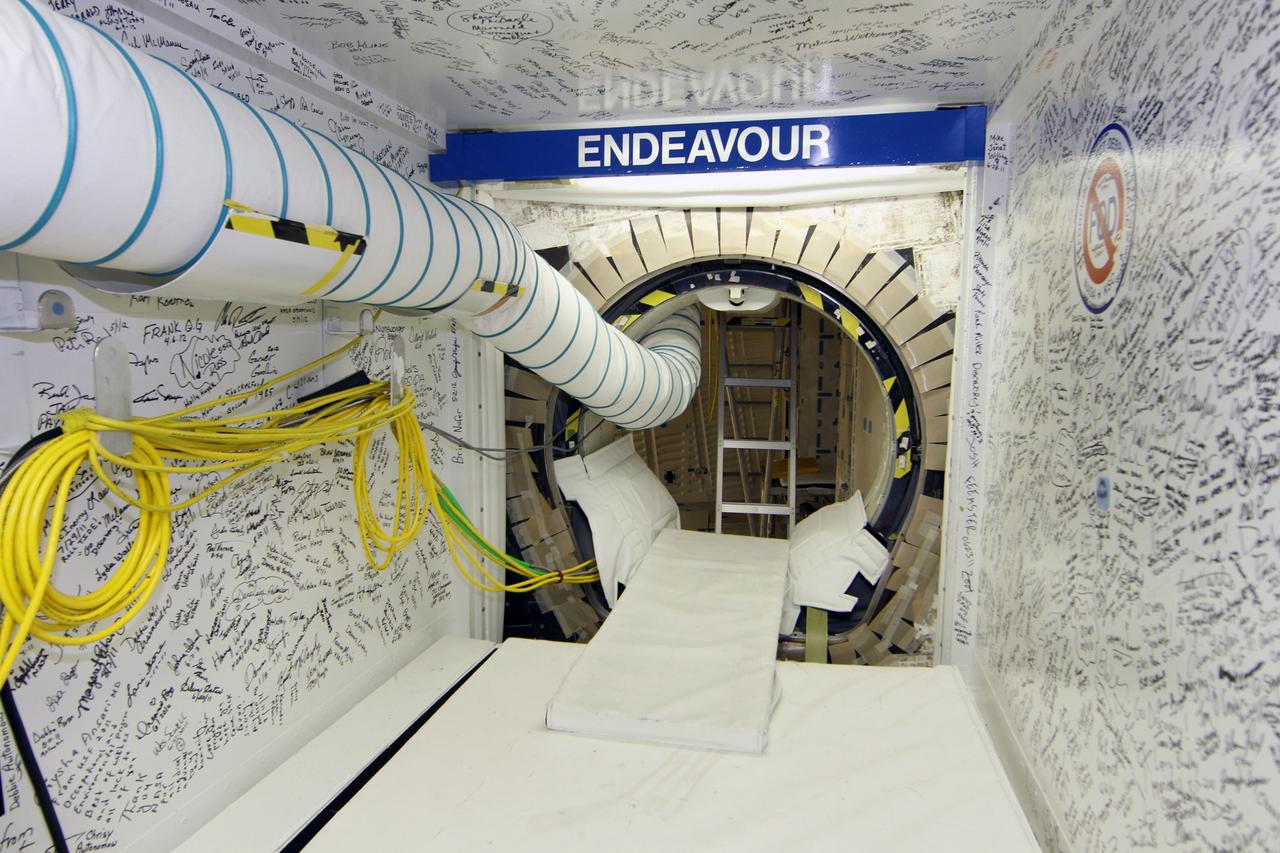
CAPE CANAVERAL, Fla. – In Orbiter Processing Facility-2 at NASA’s Kennedy Space Center in Florida, signatures line the walls of the White Room as space shuttle Endeavour is powered down for the final time. The room affords access to the shuttle as it is undergoing processing in the facility. Anyone visiting the interior of the shuttle – astronauts, technicians and guests alike - is given the opportunity to “autograph” a wall of the room. Endeavour is being prepared for public display at the California Science Center in Los Angeles. Its ferry flight to California is targeted for mid-September. Endeavour was the last space shuttle added to NASA’s orbiter fleet. Over the course of its 19-year career, Endeavour spent 299 days in space during 25 missions. For more information, visit http://www.nasa.gov/transition. Photo credit: NASA/Ben Smegelsky