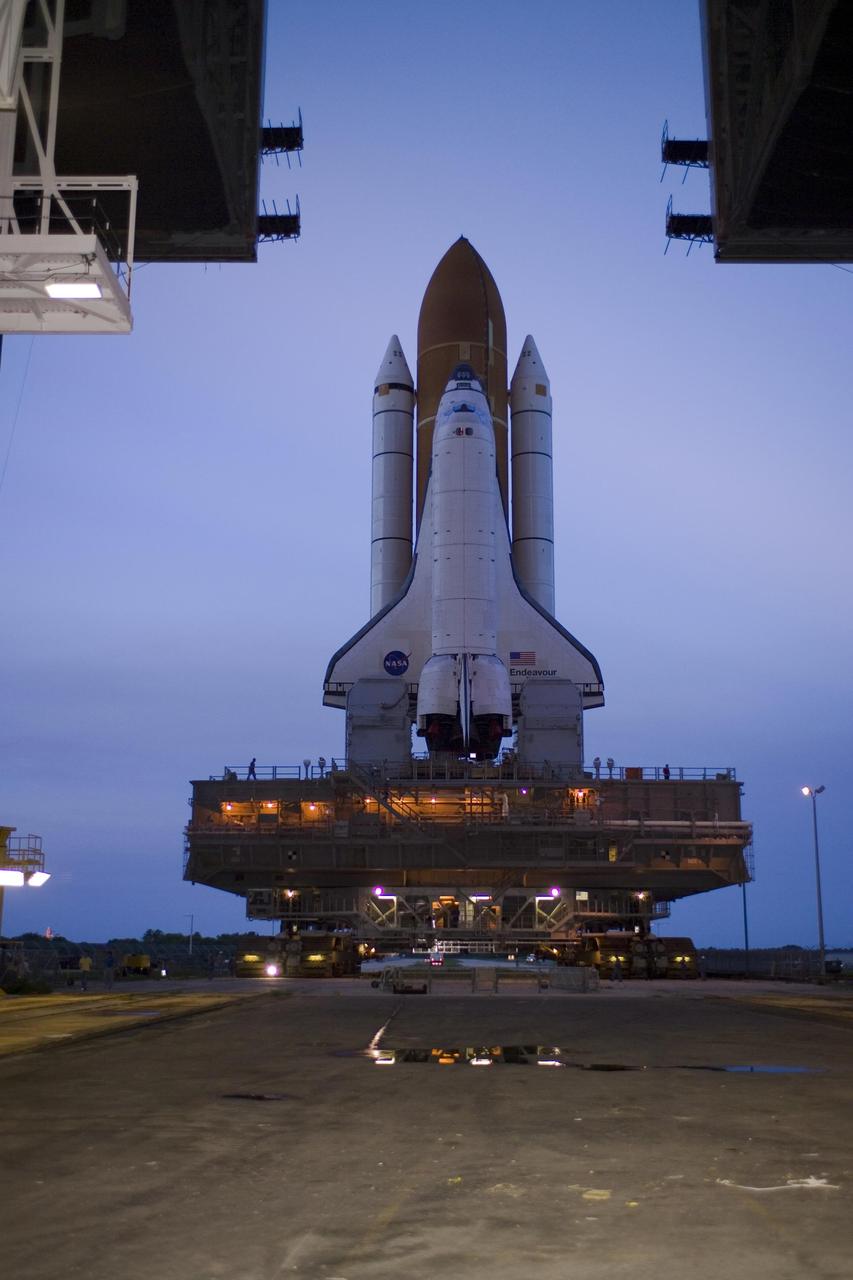
KENNEDY SPACE CENTER, FLA. -- At sunset, Space Shuttle Endeavour, atop the lighted mobile launcher platform, exits the Vehicle Assembly Building for rollout to Launch Pad 39A. First motion out of the VAB was at 8:10 p.m. July 10, and the shuttle was hard down on the pad at 3:02 a.m. July 11. Seen below the orbiter's wings and attached to the launcher platform are the tail masts, which provide several umbilical connections to the orbiter, including a liquid-oxygen line through one and a liquid-hydrogen line through another. The shuttle and platform are being carried by the crawler-transporter. The trip will take between six and eight hours. Endeavour is scheduled to launch on mission STS-118 on Aug. 7. During the mission, Endeavour will carry into orbit the S5 truss, SPACEHAB module and external stowage platform 3. The mission is the 22nd flight to the International Space Station and will mark the first flight of Mission Specialist Barbara Morgan, the teacher-turned-astronaut whose association with NASA began more than 20 years ago. STS-118 will be the first flight since 2002 for Endeavour, which has undergone extensive modifications, including the addition of safety upgrades already added to orbiters Discovery and Atlantis. Photo credit: NASA/Tom Farrar
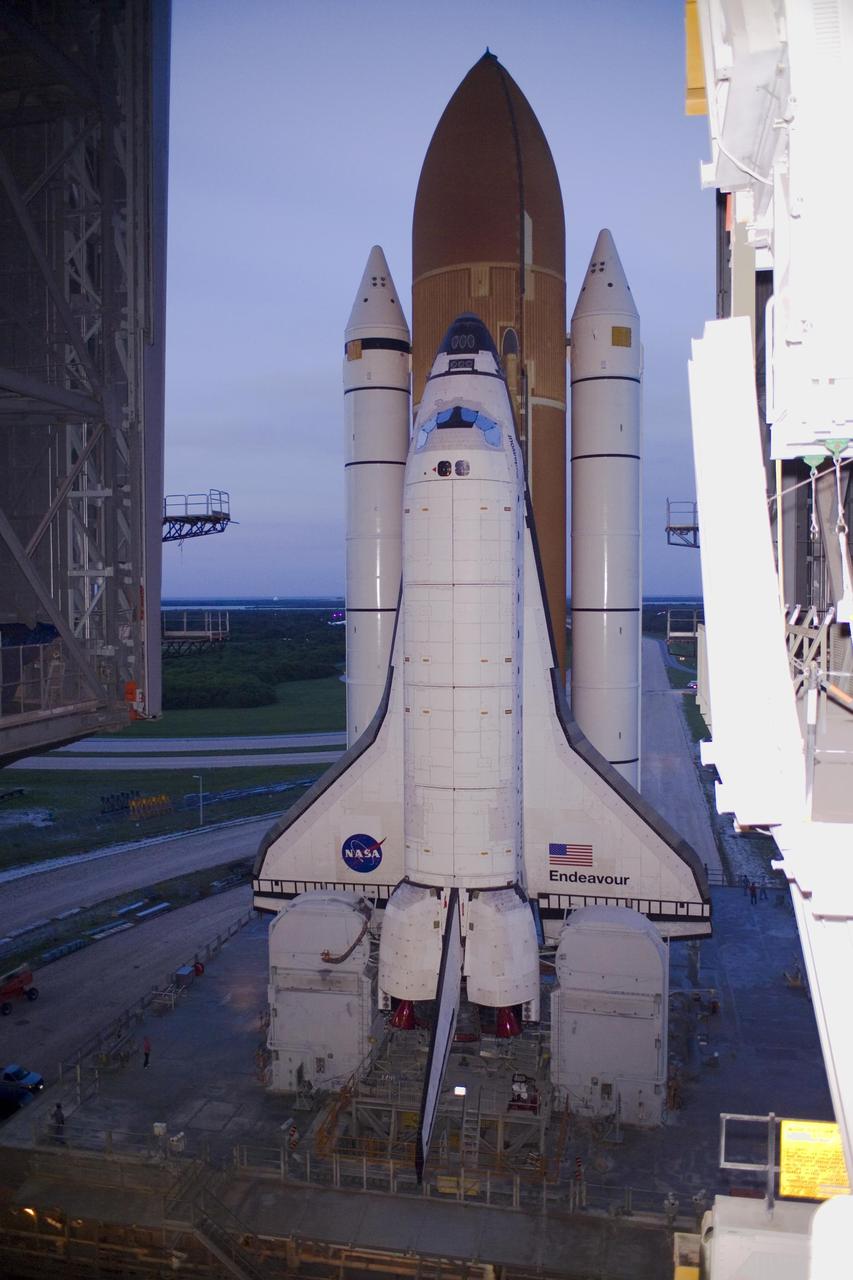
KENNEDY SPACE CENTER, FLA. -- Near sunset, Space Shuttle Endeavour, atop the mobile launcher platform, begins moving through the doors of the Vehicle Assembly Building for rollout to Launch Pad 39A. First motion out of the VAB was at 8:10 p.m. July 10, and the shuttle was hard down on the pad at 3:02 a.m. July 11. Seen below the orbiter's wings and attached to the launcher platform are the tail masts, which provide several umbilical connections to the orbiter, including a liquid-oxygen line through one and a liquid-hydrogen line through another. Endeavour is scheduled to launch on mission STS-118 on Aug. 7. During the mission, Endeavour will carry into orbit the S5 truss, SPACEHAB module and external stowage platform 3. The mission is the 22nd flight to the International Space Station and will mark the first flight of Mission Specialist Barbara Morgan, the teacher-turned-astronaut whose association with NASA began more than 20 years ago. STS-118 will be the first flight since 2002 for Endeavour, which has undergone extensive modifications, including the addition of safety upgrades already added to orbiters Discovery and Atlantis. Photo credit: NASA/Tom Farrar
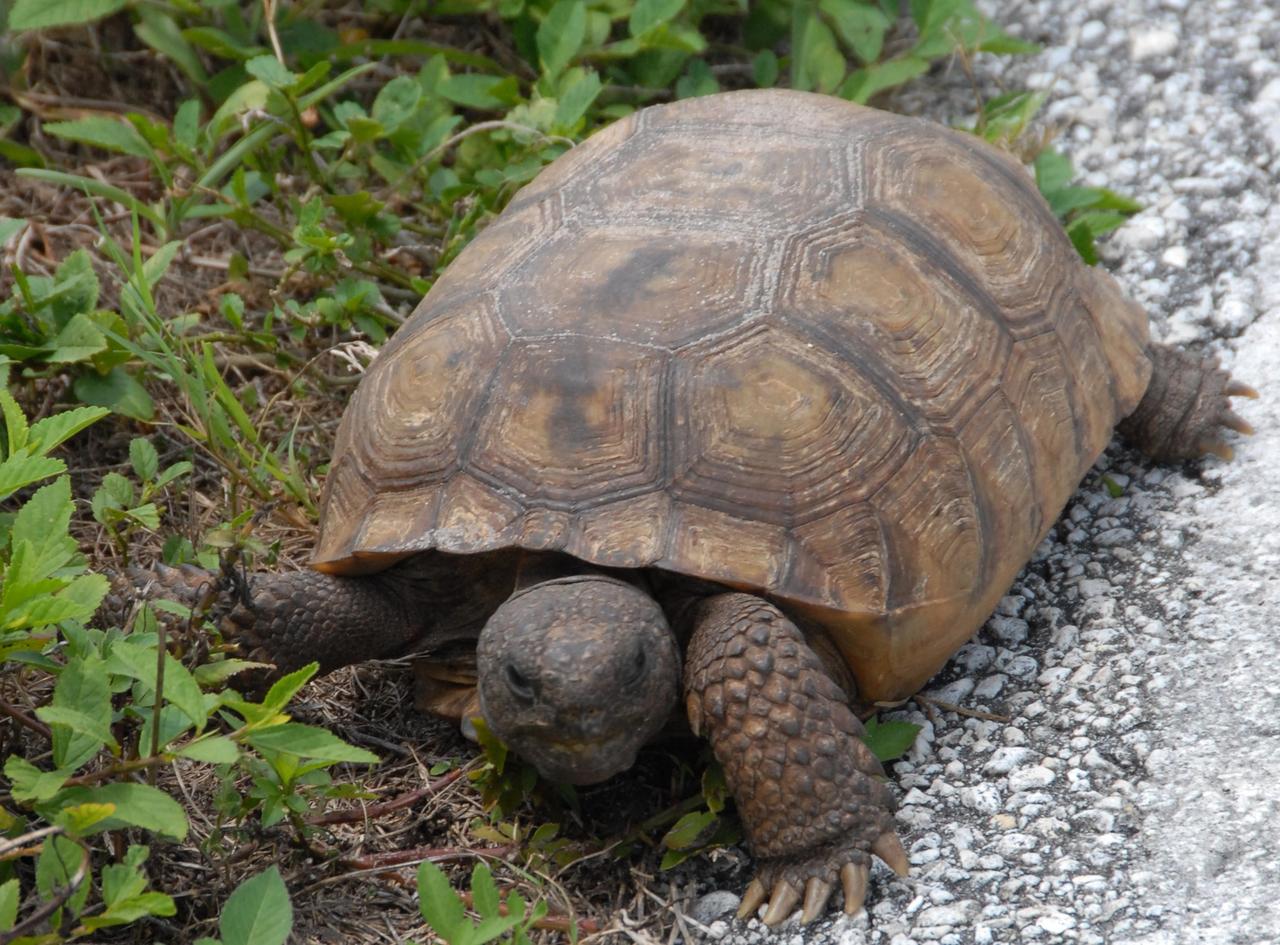
KENNEDY SPACE CENTER, FLA. -- A gopher tortoise searches for food at the edge of a road near Launch Pad 39A. Their primary food sources are low-growing grasses and herbs, with their favorite foods being gopher apple and saw palmetto berries. They will eat the pads, fruits, and flowers of prickly pear cactus as well. They will occasionally also eat bones from dead animals, presumably to get calcium. The gopher tortoise is a cold-blooded reptile that averages 10 inches in length and 9 pounds in weight. Wild tortoises may live from 40 - 60 years, while tortoises in captivity can live more than 100 years. Their range extends from southeastern Louisiana to southeastern South Carolina and throughout all 67 counties in Florida. The gopher tortoise is federally protected as a threatened species except in Florida, where it is listed as a Species of Special Concern by the Florida Fish and Wildlife Conservation Commission. Lands surrounding the Kennedy Space Center are part of the Merritt Island National Wildlife Refuge. Approximately one half of the Refuge's 140,000 acres consists of brackish estuaries and marshes. The remaining lands consist of coastal dunes, scrub oaks, pine forests and flatwoods, and palm and oak hammocks. Photo credit: NASA/Ken Thornsley