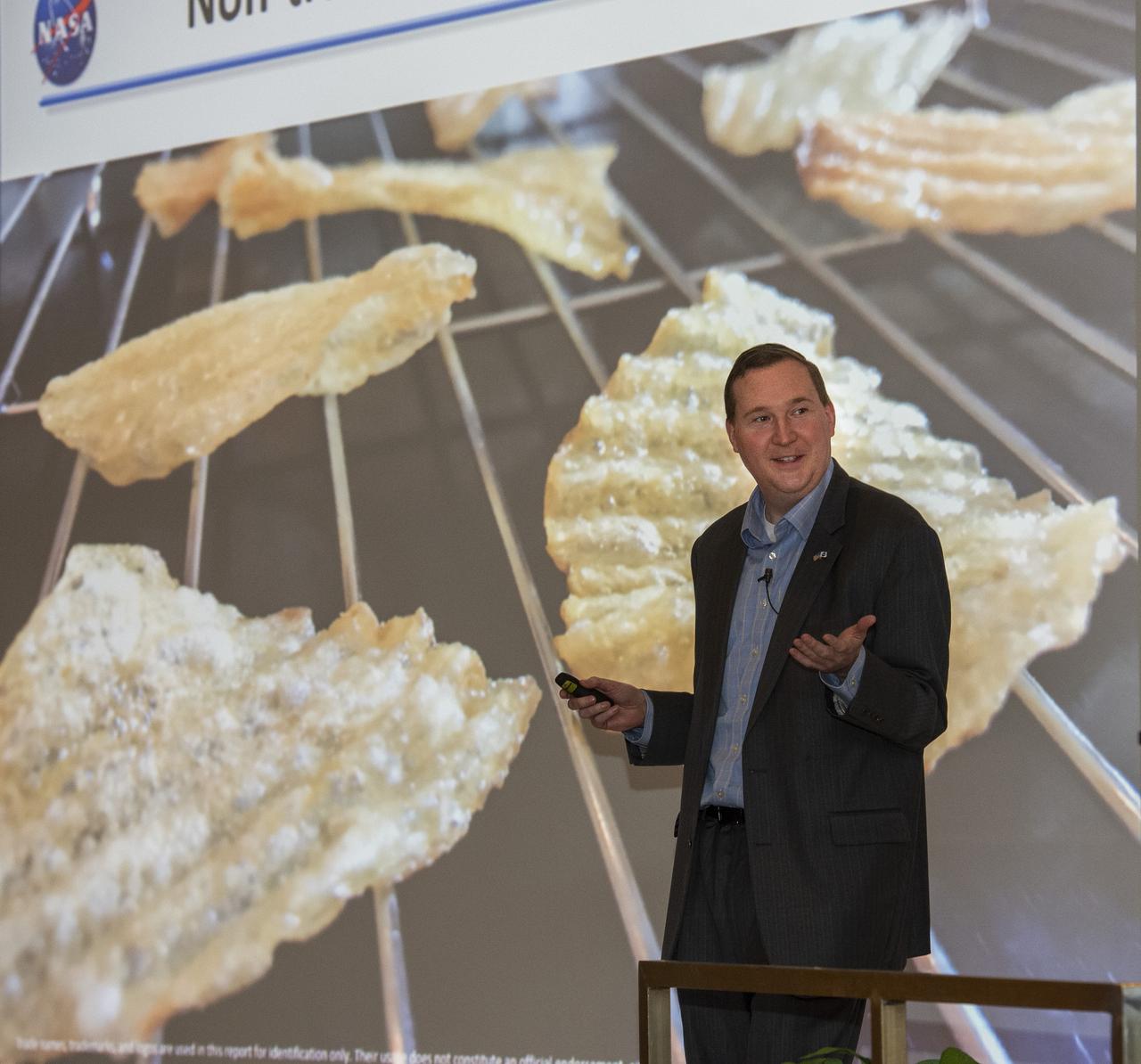
JOHN DANKANICH, MARSHALL’S CENTER CHIEF TECHNOLOGIST, ALSO GAVE A PRESENTATION ABOUT NASA INNOVATION. DANKANICH DISCUSSED TYPES OF INNOVATION, BARRIERS AND HOW TO OVERCOME THE CHALLENGES.
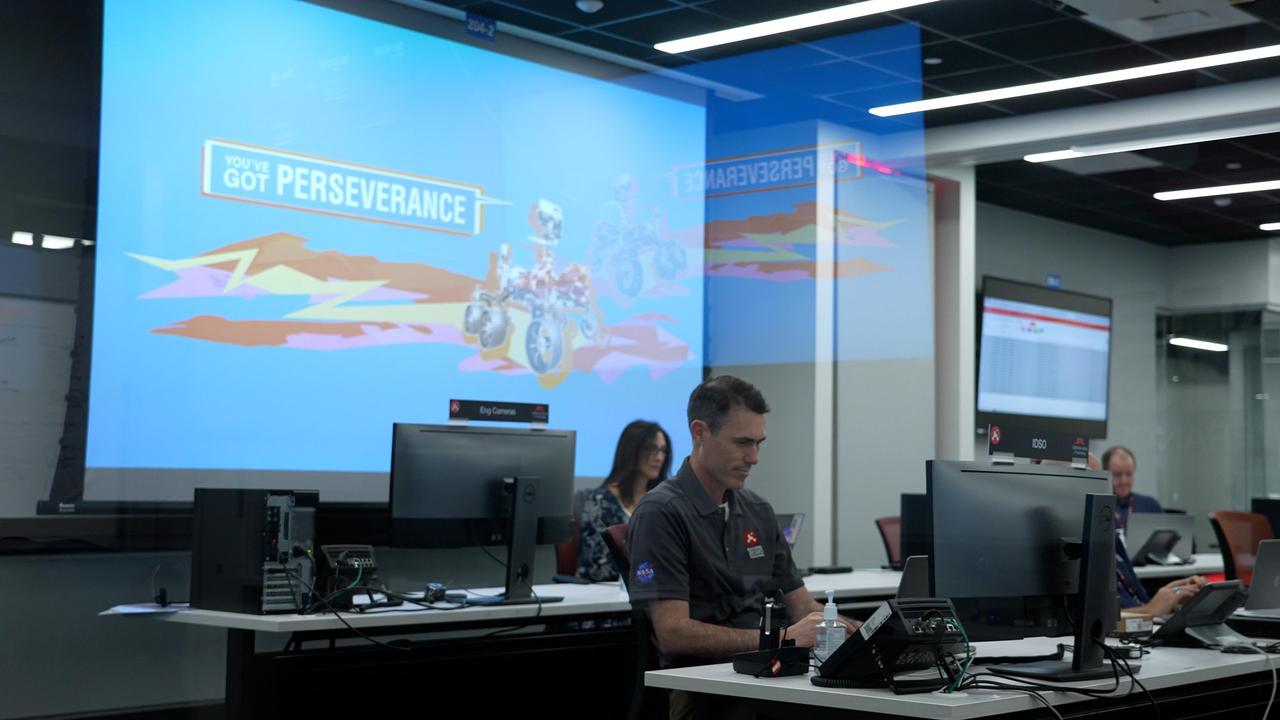
Students who have overcome academic challenges were honored on Dec. 6, 2022 at a virtual "You've Got Perseverance" event. They received personal messages from NASA's Perseverance rover and interacted with team members, including Robert Hogg (foreground). https://photojournal.jpl.nasa.gov/catalog/PIA25637
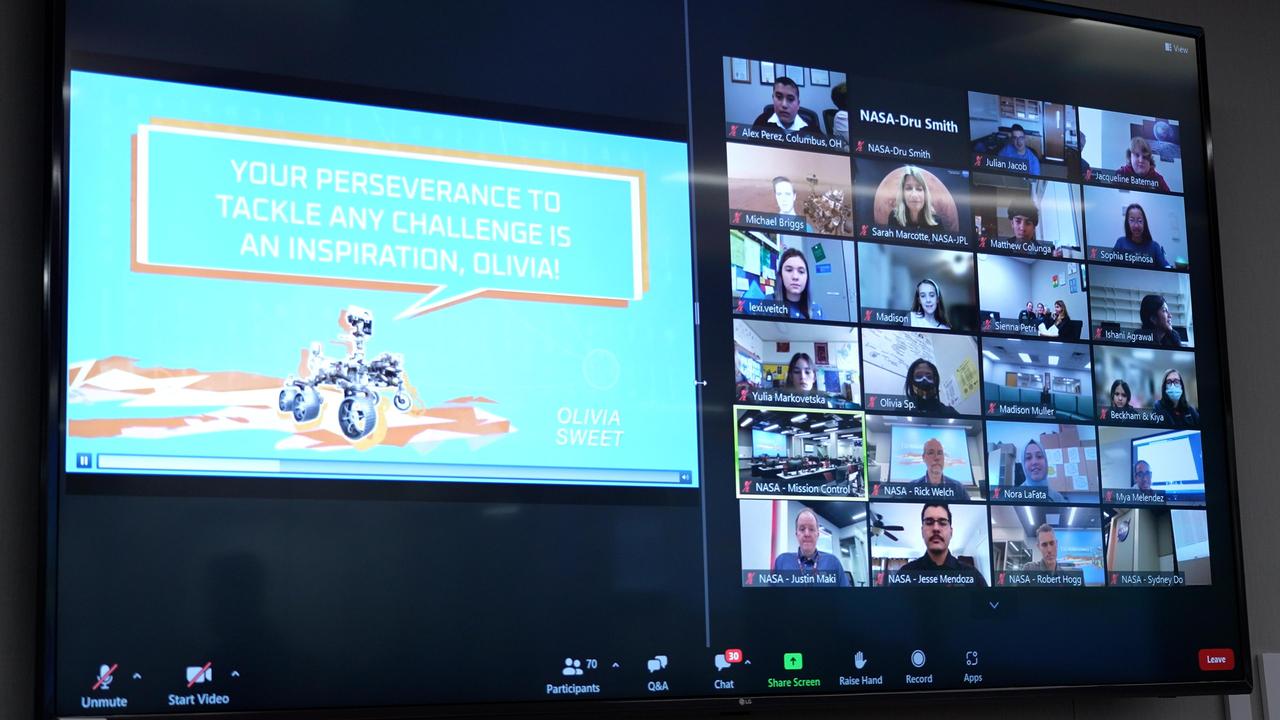
During a Dec. 6, 2022 webinar, students who have overcome academic challenges were honored with personal messages from the Perseverance rover on Mars, during a virtual meetup with team members for the "You've Got Perseverance" event. https://photojournal.jpl.nasa.gov/catalog/PIA25636
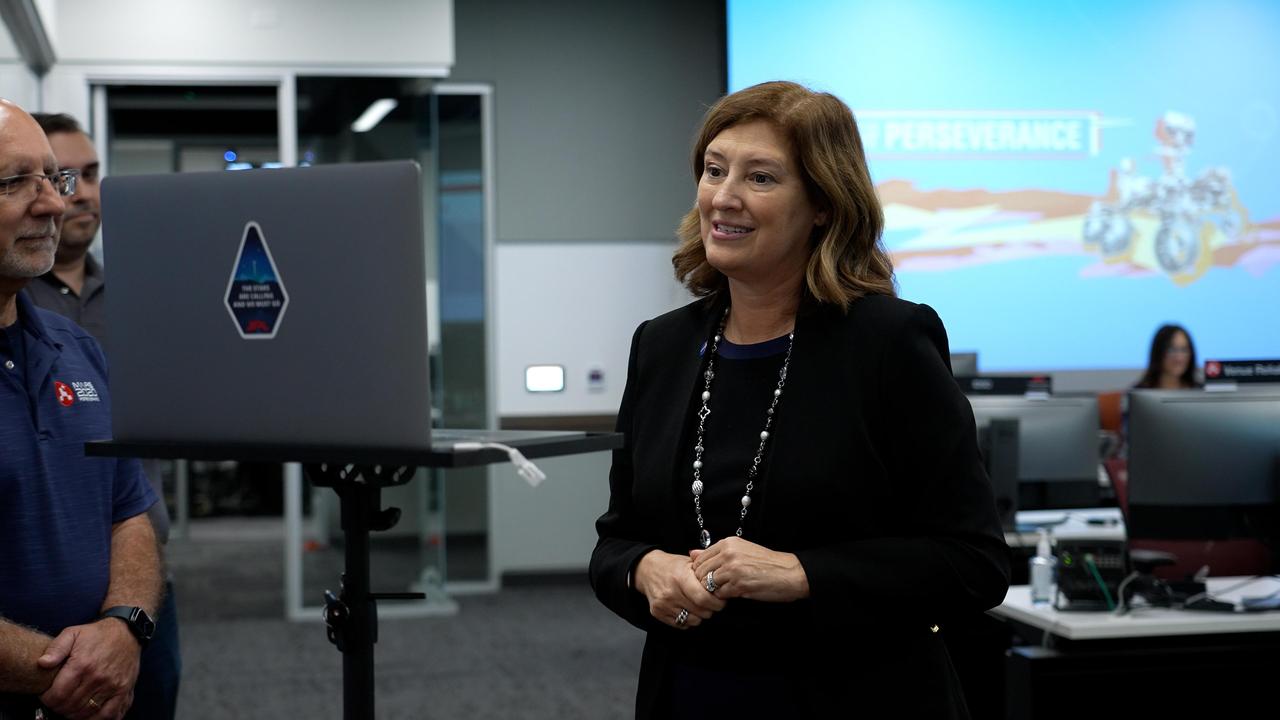
Students who have overcome academic challenges met NASA's Jet Propulsion Laboratory Director Laurie Leshin, Daniel Zayas, Art Thompson, and other Mars team members at a Dec. 6, 2022 virtual "You've Got Perseverance" event. They also received personalized messages from the Perseverance rover. https://photojournal.jpl.nasa.gov/catalog/PIA25638
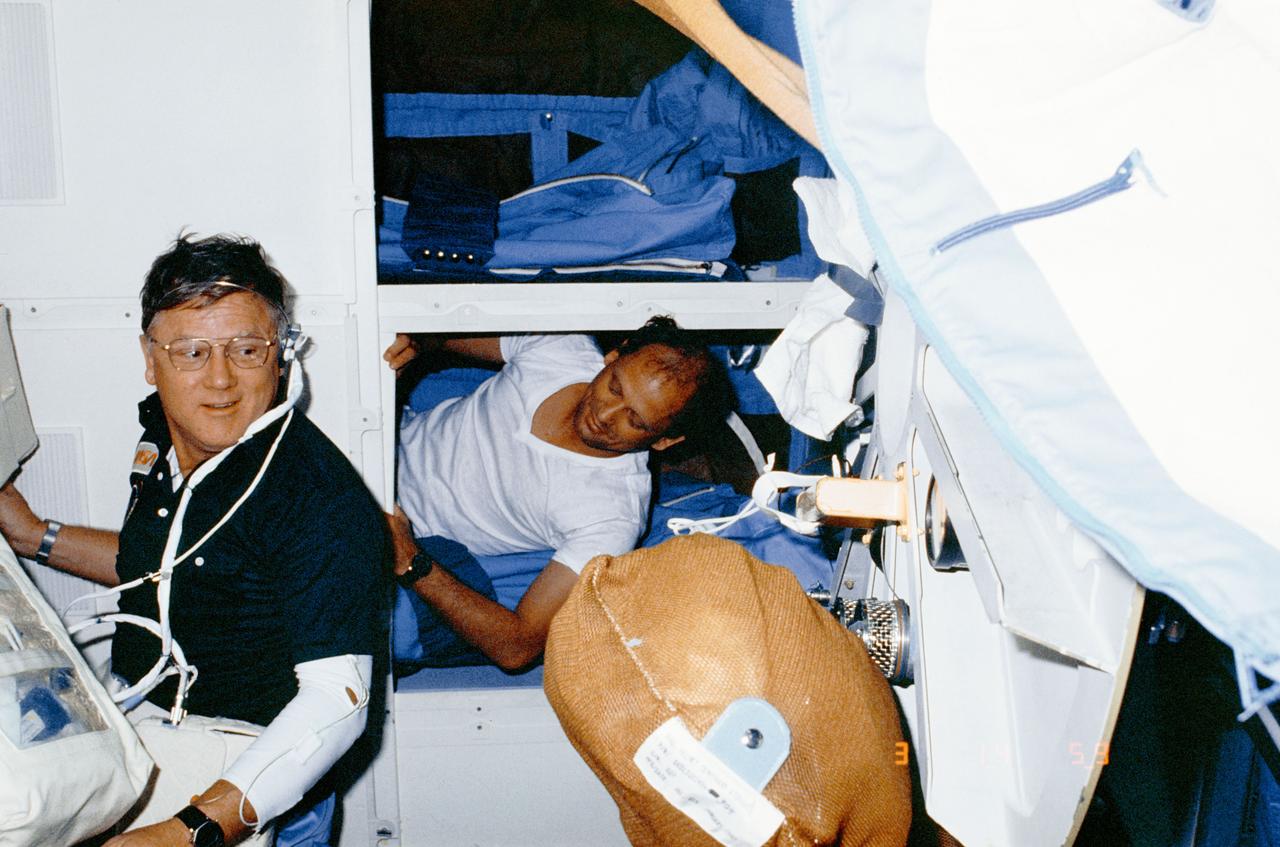
Astronaut Norman E. Thagard, mission specialist for the "silver" team, rests on the middeck while the "gold" team is on duty in the science module. Don L. Lind, left, "gold" team member, meanwhile participates in autogenic feedback training (AFT), designed to help flight crewmembers overcome the effects of zero-gravity adaptation.
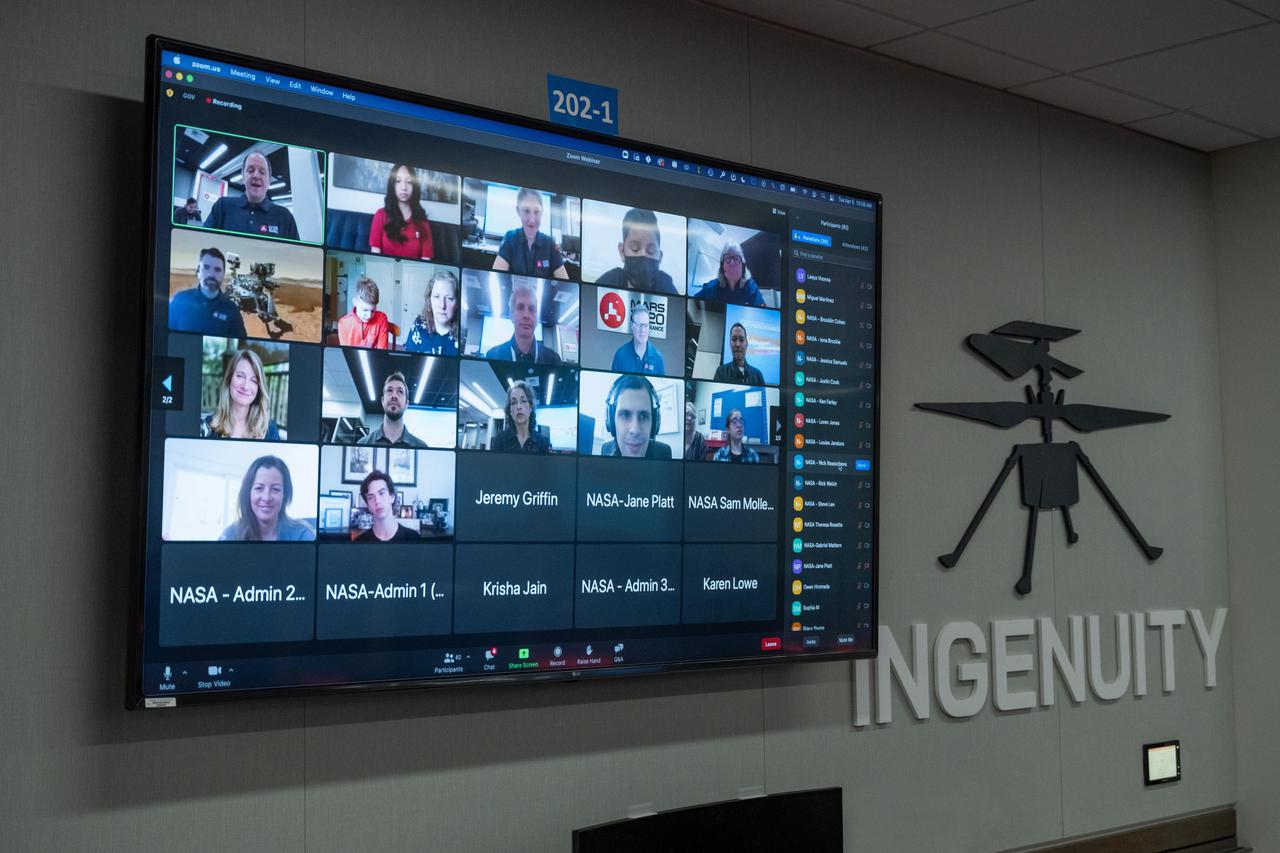
An April 5, 2022, virtual video event is seen on a monitor in the Mars Perseverance rover control room at NASA's Jet Propulsion Laboratory in Southern California. Team members interacted with students who have overcome academic obstacles, and the students received personalized messages from the rover on Mars. https://photojournal.jpl.nasa.gov/catalog/PIA25273
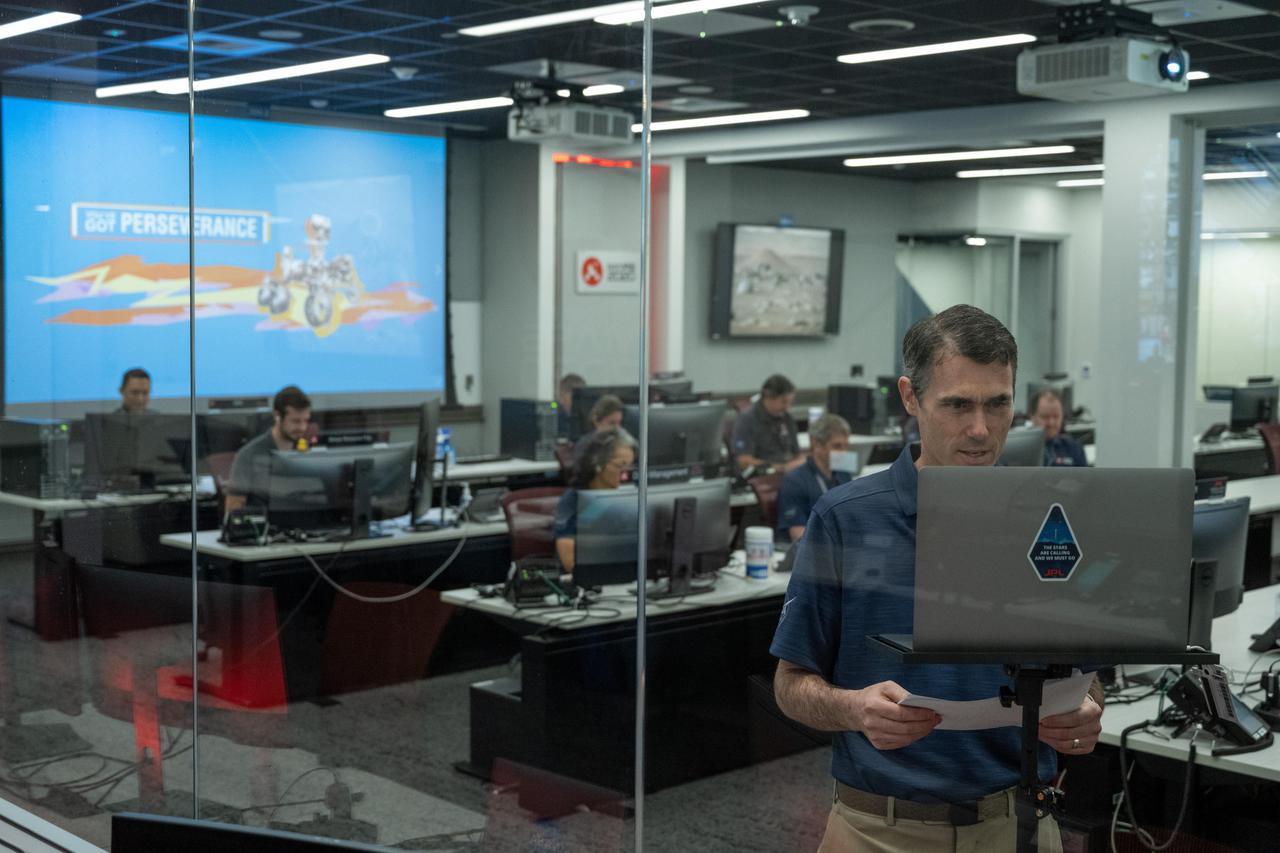
On April 5, 2022, inside the Mars Perseverance rover control room at NASA's Jet Propulsion Laboratory in Southern California, the rover team's deputy mission manager, Robert Hogg, and other team members interacted virtually with students who have overcome academic obstacles. https://photojournal.jpl.nasa.gov/catalog/PIA25274
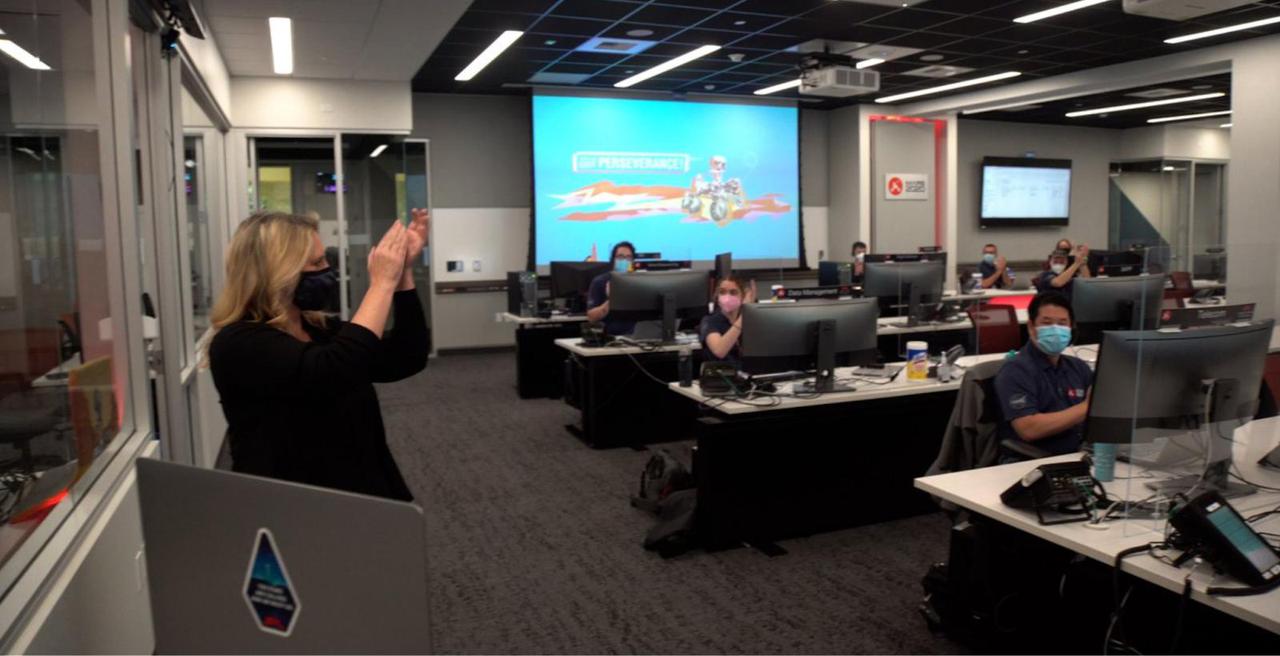
Jennifer Trosper, Mars Perseverance project manager, leads rover team members at JPL in a round of applause for students who were honored through the "You've Got Perseverance" campaign for overcoming obstacles in pursuit of their educational goals. https://photojournal.jpl.nasa.gov/catalog/PIA25272
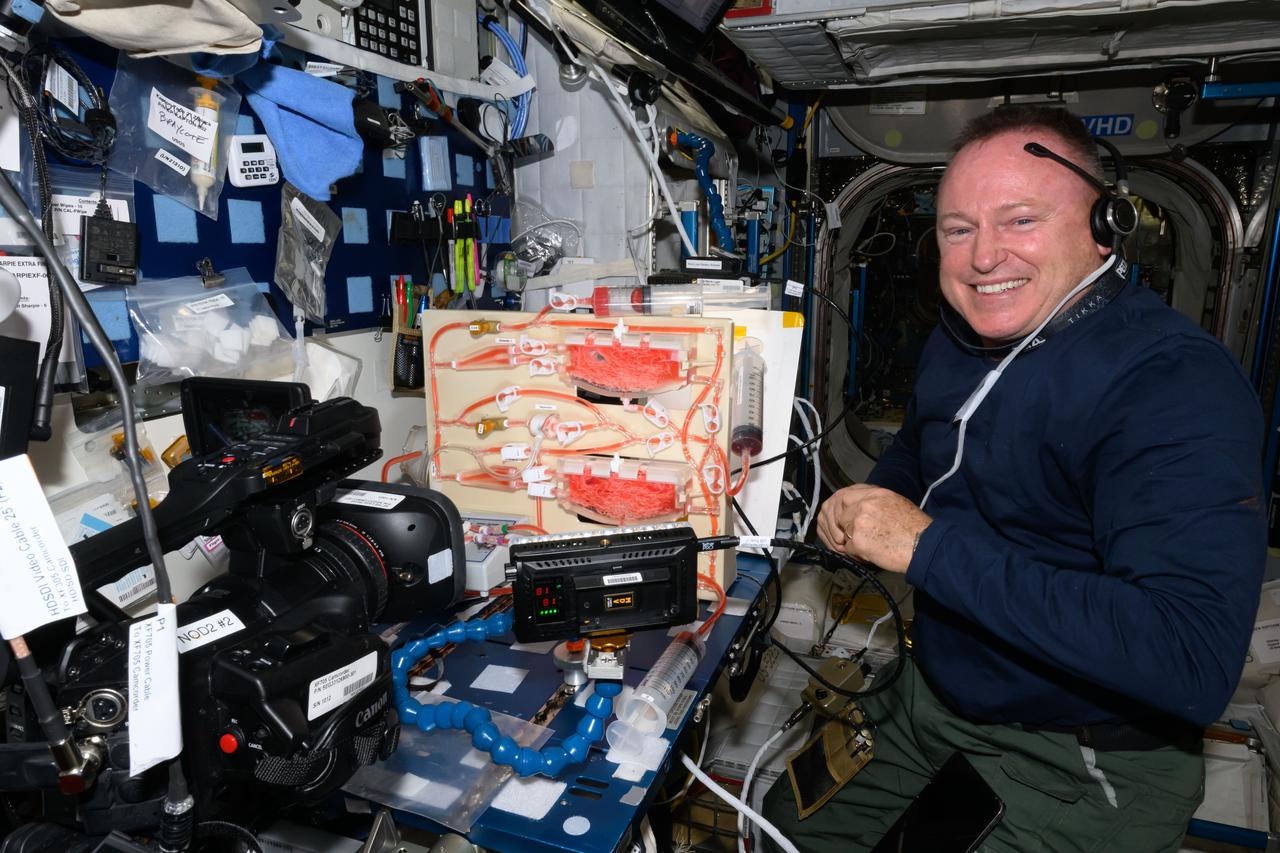
iss071e364248 (July 16, 2024) --- NASA astronaut and Boeing Crew Flight Test Commander Butch Wilmore investigates using fluid physics techniques such as surface tension, as well as hydroponics and air circulation, to overcome the lack of gravity when watering and nourishing plants grown in space. The Plant Water Management investigation uses facilities in the International Space Station's Harmony module to promote space agricultural activities on spacecraft and space habitats.
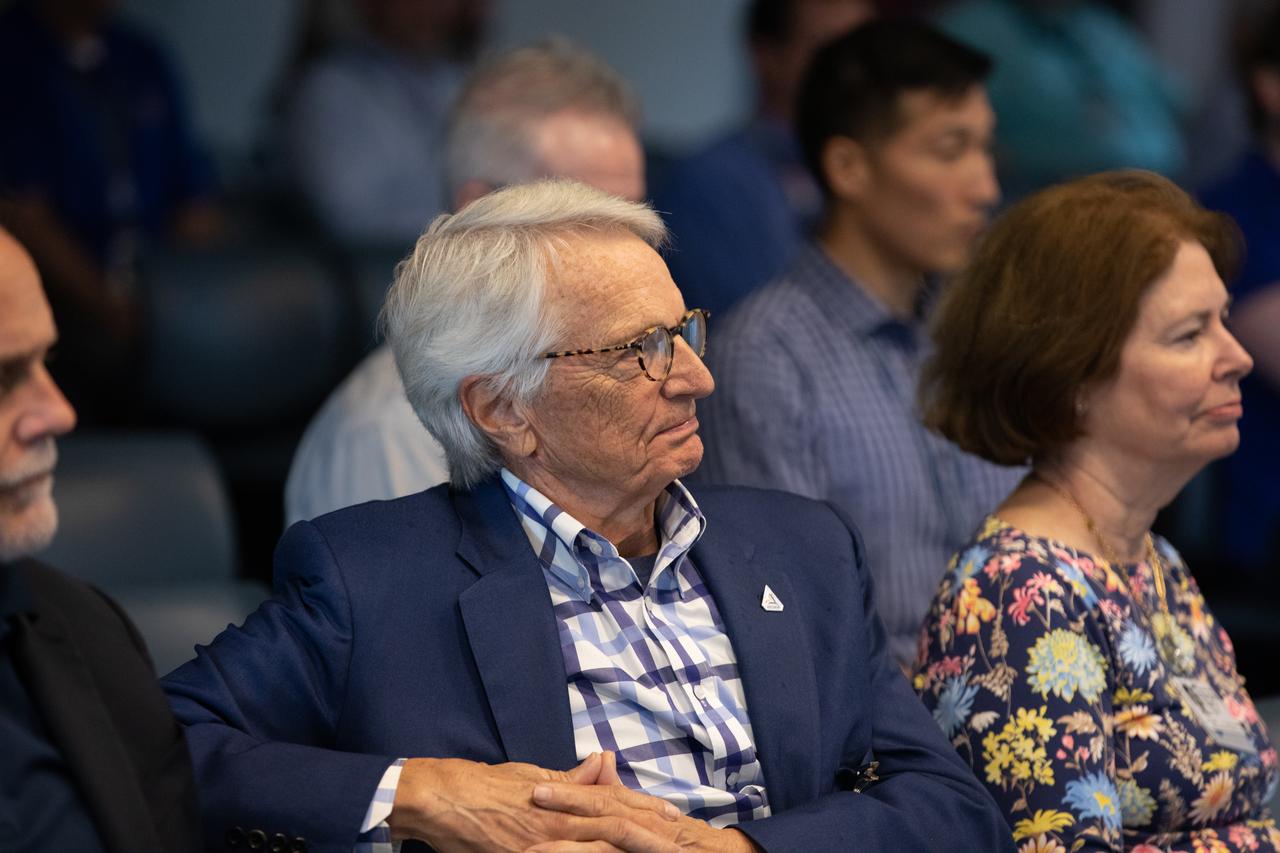
Arthur Muir, a retired Chicago attorney and America’s oldest Mt. Everest summiteer, attends the inaugural Cross-Program Connection event at NASA Kennedy Space Center’s Space Station Processing Facility on March 8, 2023. Muir, 75, was the speaker at the Florida spaceport function titled “Explorers Doing the Impossible.” He toured Kennedy before sharing his experiences in overcoming incredible challenges during his journey to the top of Earth’s highest mountain.
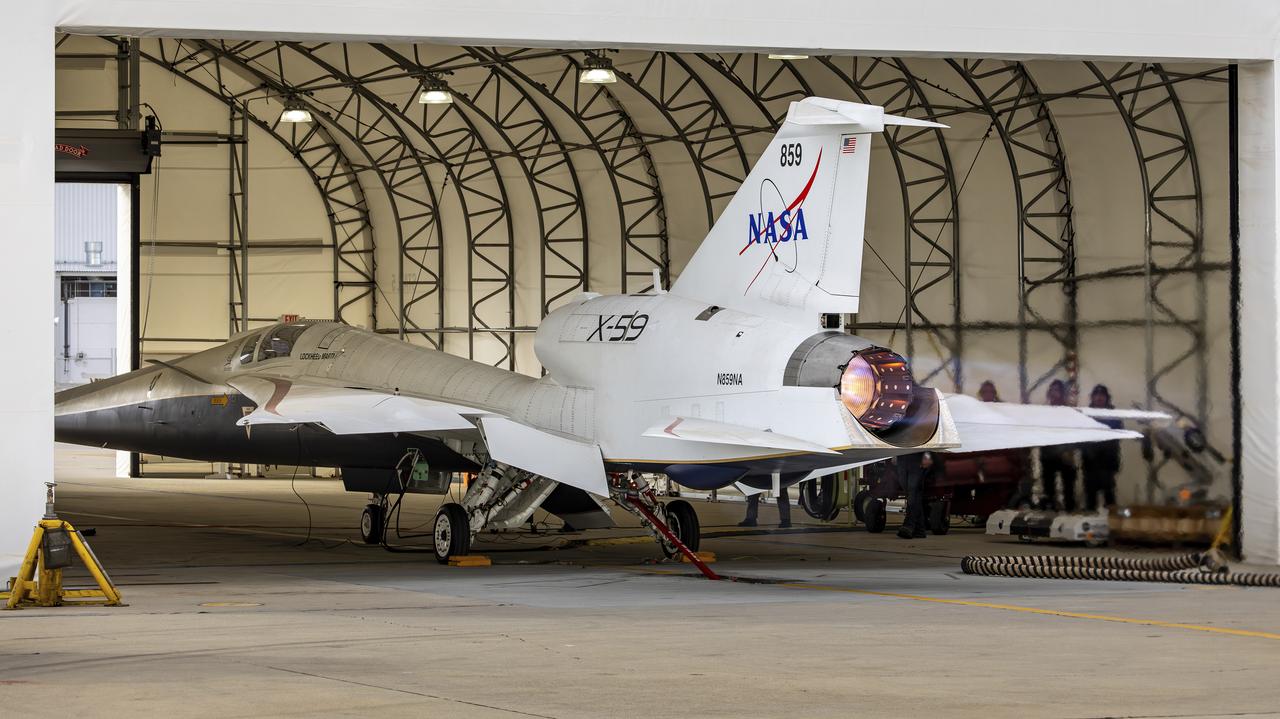
NASA’s X-59 quiet supersonic research aircraft completed its first maximum afterburner test at Lockheed Martin’s Skunk Works facility in Palmdale, California. This full-power test, during which the engine generates additional thrust, validates the additional power needed for meeting the testing conditions of the aircraft. The X-59 is the centerpiece of NASA’s Quesst mission, which aims to overcome a major barrier to supersonic flight over land by reducing the noise of sonic booms.

Chile pepper plants growing in the Advanced Plant Habitat (APH) aboard the International Space Station recently bore fruit. The peppers developed from flowers that bloomed over the past few weeks. Studies of fruit development in microgravity are limited, but overcoming the challenges of growing fruit in microgravity is important to NASA for long-duration missions during which crew members will need good sources of Vitamin C to supplement their diets.
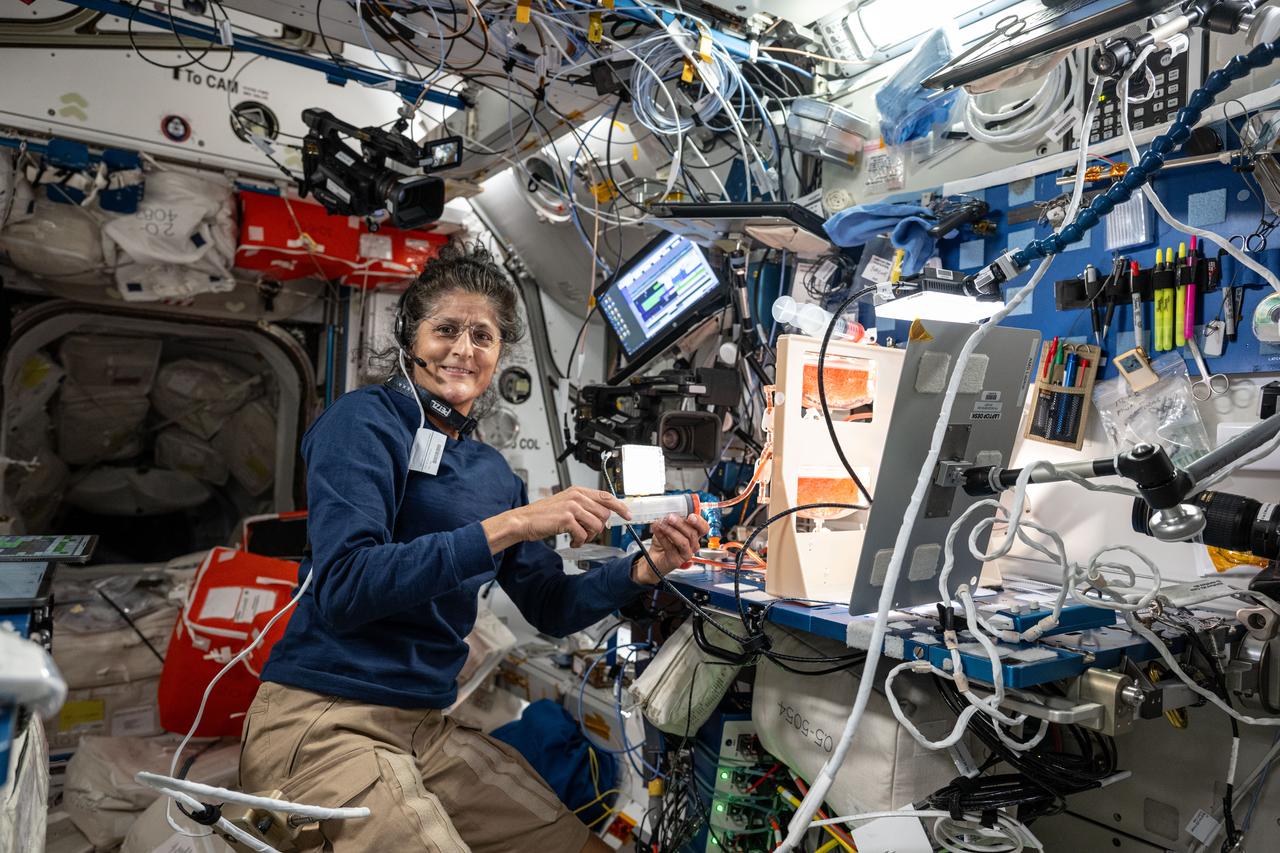
iss071e356675 (July 16, 2024) --- NASA astronaut and Boeing Crew Flight Test Pilot Suni Williams investigates using fluid physics techniques such as surface tension, as well as hydroponics and air circulation, to overcome the lack of gravity when watering and nourishing plants grown in space. The Plant Water Management investigation uses facilities in the International Space Station's Harmony module to promote space agricultural activities on spacecraft and space habitats.
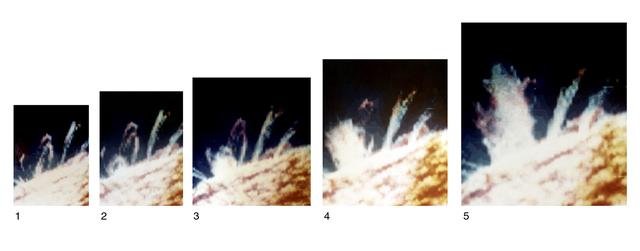
Breaking the grip of the closed magnetic loops that constrain other gases around it, a spray of chromospheric material surges upward, free of the Sun. Views 1 through 5 were recorded about 5 minutes apart by Skylab and comprise a composite of separate images made in chromospheric (red), transition region (green), and coronal (blue) temperatures of an ultraviolet sequence that depicts a solar eruption. Eruption begins (view 2) as material in or near a small, compact loop develops enough energy to overcome the Sun's magnetic bonds.

Chile pepper plants growing in the Advanced Plant Habitat (APH) aboard the International Space Station recently bore fruit. The peppers developed from flowers that bloomed over the past few weeks. Studies of fruit development in microgravity are limited, but overcoming the challenges of growing fruit in microgravity is important to NASA for long-duration missions during which crew members will need good sources of Vitamin C to supplement their diets.

Chile pepper plants growing in the Advanced Plant Habitat (APH) aboard the International Space Station recently bore fruit. The peppers developed from flowers that bloomed over the past few weeks. Studies of fruit development in microgravity are limited, but overcoming the challenges of growing fruit in microgravity is important to NASA for long-duration missions during which crew members will need good sources of Vitamin C to supplement their diets.
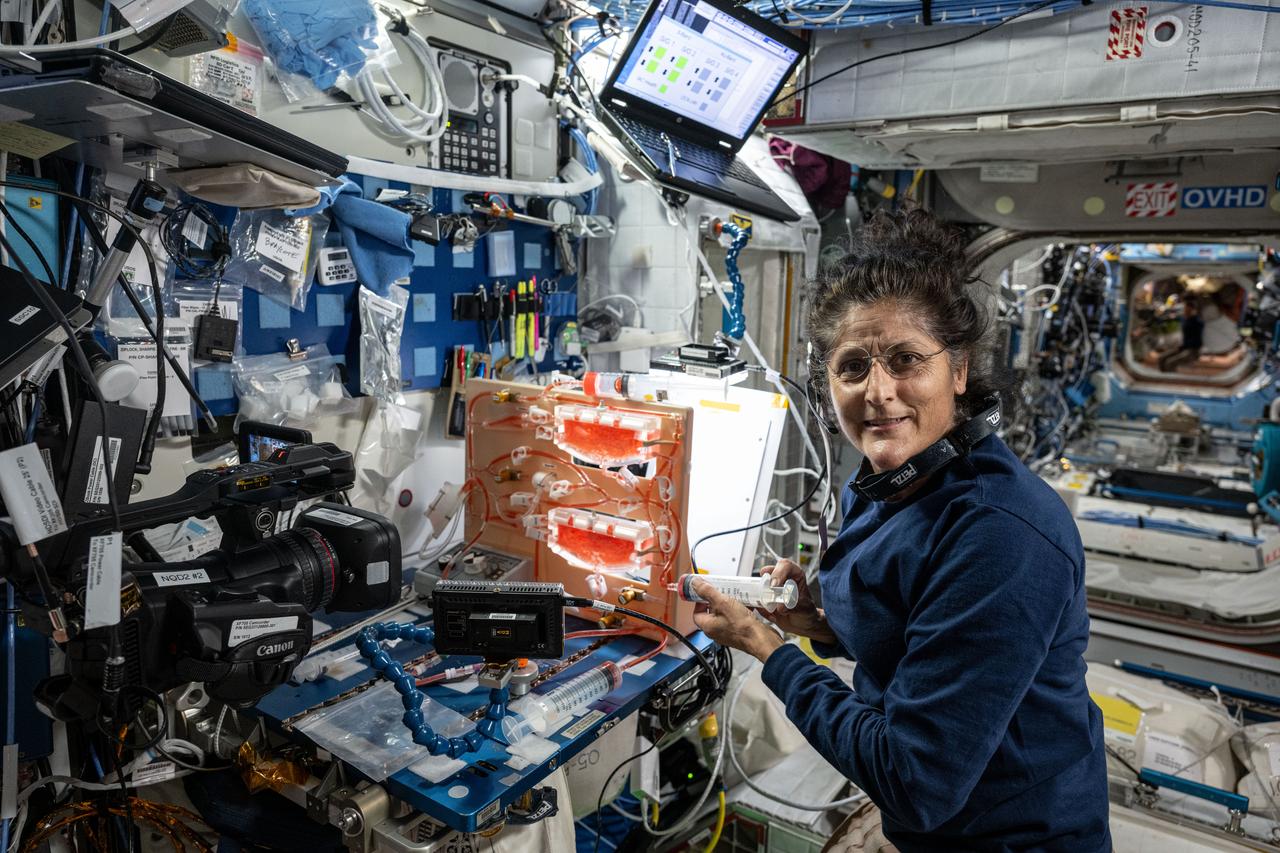
iss071e356678 (July 16, 2024) --- NASA astronaut and Boeing Crew Flight Test Pilot Suni Williams investigates using fluid physics techniques such as surface tension, as well as hydroponics and air circulation, to overcome the lack of gravity when watering and nourishing plants grown in space. The Plant Water Management investigation uses facilities in the International Space Station's Harmony module to promote space agricultural activities on spacecraft and space habitats.
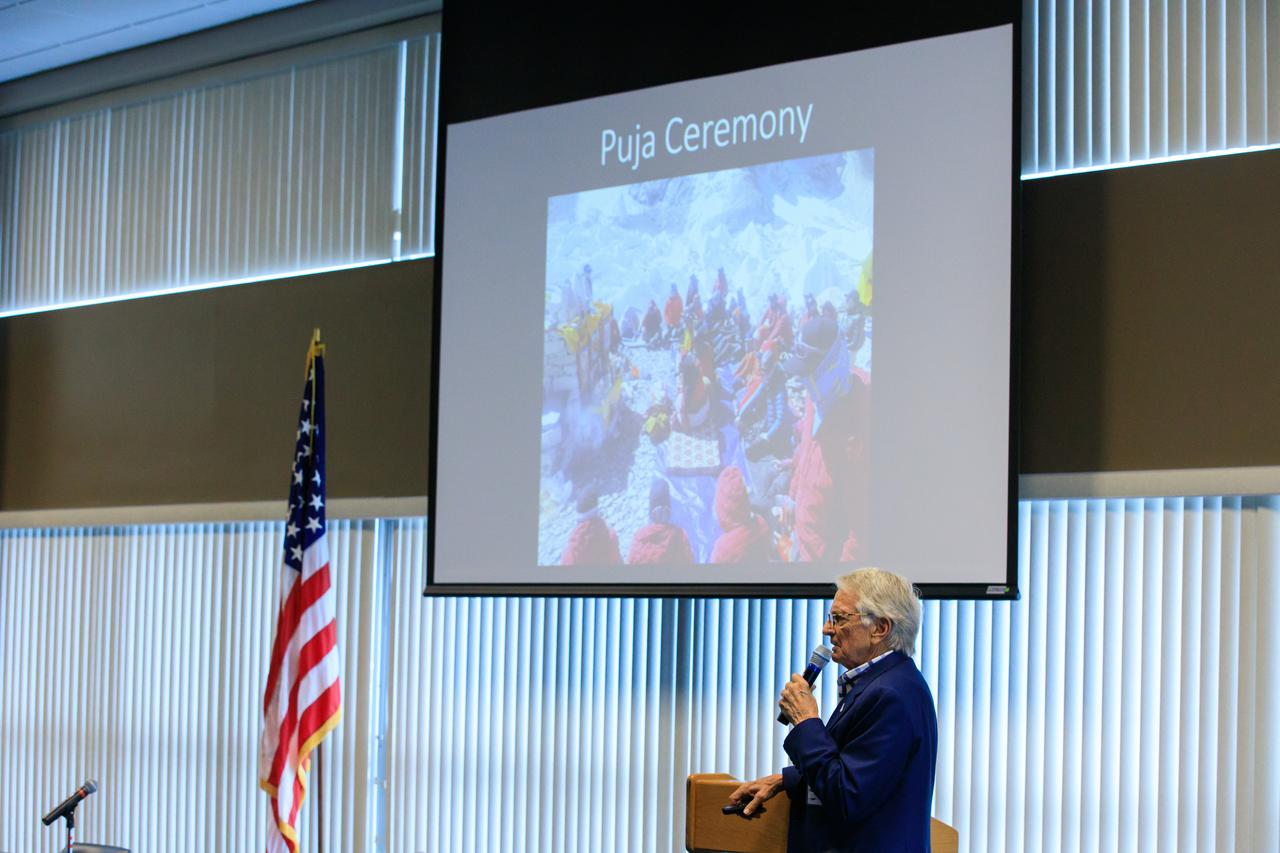
Arthur Muir, a retired Chicago attorney and America’s oldest Mt. Everest summiteer, addresses the audience during the inaugural Cross-Program Connection event at NASA Kennedy Space Center’s Space Station Processing Facility on March 8, 2023. Muir, 75, was the speaker at the Florida spaceport function titled “Explorers Doing the Impossible.” He toured Kennedy before sharing his experiences in overcoming incredible challenges during his journey to the top of Earth’s highest mountain.
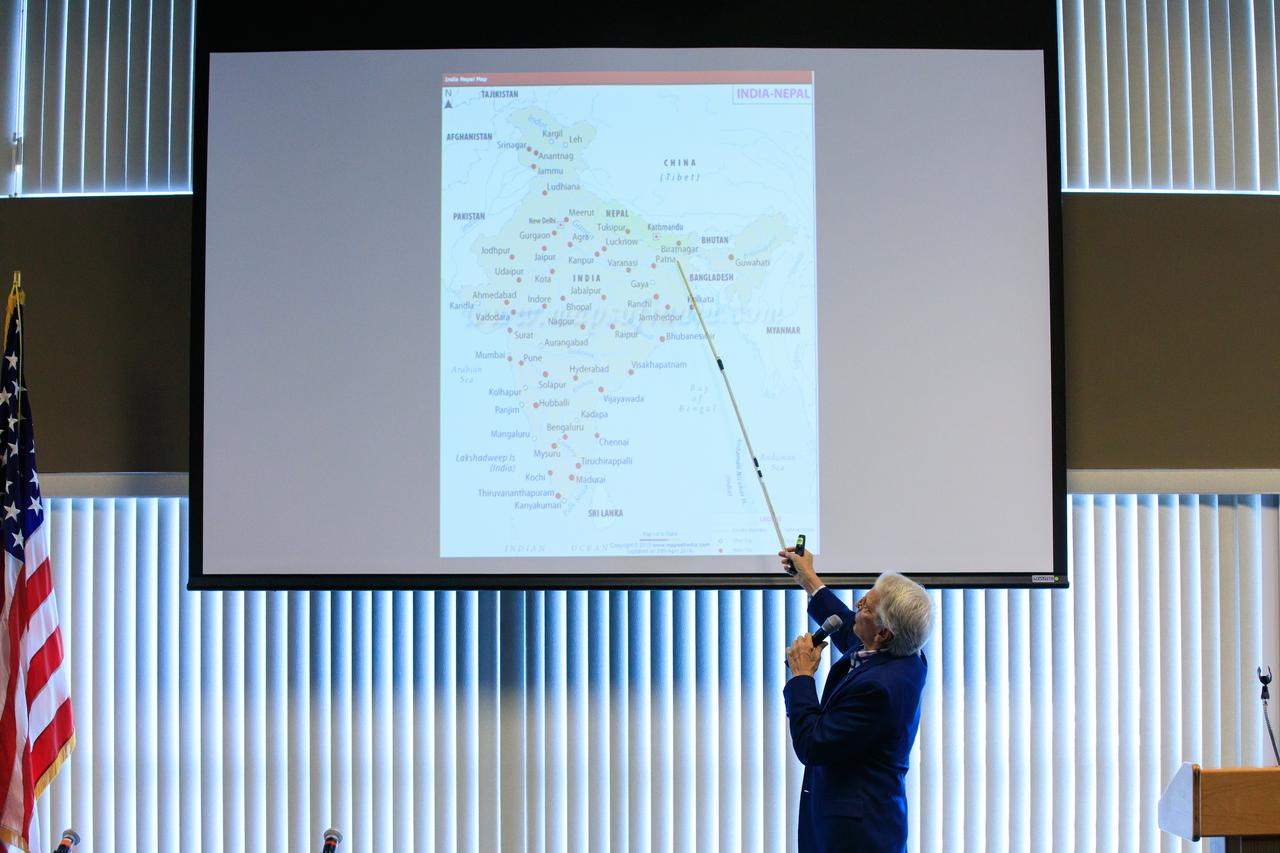
Arthur Muir, a retired Chicago attorney and America’s oldest Mt. Everest summiteer, delivers his presentation during the inaugural Cross-Program Connection event at NASA Kennedy Space Center’s Space Station Processing Facility on March 8, 2023. Muir, 75, was the speaker at the Florida spaceport function titled “Explorers Doing the Impossible.” He toured Kennedy before sharing his experiences in overcoming incredible challenges during his journey to the top of Earth’s highest mountain.
iss071e356675 (July 16, 2024) --- NASA astronaut and Boeing Crew Flight Test Pilot Suni Williams investigates using fluid physics techniques such as surface tension, as well as hydroponics and air circulation, to overcome the lack of gravity when watering and nourishing plants grown in space. The Plant Water Management investigation uses facilities in the International Space Station's Harmony module to promote space agricultural activities on spacecraft and space habitats.
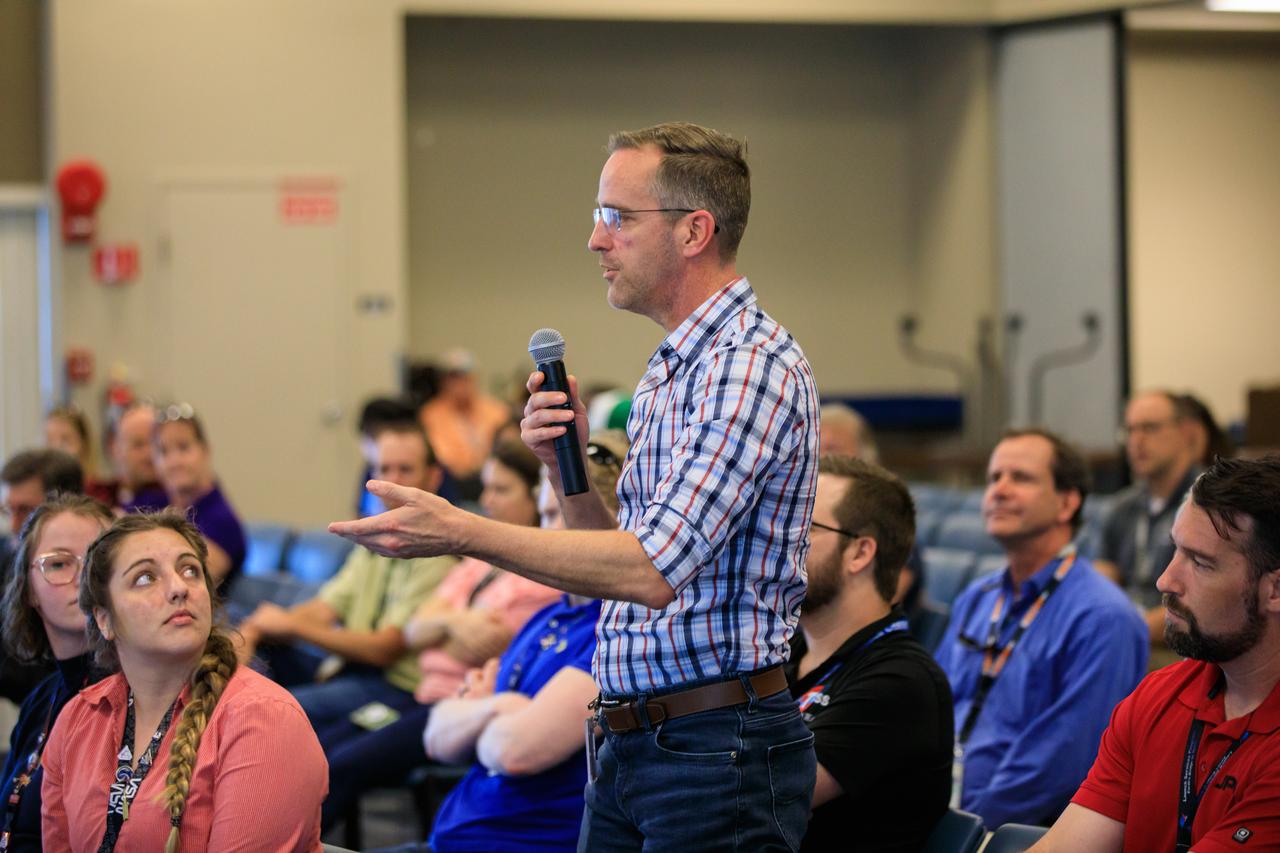
An audience member asks a question during the inaugural Cross-Program Connection event at NASA Kennedy Space Center’s Space Station Processing Facility on March 8, 2023. Arthur Muir, a retired Chicago attorney and America’s oldest Mt. Everest summiteer, was the speaker at the Florida spaceport function titled “Explorers Doing the Impossible.” He toured Kennedy before sharing his experiences in overcoming incredible challenges during his journey to the top of Earth’s highest mountain.
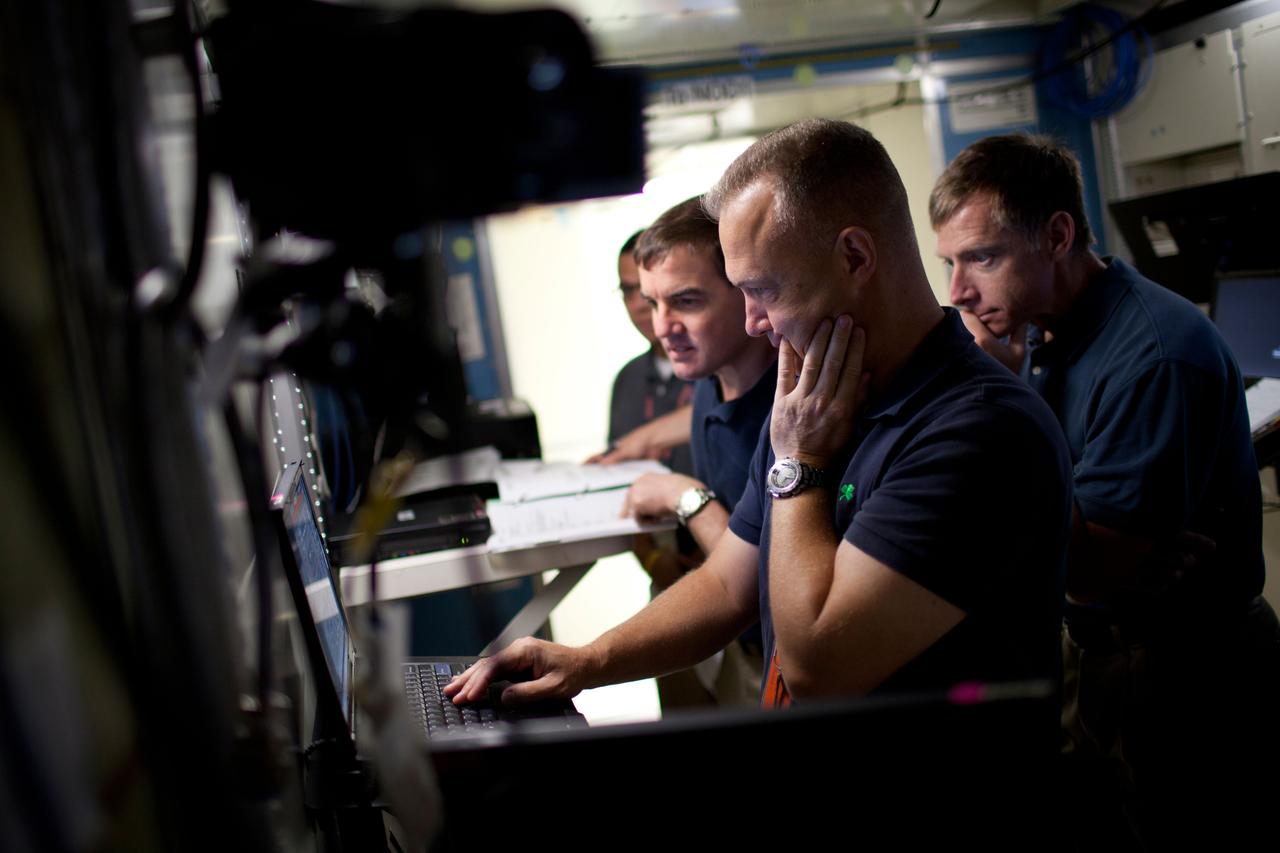
NASA astronauts Rex Walheim, Doug Hurley and Chris Ferguson work on computers in an exercises to overcome a power loss on the International Space Station as the crew of STS-135, the final space shuttle mission, trains in the Space Station Training Facility at the Johnson Space Center on Thursday, May 19, 2011, in Houston. ( NASA Photo / Houston Chronicle, Smiley N. Pool ).
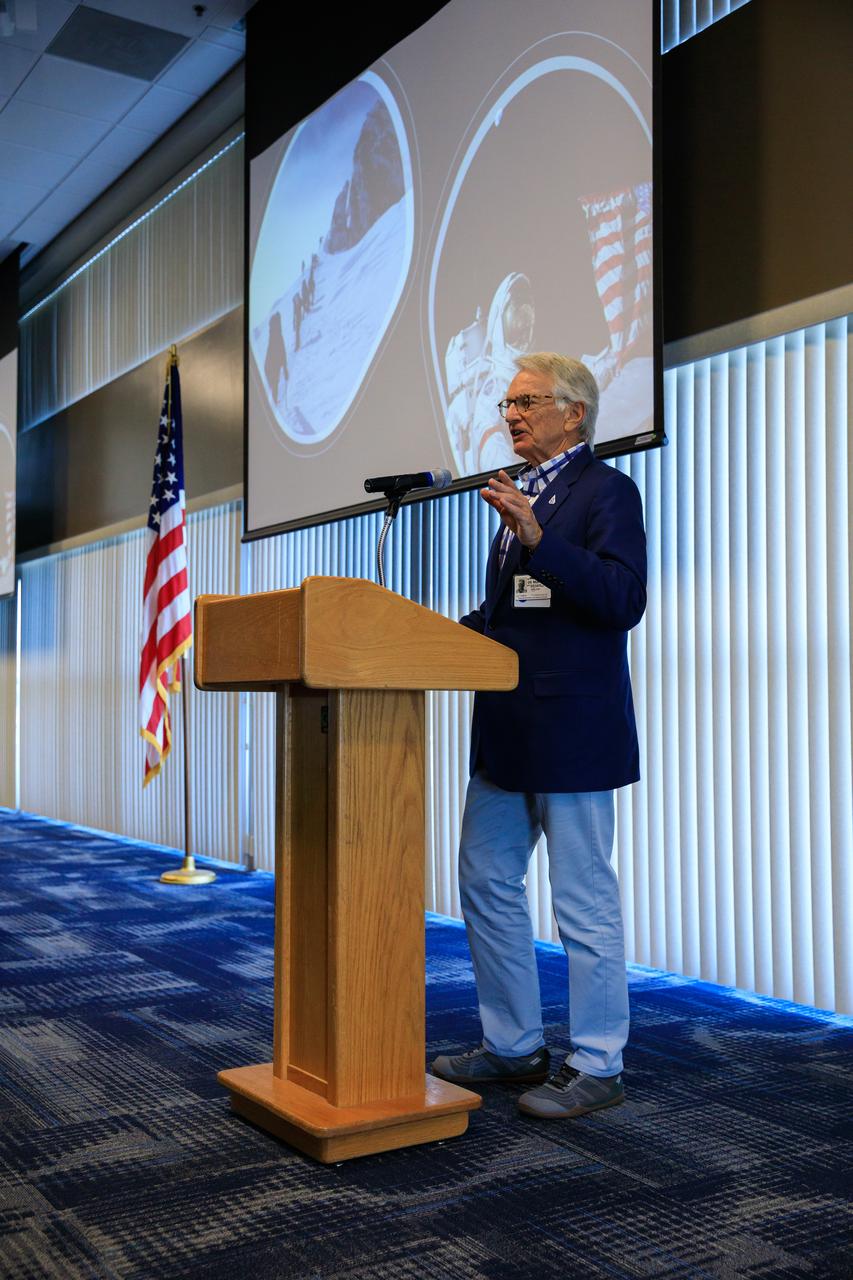
Arthur Muir, a retired Chicago attorney and America’s oldest Mt. Everest summiteer, addresses the audience during the inaugural Cross-Program Connection event at NASA Kennedy Space Center’s Space Station Processing Facility on March 8, 2023. Muir, 75, was the speaker at the Florida spaceport function titled “Explorers Doing the Impossible.” He toured Kennedy before sharing his experiences in overcoming incredible challenges during his journey to the top of Earth’s highest mountain.
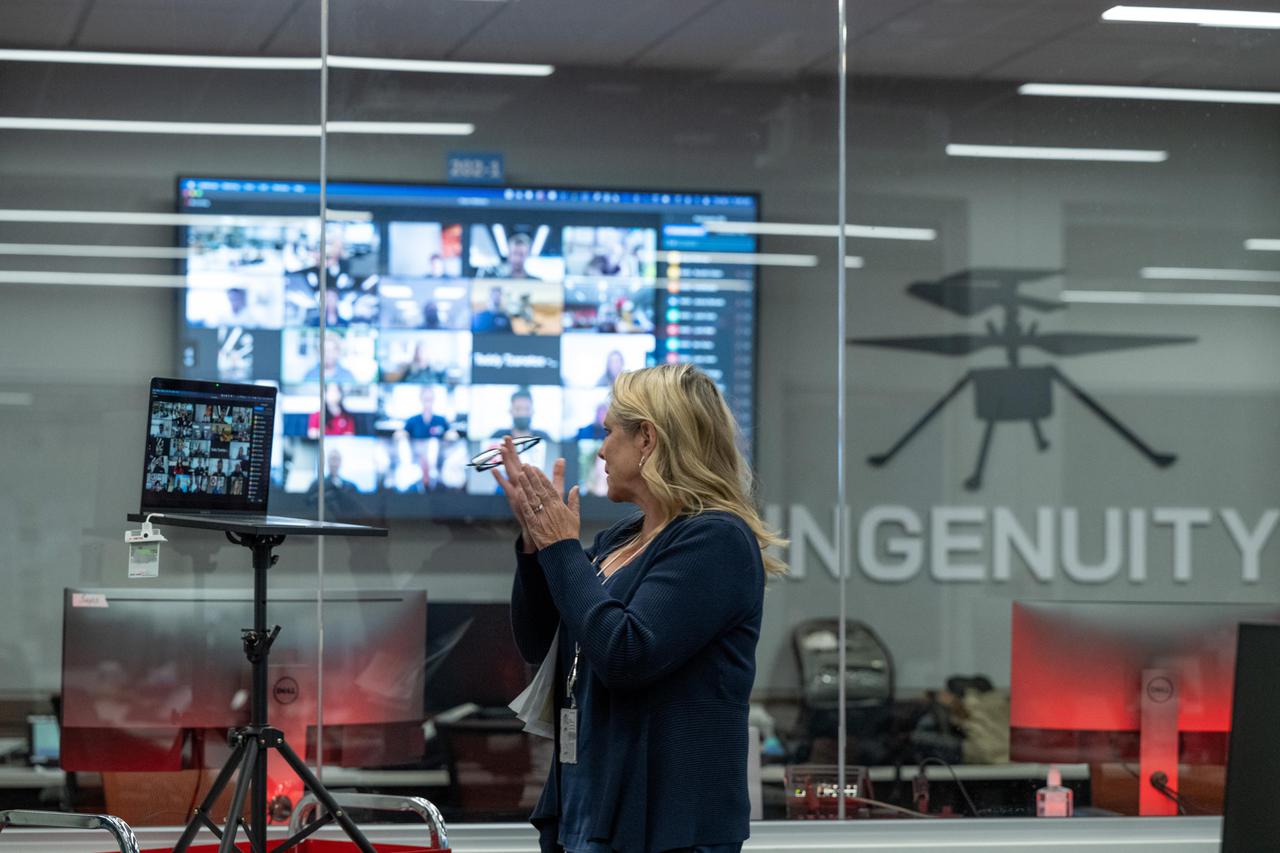
Perseverance rover Project Manager, Jennifer Trosper, led team members in applause in a control room at NASA's Jet Propulsion Laboratory in Southern California on April 5, 2022. The team honored 20 students via a live video event for overcoming academic obstacles. Each student received a personalized message from the rover on Mars. https://photojournal.jpl.nasa.gov/catalog/PIA25275
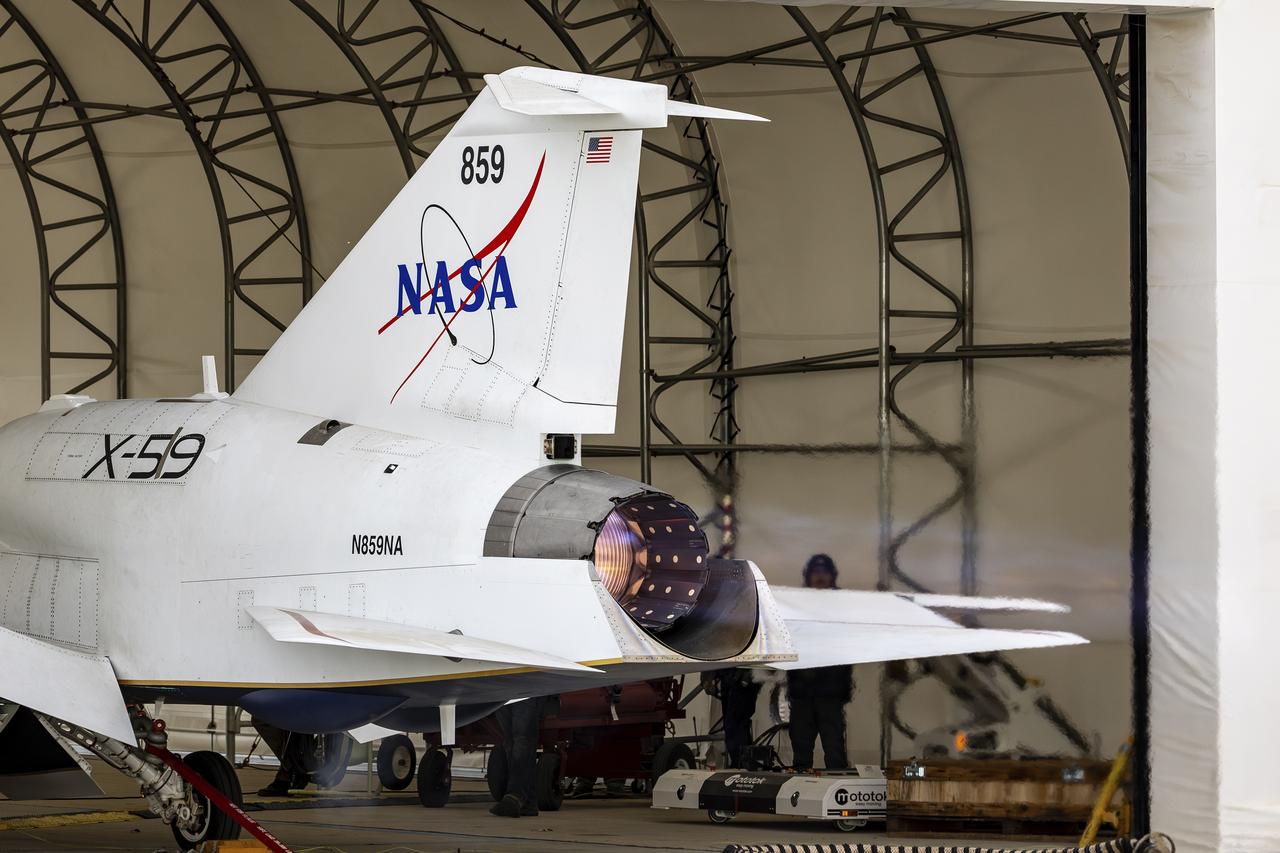
NASA’s X-59 quiet supersonic research aircraft completed its first maximum afterburner test at Lockheed Martin’s Skunk Works facility in Palmdale, California. This full-power test, during which the engine generates additional thrust, validates the additional power needed for meeting the testing conditions of the aircraft. The X-59 is the centerpiece of NASA’s Quesst mission, which aims to overcome a major barrier to supersonic flight over land by reducing the noise of sonic booms.
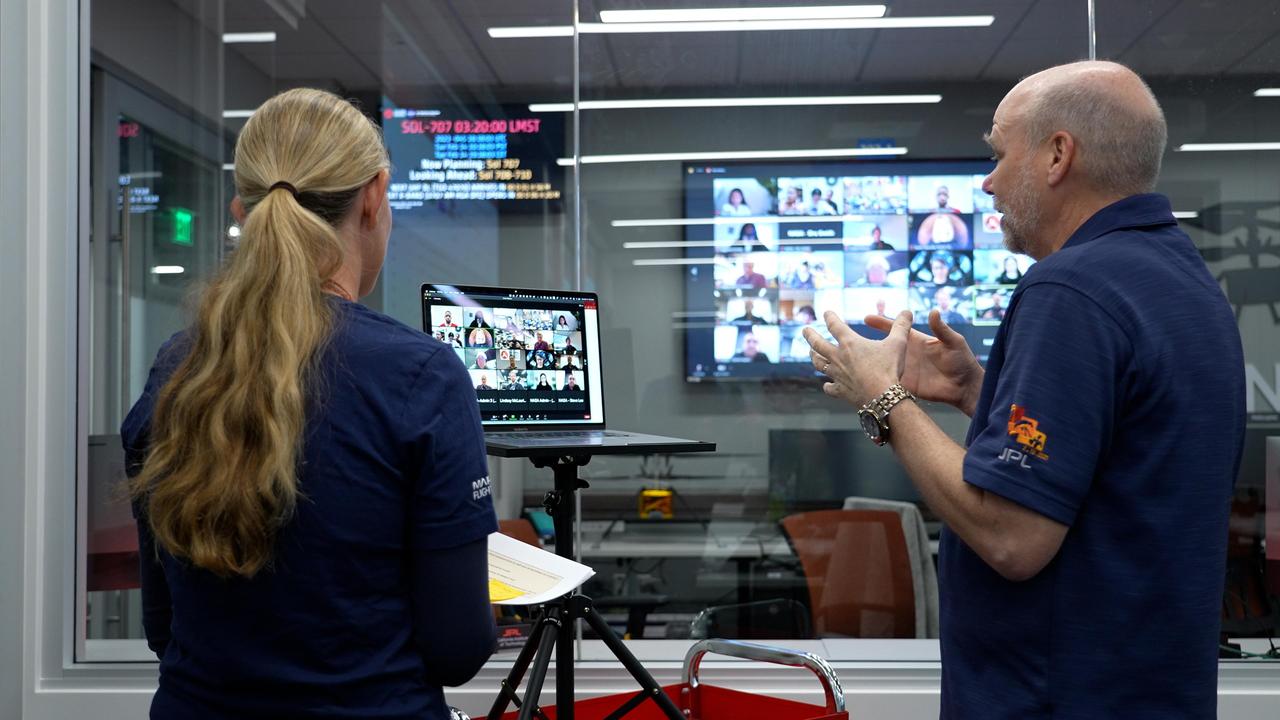
Perseverance Mars Rover Deputy Project Manager Rich Welch and Mission Lead Beth Dewell, spoke with middle- and high-school students during a live webinar from the rover's mission control at NASA's Jet Propulsion Laboratory in Southern California, on Feb. 14, 2023. The event honored students in the "You've Got Perseverance," campaign, which recognizes those who have overcome academic obstacles, with a personalized message to each student. To nominate a student for the next round, go to https://mars.nasa.gov/mars2020/participate/got-perseverance/nominate/. https://photojournal.jpl.nasa.gov/catalog/PIA25796
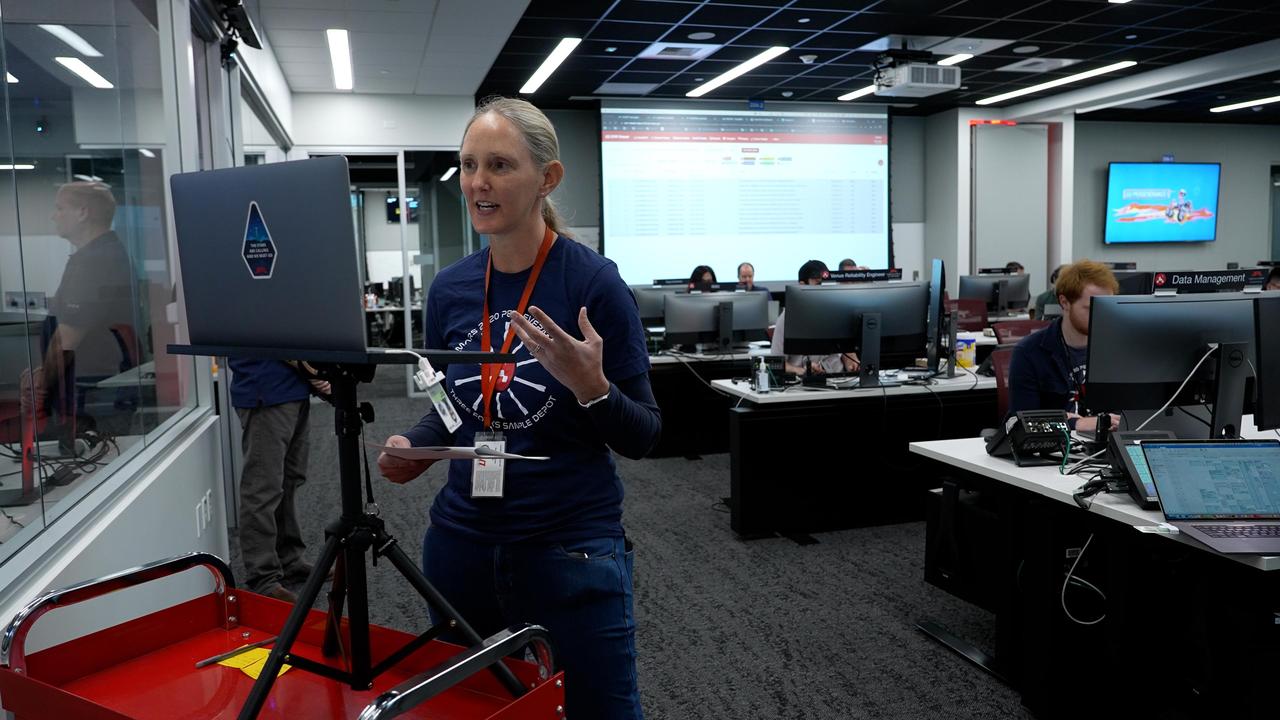
Perseverance Mars Rover Mission Lead Beth Dewell, of NASA's Jet Propulsion Laboratory in Southern California interacted with middle- and high-school students from across the United States during a live webinar from the rover's mission control at JPL, on Feb. 14, 2023. The event honored students in the "You've Got Perseverance," campaign to recognize those who have overcome academic obstacles with a live webinar and personalized messages from the rover. To nominate a student for the next round, go to https://mars.nasa.gov/mars2020/participate/got-perseverance/nominate/. https://photojournal.jpl.nasa.gov/catalog/PIA25797
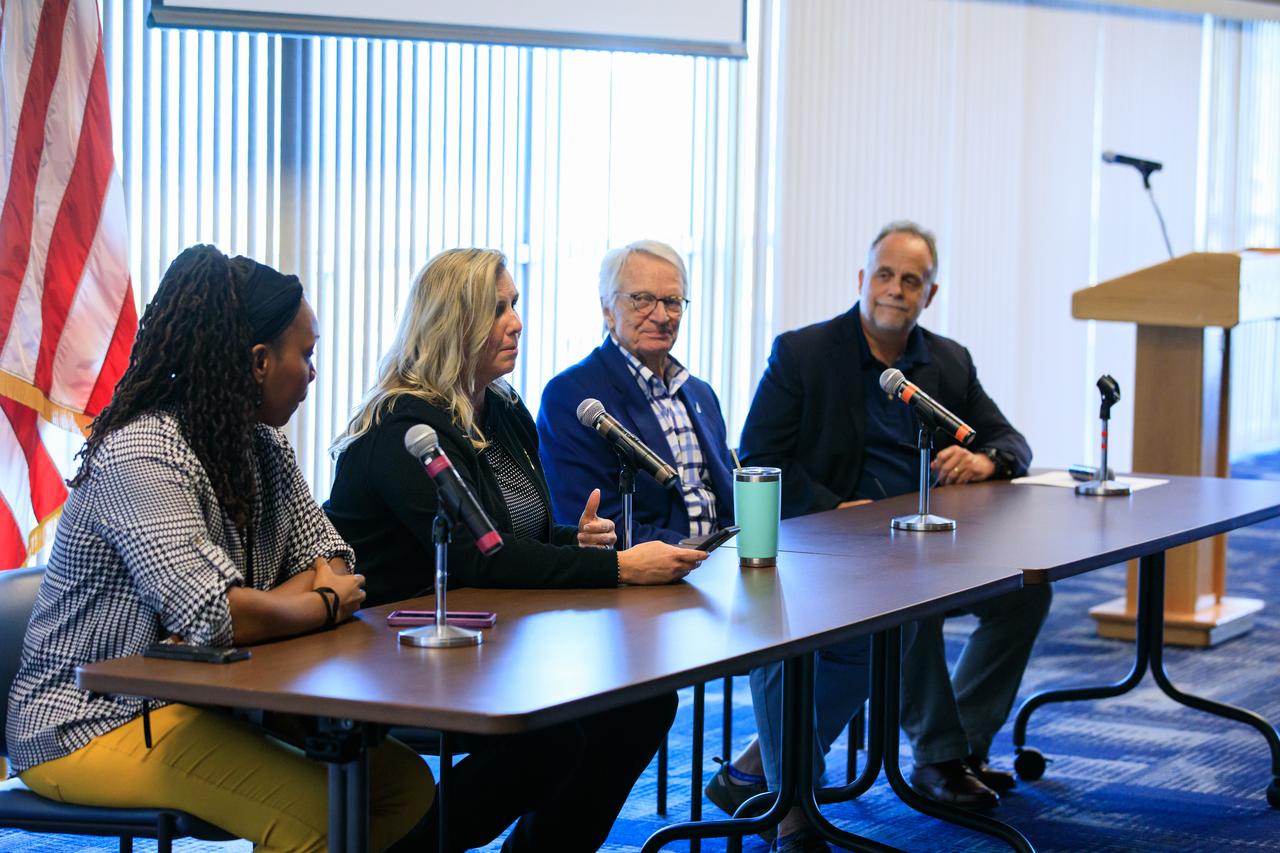
NASA’s Exploration Ground Systems Manager Shawn Quinn, right, moderates the inaugural Cross-Program Connection event at NASA Kennedy Space Center’s Space Station Processing Facility in Florida on March 8, 2023. Other participants, from left, are: Stacie Turner, Kennedy’s Deep Space Logistics; Dana Hutcherson, NASA’s Commercial Crew Program deputy program manager; and Arthur Muir, a retired Chicago attorney and America’s oldest Mt. Everest summiteer. Muir, 75, was the speaker at the event titled “Explorers Doing the Impossible.” He toured Kennedy before sharing his experiences in overcoming incredible challenges during his journey to the top of Earth’s highest mountain.
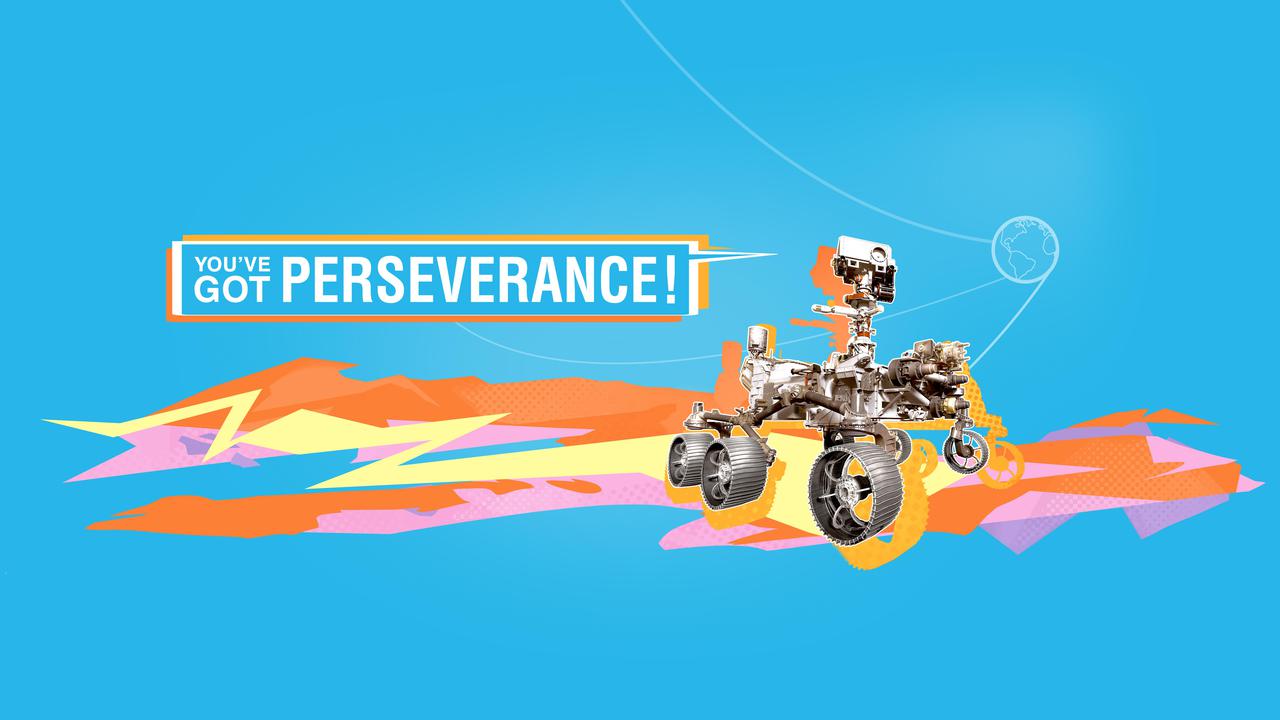
This colorful illustration depicts NASA's Perseverance Rover on Mars, where it landed in February 2021. The Perseverance team faced numerous technical and logistical challenges, including those presented by the COVID-19 pandemic, before and after launch and landing. Because they know how hard it can be to overcome obstacles, they're celebrating students who have persevered in the face of academic challenges. Awardees will receive a personal message beamed back from Mars by the rover. Find out how to nominate a student for "You've Got Perseverance!" at: go.nasa.gov/gotperseverance Animation available at https://photojournal.jpl.nasa.gov/catalog/PIA24948
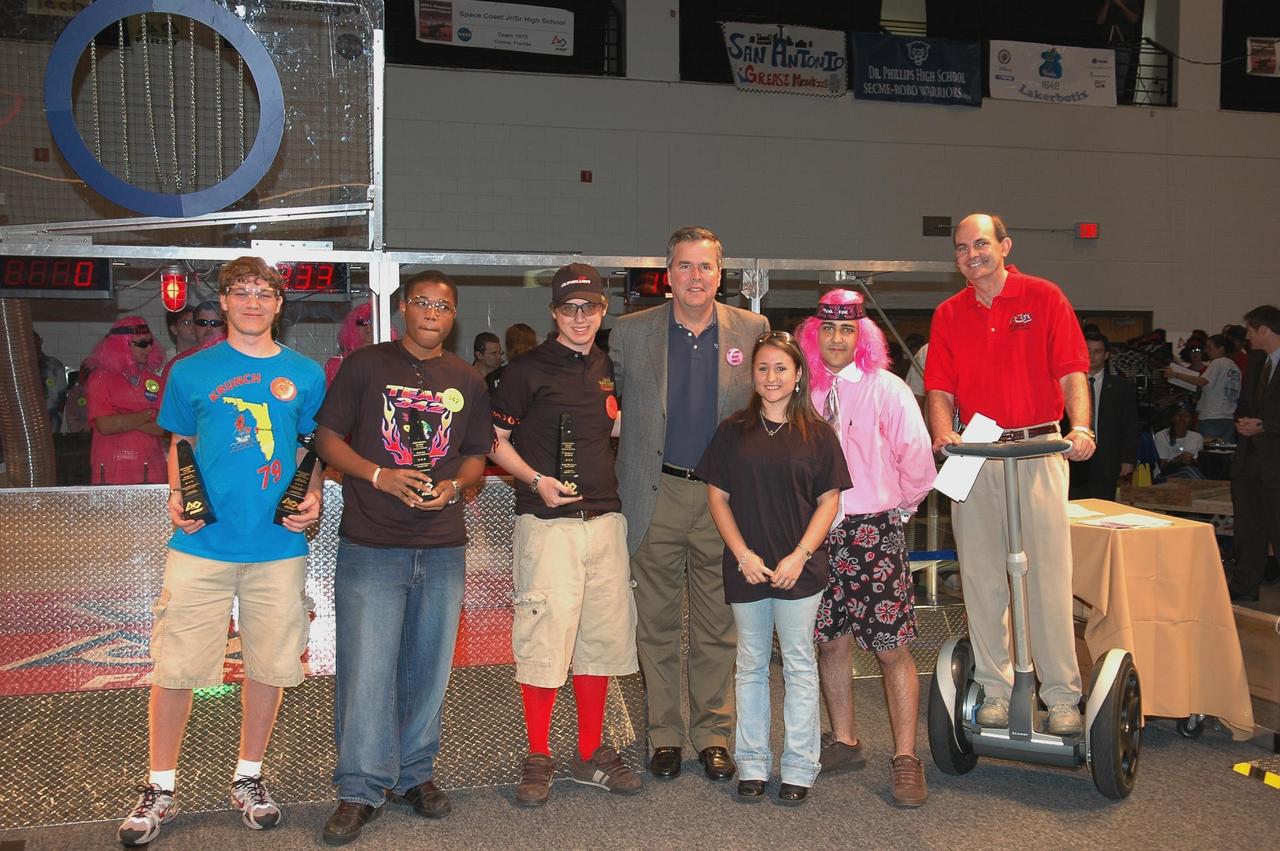
KENNEDY SPACE CENTER, FLA. - During opening ceremonies of the 2006 FIRST Robotics Regional Competition held March 9-11 at the University of Central Florida in Orlando, Florida Governor Jeb Bush poses with recipients of the Governor's Award trophy. The FIRST Robotics Competition challenges teams of young people and their mentors to solve a common problem in a six-week timeframe using a standard "kit of parts" and a common set of rules. Teams build robots from the parts and enter them in a series of competitions. FIRST, which is based on "For Inspiration and Recognition of Science and Technology," redefines winning for these students. Teams are rewarded for excellence in design, demonstrated team spirit, gracious professionalism and maturity, and ability to overcome obstacles. Scoring the most points is a secondary goal. Winning means building partnerships that last. NASA and the University of Central Florida are co-sponsors of the regional event, which this year included more than 50 teams. Photo credit: NASA/Kim Shiflett
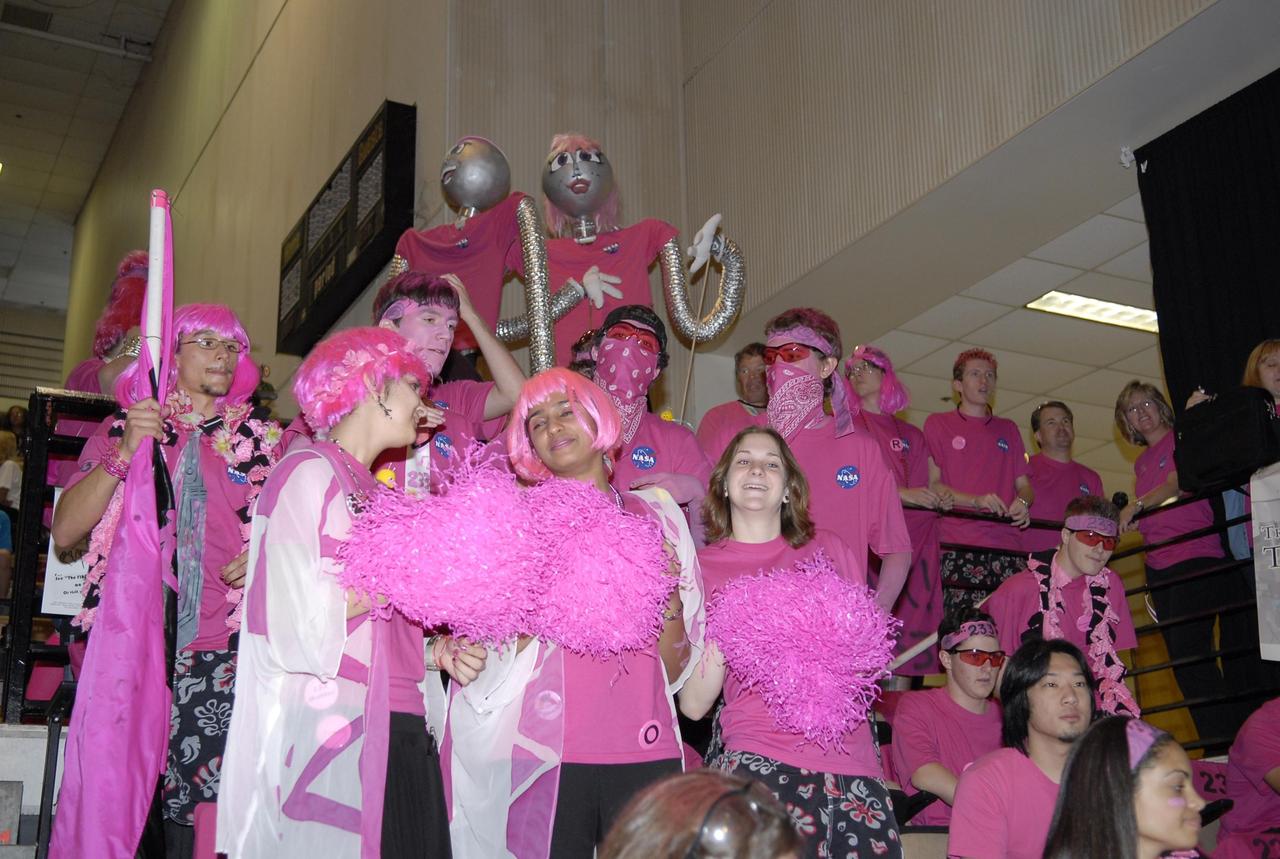
KENNEDY SPACE CENTER, FLA. -- The student team dressed in pink is a coordinated effort cosponsored by NASA KSC and representing Rockledge, Cocoa Beach and Viera High Schools in Central Florida. The FIRST, or For Inspiration and Recognition of Science and Technology, Robotics Competition challenges teams of young people and their mentors to solve a common problem in a six-week timeframe using a standard "kit of parts" and a common set of rules. Teams build robots from the parts and enter them in a series of competitions designed by FIRST founder Dean Kamen and Dr. Woodie Flowers, chairman and vice chairman of the Executive Advisory Board respectively, and a committee of engineers and other professionals. FIRST redefines winning for these students. Teams are rewarded for excellence in design, demonstrated team spirit, gracious professionalism and maturity, and ability to overcome obstacles. Scoring the most points is a secondary goal. Winning means building partnerships that last. Photo credit: NASA/Kim Shiflett
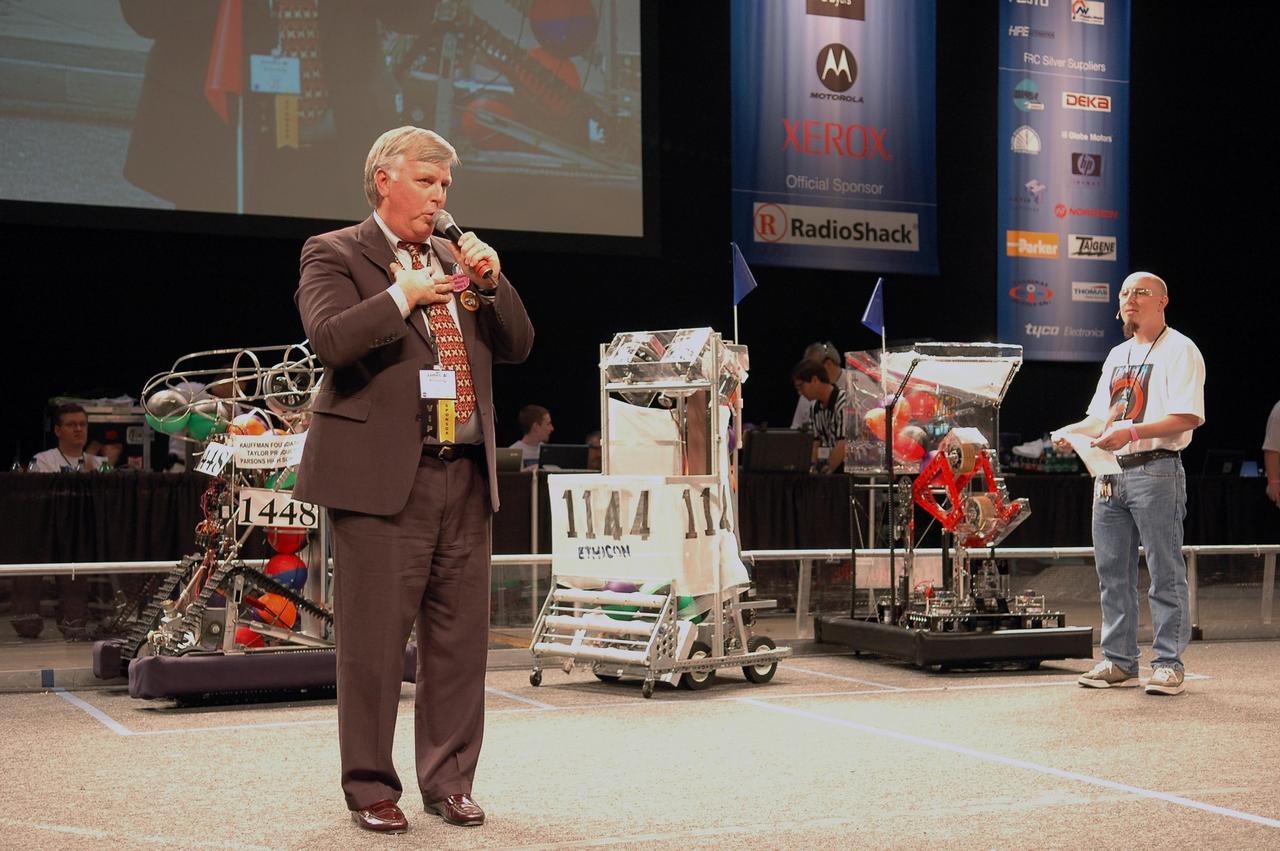
KENNEDY SPACE CENTER, FLA. - During opening ceremonies of the 2006 FIRST Robotics Regional Competition held March 9-11 at the University of Central Florida in Orlando, Kennedy Space Center Director Jim Kennedy talks to the participants. The FIRST Robotics Competition challenges teams of young people and their mentors to solve a common problem in a six-week timeframe using a standard "kit of parts" and a common set of rules. Teams build robots from the parts and enter them in a series of competitions. FIRST, which is based on "For Inspiration and Recognition of Science and Technology," redefines winning for these students. Teams are rewarded for excellence in design, demonstrated team spirit, gracious professionalism and maturity, and ability to overcome obstacles. Scoring the most points is a secondary goal. Winning means building partnerships that last. NASA and the University of Central Florida are co-sponsors of the regional event, which this year included more than 50 teams. Photo credit: NASA/Kim Shiflett
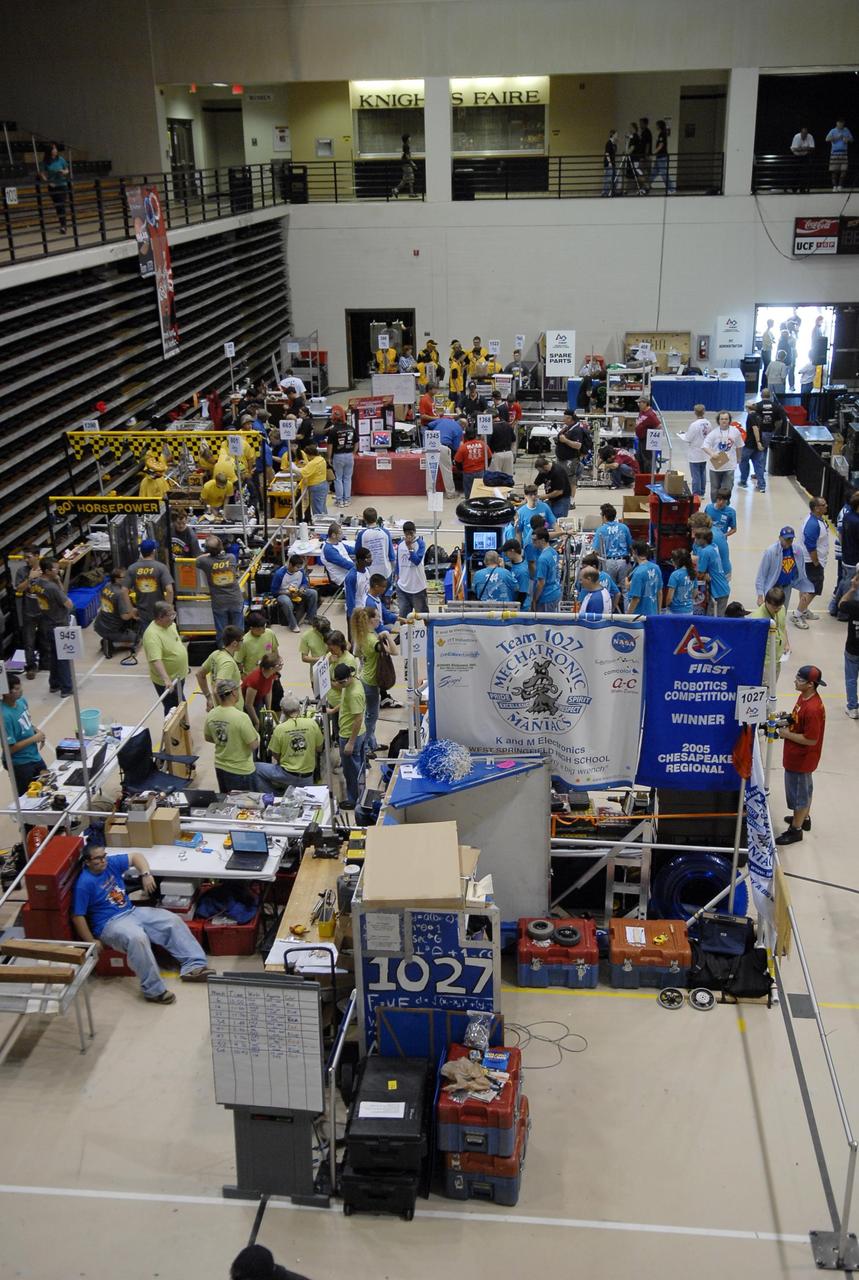
KENNEDY SPACE CENTER, FLA. -- Student teams representing Florida and several out-of-state areas display and work on their robots for the FIRST robotics event held at the University of Central Florida Arena March 8-10. The FIRST, or For Inspiration and Recognition of Science and Technology, Robotics Competition challenges teams of young people and their mentors to solve a common problem in a six-week timeframe using a standard "kit of parts" and a common set of rules. Teams build robots from the parts and enter them in a series of competitions designed by FIRST founder Dean Kamen and Dr. Woodie Flowers, chairman and vice chairman of the Executive Advisory Board respectively, and a committee of engineers and other professionals. FIRST redefines winning for these students. Teams are rewarded for excellence in design, demonstrated team spirit, gracious professionalism and maturity, and ability to overcome obstacles. Scoring the most points is a secondary goal. Winning means building partnerships that last. Photo credit: NASA/Kim Shiflett
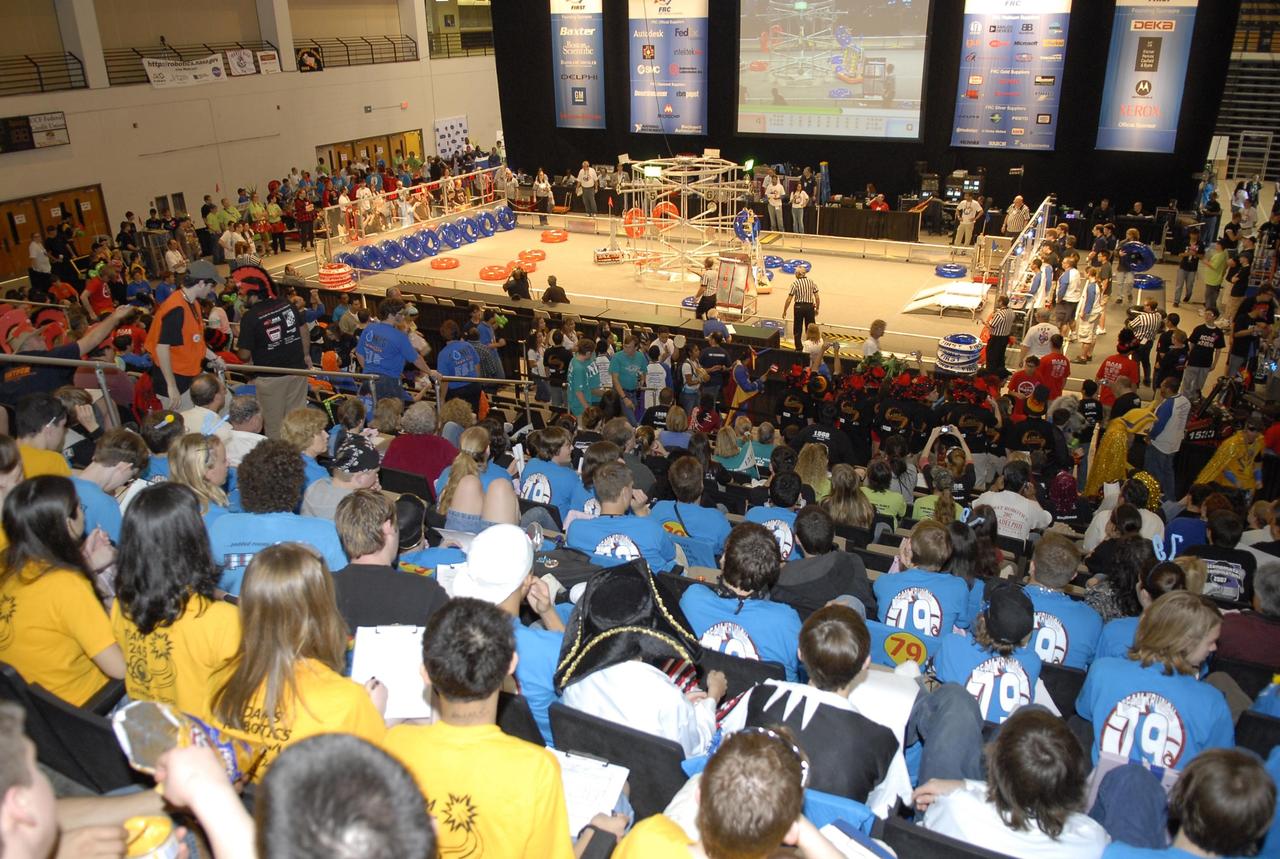
KENNEDY SPACE CENTER, FLA. -- The audience anxiously awaits a referee's decision during competition of student teams in the FIRST robotics event held at the University of Central Florida Arena March 8-10. The FIRST, or For Inspiration and Recognition of Science and Technology, Robotics Competition challenges teams of young people and their mentors to solve a common problem in a six-week timeframe using a standard "kit of parts" and a common set of rules. Teams build robots from the parts and enter them in a series of competitions designed by FIRST founder Dean Kamen and Dr. Woodie Flowers, chairman and vice chairman of the Executive Advisory Board respectively, and a committee of engineers and other professionals. FIRST redefines winning for these students. Teams are rewarded for excellence in design, demonstrated team spirit, gracious professionalism and maturity, and ability to overcome obstacles. Scoring the most points is a secondary goal. Winning means building partnerships that last. Photo credit: NASA/Kim Shiflett
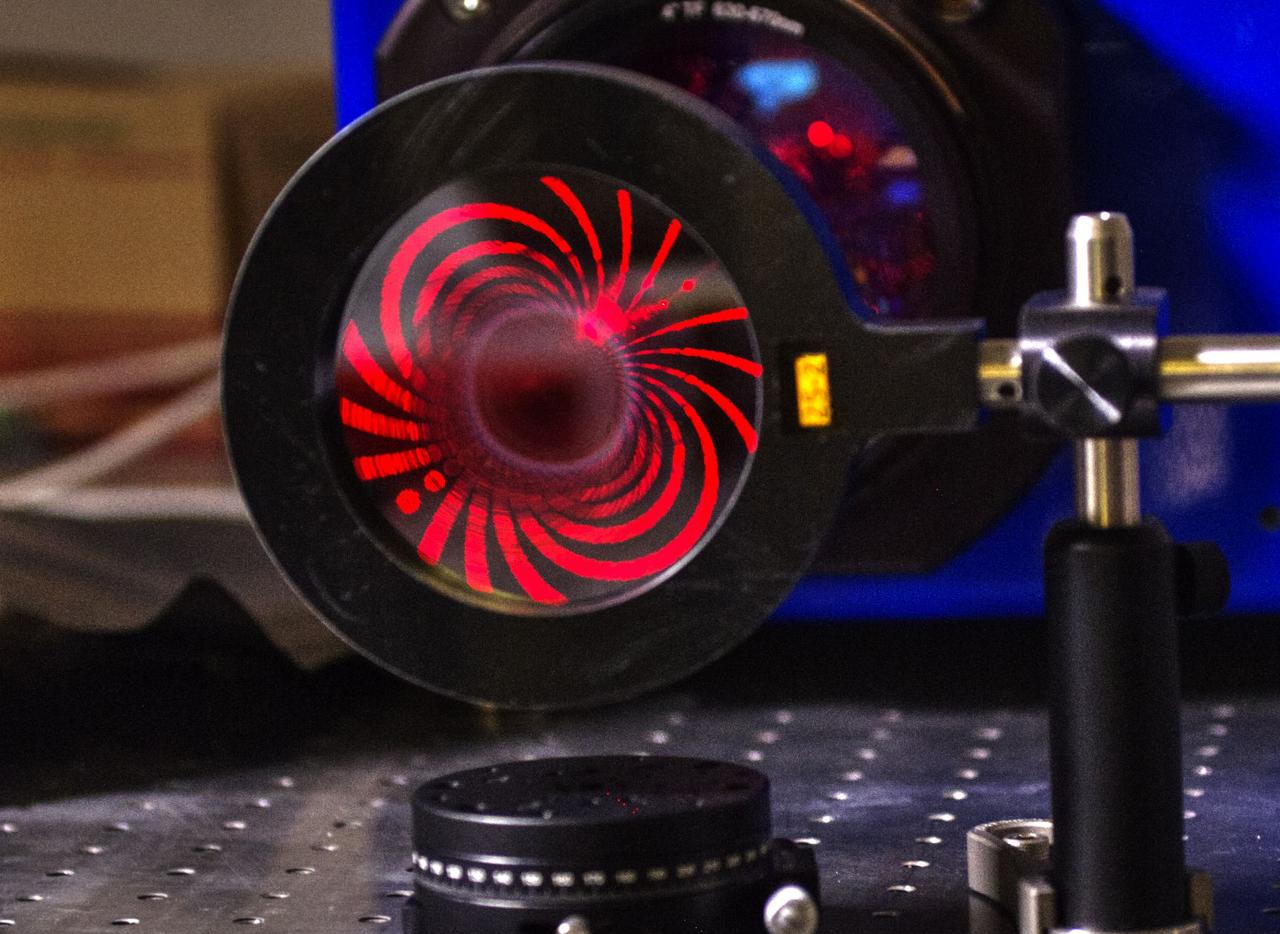
It’s an age-old astronomical truth: To resolve smaller and smaller physical details of distant celestial objects, scientists need larger and larger light-collecting mirrors. This challenge is not easily overcome given the high cost and impracticality of building and — in the case of space observatories — launching large-aperture telescopes. However, a team of scientists and engineers at NASA’s Goddard Space Flight Center in Greenbelt, Maryland, has begun testing a potentially more affordable alternative called the photon sieve. This new-fangled telescope optic could give scientists the resolution they need to see finer details still invisible with current observing tools – a jump in resolution that could help answer a 50-year-old question about the physical processes heating the sun's million-degree corona. Read more: <a href="http://go.nasa.gov/2abhanr" rel="nofollow">go.nasa.gov/2abhanr</a> Credit: NASA/Goddard/W. Hrybyk
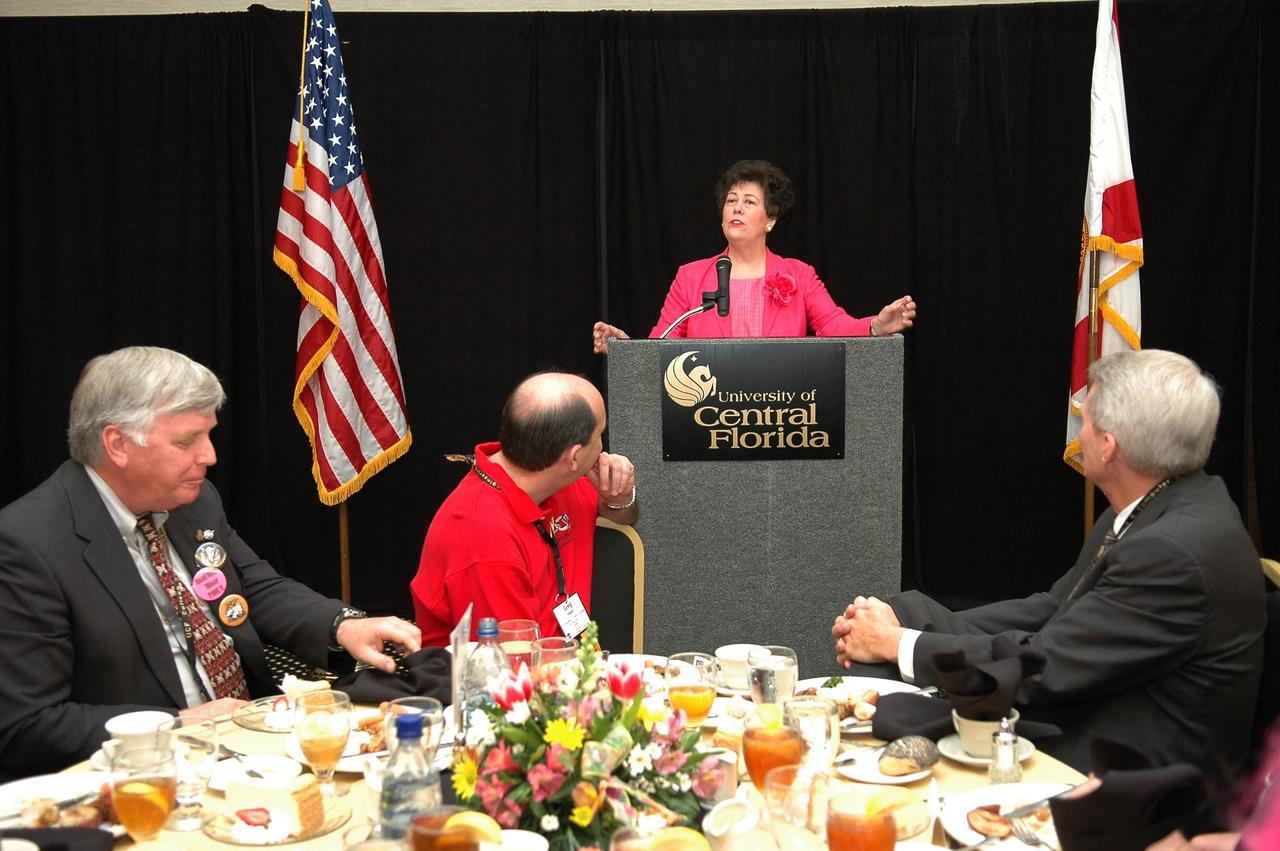
KENNEDY SPACE CENTER, FLA. - Florida's Lt. Governor Toni Jennings speaks during the V.I.P. luncheon at the 2006 FIRST Robotics Regional Competition held March 9-11 at the University of Central Florida in Orlando. The FIRST Robotics Competition challenges teams of young people and their mentors to solve a common problem in a six-week timeframe using a standard "kit of parts" and a common set of rules. Teams build robots from the parts and enter them in a series of competitions. FIRST, which is based on "For Inspiration and Recognition of Science and Technology," redefines winning for these students. Teams are rewarded for excellence in design, demonstrated team spirit, gracious professionalism and maturity, and ability to overcome obstacles. Scoring the most points is a secondary goal. Winning means building partnerships that last. NASA and the University of Central Florida are co-sponsors of the regional event, which this year included more than 50 teams. Photo credit: NASA/Kim Shiflett
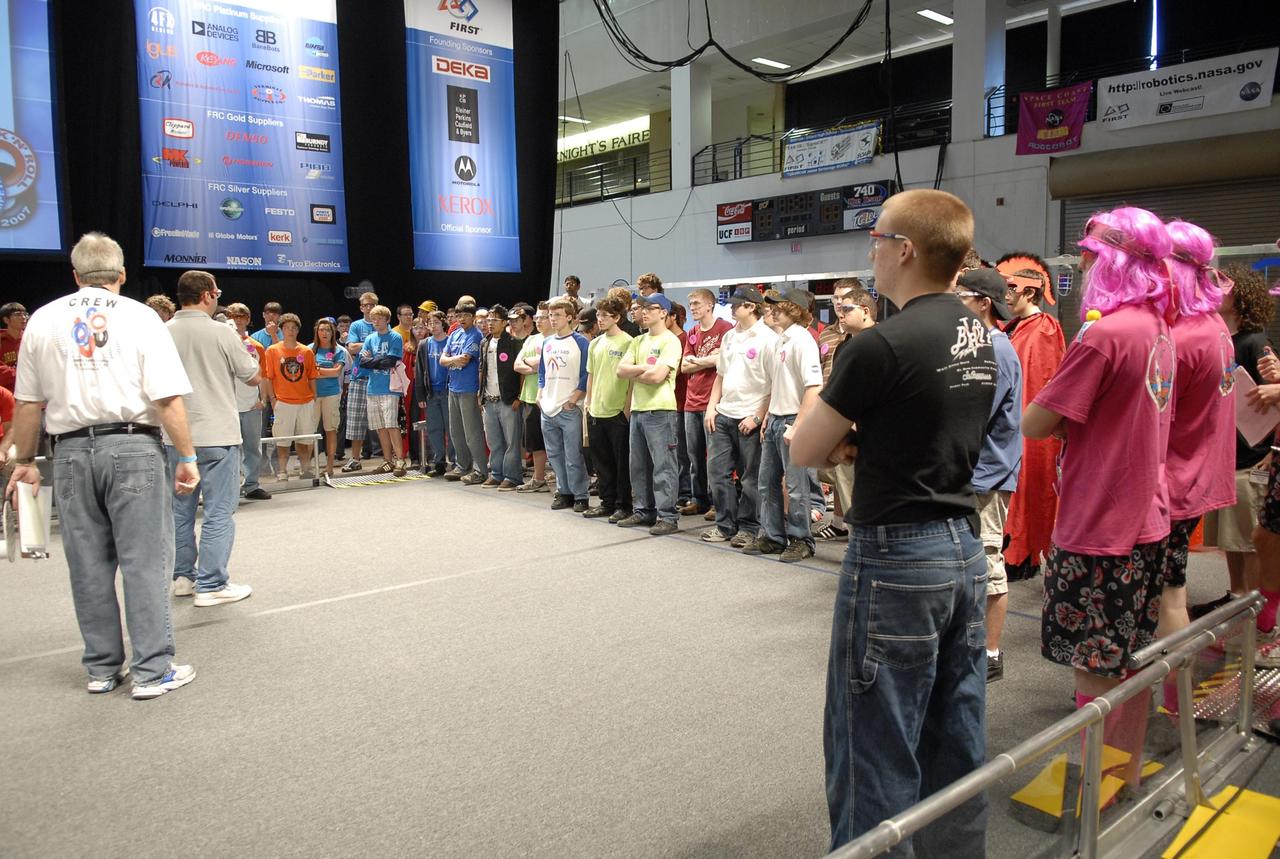
KENNEDY SPACE CENTER, FLA. -- Student competitors listen to game rules before the FIRST robotics event held at the University of Central Florida Arena March 8-10. The FIRST, or For Inspiration and Recognition of Science and Technology, Robotics Competition challenges teams of young people and their mentors to solve a common problem in a six-week timeframe using a standard "kit of parts" and a common set of rules. Teams build robots from the parts and enter them in a series of competitions designed by FIRST founder Dean Kamen and Dr. Woodie Flowers, chairman and vice chairman of the Executive Advisory Board respectively, and a committee of engineers and other professionals. FIRST redefines winning for these students. Teams are rewarded for excellence in design, demonstrated team spirit, gracious professionalism and maturity, and ability to overcome obstacles. Scoring the most points is a secondary goal. Winning means building partnerships that last. Photo credit: NASA/Kim Shiflett

KENNEDY SPACE CENTER, FLA. -- Center Director Bill Parsons (left) greets the Lt. Governor of the State of Florida, Jeff Kottkamp, at the FIRST robotics event held at the University of Central Florida Arena March 8-10. The FIRST, or For Inspiration and Recognition of Science and Technology, Robotics Competition challenges teams of young people and their mentors to solve a common problem in a six-week timeframe using a standard "kit of parts" and a common set of rules. Teams build robots from the parts and enter them in a series of competitions designed by FIRST founder Dean Kamen and Dr. Woodie Flowers, chairman and vice chairman of the Executive Advisory Board respectively, and a committee of engineers and other professionals. FIRST redefines winning for these students. Teams are rewarded for excellence in design, demonstrated team spirit, gracious professionalism and maturity, and ability to overcome obstacles. Scoring the most points is a secondary goal. Winning means building partnerships that last. Photo credit: NASA/Kim Shiflett
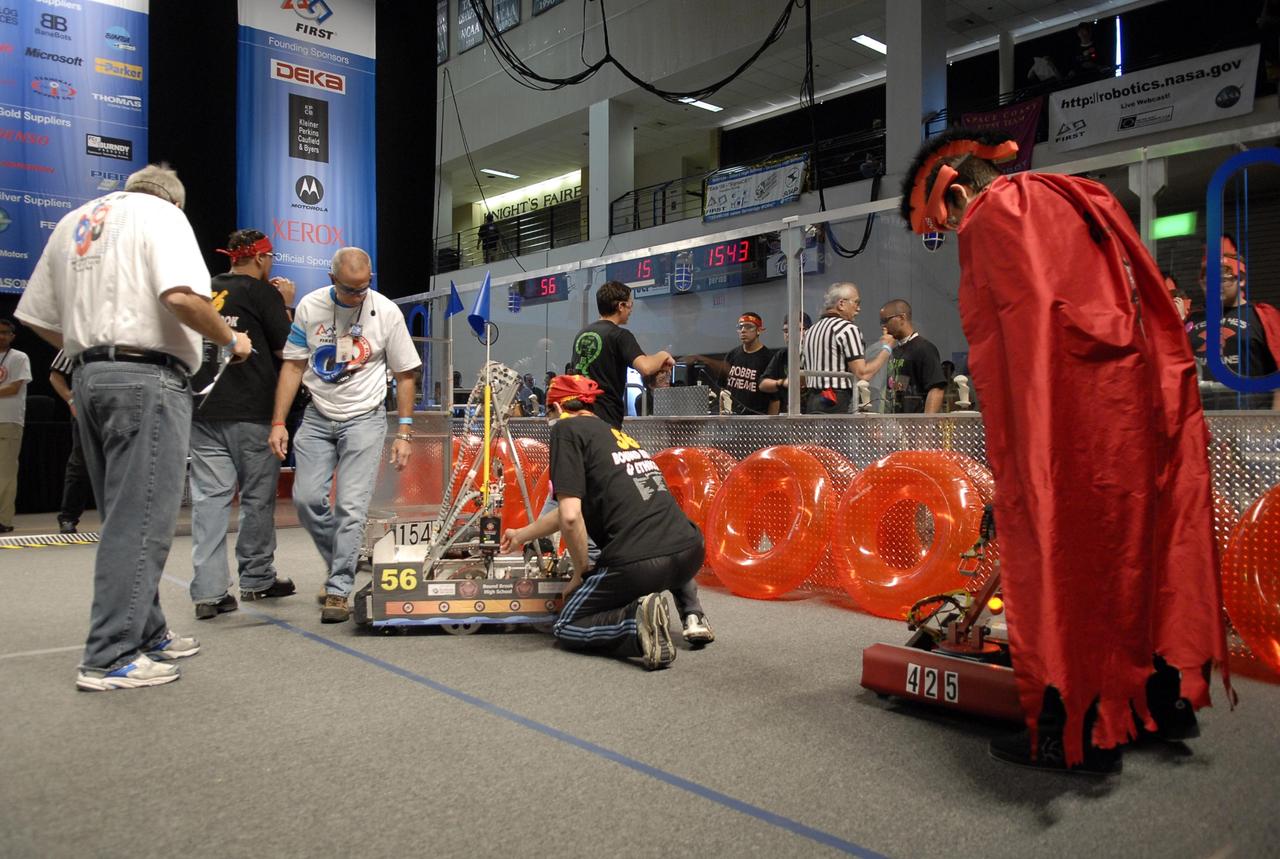
KENNEDY SPACE CENTER, FLA. -- A Kissimmee, Fla., team (right) prepares its robot for competition with a New Jersey team (center) during the FIRST robotics event held at the University of Central Florida Arena March 8-10. The FIRST, or For Inspiration and Recognition of Science and Technology, Robotics Competition challenges teams of young people and their mentors to solve a common problem in a six-week timeframe using a standard "kit of parts" and a common set of rules. Teams build robots from the parts and enter them in a series of competitions designed by FIRST founder Dean Kamen and Dr. Woodie Flowers, chairman and vice chairman of the Executive Advisory Board respectively, and a committee of engineers and other professionals. FIRST redefines winning for these students. Teams are rewarded for excellence in design, demonstrated team spirit, gracious professionalism and maturity, and ability to overcome obstacles. Scoring the most points is a secondary goal. Winning means building partnerships that last. Photo credit: NASA/Kim Shiflett

KENNEDY SPACE CENTER, FLA. - During the 2006 FIRST Robotics Regional Competition held March 9-11 at the University of Central Florida in Orlando, the "Pink Team," whose robot is named Roccobot and is co-sponsored by NASA KSC, stands for recognition. The FIRST Robotics Competition challenges teams of young people and their mentors to solve a common problem in a six-week timeframe using a standard "kit of parts" and a common set of rules. Teams build robots from the parts and enter them in a series of competitions. FIRST, which is based on "For Inspiration and Recognition of Science and Technology," redefines winning for these students. Teams are rewarded for excellence in design, demonstrated team spirit, gracious professionalism and maturity, and ability to overcome obstacles. Scoring the most points is a secondary goal. Winning means building partnerships that last. NASA and the University of Central Florida are co-sponsors of the regional event, which this year included more than 50 teams. Photo credit: NASA/Kim Shiflett
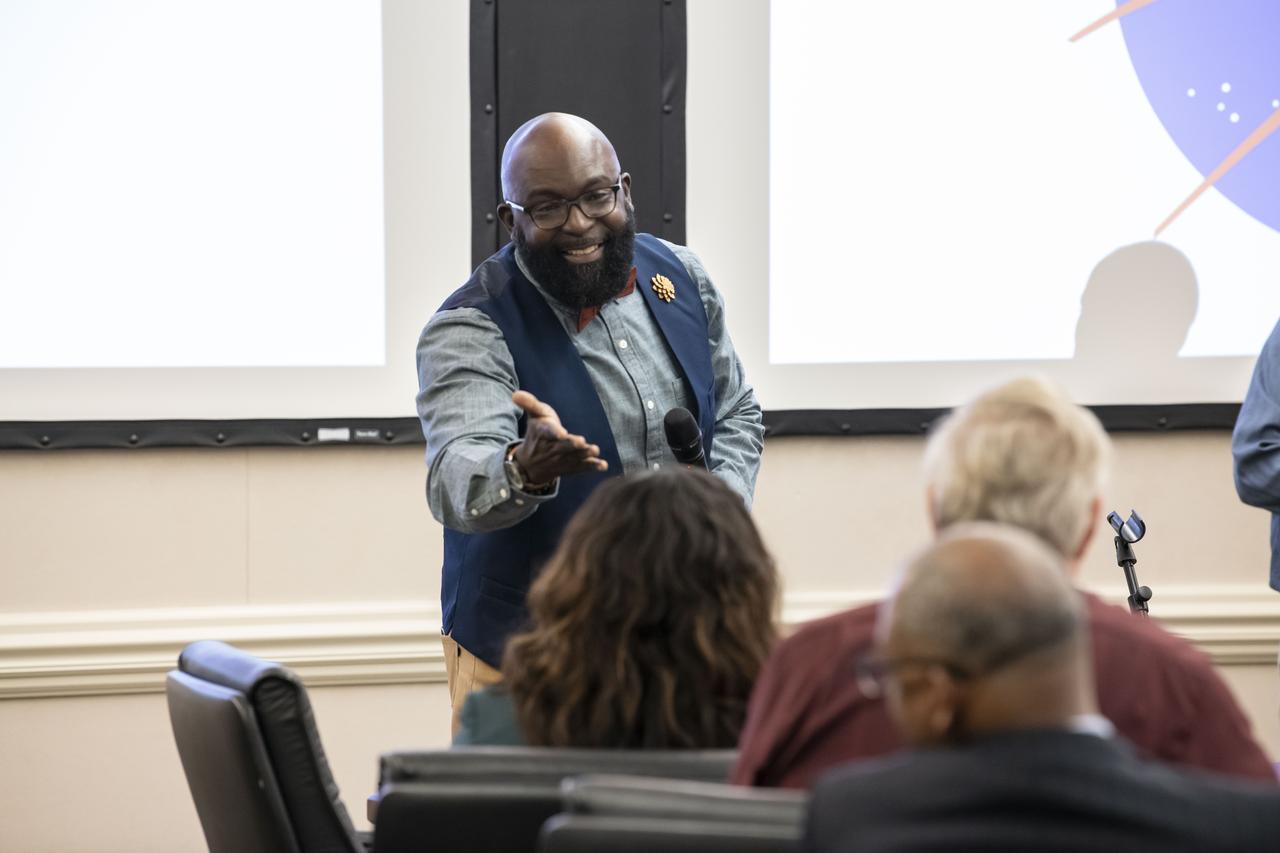
The 2019 National Disability Awareness Month program was held in Marshall Space Flight Center's P110 conference room with guest speaker and former NASA Scientist Kantis Simmons. Master of Ceremonies was Matt McSaveney and the National Anthem was performed by MSFC student intern Andrea Brown. Additional remarks were presented by MSFC Associate Director Steve Miley. Additional songs were performed by Georgia Aplin, Cassidie Gorig' Worrell, Danay Jackson, Charli Grace Strawn from the Alabama Institute for the Deaf and Blind. Former NASA scientist Kantis Simmons, an author and speaker, addresses NASA’s Marshall Space Flight Center team members Oct. 29 during the National Disability Awareness Month presentation, “The Right Talent, Right Now.” Simmons’ humorous discussion focused on growing up with a birth defect and overcoming the self-doubts that can bring. “Quit looking at what you don’t have and think about all the amazing things you do have,” Simmons said.
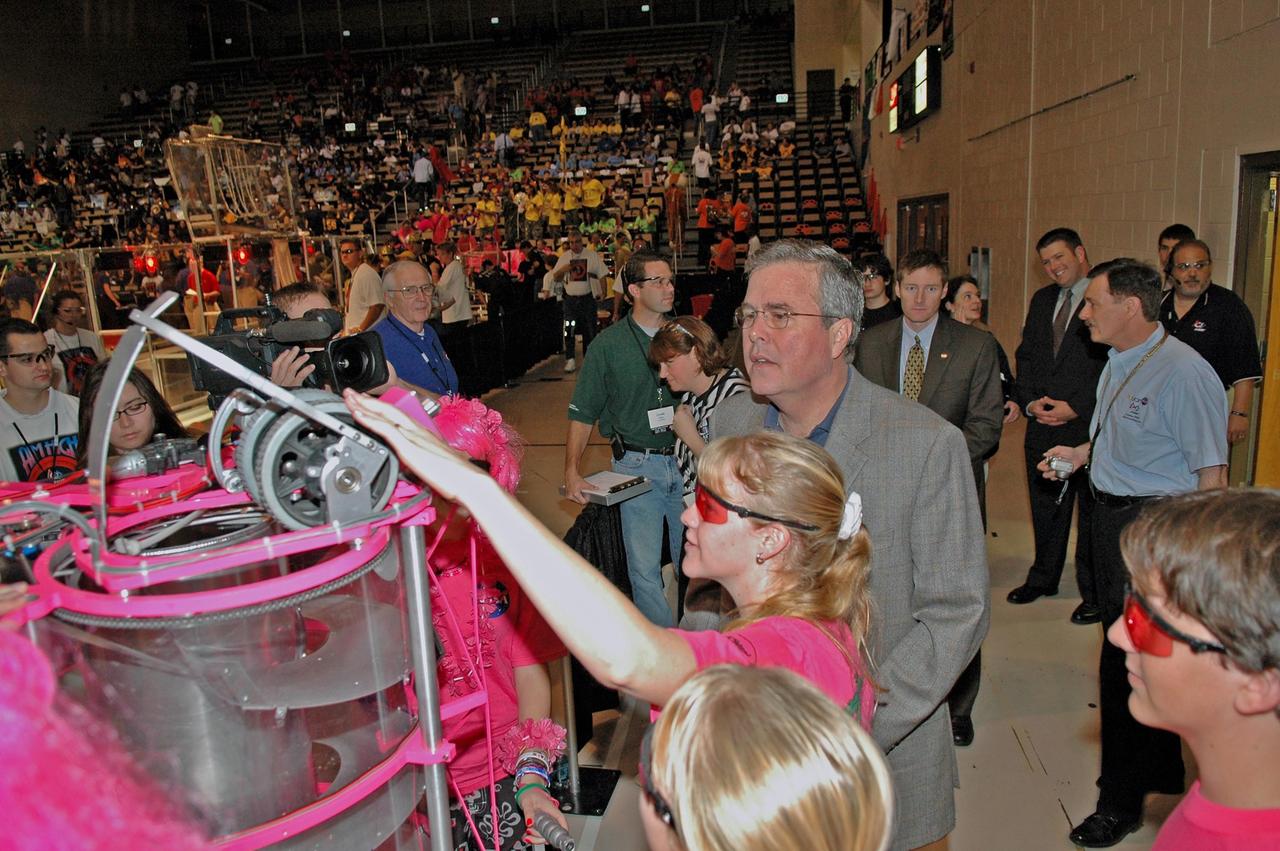
KENNEDY SPACE CENTER, FLA. - Members of the "Pink Team" explain their robot to Florida Governor Jeb Bush at the 2006 FIRST Robotics Regional Competition held March 9-11 at the University of Central Florida in Orlando. The Pink Team, whose robot is named Roccobot, is co-sponsored by NASA KSC. At least four teams in the competition were sponsored by KSC, NASA and contractors. The FIRST Robotics Competition challenges teams of young people and their mentors to solve a common problem in a six-week timeframe using a standard "kit of parts" and a common set of rules. Teams build robots from the parts and enter them in a series of competitions. FIRST, which is based on "For Inspiration and Recognition of Science and Technology," redefines winning for these students. Teams are rewarded for excellence in design, demonstrated team spirit, gracious professionalism and maturity, and ability to overcome obstacles. Scoring the most points is a secondary goal. Winning means building partnerships that last. NASA and the University of Central Florida are co-sponsors of the regional event, which this year included more than 50 teams. Photo credit: NASA/Kim Shiflett
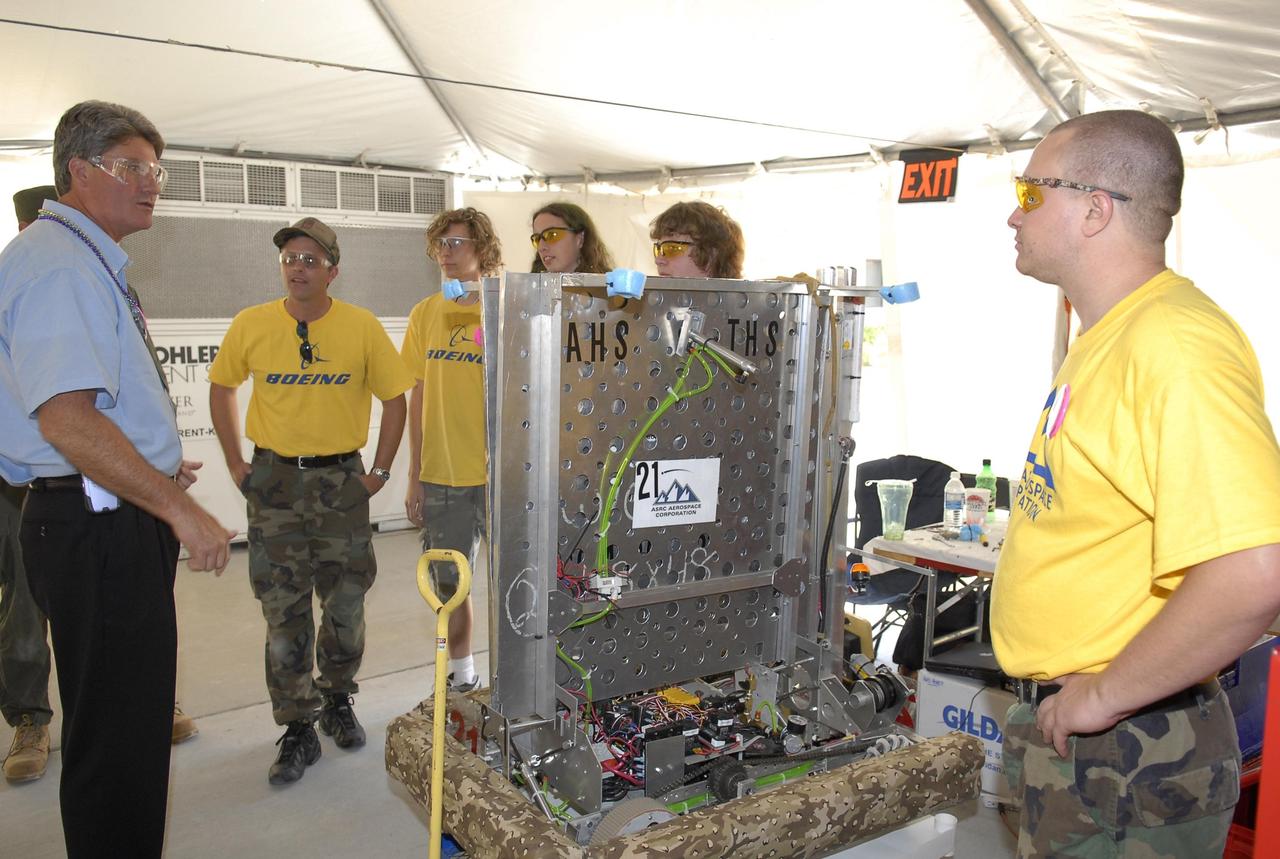
KENNEDY SPACE CENTER, FLA. -- During the FIRST robotics event held at the University of Central Florida Arena March 8-10, Center Director Bill Parsons (left) talks to students from Titusville, Fla., about their robot. The team is cosponsored by ASRC Aerospace and The Boeing Company, and represents Astronaut and Titusville High Schools. The FIRST, or For Inspiration and Recognition of Science and Technology, Robotics Competition challenges teams of young people and their mentors to solve a common problem in a six-week timeframe using a standard "kit of parts" and a common set of rules. Teams build robots from the parts and enter them in a series of competitions designed by FIRST founder Dean Kamen and Dr. Woodie Flowers, chairman and vice chairman of the Executive Advisory Board respectively, and a committee of engineers and other professionals. FIRST redefines winning for these students. Teams are rewarded for excellence in design, demonstrated team spirit, gracious professionalism and maturity, and ability to overcome obstacles. Scoring the most points is a secondary goal. Winning means building partnerships that last. Photo credit: NASA/Kim Shiflett
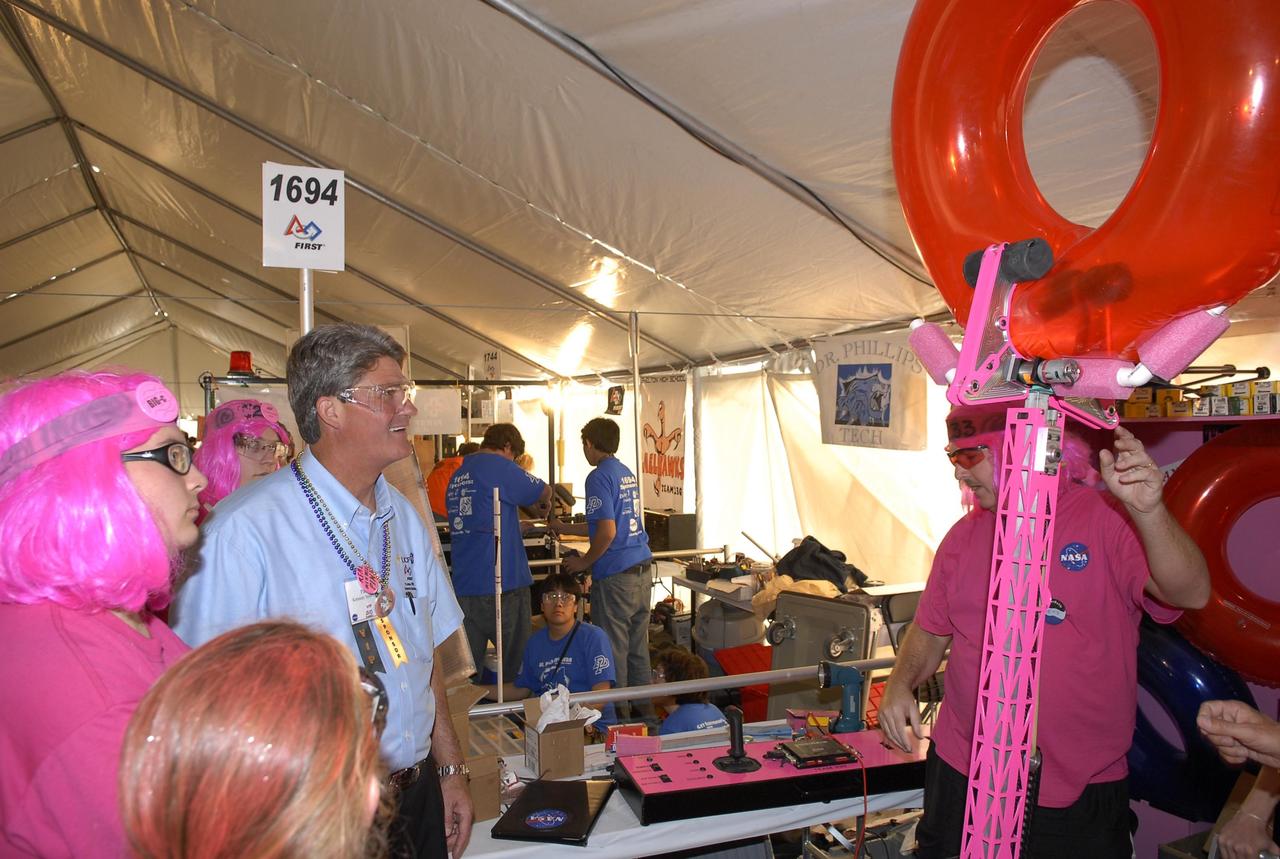
KENNEDY SPACE CENTER, FLA. -- During the FIRST robotics event held at the University of Central Florida Arena March 8-10, Center Director Bill Parsons talks to the NASA-sponsored team, known as the Pink Team, from Rockledge, Cocoa Beach and Viera High Schools in Central Florida. The FIRST, or For Inspiration and Recognition of Science and Technology, Robotics Competition challenges teams of young people and their mentors to solve a common problem in a six-week timeframe using a standard "kit of parts" and a common set of rules. Teams build robots from the parts and enter them in a series of competitions designed by FIRST founder Dean Kamen and Dr. Woodie Flowers, chairman and vice chairman of the Executive Advisory Board respectively, and a committee of engineers and other professionals. FIRST redefines winning for these students. Teams are rewarded for excellence in design, demonstrated team spirit, gracious professionalism and maturity, and ability to overcome obstacles. Scoring the most points is a secondary goal. Winning means building partnerships that last. Photo credit: NASA/Kim Shiflett
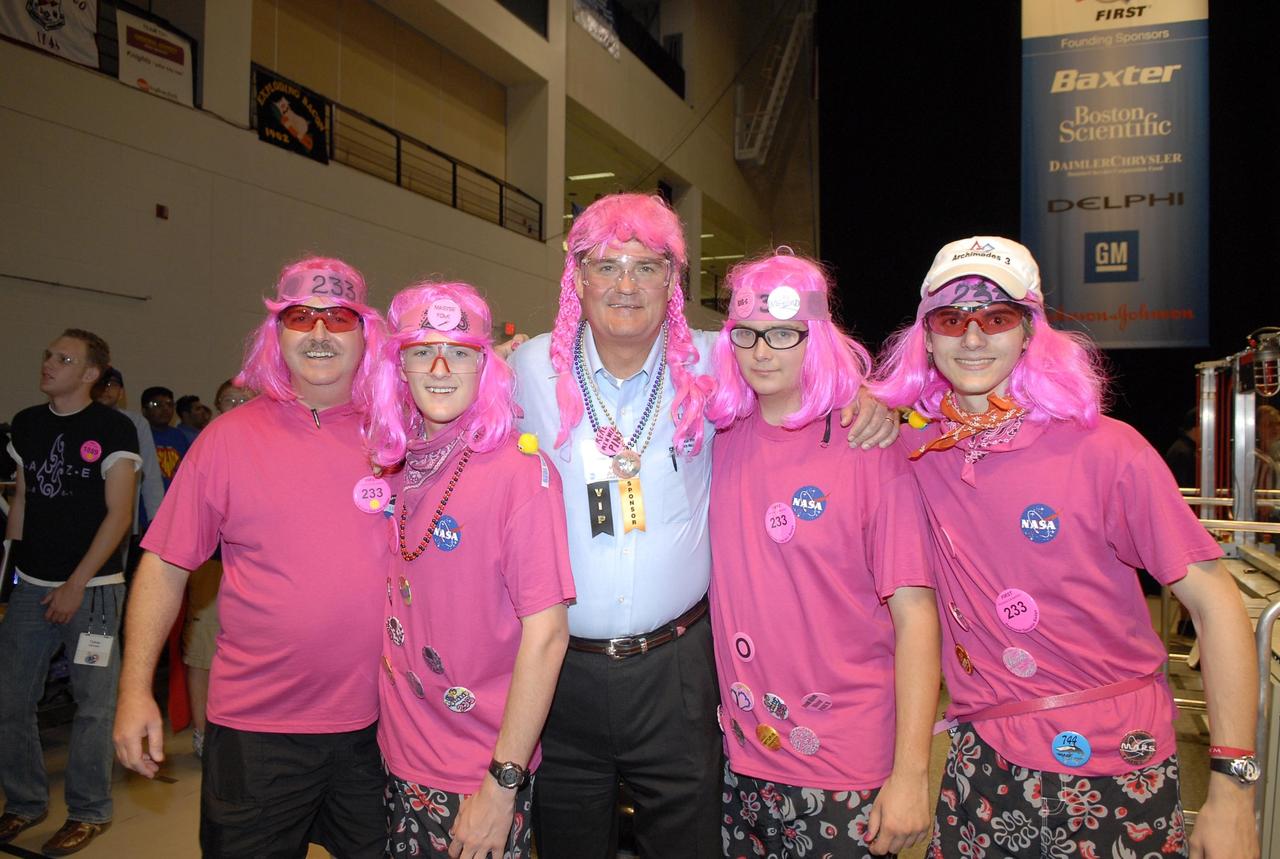
KENNEDY SPACE CENTER, FLA. -- During the FIRST robotics event held at the University of Central Florida Arena March 8-10, Center Director Bill Parsons (center) dons the pink wig that represents team no. 233, composed of students from Rockledge, Cocoa Beach and Viera High Schools in Central Florida. The team is cosponsored by NASA KSC. The FIRST, or For Inspiration and Recognition of Science and Technology, Robotics Competition challenges teams of young people and their mentors to solve a common problem in a six-week timeframe using a standard "kit of parts" and a common set of rules. Teams build robots from the parts and enter them in a series of competitions designed by FIRST founder Dean Kamen and Dr. Woodie Flowers, chairman and vice chairman of the Executive Advisory Board respectively, and a committee of engineers and other professionals. FIRST redefines winning for these students. Teams are rewarded for excellence in design, demonstrated team spirit, gracious professionalism and maturity, and ability to overcome obstacles. Scoring the most points is a secondary goal. Winning means building partnerships that last. Photo credit: NASA/Kim Shiflett
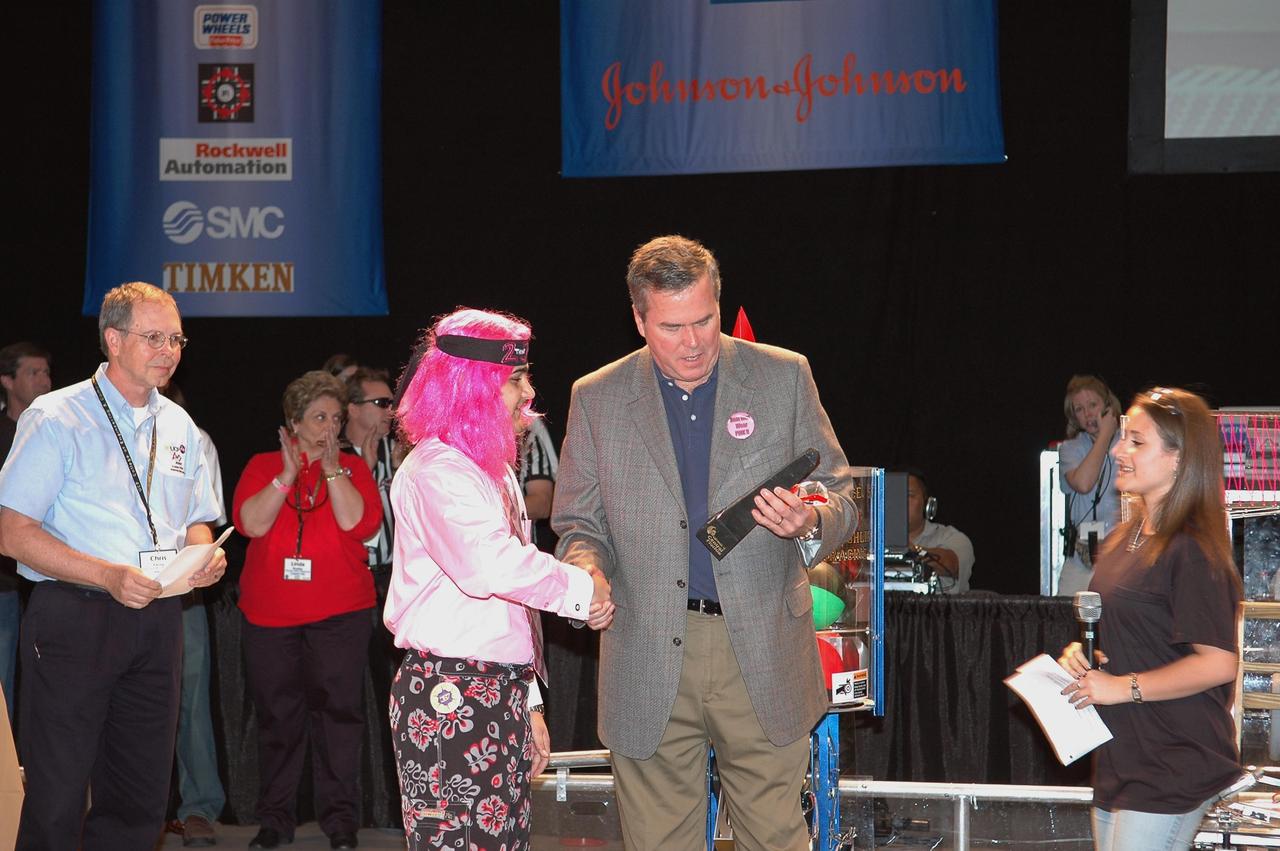
KENNEDY SPACE CENTER, FLA. - During opening ceremonies of the 2006 FIRST Robotics Regional Competition held March 9-11 at the University of Central Florida in Orlando, Florida Governor Jeb Bush receives the inaugural Governor's Award trophy from Sam Mallikarjunan from Rockledge High School and Stephanie Alphonso from Freedom High School in Orlando. The FIRST Robotics Competition challenges teams of young people and their mentors to solve a common problem in a six-week timeframe using a standard "kit of parts" and a common set of rules. Teams build robots from the parts and enter them in a series of competitions. FIRST, which is based on "For Inspiration and Recognition of Science and Technology," redefines winning for these students. Teams are rewarded for excellence in design, demonstrated team spirit, gracious professionalism and maturity, and ability to overcome obstacles. Scoring the most points is a secondary goal. Winning means building partnerships that last. NASA and the University of Central Florida are co-sponsors of the regional event, which this year included more than 50 teams. Photo credit: NASA/Kim Shiflett
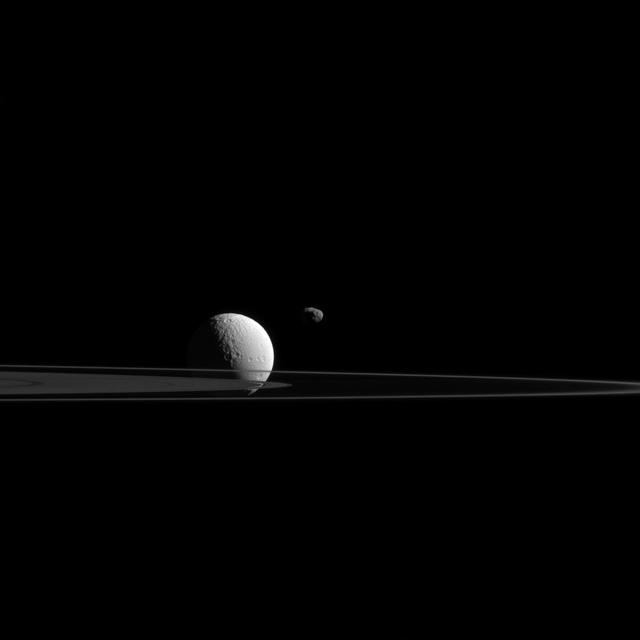
Janus and Tethys demonstrate the main difference between small moons and large ones. It's all about the moon's shape. Moons like Tethys (660 miles or 1,062 kilometers across) are large enough that their own gravity is sufficient to overcome the material strength of the substances they are made of (mostly ice in the case of Tethys) and mold them into spherical shapes. But small moons like Janus (111 miles or 179 kilometers across) are not massive enough for their gravity to form them into a sphere. Janus and its like are left as irregularly shaped bodies. Saturn's narrow F ring and the outer edge of its A ring slice across the scene. This view looks toward the unilluminated side of the rings from about 0.23 degrees below the ring plane. The image was taken in visible green light with the Cassini spacecraft narrow-angle camera on Oct. 27, 2015. The view was obtained at a distance of approximately 593,000 miles (955,000 kilometers) from Janus. Image scale at Janus is 3.7 miles (6 kilometers) per pixel. Tethys was at a distance of 810,000 miles (1.3 million kilometers) for an image scale of 5 miles (8 kilometers) per pixel. http://photojournal.jpl.nasa.gov/catalog/PIA18353
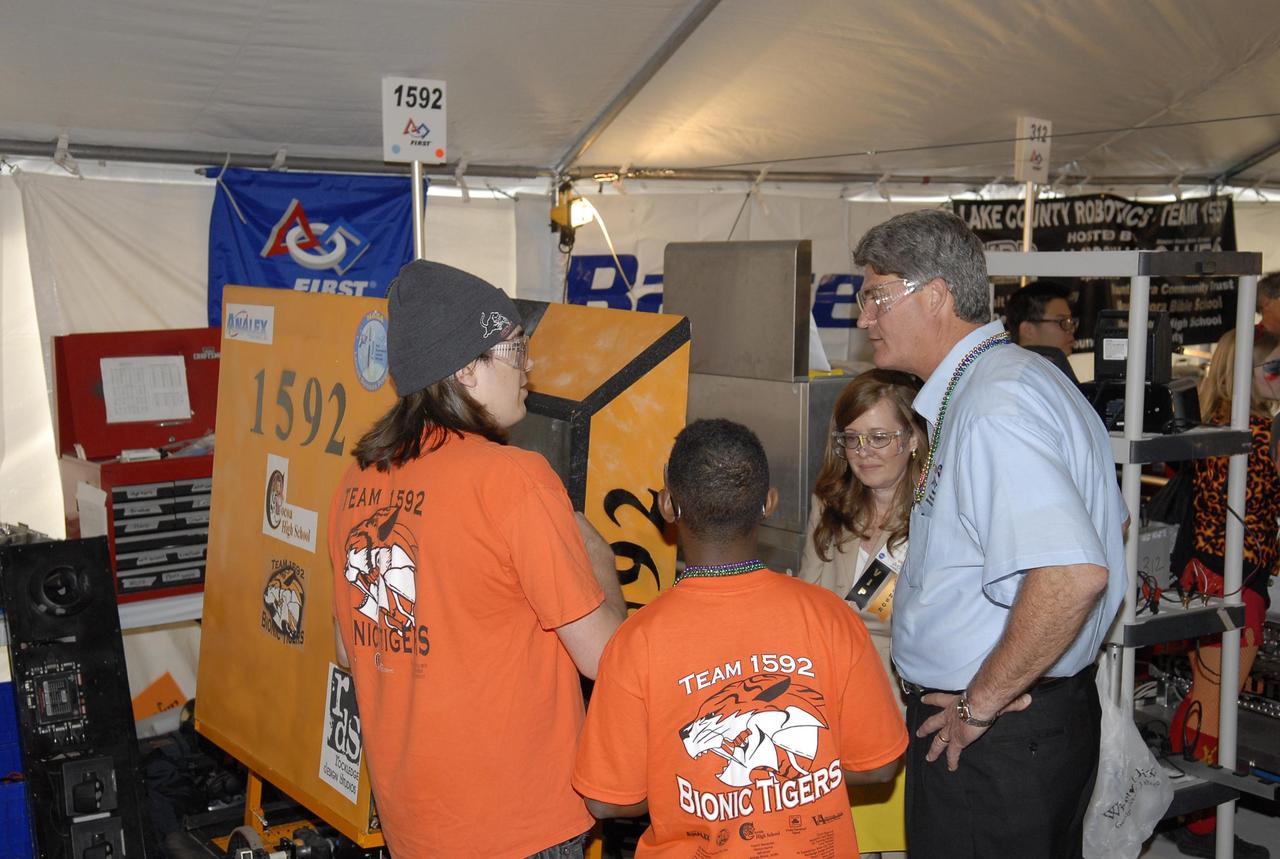
KENNEDY SPACE CENTER, FLA. -- Center Director Bill Parsons (right) talks with students of another NASA-sponsored robotic team during the FIRST robotics event held at the University of Central Florida Arena March 8-10. Next to Parsons is Lisa Malone, director of External Relations at Kennedy Space Center. The students of team 1592, the Bionic Tigers, represent the cosponsors Analex Corporation and NASA Launch Services Program and Cocoa High School in Central Florida. Participating since 2005, this is the first year for this team to receive NASA financial support. They were mentored by the Pink Team. The FIRST, or For Inspiration and Recognition of Science and Technology, Robotics Competition challenges teams of young people and their mentors to solve a common problem in a six-week timeframe using a standard "kit of parts" and a common set of rules. Teams build robots from the parts and enter them in a series of competitions designed by FIRST founder Dean Kamen and Dr. Woodie Flowers, chairman and vice chairman of the Executive Advisory Board respectively, and a committee of engineers and other professionals. FIRST redefines winning for these students. Teams are rewarded for excellence in design, demonstrated team spirit, gracious professionalism and maturity, and ability to overcome obstacles. Scoring the most points is a secondary goal. Winning means building partnerships that last. Photo credit: NASA/Kim Shiflett
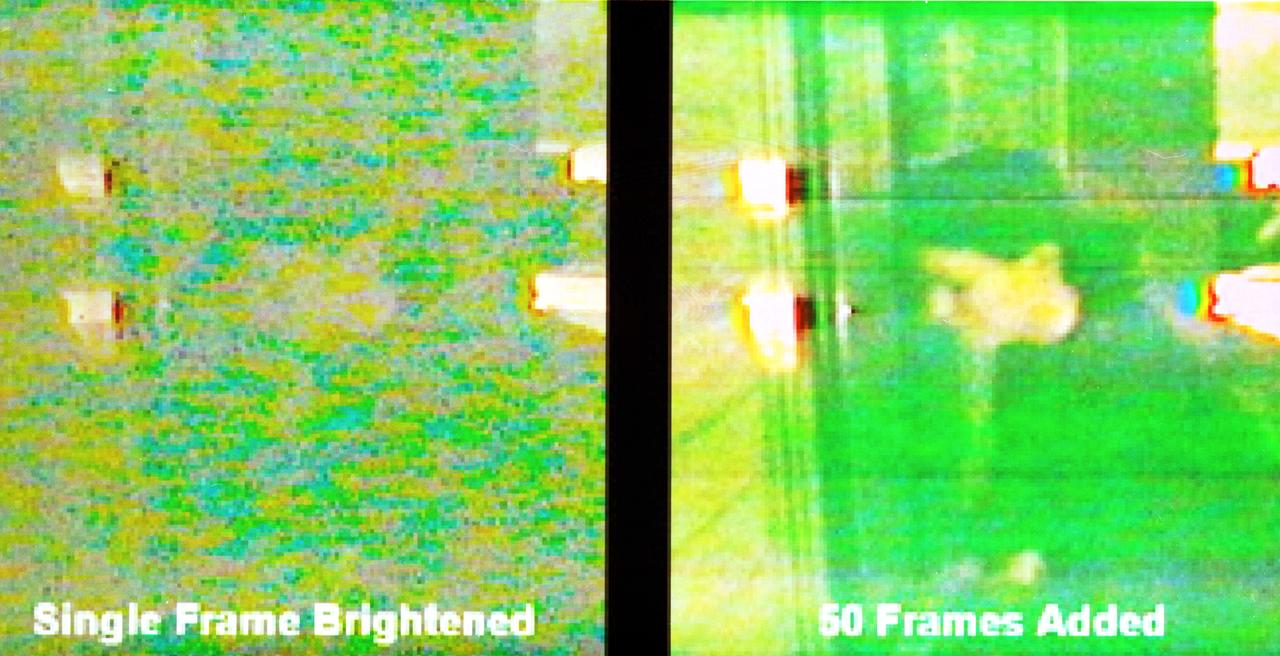
Two scientists at NASA's Marshall Space Flight Center,atmospheric scientist Paul Meyer and solar physicist Dr. David Hathaway, developed promising new software, called Video Image Stabilization and Registration (VISAR). VISAR may help law enforcement agencies catch criminals by improving the quality of video recorded at crime scenes. In this photograph, the single frame at left, taken at night, was brightened in order to enhance details and reduce noise or snow. To further overcome the video defects in one frame, Law enforcement officials can use VISAR software to add information from multiple frames to reveal a person. Images from less than a second of videotape were added together to create the clarified image at right. VISAR stabilizes camera motion in the horizontal and vertical as well as rotation and zoom effects producing clearer images of moving objects, smoothes jagged edges, enhances still images, and reduces video noise or snow. VISAR could also have applications in medical and meteorological imaging. It could steady images of ultrasounds, which are infamous for their grainy, blurred quality. The software can be used for defense application by improving recornaissance video imagery made by military vehicles, aircraft, and ships traveling in harsh, rugged environments.
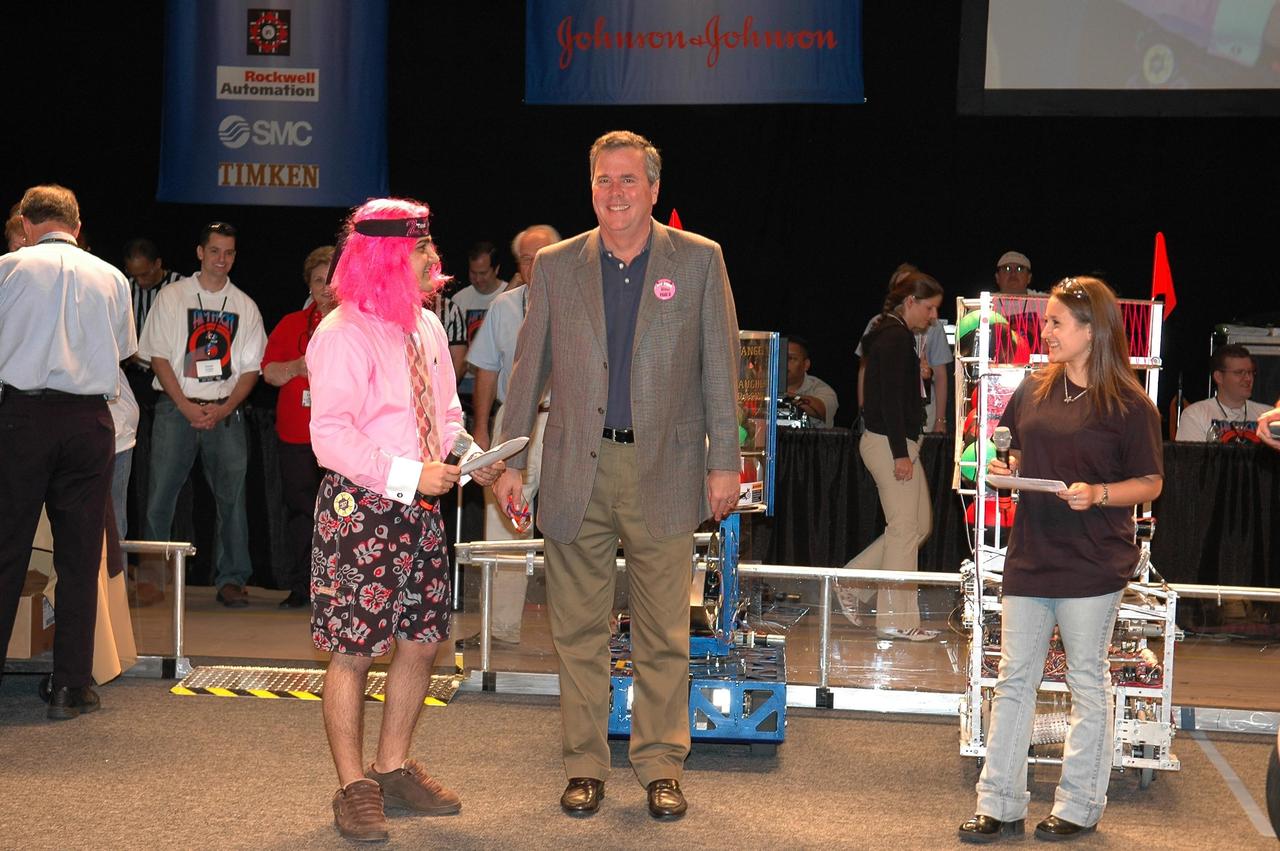
KENNEDY SPACE CENTER, FLA. - Opening ceremonies of the 2006 FIRST Robotics Regional Competition held March 9-11 at the University of Central Florida in Orlando included Florida Governor Jeb Bush (center). At left is Sam Mallikarjunan from Rockledge High School, and at right is Stephanie Alphonso from Freedom High School in Orlando. The FIRST Robotics Competition challenges teams of young people and their mentors to solve a common problem in a six-week timeframe using a standard "kit of parts" and a common set of rules. Teams build robots from the parts and enter them in a series of competitions. FIRST, which is based on "For Inspiration and Recognition of Science and Technology," redefines winning for these students. Teams are rewarded for excellence in design, demonstrated team spirit, gracious professionalism and maturity, and ability to overcome obstacles. Scoring the most points is a secondary goal. Winning means building partnerships that last. NASA and the University of Central Florida are co-sponsors of the regional event, which this year included more than 50 teams. Photo credit: NASA/Kim Shiflett
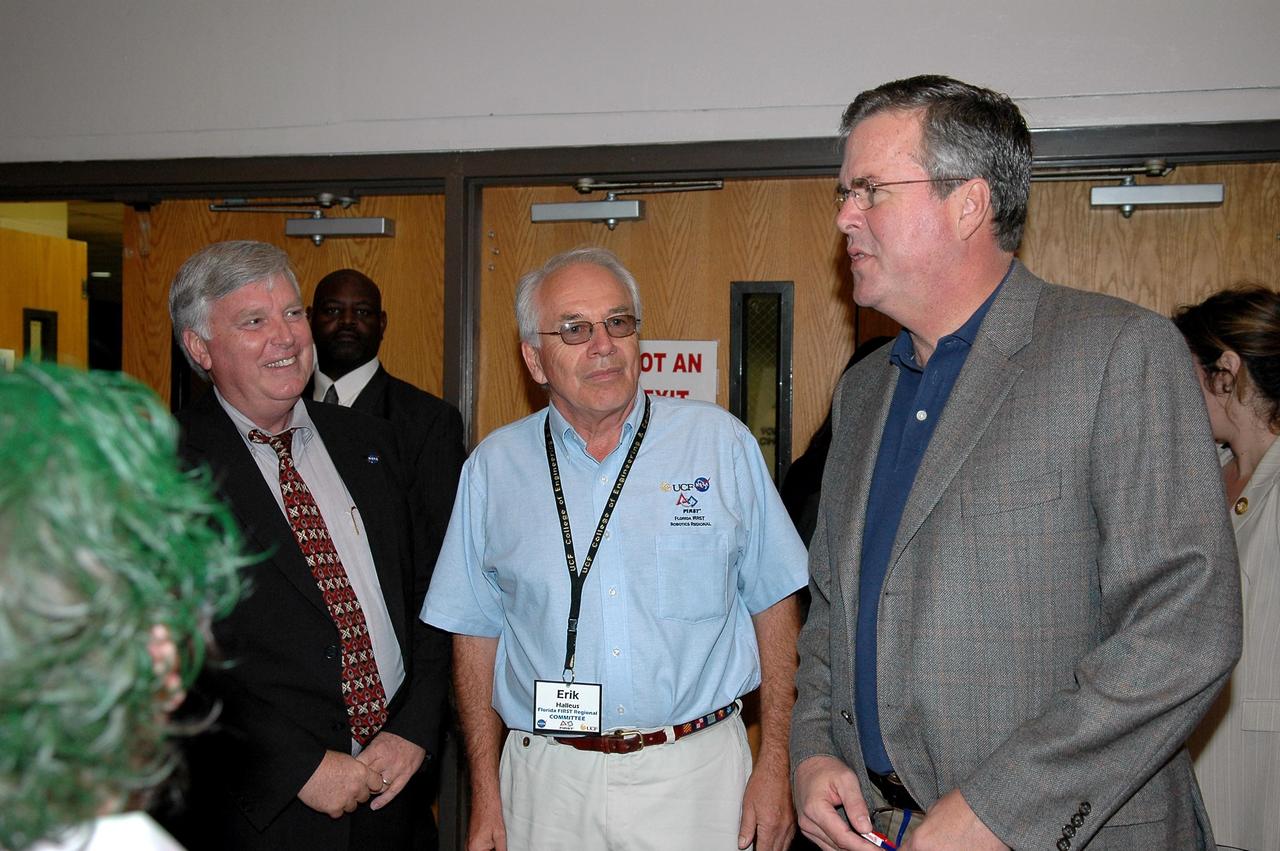
KENNEDY SPACE CENTER, FLA. - During the 2006 FIRST Robotics Regional Competition held March 9-11 at the University of Central Florida in Orlando, Kennedy Space Center Director Jim Kennedy (left) and Florida Governor Jeb Bush (right) are joined by Erik Halleus, executive chair of the Florida FIRST committee.The FIRST Robotics Competition challenges teams of young people and their mentors to solve a common problem in a six-week timeframe using a standard "kit of parts" and a common set of rules. Teams build robots from the parts and enter them in a series of competitions. FIRST, which is based on "For Inspiration and Recognition of Science and Technology," redefines winning for these students. Teams are rewarded for excellence in design, demonstrated team spirit, gracious professionalism and maturity, and ability to overcome obstacles. Scoring the most points is a secondary goal. Winning means building partnerships that last. NASA and the University of Central Florida are co-sponsors of the regional event, which this year included more than 50 teams. Photo credit: NASA/Kim Shiflett
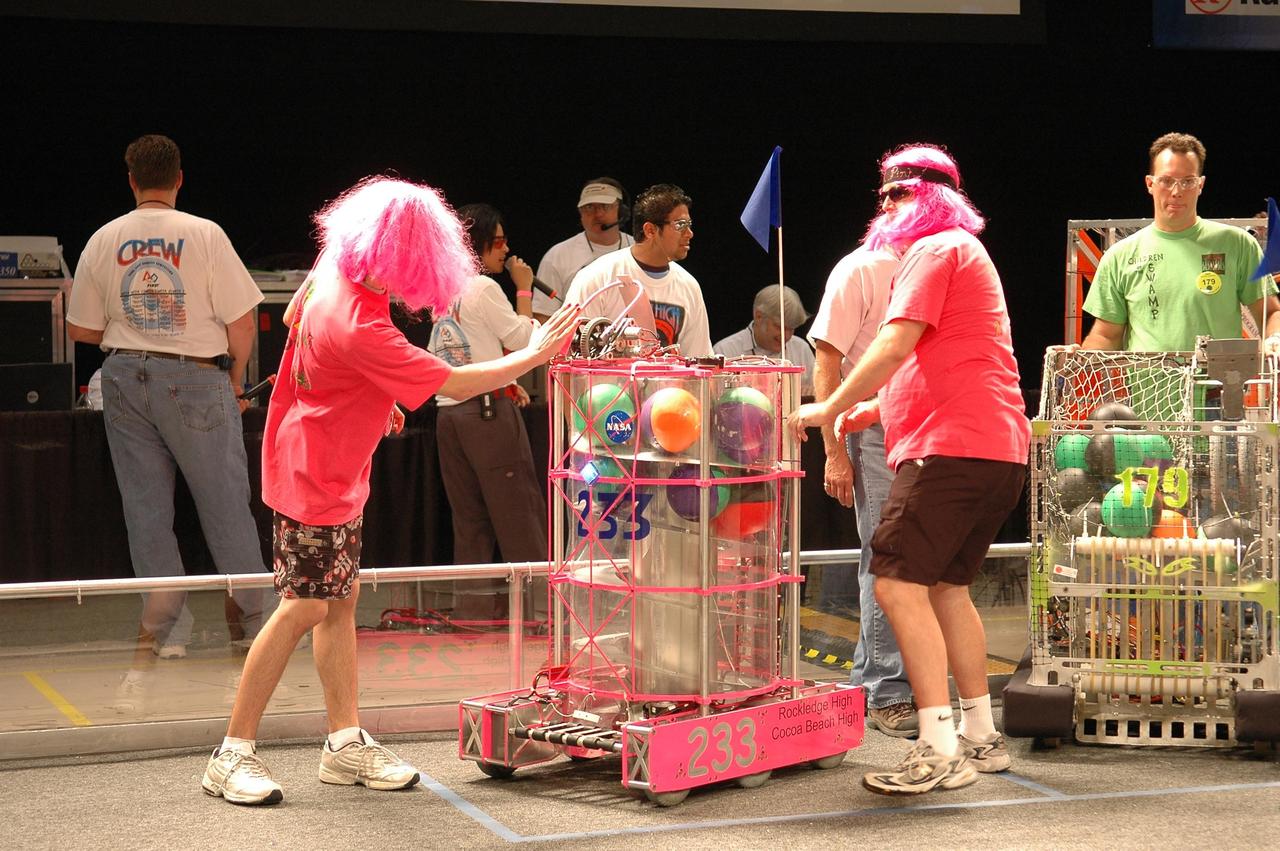
KENNEDY SPACE CENTER, FLA. - During the 2006 FIRST Robotics Regional Competition held March 9-11 at the University of Central Florida in Orlando, members of the "Pink Team" prepare their robot, Roccobot. The Pink Team comprises students from Rockledge High and Cocoa Beach High Schools and is co-sponsored by NASA KSC. The FIRST Robotics Competition challenges teams of young people and their mentors to solve a common problem in a six-week timeframe using a standard "kit of parts" and a common set of rules. Teams build robots from the parts and enter them in a series of competitions. FIRST, which is based on "For Inspiration and Recognition of Science and Technology," redefines winning for these students. Teams are rewarded for excellence in design, demonstrated team spirit, gracious professionalism and maturity, and ability to overcome obstacles. Scoring the most points is a secondary goal. Winning means building partnerships that last. NASA and the University of Central Florida are co-sponsors of the regional event, which this year included more than 50 teams. Photo credit: NASA/Kim Shiflett
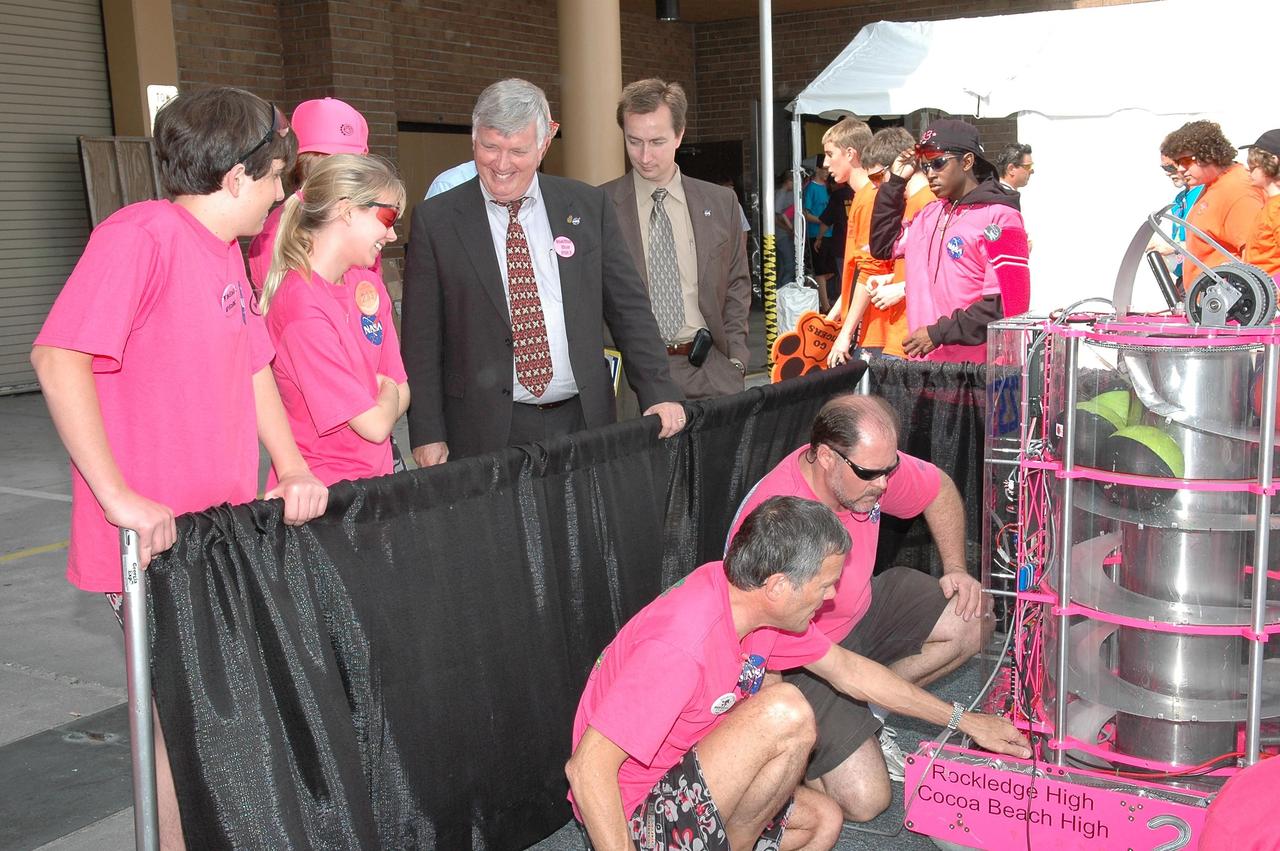
KENNEDY SPACE CENTER, FLA. - During the 2006 FIRST Robotics Regional Competition held March 9-11 at the University of Central Florida in Orlando, Kennedy Space Center Director Jim Kennedy and his intern Neil Berger talk with students on the Cocoa Beach High School-Rockledge High School robotic team known as the "Pink Team," which was co-sponsored by NASA KSC. The team's robot, at right, is called Roccobot. At least four teams in the competition were sponsored by KSC, NASA and contractors. The FIRST Robotics Competition challenges teams of young people and their mentors to solve a common problem in a six-week timeframe using a standard "kit of parts" and a common set of rules. Teams build robots from the parts and enter them in a series of competitions. FIRST, which is based on "For Inspiration and Recognition of Science and Technology," redefines winning for these students. Teams are rewarded for excellence in design, demonstrated team spirit, gracious professionalism and maturity, and ability to overcome obstacles. Scoring the most points is a secondary goal. Winning means building partnerships that last. NASA and the University of Central Florida are co-sponsors of the regional event, which this year included more than 50 teams. Photo credit: NASA/Kim Shiflett
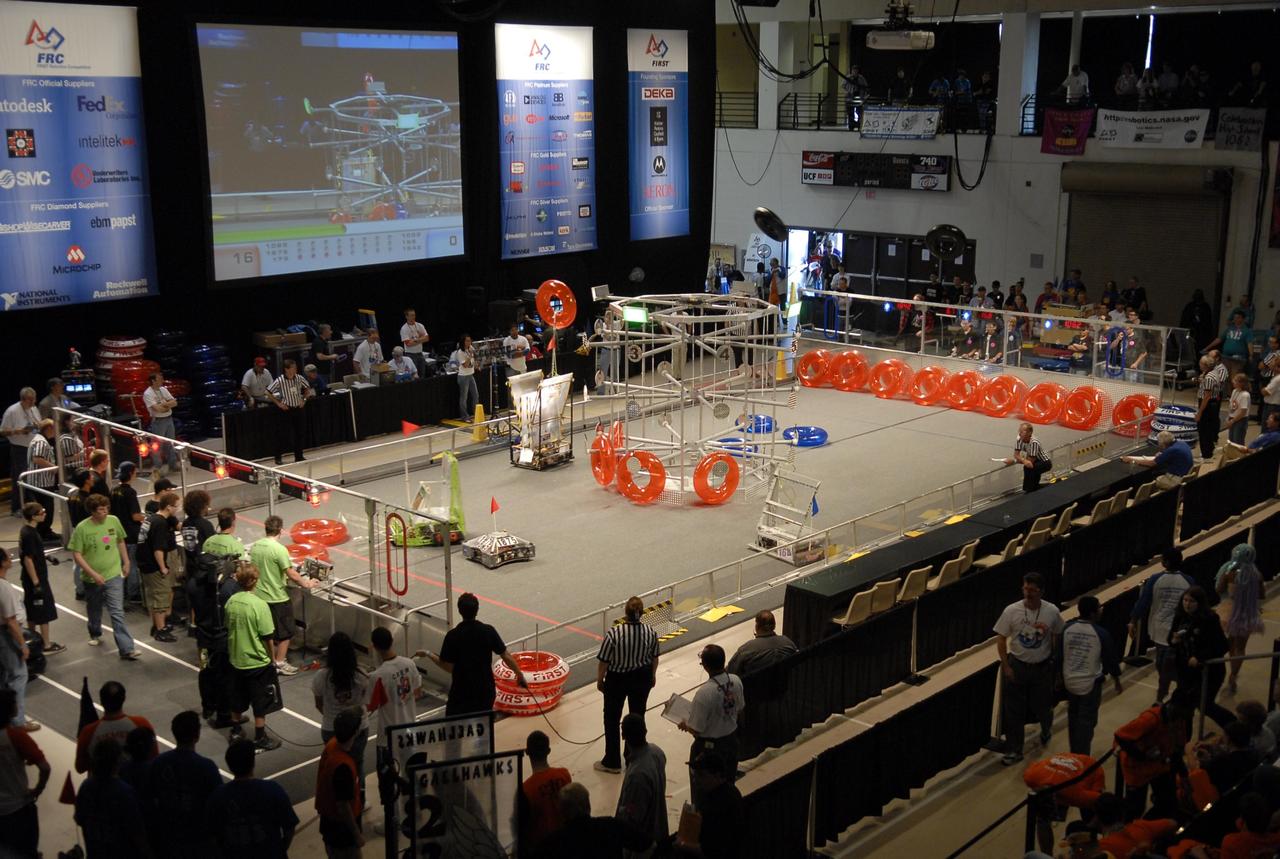
KENNEDY SPACE CENTER, FLA. -- Competing robots try to loop the large metal target with colored rings. The robots are products of student teams taking part in the FIRST robotics event held at the University of Central Florida Arena March 8-10. The FIRST, or For Inspiration and Recognition of Science and Technology, Robotics Competition challenges teams of young people and their mentors to solve a common problem in a six-week timeframe using a standard "kit of parts" and a common set of rules. Teams build robots from the parts and enter them in a series of competitions designed by FIRST founder Dean Kamen and Dr. Woodie Flowers, chairman and vice chairman of the Executive Advisory Board respectively, and a committee of engineers and other professionals. FIRST redefines winning for these students. Teams are rewarded for excellence in design, demonstrated team spirit, gracious professionalism and maturity, and ability to overcome obstacles. Scoring the most points is a secondary goal. Winning means building partnerships that last. Photo credit: NASA/Kim Shiflett
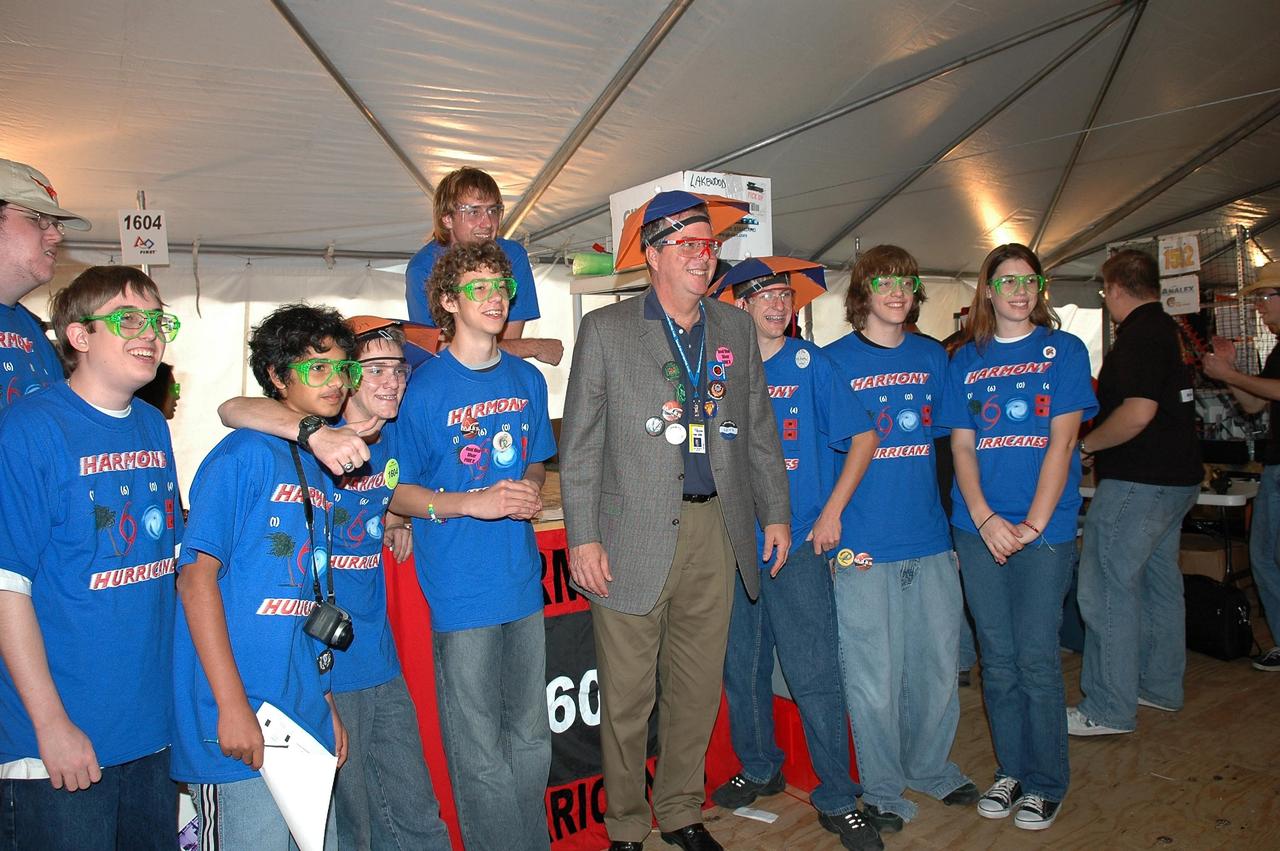
KENNEDY SPACE CENTER, FLA. - During the 2006 FIRST Robotics Regional Competition held March 9-11 at the University of Central Florida in Orlando, Florida Governor Jeb Bush poses with the student team from Harmony High School in Florida called The Harmony Hurricanes. The high school was teamed with DeVry University, Disney World and the Town of Harmony. The FIRST Robotics Competition challenges teams of young people and their mentors to solve a common problem in a six-week timeframe using a standard "kit of parts" and a common set of rules. Teams build robots from the parts and enter them in a series of competitions. FIRST, which is based on "For Inspiration and Recognition of Science and Technology," redefines winning for these students. Teams are rewarded for excellence in design, demonstrated team spirit, gracious professionalism and maturity, and ability to overcome obstacles. Scoring the most points is a secondary goal. Winning means building partnerships that last. NASA and the University of Central Florida are co-sponsors of the regional event, which this year included more than 50 teams. Photo credit: NASA/Kim Shiflett

KENNEDY SPACE CENTER, FLA. - During the 2006 FIRST Robotics Regional Competition held March 9-11 at the University of Central Florida in Orlando, Kennedy Space Center Director Jim Kennedy (left) greets members of the "Pink Team," whose robot is named Roccobot and is co-sponsored by NASA KSC. At least four teams in the competition were sponsored by KSC, NASA and contractors. The FIRST Robotics Competition challenges teams of young people and their mentors to solve a common problem in a six-week timeframe using a standard "kit of parts" and a common set of rules. Teams build robots from the parts and enter them in a series of competitions. FIRST, which is based on "For Inspiration and Recognition of Science and Technology," redefines winning for these students. Teams are rewarded for excellence in design, demonstrated team spirit, gracious professionalism and maturity, and ability to overcome obstacles. Scoring the most points is a secondary goal. Winning means building partnerships that last. NASA and the University of Central Florida are co-sponsors of the regional event, which this year included more than 50 teams. Photo credit: NASA/Kim Shiflett
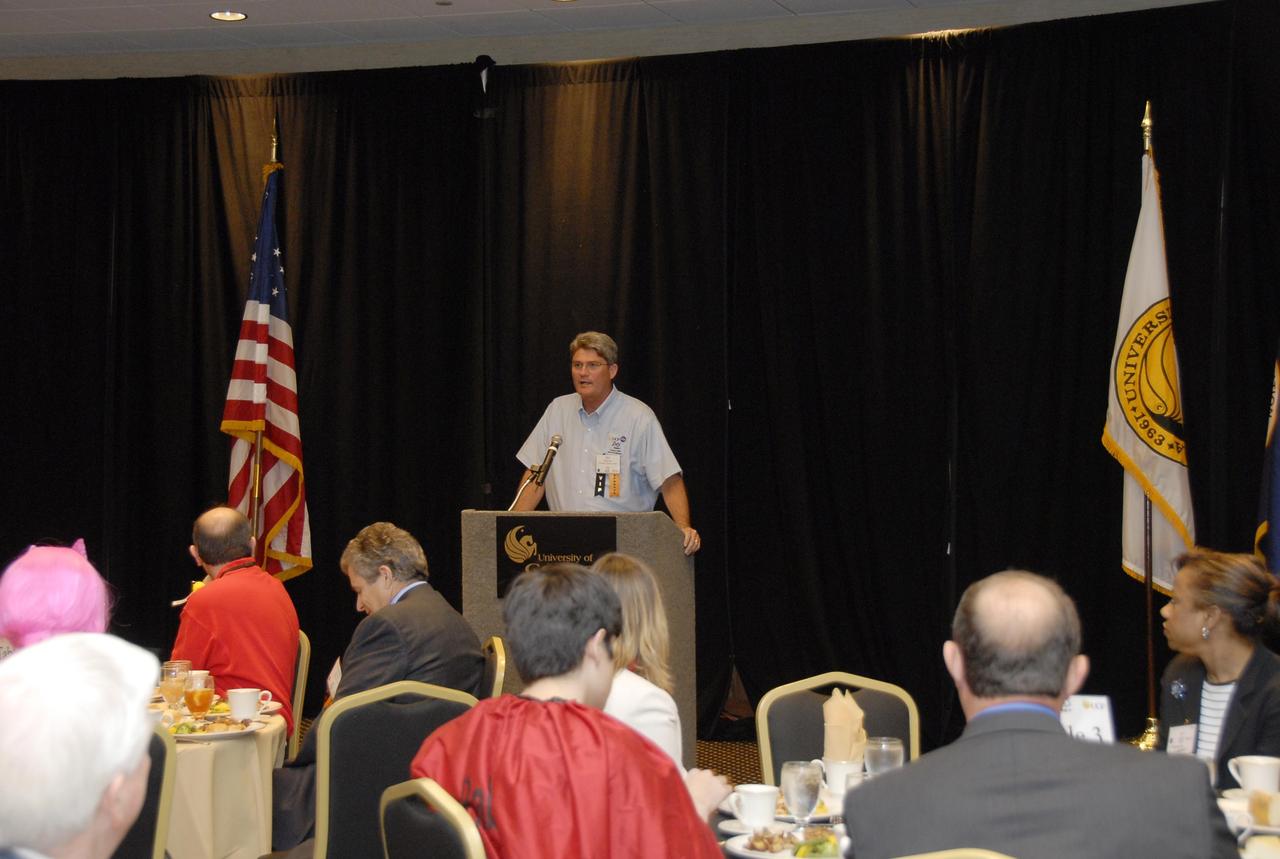
KENNEDY SPACE CENTER, FLA. -- Center Director Bill Parsons talks to guests at the VIP luncheon held during the FIRST robotics event held at the University of Central Florida Arena March 8-10. This was Parsons' first year attending the event as center director. An alumnus of UCF, Parsons also serves on the FIRST Executive Advisory Board. The FIRST, or For Inspiration and Recognition of Science and Technology, Robotics Competition challenges teams of young people and their mentors to solve a common problem in a six-week timeframe using a standard "kit of parts" and a common set of rules. Teams build robots from the parts and enter them in a series of competitions designed by FIRST founder Dean Kamen and Dr. Woodie Flowers, chairman and vice chairman of the Executive Advisory Board respectively, and a committee of engineers and other professionals. FIRST redefines winning for these students. Teams are rewarded for excellence in design, demonstrated team spirit, gracious professionalism and maturity, and ability to overcome obstacles. Scoring the most points is a secondary goal. Winning means building partnerships that last. Photo credit: NASA/Kim Shiflett
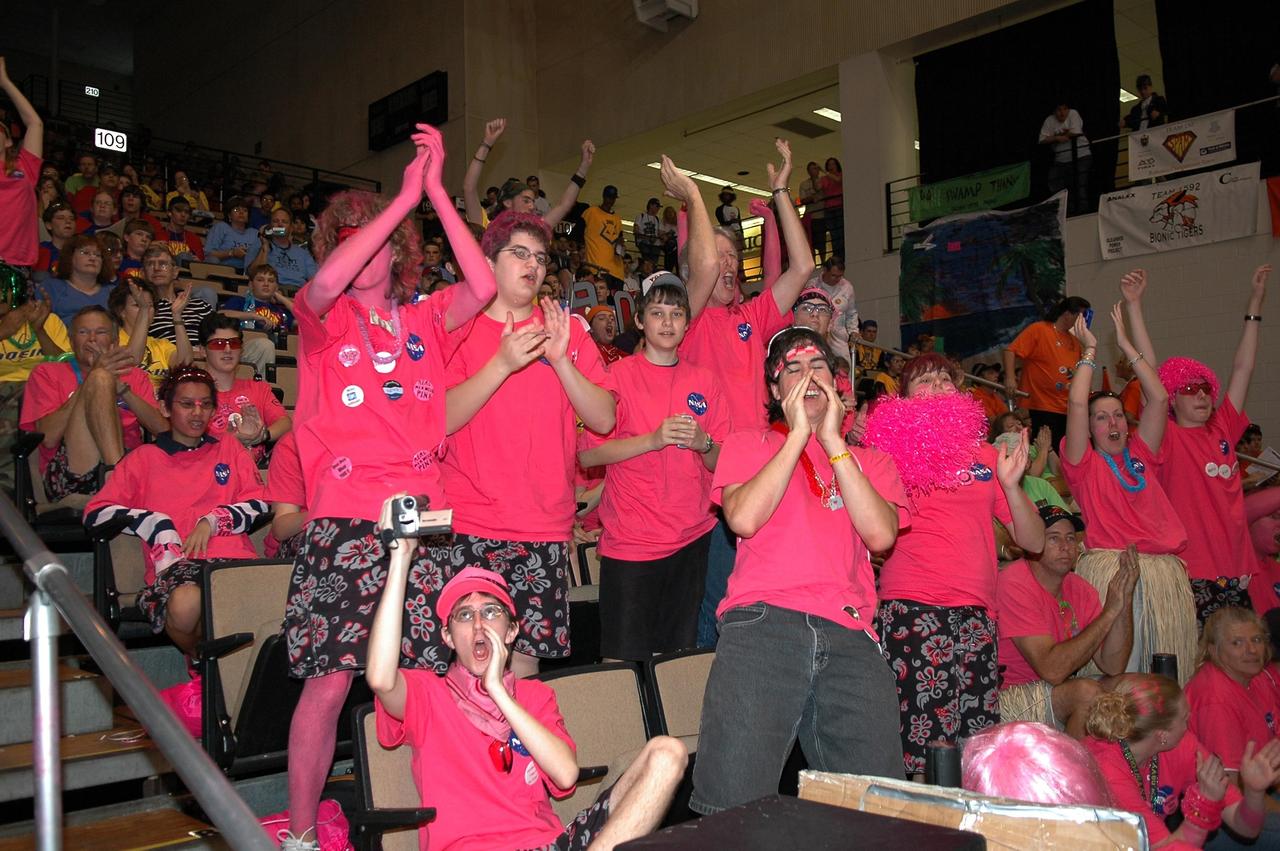
KENNEDY SPACE CENTER, FLA. - Members of the "Pink Team" cheer on their robot, Roccobot, during matches at the 2006 FIRST Robotics Regional Competition held March 9-11 at the University of Central Florida in Orlando. The Pink Team comprises students from Rockledge High and Cocoa Beach High Schools and is co-sponsored by NASA KSC. The team received the Regional Chairman's Award, described as going to the team judged to have created the best partnership effort among team participants and to have best exemplified the true meaning of FIRST. The FIRST Robotics Competition challenges teams of young people and their mentors to solve a common problem in a six-week timeframe using a standard "kit of parts" and a common set of rules. Teams build robots from the parts and enter them in a series of competitions. FIRST, which is based on "For Inspiration and Recognition of Science and Technology," redefines winning for these students. Teams are rewarded for excellence in design, demonstrated team spirit, gracious professionalism and maturity, and ability to overcome obstacles. Scoring the most points is a secondary goal. Winning means building partnerships that last. NASA and the University of Central Florida are co-sponsors of the regional event, which this year included more than 50 teams. Photo credit: NASA/Kim Shiflett
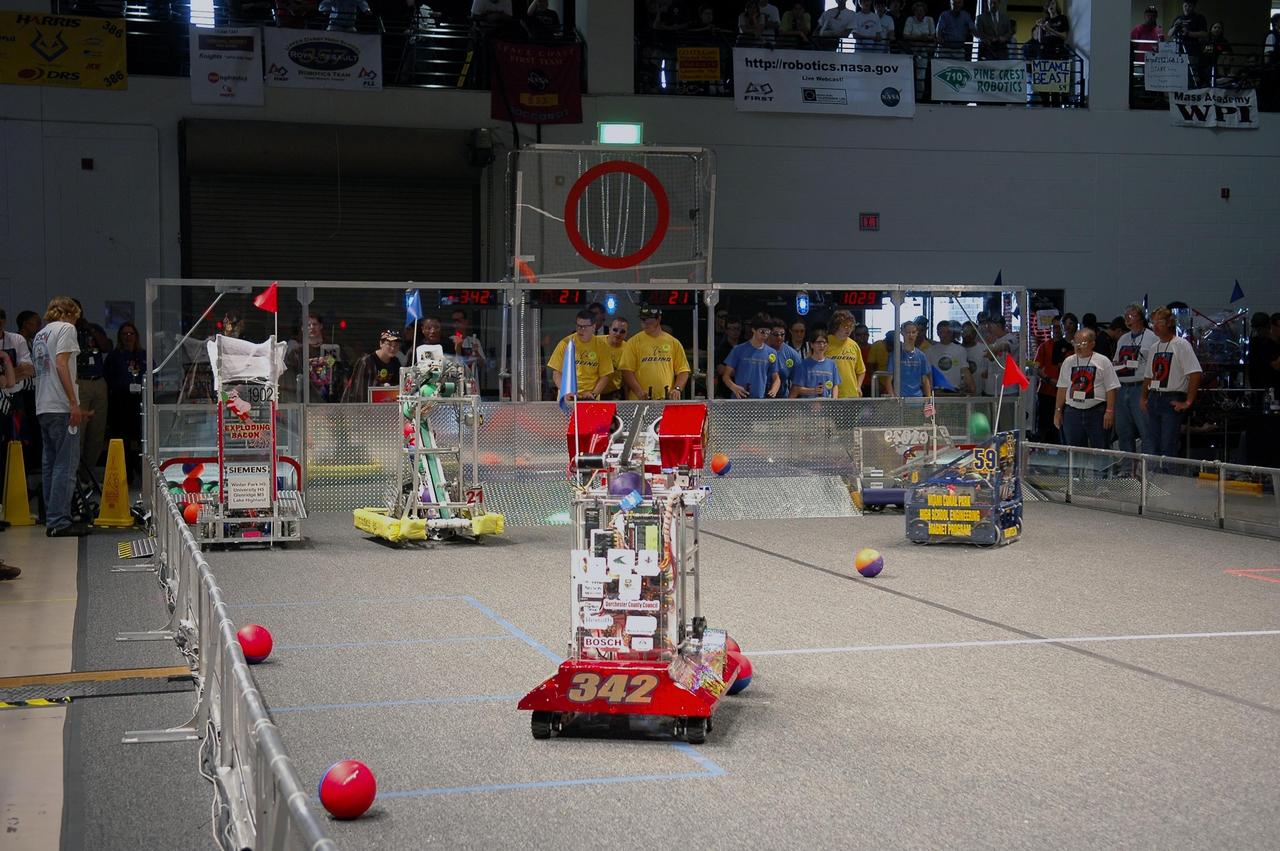
KENNEDY SPACE CENTER, FLA. - During the 2006 FIRST Robotics Regional Competition held March 9-11 at the University of Central Florida in Orlando, team robots are in pursuit of balls on the competition floor, which they must catch and throw into a goal. At least four teams in the competition were sponsored by KSC, NASA and contractors. The FIRST Robotics Competition challenges teams of young people and their mentors to solve a common problem in a six-week timeframe using a standard "kit of parts" and a common set of rules. Teams build robots from the parts and enter them in a series of competitions. FIRST, which is based on "For Inspiration and Recognition of Science and Technology," redefines winning for these students. Teams are rewarded for excellence in design, demonstrated team spirit, gracious professionalism and maturity, and ability to overcome obstacles. Scoring the most points is a secondary goal. Winning means building partnerships that last. NASA and the University of Central Florida are co-sponsors of the regional event, which this year included more than 50 teams. Photo credit: NASA/Kim Shiflett
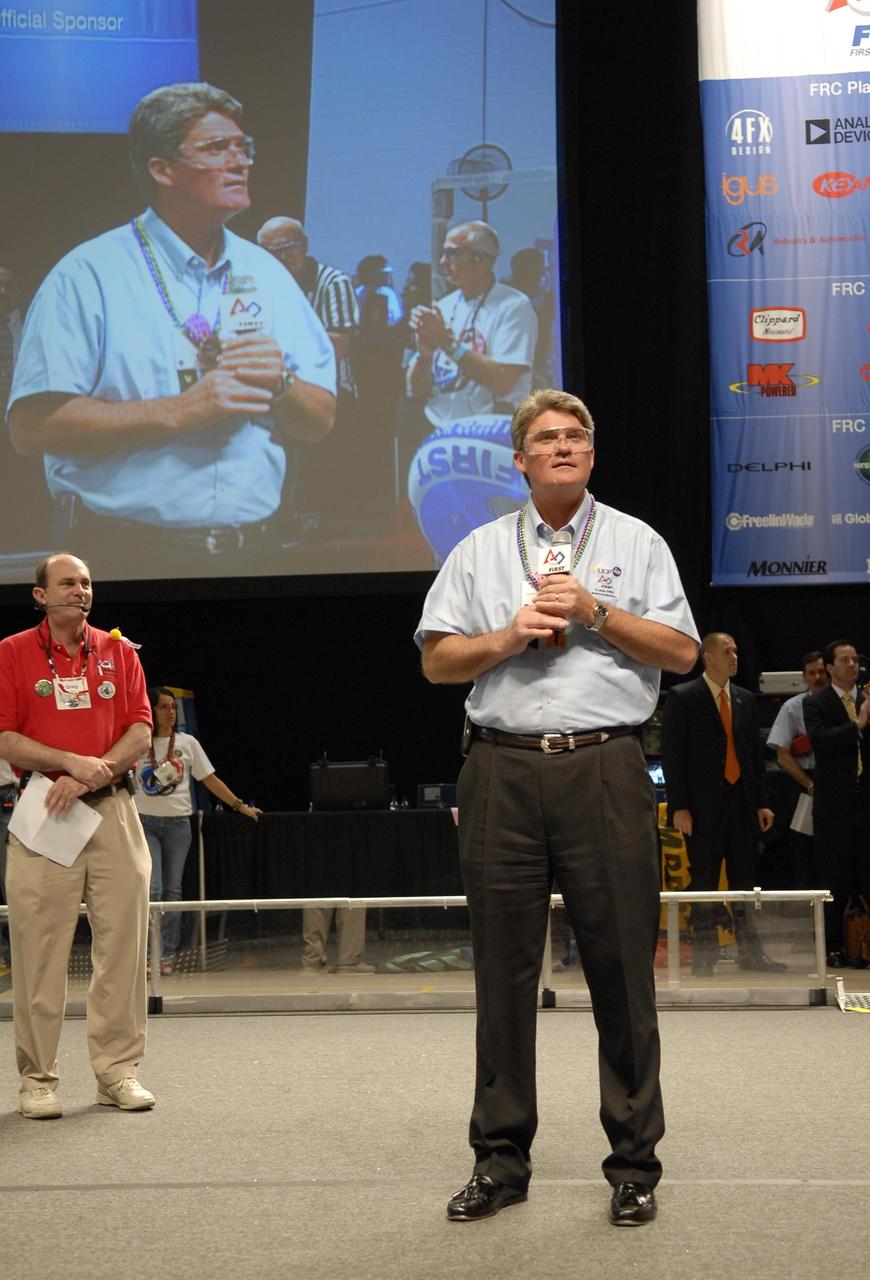
KENNEDY SPACE CENTER, FLA. -- Center Director Bill Parsons talks to an audience primarily of students during the FIRST robotics event held at the University of Central Florida Arena March 8-10. This was Parsons' first year attending the event as center director. An alumnus of UCF, Parsons also serves on the FIRST Executive Advisory Board. The FIRST, or For Inspiration and Recognition of Science and Technology, Robotics Competition challenges teams of young people and their mentors to solve a common problem in a six-week timeframe using a standard "kit of parts" and a common set of rules. Teams build robots from the parts and enter them in a series of competitions designed by FIRST founder Dean Kamen and Dr. Woodie Flowers, chairman and vice chairman of the Executive Advisory Board respectively, and a committee of engineers and other professionals. FIRST redefines winning for these students. Teams are rewarded for excellence in design, demonstrated team spirit, gracious professionalism and maturity, and ability to overcome obstacles. Scoring the most points is a secondary goal. Winning means building partnerships that last. Photo credit: NASA/Kim Shiflett
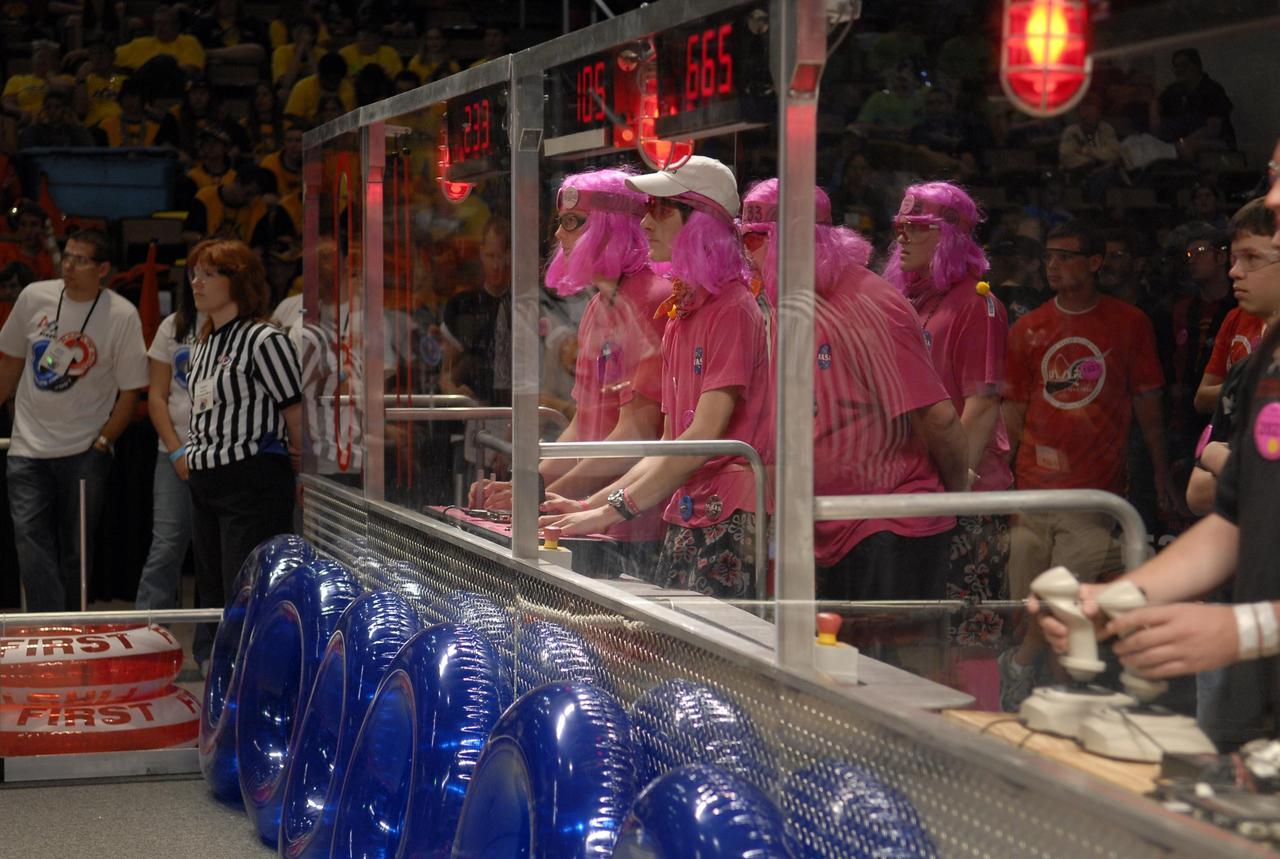
KENNEDY SPACE CENTER, FLA. -- The student team no. 233 dressed in pink controls its robot during competition in the FIRST robotics event held at the University of Central Florida Arena March 8-10. The team is a coordinated effort co-sponsored by NASA KSC and representing Rockledge, Cocoa Beach and Viera High Schools in Central Florida. The FIRST, or For Inspiration and Recognition of Science and Technology, Robotics Competition challenges teams of young people and their mentors to solve a common problem in a six-week timeframe using a standard "kit of parts" and a common set of rules. Teams build robots from the parts and enter them in a series of competitions designed by FIRST founder Dean Kamen and Dr. Woodie Flowers, chairman and vice chairman of the Executive Advisory Board respectively, and a committee of engineers and other professionals. FIRST redefines winning for these students. Teams are rewarded for excellence in design, demonstrated team spirit, gracious professionalism and maturity, and ability to overcome obstacles. Scoring the most points is a secondary goal. Winning means building partnerships that last. Photo credit: NASA/Kim Shiflett
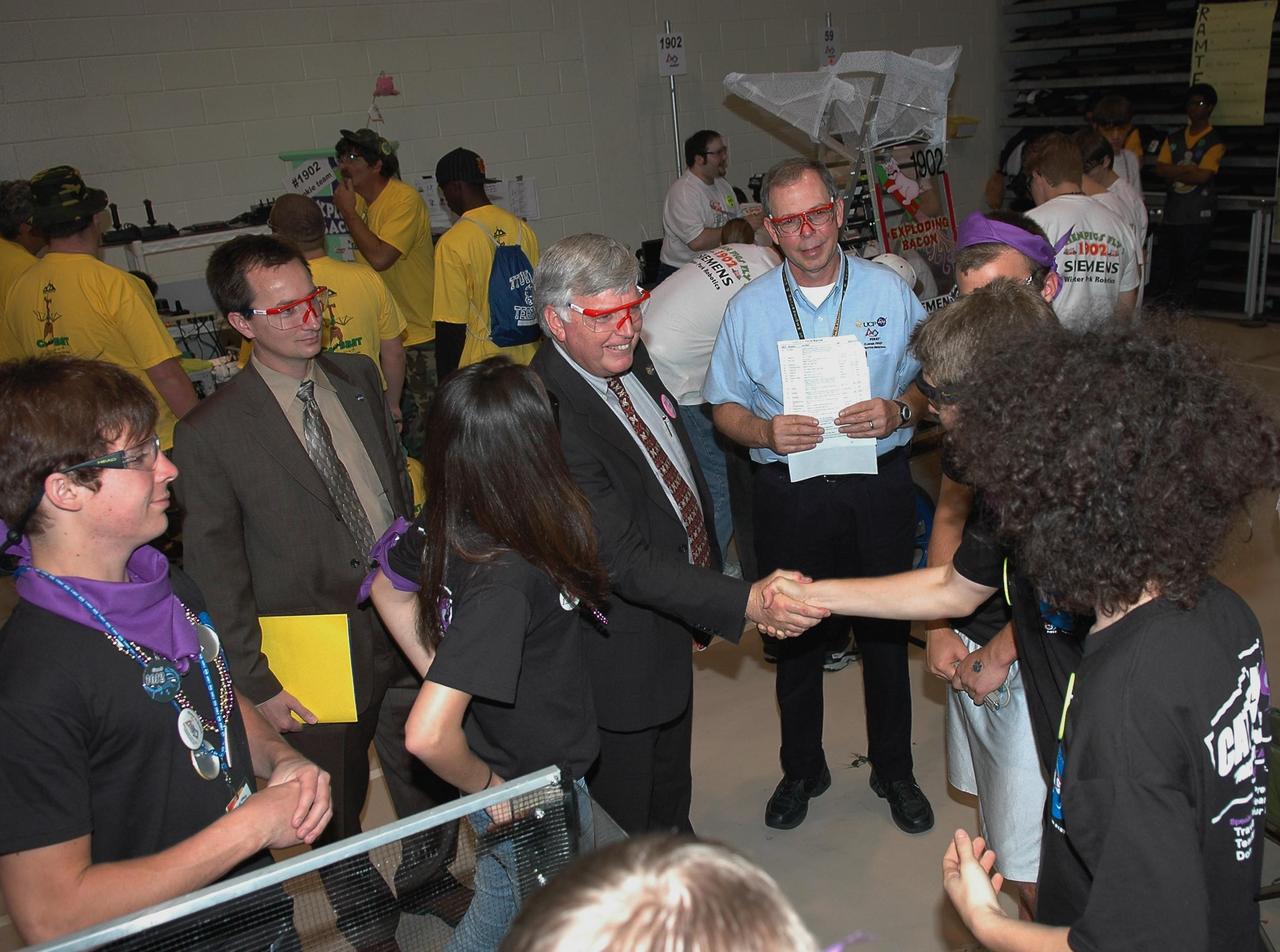
KENNEDY SPACE CENTER, FLA. - During the 2006 FIRST Robotics Regional Competition held March 9-11 at the University of Central Florida in Orlando, Kennedy Space Center Director Jim Kennedy greets members of one of the robotic teams. To the left of Kennedy is Neil Berger, the center director's intern; at right of Kennedy is Chris Fairey, retired NASA and Regional Planning Committee co-chair. The FIRST Robotics Competition challenges teams of young people and their mentors to solve a common problem in a six-week timeframe using a standard "kit of parts" and a common set of rules. Teams build robots from the parts and enter them in a series of competitions. FIRST, which is based on "For Inspiration and Recognition of Science and Technology," redefines winning for these students. Teams are rewarded for excellence in design, demonstrated team spirit, gracious professionalism and maturity, and ability to overcome obstacles. Scoring the most points is a secondary goal. Winning means building partnerships that last. NASA and the University of Central Florida are co-sponsors of the regional event, which this year included more than 50 teams. Photo credit: NASA/Kim Shiflett
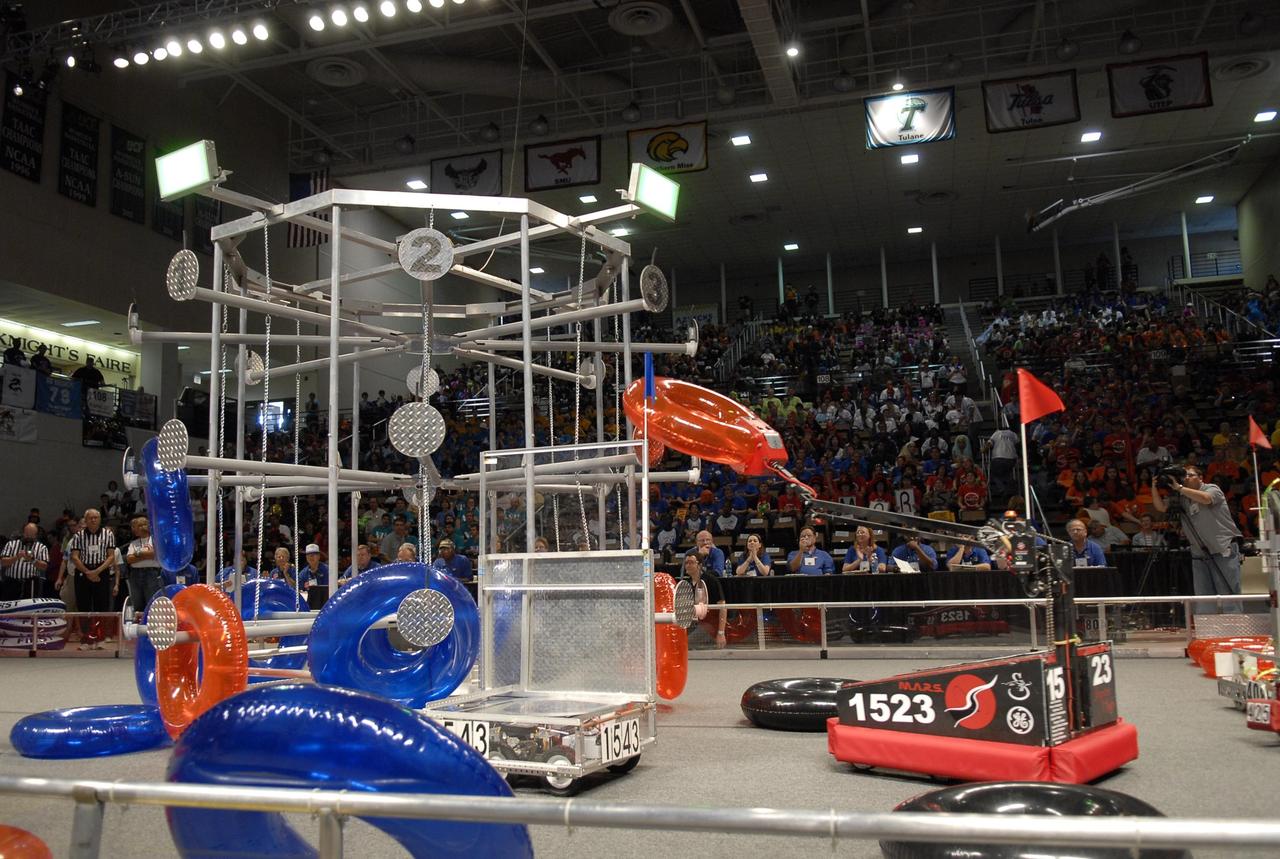
KENNEDY SPACE CENTER, FLA. -- Competing robots try to loop the large meta target with colored rings. The robots are products of student teams taking part in the FIRST robotics event held at the University of Central Florida Arena March 8-10. The FIRST, or For Inspiration and Recognition of Science and Technology, Robotics Competition challenges teams of young people and their mentors to solve a common problem in a six-week timeframe using a standard "kit of parts" and a common set of rules. Teams build robots from the parts and enter them in a series of competitions designed by FIRST founder Dean Kamen and Dr. Woodie Flowers, chairman and vice chairman of the Executive Advisory Board respectively, and a committee of engineers and other professionals. FIRST redefines winning for these students. Teams are rewarded for excellence in design, demonstrated team spirit, gracious professionalism and maturity, and ability to overcome obstacles. Scoring the most points is a secondary goal. Winning means building partnerships that last. Photo credit: NASA/Kim Shiflett
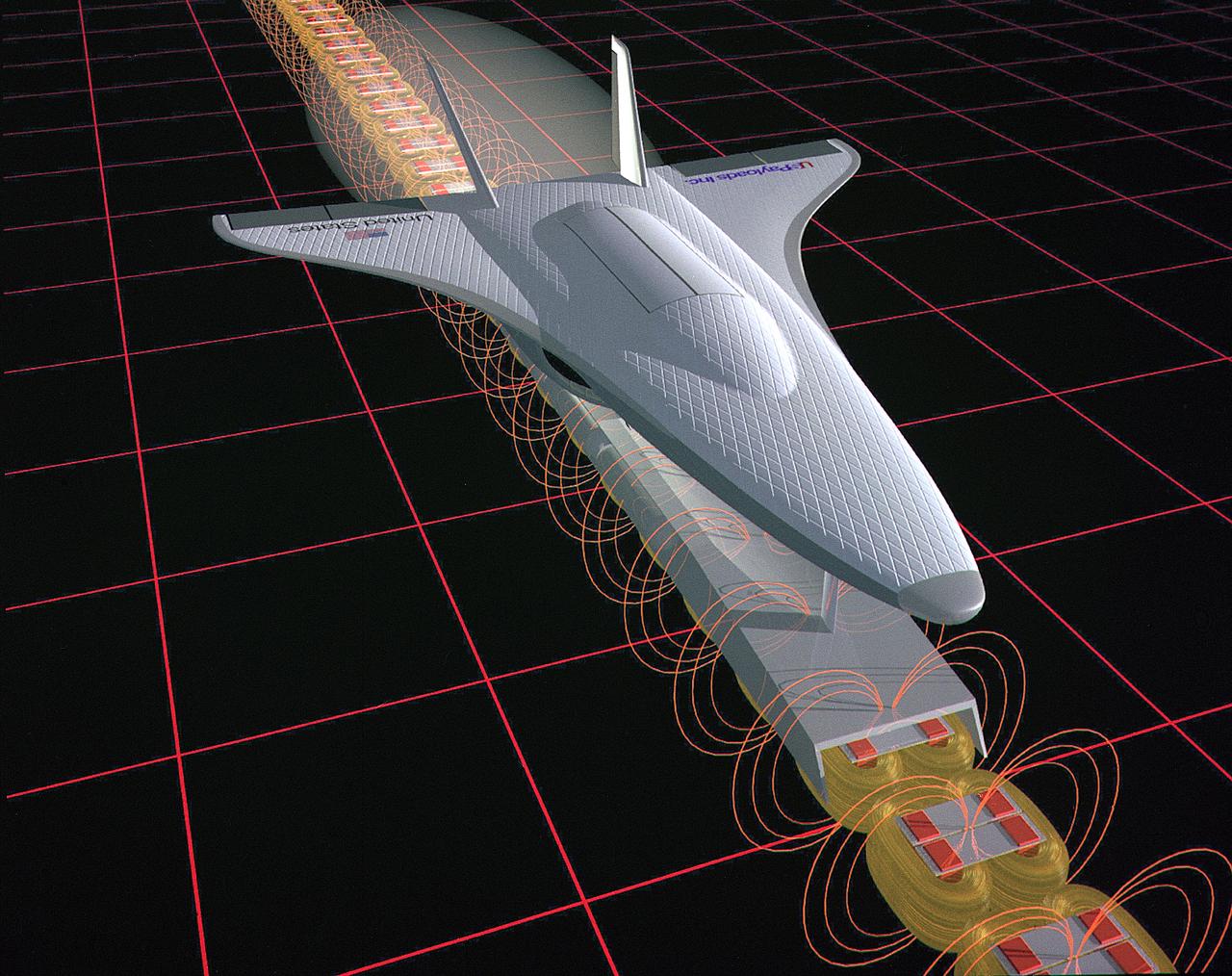
This illustration is an artist’s concept of a Magnetic Launch Assist System, formerly referred as the Magnetic Levitation (Maglev) system, for space launch. Overcoming the grip of Earth’s gravity is a supreme challenge for engineers who design rockets that leave the planet. Engineers at the Marshall Space Flight Center have developed and tested Magnetic Launch Assist System technologies that could levitate and accelerate a launch vehicle along a track at high speeds before it leaves the ground. Using electricity and magnetic fields, a Magnetic Launch Assist system would drive a spacecraft along a horizontal track until it reaches desired speeds. A full-scale, operational track would be about 1.5-miles long and capable of accelerating a vehicle to 600 mph in 9.5 seconds. The major advantages of launch assist for NASA launch vehicles is that it reduces the weight of the take-off, landing gear and the wing size, as well as the elimination of propellant weight resulting in significant cost savings. The US Navy and the British MOD (Ministry of Defense) are planning to use magnetic launch assist for their next generation aircraft carriers as the aircraft launch system. The US Army is considering using this technology for launching target drones for anti-aircraft training.
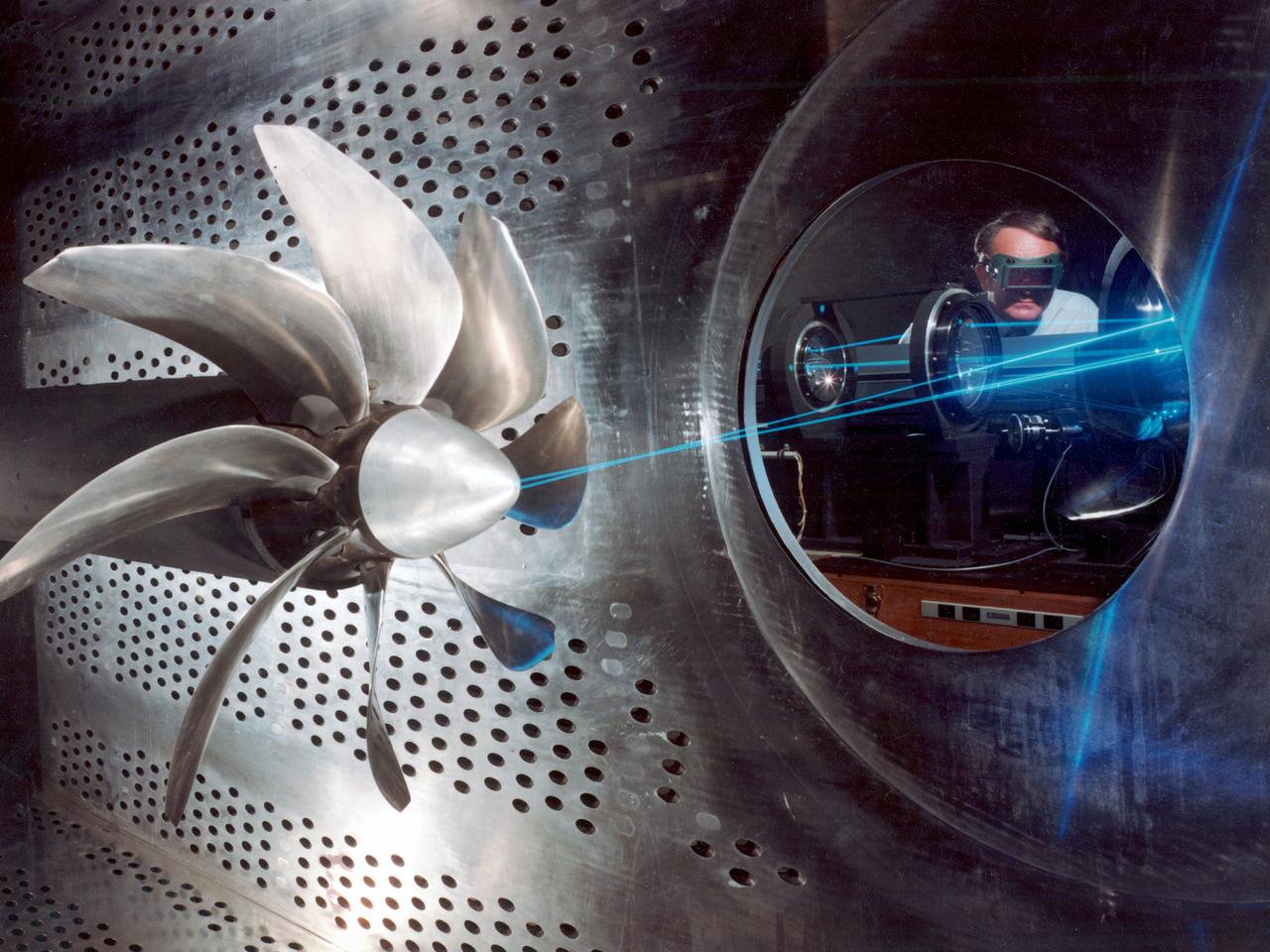
NASA Lewis Research Center researcher, John S. Sarafini, uses a laser doppler velocimeter to analyze a Hamilton Standard SR-2 turboprop design in the 8- by 6-Foot foot Supersonic Wind Tunnel. Lewis researchers were analyzing a series of eight-bladed propellers in their wind tunnels to determine their operating characteristics at speeds up to Mach 0.8. The program, which became the Advanced Turboprop (ATP), was part of a NASA-wide Aircraft Energy Efficiency Program undertaken to reduce aircraft fuel costs by 50 percent. The ATP concept was different from the turboprops in use in the 1950s. The modern versions had at least eight blades and were swept back for better performance. Bell Laboratories developed the laser doppler velocimeter technology in the 1960s to measure velocity of transparent fluid flows or vibration motion on reflective surfaces. Lewis researchers modified the device to measure the flow field of turboprop configurations in the transonic speed region. The modifications were necessary to overcome the turboprop’s vibration and noise levels. The laser beam was split into two beams which were crossed at a specific point. This permits researchers to measure two velocity components simultaneously. This data measures speeds both ahead and behind the propeller blades. Researchers could use this information as they sought to advance flow fields and to verify computer modeling codes.
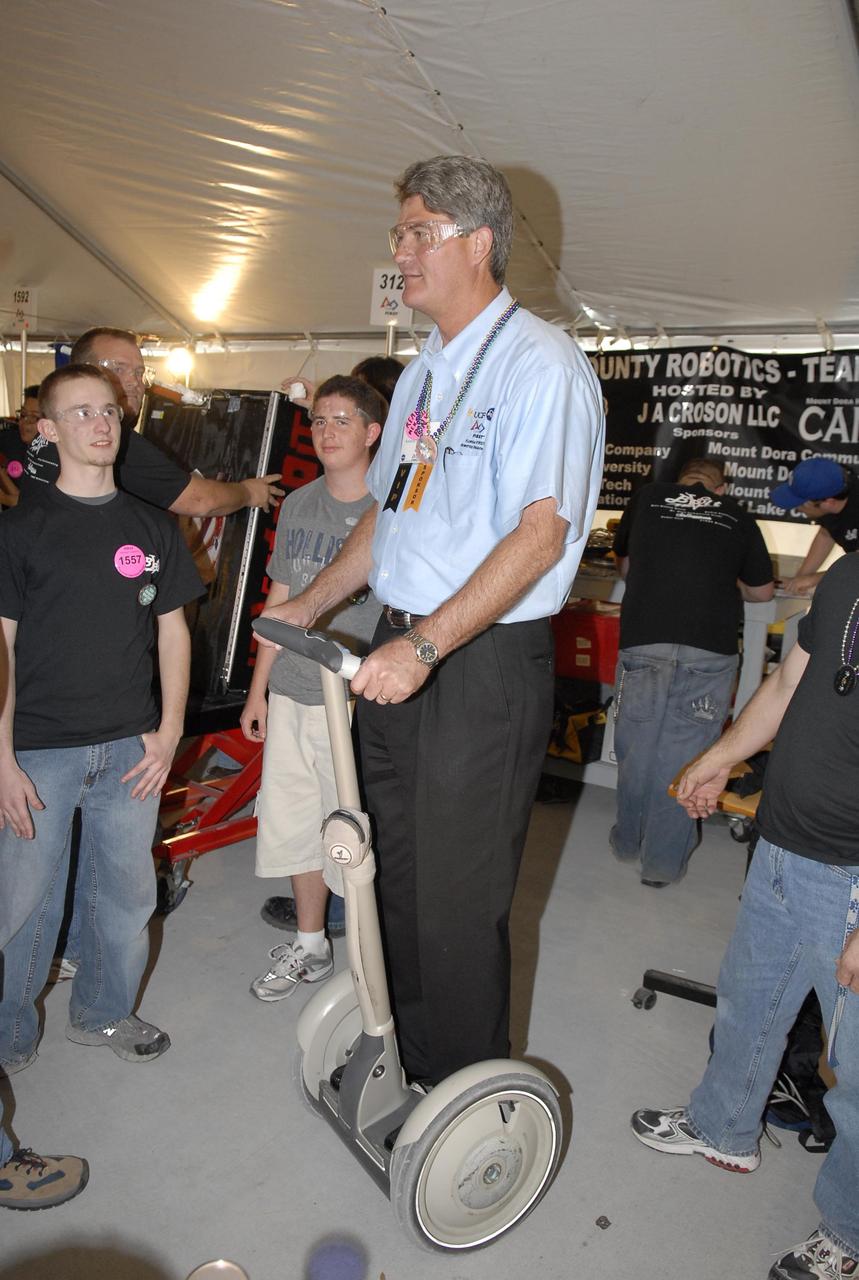
KENNEDY SPACE CENTER, FLA. -- During the FIRST robotics event held at the University of Central Florida Arena March 8-10, Center Director Bill Parsons takes a turn on the Segway® Personal Transporter (PT), designed by FIRST founder Dean Kamen. The FIRST, or For Inspiration and Recognition of Science and Technology, Robotics Competition challenges teams of young people and their mentors to solve a common problem in a six-week timeframe using a standard "kit of parts" and a common set of rules. Teams build robots from the parts and enter them in a series of competitions designed by FIRST founder Dean Kamen and Dr. Woodie Flowers, chairman and vice chairman of the Executive Advisory Board respectively, and a committee of engineers and other professionals. FIRST redefines winning for these students. Teams are rewarded for excellence in design, demonstrated team spirit, gracious professionalism and maturity, and ability to overcome obstacles. Scoring the most points is a secondary goal. Winning means building partnerships that last. Photo credit: NASA/Kim Shiflett
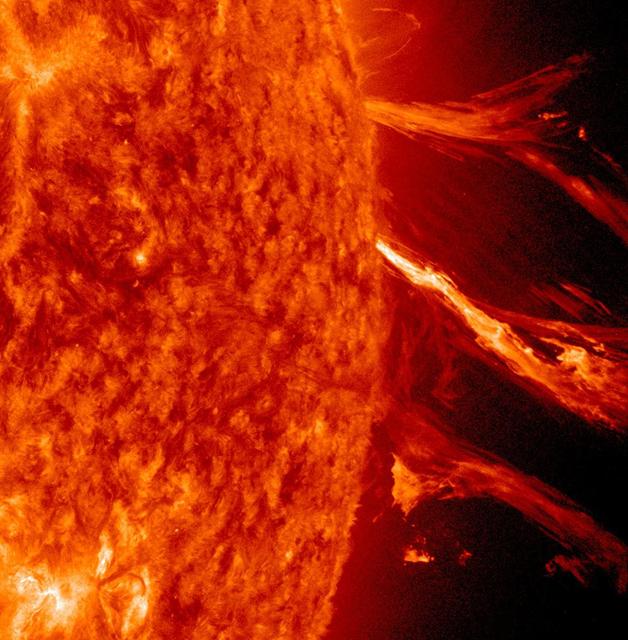
NASA image captured January 2, 2012 To view a video of this event go here: <a href="http://www.flickr.com/photos/gsfc/6648724193">www.flickr.com/photos/gsfc/6648724193</a> The Sun erupted with a good-sized solar flare and a coronal mass ejection (CME) on its far-side beyond the view of SDO, but the resulting strands of particle clouds as seen in extreme ultraviolet light still made for quite a show that lasted about three hours (Jan. 2, 2011). Note how a portion of the strands fall back to the Sun. It appears the force of the blast was unable, for some portion of the material, to overcome the pull of the Sun's magnetic fields. This blast was not directed at Earth. Credit: NASA/GSFC/SDO <b><a href="http://www.nasa.gov/audience/formedia/features/MP_Photo_Guidelines.html" rel="nofollow">NASA image use policy.</a></b> <b><a href="http://www.nasa.gov/centers/goddard/home/index.html" rel="nofollow">NASA Goddard Space Flight Center</a></b> enables NASA’s mission through four scientific endeavors: Earth Science, Heliophysics, Solar System Exploration, and Astrophysics. Goddard plays a leading role in NASA’s accomplishments by contributing compelling scientific knowledge to advance the Agency’s mission. <b>Follow us on <a href="http://twitter.com/NASA_GoddardPix" rel="nofollow">Twitter</a></b> <b>Like us on <a href="http://www.facebook.com/pages/Greenbelt-MD/NASA-Goddard/395013845897?ref=tsd" rel="nofollow">Facebook</a></b> <b>Find us on <a href="http://instagrid.me/nasagoddard/?vm=grid" rel="nofollow">Instagram</a></b>

“When I first joined Twitter in 2009, one of the first accounts I followed was NASA. I knew they were doing NASA ‘Tweetups’ (now called Socials) where members of the public could apply, go behind the scenes of a NASA facility and potentially attend a launch. “I was selected for the STS-135 Tweetup — the final launch of the Space Shuttle, July 2011. The Tweetup gave me access that I never in my life thought I’d be able to experience. Being inside the Vehicle Assembly Building, where Saturn rockets were assembled, where the Space Shuttle was stacked and now where the SLS is going to be stacked… that for me, was incredible. “We got to Kennedy for the launch on July 7. There were severe thunderstorms and lightning all around. The weather was not looking good for the next day. “The next morning, we get to the press site, and the weather continues to look like it’s going to prevent the launch. There was a 30% chance. I didn’t think it was going to happen. “And then, there was a break in the clouds. And at 11:28 am, the Shuttle launches. It was such a physical, emotional experience. I remember feeling the sound waves. I was just so excited, so thrilled, so overcome by seeing all these people put in so many hours on something that was bigger than themselves, working toward making this mission a success. And that was the culmination of it: 5 million pounds of thrust lifting this vehicle 250 miles off the planet. “I thought, ‘wow, Atlantis took off with just a 30% chance.’ So, I try to take that with me whenever I face a challenging situation. And that’s kind of why I was teetering on not applying for my first NASA internship in 2013. But I thought to myself, ‘well, that vehicle took off in not-so-ideal conditions. Things aren’t impossible.’ That’s what led me to pursue this career at NASA.” Portrait, Andres Almeida, Thursday, September 19, 2019 at NASA Headquarters in Washington. Photo Credit: (NASA/Aubrey Gemignani)
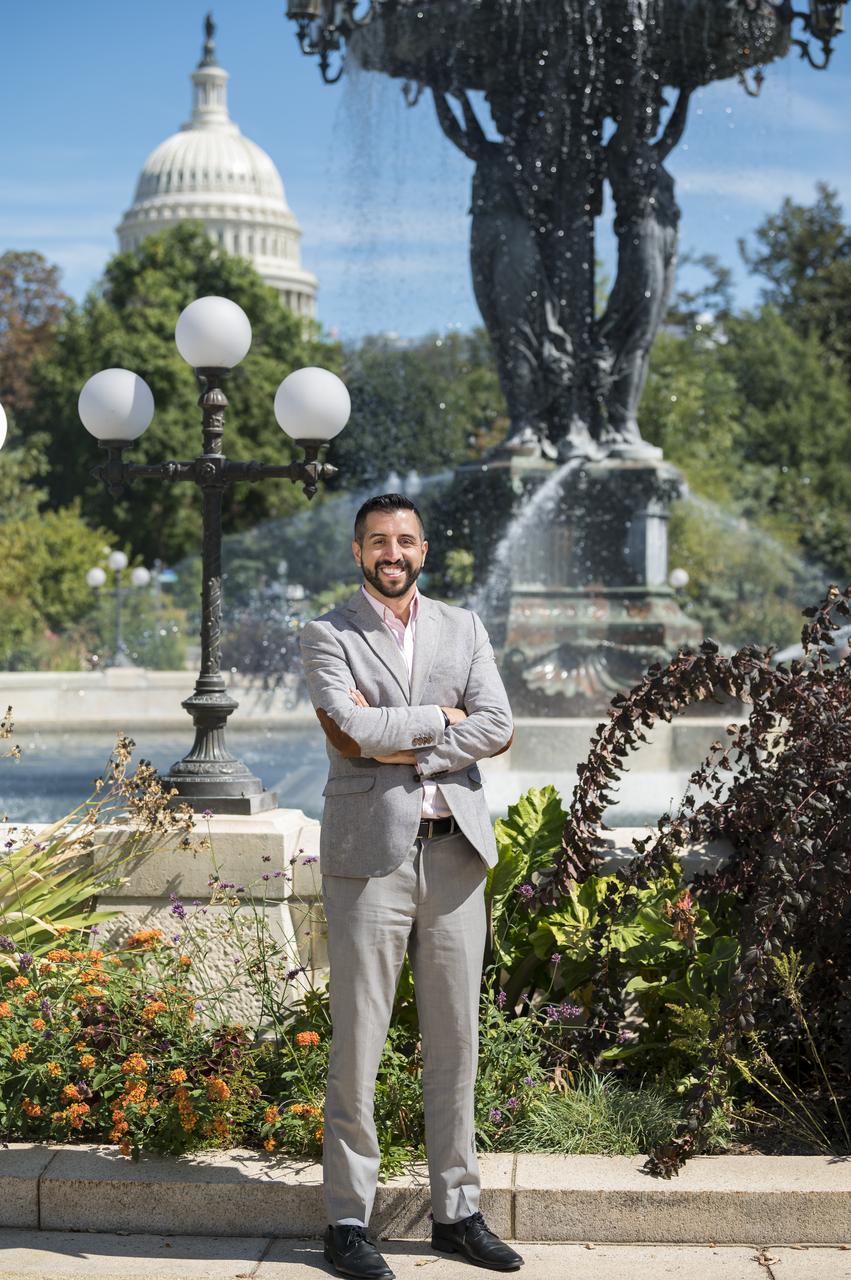
“When I first joined Twitter in 2009, one of the first accounts I followed was NASA. I knew they were doing NASA ‘Tweetups’ (now called Socials) where members of the public could apply, go behind the scenes of a NASA facility and potentially attend a launch. “I was selected for the STS-135 Tweetup — the final launch of the Space Shuttle, July 2011. The Tweetup gave me access that I never in my life thought I’d be able to experience. Being inside the Vehicle Assembly Building, where Saturn rockets were assembled, where the Space Shuttle was stacked and now where the SLS is going to be stacked… that for me, was incredible. “We got to Kennedy for the launch on July 7. There were severe thunderstorms and lightning all around. The weather was not looking good for the next day. “The next morning, we get to the press site, and the weather continues to look like it’s going to prevent the launch. There was a 30% chance. I didn’t think it was going to happen. “And then, there was a break in the clouds. And at 11:28 am, the Shuttle launches. It was such a physical, emotional experience. I remember feeling the sound waves. I was just so excited, so thrilled, so overcome by seeing all these people put in so many hours on something that was bigger than themselves, working toward making this mission a success. And that was the culmination of it: 5 million pounds of thrust lifting this vehicle 250 miles off the planet. “I thought, ‘wow, Atlantis took off with just a 30% chance.’ So, I try to take that with me whenever I face a challenging situation. And that’s kind of why I was teetering on not applying for my first NASA internship in 2013. But I thought to myself, ‘well, that vehicle took off in not-so-ideal conditions. Things aren’t impossible.’ That’s what led me to pursue this career at NASA.” Portrait, Andres Almeida, Thursday, September 19, 2019 at NASA Headquarters in Washington. Photo Credit: (NASA/Aubrey Gemignani)
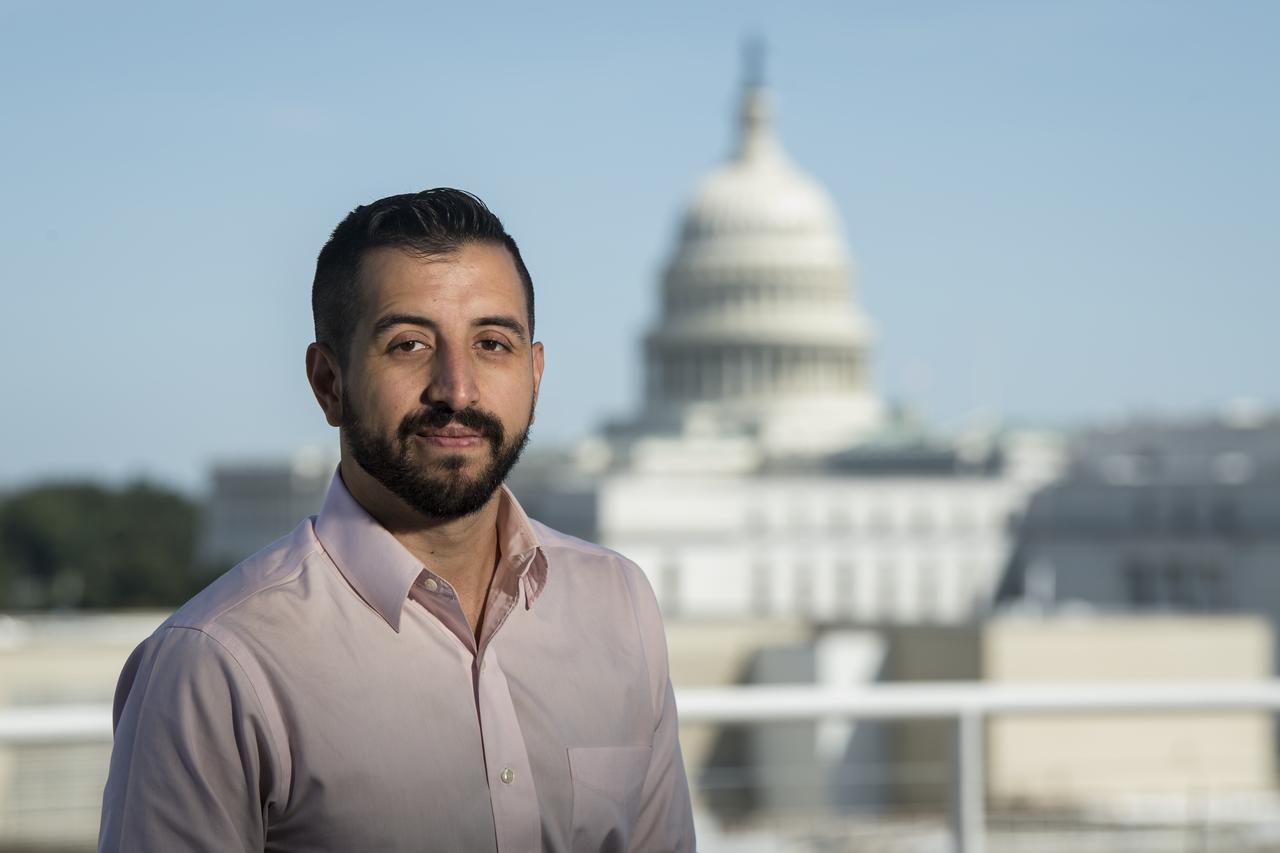
“When I first joined Twitter in 2009, one of the first accounts I followed was NASA. I knew they were doing NASA ‘Tweetups’ (now called Socials) where members of the public could apply, go behind the scenes of a NASA facility and potentially attend a launch. “I was selected for the STS-135 Tweetup — the final launch of the Space Shuttle, July 2011. The Tweetup gave me access that I never in my life thought I’d be able to experience. Being inside the Vehicle Assembly Building, where Saturn rockets were assembled, where the Space Shuttle was stacked and now where the SLS is going to be stacked… that for me, was incredible. “We got to Kennedy for the launch on July 7. There were severe thunderstorms and lightning all around. The weather was not looking good for the next day. “The next morning, we get to the press site, and the weather continues to look like it’s going to prevent the launch. There was a 30% chance. I didn’t think it was going to happen. “And then, there was a break in the clouds. And at 11:28 am, the Shuttle launches. It was such a physical, emotional experience. I remember feeling the sound waves. I was just so excited, so thrilled, so overcome by seeing all these people put in so many hours on something that was bigger than themselves, working toward making this mission a success. And that was the culmination of it: 5 million pounds of thrust lifting this vehicle 250 miles off the planet. “I thought, ‘wow, Atlantis took off with just a 30% chance.’ So, I try to take that with me whenever I face a challenging situation. And that’s kind of why I was teetering on not applying for my first NASA internship in 2013. But I thought to myself, ‘well, that vehicle took off in not-so-ideal conditions. Things aren’t impossible.’ That’s what led me to pursue this career at NASA.” Portrait, Andres Almeida, Thursday, September 19, 2019 at NASA Headquarters in Washington. Photo Credit: (NASA/Aubrey Gemignani)
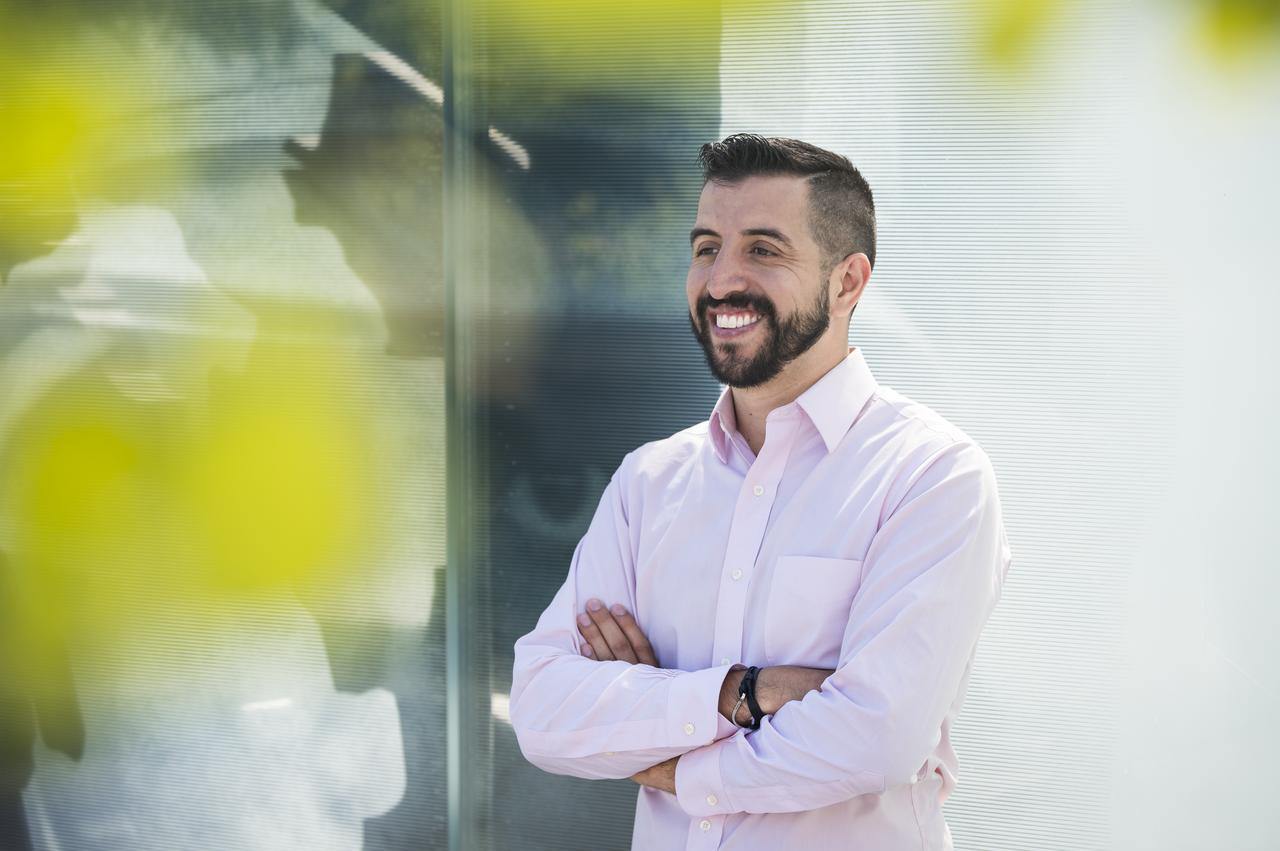
“When I first joined Twitter in 2009, one of the first accounts I followed was NASA. I knew they were doing NASA ‘Tweetups’ (now called Socials) where members of the public could apply, go behind the scenes of a NASA facility and potentially attend a launch. “I was selected for the STS-135 Tweetup — the final launch of the Space Shuttle, July 2011. The Tweetup gave me access that I never in my life thought I’d be able to experience. Being inside the Vehicle Assembly Building, where Saturn rockets were assembled, where the Space Shuttle was stacked and now where the SLS is going to be stacked… that for me, was incredible. “We got to Kennedy for the launch on July 7. There were severe thunderstorms and lightning all around. The weather was not looking good for the next day. “The next morning, we get to the press site, and the weather continues to look like it’s going to prevent the launch. There was a 30% chance. I didn’t think it was going to happen. “And then, there was a break in the clouds. And at 11:28 am, the Shuttle launches. It was such a physical, emotional experience. I remember feeling the sound waves. I was just so excited, so thrilled, so overcome by seeing all these people put in so many hours on something that was bigger than themselves, working toward making this mission a success. And that was the culmination of it: 5 million pounds of thrust lifting this vehicle 250 miles off the planet. “I thought, ‘wow, Atlantis took off with just a 30% chance.’ So, I try to take that with me whenever I face a challenging situation. And that’s kind of why I was teetering on not applying for my first NASA internship in 2013. But I thought to myself, ‘well, that vehicle took off in not-so-ideal conditions. Things aren’t impossible.’ That’s what led me to pursue this career at NASA.” Portrait, Andres Almeida, Thursday, September 19, 2019 at NASA Headquarters in Washington. Photo Credit: (NASA/Aubrey Gemignani)
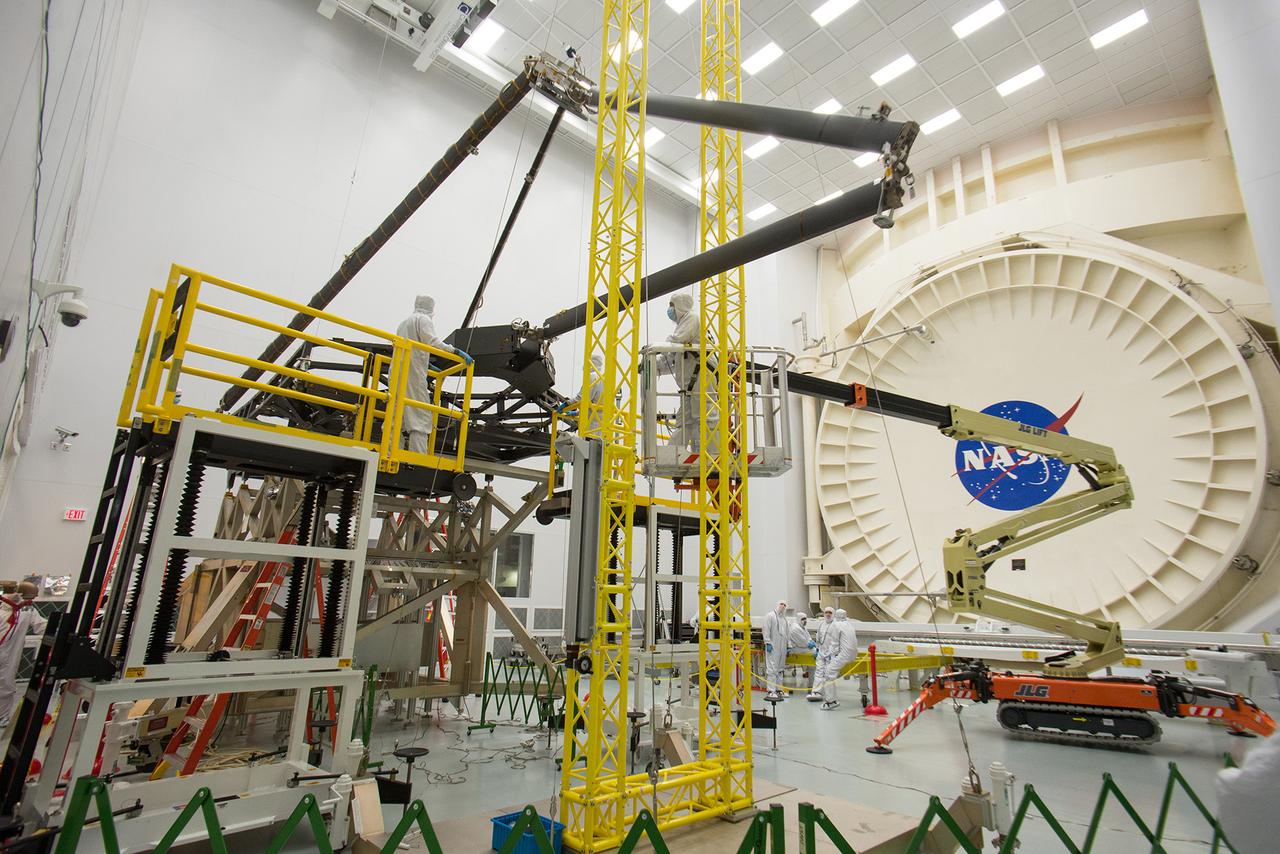
Engineers and technicians manually deployed the secondary mirror support structure (SMSS) of the James Webb Space Telescope's Pathfinder backplane test model, outside of a giant space simulation chamber called Chamber A, at NASA's Johnson Space Center in Houston. This historic test chamber was previously used in manned spaceflight missions and is being readied for a cryogenic test of a Webb telescope component. In the weightless environment of space, the SMSS is deployed by electric motors. On the ground, specially trained operators use a hand crank and a collection of mechanical ground support equipment to overcome the force of gravity. "This structure needs to be in the deployed configuration during the cryogenic test to see how the structure will operate in the frigid temperatures of space," said Will Rowland, senior mechanical test engineer for Northrop Grumman Aerospace Systems, Redondo Beach, California. "The test also demonstrates that the system works and can be successfully deployed." After the deployment was completed, Chamber A's circular door was opened and the rails (seen in the background of the photo) were installed so that the Pathfinder unit could be lifted, installed and rolled into the chamber on a cart. The team completed a fit check for the Pathfinder. Afterwards they readied the chamber for the cryogenic test, which will simulate the frigid temperatures the Webb telescope will encounter in space. “The team has been doing a great job keeping everything on schedule to getting our first optical test results, " said Lee Feinberg, NASA Optical Telescope Element Manager. The James Webb Space Telescope is the scientific successor to NASA's Hubble Space Telescope. It will be the most powerful space telescope ever built. Webb is an international project led by NASA with its partners, the European Space Agency and the Canadian Space Agency. Image credit: NASA/Desiree Stover Text credit: Laura Betz, NASA's Goddard Space Flight Center, Greenbelt, Maryland <b><a href="http://www.nasa.gov/audience/formedia/features/MP_Photo_Guidelines.html" rel="nofollow">NASA image use policy.</a></b> <b><a href="http://www.nasa.gov/centers/goddard/home/index.html" rel="nofollow">NASA Goddard Space Flight Center</a></b> enables NASA’s mission through four scientific endeavors: Earth Science, Heliophysics, Solar System Exploration, and Astrophysics. Goddard plays a leading role in NASA’s accomplishments by contributing compelling scientific knowledge to advance the Agency’s mission. <b>Follow us on <a href="http://twitter.com/NASAGoddardPix" rel="nofollow">Twitter</a></b> <b>Like us on <a href="http://www.facebook.com/pages/Greenbelt-MD/NASA-Goddard/395013845897?ref=tsd" rel="nofollow">Facebook</a></b> <b>Find us on <a href="http://instagrid.me/nasagoddard/?vm=grid" rel="nofollow">Instagram</a></b>