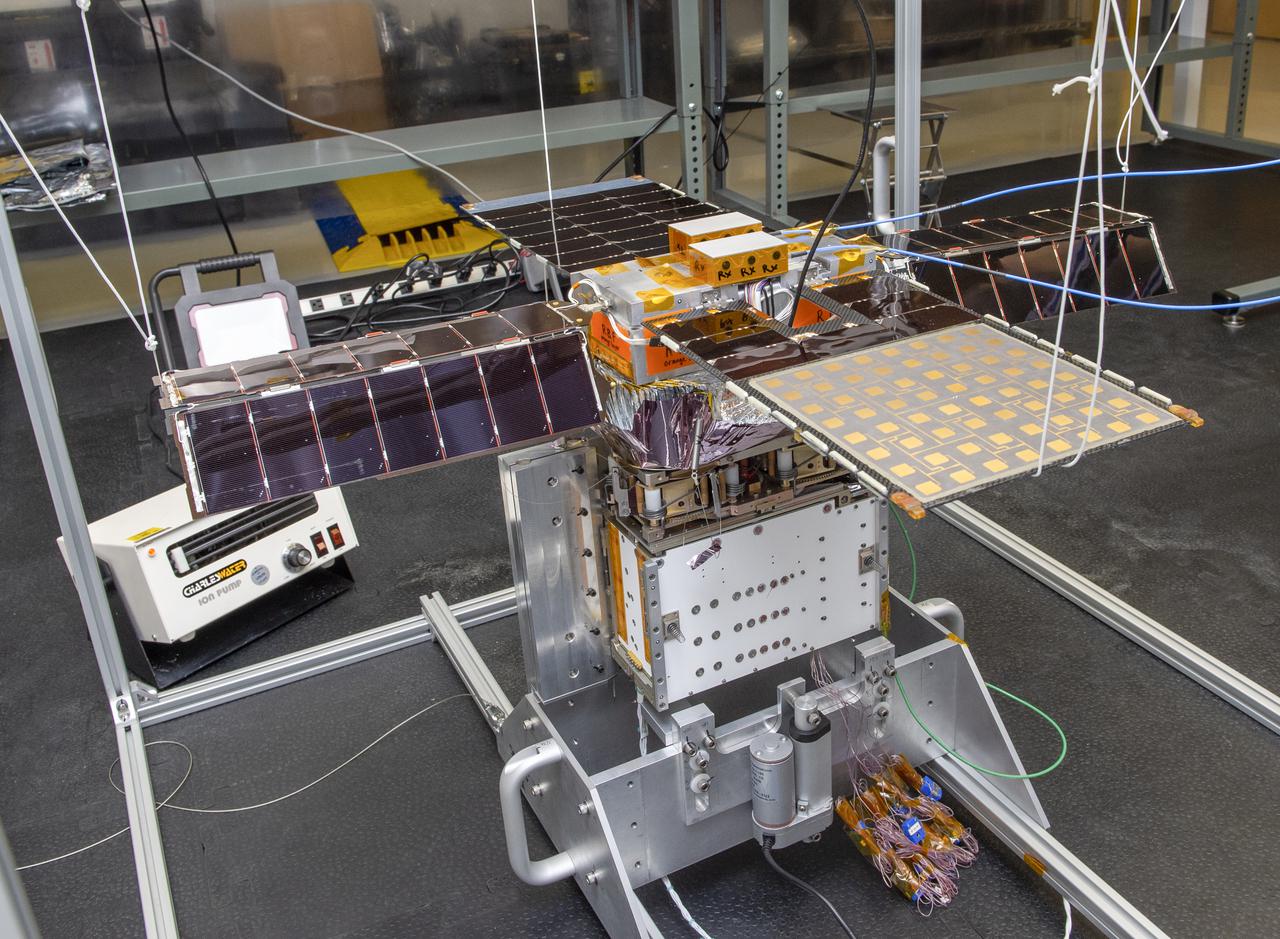
Spacecraft in Gravity Off-load Fixture (GOLF), System Test configuration - Arisa Waddle – Test Engineer, Rick Wilson – Lead Test Engineer
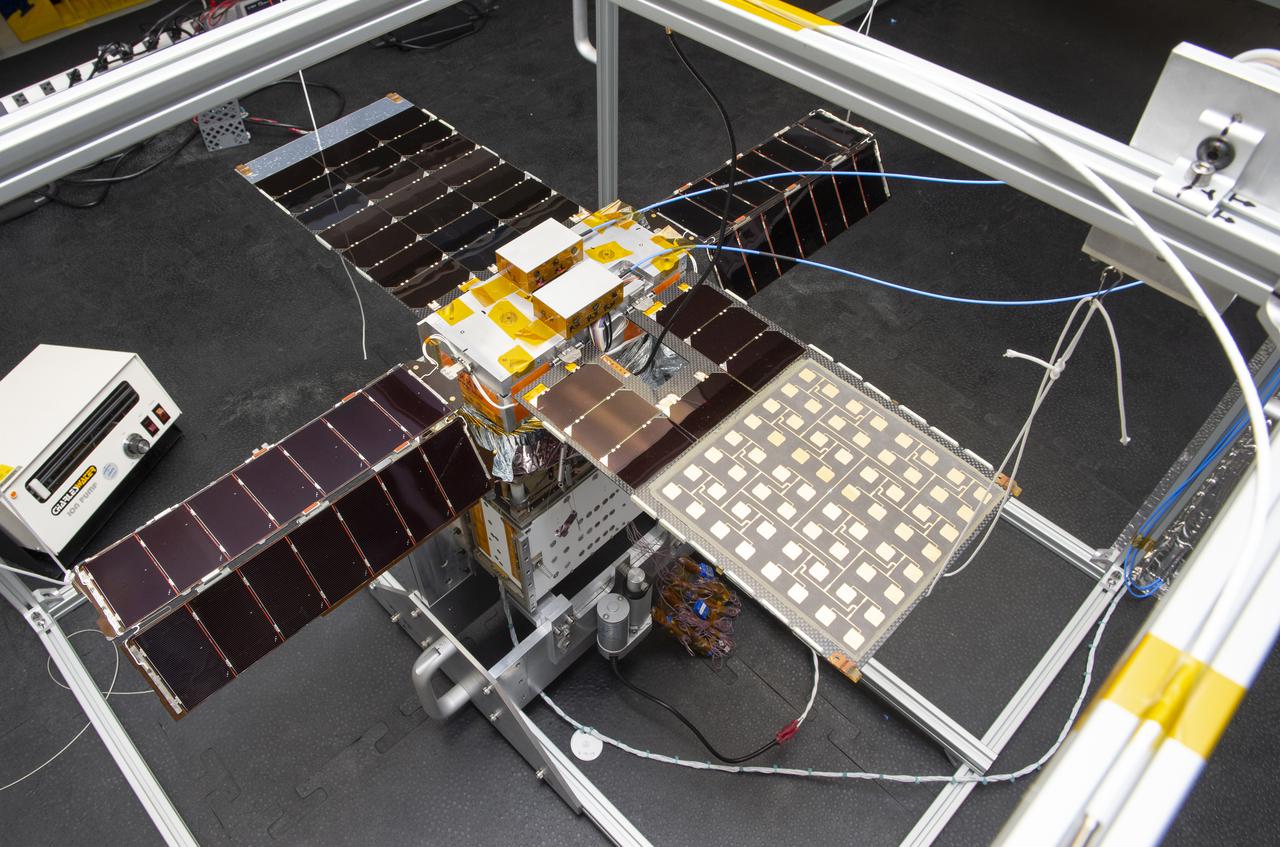
Spacecraft in Gravity Off-load Fixture (GOLF), System Test configuration - Arisa Waddle – Test Engineer, Rick Wilson – Lead Test Engineer
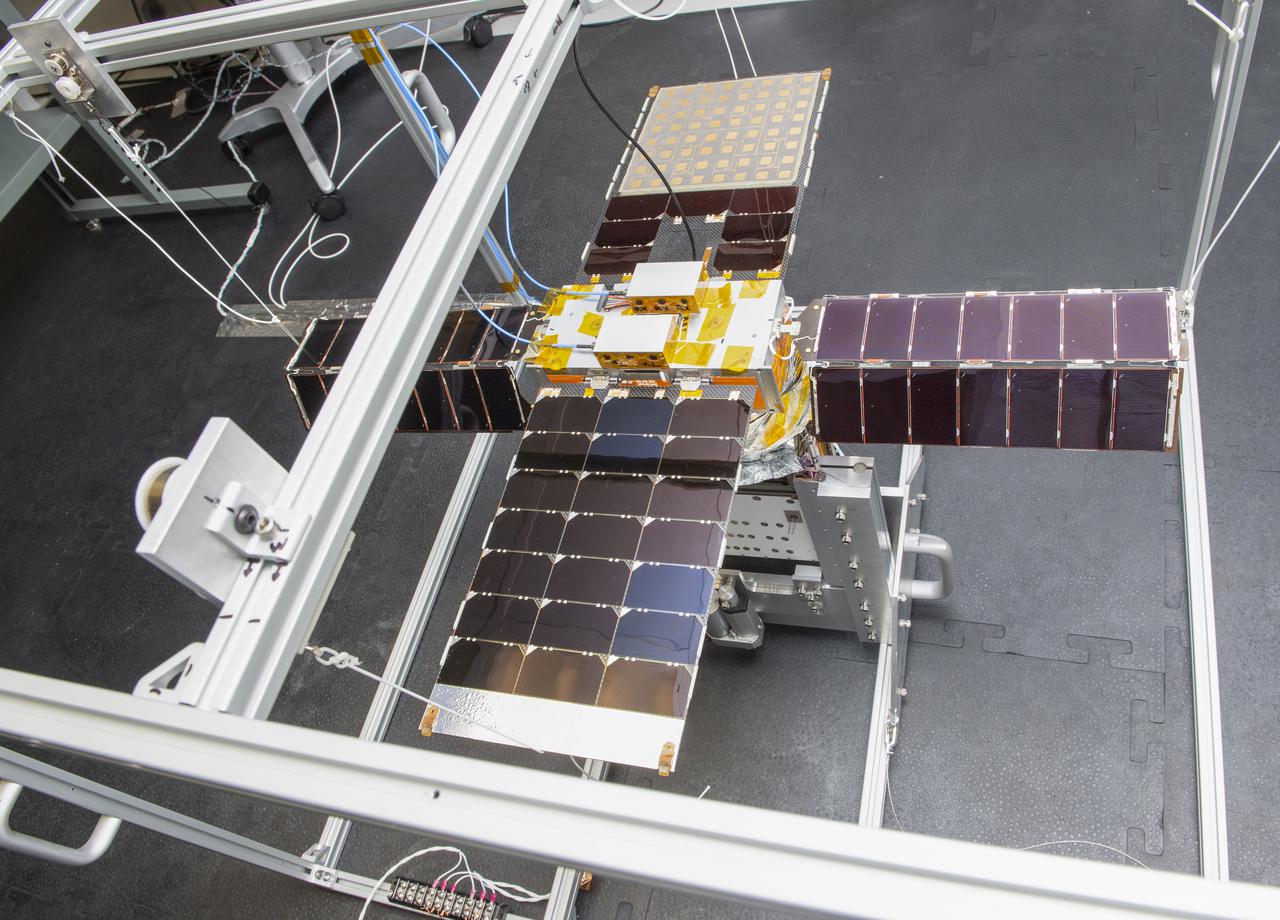
Spacecraft in Gravity Off-load Fixture (GOLF), System Test configuration - Arisa Waddle – Test Engineer, Rick Wilson – Lead Test Engineer
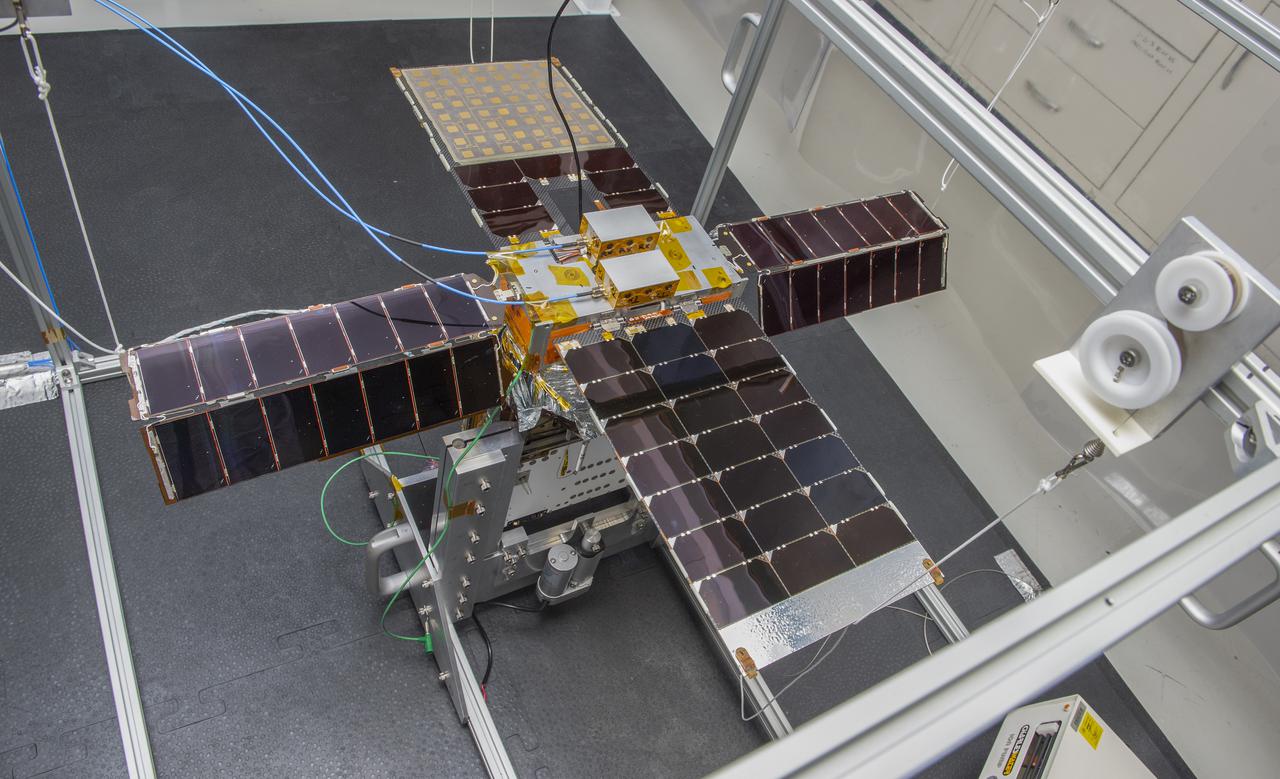
Spacecraft in Gravity Off-load Fixture (GOLF), System Test configuration - Arisa Waddle – Test Engineer, Rick Wilson – Lead Test Engineer
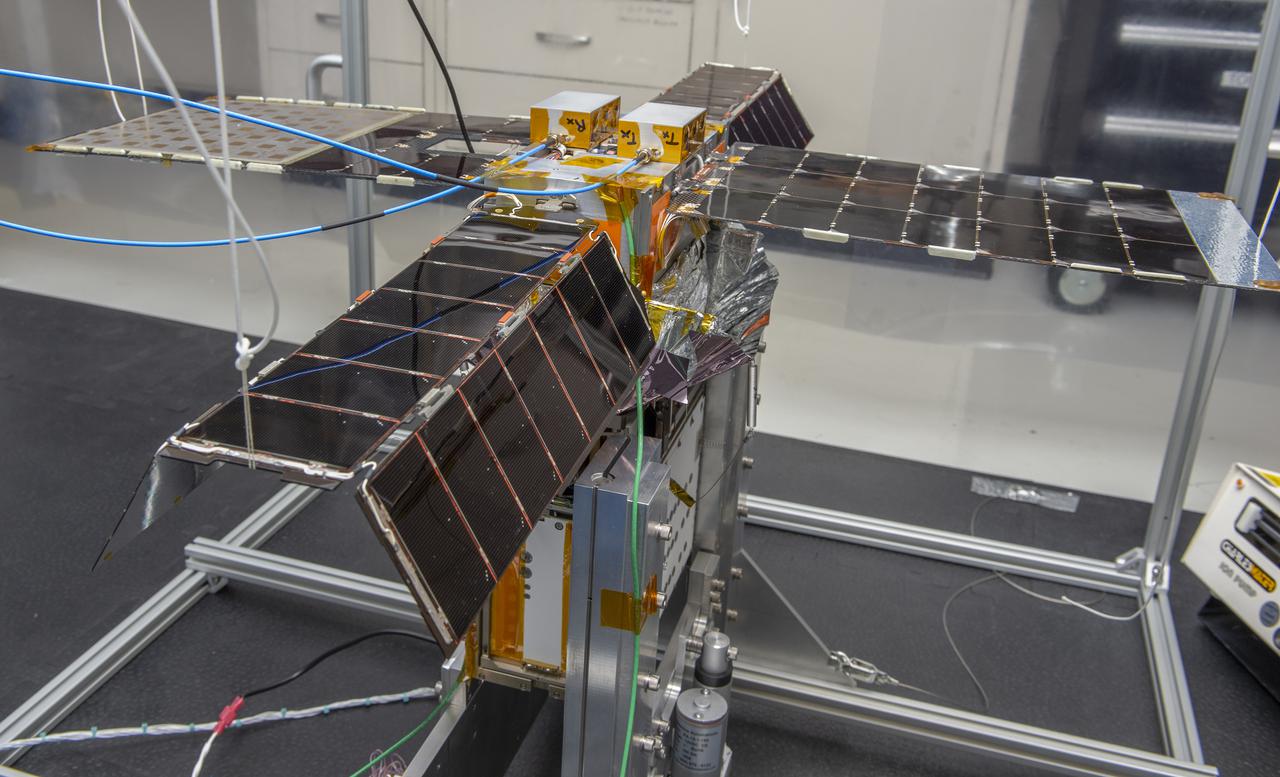
Spacecraft in Gravity Off-load Fixture (GOLF), System Test configuration - Arisa Waddle – Test Engineer, Rick Wilson – Lead Test Engineer
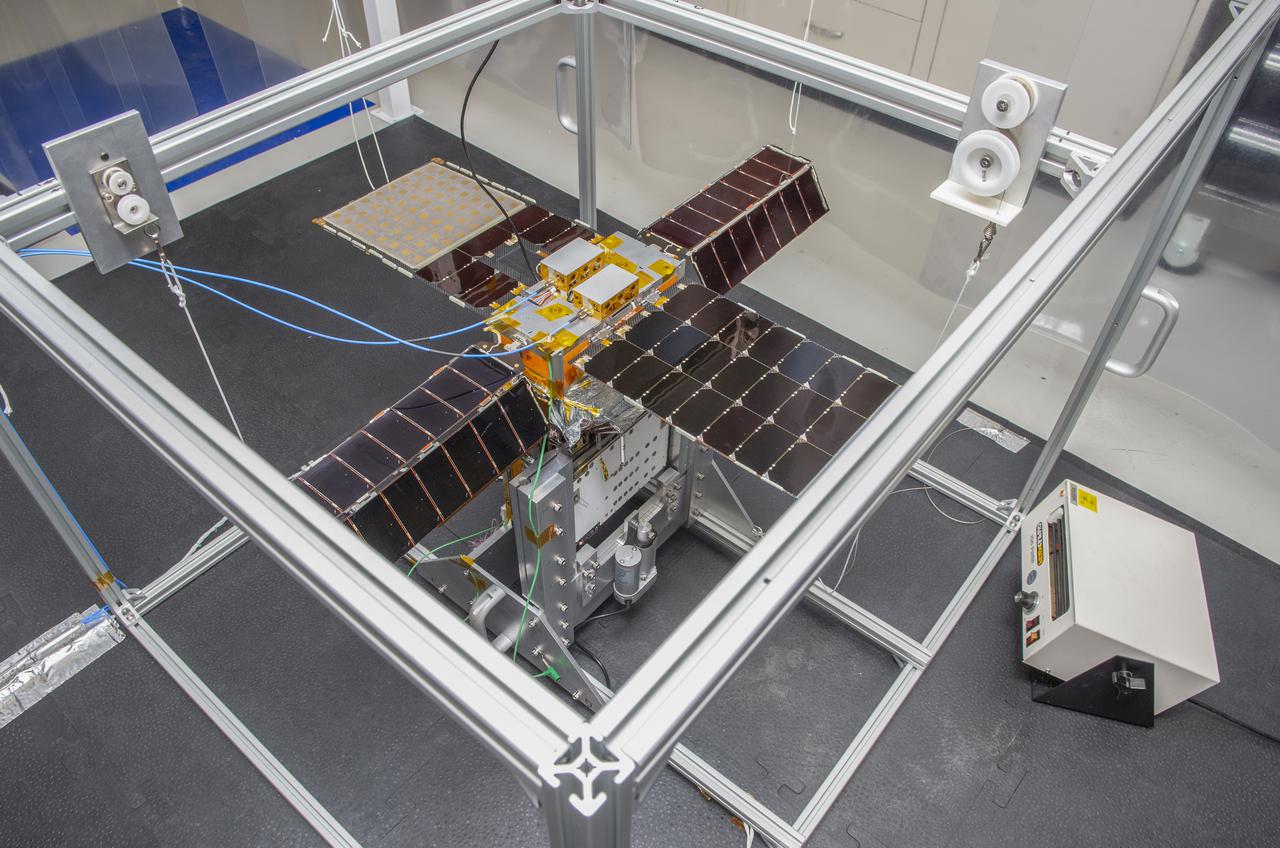
Spacecraft in Gravity Off-load Fixture (GOLF), System Test configuration - Arisa Waddle – Test Engineer, Rick Wilson – Lead Test Engineer

Spacecraft in Gravity Off-load Fixture (GOLF), System Test configuration - Arisa Waddle – Test Engineer, Rick Wilson – Lead Test Engineer
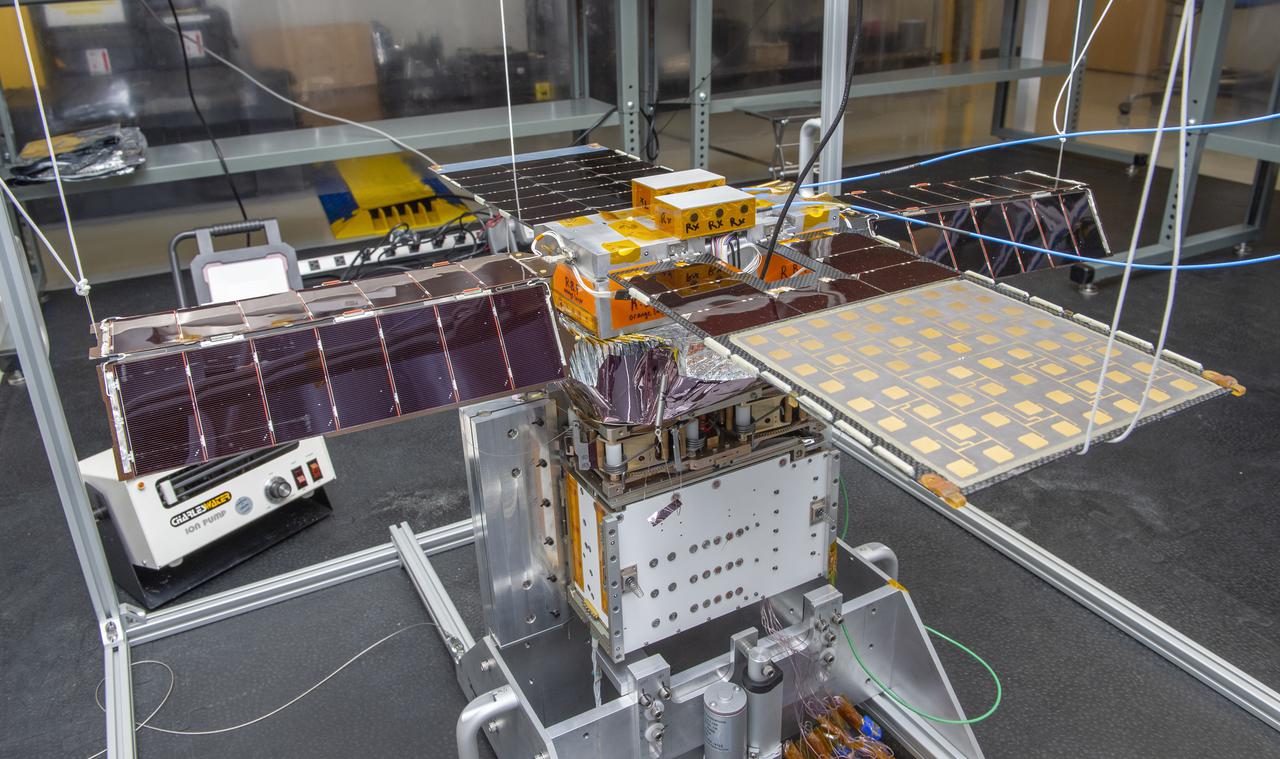
Spacecraft in Gravity Off-load Fixture (GOLF), System Test configuration - Arisa Waddle – Test Engineer, Rick Wilson – Lead Test Engineer
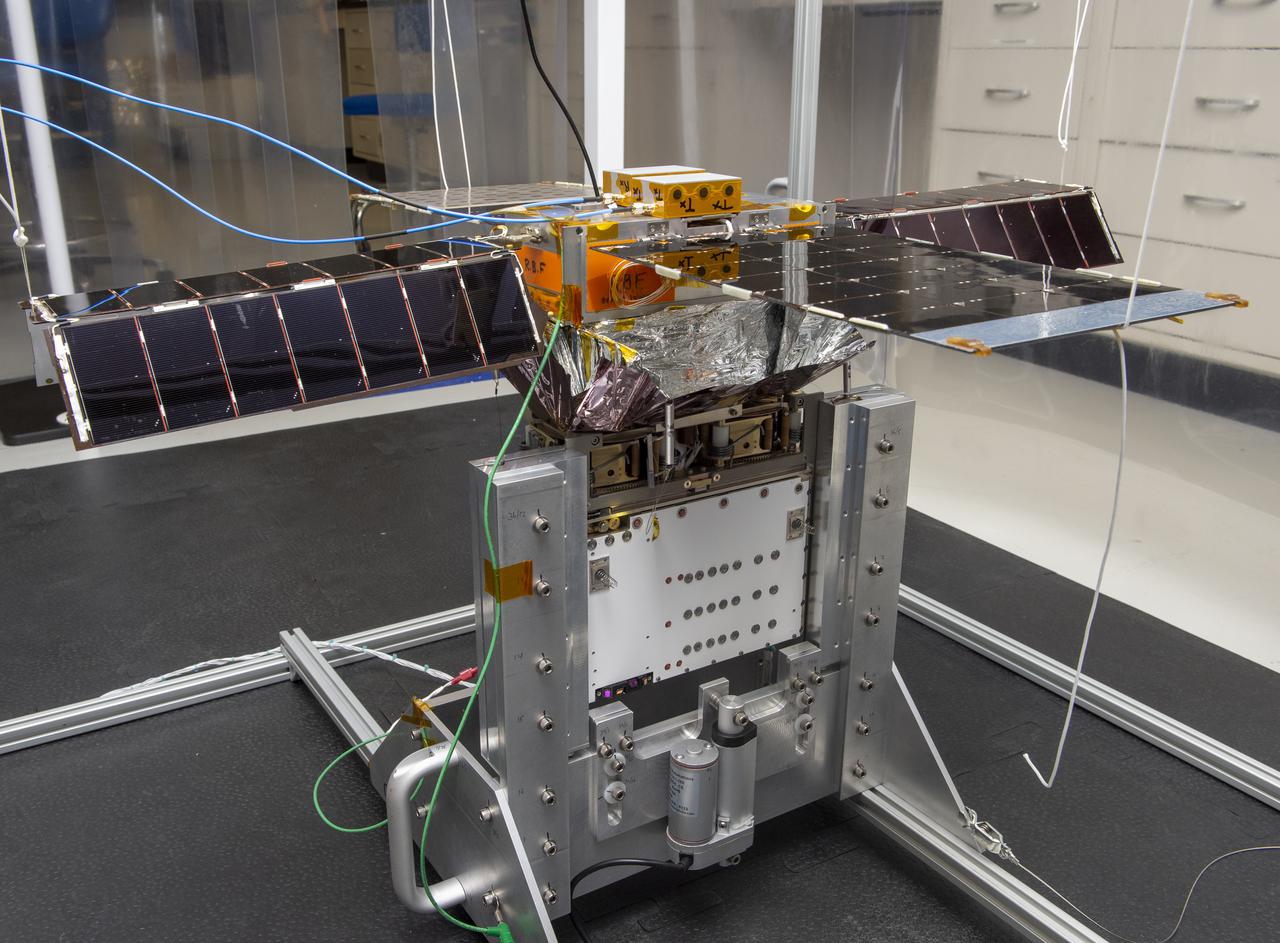
Spacecraft in Gravity Off-load Fixture (GOLF), System Test configuration - Arisa Waddle – Test Engineer, Rick Wilson – Lead Test Engineer

Spacecraft in Gravity Off-load Fixture (GOLF), System Test configuration - Arisa Waddle – Test Engineer, Rick Wilson – Lead Test Engineer
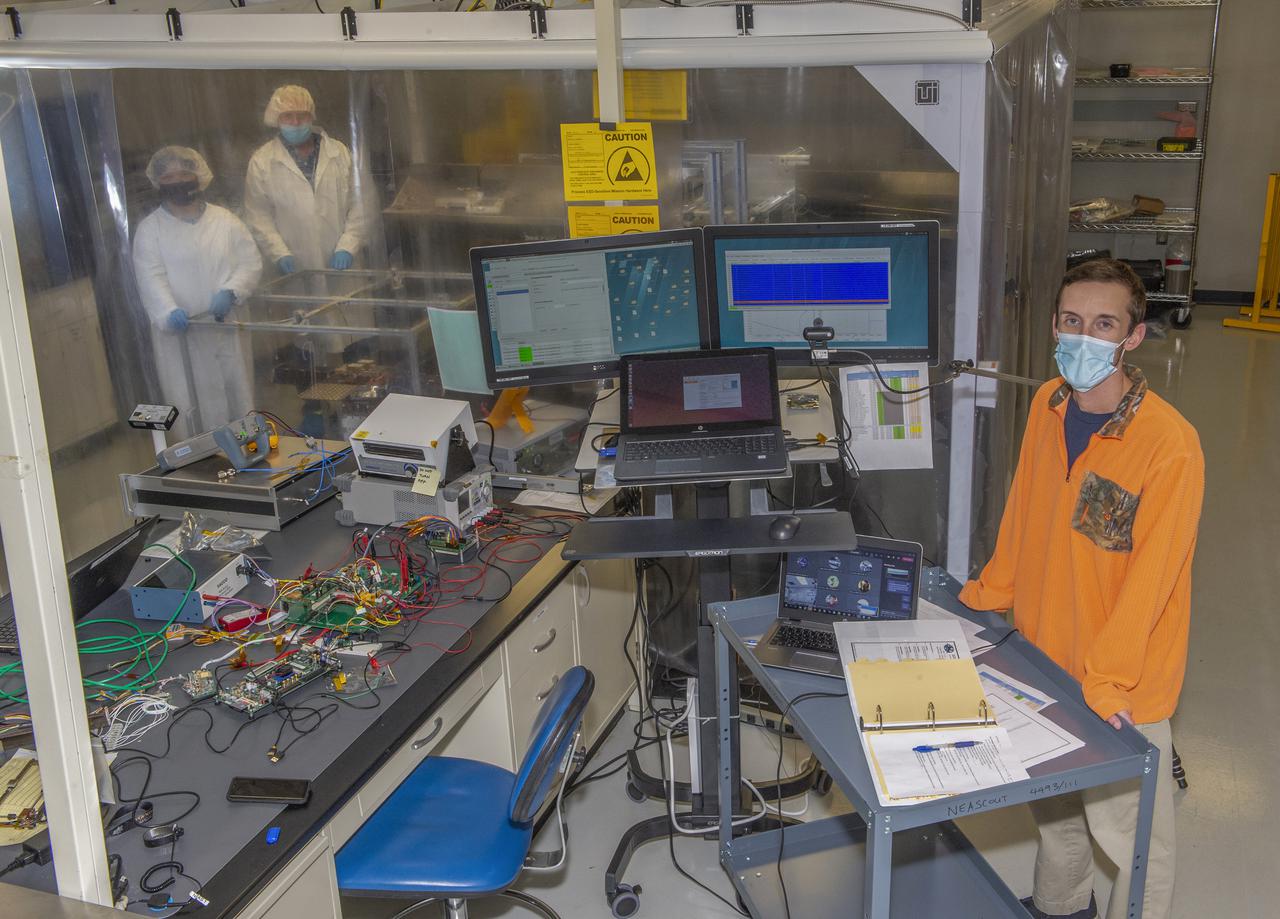
Spacecraft in Gravity Off-load Fixture (GOLF), System Test configuration - Arisa Waddle – Test Engineer, Rick Wilson – Lead Test Engineer
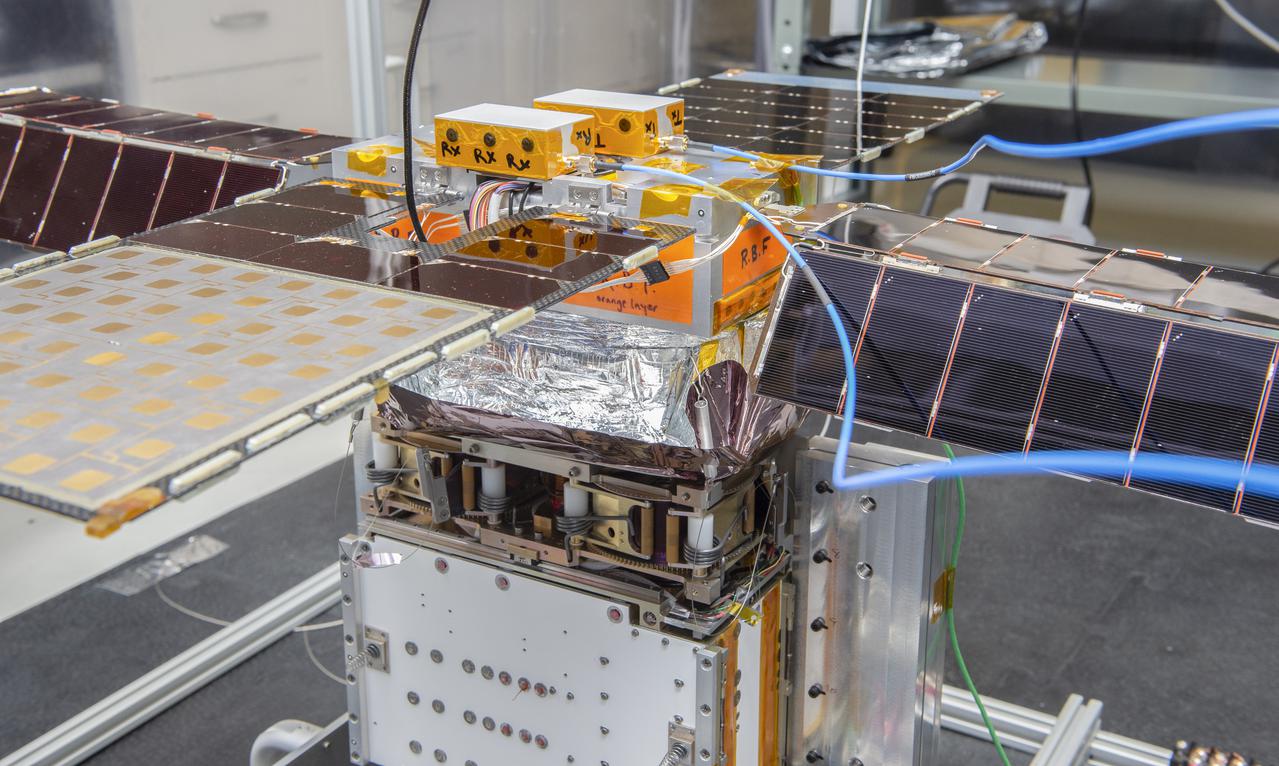
Spacecraft in Gravity Off-load Fixture (GOLF), System Test configuration - Arisa Waddle – Test Engineer, Rick Wilson – Lead Test Engineer
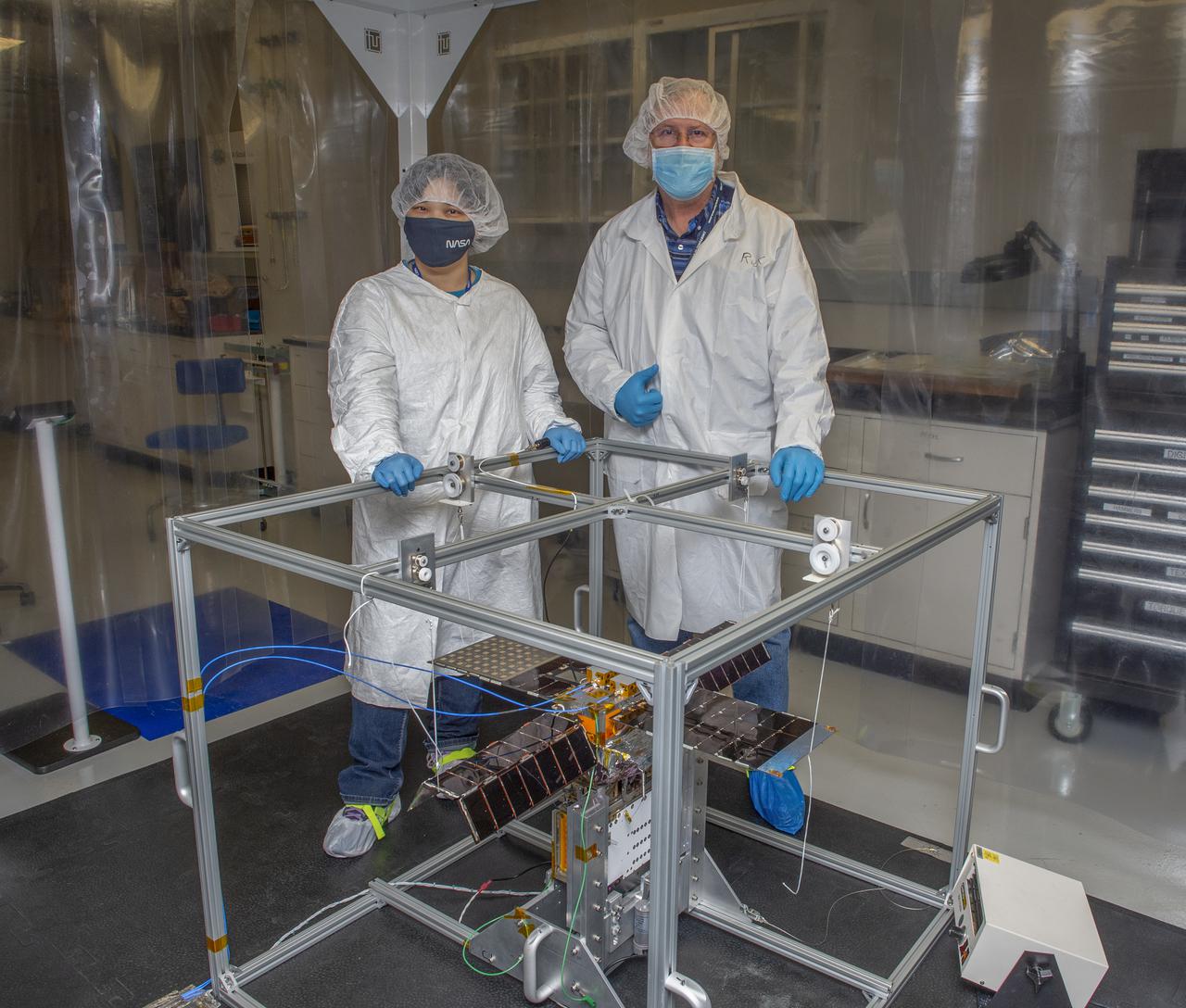
Spacecraft in Gravity Off-load Fixture (GOLF), System Test configuration - Arisa Waddle – Test Engineer, Rick Wilson – Lead Test Engineer
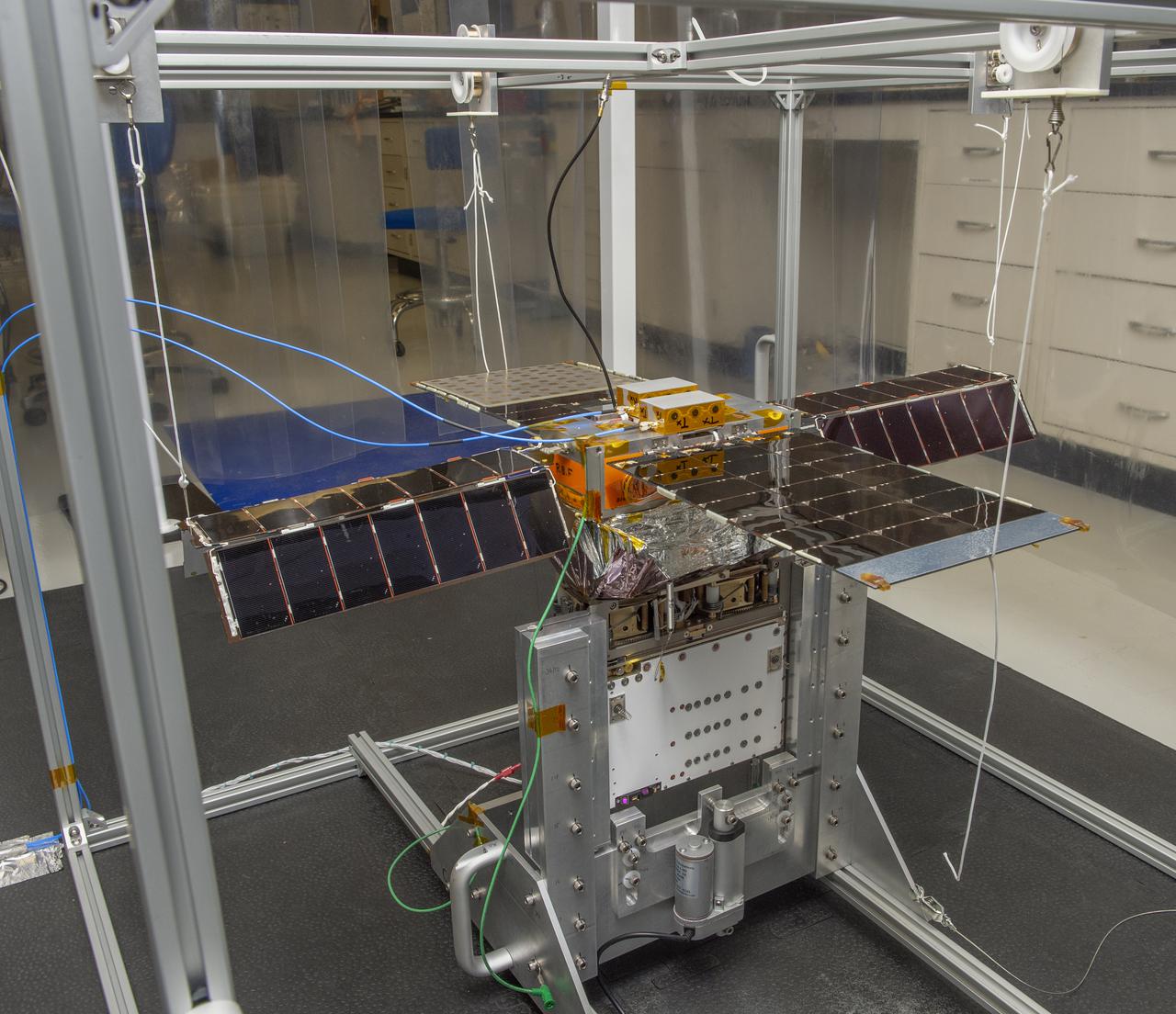
Spacecraft in Gravity Off-load Fixture (GOLF), System Test configuration - Arisa Waddle – Test Engineer, Rick Wilson – Lead Test Engineer
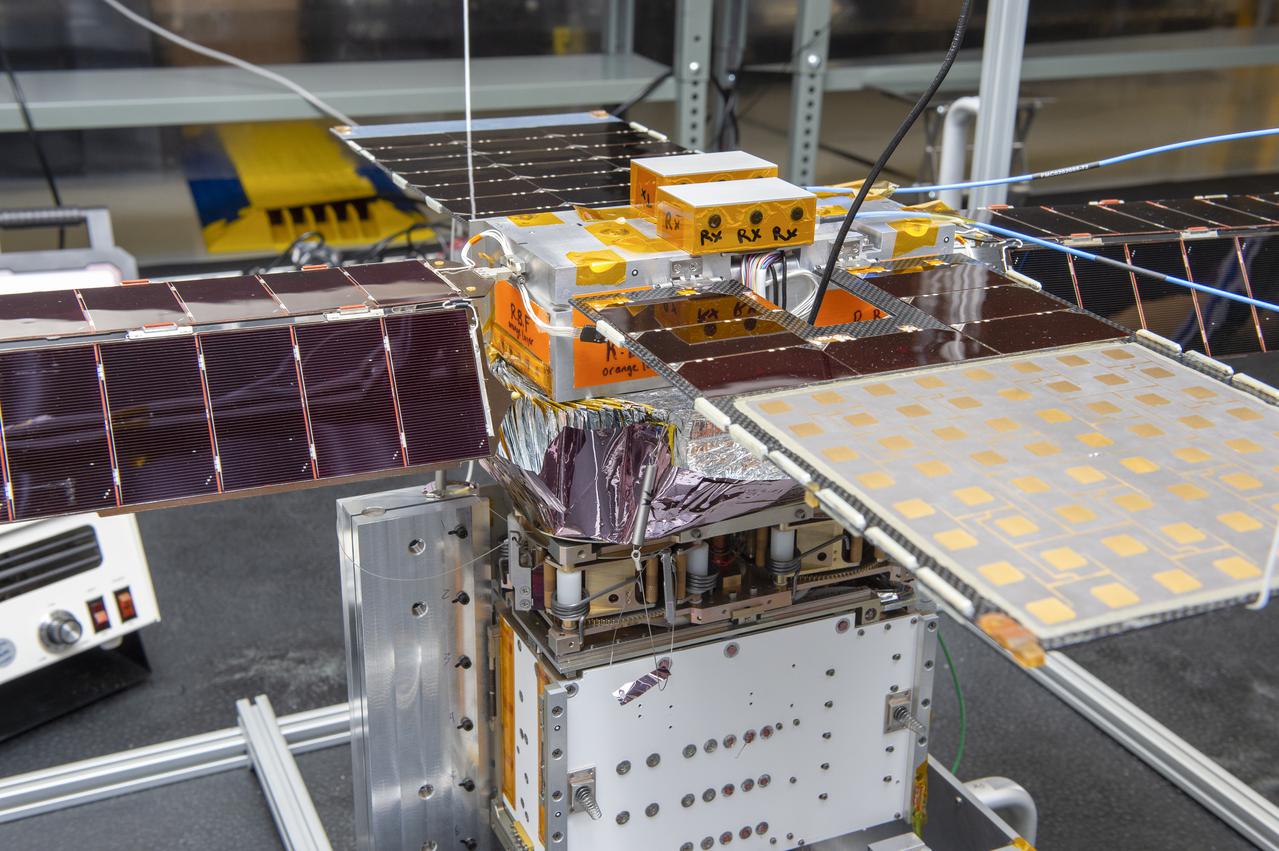
Spacecraft in Gravity Off-load Fixture (GOLF), System Test configuration - Arisa Waddle – Test Engineer, Rick Wilson – Lead Test Engineer
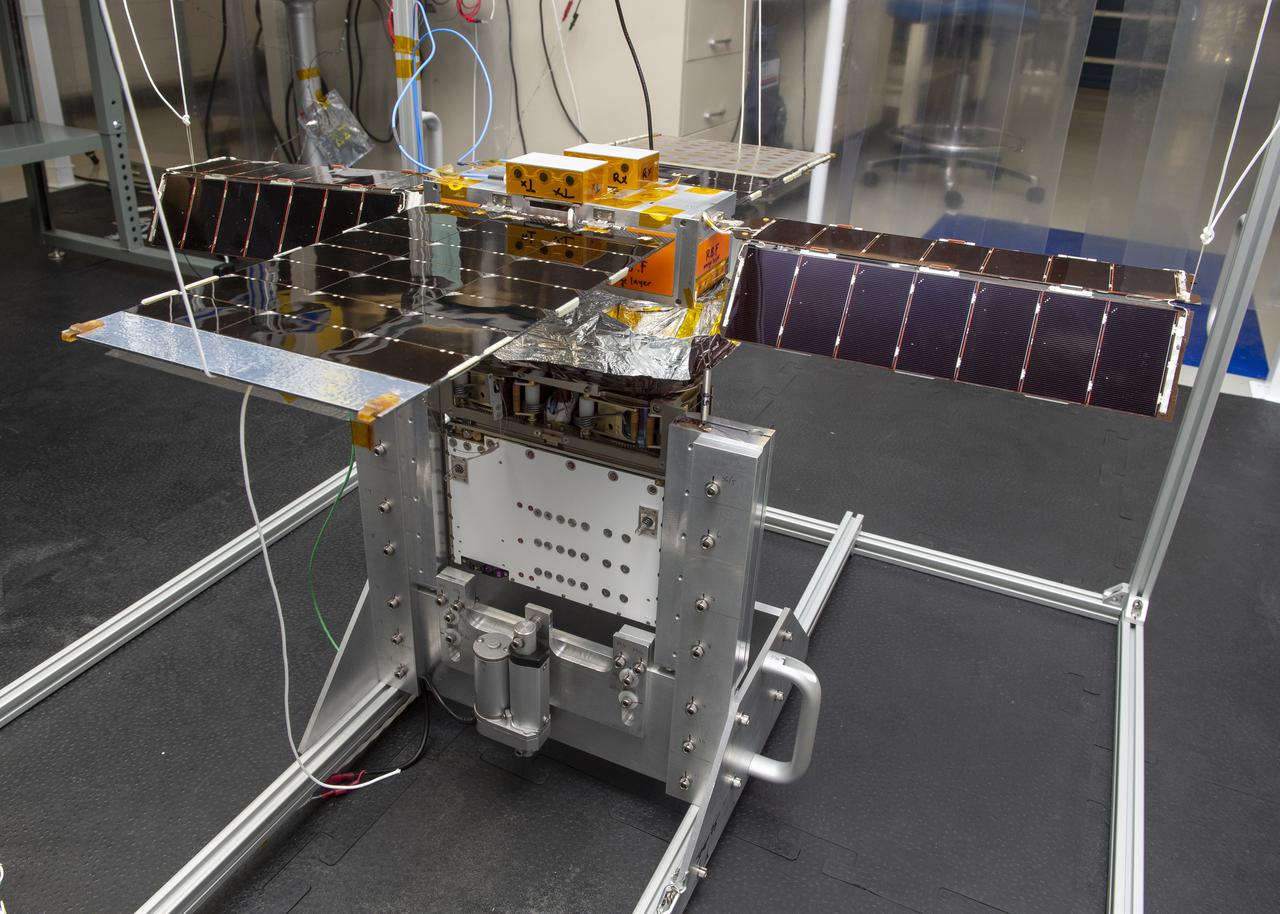
Spacecraft in Gravity Off-load Fixture (GOLF), System Test configuration - Arisa Waddle – Test Engineer, Rick Wilson – Lead Test Engineer
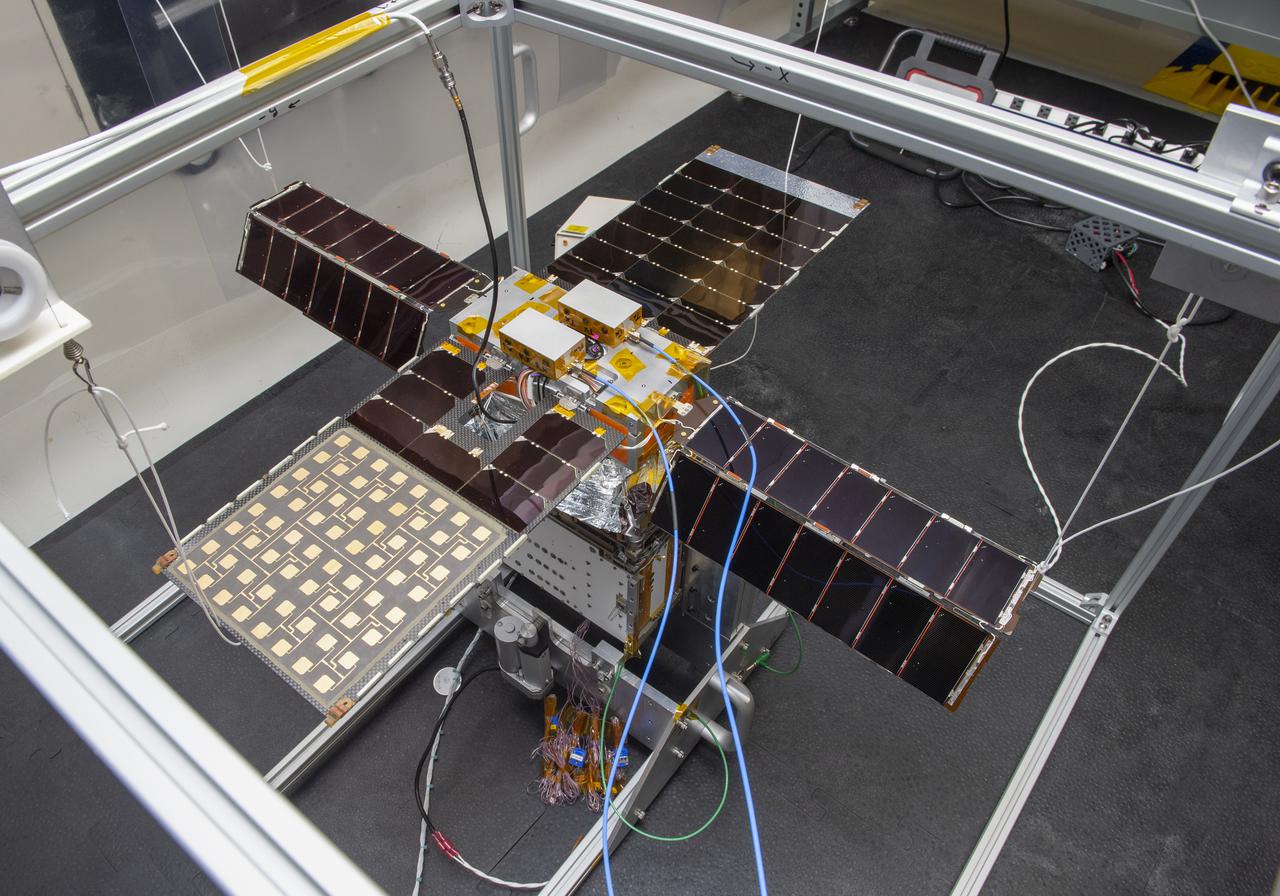
Spacecraft in Gravity Off-load Fixture (GOLF), System Test configuration - Arisa Waddle – Test Engineer, Rick Wilson – Lead Test Engineer
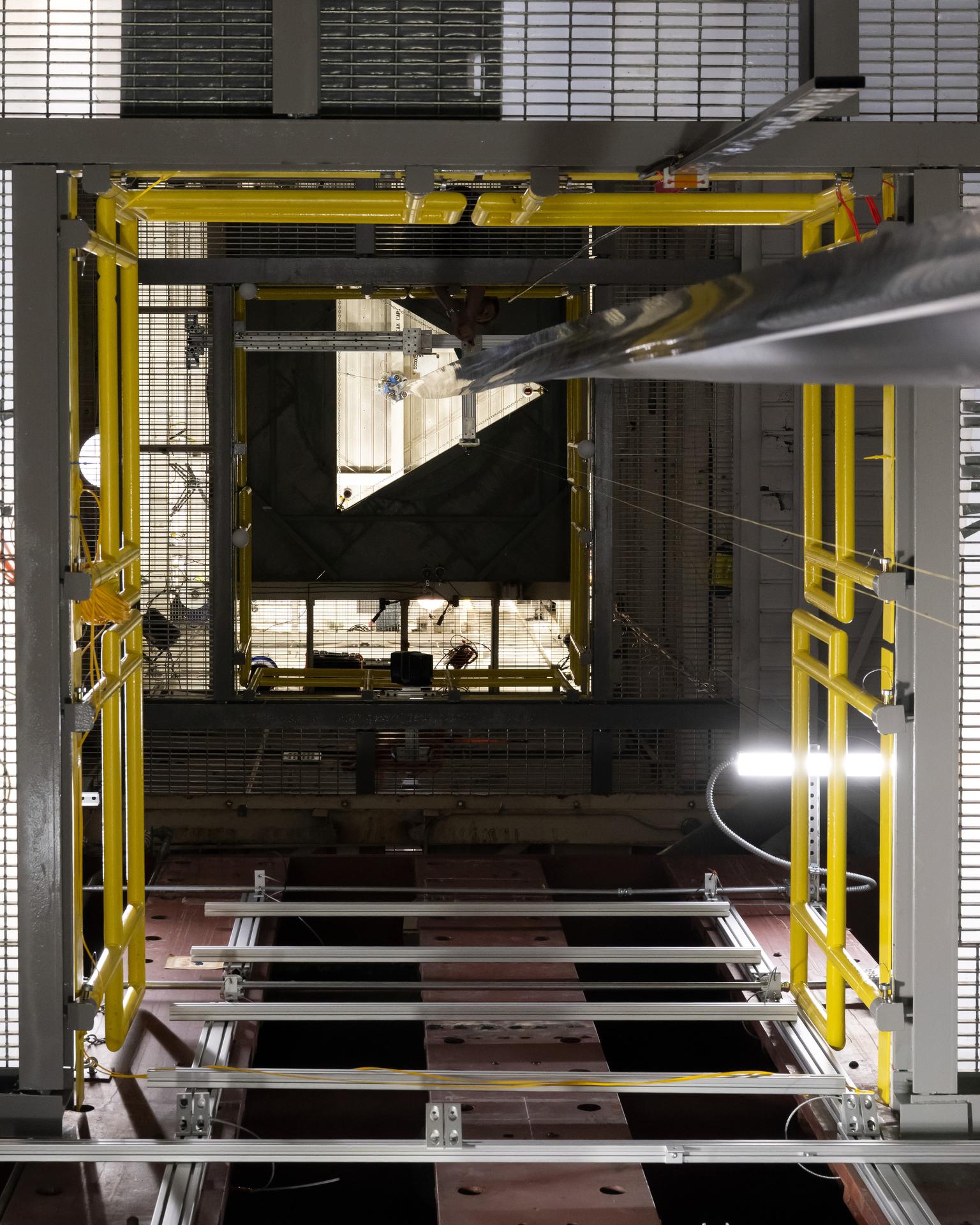
Full-Scale Test Campaign of Gravity Offloading and Analysis of Long Imperfection-Sensitive Elements (GOALIE) TRAC boom in B1293B Thor Tower, Test of Load Case C, Off-axis Compression

Full-Scale Test Campaign of Gravity Offloading and Analysis of Long Imperfection-Sensitive Elements (GOALIE) TRAC boom in B1293B Thor Tower, Test of Load Case C, Off-axis Compression
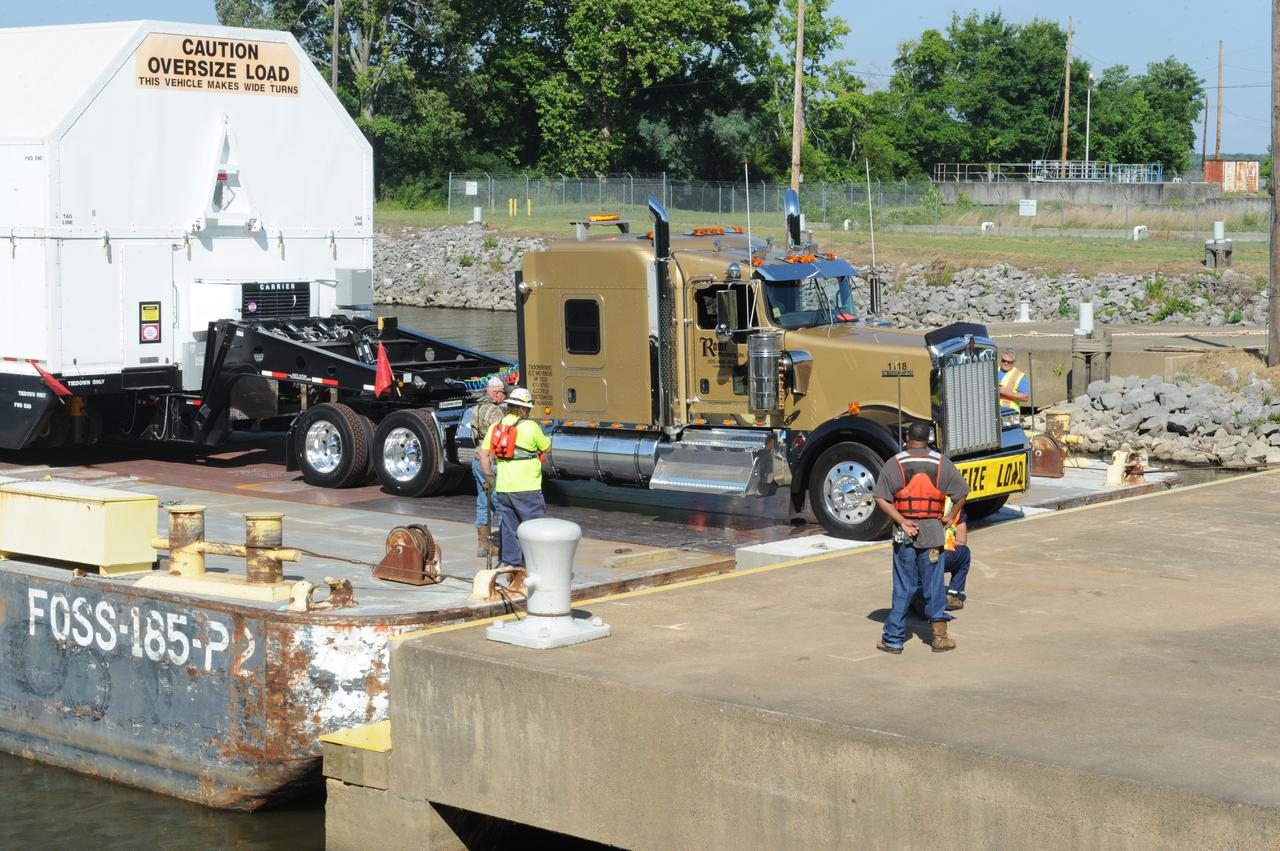
SLS INTERIM CRYOGENIC PROPULSION STAGE TEST ARTICLE ARRIVES AT WEST DOCK ON SHIELDS ROAD AND IS OFF LOADED FROM BARGE
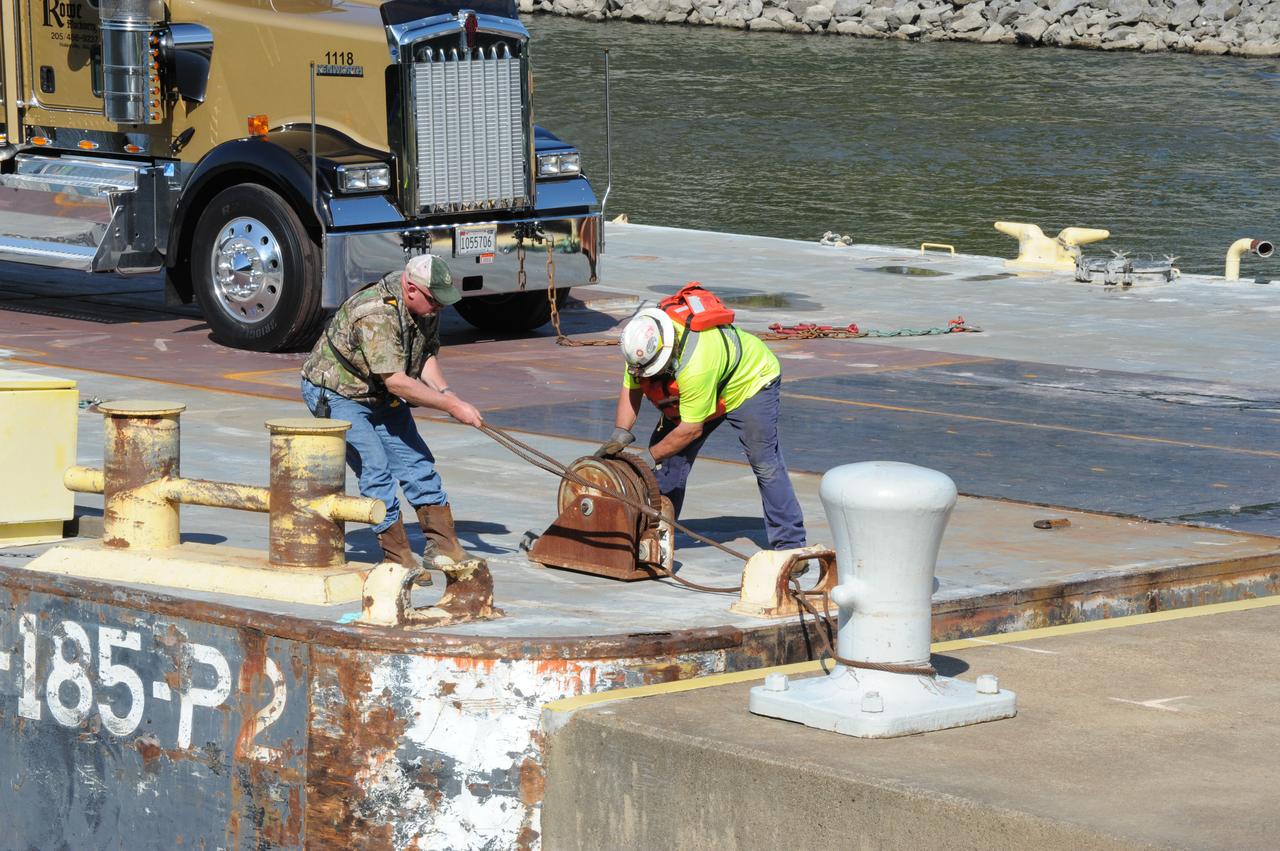
SLS INTERIM CRYOGENIC PROPULSION STAGE TEST ARTICLE ARRIVES AT WEST DOCK ON SHIELDS ROAD AND IS OFF LOADED FROM BARGE
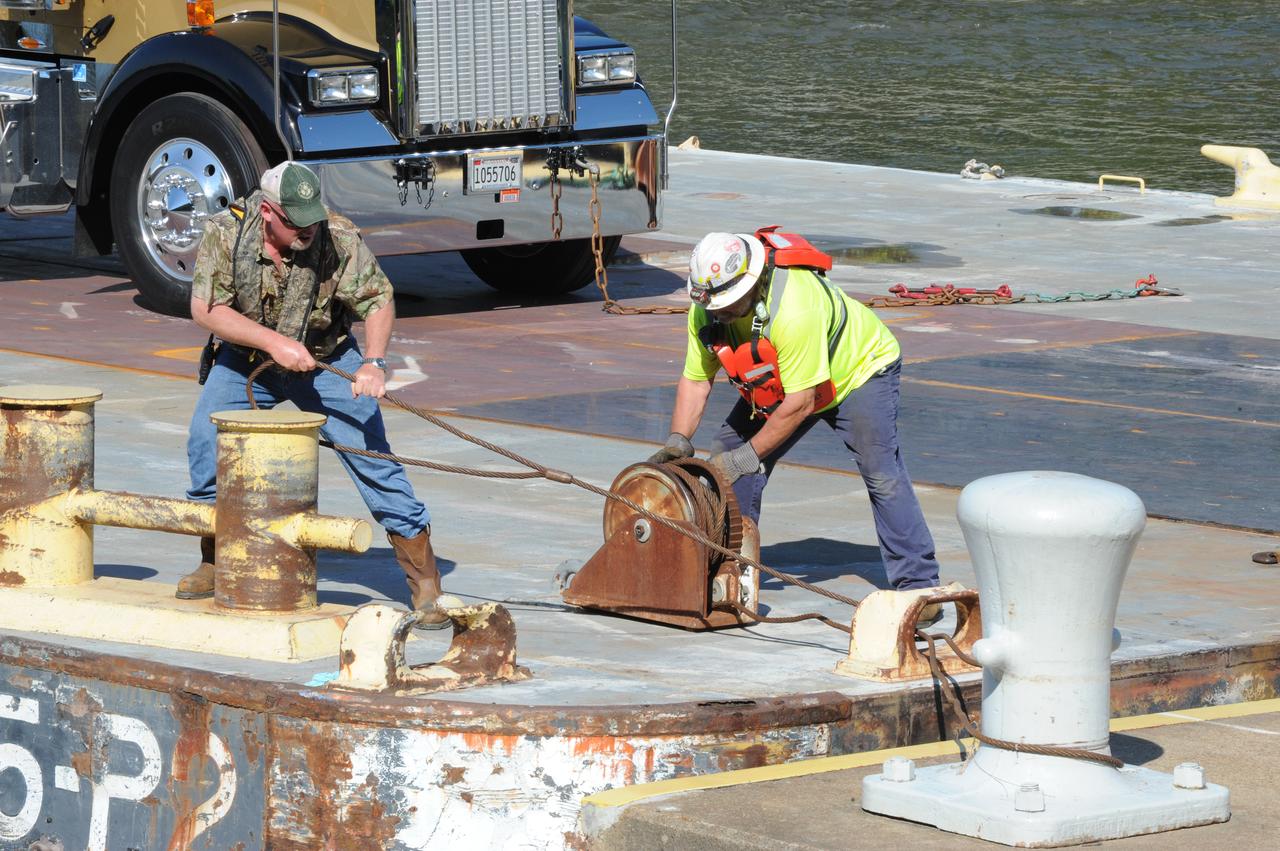
SLS INTERIM CRYOGENIC PROPULSION STAGE TEST ARTICLE ARRIVES AT WEST DOCK ON SHIELDS ROAD AND IS OFF LOADED FROM BARGE
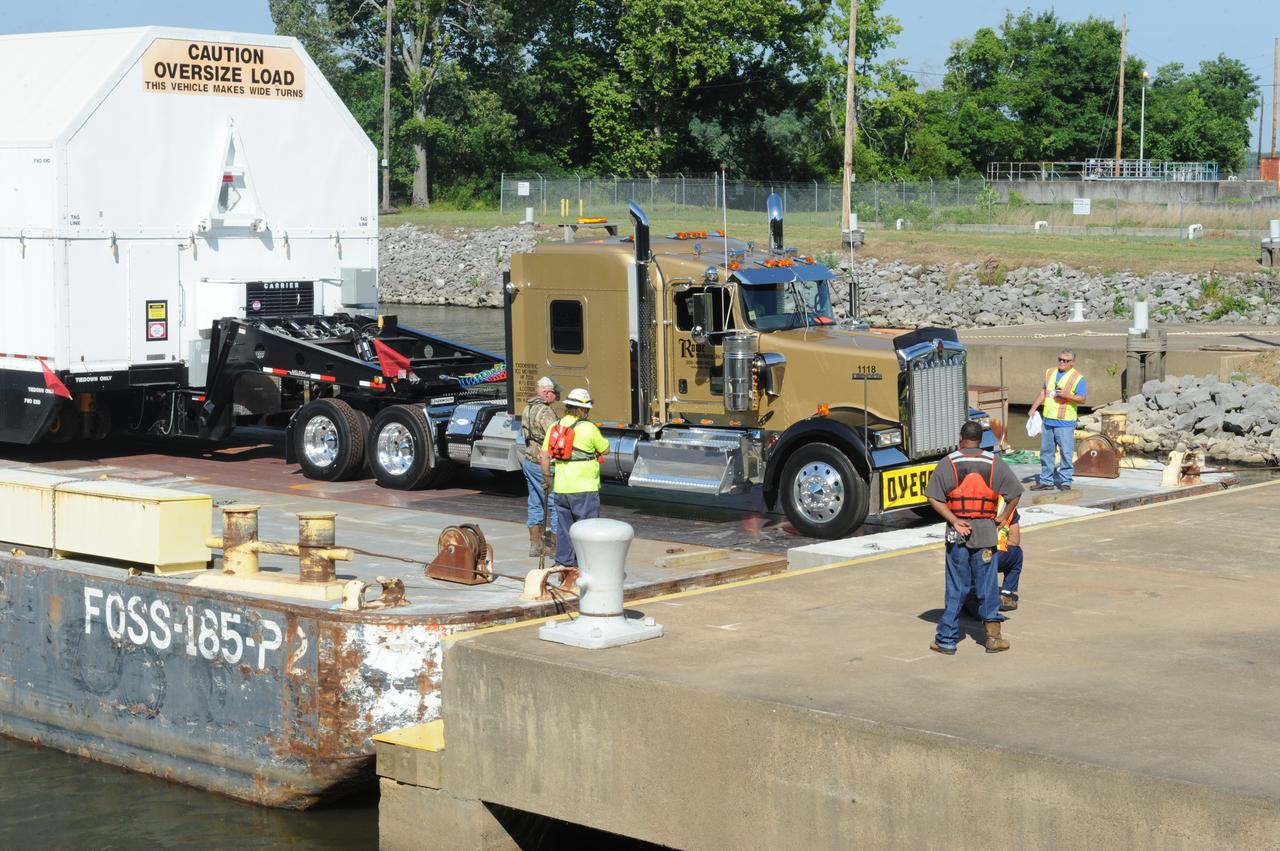
SLS INTERIM CRYOGENIC PROPULSION STAGE TEST ARTICLE ARRIVES AT WEST DOCK ON SHIELDS ROAD AND IS OFF LOADED FROM BARGE
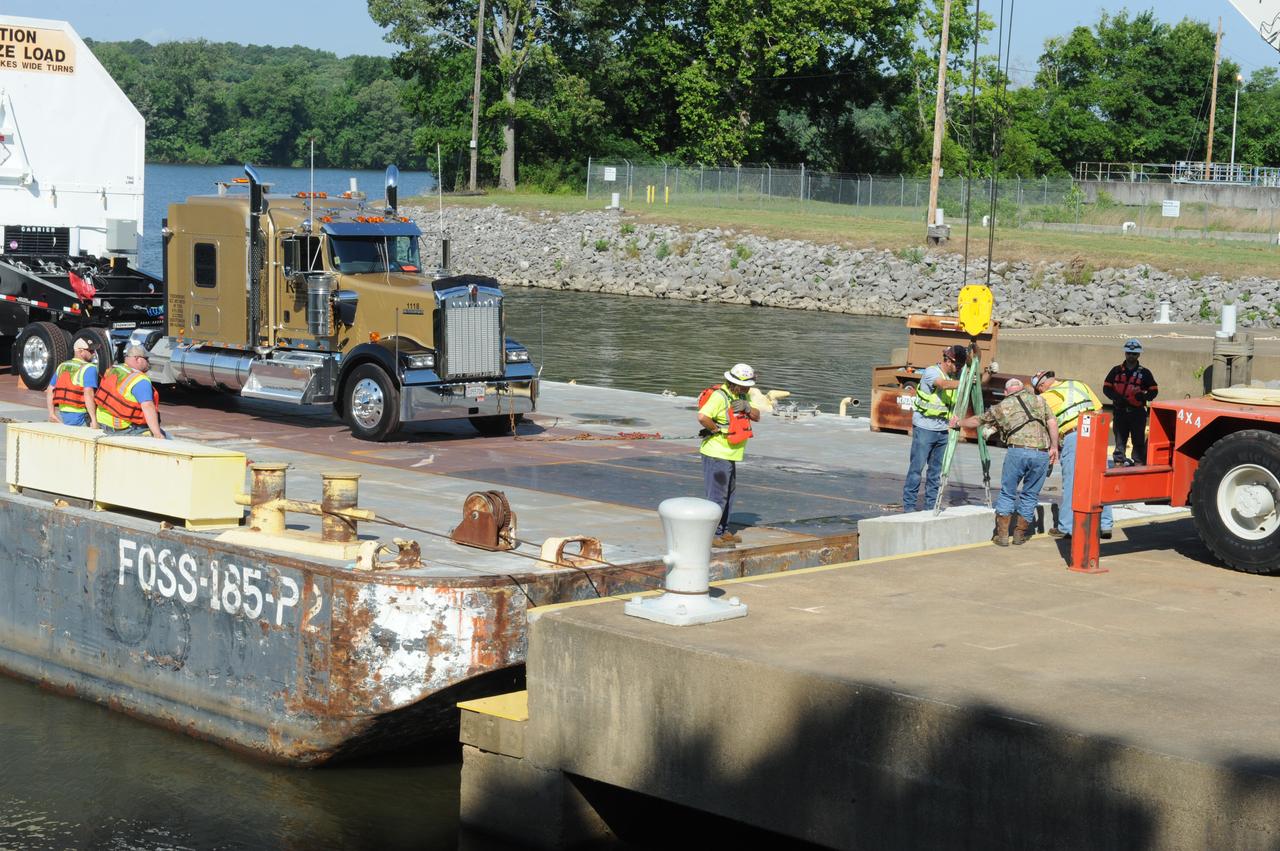
SLS INTERIM CRYOGENIC PROPULSION STAGE TEST ARTICLE ARRIVES AT WEST DOCK ON SHIELDS ROAD AND IS OFF LOADED FROM BARGE
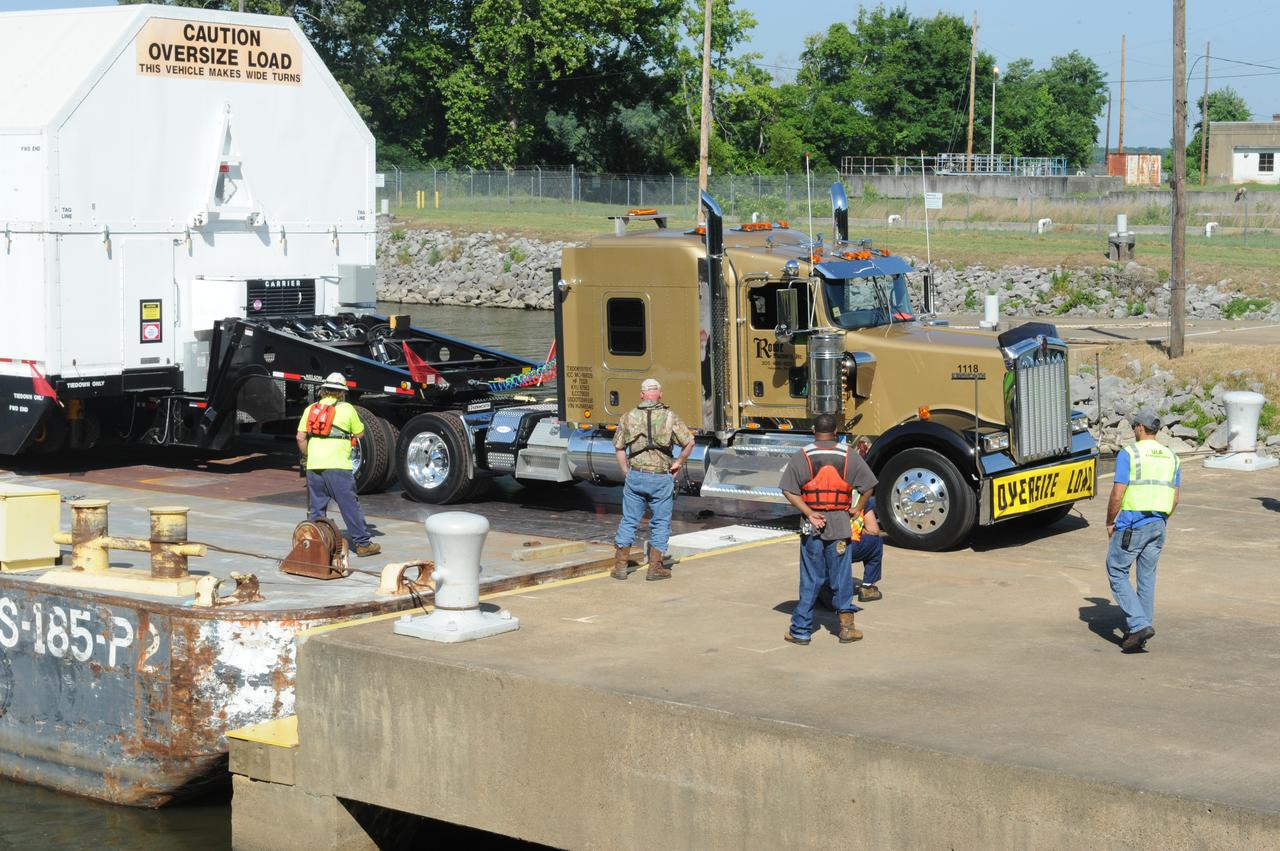
SLS INTERIM CRYOGENIC PROPULSION STAGE TEST ARTICLE ARRIVES AT WEST DOCK ON SHIELDS ROAD AND IS OFF LOADED FROM BARGE
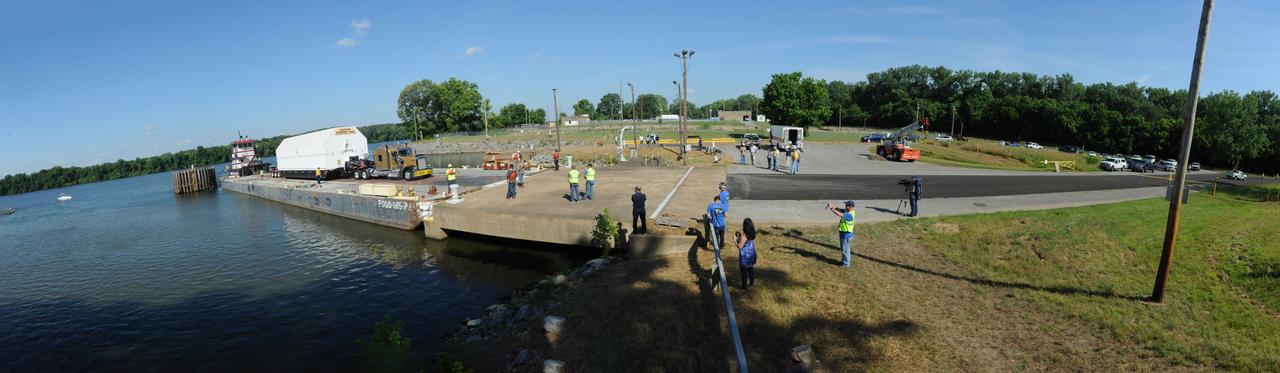
SLS INTERIM CRYOGENIC PROPULSION STAGE TEST ARTICLE ARRIVES AT WEST DOCK ON SHIELDS ROAD AND IS OFF LOADED FROM BARGE
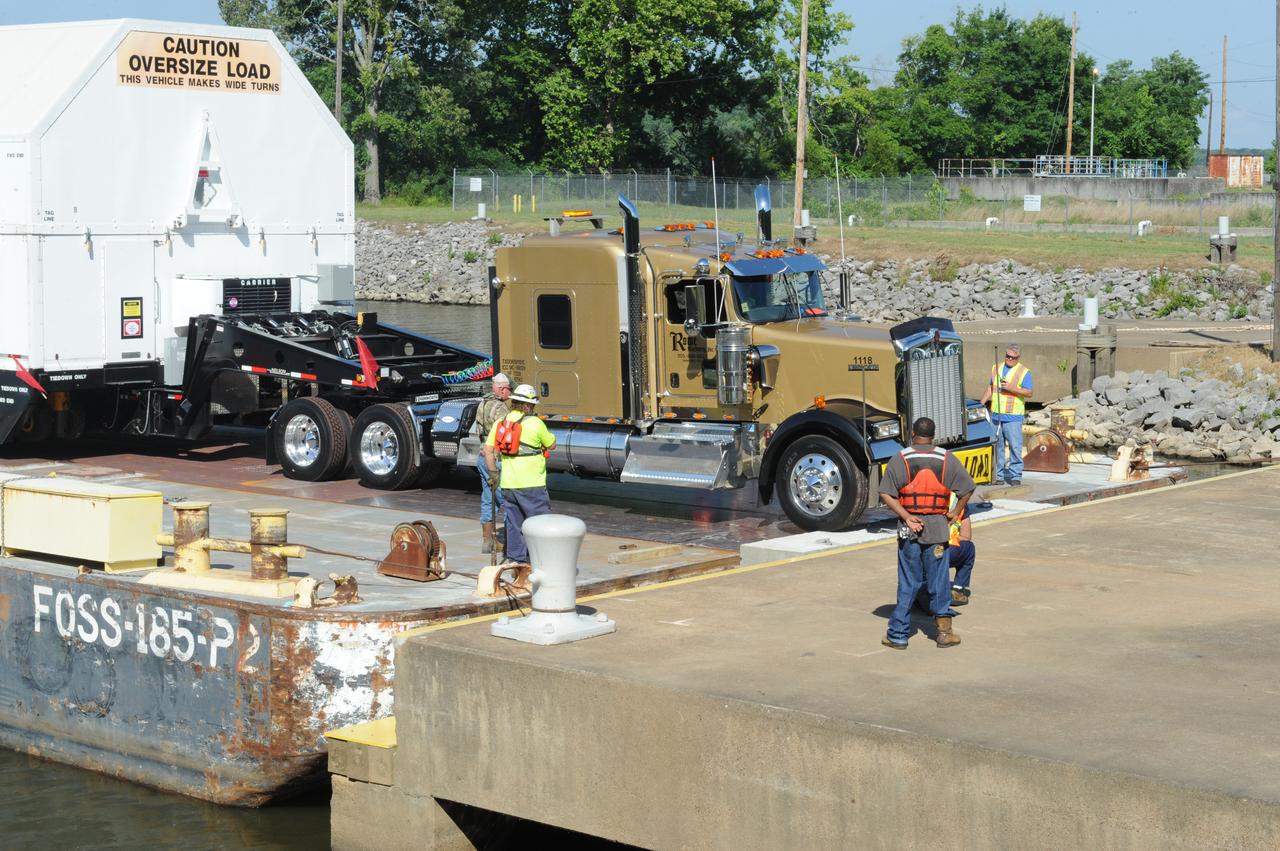
SLS INTERIM CRYOGENIC PROPULSION STAGE TEST ARTICLE ARRIVES AT WEST DOCK ON SHIELDS ROAD AND IS OFF LOADED FROM BARGE
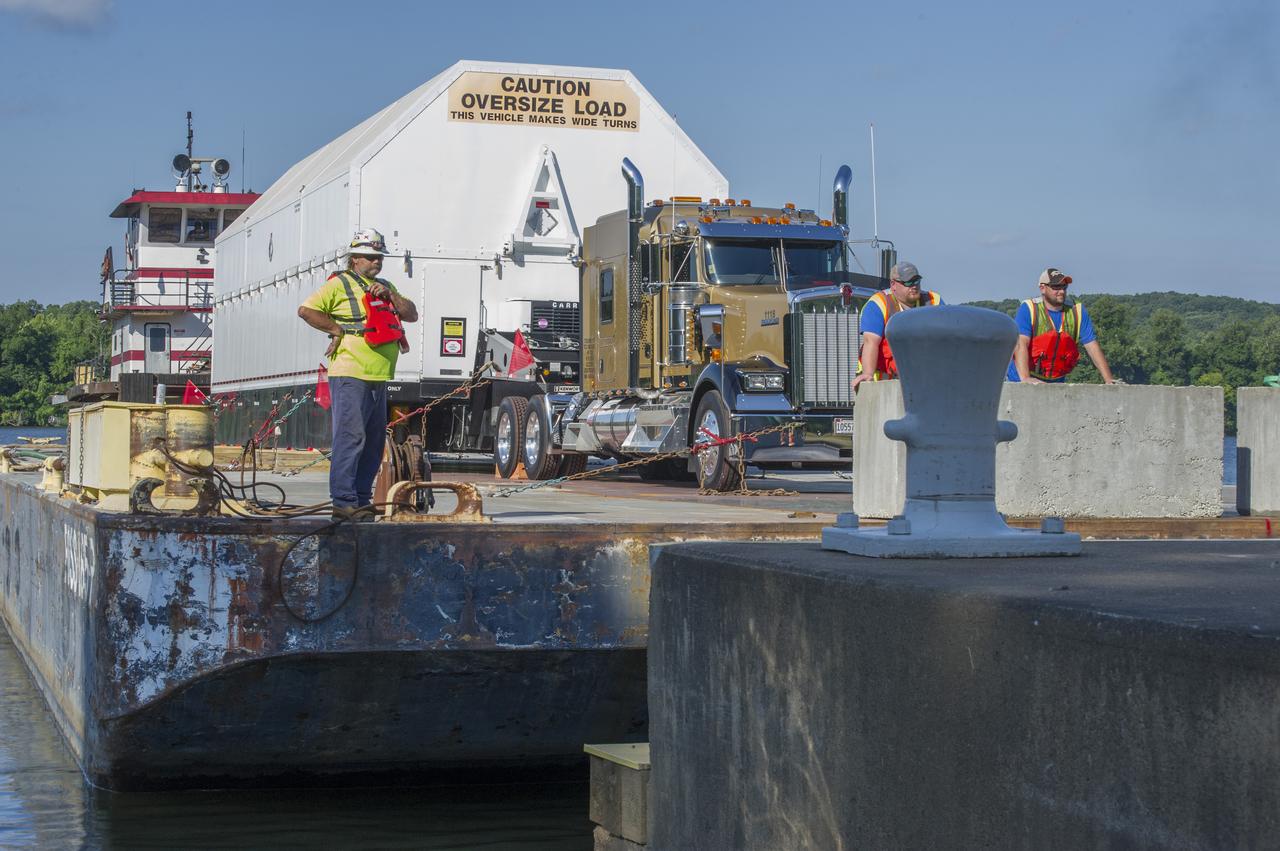
SLS INTERIM CRYOGENIC PROPULSION STAGE TEST ARTICLE ARRIVES AT WEST DOCK ON SHIELDS ROAD AND IS OFF LOADED FROM BARGE
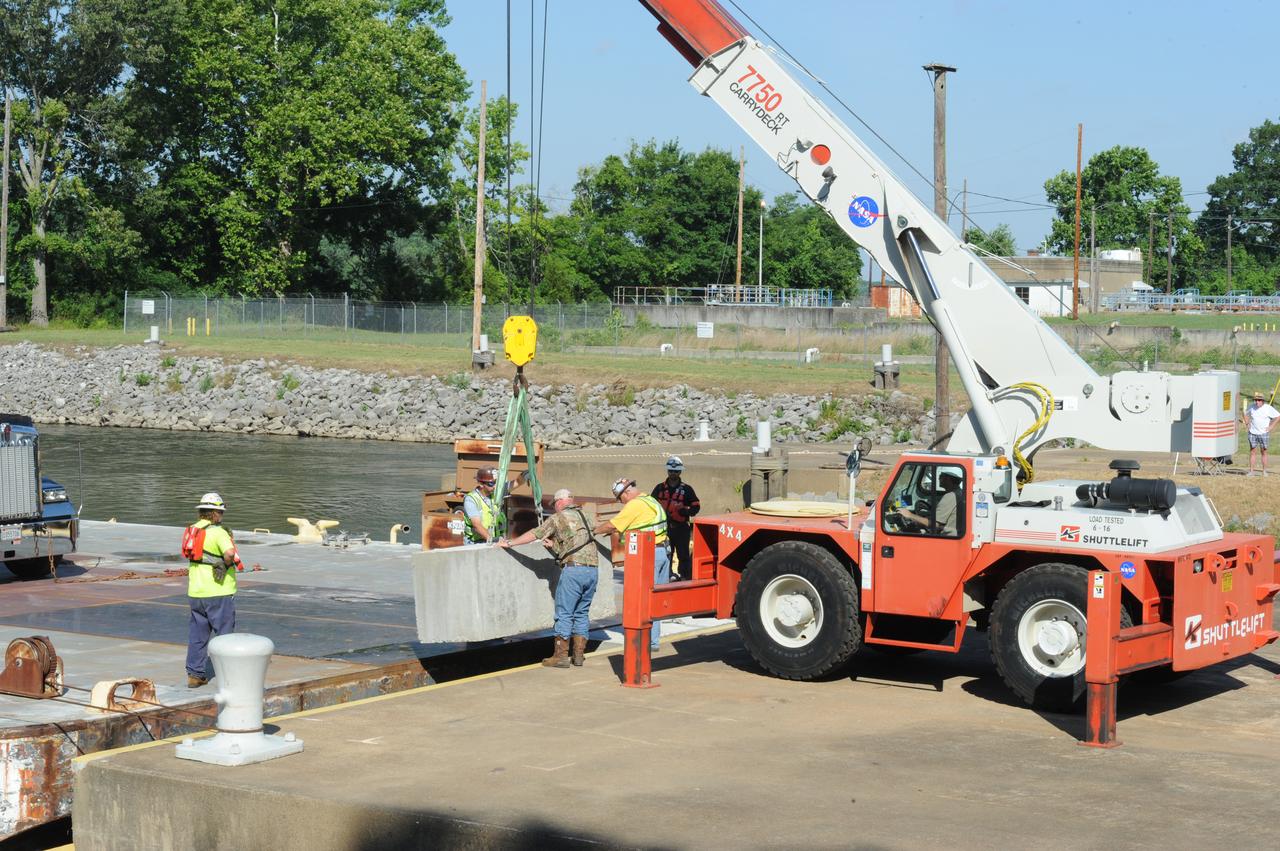
SLS INTERIM CRYOGENIC PROPULSION STAGE TEST ARTICLE ARRIVES AT WEST DOCK ON SHIELDS ROAD AND IS OFF LOADED FROM BARGE
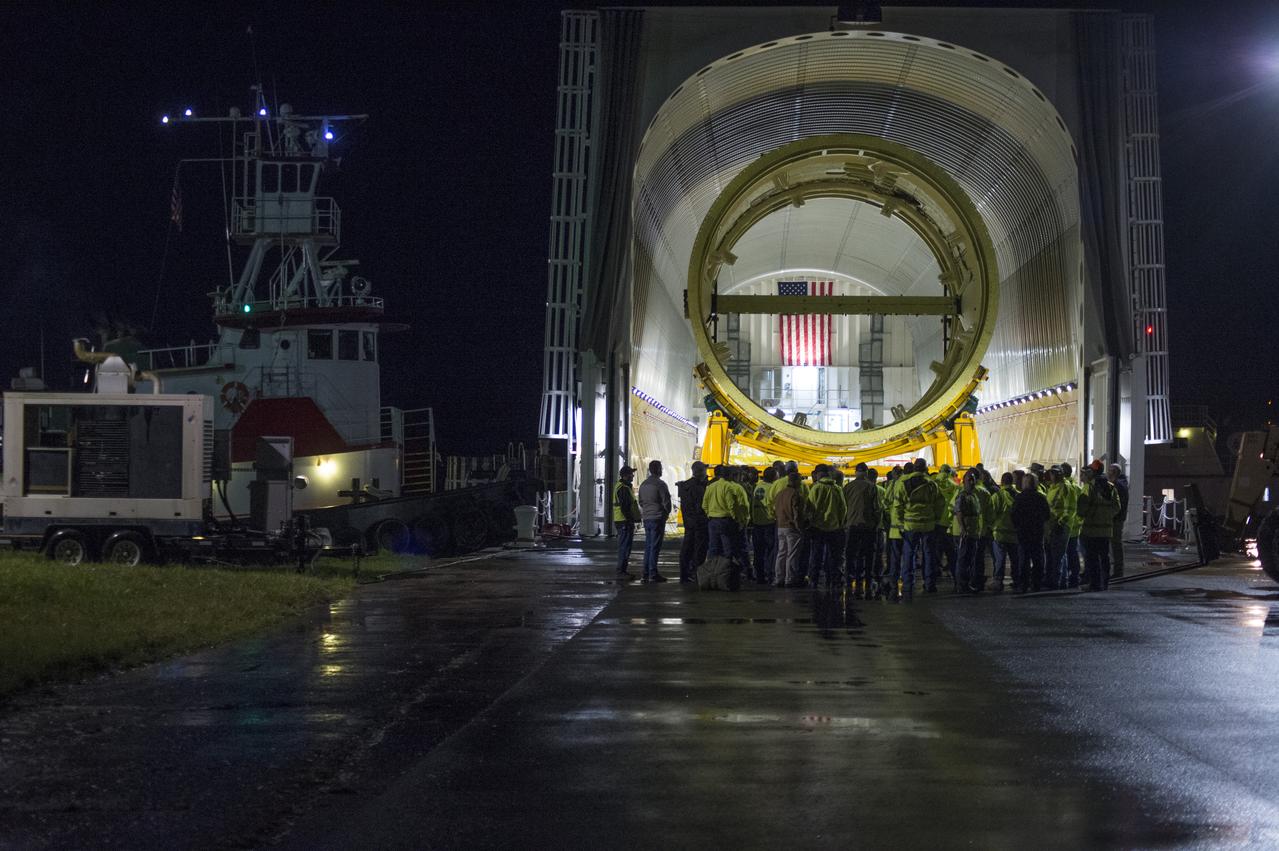
The SLS Stages Intertank Structural Test Assembly (STA) is rolling off the NASA Pegasus Barge at the MSFC Dock enroute to the MSFC 4619 Load Test Annex test facility for qualification testing. Members of MSFC Logistics Office and Move Team members gather for last minute instructions and safety briefing before off-loading STA hardware.
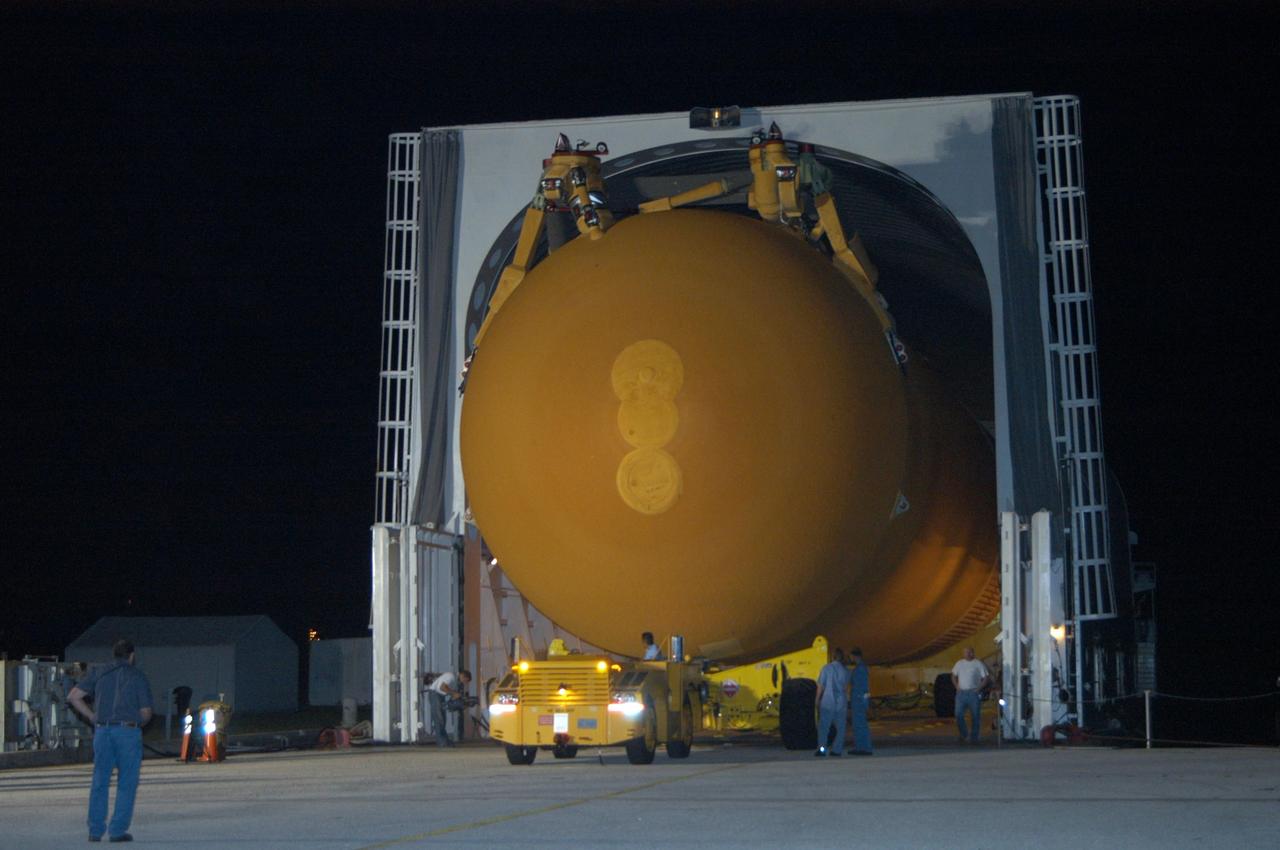
KENNEDY SPACE CENTER, FLA. - Off-loading of the redesigned external fuel tank that will launch Space Shuttle Discovery on the next shuttle mission, STS-121, begins in the Launch Complex 39 turn basin. The Pegasus barge delivered the tank from the Michoud Assembly Facility in New Orleans to NASA's Kennedy Space Center. After off-loading, the tank will be moved into the Vehicle Assembly Building and lifted into a checkout cell for further work. The tank, designated ET-119, will fly with many major safety changes, including the removal of the protuberance air load ramps. A large piece of foam from a ramp came off during the last shuttle launch in July 2005. The ramps were removed to eliminate a potential source of damaging debris to the space shuttle. The next launch of Discovery is scheduled for May 2006.
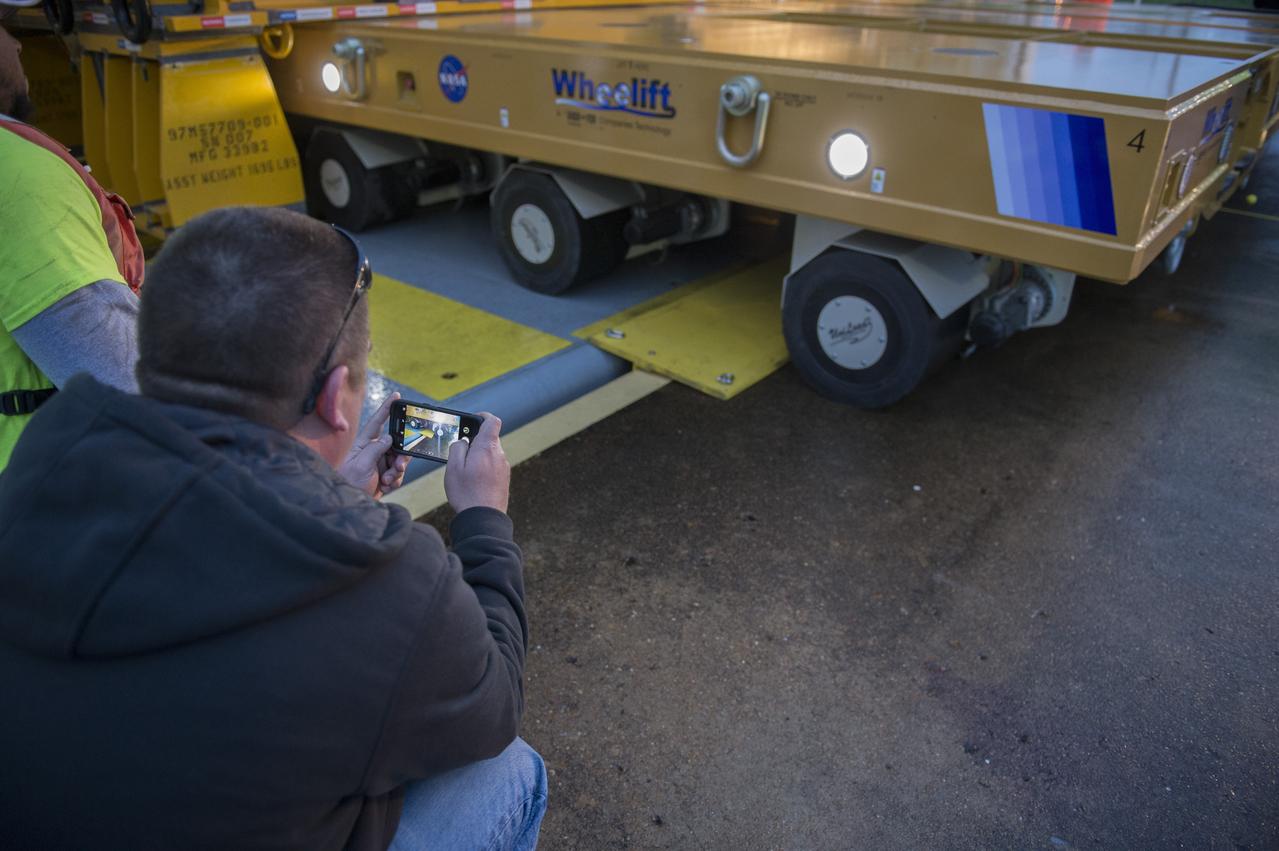
The SLS Stages Intertank Structural Test Assembly (STA) is rolling off the NASA Pegasus Barge at the MSFC Dock enroute to the MSFC 4619 Load Test Annex test facility for qualification testing
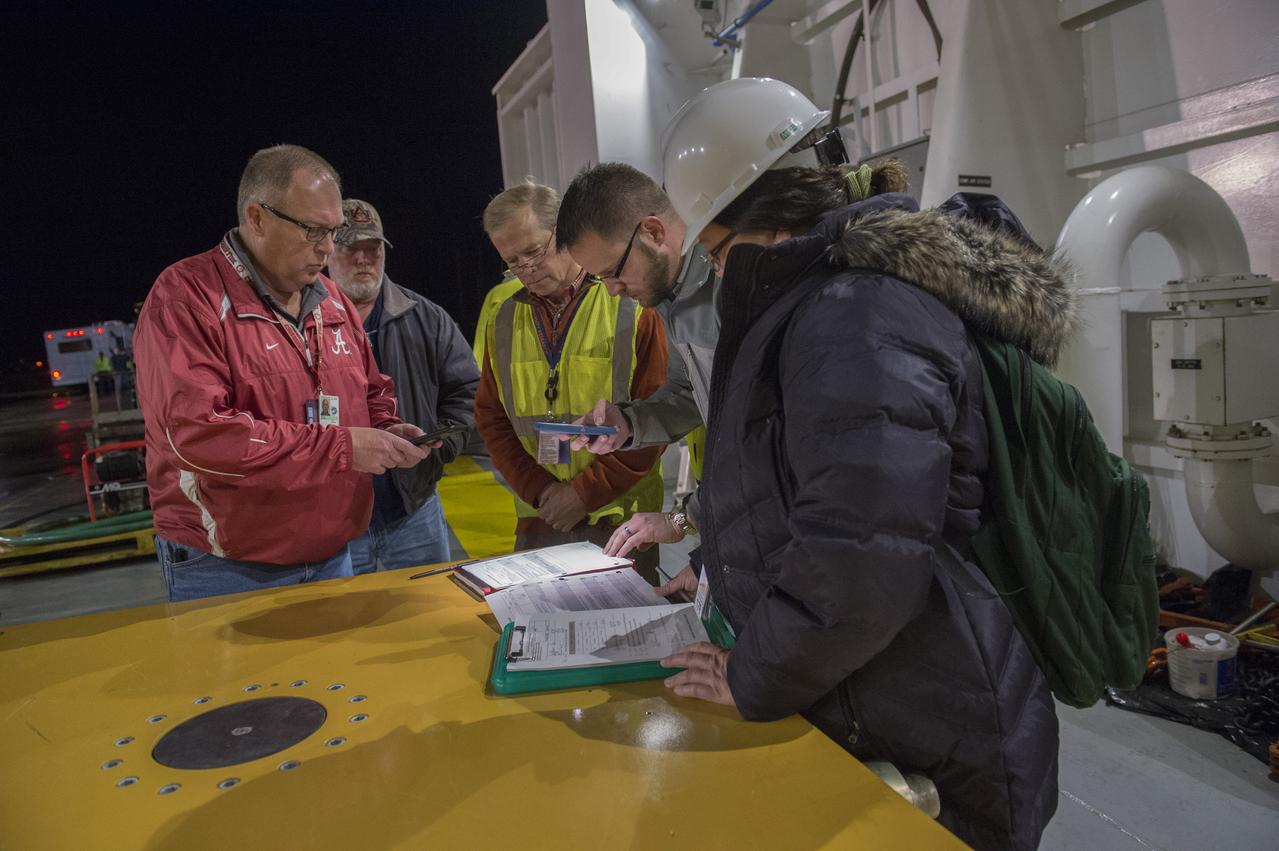
The SLS Stages Intertank Structural Test Assembly (STA) is rolling off the NASA Pegasus Barge at the MSFC Dock enroute to the MSFC 4619 Load Test Annex test facility for qualification testing
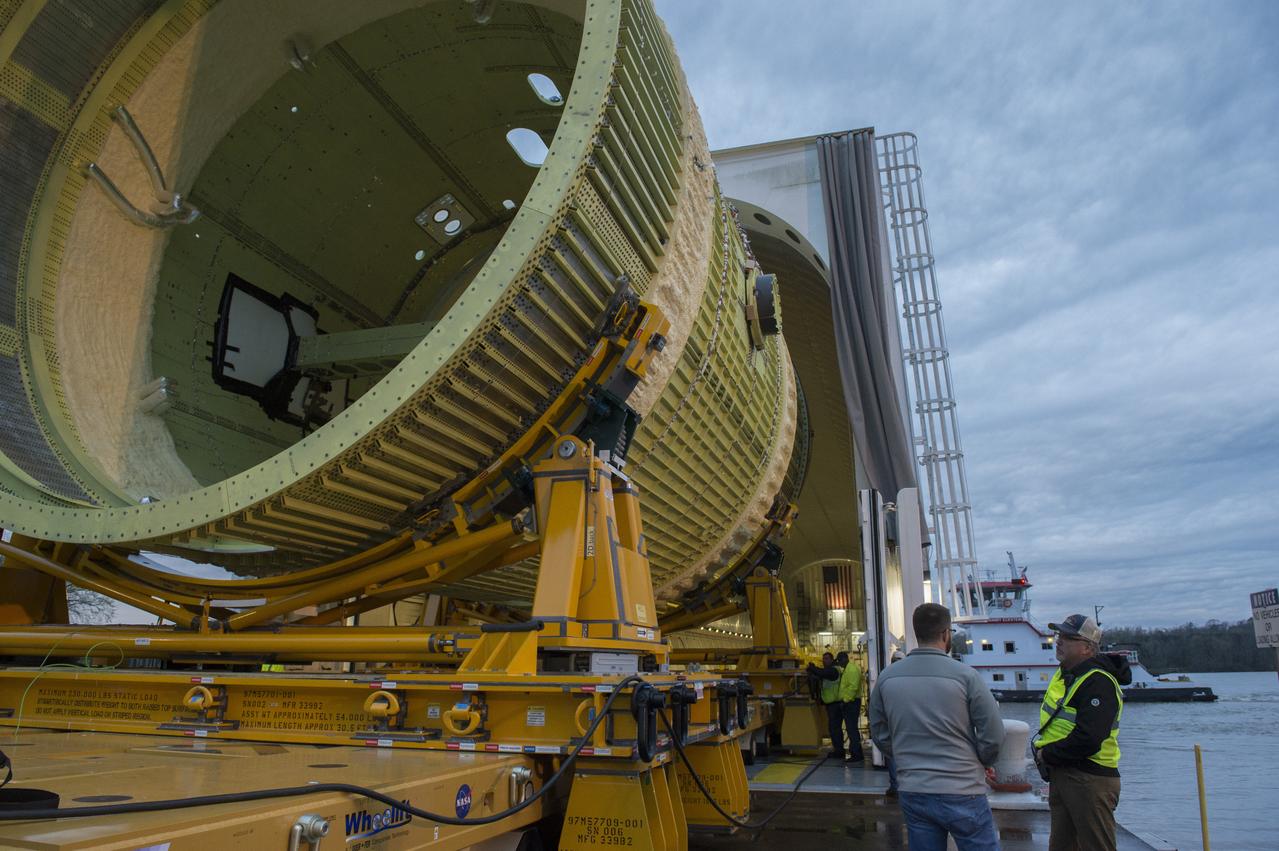
The SLS Stages Intertank Structural Test Assembly (STA) is rolling off the NASA Pegasus Barge at the MSFC Dock enroute to the MSFC 4619 Load Test Annex test facility for qualification testing
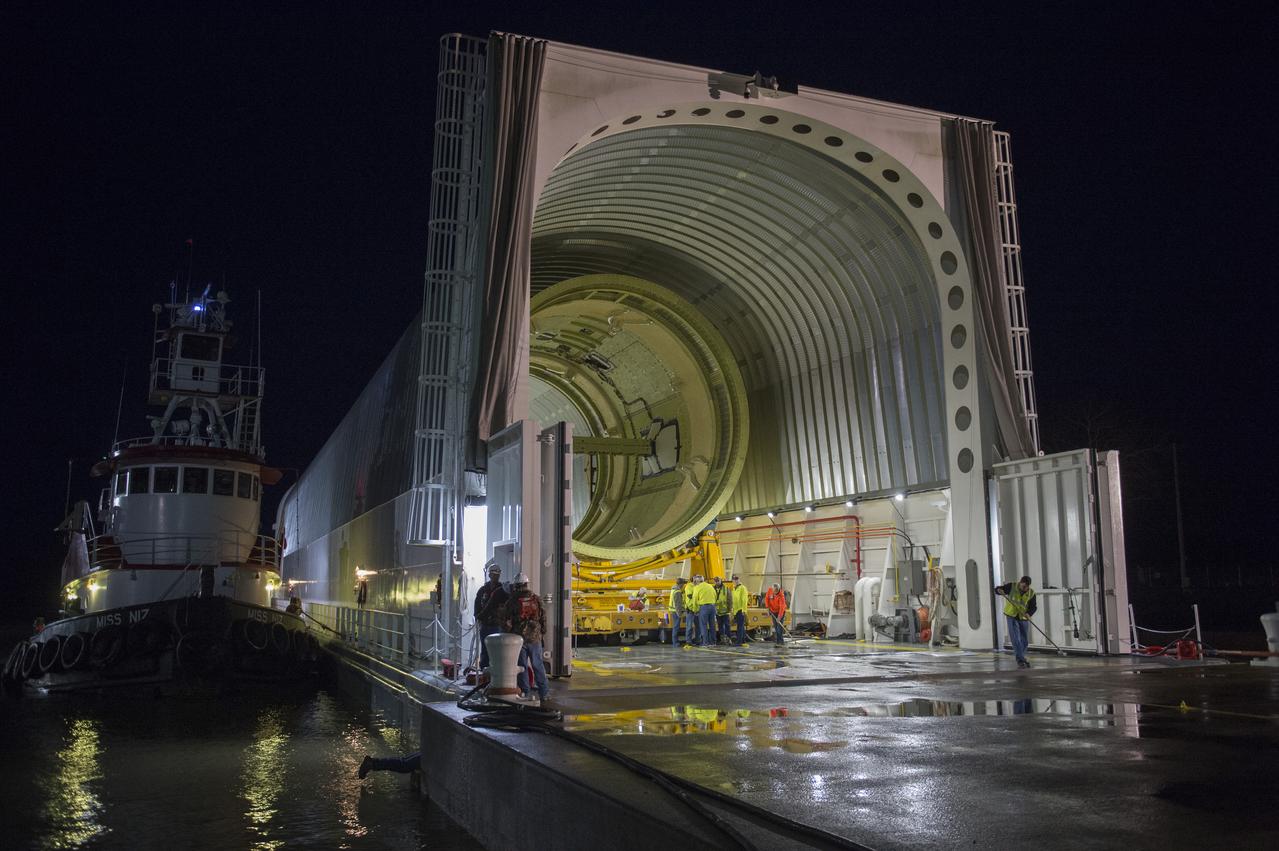
The SLS Stages Intertank Structural Test Assembly (STA) is rolling off the NASA Pegasus Barge at the MSFC Dock enroute to the MSFC 4619 Load Test Annex test facility for qualification testing
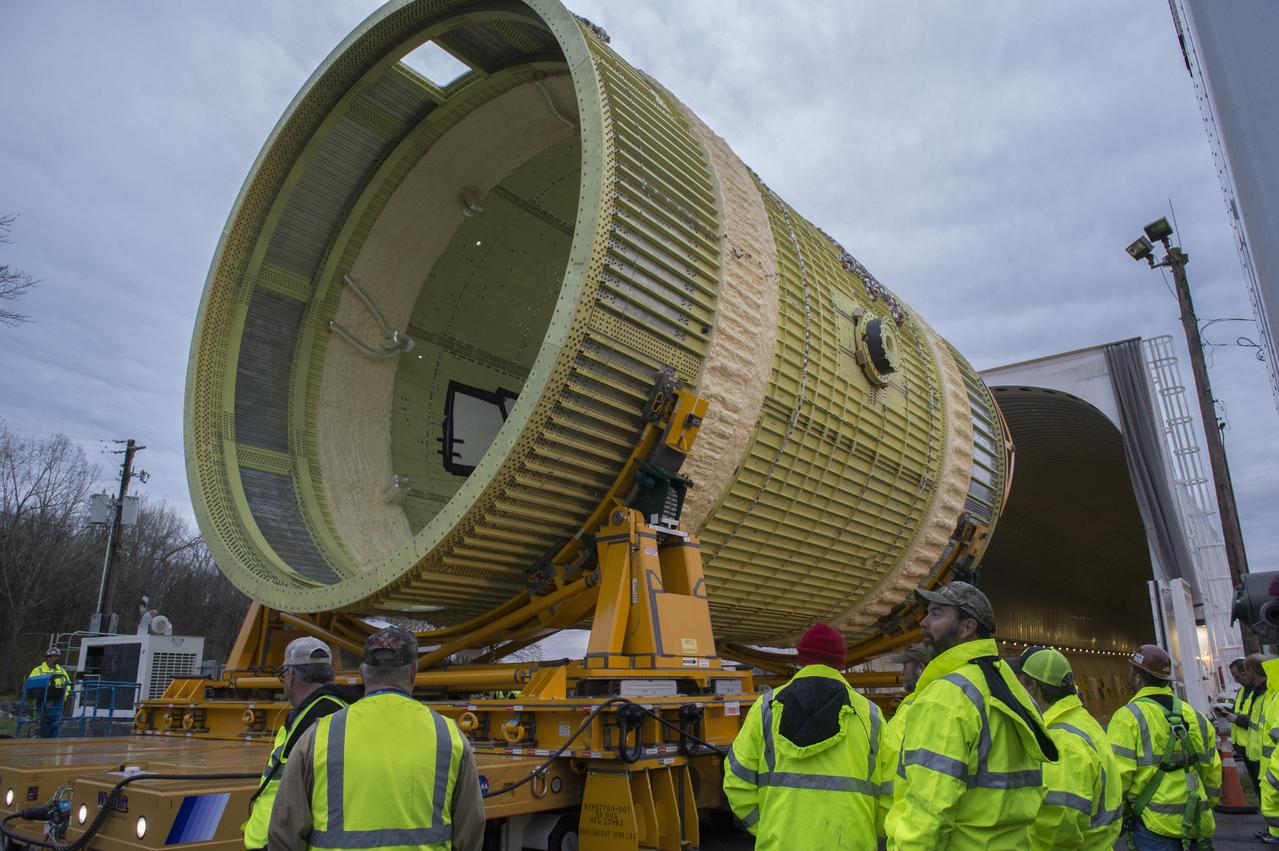
The SLS Stages Intertank Structural Test Assembly (STA) is rolling off the NASA Pegasus Barge at the MSFC Dock enroute to the MSFC 4619 Load Test Annex test facility for qualification testing
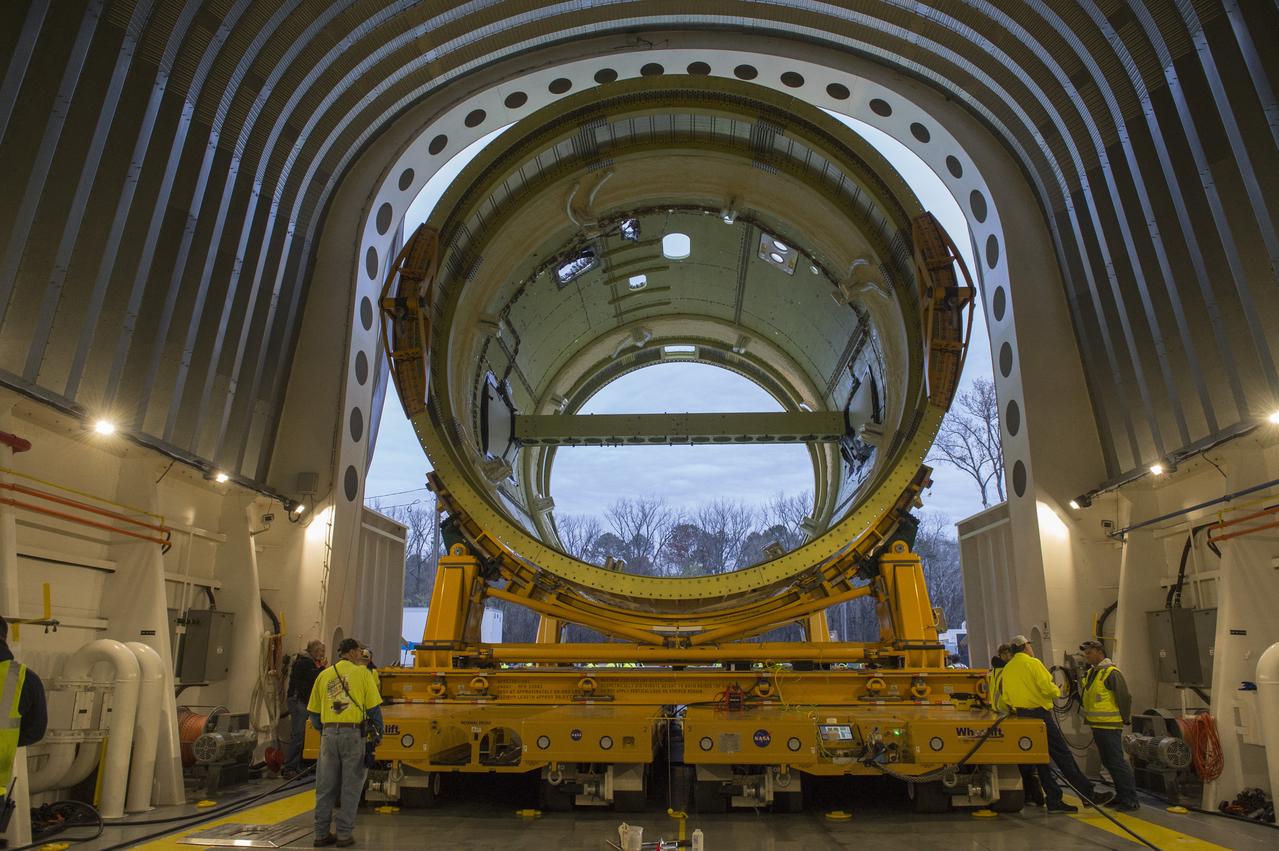
The SLS Stages Intertank Structural Test Assembly (STA) is rolling off the NASA Pegasus Barge at the MSFC Dock enroute to the MSFC 4619 Load Test Annex test facility for qualification testing
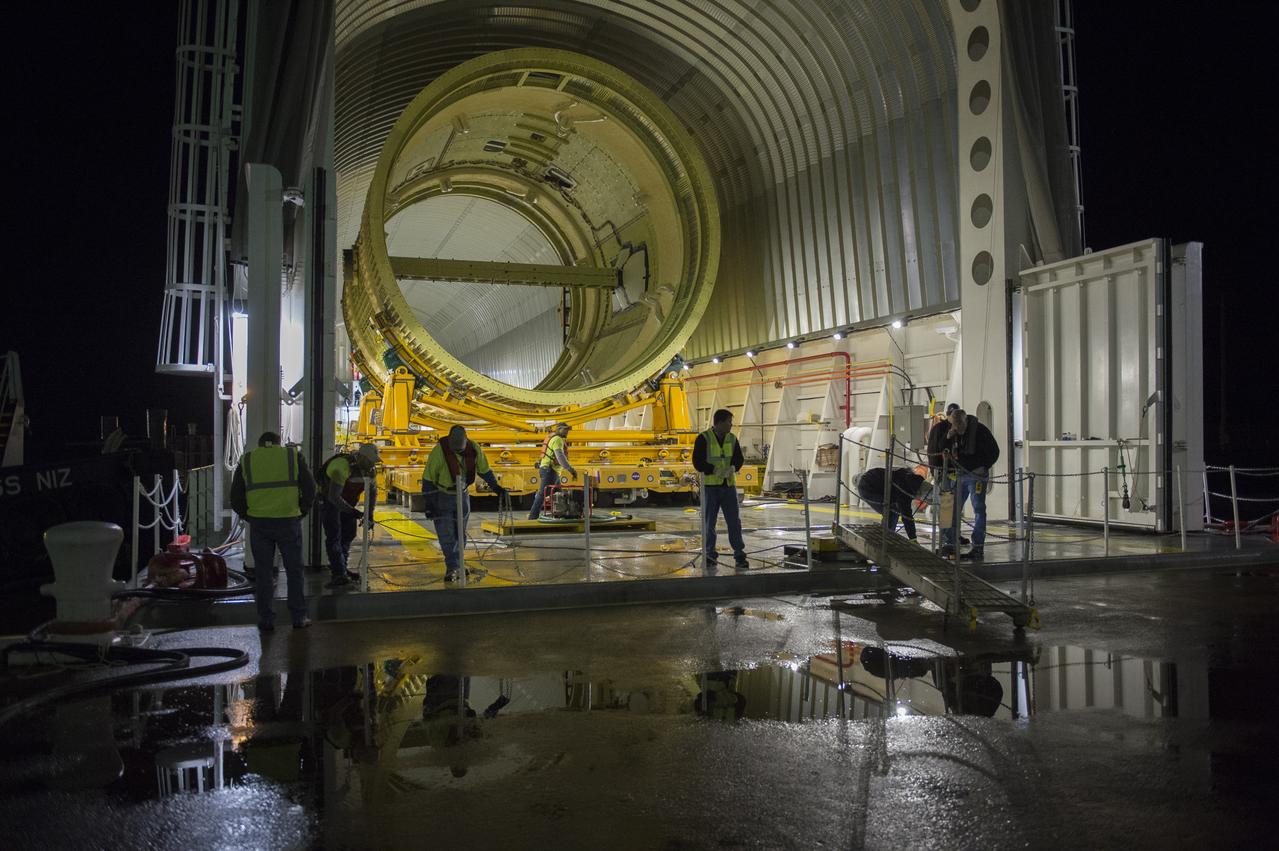
The SLS Stages Intertank Structural Test Assembly (STA) is rolling off the NASA Pegasus Barge at the MSFC Dock enroute to the MSFC 4619 Load Test Annex test facility for qualification testing
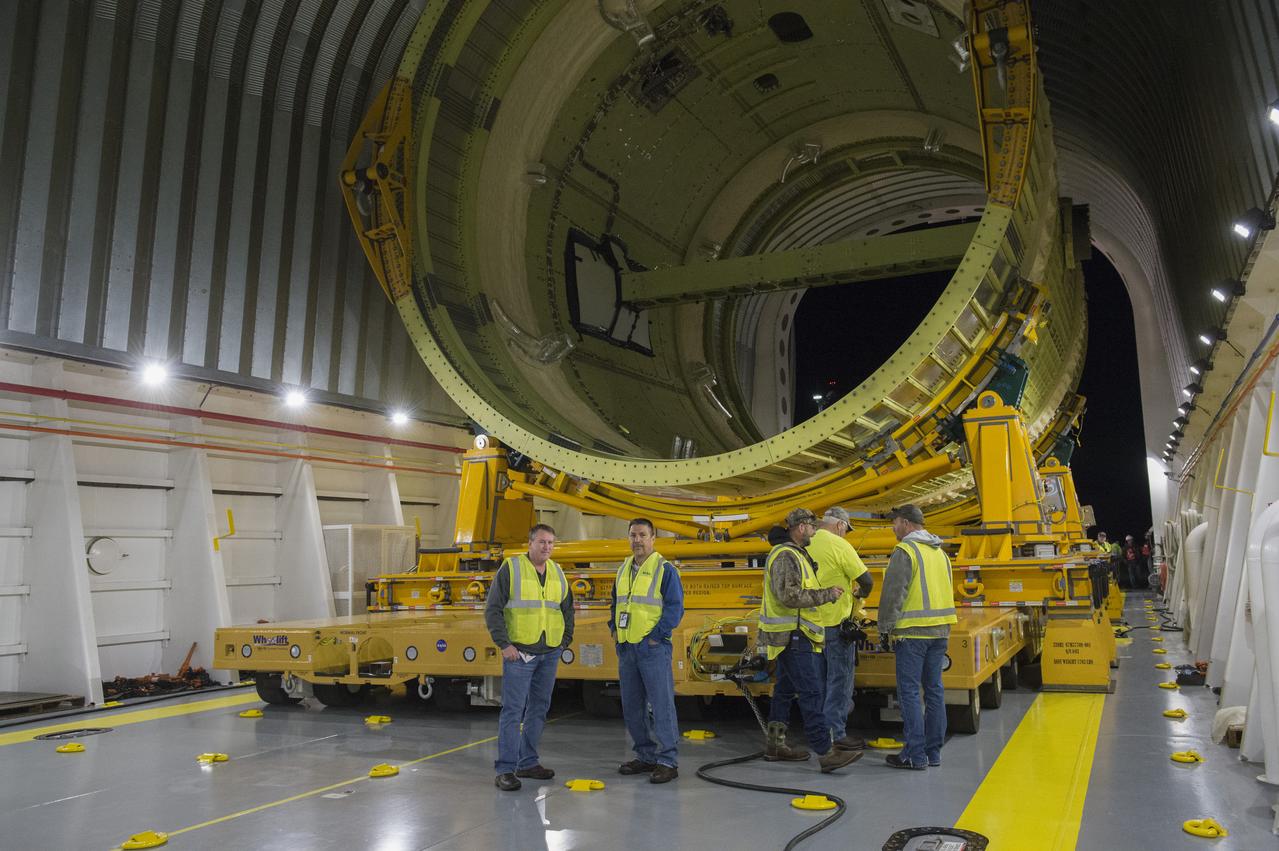
The SLS Stages Intertank Structural Test Assembly (STA) is rolling off the NASA Pegasus Barge at the MSFC Dock enroute to the MSFC 4619 Load Test Annex test facility for qualification testing
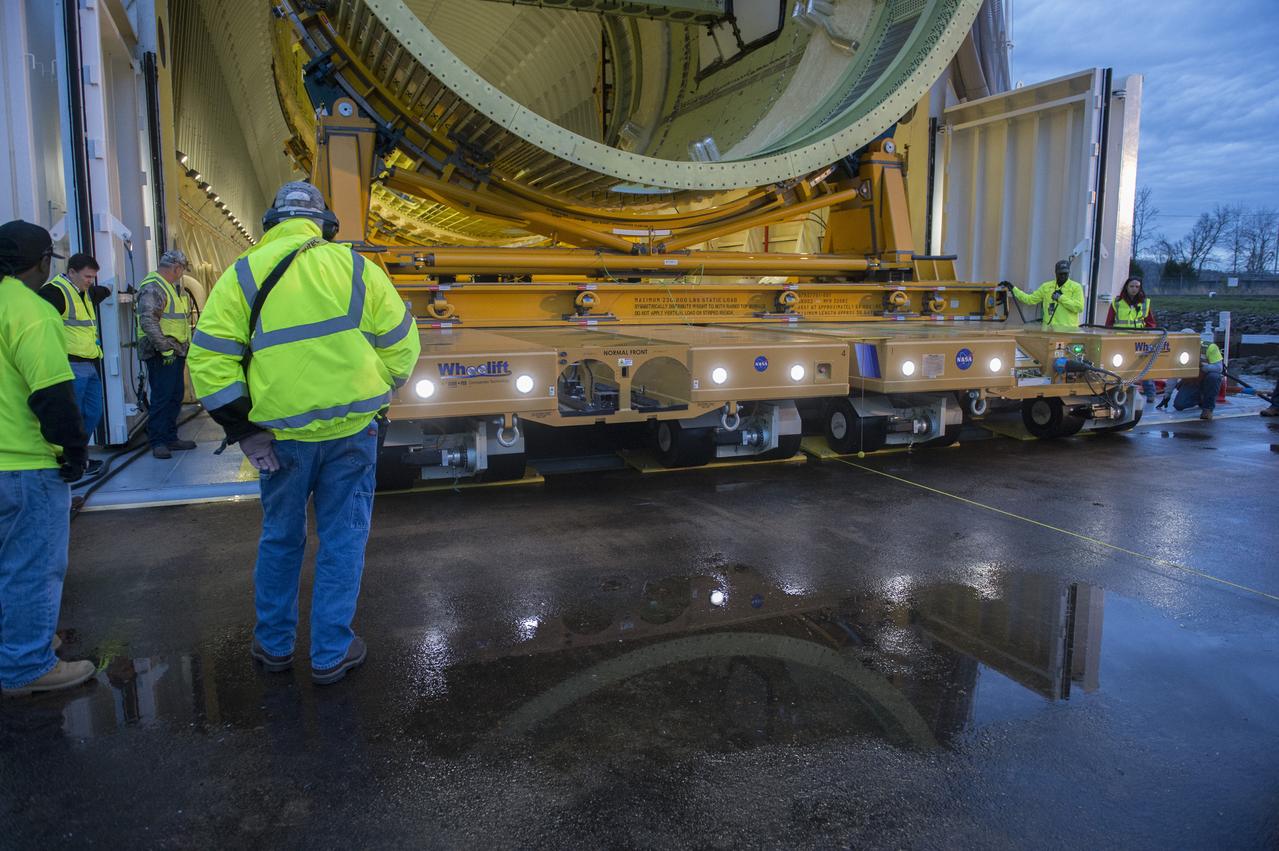
The SLS Stages Intertank Structural Test Assembly (STA) is rolling off the NASA Pegasus Barge at the MSFC Dock enroute to the MSFC 4619 Load Test Annex test facility for qualification testing
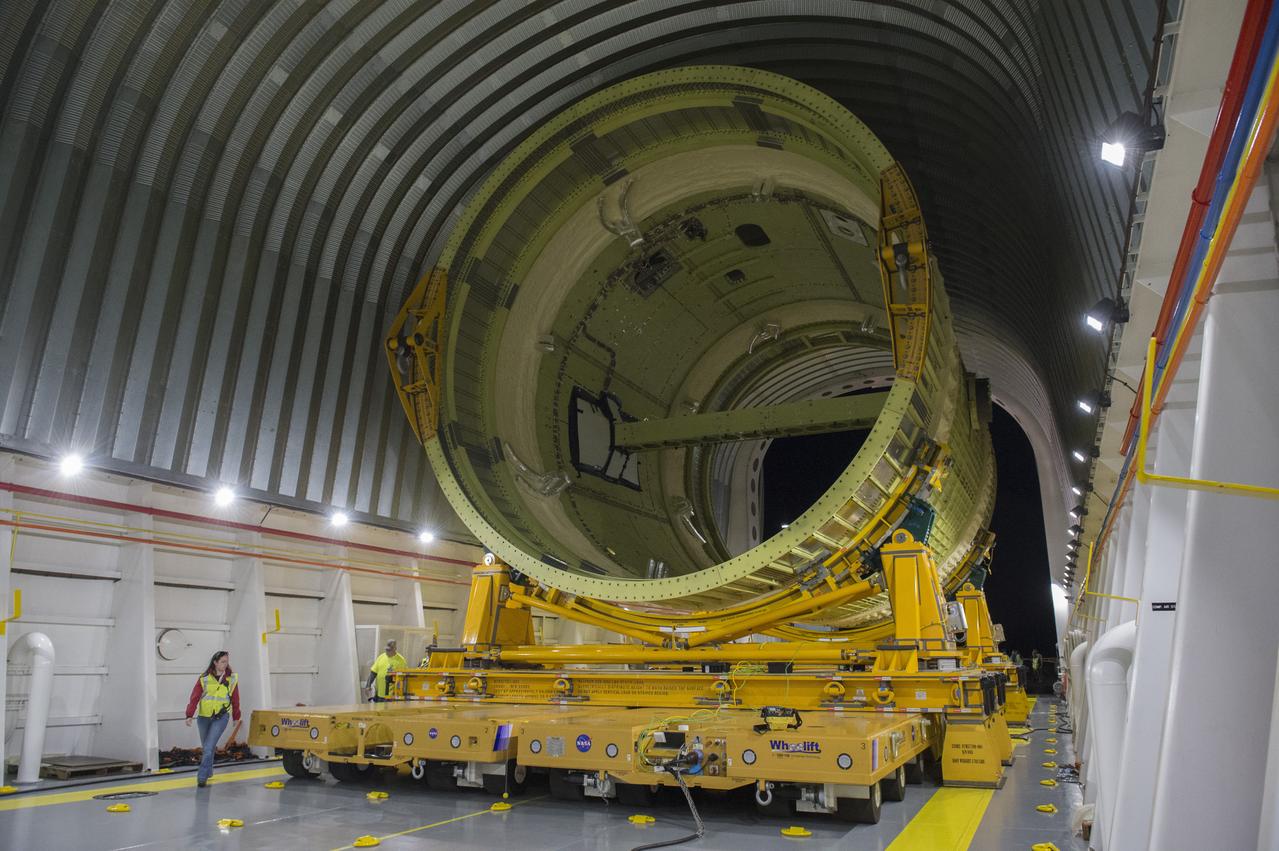
The SLS Stages Intertank Structural Test Assembly (STA) is rolling off the NASA Pegasus Barge at the MSFC Dock enroute to the MSFC 4619 Load Test Annex test facility for qualification testing
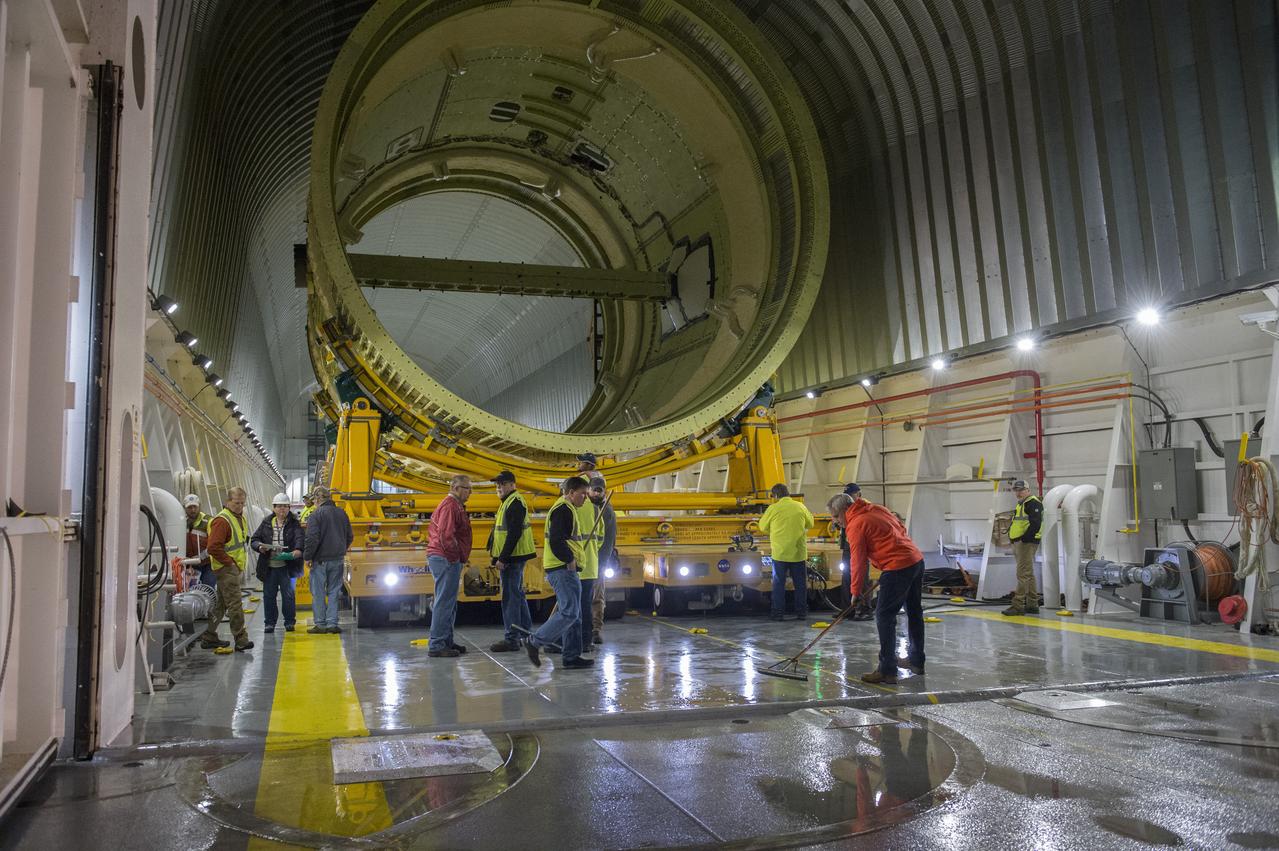
The SLS Stages Intertank Structural Test Assembly (STA) is rolling off the NASA Pegasus Barge at the MSFC Dock enroute to the MSFC 4619 Load Test Annex test facility for qualification testing
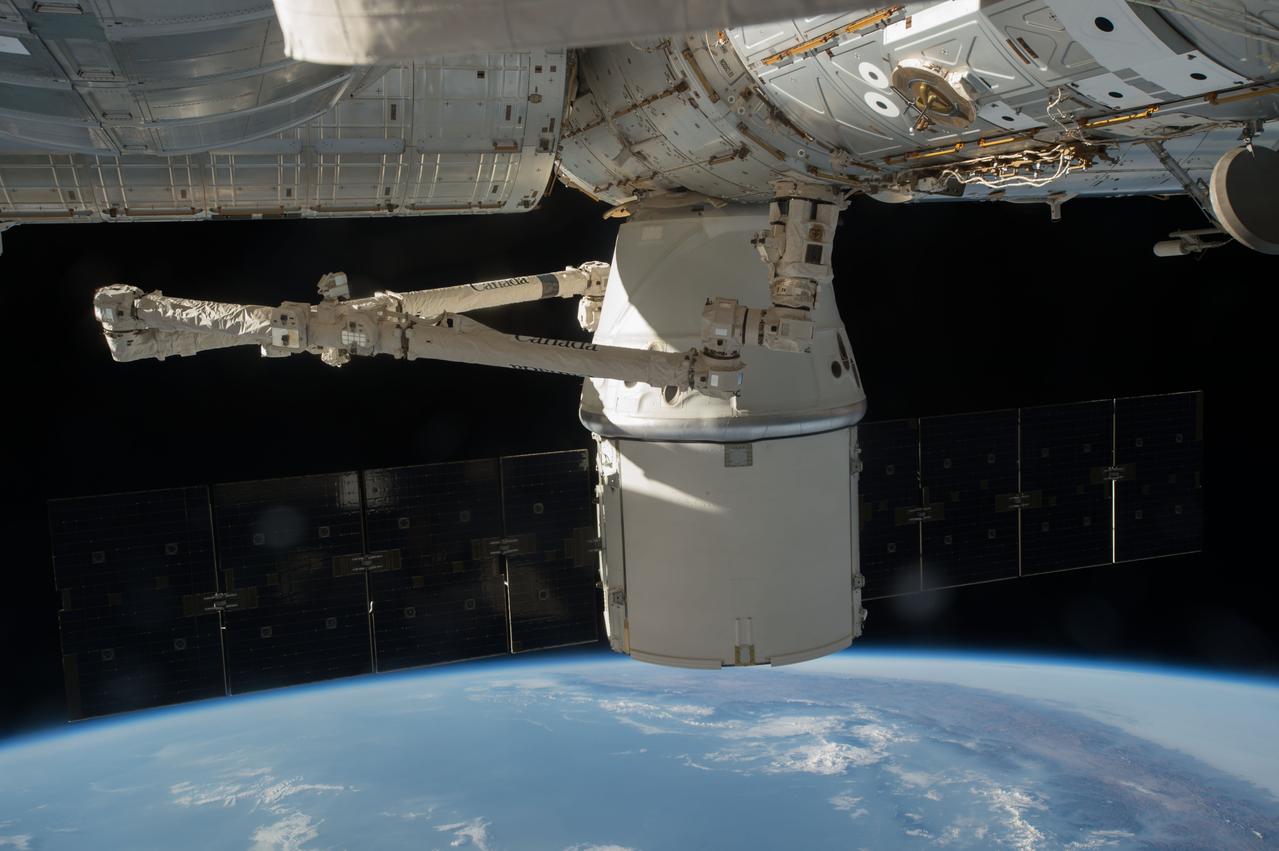
ISS048e042926 (07/24/2016) --- The SpaceX Dragon is attached to the International Space Station, while inside the station the crew of Expedition 48 continue to off load the nearly 5000 pounds of supplies, hardware and experiments.
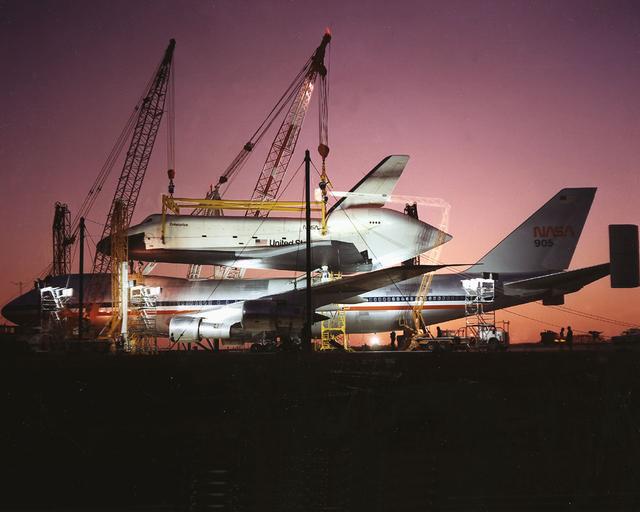
The Shuttle Orbiter Enterprise is off-loaded at Redstone Arsenal Airfield for later Mated Vertical Ground Vibration tests (MVGVT) at Marshall Space Flight Center's Dynamic Test Stand. The tests marked the first time ever that the entire shuttle complement (including orbiter, external tank, and solid rocket boosters) were mated vertically.
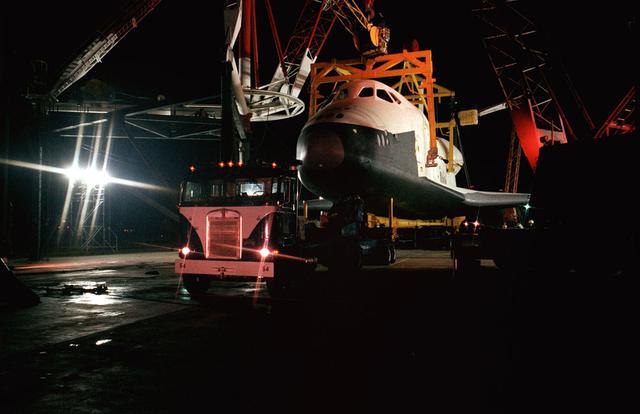
The Shuttle Orbiter Enterprise is off-loaded at Redstone Arsenal Airfield for later Mated Vertical Ground Vibration tests (MVGVT) at Marshall Space Flight Center's Dynamic Test Stand. The tests marked the first time ever that the entire shuttle complement including orbiter, external tank, and solid rocket boosters were vertically mated.
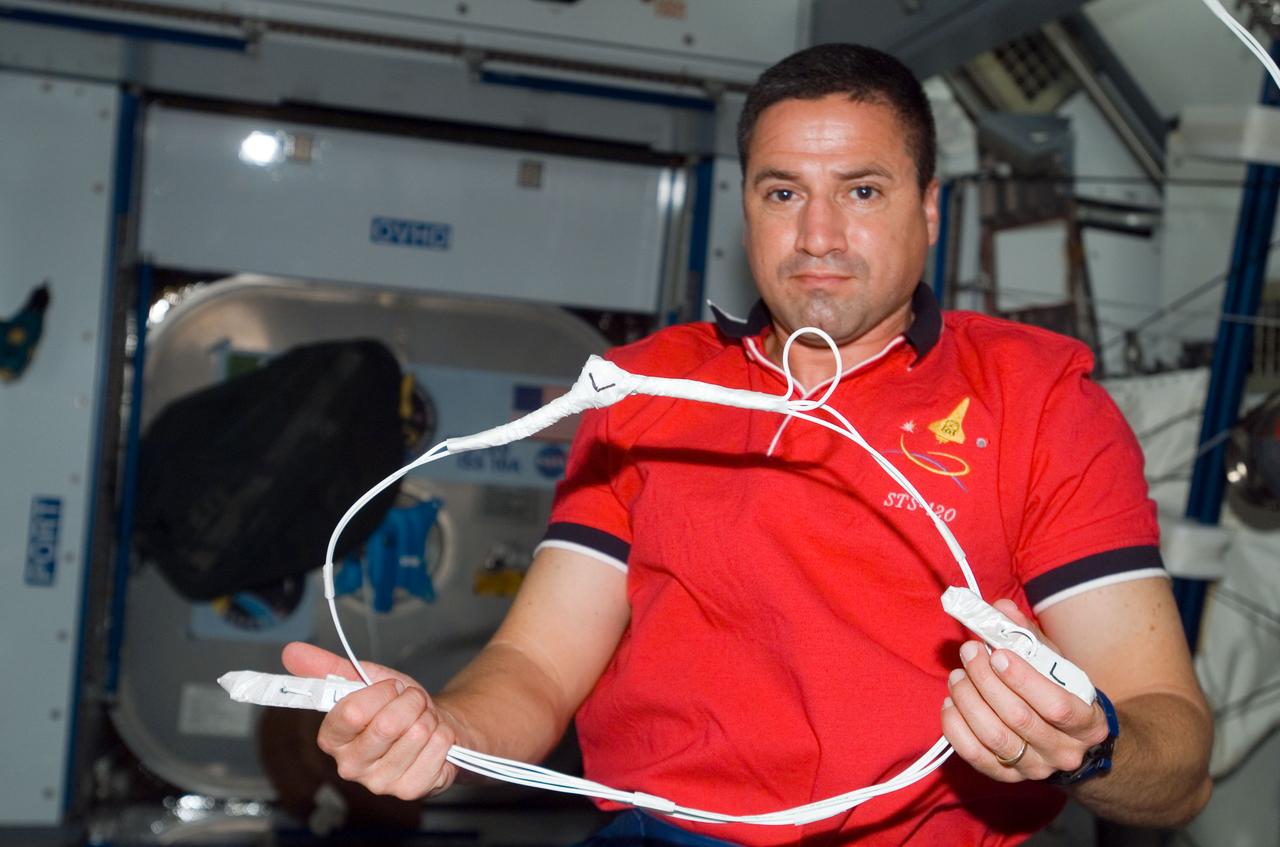
ISS016-E-008015 (1 Nov. 2007) --- Astronaut George Zamka, STS-120 pilot, holds a "cufflink" apparatus in the Harmony node of the International Space Station, which will be attached to the damaged solar arrays and take the structural load off of the broken hinge during the next spacewalk while Space Shuttle Discovery is docked with the station.
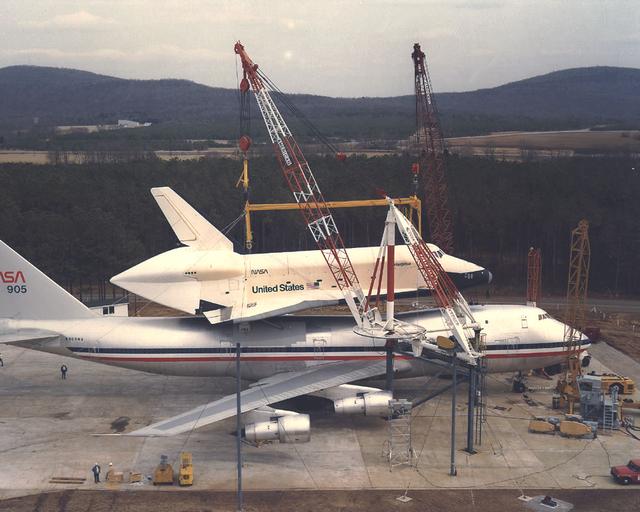
The Shuttle Orbiter Enterprise is off-loaded at Redstone Arsenal Airfield for later Mated Vertical Ground Vibration tests (MVGVT) at Marshall Space Flight Center's Dynamic Test Stand. The tests marked the first time ever that the entire shuttle complement (including orbiter, external tank, and solid rocket boosters) were mated vertically.
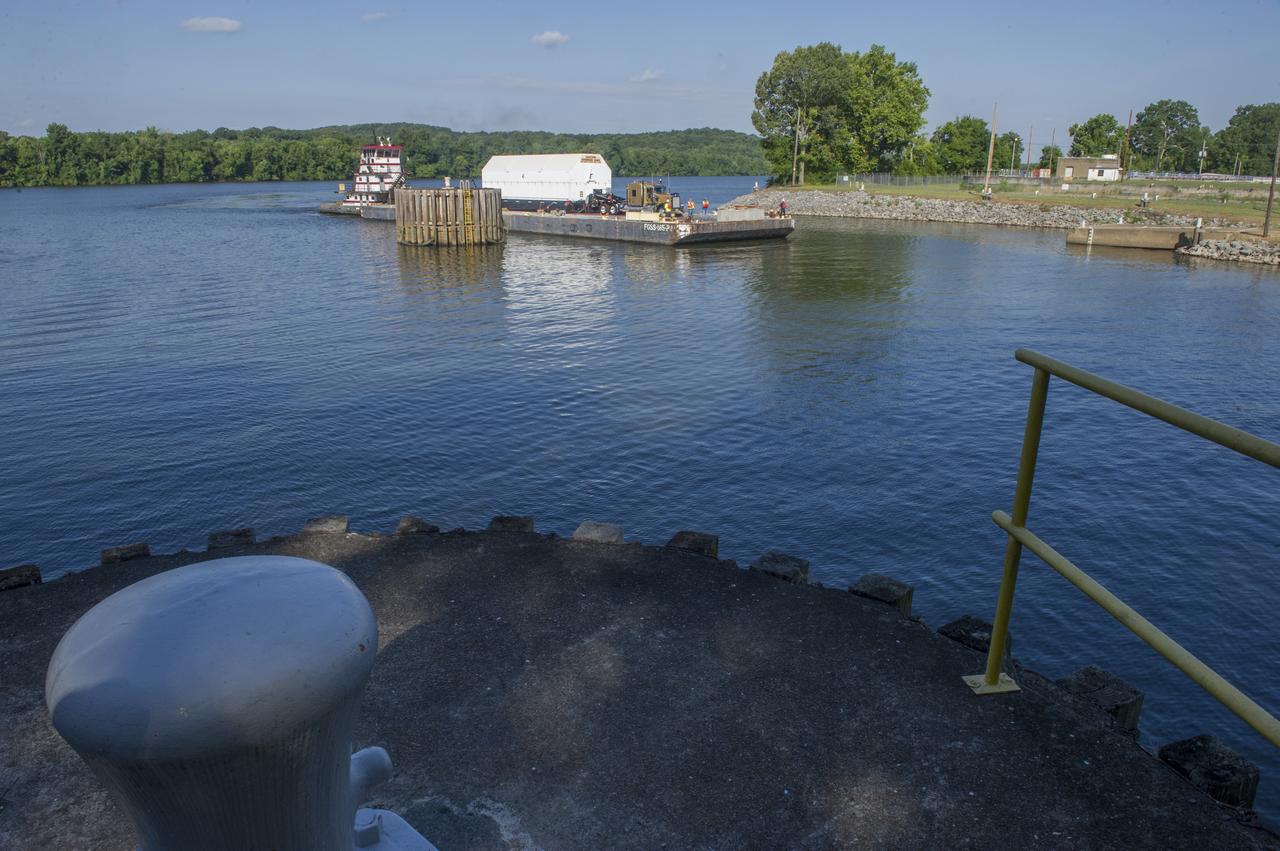
SLS INTERIM CRYOGENIC PROPULSION STAGE TEST ARTICLE ARRIVES AT WEST DOCK ON SHIELDS ROAD AND IS OFF LOADED FROM BARGEUAH ENGINEERING STUDENT ROBERT HILLAN TALKS TO SPACE STATION CREW MEMBERS ABOUT HIS WINNING 3-D PRINTED TOOL DESIGNED FOR USE ON ISS, AND IS INTERVIEWED BY LOCAL MEDIA
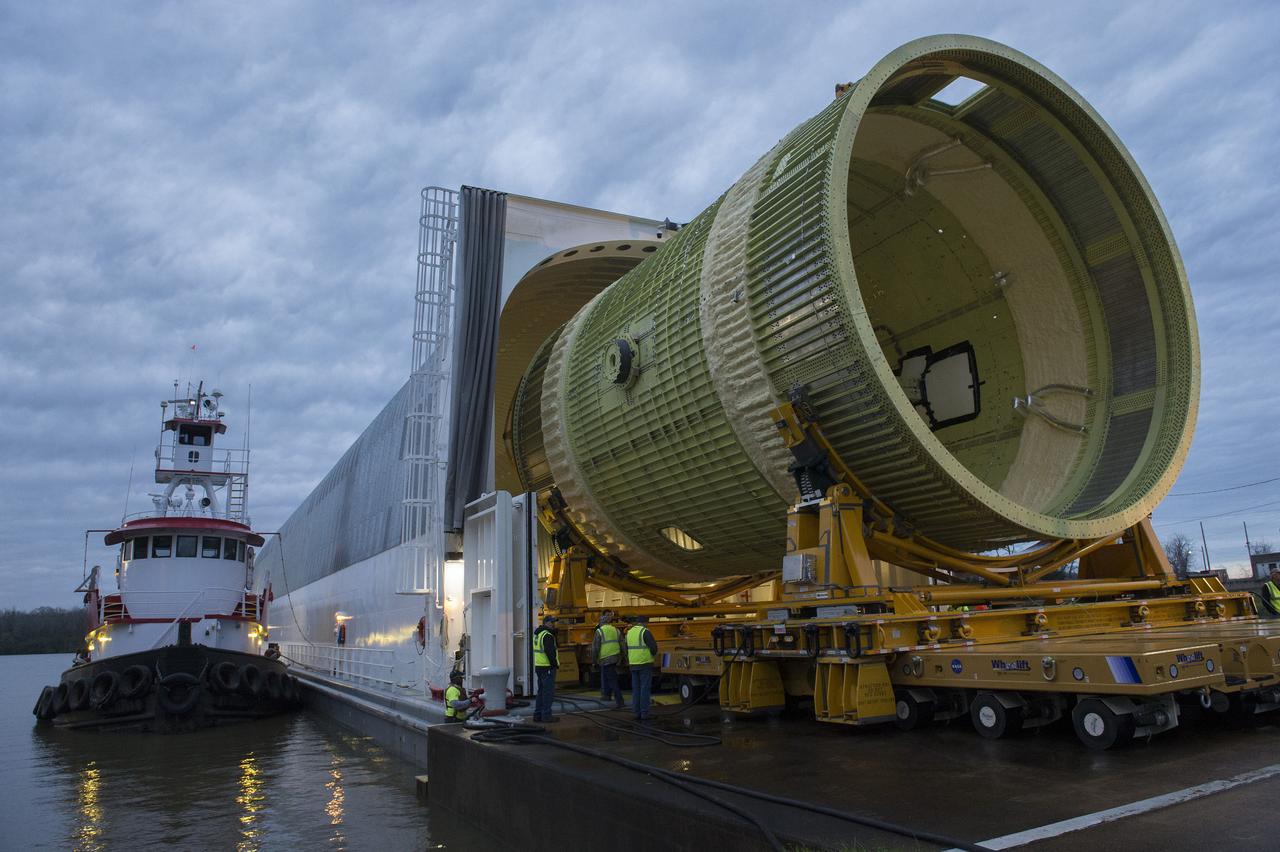
The SLS Stages Intertank Structural Test Assembly (STA) is rolling off the NASA Pegasus Barge at the MSFC Dock enroute to the MSFC 4619 Load Test Annex test facility for qualification testing. STA emerges from Barge Pegasus.
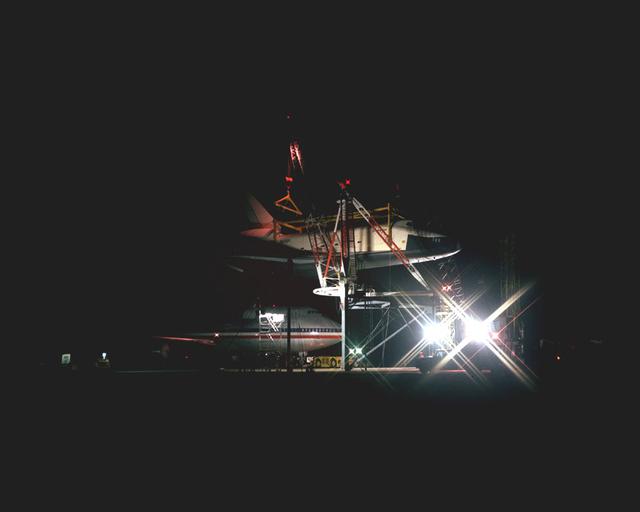
The Shuttle Orbiter Enterprise is off-loaded Redstone Arsenal Airfield for later Mated Vertical Ground Vibration tests (MVGVT) at Marshall Space Flight Center's Dynamic Test Stand. The tests marked the first time ever that the entire shuttle complement (including orbiter, external tank, and solid rocket boosters) were mated vertically.
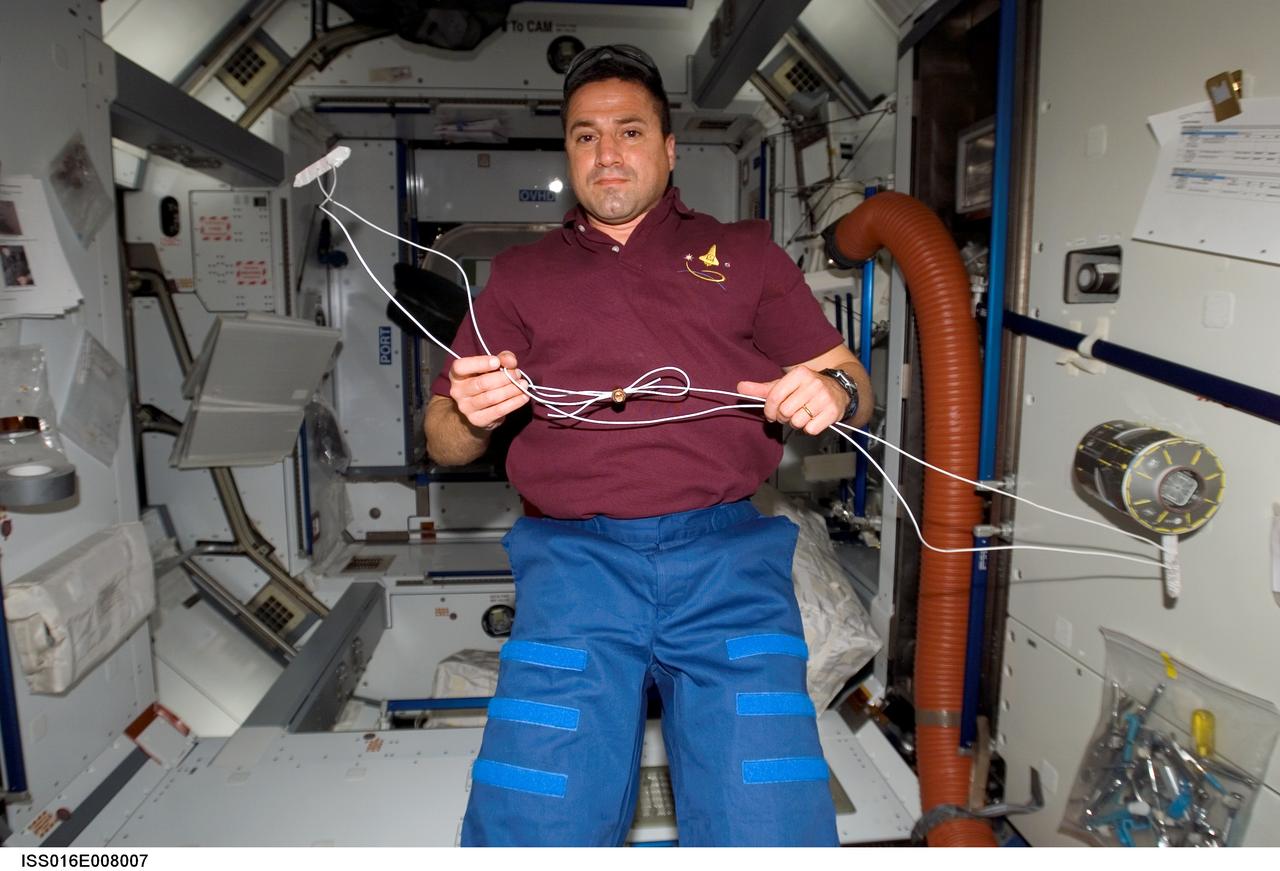
ISS016-E-008007 (1 Nov. 2007) --- Astronaut George Zamka, STS-120 pilot, holds a "cufflink" apparatus in the Harmony node of the International Space Station, which will be attached to the damaged solar arrays and take the structural load off of the broken hinge during the next spacewalk while Space Shuttle Discovery is docked with the station.
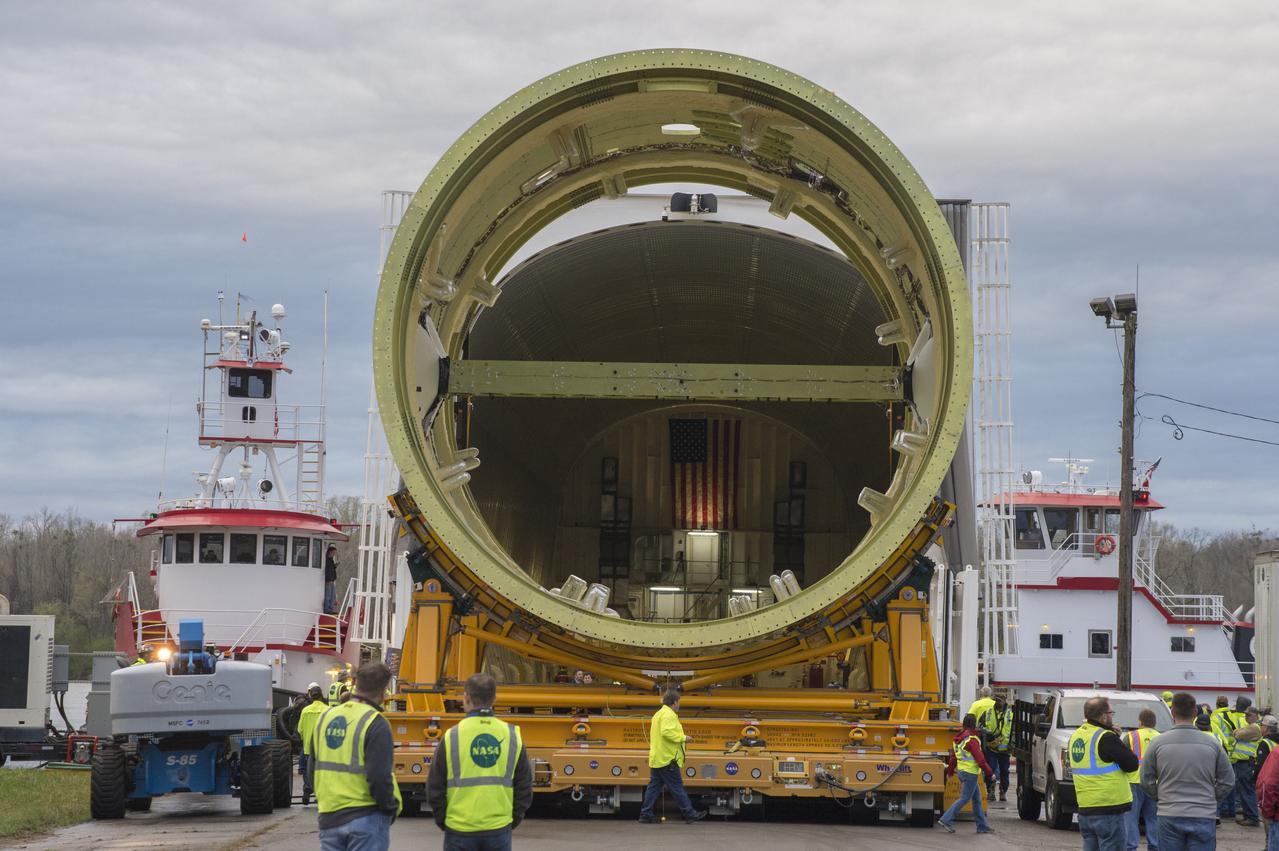
The SLS Stages Intertank Structural Test Assembly (STA) is rolling off the NASA Pegasus Barge at the MSFC Dock enroute to the MSFC 4619 Load Test Annex test facility for qualification testing. STA hardware completely free of barge and flanked by tug boats.
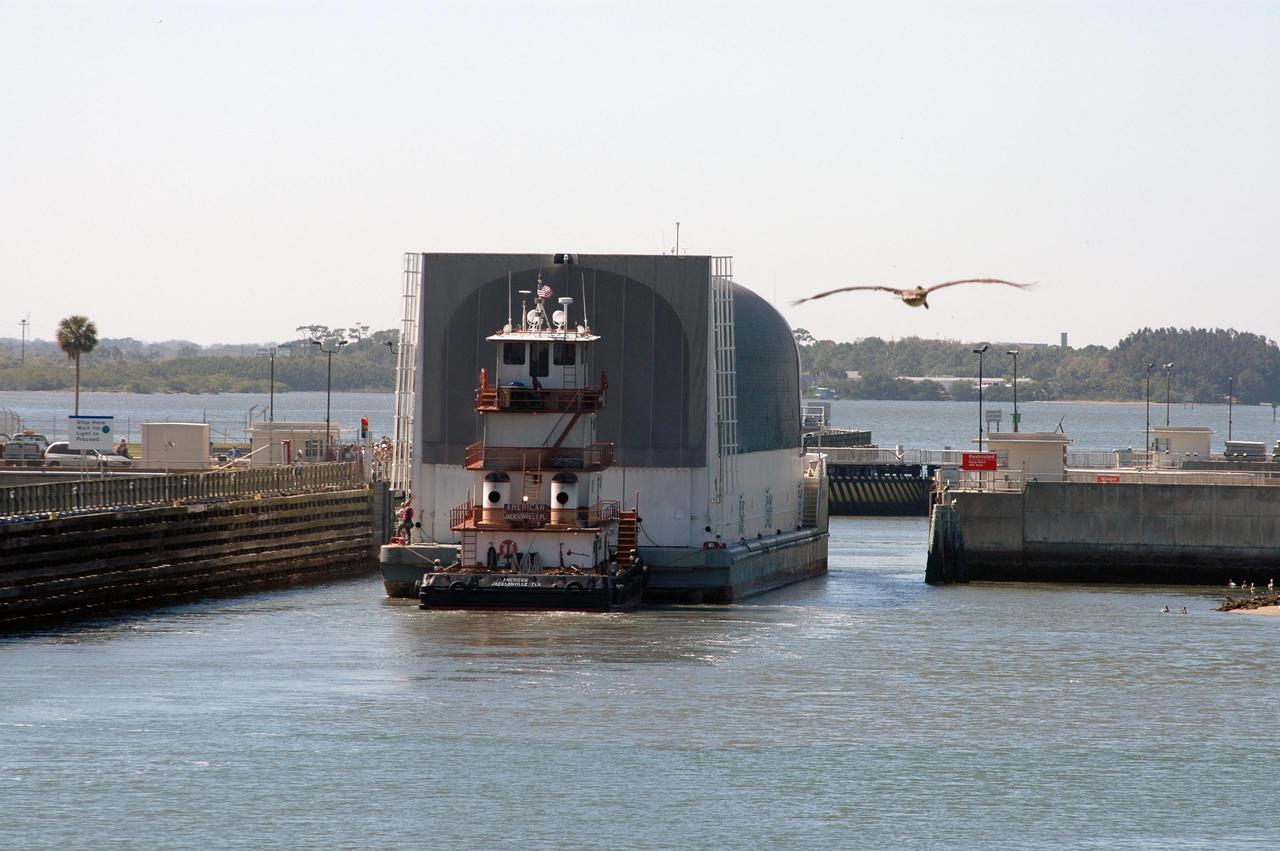
KENNEDY SPACE CENTER, FLA. - The Pegasus barge traverses the locks at Port Canaveral, as it nears the end of its journey from the Michoud Assembly Facility in New Orleans to Kennedy Space Center. The barge carries the redesigned external fuel tank that will launch Space Shuttle Discovery on the next shuttle mission, STS-121. After off-loading, the tank will be moved into the Vehicle Assembly Building and lifted into a checkout cell for further work. The tank, designated ET-119, will fly with many major safety changes, including the removal of the protuberance air load ramps. A large piece of foam from a ramp came off during the last shuttle launch in July 2005. The ramps were removed to eliminate a potential source of damaging debris to the space shuttle. The next launch of Discovery is scheduled for May 2006.
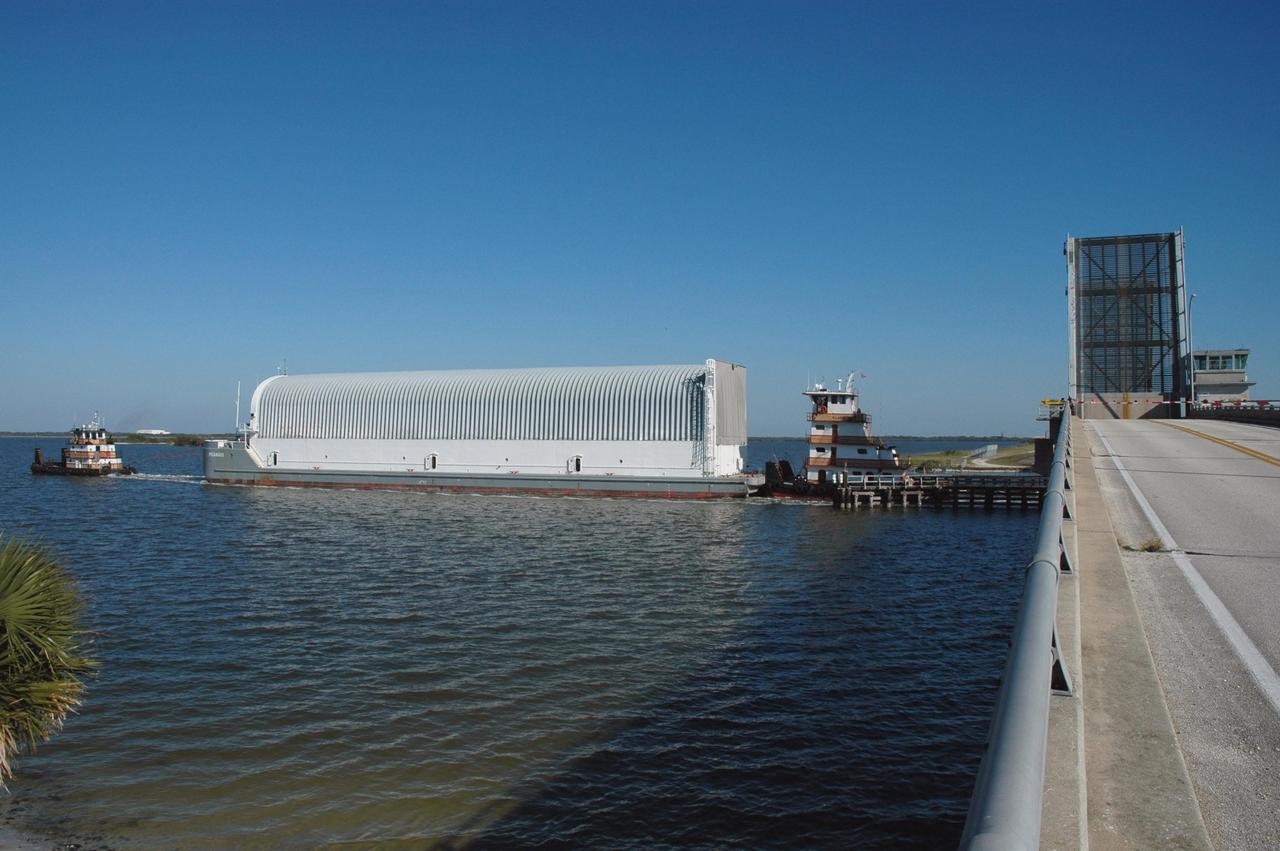
KENNEDY SPACE CENTER, FLA. - The Pegasus barge passes under the Roy D. Bridges Bridge in the Banana River, as it nears the end of its journey from the Michoud Assembly Facility in New Orleans to Kennedy Space Center. The barge carries the redesigned external fuel tank that will launch Space Shuttle Discovery on the next shuttle mission, STS-121. After off-loading, the tank will be moved into the Vehicle Assembly Building and lifted into a checkout cell for further work. The tank, designated ET-119, will fly with many major safety changes, including the removal of the protuberance air load ramps. A large piece of foam from a ramp came off during the last shuttle launch in July 2005. The ramps were removed to eliminate a potential source of damaging debris to the space shuttle. The next launch of Discovery is scheduled for May 2006.
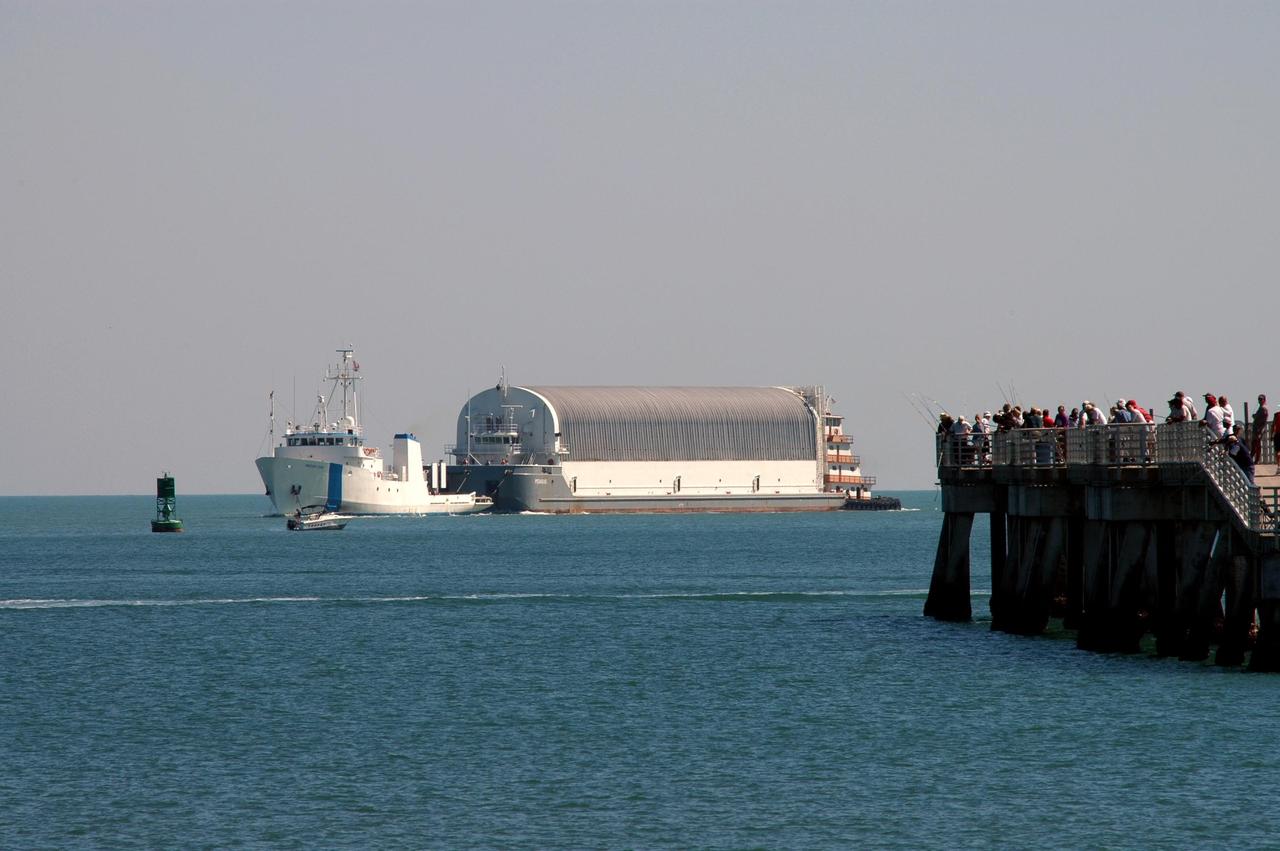
KENNEDY SPACE CENTER, FLA. - The Freedom Star tows the Pegasus barge to the entrance of Port Canaveral, the last leg of its journey from the Michoud Assembly Facility in New Orleans to Kennedy Space Center. The barge carries the redesigned external fuel tank that will launch Space Shuttle Discovery on the next shuttle mission, STS-121. After off-loading, the tank will be moved into the Vehicle Assembly Building and lifted into a checkout cell for further work. The tank, designated ET-119, will fly with many major safety changes, including the removal of the protuberance air load ramps. A large piece of foam from a ramp came off during the last shuttle launch in July 2005. The ramps were removed to eliminate a potential source of damaging debris to the space shuttle. The next launch of Discovery is scheduled for May 2006.
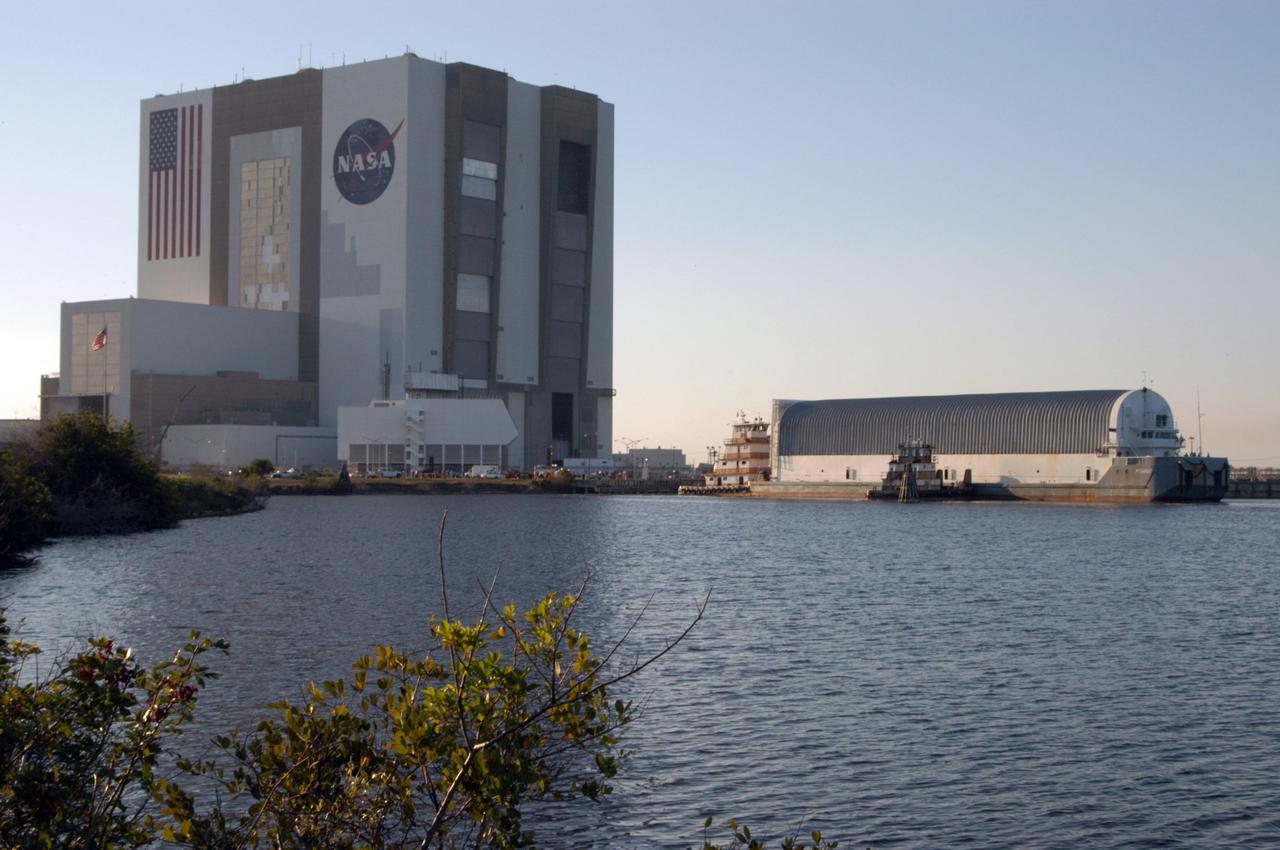
KENNEDY SPACE CENTER, FLA. - Towed by the solid rocket booster retrieval ship Freedom Star, the Pegasus barge approaches the dock in the turn basin near the Vehicle Assembly Building. The barge is on the last leg of its journey from the Michoud Assembly Facility in New Orleans to NASA's Kennedy Space Center. The barge carries the redesigned external fuel tank that will launch Space Shuttle Discovery on the next shuttle mission, STS-121. After off-loading, the tank will be moved into the Vehicle Assembly Building and lifted into a checkout cell for further work. The tank, designated ET-119, will fly with many major safety changes, including the removal of the protuberance air load ramps. A large piece of foam from a ramp came off during the last shuttle launch in July 2005. The ramps were removed to eliminate a potential source of damaging debris to the space shuttle. The next launch of Discovery is scheduled for May 2006.
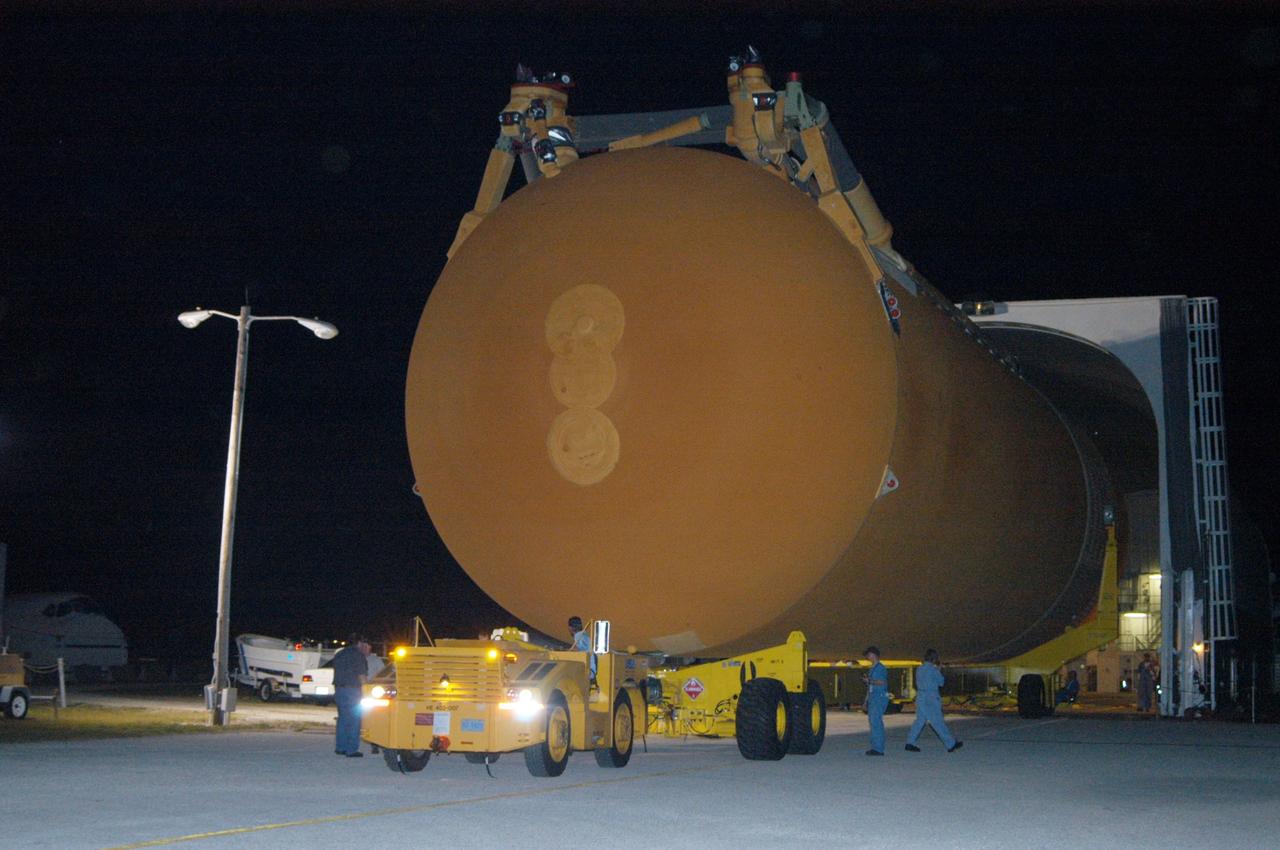
KENNEDY SPACE CENTER, FLA. - A tow vehicle is connected to the transporter supporting the redesigned external fuel tank that will launch Space Shuttle Discovery on the next shuttle mission, STS-121. The Pegasus barge delivered the tank from the Michoud Assembly Facility in New Orleans to NASA Kennedy Space Center's Launch Complex 39 turn basin. After off-loading, the tank will be moved to the Vehicle Assembly Building and lifted into a checkout cell for further work. The tank, designated ET-119, will fly with many major safety changes, including the removal of the protuberance air load ramps. A large piece of foam from a ramp came off during the last shuttle launch in July 2005. The ramps were removed to eliminate a potential source of damaging debris to the space shuttle. The next launch of Discovery is scheduled for May 2006.

KENNEDY SPACE CENTER, FLA. - The Pegasus barge makes its way through Port Canaveral, the last leg of its journey from the Michoud Assembly Facility in New Orleans to Kennedy Space Center. The barge carries the redesigned external fuel tank that will launch Space Shuttle Discovery on the next shuttle mission, STS-121. After off-loading, the tank will be moved into the Vehicle Assembly Building and lifted into a checkout cell for further work. The tank, designated ET-119, will fly with many major safety changes, including the removal of the protuberance air load ramps. A large piece of foam from a ramp came off during the last shuttle launch in July 2005. The ramps were removed to eliminate a potential source of damaging debris to the space shuttle. The next launch of Discovery is scheduled for May 2006.
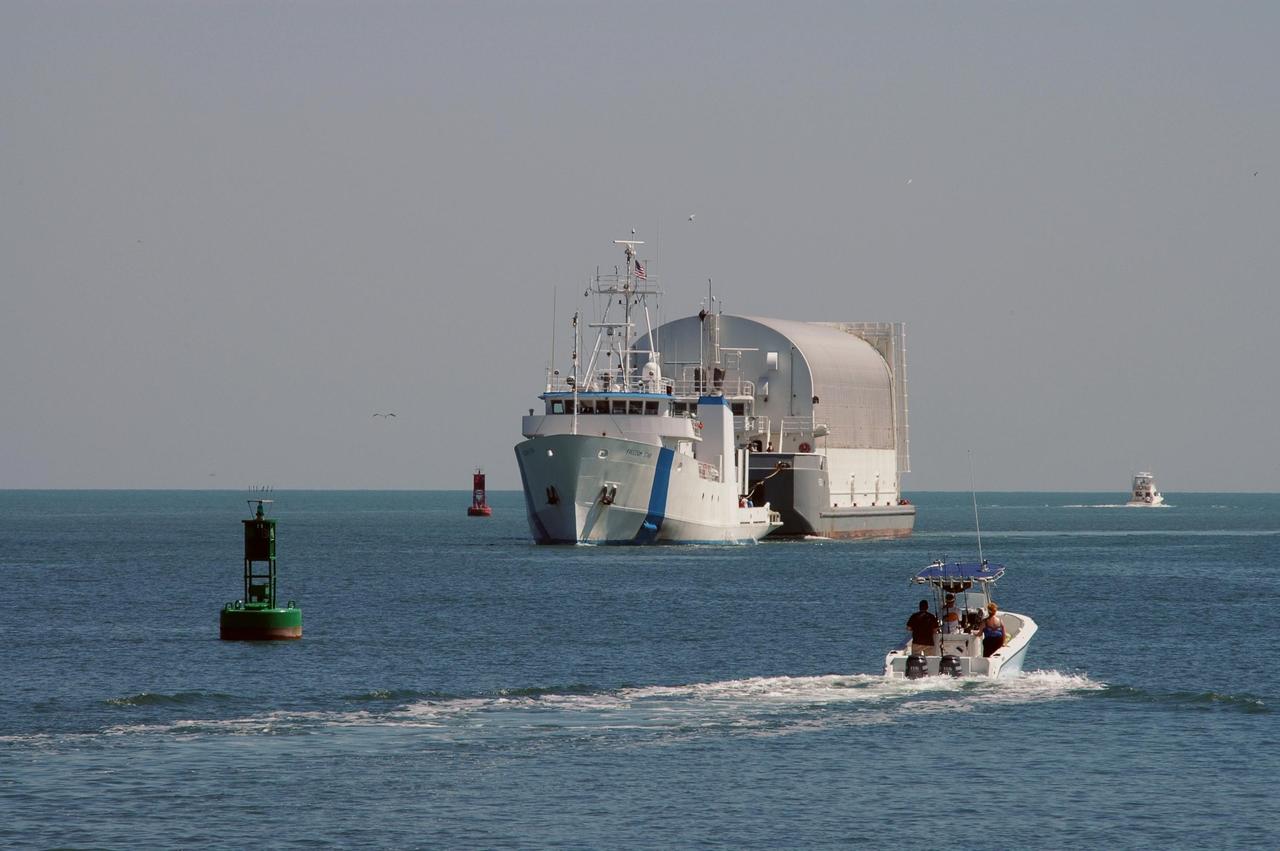
KENNEDY SPACE CENTER, FLA. - Towed by the Freedom Star, the Pegasus barge enters Port Canaveral, the last leg of its journey from the Michoud Assembly Facility in New Orleans to Kennedy Space Center. The barge carries the redesigned external fuel tank that will launch Space Shuttle Discovery on the next shuttle mission, STS-121. After off-loading, the tank will be moved into the Vehicle Assembly Building and lifted into a checkout cell for further work. The tank, designated ET-119, will fly with many major safety changes, including the removal of the protuberance air load ramps. A large piece of foam from a ramp came off during the last shuttle launch in July 2005. The ramps were removed to eliminate a potential source of damaging debris to the space shuttle. The next launch of Discovery is scheduled for May 2006.
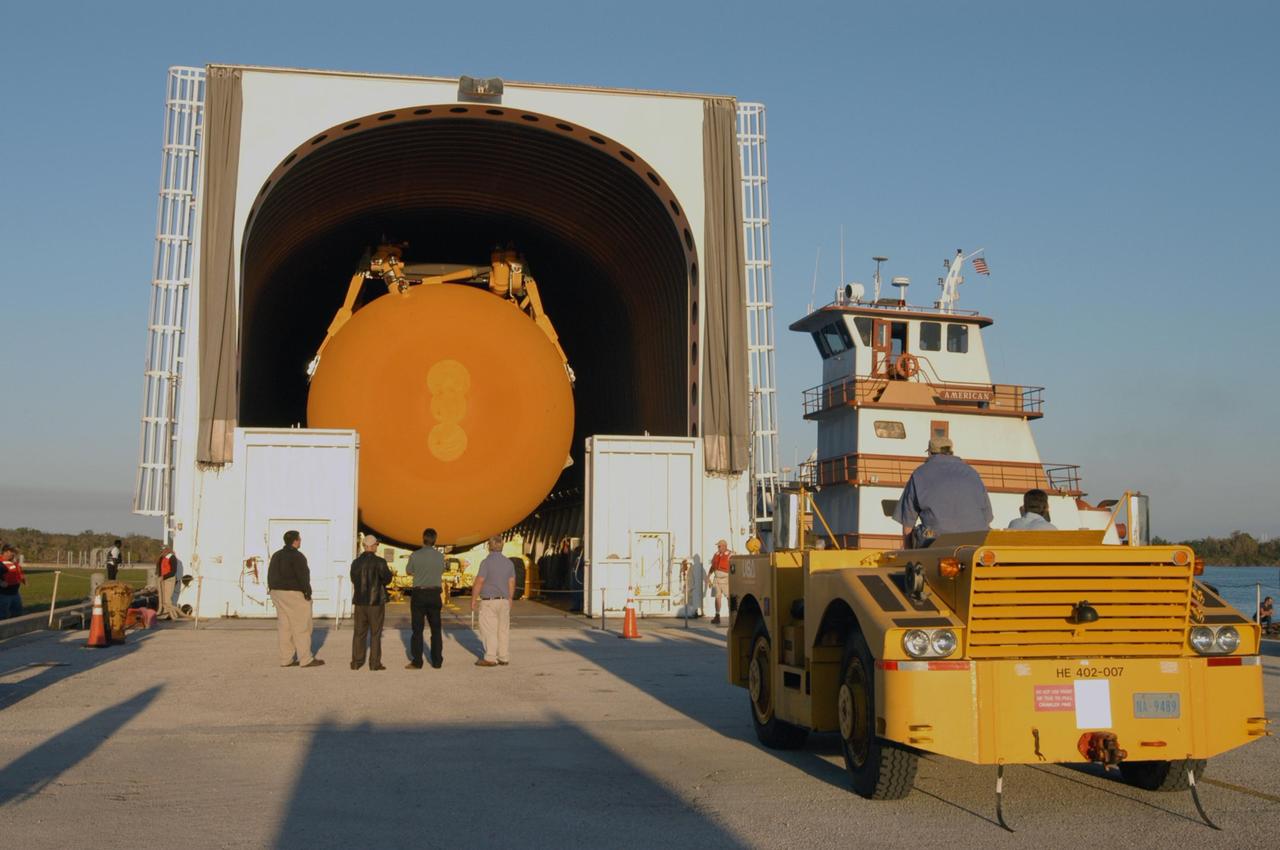
KENNEDY SPACE CENTER, FLA. - The Pegasus barge is docked in the turn basin close by the Vehicle Assembly Building. The barge delivered the redesigned external fuel tank that will launch Space Shuttle Discovery on the next shuttle mission, STS-121, from the Michoud Assembly Facility in New Orleans to NASA's Kennedy Space Center. After off-loading, the tank will be moved into the Vehicle Assembly Building and lifted into a checkout cell for further work. The tank, designated ET-119, will fly with many major safety changes, including the removal of the protuberance air load ramps. A large piece of foam from a ramp came off during the last shuttle launch in July 2005. The ramps were removed to eliminate a potential source of damaging debris to the space shuttle. The next launch of Discovery is scheduled for May 2006.
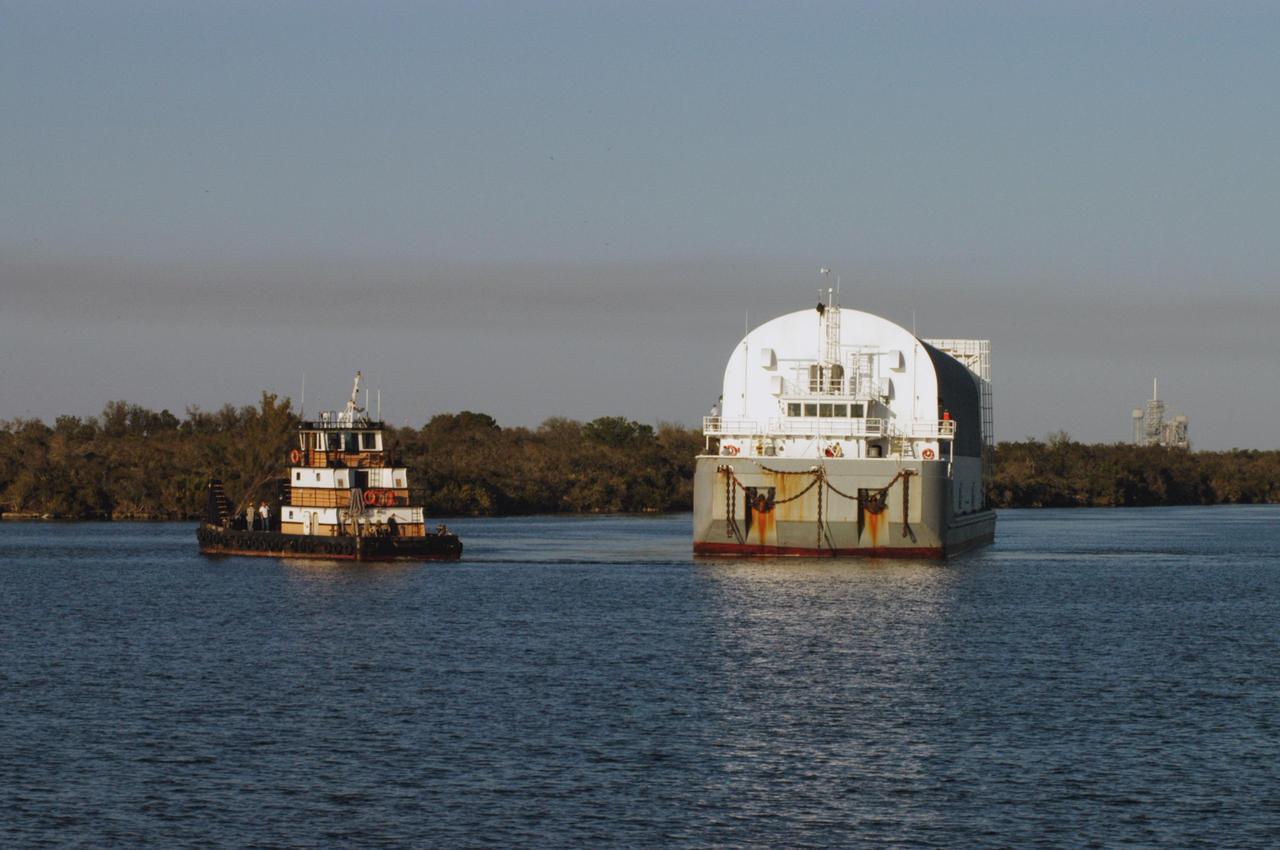
KENNEDY SPACE CENTER, FLA. - One of the two space shuttle launch pads in Launch Complex 39 is visible behind the Pegasus barge as it traverses the turn basin near the Vehicle Assembly Building. The barge is on the last leg of its journey from the Michoud Assembly Facility in New Orleans to NASA's Kennedy Space Center. The barge carries the redesigned external fuel tank that will launch Space Shuttle Discovery on the next shuttle mission, STS-121. After off-loading, the tank will be moved into the Vehicle Assembly Building and lifted into a checkout cell for further work. The tank, designated ET-119, will fly with many major safety changes, including the removal of the protuberance air load ramps. A large piece of foam from a ramp came off during the last shuttle launch in July 2005. The ramps were removed to eliminate a potential source of damaging debris to the space shuttle. The next launch of Discovery is scheduled for May 2006.
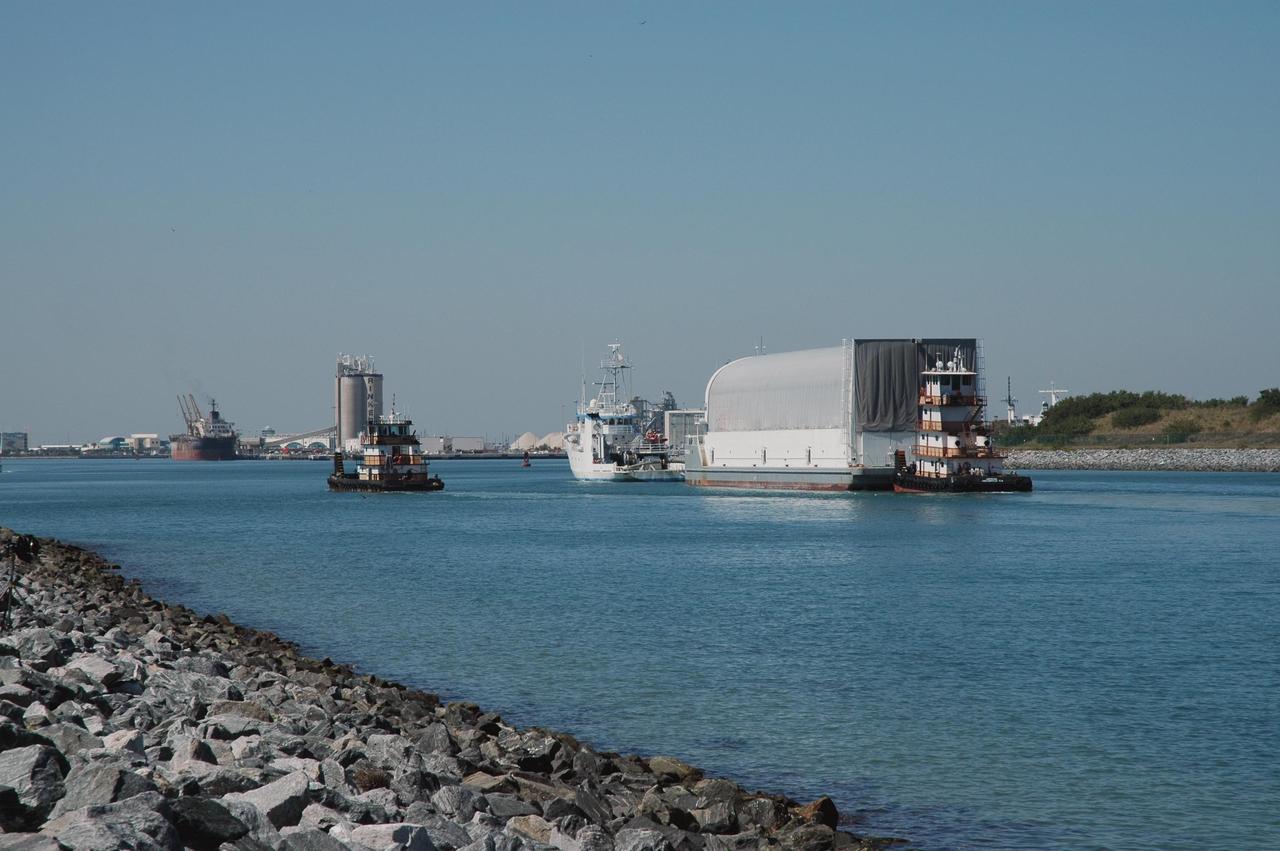
KENNEDY SPACE CENTER, FLA. - The Freedom Star tows the Pegasus barge through Port Canaveral, the last leg of its journey from the Michoud Assembly Facility in New Orleans to Kennedy Space Center. The barge carries the redesigned external fuel tank that will launch Space Shuttle Discovery on the next shuttle mission, STS-121. After off-loading, the tank will be moved into the Vehicle Assembly Building and lifted into a checkout cell for further work. The tank, designated ET-119, will fly with many major safety changes, including the removal of the protuberance air load ramps. A large piece of foam from a ramp came off during the last shuttle launch in July 2005. The ramps were removed to eliminate a potential source of damaging debris to the space shuttle. The next launch of Discovery is scheduled for May 2006.
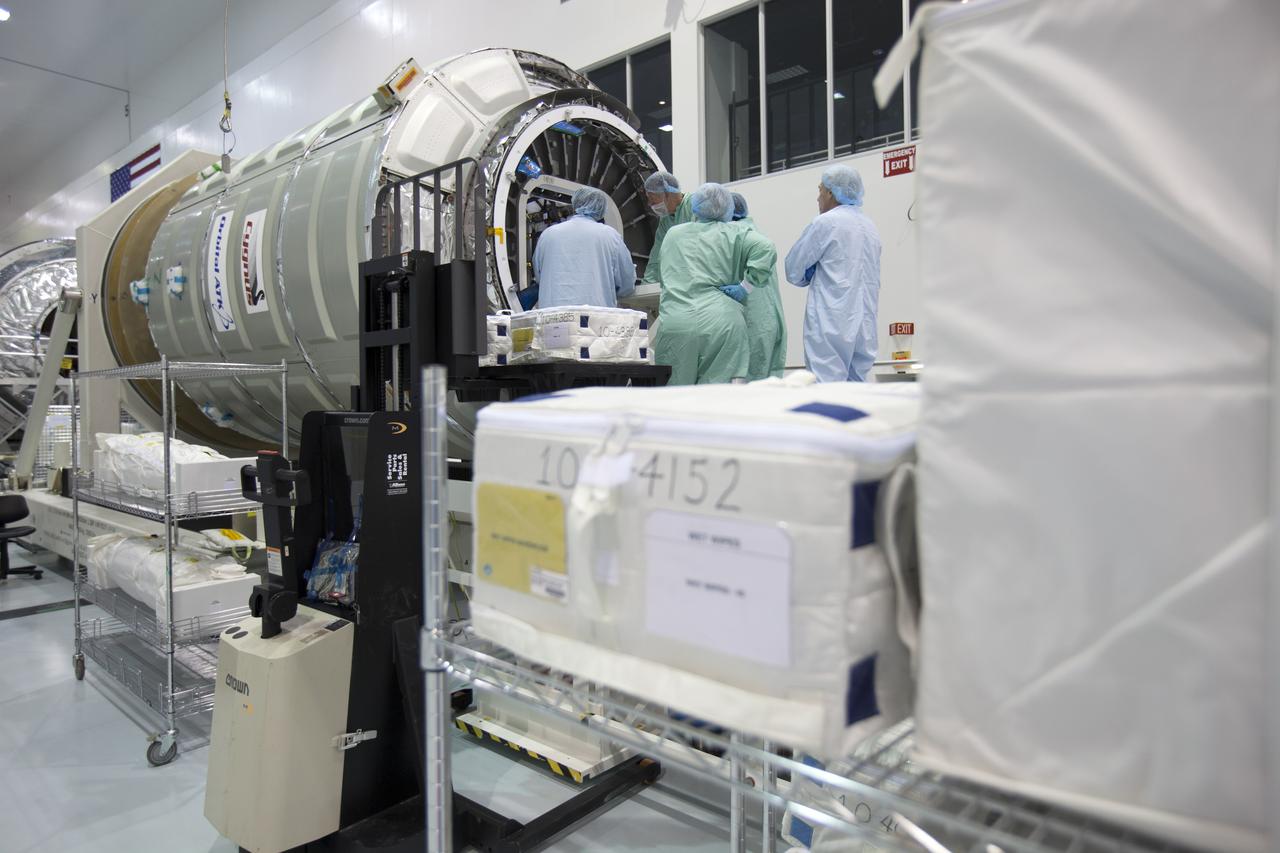
OA-7 Cargo Module In the Space Station Processing Facility at NASA's Kennedy Space Center in Florida, technicians and engineers load thousands of pounds of supplies, equipment and scientific research materials aboard a Cygnus spacecraft's pressurized cargo module (PCM) for the Orbital ATK CRS-7 mission to the International Space Station. Scheduled to launch on March 19, 2017, the commercial resupply services mission will lift off atop a United Launch Alliance Atlas V rocket from Space launch Complex 41 at Cape Canaveral Air Force Stationbeing loaded inside the SSPF building, located at Kennedy Space Center.
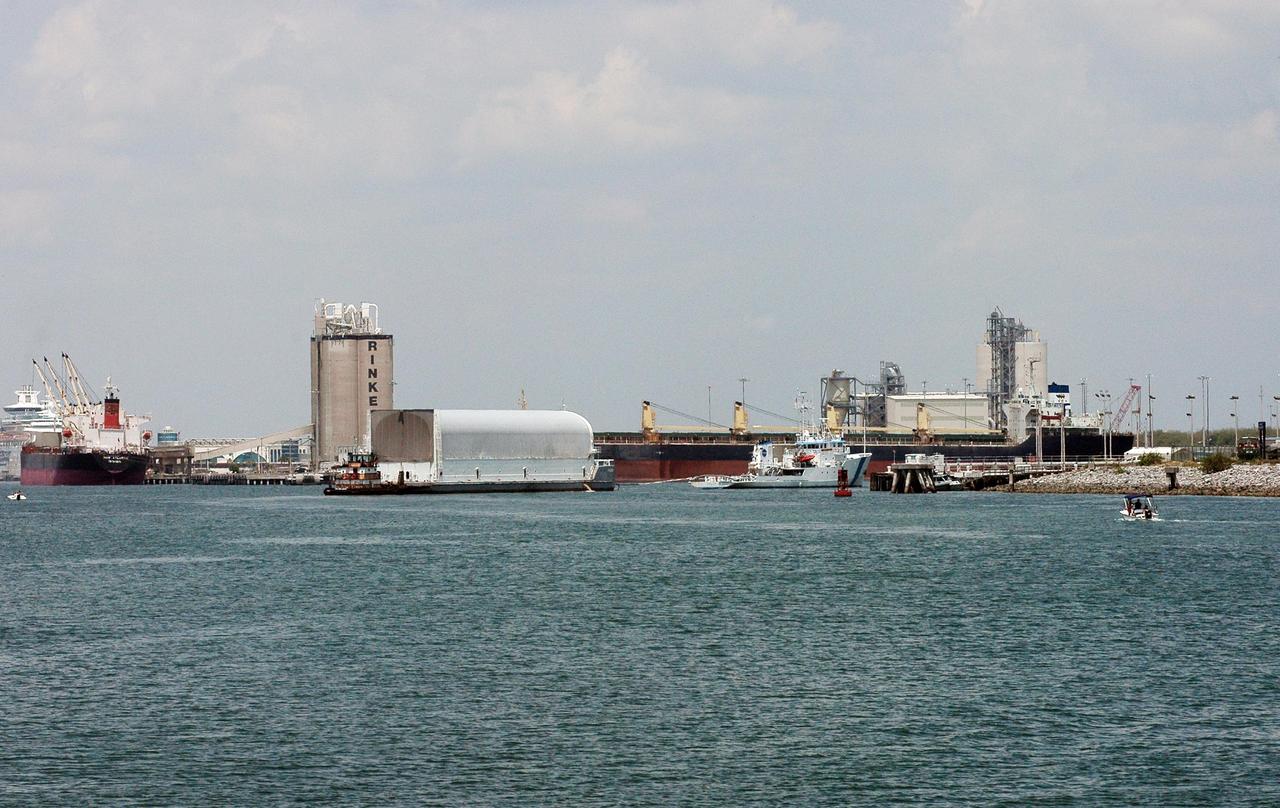
KENNEDY SPACE CENTER, FLA. - The Liberty Star tows the Pegasus barge to Port Canaveral, the last leg of its journey from the Michoud Assembly Facility in New Orleans to Kennedy Space Center. The barge carries the redesigned external fuel tank that will launch Space Shuttle Atlantis on the next shuttle mission, STS-115. A tugboat will continue the journey upriver to the Turn Basin where, after off-loading, the tank will be moved into the Vehicle Assembly Building and lifted into a checkout cell for further work. The tank, designated ET-118, will fly with many major safety changes, including the removal of the protuberance air load ramps. Photo credit: NASA/Jack Pfaller
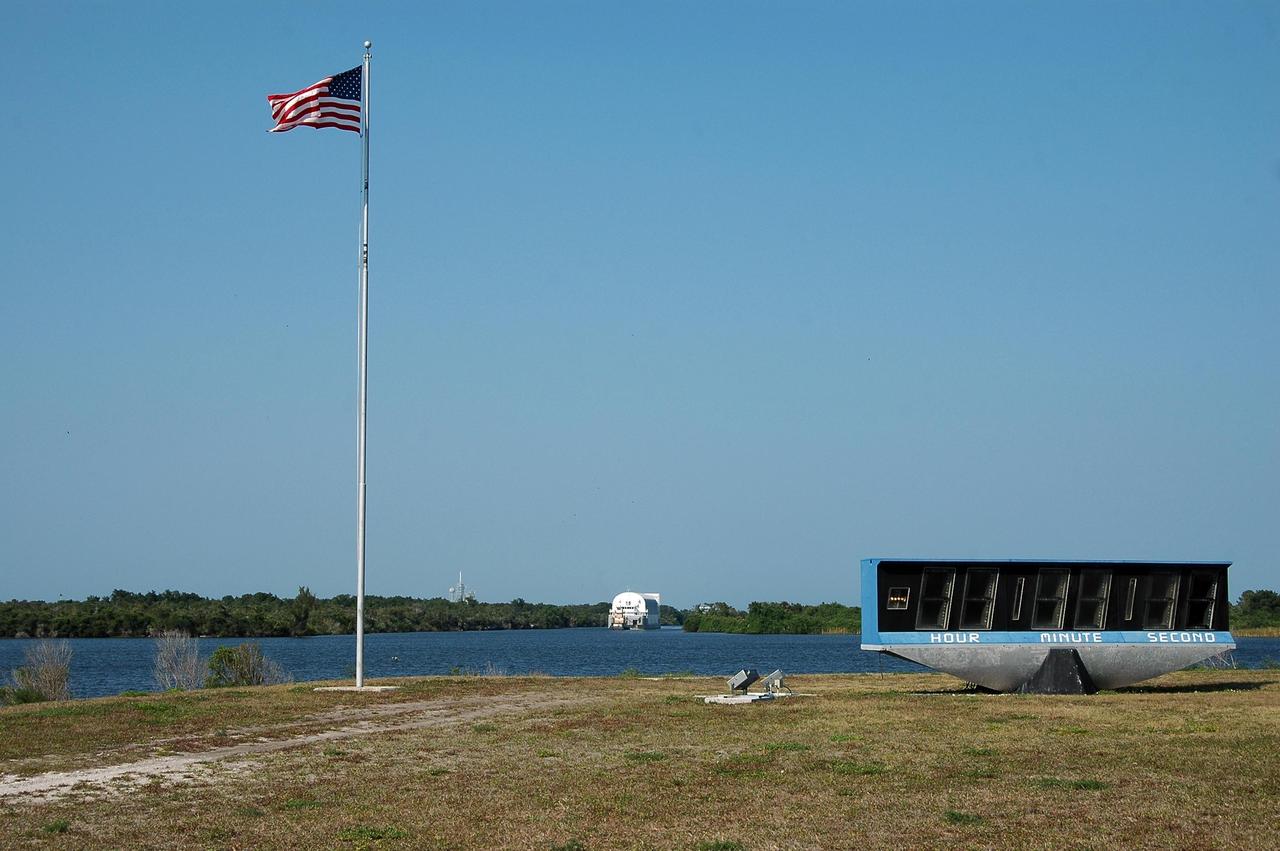
KENNEDY SPACE CENTER, FLA. - Viewed from the NASA News Center, a tug boat in the background maneuvers the Pegasus barge into the turn basin at the Launch Complex 39 Area. The barge holds the redesigned external fuel tank, designated ET-118, that will launch Space Shuttle Atlantis on the next shuttle mission, STS-115. The tank was shipped from the Michoud Assembly Facility in New Orleans. After off-loading, the tank will be moved into the Vehicle Assembly Building and lifted into a checkout cell for further work. The tank will fly with many major safety changes, including the removal of the protuberance air load ramps. Photo credit: NASA/Kim Shiflett
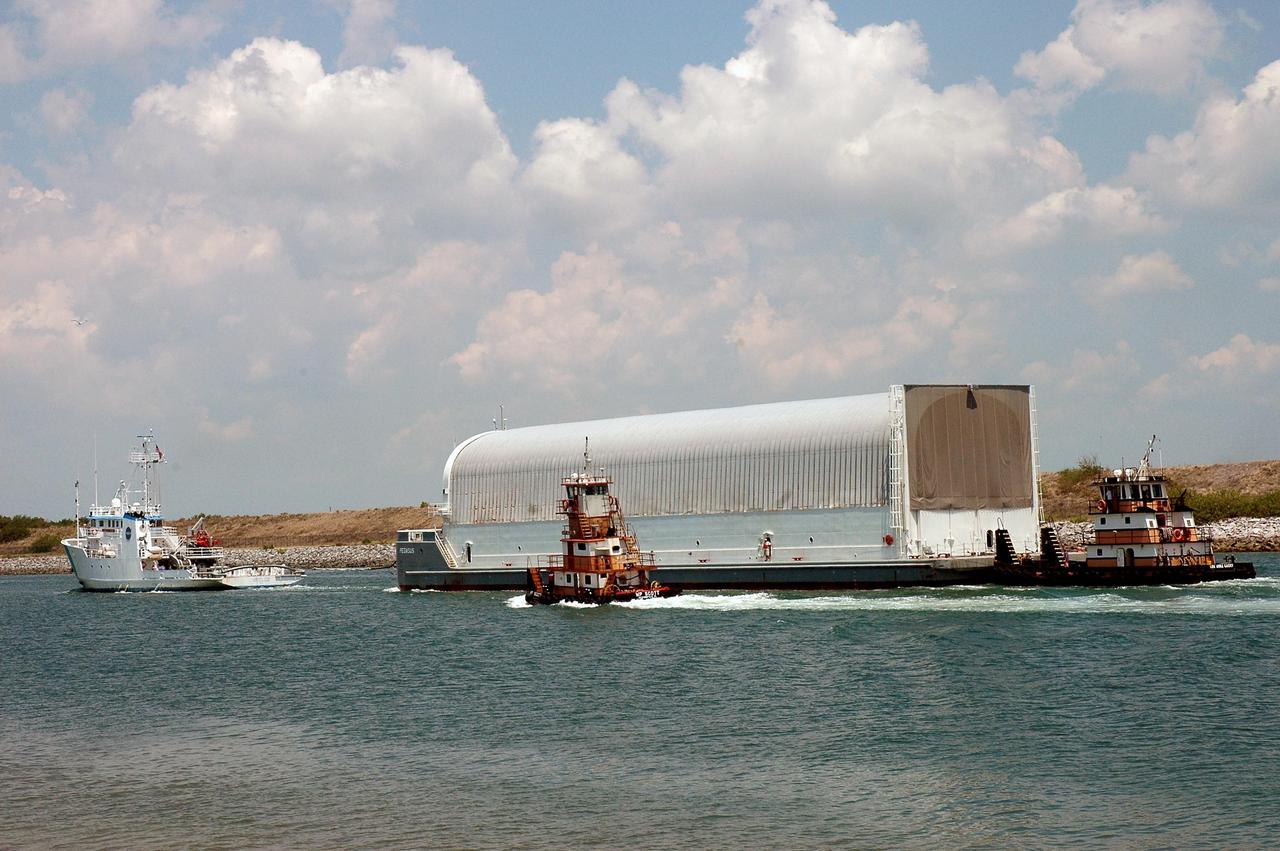
KENNEDY SPACE CENTER, FLA. - The Liberty Star (left) tows the Pegasus barge through Port Canaveral, the last leg of its journey from the Michoud Assembly Facility in New Orleans to Kennedy Space Center. The barge carries the redesigned external fuel tank that will launch Space Shuttle Atlantis on the next shuttle mission, STS-115. A tugboat will continue the journey upriver to the Turn Basin where, after off-loading, the tank will be moved into the Vehicle Assembly Building and lifted into a checkout cell for further work. The tank, designated ET-118, will fly with many major safety changes, including the removal of the protuberance air load ramps. Photo credit: NASA/Jack Pfaller
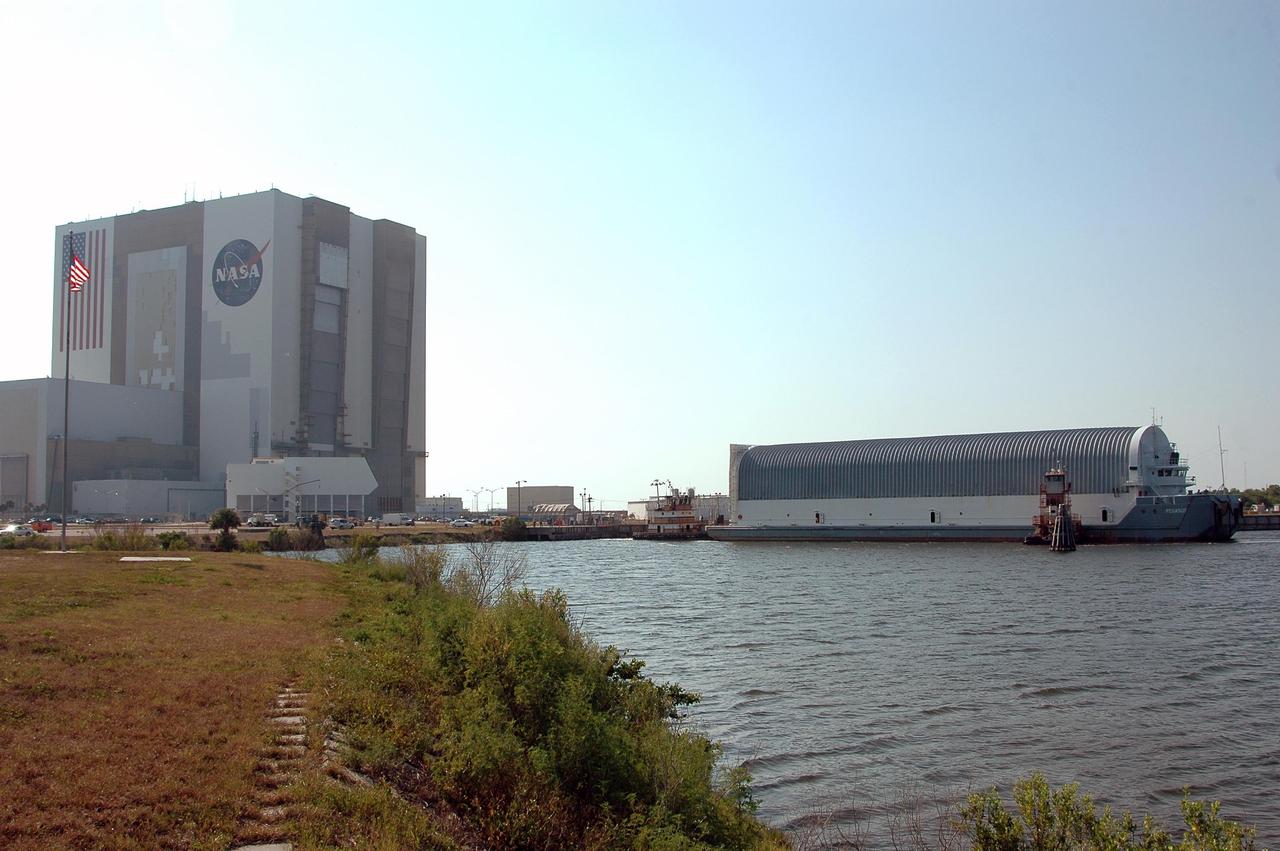
KENNEDY SPACE CENTER, FLA. - Tug boats maneuver the Pegasus barge next to the dock in the turn basin at the Launch Complex 39 Area. The barge holds the redesigned external fuel tank, designated ET-118, that will launch Space Shuttle Atlantis on the next shuttle mission, STS-115. The tank was shipped from the Michoud Assembly Facility in New Orleans. After off-loading, the tank will be moved into the Vehicle Assembly Building and lifted into a checkout cell for further work. The tank will fly with many major safety changes, including the removal of the protuberance air load ramps. Photo credit: NASA/Kim Shiflett
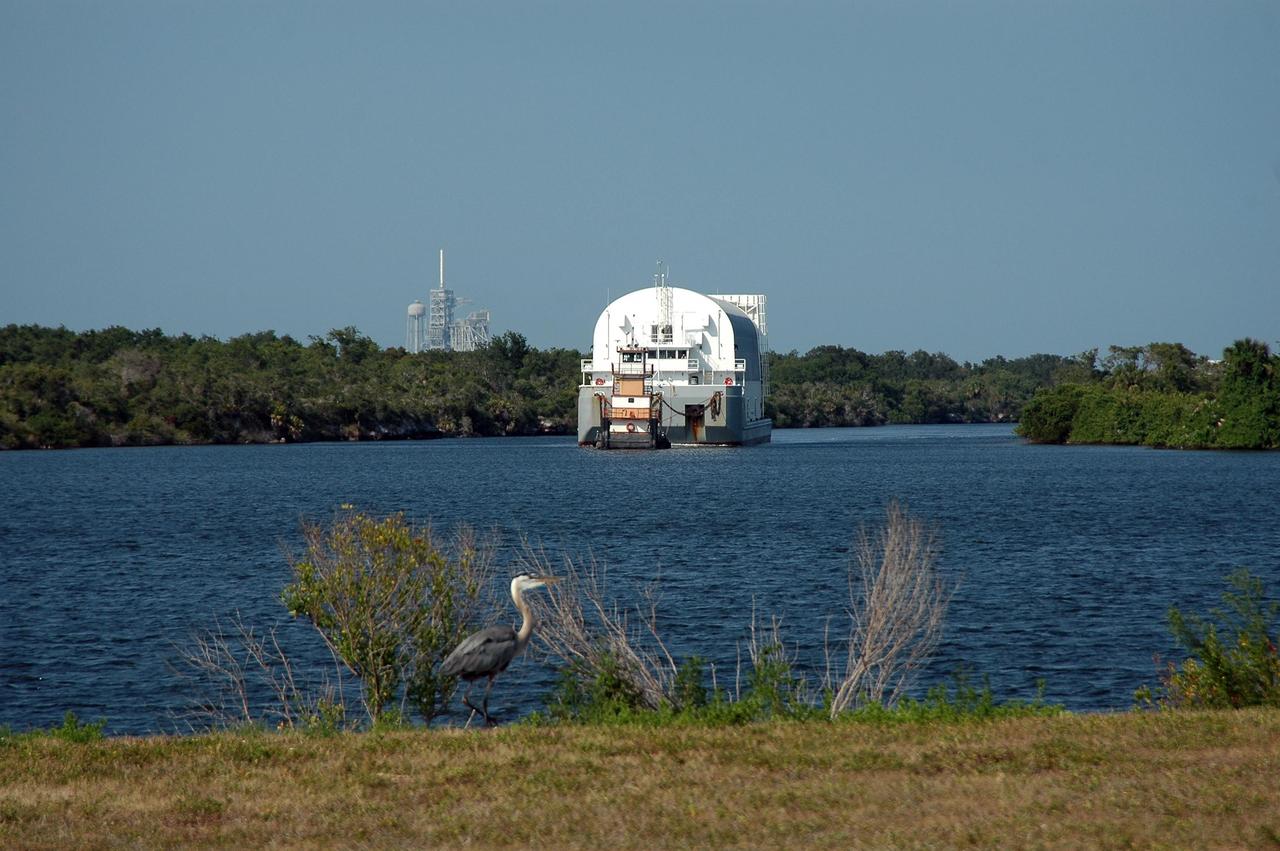
KENNEDY SPACE CENTER, FLA. - A Great Blue Heron on the near bank has a front row perch for the arrival of the Pegasus barge being towed into the turn basin at the Launch Complex 39 Area. The barge holds the redesigned external fuel tank, designated ET-118, that will launch Space Shuttle Atlantis on the next shuttle mission, STS-115. The tank was shipped from the Michoud Assembly Facility in New Orleans. After off-loading, the tank will be moved into the Vehicle Assembly Building and lifted into a checkout cell for further work. The tank will fly with many major safety changes, including the removal of the protuberance air load ramps. Photo credit: NASA/Kim Shiflett
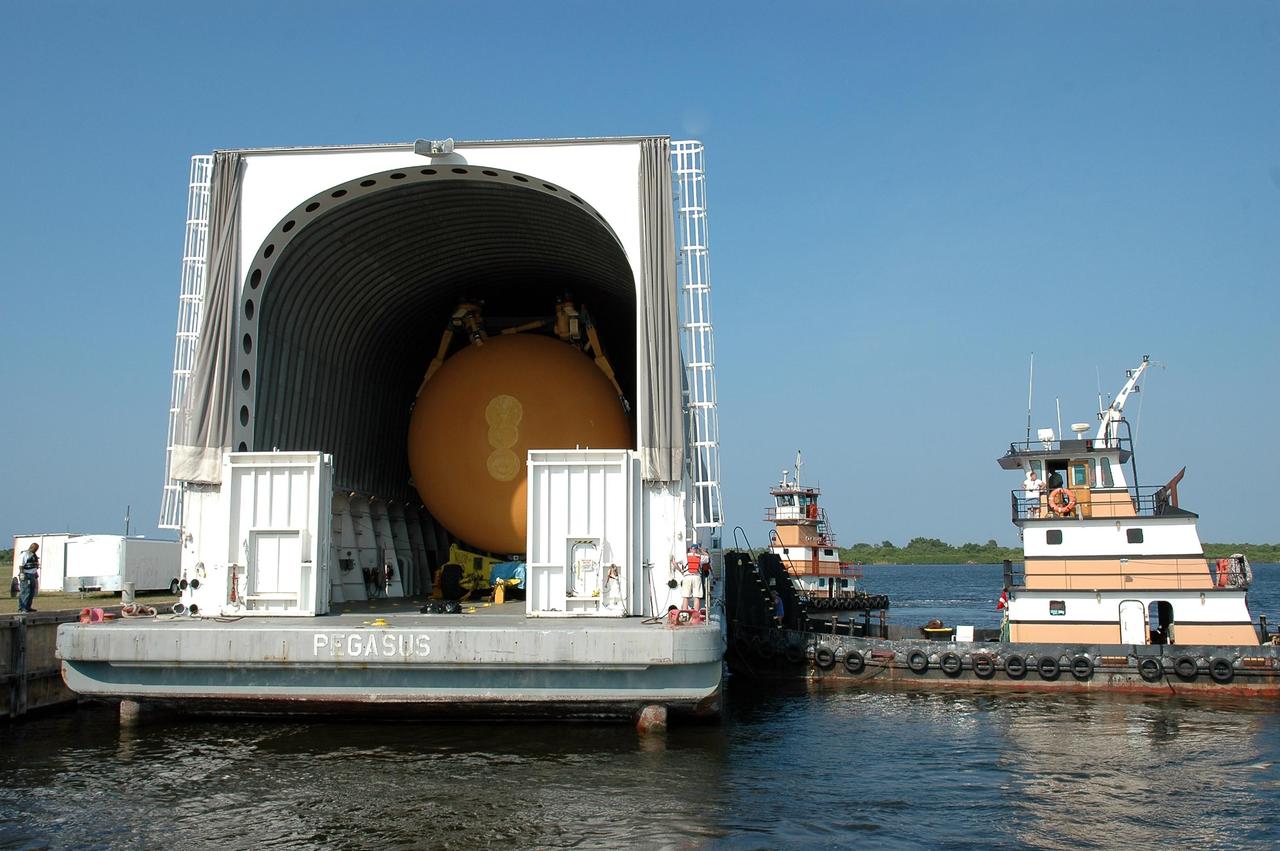
KENNEDY SPACE CENTER, FLA. - Tug boats maneuver the Pegasus barge next to the dock in the turn basin at the Launch Complex 39 Area. The barge holds the redesigned external fuel tank, seen inside, that will launch Space Shuttle Atlantis on the next shuttle mission, STS-115. The tank, designated ET-118, was shipped from the Michoud Assembly Facility in New Orleans. After off-loading, the tank will be moved into the Vehicle Assembly Building and lifted into a checkout cell for further work. The tank will fly with many major safety changes, including the removal of the protuberance air load ramps. Photo credit: NASA/Kim Shiflett
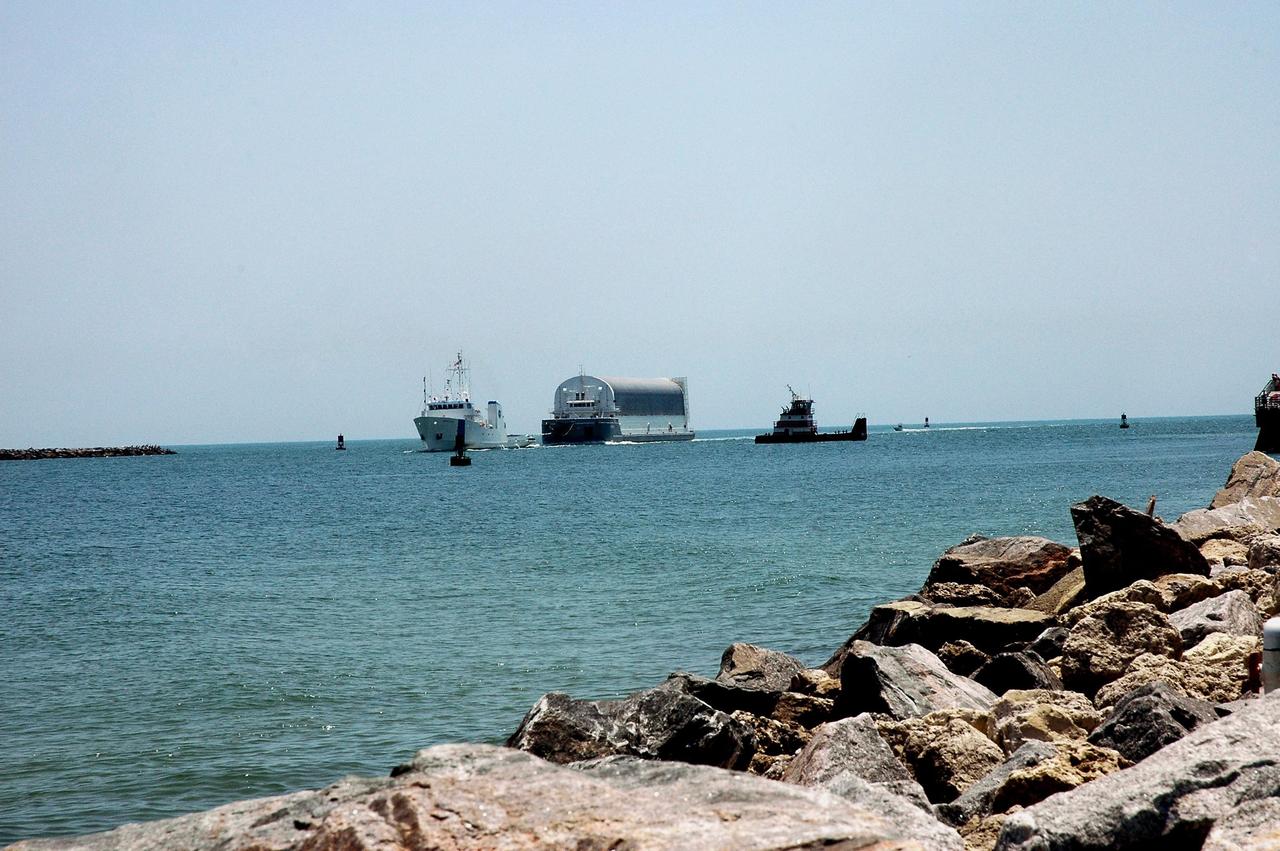
KENNEDY SPACE CENTER, FLA. - The Liberty Star (left) tows the Pegasus barge through Port Canaveral, the last leg of its journey from the Michoud Assembly Facility in New Orleans to Kennedy Space Center. The barge carries the redesigned external fuel tank that will launch Space Shuttle Atlantis on the next shuttle mission, STS-115. A tugboat will continue the journey upriver to the Turn Basin where, after off-loading, the tank will be moved into the Vehicle Assembly Building and lifted into a checkout cell for further work. The tank, designated ET-118, will fly with many major safety changes, including the removal of the protuberance air load ramps. Photo credit: NASA/Jack Pfaller
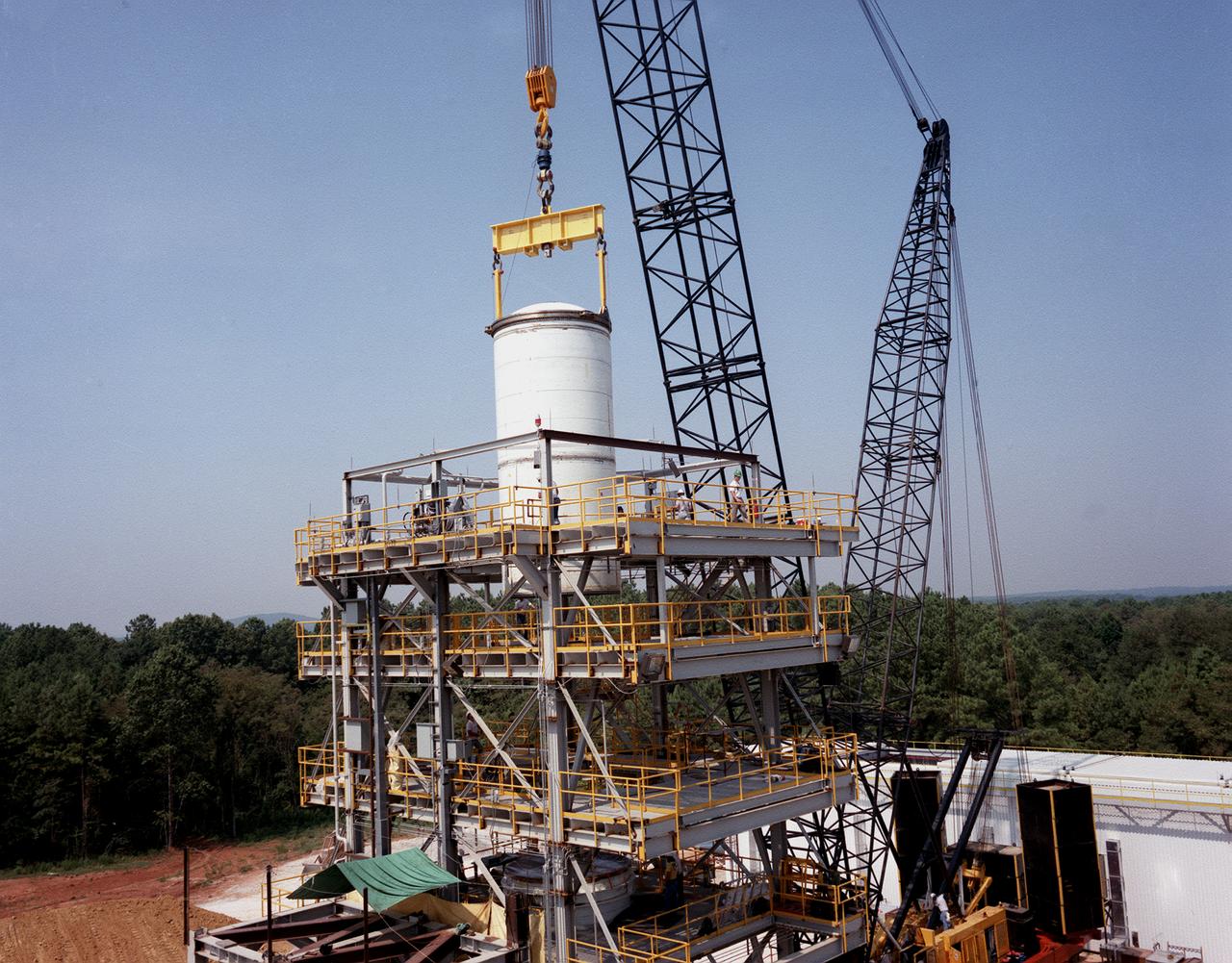
A forward segment is being lowered into the Transient Pressure Test Article (TPTA) test stand at the Marshall Space Flight Center (MSFC) east test area. The TPTA test stand, 14-feet wide, 27-feet long, and 33-feet high, was built in 1987 to provide data to verify the sealing capability of the redesign solid rocket motor (SRM) field and nozzle joints. The test facility applies pressure, temperature, and external loads to a short stack of solid rocket motor hardware. The simulated SRM ignition pressure and temperature transients are achieved by firing a small amount of specially configured solid propellant. The pressure transient is synchronized with external programmable dynamic loads that simulate lift off loads at the external tank attach points. Approximately one million pounds of dead weight on top of the test article simulates the weight of the other Shuttle elements.
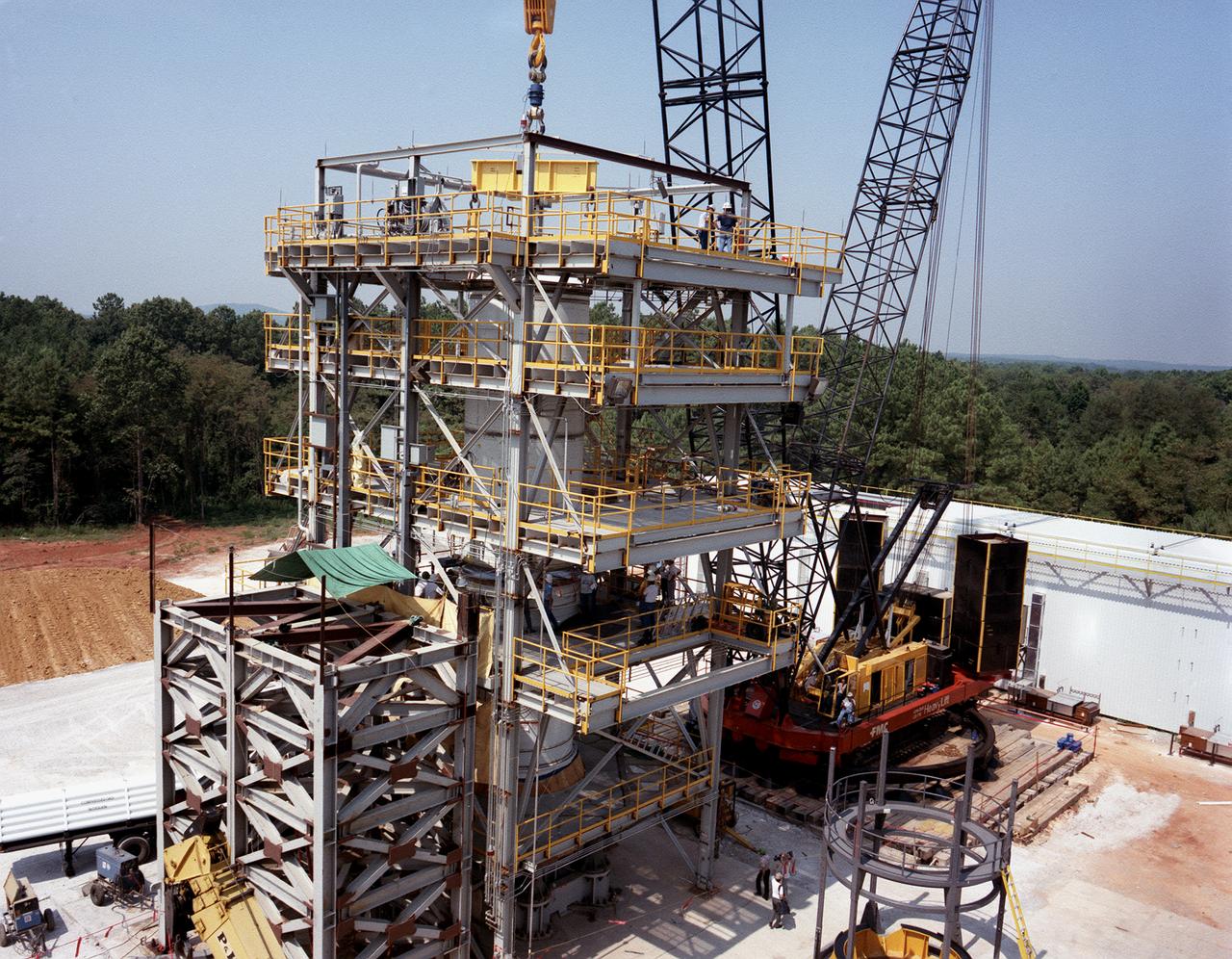
A forward segment is being lowered into the Transient Pressure Test Article (TPTA) test stand at thw Marshall Space Flight Center (MSFC) east test area. The TPTA test stand, 14-feet wide, 27-feet long, and 33-feet high, was built in 1987 to provide data to verify the sealing capability of the redesign solid rocket motor (SRM) field and nozzle joints. The test facility applies pressure, temperature, and external loads to a short stack of solid rocket motor hardware. The simulated SRM ignition pressure and temperature transients are achieved by firing a small amount of specially configured solid propellant. The pressure transient is synchronized with external programmable dynamic loads that simulate lift off loads at the external tank attach points. Approximately one million pounds of dead weight on top of the test article simulates the weight of the other Shuttle elements.
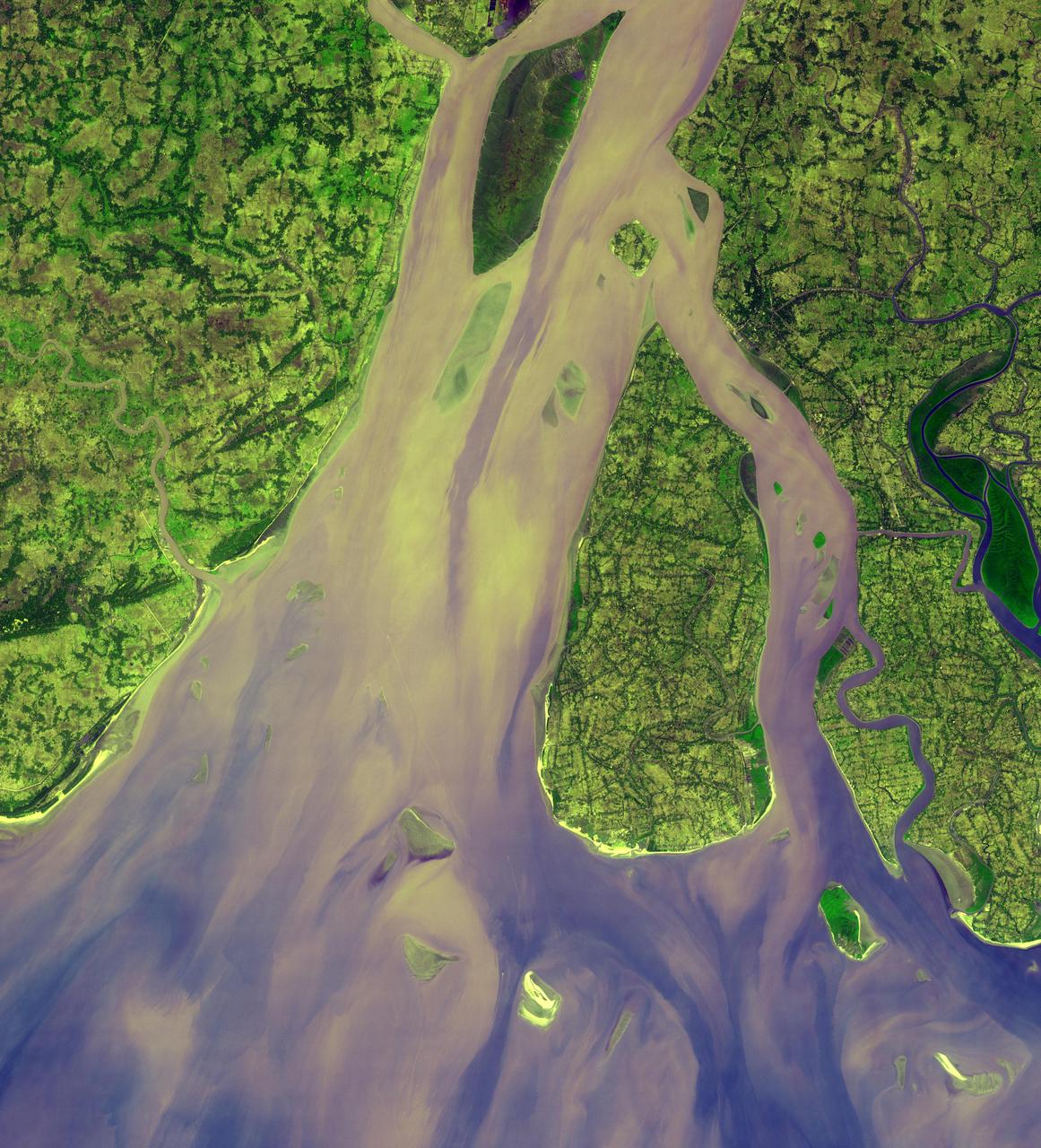
The western-most part of the Ganges Delta is seen in this 54.5 by 60 km ASTER sub-scene acquired on January 6, 2005. The Hugli River branches off from the Ganges River 300 km to the north, and flows by the city of Calcutta before emptying into the Bay of Bengal. High sediment load is evident by the light tan colors in the water, particularly downstream from off-shore islands. The deep green colors of some of these islands are mangrove swamps. The image is centered at 21.9 degrees north latitude, 88 degrees east longitude. http://photojournal.jpl.nasa.gov/catalog/PIA11158
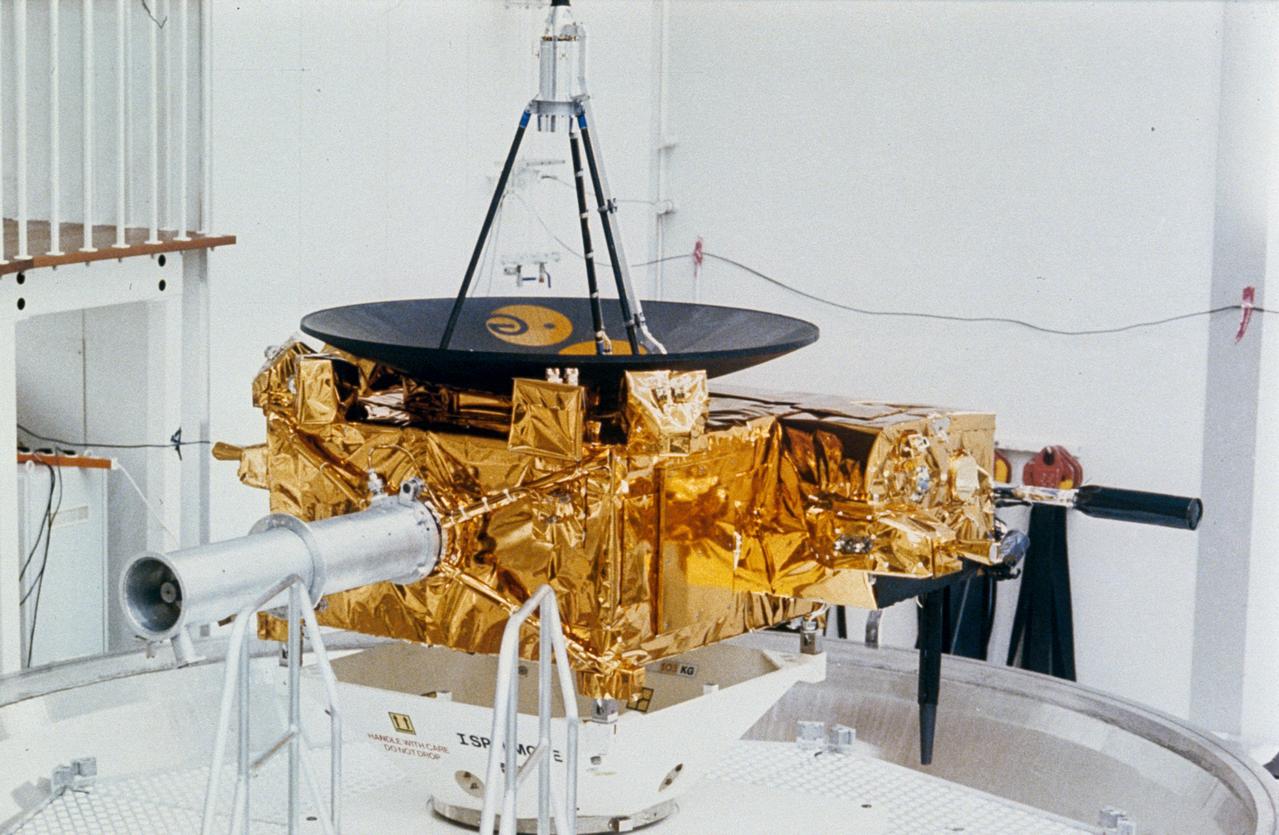
S90-45985 (May 1990) --- The Ulysses spacecraft undergoes testing at the vacuum spin-balancing facility in ESTEC. Careful balancing is required in order to ensure that the high gain antenna, which is aligned with the spacecraft spin axis, can be accurately pointed toward Earth throughout the mission. It will be flown to Kennedy Space Center (KSC) for further processing before being on loaded to Discovery's cargo bay. The Space Shuttle crew of STS-41 will send it off to its long-awaited mission.
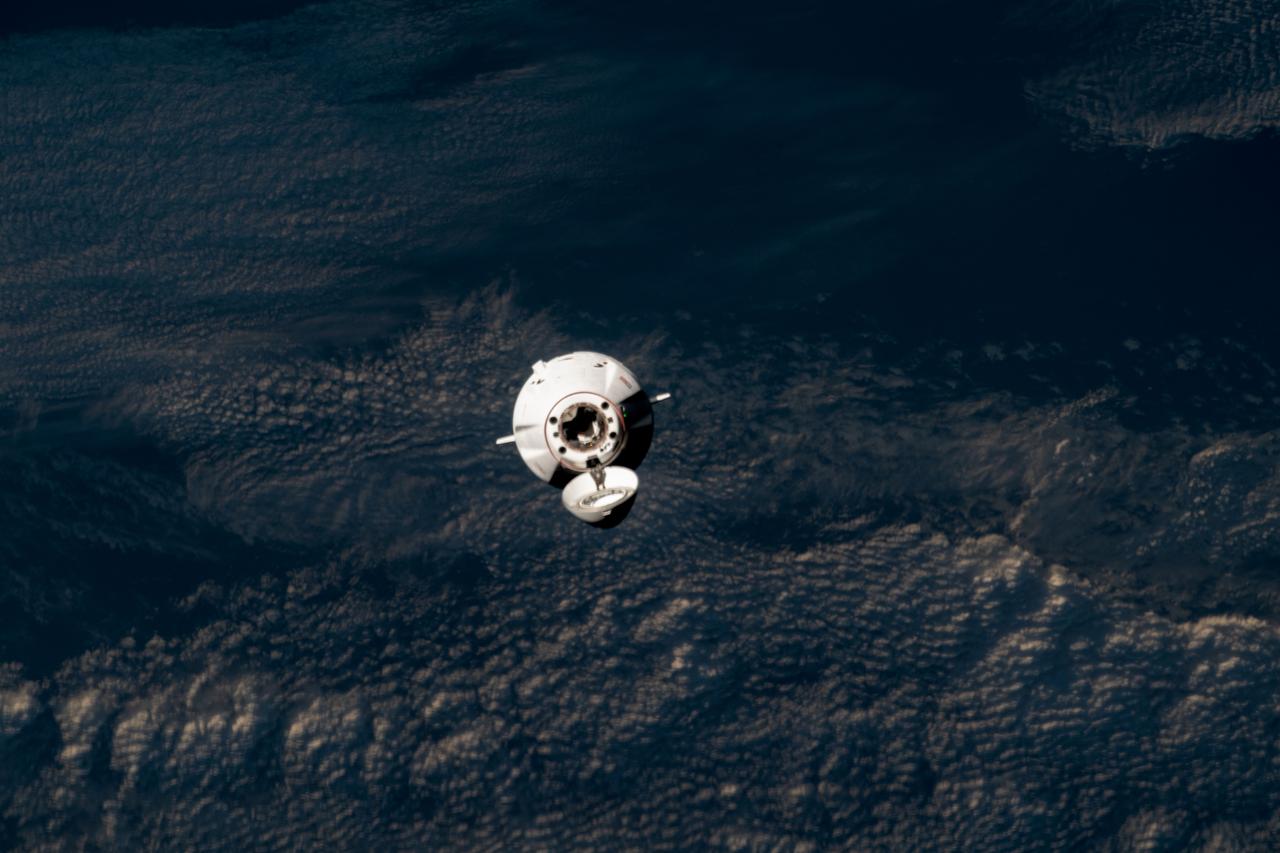
iss069e018142 (June 6, 2023) --- The SpaceX Dragon cargo craft approaches the International Space Station for an automated docking less than a day after launching from NASA's Kennedy Space Center loaded with over 7,000 pounds of science experiments, station hardware, and crew supplies. Both spacecraft were orbiting 259 miles above the Pacific Ocean off the coast of Japan at the time of this photograph from the orbital outpost.
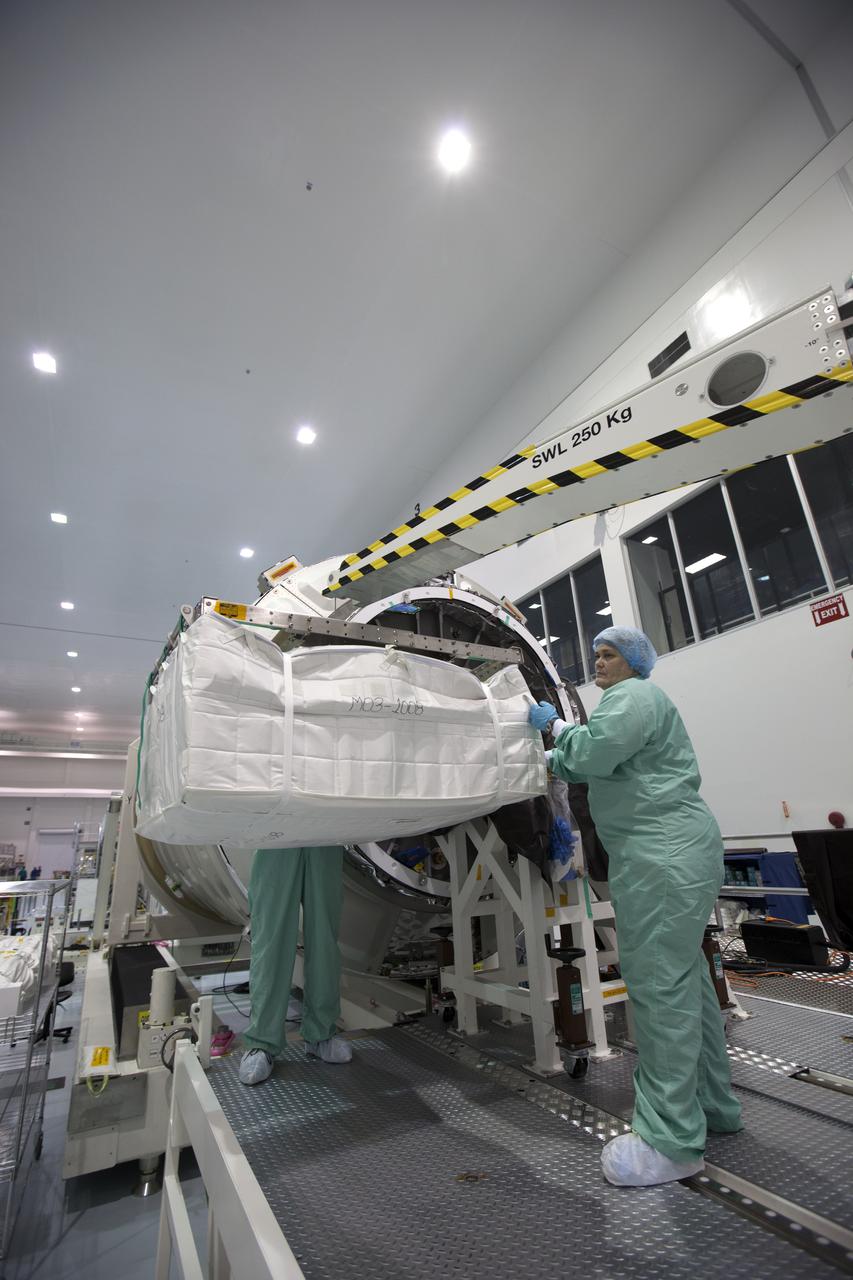
In the Space Station Processing Facility at NASA's Kennedy Space Center in Florida, technicians and engineers load thousands of pounds of supplies, equipment and scientific research materials aboard a Cygnus spacecraft's pressurized cargo module (PCM) for the Orbital ATK CRS-7 mission to the International Space Station. Scheduled to launch on March 19, 2017, the commercial resupply services mission will lift off atop a United Launch Alliance Atlas V rocket from Space launch Complex 41 at Cape Canaveral Air Force Station.
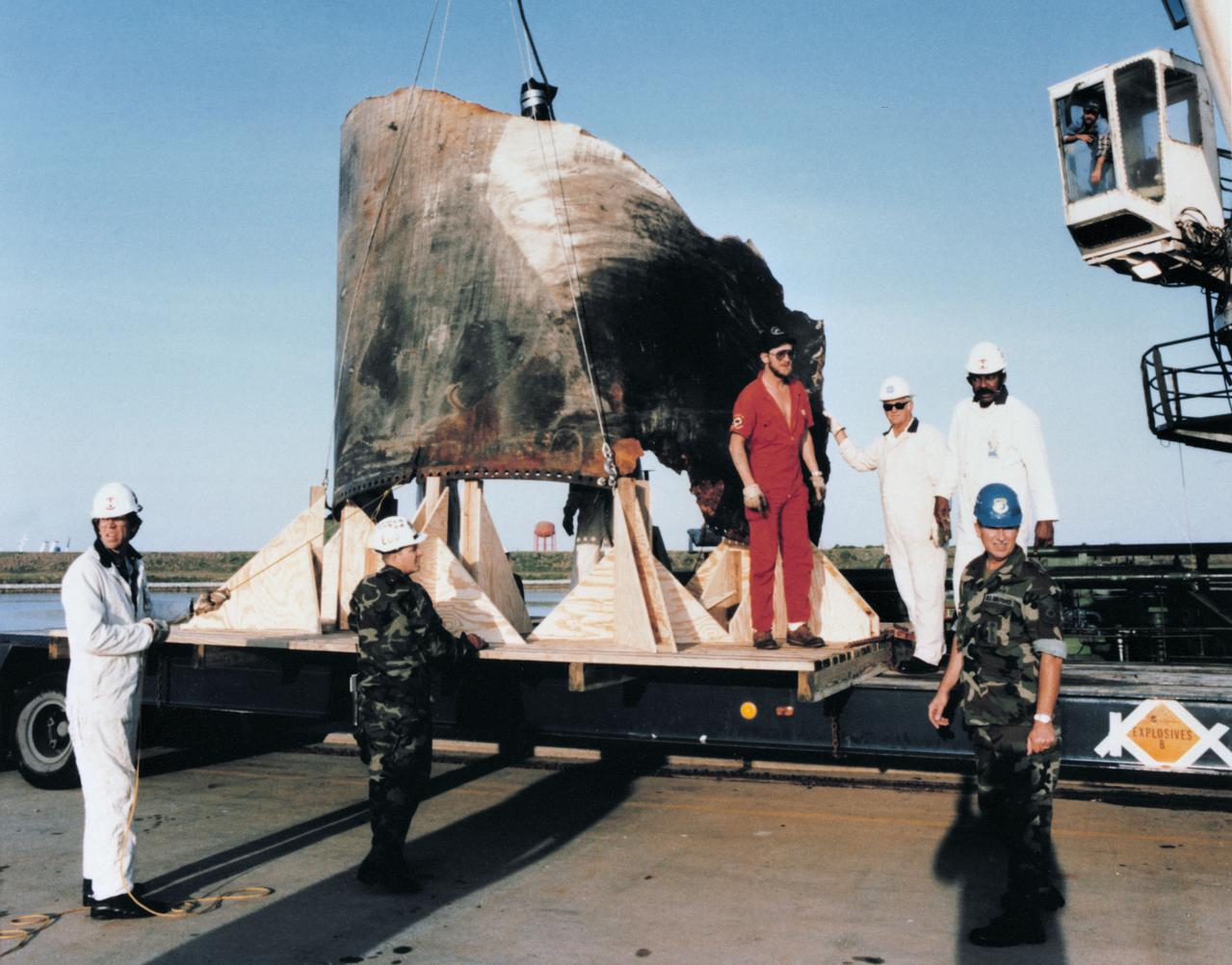
S86-30504 (16 April 1986) --- A 4,000 pound, 11' x 20' piece of the aft center segment tang joint of the space shuttle Challenger's right-hand solid rocket booster is off loaded from the Stena Workhorse after its recovery on April 13, 1986. The burned out area is 15" x 28". Photo credit: NASA
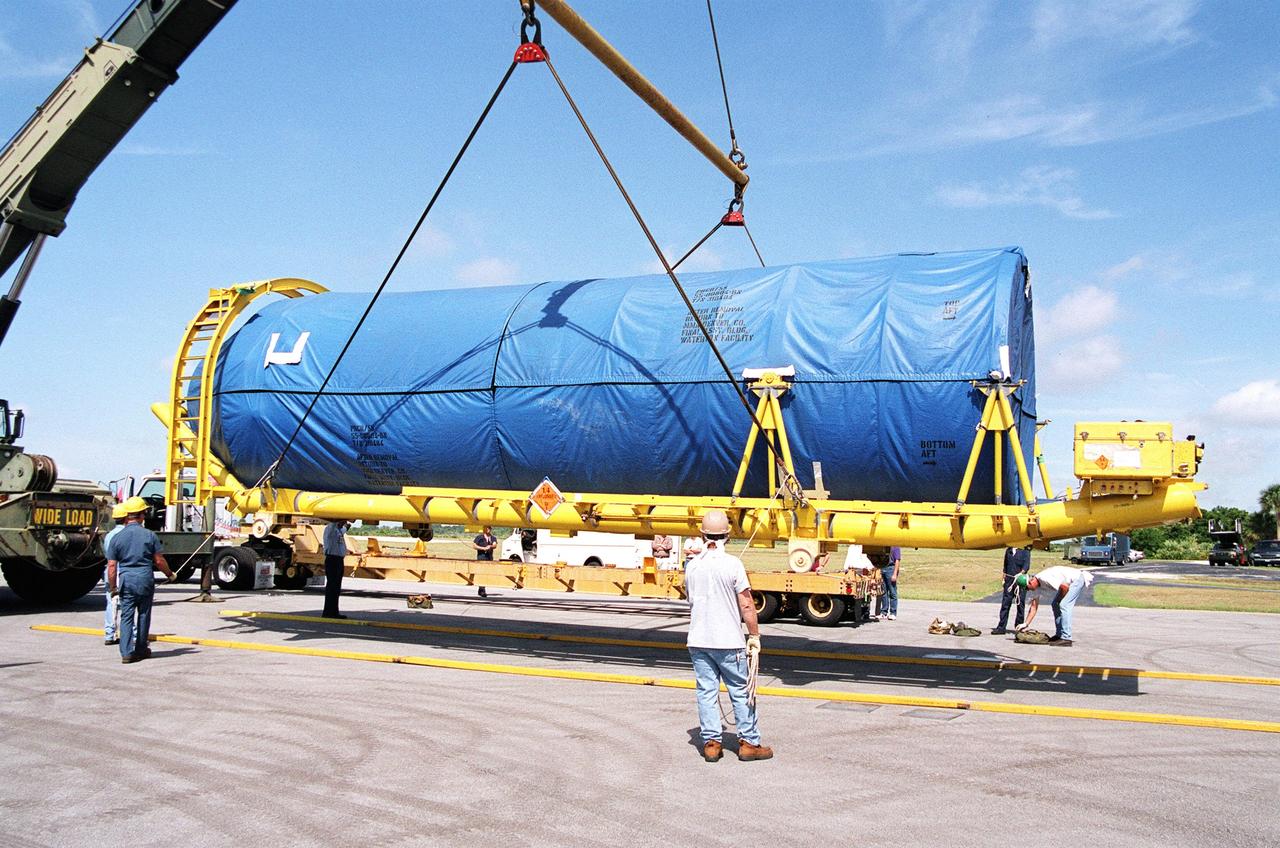
Workers supervise the off-loading of segments of a Lockheed Martin Atlas II rocket at the Skid Strip at Cape Canaveral Air Force Station.; The rocket will be used to launch the Geostationary Operational Environmental Satellite-M (GOES-M), the latest in the current series of advanced geostationary weather satellites in service.; GOES-M is being prepared for launch at the Astrotech Space Operations facility located in the Spaceport Florida Industrial Park in Titusville, Fla. The launch is scheduled for July 15 from Pad 36-A, Cape Canaveral Air Force Station
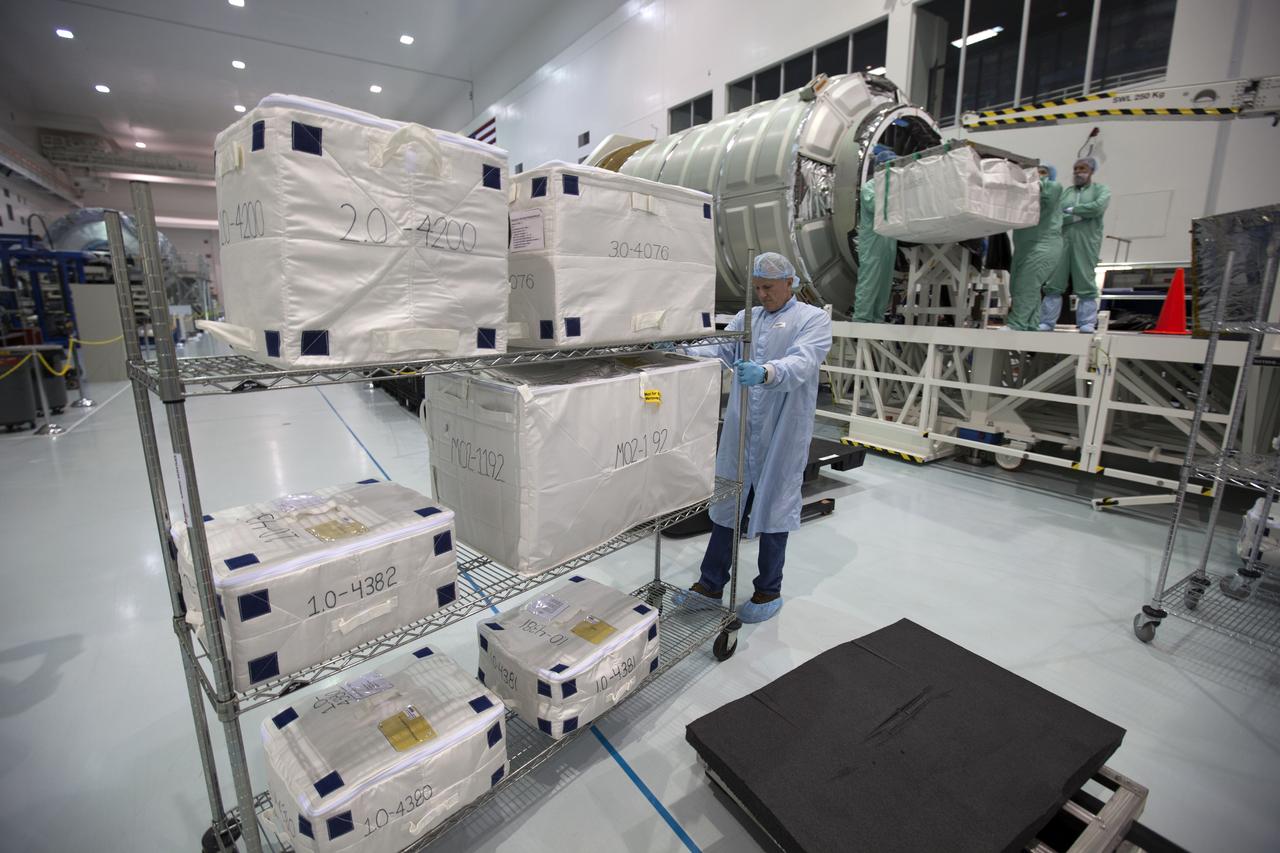
In the Space Station Processing Facility at NASA's Kennedy Space Center in Florida, technicians and engineers load thousands of pounds of supplies, equipment and scientific research materials aboard a Cygnus spacecraft's pressurized cargo module (PCM) for the Orbital ATK CRS-7 mission to the International Space Station. Scheduled to launch on March 19, 2017, the commercial resupply services mission will lift off atop a United Launch Alliance Atlas V rocket from Space launch Complex 41 at Cape Canaveral Air Force Station.
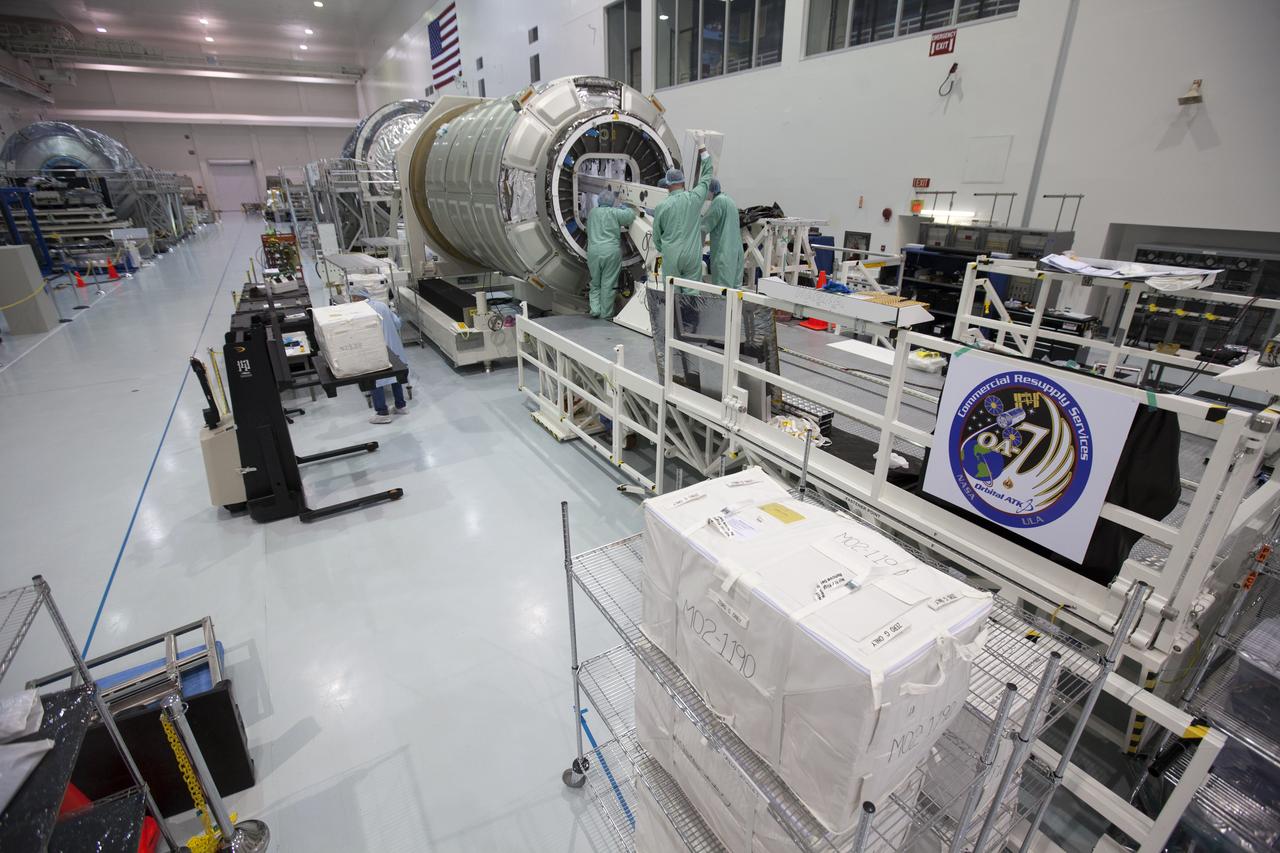
In the Space Station Processing Facility at NASA's Kennedy Space Center in Florida, technicians and engineers load thousands of pounds of supplies, equipment and scientific research materials aboard a Cygnus spacecraft's pressurized cargo module (PCM) for the Orbital ATK CRS-7 mission to the International Space Station. Scheduled to launch on March 19, 2017, the commercial resupply services mission will lift off atop a United Launch Alliance Atlas V rocket from Space launch Complex 41 at Cape Canaveral Air Force Station.
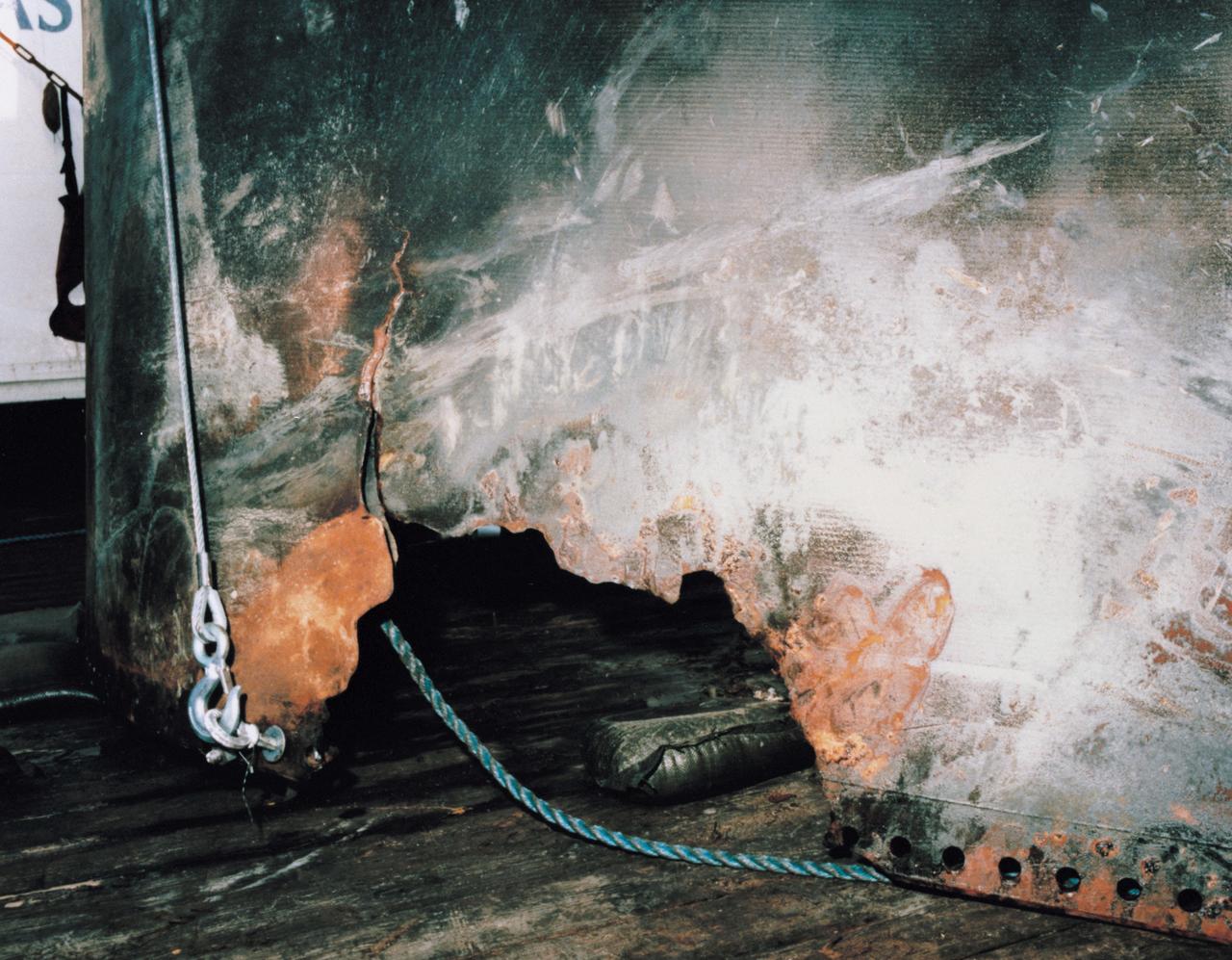
S86-30503 (16 April 1986) --- A 4,000 pound, 11' x 20' piece of the aft center segment tang joint of the space shuttle Challenger's right-hand solid rocket booster is off loaded from the Stena Workhorse after its recovery on April 13, 1986. The burned out area is 15" x 28". Photo credit: NASA
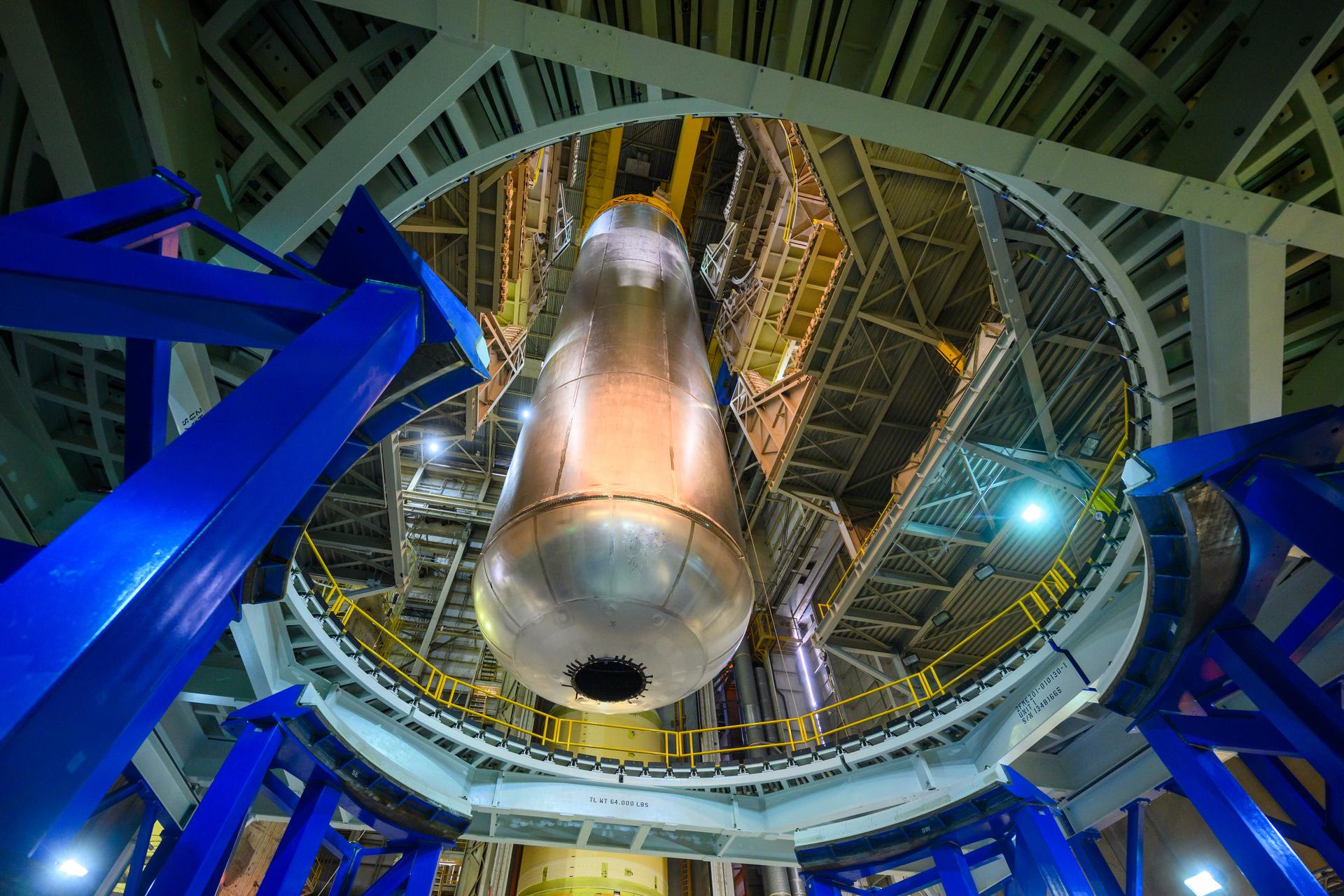
Teams at NASA’s Michoud Assembly Facility in New Orleans lift the 130-foot-tall liquid hydrogen tank off the vertical assembly center on Nov. 14. This is the fourth liquid hydrogen tank manufactured at the facility for the agency’s SLS (Space Launch System) rocket. The completed tank will be loaded into a production cell for technicians to remove the lift tool, perform dimensional scans, and then install brackets, which will allow the move crew to break the tank over from a vertical to a horizontal configuration.
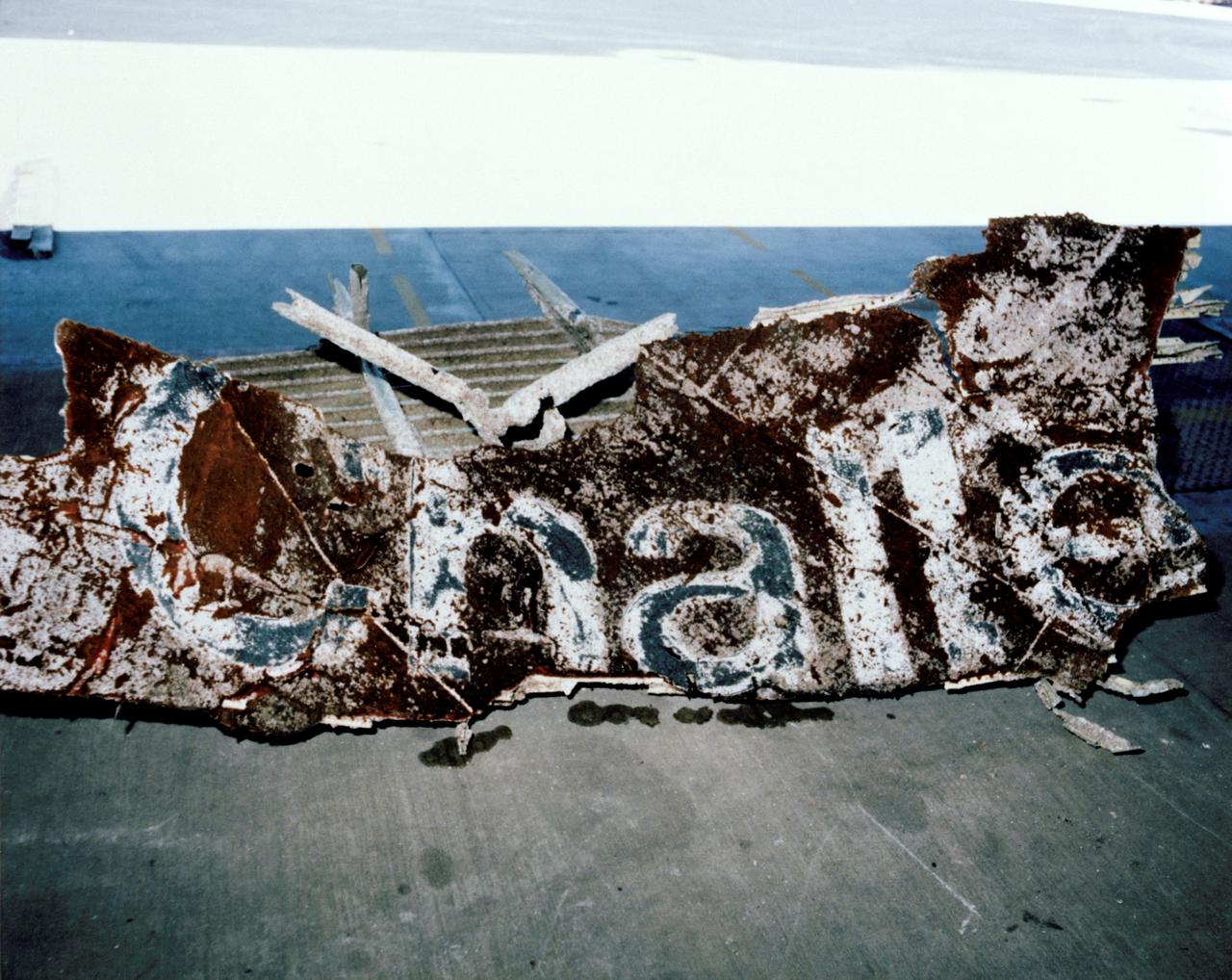
51L-10187 (18 April 1986) --- A 9'7" x 16' segment of Challenger's right wing is unloaded at the Logistics Facility after being off-loaded from the rescue and salvage ship USS Opportune. It was located and recovered by Navy divers from the Opportune about 12 nautical miles northeast of Cape Canaveral in 70 feet of water. Photo credit: NASA
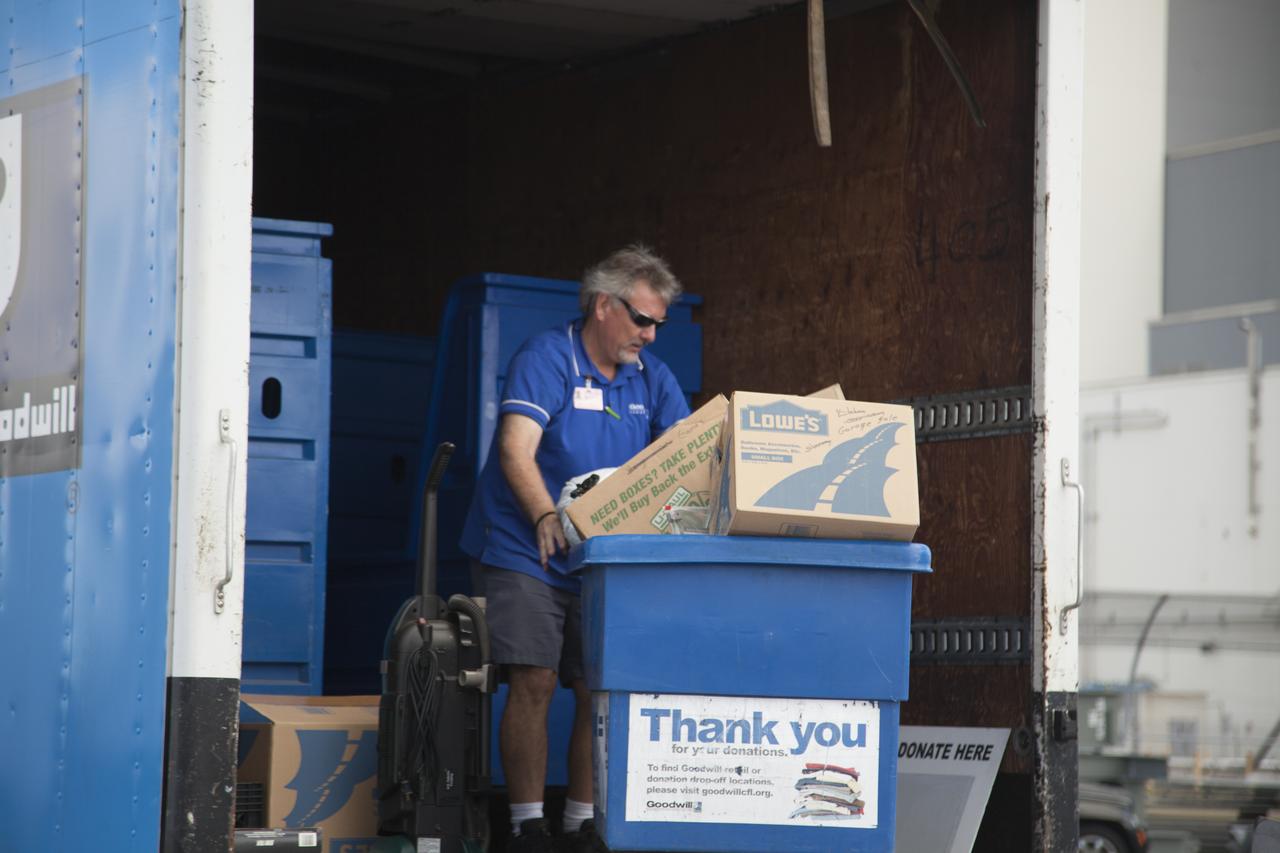
In the parking lot of the Vehicle Assembly Building at NASA's Kennedy Space Center in Florida, a member of Goodwill Industries loads used household material for recycling. During the two-day event, employees dropped off items as part of America Recycles Day. The center partnered with Goodwill Industries and several other local organizations to collect items for reprocessing. The annual event is a program of Keep America Beautiful, dedicated to promoting and celebrating recycling.
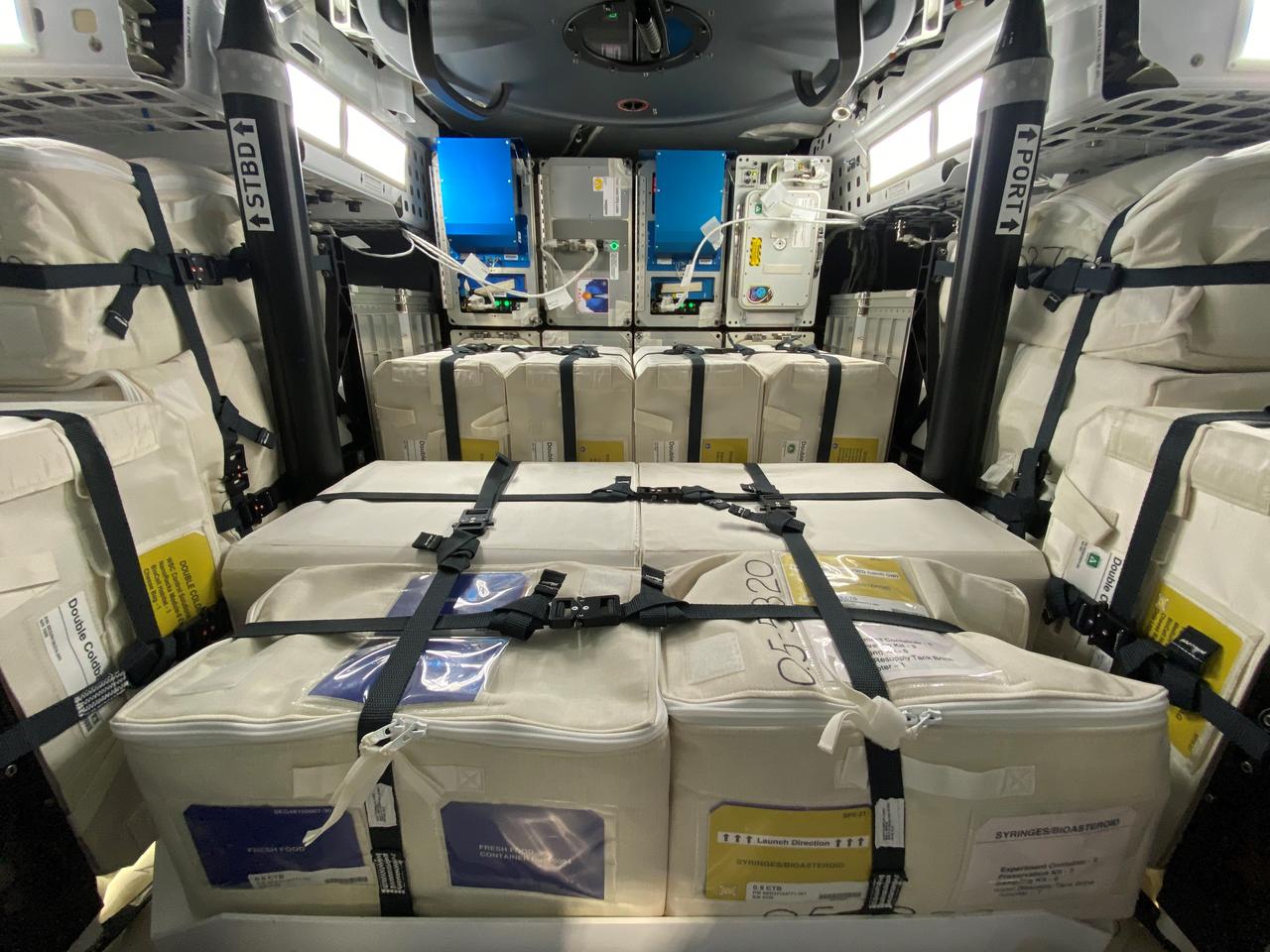
The remaining time-sensitive payloads bound for the International Space Station on SpaceX’s 21st Commercial Resupply Services (CRS-21) mission are loaded into the Cargo Dragon spacecraft on Friday, Dec. 4, 2020. A SpaceX Falcon 9 rocket, carrying the Cargo Dragon, lifted off from Launch Complex 39A at Kennedy Space Center in Florida at 11:17 a.m. EST on Dec. 6, 2020. The spacecraft is delivering more than 6,400 pounds of science investigations and cargo to the orbiting laboratory.
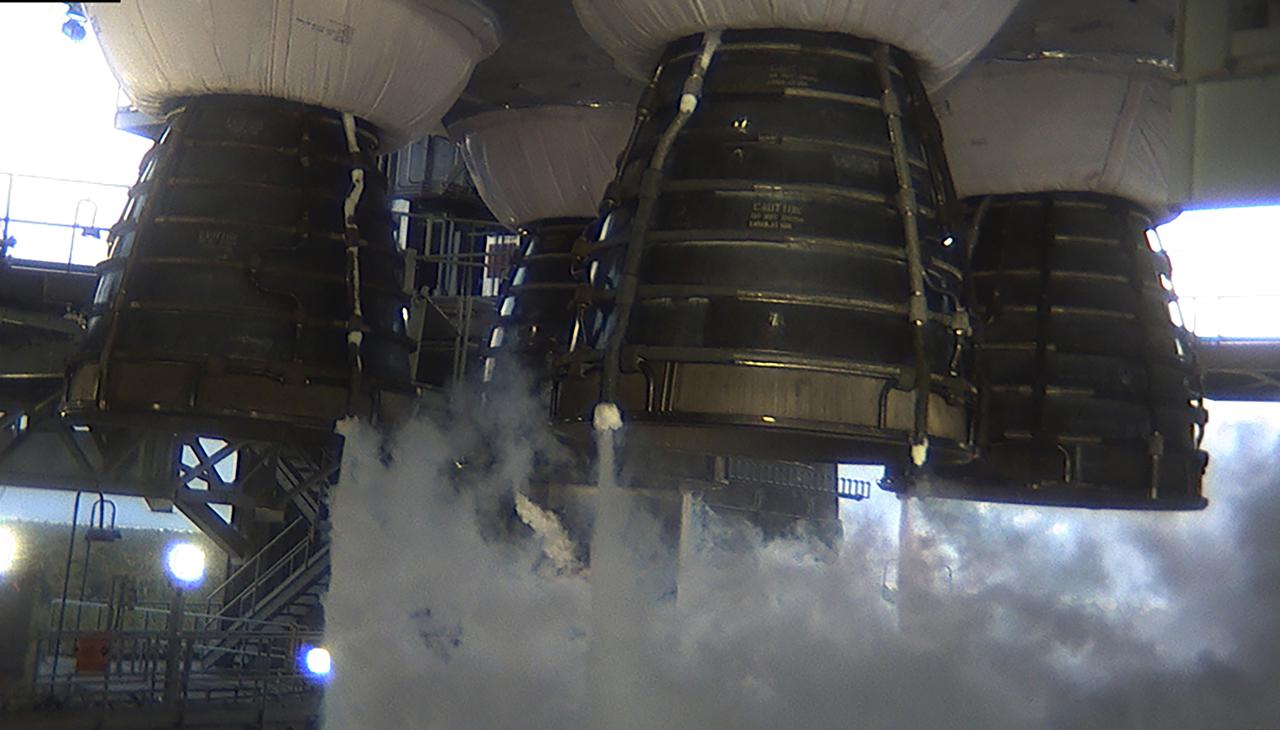
Teams at NASA’s Stennis Space Center performed a wet dress rehearsal exercise with the new Space Launch System core stage Dec. 20, 2020. The test – the seventh in an eight-test Green Run series – involved rehearsal of a countdown to hot fire of the stage’s engines, including the loading of 733,000 pounds of liquid hydrogen and liquid oxygen propellants. This image shows liquid oxygen as it naturally boils off and is vented from the four RS-25 engines that will be fired during the final core stage test.
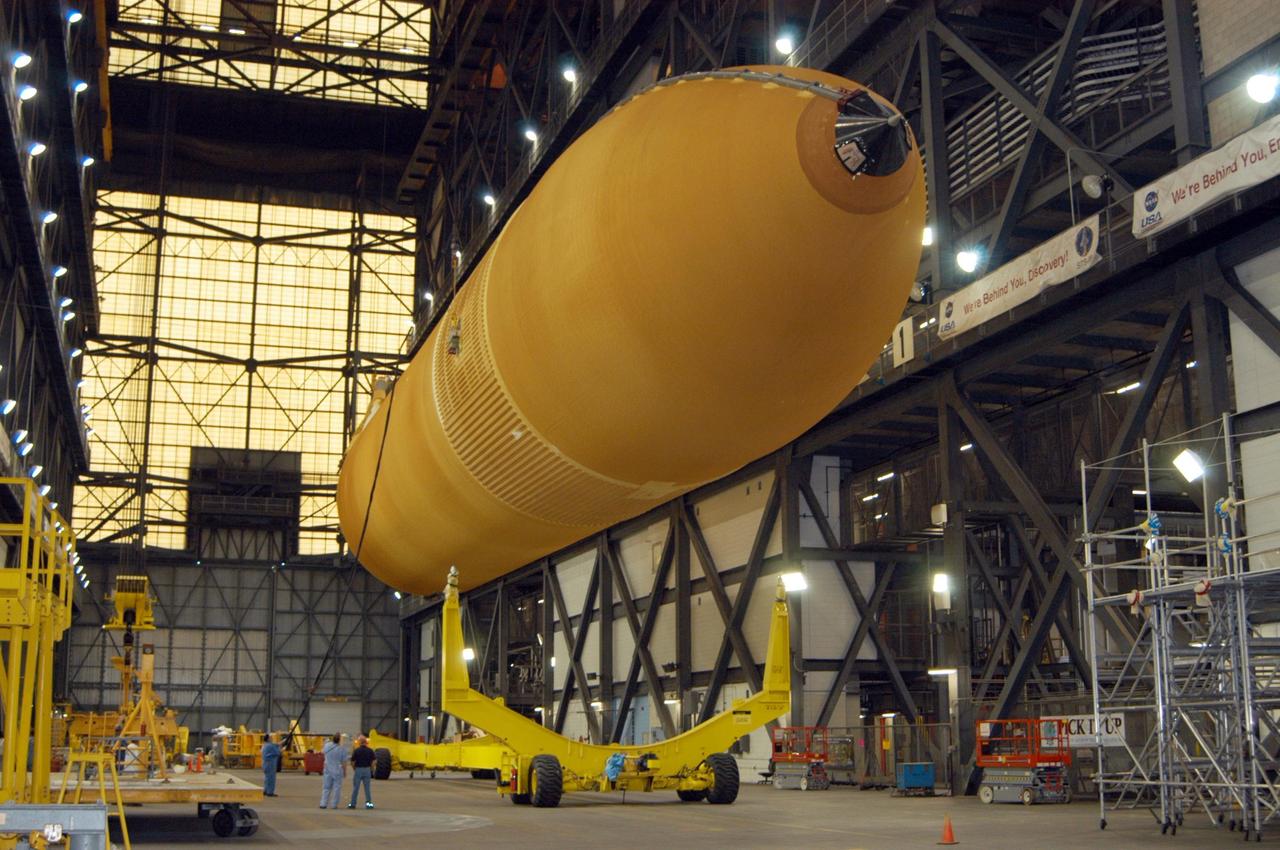
KENNEDY SPACE CENTER, FLA. - In the transfer aisle of NASA's Vehicle Assembly Building, the redesigned external fuel tank that will launch Space Shuttle Atlantis on the next shuttle mission, STS-115, is lifted off its transporter and will be raised to a vertical position. Once it is raised, the tank will be moved into a checkout cell for further work. The tank, designated ET-118, will fly with many major safety changes, including the removal of the protuberance air load ramps. Photo credit: NASA/George Shelton
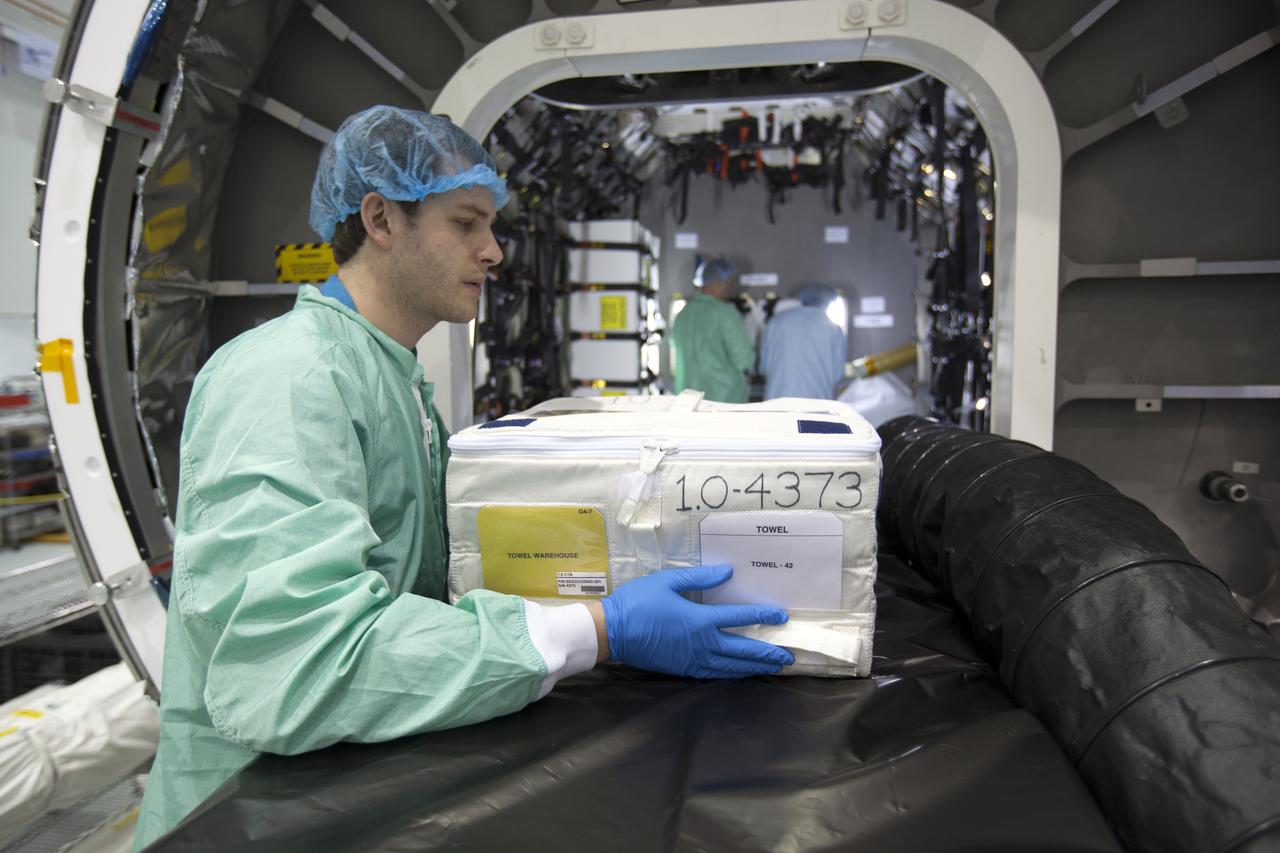
In the Space Station Processing Facility at NASA's Kennedy Space Center in Florida, thousands of pounds of supplies, equipment and scientific research materials are prepared for loading aboard a Cygnus spacecraft's pressurized cargo module (PCM) for the Orbital ATK CRS-7 mission to the International Space Station. Scheduled to launch on March 19, 2017, the commercial resupply services mission will lift off atop a United Launch Alliance Atlas V rocket from Space launch Complex 41 at Cape Canaveral Air Force Station.
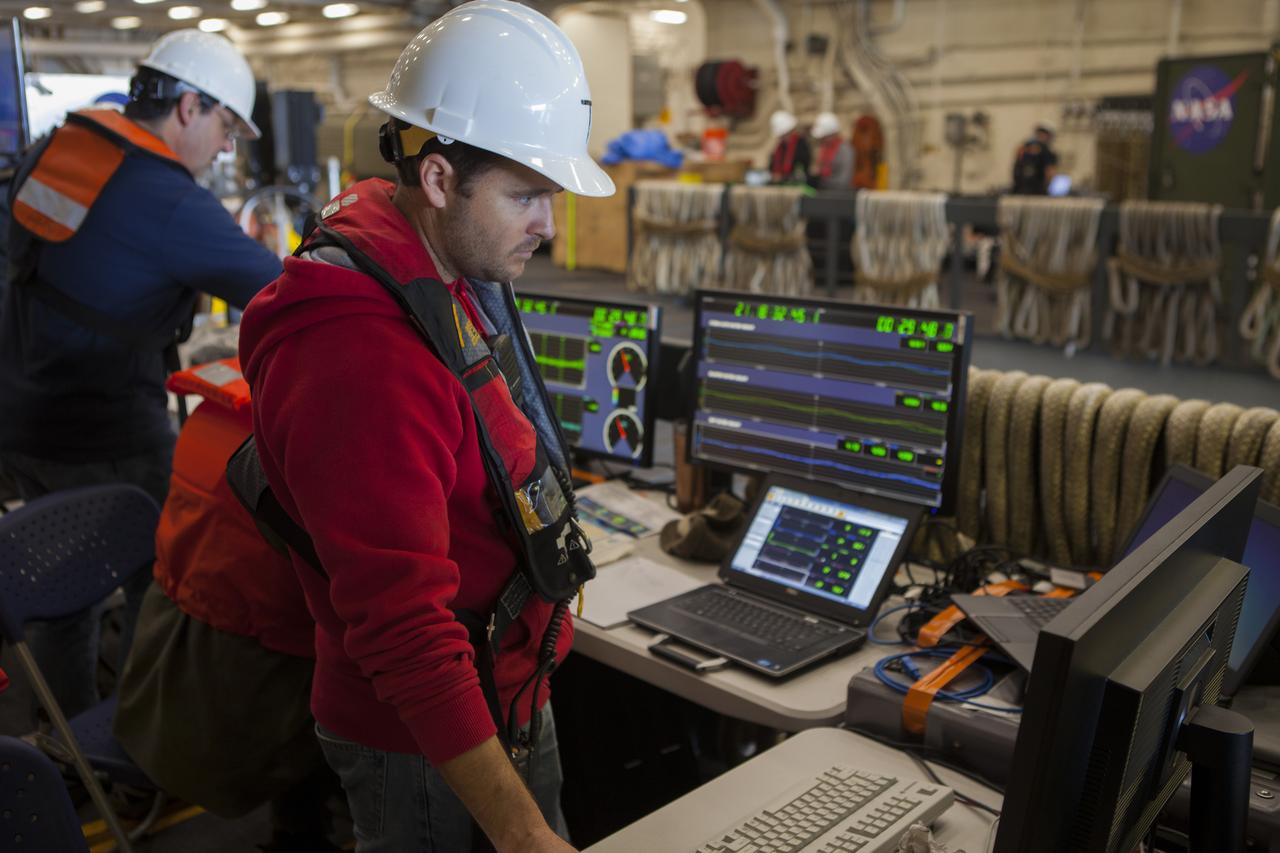
Lead Instrumentation Engineer Kevin Taylor keeps an eye on the load levels during Underway Recovery Test 6 operations off the coast of San Diego. Kennedy Space Center’s NASA Recovery Team works with the U.S. Navy to improve recovery procedures and hardware ahead of Orion's next flight, Exploration Mission-1, when it splashes down in the Pacific Ocean.
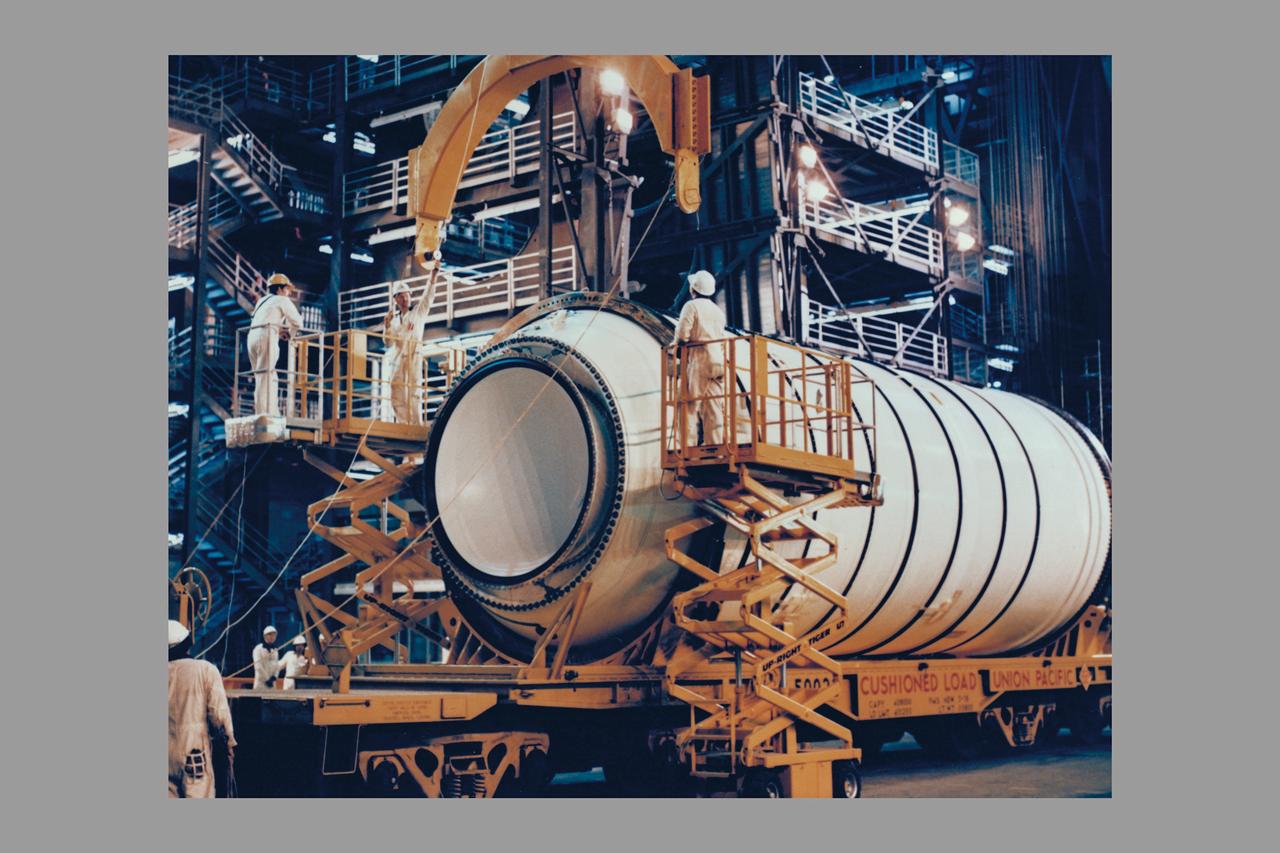
The first solid rocket booster solid motor segemnts to arrive at KSC, the left and right hand aft segments are off-loaded into High Bay 4 in the Vehicle Assembly Building and mated to their respective SRB aft skirts. The two aft assemblies will support the entire 150 foot tall solid boosters, in turn supporting the external tank and Orbiter Columbia on the Mobile Launcher Platform, for the first orbital flight test of the Space Shuttle.
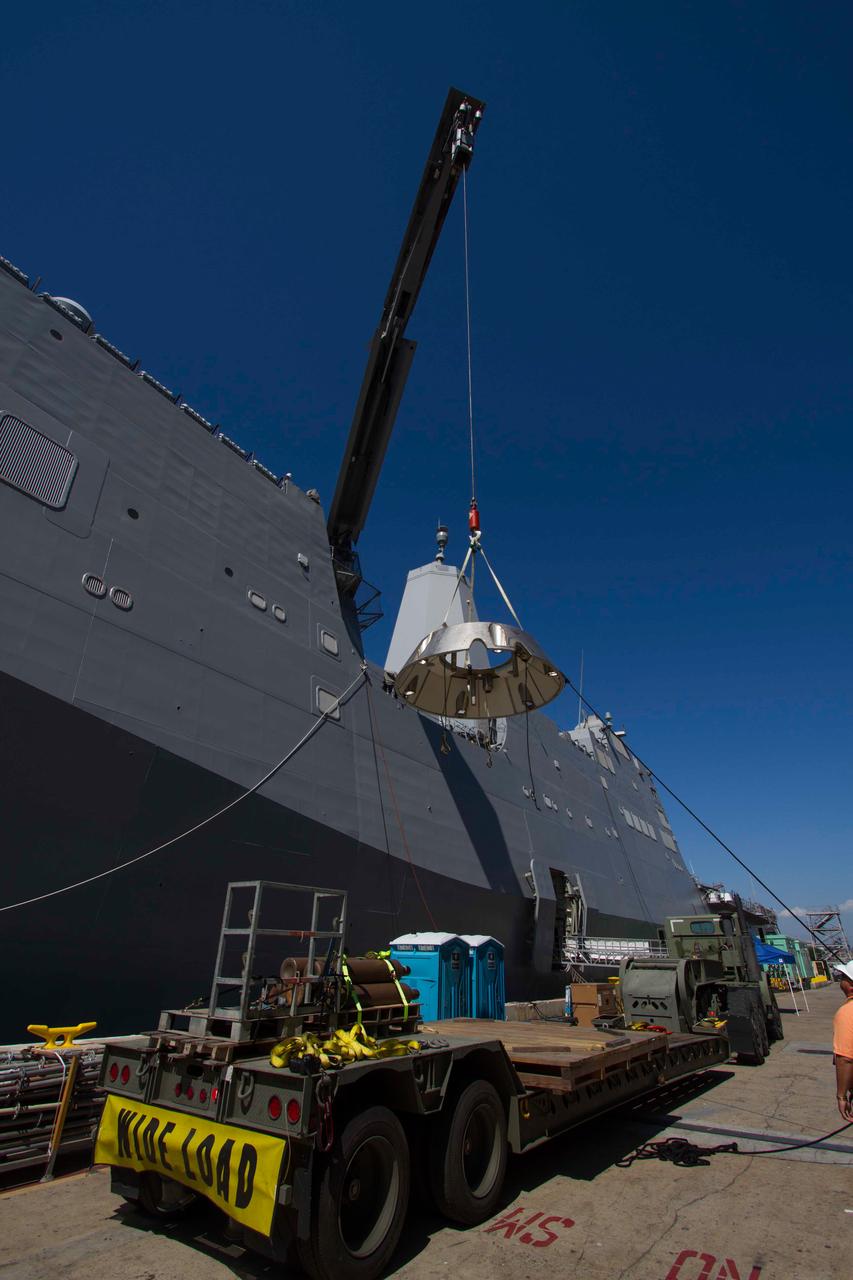
A test version of Orion's forward bay cover is loaded onto the Navy's USS Anchorage in preparation for testing Orion recovery tools and techniques in the Pacific Ocean off the coast of San Diego on Sept. 12, 2014. The forward bay cover protects the top section of Orion's crew module until the spacecraft is almost ready to land. It is jettisoned to allow Orion's parachutes to deploy and must be recovered separately from the crew module. Part of Batch image transfer from Flickr.
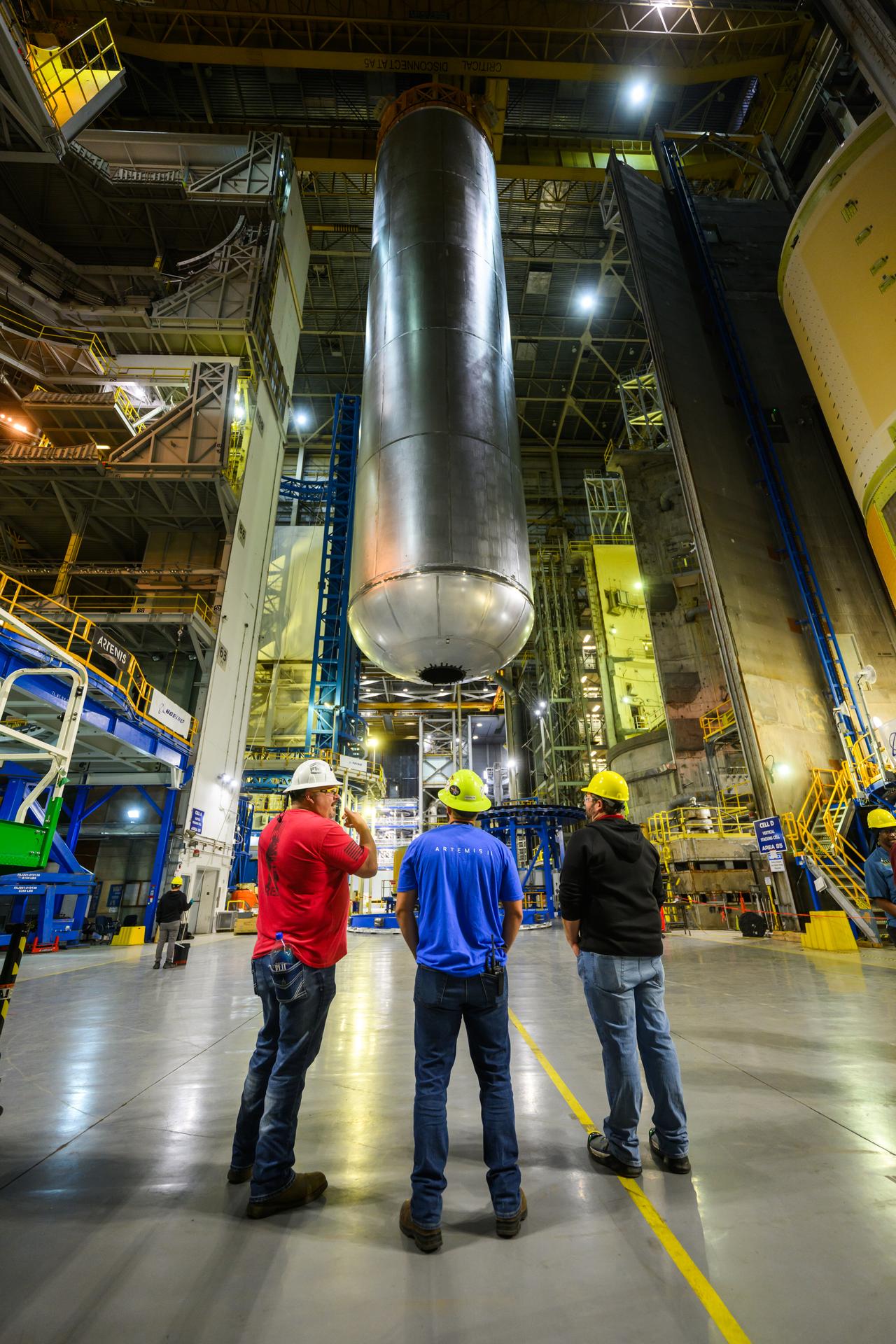
Teams at NASA’s Michoud Assembly Facility in New Orleans lift the 130-foot-tall liquid hydrogen tank off the vertical assembly center on Nov. 14. This is the fourth liquid hydrogen tank manufactured at the facility for the agency’s SLS (Space Launch System) rocket. The completed tank will be loaded into a production cell for technicians to remove the lift tool, perform dimensional scans, and then install brackets, which will allow the move crew to break the tank over from a vertical to a horizontal configuration.
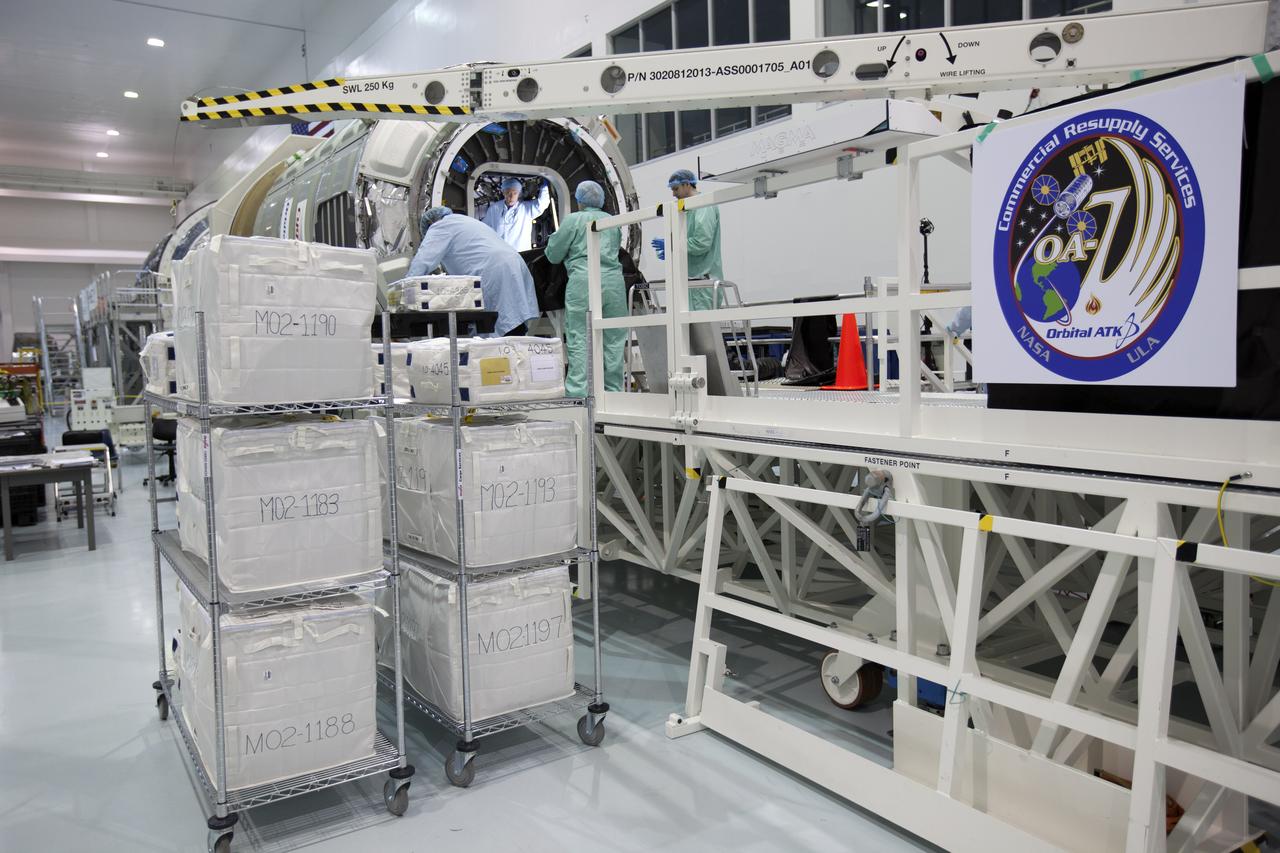
In the Space Station Processing Facility at NASA's Kennedy Space Center in Florida, technicians and engineers load thousands of pounds of supplies, equipment and scientific research materials aboard a Cygnus spacecraft's pressurized cargo module (PCM) for the Orbital ATK CRS-7 mission to the International Space Station. Scheduled to launch on March 19, 2017, the commercial resupply services mission will lift off atop a United Launch Alliance Atlas V rocket from Space launch Complex 41 at Cape Canaveral Air Force Station.
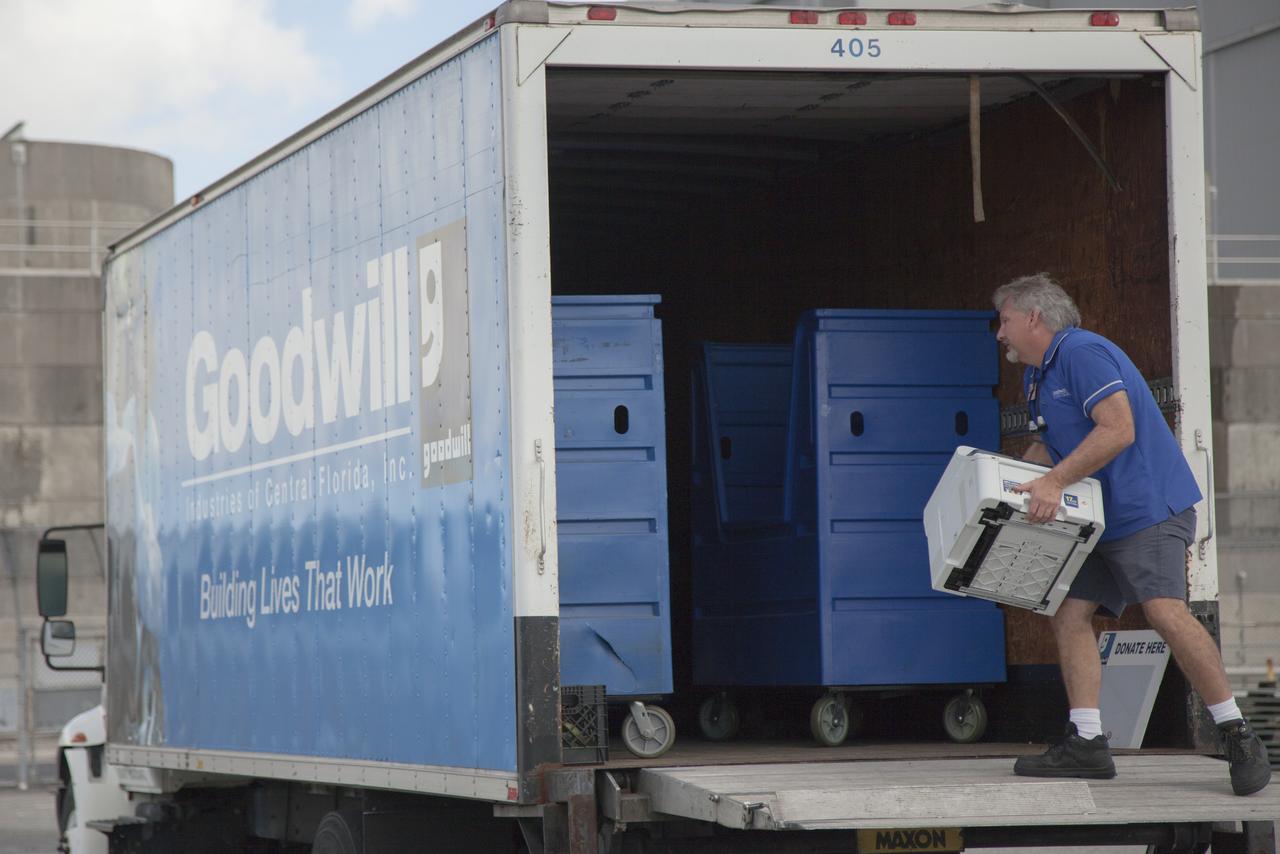
In the parking lot of the Vehicle Assembly Building at NASA's Kennedy Space Center in Florida, a member of Goodwill Industries loads used household material for recycling. During the two-day event, employees dropped off items as part of America Recycles Day. The center partnered with Goodwill Industries and several other local organizations to collect items for reprocessing. The annual event is a program of Keep America Beautiful, dedicated to promoting and celebrating recycling.
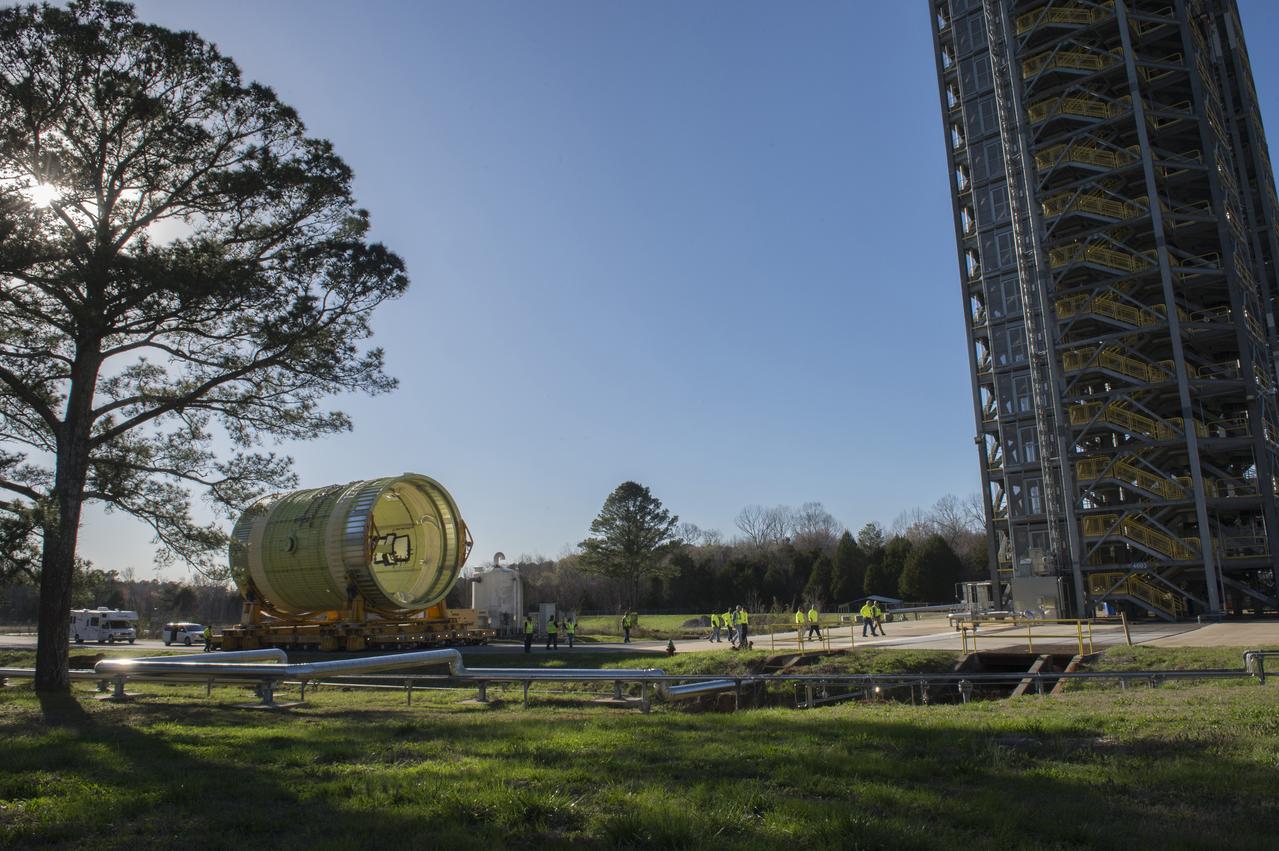
The SLS Stages Intertank Structural Test Assembly (STA) is rolling off the NASA Pegasus Barge at the MSFC Dock enroute to the MSFC 4619 Load Test Annex test facility for qualification testing via MSFC West Test Area. STA approaches Test Stand 4693, SLS LH2 test Stand, on way to Bldg. 4619
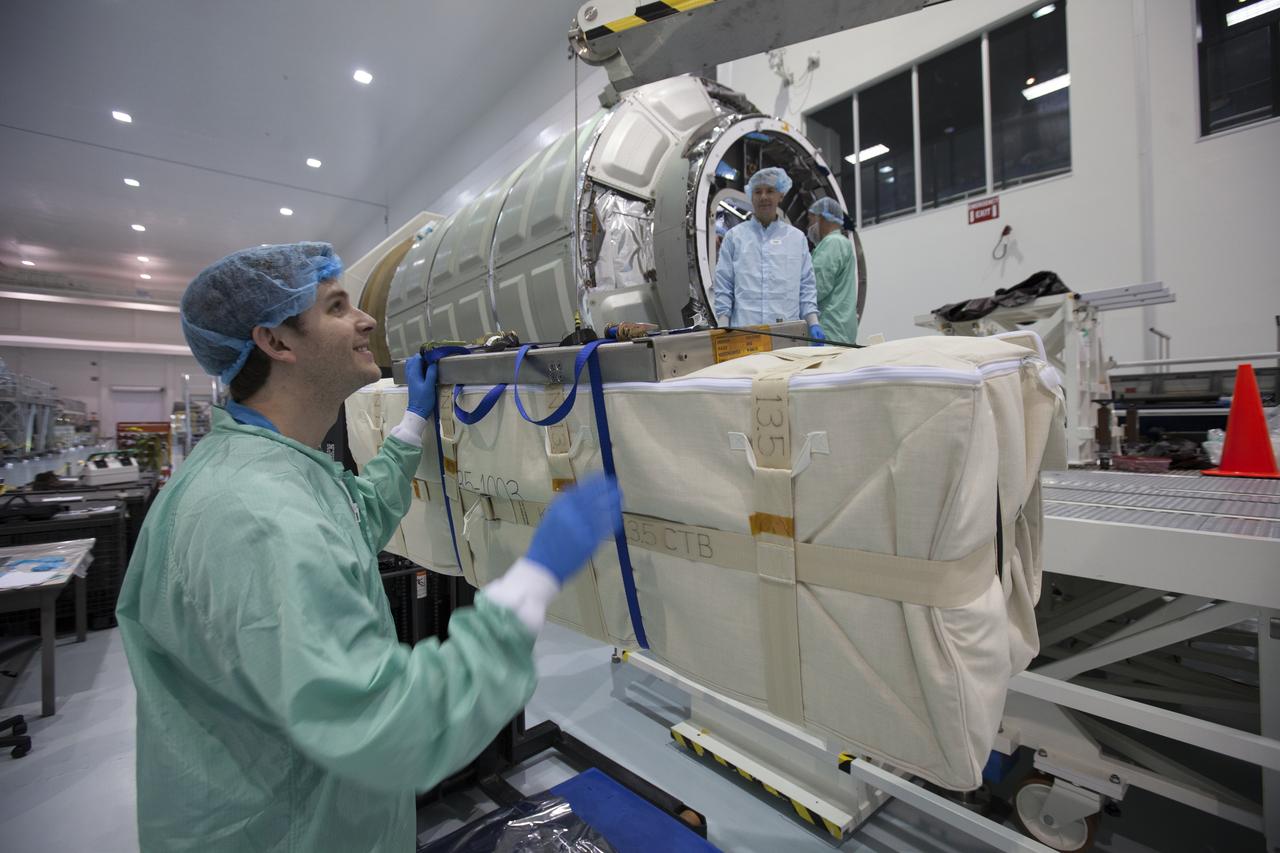
In the Space Station Processing Facility at NASA's Kennedy Space Center in Florida, technicians and engineers load thousands of pounds of supplies, equipment and scientific research materials aboard a Cygnus spacecraft's pressurized cargo module (PCM) for the Orbital ATK CRS-7 mission to the International Space Station. Scheduled to launch on March 19, 2017, the commercial resupply services mission will lift off atop a United Launch Alliance Atlas V rocket from Space launch Complex 41 at Cape Canaveral Air Force Station.
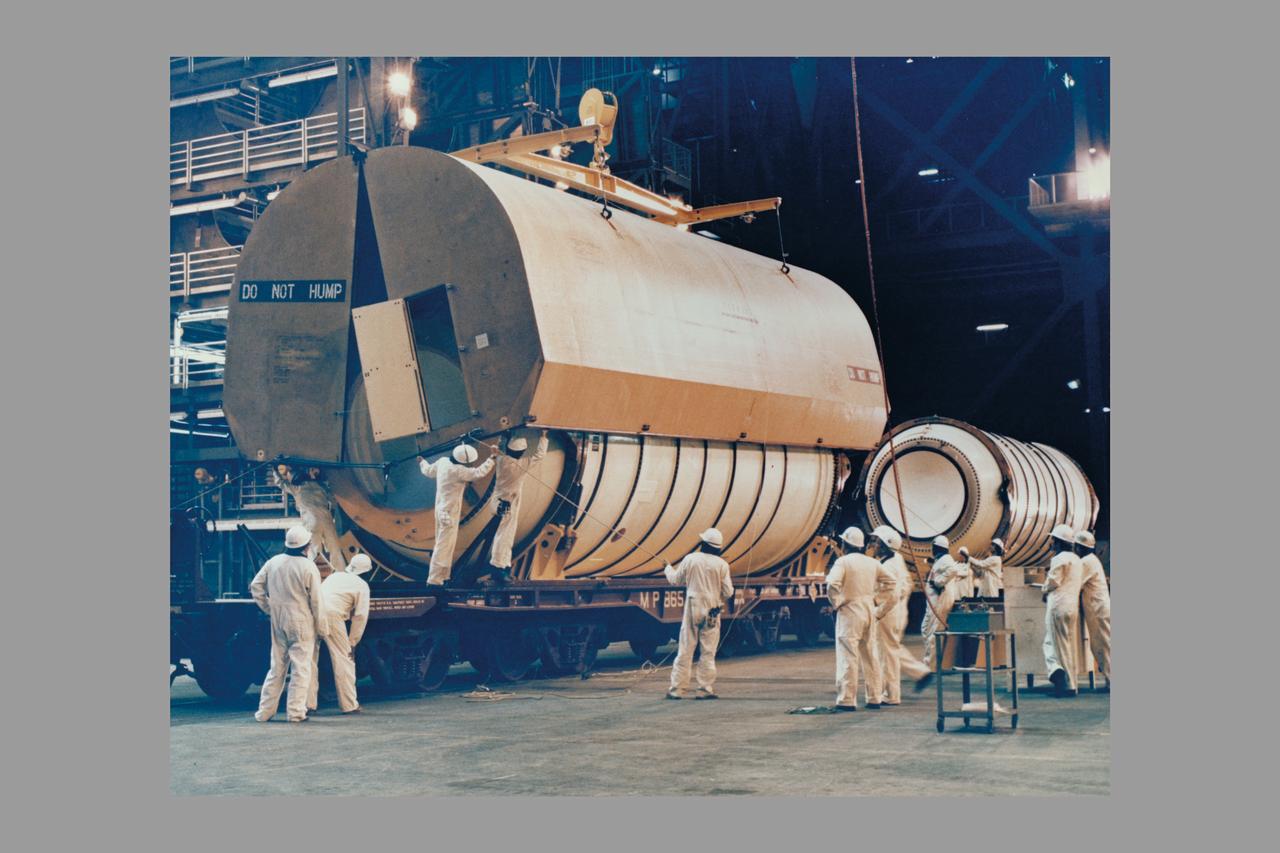
The first solid rocket booster solid motor segemnts to arrive at KSC, the left and right hand aft segments are off-loaded into High Bay 4 in the Vehicle Assembly Building and mated to their respective SRB aft skirts. The two aft assemblies will support the entire 150 foot tall solid boosters, in turn supporting the external tank and Orbiter Columbia on the Mobile Launcher Platform, for the first orbital flight test of the Space Shuttle.
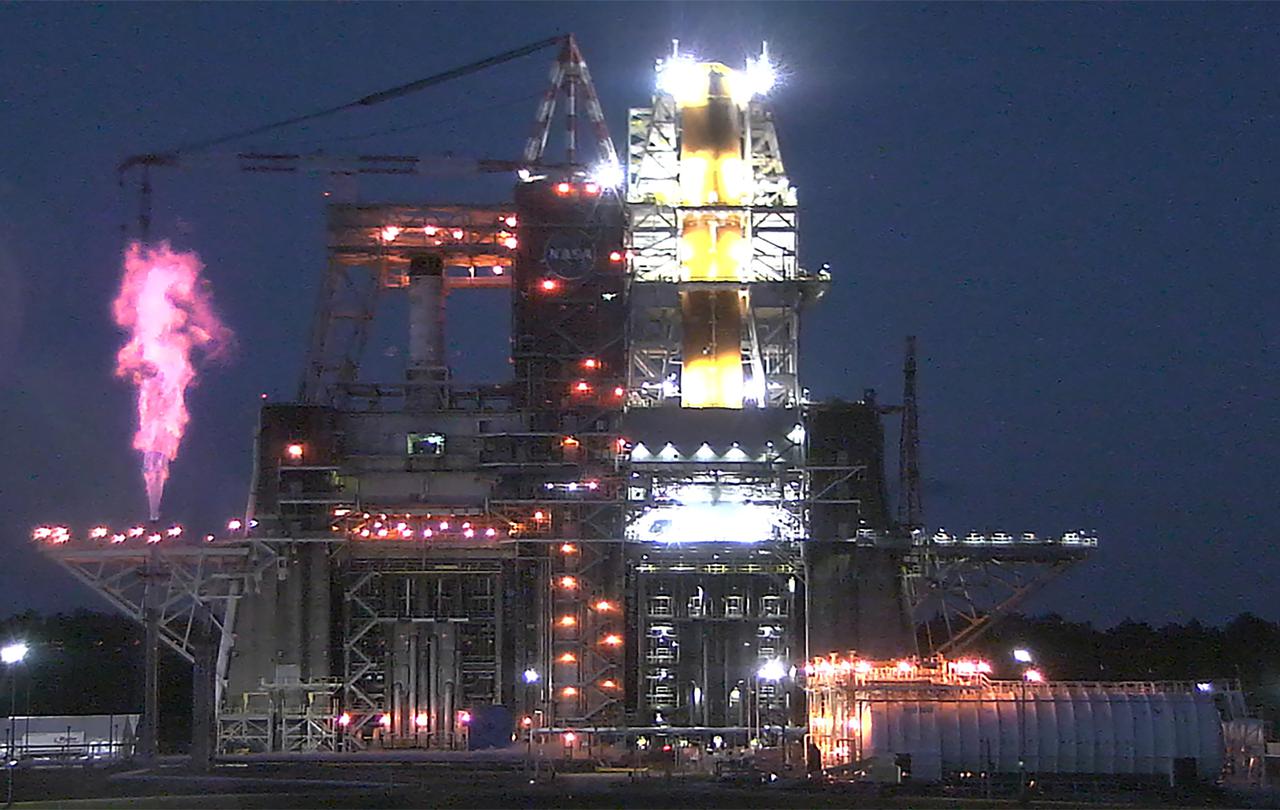
Teams at NASA’s Stennis Space Center performed a wet dress rehearsal exercise with the new Space Launch System core stage Dec. 20, 2020. The test – the seventh in an eight-test Green Run series – involved rehearsal of a countdown to hot fire of the stage’s engines, including the loading of 733,000 pounds of liquid hydrogen and liquid oxygen propellants. This image shows liquid hydrogen being safely vented and burned as it naturally warms and boils off.
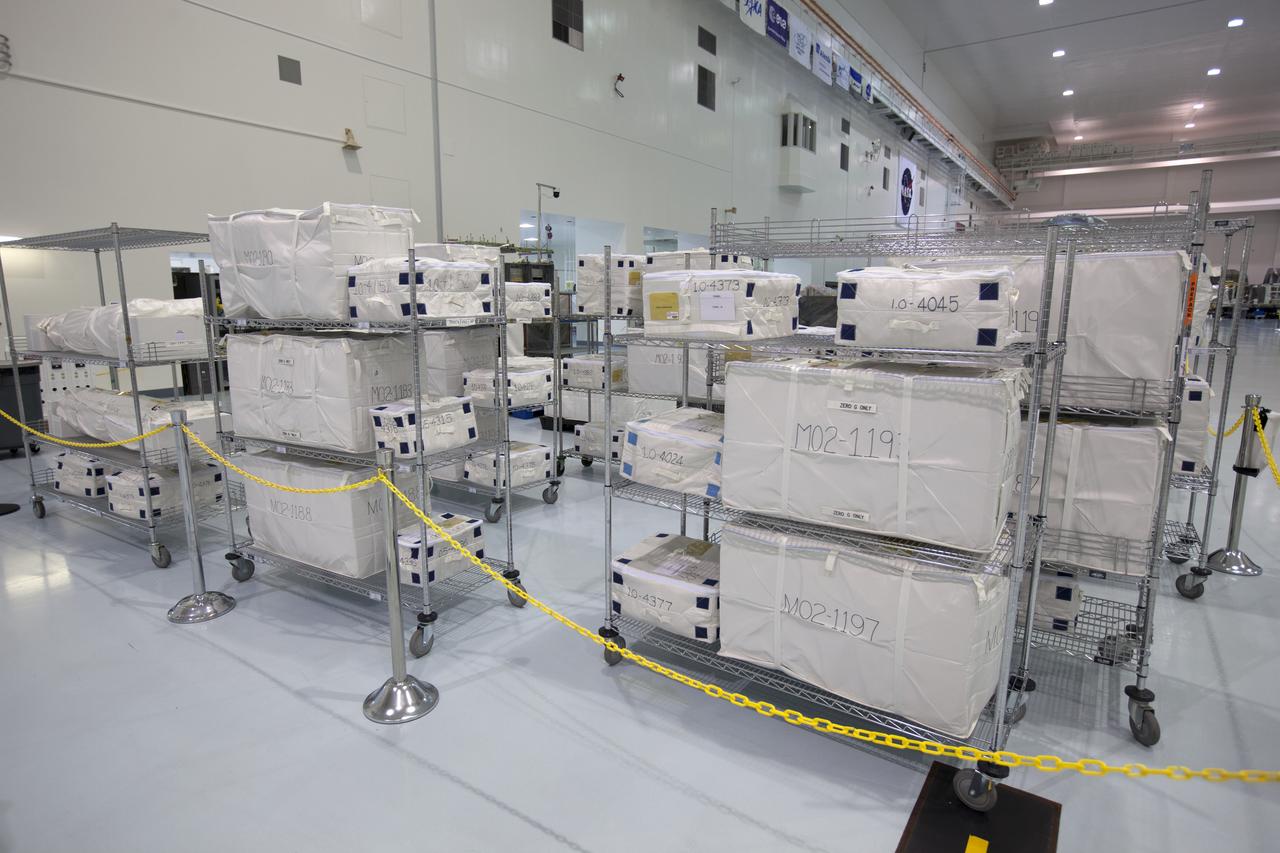
In the Space Station Processing Facility at NASA's Kennedy Space Center in Florida, thousands of pounds of supplies, equipment and scientific research materials are prepared for loading aboard a Cygnus spacecraft's pressurized cargo module (PCM) for the Orbital ATK CRS-7 mission to the International Space Station. Scheduled to launch on March 19, 2017, the commercial resupply services mission will lift off atop a United Launch Alliance Atlas V rocket from Space launch Complex 41 at Cape Canaveral Air Force Station.
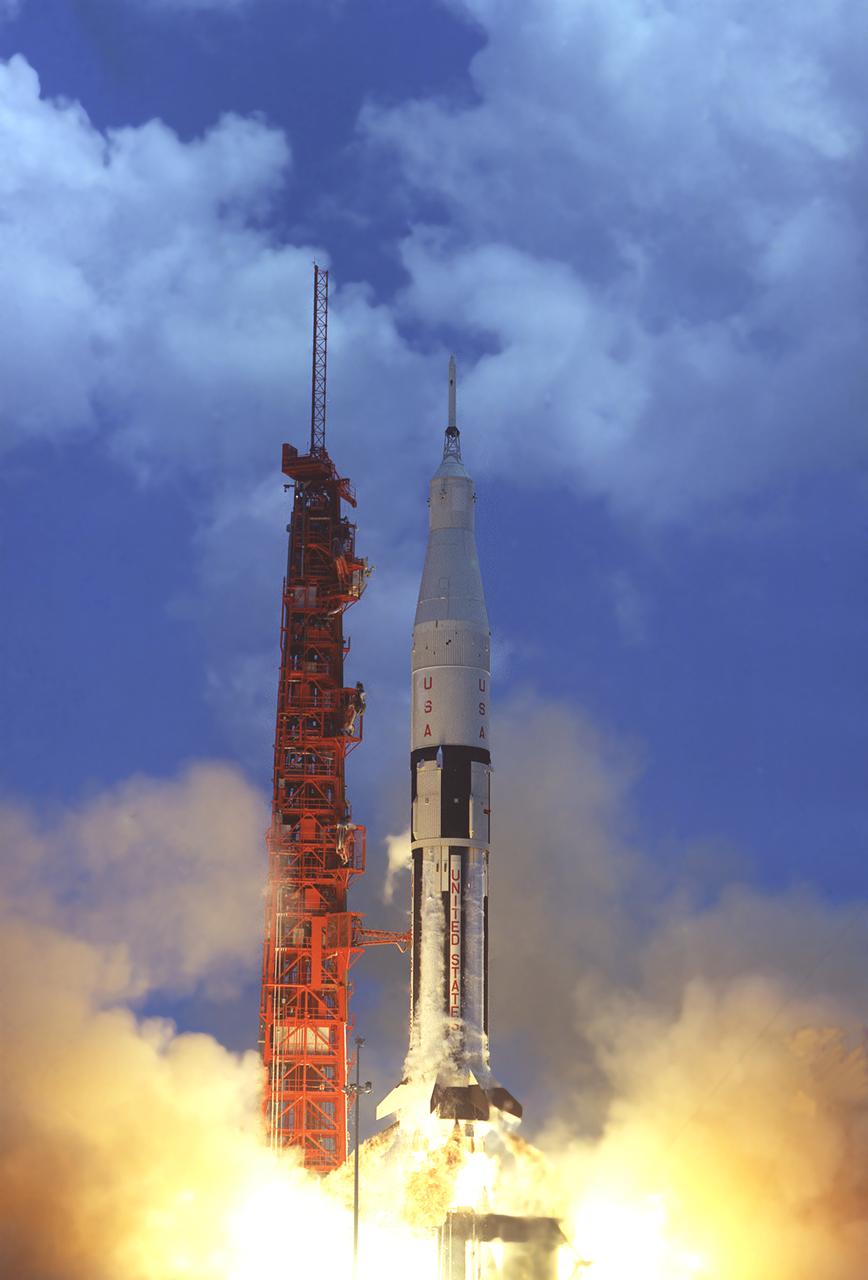
AS-202, the second Saturn IB launch vehicle developed by the Marshall Space Flight Center, lifts off from Cape Canaveral, Florida, August 25, 1966. Primary mission objectives included the confirmation of projected launch loads, demonstration of spacecraft component separation, and verification of heat shield adequacy at high reentry rates. In all, nine Saturn IB flights were made, ending with the Apollo-Soyuz Test Project (ASTP) in July 1975.