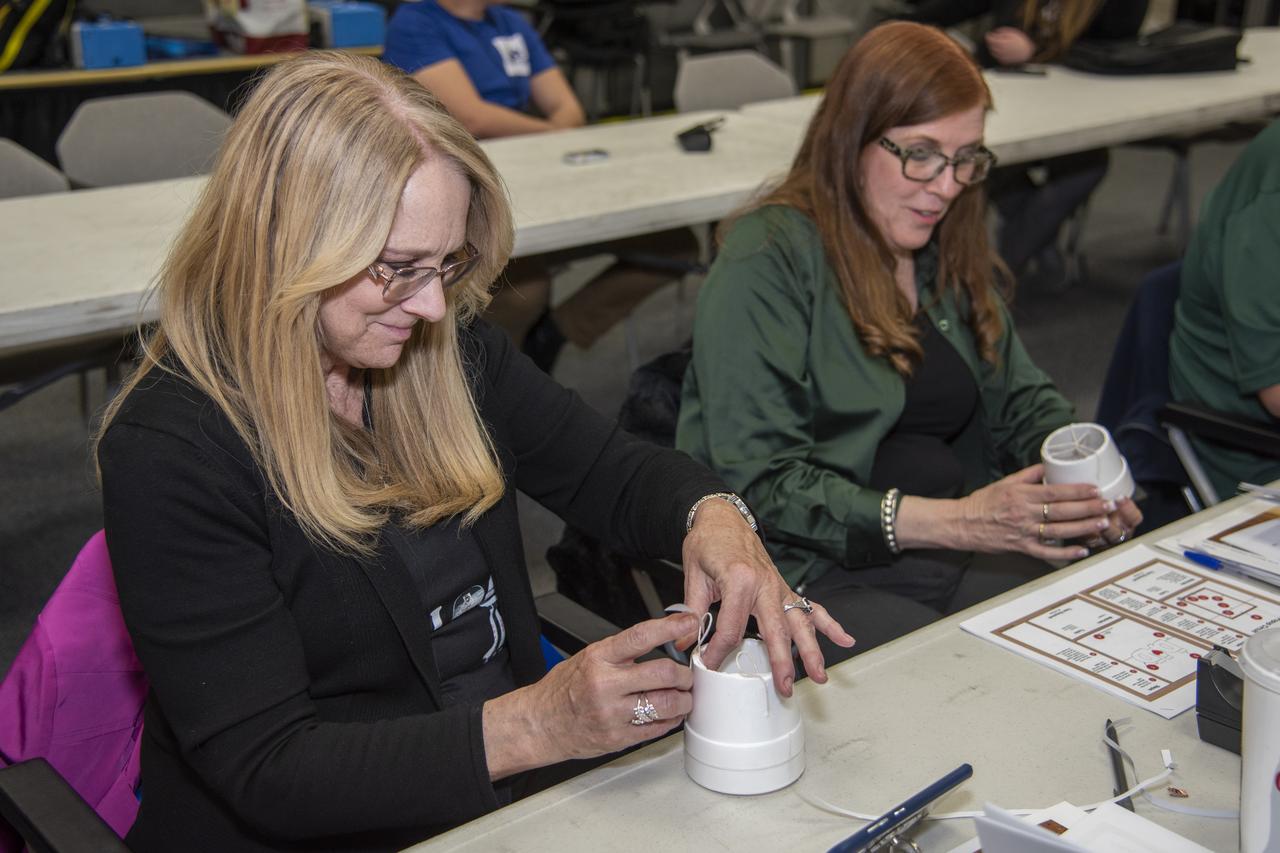
Teacher Kristen Deckner learns how to build a Remote Manipulator (Robotic) Arm during the Educational Technology Institute hosted by NASA Armstrong's Office of STEM Engagement.
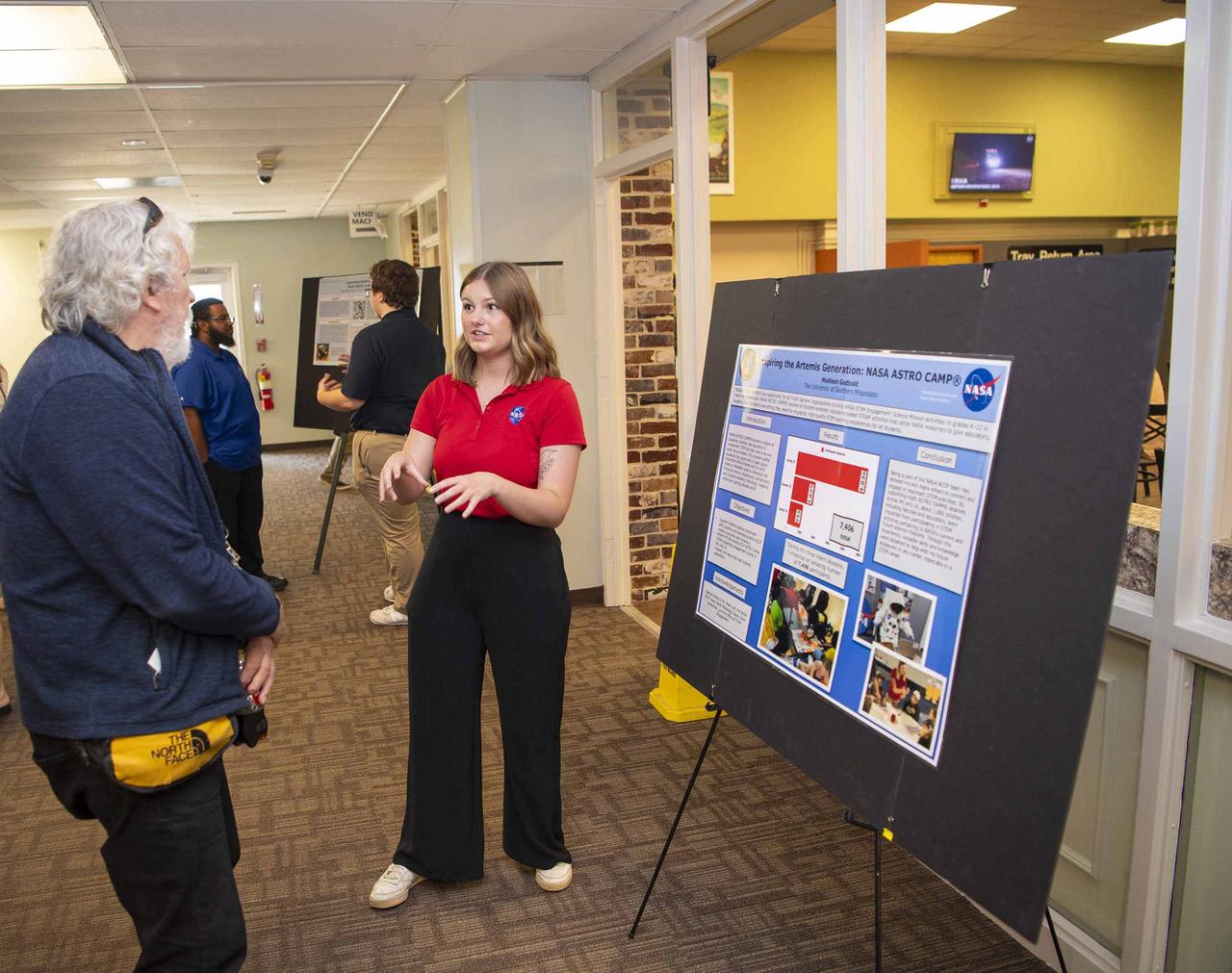
NASA Stennis summer intern Madison Godbold, right, shares about her work of inspiring the Artemis Generation through ASTRO Camp activities during an Aug. 7 event hosted by the Office of STEM Engagement. Godbold, a student at The University of Southern Mississippi in Hattiesburg, worked with the NASA Stennis Office of STEM Engagement. The poster symposium highlighted research topics, including propulsion test operations, lunar robotics, autonomous systems, STEM education, and more. NASA’s Office of STEM Engagement paid internships allow high school and college-level students to contribute to the agency’s mission to advance science, technology, aeronautics, and space exploration.
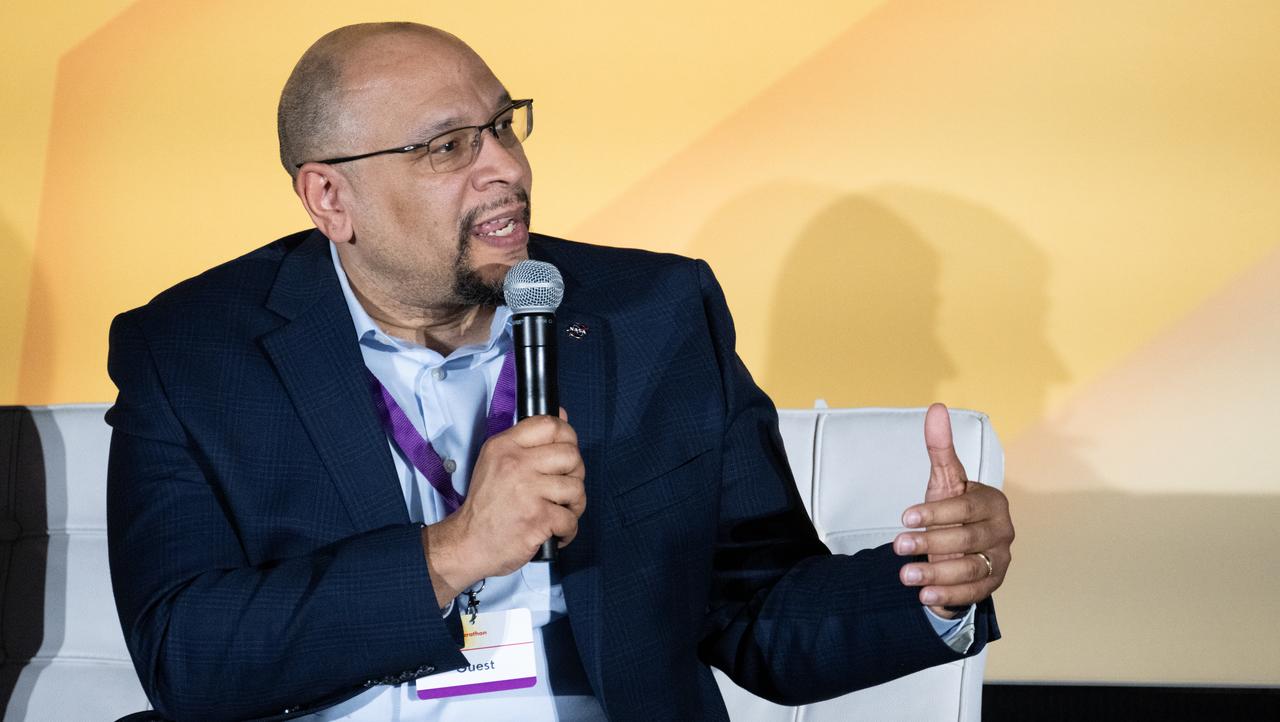
Torry Johnson, deputy associate administrator for STEM Engagement in NASA's Office of STEM Engagement, speaks to students about careers in STEM during a panel discussion at the Shell Eco-marathon Americas, Thursday, April 4, 2024, at the Indianapolis Motor Speedway in Indianapolis, Ind. Photo Credit: (NASA/Joel Kowsky)
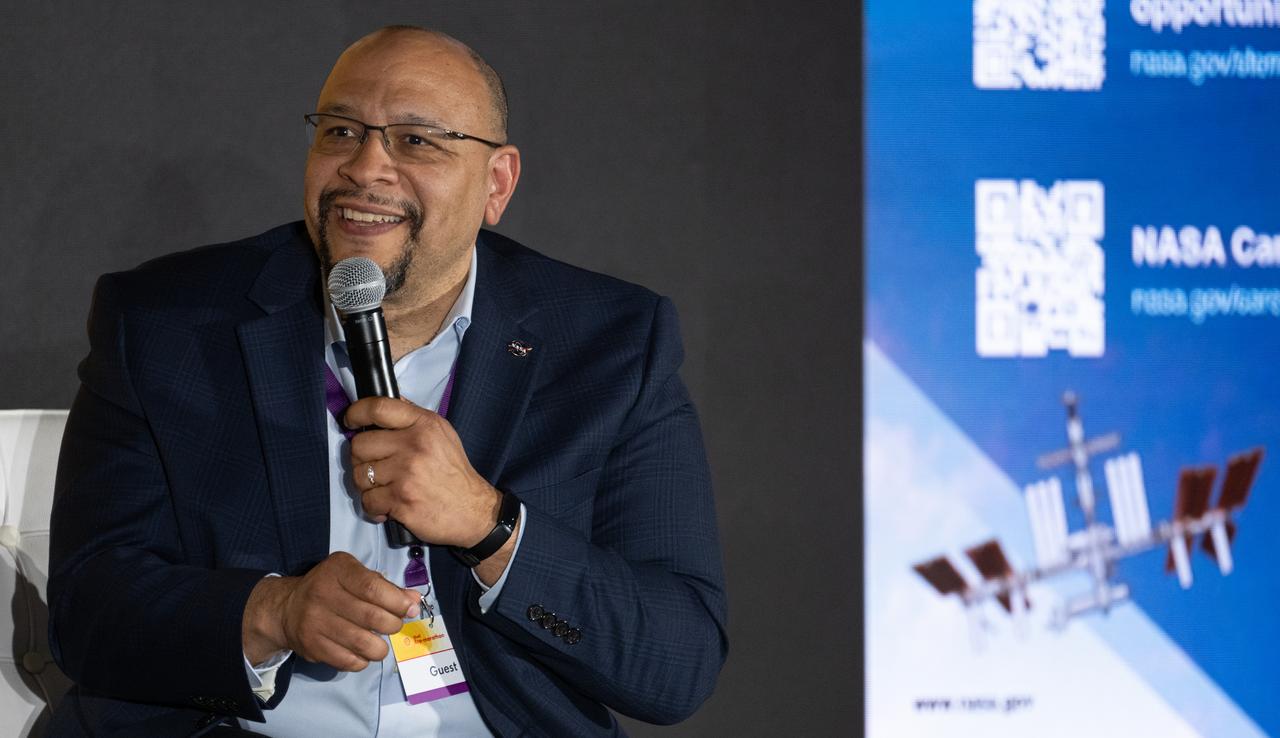
Torry Johnson, deputy associate administrator for STEM Engagement in NASA's Office of STEM Engagement, speaks to students about careers in STEM during a panel discussion at the Shell Eco-marathon Americas, Thursday, April 4, 2024, at the Indianapolis Motor Speedway in Indianapolis, Ind. Photo Credit: (NASA/Joel Kowsky)
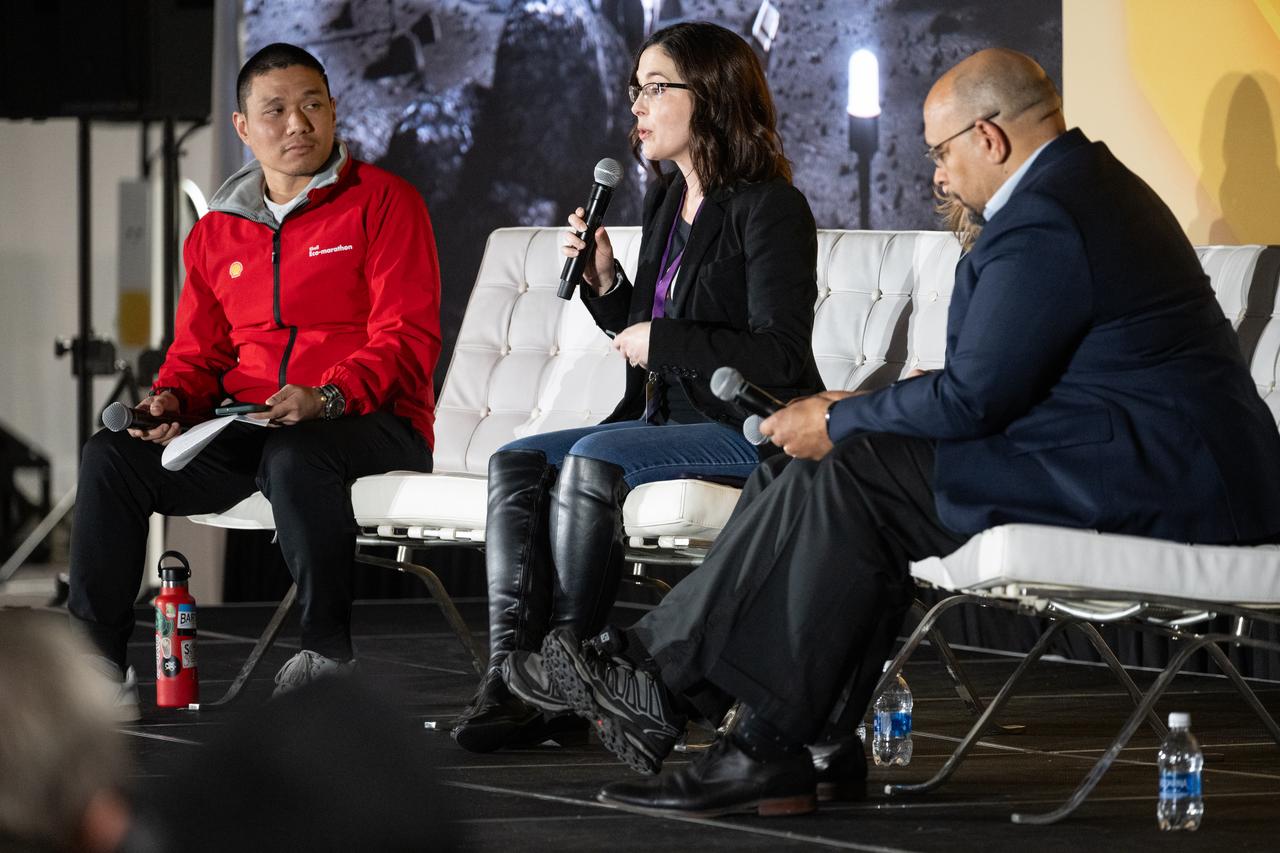
Patricia Moore, communications strategist for the Moon to Mars Program Office in NASA's Exploration Systems Development Mission Directorate, center, speak to students about careers in STEM during a panel discussion at the Shell Eco-marathon Americas along with Jason Cruz, with the Shell Eco-marathon, Andrea Mueller, engineer at Team Penske , and Torry Johnson, deputy associate administrator for STEM Engagement in NASA's Office of STEM Engagement, Thursday, April 4, 2024, at the Indianapolis Motor Speedway in Indianapolis, Ind. Photo Credit: (NASA/Joel Kowsky)
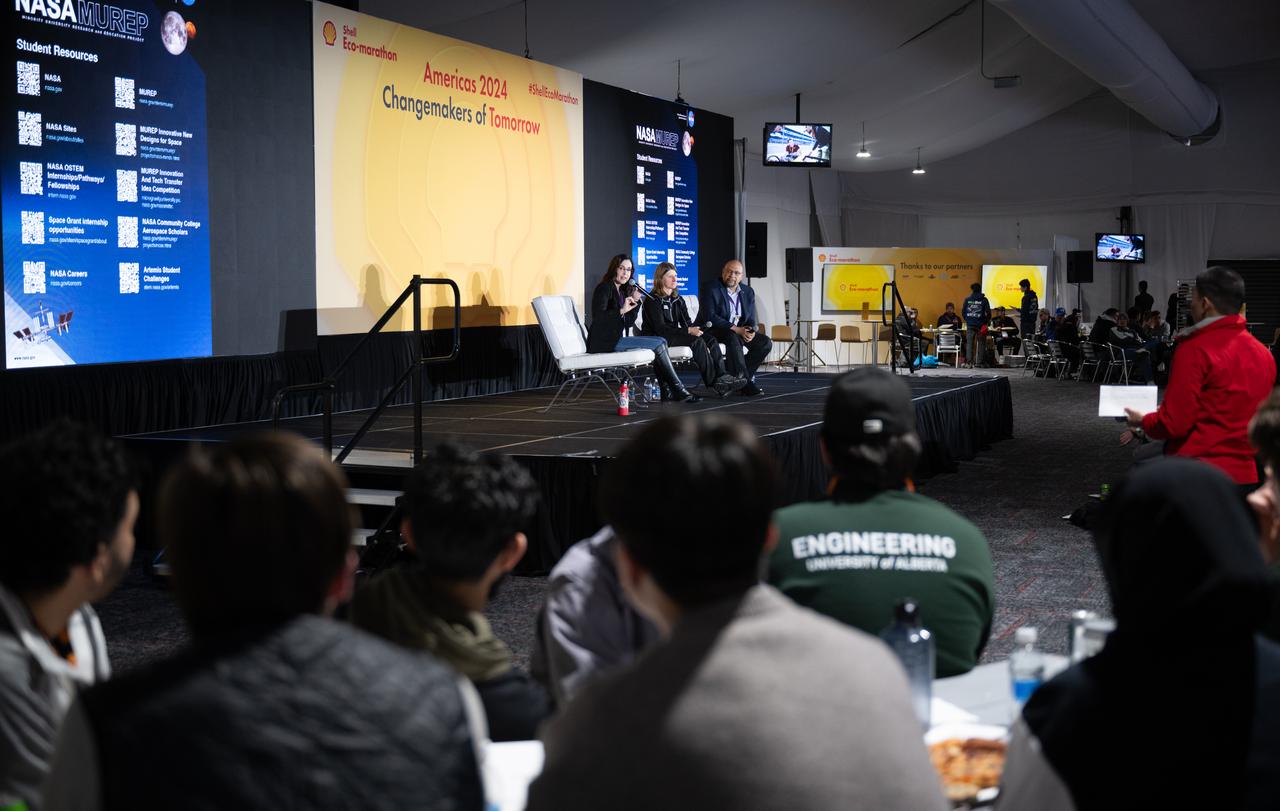
Patricia Moore, communications strategist for the Moon to Mars Program Office in NASA's Exploration Systems Development Mission Directorate, left, answers a question from a student alongside Andrea Mueller, engineer at Team Penske, second from right, and Torry Johnson, deputy associate administrator for STEM Engagement in NASA's Office of STEM Engagement, right, during a panel discussion about careers in STEM at the Shell Eco-marathon Americas, Thursday, April 4, 2024, at the Indianapolis Motor Speedway in Indianapolis, Ind. Photo Credit: (NASA/Joel Kowsky)
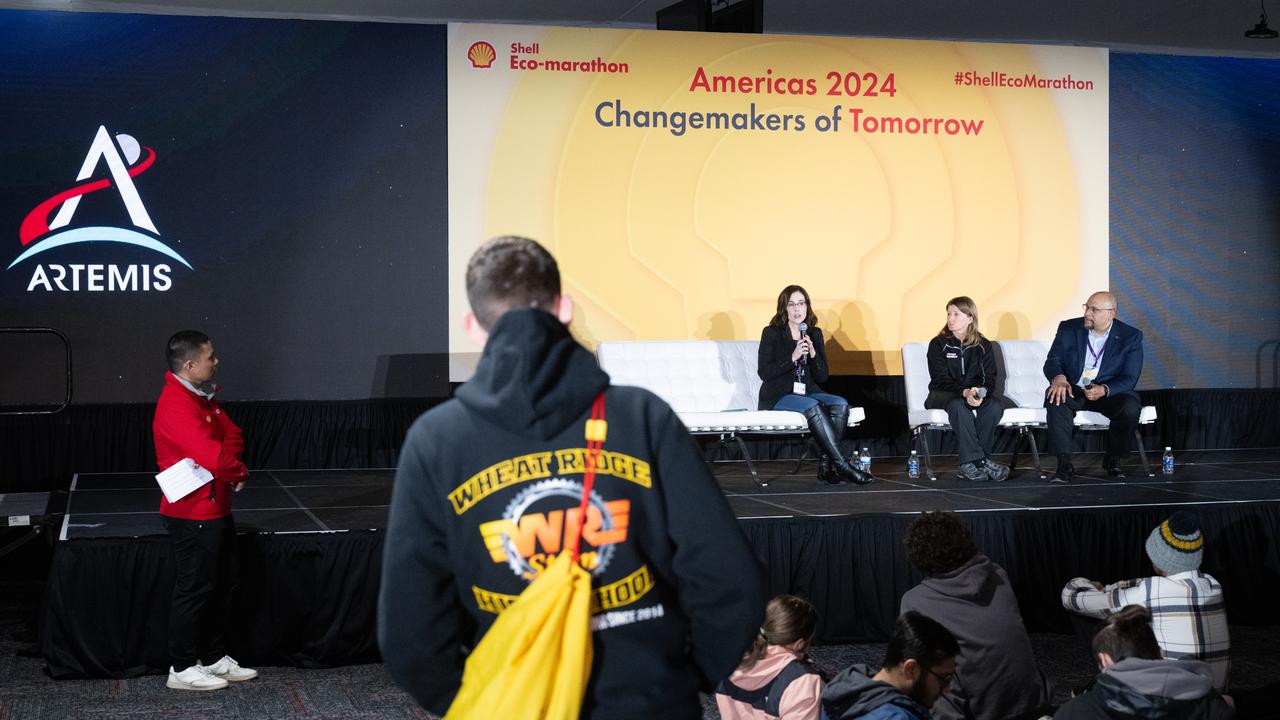
Patricia Moore, communications strategist for the Moon to Mars Program Office in NASA's Exploration Systems Development Mission Directorate, left, answers a question from a student alongside Andrea Mueller, engineer at Team Penske, second from right, and Torry Johnson, deputy associate administrator for STEM Engagement in NASA's Office of STEM Engagement, right, during a panel discussion about careers in STEM at the Shell Eco-marathon Americas, Thursday, April 4, 2024, at the Indianapolis Motor Speedway in Indianapolis, Ind. Photo Credit: (NASA/Joel Kowsky)
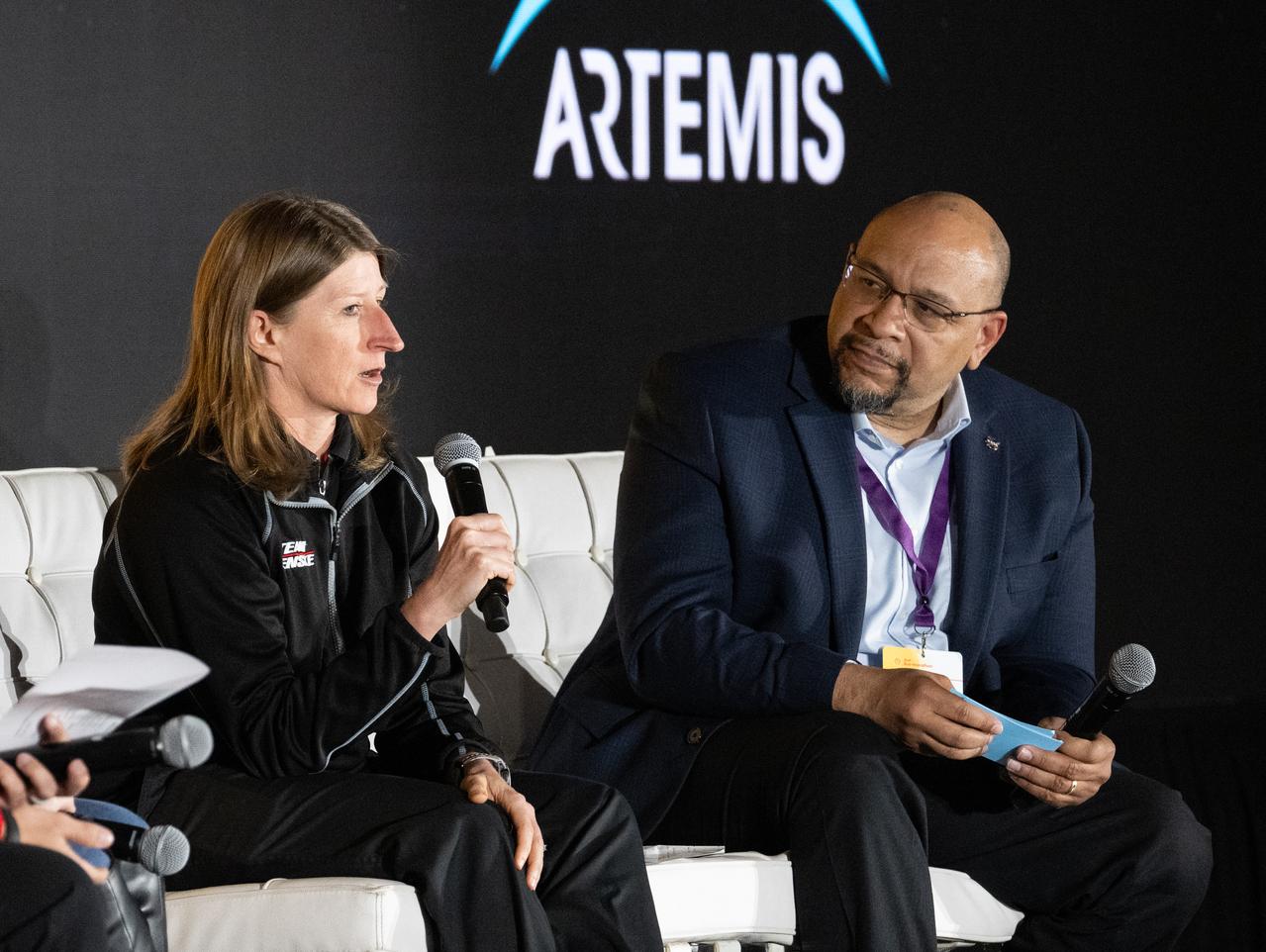
Andrea Mueller, engineer at Team Penske, left, speaks to students about careers in STEM during a panel discussion at the Shell Eco-marathon Americas alongside Torry Johnson, deputy associate administrator for STEM Engagement in NASA's Office of STEM Engagement, Thursday, April 4, 2024, at the Indianapolis Motor Speedway in Indianapolis, Ind. Photo Credit: (NASA/Joel Kowsky)
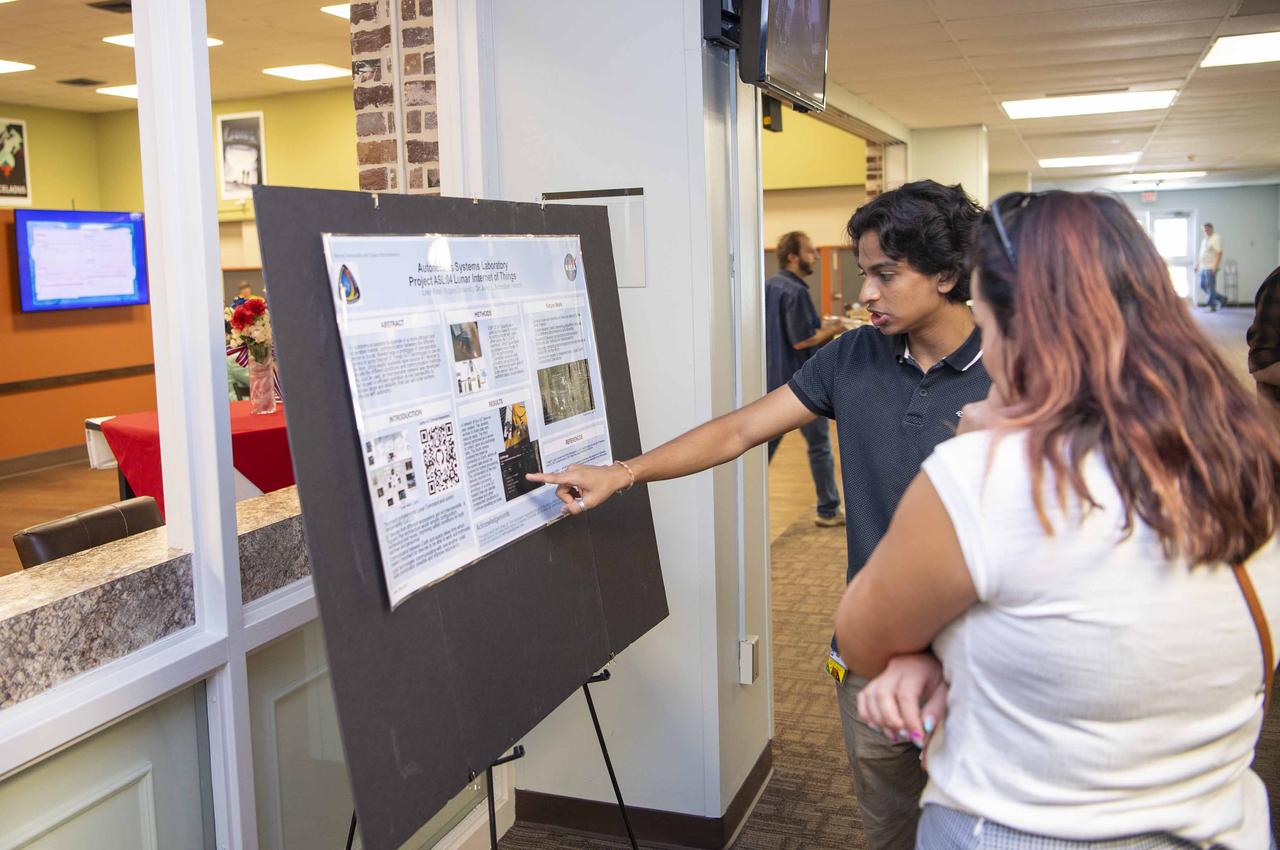
NASA Stennis summer intern Lekh Patel shares about his work on lunar communications during an Aug. 7 event hosted by the Office of STEM Engagement. Patel, a student at Rutgers University in Newark, New Jersey, worked with the NASA Stennis Autonomous Systems Laboratory. The poster symposium highlighted research topics, including propulsion test operations, lunar robotics, autonomous systems, STEM education, and more. NASA’s Office of STEM Engagement paid internships allow high school and college-level students to contribute to the agency’s mission to advance science, technology, aeronautics, and space exploration.
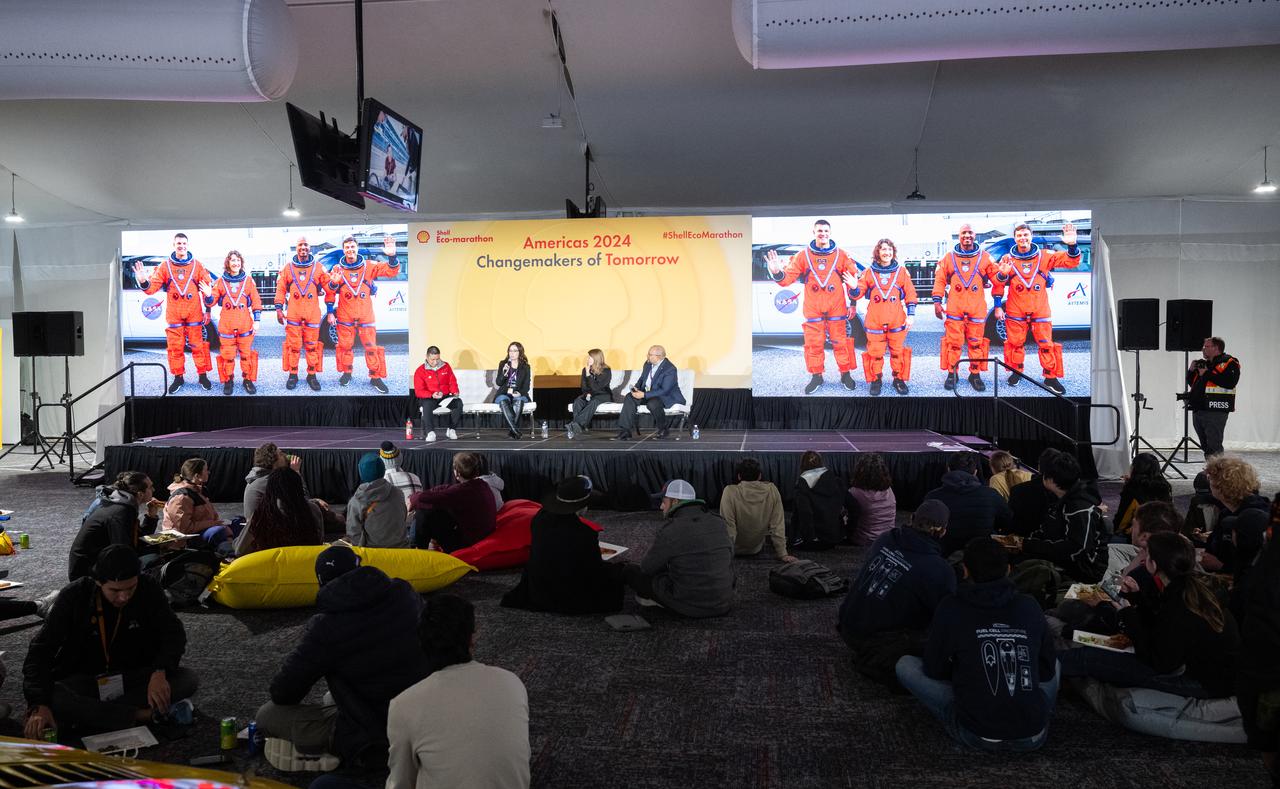
Jason Cruz, with the Shell Eco-marathon, left, Patricia Moore, communications strategist for the Moon to Mars Program Office in NASA's Exploration Systems Development Mission Directorate, second from left, Andrea Mueller, engineer at Team Penske, second from right, and Torry Johnson, deputy associate administrator for STEM Engagement in NASA's Office of STEM Engagement, right, are seen during a panel discussion about careers in STEM at the Shell Eco-marathon Americas, Thursday, April 4, 2024, at the Indianapolis Motor Speedway in Indianapolis, Ind. Photo Credit: (NASA/Joel Kowsky)
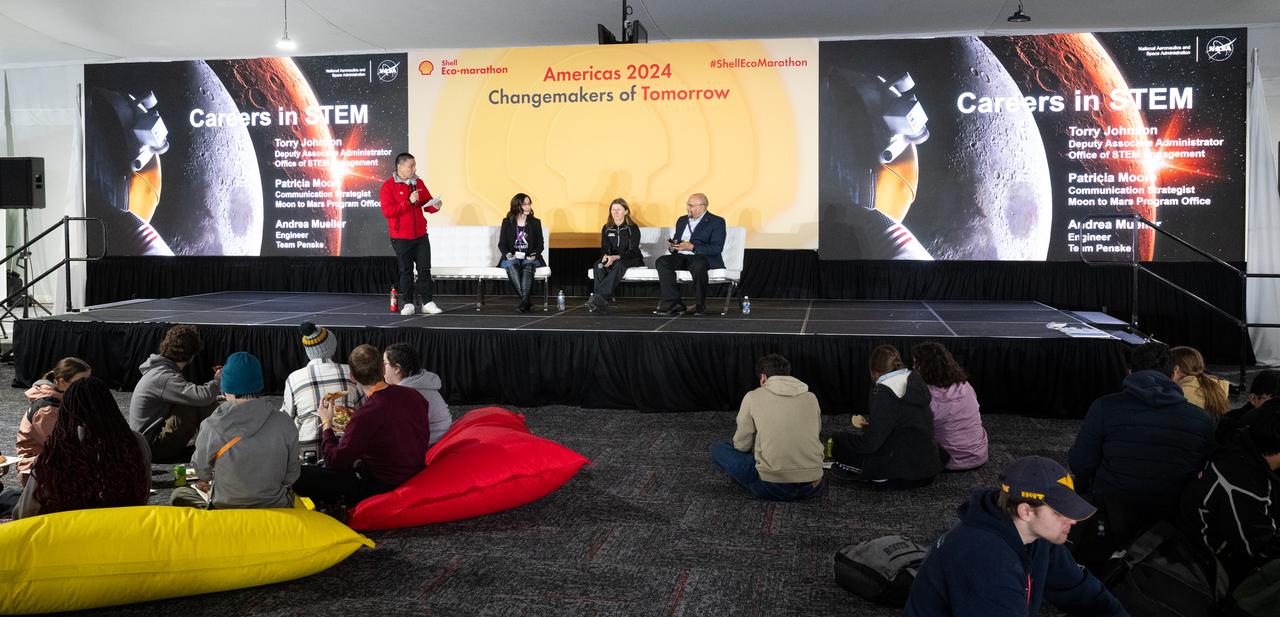
Jason Cruz, with the Shell Eco-marathon, left, introduces Patricia Moore, communications strategist for the Moon to Mars Program Office in NASA's Exploration Systems Development Mission Directorate, second from left, Andrea Mueller, engineer at Team Penske, second from right, and Torry Johnson, deputy associate administrator for STEM Engagement in NASA's Office of STEM Engagement, right, during a panel discussion about careers in STEM at the Shell Eco-marathon Americas, Thursday, April 4, 2024, at the Indianapolis Motor Speedway in Indianapolis, Ind. Photo Credit: (NASA/Joel Kowsky)
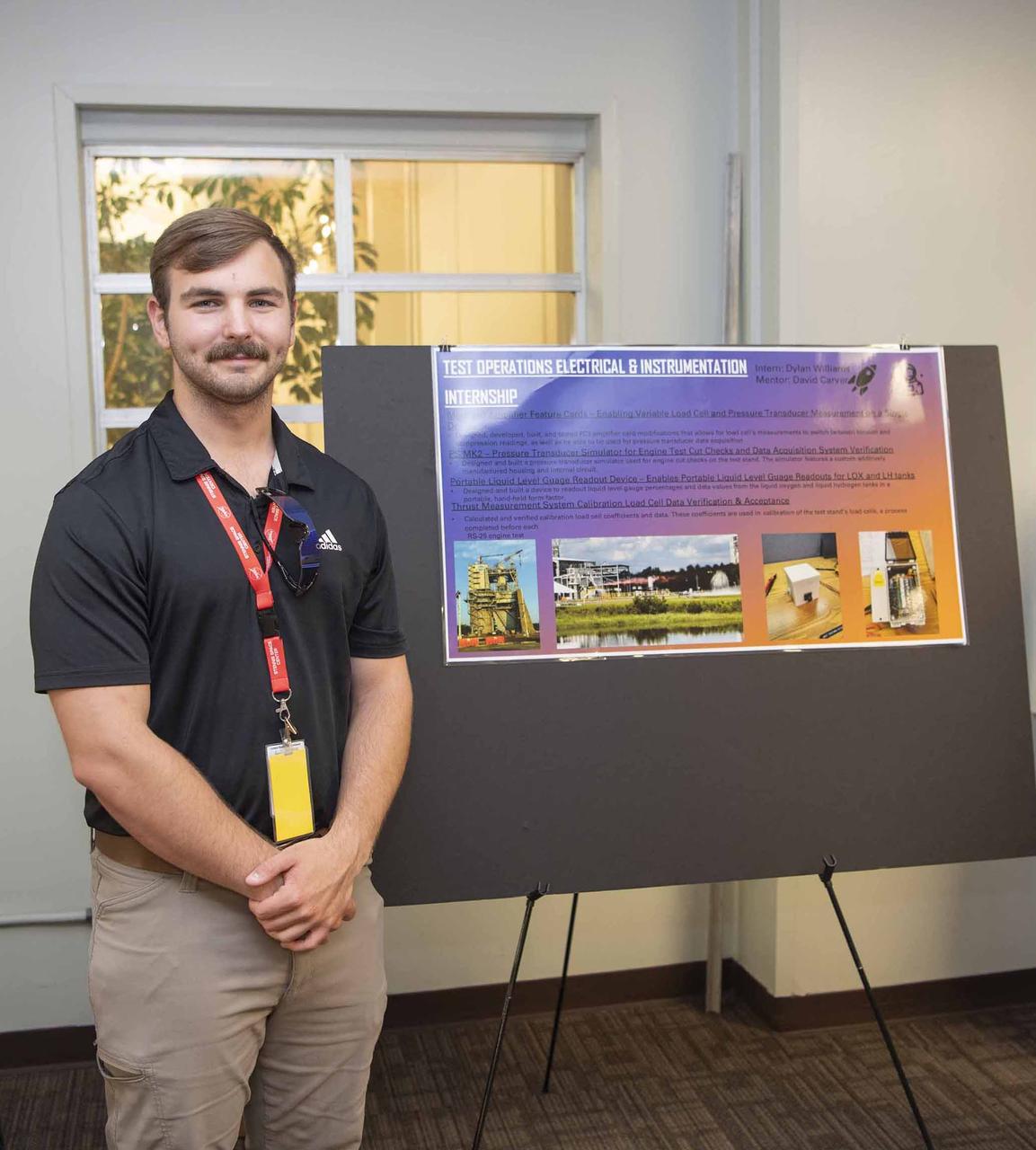
NASA Stennis summer intern Dylan Williams is shown with his presentation highlighting work with test operations during an Aug. 7 event hosted by the Office of STEM Engagement. Williams, a student at Meridian Community College in Meridian, Mississippi, worked with the NASA Stennis Engineering and Test Directorate. The poster symposium highlighted research topics, including propulsion test operations, lunar robotics, autonomous systems, STEM education, and more. NASA’s Office of STEM Engagement paid internships allow high school and college-level students to contribute to the agency’s mission to advance science, technology, aeronautics, and space exploration.
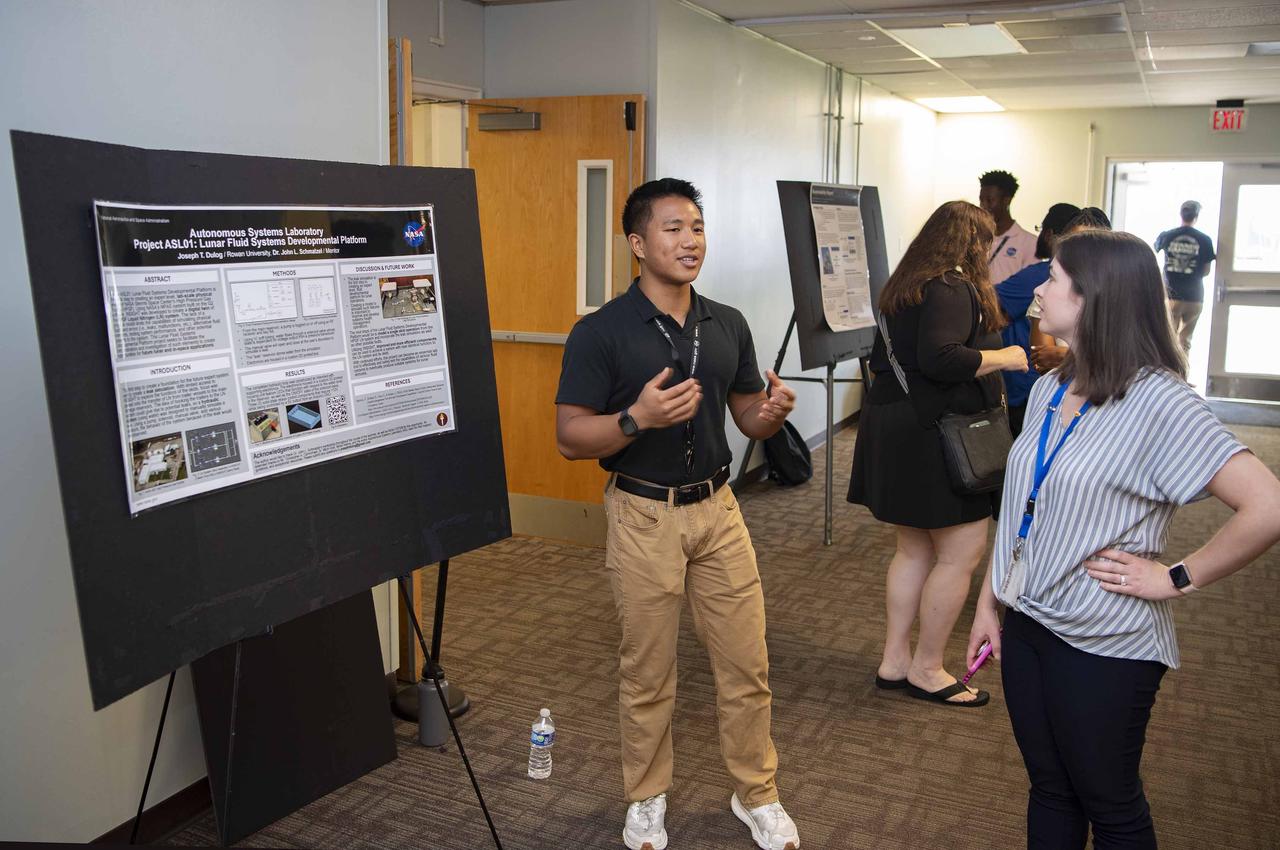
NASA Stennis summer intern Joseph Dulog, left, shares about his work on a lunar fluid systems developmental platform during an Aug. 7 event hosted by the Office of STEM Engagement. Dulog, a student at Rowan University in Glassboro, New Jersey, worked with the NASA Stennis Autonomous Systems Laboratory. The poster symposium highlighted research topics, including propulsion test operations, lunar robotics, autonomous systems, STEM education, and more. NASA’s Office of STEM Engagement paid internships allow high school and college-level students to contribute to the agency’s mission to advance science, technology, aeronautics, and space exploration.
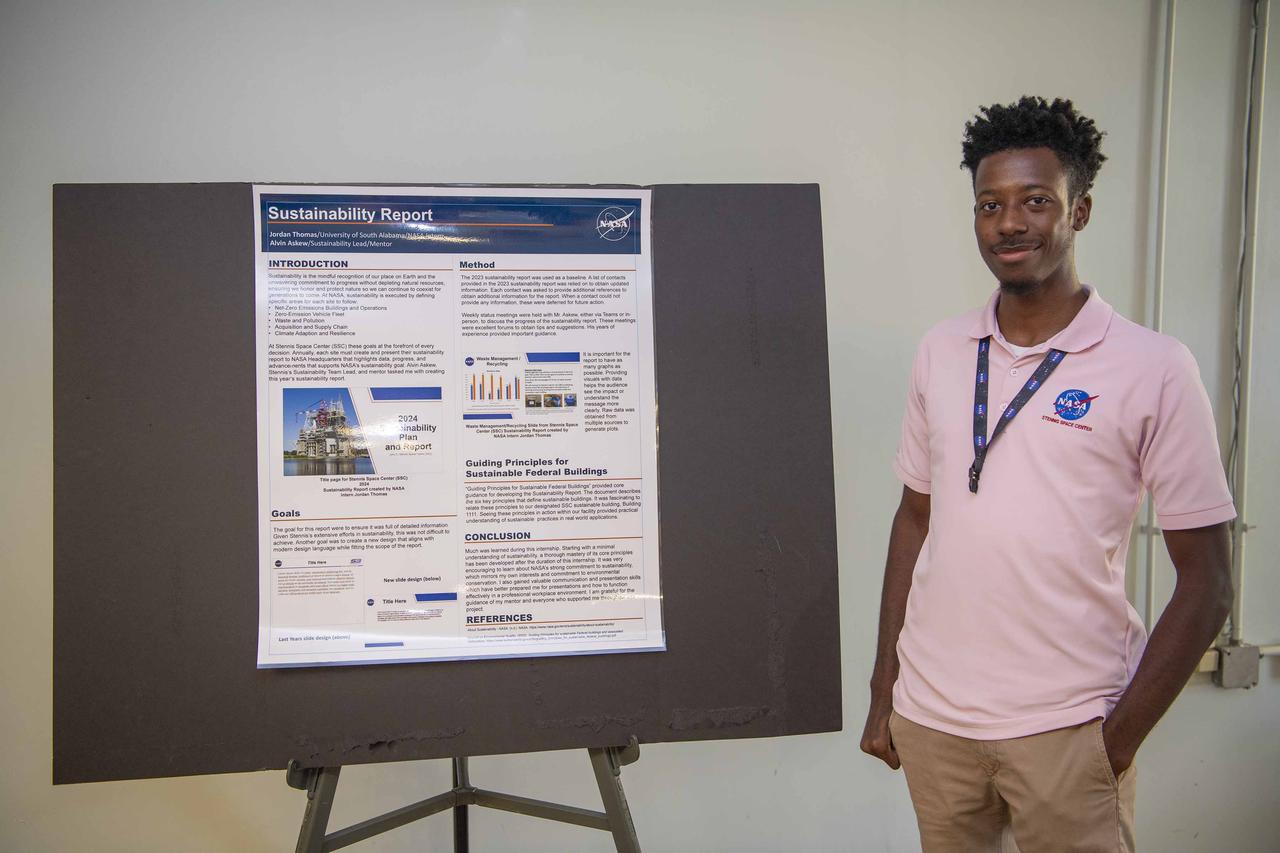
NASA Stennis summer intern Jordan Thomas is shown with his presentation on the 2024 Sustainability Report for NASA Stennis during an Aug. 7 event hosted by the Office of STEM Engagement. Thomas, a student at the University of South Alabama in Mobile, worked with the NASA Stennis Center Operations Directorate. The poster symposium highlighted research topics, including propulsion test operations, lunar robotics, autonomous systems, STEM education, and more. NASA’s Office of STEM Engagement paid internships allow high school and college-level students to contribute to the agency’s mission to advance science, technology, aeronautics, and space exploration.
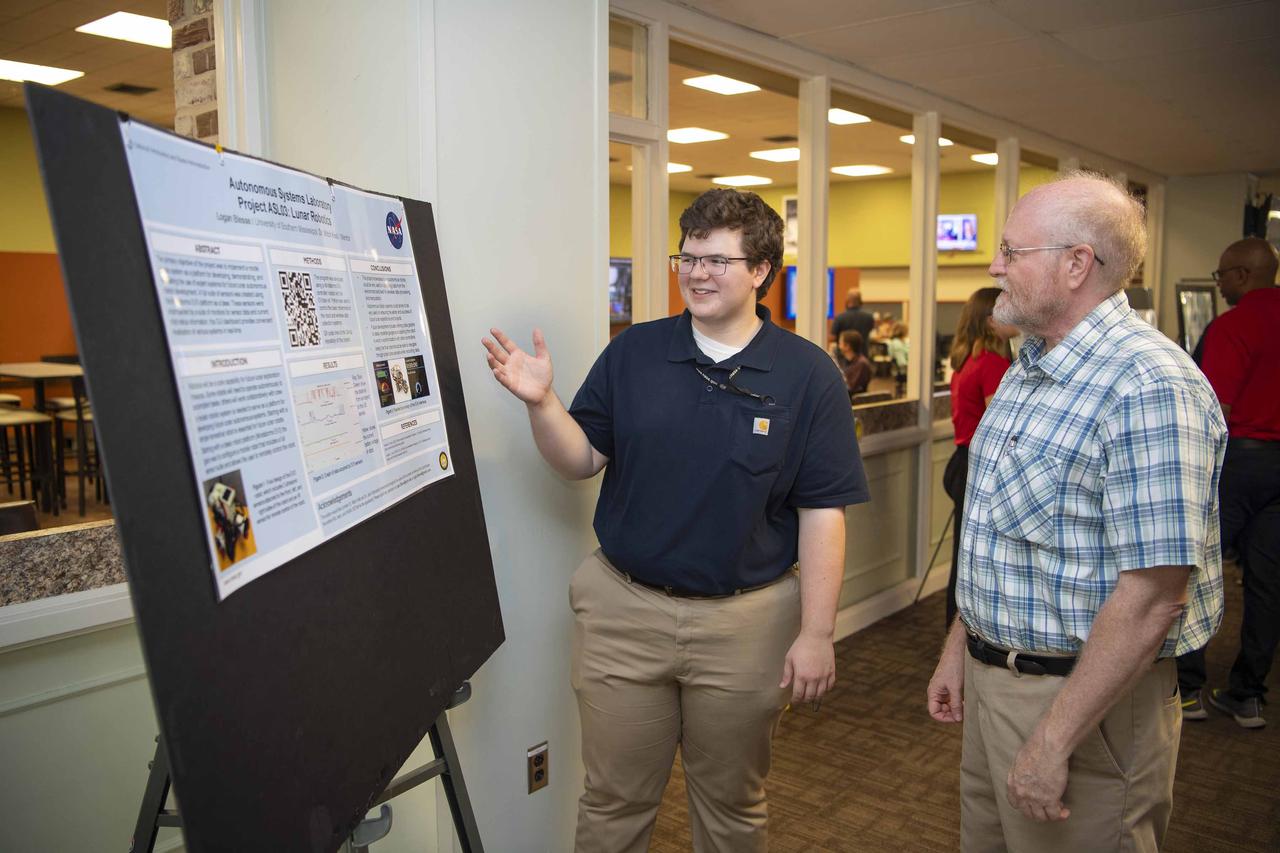
NASA Stennis summer intern Logan Blesse, left, shares about his work on future lunar autonomous robotic development during an Aug. 7 event hosted by the Office of STEM Engagement. Blesse, a student at The University of Southern Mississippi in Hattiesburg, worked with the NASA Stennis Autonomous Systems Laboratory. The poster symposium highlighted research topics, including propulsion test operations, lunar robotics, autonomous systems, STEM education, and more. NASA’s Office of STEM Engagement paid internships allow high school and college-level students to contribute to the agency’s mission to advance science, technology, aeronautics, and space exploration.
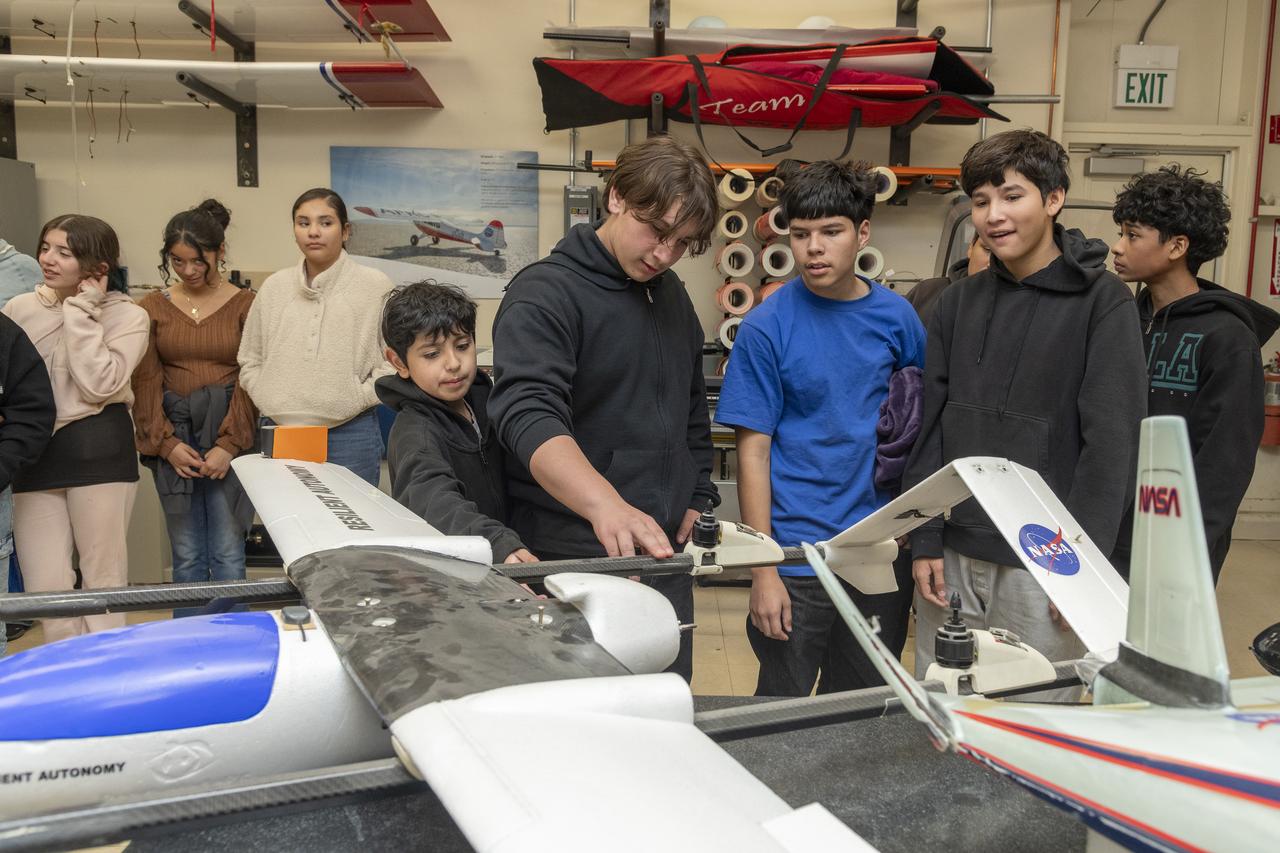
A group of middle school students engage with a model aircraft while learning from NASA experts in the model lab at NASA’s Armstrong Flight Research Center in Edwards, California during an event hosted by NASA’s California Office of STEM Engagement.
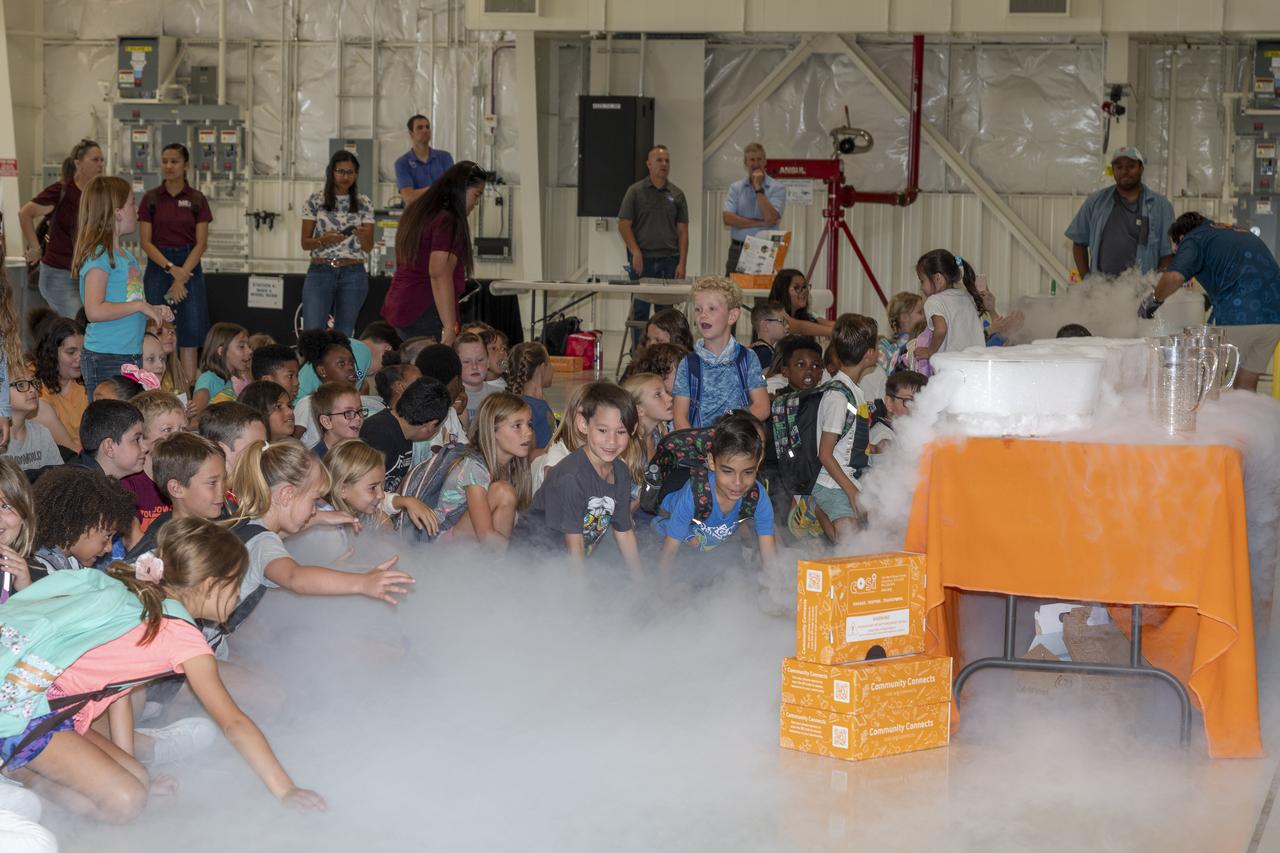
Students are wrapped in a cloud from a demonstration by NASA’s California Office of STEM Engagement event with Center of Science and Industry at NASA’s Armstrong Flight Research Center in Edwards, California.
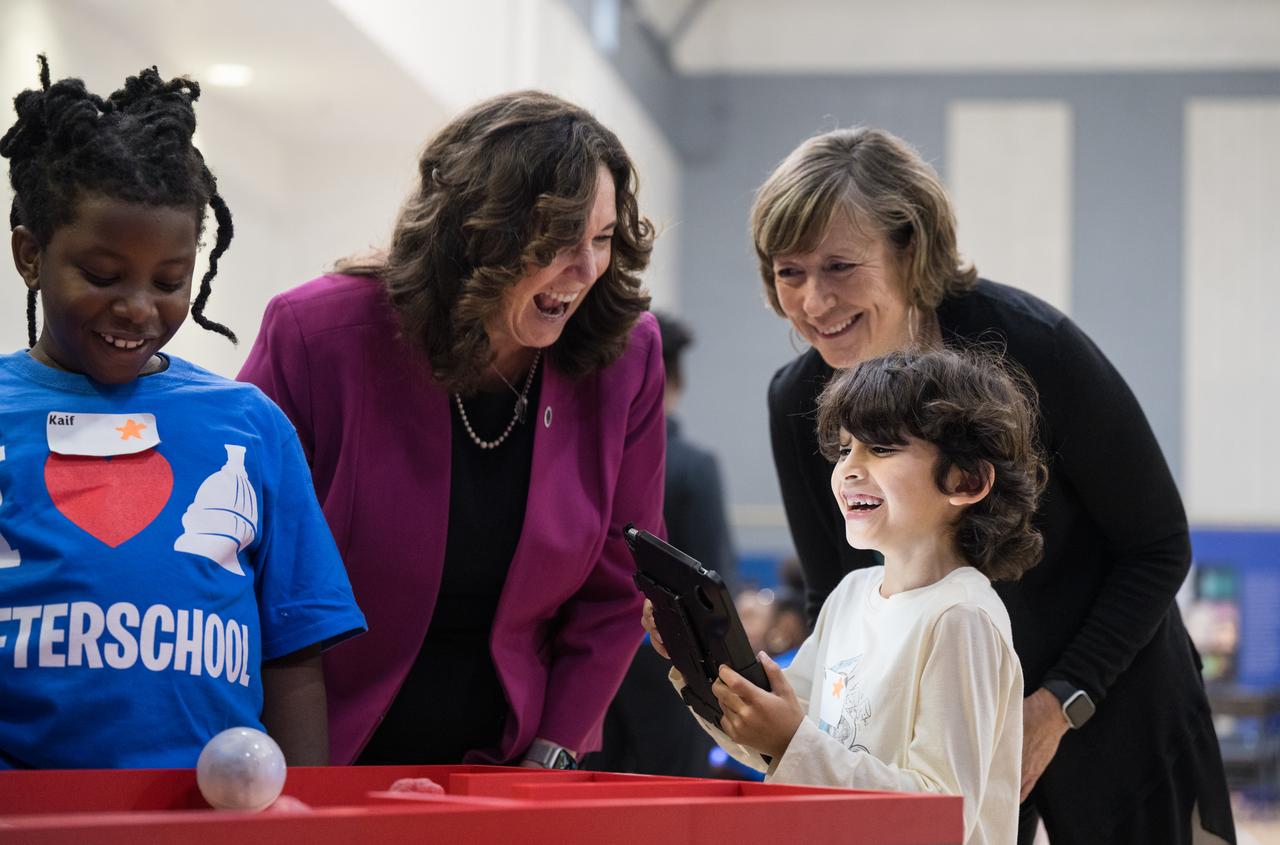
NASA Deputy Associate Administrator for NASA’s Office of STEM Engagement, Kris Brown, right, and U.S. Department of Education Deputy Secretary Cindy Marten, left, watch as a student operates a robot during a STEM event to kickoff the 21st Century Community Learning Centers NASA and U.S. Department of Education partnership, Monday, Sept. 23, 2024 at Wheatley Education Campus (EC) in Washington. Students engaged in NASA hands-on activities and an engineering design challenge. Photo Credit: (NASA/Aubrey Gemignani)
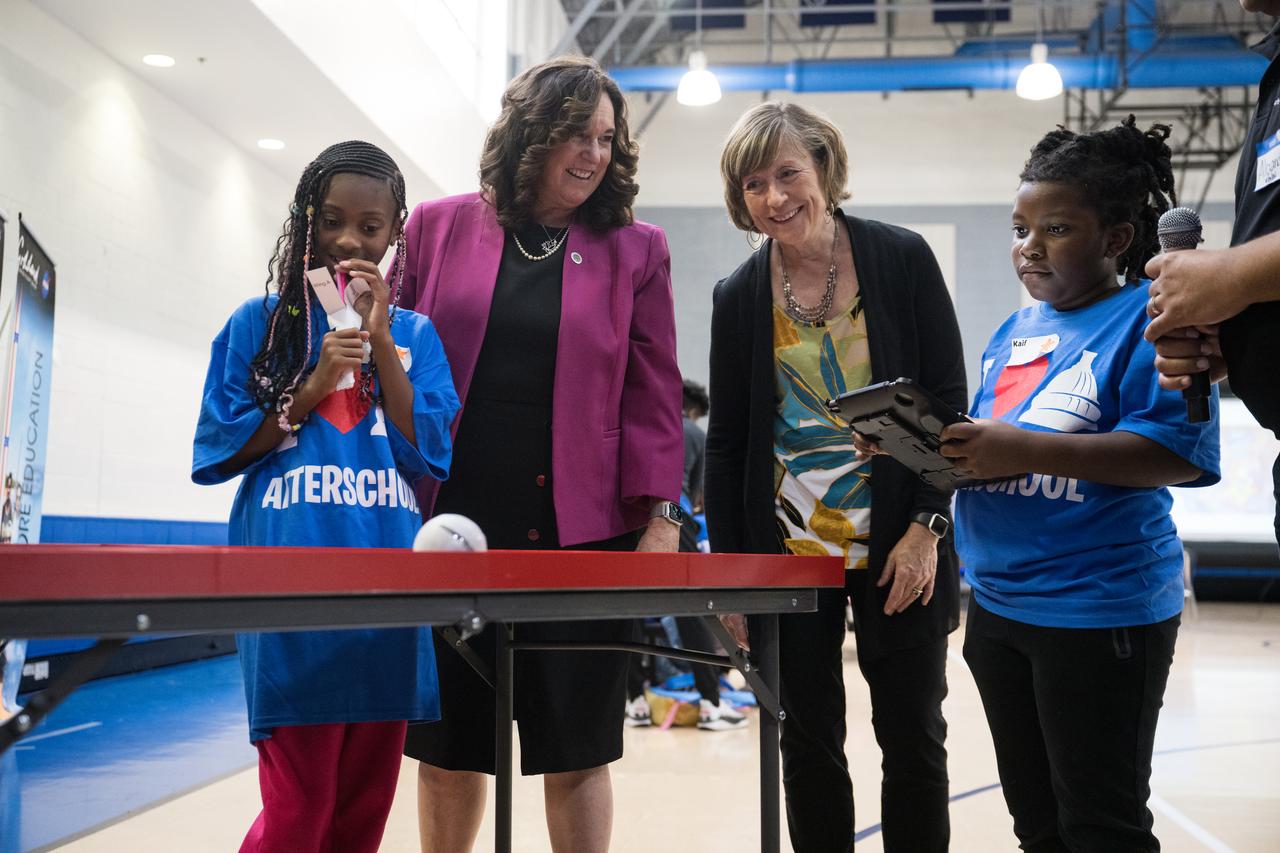
NASA Deputy Associate Administrator for NASA’s Office of STEM Engagement, Kris Brown, second from right, and U.S. Department of Education Deputy Secretary Cindy Marten, second from left, watch as a student operates a robot during a STEM event to kickoff the 21st Century Community Learning Centers NASA and U.S. Department of Education partnership, Monday, Sept. 23, 2024 at Wheatley Education Campus (EC) in Washington. Students engaged in NASA hands-on activities and an engineering design challenge. Photo Credit: (NASA/Aubrey Gemignani)
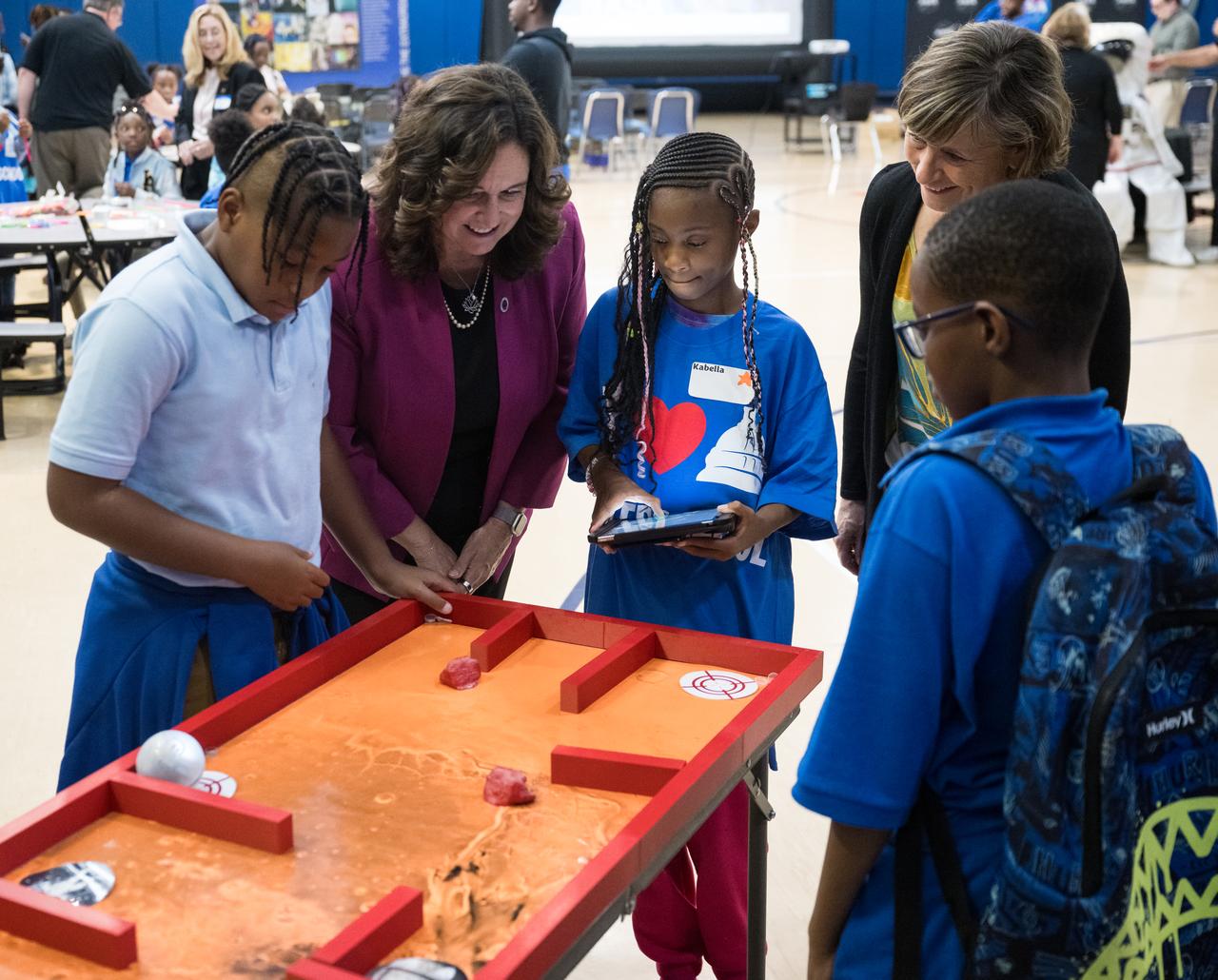
NASA Deputy Associate Administrator for NASA’s Office of STEM Engagement, Kris Brown, second from right, and U.S. Department of Education Deputy Secretary Cindy Marten, second from left, watch as a student operates a robot during a STEM event to kickoff the 21st Century Community Learning Centers NASA and U.S. Department of Education partnership, Monday, Sept. 23, 2024 at Wheatley Education Campus (EC) in Washington. Students engaged in NASA hands-on activities and an engineering design challenge. Photo Credit: (NASA/Aubrey Gemignani)
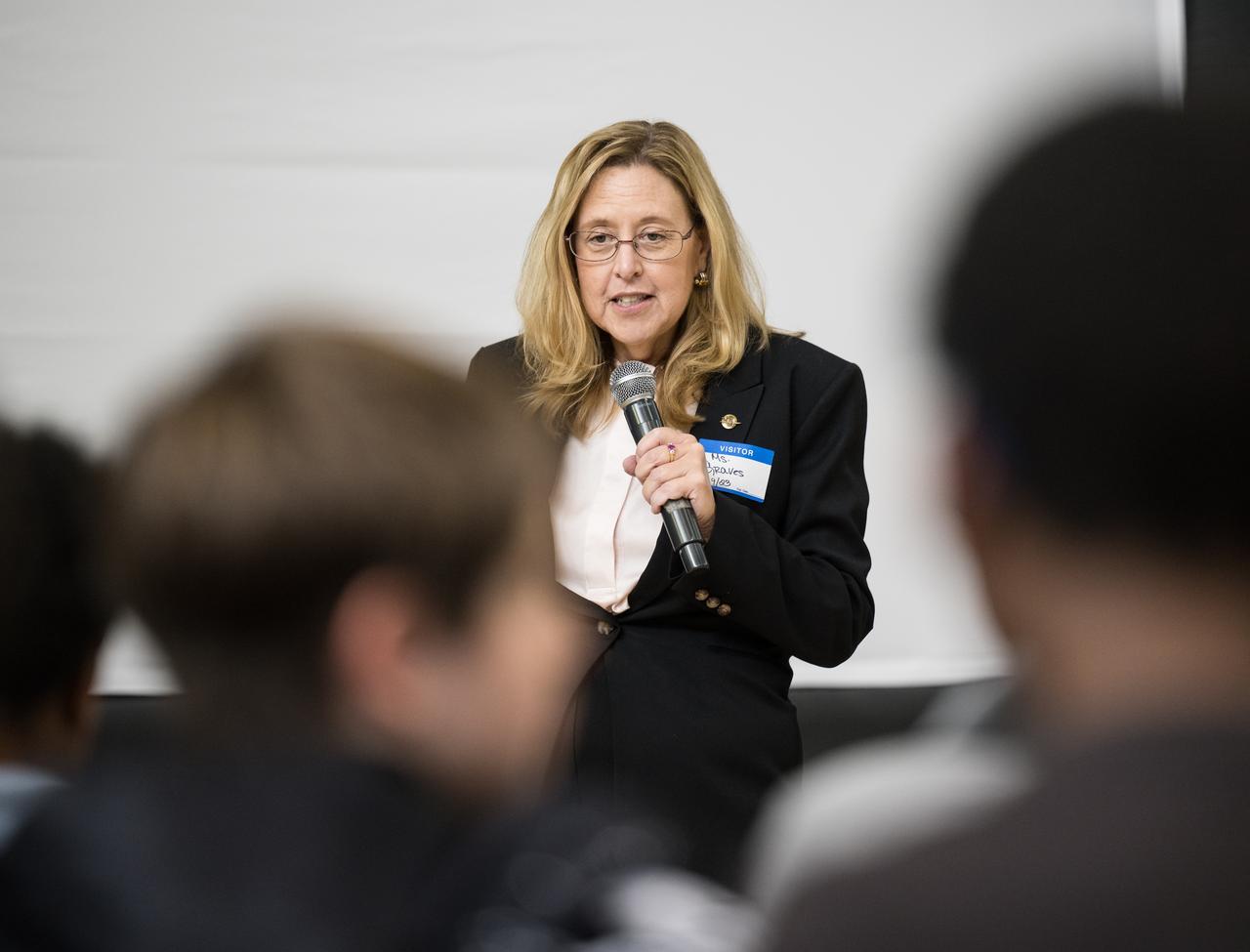
STEM Integration Manager at NASA’s Glenn Research Center (GRC) Office of STEM Engagement, Catherine Graves, provides welcome remarks at a kickoff event for the 21st Century Community Learning Centers NASA and Department of Education partnership, Monday, Sept. 23, 2024 at Wheatley Education Campus in Washington. Students engaged in NASA hands-on activities and an engineering design challenge. Photo Credit: (NASA/Aubrey Gemignani)
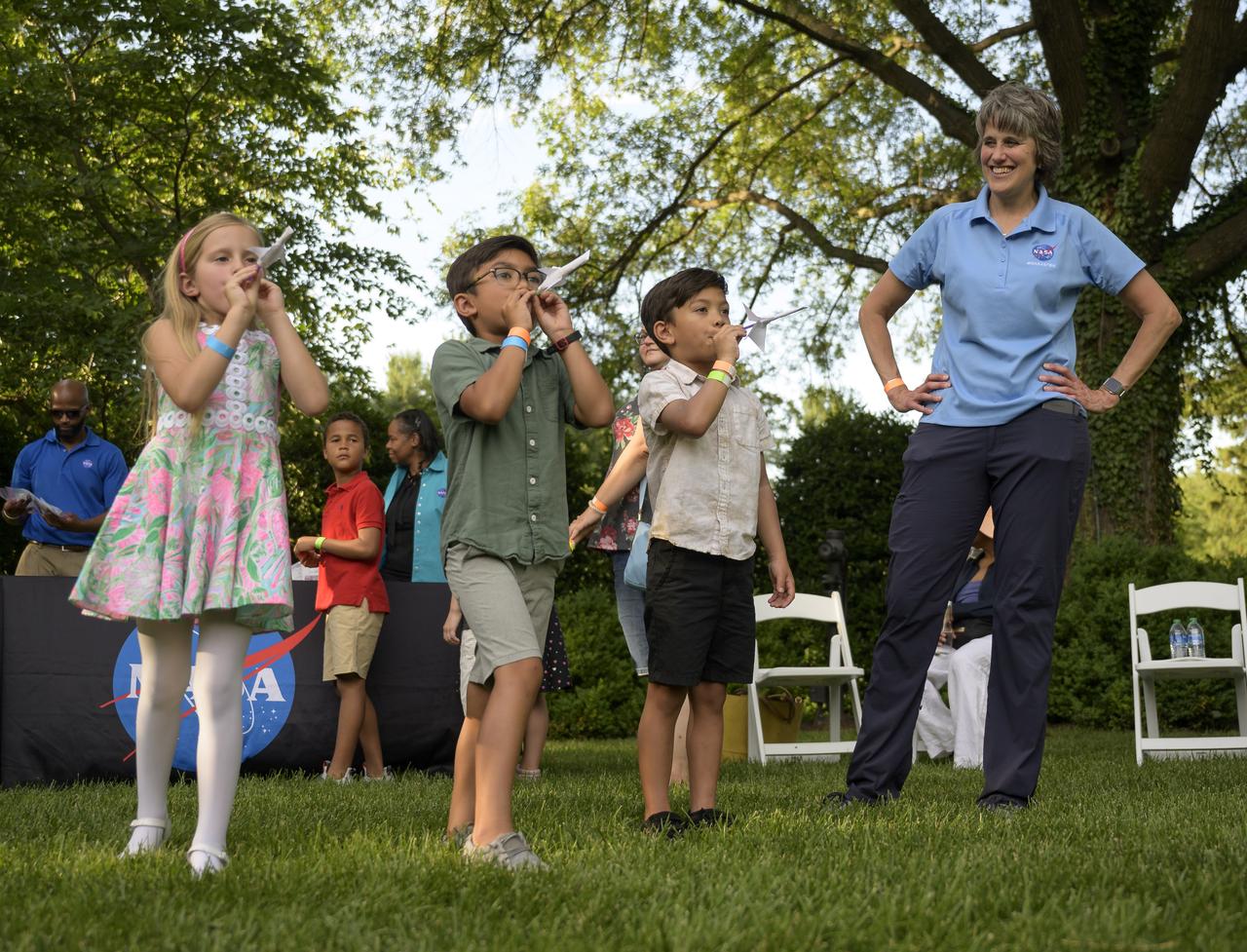
Cindy Hasselbring, NASA K-12 Education Advisor at NASA’s Office of STEM Engagement, works hands-on STEM activities with students from 4th-8th grade on the grounds of the Vice President's residence at the Naval Observatory, Friday, June 17, 2022, in Washington. The Vice President and Second Gentleman hosted an evening of NASA STEM activities at the Naval Observatory for military families and local STEM students and their families, including a special screening of Disney Pixar’s Lightyear. Photo Credit: (NASA/Bill Ingalls)
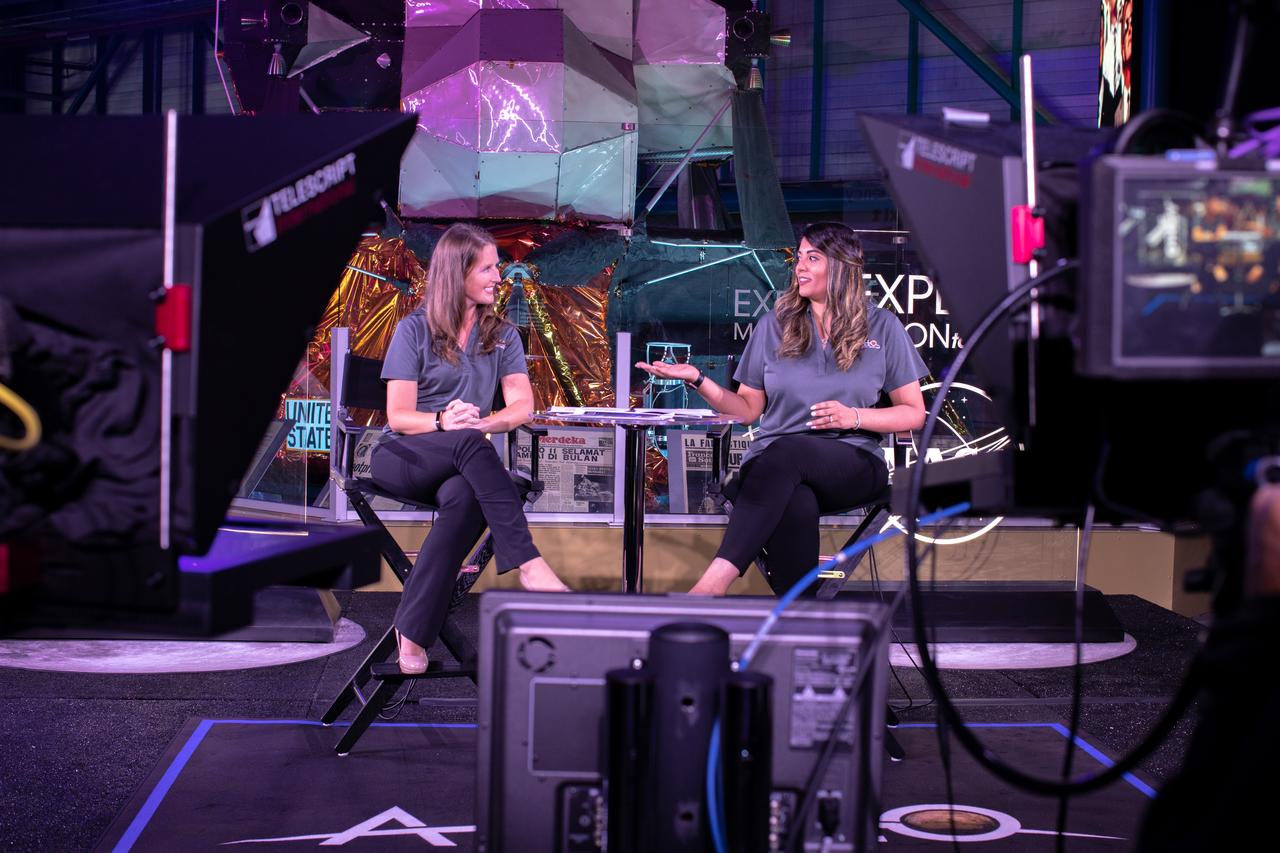
Stephanie Martin, left, NASA Office of Communications, and Nilufar Ramji, NASA Office of STEM Engagement, host a live broadcast of “STEM Forward to the Moon” on July 19, 2019 from Kennedy Space Center’s Apollo/Saturn V Center in Florida. The special program featured kids participating in Moon landing simulations at four museums throughout the country: Cosmosphere in Hutchinson, Kansas; Saint Louis Science Center; Columbia Memorial Space Center in Downey, California; and Arizona Science Center in Phoenix.
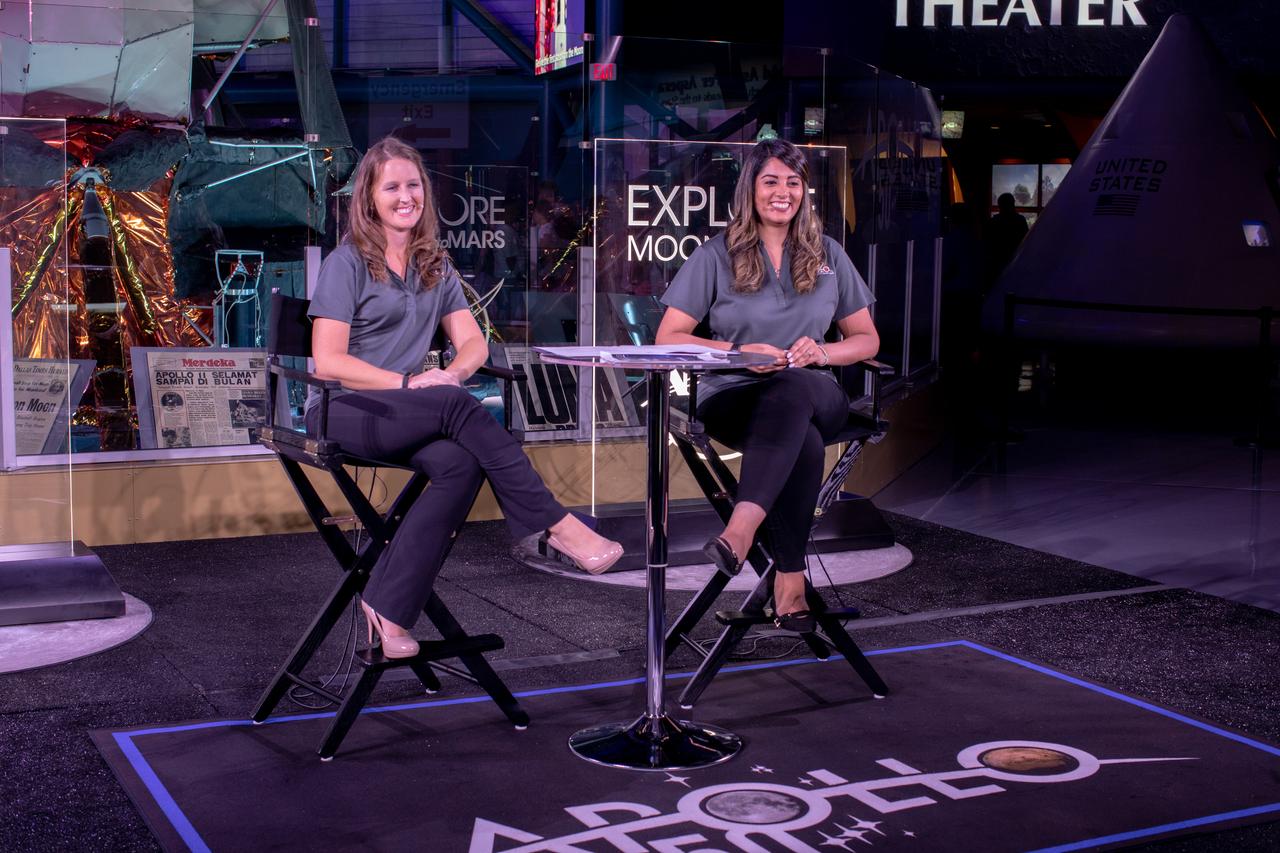
Stephanie Martin, left, NASA Office of Communications, and Nilufar Ramji, NASA Office of STEM Engagement, host a live broadcast of “STEM Forward to the Moon” on July 19, 2019 from Kennedy Space Center’s Apollo/Saturn V Center in Florida. The special program featured kids participating in Moon landing simulations at four museums throughout the country: Cosmosphere in Hutchinson, Kansas; Saint Louis Science Center; Columbia Memorial Space Center in Downey, California; and Arizona Science Center in Phoenix.

jsc2024e050834 (7/26/2024) --- Screaming Balloon hex nuts, pennies and balloons in their individual ziplock stowage bags prior to hardware handover. Developed through NASA’s Office of STEM Engagement Next Gen STEM Project, STEMonstrations are short educational videos demonstrating science, technology, engineering, and mathematics (STEM) topics in microgravity for grades K through 12. STEMonstrations: Screaming Balloon examines centripetal force, whirling a penny and a hexnut inside of inflated balloons and comparing the sounds they make.

jsc2024e050835 (7/26/2024) --- Members of the STEMonstrations team at the flight configuration hardware check for the STEMonstrations: Screaming Balloon project, Seth Johnson, Michele Hooks, and Ashwin Mathews, left to right. Developed through NASA’s Office of STEM Engagement Next Gen STEM Project, STEMonstrations are short educational videos demonstrating science, technology, engineering, and mathematics (STEM) topics in microgravity for grades K through 12. STEMonstrations: Screaming Balloon examines centripetal force, whirling a penny and a hexnut inside of inflated balloons and comparing the sounds they make.

jsc2024e041790 (3/20/2024) --- Developed through NASA’s Office of STEM Engagement Next Gen STEM Project, STEMonstrations are short educational videos that demonstrate science, technology, engineering, and mathematics (STEM) topics in microgravity for grades K through 12. Crew members conduct and film the demonstrations. The International Space Station flyaround is seen as well as NASA astronauts Matthew Dominick and Jeanette Epps (Expedition 71).
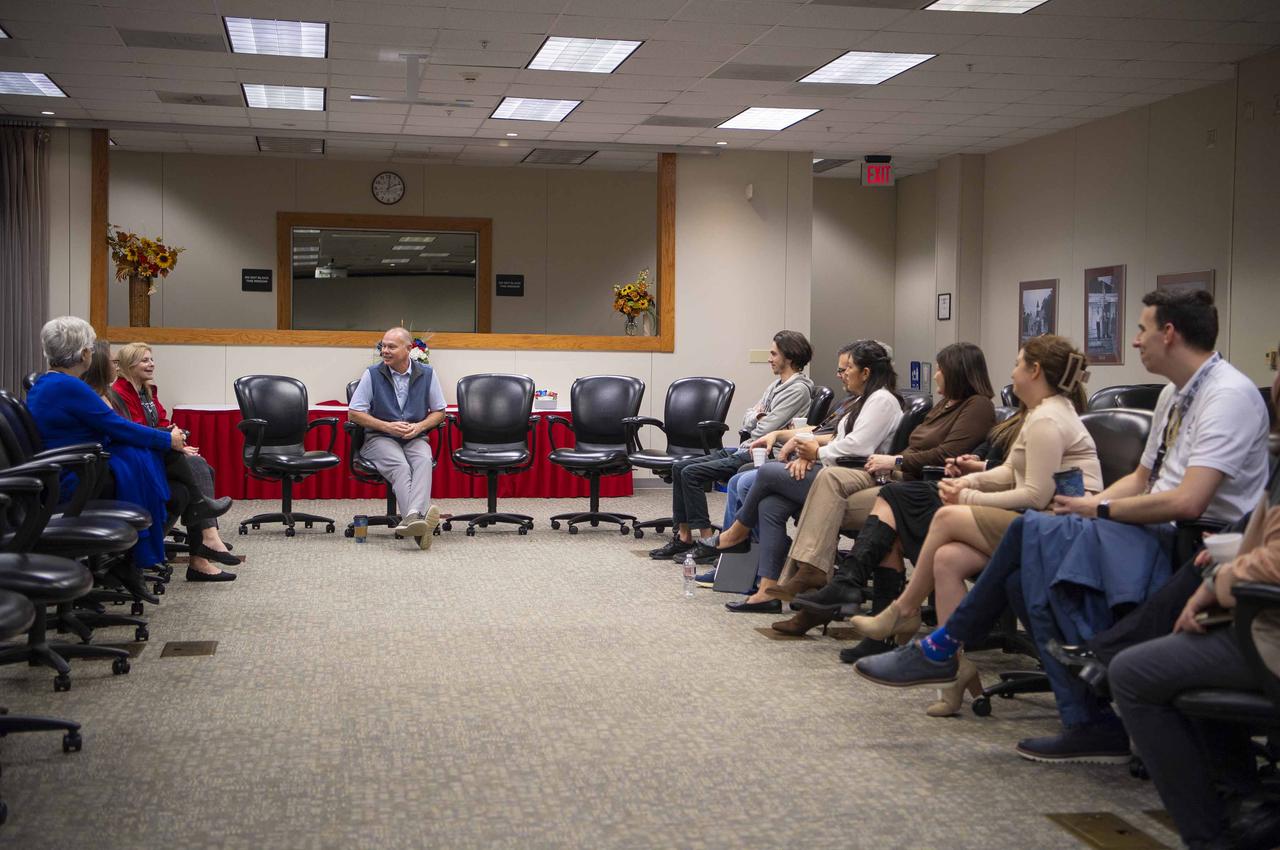
NASA Stennis Director John Bailey hosts a Java with John session on Dec. 10 with employees representing the Office of the Chief Financial Officer, Office of STEM Engagement, Office of Diversity and Equal Opportunity, Office of the Chief Human Capital Officer, and the center’s Autonomous Systems Laboratory team. Java with John is an employee-led discussion in a casual environment aimed at fostering a culture in which employees are welcome to share what matters most to them at work.
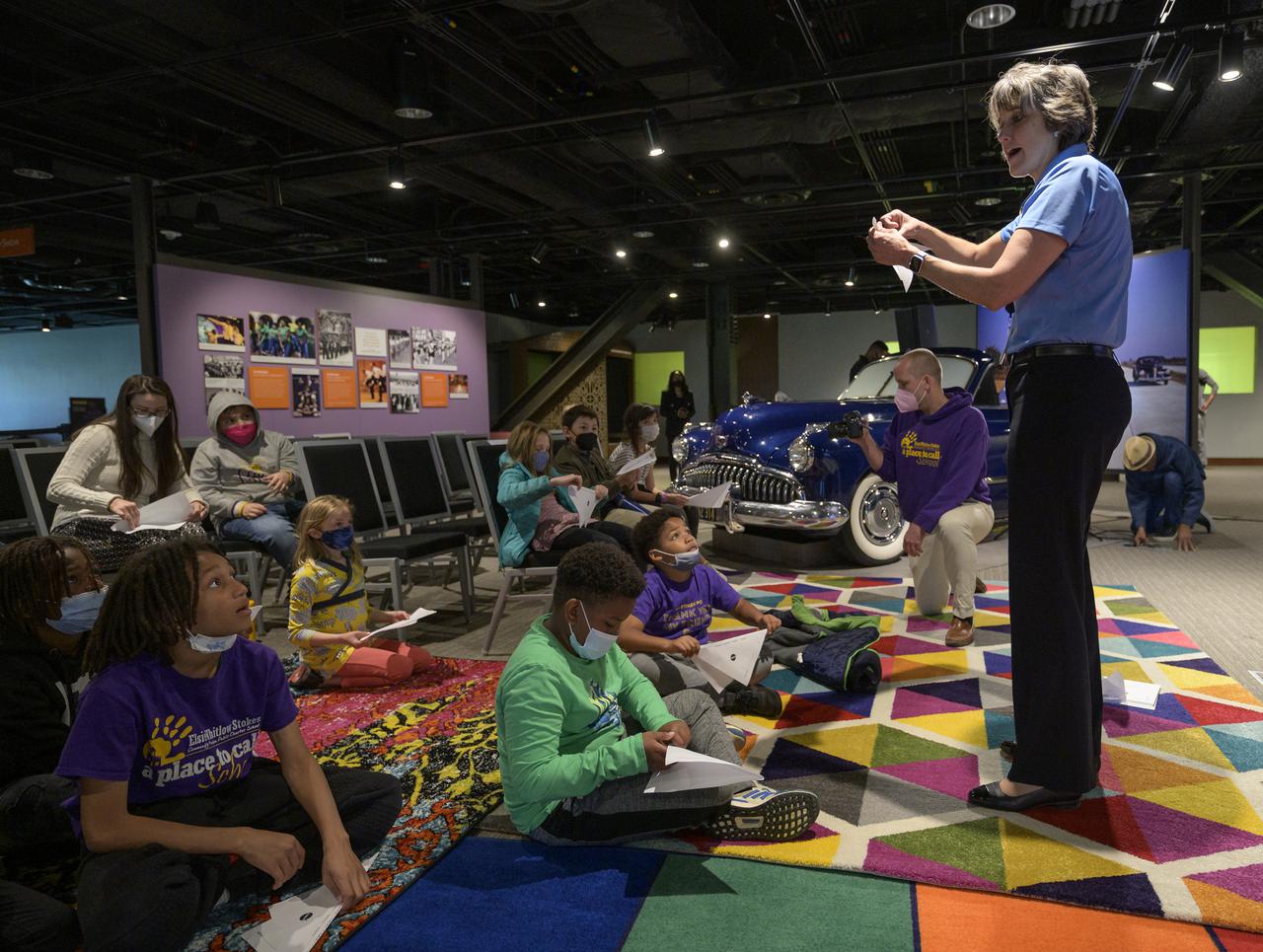
Cindy Hasselbring, NASA K-12 Education Advisor at NASA’s Office of STEM Engagement, teaches students about aeronautics and testing during a presentation, Thursday, April 28, 2022, at the National Museum of African American History and Culture in Washington. Photo Credit: (NASA/Bill Ingalls)
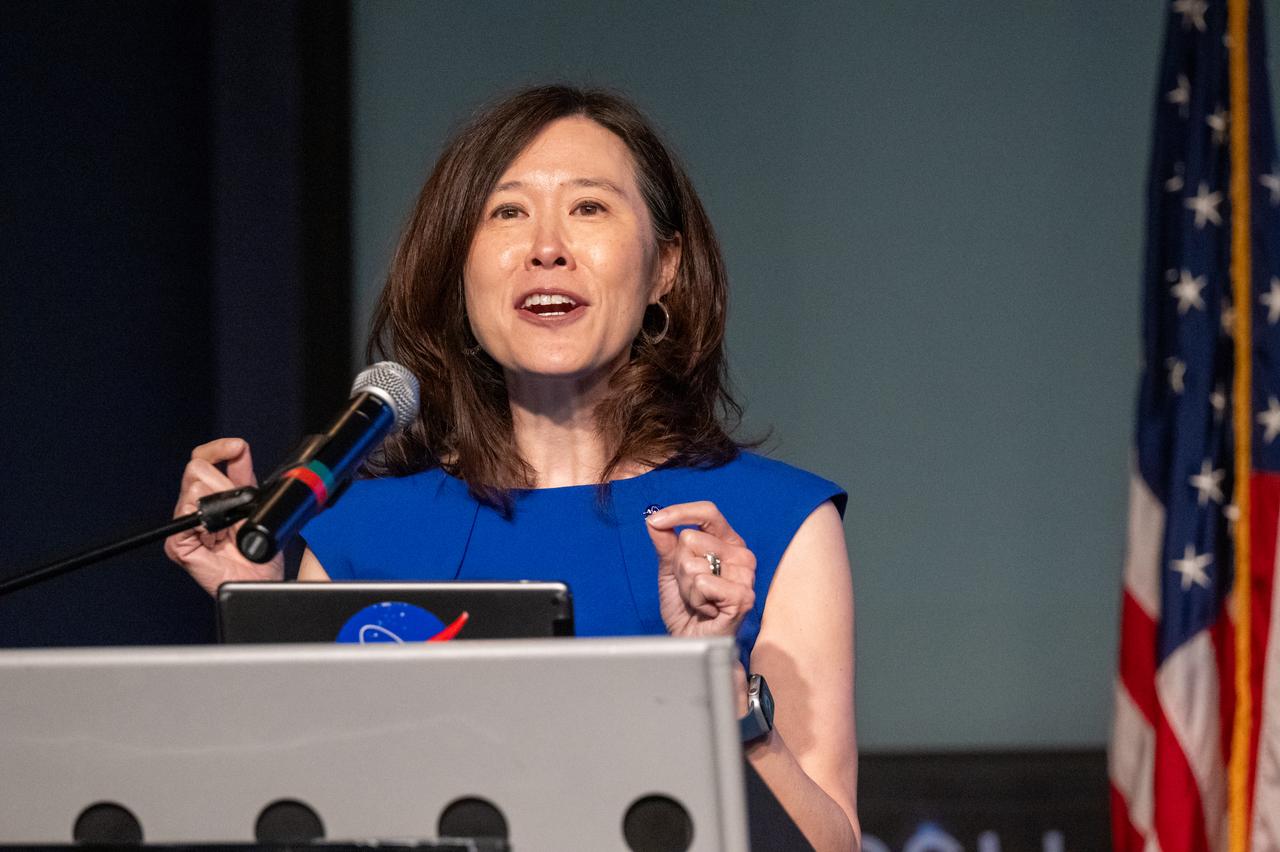
NASA Office of STEM Engagement Associate Administrator Elaine Ho delivers remarks during a 5th Annual Hidden Figures Street Naming Anniversary event Thursday, Sept. 19, 2024, at the Mary W. Jackson NASA Headquarters building in Washington. Photo Credit: (NASA/Keegan Barber)
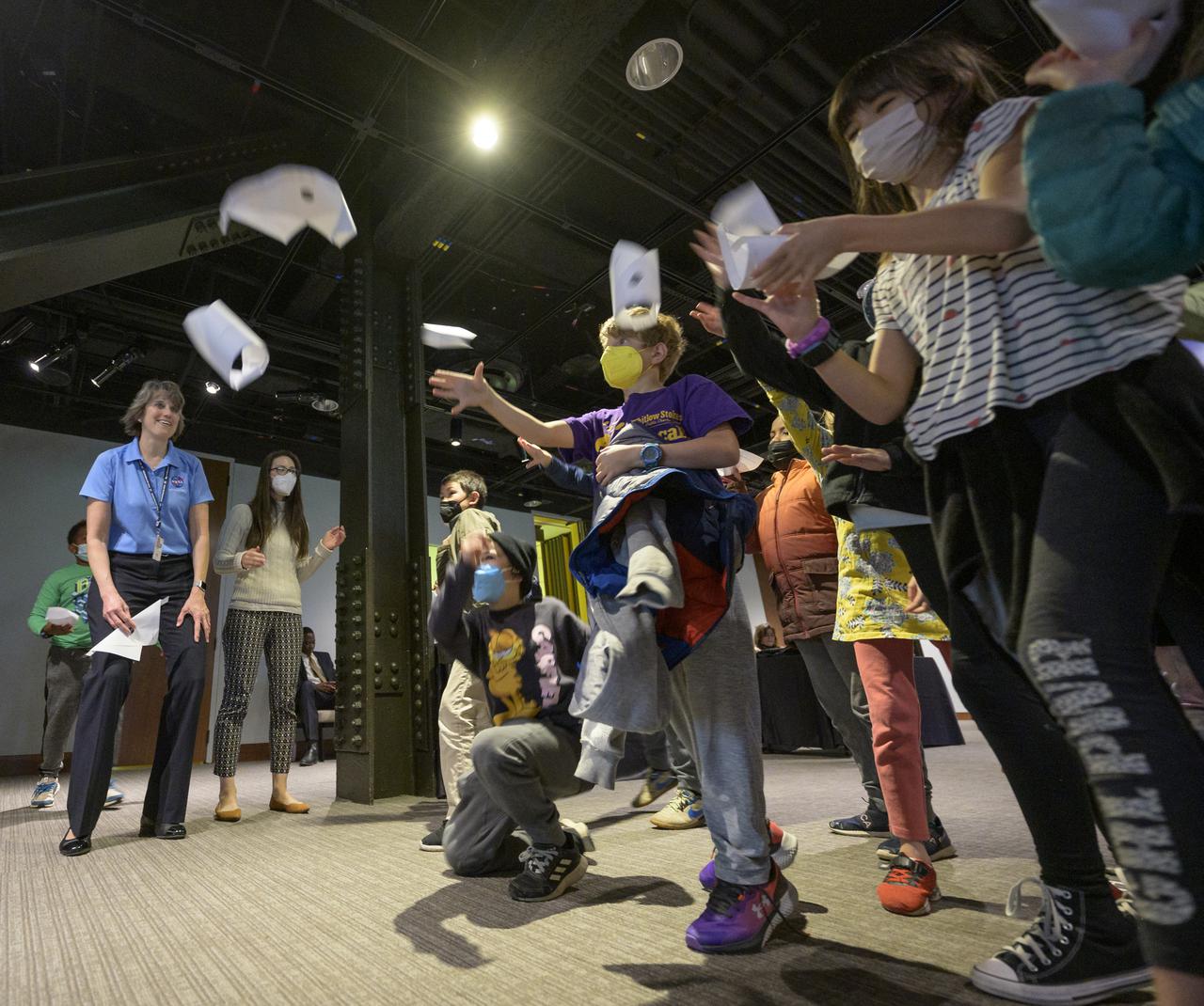
Cindy Hasselbring, NASA K-12 Education Advisor at NASA’s Office of STEM Engagement, teaches students about aeronautics and testing during a presentation, Thursday, April 28, 2022, at the National Museum of African American History and Culture in Washington. Photo Credit: (NASA/Bill Ingalls)
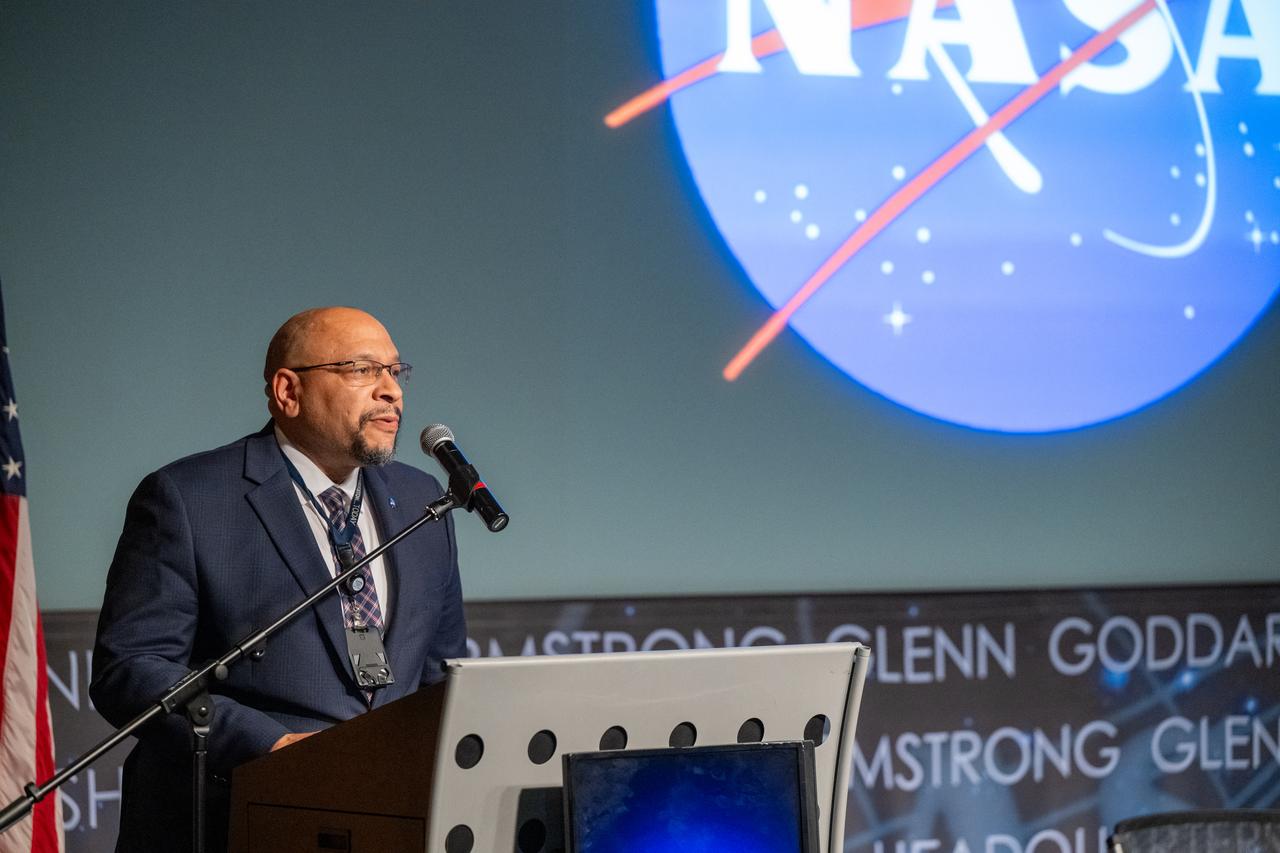
NASA Office of STEM Engagement Deputy Associate Administrator Torry Johnson delivers remarks during a 5th Annual Hidden Figures Street Naming Anniversary event Thursday, Sept. 19, 2024, at the Mary W. Jackson NASA Headquarters building in Washington. Photo Credit: (NASA/Keegan Barber)
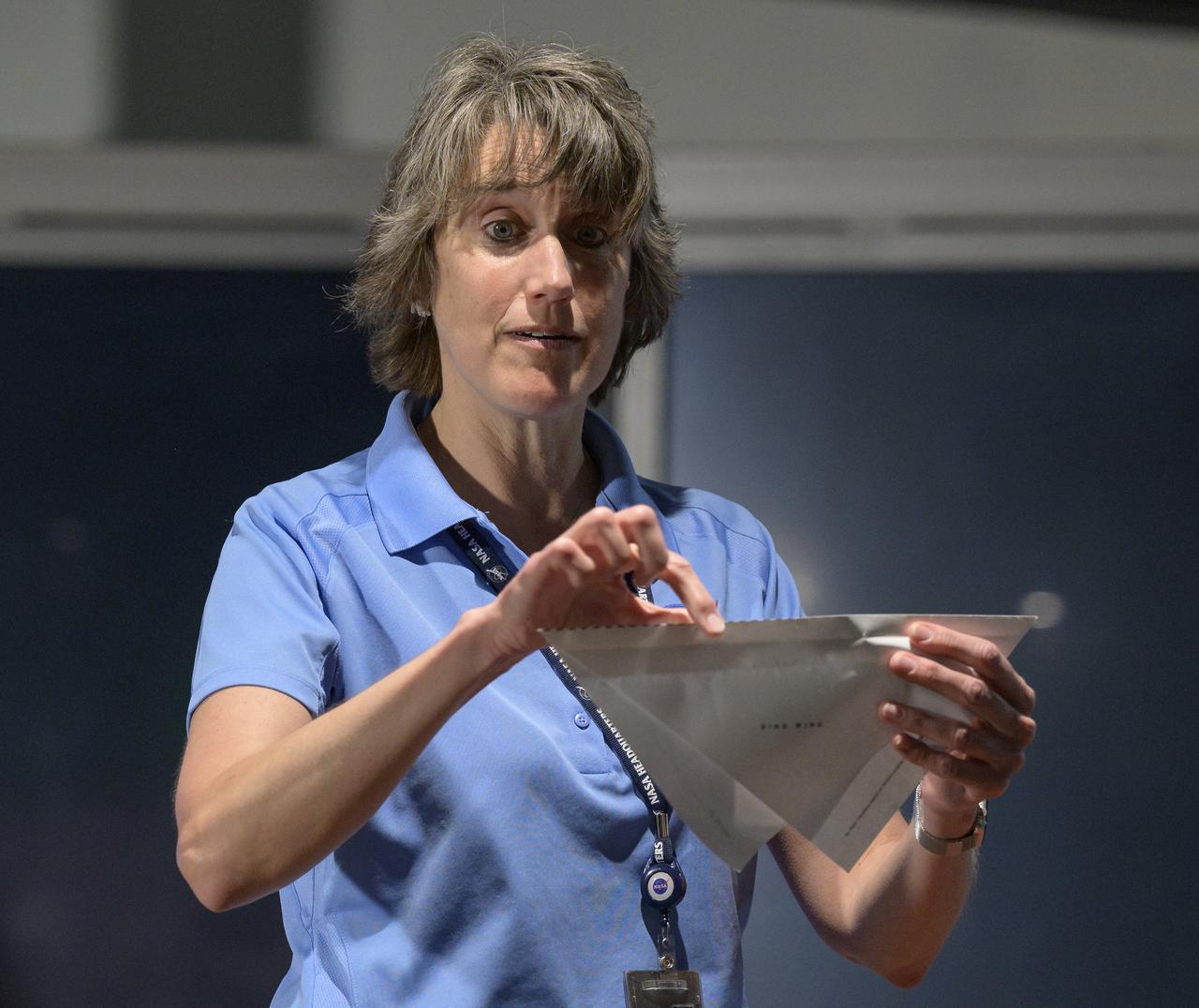
Cindy Hasselbring, NASA K-12 Education Advisor at NASA’s Office of STEM Engagement, teaches students about aeronautics and testing during a presentation, Thursday, April 28, 2022, at the National Museum of African American History and Culture in Washington. Photo Credit: (NASA/Bill Ingalls)
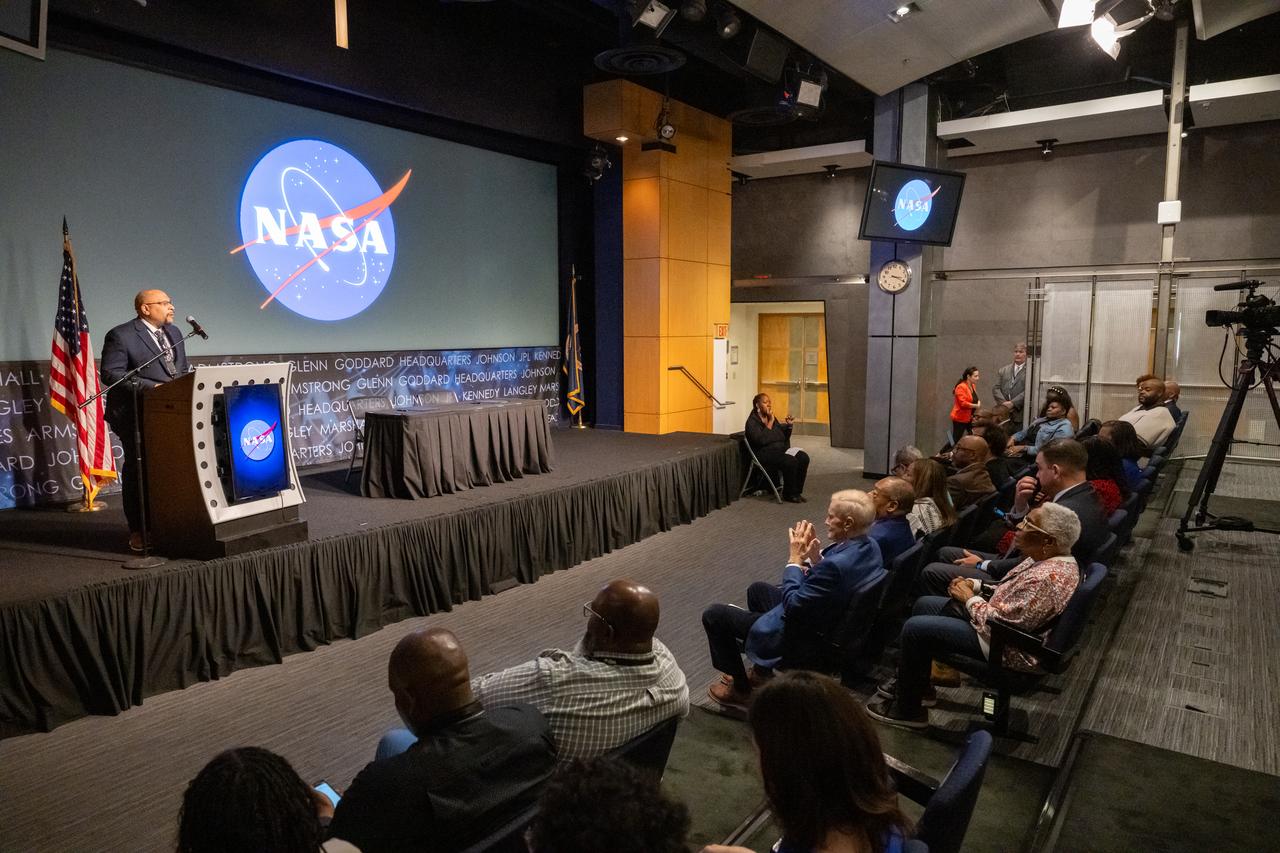
NASA Office of STEM Engagement Deputy Associate Administrator Torry Johnson delivers remarks during a 5th Annual Hidden Figures Street Naming Anniversary event Thursday, Sept. 19, 2024, at the Mary W. Jackson NASA Headquarters building in Washington. Photo Credit: (NASA/Keegan Barber)
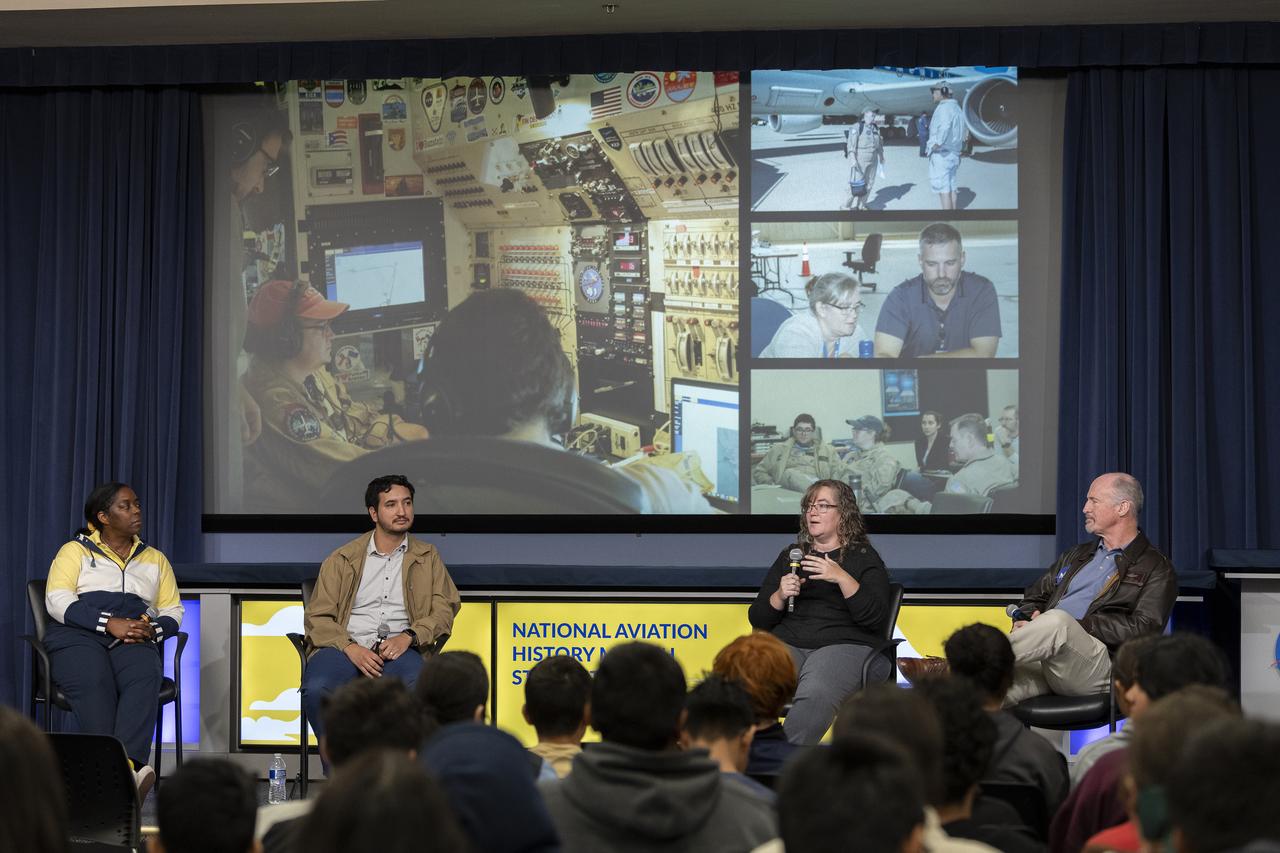
NASA Armstrong experts share their stories about their career paths and experiences at NASA to middle school students during an event hosted by NASA’s California Office of STEM Engagement at NASA’s Armstrong Flight Research Center in Edwards, California. From left to right: Laurie Grindle, Julio Trevino, Nicki Reid and Troy Asher.
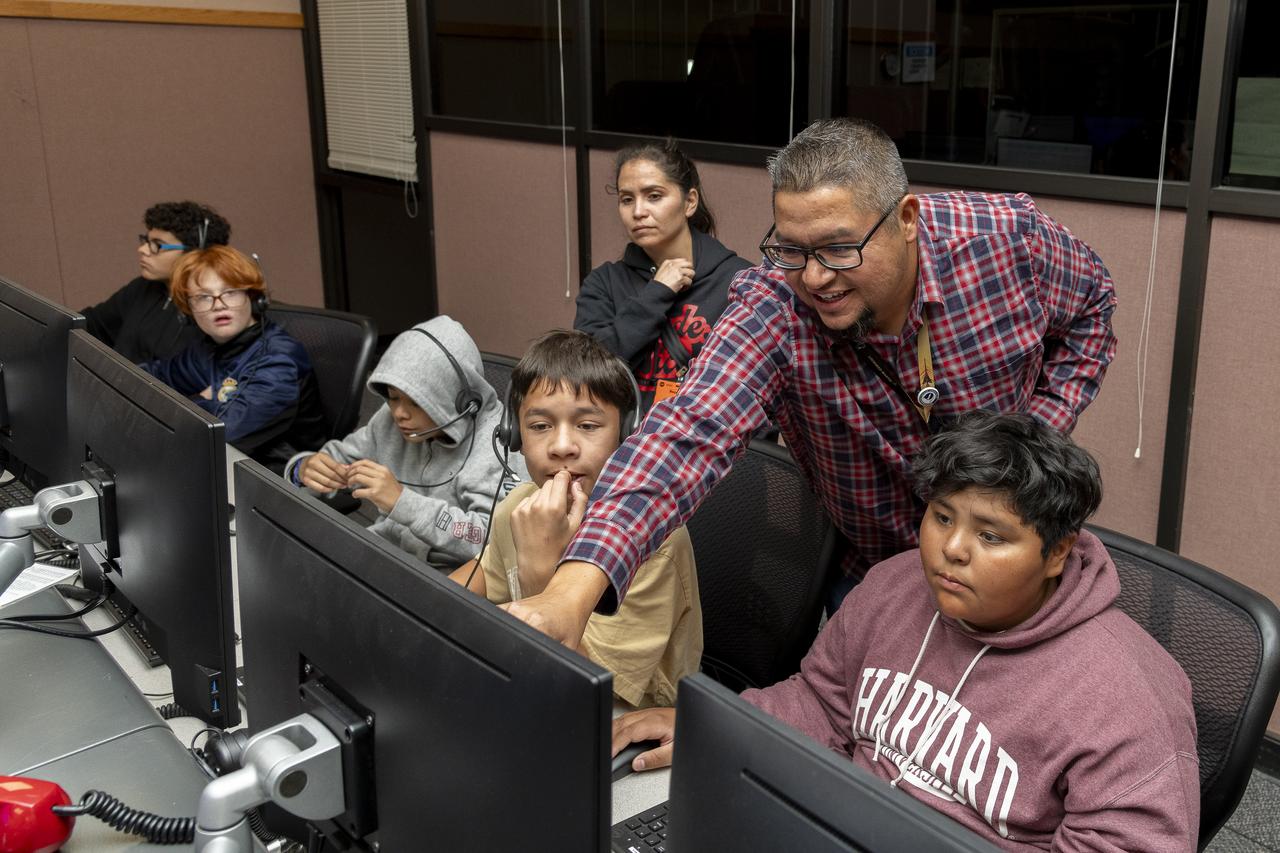
A group of middle school students and their teachers sit in the control room for a hands-on experience at NASA’s Armstrong Flight Research Center in Edwards, California during an event hosted by NASA’s California Office of STEM Engagement for National Aviation History Month.
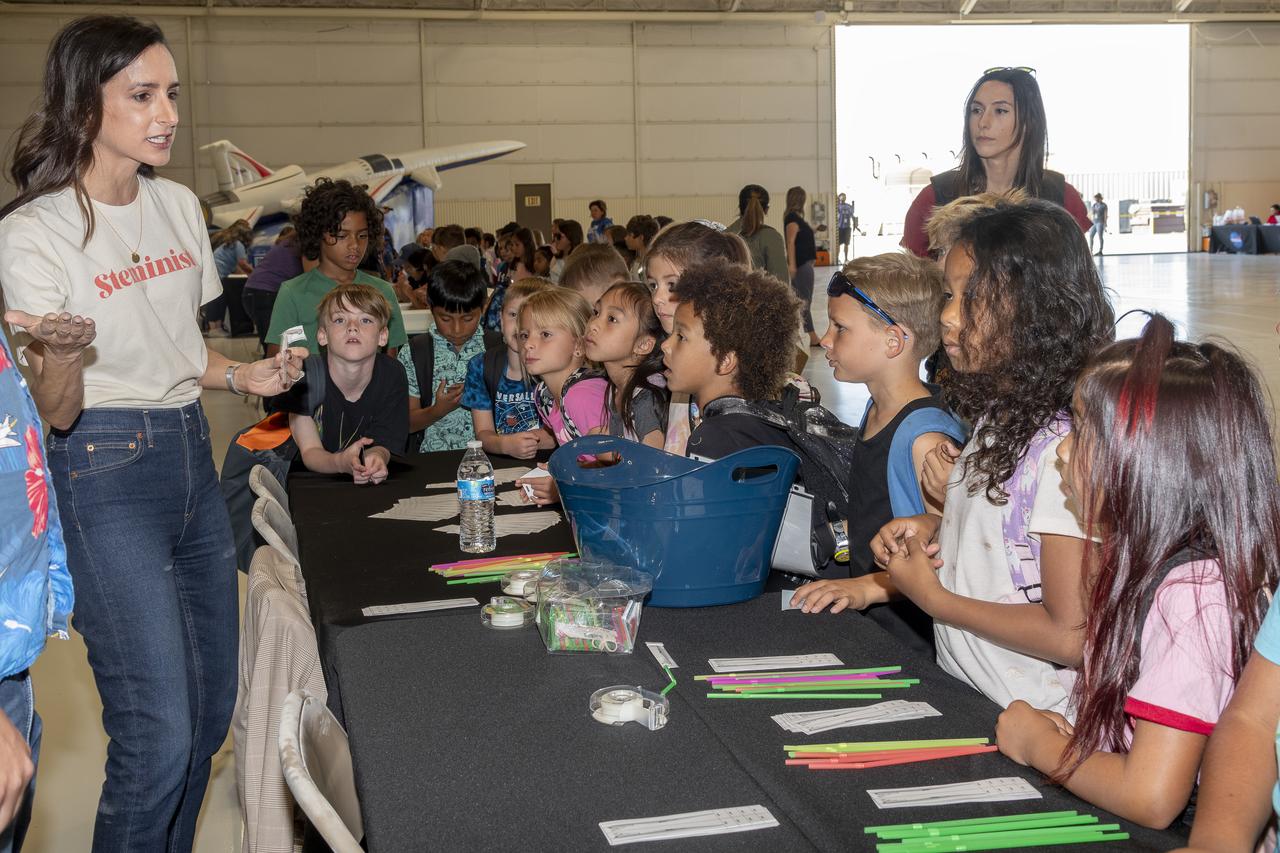
Kate M. McMurtry, deputy director of Integrated Aviation Systems Program shares with students how NASA is working to quiet the sonic boom with the development of the X-59 aircraft at NASA’s California Office of STEM Engagement event with Center of Science and Industry at NASA Armstrong Flight Research Center in Edwards, California.

U.S. Dept. of Education Deputy Secretary Cindy Marten addresses NASA’s national partners and guests during the Artemis Summit at NASA’s Kennedy Space Center in Florida on March 16, 2022. The Offices of STEM Engagement, Communication and Human Exploration Operations Mission Directorate hosted a one-day meeting for partners, grantees and other interested organizations to learn about Public and STEM Engagement plans and opportunities for the upcoming Artemis I mission. The event introduced participants to the importance of the Artemis program and supports them in the use of Artemis I content as they serve students, educators, families, and the general public.

NASA Deputy Associate Administrator for NASA’s Office of STEM Engagement, Kris Brown, provides remarks at a kickoff event for the 21st Century Community Learning Centers NASA and Department of Education partnership, Monday, Sept. 23, 2024 at Wheatley Education Campus in Washington. Students engaged in NASA hands-on activities and an engineering design challenge. Photo Credit: (NASA/Aubrey Gemignani)
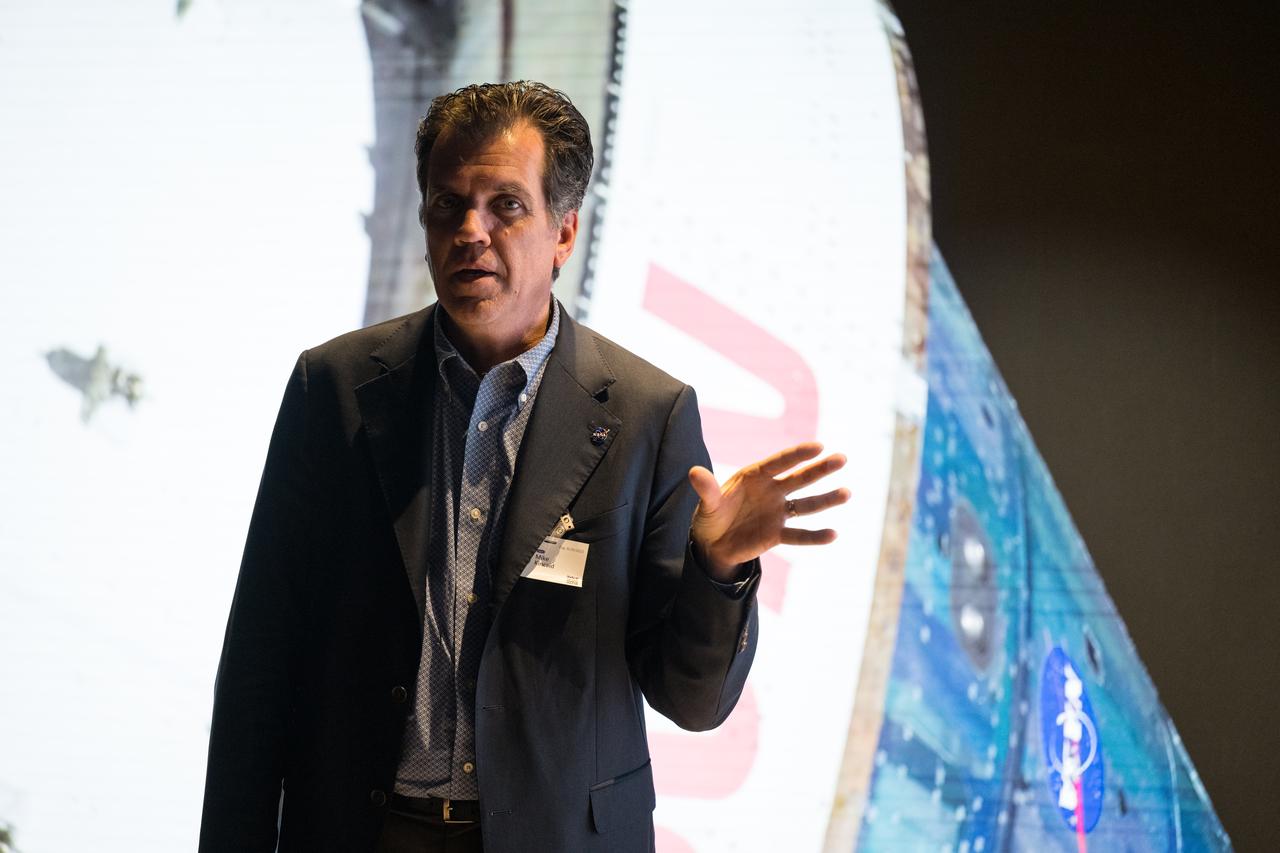
NASA Associate Administrator for the STEM Engagement Office, Mike Kincaid, provides remarks during Space Education Day, Tuesday, June 20, 2023, at the Microsoft Technology Center in Arlington, Va. Microsoft hosted the event to showcase the collaboration, early successes, and future plans for high quality student engagement through activities that combined space content and technologies like artificial intelligence and cloud computing. Photo Credit: (NASA/Aubrey Gemignani)
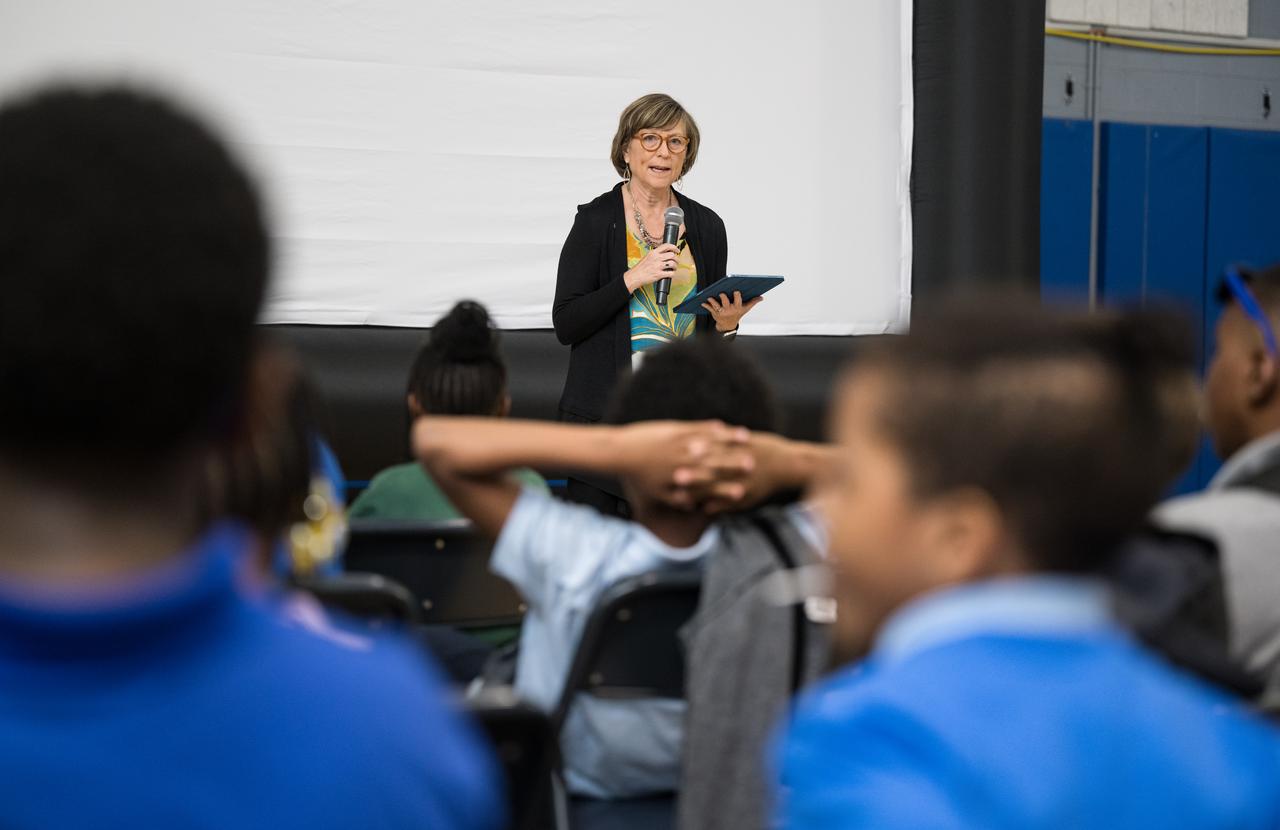
NASA Deputy Associate Administrator for NASA’s Office of STEM Engagement, Kris Brown, provides remarks at a kickoff event for the 21st Century Community Learning Centers NASA and Department of Education partnership, Monday, Sept. 23, 2024 at Wheatley Education Campus in Washington. Students engaged in NASA hands-on activities and an engineering design challenge. Photo Credit: (NASA/Aubrey Gemignani)
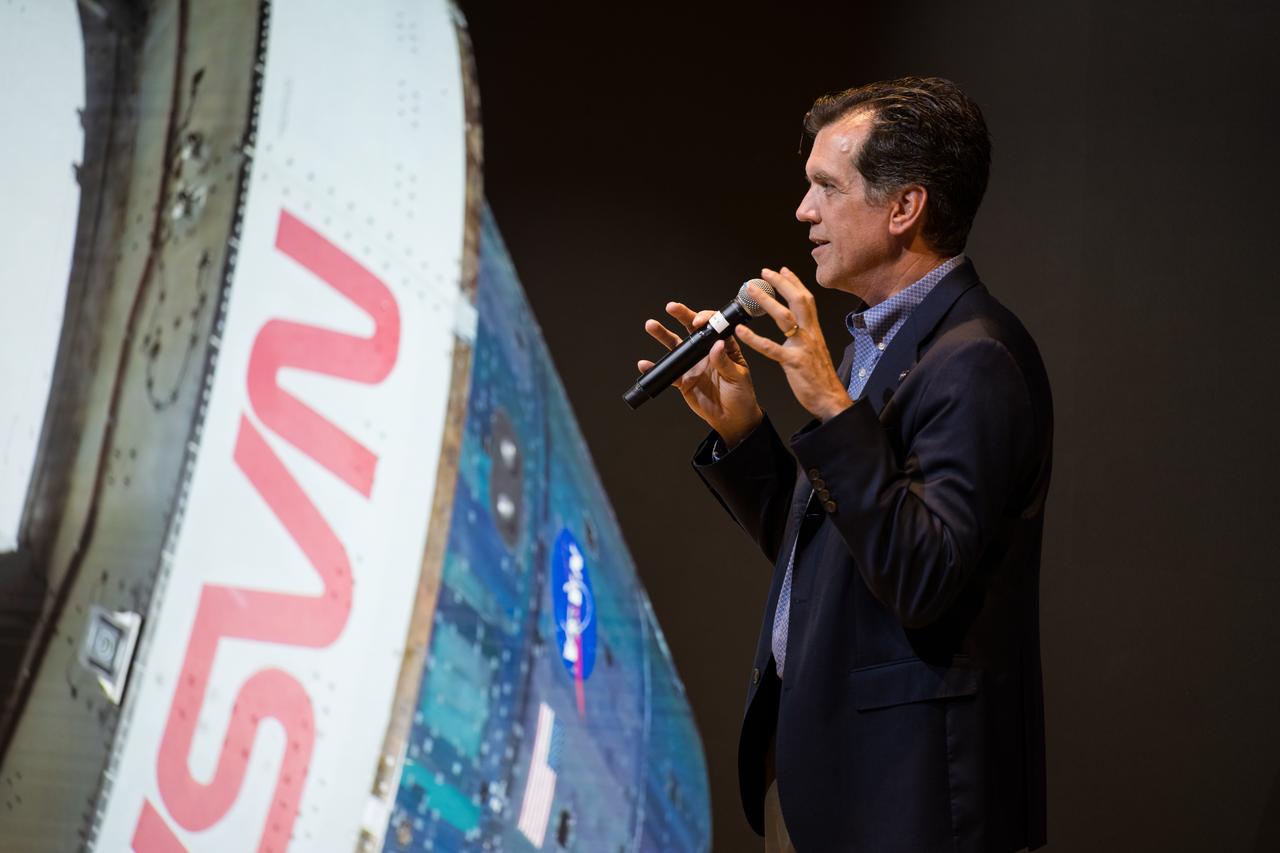
NASA Associate Administrator for the STEM Engagement Office, Mike Kincaid, provides remarks during Space Education Day, Tuesday, June 20, 2023, at the Microsoft Technology Center in Arlington, Va. Microsoft hosted the event to showcase the collaboration, early successes, and future plans for high quality student engagement through activities that combined space content and technologies like artificial intelligence and cloud computing. Photo Credit: (NASA/Aubrey Gemignani)
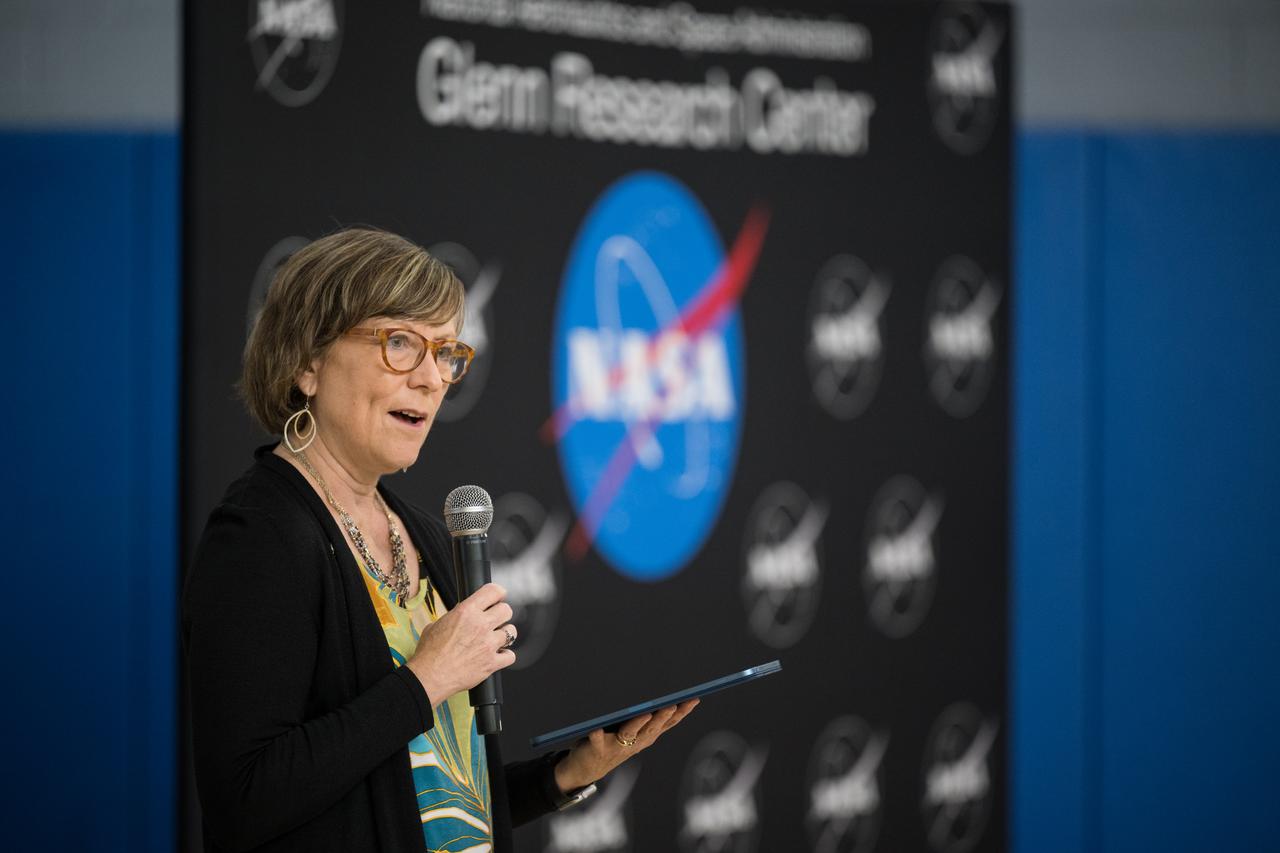
NASA Deputy Associate Administrator for NASA’s Office of STEM Engagement, Kris Brown, provides remarks at a kickoff event for the 21st Century Community Learning Centers NASA and Department of Education partnership, Monday, Sept. 23, 2024 at Wheatley Education Campus in Washington. Students engaged in NASA hands-on activities and an engineering design challenge. Photo Credit: (NASA/Aubrey Gemignani)
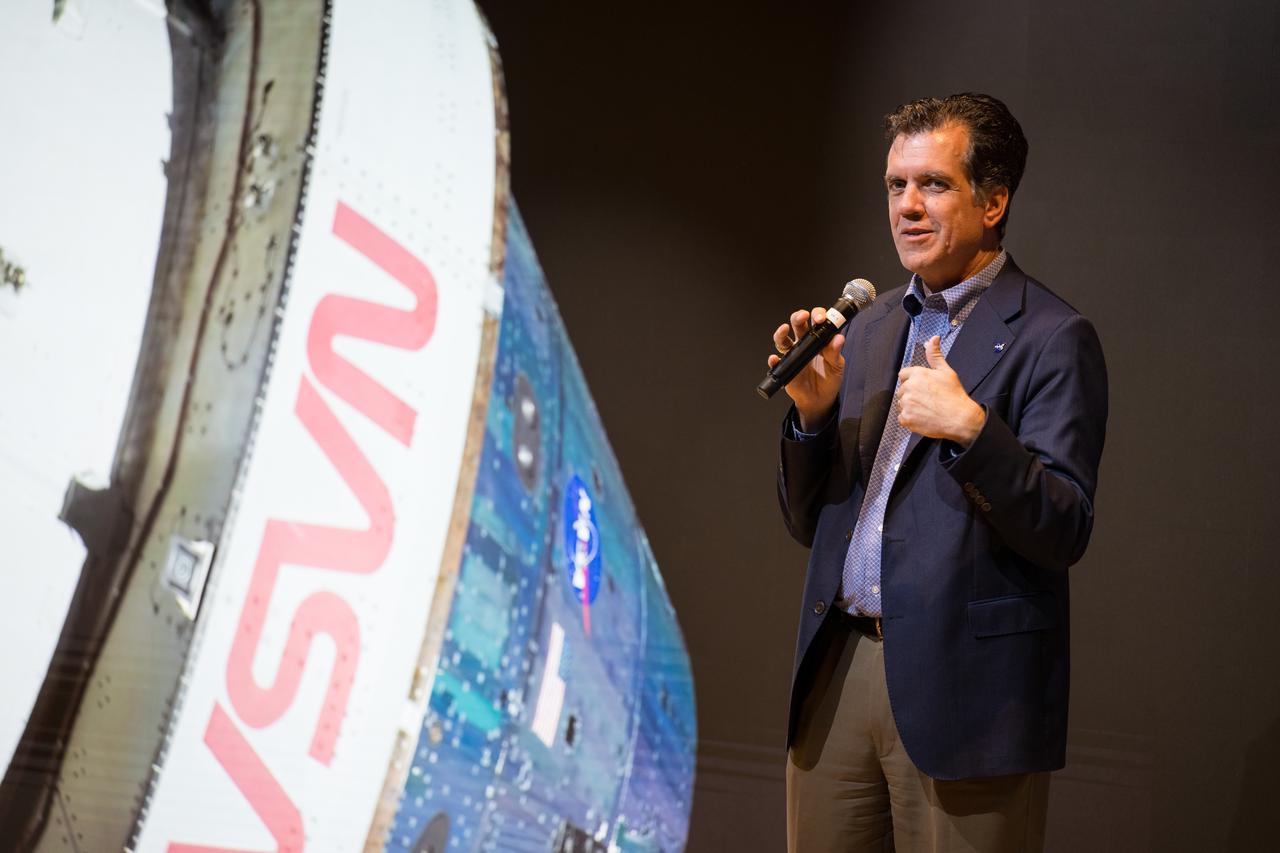
NASA Associate Administrator for the STEM Engagement Office, Mike Kincaid, provides remarks during Space Education Day, Tuesday, June 20, 2023, at the Microsoft Technology Center in Arlington, Va. Microsoft hosted the event to showcase the collaboration, early successes, and future plans for high quality student engagement through activities that combined space content and technologies like artificial intelligence and cloud computing. Photo Credit: (NASA/Aubrey Gemignani)
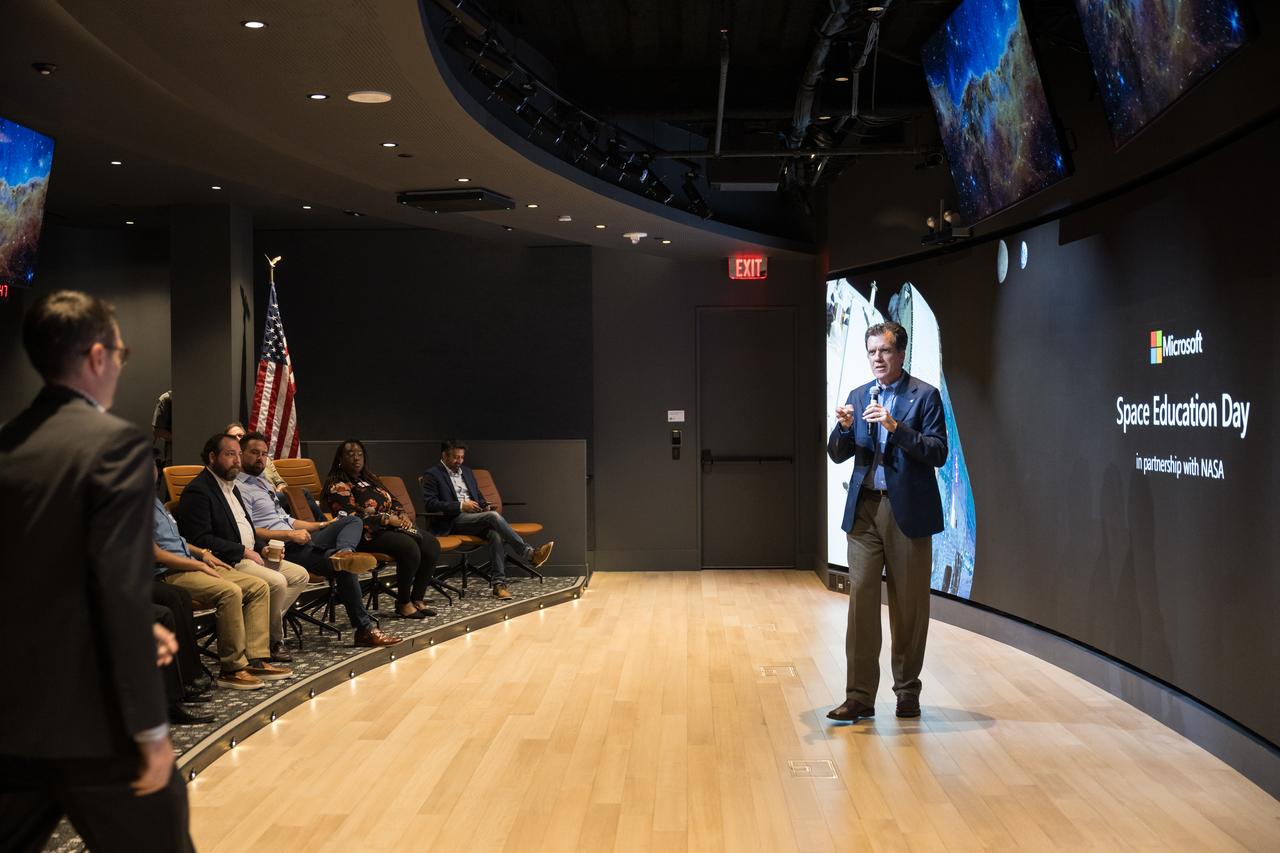
NASA Associate Administrator for the STEM Engagement Office, Mike Kincaid, provides remarks during Space Education Day, Tuesday, June 20, 2023, at the Microsoft Technology Center in Arlington, Va. Microsoft hosted the event to showcase the collaboration, early successes, and future plans for high quality student engagement through activities that combined space content and technologies like artificial intelligence and cloud computing. Photo Credit: (NASA/Aubrey Gemignani)
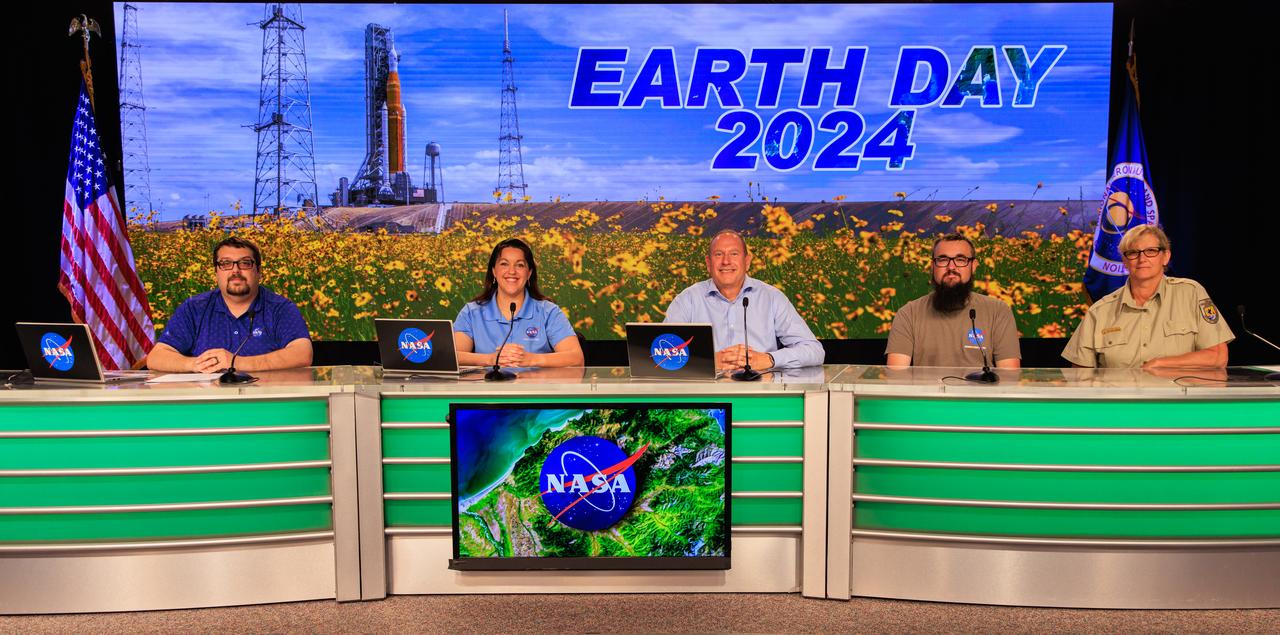
As part of NASA’s NextGen STEM project, the agency hosted an environmentally focused Earth Day briefing on Tuesday, April 2, 2024, inside NASA News Center’s John Holliman Auditorium at the agency’s Kennedy Space Center. Participants from left to right include, Messod Bendayan, NASA Communications; Kelly McCarthy, NASA’s Office of STEM Engagement, Bob Kline, Kennedy’s Environmental Assurance Branch; Spencer Davis, Kennedy’s Exploration Ground Systems; and Kim King-Wrenn, Merritt Island National Wildlife Refuge.
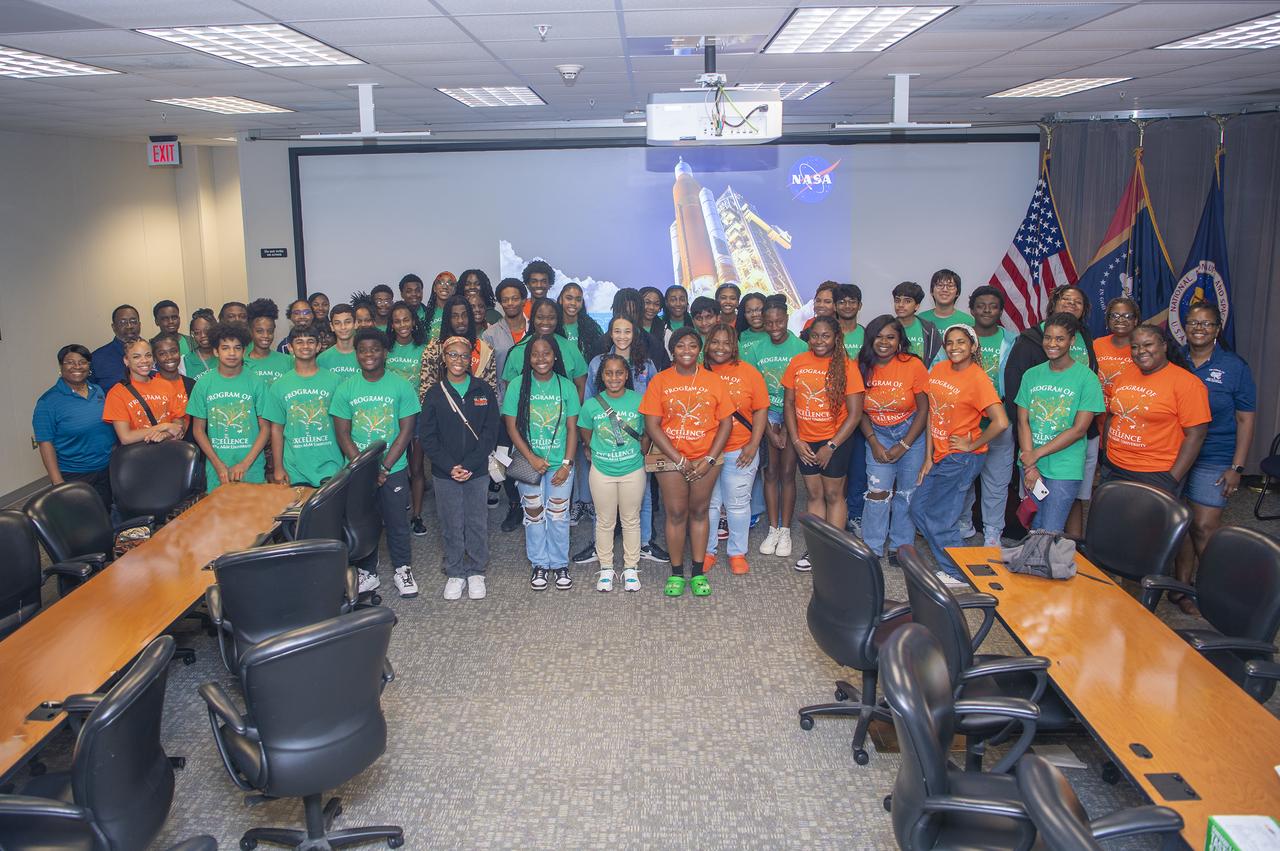
Members of the Florida A&M University Program of Excellence in STEM attend a presentation June 21 during a visit to NASA’s Stennis Space Center. The NASA Office of STEM Engagement provided information on grants and student activities during the presentation about NASA Stennis and the work conducted at the unique federal city. The group also visited the Thad Cochran Test Stand and Relativity Space test complex during a site tour. The Program of Excellence in STEM summer academy aims to enhance student knowledge of opportunities in the fields of science, technology, engineering, and mathematics.
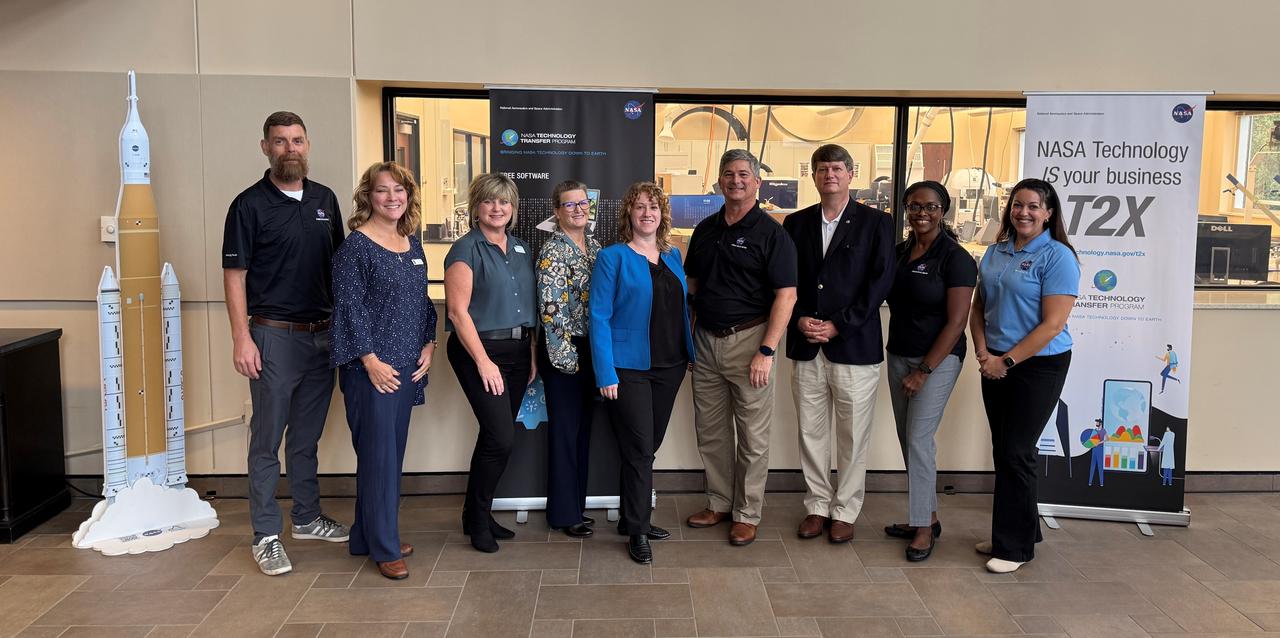
Participants in A Day with NASA at The Accelerator in Hattiesburg, Mississippi, included: (left to right) Marc Shoemaker with the NASA Stennis Small Business Innovation Research/Small Business Technology Transfer Office; Kay Doane with the NASA Stennis Office of Small Business Programs; Sandy Crist with the Mississippi Manufacturers Association Manufacturing Extension Program; Dr. Monica Tisack with the Mississippi Polymer Institute; Caitlyne Shirley with the Mississippi Polymer Institute; Top Lipski with the NASA Stennis Technology Transfer Expansion Team; Thom Jacks with the NASA Stennis Engineering and Test Directorate; Dawn Davis with the NASA Stennis Engineering and Test Directorate; Kelly McCarthy with the NASA Stennis Office of STEM Engagement; and Janet Parker with Innovate Mississippi.
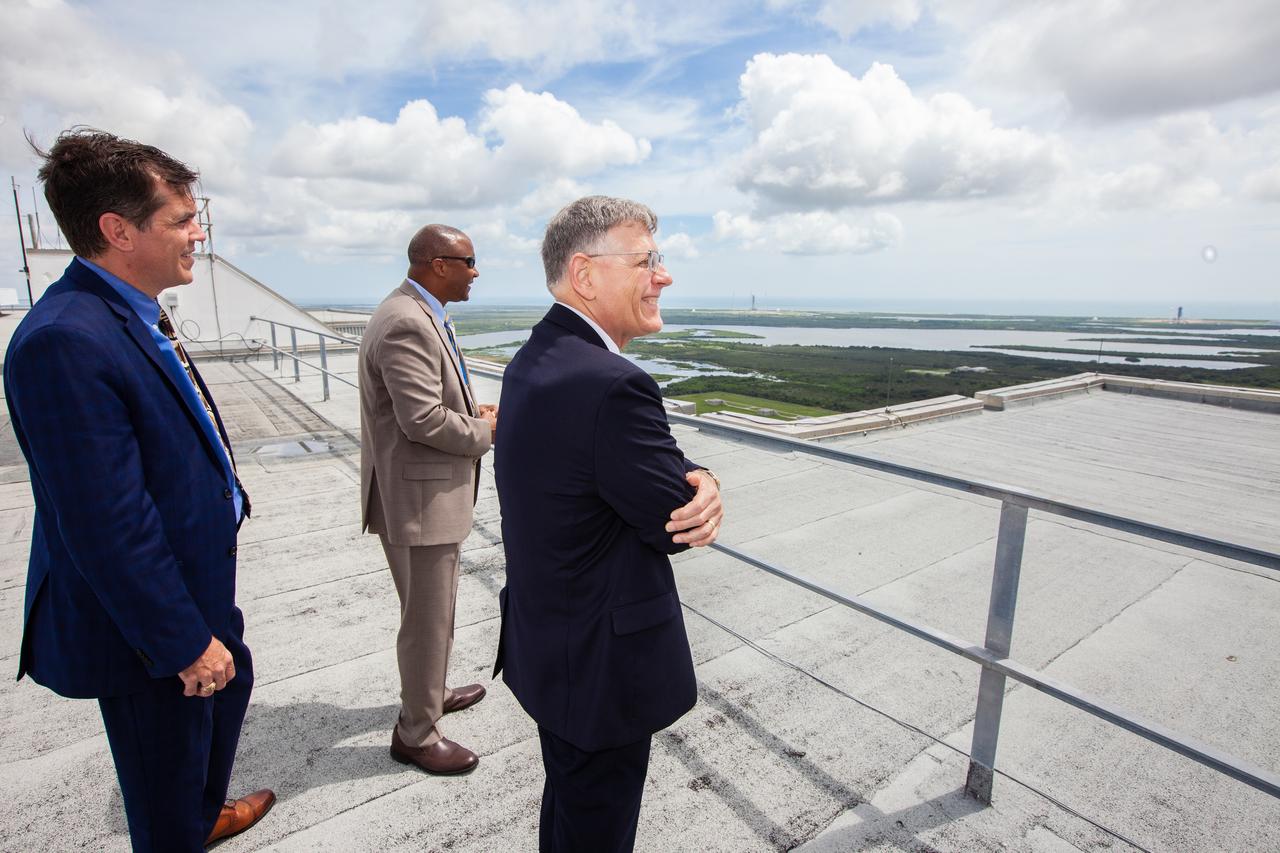
From left to right, NASA Associate Administrator for STEM Engagement Mike Kincade, left, Kelvin Manning, associate director, technical, of NASA’s Kennedy Space Center in Florida, and White House Office of Science and Technology Policy Director Kelvin Droegemeier, right, enjoy a panoramic view from the roof of the Vehicle Assembly Building on July 10, 2019. Droegemeier visited the iconic rocket-assembly facility in the heart of Kennedy’s Launch Complex 39 Area during a tour of the multi-user spaceport.
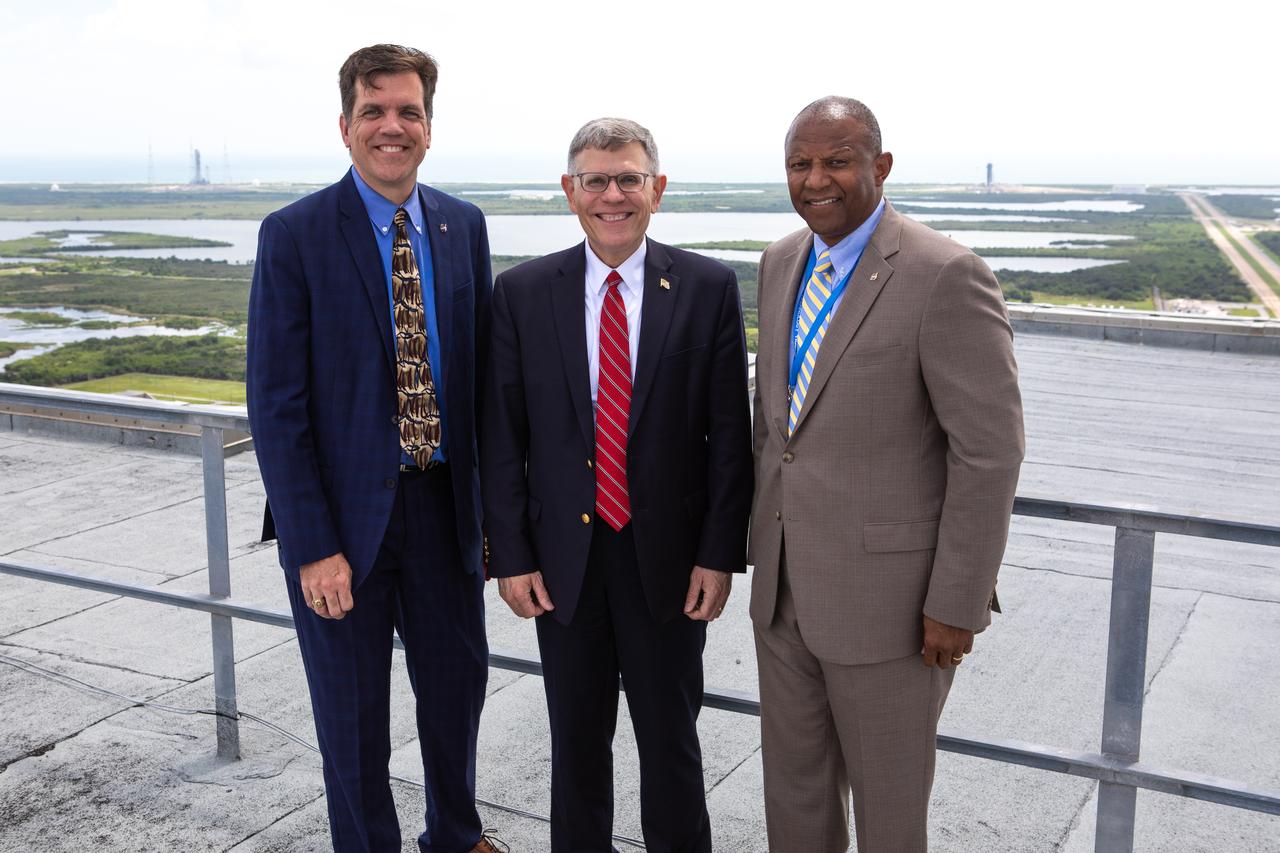
NASA Associate Administrator for STEM Engagement Mike Kincade, left, White House Office of Science and Technology Policy Director Kelvin Droegemeier, center, and Kelvin Manning, right, associate director, technical, of NASA’s Kennedy Space Center in Florida, pause for a photo on the roof of the Vehicle Assembly Building on July 10, 2019. Droegemeier visited the iconic rocket-assembly facility in the heart of Kennedy’s Launch Complex 39 Area during a tour of the multi-user spaceport.
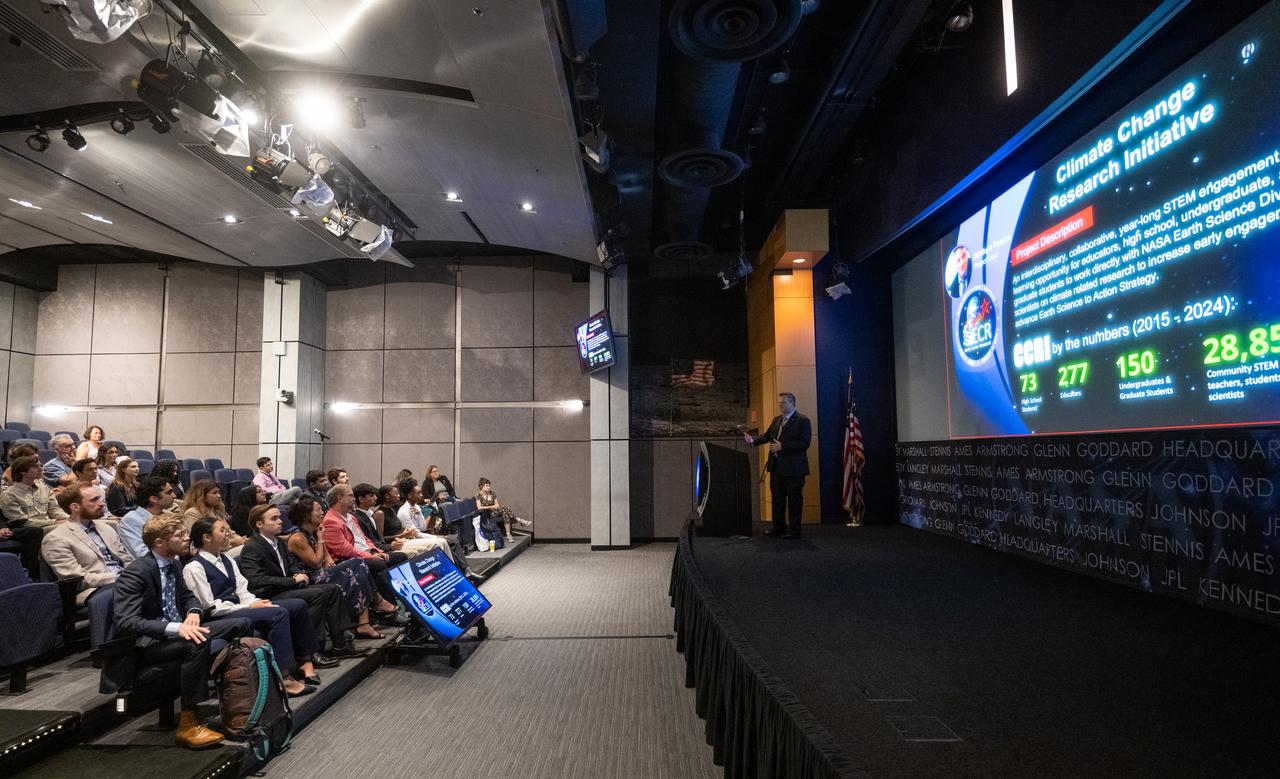
Matthew Pearce, education officer at NASA’s Goddard Institute for Space Studies and project lead for the Climate Change Research Initiative (CCRI), speaks with the CCRI cohort, Wednesday, Aug. 7, 2024, at the Mary W. Jackson NASA Headquarters building in Washington, DC. The Earth Science Division’s Early Career Research Program’s Climate Change Research Initiative (CCRI) is a year-long STEM engagement and experiential learning opportunity for educators and students from high school to graduate level. Photo Credit: (NASA/Joel Kowsky)
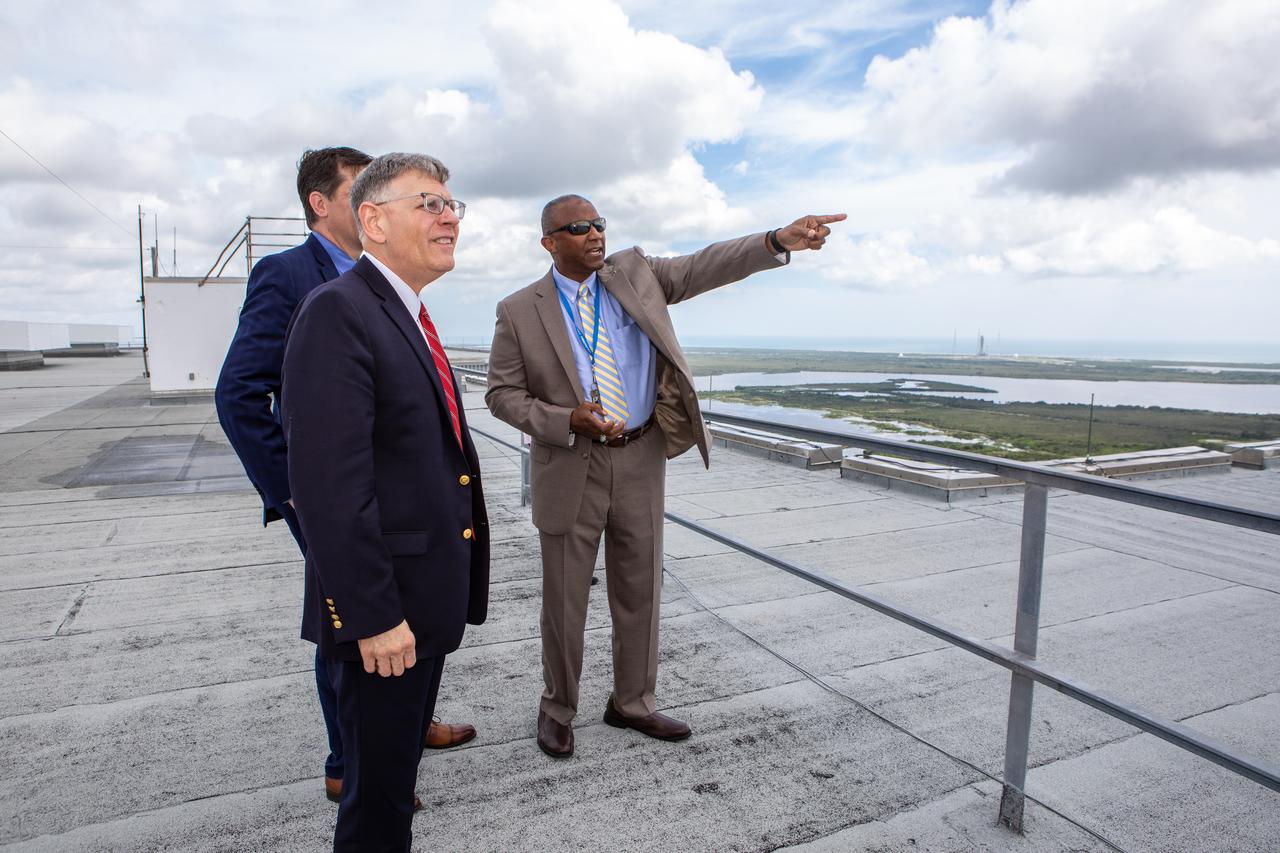
Kelvin Manning, right, associate director, technical, of NASA’s Kennedy Space Center in Florida, points out various landmarks to White House Office of Science and Technology Policy Director Kelvin Droegemeier, center, and NASA Associate Administrator for STEM Engagement Mike Kincade, left, from the roof of the Vehicle Assembly Building on July 10, 2019. Droegemeier visited the iconic rocket-assembly facility in the heart of Kennedy’s Launch Complex 39 Area during a tour of the multi-user spaceport.
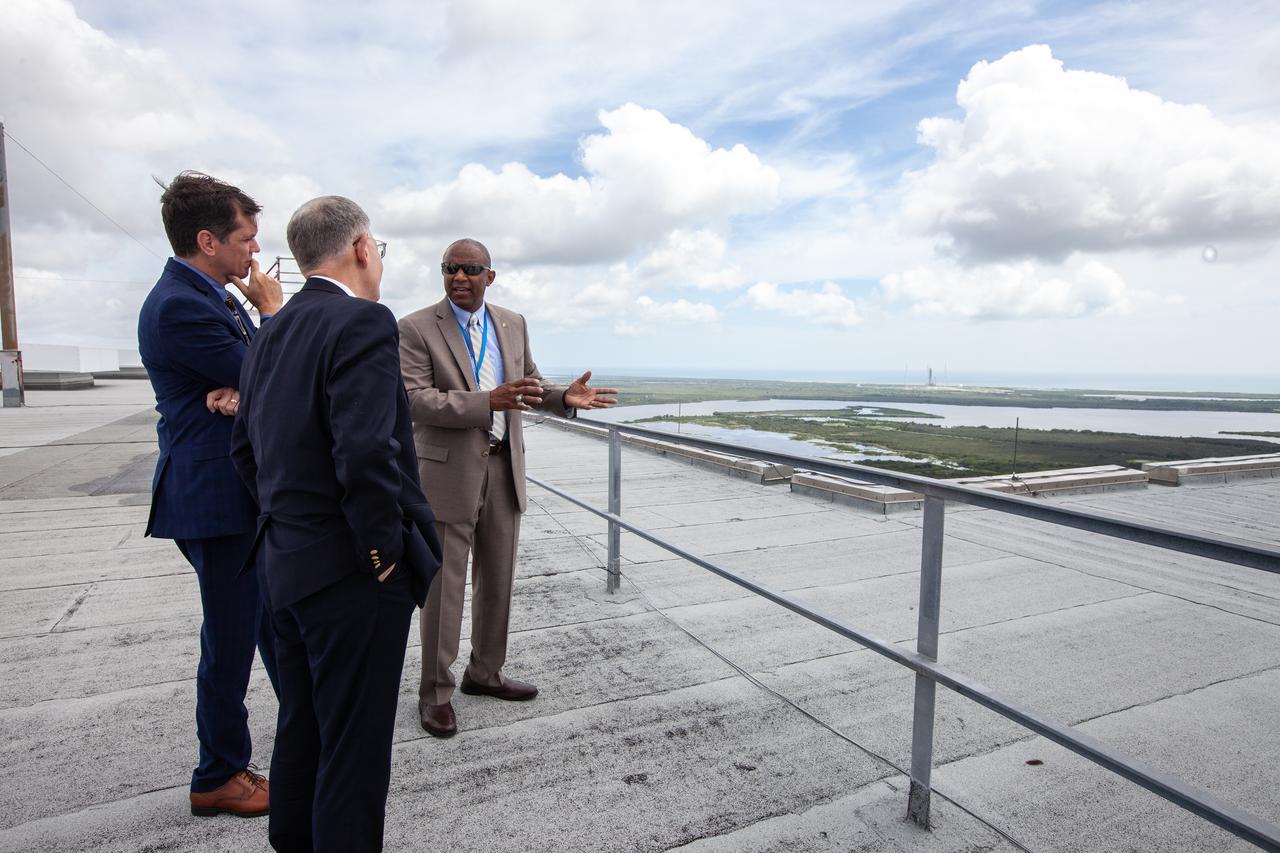
Kelvin Manning, right, associate director, technical, of NASA’s Kennedy Space Center in Florida, speaks to White House Office of Science and Technology Policy Director Kelvin Droegemeier, center, and NASA Associate Administrator for STEM Engagement Mike Kincade, left, on the roof of the Vehicle Assembly Building on July 10, 2019. Droegemeier visited the iconic rocket-assembly facility in the heart of Kennedy’s Launch Complex 39 Area during a tour of the multi-user spaceport.
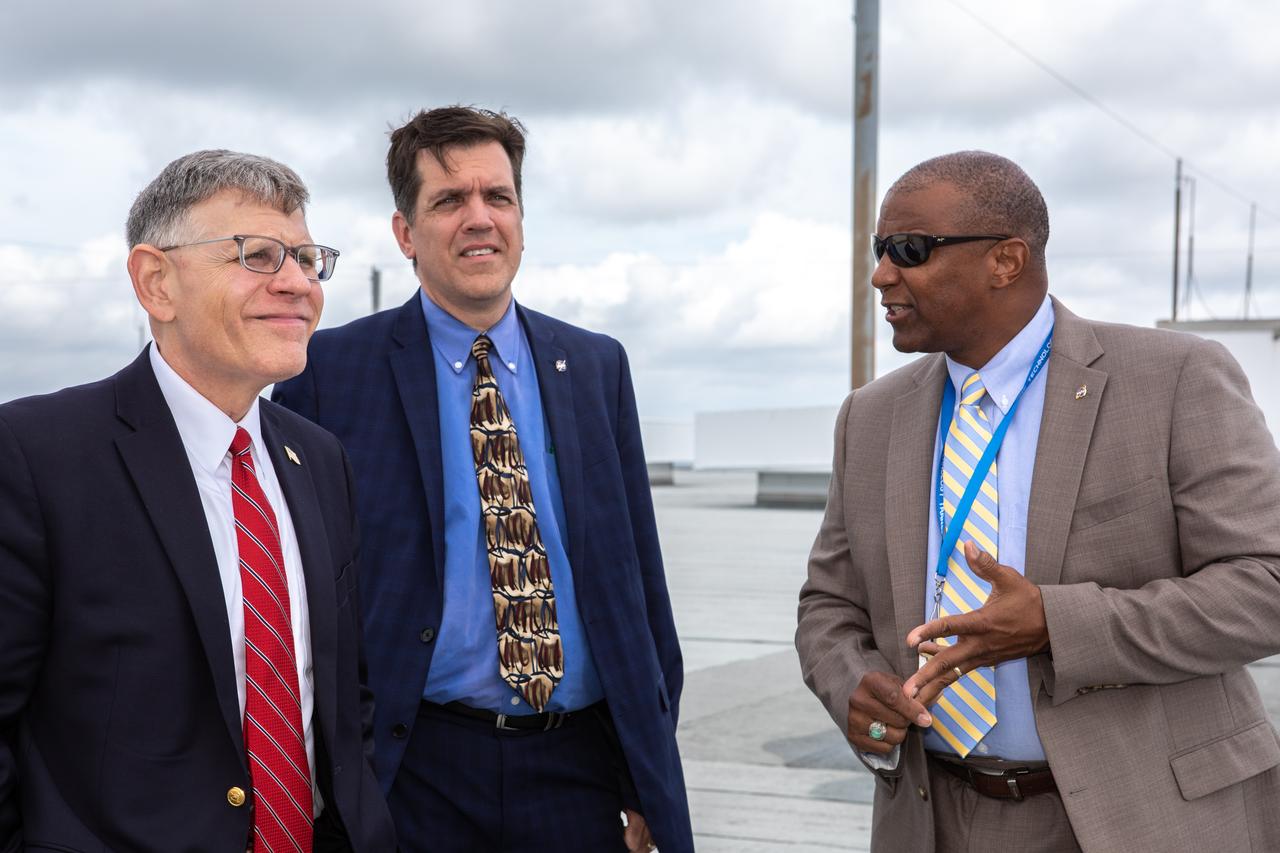
Kelvin Manning, right, associate director, technical, of NASA’s Kennedy Space Center in Florida, speaks to White House Office of Science and Technology Policy Director Kelvin Droegemeier, left, and NASA Associate Administrator for STEM Engagement Mike Kincade, center, on the roof of the Vehicle Assembly Building on July 10, 2019. Droegemeier visited the iconic rocket-assembly facility in the heart of Kennedy’s Launch Complex 39 Area during a tour of the multi-user spaceport.
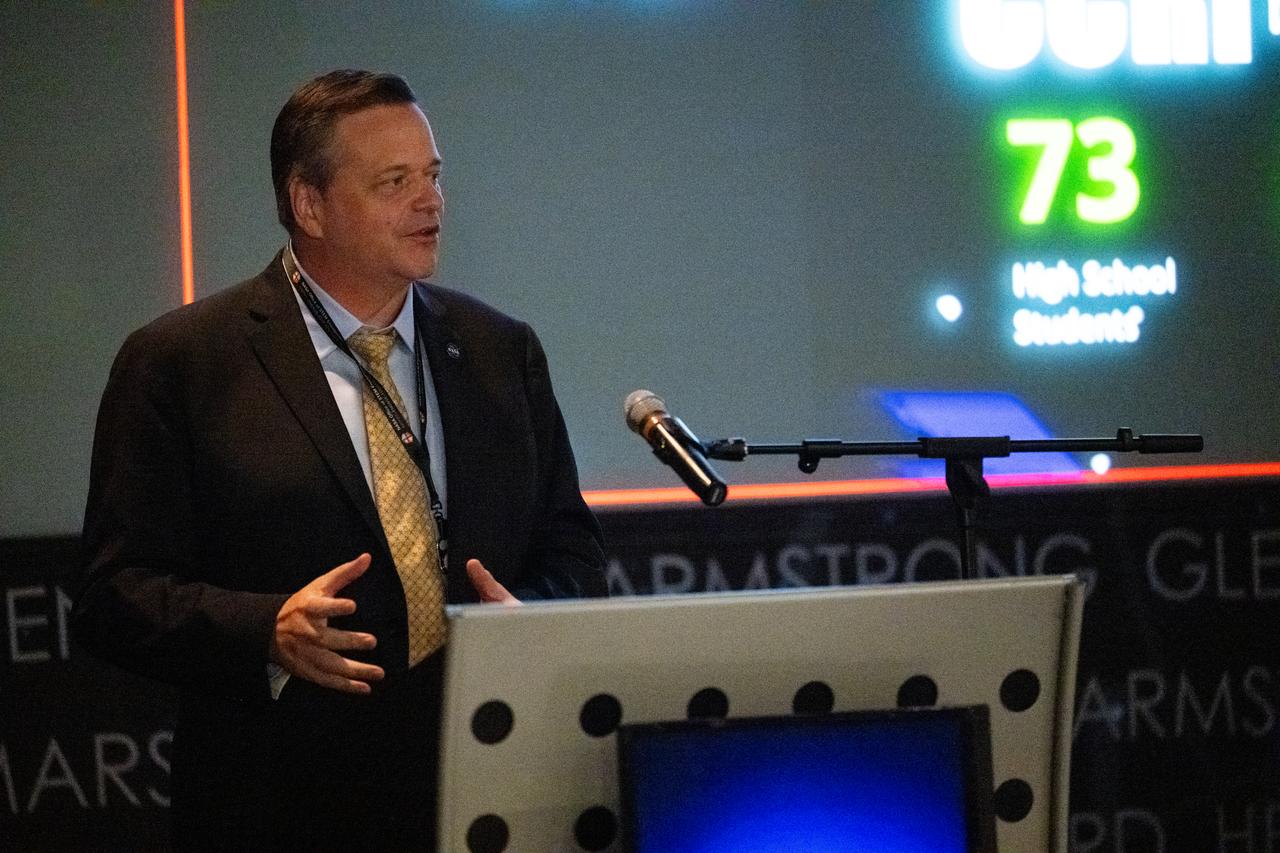
Matthew Pearce, education officer at NASA’s Goddard Institute for Space Studies and project lead for the Climate Change Research Initiative (CCRI), speaks with the CCRI cohort, Wednesday, Aug. 7, 2024, at the Mary W. Jackson NASA Headquarters building in Washington, DC. The Earth Science Division’s Early Career Research Program’s Climate Change Research Initiative (CCRI) is a year-long STEM engagement and experiential learning opportunity for educators and students from high school to graduate level. Photo Credit: (NASA/Joel Kowsky)
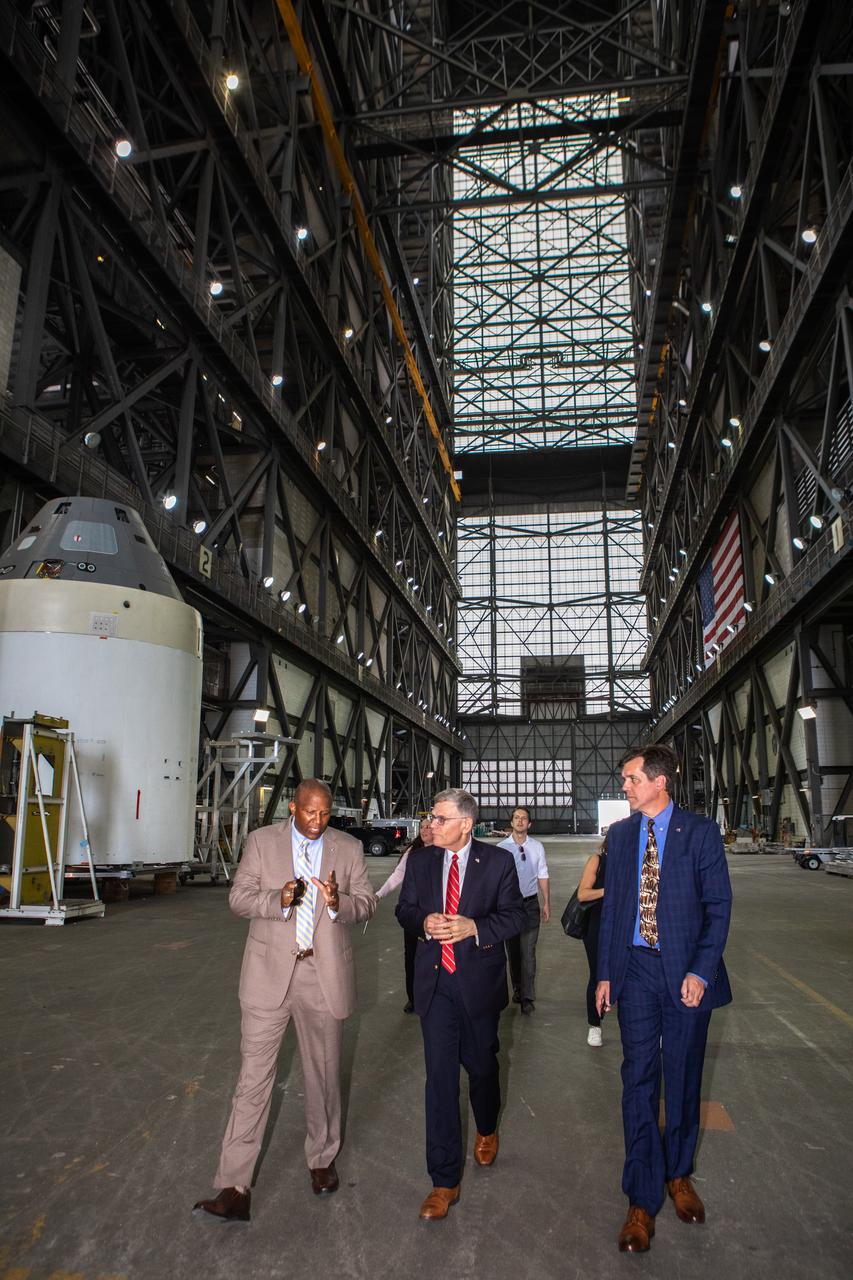
Kelvin Manning, left, associate director, technical, of NASA’s Kennedy Space Center in Florida, speaks to White House Office of Science and Technology Policy Director Kelvin Droegemeier, center, and NASA Associate Administrator for STEM Engagement Mike Kincade, right, inside the transfer aisle of the Vehicle Assembly Building on July 10, 2019, at NASA’s Kennedy Space Center in Florida. Droegemeier visited the iconic rocket-assembly facility in the heart of Kennedy’s Launch Complex 39 Area during a tour of the multi-user spaceport.

Robert Gabrys, director of the Office fo STEM Engagement at NASA’s Goddard Space Flight Center, introduces NASA astronaut Ricky Arnold prior to a presentation to employees, Thursday, May 2, 2019 at NASA’s Goddard Space Flight Center in Greenbelt, Md. During Arnold’s 197 days onboard the International Space Station, as part of Expeditions 55 and 56, he ventured outside the space station on three spacewalks in addition to conducting numerous experiments and educational downlink events. Photo Credit: (NASA/Joel Kowsky)
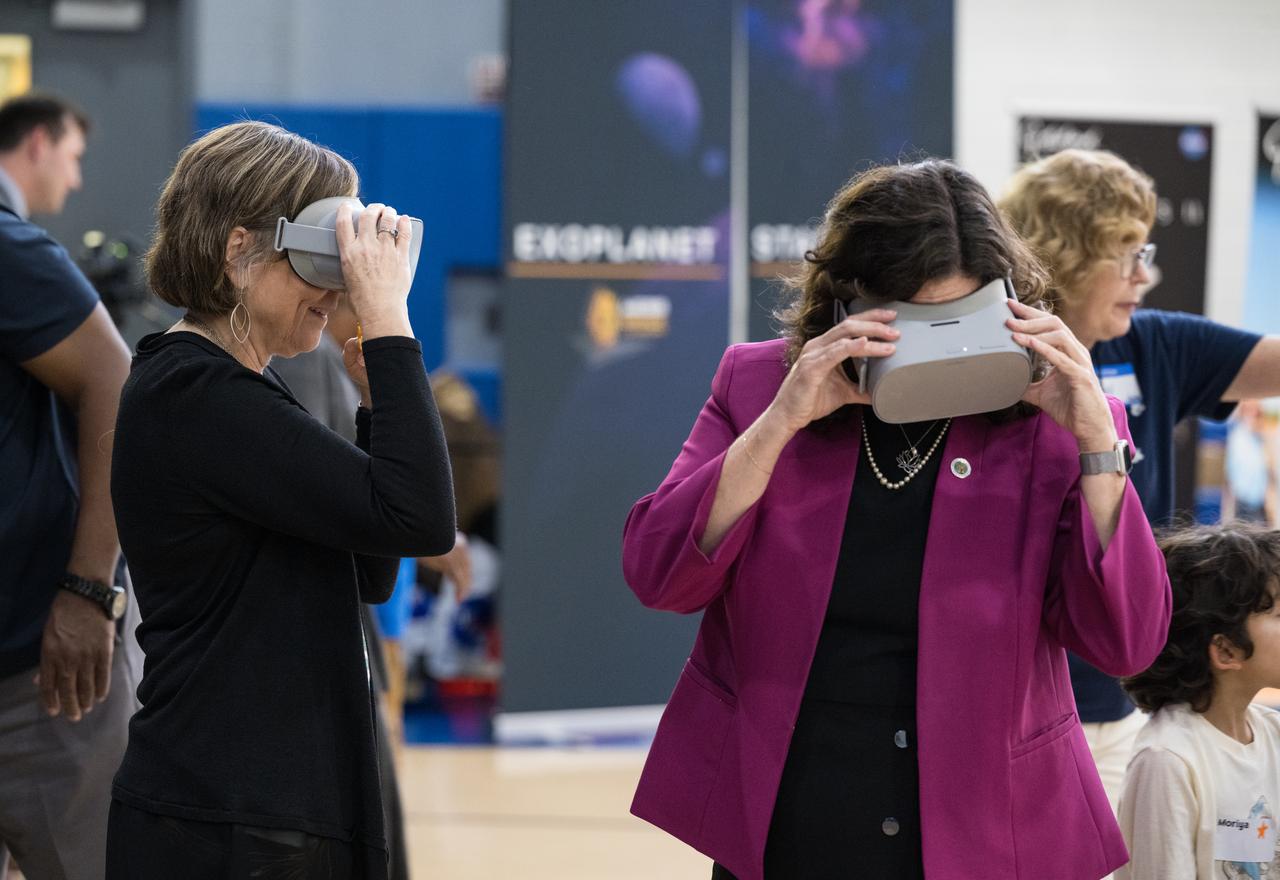
NASA Deputy Associate Administrator for NASA’s Office of STEM Engagement, Kris Brown, left, and U.S. Department of Education Deputy Secretary Cindy Marten, right, participate in a virtual reality tour of NASA’s Neutral Buoyancy Lab during a kickoff event for the 21st Century Community Learning Centers NASA and Department of Education partnership, Monday, Sept. 23, 2024 at Wheatley Education Campus in Washington. Photo Credit: (NASA/Aubrey Gemignani)
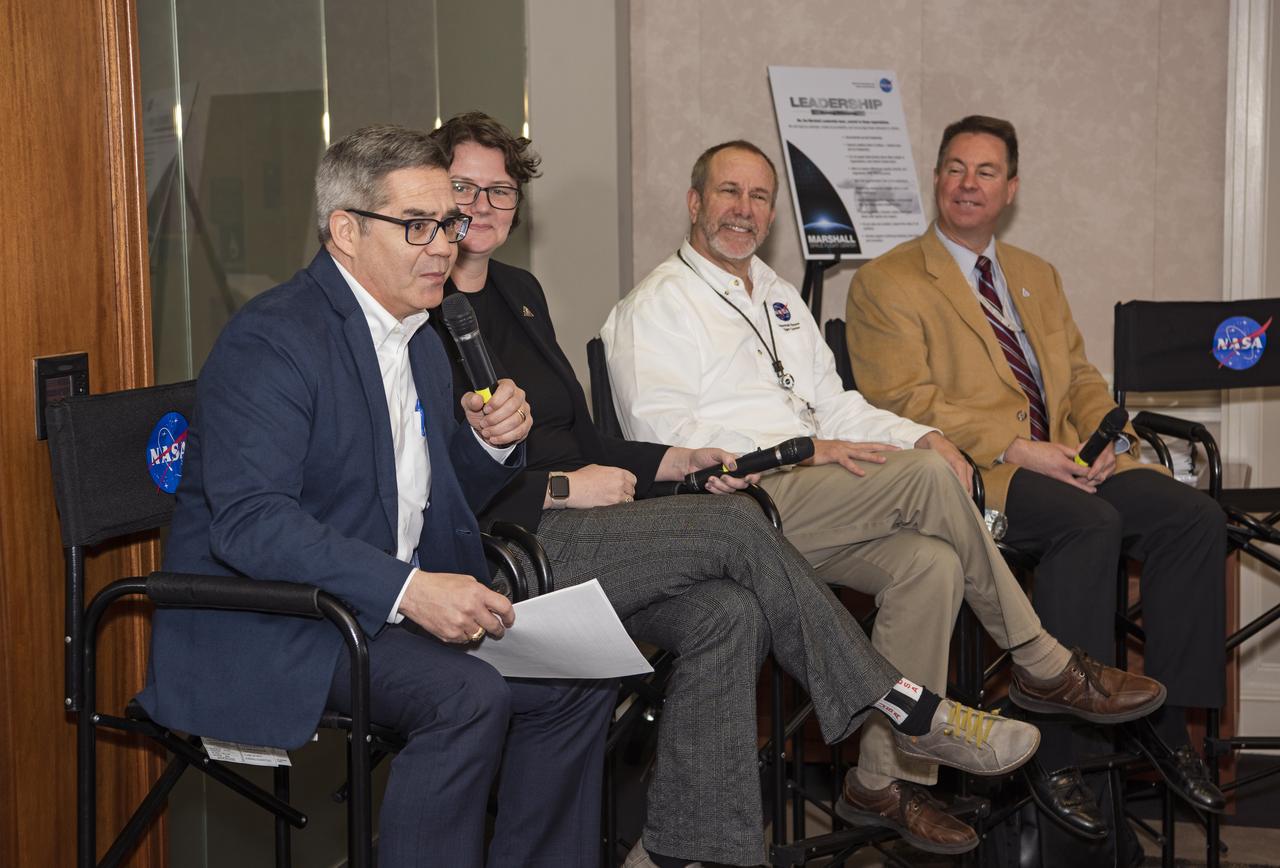
Sam Ortega, left, manager of the Partnerships Office at NASA’s Marshall Space Flight Center, moderates an Artemis Program panel featuring, second from left, Renee Weber, Marshall chief scientist; David Beaman, manager of Marshall’s Systems Engineering & Integration Office; and Don Krupp, associate program manager for the Human Landing System Program, during Universities of the Tennessee Valley Corridor activities Feb. 27 at Marshall. Leadership staff from eight universities and 10 junior colleges in Alabama, Tennessee and Kentucky also heard presentations on Office of STEM Engagement opportunities, partnership opportunities, Marshall’s Technology Transfer Office, the NASA software catalog and Marshall’s Advanced Concepts Office. The group toured several Marshall facilities to learn more about center capabilities.
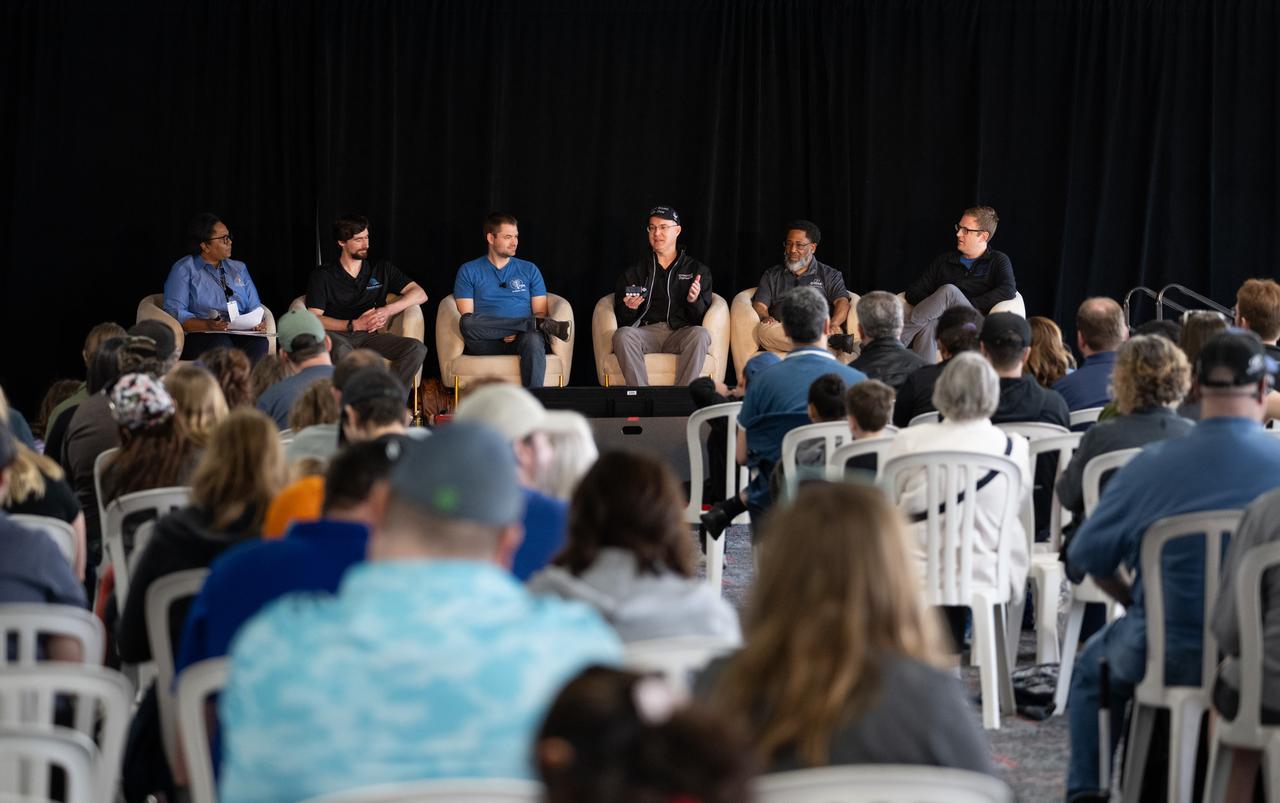
Attendees at the Indianapolis Motor Speedway listen to a panel discussion titled “Feeling is believing: A Tactile Launch Experience” about bring the eclipse experience to the visually impared with Shahra Lambert, senior advisor for engagement and equity in NASA's Office of the Administrator, Brandon Pearson, education director at NearSpace Education, John Pugsley, engineer at NearSpace Launch, Matt Voss, chief operating officer at NearSpace Launch, Dave Schleppenbach, chief executive officer at Tactile Engineering, Alex Moon, software director at Tactile Engineering, and Greg Williams, accessibility and STEM advisor at Tactile Engineering, ahead of the total solar eclipse, Monday, April 8, 2024, in Indianapolis, Ind. A total solar eclipse swept across a narrow portion of the North American continent from Mexico’s Pacific coast to the Atlantic coast of Newfoundland, Canada. A partial solar eclipse was visible across the entire North American continent along with parts of Central America and Europe. Photo Credit: (NASA/Joel Kowsky)

As part of NASA’s NextGen STEM project, students from Andrew Jackson Middle School in Titusville, Florida, participate in an environmentally focused Earth Day briefing on Tuesday, April 2, 2024, inside the news auditorium at the agency’s Kennedy Space Center in Florida. Along with the students participating in person, middle school students from across the country participated virtually to discuss how technology and science coexist with nature at Kennedy with panel participants. The panelists from left to right are Messod Bendayan, NASA Communications; Kelly McCarthy, NASA’s Office of STEM Engagement, Bob Kline, Kennedy’s Environmental Assurance Branch; Spencer Davis, Kennedy’s Exploration Ground Systems; Kim King-Wrenn, Merritt Island National Wildlife Refuge.
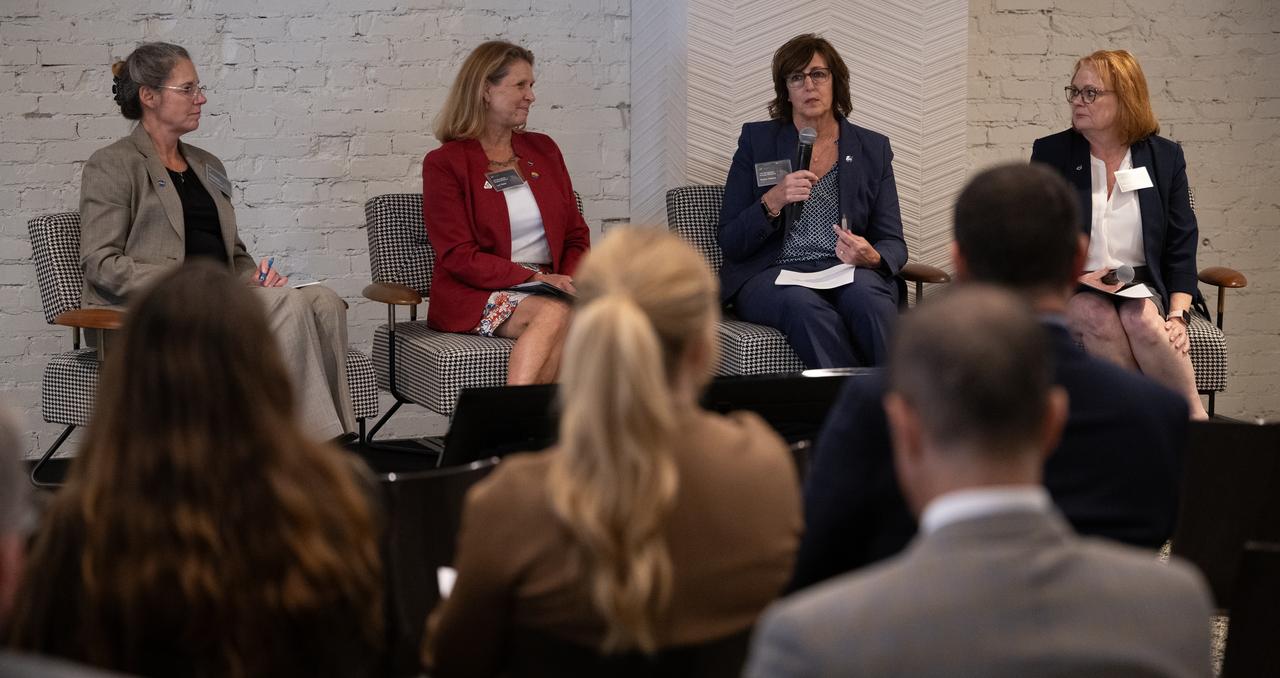
Sandra Connelly, deputy associate administrator for NASA’s Science Mission Directorate, left, Lori Glaze, acting deputy associate administrator for NASA’s Exploration Systems Development Mission Directorate, Robyn Gatens, director of the International Space Station at NASA Headquarters, and Carrie Olsen, manager of the Next Gen STEM project for NASA’s Office of STEM Engagement, discuss key takeaways at the conclusion of NASA’s LEO Microgravity Strategy Industry and Academia Workshop, Friday, Sept. 13, 2024, at Convene in Washington. NASA’s LEO Microgravity Strategy effort aims to develop and document an objectives-based approach toward the next generation of human presence in low Earth orbit to advance microgravity science, technology, and exploration. Photo Credit: (NASA/Joel Kowsky)
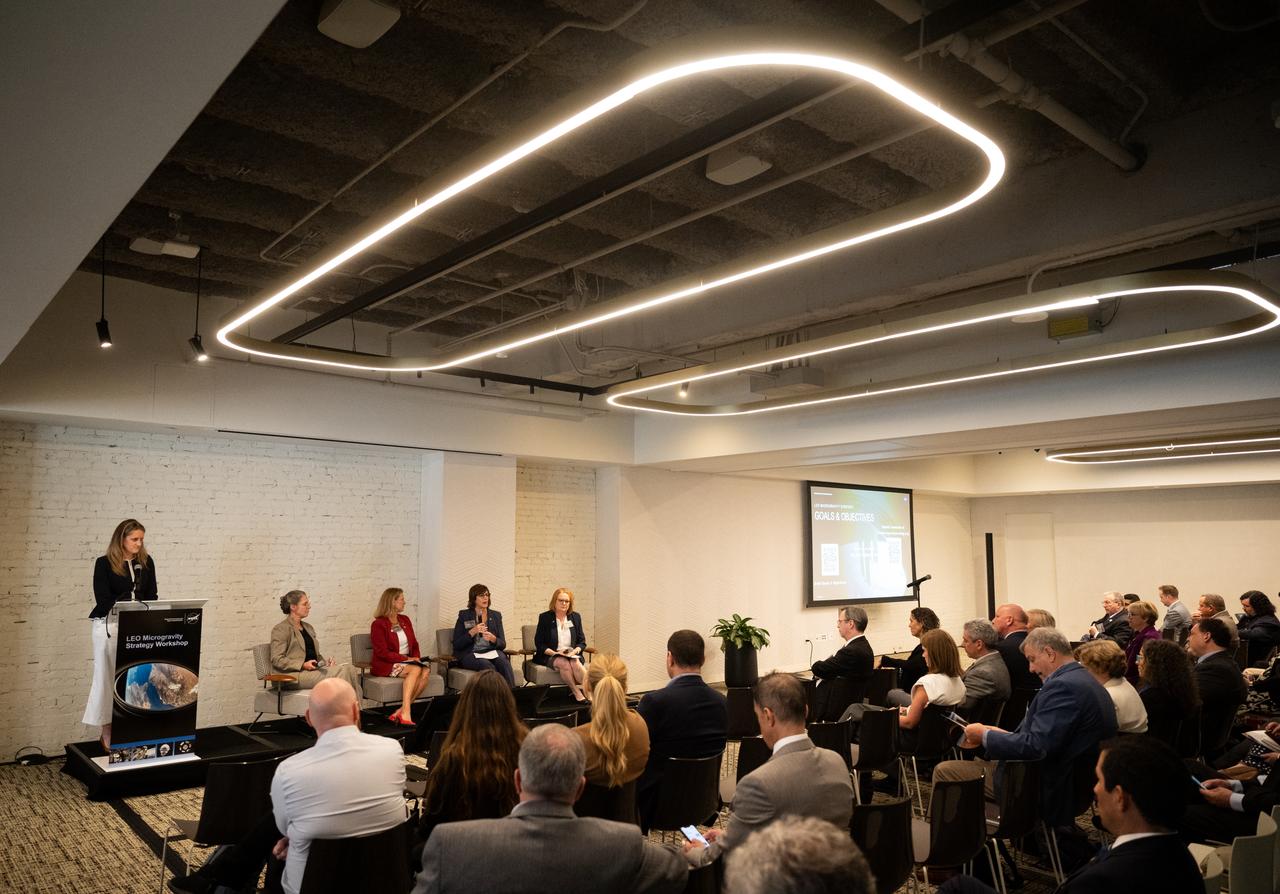
Amber Jacobson, press secretary to NASA’s Deputy Administrator, left, moderates a discussion of key takeaways with Sandra Connelly, deputy associate administrator for NASA’s Science Mission Directorate, second from left, Lori Glaze, acting deputy associate administrator for NASA’s Exploration Systems Development Mission Directorate, Robyn Gatens, director of the International Space Station at NASA Headquarters, and Carrie Olsen, manager of the Next Gen STEM project for NASA’s Office of STEM Engagement, at the conclusion of NASA’s LEO Microgravity Strategy Industry and Academia Workshop, Friday, Sept. 13, 2024, at Convene in Washington. NASA’s LEO Microgravity Strategy effort aims to develop and document an objectives-based approach toward the next generation of human presence in low Earth orbit to advance microgravity science, technology, and exploration. Photo Credit: (NASA/Joel Kowsky)
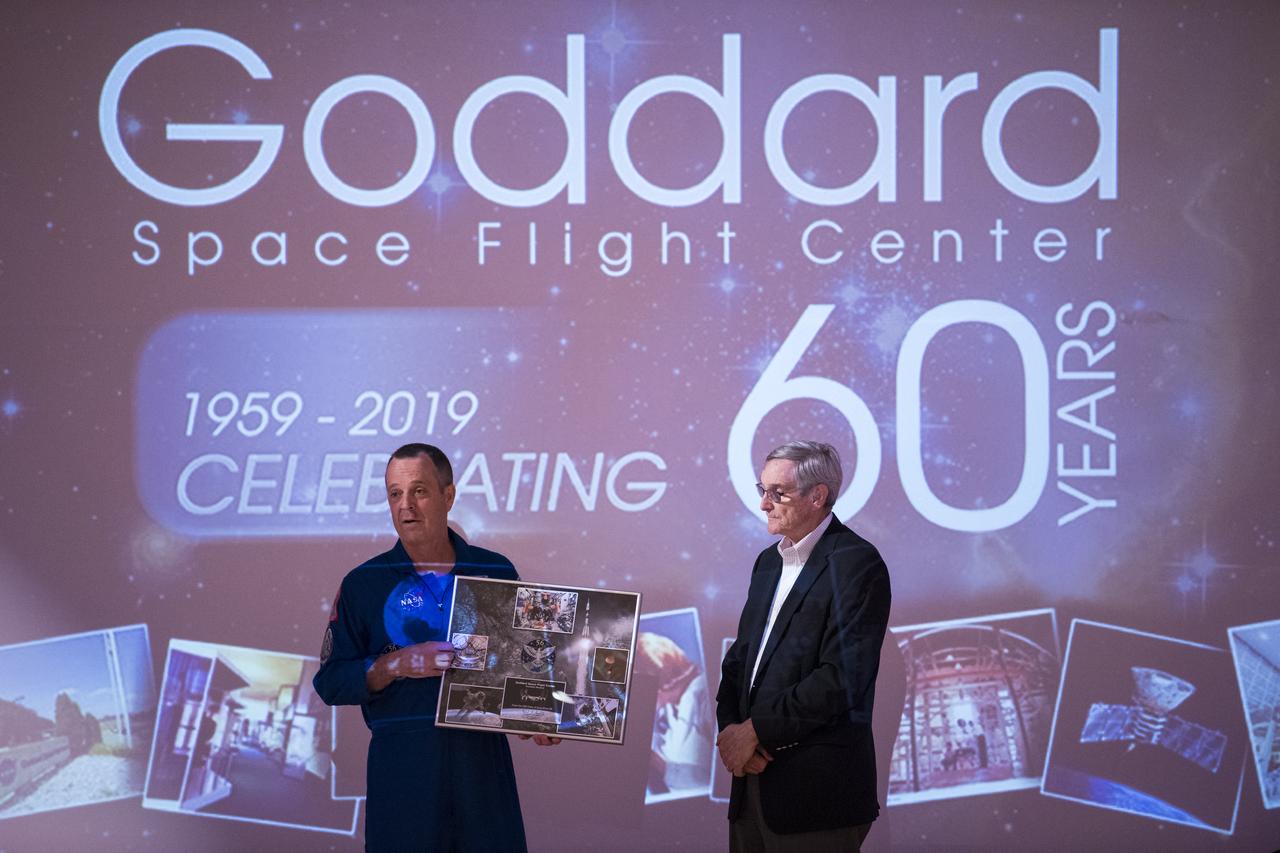
NASA astronaut Ricky Arnold presents Robert Gabrys, director of the Office fo STEM Engagement at NASA’s Goddard Space Flight Center, a montage from his mission onboard the International Space Station, Thursday, May 2, 2019 at NASA’s Goddard Space Flight Center in Greenbelt, Md. During Arnold’s 197 days onboard the International Space Station, as part of Expeditions 55 and 56, he ventured outside the space station on three spacewalks in addition to conducting numerous experiments and educational downlink events. Photo Credit: (NASA/Joel Kowsky)
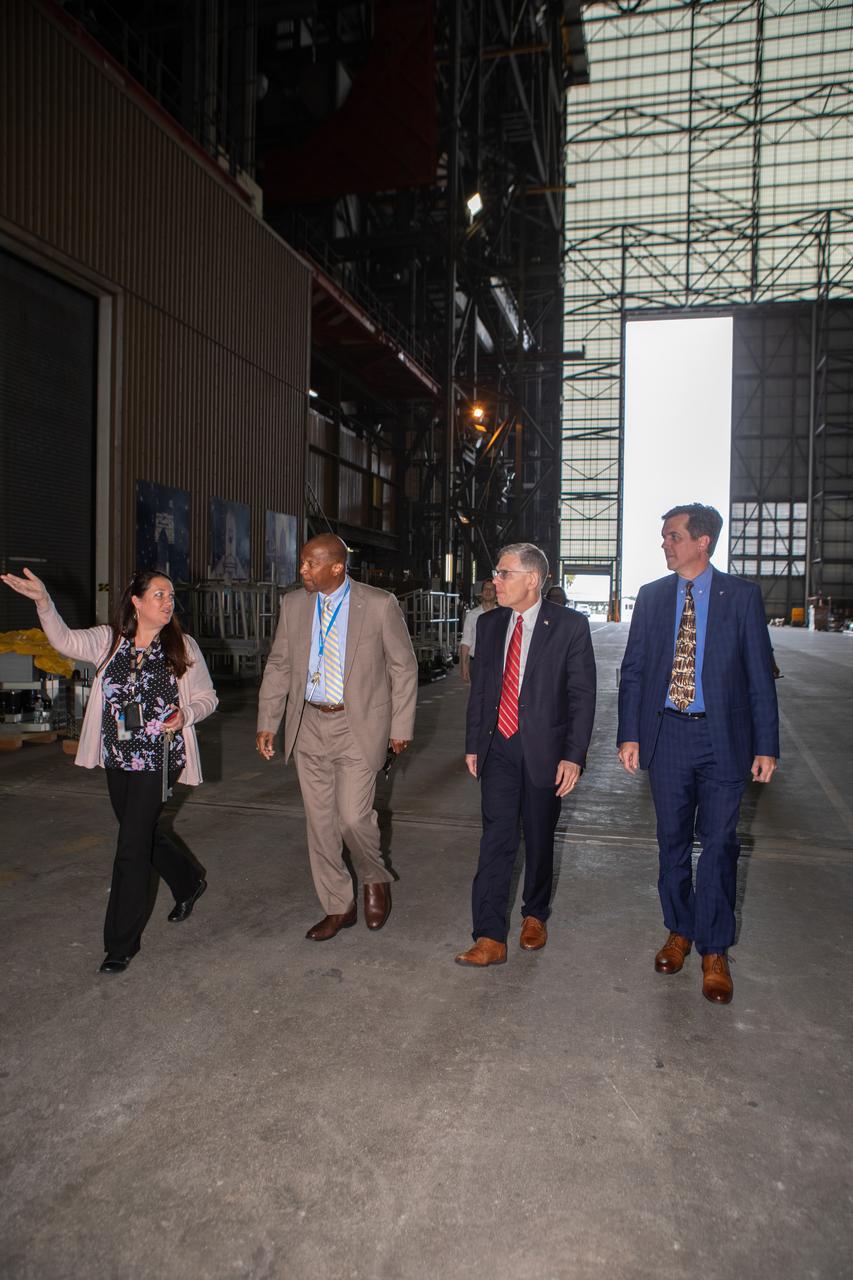
Elizabeth Kline, left, Vehicle Assembly Building (VAB) element operations manager for NASA’s Exploration Ground Systems, speaks to Kelvin Manning, associate director, technical, of NASA’s Kennedy Space Center in Florida, White House Office of Science and Technology Policy Director Kelvin Droegemeier, and NASA Associate Administrator for STEM Engagement Mike Kincade inside the transfer aisle of the Vehicle Assembly Building on July 10, 2019. Droegemeier visited the iconic rocket-assembly facility in the heart of Kennedy’s Launch Complex 39 Area during a tour of the multi-user spaceport.
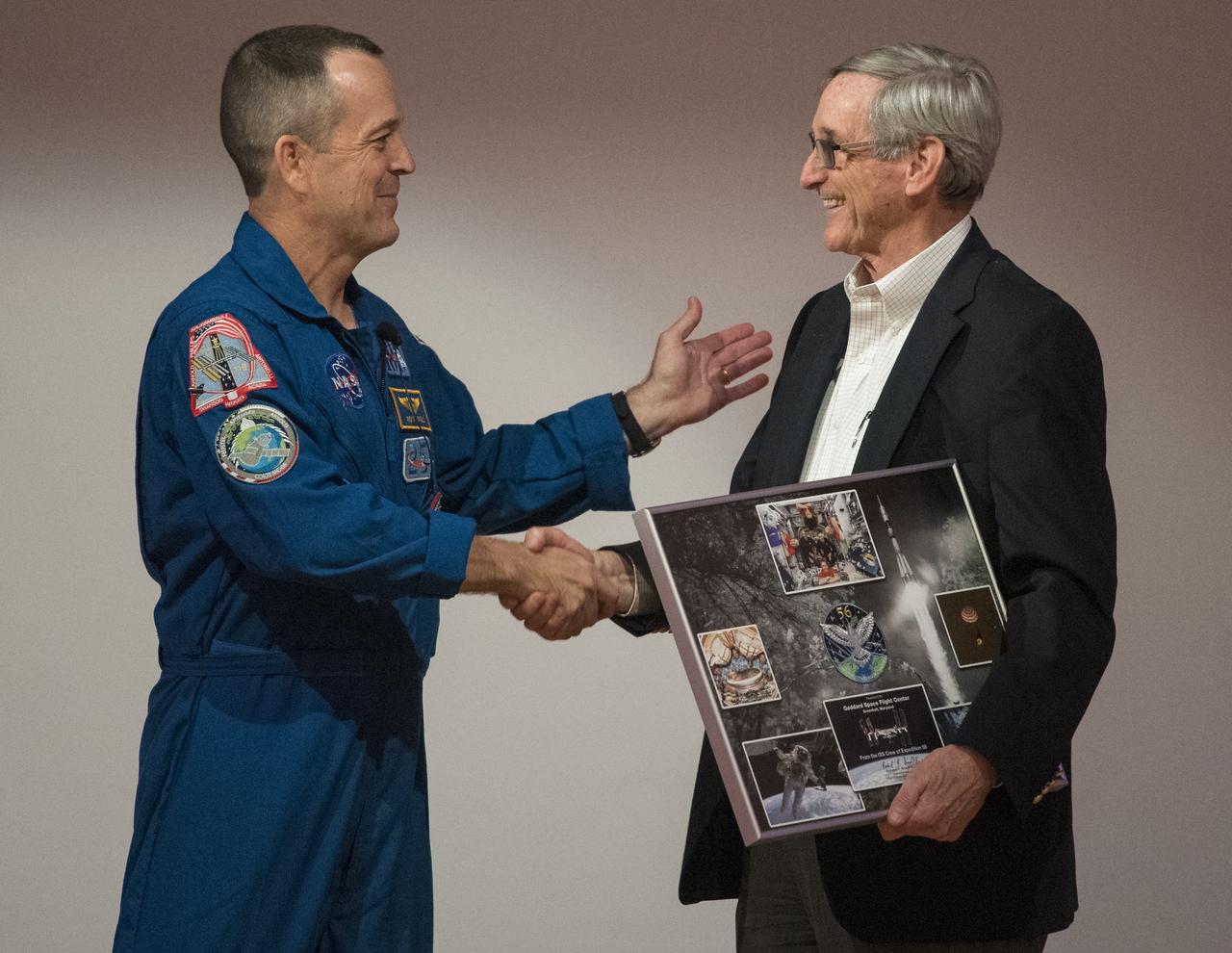
NASA astronaut Ricky Arnold presents Robert Gabrys, director of the Office fo STEM Engagement at NASA’s Goddard Space Flight Center, a montage from his mission onboard the International Space Station, Thursday, May 2, 2019 at NASA’s Goddard Space Flight Center in Greenbelt, Md. During Arnold’s 197 days onboard the International Space Station, as part of Expeditions 55 and 56, he ventured outside the space station on three spacewalks in addition to conducting numerous experiments and educational downlink events. Photo Credit: (NASA/Joel Kowsky)
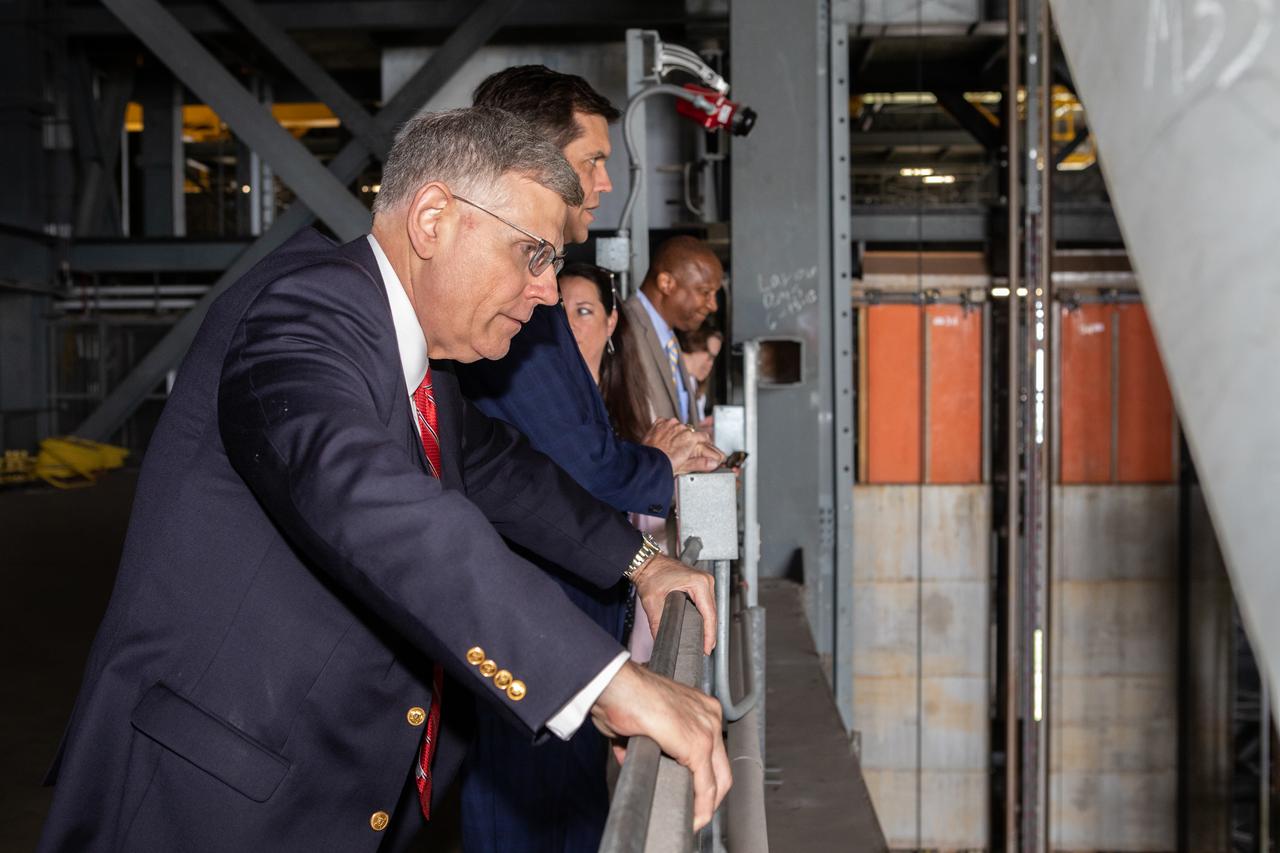
From left to right, White House Office of Science and Technology Policy Director Kelvin Droegemeier, NASA Associate Administrator for STEM Engagement Mike Kincade, Elizabeth Kline, Vehicle Assembly Building (VAB) element operations manager for NASA’s Exploration Ground Systems, and Kelvin Manning, associate director, technical, of NASA’s Kennedy Space Center in Florida, visit the Vehicle Assembly Building on July 10, 2019. Droegemeier visited the iconic rocket-assembly facility in the heart of Kennedy’s Launch Complex 39 Area during a tour of the multi-user spaceport.
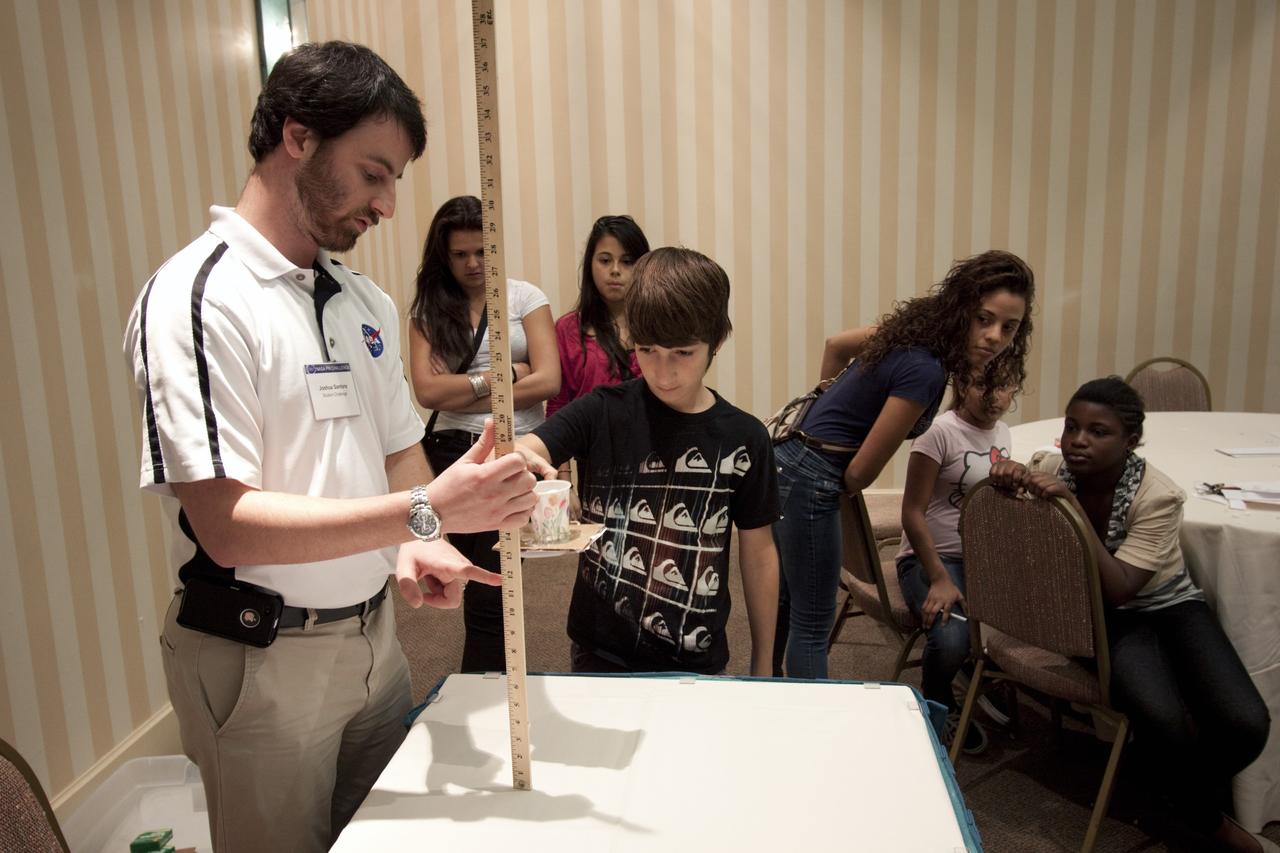
ORLANDO, Fla. – Education project specialist Josh Santora, left, from NASA’s Kennedy Space Center, engages a student from Meadow Woods Middle School in Orlando in a physics demonstration during NASA’s Project Management PM Challenge 2012. The demonstrations are designed to increase student interest and pursuit of the science, technology, engineering and mathematics STEM fields integral to producing the next generation of scientists and engineers. PM Challenge 2012 was held at the Caribe Royale Hotel and Convention Center in Orlando, Fla., on Feb. 22-23, to provide a forum for all stakeholders in the project management community to meet and share stories, lessons learned and new uses of technology in the industry. The PM Challenge is sponsored by NASA's Office of the Chief Engineer. For additional information, visit http://www.nasa.gov/offices/oce/pmchallenge/index.html. Photo credit: NASA/Jim Grossmann
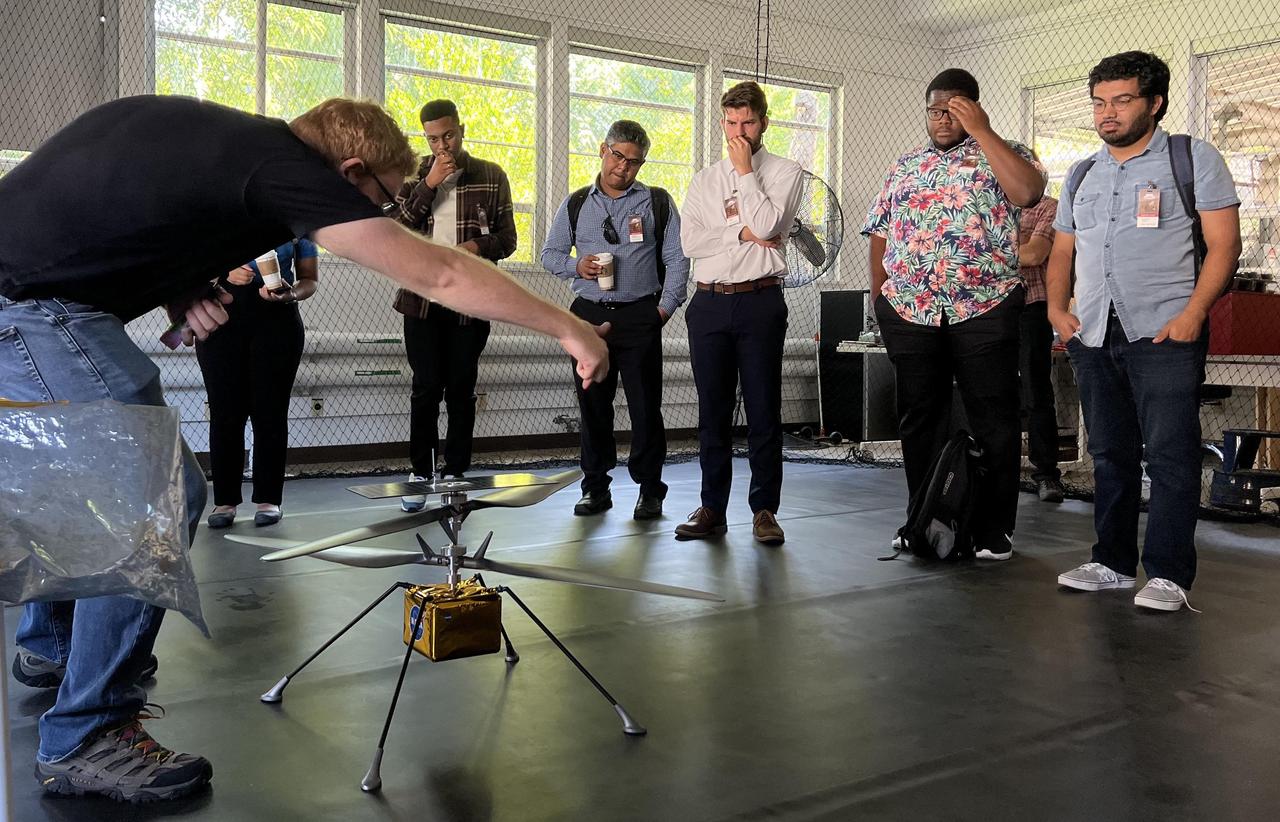
Participants in NASA's Minority Serving Institutions Space Accelerator program surround a full-scale model of NASA's Mars Ingenuity Helicopter as engineer Michael Starch discusses the mission. The group was visiting NASA's Jet Propulsion Laboratory on Aug. 18, 2022. These participants were members of three teams named as awardees in the first-of-its-kind accelerator program, a competition to advance the NASA's goals and meet its needs in the areas of machine learning, artificial intelligence, and development of autonomous systems while also engaging underrepresented academic institutions and reducing barriers for them to submit ideas to the agency. The program provides funding, business training through a 10-week accelerator course, and mentorship to help the teams develop ideas for systems that can operate without human oversight for future science missions in space and on Earth. The teams were made up of professors and students from Fayetteville State University in North Carolina, University of Massachusetts Boston, and California State University, Northridge. At the conclusion of the accelerator, participants arrived in Southern California for a variety of events, including two days at JPL. The program is a partnership between NASA's Science Mission Directorate, its Earth Science Technology Office, the Minority University Research Education Project within the agency's Office of STEM Engagement, JPL, and Starburst, a global aerospace accelerator company based in Los Angeles. https://photojournal.jpl.nasa.gov/catalog/PIA25315
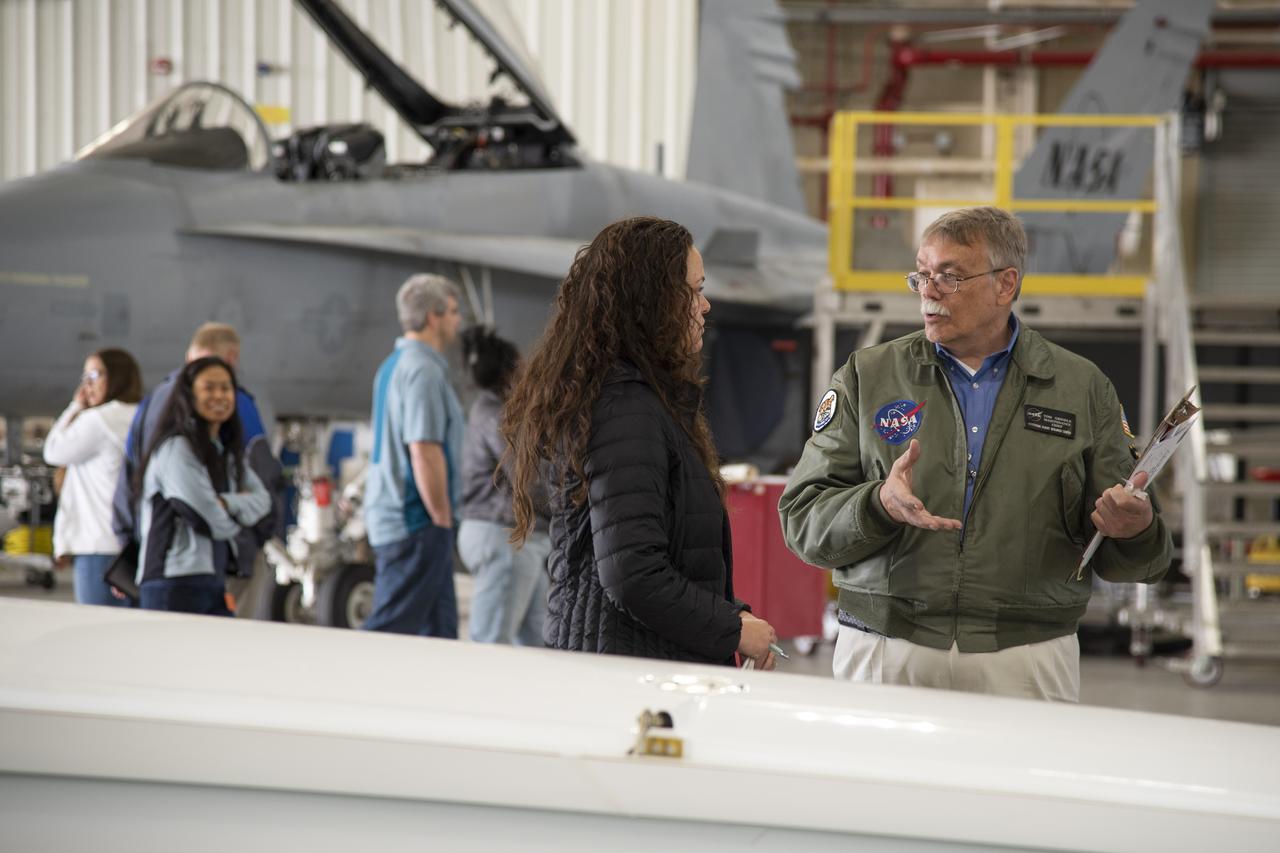
NASA Armstrong’s Chief of Maintenance, Tom Grindle, leads a tour inside the hangar with a group of teachers.
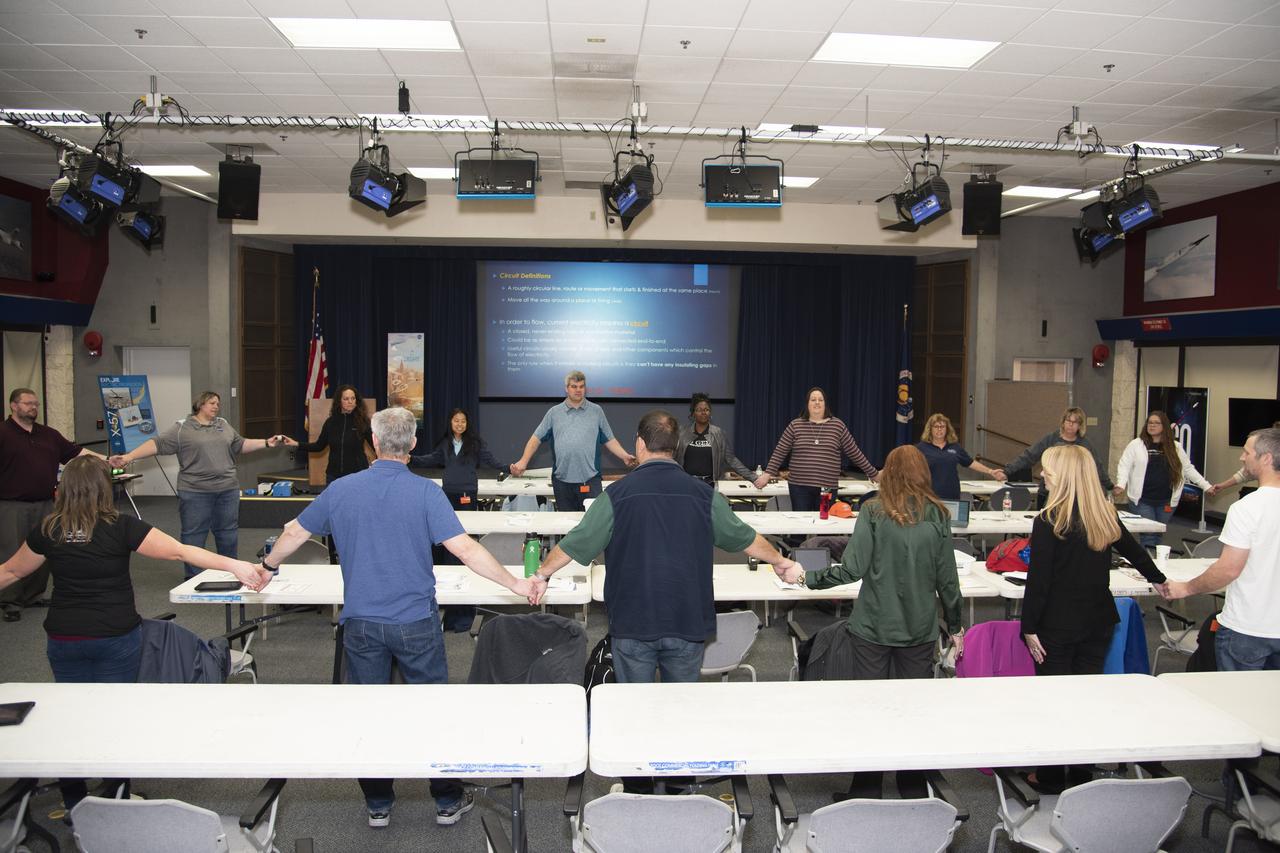
Barbara Buckner, NASA Armstrong's educator professional development specialist, leads a group exercise to form a human circuit to power an electric ball.

From left to right, Artemis II crew members, NASA astronauts Victor Glover and Reid Wiseman, NASA Associate Administrator, Office of STEM Engagement, Mike Kincaid, NASA Deputy Associate Administrator Casey Swails, NASA Deputy Administrator Pam Melroy, and Artemis II crew members NASA astronaut Christina Koch and Canadian Space Agency (CSA) astronaut Jeremy Hansen, pose for a photo after a Moon tree dedication ceremony, Tuesday, June 4, 2024 at the United States Capitol in Washington. The American Sweetgum tree planted on the southwestern side of the Capitol, was grown from a seed that was flown around the Moon during the Artemis I mission. Photo Credit: (NASA/Aubrey Gemignani)
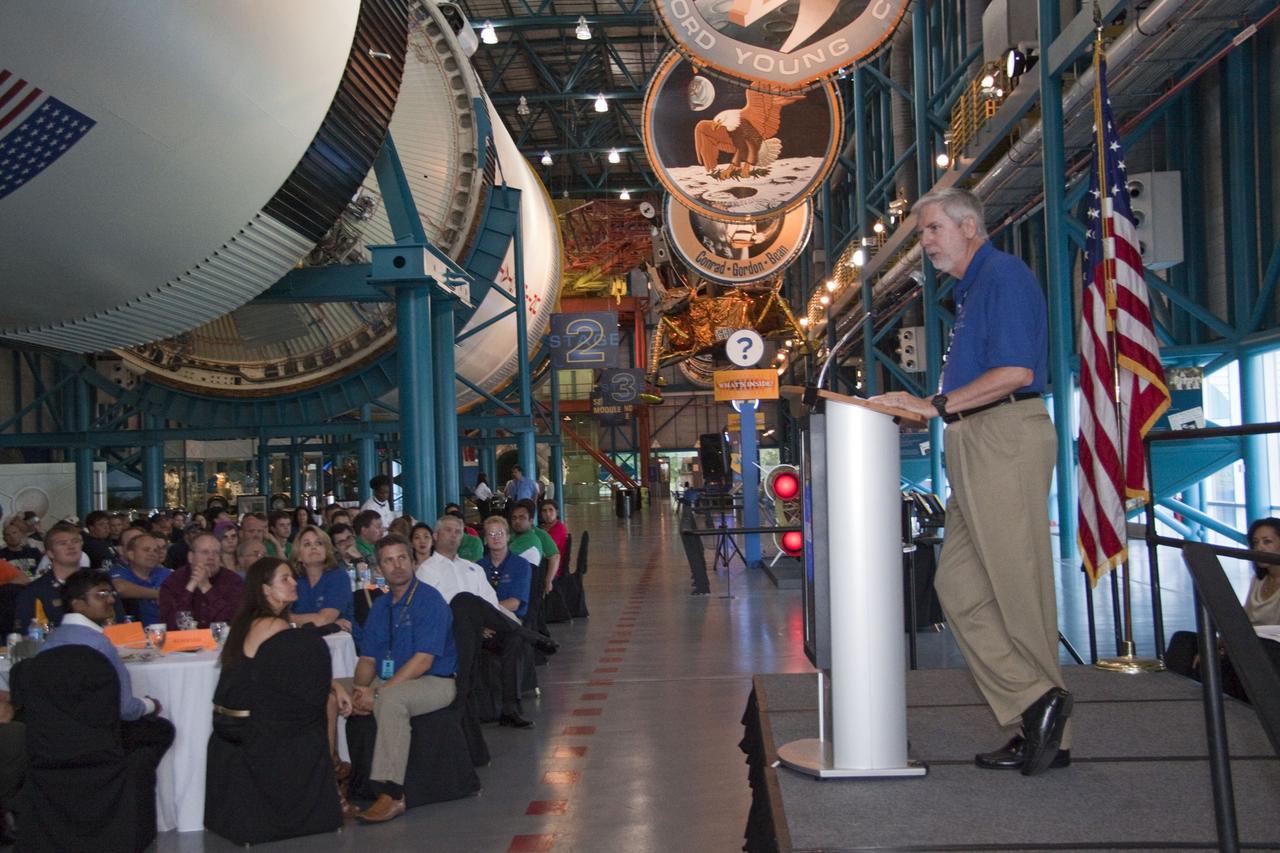
CAPE CANAVERAL, Fla. -- At NASA Kennedy Space Center's Apollo/Saturn V Center, Bill Moore, Visitor Complex chief operating officer speaks to university students at the award ceremony for NASA's second annual Lunabotics Mining Competition. Thirty-six teams of undergraduate and graduate students from the United States, Bangladesh, Canada, Colombia and India participated in NASA's Lunabotics Mining Competition May 26 - 28 at the agency's Kennedy Space Center in Florida. The competition is designed to engage and retain students in science, technology, engineering and mathematics (STEM). Teams will maneuver their remote controlled or autonomous excavators, called lunabots, in about 60 tons of ultra-fine simulated lunar soil, called BP-1. The competition is an Exploration Systems Mission Directorate project managed by Kennedy's Education Division. The event also provides a competitive environment that could result in innovative ideas and solutions for NASA's future excavation of the moon. Photo credit: NASA/Jack Pfaller
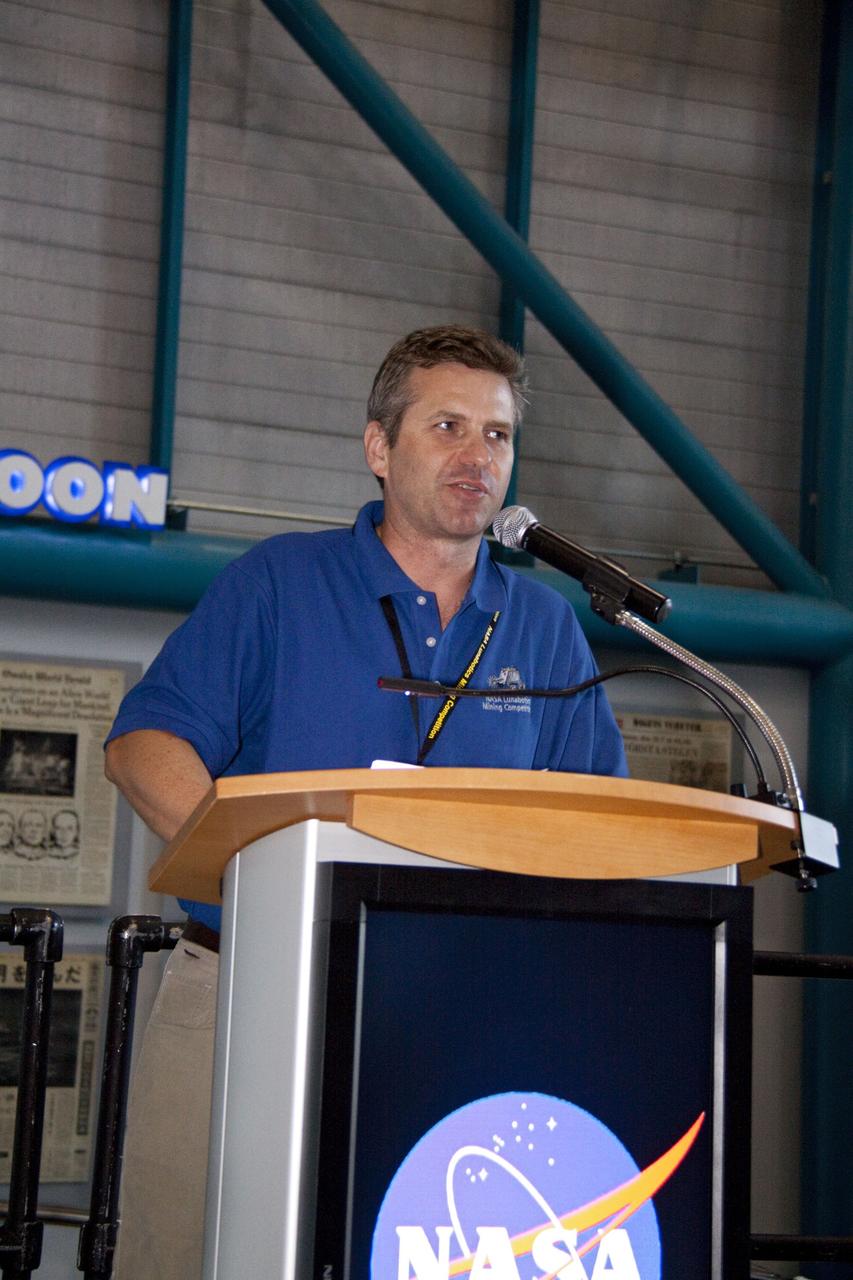
CAPE CANAVERAL, Fla. -- At NASA Kennedy Space Center's Apollo/Saturn V Center, Rob Mueller Kennedy's chief of the Surface Systems Office speaks to university students at the award ceremony for NASA's second annual Lunabotics Mining Competition. Thirty-six teams of undergraduate and graduate students from the United States, Bangladesh, Canada, Colombia and India participated in NASA's Lunabotics Mining Competition May 26 - 28 at the agency's Kennedy Space Center in Florida. The competition is designed to engage and retain students in science, technology, engineering and mathematics (STEM). Teams will maneuver their remote controlled or autonomous excavators, called lunabots, in about 60 tons of ultra-fine simulated lunar soil, called BP-1. The competition is an Exploration Systems Mission Directorate project managed by Kennedy's Education Division. The event also provides a competitive environment that could result in innovative ideas and solutions for NASA's future excavation of the moon. Photo credit: NASA/Jack Pfaller
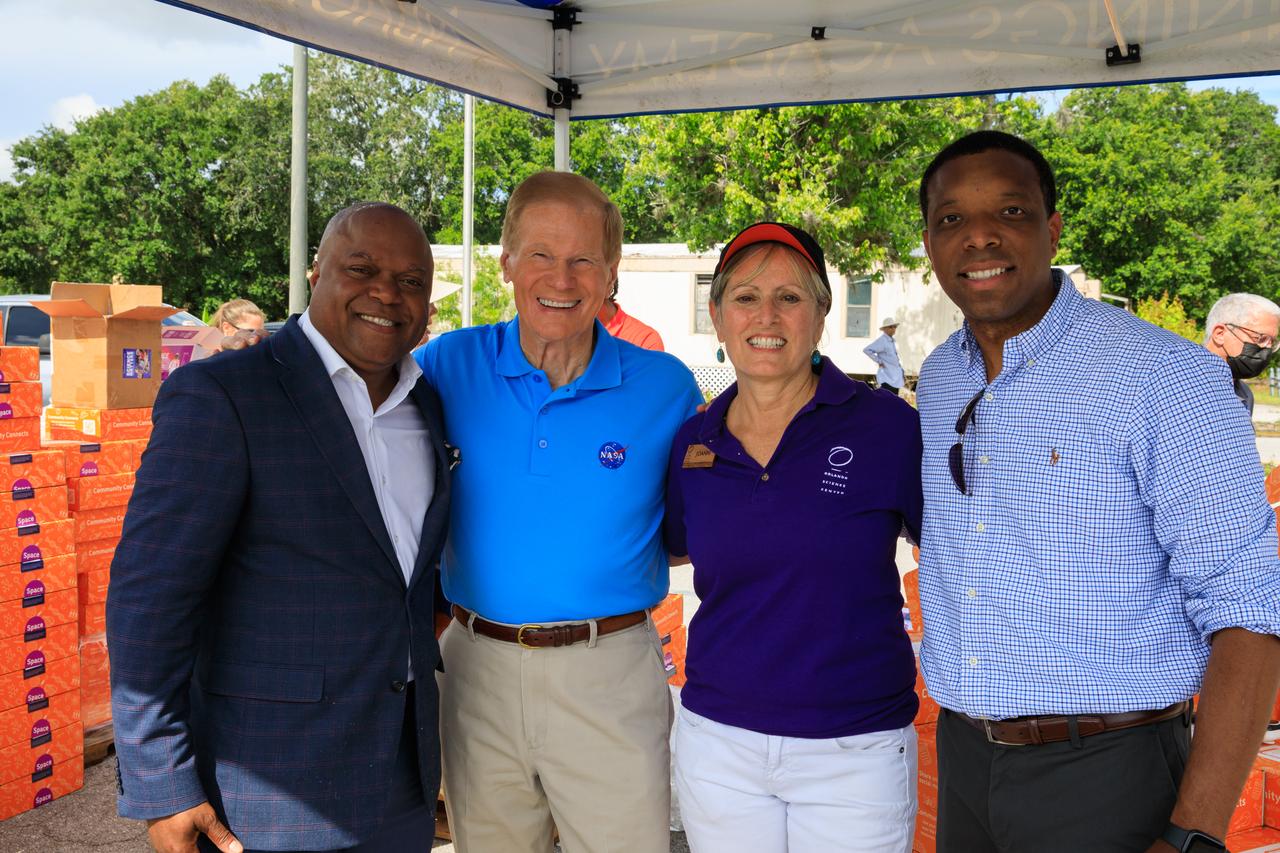
From left to right, Dr. Frederic Bertley, president and CEO, Center of Science and Industry (COSI); NASA Administrator Bill Nelson; JoAnn Newman, president and CEO, Orlando Science Center; and Stephen White, chief strategy officer, COSI helped kick off a new initiative to deliver food and hands-on science, technology, engineering, and math kits, called Learning Lunchboxes, at New Beginnings Church – The Gathering Place in Orlando, Florida on Friday, June 3. The lunchboxes are aimed at inspiring and educating youth and families about NASA’s upcoming Artemis missions, which includes landing the first woman and person of color on the Moon and helping prepare for human exploration of Mars. Partners on the initiative with NASA include COSI, the Second Harvest Food Bank, and the Orlando Science Center. The NASA Artemis Learning Lunchbox is made possible through NASA’s Teams Engaging Affiliated Museums and Informal Institutions (TEAM II) program. NASA Learning Lunchboxes provide five space-focused learning activities that showcase the diversity of STEM at NASA. COSI will distribute 30,000 NASA Learning Lunchboxes at local food banks across the country to help feed hungry lives and feed hungry minds. This innovative, community-based model will bring together other science centers and museums, afterschool providers, and community leaders to highlight the importance of STEM. This project also includes digital extension resources.
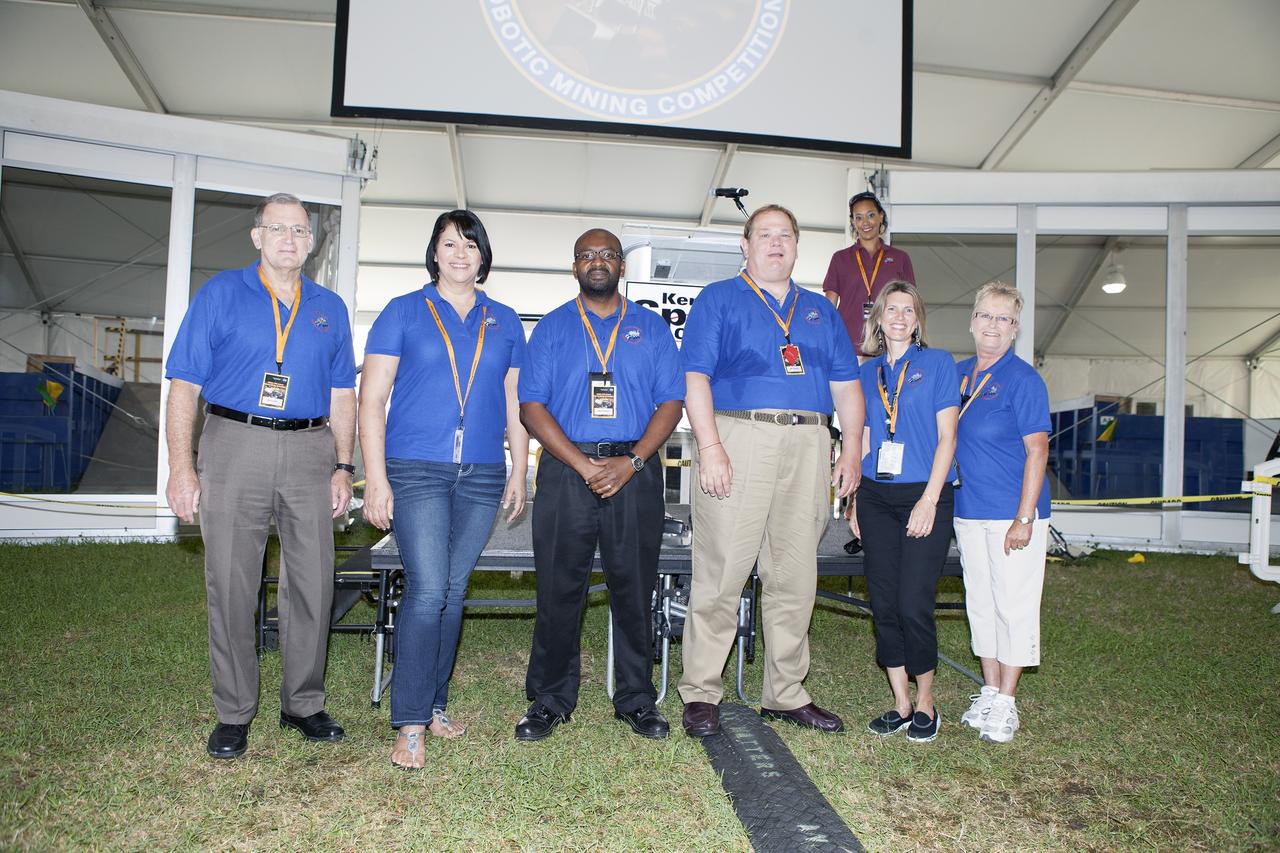
CAPE CANAVERAL, Fla. – The presentation and team spirit judges for NASA's 2014 Robotics Mining Competition are introduced during the opening ceremony at the Kennedy Space Center Visitor Complex in Florida. Second from left, is Teresa Martinez, lead presentation judge from Kennedy's Education Office. At far right, is Beth Smith, lead team spirit judge from Kennedy's Education Office. Behind them on the podium is Kimberley Land, event emcee from NASA's Ames Research Center in Moffett Field, California. More than 35 teams from around the U.S. have designed and built remote-controlled robots for the mining competition. The competition is a NASA Human Exploration and Operations Mission Directorate project designed to engage and retain students in science, technology, engineering and mathematics, or STEM, fields by expanding opportunities for student research and design. Teams use their remote-controlled robotics to maneuver and dig in a supersized sandbox filled with a crushed material that has characteristics similar to Martian soil. The objective of the challenge is to see which team’s robot can collect and move the most regolith within a specified amount of time. For more information, visit www.nasa.gov/nasarmc. Photo credit: NASA/Frankie Martin
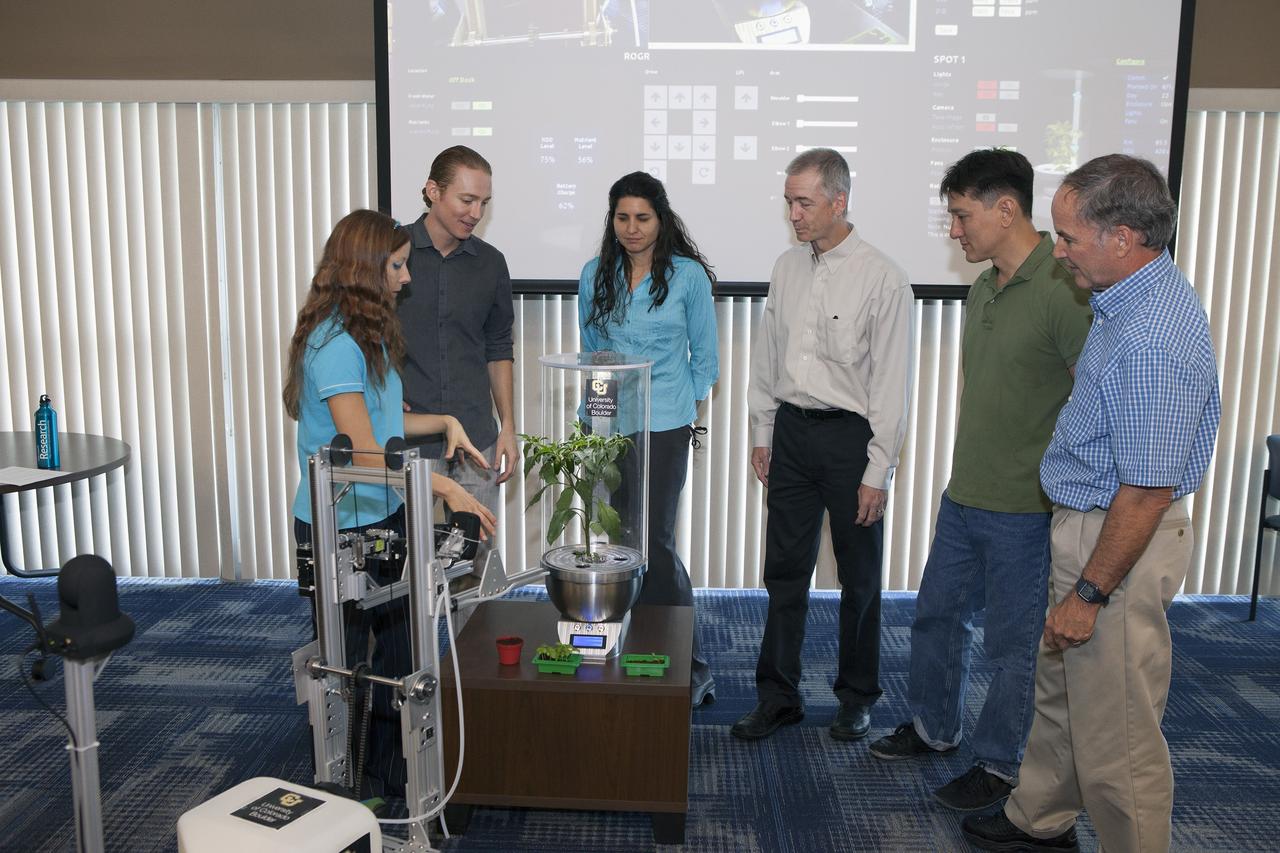
CAPE CANAVERAL, Fla. -- At the Kennedy Space Center in Florida, University of Colorado Boulder graduate students Heather Hava, far left, and Daniel Zukowski, second from the left, describe a computerized SmartPot, or SPOT, which could be used to grow plants in a deep-space habitat. The SPOTs could be tended by a Remotely Operated Gardening Rover, or ROGR, seen on the left. The system is being developed by the graduate students participating in the eXploration HABitat X-Hab Academic Innovation Challenge. From the left are Hava, Zukowski, Gioia Massa of the NASA International Space Station Ground Processing and Research Project Office, Tracy Gill of the NASA Center Planning and Development Directorate, Morgan Simpson of the NASA Ground Processing Directorate, and Ray Wheeler of the NASA Engineering and Technology Directorate. X-Hab Academic Innovation Challenge is a university-level activity designed to engage and retain students in science, technology, engineering and math, or STEM, disciplines. NASA will directly benefit from the effort by sponsoring the development of innovative habitat concepts from universities which may result in innovative ideas and solutions that could be applied to exploration habitats. For more: http://www.nasa.gov/exploration/technology/deep_space_habitat/xhab/ Photo credit: NASA/Daniel Casper
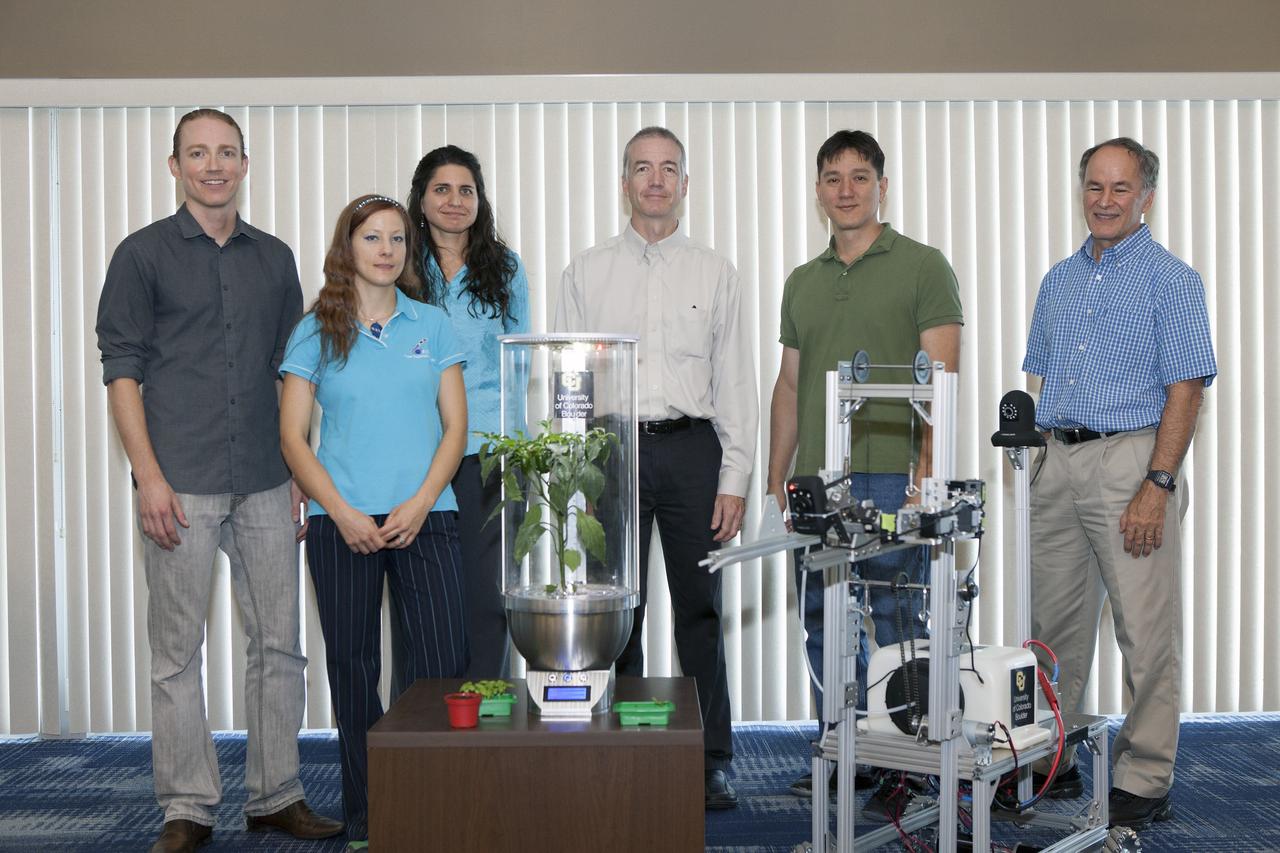
CAPE CANAVERAL, Fla. -- At the Kennedy Space Center in Florida, University of Colorado Boulder graduate students Heather Hava, far left, and Daniel Zukowski, second from the left, pose with a computerized SmartPot, or SPOT, which could be used to grow plants in a deep-space habitat. To the right of the SPOT is a Remotely Operated Gardening Rover, or ROGR. The system is being developed by the graduate students participating in the eXploration HABitat X-Hab Academic Innovation Challenge. From the left are Zukowski, Hava, Gioia Massa of the NASA International Space Station Ground Processing and Research Project Office, Tracy Gill of the NASA Center Planning and Development Directorate, Morgan Simpson of the NASA Ground Processing Directorate, and Ray Wheeler of the NASA Engineering and Technology Directorate. X-Hab Academic Innovation Challenge is a university-level activity designed to engage and retain students in science, technology, engineering and math, or STEM, disciplines. NASA will directly benefit from the effort by sponsoring the development of innovative habitat concepts from universities which may result in innovative ideas and solutions that could be applied to exploration habitats. For more: http://www.nasa.gov/exploration/technology/deep_space_habitat/xhab/ Photo credit: NASA/Daniel Casper
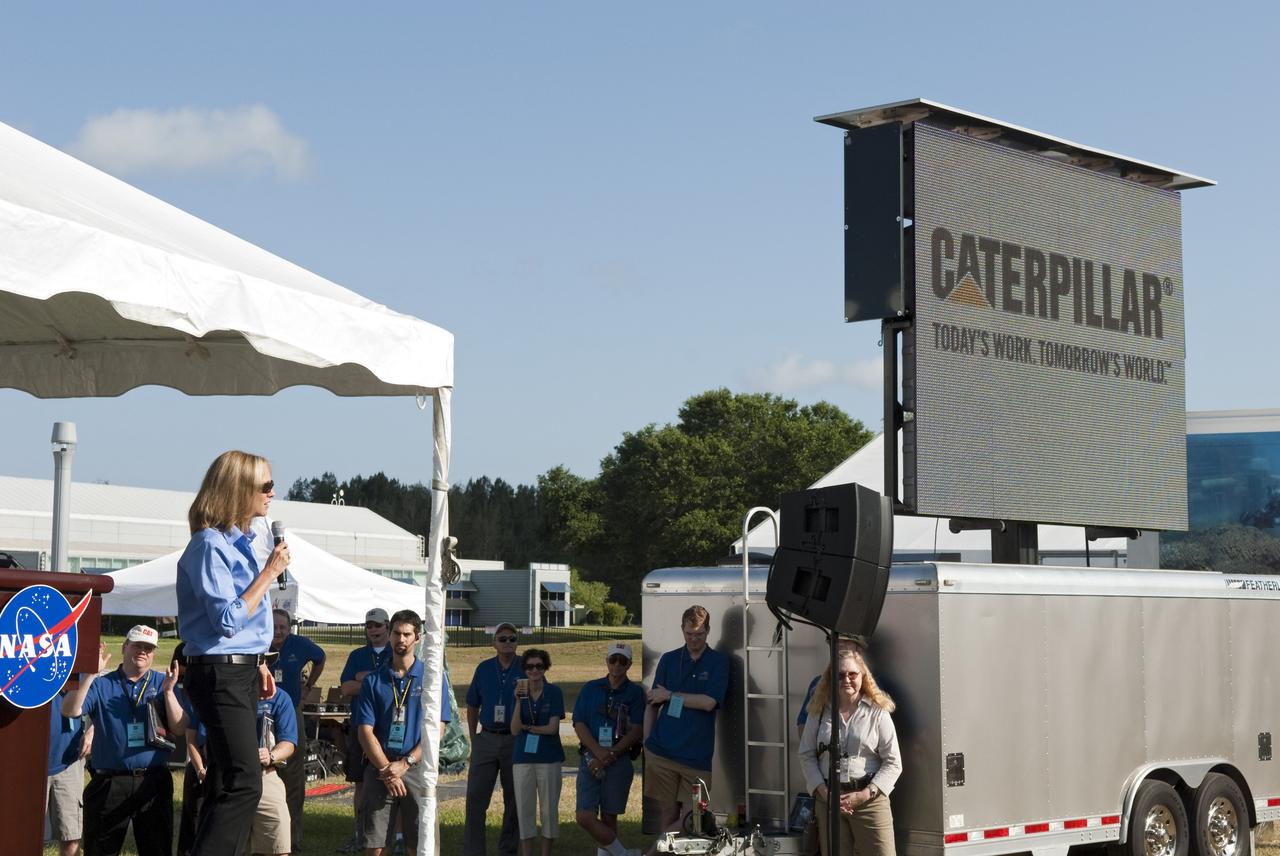
CAPE CANAVERAL, Fla. -- Tana Utley, Caterpillar Company vice president and chief technology officer talks to university students gathered for the opening ceremony of NASA's second annual Lunabotics Mining Competition at the Kennedy Space Center Visitor Complex in Florida. Thirty-six teams of undergraduate and graduate students from the United States, Bangladesh, Canada, Colombia and India will participate in NASA's Lunabotics Mining Competition May 26 - 28 at the agency's Kennedy Space Center in Florida. The competition is designed to engage and retain students in science, technology, engineering and mathematics (STEM). Teams will maneuver their remote controlled or autonomous excavators, called lunabots, in about 60 tons of ultra-fine simulated lunar soil, called BP-1. The competition is an Exploration Systems Mission Directorate project managed by Kennedy's Education Division. The event also provides a competitive environment that could result in innovative ideas and solutions for NASA's future excavation of the moon. Photo credit: NASA/Jim Grossmann
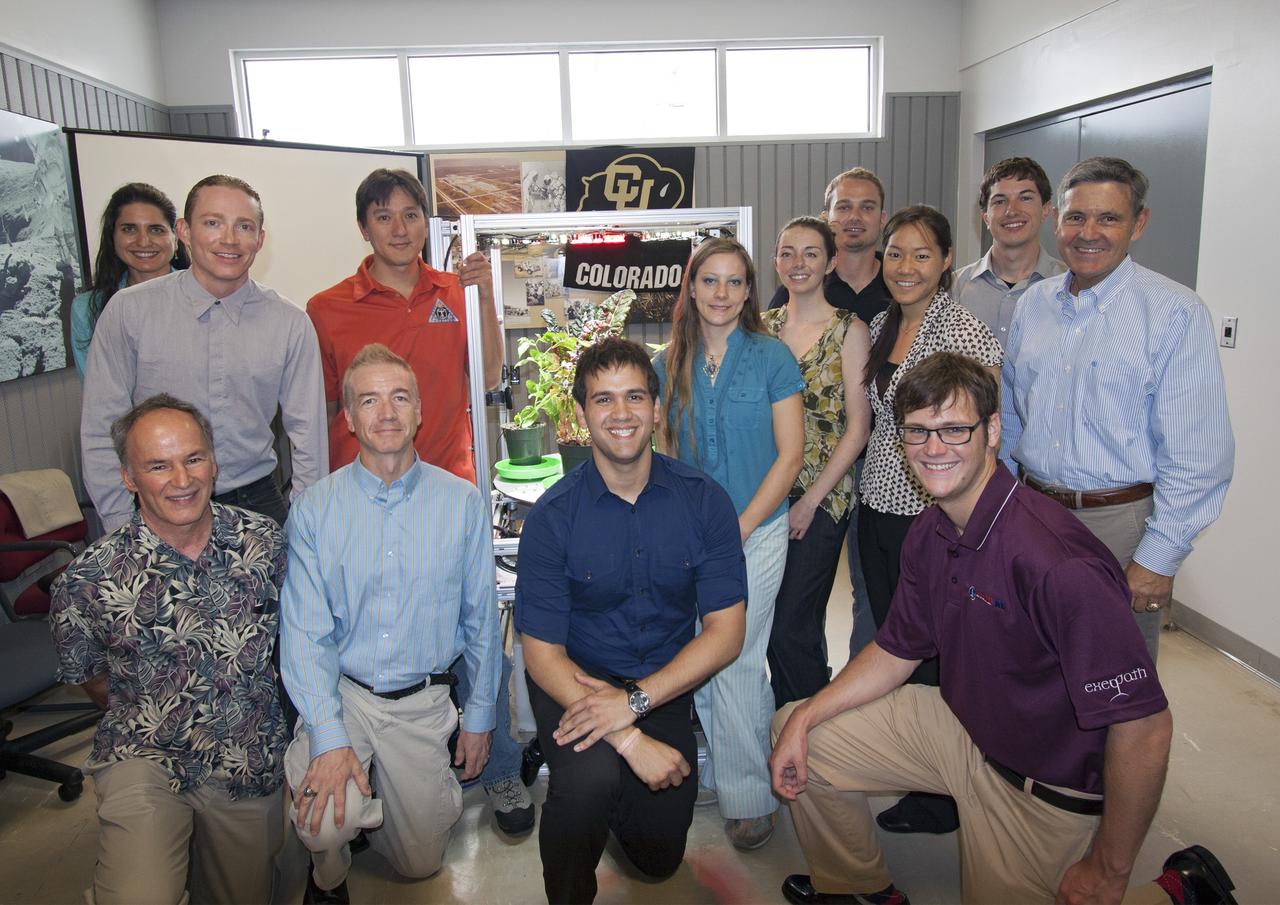
CAPE CANAVERAL, Fla. -- At the Kennedy Space Center in Florida, students from University of Colorado are working with NASA mentors in developing a robotic capability for growing a variety of plants, both for consumption as well as the benefit of oxygen-carbon dioxide cycling. Considerations range from monitoring and nutrient supply to selection of plants and autonomy. The activity is part of the eXploration Habitat, or X-Hab, Academic Innovation Challenge. Standing, left to right, are Gioia Massa of the NASA ISS Ground Processing and Research Project Office, Daniel Zukowski, Morgan Simpson of the NASA Ground Processing Directorate, Heather Hava, Keira Havens, Matthew Carton, Christine Fanchiang, Jordan Holquist and Kennedy Director Bob Cabana. Kneeling, left to right, are Ray Wheeler of the NASA Engineering and Technology Directorate, Tracy Gill of the NASA Center Planning and Development Directorate, Scott Mishra and Robert Griffin Hale. Hab Academic Innovation Challenge is a university-level activity designed to engage and retain students in Science, Technology, Engineering and Math, or STEM, disciplines. NASA will directly benefit from the effort by sponsoring the development of innovative habitat concepts from universities which may result in innovative ideas and solutions that could be applied to exploration habitats. For more: http://www.nasa.gov/exploration/technology/deep_space_habitat/xhab/ Photo credit: NASA/Jim Grossmann
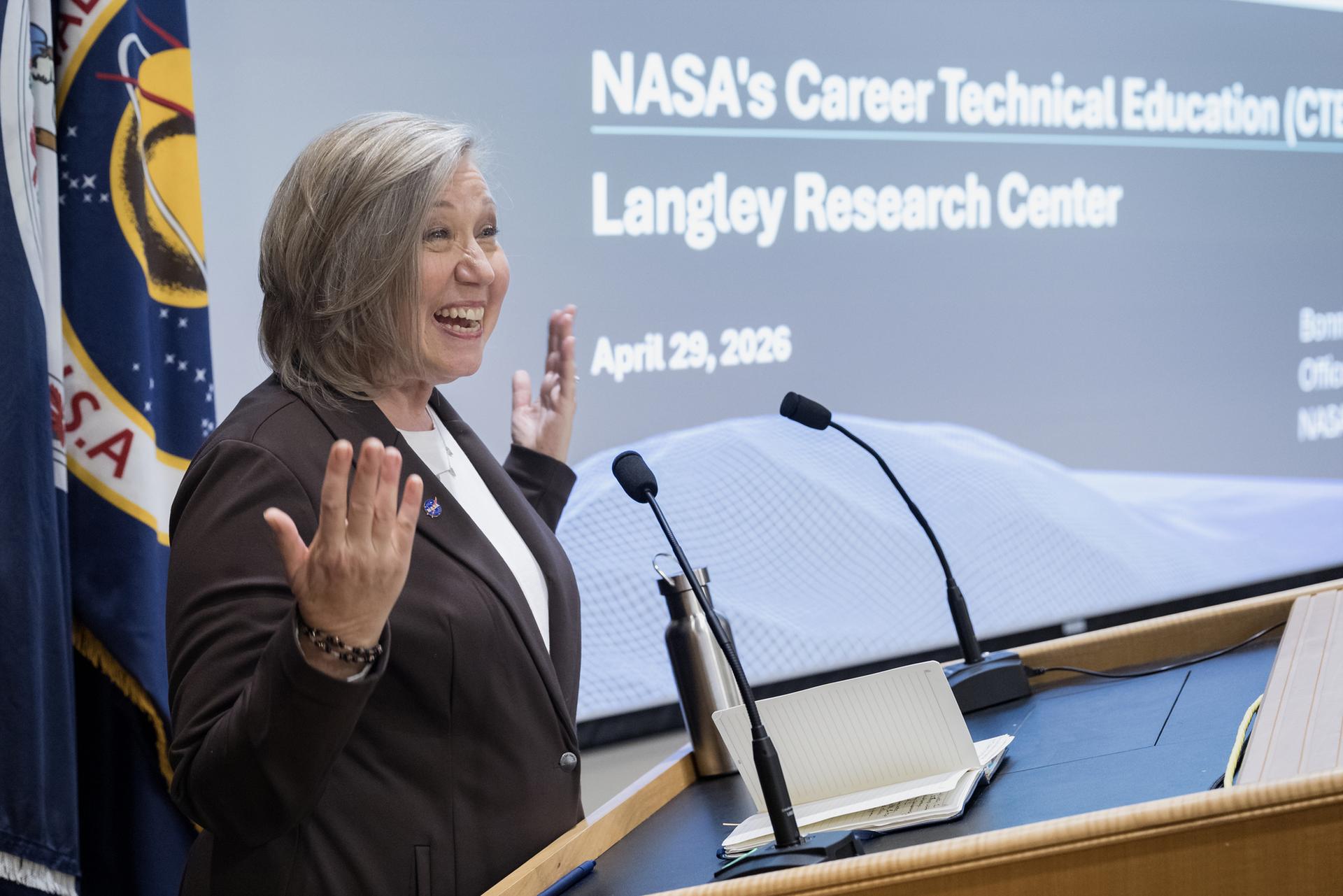
Bonnie Murray, NASA Program Specialist, speaks to an audience of high school and college students, and educators during an aerospace technical field career day event at Langley Research Center, Hampton Va., Wednesday, April 29, 2026. Photo Credit (NASA/Mark L Knopp)

High school and college students, and educators spent a day learning about careers in technical fields in aerospace. They engaged in hands-on activities, tours, and listening to keynote presentations and panels, interacting with NASA’s subject matter experts at Langley Research Center, Hampton Va, Wednesday, April 29, 2026. Photo Credit (NASA/Mark L. Knopp)

High school and college students, and educators spent a day learning about careers in technical fields in aerospace. They engaged in hands-on activities, tours, and listening to keynote presentations and panels, interacting with NASA’s subject matter experts at Langley Research Center, Hampton Va, Wednesday, April 29, 2026. Photo Credit (NASA/Mark L. Knopp)

NASA Astronaut Joe Acaba speaks to students and educators during their tour stop at the Lunar Landing Research Facility during an aerospace technical field career day event at Langley Research Center, Hampton Va., Wednesday, April 29, 2026. Photo Credit (NASA/Mark L Knopp)

NASA Mechanical Engineer Christopher B. Meek speaks to students and educators during their tour stop at the Lunar Landing Research Facility for an aerospace technical field career day event at Langley Research Center, Hampton Va., Wednesday, April 29, 2026. Photo Credit (NASA/Mark L. Knopp)

High school and college students, and educators spent a day learning about careers in technical fields in aerospace. They engaged in hands-on activities, tours, and listening to keynote presentations and panels, interacting with NASA’s subject matter experts at Langley Research Center, Hampton Va, Wednesday, April 29, 2026. Photo Credit (NASA/Mark L. Knopp)

High school and college students, and educators spent a day learning about careers in technical fields in aerospace. They engaged in hands-on activities, tours, and listening to keynote presentations and panels, interacting with NASA’s subject matter experts at Langley Research Center, Hampton Va, Wednesday, April 29, 2026. Photo Credit (NASA/Mark L. Knopp)

First Robotics Team 122, NASA Knights share about STEM and their robotics program during an aerospace technical field career day event at in the in gym at Langley Research Center, Hampton Va., Wednesday, April 29, 2026. (NASA/Mark L Knopp)
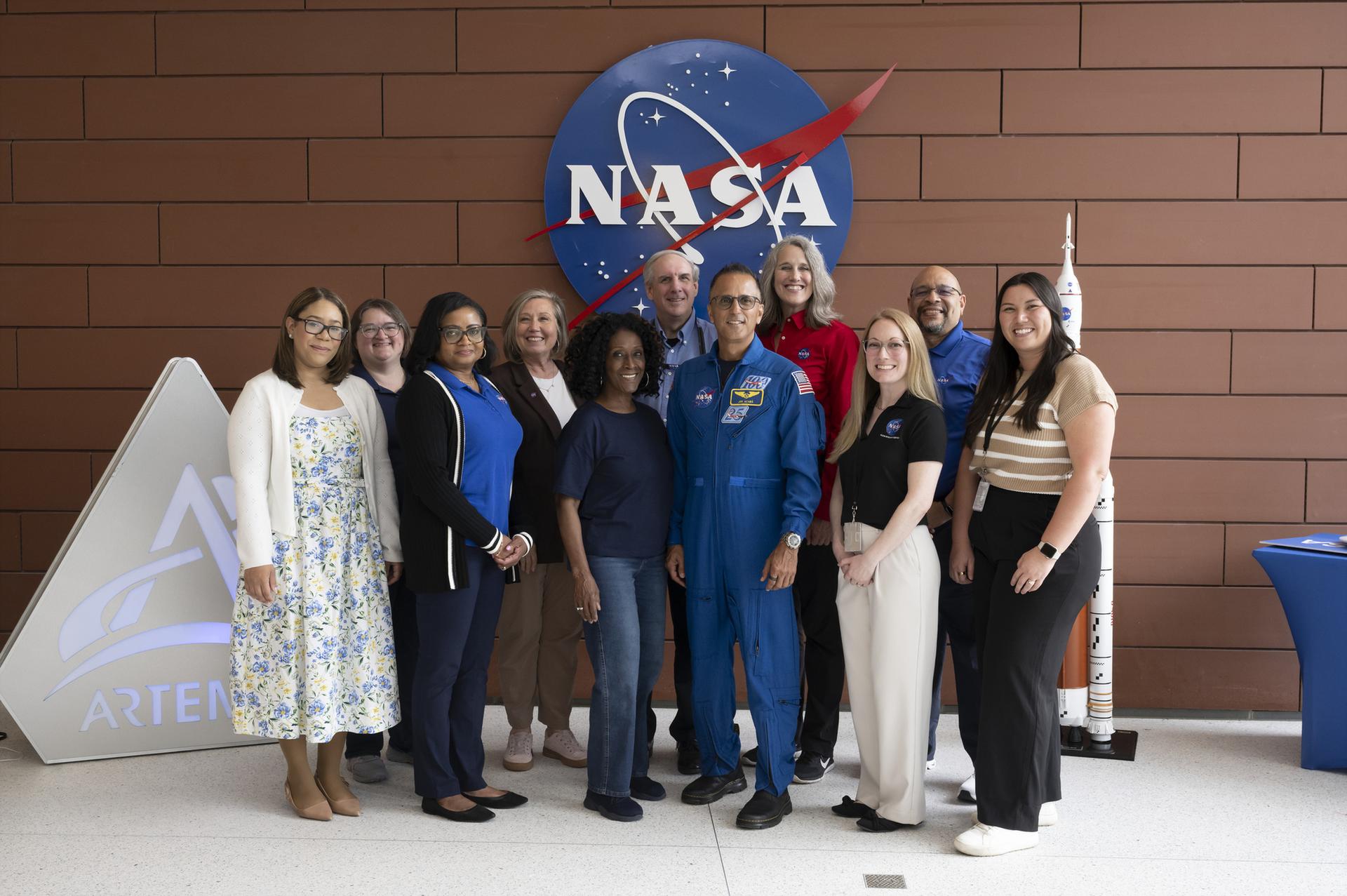
High school and college students, and educators spent a day learning about careers in technical fields in aerospace. They engaged in hands-on activities, tours, and listening to keynote presentations and panels, interacting with NASA’s subject matter experts at Langley Research Center, Hampton Va, Wednesday, April 29, 2026. Photo Credit (NASA/Ryan H. Hill)

Students learn about research model aircraft and spacecraft built in the Aerospace Composite and Model Development Section during a visit to NASA Langley Research Center, Wednesday, April 29, 2026. Photo Credit (NASA/ Mark L. Knopp)

High school and college students, and educators spent a day learning about careers in technical fields in aerospace. They engaged in hands-on activities, tours, and listening to keynote presentations and panels, interacting with NASA’s subject matter experts at Langley Research Center, Hampton Va, Wednesday, April 29, 2026. Photo Credit (NASA/Mark L. Knopp)

High school and college students, and educators spent a day learning about careers in technical fields in aerospace. They engaged in hands-on activities, tours, and listening to keynote presentations and panels, interacting with NASA’s subject matter experts at Langley Research Center, Hampton Va, Wednesday, April 29, 2026. Photo Credit (NASA/Mark L. Knopp)

High school and college students, and educators spent a day learning about careers in technical fields in aerospace. They engaged in hands-on activities, tours, and listening to keynote presentations and panels, interacting with NASA’s subject matter experts at Langley Research Center, Hampton Va, Wednesday, April 29, 2026. Photo Credit (NASA/Mark L. Knopp)

Students learn about research model aircraft and spacecraft built in the Aerospace Composite and Model Development Section during a visit to NASA Langley Research Center, Wednesday, April 29, 2026. Photo Credit (NASA/ Mark L. Knopp)
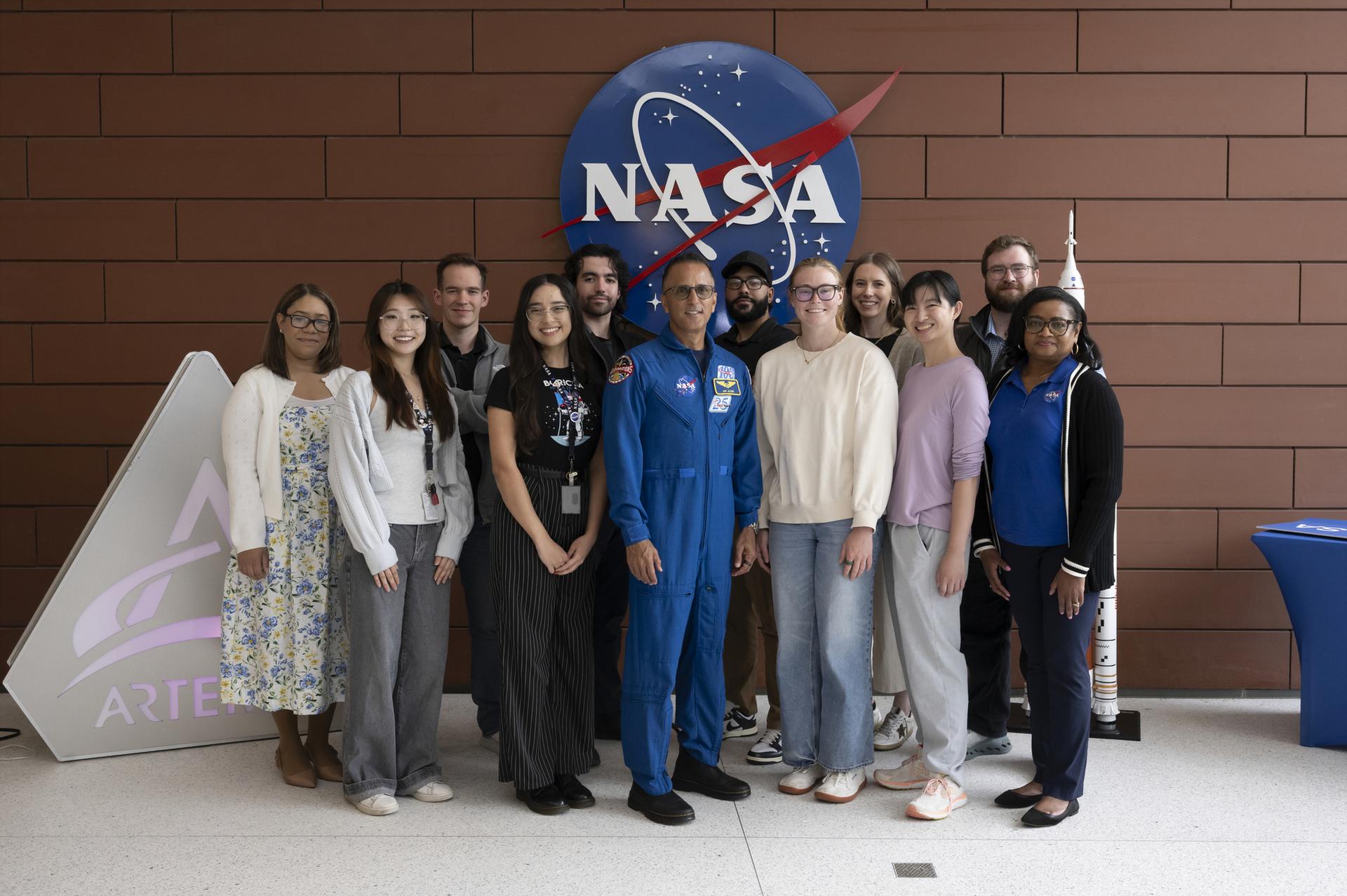
High school and college students, and educators spent a day learning about careers in technical fields in aerospace. They engaged in hands-on activities, tours, and listening to keynote presentations and panels, interacting with NASA’s subject matter experts at Langley Research Center, Hampton Va, Wednesday, April 29, 2026. Photo Credit (NASA/Ryan H. Hill)

First Robotics Team 122, NASA Knights share about STEM and their robotics program during an aerospace technical field career day event at in the in gym at Langley Research Center, Hampton Va., Wednesday, April 29, 2026. Photo Credit (NASA/Ryan H. Hill)

High school and college students, and educators spent a day learning about careers in technical fields in aerospace. They engaged in hands-on activities, tours, and listening to keynote presentations and panels, interacting with NASA’s subject matter experts at Langley Research Center, Hampton Va, Wednesday, April 29, 2026. Photo Credit (NASA/Mark L. Knopp)

First Robotics Team 122, NASA Knights share about STEM and their robotics program during an aerospace technical field career day event at in the in gym at Langley Research Center, Hampton Va., Wednesday, April 29, 2026. Photo Credit (NASA/Ryan H. Hill)

High school and college students, and educators spent a day learning about careers in technical fields in aerospace. They engaged in hands-on activities, tours, and listening to keynote presentations and panels, interacting with NASA’s subject matter experts at Langley Research Center, Hampton Va, Wednesday, April 29, 2026. Photo Credit (NASA/Ryan H. Hill)

First Robotics Team 122, NASA Knights share about STEM and their robotics program during an aerospace technical field career day event at in the in gym at Langley Research Center, Hampton Va., Wednesday, April 29, 2026. Photo Credit (NASA/Ryan H. Hill)