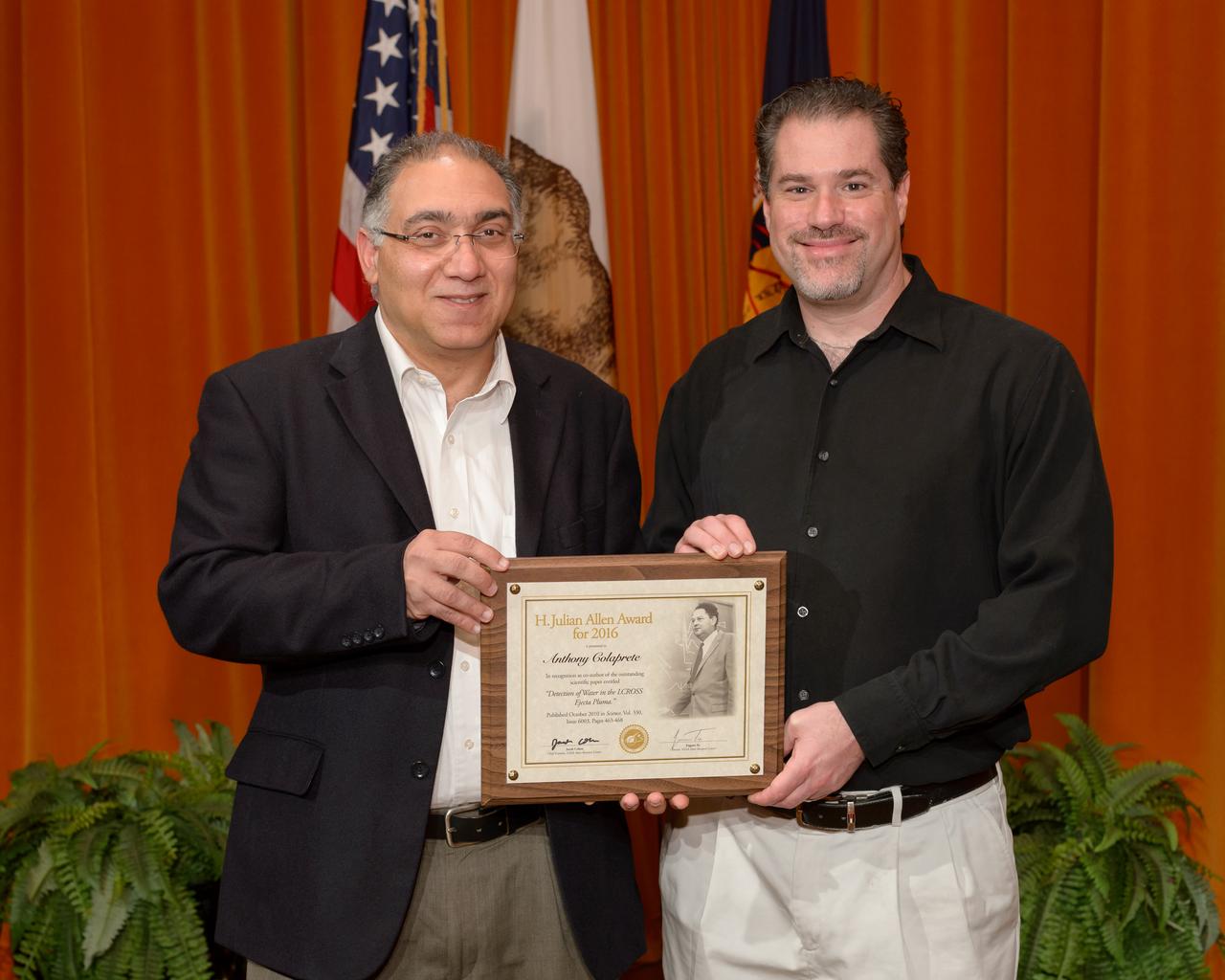
Dr. Jacob Cohen Director Office of Chief Scientist with Dr. Anthony Colaprete recipient of the H. Julian Allen Award In recognition as co-author of the outstanding scientific paper entitled "Detection of Water in the LCROSS Ejecta Pluma." Shown here Dr. Jacob Cohen presents the H. Julian Allen award to Anthony Colaprete.
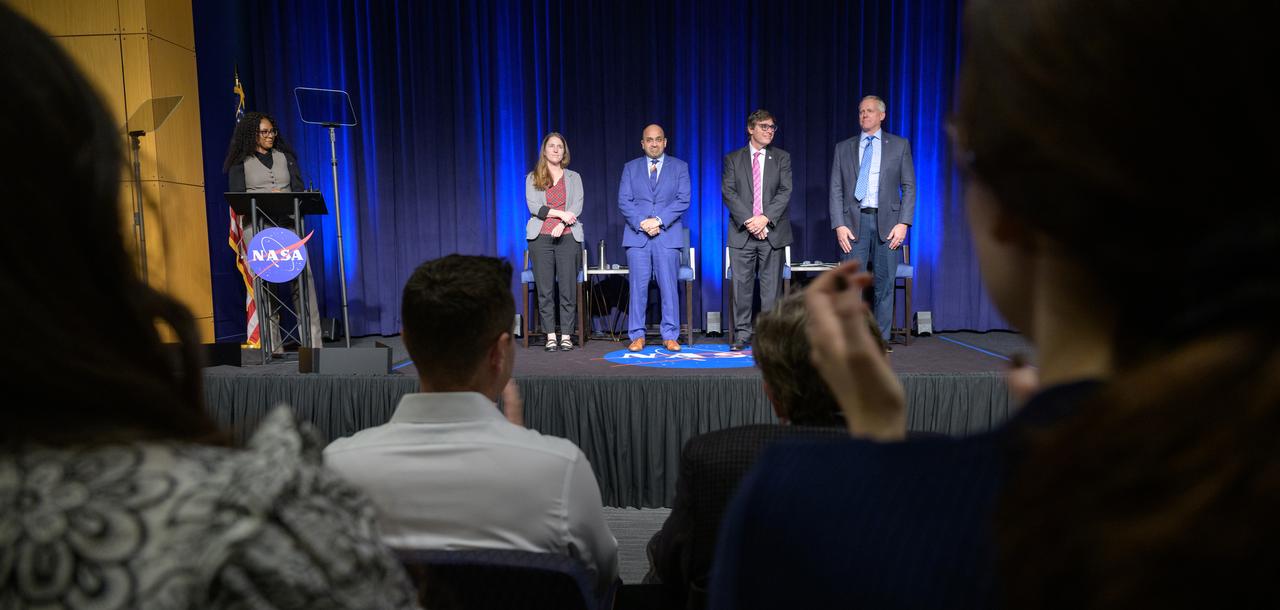
NASA Public Affairs Specialist Melissa Howell, left, NASA Chief Scientist Kate Calvin, NASA Chief Technologist A.C. Charania, NASA Chief Artificial Intelligence Officer David Salvagnini, and NASA Chief Information Officer Jeff Seaton, right, participate in a NASA employee town hall on how the agency is using and developing Artificial Intelligence (AI) tools to advance missions and research, Wednesday, May 22, 2024, at the NASA Headquarters Mary W. Jackson Building in Washington. Photo Credit: (NASA/Bill Ingalls)
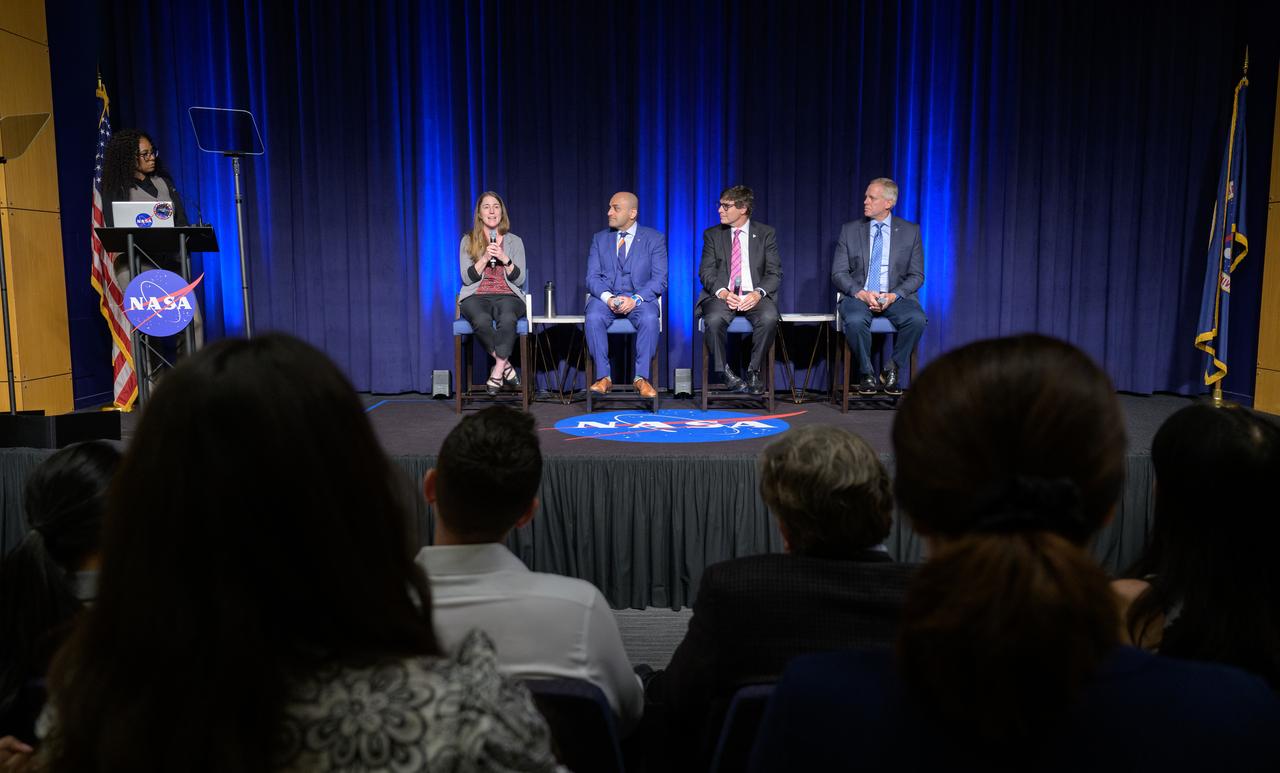
NASA Public Affairs Specialist Melissa Howell, left, NASA Chief Scientist Kate Calvin, NASA Chief Technologist A.C. Charania, NASA Chief Artificial Intelligence Officer David Salvagnini, and NASA Chief Information Officer Jeff Seaton, right, participate in a NASA employee town hall on how the agency is using and developing Artificial Intelligence (AI) tools to advance missions and research, Wednesday, May 22, 2024, at the NASA Headquarters Mary W. Jackson Building in Washington. Photo Credit: (NASA/Bill Ingalls)
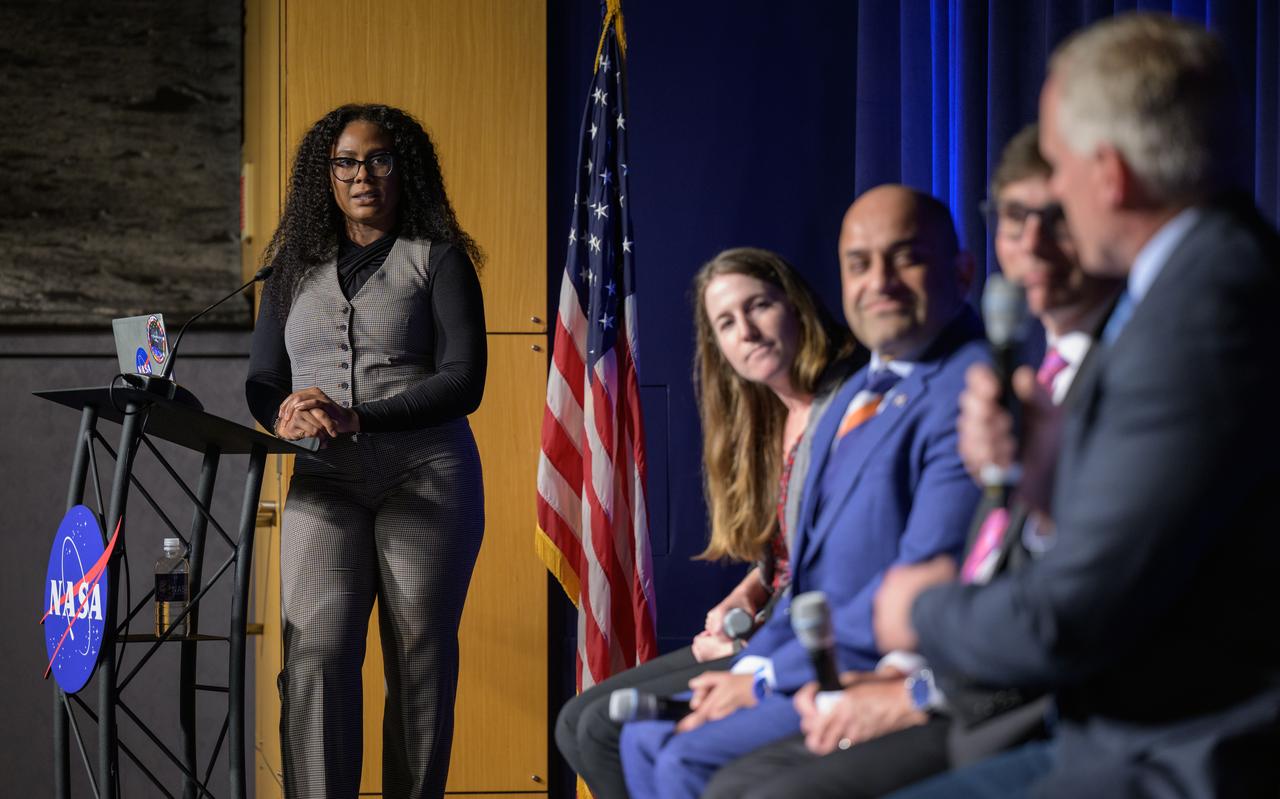
NASA Public Affairs Specialist Melissa Howell, left, NASA Chief Scientist Kate Calvin, NASA Chief Technologist A.C. Charania, NASA Chief Artificial Intelligence Officer David Salvagnini, and NASA Chief Information Officer Jeff Seaton, right, participate in a NASA employee town hall on how the agency is using and developing Artificial Intelligence (AI) tools to advance missions and research, Wednesday, May 22, 2024, at the NASA Headquarters Mary W. Jackson Building in Washington. Photo Credit: (NASA/Bill Ingalls)
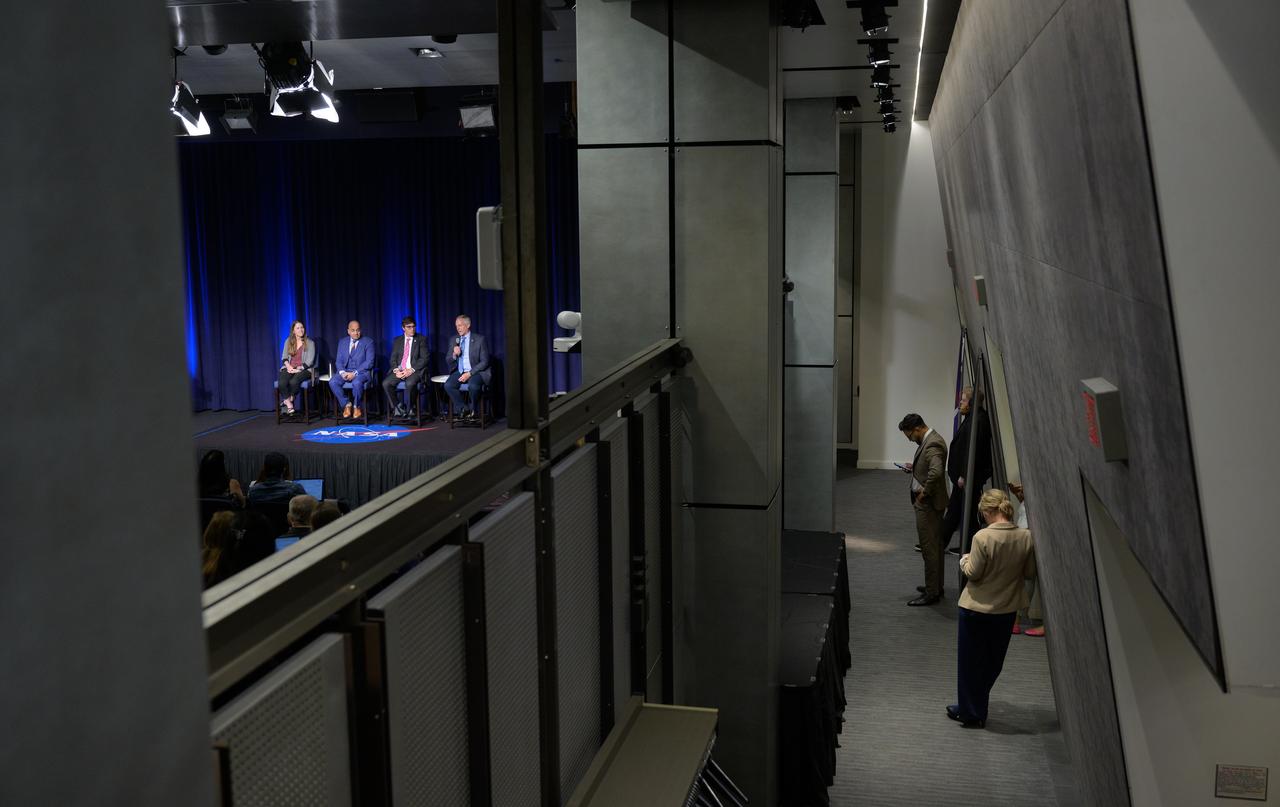
NASA Public Affairs Specialist Melissa Howell, left, NASA Chief Scientist Kate Calvin, NASA Chief Technologist A.C. Charania, NASA Chief Artificial Intelligence Officer David Salvagnini, and NASA Chief Information Officer Jeff Seaton, right, participate in a NASA employee town hall on how the agency is using and developing Artificial Intelligence (AI) tools to advance missions and research, Wednesday, May 22, 2024, at the NASA Headquarters Mary W. Jackson Building in Washington. Photo Credit: (NASA/Bill Ingalls)
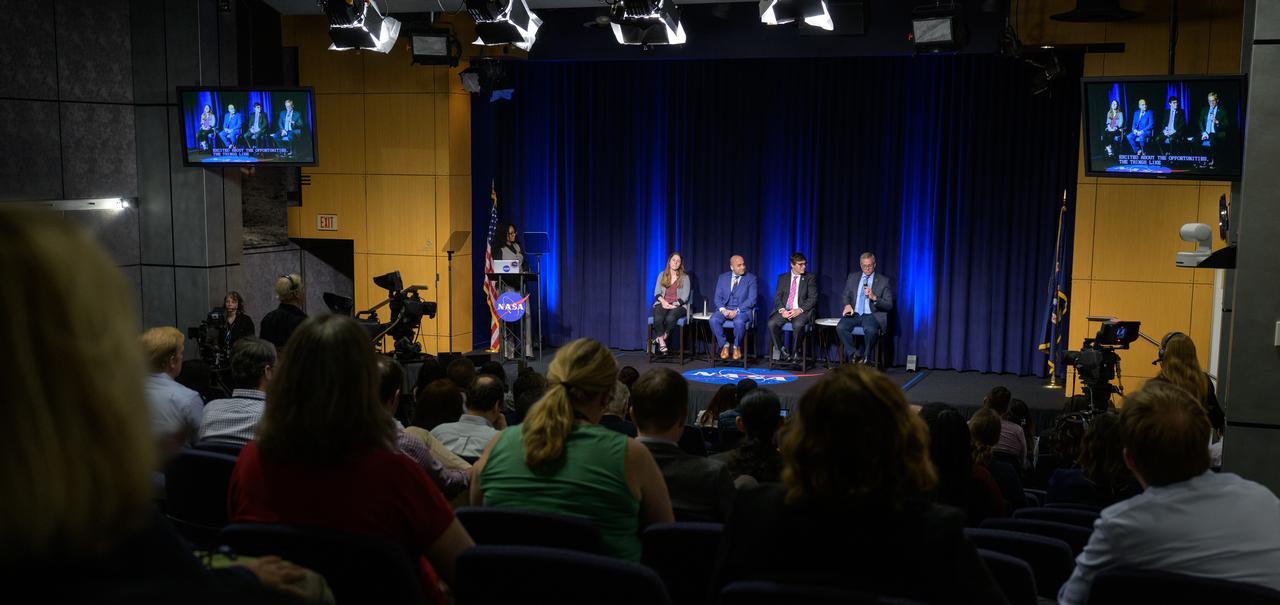
NASA Public Affairs Specialist Melissa Howell, left, NASA Chief Scientist Kate Calvin, NASA Chief Technologist A.C. Charania, NASA Chief Artificial Intelligence Officer David Salvagnini, and NASA Chief Information Officer Jeff Seaton, right, participate in a NASA employee town hall on how the agency is using and developing Artificial Intelligence (AI) tools to advance missions and research, Wednesday, May 22, 2024, at the NASA Headquarters Mary W. Jackson Building in Washington. Photo Credit: (NASA/Bill Ingalls)
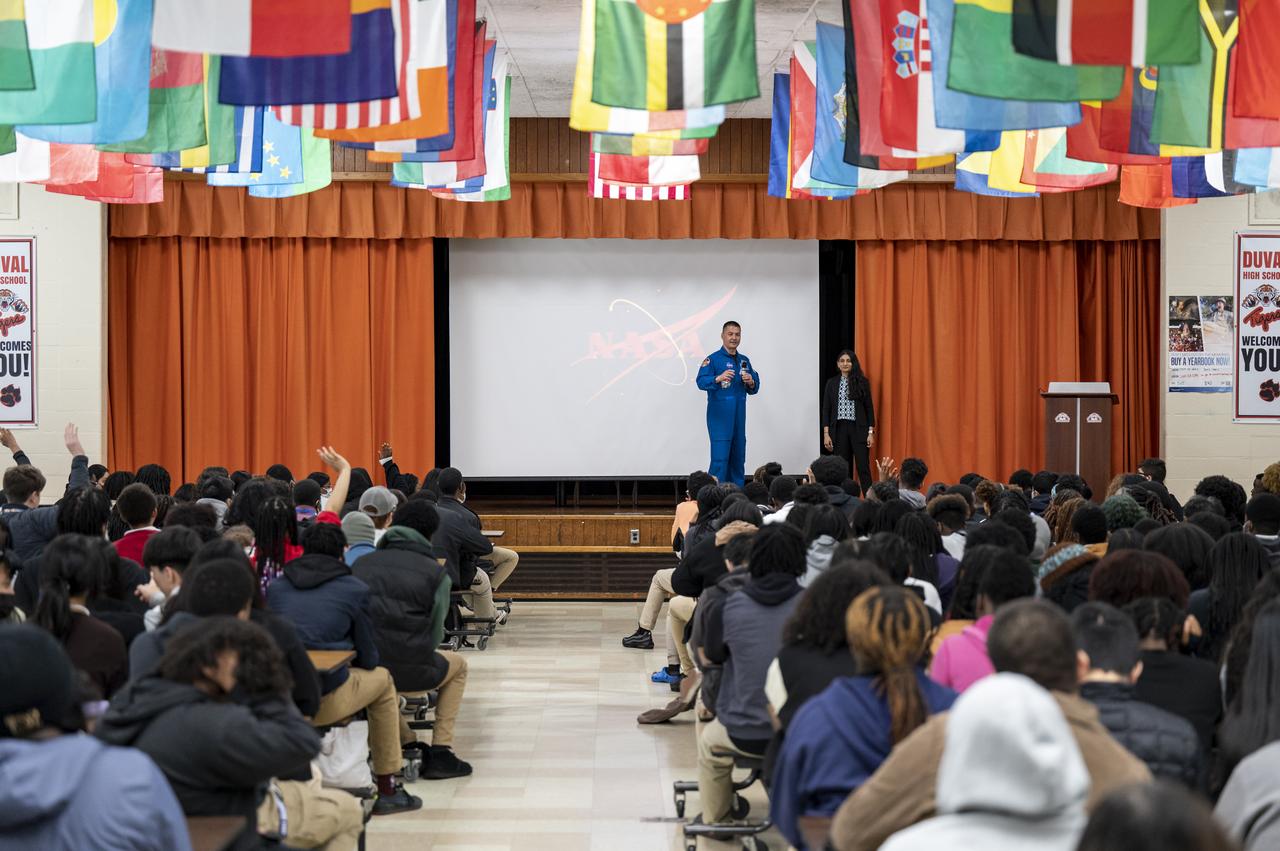
NASA astronaut Kjell Lindgren, left, and NASA Associate Chief Scientist for Exploration and Applied Research in the Office of the Chief Scientist Dr. Mamta Patel Nagaraja, right, answer questions from students during a STEM event at DuVal High School, Thursday, March 30, 2023, in Lanham, Maryland. Lindgren spent 170 days in space as part of Expeditions 67 and 68 aboard the International Space Station. Photo Credit: (NASA/Keegan Barber)
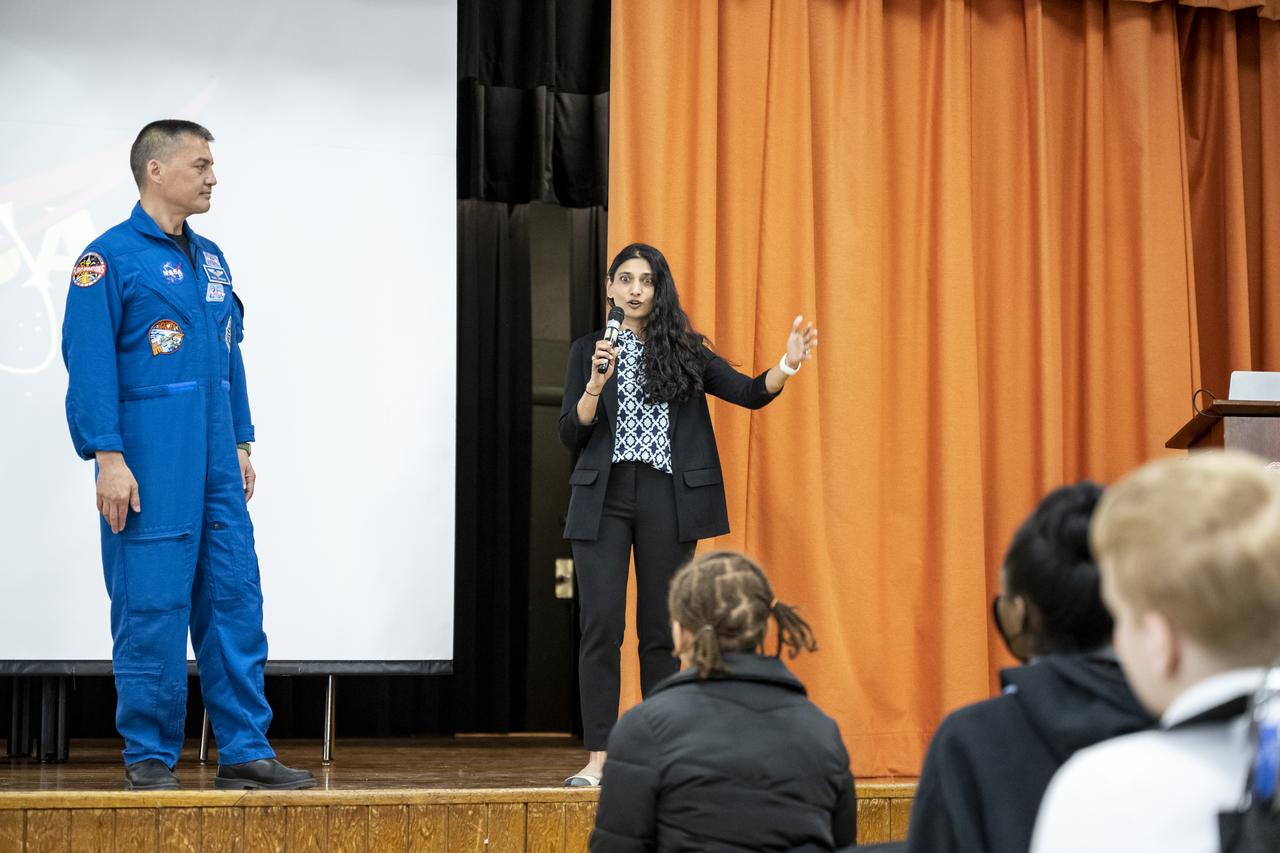
NASA astronaut Kjell Lindgren, left, and NASA Associate Chief Scientist for Exploration and Applied Research in the Office of the Chief Scientist Dr. Mamta Patel Nagaraja, right, answer questions from students during a STEM event at DuVal High School, Thursday, March 30, 2023, in Lanham, Maryland. Lindgren spent 170 days in space as part of Expeditions 67 and 68 aboard the International Space Station. Photo Credit: (NASA/Keegan Barber)
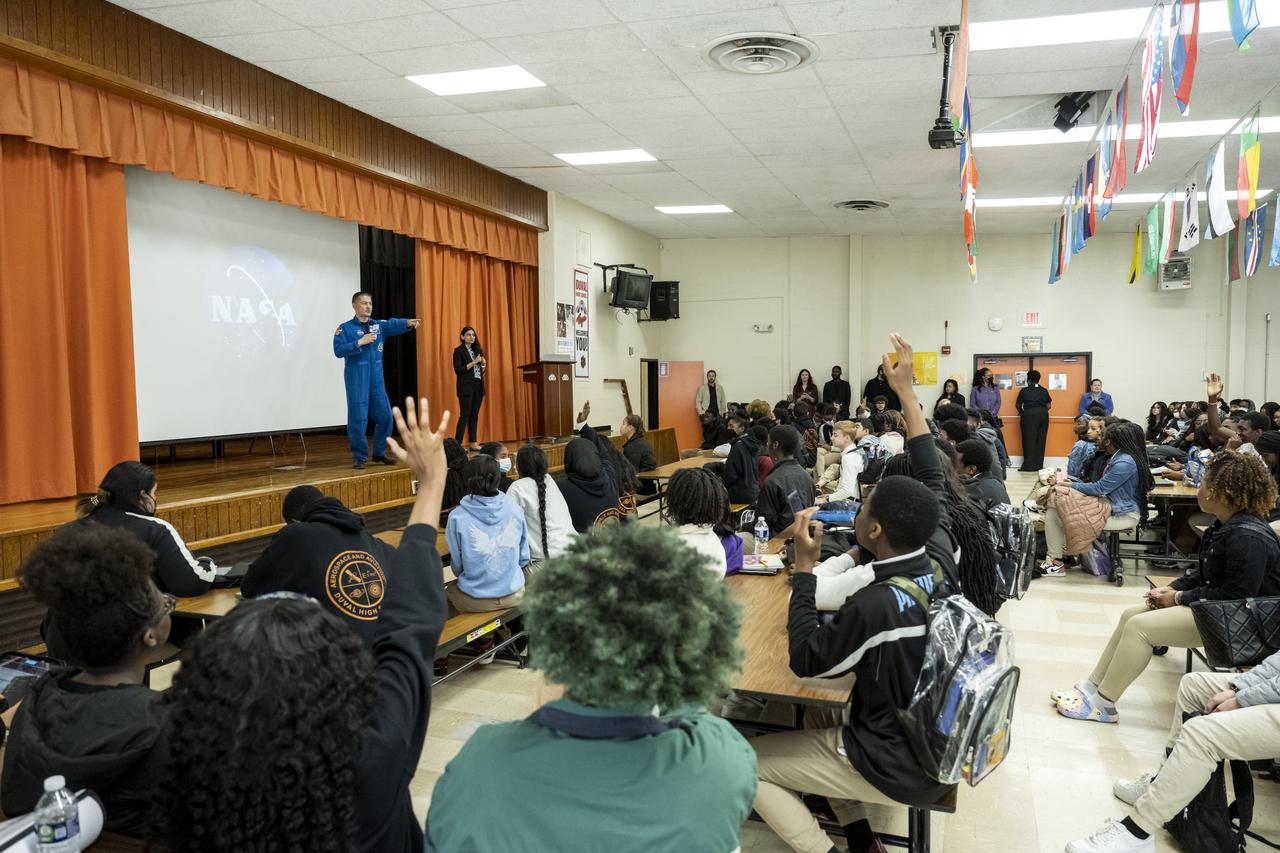
NASA astronaut Kjell Lindgren, left, and NASA Associate Chief Scientist for Exploration and Applied Research in the Office of the Chief Scientist Dr. Mamta Patel Nagaraja, right, answer questions from students during a STEM event at DuVal High School, Thursday, March 30, 2023, in Lanham, Maryland. Lindgren spent 170 days in space as part of Expeditions 67 and 68 aboard the International Space Station. Photo Credit: (NASA/Keegan Barber)
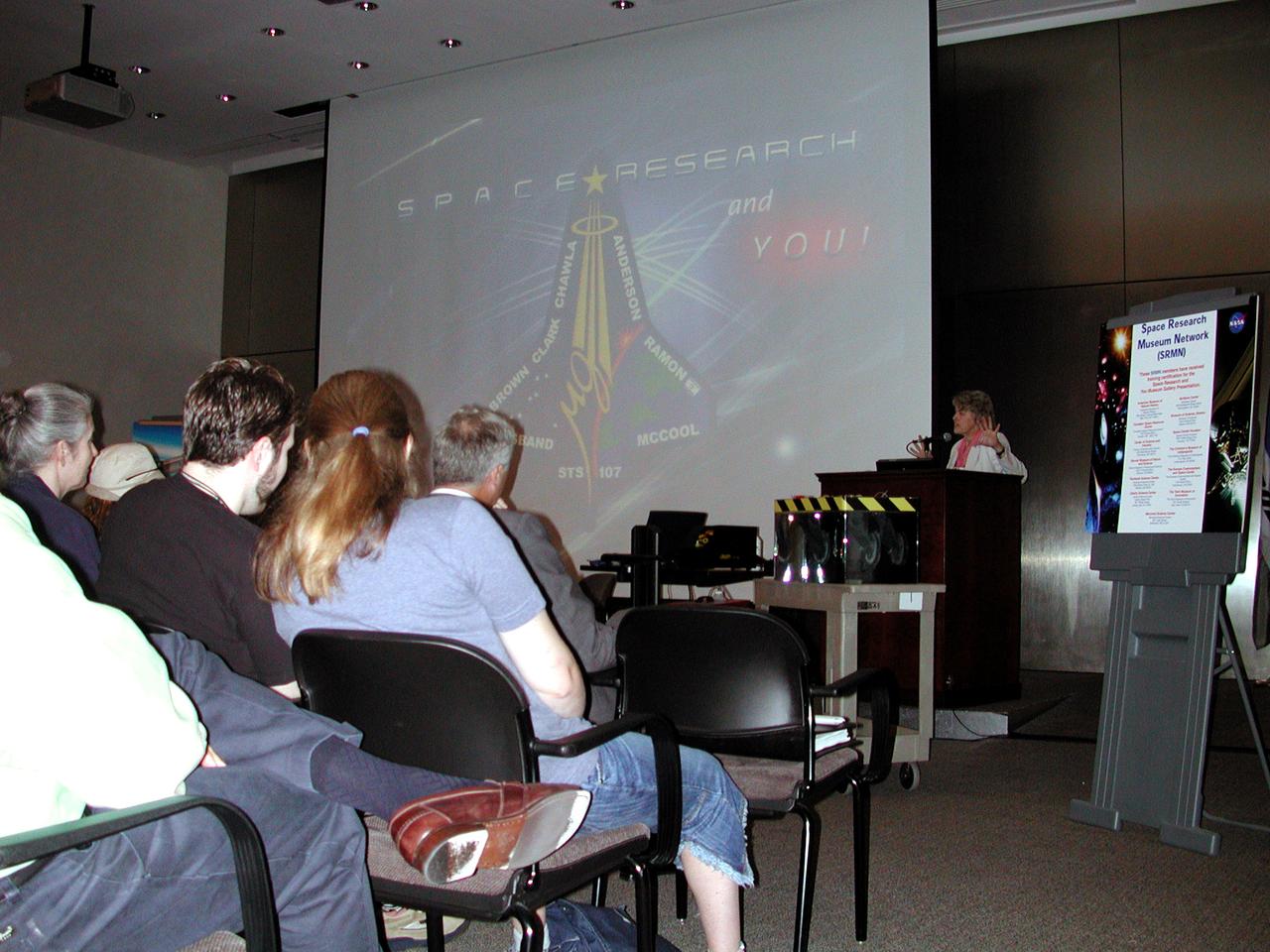
NASA Chief Scientist Shannon Lucid, a former astronaut, introduces Northern Virginia students to the research that will be conducted on the STS-107 mission. The activity was part of the Space Research and You education event held by NASA's Office of Biological and Physical Research on June 25, 2002, in Arlington, VA, to highlight the research that will be conducted on STS-107.
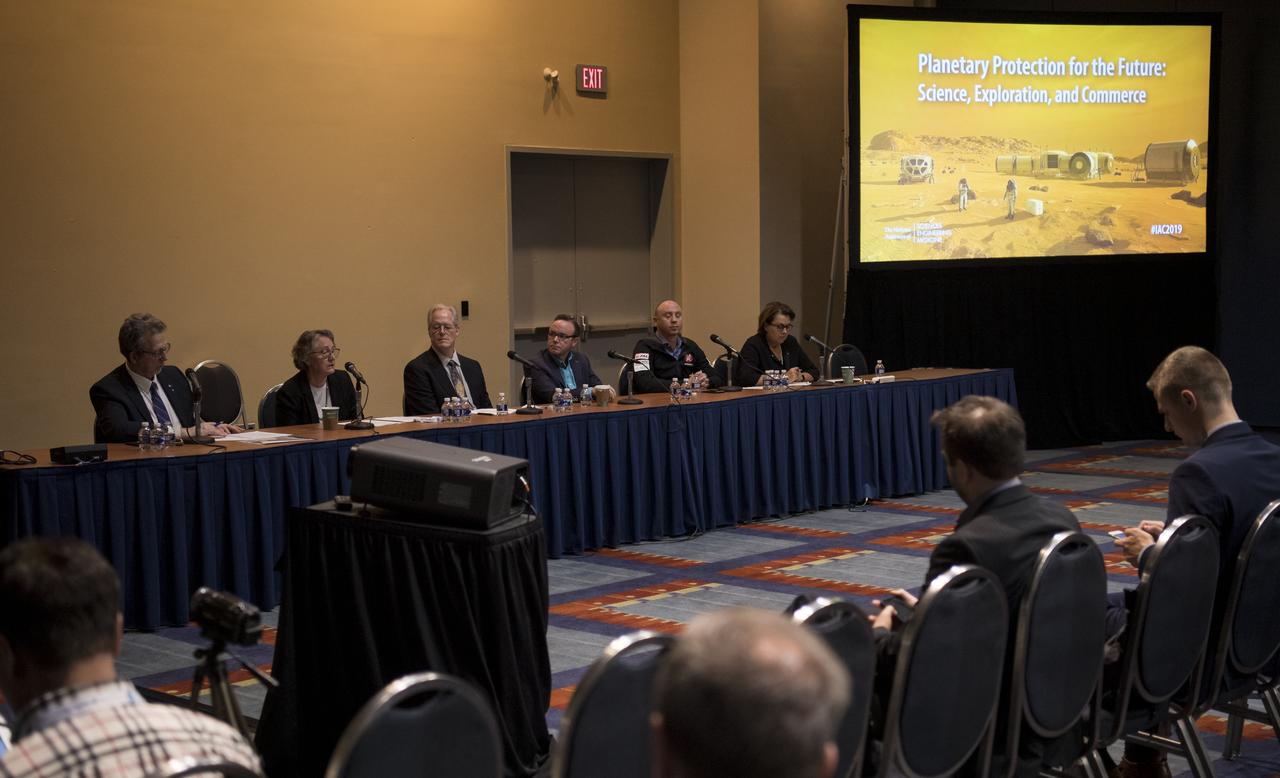
NASA Chief Scientist Jim Green, left, Lisa Pratt, NASA's Planetary Protection Officer, Michael Meyer, Lead Scientist for NASA's Mars Exploration Program, Dan Hendrickson, Vice President of Business Development at Astrobotic Technology, Kyle Acierno, Vice President of Global Sales and Strategy at ispace, and Simonetta Di Pippo, Director of the United Nations Office for Outer Space Affairs, right, are seen during a special session titled “Planetary Protection for the Future: Science, Exploration, and Commerce” at the 70th International Astronautical Congress, Thursday, Oct. 24, 2019, at the Walter E. Washington Convention Center in Washington. Photo Credit: (NASA/Joel Kowsky)
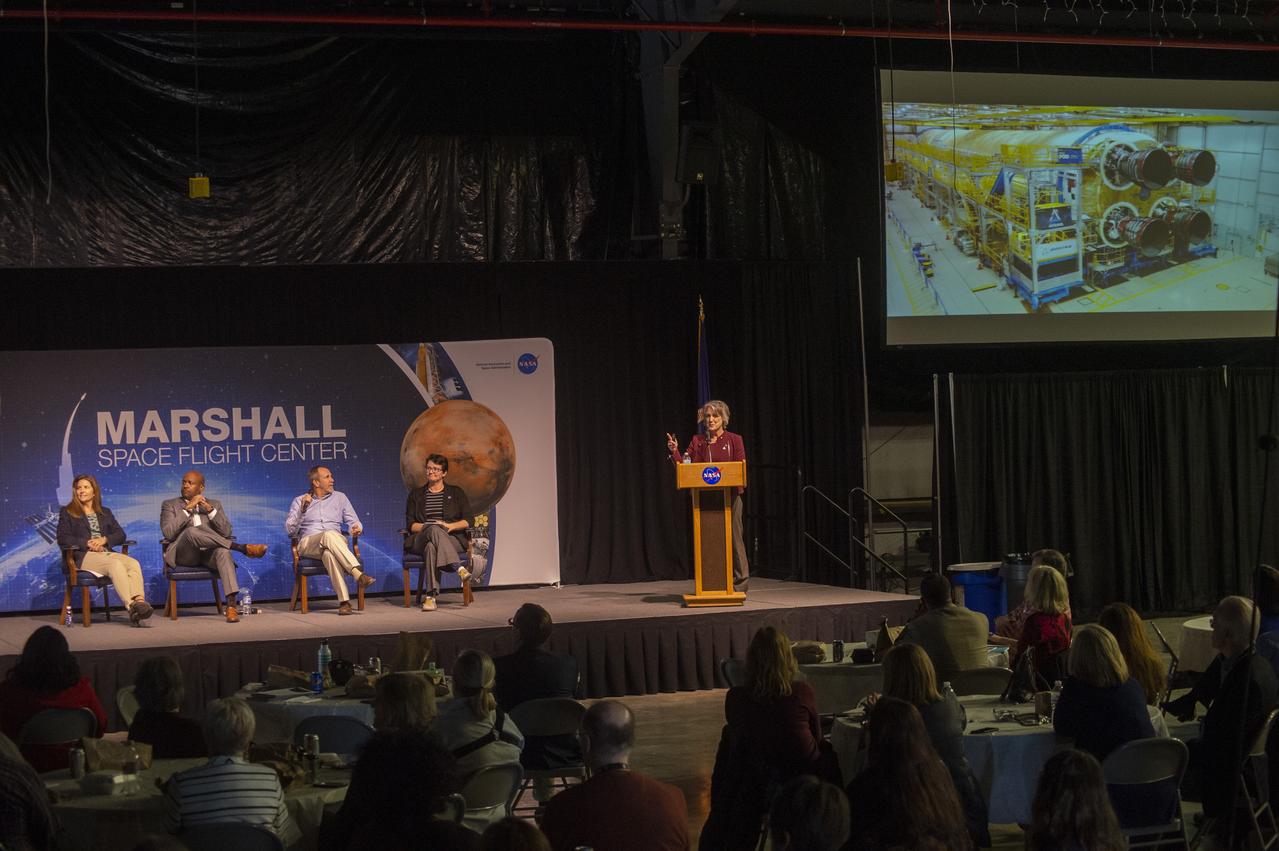
MARCIA LINDSTROM, AT PODIUM, FACILITATES ARTEMIS PROGRAM PANEL DISCUSSION AT NOVEMBER MARSHALL ASSOCIATION LUNCHEON. (L TO R), LISA WATSON-MORGAN, PROGRAM MANAGER, HUMAN LANDING SYSTEM; BOBBY WATKINS, DIRECTOR HUMAN EXPLORATION DEVELOPMENT & OPERATIONS OFFICE; DAVID BEAMAN, MANAGER, SYSTEMS ENGINEERING & INTEGRATION OFFICE, RENEE WEBER, ACTING CENTER CHIEF SCIENTIST
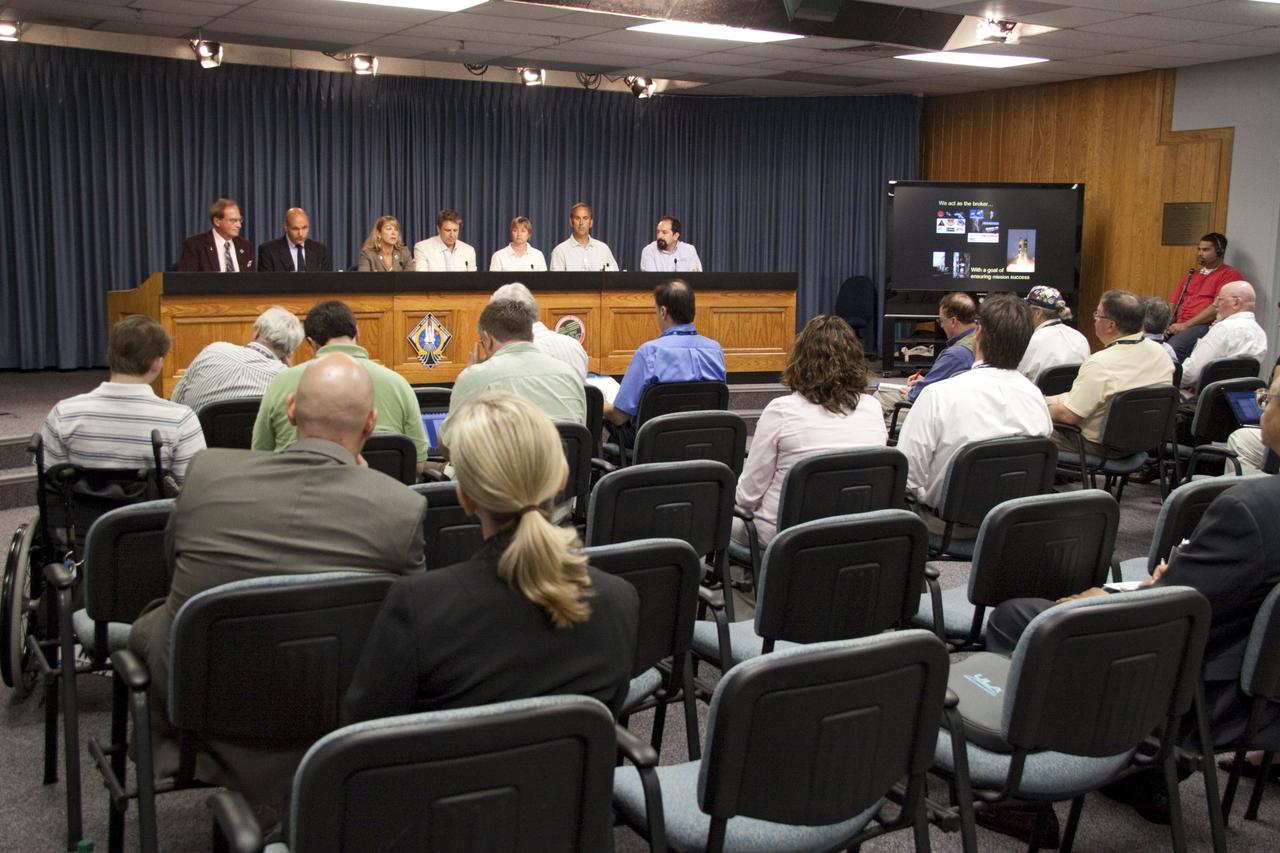
CAPE CANAVERAL, Fla. -- In the Press Site auditorium at NASA's Kennedy Space Center in Florida, media were briefed about NASA's future science missions. Seen here are NASA Public Affairs Officer George Diller (left); Waleed Abdalati, NASA chief scientist; Amanda Mitskevich, NASA Launch Services Program manager; Scott Bolton, Juno principal investigator with the Southwest Research Institute, San Antonio; Maria Zuber, GRAIL principal investigator with the Massachusetts Institute of Technology; John Grotzinger, Mars Science Lab project scientist with the California Institute of Technology and Daniel Stern, NuStar project scientist with NASA's Jet Propulsion Laboratory in Calif. Photo credit: NASA/Jack Pfaller
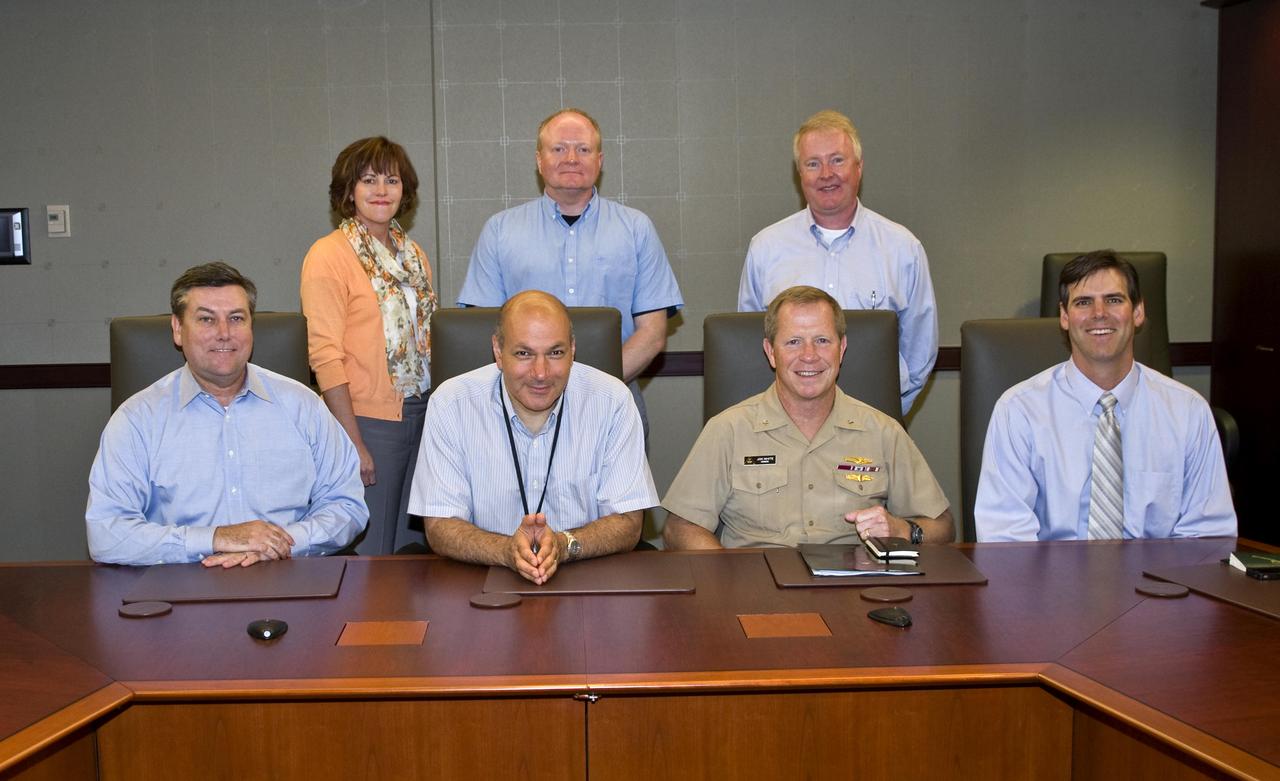
NASA Chief Scientist Dr. Waleed Abdalati visited Stennis Space Center on July 19, to learn about the extensive science capabilities onsite. Shown at right are: (seated, l to r), Stennis Center Director Patrick Scheuermann; Dr. Abdalati; U.S. Navy Rear Adm. Jonathan White; NOAA National Data Buoy Center Program Manager Shannon McArthur; (standing, l to r) Stennis Project Directorate Assistant Director Anne Peek; Stennis Applied Science & Technology Project Office Chief Duane Armstrong; and Stennis Project Directorate Director Keith Brock.
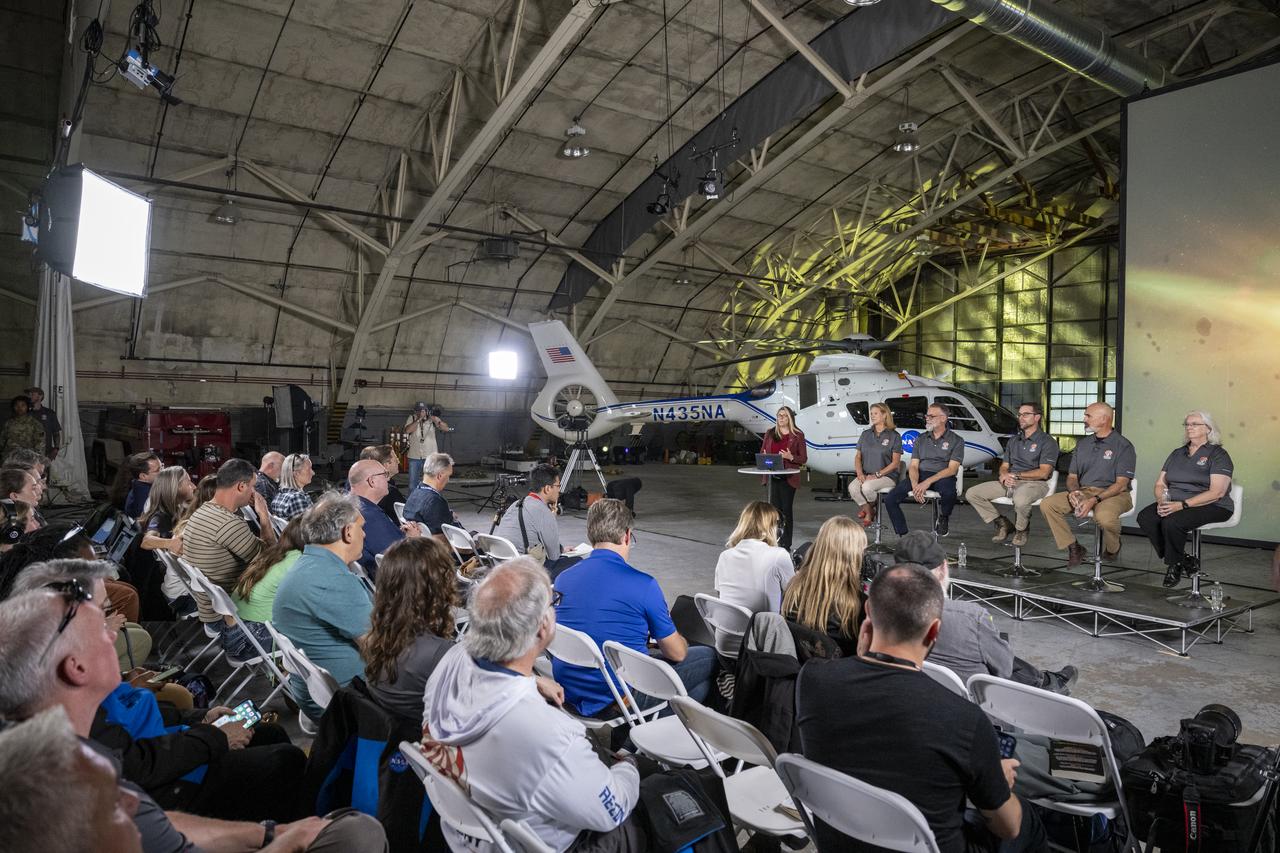
NASA Office of Communications Senior Science Communications Officer Karen Fox introduces, from left to right, NASA Planetary Science Division Director Lori Glaze, University of Arizona OSIRIS-REx Principal Investigator Dante Lauretta, NASA OSIRIS-REx Deputy Project Manager Mike Moreau, Lockheed Martin Deep Space Exploration Chief Engineer Tim Priser, and NASA Chief Scientist Eileen Stansbery during an OSIRIS-REx sample return press conference, Sunday, Sept. 24, 2023, shortly after the capsule landed at the Department of Defense's Utah Test and Training Range. The sample was collected from the asteroid Bennu in October 2020 by NASA’s OSIRIS-REx spacecraft. Photo Credit: (NASA/Keegan Barber)
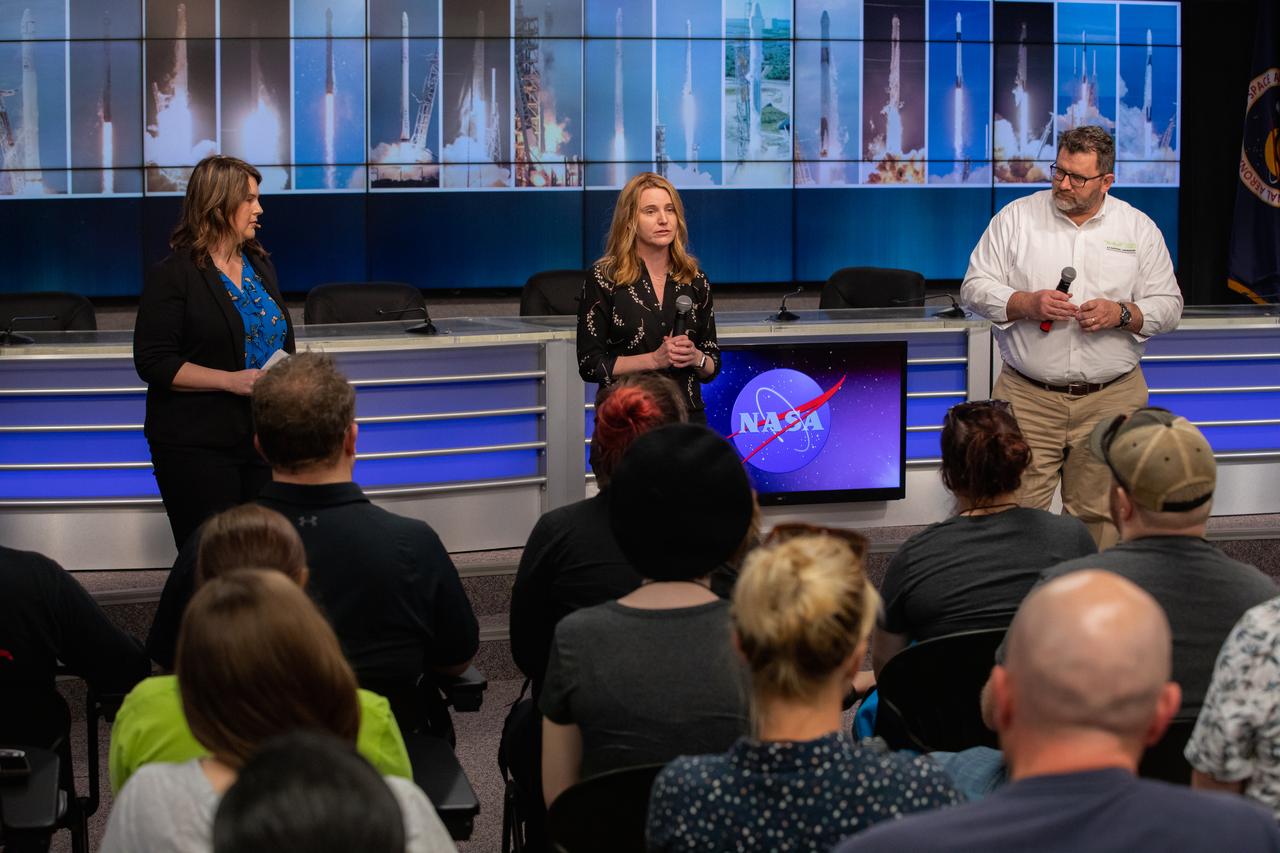
From left, NASA Communications’ Jennifer Wolfinger, briefing moderator; Jennifer Buchli, deputy chief scientist for NASA’s International Space Station Program Science Office; and Michael Roberts, interim chief scientist for the International Space Station U.S. National Laboratory, address NASA Social participants during a What’s on Board science briefing at the agency’s Kennedy Space Center in Florida on March 5, 2020. The briefing provided a closer look at some of the payloads launching on SpaceX’s 20th Commercial Resupply Services (CRS-20) mission to the International Space Station. The company’s Falcon 9 rocket is scheduled to lift off from Cape Canaveral Air Force Station’s Space Launch Complex 40 at 11:50 p.m. EST on March 6, 2020.
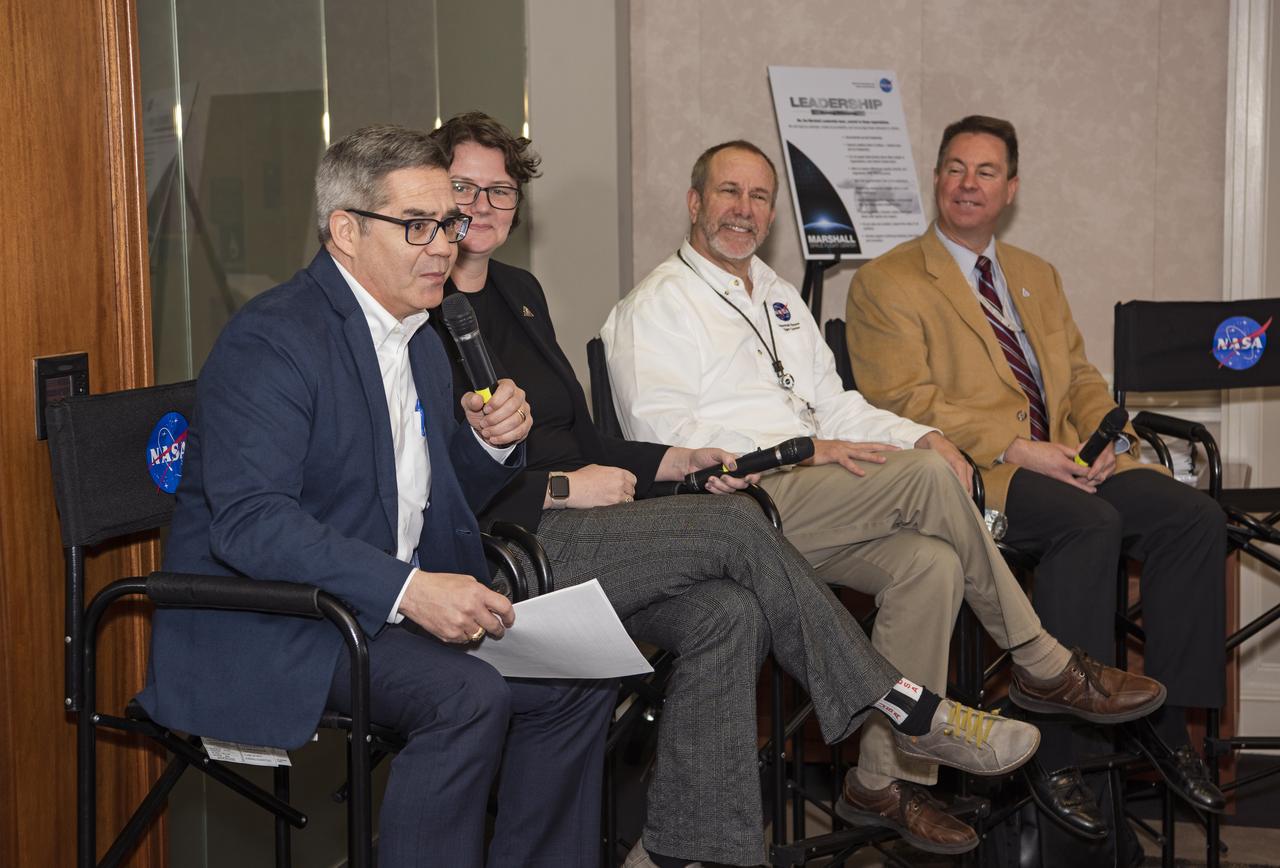
Sam Ortega, left, manager of the Partnerships Office at NASA’s Marshall Space Flight Center, moderates an Artemis Program panel featuring, second from left, Renee Weber, Marshall chief scientist; David Beaman, manager of Marshall’s Systems Engineering & Integration Office; and Don Krupp, associate program manager for the Human Landing System Program, during Universities of the Tennessee Valley Corridor activities Feb. 27 at Marshall. Leadership staff from eight universities and 10 junior colleges in Alabama, Tennessee and Kentucky also heard presentations on Office of STEM Engagement opportunities, partnership opportunities, Marshall’s Technology Transfer Office, the NASA software catalog and Marshall’s Advanced Concepts Office. The group toured several Marshall facilities to learn more about center capabilities.
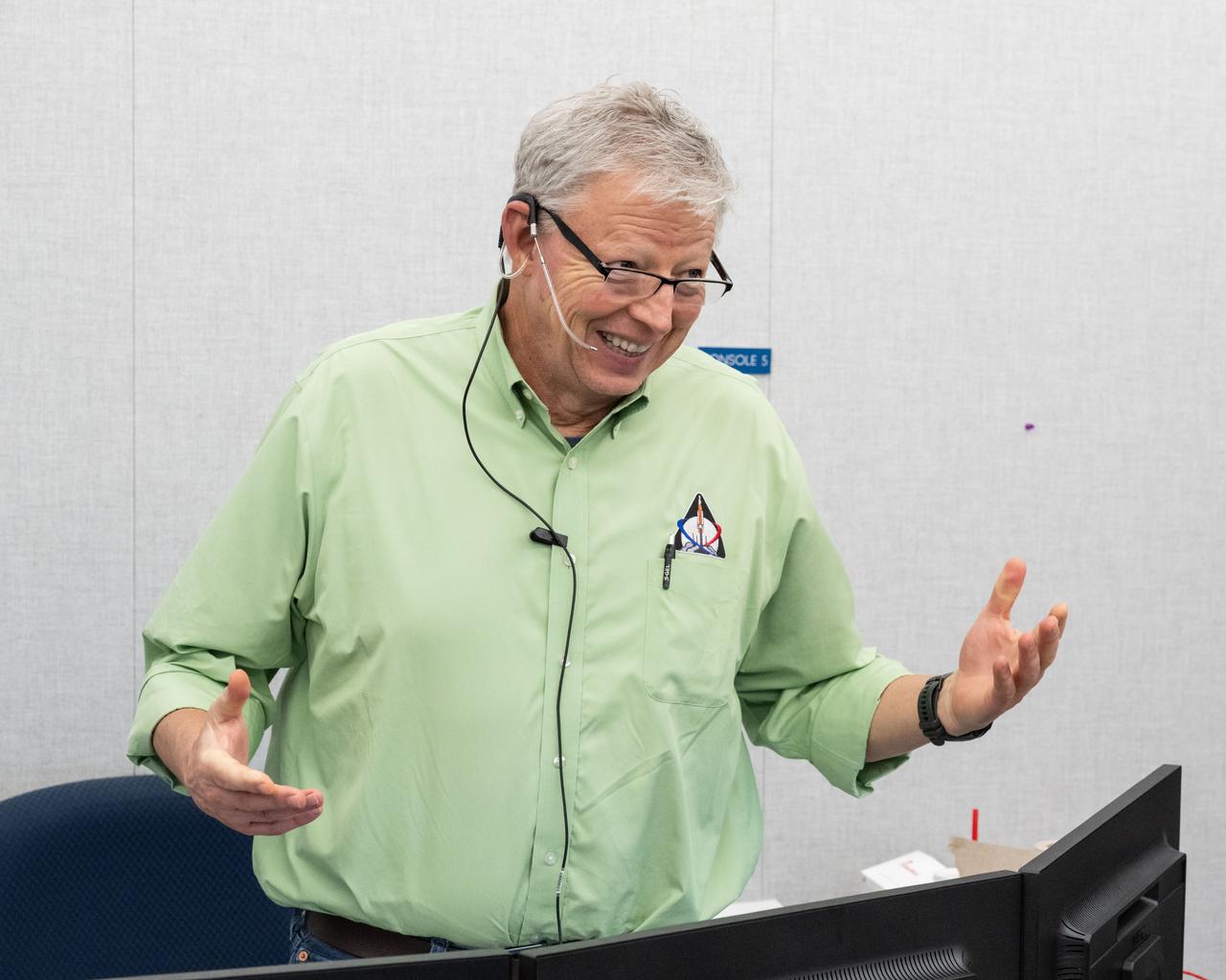
Chief training officer John Ray works in the flight control support room during the JETT 5 field test. JETT 5 was a week-long field test in the lunar-like landscape of San Francisco Volcanic Field near Flagstaff, Arizona while a team of flight controllers and scientists at Johnson monitor and guide their activities. Credit: NASA/James Blair

Melody Lovin, launch weather officer, U.S. Air Force 45th Space Wing, responds to a question during a CRS-21 prelaunch news conference at NASA’s Kennedy Space Center in Florida on Dec. 4, 2020. Sarah Walker, director, Dragon Mission Management, SpaceX, Kirt Costello, chief scientist, International Space Station Program Office, and Kenny Todd, deputy program manager, International Space Station Program Office, also participated in the event, which was moderated by NASA Communications’ Jasmine Hopkins. SpaceX’s Falcon 9 rocket, with the upgraded version of the Cargo Dragon spacecraft atop, is targeted to lift off from Kennedy’s Launch Complex 39A Saturday, Dec. 5, at 11:39 a.m. EST. CRS-21 will deliver supplies, equipment, and critical materials needed to support a variety of science and research investigations on the International Space Station.
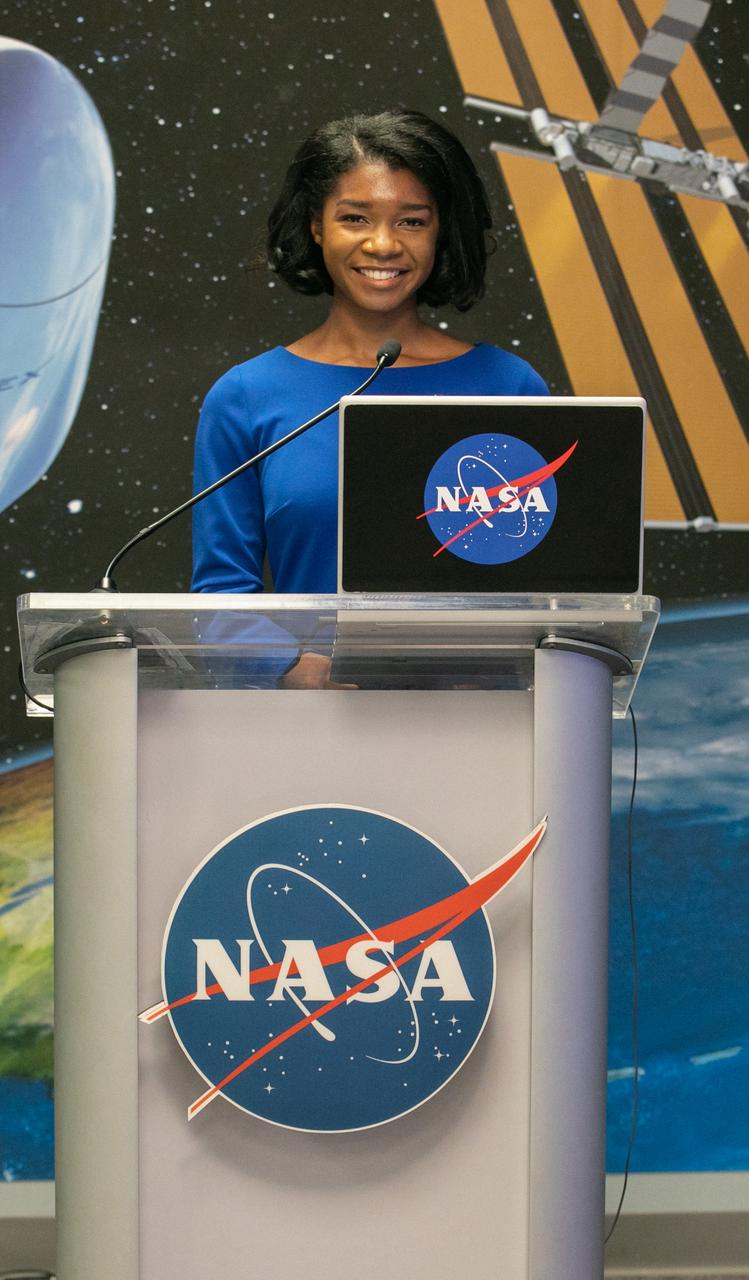
NASA Communications’ Jasmine Hopkins moderates a CRS-21 prelaunch news conference at Kennedy Space Center in Florida on Dec. 4, 2020. Participants included Kenny Todd, deputy program manager, International Space Station Program Office; Kirt Costello, chief scientist, International Space Station Program Office; Sarah Walker, director, Dragon Mission Management, SpaceX; and Melody Lovin, launch weather officer, U.S. Air Force 45th Space Wing. SpaceX’s Falcon 9 rocket, with the upgraded version of the Cargo Dragon spacecraft atop, is targeted to lift off from Kennedy’s Launch Complex 39A Saturday, Dec. 5, at 11:39 a.m. EST. CRS-21 will deliver supplies, equipment, and critical materials needed to support a variety of science and research investigations on the International Space Station.
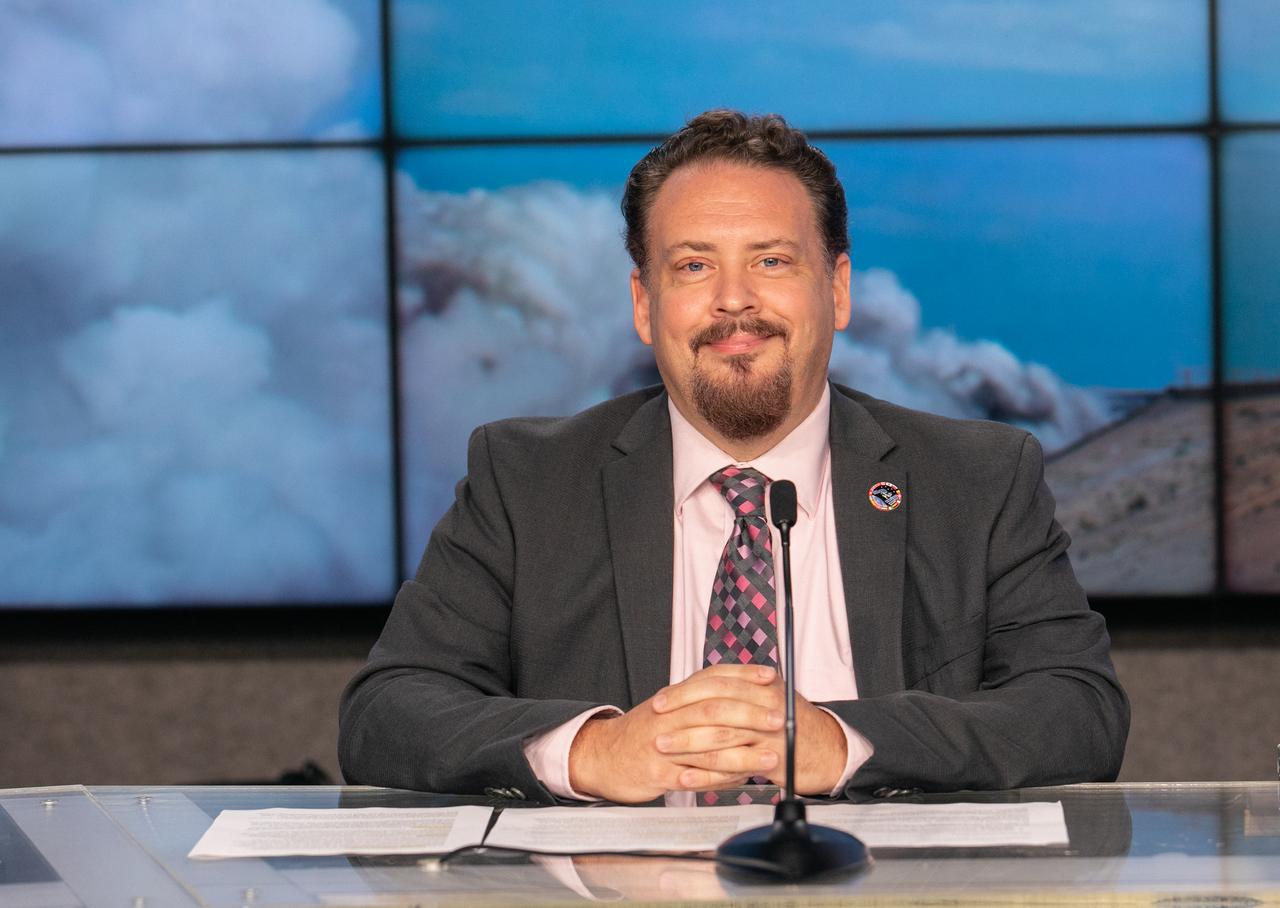
Kirt Costello, chief scientist, International Space Station Program Office, is introduced during a CRS-21 prelaunch news conference at NASA’s Kennedy Space Center in Florida on Dec. 4, 2020. Kenny Todd, deputy program manager, International Space Station Program Office; Sarah Walker, director, Dragon Mission Management, SpaceX; and Melody Lovin, launch weather officer, U.S. Air Force 45th Space Wing, also participated in the event, which was moderated by NASA Communications’ Jasmine Hopkins. SpaceX’s Falcon 9 rocket, with the upgraded version of the Cargo Dragon spacecraft atop, is targeted to lift off from Kennedy’s Launch Complex 39A Saturday, Dec. 5, at 11:39 a.m. EST. CRS-21 will deliver supplies, equipment, and critical materials needed to support a variety of science and research investigations on the International Space Station.
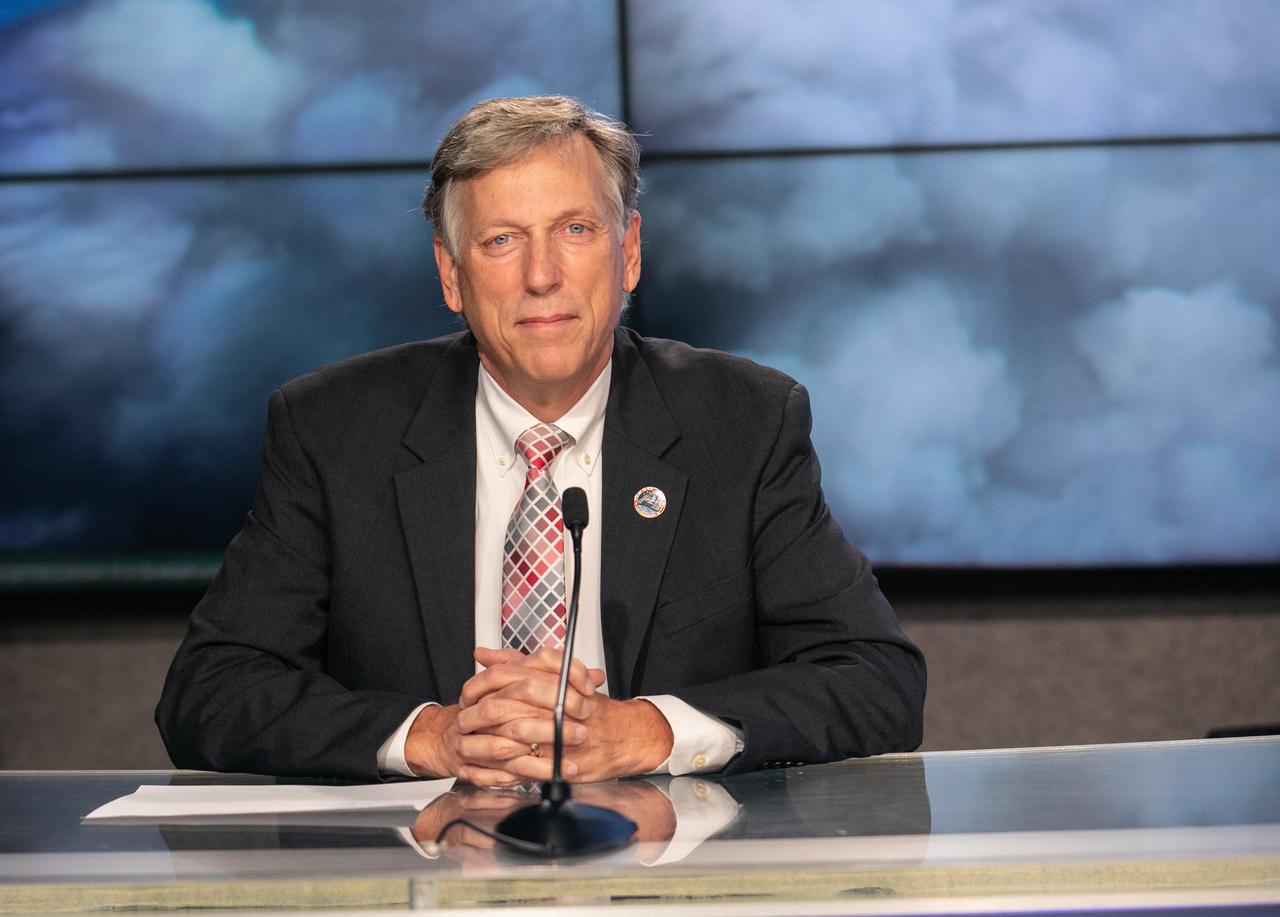
Kenny Todd, deputy program manager, International Space Station Program Office, is introduced during a CRS-21 prelaunch news conference at NASA’s Kennedy Space Center in Florida on Dec. 4, 2020. Kirt Costello, chief scientist, International Space Station Program Office; Sarah Walker, director, Dragon Mission Management, SpaceX; and Melody Lovin, launch weather officer, U.S. Air Force 45th Space Wing, also participated in the event, which was moderated by NASA Communications’ Jasmine Hopkins. SpaceX’s Falcon 9 rocket, with the upgraded version of the Cargo Dragon spacecraft atop, is targeted to lift off from Kennedy’s Launch Complex 39A Saturday, Dec. 5, at 11:39 a.m. EST. CRS-21 will deliver supplies, equipment, and critical materials needed to support a variety of science and research investigations on the International Space Station.
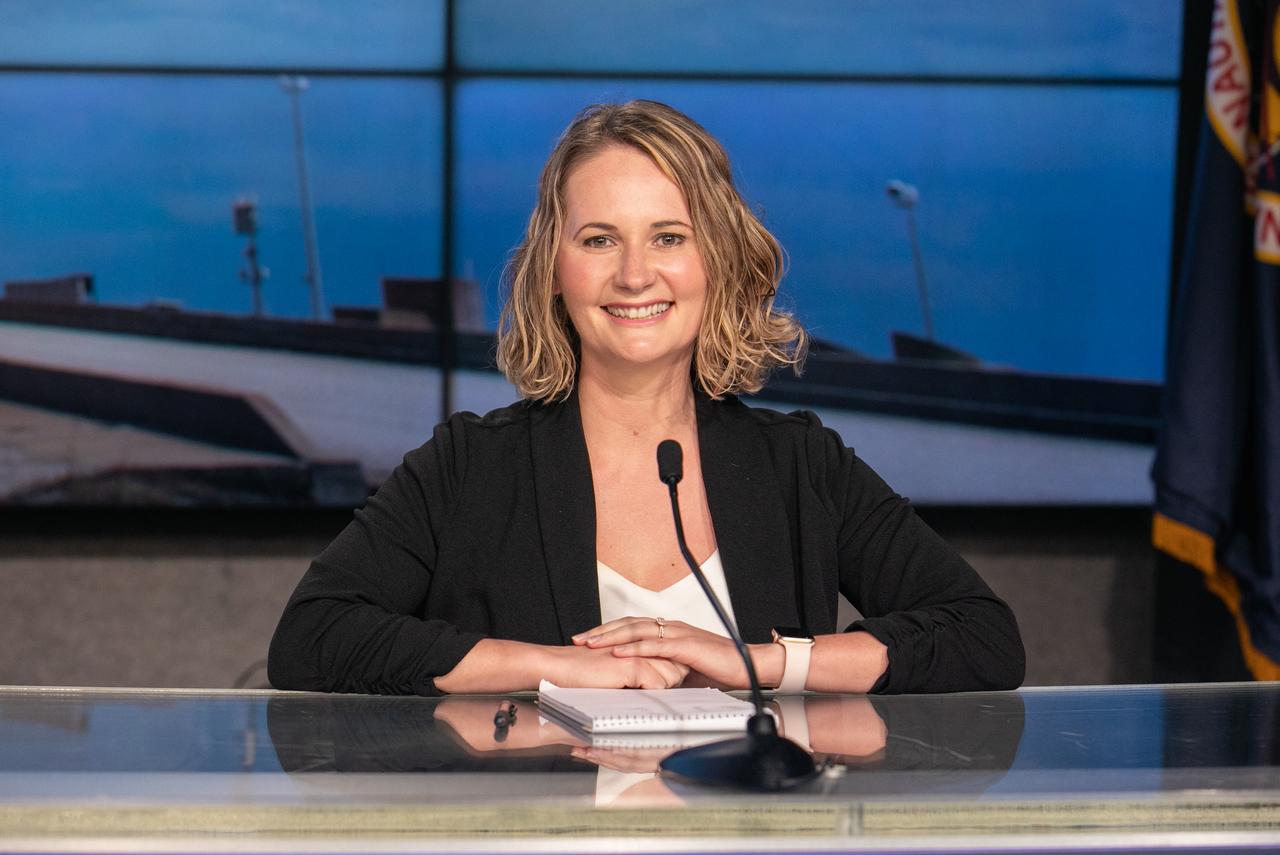
Melody Lovin, launch weather officer, U.S. Air Force 45th Space Wing, is introduced during a CRS-21 prelaunch news conference at NASA’s Kennedy Space Center in Florida on Dec. 4, 2020. Sarah Walker, director, Dragon Mission Management, SpaceX, Kirt Costello, chief scientist, International Space Station Program Office, and Kenny Todd, deputy program manager, International Space Station Program Office, also participated in the event, which was moderated by NASA Communications’ Jasmine Hopkins. SpaceX’s Falcon 9 rocket, with the upgraded version of the Cargo Dragon spacecraft atop, is targeted to lift off from Kennedy’s Launch Complex 39A Saturday, Dec. 5, at 11:39 a.m. EST. CRS-21 will deliver supplies, equipment, and critical materials needed to support a variety of science and research investigations on the International Space Station.
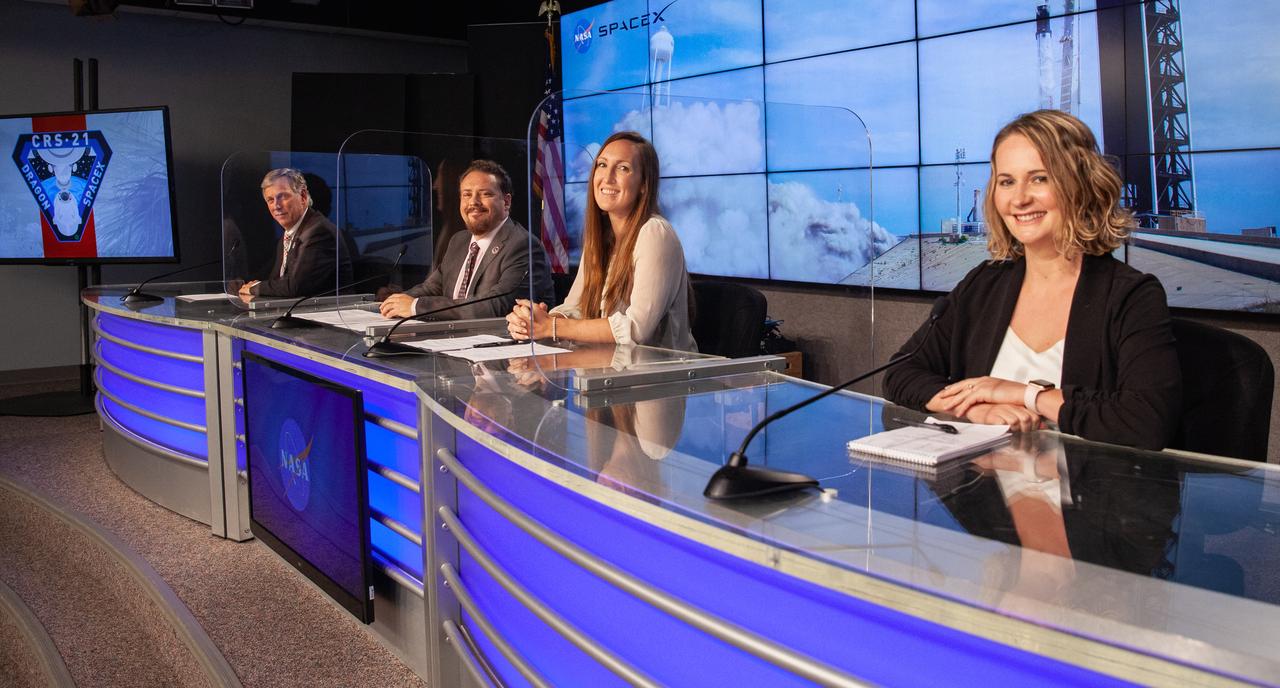
From left, Kenny Todd, deputy program manager, International Space Station Program Office; Kirt Costello, chief scientist, International Space Station Program Office; Sarah Walker, director, Dragon Mission Management, SpaceX; and Melody Lovin, launch weather officer, U.S. Air Force 45th Space Wing, participate in a CRS-21 prelaunch news conference at Kennedy Space Center in Florida on Dec. 4, 2020. NASA Communications’ Jasmine Hopkins moderated the event. SpaceX’s Falcon 9 rocket, with the upgraded version of the Cargo Dragon spacecraft atop, is targeted to lift off from Kennedy’s Launch Complex 39A Saturday, Dec. 5, at 11:39 a.m. EST. CRS-21 will deliver supplies, equipment, and critical materials needed to support a variety of science and research investigations on the International Space Station.
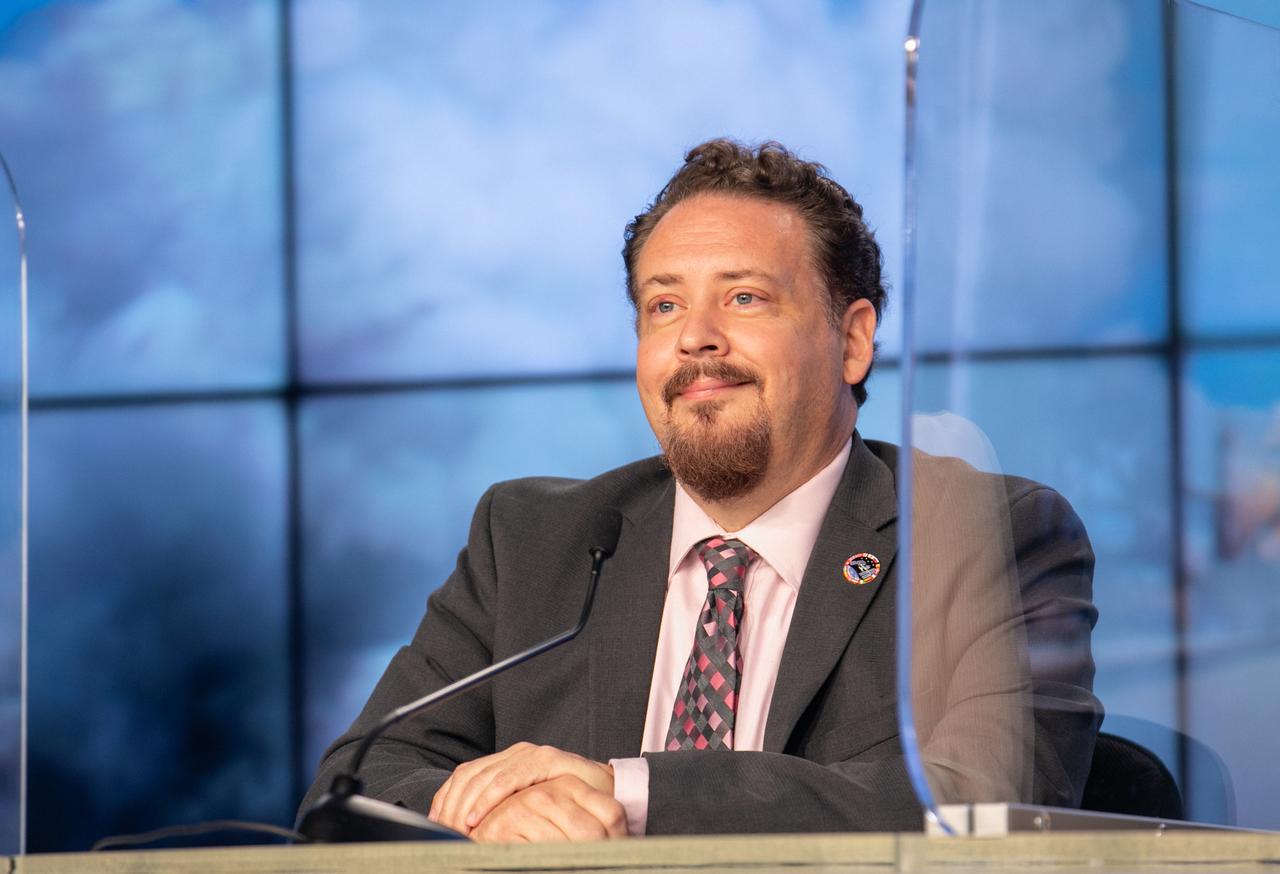
Kirt Costello, chief scientist, International Space Station Program Office, listens to a question during a CRS-21 prelaunch news conference at NASA’s Kennedy Space Center in Florida on Dec. 4, 2020. Kenny Todd, deputy program manager, International Space Station Program Office; Sarah Walker, director, Dragon Mission Management, SpaceX; and Melody Lovin, launch weather officer, U.S. Air Force 45th Space Wing, also participated in the event, which was moderated by NASA Communications’ Jasmine Hopkins. SpaceX’s Falcon 9 rocket, with the upgraded version of the Cargo Dragon spacecraft atop, is targeted to lift off from Kennedy’s Launch Complex 39A Saturday, Dec. 5, at 11:39 a.m. EST. CRS-21 will deliver supplies, equipment, and critical materials needed to support a variety of science and research investigations on the International Space Station.
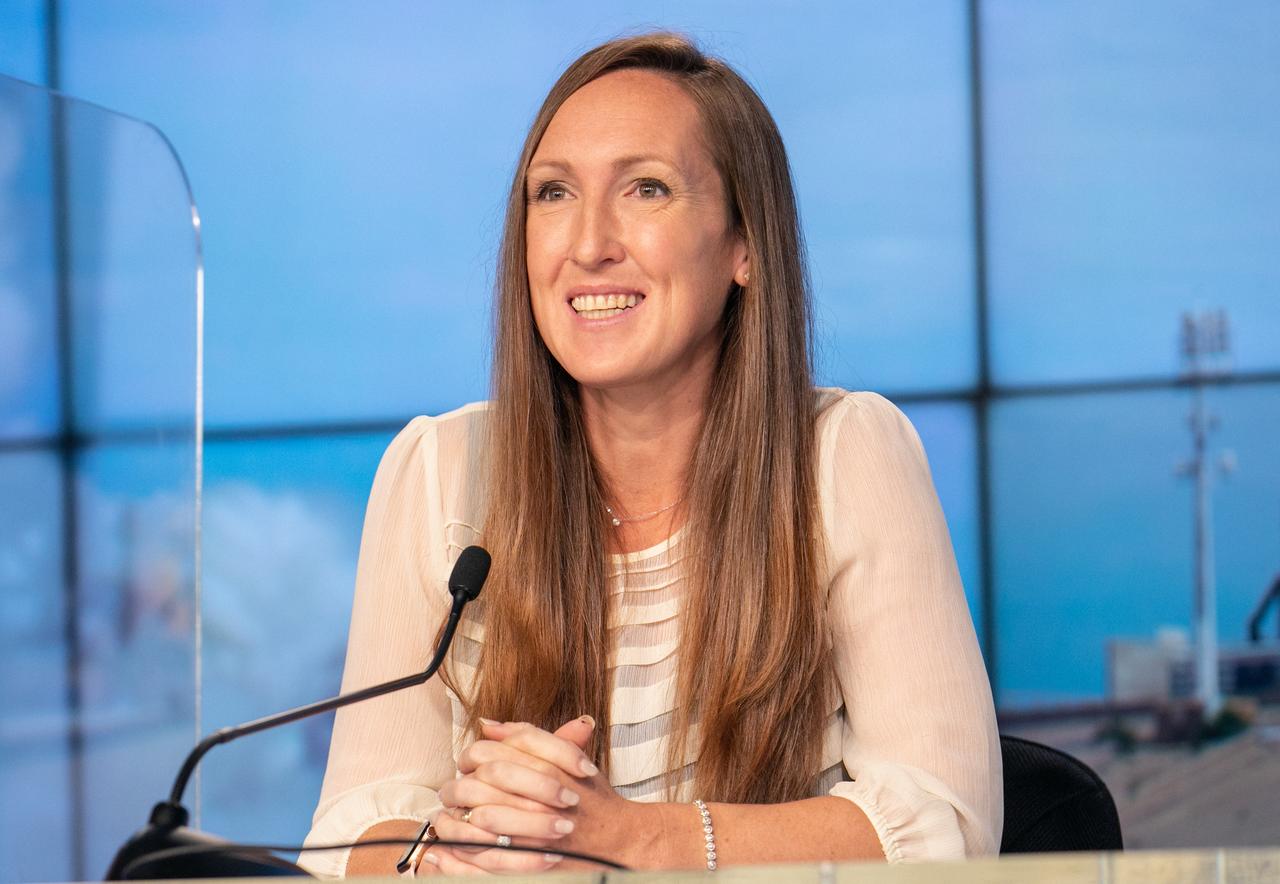
Sarah Walker, director, Dragon Mission Management, SpaceX, responds to a question during a CRS-21 prelaunch news conference at NASA’s Kennedy Space Center in Florida on Dec. 4, 2020. Kirt Costello, chief scientist, International Space Station Program Office, Kenny Todd, deputy program manager, International Space Station Program Office; and Melody Lovin, launch weather officer, U.S. Air Force 45th Space Wing, also participated in the event, which was moderated by NASA Communications’ Jasmine Hopkins. SpaceX’s Falcon 9 rocket, with the upgraded version of the Cargo Dragon spacecraft atop, is targeted to lift off from Kennedy’s Launch Complex 39A Saturday, Dec. 5, at 11:39 a.m. EST. CRS-21 will deliver supplies, equipment, and critical materials needed to support a variety of science and research investigations on the International Space Station.
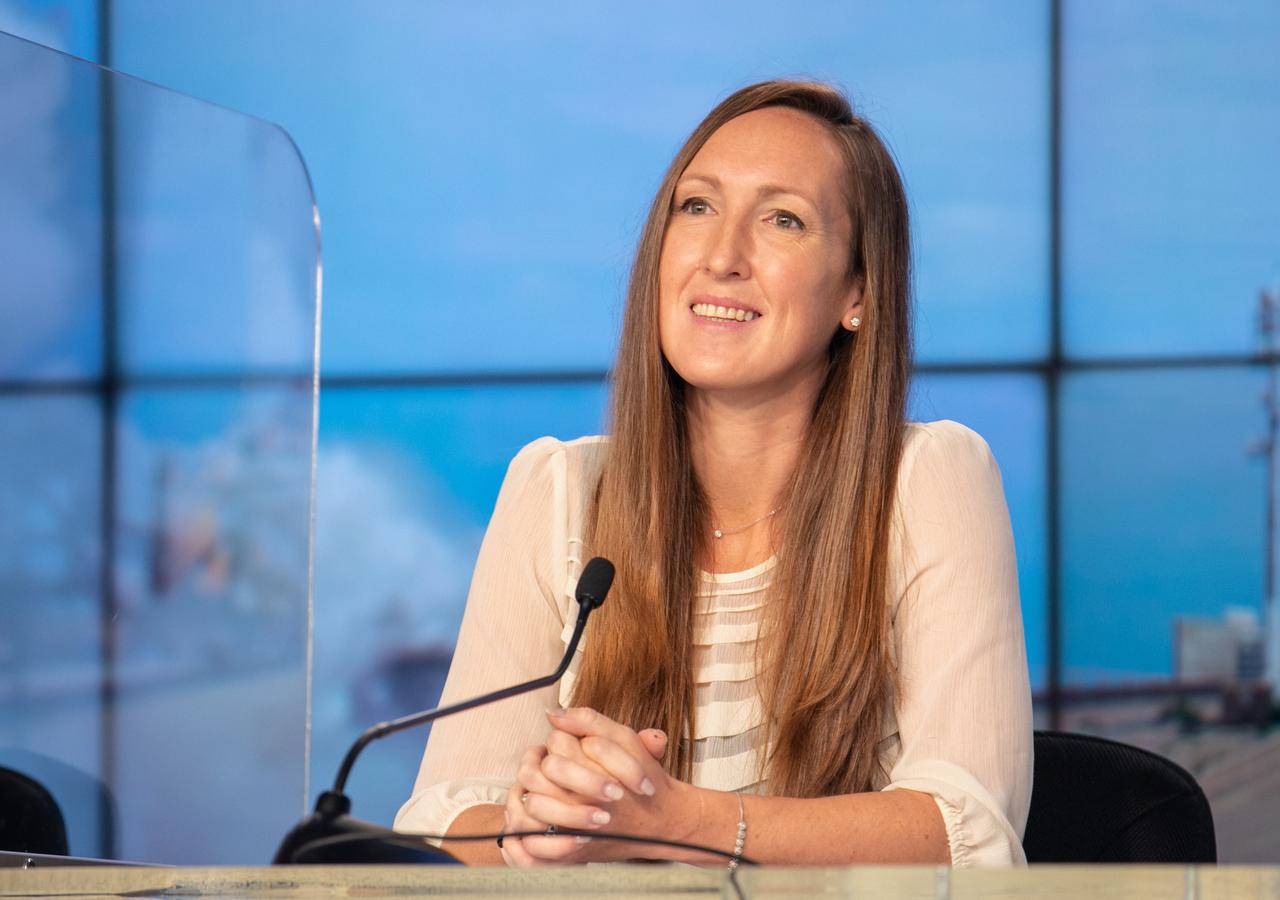
Sarah Walker, director, Dragon Mission Management, SpaceX, listens to a question during a CRS-21 prelaunch news conference at NASA’s Kennedy Space Center in Florida on Dec. 4, 2020. Kirt Costello, chief scientist, International Space Station Program Office, Kenny Todd, deputy program manager, International Space Station Program Office; and Melody Lovin, launch weather officer, U.S. Air Force 45th Space Wing, also participated in the event, which was moderated by NASA Communications’ Jasmine Hopkins. SpaceX’s Falcon 9 rocket, with the upgraded version of the Cargo Dragon spacecraft atop, is targeted to lift off from Kennedy’s Launch Complex 39A Saturday, Dec. 5, at 11:39 a.m. EST. CRS-21 will deliver supplies, equipment, and critical materials needed to support a variety of science and research investigations on the International Space Station.
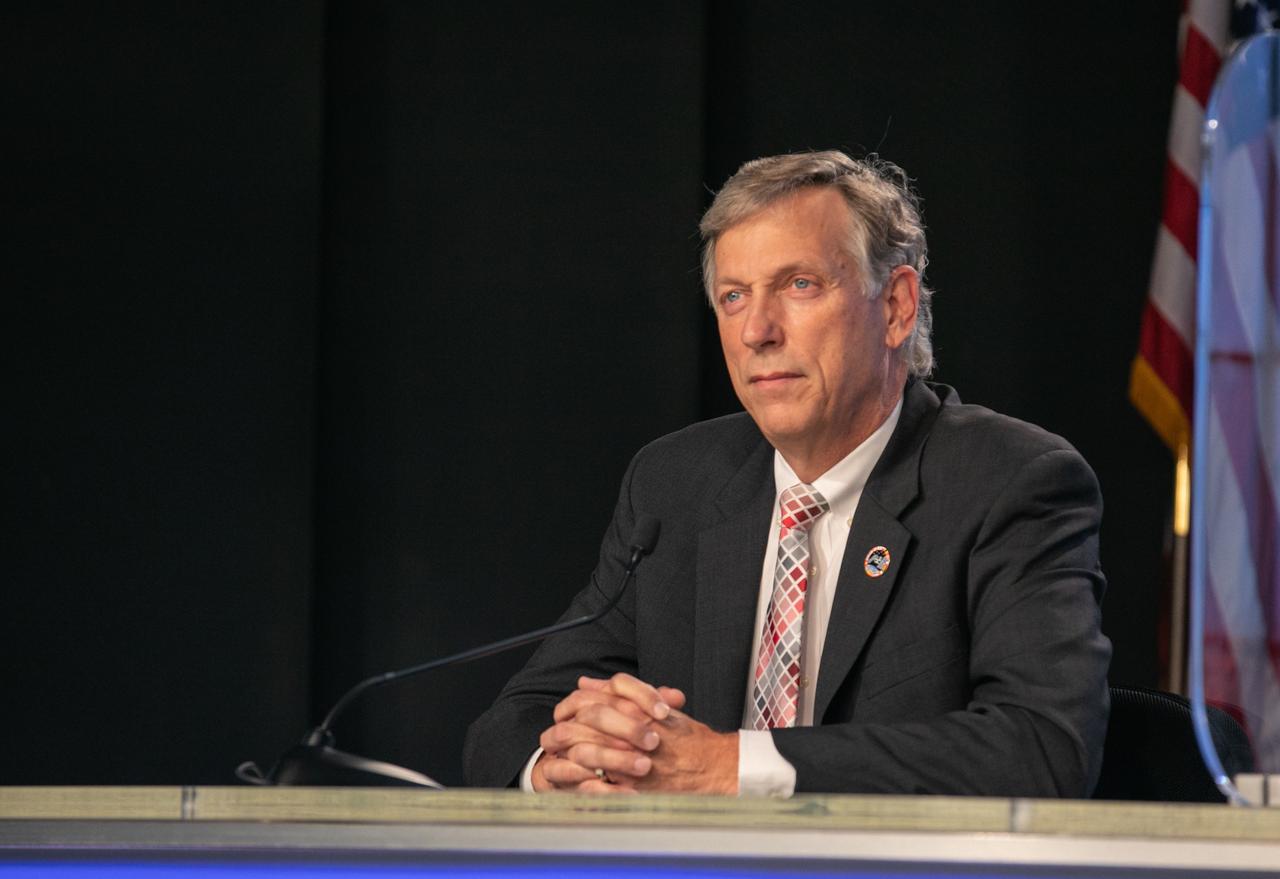
Kenny Todd, deputy program manager, International Space Station Program Office, listens to a question during a CRS-21 prelaunch news conference at NASA’s Kennedy Space Center in Florida on Dec. 4, 2020. Kirt Costello, chief scientist, International Space Station Program Office; Sarah Walker, director, Dragon Mission Management, SpaceX; and Melody Lovin, launch weather officer, U.S. Air Force 45th Space Wing, also participated in the event, which was moderated by NASA Communications’ Jasmine Hopkins. SpaceX’s Falcon 9 rocket, with the upgraded version of the Cargo Dragon spacecraft atop, is targeted to lift off from Kennedy’s Launch Complex 39A Saturday, Dec. 5, at 11:39 a.m. EST. CRS-21 will deliver supplies, equipment, and critical materials needed to support a variety of science and research investigations on the International Space Station.
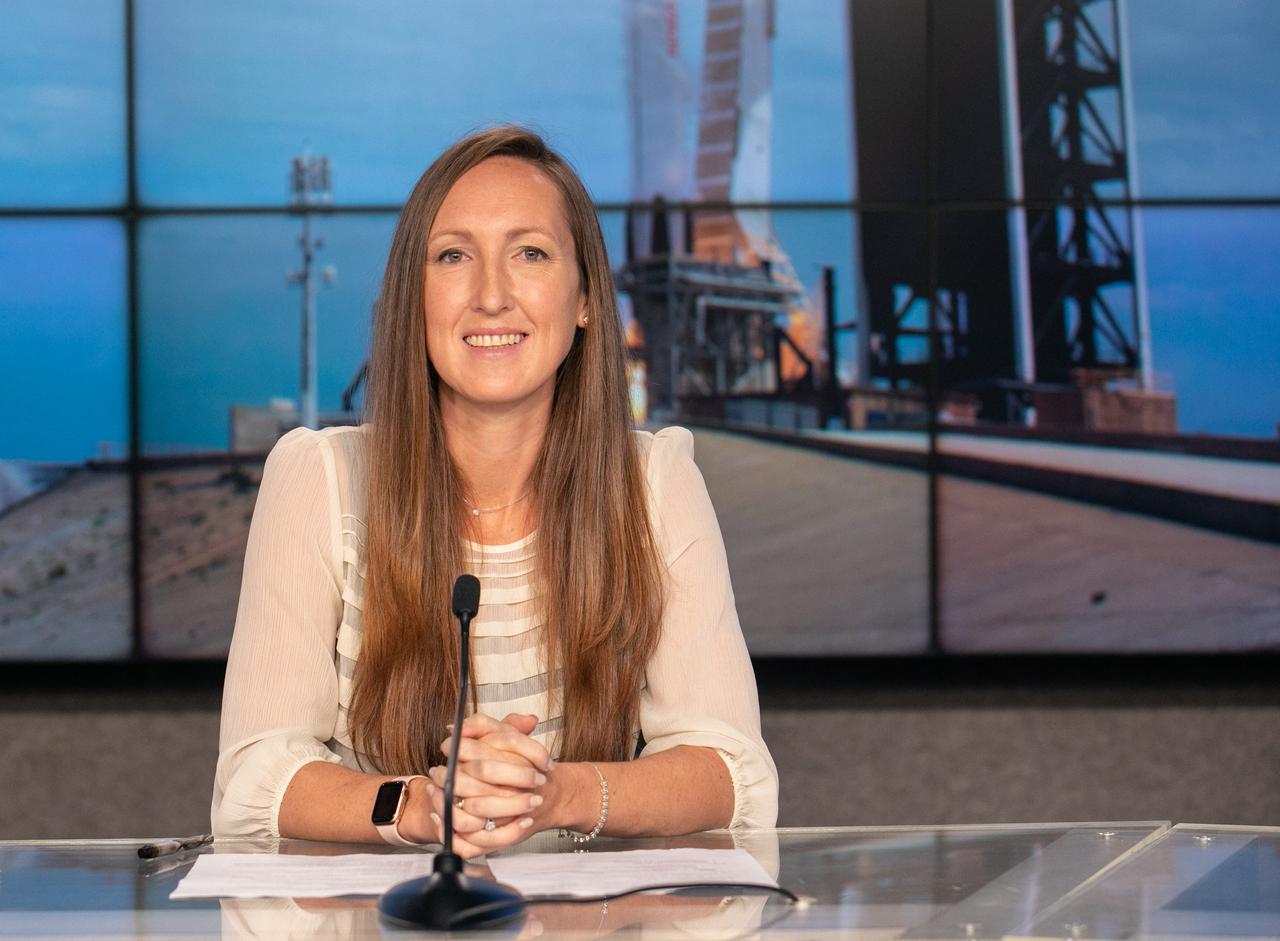
Sarah Walker, director, Dragon Mission Management, SpaceX, is introduced during a CRS-21 prelaunch news conference at NASA’s Kennedy Space Center in Florida on Dec. 4, 2020. Kirt Costello, chief scientist, International Space Station Program Office, Kenny Todd, deputy program manager, International Space Station Program Office; and Melody Lovin, launch weather officer, U.S. Air Force 45th Space Wing, also participated in the event, which was moderated by NASA Communications’ Jasmine Hopkins. SpaceX’s Falcon 9 rocket, with the upgraded version of the Cargo Dragon spacecraft atop, is targeted to lift off from Kennedy’s Launch Complex 39A Saturday, Dec. 5, at 11:39 a.m. EST. CRS-21 will deliver supplies, equipment, and critical materials needed to support a variety of science and research investigations on the International Space Station.
NASA Communications’ Jasmine Hopkins moderates a CRS-21 prelaunch news conference at Kennedy Space Center in Florida on Dec. 4, 2020. Participants included Kenny Todd, deputy program manager, International Space Station Program Office; Kirt Costello, chief scientist, International Space Station Program Office; Sarah Walker, director, Dragon Mission Management, SpaceX; and Melody Lovin, launch weather officer, U.S. Air Force 45th Space Wing. SpaceX’s Falcon 9 rocket, with the upgraded version of the Cargo Dragon spacecraft atop, is targeted to lift off from Kennedy’s Launch Complex 39A Saturday, Dec. 5, at 11:39 a.m. EST. CRS-21 will deliver supplies, equipment, and critical materials needed to support a variety of science and research investigations on the International Space Station.
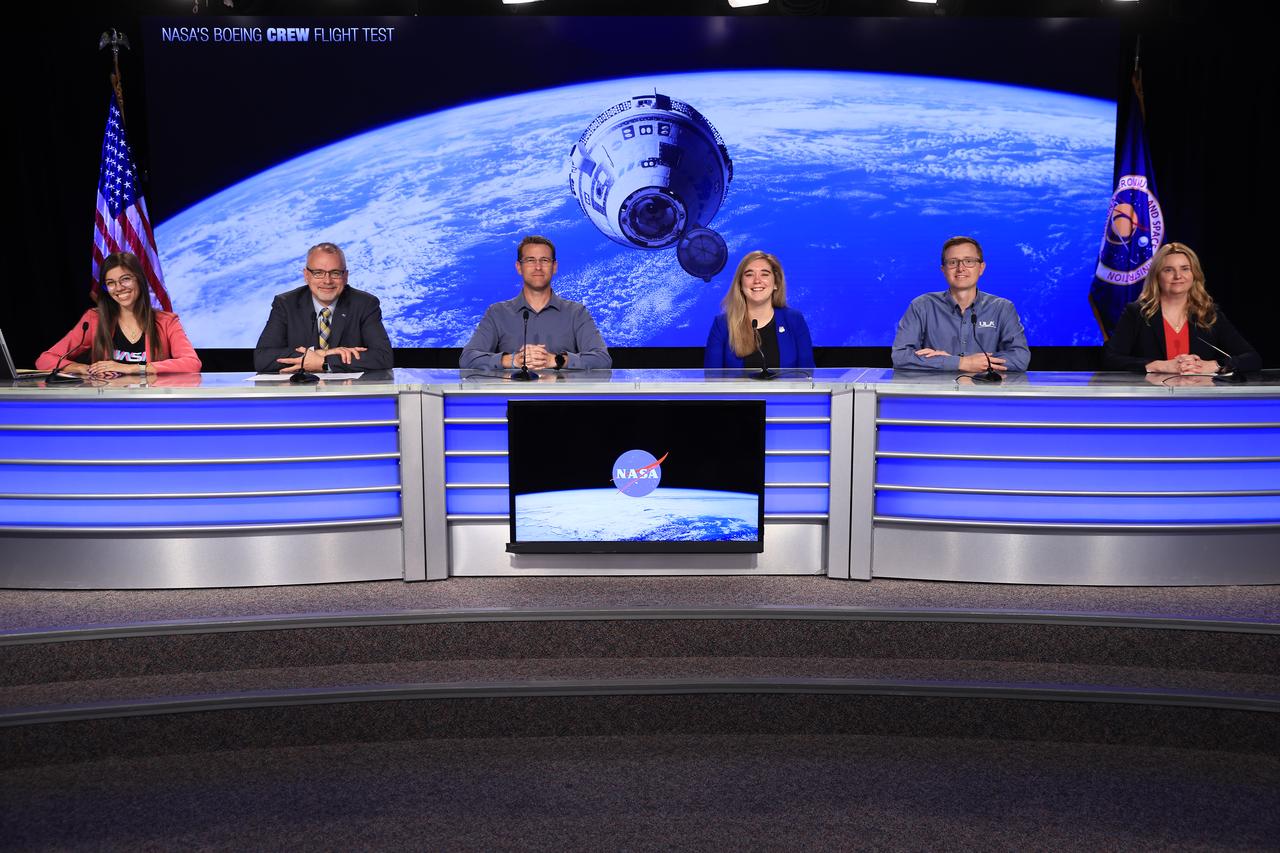
A social media panel discussion takes place at NASA’s Kennedy Space Center in Florida on Friday, May 3, 2024, ahead of NASA’s Boeing Crew Flight Test. Participants, from left to right are Antonia Jaramillo, NASA Communications; Jim Free, NASA associate administrator; Ian Kappes, deputy launch vehicle office manager, NASA’s Commercial Crew Program; Amy Comeau Denker, Starliner associate chief engineer, Boeing; Caleb Weiss, system engineering & test leader, ULA (United Launch Alliance); and Jennifer Buchli, chief scientist, NASA’s International Space Station Program. NASA astronauts Butch Wilmore and Suni Williams are the first to launch aboard Boeing’s Starliner spacecraft atop a ULA Atlas V rocket from Space Launch Complex-41 at Cape Canaveral Space Force Station in Florida. Liftoff is scheduled for 4:43 p.m. ET on Tuesday, May 21.
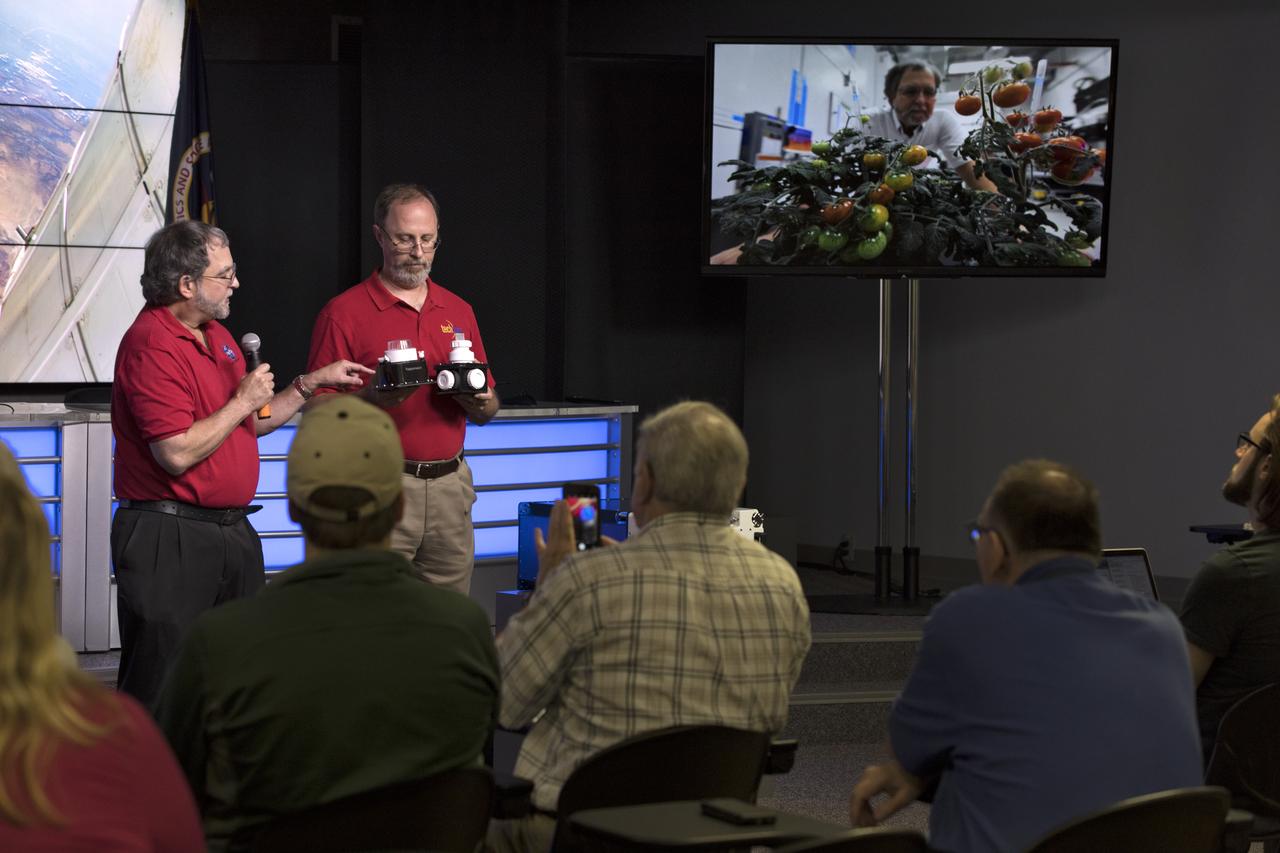
Howard Levine, at left, chief scientist in the Utilization and Life Sciences Office at NASA's Kennedy Space Center, and Dave Reid, a project manager with Techshot, discuss continuing research on growing food in space, as the Veggie Passive Orbital Nutrient Delivery System (PONDS) experiment tests a new way to deliver nutrients to plants. PONDS is one of the experiments that will be aboard a Dragon spacecraft scheduled for liftoff from Cape Canaveral Air Force Station's Space Launch Complex 40 at 4:30 p.m. EST, on April 2, 2018. The SpaceX Falcon 9 rocket will launch the company's 14th Commercial Resupply Services mission to the space station.
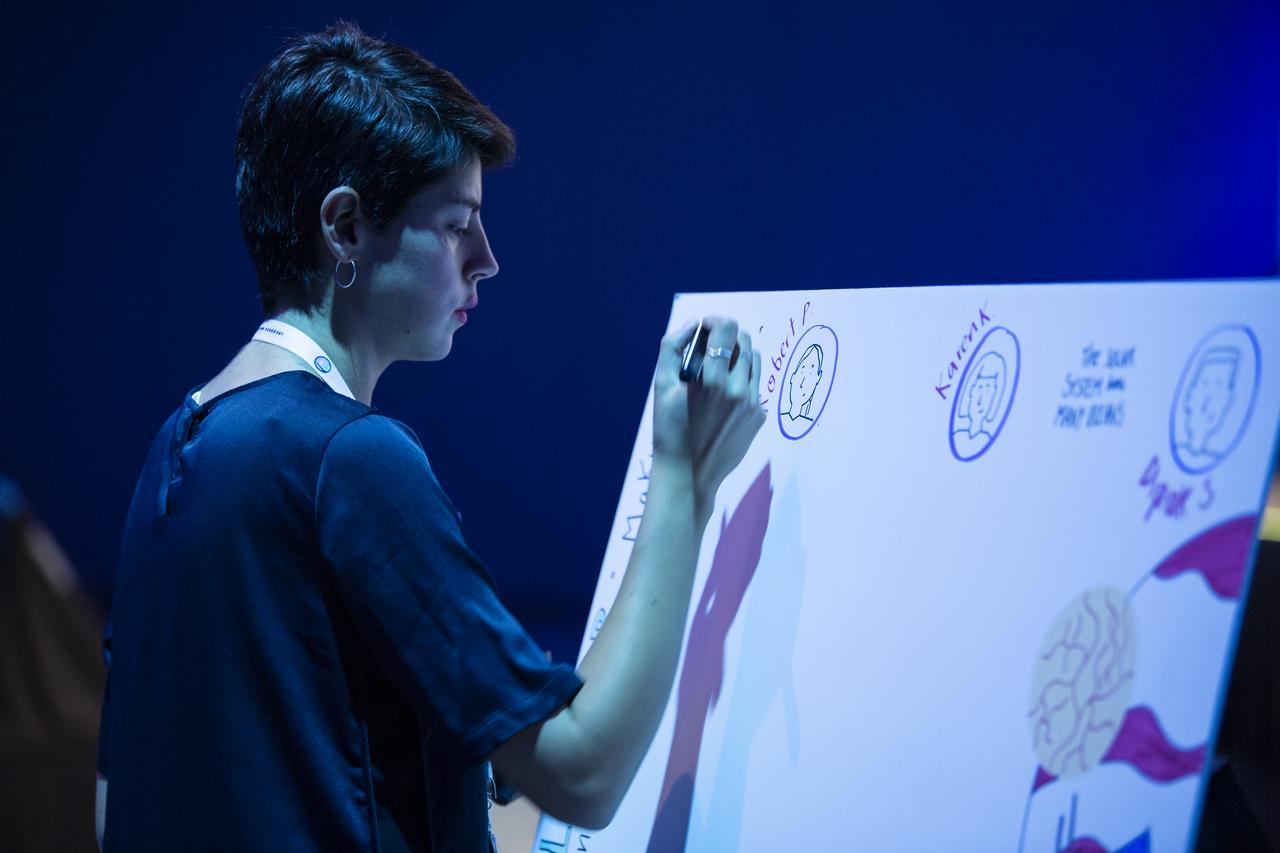
An artist illustrates a panel discussion titled, “Europa Clipper: Making a Mission to Understand Our Place in the Universe,” with panelists Robert Pappalardo, Europa Clipper Project Scientist, NASA Jet Propulsion Laboratory (JPL); Karen Kirby, Europa Clipper Deputy Project System Engineer, Applied Physics Laboratory (APL); Jennifer Dooley, Europa Clipper Project Systems Engineer, JPL; Thomas Magner, Manager, APL; and Bill Nye, Chief Executive Officer, The Planetary Society, during the 70th International Astronautical Congress, Wednesday, Oct. 23, 2019 at the Walter E. Washington Convention Center in Washington. Photo credit: (NASA/Aubrey Gemignani)

Jennifer Buchli, deputy chief scientist for NASA’s International Space Station Program Science Office, addresses NASA Social participants during a What’s on Board science briefing at the agency’s Kennedy Space Center in Florida on March 5, 2020. The briefing provided a closer look at some of the payloads launching on SpaceX’s 20th Commercial Resupply Services (CRS-20) mission to the International Space Station. The company’s Falcon 9 rocket is scheduled to lift off from Cape Canaveral Air Force Station’s Space Launch Complex 40 at 11:50 p.m. EST on March 6, 2020.
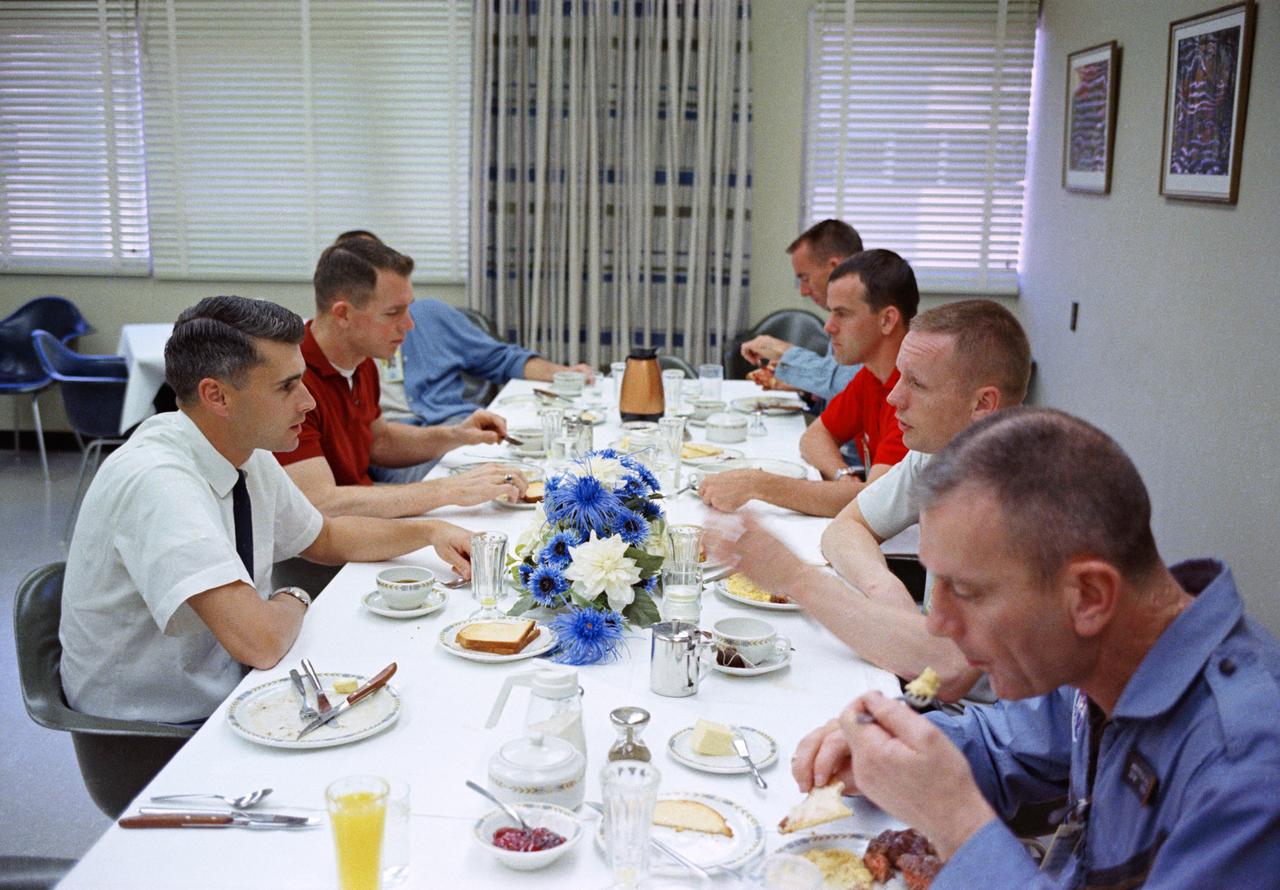
S66-24439 (16 March 1966) --- The Gemini-8 prime crew, along with several fellow astronauts, have a hearty breakfast of steak and eggs on the morning of the Gemini-8 launch. Seated clockwise around the table, starting at lower left, are Donald K. Slayton, Manned Spaceflight Center (MSC) Assistant Director for Flight Crew Operations; astronaut Neil A. Armstrong, Gemini-8 command pilot; scientist-astronaut F. Curtis Michel; astronaut R. Walter Cunningham; astronaut Alan B. Shepard Jr. (face obscured), Chief, MSC Astronaut Office; astronaut David R. Scott, Gemini-8 pilot; and astronaut Roger B. Chaffee. Photo credit: NASA

NASA John C. Stennis Space Center employees observed Women's History Month on March 17 with a panel discussion that featured accomplished women of the facility. The gathering featured (l to r): Pam Covington, manager of the NASA Office of External Affairs at Stennis; Mary Jones, assistant chief of staff with the Navy Meterology & Oceanography Command; and Lauren Underwood, senior research scientist with Science Systems and Applications, Inc. In addition to the panel discussion, the Stennis Diversity Council and Patriot Technologies also hosted a pair of 'lunch-and-learn' sessions focused on women's issues and history. The luncheons featured videos on Sally Hemings, the slave widely recognized as the mistress of President Thomas Jefferson; and several mothers of U.S. presidents.
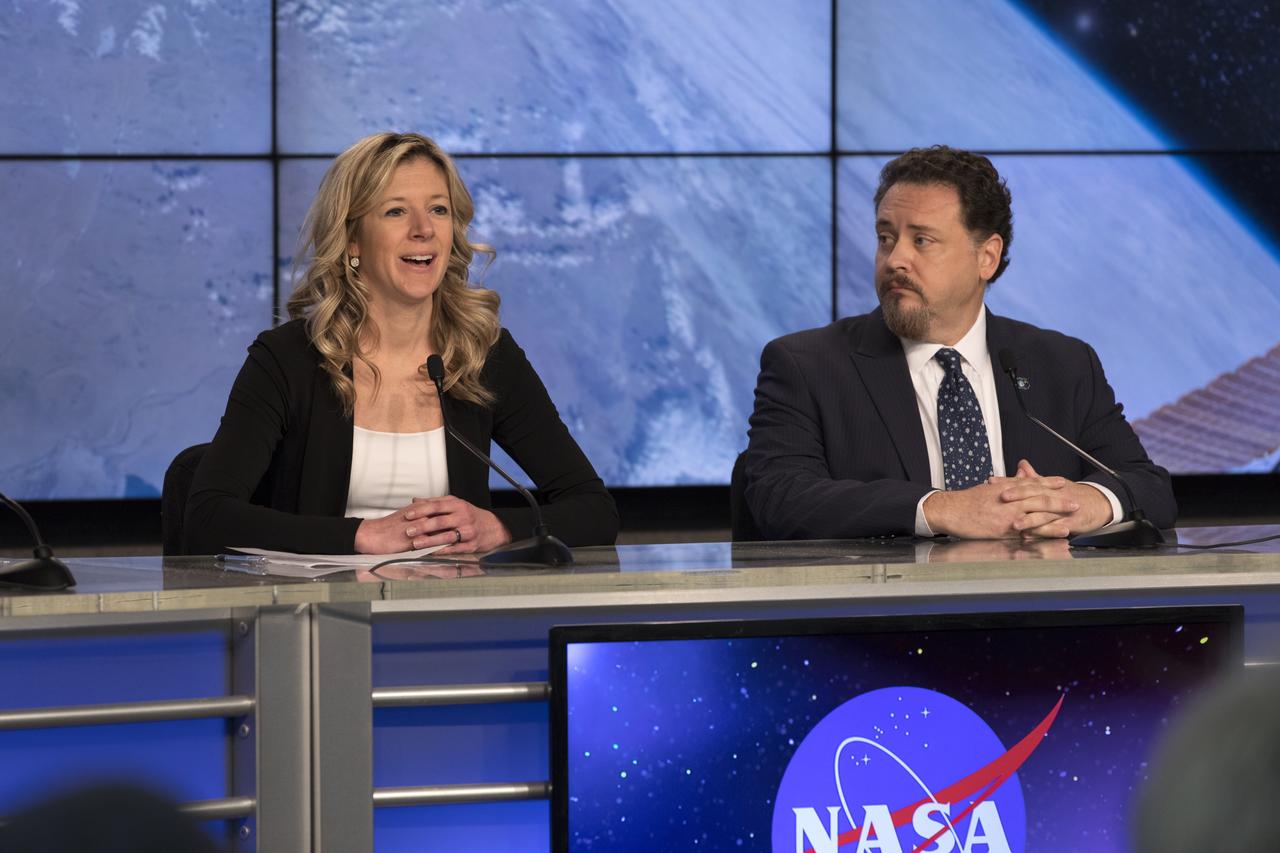
In the Kennedy Space Center’s Press Site auditorium, Jessica Jensen, SpaceX director of Dragon Mission Management, left, and Kirt Costello, deputy chief scientist for the International Space Station Program Science Office at NASA’s Johnson Space Center in Houston, speak to members of the media during a prelaunch news conference for the SpaceX CRS-13 commercial resupply services mission to the International Space Station. A Dragon spacecraft is scheduled to be launched from Space Launch Complex 40 at Cape Canaveral Air Force Station at 11:46 a.m. EST, on Dec. 12, 2017. The SpaceX Falcon 9 rocket will lift off on the company's 13th Commercial Resupply Services mission to the space station.
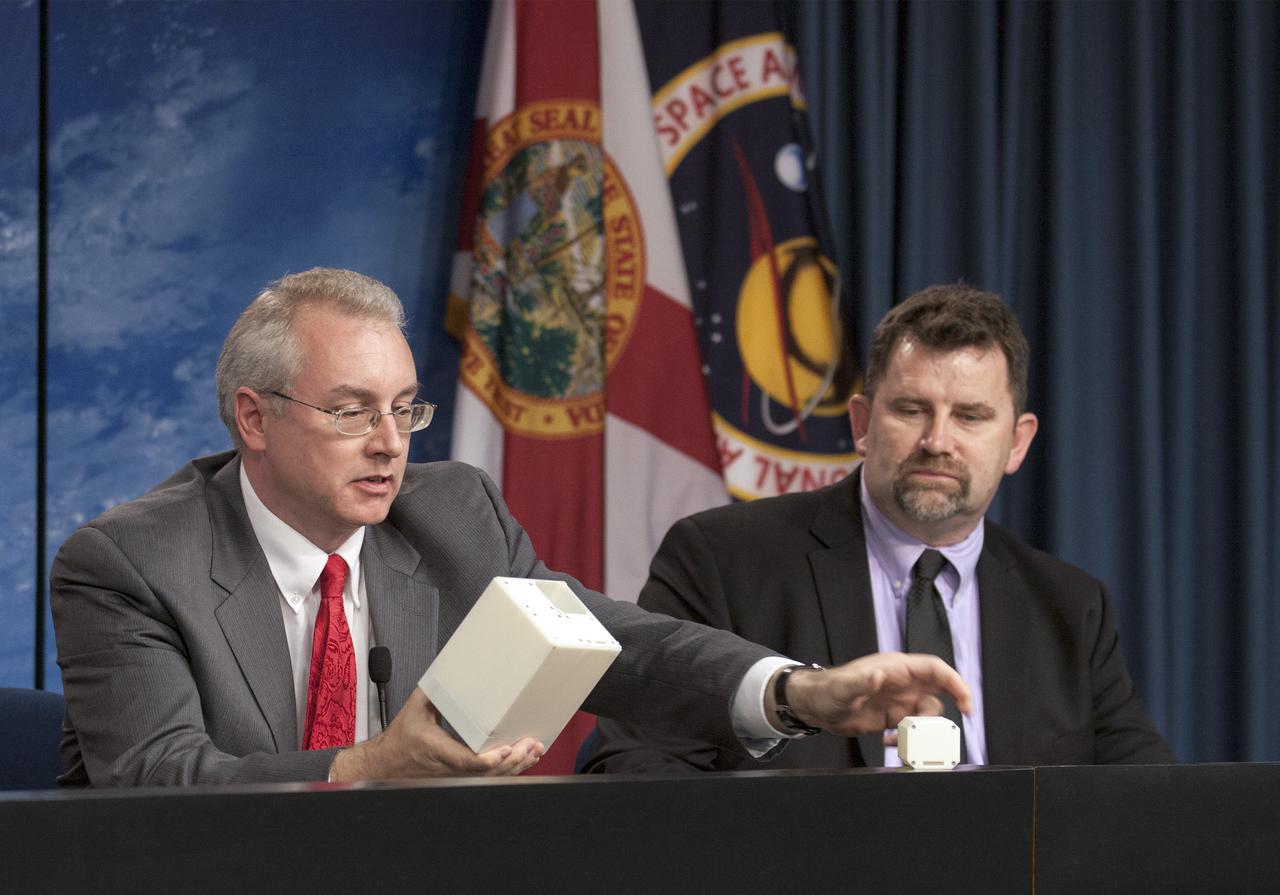
CAPE CANAVERAL, Fla. - Media attending a pre-launch news conference at the Kennedy Space Center, Fla. heard from Michael Johnson, chief technical officer for NanoRacks, who described experiments to be transported to the International Space Station on the SpaceX 2 mission. Looking on from the right is Michael Roberts, research scientist with the Center for Advancement of Science in Space. Scheduled for launch March 1 atop a Falcon 9 rocket, the SpaceX Dragon capsule will be making its third trip to the space station. The mission is the second of 12 SpaceX flights contracted by NASA to resupply the orbiting laboratory. For more information, visit http:__www.nasa.gov_mission_pages_station_structure_launch_spacex2-feature.html Photo credit: NASA_Kim Shiflett
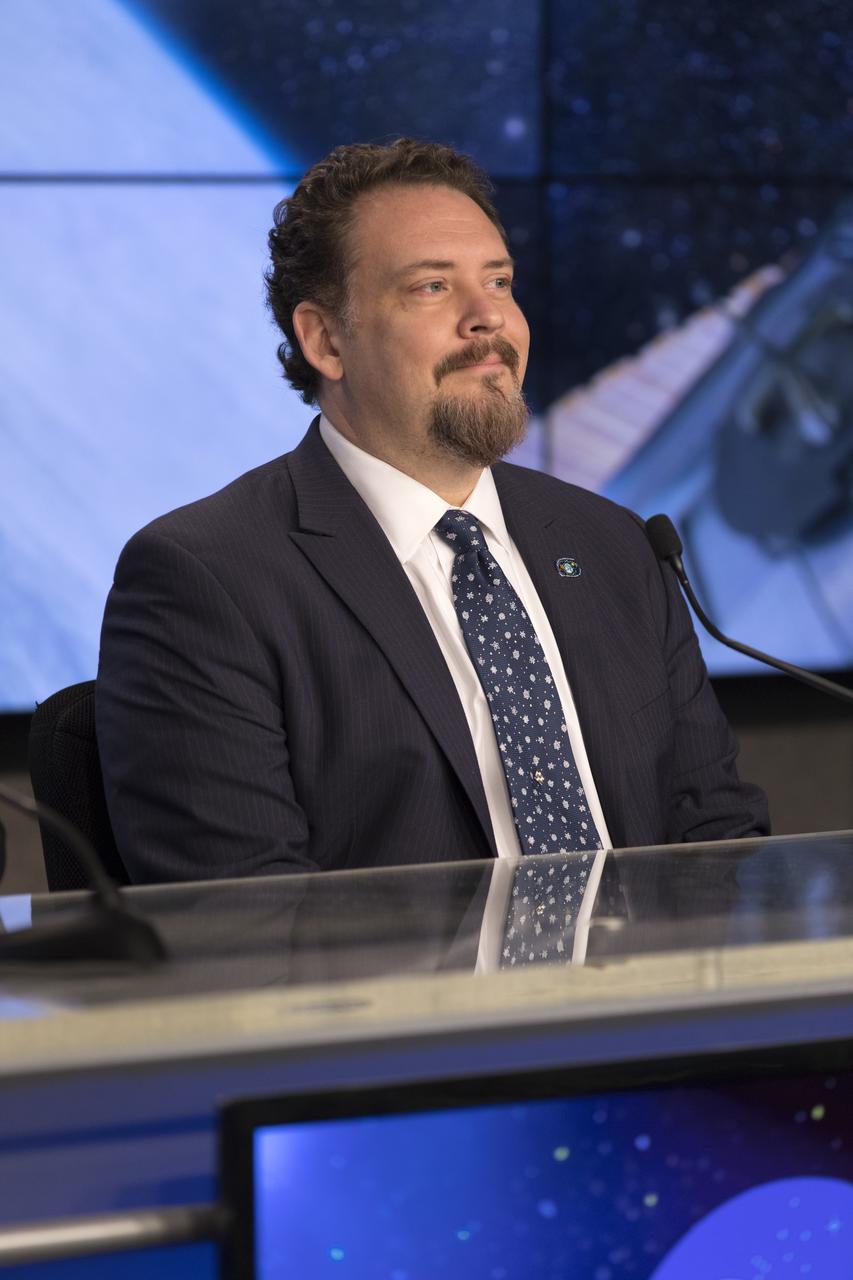
In the Kennedy Space Center’s Press Site auditorium, Kirt Costello, deputy chief scientist for the International Space Station Program Science Office at NASA’s Johnson Space Center in Houston, speaks to members of the media during a prelaunch news conference for the SpaceX CRS-13 commercial resupply services mission to the International Space Station. A Dragon spacecraft is scheduled to be launched from Space Launch Complex 40 at Cape Canaveral Air Force Station at 11:46 a.m. EST, on Dec. 12, 2017. The SpaceX Falcon 9 rocket will lift off on the company's 13th Commercial Resupply Services mission to the space station.
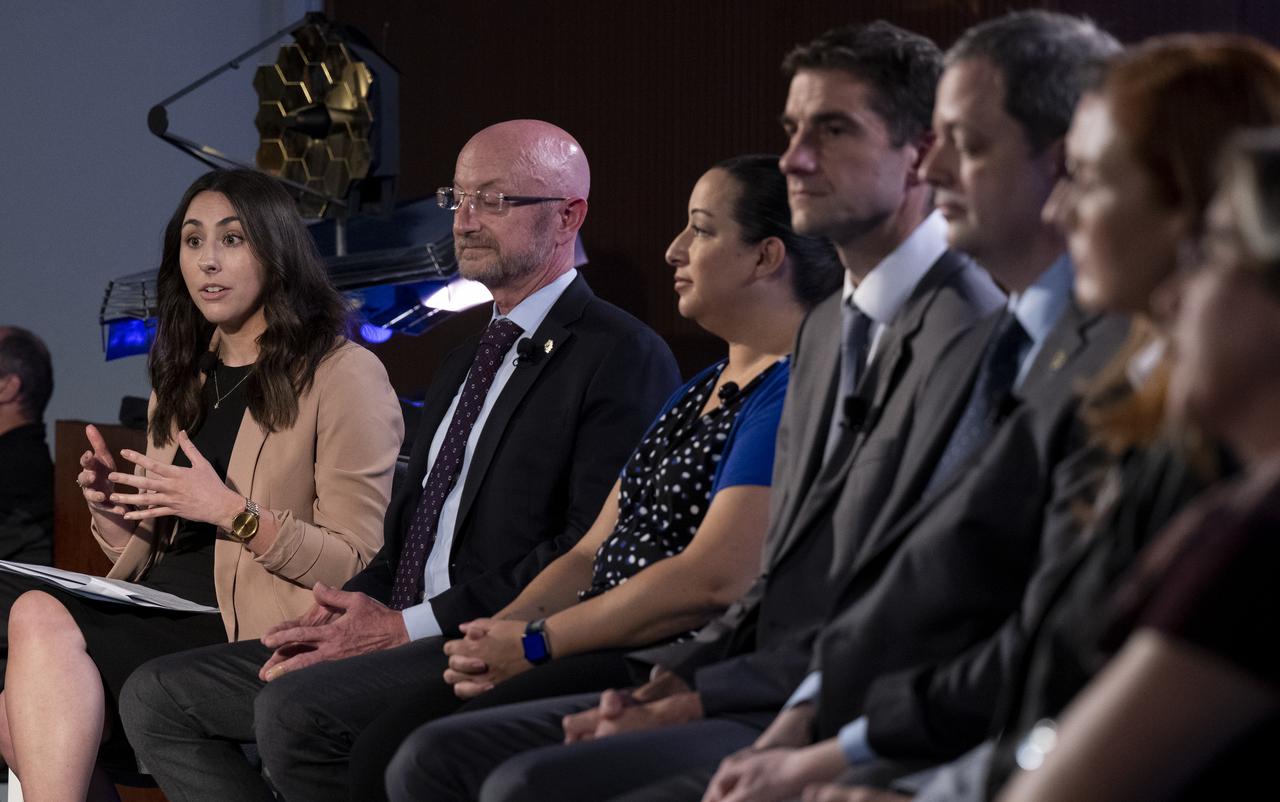
NASA Public Affairs Officer Alise Fisher, left, moderates a briefing with NASA James Webb Space Telescope Program Scientist and Astrophysics Division Chief Scientist Eric Smith, NASA James Webb Space Telescope Deputy Project Scientist for Exoplanet Science Knicole Colón, NASA James Webb Space Telescope Project Scientist at ESA (European Space Agency) Christopher Evans, NASA James Webb Space Telescope project scietntist, Space Telescope Science Institute, Klaus Pontoppidan, Principal Investigator for the Canadian Near-Infrared Imager and Slitless Spectrograph at the University of Montreal René Doyon, NASA James Webb Space Telescope Deputy Project Scientist for Communications Amber Straughn, and NASA James Webb Space Telescope Operations Project Scientist Jane Rigby following the release of the first full-color images from NASA’s James Webb Space Telescope, Tuesday, July 12, 2022, at NASA’s Goddard Space Flight Center in Greenbelt, Md. The first full-color images and spectroscopic data from the James Webb Space Telescope, a partnership with ESA (European Space Agency) and the Canadian Space Agency (CSA), are a demonstration of the power of Webb as the telescope begins its science mission to unfold the infrared universe. Photo Credit: (NASA/Bill Ingalls)
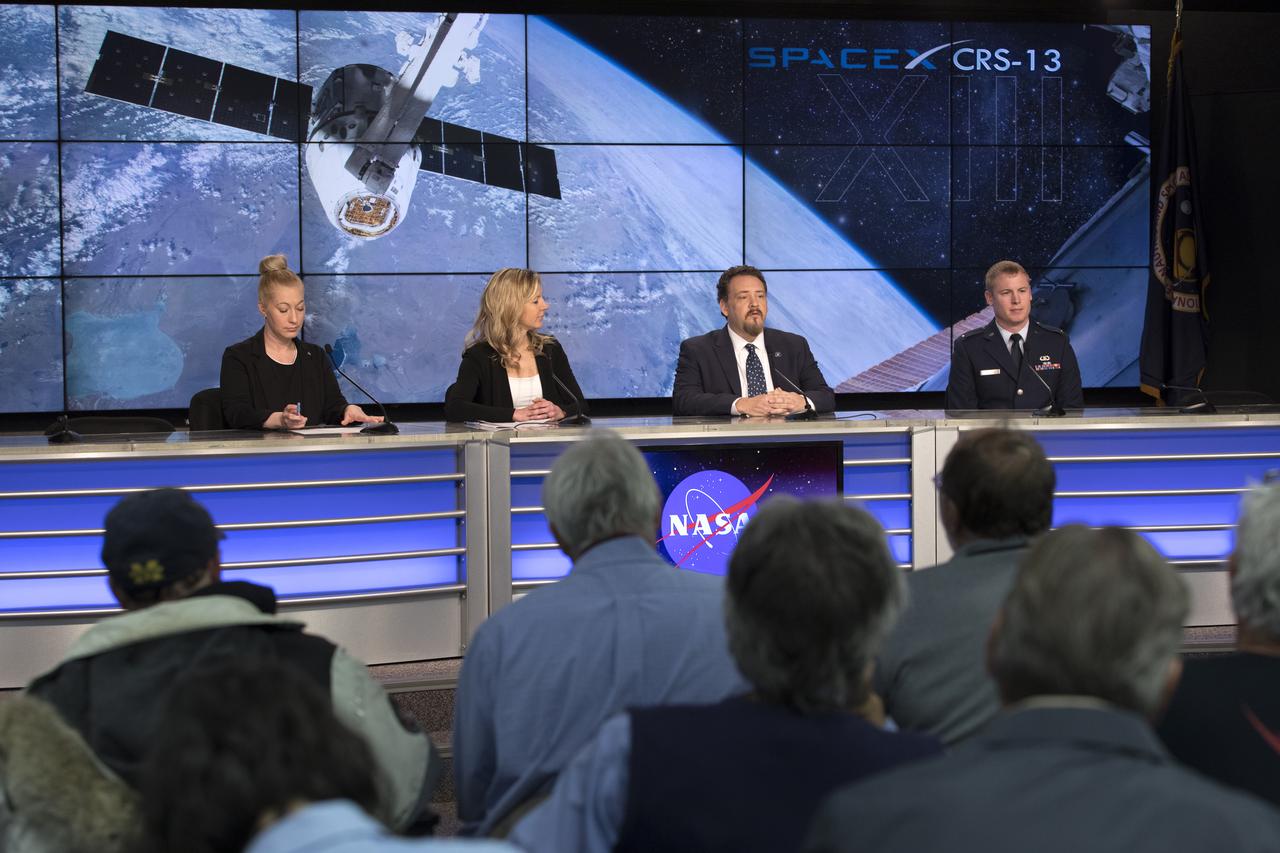
In the Kennedy Space Center’s Press Site auditorium, NASA and industry leaders speak to members of the media during a prelaunch news conference for the SpaceX CRS-13 commercial resupply services mission to the International Space Station. From left are: Cheryl Warner of NASA Communications, Jessica Jensen, SpaceX director of Dragon Mission Management, Kirt Costello, deputy chief scientist for the International Space Station Program Science Office at NASA’s Johnson Space Center in Houston, and Lt. David Myers, weather officer for the 45th Weather Squadron. Kirk Shireman, International Space Station Program manager at Johnson, participated by video link. A Dragon spacecraft is scheduled to be launched from Space Launch Complex 40 at Cape Canaveral Air Force Station at 11:46 a.m. EST, on Dec. 12, 2017. The SpaceX Falcon 9 rocket will lift off on the company's 13th Commercial Resupply Services mission to the space station.
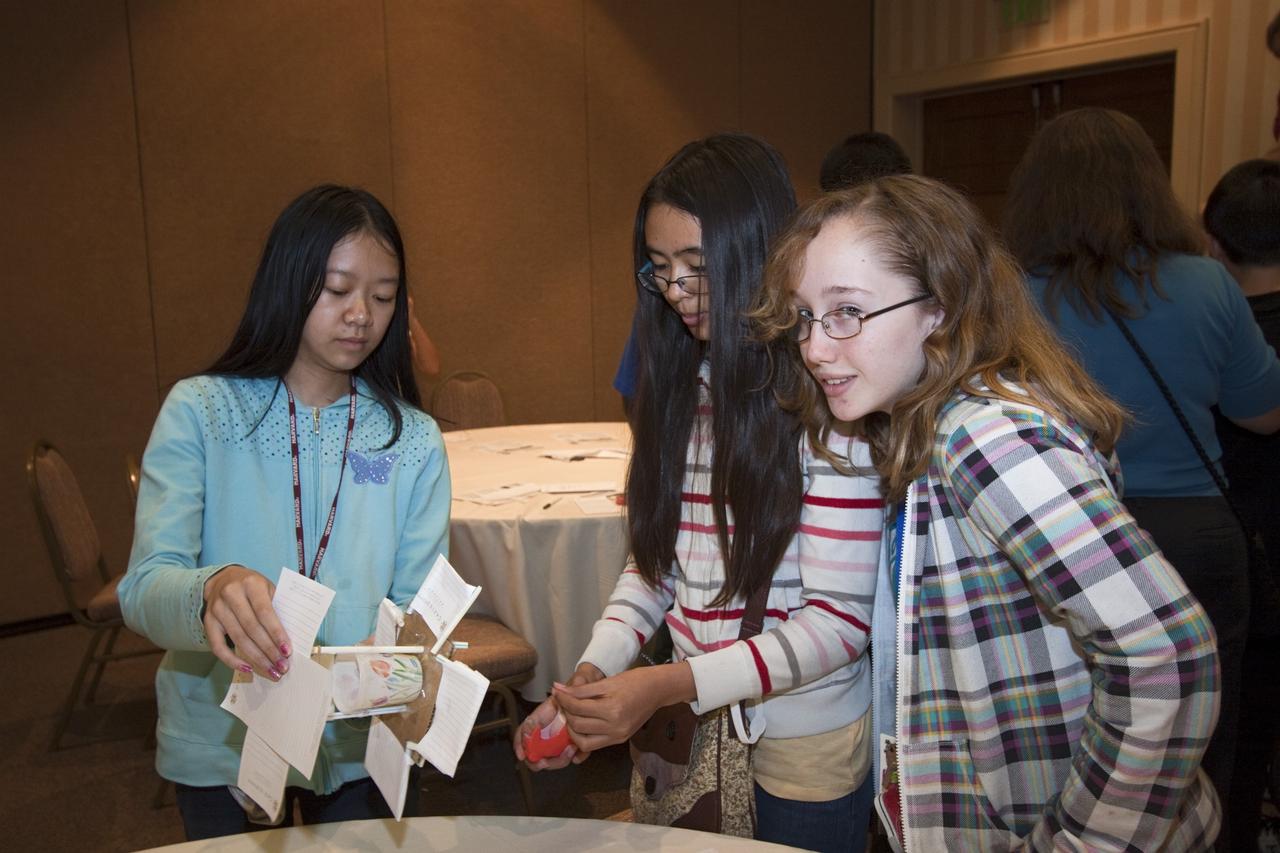
ORLANDO, Fla. – Students from Meadow Woods Middle School in Orlando take part in a hands-on activity during NASA’s Project Management PM Challenge 2012. Education specialists from NASA’s Kennedy Space Center supported the annual PM Challenge with demonstrations designed to illustrate various principles of physics. The demonstrations are designed to increase student interest and pursuit of the science, technology, engineering and mathematics STEM fields integral to producing the next generation of scientists and engineers. PM Challenge 2012 was held at the Caribe Royale Hotel and Convention Center in Orlando, Fla., on Feb. 22-23, to provide a forum for all stakeholders in the project management community to meet and share stories, lessons learned and new uses of technology in the industry. The PM Challenge is sponsored by NASA's Office of the Chief Engineer. For additional information, visit http://www.nasa.gov/offices/oce/pmchallenge/index.html. Photo credit: NASA/Jim Grossmann
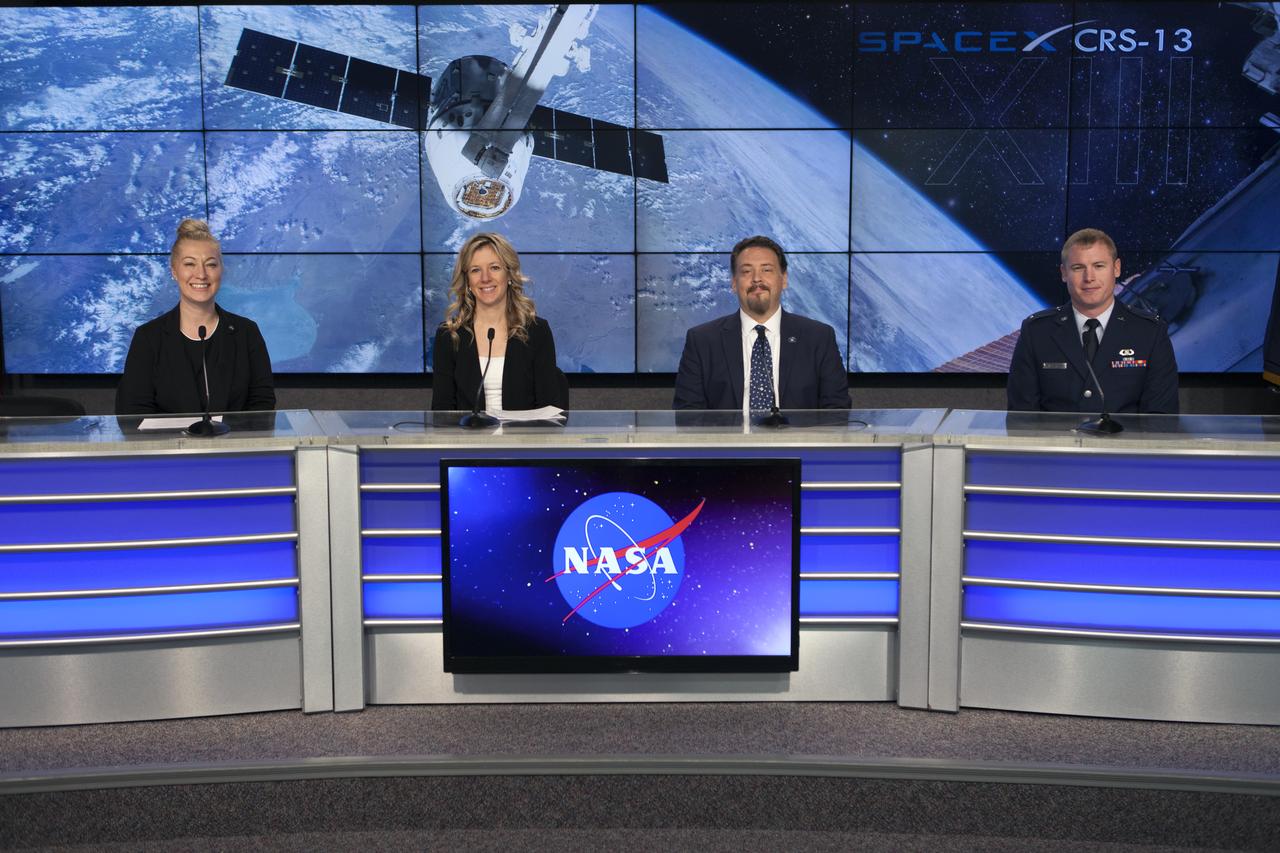
In the Kennedy Space Center’s Press Site auditorium, NASA and industry leaders speak to members of the media during a prelaunch news conference for the SpaceX CRS-13 commercial resupply services mission to the International Space Station. From left are: Cheryl Warner of NASA Communications, Jessica Jensen, SpaceX director of Dragon Mission Management, Kirt Costello, deputy chief scientist for the International Space Station Program Science Office at NASA’s Johnson Space Center in Houston, and Lt. David Myers, weather officer for the 45th Weather Squadron. Kirk Shireman, International Space Station Program manager at Johnson, participated by video link. A Dragon spacecraft is scheduled to be launched from Space Launch Complex 40 at Cape Canaveral Air Force Station at 11:46 a.m. EST, on Dec. 12, 2017. The SpaceX Falcon 9 rocket will lift off on the company's 13th Commercial Resupply Services mission to the space station.
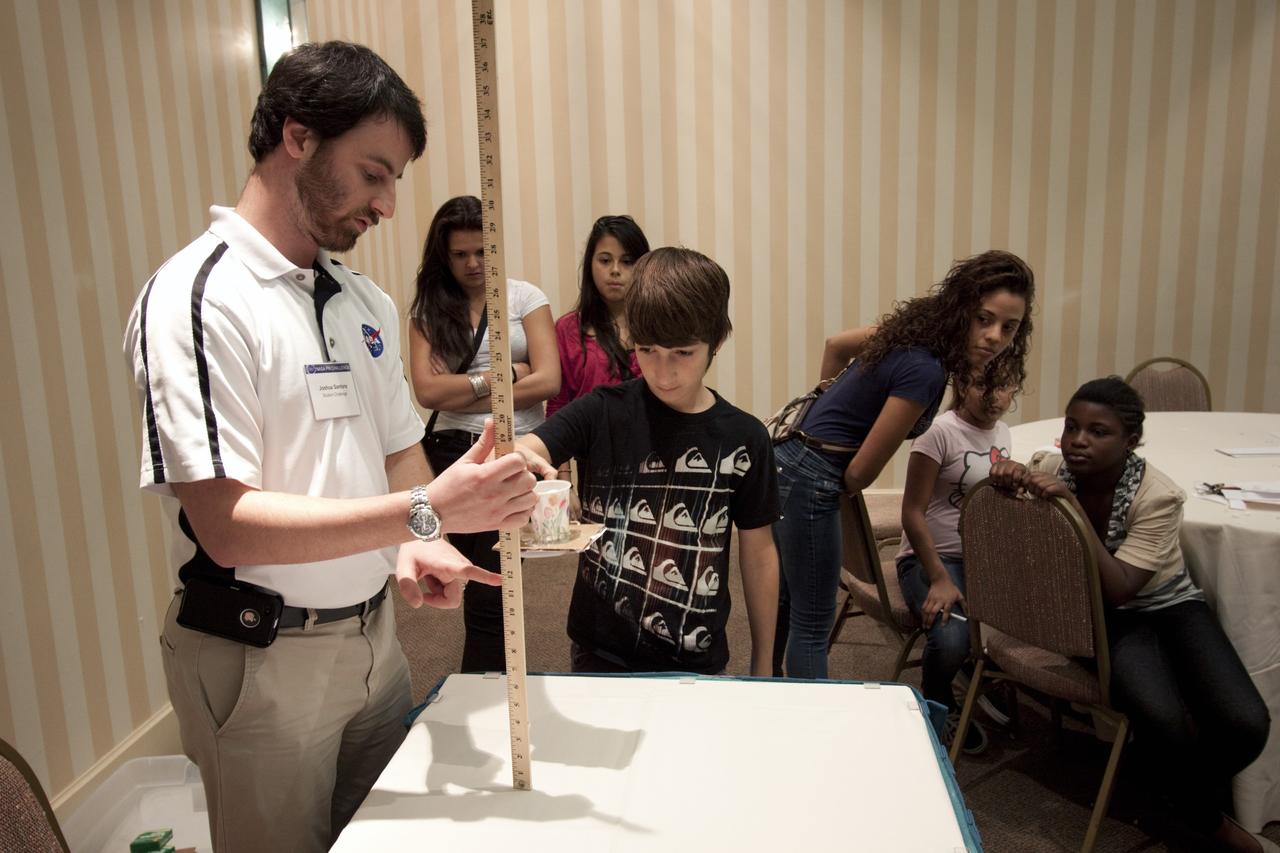
ORLANDO, Fla. – Education project specialist Josh Santora, left, from NASA’s Kennedy Space Center, engages a student from Meadow Woods Middle School in Orlando in a physics demonstration during NASA’s Project Management PM Challenge 2012. The demonstrations are designed to increase student interest and pursuit of the science, technology, engineering and mathematics STEM fields integral to producing the next generation of scientists and engineers. PM Challenge 2012 was held at the Caribe Royale Hotel and Convention Center in Orlando, Fla., on Feb. 22-23, to provide a forum for all stakeholders in the project management community to meet and share stories, lessons learned and new uses of technology in the industry. The PM Challenge is sponsored by NASA's Office of the Chief Engineer. For additional information, visit http://www.nasa.gov/offices/oce/pmchallenge/index.html. Photo credit: NASA/Jim Grossmann
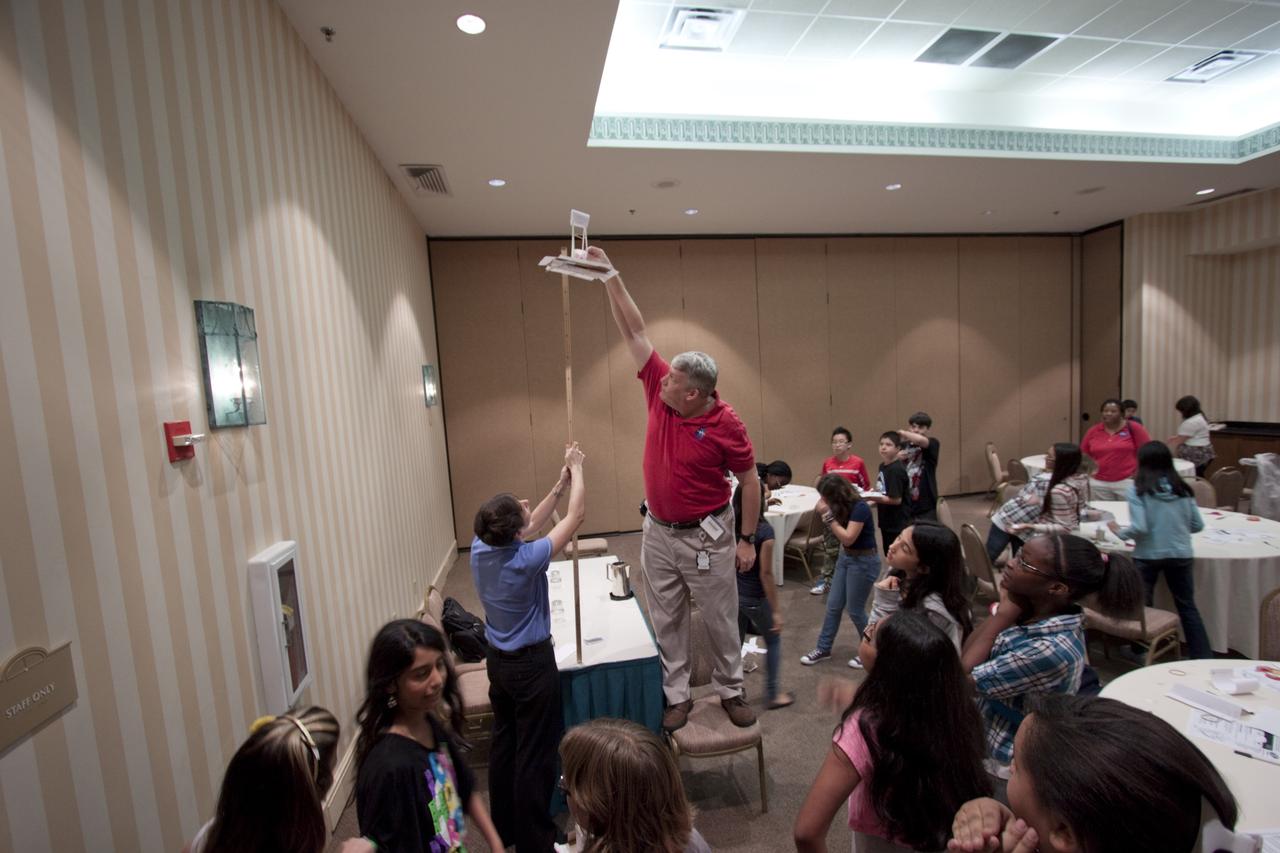
ORLANDO, Fla. – Education specialists from NASA’s Kennedy Space Center set up a physics demonstration for the students from Meadow Woods Middle School in Orlando during NASA’s Project Management PM Challenge 2012. Here, Jim Gerard, in the red shirt at center, is assisted by Rachel Powers, in the blue shirt. The demonstrations are designed to increase student interest and pursuit of the science, technology, engineering and mathematics STEM fields integral to producing the next generation of scientists and engineers. PM Challenge 2012 was held at the Caribe Royale Hotel and Convention Center in Orlando, Fla., on Feb. 22-23, to provide a forum for all stakeholders in the project management community to meet and share stories, lessons learned and new uses of technology in the industry. The PM Challenge is sponsored by NASA's Office of the Chief Engineer. For additional information, visit http://www.nasa.gov/offices/oce/pmchallenge/index.html. Photo credit: NASA/Jim Grossmann
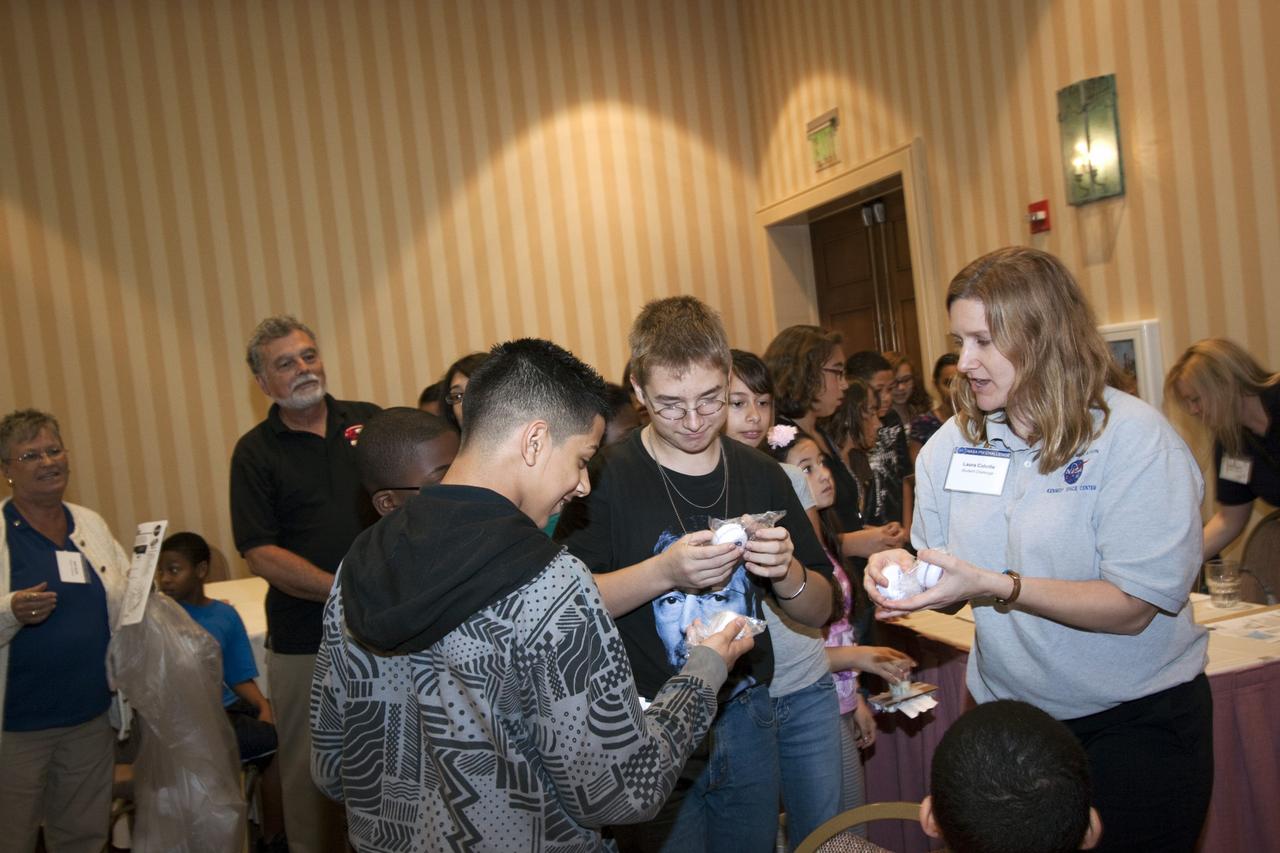
ORLANDO, Fla. – Laura Colville, in the gray shirt at right, from the Educator Resource Center at NASA’s Kennedy Space Center, interacts with students from Meadow Woods Middle School in Orlando during NASA’s Project Management PM Challenge 2012. The demonstrations are designed to increase student interest and pursuit of the science, technology, engineering and mathematics STEM fields integral to producing the next generation of scientists and engineers. PM Challenge 2012 was held at the Caribe Royale Hotel and Convention Center in Orlando, Fla., on Feb. 22-23, to provide a forum for all stakeholders in the project management community to meet and share stories, lessons learned and new uses of technology in the industry. The PM Challenge is sponsored by NASA's Office of the Chief Engineer. For additional information, visit http://www.nasa.gov/offices/oce/pmchallenge/index.html. Photo credit: NASA/Jim Grossmann
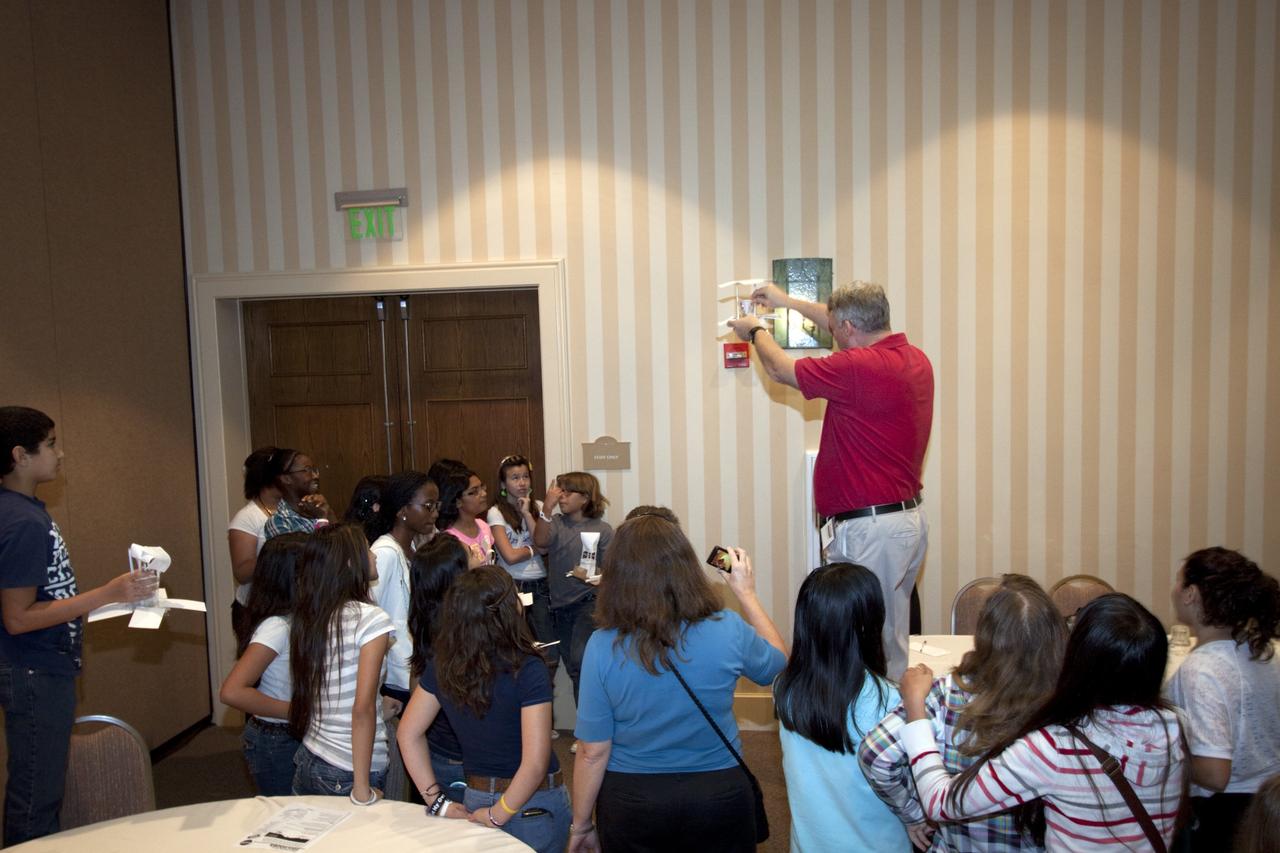
ORLANDO, Fla. – Education specialist Jim Gerard, in the red shirt, from NASA’s Kennedy Space Center, prepares a physics demonstration for students from Meadow Woods Middle School in Orlando during NASA’s Project Management PM Challenge 2012. The demonstrations are designed to increase student interest and pursuit of the science, technology, engineering and mathematics STEM fields integral to producing the next generation of scientists and engineers. PM Challenge 2012 was held at the Caribe Royale Hotel and Convention Center in Orlando, Fla., on Feb. 22-23, to provide a forum for all stakeholders in the project management community to meet and share stories, lessons learned and new uses of technology in the industry. The PM Challenge is sponsored by NASA's Office of the Chief Engineer. For additional information, visit http://www.nasa.gov/offices/oce/pmchallenge/index.html. Photo credit: NASA/Jim Grossmann
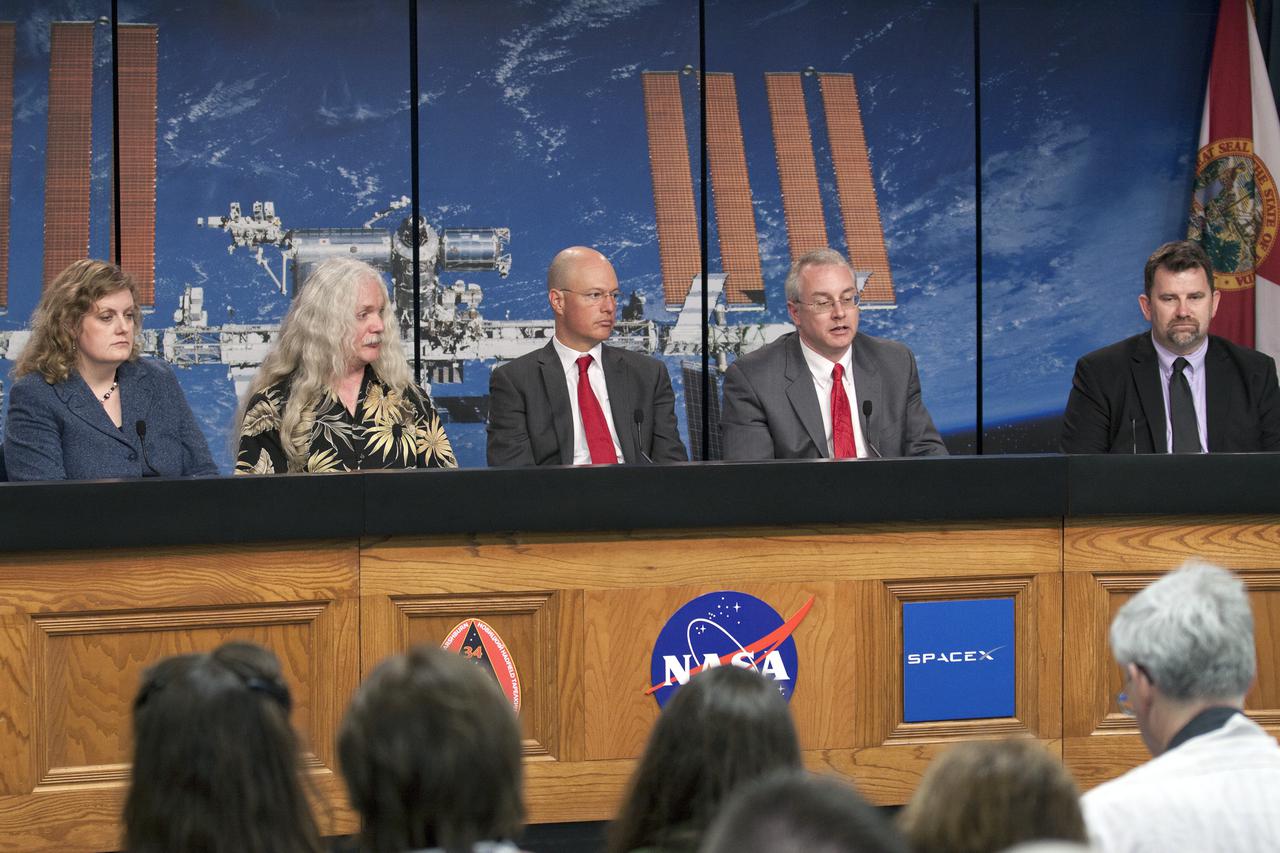
CAPE CANAVERAL, Fla. - Media attending a pre-launch news conference at the Kennedy Space Center, Fla. heard from officials who discussed payloads to be launched aboard a SpaceX Dragon capsule. From the left are: Julie Robinson, NASA program scientist for the International Space Station, Simon Gilroy, Ph.D., BRIC-17 Lead Investigator from the University of Wisconsin, Marshall Porterfield, division director of the Life and Physical Sciences at NASA Headquarters, Michael Johnson, chief technical officer for NanoRacks, and Michael Roberts, research scientist with the Center for Advancement of Science in Space. Scheduled for launch March 1 atop a Falcon 9 rocket, the SpaceX Dragon capsule will be making its third trip to the space station. The mission is the second of 12 SpaceX flights contracted by NASA to resupply the orbiting laboratory. For more information, visit http:__www.nasa.gov_mission_pages_station_structure_launch_spacex2-feature.html Photo credit: NASA_Kim Shiflett
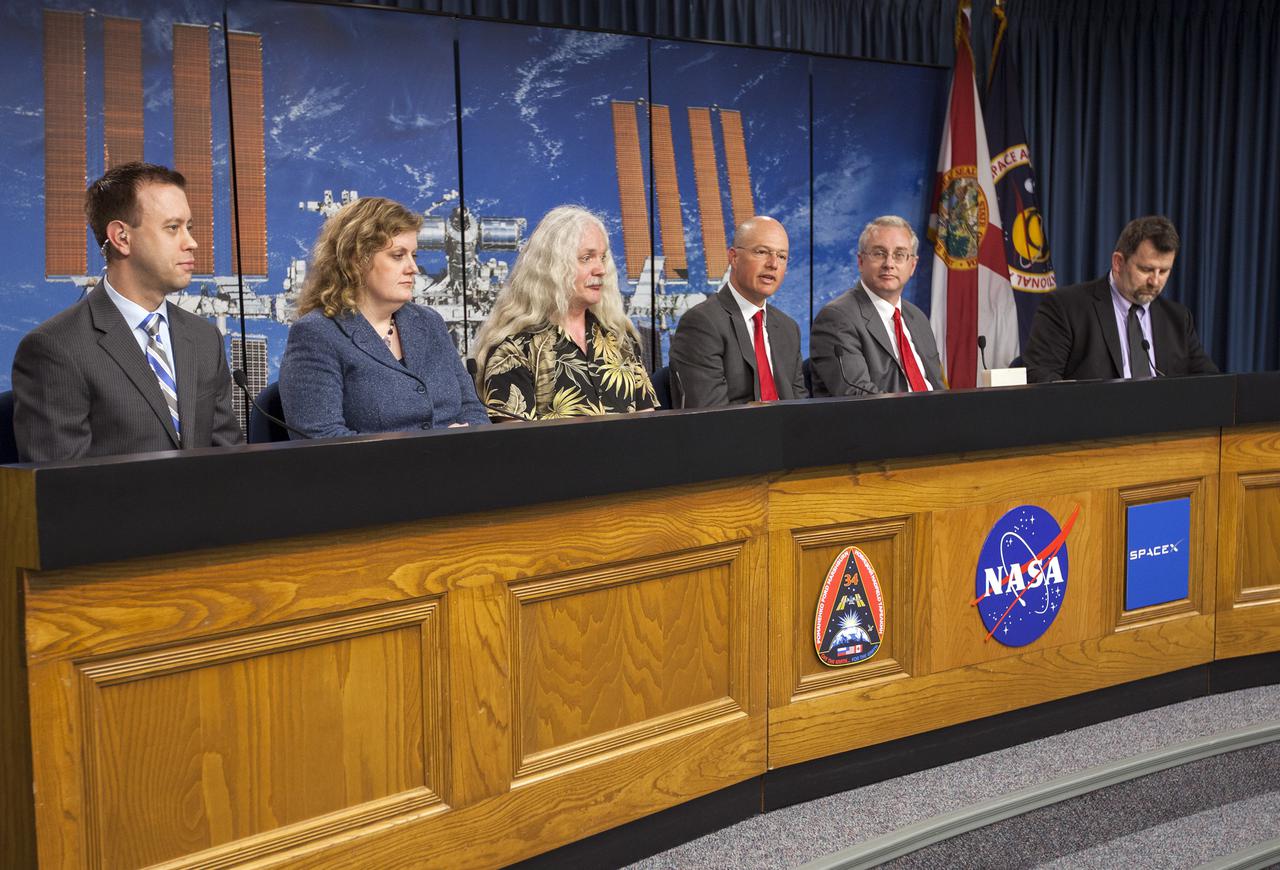
CAPE CANAVERAL, Fla. - Media attending a pre-launch news conference at the Kennedy Space Center, Fla. heard from officials who discussed payloads to be launched aboard a SpaceX Dragon capsule. From the left are: Josh Byerly of NASA Public Affairs at the Johnson Space Center, Julie Robinson, NASA program scientist for the International Space Station, Simon Gilroy, Ph.D., BRIC-17 Lead Investigator from the University of Wisconsin, Marshall Porterfield, division director of the Life and Physical Sciences at NASA Headquarters, Michael Johnson, chief technical officer for NanoRacks, and Michael Roberts, research scientist with the Center for Advancement of Science in Space. Scheduled for launch March 1 atop a Falcon 9 rocket, the SpaceX Dragon capsule will be making its third trip to the space station. The mission is the second of 12 SpaceX flights contracted by NASA to resupply the orbiting laboratory. For more information, visit http:__www.nasa.gov_mission_pages_station_structure_launch_spacex2-feature.html Photo credit: NASA_Kim Shiflett
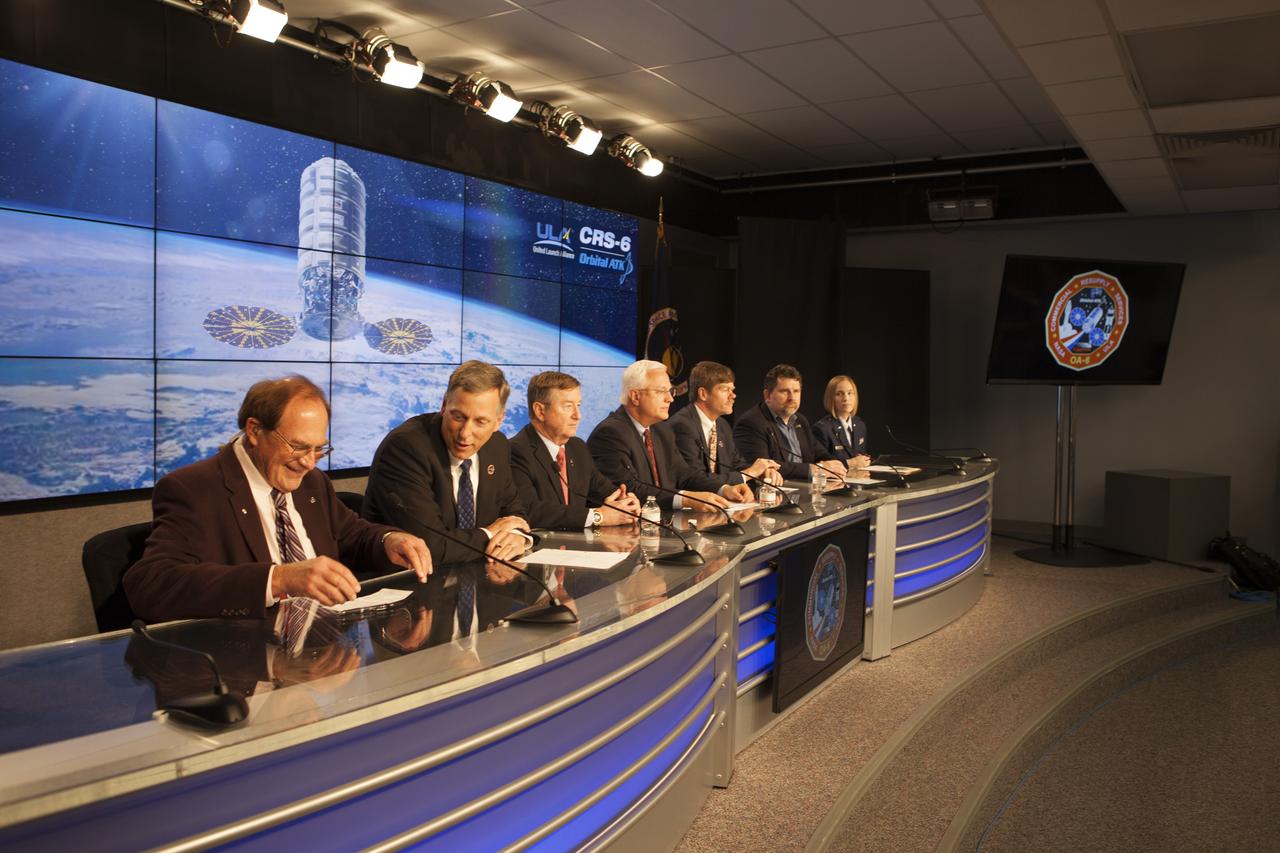
In the Kennedy Space Center’s Press Site auditorium, agency and industry leaders speak to members of the media at a prelaunch news conference for Orbital ATK CRS-6 commercial resupply services mission to the International Space Station. From left are: George Diller of NASA Communications; Kenneth Todd, NASA ISS Operations Integration manager; Frank Culbertson, president of Orbital ATK's Space System Group; Vern Thorp, United Space Alliance's program manager for NASA missions; Pete Hasbrook, NASA associate program scientist for the ISS Program at the Johnson Space Center in Houston; Dr. Michael Roberts deputy chief scientist for the Center for the Advancement for Science in Space, or CASIS; and Capt. Laura Godoy, launch weather officer of the U.S. Air Force 45th Weather Squadron.
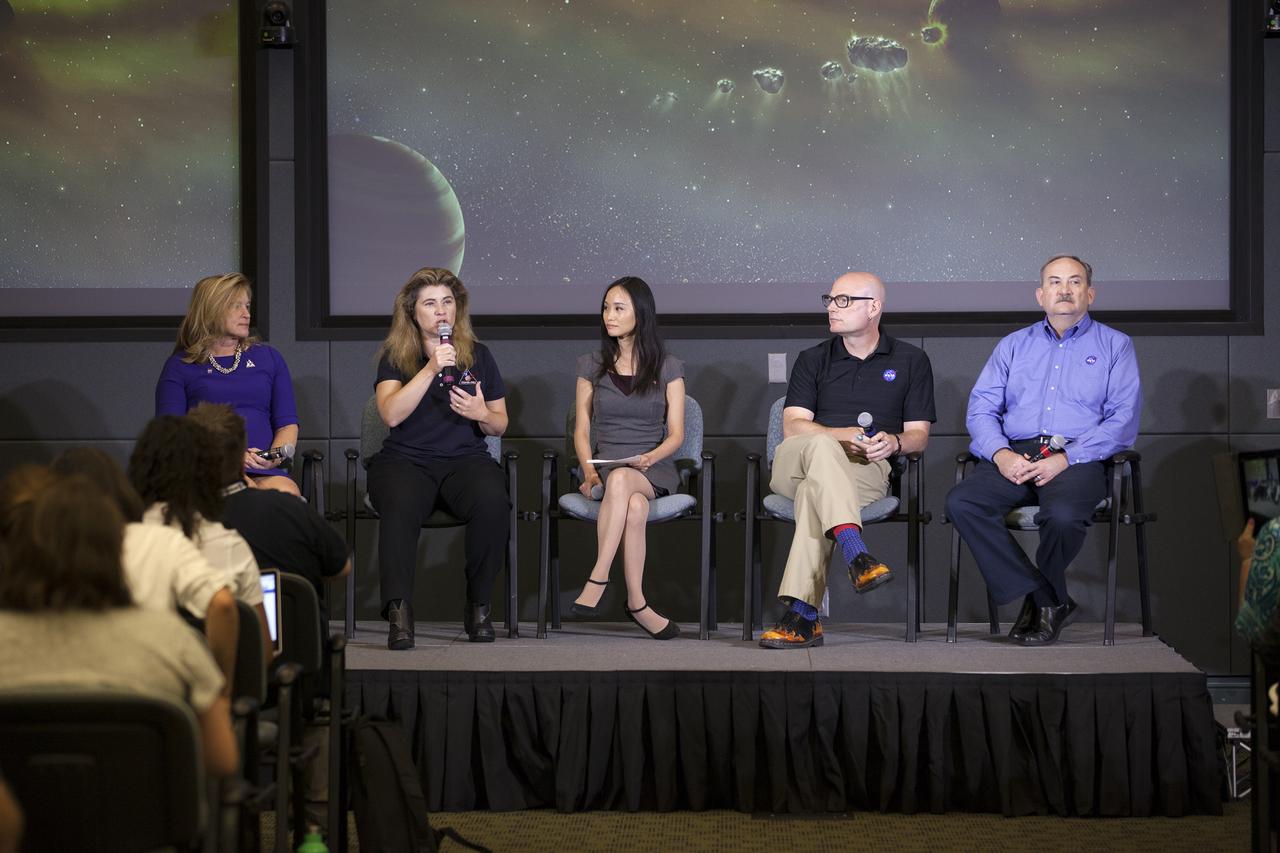
In a panel discussion in the Kennedy Space Center’s Operations Support Building II, social media followers were briefed by NASA scientists on asteroids, how they relate to the origins of our solar system and the search for life beyond Earth. The discussion took place before launch of the agency’s Origins, Spectral Interpretation, Resource Identification, Security-Regolith Explorer, or OSIRIS-REx spacecraft. Panelists for this conversation are, from the left, Ellen Stofan, NASA chief scientist; Michelle Thaller, deputy director of science communications for NASA’s Science Mission Directorate; Felicia Chou, NASA Communications; Alex Young, associate director for science in the Heliophysics Science Division at NASA’s Goddard Space Flight Center in Greenbelt, Maryland; and Lindley Johnson, director of the Planetary Defense Coordination Office in NASA’s Science Mission Directorate.
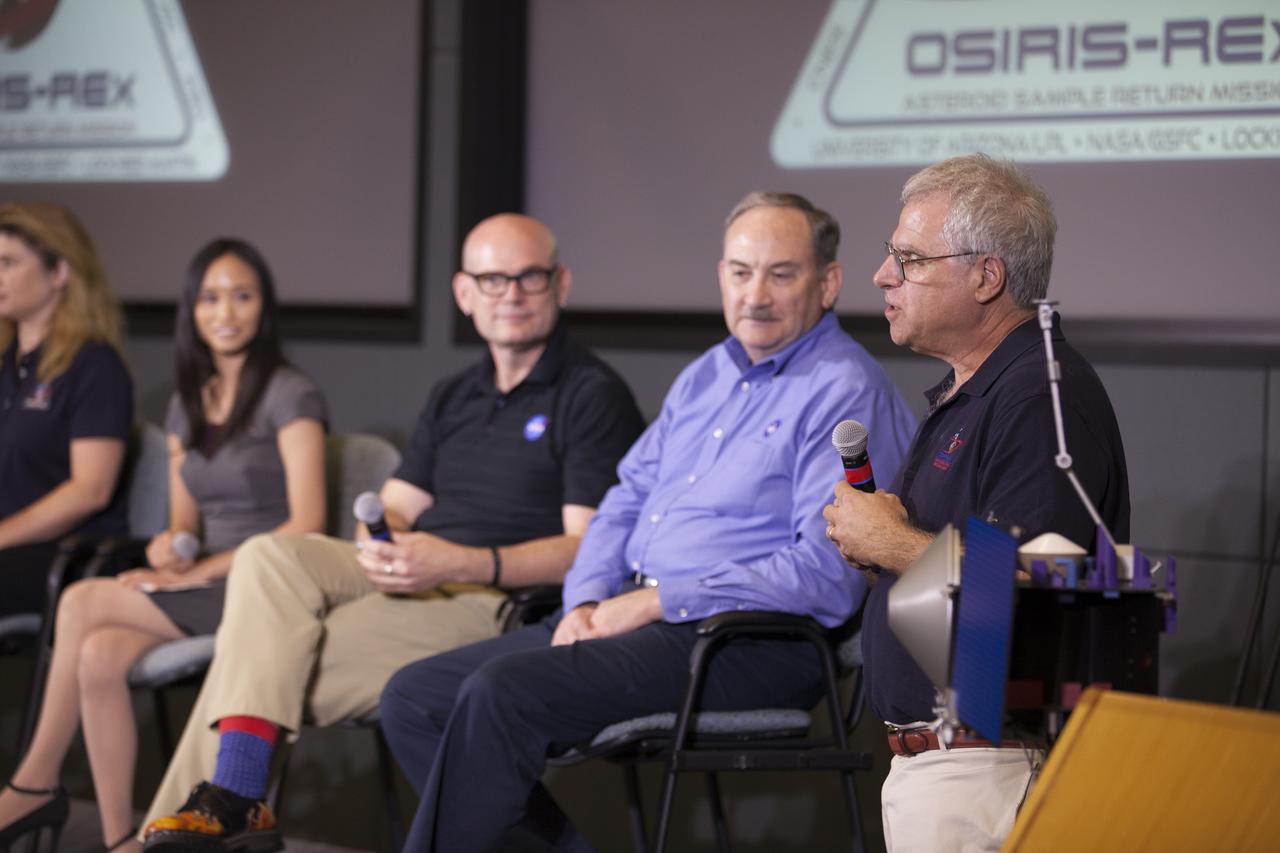
In a panel discussion in the Kennedy Space Center’s Operations Support Building II, social media followers were briefed by NASA scientists on asteroids, how they relate to the origins of our solar system and the search for life beyond Earth. The discussion took place before launch of the agency’s Origins, Spectral Interpretation, Resource Identification, Security-Regolith Explorer, or OSIRIS-REx spacecraft. Panelists in view are, from the left, Felicia Chou, NASA Communications; Alex Young, associate director for science in the Heliophysics Science Division at NASA’s Goddard Space Flight Center in Greenbelt, Maryland; and Lindley Johnson, director of the Planetary Defense Coordination Office in NASA’s Science Mission Directorate. Also participating in the panel discussion are Ellen Stofan, NASA chief scientist and Michelle Thaller, deputy director of science communications for NASA’s Science Mission Directorate.
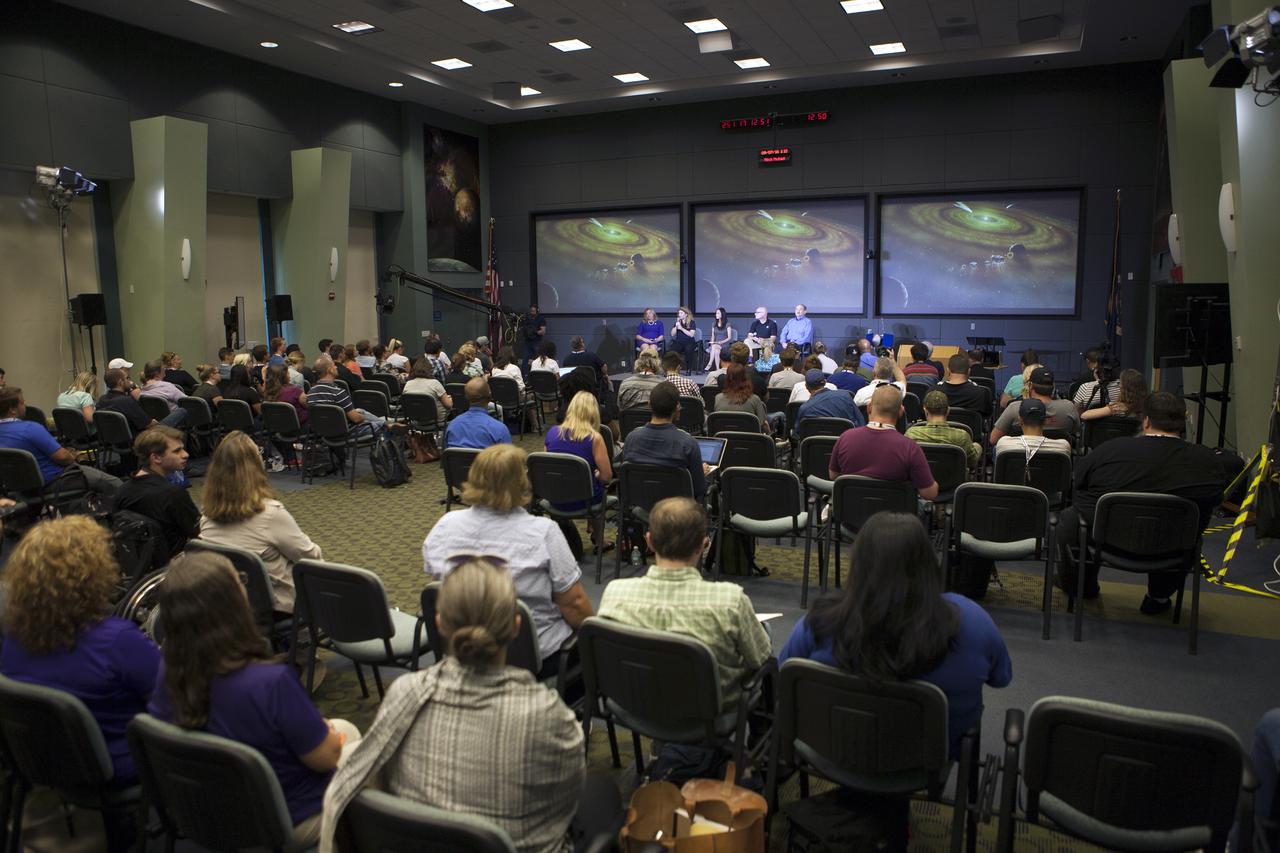
In a panel discussion in the Kennedy Space Center’s Operations Support Building II, social media followers were briefed by NASA scientists on asteroids, how they relate to the origins of our solar system and the search for life beyond Earth. The discussion took place before launch of the agency’s Origins, Spectral Interpretation, Resource Identification, Security-Regolith Explorer, or OSIRIS-REx spacecraft. Panelists for this conversation are, from the left, Ellen Stofan, NASA chief scientist; Michelle Thaller, deputy director of science communications for NASA’s Science Mission Directorate; Felicia Chou, NASA Communications; Alex Young, associate director for science in the Heliophysics Science Division at NASA’s Goddard Space Flight Center in Greenbelt, Maryland; and Lindley Johnson, director of the Planetary Defense Coordination Office in NASA’s Science Mission Directorate.
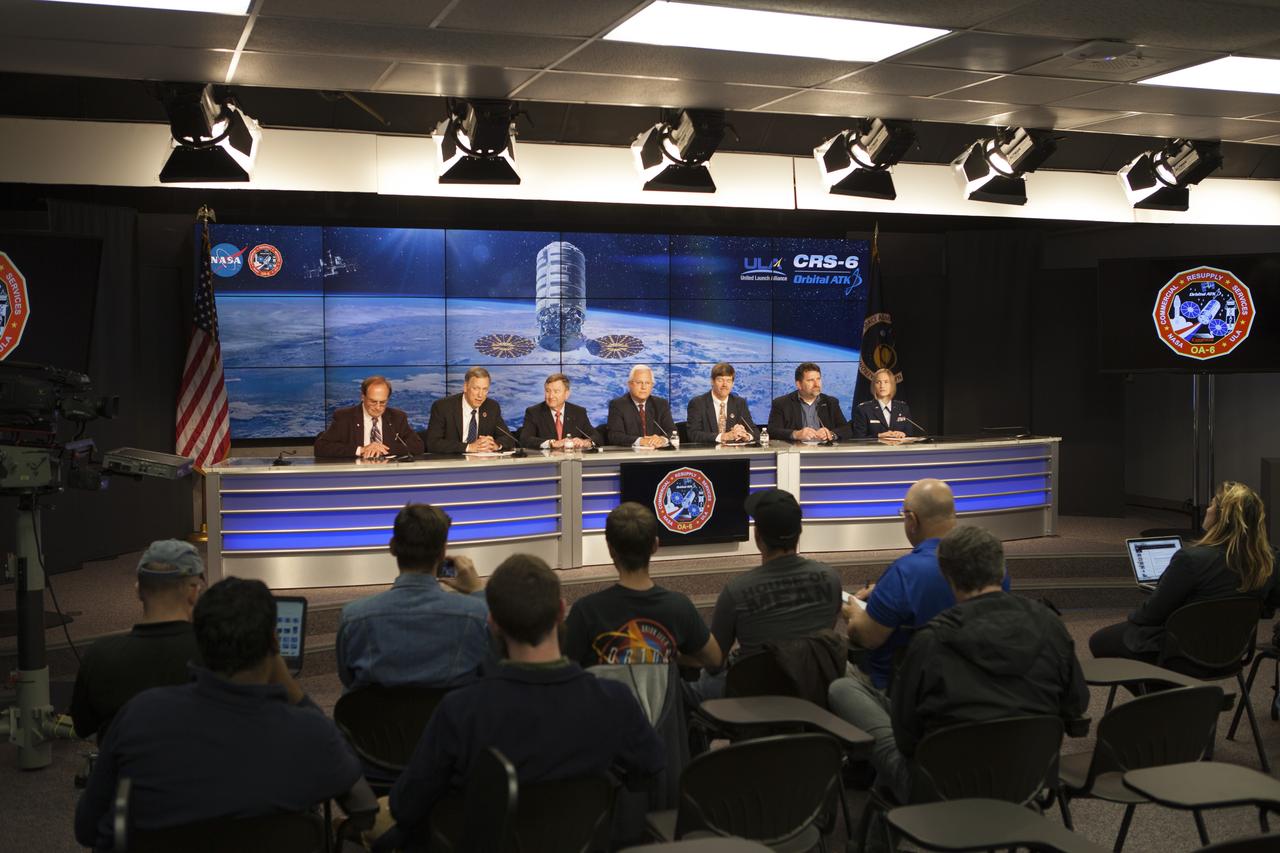
In the Kennedy Space Center’s Press Site auditorium, agency and industry leaders speak to members of the media at a prelaunch news conference for Orbital ATK CRS-6 commercial resupply services mission to the International Space Station. From left are: George Diller of NASA Communications; Kenneth Todd, NASA ISS Operations Integration manager; Frank Culbertson, president of Orbital ATK's Space System Group; Vern Thorp, United Space Alliance's program manager for NASA missions; Pete Hasbrook, NASA associate program scientist for the ISS Program at the Johnson Space Center in Houston; Dr. Michael Roberts deputy chief scientist for the Center for the Advancement for Science in Space, or CASIS; and Capt. Laura Godoy, launch weather officer of the U.S. Air Force 45th Weather Squadron.
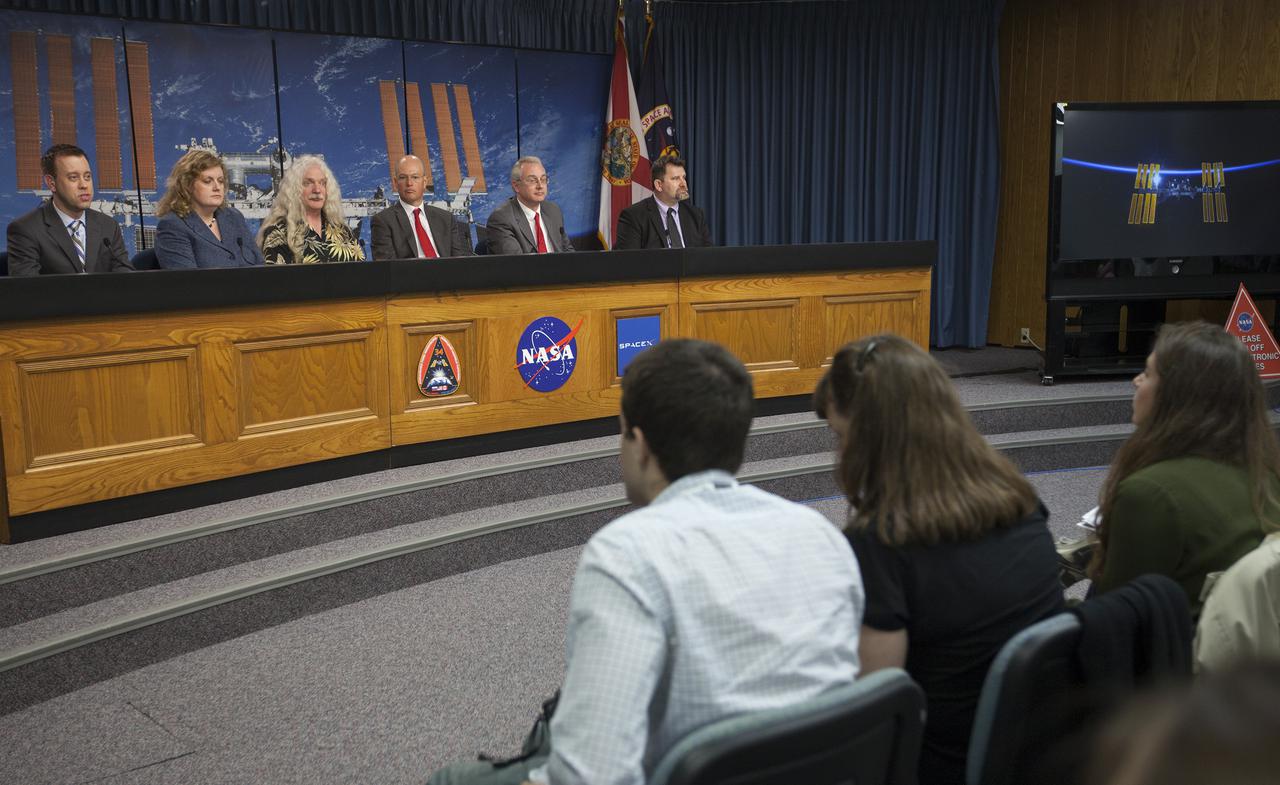
CAPE CANAVERAL, Fla. - Media attending a pre-launch news conference at the Kennedy Space Center, Fla. heard from officials who discussed payloads to be launched aboard a SpaceX Dragon capsule. From the left are: Josh Byerly of NASA Public Affairs at the Johnson Space Center, Julie Robinson, NASA program scientist for the International Space Station, Simon Gilroy, Ph.D., BRIC-17 Lead Investigator from the University of Wisconsin, Marshall Porterfield, division director of the Life and Physical Sciences at NASA Headquarters, Michael Johnson, chief technical officer for NanoRacks, and Michael Roberts, research scientist with the Center for Advancement of Science in Space. Scheduled for launch March 1 atop a Falcon 9 rocket, the SpaceX Dragon capsule will be making its third trip to the space station. The mission is the second of 12 SpaceX flights contracted by NASA to resupply the orbiting laboratory. For more information, visit http:__www.nasa.gov_mission_pages_station_structure_launch_spacex2-feature.html Photo credit: NASA_Kim Shiflett
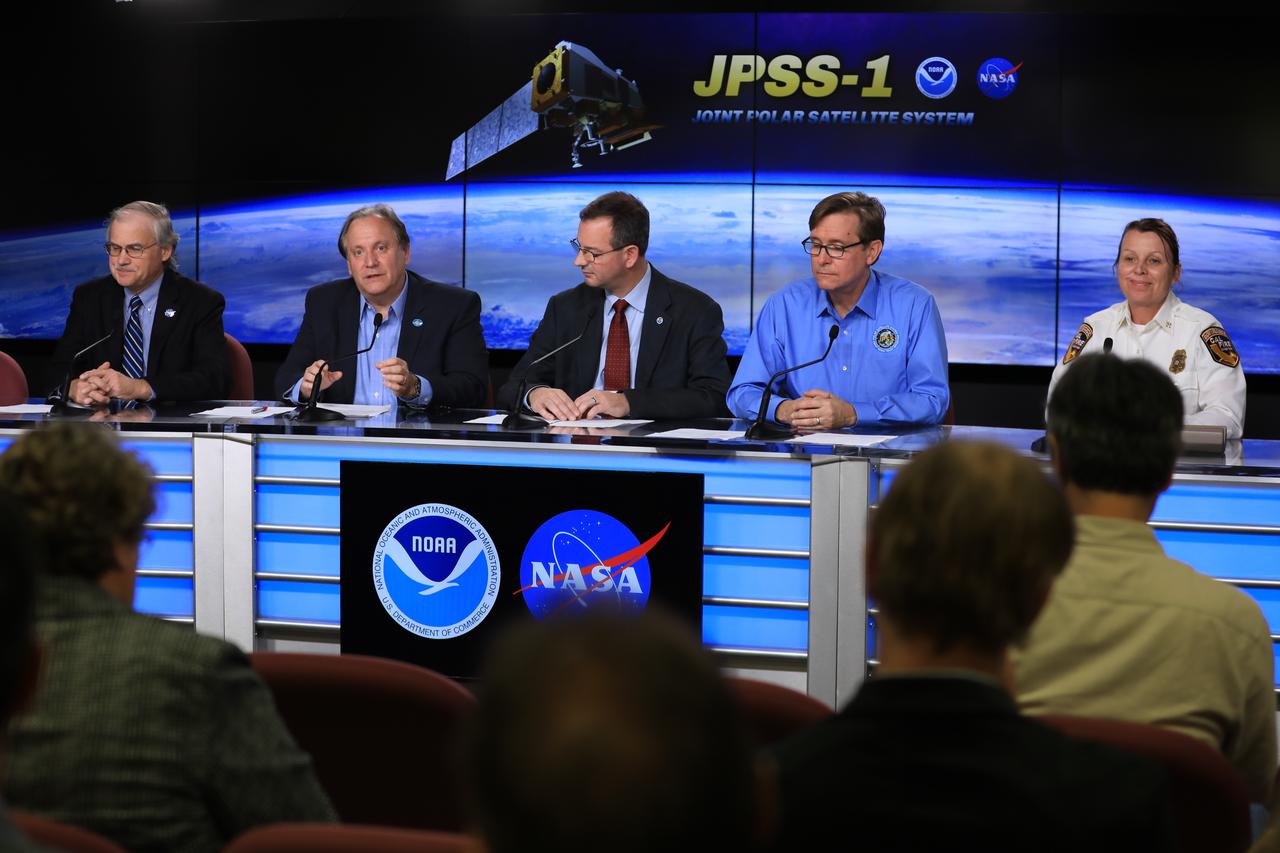
At Vandenberg Air Force Base in California, leaders from NASA, NOAA and the California Department of Forestry and Fire Protection speak to members of the media during a briefing focused on research planned for the Joint Polar Satellite System-1, or JPSS-1. Participants from left are Steve Cole of NASA Communications, Mitch Goldberg, NOAA's chief program scientist for the Joint Polar Satellite System, Joe Pica, director of NOAA’s National Weather Service Office of Observations, James Gleason, NASA senior project scientist for the Joint Polar Satellite System, and Jana Luis, division chief Predictive Services at the California Department of Forestry and Fire Protection. Built by Ball Aerospace and Technologies Corp. of Boulder, Colorado, JPSS is the first in a series four next-generation environmental satellites in a collaborative program between the NOAA and NASA. Liftoff atop a United Launch Alliance Delta II rocket is scheduled to take place from Vandenberg's Space Launch Complex 2 at 1:47 a.m. PST (4:47 a.m. EST), on Nov. 14, 2017.
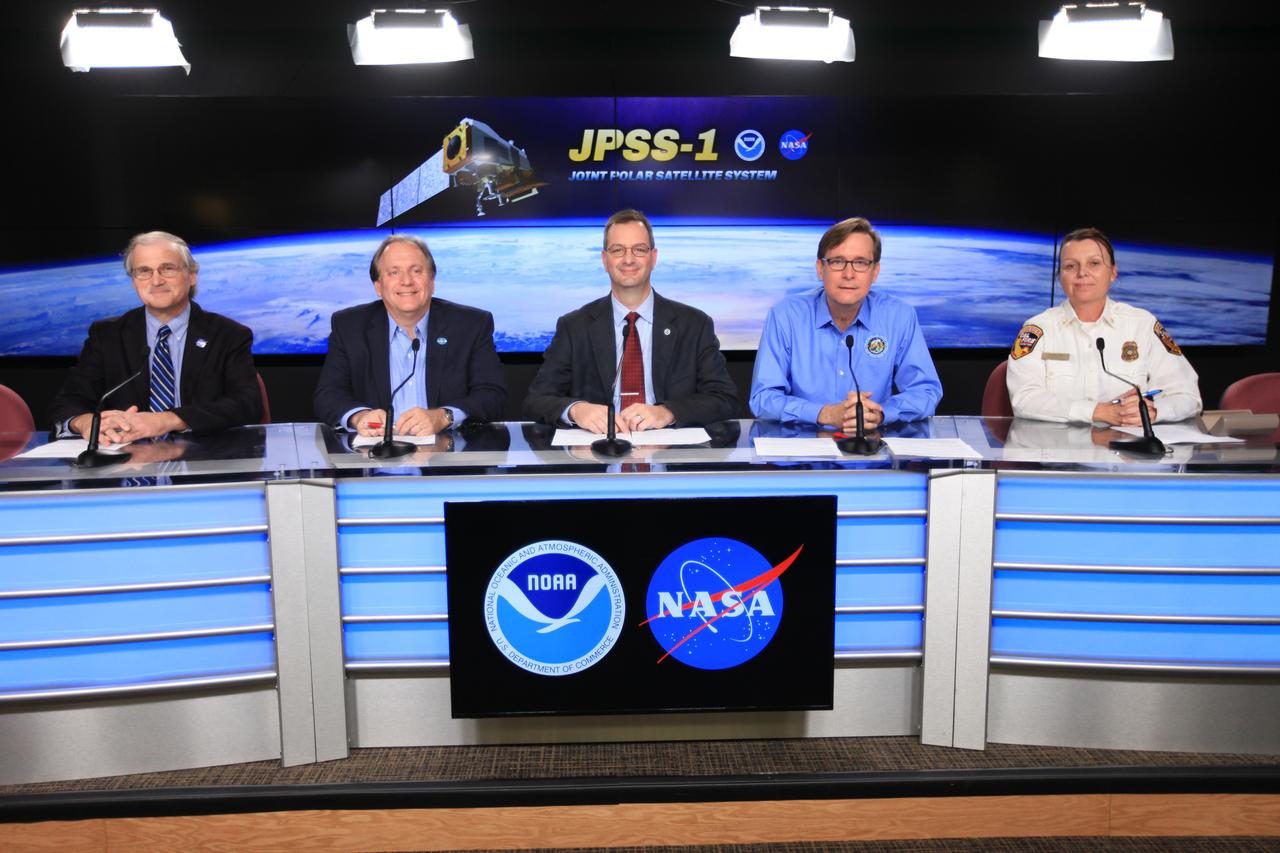
At Vandenberg Air Force Base in California, leaders from NASA, NOAA and the California Department of Forestry and Fire Protection speak to members of the media during a briefing focused on research planned for the Joint Polar Satellite System-1, or JPSS-1. Participants from left are Steve Cole of NASA Communications, Mitch Goldberg, NOAA's chief program scientist for the Joint Polar Satellite System, Joe Pica, director of NOAA’s National Weather Service Office of Observations, James Gleason, NASA senior project scientist for the Joint Polar Satellite System, and Jana Luis, division chief Predictive Services at the California Department of Forestry and Fire Protection. Built by Ball Aerospace and Technologies Corp. of Boulder, Colorado, JPSS is the first in a series four next-generation environmental satellites in a collaborative program between the NOAA and NASA. Liftoff atop a United Launch Alliance Delta II rocket is scheduled to take place from Vandenberg's Space Launch Complex 2 at 1:47 a.m. PST (4:47 a.m. EST), on Nov. 14, 2017.

At Vandenberg Air Force Base in California, leaders from NASA, NOAA and the California Department of Forestry and Fire Protection speak to members of the media during a briefing focused on research planned for the Joint Polar Satellite System-1, or JPSS-1. Participants from left are Steve Cole of NASA Communications, Mitch Goldberg, NOAA's chief program scientist for the Joint Polar Satellite System, Joe Pica, director of NOAA’s National Weather Service Office of Observations, James Gleason, NASA senior project scientist for the Joint Polar Satellite System, and Jana Luis, division chief Predictive Services at the California Department of Forestry and Fire Protection. Built by Ball Aerospace and Technologies Corp. of Boulder, Colorado, JPSS is the first in a series four next-generation environmental satellites in a collaborative program between the NOAA and NASA. Liftoff atop a United Launch Alliance Delta II rocket is scheduled to take place from Vandenberg's Space Launch Complex 2 at 1:47 a.m. PST (4:47 a.m. EST), on Nov. 14, 2017.
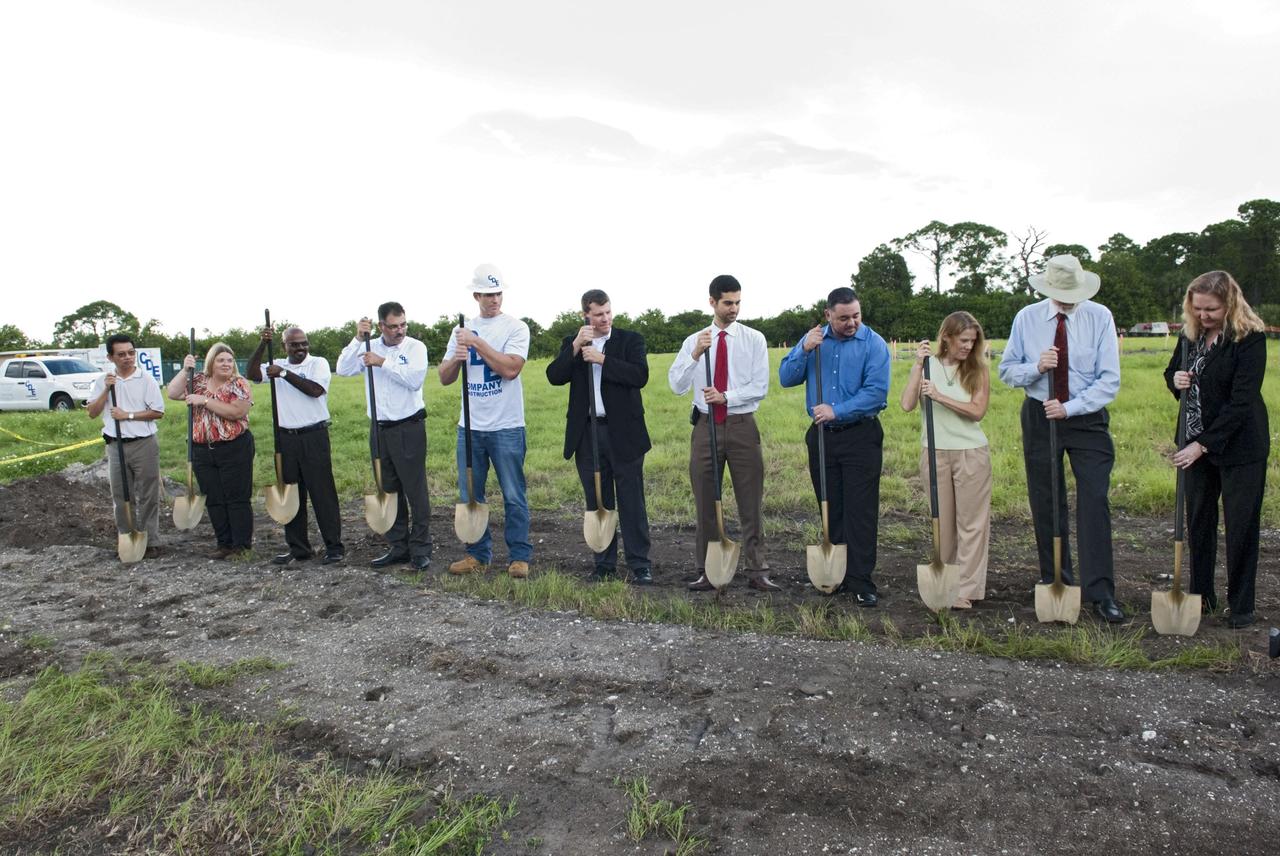
CAPE CANAVERAL, Fla. -- At NASA’s Kennedy Space Center in Florida, a groundbreaking was held to mark the start of construction on the Antenna Test Bed Array for the Ka-Band Objects Observation and Monitoring, or Ka-BOOM system. Holding ceremonial shovels, from left are Michael Le, lead design engineer and construction manager Sue Vingris, Cape Design Engineer Co. project manager Kannan Rengarajan, chief executive officer of Cape Design Engineer Co. Lutfi Mized, president of Cape Design Engineer Co. David Roelandt, construction site superintendent with Cape Design Engineer Co. Marc Seibert, NASA project manager Michael Miller, NASA project manager Peter Aragona, KSC’s Electromagnetic Lab manager Stacy Hopper, KSCs master planning supervisor Dr. Bary Geldzabler, NASA chief scientist and KSC’s Chief Technologist Karen Thompson. The construction site is near the former Vertical Processing Facility, which has been demolished. Workers will begin construction on the pile foundations for the 40-foot-diameter dish antenna arrays and their associated utilities, and prepare the site for the operations command center facility. Photo credit: NASA/Charisse Nahser
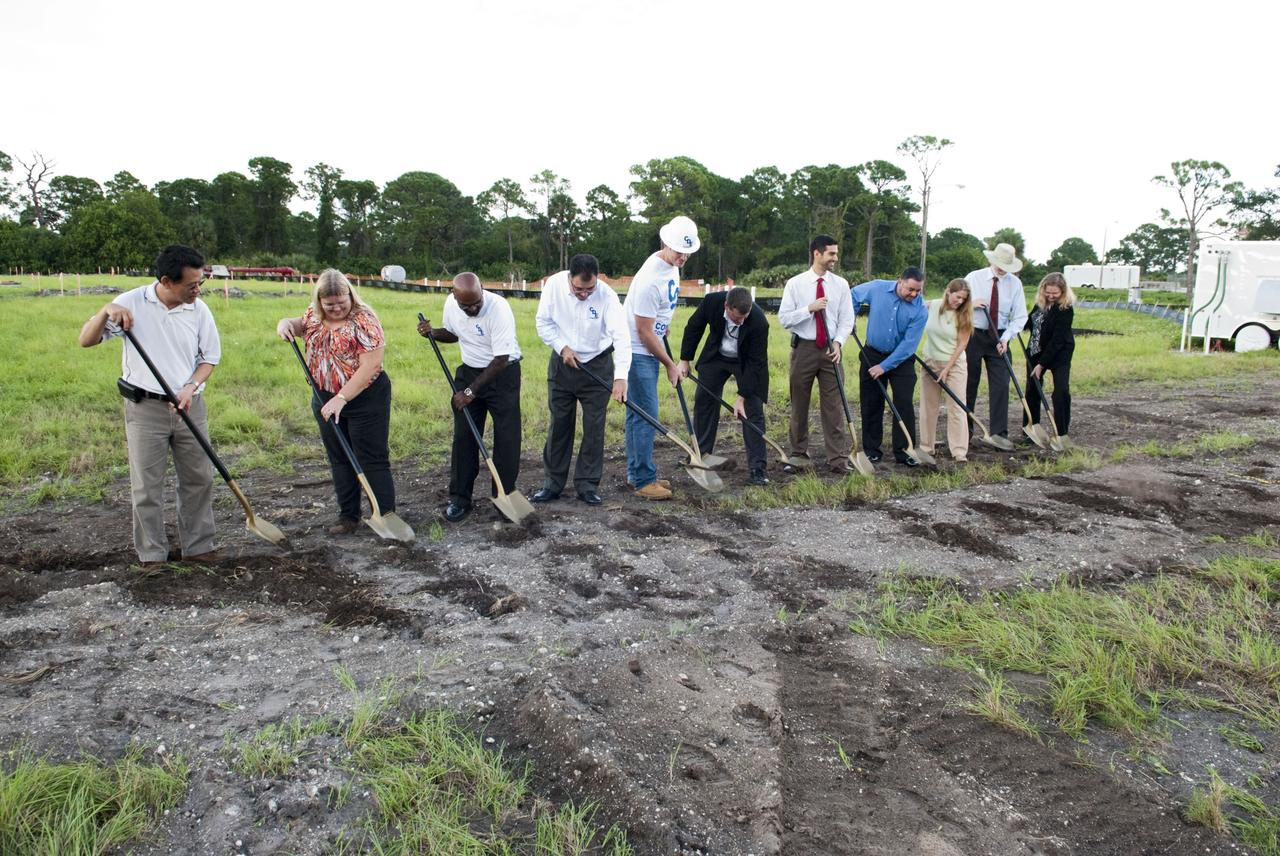
CAPE CANAVERAL, Fla. -- At NASA’s Kennedy Space Center in Florida, a groundbreaking was held to mark the start of construction on the Antenna Test Bed Array for the Ka-Band Objects Observation and Monitoring, or Ka-BOOM system. Using ceremonial shovels to mark the site, from left are Michael Le, lead design engineer and construction manager Sue Vingris, Cape Design Engineer Co. project manager Kannan Rengarajan, chief executive officer of Cape Design Engineer Co. Lutfi Mized, president of Cape Design Engineer Co. David Roelandt, construction site superintendent with Cape Design Engineer Co. Marc Seibert, NASA project manager Michael Miller, NASA project manager Peter Aragona, KSC’s Electromagnetic Lab manager Stacy Hopper, KSCs master planning supervisor Dr. Bary Geldzabler, NASA chief scientist and KSC’s Chief Technologist Karen Thompson. The construction site is near the former Vertical Processing Facility, which has been demolished. Workers will begin construction on the pile foundations for the 40-foot-diameter dish antenna arrays and their associated utilities, and prepare the site for the operations command center facility. Photo credit: NASA/Charisse Nahser
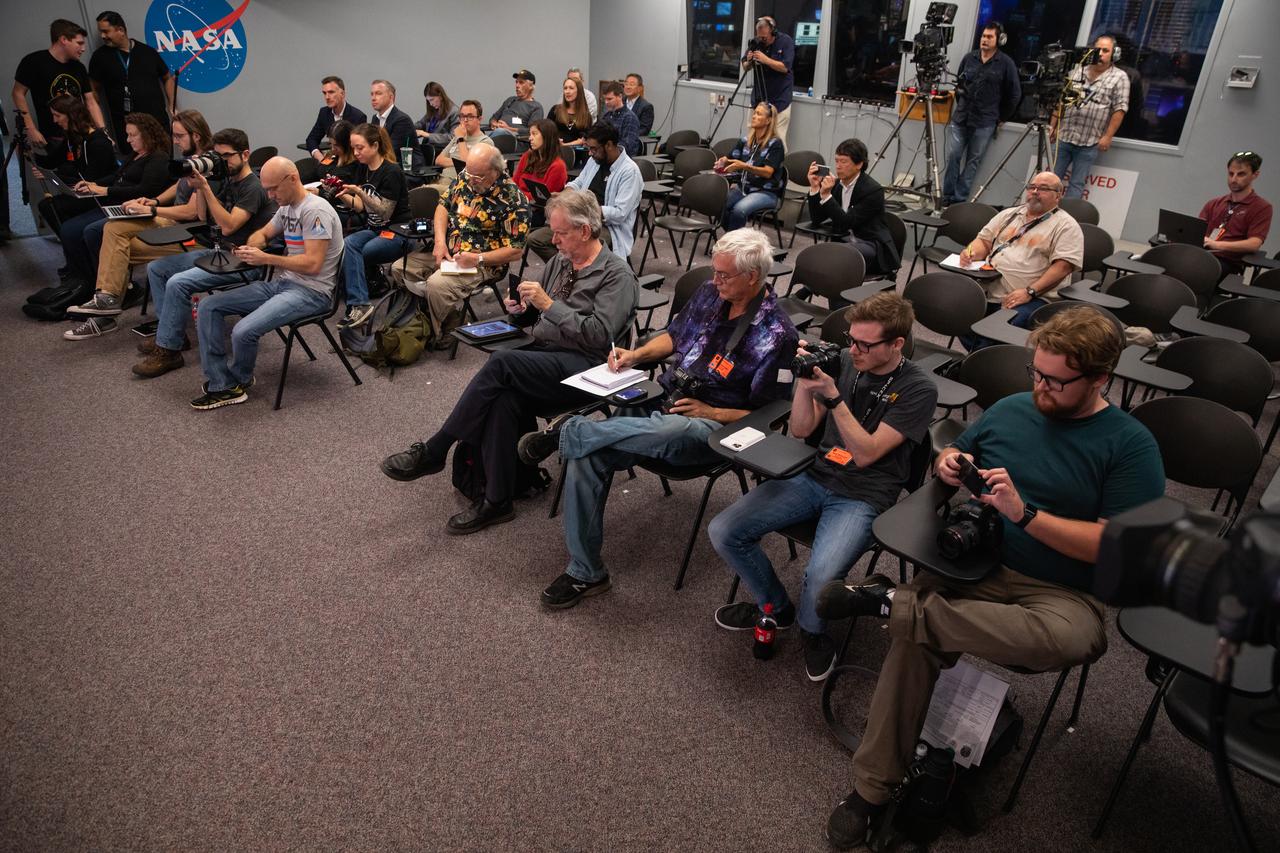
Members of the media attend a prelaunch news conference for SpaceX’s 20th Commercial Resupply Services (CRS-20) mission to the International Space Station at NASA’s Kennedy Space Center in Florida on March 6, 2020. Participants included conference moderator Heather Scott of NASA Communications; Joel Montalbano, manager of the agency’s International Space Station Program; Jennifer Buchli, deputy chief scientist for the International Space Station Program; Hans Koenigsmann, vice president of Build and Flight Reliability at SpaceX; and Mike McAleenan, launch weather officer with the U.S. Air Force 45th Space Wing. SpaceX’s Falcon 9 rocket and cargo Dragon spacecraft are scheduled to lift off from Cape Canaveral Air Force Station’s Space Launch Complex 40 at 11:50 p.m. EST on March 6, 2020.
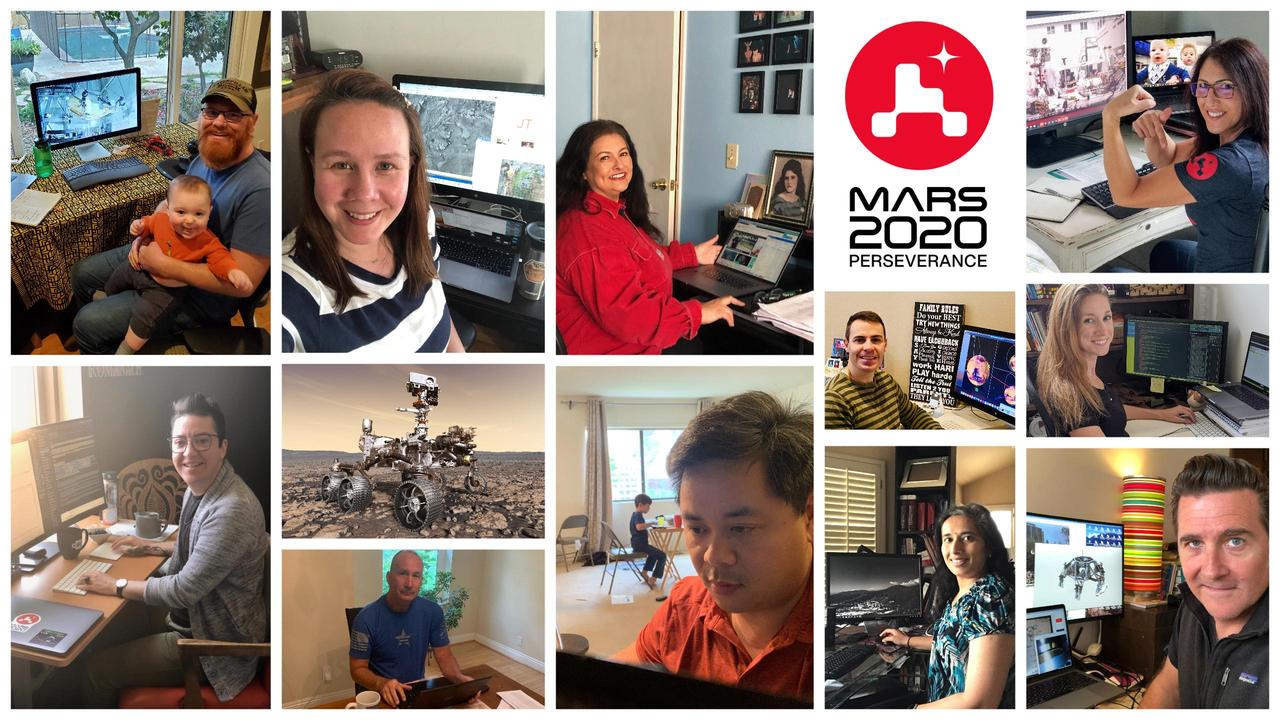
With the launch period for the Perseverance mission opening July 17, 2020, members of NASA's Perseverance Mars rover project continue the mission's march to the launch pad while working from their home offices during the coronavirus outbreak. Clockwise from upper left: lead mobility systems engineer Rich Rieber (with son Ben); deputy project scientist Katie Stack Morgan; mission system verification and validation supervisor Ruth Fragoso; mission design and navigation manager Fernando Abilleira (below mission logo); staff assistant Monica Hopper; systems engineer Heather Bottom; project chief engineer Adam Steltzner; guidance and control systems engineer Swati Mohan; entry, Descent and Landing Phase Lead Al Chen (with son Max); project manager John McNamee; and Entry, Descent and Landing Systems Engineer Cj Giovingo. https://photojournal.jpl.nasa.gov/catalog/PIA23881
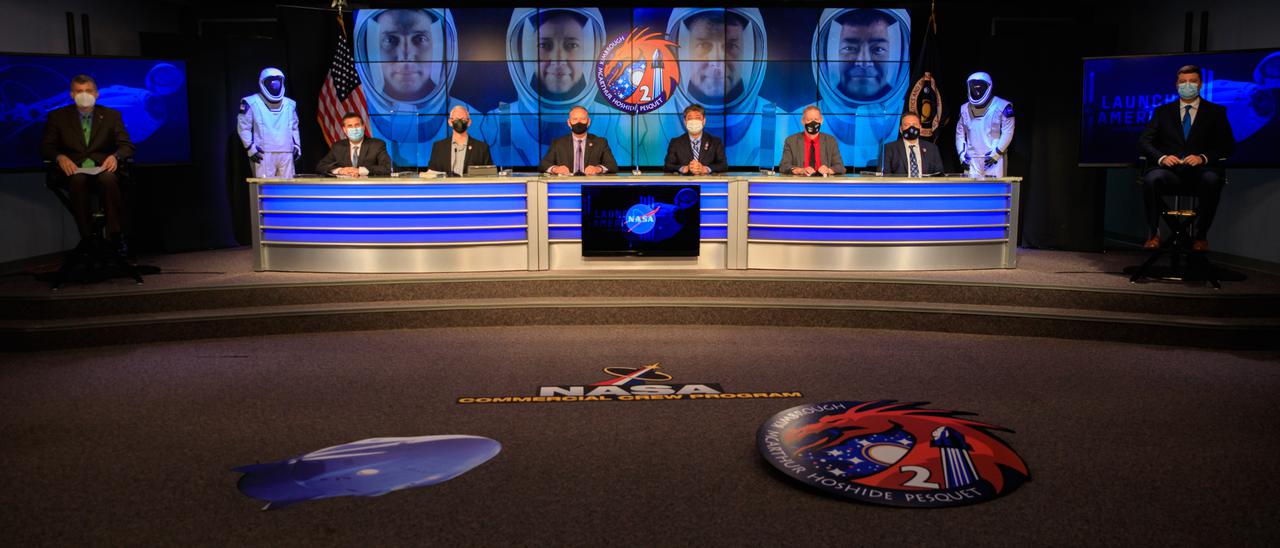
A SpaceX Crew-2 prelaunch news conference was held at NASA’s Kennedy Space Center in Florida on April 20, 2021. Participants included, from left to right: Steve Stich, manager, NASA Commercial Crew Program; Joel Montalbano, manager, International Space Station Program; Benji Reed, senior director, Human Spaceflight Programs, SpaceX; Norm Knight, deputy manager, Flight Operations Directorate; Junichi Sakai, manager, International Space Station Program, JAXA; Frank de Winne, manager, International Space Station Program, ESA; Kirt Costello, chief scientist, International Space Station Program; and Brian Cizek, launch weather officer, 45th Weather Squadron, U.S. Space Force.
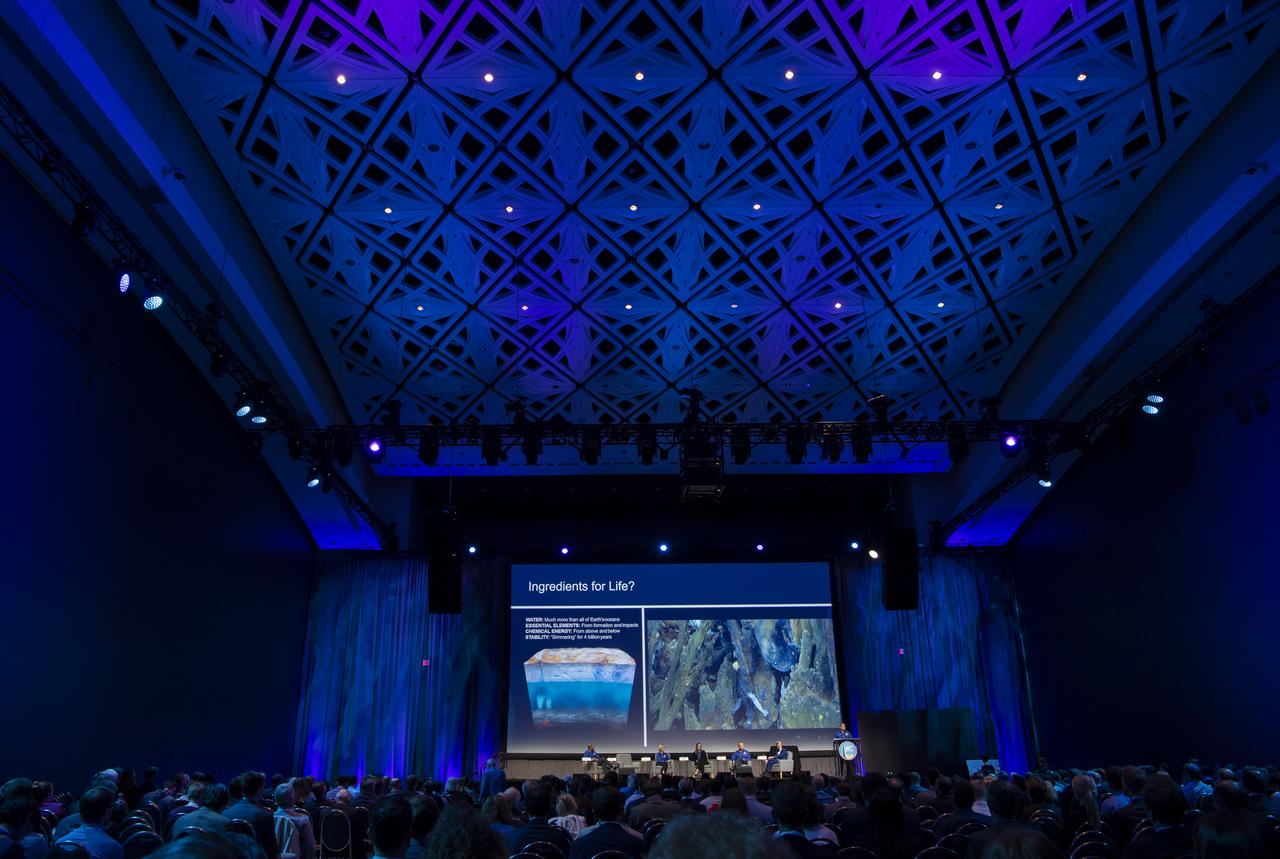
Dipak Srinivasan, Europa Clipper Telecommunications Manager, Johns Hopkins University, Applied Physics Laboratory (APL), left, moderates a panel titled, “Europa Clipper: Making a Mission to Understand Our Place in the Universe” with panelists, from left to right, Robert Pappalardo, Europa Clipper Project Scientist, NASA Jet Propulsion Laboratory (JPL); Karen Kirby, Europa Clipper Deputy Project System Engineer, APL; Jennifer Dooley, Europa Clipper Project Systems Engineer, JPL; Thomas Magner, Manager, APL; and Bill Nye, Chief Executive Officer, The Planetary Society, during the 70th International Astronautical Congress, Wednesday, Oct. 23, 2019 at the Walter E. Washington Convention Center in Washington. Photo credit: (NASA/Aubrey Gemignani)
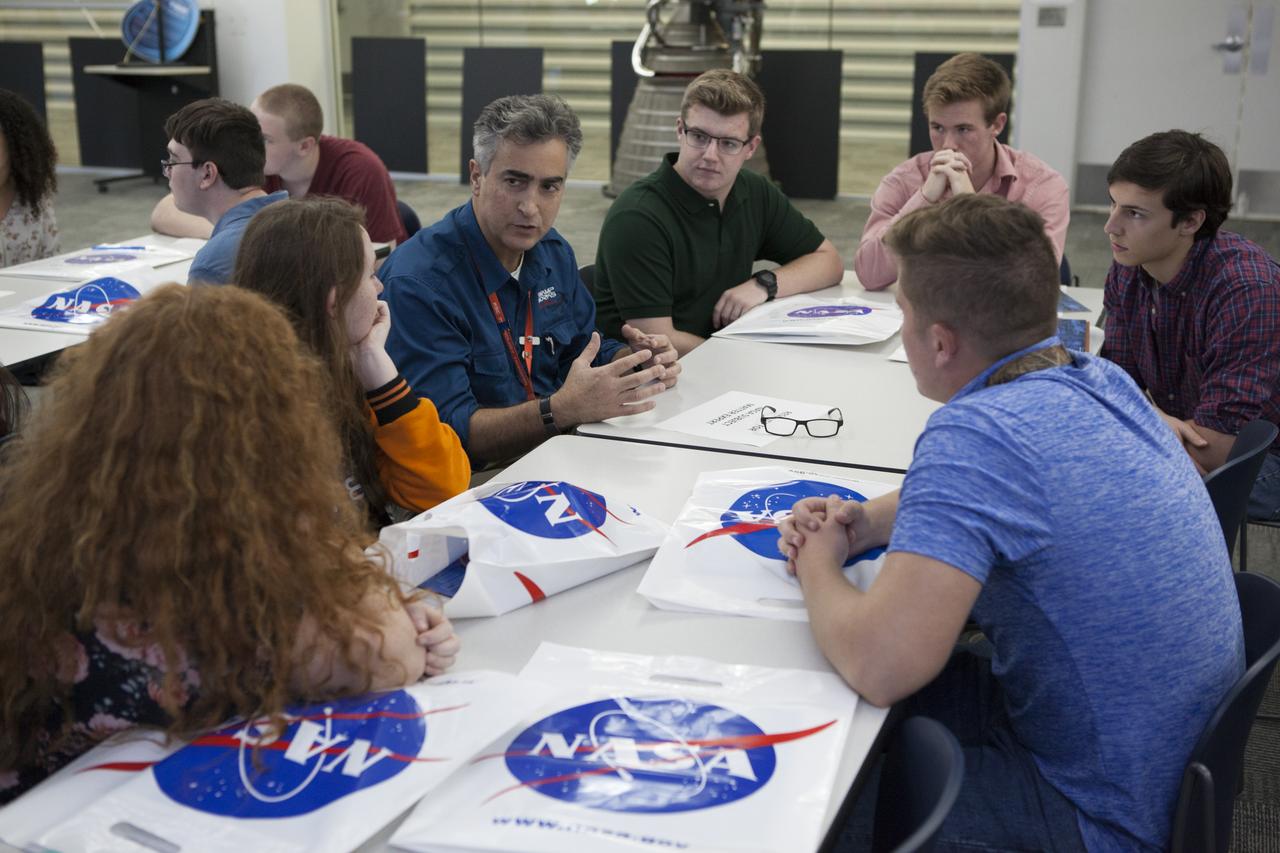
Jose Nunez, third from left, chief of the Flight Technologies Branch at NASA’s Kennedy Space Center in Florida, talks with students from Brevard County public high schools during a roundtable discussion at the Public Engagement Center at the Kennedy Space Center Visitor Complex. Top scholars from the high schools were invited to Kennedy Space Center for a tour of facilities, lunch and a roundtable discussion with engineers and scientists at the center. The 2017-2018 Brevard Top Scholars event was hosted by the center's Education Projects and Youth Engagement office to honor the top three scholars of the graduating student class from each of Brevard County’s public high schools. The students received a personalized certificate at the end of the day.
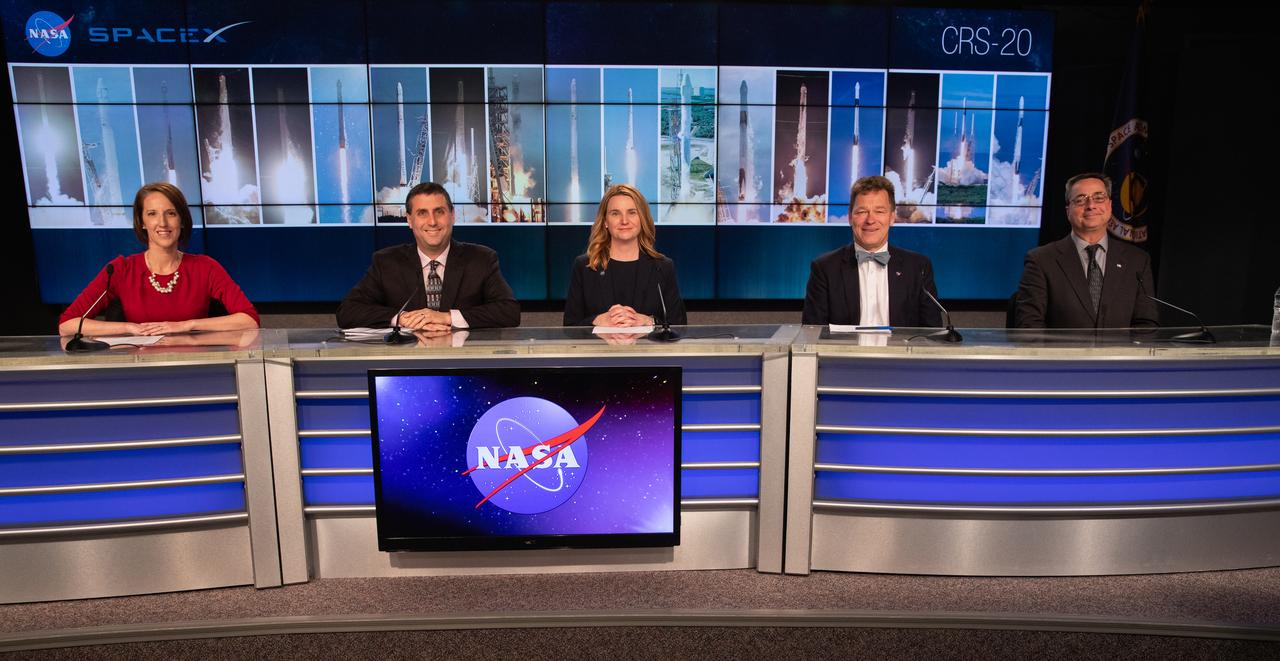
A prelaunch news conference for SpaceX’s 20th Commercial Resupply Services (CRS-20) mission to the International Space Station is held at NASA’s Kennedy Space Center in Florida on March 6, 2020. From left are conference moderator Heather Scott of NASA Communications; Joel Montalbano, manager of the agency’s International Space Station Program; Jennifer Buchli, deputy chief scientist for the International Space Station Program; Hans Koenigsmann, vice president of Build and Flight Reliability at SpaceX; and Mike McAleenan, launch weather officer with the U.S. Air Force 45th Space Wing. SpaceX’s Falcon 9 rocket and cargo Dragon spacecraft are scheduled to lift off from Cape Canaveral Air Force Station’s Space Launch Complex 40 at 11:50 p.m. EST on March 6, 2020.
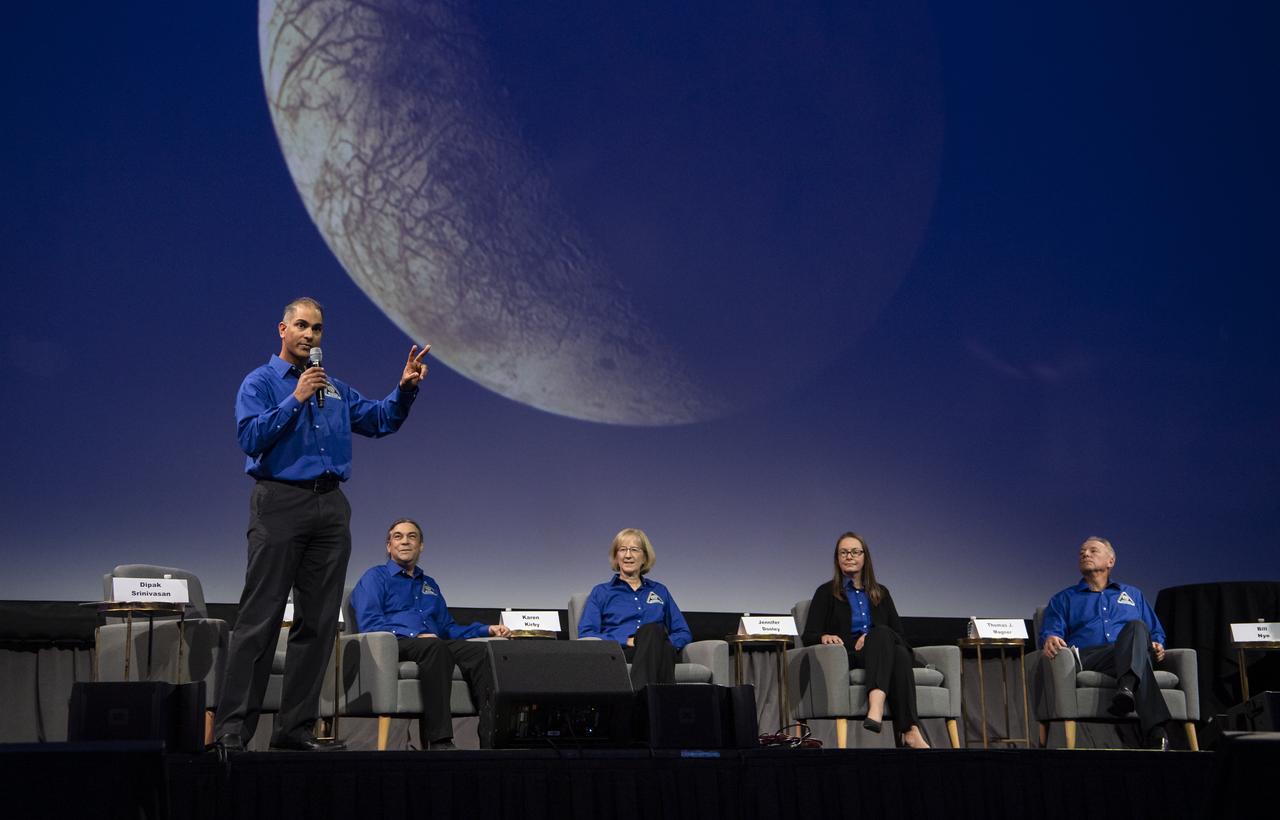
Dipak Srinivasan, Europa Clipper Telecommunications Manager, Johns Hopkins University, Applied Physics Laboratory (APL) moderates a panel titled, “Europa Clipper: Making a Mission to Understand Our Place in the Universe” with panelists, from left to right, Robert Pappalardo, Europa Clipper Project Scientist, NASA Jet Propulsion Laboratory (JPL); Karen Kirby, Europa Clipper Deputy Project System Engineer, APL; Jennifer Dooley, Europa Clipper Project Systems Engineer, JPL; Thomas Magner, Manager, APL; and Bill Nye, Chief Executive Officer, The Planetary Society, during the 70th International Astronautical Congress, Wednesday, Oct. 23, 2019 at the Walter E. Washington Convention Center in Washington. Photo credit: (NASA/Aubrey Gemignani)
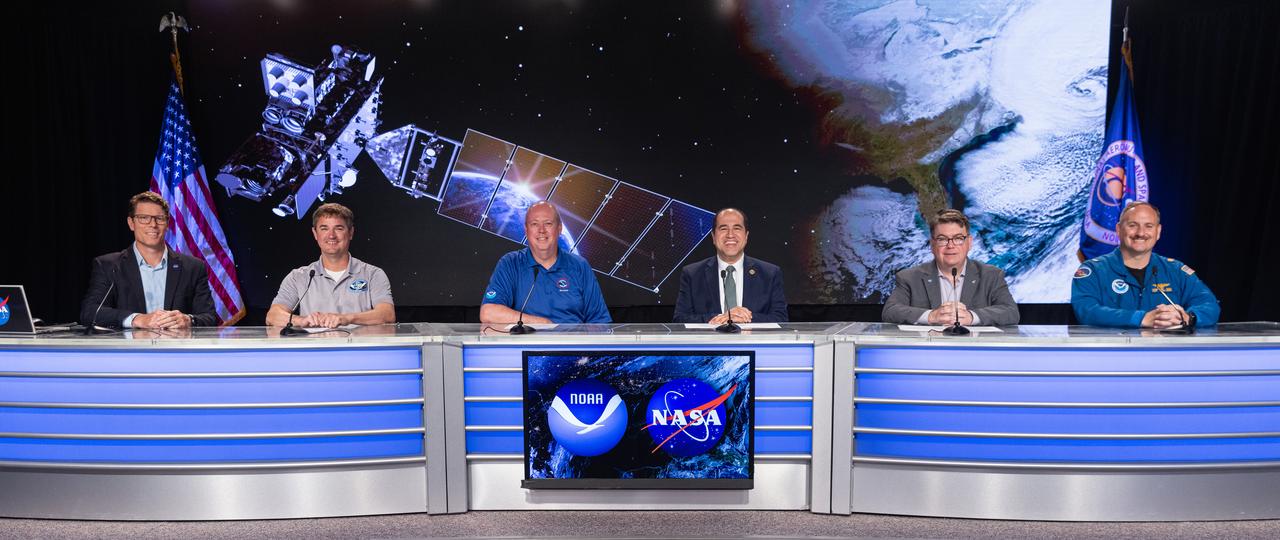
Officials from NASA and National Oceanic and Atmospheric Administration (NOAA) participate in a science briefing on Monday, June 24, 2024, at NASA’s Kennedy Space Center in Florida for the launch of GOES-U (Geostationary Operational Environmental Satellite U) mission. From left to right, Derrol Nail, NASA Communications; Dan Lindsey, chief scientist, GOES-R Program, NOAA; Ken Graham, director, NOAA’s National Weather Service; Elsayed Talaat, director, NOAA’s Office of Space Weather Observations; Charles Webb, deputy director, Joint Agency Satellite Division, NASA; Chris Wood, NOAA Hurricane Hunter pilot. The two-hour launch window opens at 5:16 p.m. EDT Tuesday, June 25, for the satellite’s launch on a SpaceX Falcon Heavy rocket from Launch Complex 39A at NASA’s Kennedy Space Center in Florida.
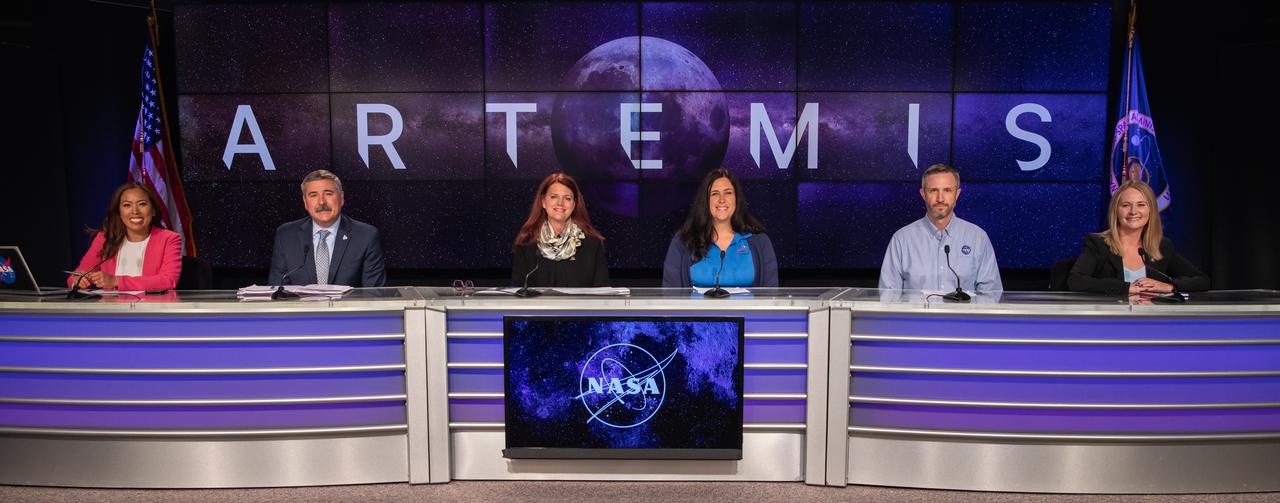
From left, Megan Cruz, NASA Communications; Mike Sarafin, Artemis mission manager, NASA Headquarters; Charlie Blackwell-Thompson, Artemis launch director, Kennedy Space Center; Melissa Jones, recovery director, Exploration Ground Systems Program, Kennedy; Jacob Bleacher, chief exploration scientist, Exploration Systems Development Mission Directorate, NASA Headquarters; and Melody Lovin, weather officer, Space Launch Delta 45, participate in an Artemis I mission status press briefing at Kennedy on Aug. 27, 2022. NASA’s Space Launch System rocket and Orion spacecraft are targeted to lift off from Kennedy’s Launch Complex 39B no earlier than Aug. 29, 2022, at 8:33 a.m. EDT.
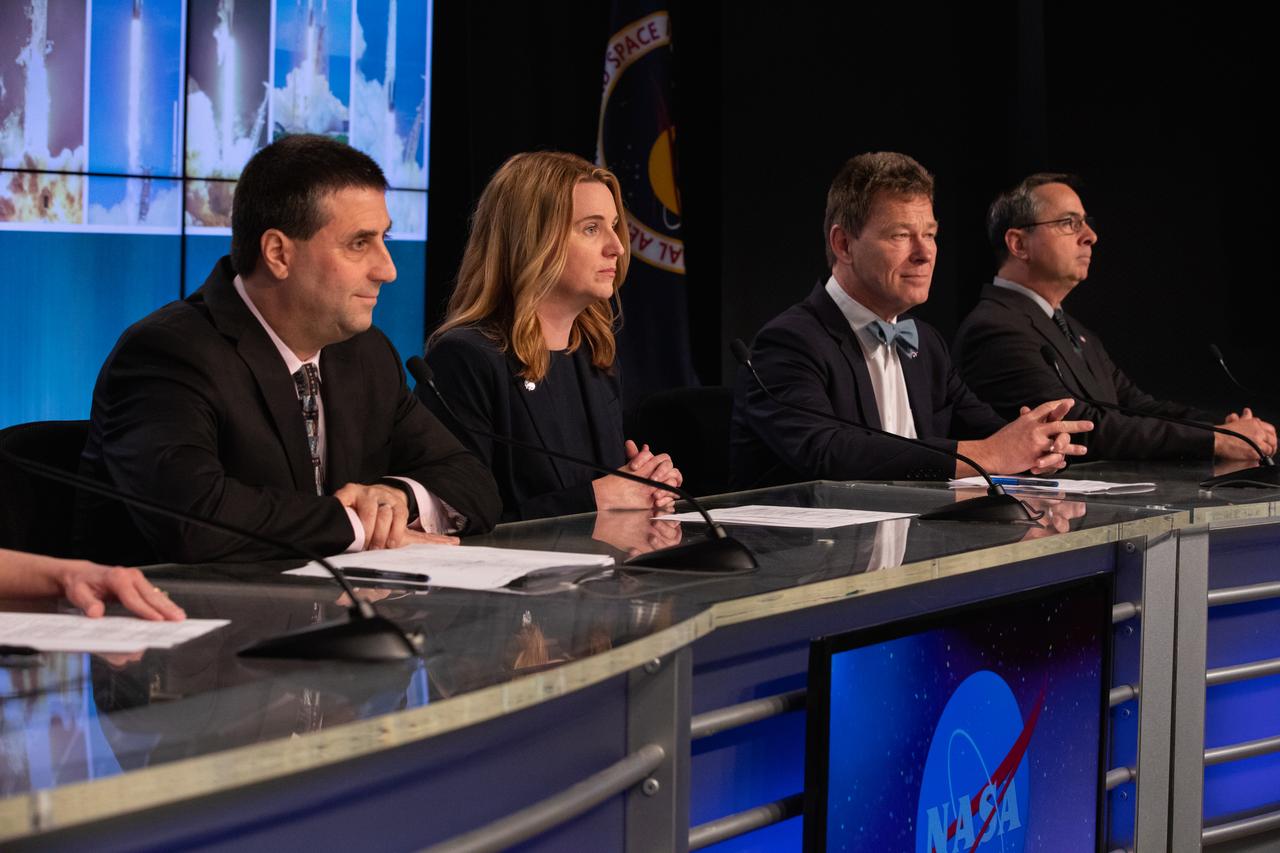
A prelaunch news conference for SpaceX’s 20th Commercial Resupply Services (CRS-20) mission to the International Space Station is held at NASA’s Kennedy Space Center in Florida on March 6, 2020. From left are Joel Montalbano, manager of the agency’s International Space Station Program; Jennifer Buchli, deputy chief scientist for the International Space Station Program; Hans Koenigsmann, vice president of Build and Flight Reliability at SpaceX; and Mike McAleenan, launch weather officer with the U.S. Air Force 45th Space Wing. SpaceX’s Falcon 9 rocket and cargo Dragon spacecraft are scheduled to lift off from Cape Canaveral Air Force Station’s Space Launch Complex 40 at 11:50 p.m. EST on March 6, 2020.
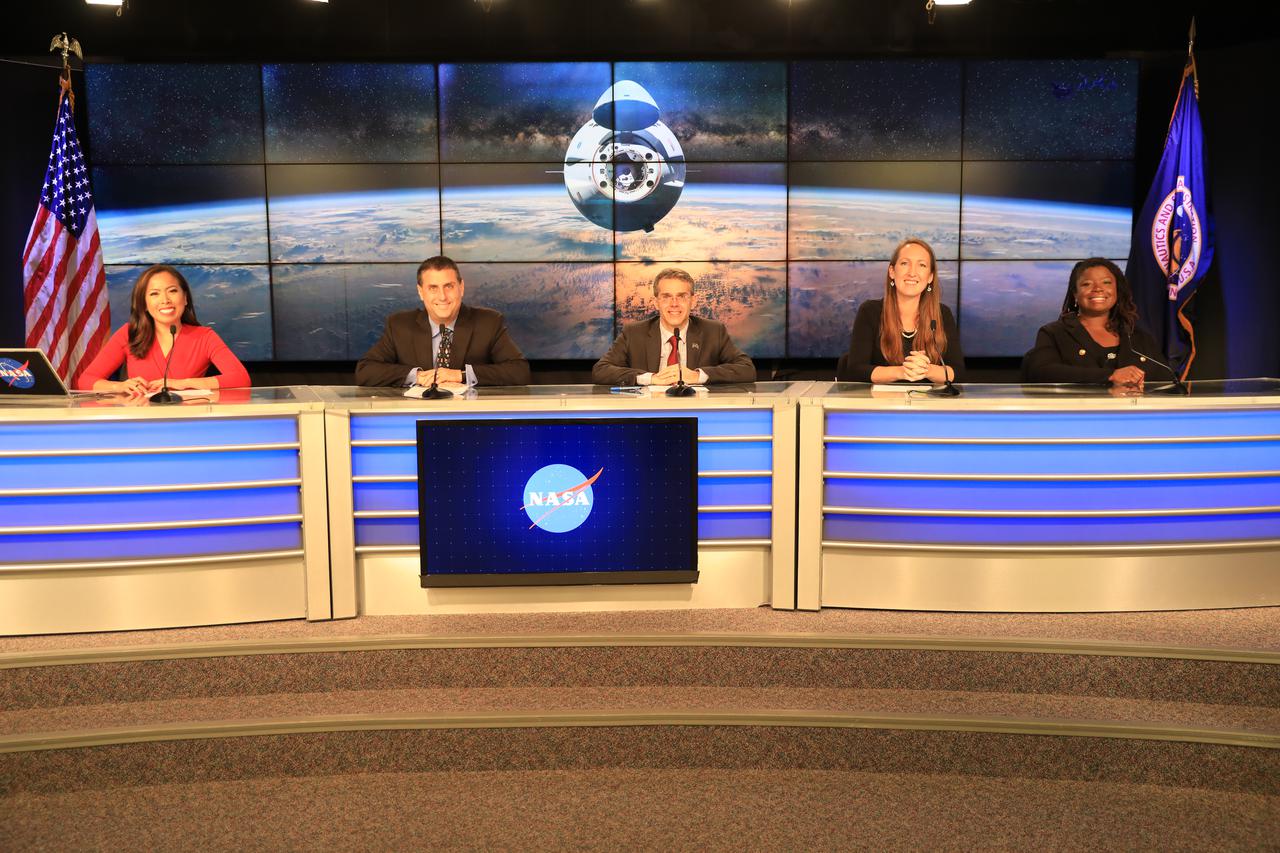
From left, Megan Cruz, NASA Communications; Joel Montalbano, manager, International Space Station Program; Dr. Bob Dempsey, acting deputy chief scientist, International Space Station Program; Sarah Walker, director, Dragon mission management, SpaceX; and Arlena Moses, launch weather officer, 45th Weather Squadron, Cape Canaveral Space Force Station, participate in NASA’s SpaceX 24th commercial resupply services mission prelaunch news conference at Kennedy Space Center in Florida on Tuesday, Dec. 20, 2021. Liftoff of the SpaceX Falcon 9 rocket with the company’s Dragon spacecraft on board is targeted for Tuesday, Dec. 21, 2021, at 5:07 a.m. EST. The mission will deliver new science investigations, supplies, and equipment to the crew on board the International Space Station.
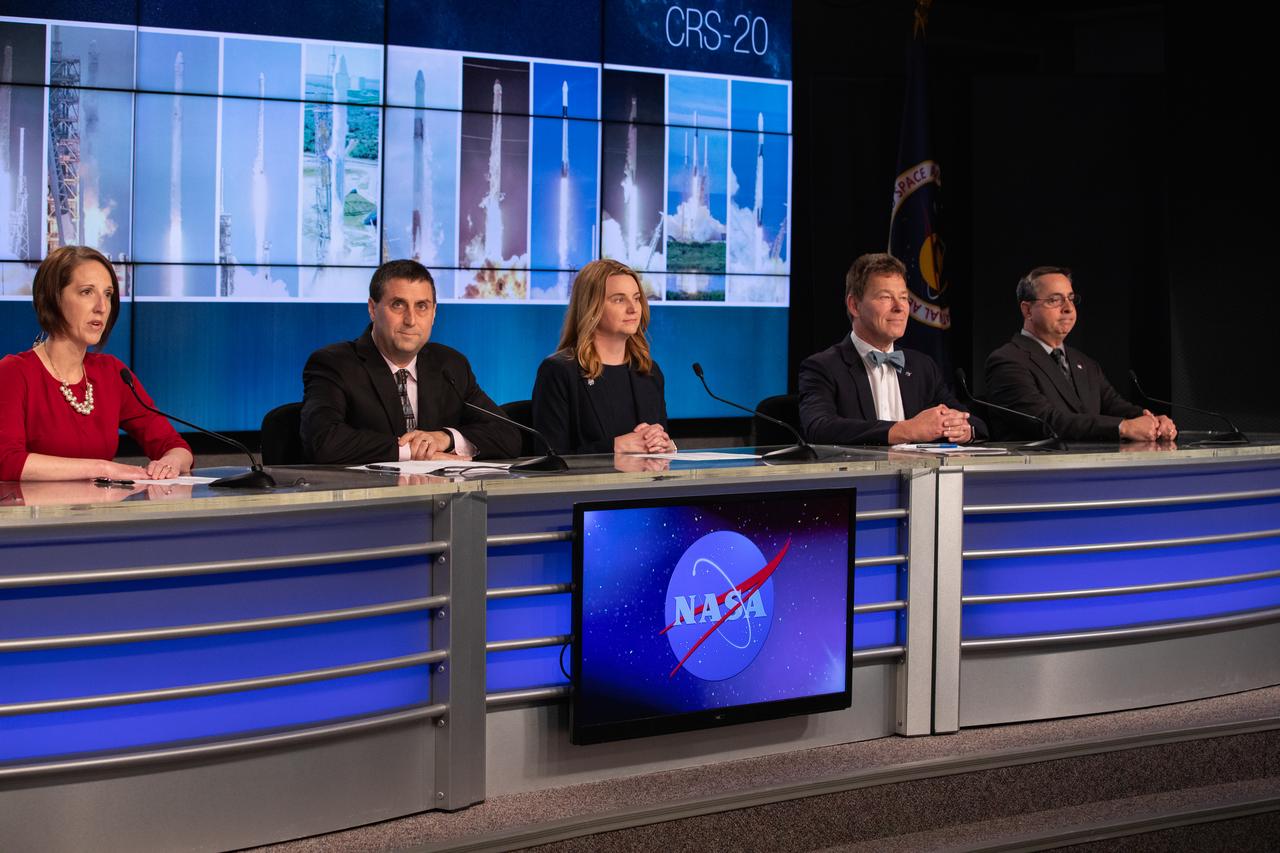
A prelaunch news conference for SpaceX’s 20th Commercial Resupply Services (CRS-20) mission to the International Space Station is held at NASA’s Kennedy Space Center in Florida on March 6, 2020. From left are conference moderator Heather Scott of NASA Communications; Joel Montalbano, manager of the agency’s International Space Station Program; Jennifer Buchli, deputy chief scientist for the International Space Station Program; Hans Koenigsmann, vice president of Build and Flight Reliability at SpaceX; and Mike McAleenan, launch weather officer with the U.S. Air Force 45th Space Wing. SpaceX’s Falcon 9 rocket and cargo Dragon spacecraft are scheduled to lift off from Cape Canaveral Air Force Station’s Space Launch Complex 40 at 11:50 p.m. EST on March 6, 2020.
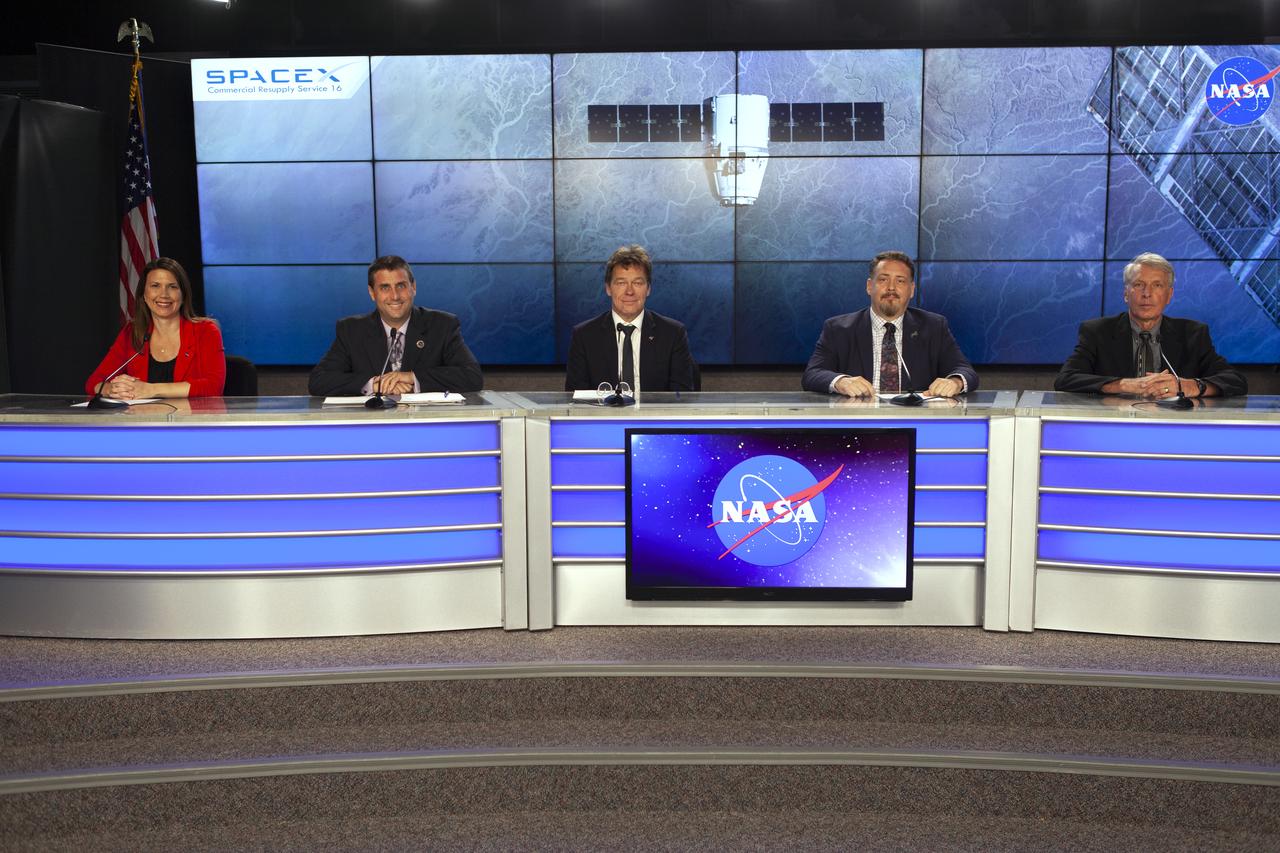
In the Kennedy Space Center’s Press Site auditorium, agency and industry leaders speak to members of the media during a prelaunch news conference for the SpaceX CRS-16 commercial resupply services mission to the International Space Station. From left are: Tori McLendon of NASA Communications, Joel Montalbano, deputy International Space Station program manager at NASA's Johnson Space Center in Houston, Hans Koenigsmann, vice president of Build and Flight Reliability for SpaceX, Kirt Costello, International Space Station program chief scientist at Johnson, and Clay Flinn, launch weather officer for the U.S. Air Force 45th Space Wing at Cape Canaveral Air Force Station. A Dragon spacecraft is scheduled to be launched from Space Launch Complex 40 at Cape Canaveral Air Force Station. The SpaceX Falcon 9 rocket will lift off on the company's 16th Commercial Resupply Services mission to the space station.

NASA Communications’ Megan Cruz moderates a SpaceX 24th commercial resupply services mission prelaunch news conference at Kennedy Space Center in Florida on Tuesday, Dec. 20, 2021. Participants included Joel Montalbano, manager, International Space Station Program; Dr. Bob Dempsey, acting deputy chief scientist, International Space Station Program; Sarah Walker, director, Dragon mission management, SpaceX; and Arlena Moses, launch weather officer, 45th Weather Squadron, Cape Canaveral Space Force Station. Liftoff of the SpaceX Falcon 9 rocket with the company’s Dragon spacecraft on board is targeted for Tuesday, Dec. 21, 2021, at 5:07 a.m. EST. The mission will deliver new science investigations, supplies, and equipment to the crew on board the International Space Station.
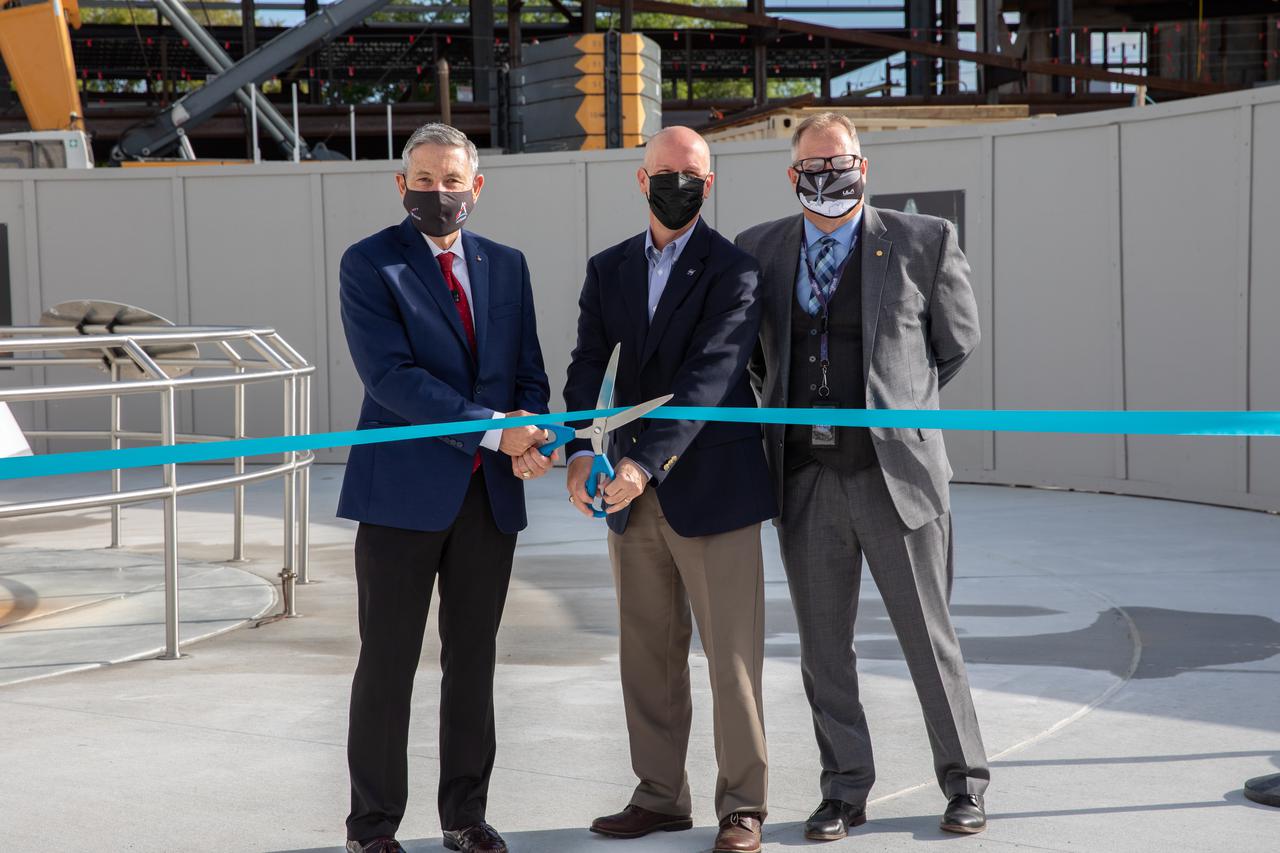
A ribbon-cutting ceremony welcomes the last United Launch Alliance Delta II rocket to the lineup of historic launch vehicles in the Rocket Garden at the Kennedy Space Center Visitor Complex in Florida, on March 23, 2021. Cutting the ribbon, from left are Kennedy Space Center Director Bob Cabana, Tim Dunn, launch director, Launch Services Program, and Therrin Protze, chief operating officer, Delaware North/KSCVC. The Delta II rocket was a workhorse for NASA and civilian scientists, the U.S. military, and commercial clients throughout its almost 30 years of service. Since its first launch in 1989, the Delta II has launched 154 successful missions. NASA’s Launch Services Program launched the ICESat-2 spacecraft on the final Delta II launch on Sept. 15, 2018, from Vandenberg Air Force Base in California.

Dr. Jose Nunez, at right, Flight Technology Branch chief in the Exploration Research and Technology Directorate, speaks to students from Brevard County high schools during a panel discussion session at the NASA Kennedy Space Center Visitor Complex in Florida, on Nov. 7, 2018. The high school seniors were invited to Kennedy Space Center for a tour of facilities, lunch and a roundtable discussion with engineers, scientists and business experts at the center. The 2018 Brevard Top Scholars event was hosted by the center's Academic Engagement Office to honor the top three scholars of the 2018-2019 graduating student class from each of Brevard County’s public high schools. The students received a personalized certificate of recognition at the end of the day.
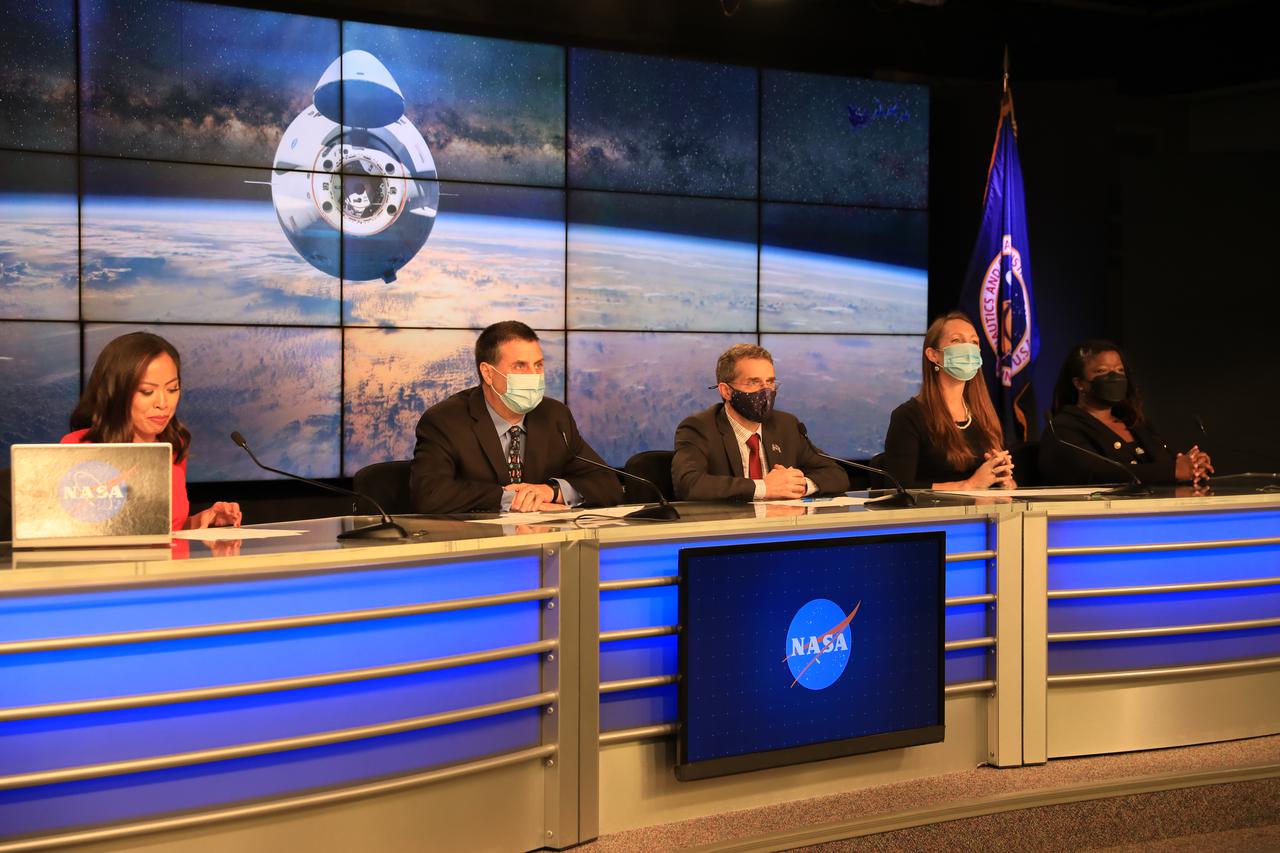
From left, Megan Cruz, NASA Communications; Joel Montalbano, manager, International Space Station Program; Dr. Bob Dempsey, acting deputy chief scientist, International Space Station Program; Sarah Walker, director, Dragon mission management, SpaceX; and Arlena Moses, launch weather officer, 45th Weather Squadron, Cape Canaveral Space Force Station, participate in NASA’s SpaceX 24th commercial resupply services mission prelaunch news conference at Kennedy Space Center in Florida on Tuesday, Dec. 20, 2021. Liftoff of the SpaceX Falcon 9 rocket with the company’s Dragon spacecraft on board is targeted for Tuesday, Dec. 21, 2021, at 5:07 a.m. EST. The mission will deliver new science investigations, supplies, and equipment to the crew on board the International Space Station.
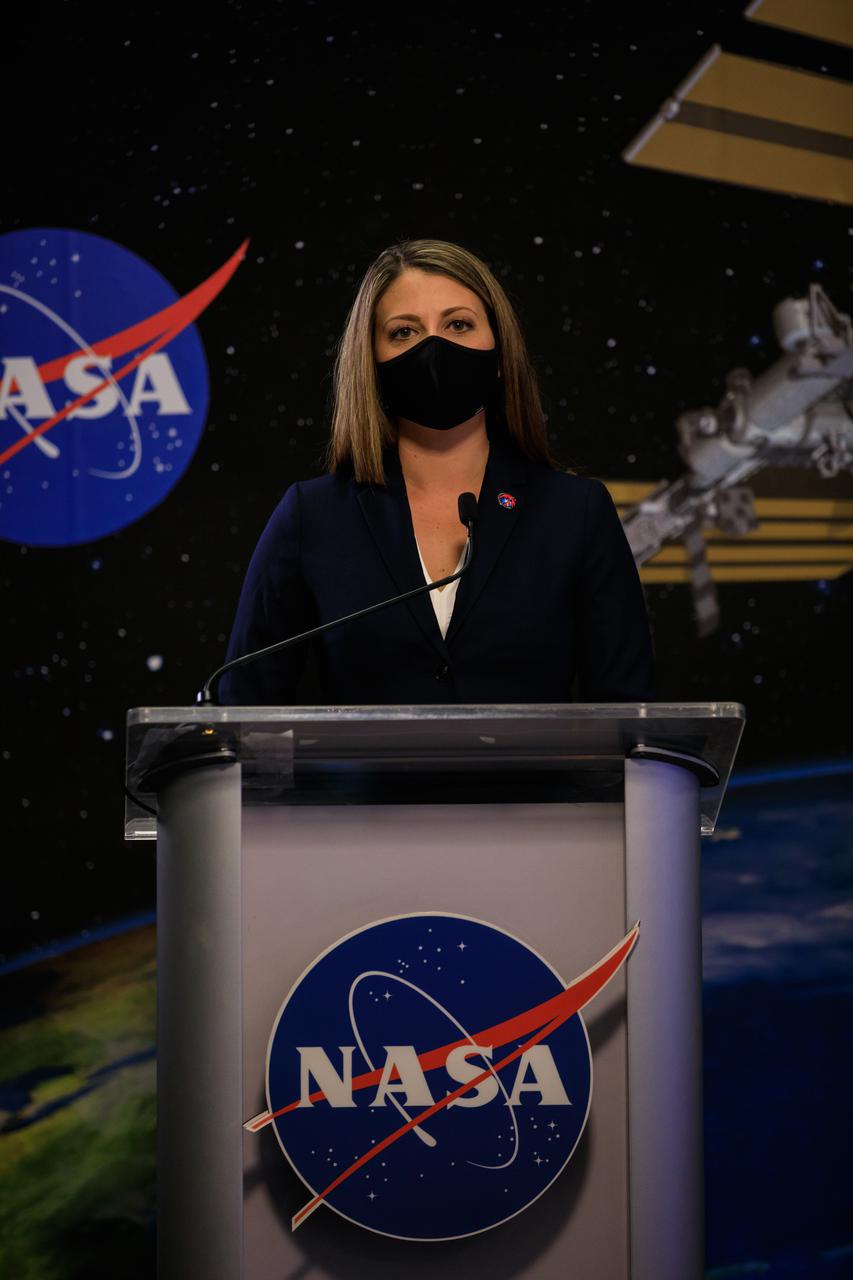
Marie Lewis, NASA Communications, moderates the SpaceX Crew-2 prelaunch news conference held at NASA’s Kennedy Space Center in Florida on April 20, 2021. Participants included: Steve Stich, manager, NASA Commercial Crew Program; Joel Montalbano, manager, International Space Station Program; Benji Reed, senior director, Human Spaceflight Programs, SpaceX; Norm Knight, deputy manager, Flight Operations Directorate; Junichi Sakai, manager, International Space Station Program, JAXA; Frank de Winne, manager, International Space Station Program, ESA; Kirt Costello, chief scientist, International Space Station Program; and Brian Cizek, launch weather officer, 45th Weather Squadron, U.S. Space Force.
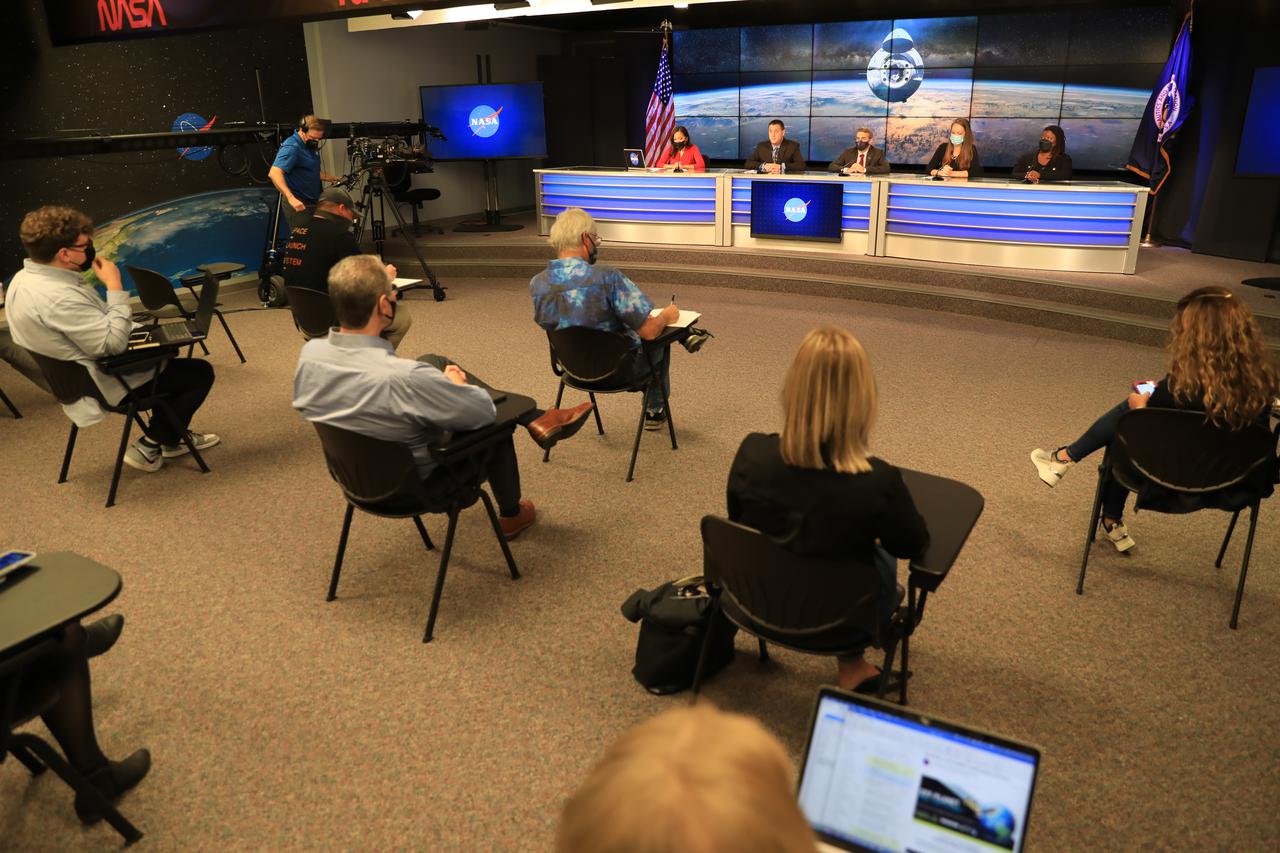
Media members participate in NASA’s SpaceX 24th commercial resupply services mission prelaunch news conference at Kennedy Space Center in Florida on Tuesday, Dec. 20, 2021. Participants included Joel Montalbano, manager, International Space Station Program; Dr. Bob Dempsey, acting deputy chief scientist, International Space Station Program; Sarah Walker, director, Dragon mission management, SpaceX; and Arlena Moses, launch weather officer, 45th Weather Squadron, Cape Canaveral Space Force Station. NASA Communications’ Megan Cruz moderated the event. Liftoff of the SpaceX Falcon 9 rocket with the company’s Dragon spacecraft on board is targeted for Tuesday, Dec. 21, 2021, at 5:07 a.m. EST. The mission will deliver new science investigations, supplies, and equipment to the crew on board the International Space Station.
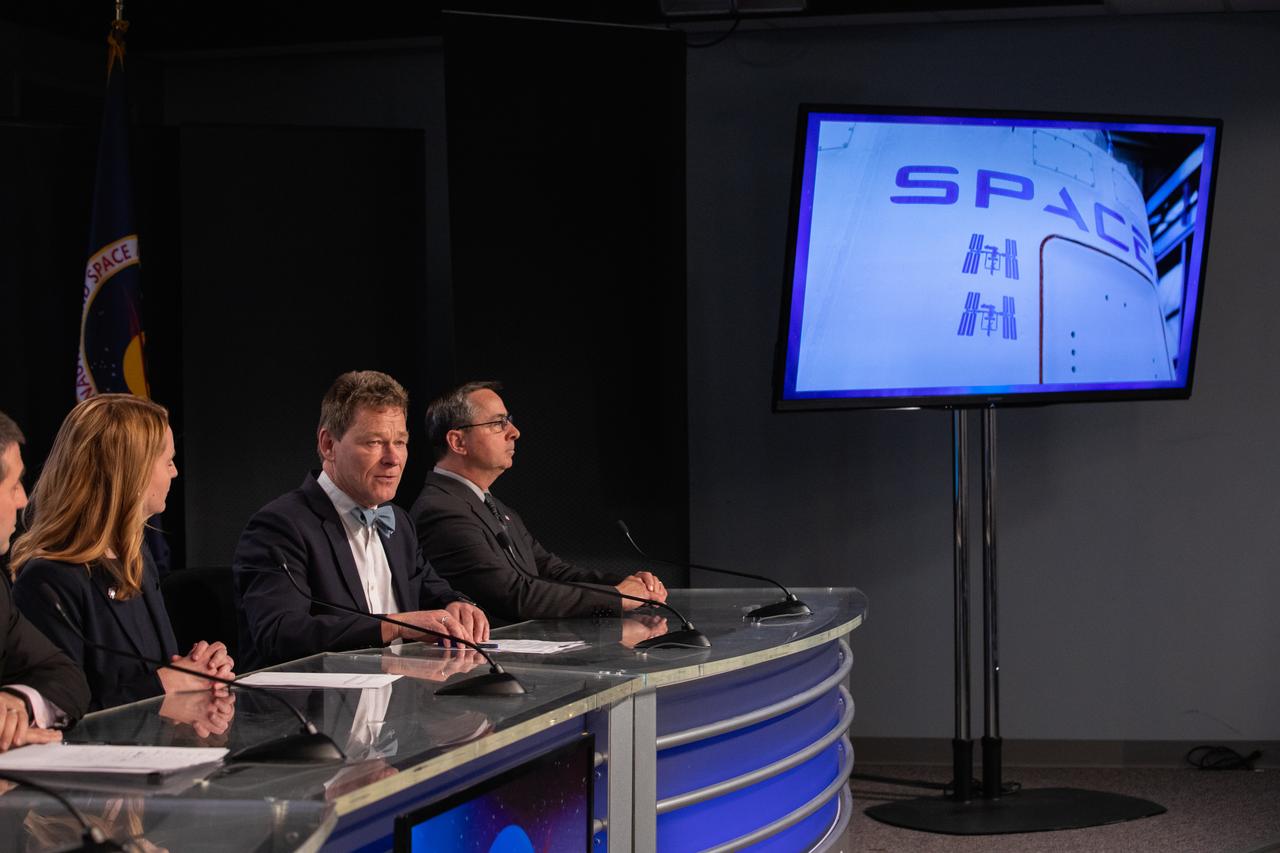
A prelaunch news conference for SpaceX’s 20th Commercial Resupply Services (CRS-20) mission to the International Space Station is held at NASA’s Kennedy Space Center in Florida on March 6, 2020. From left are Joel Montalbano, manager of the agency’s International Space Station Program; Jennifer Buchli, deputy chief scientist for the International Space Station Program; Hans Koenigsmann, vice president of Build and Flight Reliability at SpaceX; and Mike McAleenan, launch weather officer with the U.S. Air Force 45th Space Wing. SpaceX’s Falcon 9 rocket and cargo Dragon spacecraft are scheduled to lift off from Cape Canaveral Air Force Station’s Space Launch Complex 40 at 11:50 p.m. EST on March 6, 2020.
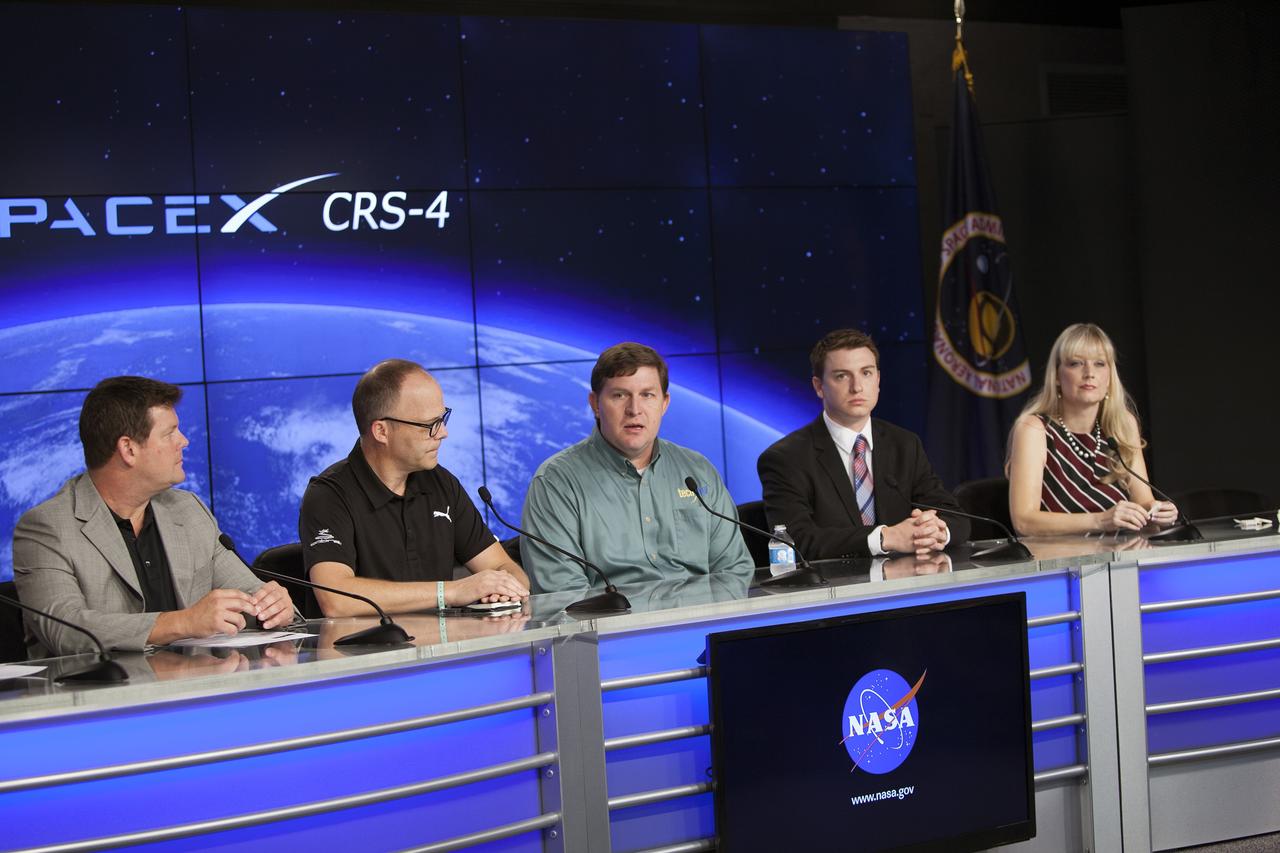
CAPE CANAVERAL, Fla. – Members of an ISS Research and Technology Panel brief media representatives in Kennedy Space Center’s Press Site auditorium in preparation for the launch of the SpaceX CRS-4 mission to resupply the International Space Station. From left are Duane Ratliff, chief operating officer, CASIS, Mike Yagley, COBRA PUMA Golf, director of Research and Testing, Dr. Eugene Boland, Techshot chief scientist, Jason Gilbert, scientific associate, Novartis Institutes for BioMedical Research, and Niki Werkheiser, 3D Printing in Zero-G project manager. The mission is the fourth of 12 SpaceX flights NASA contracted with the company to resupply the space station. It will be the fifth trip by a Dragon spacecraft to the orbiting laboratory. The spacecraft’s 2.5 tons of supplies, science experiments, and technology demonstrations include critical materials to support 255 science and research investigations that will occur during the station's Expeditions 41 and 42. Liftoff is targeted for an instantaneous window at 2:14 a.m. EDT. To learn more about the mission, visit http://www.nasa.gov/mission_pages/station/structure/launch/index.html. Photo credit: NASA/Jim Grossmann
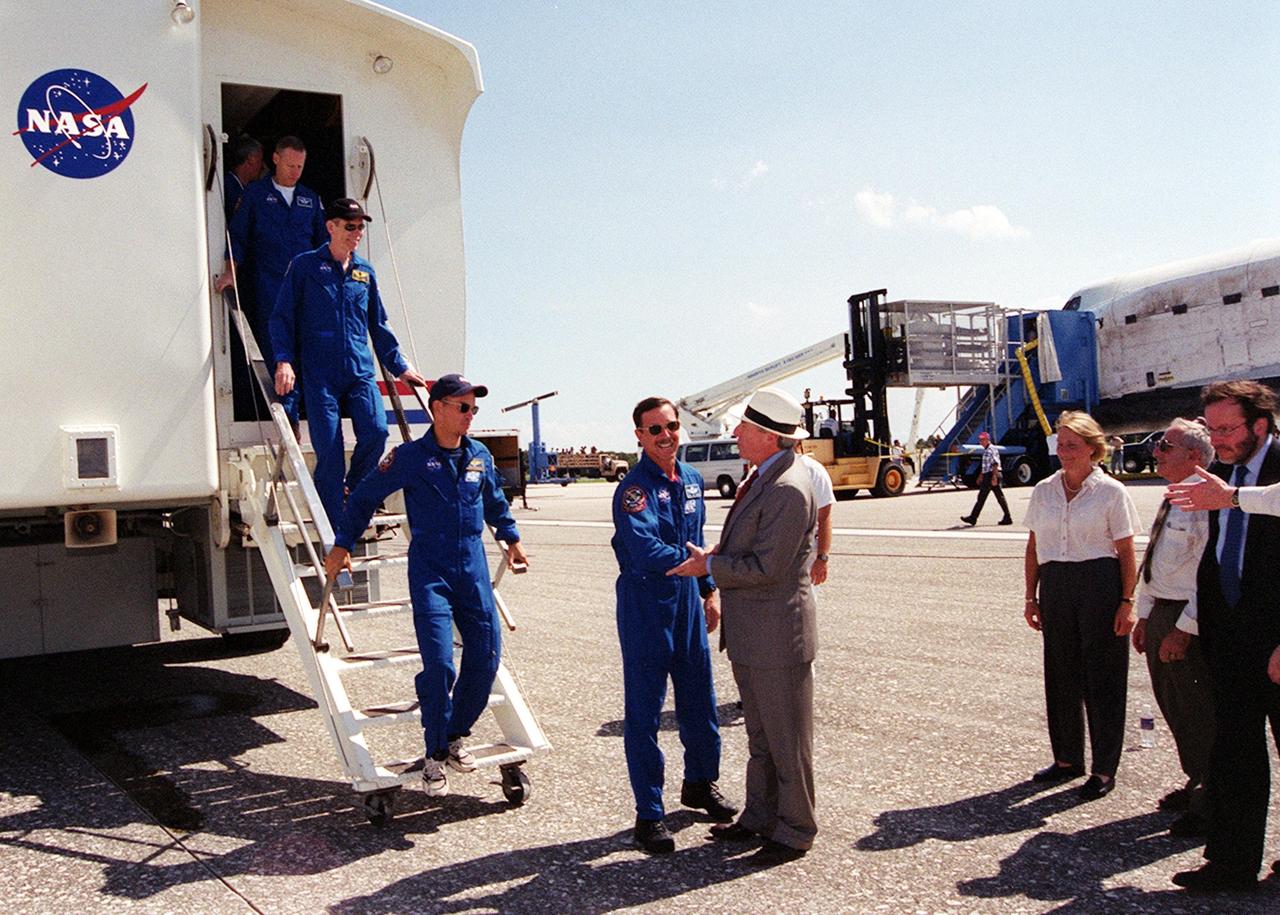
KENNEDY SPACE CENTER, Fla. - As members of the STS-105 crew exit the Crew Transfer Vehicle (CTV) following Discovery's landing on KSC's Shuttle Landing Facility runway 15, they are greeted by NASA Administrator Dan Goldin. From left are Mission Specialists Patrick Forrester and Daniel Barry, Pilot Frederick "Rick" Sturckow, and Commander Scott "Doc" Horowitz (shaking hands with Goldin). Looking on are, from left, Kathie Olsen, NASA chief scientist; Joe Rothenberg, associate administrator, Office of Space Flight; and Courtney Stadd, NASA Headquarters chief of staff. Main gear touchdown was at 2:22:58 p.m. EDT; wheel stop, at 2:24:06 p.m. EDT. The 11-day, 21-hour, 12-minute STS-105 mission accomplished the goals set for the 11th flight to the International Space Station: swapout of the resident Station crew; delivery of equipment, supplies and scientific experiments; and installation of the Early Ammonia Servicer and heater cables for the S0 truss on the Station. Discovery traveled 4.3 million miles on its 30th flight into space, the 106th mission of the Space Shuttle program. Out of five missions in 2001, the landing was the first to occur in daylight at KSC.
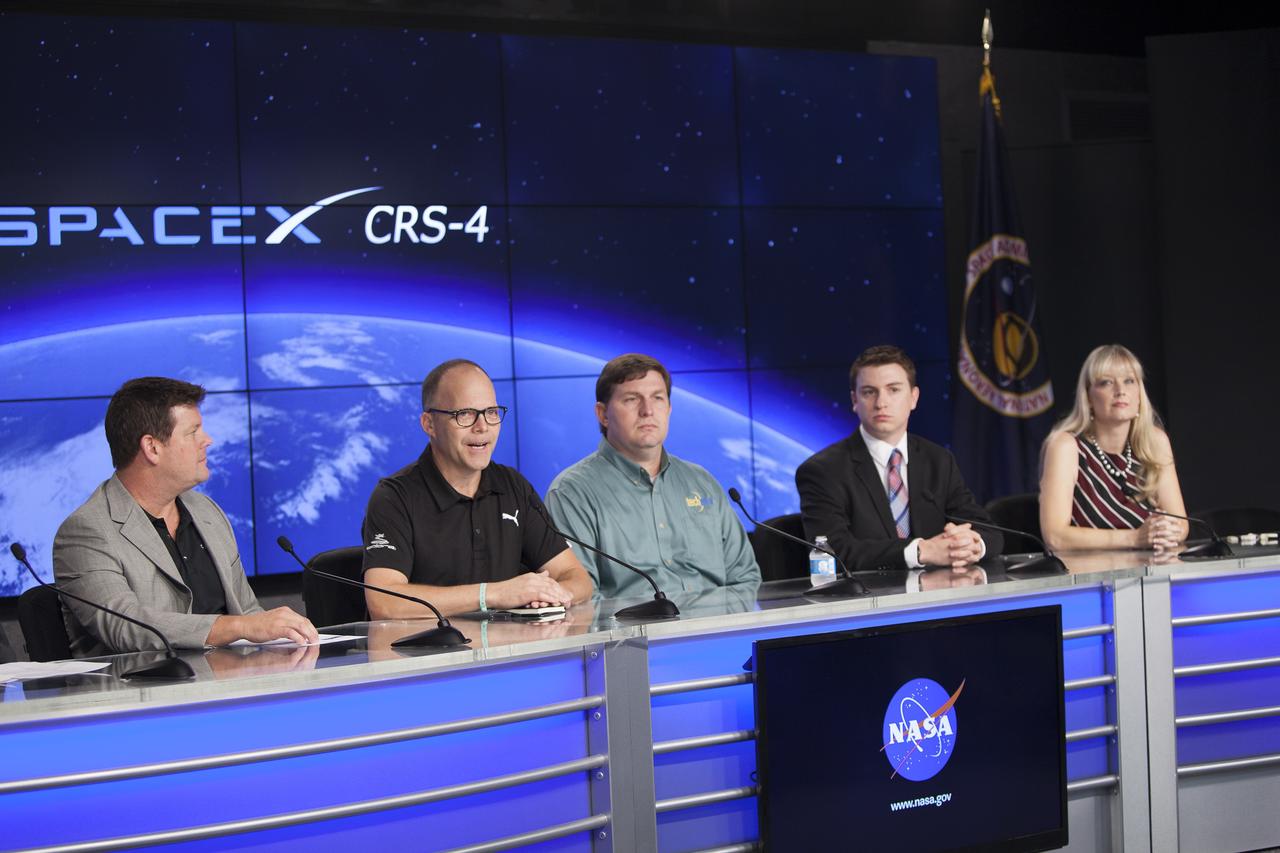
CAPE CANAVERAL, Fla. – Members of an ISS Research and Technology Panel brief media representatives in Kennedy Space Center’s Press Site auditorium in preparation for the launch of the SpaceX CRS-4 mission to resupply the International Space Station. From left are Duane Ratliff, chief operating officer, CASIS, Mike Yagley, COBRA PUMA Golf, director of Research and Testing, Dr. Eugene Boland, Techshot chief scientist, Jason Gilbert, scientific associate, Novartis Institutes for BioMedical Research, and Niki Werkheiser, 3D Printing in Zero-G project manager. The mission is the fourth of 12 SpaceX flights NASA contracted with the company to resupply the space station. It will be the fifth trip by a Dragon spacecraft to the orbiting laboratory. The spacecraft’s 2.5 tons of supplies, science experiments, and technology demonstrations include critical materials to support 255 science and research investigations that will occur during the station's Expeditions 41 and 42. Liftoff is targeted for an instantaneous window at 2:14 a.m. EDT. To learn more about the mission, visit http://www.nasa.gov/mission_pages/station/structure/launch/index.html. Photo credit: NASA/Jim Grossmann

CAPE CANAVERAL, Fla. – Media representatives ask questions of the ISS Research and Technology Panel in Kennedy Space Center’s Press Site auditorium in preparation for the launch of the SpaceX CRS-4 mission to resupply the International Space Station. On the dais from left are Michael Curie, NASA Public Affairs, Duane Ratliff, chief operating officer, CASIS, Mike Yagley, COBRA PUMA Golf, director of Research and Testing, Dr. Eugene Boland, Techshot chief scientist, Jason Gilbert, scientific associate, Novartis Institutes for BioMedical Research, and Niki Werkheiser, 3D Printing in Zero-G project manager. The mission is the fourth of 12 SpaceX flights NASA contracted with the company to resupply the space station. It will be the fifth trip by a Dragon spacecraft to the orbiting laboratory. The spacecraft’s 2.5 tons of supplies, science experiments, and technology demonstrations include critical materials to support 255 science and research investigations that will occur during the station's Expeditions 41 and 42. Liftoff is targeted for an instantaneous window at 2:14 a.m. EDT. To learn more about the mission, visit http://www.nasa.gov/mission_pages/station/structure/launch/index.html. Photo credit: NASA/Jim Grossmann
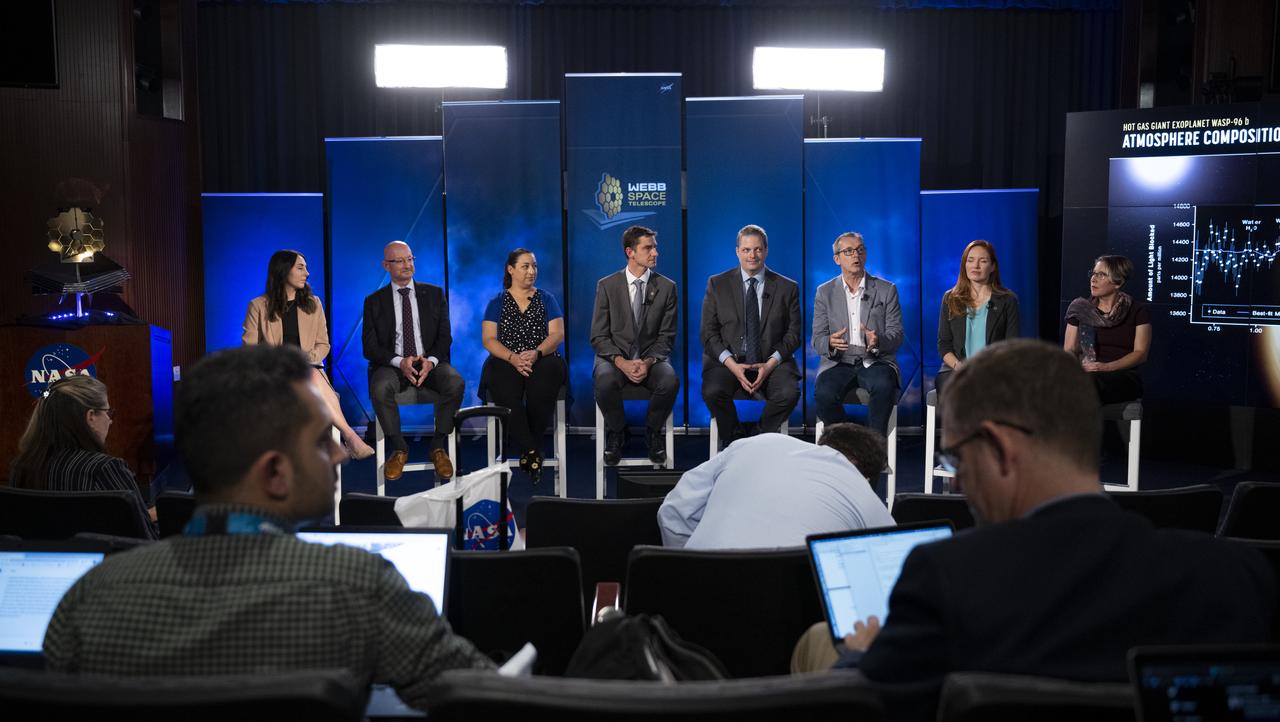
NASA Public Affairs Officer Alise Fisher, left, NASA James Webb Space Telescope Program Scientist and Astrophysics Division Chief Scientist Eric Smith, second from left, NASA James Webb Space Telescope Deputy Project Scientist for Exoplanet Science Knicole Colón, third from left, NASA James Webb Space Telescope Project Scientist at ESA (European Space Agency) Christopher Evans, fourth from left, NASA James Webb Space Telescope Project Scientist, Space Telescope Science Institute, Klaus Pontoppidan, fourth from right, Principal Investigator for the Canadian Near-Infrared Imager and Slitless Spectrograph at the University of Montreal René Doyon, third from right, NASA James Webb Space Telescope Deputy Project Scientist for Communications Amber Straughn, second from right, and NASA James Webb Space Telescope Operations Project Scientist Jane Rigby, right, during a briefing following the release of the first full-color images from NASA’s James Webb Space Telescope, Tuesday, July 12, 2022, at NASA’s Goddard Space Flight Center in Greenbelt, Md. The first full-color images and spectroscopic data from the James Webb Space Telescope, a partnership with ESA (European Space Agency) and the Canadian Space Agency (CSA), are a demonstration of the power of Webb as the telescope begins its science mission to unfold the infrared universe. Photo Credit: (NASA/Bill Ingalls)
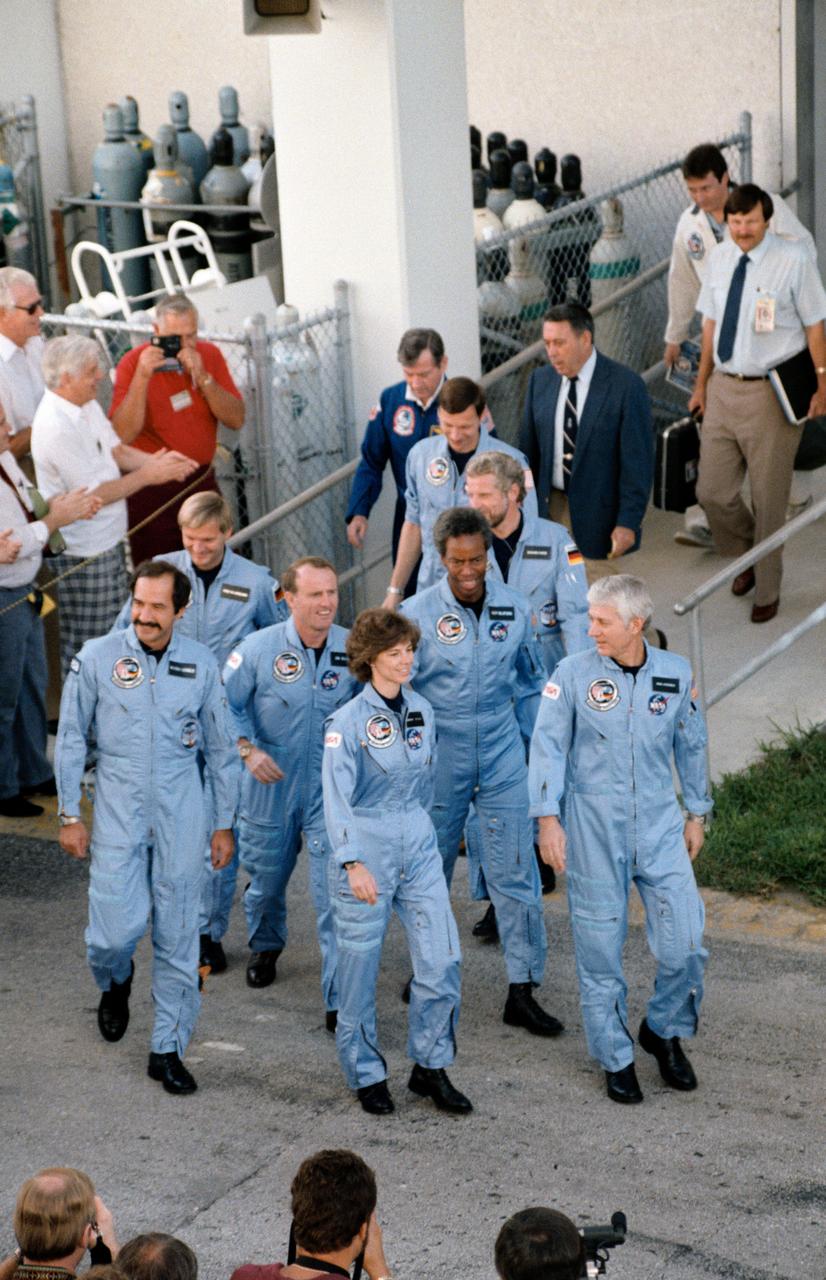
61A-S-015 (30 Oct 1985) --- A record number of crewmembers to serve on a Shuttle mission walks from the operations and checkout facility to a crew transfer van en route to Launch Pad 39A where the Challenger awaits the 61-A/Spacelab D-1launch. Leading the way is Henry W. Hartsfield Jr., mission commander, as Steven R. Nagel, pilot, trails the blue-suited team members. At center are James F. Buchli, Bonnie J. Dunbar and Guion S. Bluford Jr.--all mission specialists. They are flanked by Wubbo J. Ockels and Ernst Messerschmid on the left and Reinhard Furrer on the right. John W. Young, chief of the astronaut office at JSC and George W.S. Abbey, director of flight crew operations at JSC, follow the crew. Richard W. Nygren, assistant to the director, is in background. Messerschmid and Furrer are German scientists and Ockels is a Dutch scientist; and the three will be working with NASA's three mission specialists in the D-1 science module during the week-long flight.
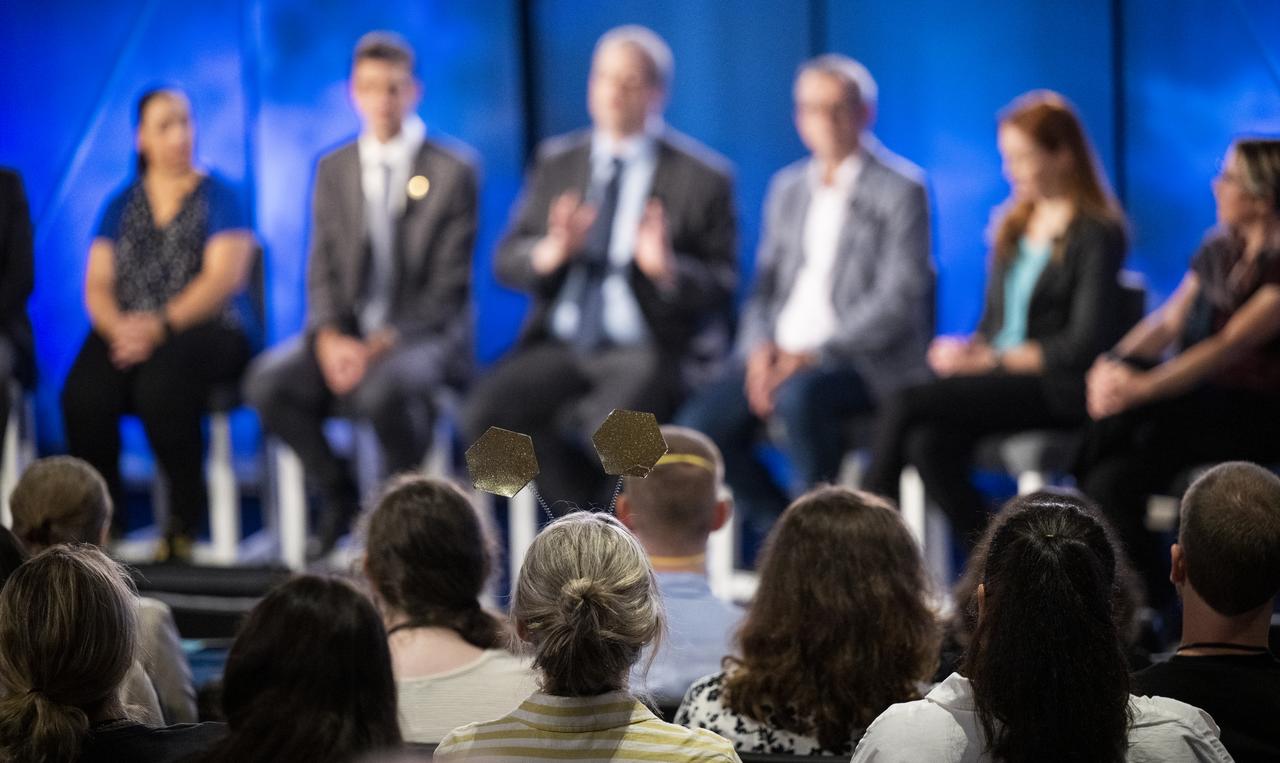
A NASA Social attendee is seen wearing a headband featuring Webb mirrors during a briefing with NASA Public Affairs Officer Alise Fisher, left, NASA James Webb Space Telescope Program Scientist and Astrophysics Division Chief Scientist Eric Smith, second from left, NASA James Webb Space Telescope Deputy Project Scientist for Exoplanet Science Knicole Colón, third from left, NASA James Webb Space Telescope Project Scientist at ESA (European Space Agency) Christopher Evans, fourth from left, NASA James Webb Space Telescope project scietntist, Space Telescope Science Institute, Klaus Pontoppidan, fourth from right, Principal Investigator for the Canadian Near-Infrared Imager and Slitless Spectrograph at the University of Montreal René Doyon, third from right, NASA James Webb Space Telescope Deputy Project Scientist for Communications Amber Straughn, second from right, and NASA James Webb Space Telescope Operations Project Scientist Jane Rigby, right, following the release of the first full-color images from NASA’s James Webb Space Telescope, Tuesday, July 12, 2022, at NASA’s Goddard Space Flight Center in Greenbelt, Md. The first full-color images and spectroscopic data from the James Webb Space Telescope, a partnership with ESA (European Space Agency) and the Canadian Space Agency (CSA), are a demonstration of the power of Webb as the telescope begins its science mission to unfold the infrared universe. Photo Credit: (NASA/Bill Ingalls)
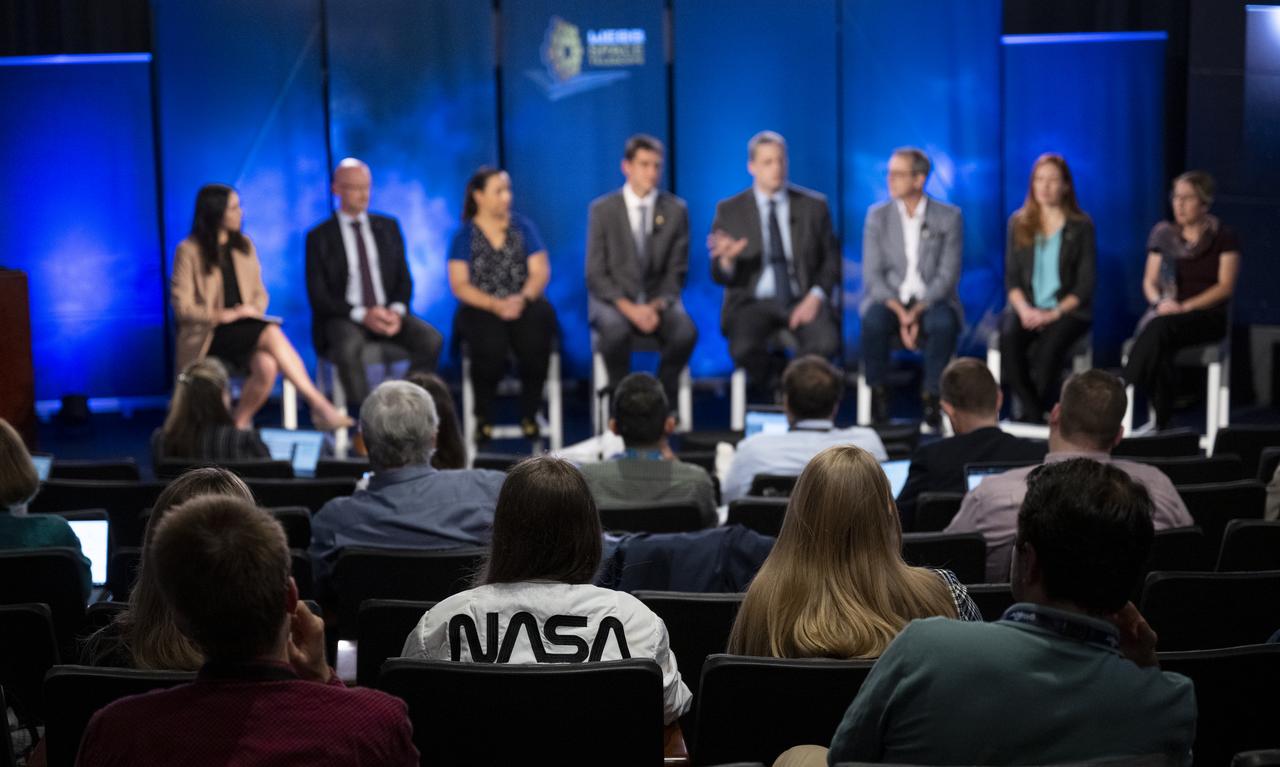
A NASA social attendees and members of the media are seen during a briefing with NASA Public Affairs Officer Alise Fisher, left, NASA James Webb Space Telescope Program Scientist and Astrophysics Division Chief Scientist Eric Smith, second from left, NASA James Webb Space Telescope Deputy Project Scientist for Exoplanet Science Knicole Colón, third from left, NASA James Webb Space Telescope Project Scientist at ESA (European Space Agency) Christopher Evans, fourth from left, NASA James Webb Space Telescope project scietntist, Space Telescope Science Institute, Klaus Pontoppidan, fourth from right, Principal Investigator for the Canadian Near-Infrared Imager and Slitless Spectrograph at the University of Montreal René Doyon, third from right, NASA James Webb Space Telescope Deputy Project Scientist for Communications Amber Straughn, second from right, and NASA James Webb Space Telescope Operations Project Scientist Jane Rigby, right, following the release of the first full-color images from NASA’s James Webb Space Telescope, Tuesday, July 12, 2022, at NASA’s Goddard Space Flight Center in Greenbelt, Md. The first full-color images and spectroscopic data from the James Webb Space Telescope, a partnership with ESA (European Space Agency) and the Canadian Space Agency (CSA), are a demonstration of the power of Webb as the telescope begins its science mission to unfold the infrared universe. Photo Credit: (NASA/Bill Ingalls)
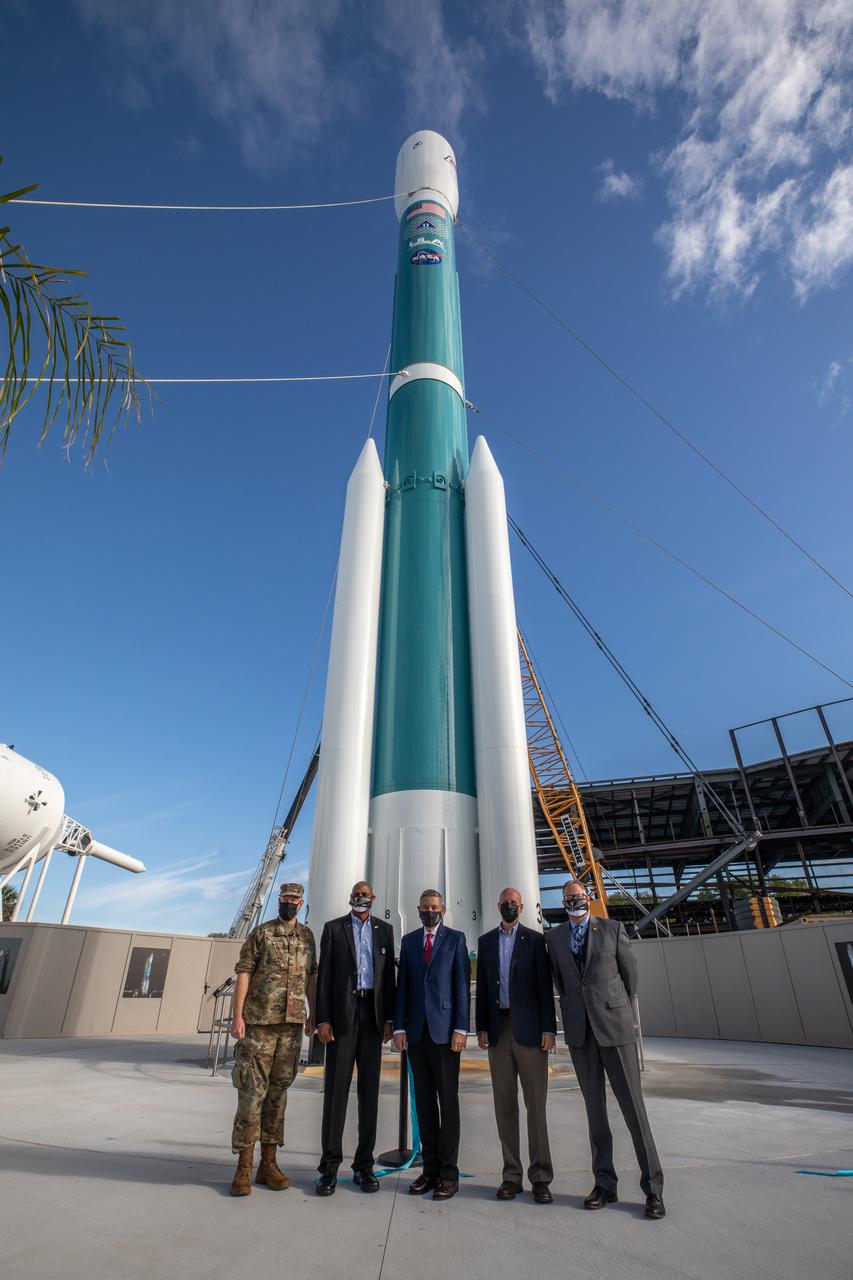
The last United Launch Alliance Delta II rocket joins the lineup of historic launch vehicles in the Rocket Garden during a ribbon-cutting ceremony at the Kennedy Space Center Visitor Complex in Florida, on March 23, 2021. From left, are Brigadier General Stephen Purdy Jr., 45th Space Wing commander and Eastern Range director, Patrick Space Force Base and Cape Canaveral Air Force Station; Ron Fortson, director and general manager, Launch Operations, United Launch Alliance; Kennedy Space Center Director Bob Cabana; Tim Dunn, launch director, Launch Services Program; and Therrin Protze, chief operating officer, Delaware North/KSCVC. The Delta II rocket was a workhorse for NASA and civilian scientists, the U.S. military, and commercial clients throughout its almost 30 years of service. Since its first launch in 1989, the Delta II has launched 154 successful missions. NASA’s Launch Services Program launched the ICESat-2 spacecraft on the final Delta II launch for the agency on Sept. 15, 2018, from Vandenberg Air Force Base in California.
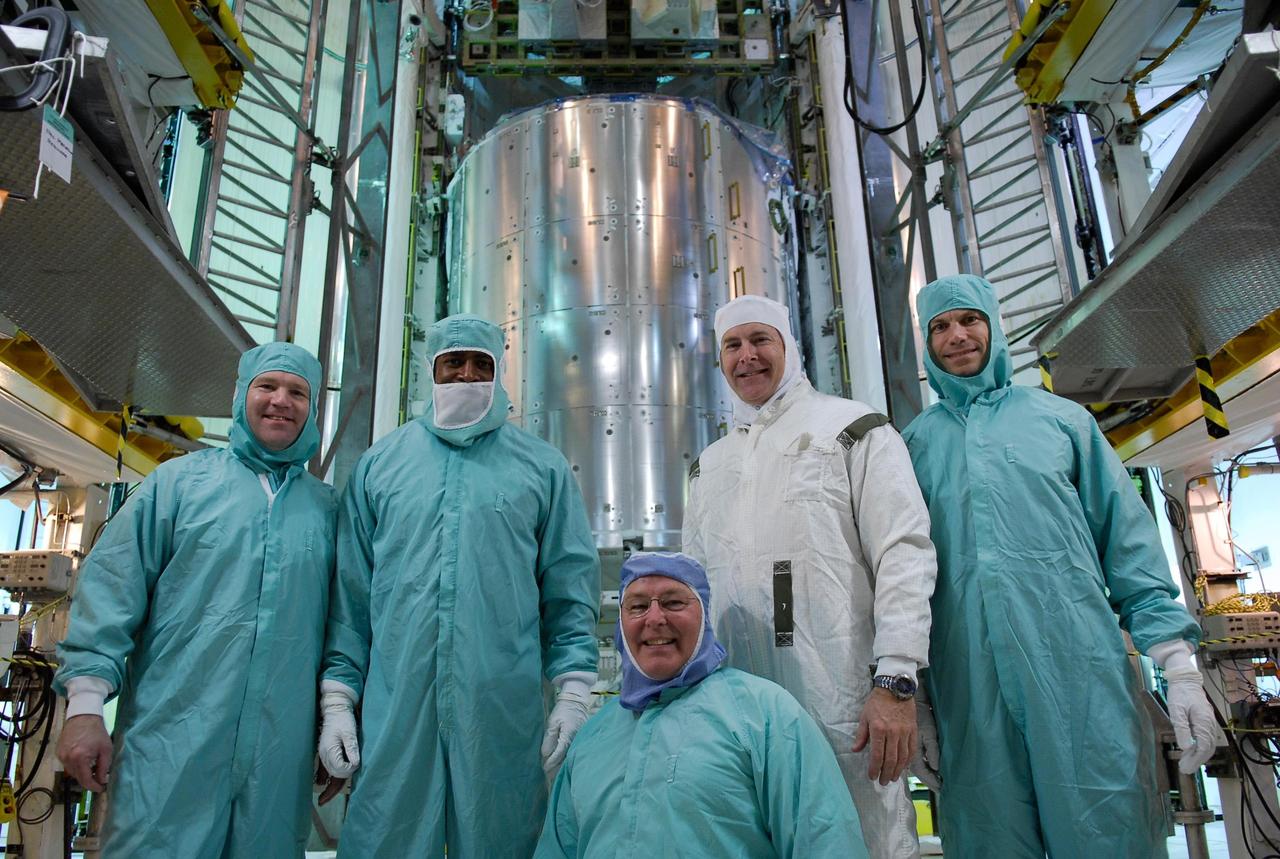
KENNEDY SPACE CENTER, FLA. -- At Launch Pad 39A, members of the space shuttle Atlantis STS-122 crew pose for a photo in front of the Columbus module during terminal countdown demonstration test, or TCDT, activities. Columbus was installed in the orbiter's payload bay on Nov. 11. From left, in clean room attire, are Commander Steve Frick; Mission Specialist Leland Melvin; former astronaut Jerry Ross, kneeling, chief of the Vehicle Integration Test Office at NASA Johnson Space Center; Pilot Alan Poindexter; and Mission Specialist Stanley Love. The TCDT provides astronauts and ground crews with equipment familiarization, emergency egress training and a simulated launch countdown. On mission STS-122, Atlantis will deliver the Columbus module to the International Space Station. The European Space Agency's largest single contribution to the station, Columbus is a multifunctional, pressurized laboratory that will be permanently attached to U.S. Node 2, called Harmony. The module is approximately 23 feet long and 15 feet wide, allowing it to hold 10 large racks of experiments. The laboratory will expand the research facilities aboard the station, providing crew members and scientists from around the world the ability to conduct a variety of experiments in the physical, materials and life sciences. Launch is targeted for Dec. 6. Photo credit: NASA/Kim Shiflett
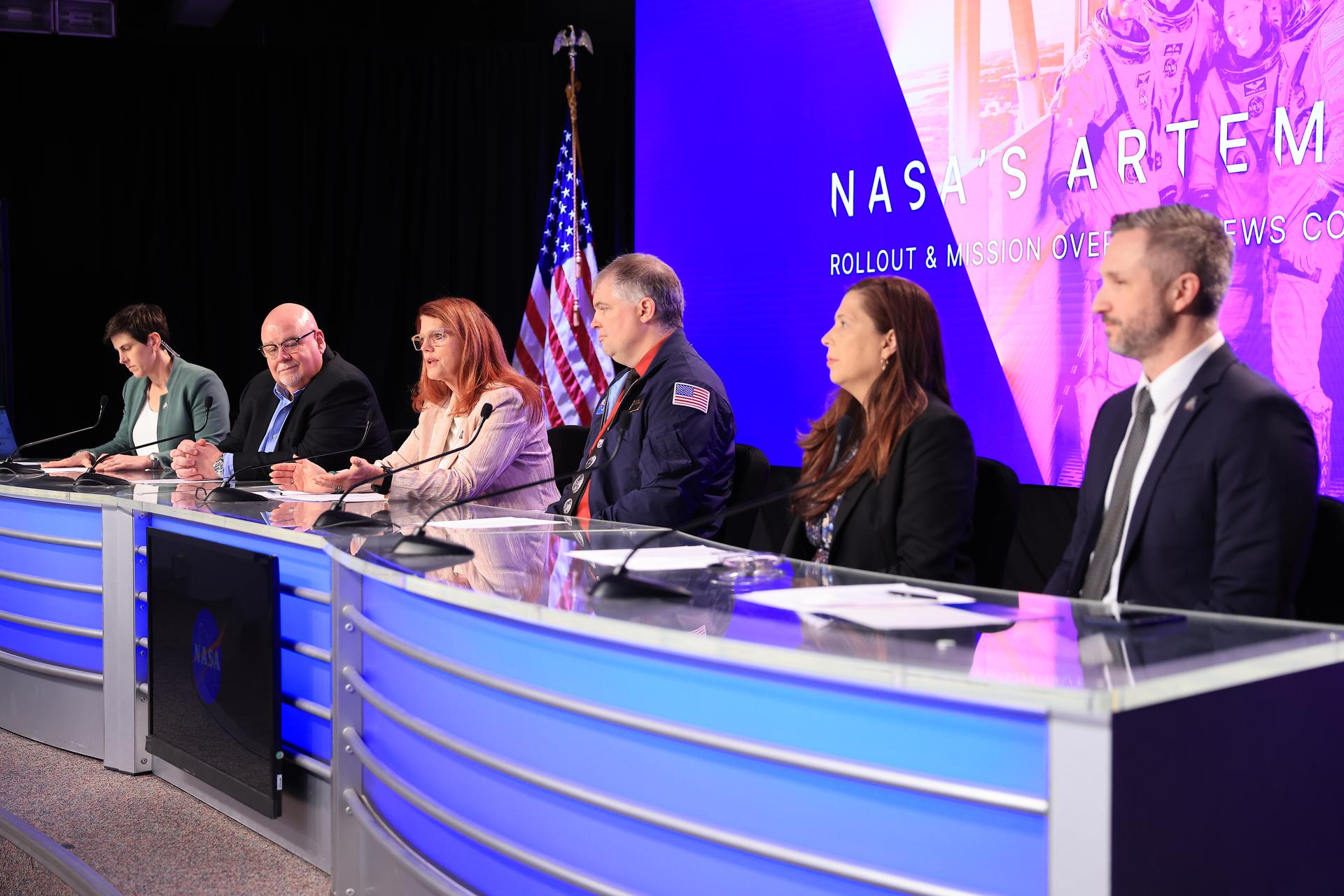
From left to right, Rachel Kraft, NASA's Office of Communications; John Honeycutt, Artemis II mission management team chair; Charlie Blackwell-Thompson, launch director, Exploration Ground Systems Program at NASA’s Kennedy Space Center in Florida; Jeff Radigan, Artemis II lead flight director, Flight Operations Directorate; Lili Villarreal, Artemis II landing and recovery director in Exploration Ground Systems Program at NASA’s Kennedy Space Center in Florida; Jacob Bleacher, chief exploration scientist in the Exploration Systems Development Mission Directorate at NASA Headquarters in Washington, participate in an Artemis II mission overview news conference on Friday, Jan. 16, 2026, at NASA’s Kennedy Space Center in Florida ahead of rollout of the SLS (Space Launch System) rocket and Orion spacecraft from the Vehicle Assembly Building to Launch Complex 39B at NASA Kennedy. The Artemis II test flight will take Commander Reid Wiseman, Pilot Victor Glover, and Mission Specialist Christina Koch from NASA, and Mission Specialist Jeremy Hansen from the CSA (Canadian Space Agency), around the Moon and back to Earth no later than April 2026.
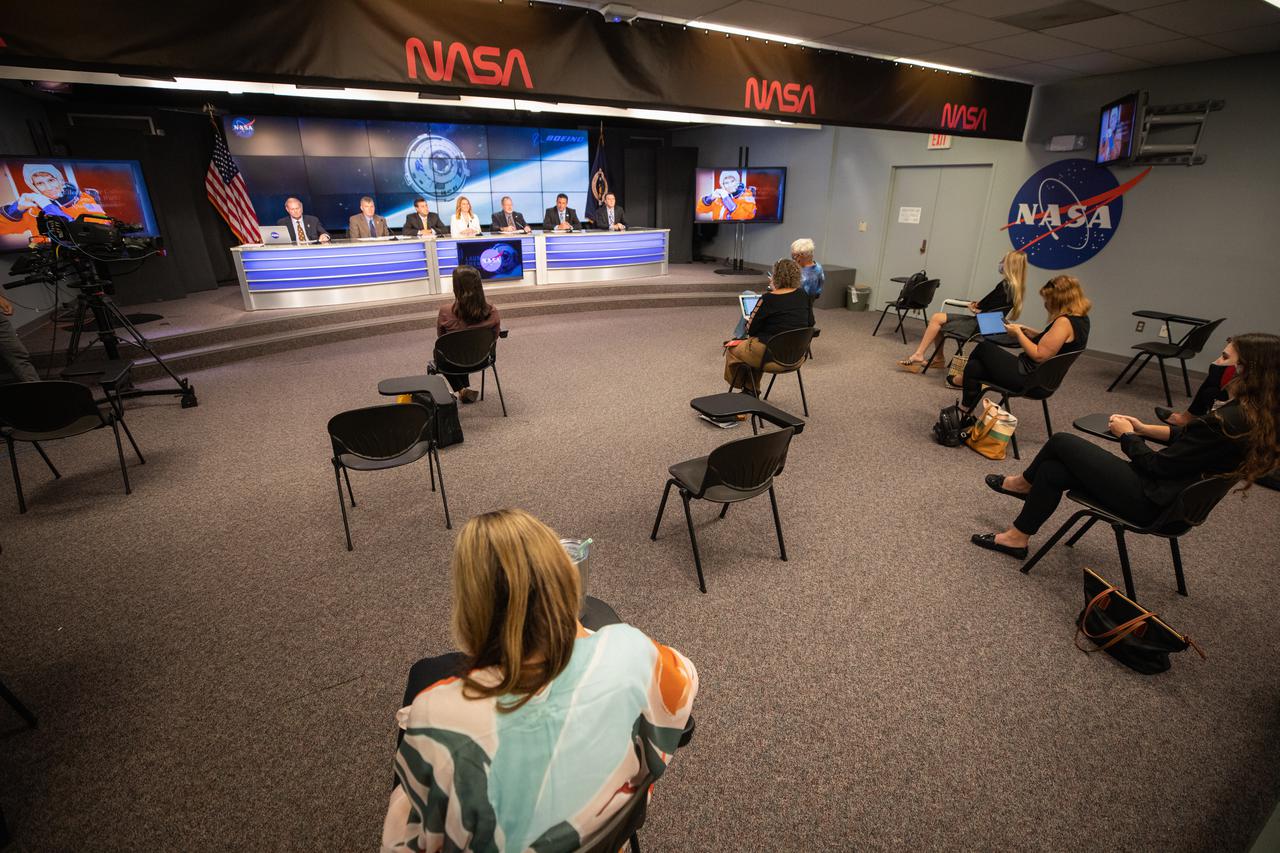
Members of the media gather in the Kennedy Space Center’s Press Site auditorium in Florida during a prelaunch news conference with NASA, Boeing, United Launch Alliance (ULA) and the U.S. Space Force 45th Weather Squadron officials, July 27, 2021, prior to the Friday, July 30, launch of NASA’s Boeing Orbital Flight Test-2 (OFT-2). . From left to right at the dais are Kyle Herring, NASA Communications; Steve Stich, manager, NASA’s Commercial Crew Program; Joel Montalbano, manager, NASA’s International Space Station Program; Jennifer Buchli, deputy chief scientist, NASA’s International Space Station Program; John Vollmer, vice president and program manager, Boeing Commercial Crew Program; Gary Wentz, vice president, Government and Commercial Programs, ULA; Will Ulrich, launch weather officer, U.S. Space Force, 45th Weather Squadron. Boeing’s CST-100 Starliner spacecraft will launch atop a ULA Atlas V rocket from Space Launch Complex-41 at Cape Canaveral Space Force Station on a mission to dock with the space station. The uncrewed OFT-2 will be the Starliner’s second flight for NASA’s Commercial Crew Program.
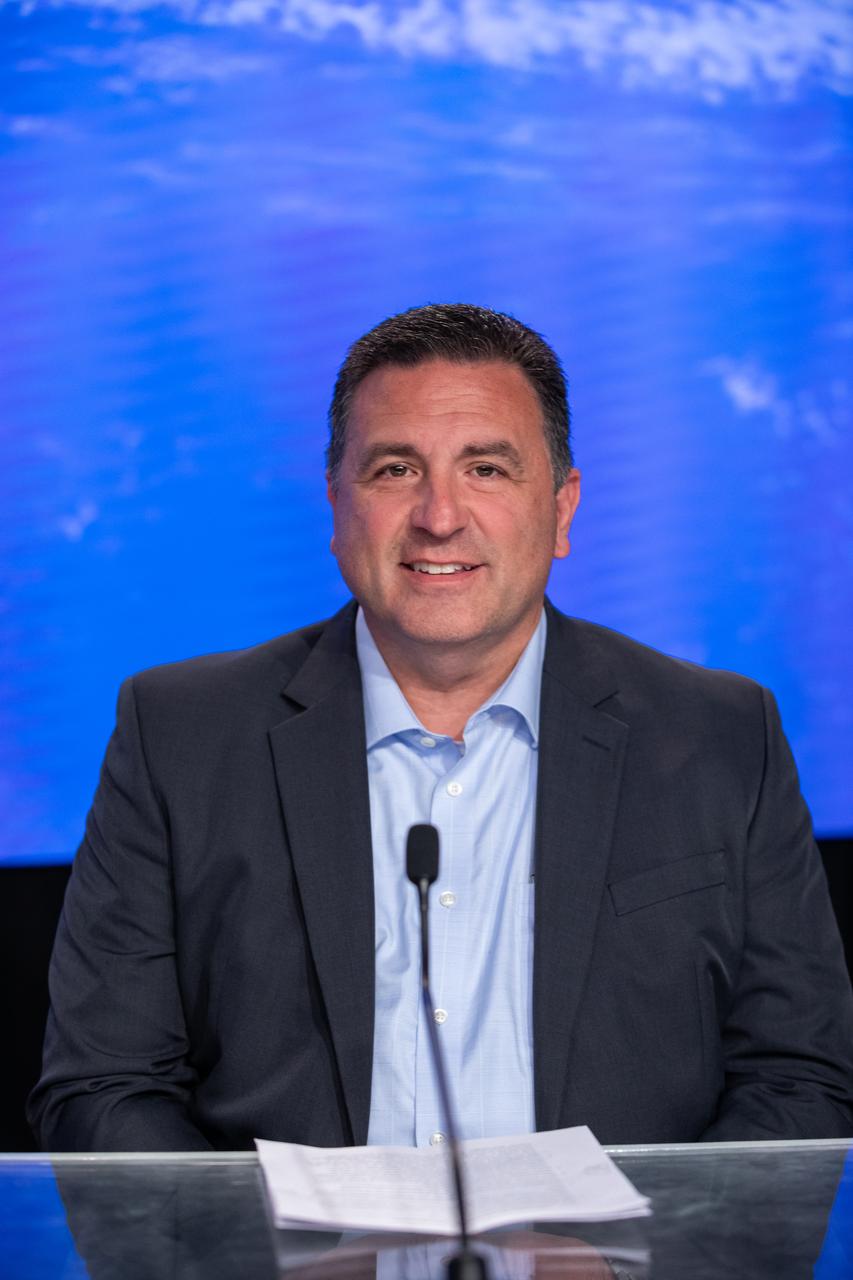
Officials from NASA, Boeing, ULA (United Launch Alliance) , and the U.S. Space Force 45th Weather Squadron participate in a prelaunch briefing for NASA’s Boeing Crew Flight Test at the agency’s Kennedy Space Center in Florida, Friday, May 3, 2024. From left to right at the dais are Megan Cruz, NASA Communications; Bill Nelson, NASA administrator; Steve Stich, manager, NASA’s Commercial Crew Program; Dana Weigel, manager, NASA’s International Space Station Program; Jennifer Buchli, chief scientist, NASA’s International Space Station Program; Mark Nappi, vice president and program manager, Boeing Commercial Crew Program; Gary Wentz, vice president, Government and Commercial Programs, ULA; Brian Cizek, launch weather officer, U.S. Space Force, 45th Weather Squadron. As part of the agency’s Commercial Crew Program, NASA astronauts Butch Wilmore and Suni Williams are the first to launch aboard Boeing’s Starliner spacecraft atop a ULA Atlas V rocket from Space Launch Complex-41 at Cape Canaveral Space Force Station in Florida. Liftoff is scheduled for 10:34 p.m. ET on Monday, May 6.
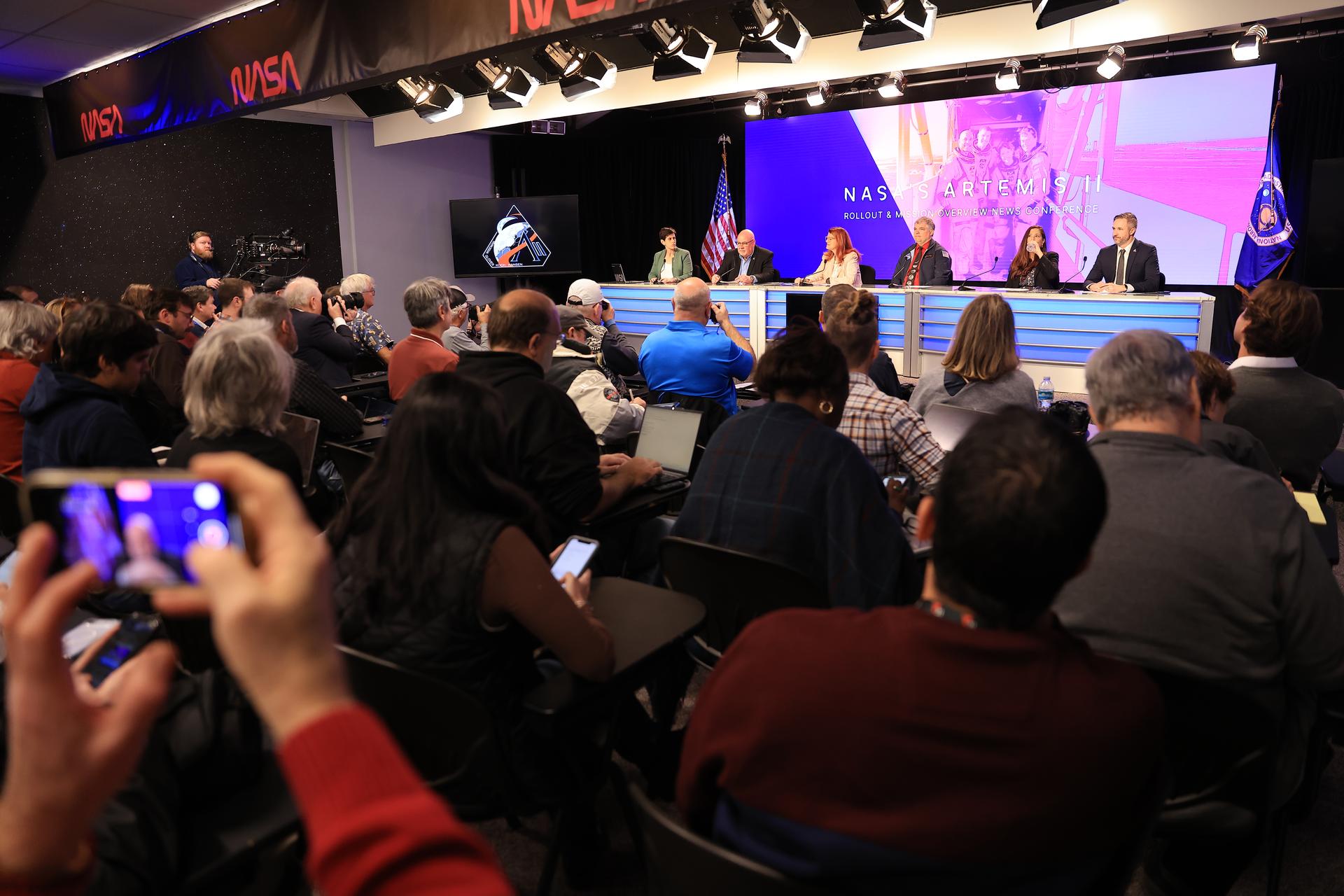
From left to right, Rachel Kraft, NASA's Office of Communications; John Honeycutt, Artemis II mission management team chair; Charlie Blackwell-Thompson, launch director, Exploration Ground Systems Program at NASA’s Kennedy Space Center in Florida; Jeff Radigan, Artemis II lead flight director, Flight Operations Directorate; Lili Villarreal, Artemis II landing and recovery director in Exploration Ground Systems Program at NASA’s Kennedy Space Center in Florida; Jacob Bleacher, chief exploration scientist in the Exploration Systems Development Mission Directorate at NASA Headquarters in Washington, participate in an Artemis II mission overview news conference on Friday, Jan. 16, 2026, at NASA’s Kennedy Space Center in Florida ahead of rollout of the SLS (Space Launch System) rocket and Orion spacecraft from the Vehicle Assembly Building to Launch Complex 39B at NASA Kennedy. The Artemis II test flight will take Commander Reid Wiseman, Pilot Victor Glover, and Mission Specialist Christina Koch from NASA, and Mission Specialist Jeremy Hansen from the CSA (Canadian Space Agency), around the Moon and back to Earth no later than April 2026.

Officials from NASA, Boeing, ULA (United Launch Alliance) , and the U.S. Space Force 45th Weather Squadron participate in a prelaunch briefing for NASA’s Boeing Crew Flight Test at the agency’s Kennedy Space Center in Florida, Friday, May 3, 2024. From left to right at the dais are Megan Cruz, NASA Communications; Bill Nelson, NASA administrator; Steve Stich, manager, NASA’s Commercial Crew Program; Dana Weigel, manager, NASA’s International Space Station Program; Jennifer Buchli, chief scientist, NASA’s International Space Station Program; Mark Nappi, vice president and program manager, Boeing Commercial Crew Program; Gary Wentz, vice president, Government and Commercial Programs, ULA; Brian Cizek, launch weather officer, U.S. Space Force, 45th Weather Squadron. As part of the agency’s Commercial Crew Program, NASA astronauts Butch Wilmore and Suni Williams are the first to launch aboard Boeing’s Starliner spacecraft atop a ULA Atlas V rocket from Space Launch Complex-41 at Cape Canaveral Space Force Station in Florida. Liftoff is scheduled for 10:34 p.m. ET on Monday, May 6.
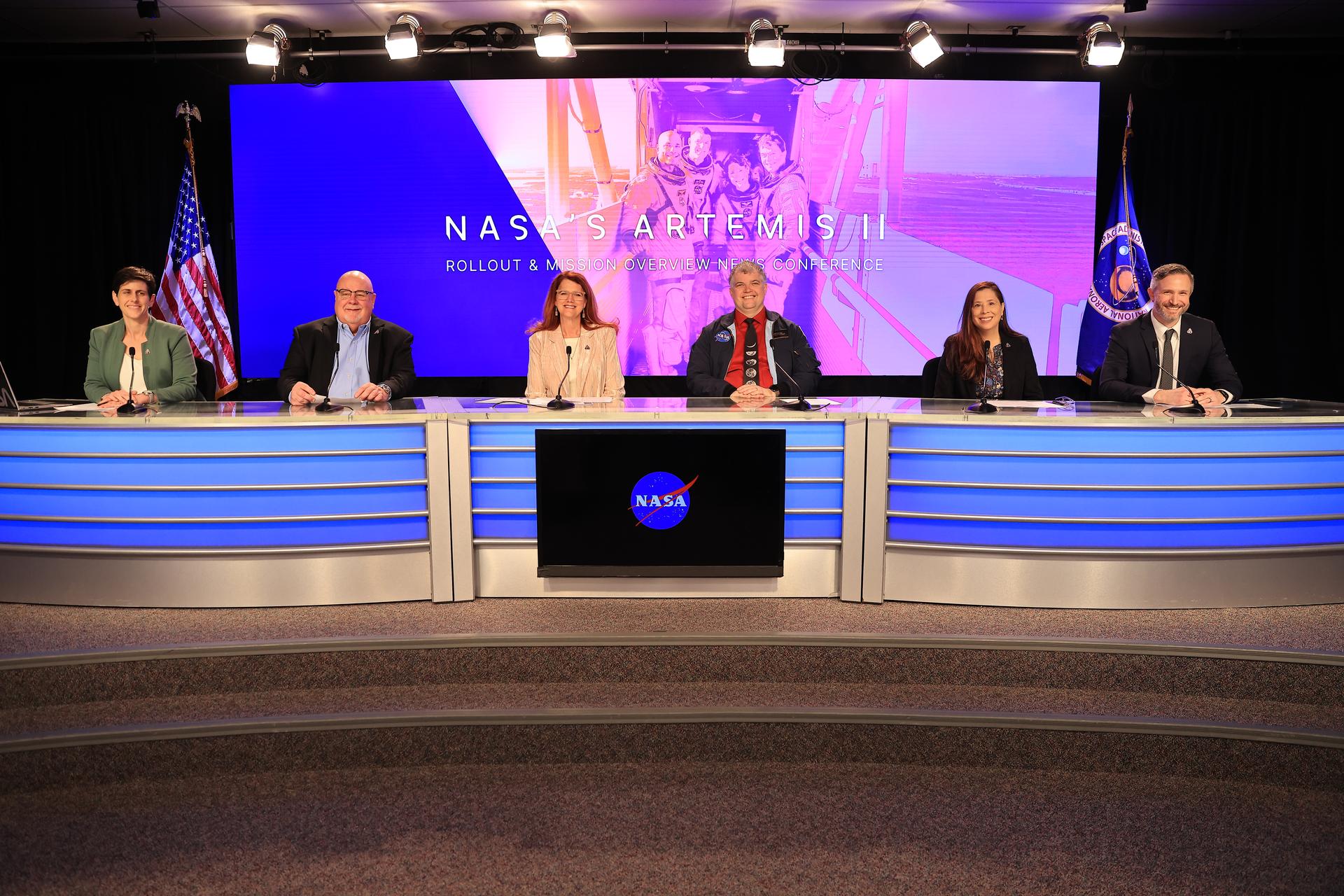
From left to right, Rachel Kraft, NASA's Office of Communications; John Honeycutt, Artemis II mission management team chair; Charlie Blackwell-Thompson, launch director, Exploration Ground Systems Program at NASA’s Kennedy Space Center in Florida; Jeff Radigan, Artemis II lead flight director, Flight Operations Directorate; Lili Villarreal, Artemis II landing and recovery director in Exploration Ground Systems Program at NASA’s Kennedy Space Center in Florida; Jacob Bleacher, chief exploration scientist in the Exploration Systems Development Mission Directorate at NASA Headquarters in Washington, participate in an Artemis II mission overview news conference on Friday, Jan. 16, 2026, at NASA’s Kennedy Space Center in Florida ahead of rollout of the SLS (Space Launch System) rocket and Orion spacecraft from the Vehicle Assembly Building to Launch Complex 39B at NASA Kennedy. The Artemis II test flight will take Commander Reid Wiseman, Pilot Victor Glover, and Mission Specialist Christina Koch from NASA, and Mission Specialist Jeremy Hansen from the CSA (Canadian Space Agency), around the Moon and back to Earth no later than April 2026.
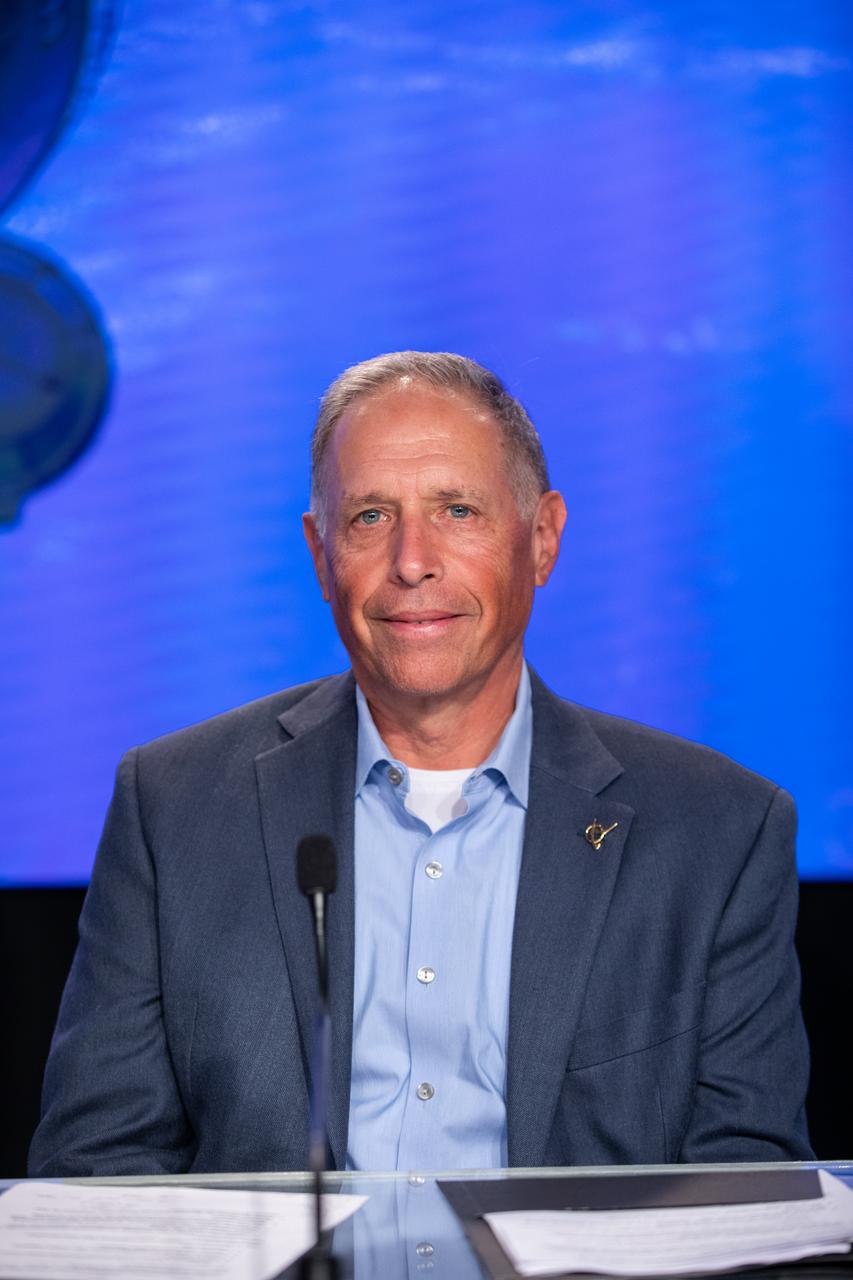
Officials from NASA, Boeing, ULA (United Launch Alliance) , and the U.S. Space Force 45th Weather Squadron participate in a prelaunch briefing for NASA’s Boeing Crew Flight Test at the agency’s Kennedy Space Center in Florida, Friday, May 3, 2024. From left to right at the dais are Megan Cruz, NASA Communications; Bill Nelson, NASA administrator; Steve Stich, manager, NASA’s Commercial Crew Program; Dana Weigel, manager, NASA’s International Space Station Program; Jennifer Buchli, chief scientist, NASA’s International Space Station Program; Mark Nappi, vice president and program manager, Boeing Commercial Crew Program; Gary Wentz, vice president, Government and Commercial Programs, ULA; Brian Cizek, launch weather officer, U.S. Space Force, 45th Weather Squadron. As part of the agency’s Commercial Crew Program, NASA astronauts Butch Wilmore and Suni Williams are the first to launch aboard Boeing’s Starliner spacecraft atop a ULA Atlas V rocket from Space Launch Complex-41 at Cape Canaveral Space Force Station in Florida. Liftoff is scheduled for 10:34 p.m. ET on Monday, May 6.
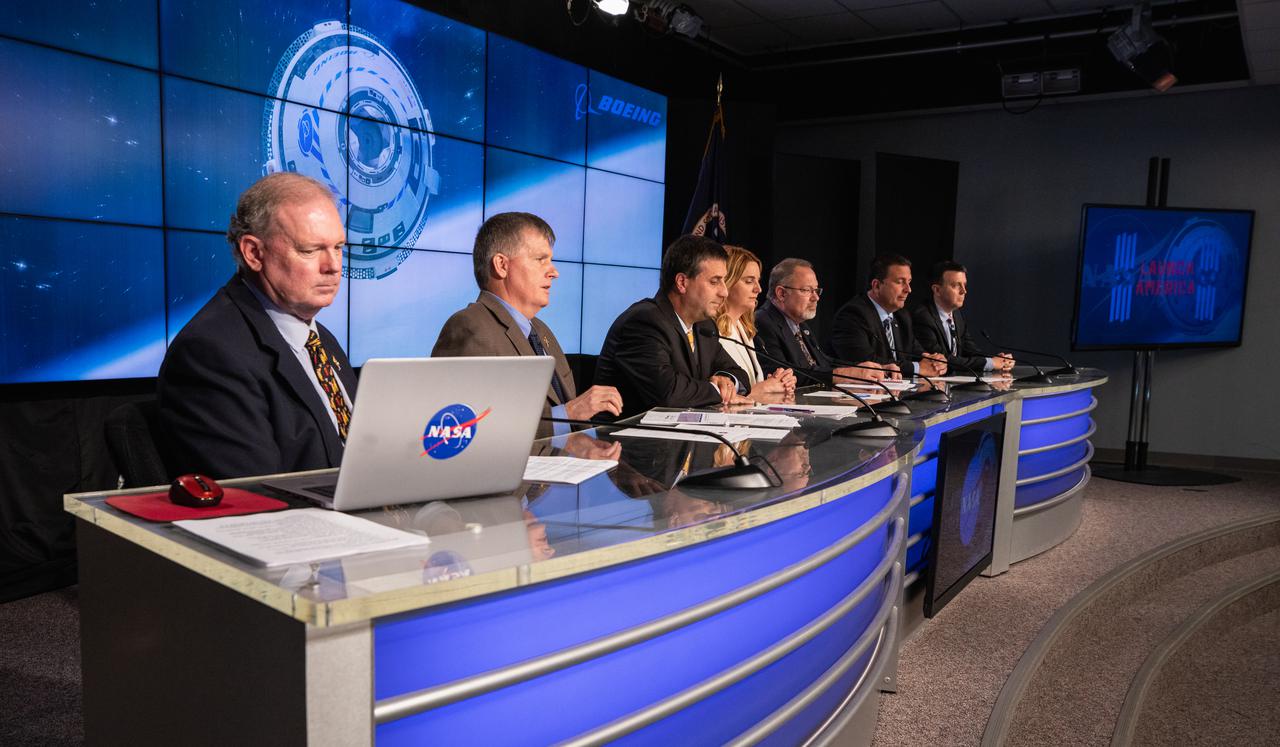
Officials from NASA, Boeing, United Launch Alliance (ULA) and the U.S. Space Force 45th Weather Squadron participate in a prelaunch briefing for Boeing’s Orbital Flight Test-2 (OFT-2) at the agency’s Kennedy Space Center in Florida, July 27, 2021. From left to right are Kyle Herring, NASA Communications; Steve Stich, manager, NASA’s Commercial Crew Program; Joel Montalbano, manager, NASA’s International Space Station Program; Jennifer Buchli, deputy chief scientist, NASA’s International Space Station Program; John Vollmer, vice president and program manager, Boeing Commercial Crew Program; Gary Wentz, vice president, Government and Commercial Programs, ULA; Will Ulrich, launch weather officer, U.S. Space Force, 45th Weather Squadron. Boeing’s CST-100 Starliner spacecraft will launch atop a ULA Atlas V rocket from Space Launch Complex-41 at Cape Canaveral Space Force Station on a mission to dock with the space station. The uncrewed OFT-2 will be the Starliner’s second flight for NASA’s Commercial Crew Program.
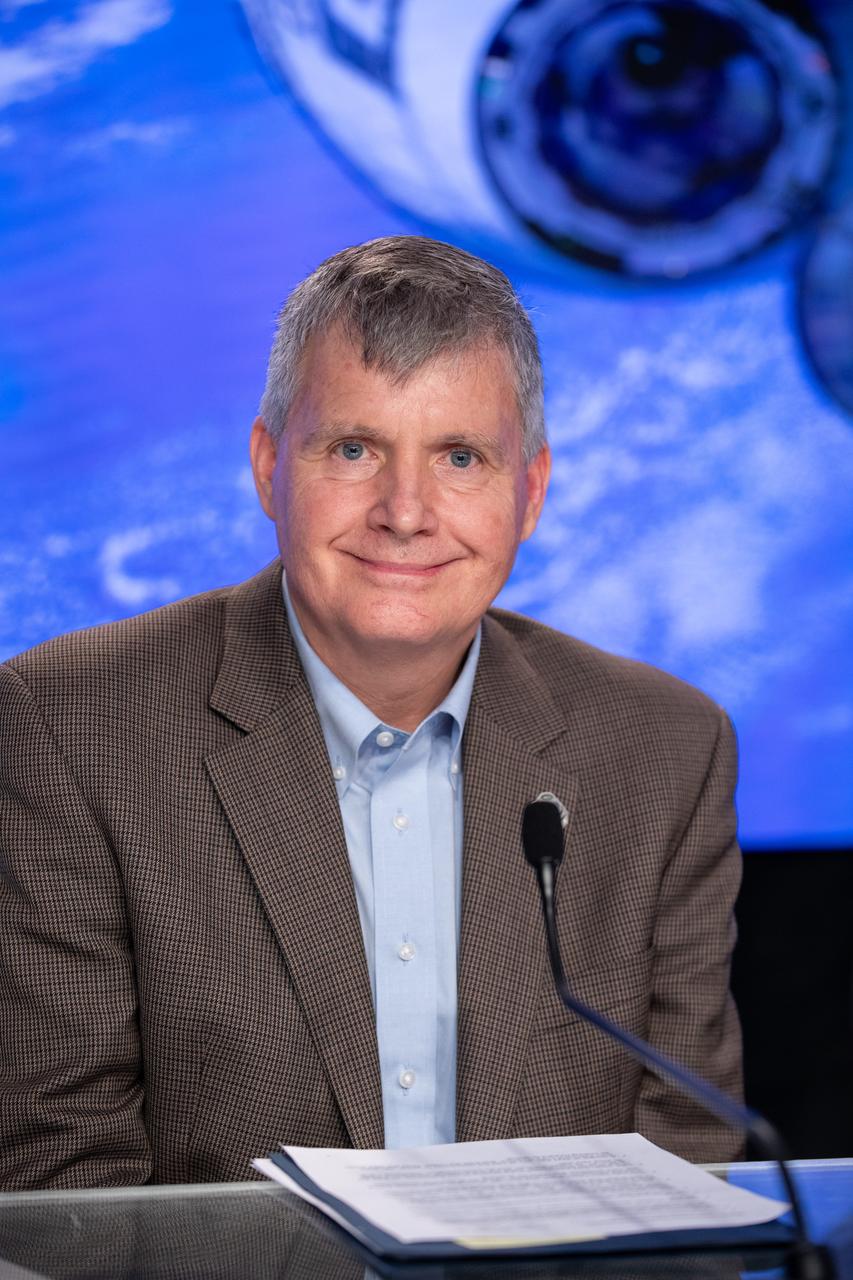
Officials from NASA, Boeing, ULA (United Launch Alliance) , and the U.S. Space Force 45th Weather Squadron participate in a prelaunch briefing for NASA’s Boeing Crew Flight Test at the agency’s Kennedy Space Center in Florida, Friday, May 3, 2024. From left to right at the dais are Megan Cruz, NASA Communications; Bill Nelson, NASA administrator; Steve Stich, manager, NASA’s Commercial Crew Program; Dana Weigel, manager, NASA’s International Space Station Program; Jennifer Buchli, chief scientist, NASA’s International Space Station Program; Mark Nappi, vice president and program manager, Boeing Commercial Crew Program; Gary Wentz, vice president, Government and Commercial Programs, ULA; Brian Cizek, launch weather officer, U.S. Space Force, 45th Weather Squadron. As part of the agency’s Commercial Crew Program, NASA astronauts Butch Wilmore and Suni Williams are the first to launch aboard Boeing’s Starliner spacecraft atop a ULA Atlas V rocket from Space Launch Complex-41 at Cape Canaveral Space Force Station in Florida. Liftoff is scheduled for 10:34 p.m. ET on Monday, May 6.
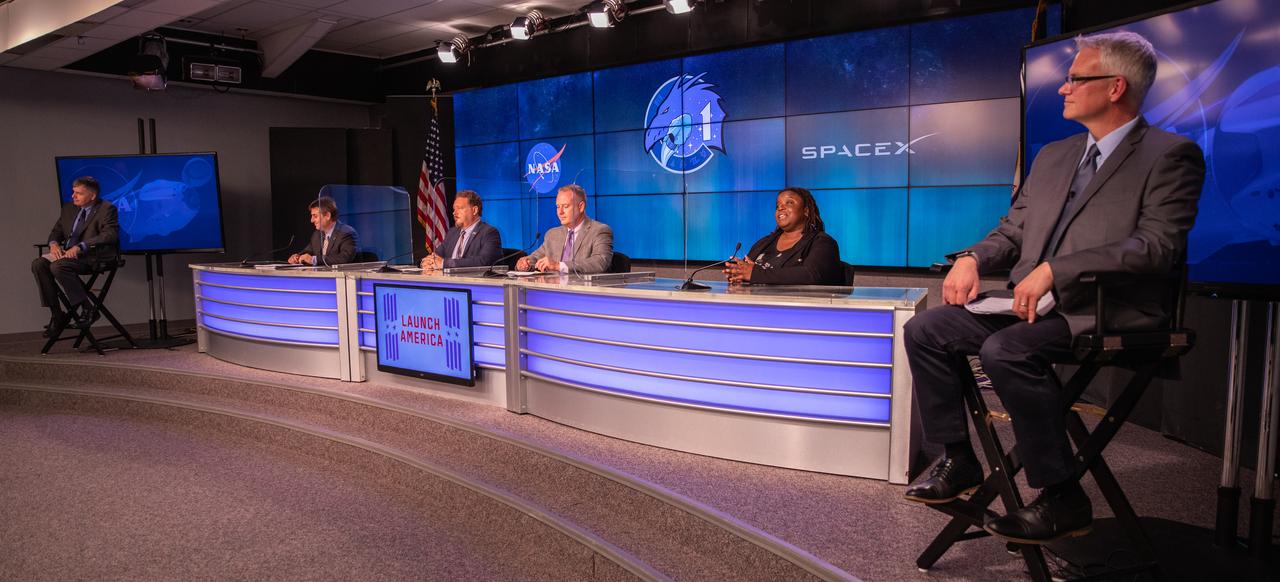
Inside the Press Site auditorium at NASA’s Kennedy Space Center in Florida, NASA and industry leaders conduct a virtual prelaunch news conference Nov. 13, 2020, ahead of the agency’s SpaceX Crew-1 mission. From left are Steve Stich, manager, Commercial Crew Program, Kennedy Space Center; Joel Montalbano, manager, International Space Station, Johnson Space Center; Kirt Costello, chief scientist, International Space Station Program, Johnson; Norm Knight, deputy manager, Flight Operations Directorate, Johnson; Arlena Moses, launch weather officer, U.S. Air Force 45th Weather Squadron; and Benji Reed, senior director, Human Spaceflight Programs, SpaceX. Crew-1 is the first regular crew mission of a U.S. commercial spacecraft with astronauts to the International Space Station as part of NASA’s Commercial Crew Program. The SpaceX Crew Dragon Resilience capsule will launch atop the company’s Falcon 9 rocket from Launch Complex 39A to the space station for a six-month science mission.