Office of the Chief Technologist, OCT Innovation Workshop, and Facility Tours
Office of the Chief Technologist, OCT Innovation Workshop, and Facility Tours
Office of the Chief Technologist, OCT Innovation Workshop, and Facility Tours
Office of the Chief Technologist, OCT Innovation Workshop, and Facility Tours
Office of the Chief Technologist, OCT Innovation Workshop, and Facility Tours
Office of the Chief Technologist, OCT Innovation Workshop, and Facility Tours
Office of the Chief Technologist, OCT Innovation Workshop, and Facility Tours
Office of the Chief Technologist, OCT Innovation Workshop, and Facility Tours
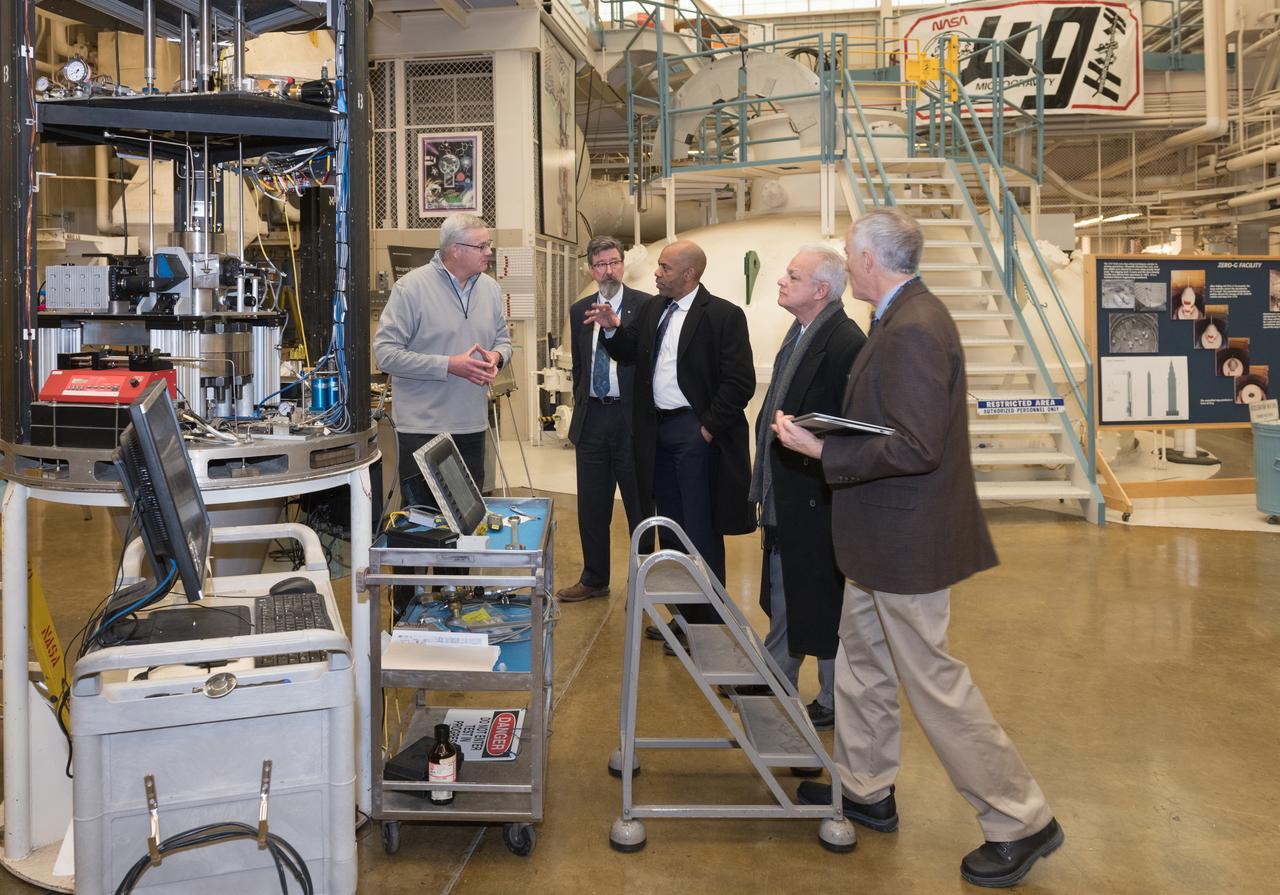
Office of the Chief Technologist, OCT Innovation Workshop, and Facility Tours
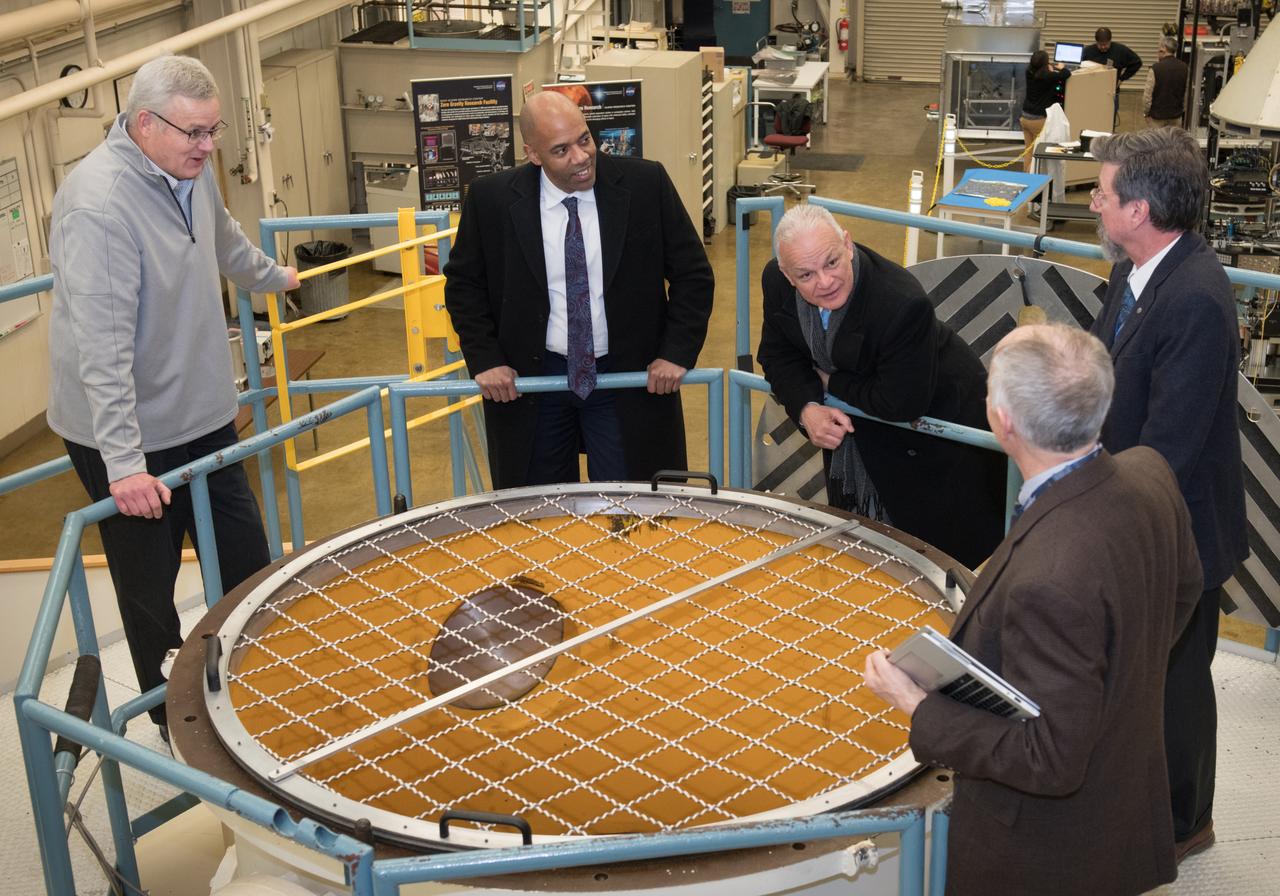
Office of the Chief Technologist, OCT Innovation Workshop, and Facility Tours
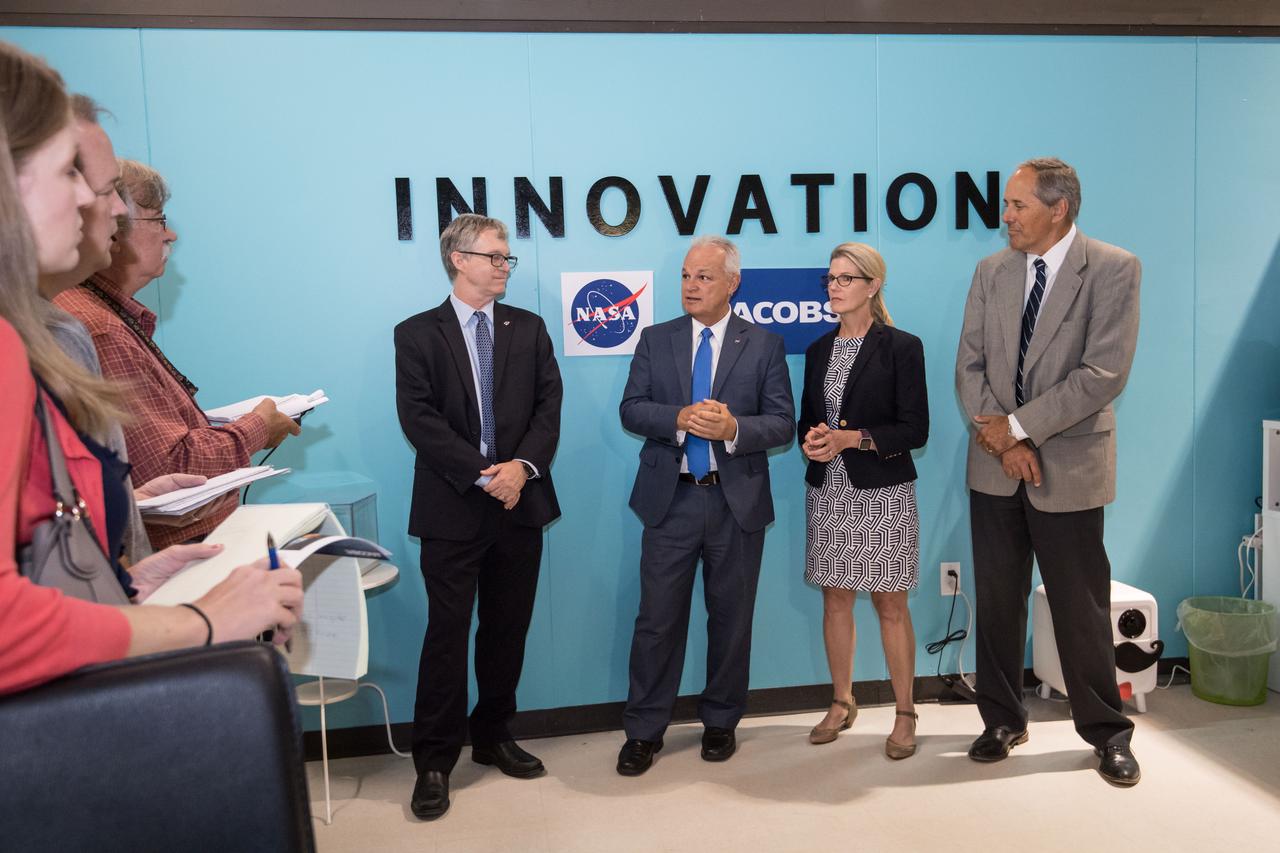
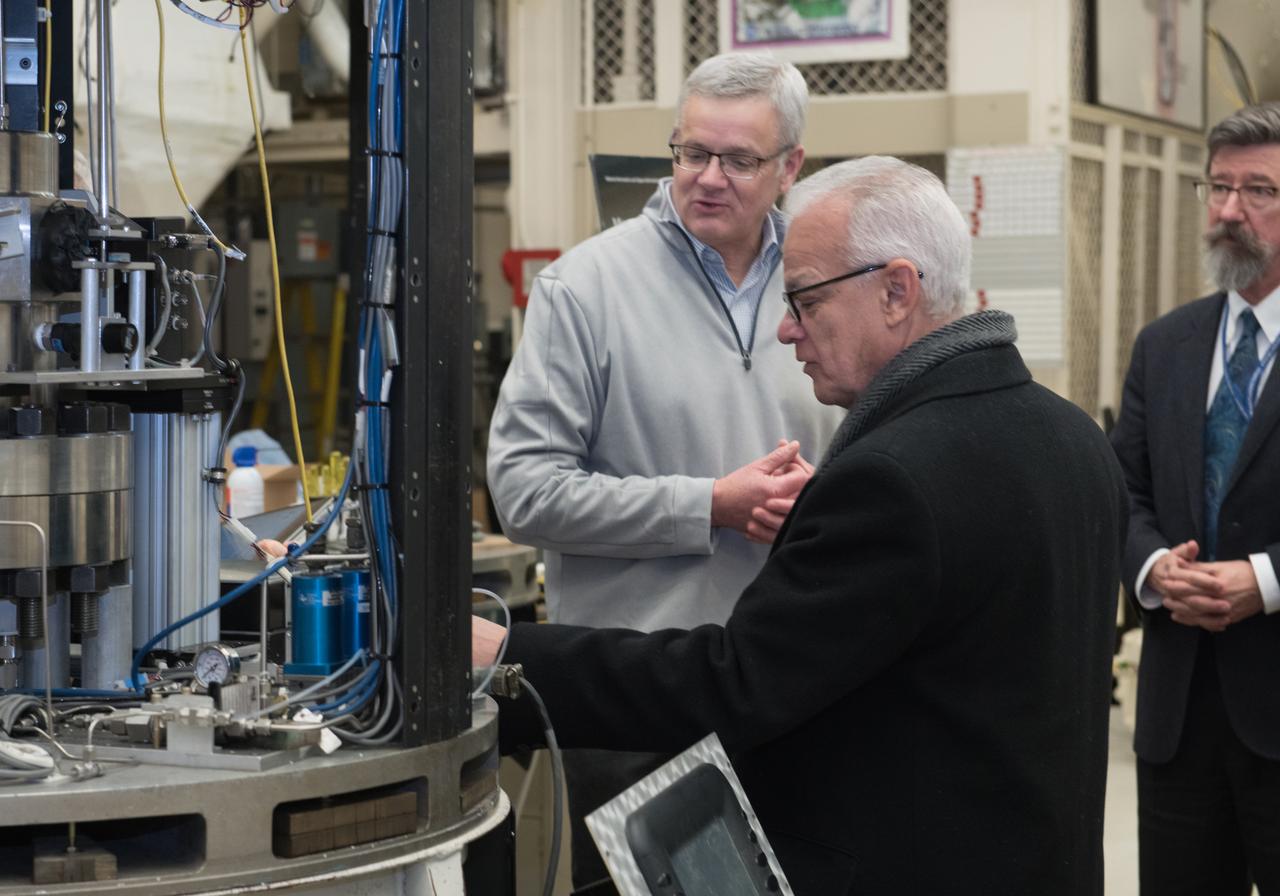
NASA Chief Technologist Douglas Terrier joins Jacobs General Manager Lon Miller during a tour of the company's Engineering Development Facility in Houston. Jacobs provides advanced technologies used aboard the International Space Station and for deep space exploration. From left: NASA’s Johnson Space Center Chief Technologist Chris Culbert, Chief Technologist Douglas Terrier, Jacobs Clear Lake Group Deputy General Manager Joy Kelly and Jacobs Clear Lake Group General Manager Lon Miller. Date: 08-10-2017 Location: B1 & Jacobs Engineering Subject: NASA Acting Chief Technology Officer Douglas Terrier Tours JSC and Jacobs Photographer: David DeHoyos
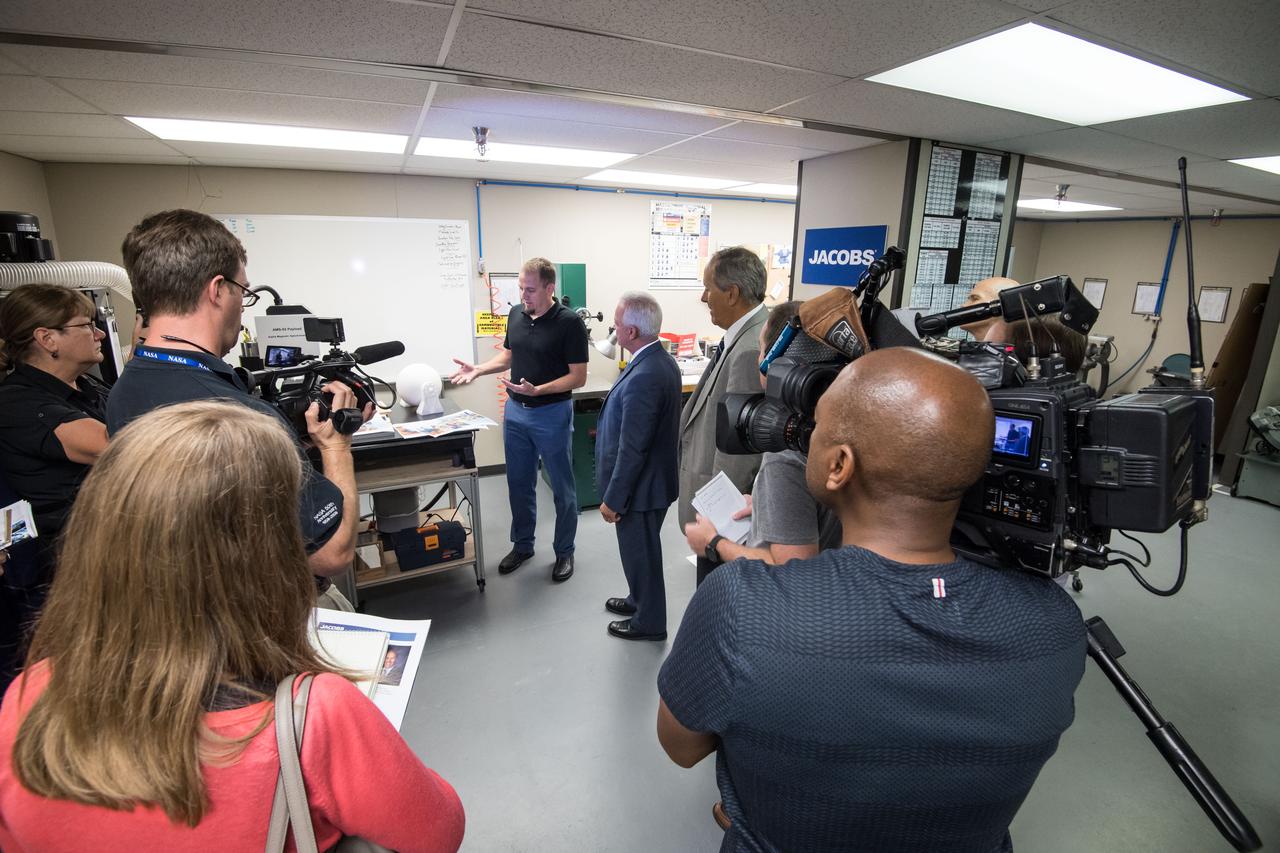
NASA Chief Technologist Douglas Terrier joined Jacobs General Manager Lon Miller during a tour of the company's Engineering Development Facility in Houston. Jacobs provides advanced technologies used aboard the International Space Station and for deep space exploration. Date: 08-10-2017 Location: B1 & Jacobs Engineering Subject: NASA Acting Chief Technology Officer Douglas Terrier Tours JSC and Jacobs Photographer: David DeHoyos
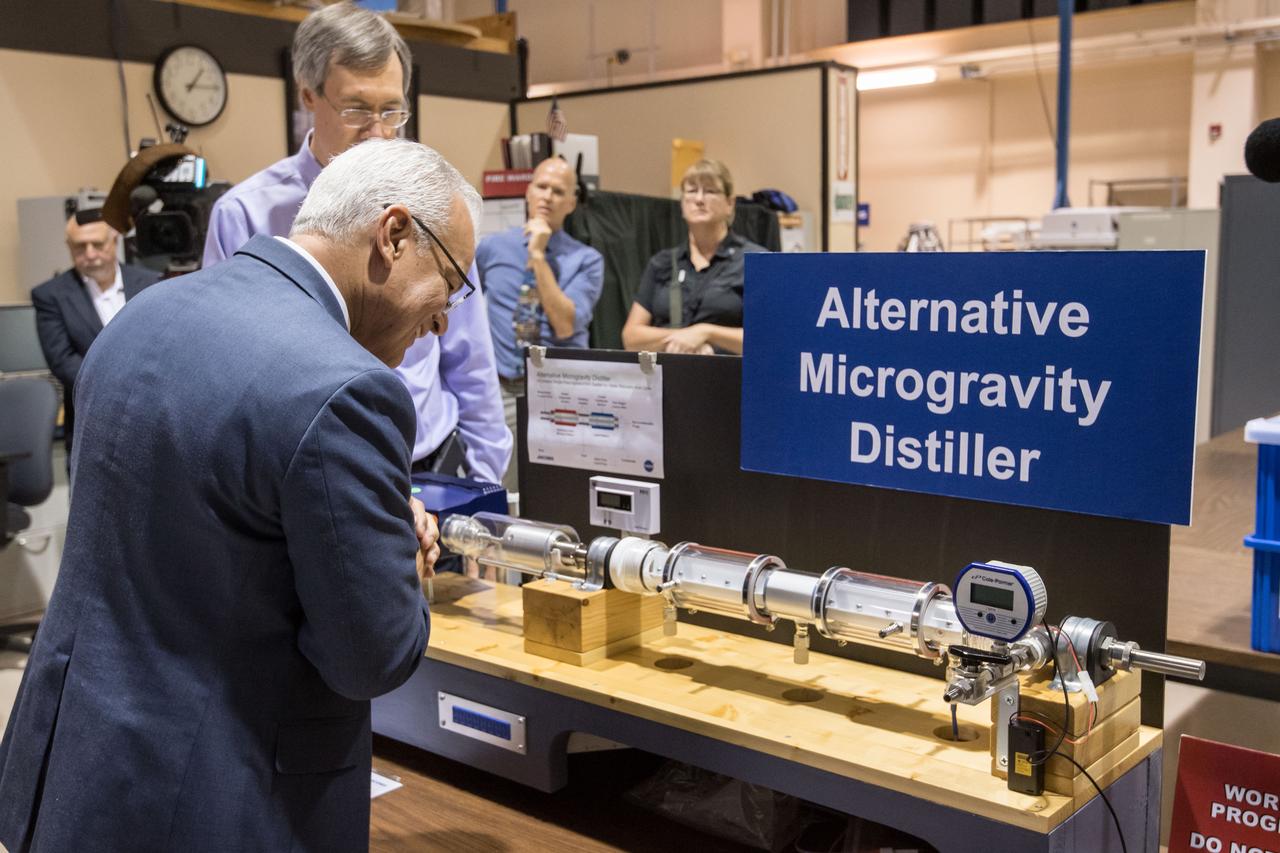
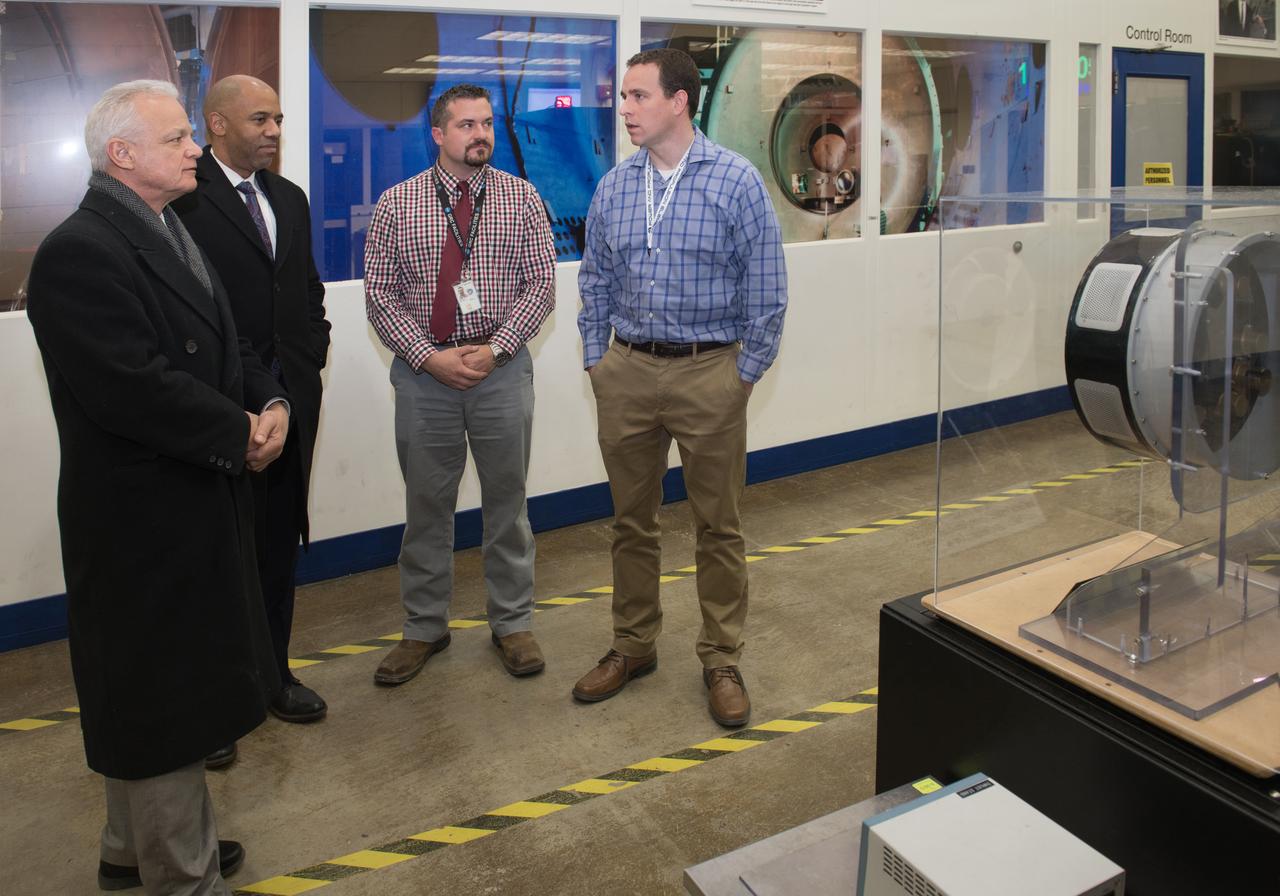
NASA Chief Technologist Douglas Terrier inspects Jacobs’ mockup of the on-orbit Alpha Magnetic Spectrometer hardware. Astronauts use the mockup hardware to train on the ground to prepare to perform operations on the International Space Station. Jacobs provides advanced technologies used aboard the International Space Station and for deep space exploration. Date: 08-10-2017 Location: B1 & Jacobs Engineering Subject: NASA Acting Chief Technology Officer Douglas Terrier Tours JSC and Jacobs Photographer: David DeHoyos
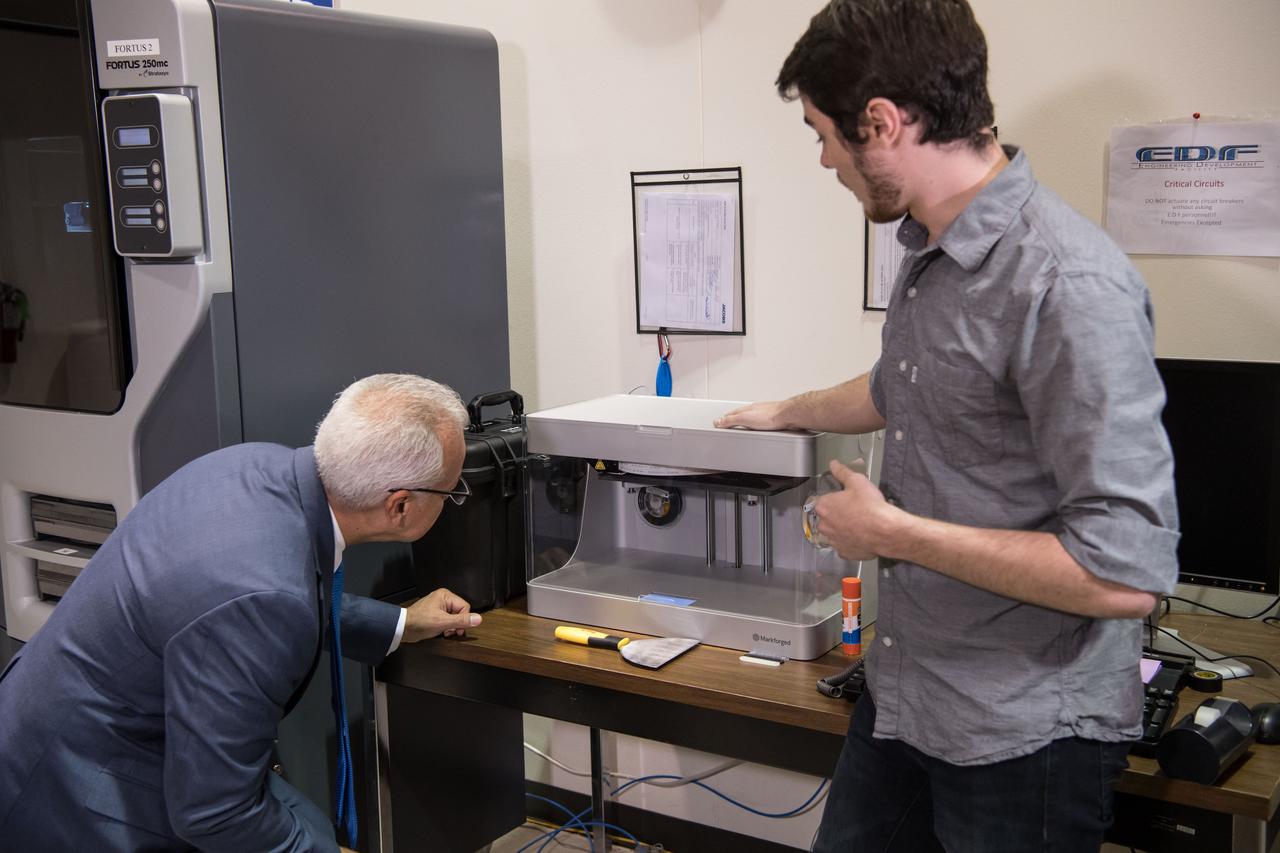
A Jacobs engineer shows NASA Chief Technologist Douglas Terrier how the company uses 3-D printers to create inexpensive physical models of new electronically designed hardware. Date: 08-10-2017 Location: B1 & Jacobs Engineering Subject: NASA Acting Chief Technology Officer Douglas Terrier Tours JSC and Jacobs Photographer: David DeHoyos
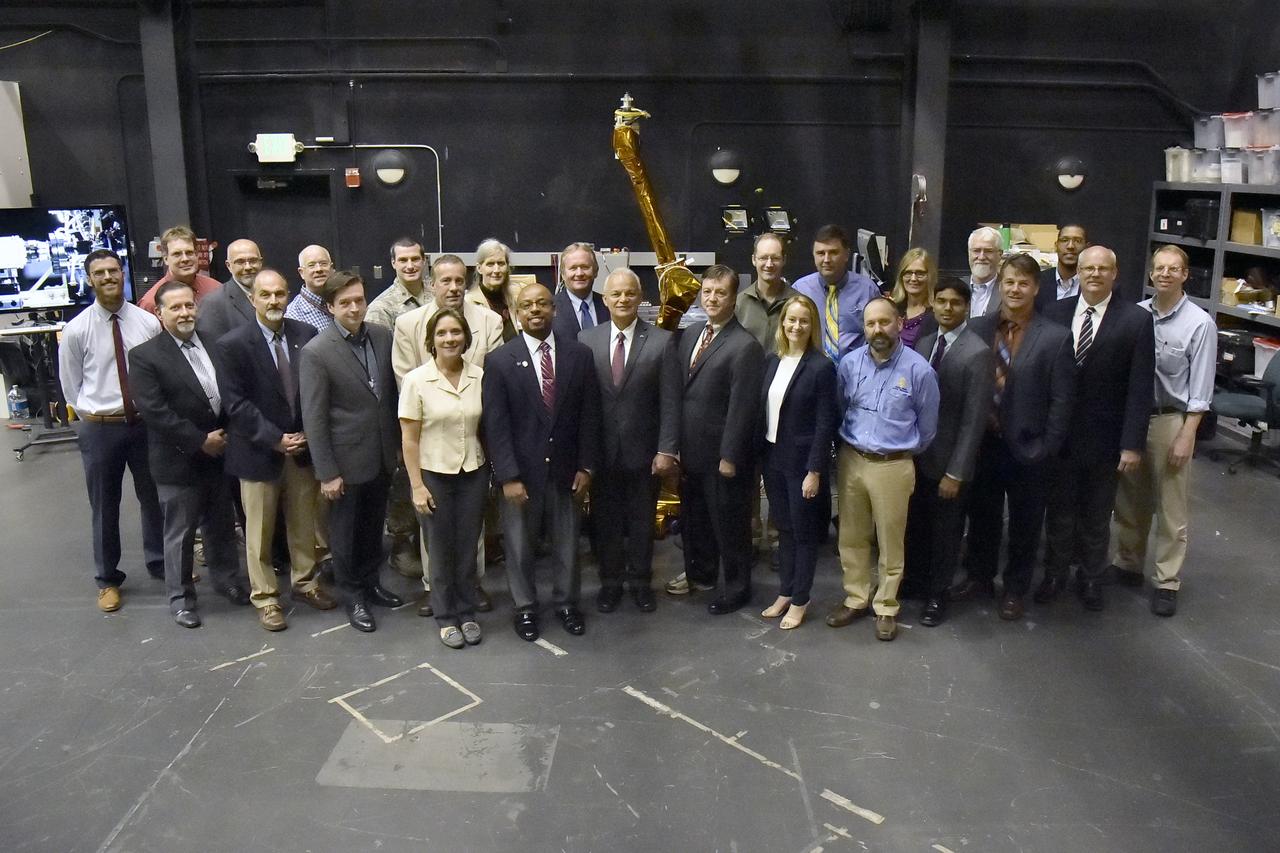
WASHINGTON, D.C.---S&T Partnership Forum In-Space Assembly Technical Interchange Meeting-On September 6th 2017, many of the United States government experts on In-Space Assembly met at the U.S. Naval Research Lab to discuss both technology development and in-space applications that would advance national capabilities in this area. Expertise from NASA, USAF, NRO, DARPA and NRL met in this meeting which was coordinated by the NASA Headquarters, Office of the Chief Technologist. This technical interchange meeting was the second meeting of the members of this Science and Technology Partnership Forum.
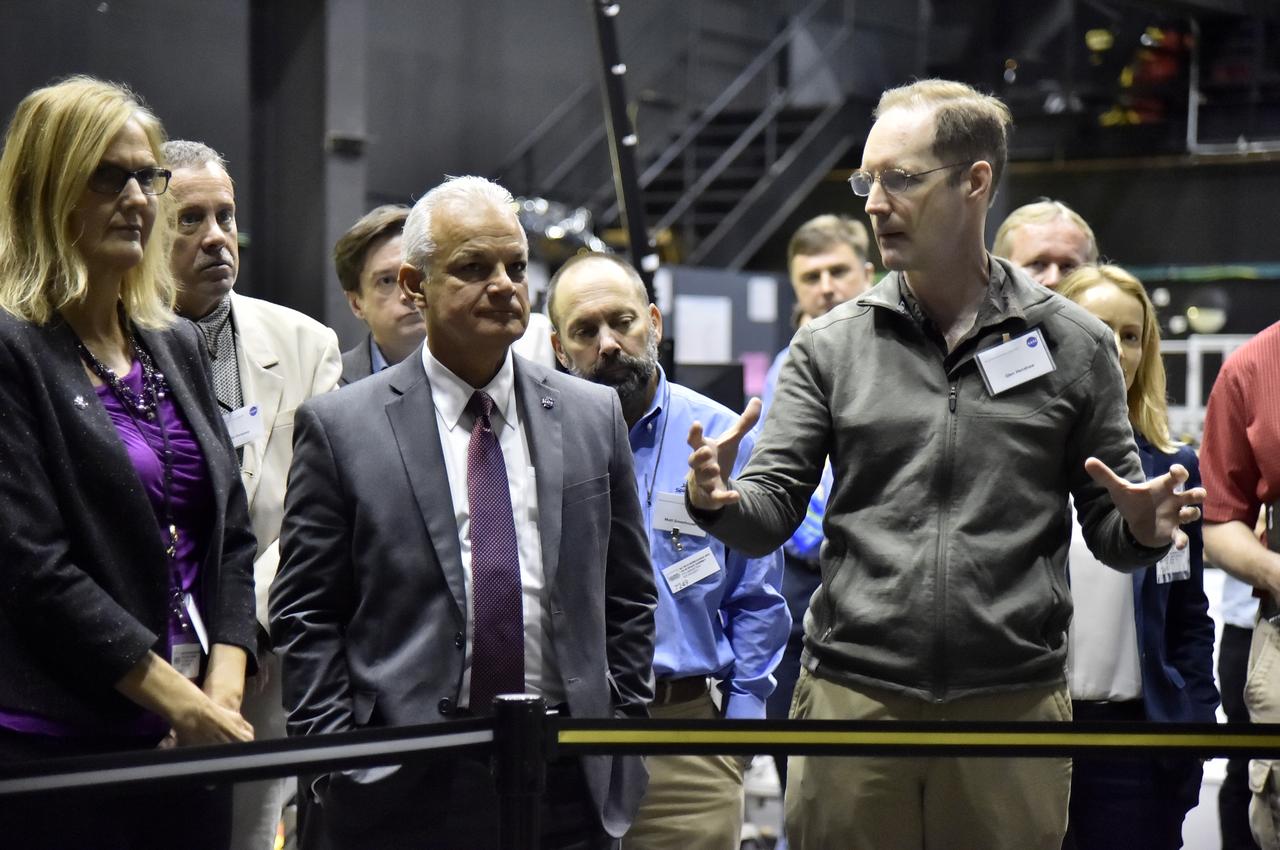
WASHINGTON, D.C.---S&T Partnership Forum In-Space Assembly Technical Interchange Meeting-On September 6th 2017, many of the United States government experts on In-Space Assembly met at the U.S. Naval Research Lab to discuss both technology development and in-space applications that would advance national capabilities in this area. Expertise from NASA, USAF, NRO, DARPA and NRL met in this meeting which was coordinated by the NASA Headquarters, Office of the Chief Technologist. This technical interchange meeting was the second meeting of the members of this Science and Technology Partnership Forum. Glen Henshaw of Code 8231 talks to the group in the Space Robotics Lab.
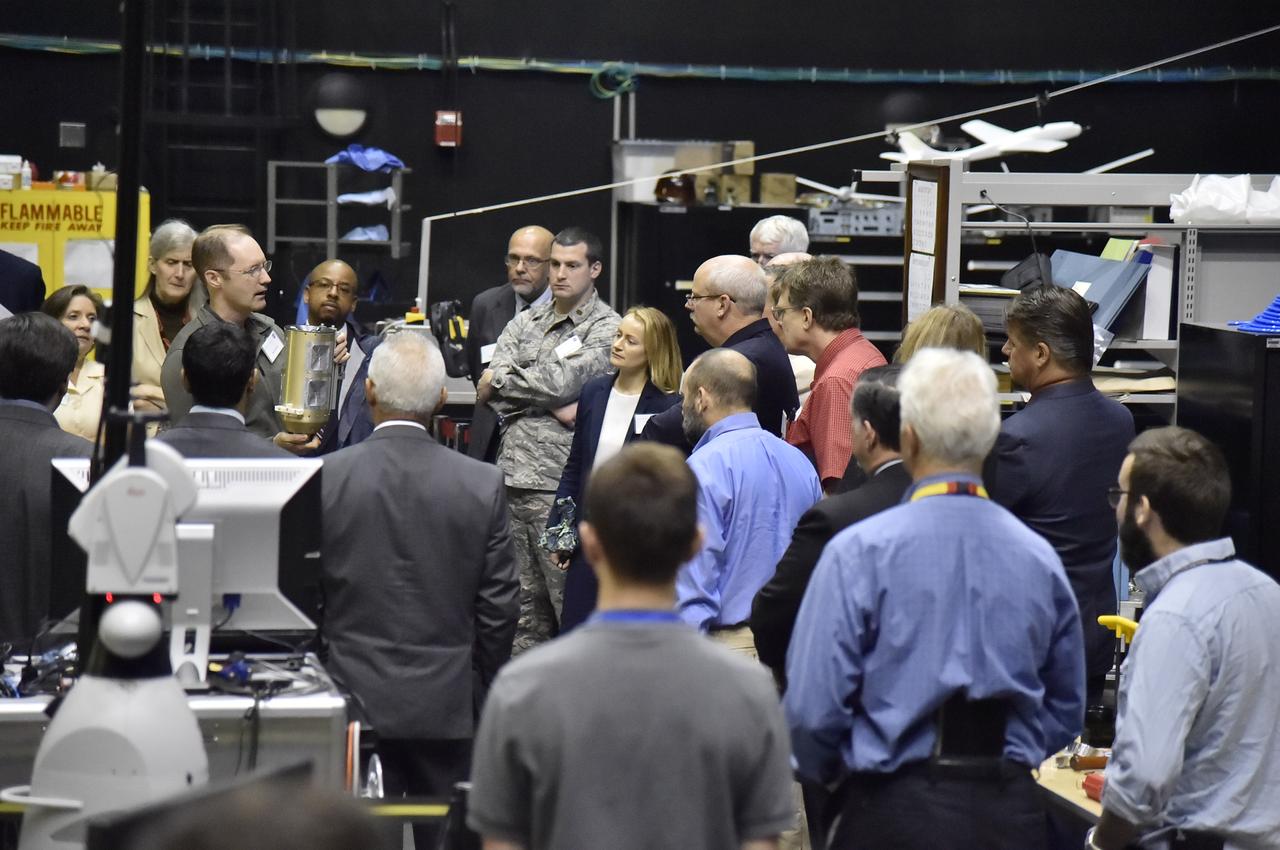
WASHINGTON, D.C.---S&T Partnership Forum In-Space Assembly Technical Interchange Meeting-On September 6th 2017, many of the United States government experts on In-Space Assembly met at the U.S. Naval Research Lab to discuss both technology development and in-space applications that would advance national capabilities in this area. Expertise from NASA, USAF, NRO, DARPA and NRL met in this meeting which was coordinated by the NASA Headquarters, Office of the Chief Technologist. This technical interchange meeting was the second meeting of the members of this Science and Technology Partnership Forum. Glen Henshaw of Code 8231 talks to the group in the Space Robotics Lab.
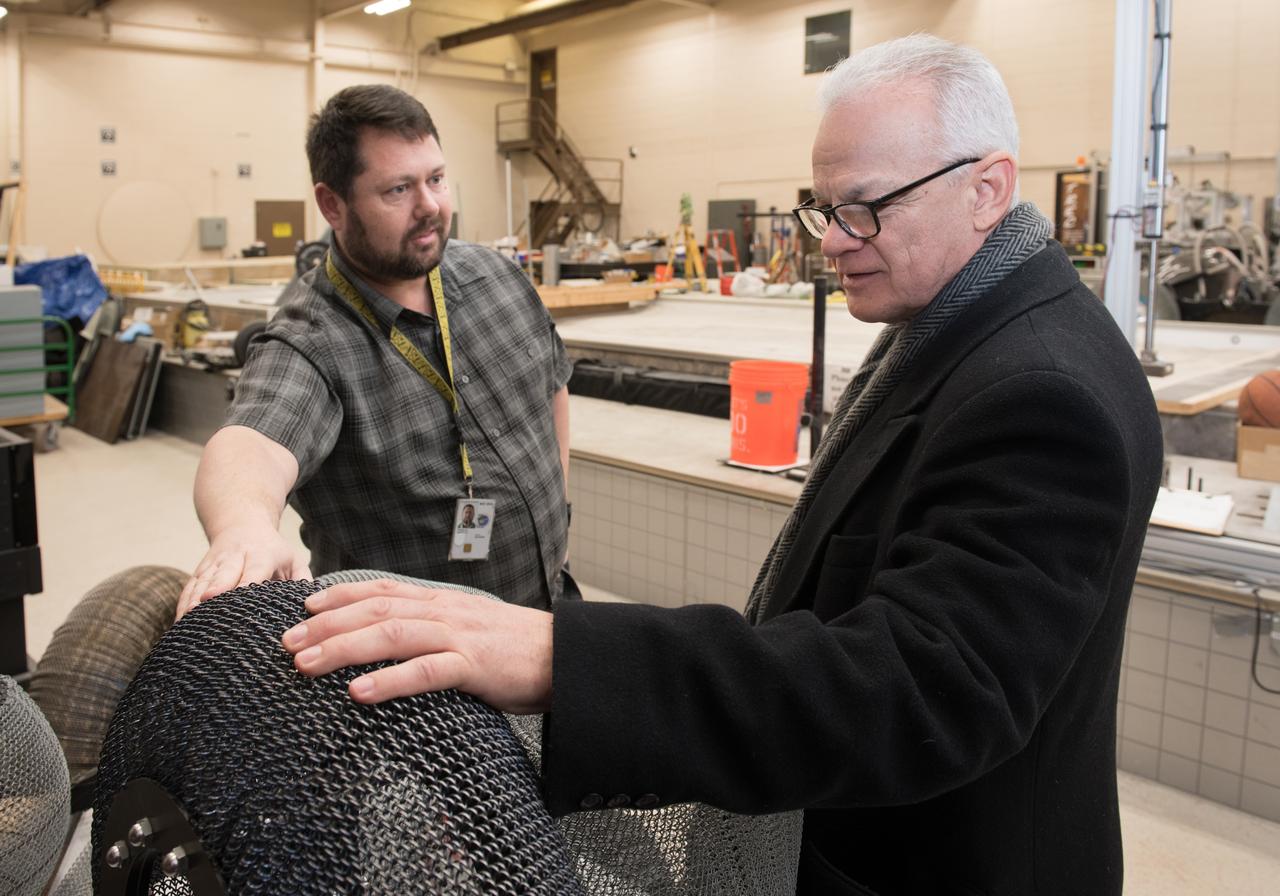
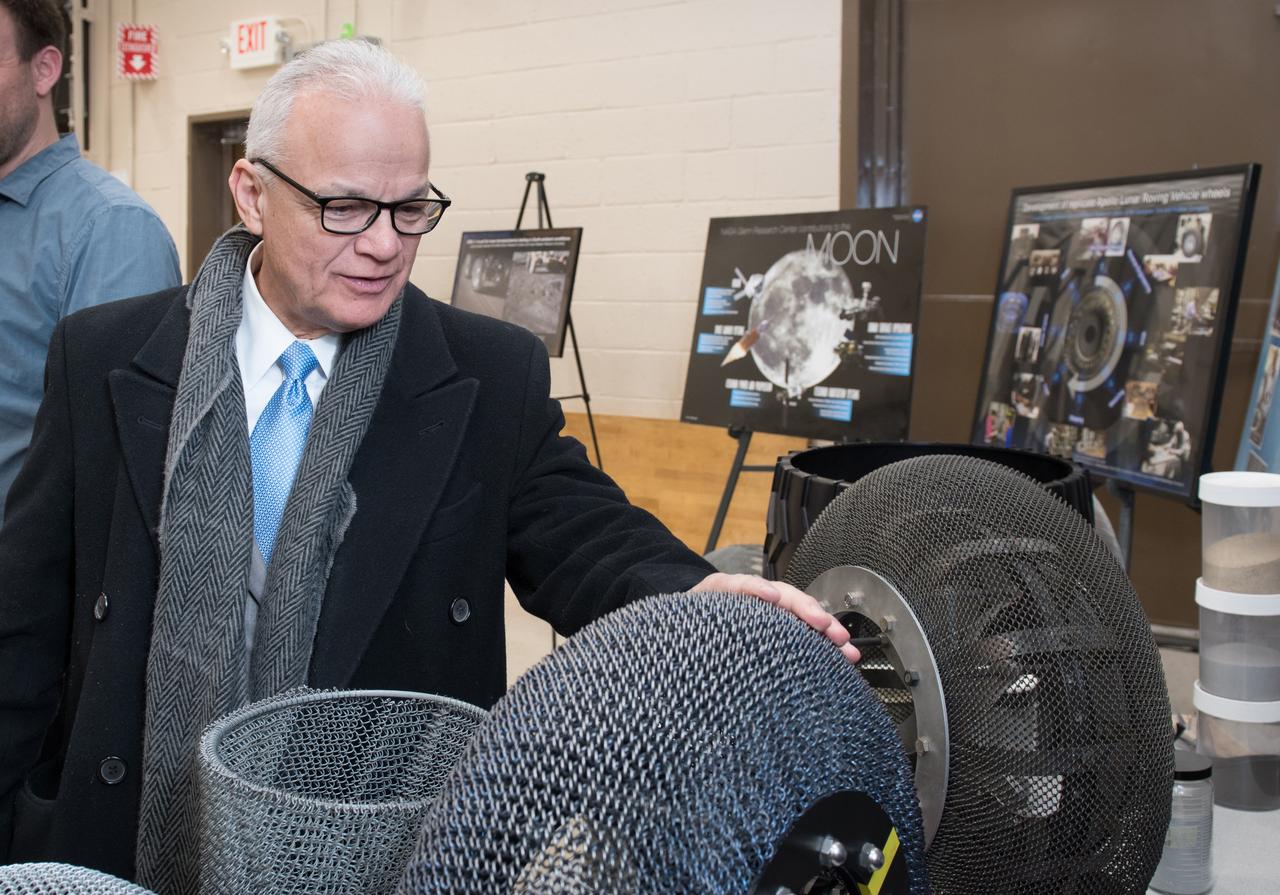
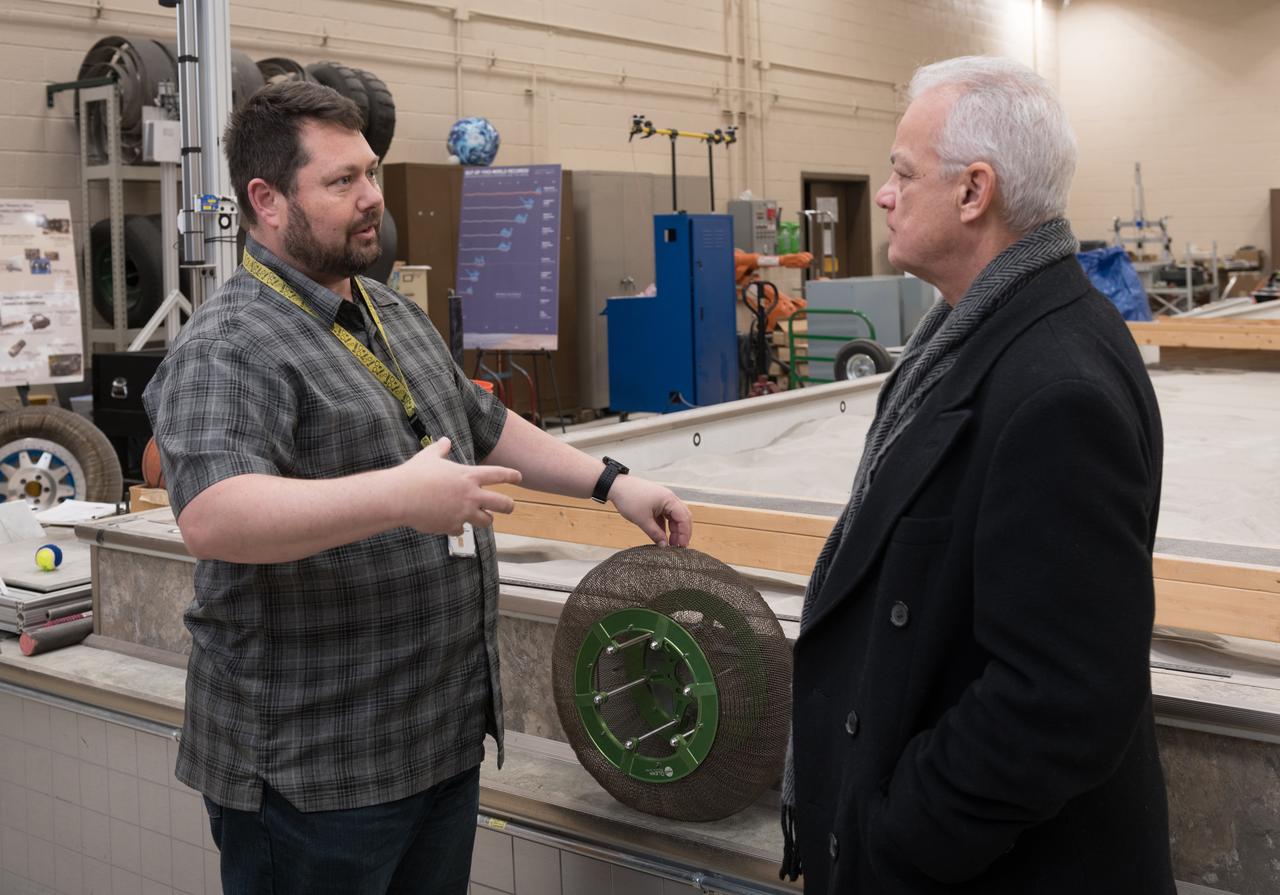
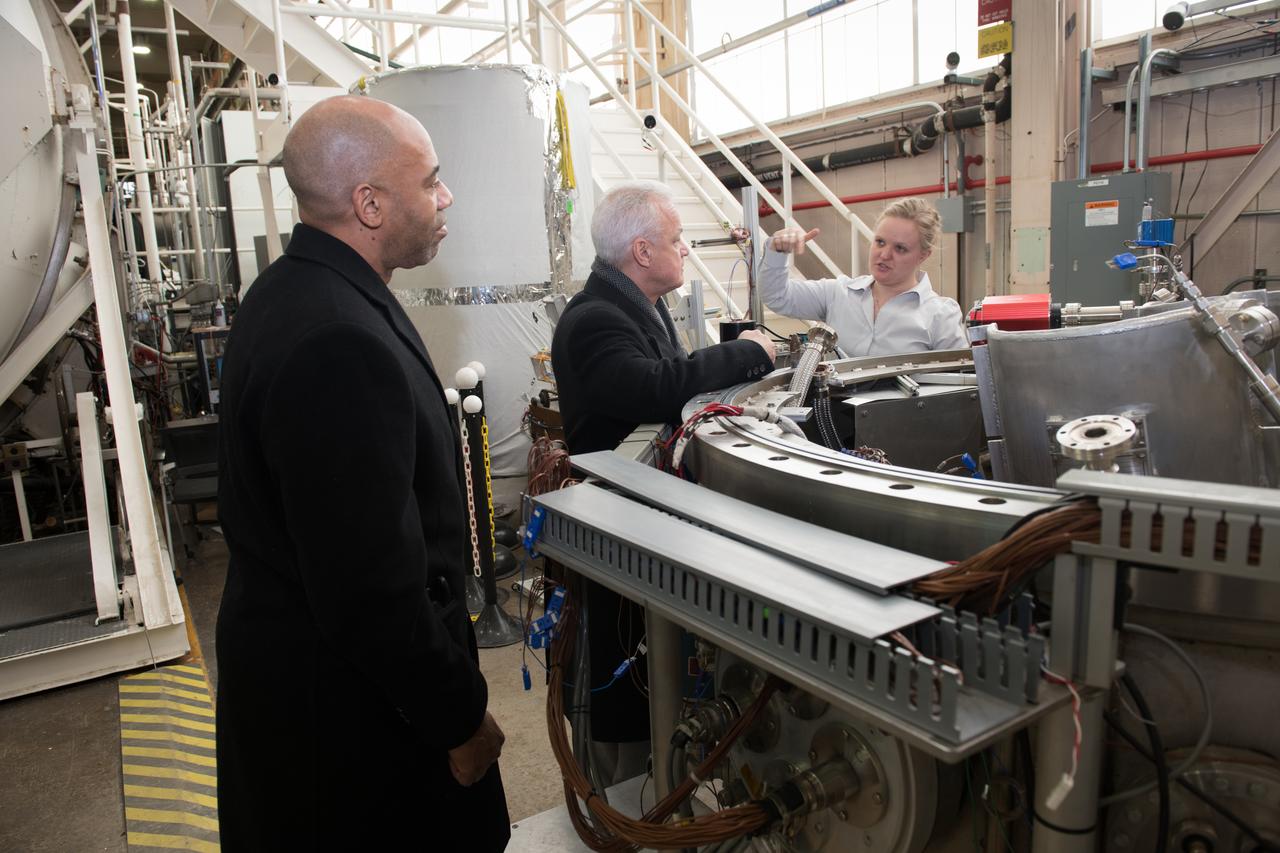
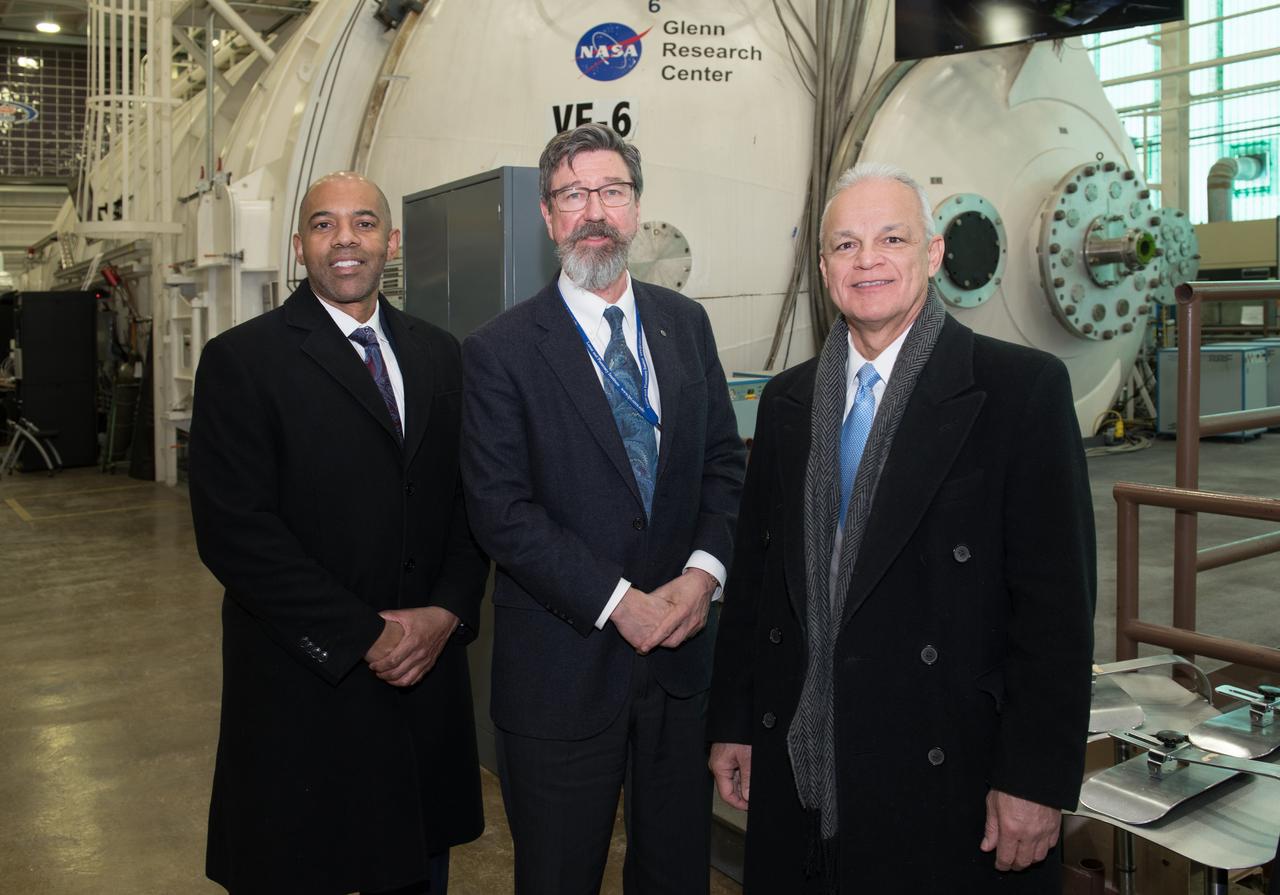
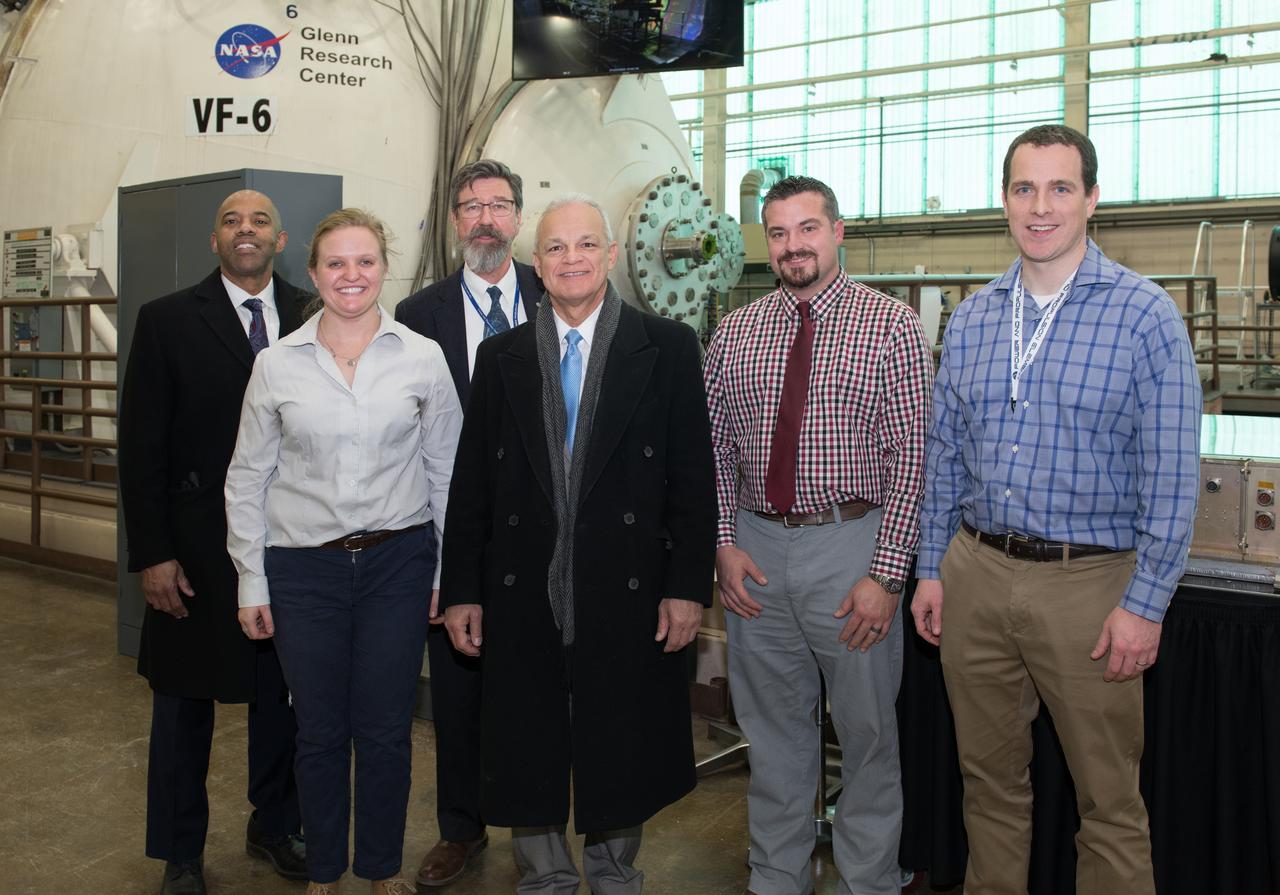
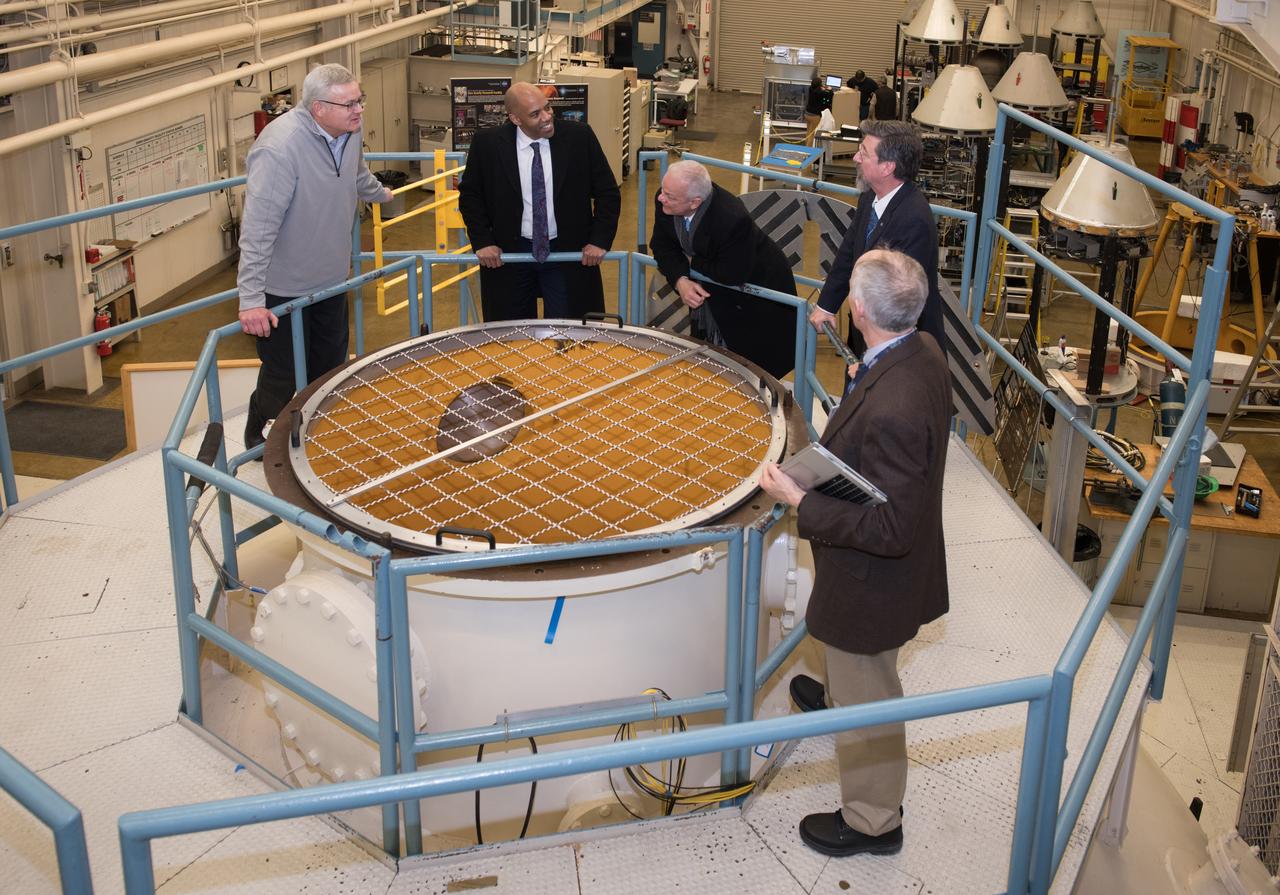
A Co-inventor of the Shape Memory Alloy, Spring Tire, shows the NASA Chief Technologist the first SMA Spring Tire Prototype during a tour of the Glenn Research Center, Simulated Lunar Operations Laboratory (SLOPE).
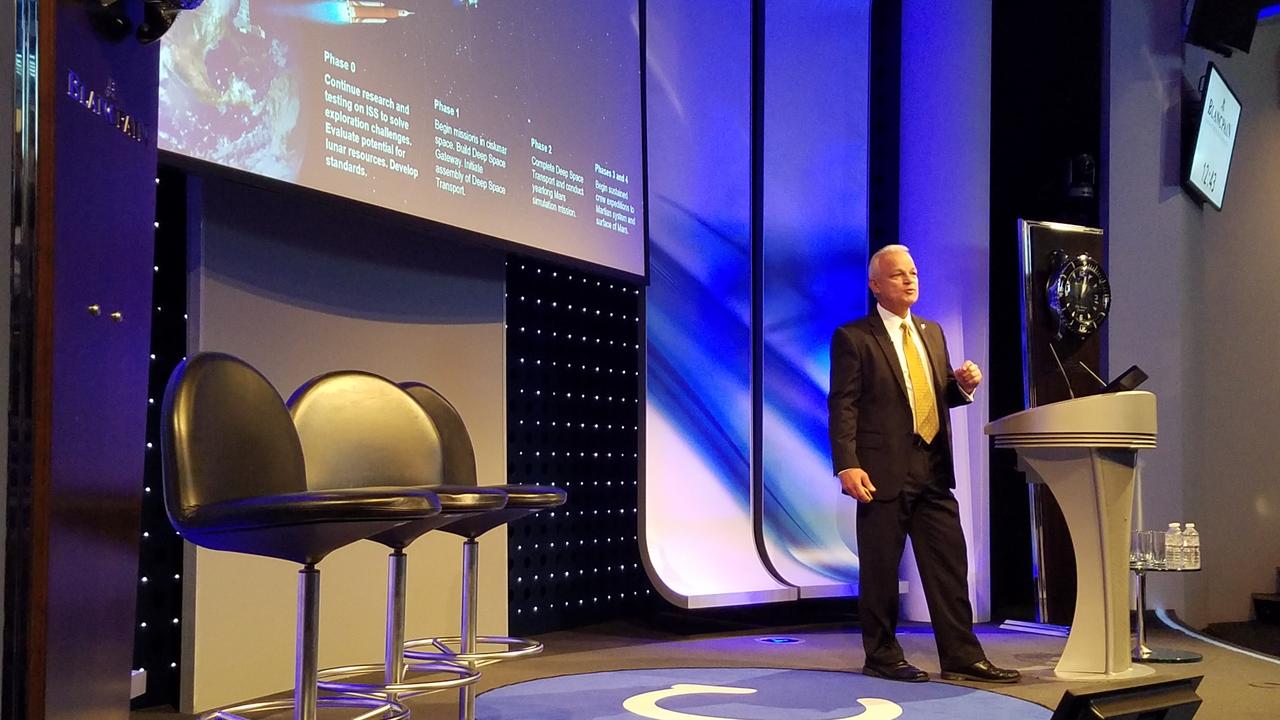
NASA Acting Chief Technologist Douglas Terrier delivers the keynote address at the CodeX Technology Conference in London on September 29, 2017.
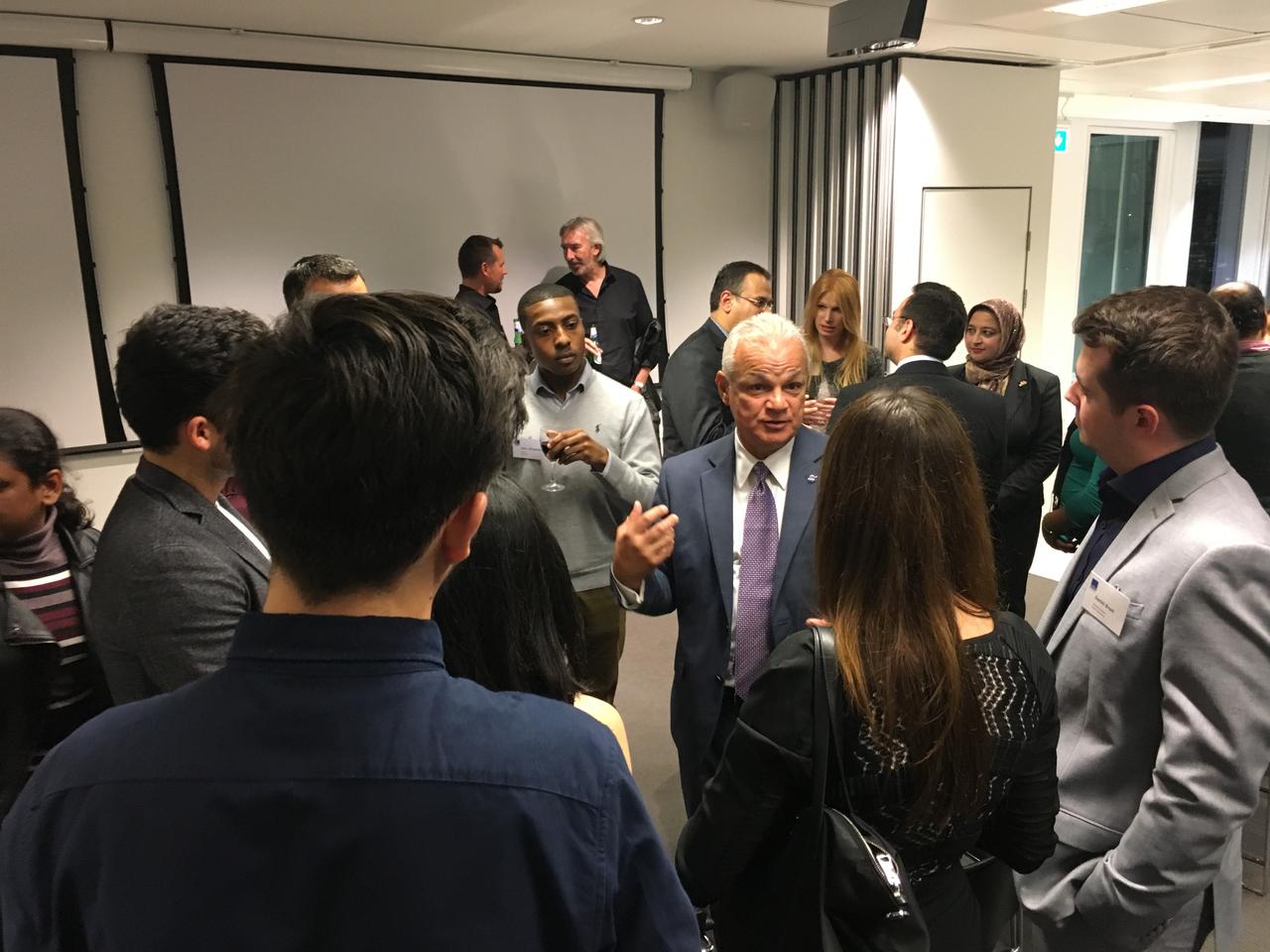
NASA Acting Chief Technologist Douglas Terrier presents on strategic leadership to students and faculty at the Warwick Business School at The Shard during his trip to London in September 27, 2017.
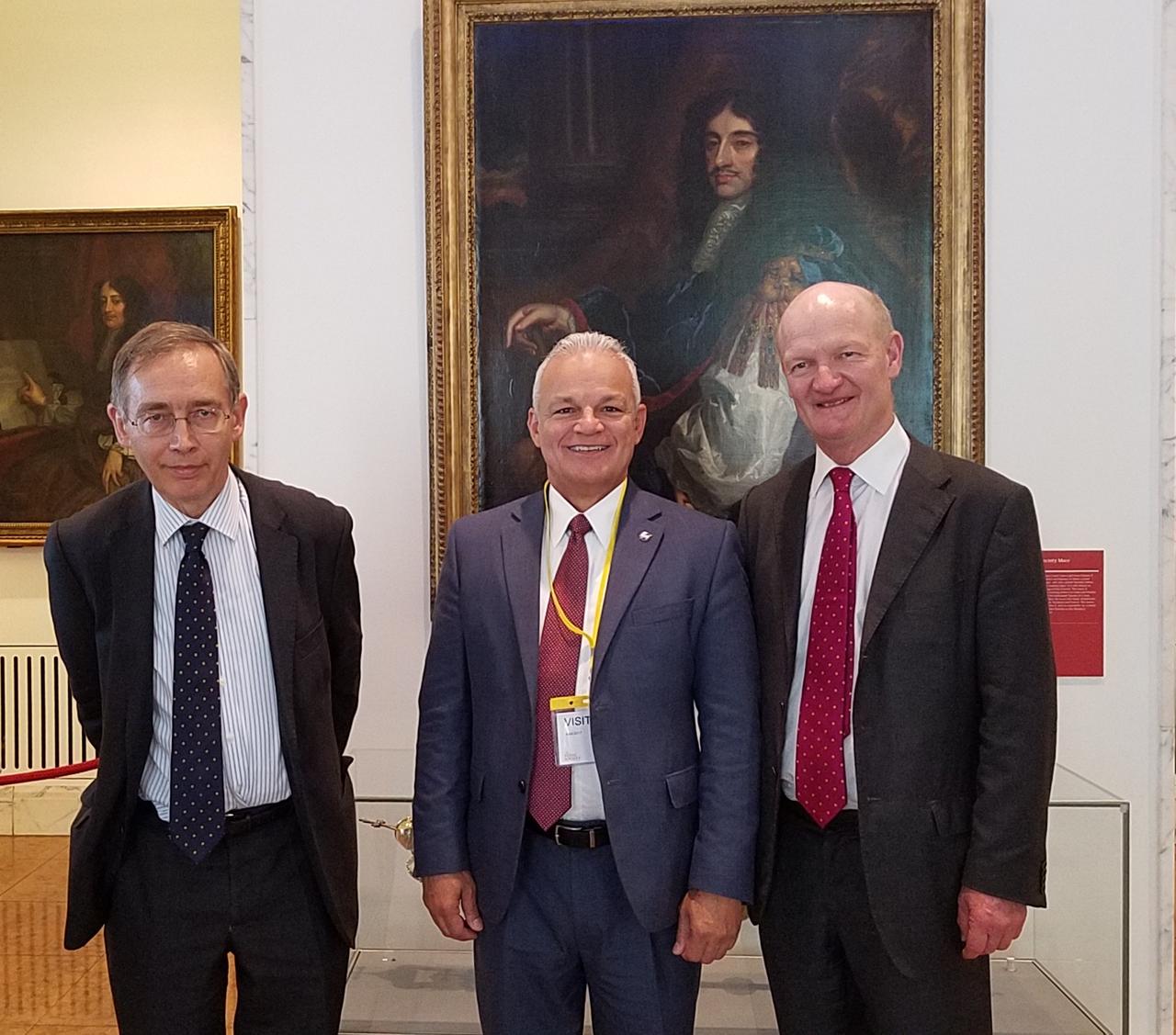
NASA Acting Chief Technologist Douglas Terrier (right) tours London’s Science Museum with Dr. David Rooney, Keeper of Technologies and Engineer and Doug Millard, Deputy Keeper of Technologies and Engineering.
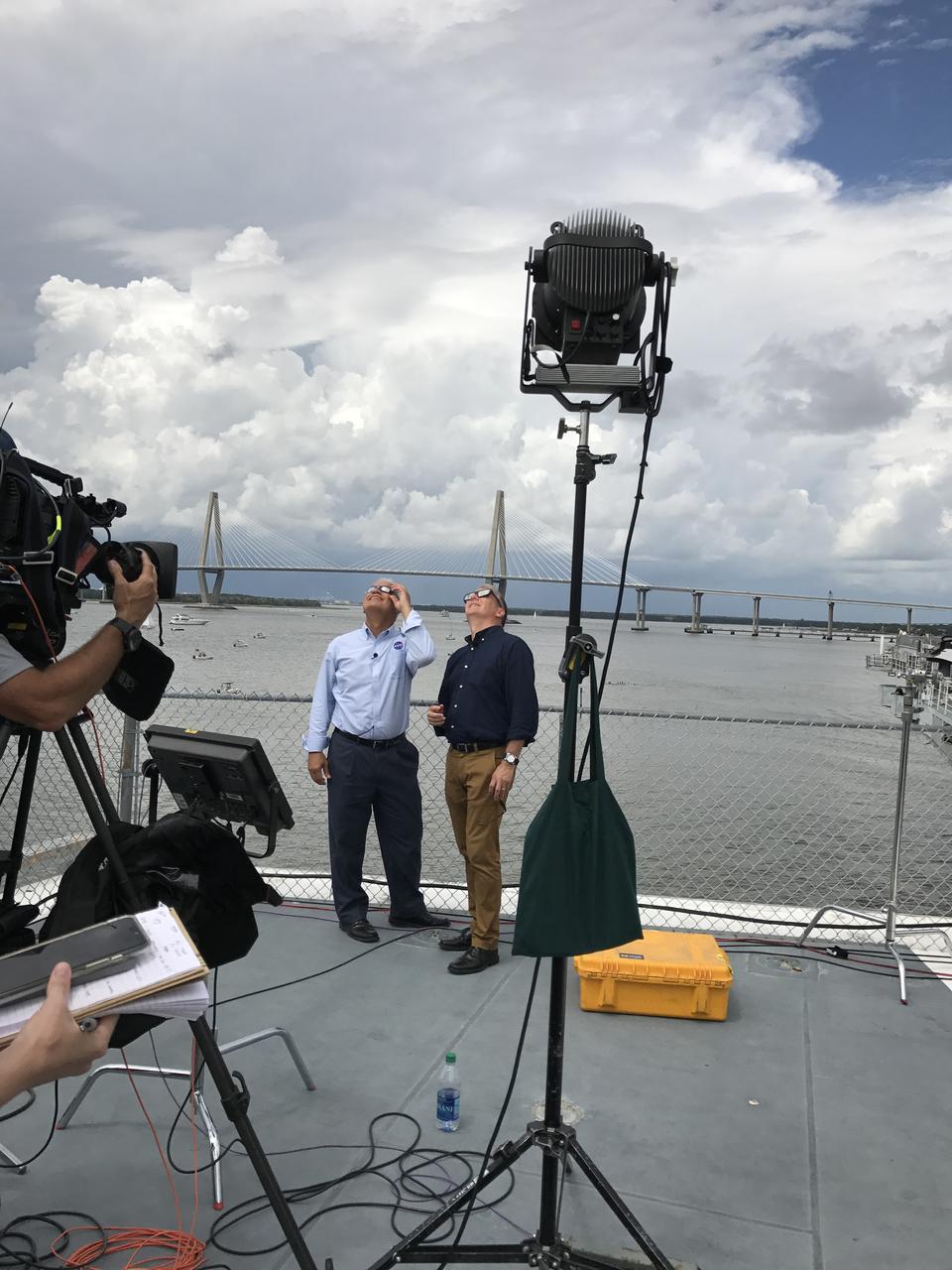
NASA CTO Douglas Terrier is interviewed by NBC's Tom Costello during an Eclipse Across America broadcast aboard the USS Yorktown in Charleston, South Carolina on Aug. 21, 2017.
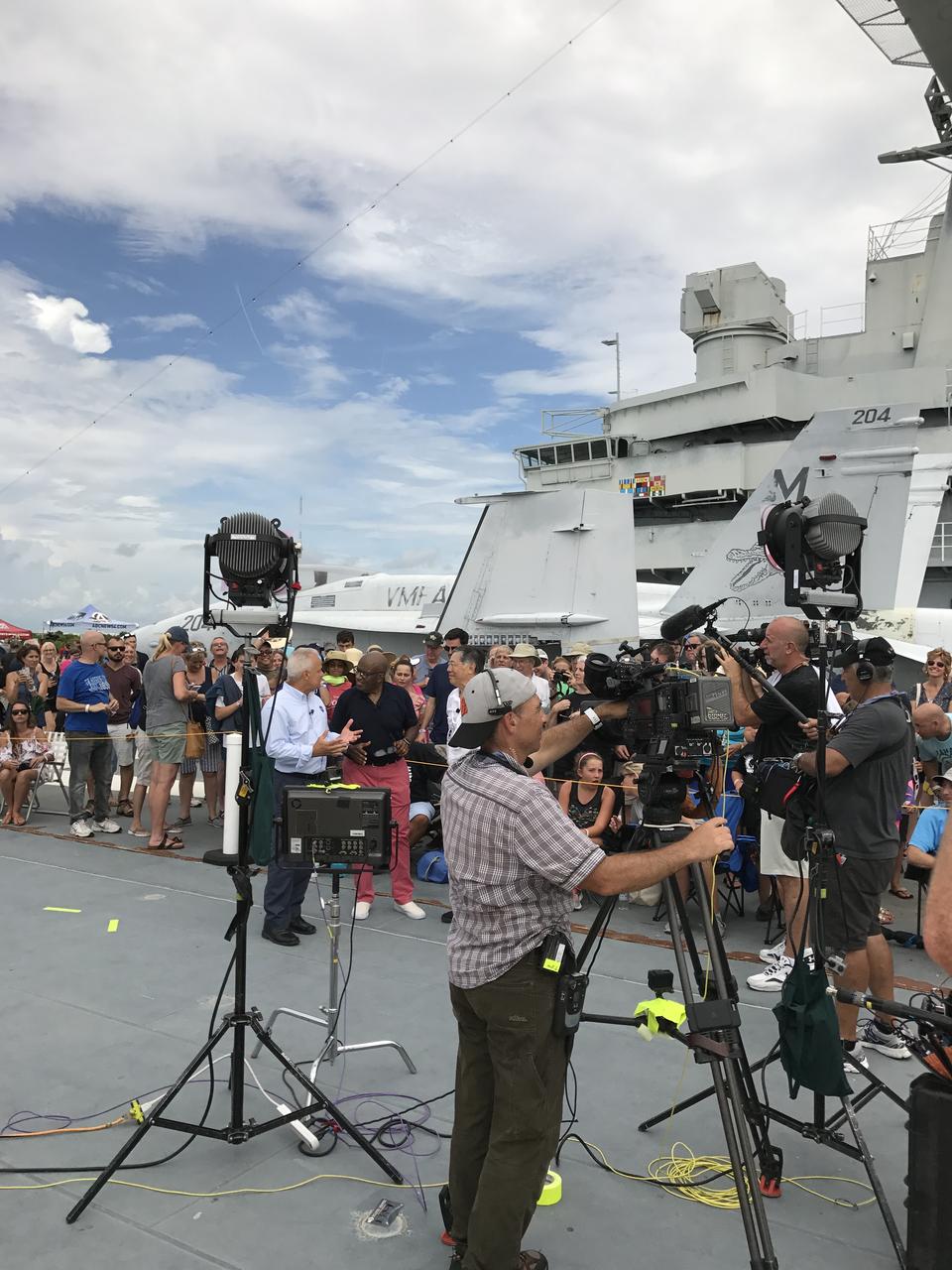
NASA CTO Douglas Terrier talks with the "Today Show's" Al Roker about NASA's science research during an Eclipse Across America broadcast aboard the USS Yorktown in Charleston, South Carolina on Aug. 21, 2017.
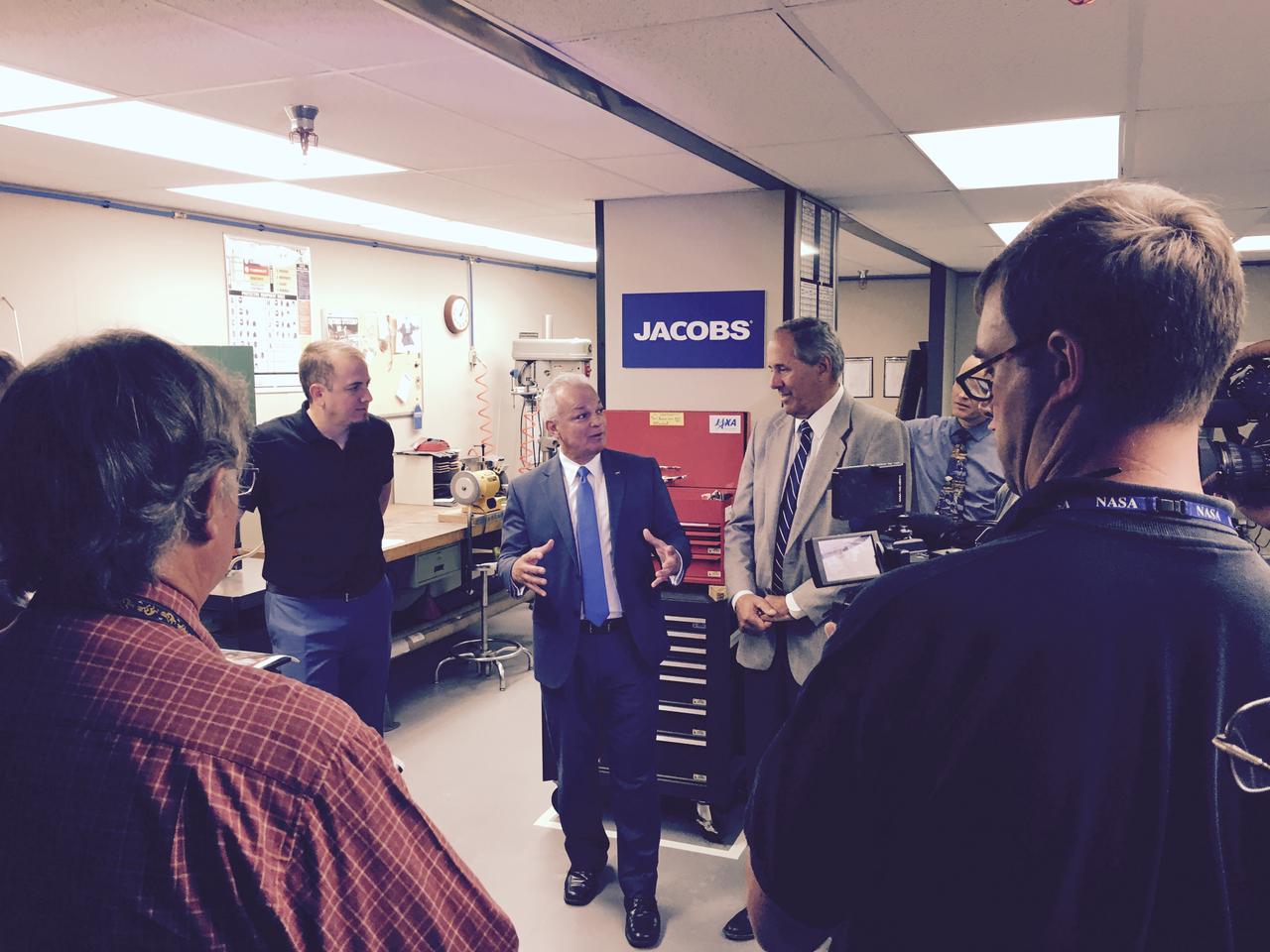
NASA Chief Technologist Douglas Terrier joined Jacobs General Manager Lon Miller during a tour of the company's Engineering Development Facility in Houston. Jacobs provides advanced technologies used aboard the international Space Station and for deep space exploration.
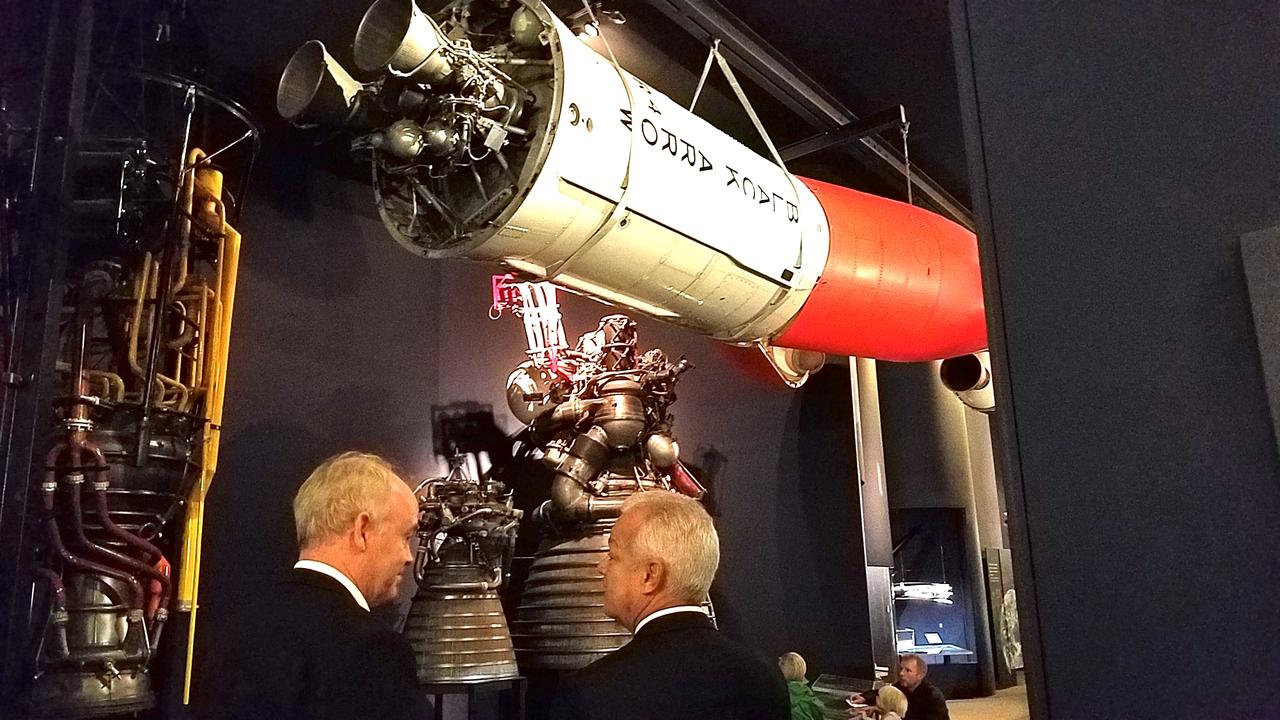
NASA Acting Chief Technologist Douglas Terrier (right) tours London’s Science Museum with Dr. David Rooney, Keeper of Technologies and Engineer and Doug Millard, Deputy Keeper of Technologies and Engineering.
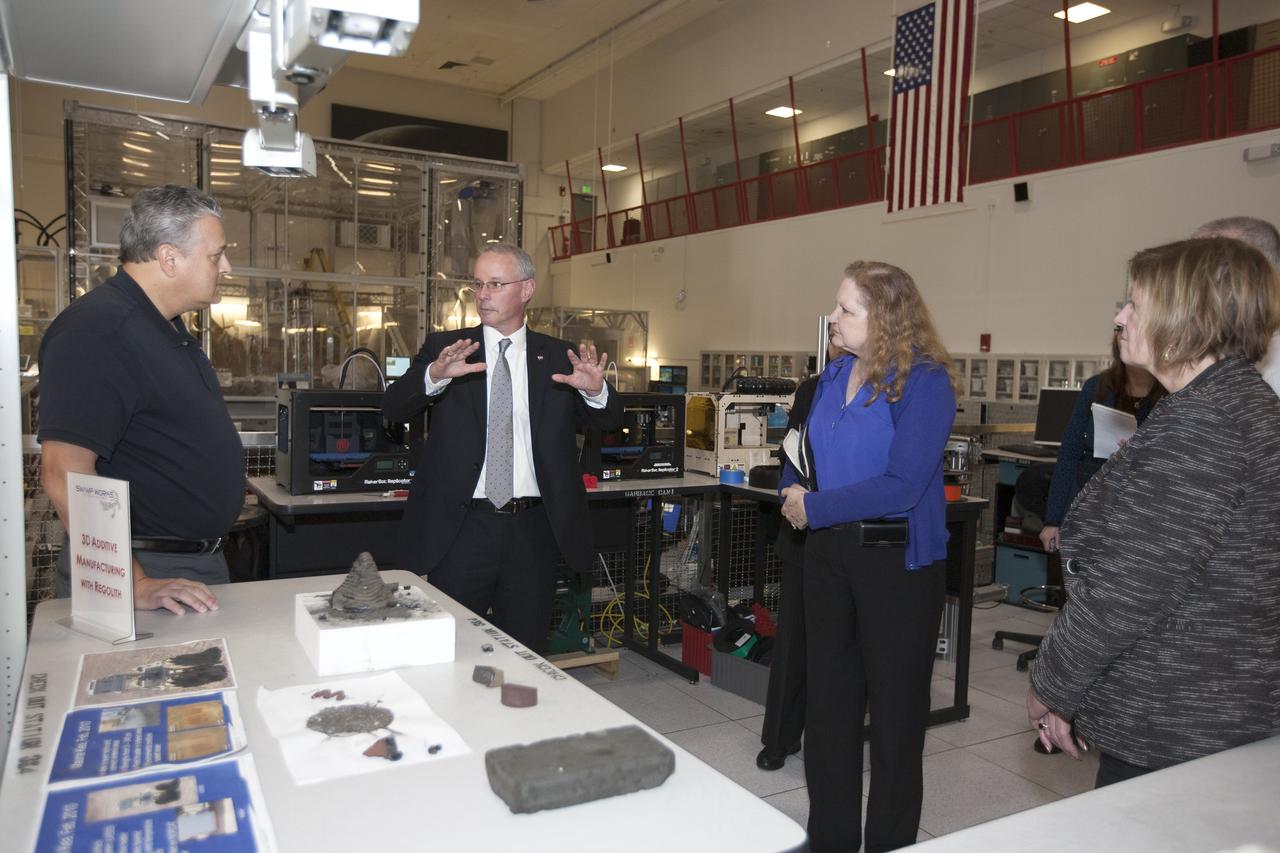
CAPE CANAVERAL, Fla. -- During a visit to NASA's Kennedy Space Center in Florida, NASA Chief Technologist David Miller, second from left, tours laboratories inside the Swamp Works facility. Miller is briefed on technology developments in the lab by Jack Fox, chief of the Surface Systems Office in the Engineering and Technology Directorate. At right is Karen Thompson, Kennedy's chief technologist. Photo credit: NASA/Kim Shiflett
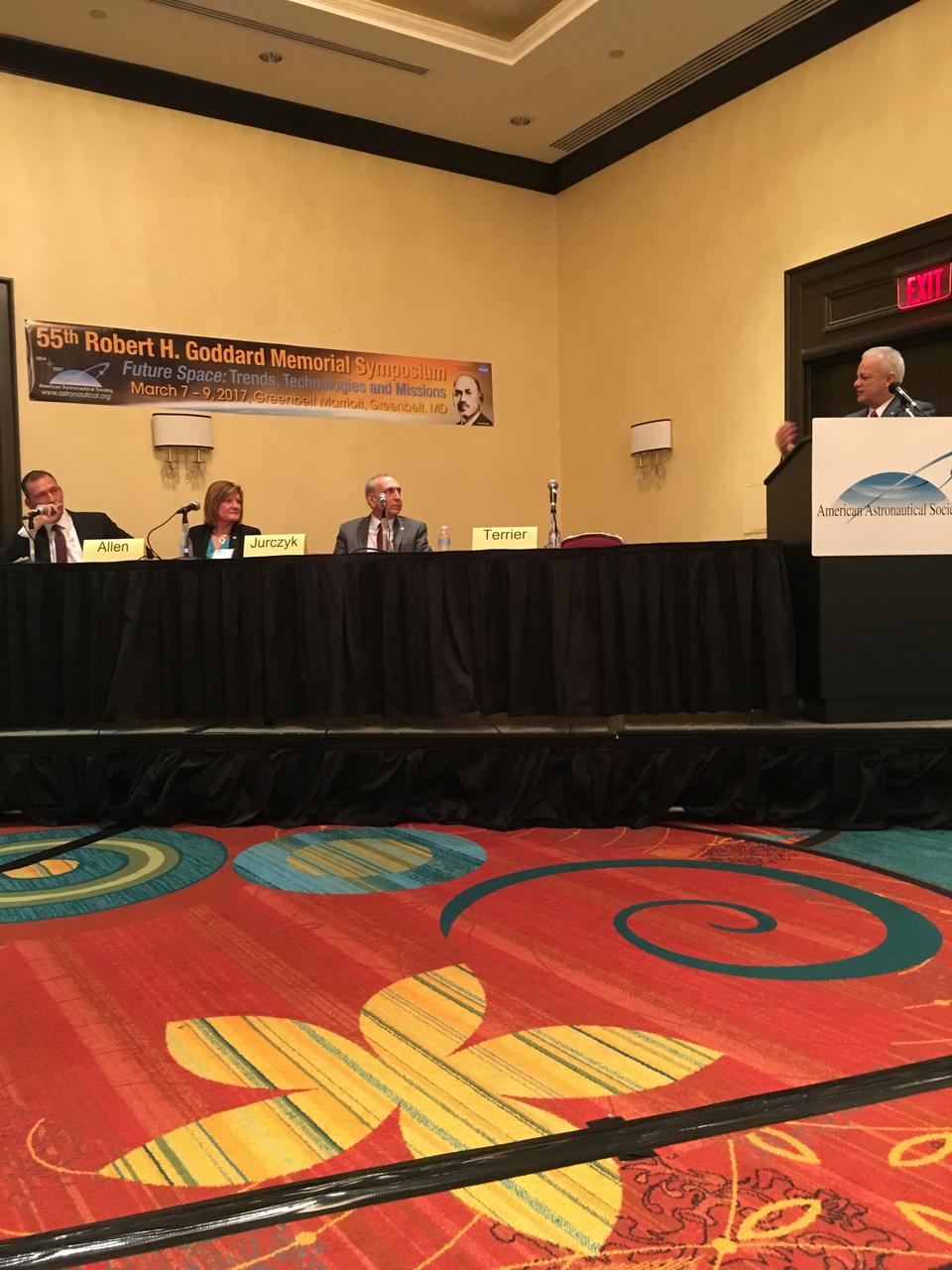
NASA Chief Technologist Douglas Terrier moderated the discussion “NASA Leadership in the Future of Science and Technology" during the AAS 55th Robert H. Goddard Memorial Symposium on March 8, 2017. Terrier was joined by Associate Administrator for Space Technology Steve Jurczyk, Chief Scientist Gale Allen and Associate Administrator for Science Thomas Zurbuchen.
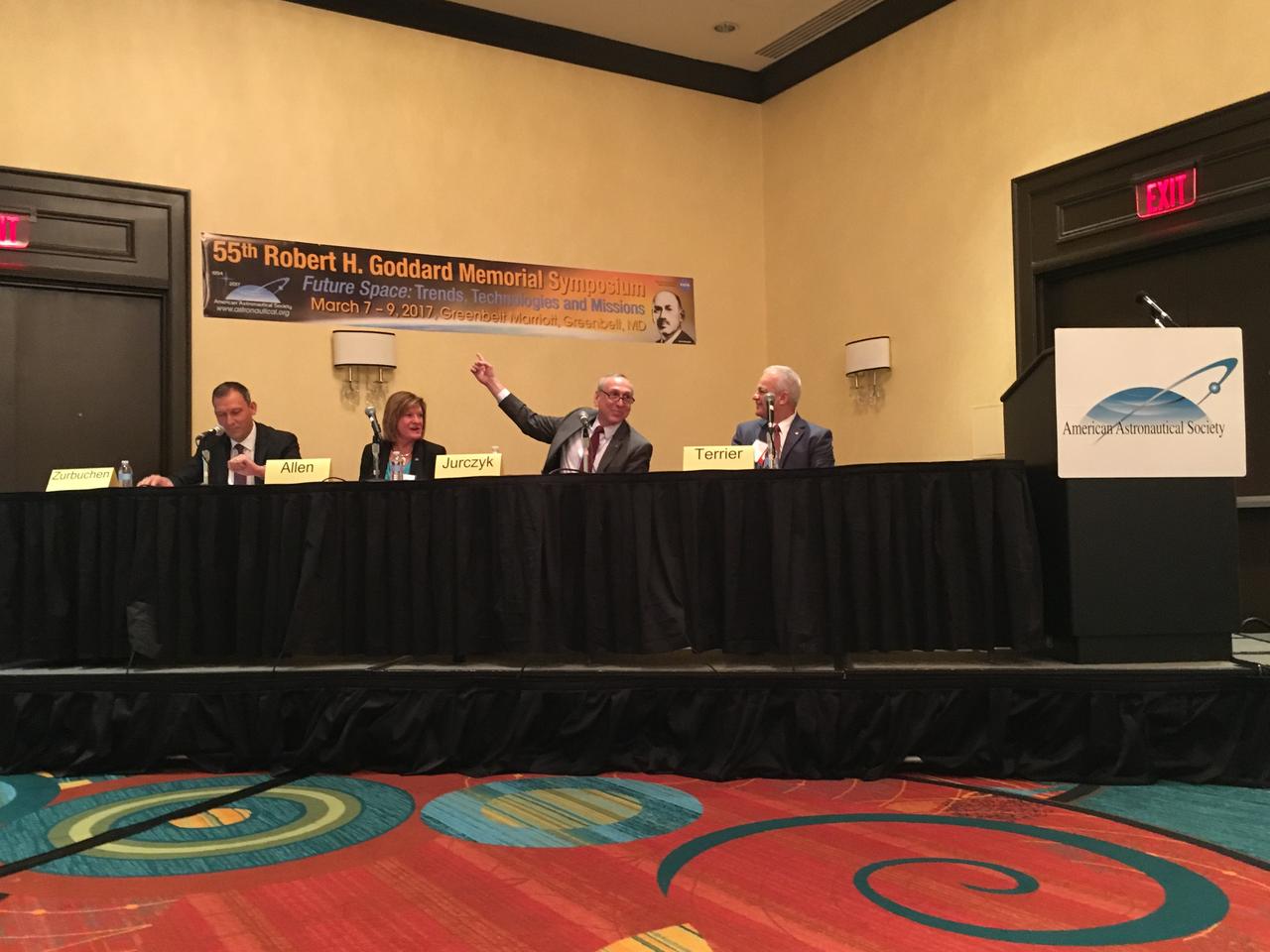
NASA Chief Technologist Douglas Terrier moderated the discussion “NASA Leadership in the Future of Science and Technology" during the AAS 55th Robert H. Goddard Memorial Symposium on March 8, 2017. Terrier was joined by Associate Administrator for Space Technology Steve Jurczyk, Chief Scientist Gale Allen and Associate Administrator for Science Thomas Zurbuchen.
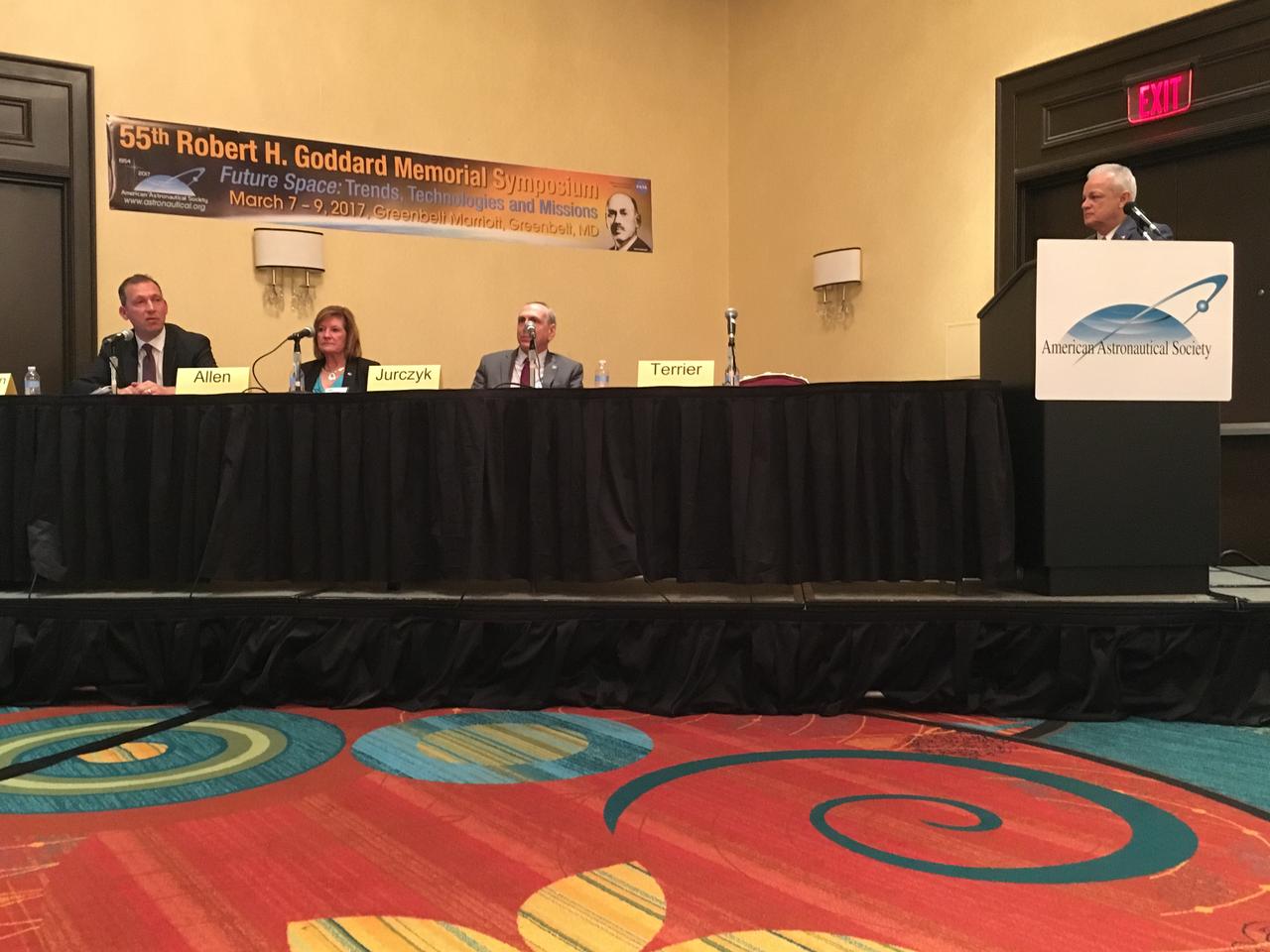
NASA Chief Technologist Douglas Terrier moderated the discussion “NASA Leadership in the Future of Science and Technology" during the AAS 55th Robert H. Goddard Memorial Symposium on March 8, 2017. Terrier was joined by Associate Administrator for Space Technology Steve Jurczyk, Chief Scientist Gale Allen and Associate Administrator for Science Thomas Zurbuchen.
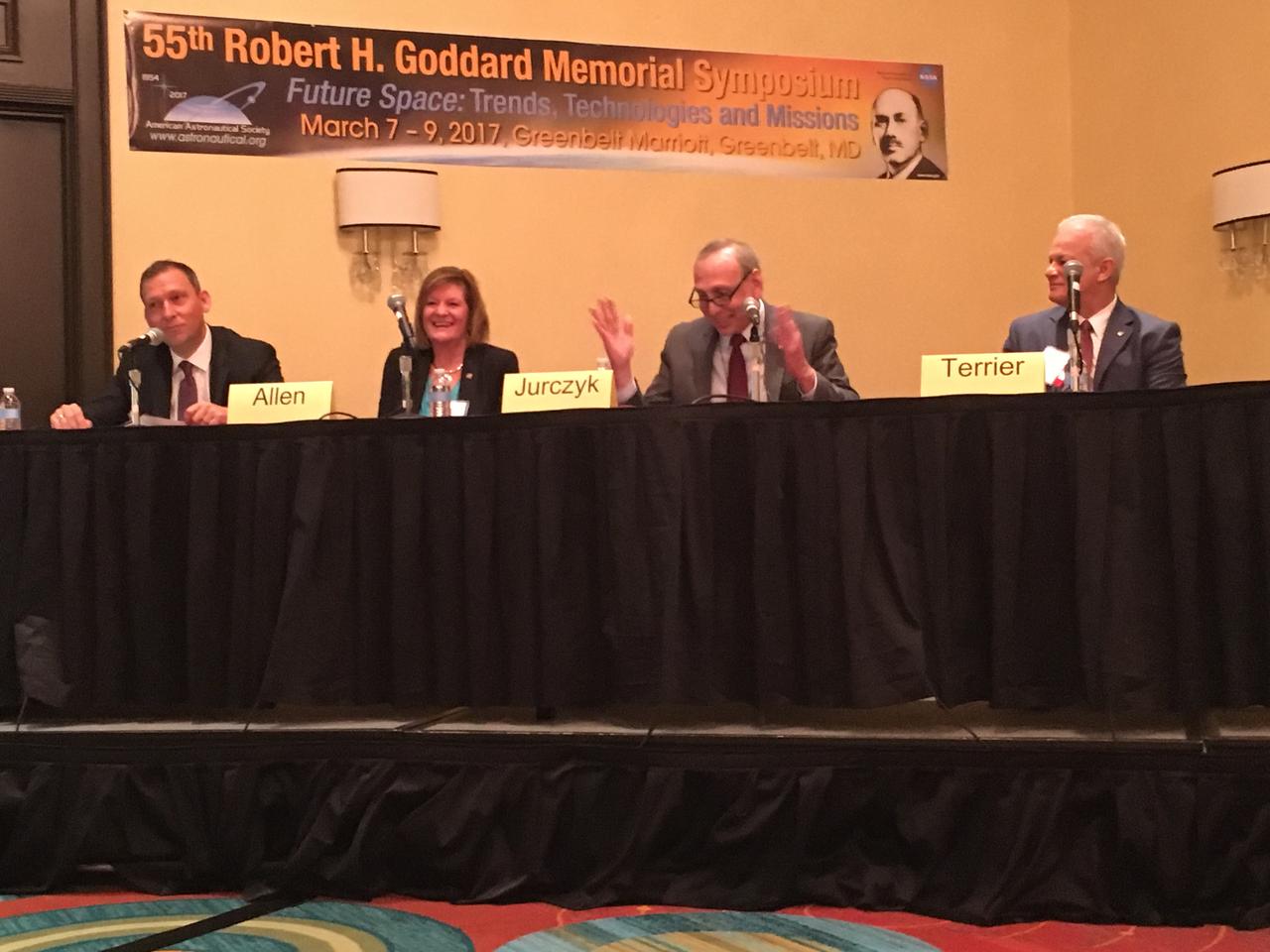
NASA Chief Technologist Douglas Terrier moderated the discussion “NASA Leadership in the Future of Science and Technology" during the AAS 55th Robert H. Goddard Memorial Symposium on March 8, 2017. Terrier was joined by Associate Administrator for Space Technology Steve Jurczyk, Chief Scientist Gale Allen and Associate Administrator for Science Thomas Zurbuchen.
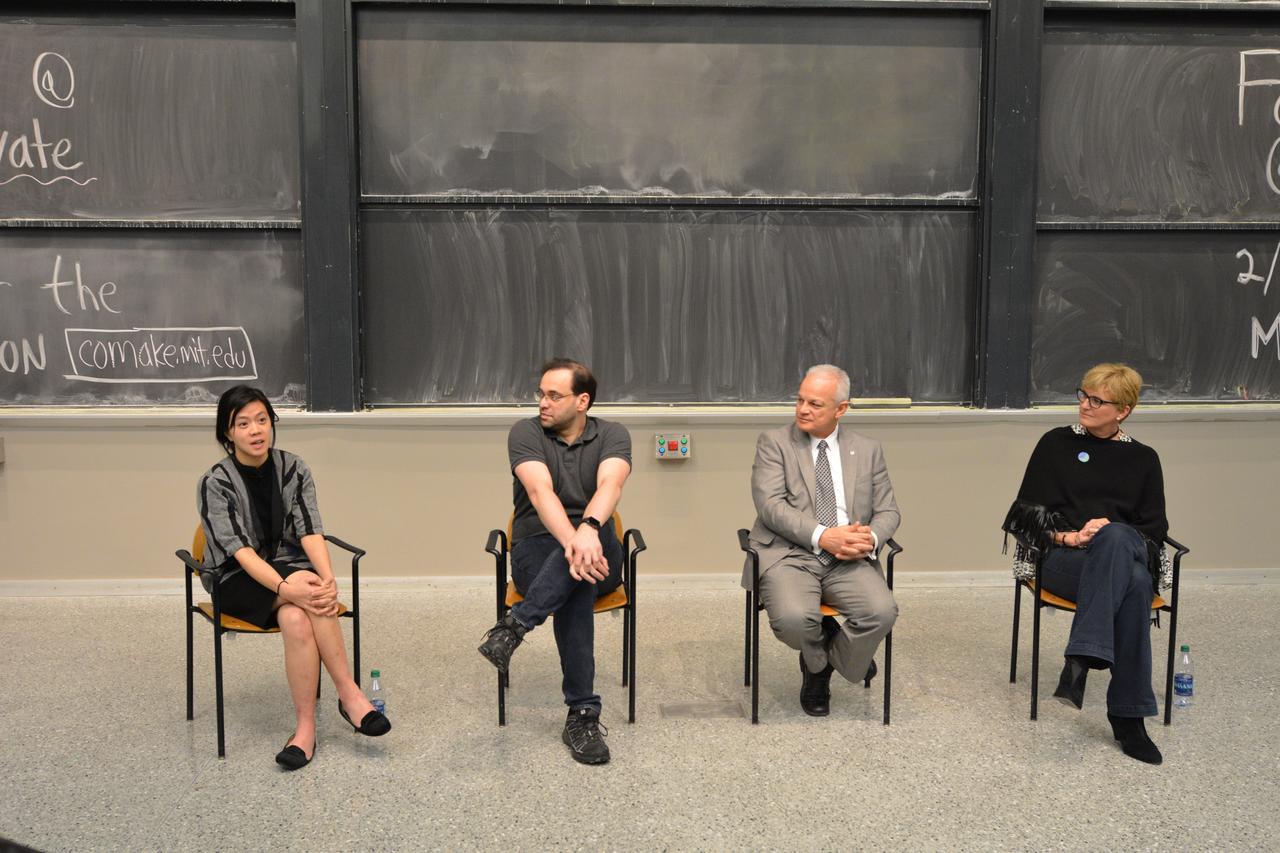
During MIT's "Better MIT Innovation Week 2018," a group of experts discussed innovation as a critical component to and professional accomplishment. From left: Rebecca Chui, founder, RootsStudio; Reinaldo Normand, entrepreneur in residence, MIT; Douglas Terrier, NASA chief technologist; Linda Foster, chief technologist, Lockheed Martin. (Photo: Damian Barabonkov/MIT Technique)
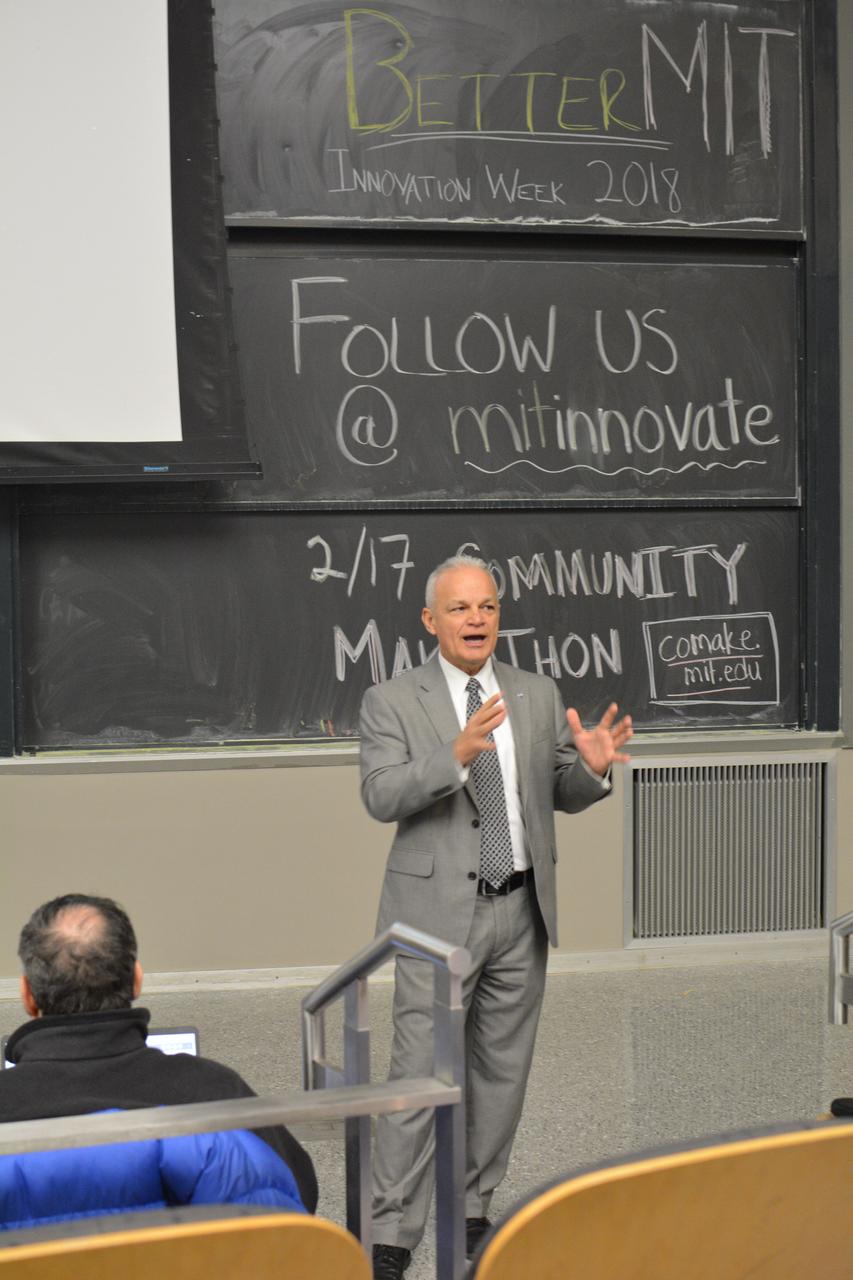
NASA Chief Technologist Douglas Terrier joined students, faculty and experts in Boston as part of MIT's "Better MIT Innovation Week 2018," a week-long program promoting leadership, entrepreneurship and action for a better future. During the February event, Terrier spoke about a culture of innovation at America's Space Program. (Photo: Damian Barabonkov/MIT Technique)
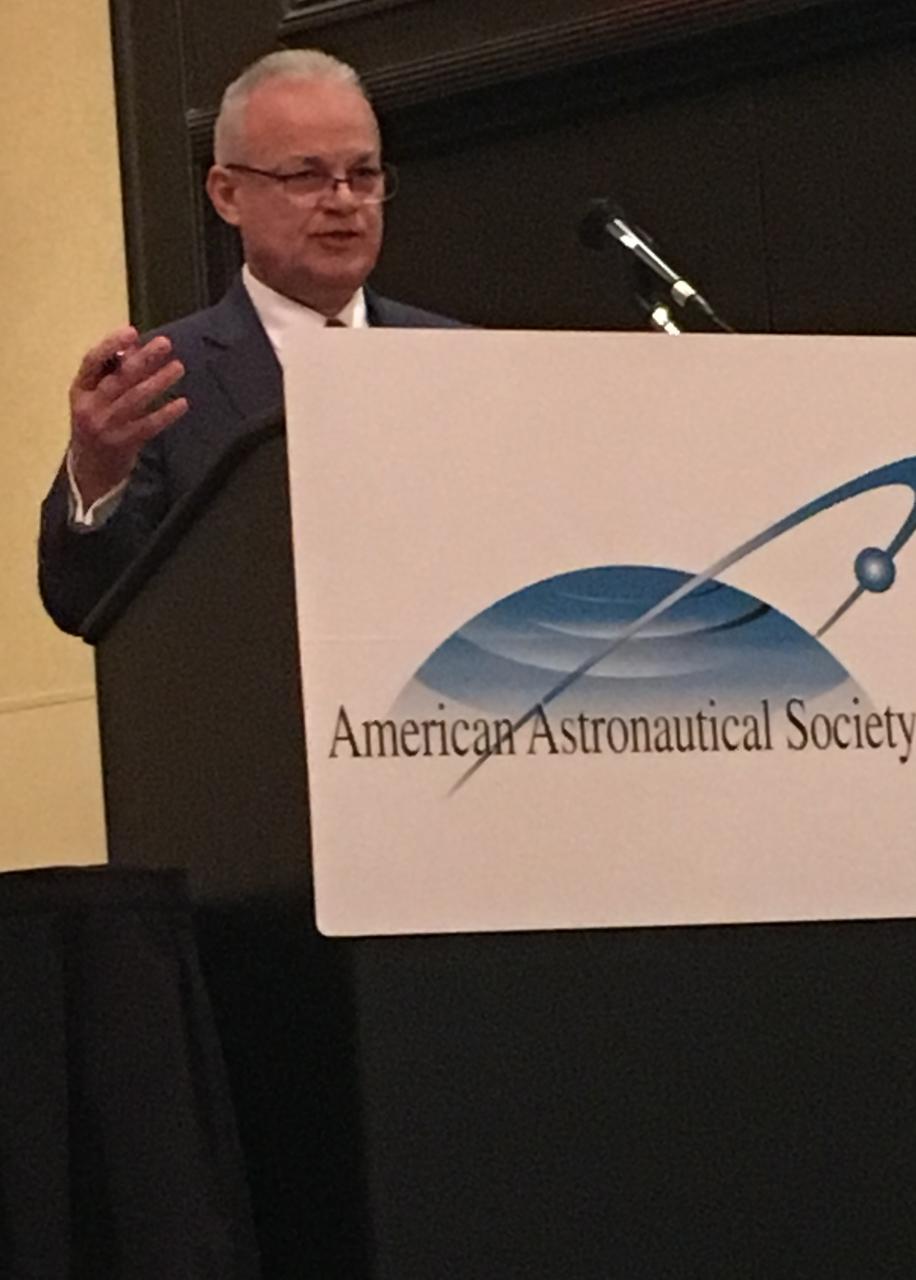
NASA Chief Technologist Douglas Terrier moderated the discussion “NASA Leadership in the Future of Science and Technology" during the AAS 55th Robert H. Goddard Memorial Symposium on March 8, 2017. Terrier was joined by Associate Administrator for Space Technology Steve Jurczyk, Chief Scientist Gale Allen and Associate Administrator for Science Thomas Zurbuchen.
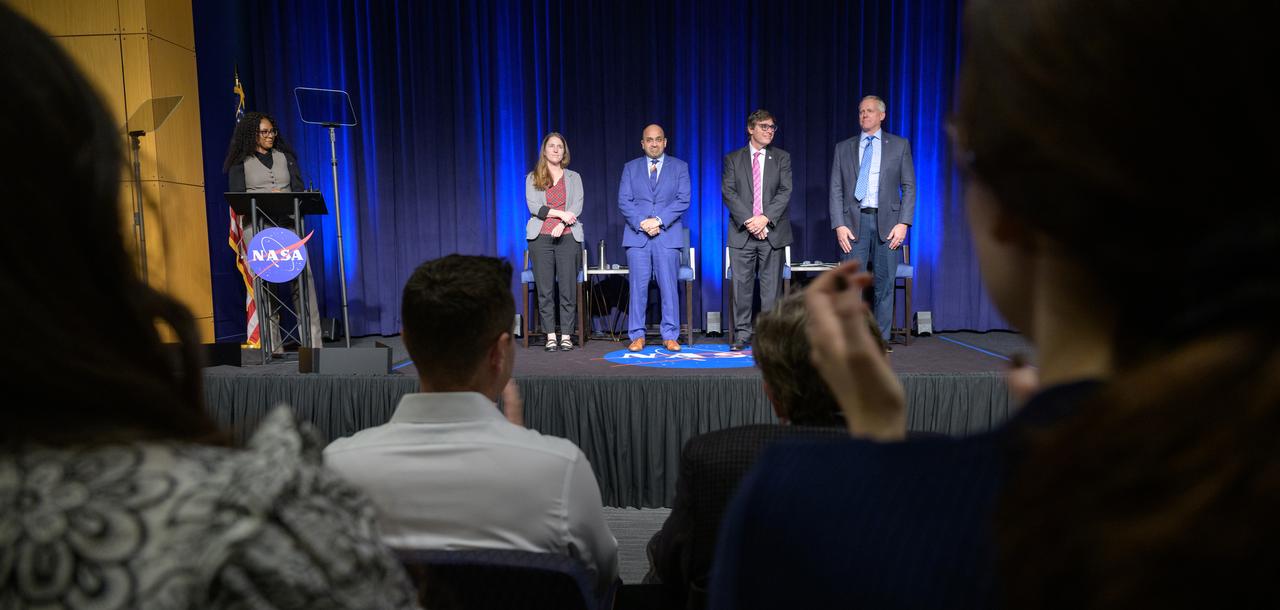
NASA Public Affairs Specialist Melissa Howell, left, NASA Chief Scientist Kate Calvin, NASA Chief Technologist A.C. Charania, NASA Chief Artificial Intelligence Officer David Salvagnini, and NASA Chief Information Officer Jeff Seaton, right, participate in a NASA employee town hall on how the agency is using and developing Artificial Intelligence (AI) tools to advance missions and research, Wednesday, May 22, 2024, at the NASA Headquarters Mary W. Jackson Building in Washington. Photo Credit: (NASA/Bill Ingalls)
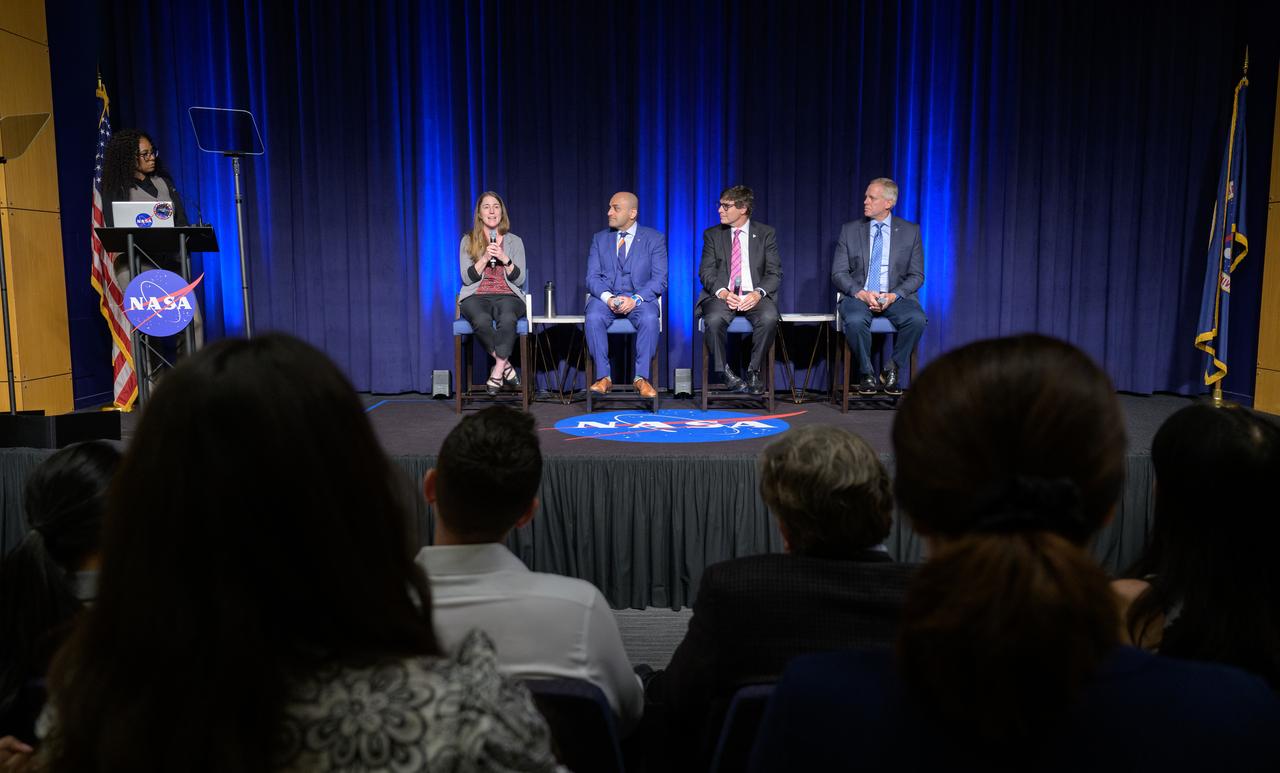
NASA Public Affairs Specialist Melissa Howell, left, NASA Chief Scientist Kate Calvin, NASA Chief Technologist A.C. Charania, NASA Chief Artificial Intelligence Officer David Salvagnini, and NASA Chief Information Officer Jeff Seaton, right, participate in a NASA employee town hall on how the agency is using and developing Artificial Intelligence (AI) tools to advance missions and research, Wednesday, May 22, 2024, at the NASA Headquarters Mary W. Jackson Building in Washington. Photo Credit: (NASA/Bill Ingalls)
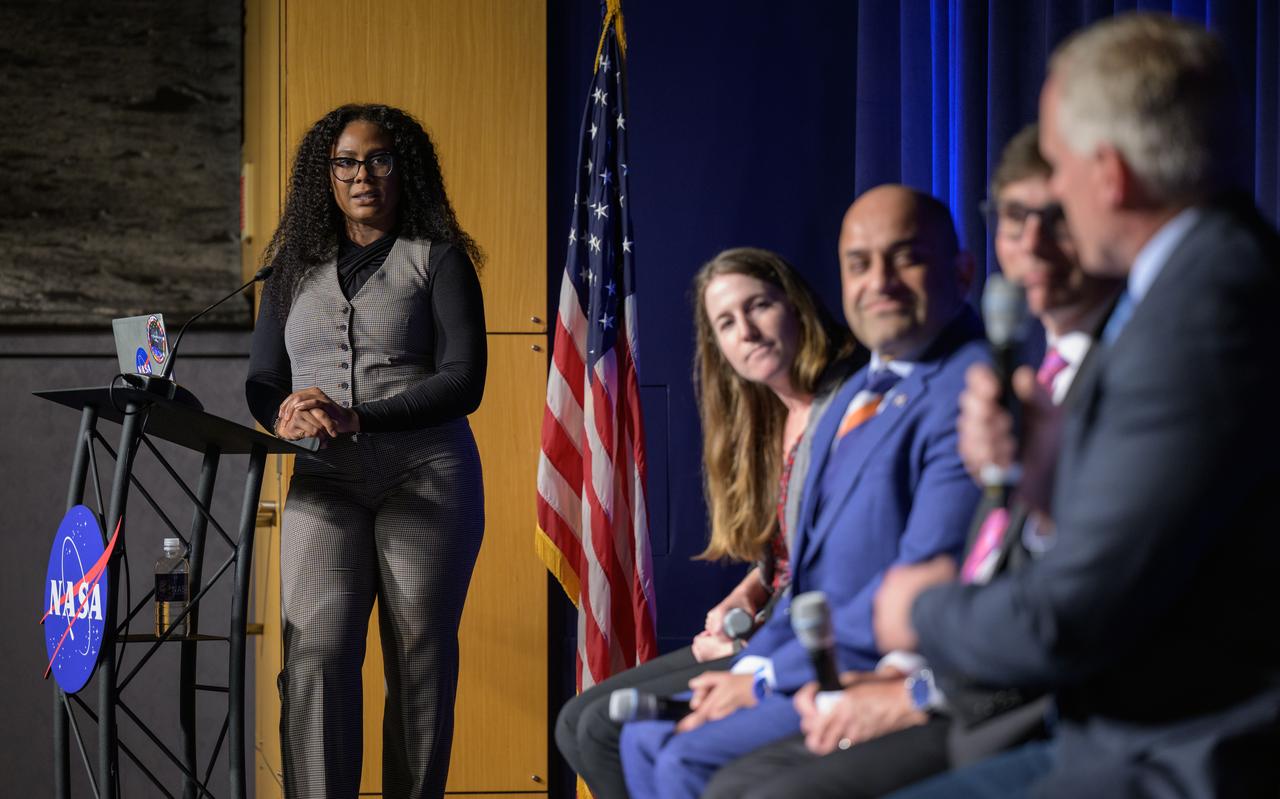
NASA Public Affairs Specialist Melissa Howell, left, NASA Chief Scientist Kate Calvin, NASA Chief Technologist A.C. Charania, NASA Chief Artificial Intelligence Officer David Salvagnini, and NASA Chief Information Officer Jeff Seaton, right, participate in a NASA employee town hall on how the agency is using and developing Artificial Intelligence (AI) tools to advance missions and research, Wednesday, May 22, 2024, at the NASA Headquarters Mary W. Jackson Building in Washington. Photo Credit: (NASA/Bill Ingalls)
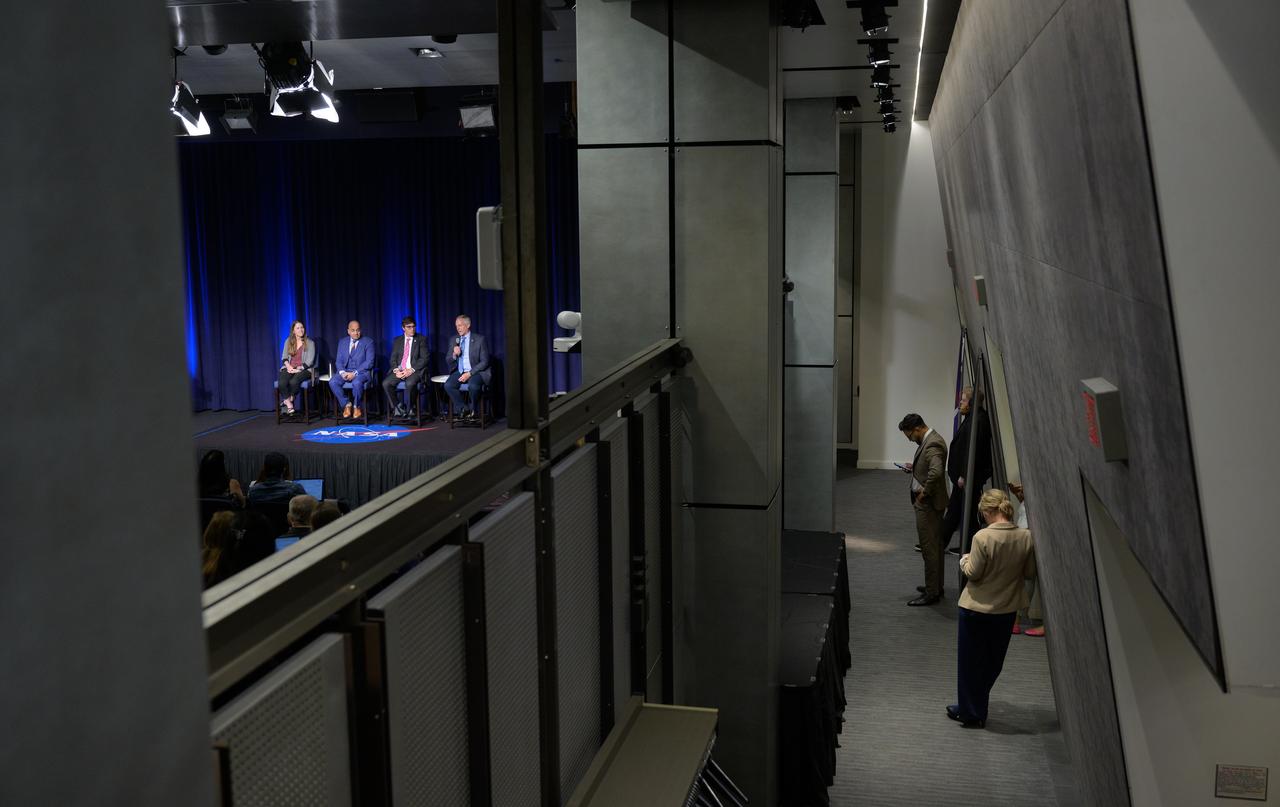
NASA Public Affairs Specialist Melissa Howell, left, NASA Chief Scientist Kate Calvin, NASA Chief Technologist A.C. Charania, NASA Chief Artificial Intelligence Officer David Salvagnini, and NASA Chief Information Officer Jeff Seaton, right, participate in a NASA employee town hall on how the agency is using and developing Artificial Intelligence (AI) tools to advance missions and research, Wednesday, May 22, 2024, at the NASA Headquarters Mary W. Jackson Building in Washington. Photo Credit: (NASA/Bill Ingalls)
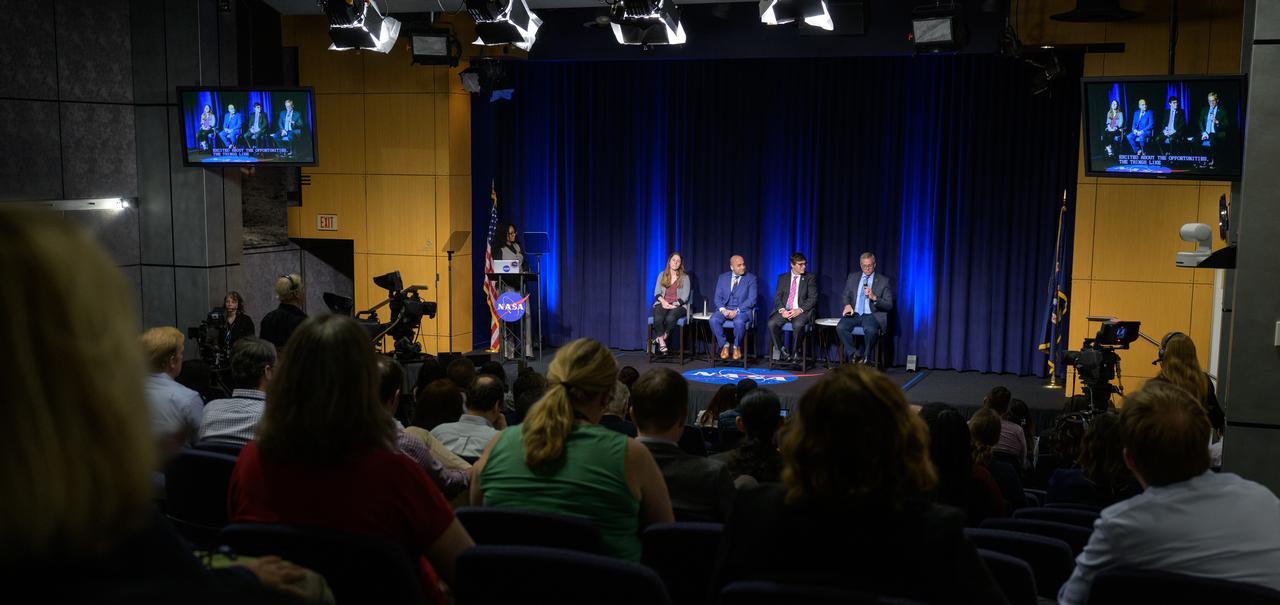
NASA Public Affairs Specialist Melissa Howell, left, NASA Chief Scientist Kate Calvin, NASA Chief Technologist A.C. Charania, NASA Chief Artificial Intelligence Officer David Salvagnini, and NASA Chief Information Officer Jeff Seaton, right, participate in a NASA employee town hall on how the agency is using and developing Artificial Intelligence (AI) tools to advance missions and research, Wednesday, May 22, 2024, at the NASA Headquarters Mary W. Jackson Building in Washington. Photo Credit: (NASA/Bill Ingalls)
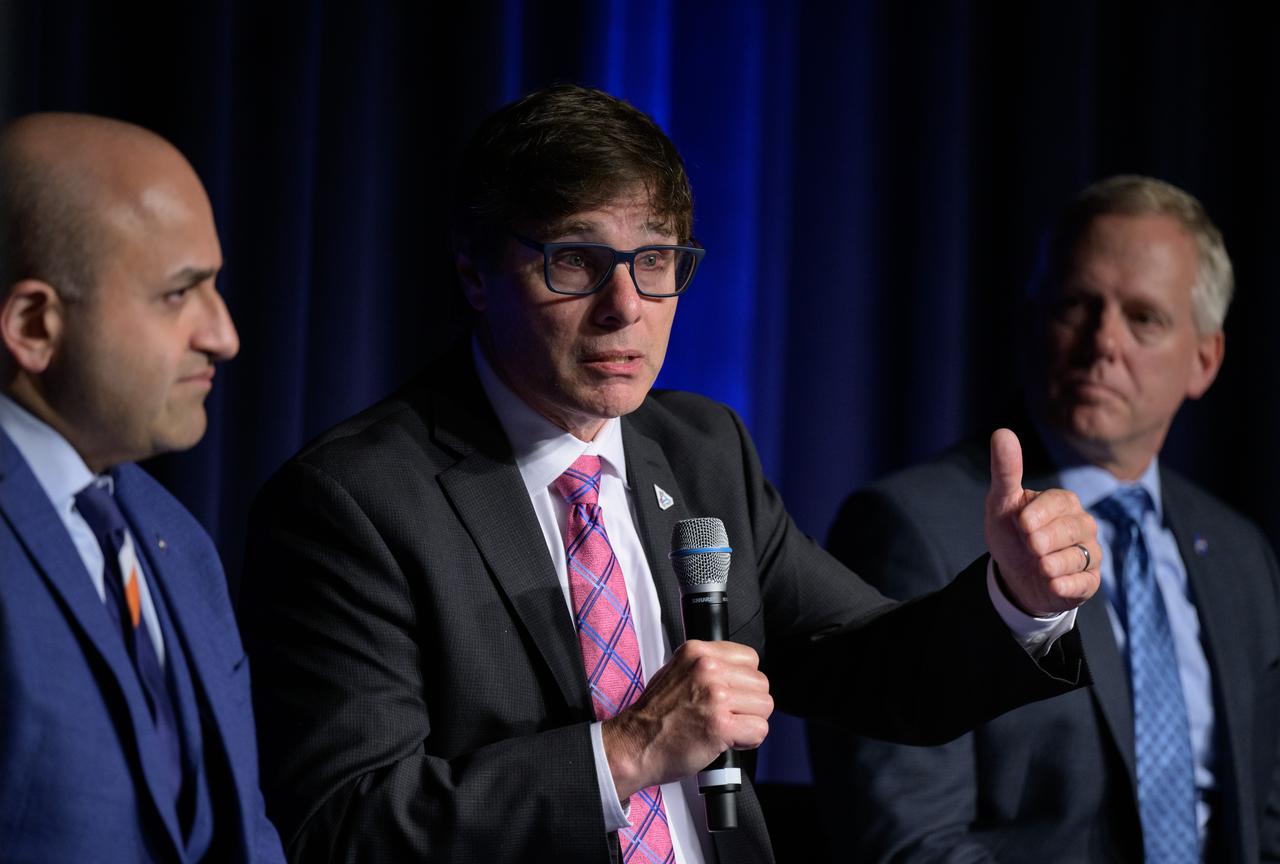
NASA Chief Artificial Intelligence Officer David Salvagnini gives remarks in a NASA employee town hall on how the agency is using and developing Artificial Intelligence (AI) tools to advance missions and research, as NASA Chief Technologist A.C. Charania, left and NASA Chief Information Officer Jeff Seaton, right, look on, Wednesday, May 22, 2024, at the NASA Headquarters Mary W. Jackson Building in Washington. Photo Credit: (NASA/Bill Ingalls)
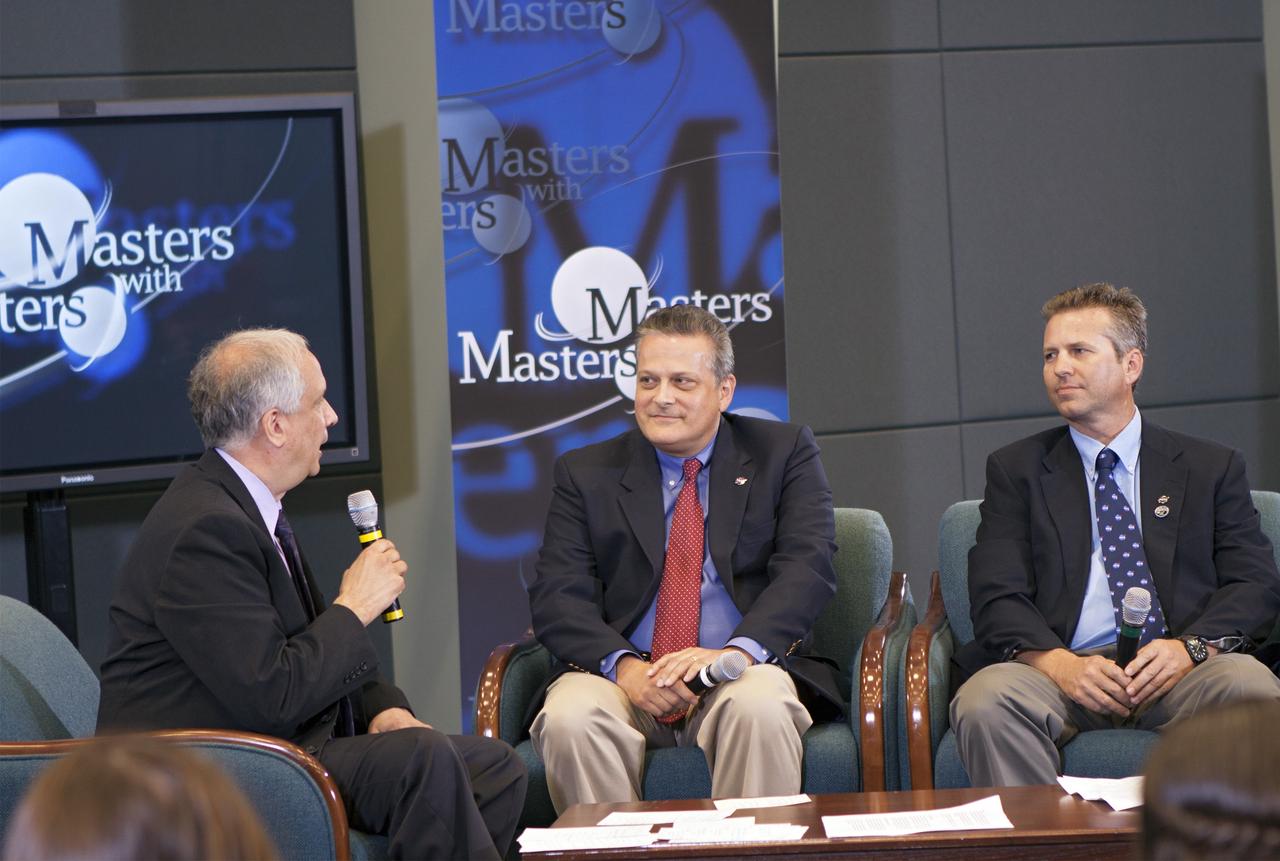
CAPE CANAVERAL, Fla. – Ed Hoffman, from left, Jack Fox and Rob Mueller discuss techniques to enable and enhance innovation during the third session in a weeklong series called "Masters with Masters" at the agency's Kennedy Space Center in Florida. Hoffman, NASA's chief Knowledge officer, Fox, chief, Surface Systems Office, and Rob Mueller, senior technologist, Surface Systems Office, talked about the work of the Swamp Works facility at Kennedy. Photo credit: NASA/Jim Grossmann
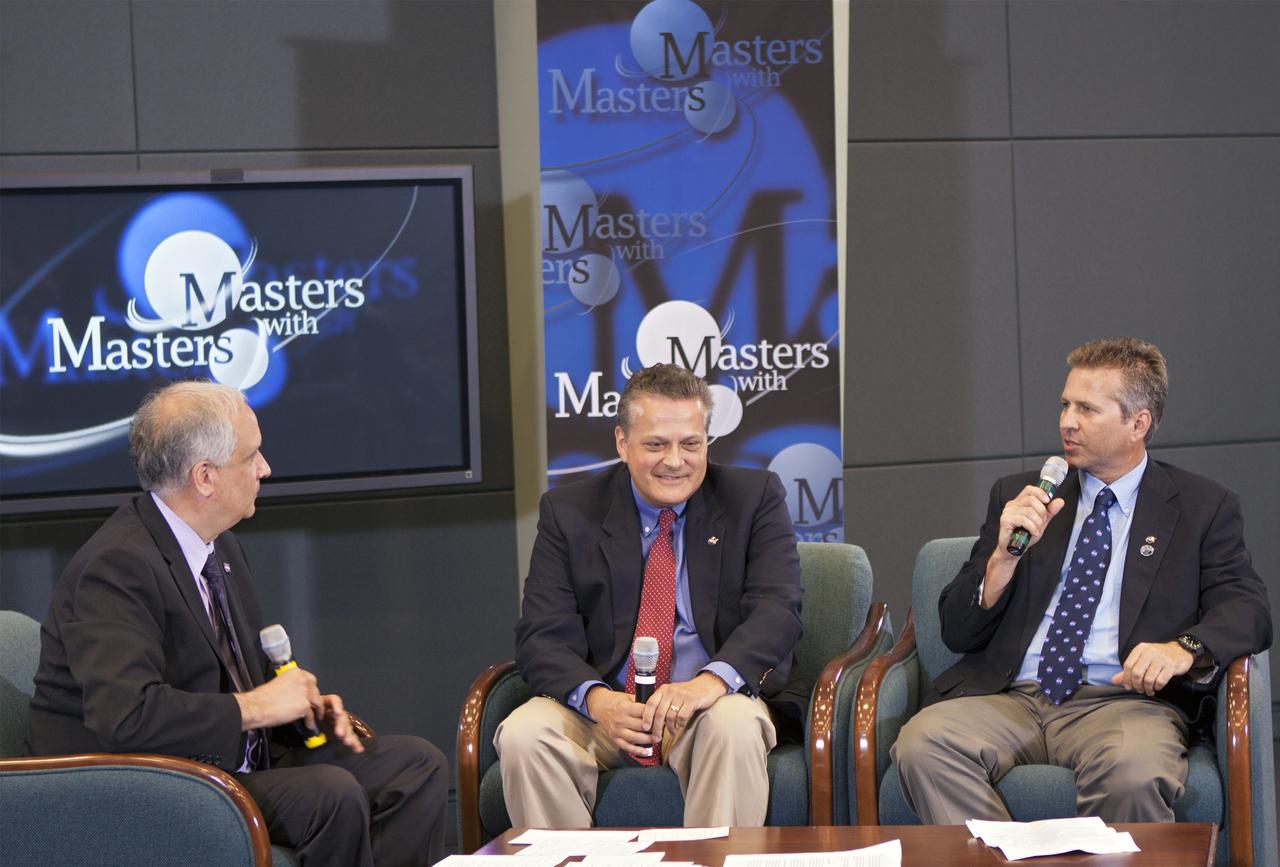
CAPE CANAVERAL, Fla. – Ed Hoffman, from left, Jack Fox and Rob Mueller discuss techniques to enable and enhance innovation during the third session in a weeklong series called "Masters with Masters" at the agency's Kennedy Space Center in Florida. Hoffman, NASA's chief Knowledge officer, Fox, chief, Surface Systems Office, and Rob Mueller, senior technologist, Surface Systems Office, talked about the work of the Swamp Works facility at Kennedy. Photo credit: NASA/Jim Grossmann
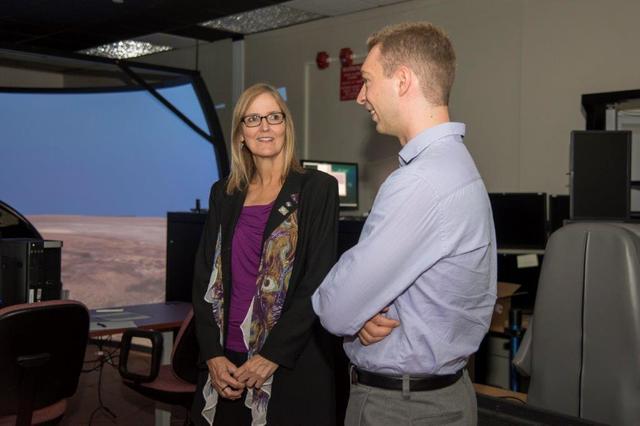
Jesse Brady, an early career NASA employee at NASA’s Armstrong Flight Research Center at Edwards, California, discusses a NASA aircraft simulation project with NASA Acting Deputy Chief Technologist Vicki Crisp. The simulation accesses aircraft controllability with limited pilot visibility, using only front view cameras and side windows.
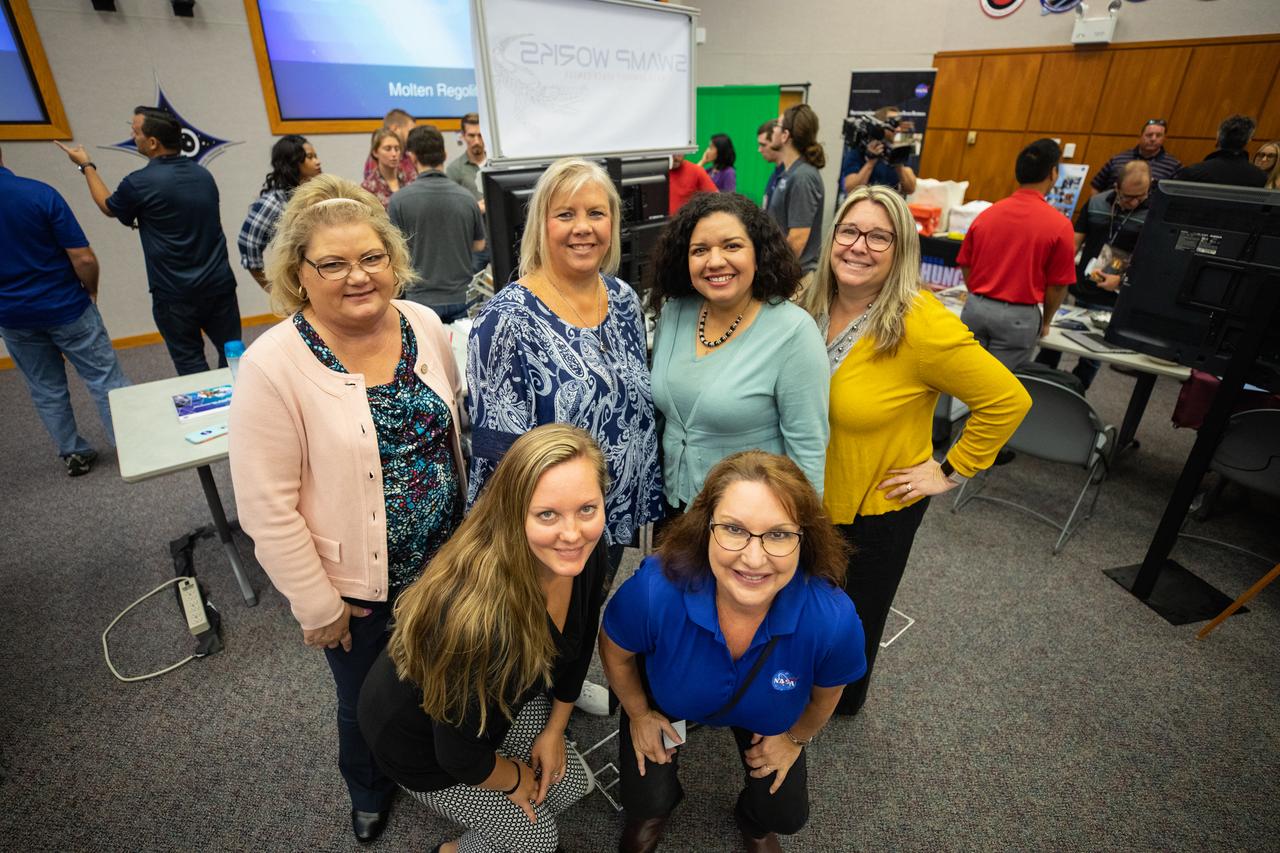
Kennedy Space Center employees are photographed at an innovation showcase, hosted by the Office of the Chief Technologist, on Nov. 19, 2019, in the Florida spaceport’s Neil Armstrong Operations and Checkout Building’s Mission Briefing Room. On the bottom right is Kathy Loftin, deputy chief technologist at Kennedy. Nearly 50 exhibitors gathered to participate in the center’s Innovation Days – one of several events throughout the year aimed at fostering and encouraging an innovative culture at Kennedy. Showcase participants included individuals from multiple directorates, programs and organizations throughout Kennedy. In addition to the showcase, employees had the opportunity to attend an overview presentation on NASA’s Human Landing System (HLS), hosted by HLS Program Manager Lisa Watson-Morgan.
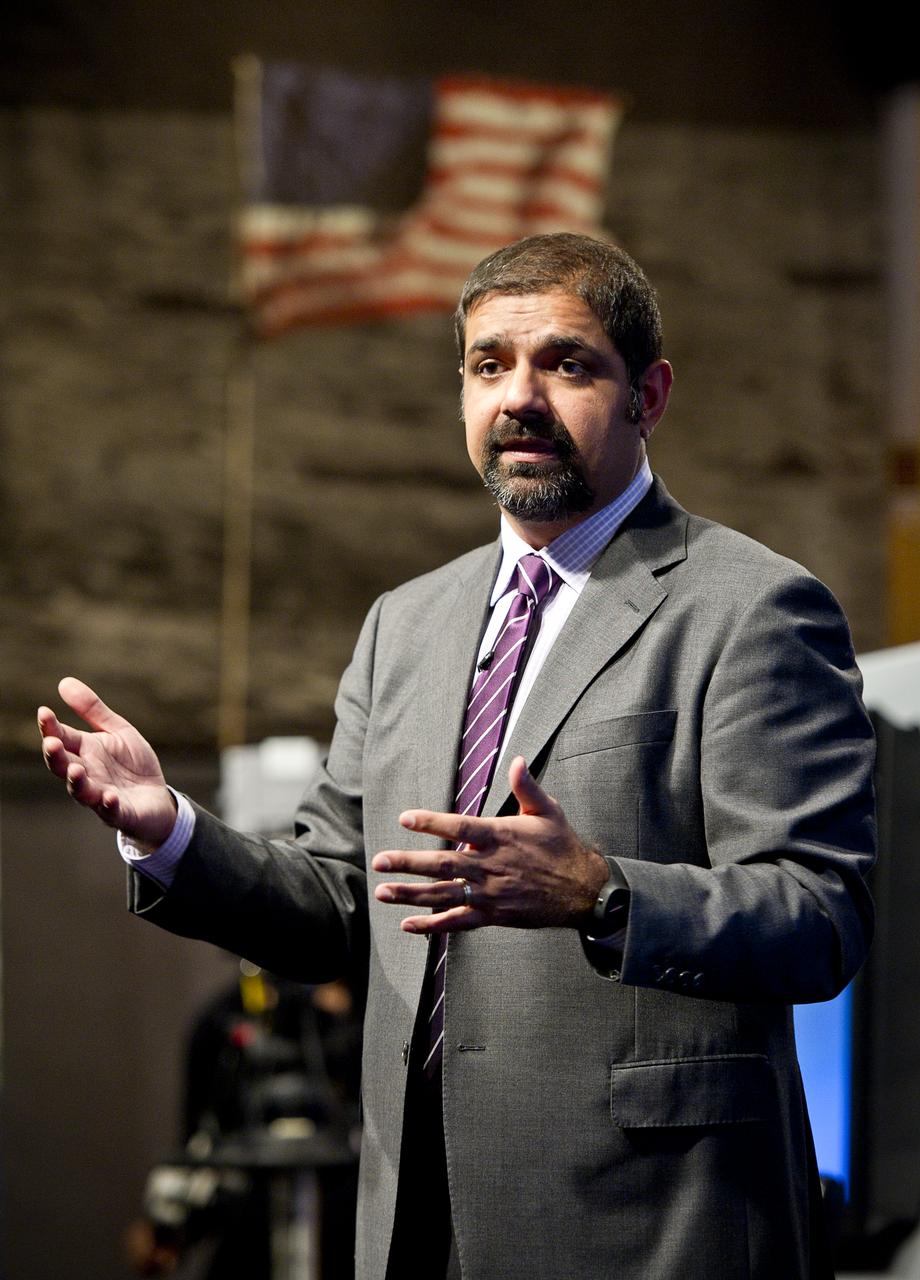
Karim R. Lakhani, assistant professor at Harvard Business School, kicked off the Office of the Chief Technologist TechNovation Lecture series with his talk "Accessing the Ideas Cloud" on Thursday, Feb. 17, 2011 at NASA Headquarters in Washington. Photo Credit: (NASA/Carla Cioffi)
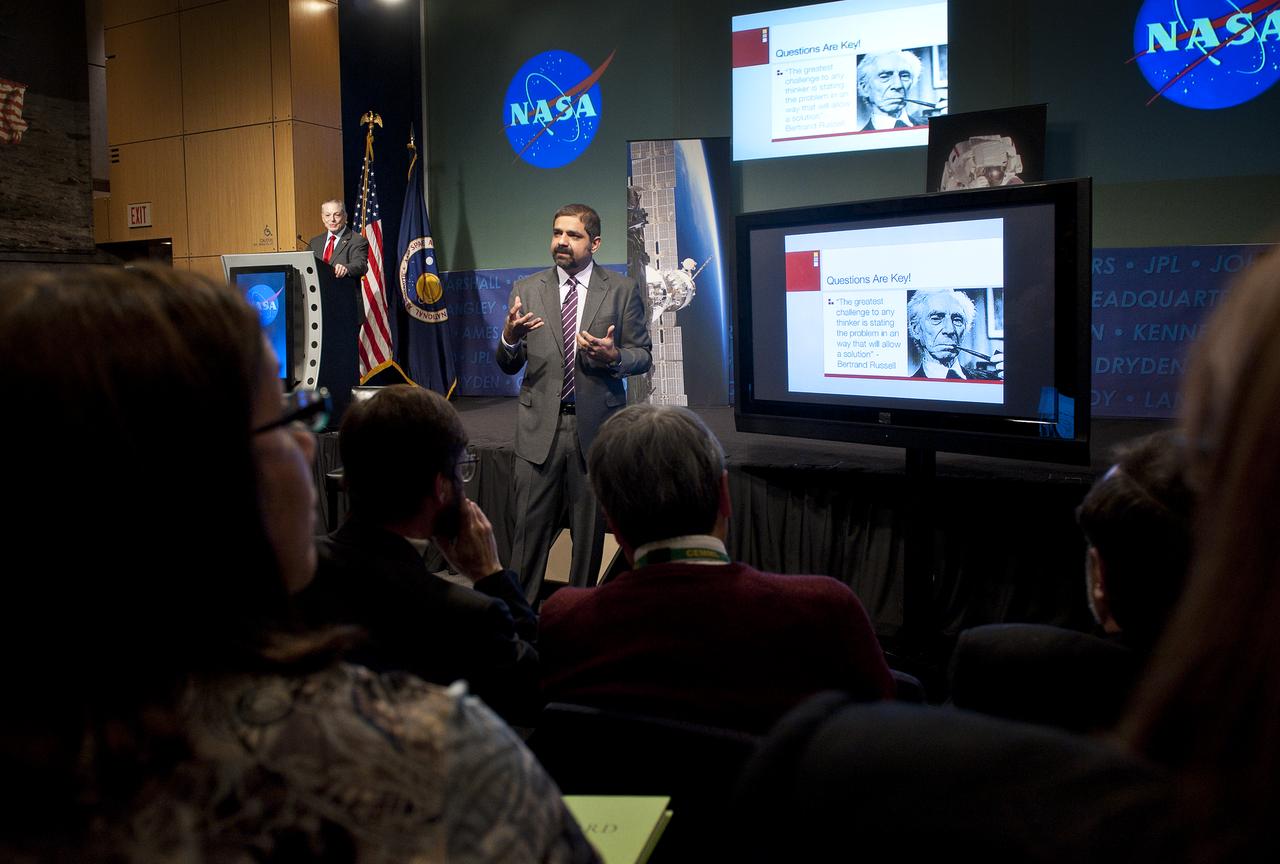
Karim R. Lakhani, assistant professor at Harvard Business School, kicked off the Office of the Chief Technologist TechNovation Lecture series with his talk "Accessing the Ideas Cloud" on Thursday, Feb. 17, 2011 at NASA Headquarters in Washington. Photo Credit: (NASA/Carla Cioffi)
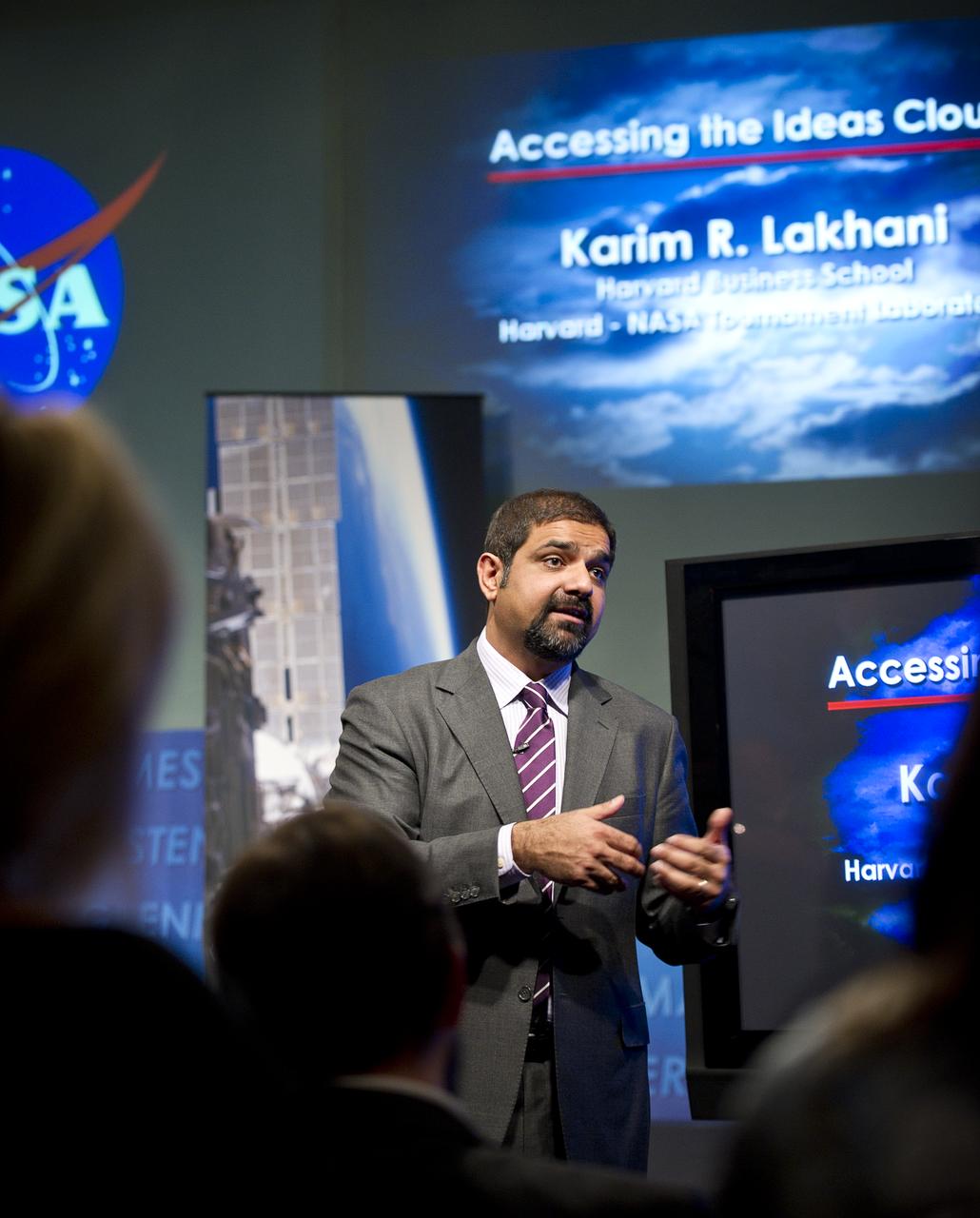
Karim R. Lakhani, assistant professor at Harvard Business School, kicked off the Office of the Chief Technologist TechNovation Lecture series with his talk "Accessing the Ideas Cloud" on Thursday, Feb. 17, 2011 at NASA Headquarters in Washington. Photo Credit: (NASA/Carla Cioffi)
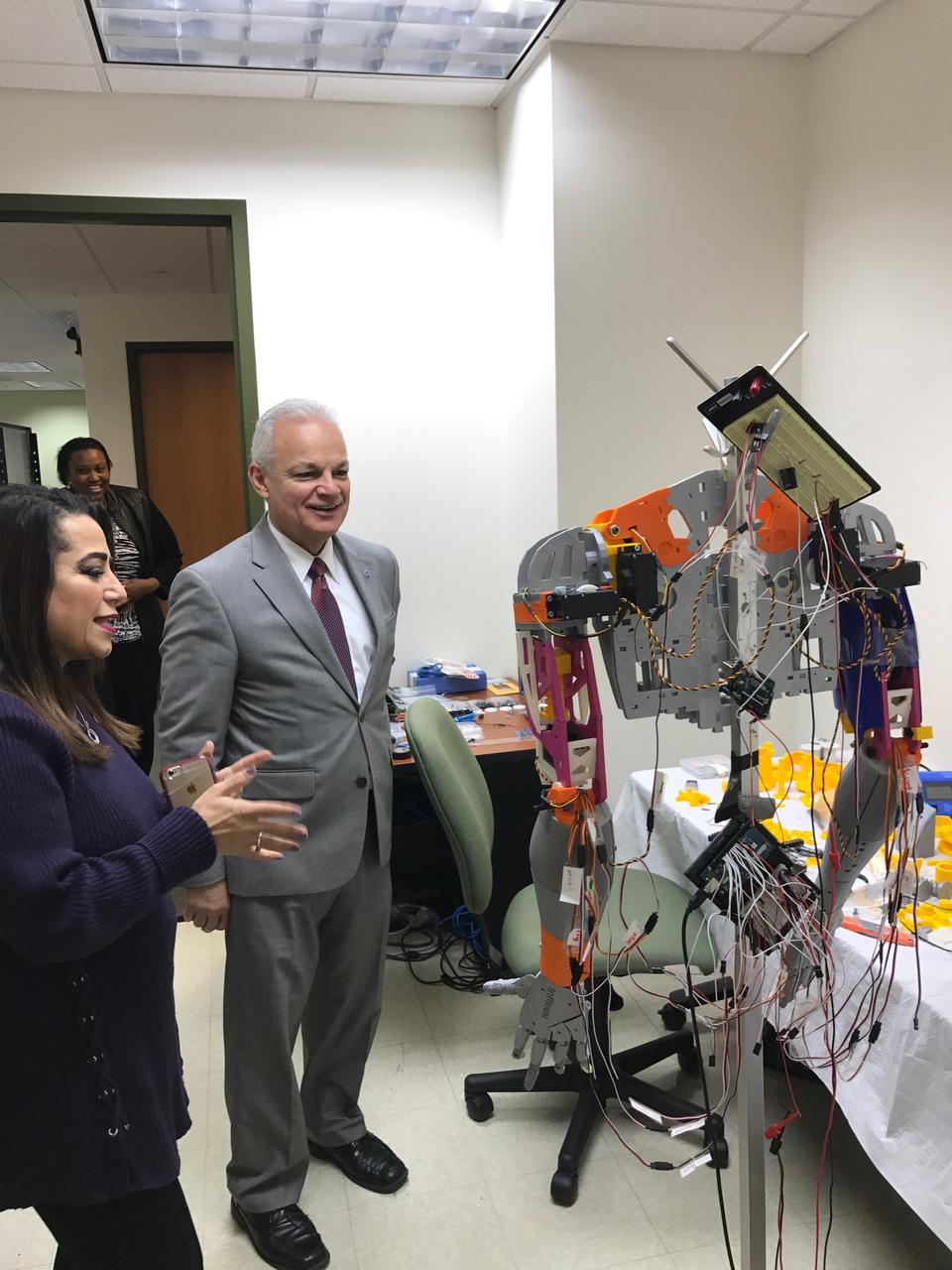
Norfolk State University Associate Professor Rasha Morsi showcases a phone operated, 3D-printed robot sign language interpreter to NASA Chief Technologist Douglas Terrier during a tour of the university’s Creative Gaming Simulation lab on February 6, 2018. (Credit: NASA)

Carolyn Mizell, chief of the Research and Technology Management Office at NASA's Kennedy Space Center in Florida, is photographed at the multiuser spaceport’s headquarters building on June 30, 2022. Mizell has worked in a wide variety of roles in over 30 years at Kennedy, including KSC Deputy Chief Technologist, chair of the Research and Technology Management Board, space shuttle instrumentation system engineer, lead for Design Engineering Hazardous Gas Detection and Optical Instrumentation Laboratories, and project manager of multiple research and development projects.
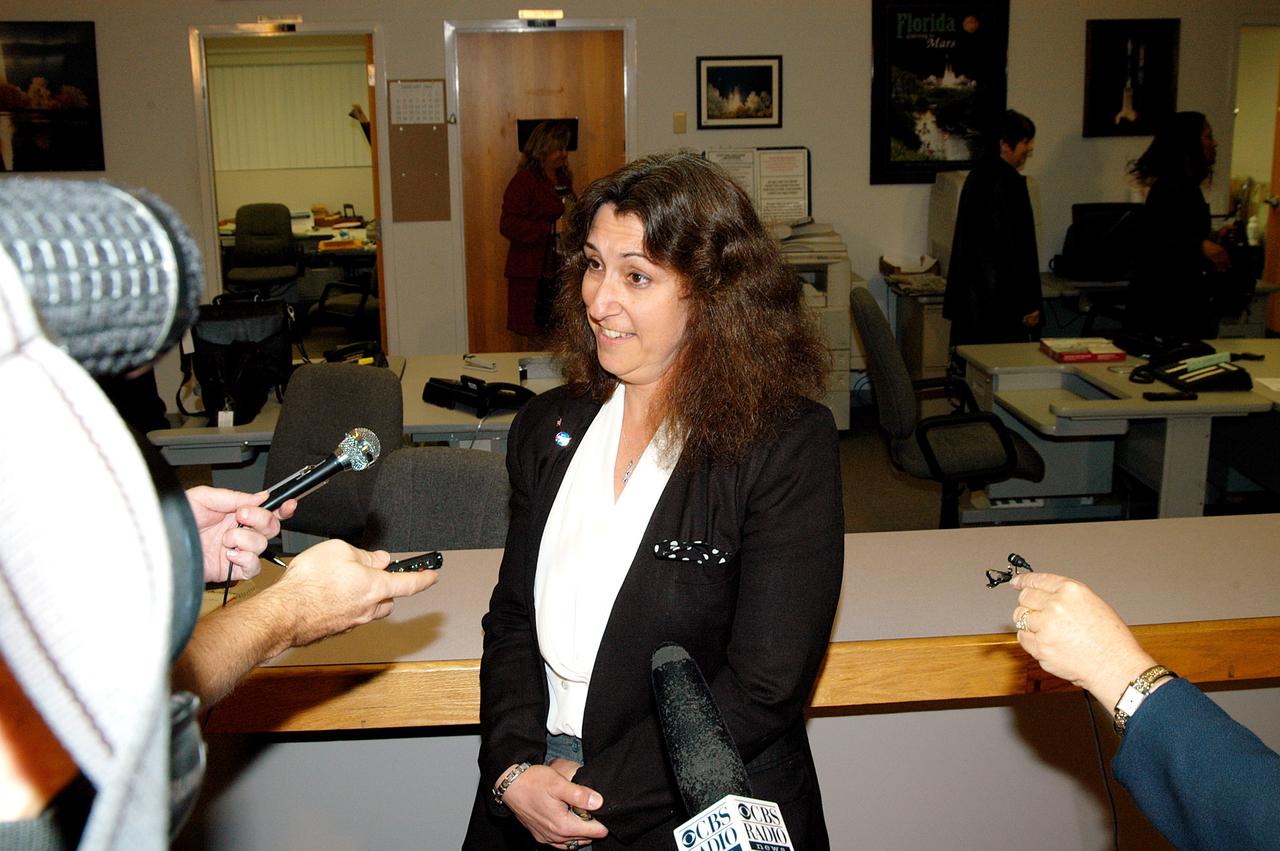
KENNEDY SPACE CENTER, FLA. -- Maria Littlefield, chief technologist with the Launch Services Program Office, talks to the media at the NASA-KSC News Center after viewing President George W. Bush’s message on the future of NASA. The President stated his goals for NASA’s new mission: Completing the International Space Station, retiring the Space Shuttle orbiters, developing a new crew exploration vehicle, and returning to the moon and beyond within the next two decades. Pres. Bush was welcomed by NASA Administrator Sean O’Keefe and Expedition 8 Commander Michael Foale, who greeted him from the International Space Station.
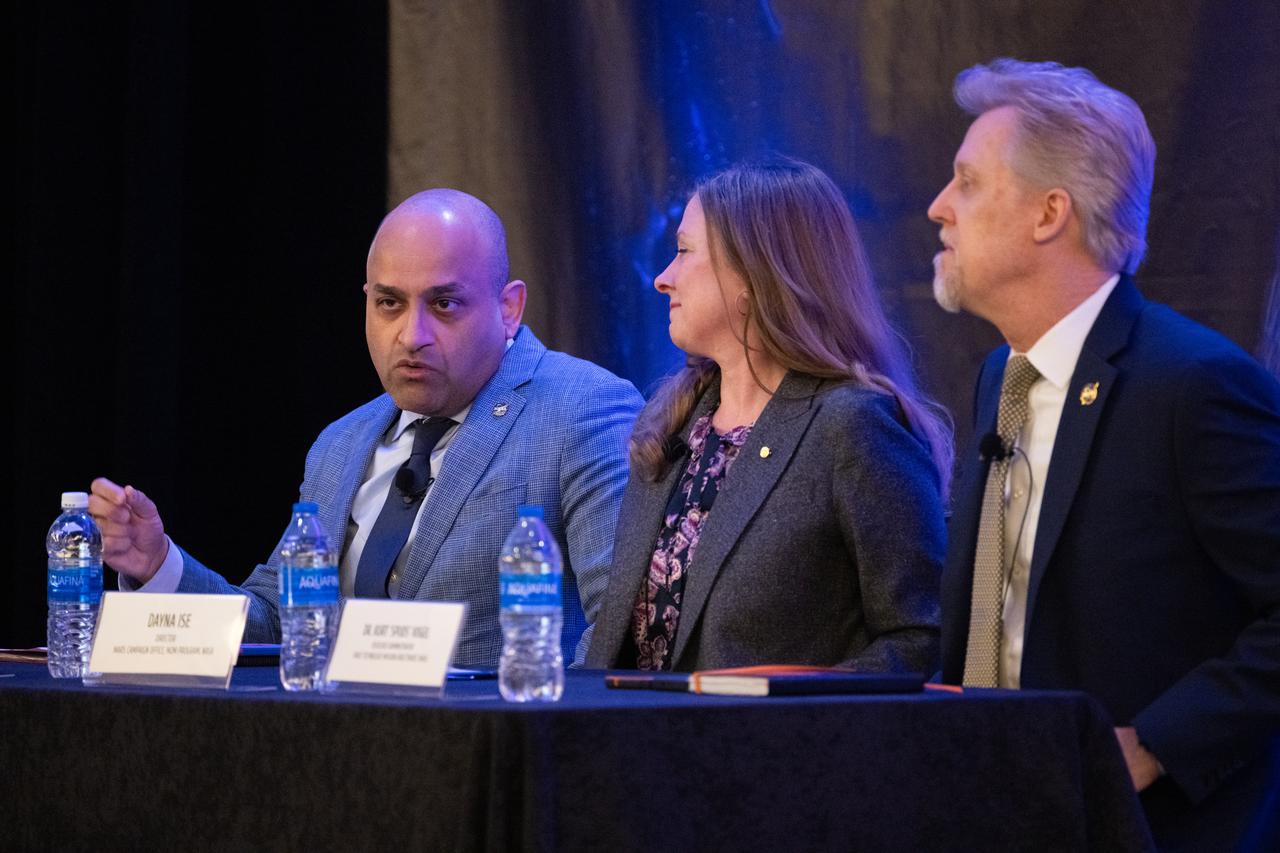
A.C. Charania, NASA’s Chief Technologist, left, moderates a panel on technology infusion with Dayna Ise, director of the Mars Campaign Office in NASA’s Moon to Mars Program, center, and Kurt “Spuds” Vogel, associate administrator of NASA’s Space Technology Mission Directorate, right, during the 2024 Artemis Suppliers Conference, Tuesday, Feb. 27, 2024, at the Grand Hyatt Hotel in Washington. Photo Credit: (NASA/Joel Kowsky)
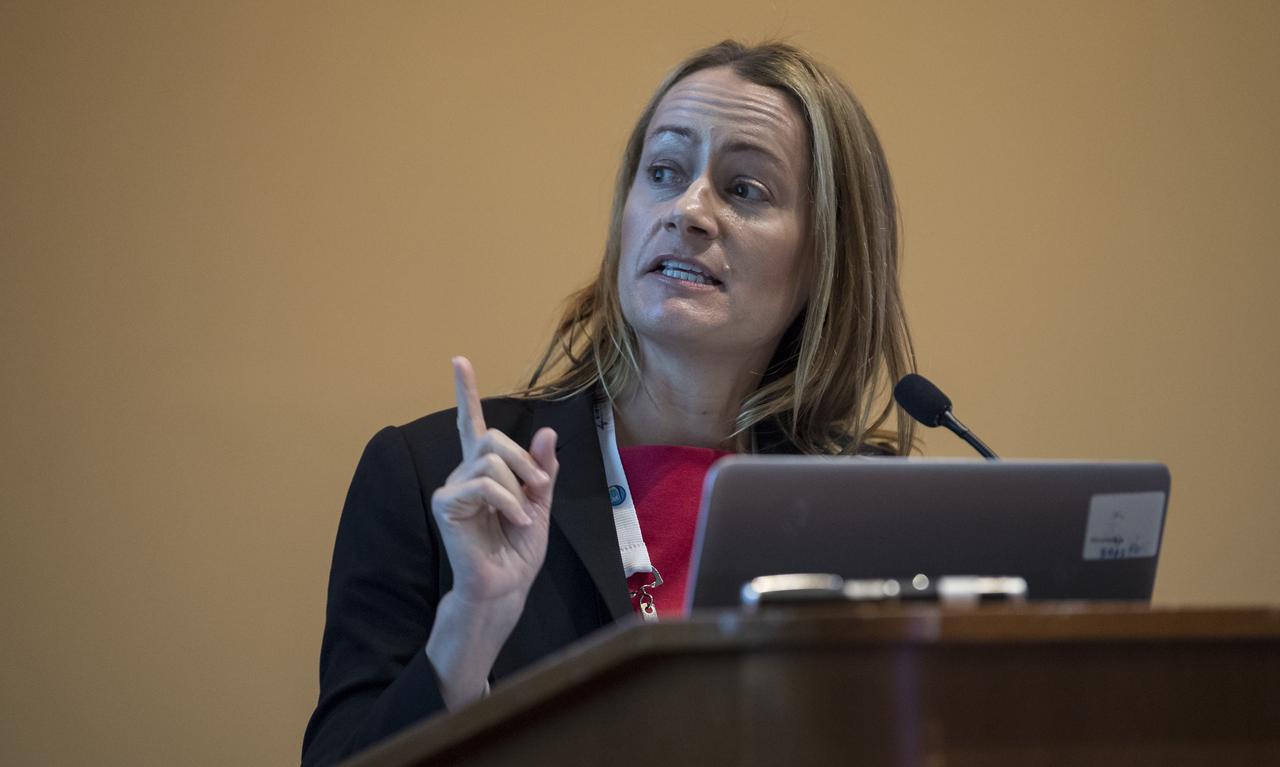
Erica Rodgers, Science and Technology Partnerships Lead in NASA's Office of the Chief Technologist, speaks during a special session titled ”The Immortal Spaceship: A Discussion on the Use Cases and Value of Persistent Platforms” at the 70th International Astronautical Congress, Thursday, Oct. 24, 2019, at the Walter E. Washington Convention Center in Washington. Photo Credit: (NASA/Joel Kowsky)
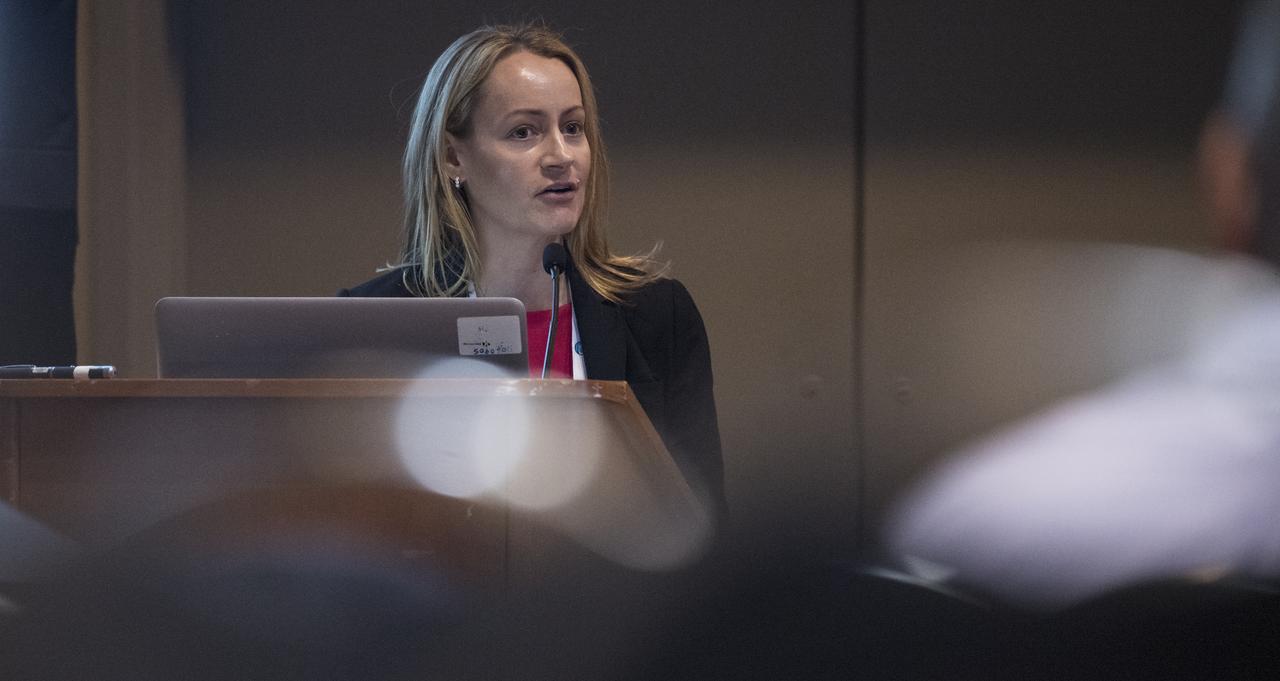
Erica Rodgers, Science and Technology Partnerships Lead in NASA's Office of the Chief Technologist, speaks during a special session titled ”The Immortal Spaceship: A Discussion on the Use Cases and Value of Persistent Platforms” at the 70th International Astronautical Congress, Thursday, Oct. 24, 2019, at the Walter E. Washington Convention Center in Washington. Photo Credit: (NASA/Joel Kowsky)
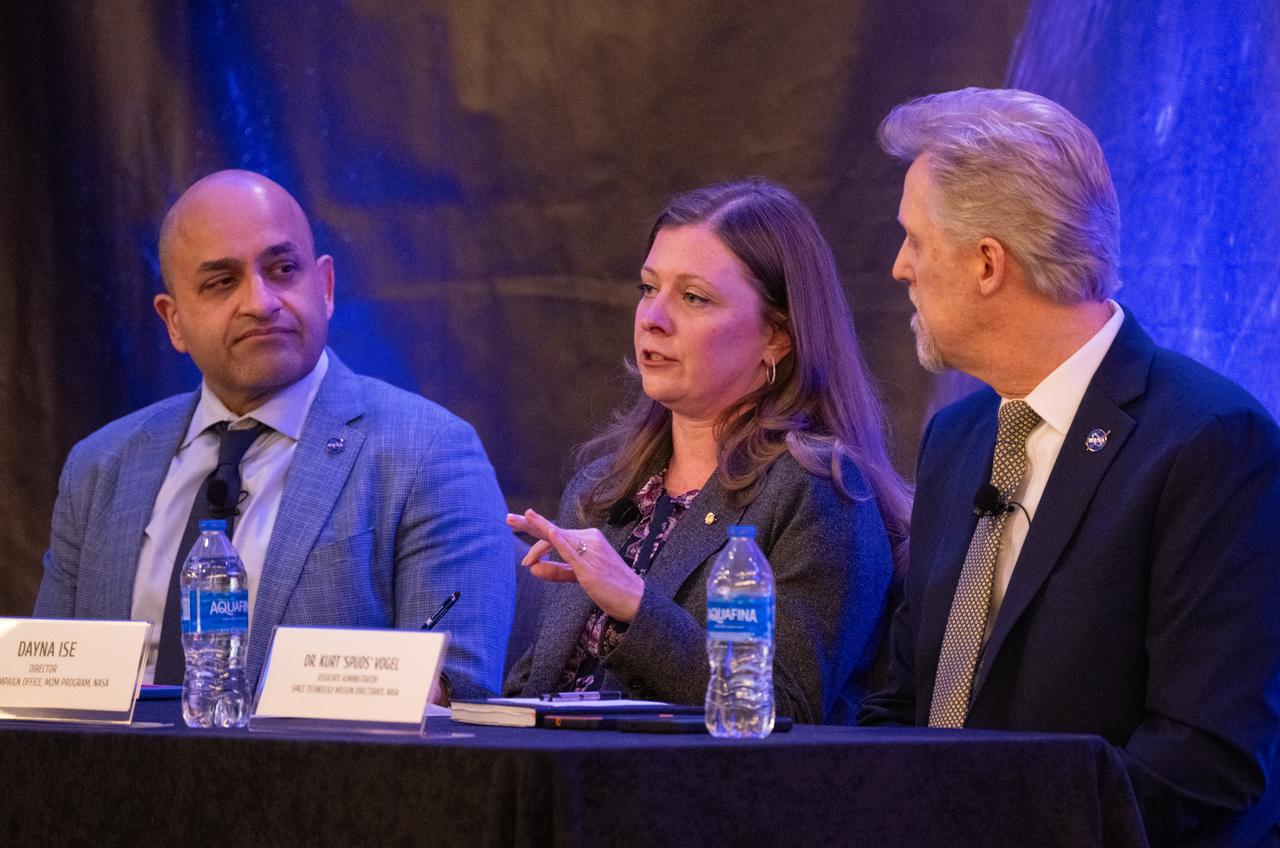
Dayna Ise, director of the Mars Campaign Office in NASA’s Moon to Mars Program, center, and Kurt “Spuds” Vogel, associate administrator of NASA’s Space Technology Mission Directorate, right, are seen during a panel discussion on technology infusion moderated by A.C. Charania, NASA’s Chief Technologist, left, at the 2024 Artemis Suppliers Conference, Tuesday, Feb. 27, 2024, at the Grand Hyatt Hotel in Washington. Photo Credit: (NASA/Joel Kowsky)

“Hidden Figures to Modern Figures” panel discussion with students at Norfolk State University on February 6, 2018. (Photo credit: Christopher Setzer, Norfolk State University)
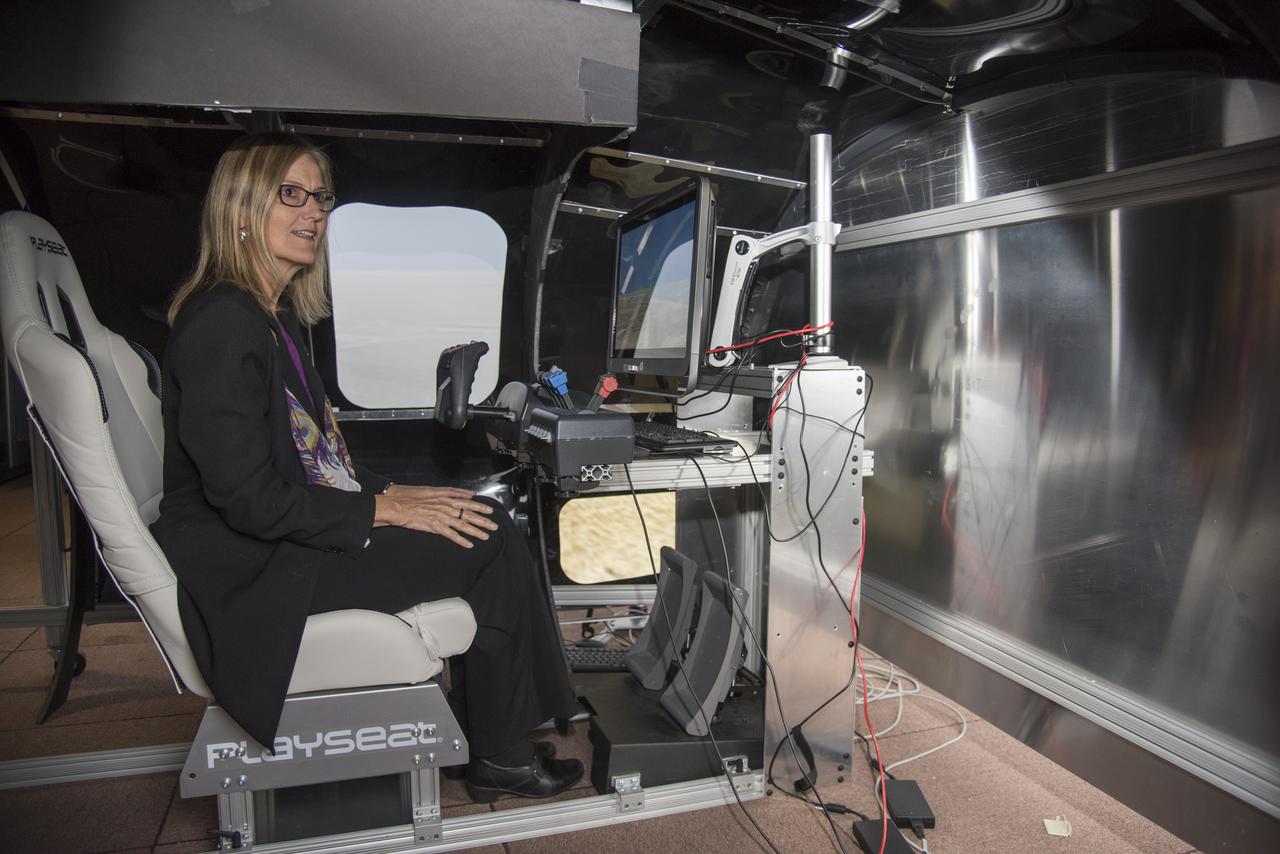
Vicki Crisp Deputy Chief Technologist Visit from HQ
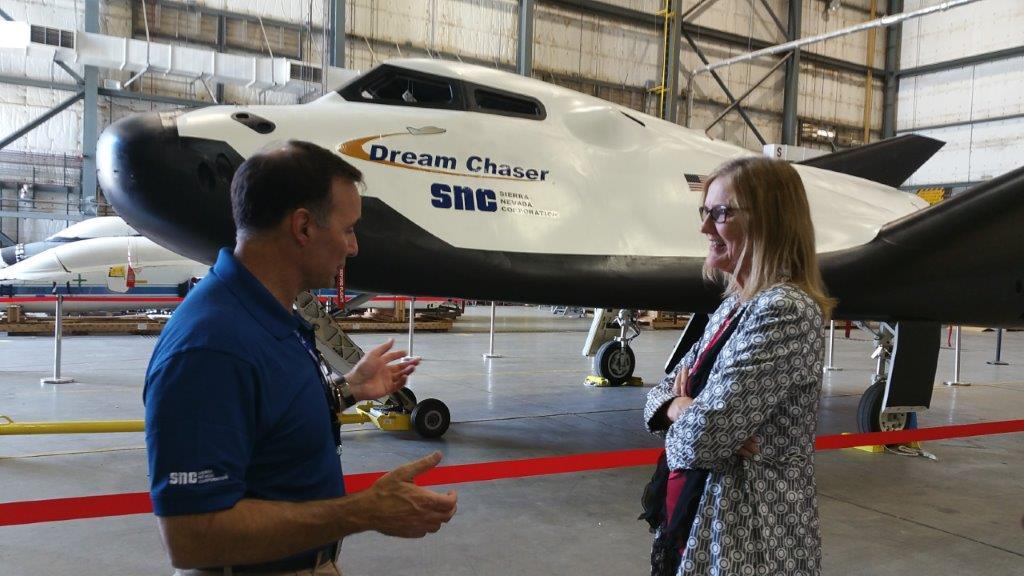
NASA Acting Deputy Chief Technologist Vicki Crisp discusses Sierra Nevada Corporation’s Dream Chaser captive carry flight and future tests with former Astronaut Lee "Bru" Archambault, who is now a test pilot for the American company. The Dream Chaser completed a successful captive carry flight at NASA’s Armstrong Flight Research Center at Edwards, California, on Aug. 30, 2017.
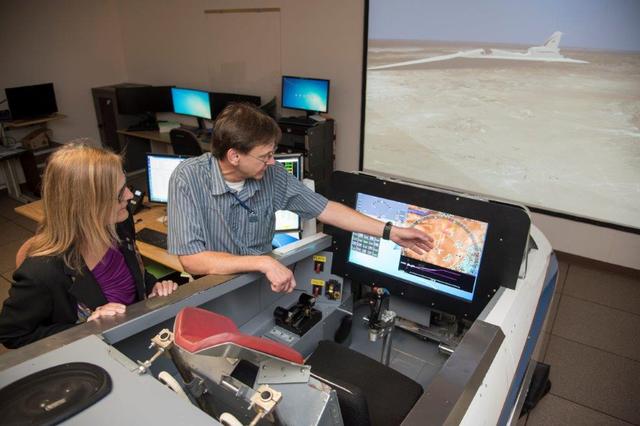
NASA Acting Deputy Chief Technologist Vicki Crips being briefed by Tim Cox, Controls Engineer at NASA’s Armstrong Flight Research Center at Edwards, California, on the operation of the sonic boom prediction algorithms being used in engineering simulation for the NASA Supersonic Quest program.
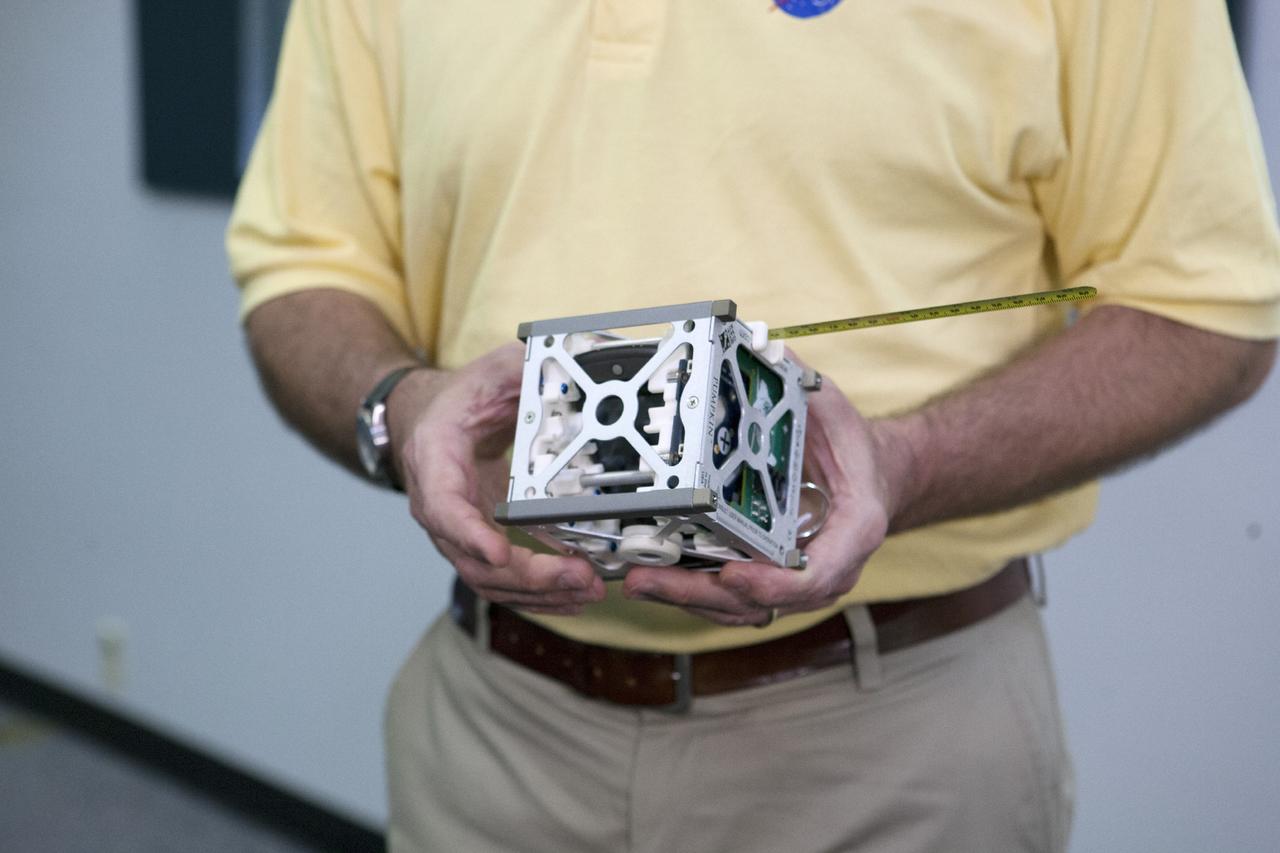
CAPE CANAVERAL, Fla. -- At the News Center at NASA's Kennedy Space Center in Florida, Andrew Petro, the agency's acting director of the Early Stage Innovation Division of the Office of the Chief Technologist, discusses the agency’s CubeSat Launch initiative. CubeSats provide opportunities for small satellite payloads to fly on rockets planned for upcoming launches. CubeSats, a class of research spacecraft called nanosatellites, are flown as auxiliary payloads on previously planned missions. The cube-shaped satellites are approximately four inches long, have a volume of about one quart and weigh about three pounds. For more information, visit: http://www.nasa.gov/directorates/heo/home/CubeSats_initiative.html Photo credit: NASA/Kim Shiflett

Jenn Gustetic, Prizes Program Executive, NASA Office of the Chief Technologist moderates the Asteroid Initiative Industry and Partner Day at NASA Headquarters on Tuesday, June 18, 2013 in Washington. During the event NASA Deputy Administrator Lori Garver and other senior NASA officials discussed the progress being made on NASA's mission to capture, redirect, and explore an asteroid. NASA also announced an Asteroid Grand Challenge focused on finding all asteroid threats to human populations and knowing what to do about them. Photo Credit: (NASA/Bill Ingalls)
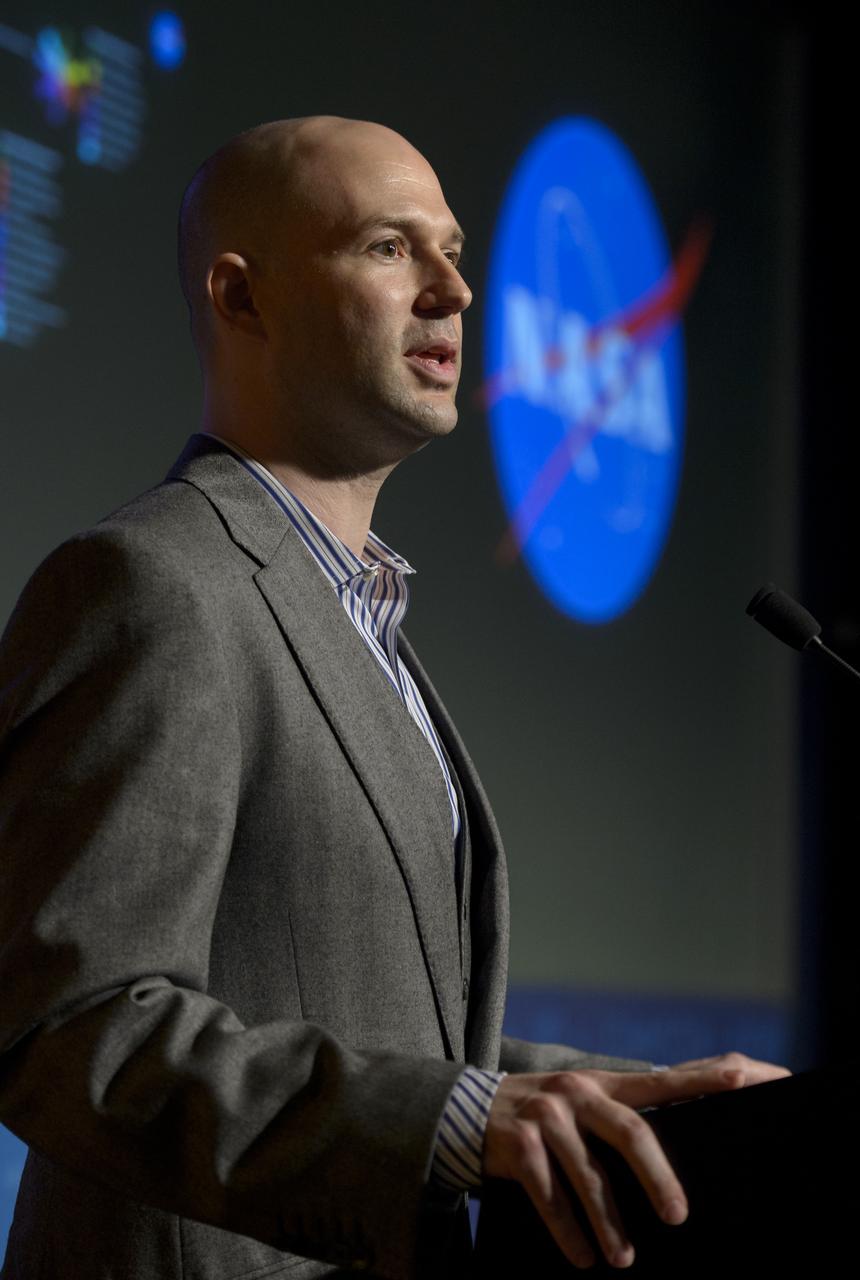
Jason Kessler, Special Projects Program Executive, NASA Office of the Chief Technologist, talks during the Asteroid Initiative Industry and Partner Day at NASA Headquarters on Tuesday, June 18, 2013 in Washington. During the event NASA Deputy Administrator Lori Garver and other senior NASA officials discussed the progress being made on NASA's mission to capture, redirect, and explore an asteroid. NASA also announced an Asteroid Grand Challenge focused on finding all asteroid threats to human populations and knowing what to do about them. Photo Credit: (NASA/Bill Ingalls)
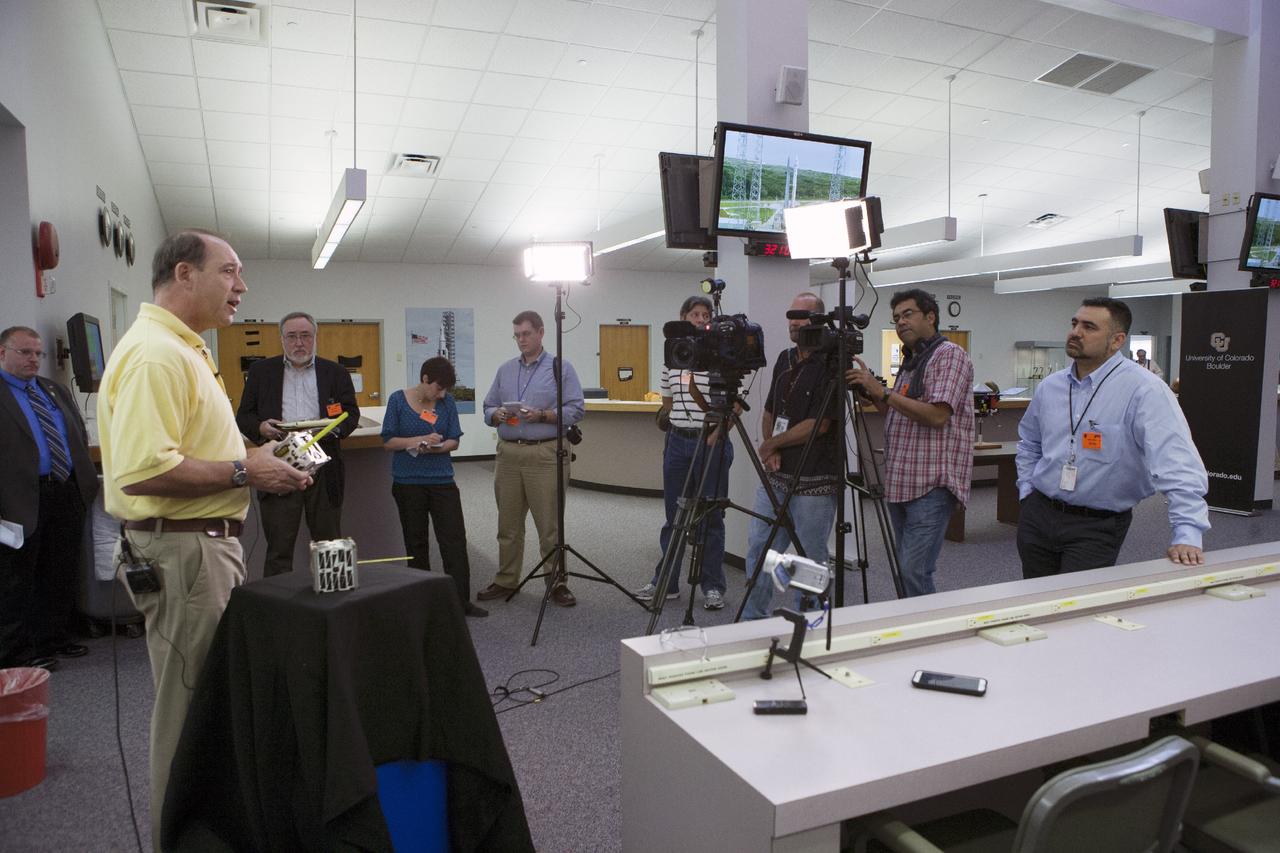
CAPE CANAVERAL, Fla. -- At the News Center at NASA's Kennedy Space Center in Florida, Andrew Petro, the agency's acting director of the Early Stage Innovation Division of the Office of the Chief Technologist, discusses the agency’s CubeSat Launch initiative. CubeSats provide opportunities for small satellite payloads to fly on rockets planned for upcoming launches. CubeSats, a class of research spacecraft called nanosatellites, are flown as auxiliary payloads on previously planned missions. The cube-shaped satellites are approximately four inches long, have a volume of about one quart and weigh about three pounds. For more information, visit: http://www.nasa.gov/directorates/heo/home/CubeSats_initiative.html Photo credit: NASA/Kim Shiflett
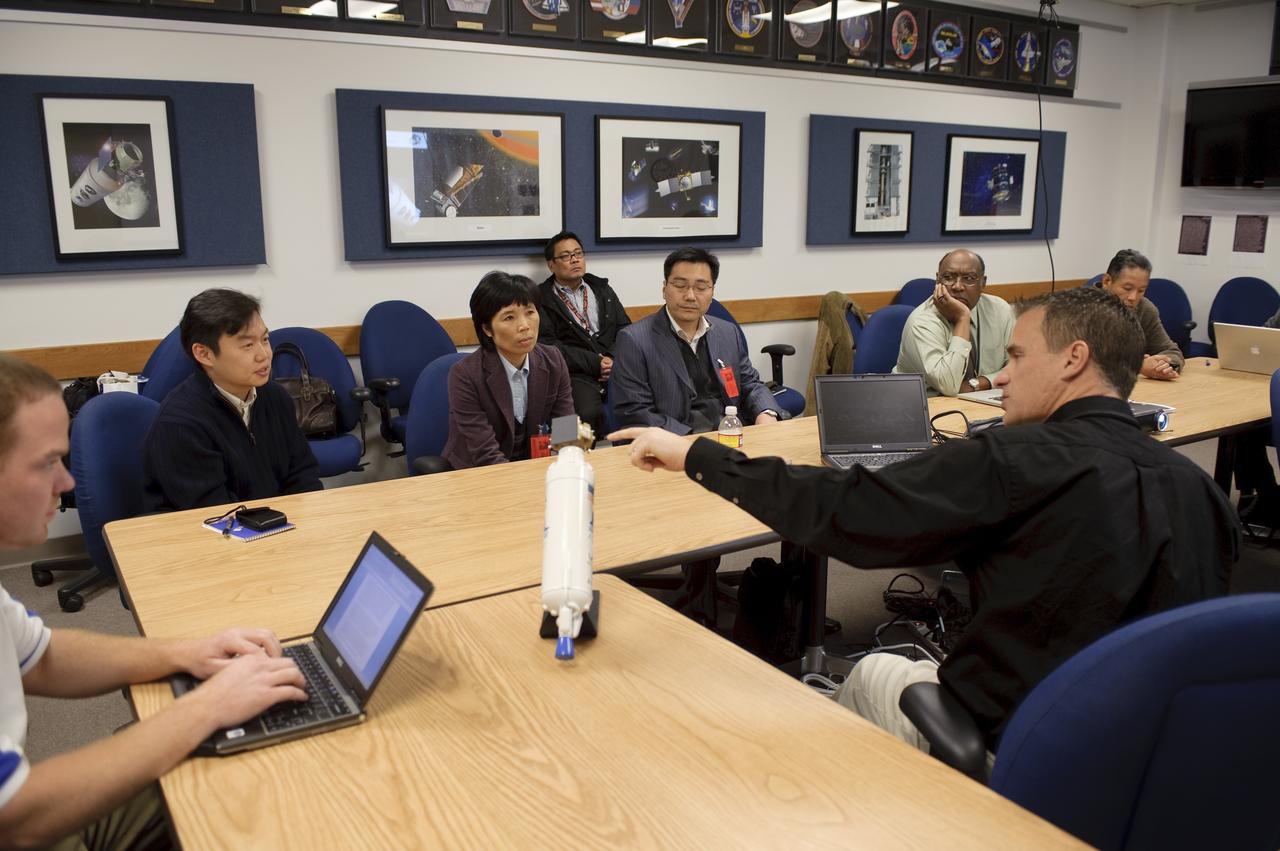
Korean High Level Delegation Visit Ames Certer Director and various Senior staff: Dan Andrews give presentation about LCROSS/LRO to Seorium Lee, Senior Researcher, International Relations Korea Aerospace Research Institute, Soon-Duk Bae, Deputy Director, Big Science Policy Division, Ministry of Educaiton, Science Technology, Young-Mok Hyun, Deputy Director, Space Development Division, Ministry of Educaiton, Science Technology. Also at table are Chris Giulietti, NASA HQ, John Hines, Ames Center Chief Technologist, Unknow person and Terry Pagaduan, Government Relations/Legislative Affairs office.
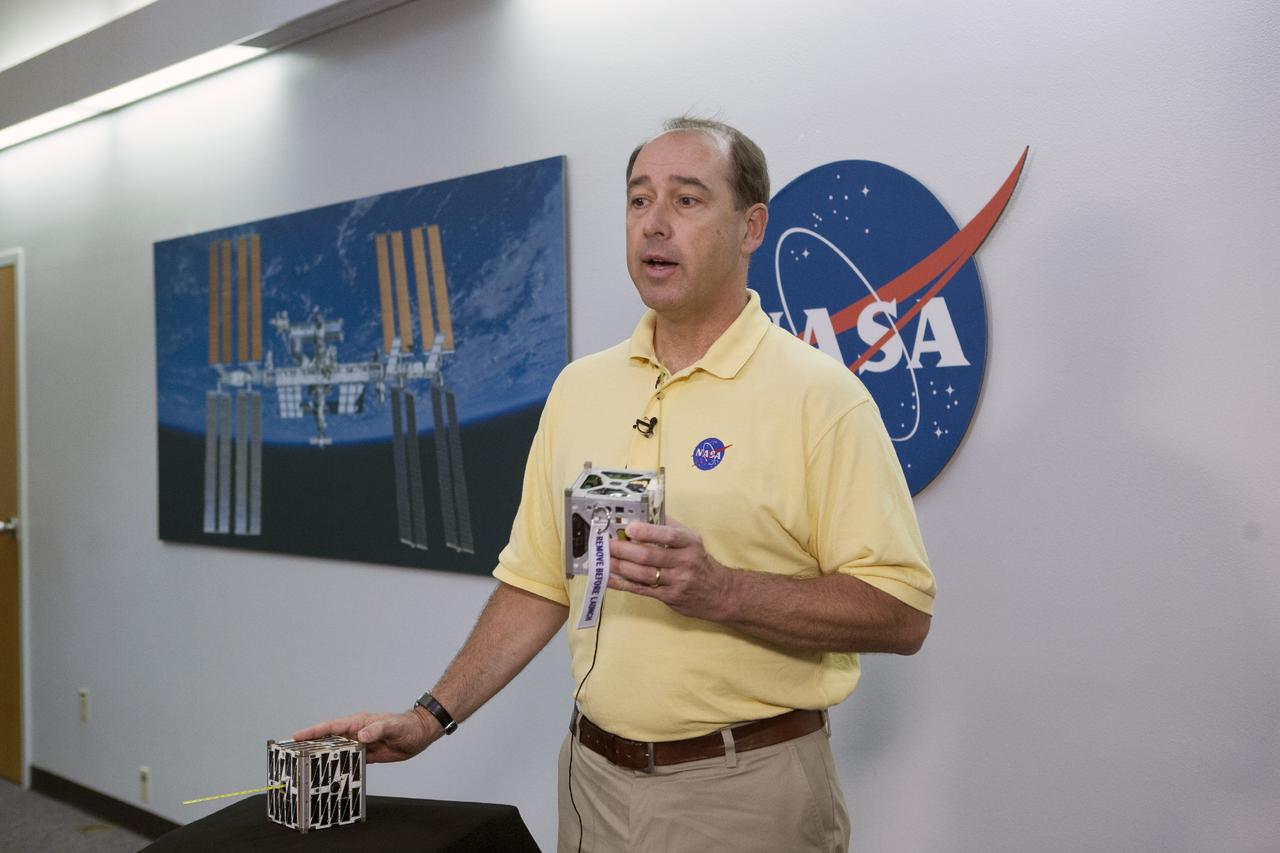
CAPE CANAVERAL, Fla. -- At the News Center at NASA's Kennedy Space Center in Florida, Andrew Petro, the agency's acting director of the Early Stage Innovation Division of the Office of the Chief Technologist, discusses the agency’s CubeSat Launch initiative. CubeSats provide opportunities for small satellite payloads to fly on rockets planned for upcoming launches. CubeSats, a class of research spacecraft called nanosatellites, are flown as auxiliary payloads on previously planned missions. The cube-shaped satellites are approximately four inches long, have a volume of about one quart and weigh about three pounds. For more information, visit: http://www.nasa.gov/directorates/heo/home/CubeSats_initiative.html Photo credit: NASA/Kim Shiflett

Jason Kessler, Special Projects Program Executive, NASA Office of the Chief Technologist, talks during the Asteroid Initiative Industry and Partner Day at NASA Headquarters on Tuesday, June 18, 2013 in Washington. During the event NASA Deputy Administrator Lori Garver and other senior NASA officials discussed the progress being made on NASA's mission to capture, redirect, and explore an asteroid. NASA also announced an Asteroid Grand Challenge focused on finding all asteroid threats to human populations and knowing what to do about them. Photo Credit: (NASA/Bill Ingalls)
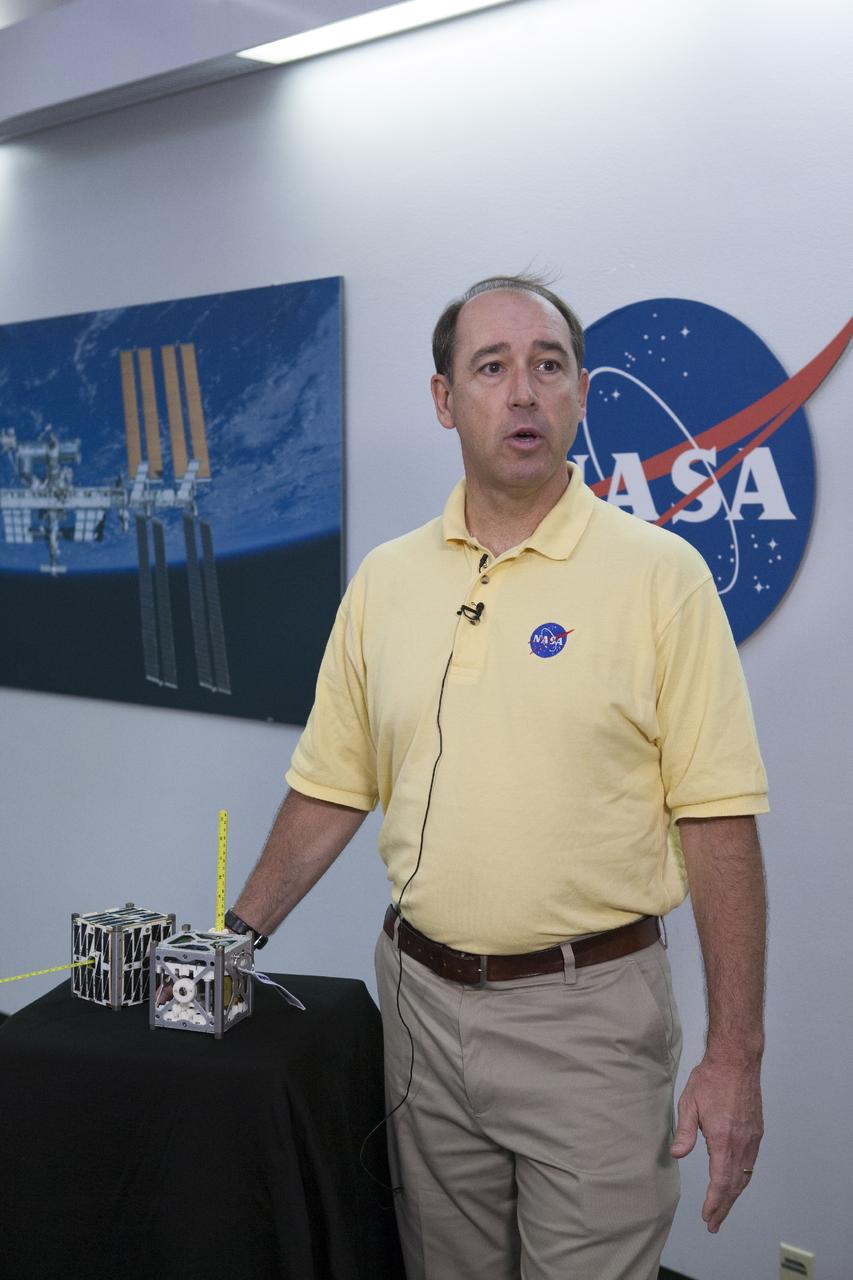
CAPE CANAVERAL, Fla. -- At the News Center at NASA's Kennedy Space Center in Florida, Andrew Petro, the agency's acting director of the Early Stage Innovation Division of the Office of the Chief Technologist, discusses the agency’s CubeSat Launch initiative. CubeSats provide opportunities for small satellite payloads to fly on rockets planned for upcoming launches. CubeSats, a class of research spacecraft called nanosatellites, are flown as auxiliary payloads on previously planned missions. The cube-shaped satellites are approximately four inches long, have a volume of about one quart and weigh about three pounds. For more information, visit: http://www.nasa.gov/directorates/heo/home/CubeSats_initiative.html Photo credit: NASA/Kim Shiflett

Jason Kessler, Special Projects Program Executive, NASA Office of the Chief Technologist, talks during the Asteroid Initiative Industry and Partner Day at NASA Headquarters on Tuesday, June 18, 2013 in Washington. During the event NASA Deputy Administrator Lori Garver and other senior NASA officials discussed the progress being made on NASA's mission to capture, redirect, and explore an asteroid. NASA also announced an Asteroid Grand Challenge focused on finding all asteroid threats to human populations and knowing what to do about them. Photo Credit: (NASA/Bill Ingalls)

Deputy Chief Technologist Julie Williams-Byrd of NASA Langley Research Center speaks to Norfolk State University students following a “Hidden Figures to Modern Figures” event on February 6, 2018. (Credit: NASA)
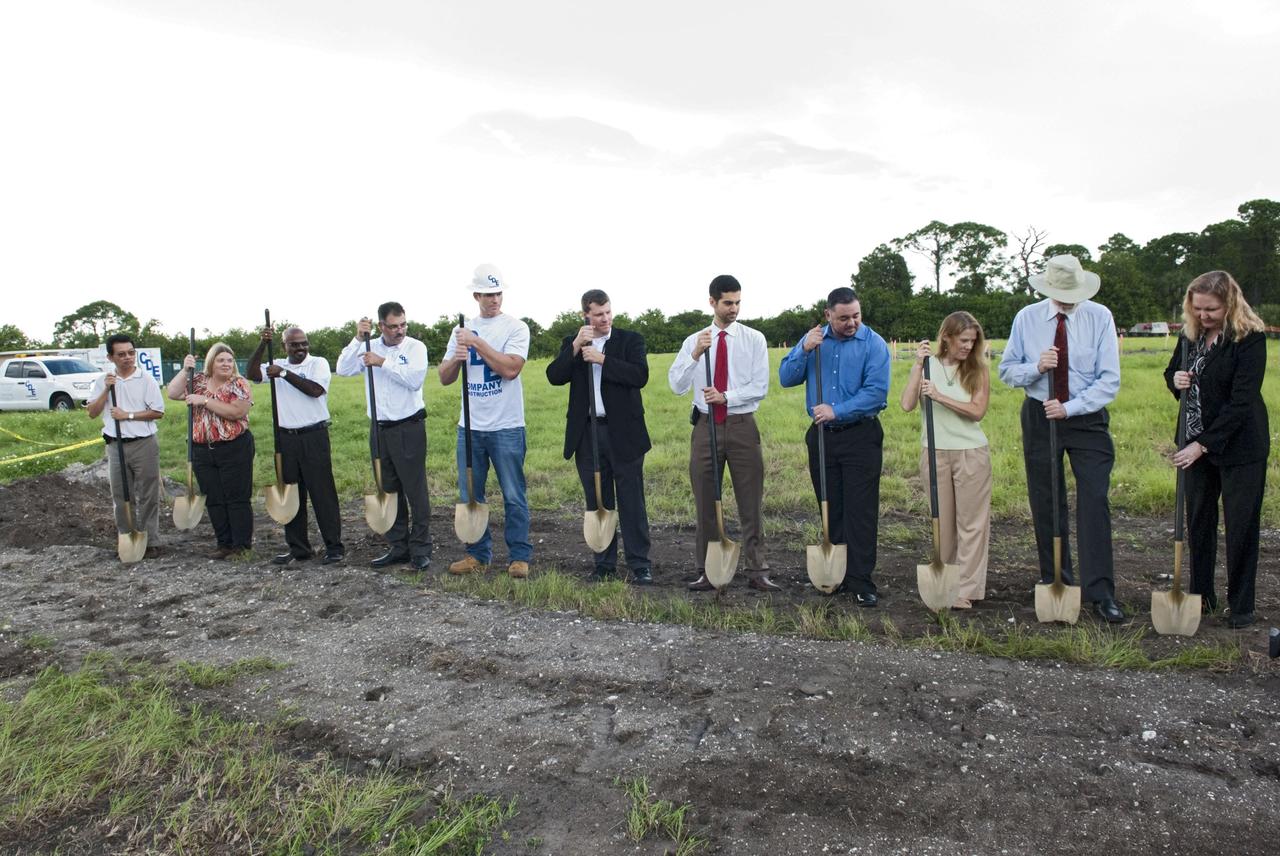
CAPE CANAVERAL, Fla. -- At NASA’s Kennedy Space Center in Florida, a groundbreaking was held to mark the start of construction on the Antenna Test Bed Array for the Ka-Band Objects Observation and Monitoring, or Ka-BOOM system. Holding ceremonial shovels, from left are Michael Le, lead design engineer and construction manager Sue Vingris, Cape Design Engineer Co. project manager Kannan Rengarajan, chief executive officer of Cape Design Engineer Co. Lutfi Mized, president of Cape Design Engineer Co. David Roelandt, construction site superintendent with Cape Design Engineer Co. Marc Seibert, NASA project manager Michael Miller, NASA project manager Peter Aragona, KSC’s Electromagnetic Lab manager Stacy Hopper, KSCs master planning supervisor Dr. Bary Geldzabler, NASA chief scientist and KSC’s Chief Technologist Karen Thompson. The construction site is near the former Vertical Processing Facility, which has been demolished. Workers will begin construction on the pile foundations for the 40-foot-diameter dish antenna arrays and their associated utilities, and prepare the site for the operations command center facility. Photo credit: NASA/Charisse Nahser
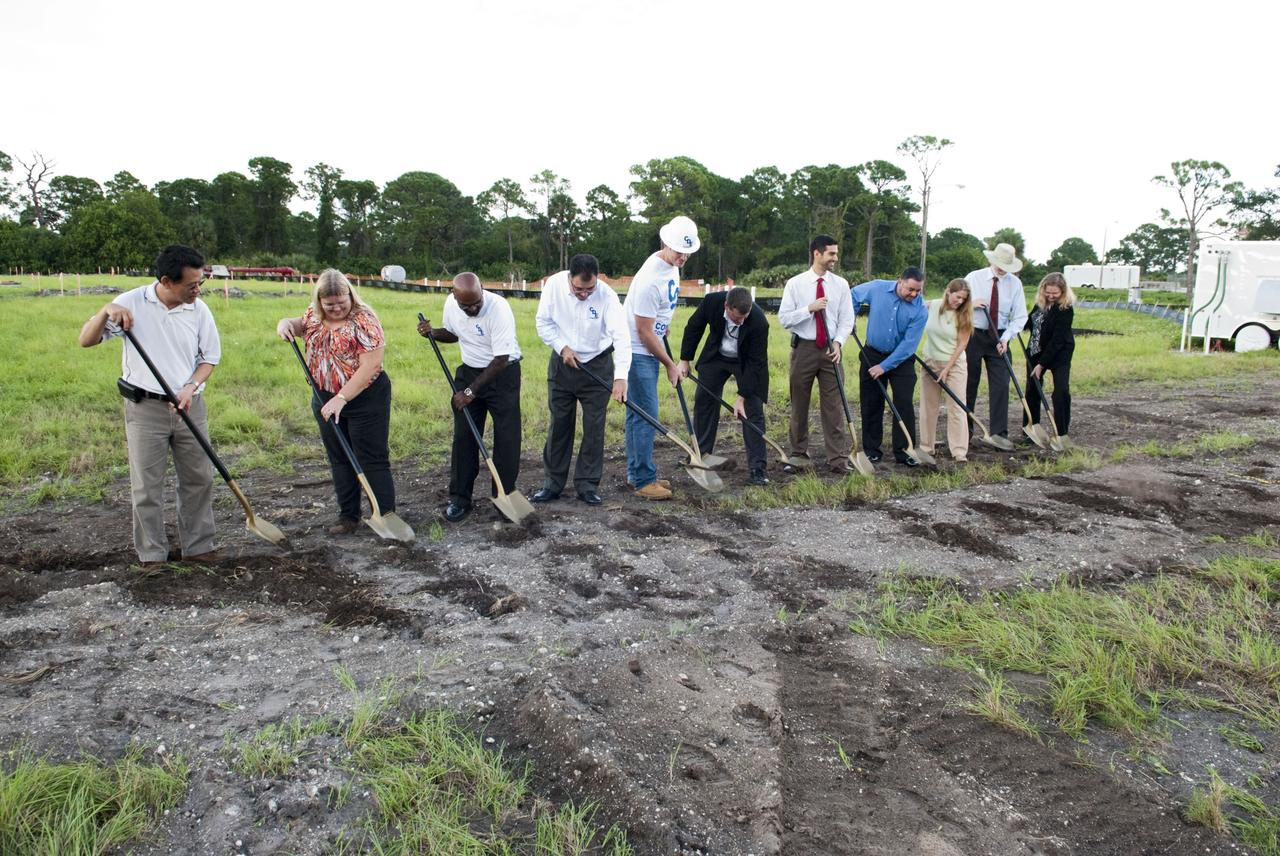
CAPE CANAVERAL, Fla. -- At NASA’s Kennedy Space Center in Florida, a groundbreaking was held to mark the start of construction on the Antenna Test Bed Array for the Ka-Band Objects Observation and Monitoring, or Ka-BOOM system. Using ceremonial shovels to mark the site, from left are Michael Le, lead design engineer and construction manager Sue Vingris, Cape Design Engineer Co. project manager Kannan Rengarajan, chief executive officer of Cape Design Engineer Co. Lutfi Mized, president of Cape Design Engineer Co. David Roelandt, construction site superintendent with Cape Design Engineer Co. Marc Seibert, NASA project manager Michael Miller, NASA project manager Peter Aragona, KSC’s Electromagnetic Lab manager Stacy Hopper, KSCs master planning supervisor Dr. Bary Geldzabler, NASA chief scientist and KSC’s Chief Technologist Karen Thompson. The construction site is near the former Vertical Processing Facility, which has been demolished. Workers will begin construction on the pile foundations for the 40-foot-diameter dish antenna arrays and their associated utilities, and prepare the site for the operations command center facility. Photo credit: NASA/Charisse Nahser
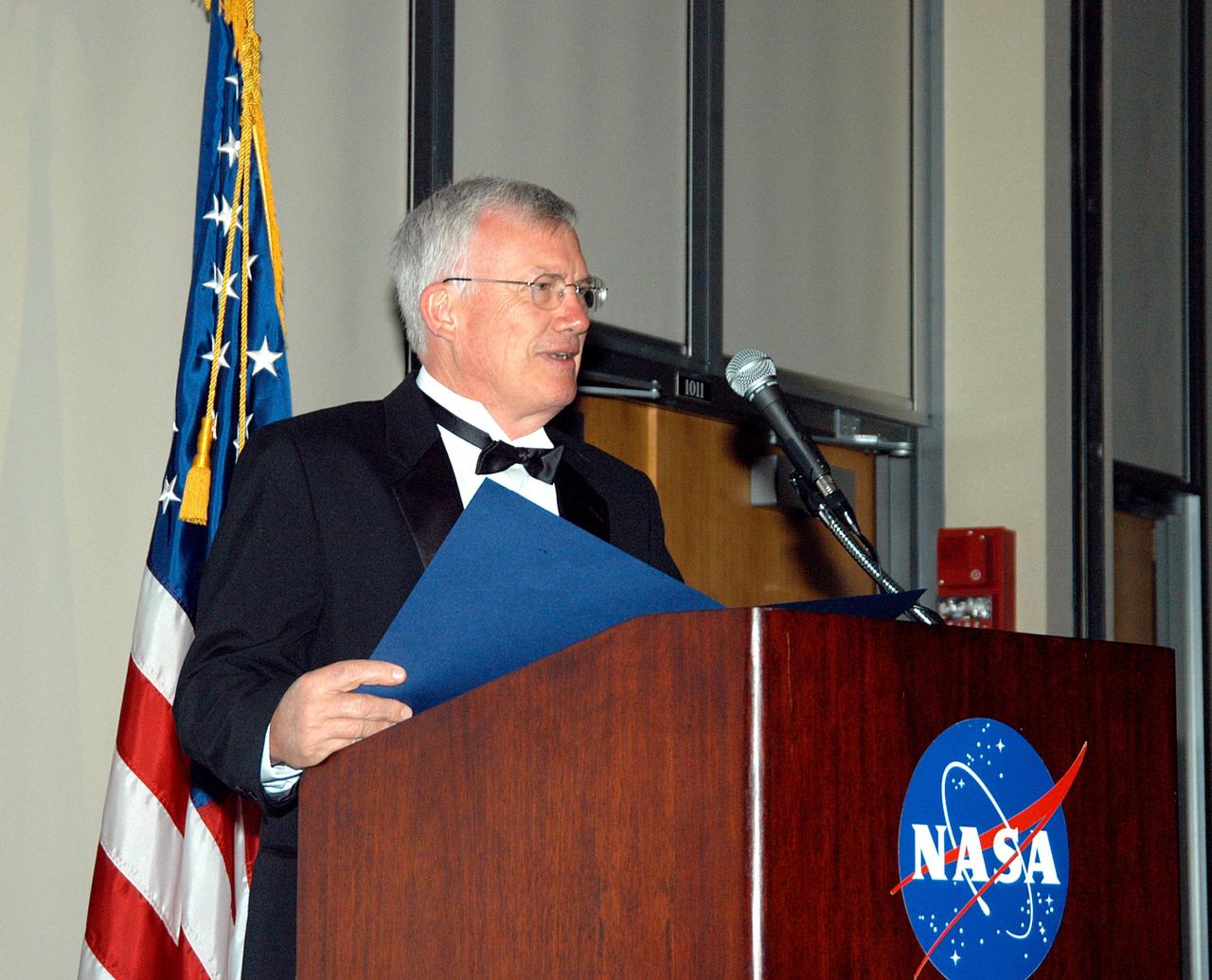
KENNEDY SPACE CENTER, FLA. -- At the annual National Space Club Debus Award Banquet held at the Dr. Kurt H. Debus Conference Facility in the Visitor Complex, David E. Bartine, chief technologist and associate director for the Spaceport Technology Development Office, reads a proclamation honoring John J. “Tip” Talone . The proclamation named April 3, 2004, in Knox County, Tenn., as John J. “Tip” Talone Jr. Day, in recognition of his being given the 2004 Debus Award. KSC’s Director of the International Space Station/Payloads Processing directorate, Talone was presented the award for his outstanding personal and professional efforts in supporting the U.S. space program, especially in his current role. The award was created by the National Space Club Florida Committee to recognize significant achievements and contributions made in Florida to American aerospace efforts. It is named for Dr. Kurt H. Debus, first director of KSC, from 1962 to 1974.
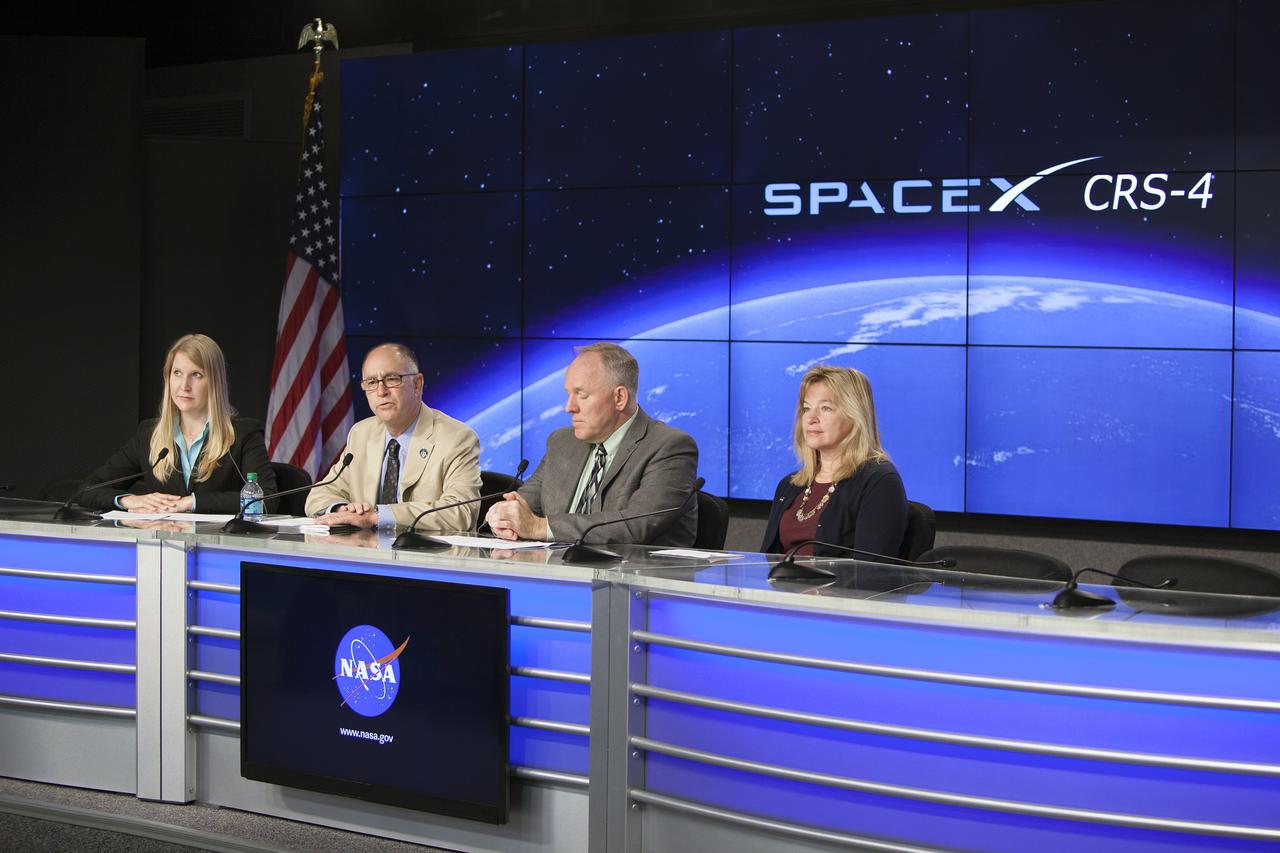
CAPE CANAVERAL, Fla. – Members of NASA’s International Space Station science team brief news media representatives in the Kennedy Space Center’s Press Site auditorium in preparation for the launch of the SpaceX CRS-4 mission to resupply the International Space Station. From left are Stephanie Schierholz, NASA Headquarters Office of Communications, Sam Scimemi, International Space Station Division director of Human Exploration and Operation Mission Directorate, Jeff Sheehy, senior technologist for the Space Technology Mission Directorate, and Ellen Stofan, NASA’s Chief Scientist. The mission is the fourth of 12 SpaceX flights NASA contracted with the company to resupply the space station. It will be the fifth trip by a Dragon spacecraft to the orbiting laboratory. The spacecraft’s 2.5 tons of supplies, science experiments, and technology demonstrations include critical materials to support 255 science and research investigations that will occur during the station's Expeditions 41 and 42. Liftoff is targeted for an instantaneous window at 2:14 a.m. EDT. To learn more about the mission, visit http://www.nasa.gov/mission_pages/station/structure/launch/index.html Photo credit: NASA/Jim Grossmann
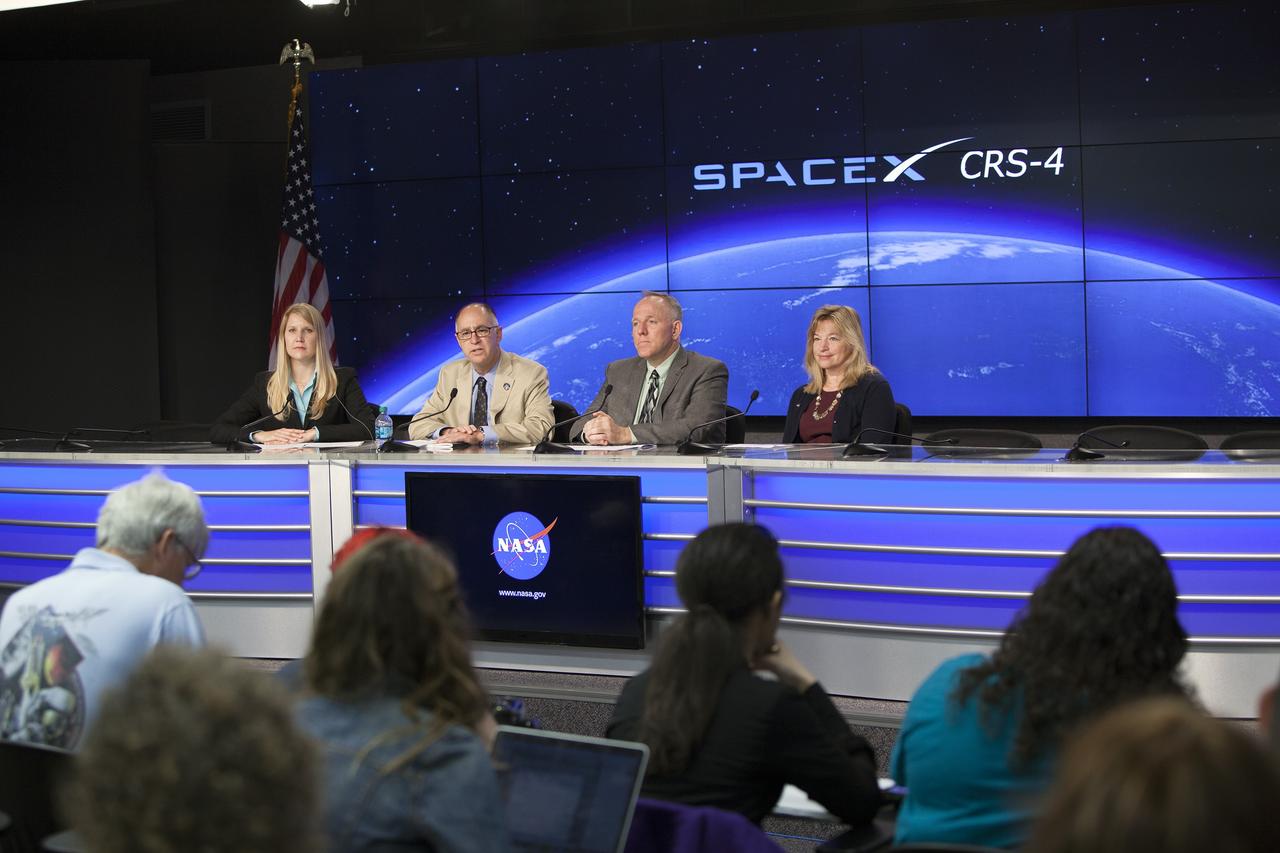
CAPE CANAVERAL, Fla. – Members of NASA’s International Space Station science team brief news media representatives in the Kennedy Space Center’s Press Site auditorium in preparation for the launch of the SpaceX CRS-4 mission to resupply the International Space Station. From left are Stephanie Schierholz, NASA Headquarters Office of Communications, Sam Scimemi, International Space Station Division director of Human Exploration and Operation Mission Directorate, Jeff Sheehy, senior technologist for the Space Technology Mission Directorate, and Ellen Stofan, NASA’s Chief Scientist. The mission is the fourth of 12 SpaceX flights NASA contracted with the company to resupply the space station. It will be the fifth trip by a Dragon spacecraft to the orbiting laboratory. The spacecraft’s 2.5 tons of supplies, science experiments, and technology demonstrations include critical materials to support 255 science and research investigations that will occur during the station's Expeditions 41 and 42. Liftoff is targeted for an instantaneous window at 2:14 a.m. EDT. To learn more about the mission, visit http://www.nasa.gov/mission_pages/station/structure/launch/index.html Photo credit: NASA/Jim Grossmann