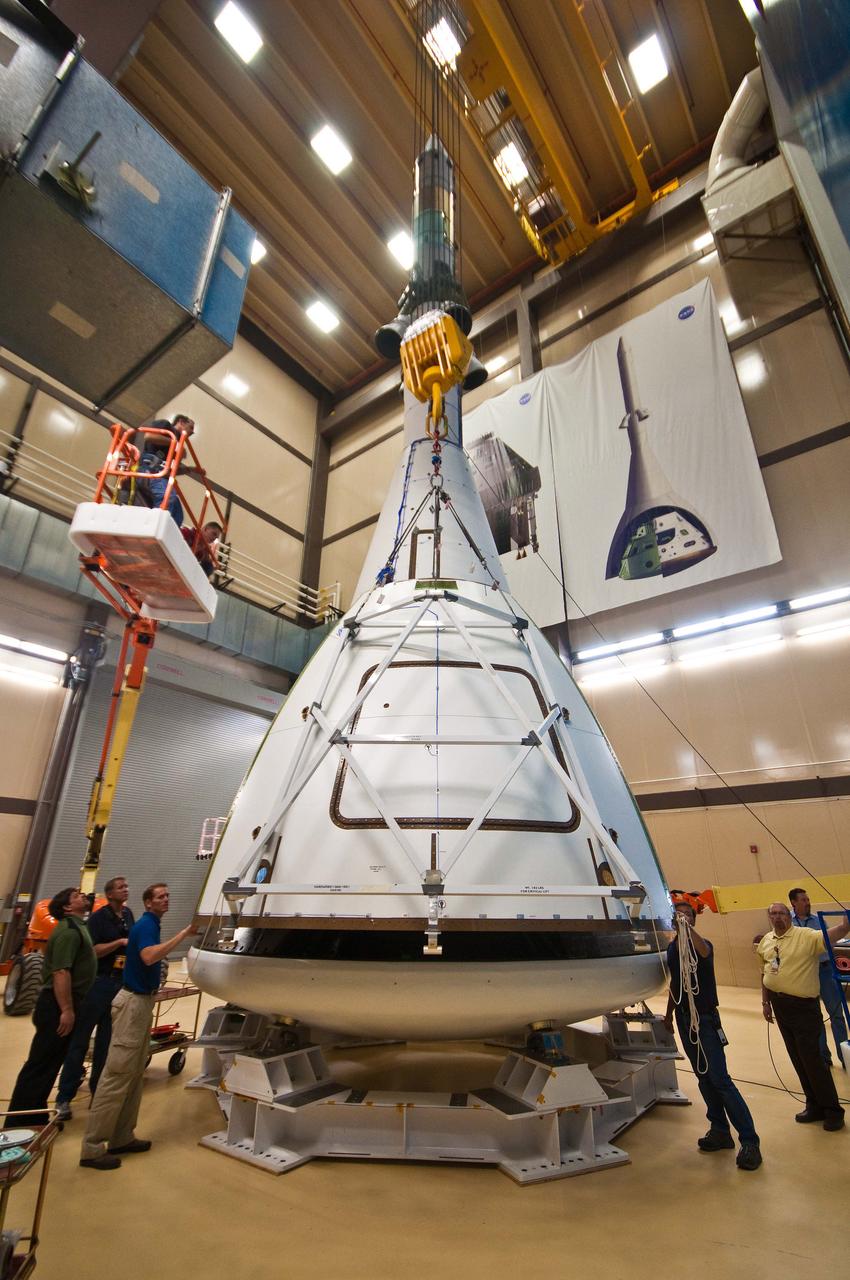
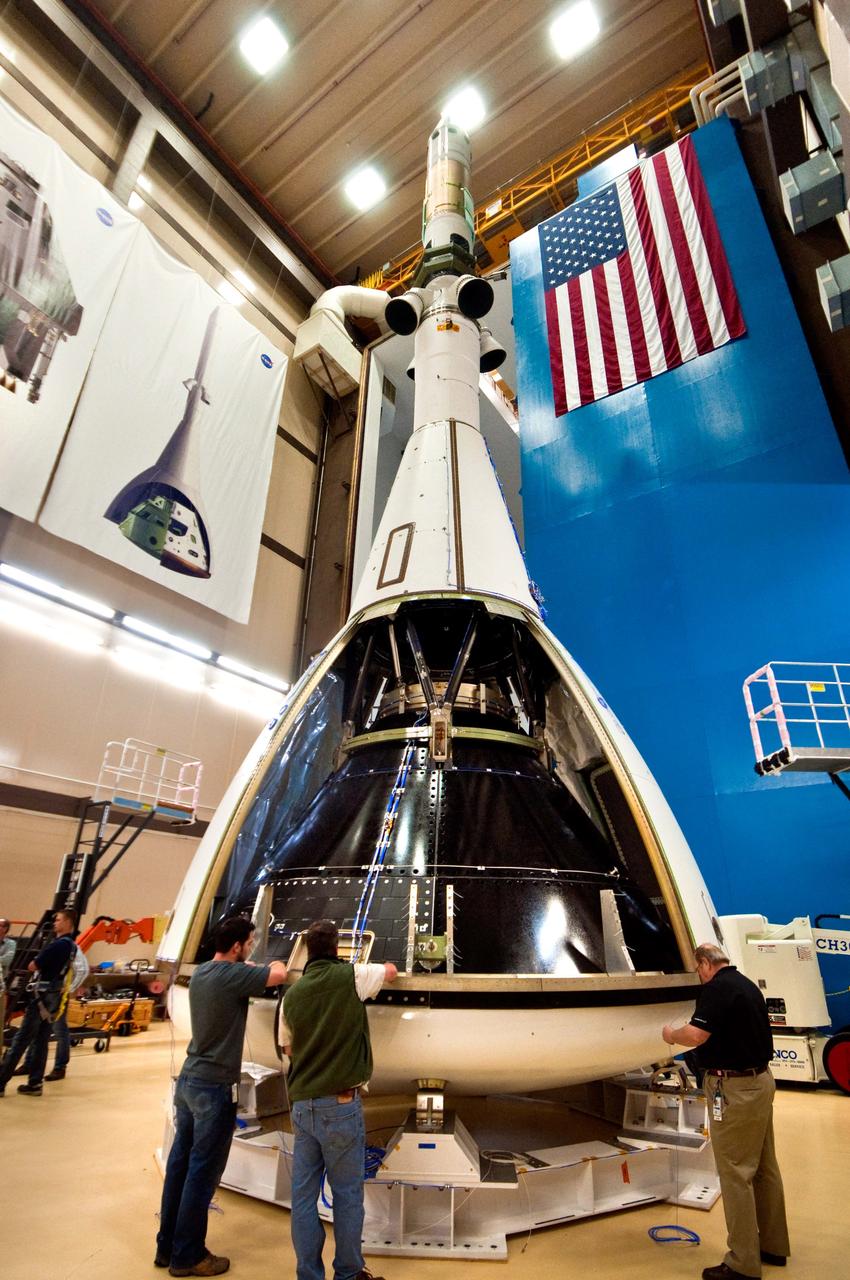
The launch abort system ogives are installed on the Orion test article at Lockheed Martin facilities near Denver on Sept. 6, 2011. The ogives are four protective panels that shield the crew module from the severe vibrations and sounds experienced during launch. Part of Batch image transfer from Flickr.
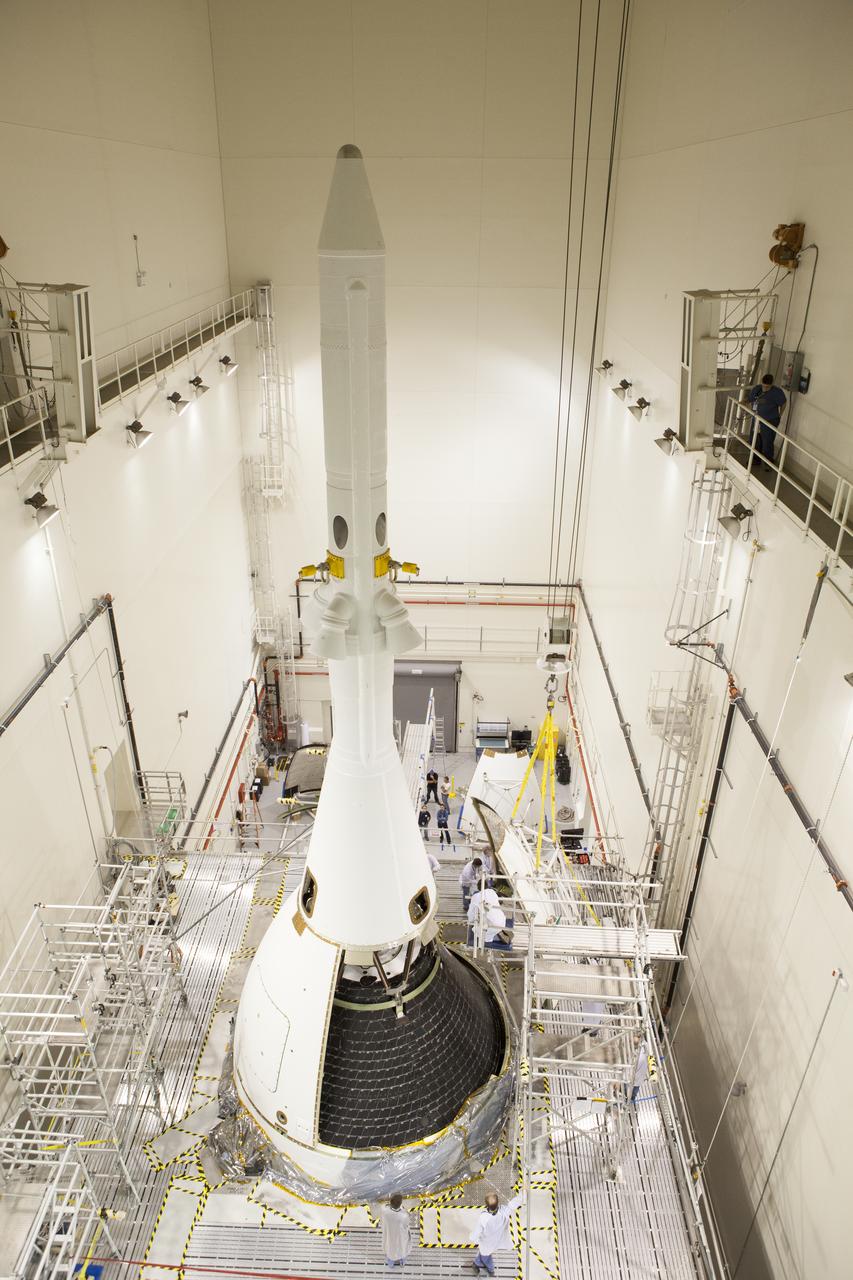
Installation of four Ogive panels on Orion's Launch Abort System continues inside the Launch Abort System Facility at NASA’s Kennedy Space Center in Florida. The panels will smooth the airflow over the conical spacecraft to limit sound and vibration, which will make for a much smoother ride for the astronauts who will ride inside Orion in the future. The work marked the final major assembly steps for the spacecraft before it is transported to Space Launch Complex 37 at Cape Canaveral Air Force Station in November. Orion is the exploration spacecraft designed to carry astronauts to destinations not yet explored by humans, including an asteroid and Mars. It will have emergency abort capability, sustain the crew during space travel and provide safe re-entry from deep space return velocities. The first unpiloted flight test of Orion is scheduled to launch in December 2014 atop a United Launch Alliance Delta IV Heavy rocket, and in 2018 on NASA’s Space Launch System rocket.
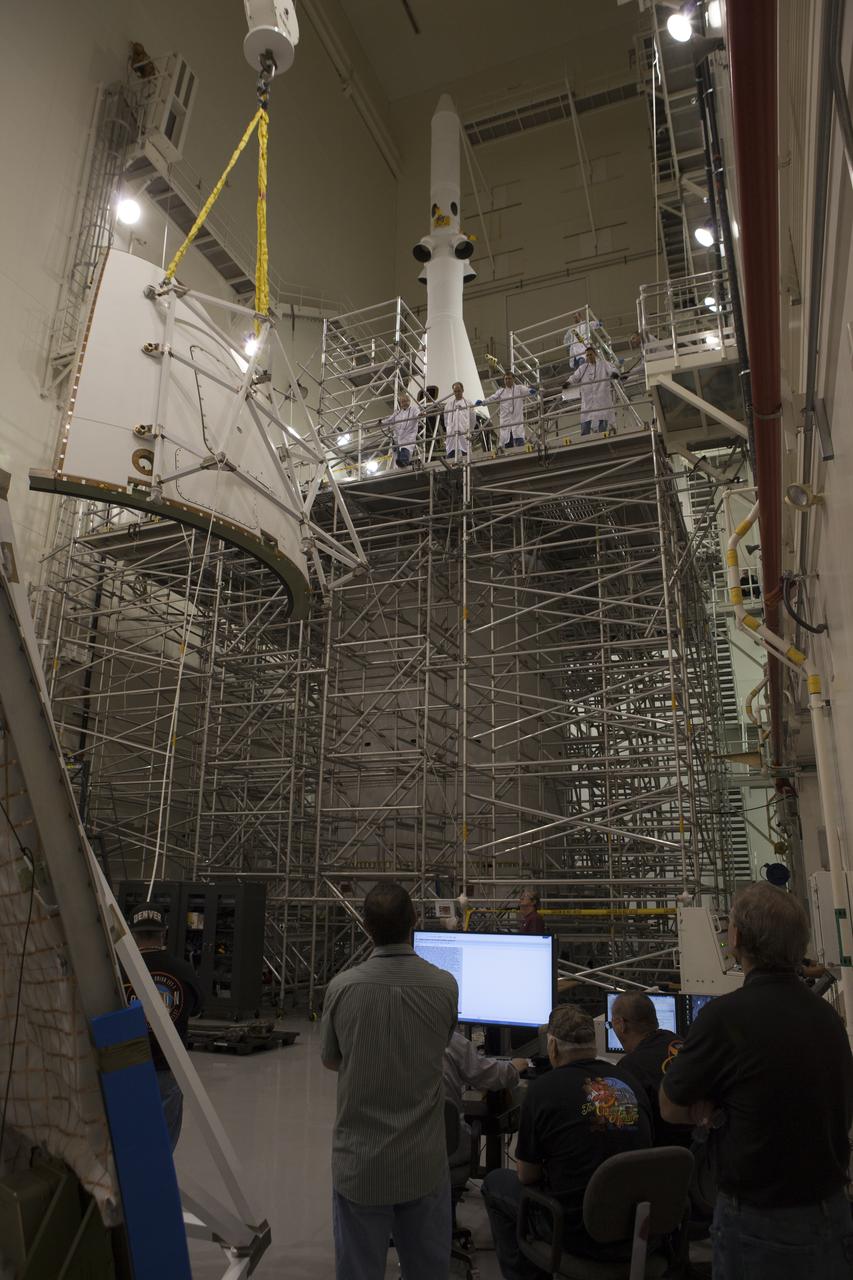
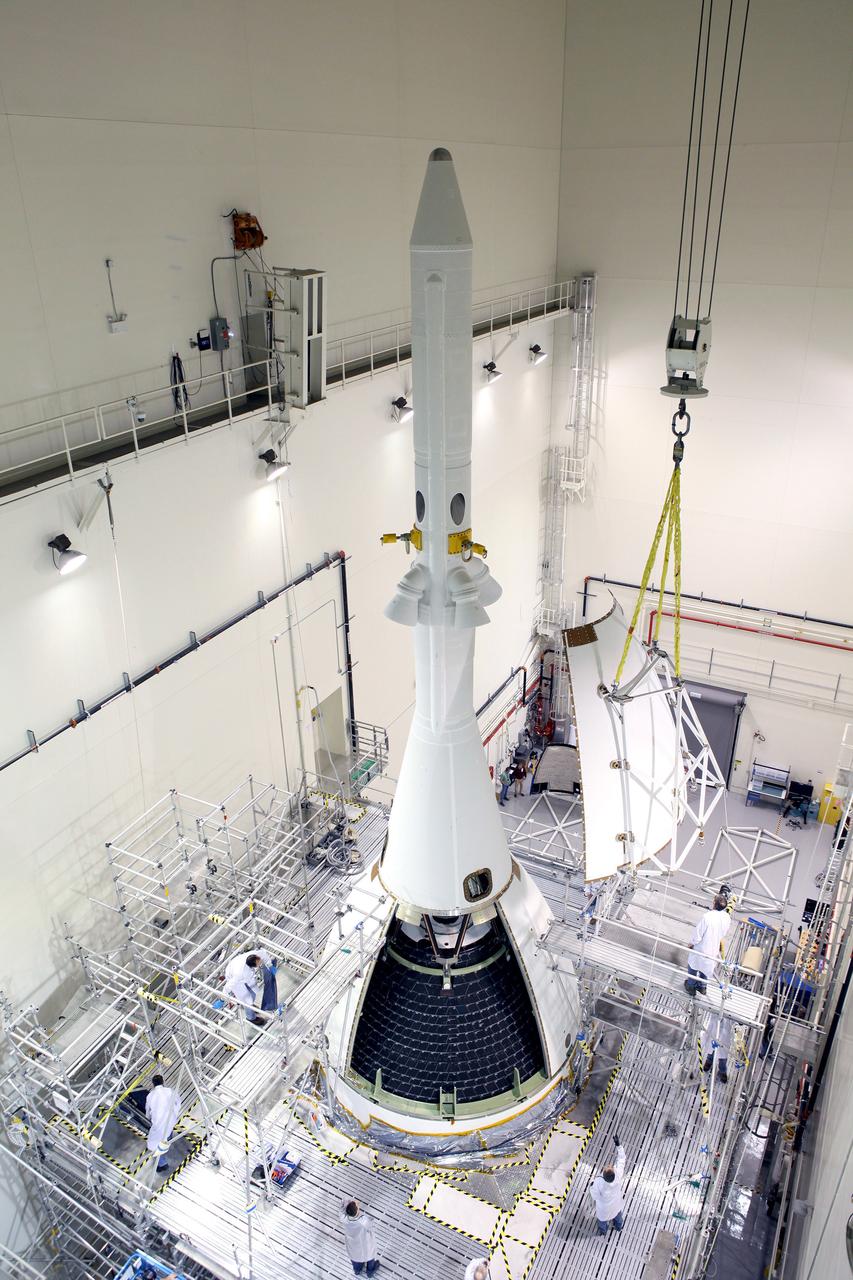
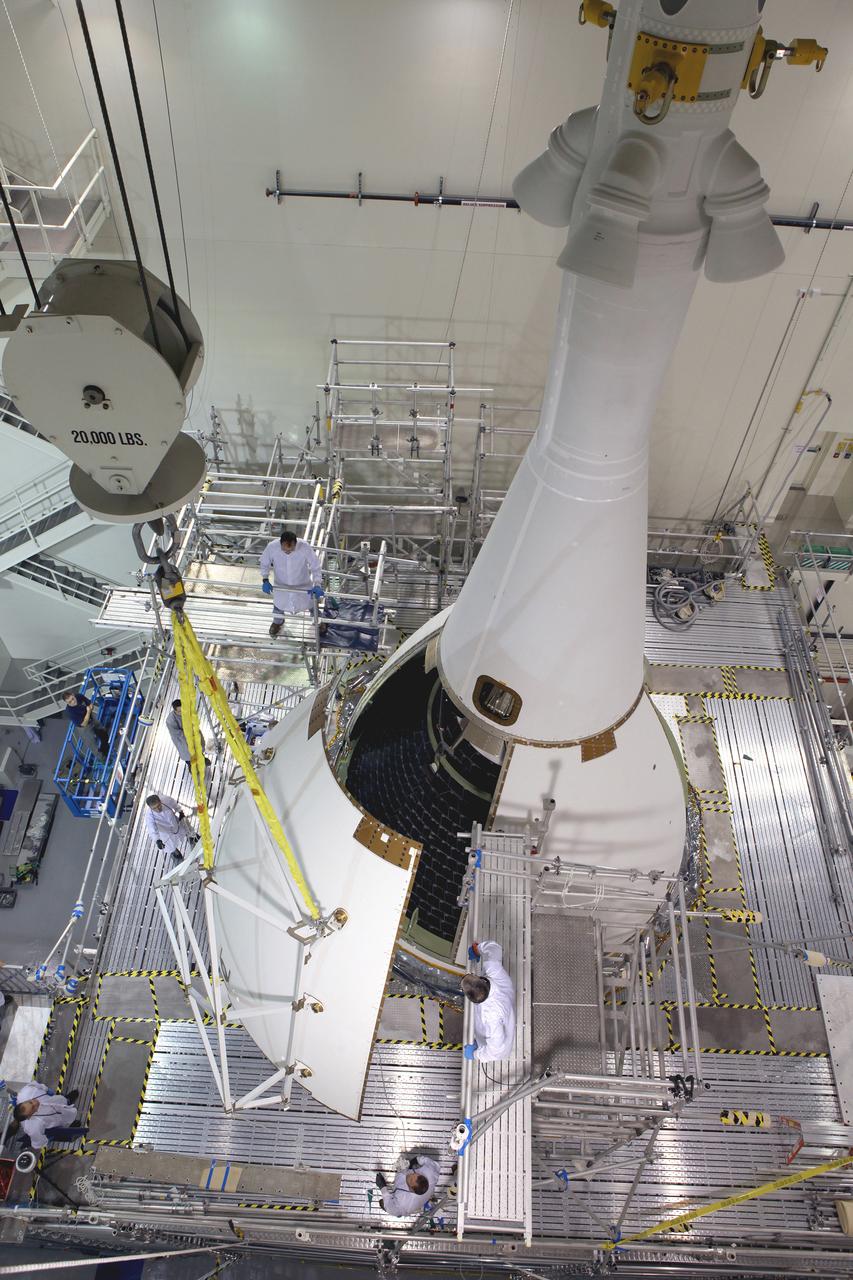
The first of four Ogive panels is lifted by crane for installation on Orion's Launch Abort System inside the Launch Abort System Facility at NASA’s Kennedy Space Center in Florida. The panels will smooth the airflow over the conical spacecraft to limit sound and vibration, which will make for a much smoother ride for the astronauts who will ride inside Orion in the future. The work marked the final major assembly steps for the spacecraft before it is transported to Space Launch Complex 37 at Cape Canaveral Air Force Station in November. Orion is the exploration spacecraft designed to carry astronauts to destinations not yet explored by humans, including an asteroid and Mars. It will have emergency abort capability, sustain the crew during space travel and provide safe re-entry from deep space return velocities. The first unpiloted flight test of Orion is scheduled to launch in December 2014 atop a United Launch Alliance Delta IV Heavy rocket, and in 2018 on NASA’s Space Launch System rocket.
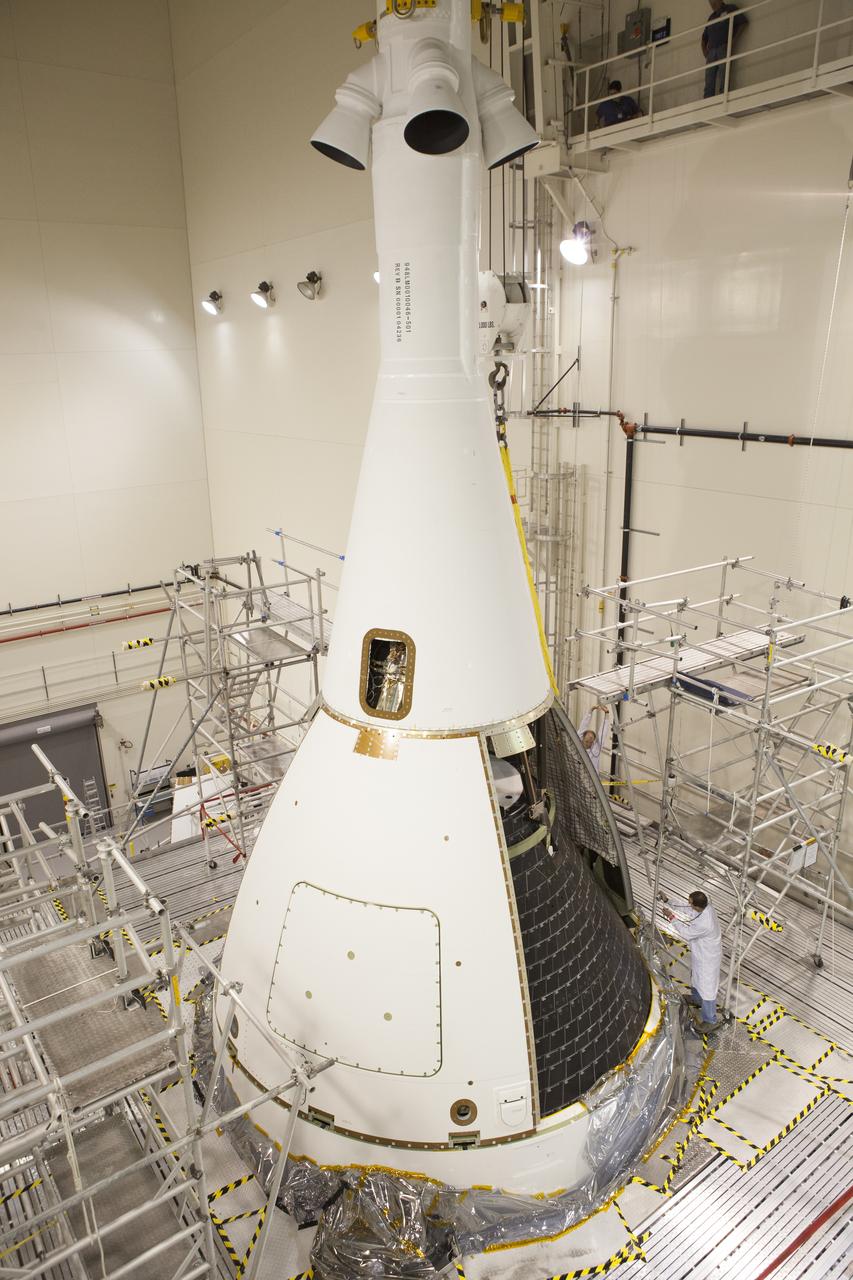
Inside the Launch Abort System Facility at NASA’s Kennedy Space Center in Florida, technicians have installed two of the four Ogive panels on Orion's Launch Abort System. The panels will smooth the airflow over the conical spacecraft to limit sound and vibration, which will make for a much smoother ride for the astronauts who will ride inside Orion in the future. The work marked the final major assembly steps for the spacecraft before it is transported to Space Launch Complex 37 at Cape Canaveral Air Force Station in November. Orion is the exploration spacecraft designed to carry astronauts to destinations not yet explored by humans, including an asteroid and Mars. It will have emergency abort capability, sustain the crew during space travel and provide safe re-entry from deep space return velocities. The first unpiloted flight test of Orion is scheduled to launch in December 2014 atop a United Launch Alliance Delta IV Heavy rocket, and in 2018 on NASA’s Space Launch System rocket.
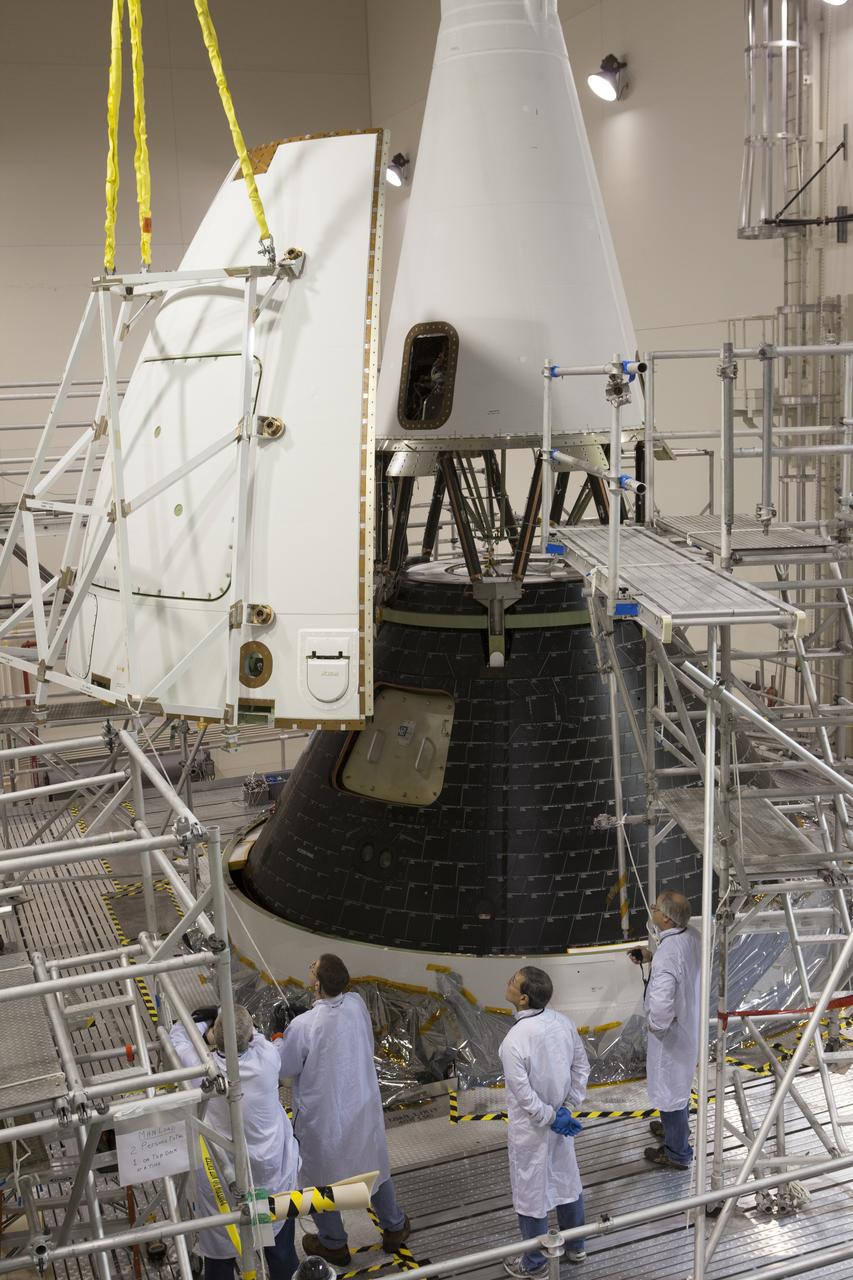
Inside the Launch Abort System Facility at NASA’s Kennedy Space Center in Florida, technicians monitor the progress as a crane moves the first of four Ogive panels closer for installation on Orion's Launch Abort System. The panels will smooth the airflow over the conical spacecraft to limit sound and vibration, which will make for a much smoother ride for the astronauts who will ride inside Orion in the future. The work marked the final major assembly steps for the spacecraft before it is transported to Space Launch Complex 37 at Cape Canaveral Air Force Station in November. Orion is the exploration spacecraft designed to carry astronauts to destinations not yet explored by humans, including an asteroid and Mars. It will have emergency abort capability, sustain the crew during space travel and provide safe re-entry from deep space return velocities. The first unpiloted flight test of Orion is scheduled to launch in December 2014 atop a United Launch Alliance Delta IV Heavy rocket, and in 2018 on NASA’s Space Launch System rocket.
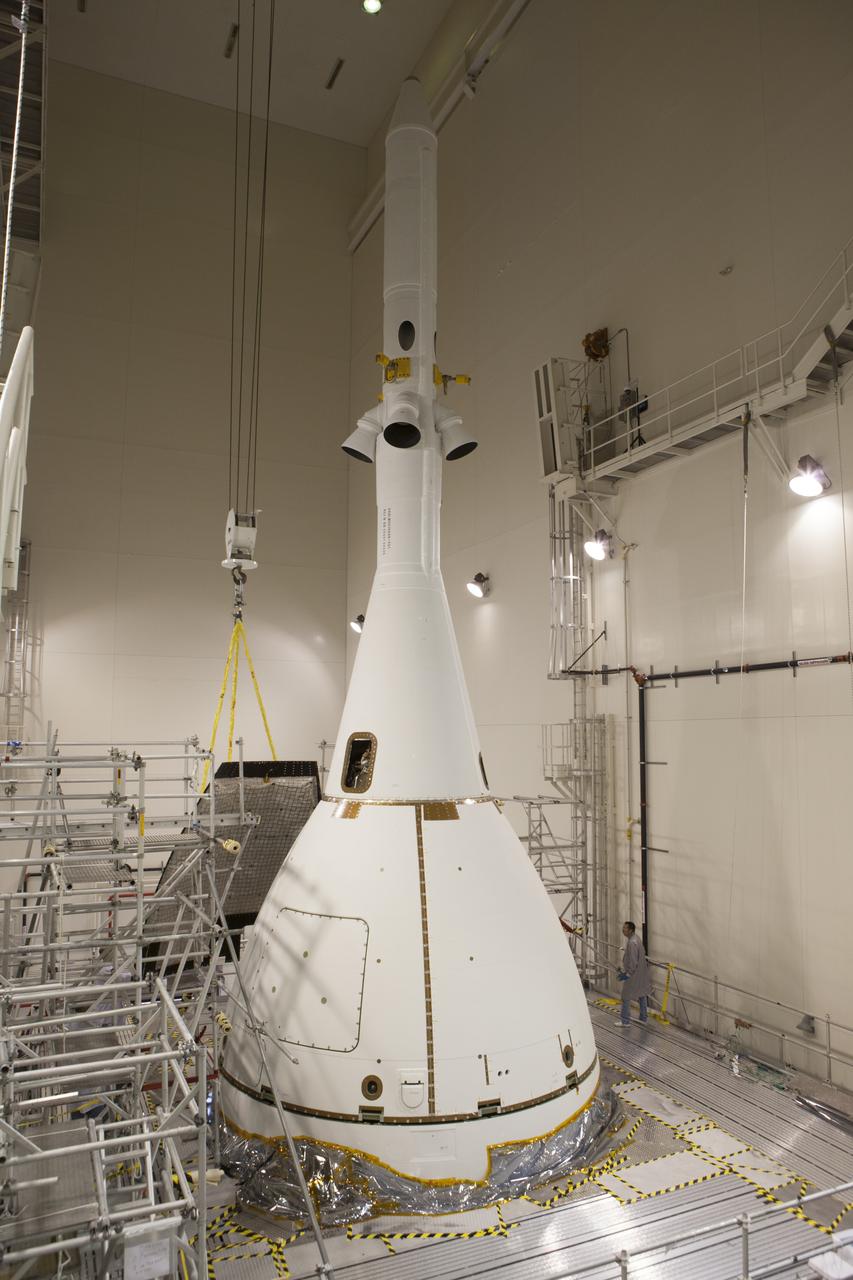
Inside the Launch Abort System Facility at NASA’s Kennedy Space Center in Florida, a crane brings the fourth and final Ogive panel closer for installation on Orion's Launch Abort System. The panels will smooth the airflow over the conical spacecraft to limit sound and vibration, which will make for a much smoother ride for the astronauts who will ride inside Orion in the future. The work marked the final major assembly steps for the spacecraft before it is transported to Space Launch Complex 37 at Cape Canaveral Air Force Station in November. Orion is the exploration spacecraft designed to carry astronauts to destinations not yet explored by humans, including an asteroid and Mars. It will have emergency abort capability, sustain the crew during space travel and provide safe re-entry from deep space return velocities. The first unpiloted flight test of Orion is scheduled to launch in December 2014 atop a United Launch Alliance Delta IV Heavy rocket, and in 2018 on NASA’s Space Launch System rocket.
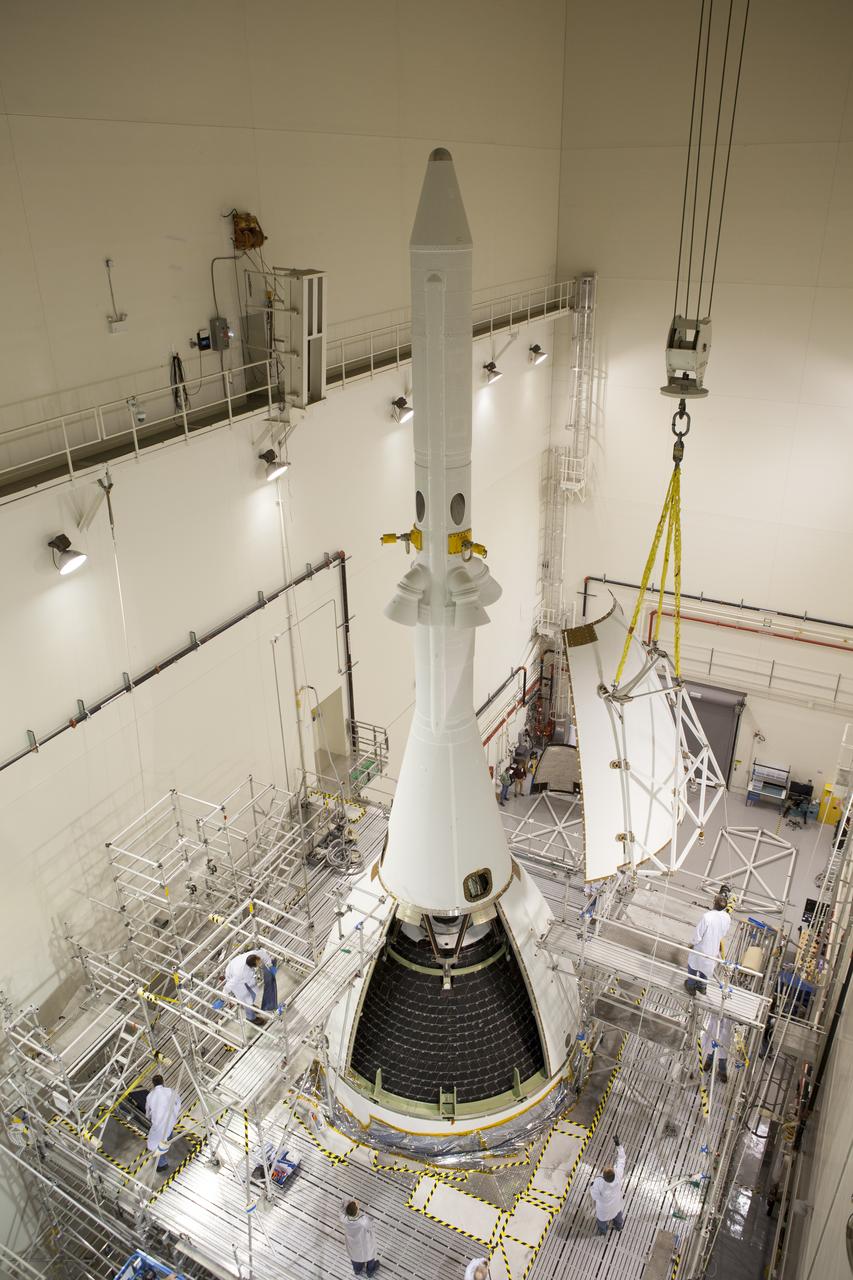
Inside the Launch Abort System Facility at NASA's Kennedy Space Center in Florida, a crane brings the third of four Ogive panels closer for installation on Orion's Launch Abort System. The panels will smooth the airflow over the conical spacecraft to limit sound and vibration, which will make for a much smoother ride for the astronauts who will ride inside Orion in the future. The work marked the final major assembly steps for the spacecraft before it is transported to Space Launch Complex 37 at Cape Canaveral Air Force Station in November. Orion is the exploration spacecraft designed to carry astronauts to destinations not yet explored by humans, including an asteroid and Mars. It will have emergency abort capability, sustain the crew during space travel and provide safe re-entry from deep space return velocities. The first unpiloted flight test of Orion is scheduled to launch in December 2014 atop a United Launch Alliance Delta IV Heavy rocket, and in 2018 on NASA’s Space Launch System rocket.
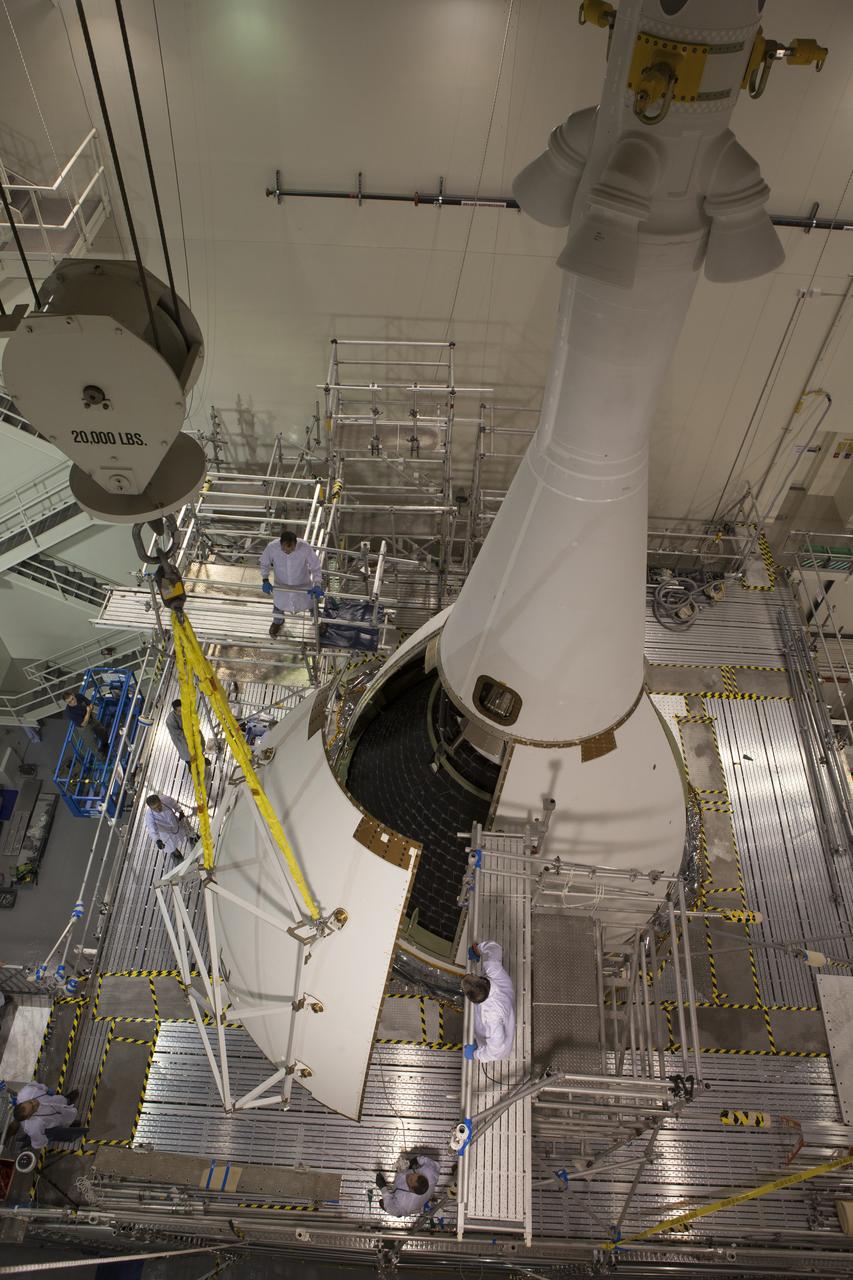
Technicians on work platforms monitor the progress as a crane brings the third of four Ogive panels closer for installation on Orion's Launch Abort System inside the Launch Abort System Facility at NASA’s Kennedy Space Center in Florida. The panels will smooth the airflow over the conical spacecraft to limit sound and vibration, which will make for a much smoother ride for the astronauts who will ride inside Orion in the future. The work marked the final major assembly steps for the spacecraft before it is transported to Space Launch Complex 37 at Cape Canaveral Air Force Station in November. Orion is the exploration spacecraft designed to carry astronauts to destinations not yet explored by humans, including an asteroid and Mars. It will have emergency abort capability, sustain the crew during space travel and provide safe re-entry from deep space return velocities. The first unpiloted flight test of Orion is scheduled to launch in December 2014 atop a United Launch Alliance Delta IV Heavy rocket, and in 2018 on NASA’s Space Launch System rocket.
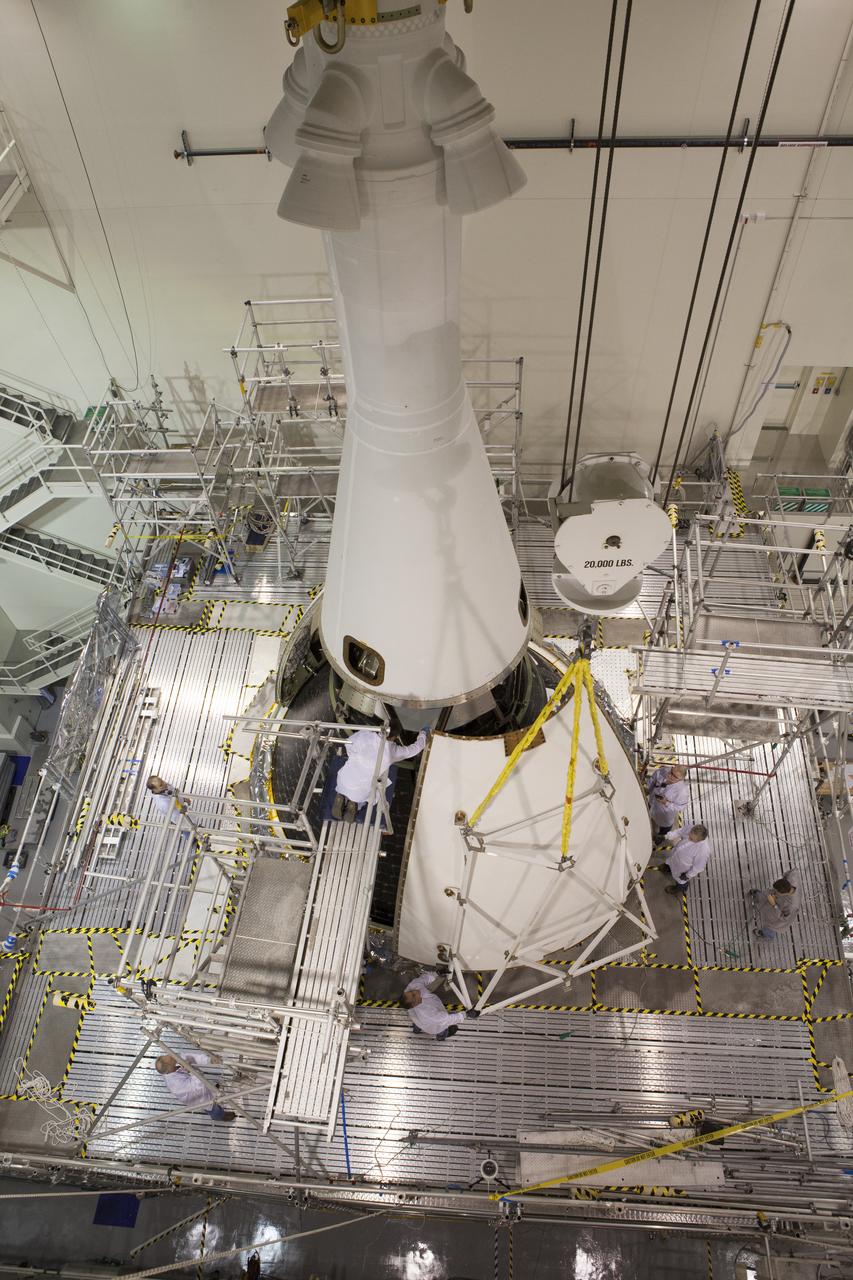
Technicians on work platforms continue the installation of four Ogive panels on Orion's Launch Abort System inside the Launch Abort System Facility at NASA’s Kennedy Space Center in Florida. The panels will smooth the airflow over the conical spacecraft to limit sound and vibration, which will make for a much smoother ride for the astronauts who will ride inside Orion in the future. The work marked the final major assembly steps for the spacecraft before it is transported to Space Launch Complex 37 at Cape Canaveral Air Force Station in November. Orion is the exploration spacecraft designed to carry astronauts to destinations not yet explored by humans, including an asteroid and Mars. It will have emergency abort capability, sustain the crew during space travel and provide safe re-entry from deep space return velocities. The first unpiloted flight test of Orion is scheduled to launch in December 2014 atop a United Launch Alliance Delta IV Heavy rocket, and in 2018 on NASA’s Space Launch System rocket.
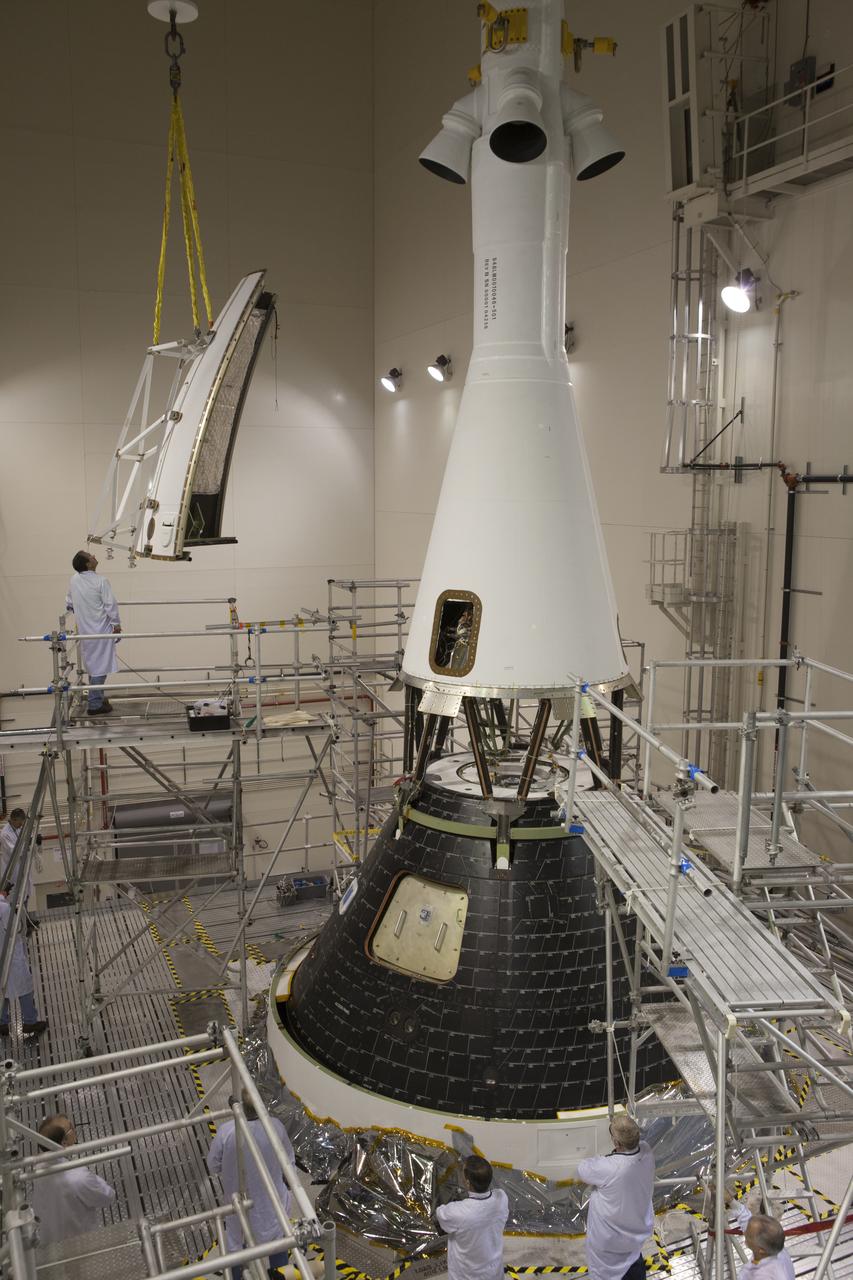
The first of four Ogive panels is lifted by crane for installation on Orion's Launch Abort System inside the Launch Abort System Facility at NASA’s Kennedy Space Center in Florida. The panels will smooth the airflow over the conical spacecraft to limit sound and vibration, which will make for a much smoother ride for the astronauts who will ride inside Orion in the future. The work marked the final major assembly steps for the spacecraft before it is transported to Space Launch Complex 37 at Cape Canaveral Air Force Station in November. Orion is the exploration spacecraft designed to carry astronauts to destinations not yet explored by humans, including an asteroid and Mars. It will have emergency abort capability, sustain the crew during space travel and provide safe re-entry from deep space return velocities. The first unpiloted flight test of Orion is scheduled to launch in December 2014 atop a United Launch Alliance Delta IV Heavy rocket, and in 2018 on NASA’s Space Launch System rocket.
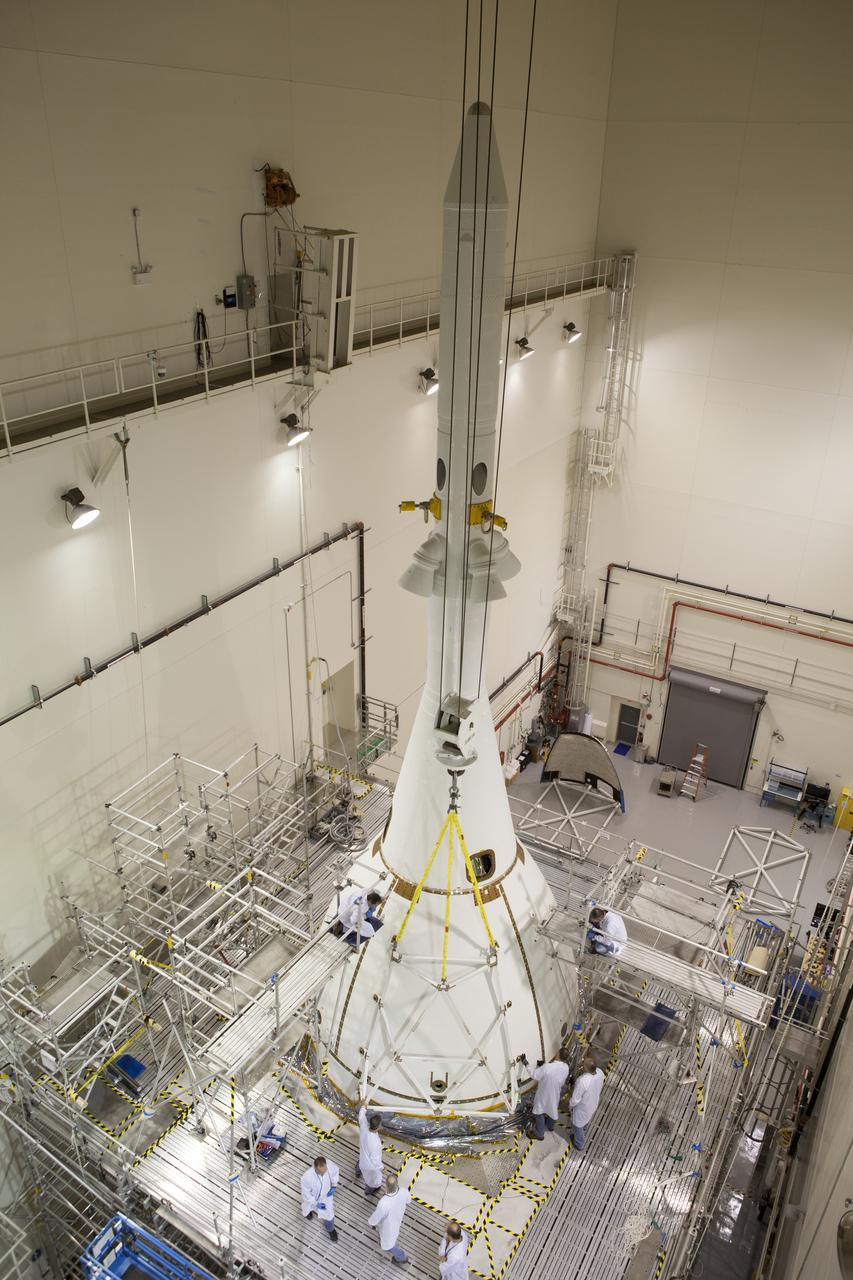
Inside the Launch Abort System Facility at NASA’s Kennedy Space Center in Florida, technicians attach the third of four Ogive panels on Orion's Launch Abort System. The panels will smooth the airflow over the conical spacecraft to limit sound and vibration, which will make for a much smoother ride for the astronauts who will ride inside Orion in the future. The work marked the final major assembly steps for the spacecraft before it is transported to Space Launch Complex 37 at Cape Canaveral Air Force Station in November. Orion is the exploration spacecraft designed to carry astronauts to destinations not yet explored by humans, including an asteroid and Mars. It will have emergency abort capability, sustain the crew during space travel and provide safe re-entry from deep space return velocities. The first unpiloted flight test of Orion is scheduled to launch in December 2014 atop a United Launch Alliance Delta IV Heavy rocket, and in 2018 on NASA’s Space Launch System rocket.
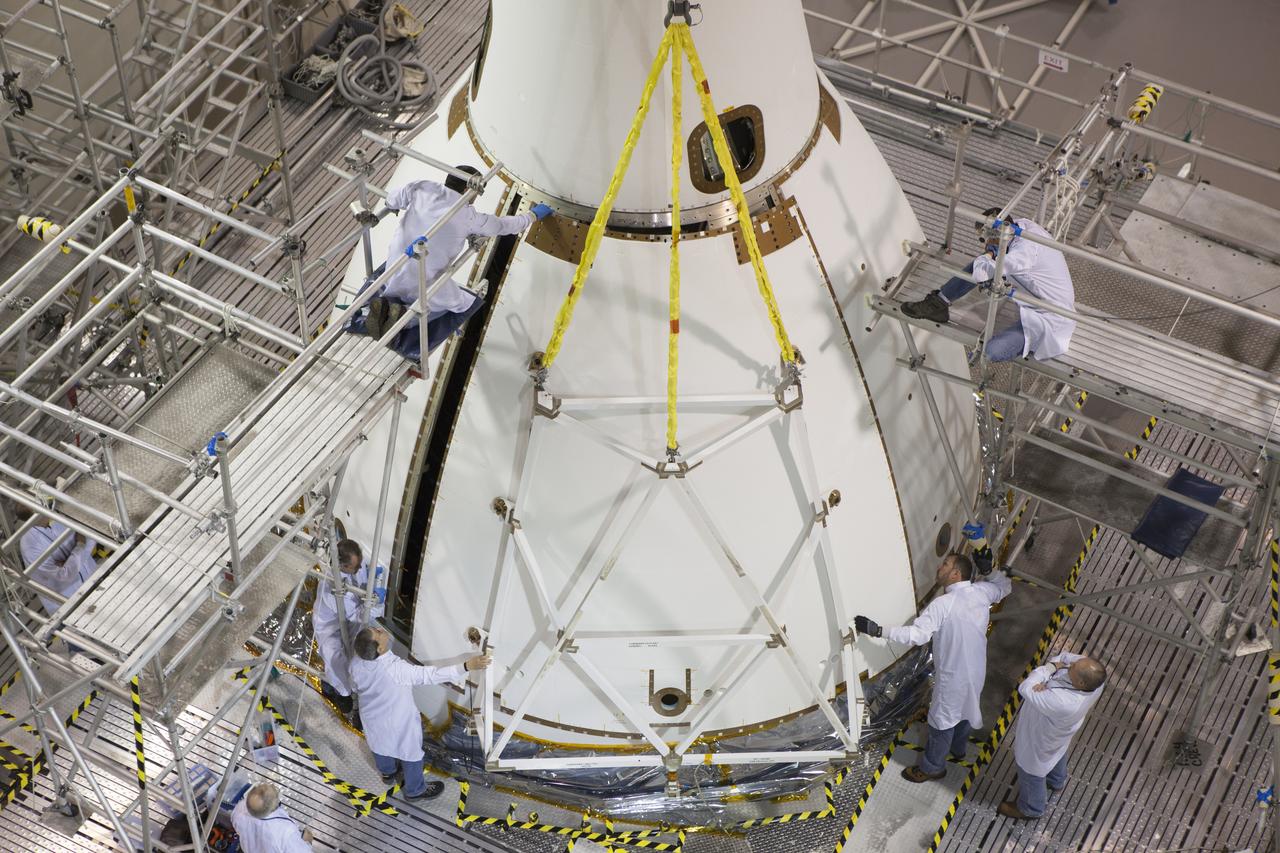
Inside the Launch Abort System Facility at NASA’s Kennedy Space Center in Florida, technicians attach the third of four Ogive panels on Orion's Launch Abort System. The panels will smooth the airflow over the conical spacecraft to limit sound and vibration, which will make for a much smoother ride for the astronauts who will ride inside Orion in the future. The work marked the final major assembly steps for the spacecraft before it is transported to Space Launch Complex 37 at Cape Canaveral Air Force Station in November. Orion is the exploration spacecraft designed to carry astronauts to destinations not yet explored by humans, including an asteroid and Mars. It will have emergency abort capability, sustain the crew during space travel and provide safe re-entry from deep space return velocities. The first unpiloted flight test of Orion is scheduled to launch in December 2014 atop a United Launch Alliance Delta IV Heavy rocket, and in 2018 on NASA’s Space Launch System rocket.
The launch abort system ogives are installed on the Orion test article at Lockheed Martin facilities near Denver on Sept. 8, 2011. The ogives are four protective panels that shield the crew module from the severe vibrations and sounds experienced during launch. Part of Batch image transfer from Flickr.
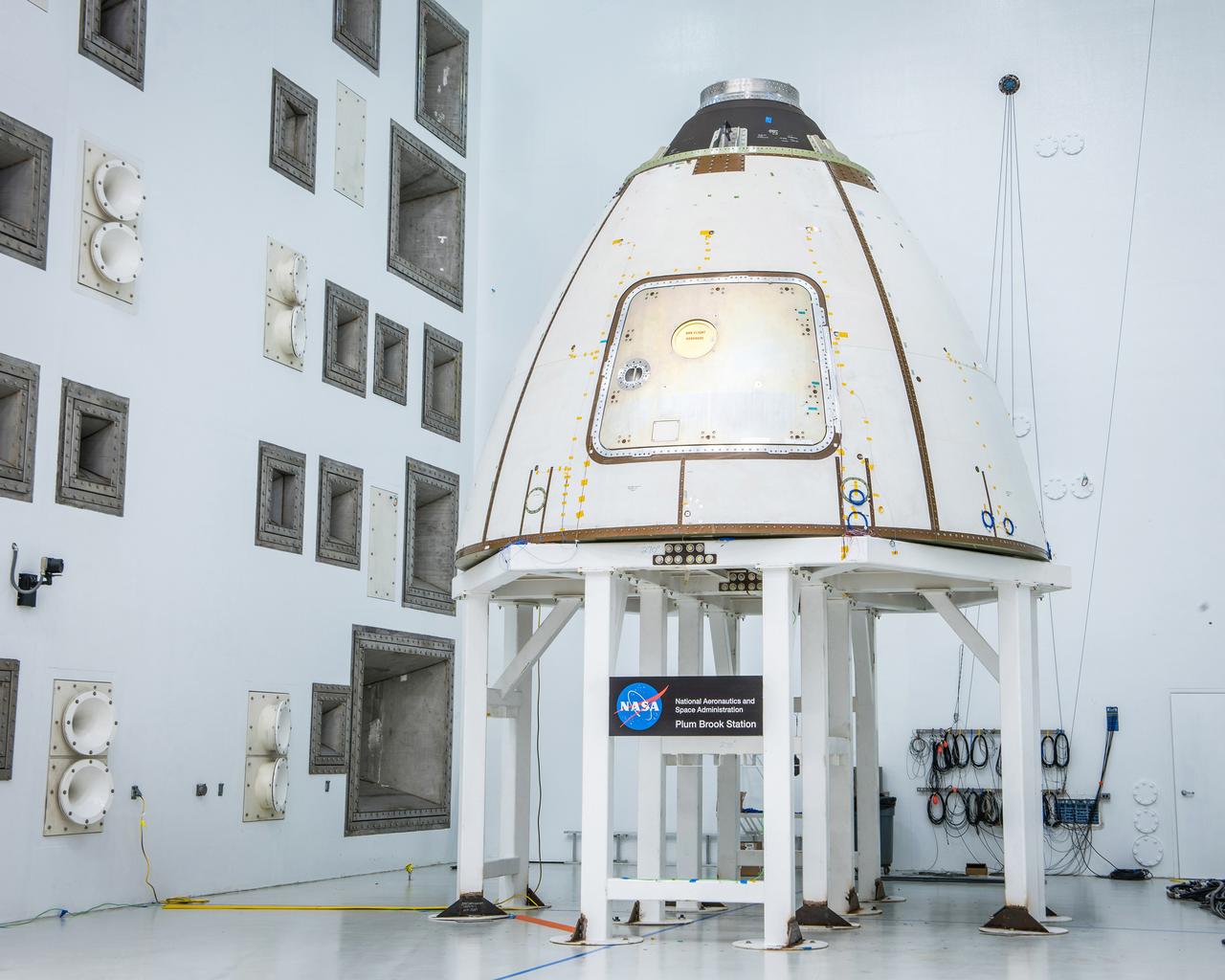
The ogive panels protect Orion's crew module from harsh acoustic conditions at launch and in case of an abort. Acoustic testing of the ogive hatch starts today at Space Power Facility at NASA Glenn Research Center's Plum Brook station in Sandusky, Ohio takes place on July 19, 2017. The ogive is installed in the Reverberant Acoustic Chamber where it will be blasted with 161 db of sound to simulate launch conditions.
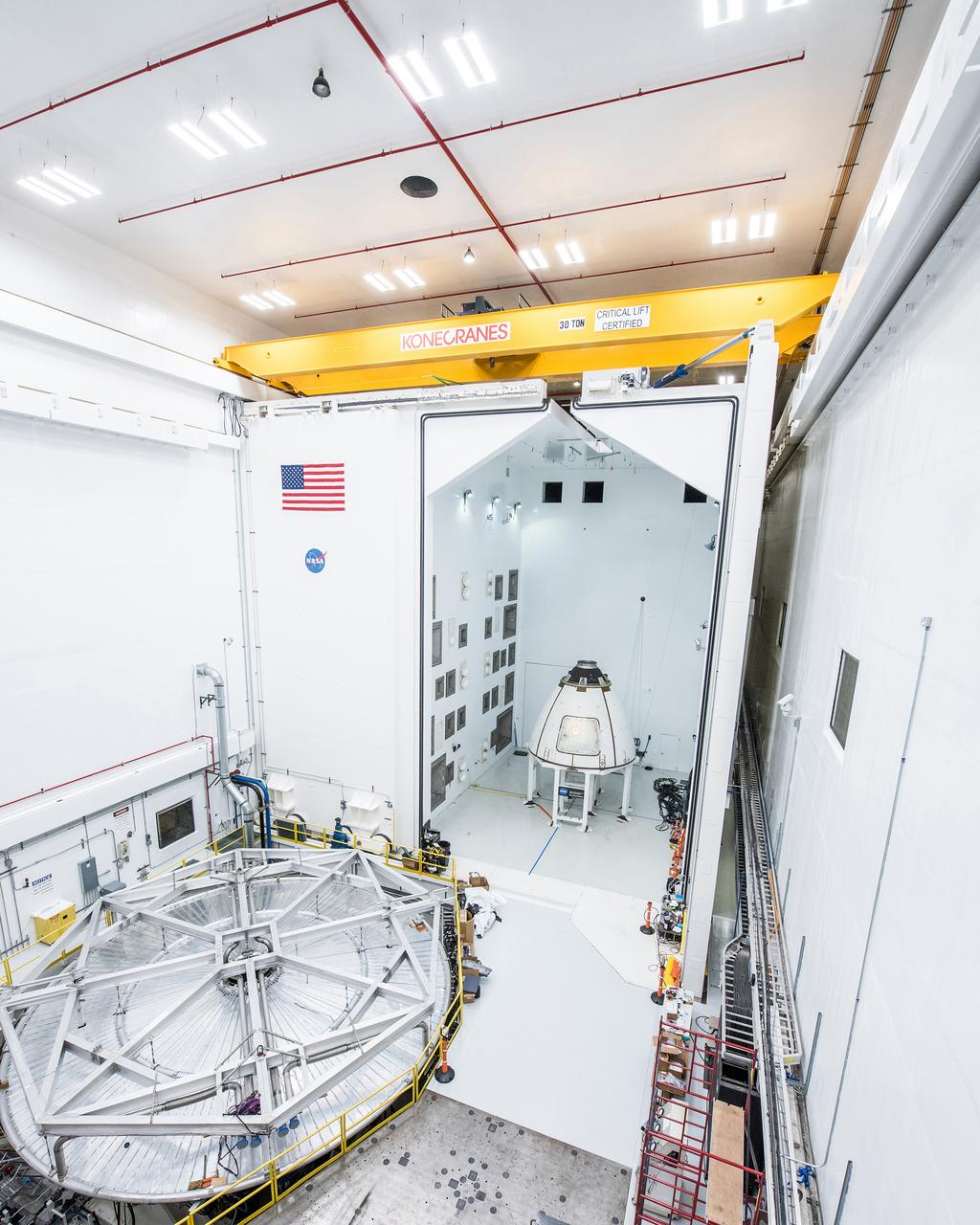
The ogive panels protect Orion's crew module from harsh acoustic conditions at launch and in case of an abort. Acoustic testing of the ogive hatch starts today at Space Power Facility at NASA Glenn Research Center's Plum Brook station in Sandusky, Ohio takes place on July 19, 2017. The ogive is installed in the Reverberant Acoustic Chamber where it will be blasted with 161 db of sound to simulate launch conditions.
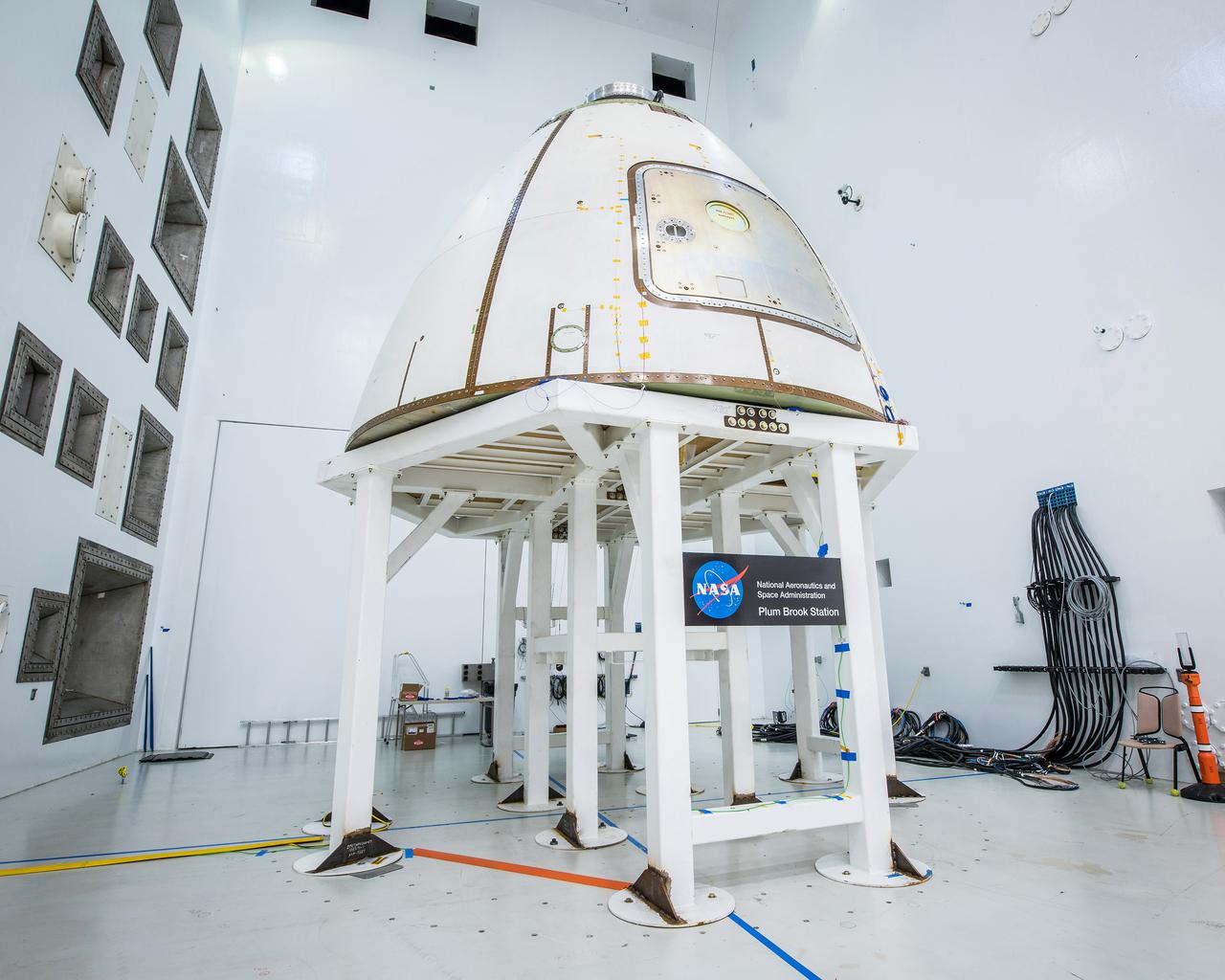
The ogive panels protect Orion's crew module from harsh acoustic conditions at launch and in case of an abort. Acoustic testing of the ogive hatch starts today at Space Power Facility at NASA Glenn Research Center's Plum Brook station in Sandusky, Ohio takes place on July 19, 2017. The ogive is installed in the Reverberant Acoustic Chamber where it will be blasted with 161 db of sound to simulate launch conditions.
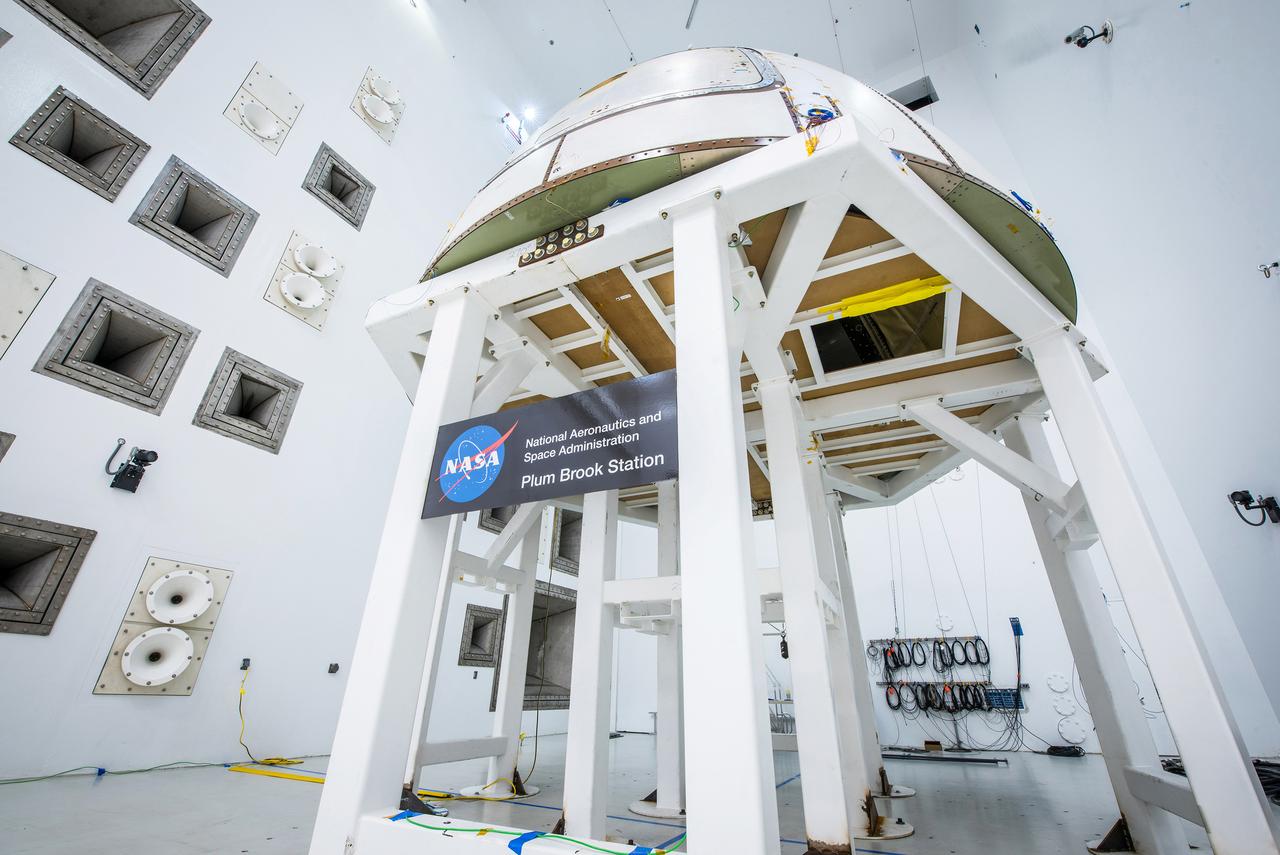
The ogive panels protect Orion's crew module from harsh acoustic conditions at launch and in case of an abort. Acoustic testing of the ogive hatch starts today at Space Power Facility at NASA Glenn Research Center's Plum Brook station in Sandusky, Ohio takes place on July 19, 2017. The ogive is installed in the Reverberant Acoustic Chamber where it will be blasted with 161 db of sound to simulate launch conditions.
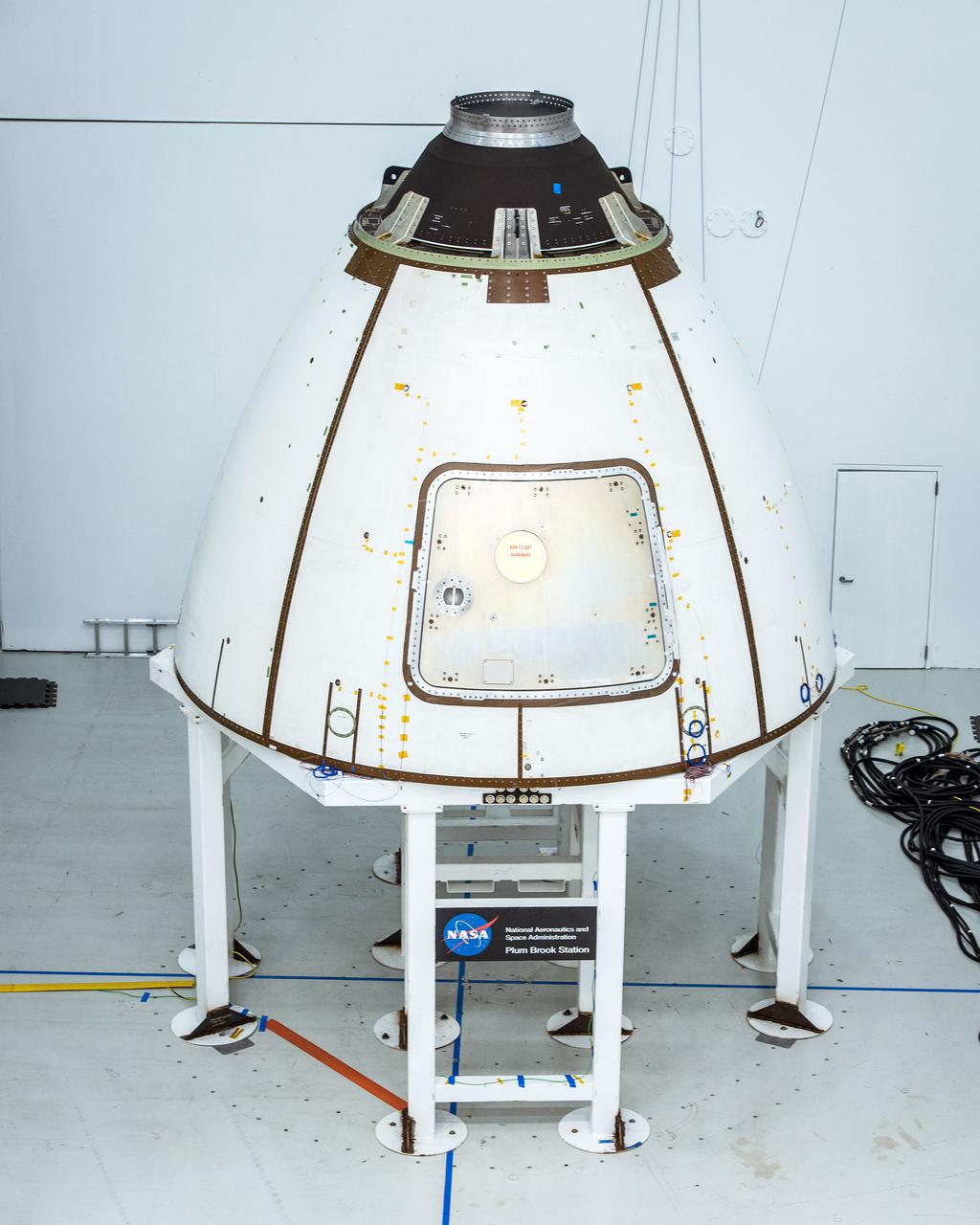
The ogive panels protect Orion's crew module from harsh acoustic conditions at launch and in case of an abort. Acoustic testing of the ogive hatch starts today at Space Power Facility at NASA Glenn Research Center's Plum Brook station in Sandusky, Ohio takes place on July 19, 2017. The ogive is installed in the Reverberant Acoustic Chamber where it will be blasted with 161 db of sound to simulate launch conditions.
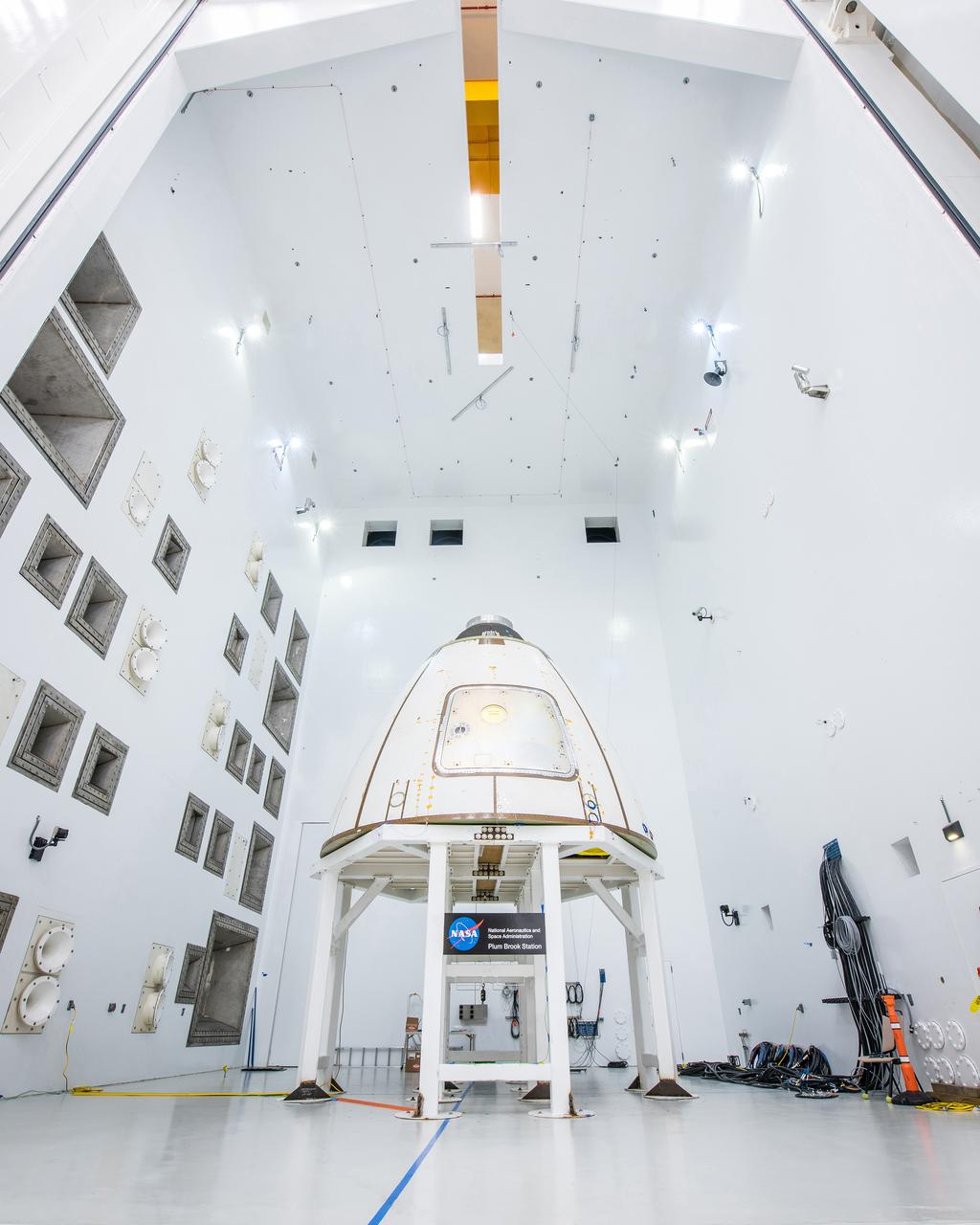
The ogive panels protect Orion's crew module from harsh acoustic conditions at launch and in case of an abort. Acoustic testing of the ogive hatch starts today at Space Power Facility at NASA Glenn Research Center's Plum Brook station in Sandusky, Ohio takes place on July 19, 2017. The ogive is installed in the Reverberant Acoustic Chamber where it will be blasted with 161 db of sound to simulate launch conditions.
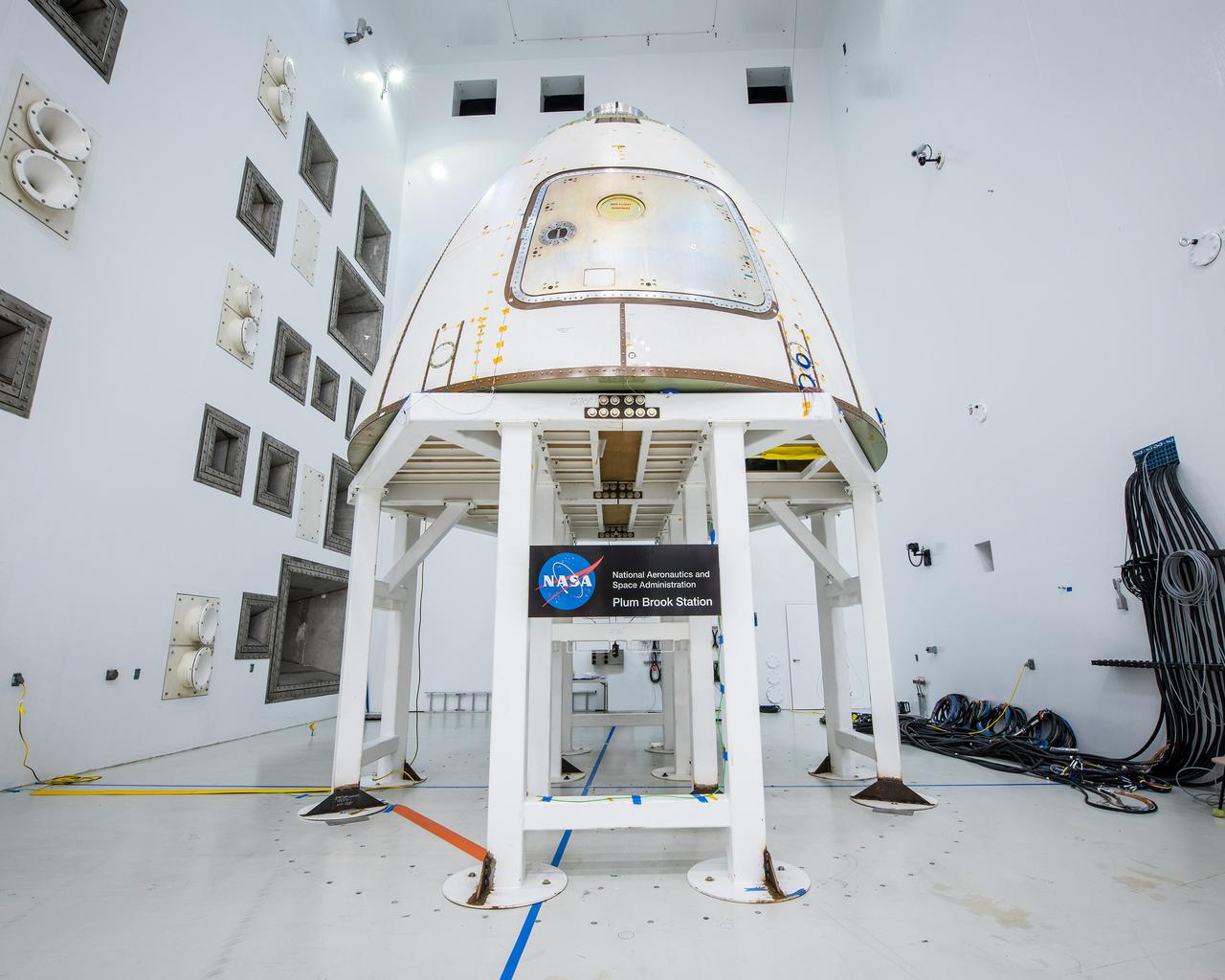
The ogive panels protect Orion's crew module from harsh acoustic conditions at launch and in case of an abort. Acoustic testing of the ogive hatch starts today at Space Power Facility at NASA Glenn Research Center's Plum Brook station in Sandusky, Ohio takes place on July 19, 2017. The ogive is installed in the Reverberant Acoustic Chamber where it will be blasted with 161 db of sound to simulate launch conditions.
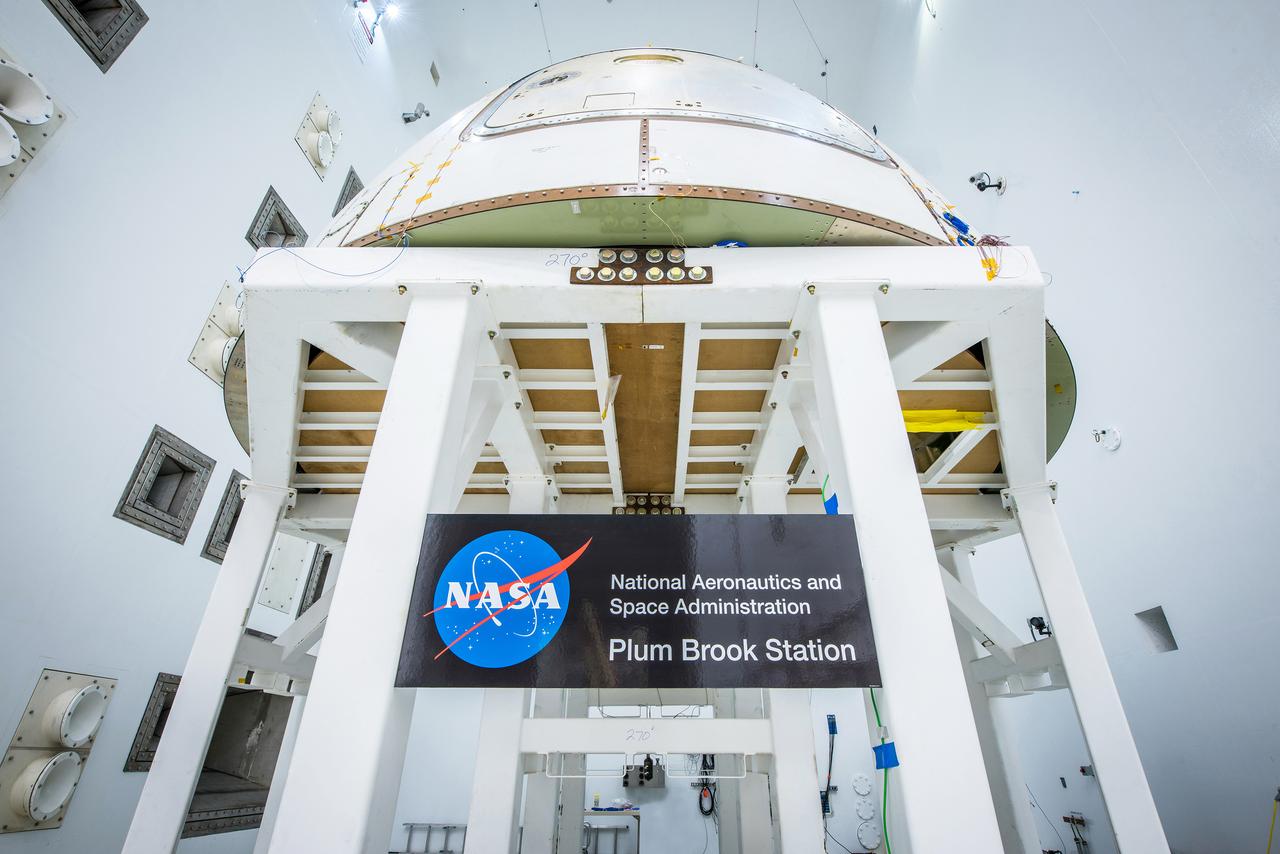
The ogive panels protect Orion's crew module from harsh acoustic conditions at launch and in case of an abort. Acoustic testing of the ogive hatch starts today at Space Power Facility at NASA Glenn Research Center's Plum Brook station in Sandusky, Ohio takes place on July 19, 2017. The ogive is installed in the Reverberant Acoustic Chamber where it will be blasted with 161 db of sound to simulate launch conditions.
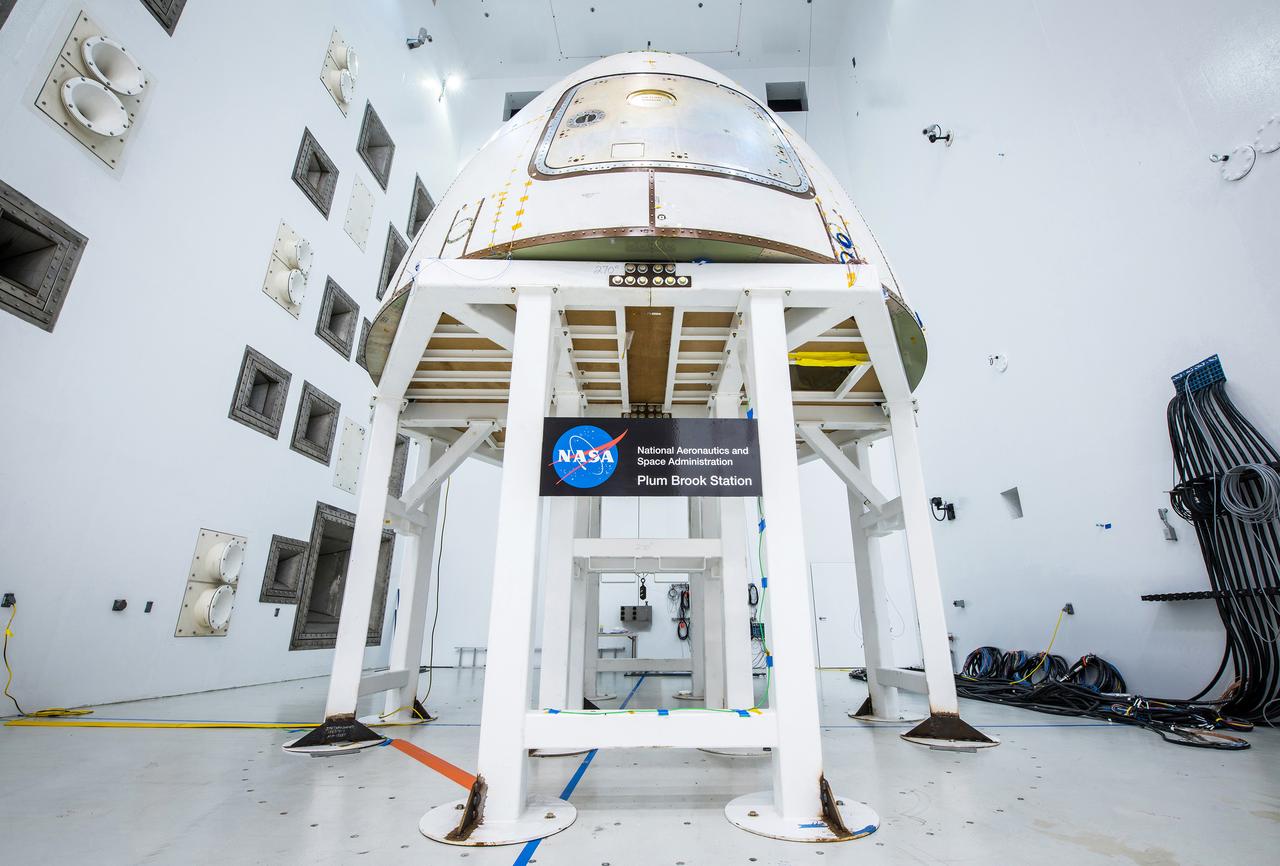
The ogive panels protect Orion's crew module from harsh acoustic conditions at launch and in case of an abort. Acoustic testing of the ogive hatch starts today at Space Power Facility at NASA Glenn Research Center's Plum Brook station in Sandusky, Ohio takes place on July 19, 2017. The ogive is installed in the Reverberant Acoustic Chamber where it will be blasted with 161 db of sound to simulate launch conditions.
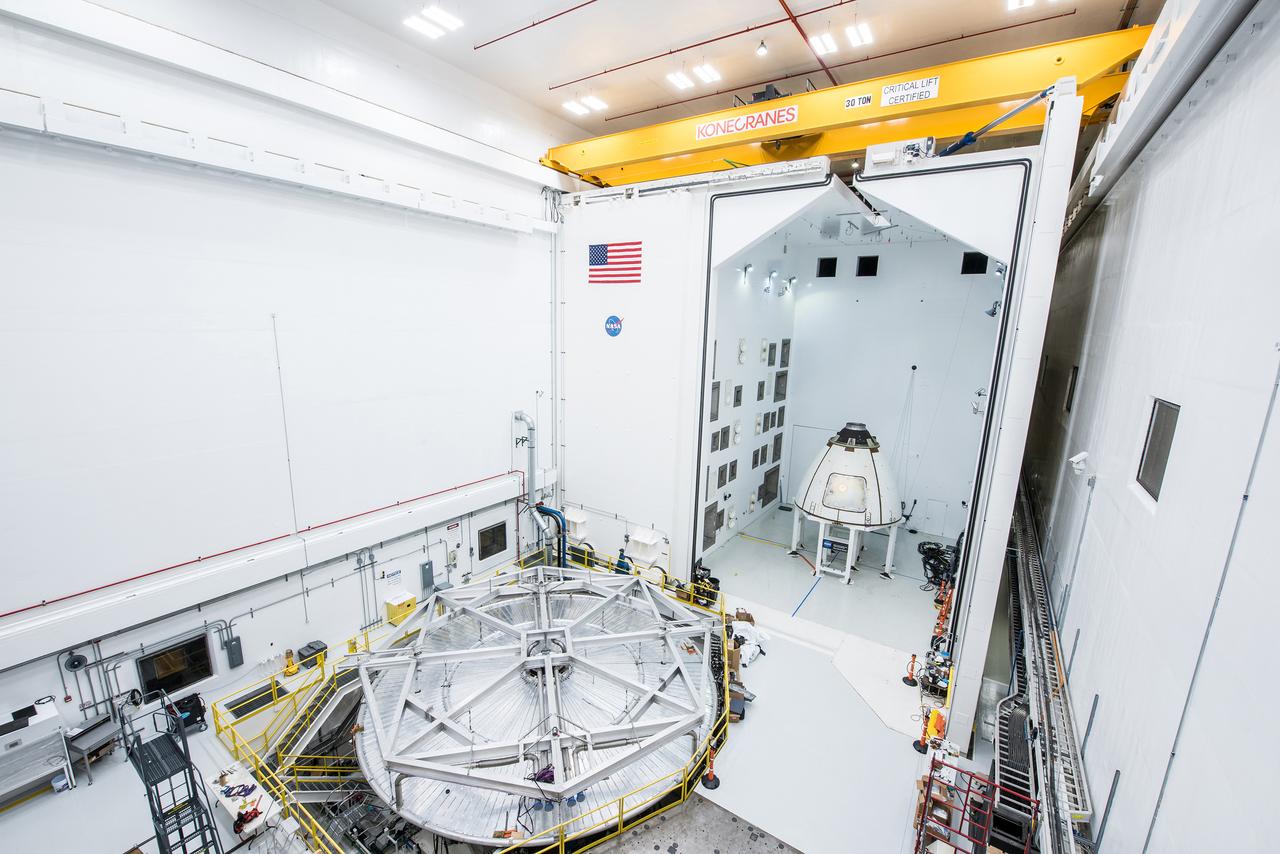
The ogive panels protect Orion's crew module from harsh acoustic conditions at launch and in case of an abort. Acoustic testing of the ogive hatch starts today at Space Power Facility at NASA Glenn Research Center's Plum Brook station in Sandusky, Ohio takes place on July 19, 2017. The ogive is installed in the Reverberant Acoustic Chamber where it will be blasted with 161 db of sound to simulate launch conditions.
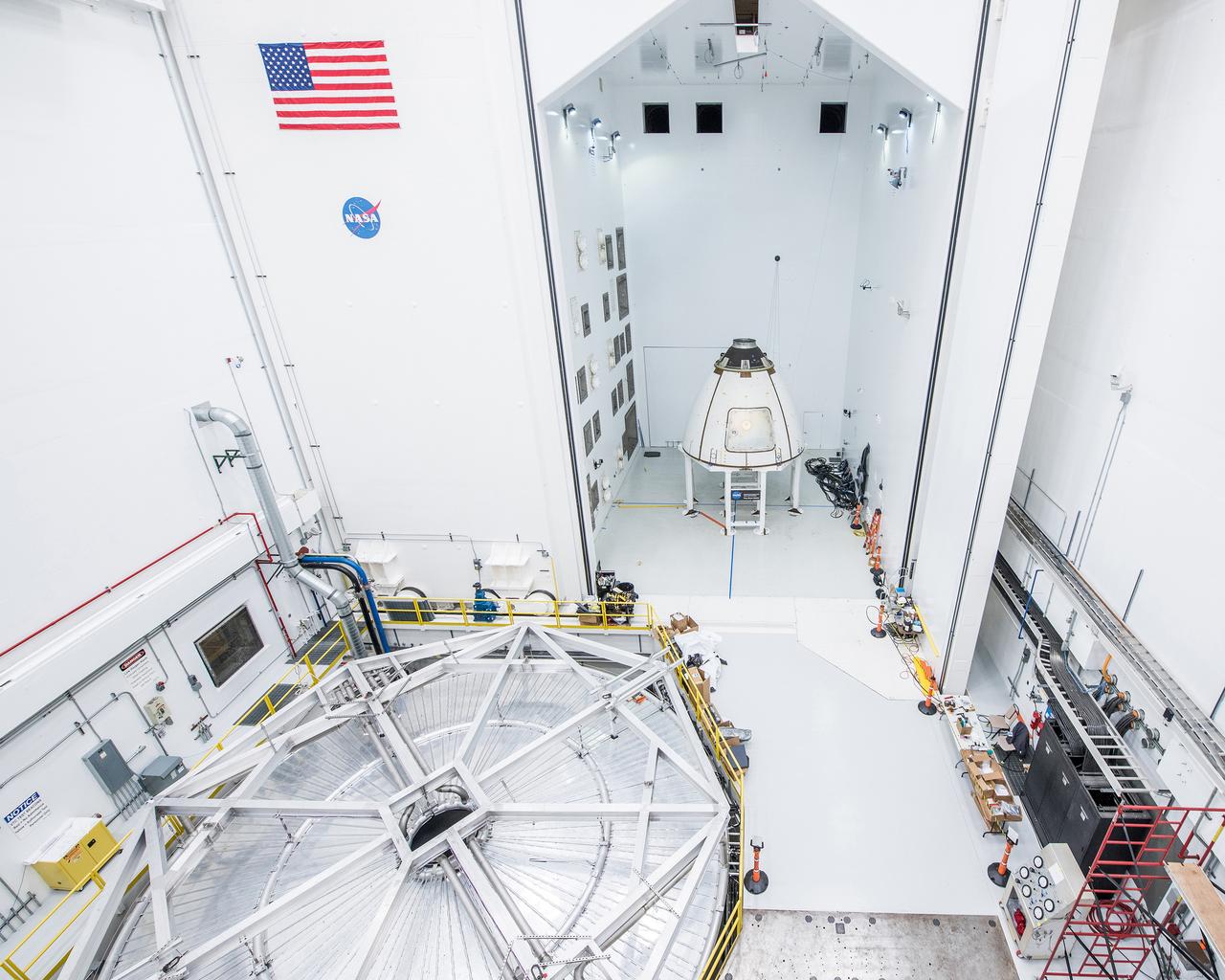
The ogive panels protect Orion's crew module from harsh acoustic conditions at launch and in case of an abort. Acoustic testing of the ogive hatch starts today at Space Power Facility at NASA Glenn Research Center's Plum Brook station in Sandusky, Ohio takes place on July 19, 2017. The ogive is installed in the Reverberant Acoustic Chamber where it will be blasted with 161 db of sound to simulate launch conditions.
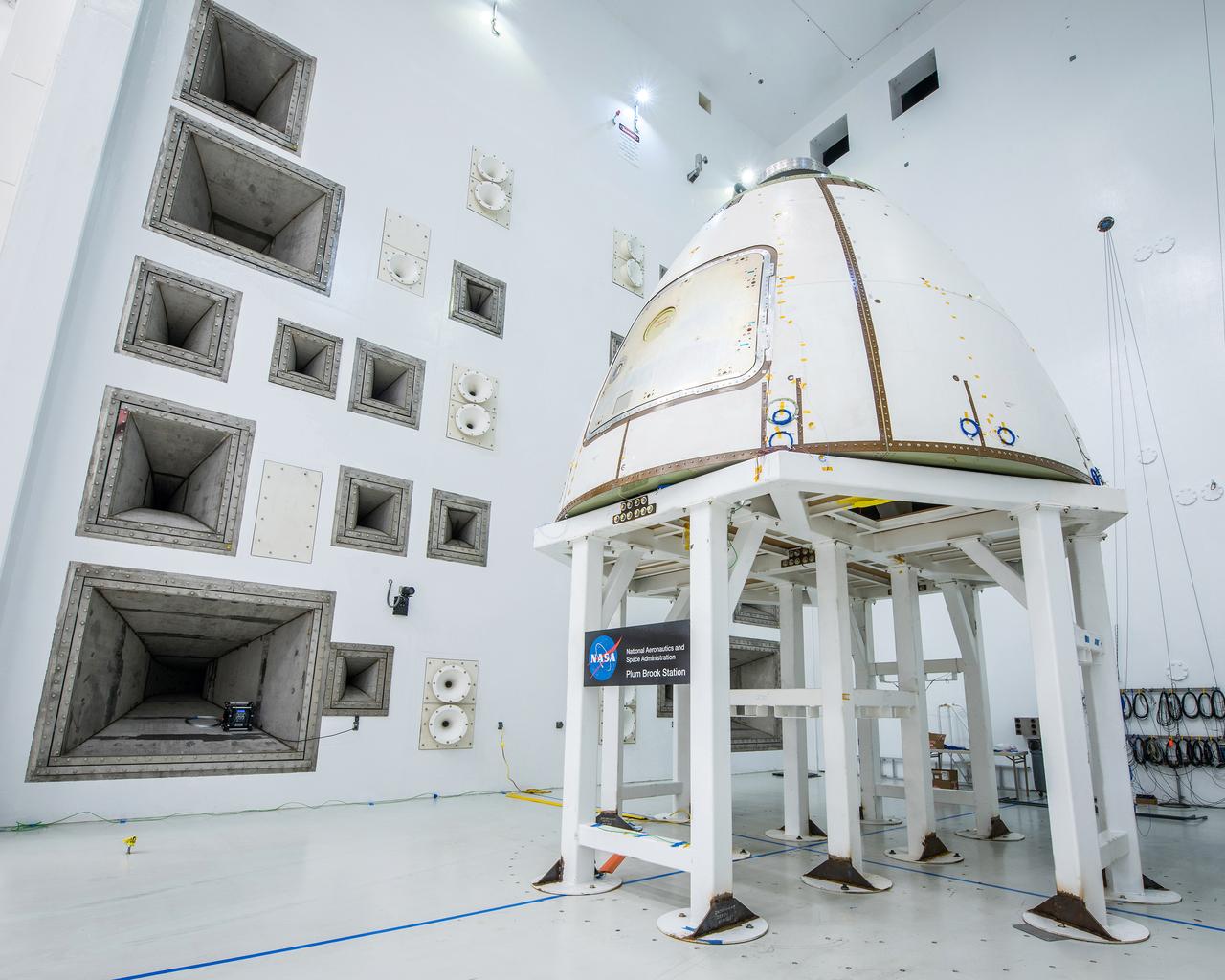
The ogive panels protect Orion's crew module from harsh acoustic conditions at launch and in case of an abort. Acoustic testing of the ogive hatch starts today at Space Power Facility at NASA Glenn Research Center's Plum Brook station in Sandusky, Ohio takes place on July 19, 2017. The ogive is installed in the Reverberant Acoustic Chamber where it will be blasted with 161 db of sound to simulate launch conditions.
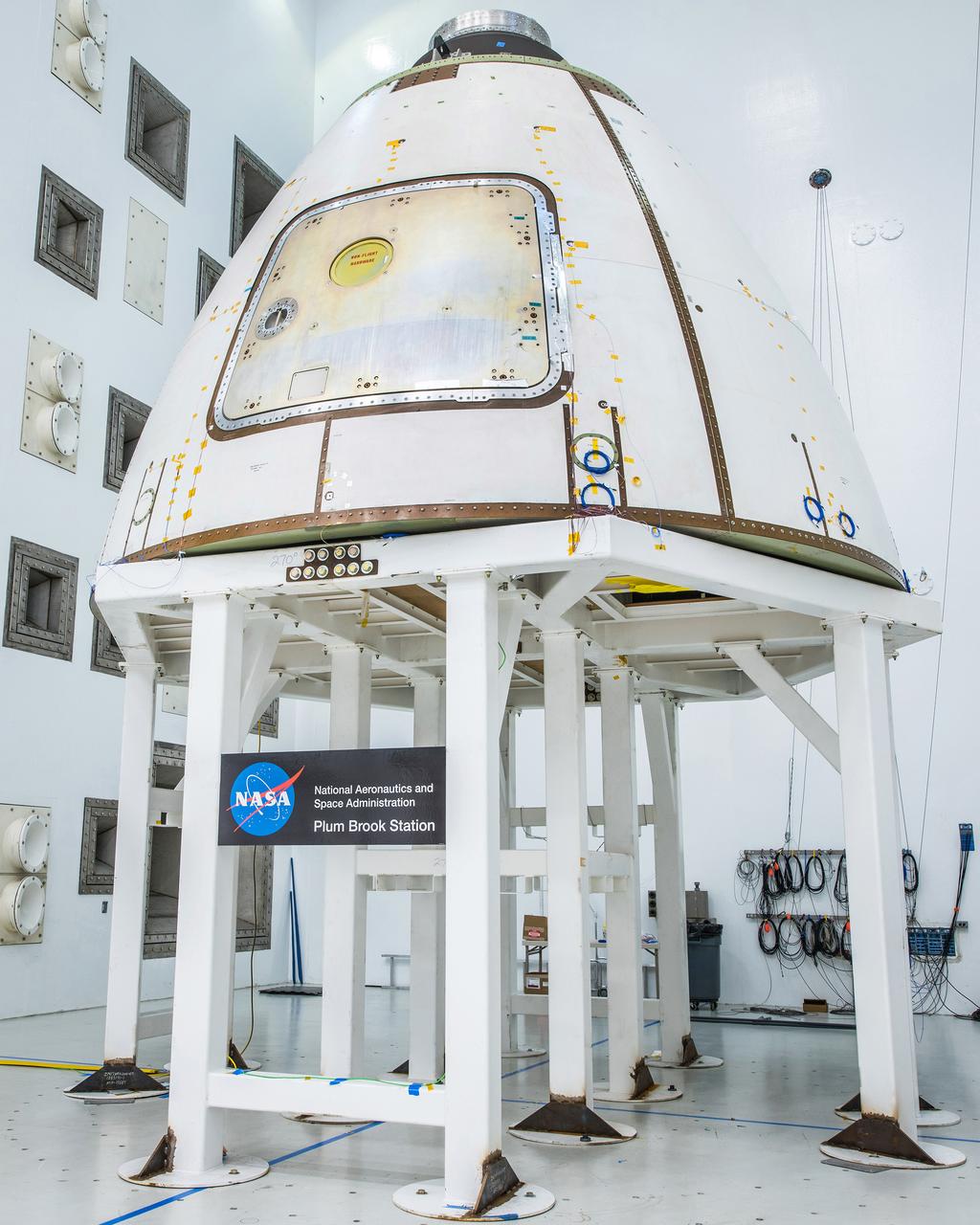
The ogive panels protect Orion's crew module from harsh acoustic conditions at launch and in case of an abort. Acoustic testing of the ogive hatch starts today at Space Power Facility at NASA Glenn Research Center's Plum Brook station in Sandusky, Ohio takes place on July 19, 2017. The ogive is installed in the Reverberant Acoustic Chamber where it will be blasted with 161 db of sound to simulate launch conditions.
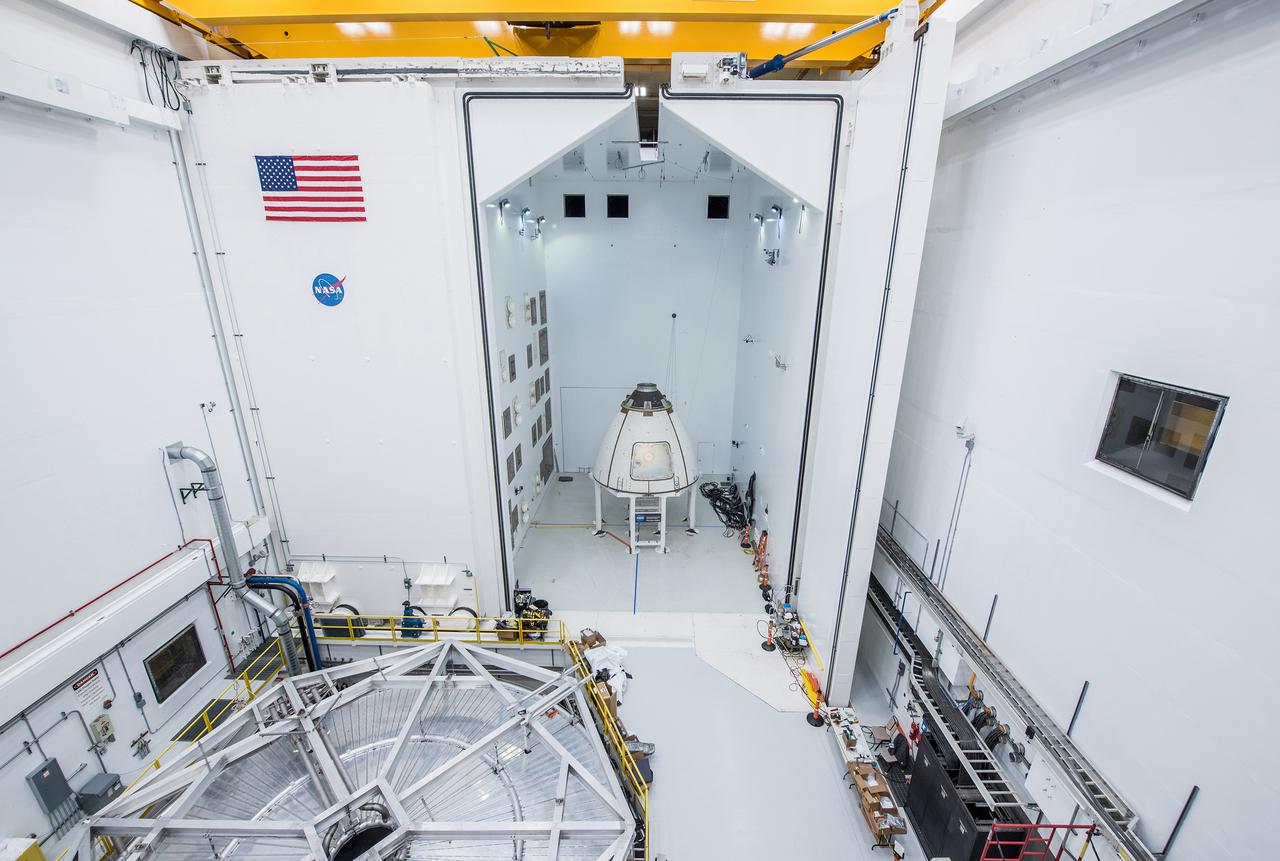
The ogive panels protect Orion's crew module from harsh acoustic conditions at launch and in case of an abort. Acoustic testing of the ogive hatch starts today at Space Power Facility at NASA Glenn Research Center's Plum Brook station in Sandusky, Ohio takes place on July 19, 2017. The ogive is installed in the Reverberant Acoustic Chamber where it will be blasted with 161 db of sound to simulate launch conditions.
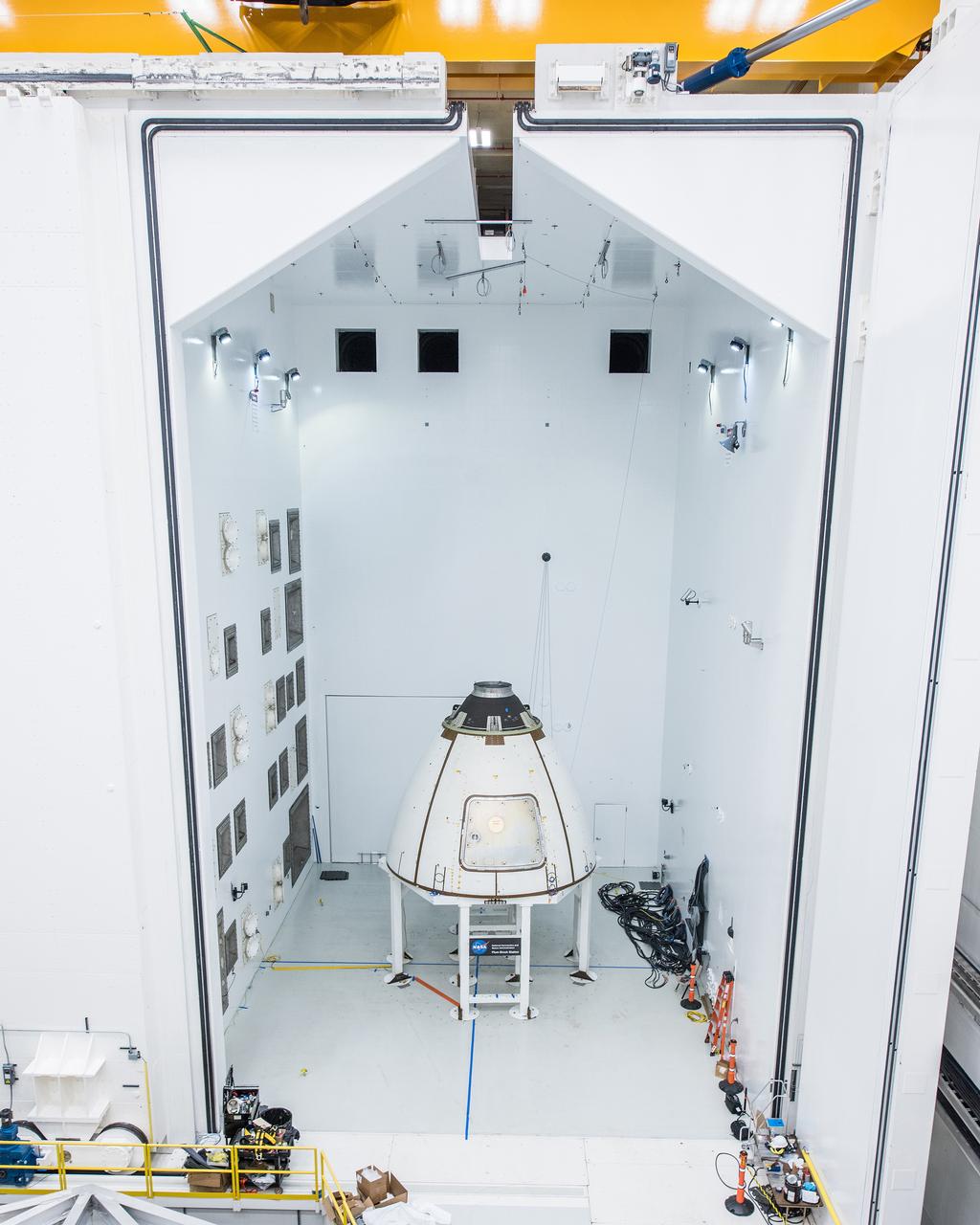
The ogive panels protect Orion's crew module from harsh acoustic conditions at launch and in case of an abort. Acoustic testing of the ogive hatch starts today at Space Power Facility at NASA Glenn Research Center's Plum Brook station in Sandusky, Ohio takes place on July 19, 2017. The ogive is installed in the Reverberant Acoustic Chamber where it will be blasted with 161 db of sound to simulate launch conditions.
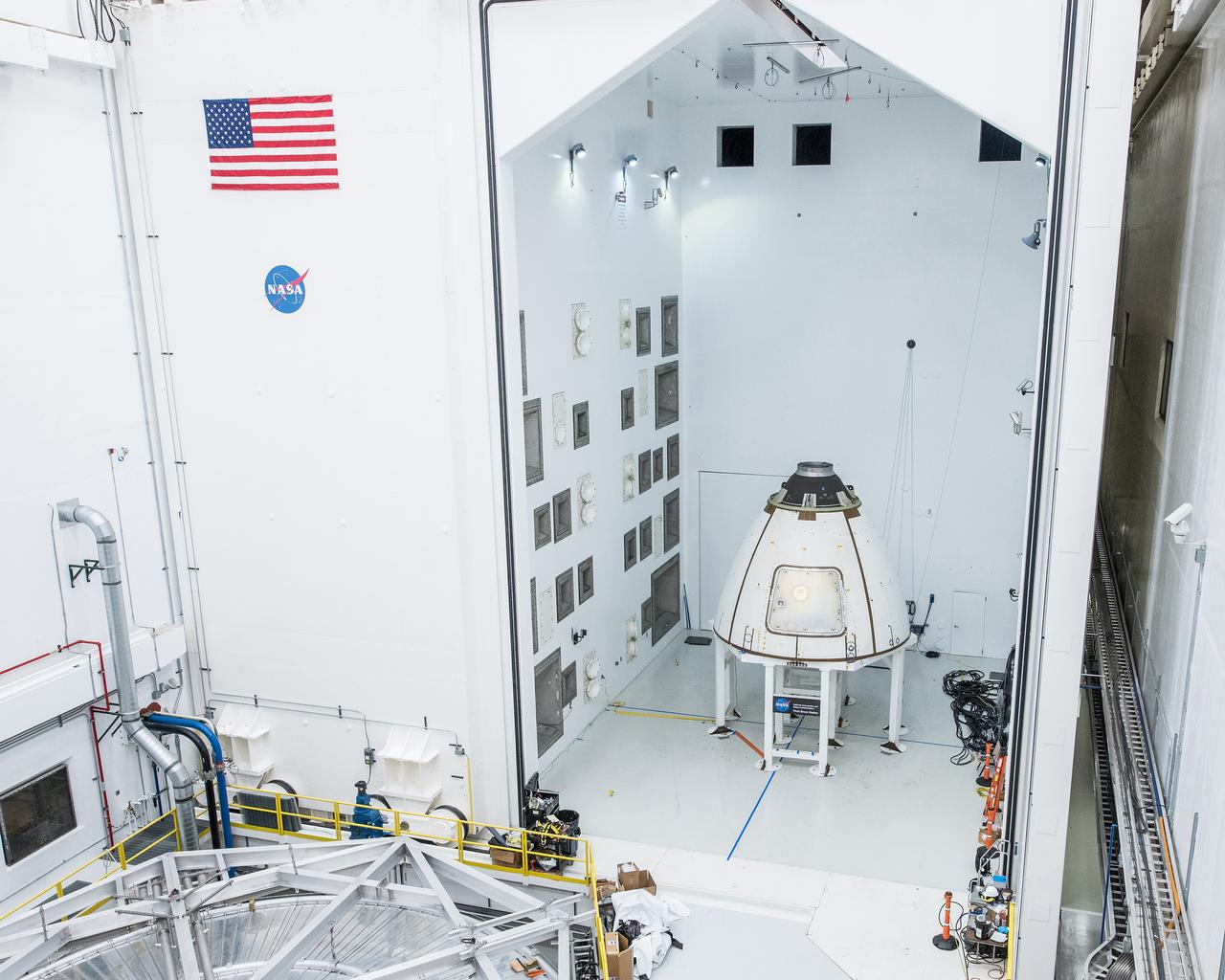
The ogive panels protect Orion's crew module from harsh acoustic conditions at launch and in case of an abort. Acoustic testing of the ogive hatch starts today at Space Power Facility at NASA Glenn Research Center's Plum Brook station in Sandusky, Ohio takes place on July 19, 2017. The ogive is installed in the Reverberant Acoustic Chamber where it will be blasted with 161 db of sound to simulate launch conditions.
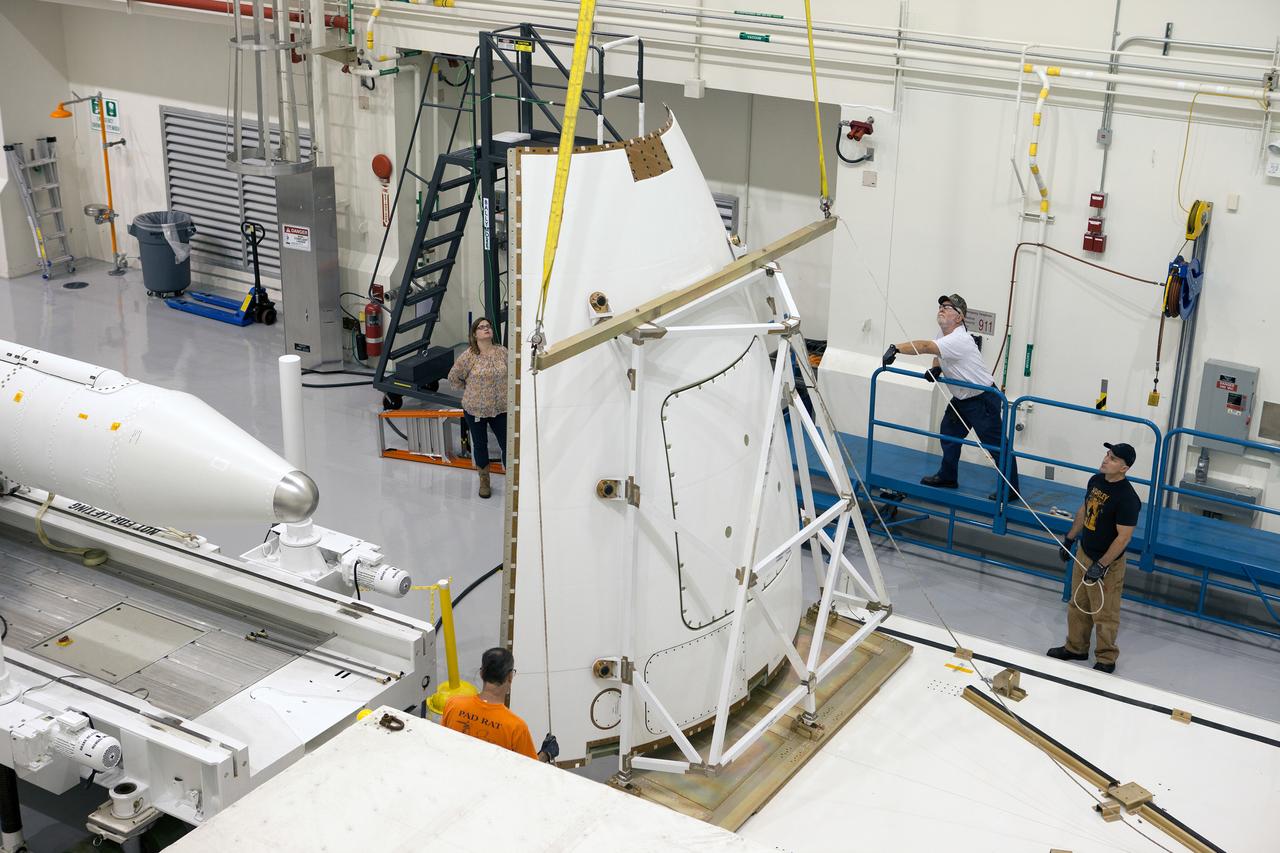
The launch abort system ogive panels are prepared for installation onto the Orion Exploration Flight Test-1 (EFT-1) launch abort system in the Launch Abort System Facility (LASF) at Kennedy Space Center on April 16, 2014. Part of Batch image transfer from Flickr.

The launch abort system ogive panels are prepared for installation onto the Orion Exploration Flight Test-1 (EFT-1) launch abort system in the Launch Abort System Facility (LASF) at Kennedy Space Center on April 16, 2014. Part of Batch image transfer from Flickr.

The launch abort system ogive panels are prepared for installation onto the Orion Exploration Flight Test-1 (EFT-1) launch abort system in the Launch Abort System Facility (LASF) at Kennedy Space Center on April 16, 2014. Part of Batch image transfer from Flickr.
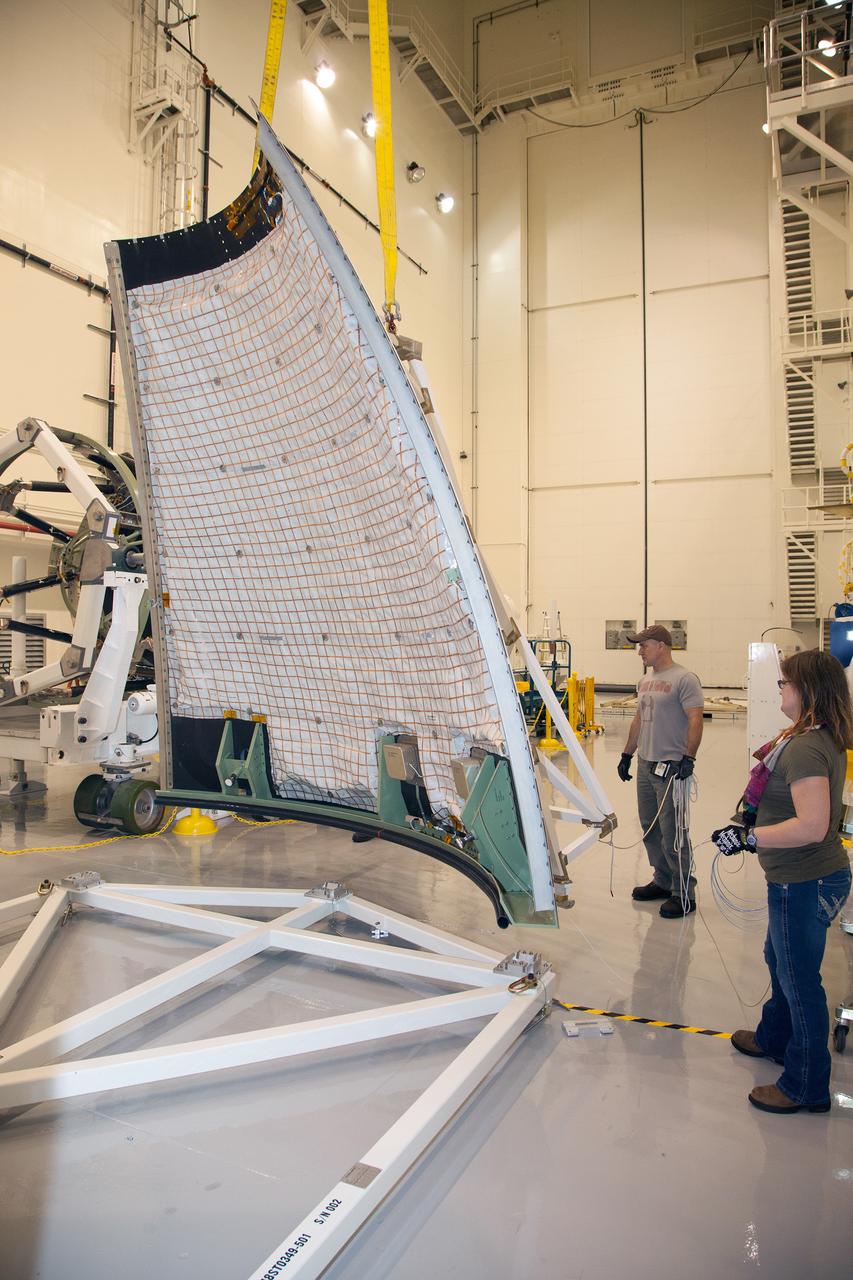
The launch abort system ogive panels are prepared for installation onto the Orion Exploration Flight Test-1 (EFT-1) launch abort system in the Launch Abort System Facility (LASF) at Kennedy Space Center on April 16, 2014. Part of Batch image transfer from Flickr.
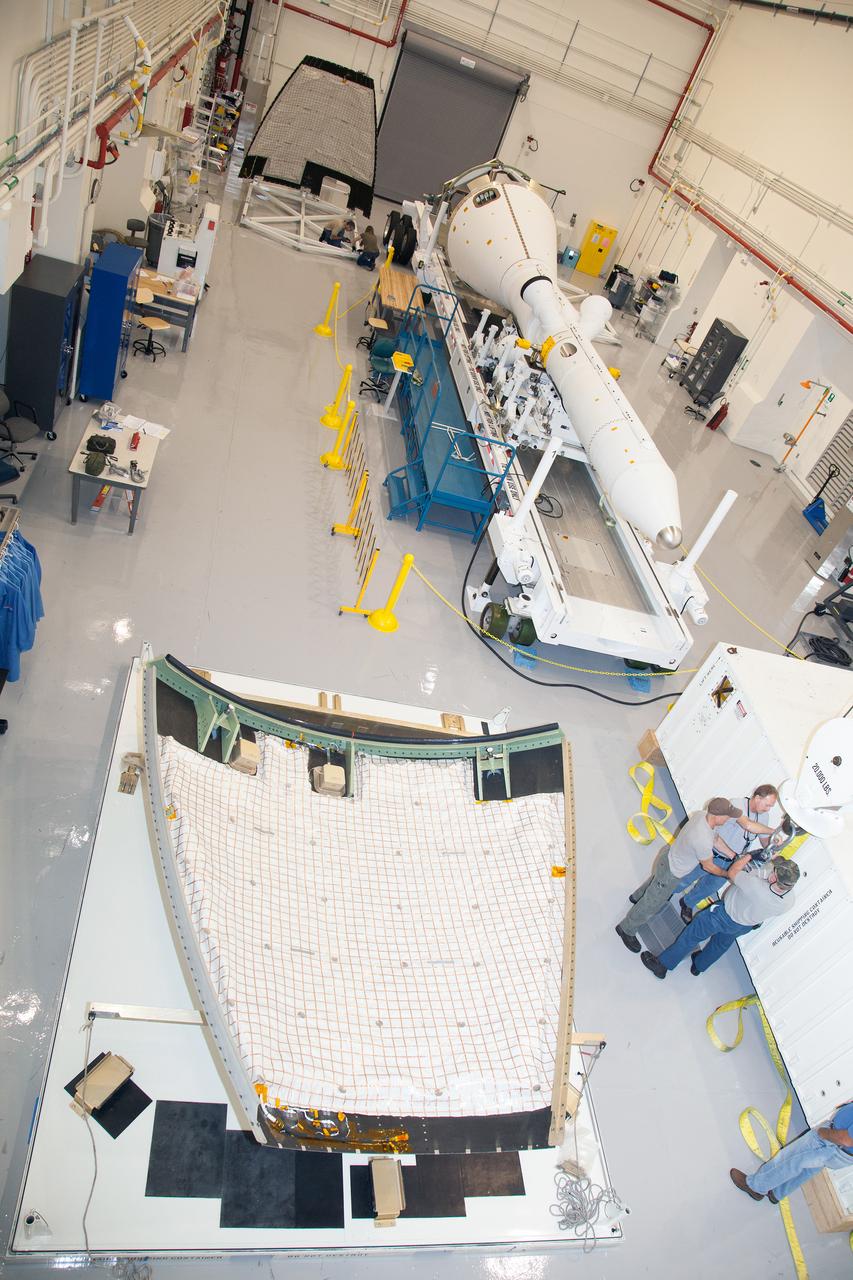
The launch abort system ogive panels are prepared for installation onto the Orion Exploration Flight Test-1 (EFT-1) launch abort system in the Launch Abort System Facility (LASF) at Kennedy Space Center on April 16, 2014. Part of Batch image transfer from Flickr.
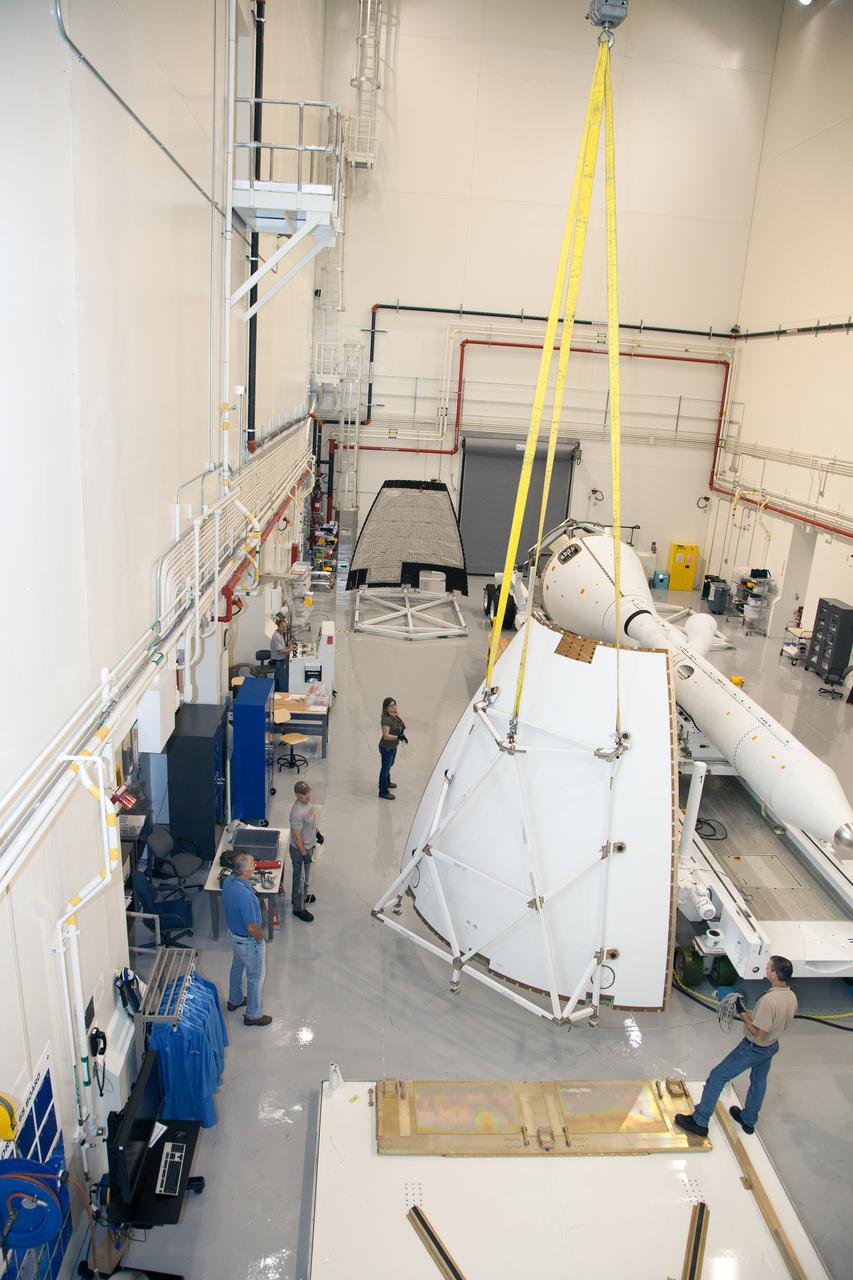
The launch abort system ogive panels are prepared for installation onto the Orion Exploration Flight Test-1 (EFT-1) launch abort system in the Launch Abort System Facility (LASF) at Kennedy Space Center on April 16, 2014. Part of Batch image transfer from Flickr.
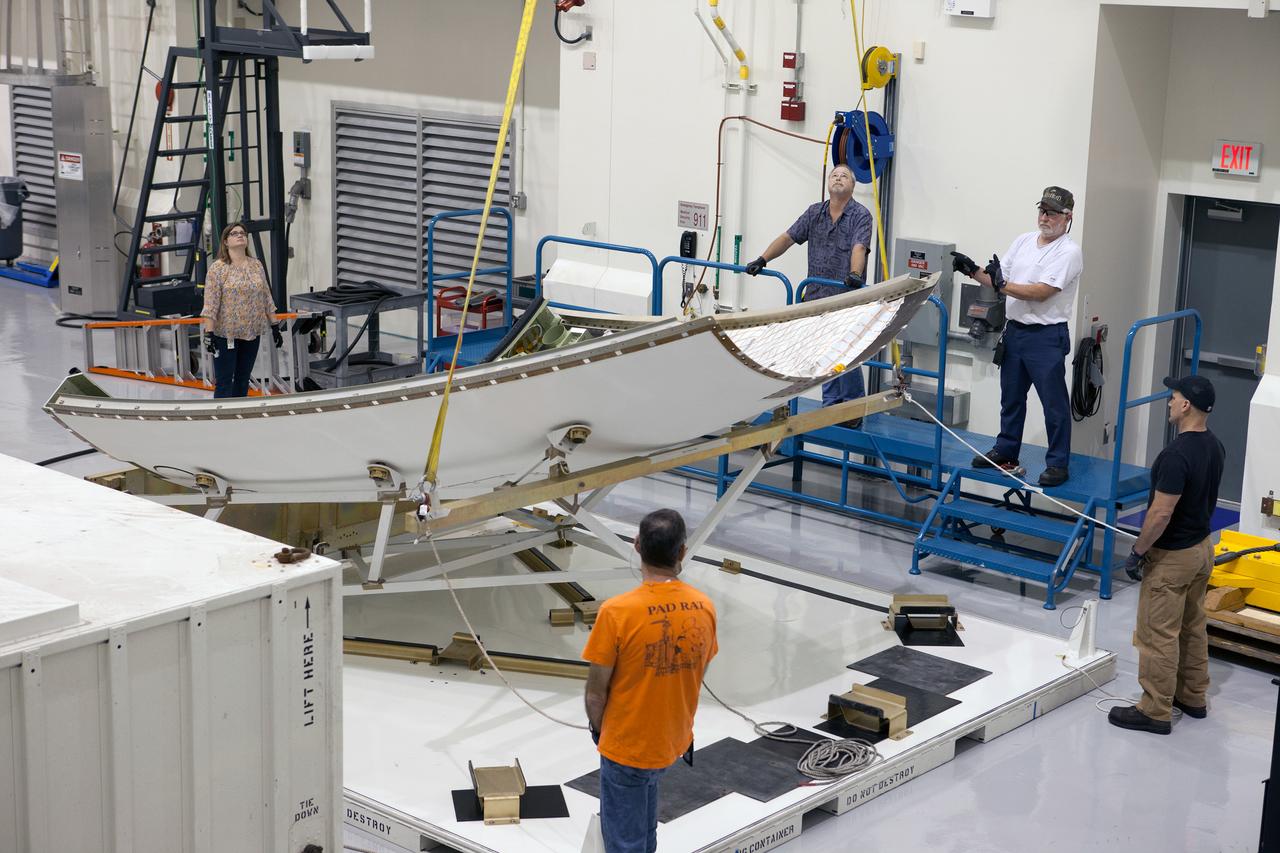
The launch abort system ogive panels are prepared for installation onto the Orion Exploration Flight Test-1 (EFT-1) launch abort system in the Launch Abort System Facility (LASF) at Kennedy Space Center on April 16, 2014. Part of Batch image transfer from Flickr.

The launch abort system ogive panels are prepared for installation onto the Orion Exploration Flight Test-1 (EFT-1) launch abort system in the Launch Abort System Facility (LASF) at Kennedy Space Center on April 16, 2014. Part of Batch image transfer from Flickr.
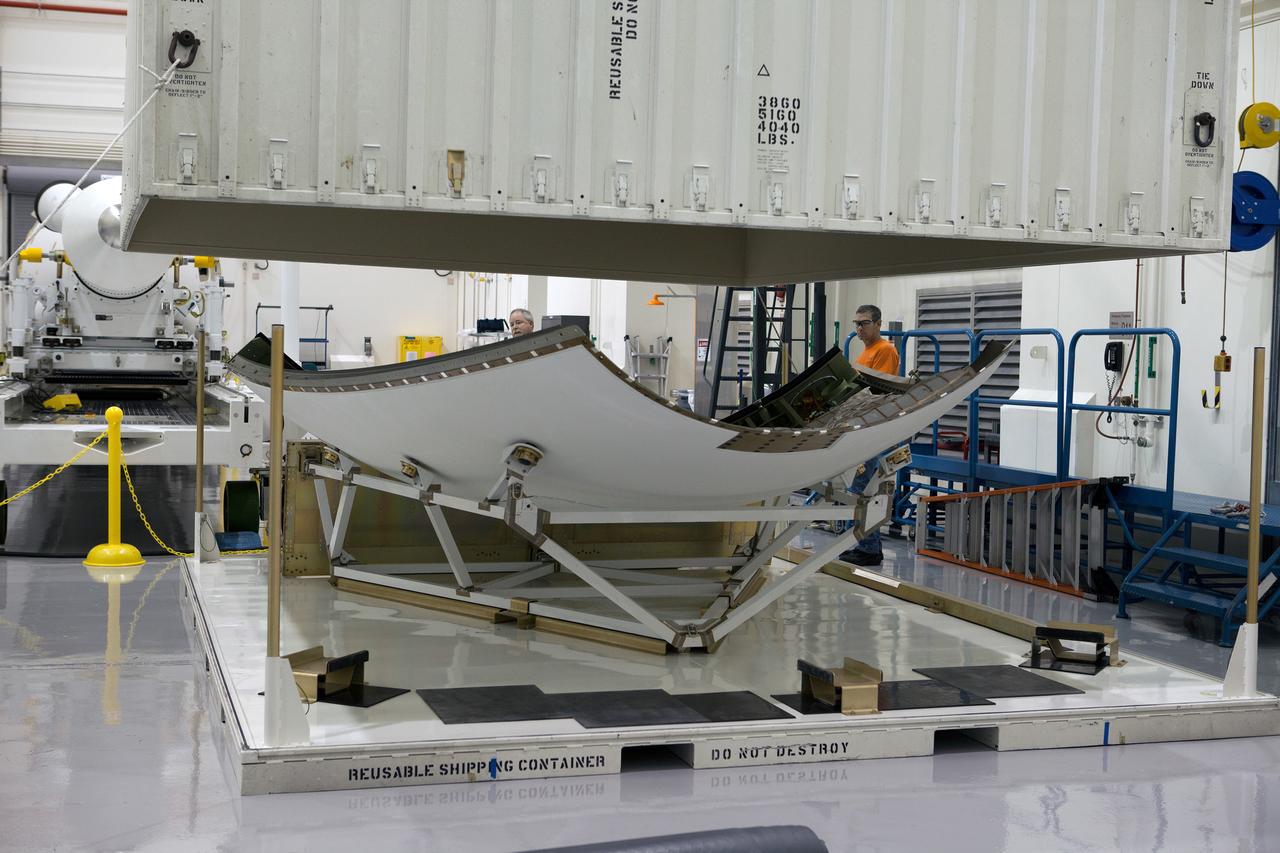
The launch abort system ogive panels are prepared for installation onto the Orion Exploration Flight Test-1 (EFT-1) launch abort system in the Launch Abort System Facility (LASF) at Kennedy Space Center on April 16, 2014. Part of Batch image transfer from Flickr.

The launch abort system ogive panels are prepared for installation onto the Orion Exploration Flight Test-1 (EFT-1) launch abort system in the Launch Abort System Facility (LASF) at Kennedy Space Center on April 16, 2014. Part of Batch image transfer from Flickr.

The launch abort system ogive panels are prepared for installation onto the Orion Exploration Flight Test-1 (EFT-1) launch abort system in the Launch Abort System Facility (LASF) at Kennedy Space Center on April 16, 2014. Part of Batch image transfer from Flickr.
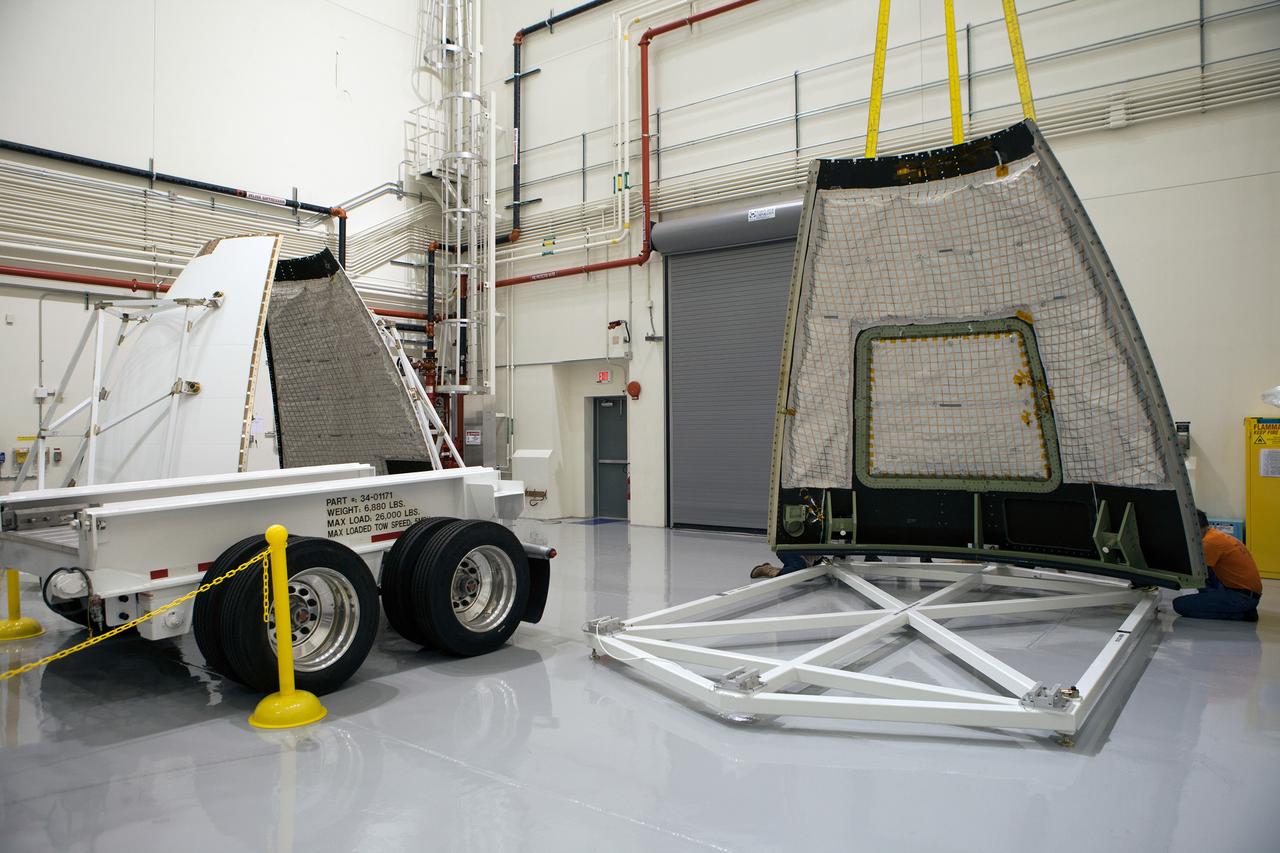
The launch abort system ogive panels are prepared for installation onto the Orion Exploration Flight Test-1 (EFT-1) launch abort system in the Launch Abort System Facility (LASF) at Kennedy Space Center on April 16, 2014. Part of Batch image transfer from Flickr.

The launch abort system ogive panels are prepared for installation onto the Orion Exploration Flight Test-1 (EFT-1) launch abort system in the Launch Abort System Facility (LASF) at Kennedy Space Center on April 16, 2014. Part of Batch image transfer from Flickr.
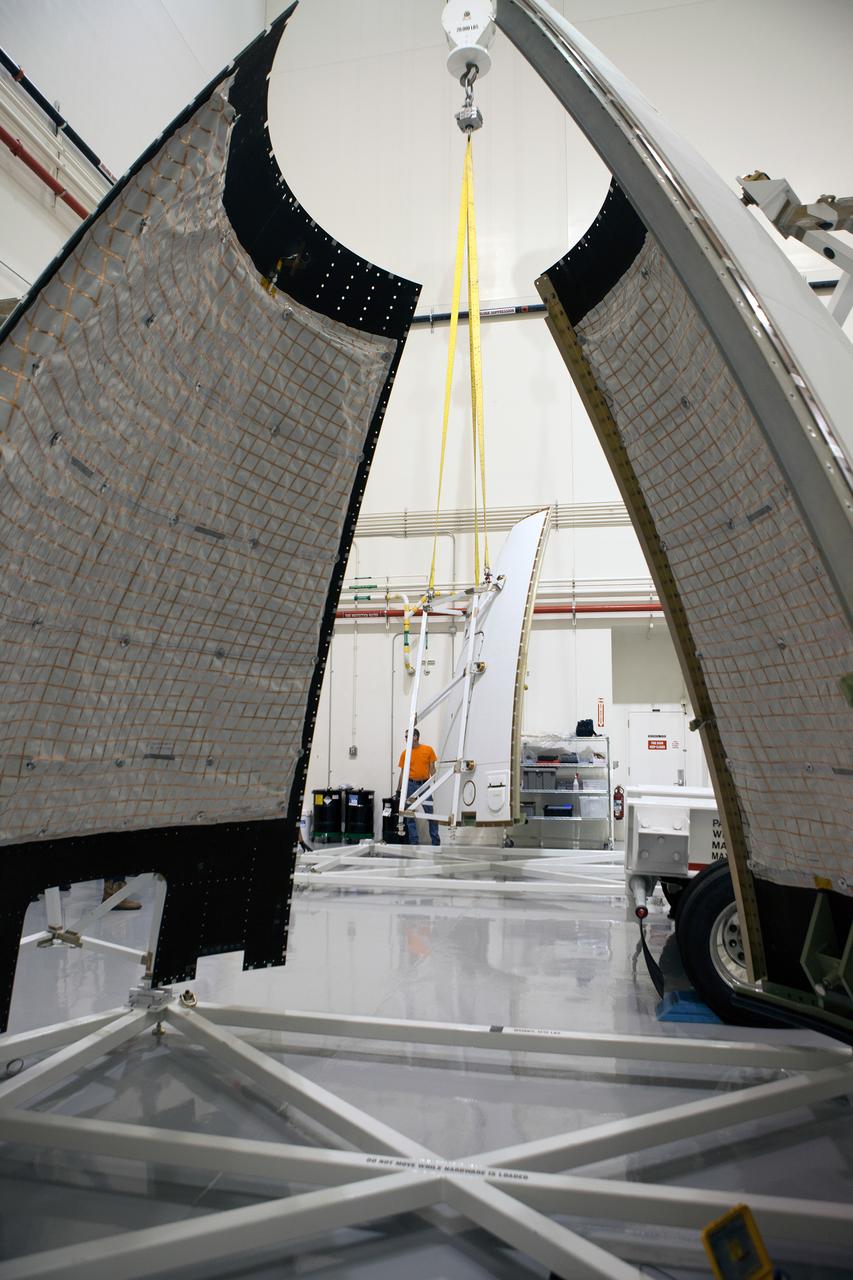
The launch abort system ogive panels are prepared for installation onto the Orion Exploration Flight Test-1 (EFT-1) launch abort system in the Launch Abort System Facility (LASF) at Kennedy Space Center on April 16, 2014. Part of Batch image transfer from Flickr.
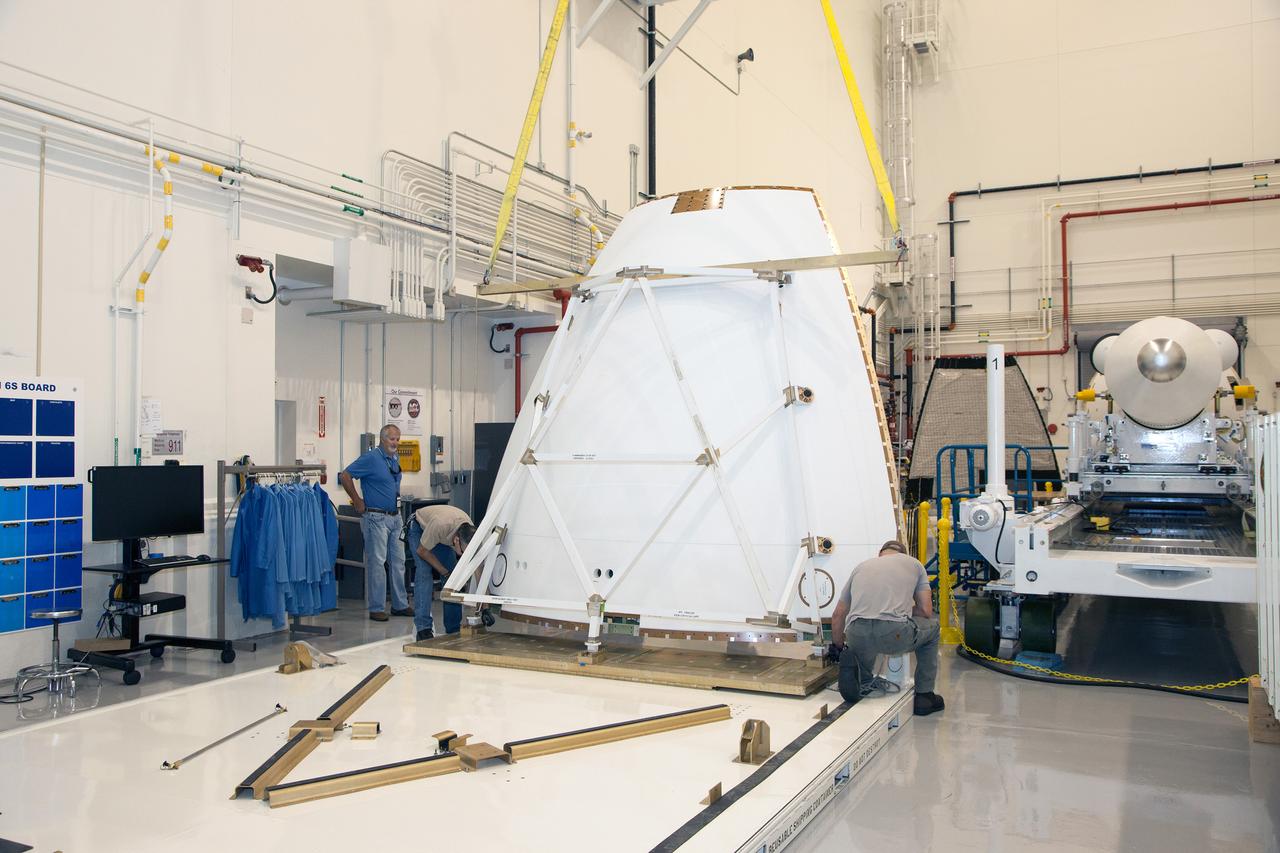
The launch abort system ogive panels are prepared for installation onto the Orion Exploration Flight Test-1 (EFT-1) launch abort system in the Launch Abort System Facility (LASF) at Kennedy Space Center on April 16, 2014. Part of Batch image transfer from Flickr.

The launch abort system ogive panels are prepared for installation onto the Orion Exploration Flight Test-1 (EFT-1) launch abort system in the Launch Abort System Facility (LASF) at Kennedy Space Center on April 16, 2014. Part of Batch image transfer from Flickr.
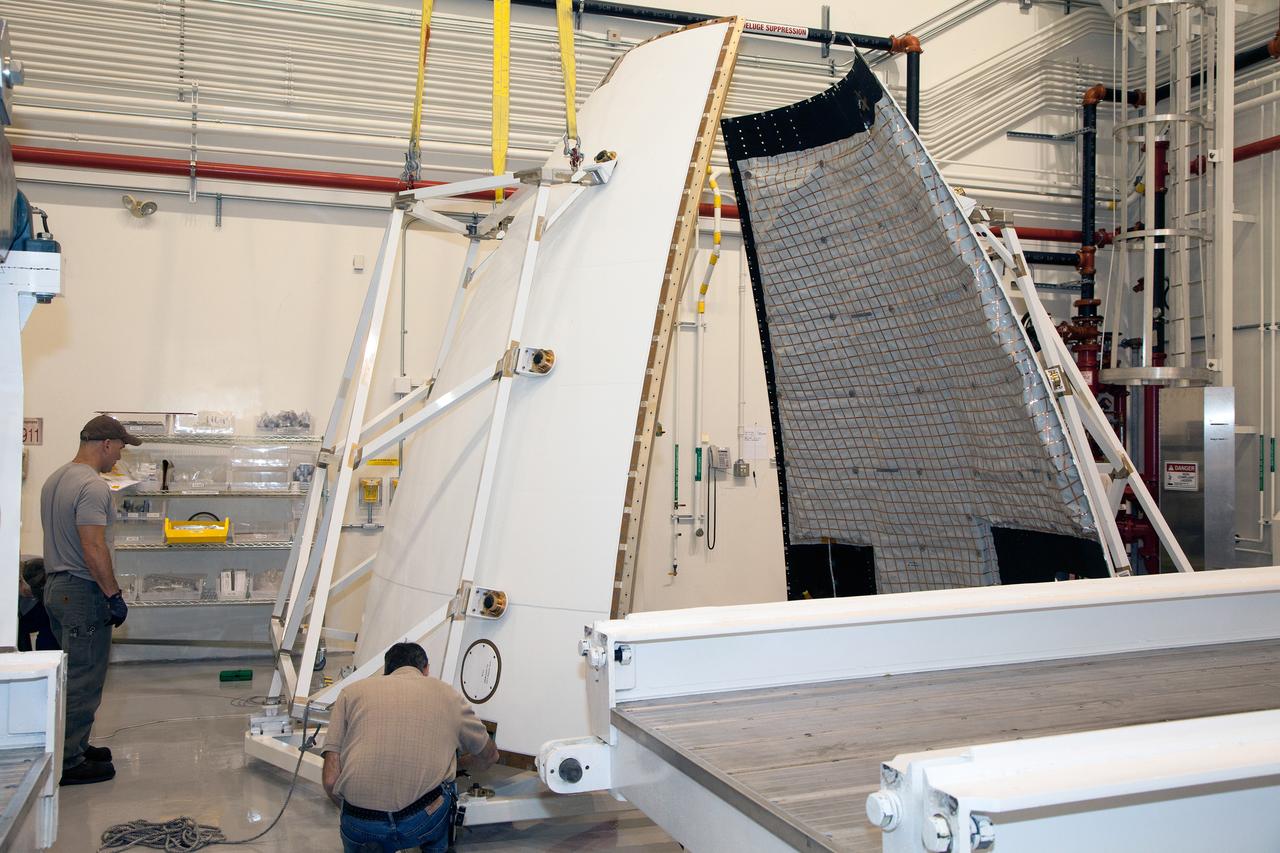
The launch abort system ogive panels are prepared for installation onto the Orion Exploration Flight Test-1 (EFT-1) launch abort system in the Launch Abort System Facility (LASF) at Kennedy Space Center on April 16, 2014. Part of Batch image transfer from Flickr.

The launch abort system ogive panels are prepared for installation onto the Orion Exploration Flight Test-1 (EFT-1) launch abort system in the Launch Abort System Facility (LASF) at Kennedy Space Center on April 16, 2014. Part of Batch image transfer from Flickr.
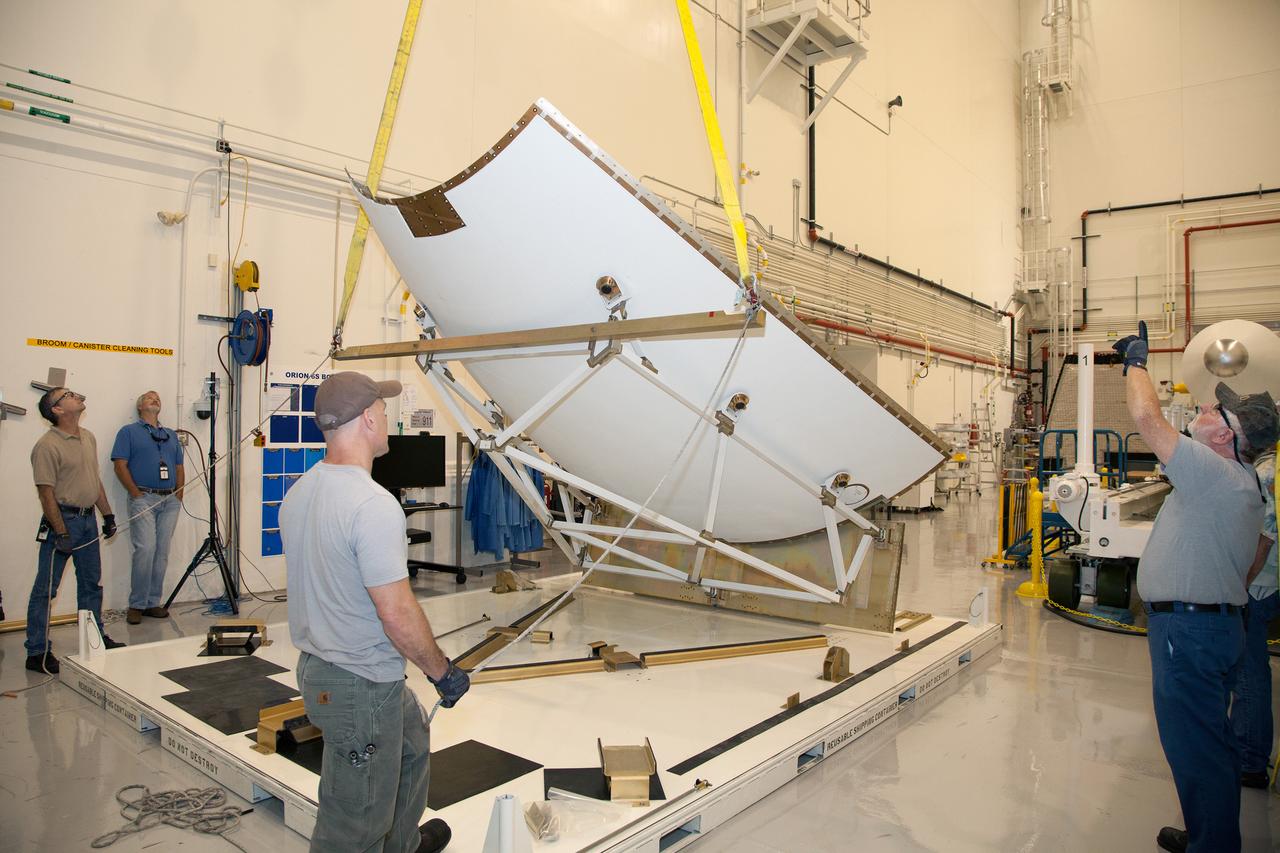
The launch abort system ogive panels are prepared for installation onto the Orion Exploration Flight Test-1 (EFT-1) launch abort system in the Launch Abort System Facility (LASF) at Kennedy Space Center on April 16, 2014. Part of Batch image transfer from Flickr.
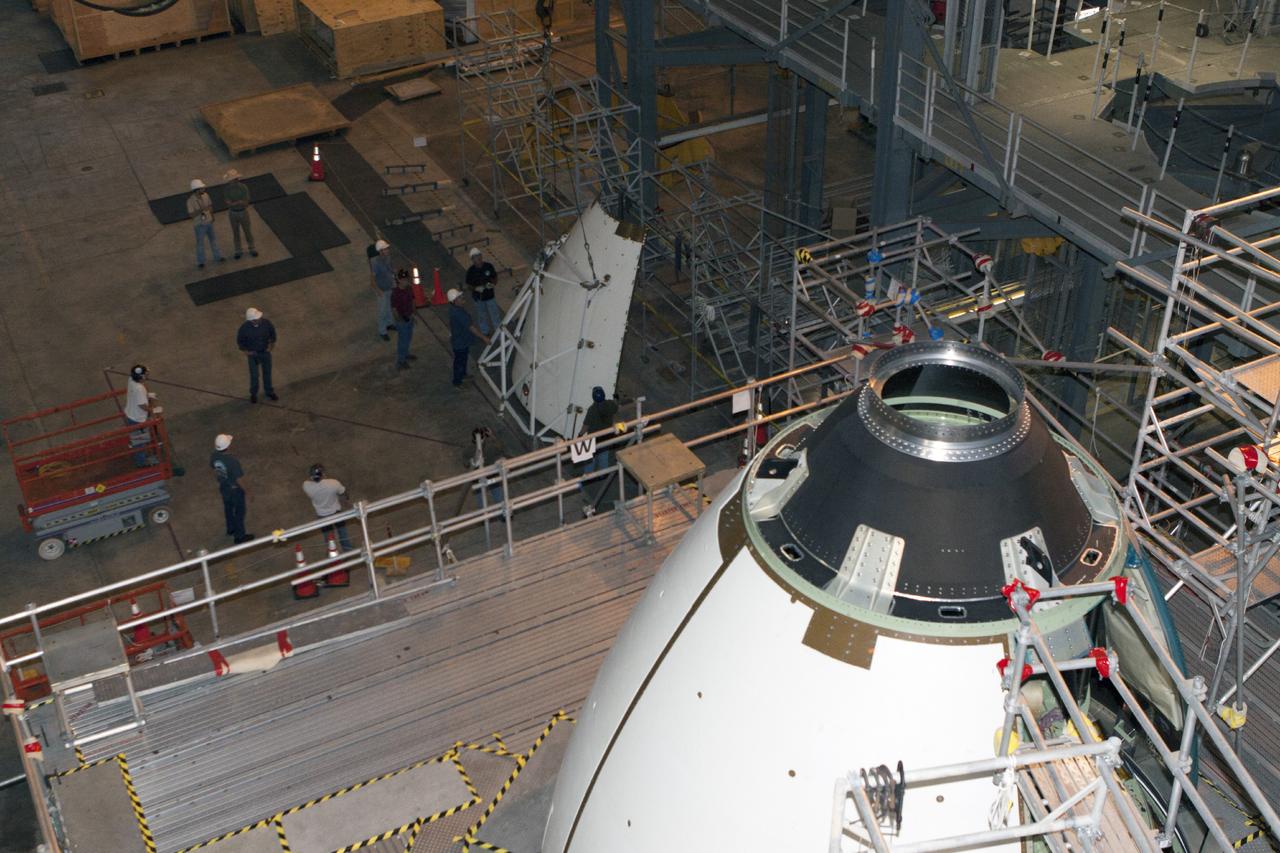
CAPE CANAVERAL, Fla. – At NASA’s Kennedy Space Center in Florida, three ogive panels have been installed on the Orion ground test vehicle in Vehicle Assembly Building high bay 4. The fourth ogive panel is being lifted by crane for installation. The ogive panels enclose and protect the Orion spacecraft and attach to the Launch Abort System. The test vehicle is being used by the Ground Systems Development and Operations Program for path finding operations, including simulated manufacturing, assembly and stacking procedures. Orion is the exploration spacecraft designed to carry astronauts to destinations not yet explored by humans, including an asteroid and Mars. It will have emergency abort capability, sustain the crew during space travel and provide safe re-entry from deep space return velocities. The first unpiloted test flight of Orion is scheduled to launch in 2014 atop a Delta IV rocket and in 2017 on NASA’s Space Launch System rocket. For more information, visit www.nasa.gov/orion. Photo credit: Kim Shiflett
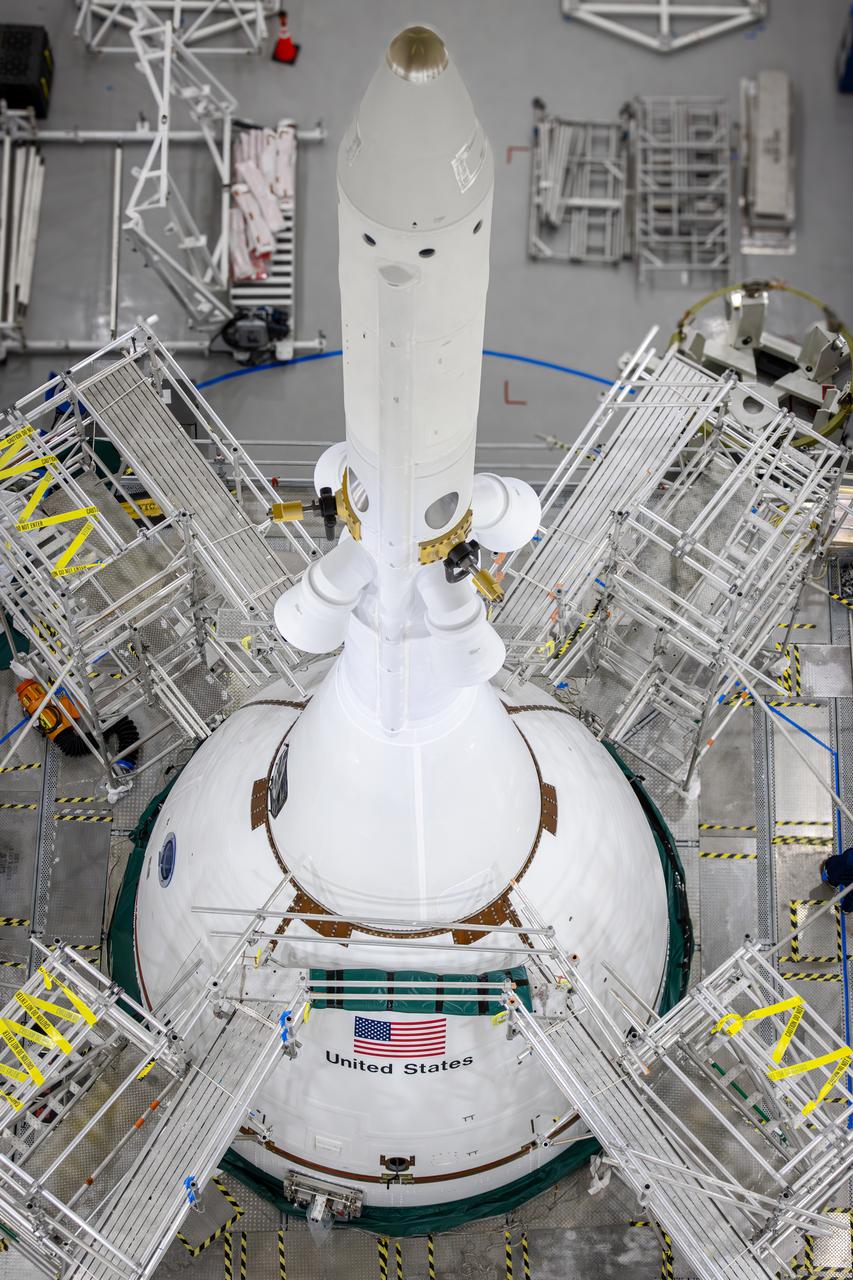
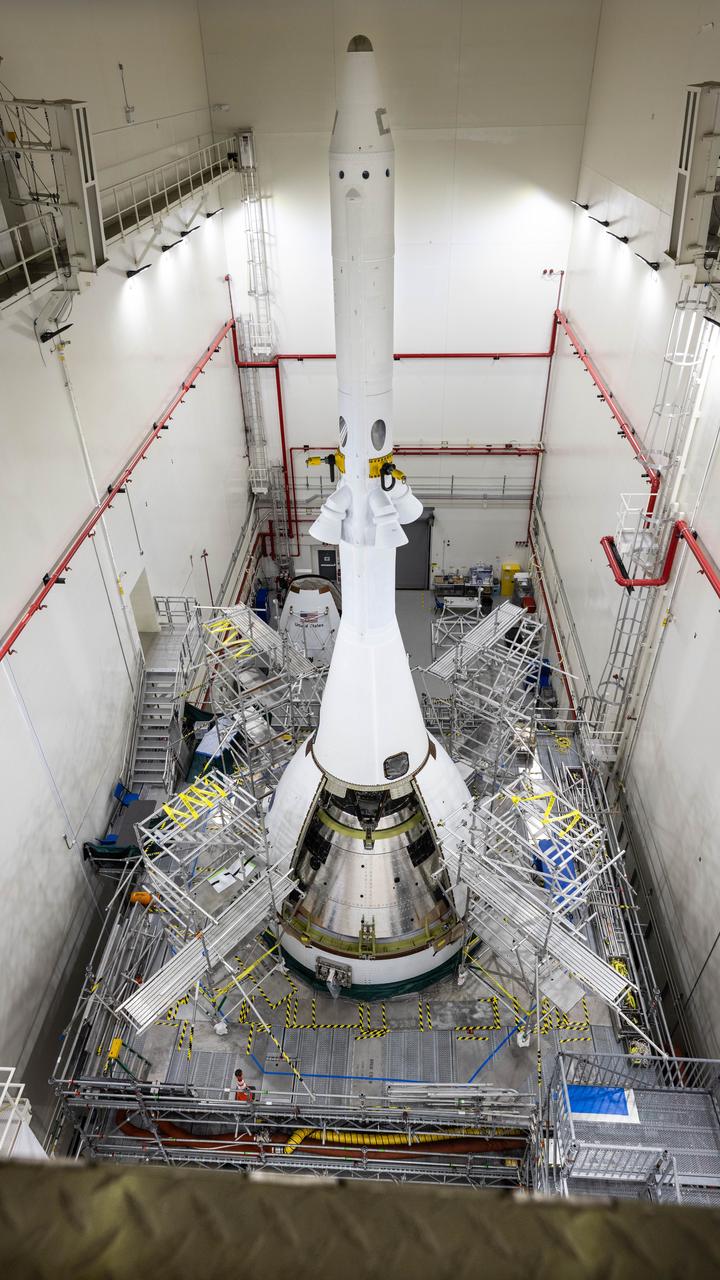
Teams with NASA’s Exploration Ground Systems attached the fourth and final ogive fairing for the launch abort system of the Orion spacecraft for the Artemis II mission. The fully installed fairings were photographed inside the Launch Abort System Facility high bay at NASA’s Kennedy Space Center in Florida on Sept. 17, 2025. The ogives are protective panels that will shield the crew module from the severe vibrations and sounds it will experience during launch, while the 44-foot-tall launch abort system will detach from the spacecraft after launch when it is no longer needed.
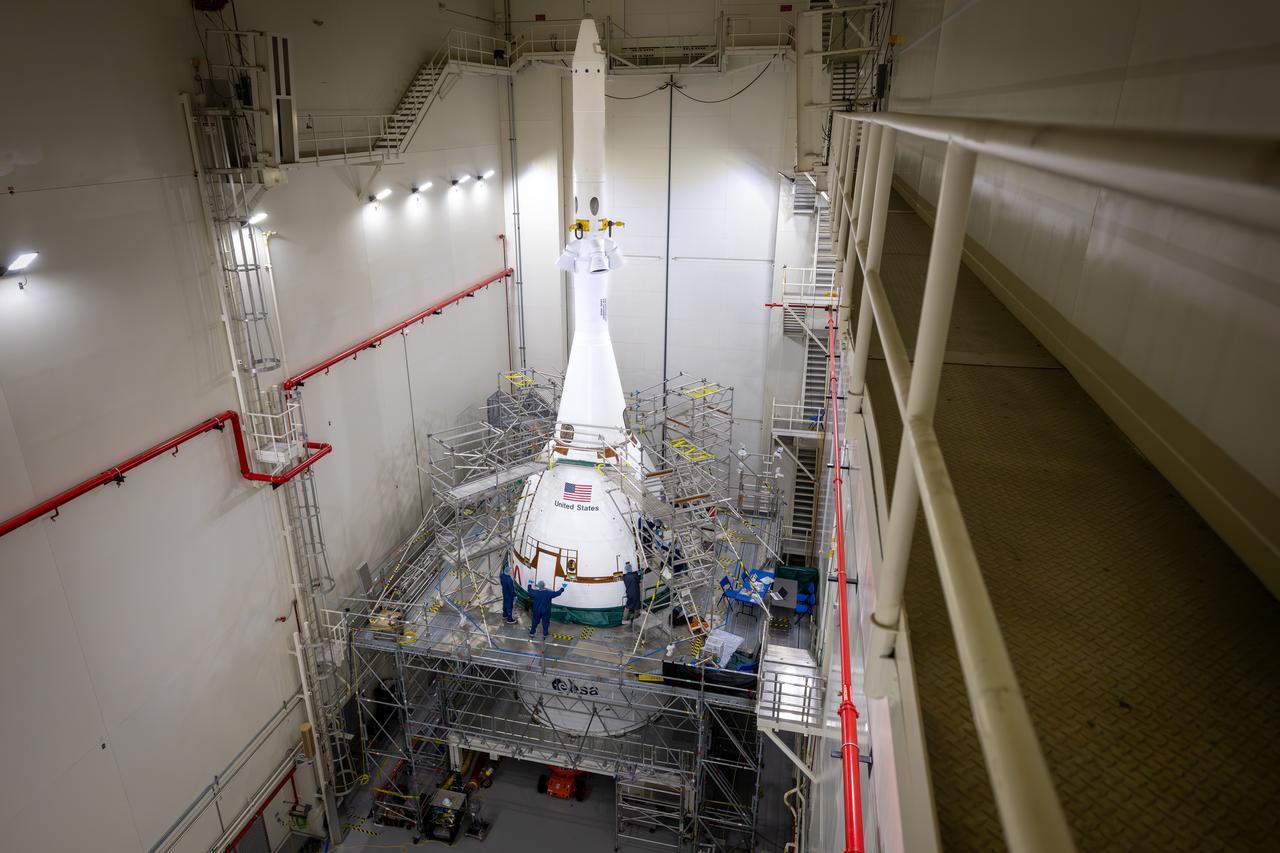
Teams with NASA’s Exploration Ground Systems attached the fourth and final ogive fairing for the launch abort system of the Orion spacecraft for the Artemis II mission. The fully installed fairings were photographed inside the Launch Abort System Facility high bay at NASA’s Kennedy Space Center in Florida on Sept. 17, 2025. The ogives are protective panels that will shield the crew module from the severe vibrations and sounds it will experience during launch, while the 44-foot-tall launch abort system will detach from the spacecraft after launch when it is no longer needed.

Teams with NASA’s Exploration Ground Systems attached the fourth and final ogive fairing for the launch abort system of the Orion spacecraft for the Artemis II mission. The fully installed fairings were photographed inside the Launch Abort System Facility high bay at NASA’s Kennedy Space Center in Florida on Sept. 17, 2025. The ogives are protective panels that will shield the crew module from the severe vibrations and sounds it will experience during launch, while the 44-foot-tall launch abort system will detach from the spacecraft after launch when it is no longer needed.
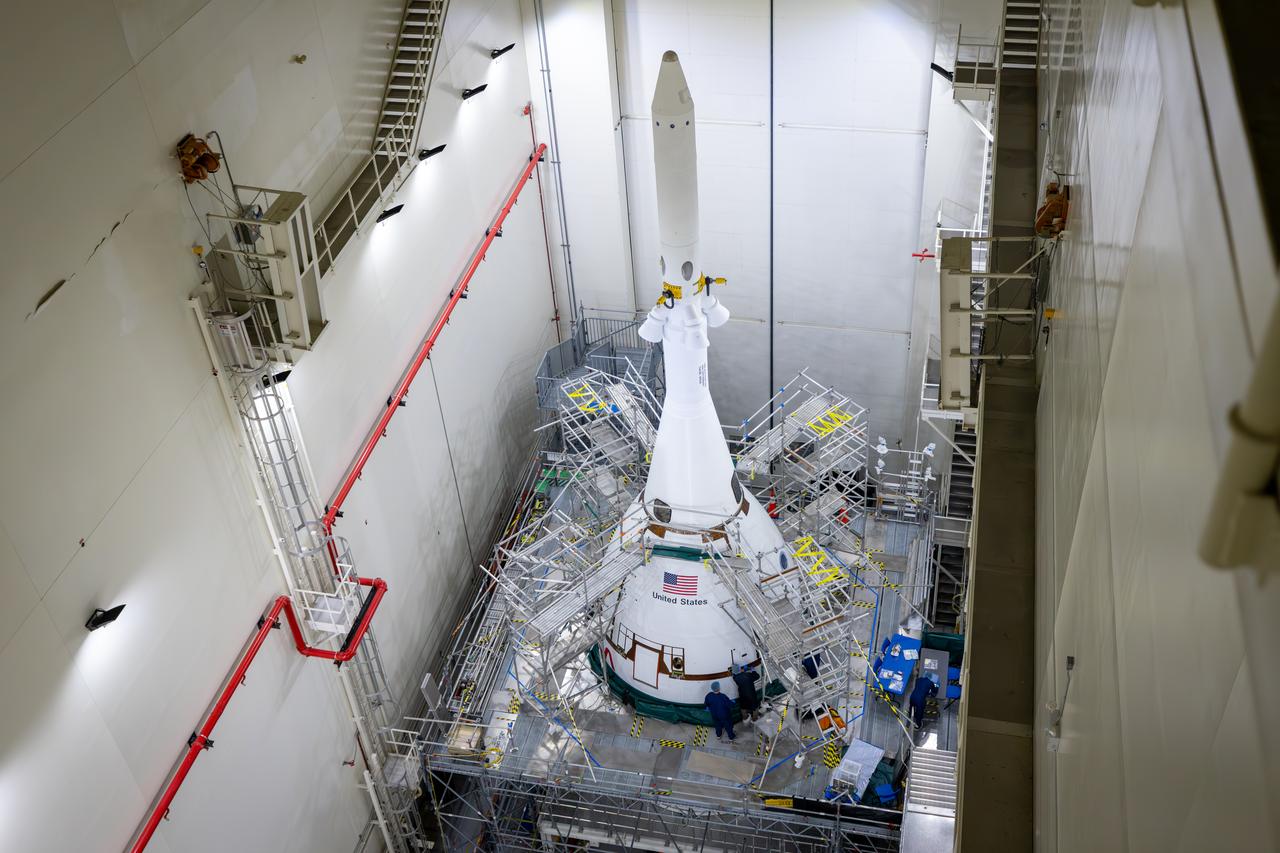
Teams with NASA’s Exploration Ground Systems attached the fourth and final ogive fairing for the launch abort system of the Orion spacecraft for the Artemis II mission. The fully installed fairings were photographed inside the Launch Abort System Facility high bay at NASA’s Kennedy Space Center in Florida on Sept. 17, 2025. The ogives are protective panels that will shield the crew module from the severe vibrations and sounds it will experience during launch, while the 44-foot-tall launch abort system will detach from the spacecraft after launch when it is no longer needed.
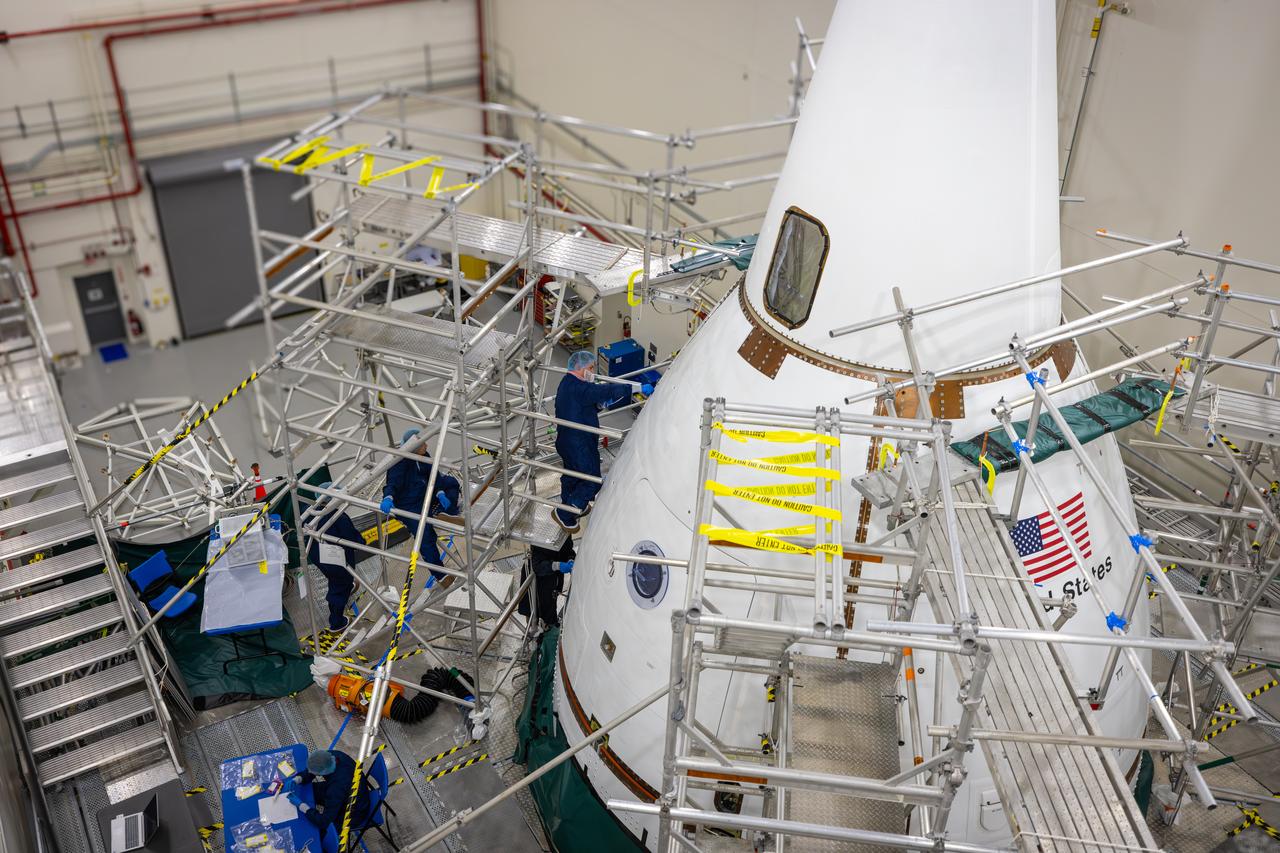
Teams with NASA’s Exploration Ground Systems attached the fourth and final ogive fairing for the launch abort system of the Orion spacecraft for the Artemis II mission. The fully installed fairings were photographed inside the Launch Abort System Facility high bay at NASA’s Kennedy Space Center in Florida on Sept. 17, 2025. The ogives are protective panels that will shield the crew module from the severe vibrations and sounds it will experience during launch, while the 44-foot-tall launch abort system will detach from the spacecraft after launch when it is no longer needed.
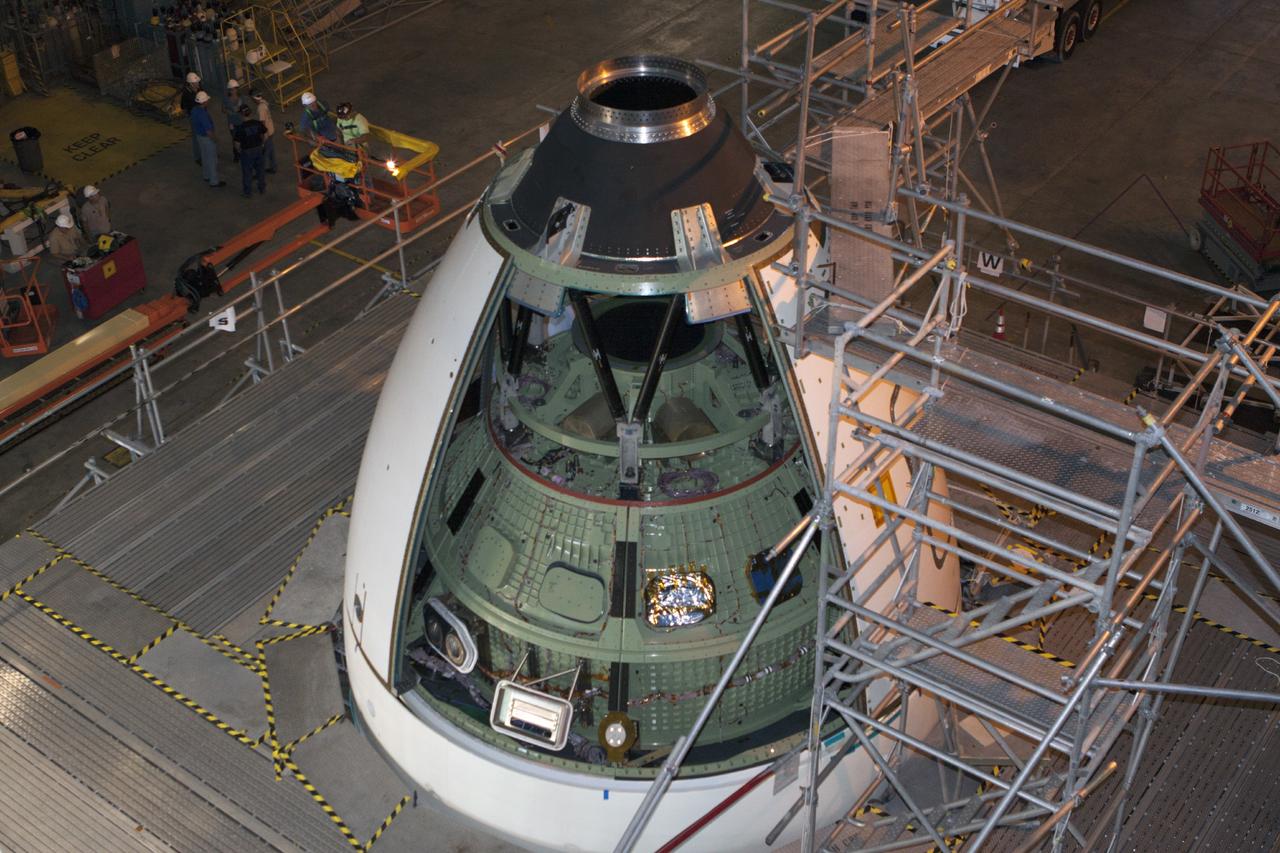
CAPE CANAVERAL, Fla. – At NASA’s Kennedy Space Center in Florida, several ogive panels have been installed on the Orion ground test vehicle in Vehicle Assembly Building high bay 4. The ogive panels enclose the Orion spacecraft and attach to the Launch Abort System. The test vehicle is being used by the Ground Systems Development and Operations Program for path finding operations, including simulated manufacturing, assembly and stacking procedures. Orion is the exploration spacecraft designed to carry astronauts to destinations not yet explored by humans, including an asteroid and Mars. It will have emergency abort capability, sustain the crew during space travel and provide safe re-entry from deep space return velocities. The first unpiloted test flight of Orion is scheduled to launch in 2014 atop a Delta IV rocket and in 2017 on NASA’s Space Launch System rocket. For more information, visit www.nasa.gov/orion. Photo credit: Kim Shiflett
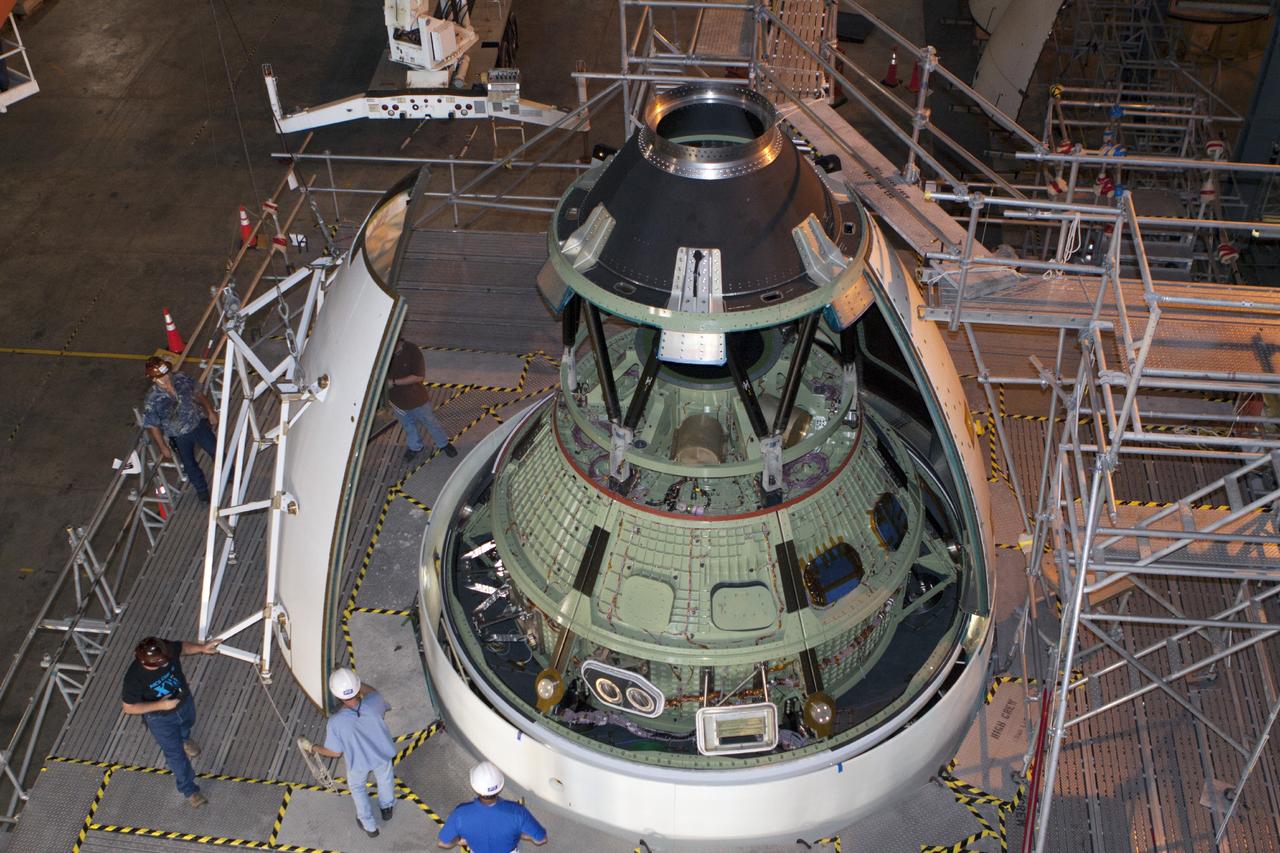
CAPE CANAVERAL, Fla. – At NASA’s Kennedy Space Center in Florida, technicians use a special handling device to bring an ogive panel closer for installation on the Orion ground test vehicle in Vehicle Assembly Building high bay 4. The ogive panels enclose the Orion spacecraft and attach to the Launch Abort System. The test vehicle is being used by the Ground Systems Development and Operations Program for path finding operations, including simulated manufacturing, assembly and stacking procedures. Orion is the exploration spacecraft designed to carry astronauts to destinations not yet explored by humans, including an asteroid and Mars. It will have emergency abort capability, sustain the crew during space travel and provide safe re-entry from deep space return velocities. The first unpiloted test flight of Orion is scheduled to launch in 2014 atop a Delta IV rocket and in 2017 on NASA’s Space Launch System rocket. For more information, visit www.nasa.gov/orion. Photo credit: Kim Shiflett
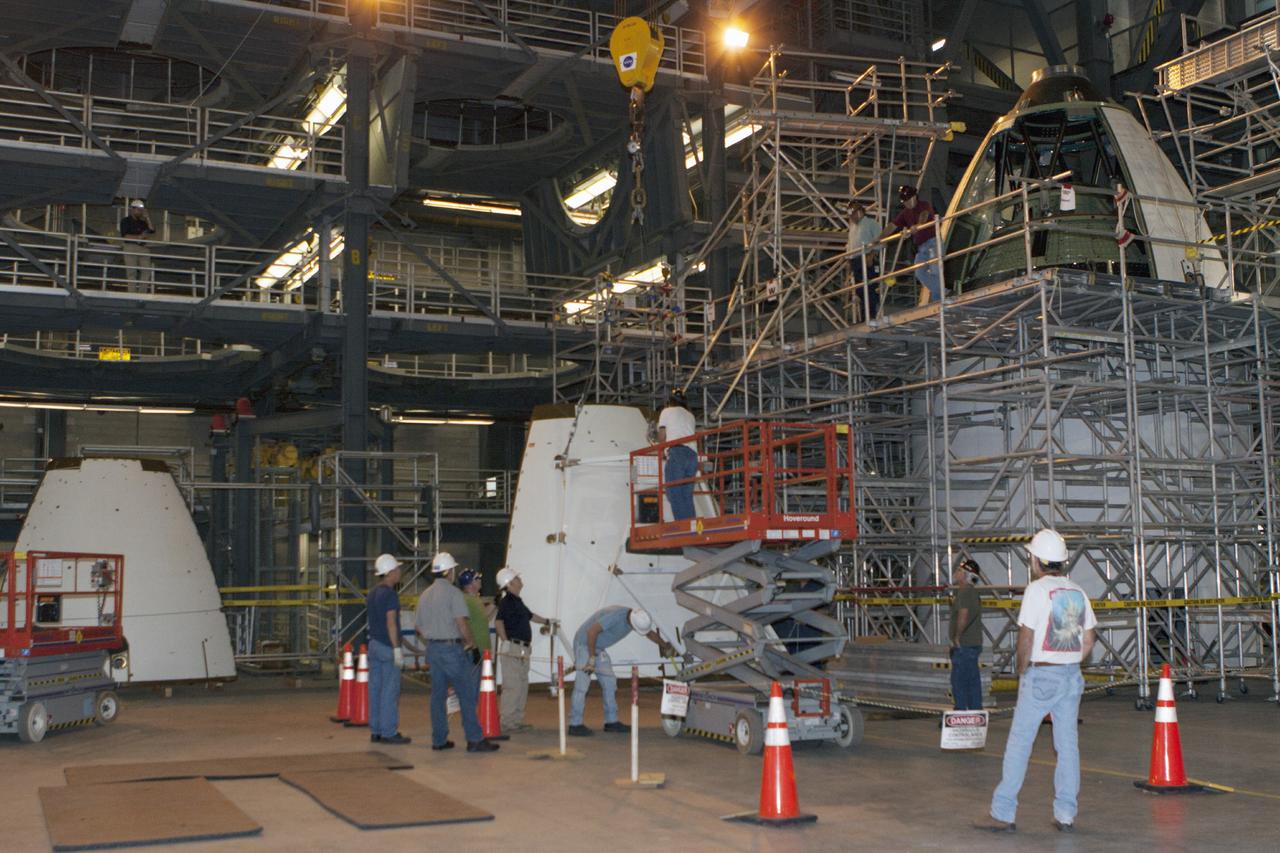
CAPE CANAVERAL, Fla. – At NASA’s Kennedy Space Center in Florida, technicians prepare an ogive panel for lifting by crane so that it can be installed on the Orion ground test vehicle in Vehicle Assembly Building high bay 4. The ogive panels enclose the Orion spacecraft and attach to the Launch Abort System. The test vehicle is being used Ground Systems Development and Operations Program for path finding operations, including simulated manufacturing, assembly and stacking procedures. Orion is the exploration spacecraft designed to carry astronauts to destinations not yet explored by humans, including an asteroid and Mars. It will have emergency abort capability, sustain the crew during space travel and provide safe re-entry from deep space return velocities. The first unpiloted test flight of Orion is scheduled to launch in 2014 atop a Delta IV rocket and in 2017 on NASA’s Space Launch System rocket. For more information, visit www.nasa.gov/orion. Photo credit: Kim Shiflett
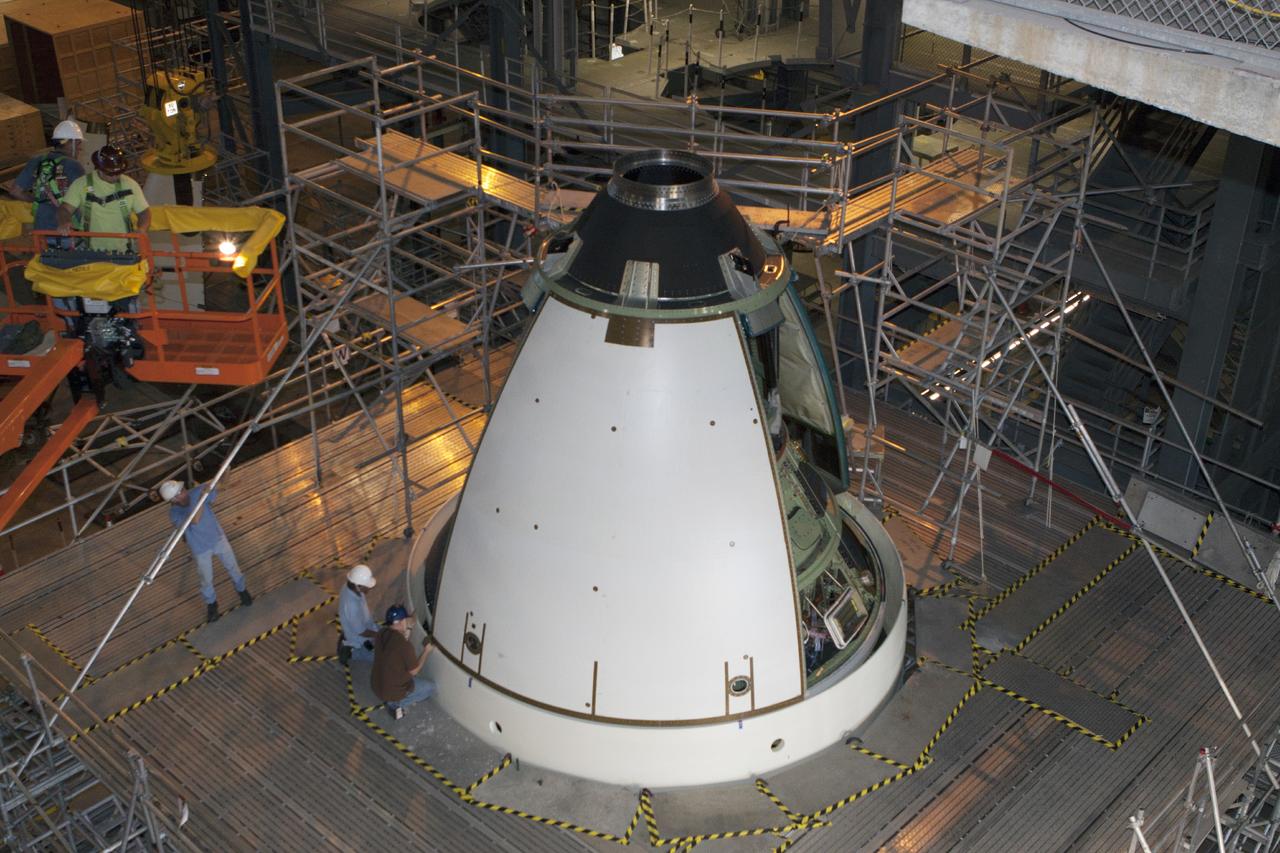
CAPE CANAVERAL, Fla. – At NASA’s Kennedy Space Center in Florida, technicians complete the installation of an ogive panel on the Orion ground test vehicle in Vehicle Assembly Building high bay 4. The ogive panels enclose the Orion spacecraft and attach to the Launch Abort System. The test vehicle is being used by the Ground Systems Development and Operations Program for path finding operations, including simulated manufacturing, assembly and stacking procedures. Orion is the exploration spacecraft designed to carry astronauts to destinations not yet explored by humans, including an asteroid and Mars. It will have emergency abort capability, sustain the crew during space travel and provide safe re-entry from deep space return velocities. The first unpiloted test flight of Orion is scheduled to launch in 2014 atop a Delta IV rocket and in 2017 on NASA’s Space Launch System rocket. For more information, visit www.nasa.gov/orion. Photo credit: Kim Shiflett
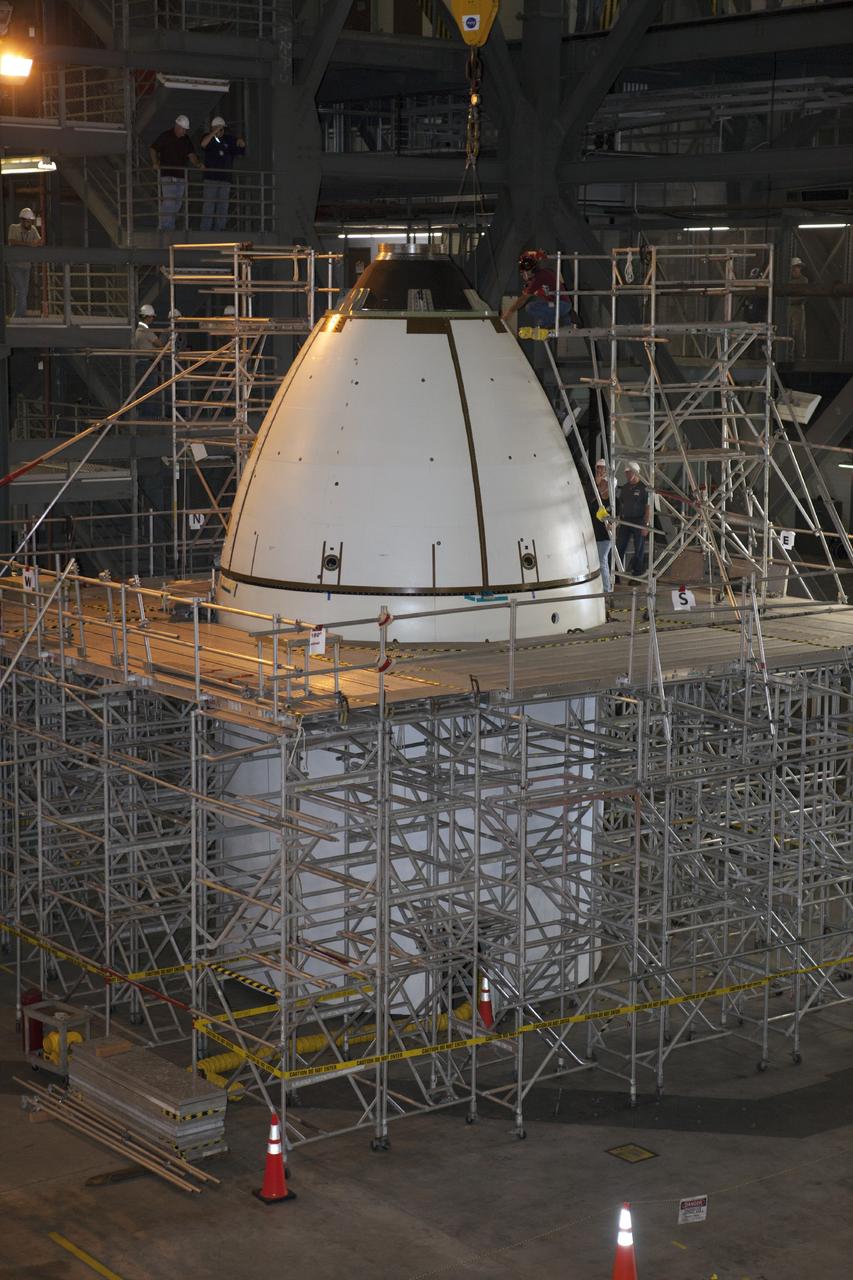
CAPE CANAVERAL, Fla. – At NASA’s Kennedy Space Center in Florida, all four ogive panels have been installed on the Orion ground test vehicle in Vehicle Assembly Building high bay 4. The ogive panels enclose and protect the Orion spacecraft and attach to the Launch Abort System. The test vehicle is being used by the Ground Systems Development and Operations Program for path finding operations, including simulated manufacturing, assembly and stacking procedures. Orion is the exploration spacecraft designed to carry astronauts to destinations not yet explored by humans, including an asteroid and Mars. It will have emergency abort capability, sustain the crew during space travel and provide safe re-entry from deep space return velocities. The first unpiloted test flight of Orion is scheduled to launch in 2014 atop a Delta IV rocket and in 2017 on NASA’s Space Launch System rocket. For more information, visit www.nasa.gov/orion. Photo credit: Kim Shiflett
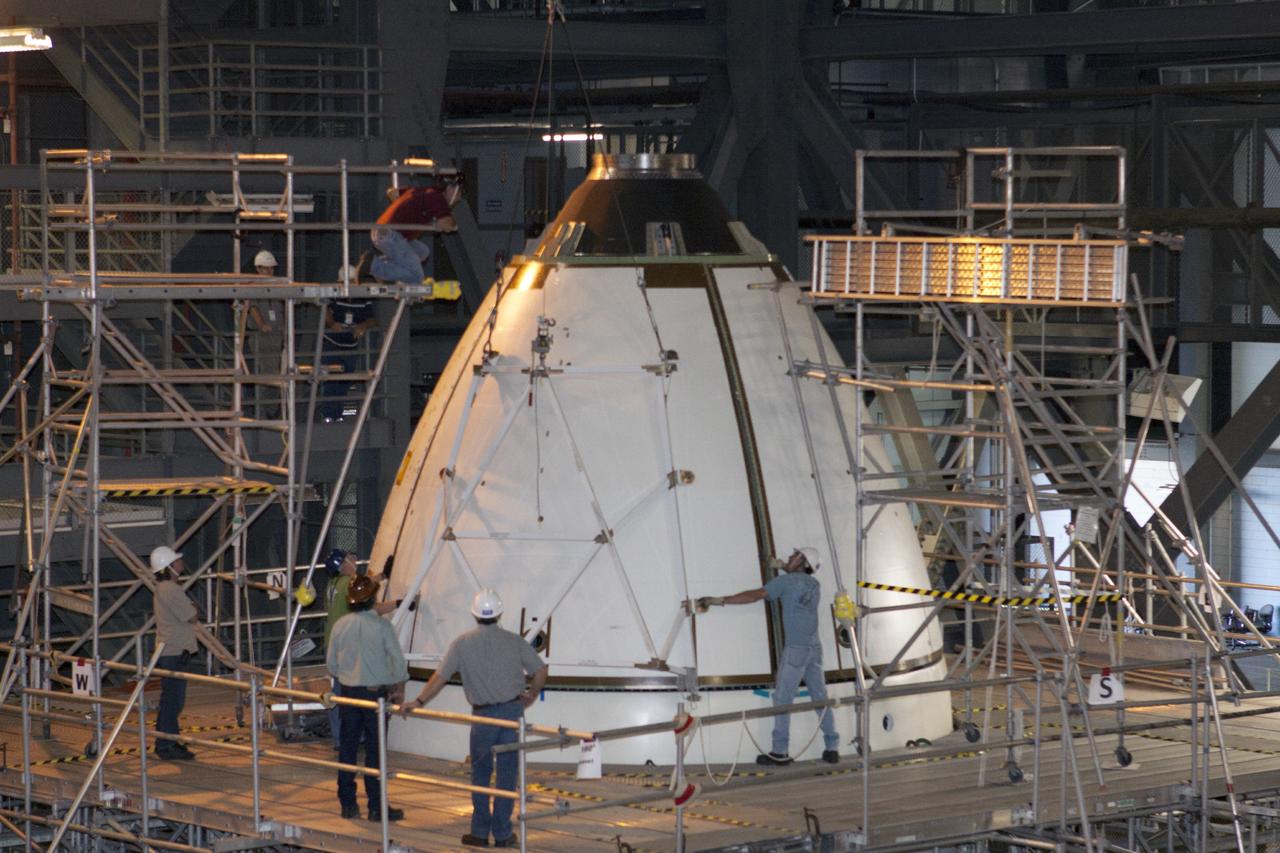
CAPE CANAVERAL, Fla. – At NASA’s Kennedy Space Center in Florida, technicians complete the installation of ogive panels on the Orion ground test vehicle in Vehicle Assembly Building high bay 4. The ogive panels enclose the Orion spacecraft and attach to the Launch Abort System. The test vehicle is being used Ground Systems Development and Operations Program for path finding operations, including simulated manufacturing, assembly and stacking procedures. Orion is the exploration spacecraft designed to carry astronauts to destinations not yet explored by humans, including an asteroid and Mars. It will have emergency abort capability, sustain the crew during space travel and provide safe re-entry from deep space return velocities. The first unpiloted test flight of Orion is scheduled to launch in 2014 atop a Delta IV rocket and in 2017 on NASA’s Space Launch System rocket. For more information, visit www.nasa.gov/orion. Photo credit: Kim Shiflett
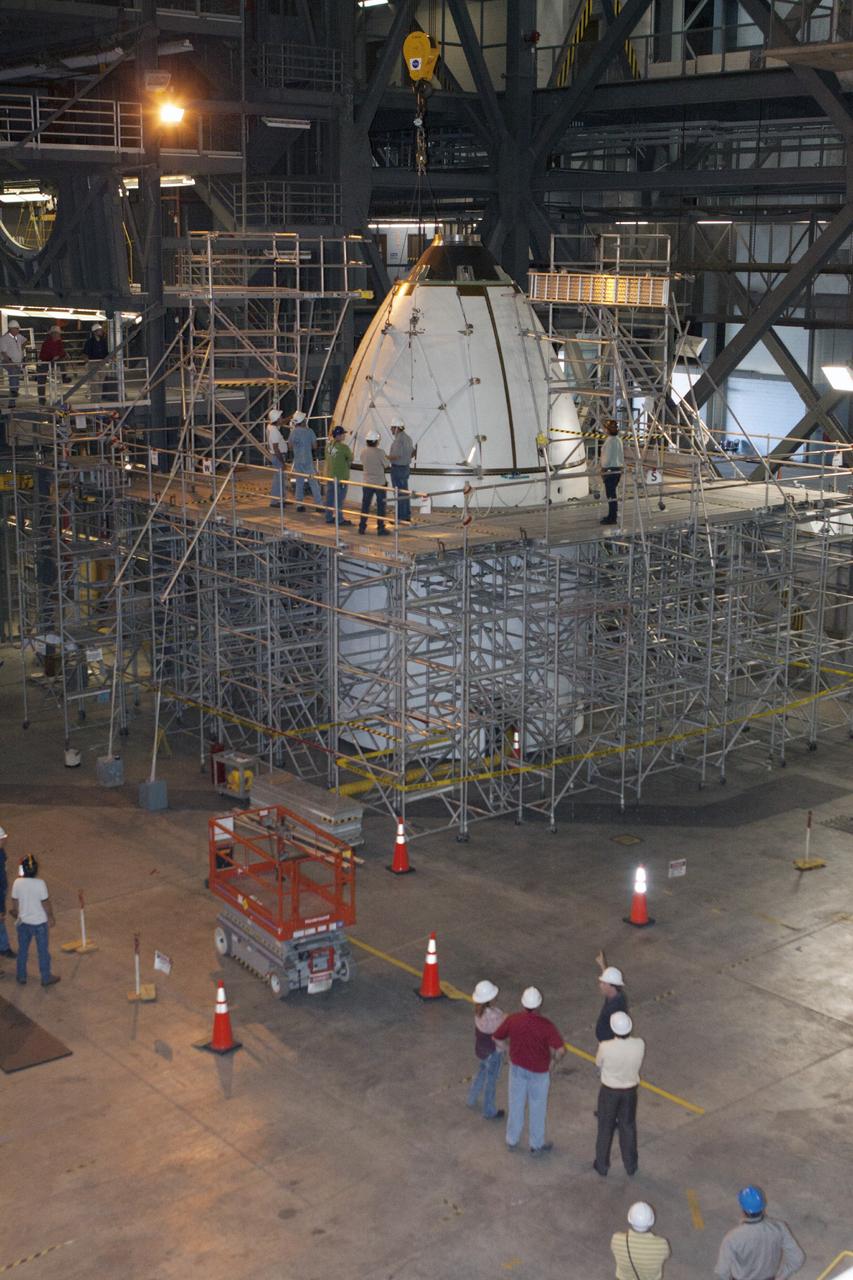
CAPE CANAVERAL, Fla. – At NASA’s Kennedy Space Center in Florida, technicians complete the installation of ogive panels on the Orion ground test vehicle in Vehicle Assembly Building high bay 4. The ogive panels enclose the Orion spacecraft and attach to the Launch Abort System. The test vehicle is being used Ground Systems Development and Operations Program for path finding operations, including simulated manufacturing, assembly and stacking procedures. Orion is the exploration spacecraft designed to carry astronauts to destinations not yet explored by humans, including an asteroid and Mars. It will have emergency abort capability, sustain the crew during space travel and provide safe re-entry from deep space return velocities. The first unpiloted test flight of Orion is scheduled to launch in 2014 atop a Delta IV rocket and in 2017 on NASA’s Space Launch System rocket. For more information, visit www.nasa.gov/orion. Photo credit: Kim Shiflett
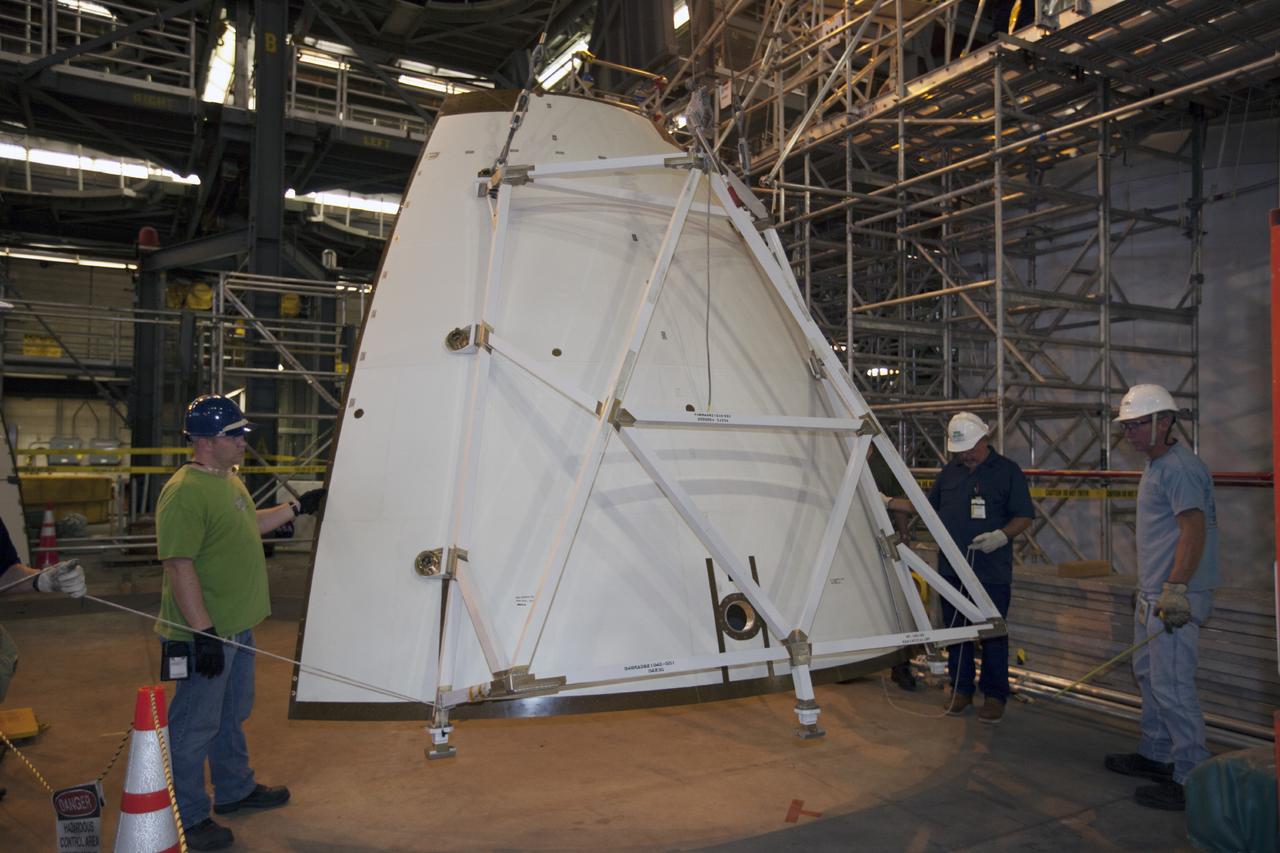
CAPE CANAVERAL, Fla. – At NASA’s Kennedy Space Center in Florida, technicians prepare an ogive panel for installation on the Orion ground test vehicle in Vehicle Assembly Building high bay 4. The ogive panels enclose the Orion spacecraft and attach to the Launch Abort System. The test vehicle is being used by the Ground Systems Development and Operations Program for path finding operations, including simulated manufacturing, assembly and stacking procedures. Orion is the exploration spacecraft designed to carry astronauts to destinations not yet explored by humans, including an asteroid and Mars. It will have emergency abort capability, sustain the crew during space travel and provide safe re-entry from deep space return velocities. The first unpiloted test flight of Orion is scheduled to launch in 2014 atop a Delta IV rocket and in 2017 on NASA’s Space Launch System rocket. For more information, visit www.nasa.gov/orion. Photo credit: Kim Shiflett
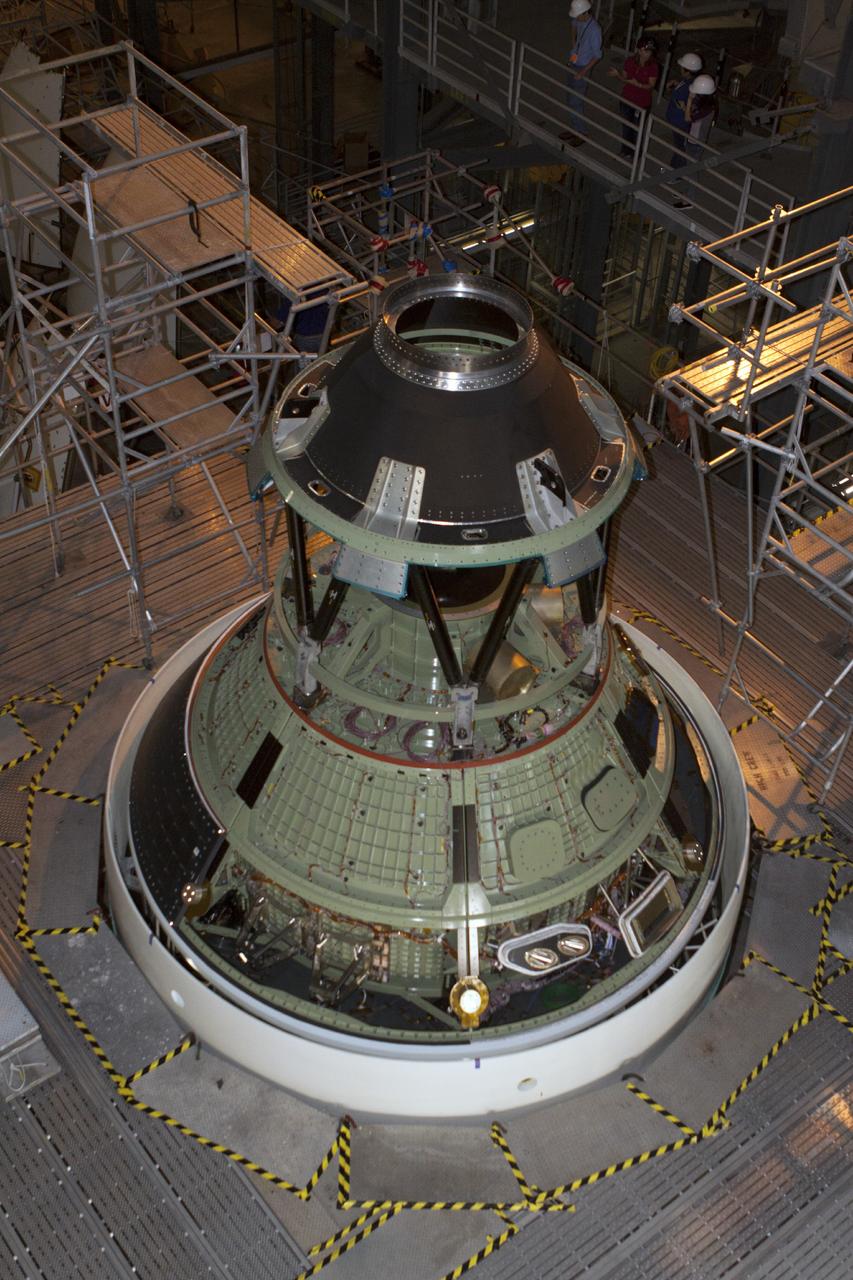
CAPE CANAVERAL, Fla. – At NASA’s Kennedy Space Center in Florida, the Orion ground test vehicle is being prepared for installation of the ogive panels in Vehicle Assembly Building high bay 4. The ogive panels enclose and protect the Orion spacecraft and attach to the Launch Abort System. The test vehicle is being used by the Ground Systems Development and Operations Program for path finding operations, including simulated manufacturing, assembly and stacking procedures. Orion is the exploration spacecraft designed to carry astronauts to destinations not yet explored by humans, including an asteroid and Mars. It will have emergency abort capability, sustain the crew during space travel and provide safe re-entry from deep space return velocities. The first unpiloted test flight of Orion is scheduled to launch in 2014 atop a Delta IV rocket and in 2017 on NASA’s Space Launch System rocket. For more information, visit www.nasa.gov/orion. Photo credit: Kim Shiflett
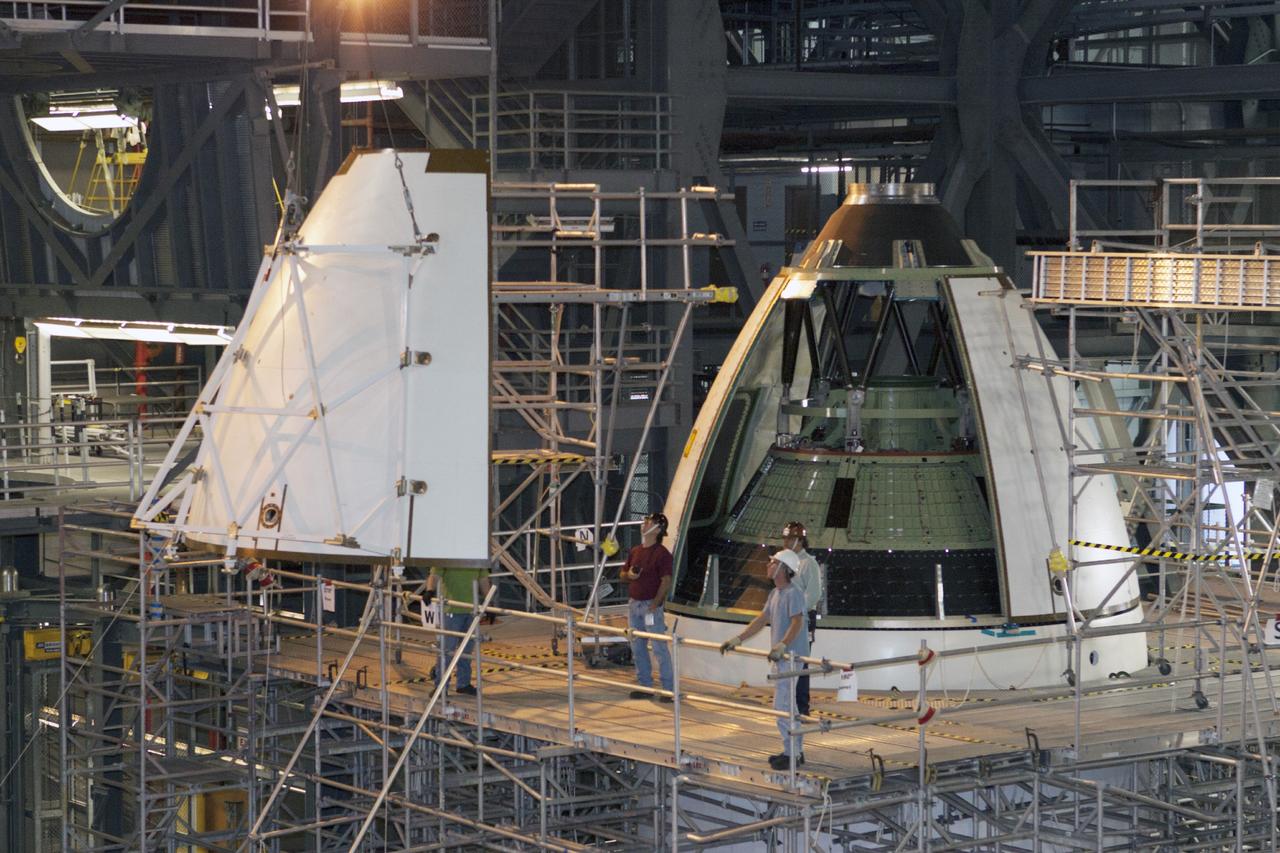
CAPE CANAVERAL, Fla. – At NASA’s Kennedy Space Center in Florida, technicians monitor the progress as a crane is used to move an ogive panel closer for installation on the Orion ground test vehicle in Vehicle Assembly Building high bay 4. The ogive panels enclose the Orion spacecraft and attach to the Launch Abort System. The test vehicle is being used Ground Systems Development and Operations Program for path finding operations, including simulated manufacturing, assembly and stacking procedures. Orion is the exploration spacecraft designed to carry astronauts to destinations not yet explored by humans, including an asteroid and Mars. It will have emergency abort capability, sustain the crew during space travel and provide safe re-entry from deep space return velocities. The first unpiloted test flight of Orion is scheduled to launch in 2014 atop a Delta IV rocket and in 2017 on NASA’s Space Launch System rocket. For more information, visit www.nasa.gov/orion. Photo credit: Kim Shiflett
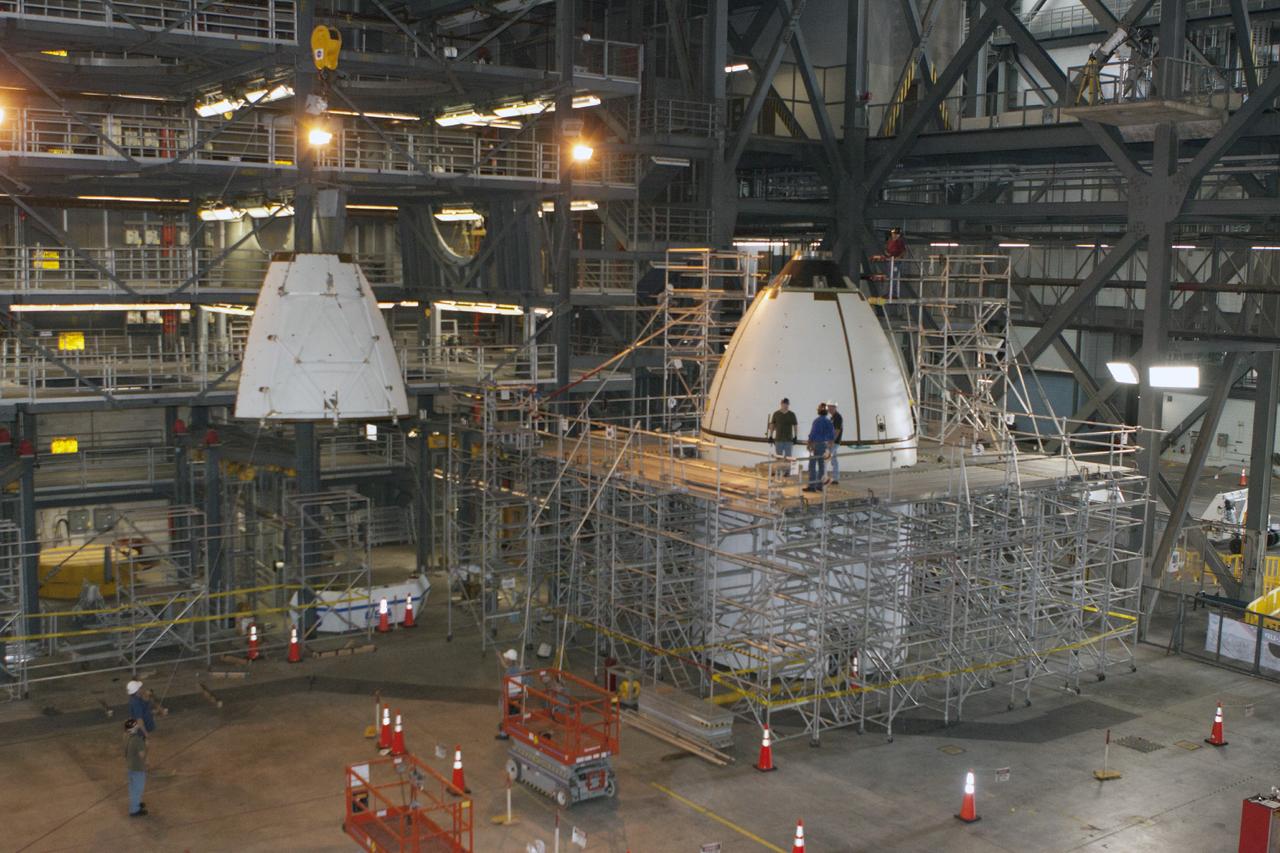
CAPE CANAVERAL, Fla. – At NASA’s Kennedy Space Center in Florida, technicians monitor the progress as the fourth ogive panel is lifted by crane so that they can be installed on the Orion ground test vehicle in Vehicle Assembly Building high bay 4. Three of the panels have already been installed on the test vehicle. The ogive panels enclose and protect the Orion spacecraft and attach to the Launch Abort System. The test vehicle is being used by the Ground Systems Development and Operations Program for path finding operations, including simulated manufacturing, assembly and stacking procedures. Orion is the exploration spacecraft designed to carry astronauts to destinations not yet explored by humans, including an asteroid and Mars. It will have emergency abort capability, sustain the crew during space travel and provide safe re-entry from deep space return velocities. The first unpiloted test flight of Orion is scheduled to launch in 2014 atop a Delta IV rocket and in 2017 on NASA’s Space Launch System rocket. For more information, visit www.nasa.gov/orion. Photo credit: Kim Shiflett
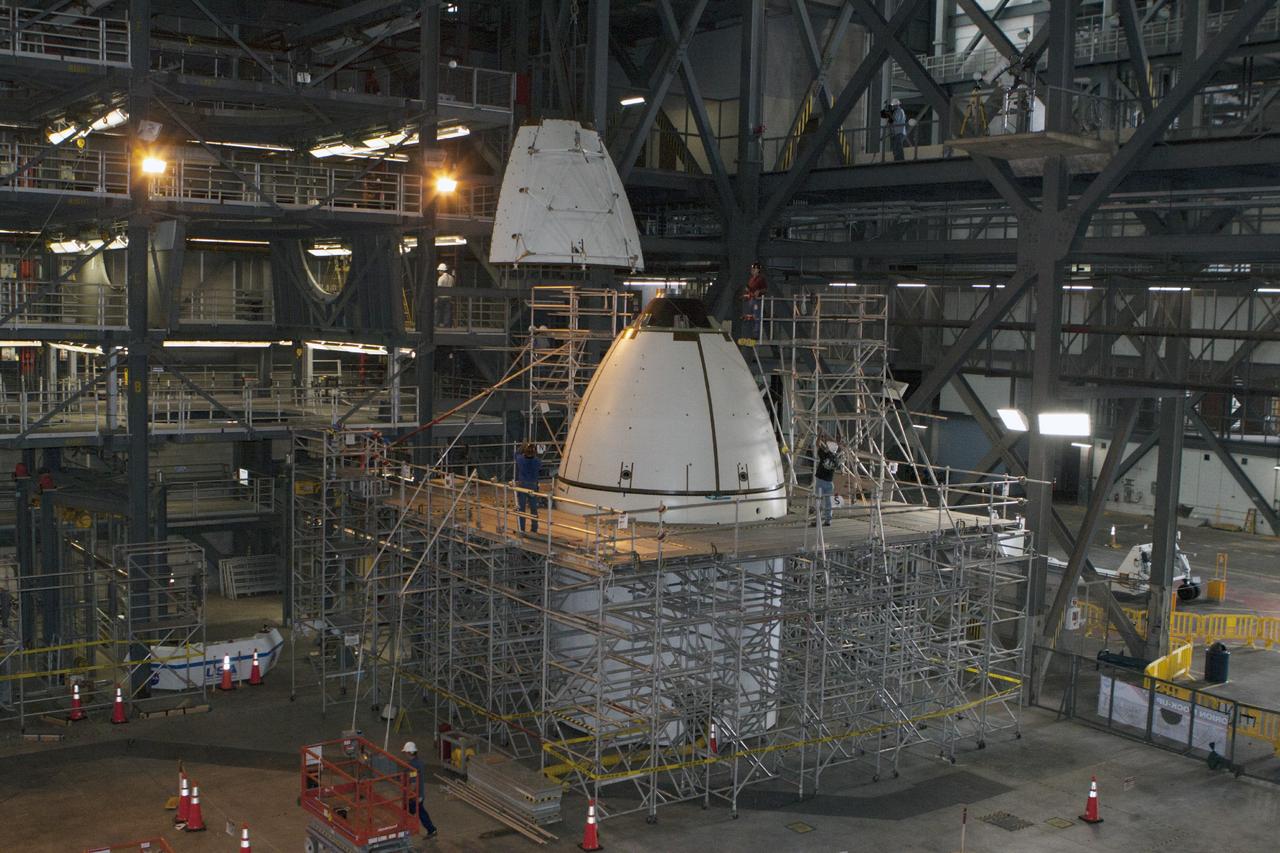
CAPE CANAVERAL, Fla. – At NASA’s Kennedy Space Center in Florida, technicians monitor the progress as the fourth ogive panel is lifted by crane so that they can be installed on the Orion ground test vehicle in Vehicle Assembly Building high bay 4. Three of the panels have already been installed on the test vehicle. The ogive panels enclose and protect the Orion spacecraft and attach to the Launch Abort System. The test vehicle is being used by the Ground Systems Development and Operations Program for path finding operations, including simulated manufacturing, assembly and stacking procedures. Orion is the exploration spacecraft designed to carry astronauts to destinations not yet explored by humans, including an asteroid and Mars. It will have emergency abort capability, sustain the crew during space travel and provide safe re-entry from deep space return velocities. The first unpiloted test flight of Orion is scheduled to launch in 2014 atop a Delta IV rocket and in 2017 on NASA’s Space Launch System rocket. For more information, visit www.nasa.gov/orion. Photo credit: Kim Shiflett
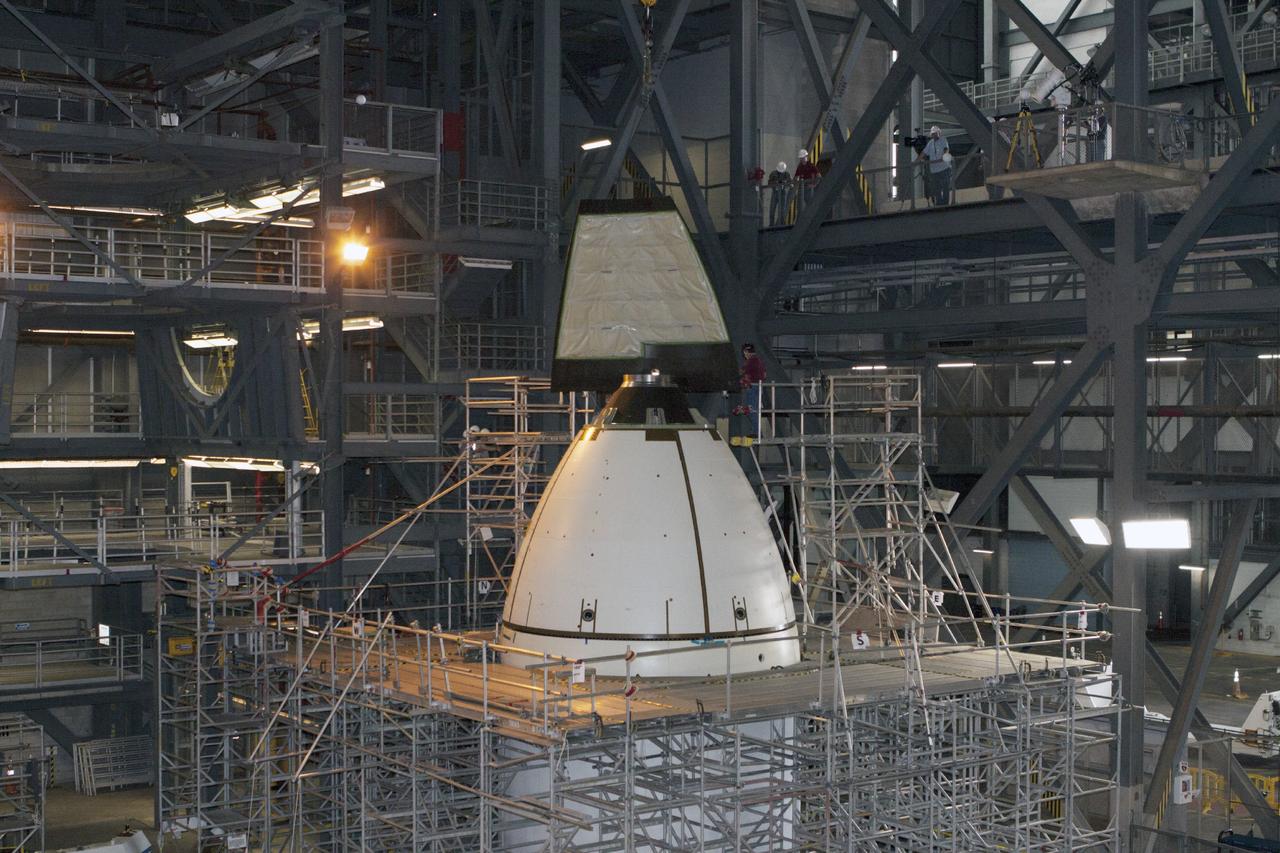
CAPE CANAVERAL, Fla. – At NASA’s Kennedy Space Center in Florida, technicians monitor the progress as the fourth ogive panel is lifted by crane so that they can be installed on the Orion ground test vehicle in Vehicle Assembly Building high bay 4. Three of the panels have already been installed on the test vehicle. The ogive panels enclose and protect the Orion spacecraft and attach to the Launch Abort System. The test vehicle is being used by the Ground Systems Development and Operations Program for path finding operations, including simulated manufacturing, assembly and stacking procedures. Orion is the exploration spacecraft designed to carry astronauts to destinations not yet explored by humans, including an asteroid and Mars. It will have emergency abort capability, sustain the crew during space travel and provide safe re-entry from deep space return velocities. The first unpiloted test flight of Orion is scheduled to launch in 2014 atop a Delta IV rocket and in 2017 on NASA’s Space Launch System rocket. For more information, visit www.nasa.gov/orion. Photo credit: Kim Shiflett

The last major assembly operation to prepare Orion for Exploration Flight Test-1 (EFT-1) is completed in the Launch Abort System Facility (LASF) at Kennedy Space Center on Oct. 11, 2014. The ogive panels, which protect the crew module from sound and vibration during ascent, were installed around the spacecraft just below the launch abort system tower. Part of Batch image transfer from Flickr.
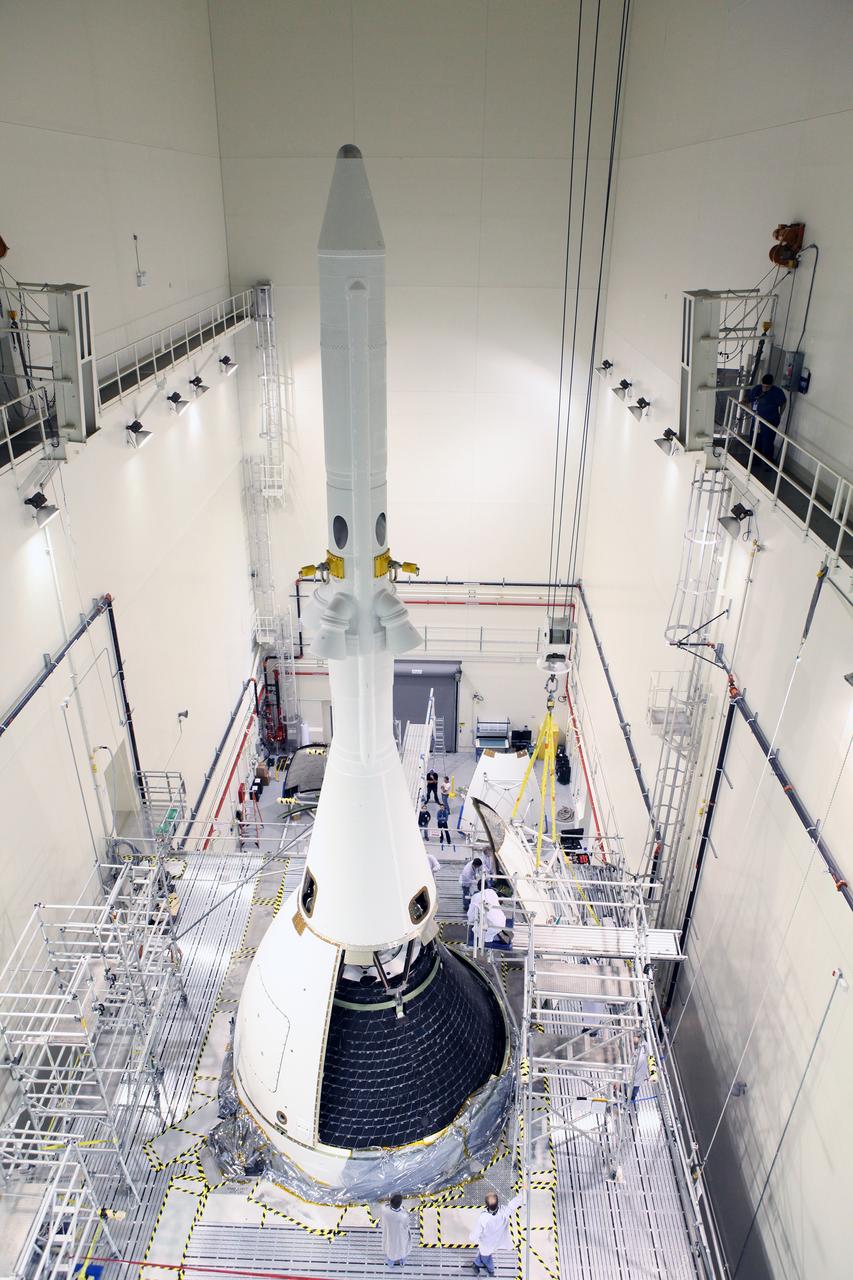
The last major assembly operation to prepare Orion for Exploration Flight Test-1 (EFT-1) is completed in the Launch Abort System Facility (LASF) at Kennedy Space Center on Oct. 11, 2014. The ogive panels, which protect the crew module from sound and vibration during ascent, were installed around the spacecraft just below the launch abort system tower. Part of Batch image transfer from Flickr.
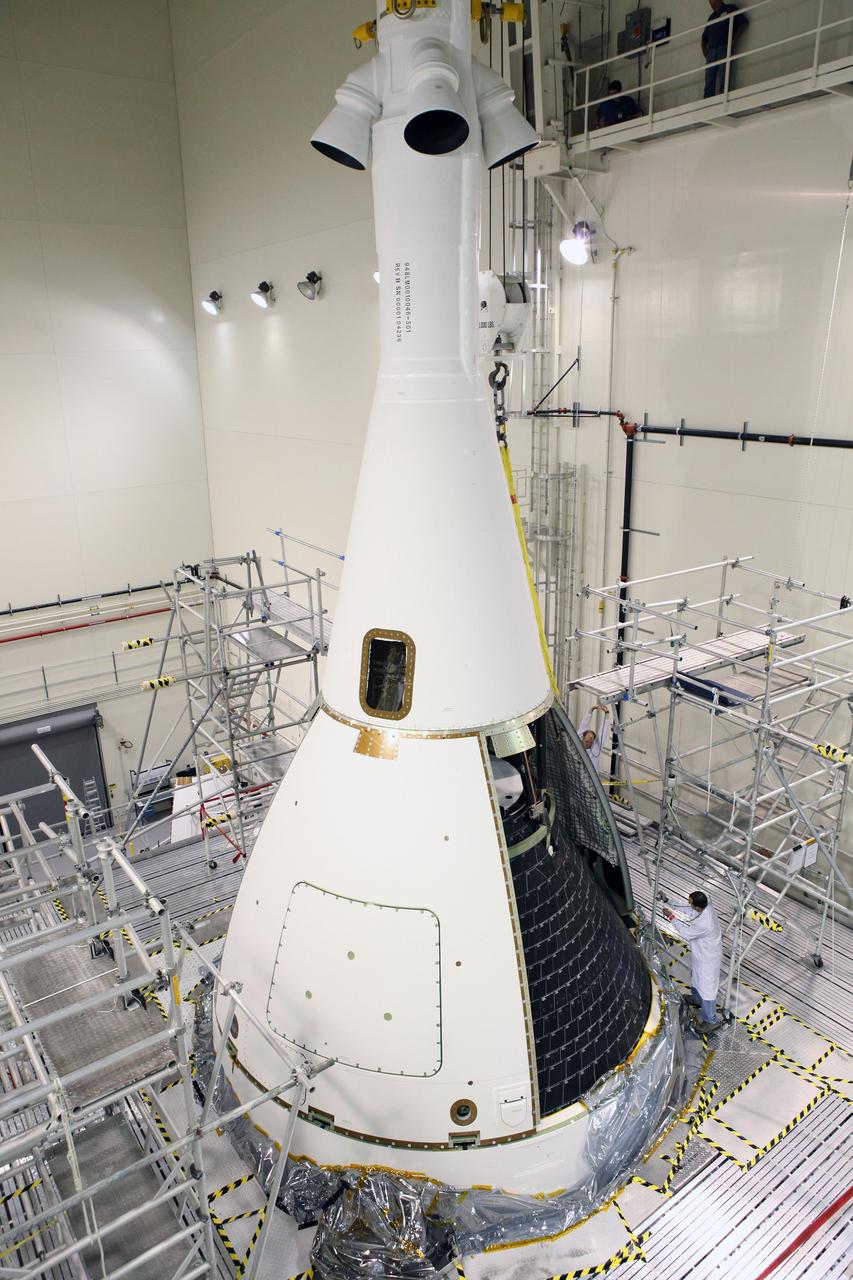
The last major assembly operation to prepare Orion for Exploration Flight Test-1 (EFT-1) is completed in the Launch Abort System Facility (LASF) at Kennedy Space Center on Oct. 11, 2014. The ogive panels, which protect the crew module from sound and vibration during ascent, were installed around the spacecraft just below the launch abort system tower. Part of Batch image transfer from Flickr.
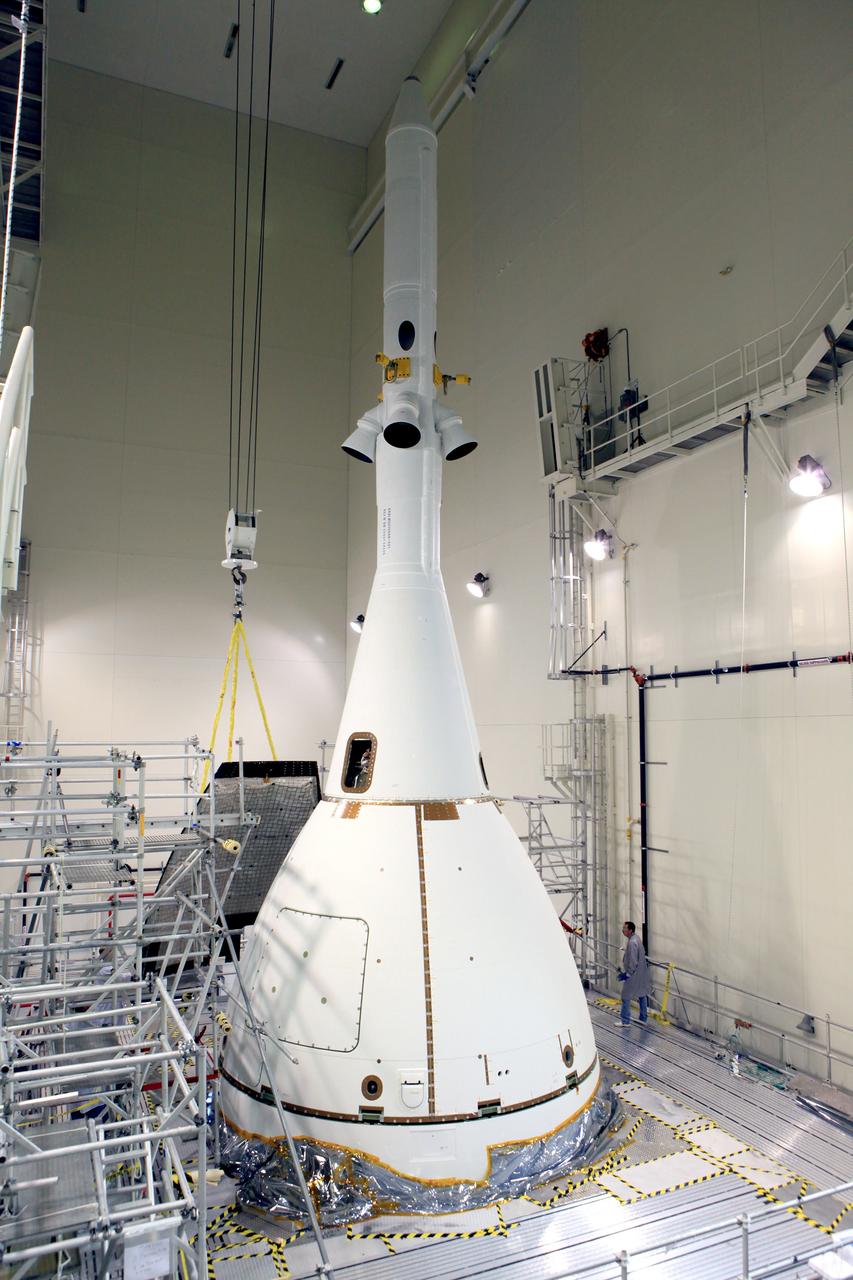
The last major assembly operation to prepare Orion for Exploration Flight Test-1 (EFT-1) is completed in the Launch Abort System Facility (LASF) at Kennedy Space Center on Oct. 11, 2014. The ogive panels, which protect the crew module from sound and vibration during ascent, were installed around the spacecraft just below the launch abort system tower. Part of Batch image transfer from Flickr.
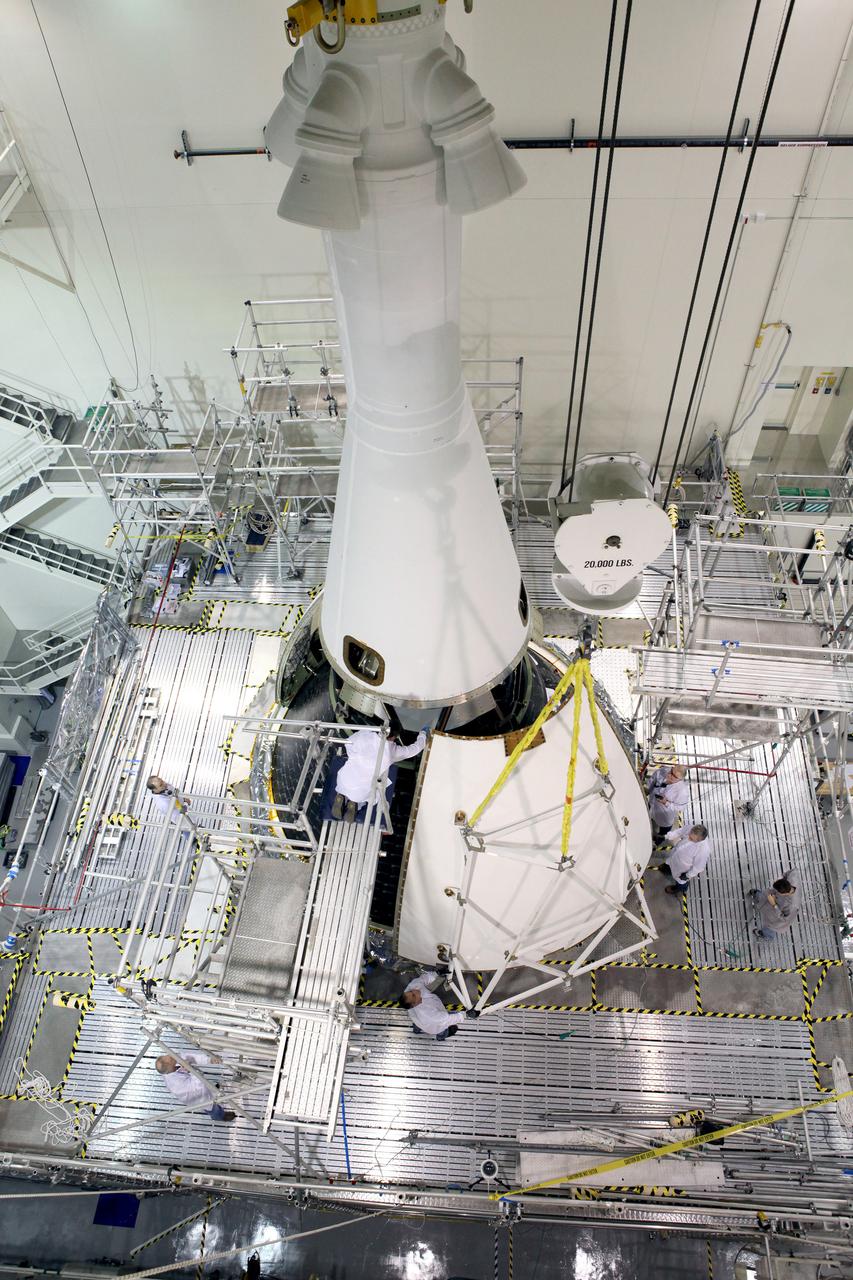
The last major assembly operation to prepare Orion for Exploration Flight Test-1 (EFT-1) is completed in the Launch Abort System Facility (LASF) at Kennedy Space Center on Oct. 11, 2014. The ogive panels, which protect the crew module from sound and vibration during ascent, were installed around the spacecraft just below the launch abort system tower. Part of Batch image transfer from Flickr.
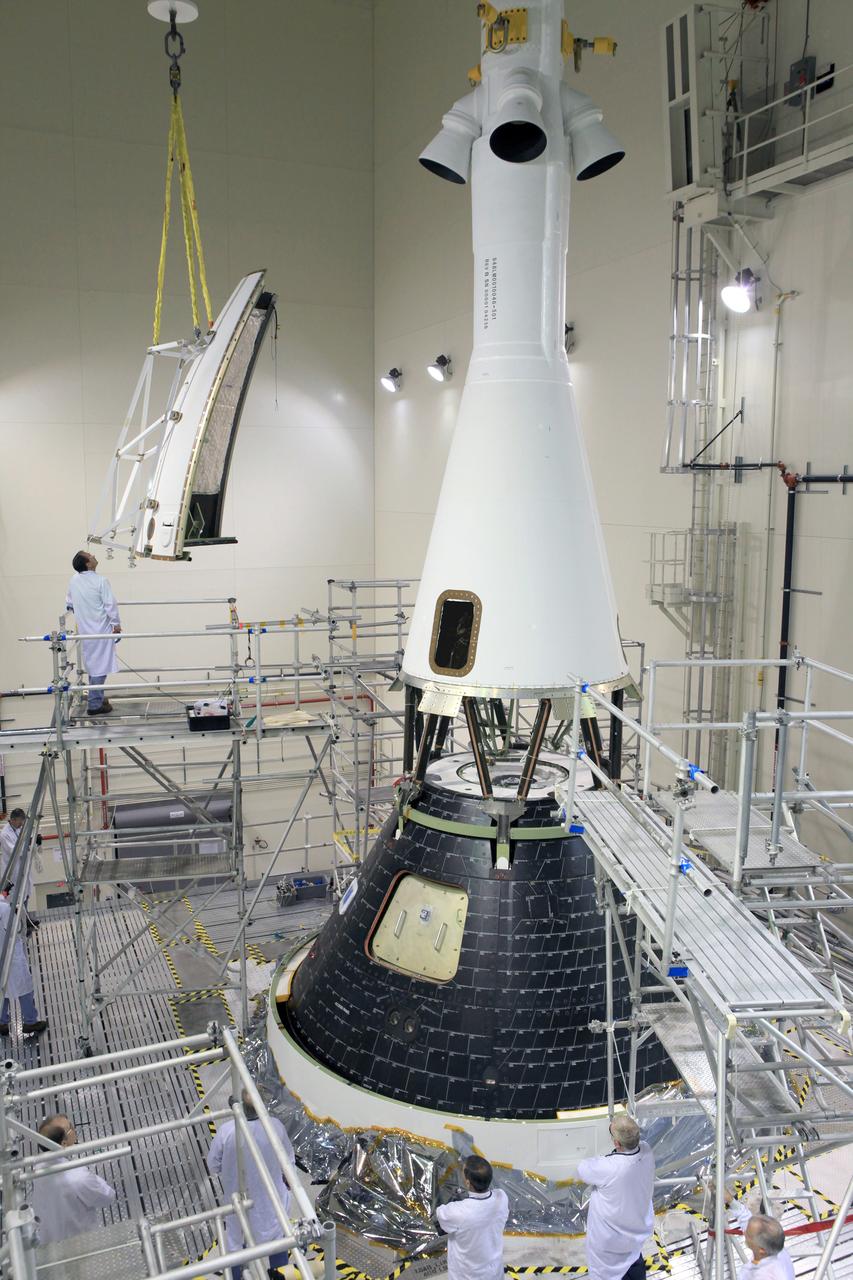
The last major assembly operation to prepare Orion for Exploration Flight Test-1 (EFT-1) is completed in the Launch Abort System Facility (LASF) at Kennedy Space Center on Oct. 11, 2014. The ogive panels, which protect the crew module from sound and vibration during ascent, were installed around the spacecraft just below the launch abort system tower. Part of Batch image transfer from Flickr.

The last major assembly operation to prepare Orion for Exploration Flight Test-1 (EFT-1) is completed in the Launch Abort System Facility (LASF) at Kennedy Space Center on Oct. 11, 2014. The ogive panels, which protect the crew module from sound and vibration during ascent, were installed around the spacecraft just below the launch abort system tower. Part of Batch image transfer from Flickr.

The last major assembly operation to prepare Orion for Exploration Flight Test-1 (EFT-1) is completed in the Launch Abort System Facility (LASF) at Kennedy Space Center on Oct. 11, 2014. The ogive panels, which protect the crew module from sound and vibration during ascent, were installed around the spacecraft just below the launch abort system tower. Part of Batch image transfer from Flickr.
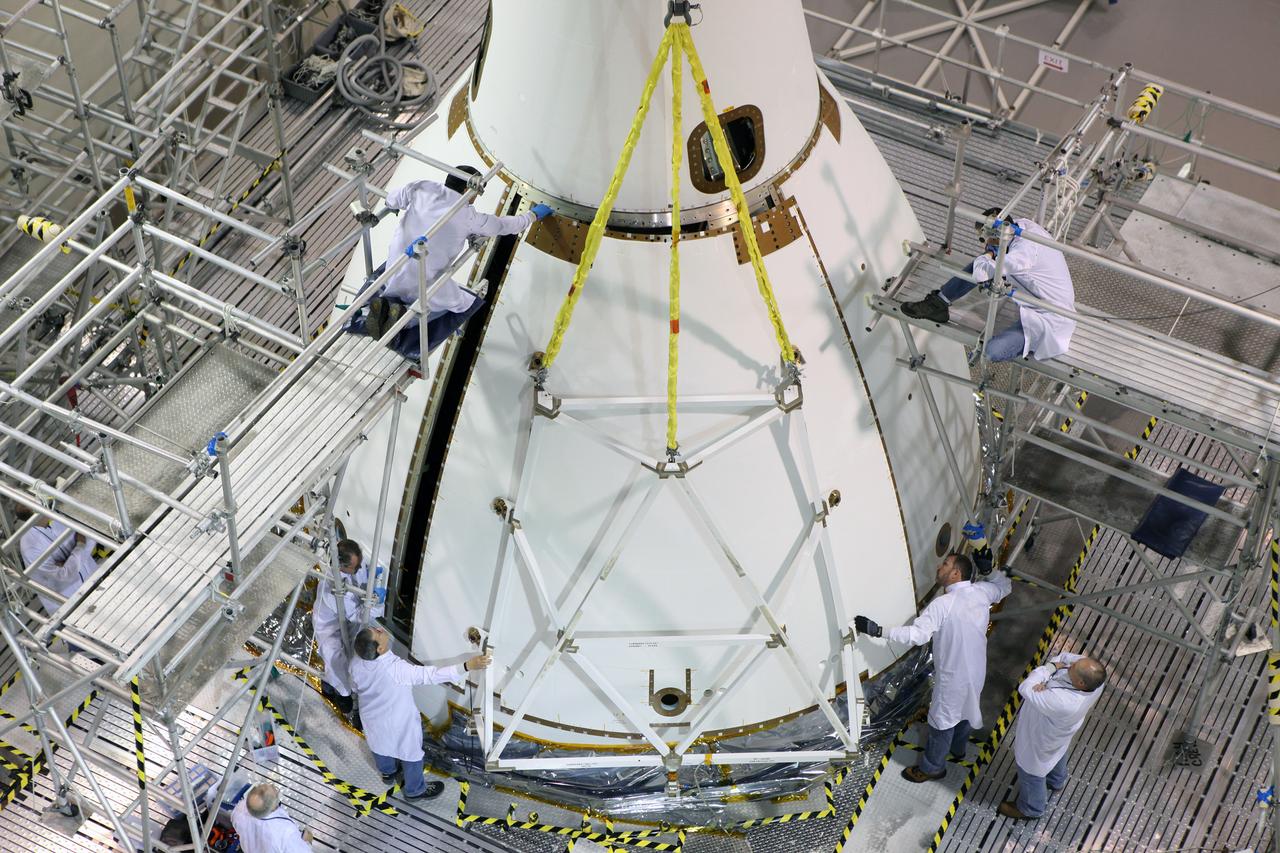
The last major assembly operation to prepare Orion for Exploration Flight Test-1 (EFT-1) is completed in the Launch Abort System Facility (LASF) at Kennedy Space Center on Oct. 11, 2014. The ogive panels, which protect the crew module from sound and vibration during ascent, were installed around the spacecraft just below the launch abort system tower. Part of Batch image transfer from Flickr.
The last major assembly operation to prepare Orion for Exploration Flight Test-1 (EFT-1) is completed in the Launch Abort System Facility (LASF) at Kennedy Space Center on Oct. 11, 2014. The ogive panels, which protect the crew module from sound and vibration during ascent, were installed around the spacecraft just below the launch abort system tower. Part of Batch image transfer from Flickr.
The last major assembly operation to prepare Orion for Exploration Flight Test-1 (EFT-1) is completed in the Launch Abort System Facility (LASF) at Kennedy Space Center on Oct. 11, 2014. The ogive panels, which protect the crew module from sound and vibration during ascent, were installed around the spacecraft just below the launch abort system tower. Part of Batch image transfer from Flickr.
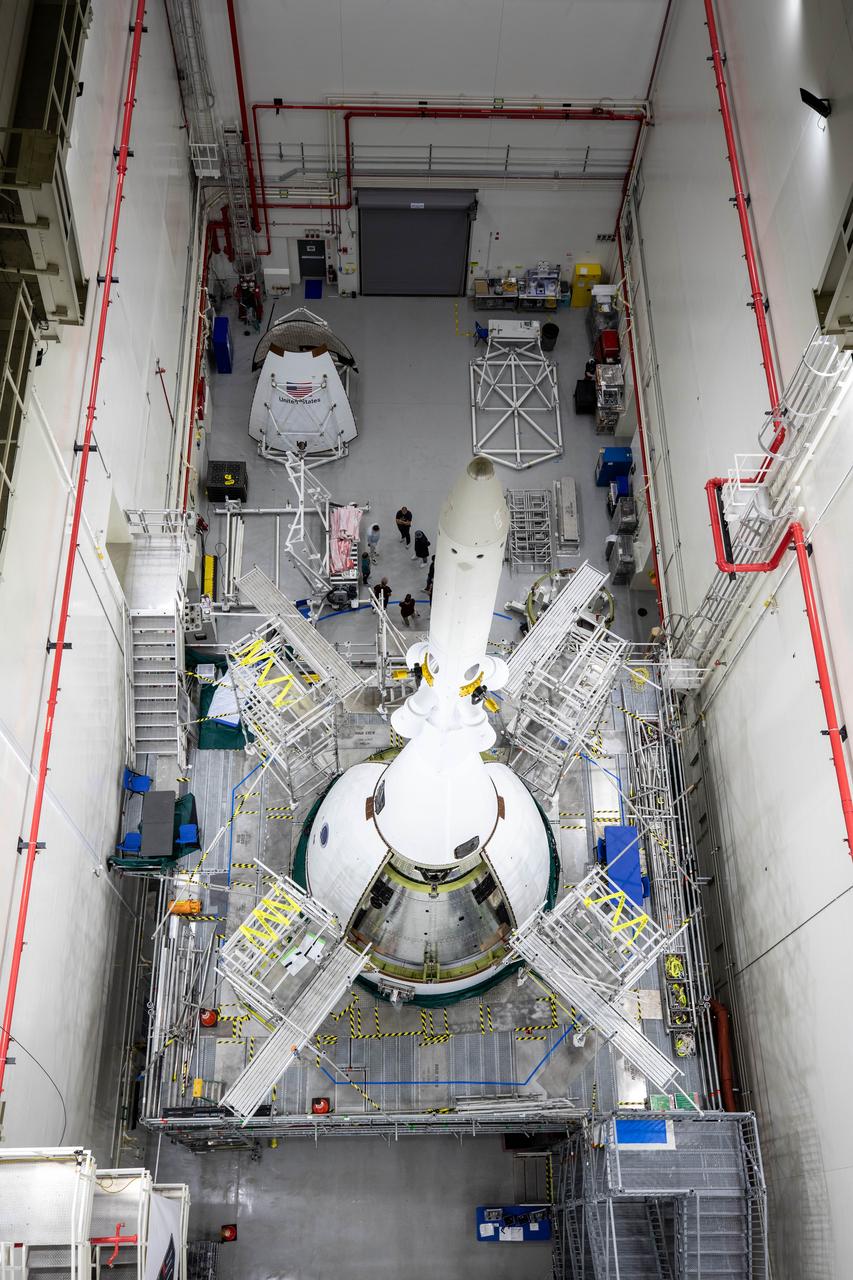
Teams with NASA’s Exploration Ground Systems completed installation of two ogive fairings onto the launch abort system inside the Launch Abort System Facility at NASA’s Kennedy Space Center in Florida on Wednesday, Sept. 10, 2025. The ogives consist of four protective panels that will shield the crew module from the severe vibrations and sounds it will experience during launch. Positioned at the top of Orion, the 44-foot-tall launch abort system is designed to carry the crew to safety in the event of an emergency during launch or ascent, with its three solid rocket motors working together to propel Orion – and astronauts inside – away from the rocket for a safe landing in the ocean, or detach from the spacecraft when it is no longer needed.
Teams with NASA’s Exploration Ground Systems completed installation of two ogive fairings onto the launch abort system inside the Launch Abort System Facility at NASA’s Kennedy Space Center in Florida on Wednesday, Sept. 10, 2025. The ogives consist of four protective panels that will shield the crew module from the severe vibrations and sounds it will experience during launch. Positioned at the top of Orion, the 44-foot-tall launch abort system is designed to carry the crew to safety in the event of an emergency during launch or ascent, with its three solid rocket motors working together to propel Orion – and astronauts inside – away from the rocket for a safe landing in the ocean, or detach from the spacecraft when it is no longer needed.
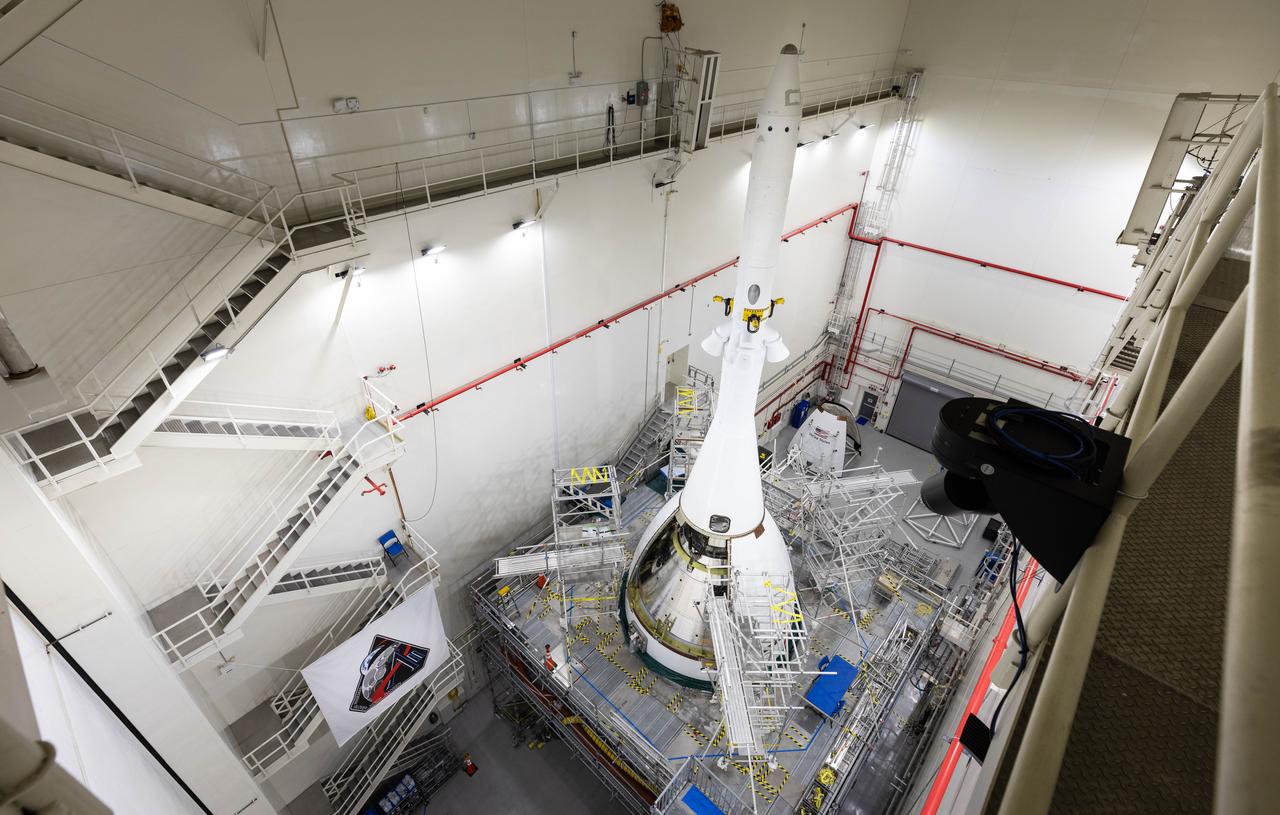
Teams with NASA’s Exploration Ground Systems completed installation of two ogive fairings onto the launch abort system inside the Launch Abort System Facility at NASA’s Kennedy Space Center in Florida on Wednesday, Sept. 10, 2025. The ogives consist of four protective panels that will shield the crew module from the severe vibrations and sounds it will experience during launch. Positioned at the top of Orion, the 44-foot-tall launch abort system is designed to carry the crew to safety in the event of an emergency during launch or ascent, with its three solid rocket motors working together to propel Orion – and astronauts inside – away from the rocket for a safe landing in the ocean, or detach from the spacecraft when it is no longer needed.
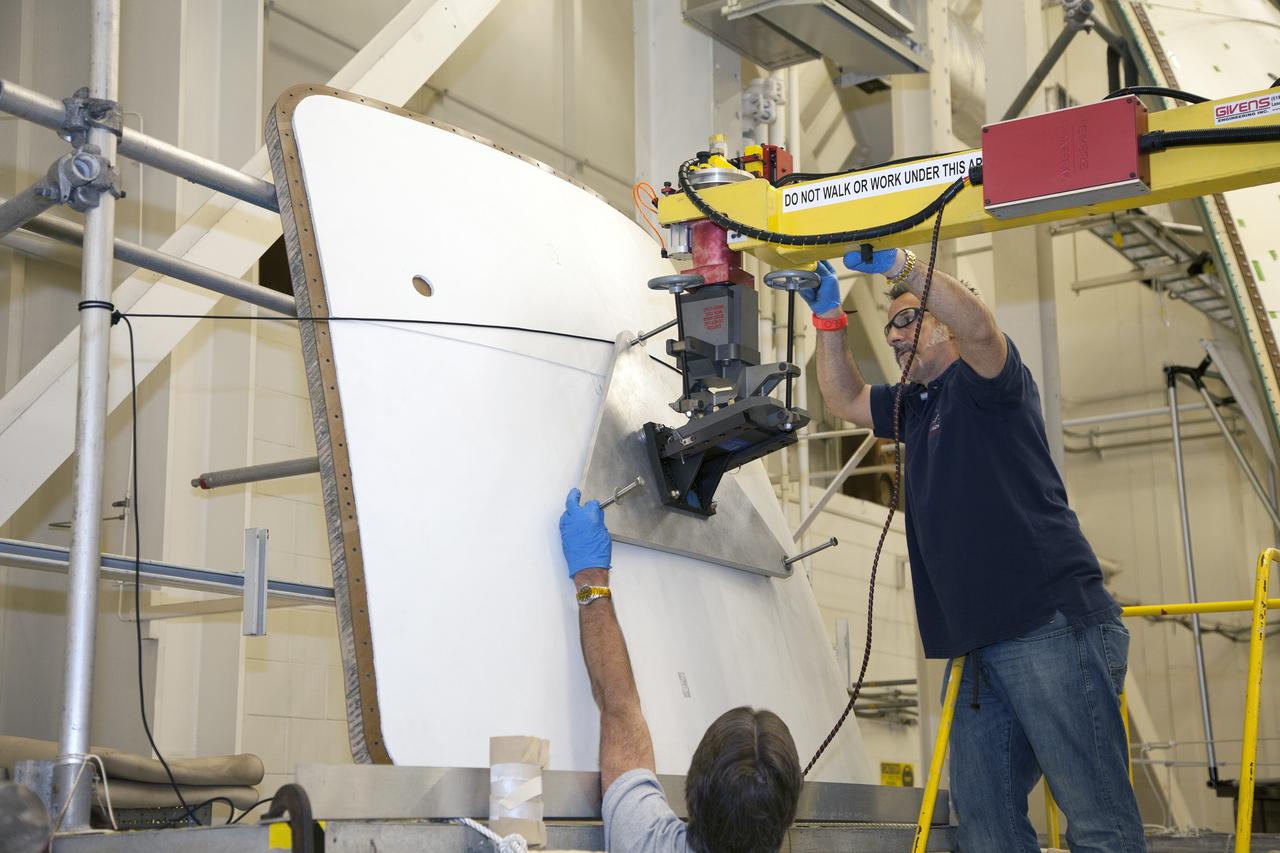
CAPE CANAVERAL, Fla. – Inside the Vehicle Assembly Building at NASA’s Kennedy Space Center in Florida, engineers and technicians are performing a GIZMO demonstration test on the ground test article Launch Abort System, or LAS, ogive panel and an Orion crew module simulator. Technicians practice lining up the GIZMO, a pneumatically-balanced manipulator that will be used for installation of the hatches on the crew module and LAS for the uncrewed Exploration Flight Test-1 and Exploration Mission-1, on the ogive panel mockup hatch. The Ground Systems Development and Operations Program is running the test to demonstrate that the GIZMO can meet the reach and handling requirements for the task. Orion is the exploration spacecraft designed to carry astronauts to destinations not yet explored by humans, including an asteroid and Mars. It will have emergency abort capability, sustain the crew during space travel and provide safe re-entry from deep space return velocities. The first unpiloted test flight of the Orion is scheduled to launch later this year atop a Delta IV rocket and in 2017 on NASA’s Space Launch System rocket. For more information, visit http://www.nasa.gov/orion. Photo credit: NASA/Daniel Casper

CAPE CANAVERAL, Fla. – Inside the Launch Abort System Facility at NASA's Kennedy Space Center in Florida, preparations are underway to remove the window covers on Orion before the fourth and final Ogive panel is installed around the spacecraft and Launch Abort System. The Ogive panels will smooth the airflow over the conical spacecraft to limit sound and vibration, which will make for a much smoother ride for the astronauts who will ride inside Orion in the future. The work marked the final major assembly steps for the spacecraft before it is transported to Space Launch Complex 37 at Cape Canaveral Air Force Station in November. Orion is the exploration spacecraft designed to carry astronauts to destinations not yet explored by humans, including an asteroid and Mars. It will have emergency abort capability, sustain the crew during space travel and provide safe re-entry from deep space return velocities. The first unpiloted flight test of Orion is scheduled to launch in December 2014 atop a United Launch Alliance Delta IV Heavy rocket, and in 2018 on NASA’s Space Launch System rocket. For more information, visit www.nasa.gov/orion. Photo credit: Ben Smegelsky
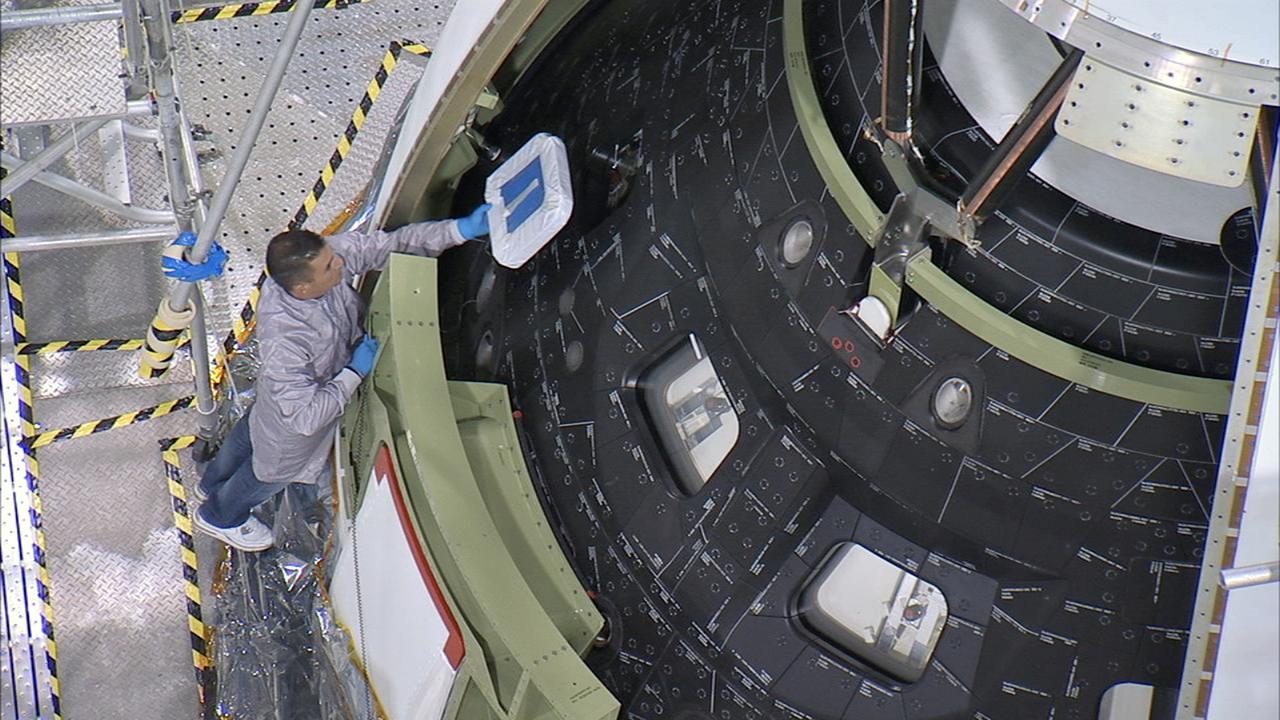
CAPE CANAVERAL, Fla. – Inside the Launch Abort System Facility at NASA's Kennedy Space Center in Florida, a technician on a work platform carefully removes the window covers on Orion before the fourth and final Ogive panel is installed around the spacecraft and Launch Abort System. The Ogive panels will smooth the airflow over the conical spacecraft to limit sound and vibration, which will make for a much smoother ride for the astronauts who will ride inside Orion in the future. The work marked the final major assembly steps for the spacecraft before it is transported to Space Launch Complex 37 at Cape Canaveral Air Force Station in November. Orion is the exploration spacecraft designed to carry astronauts to destinations not yet explored by humans, including an asteroid and Mars. It will have emergency abort capability, sustain the crew during space travel and provide safe re-entry from deep space return velocities. The first unpiloted flight test of Orion is scheduled to launch in December 2014 atop a United Launch Alliance Delta IV Heavy rocket, and in 2018 on NASA’s Space Launch System rocket. For more information, visit www.nasa.gov/orion. Photo credit: Ben Smegelsky
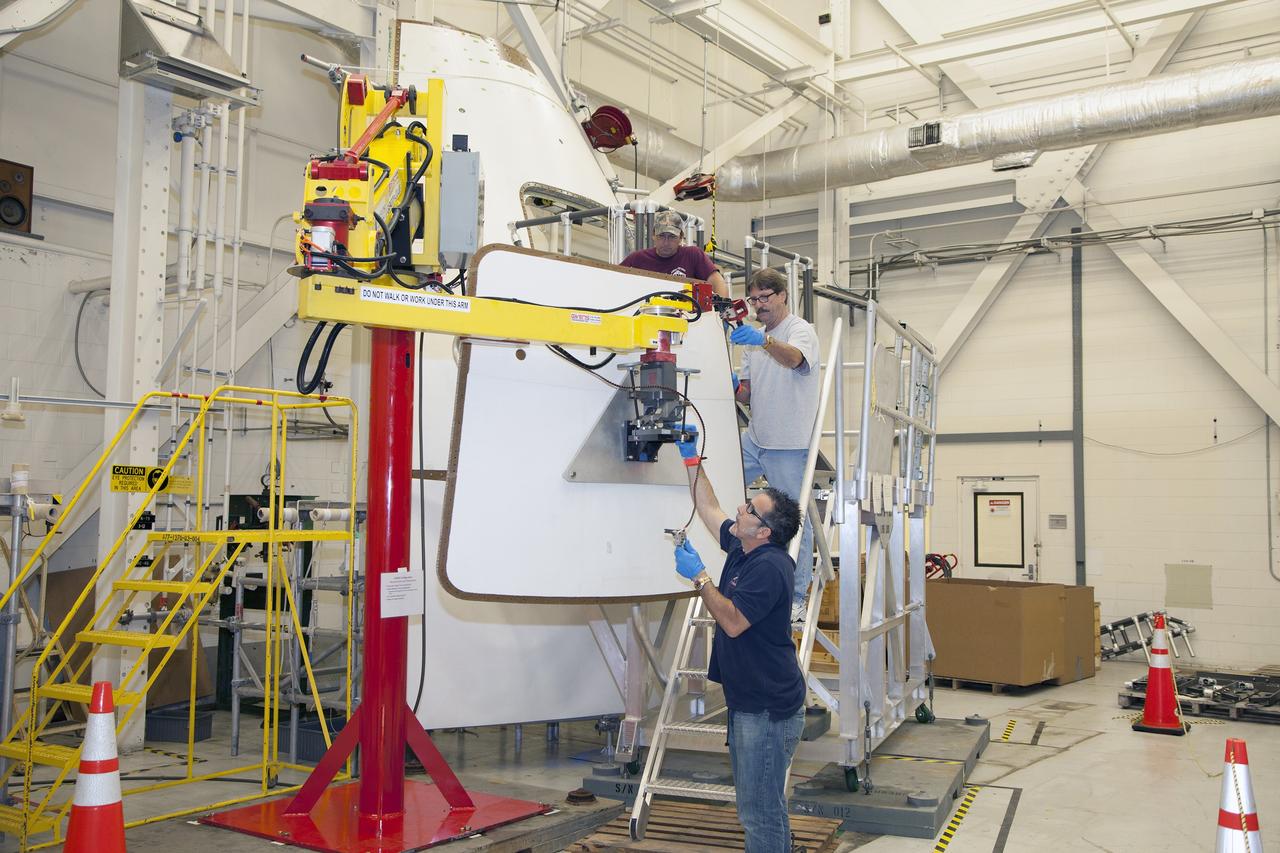
CAPE CANAVERAL, Fla. – Inside the Vehicle Assembly Building at NASA’s Kennedy Space Center in Florida, engineers and technicians are performing a GIZMO demonstration test on the ground test article Launch Abort System, or LAS, ogive panel and an Orion crew module simulator. Technicians practice lining up the GIZMO, a pneumatically-balanced manipulator that will be used for installation of the hatches on the crew module and LAS for the uncrewed Exploration Flight Test-1 and Exploration Mission-1, on the ogive panel mockup hatch. The Ground Systems Development and Operations Program is running the test to demonstrate that the GIZMO can meet the reach and handling requirements for the task. Orion is the exploration spacecraft designed to carry astronauts to destinations not yet explored by humans, including an asteroid and Mars. It will have emergency abort capability, sustain the crew during space travel and provide safe re-entry from deep space return velocities. The first unpiloted test flight of the Orion is scheduled to launch later this year atop a Delta IV rocket and in 2017 on NASA’s Space Launch System rocket. For more information, visit http://www.nasa.gov/orion. Photo credit: NASA/Daniel Casper
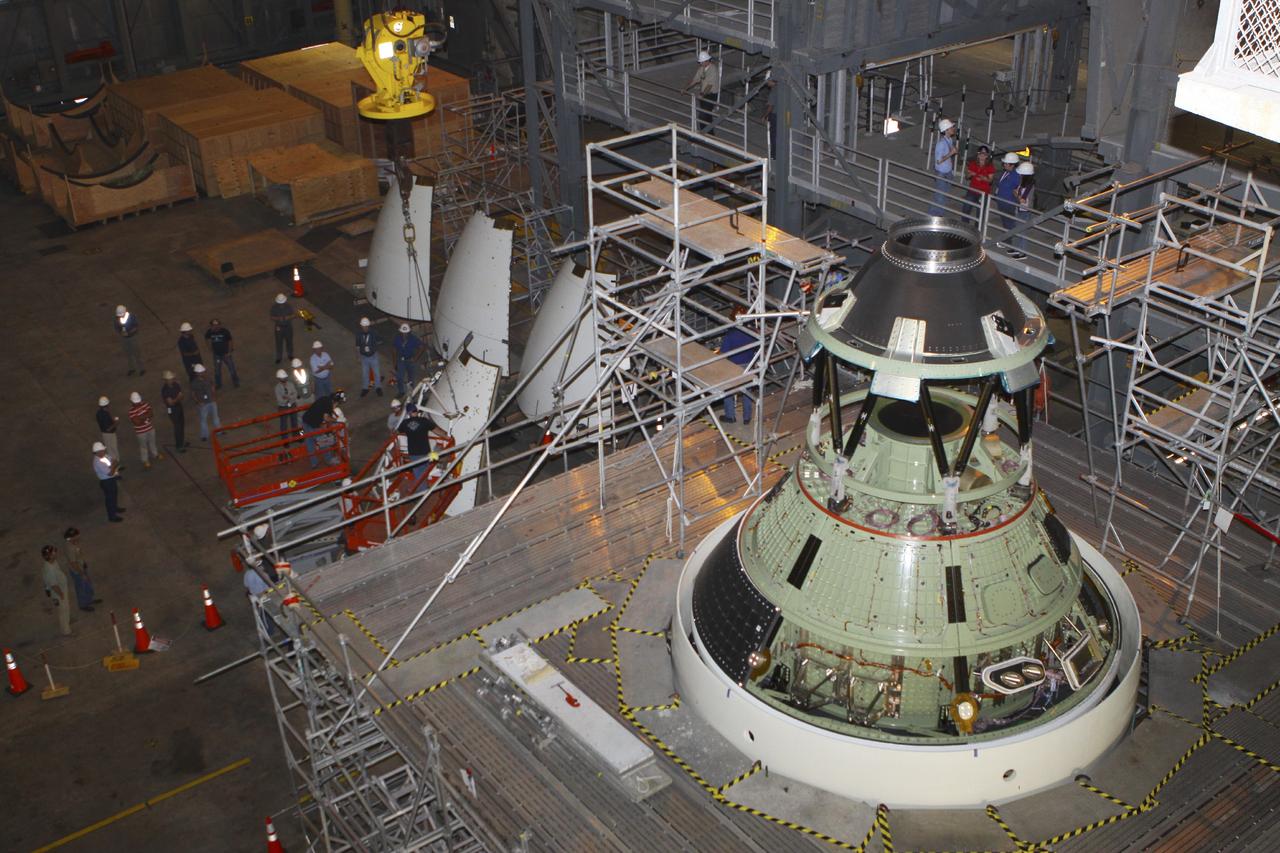
CAPE CANAVERAL, Fla. – At NASA’s Kennedy Space Center in Florida, technicians prepare the four ogive panels for lifting by crane so that they can be installed on the Orion ground test vehicle in Vehicle Assembly Building high bay 4. The ogive panels enclose and protect the Orion spacecraft and attach to the Launch Abort System. The test vehicle is being used by the Ground Systems Development and Operations Program for path finding operations, including simulated manufacturing, assembly and stacking procedures. Orion is the exploration spacecraft designed to carry astronauts to destinations not yet explored by humans, including an asteroid and Mars. It will have emergency abort capability, sustain the crew during space travel and provide safe re-entry from deep space return velocities. The first unpiloted test flight of Orion is scheduled to launch in 2014 atop a Delta IV rocket and in 2017 on NASA’s Space Launch System rocket. For more information, visit www.nasa.gov/orion. Photo credit: Kim Shiflett
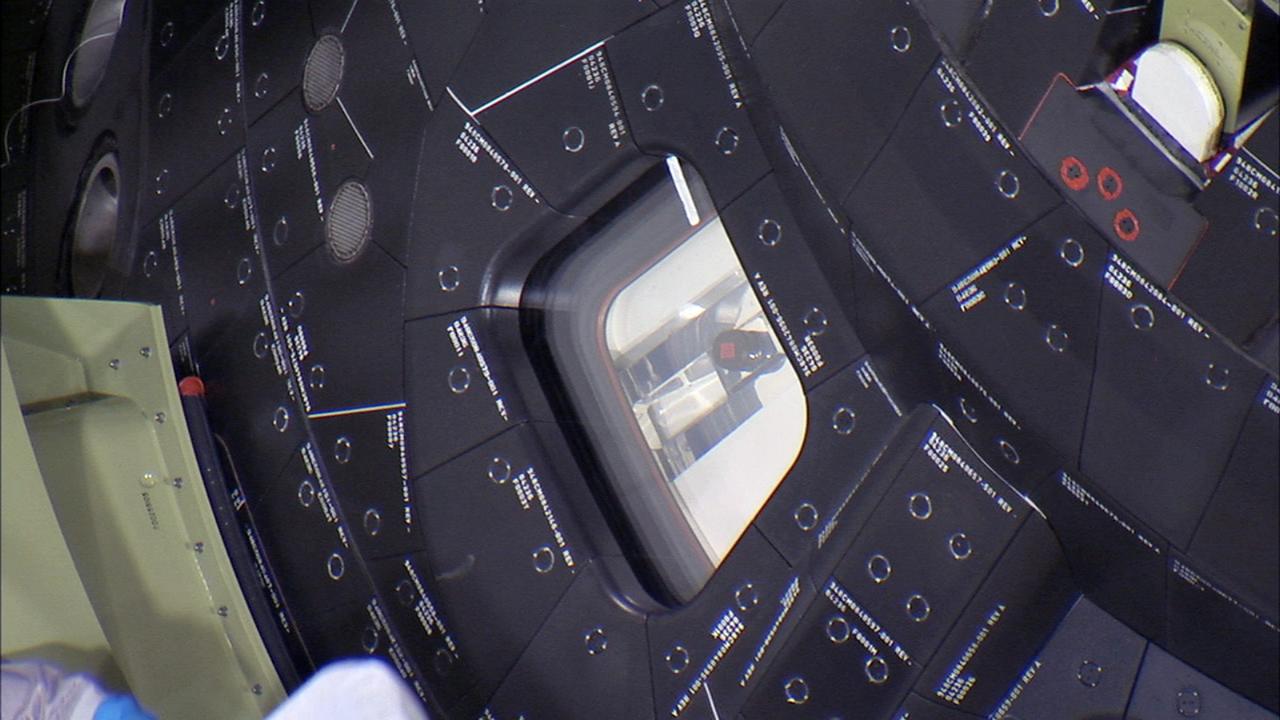
CAPE CANAVERAL, Fla. – Inside the Launch Abort System Facility at NASA’s Kennedy Space Center in Florida, a window cover has been carefully removed from the Orion spacecraft before the fourth and final Ogive panel is installed around the spacecraft and Launch Abort System. The Ogive panels will smooth the airflow over the conical spacecraft to limit sound and vibration, which will make for a much smoother ride for the astronauts who will ride inside Orion in the future. The work marked the final major assembly steps for the spacecraft before it is transported to Space Launch Complex 37 at Cape Canaveral Air Force Station in November. Orion is the exploration spacecraft designed to carry astronauts to destinations not yet explored by humans, including an asteroid and Mars. It will have emergency abort capability, sustain the crew during space travel and provide safe re-entry from deep space return velocities. The first unpiloted flight test of Orion is scheduled to launch in December 2014 atop a United Launch Alliance Delta IV Heavy rocket, and in 2018 on NASA’s Space Launch System rocket. For more information, visit www.nasa.gov/orion. Photo credit: Ben Smegelsky
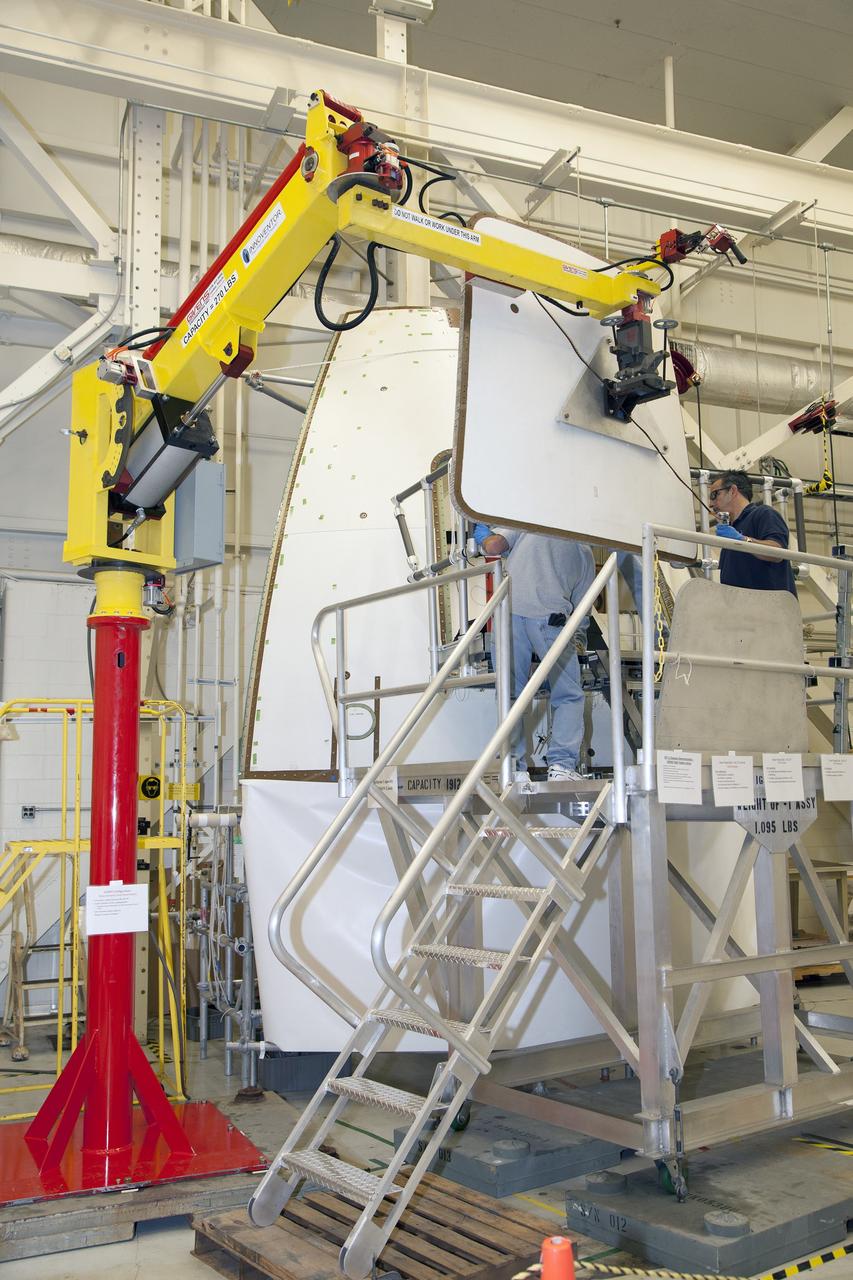
CAPE CANAVERAL, Fla. – Inside the Vehicle Assembly Building at NASA’s Kennedy Space Center in Florida, engineers and technicians are performing a GIZMO demonstration test on the ground test article Launch Abort System, or LAS, ogive panel and an Orion crew module simulator. Technicians attach the GIZMO, a pneumatically-balanced manipulator that will be used for installation of the hatches on the crew module and LAS for the uncrewed Exploration Flight Test-1 and Exploration Mission-1, onto the ogive panel mockup hatch. The Ground Systems Development and Operations Program is running the test to demonstrate that the GIZMO can meet the reach and handling requirements for the task. Orion is the exploration spacecraft designed to carry astronauts to destinations not yet explored by humans, including an asteroid and Mars. It will have emergency abort capability, sustain the crew during space travel and provide safe re-entry from deep space return velocities. The first unpiloted test flight of the Orion is scheduled to launch later this year atop a Delta IV rocket and in 2017 on NASA’s Space Launch System rocket. For more information, visit http://www.nasa.gov/orion. Photo credit: NASA/Daniel Casper
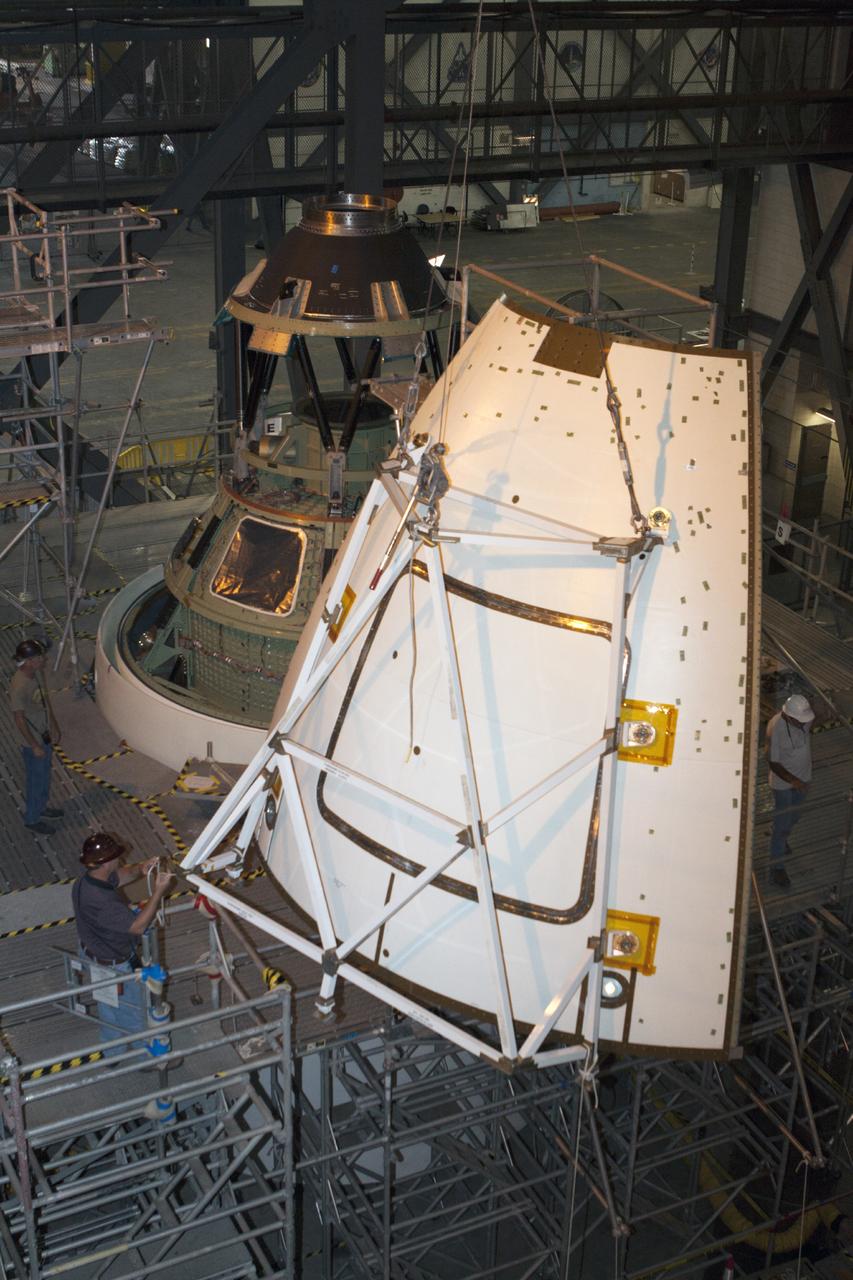
CAPE CANAVERAL, Fla. – At NASA’s Kennedy Space Center in Florida, technicians monitor the progress as a crane is used to move one of four ogive panels closer for installation on the Orion ground test vehicle in Vehicle Assembly Building high bay 4. The ogive panels enclose and protect the Orion spacecraft and attach to the Launch Abort System. The test vehicle is being used by the Ground Systems Development and Operations Program for path finding operations, including simulated manufacturing, assembly and stacking procedures. Orion is the exploration spacecraft designed to carry astronauts to destinations not yet explored by humans, including an asteroid and Mars. It will have emergency abort capability, sustain the crew during space travel and provide safe re-entry from deep space return velocities. The first unpiloted test flight of Orion is scheduled to launch in 2014 atop a Delta IV rocket and in 2017 on NASA’s Space Launch System rocket. For more information, visit www.nasa.gov/orion. Photo credit: Kim Shiflett
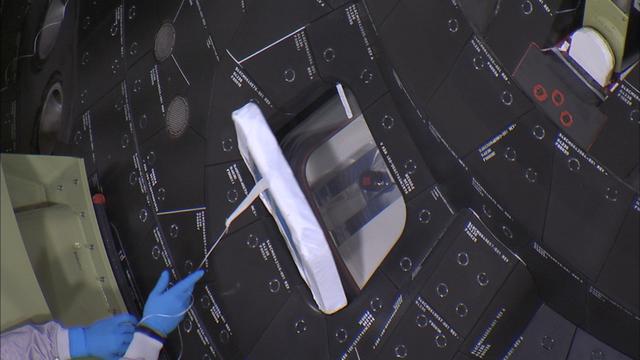
Inside the Launch Abort System Facility at NASA's Kennedy Space Center in Florida, a technician carefully removes the window covers on Orion before the fourth and final Ogive panel is installed around the spacecraft and Launch Abort System. The Ogive panels will smooth the airflow over the conical spacecraft to limit sound and vibration, which will make for a much smoother ride for the astronauts who will ride inside Orion in the future. The work marked the final major assembly steps for the spacecraft before it is transported to Space Launch Complex 37 at Cape Canaveral Air Force Station in November. Orion is the exploration spacecraft designed to carry astronauts to destinations not yet explored by humans, including an asteroid and Mars. It will have emergency abort capability, sustain the crew during space travel and provide safe re-entry from deep space return velocities. The first unpiloted flight test of Orion is scheduled to launch in December 2014 atop a United Launch Alliance Delta IV Heavy rocket, and in 2018 on NASA’s Space Launch System rocket.
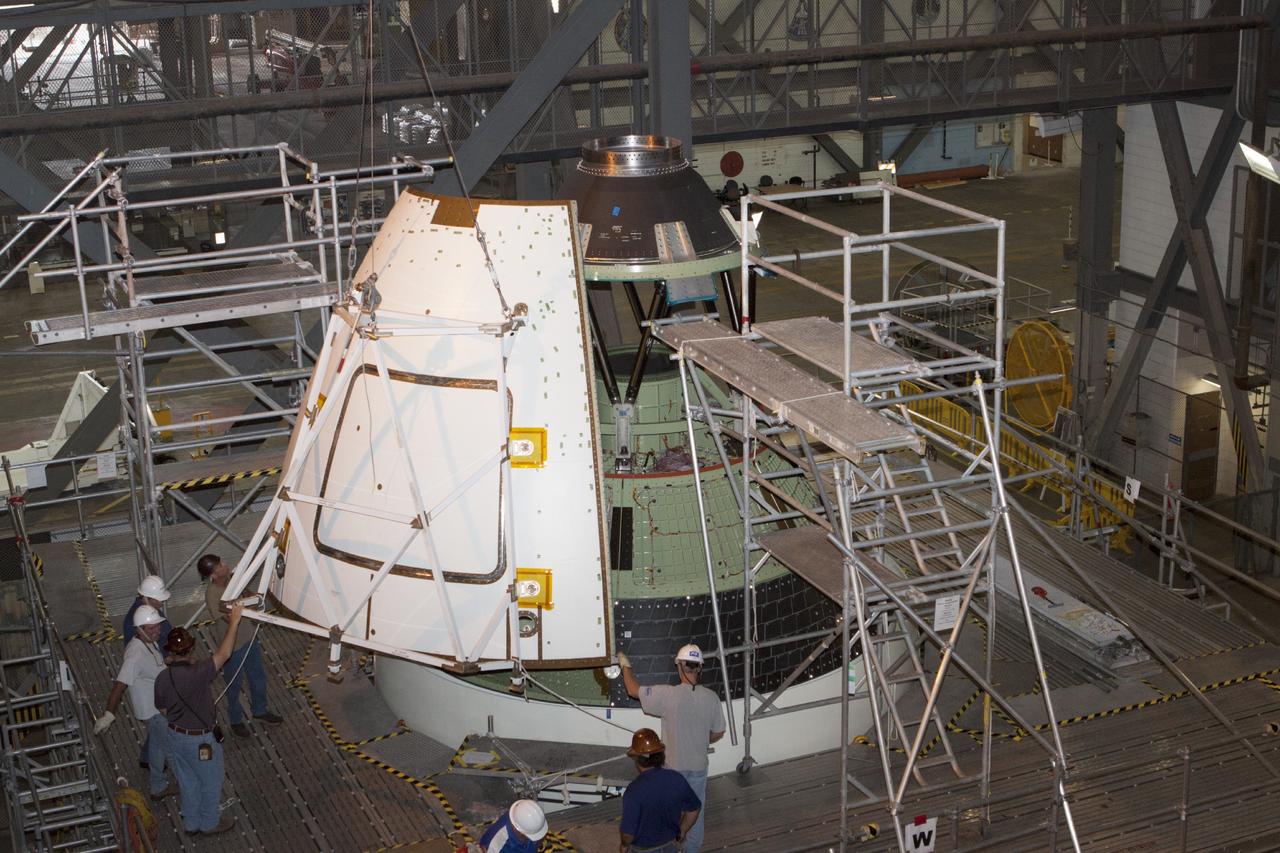
CAPE CANAVERAL, Fla. – At NASA’s Kennedy Space Center in Florida, technicians assist as a crane is used to move one of four ogive panels closer for installation on the Orion ground test vehicle in Vehicle Assembly Building high bay 4. The ogive panels enclose and protect the Orion spacecraft and attach to the Launch Abort System. The test vehicle is being used by the Ground Systems Development and Operations Program for path finding operations, including simulated manufacturing, assembly and stacking procedures. Orion is the exploration spacecraft designed to carry astronauts to destinations not yet explored by humans, including an asteroid and Mars. It will have emergency abort capability, sustain the crew during space travel and provide safe re-entry from deep space return velocities. The first unpiloted test flight of Orion is scheduled to launch in 2014 atop a Delta IV rocket and in 2017 on NASA’s Space Launch System rocket. For more information, visit www.nasa.gov/orion. Photo credit: Kim Shiflett
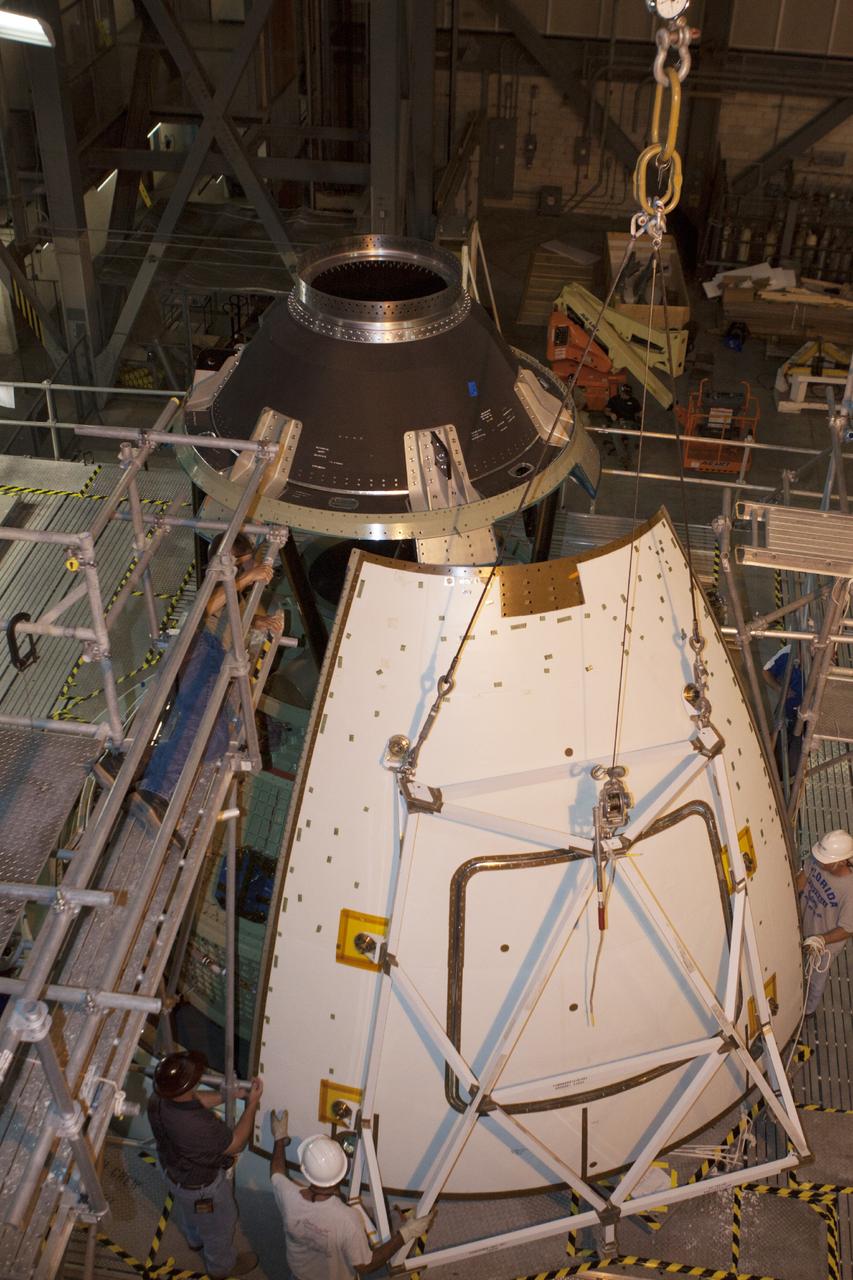
CAPE CANAVERAL, Fla. – At NASA’s Kennedy Space Center in Florida, technicians assist as a crane is used to move one of four ogive panels closer for installation on the Orion ground test vehicle in Vehicle Assembly Building high bay 4. The ogive panels enclose and protect the Orion spacecraft and attach to the Launch Abort System. The test vehicle is being used by the Ground Systems Development and Operations Program for path finding operations, including simulated manufacturing, assembly and stacking procedures. Orion is the exploration spacecraft designed to carry astronauts to destinations not yet explored by humans, including an asteroid and Mars. It will have emergency abort capability, sustain the crew during space travel and provide safe re-entry from deep space return velocities. The first unpiloted test flight of Orion is scheduled to launch in 2014 atop a Delta IV rocket and in 2017 on NASA’s Space Launch System rocket. For more information, visit www.nasa.gov/orion. Photo credit: Kim Shiflett
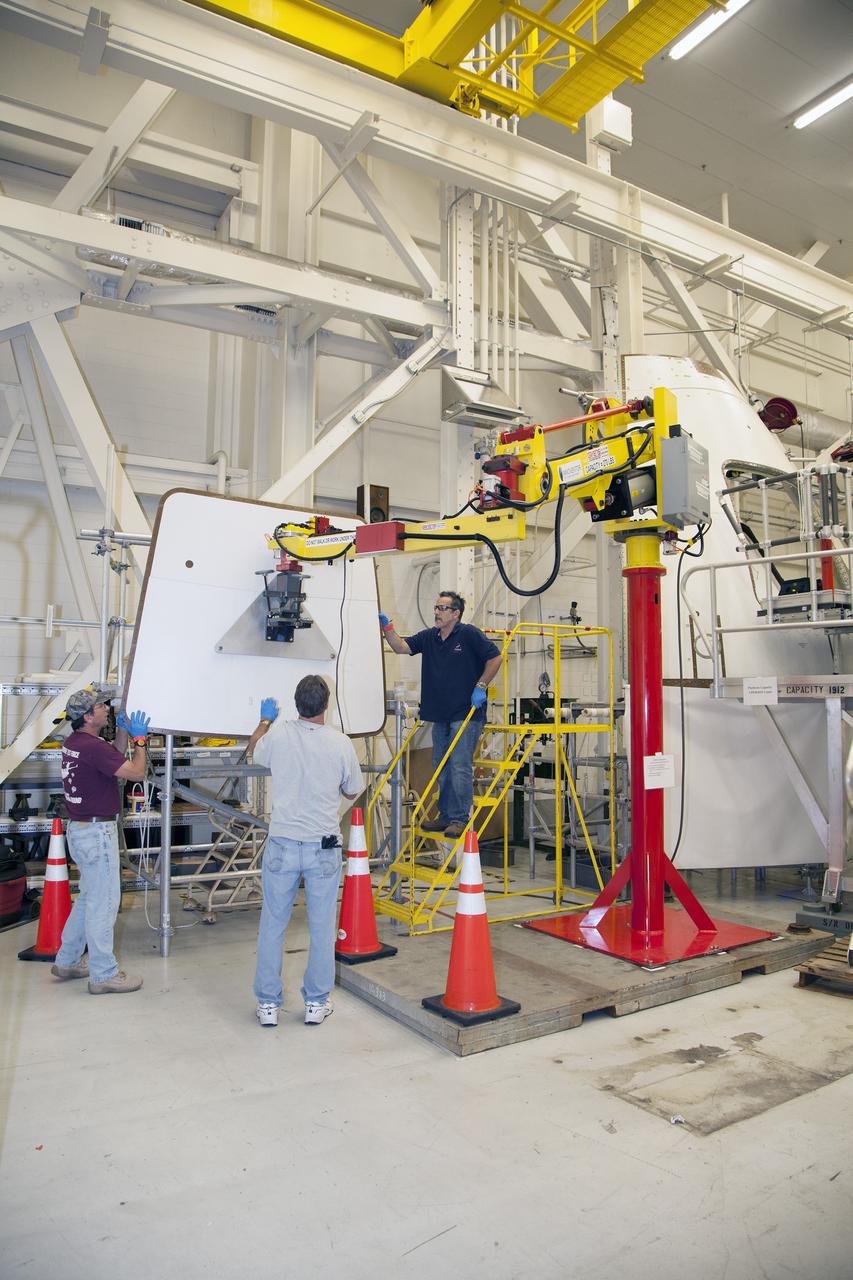
CAPE CANAVERAL, Fla. – Inside the Vehicle Assembly Building at NASA’s Kennedy Space Center in Florida, engineers and technicians are performing a GIZMO demonstration test on the ground test article Launch Abort System, or LAS, ogive panel and an Orion crew module simulator. Technicians practice lining up the GIZMO, a pneumatically-balanced manipulator that will be used for installation of the hatches on the crew module and LAS for the uncrewed Exploration Flight Test-1 and Exploration Mission-1, on the ogive panel mockup hatch. The Ground Systems Development and Operations Program is running the test to demonstrate that the GIZMO can meet the reach and handling requirements for the task. Orion is the exploration spacecraft designed to carry astronauts to destinations not yet explored by humans, including an asteroid and Mars. It will have emergency abort capability, sustain the crew during space travel and provide safe re-entry from deep space return velocities. The first unpiloted test flight of the Orion is scheduled to launch later this year atop a Delta IV rocket and in 2017 on NASA’s Space Launch System rocket. For more information, visit http://www.nasa.gov/orion. Photo credit: NASA/Daniel Casper
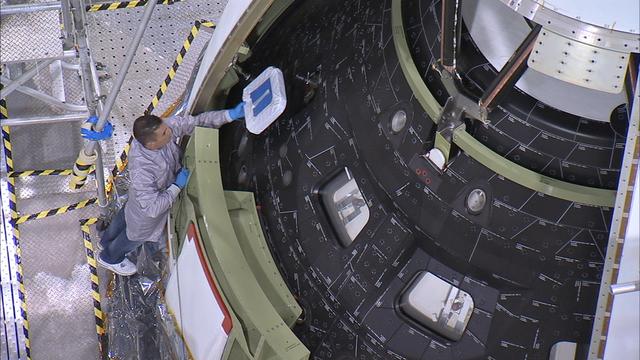
Inside the Launch Abort System Facility at NASA's Kennedy Space Center in Florida, a technician on a work platform carefully removes the window covers on Orion before the fourth and final Ogive panel is installed around the spacecraft and Launch Abort System. The Ogive panels will smooth the airflow over the conical spacecraft to limit sound and vibration, which will make for a much smoother ride for the astronauts who will ride inside Orion in the future. The work marked the final major assembly steps for the spacecraft before it is transported to Space Launch Complex 37 at Cape Canaveral Air Force Station in November. Orion is the exploration spacecraft designed to carry astronauts to destinations not yet explored by humans, including an asteroid and Mars. It will have emergency abort capability, sustain the crew during space travel and provide safe re-entry from deep space return velocities. The first unpiloted flight test of Orion is scheduled to launch in December 2014 atop a United Launch Alliance Delta IV Heavy rocket, and in 2018 on NASA’s Space Launch System rocket.
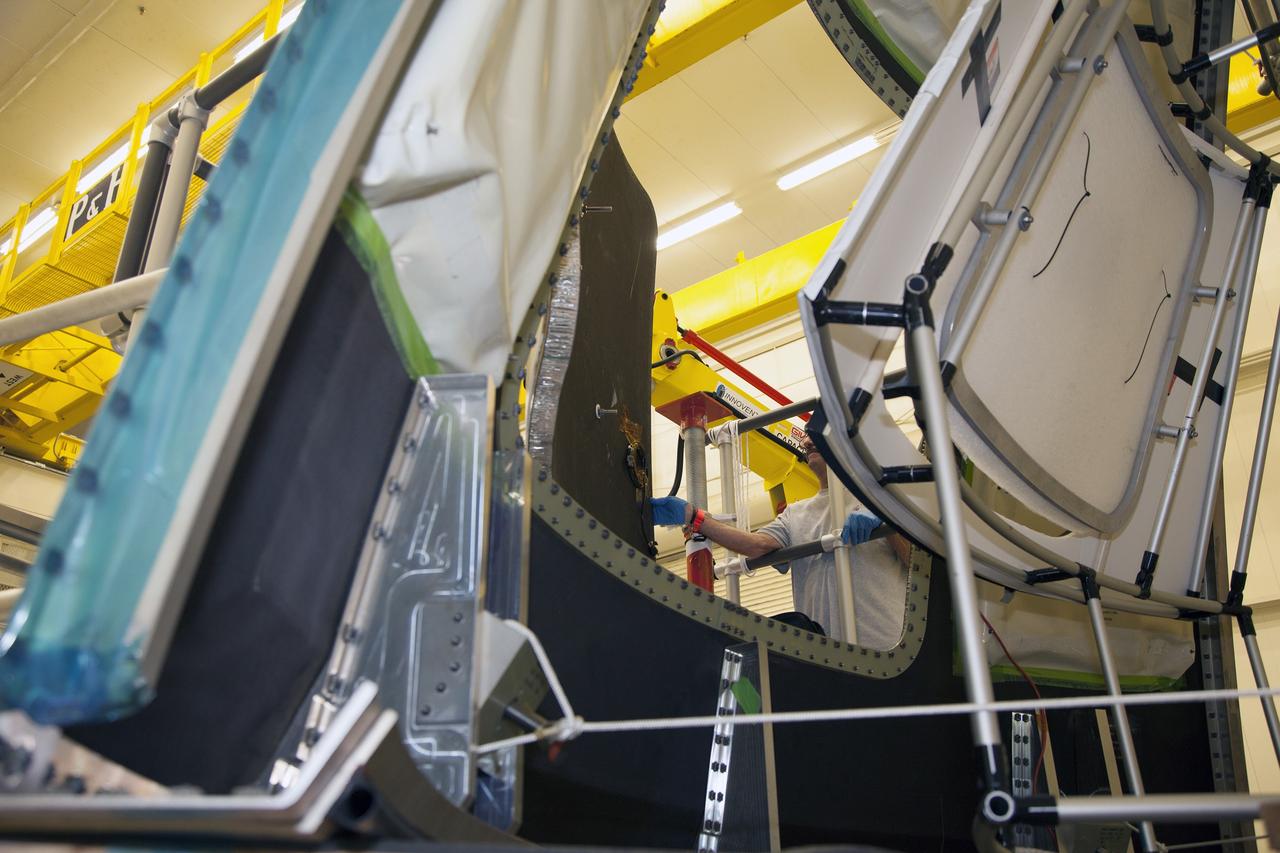
CAPE CANAVERAL, Fla. – Inside the Vehicle Assembly Building at NASA’s Kennedy Space Center in Florida, engineers and technicians are performing a GIZMO demonstration test on the ground test article Launch Abort System, or LAS, ogive panel and an Orion crew module simulator. Technicians attached the GIZMO to remove the outer ogive panel hatch on the Orion crew module simulator. The GIZMO is a pneumatically-balanced manipulator that will be used for installation of the hatches on the crew module and LAS for the uncrewed Exploration Flight Test-1 and Exploration Mission-1. The Ground Systems Development and Operations Program is running the test to demonstrate that the GIZMO can meet the reach and handling requirements for the task. Orion is the exploration spacecraft designed to carry astronauts to destinations not yet explored by humans, including an asteroid and Mars. It will have emergency abort capability, sustain the crew during space travel and provide safe re-entry from deep space return velocities. The first unpiloted test flight of the Orion is scheduled to launch later this year atop a Delta IV rocket and in 2017 on NASA’s Space Launch System rocket. For more information, visit http://www.nasa.gov/orion. Photo credit: NASA/Daniel Casper
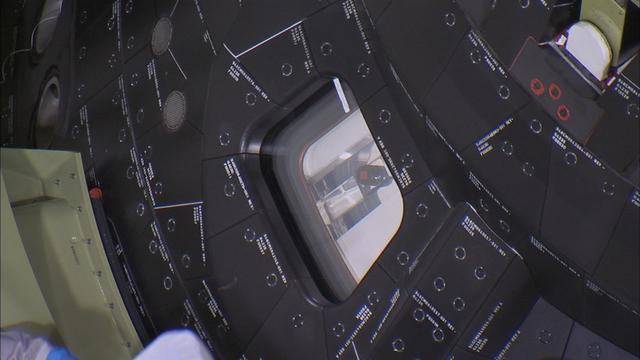
Inside the Launch Abort System Facility at NASA’s Kennedy Space Center in Florida, a window cover has been carefully removed from the Orion spacecraft before the fourth and final Ogive panel is installed around the spacecraft and Launch Abort System. The Ogive panels will smooth the airflow over the conical spacecraft to limit sound and vibration, which will make for a much smoother ride for the astronauts who will ride inside Orion in the future. The work marked the final major assembly steps for the spacecraft before it is transported to Space Launch Complex 37 at Cape Canaveral Air Force Station in November. Orion is the exploration spacecraft designed to carry astronauts to destinations not yet explored by humans, including an asteroid and Mars. It will have emergency abort capability, sustain the crew during space travel and provide safe re-entry from deep space return velocities. The first unpiloted flight test of Orion is scheduled to launch in December 2014 atop a United Launch Alliance Delta IV Heavy rocket, and in 2018 on NASA’s Space Launch System rocket.
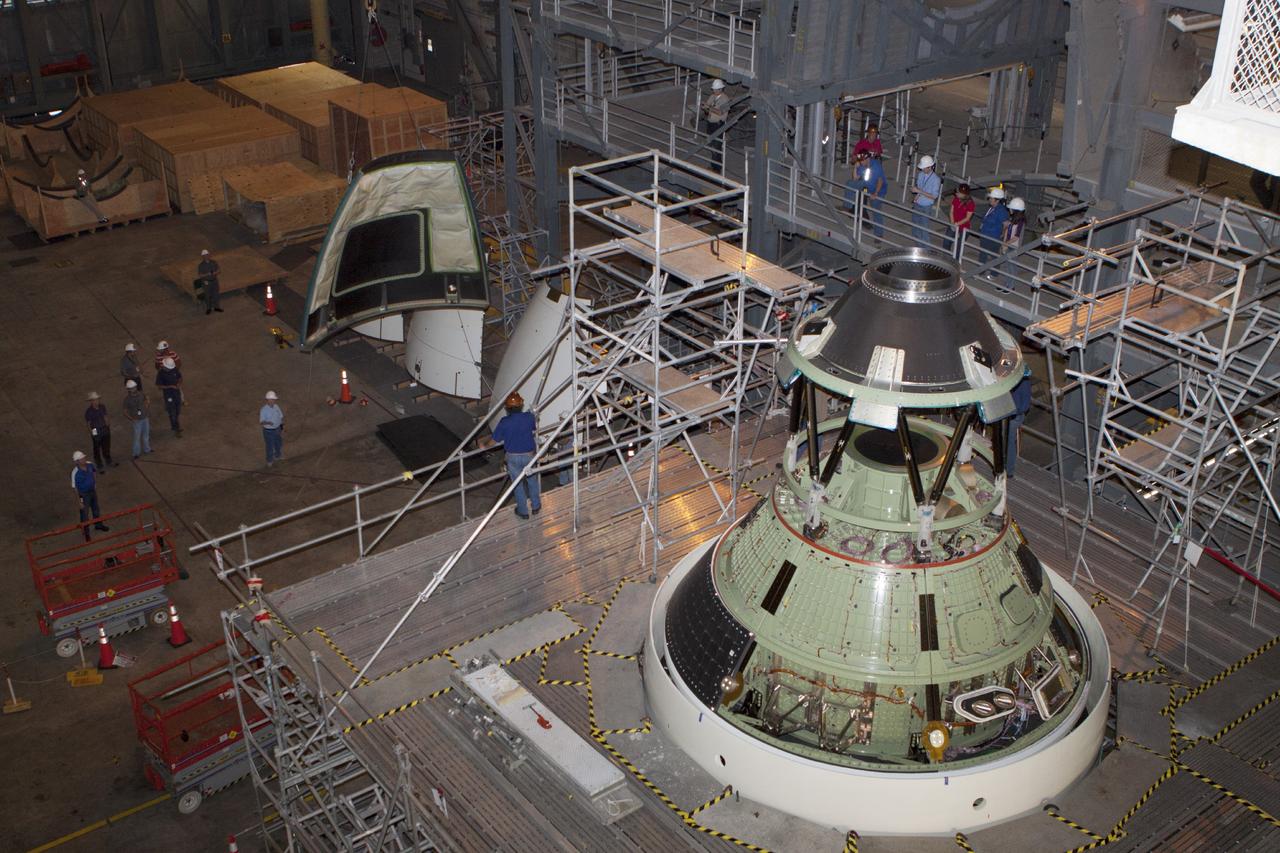
CAPE CANAVERAL, Fla. – At NASA’s Kennedy Space Center in Florida, technicians monitor the progress as a crane is used to move one of four ogive panels closer for installation on the Orion ground test vehicle in Vehicle Assembly Building high bay 4. The ogive panels enclose and protect the Orion spacecraft and attach to the Launch Abort System. The test vehicle is being used by the Ground Systems Development and Operations Program for path finding operations, including simulated manufacturing, assembly and stacking procedures. Orion is the exploration spacecraft designed to carry astronauts to destinations not yet explored by humans, including an asteroid and Mars. It will have emergency abort capability, sustain the crew during space travel and provide safe re-entry from deep space return velocities. The first unpiloted test flight of Orion is scheduled to launch in 2014 atop a Delta IV rocket and in 2017 on NASA’s Space Launch System rocket. For more information, visit www.nasa.gov/orion. Photo credit: Kim Shiflett
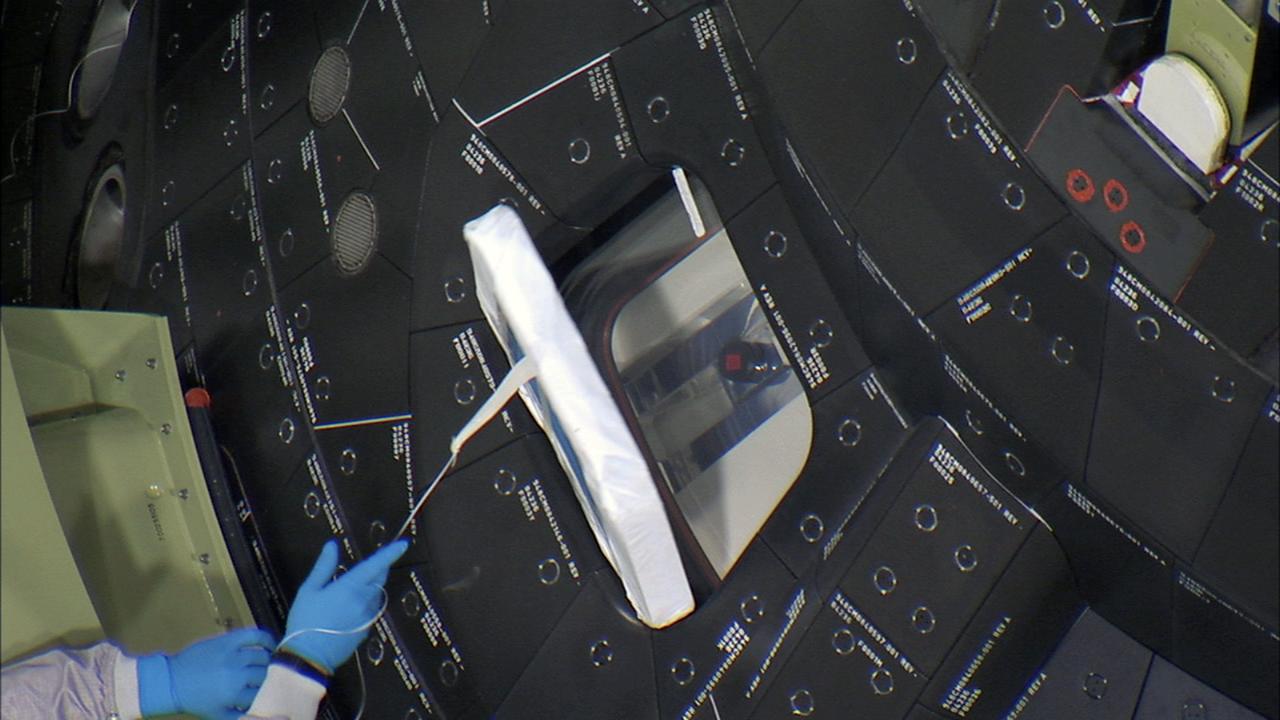
CAPE CANAVERAL, Fla. – Inside the Launch Abort System Facility at NASA's Kennedy Space Center in Florida, a technician carefully removes the window covers on Orion before the fourth and final Ogive panel is installed around the spacecraft and Launch Abort System. The Ogive panels will smooth the airflow over the conical spacecraft to limit sound and vibration, which will make for a much smoother ride for the astronauts who will ride inside Orion in the future. The work marked the final major assembly steps for the spacecraft before it is transported to Space Launch Complex 37 at Cape Canaveral Air Force Station in November. Orion is the exploration spacecraft designed to carry astronauts to destinations not yet explored by humans, including an asteroid and Mars. It will have emergency abort capability, sustain the crew during space travel and provide safe re-entry from deep space return velocities. The first unpiloted flight test of Orion is scheduled to launch in December 2014 atop a United Launch Alliance Delta IV Heavy rocket, and in 2018 on NASA’s Space Launch System rocket. For more information, visit www.nasa.gov/orion. Photo credit: Ben Smegelsky
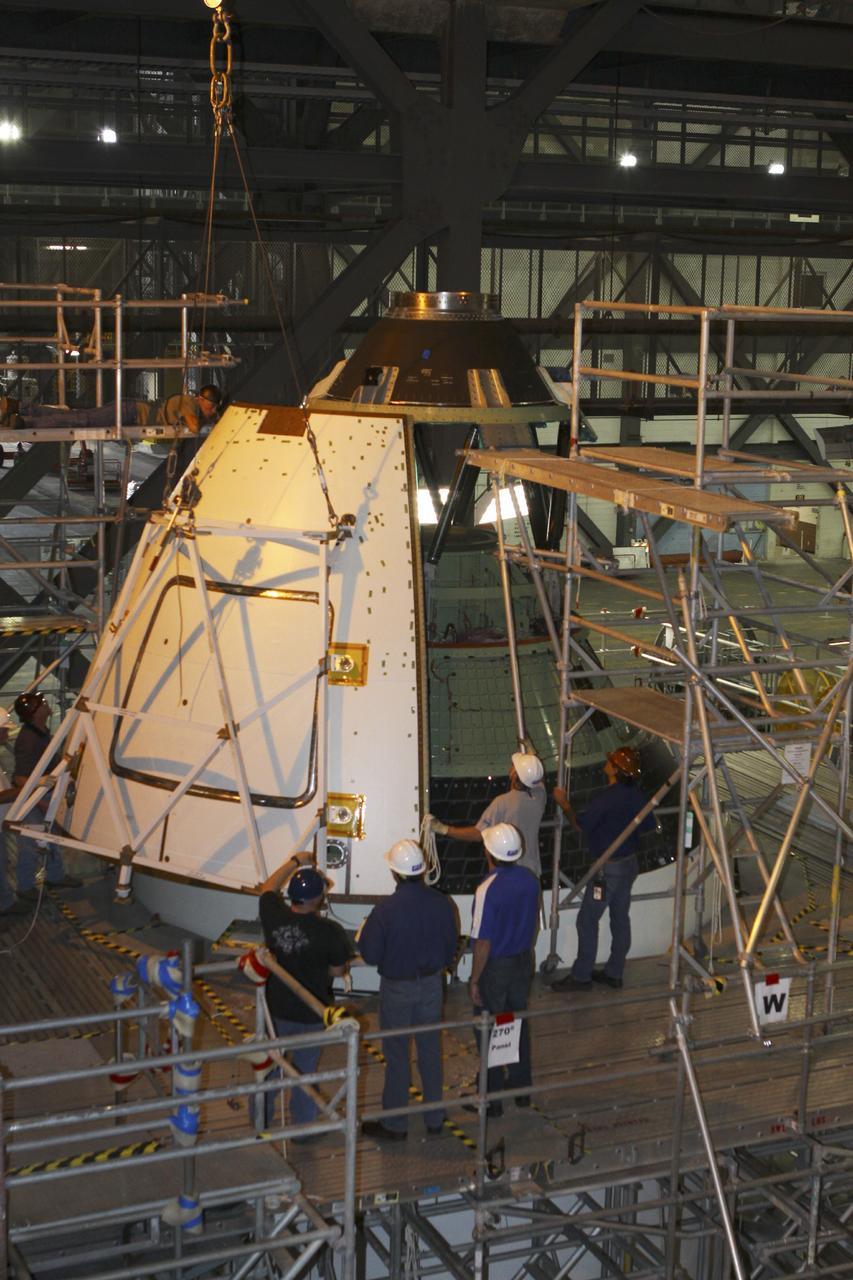
CAPE CANAVERAL, Fla. – At NASA’s Kennedy Space Center in Florida, technicians assist as a crane is used to move one of four ogive panels closer for installation on the Orion ground test vehicle in Vehicle Assembly Building high bay 4. The ogive panels enclose and protect the Orion spacecraft and attach to the Launch Abort System. The test vehicle is being used by the Ground Systems Development and Operations Program for path finding operations, including simulated manufacturing, assembly and stacking procedures. Orion is the exploration spacecraft designed to carry astronauts to destinations not yet explored by humans, including an asteroid and Mars. It will have emergency abort capability, sustain the crew during space travel and provide safe re-entry from deep space return velocities. The first unpiloted test flight of Orion is scheduled to launch in 2014 atop a Delta IV rocket and in 2017 on NASA’s Space Launch System rocket. For more information, visit www.nasa.gov/orion. Photo credit: Kim Shiflett
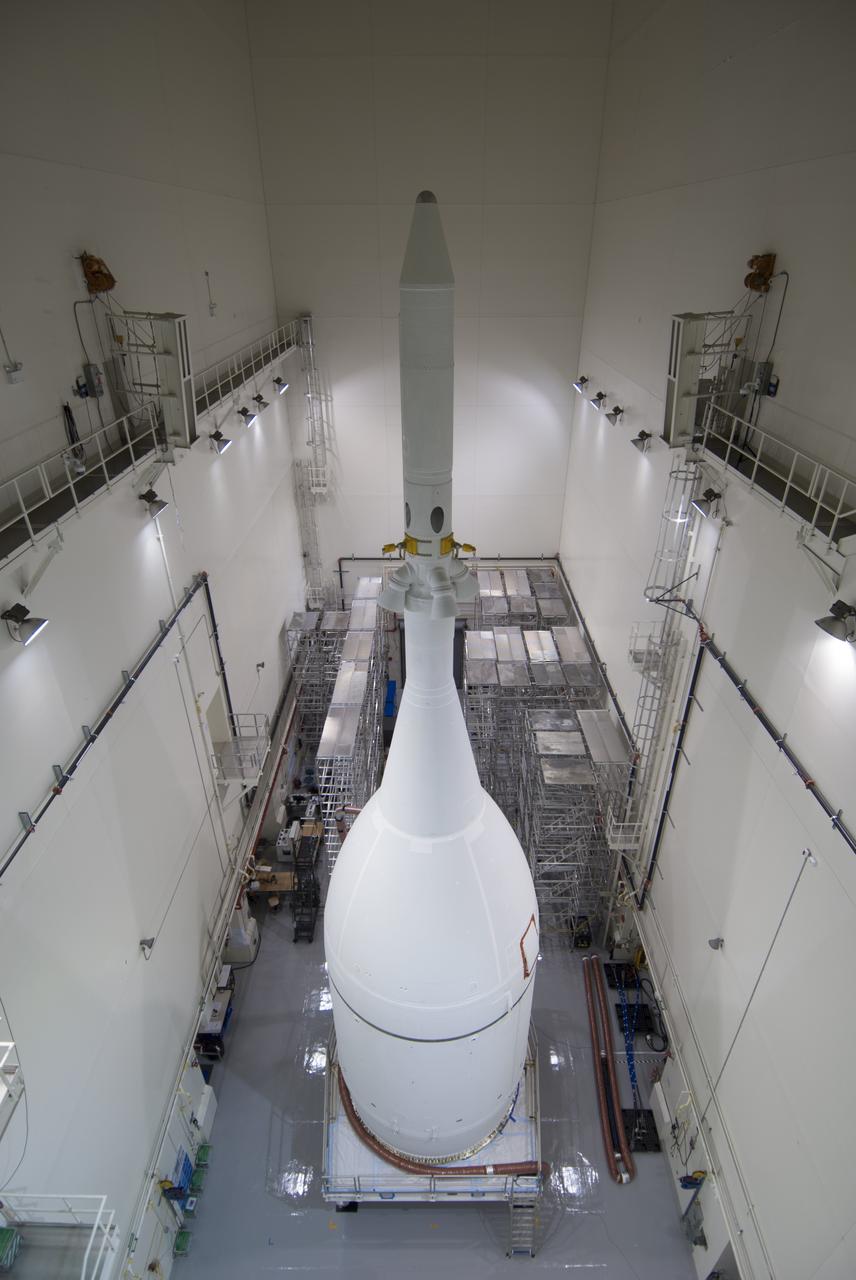
The Orion spacecraft sits inside the Launch Abort System Facility at NASA's Kennedy Space Center in Florida. The Ogive panels have been installed around the launch abort system. The panels will smooth the airflow over the conical spacecraft to limit sound and vibration, which will make for a much smoother ride for the astronauts who will ride inside Orion in the future. The spacecraft is being readied for its move to Space Launch Complex 37 at Cape Canaveral Air Force Station for its flight test. Orion is the exploration spacecraft designed to carry astronauts to destinations not yet explored by humans, including an asteroid and Mars. It will have emergency abort capability, sustain the crew during space travel and provide safe re-entry from deep space return velocities. The first unpiloted flight test of Orion is scheduled to launch in December 2014 atop a United Launch Alliance Delta IV Heavy rocket, and in 2018 on NASA’s Space Launch System rocket.