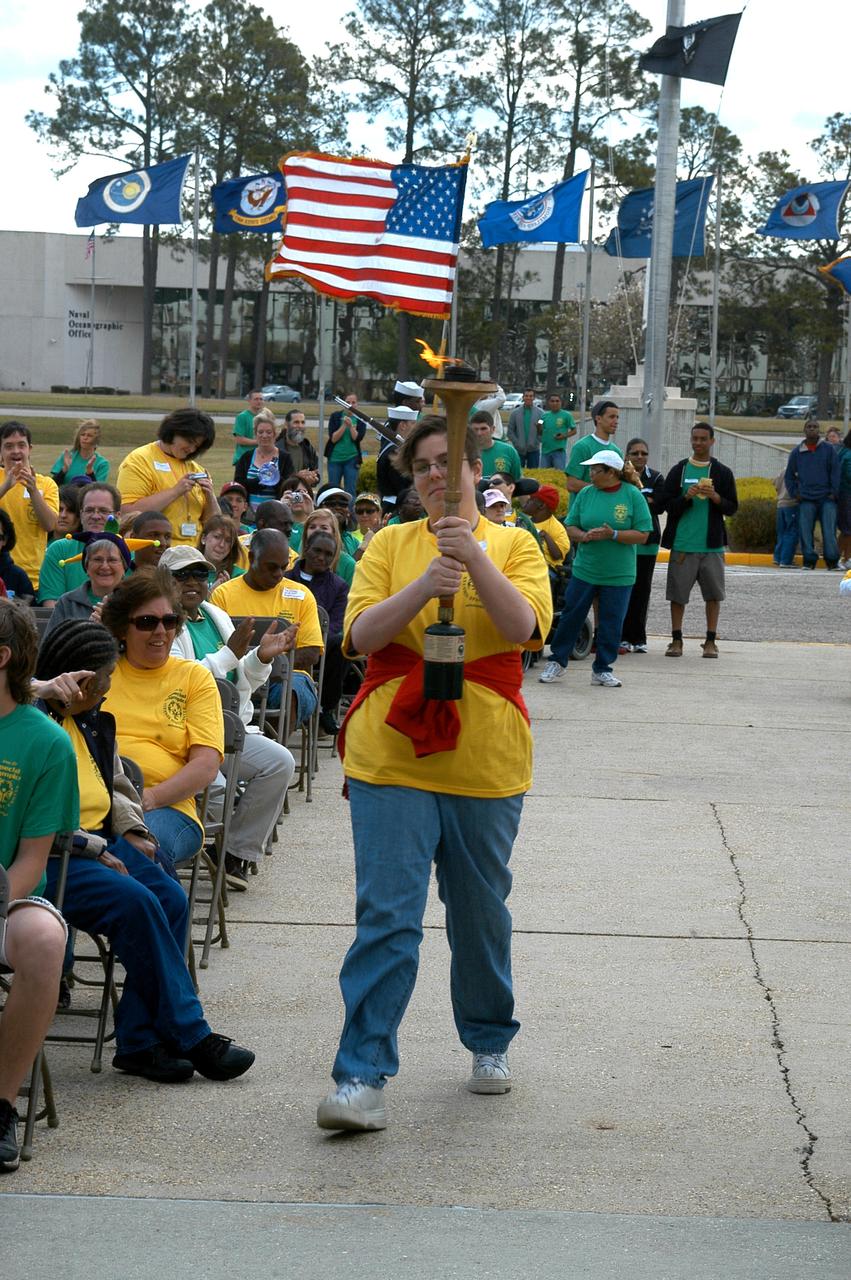
Sarah Johnson, 28, of Gulfport, carries in the Olympic torch to signal the start of the 2010 Area III Special Olympic games at NASA's John C. Stennis Space Center on March 27. Stennis volunteers hosted special needs athletes from across the area for the event. Stennis is an annual host of the games.
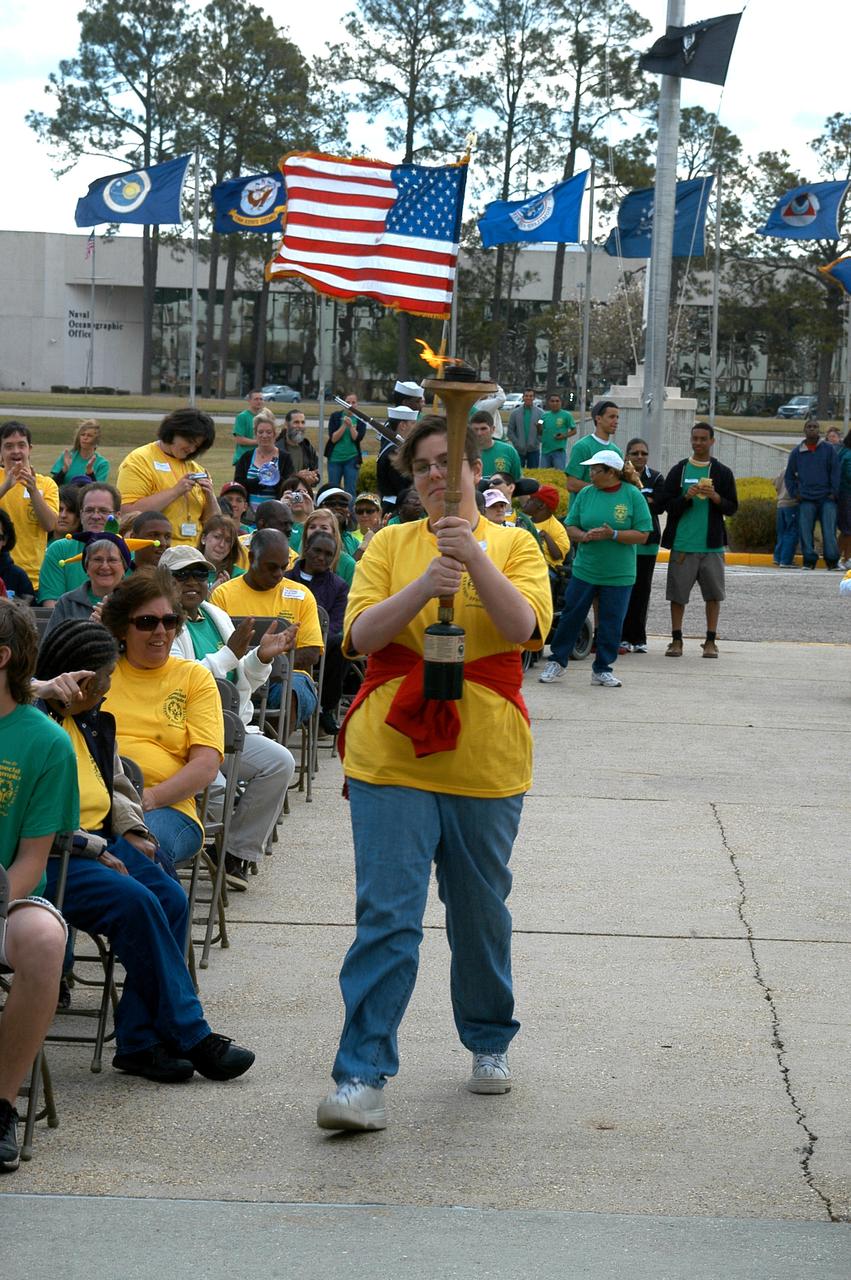
Sarah Johnson, 28, of Gulfport, carries in the Olympic torch to signal the start of the 2010 Area III Special Olympic games at NASA's John C. Stennis Space Center on March 27. Stennis volunteers hosted special needs athletes from across the area for the event. Stennis is an annual host of the games.
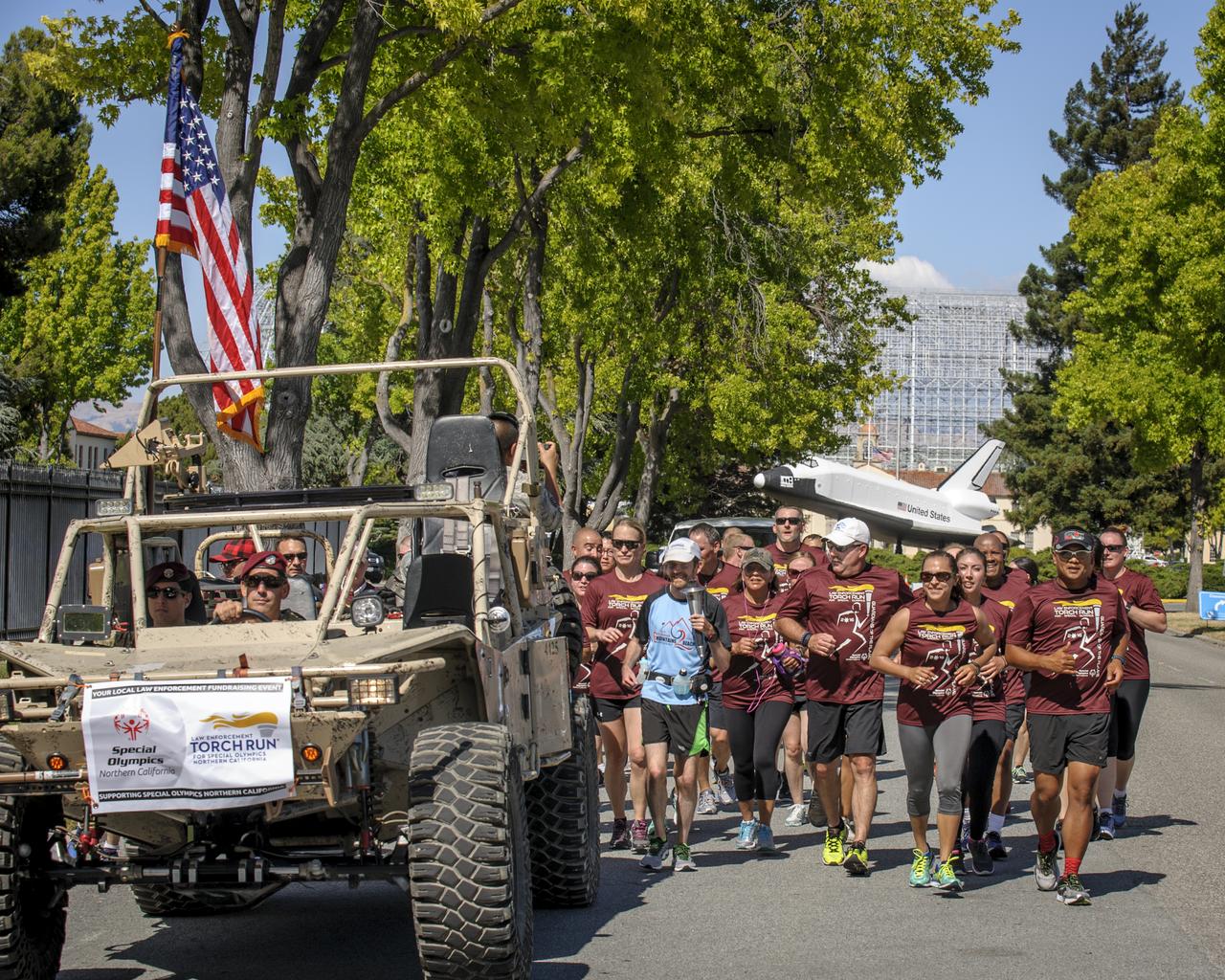
The Special Olympics torch make it's way through the NASA Ames Research Park on it's way to a hand-off in Mountain View, CA

The Special Olympics Torch makes it’s way through NASA Ames Research Park on it’s way to a hand-off in Mountain View, CA.
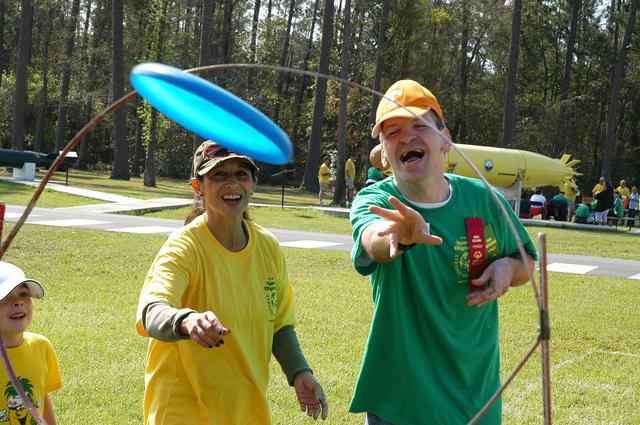
Chris Jernigan from Biloxi Community Homes throws a flying disc through a target during the 2011 John C. Stennis Area III Track and Field Competitions on March 19, as NASA employee Jacqueline Wall offers encouragement. Stennis Space Center is an annual host for the Special Olympics games. Wall was one of a number of Stennis employees to serve as volunteers during the annual competition.
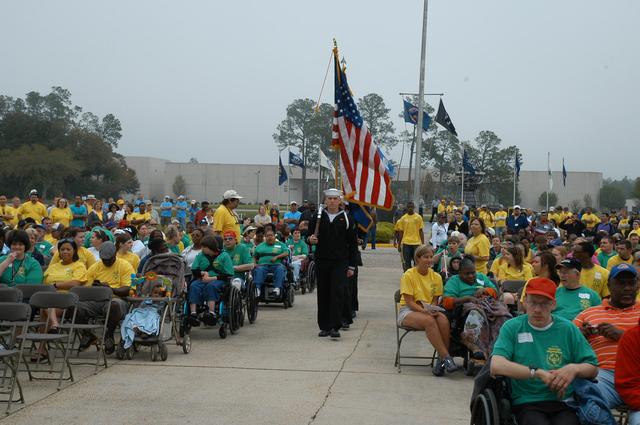
A military color guard opens the 2011 John C. Stennis Area III Track and Field Competitions on March 19. Stennis Space Center is an annual host for the Special Olympics games, which draws special athletes from Hancock, Harrison, Pearl River, and Stone counties and involves hundreds of volunteers and sponsors. The 2011 event was sponsored by the NASA Shared Services Center, located at Stennis.
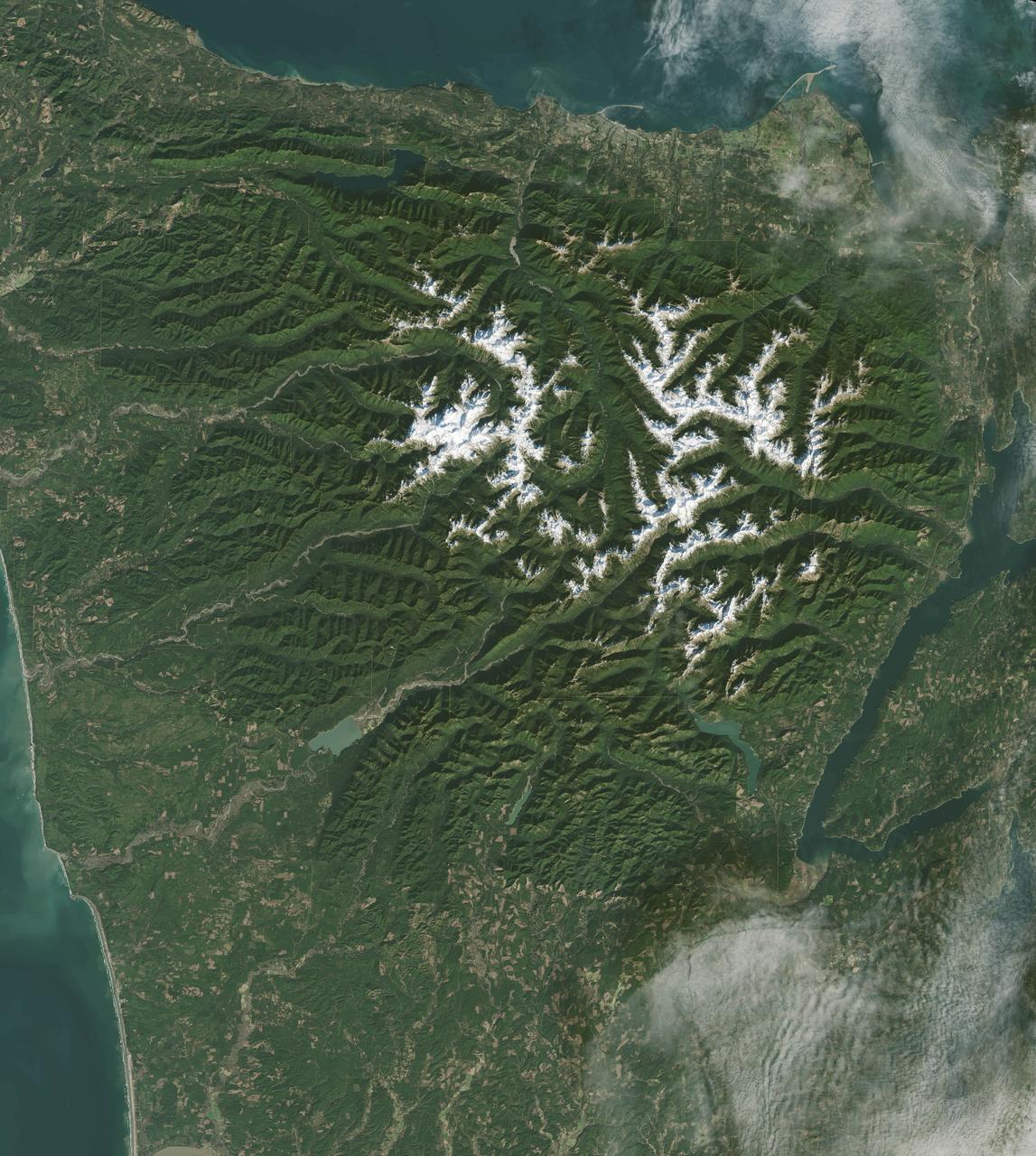
It has to be one of America’s most diverse national park landscapes. If you walked from west to east across Olympic National Park, you would start at the rocky Pacific shoreline, move into rare temperate rainforests and lush river valleys, ascend glaciers and rugged mountain peaks, and then descend into a comparatively dry rain shadow and alpine forest. From the beach to the top of Mount Olympus, you would rise 7,980 feet (2430 meters) above sea level. Situated on the Olympic Peninsula in northwestern Washington, these lands were first set aside as a national monument in 1909 by Theodore Roosevelt. Twenty-nine years later, his cousin Franklin officially established Olympic National Park. International institutions have also made a case for treasuring this land, as the area was declared an International Biosphere Reserve in 1976 and a World Heritage Site in 1981. The park encompasses nearly 923,000 acres of wild lands, including 60 named glaciers, 73 miles of coast, and 3,000 miles of rivers and streams. Read more: <a href="http://go.nasa.gov/2bRmzSJ" rel="nofollow">go.nasa.gov/2bRmzSJ</a> Credit: NASA/Landsat8 <b><a href="http://www.nasa.gov/audience/formedia/features/MP_Photo_Guidelines.html" rel="nofollow">NASA image use policy.</a></b> <b><a href="http://www.nasa.gov/centers/goddard/home/index.html" rel="nofollow">NASA Goddard Space Flight Center</a></b> enables NASA’s mission through four scientific endeavors: Earth Science, Heliophysics, Solar System Exploration, and Astrophysics. Goddard plays a leading role in NASA’s accomplishments by contributing compelling scientific knowledge to advance the Agency’s mission. <b>Follow us on <a href="http://twitter.com/NASAGoddardPix" rel="nofollow">Twitter</a></b> <b>Like us on <a href="http://www.facebook.com/pages/Greenbelt-MD/NASA-Goddard/395013845897?ref=tsd" rel="nofollow">Facebook</a></b> <b>Find us on <a href="http://instagrid.me/nasagoddard/?vm=grid" rel="nofollow">Instagram</a></b>
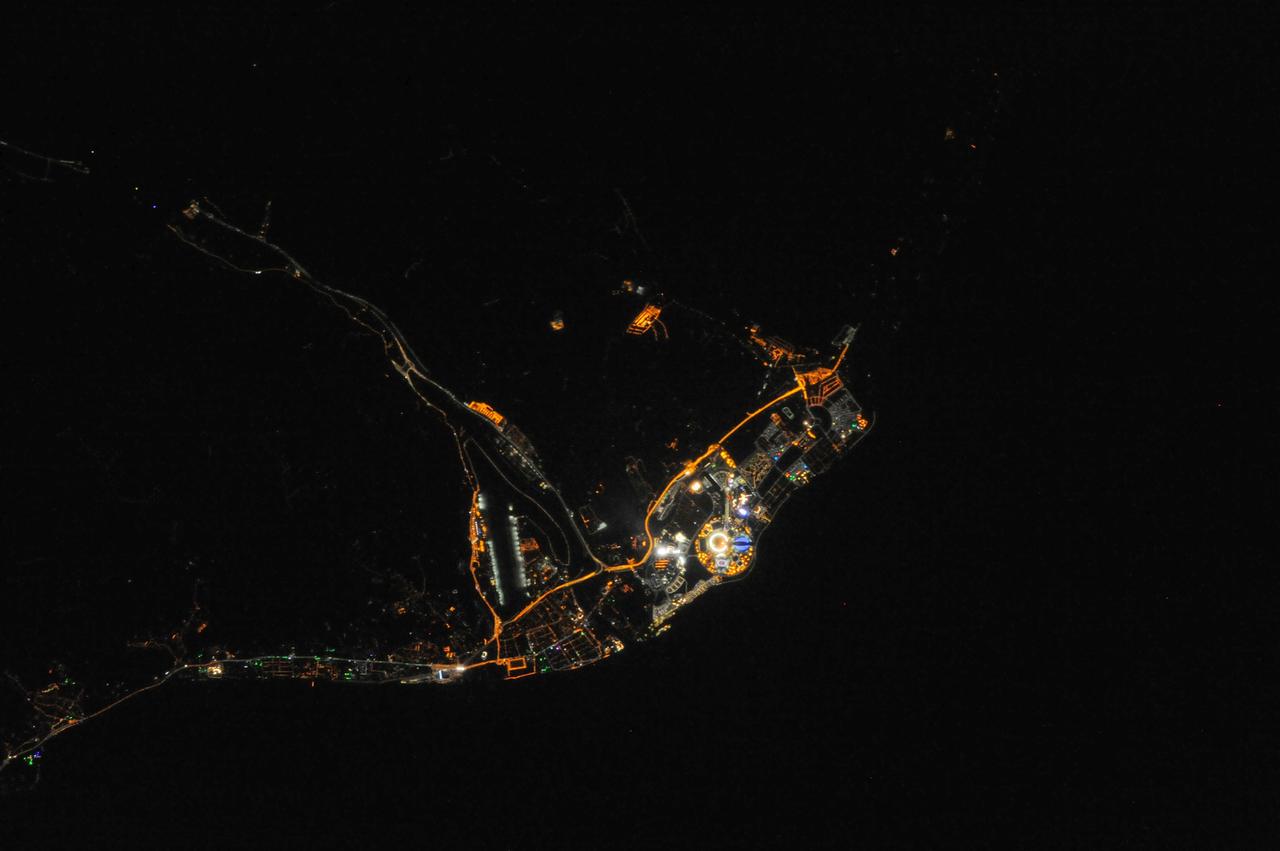
ISS038-E-042992 (10 Feb. 2014) --- One of the Expedition 38 crew members aboard the International Space Station downlinked this vertical 600mm night view of Sochi, Russia, which clearly shows the site of the 2014 Winter Olympics while they are just a few days under way. Fisht Stadium where the Opening Ceremonies were held on Feb. 7 is easily recognizable as the bright circular structure. Sochi is a city in Krasnodar Krai, Russia, located on the Black Sea coast near the border between Georgia/Abkhazia and Russia. It has an area of 1,353 square miles or 3,505 square kilometers. Photo credit: NASA ISS038-E-042992 (10 Feb. 2014) --- One of the Expedition 38 crew members aboard the International Space Station downlinked this vertical 600mm night view of Sochi, Russia, which clearly shows the site of the 2014 Winter Olympics while they are just a few days under way. Fisht Stadium where the Opening Ceremonies were held on Feb. 7 is easily recognizable as the bright circular structure. Sochi is a city in Krasnodar Krai, Russia, located on the Black Sea coast near the border between Georgia/Abkhazia and Russia. It has an area of 1,353 square miles or 3,505 square kilometers. Photo credit: NASA
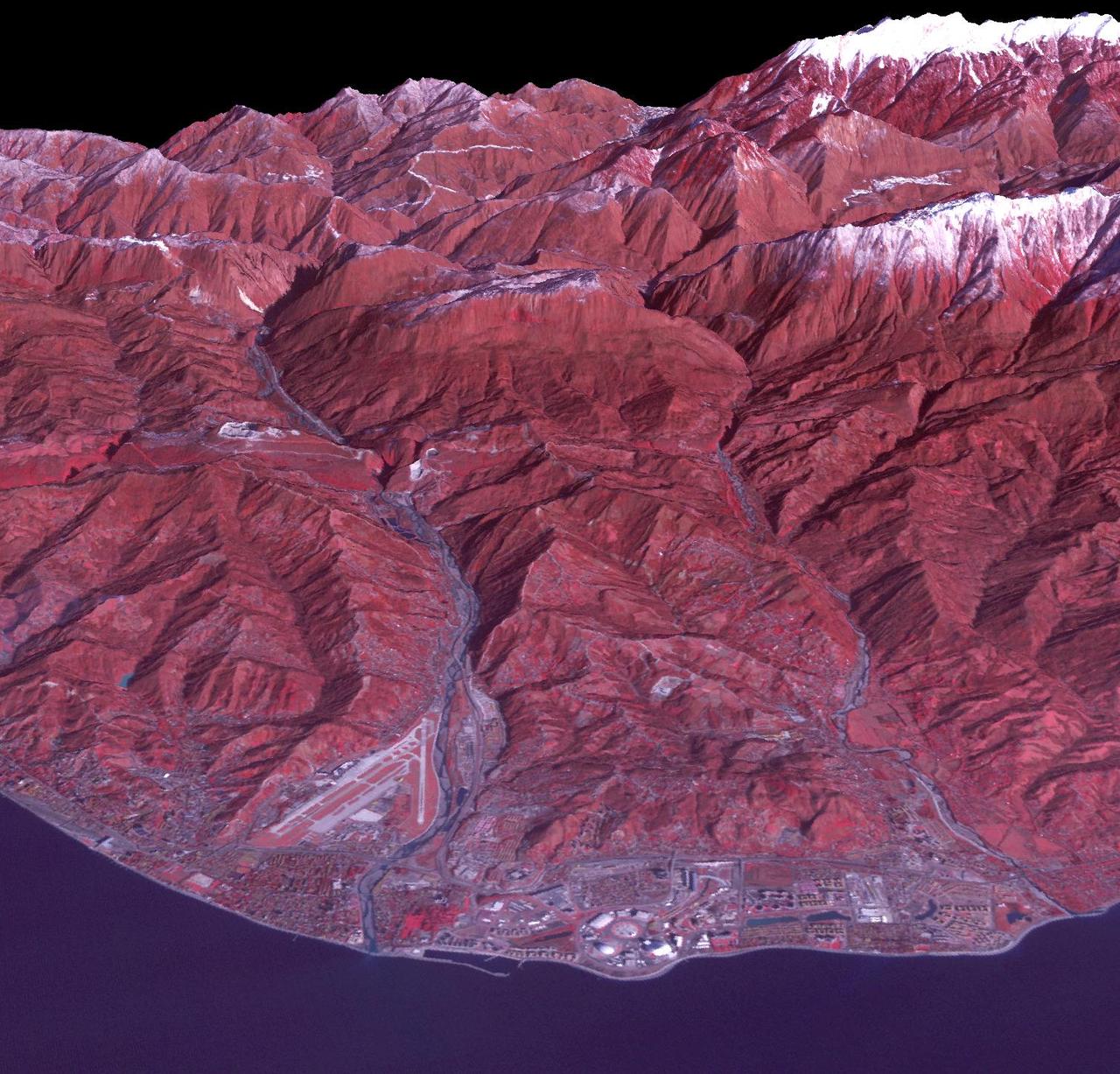
This image acquired by NASA Terra spacecraft shows the Sochi Olympic Park Coastal Cluster, the circular area on the shoreline in the bottom center of the image, which was built for Olympic indoor sports.
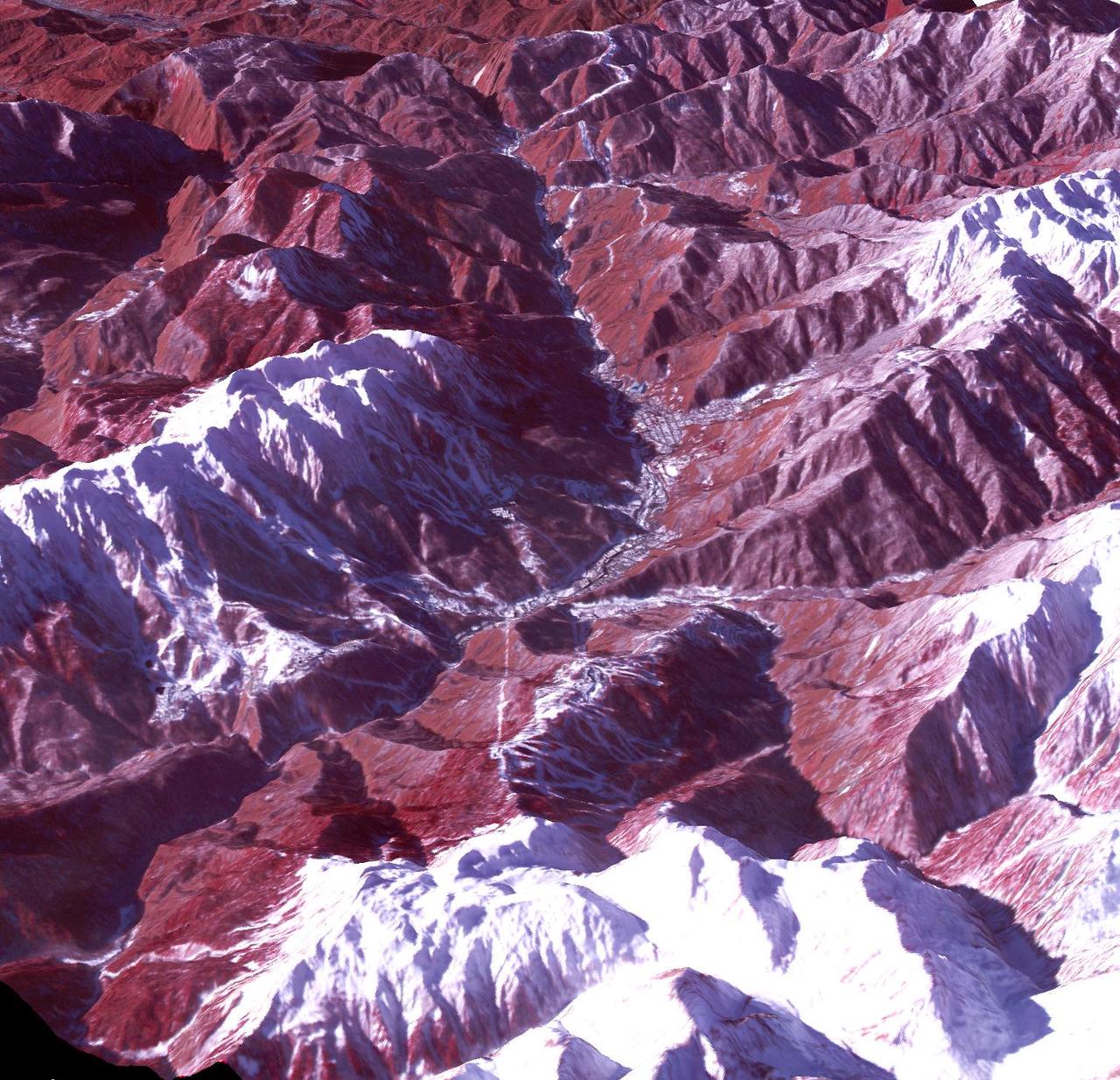
The 2014 Winter Olympic ski runs may be rated double black diamond, but theyre not quite as steep as they appear in this image acquired by NASA Terra spacecraft, of the skiing and snowboarding sites for the Sochi Winter Olympic Games.
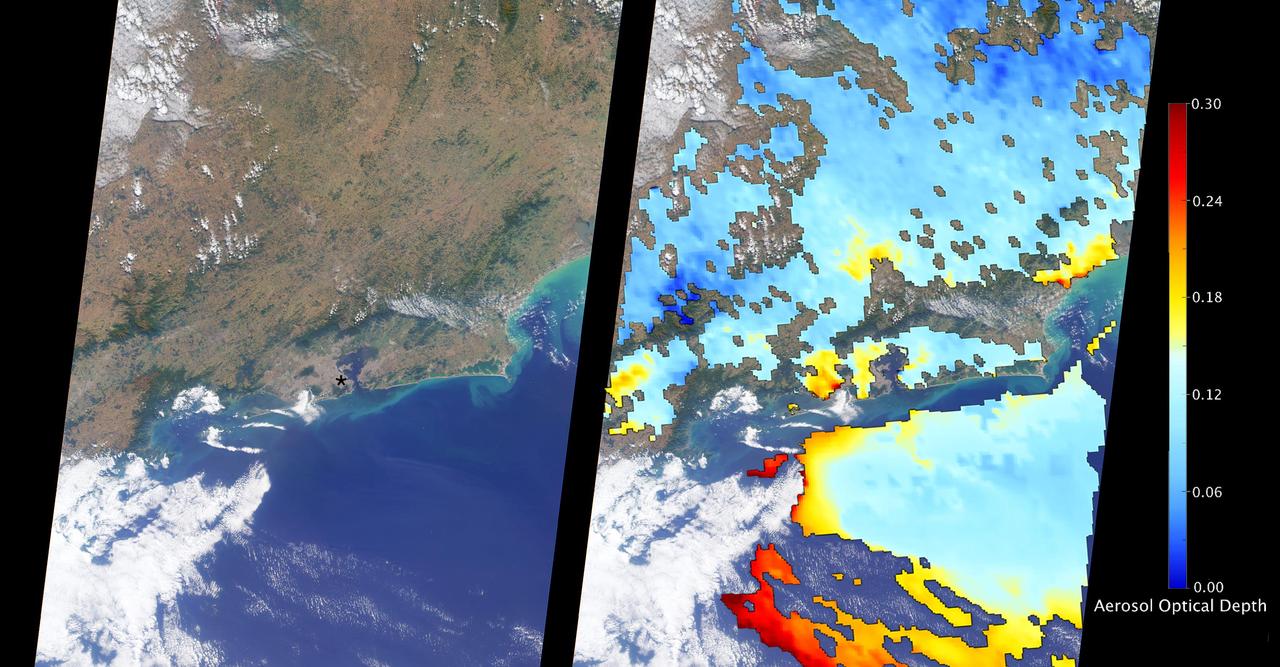
The Multi-angle Imaging SpectroRadiometer (MISR) instrument aboard NASA's Terra satellite passed directly over Rio de Janeiro, Brazil, on Aug. 2, 2016, just prior to the opening of the Summer Olympic Games. On the left is an image from MISR's nadir (downward-looking) camera; the width of the image is 235 miles (378 kilometers), and Rio de Janeiro is visible as the large gray area on the coast in the center. The black asterisk marks the location of the Maracanã Stadium in downtown, where the opening ceremonies were held. In the weeks leading up to the Aug. 5 opening ceremonies in Rio de Janeiro, there have been reports of elevated levels of particulate matter in the region. Particulate matter refers to tiny airborne droplets or pieces of soot and dust that can end up in the lungs, comprising an all-too-common problem for many cities around the world. MISR data are routinely used to estimate the amount of air pollution via measurements of aerosol optical depth, which is a measure of how much incoming light from the sun is blocked by particles in the atmosphere. On the right, a map of aerosol optical depth is superimposed on the image. Individual squares making up this map measure 2.7 miles (4.4 kilometers) on a side, and holes in the map occur where an aerosol amount could not be determined, such as where clouds are present. Optical depth over Rio is slightly elevated compared to its surroundings, most likely due to the presence of air pollution, with values from 0.15-0.25. For reference, an optical depth of 0.2 corresponds to light haze. The product shown here is a prototype of a new version of the MISR aerosol product to be publicly released in the near future, and increases the spatial resolution of the aerosol information by a factor of 16 compared to the currently available product, making it possible to observe the fine details of optical depth over urban areas. These data were captured during Terra orbit 88426. http://photojournal.jpl.nasa.gov/catalog/PIA20885
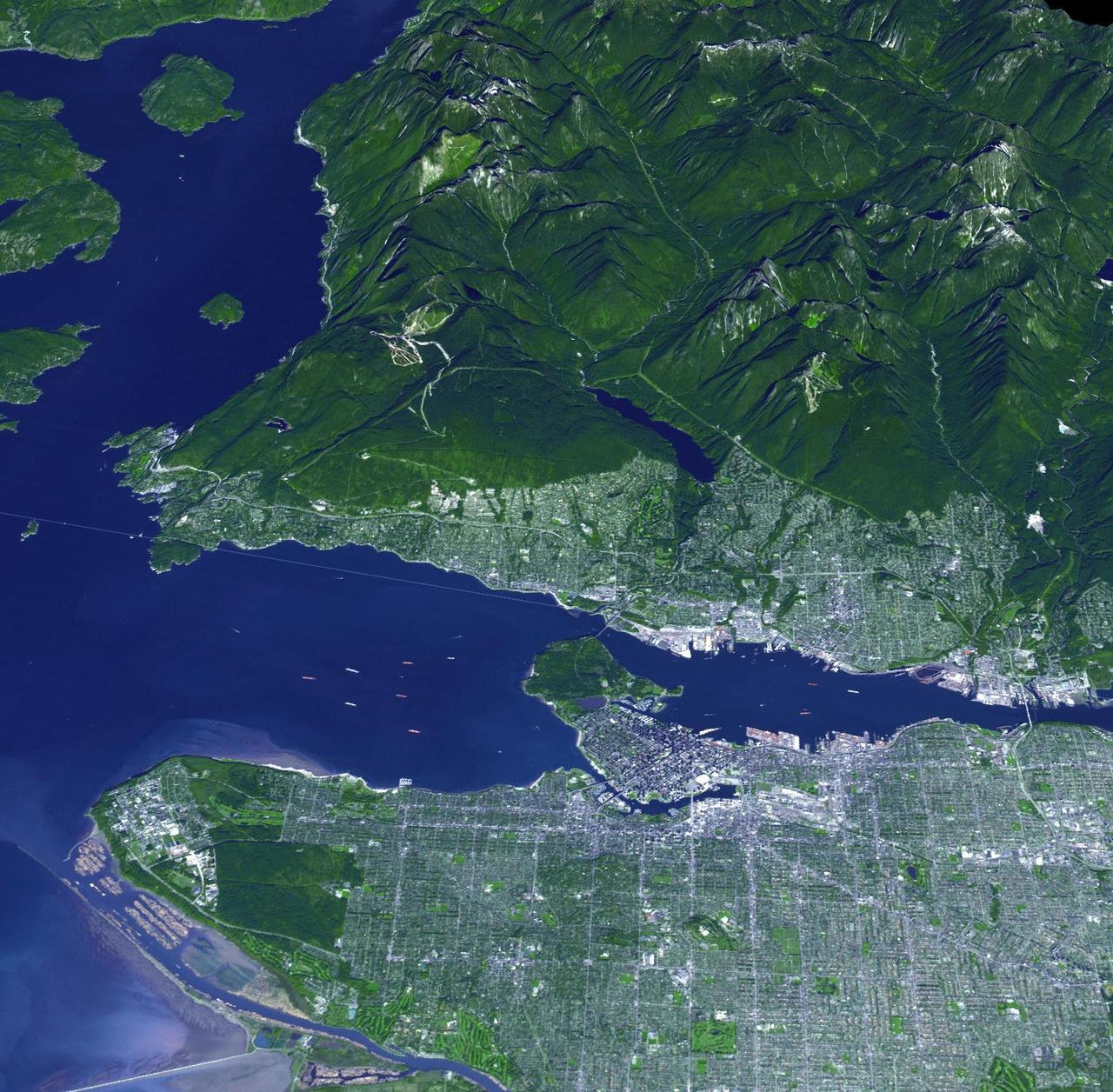
On Feb. 12, 2010, the 21st Winter Olympic Games opened in the city of Vancouver, British Columbia, Canada. NASA Terra spacecraft acquired this image of the city of Vancouver, British Columbia, Canada, on Sept. 29, 2008.
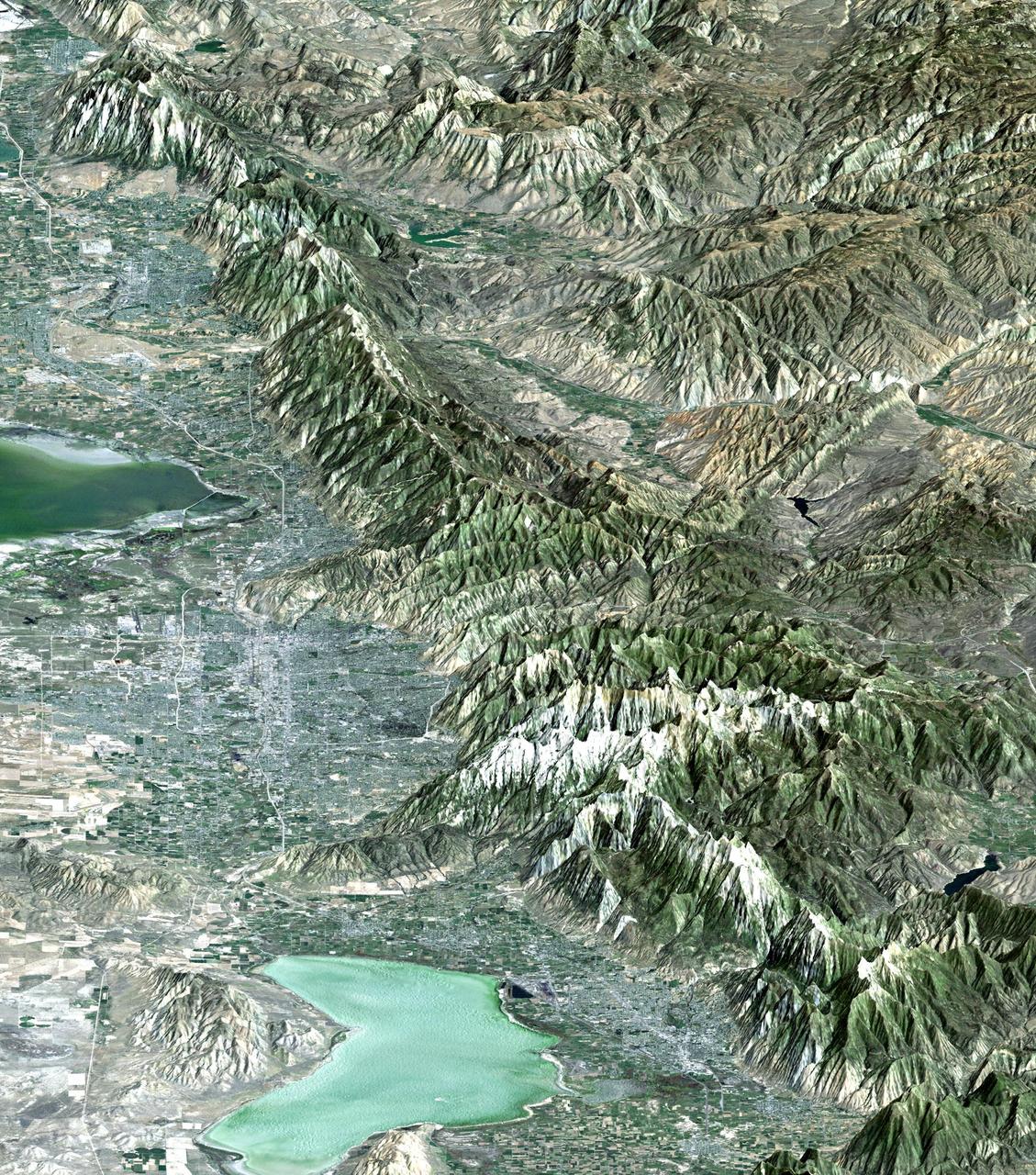
The 2002 Winter Olympics are hosted by Salt Lake City at several venues within the city, in nearby cities, and within the adjacent Wasatch Mountains.
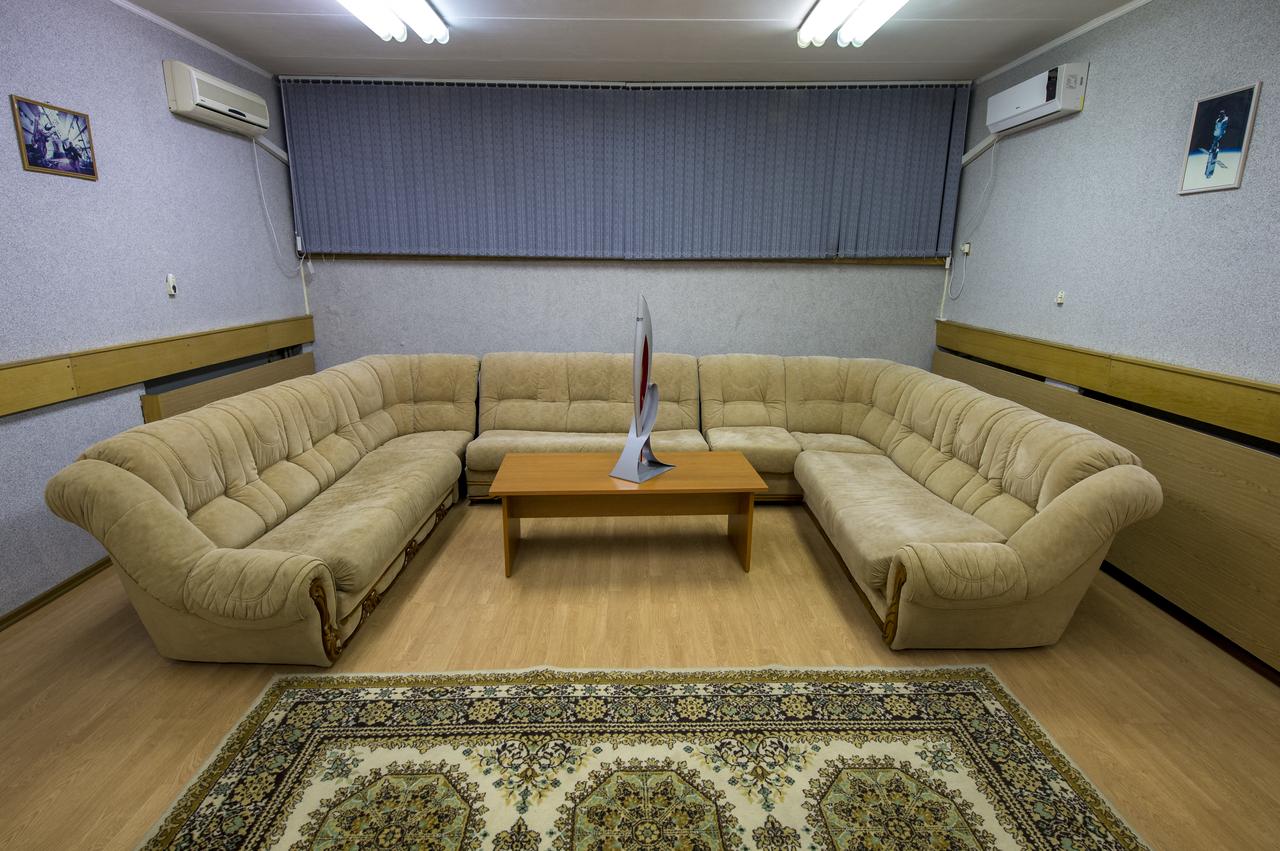
The 2014 Sochi Olympic torch that is to be launched with Expedition 38 Soyuz Commander Mikhail Tyurin of Roscosmos, Flight Engineer Koichi Wakata of the Japan Aerospace Exploration Agency, and, Flight Engineer Rick Mastracchio of NASA, is seen in the Cosmonaut hotel hours ahead of the soyuz launch, Thursday, Nov. 7, 2013, in Baikonur, Kazakhstan. The Olympic torch will be on the International Space Station for a four-day visit and will return to Earth with another trio of station residents on Nov. 11 and will be part of the torch relay that ends with the lighting of the flame at the Fisht Stadium in Sochi, Russia Feb. 7 to mark the opening of the 2014 Winter Olympics. Photo Credit (NASA/Bill Ingalls)
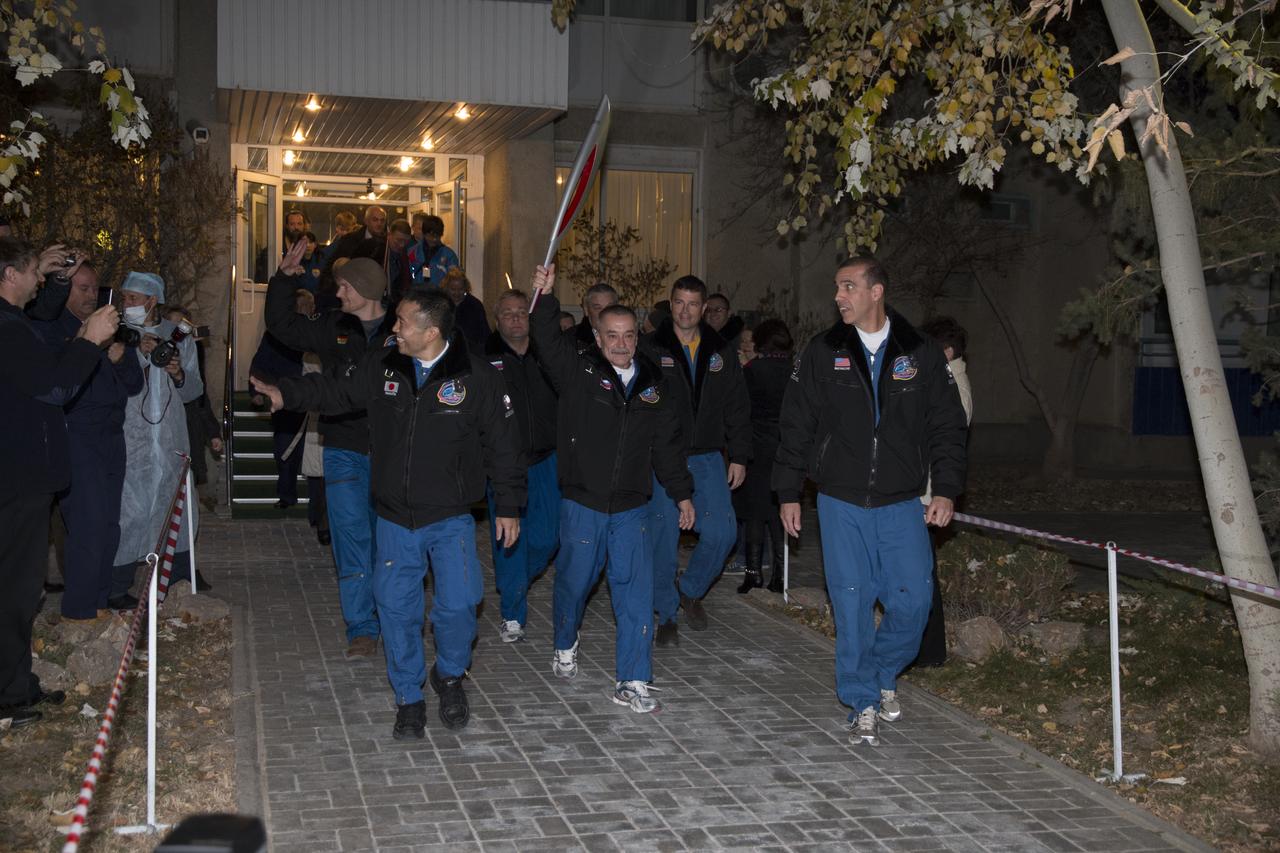
Expedition 38 Flight Engineer Koichi Wakata of the Japan Aerospace Exploration Agency, left, Soyuz Commander Mikhail Tyurin of Roscosmos, and, Flight Engineer Rick Mastracchio of NASA, right, are seen as they depart the Cosmonaut hotel with the Olympic Torch that will be launched with them on a Soyuz rocket to the International Space Station, Thursday, Nov. 7, 2013, in Baikonur, Kazakhstan. The Olympic torch will have a four-day visit to station and will return to Earth with another trio of station residents on Nov. 11 and will be part of the torch relay that ends with the lighting of the flame at the Fisht Stadium in Sochi, Russia Feb. 7 to mark the opening of the 2014 Winter Olympics. Photo Credit: (NASA/Victor Zelentsov)
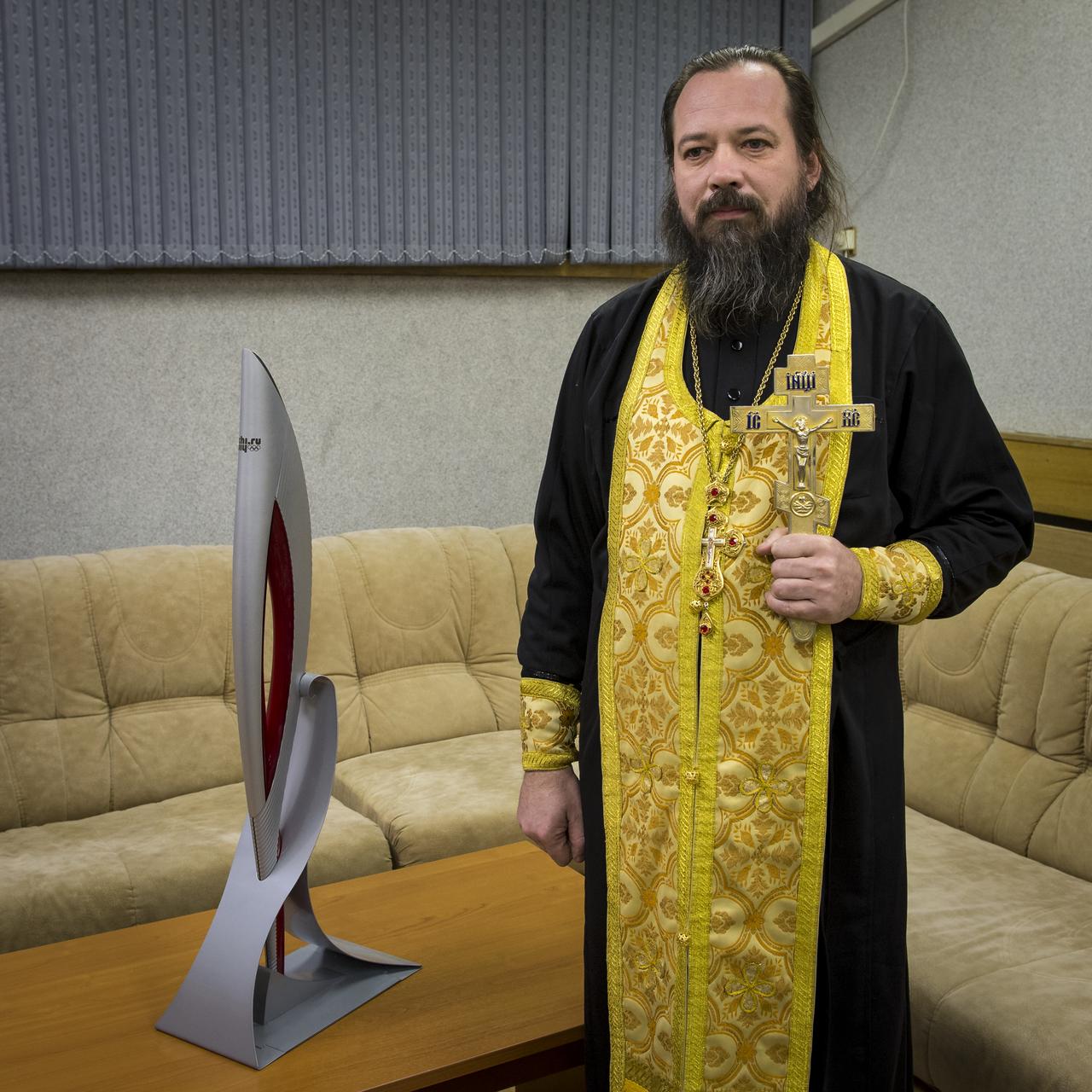
Portrait of Orthodox priest, Father Sergei with the 2014 Sochi Olympic torch that is to be launched with Expedition 38 Soyuz Commander Mikhail Tyurin of Roscosmos, Flight Engineer Koichi Wakata of the Japan Aerospace Exploration Agency, and, Flight Engineer Rick Mastracchio of NASA, Cosmonaut hotel, Thursday, Nov. 7, 2013, in Baikonur, Kazakhstan. Father Sergei was waiting to provide the traditional blessing for the crew prior to their departure from the hotel. The Olympic torch will have a four-day visit to the International Space Station and will return to Earth with another trio of station residents on Nov. 11 and will be part of the torch relay that ends with the lighting of the flame at the Fisht Stadium in Sochi, Russia Feb. 7 to mark the opening of the 2014 Winter Olympics. Photo Credit (NASA/Bill Ingalls)
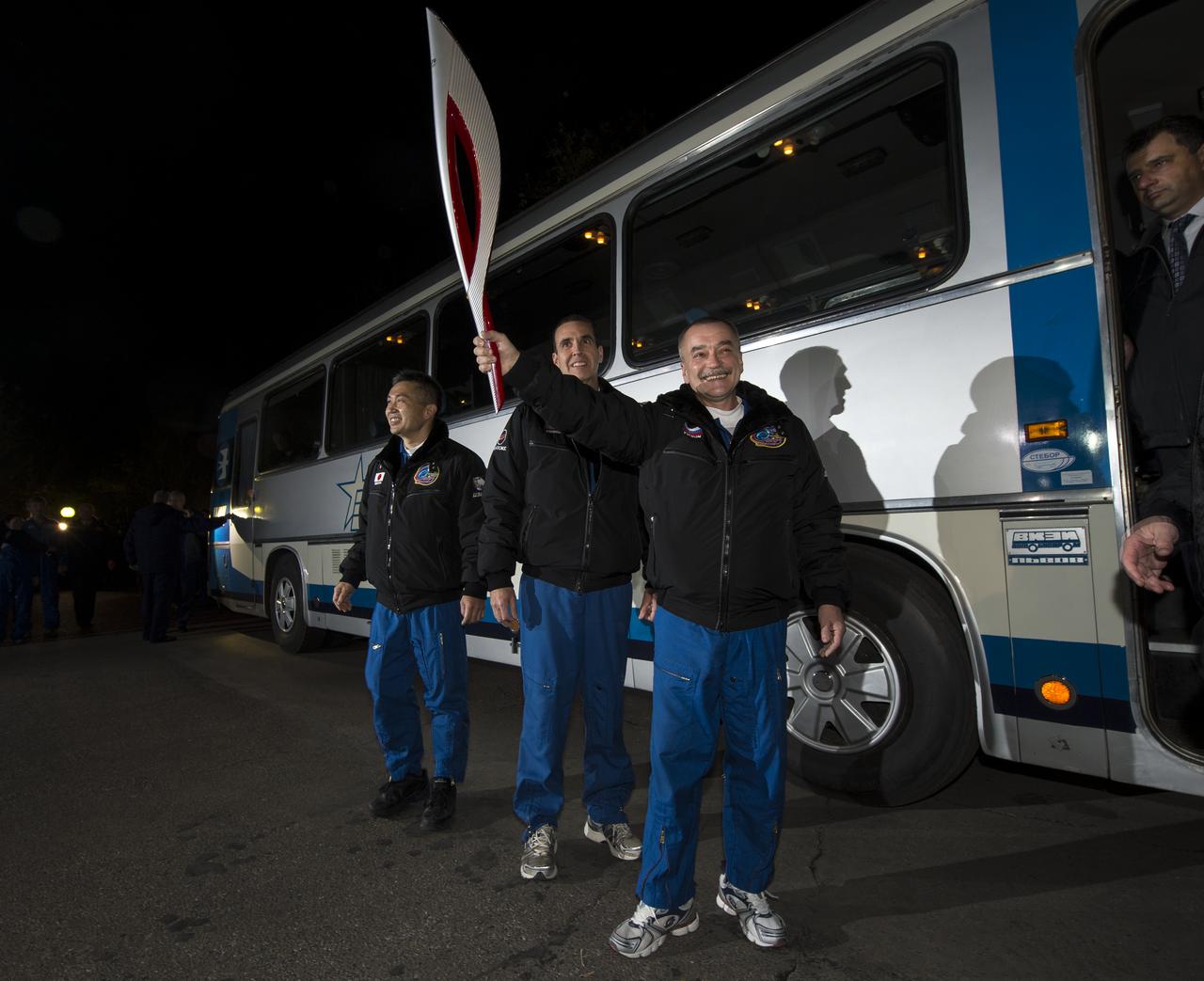
Expedition 38 Flight Engineer Koichi Wakata of the Japan Aerospace Exploration Agency, left, Flight Engineer Rick Mastracchio of NASA, and, Soyuz Commander Mikhail Tyurin of Roscosmos, right, are seen as they depart the Cosmonaut hotel with the Olympic Torch that will be launched with them on the Soyuz rocket to the International Space Station, Thursday, Nov. 7, 2013, in Baikonur, Kazakhstan. The Olympic torch will have a four-day visit to station and will return to Earth with another trio of station residents on Nov. 11 and will be part of the torch relay that ends with the lighting of the flame at the Fisht Stadium in Sochi, Russia Feb. 7 to mark the opening of the 2014 Winter Olympics. Photo Credit: (NASA/Bill Ingalls)
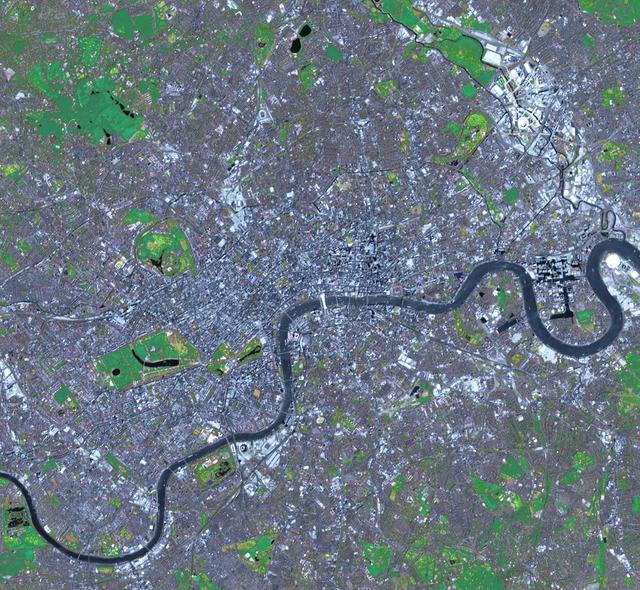
This simulated natural color image of London was acquired May 26, 2012 by NASA Terra spacecraft. Major construction projects included the new 400-acre Olympic Park for the 2012 Summer Olympic Games.
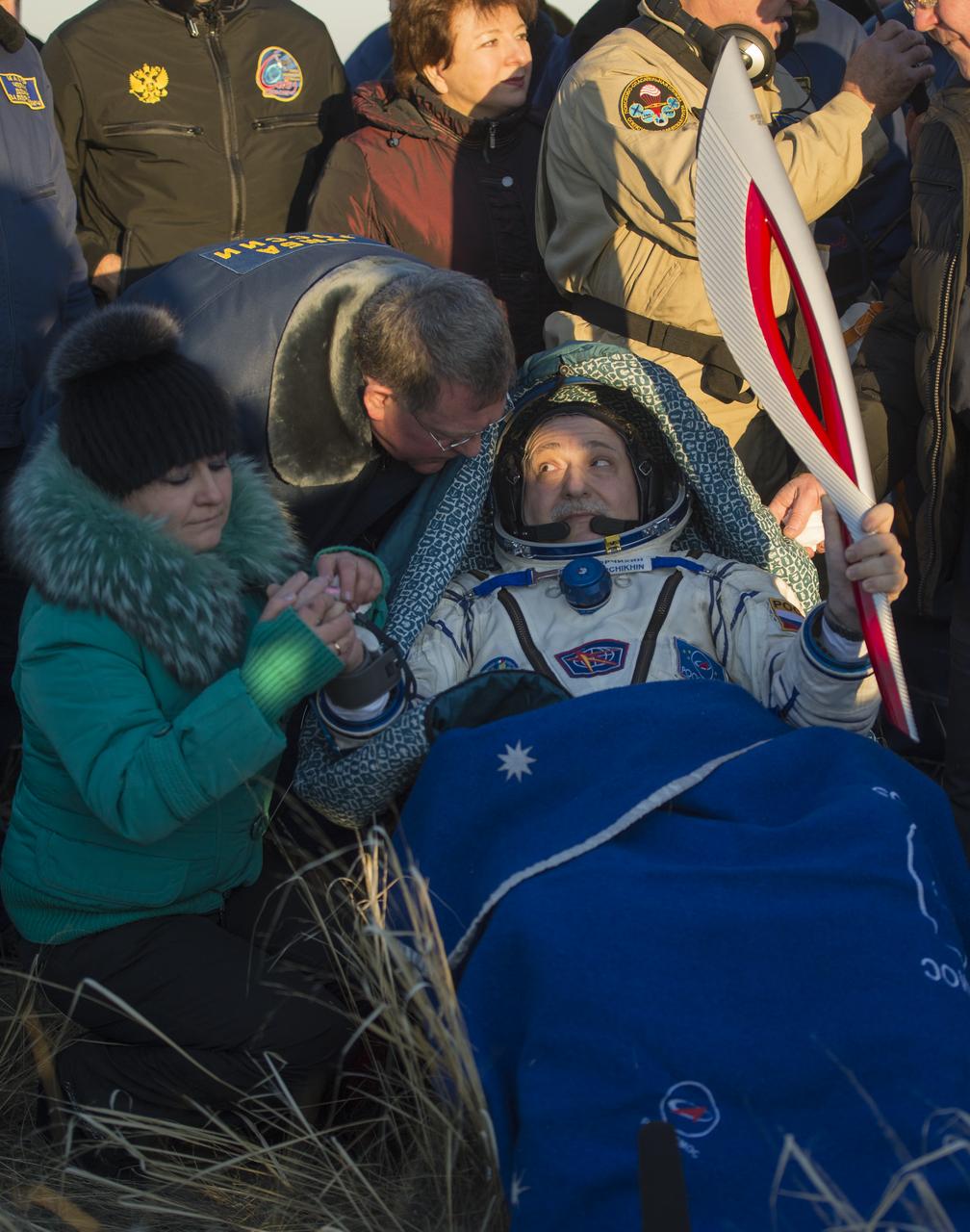
Expedition 37 Commander Fyodor Yurchikhin is seen holding the Olympic torch minutes after he and his crew landed in a remote area southeast of the town of Zhezkazgan, Kazakhstan, on Monday, Nov. 11, 2013. The Olympic torch was launched with the crew of Expedition 38 to the International Space Station on November 7. It was passed from one module to the next and had its first spacewalk on November 9 with two Russian cosmonauts as part of its international relay. Now back on earth it will continue its journey to Sochi, Russia for the 2014 Winter Games. Photo Credit: (NASA/Carla Cioffi)
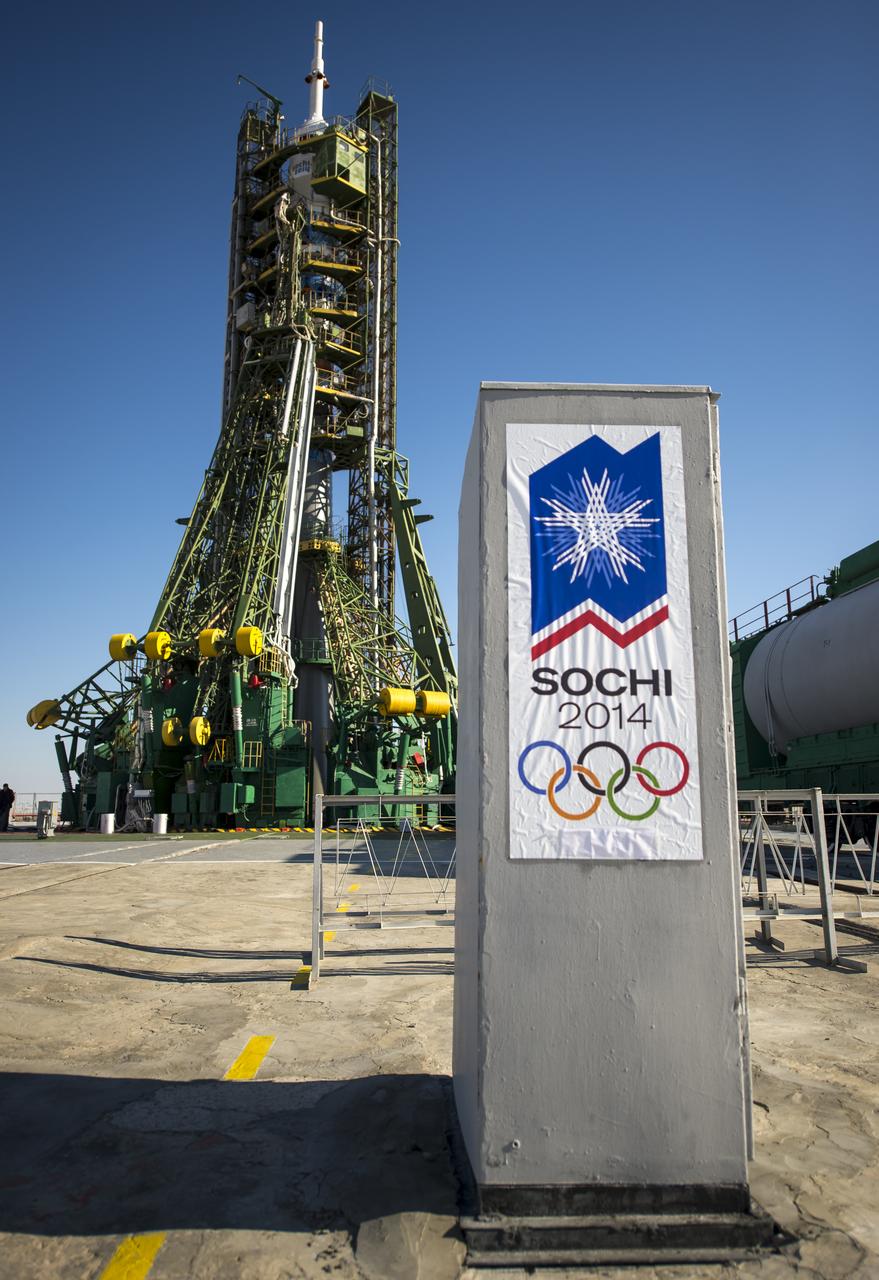
A sign for the Sochi 2014 Winter Olympics is seen at the Soyuz launch pad a day ahead of the scheduled launch of Expedition 38 Soyuz Commander Mikhail Tyurin of Roscosmos, Flight Engineer Koichi Wakata of the Japan Aerospace Exploration Agency, and, Flight Engineer Rick Mastracchio of NASA, Wednesday, Nov. 6, 2013 in Baikonur, Kazakhstan. The rocket is adorned with the logo of the Sochi Olympic Organizing Committee and other related artwork to commemorate the launch of the Olympic torch with the crew for a four-day visit to the station. The torch will return to Earth with another trio of station residents on Nov. 11 and will be part of the torch relay that ends with the lighting of the flame at the Fisht Stadium in Sochi, Russia Feb. 7 to mark the opening of the 2014 Winter Olympics. Photo Credit (NASA/Bill Ingalls)
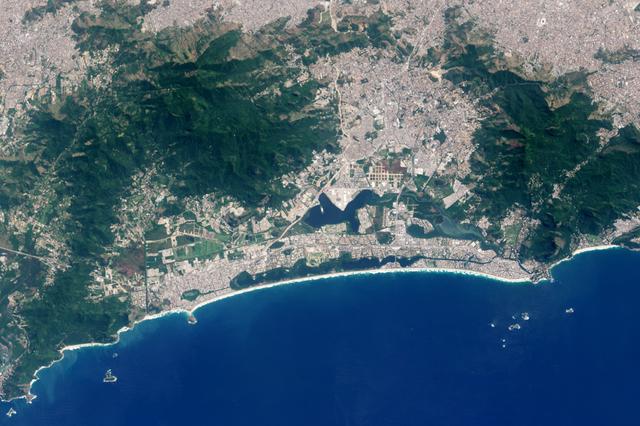
While gymnasts leap, cyclists pedal and divers twirl for Olympic gold in Rio de Janeiro, Brazil, several NASA Earth Observing satellites catch glimpses of the city and its surroundings from space. This image shows how Rio Olympic Park appeared to the Operational Land Imager (OLI), a sensor on Landsat 8, last September as the city prepared for the 2016 Summer Olympic Games. Image credit: Landsat 8/NASA Earth Observatory <b><a href="http://www.nasa.gov/audience/formedia/features/MP_Photo_Guidelines.html" rel="nofollow">NASA image use policy.</a></b> <b><a href="http://www.nasa.gov/centers/goddard/home/index.html" rel="nofollow">NASA Goddard Space Flight Center</a></b> enables NASA’s mission through four scientific endeavors: Earth Science, Heliophysics, Solar System Exploration, and Astrophysics. Goddard plays a leading role in NASA’s accomplishments by contributing compelling scientific knowledge to advance the Agency’s mission. <b>Follow us on <a href="http://twitter.com/NASAGoddardPix" rel="nofollow">Twitter</a></b> <b>Like us on <a href="http://www.facebook.com/pages/Greenbelt-MD/NASA-Goddard/395013845897?ref=tsd" rel="nofollow">Facebook</a></b> <b>Find us on <a href="http://instagrid.me/nasagoddard/?vm=grid" rel="nofollow">Instagram</a></b>
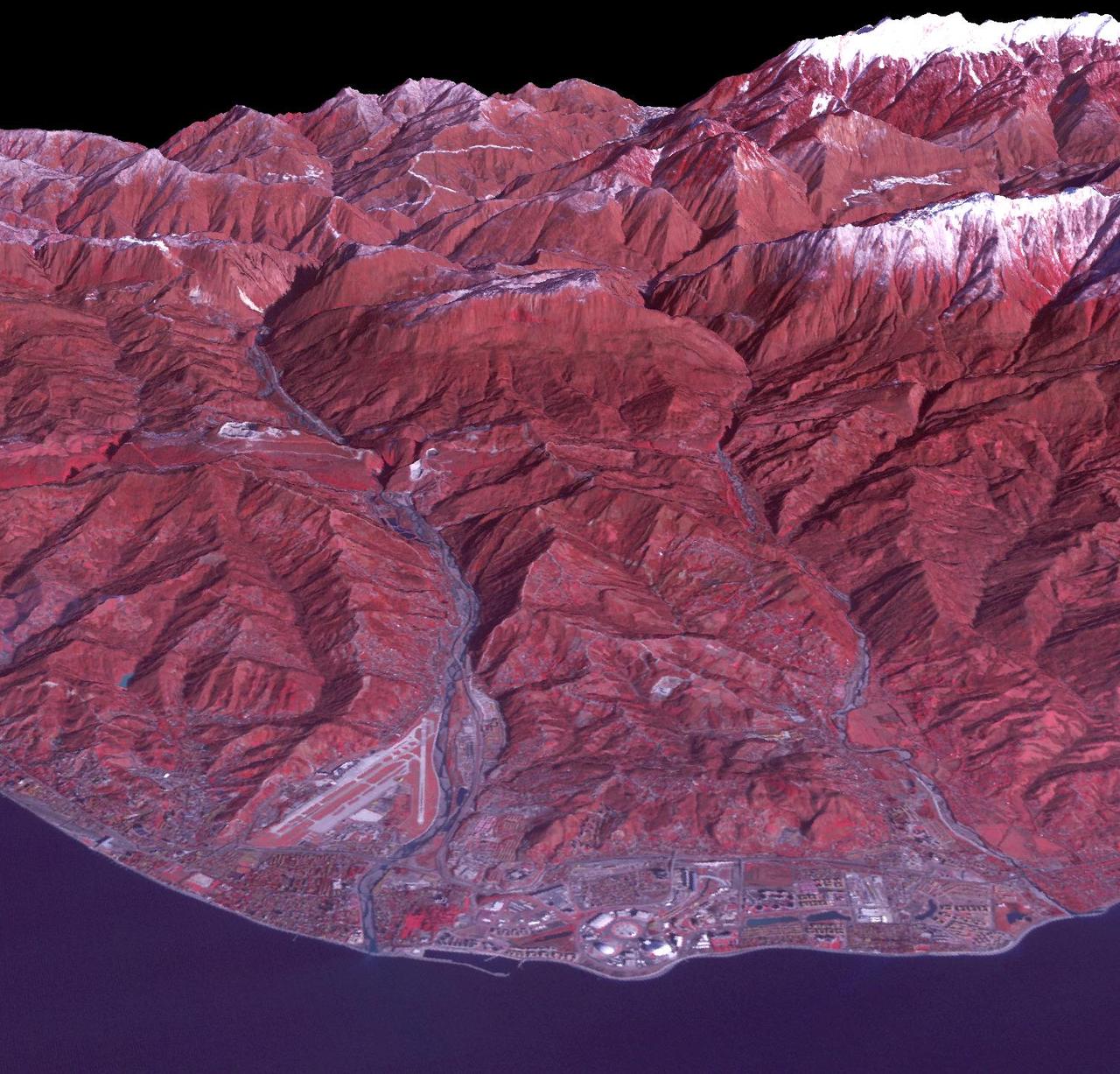
Sochi, Russia Winter Olympic Sites (Coastal Cluster) The Black Sea resort of Sochi, Russia, is the warmest city ever to host the Winter Olympic Games, which open on Feb. 7, 2014, and run through Feb. 23. This north-looking image, acquired on Jan. 4, 2014, by the Advanced Spaceborne Thermal Emission and Reflection Radiometer (ASTER) instrument on NASA's Terra spacecraft, shows the Sochi Olympic Park Coastal Cluster -- the circular area on the shoreline in the bottom center of the image -- which was built for Olympic indoor sports. Even curling has its own arena alongside multiple arenas for hockey and skating. The Olympic alpine events will take place at the Mountain Cluster, located in a snow-capped valley at the top right of the image. Sochi itself, a city of about 400,000, is not visible in the picture. It's farther west (left) along the coast, past the airport at bottom left. In the image, red indicates vegetation, white is snow, buildings are gray and the ocean is dark blue. The area imaged is about 15 miles (24 kilometers) from west to east (left to right) at the coastline and 25 miles (41 kilometers) from front to back. Height is exaggerated 1.5 times. The image was created from the ASTER visible and near-infrared bands, draped over ASTER-derived digital elevation data. With its 14 spectral bands from the visible to the thermal infrared wavelength region and its high spatial resolution of 15 to 90 meters (about 50 to 300 feet), ASTER images Earth to map and monitor the changing surface of our planet. ASTER is one of five Earth-observing instruments launched Dec. 18, 1999, on Terra. The instrument was built by Japan's Ministry of Economy, Trade and Industry. A joint U.S./Japan science team is responsible for validation and calibration of the instrument and data products. The broad spectral coverage and high spectral resolution of ASTER provides scientists in numerous disciplines with critical information for surface mapping and monitoring of dynamic conditions and temporal change. Example applications are: monitoring glacial advances and retreats; monitoring potentially active volcanoes; identifying crop stress; determining cloud morphology and physical properties; wetlands evaluation; thermal pollution monitoring; coral reef degradation; surface temperature mapping of soils and geology; and measuring surface heat balance. The U.S. science team is located at NASA's Jet Propulsion Laboratory, Pasadena, Calif. The Terra mission is part of NASA's Science Mission Directorate, Washington, D.C. More information about ASTER is available at <a href="http://asterweb.jpl.nasa.gov/" rel="nofollow">asterweb.jpl.nasa.gov/</a>. Image credit: NASA/GSFC/METI/ERSDAC/JAROS, and U.S./Japan ASTER Science Team <b><a href="http://www.nasa.gov/audience/formedia/features/MP_Photo_Guidelines.html" rel="nofollow">NASA image use policy.</a></b> <b><a href="http://www.nasa.gov/centers/goddard/home/index.html" rel="nofollow">NASA Goddard Space Flight Center</a></b> enables NASA’s mission through four scientific endeavors: Earth Science, Heliophysics, Solar System Exploration, and Astrophysics. Goddard plays a leading role in NASA’s accomplishments by contributing compelling scientific knowledge to advance the Agency’s mission. <b>Follow us on <a href="http://twitter.com/NASAGoddardPix" rel="nofollow">Twitter</a></b> <b>Like us on <a href="http://www.facebook.com/pages/Greenbelt-MD/NASA-Goddard/395013845897?ref=tsd" rel="nofollow">Facebook</a></b> <b>Find us on <a href="http://instagram.com/nasagoddard?vm=grid" rel="nofollow">Instagram</a></b>
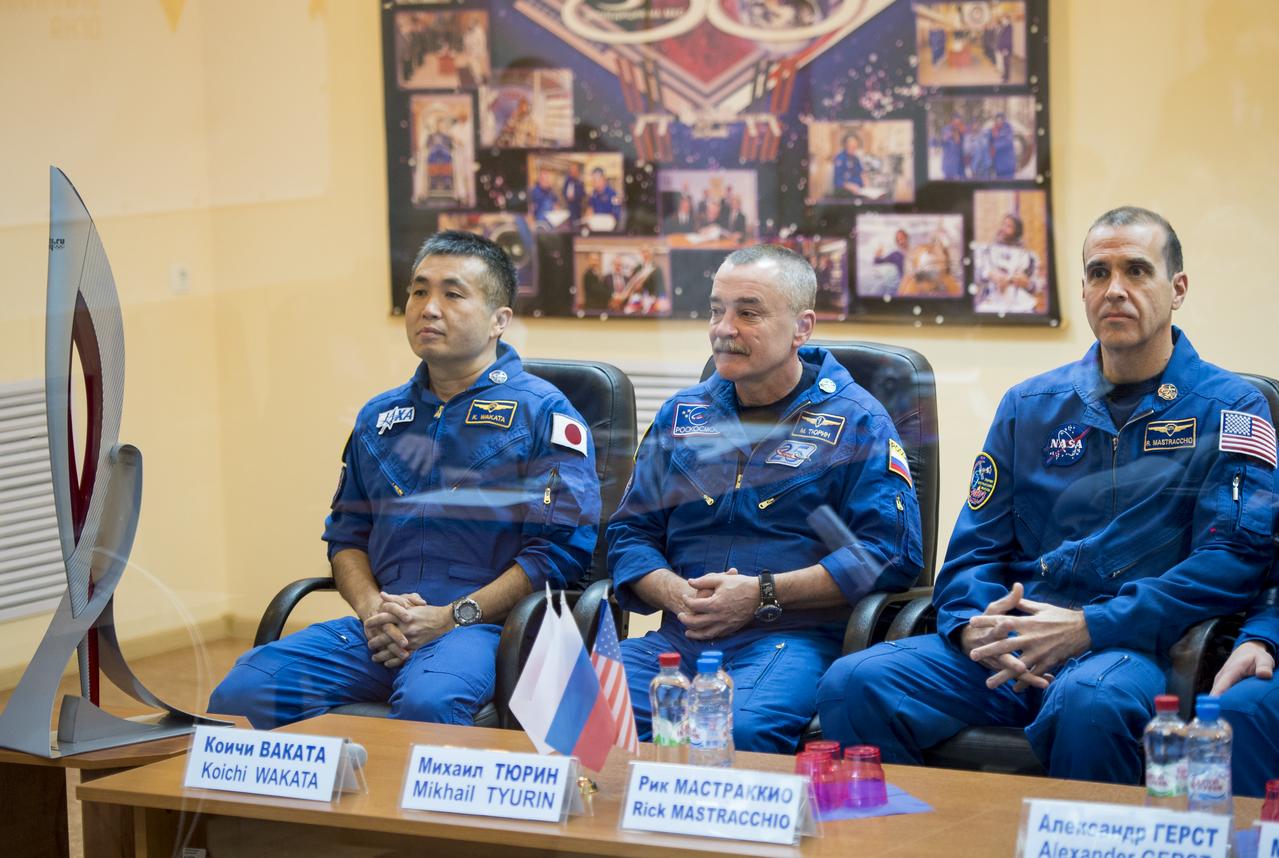
Expedition 38 Flight Engineer Koichi Wakata of the Japan Aerospace Exploration Agency, left, Soyuz Commander Mikhail Tyurin of Roscosmos, and, Flight Engineer Rick Mastracchio of NASA, right, are seen behind glass, while in quarantine, during the State Commission meeting held to approve the Soyuz launch of the crew for a six month mission aboard the International Space Station, Wednesday, Nov. 6, 2013 at the Cosmonaut Hotel in Baikonur, Kazakhstan. An Olympic torch that will be launched with the crew for a four-day visit to the station is seen on the left. The torch will return to Earth with another trio of station residents on Nov. 11 and will be part of the torch relay that ends with the lighting of the flame at the Fisht Stadium in Sochi, Russia Feb. 7 to mark the opening of the 2014 Winter Olympics. Photo Credit: (NASA/Bill Ingalls)
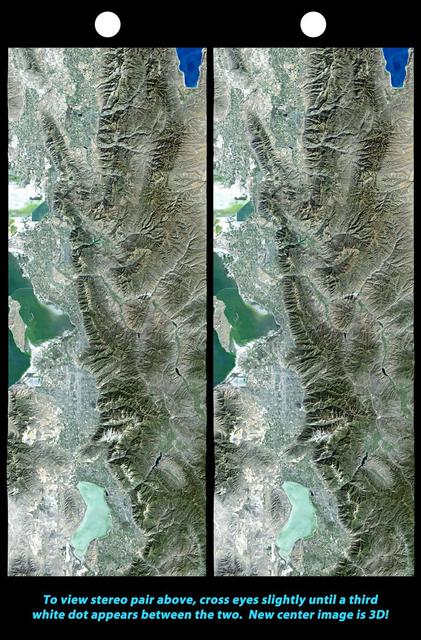
The 2002 Winter Olympics are hosted by Salt Lake City at several venues within the city, in nearby cities, and within the adjacent Wasatch Mountains.
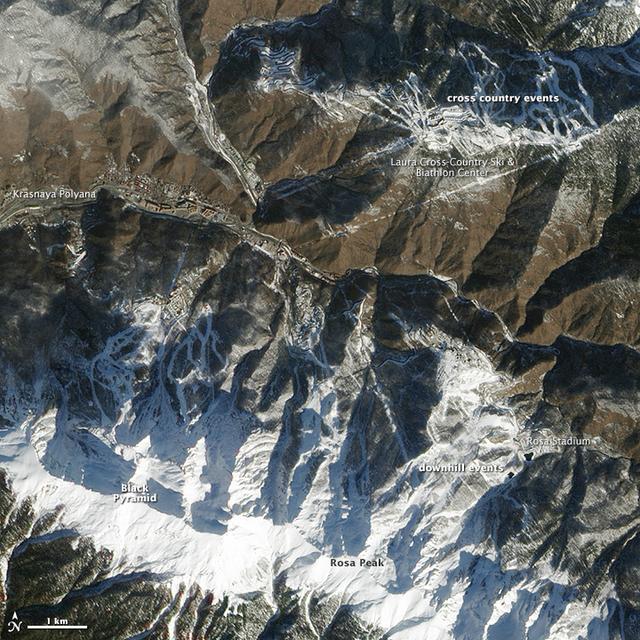
High res here: <a href="http://www.flickr.com/photos/gsfc/12640339235/in/photostream/">www.flickr.com/photos/gsfc/12640339235/in/photostream/</a> While Sochi is a coastal town on the Black Sea, the skiing events for the XXII Olympic Games are taking place about 40 kilometers (25 miles) inland. The venues are clustered around Krasnaya Polyana, a small town tucked between the Aibiga and Psekhako Ridges in the western Caucasus. This image—acquired by the Advanced Land Imager (ALI) on NASA’s Earth Observing-1 (EO-1) satellite on February 8, 2014—offers a view of the town and the ski facilities. The Rosa Khutor Alpine Center is the home to the downhill, snowboard, and freestyle events. The combined downhill skiing area measures about 20 kilometers (12 miles) in total, with the men’s downhill course stretching 3,500 meters (11,482 feet) and featuring a 1,075-meter (3,526 foot) change in elevation. The highest lift climbs to the summit of Rosa Peak, which rises 2,320 meters (7,612 feet). While not being used for the Olympics, the nearby Black Pyramid mountain has downhill skiing trails as well. The same steep slopes that make Rosa Peak good for skiing also elevate the risk of avalanches. To protect against falling snow, planners installed a series of gas pipes along the top of the ridge. The pipes emit bursts of oxygen and propane that create small, controlled avalanches. Event organizers also installed a series of earthen dams to steer snow away from infrastructure, and they have deployed two backhoes to the top of Aibiga Ridge to knock cornices away before they pose a risk. The Laura Cross-country Ski and Biathalon Center is located to the north on Psekhako Ridge. It includes two stadiums, each with their own start and finish zones, two track systems for skiing and biathlon, as well as shooting areas and warm-up zones. The center is named for the Laura River, a turbulent river that flows nearby. NASA Earth Observatory image by Jesse Allen and Robert Simmon, using EO-1 ALI data provided courtesy of the NASA EO-1 team. Caption by Adam Voiland. Instrument: EO-1 - ALI Read more: <a href="http://earthobservatory.nasa.gov/IOTD/view.php?id=83131&eocn=home&eoci=iotd_grid" rel="nofollow">earthobservatory.nasa.gov/IOTD/view.php?id=83131&eocn...</a> Credit: <b><a href="http://www.earthobservatory.nasa.gov/" rel="nofollow"> NASA Earth Observatory</a></b> <b><a href="http://www.nasa.gov/audience/formedia/features/MP_Photo_Guidelines.html" rel="nofollow">NASA image use policy.</a></b> <b><a href="http://www.nasa.gov/centers/goddard/home/index.html" rel="nofollow">NASA Goddard Space Flight Center</a></b> enables NASA’s mission through four scientific endeavors: Earth Science, Heliophysics, Solar System Exploration, and Astrophysics. Goddard plays a leading role in NASA’s accomplishments by contributing compelling scientific knowledge to advance the Agency’s mission. <b>Follow us on <a href="http://twitter.com/NASAGoddardPix" rel="nofollow">Twitter</a></b> <b>Like us on <a href="http://www.facebook.com/pages/Greenbelt-MD/NASA-Goddard/395013845897?ref=tsd" rel="nofollow">Facebook</a></b> <b>Find us on <a href="http://instagram.com/nasagoddard?vm=grid" rel="nofollow">Instagram</a></b>
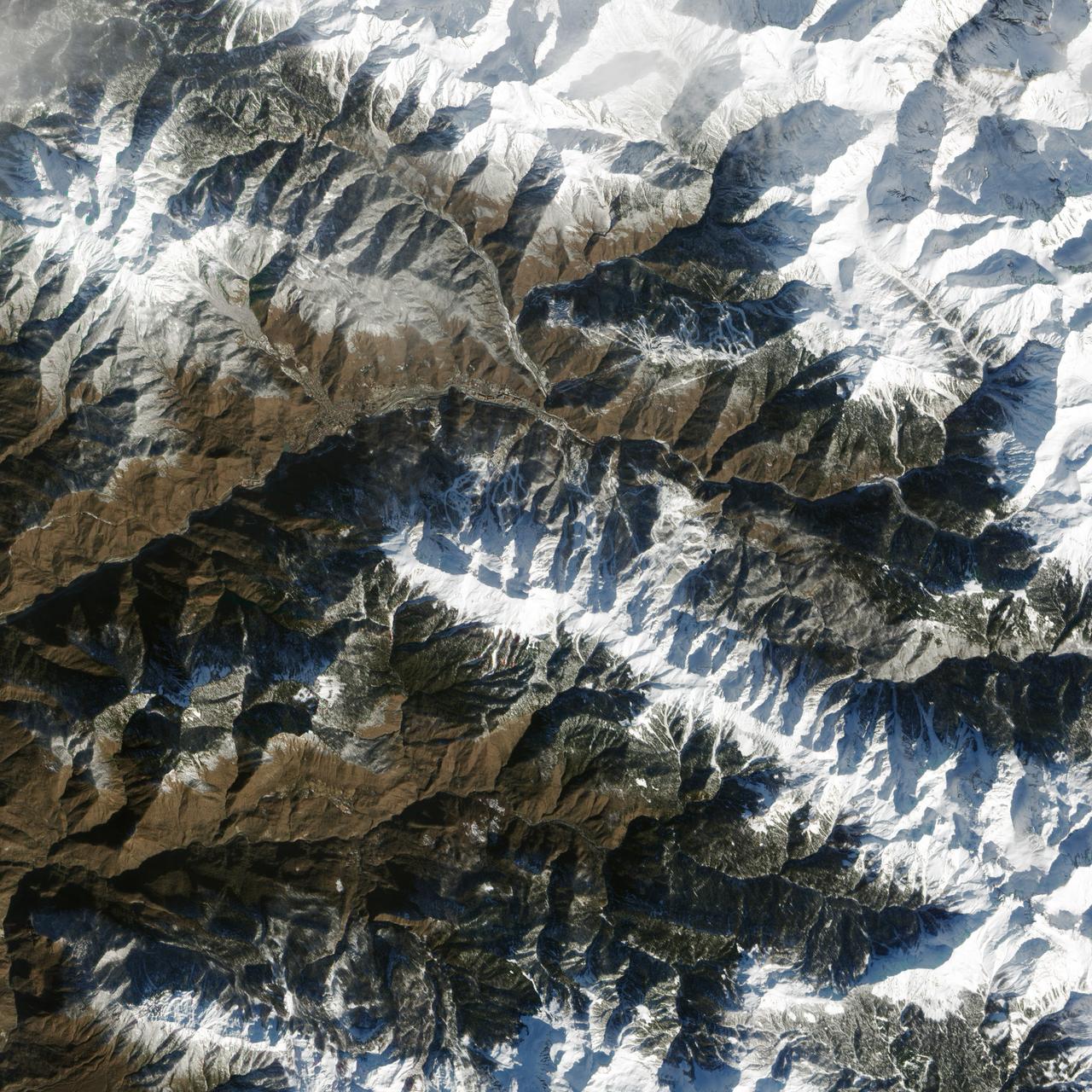
While Sochi is a coastal town on the Black Sea, the skiing events for the XXII Olympic Games are taking place about 40 kilometers (25 miles) inland. The venues are clustered around Krasnaya Polyana, a small town tucked between the Aibiga and Psekhako Ridges in the western Caucasus. This image—acquired by the Advanced Land Imager (ALI) on NASA’s Earth Observing-1 (EO-1) satellite on February 8, 2014—offers a view of the town and the ski facilities. The Rosa Khutor Alpine Center is the home to the downhill, snowboard, and freestyle events. The combined downhill skiing area measures about 20 kilometers (12 miles) in total, with the men’s downhill course stretching 3,500 meters (11,482 feet) and featuring a 1,075-meter (3,526 foot) change in elevation. The highest lift climbs to the summit of Rosa Peak, which rises 2,320 meters (7,612 feet). While not being used for the Olympics, the nearby Black Pyramid mountain has downhill skiing trails as well. The same steep slopes that make Rosa Peak good for skiing also elevate the risk of avalanches. To protect against falling snow, planners installed a series of gas pipes along the top of the ridge. The pipes emit bursts of oxygen and propane that create small, controlled avalanches. Event organizers also installed a series of earthen dams to steer snow away from infrastructure, and they have deployed two backhoes to the top of Aibiga Ridge to knock cornices away before they pose a risk. The Laura Cross-country Ski and Biathalon Center is located to the north on Psekhako Ridge. It includes two stadiums, each with their own start and finish zones, two track systems for skiing and biathlon, as well as shooting areas and warm-up zones. The center is named for the Laura River, a turbulent river that flows nearby. NASA Earth Observatory image by Jesse Allen and Robert Simmon, using EO-1 ALI data provided courtesy of the NASA EO-1 team. Caption by Adam Voiland. Instrument: EO-1 - ALI Read more: <a href="http://earthobservatory.nasa.gov/IOTD/view.php?id=83131&eocn=home&eoci=iotd_grid" rel="nofollow">earthobservatory.nasa.gov/IOTD/view.php?id=83131&eocn...</a> Credit: <b><a href="http://www.earthobservatory.nasa.gov/" rel="nofollow"> NASA Earth Observatory</a></b> <b><a href="http://www.nasa.gov/audience/formedia/features/MP_Photo_Guidelines.html" rel="nofollow">NASA image use policy.</a></b> <b><a href="http://www.nasa.gov/centers/goddard/home/index.html" rel="nofollow">NASA Goddard Space Flight Center</a></b> enables NASA’s mission through four scientific endeavors: Earth Science, Heliophysics, Solar System Exploration, and Astrophysics. Goddard plays a leading role in NASA’s accomplishments by contributing compelling scientific knowledge to advance the Agency’s mission. <b>Follow us on <a href="http://twitter.com/NASAGoddardPix" rel="nofollow">Twitter</a></b> <b>Like us on <a href="http://www.facebook.com/pages/Greenbelt-MD/NASA-Goddard/395013845897?ref=tsd" rel="nofollow">Facebook</a></b> <b>Find us on <a href="http://instagram.com/nasagoddard?vm=grid" rel="nofollow">Instagram</a></b>
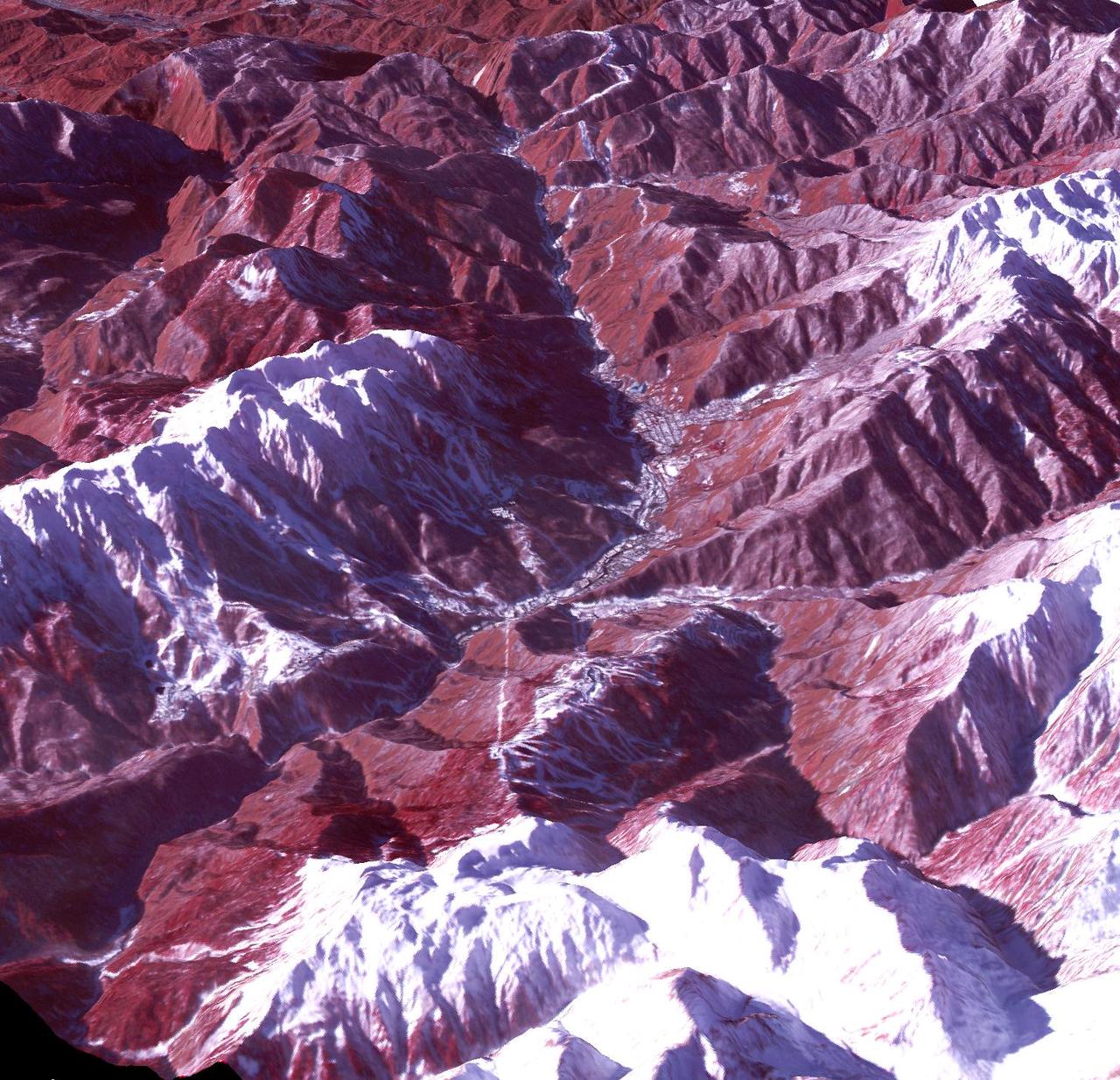
Sochi, Russia Winter Olympic Sites (Mountain Cluster) The 2014 Winter Olympic ski runs may be rated double black diamond, but they're not quite as steep as they appear in this image of the skiing and snowboarding sites for the Sochi Winter Olympic Games, acquired on Jan. 4, 2014, by the Advanced Spaceborne Thermal Emission and Reflection Radiometer (ASTER) instrument on NASA's Terra spacecraft. Rosa Khutar ski resort near Sochi, Russia, is in the valley at center, and the runs are visible on the shadowed slopes on the left-hand side of the valley. Height has been exaggerated 1.5 times to bring out topographic details. The games, which begin on Feb. 7 and continue for 17 days, feature six new skiing and boarding events plus the return of the legendary Jamaican bobsled team to the winter games for the first time since 2002. In this southwest-looking image, red indicates vegetation, white is snow, and the resort site appears in gray. The area imaged is about 11 miles (18 kilometers) across in the foreground and 20 miles (32 kilometers) from front to back. The image was created from the ASTER visible and near-infrared bands, draped over ASTER-derived digital elevation data. With its 14 spectral bands from the visible to the thermal infrared wavelength region and its high spatial resolution of 15 to 90 meters (about 50 to 300 feet), ASTER images Earth to map and monitor the changing surface of our planet. ASTER is one of five Earth-observing instruments launched Dec. 18, 1999, on Terra. The instrument was built by Japan's Ministry of Economy, Trade and Industry. A joint U.S./Japan science team is responsible for validation and calibration of the instrument and data products. The broad spectral coverage and high spectral resolution of ASTER provides scientists in numerous disciplines with critical information for surface mapping and monitoring of dynamic conditions and temporal change. Example applications are: monitoring glacial advances and retreats; monitoring potentially active volcanoes; identifying crop stress; determining cloud morphology and physical properties; wetlands evaluation; thermal pollution monitoring; coral reef degradation; surface temperature mapping of soils and geology; and measuring surface heat balance. The U.S. science team is located at NASA's Jet Propulsion Laboratory, Pasadena, Calif. The Terra mission is part of NASA's Science Mission Directorate, Washington, D.C. More information about ASTER is available at <a href="http://asterweb.jpl.nasa.gov/" rel="nofollow">asterweb.jpl.nasa.gov/</a>. credit:NASA/GSFC/METI/ERSDAC/JAROS, and U.S./Japan ASTER Science Team <b><a href="http://www.nasa.gov/audience/formedia/features/MP_Photo_Guidelines.html" rel="nofollow">NASA image use policy.</a></b> <b><a href="http://www.nasa.gov/centers/goddard/home/index.html" rel="nofollow">NASA Goddard Space Flight Center</a></b> enables NASA’s mission through four scientific endeavors: Earth Science, Heliophysics, Solar System Exploration, and Astrophysics. Goddard plays a leading role in NASA’s accomplishments by contributing compelling scientific knowledge to advance the Agency’s mission. <b>Follow us on <a href="http://twitter.com/NASAGoddardPix" rel="nofollow">Twitter</a></b> <b>Like us on <a href="http://www.facebook.com/pages/Greenbelt-MD/NASA-Goddard/395013845897?ref=tsd" rel="nofollow">Facebook</a></b> <b>Find us on <a href="http://instagram.com/nasagoddard?vm=grid" rel="nofollow">Instagram</a></b>
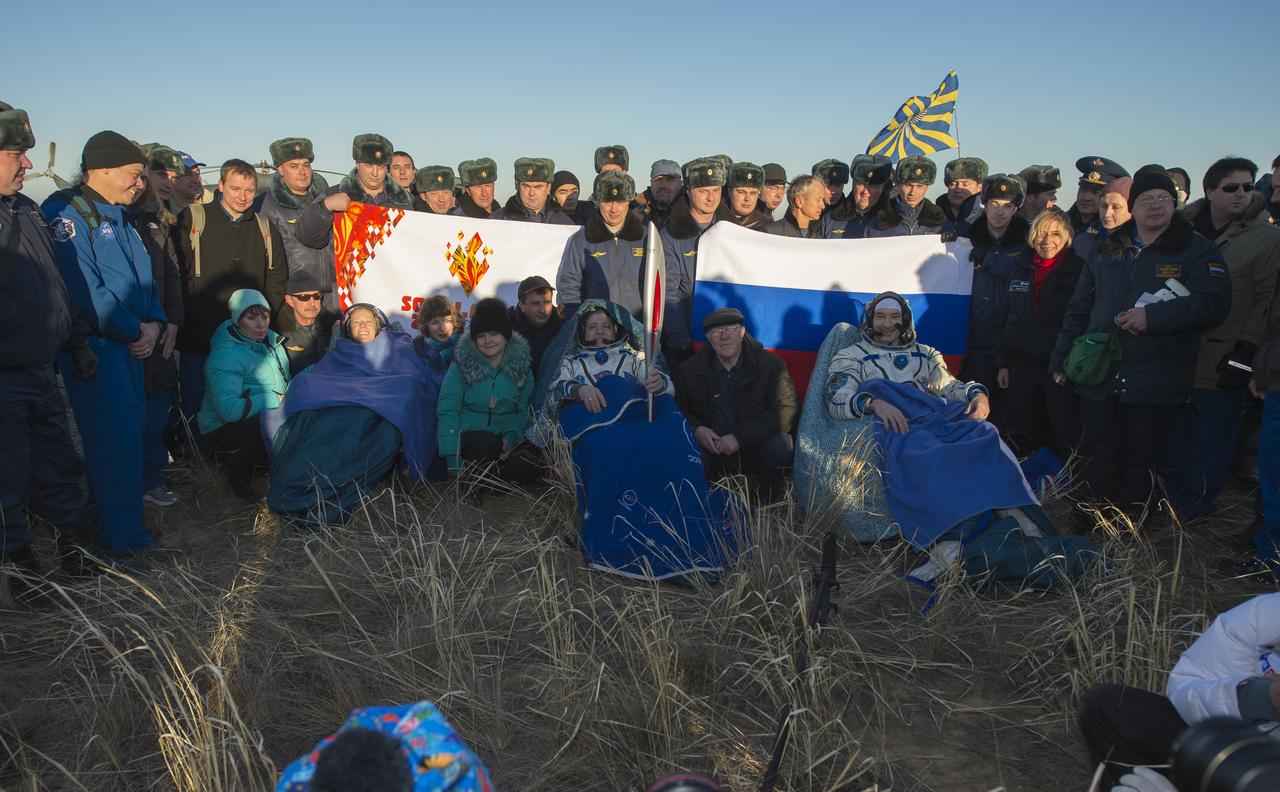
NASA Flight Engineer Karen Nyberg, left, Expedition 37 Commander Fyodor Yurchikhin of Roscosmos, center holding the Olympic torch, and European Space Agency Flight Engineer Luca Parmitano sit in chairs outside the Soyuz capsule just minutes after they landed in a remote area outside the town of Zhezkazgan, Kazakhstan, on Monday, Nov. 11, 2013. The Olympic torch was launched with the crew of Expedition 38 to the International Space Station on November 7. It was passed from one module to the next and had its first spacewalk on November 9 with two Russian cosmonauts as part of its international relay. Now back on earth it will continue its journey to Sochi, Russia for the 2014 Winter Games. Yurchikhin, Nyberg and Parmitano returned from five and a half months onboard the International Space Station. Photo Credit: (NASA/Carla Cioffi)

iss071e462173 (Aug. 8, 2024) --- Wildfires in northern California are pictured from the International Space Station as it orbited 261 miles above the Pacific Ocean off the coast of Washington's Olympic National Forest.

Alexey B. Krasnov, director of human spaceflight at the Russian space agency, Roscosmos, left, holds the Olympic Torch as he and, Division Chief, GCTC, Valery Korzun, assist, Expedition 38 Flight Engineer Koichi Wakata of the Japan Aerospace Exploration Agency, as Wakata and fellow crew members, Expedition 38 Soyuz Commander Mikhail Tyurin of Roscosmos, and, Flight Engineer Rick Mastracchio of NASA, walk to the soyuz rocket for their launch to the International Space Station, Thursday, Nov. 7, 2013, in Baikonur, Kazakhstan. Tyurin, Wakata, and, Mastracchio will launch in their Soyuz TMA-11M spacecraft to the International Space Station to begin a six-month mission. Photo Credit: (NASA/Bill Ingalls)
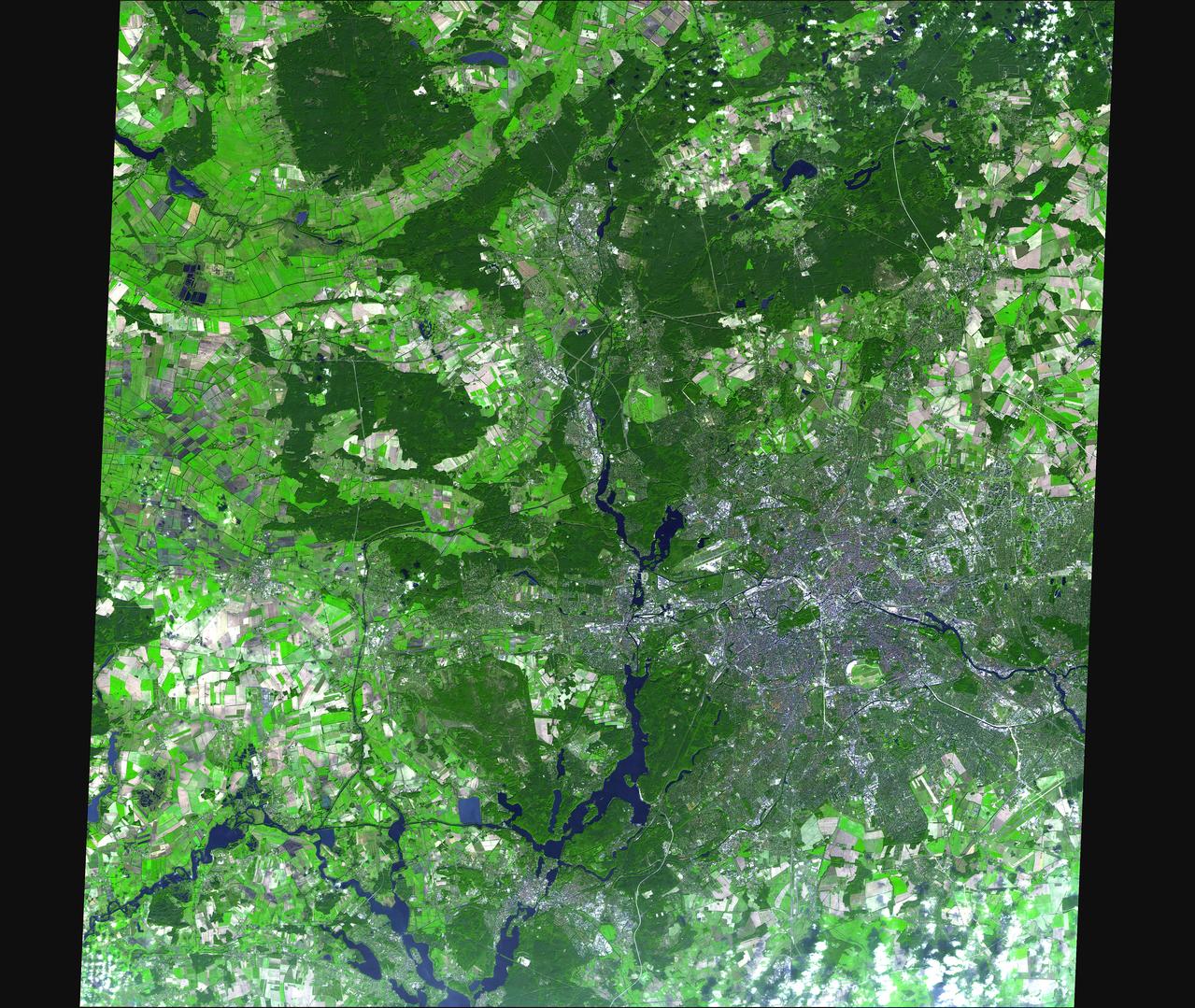
On July 9, hundreds of millions of fans worldwide were glued to their television sets watching the final match of the 2006 FIFA World Cup, played in Berlin Olympic stadium Olympiastadion. This image was acquired by NASA Terra spacecraft.
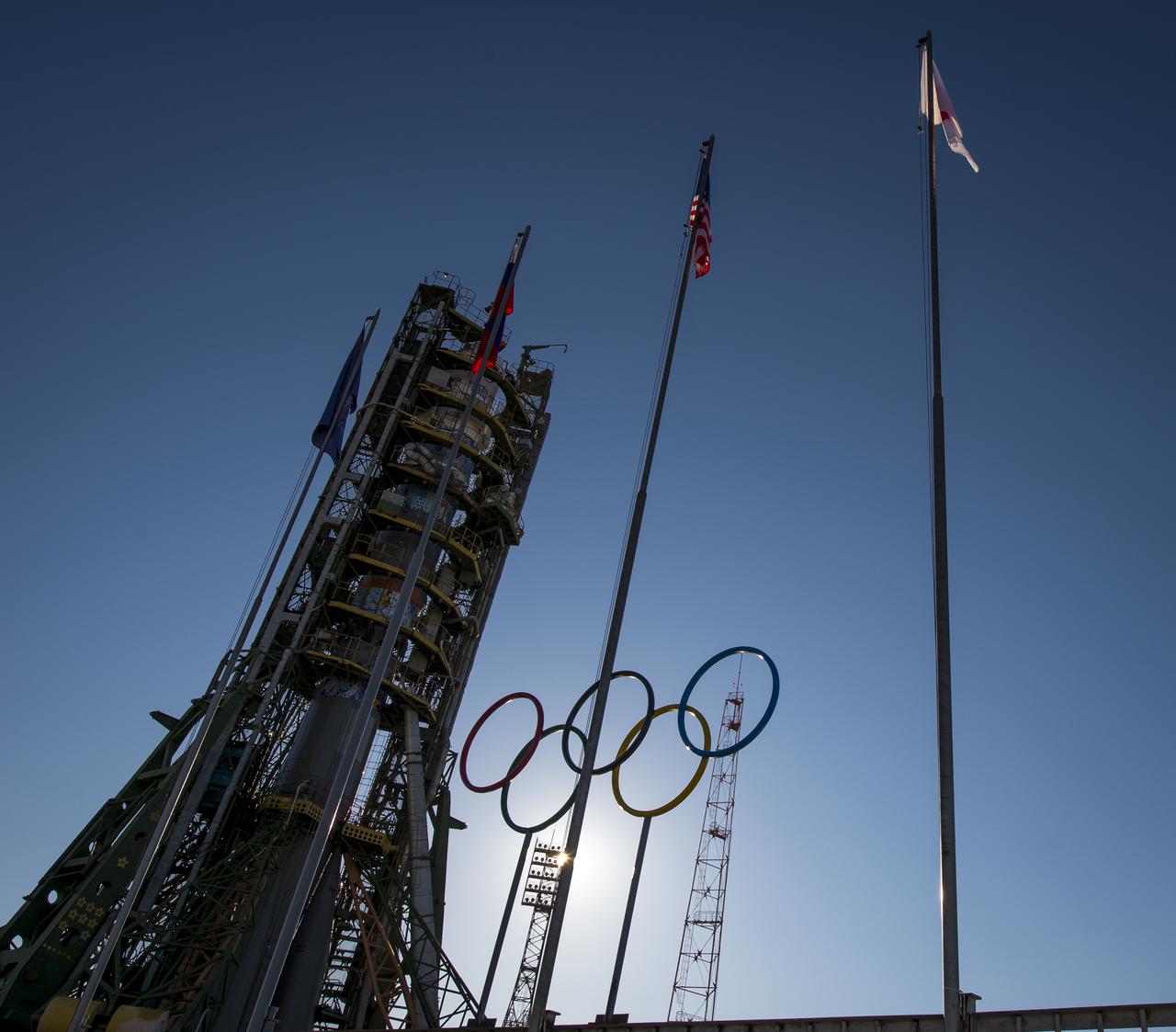
Olympic rings are seen at the Soyuz launch pad shortly after the Soyuz TMA-11M rocket was erected into position on Tuesday, Nov. 5, 2013, at the Baikonur Cosmodrome in Kazakhstan. Launch of the Soyuz rocket is scheduled for November 7 and will send Expedition 38 Soyuz Commander Mikhail Tyurin of Roscosmos, Flight Engineer Rick Mastracchio of NASA and Flight Engineer Koichi Wakata of the Japan Aerospace Exploration Agency on a six-month mission aboard the International Space Station. Photo Credit: (NASA/Bill Ingalls)
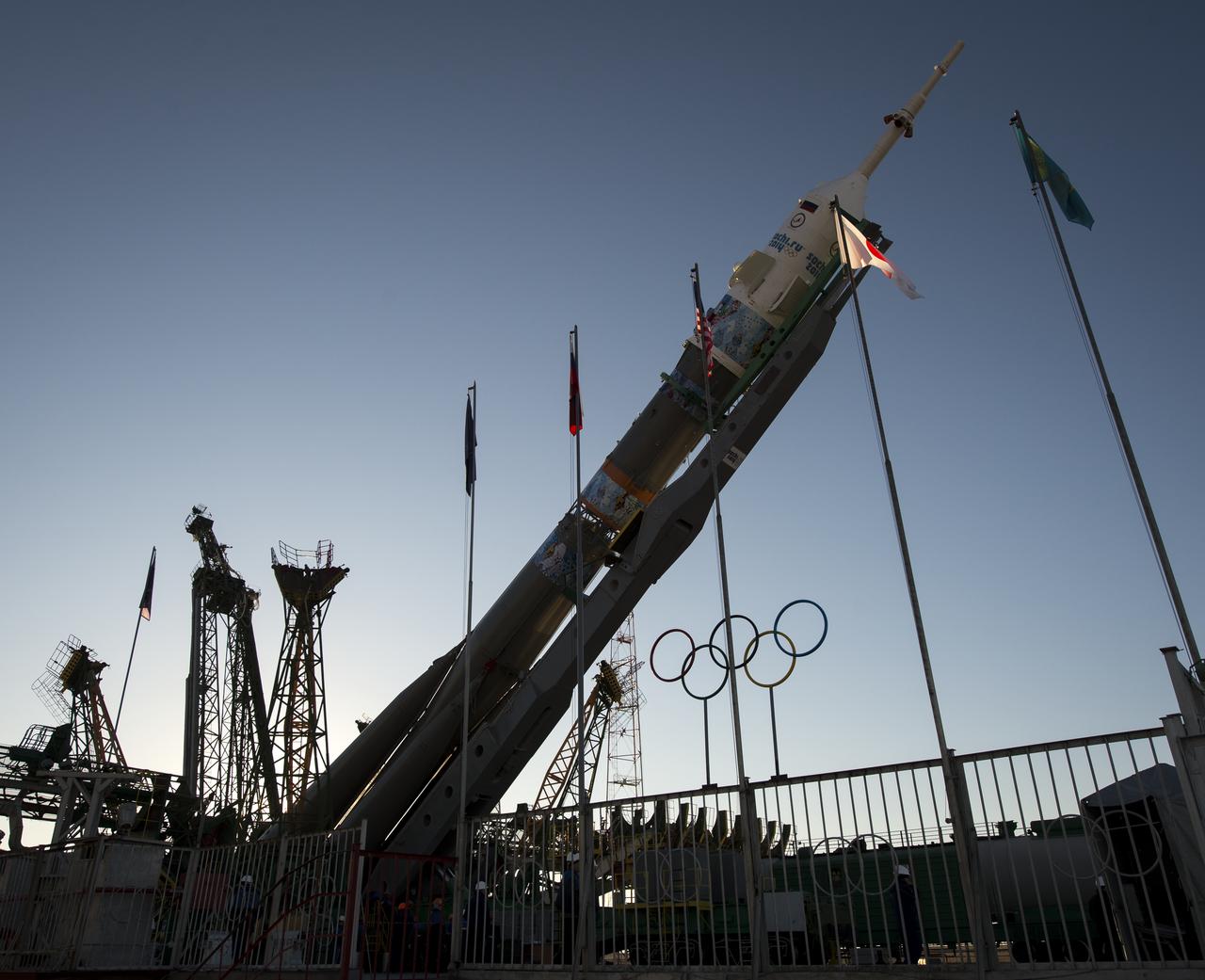
The Olympic rings are seen as the Soyuz TMA-11M rocket is erected into position at the launch pad on Tuesday, Nov. 5, 2013, at the Baikonur Cosmodrome in Kazakhstan. Launch of the Soyuz rocket is scheduled for November 7 and will send Expedition 38 Soyuz Commander Mikhail Tyurin of Roscosmos, Flight Engineer Rick Mastracchio of NASA and Flight Engineer Koichi Wakata of the Japan Aerospace Exploration Agency on a six-month mission aboard the International Space Station. Photo Credit: (NASA/Bill Ingalls)
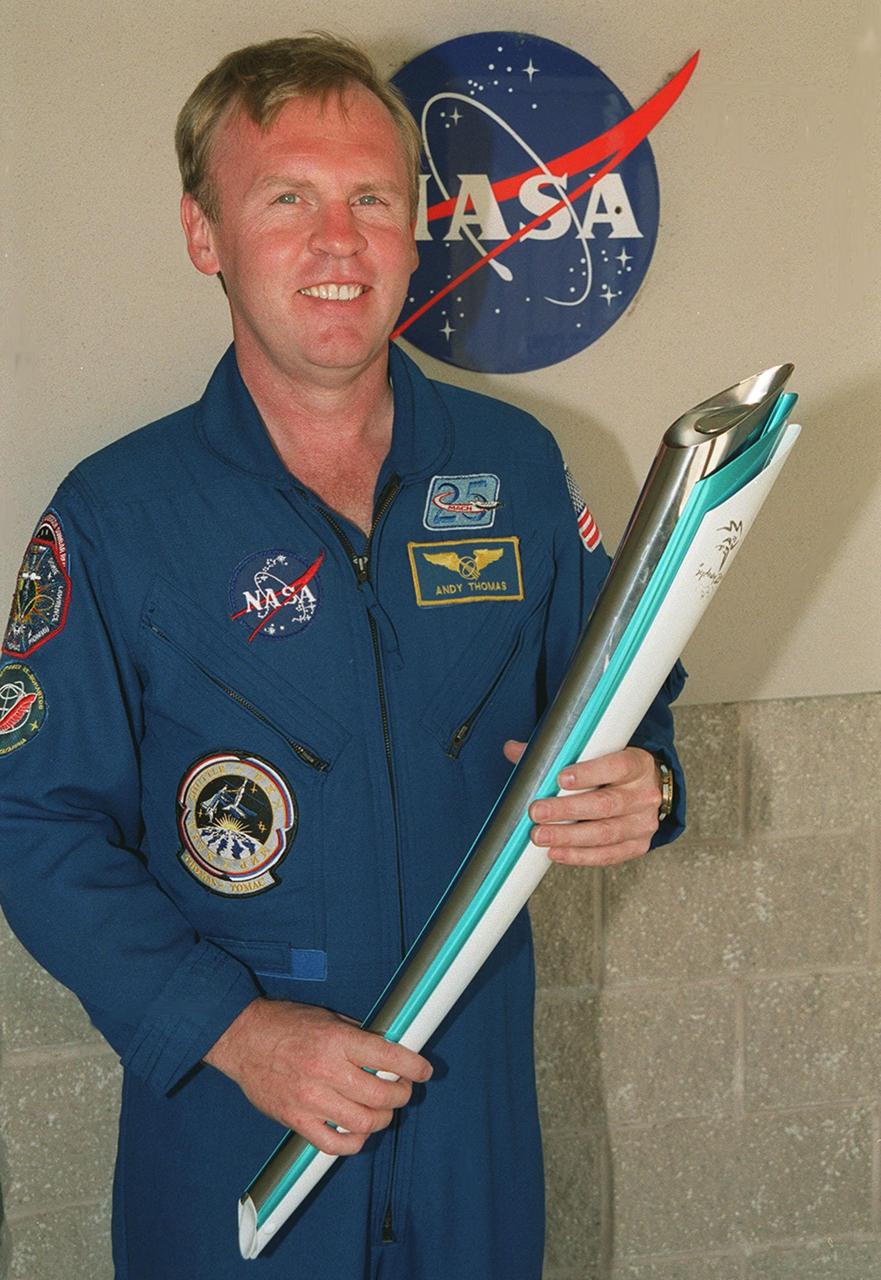
Astronaut Andy Thomas holds a facsimile of the Olympic torch that is being carried on Space Shuttle Atlantis during mission STS-101. Thomas is from Australia, which is the site of the 2000 Olympics. He coordinated the effort to have the torch added to the manifest so that it would truly circle the Earth in the spirit of the worldwide sporting event. The Sydney Olympic Torch Relay will arrive in Australia on June 8. The games begin Sept. 1

At the Gagarin Cosmonaut Training Center in Star City, Russia, Expedition 38/39 Flight Engineer Koichi Wakata of the Japan Aerospace Exploration Agency (left), Soyuz Commander Mikhail Tyurin (center) and NASA Flight Engineer Rick Mastracchio (right) pose for pictures with a model of the Olympic torch following a crew news conference October 22, 2013. The trio will launch Nov. 7, Kazakh time from the Baikonur Cosmodrome in Kazakhstan on the Soyuz TMA-11M spacecraft for the start of a six-month mission on the International Space Station. Launching with them will be one of the Olympic torches used in the Olympic relay that will culminate with the torch’s arrival at the opening ceremonies of the 2014 Winter Olympics in Sochi, Russia next February. NASA/Stephanie Stoll
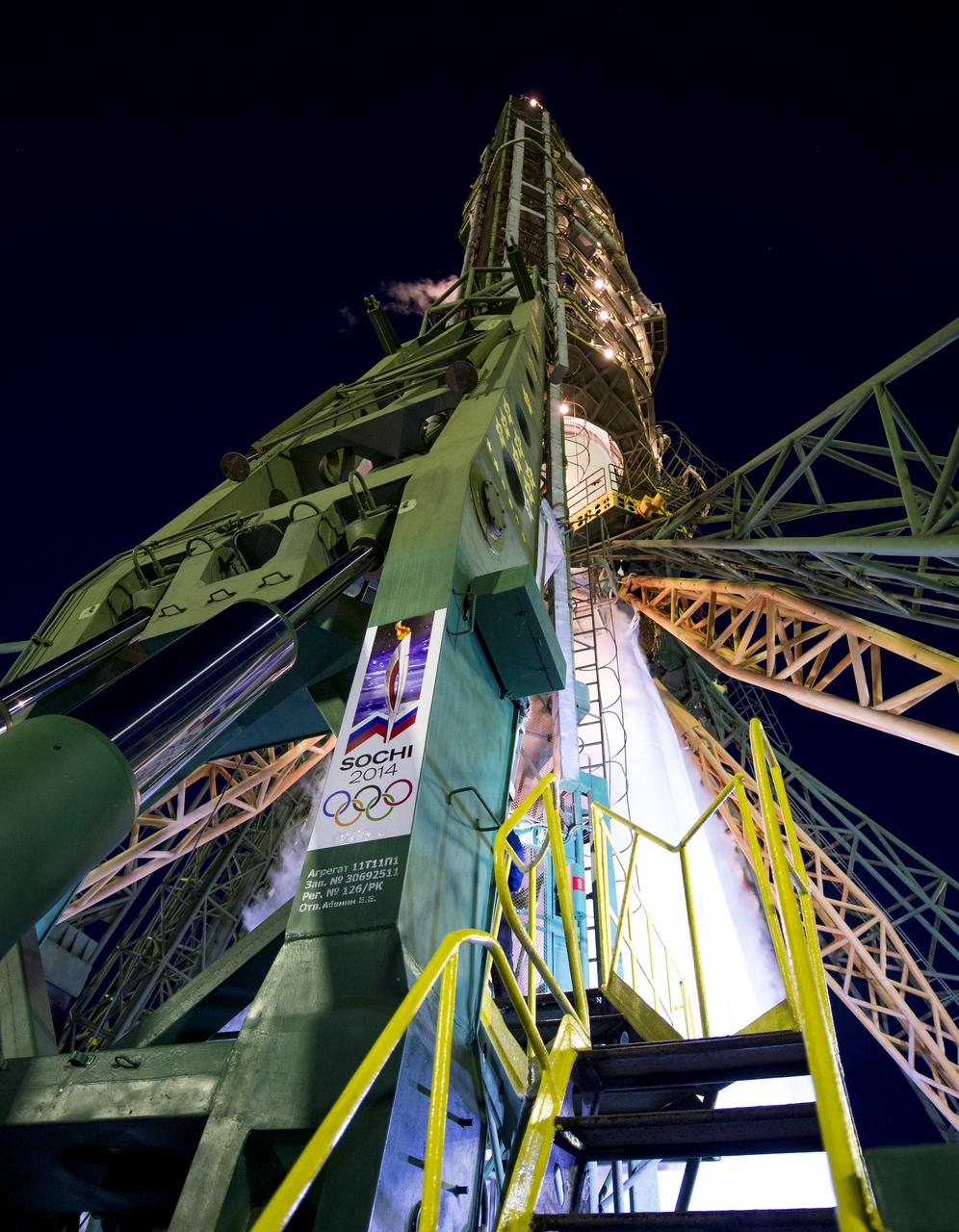
A sign for the Sochi 2014 Winter Olympics is seen at the base of the Soyuz launch gantry after Expedition 38 Soyuz Commander Mikhail Tyurin of Roscosmos, Flight Engineer Koichi Wakata of the Japan Aerospace Exploration Agency, and, Flight Engineer Rick Mastracchio of NASA, boarded their soyuz TMA-11M rocket for their launch to the International Space Station, Thursday, Nov. 7, 2013, in Baikonur, Kazakhstan. The rocket is adorned with the logo of the Sochi Olympic Organizing Committee and other related artwork to commemorate the launch of the Olympic torch with the crew for a four-day visit to the station. The torch will return to Earth with another trio of station residents on Nov. 11 and will be part of the torch relay that ends with the lighting of the flame at the Fisht Stadium in Sochi, Russia Feb. 7 to mark the opening of the 2014 Winter Olympics. Photo Credit (NASA/Bill Ingalls)
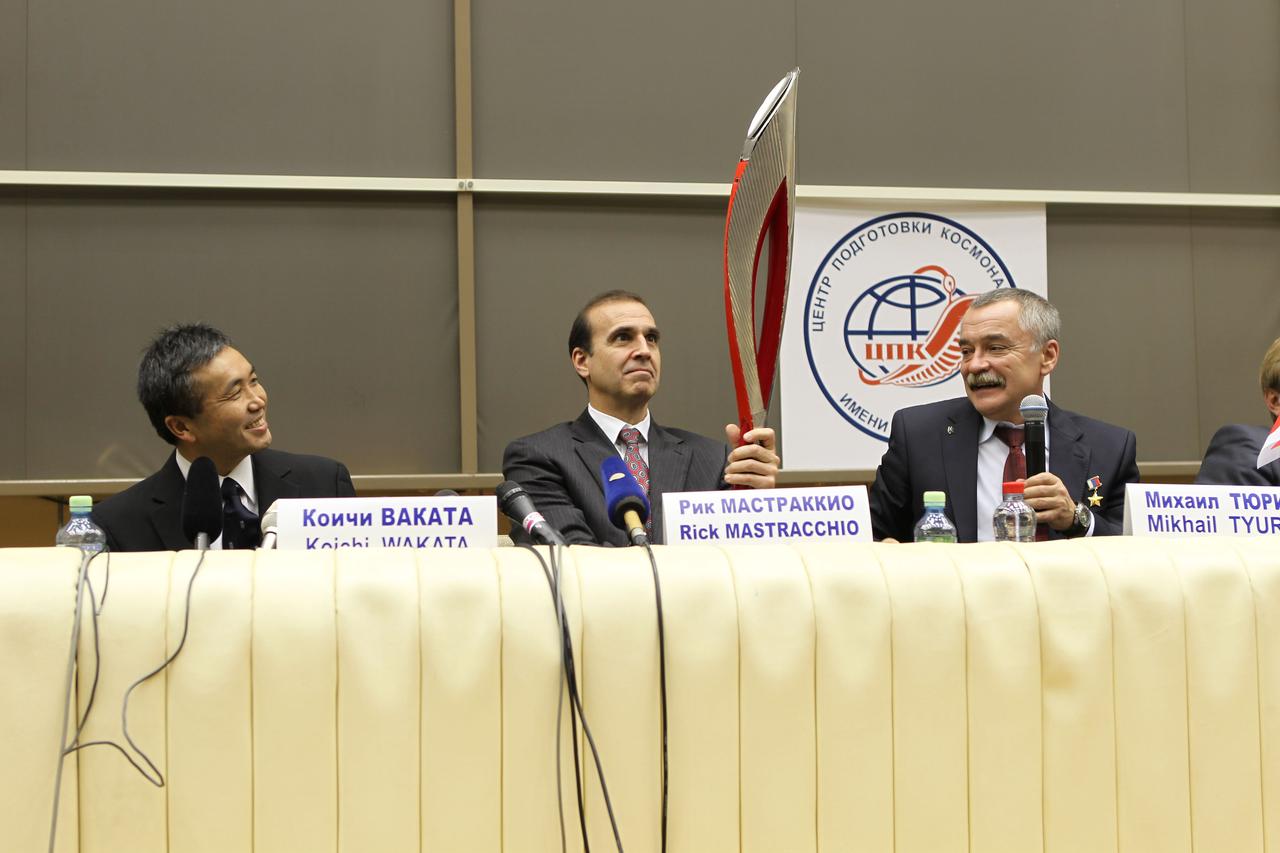
At the Gagarin Cosmonaut Training Center in Star City, Russia, Expedition 38/39 Flight Engineer Rick Mastracchio of NASA (center) holds a model of the Olympic torch during a crew news conference October 22, 2013. Mastracchio, Flight Engineer Koichi Wakata of the Japan Aerospace Exploration Agency (left) and Soyuz Commander Mikhail Tyurin (right) will launch Nov. 7, Kazakh time from the Baikonur Cosmodrome in Kazakhstan on the Soyuz TMA-11M spacecraft for the start of a six-month mission on the International Space Station. Launching with them will be one of the Olympic torches used in the Olympic relay that will culminate with the torch’s arrival at the opening ceremonies of the 2014 Winter Olympics in Sochi, Russia next February. NASA/Stephanie Stoll
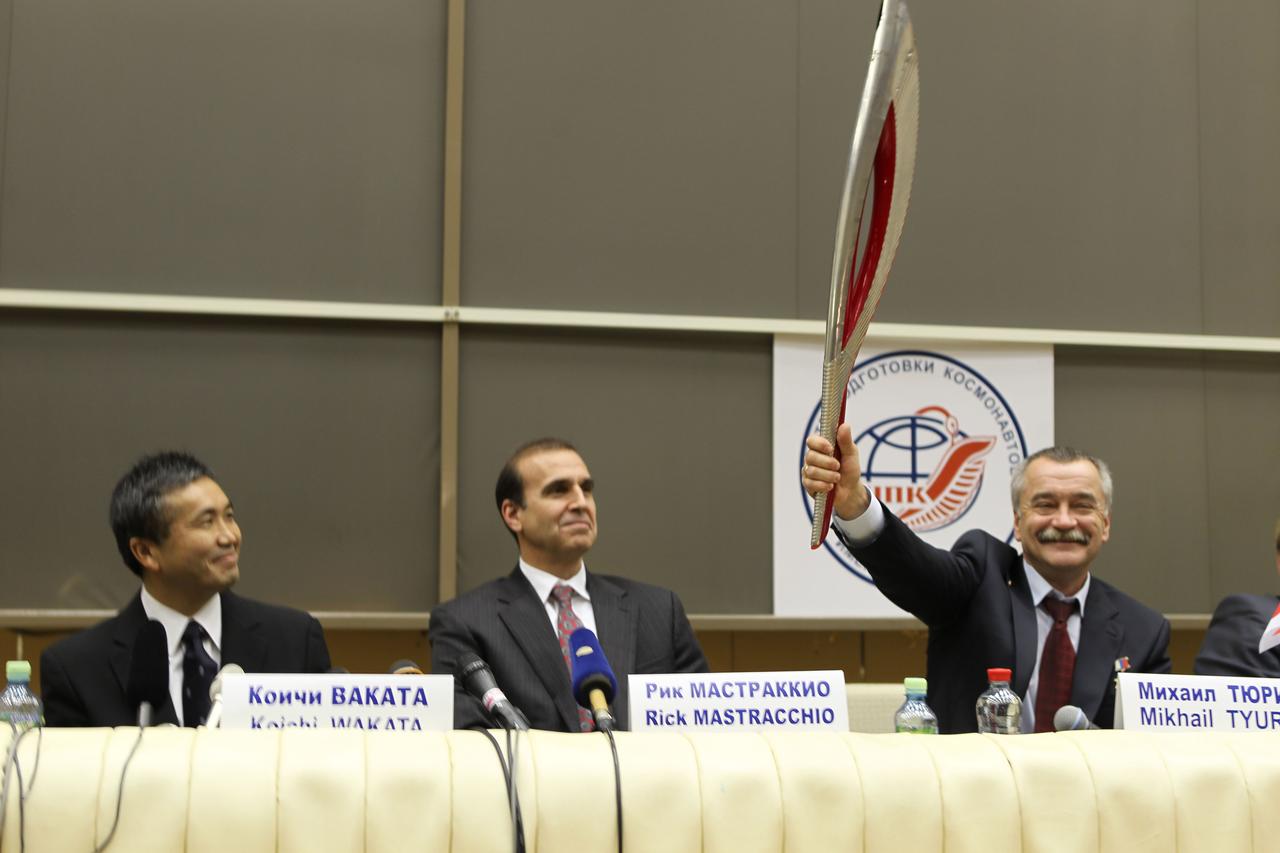
At the Gagarin Cosmonaut Training Center in Star City, Russia, Expedition 38/39 Soyuz Commander Mikhail Tyurin (right) hoists a model of the Olympic torch during a crew news conference October 22, 2013. Tyurin, NASA Flight Engineer Rick Mastracchio (center) and Flight Engineer Koichi Wakata of the Japan Aerospace Exploration Agency (left) will launch Nov. 7, Kazakh time from the Baikonur Cosmodrome in Kazakhstan on the Soyuz TMA-11M spacecraft for the start of a six-month mission on the International Space Station. Launching with them will be one of the Olympic torches used in the Olympic relay that will culminate with the torch’s arrival at the opening ceremonies of the 2014 Winter Olympics in Sochi, Russia next February. NASA/Stephanie Stoll
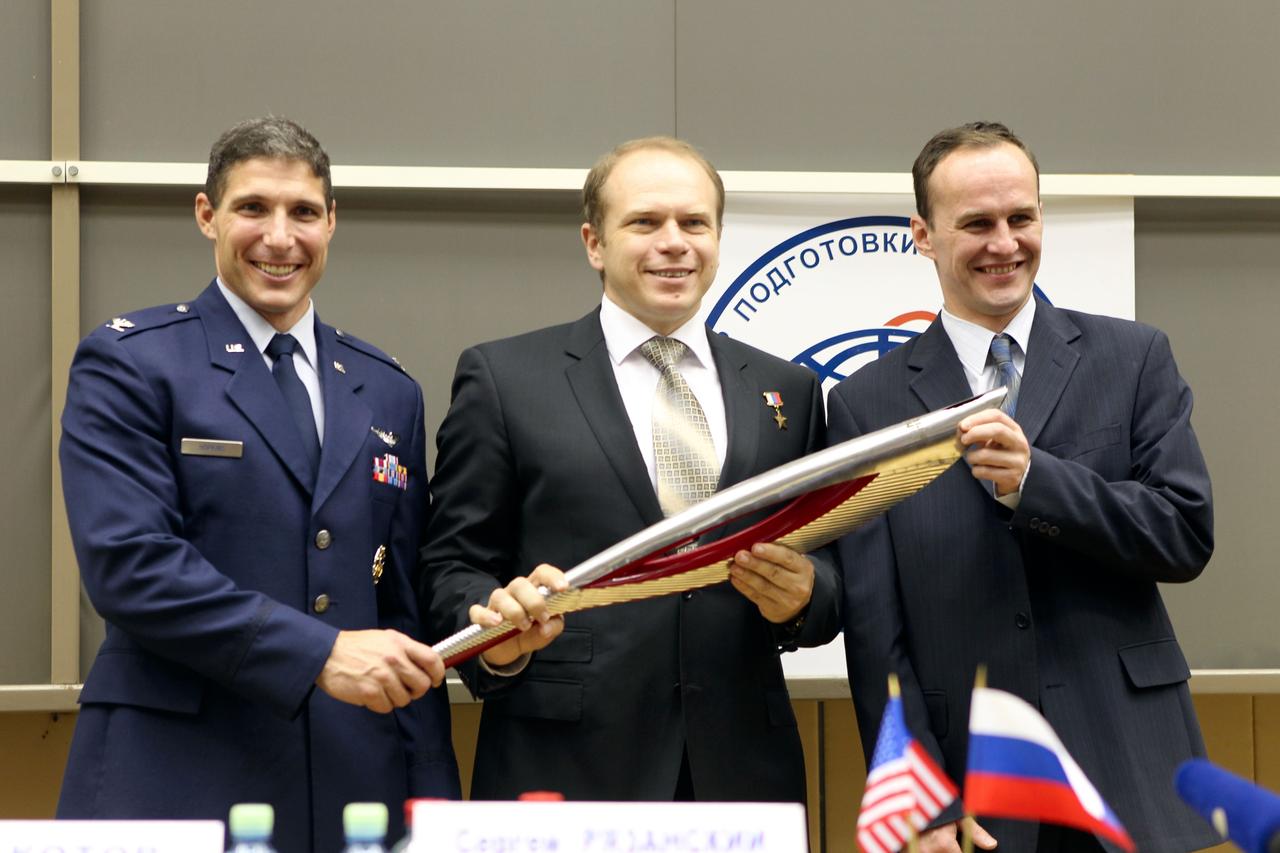
At the Gagarin Cosmonaut Training Center in Star City, Russia, Expedition 37/38 Flight Engineer Michael Hopkins of NASA (left), Soyuz Commander Oleg Kotov (center) and Flight Engineer Sergey Ryazanskiy (right) hold a replica of the Olympic torch Sept. 6 following a crew news conference at their training facility outside Moscow. The trio is preparing for their launch to the International Space Station from the Baikonur Cosmodrome in Kazakhstan on Sept. 26, Kazakh time, aboard the Soyuz TMA-10M spacecraft. The torch that will light the Olympic flame at the Opening Ceremonies of the Winter Olympics in Sochi, Russia Feb. 7, 2014 will be flown the space station by another crew in November and brought home several days later as part of a global and galactic Olympic relay. NASA/Stephanie Stoll
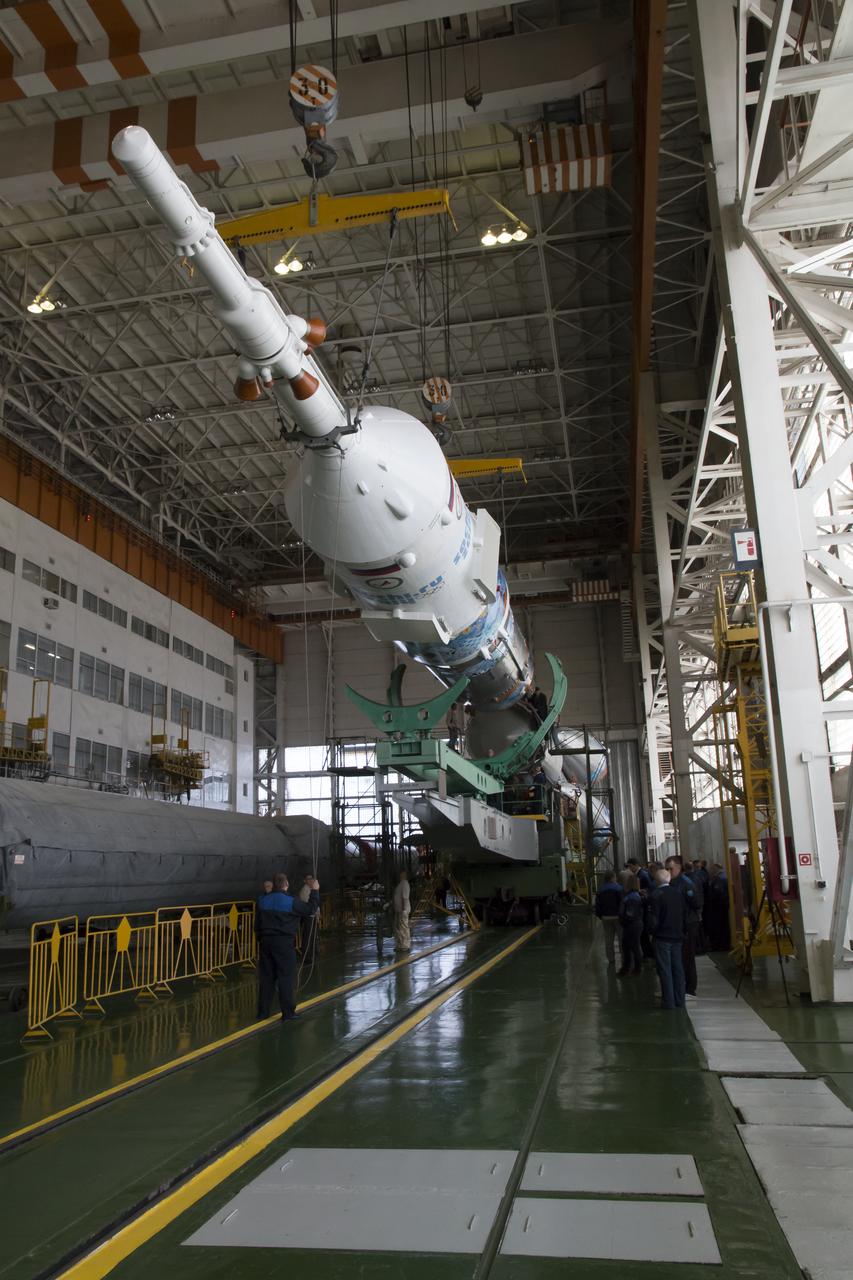
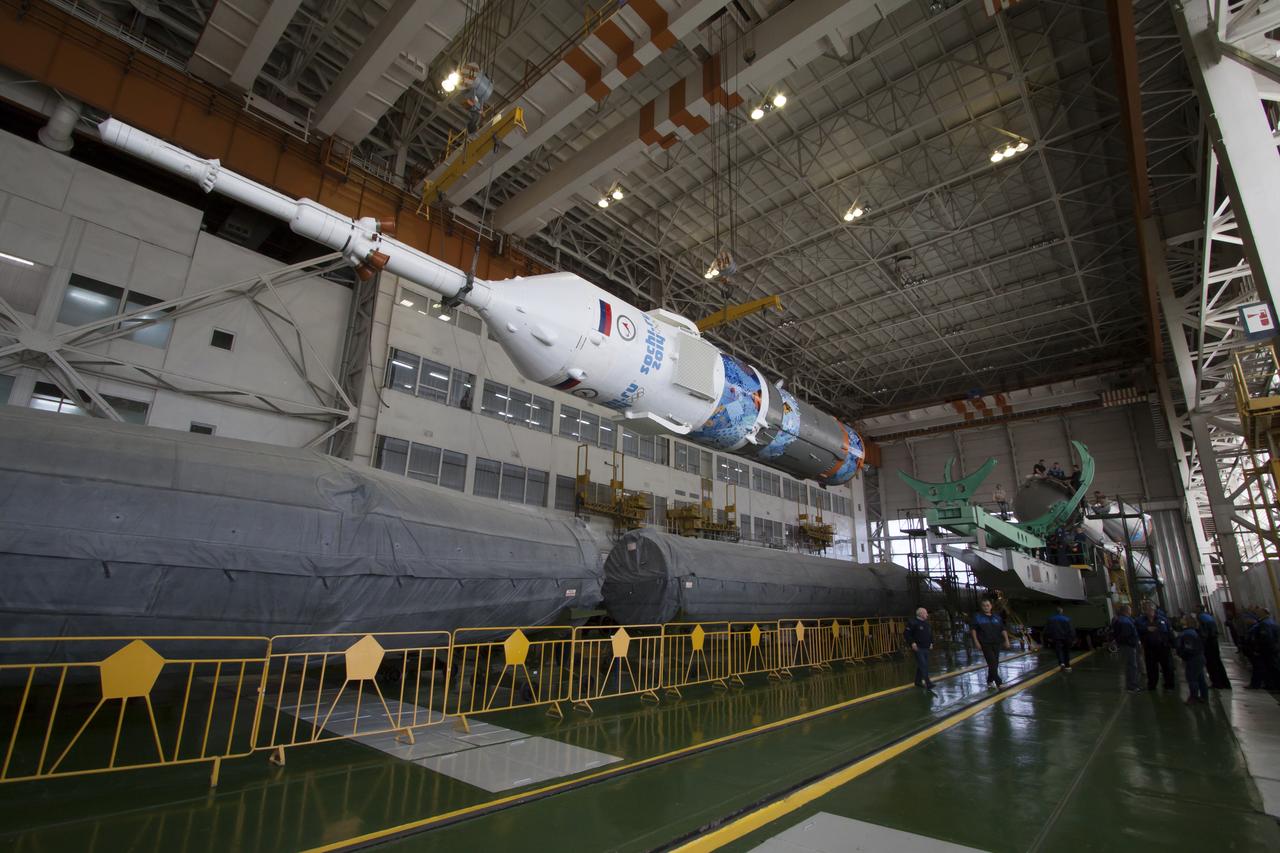
Workers make final preperations to a Soyuz TMA-11M spacecraft on Monday, Nov. 4, 2013, at the Baikonur Cosmodome in Baikonur, Kazakhstan. The rocket is adorned with the logo of the Sochi Olympic Organizing Committee and other related artwork to commemorate the launch of the Olympic torch with the crew for a four-day visit to the station. The torch will return to Earth with another trio of station residents on Nov. 11 and will be part of the torch relay that ends with the lighting of the flame at the Fisht Stadium in Sochi, Russia Feb. 7 to mark the opening of the 2014 Winter Olympics. Photo Credit: (NASA/Victor Zelentsov)
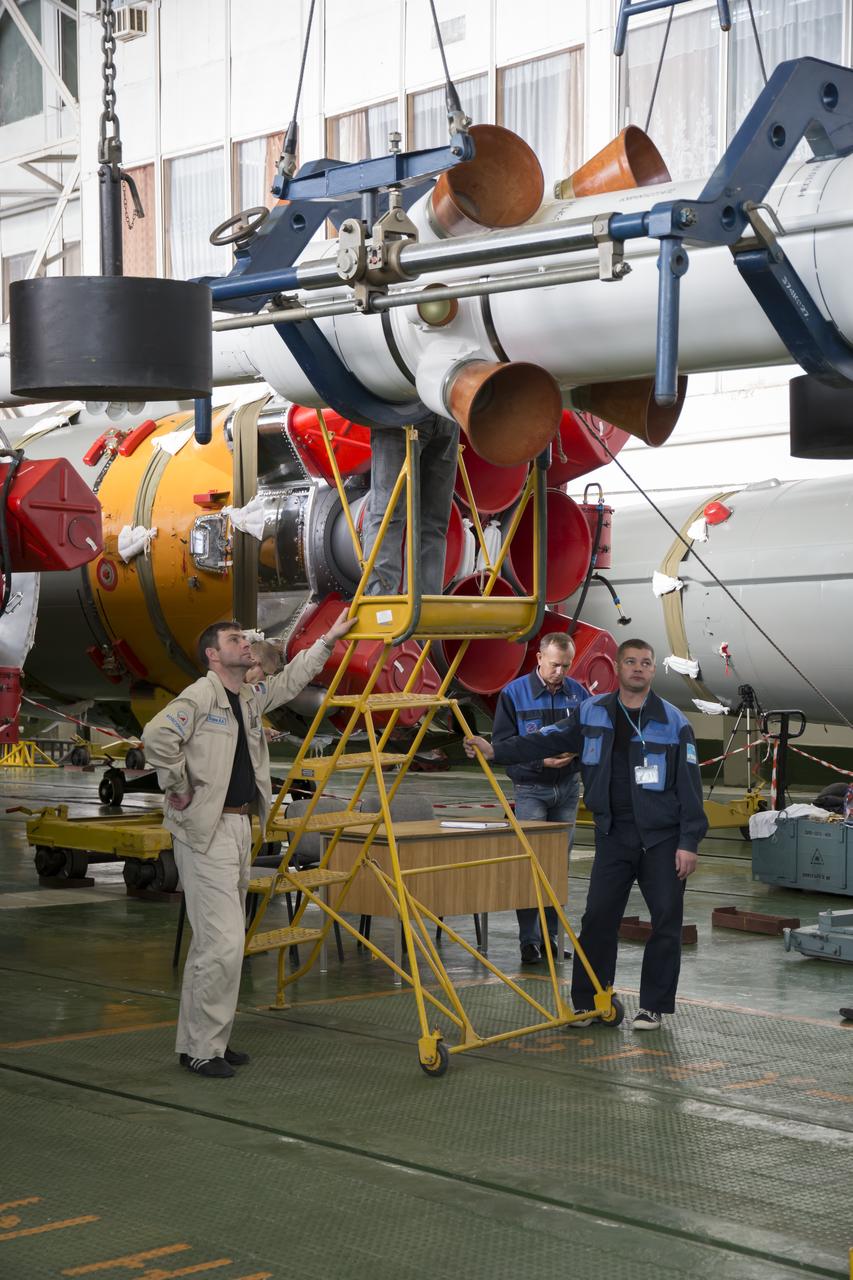
Workers make final preperations to a Soyuz TMA-11M spacecraft on Monday, Nov. 4, 2013, at the Baikonur Cosmodome in Baikonur, Kazakhstan. The rocket is adorned with the logo of the Sochi Olympic Organizing Committee and other related artwork to commemorate the launch of the Olympic torch with the crew for a four-day visit to the station. The torch will return to Earth with another trio of station residents on Nov. 11 and will be part of the torch relay that ends with the lighting of the flame at the Fisht Stadium in Sochi, Russia Feb. 7 to mark the opening of the 2014 Winter Olympics. Photo Credit: (NASA/Victor Zelentsov)
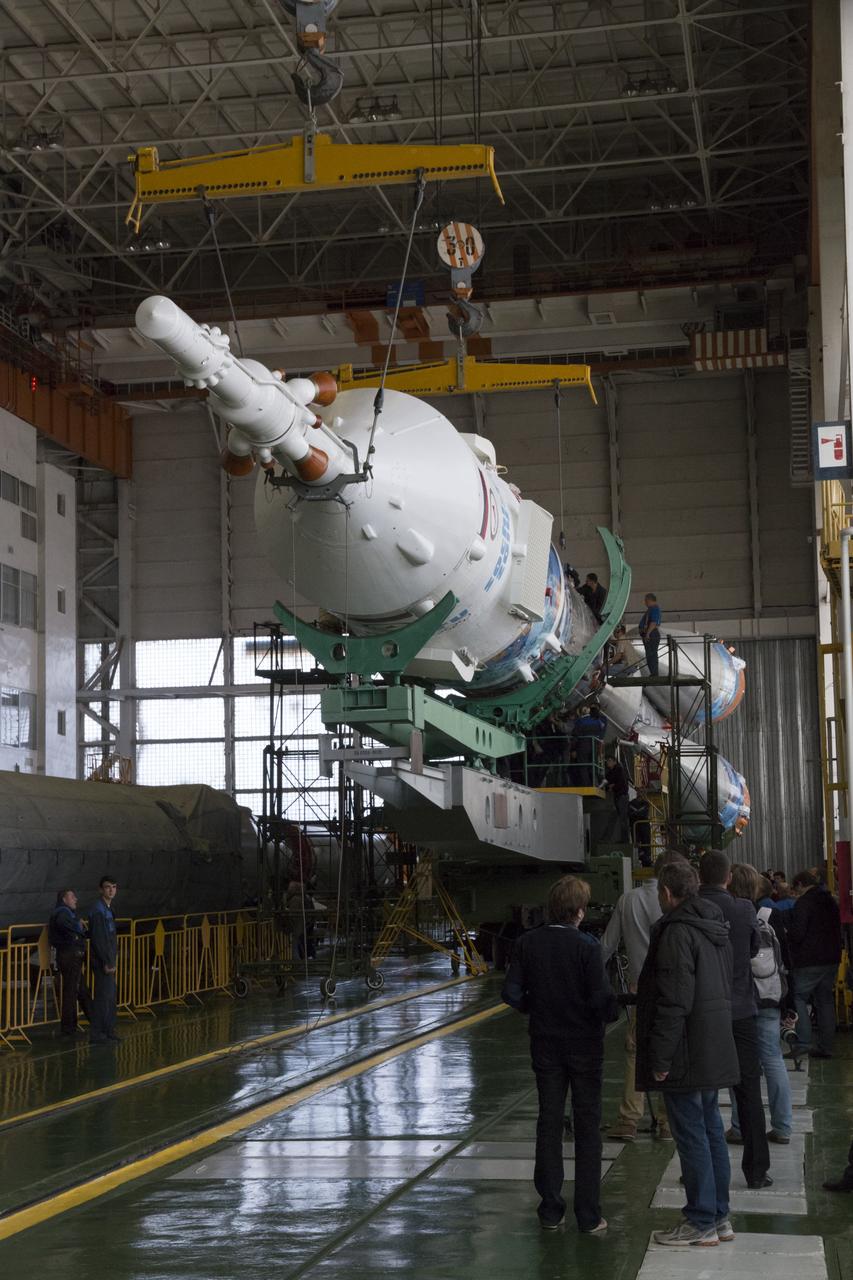
Workers make final preperations to a Soyuz TMA-11M spacecraft on Monday, Nov. 4, 2013, at the Baikonur Cosmodome in Baikonur, Kazakhstan. The rocket is adorned with the logo of the Sochi Olympic Organizing Committee and other related artwork to commemorate the launch of the Olympic torch with the crew for a four-day visit to the station. The torch will return to Earth with another trio of station residents on Nov. 11 and will be part of the torch relay that ends with the lighting of the flame at the Fisht Stadium in Sochi, Russia Feb. 7 to mark the opening of the 2014 Winter Olympics. Photo Credit: (NASA/Victor Zelentsov)
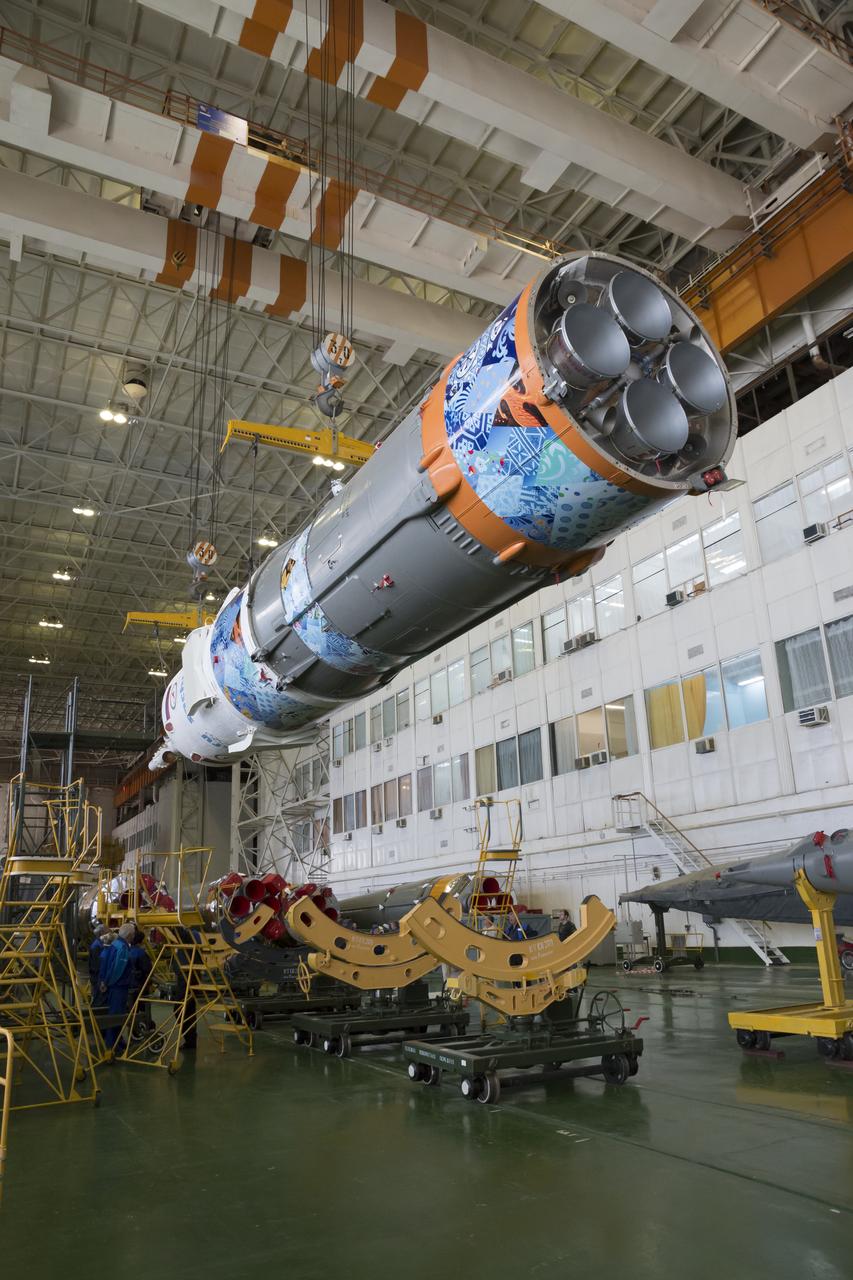
Workers make final preperations to a Soyuz TMA-11M spacecraft on Monday, Nov. 4, 2013, at the Baikonur Cosmodome in Baikonur, Kazakhstan. The rocket is adorned with the logo of the Sochi Olympic Organizing Committee and other related artwork to commemorate the launch of the Olympic torch with the crew for a four-day visit to the station. The torch will return to Earth with another trio of station residents on Nov. 11 and will be part of the torch relay that ends with the lighting of the flame at the Fisht Stadium in Sochi, Russia Feb. 7 to mark the opening of the 2014 Winter Olympics. Photo Credit: (NASA/Victor Zelentsov)
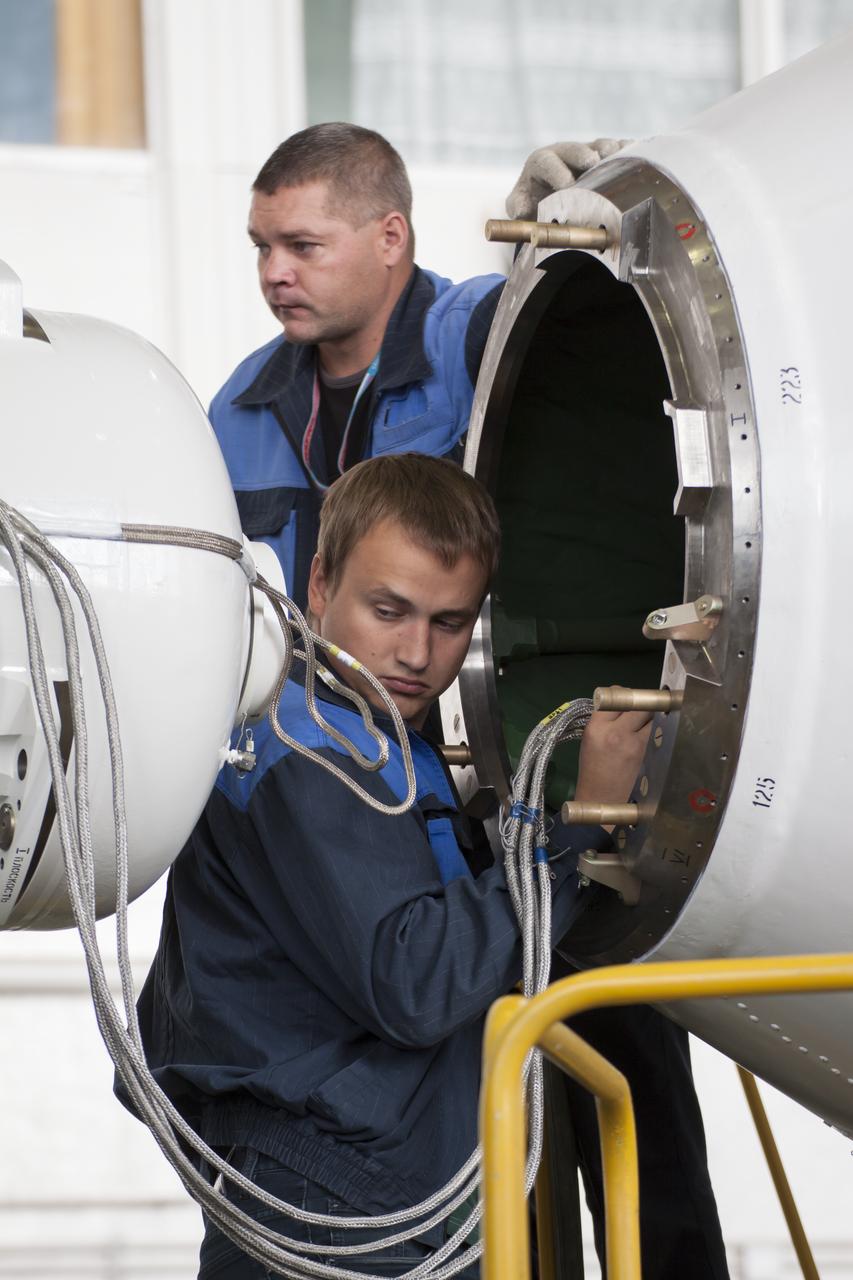
Workers make final preperations to a Soyuz TMA-11M spacecraft on Monday, Nov. 4, 2013, at the Baikonur Cosmodome in Baikonur, Kazakhstan. The rocket is adorned with the logo of the Sochi Olympic Organizing Committee and other related artwork to commemorate the launch of the Olympic torch with the crew for a four-day visit to the station. The torch will return to Earth with another trio of station residents on Nov. 11 and will be part of the torch relay that ends with the lighting of the flame at the Fisht Stadium in Sochi, Russia Feb. 7 to mark the opening of the 2014 Winter Olympics. Photo Credit: (NASA/Victor Zelentsov)
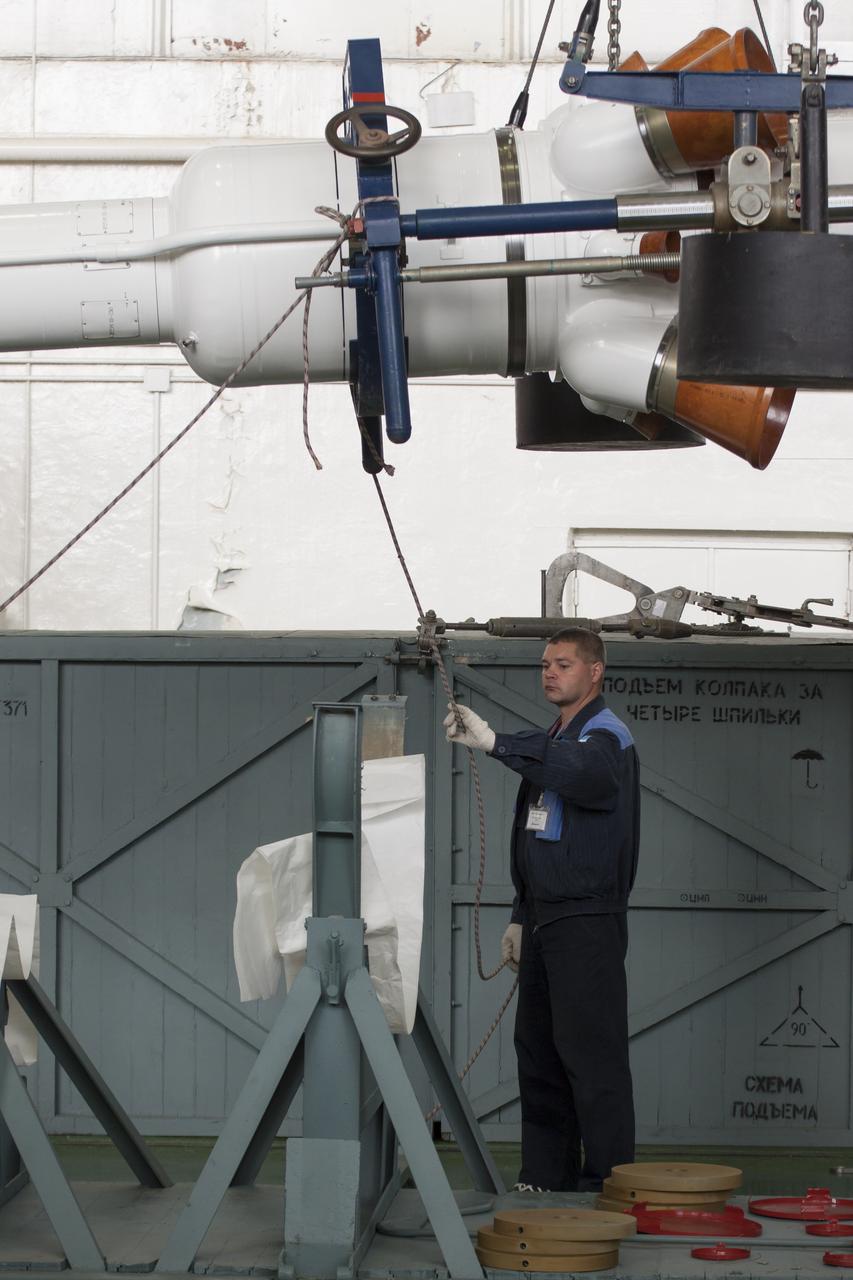
Workers make final preperations to a Soyuz TMA-11M spacecraft on Monday, Nov. 4, 2013, at the Baikonur Cosmodome in Baikonur, Kazakhstan. The rocket is adorned with the logo of the Sochi Olympic Organizing Committee and other related artwork to commemorate the launch of the Olympic torch with the crew for a four-day visit to the station. The torch will return to Earth with another trio of station residents on Nov. 11 and will be part of the torch relay that ends with the lighting of the flame at the Fisht Stadium in Sochi, Russia Feb. 7 to mark the opening of the 2014 Winter Olympics. Photo Credit: (NASA/Victor Zelentsov)
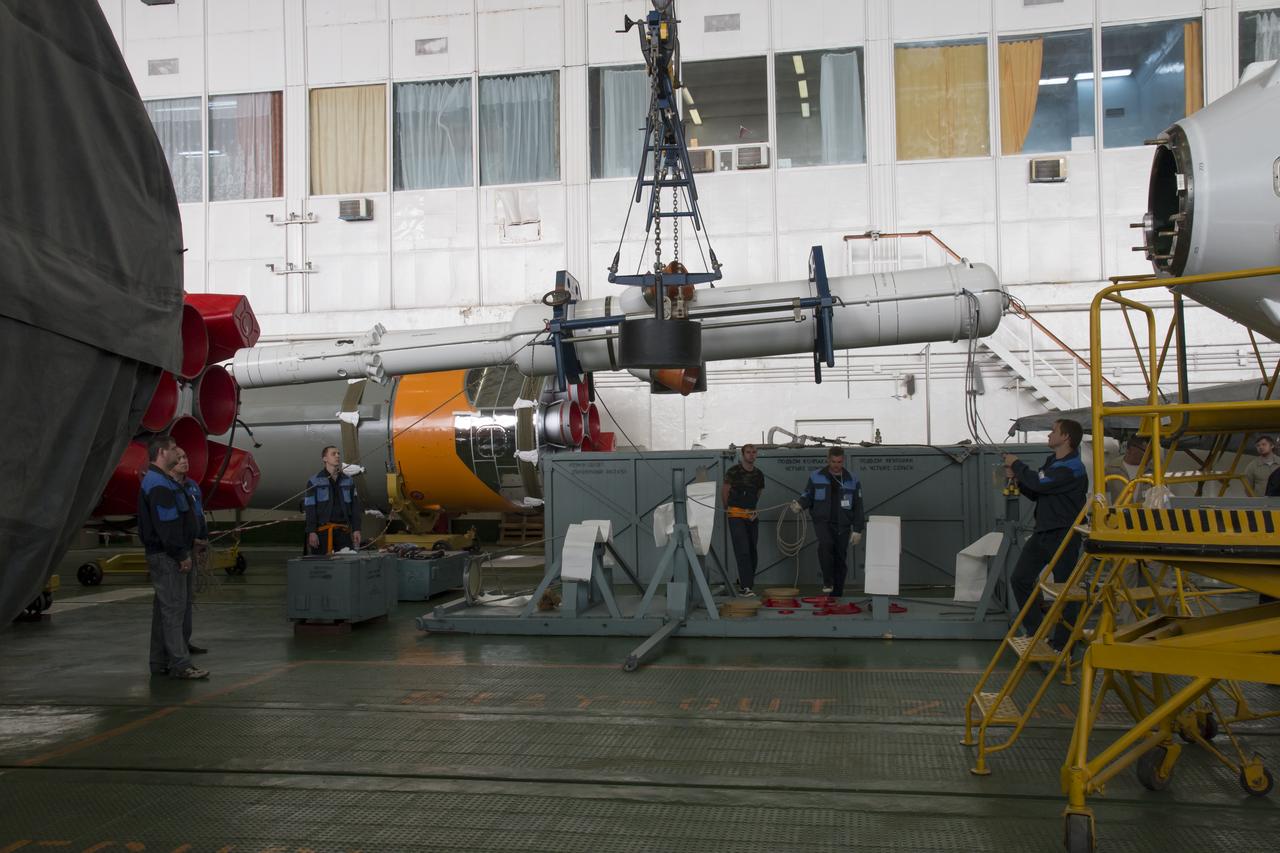
Workers make final preperations to a Soyuz TMA-11M spacecraft on Monday, Nov. 4, 2013, at the Baikonur Cosmodome in Baikonur, Kazakhstan. The rocket is adorned with the logo of the Sochi Olympic Organizing Committee and other related artwork to commemorate the launch of the Olympic torch with the crew for a four-day visit to the station. The torch will return to Earth with another trio of station residents on Nov. 11 and will be part of the torch relay that ends with the lighting of the flame at the Fisht Stadium in Sochi, Russia Feb. 7 to mark the opening of the 2014 Winter Olympics. Photo Credit: (NASA/Victor Zelentsov)
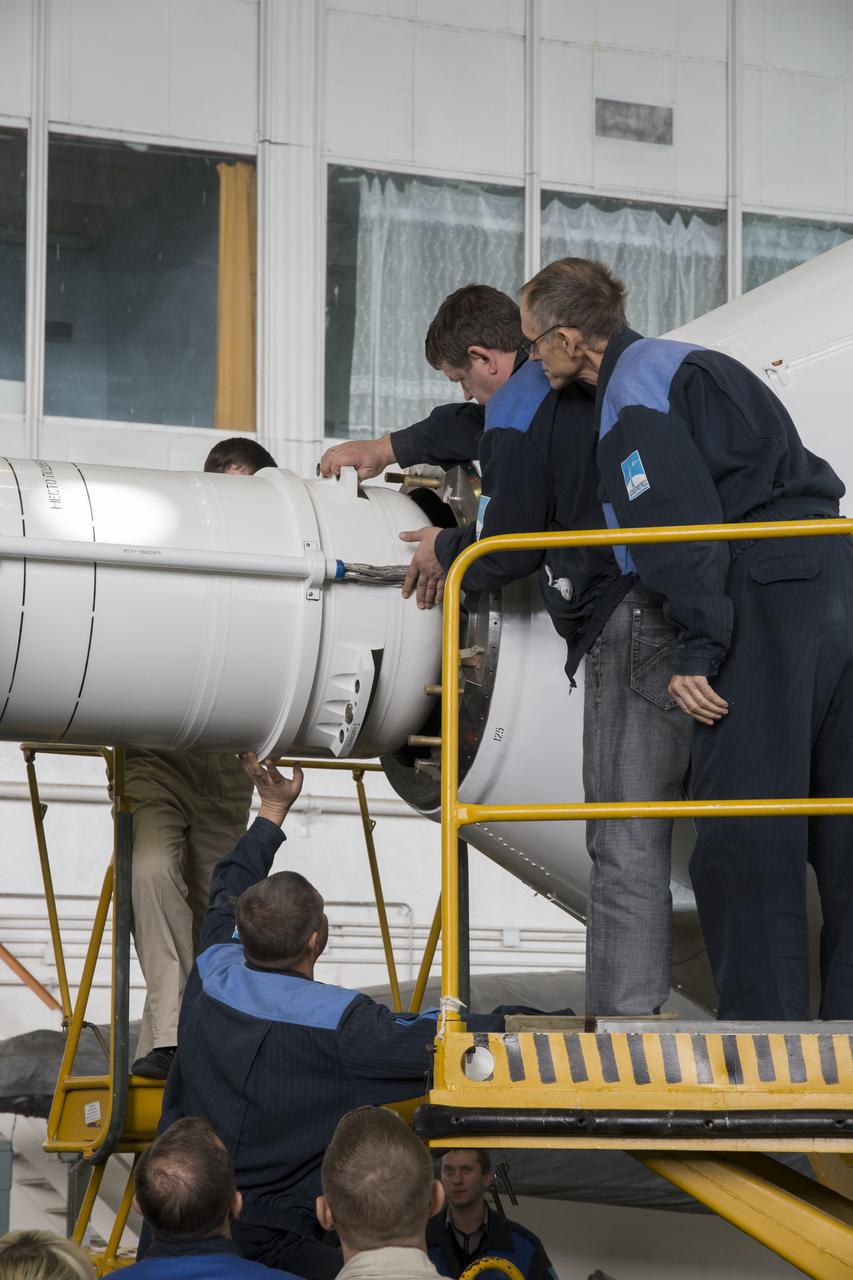
Workers make final preperations to a Soyuz TMA-11M spacecraft on Monday, Nov. 4, 2013, at the Baikonur Cosmodome in Baikonur, Kazakhstan. The rocket is adorned with the logo of the Sochi Olympic Organizing Committee and other related artwork to commemorate the launch of the Olympic torch with the crew for a four-day visit to the station. The torch will return to Earth with another trio of station residents on Nov. 11 and will be part of the torch relay that ends with the lighting of the flame at the Fisht Stadium in Sochi, Russia Feb. 7 to mark the opening of the 2014 Winter Olympics. Photo Credit: (NASA/Victor Zelentsov)
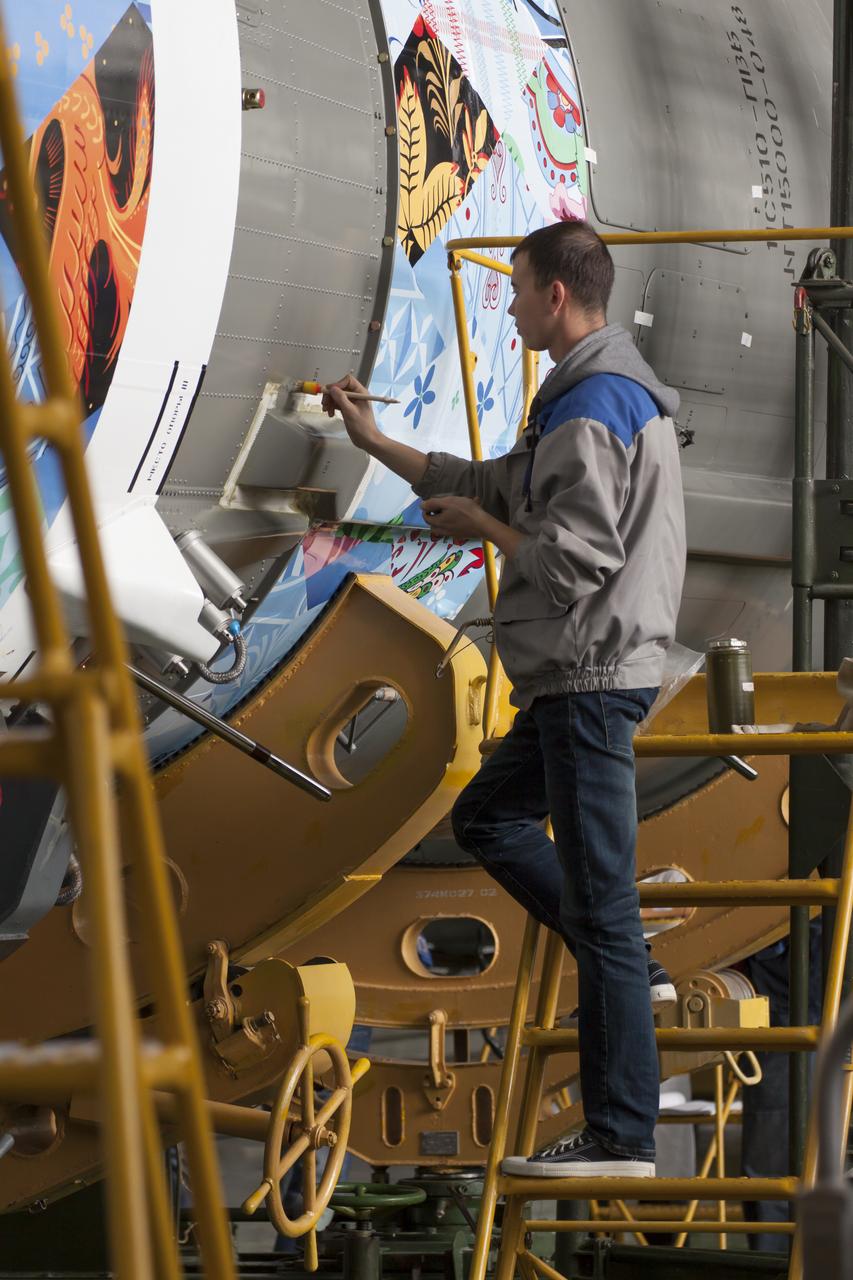
Workers make final preperations to a Soyuz TMA-11M spacecraft on Monday, Nov. 4, 2013, at the Baikonur Cosmodome in Baikonur, Kazakhstan. The rocket is adorned with the logo of the Sochi Olympic Organizing Committee and other related artwork to commemorate the launch of the Olympic torch with the crew for a four-day visit to the station. The torch will return to Earth with another trio of station residents on Nov. 11 and will be part of the torch relay that ends with the lighting of the flame at the Fisht Stadium in Sochi, Russia Feb. 7 to mark the opening of the 2014 Winter Olympics. Photo Credit: (NASA/Victor Zelentsov)
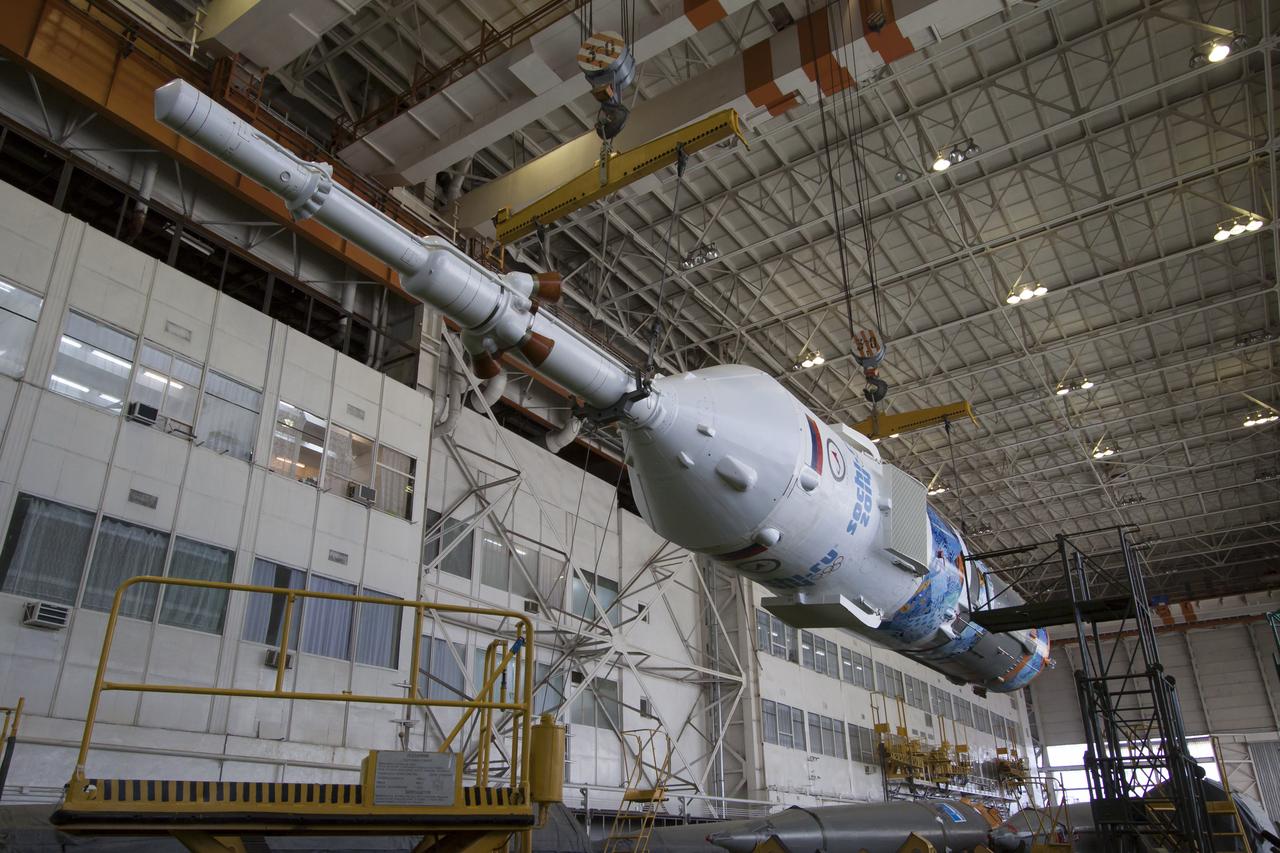
Workers make final preperations to a Soyuz TMA-11M spacecraft on Monday, Nov. 4, 2013, at the Baikonur Cosmodome in Baikonur, Kazakhstan. The rocket is adorned with the logo of the Sochi Olympic Organizing Committee and other related artwork to commemorate the launch of the Olympic torch with the crew for a four-day visit to the station. The torch will return to Earth with another trio of station residents on Nov. 11 and will be part of the torch relay that ends with the lighting of the flame at the Fisht Stadium in Sochi, Russia Feb. 7 to mark the opening of the 2014 Winter Olympics. Photo Credit: (NASA/Victor Zelentsov)
Workers make final preperations to a Soyuz TMA-11M spacecraft on Monday, Nov. 4, 2013, at the Baikonur Cosmodome in Baikonur, Kazakhstan. The rocket is adorned with the logo of the Sochi Olympic Organizing Committee and other related artwork to commemorate the launch of the Olympic torch with the crew for a four-day visit to the station. The torch will return to Earth with another trio of station residents on Nov. 11 and will be part of the torch relay that ends with the lighting of the flame at the Fisht Stadium in Sochi, Russia Feb. 7 to mark the opening of the 2014 Winter Olympics. Photo Credit: (NASA/Victor Zelentsov)
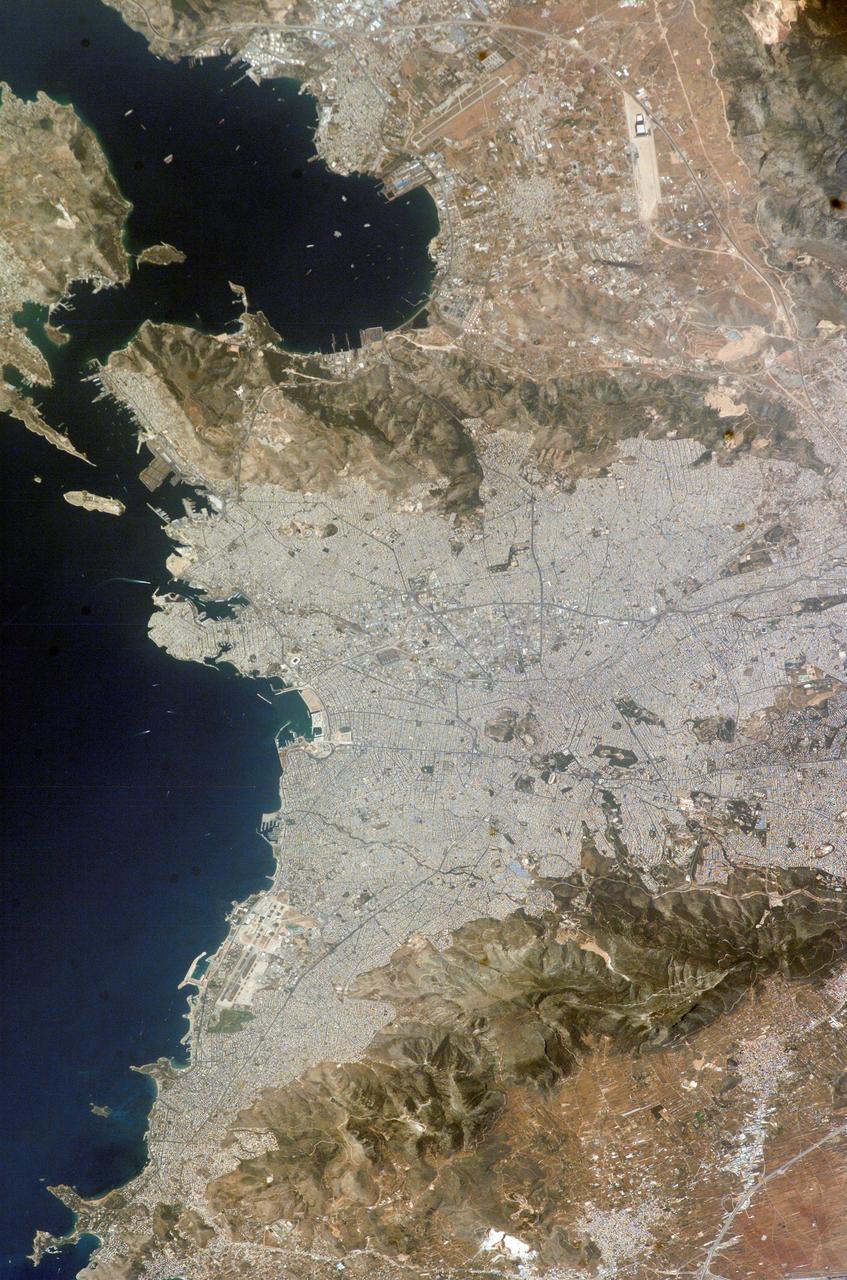
ISS009-E-11537 (12 June 2004) --- Athens, Greece is featured in this image photographed by an Expedition 9 crewmember on the International Space Station (ISS). This photo includes areas of new construction or renovation for the Olympic Games, such as the Faliro Coastal Zone Olympic Complex and Helliniko Olympic Complex. The image also demonstrates the control of bounding mountain ranges (Mts. Aigeleos and Hymettos) on the western and southern expansion of the Athens urban area. Athens is located in the Central Plains region of Attica in eastern Greece. The large basin in which Athens is located was formed by faulting and has accumulated thick deposits of clays and alluvium.
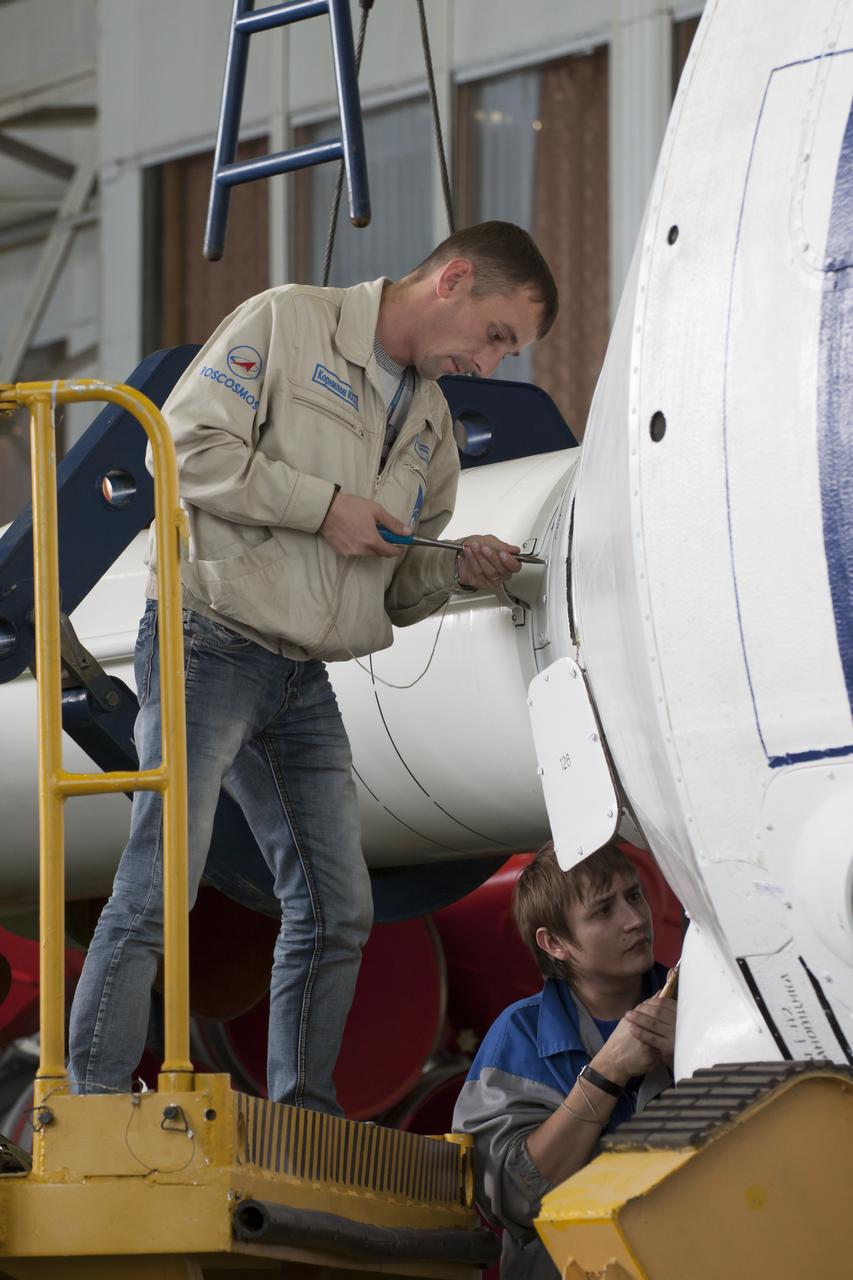
Workers make final preperations to a Soyuz TMA-11M spacecraft on Monday, Nov. 4, 2013, at the Baikonur Cosmodome in Baikonur, Kazakhstan. The rocket is adorned with the logo of the Sochi Olympic Organizing Committee and other related artwork to commemorate the launch of the Olympic torch with the crew for a four-day visit to the station. The torch will return to Earth with another trio of station residents on Nov. 11 and will be part of the torch relay that ends with the lighting of the flame at the Fisht Stadium in Sochi, Russia Feb. 7 to mark the opening of the 2014 Winter Olympics. Photo Credit: (NASA/Victor Zelentsov)
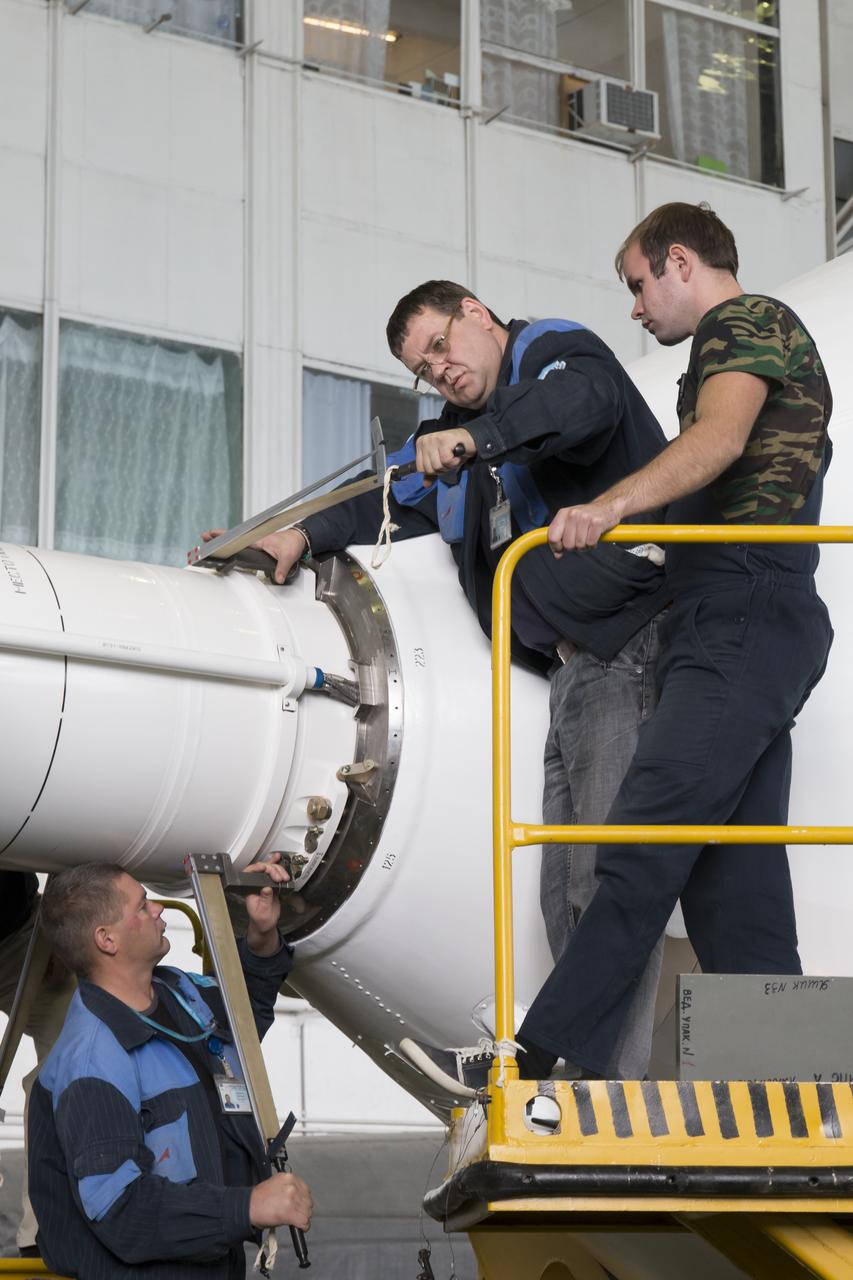
Workers make final preperations to a Soyuz TMA-11M spacecraft on Monday, Nov. 4, 2013, at the Baikonur Cosmodome in Baikonur, Kazakhstan. The rocket is adorned with the logo of the Sochi Olympic Organizing Committee and other related artwork to commemorate the launch of the Olympic torch with the crew for a four-day visit to the station. The torch will return to Earth with another trio of station residents on Nov. 11 and will be part of the torch relay that ends with the lighting of the flame at the Fisht Stadium in Sochi, Russia Feb. 7 to mark the opening of the 2014 Winter Olympics. Photo Credit: (NASA/Victor Zelentsov)
Workers make final preperations to a Soyuz TMA-11M spacecraft on Monday, Nov. 4, 2013, at the Baikonur Cosmodome in Baikonur, Kazakhstan. The rocket is adorned with the logo of the Sochi Olympic Organizing Committee and other related artwork to commemorate the launch of the Olympic torch with the crew for a four-day visit to the station. The torch will return to Earth with another trio of station residents on Nov. 11 and will be part of the torch relay that ends with the lighting of the flame at the Fisht Stadium in Sochi, Russia Feb. 7 to mark the opening of the 2014 Winter Olympics. Photo Credit: (NASA/Victor Zelentsov)
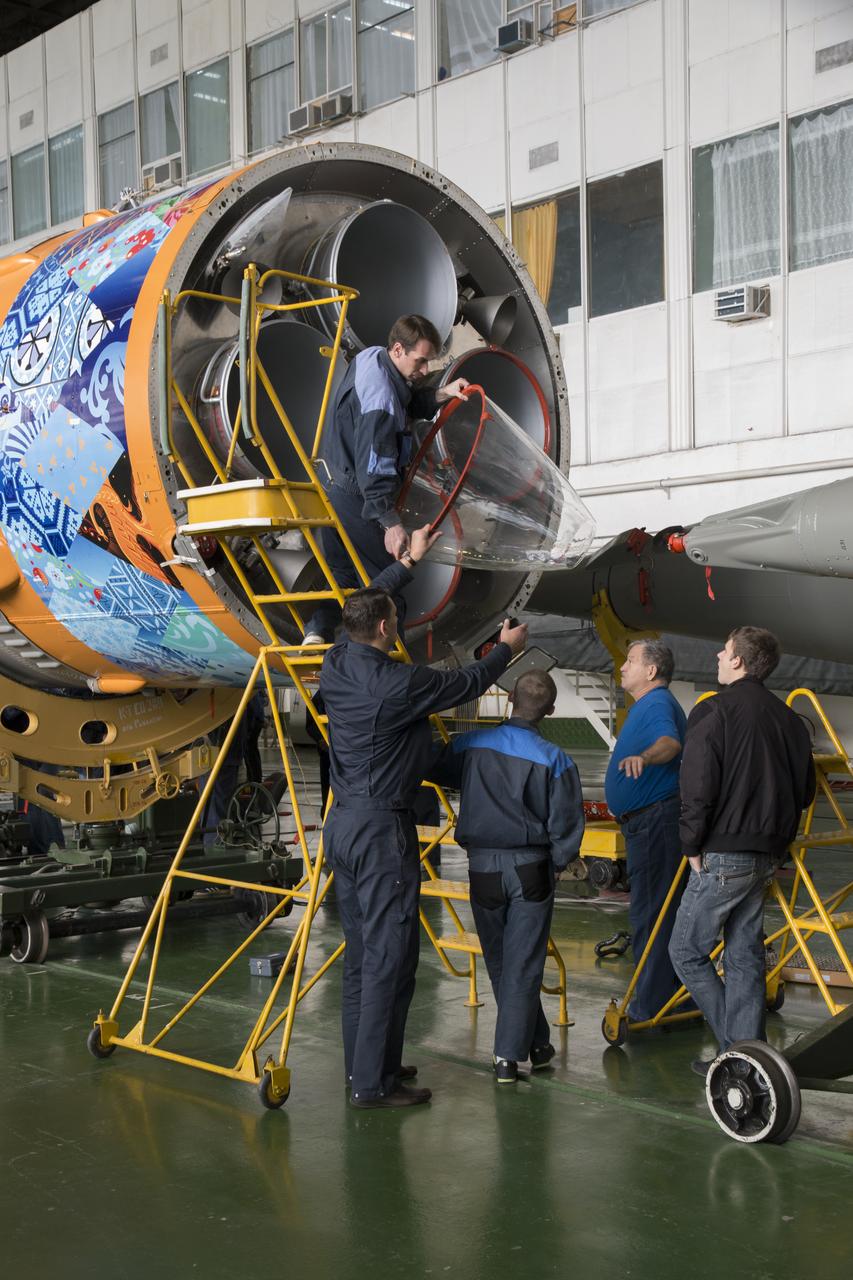
Workers make final preperations to a Soyuz TMA-11M spacecraft on Monday, Nov. 4, 2013, at the Baikonur Cosmodome in Baikonur, Kazakhstan. The rocket is adorned with the logo of the Sochi Olympic Organizing Committee and other related artwork to commemorate the launch of the Olympic torch with the crew for a four-day visit to the station. The torch will return to Earth with another trio of station residents on Nov. 11 and will be part of the torch relay that ends with the lighting of the flame at the Fisht Stadium in Sochi, Russia Feb. 7 to mark the opening of the 2014 Winter Olympics. Photo Credit: (NASA/Victor Zelentsov)
Workers make final preperations to a Soyuz TMA-11M spacecraft on Monday, Nov. 4, 2013, at the Baikonur Cosmodome in Baikonur, Kazakhstan. The rocket is adorned with the logo of the Sochi Olympic Organizing Committee and other related artwork to commemorate the launch of the Olympic torch with the crew for a four-day visit to the station. The torch will return to Earth with another trio of station residents on Nov. 11 and will be part of the torch relay that ends with the lighting of the flame at the Fisht Stadium in Sochi, Russia Feb. 7 to mark the opening of the 2014 Winter Olympics. Photo Credit: (NASA/Victor Zelentsov)
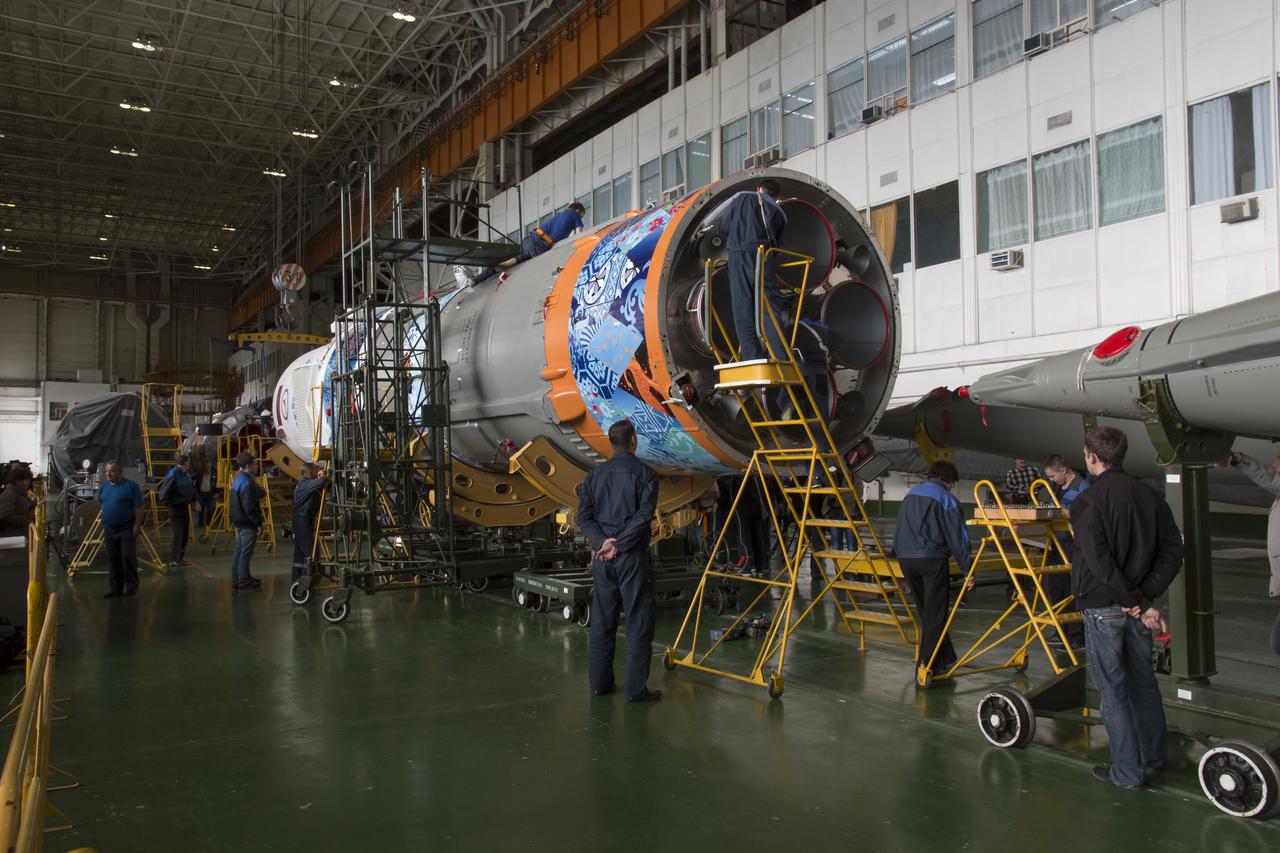
Workers make final preperations to a Soyuz TMA-11M spacecraft on Monday, Nov. 4, 2013, at the Baikonur Cosmodome in Baikonur, Kazakhstan. The rocket is adorned with the logo of the Sochi Olympic Organizing Committee and other related artwork to commemorate the launch of the Olympic torch with the crew for a four-day visit to the station. The torch will return to Earth with another trio of station residents on Nov. 11 and will be part of the torch relay that ends with the lighting of the flame at the Fisht Stadium in Sochi, Russia Feb. 7 to mark the opening of the 2014 Winter Olympics. Photo Credit: (NASA/Victor Zelentsov)
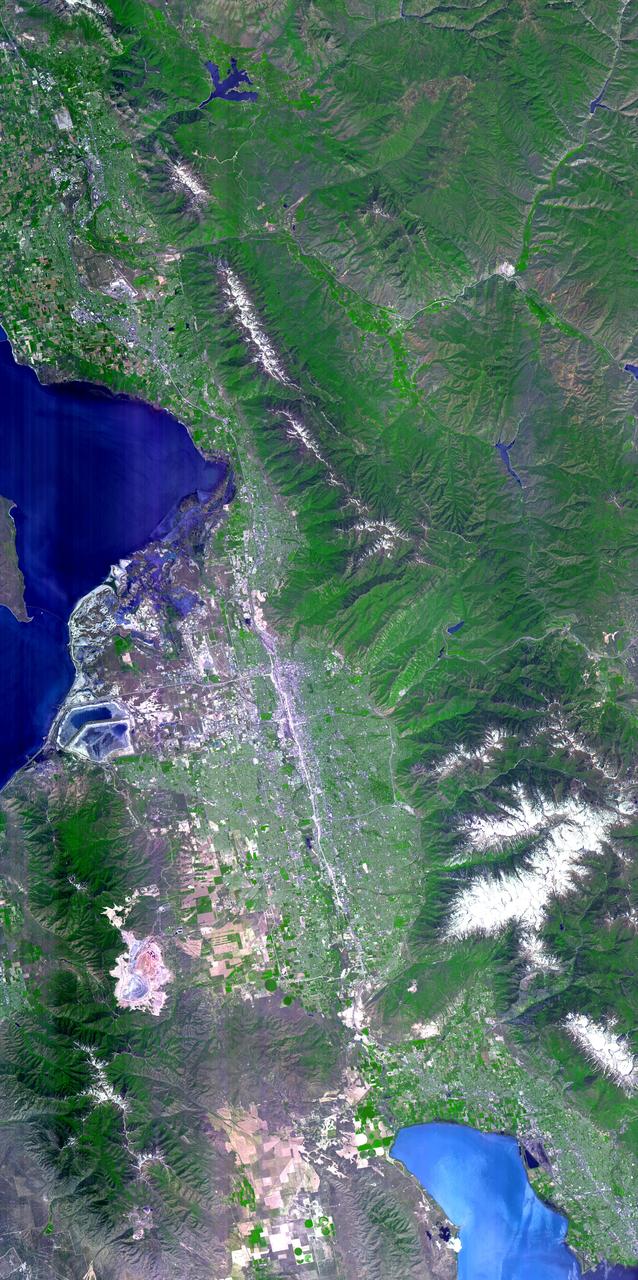
The 2002 Winter Olympics are hosted by Salt Lake City at several venues within the city, in nearby cities, and within the adjacent Wasatch Mountains. This simulated natural color image presents a late spring view of north central Utah that includes all of the Olympic sites. The image extends from Ogden in the north, to Provo in the south; and includes the snow-capped Wasatch Mountains and the eastern part of the Great Salt Lake. This image was acquired on May 28, 2000 by the Advanced Spaceborne Thermal Emission and Reflection Radiometer (ASTER) on NASA's Terra satellite. With its 14 spectral bands from the visible to the thermal infrared wavelength region, and its high spatial resolution of 15 to 90 meters (about 50 to 300 feet), ASTER will image Earth for the next 6 years to map and monitor the changing surface of our planet. http://photojournal.jpl.nasa.gov/catalog/PIA03464
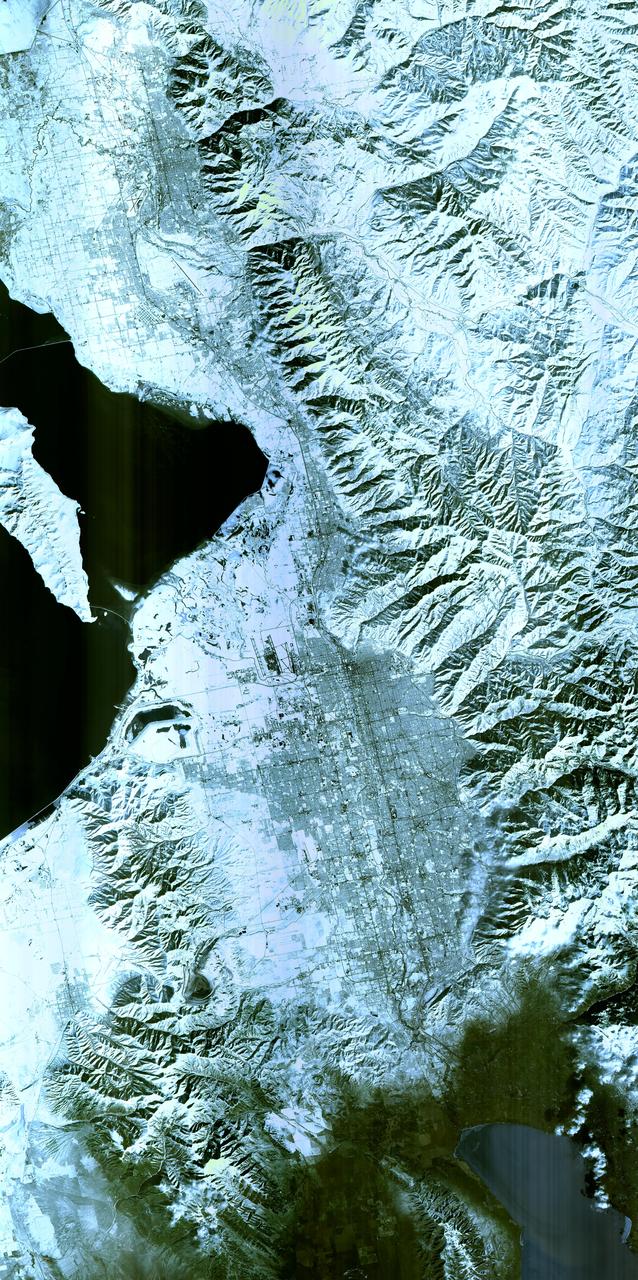
The 2002 Winter Olympics are hosted by Salt Lake City at several venues within the city, in nearby cities, and within the adjacent Wasatch Mountains. This simulated natural color image presents a snowy, winter view of north central Utah that includes all of the Olympic sites. The image extends from Ogden in the north, to Provo in the south; and includes the snow-capped Wasatch Mountains and the eastern part of the Great Salt Lake. This image was acquired on February 8, 2001 by the Advanced Spaceborne Thermal Emission and Reflection Radiometer (ASTER) on NASA's Terra satellite. With its 14 spectral bands from the visible to the thermal infrared wavelength region, and its high spatial resolution of 15 to 90 meters (about 50 to 300 feet), ASTER will image Earth for the next 6 years to map and monitor the changing surface of our planet. http://photojournal.jpl.nasa.gov/catalog/PIA03465
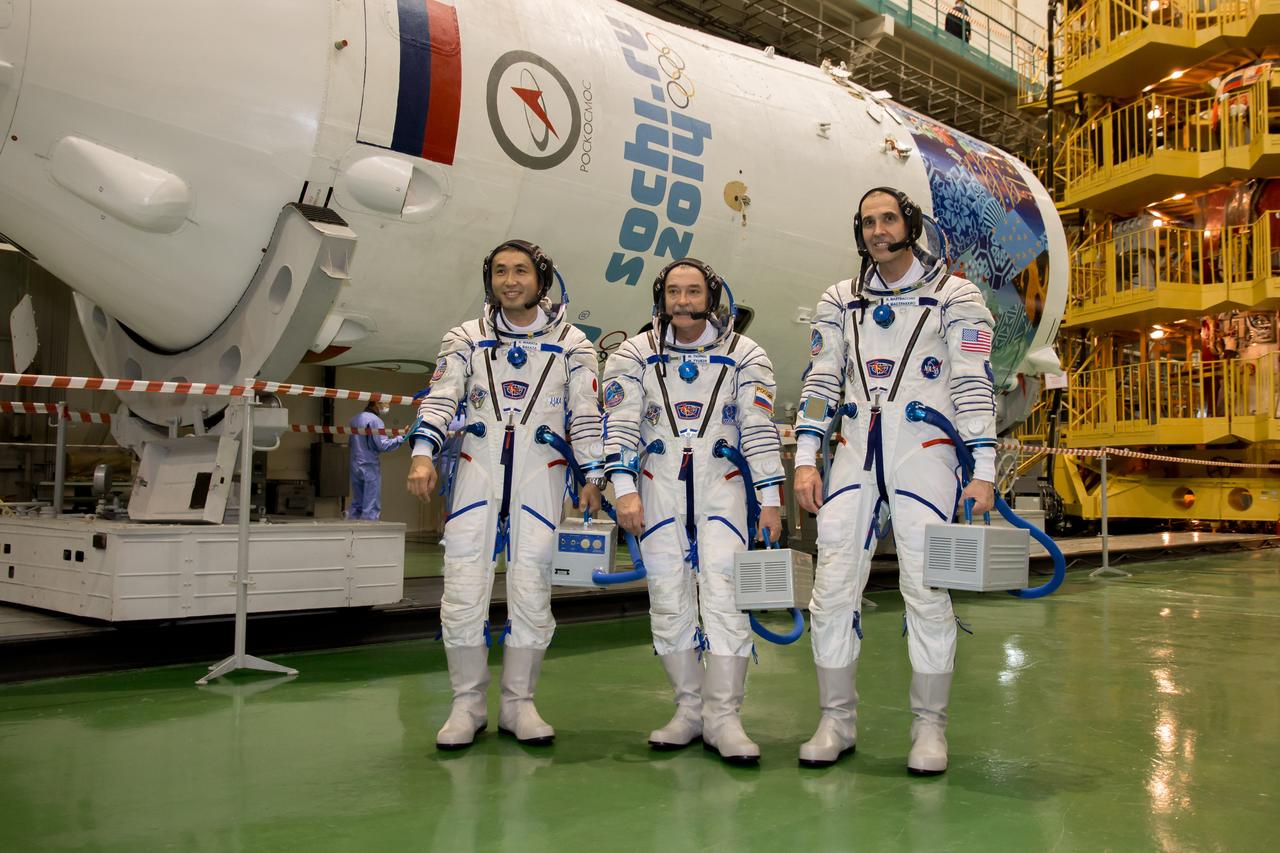
In the Integration Facility at the Baikonur Cosmodrome in Kazakhstan, Expedition 38/39 Flight Engineer Koichi Wakata of the Japan Aerospace Exploration Agency (left), Soyuz Commander Mikhail Tyurin (center) and Flight Engineer Rick Mastracchio of NASA (right) pose for pictures October 28 in front of the upper stage of the Soyuz booster rocket following a fit check dress rehearsal inside the Soyuz. The rocket is adorned with the logo of the Sochi Olympic Organizing Committee and other related artwork to commemorate the launch of the Olympic torch with the crew for a four-day visit to the station. The torch will return to Earth with another trio of station residents on November 11 and will be part of the torch relay that ends with the lighting of the flame at the Fisht Stadium in Sochi, Russia February 7 to mark the opening of the 2014 Winter Olympics. NASA/Victor Zelentsov
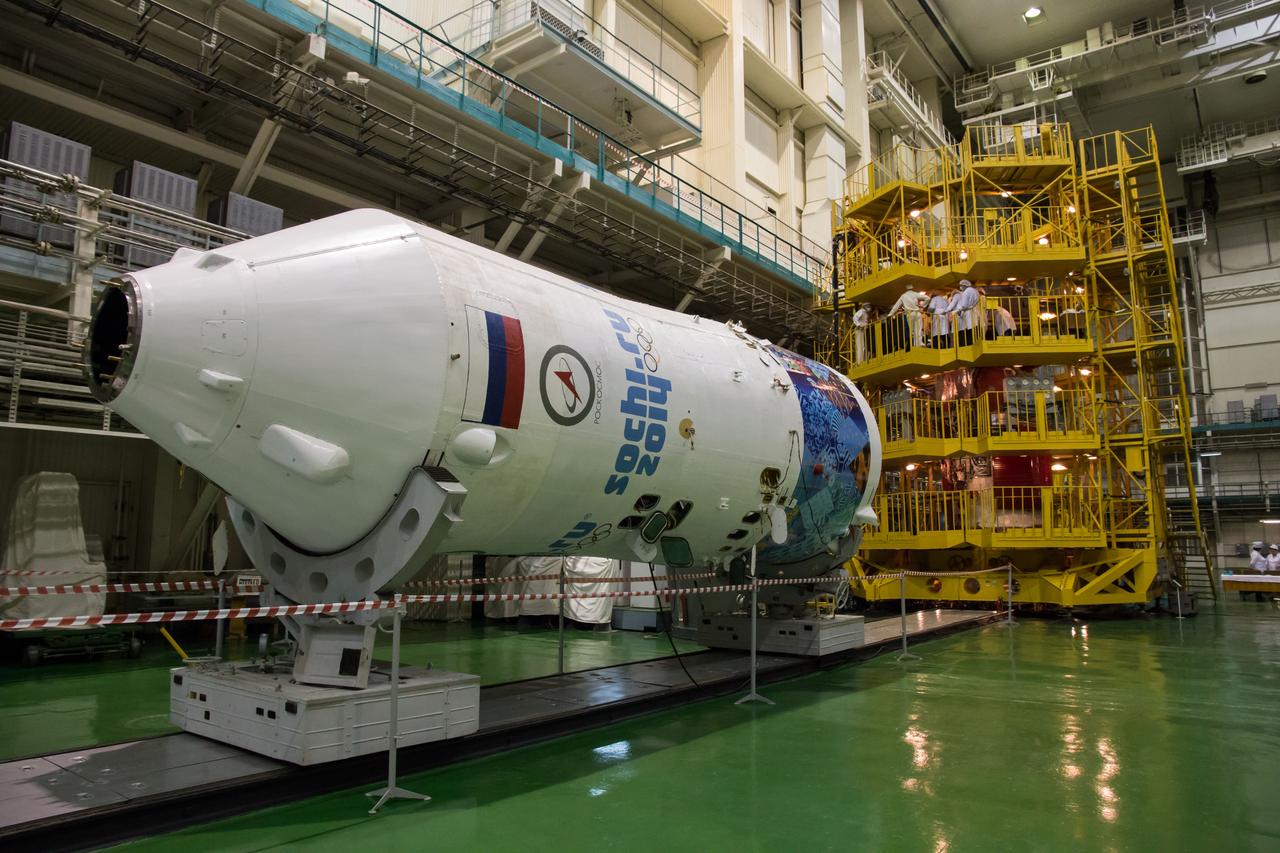
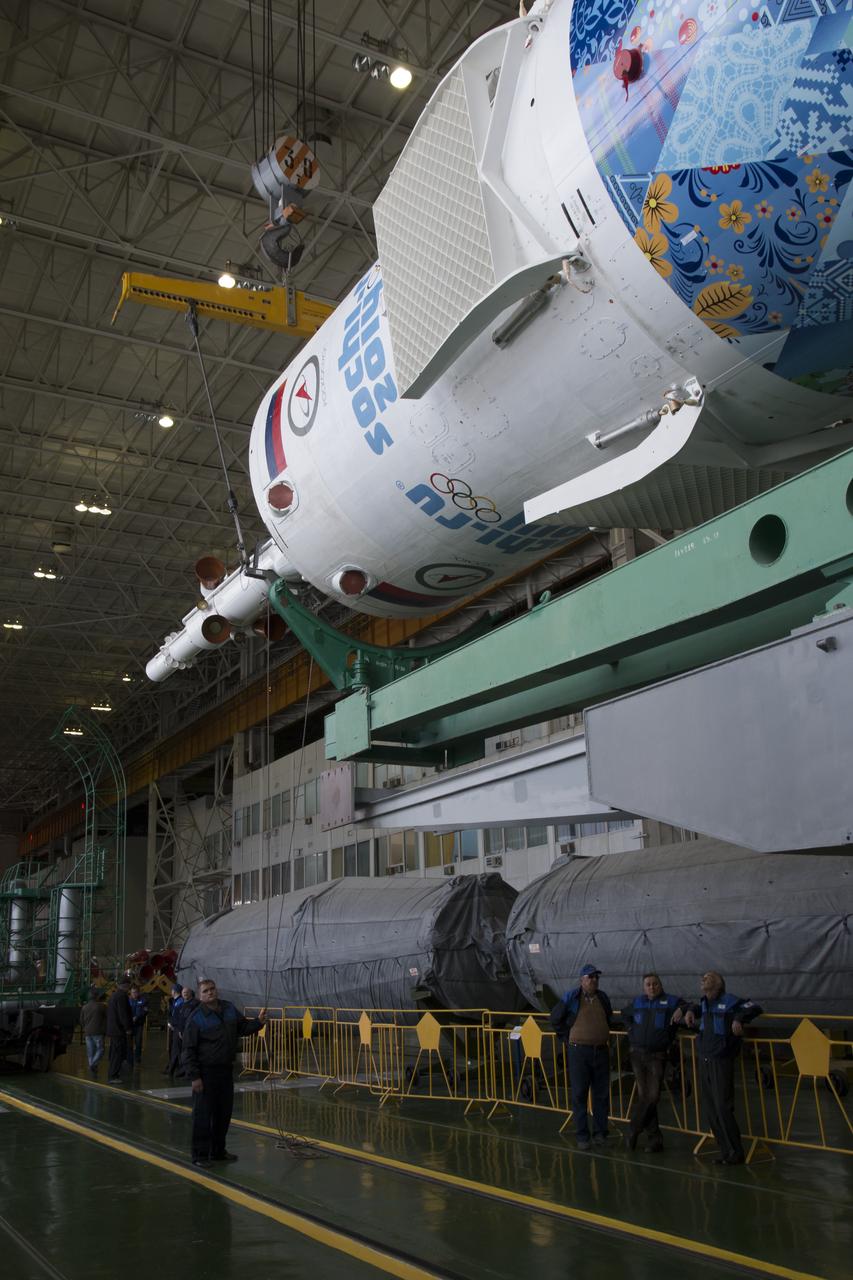
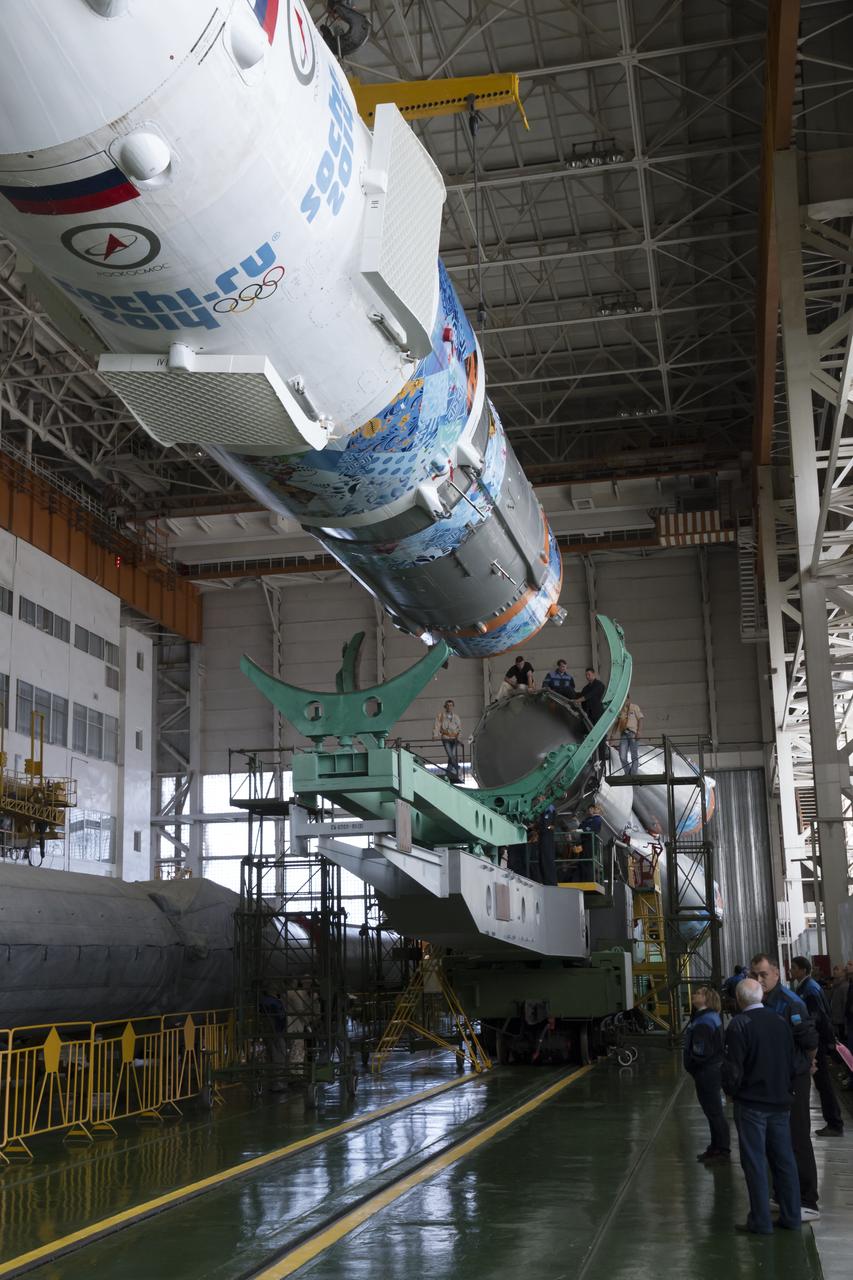
Adorned with the logo of the Sochi Olympic Organizing Committee and other related artwork, the third stage of the Soyuz booster rocket stands ready for assembly with other rocket components October 28 in the Integration Building at the Baikonur Cosmodrome in Kazakhstan as preparations continue for the launch of the Soyuz TMA-11M spacecraft with Expedition 38/39 crewmembers Rick Mastracchio of NASA, Mikhail Tyurin and Koichi Wakata of the Japan Aerospace Exploration Agency aboard. The trio, which will launch Nov. 7, Kazakh time, in the Soyuz from Baikonur to begin a six-month mission on the International Space Station, will carry the Olympic torch to the station for a four-day visit. The torch will return to Earth with another trio of station residents on November 11 and will be part of the torch relay that ends with the lighting of the flame at the Fisht Stadium in Sochi, Russia February 7 to mark the opening of the 2014 Winter Olympics. NASA/Victor Zelentsov
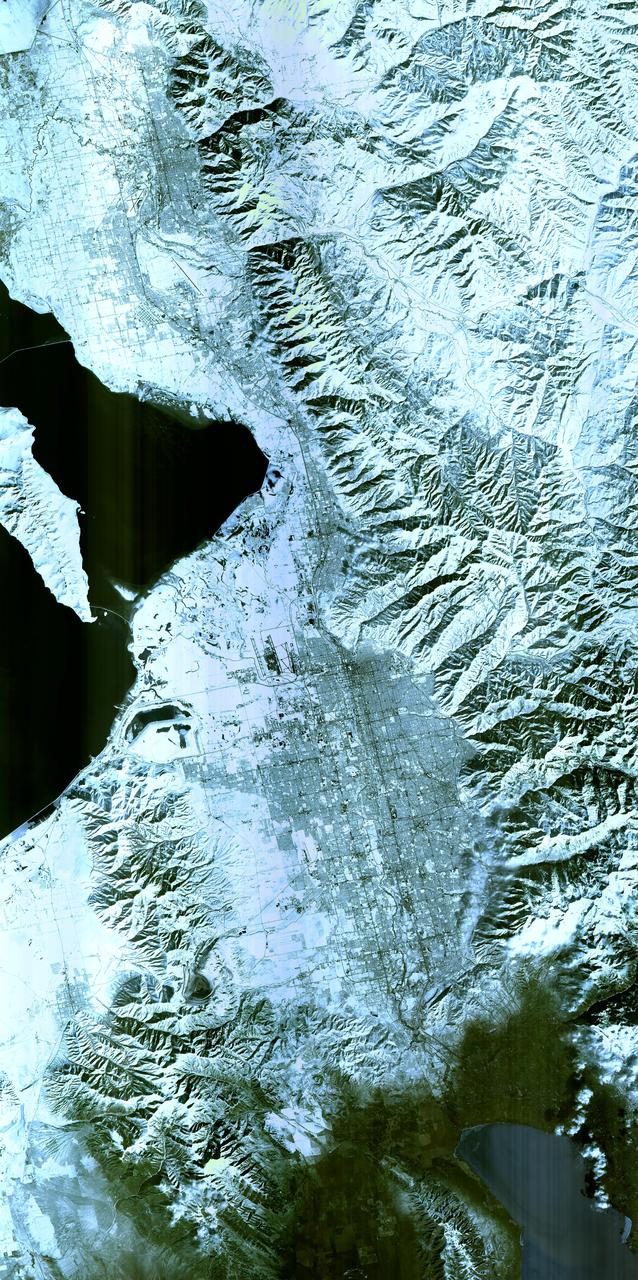
Salt Lake City, Utah, Winter 2001 The 2002 Winter Olympics are hosted by Salt Lake City at several venues within the city, in nearby cities, and within the adjacent Wasatch Mountains. This simulated natural color image presents a snowy, winter view of north central Utah that includes all of the Olympic sites. The image extends from Ogden in the north, to Provo in the south; and includes the snow-capped Wasatch Mountains and the eastern part of the Great Salt Lake. This image was acquired on February 8, 2001 by the Advanced Spaceborne Thermal Emission and Reflection Radiometer (ASTER) on NASA's Terra satellite. With its 14 spectral bands from the visible to the thermal infrared wavelength region, and its high spatial resolution of 15 to 90 meters (about 50 to 300 feet), ASTER will image Earth for the next 6 years to map and monitor the changing surface of our planet. ASTER is one of five Earth-observing instruments launched December 18,1999, on NASA's Terra satellite. The instrument was built by Japan's Ministry of Economy, Trade and Industry. A joint U.S./Japan science team is responsible for validation and calibration of the instrument and the data products. Dr. Anne Kahle at NASA's Jet Propulsion Laboratory, Pasadena, California, is the U.S. Science team leader; Bjorn Eng of JPL is the project manager. ASTER is the only high resolution imaging sensor on Terra. The Terra mission is part of NASA's Earth Science Enterprise, along-term research and technology program designed to examine Earth's land, oceans, atmosphere, ice and life as a total integrated system. The broad spectral coverage and high spectral resolution of ASTER will provide scientists in numerous disciplines with critical information for surface mapping, and monitoring dynamic conditions and temporal change. Example applications are: monitoring glacial advances and retreats; monitoring potentially active volcanoes; identifying crop stress; determining cloud morphology and physical properties; wetlands evaluation; thermal pollution monitoring; coral reef degradation; surface temperature mapping of soils and geology; and measuring surface heat balance. Image credit: NASA/GSFC/METI/ERSDAC/JAROS, and U.S./Japan ASTER Science Team Credit: <b><a href="http://www.earthobservatory.nasa.gov/" rel="nofollow"> NASA Earth Observatory</a></b> <b><a href="http://www.nasa.gov/audience/formedia/features/MP_Photo_Guidelines.html" rel="nofollow">NASA image use policy.</a></b> <b><a href="http://www.nasa.gov/centers/goddard/home/index.html" rel="nofollow">NASA Goddard Space Flight Center</a></b> enables NASA’s mission through four scientific endeavors: Earth Science, Heliophysics, Solar System Exploration, and Astrophysics. Goddard plays a leading role in NASA’s accomplishments by contributing compelling scientific knowledge to advance the Agency’s mission. <b>Follow us on <a href="http://twitter.com/NASAGoddardPix" rel="nofollow">Twitter</a></b> <b>Like us on <a href="http://www.facebook.com/pages/Greenbelt-MD/NASA-Goddard/395013845897?ref=tsd" rel="nofollow">Facebook</a></b> <b>Find us on <a href="http://instagram.com/nasagoddard?vm=grid" rel="nofollow">Instagram</a></b>
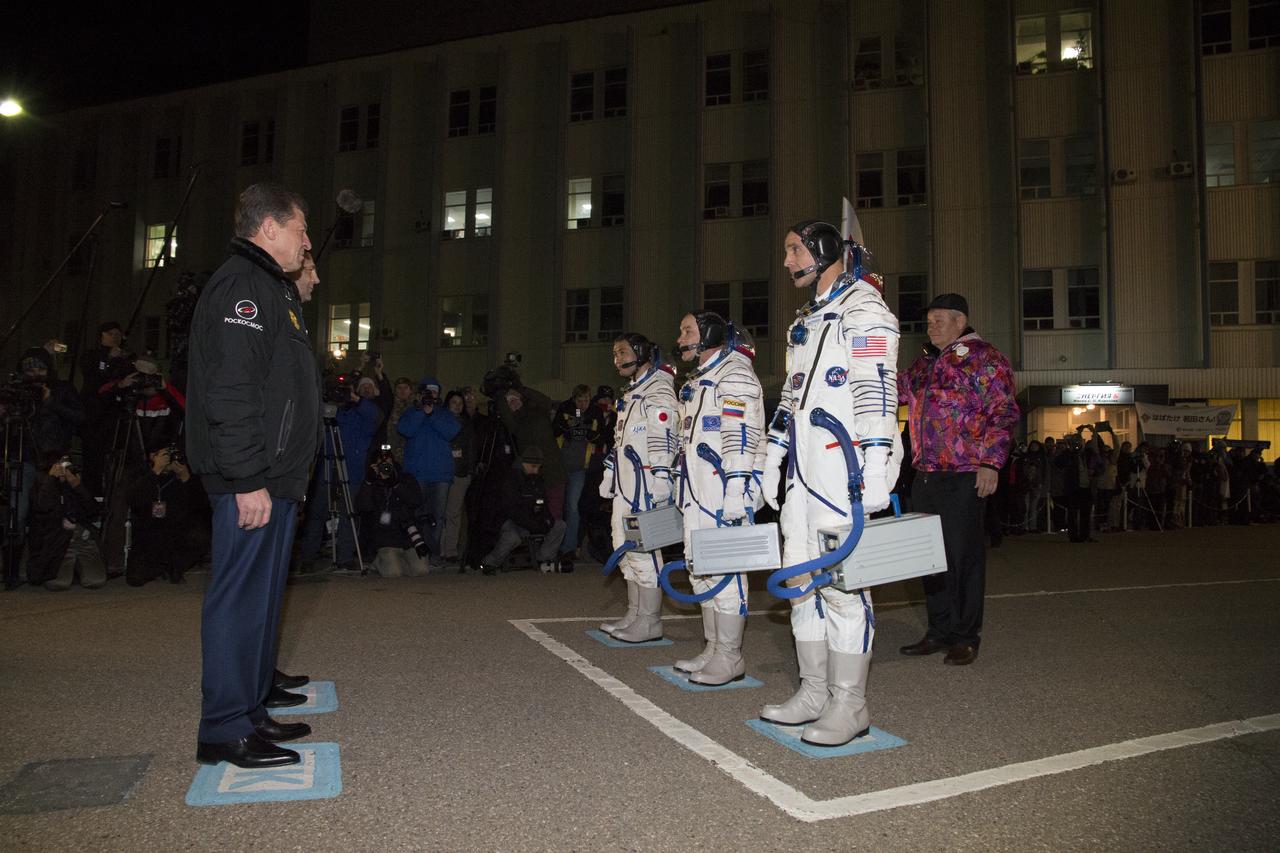
Dmitry Kozak, Deputy Prime Minister of Russian Federation, standing left, next to, Oleg Ostapenko, Head of Roscosmos, give a formal farewell to Expedition 38 Flight Engineer Koichi Wakata of the Japan Aerospace Exploration Agency, far right, Soyuz Commander Mikhail Tyurin of Roscosmos, center, and, Flight Engineer Rick Mastracchio of NASA, as Division Chief, GCTC, Valery Korzun holds the Olympic torch that will travel with the crew on their soyuz TMA-11M rocket to the International Space Station, Thursday, Nov. 7, 2013, in Baikonur, Kazakhstan. Photo Credit: (NASA/Victor Zelentsov)
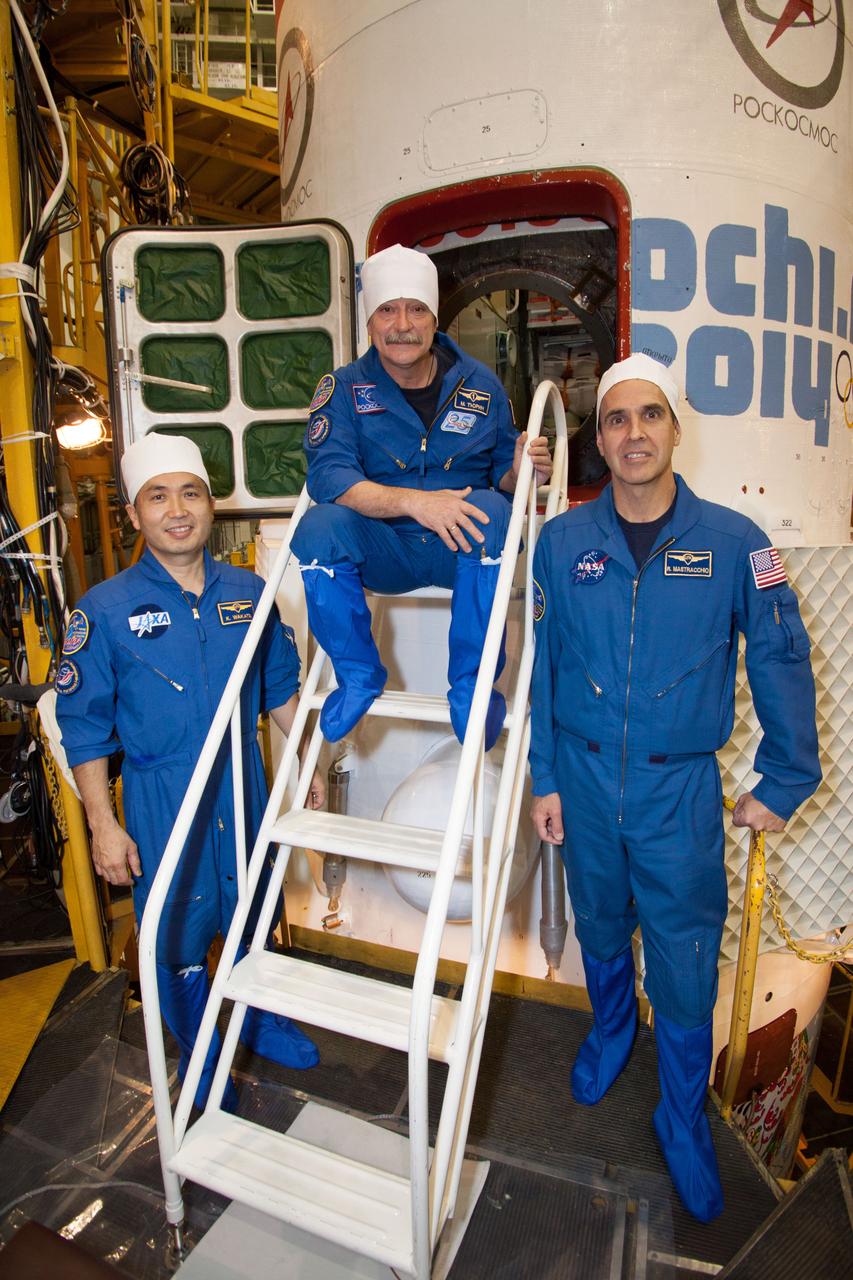
11-11-22: In the Integration Facility at the Baikonur Cosmodrome in Kazakhstan, Expedition 38/39 Flight Engineer Koichi Wakata of the Japan Aerospace Exploration Agency (left), Soyuz Commander Mikhail Tyurin (center) and Flight Engineer Rick Mastracchio of NASA (right) pose for pictures Nov. 3 outside the Soyuz TMA-11M spacecraft during their final fit check dress rehearsal. The Soyuz rocket’s payload fairing behind them is adorned with the insignia of the Sochi Olympic Organizing Committee . The crewmembers, who will launch Nov. 7, Kazakh time for a six-month mission on the International Space Station, are carrying the Olympic torch to the complex with them for a four-day visit. NASA/Victor Zelentsov
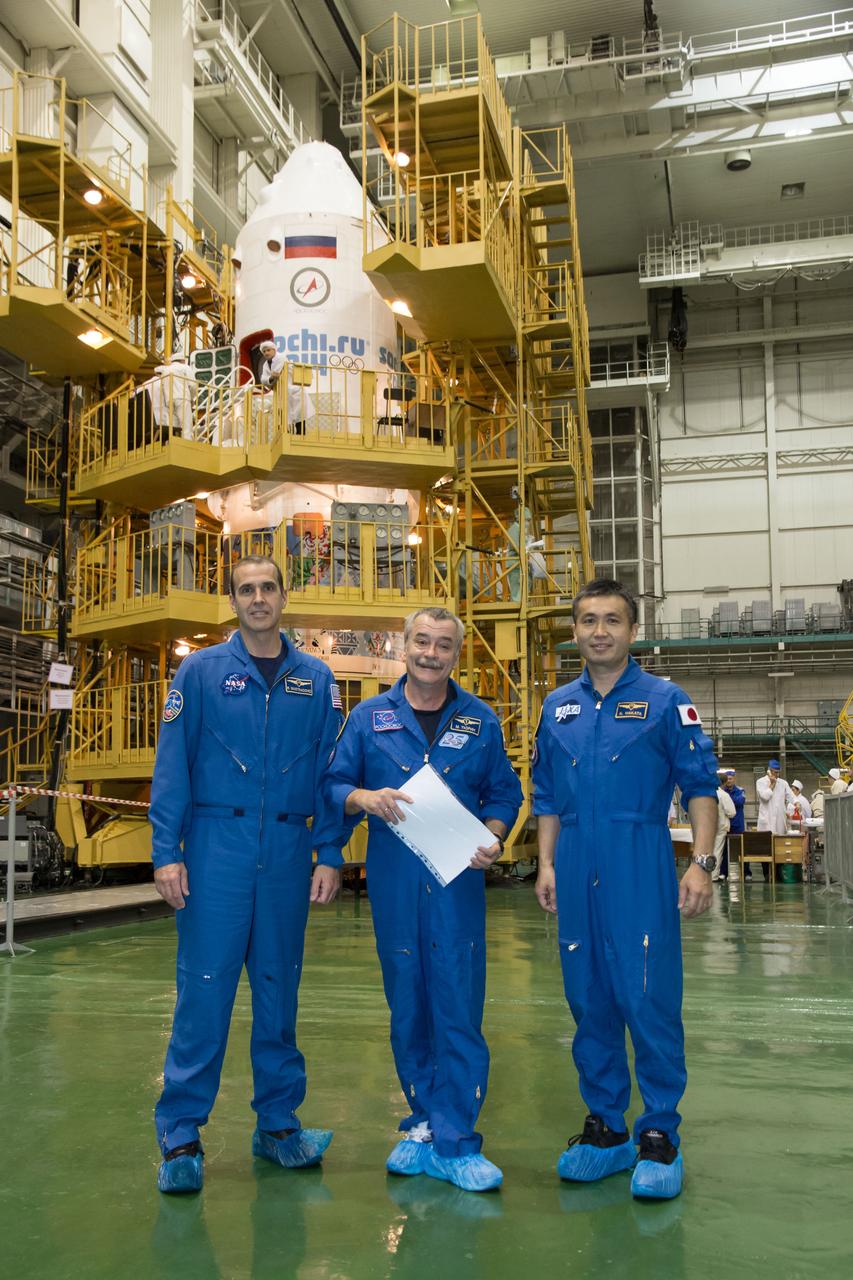
11-45-59: In the Integration Facility at the Baikonur Cosmodrome in Kazakhstan, Expedition 38/39 Flight Engineer Rick Mastracchio of NASA (left), Soyuz Commander Mikhail Tyurin (center) and Flight Engineer Koichi Wakata of the Japan Aerospace Exploration Agency (right) pose for pictures Nov. 3 in front of the Soyuz TMA-11M spacecraft following their final fit check dress rehearsal. The Soyuz rocket’s payload fairing behind them is adorned with the insignia of the Sochi Olympic Organizing Committee . The crewmembers, who will launch Nov. 7, Kazakh time for a six-month mission on the International Space Station, are carrying the Olympic torch to the complex with them for a four-day visit. NASA/Victor Zelentsov
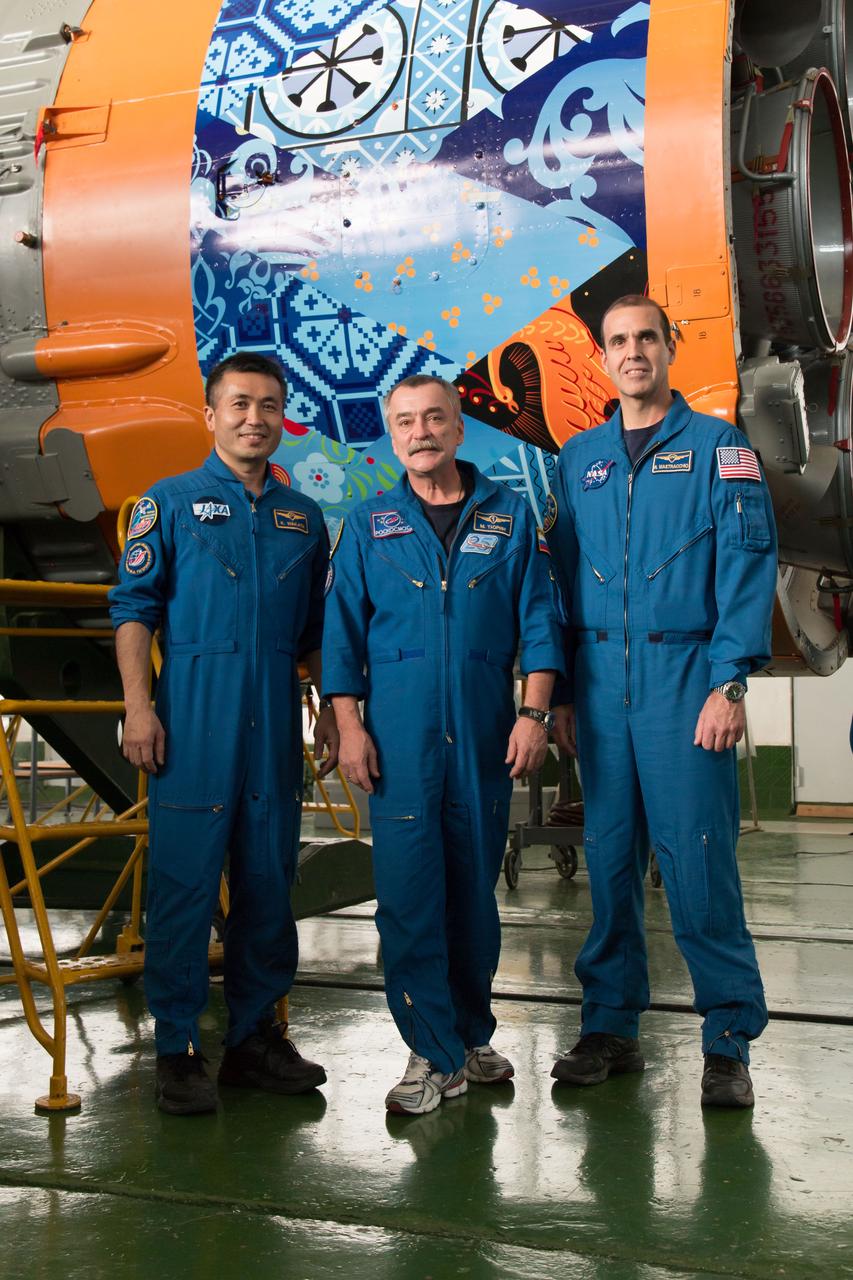
13-10-51-6: In the Integration Facility at the Baikonur Cosmodrome in Kazakhstan, Expedition 38/39 Flight Engineer Koichi Wakata of the Japan Aerospace Exploration Agency (left), Soyuz Commander Mikhail Tyurin (center) and Flight Engineer Rick Mastracchio of NASA (right) pose for pictures Nov. 3 in front of the first stage of the Soyuz rocket during their final fit check dress rehearsal. The Soyuz rocket’s skirt is adorned with artwork representing the 2014 Winter Olympics in Sochi, Russia. The crewmembers, who will launch Nov. 7, Kazakh time for a six-month mission on the International Space Station, are carrying the Olympic torch to the complex with them for a four-day visit. NASA/Victor Zelentsov
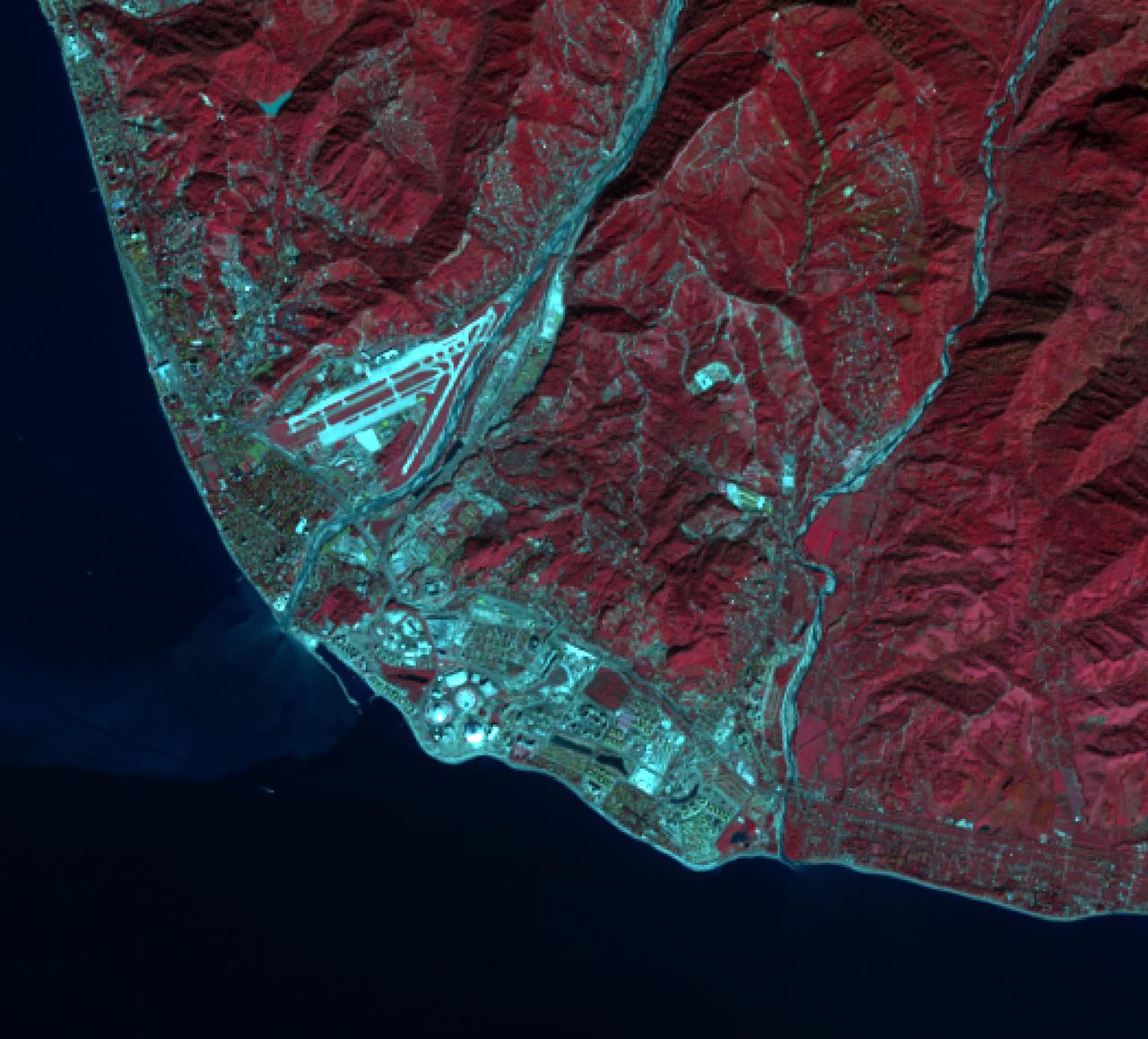
2013 image of Adler and the newly created Olympic Coastal Cluster. This false color satellite image reveals a largely agricultural area that was transformed into the Coastal Olympic Cluster with the nearby Olympic Village and Rail Station with transport to the Mountain Cluster. A spanking new breakwater structure was installed to create a harbor for cruise ships. The airport also received an expansion to handle the increased traffic. Caption and image provided by Tim Assal, US Geological Survey – Fort Collins Science Center Credit: NASA/Landsat <b><a href="http://www.nasa.gov/audience/formedia/features/MP_Photo_Guidelines.html" rel="nofollow">NASA image use policy.</a></b> <b><a href="http://www.nasa.gov/centers/goddard/home/index.html" rel="nofollow">NASA Goddard Space Flight Center</a></b> enables NASA’s mission through four scientific endeavors: Earth Science, Heliophysics, Solar System Exploration, and Astrophysics. Goddard plays a leading role in NASA’s accomplishments by contributing compelling scientific knowledge to advance the Agency’s mission. <b>Follow us on <a href="http://twitter.com/NASAGoddardPix" rel="nofollow">Twitter</a></b> <b>Like us on <a href="http://www.facebook.com/pages/Greenbelt-MD/NASA-Goddard/395013845897?ref=tsd" rel="nofollow">Facebook</a></b> <b>Find us on <a href="http://instagram.com/nasagoddard?vm=grid" rel="nofollow">Instagram</a></b>
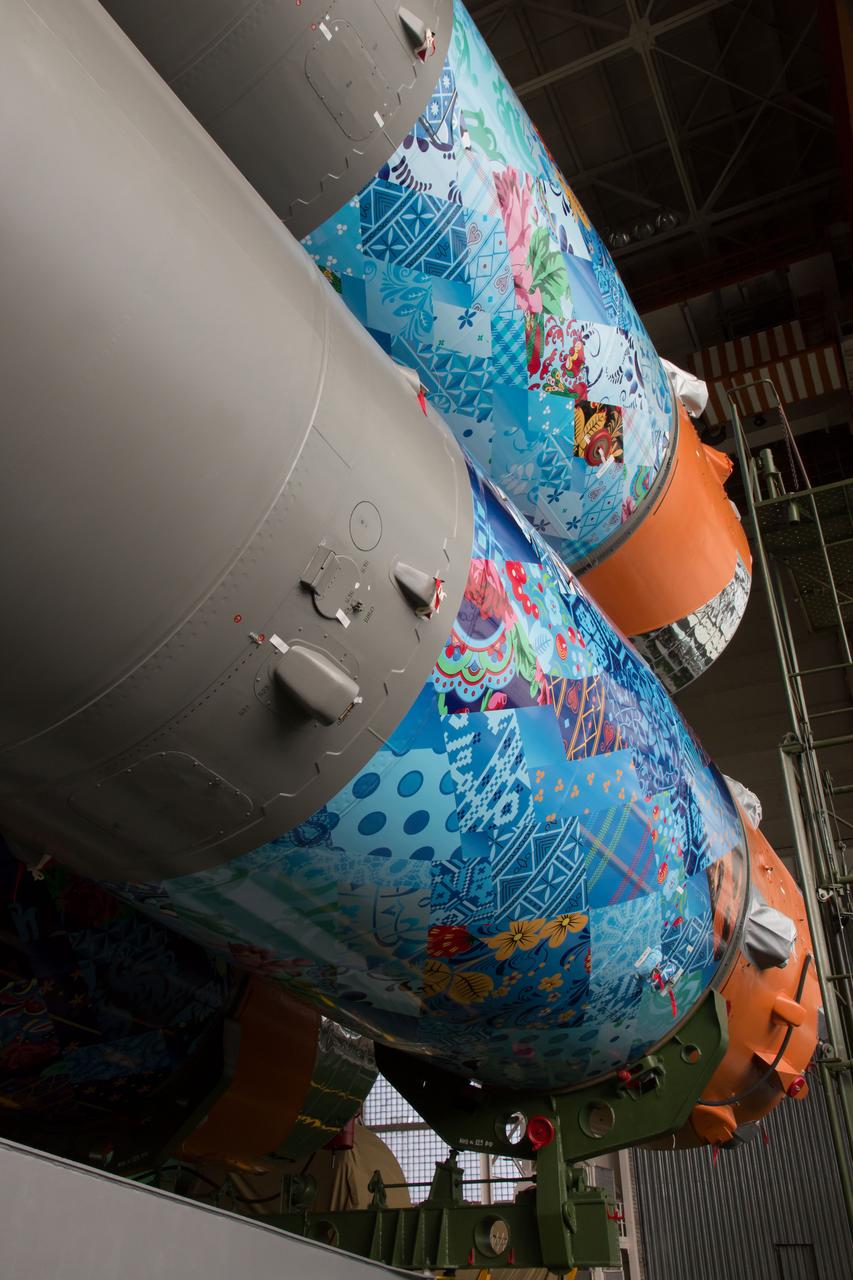
12-21-34: Adorned with the artwork and the colors of the 2014 Winter Olympics to be held in Sochi, Russia, the liquid-fueled boosters on the first stage of the Soyuz rocket that will launch Nov. 7, Kazakh time, to carry Expedition 38/39 Soyuz Commander Mikhail Tyurin, Flight Engineer Rick Mastracchio of NASA and Flight Engineer Koichi Wakata of the Japan Aerospace Exploration Agency into orbit are displayed Nov. 3 prior to the rocket’s rollout to the launch pad Nov. 5. The three crewmembers will be aboard the Soyuz TMA-11M spacecraft for the launch that will begin their six-month mission on the International Space Station. Launching with them to spend four days on the station is the Olympic torch that will light the flame at the Opening Ceremonies in Sochi Feb. 7, 2014 to begin the winter games. NASA/Victor Zelentsov
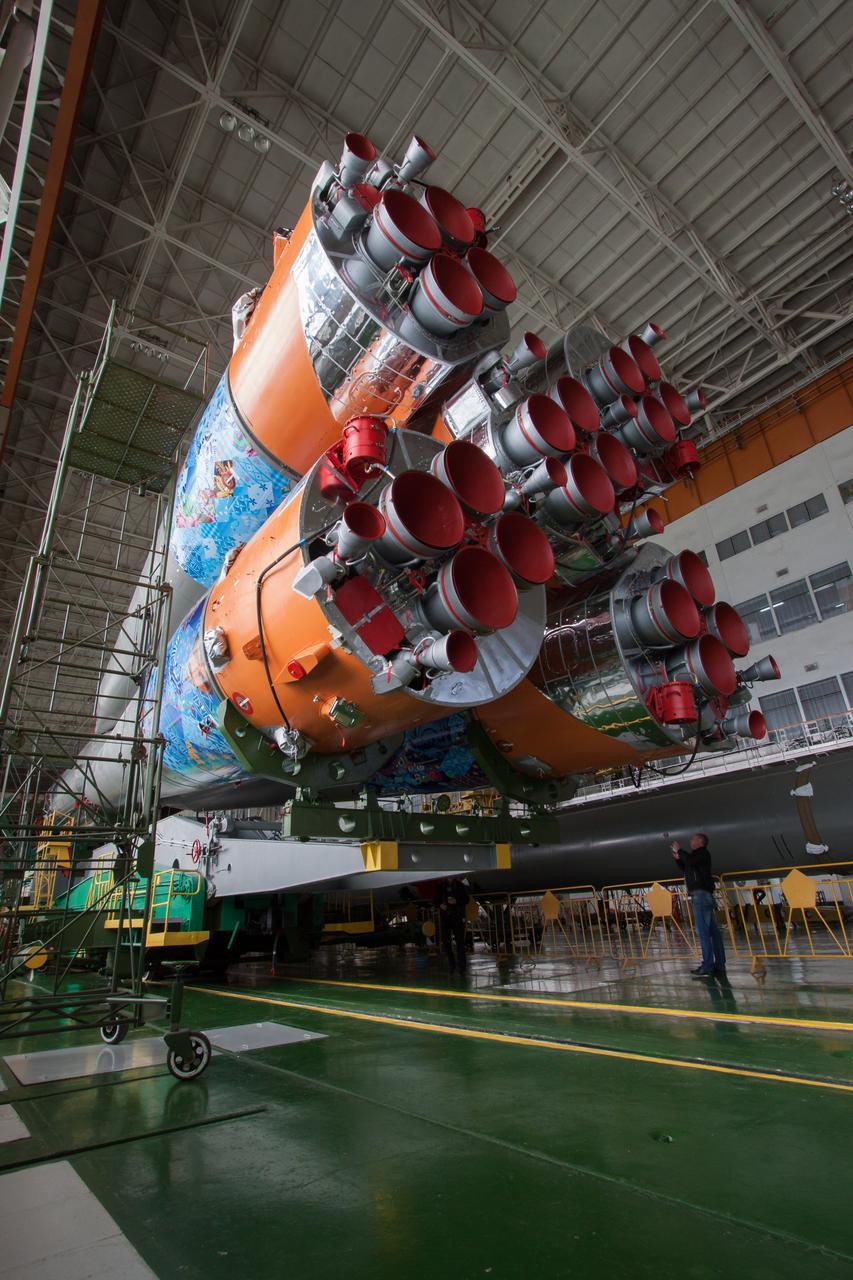
12-19-33: Adorned with the artwork and the colors of the 2014 Winter Olympics to be held in Sochi, Russia, the Soyuz rocket that will launch Nov. 7, Kazakh time, to carry Expedition 38/39 Soyuz Commander Mikhail Tyurin, Flight Engineer Rick Mastracchio of NASA and Flight Engineer Koichi Wakata of the Japan Aerospace Exploration Agency into orbit is moved into position Nov. 3 for its rollout to the launch pad Nov. 5. The three crewmembers will be aboard the Soyuz TMA-11M spacecraft for the launch that will begin their six-month mission on the International Space Station. Launching with them to spend four days on the station is the Olympic torch that will light the flame at the Opening Ceremonies in Sochi Feb. 7, 2014 to begin the winter games. NASA/Victor Zelentsov
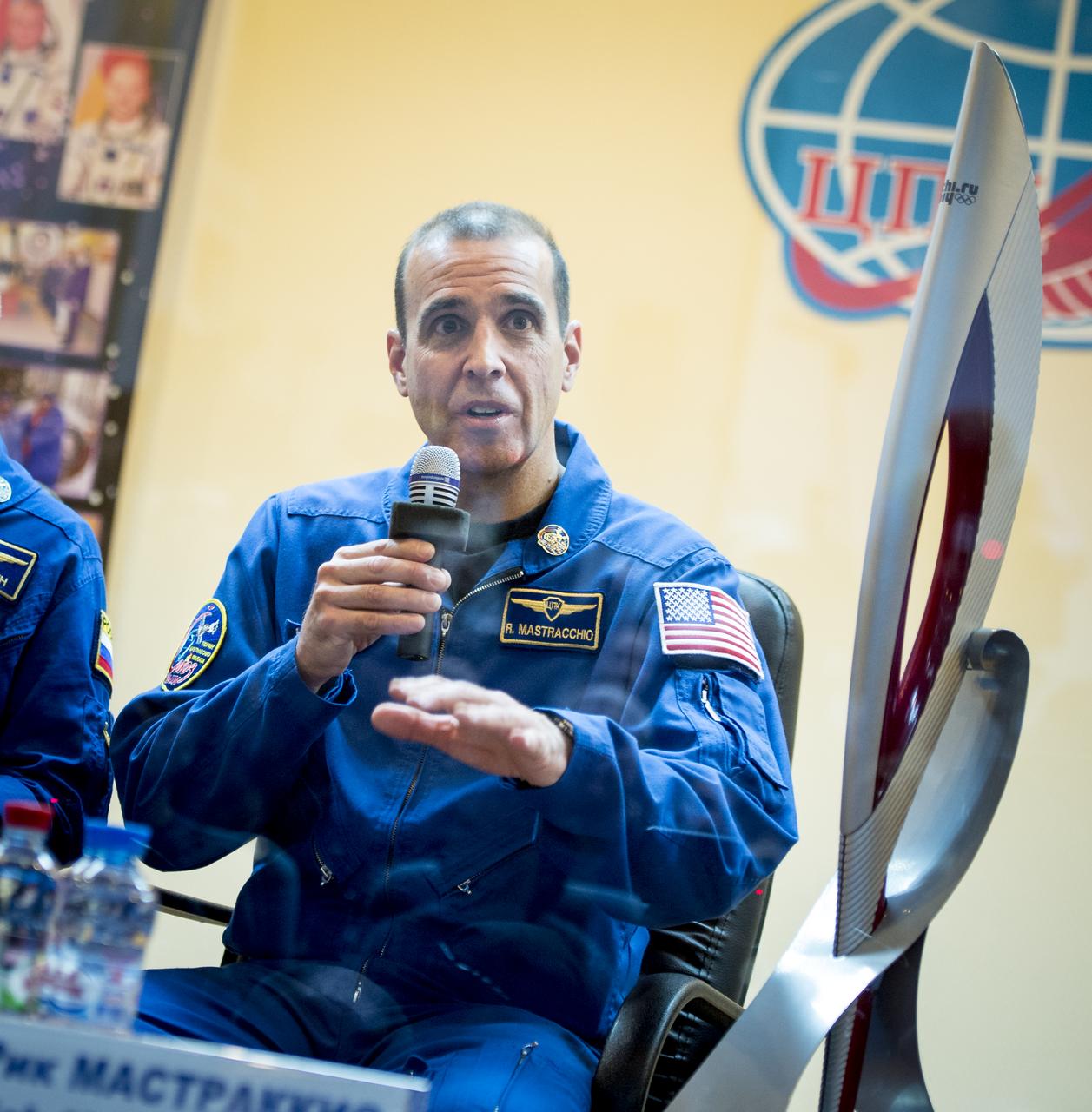
Expedition 38 Flight Engineer Rick Mastracchio of NASA talks, while in quarantine behind glass, during the final press conference held a day ahead of his launch with fellow crew mates, Soyuz Commander Mikhail Tyurin of Roscosmos, and, Flight Engineer Koichi Wakata of the Japan Aerospace Exploration Agency, to the International Space Station, Wednesday, Nov. 6, 2013 at the Cosmonaut Hotel in Baikonur, Kazakhstan. An Olympic torch that will be launched with the crew for a four-day visit to the station is seen next to Mastracchio. The torch will return to Earth with another trio of station residents on Nov. 11 and will be part of the torch relay that ends with the lighting of the flame at the Fisht Stadium in Sochi, Russia Feb. 7 to mark the opening of the 2014 Winter Olympics. Photo Credit: (NASA/Bill Ingalls)
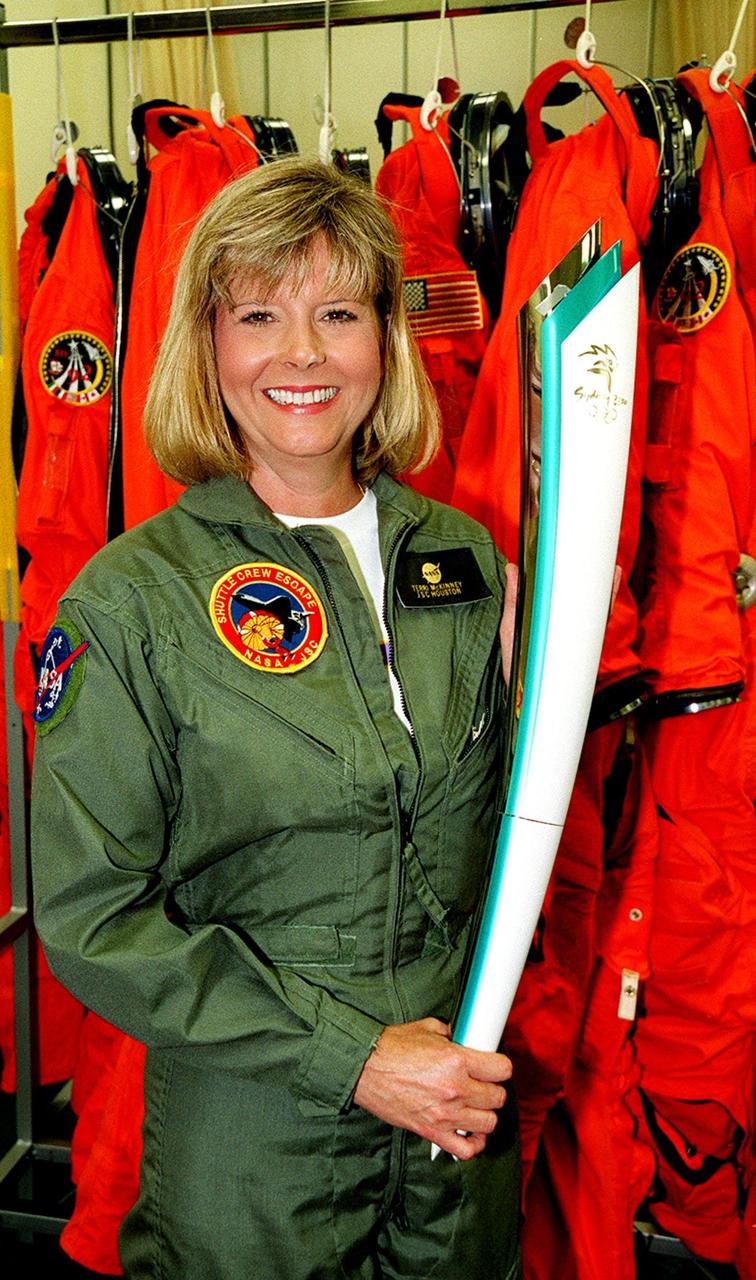
Teri McKinney, with Shuttle Crew Escape, Johnson Space Center, holds a replica of the Olympic torch carried aboard Space Shuttle Atlantis on mission STS-101. The addition of the torch to the payload was coordinated by astronaut Andy Thomas, who is from Australia. The torch will travel to Australia for the 2000 Olympic games being held there in September. . STS-101 was the third flight to the International Space Station and included repairs to the Station plus transfer of equipment and supplies to the Station for future missions. The landing of Atlantis completed a 9-day, 20-hour, 9-minute-long mission. It was the 98th flight in the Space Shuttle program and the 21st for Atlantis. The landing was the 51st at KSC, the 22nd consecutive landing at KSC and the 29th in the last 30 Shuttle flights, plus the 14th nighttime landing in Shuttle history
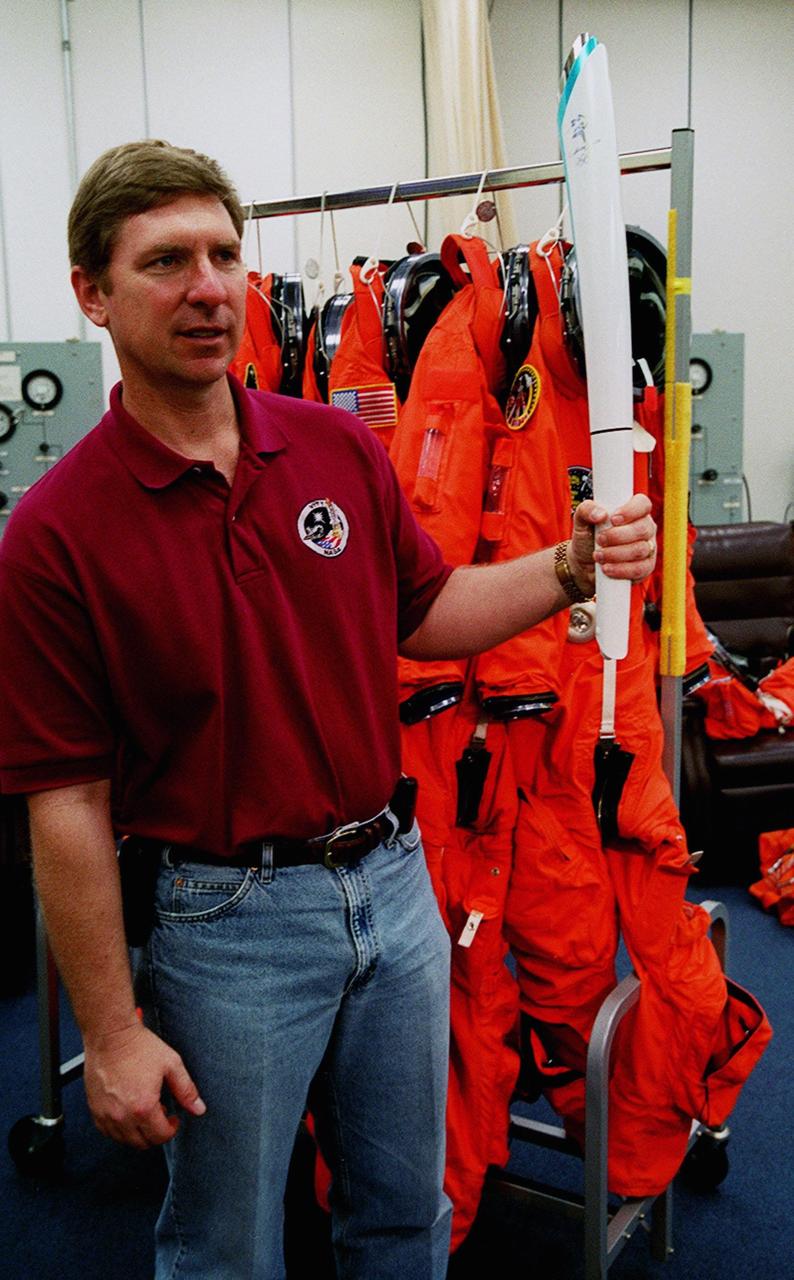
To; Kwiatkowski, Vehicle Integration Team Lead, recovers a replica of the Olympic torch after its journey on Space Shuttle Atlantis on mission STS-101. The addition of the torch to the payload was coordinated by astronaut Andy Thomas, who is from Australia. The torch will travel to Australia for the 2000 Olympic games being held there in September. STS-101 was the third flight to the International Space Station and included repairs to the Station plus transfer of equipment and supplies to the Station for future missions. The landing of Atlantis completed a 9-day, 20-hour, 9-minute-long mission. It was the 98th flight in the Space Shuttle program and the 21st for Atlantis. The landing was the 51st at KSC, the 22nd consecutive landing at KSC and the 29th in the last 30 Shuttle flights, plus the 14th nighttime landing in Shuttle history
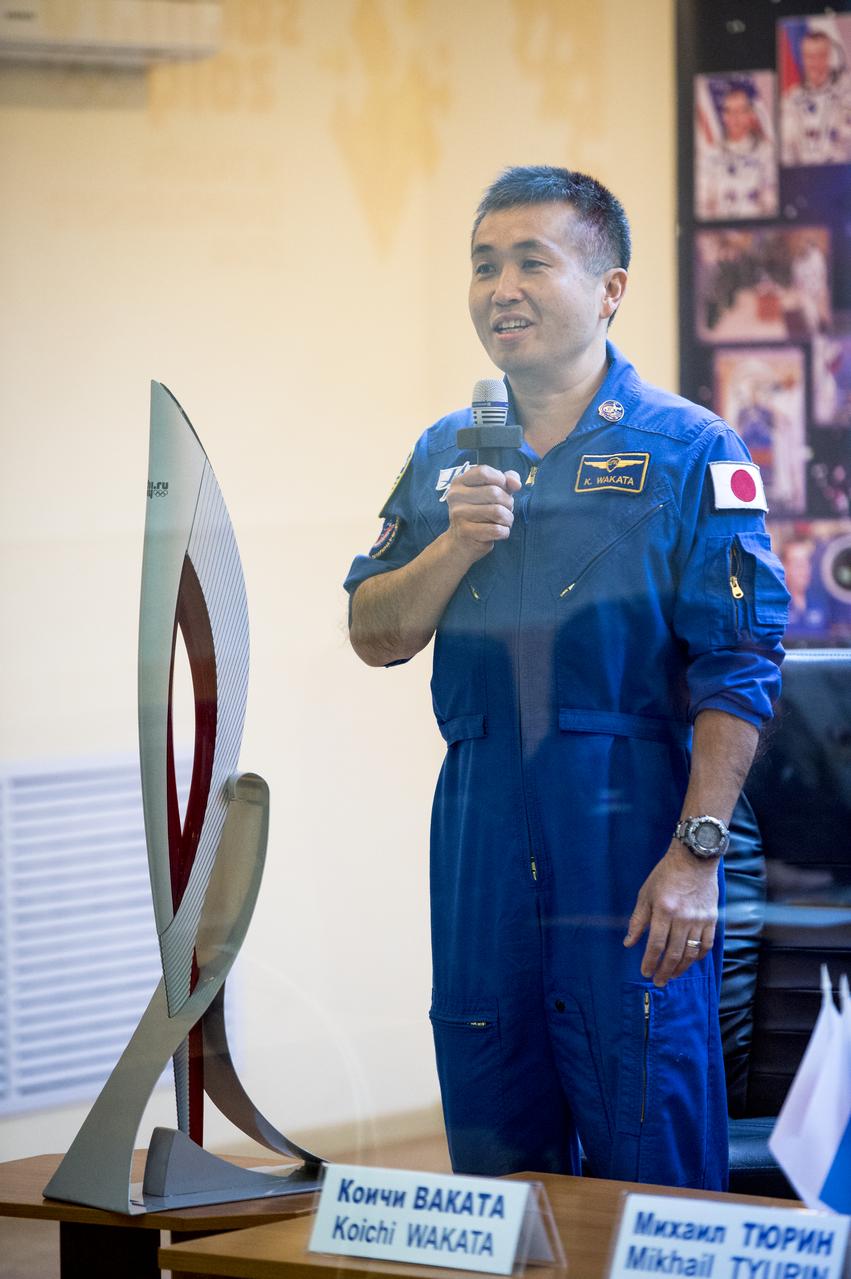
Expedition 38 Flight Engineer Koichi Wakata of the Japan Aerospace Exploration Agency is seen in quarantine, behind glass, during the final press conference held a day ahead of his launch with fellow crew mates, Expedition 38 Soyuz Commander Mikhail Tyurin of Roscosmos, and, Flight Engineer Rick Mastracchio of NASA, to the International Space Station, Wednesday, Nov. 6, 2013 at the Cosmonaut Hotel in Baikonur, Kazakhstan. An Olympic torch that will be launched with the crew for a four-day visit to the station is seen on the left. The torch will return to Earth with another trio of station residents on Nov. 11 and will be part of the torch relay that ends with the lighting of the flame at the Fisht Stadium in Sochi, Russia Feb. 7 to mark the opening of the 2014 Winter Olympics. Photo Credit: (NASA/Bill Ingalls)
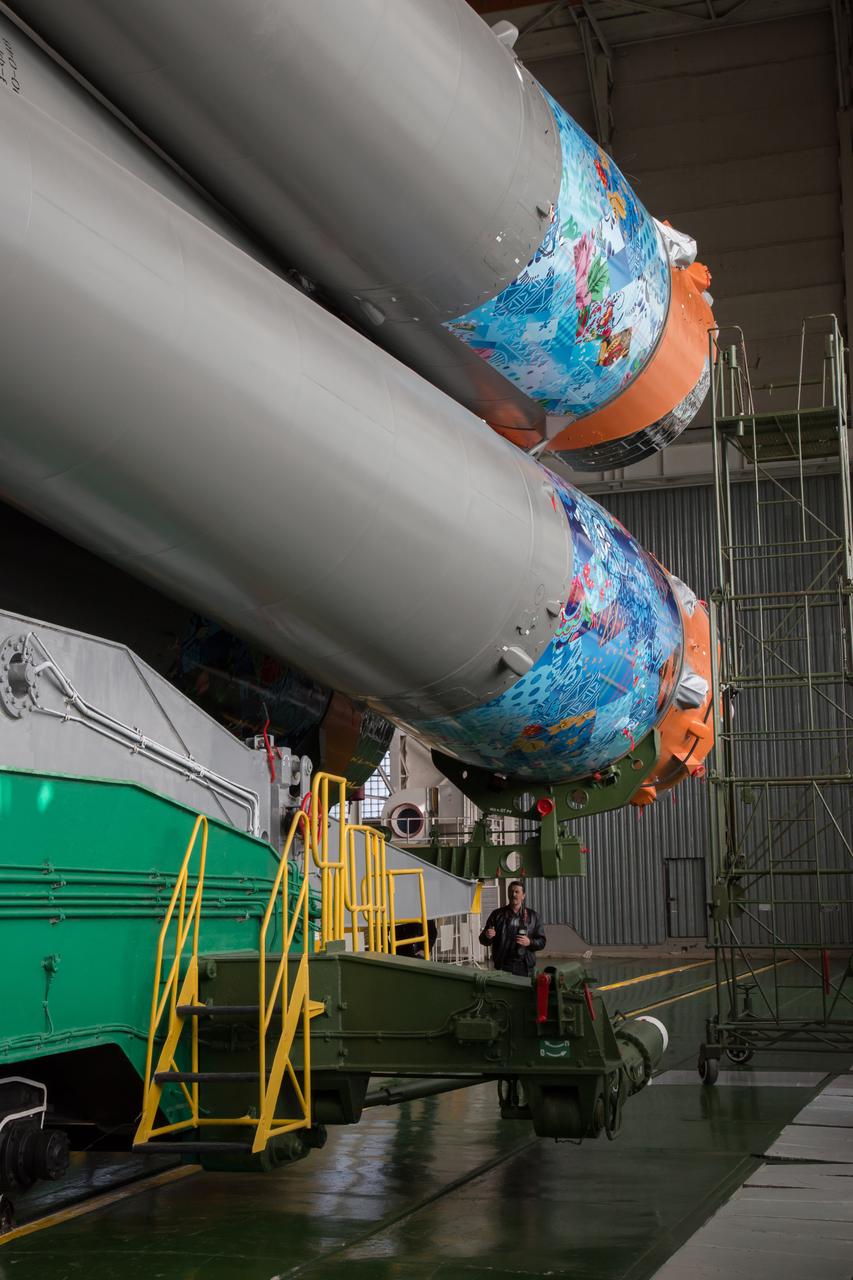
12-20-55: Adorned with the artwork and the colors of the 2014 Winter Olympics to be held in Sochi, Russia, the liquid-fueled boosters on the first stage of the Soyuz rocket that will launch Nov. 7, Kazakh time, to carry Expedition 38/39 Soyuz Commander Mikhail Tyurin, Flight Engineer Rick Mastracchio of NASA and Flight Engineer Koichi Wakata of the Japan Aerospace Exploration Agency into orbit are displayed Nov. 3 prior to the rocket’s rollout to the launch pad Nov. 5. The three crewmembers will be aboard the Soyuz TMA-11M spacecraft for the launch that will begin their six-month mission on the International Space Station. Launching with them to spend four days on the station is the Olympic torch that will light the flame at the Opening Ceremonies in Sochi Feb. 7, 2014 to begin the winter games. NASA/Victor Zelentsov
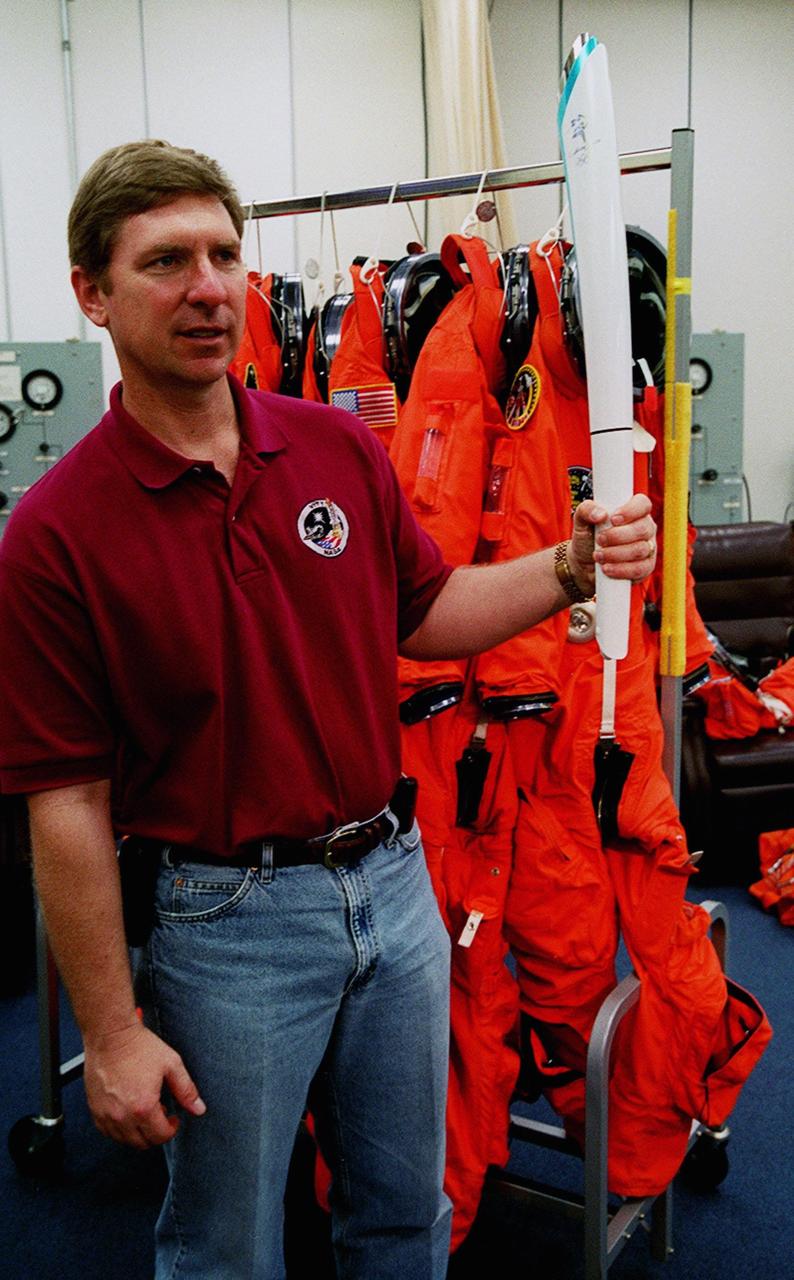
To; Kwiatkowski, Vehicle Integration Team Lead, recovers a replica of the Olympic torch after its journey on Space Shuttle Atlantis on mission STS-101. The addition of the torch to the payload was coordinated by astronaut Andy Thomas, who is from Australia. The torch will travel to Australia for the 2000 Olympic games being held there in September. STS-101 was the third flight to the International Space Station and included repairs to the Station plus transfer of equipment and supplies to the Station for future missions. The landing of Atlantis completed a 9-day, 20-hour, 9-minute-long mission. It was the 98th flight in the Space Shuttle program and the 21st for Atlantis. The landing was the 51st at KSC, the 22nd consecutive landing at KSC and the 29th in the last 30 Shuttle flights, plus the 14th nighttime landing in Shuttle history
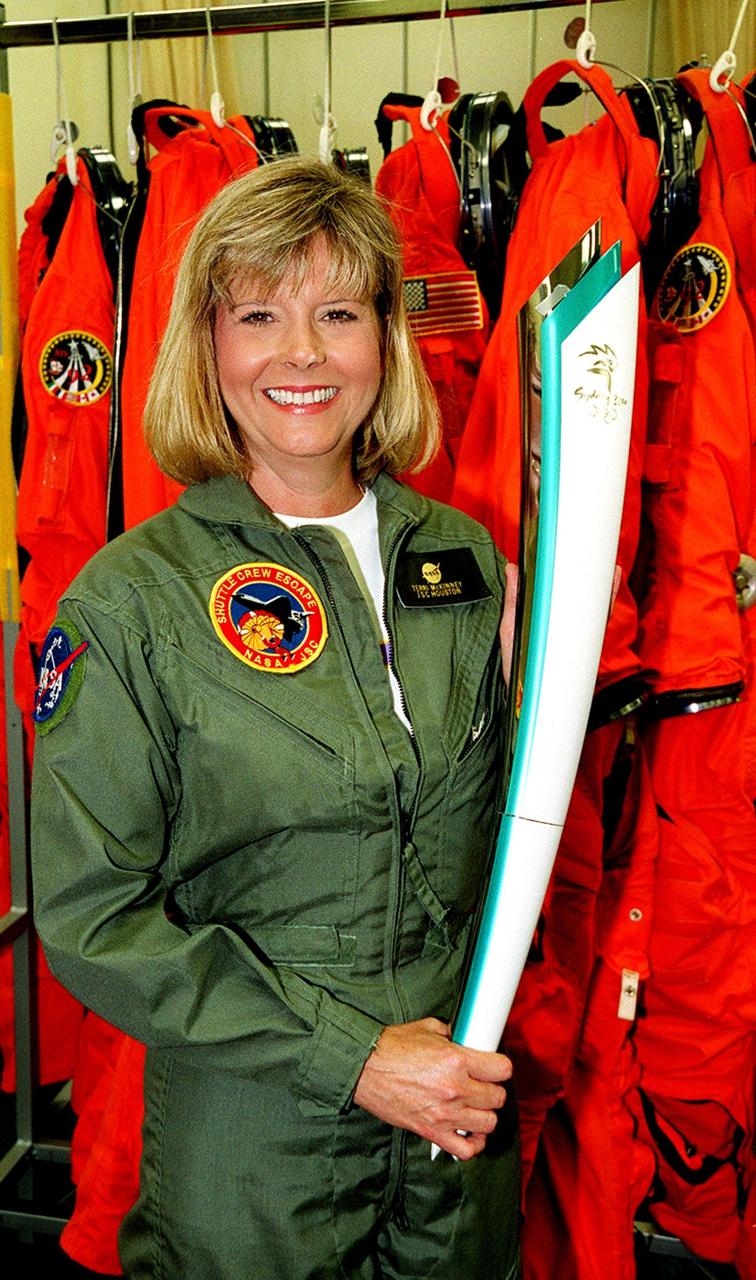
Teri McKinney, with Shuttle Crew Escape, Johnson Space Center, holds a replica of the Olympic torch carried aboard Space Shuttle Atlantis on mission STS-101. The addition of the torch to the payload was coordinated by astronaut Andy Thomas, who is from Australia. The torch will travel to Australia for the 2000 Olympic games being held there in September. . STS-101 was the third flight to the International Space Station and included repairs to the Station plus transfer of equipment and supplies to the Station for future missions. The landing of Atlantis completed a 9-day, 20-hour, 9-minute-long mission. It was the 98th flight in the Space Shuttle program and the 21st for Atlantis. The landing was the 51st at KSC, the 22nd consecutive landing at KSC and the 29th in the last 30 Shuttle flights, plus the 14th nighttime landing in Shuttle history
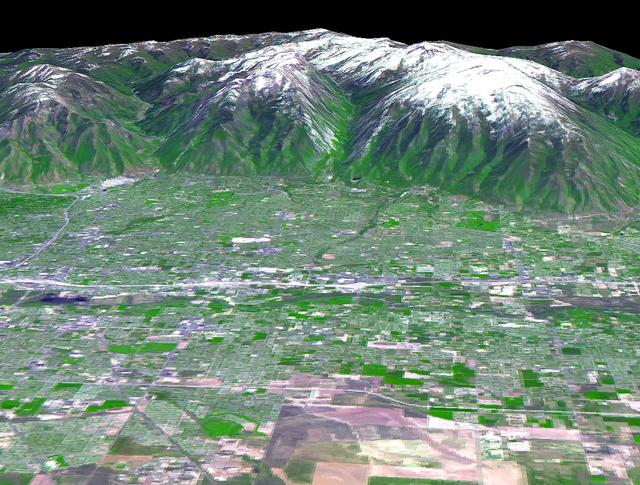
The 2002 Winter Olympics are hosted by Salt Lake City at several venues within the city, in nearby cities, and within the adjacent Wasatch Mountains. This 3-D perspective view, in simulated natural colors, presents a late spring view over Salt Lake City towards the snow-capped Wasatch Mountains to the east. The image was created by draping ASTER image data over digital topography data from the US Geological Survey's National Elevation Data. This image was acquired on May 28, 2000 by the Advanced Spaceborne Thermal Emission and Reflection Radiometer (ASTER) on NASA's Terra satellite. With its 14 spectral bands from the visible to the thermal infrared wavelength region, and its high spatial resolution of 15 to 90 meters (about 50 to 300 feet), ASTER will image Earth for the next 6 years to map and monitor the changing surface of our planet. http://photojournal.jpl.nasa.gov/catalog/PIA03466
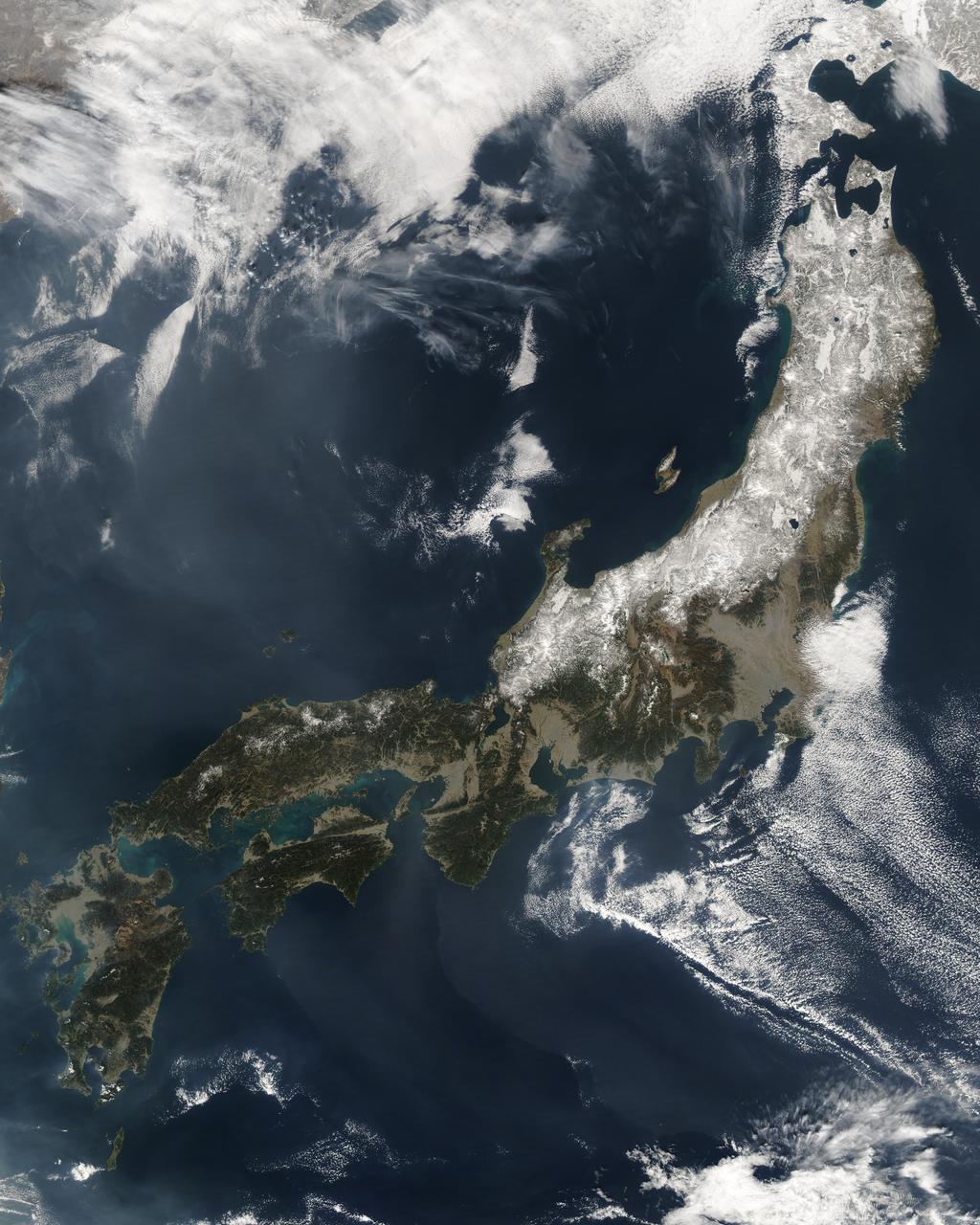
The Moderate Resolution Imaging Spectroradiometer (MODIS) on the Aqua satellite captured this stunning view of Japan’ four largest islands on February 20, 2004. The snow-covered southern arm of Hokkaido extends into the upper left corner. Honshu, Japan’s largest island, curves across the center of the image. Shikoku, right, and Kyushu, left, form the southern tip of the group. Japan is mostly mountainous, and, as the dusting of snow in this image shows, is cold in the north and more tropical in the south. A single red dot marks the location of an active fire. Credit: Jeff Schmaltz, MODIS Rapid Response Team, NASA/GSFC <b><a href="http://www.nasa.gov/audience/formedia/features/MP_Photo_Guidelines.html" rel="nofollow">NASA image use policy.</a></b> <b><a href="http://www.nasa.gov/centers/goddard/home/index.html" rel="nofollow">NASA Goddard Space Flight Center</a></b> enables NASA’s mission through four scientific endeavors: Earth Science, Heliophysics, Solar System Exploration, and Astrophysics. Goddard plays a leading role in NASA’s accomplishments by contributing compelling scientific knowledge to advance the Agency’s mission. <b>Follow us on <a href="http://twitter.com/NASAGoddardPix" rel="nofollow">Twitter</a></b> <b>Like us on <a href="http://www.facebook.com/pages/Greenbelt-MD/NASA-Goddard/395013845897?ref=tsd" rel="nofollow">Facebook</a></b> <b>Find us on <a href="http://instagram.com/nasagoddard?vm=grid" rel="nofollow">Instagram</a></b>
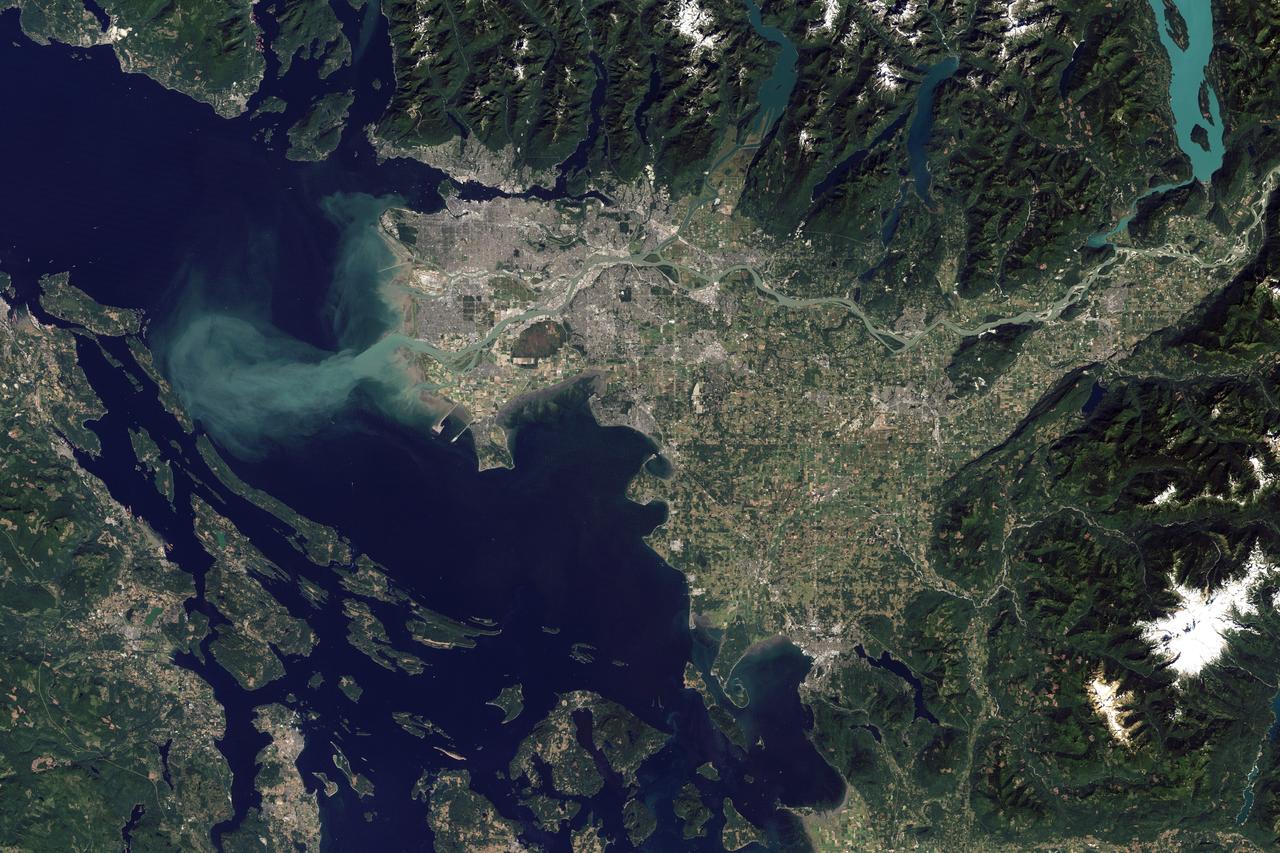
The Thematic Mapper on the Landsat 5 satellite captured this image of Vancouver on September 7, 2011. Flowing through braided channels, the Fraser River meanders toward the sea, emptying through multiple outlets. Moe info: <a href="http://earthobservatory.nasa.gov/IOTD/view.php?id=77368" rel="nofollow">earthobservatory.nasa.gov/IOTD/view.php?id=77368</a> NASA Earth Observatory image created by Robert Simmon and Jesse Allen, using Landsat data provided by the United States Geological Survey. Instrument: Landsat 5 - TM Credit: <b><a href="http://www.earthobservatory.nasa.gov/" rel="nofollow"> NASA Earth Observatory</a></b> <b><a href="http://www.nasa.gov/audience/formedia/features/MP_Photo_Guidelines.html" rel="nofollow">NASA image use policy.</a></b> <b><a href="http://www.nasa.gov/centers/goddard/home/index.html" rel="nofollow">NASA Goddard Space Flight Center</a></b> enables NASA’s mission through four scientific endeavors: Earth Science, Heliophysics, Solar System Exploration, and Astrophysics. Goddard plays a leading role in NASA’s accomplishments by contributing compelling scientific knowledge to advance the Agency’s mission. <b>Follow us on <a href="http://twitter.com/NASAGoddardPix" rel="nofollow">Twitter</a></b> <b>Like us on <a href="http://www.facebook.com/pages/Greenbelt-MD/NASA-Goddard/395013845897?ref=tsd" rel="nofollow">Facebook</a></b> <b>Find us on <a href="http://instagram.com/nasagoddard?vm=grid" rel="nofollow">Instagram</a></b>
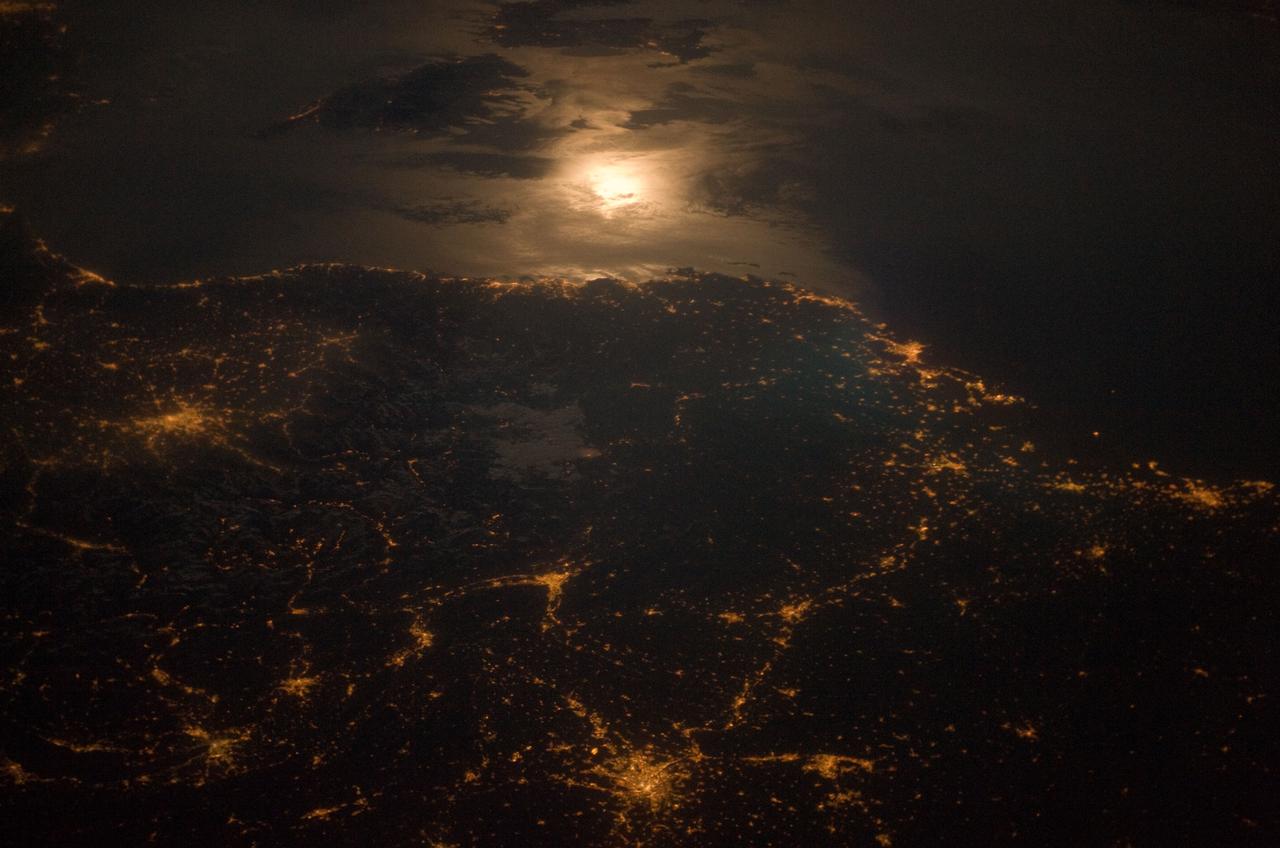
City lights at night along the France-Italy border, Europe are featured in this image photographed by an Expedition 23 crew member on the International Space Station (ISS). The brightly lit metropolitan areas of Torino (Italy), Lyon, and Marseille (both in France) stand out amidst numerous smaller urban areas in this dramatic photograph. The image captures the night time appearance of the France-Italy border area between the mountainous Alps to the north (not shown) and the island of Corsica in the Ligurian Sea to the south (top). The full moon reflects brightly on the water surface and also illuminates the tops of low patchy clouds over the border (center). This image was taken by an ISS crew member at approximately 11:55 p.m. local time when the station was located over the France-Belgium border near Luxembourg. Crew members orbiting Earth frequently collect images that include sunglint, or sunlight that reflects off a water surface at such an angle that it travels directly back towards the observer. Sunglint typically lends a mirror-like appearance to the water surface. During clear sky conditions reflected light from the moon can produce the same effect (moon glint) as illustrated in this view. The observer was looking towards the southeast at an oblique viewing angle at the time the image was taken; in other words, looking outwards from the ISS, not straight down towards Earth. Credit: NASA <b><a href="http://www.nasa.gov/audience/formedia/features/MP_Photo_Guidelines.html" rel="nofollow">NASA image use policy.</a></b> <b><a href="http://www.nasa.gov/centers/goddard/home/index.html" rel="nofollow">NASA Goddard Space Flight Center</a></b> enables NASA’s mission through four scientific endeavors: Earth Science, Heliophysics, Solar System Exploration, and Astrophysics. Goddard plays a leading role in NASA’s accomplishments by contributing compelling scientific knowledge to advance the Agency’s mission. <b>Follow us on <a href="http://twitter.com/NASAGoddardPix" rel="nofollow">Twitter</a></b> <b>Like us on <a href="http://www.facebook.com/pages/Greenbelt-MD/NASA-Goddard/395013845897?ref=tsd" rel="nofollow">Facebook</a></b> <b>Find us on <a href="http://instagram.com/nasagoddard?vm=grid" rel="nofollow">Instagram</a></b>
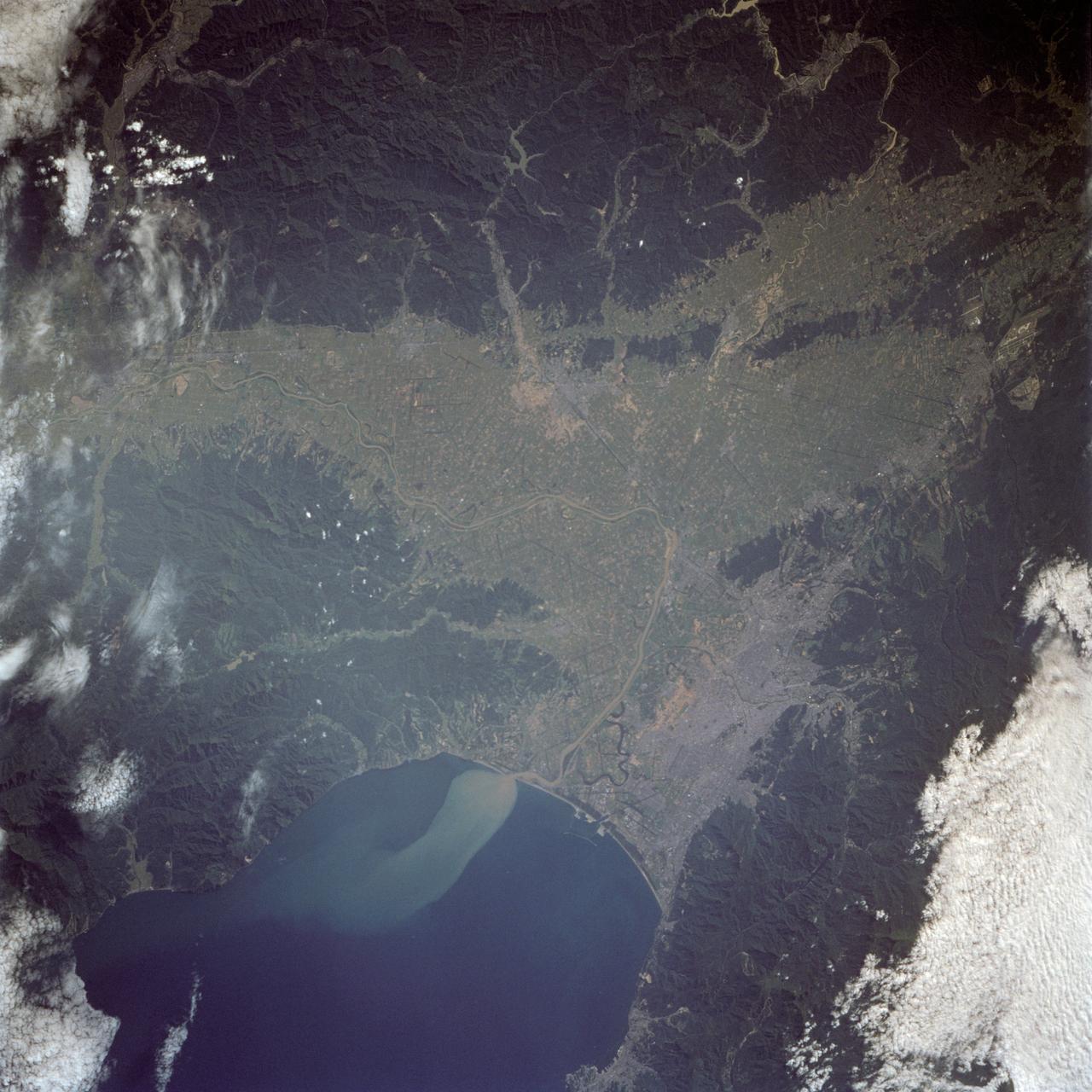
The city of Sapporo on the northernmost of the Japanese Home Island of Hokkaido (43.5N, 141.5E), host to the 1986 Winter Olympic Games is situated along the margin of a large valley which extends across the island from the Sea of Japan to the Pacific Ocean. The Valley is largely cultivated (the lighter green of the cultivated land distinguishes it from the gray urban development of Sapporo), but much of the island remains heavily forested.
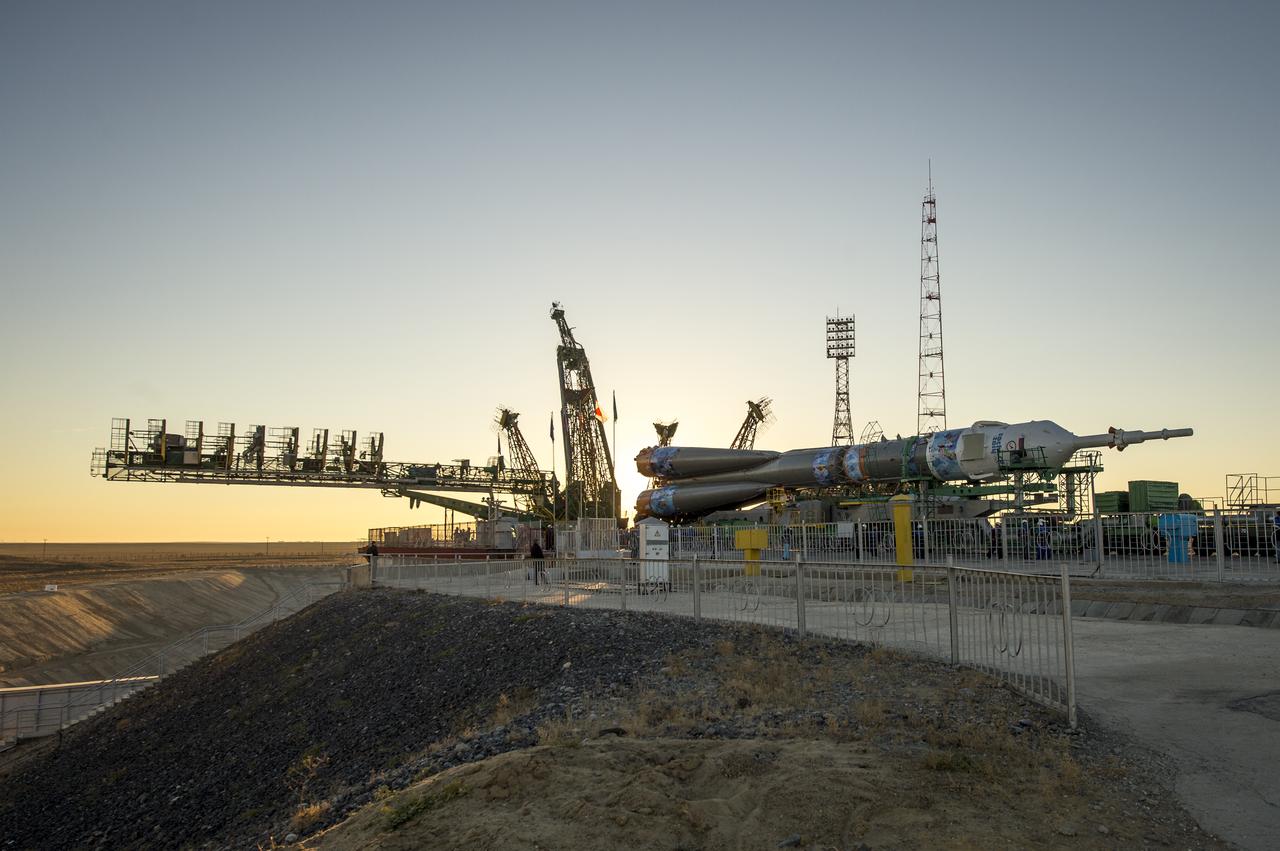
The Soyuz TMA-11M rocket, adorned with the logo of the Sochi Olympic Organizing Committee and other related artwork, arrives at the launch pad by train on Tuesday, Nov. 5, 2013, at the Baikonur Cosmodrome in Kazakhstan. Launch of the Soyuz rocket is scheduled for November 7 and will send Expedition 38 Soyuz Commander Mikhail Tyurin of Roscosmos, Flight Engineer Rick Mastracchio of NASA and Flight Engineer Koichi Wakata of the Japan Aerospace Exploration Agency on a six-month mission aboard the International Space Station. Photo Credit: (NASA/Bill Ingalls)
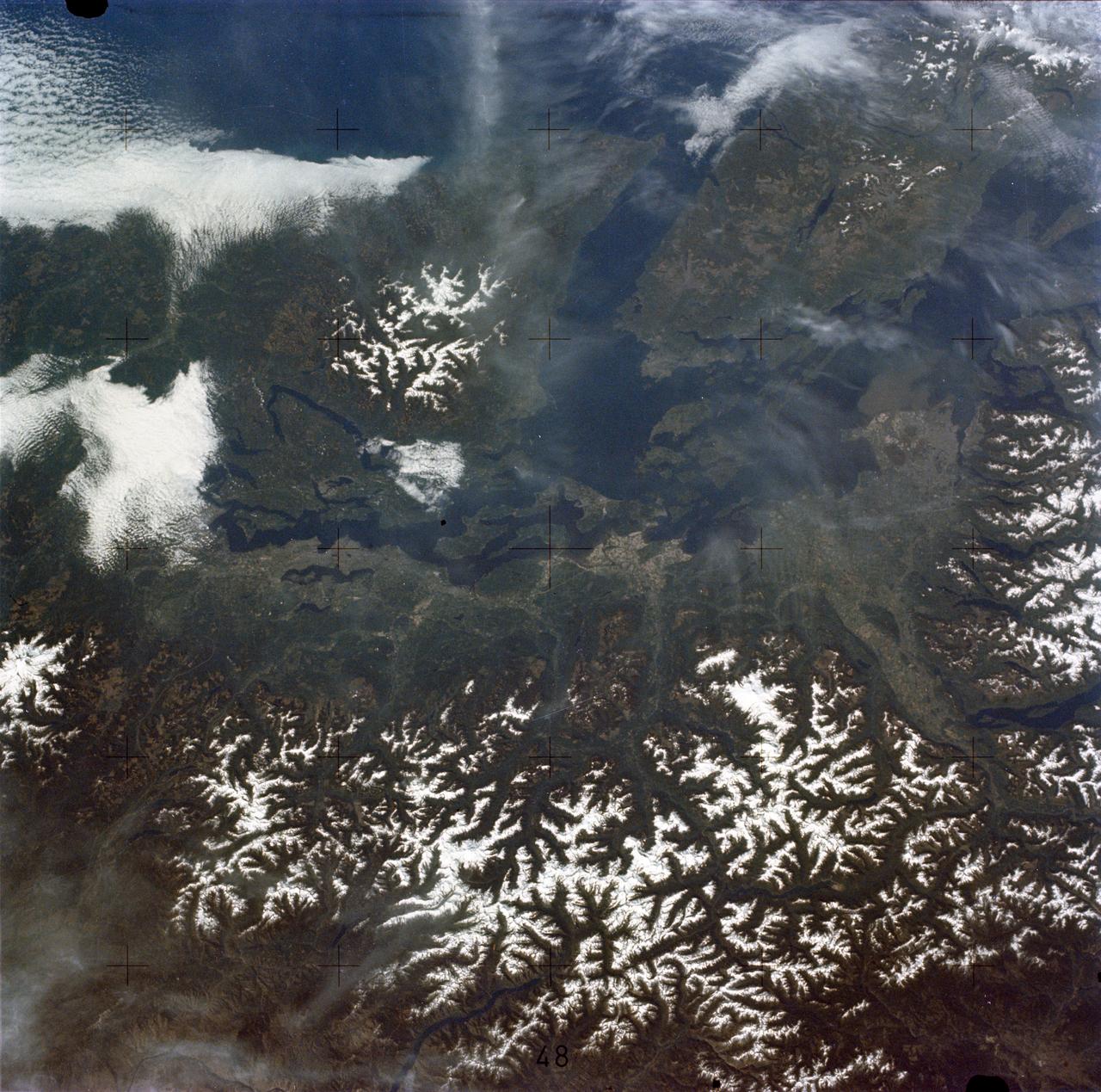
SL2-05-458 (22 June 1973) --- Portions of northwest Washington State (48.0N, 122.5) can be seen in this view as well as portions of British Columbia, Canada. The snow covered Cascade Mountains are on the eastern side of the scene. Vancouver Island is visible in the northeast corner of the photo. The strait of Juan de Fuca separates Vancouver Island from the northwest corner of Washington. Seattle is near the center and the snow covered Olympic Mountains are to the east. Photo credit: NASA
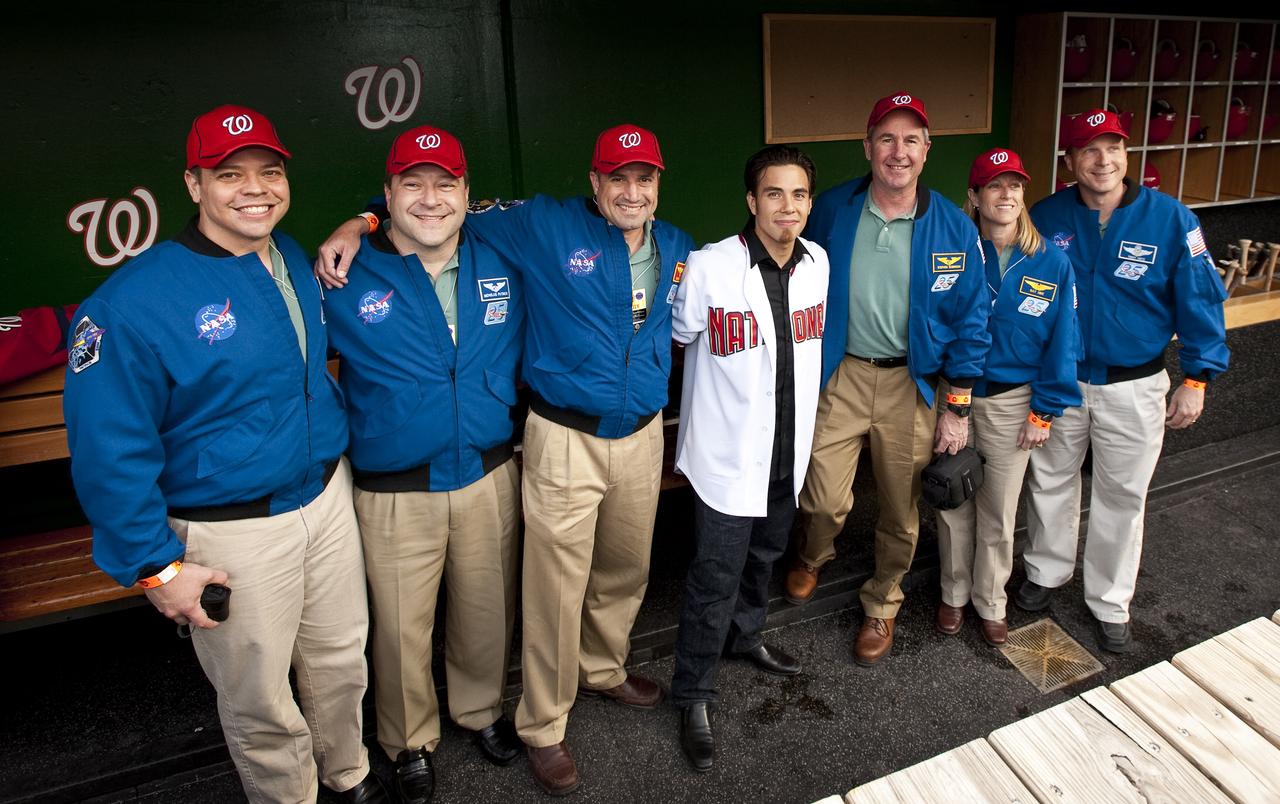
NASA STS-130 crew pose with Winter Olympics medalist Apolo Ohno, center, at Nationals Park, Tuesday, April 20, 2010, in Washington. Pictured from left are STS-130 Mission Specialist Robert Benhken, Mission Specialist Nicholas Patrick, Commander George Zamka, Apolo Ohno, Mission Specialist Stephen Robinson, Mission Specialist Kathryn Hire and Pilot Terry Virts. Photo Credit: (NASA/Carla Cioffi)
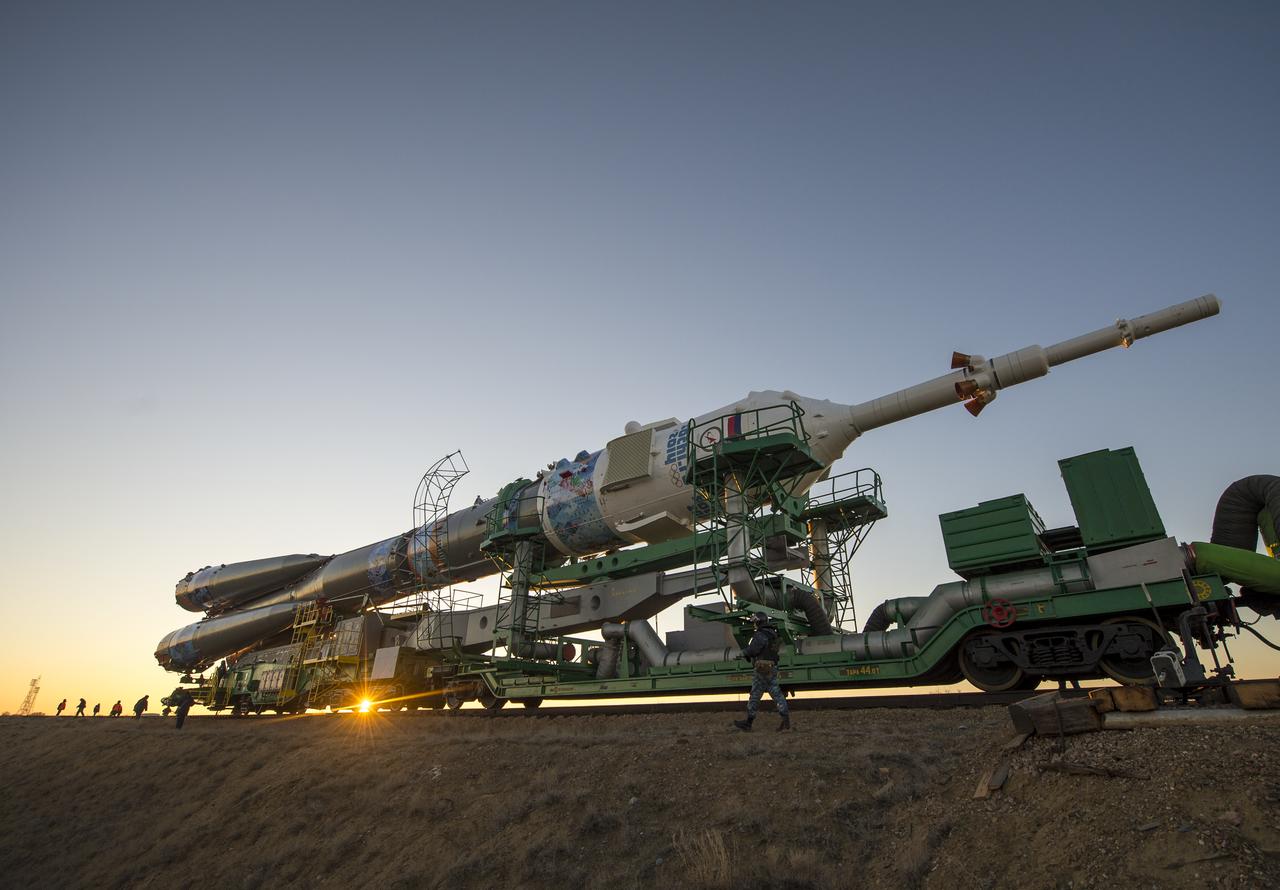
The Soyuz TMA-11M rocket, adorned with the logo of the Sochi Olympic Organizing Committee and other related artwork, is rolled out to the launch pad by train on Tuesday, Nov. 5, 2013, at the Baikonur Cosmodrome in Kazakhstan. Launch of the Soyuz rocket is scheduled for November 7 and will send Expedition 38 Soyuz Commander Mikhail Tyurin of Roscosmos, Flight Engineer Rick Mastracchio of NASA and Flight Engineer Koichi Wakata of the Japan Aerospace Exploration Agency on a six-month mission aboard the International Space Station. Photo Credit: (NASA/Bill Ingalls)
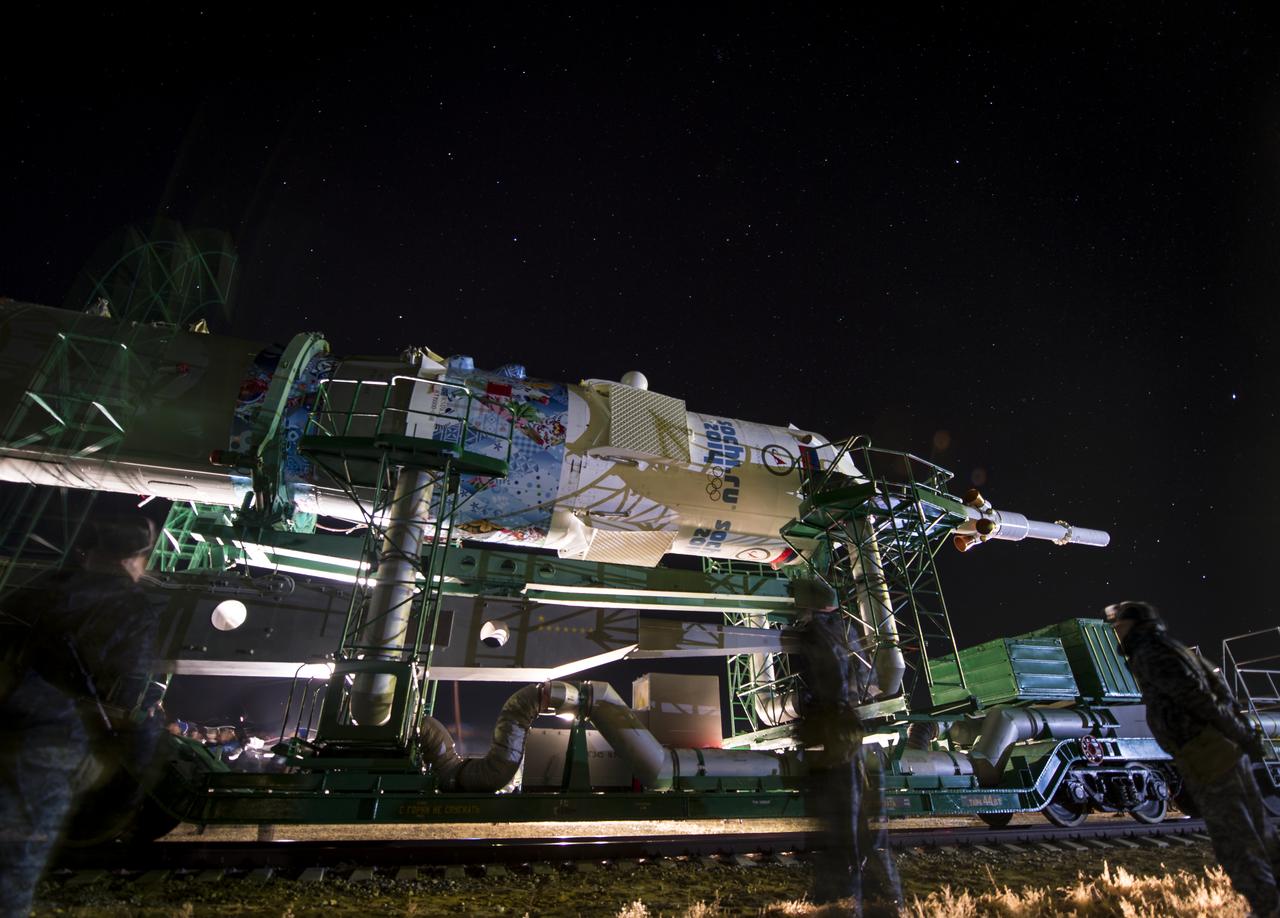
The Soyuz TMA-11M rocket, adorned with the logo of the Sochi Olympic Organizing Committee and other related artwork, is rolled out to the launch pad by train on Tuesday, Nov. 5, 2013, at the Baikonur Cosmodrome in Kazakhstan. Launch of the Soyuz rocket is scheduled for November 7 and will send Expedition 38 Soyuz Commander Mikhail Tyurin of Roscosmos, Flight Engineer Rick Mastracchio of NASA and Flight Engineer Koichi Wakata of the Japan Aerospace Exploration Agency on a six-month mission aboard the International Space Station. Photo Credit: (NASA/Bill Ingalls)
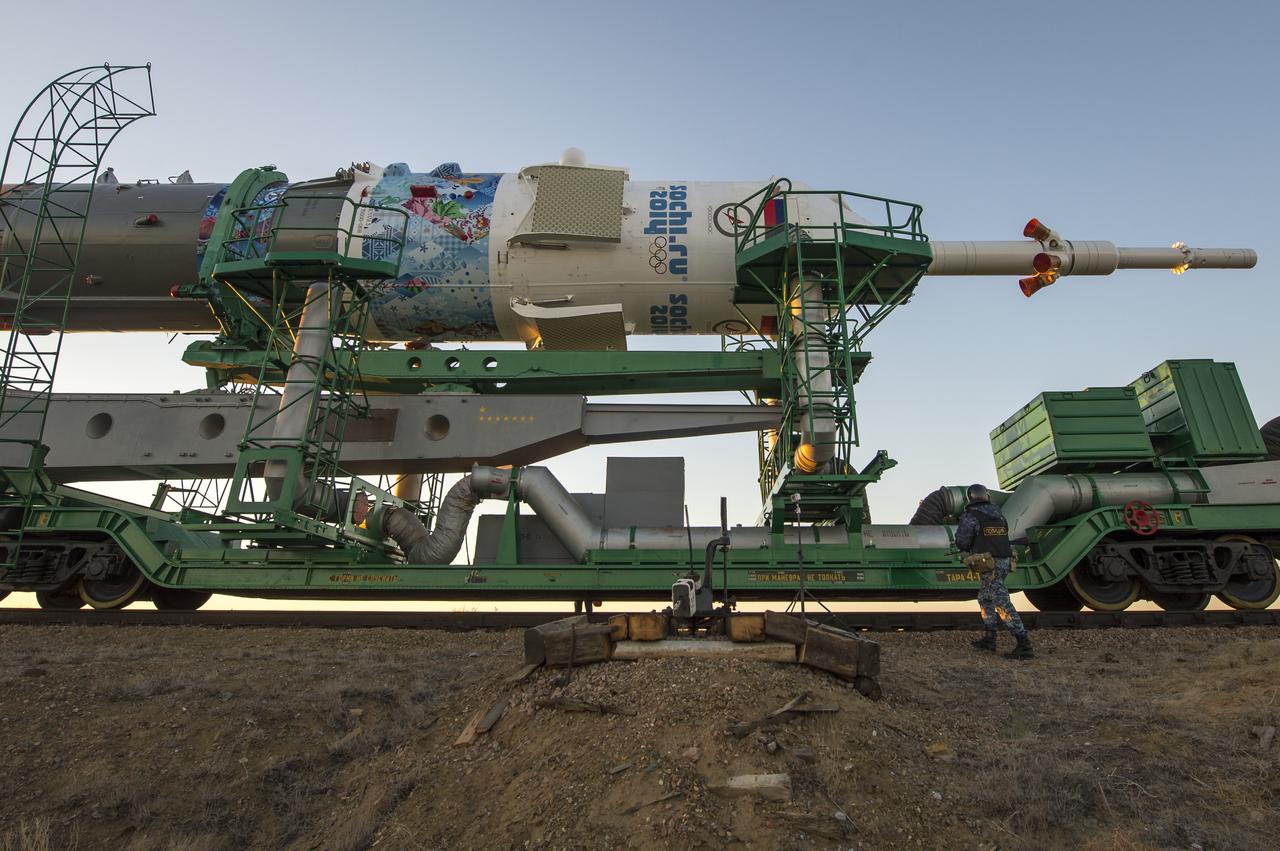
The Soyuz TMA-11M rocket, adorned with the logo of the Sochi Olympic Organizing Committee and other related artwork, is rolled out to the launch pad by train on Tuesday, Nov. 5, 2013, at the Baikonur Cosmodrome in Kazakhstan. Launch of the Soyuz rocket is scheduled for November 7 and will send Expedition 38 Soyuz Commander Mikhail Tyurin of Roscosmos, Flight Engineer Rick Mastracchio of NASA and Flight Engineer Koichi Wakata of the Japan Aerospace Exploration Agency on a six-month mission aboard the International Space Station. Photo Credit: (NASA/Bill Ingalls)
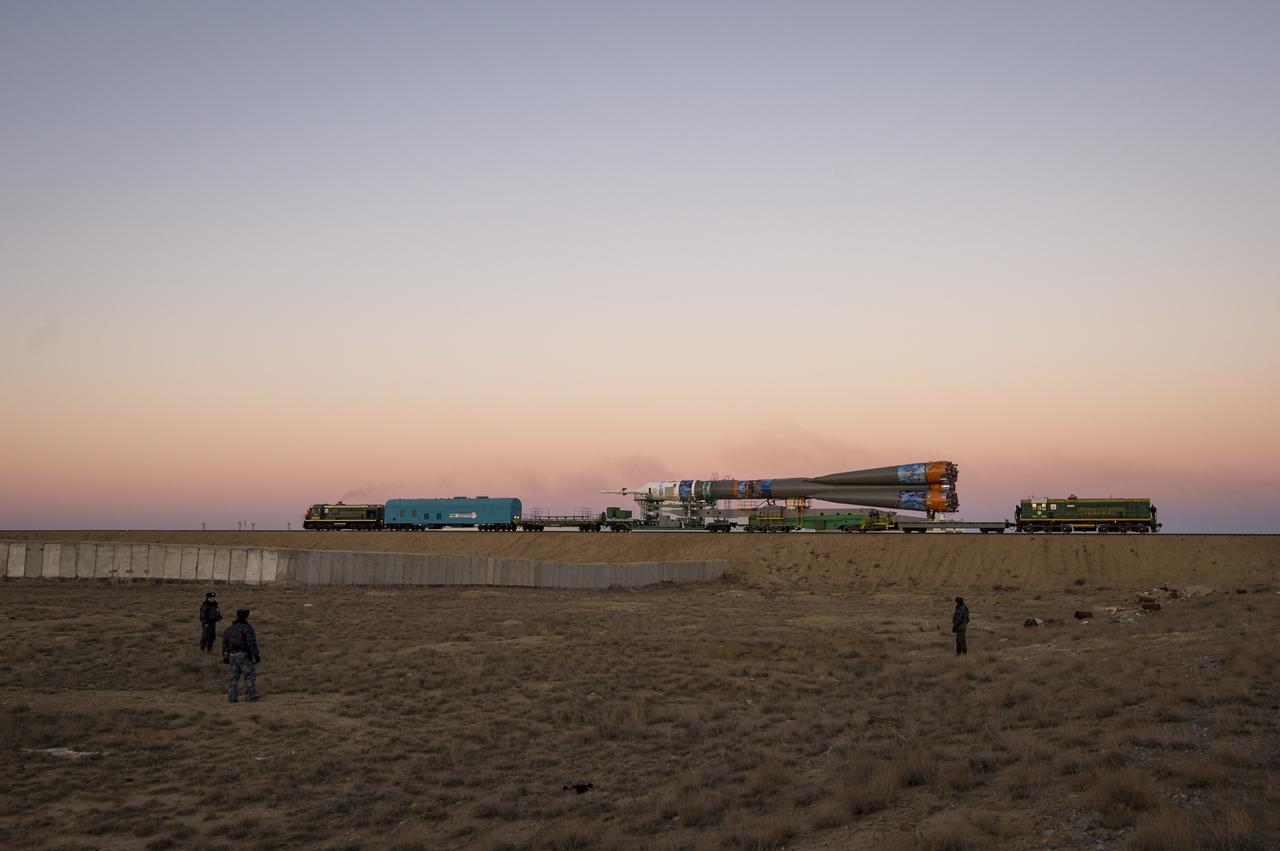
The Soyuz TMA-11M rocket, adorned with the logo of the Sochi Olympic Organizing Committee and other related artwork, is rolled out to the launch pad by train on Tuesday, Nov. 5, 2013, at the Baikonur Cosmodrome in Kazakhstan. Launch of the Soyuz rocket is scheduled for November 7 and will send Expedition 38 Soyuz Commander Mikhail Tyurin of Roscosmos, Flight Engineer Rick Mastracchio of NASA and Flight Engineer Koichi Wakata of the Japan Aerospace Exploration Agency on a six-month mission aboard the International Space Station. Photo Credit: (NASA/Bill Ingalls)
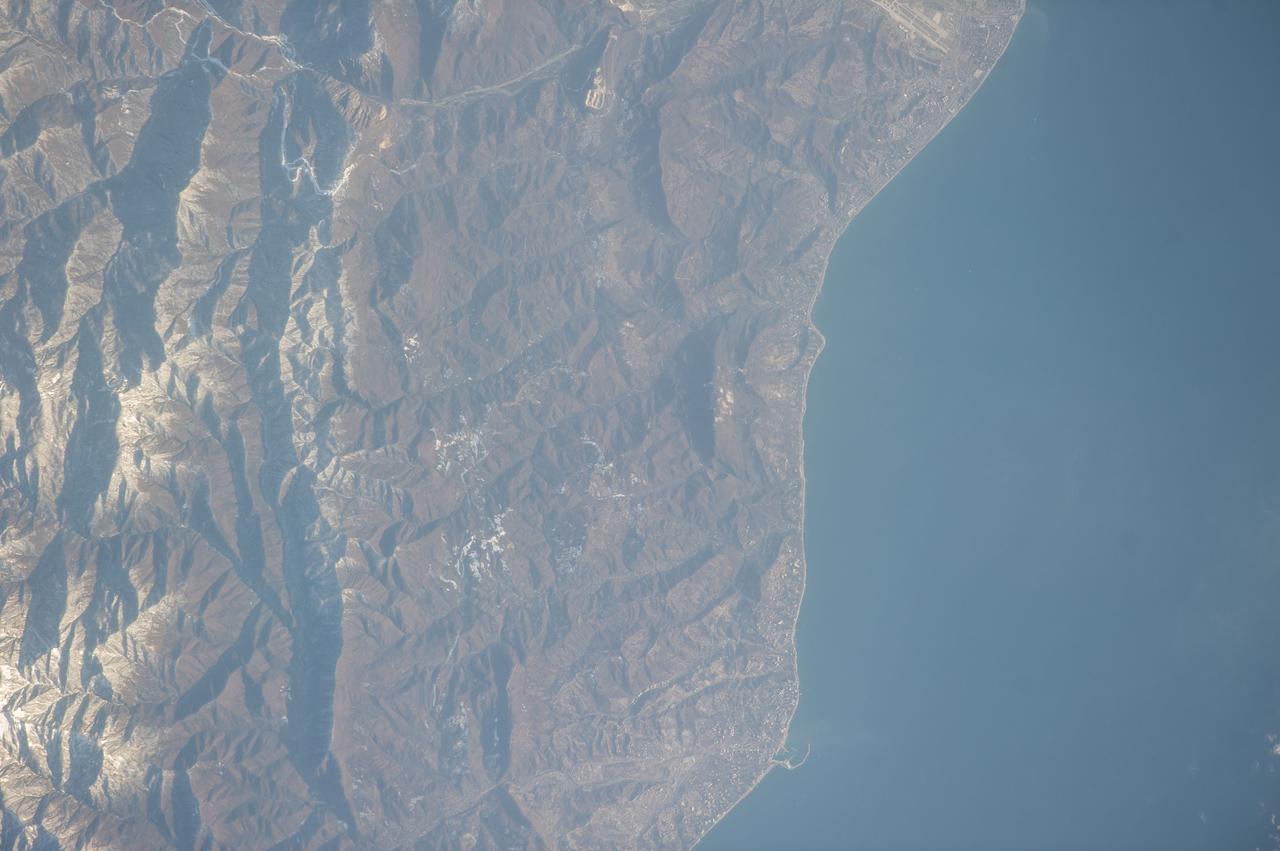
ISS038-E-025812 (5 Feb. 2014) --- One of the Expedition 38 crew members aboard the International Space Station used a 400mm lens to expose this vertical view of the general area of the 2014 Winter Olympics. Sochi is a city in Krasnodar Krai, Russia, located on the Black Sea coast near the border between Georgia/Abkhazia and Russia. It has an area of 1,353 square miles or 3,505 square kilometers.
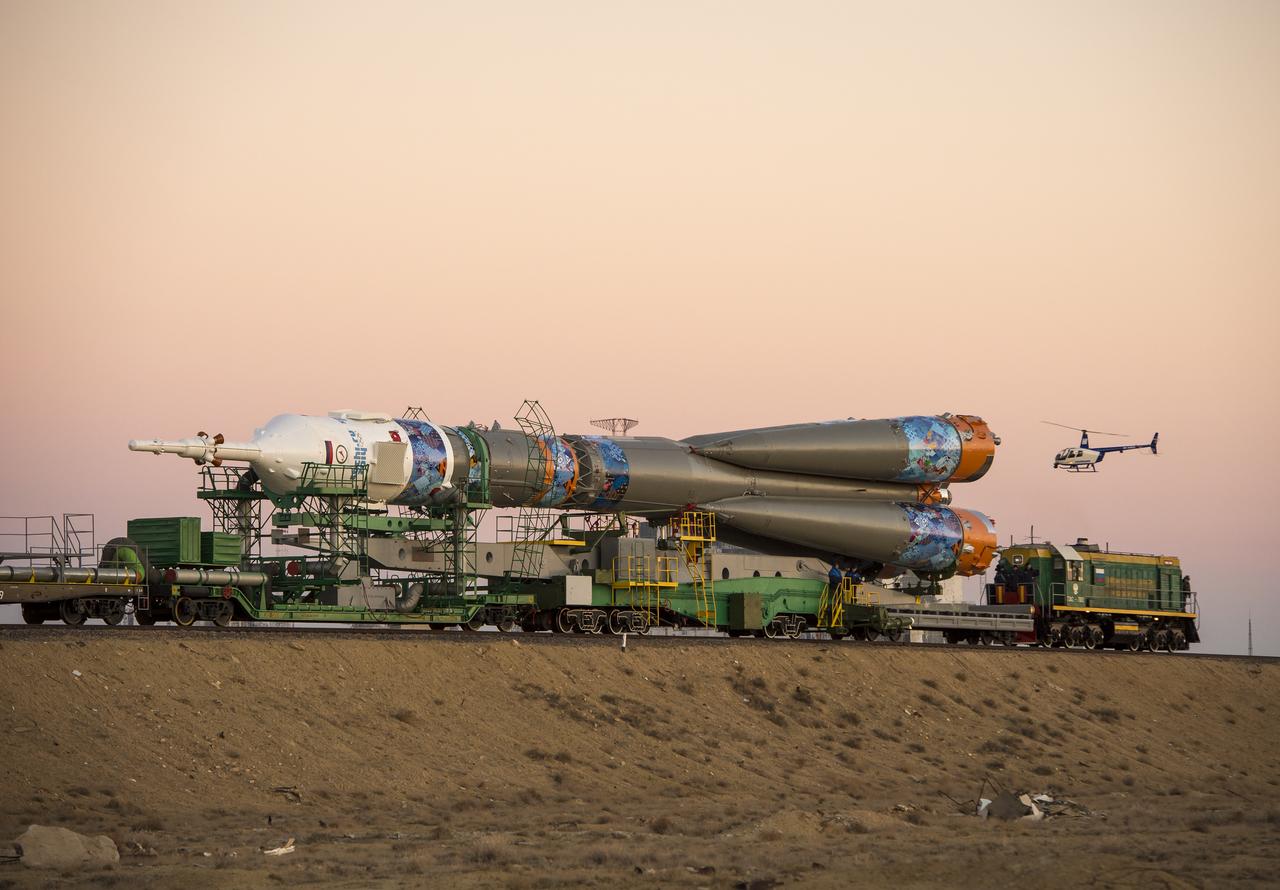
The Soyuz TMA-11M rocket, adorned with the logo of the Sochi Olympic Organizing Committee and other related artwork, is rolled out to the launch pad by train on Tuesday, Nov. 5, 2013, at the Baikonur Cosmodrome in Kazakhstan. Launch of the Soyuz rocket is scheduled for November 7 and will send Expedition 38 Soyuz Commander Mikhail Tyurin of Roscosmos, Flight Engineer Rick Mastracchio of NASA and Flight Engineer Koichi Wakata of the Japan Aerospace Exploration Agency on a six-month mission aboard the International Space Station. Photo Credit: (NASA/Bill Ingalls)
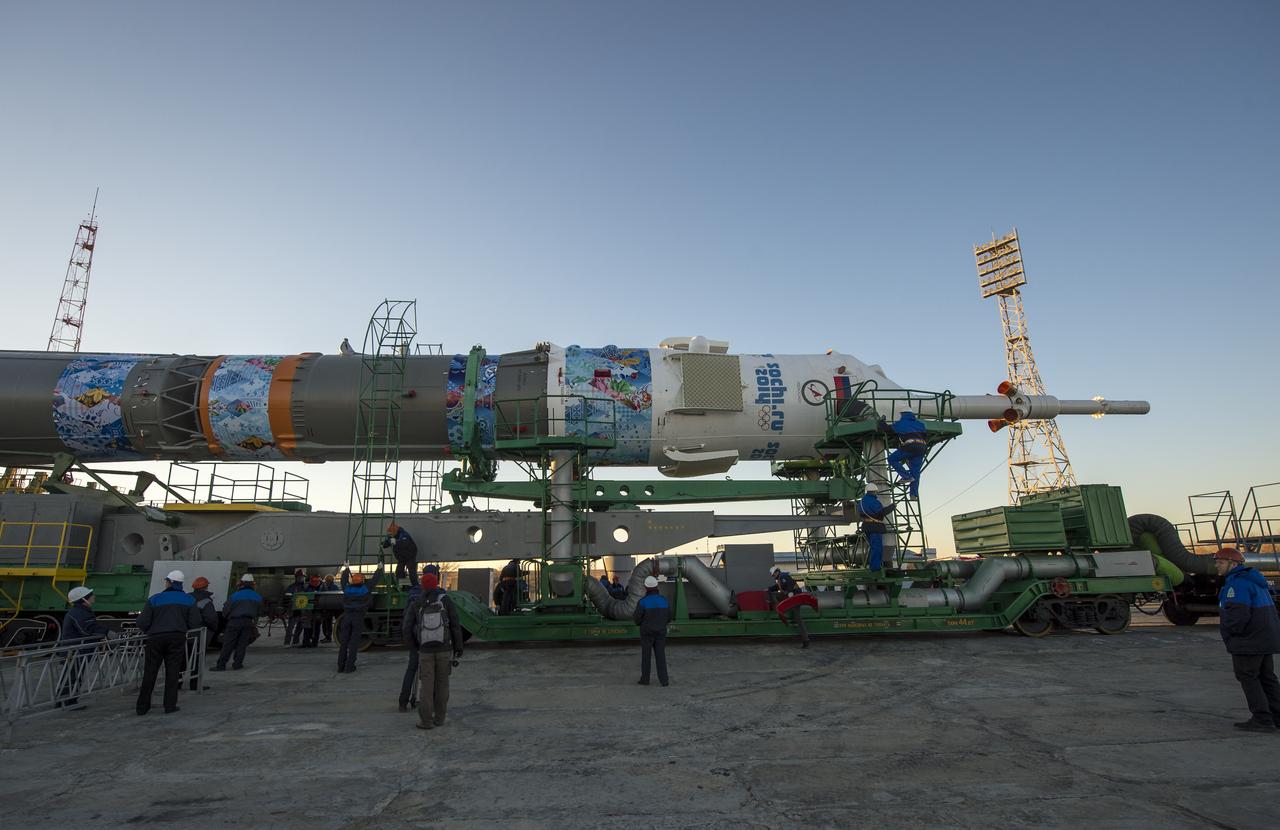
The Soyuz TMA-11M rocket, adorned with the logo of the Sochi Olympic Organizing Committee and other related artwork, arrives at the launch pad by train on Tuesday, Nov. 5, 2013, at the Baikonur Cosmodrome in Kazakhstan. Launch of the Soyuz rocket is scheduled for November 7 and will send Expedition 38 Soyuz Commander Mikhail Tyurin of Roscosmos, Flight Engineer Rick Mastracchio of NASA and Flight Engineer Koichi Wakata of the Japan Aerospace Exploration Agency on a six-month mission aboard the International Space Station. Photo Credit: (NASA/Bill Ingalls)
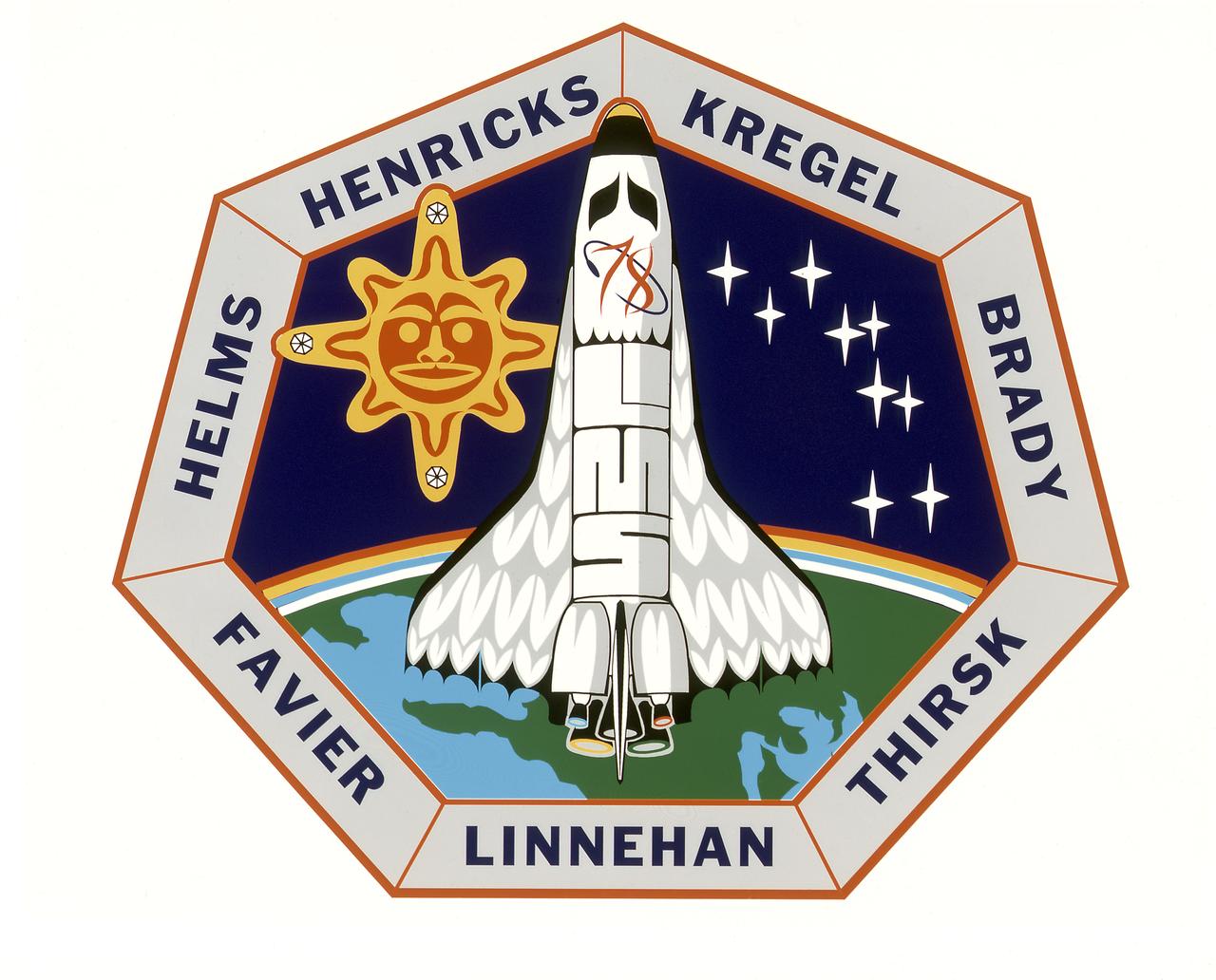
The STS-78 patch links past with present to tell the story of its mission and science through a design imbued with the strength and vitality of the 2-dimensional art of North America's northwest coast Indians. Central to the design is the space Shuttle whose bold lines and curves evoke the Indian image for the eagle, a native American symbol of power and prestige as well as the national symbol of the United States. The wings of the Shuttle suggest the wings of the eagle whose feathers, indicative of peace and friendship in Indian tradition, are captured by the U forms, a characteristic feature of Northwest coast Indian art. The nose of the Shuttle is the strong downward curve of the eagle's beak, and the Shuttle's forward windows, the eagle's eyes, represented through the tapered S forms again typical of this Indian art form. The basic black and red atoms orbiting the mission number recall the original NASA emblem while beneath, utilizing Indian ovoid forms, the major mission scientific experiment package LMS (Life and Materials Sciences) housed in the Shuttle's cargo bay is depicted in a manner reminiscent of totem-pole art. This image of a bird poised for flight, so common to Indian art, is counterpointed by an equally familiar Tsimshian Indian symbol, a pulsating sun with long hyperbolic rays, the symbol of life. Within each of these rays are now encased crystals, the products of this mission's 3 major, high-temperature materials processing furnaces. And as the sky in Indian lore is a lovely open country, home of the Sun Chief and accessible to travelers through a hole in the western horizon, so too, space is a vast and beckoning landscape for explorers launched beyond the horizon. Beneath the Tsimshian sun, the colors of the earth limb are appropriately enclosed by a red border representing life to the Northwest coast Indians. The Indian colors of red, navy blue, white, and black pervade the STS-78 path. To the right of the Shuttle-eagle, the constellation Delphinus recalls the dolphin, friend of ancient sailors and, now perhaps too, of the 9 space voyagers suggested by this constellation's blaze of 9 stars. The patch simultaneously celebrates international unity fostered by the Olympic spirit of sports competition at the 1996 Olympic Games in Atlanta, Georgia, U.S.A. Deliberately poised over the city of Atlanta, the Space Shuttle glows at its base with the 5 official Olympic rings in the 5 Olympic colors which can also be found throughout the patch, rings and colors which signify the 5 continents of the earth. This is an international mission and for the first time in NASA patch history, astronauts have dispensed with identifying country flags beneath their names to celebrate the spirit of international unity so characteristic of this flight.
KENNEDY SPACE CENTER, FLA. - Inside a tent, employees look over an exhibit of safety equipment. The exhibits were part of Spaceport Super Safety and Health Day, which also featured presentations by guest speakers Dr. Pamela Peeke, Navy Com. Stephen E. Iwanowicz, NASA’s Dr. Kristine Calderon and Olympic-great Bruce Jenner. Vendors’ exhibits were set up in the parking areas outside the Vehicle Assembly Building and the OandC Building. The annual event was initiated at KSC in 1998 to increase awareness of the importance of safety and health among the government and contractor workforce. The theme for this year’s event was “Safety and Health: A Winning Combination.”

The Soyuz TMA-11M rocket, adorned with the logo of the Sochi Olympic Organizing Committee and other related artwork, as the service structure arms are raised into position at the launch pad on Tuesday, Nov. 5, 2013, at the Baikonur Cosmodrome in Kazakhstan. Launch of the Soyuz rocket is scheduled for November 7 and will send Expedition 38 Soyuz Commander Mikhail Tyurin of Roscosmos, Flight Engineer Rick Mastracchio of NASA and Flight Engineer Koichi Wakata of the Japan Aerospace Exploration Agency on a six-month mission aboard the International Space Station. Photo Credit: (NASA/Bill Ingalls)
KENNEDY SPACE CENTER, FLA. - Gary Grigg, a survivor of the World Trade Center attack on Sept. 11, 2001, relates his experience as part of KSC’s Spaceport Super Safety and Health Day. The event included other guest speakers Dr. Pamela Peeke, Navy Com. Stephen E. Iwanowicz, NASA’s Dr. Kristine Calderon and Olympic-great Bruce Jenner. In addition, many vendors’ exhibits were on display for employees. Super Safety and Health Day was initiated at KSC in 1998 to increase awareness of the importance of safety and health among the government and contractor workforce. The theme for this year’s event was “Safety and Health: A Winning Combination.”
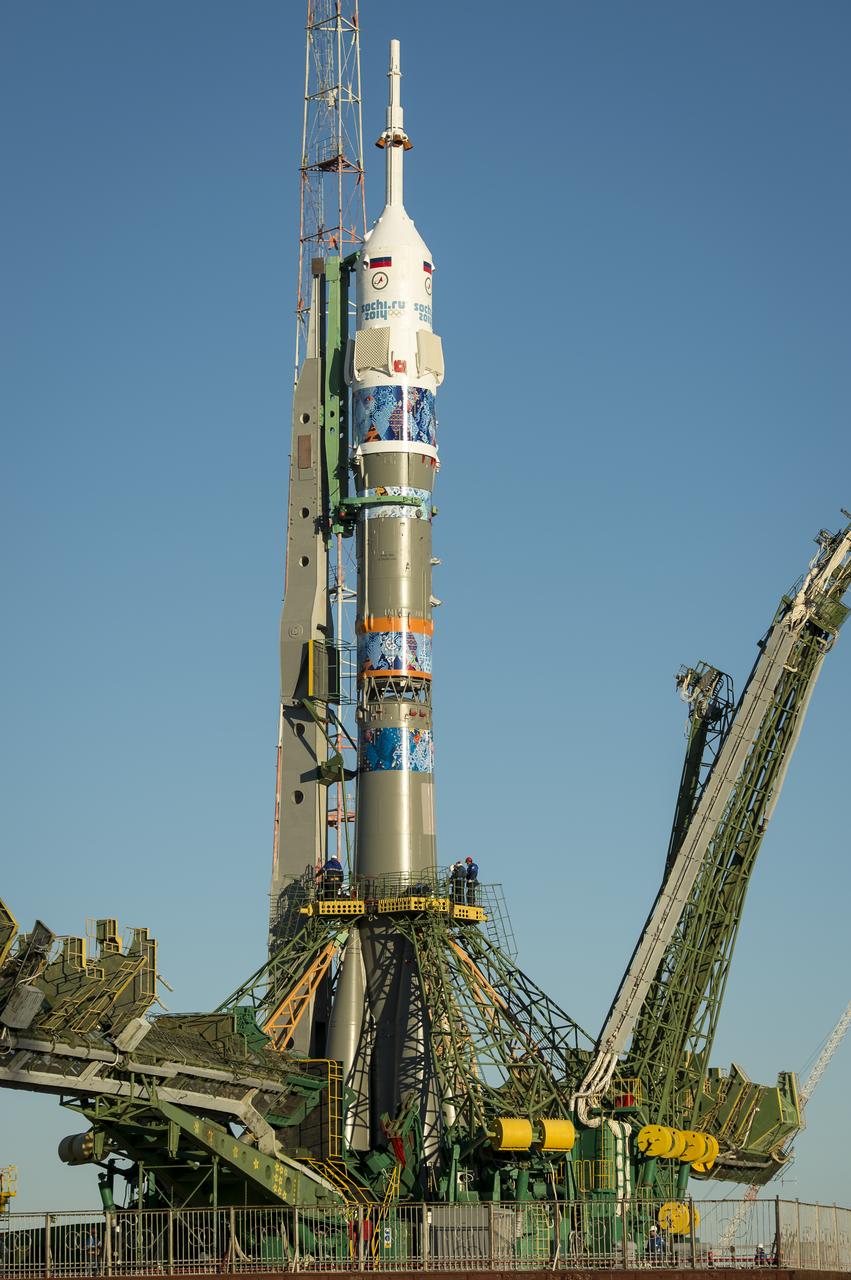
The Soyuz TMA-11M rocket, adorned with the logo of the Sochi Olympic Organizing Committee and other related artwork, is seen after being erected into position at the launch pad on Tuesday, Nov. 5, 2013, at the Baikonur Cosmodrome in Kazakhstan. Launch of the Soyuz rocket is scheduled for November 7 and will send Expedition 38 Soyuz Commander Mikhail Tyurin of Roscosmos, Flight Engineer Rick Mastracchio of NASA and Flight Engineer Koichi Wakata of the Japan Aerospace Exploration Agency on a six-month mission aboard the International Space Station. Photo Credit: (NASA/Bill Ingalls)
KENNEDY SPACE CENTER, FLA. - KSC Employees stop by the American Red Cross exhibit during Spaceport Super Safety and Health Day. The event included guest speakers Dr. Pamela Peeke, Navy Com. Stephen E. Iwanowicz, NASA’s Dr. Kristine Calderon and Olympic-great Bruce Jenner. In addition, many vendors’ exhibits were on display for employees. Super Safety and Health Day was initiated at KSC in 1998 to increase awareness of the importance of safety and health among the government and contractor workforce. The theme for this year’s event was “Safety and Health: A Winning Combination.”
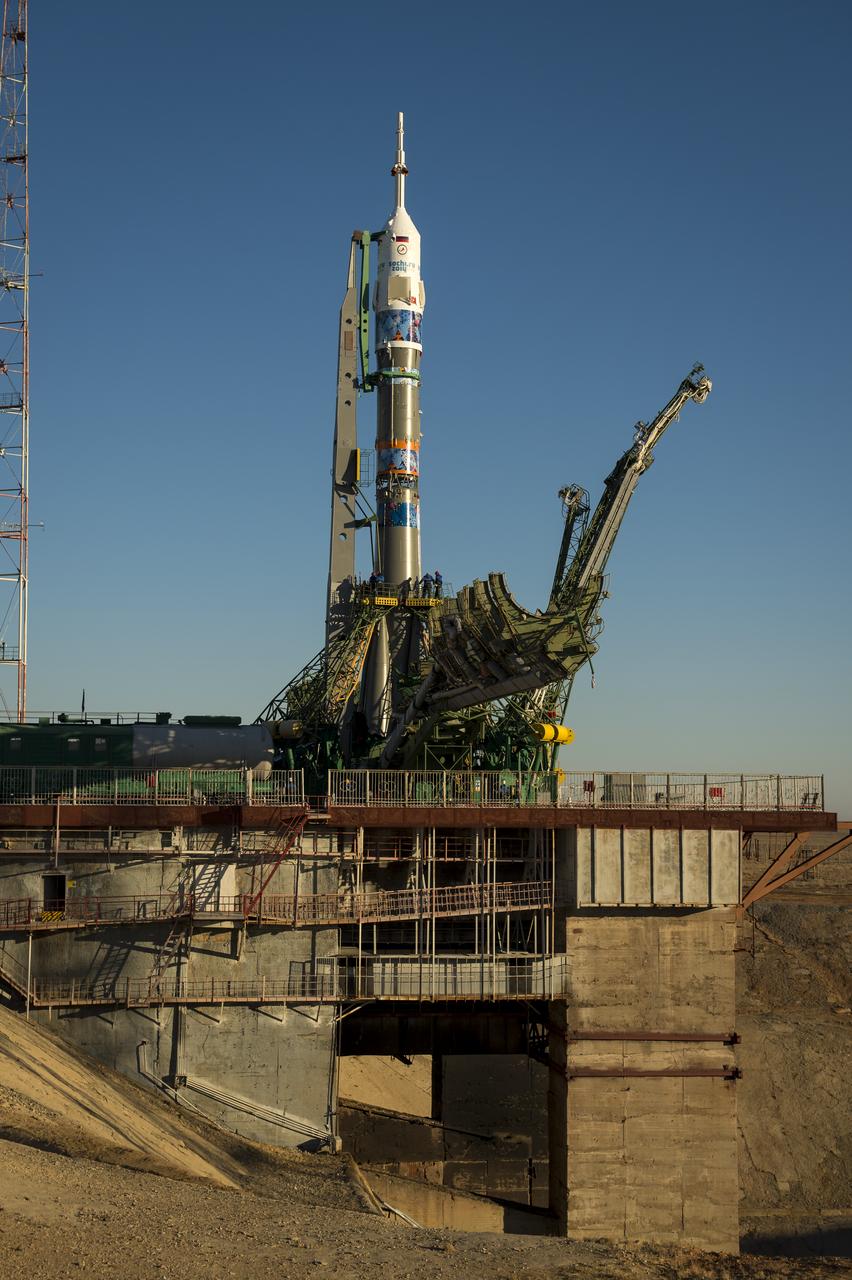
The Soyuz TMA-11M rocket, adorned with the logo of the Sochi Olympic Organizing Committee and other related artwork, is seen after being erected into position at the launch pad on Tuesday, Nov. 5, 2013, at the Baikonur Cosmodrome in Kazakhstan. Launch of the Soyuz rocket is scheduled for November 7 and will send Expedition 38 Soyuz Commander Mikhail Tyurin of Roscosmos, Flight Engineer Rick Mastracchio of NASA and Flight Engineer Koichi Wakata of the Japan Aerospace Exploration Agency on a six-month mission aboard the International Space Station. Photo Credit: (NASA/Bill Ingalls)
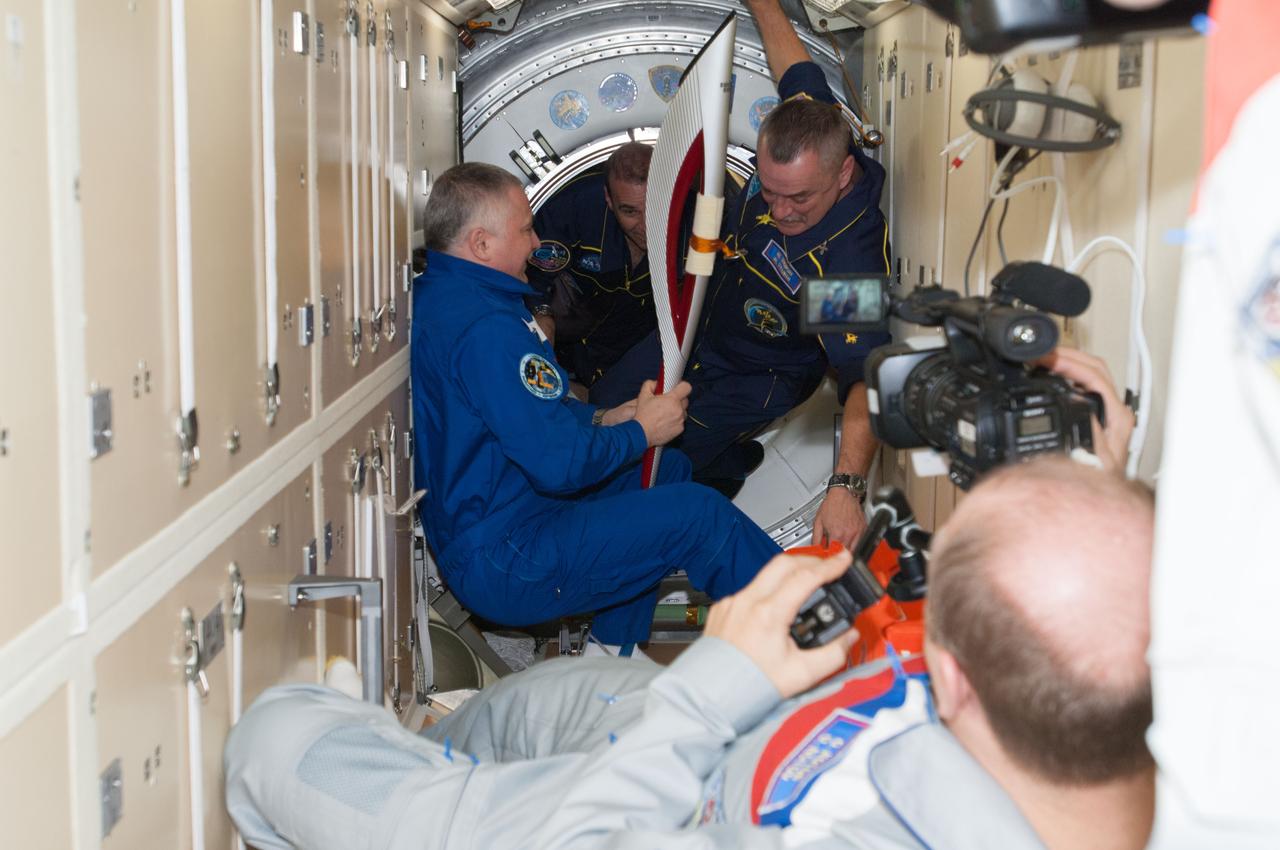
ISS037-E-028206 (7 Nov. 2013) --- In the International Space Station's Rassvet Mini-Research Module 1 (MRM1), Russian cosmonaut Fyodor Yurchikhin (holding the Olympic torch), Expedition 37 commander, welcomes Russian cosmonaut Mikhail Tyurin, Expedition 38 flight engineer, after arriving onboard a Soyuz spacecraft with Japan Aerospace Exploration Agency astronaut Koichi Wakata and NASA astronaut Rick Mastracchio, both Expedition 38 flight engineers. Russian cosmonaut Oleg Kotov (foreground), Expedition 37 flight engineer, captures the event with a video camera.
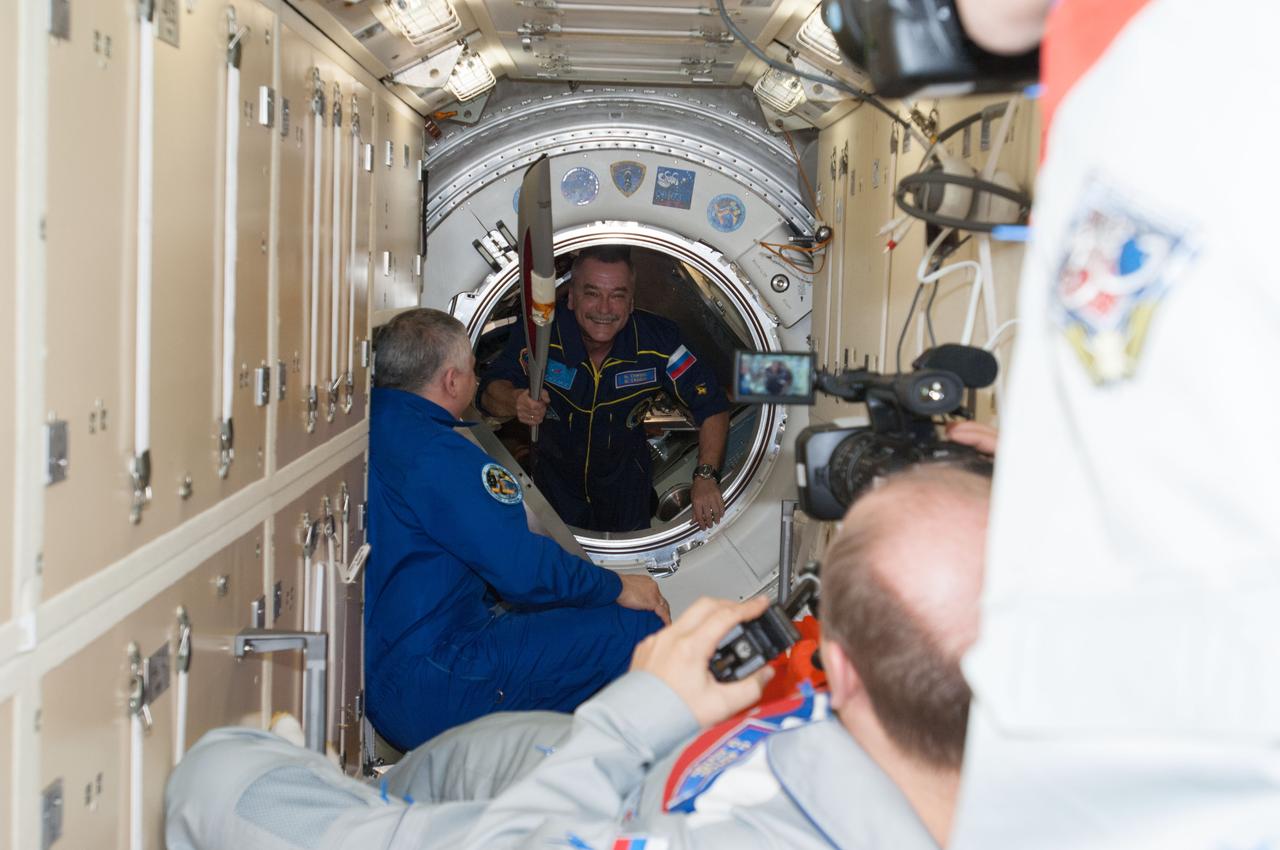
ISS037-E-028203 (7 Nov. 2013) --- In the International Space Station's Rassvet Mini-Research Module 1 (MRM1), Russian cosmonaut Fyodor Yurchikhin, Expedition 37 commander, welcomes Russian cosmonaut Mikhail Tyurin (holding the Olympic torch), Expedition 38 flight engineer, after arriving onboard a Soyuz spacecraft with Japan Aerospace Exploration Agency astronaut Koichi Wakata and NASA astronaut Rick Mastracchio, both Expedition 38 flight engineers. Russian cosmonaut Oleg Kotov (foreground), Expedition 37 flight engineer, captures the event with a video camera.