
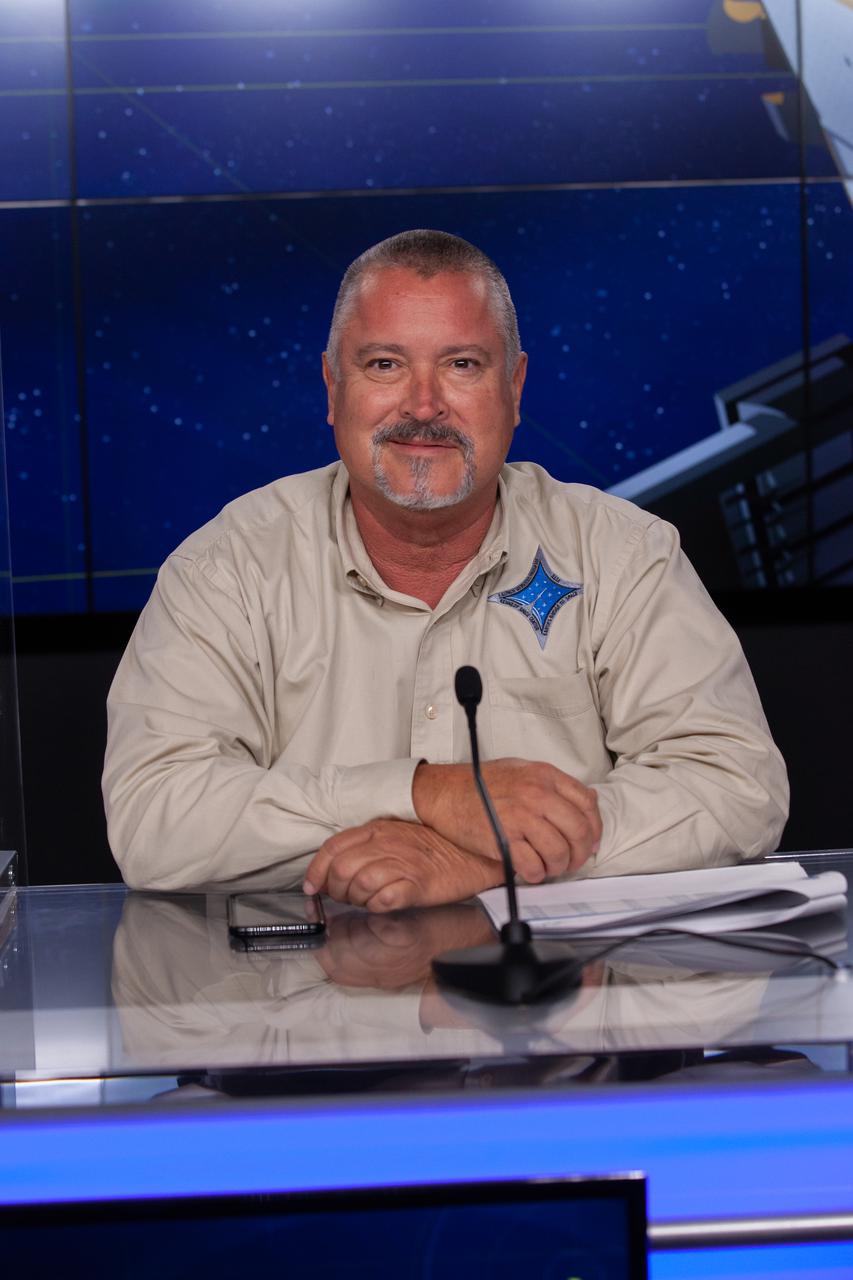
CAPE CANAVERAL, Fla. -- Portrait of Omar Baez Jr., NASA launch director for the Launch Services Program (LSP) at NASA's John F. Kennedy Space Center. Photo credit: NASA/Kim Shiflett

CAPE CANAVERAL, Fla. -- Portrait of Omar Baez Jr., NASA launch director for the Launch Services Program at NASA's John F. Kennedy Space Center. Photo credit: NASA/Kim Shiflett

Omar Baez, Lucy Launch Director, NASA’s Launch Services Program, speaks during a prelaunch news conference for the Lucy mission held inside the TV Auditorium at NASA’s Kennedy Space Center in Florida on Oct. 13, 2021. The mission is targeted to launch at 5:34 a.m. EDT Saturday, Oct. 16, on a United Launch Alliance Atlas V 401 rocket from Space Launch Complex 41 at Cape Canaveral Space Force Station. NASA’s Launch Services Program, based at Kennedy, is managing the launch. Lucy is the first space mission to study the Trojan asteroids, which hold vital clues to the formation of our solar system.
Omar Baez, senior launch director for NASA’s Launch Services Program, participates in a prelaunch news conference for the agency’s Double Asteroid Redirection Test (DART) mission at Vandenberg Space Force Base in California on Nov. 22, 2021. DART is the first mission to test technologies for preventing an impact of Earth by a hazardous asteroid. The mission is scheduled to launch no earlier than 1:21 a.m. EST Wednesday, Nov. 24 (10:21 p.m. PST Tuesday, Nov. 23), aboard a SpaceX Falcon 9 rocket from Vandenberg. NASA's Launch Services Program based at Kennedy Space Center in Florida, America's multi-user spaceport, is managing the launch.

From left, Dr Thomas Zurbuchen, Lindley Johnson, Ed Reynolds, Omar Baez, Julianna Scheiman, and Capt. Maximillian Rush participate in a prelaunch news conference on Nov. 22, 2021, at Vandenberg Space Force Base in California in preparation for the agency’s Double Asteroid Redirection Test (DART) launch. DART is the first mission to test technologies for preventing an impact of Earth by a hazardous asteroid. The mission is scheduled to launch no earlier than 1:21 a.m. EST Wednesday, Nov. 24 (10:21 p.m. PST Tuesday, Nov. 23), aboard a SpaceX Falcon 9 rocket from Vandenberg. NASA's Launch Services Program based at Kennedy Space Center in Florida, America's multi-user spaceport, is managing the launch.

From left, Sandra Smalley, director, Joint Agency Satellite Division, NASA Headquarters; Omar Baez, launch director, NASA Kennedy; and Scott Messer, program manager, NASA Missions, United Launch Alliance, speak to members of the news media during a Geostationary Operational Environmental Satellite (GOES-R) prelaunch news conference in the Kennedy Space Center's Press Site auditorium in Florida.

CAPE CANAVERAL, Fla. – Tim Dunn, NASA launch manager, center, monitors the countdown for the launch of the TDRS-K spacecraft on an Atlas V rocket. Omar Baez, assistant NASA launch manager, left, and Diana Calero, NASA mission manager, right, also participate in the countdown procedures before the liftoff. The launch teams for NASA and the United Launch Alliance work inside the Atlas Space Operations Center at Cape Canaveral Air Force Station, Fla., known as the ASOC. Photo credit: NASA_Kim Shiflett
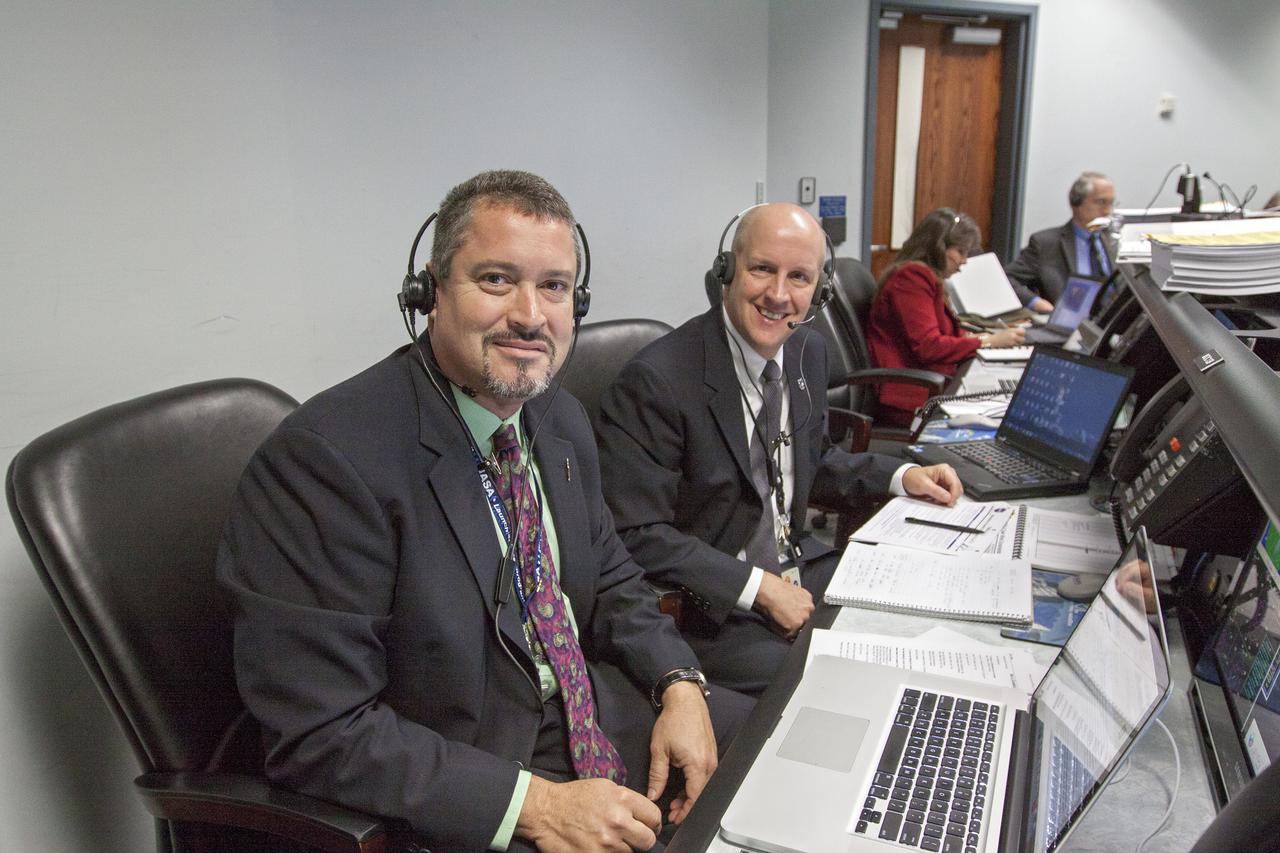
CAPE CANAVERAL, Fla. – Tim Dunn, NASA launch manager, center, monitors the countdown for the launch of the TDRS-K spacecraft on an Atlas V rocket. Omar Baez, assistant NASA launch manager, left, and Diana Calero, NASA mission manager, right, also participate in the countdown procedures before the liftoff. The launch teams for NASA and the United Launch Alliance work inside the Atlas Space Operations Center at Cape Canaveral Air Force Station, Fla., known as the ASOC. Photo credit: NASA_Kim Shiflett

At Vandenberg Air Force Base in California, Omar Baez, NASA launch director, speaks to members of the media at a prelaunch news conference for the Joint Polar Satellite System-1, or JPSS-1. Built by Ball Aerospace and Technologies Corp. of Boulder, Colorado, JPSS is the first in a series four next-generation environmental satellites in a collaborative program between the NOAA and NASA. Liftoff atop a United Launch Alliance Delta II rocket is scheduled to take place from Vandenberg's Space Launch Complex 2 at 1:47 a.m. PST (4:47 a.m. EST), on Nov. 14, 2017.
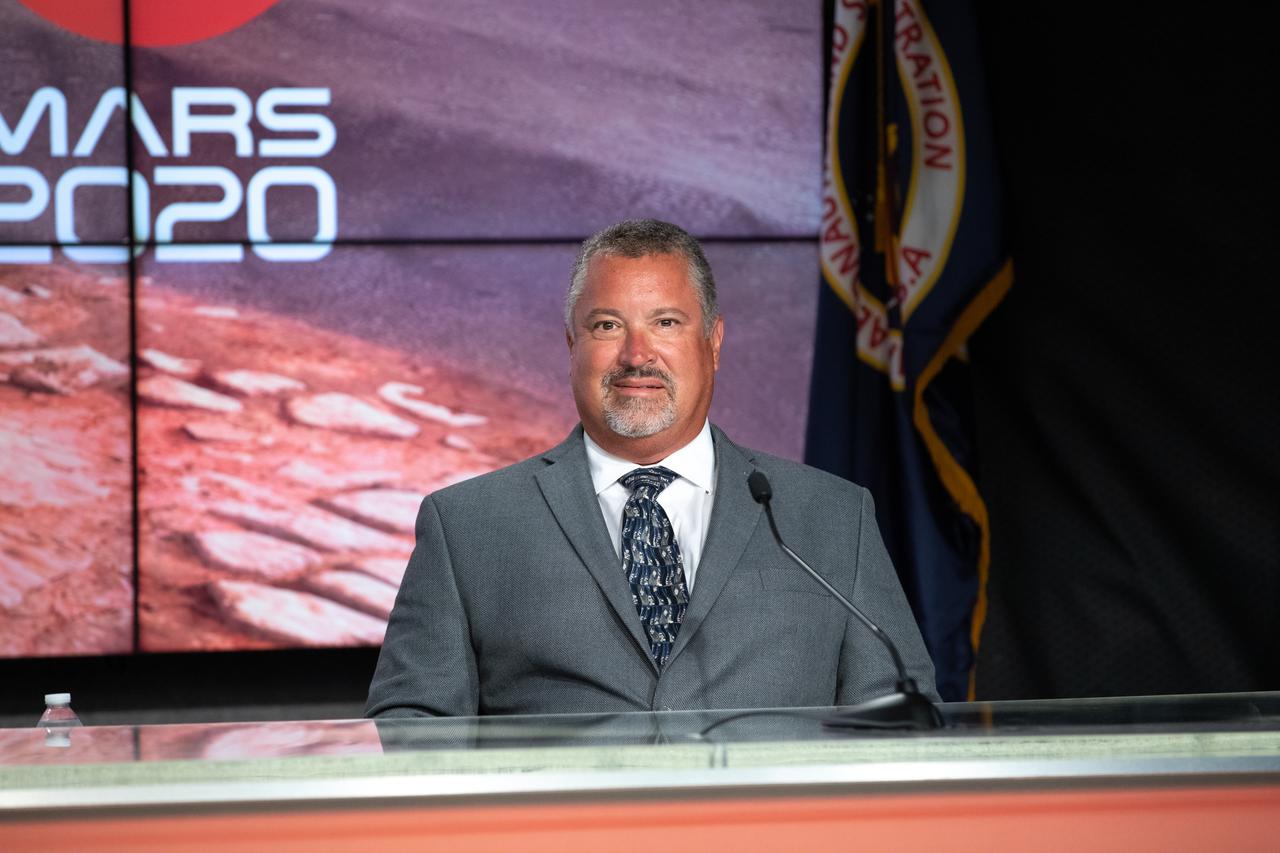
Launch Director Omar Baez, with NASA’s Launch Services Program, participates in a Mars 2020 prelaunch news briefing at NASA’s Kennedy Space Center in Florida on July 27, 2020. The Mars Perseverance rover is scheduled to launch on July 30, on a United Launch Alliance Atlas V 541 rocket from Space Launch Complex 41 at nearby Cape Canaveral Air Force Station. The rover is part of NASA’s Mars Exploration Program, a long-term effort of robotic exploration of the Red Planet. The rover will search for habitable conditions in the ancient past and signs of past microbial life on Mars. The Launch Services Program at Kennedy is responsible for launch management.

In the Mission Director's Center at Cape Canaveral Air Force Station, Kennedy Space Center Director Bob Cabana, right, congratulates, Omar Baez, a senior launch director in NASA's Launch Services Program, after the successful launch of eight Cyclone Global Navigation Satellite System, or CYGNSS, spacecraft. The satellites will make frequent and accurate measurements of ocean surface winds throughout the life cycle of tropical storms and hurricanes. The data that CYGNSS provides will enable scientists to probe key air-sea interaction processes that take place near the core of storms, which are rapidly changing and play a crucial role in the beginning and intensification of hurricanes.
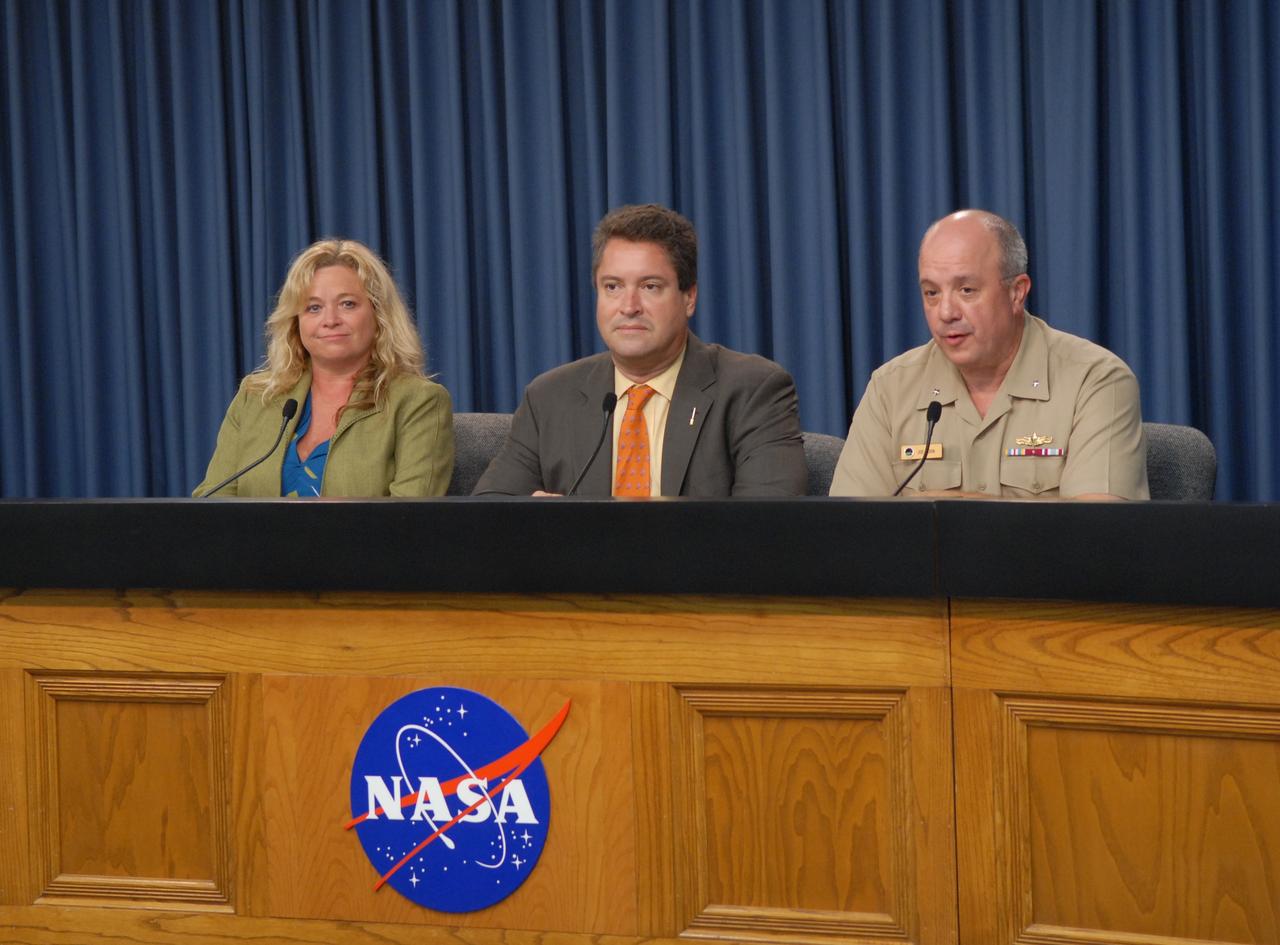
CAPE CANAVERAL, Fla. – At a post-launch news conference for the media about launch of the Space Tracking and Satellite System – Demonstrator spacecraft, Rear Adm. Joseph Horn, deputy director with the U.S. Missile Defense Agency, answers a question. NASA Launch Manager Omar Baez is at center. At left, Public Affairs Officer Tracy Young moderates. The STSS-Demo is a space-based sensor component of a layered Ballistic Missile Defense System designed for the overall mission of detecting, tracking and discriminating ballistic missiles. The spacecraft was launched by NASA for the U.S. Missile Defense Agency. Photo credit: NASA/Jim Grossmann
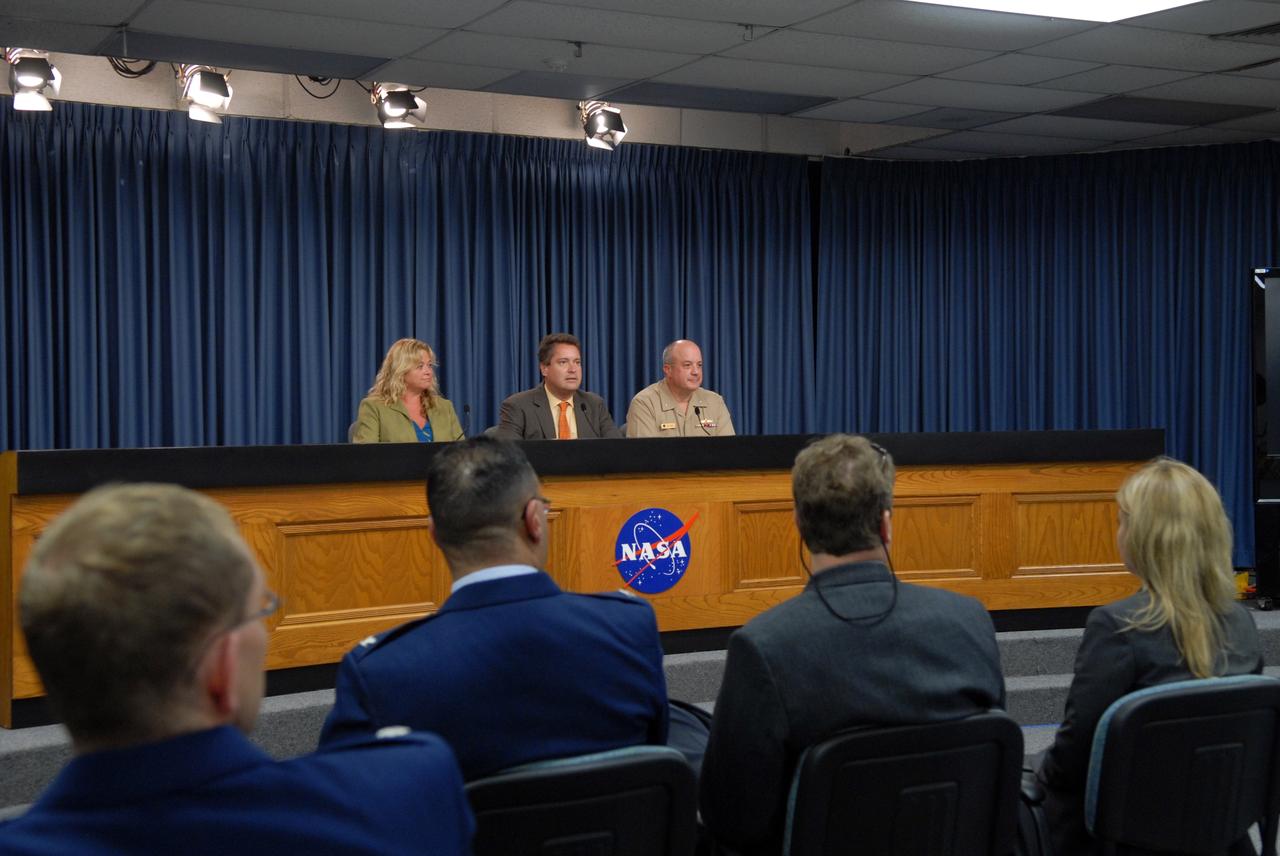
CAPE CANAVERAL, Fla. – Public Affairs Officer Tracy Young moderates a post-launch news conference for the media about the Space Tracking and Satellite System – Demonstrator spacecraft. Seated at center is Omar Baez, NASA launch manager, and Rear Adm. Joseph Horn, deputy director, with the U.S. Missile Defense Agency. The STSS-Demo is a space-based sensor component of a layered Ballistic Missile Defense System designed for the overall mission of detecting, tracking and discriminating ballistic missiles. The spacecraft was launched by NASA for the U.S. Missile Defense Agency. Photo credit: NASA/Jim Grossmann

Omar Baez, launch director in NASA’s Launch Services Program, speaks to news media during a prelaunch mission briefing for NASA’s Ionospheric Connection Explorer (ICON), on Oct. 8, 2019, in the News Center auditorium at the agency’s Kennedy Space Center in Florida. At left is Karen Fox of NASA Communications. ICON is targeted to launch from Cape Canaveral Air Force Station in Florida on Oct. 9, 2019, aboard a Northrop Grumman Pegasus XL rocket carried aloft by the company’s Stargazer L-1011 aircraft. The explorer will study the frontier of space - the dynamic zone high in Earth's atmosphere where terrestrial weather from below meets space weather above.
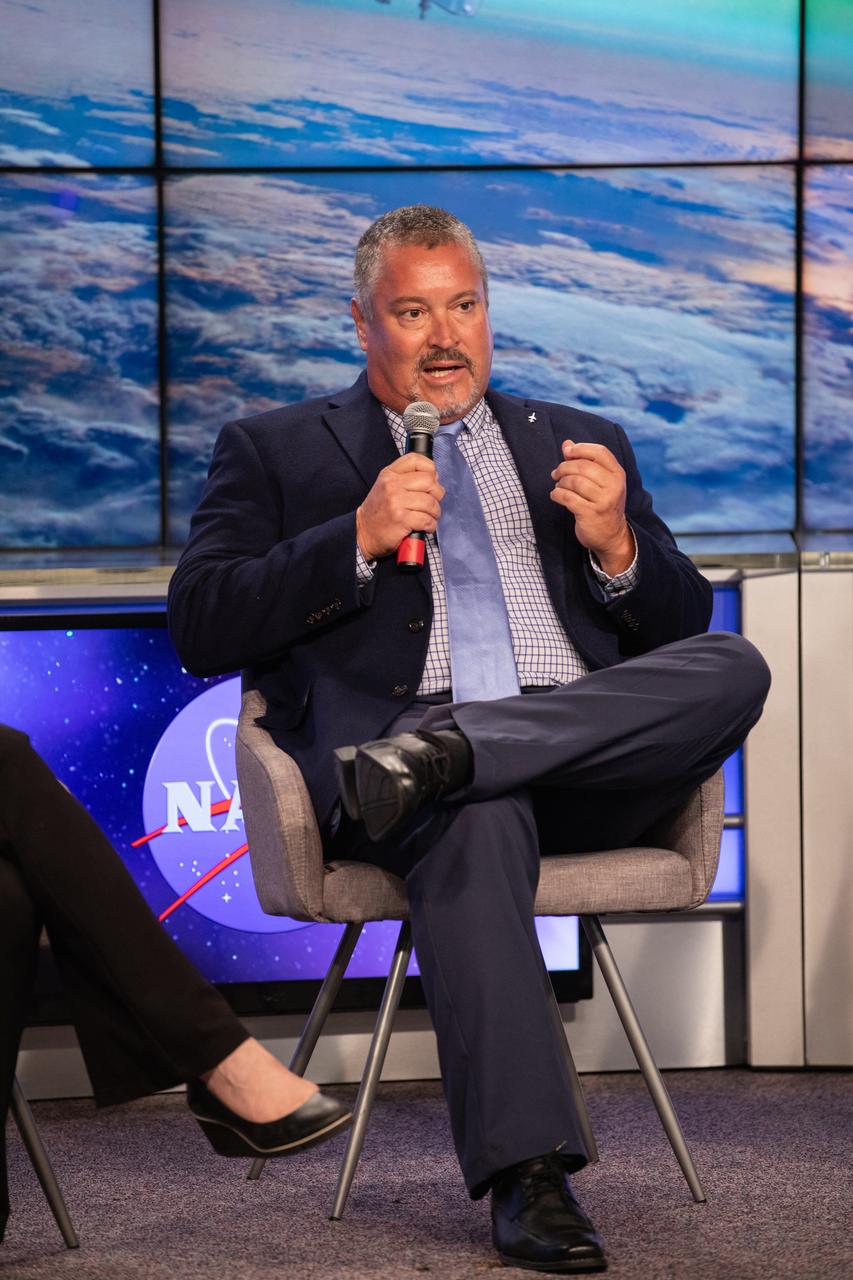
Omar Baez, launch director in NASA’s Launch Services Program, speaks to news media during a prelaunch mission briefing for NASA’s Ionospheric Connection Explorer (ICON), on Oct. 8, 2019, in the News Center auditorium at the agency’s Kennedy Space Center in Florida. ICON is targeted to launch from Cape Canaveral Air Force Station in Florida on Oct. 9, 2019, aboard a Northrop Grumman Pegasus XL rocket carried aloft by the company’s Stargazer L-1011 aircraft. The explorer will study the frontier of space - the dynamic zone high in Earth's atmosphere where terrestrial weather from below meets space weather above.
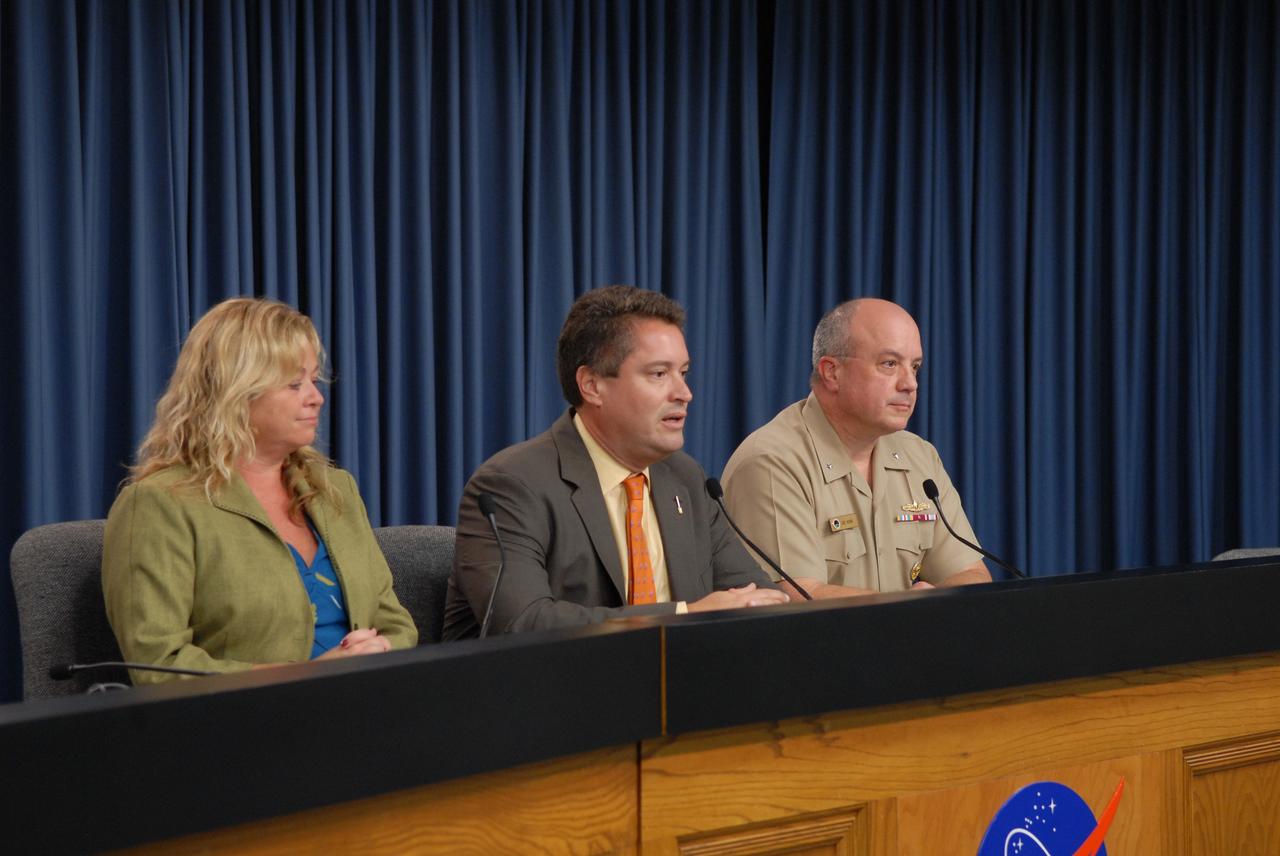
CAPE CANAVERAL, Fla. – At a post-launch news conference for the media about launch of the Space Tracking and Satellite System – Demonstrator spacecraft, NASA Launch Manager Omar Baez, at center, responds to a question. At right is Rear Adm. Joseph Horn, deputy director, with the U.S. Missile Defense Agency. At left, Public Affairs Officer Tracy Young moderates. The STSS-Demo is a space-based sensor component of a layered Ballistic Missile Defense System designed for the overall mission of detecting, tracking and discriminating ballistic missiles. The spacecraft was launched by NASA for the U.S. Missile Defense Agency. Photo credit: NASA/Jim Grossmann

Omar Baez, right, launch director in NASA’s Launch Services Program (LSP), monitors the launch of the agency’s Ionospheric Connection Explorer (ICON) satellite inside Hangar AE’s Mission Director’s Center at Cape Canaveral Air Force Station (CCAFS). The Northrop Grumman Pegasus XL rocket carrying ICON was released from the company’s L-1011 Stargazer aircraft at 9:59 p.m. EDT on Oct. 10, 2019, over the Atlantic Ocean about 50 miles from Daytona Beach, Florida, following takeoff from CCAFS. ICON will spend two years studying the Earth’s ionosphere – the dynamic zone in our atmosphere where terrestrial weather from below meets space weather from above. The ICON launch was managed by LSP.
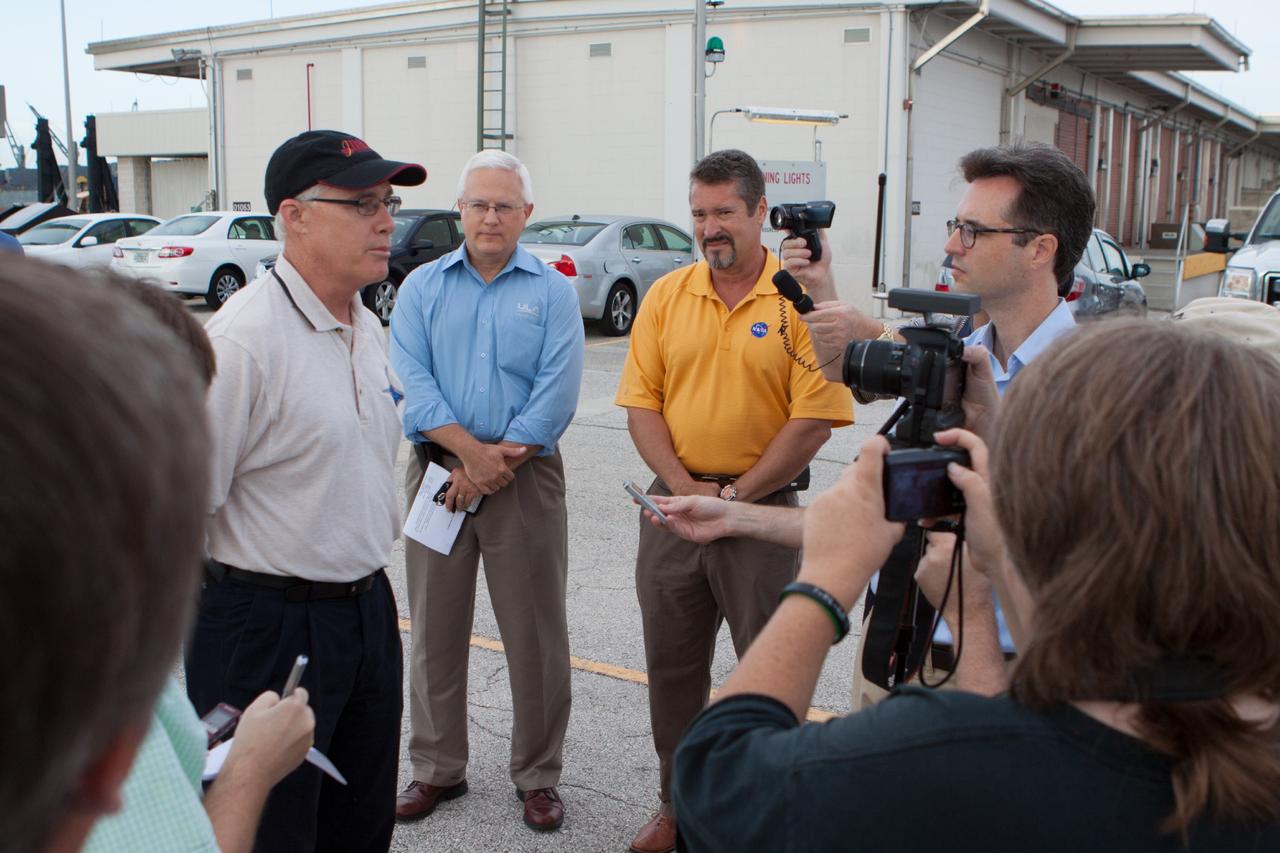
PORT CANAVERAL, Fla. – At Port Canaveral, Fla., NASA and United Launch Alliance managers brief members of the news media on the arrival of the ULA Atlas V rocket that will boost the Mars Atmosphere and Volatile Evolution, or MAVEN, spacecraft to the Red Planet. From the left, are Chuck Tatro, NASA's MAVEN mission manager, Vernon Thorp, ULA's NASA and Commercial Program manager and Omar Baez, NASA's launch director. MAVEN is being prepared for its scheduled launch in November from Cape Canaveral Air Force Station, Fla. atop a United Launch Alliance Atlas V rocket. Positioned in an orbit above the Red Planet, MAVEN will study the upper atmosphere of Mars in unprecedented detail. For more information, visit: http://www.nasa.gov/mission_pages/maven/main/index.html Photo credit: NASA/Kim Shiflett

Members of the news media attend a Geostationary Operational Environmental Satellite (GOES-R) prelaunch news conference in the Kennedy Space Center's Press Site auditorium in Florida. NASA and industry leaders include: Michael Curie, of NASA Communications; Stephen Volz, assistant administrator for satellite and information services, National Oceanic and Atmospheric Administration (NOAA's); Greg Mandt, GOES-R system program director, NOAA; Sandra Smalley, director, Joint Agency Satellite Division, NASA Headquarters; Omar Baez, launch director, NASA Kennedy; Scott Messer, program manager, NASA Missions, United Launch Alliance; and Clay Flinn, launch weather officer, 4th Weather Squadron, Cape Canaveral Air Force Station.
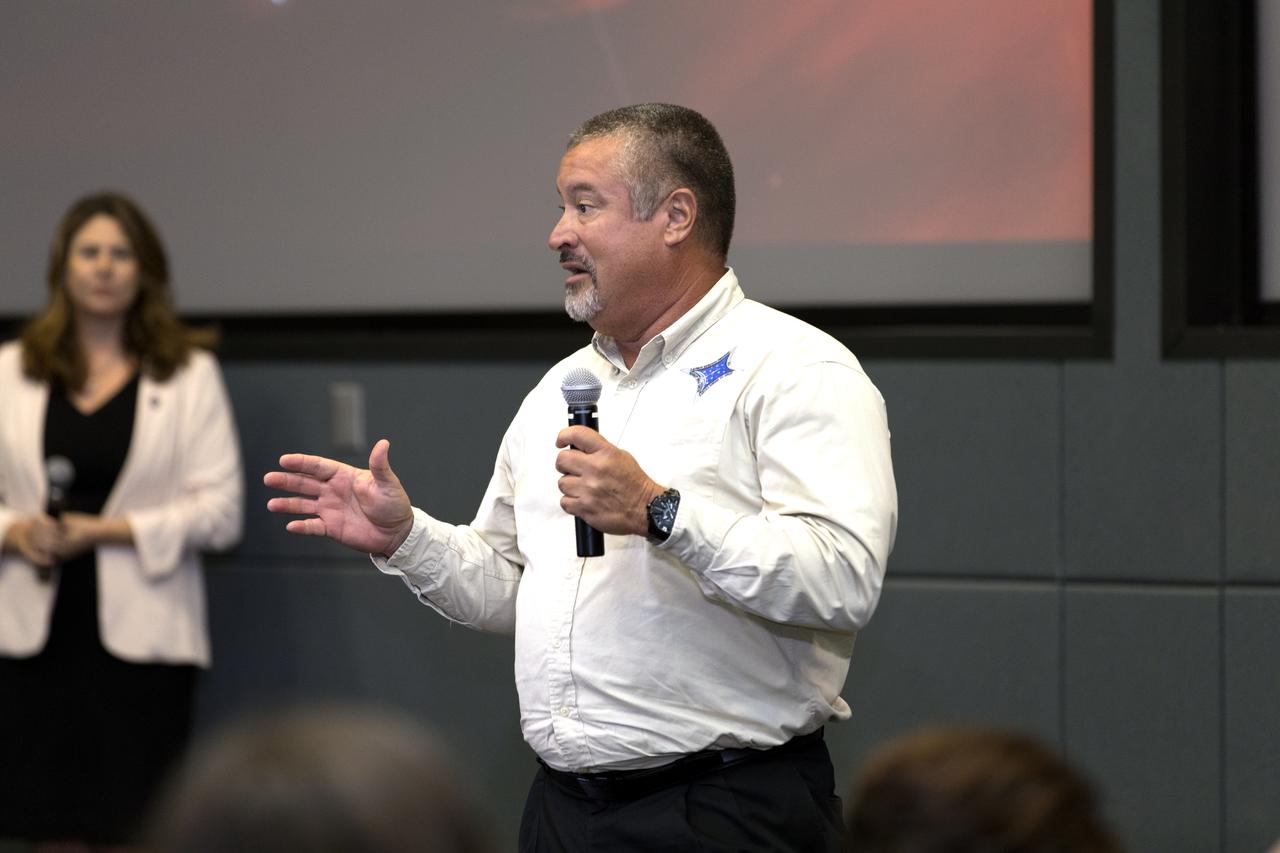
In the Kennedy Space Center's Operations and Support Building II, Thursday, Aug. 9, 2018, members of the media participate in a prelaunch mission briefing on NASA's Parker Solar Probe. Speaking to the media is Omar Baez, launch director, NASA Kennedy Space Center. The Parker Solar Probe will lift off on a United Launch Alliance Delta IV Heavy rocket from Space Launch Complex 37 at Cape Canaveral Air Force Station in Florida. The spacecraft was built by Applied Physics Laboratory of Johns Hopkins University in Laurel, Maryland. The mission will perform the closest-ever observations of a star when it travels through the Sun's atmosphere, called the corona. The probe will rely on measurements and imaging to revolutionize our understanding of the corona and the Sun-Earth connection.
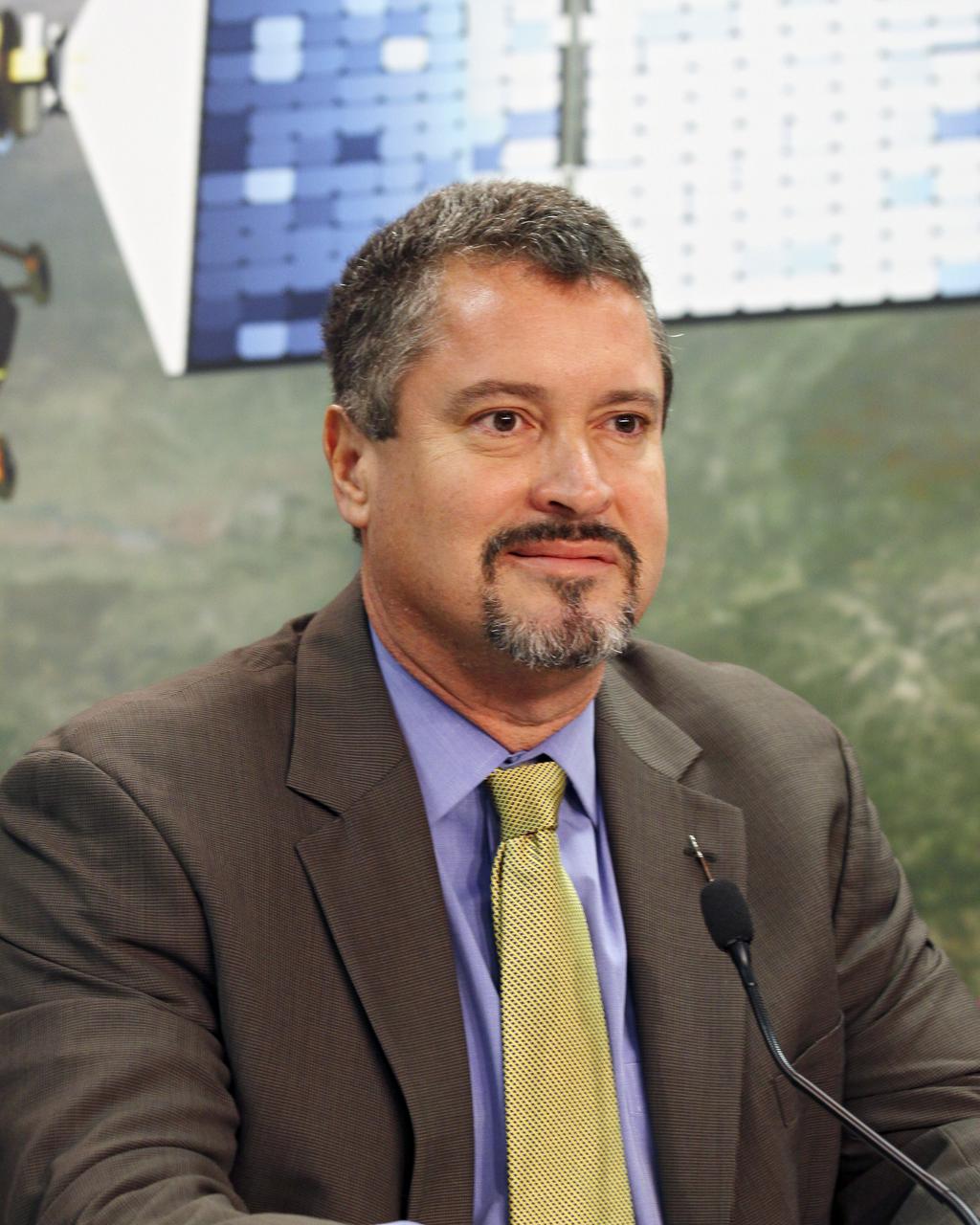
VANDENBERG AFB, Calif. -- NASA and contractor officials discussed NASA's readiness to launch the Landsat Data Continuity Mission, or LDCM, during a prelaunch news conference at Vandenberg Air Force Base, Calif. Participants included NASA Launch Director Omar Baez from Kennedy Space Center. The Landsat Data Continuity Mission LDCM is the future of Landsat satellites. It will continue to obtain valuable data and imagery to be used in agriculture, education, business, science, and government. The Landsat Program provides repetitive acquisition of high resolution multispectral data of the Earth's surface on a global basis. The data from the Landsat spacecraft constitute the longest record of the Earth's continental surfaces as seen from space. It is a record unmatched in quality, detail, coverage, and value. Liftoff is planned for Feb. 11, 2013 aboard a United Launch Alliance Atlas V rocket. For more information, visit: http:__www.nasa.gov_mission_pages_landsat_main_index.html Photo credit: NASA_Kim Shiflett
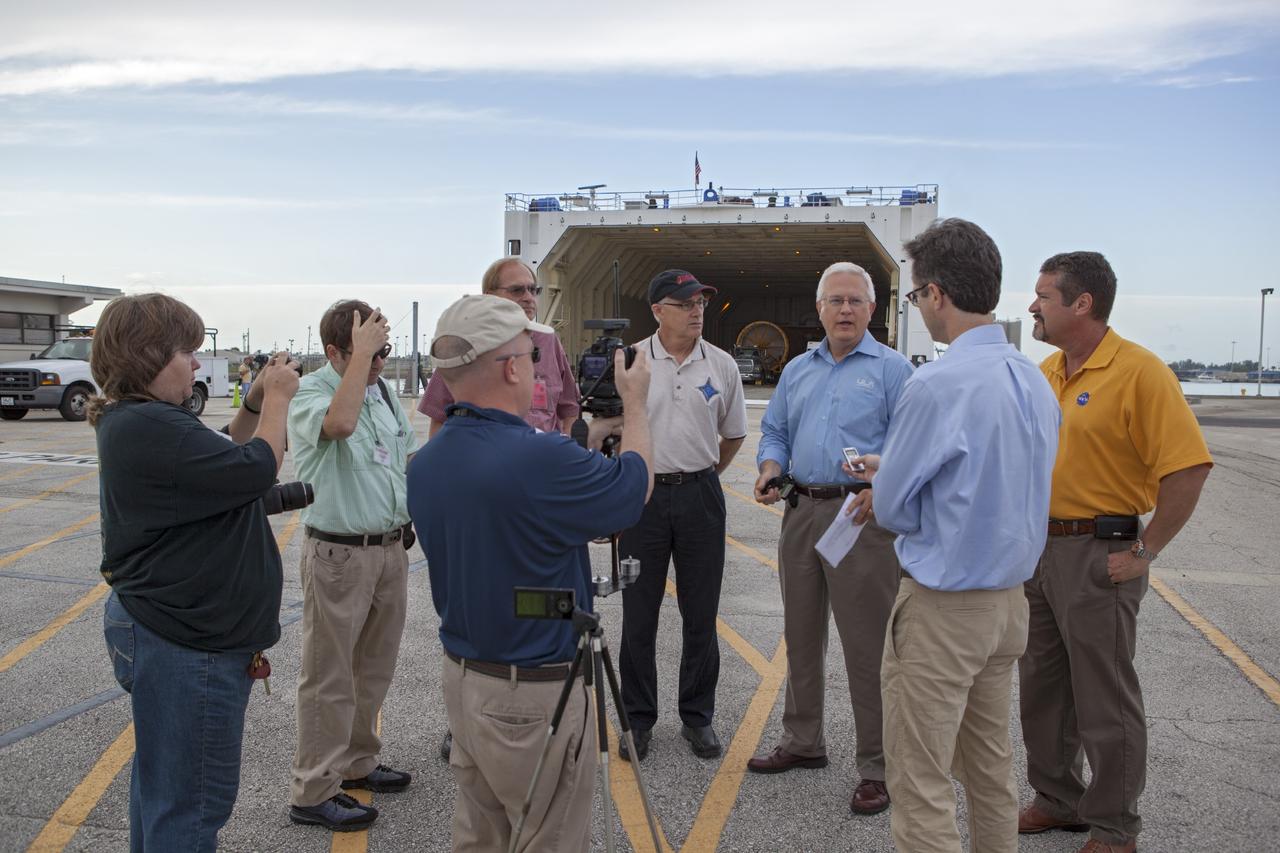
PORT CANAVERAL, Fla. – At Port Canaveral, Fla., NASA and United Launch Alliance managers brief members of the news media on the arrival of the ULA Atlas V rocket that will boost the Mars Atmosphere and Volatile Evolution, or MAVEN, spacecraft to the Red Planet. From the left, are Chuck Tatro, NASA's MAVEN mission manager, Vernon Thorp, ULA's NASA and Commercial Program manager and Omar Baez, NASA's launch director. MAVEN is being prepared for its scheduled launch in November from Cape Canaveral Air Force Station, Fla. atop a United Launch Alliance Atlas V rocket. Positioned in an orbit above the Red Planet, MAVEN will study the upper atmosphere of Mars in unprecedented detail. For more information, visit: http://www.nasa.gov/mission_pages/maven/main/index.html Photo credit: NASA/ Dimitri Gerondidakis
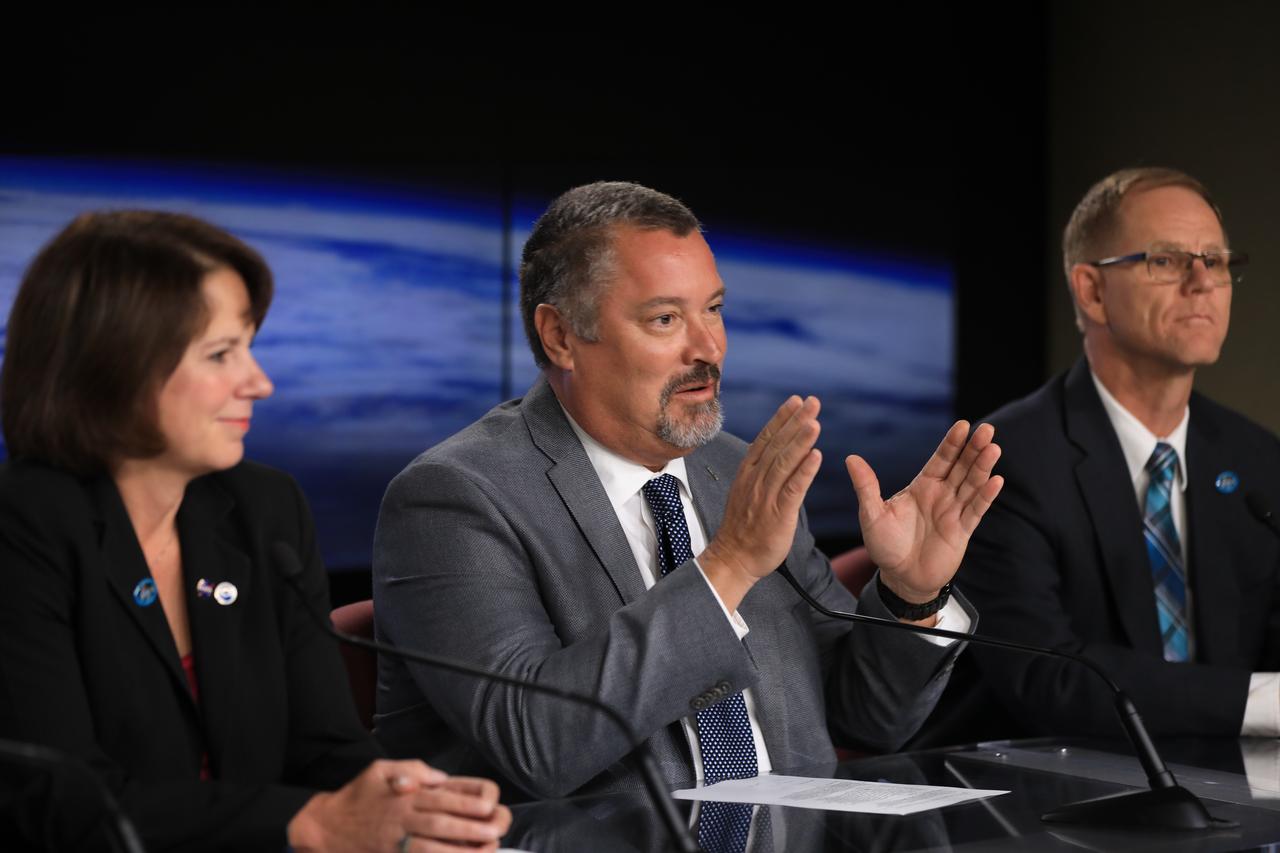
At Vandenberg Air Force Base in California, NASA and industry leaders speak to members of the media at a prelaunch news conference for the Joint Polar Satellite System-1, or JPSS-1. Participants, from left, are Sandra Smalley, director of the Joint Agency Satellite Division at NASA Headquarters, Omar Baez, NASA launch director, and Scott Messer, United Launch Alliance program manager for NASA missions. Built by Ball Aerospace and Technologies Corp. of Boulder, Colorado, JPSS is the first in a series four next-generation environmental satellites in a collaborative program between the NOAA and NASA. Liftoff atop a United Launch Alliance Delta II rocket is scheduled to take place from Vandenberg's Space Launch Complex 2 at 1:47 a.m. PST (4:47 a.m. EST), on Nov. 14, 2017.
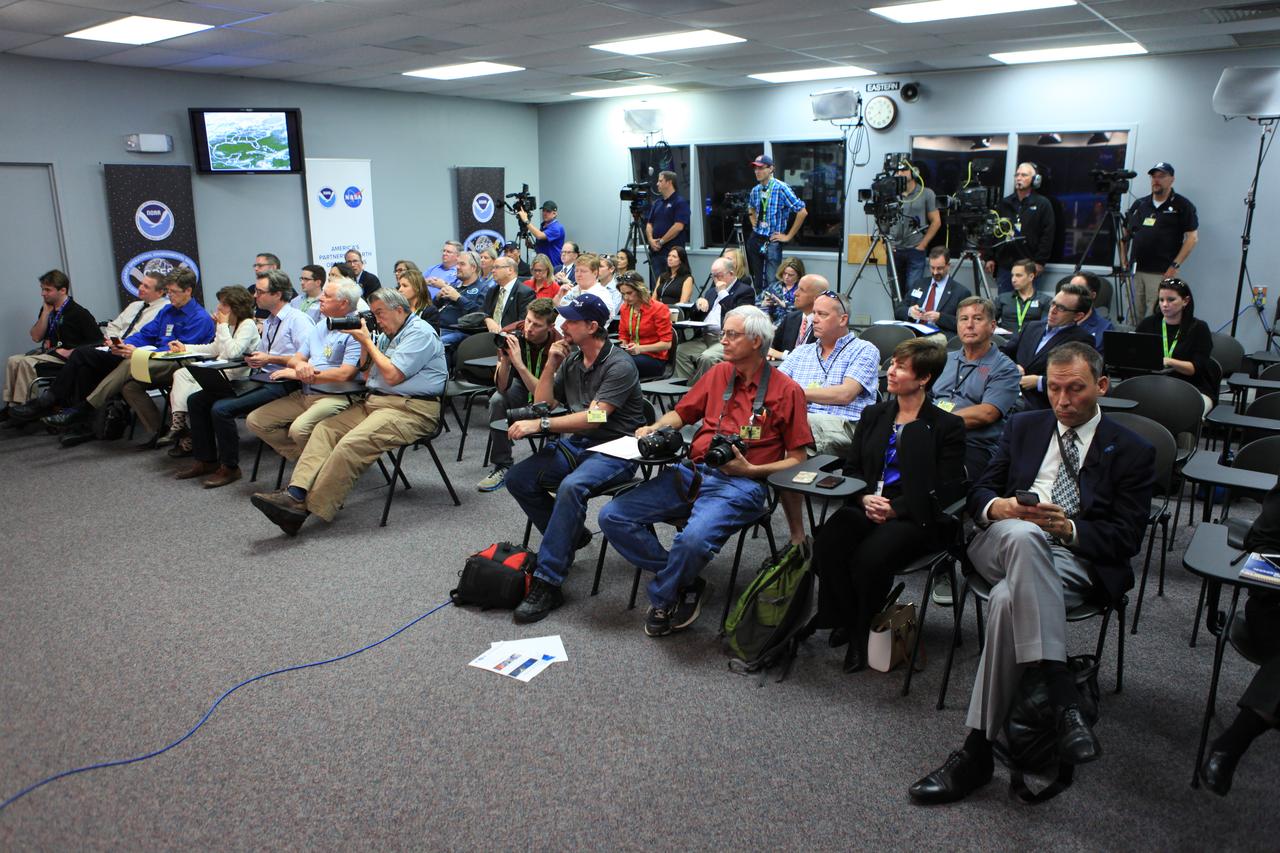
Members of the news media attend a Geostationary Operational Environmental Satellite (GOES-R) prelaunch news conference in the Kennedy Space Center's Press Site auditorium in Florida. NASA and industry leaders include: Michael Curie, of NASA Communications; Stephen Volz, assistant administrator for satellite and information services, National Oceanic and Atmospheric Administration (NOAA's); Greg Mandt, GOES-R system program director, NOAA; Sandra Smalley, director, Joint Agency Satellite Division, NASA Headquarters; Omar Baez, launch director, NASA Kennedy; Scott Messer, program manager, NASA Missions, United Launch Alliance; and Clay Flinn, launch weather officer, 4th Weather Squadron, Cape Canaveral Air Force Station.
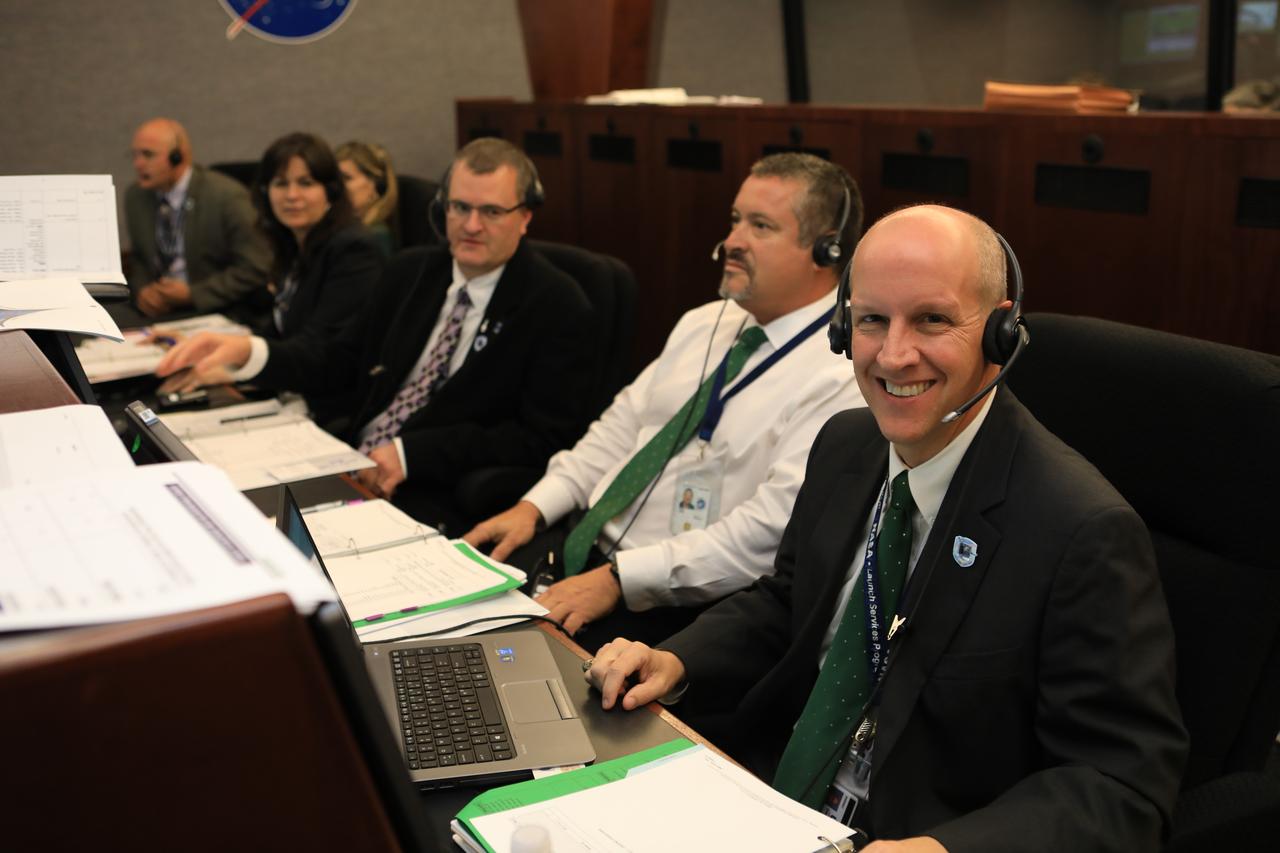
In the Mission Director's Center at Cape Canaveral Air Force Station, Omar Baez, a senior launch director in NASA's Launch Services Program at the agency's Kennedy Space Center in Florida, center, monitors the progress of preparations to launch eight Cyclone Global Navigation Satellite System, or CYGNSS, spacecraft. Seated to his left, facing the camera, is Tim Dunn, launch director for the CYGNSS mission. The CYGNSS satellites will make frequent and accurate measurements of ocean surface winds throughout the life cycle of tropical storms and hurricanes. The data that CYGNSS provides will enable scientists to probe key air-sea interaction processes that take place near the core of storms, which are rapidly changing and play a crucial role in the beginning and intensification of hurricanes.
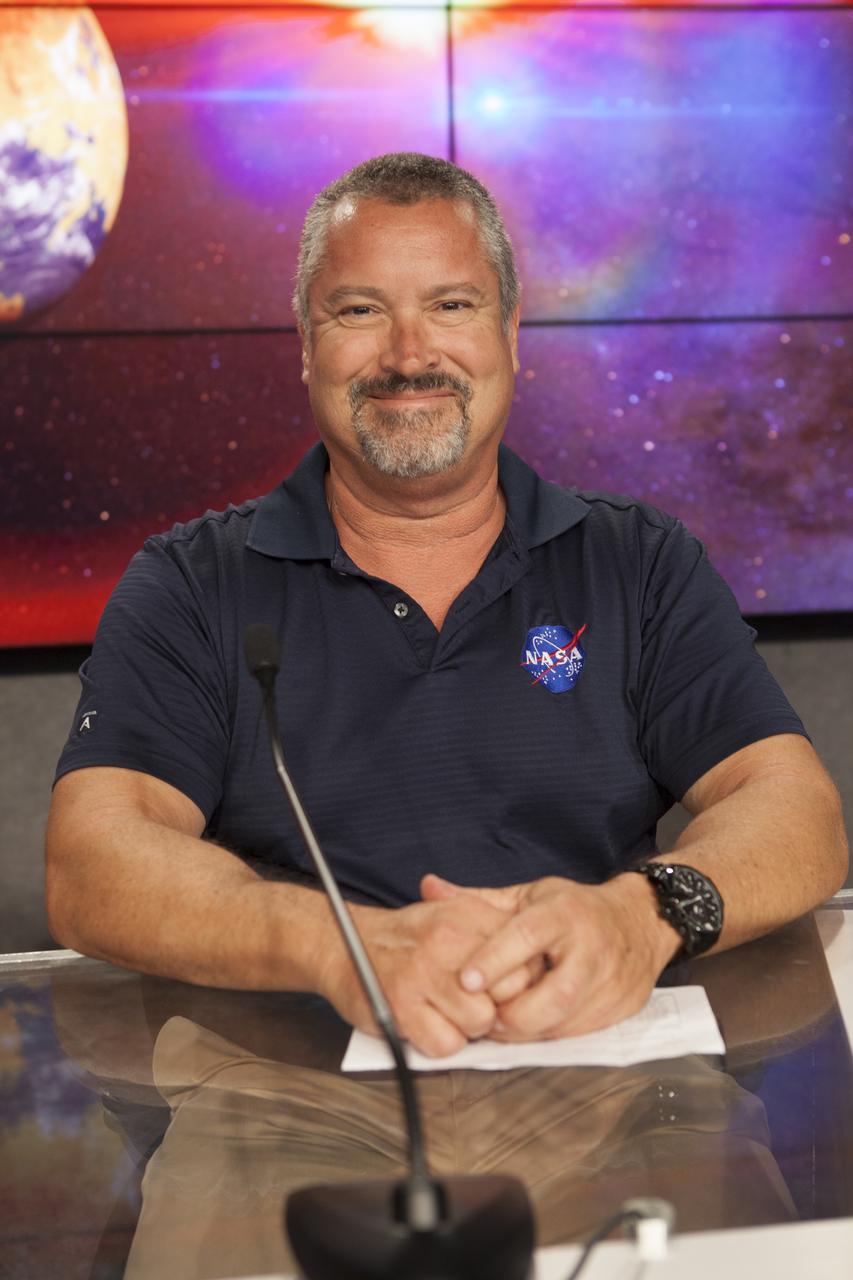
In Kennedy Space Center's Press Site auditorium, members of the media participate in a mission briefing on NASA's Transiting Exoplanet Survey Satellite (TESS). Omar Baez, launch director, NASA’s Launch Services Program, answers questions during the briefing. TESS is the next step in the search for planets outside of our solar system. The mission will find exoplanets that periodically block part of the light from their host stars, events called transits. The satellite will survey the nearest and brightest stars for two years to search for transiting exoplanets. TESS will launch on a SpaceX Falcon 9 rocket from Space Launch Complex 40 at Cape Canaveral Air Force Station no earlier than 6:32 p.m. EDT on Monday, April 16.
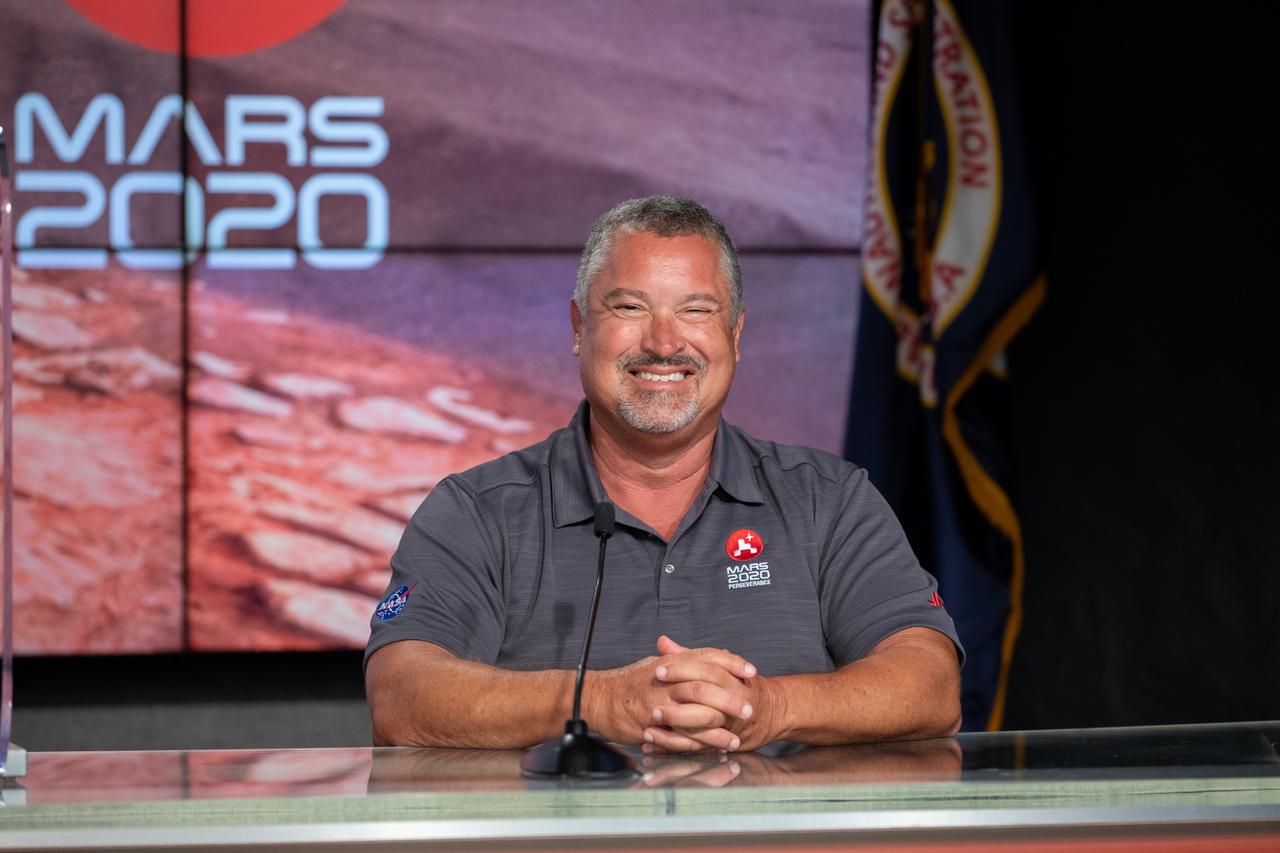
Omar Baez, launch director, NASA’s Launch Services Program, participates in a Mars 2020 post-launch news conference at NASA’s Kennedy Space Center in Florida on July 30, 2020. The United Launch Alliance Atlas V 541 rocket lifted off from Space Launch Complex 41 at Cape Canaveral Air Force Station at 7:50 a.m. EDT, carrying the agency’s Mars Perseverance rover and Ingenuity helicopter. The rover is part of NASA’s Mars Exploration Program, a long-term effort of robotic exploration of the Red Planet. The rover will search for habitable conditions in the ancient past and signs of past microbial life on Mars. The Launch Services Program at Kennedy is responsible for launch management.

NASA and industry leaders participate in a Geostationary Operational Environmental Satellite (GOES-R), prelaunch news conference in the Kennedy Space Center's Press Site auditorium in Florida. NASA and industry leaders include: Michael Curie, of NASA Communications; Stephen Volz, assistant administrator for satellite and information services, National Oceanic and Atmospheric Administration (NOAA's); Greg Mandt, GOES-R system program director, NOAA; Sandra Smalley, director, Joint Agency Satellite Division, NASA Headquarters; Omar Baez, launch director, NASA Kennedy; Scott Messer, program manager, NASA Missions, United Launch Alliance; and Clay Flinn, launch weather officer, 4th Weather Squadron, Cape Canaveral Air Force Station.

NASA and industry leaders participate in a Geostationary Operational Environmental Satellite (GOES-R), prelaunch news conference in the Kennedy Space Center's Press Site auditorium in Florida. NASA and industry leaders include: Michael Curie, of NASA Communications; Stephen Volz, assistant administrator for satellite and information services, National Oceanic and Atmospheric Administration (NOAA's); Greg Mandt, GOES-R system program director, NOAA; Sandra Smalley, director, Joint Agency Satellite Division, NASA Headquarters; Omar Baez, launch director, NASA Kennedy; Scott Messer, program manager, NASA Missions, United Launch Alliance; and Clay Flinn, launch weather officer, 4th Weather Squadron, Cape Canaveral Air Force Station.
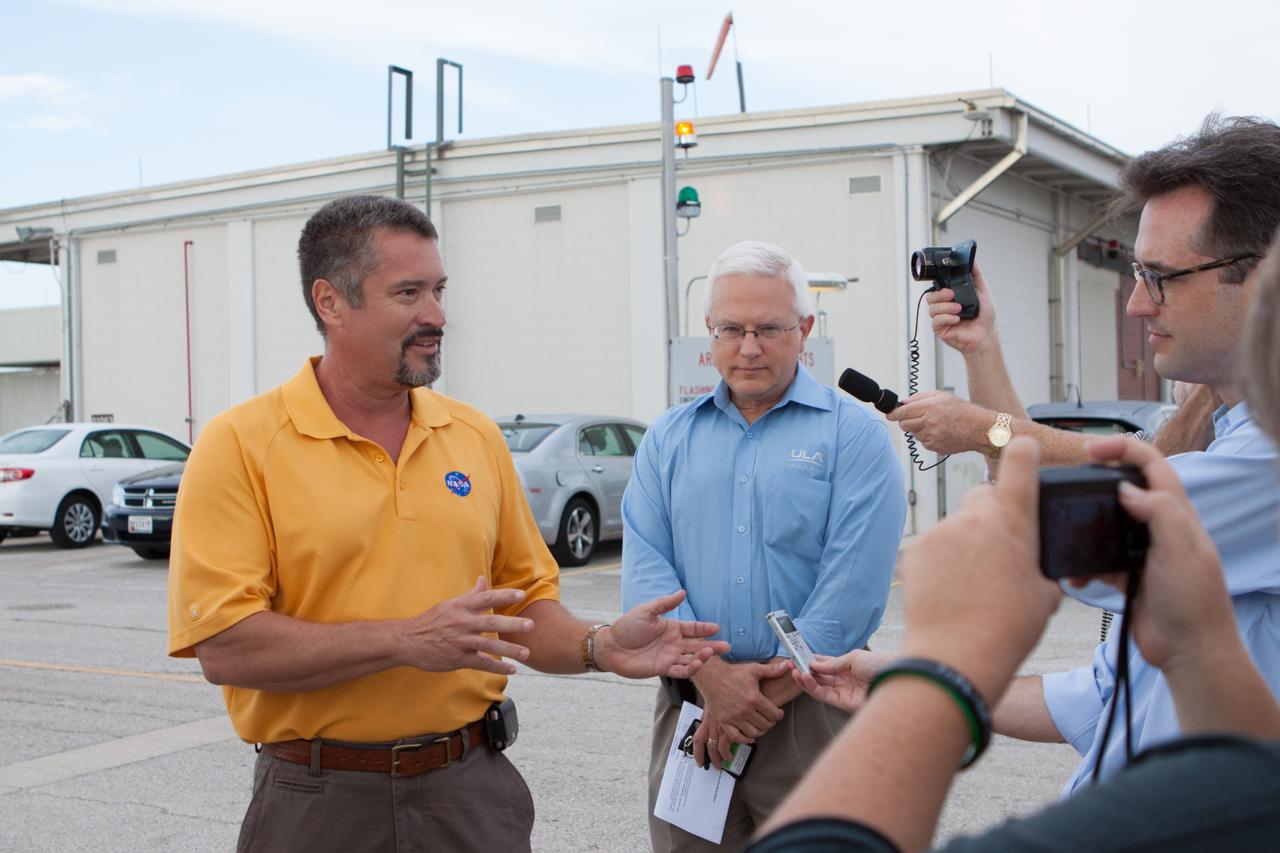
PORT CANAVERAL, Fla. – At Port Canaveral, Fla., NASA and United Launch Alliance managers brief members of the news media on the arrival of the ULA Atlas V rocket that will boost the Mars Atmosphere and Volatile Evolution, or MAVEN, spacecraft to the Red Planet. From the left, are Omar Baez, NASA's launch director, and Vernon Thorp, ULA's NASA and Commercial Program manager. MAVEN is being prepared for its scheduled launch in November from Cape Canaveral Air Force Station, Fla. atop a United Launch Alliance Atlas V rocket. Positioned in an orbit above the Red Planet, MAVEN will study the upper atmosphere of Mars in unprecedented detail. For more information, visit: http://www.nasa.gov/mission_pages/maven/main/index.html Photo credit: NASA/Kim Shiflett

At Vandenberg Air Force Base in California, NASA and industry leaders speak to members of the media at a prelaunch news conference for the Joint Polar Satellite System-1, or JPSS-1. Participants, from left, are Steve Volz, director of NOAA’s Satellite and Information Service, Greg Mandt, director of the NOAA Joint Polar Satellite System Program, Sandra Smalley, director of the Joint Agency Satellite Division at NASA Headquarters, Omar Baez, NASA launch director, and Scott Messer, United Launch Alliance program manager for NASA missions. Built by Ball Aerospace and Technologies Corp. of Boulder, Colorado, JPSS is the first in a series four next-generation environmental satellites in a collaborative program between the NOAA and NASA. Liftoff atop a United Launch Alliance Delta II rocket is scheduled to take place from Vandenberg's Space Launch Complex 2 at 1:47 a.m. PST (4:47 a.m. EST), on Nov. 14, 2017.
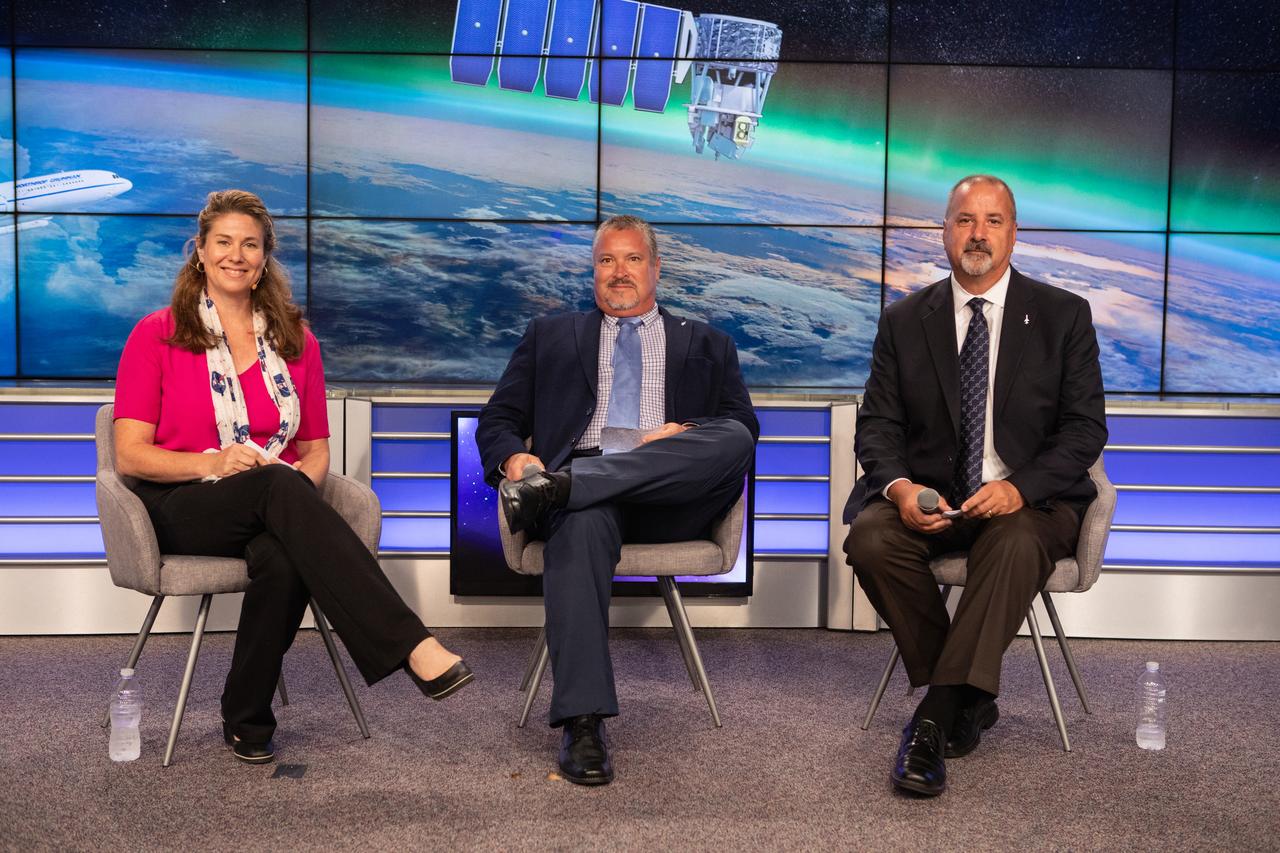
Launch and mission managers for NASA’s Ionospheric Connection Explorer (ICON) participate in a prelaunch mission briefing on Oct. 8, 2019, in the News Center auditorium at the agency’s Kennedy Space Center in Florida. From left to right are Karen Fox, NASA Communications; Omar Baez, launch director in NASA’s Launch Services Program; and Phil Joyce, vice president of space launch programs for Northrop Grumman Innovation Systems. ICON is targeted to launch from Cape Canaveral Air Force Station in Florida on Oct. 9, 2019, aboard a Northrop Grumman Pegasus XL rocket carried aloft by the company’s Stargazer L-1011 aircraft. The explorer will study the frontier of space - the dynamic zone high in Earth's atmosphere where terrestrial weather from below meets space weather above.

CAPE CANAVERAL, Fla. -- On Cape Canaveral Air Force Station in Florida, members of NASA's Gravity Recovery and Interior Laboratory (GRAIL) launch team monitor GRAIL's launch countdown from the Mission Directors Center in Hangar AE. From left are Dana Grieco, launch operations manager, Analex, NASA's Launch Services Program (LSP); Bruce Reid, GRAIL mission manager, LSP; Al Sierra, manager of the Flight Project Office, LSP; Omar Baez, GRAIL assistant launch director, LSP; and Tim Dunn, GRAIL launch director, LSP. Launch is scheduled for 8:37:06 a.m. EDT Sept. 8 from Space Launch Complex 17B on Cape Canaveral Air Force Station. GRAIL will fly twin spacecraft in tandem around the moon to precisely measure and map variations in the moon's gravitational field. The mission will provide the most accurate global gravity field to date for any planet, including Earth. For more information, visit http://www.nasa.gov/grail. Photo credit: NASA/Kim Shiflett
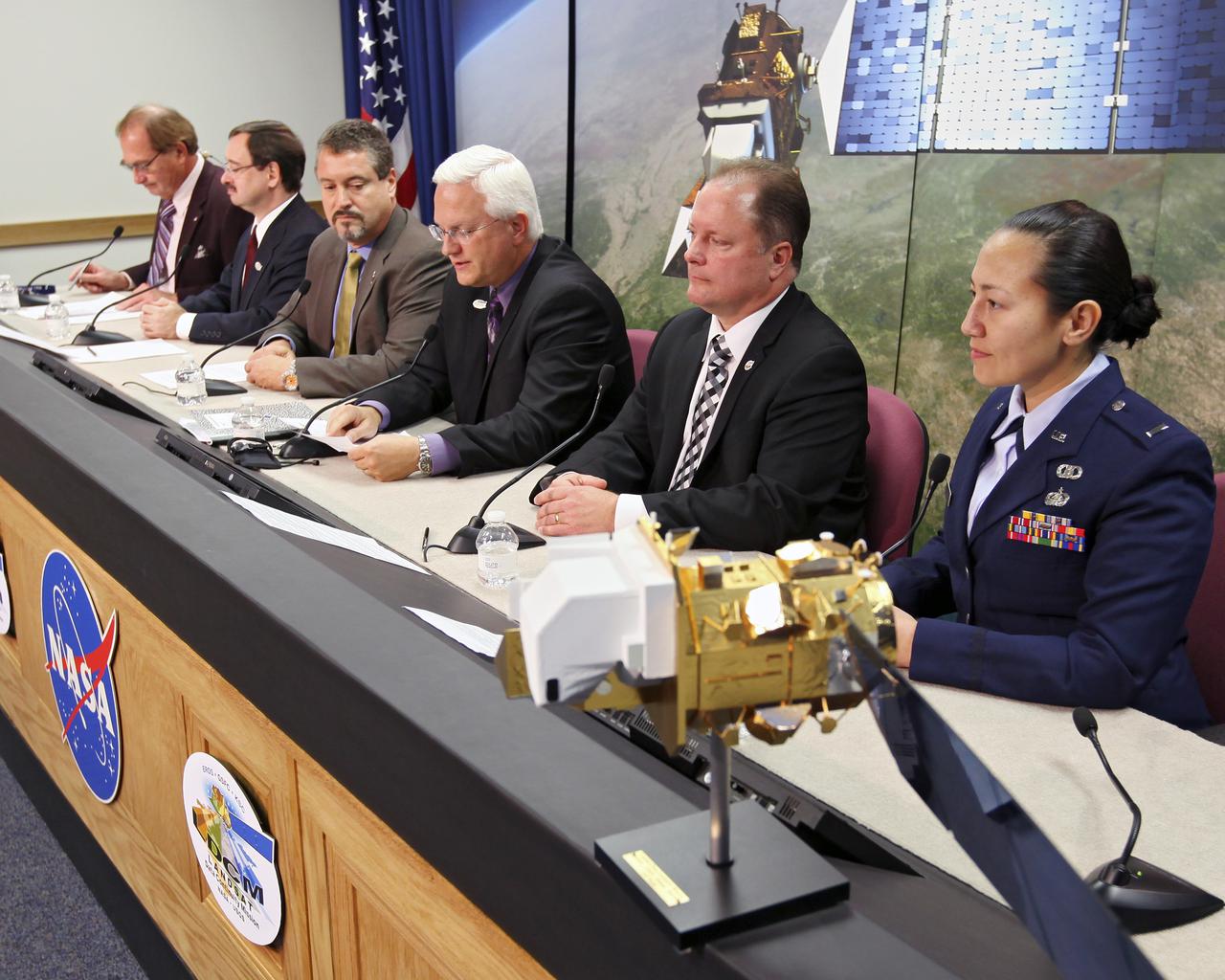
VANDENBERG AIR FORCE BASE, Calif. -- Media attend a prelaunch press conference at Vandenberg Air Force Base in California to discuss NASA's readiness to launch the Landsat Data Continuity Mission LDCM. From left are George Diller of NASA Public Affairs, LDCM program executive David Jarrett from NASA Headquarters, NASA Launch Director Omar Baez from Kennedy Space Center, United Launch Alliance Program Manager for NASA Missions Vernon Thorp, LDCM Project Manager Ken Schwer from Goddard Space Flight Center, and 1st Lt. Jennifer Kelley, launch weather officer for the 30th Operations Support Squadron at Vandenberg. The Landsat Data Continuity Mission LDCM is the future of Landsat satellites. It will continue to obtain valuable data and imagery to be used in agriculture, education, business, science, and government. The Landsat Program provides repetitive acquisition of high resolution multispectral data of the Earth's surface on a global basis. The data from the Landsat spacecraft constitute the longest record of the Earth's continental surfaces as seen from space. It is a record unmatched in quality, detail, coverage, and value. Liftoff is planned for Feb. 11, 2013 aboard a United Launch Alliance Atlas V rocket. For more information, visit: http:__www.nasa.gov_mission_pages_landsat_main_index.html Photo credit: NASA_Kim Shiflett

At Vandenberg Air Force Base in California, NASA and industry leaders speak to members of the media at a prelaunch news conference for the Joint Polar Satellite System-1, or JPSS-1. Participants, from left, are Tori McLendon of NASA Communications, Steve Volz, director of NOAA’s Satellite and Information Service, Greg Mandt, director of the NOAA Joint Polar Satellite System Program, Sandra Smalley, director of the Joint Agency Satellite Division at NASA Headquarters, Omar Baez, NASA launch director, Scott Messer, United Launch Alliance program manager for NASA missions, and U. S. Air Force Capt. Ross Malugani, launch weather officer at Vandenberg's 30th Space Wing. Built by Ball Aerospace and Technologies Corp. of Boulder, Colorado, JPSS is the first in a series four next-generation environmental satellites in a collaborative program between the NOAA and NASA. Liftoff atop a United Launch Alliance Delta II rocket is scheduled to take place from Vandenberg's Space Launch Complex 2 at 1:47 a.m. PST (4:47 a.m. EST), on Nov. 14, 2017.
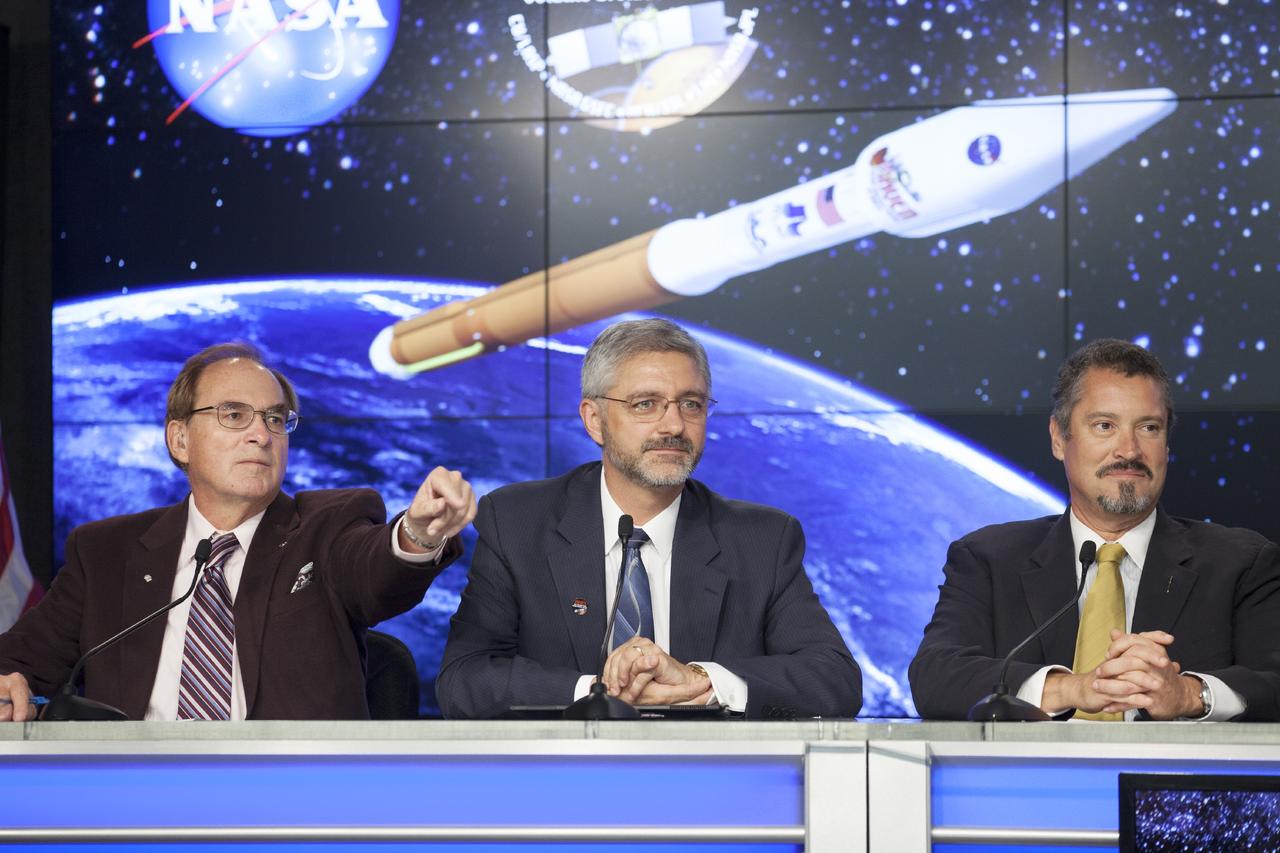
CAPE CANAVERAL, Fla. – During a news conference at NASA's Kennedy Space Center in Florida, agency and contractor officials discussed preparations for the launch of the Mars Atmosphere and Volatile EvolutioN, or MAVEN, mission. Calling on a member of the news media for a question, is George Diller of NASA Public Affairs, left. Also participating are Geoffrey Yoder, NASA deputy associate administrator of programs in the Science Mission Directorate, center, and Omar Baez, NASA launch director. MAVEN is being prepared for its scheduled launch on Nov 18, 2013 from Cape Canaveral Air Force Station, Fla. atop a United Launch Alliance Atlas V rocket. Positioned in an orbit above the Red Planet, MAVEN will study the upper atmosphere of Mars in unprecedented detail. For information on the MAVEN mission, visit: http://www.nasa.gov/mission_pages/maven/main/index.html. Photo credit: NASA MAVEN is being prepared for its scheduled launch on Nov 18, 2013 from Cape Canaveral Air Force Station, Fla. atop a United Launch Alliance Atlas V rocket. Positioned in an orbit above the Red Planet, MAVEN will study the upper atmosphere of Mars in unprecedented detail. For more information, visit: http://www.nasa.gov/mission_pages/maven/main/index.html Photo credit: NASA/Kim Shiflett

KENNEDY SPACE CENTER, FLA. - Reporters (left) take notes during an informal briefing concerning NASA’s Cassini spacecraft, launched aboard an Air Force Titan IV rocket from Cape Canaveral Air Force Station Oct. 15, 1997. Cassini launch team members at right discussed the challenge and experience of preparing Cassini for launch, integrating it with the Titan IV rocket and the countdown events of launch day. From left are Ron Gillett, NASA Safety and Lead Federal Agency official; Omar Baez, mechanical and propulsion systems engineer; Ray Lugo, NASA launch manager; Chuck Dovale, chief, Avionics Branch; George Haddad, Integration and Ground Systems mechanical engineer; and Ken Carr, Cassini assistant launch site support manager. Approximately 10:36 p.m. EDT, June 30, the Cassini-Huygens spacecraft will arrive at Saturn. After nearly a seven-year journey, it will be the first mission to orbit Saturn. The international cooperative mission plans a four-year tour of Saturn, its rings, icy moons, magnetosphere, and Titan, the planet’s largest moon.
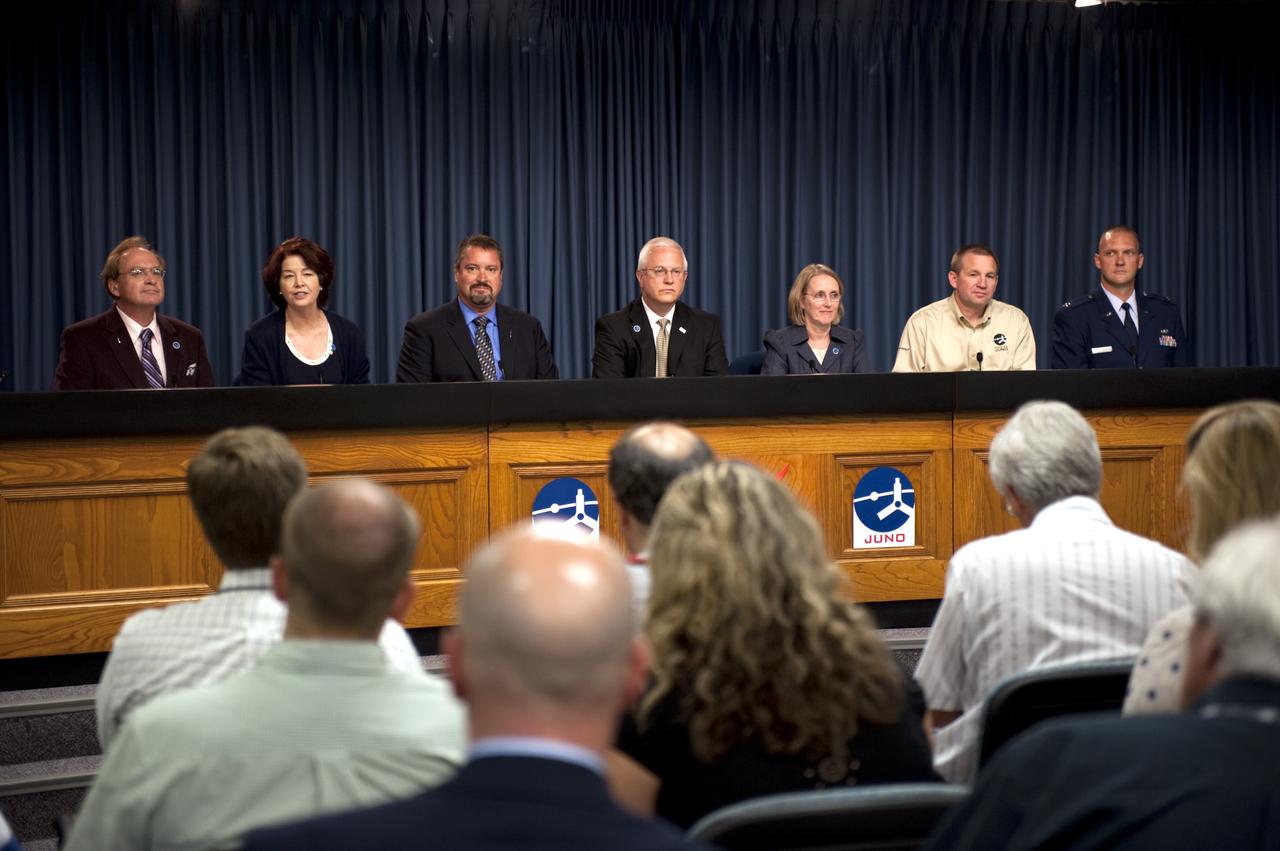
CAPE CANAVERAL, Fla. -- A Juno prelaunch news conference is held in the NASA Press Site auditorium at NASA's Kennedy Space Center in Florida. From left are George Diller, NASA Public Affairs; Colleen Hartman, assistant associate administrator, Science Mission Directorate, NASA Headquarters, Washington; Omar Baez, NASA launch director, Kennedy Space Center, Cape Canaveral, Fla.; Vernon Thorp, program manager, NASA Missions, United Launch Alliance, Denver, Colo.; Jan Chodas, Juno project manager, Jet Propulsion Laboratory, Pasadena, Calif.; Tim Gasparrini, Juno program manager, Lockheed Martin Space Systems, Denver, Colo.; and Capt. Billy Whisel, launch weather officer, 45th Weather Squadron, Cape Canaveral Air Force Station, Fla. Juno is scheduled to launch Aug. 5 aboard a United Launch Alliance Atlas V rocket from Cape Canaveral Air Force Station in Florida. The solar-powered spacecraft will orbit Jupiter's poles 33 times to find out more about the gas giant's origins, structure, atmosphere and magnetosphere and investigate the existence of a solid planetary core. For more information, visit www.nasa.gov/juno. Photo credit: NASA/Kim Shiflett
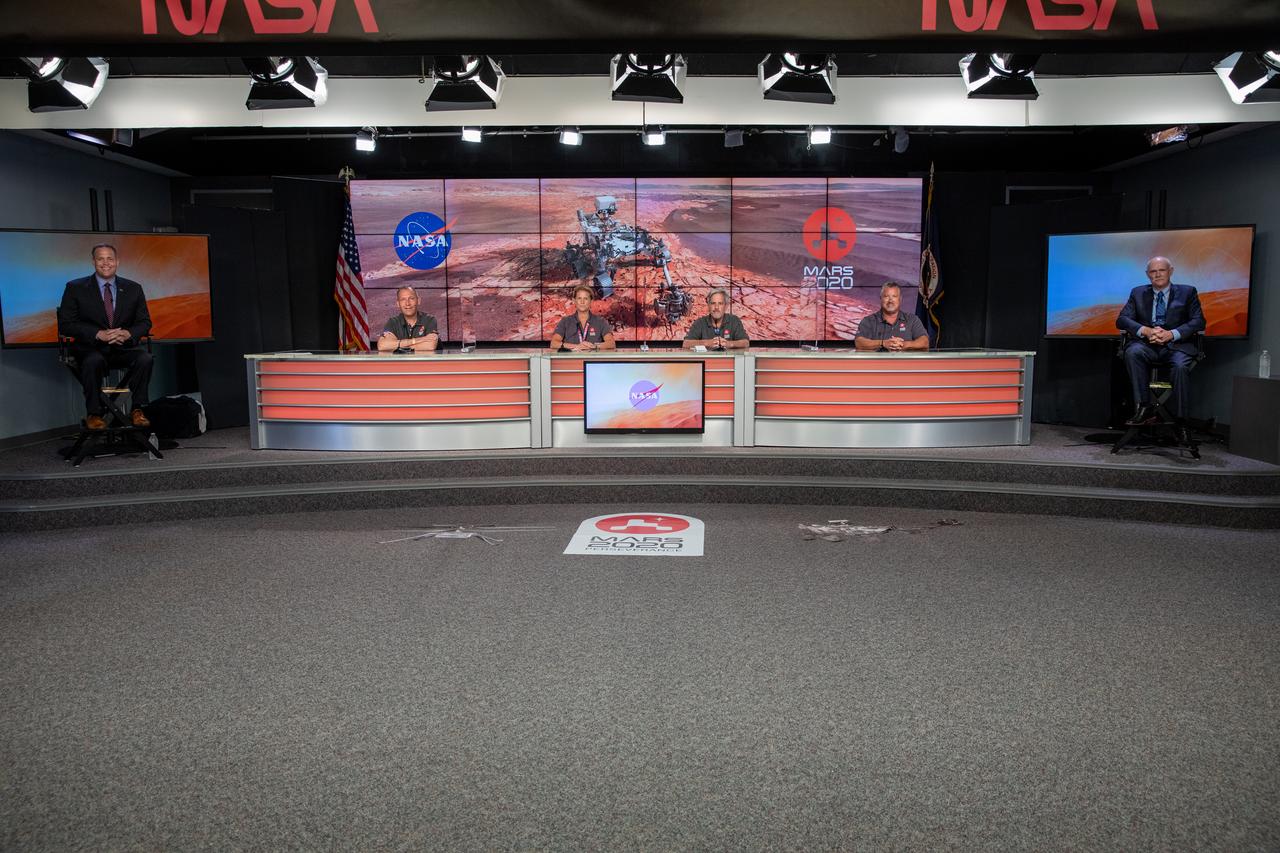
A Mars 2020 post-launch news conference is held at NASA’s Kennedy Space Center in Florida on July 30, 2020. Participants, from left, are NASA Administrator Jim Bridenstine; Thomas Zurbuchen, NASA associate administrator, Science Mission Directorate; Lori Glaze, Planetary Science Division director, NASA Headquarters; Matt Wallace, deputy project manager, NASA’s Jet Propulsion Laboratory; Omar Baez, launch director, NASA’s Launch Services Program; and Tory Bruno, president and CEO of United Launch Alliance. The United Launch Alliance Atlas V 541 rocket lifted off from Space Launch Complex 41 at Cape Canaveral Air Force Station at 7:50 a.m. EDT, carrying the agency’s Mars Perseverance rover and Ingenuity helicopter. The rover is part of NASA’s Mars Exploration Program, a long-term effort of robotic exploration of the Red Planet. The rover will search for habitable conditions in the ancient past and signs of past microbial life on Mars. The Launch Services Program at Kennedy is responsible for launch management.

CAPE CANAVERAL, Fla. -- On Cape Canaveral Air Force Station in Florida, members of NASA's Gravity Recovery and Interior Laboratory (GRAIL) launch team monitor GRAIL's launch countdown from the Mission Directors Center in Hangar AE. From left are Dana Grieco, launch operations manager, Analex, NASA's Launch Services Program (LSP); Bruce Reid, GRAIL mission manager, LSP; Al Sierra, manager of the Flight Project Office, LSP; Omar Baez, GRAIL assistant launch director, LSP; and Tim Dunn, GRAIL launch director, LSP; David Lehman, spacecraft mission director and GRAIL project manager, NASA's Jet Propulsion Laboratory (JPL); and John Henk, GRAIL program manager, Lockheed Martin Space Systems. Launch is scheduled for 8:37:06 a.m. EDT Sept. 8 from Space Launch Complex 17B on Cape Canaveral Air Force Station. GRAIL will fly twin spacecraft in tandem around the moon to precisely measure and map variations in the moon's gravitational field. The mission will provide the most accurate global gravity field to date for any planet, including Earth. For more information, visit http://www.nasa.gov/grail. Photo credit: NASA/Kim Shiflett

Vandenberg Air Force Base in California, NASA and industry leaders speak to members of the media at a prelaunch news conference for the Joint Polar Satellite System-1, or JPSS-1. Participants, from left, are Greg Mandt, director of the NOAA Joint Polar Satellite System Program, Sandra Smalley, director of the Joint Agency Satellite Division at NASA Headquarters, Omar Baez, NASA launch director, Scott Messer, United Launch Alliance program manager for NASA missions, and U. S. Air Force Capt. Ross Malugani, launch weather officer at Vandenberg's 30th Space Wing. Built by Ball Aerospace and Technologies Corp. of Boulder, Colorado, JPSS is the first in a series four next-generation environmental satellites in a collaborative program between the NOAA and NASA. Liftoff atop a United Launch Alliance Delta II rocket is scheduled to take place from Vandenberg's Space Launch Complex 2 at 1:47 a.m. PST (4:47 a.m. EST), on Nov. 14, 2017.

Omar Baez, NASA senior launch director, participates in the launch broadcast for the Landsat 9 mission on Sept. 27, 2021, at Vandenberg Space Force Base in California. NASA’s Landsat 9 satellite launched on a United Launch Alliance Atlas V 401 rocket from Vandenberg's Space Launch Complex 3 at 2:12 p.m. EDT (11:12 a.m. PDT). The launch is managed by NASA’s Launch Services Program, based at the agency’s Kennedy Space Center in Florida. Landsat 9 will join its sister satellite, Landsat 8, in orbit in collecting images from across the planet every eight days. This calibrated data will continue the Landsat program’s critical role in monitoring the health of Earth and helping people manage essential resources, including crops, irrigation water, and forests. NASA Goddard manages the Landsat 9 mission. Goddard teams also built and tested one of the two instruments on Landsat 9, the Thermal Infrared Sensor 2 (TIRS-2) instrument. TIRS-2 will use thermal imaging to make measurements that can be used to estimate soil moisture and detect the health of plants.

CAPE CANAVERAL, Fla. – During a news conference at NASA's Kennedy Space Center in Florida, agency and contractor officials discussed preparations for the launch of the Mars Atmosphere and Volatile EvolutioN, or MAVEN, mission. Participating in the briefing is Omar Baez, NASA launch director. MAVEN is being prepared for its scheduled launch on Nov 18, 2013 from Cape Canaveral Air Force Station, Fla. atop a United Launch Alliance Atlas V rocket. Positioned in an orbit above the Red Planet, MAVEN will study the upper atmosphere of Mars in unprecedented detail. For information on the MAVEN mission, visit: http://www.nasa.gov/mission_pages/maven/main/index.html. Photo credit: NASA MAVEN is being prepared for its scheduled launch on Nov 18, 2013 from Cape Canaveral Air Force Station, Fla. atop a United Launch Alliance Atlas V rocket. Positioned in an orbit above the Red Planet, MAVEN will study the upper atmosphere of Mars in unprecedented detail. For more information, visit: http://www.nasa.gov/mission_pages/maven/main/index.html Photo credit: NASA/Kim Shiflett

CAPE CANAVERAL, Fla. -- At NASA's Kennedy Space Center, key personnel brief the media on NASA's Gamma-Ray Large Area Space Telescope, or GLAST, launch scheduled for June 11. From left are Dr. Jon Morse, director of NASA's Astrophysics Division; Omar Baez, NASA launch director/launch manager at Kennedy; Kris Walsh, director of the Delta NASA and Commercial Programs with United Launch Alliance; Kevin Grady, GLAST project manager at NASA's Goddard Space Flight Center; Dr. Steven Ritz, GLAST project scientist/astrophysicist at Goddard; and Joel Tumbiolo, the U.S. Air Force Delta II launch weather officer with the 45th Weather Squadron at Cape Canaveral Air Force Station. GLAST is a powerful space observatory that will explore the Universe's ultimate frontier, where nature harnesses forces and energies far beyond anything possible on Earth; probe some of science's deepest questions, such as what our Universe is made of, and search for new laws of physics; explain how black holes accelerate jets of material to nearly light speed; and help crack the mystery of stupendously powerful explosions known as gamma-ray bursts. Photo credit: NASA/Kim Shiflett
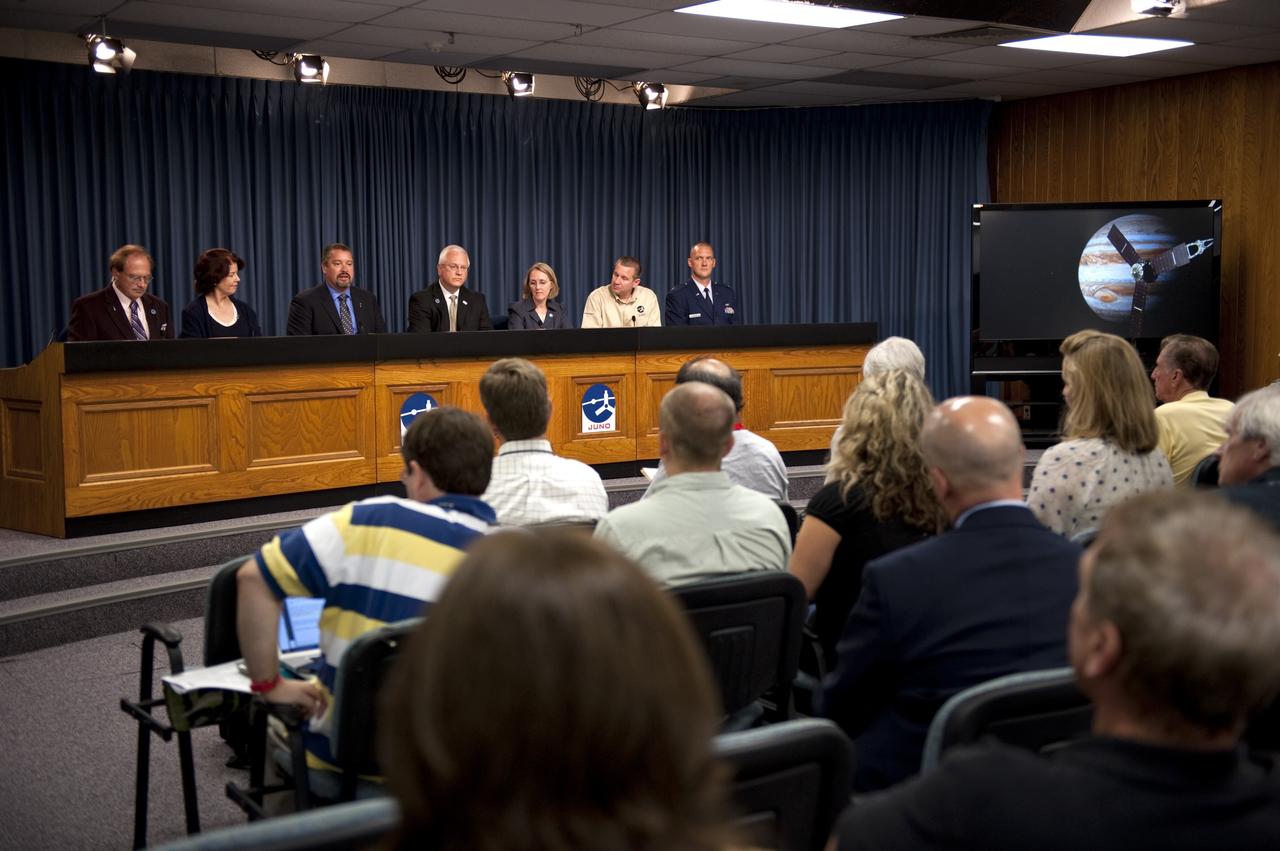
CAPE CANAVERAL, Fla. -- Media representatives question the participants of a Juno prelaunch news conference in the NASA Press Site auditorium at NASA's Kennedy Space Center in Florida. From left are George Diller, NASA Public Affairs; Colleen Hartman, assistant associate administrator, Science Mission Directorate, NASA Headquarters, Washington; Omar Baez, NASA launch director, Kennedy Space Center, Cape Canaveral, Fla.; Vernon Thorp, program manager, NASA Missions, United Launch Alliance, Denver, Colo.; Jan Chodas, Juno project manager, Jet Propulsion Laboratory, Pasadena, Calif.; Tim Gasparrini, Juno program manager, Lockheed Martin Space Systems, Denver, Colo.; and Capt. Billy Whisel, launch weather officer, 45th Weather Squadron, Cape Canaveral Air Force Station, Fla. Juno is scheduled to launch Aug. 5 aboard a United Launch Alliance Atlas V rocket from Cape Canaveral Air Force Station in Florida. The solar-powered spacecraft will orbit Jupiter's poles 33 times to find out more about the gas giant's origins, structure, atmosphere and magnetosphere and investigate the existence of a solid planetary core. For more information, visit www.nasa.gov/juno. Photo credit: NASA/Kim Shiflett
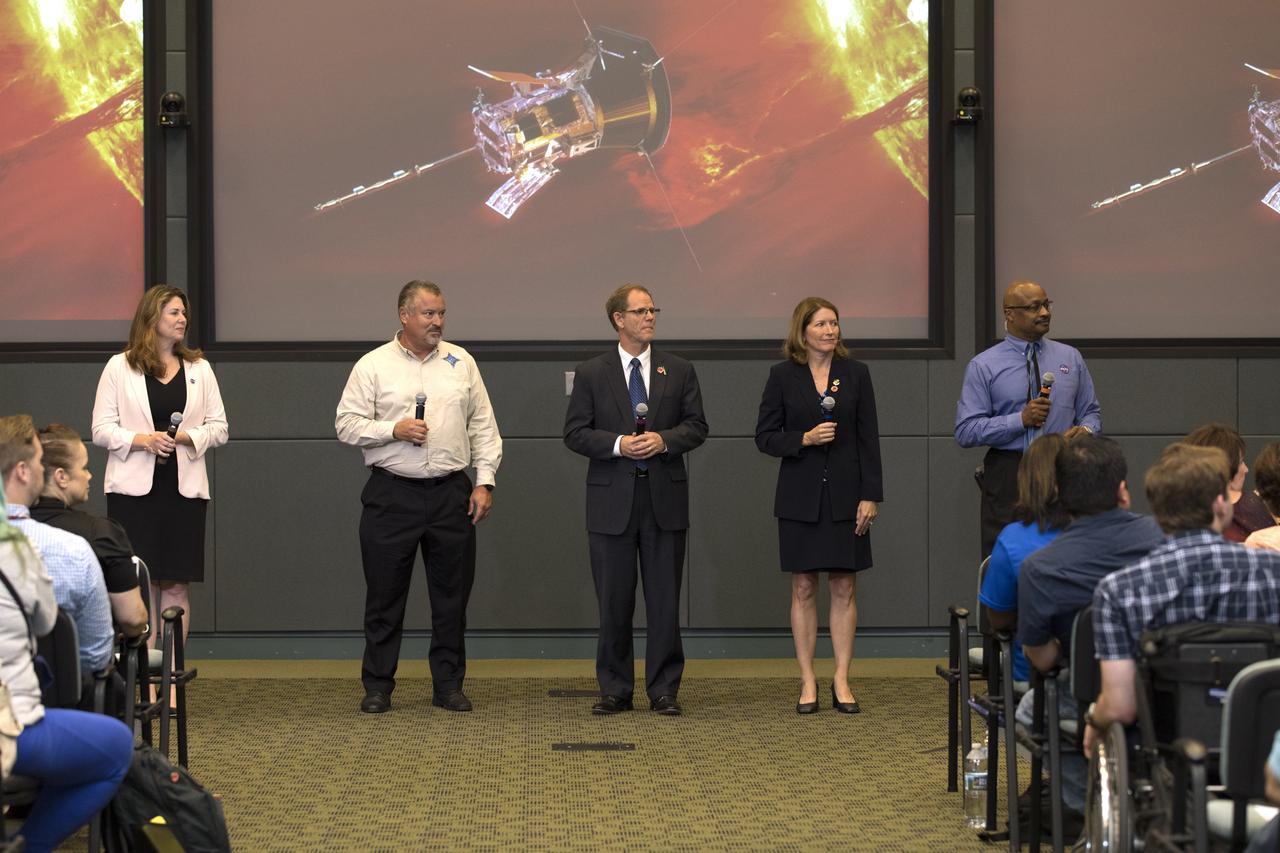
In the Kennedy Space Center's Operations and Support Building II, Thursday, Aug. 9, 2018, members of the media participate in a prelaunch mission briefing on NASA's Parker Solar Probe. Briefing moderators are Karen Fox, far left, Goddard Space Flight Center, and Dwayne Brown, far right, NASA Communications. Briefing participants are Omar Baez, launch director, NASA Kennedy Space Center; Scott Messer, program manager, NASA Programs, United Launch Alliance; and Kathy Rice, launch weather officer, 45th Weather Squadron, Cape Canaveral Air Force Station. The Parker Solar Probe will lift off on a United Launch Alliance Delta IV Heavy rocket from Space Launch Complex 37 at Cape Canaveral Air Force Station in Florida. The spacecraft was built by Applied Physics Laboratory of Johns Hopkins University in Laurel, Maryland. The mission will perform the closest-ever observations of a star when it travels through the Sun's atmosphere, called the corona. The probe will rely on measurements and imaging to revolutionize our understanding of the corona and the Sun-Earth connection.
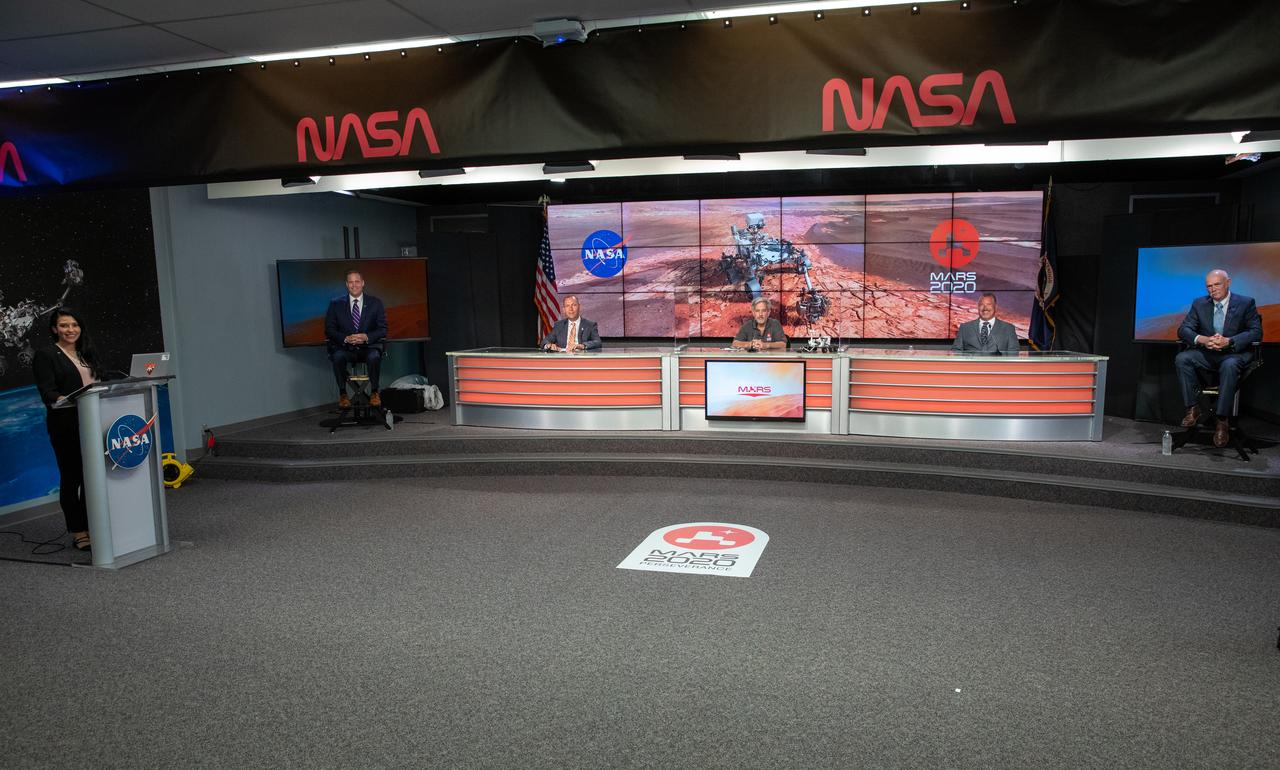
A Mars 2020 prelaunch news conference is held at NASA’s Kennedy Space Center in Florida on July 27, 2020. Participating in the briefing from left, are Moderator Bettina Inclan, NASA Headquarters; NASA Administrator Jim Bridenstine; Thomas Zurbuchen, NASA associate administrator, Science Mission Directorate; Matt Wallace, deputy project manager, NASA’s Jet Propulsion Laboratory; Launch Director Omar Baez, NASA’s Launch Services Program; and Tory Bruno, CEO, United Launch Alliance. The Mars Perseverance rover is scheduled to launch on July 30, on a United Launch Alliance Atlas V 541 rocket from Space Launch Complex 41 at nearby Cape Canaveral Air Force Station. The rover is part of NASA’s Mars Exploration Program, a long-term effort of robotic exploration of the Red Planet. The rover will search for habitable conditions in the ancient past and signs of past microbial life on Mars. The Launch Services Program at Kennedy is responsible for launch management.

CAPE CANAVERAL, Fla. – NASA’s Kennedy Space Center in Florida is host to a Mars Science Laboratory (MSL) prelaunch news conference as part of preflight activities for the MSL mission. From left are NASA Public Affairs Officer George Diller; Colleen Hartman, assistant associate administrator, NASA Science Mission Directorate; Omar Baez, NASA launch director; Vernon Thorp, program manager, NASA Missions, United Launch Alliance; Peter Theisinger, MSL project manager; and Clay Flinn, launch weather officer 45th Weather Squadron, Cape Canaveral Air Force Station, Fla. MSL’s components include a car-sized rover, Curiosity, which has 10 science instruments designed to search for signs of life, including methane, and help determine if the gas is from a biological or geological source. Launch of MSL aboard a United Launch Alliance Atlas V rocket is scheduled for Nov. 26 from Space Launch Complex-41 on Cape Canaveral Air Force Station in Florida. For more information, visit http://www.nasa.gov/msl. Photo credit: NASA/Kim Shiflett

CAPE CANAVERAL, Fla. -- At left, Public Information Officer George Diller moderates a media briefing on NASA's Gamma-Ray Large Area Space Telescope, or GLAST, launch scheduled for June 11. On the panel next to Diller are Dr. Jon Morse, director of NASA's Astrophysics Division; Omar Baez, NASA launch director/launch manager at Kennedy; Kris Walsh, director of the Delta NASA and Commercial Programs with United Launch Alliance; Kevin Grady, GLAST project manager at NASA's Goddard Space Flight Center; Dr. Steven Ritz, GLAST project scientist/astrophysicist at Goddard; and Joel Tumbiolo, the U.S. Air Force Delta II launch weather officer with the 45th Weather Squadron at Cape Canaveral Air Force Station. GLAST is a powerful space observatory that will explore the Universe's ultimate frontier, where nature harnesses forces and energies far beyond anything possible on Earth; probe some of science's deepest questions, such as what our Universe is made of, and search for new laws of physics; explain how black holes accelerate jets of material to nearly light speed; and help crack the mystery of stupendously powerful explosions known as gamma-ray bursts. Photo credit: NASA/Kim Shiflett

CAPE CANAVERAL, Fla. – NASA Launch Services Program officials oversee the countdown of NASA's Radiation Belt Storm Probes, or RBSP, and its United Launch Alliance Atlas V rocket from consoles in the Atlas V Spaceflight Operations Center on Cape Canaveral Air Force Station in Florida. From left are Omar Baez, assistant launch manager for RBSP, Tim Dunn, launch manager for RBSP, and Albert Sierra, chief of the Flight Projects Office. Weather conditions associated with lightning, as well as cumulus and anvil clouds, kept the probes on Space Launch Complex 41 for the duration of the 20-minute launch window which opened at 4:07 a.m. EDT. RBSP will explore changes in Earth's space environment caused by the sun -- known as "space weather" -- that can disable satellites, create power-grid failures and disrupt GPS service. The mission also will provide data on the fundamental radiation and particle acceleration processes throughout the universe. The launch is rescheduled for 4:05 a.m. EDT on Aug. 30, pending approval from the range. For more information on RBSP, visit http://www.nasa.gov/rbsp. Photo credit: NASA/Kim Shiflett
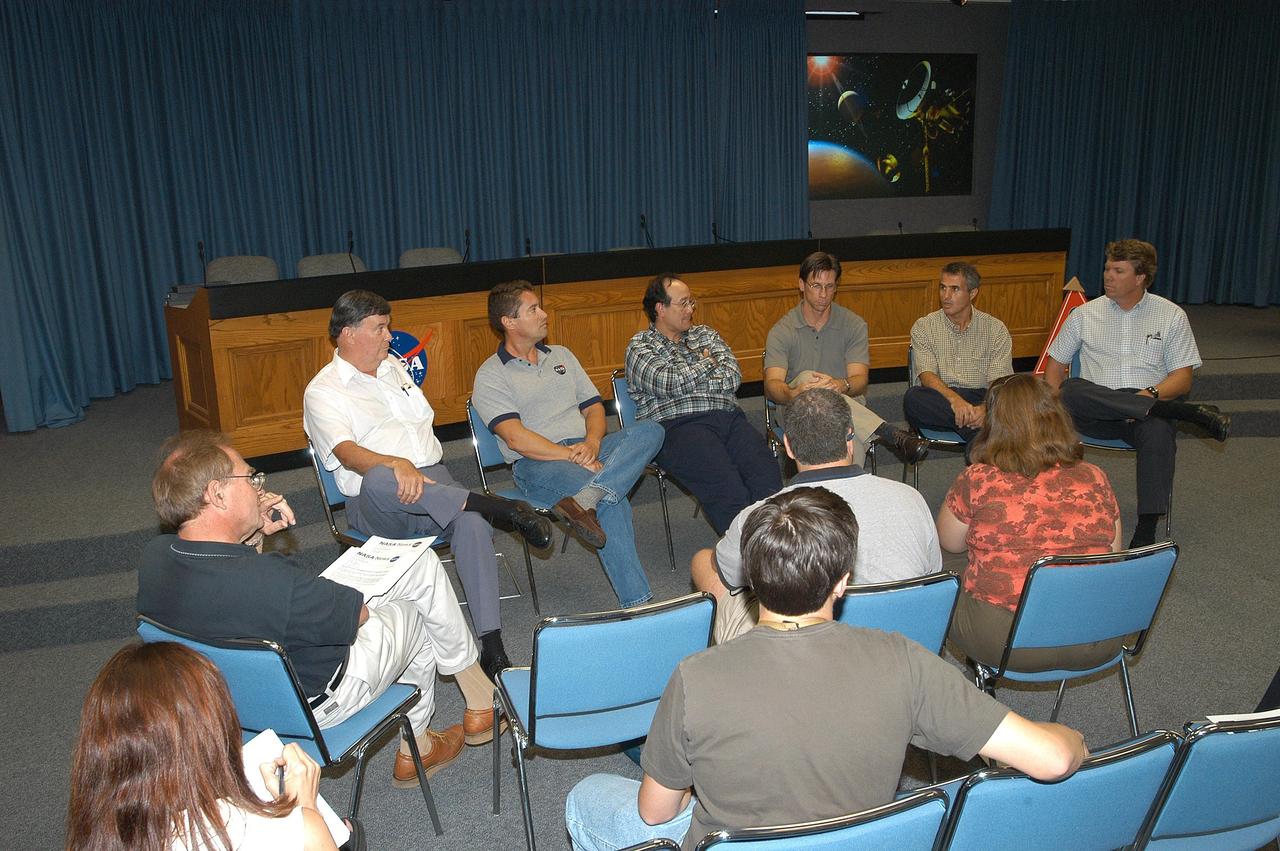
KENNEDY SPACE CENTER, FLA. - Reporters (bottom) take notes during an informal briefing concerning NASA’s Cassini spacecraft, launched aboard an Air Force Titan IV rocket from Cape Canaveral Air Force Station Oct. 15, 1997. Cassini launch team members seen here discussed the challenge and experience of preparing Cassini for launch, integrating it with the Titan IV rocket and the countdown events of launch day. Facing the camera (from left) are Ron Gillett, NASA Safety and Lead Federal Agency official; Omar Baez, mechanical and propulsion systems engineer; Ray Lugo, NASA launch manager; Chuck Dovale, chief, Avionics Branch; George Haddad, Integration and Ground Systems mechanical engineer; and Ken Carr, Cassini assistant launch site support manager. Approximately 10:36 p.m. EDT, June 30, the Cassini-Huygens spacecraft will arrive at Saturn. After nearly a seven-year journey, it will be the first mission to orbit Saturn. The international cooperative mission plans a four-year tour of Saturn, its rings, icy moons, magnetosphere, and Titan, the planet’s largest moon.
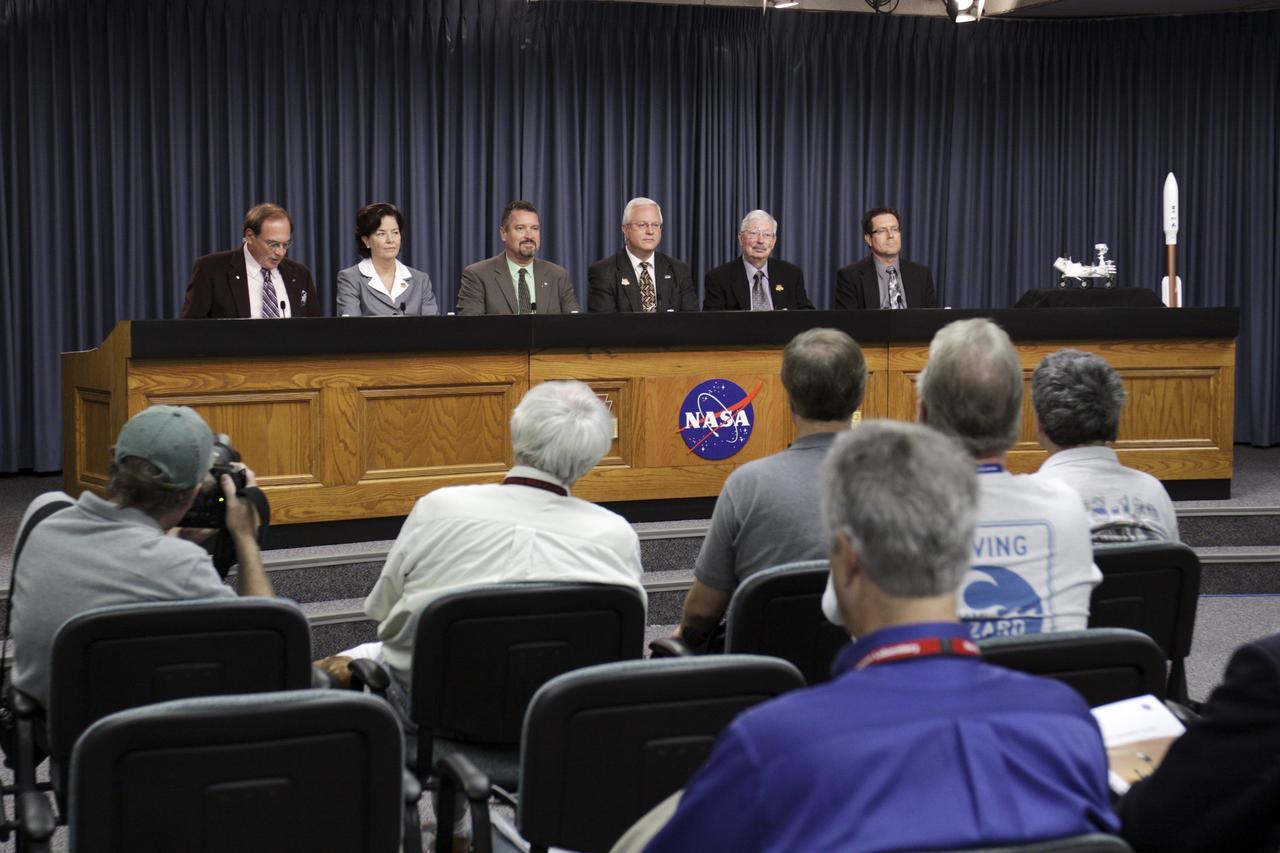
CAPE CANAVERAL, Fla. – Media representatives participate in a prelaunch news conference for the Mars Science Laboratory (MSL) in the Press Site auditorium at NASA’s Kennedy Space Center in Florida. From left are NASA Public Affairs Officer George Diller; Colleen Hartman, assistant associate administrator, NASA Science Mission Directorate; Omar Baez, NASA launch director; Vernon Thorp, program manager, NASA Missions, United Launch Alliance; Peter Theisinger, MSL project manager; and Clay Flinn, launch weather officer 45th Weather Squadron, Cape Canaveral Air Force Station, Fla. MSL’s components include a car-sized rover, Curiosity, which has 10 science instruments designed to search for signs of life, including methane, and help determine if the gas is from a biological or geological source. Launch of MSL aboard a United Launch Alliance Atlas V rocket is scheduled for Nov. 26 from Space Launch Complex-41 on Cape Canaveral Air Force Station in Florida. For more information, visit http://www.nasa.gov/msl. Photo credit: NASA/Kim Shiflett
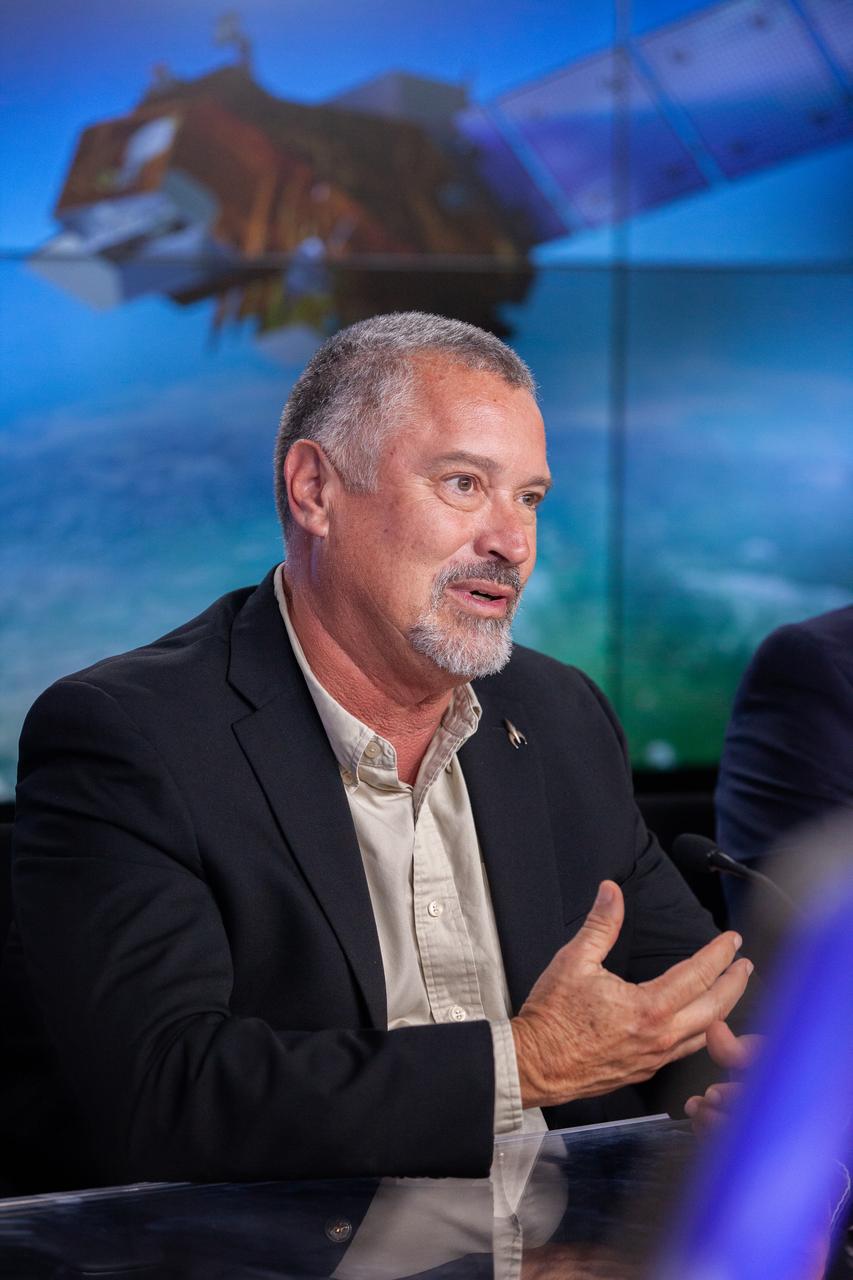
Omar Baez, launch director, NASA’s Launch Services Program, participates in a prelaunch news conference for the National Oceanic and Atmospheric Administration’s (NOAA) Joint Polar Satellite System-2 (JPSS-2) and NASA Low-Earth Orbit Flight Test of an Inflatable Decelerator (LOFTID) technology demonstration at Vandenberg Space Force Base in California on Oct. 28, 2022. JPSS-2 is the third satellite in the polar satellite series and is expected to capture data to improve weather forecasts, helping scientists predict and prepare for extreme weather events and climate change. JPSS-2 is scheduled to launch at 2:25 a.m. PDT Tuesday, Nov. 1, on a United Launch Alliance (ULA) Atlas V 401 rocket from Space Launch Complex 3 at Vandenberg Space Force Base in California. Launching with JPSS-2 is NASA’s LOFTID technology demonstration. After JPSS-2 safely reaches orbit, LOFTID will follow a re-entry trajectory from low-Earth orbit to demonstrate the inflatable heat shield’s ability to slow down and survive re-entry. LOFTID is a partnership with ULA and is dedicated to the memory of Bernard Kutter, one of the company’s engineers who played a key role in developing the technology. LOFTID will demonstrate how the inflatable aeroshell, or heat shield, can slow down and survive re-entry in conditions relevant to many potential applications, whether landing humans on Mars, new missions to Venus and Titan, or returning heavier payloads and samples from low-Earth orbit.

Omar Baez, launch director, NASA’s Launch Services Program, participates in a prelaunch news conference for the National Oceanic and Atmospheric Administration’s (NOAA) Joint Polar Satellite System-2 (JPSS-2) and NASA Low-Earth Orbit Flight Test of an Inflatable Decelerator (LOFTID) technology demonstration at Vandenberg Space Force Base in California on Oct. 28, 2022. JPSS-2 is the third satellite in the polar satellite series and is expected to capture data to improve weather forecasts, helping scientists predict and prepare for extreme weather events and climate change. JPSS-2 is scheduled to launch at 2:25 a.m. PDT Tuesday, Nov. 1, on a United Launch Alliance (ULA) Atlas V 401 rocket from Space Launch Complex 3 at Vandenberg Space Force Base in California. Launching with JPSS-2 is NASA’s LOFTID technology demonstration. After JPSS-2 safely reaches orbit, LOFTID will follow a re-entry trajectory from low-Earth orbit to demonstrate the inflatable heat shield’s ability to slow down and survive re-entry. LOFTID is a partnership with ULA and is dedicated to the memory of Bernard Kutter, one of the company’s engineers who played a key role in developing the technology. LOFTID will demonstrate how the inflatable aeroshell, or heat shield, can slow down and survive re-entry in conditions relevant to many potential applications, whether landing humans on Mars, new missions to Venus and Titan, or returning heavier payloads and samples from low-Earth orbit.
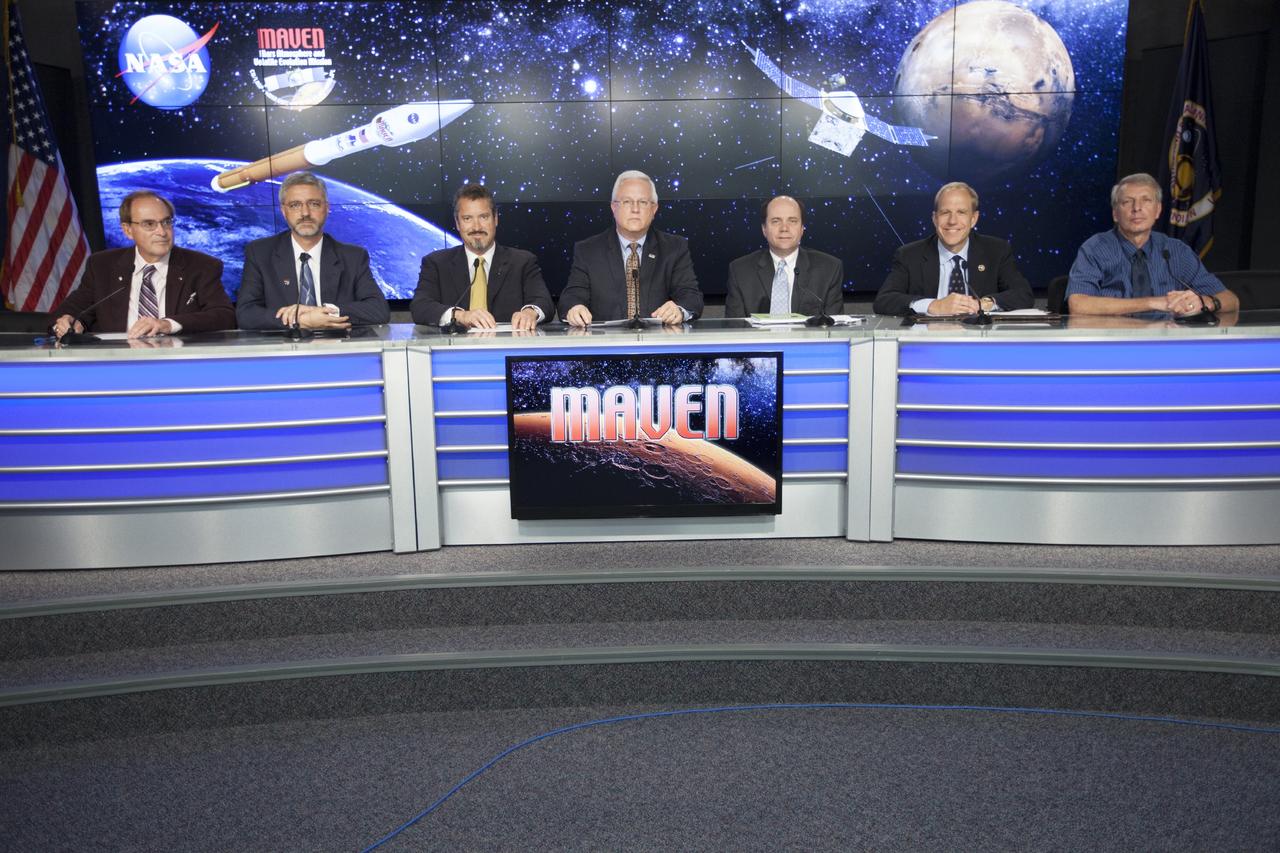
CAPE CANAVERAL, Fla. – During a news conference at NASA's Kennedy Space Center in Florida, agency and contractor officials discussed preparations for the launch of the Mars Atmosphere and Volatile EvolutioN, or MAVEN, mission. Participating in the briefing, from the left, are George Diller of NASA Public Affairs, Geoffrey Yoder, NASA deputy associate administrator of programs in the Science Mission Directorate, Omar Baez, NASA launch director, Vernon Thorp, program manager for NASA Missions with United Launch Alliance in Centennial, Colo., David Mitchell, NASA's MAVEN project manager at the Goddard Space Flight Center in Greenbelt, Md., Guy Beutelschies, Lockheed Martin's MAVEN project manager and Clay Flinn, launch weather officer, 45th Weather Squadron at Cape Canaveral Air Force Station, Fla. MAVEN is being prepared for its scheduled launch on Nov 18, 2013 from Cape Canaveral Air Force Station, Fla. atop a United Launch Alliance Atlas V rocket. Positioned in an orbit above the Red Planet, MAVEN will study the upper atmosphere of Mars in unprecedented detail. For information on the MAVEN mission, visit: http://www.nasa.gov/mission_pages/maven/main/index.html. Photo credit: NASA MAVEN is being prepared for its scheduled launch on Nov 18, 2013 from Cape Canaveral Air Force Station, Fla. atop a United Launch Alliance Atlas V rocket. Positioned in an orbit above the Red Planet, MAVEN will study the upper atmosphere of Mars in unprecedented detail. For more information, visit: http://www.nasa.gov/mission_pages/maven/main/index.html Photo credit: NASA/Kim Shiflett
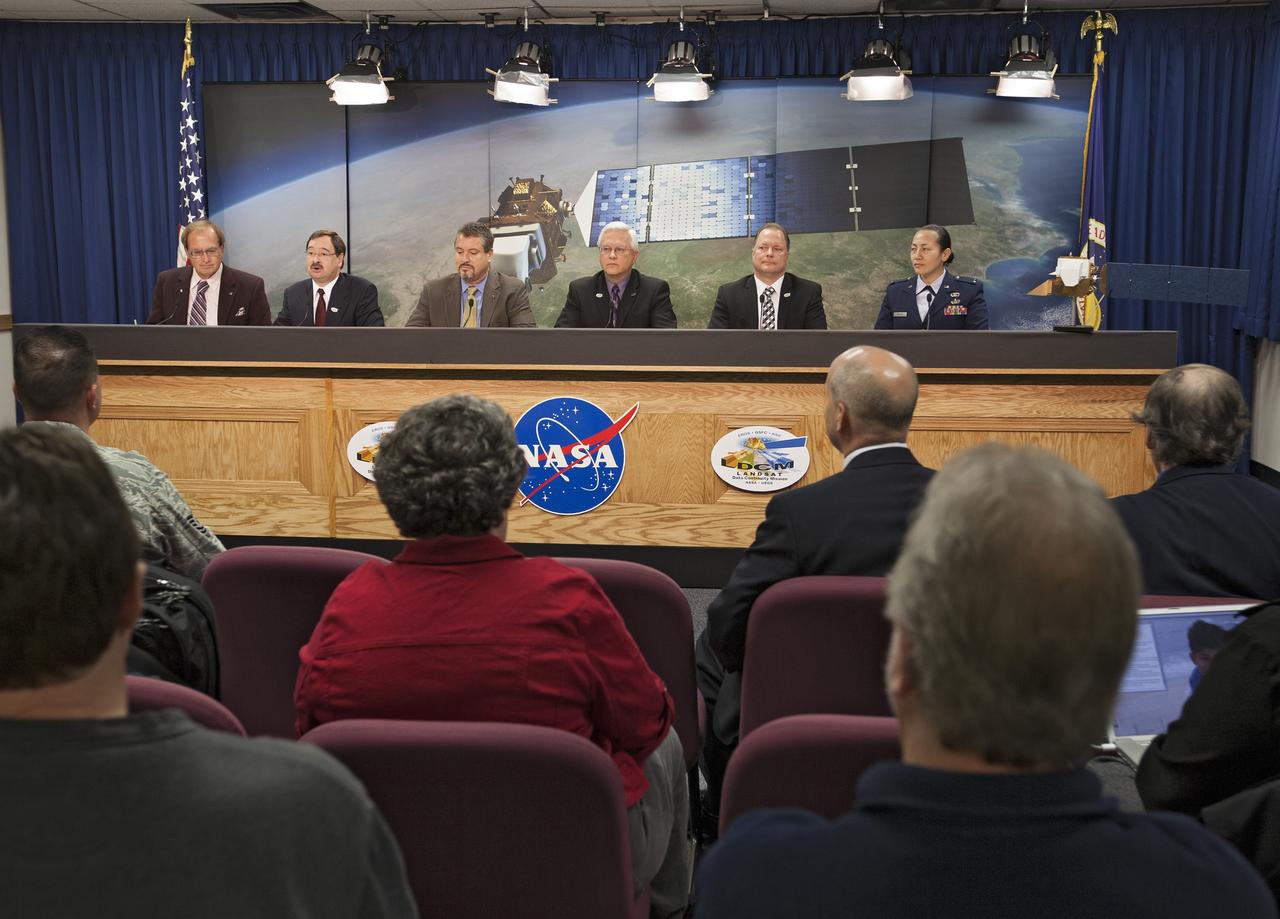
VANDENBERG AIR FORCE BASE, Calif. -- Media attend a prelaunch press conference at Vandenberg Air Force Base in California to discuss NASA's readiness to launch the Landsat Data Continuity Mission LDCM. From left are George Diller of NASA Public Affairs, LDCM program executive David Jarrett from NASA Headquarters, NASA Launch Director Omar Baez from Kennedy Space Center, United Launch Alliance Program Manager for NASA Missions Vernon Thorp, LDCM Project Manager Ken Schwer from Goddard Space Flight Center, and 1st Lt. Jennifer Kelley, launch weather officer for the 30th Operations Support Squadron at Vandenberg. Launch of LDCM aboard a United Launch Alliance Atlas V rocket from Vandenberg's Space Launch Complex-3E is planned for Feb. 11 during a 48-minute launch window that opens at 10:02 a.m. PST, or 1:02 p.m. EST. LDCM is the eighth satellite in the Landsat Program series of Earth-observing missions and will continue the program’s critical role in monitoring, understanding and managing the resources needed for human sustainment, such as food, water and forests. NASA's Goddard Space Flight Center in Greenbelt, Md., is responsible for LDCM project management. Orbital Sciences Corp. built the LDCM satellite. NASA's Launch Services Program at the Kennedy Space Center in Florida provides launch management. After launch and the initial checkout phase, the U. S. Geological Survey will take operational control of LDCM, and it will be renamed Landsat 8. Photo credit: NASA/Kim Shiflett

NASA held a prelaunch news conference for the National Oceanic and Atmospheric Administration’s (NOAA) Joint Polar Satellite System-2 (JPSS-2) and the agency’s Low-Earth Orbit Flight Test of an Inflatable Decelerator (LOFTID) technology demonstration at Vandenberg Space Force Base in California on Oct. 28, 2022. Participants from left are: Megan Cruz, NASA Communications; John Gagosian, director, NASA’s Joint Agency Satellite Division; Omar Baez, launch director, NASA’s Launch Services Program; Gary Wentz, vice president, Government and Commercial Programs, ULA; Irene Parker, deputy assistant administrator, NOAA Systems, National Environmental Satellite, Data, and Services; Tim Walsh, director, NOAA’s JPSS Program Office, NOAA; Jim Reuter, associate administrator for NASA’s Space Technology Mission Directorate; Capt. Zack Zounes, launch weather officer, U.S. Space Force. JPSS-2 is the third satellite in the polar satellite series and is expected to capture data to improve weather forecasts, helping scientists predict and prepare for extreme weather events and climate change. JPSS-2 is scheduled to launch at 2:25 a.m. PDT Tuesday, Nov. 1, on a United Launch Alliance (ULA) Atlas V 401 rocket from Space Launch Complex 3 at Vandenberg Space Force Base in California. Launching with JPSS-2 is NASA’s LOFTID technology demonstration. After JPSS-2 safely reaches orbit, LOFTID will follow a re-entry trajectory from low-Earth orbit to demonstrate the inflatable heat shield’s ability to slow down and survive re-entry. LOFTID is a partnership with ULA and is dedicated to the memory of Bernard Kutter, one of the company’s engineers who played a key role in developing the technology. LOFTID will demonstrate how the inflatable aeroshell, or heat shield, can slow down and survive re-entry in conditions relevant to many potential applications, whether landing humans on Mars, new missions to Venus and Titan, or returning heavier payloads and samples from low-Earth or

CAPE CANAVERAL, Fla. – During a news conference at NASA's Kennedy Space Center in Florida, agency and contractor officials discussed preparations for the launch of the Mars Atmosphere and Volatile EvolutioN, or MAVEN, mission. Participating in the briefing, from the left, are George Diller of NASA Public Affairs, Geoffrey Yoder, NASA deputy associate administrator of programs in the Science Mission Directorate, Omar Baez, NASA launch director, Vernon Thorp, program manager for NASA Missions with United Launch Alliance in Centennial, Colo., David Mitchell, NASA's MAVEN project manager at the Goddard Space Flight Center in Greenbelt, Md., Guy Beutelschies, Lockheed Martin's MAVEN project manager and Clay Flinn, launch weather officer, 45th Weather Squadron at Cape Canaveral Air Force Station, Fla. MAVEN is being prepared for its scheduled launch on Nov 18, 2013 from Cape Canaveral Air Force Station, Fla. atop a United Launch Alliance Atlas V rocket. Positioned in an orbit above the Red Planet, MAVEN will study the upper atmosphere of Mars in unprecedented detail. For information on the MAVEN mission, visit: http://www.nasa.gov/mission_pages/maven/main/index.html. Photo credit: NASA MAVEN is being prepared for its scheduled launch on Nov 18, 2013 from Cape Canaveral Air Force Station, Fla. atop a United Launch Alliance Atlas V rocket. Positioned in an orbit above the Red Planet, MAVEN will study the upper atmosphere of Mars in unprecedented detail. For more information, visit: http://www.nasa.gov/mission_pages/maven/main/index.html Photo credit: NASA/Kim Shiflett
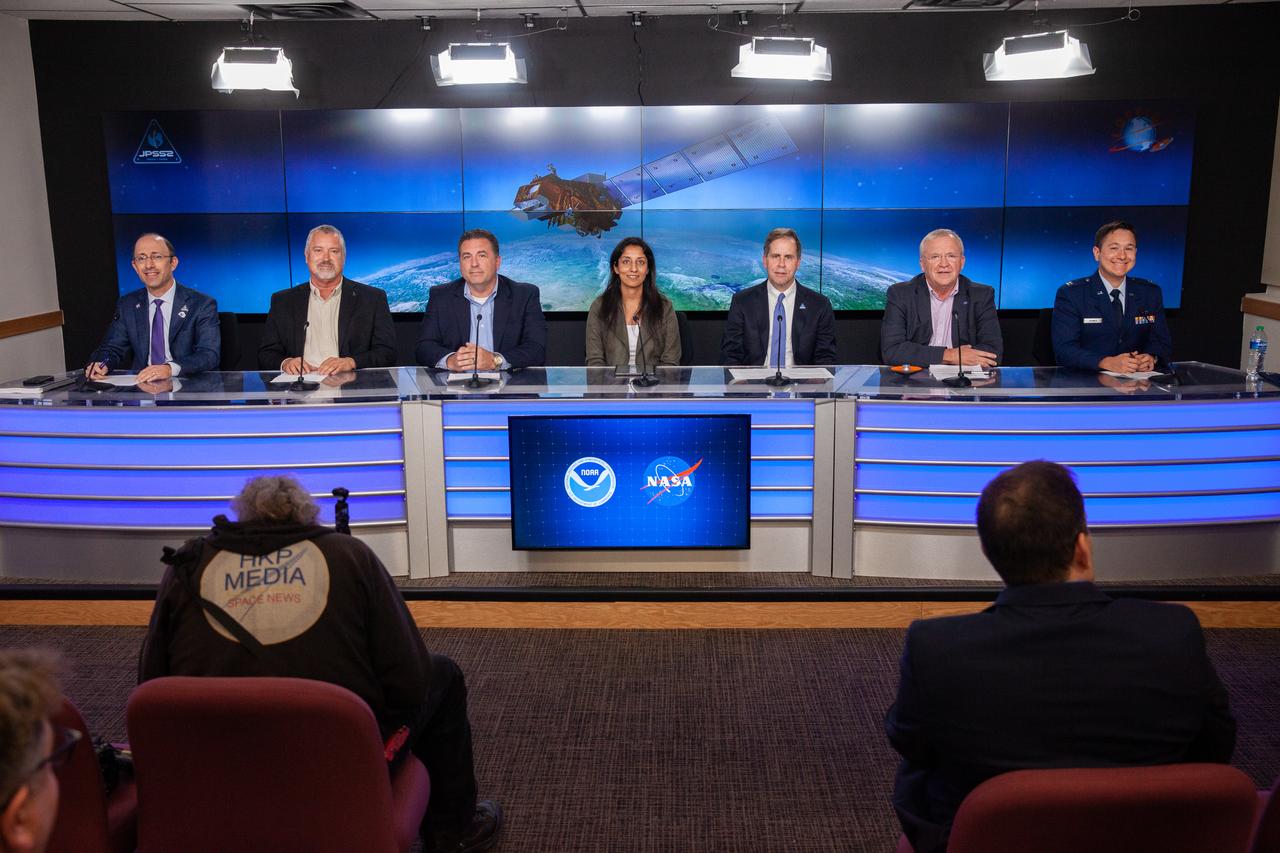
NASA held a prelaunch news conference for the National Oceanic and Atmospheric Administration’s (NOAA) Joint Polar Satellite System-2 (JPSS-2) and the agency’s Low-Earth Orbit Flight Test of an Inflatable Decelerator (LOFTID) technology demonstration at Vandenberg Space Force Base in California on Oct. 28, 2022. Participants from left are: John Gagosian, director, NASA’s Joint Agency Satellite Division; Omar Baez, launch director, NASA’s Launch Services Program; Gary Wentz, vice president, Government and Commercial Programs, ULA; Irene Parker, deputy assistant administrator, NOAA Systems, National Environmental Satellite, Data, and Services; Tim Walsh, director, NOAA’s JPSS Program Office, NOAA; Jim Reuter, associate administrator for NASA’s Space Technology Mission Directorate; Capt. Zack Zounes, launch weather officer, U.S. Space Force. JPSS-2 is the third satellite in the polar satellite series and is expected to capture data to improve weather forecasts, helping scientists predict and prepare for extreme weather events and climate change. JPSS-2 is scheduled to launch at 2:25 a.m. PDT Tuesday, Nov. 1, on a United Launch Alliance (ULA) Atlas V 401 rocket from Space Launch Complex 3 at Vandenberg Space Force Base in California. Launching with JPSS-2 is NASA’s LOFTID technology demonstration. After JPSS-2 safely reaches orbit, LOFTID will follow a re-entry trajectory from low-Earth orbit to demonstrate the inflatable heat shield’s ability to slow down and survive re-entry. LOFTID is a partnership with ULA and is dedicated to the memory of Bernard Kutter, one of the company’s engineers who played a key role in developing the technology. LOFTID will demonstrate how the inflatable aeroshell, or heat shield, can slow down and survive re-entry in conditions relevant to many potential applications, whether landing humans on Mars, new missions to Venus and Titan, or returning heavier payloads and samples from low-Earth orbit.
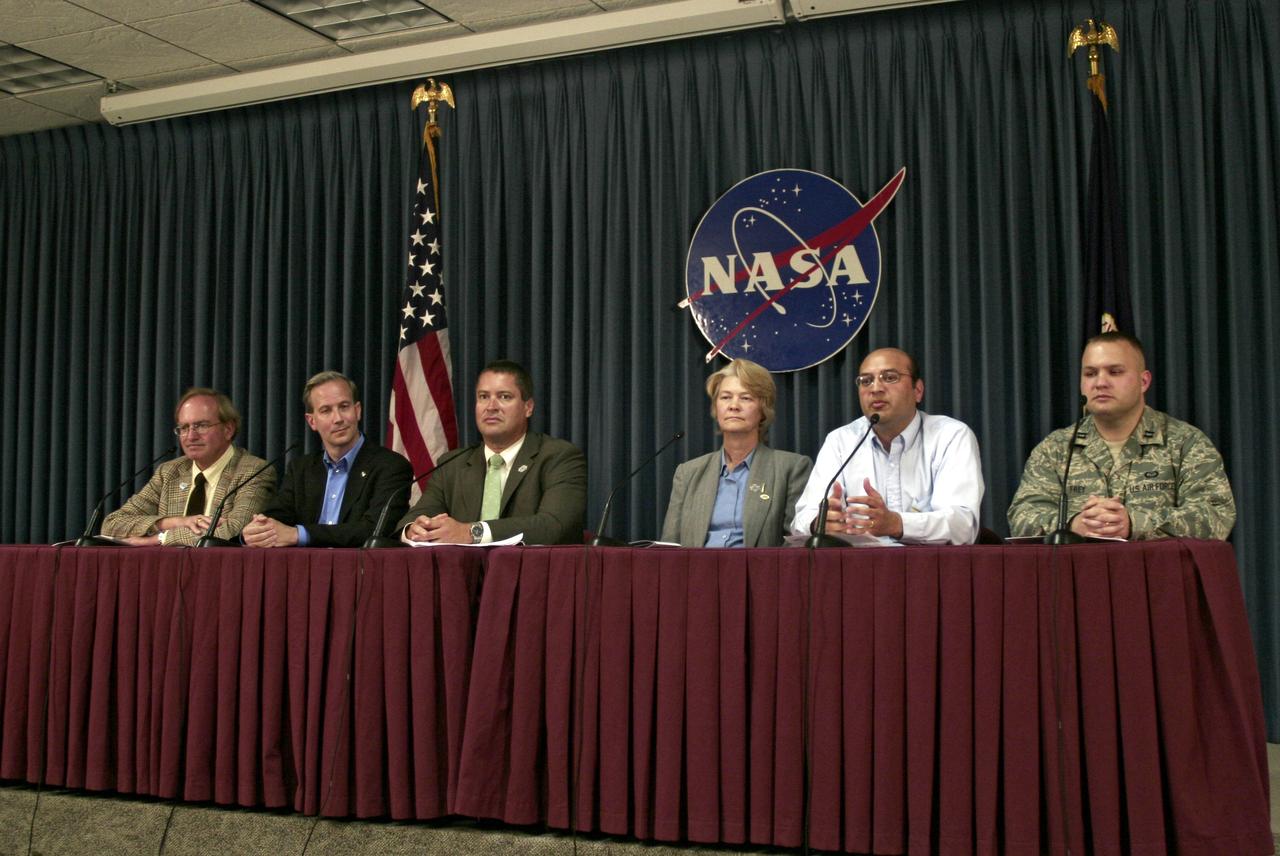
VANDENBERG AIR FORCE BASE, Calif. – A prelaunch news conference is held on North Vandenberg Air Force Base to present the latest information about the Ocean Surface Topography Mission, or OSTM/Jason 2. Seated from left are the moderator George Diller; Steve Neeck, OSTM/Jason 2 program executive; Omar Baez, NASA launch director at NASA's Kennedy Space Center; Kris Walsh, director of NASA and commercial programs for, United Launch Alliance; Parag Vaze, OSTM/Jason 2 project manager at the NASA's Jet Propulsion Laboratory; and Capt. Andrew M. Frey, launch weather officer with the 30th Weather Squadron. The OSTM/Jason 2 satellite will embark on a globe-circling voyage to continue charting sea level, a vital indicator of global climate change. The mission will return a vast amount of new data that will improve weather, climate and ocean forecasts. OSTM/Jason 2's expected lifetime of at least three years will extend into the next decade the continuous record of these data started in 1992 by NASA and the French space agency Centre National d'Etudes Spatiales, or CNES, with the TOPEX/Poseidon mission. The data collection was continued by the two agencies on Jason-1 in 2001. The launch window extends from 12:46 a.m. to 12:55 a.m. PDT. The satellite will be placed in an 830-mile-high orbit at an inclination of 66 degrees after separating from the Delta II 55 minutes after liftoff. Photo credit: Photograph by Carleton Bailie for United Launch Alliance
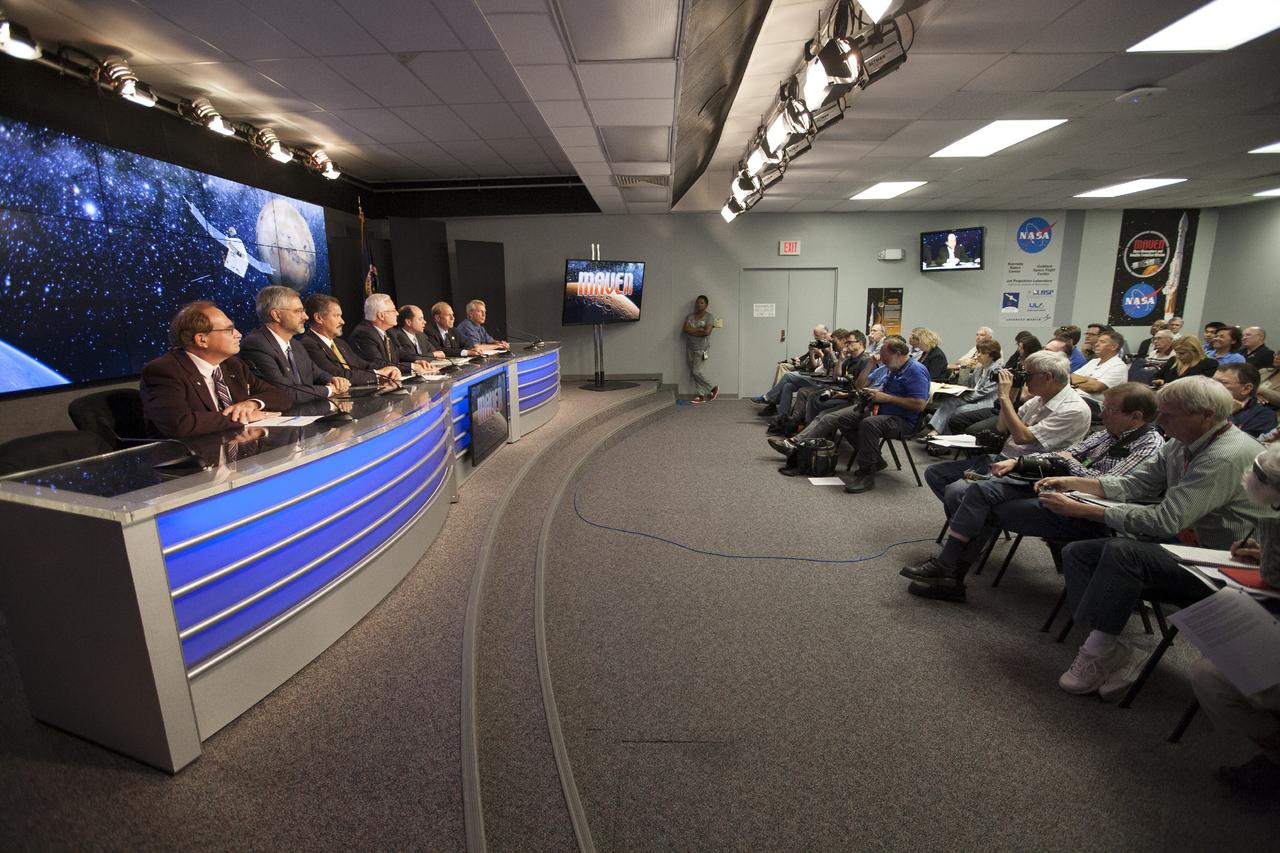
CAPE CANAVERAL, Fla. – During a news conference at NASA's Kennedy Space Center in Florida, agency and contractor officials discussed preparations for the launch of the Mars Atmosphere and Volatile EvolutioN, or MAVEN, mission. Participating in the briefing, from the left, are George Diller of NASA Public Affairs, Geoffrey Yoder, NASA deputy associate administrator of programs in the Science Mission Directorate, Omar Baez, NASA launch director, Vernon Thorp, program manager for NASA Missions with United Launch Alliance in Centennial, Colo., David Mitchell, NASA's MAVEN project manager at the Goddard Space Flight Center in Greenbelt, Md., Guy Beutelschies, Lockheed Martin's MAVEN project manager and Clay Flinn, launch weather officer, 45th Weather Squadron at Cape Canaveral Air Force Station, Fla. MAVEN is being prepared for its scheduled launch on Nov 18, 2013 from Cape Canaveral Air Force Station, Fla. atop a United Launch Alliance Atlas V rocket. Positioned in an orbit above the Red Planet, MAVEN will study the upper atmosphere of Mars in unprecedented detail. For information on the MAVEN mission, visit: http://www.nasa.gov/mission_pages/maven/main/index.html. Photo credit: NASA MAVEN is being prepared for its scheduled launch on Nov 18, 2013 from Cape Canaveral Air Force Station, Fla. atop a United Launch Alliance Atlas V rocket. Positioned in an orbit above the Red Planet, MAVEN will study the upper atmosphere of Mars in unprecedented detail. For more information, visit: http://www.nasa.gov/mission_pages/maven/main/index.html Photo credit: NASA/Kim Shiflett
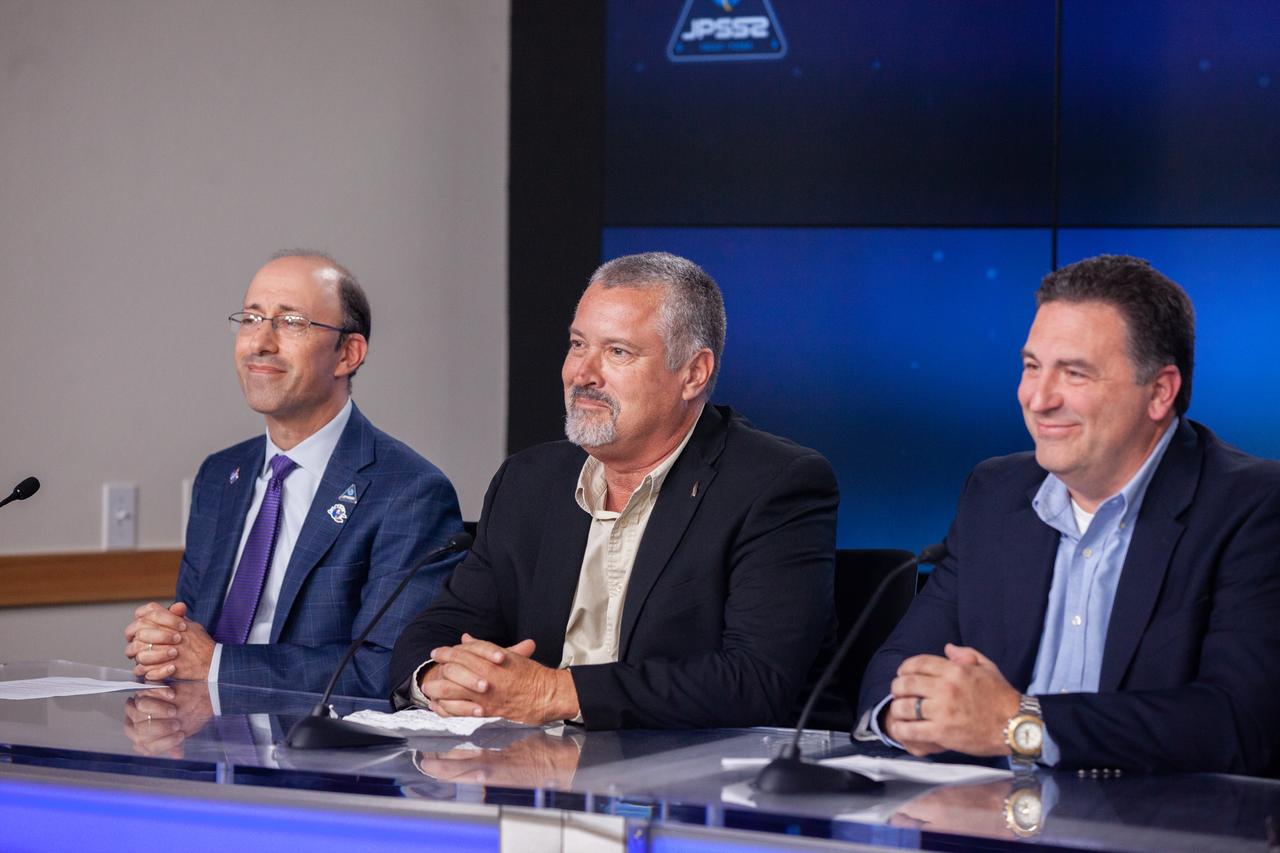
NASA held a prelaunch news conference for the National Oceanic and Atmospheric Administration’s (NOAA) Joint Polar Satellite System-2 (JPSS-2) and the agency’s Low-Earth Orbit Flight Test of an Inflatable Decelerator (LOFTID) technology demonstration at Vandenberg Space Force Base in California on Oct. 28, 2022. Participants from left are: John Gagosian, director, NASA’s Joint Agency Satellite Division; Omar Baez, launch director, NASA’s Launch Services Program; Gary Wentz, vice president, Government and Commercial Programs, ULA. JPSS-2 is the third satellite in the polar satellite series and is expected to capture data to improve weather forecasts, helping scientists predict and prepare for extreme weather events and climate change. JPSS-2 is scheduled to launch at 2:25 a.m. PDT Tuesday, Nov. 1, on a United Launch Alliance (ULA) Atlas V 401 rocket from Space Launch Complex 3 at Vandenberg Space Force Base in California. Launching with JPSS-2 is NASA’s LOFTID technology demonstration. After JPSS-2 safely reaches orbit, LOFTID will follow a re-entry trajectory from low-Earth orbit to demonstrate the inflatable heat shield’s ability to slow down and survive re-entry. LOFTID is a partnership with ULA and is dedicated to the memory of Bernard Kutter, one of the company’s engineers who played a key role in developing the technology. LOFTID will demonstrate how the inflatable aeroshell, or heat shield, can slow down and survive re-entry in conditions relevant to many potential applications, whether landing humans on Mars, new missions to Venus and Titan, or returning heavier payloads and samples from low-Earth orbit.

John Elbon, Chief Operating Officer, United Launch Alliance, is introduced during a prelaunch news conference for the Lucy mission held inside the TV Auditorium at NASA’s Kennedy Space Center in Florida on Oct. 13, 2021. The mission is targeted to launch at 5:34 a.m. EDT Saturday, Oct. 16, on a United Launch Alliance Atlas V 401 rocket from Space Launch Complex 41 at Cape Canaveral Space Force Station. NASA’s Launch Services Program, based at Kennedy, is managing the launch. During its 12-year primary mission, Lucy will explore a record-breaking number of asteroids, flying by one asteroid in the solar system’s main belt and seven Trojan asteroids. Additionally, Lucy’s path will circle back to Earth three times for gravity assists, making it the first spacecraft to return to the vicinity of Earth from the outer solar system.

Donya Douglas-Bradshaw, Lucy project manager at NASA’s Goddard Space Flight Center, is introduced during a prelaunch news conference for the Lucy mission held inside the TV Auditorium at NASA’s Kennedy Space Center in Florida on Oct. 13, 2021. The mission is scheduled to launch no earlier than 5:34 a.m. EDT Saturday, Oct. 16, on a United Launch Alliance Atlas V 401 rocket from Space Launch Complex 41 at Cape Canaveral Space Force Station. NASA’s Launch Services Program, based at Kennedy, is managing the launch. During its 12-year primary mission, Lucy will explore a record-breaking number of asteroids, flying by one asteroid in the solar system’s main belt and seven Trojan asteroids. Additionally, Lucy’s path will circle back to Earth three times for gravity assists, making it the first spacecraft to return to the vicinity of Earth from the outer solar system.

Lucy Prelaunch News Conference with representatives from NASA, Southwest Research Institute, United Launch Alliance, and Space Launch Delta 45. Lucy, NASA’s first mission to explore the Trojan Asteroids, is set to launch on a United Launch Alliance Atlas V rocket from Cape Canaveral Space Force Station in Florida on Oct. 16. The launch is managed by NASA’s Launch Services Program based at Kennedy Space Center.

Tammy Long, NASA Communications, addresses the audience during a prelaunch news conference for the Lucy mission held inside the TV Auditorium at NASA’s Kennedy Space Center in Florida on Oct. 13, 2021. The mission is targeted to launch at 5:34 a.m. EDT Saturday, Oct. 16, on a United Launch Alliance Atlas V 401 rocket from Space Launch Complex 41 at Cape Canaveral Space Force Station. NASA’s Launch Services Program, based at Kennedy, is managing the launch. Lucy is the first space mission to study the Trojan asteroids, which hold vital clues to the formation of our solar system.
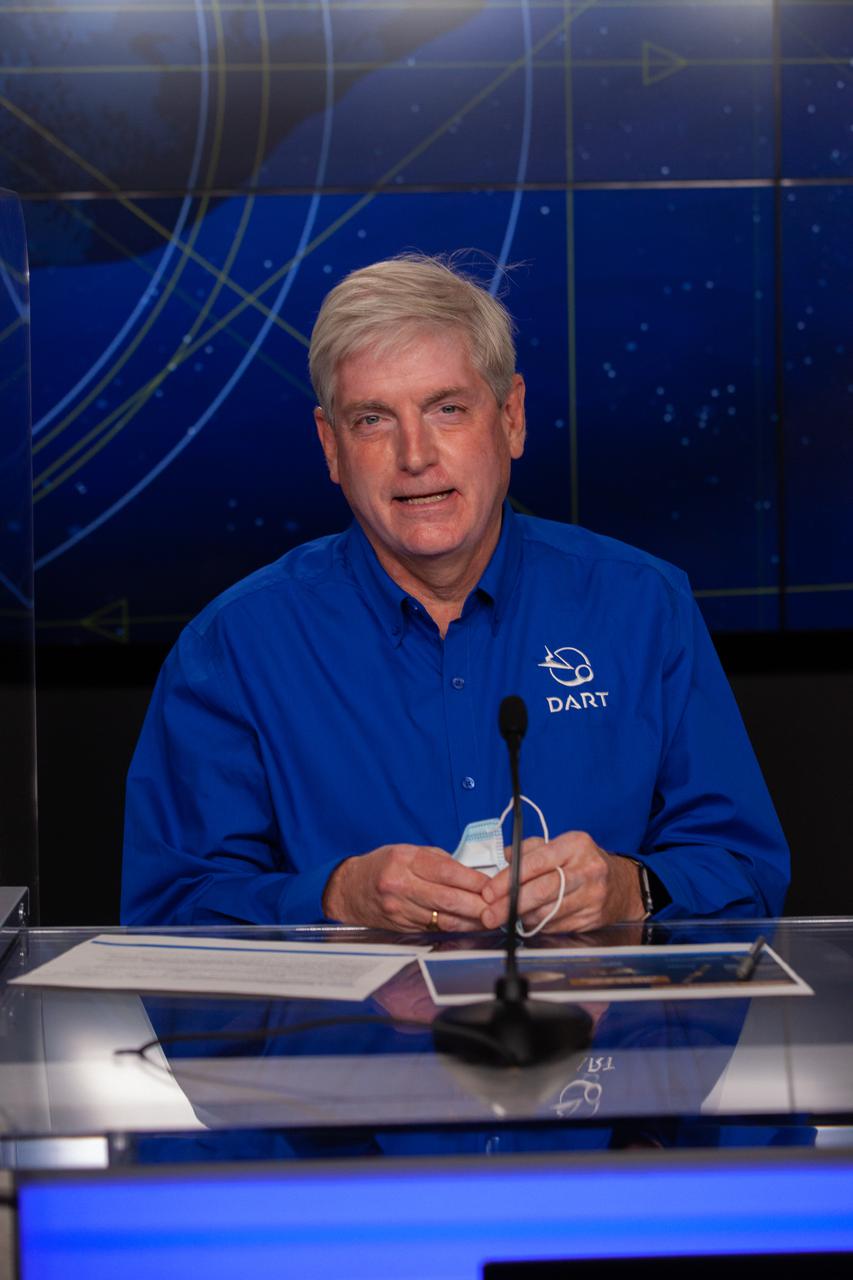
Ed Reynolds, Double Asteroid Redirection Test (DART) project manager for Johns Hopkins Applied Physics Laboratory, participates in a prelaunch news conference for NASA’s DART mission at Vandenberg Space Force Base in California on Nov. 22, 2021. DART is the first mission to test technologies for preventing an impact of Earth by a hazardous asteroid. The mission is scheduled to launch no earlier than 1:21 a.m. EST Wednesday, Nov. 24 (10:21 p.m. PST Tuesday, Nov. 23), aboard a SpaceX Falcon 9 rocket from Vandenberg. NASA's Launch Services Program based at Kennedy Space Center in Florida, America's multi-user spaceport, is managing the launch.

Thomas Zurbuchen, associate administrator for NASA’s Science Mission Directorate, participates in a prelaunch news conference for the agency’s Double Asteroid Redirection Test (DART) mission at Vandenberg Space Force Base in California on Nov. 22, 2021. DART is the first mission to test technologies for preventing an impact of Earth by a hazardous asteroid. The mission is scheduled to launch no earlier than 1:21 a.m. EST Wednesday, Nov. 24 (10:21 p.m. PST Tuesday, Nov. 23), aboard a SpaceX Falcon 9 rocket from Vandenberg. NASA's Launch Services Program based at Kennedy Space Center in Florida, America's multi-user spaceport, is managing the launch.

Lucy Prelaunch News Conference with representatives from NASA, Southwest Research Institute, United Launch Alliance, and Space Launch Delta 45. Lucy, NASA’s first mission to explore the Trojan Asteroids, is set to launch on a United Launch Alliance Atlas V rocket from Cape Canaveral Space Force Station in Florida on Oct. 16. The launch is managed by NASA’s Launch Services Program based at Kennedy Space Center.

Derrol Nail, NASA Communications, moderates a prelaunch news conference for the agency’s Double Asteroid Redirection Test (DART) mission at Vandenberg Space Force Base in California on Nov. 22, 2021. DART is the first mission to test technologies for preventing an impact of Earth by a hazardous asteroid. The mission is scheduled to launch no earlier than 1:21 a.m. EST Wednesday, Nov. 24 (10:21 p.m. PST Tuesday, Nov. 23), aboard a SpaceX Falcon 9 rocket from Vandenberg. NASA's Launch Services Program based at Kennedy Space Center in Florida, America's multi-user spaceport, is managing the launch.

Thomas Zurbuchen, associate administrator, NASA’s Science Mission Directorate, is introduced during a prelaunch news conference for the Lucy mission held inside the TV Auditorium at NASA’s Kennedy Space Center in Florida on Oct. 13, 2021. The mission is scheduled to launch no earlier than 5:34 a.m. EDT Saturday, Oct. 16, on a United Launch Alliance Atlas V 401 rocket from Space Launch Complex 41 at Cape Canaveral Space Force Station. NASA’s Launch Services Program, based at Kennedy, is managing the launch. During its 12-year primary mission, Lucy will explore a record-breaking number of asteroids, flying by one asteroid in the solar system’s main belt and seven Trojan asteroids. Additionally, Lucy’s path will circle back to Earth three times for gravity assists, making it the first spacecraft to return to the vicinity of Earth from the outer solar system.

Julianna Scheiman, director for civil satellite missions for SpaceX, participates in a prelaunch news conference for NASA’s Double Asteroid Redirection Test (DART) mission at Vandenberg Space Force Base in California on Nov. 22, 2021. DART is the first mission to test technologies for preventing an impact of Earth by a hazardous asteroid. The mission is scheduled to launch no earlier than 1:21 a.m. EST Wednesday, Nov. 24 (10:21 p.m. PST Tuesday, Nov. 23), aboard a SpaceX Falcon 9 rocket from Vandenberg. NASA's Launch Services Program based at Kennedy Space Center in Florida, America's multi-user spaceport, is managing the launch.

Jessica Williams, Launch Weather Officer, 45th Weather Squadron, Space Launch Delta 45, Cape Canaveral Space Force Station, is introduced during a prelaunch news conference for the Lucy mission held inside the TV Auditorium at NASA’s Kennedy Space Center in Florida on Oct. 13, 2021. The mission is targeted to launch at 5:34 a.m. EDT Saturday, Oct. 16, on a United Launch Alliance Atlas V 401 rocket from Space Launch Complex 41 at Cape Canaveral Space Force Station. NASA’s Launch Services Program, based at Kennedy, is managing the launch. Lucy is the first space mission to study the Trojan asteroids, which hold vital clues to the formation of our solar system.
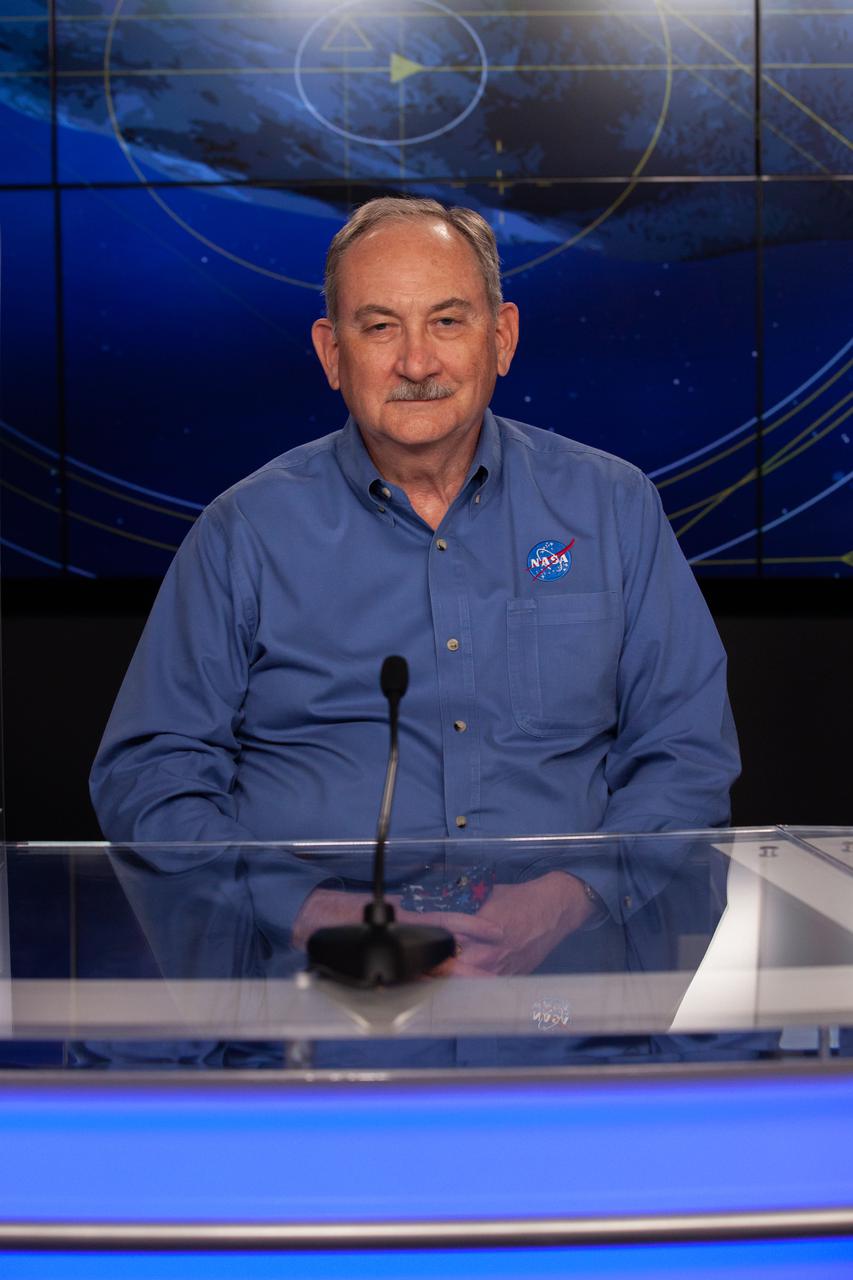
Lindley Johnson, planetary defense officer for NASA’s Planetary Defense Coordination Office, participates in a prelaunch news conference for the agency’s Double Asteroid Redirection Test (DART) mission at Vandenberg Space Force Base in California on Nov. 22, 2021. DART is the first mission to test technologies for preventing an impact of Earth by a hazardous asteroid. The mission is scheduled to launch no earlier than 1:21 a.m. EST Wednesday, Nov. 24 (10:21 p.m. PST Tuesday, Nov. 23), aboard a SpaceX Falcon 9 rocket from Vandenberg. NASA's Launch Services Program based at Kennedy Space Center in Florida, America's multi-user spaceport, is managing the launch.
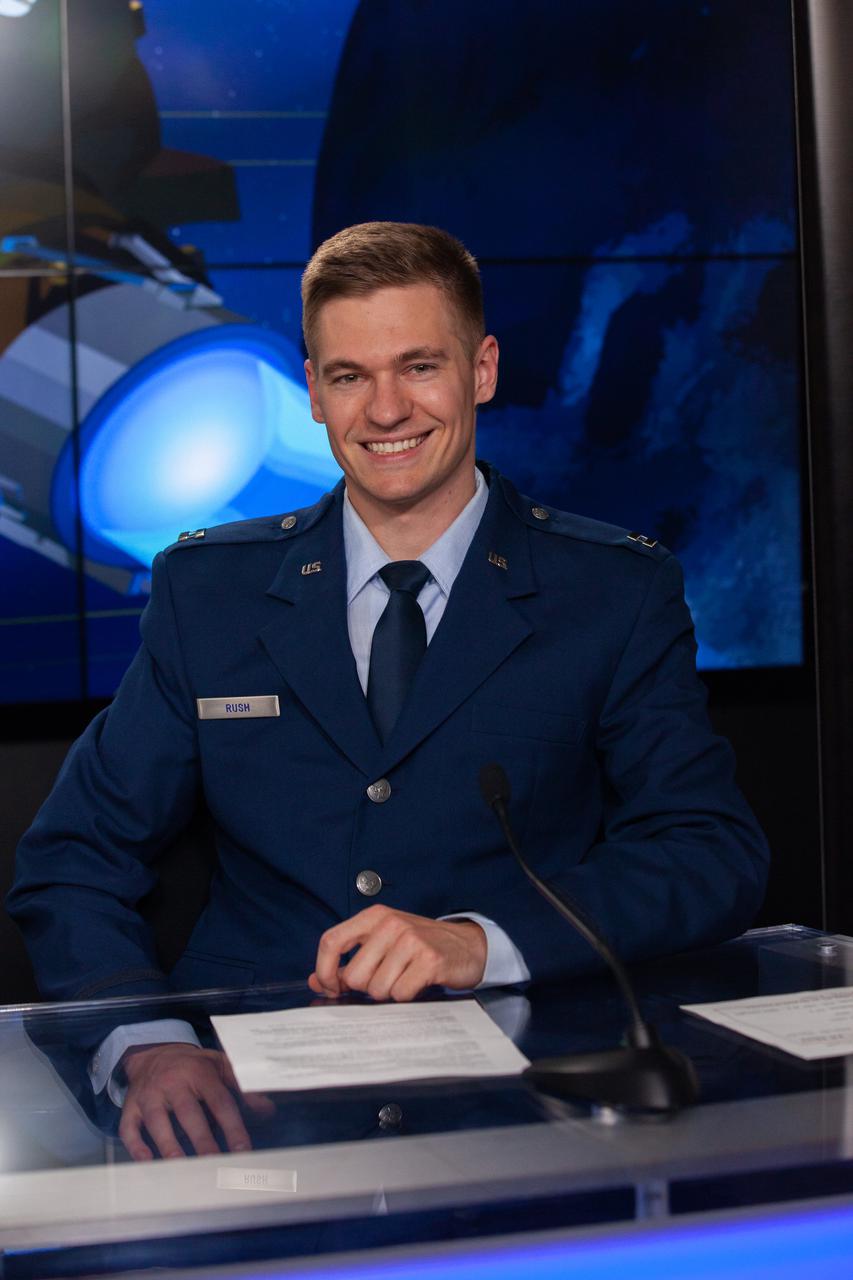
Capt. Maximillian Rush, weather officer for Space Launch Delta 30, participates in a prelaunch news conference for NASA’s Double Asteroid Redirection Test (DART) mission at Vandenberg Space Force Base in California on Nov. 22, 2021. DART is the first mission to test technologies for preventing an impact of Earth by a hazardous asteroid. The mission is scheduled to launch no earlier than 1:21 a.m. EST Wednesday, Nov. 24 (10:21 p.m. PST Tuesday, Nov. 23), aboard a SpaceX Falcon 9 rocket from Vandenberg. NASA's Launch Services Program based at Kennedy Space Center in Florida, America's multi-user spaceport, is managing the launch.