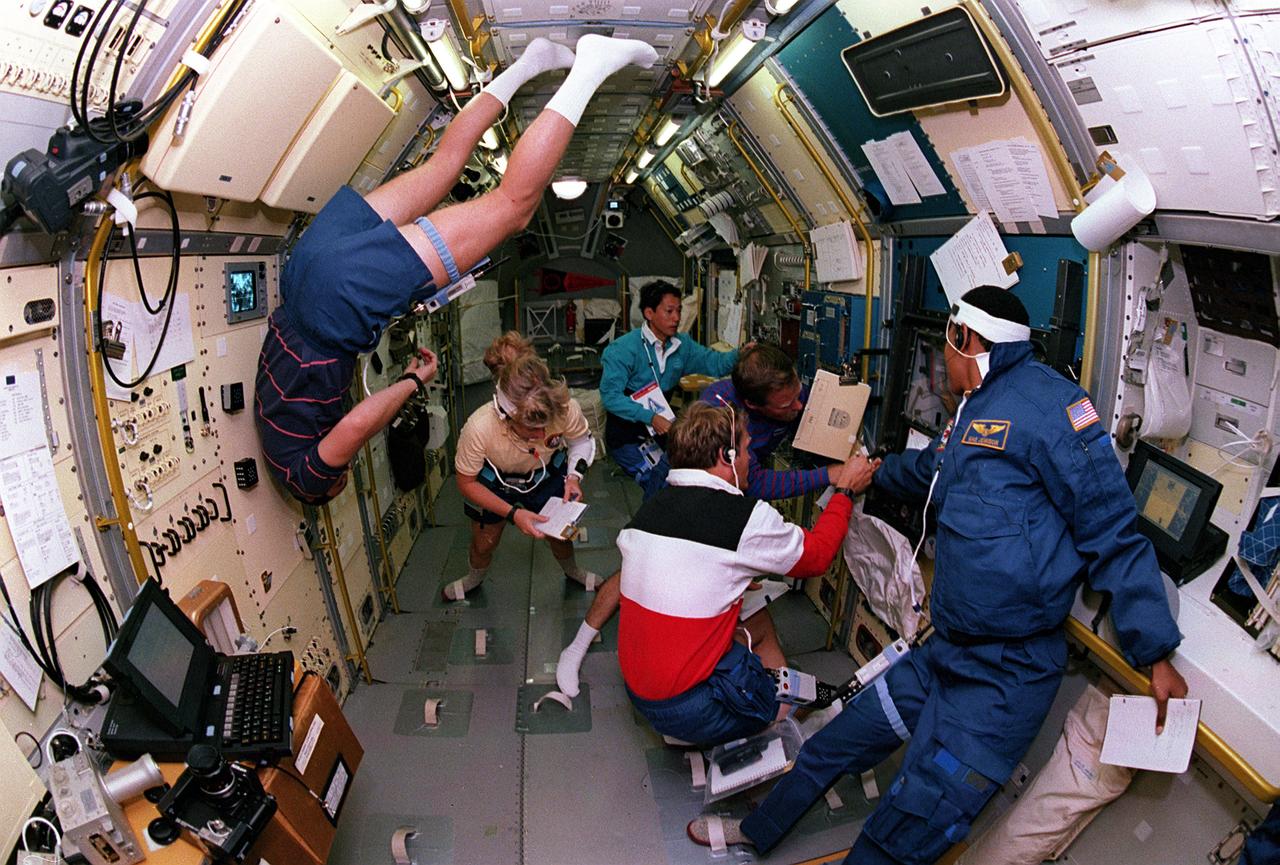
Space Shuttle Endeavour (STS-47) onboard photo of crew members working in the Spacelab-J module.
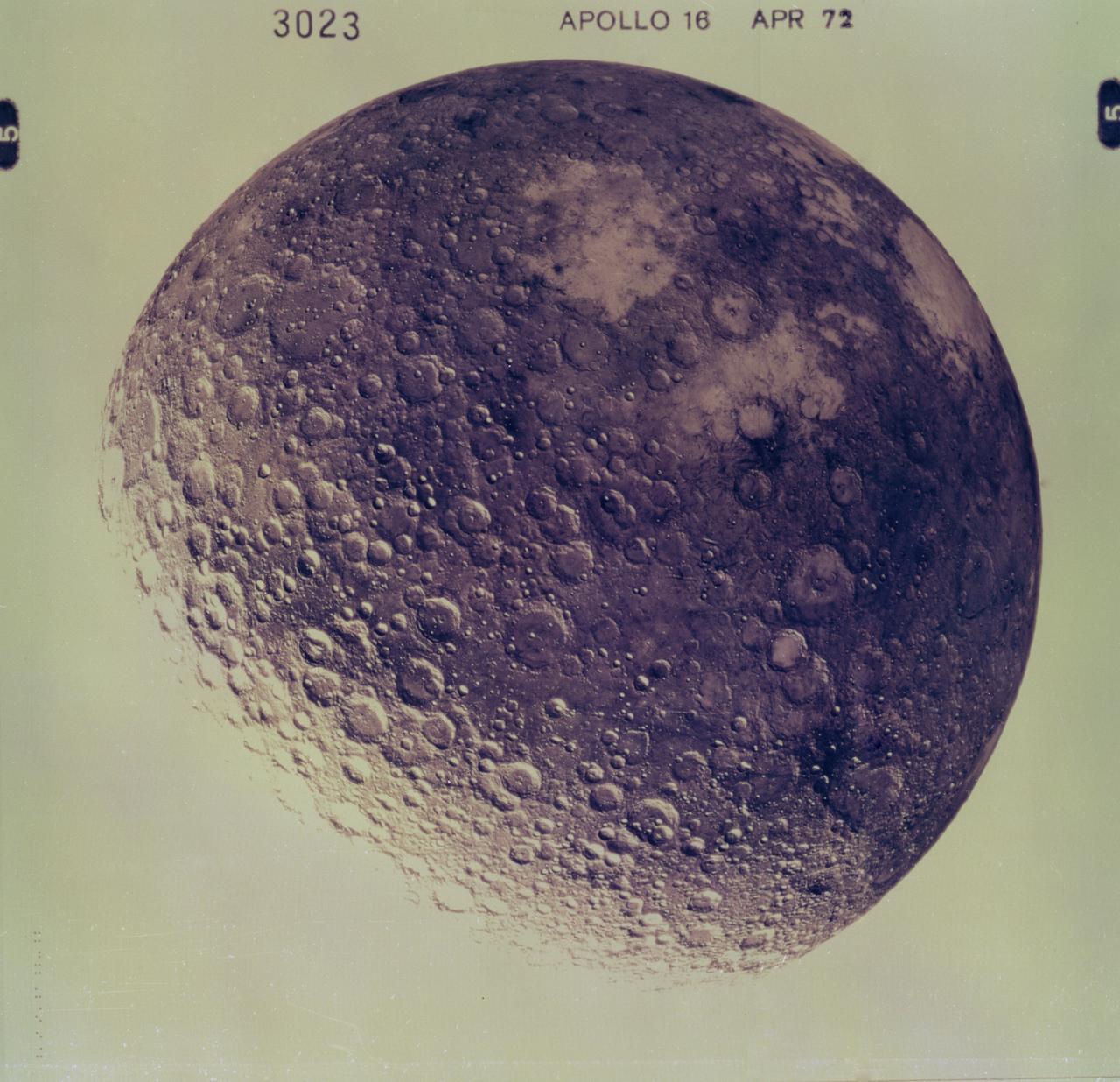
This view of the back side of the Moon was captured by the Apollo 16 mission crew. The sixth manned lunar landing mission, the Apollo 16 (SA-511), carrying three astronauts: Mission Commander John W. Young, Command Module pilot Thomas K. Mattingly II, and Lunar Module pilot Charles M. Duke, lifted off on April 16, 1972. The Apollo 16 continued the broad-scale geological, geochemical, and geophysical mapping of the Moon’s crust, begun by the Apollo 15, from lunar orbit. This mission marked the first use of the Moon as an astronomical observatory by using the ultraviolet camera/spectrograph which photographed ultraviolet light emitted by Earth and other celestial objects. The Lunar Roving Vehicle, developed by the Marshall Space Flight Center, was also used. The mission ended on April 27, 1972.
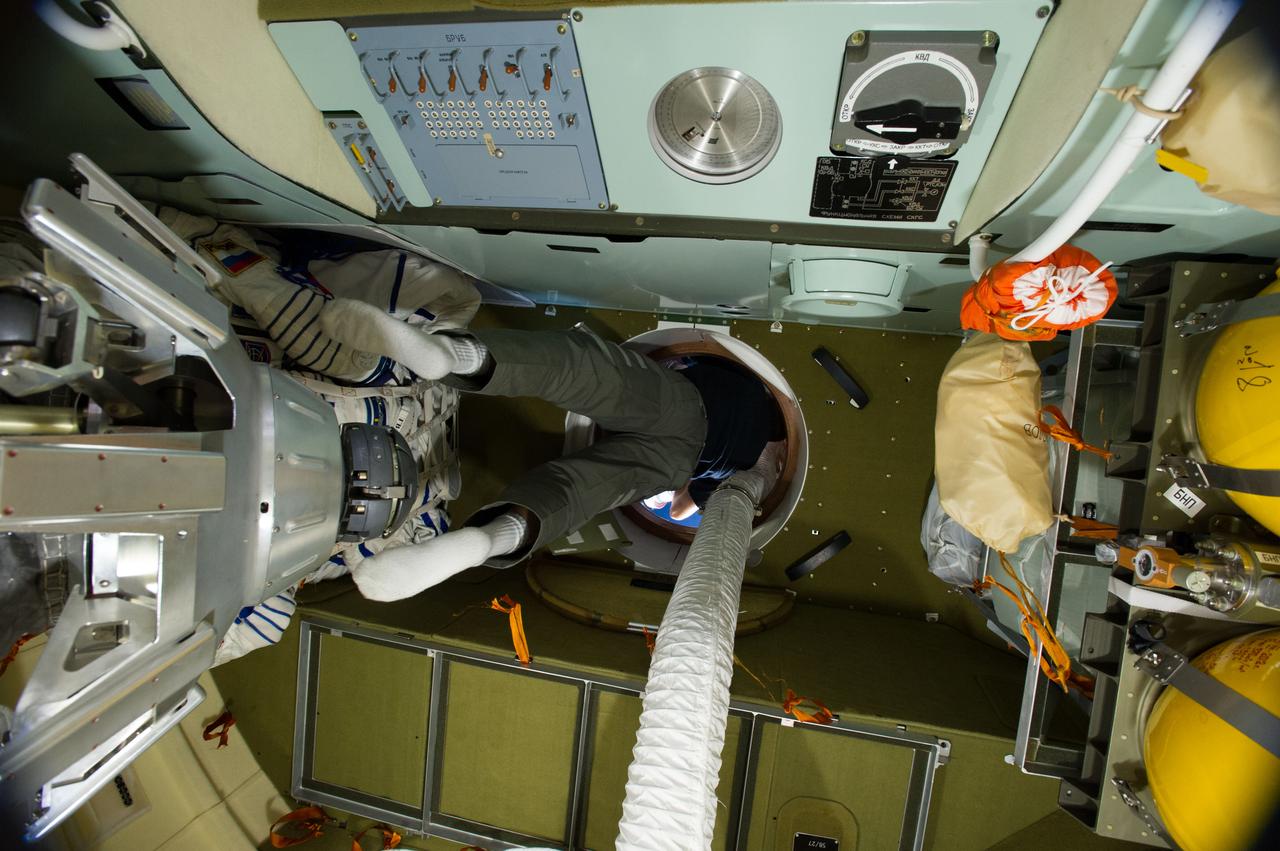
NASA Astronaut Reid Wiseman (back to camera),Expedition 40 flight engineer,is pictured in the Rassvet Mini-Research Module 1 (MRM-1) hatch of the International Space Station.
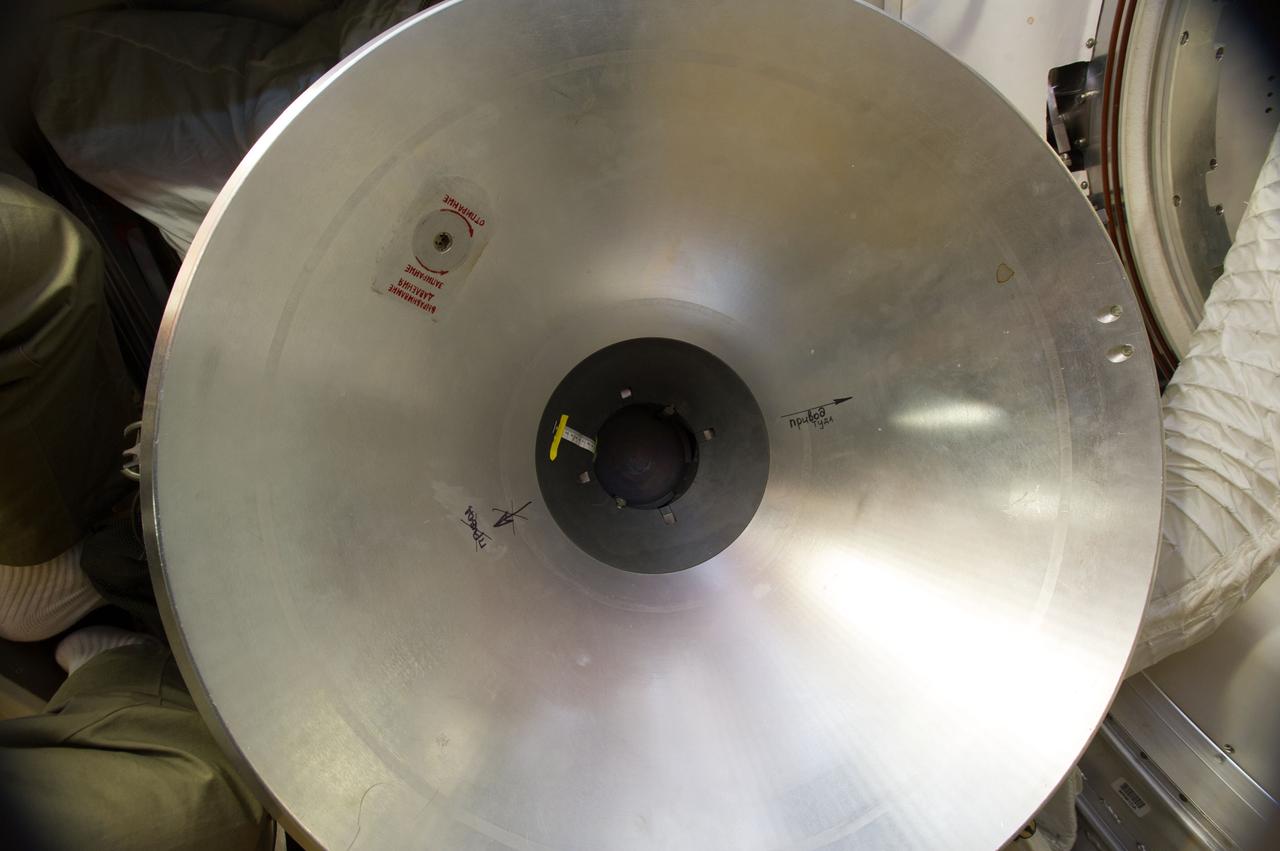
Close-up view of Progress #421 (ÐÐ) docking cone showing scuff marks / scratches during closure leak checks by the Expedition 40 crew.
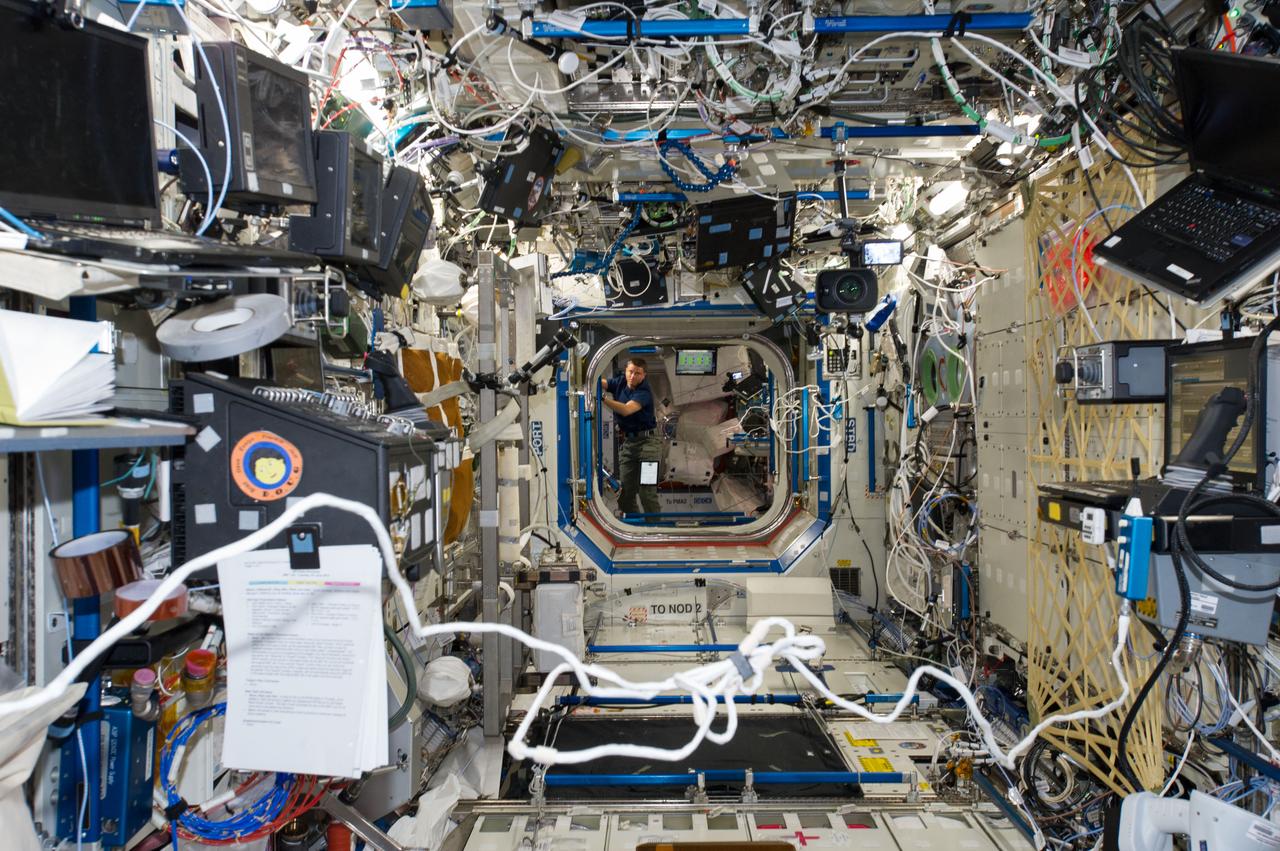
ISS040-E-006890 (3 June 2014) --- Photographed from the Destiny laboratory, NASA astronaut Reid Wiseman, Expedition 40 flight engineer, is pictured in the Harmony node of the International Space Station.
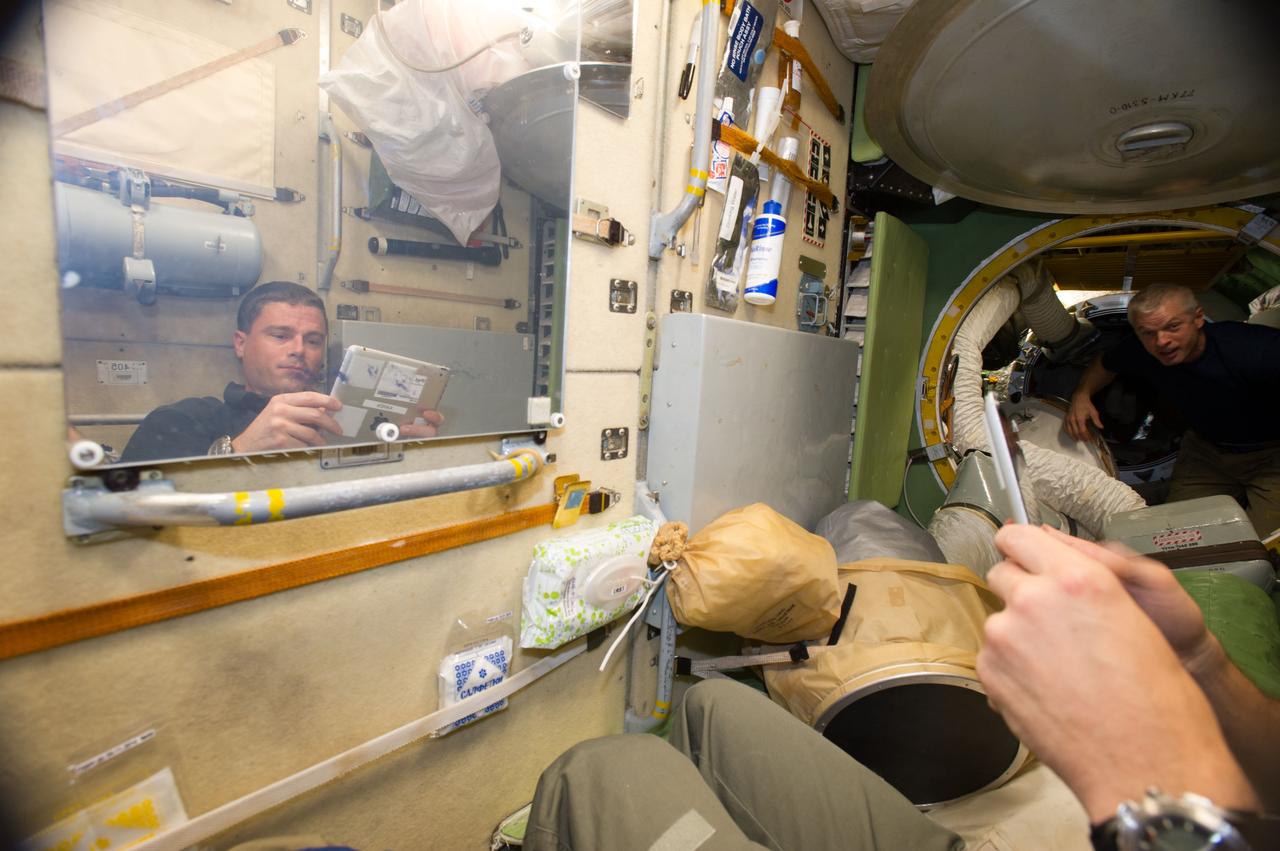
ISS040-E-008052 (6 June 2014) --- NASA astronaut Reid Wiseman, Expedition 40 flight engineer, is pictured in the reflection of a mirror using a computer in the Russian section of the International Space Station. NASA astronaut Steve Swanson, commander, is visible in the background.
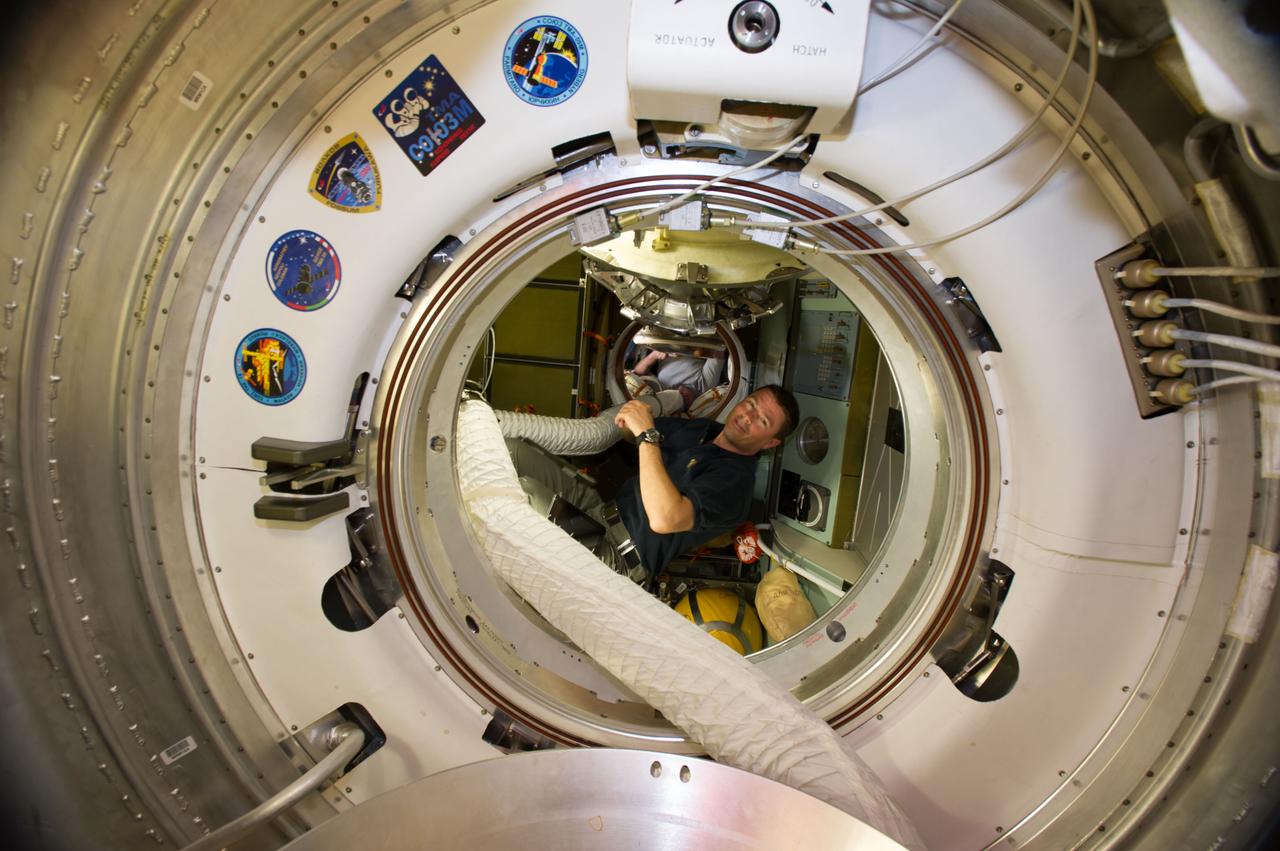
NASA astronaut Reid Wiseman,Expedition 40 flight engineer,is pictured in the Russian segment of the International Space Station.
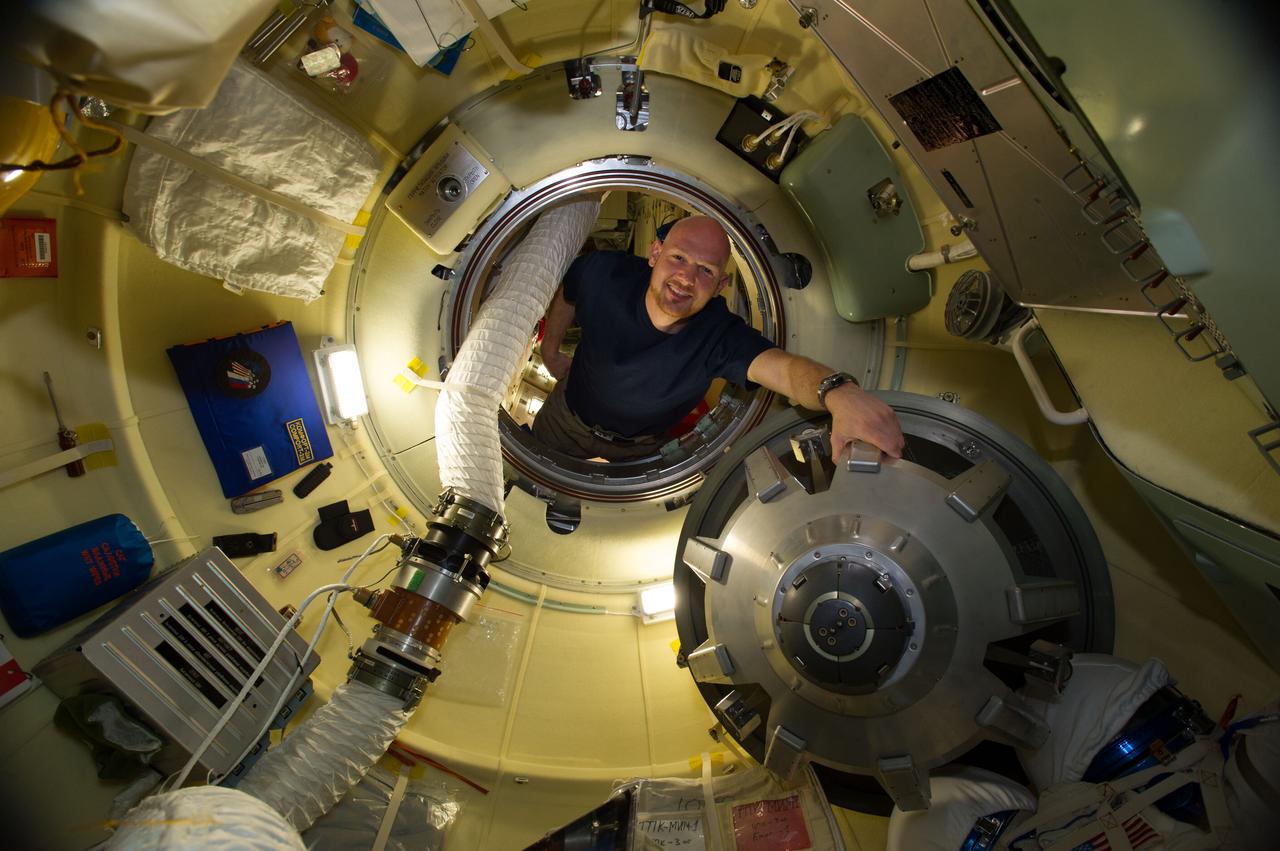
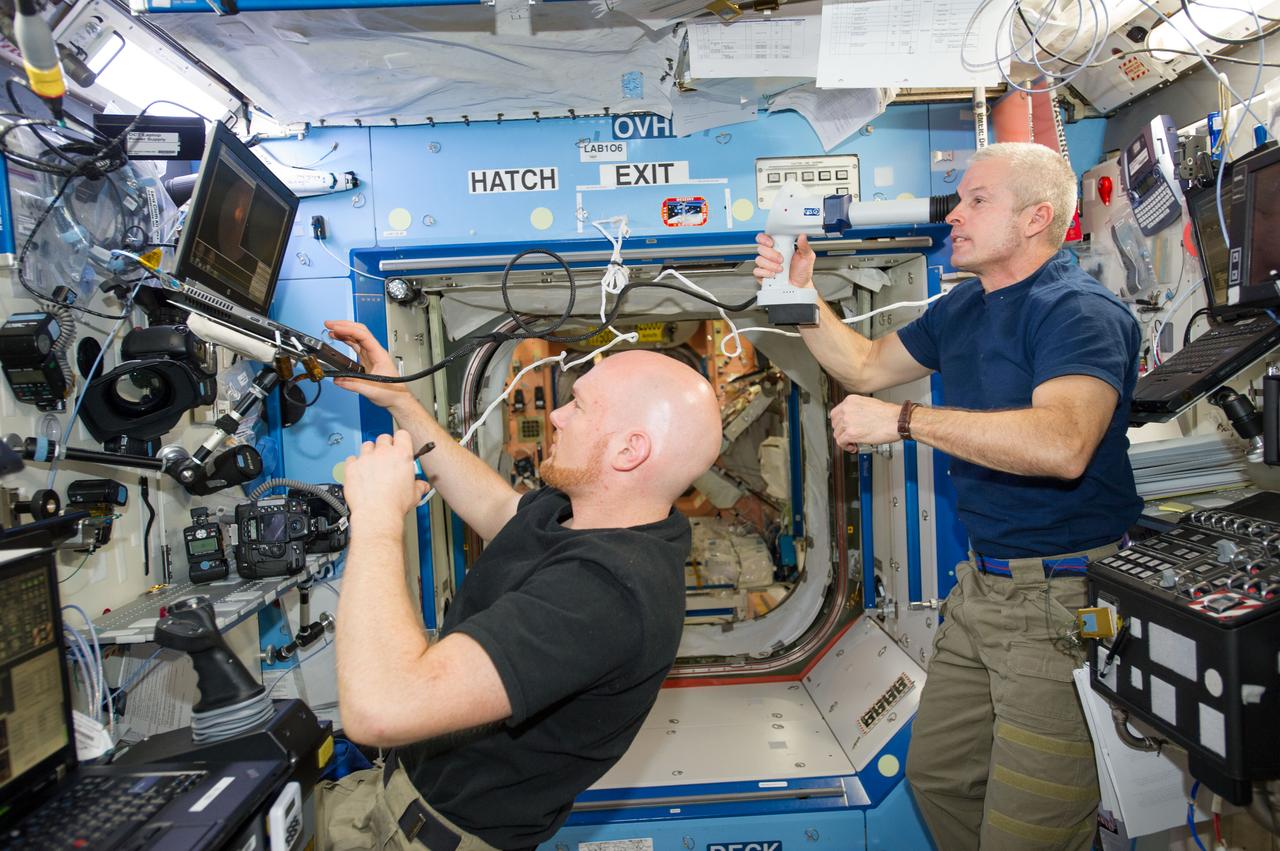
ISS040-E-008044 (6 June 2014) --- European Space Agency astronaut Alexander Gerst, Expedition 40 flight engineer, is pictured in the Rassvet Mini-Research Module 1 (MRM-1) hatch of the International Space Station.
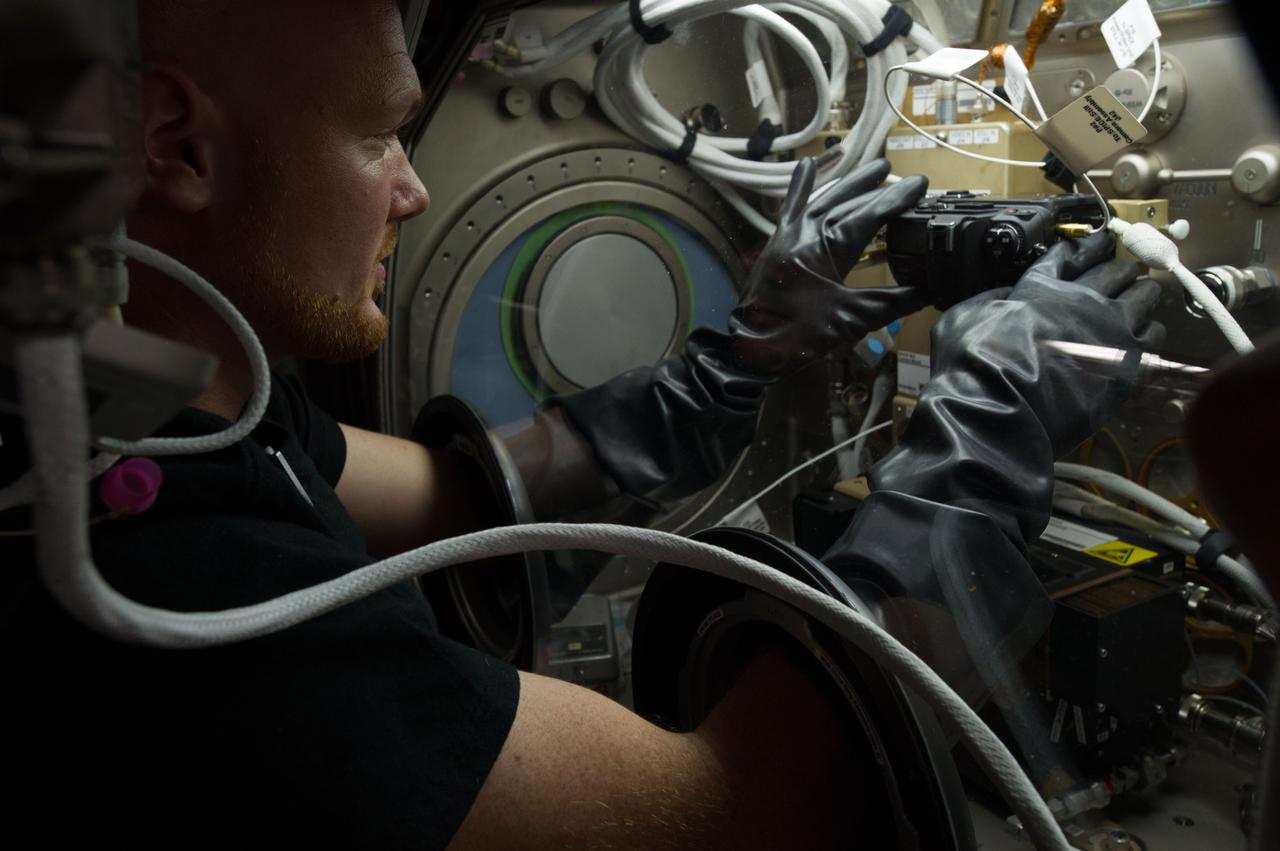
ISS040-E-012309 (16 June 2014) --- European Space Agency astronaut Alexander Gerst, Expedition 40 flight engineer, conducts two flame tests for a combustion experiment known as the Burning and Suppression of Solids (BASS) in the Microgravity Science Glovebox (MSG) in the Destiny laboratory of the International Space Station. The experiment seeks to provide insight on how flames burn in space compared to Earth which may provide fire safety benefits aboard future spacecraft.
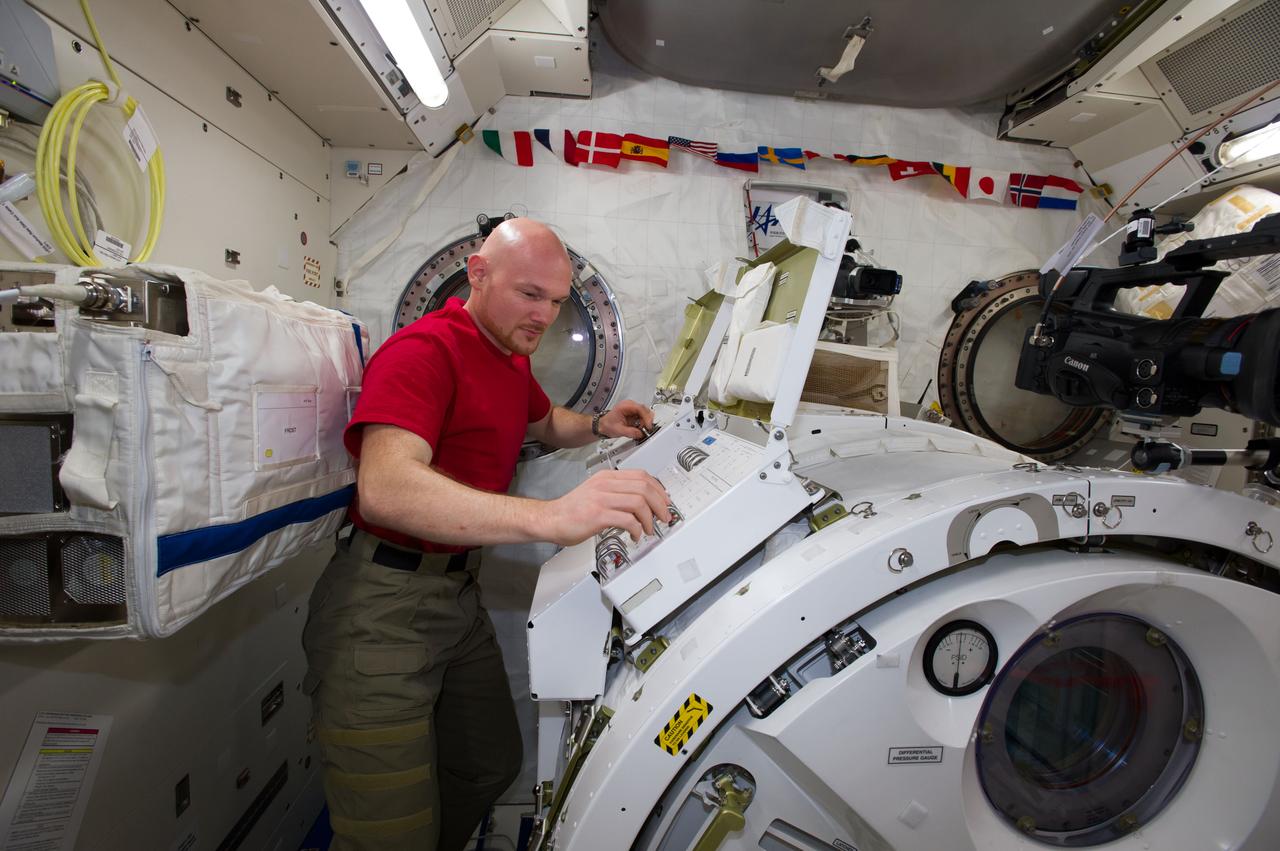
ISS040-E-096126 (18 Aug. 2014) --- In the International Space Station?s Kibo laboratory, European Space Agency astronaut Alexander Gerst, Expedition 40 flight engineer, depressurizes the Kibo airlock in preparation for a series of NanoRacks CubeSat miniature satellite deployments. The first two pairs of nanosatellites are scheduled for deployment on Aug. 19. The Planet Labs Dove satellites that were carried to the station aboard the Orbital Sciences Cygnus commercial cargo craft are being deployed between Aug. 19 and Aug. 25.
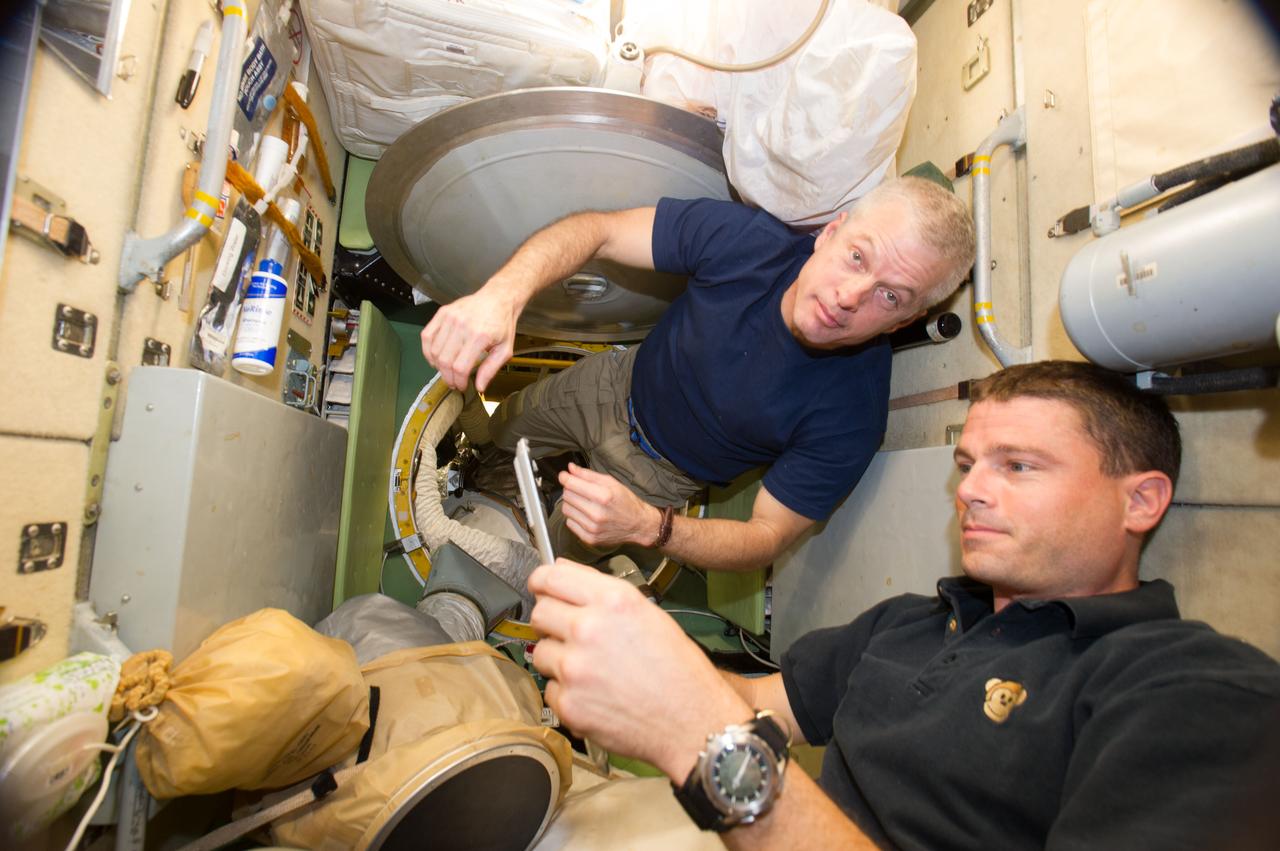
NASA astronaut Reid Wiseman,Expedition 40 flight engineer, and NASA Astronaut Steve Swanson, Commander, are photographed in the Russian section of the International Space Station.
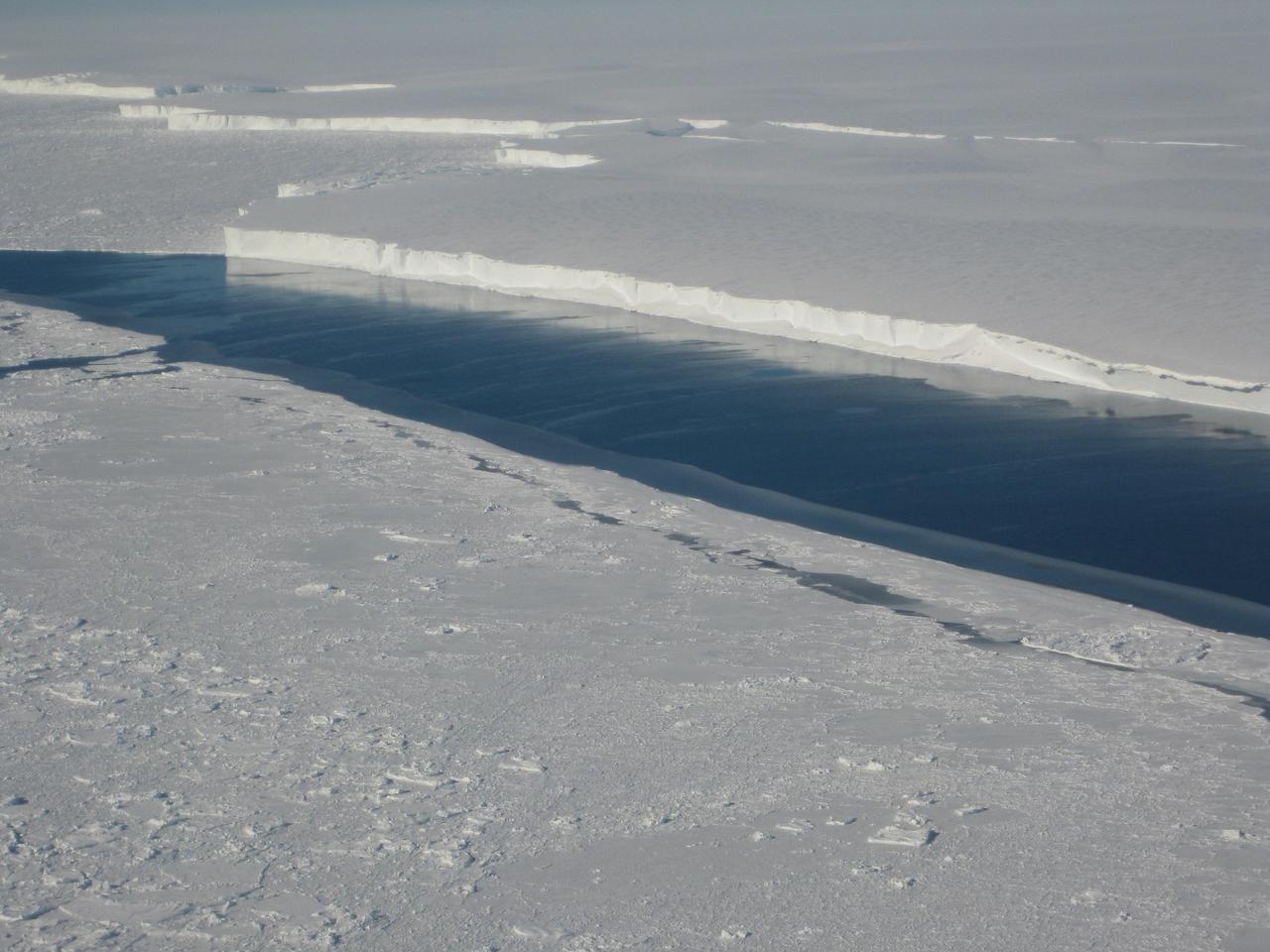
This photo, taken onboard the Chilean Navy P3 aircraft, shows the ice front of Venable Ice Shelf, West Antarctica, in October 2008. It is an example of a small-size ice shelf that is a large melt water producer.
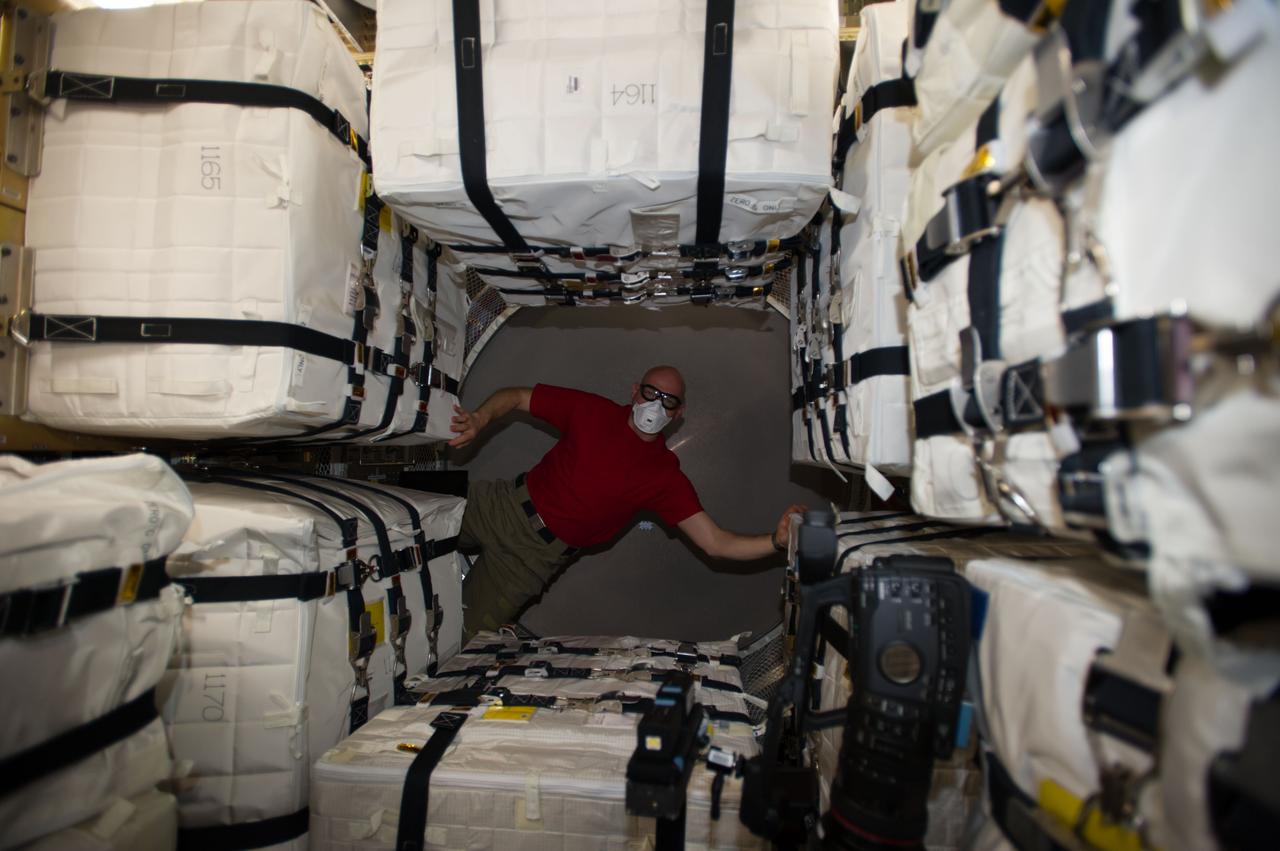
ISS040-E-091969 (13 Aug. 2014) --- Surrounded by stowage containers, European Space Agency astronaut Alexander Gerst, Expedition 40 flight engineer, is pictured in the newly-attached "Georges Lemaitre" Automated Transfer Vehicle-5 (ATV-5) of the International Space Station.
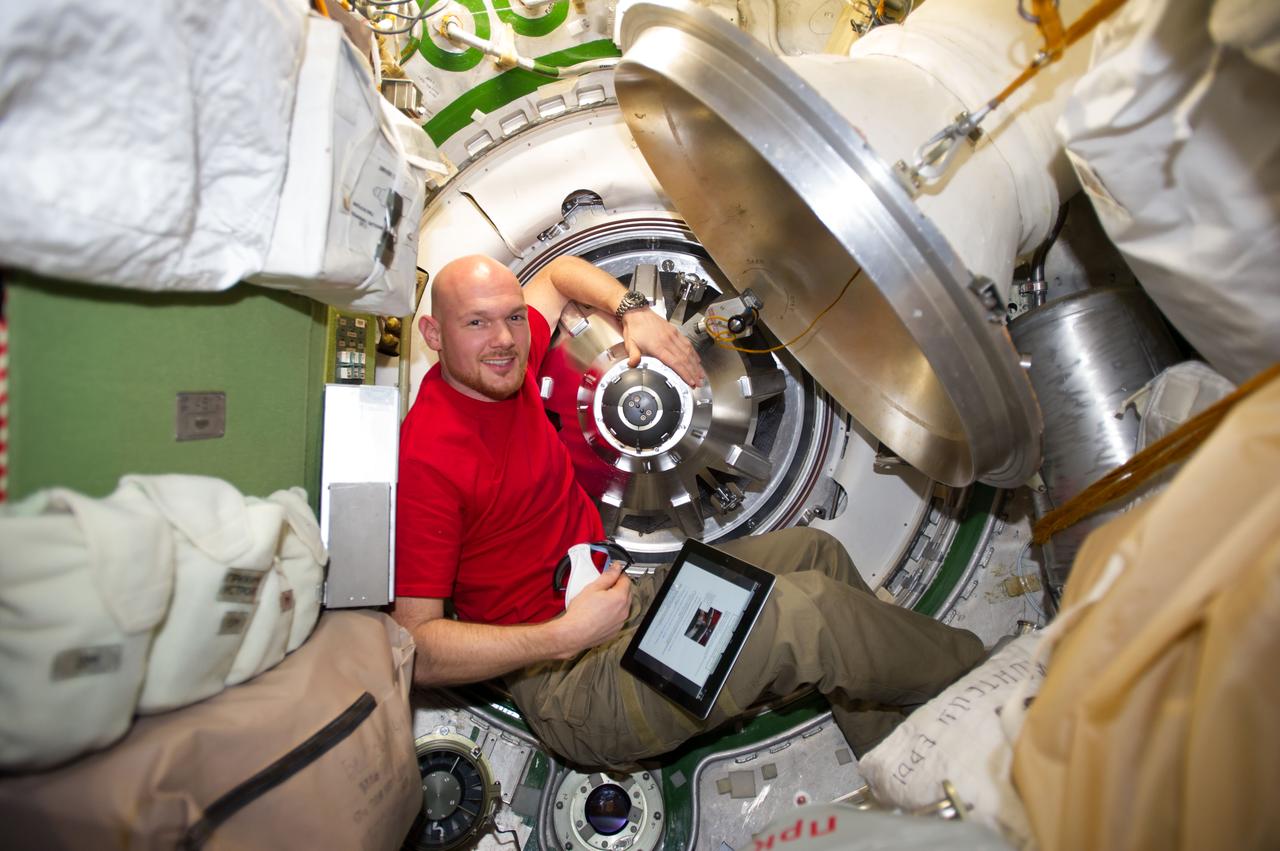
ISS040-E-091918 (13 Aug. 2014) --- European Space Agency astronaut Alexander Gerst, Expedition 40 flight engineer, prepares to remove the docking mechanism to gain access to the hatch of the newly attached "Georges Lemaitre" Automated Transfer Vehicle-5 (ATV-5).
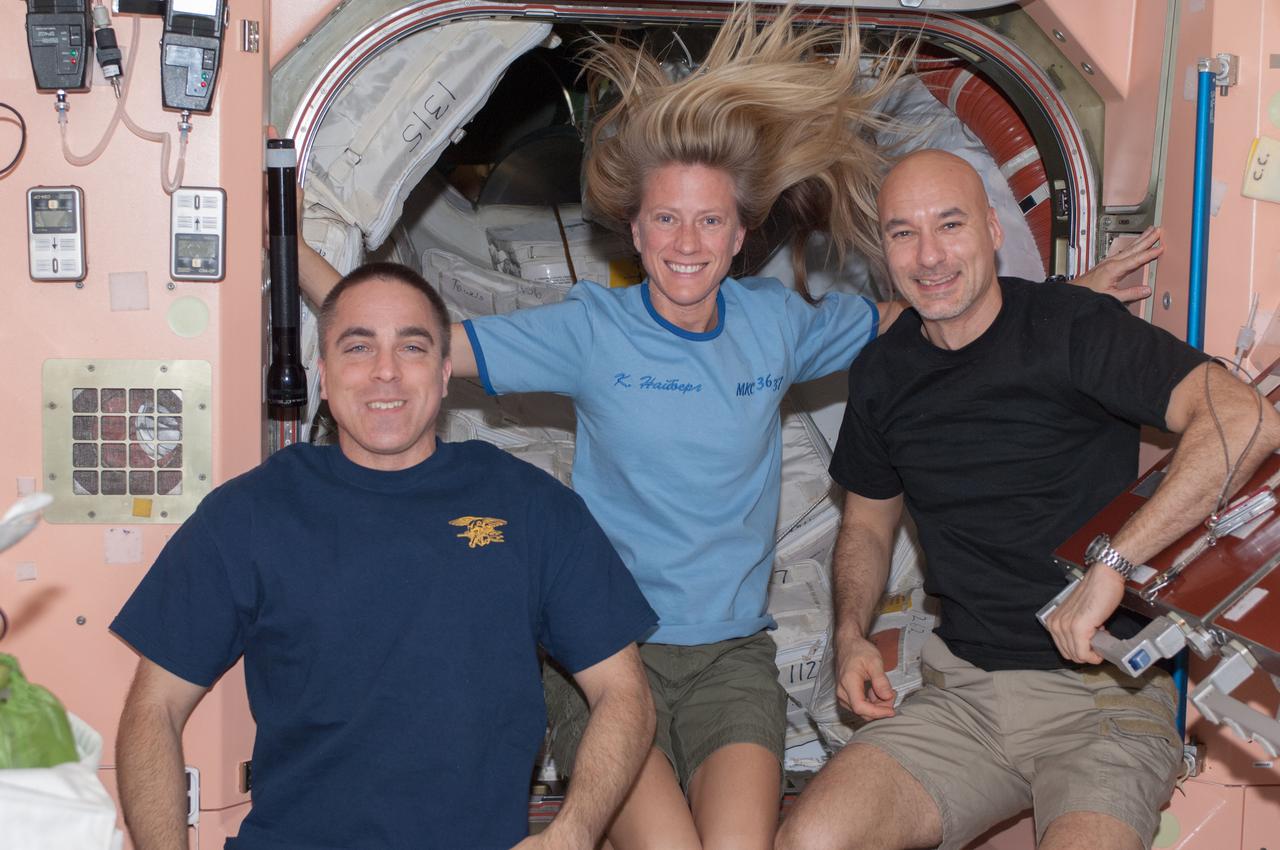
View of Astronauts Chris Cassidy (left),Karen Nyberg (center) and European Space Agency astronaut Luca Parmitano,all Expedition 36 flight engineers,in the Node 1 module.
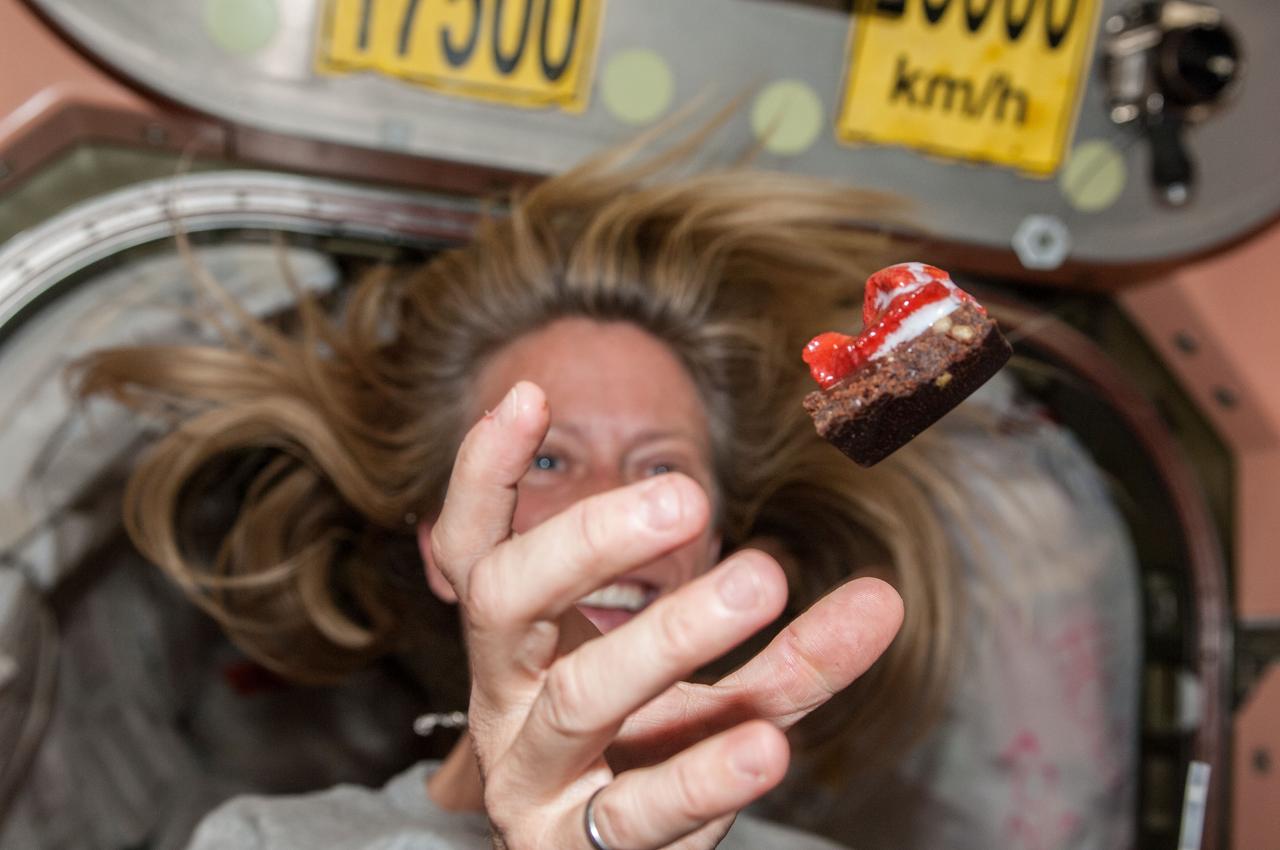
Expedition 36 Flight Engineer Karen Nyberg of NASA floats a piece of food in front her in the Node 1 module during meal time.
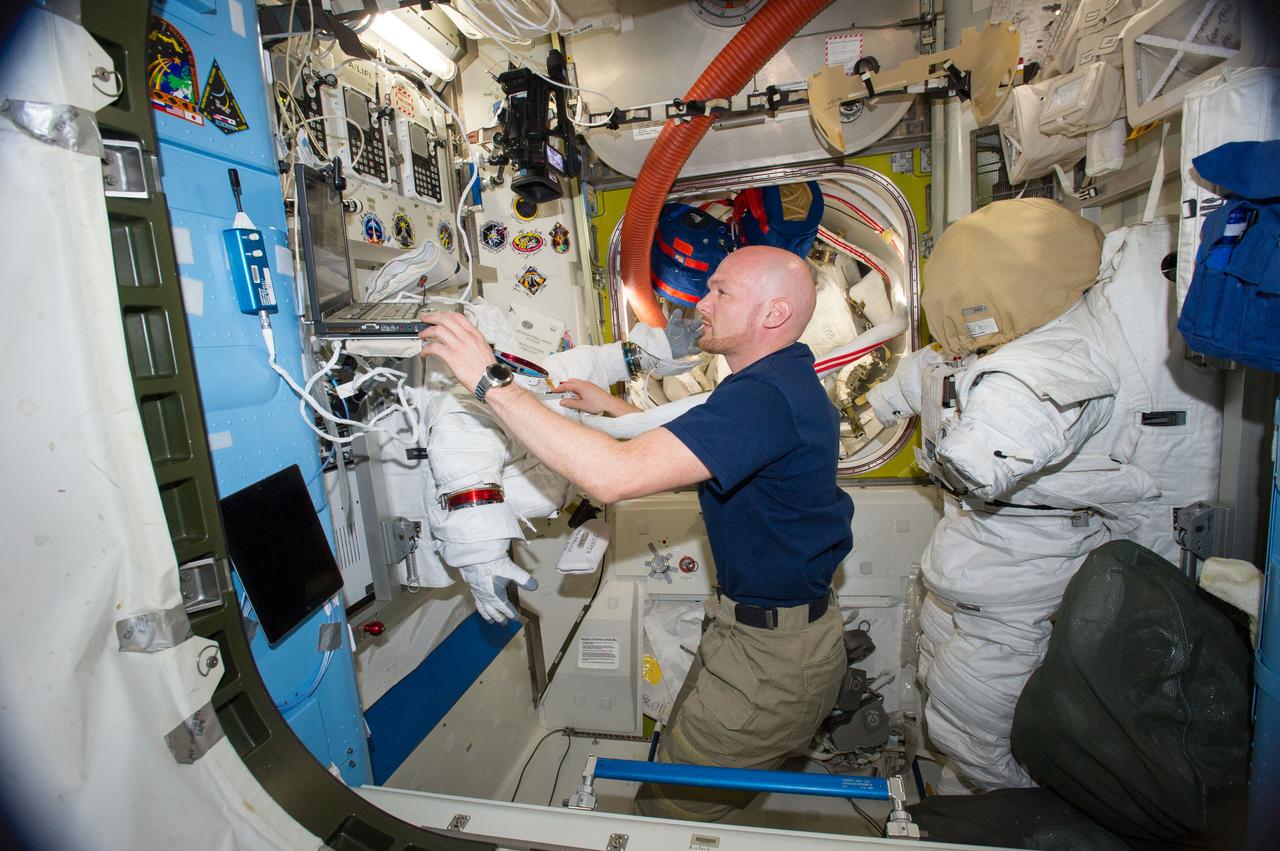
ISS040-E-010972 (12 June 2014) --- European Space Agency astronaut Alexander Gerst, Expedition 40 flight engineer, uses a computer while working on an Extravehicular Mobility Unit (EMU) spacesuit in the Quest airlock of the International Space Station.
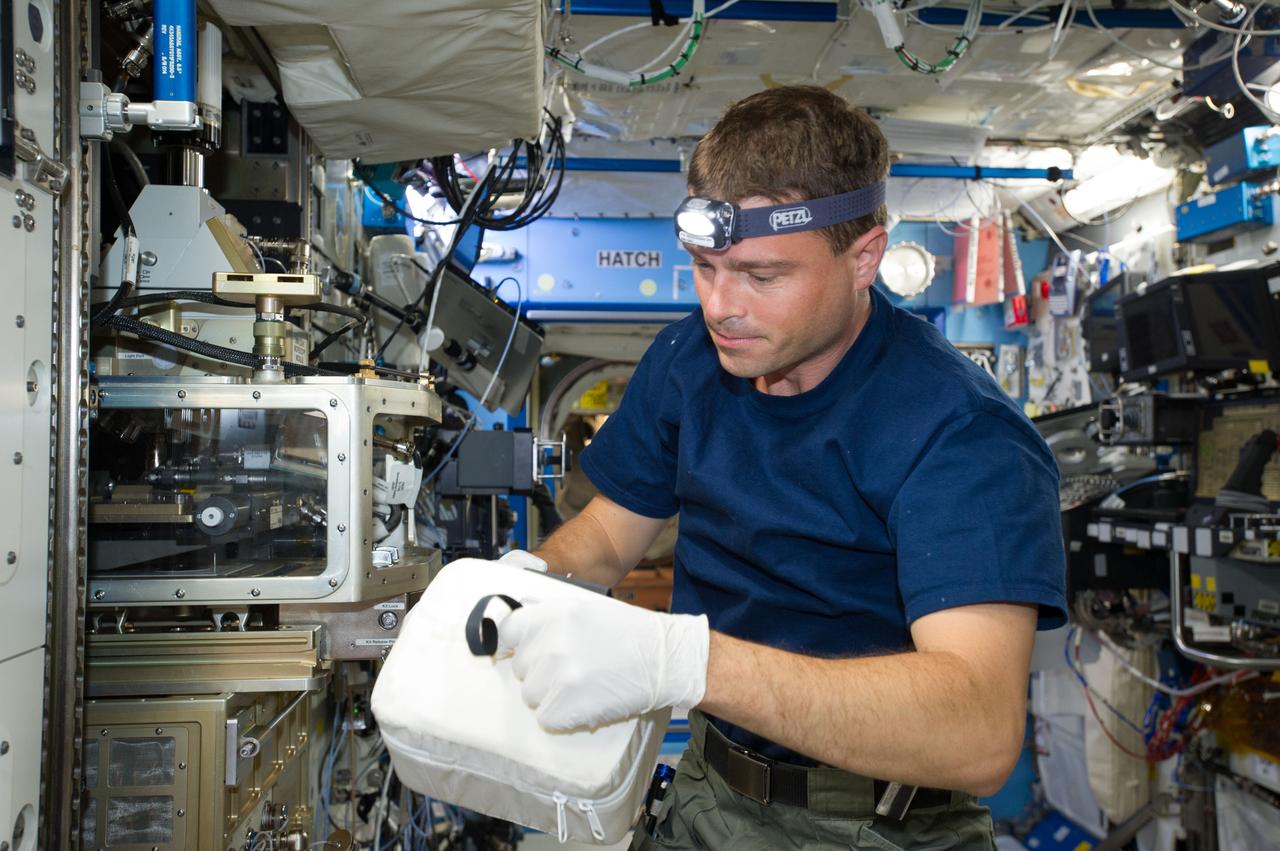
ISS040-E-007368 (5 June 2014) --- NASA astronaut Reid Wiseman, Expedition 40 flight engineer, works with Advanced Colloids Experiment (ACE) samples in the Destiny laboratory of the International Space Station.
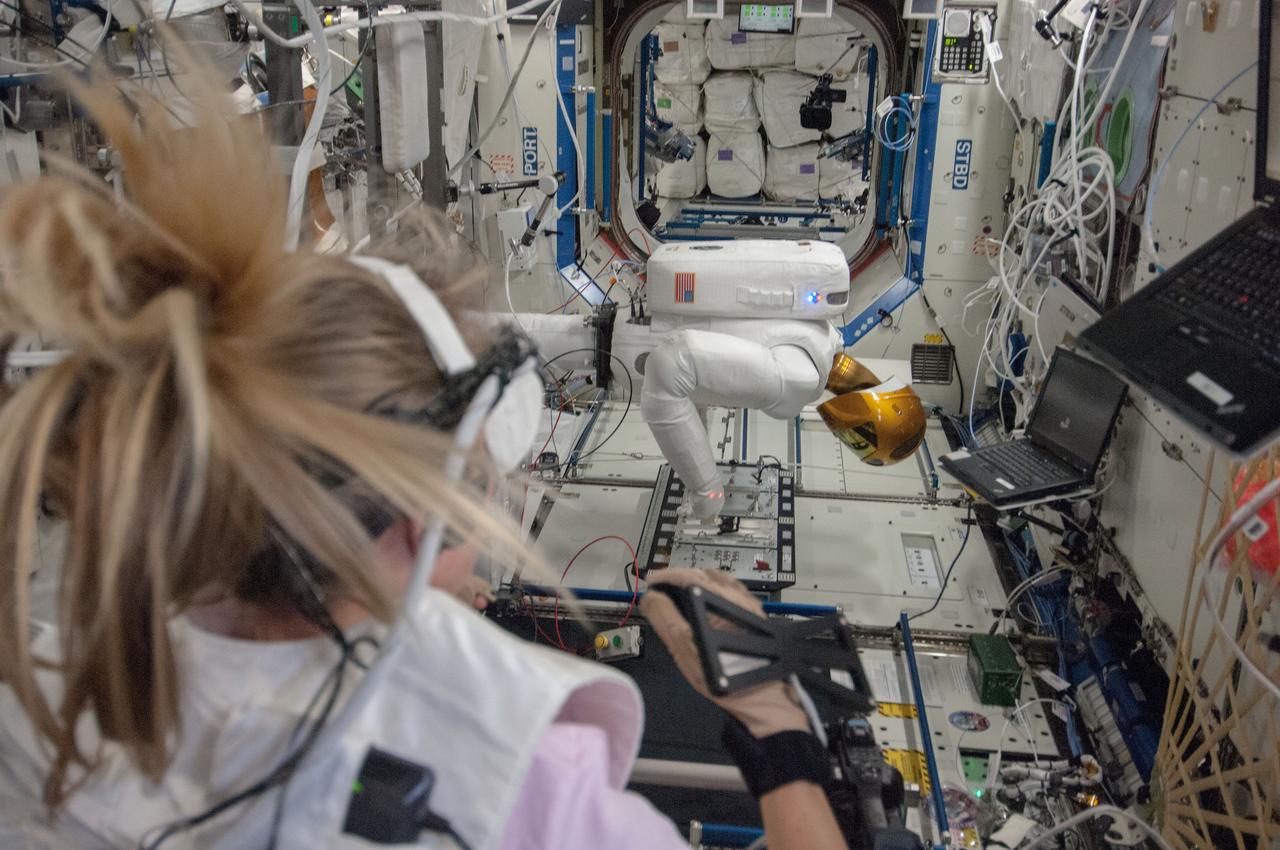
View of Astronaut Karen Nyberg, Expedition 36 flight engineer, performing Robonaut Teleops activities with Robonaut 2,the first humanoid robot in space,in the Destiny laboratory of the International Space Station. Sent also as Twitter message.
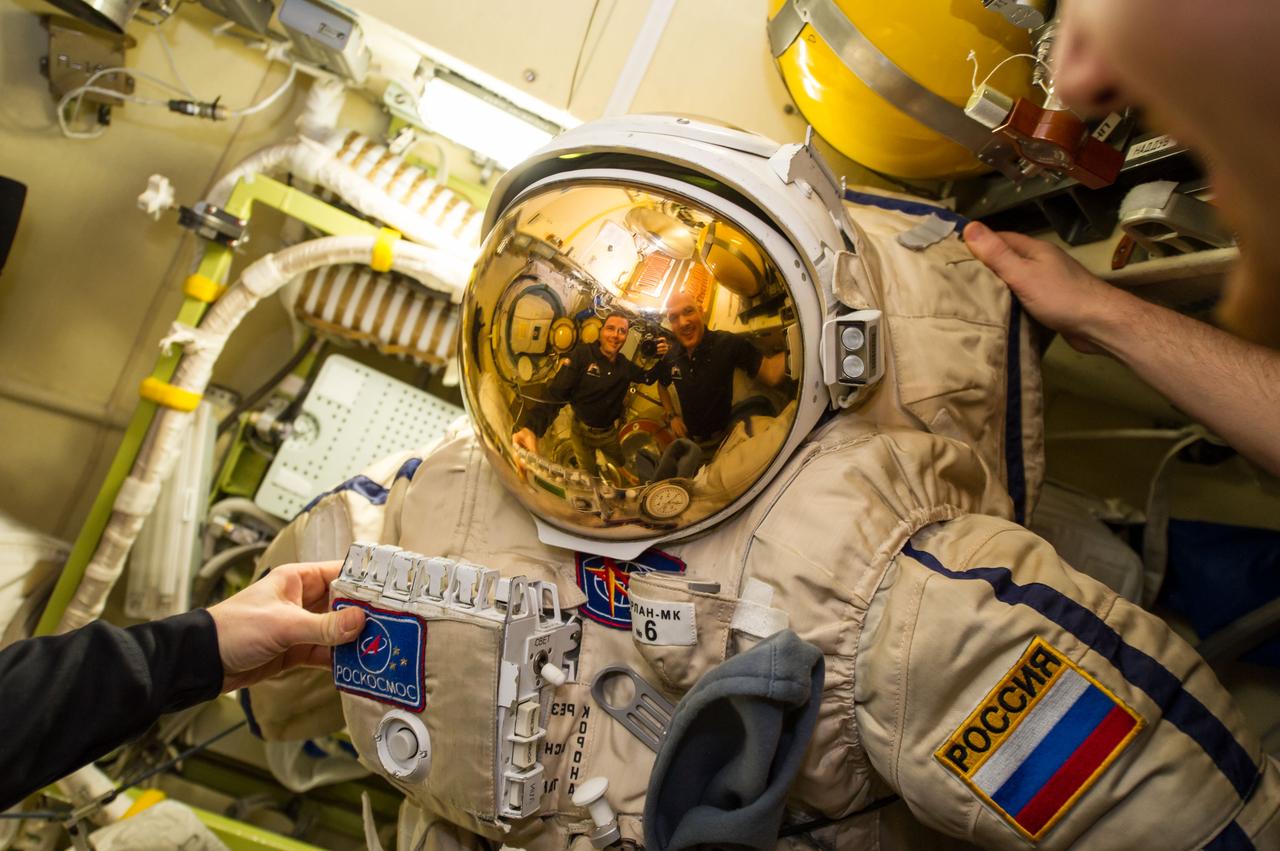
ISS040-E-139809 (10 Sept. 2014) --- An unoccupied Russian Orlan spacesuit is pictured in the Russian segment of the International Space Station. Visible in the reflections of the helmet visor are NASA astronaut Reid Wiseman (left with still camera) and European Space Agency astronaut Alexander Gerst, both Expedition 40/41 flight engineers.
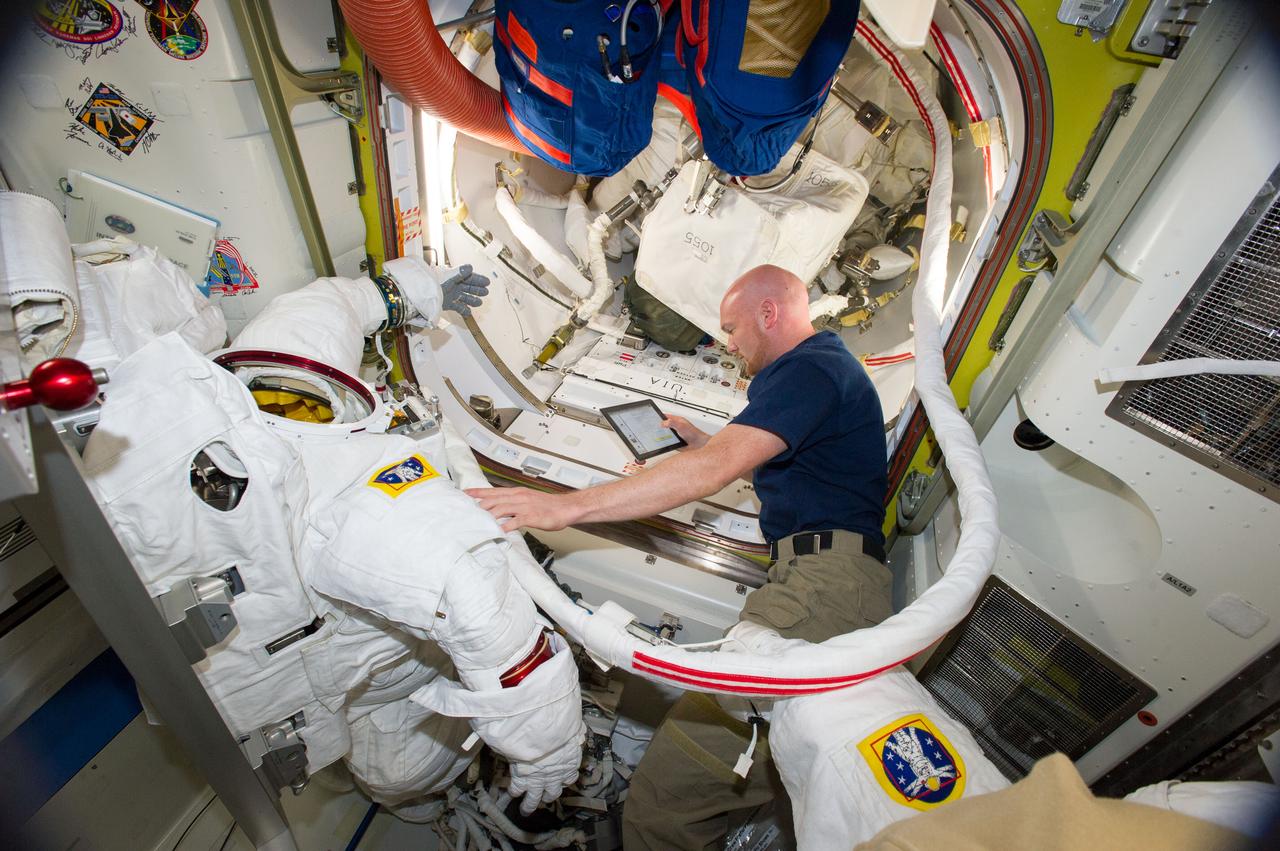
ISS040-E-010971 (12 June 2014) --- European Space Agency astronaut Alexander Gerst, Expedition 40 flight engineer, performs a checkout on an Extravehicular Mobility Unit (EMU) spacesuit in the Quest airlock of the International Space Station.
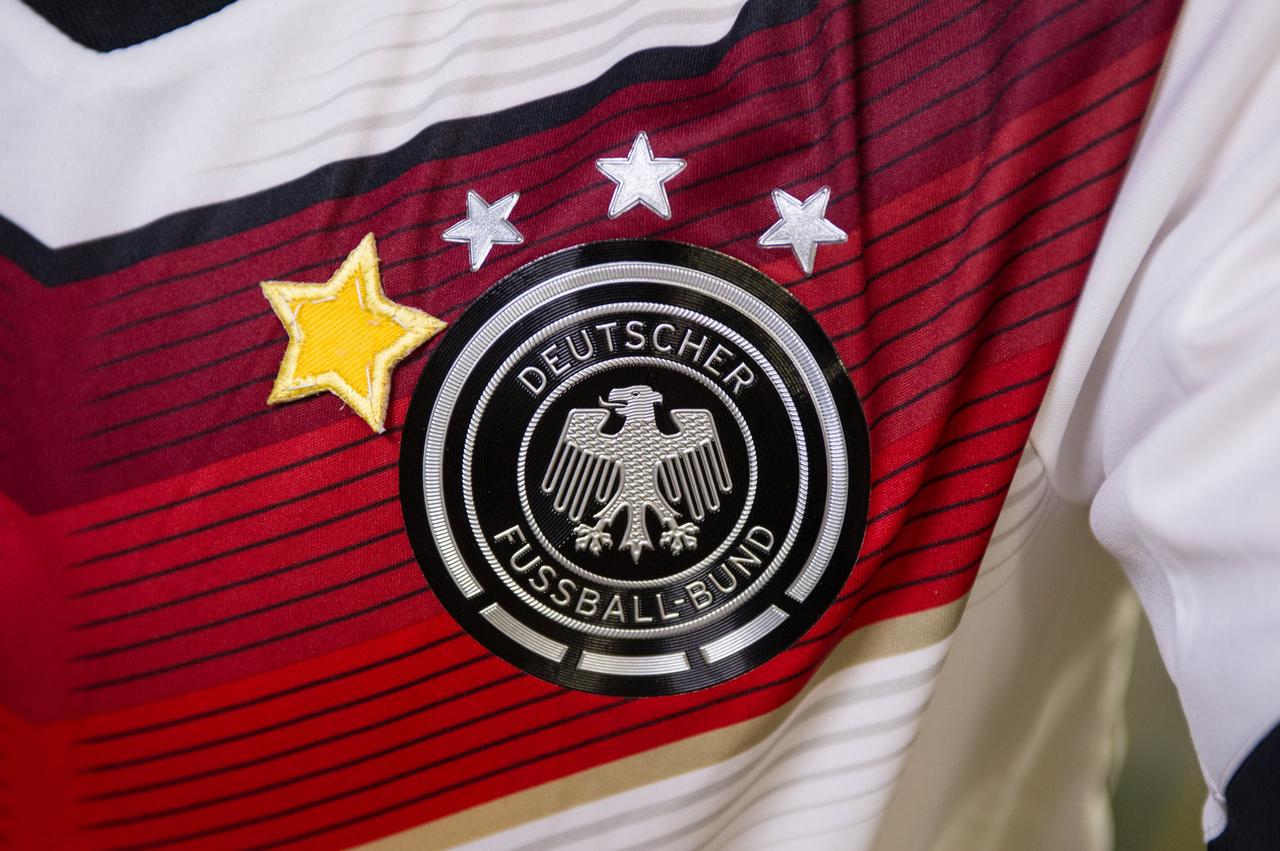
View of an Expedition 40 crewmember shirt with stars over a patch that reads Deutscher Fussbal-Bund.
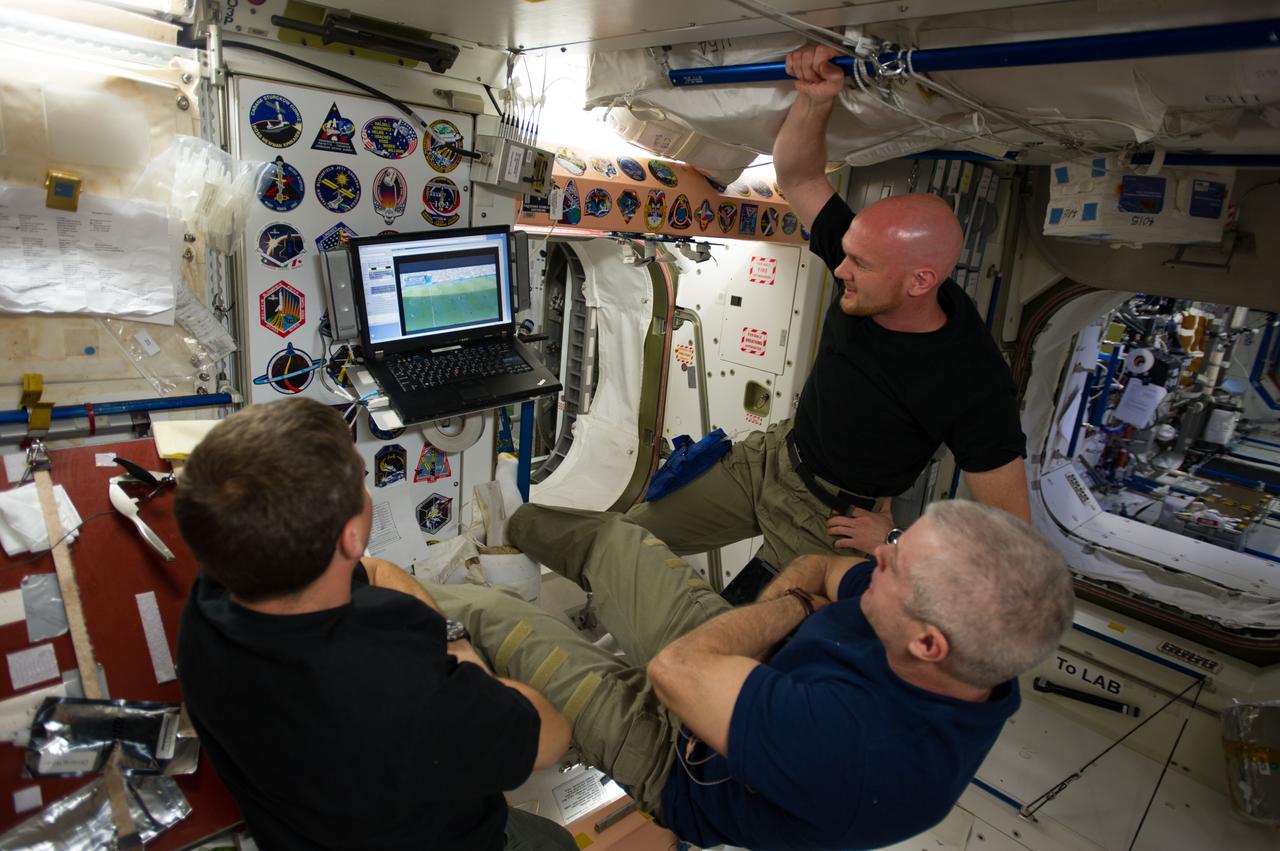
ISS040-E-012313 (17 June 2014) --- From left, Expedition 40 crew members Reid Wiseman and Steve Swanson of NASA and ESA astronaut Alexander Gerst take a break to watch ten minutes of live World Cup matches between science experiments while living and working aboard the International Space Station. Swanson is Expedition 40 commander and the others are flight engineers.
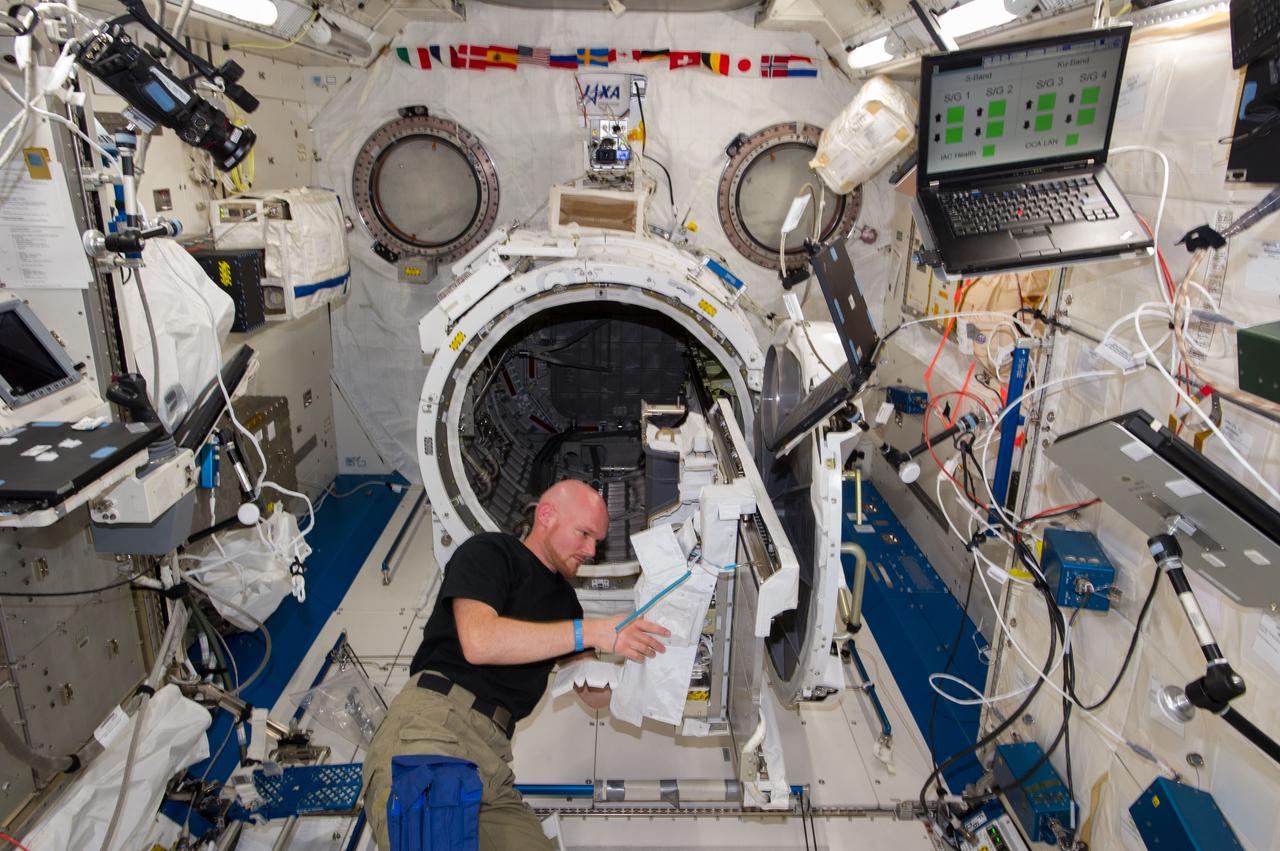
ISS040-E-019318 (25 June 2014) --- In the International Space Station?s Kibo laboratory, European Space Agency astronaut Alexander Gerst, Expedition 40 flight engineer, prepares to transfer a multi-purpose experiment platform and a robotic arm known as the Small Fine Arm through the Kibo module?s scientific airlock. The Small Fine Arm, which attaches to the Kibo?s larger main arm, handles delicate operations involved in exchanging experiments and payloads located on the Exposed Facility.
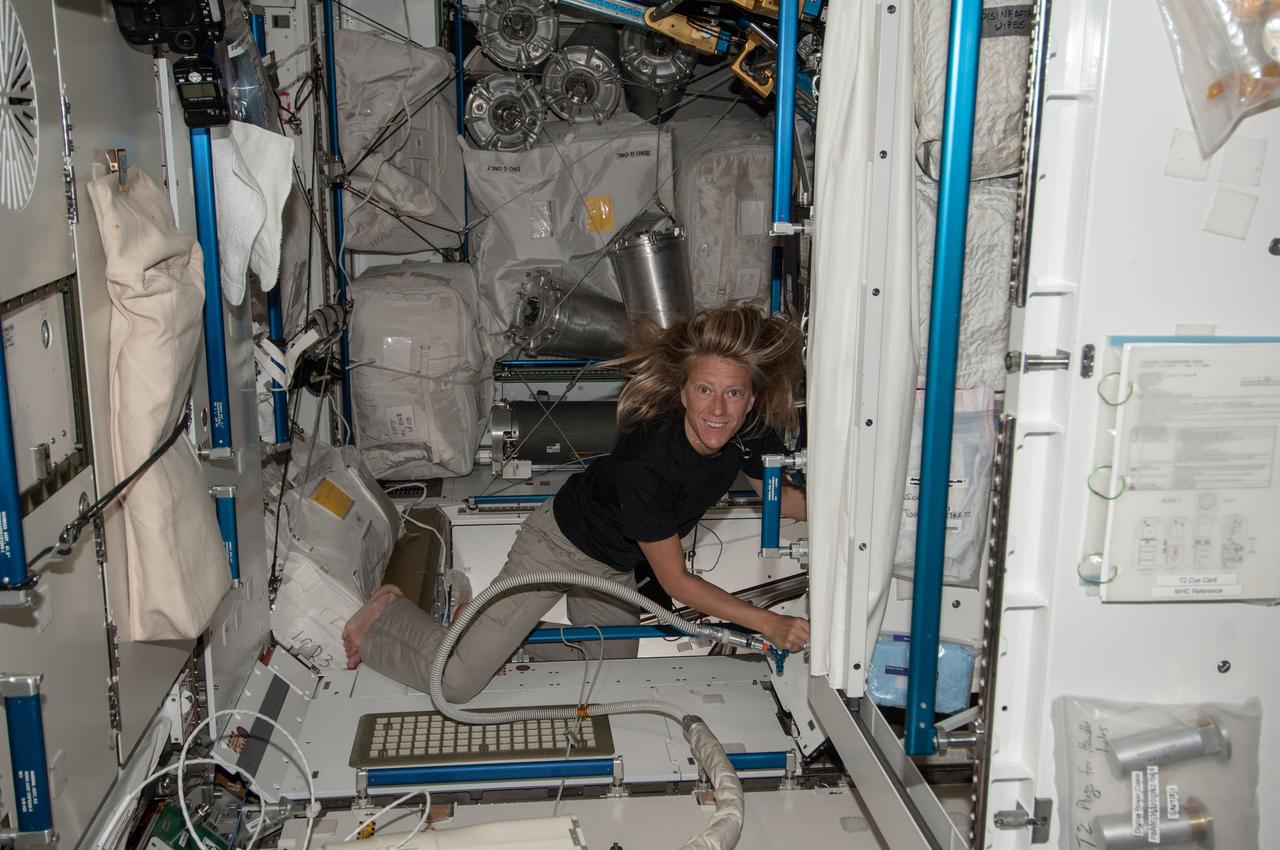
Astronaut Karen Nyberg,Expedition 36 flight engineer,is photographed at work in the U.S. Laboratory module.
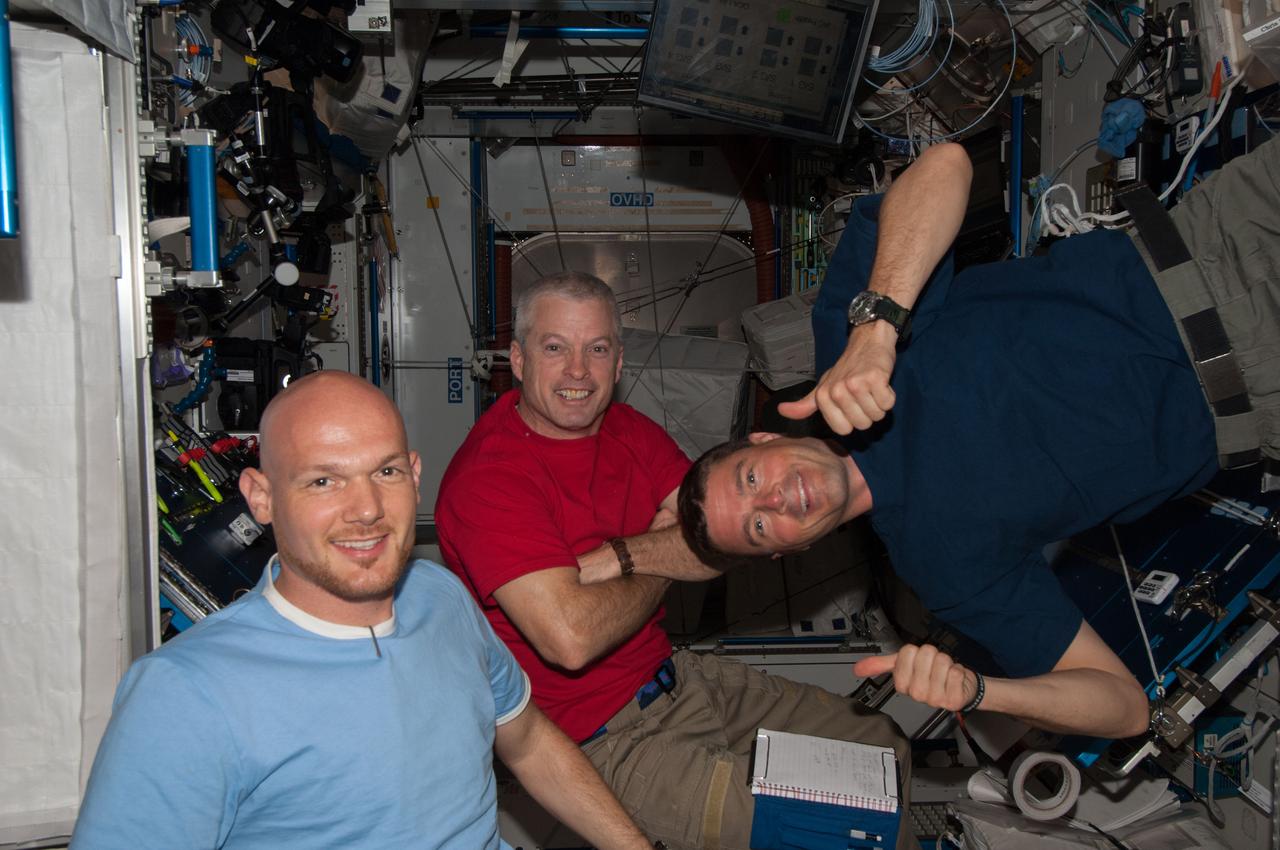
ISS040-E-006033 (29 May 2014) --- NASA astronaut Steve Swanson (center), Expedition 40 commander; along with European Space Agency astronaut Alexander Gerst (left) and NASA astronaut Reid Wiseman, both flight engineers, give a “thumbs up” signal in the Harmony node of the International Space Station.
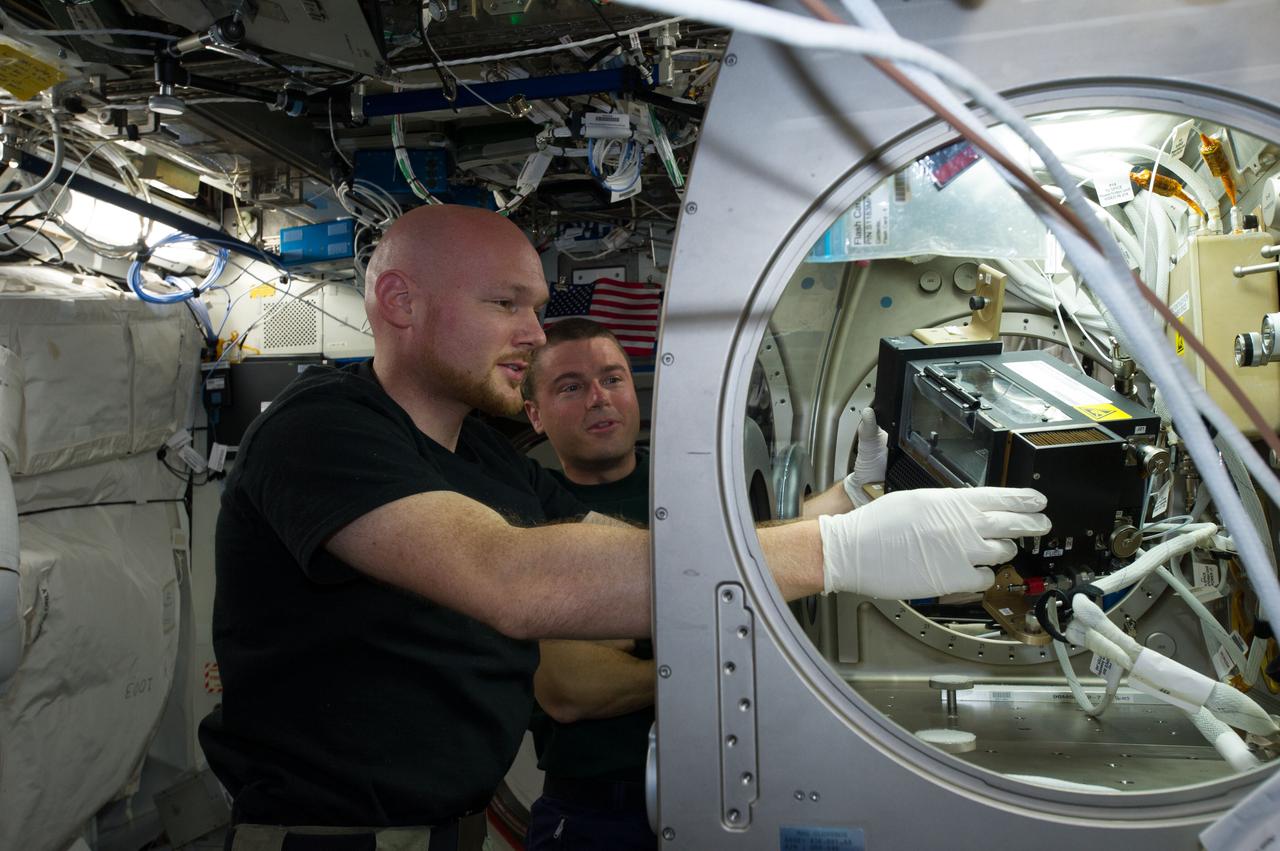
ISS040-E-088798 (5 Aug. 2014) --- European Space Agency astronaut Alexander Gerst, Expedition 40 flight engineer, removes hardware for the combustion experiment known as the Burning and Suppression of Solids (BASS-II) from the Microgravity Science Glovebox (MSG) in the Destiny laboratory of the International Space Station. The experiment seeks to provide insight on how flames burn in space compared to Earth which may provide fire safety benefits aboard future spacecraft. NASA astronaut Reid Wiseman, flight engineer, looks on.
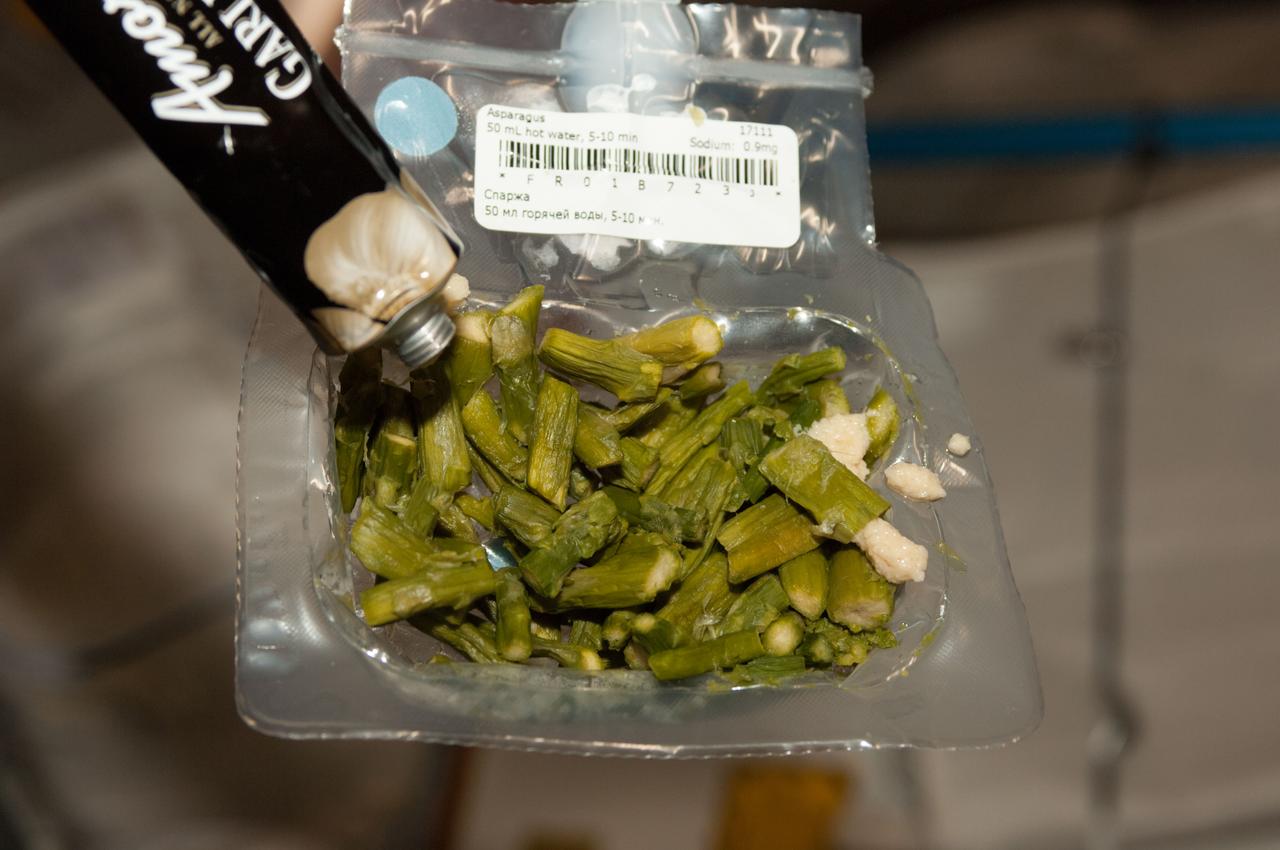
View of a bag of asparagus and garlic paste about to be rehydrated documented by the Expedition 36 crew. Also sent as Twitter message.
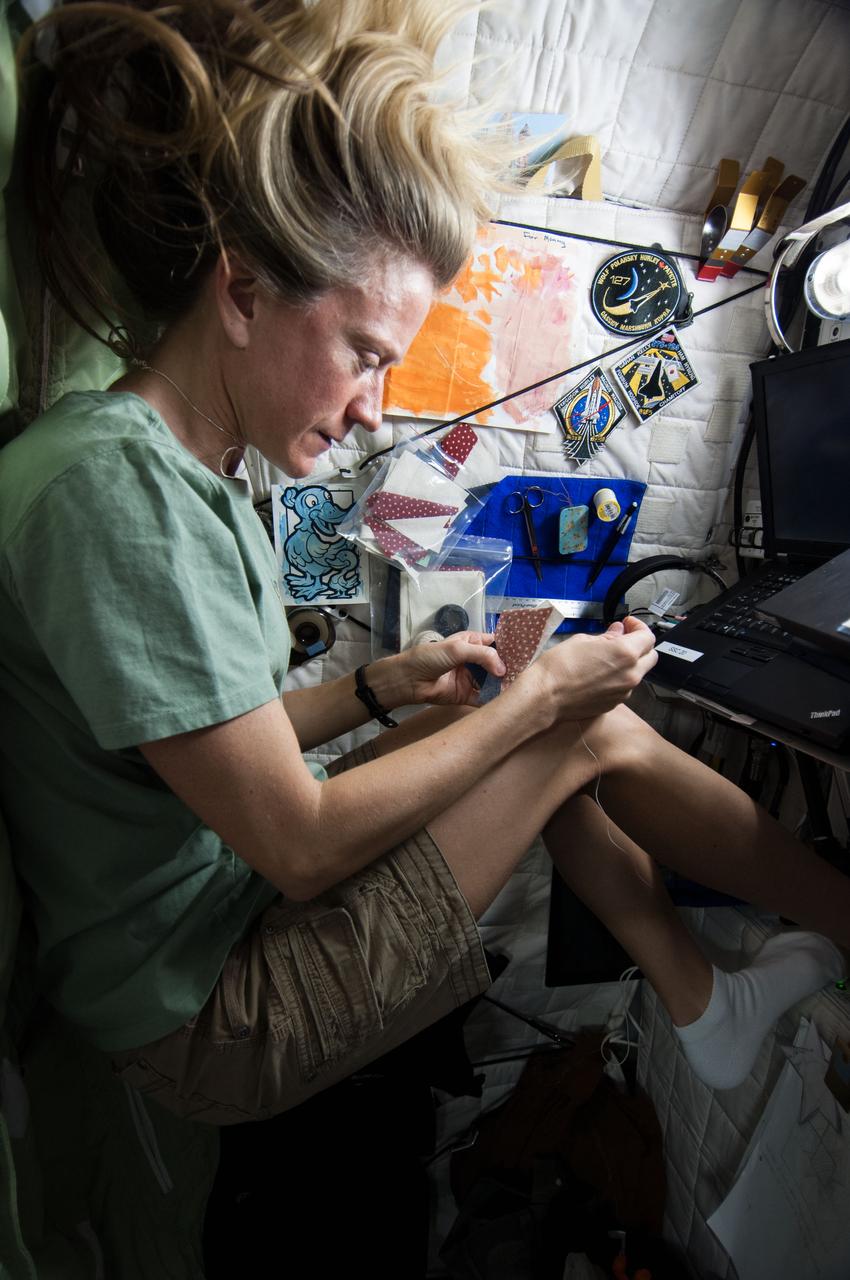
ISS036-E-028784 (3 July 2013) --- Expedition 36 Flight Engineer Karen Nyberg uses some of her off-duty time on the International Space Station for sewing -- one of her many hobbies.

European Space Agency astronaut Alexander Gerst,Expedition 40 flight engineer,works with samples and hardware for a combustion experiment known as the Burning and Suppression of Solids (BASS) in the Microgravity Science Glovebox (MSG) in the Destiny laboratory of the International Space Station.
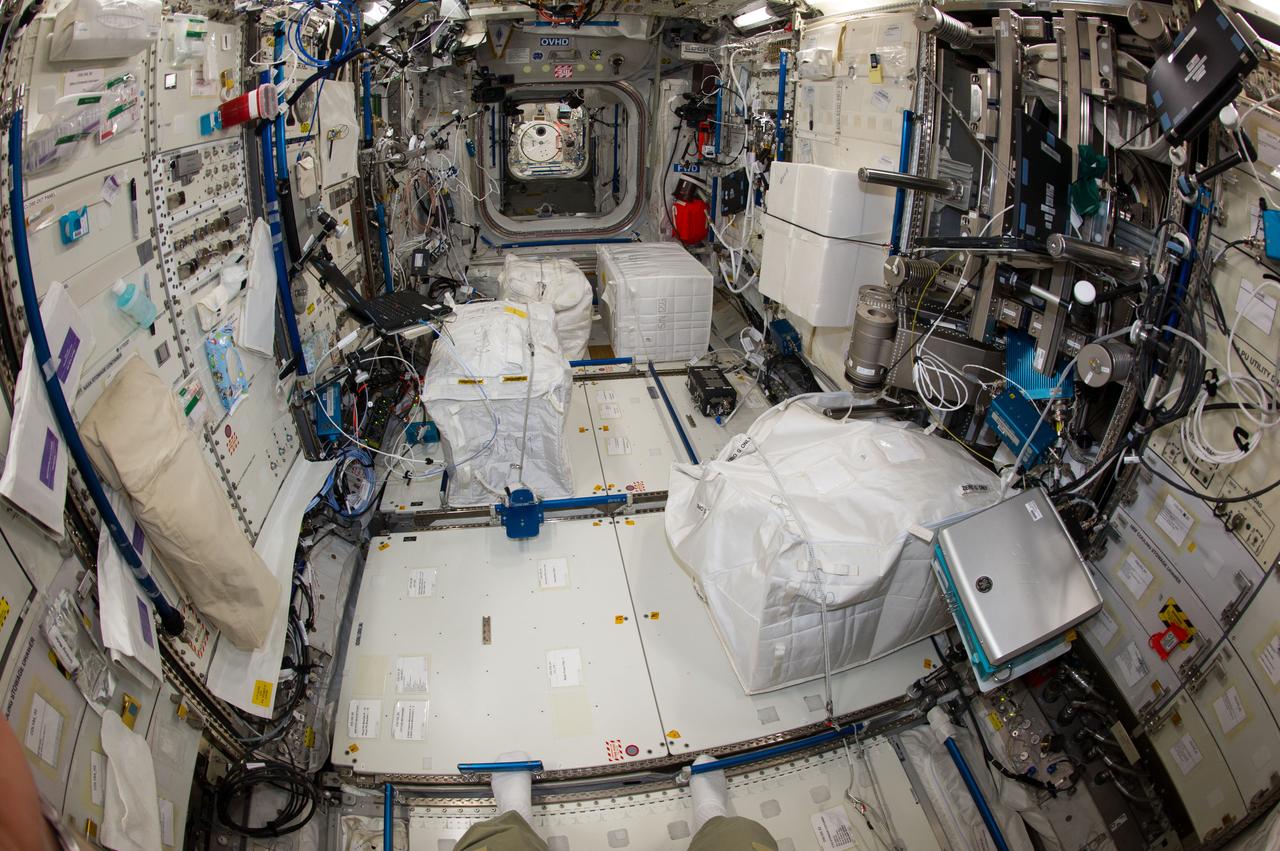
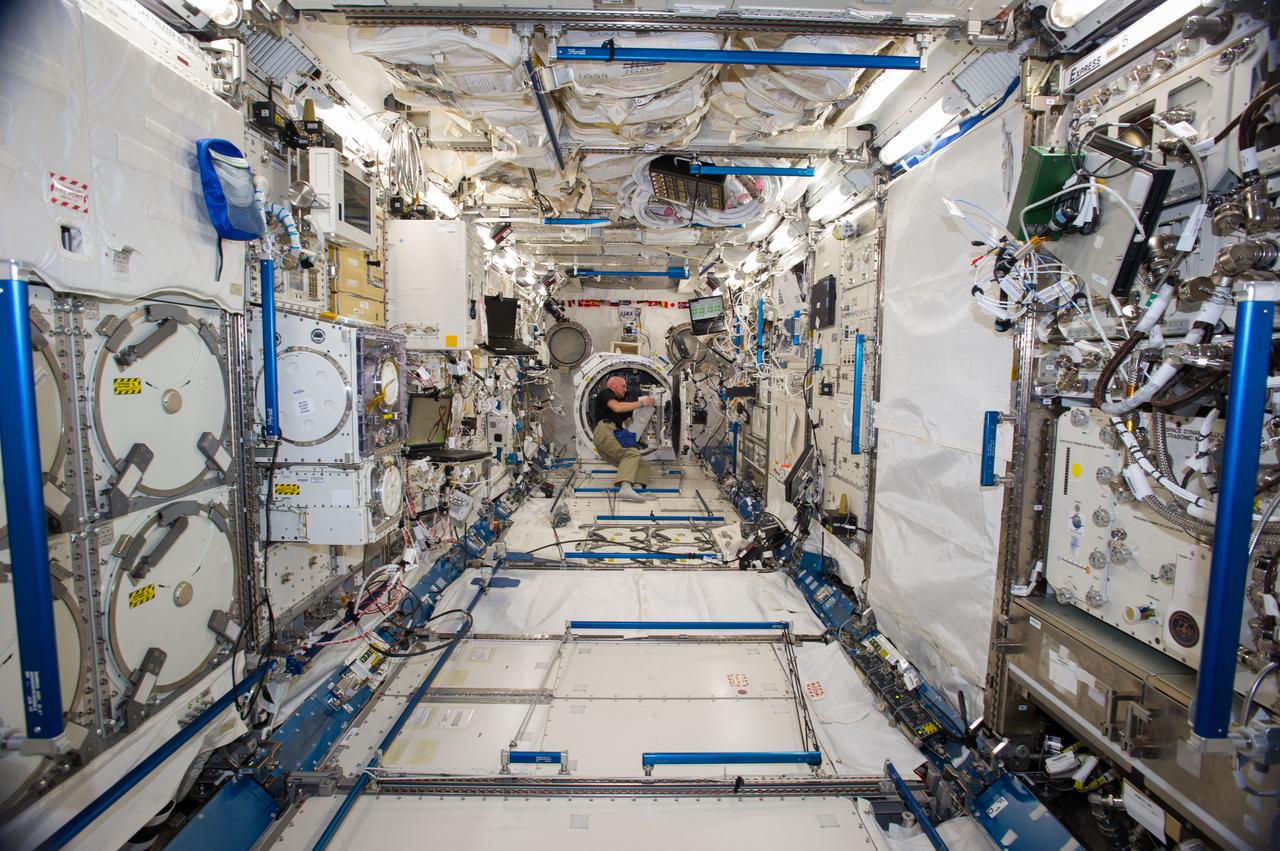
ISS040-E-008058 (7 June 2014) --- The interior of the Columbus laboratory is featured in this image photographed by an Expedition 40 crew member on the International Space Station.
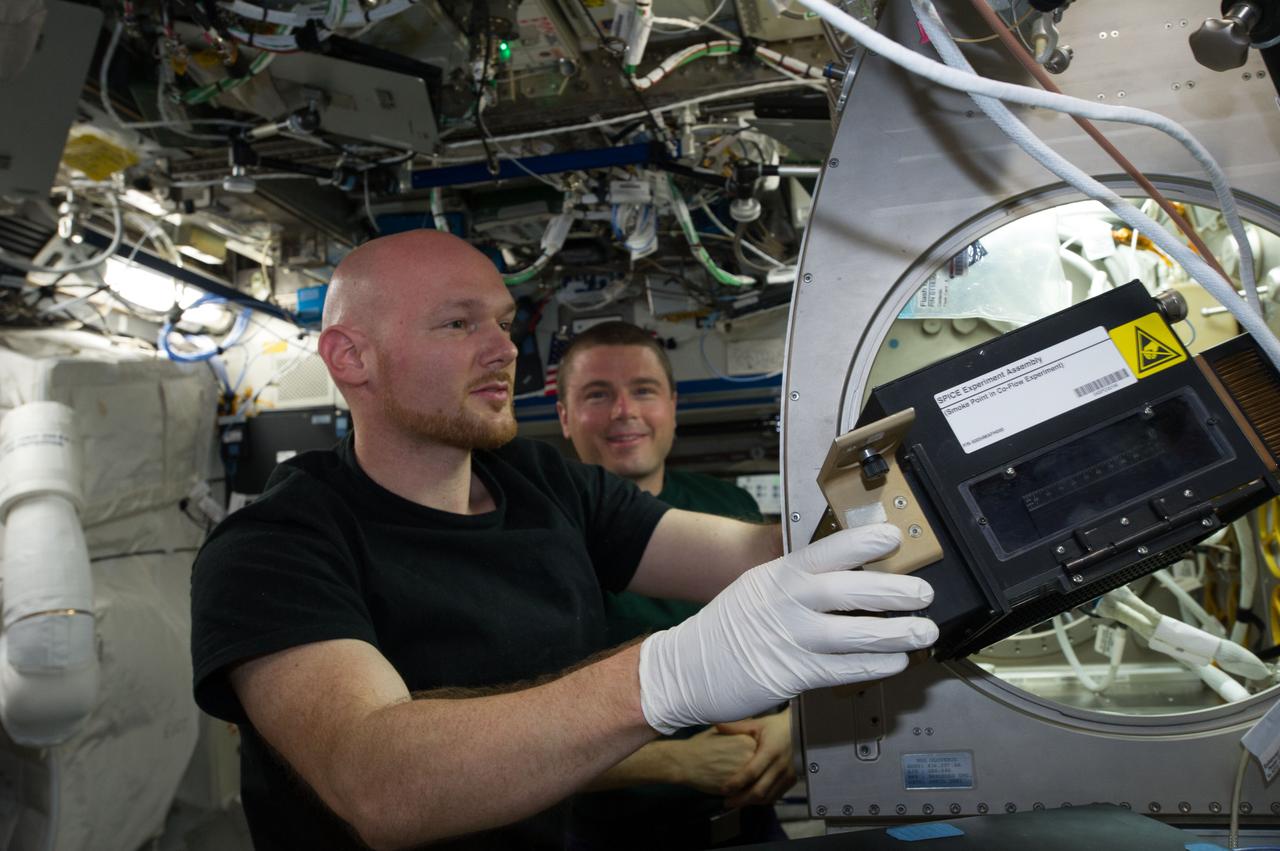
ISS040-E-088800 (5 Aug. 2014) --- European Space Agency astronaut Alexander Gerst, Expedition 40 flight engineer, removes hardware for the combustion experiment known as the Burning and Suppression of Solids (BASS-II) from the Microgravity Science Glovebox (MSG) in the Destiny laboratory of the International Space Station. The experiment seeks to provide insight on how flames burn in space compared to Earth which may provide fire safety benefits aboard future spacecraft. NASA astronaut Reid Wiseman, flight engineer, looks on.
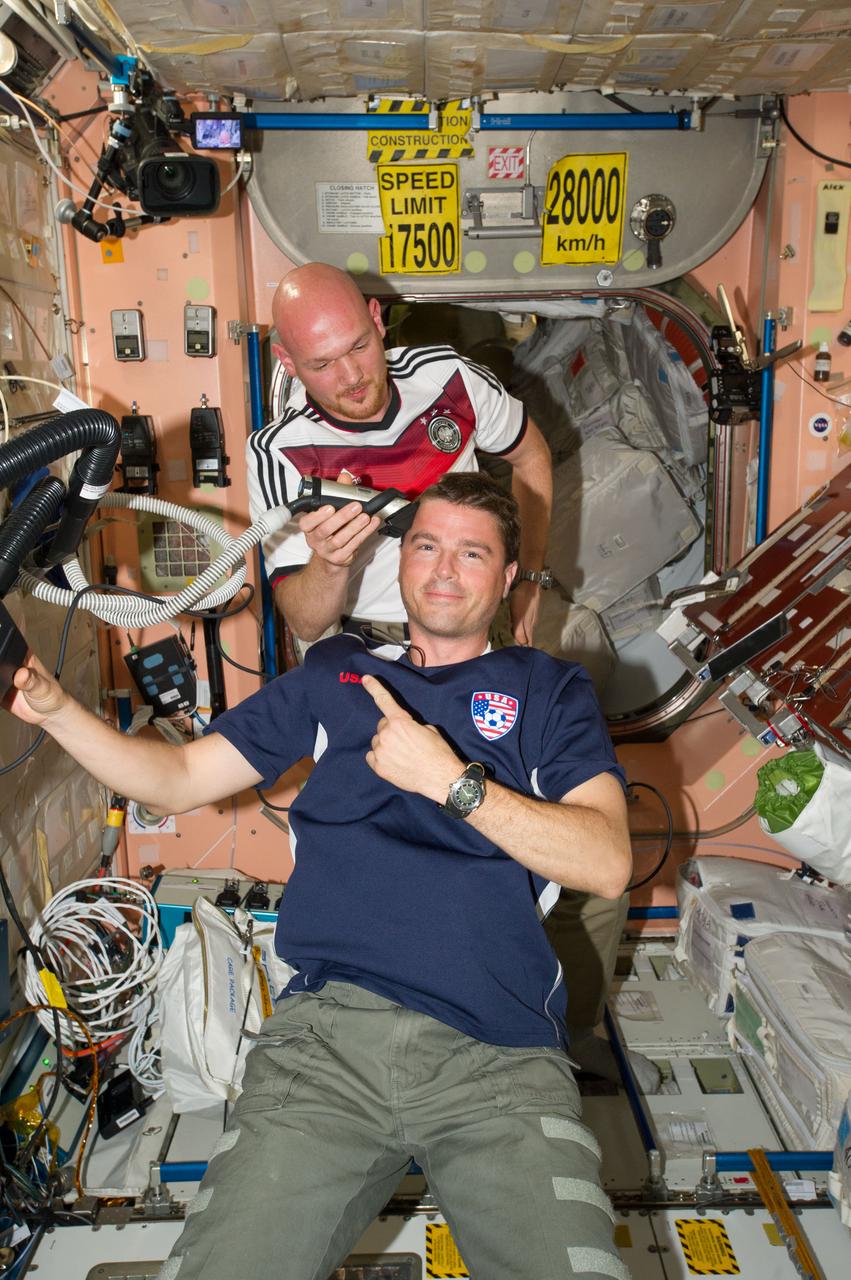
ISS040-E-020378 (26 June 2014) --- European Space Agency astronaut Alexander Gerst, Expedition 40 flight engineer, shaves the head of NASA astronaut Reid Wiseman, flight engineer, in the Unity node of the International Space Station. Gerst used hair clippers fashioned with a vacuum device to garner freshly cut hair. A friendly World Cup Soccer-related agreement between the crew members representing the USA, and Gerst, a German citizen who represents the European Space Agency, called for the American losers of a German-USA match to have their heads shaved. The German team won the match 1-0.
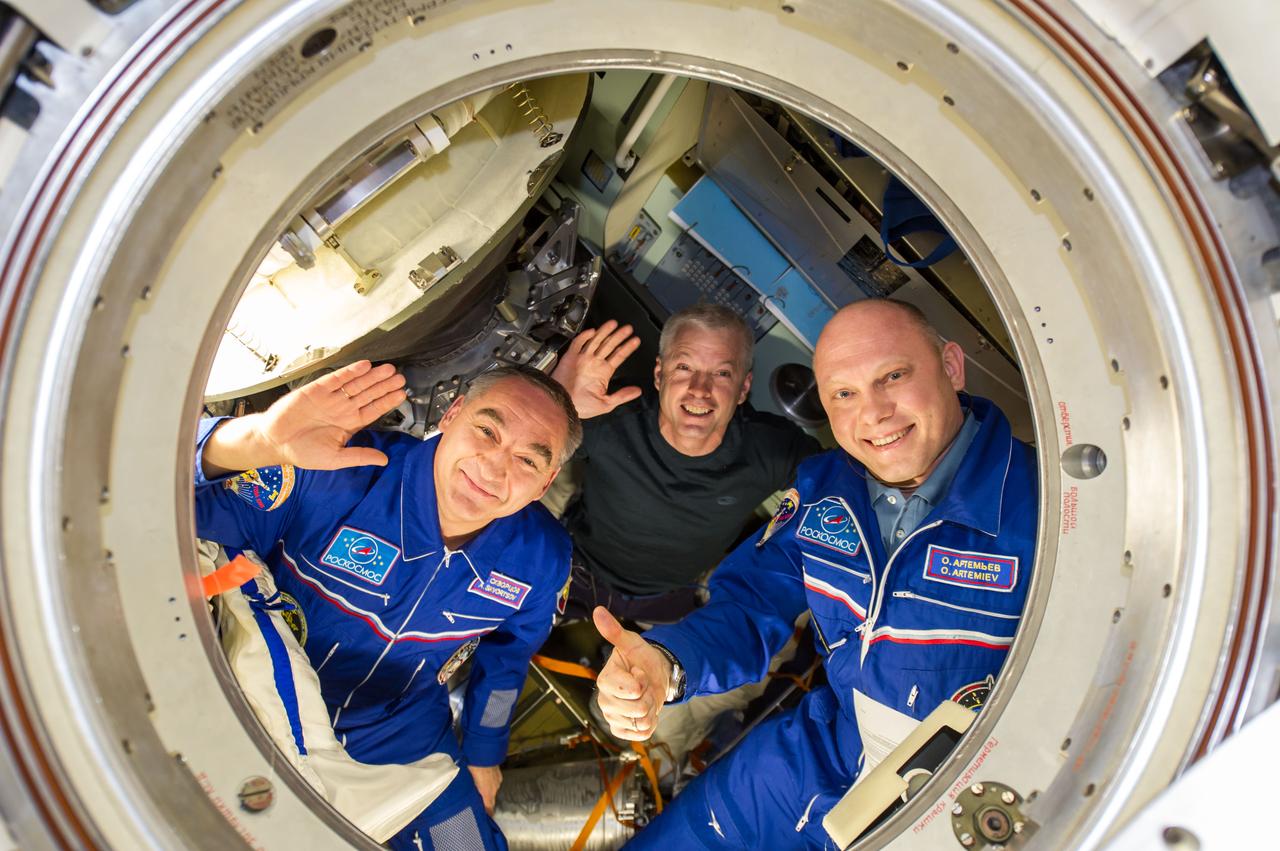
ISS040-E-139846 (10 Sept. 2014) --- NASA astronaut Steve Swanson (center), Expedition 40 commander; along with Russian cosmonauts Alexander Skvortsov (left) and Oleg Artemyev, both flight engineers, are pictured in the Soyuz TMA-12M capsule which will return them back to Earth after serving more than five months onboard the orbital outpost. Undocking from the International Space Station’s Poisk Mini-Research Module 2 (MRM2) occurred at 7:01 p.m. (EDT) on Sept. 10, 2014.
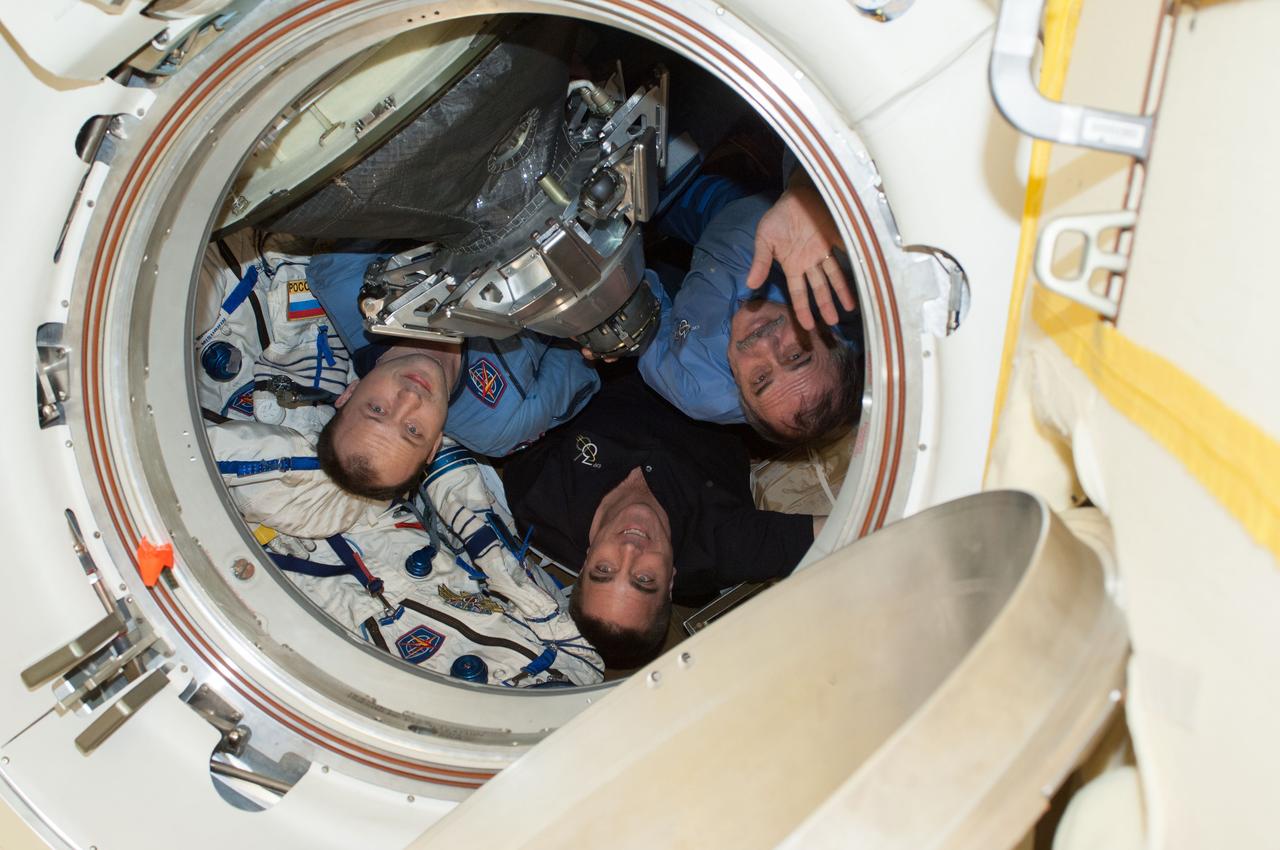
ISS036-E-048267 (10 Sept. 2013) --- Russian cosmonaut Pavel Vinogradov (right), Expedition 36 commander; along with NASA astronaut Chris Cassidy (center) and Russian cosmonaut Alexander Misurkin, both flight engineers, are pictured in the Soyuz TMA-08M spacecraft currently docked to the Poisk Mini-Research Module 2 (MRM2) of the International Space Station. The trio is preparing to undock from Poisk in their Soyuz spacecraft, ending a five-and-a-half month stay at the station.

Photo of Astronaut Karen Nyber,Expedition 36 flight engineer,with a snack of peanut butter and chocolate sandwiched between two waffles. Photo taken in the Node 1 module. Also sent as Twitter message.

ISS040-E-139800 (10 Sept. 2014) --- NASA astronaut Steve Swanson, Expedition 40 commander, is pictured in the Soyuz TMA-12M capsule which will return him back to Earth along with Russian cosmonauts Alexander Skvortsov and Oleg Artemyev, both flight engineers. Undocking from the International Space Station’s Poisk Mini-Research Module 2 (MRM2) occurred at 7:01 p.m. (EDT) on Sept. 10, 2014.
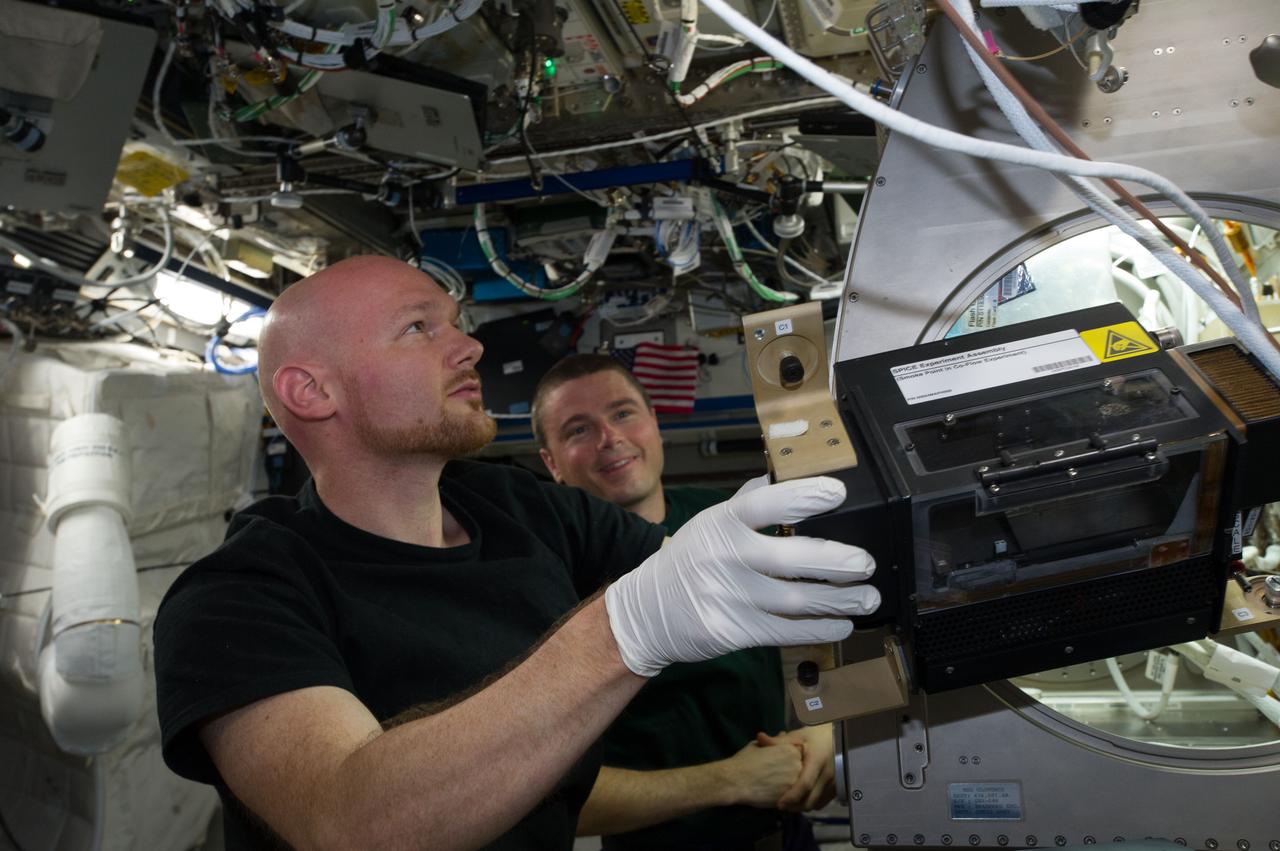
ISS040-E-088801 (5 Aug. 2014) --- European Space Agency astronaut Alexander Gerst, Expedition 40 flight engineer, removes hardware for the combustion experiment known as the Burning and Suppression of Solids (BASS-II) from the Microgravity Science Glovebox (MSG) in the Destiny laboratory of the International Space Station. The experiment seeks to provide insight on how flames burn in space compared to Earth which may provide fire safety benefits aboard future spacecraft. NASA astronaut Reid Wiseman, flight engineer, looks on.
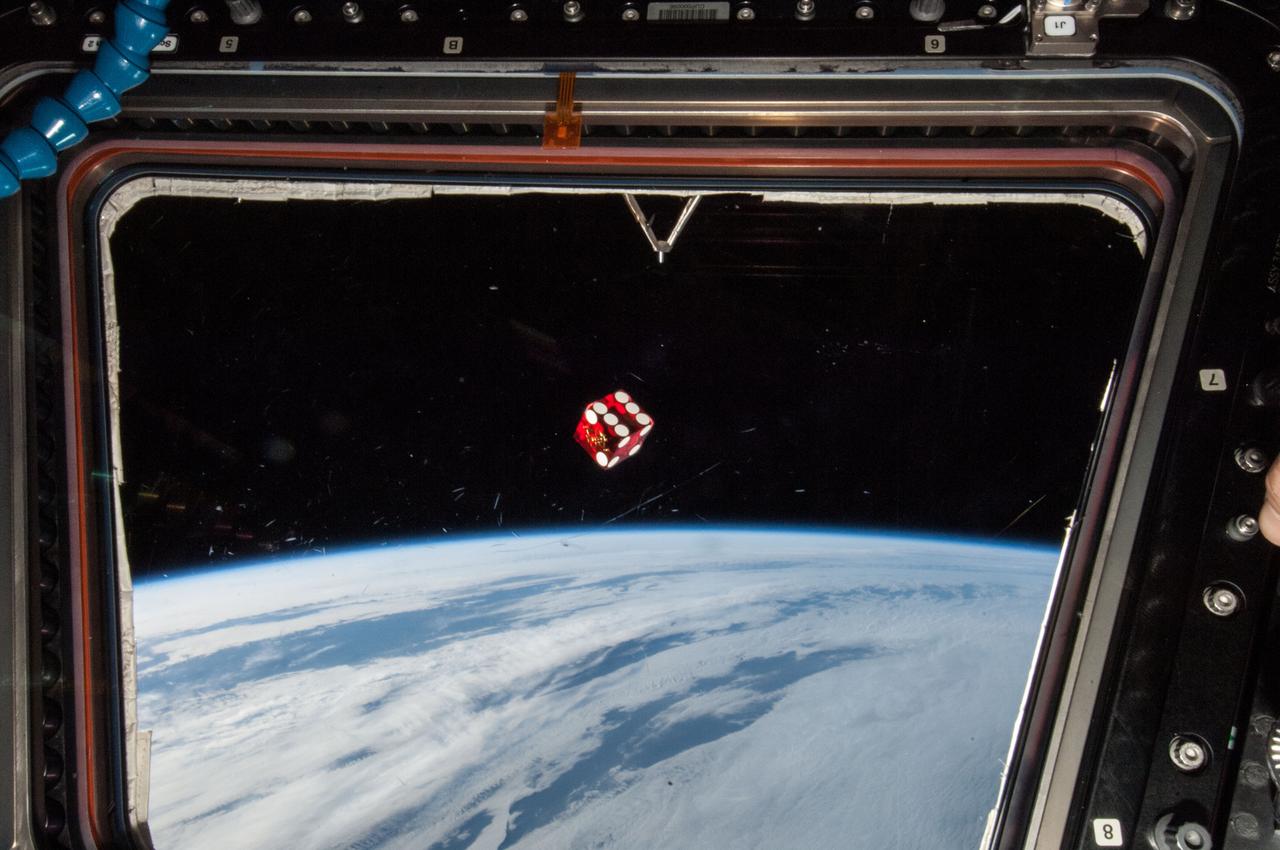
ISS040-E-006093 (31 May 2014) --- With a few explanatory words attached to a message to Earth, Expedition 40 Flight Engineer Reid Wiseman of NASA sent down this image of a single piece of dice floating in front of one of the windows in the Cupola of the Earth-orbiting International Space Station. Wiseman commented, "This one is just for us board game players, table top strategy gamers, (etc.) whose dice collection behaviour borders on hoarding."
European Space Agency astronaut Alexander Gerst, Expedition 40 flight engineer, and NASA astronaut Steve Swanson, commander, gather around a computer in the Unity node of the International Space Station after the German-USA soccer match.
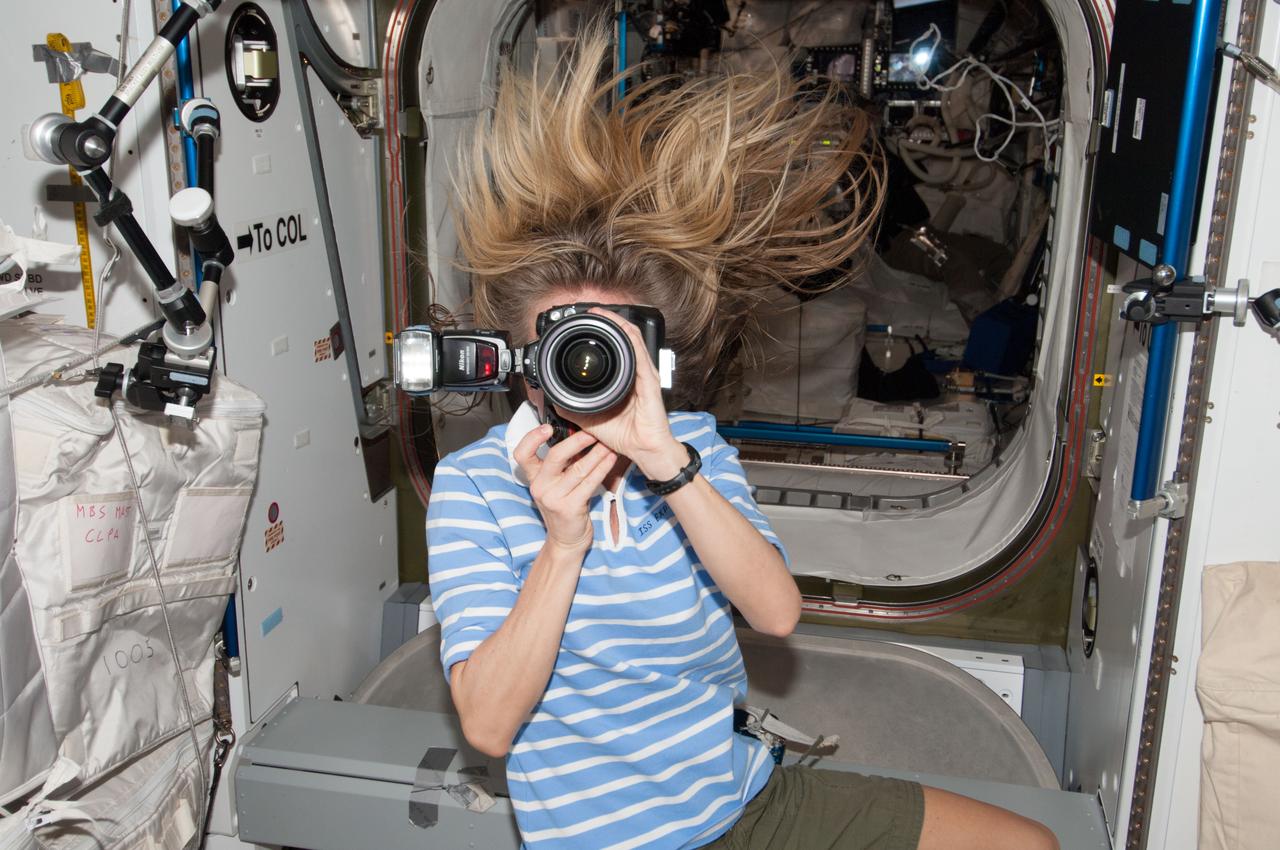
Expedition 37 Flight engineer Karen Nyberg uses a camera to document activities in the Node 2 module. Also sent as Twitter message.
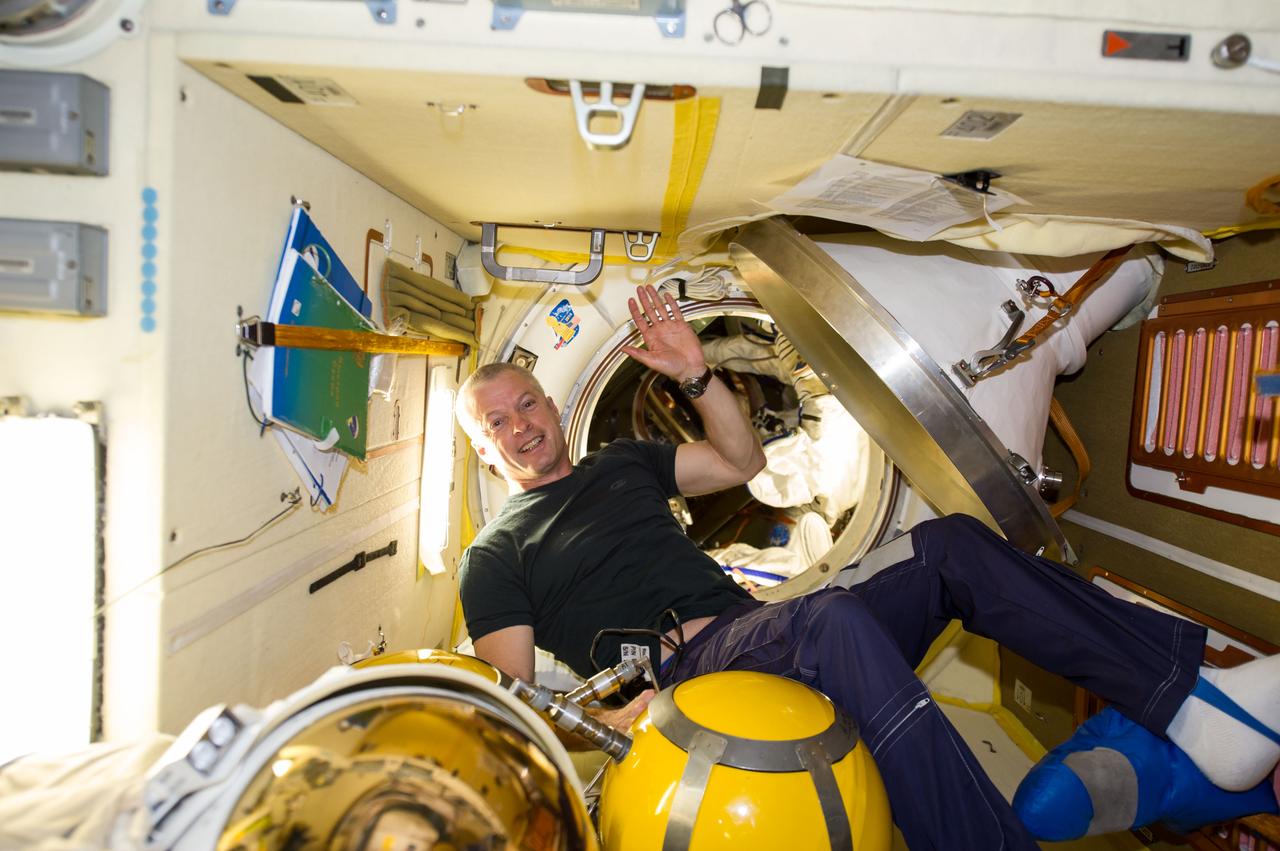
ISS040-E-139784 (10 Sept. 2014) --- In the Poisk Mini-Research Module 2 (MRM2), NASA astronaut Steve Swanson, Expedition 40 commander, waves good-bye prior to entering the Soyuz TMA-12M capsule which will return him back to Earth along with Russian cosmonauts Alexander Skvortsov and Oleg Artemyev, both flight engineers. Undocking occurred at 7:01 p.m. (EDT) on Sept. 10, 2014.

Astronaut Karen Nyberg,Expedition 36 flight engineer,is photographed holding a drink packet in the Node 2 module.
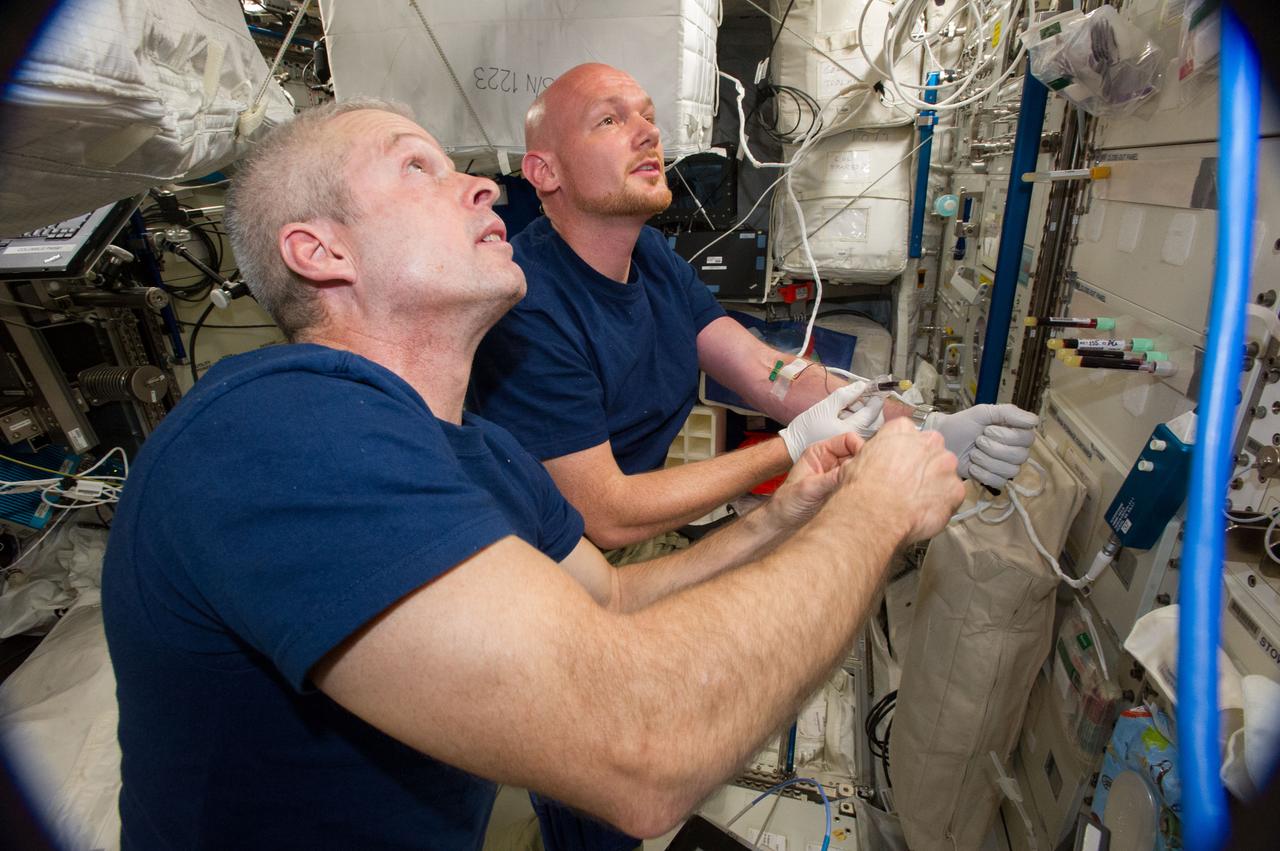
Astronaut Alexander Gerst,Expedition 40 flight engineer (background),and Expedition 40 Commander Steve Swanson are photographed performing blood sample collection in the Columbus module as part of HRF Generic Frozen Blood Collection Operations.
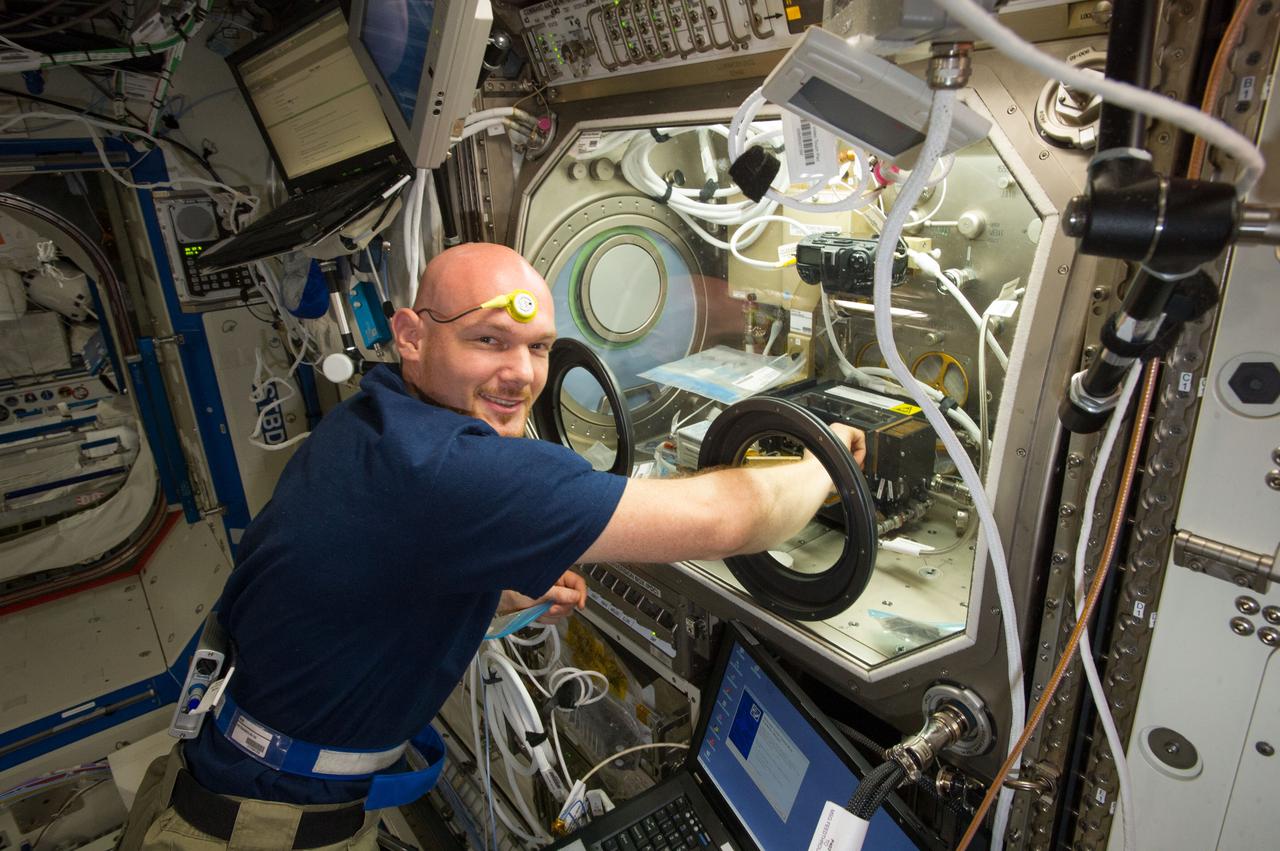
ISS040-E-011005 (13 June 2014) --- European Space Agency astronaut Alexander Gerst, Expedition 40 flight engineer, works with samples and hardware for a combustion experiment known as the Burning and Suppression of Solids (BASS) in the Microgravity Science Glovebox (MSG) in the Destiny laboratory of the International Space Station. He is wearing a Drager Double Sensor on his forehead which is used on the Circadian Rhythms Experiment. This experiment examines the hypothesis that long-term spaceflights significantly affect the synchronization of the circadian rhythms in humans due to changes of a non-24 hour light-dark cycle.
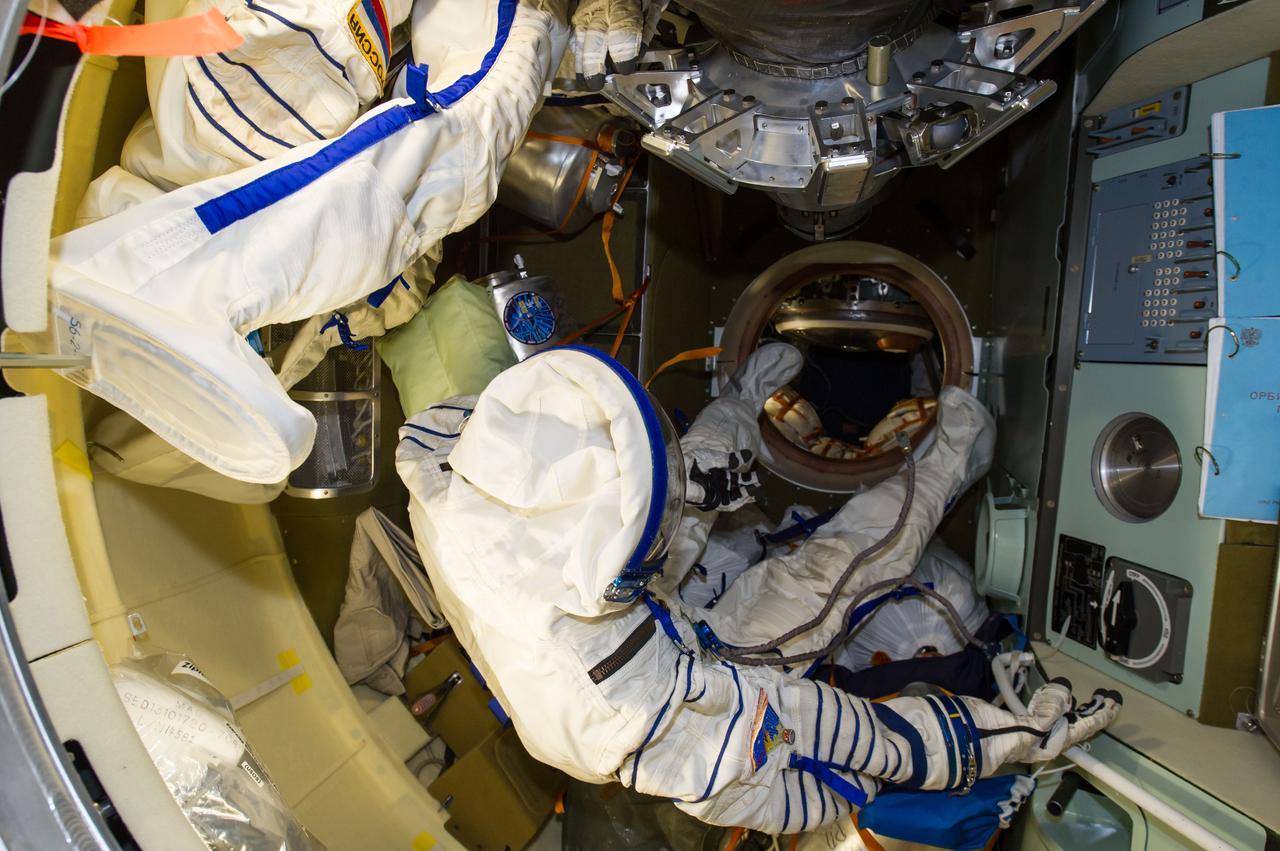
ISS040-E-139788 (10 Sept. 2014) --- Unoccupied Russian Sokol launch and entry suits, photographed by an Expedition 40 crew member, float freely in the International Space Station’s Poisk Mini-Research Module 2 (MRM2).
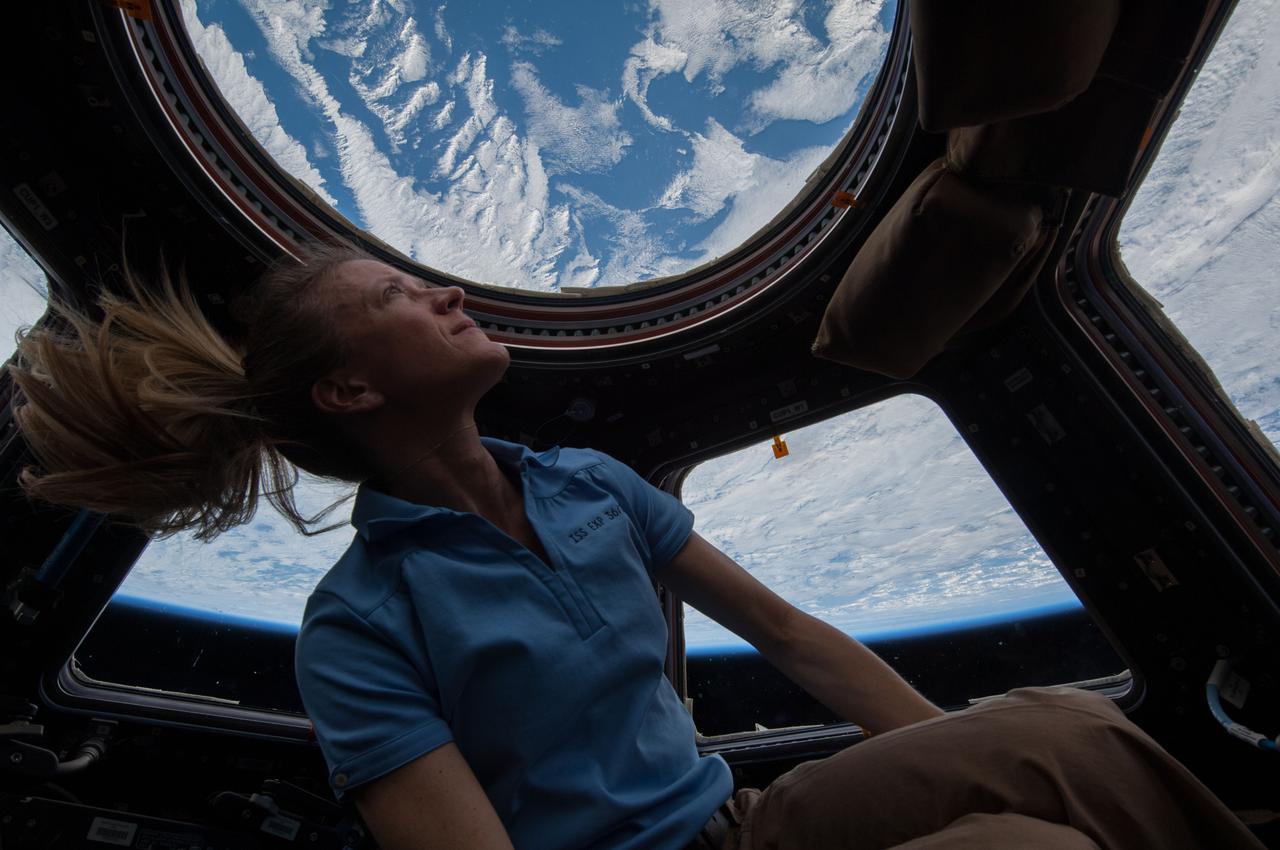
Astronaut Karen Nyberg, Expedition 37 flight engineer, is photographed in front of the windows in the Cupola module .
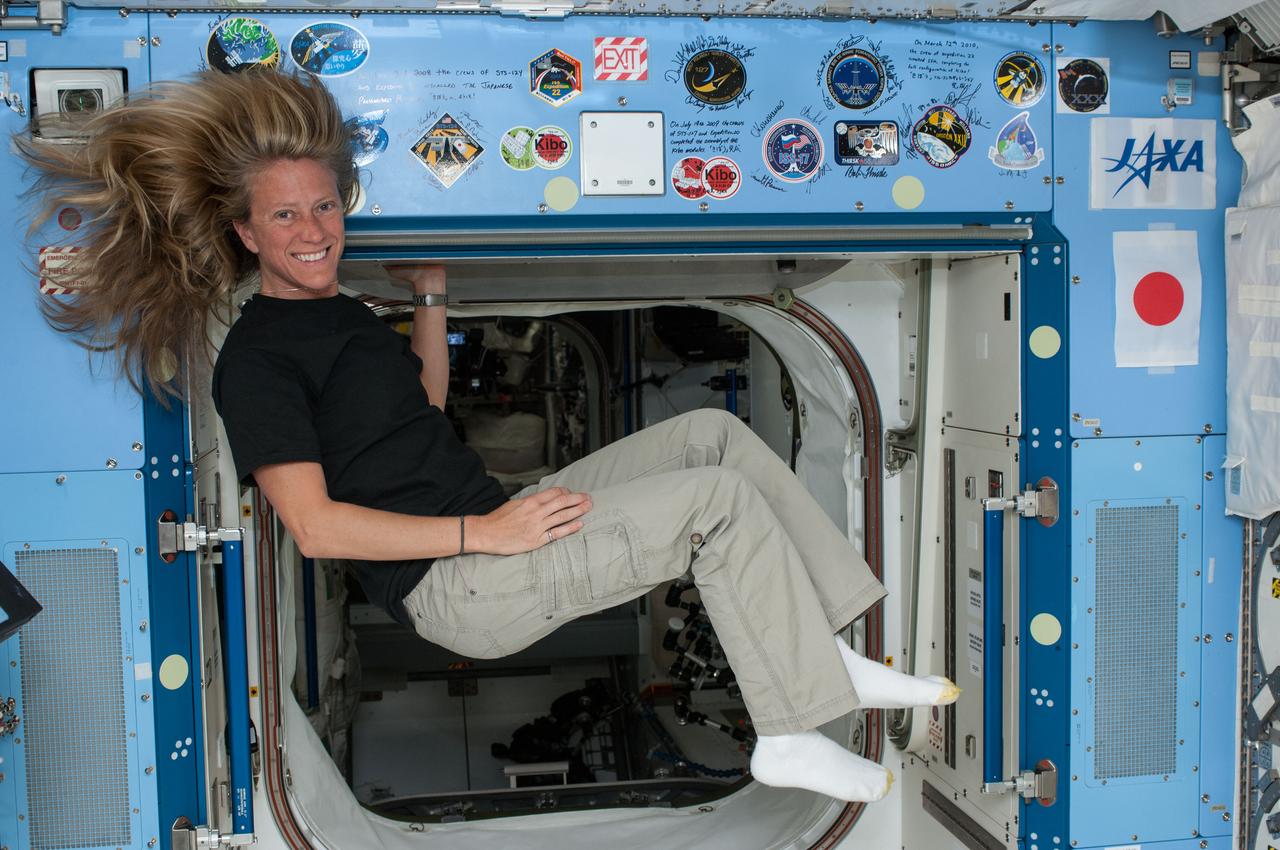
Astronaut Karen Nyberg,Expedition 36 flight engineer,floats in front of the various mission patches located on the Japanese Experiment Module (JEM) Pressurized Module (JPM)
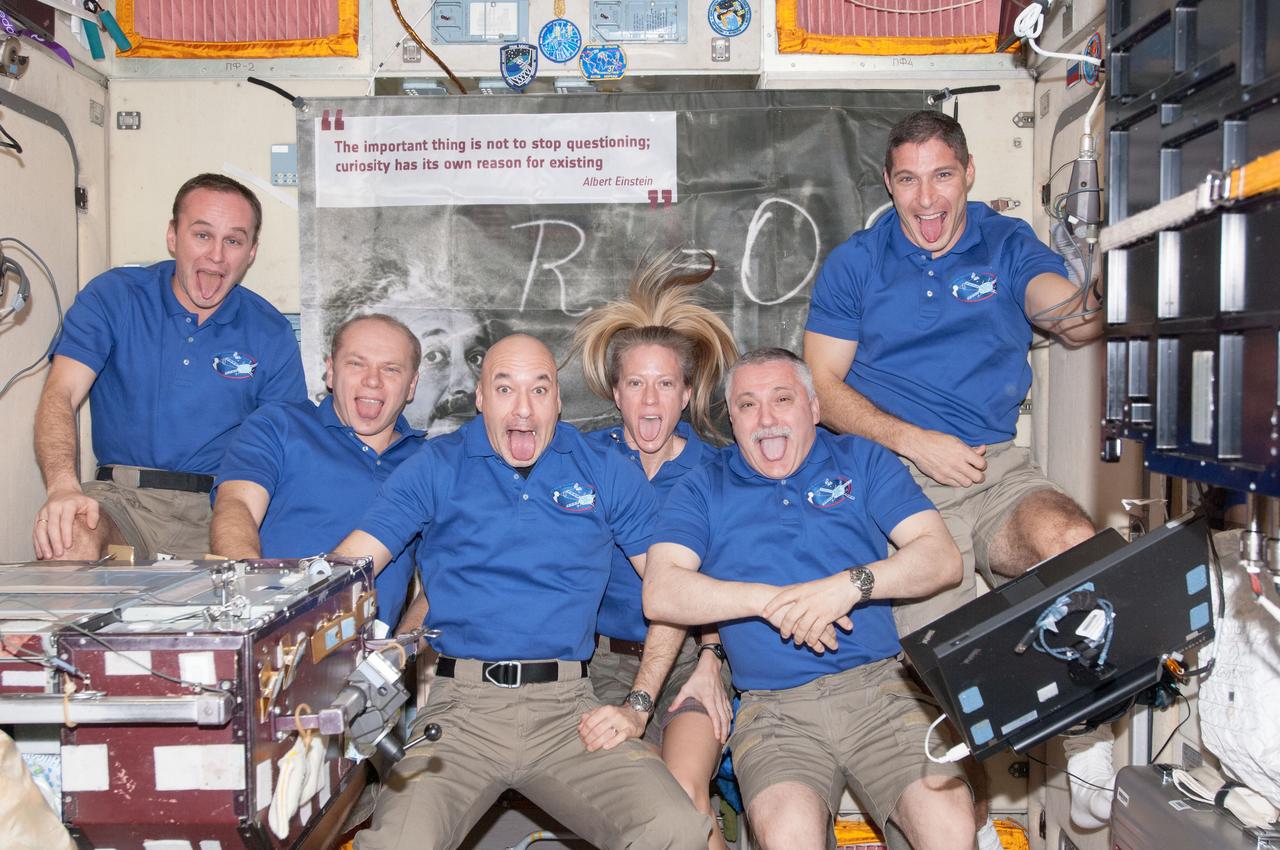
Expedition 37 crewmembers pose for a crew portrait in front of a banner depicting Albert Einstein - the scientist for whom the ATV is named. From l.-r.:Russian cosmonauts Sergey Ryazanskiy and Oleg Kotov,European Space Agency astronaut Luca Parmitano,Astronaut Karen Nyberg (all flight engineers),Cosmonaut Fyodor Yurchikhin (mission commander) and Astronaut Michael Hopkins (flight engineer).
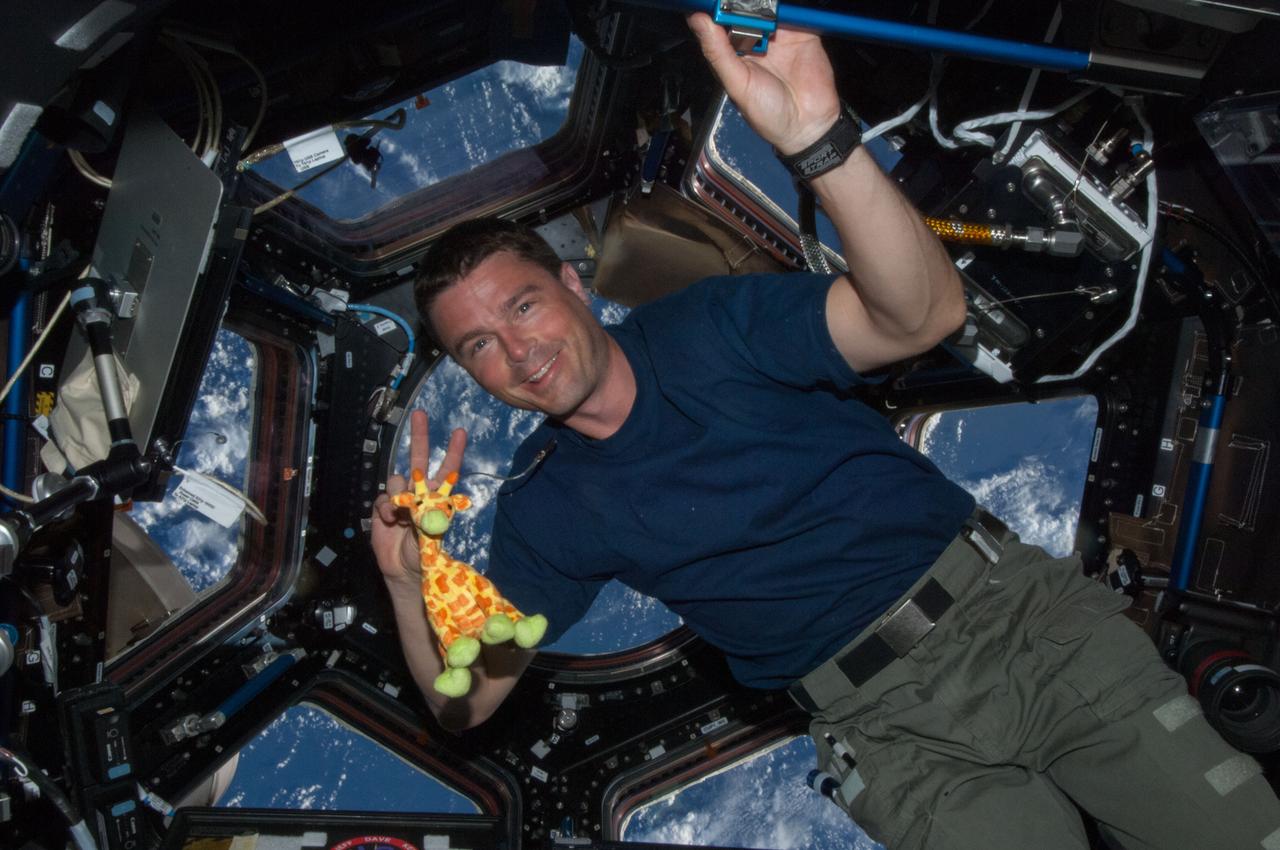
NASA Astronaut Reid Wiseman,Expedition 40 flight engineer,is photographed in front of the Cupola windows with a toy giraffe floating beside him.
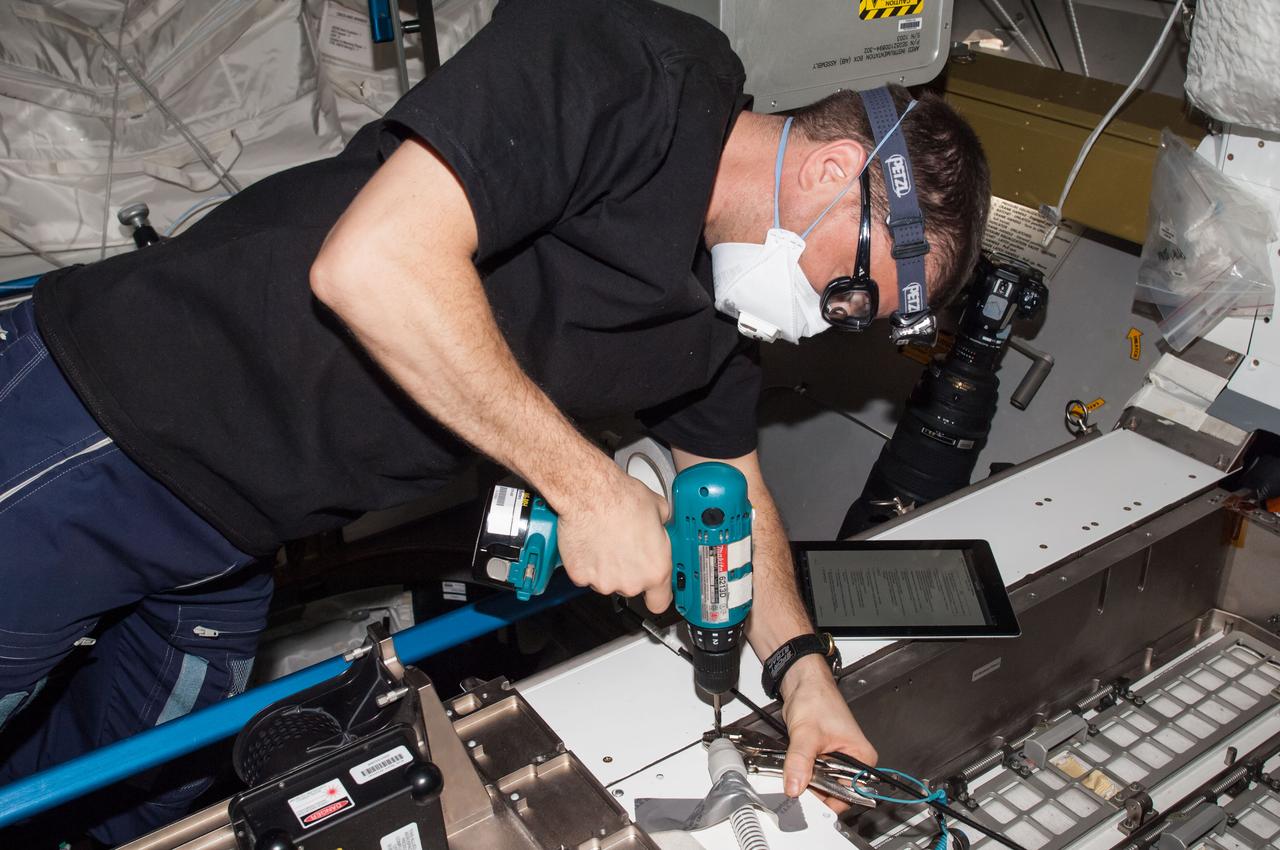
ISS040-E-099850 (18 Aug. 2014) --- NASA astronaut Reid Wiseman, Expedition 40 crew member, performs routine in-flight maintenance in the Tranquility node of the International Space Station.
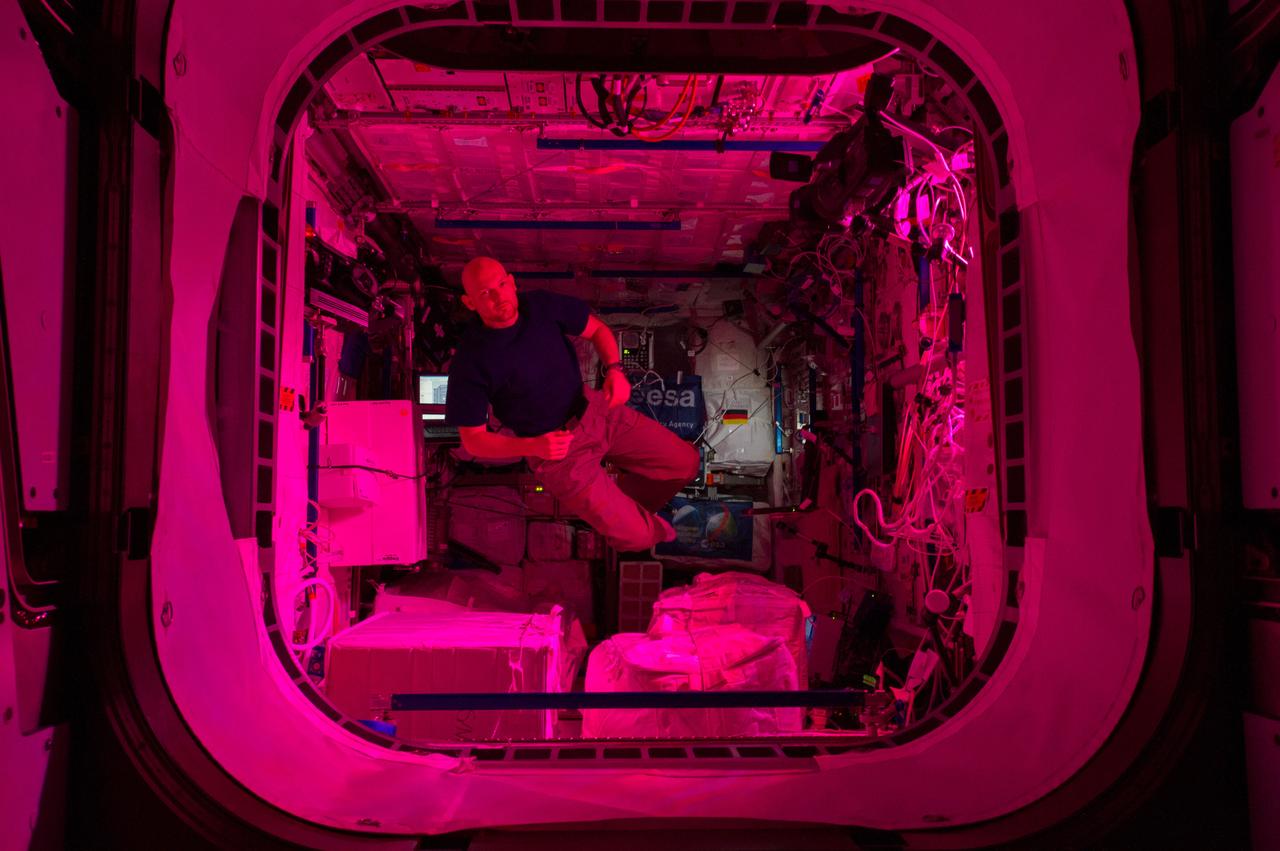
ISS040-E-007573 (5 June 2014) --- European Space Agency astronaut Alexander Gerst, Expedition 40 flight engineer, is pictured floating freely in the Columbus laboratory of the International Space Station.
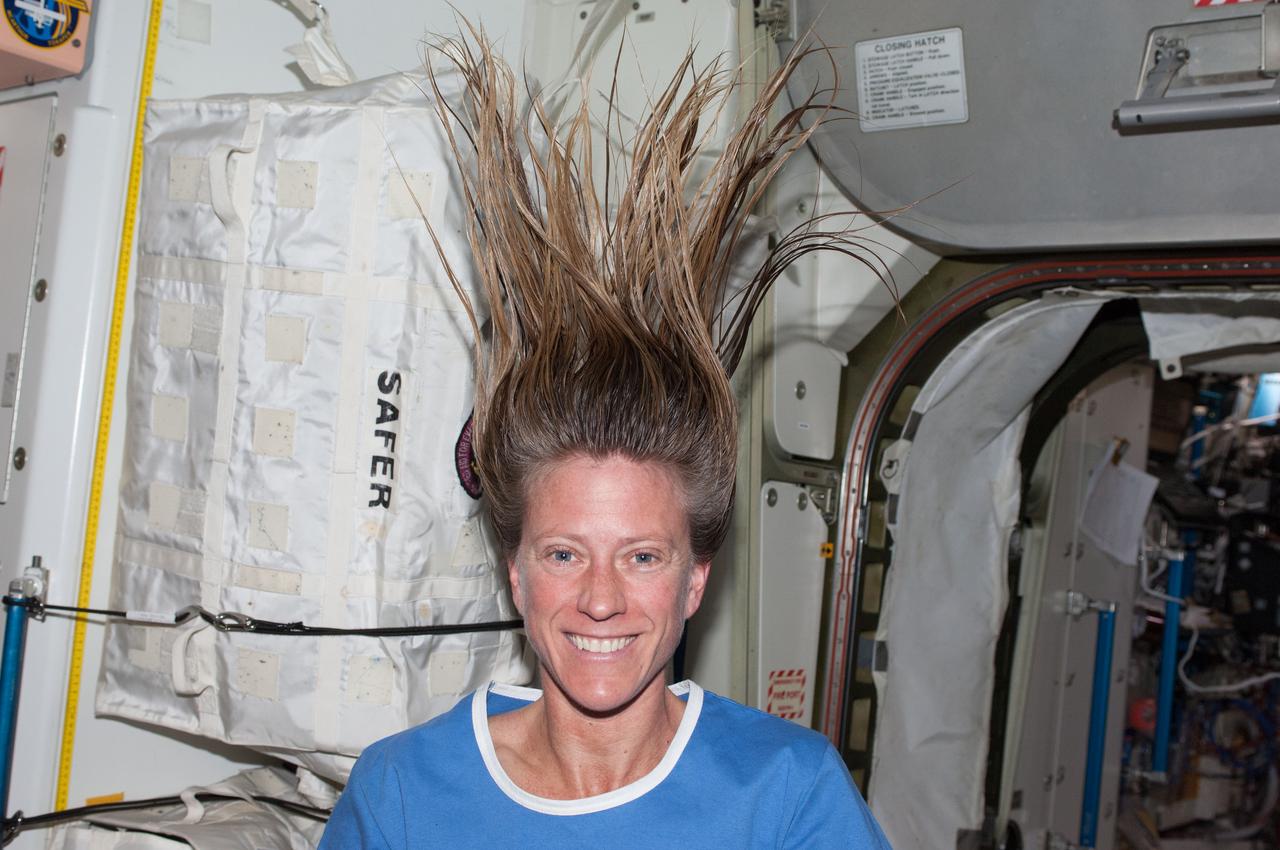
Astronaut Karen Nyberg,Expedition 36 flight engineer,arranges her hair so that it can float straight up from her head. Photo was taken in the Node 1 module. Sent also as Twitter message.
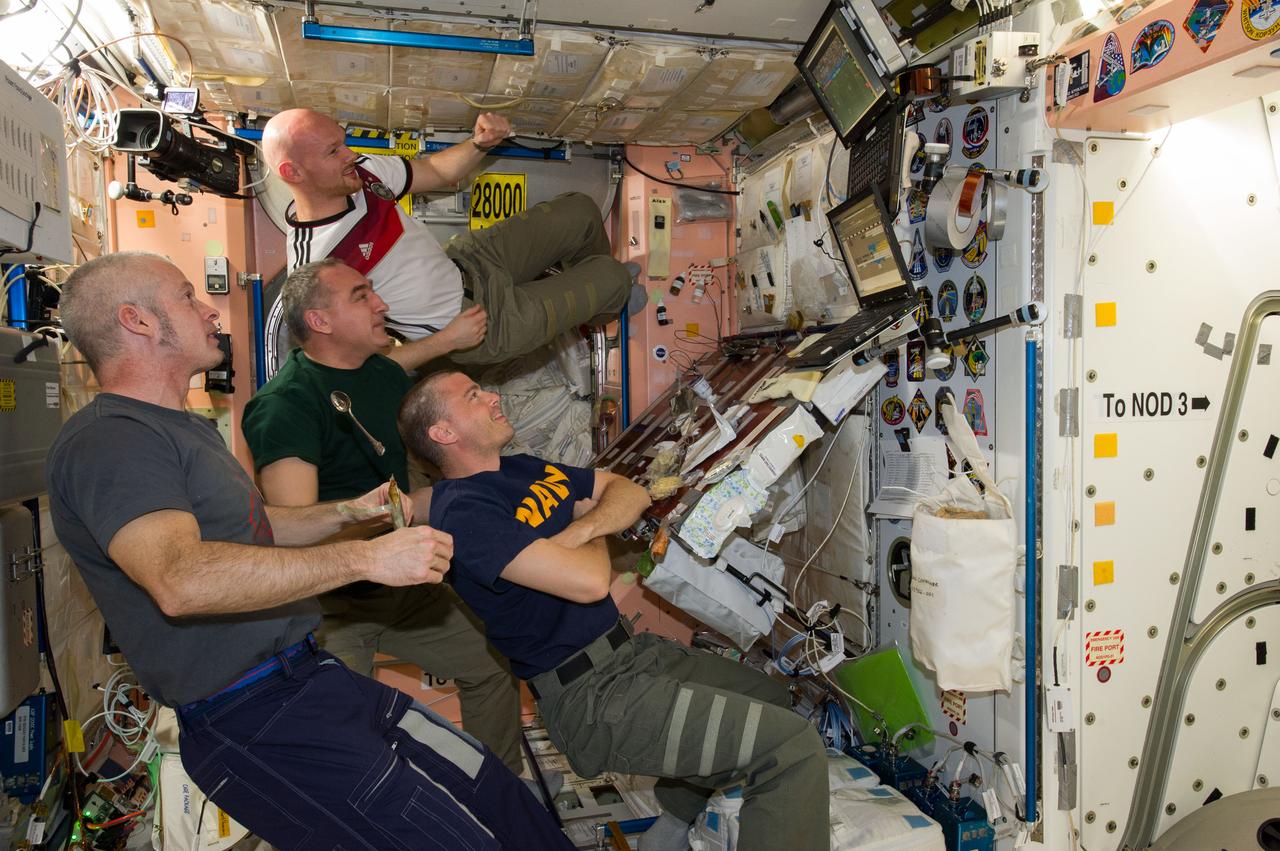
NASA astronaut Steve Swanson (left),Expedition 40 commander; along with European Space Agency astronaut Alexander Gerst (upper left),NASA astronaut Reid Wiseman and Cosmonaut Alexander Skvortsov,all three flight engineers,gather around a computer in Node 1 to watch the World Cup finals.

ISS040-E-006915 (4 June 2014) --- In this dark view down the length of the International Space Station’s Destiny laboratory, European Space Agency astronaut Alexander Gerst, Expedition 40 flight engineer, is visible in the background in the station’s Harmony node.
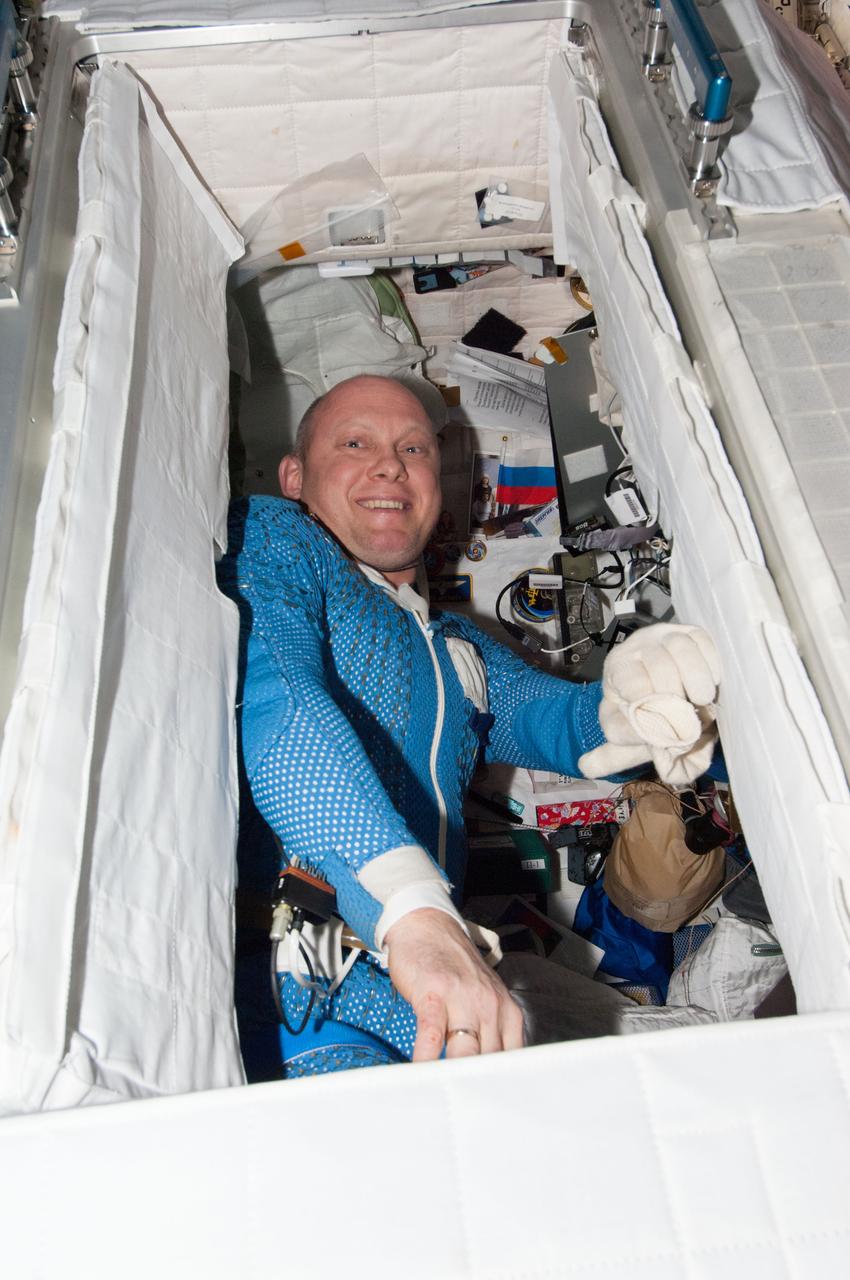
Cosmonaut Oleg Artemyev, Expedition 40 flight engineer, is photographed still wearing his liquid cooling and ventilation garment after a Russian Extravehicular Activity (EVA). Artemyev is standing in his crew quarters (CQ).
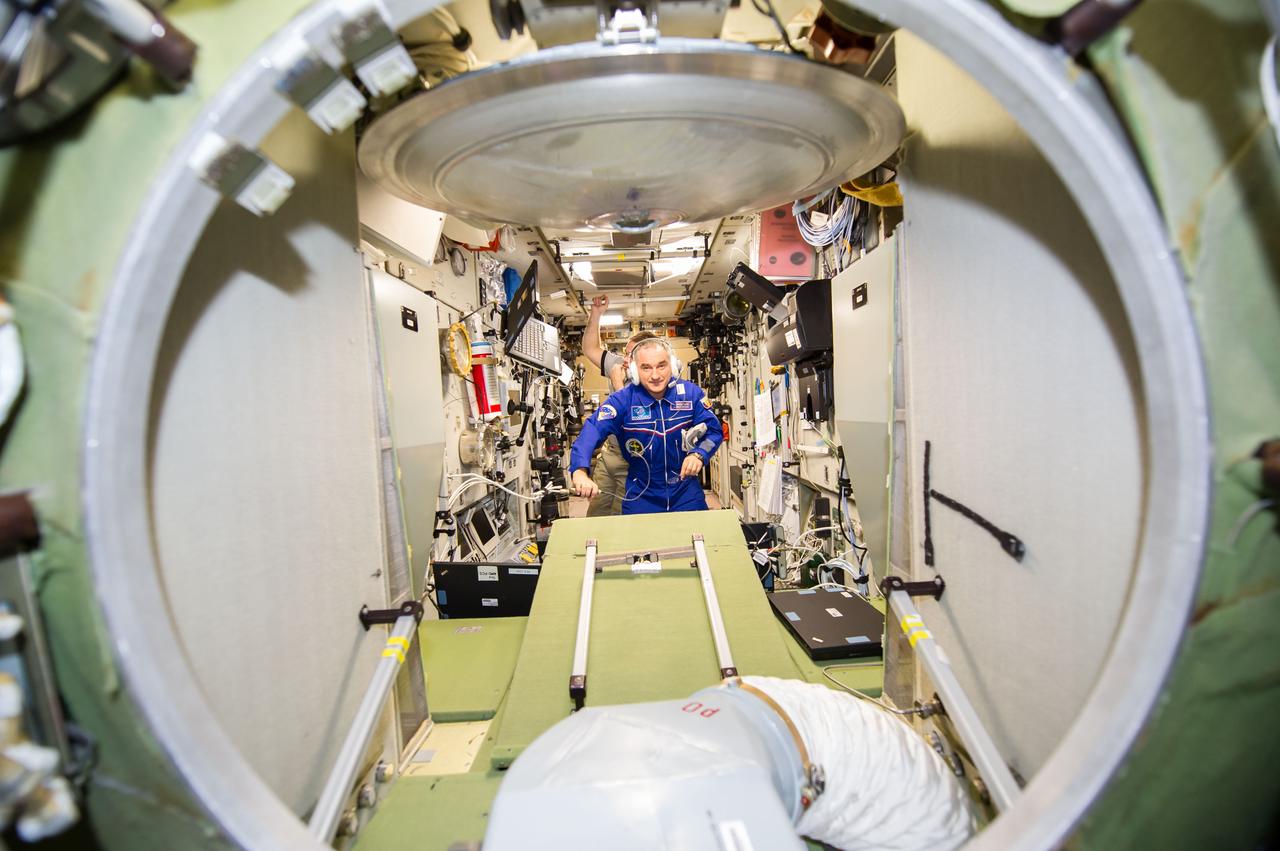
ISS040-E-139786 (10 Sept. 2014) --- Russian cosmonauts Alexander Skvortsov, Expedition 40 flight engineer; and cosmonaut Maxim Suraev, Expedition 41 commander, work in the Zvezda Service Module of the International Space Station.
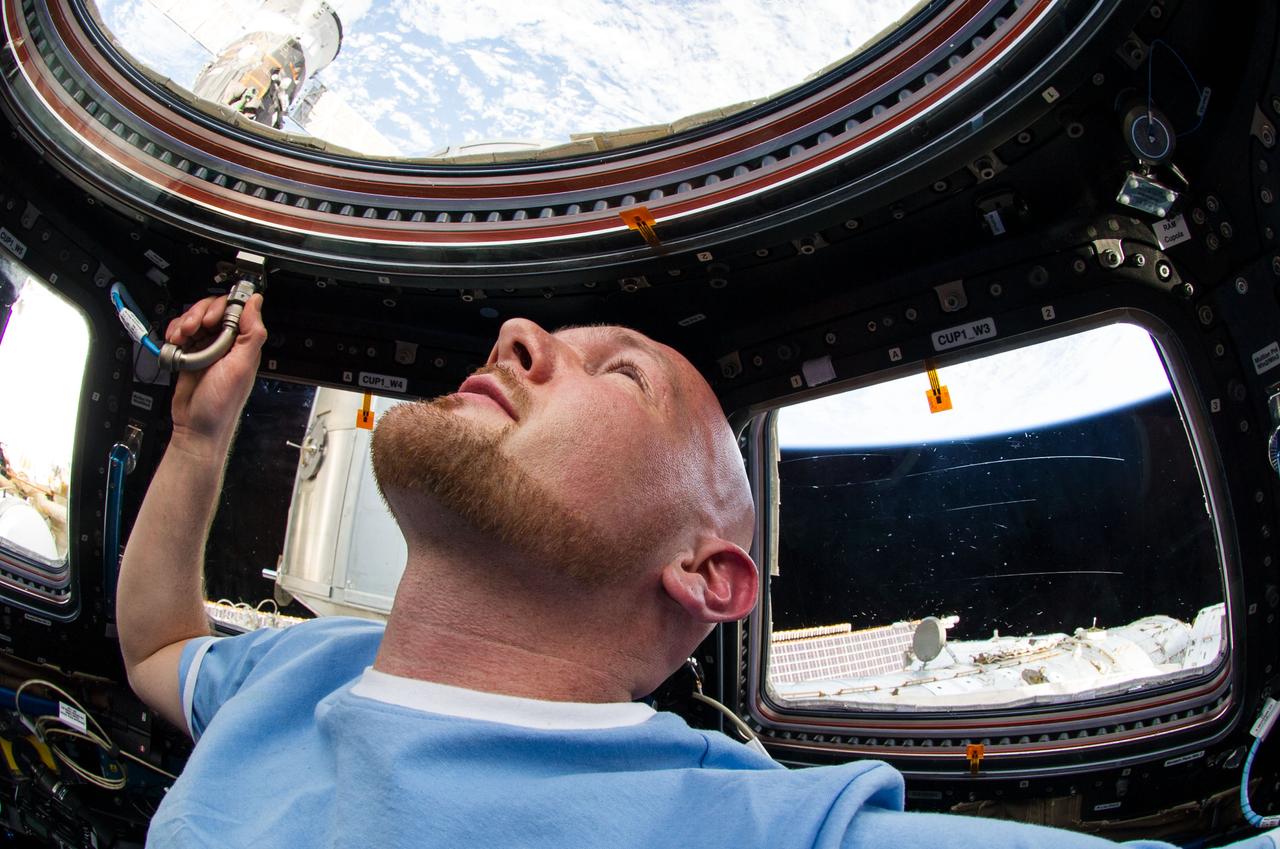
ISS040-E-006199 (1 June 2014) --- European Space Agency astronaut Alexander Gerst, Expedition 40 flight engineer, appears to enjoy his view of Earth through the windows in the Cupola of the International Space Station.
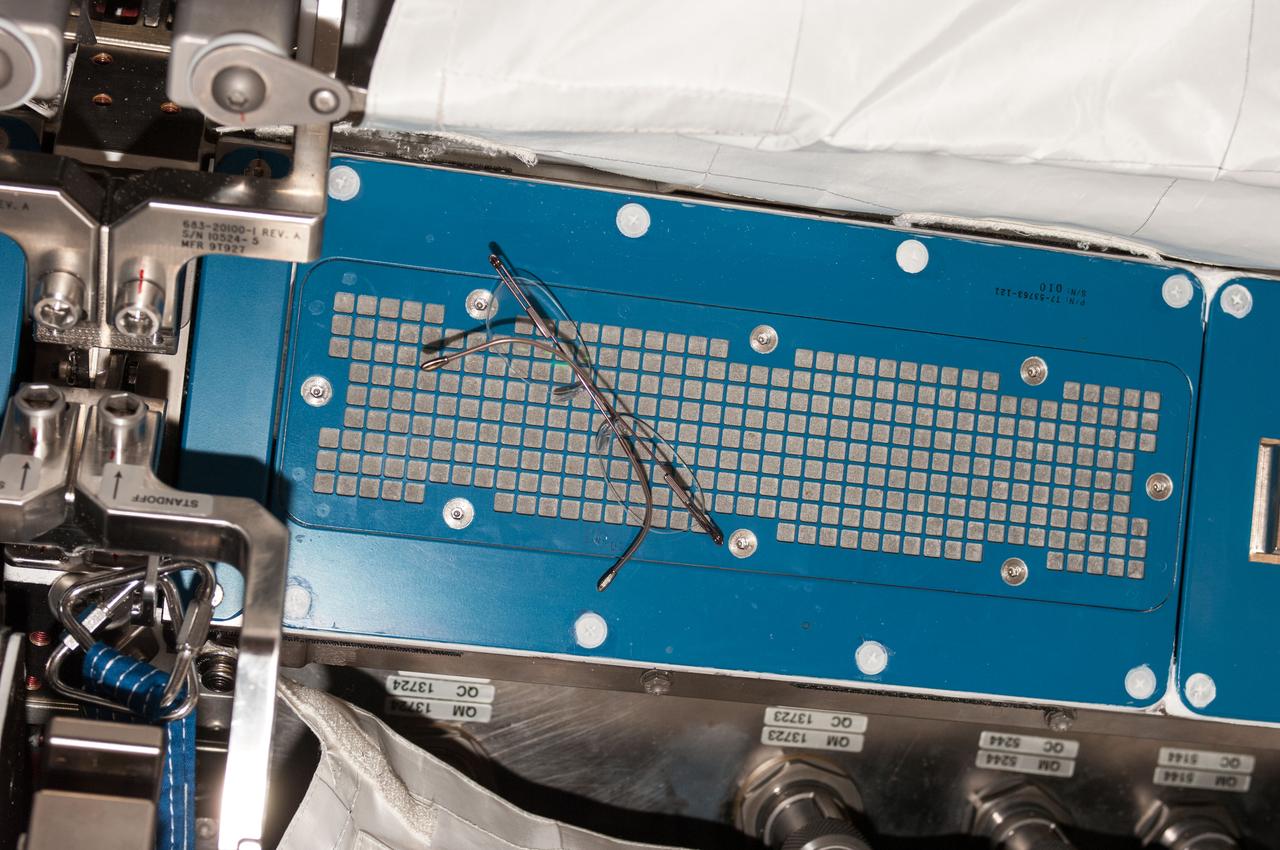
Candid view of a pair of eye glasses,floating in front of a ventilation filter in the Japanese Experiment Module (JEM).
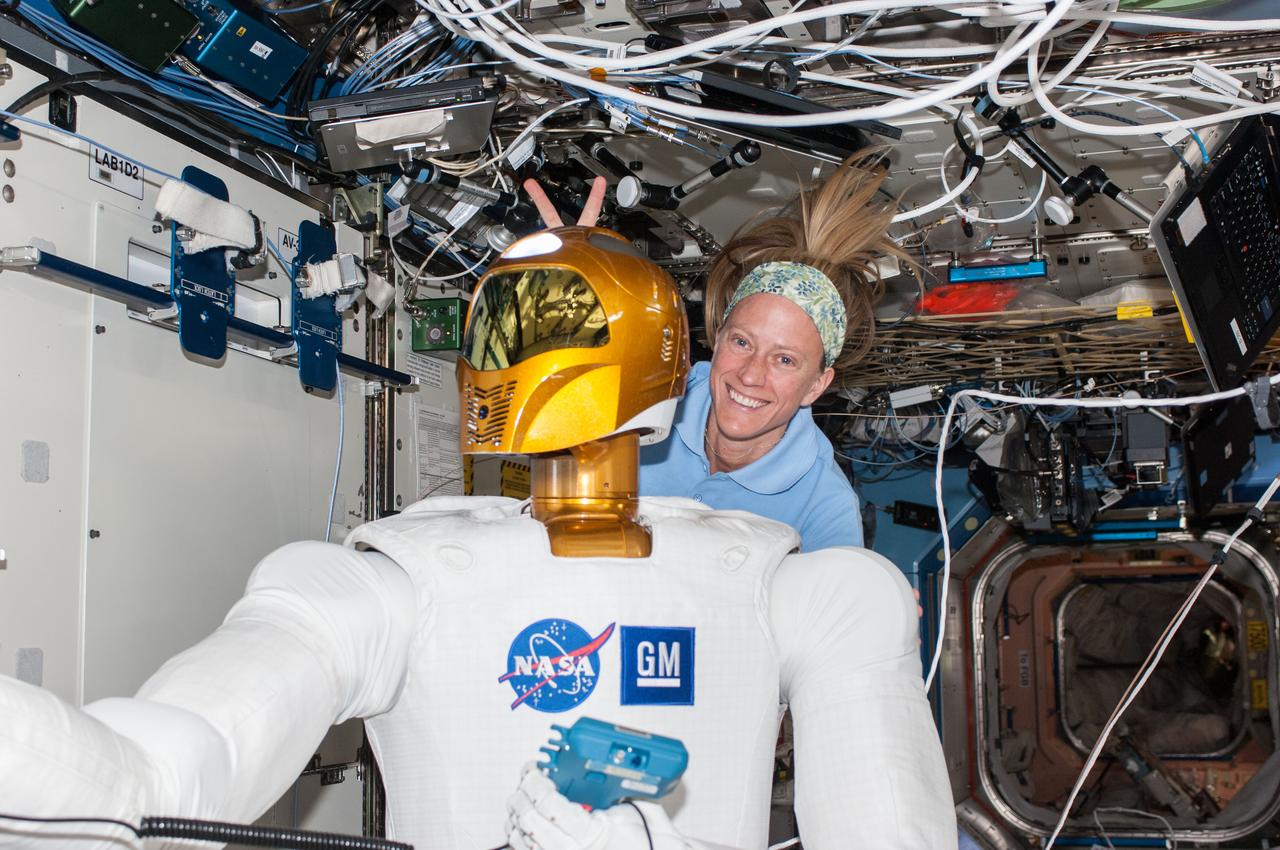
NASA astronaut Karen Nyberg,Expedition 36 flight engineer,is pictured with Robonaut 2,the first humanoid robot in space,in the Destiny laboratory of the International Space Station.
ISS040-E-019299 (25 June 2014) --- In the International Space Station?s Kibo laboratory, European Space Agency astronaut Alexander Gerst, Expedition 40 flight engineer, prepares to transfer a multi-purpose experiment platform and a robotic arm known as the Small Fine Arm through the Kibo module?s scientific airlock. The Small Fine Arm, which attaches to the Kibo?s larger main arm, handles delicate operations involved in exchanging experiments and payloads located on the Exposed Facility.
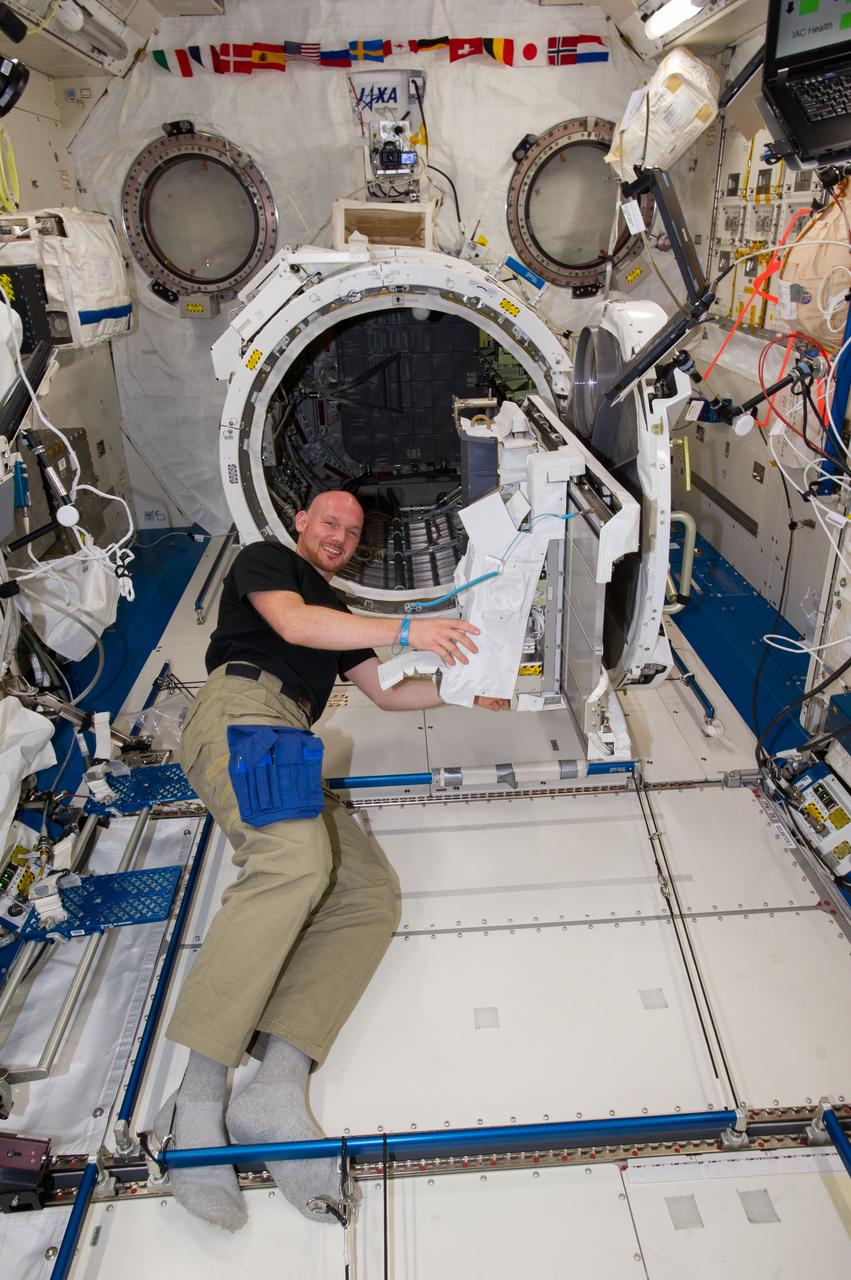
ISS040-E-019312 (25 June 2014) --- In the International Space Station?s Kibo laboratory, European Space Agency astronaut Alexander Gerst, Expedition 40 flight engineer, prepares to transfer a multi-purpose experiment platform and a robotic arm known as the Small Fine Arm through the Kibo module?s scientific airlock. The Small Fine Arm, which attaches to the Kibo?s larger main arm, handles delicate operations involved in exchanging experiments and payloads located on the Exposed Facility.
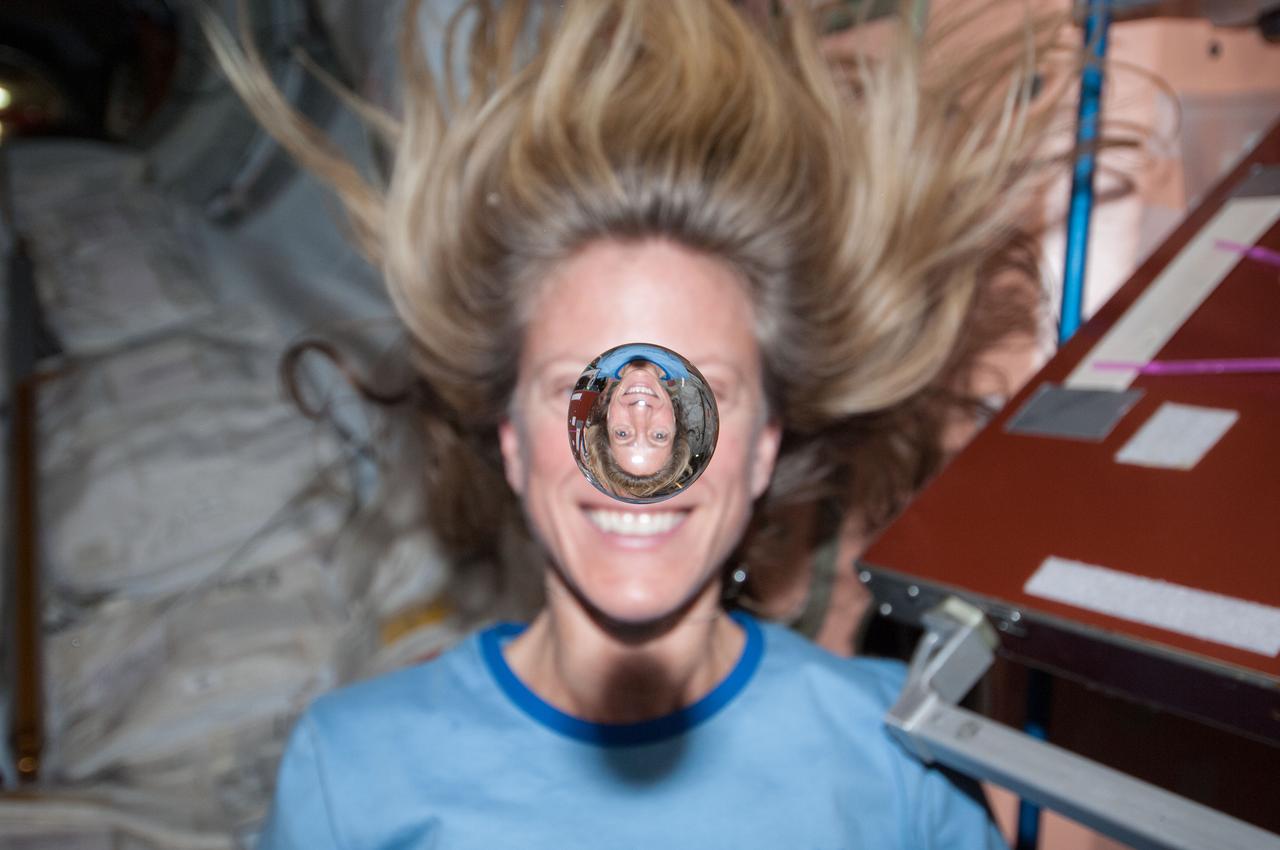
NASA astronaut Karen Nyberger, Expedition 36 flight engineer, watches a water bubble float freely between her and the camera, showing her image refracted in the droplet, while in the Node 1Unity module of the International Space Station.
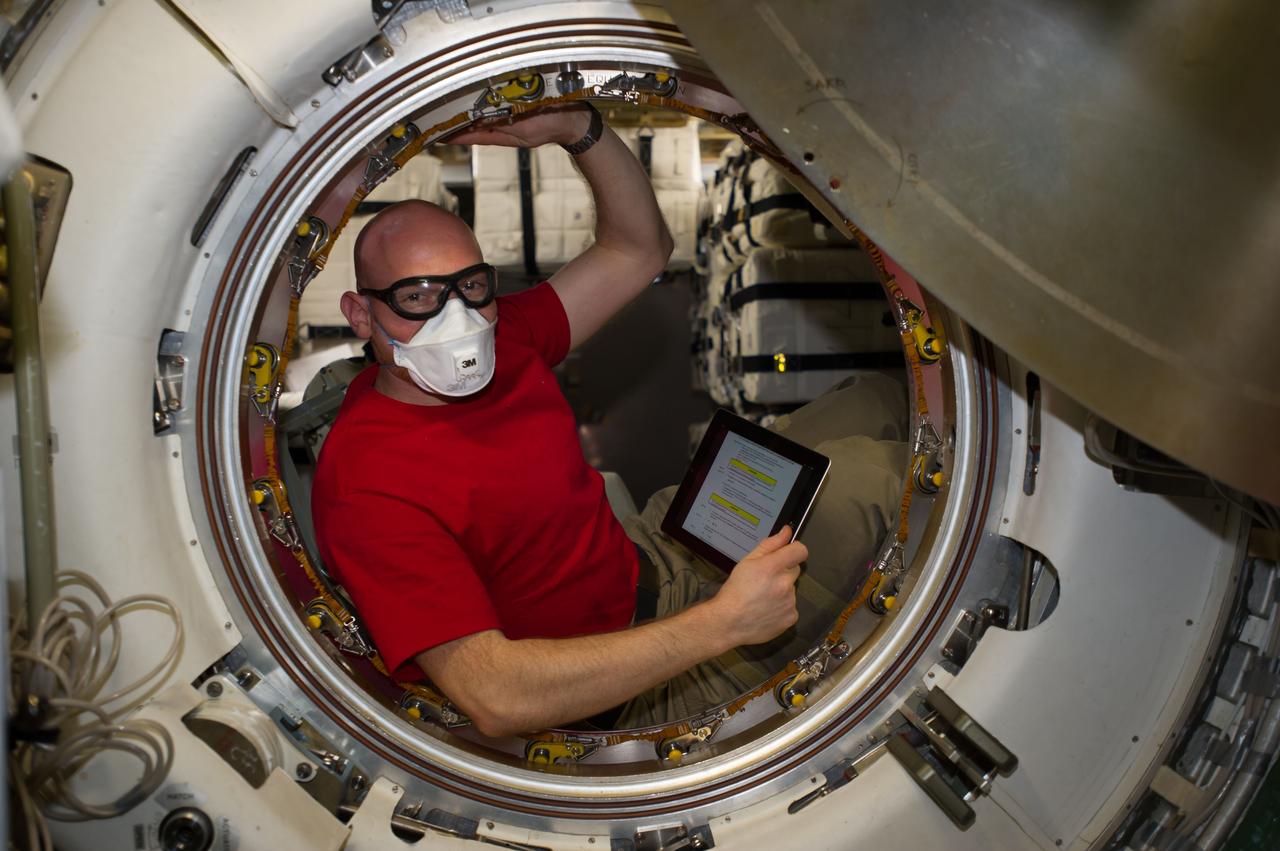
ISS040-E-091979 (13 Aug. 2014) --- European Space Agency astronaut Alexander Gerst, Expedition 40 flight engineer, is pictured in the hatch after removing the docking mechanism of the newly-attached "Georges Lemaitre" Automated Transfer Vehicle-5 (ATV-5) of the International Space Station.
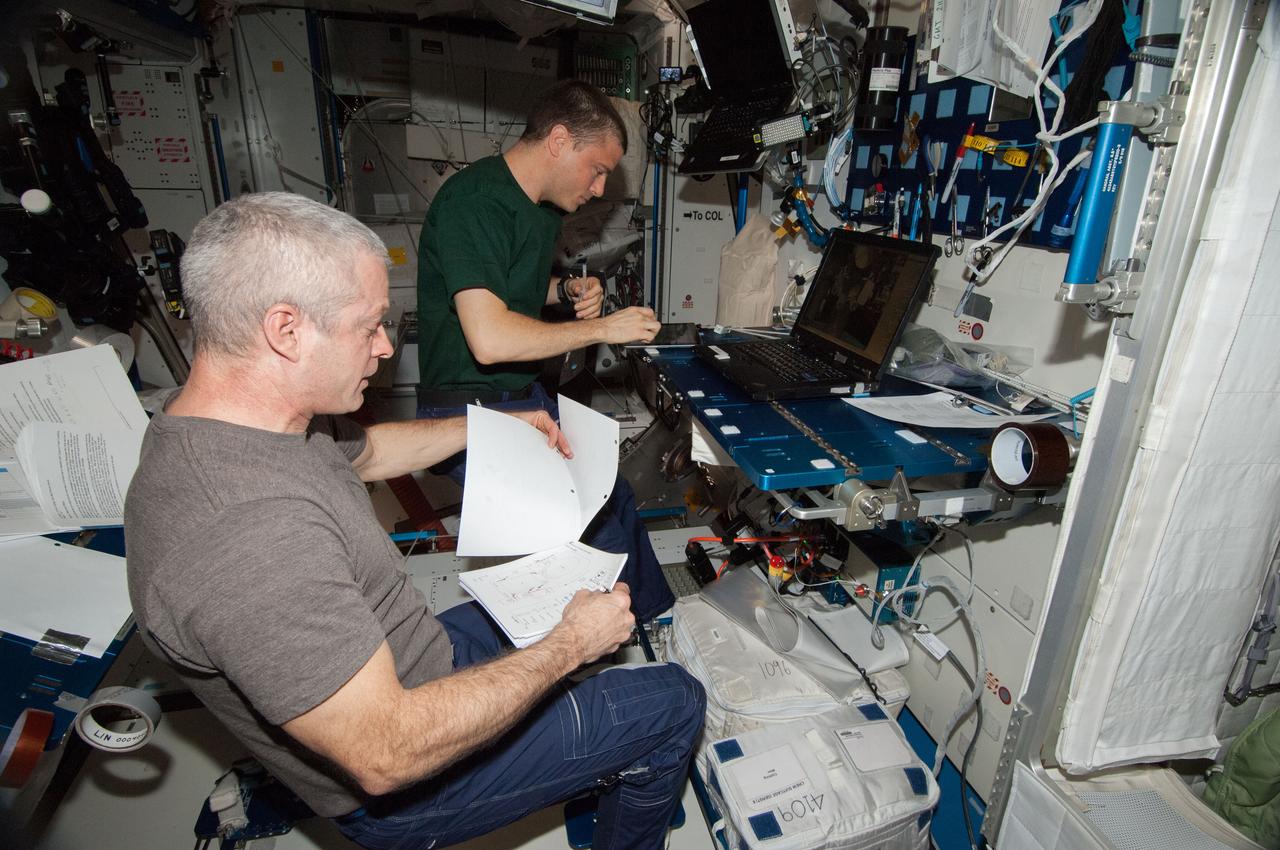
ISS040-E-088730 (4 Aug. 2014) --- In the International Space Station?s Harmony node, NASA astronauts Steve Swanson (foreground), Expedition 40 commander; and Reid Wiseman, flight engineer, perform a portable onboard computer Dynamic Onboard Ubiquitous Graphics (DOUG) software review in preparation for two upcoming U.S. spacewalks.
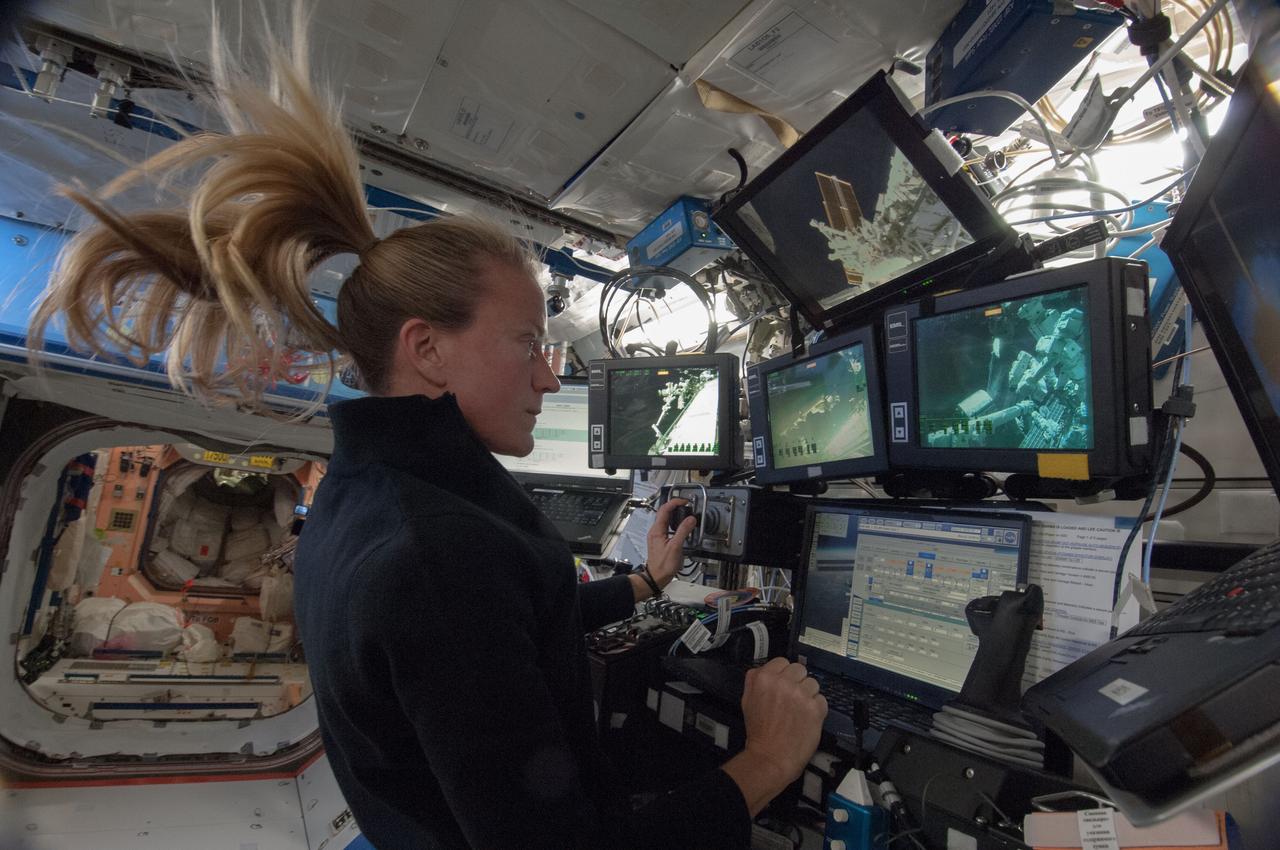
Astronaut Karen Nyberg,Expedition 36 flight engineer,is photographed at the Space Station Remote Manipulator System (SSRMS) controls in the U.S. Laboratory during a session of extravehicular activity (EVA).
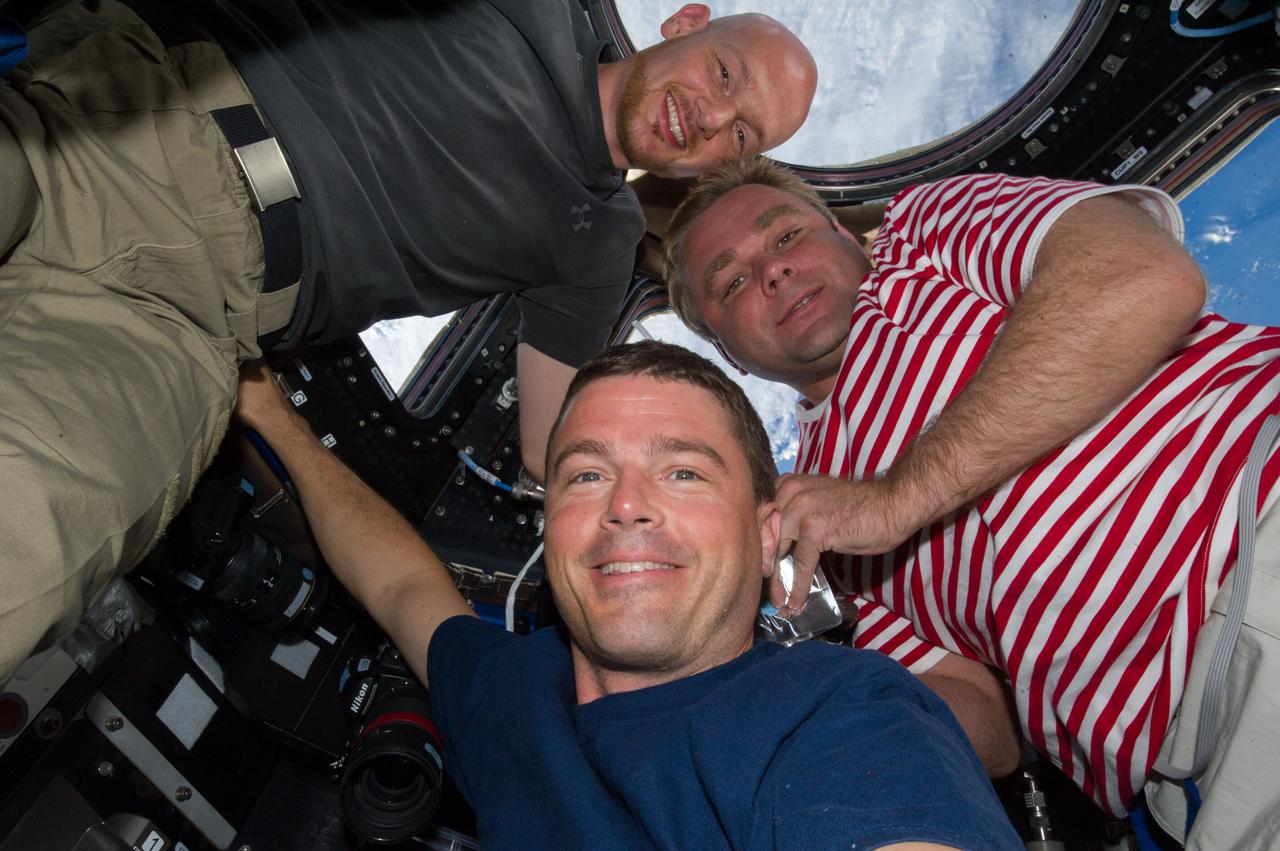
ISS040-E-006724 (2 June 2014) --- European Space Agency astronaut Alexander Gerst (left), NASA astronaut Reid Wiseman (center) and Russian cosmonaut Maxim Suraev, all Expedition 40 flight engineers, pose for a photo in the Cupola of the International Space Station.
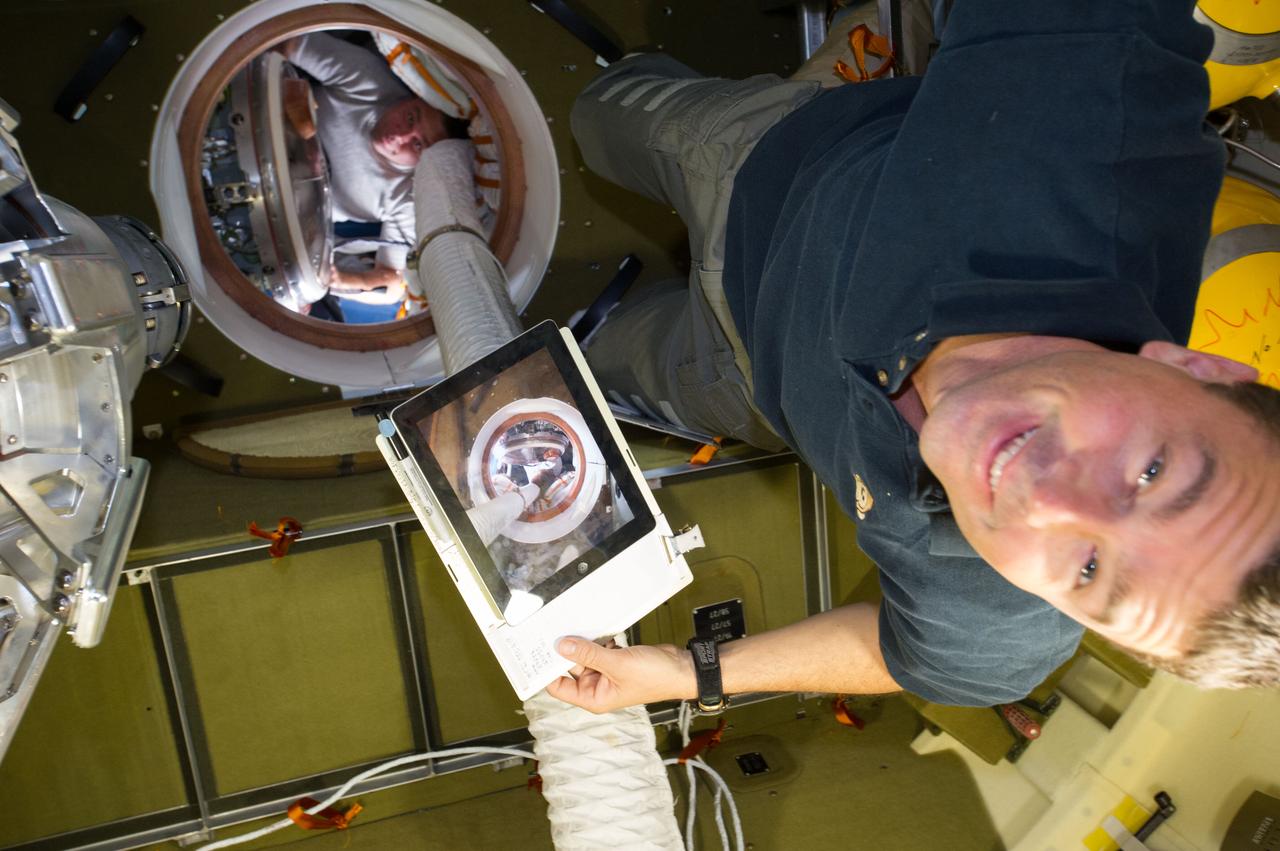
ISS040-E-008030 (6 June 2014) --- NASA astronaut Reid Wiseman and Russian cosmonaut Maxim Suraev (background), both Expedition 40 flight engineers, are pictured in the Russian segment of the International Space Station.
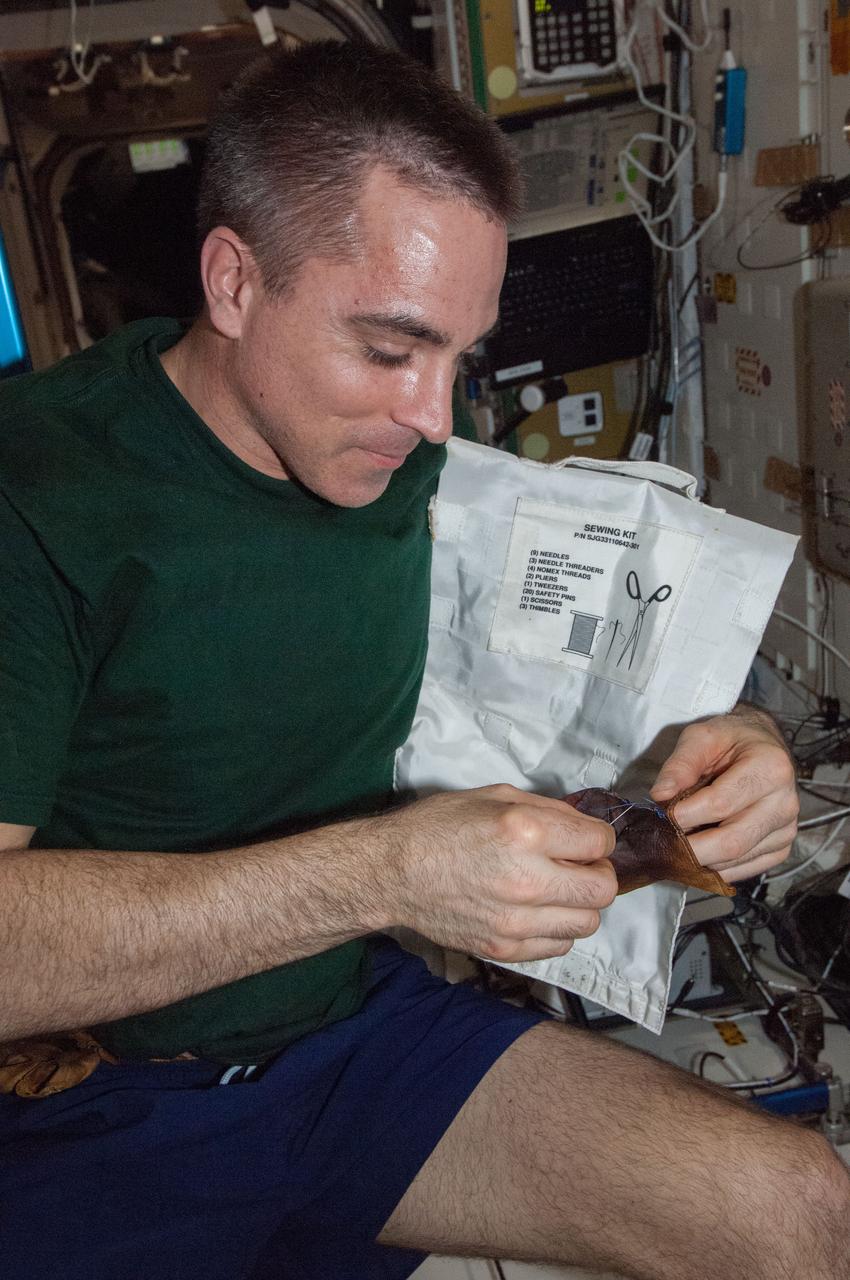
ISS036-E-021856 (21 July 2013) --- NASA astronaut Chris Cassidy, Expedition 36 flight engineer, uses a sewing kit to repair a glove in the Tranquility node of the International Space Station.
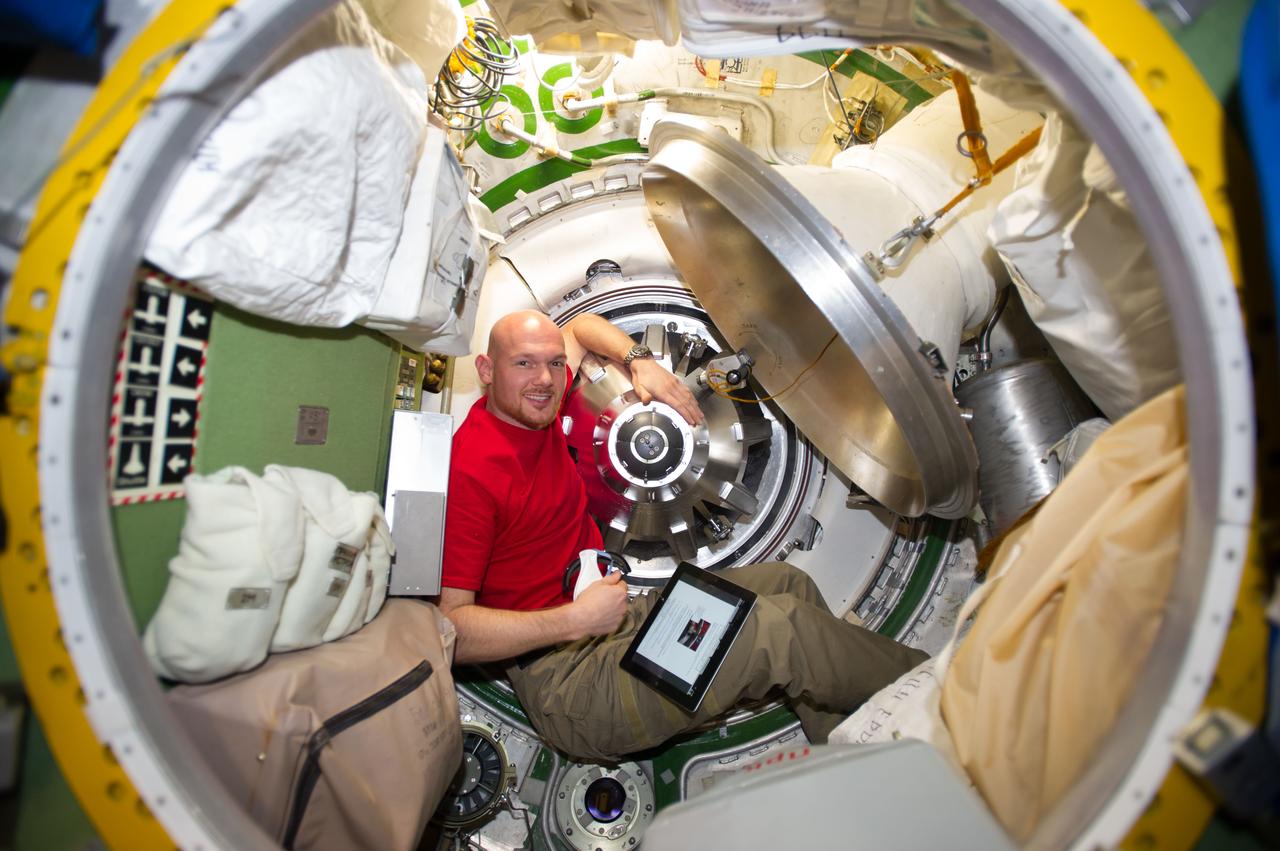
ISS040-E-091919 (13 Aug. 2014) --- European Space Agency astronaut Alexander Gerst, Expedition 40 flight engineer, prepares to remove the docking mechanism to gain access to the hatch of the newly attached "Georges Lemaitre" Automated Transfer Vehicle-5 (ATV-5).
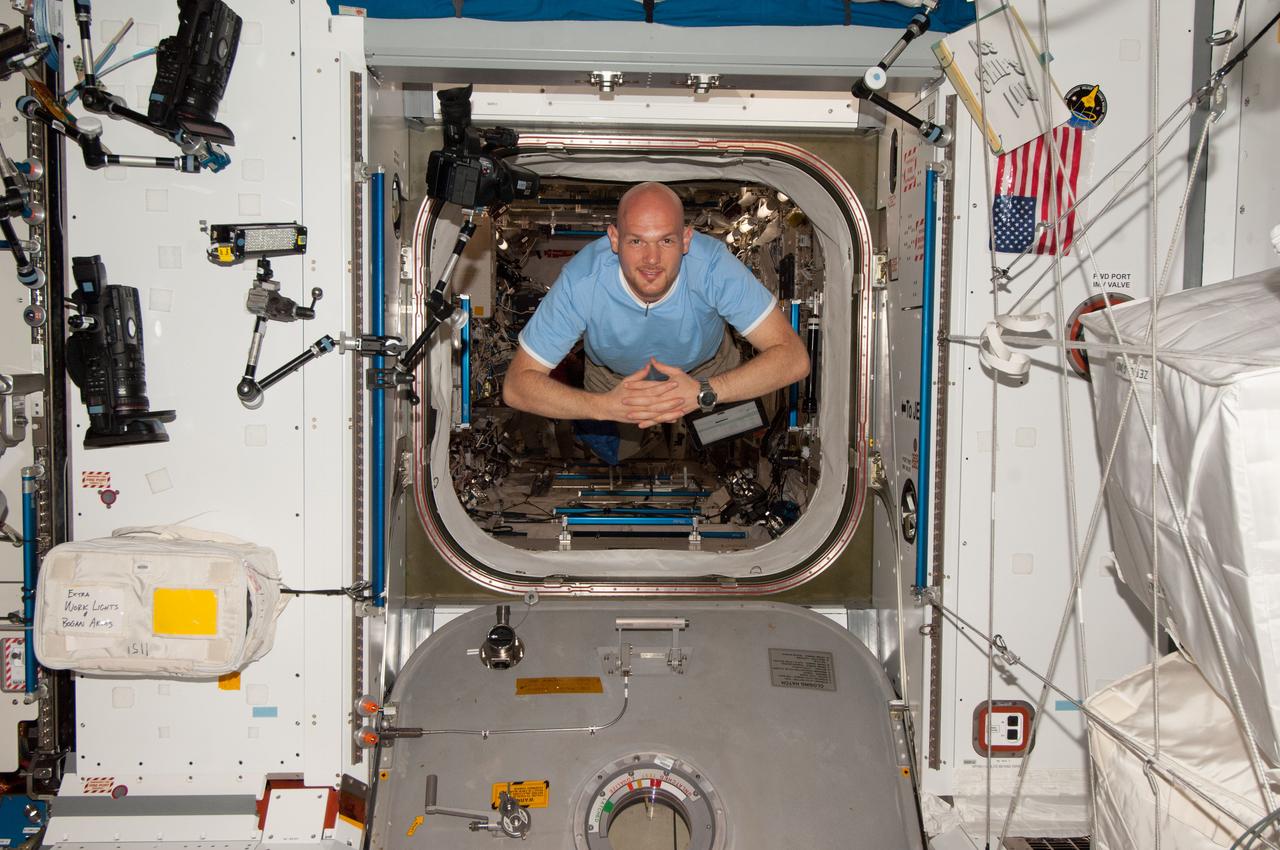
ISS040-E-006039 (30 May 2014) --- European Space Agency astronaut Alexander Gerst, Expedition 40 flight engineer, floats through the hatch between the Kibo laboratory and the Harmony node of the International Space Station.
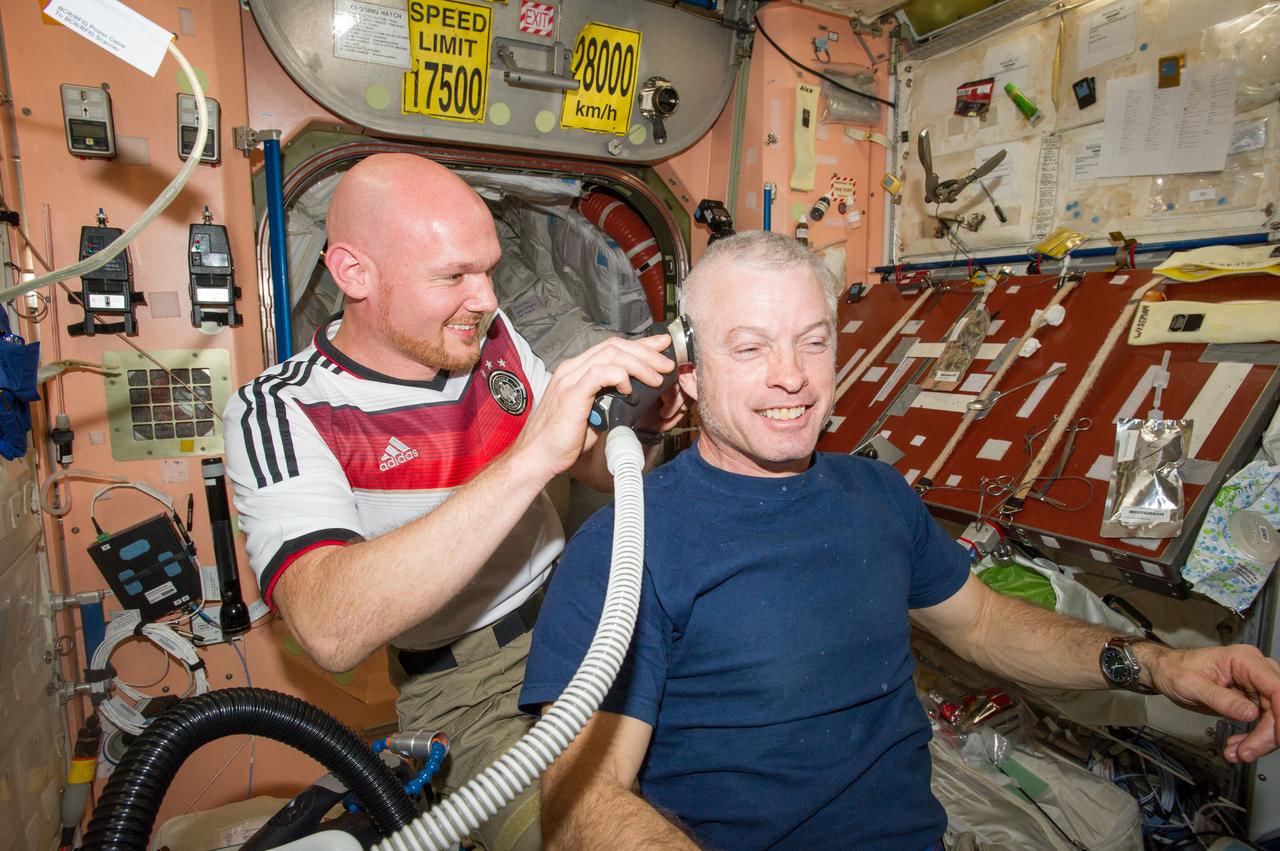
ISS040-E-020368 (26 June 2014) --- European Space Agency astronaut Alexander Gerst, Expedition 40 flight engineer, shaves the head of NASA astronaut Steve Swanson, commander, in the Unity node of the International Space Station. Gerst used hair clippers fashioned with a vacuum device to garner freshly cut hair. A friendly World Cup Soccer-related agreement between the crew members representing the USA, and Gerst, a German citizen who represents the European Space Agency, called for the American losers of a German-USA match to have their heads shaved. The German team won the match 1-0.
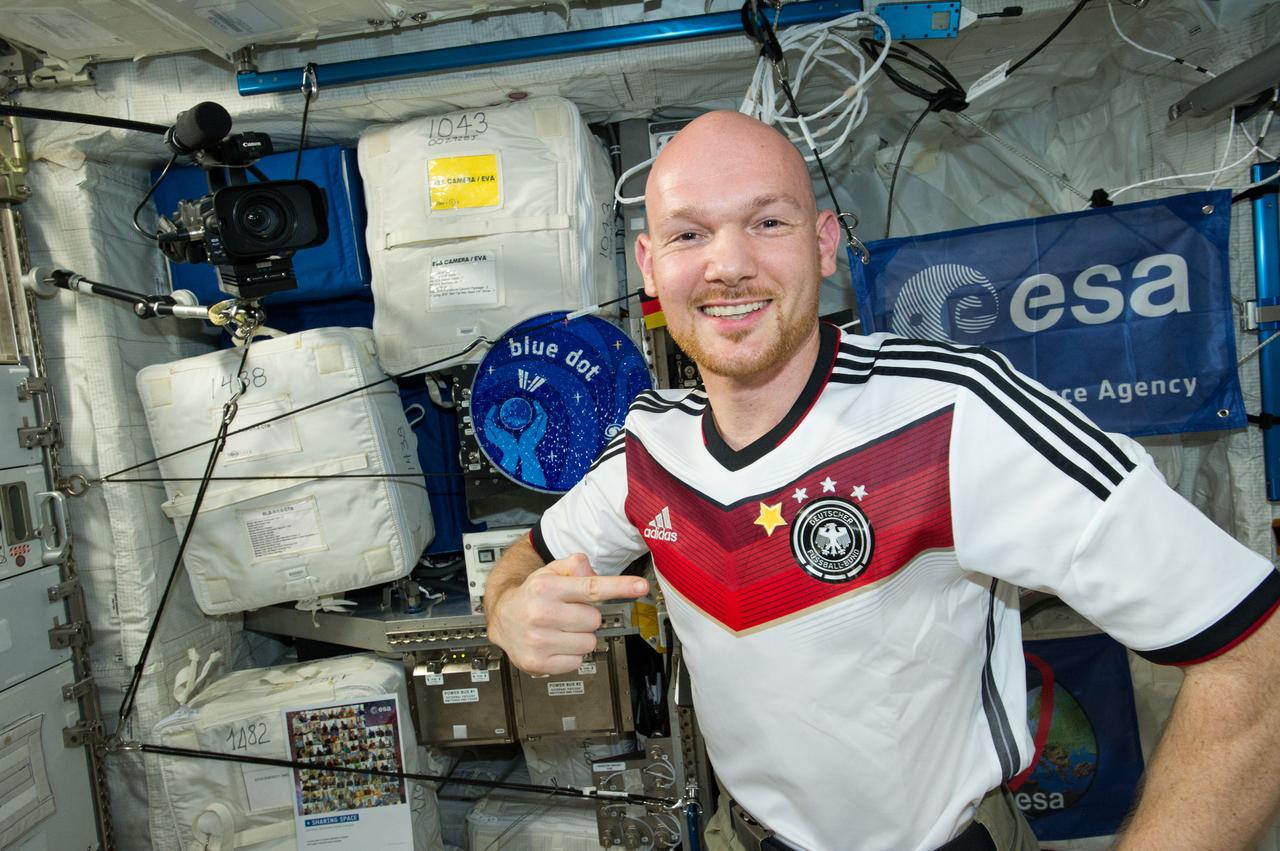
European Space Agency astronaut Alexander Gerst,Expedition 40 flight engineer,sends down a congratulations to the victorious German team after the World Cup finals. Photo taken in Columbus module.
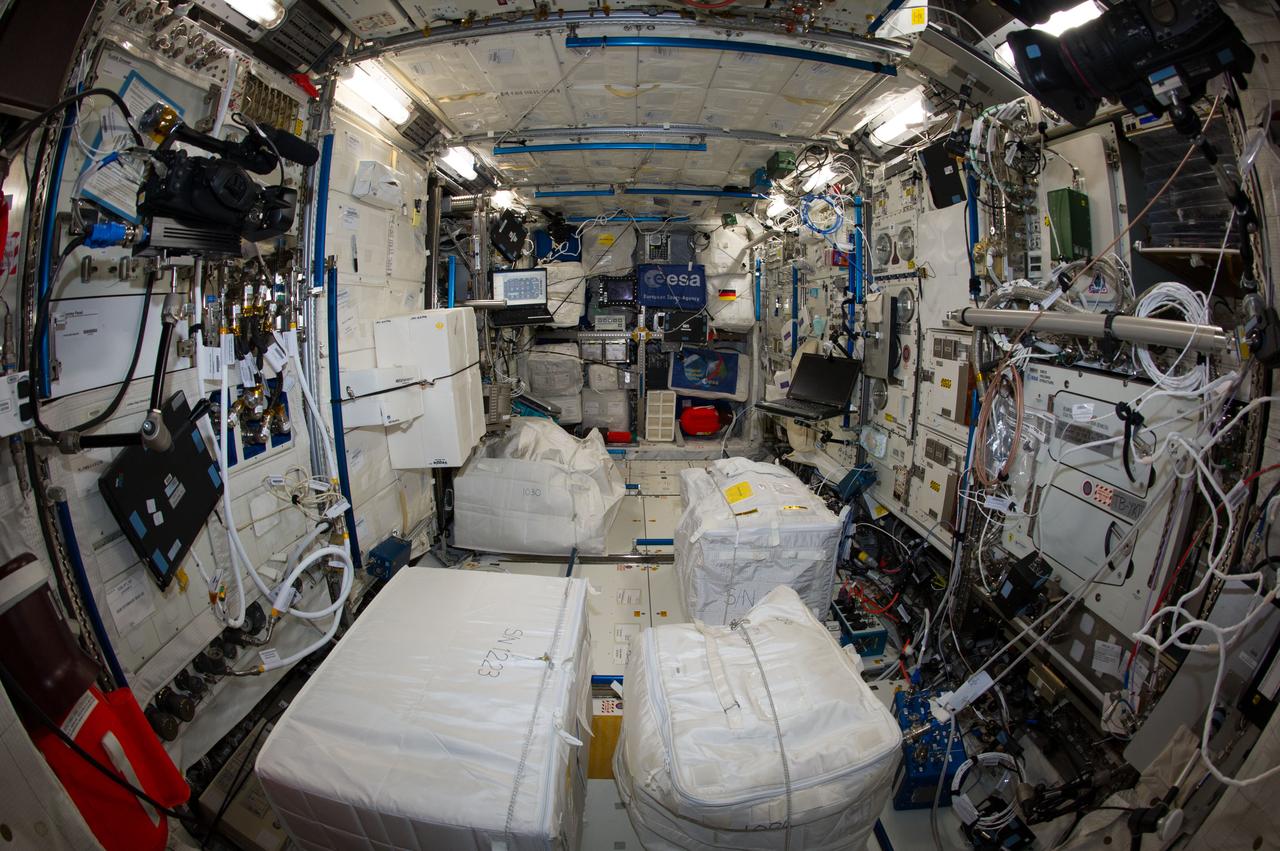
ISS040-E-008065 (7 June 2014) --- The interior of the Columbus laboratory is featured in this image photographed by an Expedition 40 crew member on the International Space Station.
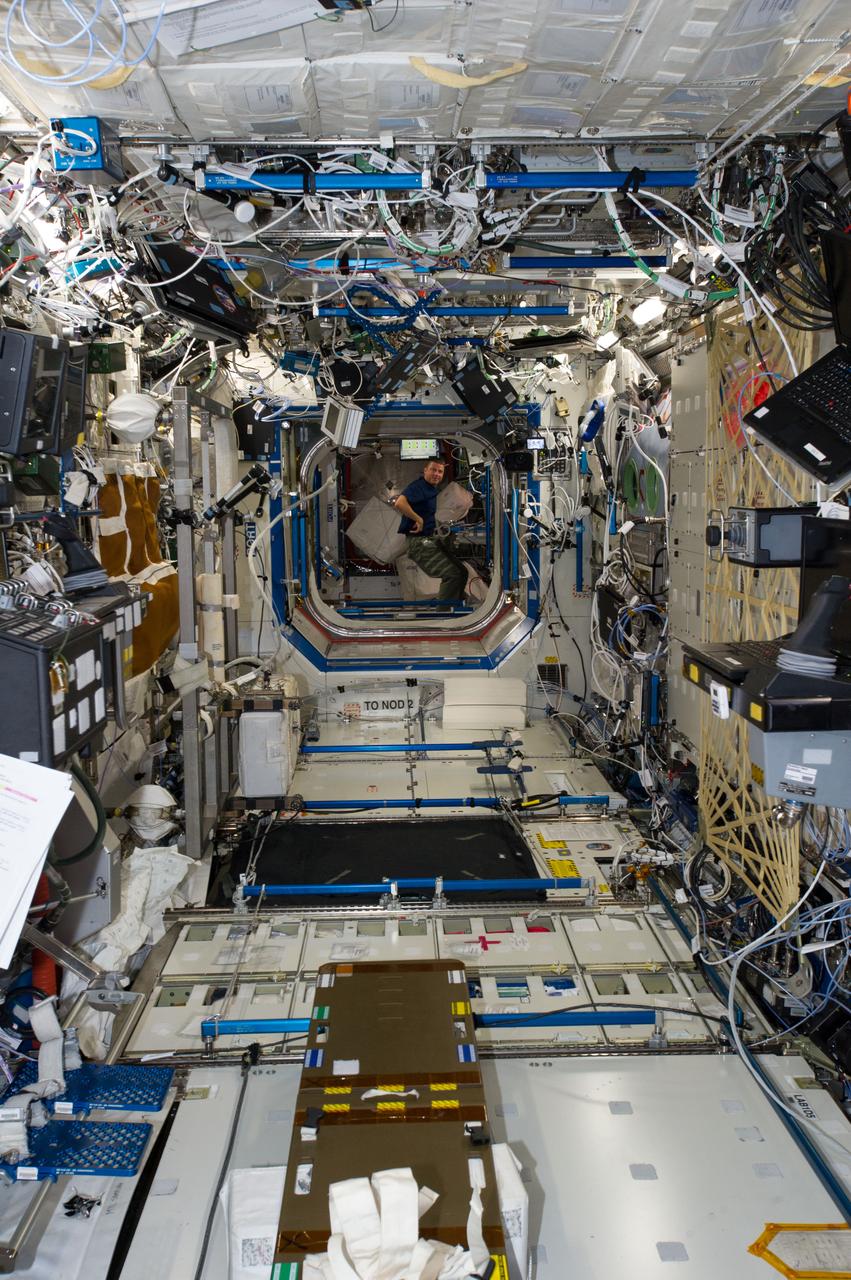
ISS040-E-006702 (2 June 2014) --- Looking through the Destiny laboratory, NASA astronaut Reid Wiseman, Expedition 40 flight engineer, is pictured in the background while working in the Harmony node of the International Space Station.
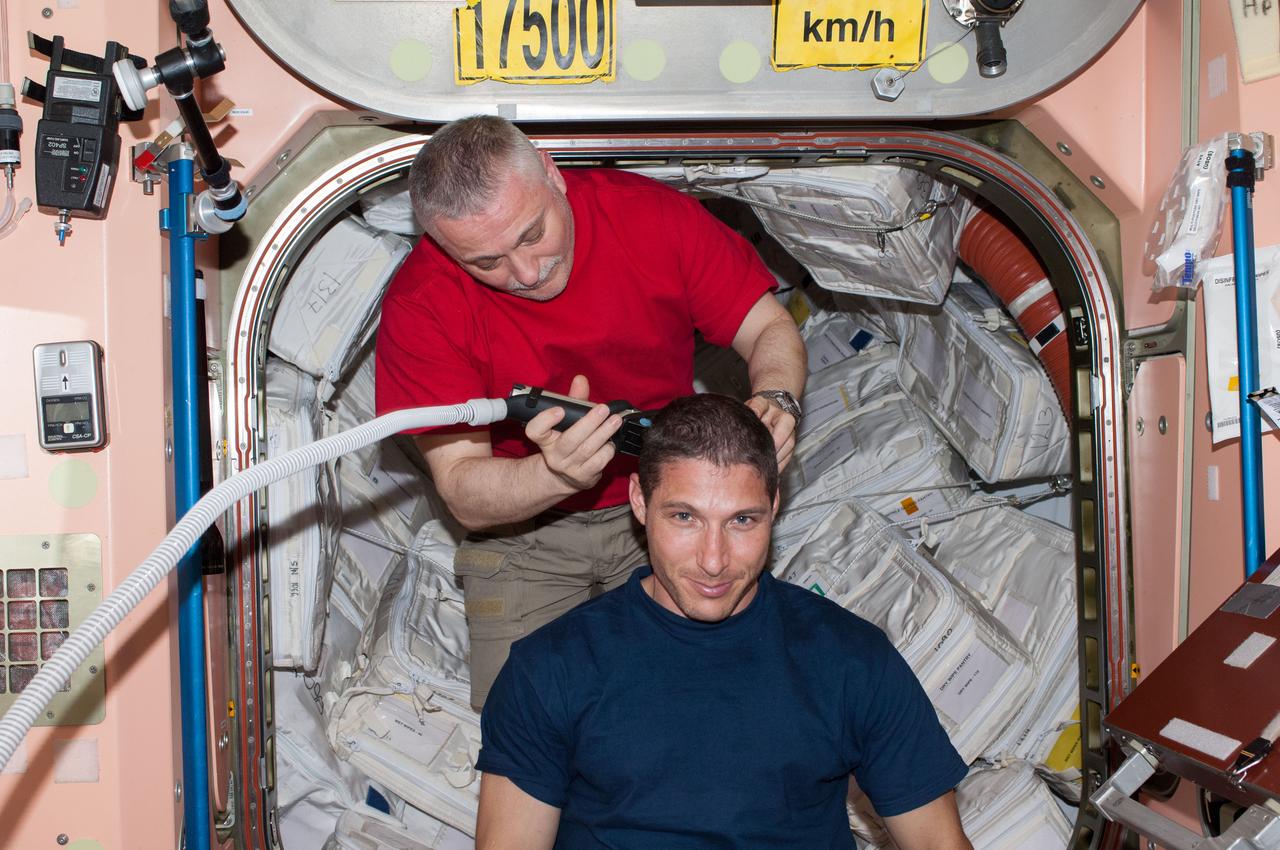
ISS037-E-006568 (5 Oct. 2013) --- Russian cosmonaut Fyodor Yurchikhin, Expedition 37 commander, trims the hair of NASA astronaut Michael Hopkins, flight engineer, in the Node 1 module, called Unity. Yurchikhin used hair clippers fashioned with a vacuum device to garner freshly cut hair.
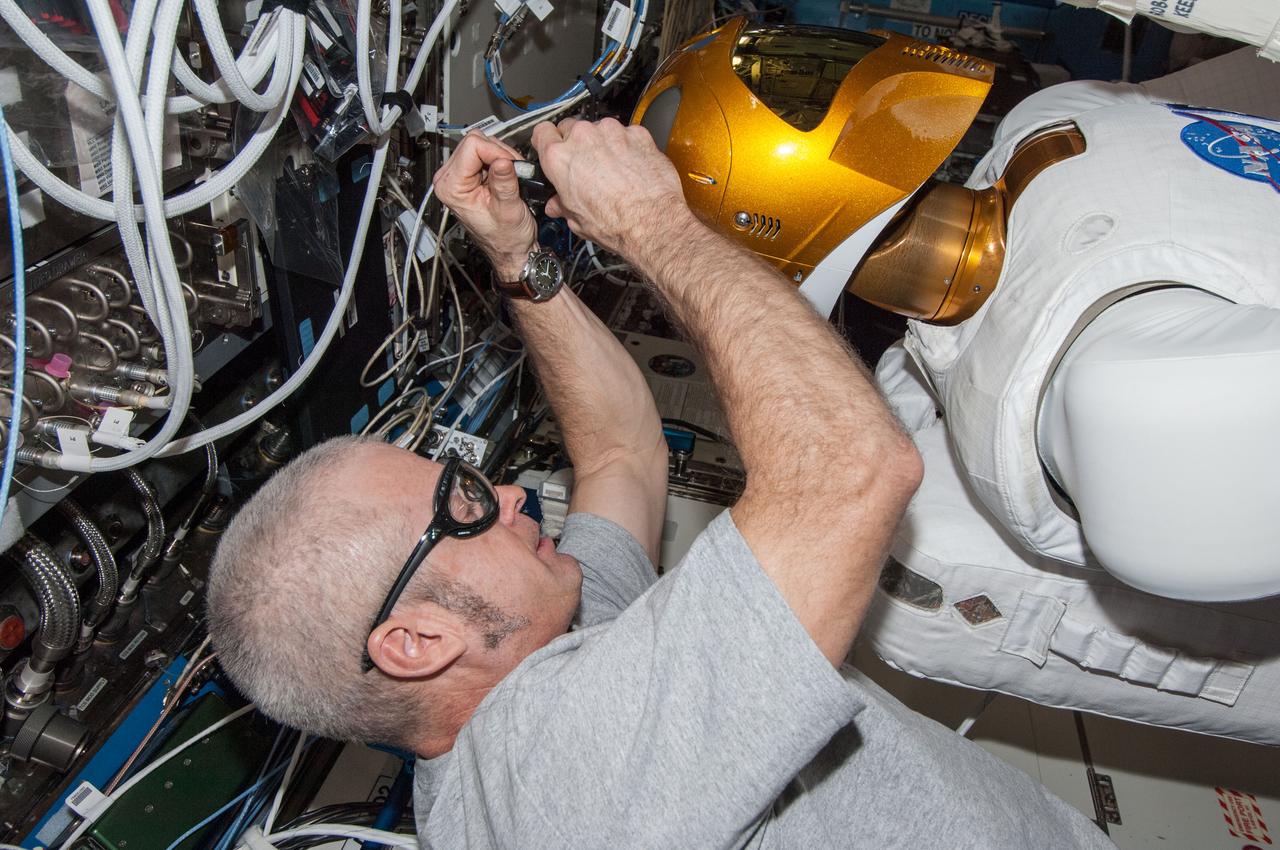
Astronaut Steve Swanson,Expedition 40 Commander,is photographed working with the Robonauts processing unit (or brain) in the U.S. Laboratory module.
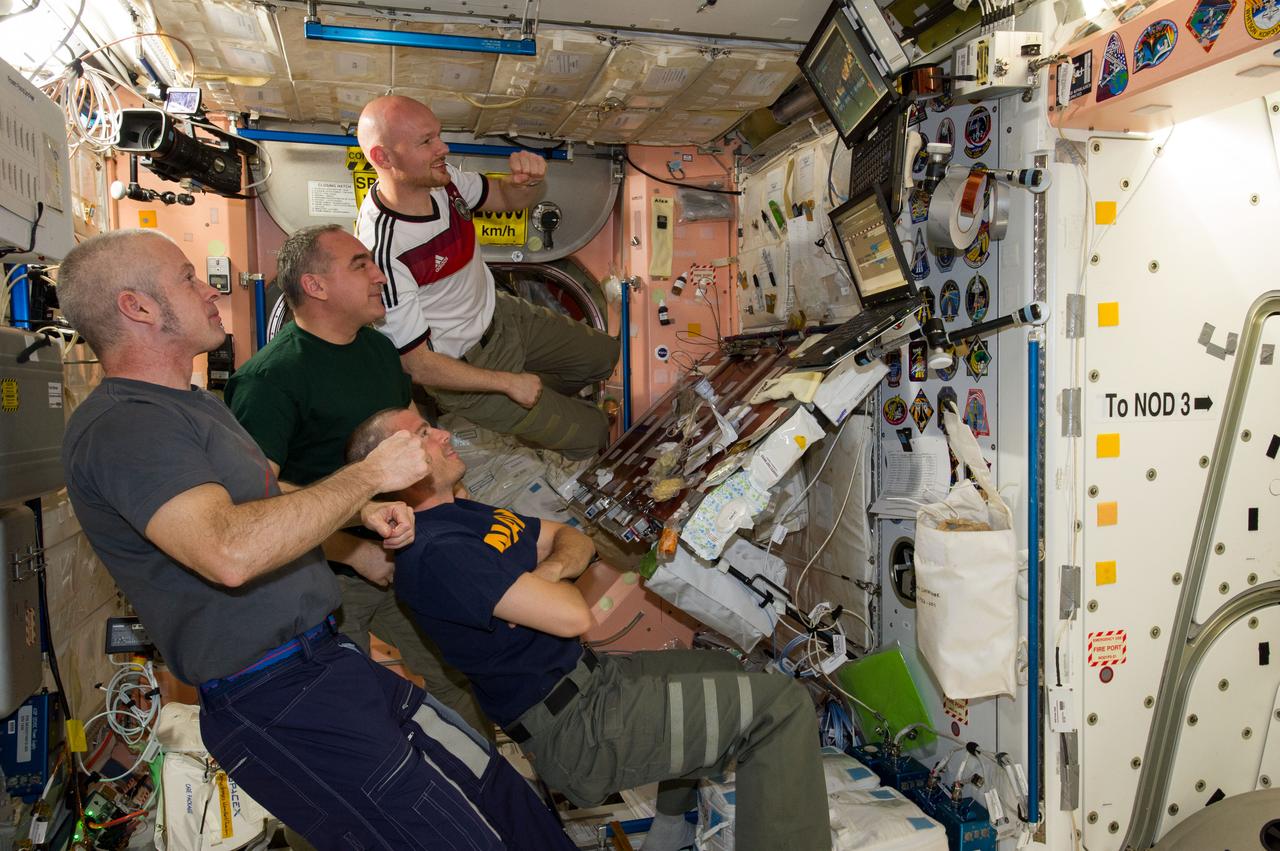
NASA astronaut Steve Swanson (left),Expedition 40 commander; along with European Space Agency astronaut Alexander Gerst (upper left), NASA astronaut Reid Wiseman and Cosmonaut Alexander Skvortsov,all three flight engineers,gather around a computer in Node 1 to watch the World Cup finals.

Astronaut Reid Wiseman,Expedition 40 flight engineer,is photographed playing with a yoyo in the Node 2 module.
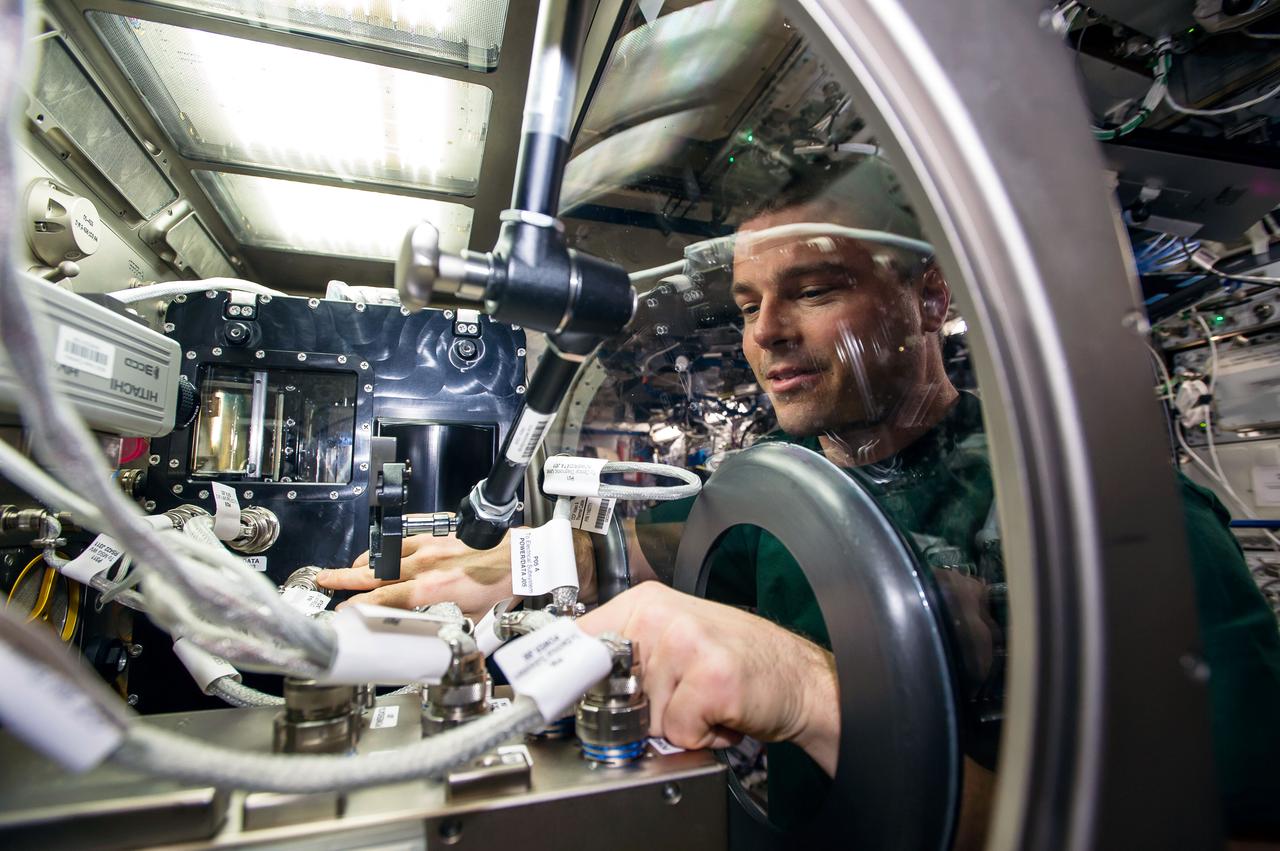
ISS040-E-088856 (5 Aug. 2014) --- NASA astronaut Reid Wiseman, Expedition 40 flight engineer, installs Capillary Channel Flow (CCF) experiment hardware in the Microgravity Science Glovebox (MSG) located in the Destiny laboratory of the International Space Station. CCF is a versatile experiment for studying a critical variety of inertial-capillary dominated flows key to spacecraft systems that cannot be studied on the ground.
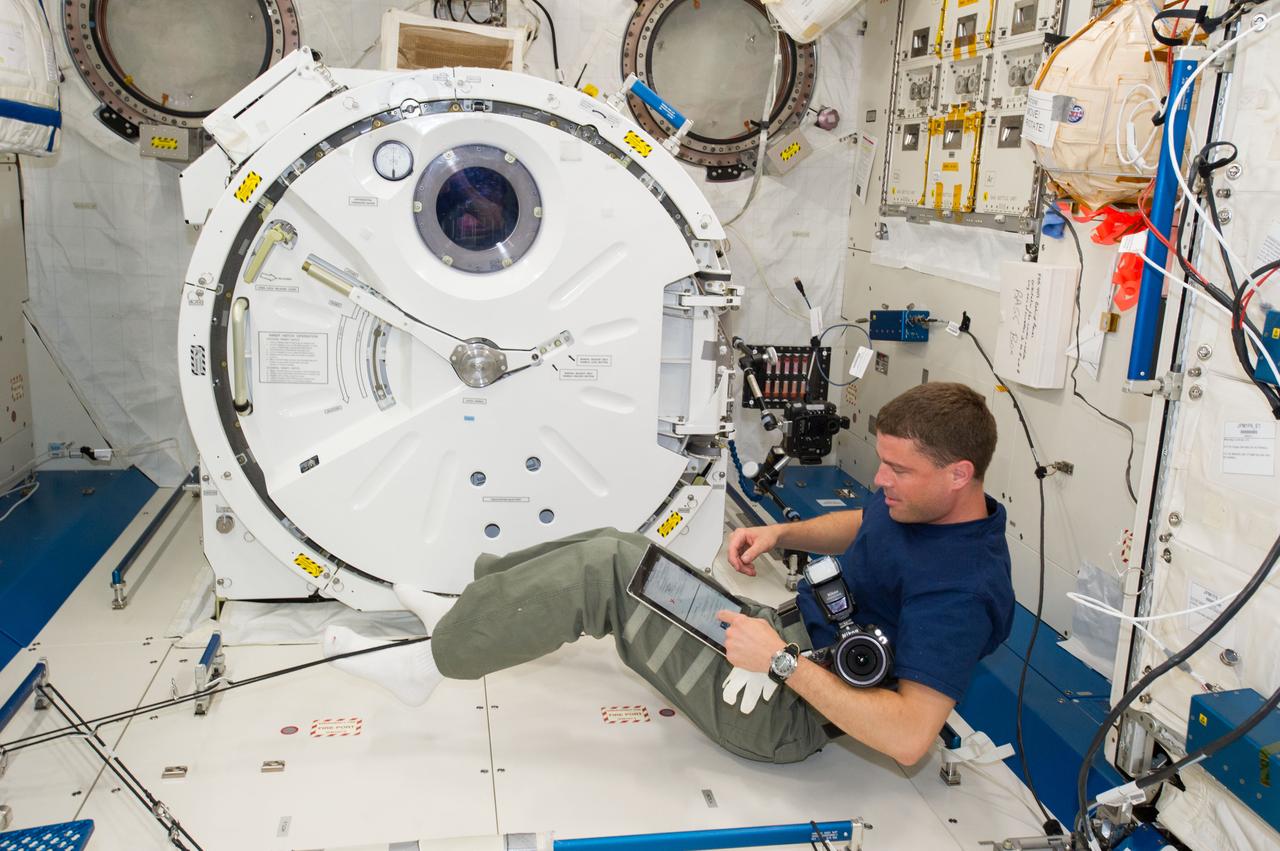
ISS040-E-006891 (3 June 2014) --- NASA astronaut Reid Wiseman, Expedition 40 flight engineer, conducts a session with the Binary Colloidal Alloy Test (BCAT) experiment in the Kibo laboratory of the International Space Station.
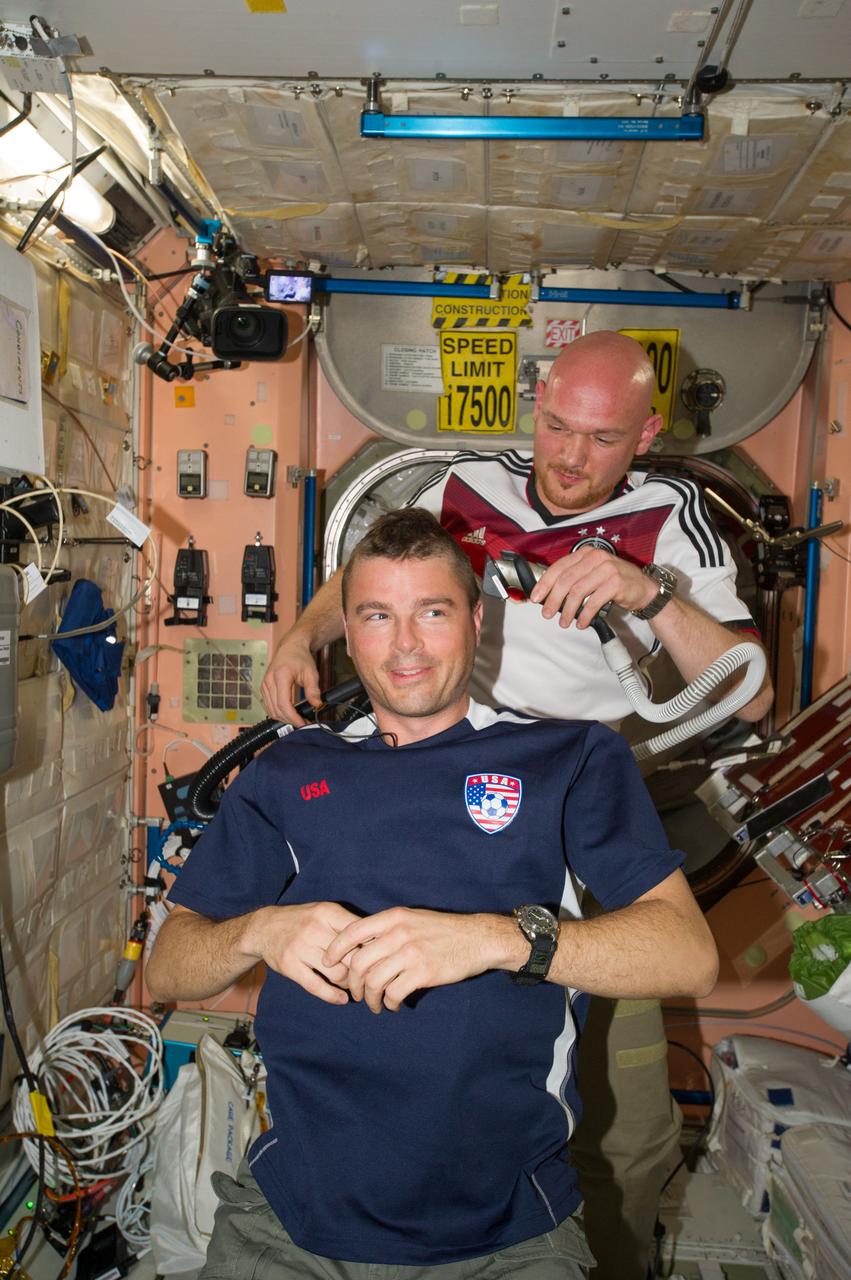
ISS040-E-020384 (26 June 2014) --- European Space Agency astronaut Alexander Gerst, Expedition 40 flight engineer, shaves the head of NASA astronaut Reid Wiseman, flight engineer, in the Unity node of the International Space Station. Gerst used hair clippers fashioned with a vacuum device to garner freshly cut hair. A friendly World Cup Soccer-related agreement between the crew members representing the USA, and Gerst, a German citizen who represents the European Space Agency, called for the American losers of a German-USA match to have their heads shaved. The German team won the match 1-0.
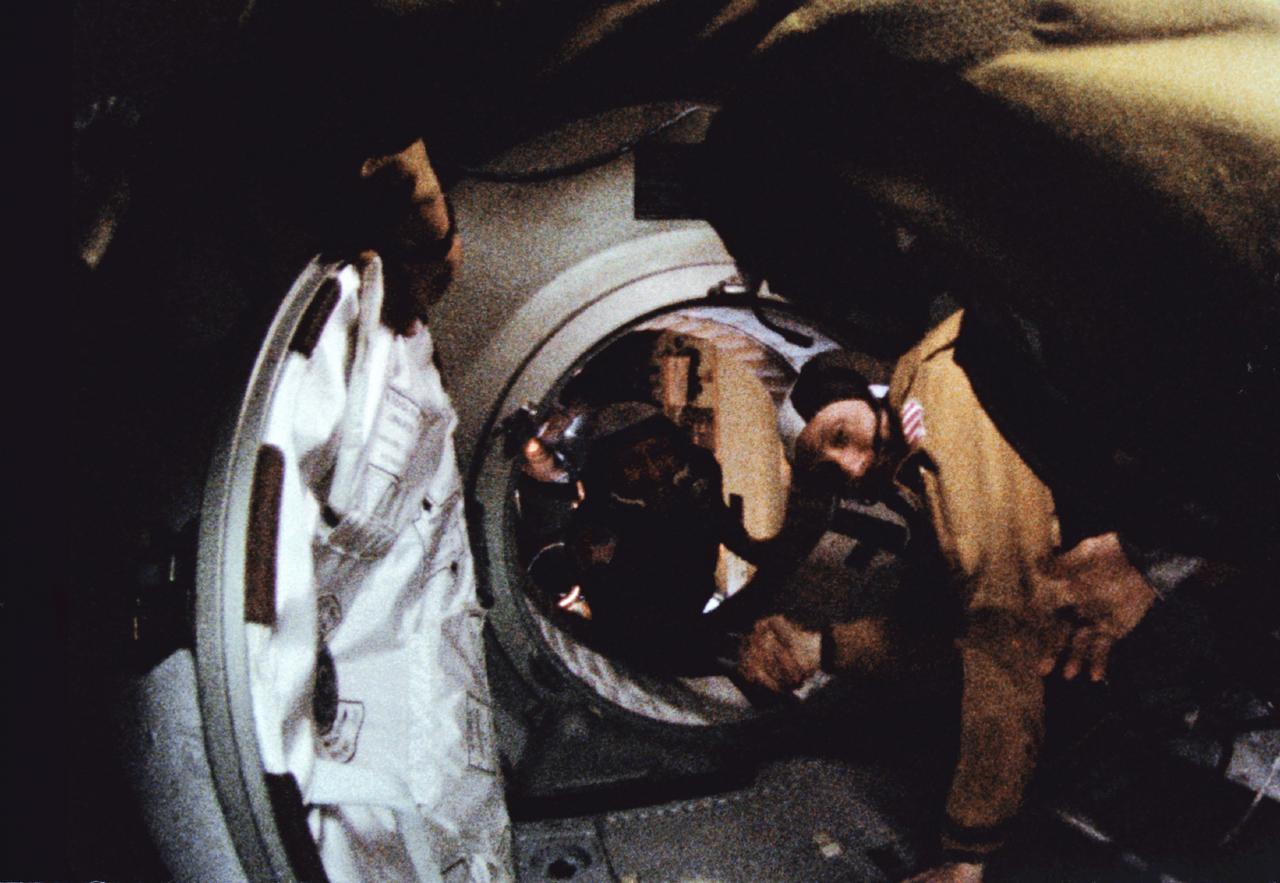
S75-29432 (17 July 1975) --- Astronaut Thomas P. Stafford (in foreground) and cosmonaut Aleksei A. Leonov make their historic handshake in space on July 17, 1975 during the joint U.S.-USSR Apollo Soyuz Test Project (ASTP) docking mission in Earth orbit. This picture was reproduced from a frame of 16mm motion picture film. The American and Soviet spacecraft were joined together in space for approximately 47 hours on July 17th, 18th, 19th, 1975. The Apollo crew consisted of astronauts Thomas P. Stafford, commander; Donald K. "Deke" Slayton, docking module pilot; Vance D. Brand, command module pilot. The Soyuz 19 crew consisted of cosmonauts Aleksei A. Leonov, command pilot; and Valeri N. Kubasov, flight engineer.

This mosaic of images from the Mastcam onboard NASA Mars rover Curiosity shows Mount Sharp in raw color. Raw color shows the scene colors as they would look in a typical smart-phone camera photo, before any adjustment.
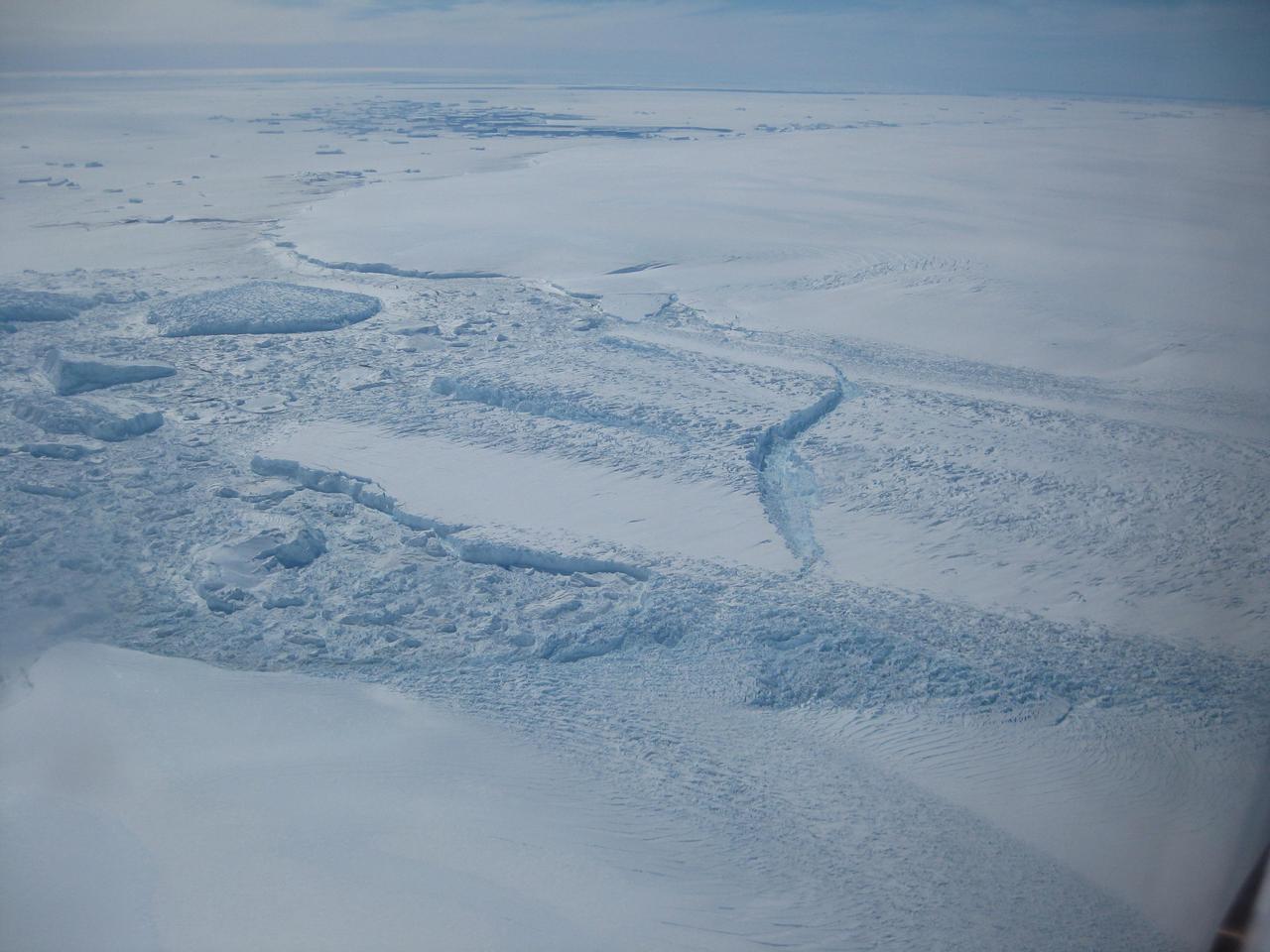
This photo, aken onboard a National Science Foundation/NASA chartered Twin Otter aircraft, shows the ice front of Dibble Ice Shelf, East Antarctica, a significant melt water producer from the Wilkes Land region, East Antarctica.
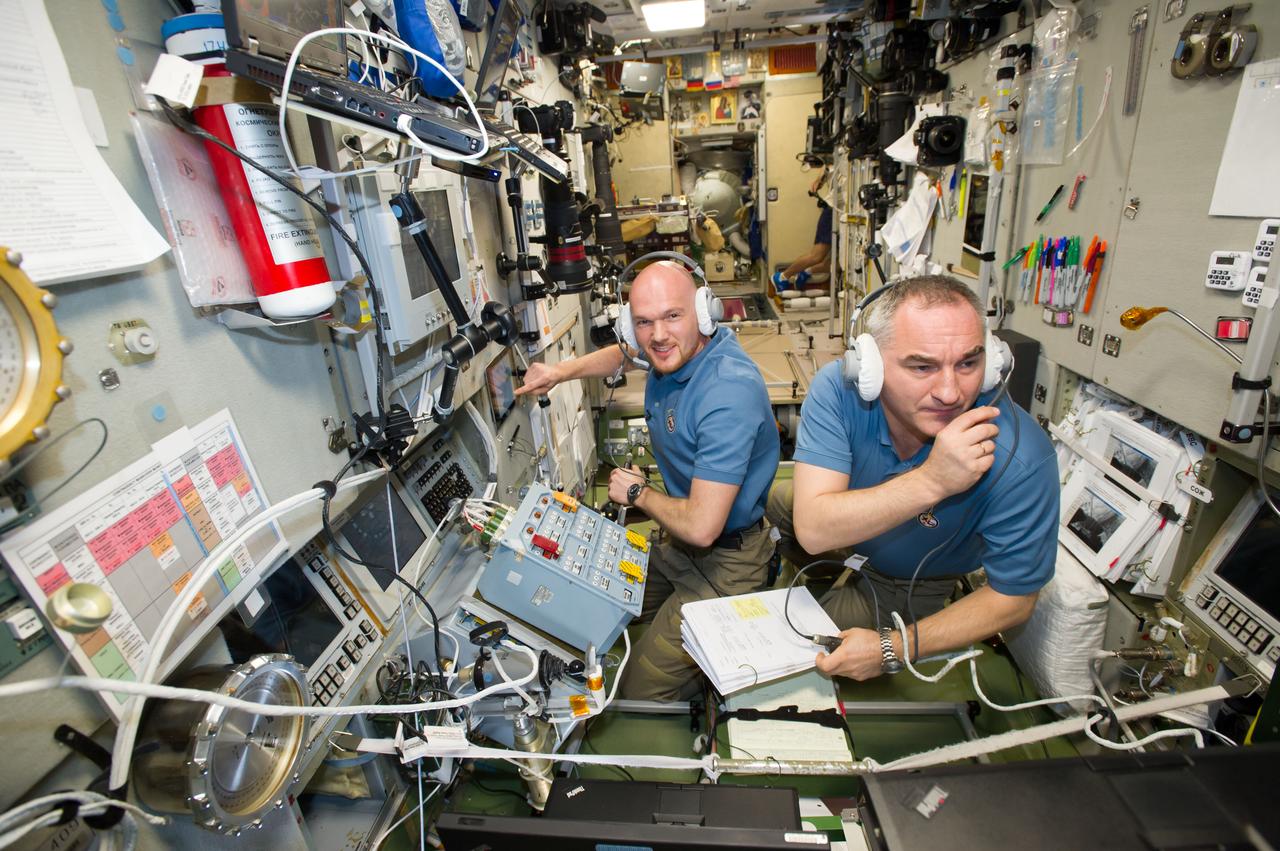
ISS040-E-091688 (12 Aug. 2014) --- In the Zvezda Service Module, European Space Agency astronaut Alexander Gerst (left) and Russian cosmonaut Alexander Skvortsov, both Expedition 40 flight engineers, monitor the approach and docking of ESA?s "Georges Lemaitre" Automated Transfer Vehicle-5 (ATV-5) to the International Space Station.
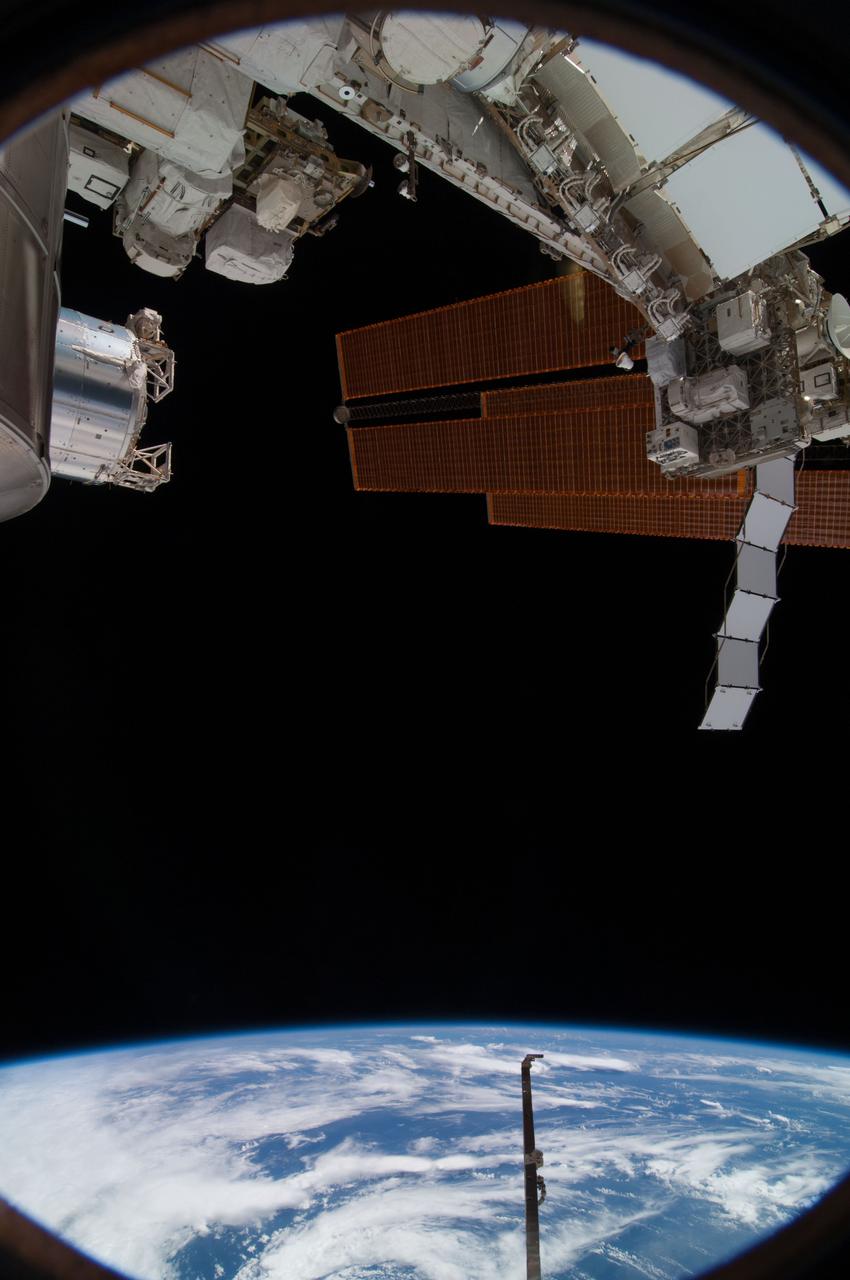
View of antenna and solar arrays (with an Earth limb in the background) taken from a window in the Russian Soyuz spacecraft currently docked to the International Space Station. Photo taken by an Expedition 36 crewmember. Per Twitter message: View out the window to the right of my seat in Soyuz while docked to ISS.
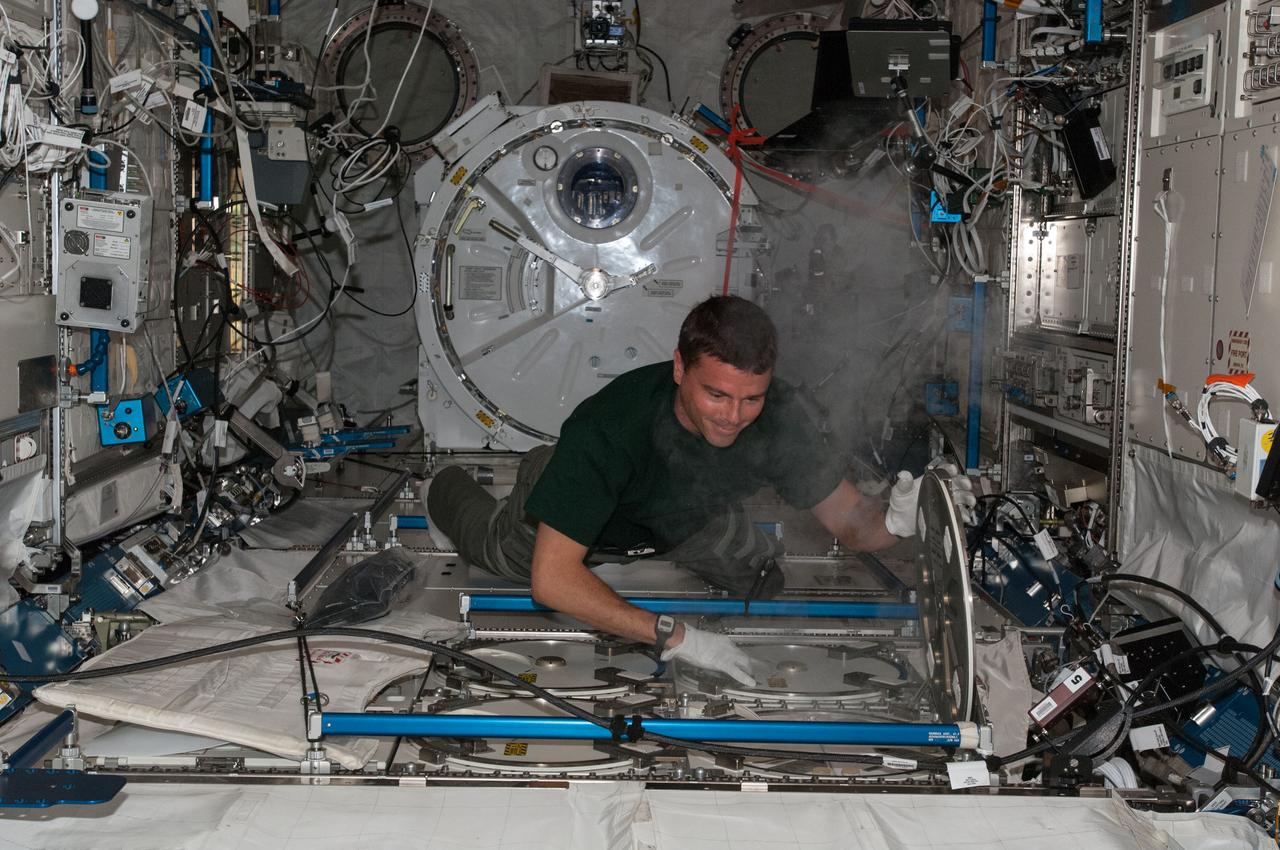
View of Astronaut Reid Wiseman,Expedition 40 flight engineer,inserting urine samples in the Minus Eighty Laboratory Freezer for ISS (MELFI) located in the Japanese Experiment Module (JEM).
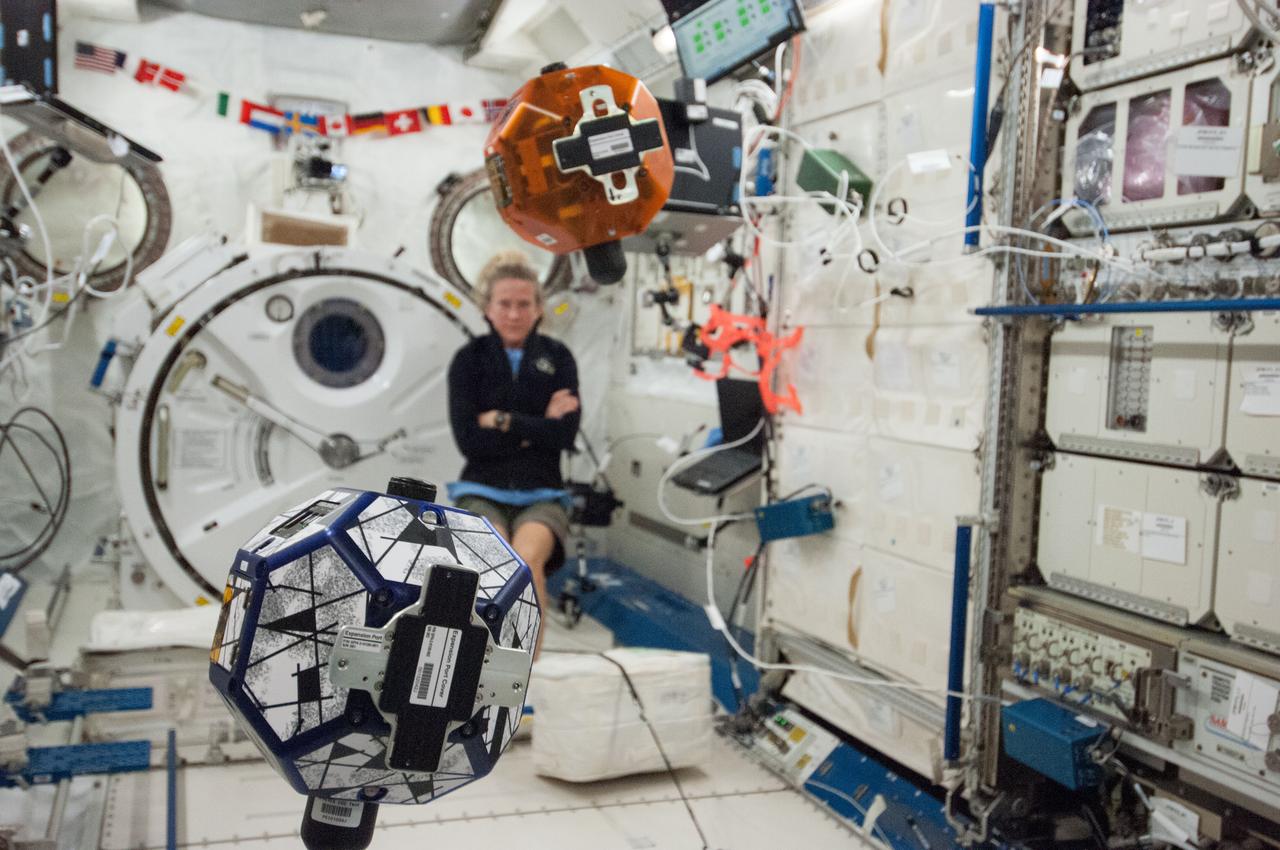
Astronaut Karen Nyberg, Expedition 36 flight engineer, conducts a session with the bowling-ball-sized free-flying satellite known as Synchronized Position Hold, Engage, Reorient, Experimental Satellites, or SPHERES in the International Space Stations Japanese Experiment Module (JEM) Kibo laboratory. Also sent as Twitter message.
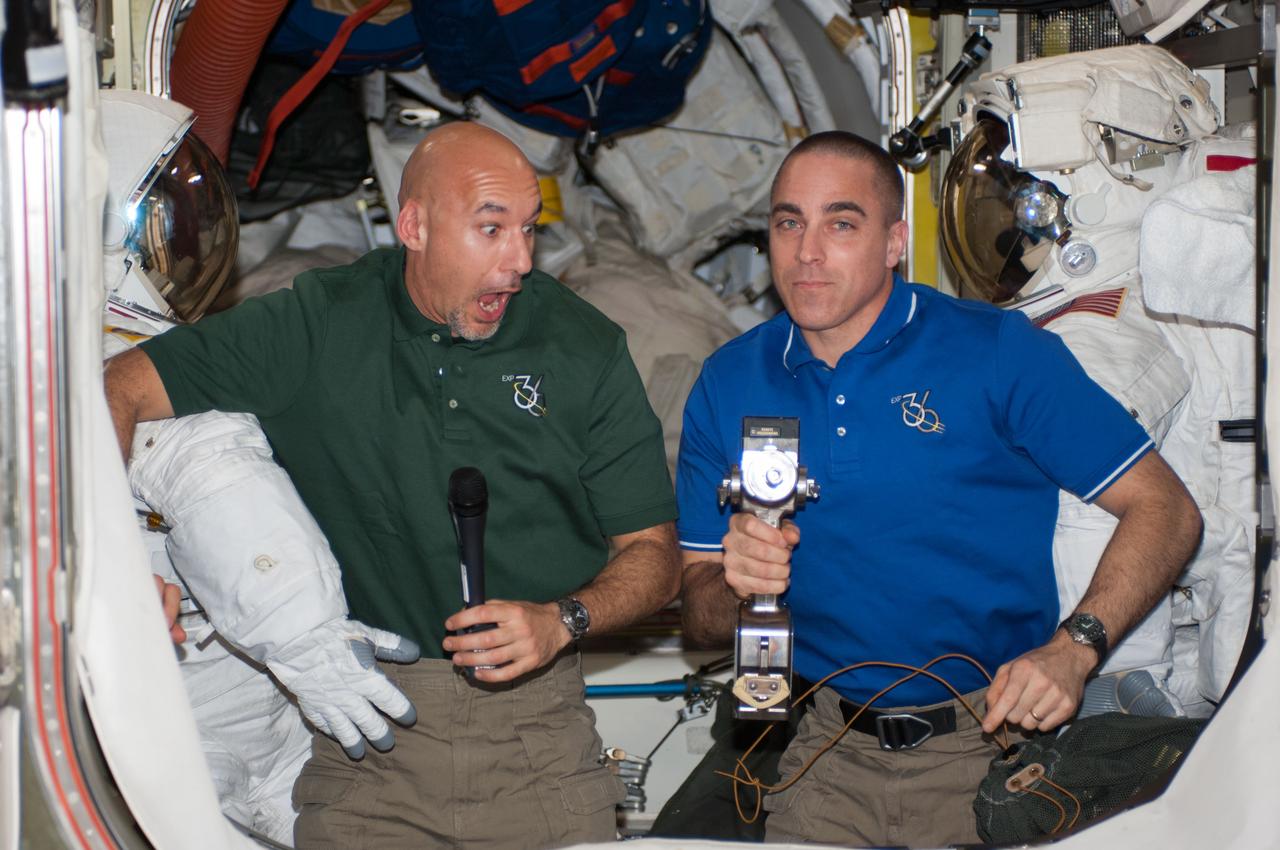
European Space Agency astronaut Luca Parmitano (left) and Astronaut Chris Cassidy,both Expedition 36 flight engineers,pose for a candid photo with Extravehicular Mobility Unit (EMU) hardware in the Quest Airlock.
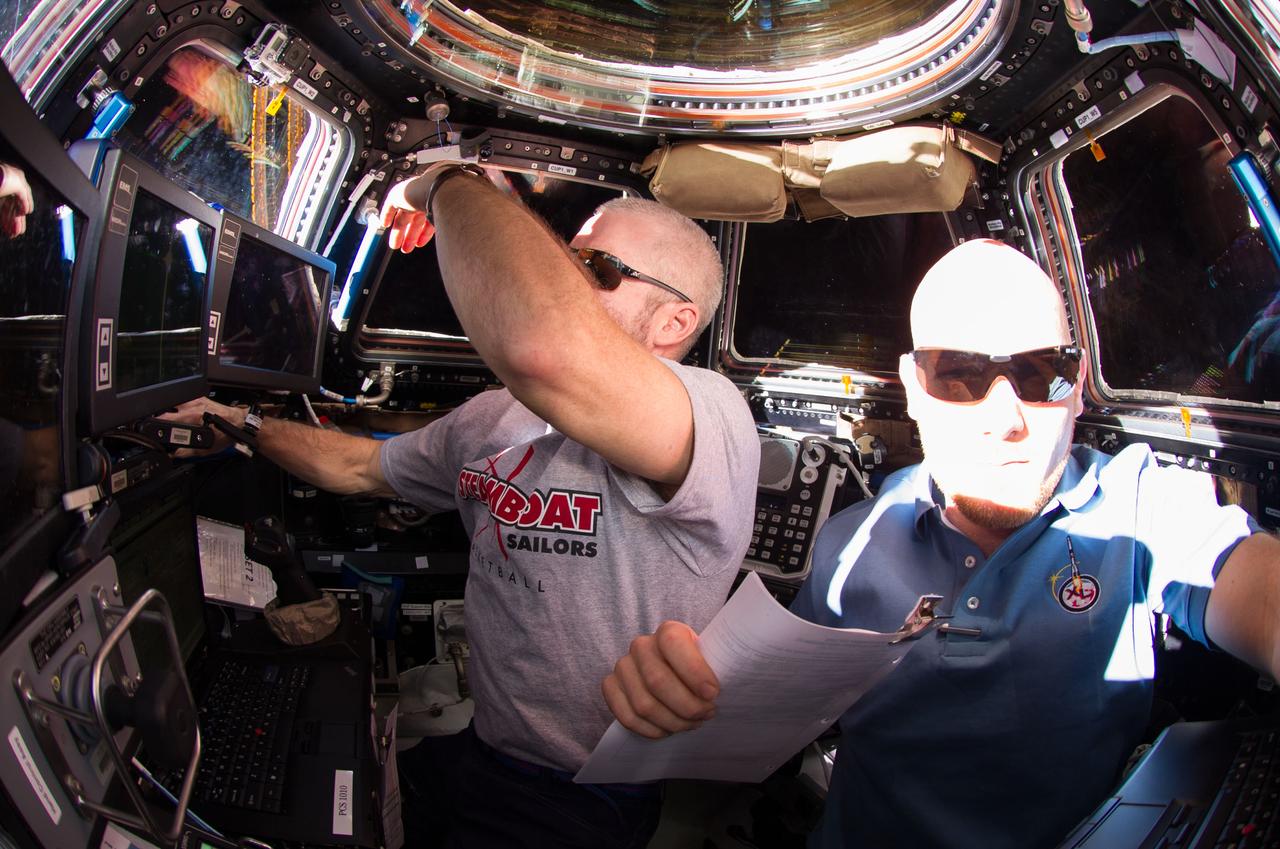
NASA astronaut Steve Swanson (left), Expedition 40 commander; and European Space Agency astronaut Alexander Gerst, flight engineer, are pictured in the International Space Station's Cupola during rendezvous and capture operations of the Orbital Sciences' Cygnus cargo craft.
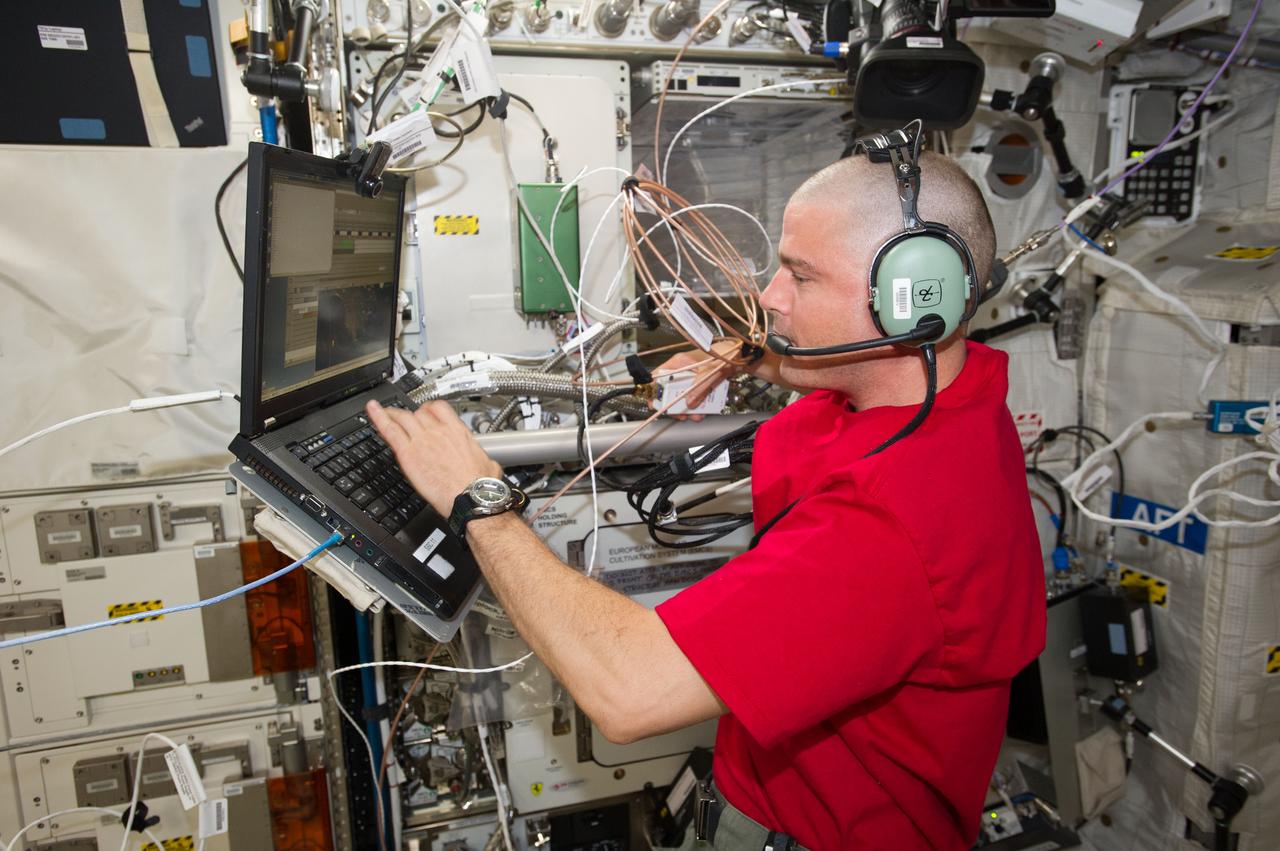
ISS040-E-024110 (28 June 2014) --- NASA astronaut Reid Wiseman, Expedition 40 flight engineer, wearing a communication headset, uses a computer in the Columbus laboratory of the International Space Station.
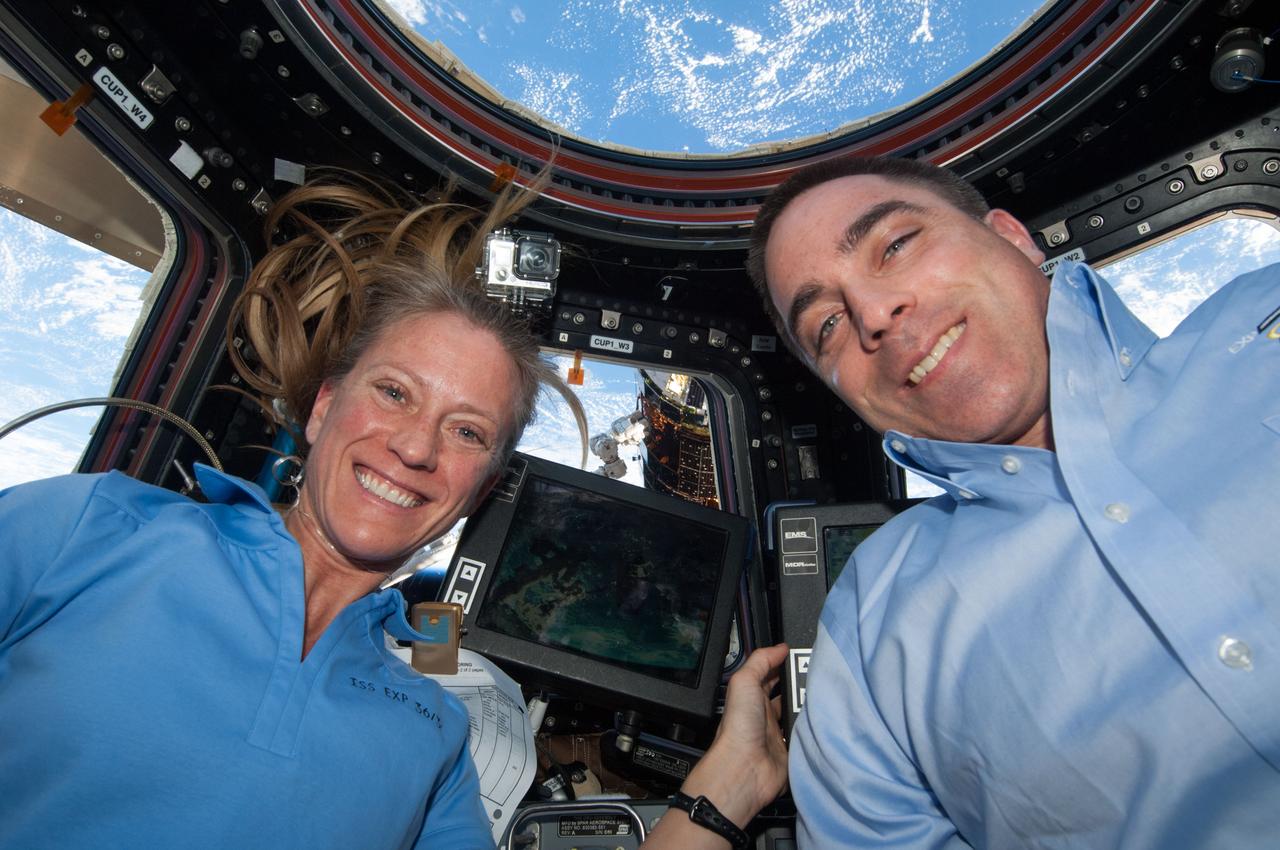
NASA astronauts Karen Nyberg and Chris Cassidy, both Expedition 36 flight engineers, are pictured at the robotic workstation in the Cupola of the International Space Station during rendezvous operations with the approaching unpiloted Japanese Kounotori H2 Transfer Vehicle-4 (HTV-4). The HTV-4 is visible from the Cupola window. Also sent as Twitter message.
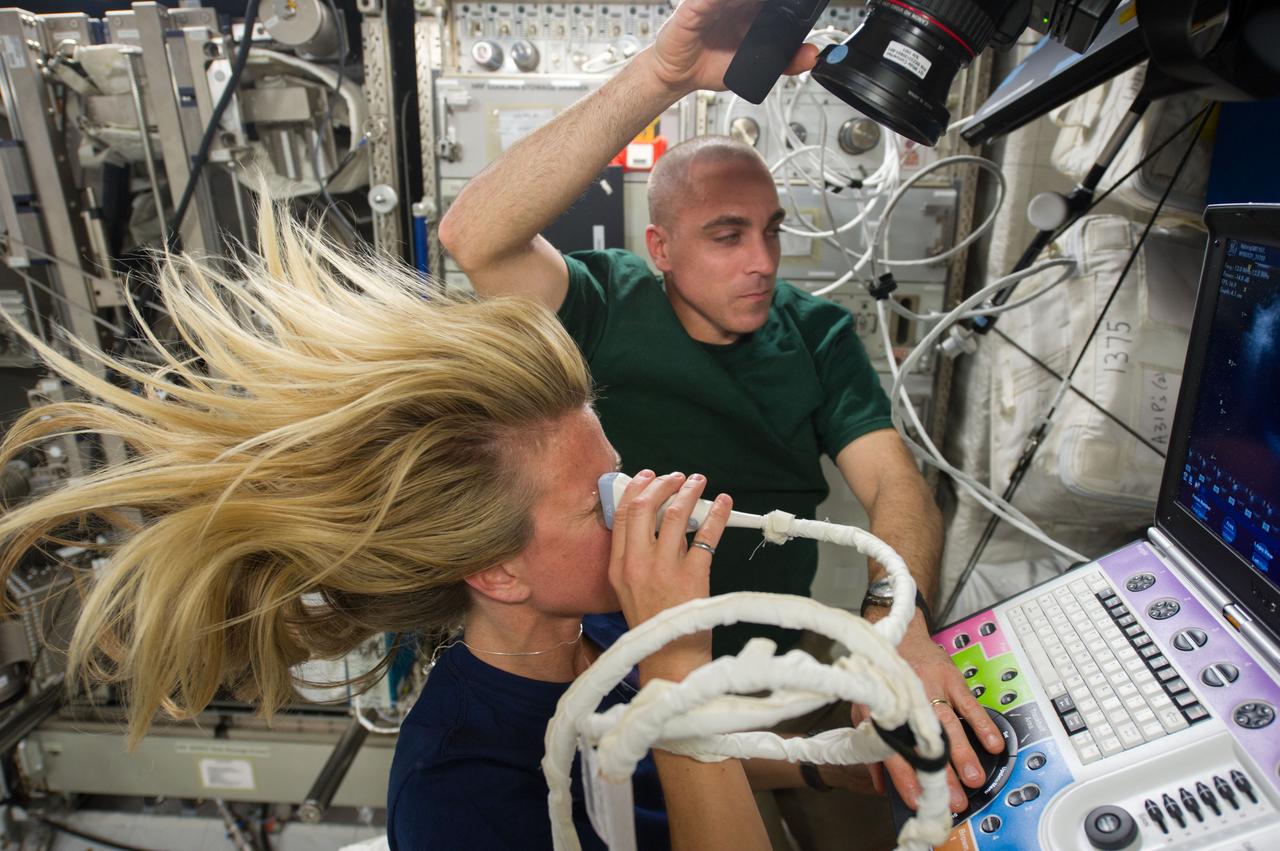
Astronaut Karen Nyberg,Expedition 37 flight engineer, assisted by astronaut Chris Cassidy, performs an Ocular Health (OH) Ultrasound 2 scan in the Destiny laboratory of the International Space Station.
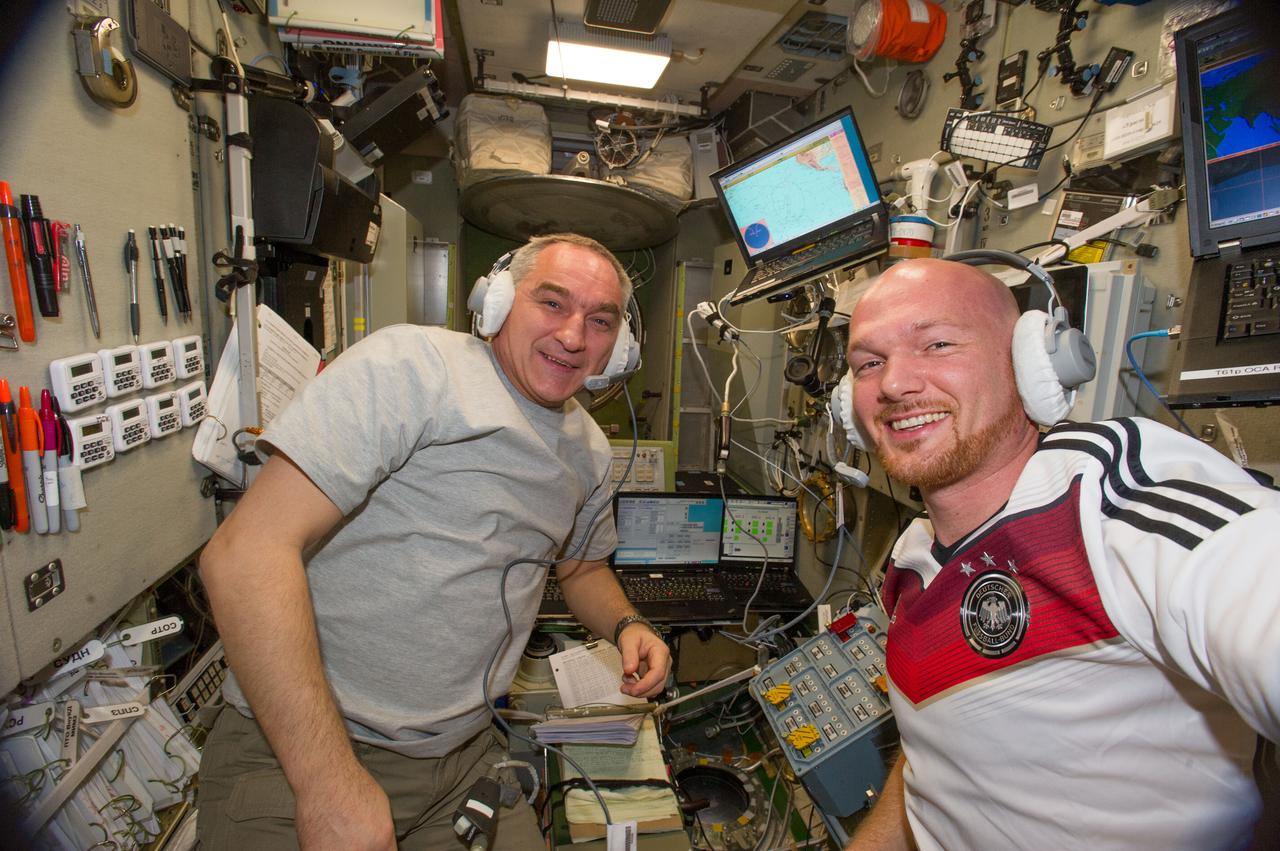
Cosmonaut Alexander Skvortsov and ESA Astronaut Alexander Gerst, Expedition 40 flight engineers, are photographed during ATV equipment preparation in the Service Module (SM) prior to ATV launch.
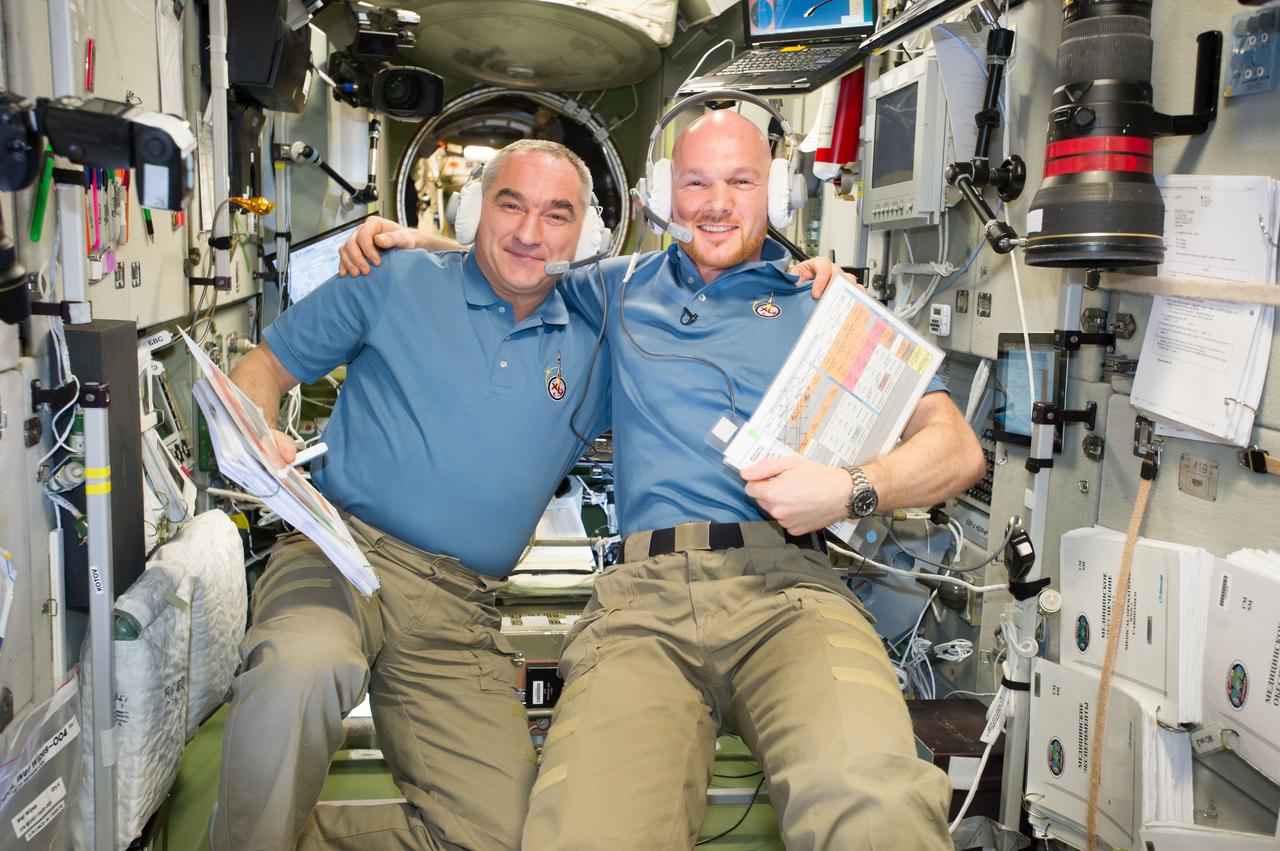
ISS040-E-091673 (12 Aug. 2014) --- In the Zvezda Service Module, European Space Agency astronaut Alexander Gerst (right) and Russian cosmonaut Alexander Skvortsov, both Expedition 40 flight engineers, take a brief moment for a photo during the approach and docking operations of ESA's "Georges Lemaitre" Automated Transfer Vehicle-5 (ATV-5) to the International Space Station.
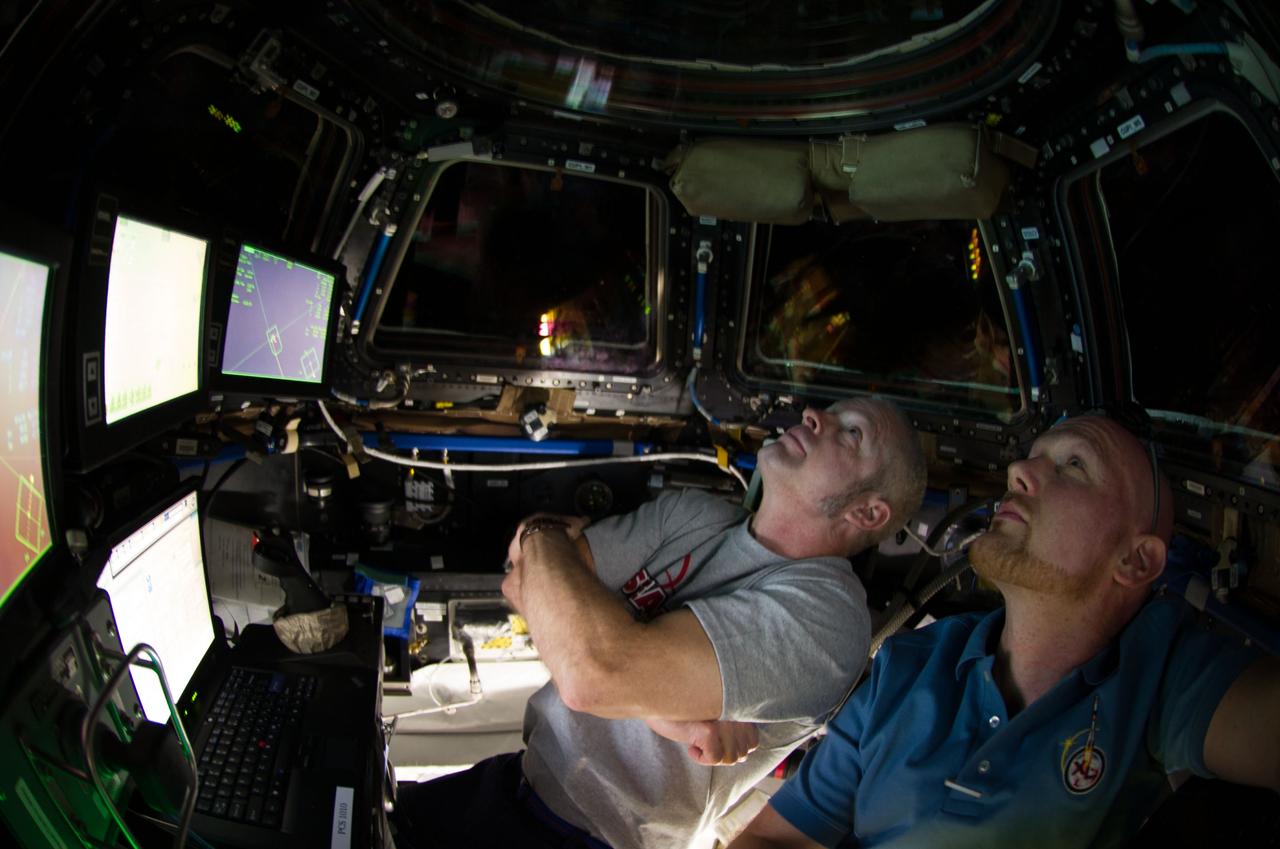
ISS040-E-067869 (16 July 2014) --- NASA astronaut Steve Swanson (left), Expedition 40 commander; and European Space Agency astronaut Alexander Gerst, flight engineer, are pictured in the International Space Station?s Cupola during rendezvous and capture operations of the Orbital Sciences? Cygnus cargo craft.
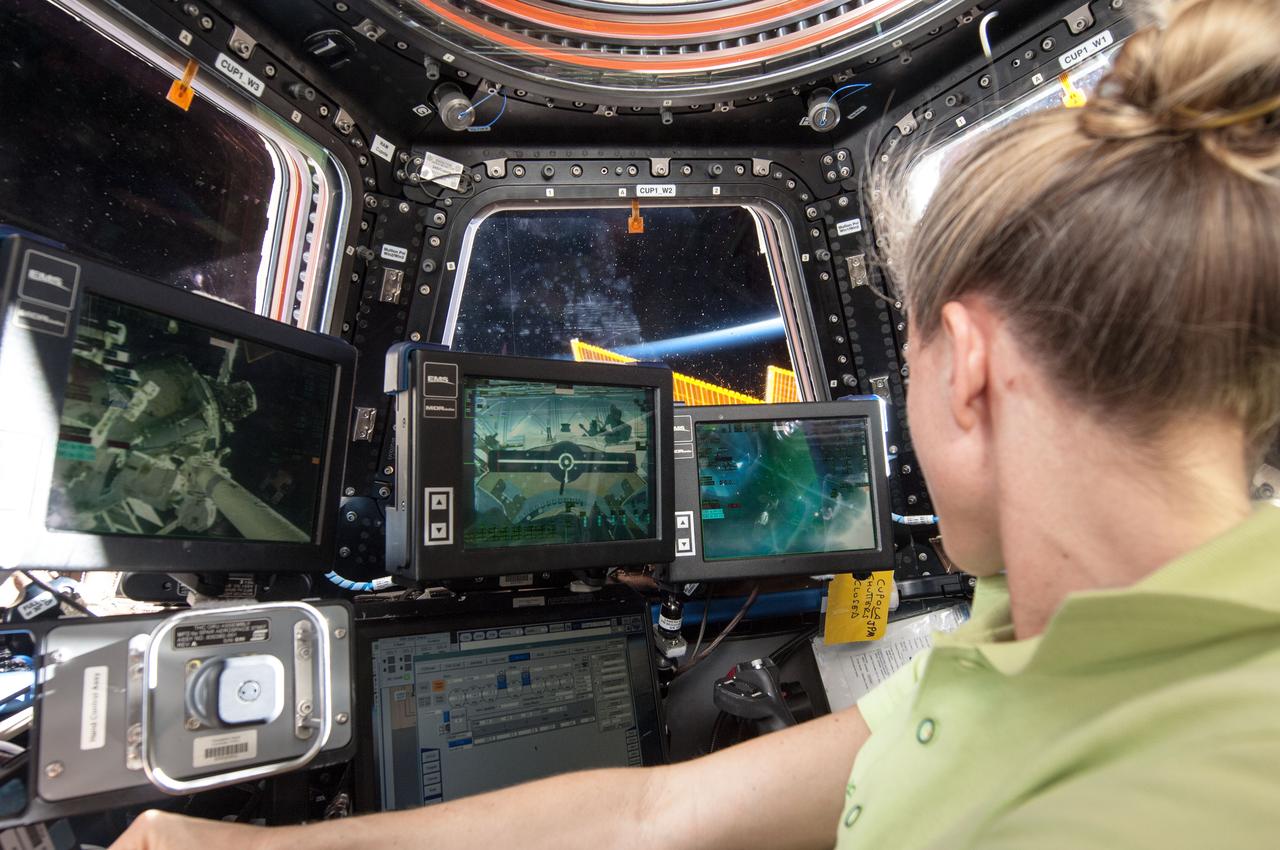
ISS036-E-029229 (5 Aug. 2013) --- At the robotics workstation in the International Space Station?s Cupola, NASA astronaut Karen Nyberg, Expedition 36 flight engineer, participates in onboard training activity in preparation for the grapple and berthing of the Japanese "Kounotori" H2 Transfer Vehicle-4 (HTV-4) set for August 9. Nyberg and NASA astronaut Chris Cassidy will use Canadarm2, the station's Canadian Space Agency-provided robotic arm, to reach out and capture the vehicle for its installation on the Earth-facing port of the Harmony node
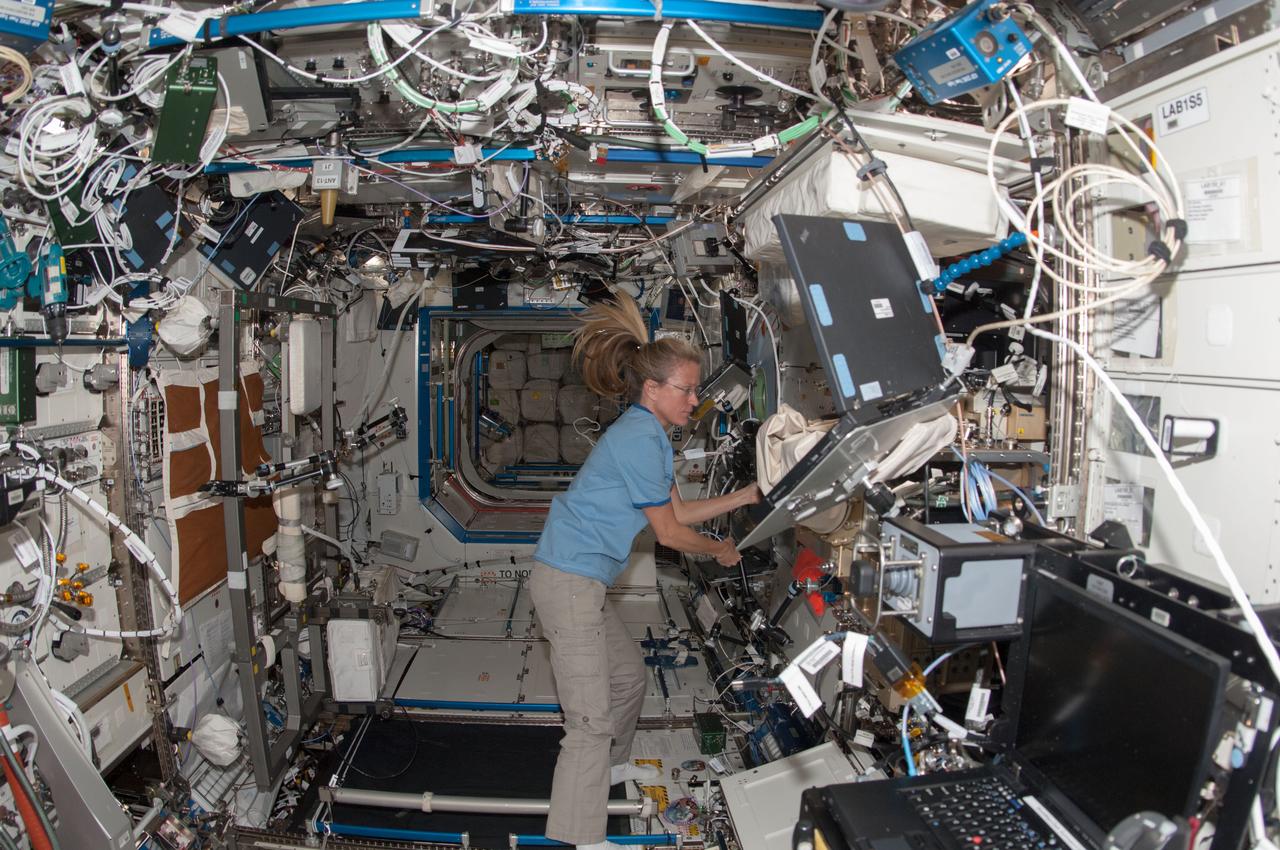
In the International Space Stations Destiny laboratory,NASA astronaut Karen Nyberg,Expedition 36 flight engineer,speaks into a microphone while conducting a session with the Advanced Colloids Experiment (ACE)-1 sample preparation at the Light Microscopy Module (LMM) in the Fluids Integrated Rack / Fluids Combustion Facility (FIR/FCF). ACE-1 is a series of microscopic imaging investigations that uses the microgravity environment to examine flow characteristics and the evolution and ordering effects within a group of colloidal materials.
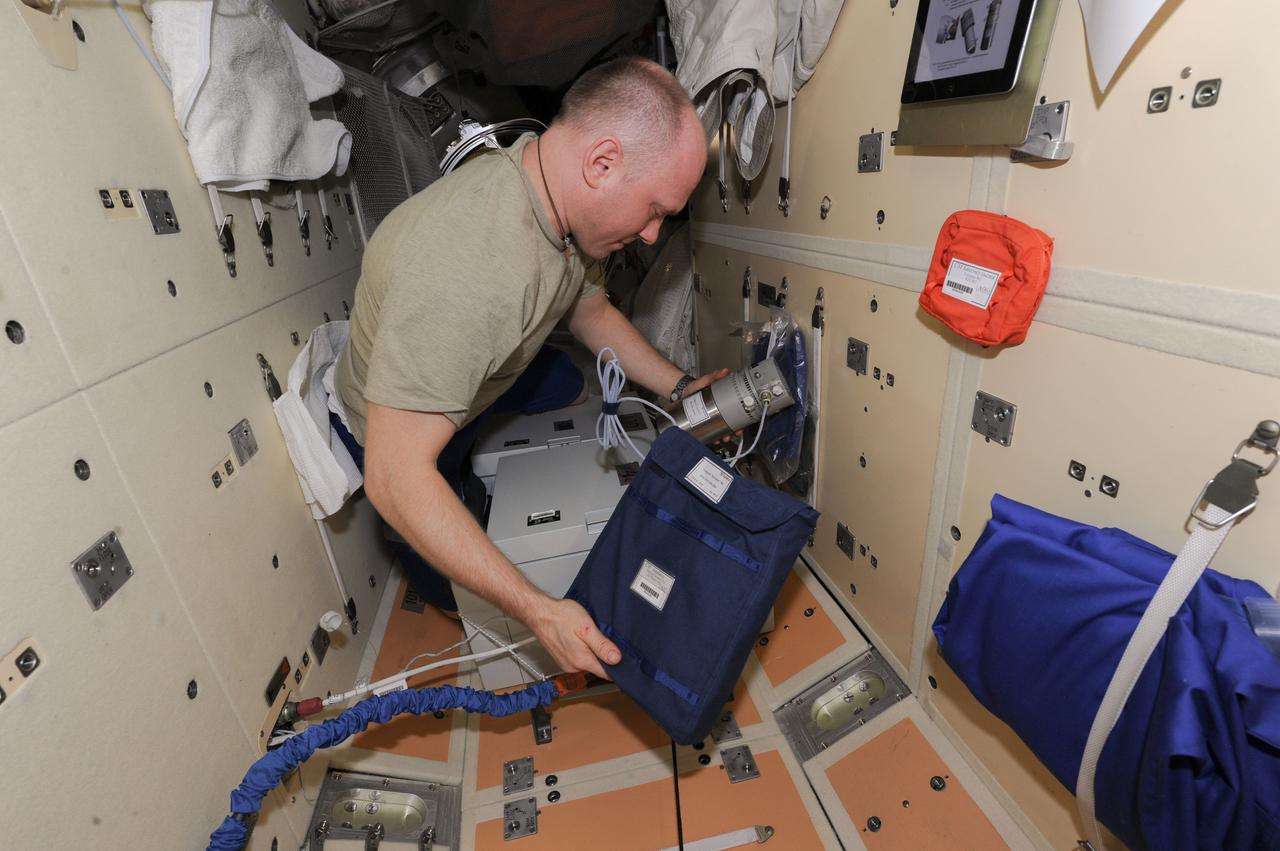
Photographic documentation of Cosmonaut Oleg Artemyev, Expedition 40 flight engineer, working on the Hardware Transfer from ТÐÐ 423 (DC1) for CASKAD experiment. Photo taken by the Expedition 40 crew.