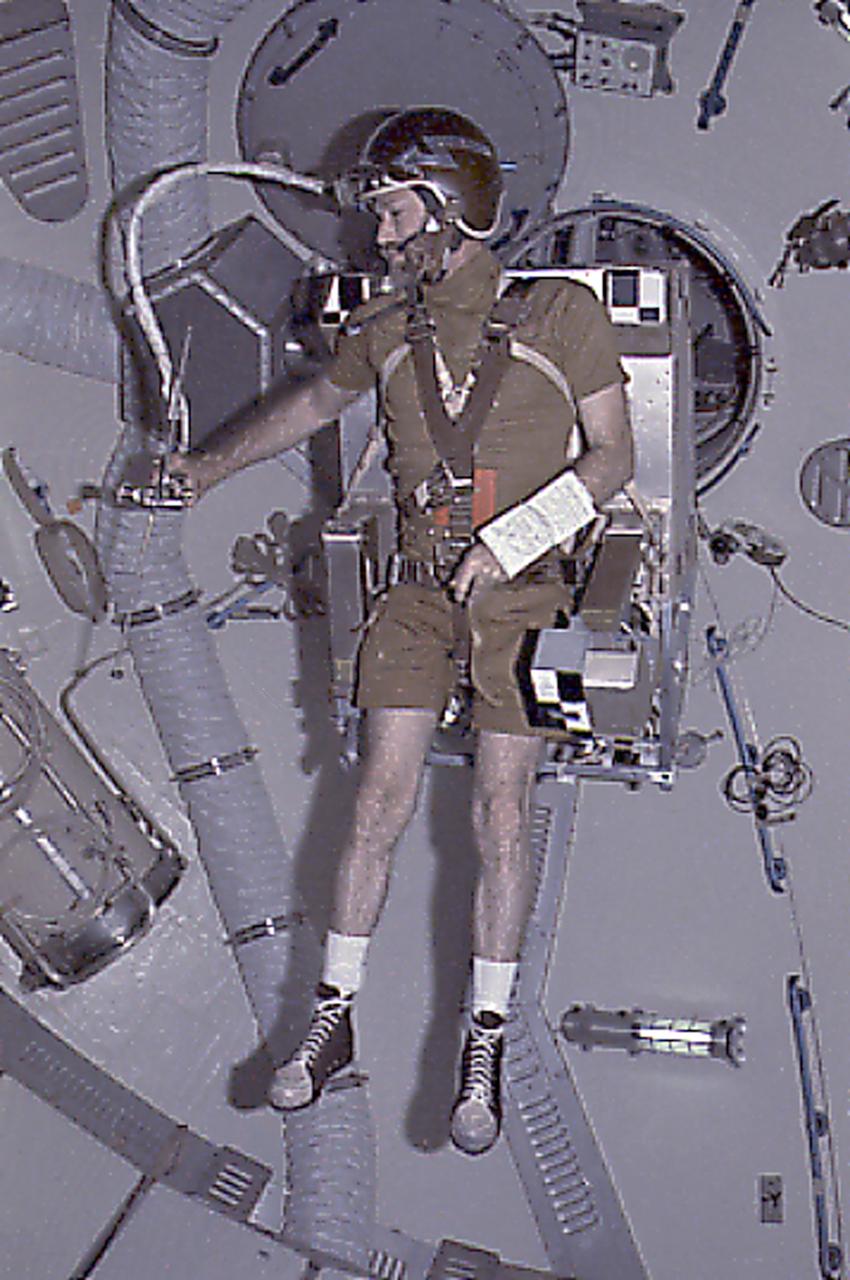
This Skylab-4 onboard photograph depicts Astronaut Gerald Carr testing Astronaut Maneuvering Equipment (M509) by flying it around under weightless conditions in the Orbital Workshop. The M509 experiment was an operational study to evaluate and conduct an in-orbit verification of the utility of various maneuvering techniques to assist astronauts in performing tasks that were representative of future extravehicular activity requirements.
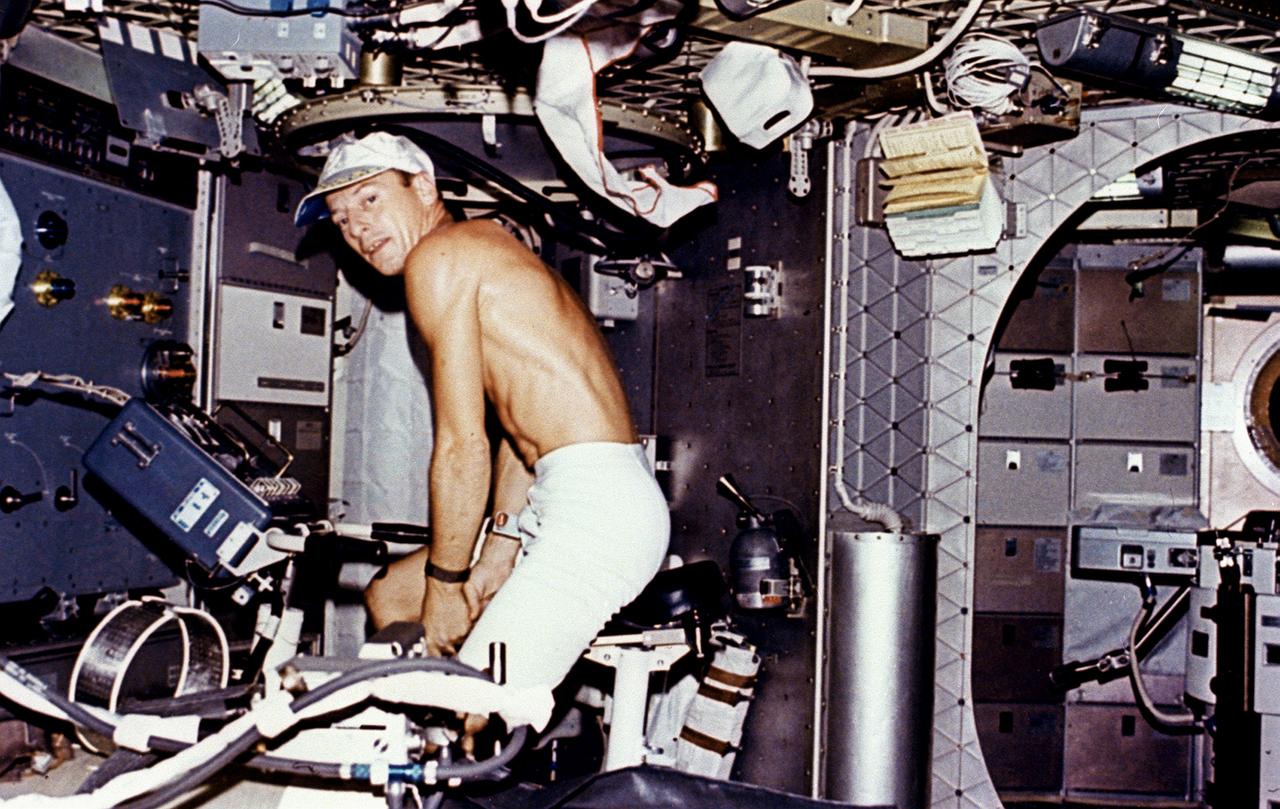
This Skylab-2 onboard photograph shows astronaut Charles "Pete" Conrad exercising on a stationary bicycle (ergometer) used for monitoring the metabolism of the astronauts. The ergometer was used to conduct both Vectorcardiogram experiment (M093) and Metabolic Activity experiment (M171). Experiment M093 was a medical evaluation designed to monitor changes in astronauts' cardiovascular systems, while Experiment M171 was to measure astronauts' metabolic changes during long-duration space missions.
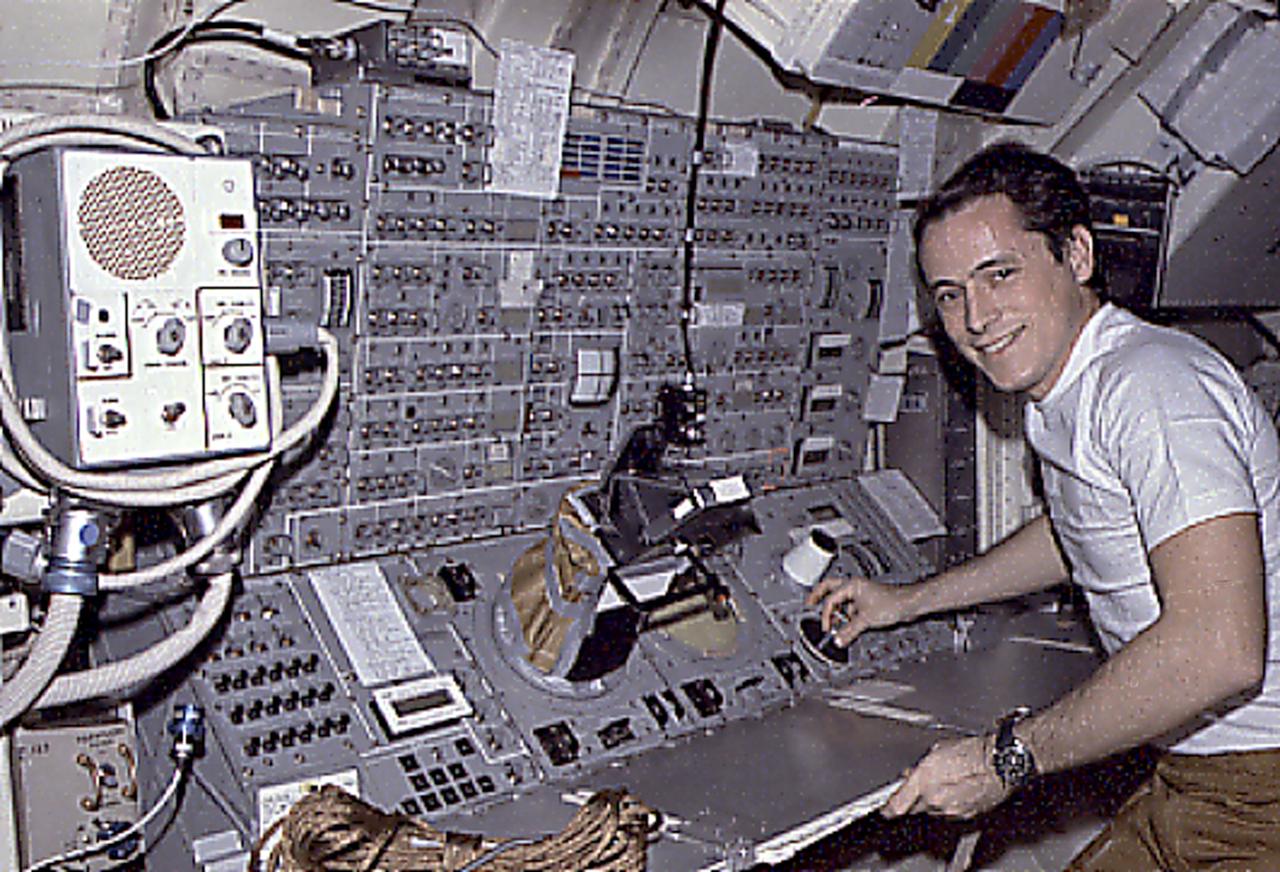
This Skylab-4 mission onboard photograph shows Astronaut Ed Gibson at the complex control and display console for the Apollo Telescope Mount solar telescopes located in the Skylab Multiple Docking Adapter. Astronauts watched the Sun, and photographed and recorded the solar activities, such as the birth of a solar flare.
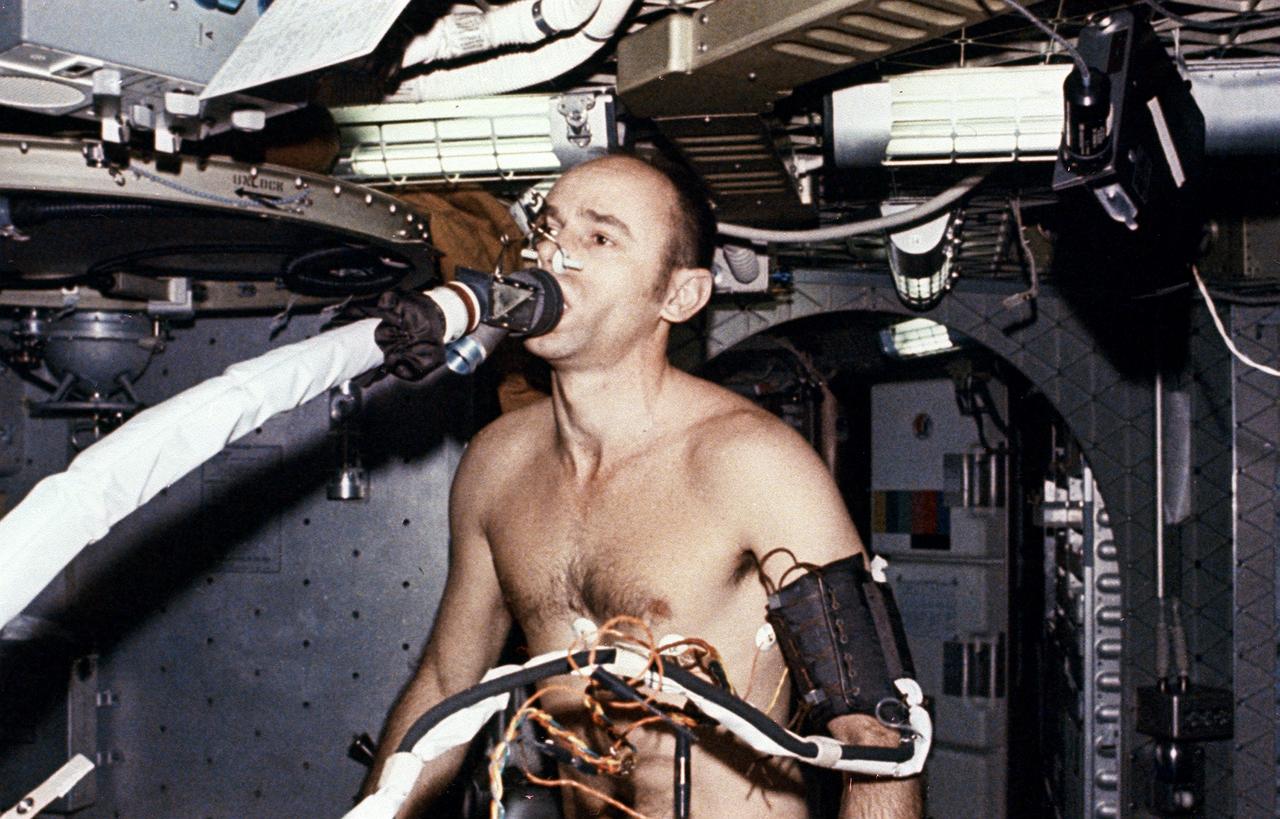
This Skylab-3 onboard photograph shows Astronaut Allen Bean on the ergometer, breathing into the metabolic analyzer. Skylab's Metabolic Activity experiment (M171), a medical evaluation facility, was designed to measure astronauts' metabolic changes while on long-term space missions. The experiment obtained information on astronauts' physiological capabilities and limitations and provided data useful in the design of future spacecraft and work programs. Physiological responses to physical activity was deduced by analyzing inhaled and exhaled air, pulse rate, blood pressure, and other selected variables of the crew while they performed controlled amounts of physical work with a bicycle ergometer.
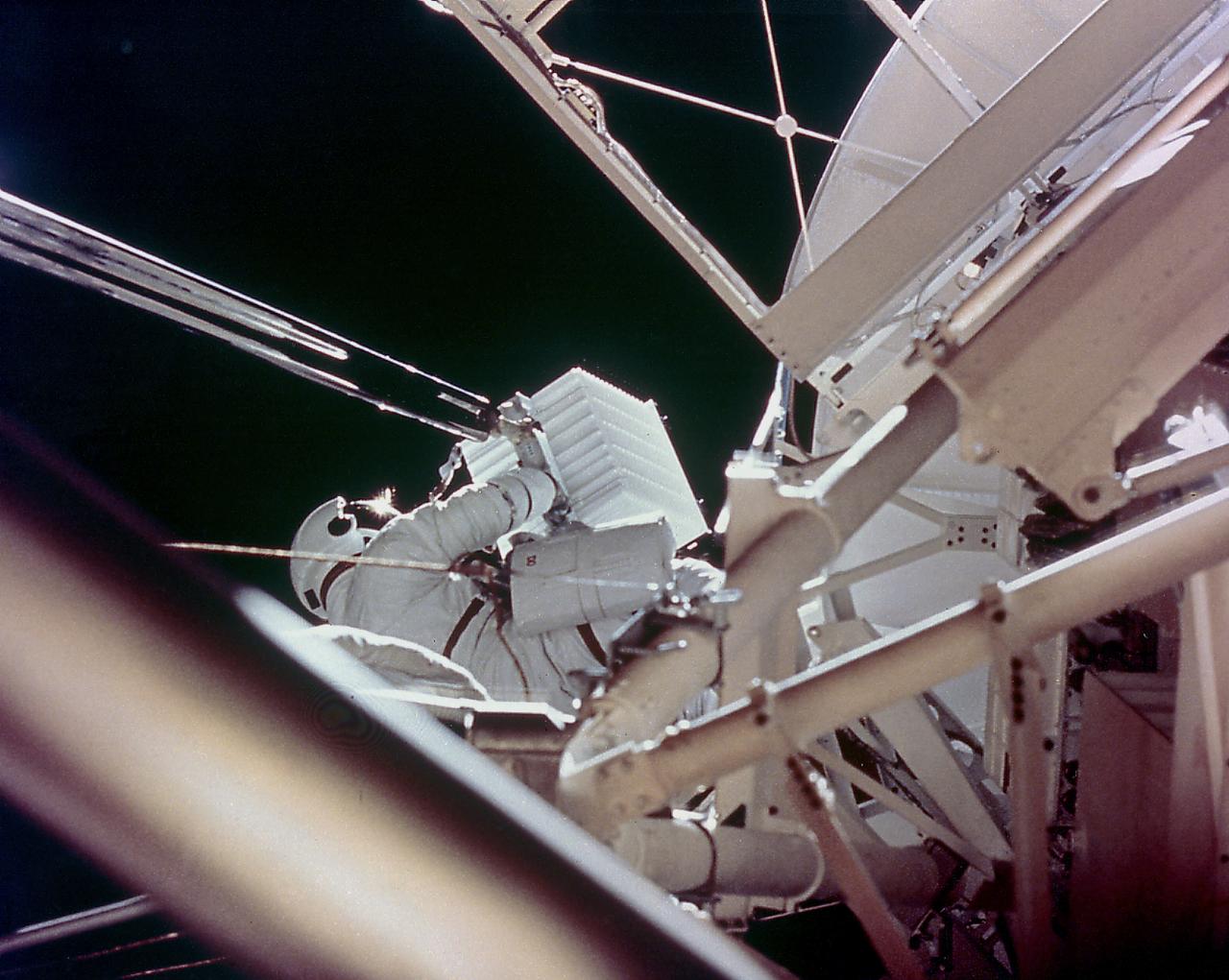
This onboard photograph depicts Astronaut Owen Garriott atop the Apollo Telescope Mount, removing a film magazine (white box) from one of Skylab's solar telescopes during an Extravehicular Activity (EVA) in the second marned Skylab mission (Skylab-3). A long boom transported it back into the waiting hands of another crew member at the airlock door below. During the operation, Garriott, film, boom, and Skylab were 435 kilometers high and speeding around the Earth at 29,000 kilometers per/hour. Because they moved together with no wind resistance, there was little sense of motion.
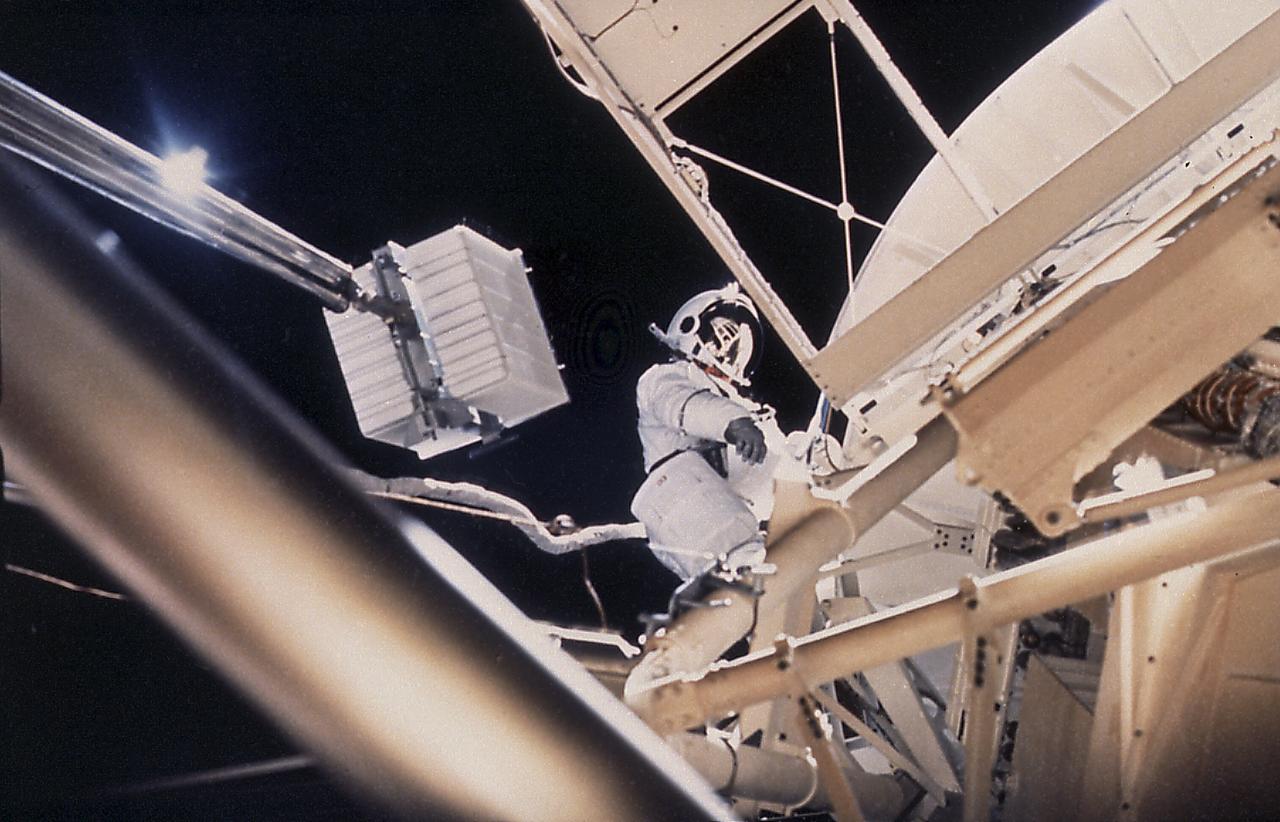
This onboard photograph depicts Astronaut Owen Garriott atop the Apollo Telescope Mount, removing a film magazine (white box) from one of Skylab's solar telescopes during an Extravehicular Activity (EVA) in the second marned Skylab mission (Skylab-3). A long boom transported it back into the waiting hands of another crew member at the airlock door below. During the operation, Garriott, film, boom, and Skylab were 435 kilometers high and speeding around the Earth at 29,000 kilometers per/hour. Because they moved together with no wind resistance, there was little sense of motion.
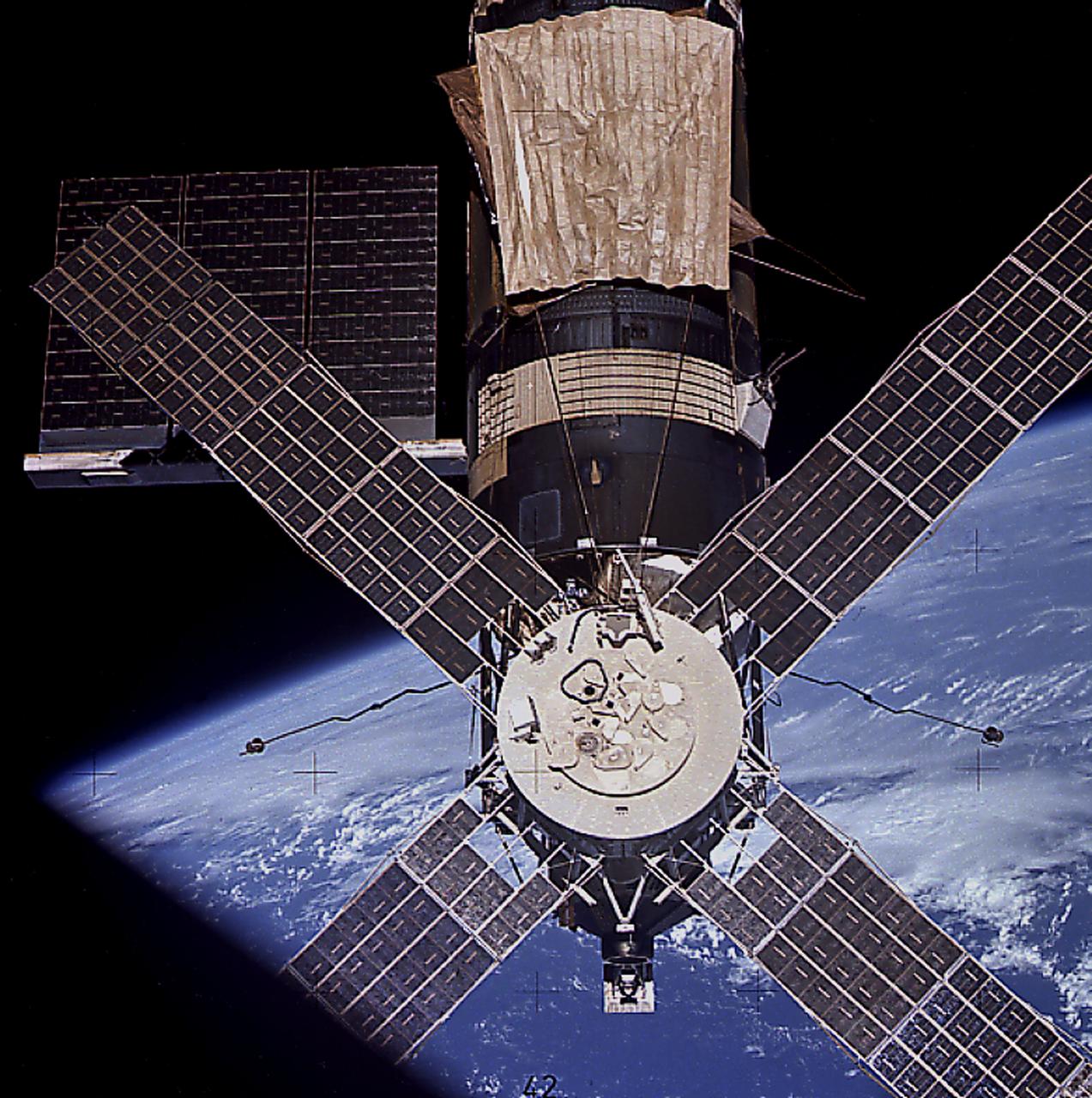
This image of Skylab in orbit was taken as the third crew (Skylab-4) departed the space station after 84 days in the orbiting laboratory. A smiling Skylab seemed to wink good-bye for the job well done.

This photograph was taken as the third crew (Skylab-4) departed the space station. The solar observatory was designed for full exposure to the Sun throughout most of the Skylab mission. Solar energy was transformed into electrical power for operation of all spacecraft systems. The proper operation of these solar arrays was vital to the mission. This Skylab in orbit view was taken by the Skylab-4 crew.
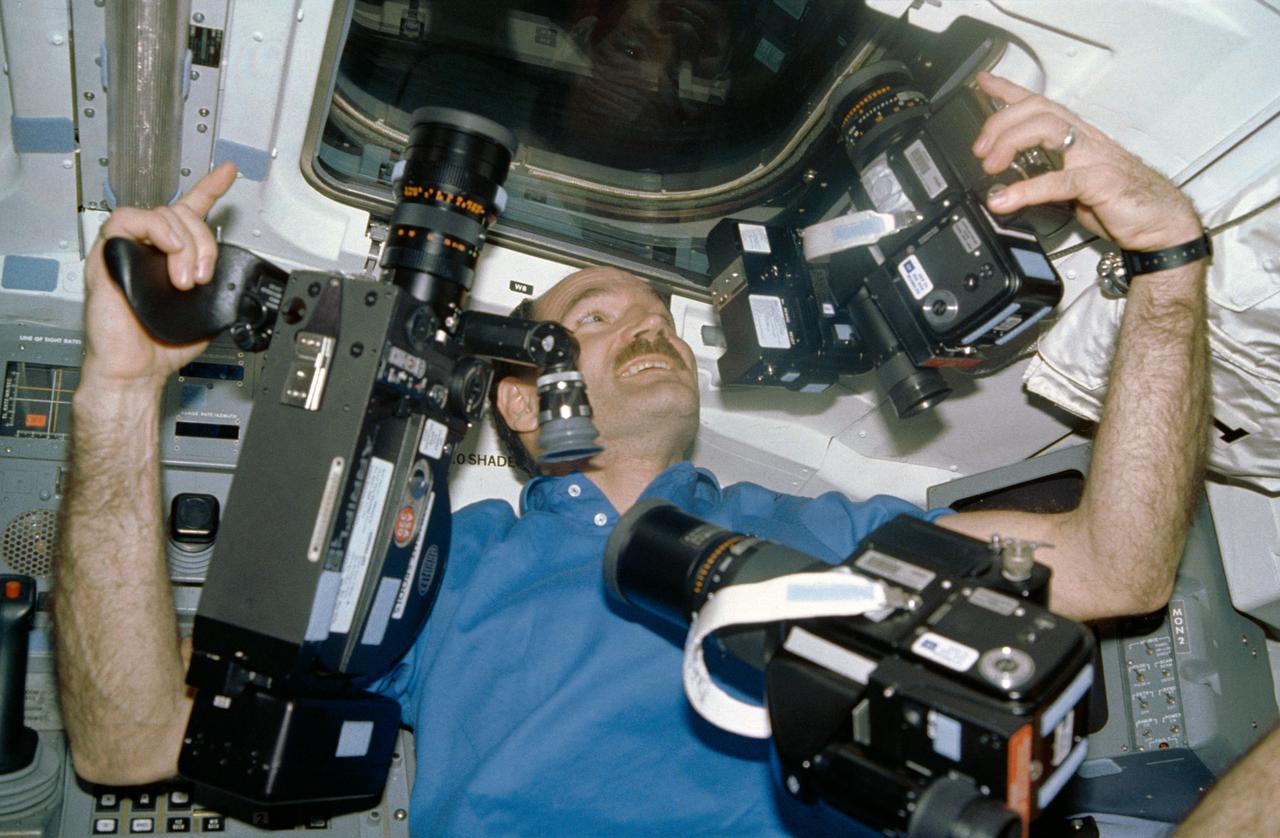
STS027-14-021 (2-6 Dec. 1988) --- Astronaut Guy S. Gardner, STS-27 pilot, appears to have enough cameras as he prepares to take photographs onboard the Earth-orbiting space shuttle Atlantis. Photo credit: NASA
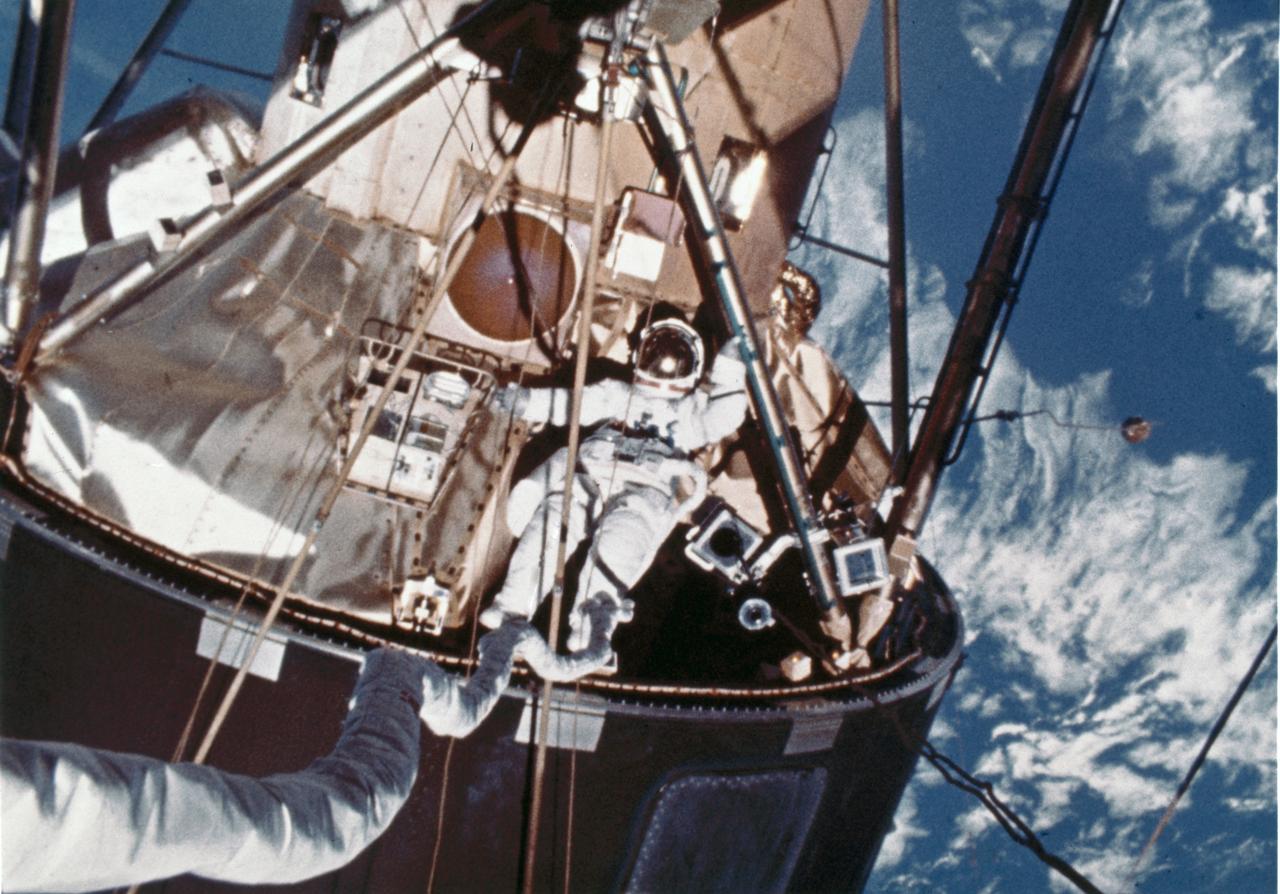
In this photograph, a skylab-4 astronaut performs Extra Vehicular Activities (EVA) outside of the lab. The third crew (Skylab-4) spent 84 days in the orbiting laboratory. The solar observatory was designed for full exposure to the Sun throughout most of the Skylab mission. Solar energy was transformed into electrical power for operation of all spacecraft systems. The proper operation of these solar arrays was vital to the mission.
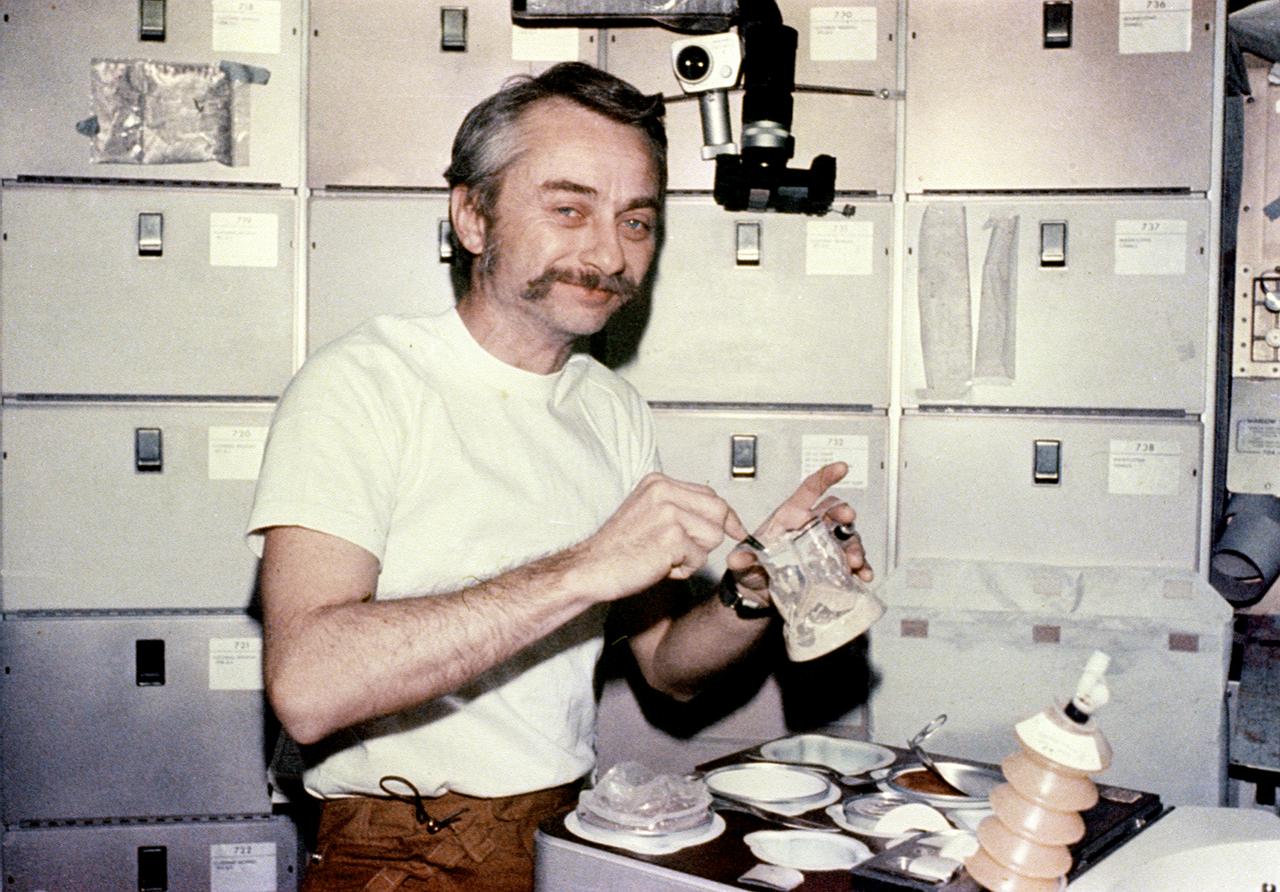
This photograph was taken during the Skylab-3 mission (2nd marned mission), showing Astronaut Owen Garriott enjoying his meal in the Orbital Workshop crew wardroom. The tray contained heating elements for preparing the individual food packets. The food on Skylab was a great improvement over that on earlier spaceflights. It was no longer necessary to squeeze liquified food from plastic tubes. Skylab's kitchen was so equipped that each crewman could select his own menu and prepare it to his own taste.
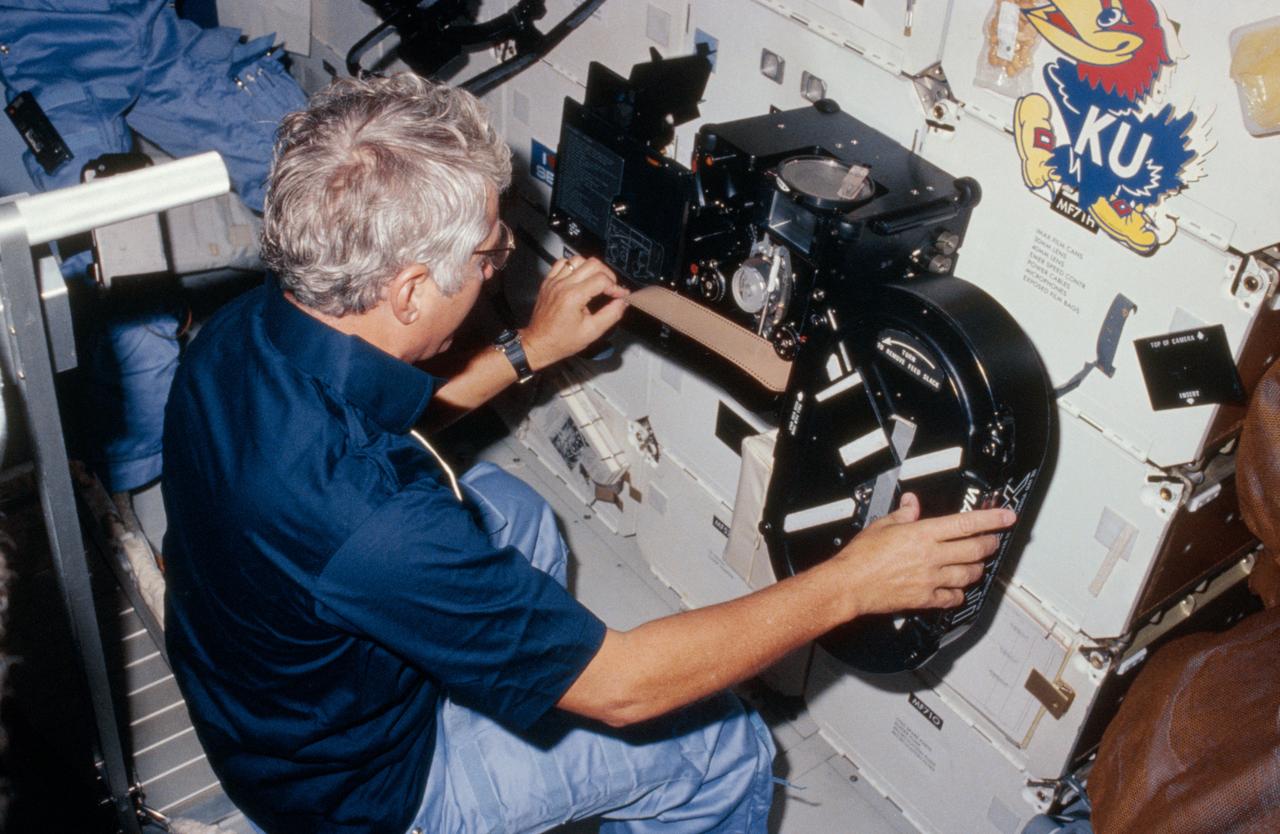
41D-11-004 (8 September 1984 --- View of Crew Commander Henry Hartsfield Jr. loading film into the IMAX camera during the 41-D mission. The camera is floating in front of the middeck lockers. Above it is a sticker of the University of Kansas mascott, the Jayhawk.
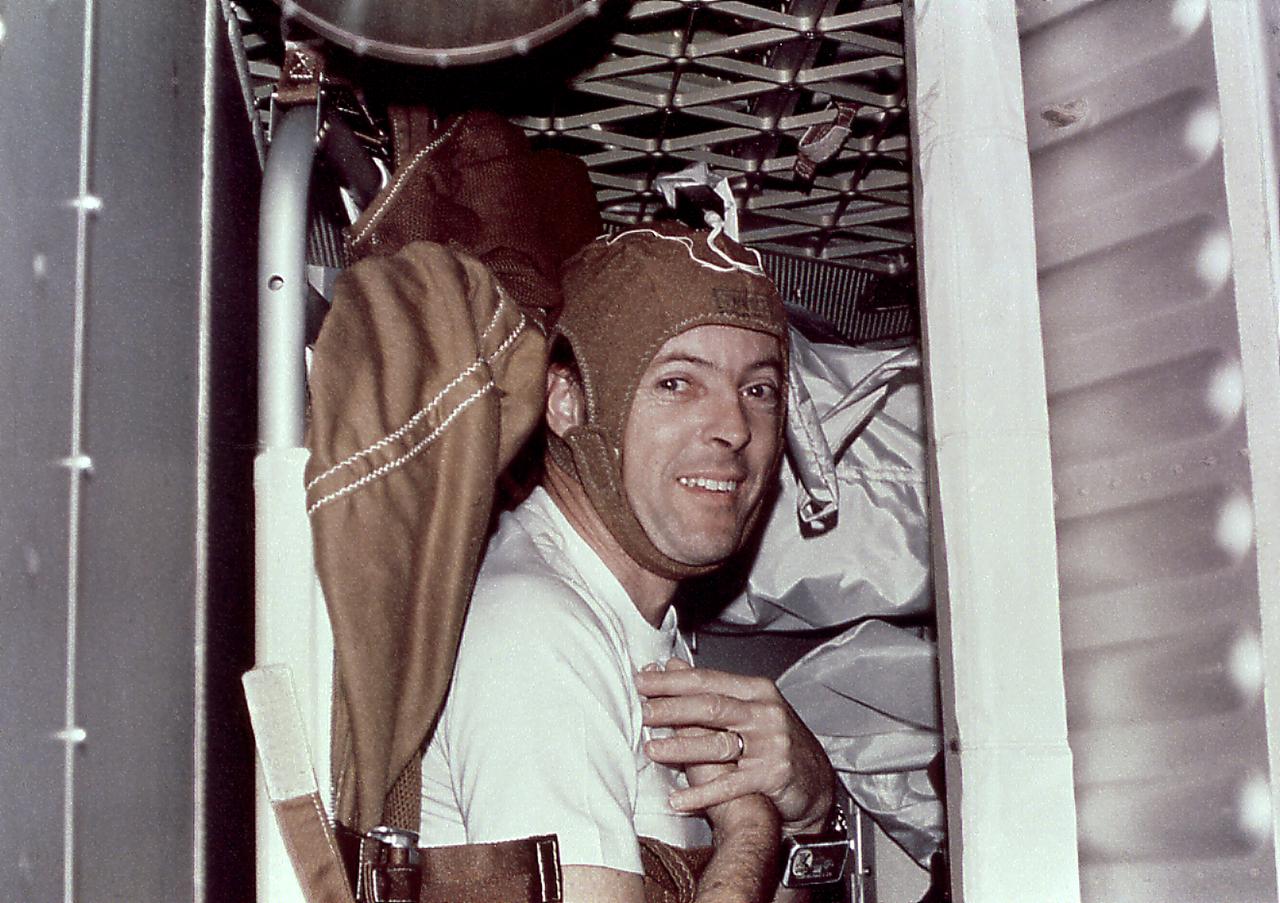
This photograph is of Astronaut Kerwin wearing the Sleep Monitoring cap (Experiment M133) taken during the Skylab-2 mission. The Sleep Monitoring Experiment was a medical evaluation designed to objectively determine the amount and quality of crew members' inflight sleep. The experiment monitored and recorded electroencephalographic (EEG) and electrooculographic (EOG) activity during astronauts' sleep periods. One of the astronauts was selected for this experiment and wore a fitted cap during his sleep periods.
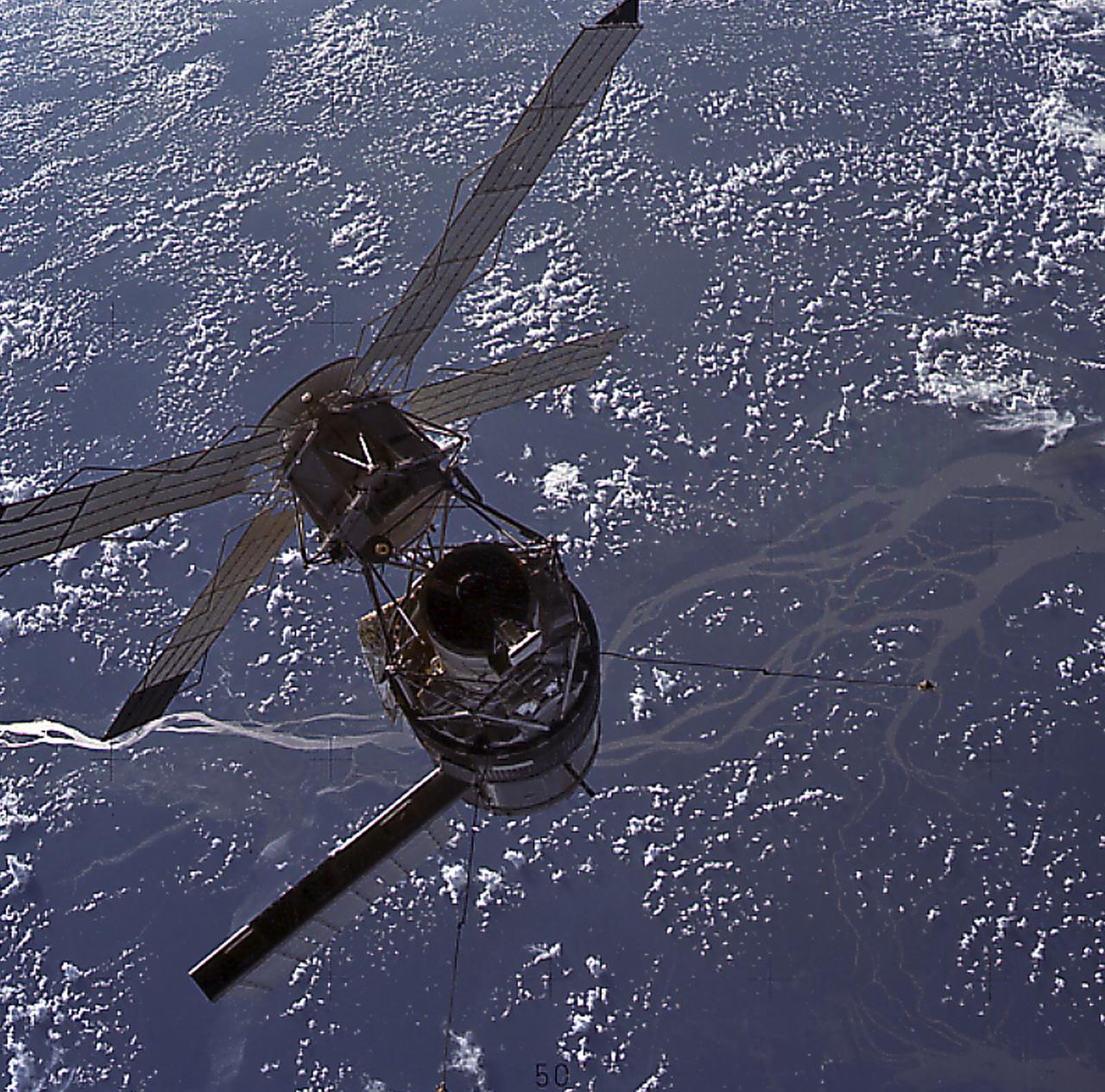
This striking image of Skylab was photographed by Astronaut Jack Lousma (Skylab-3), as the second crew reached the orbiting laboratory over the delta of the mighty Amazon River. Skylab's solar arrays were exposed directly to the Sun's rays. Solar energy was transformed into electrical power for operation of all spacecraft systems. The proper operation of these solar arrays was vital to the mission.
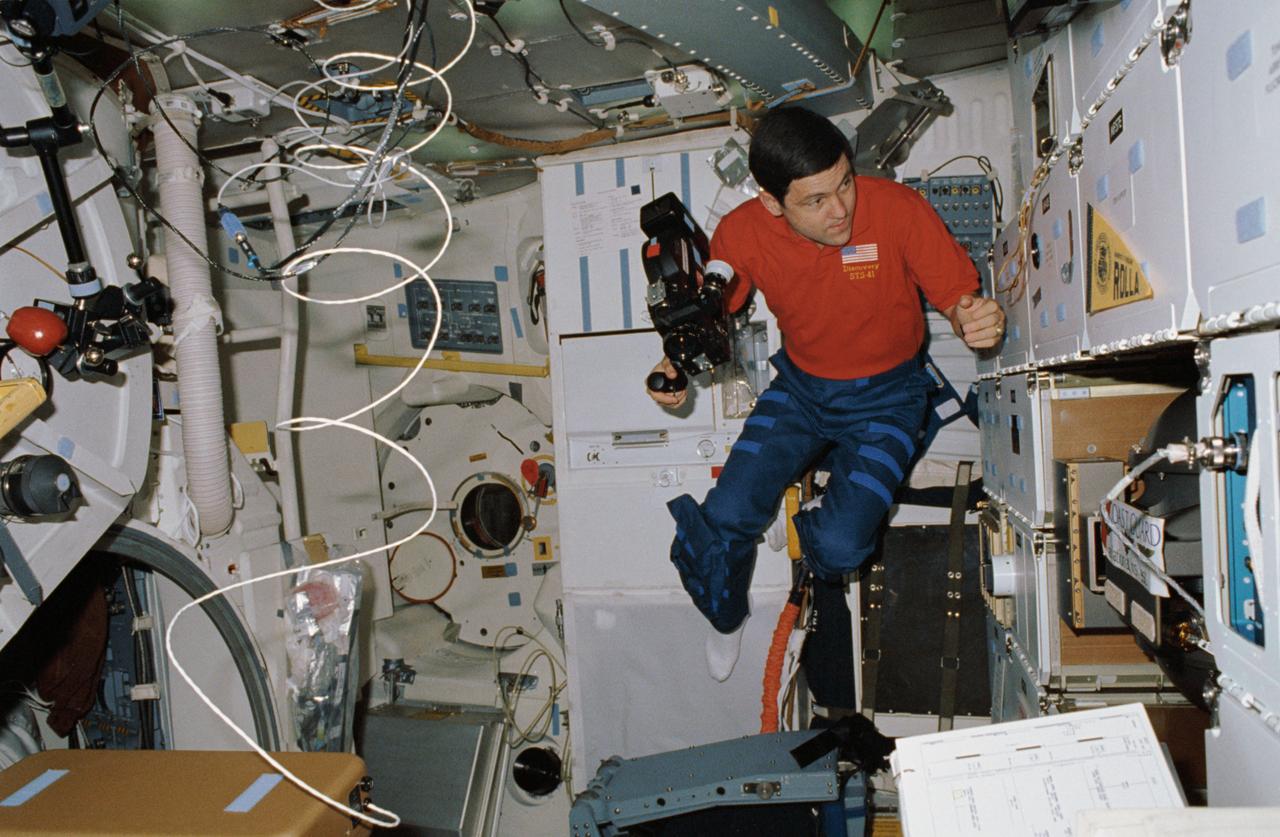
STS041-05-011 (6-10 Oct 1990) --- Astronaut Robert D. Cabana, STS-41 pilot, exhibits the weightlessness of space travel as he appears to "float" about on the middeck of Discovery. Careful inspection of the photo proves that, actually, his floating is limited, as he has anchored his left foot with a special restraint device. He apparently has chosen this vantage point to use the Arriflex motion picture camera in his right hand.
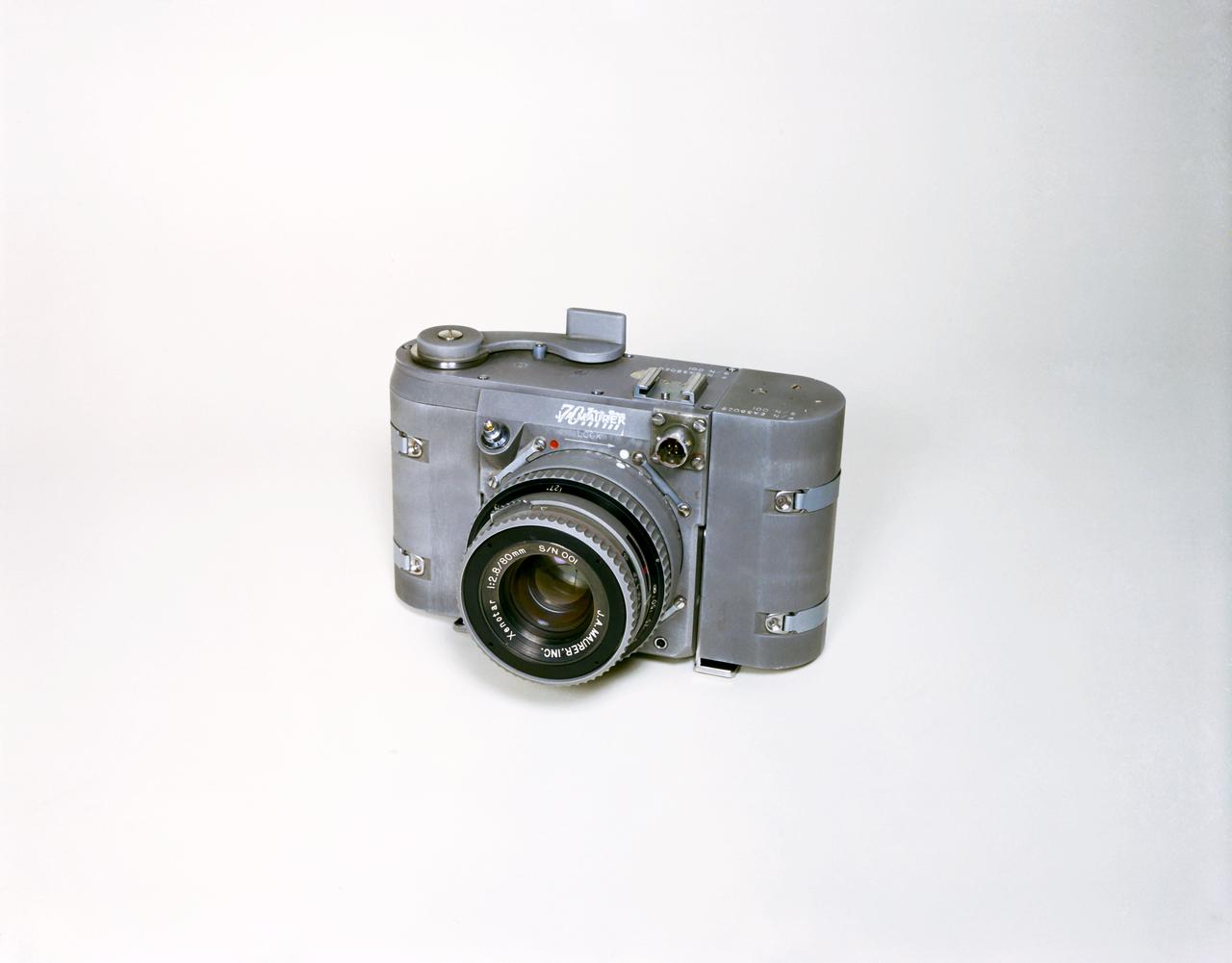
S65-23639 (28 April 1965) --- A bench view of a 70mm camera expected to be used by the Gemini-4 astronauts.

AS08-14-2383 (24 Dec. 1968) --- The rising Earth is about five degrees above the lunar horizon in this telephoto view taken from the Apollo 8 spacecraft near 110 degrees east longitude. The horizon, about 570 kilometers (350 statute miles) from the spacecraft, is near the eastern limb of the moon as viewed from Earth. Width of the view at the horizon is about 150 kilometers (95 statute miles). On Earth 240,000 statute miles away the sunset terminator crosses Africa. The crew took the photo around 10:40 a.m. Houston time on the morning of Dec. 24, and that would make it 15:40 GMT on the same day. The South Pole is in the white area near the left end of the terminator. North and South America are under the clouds.
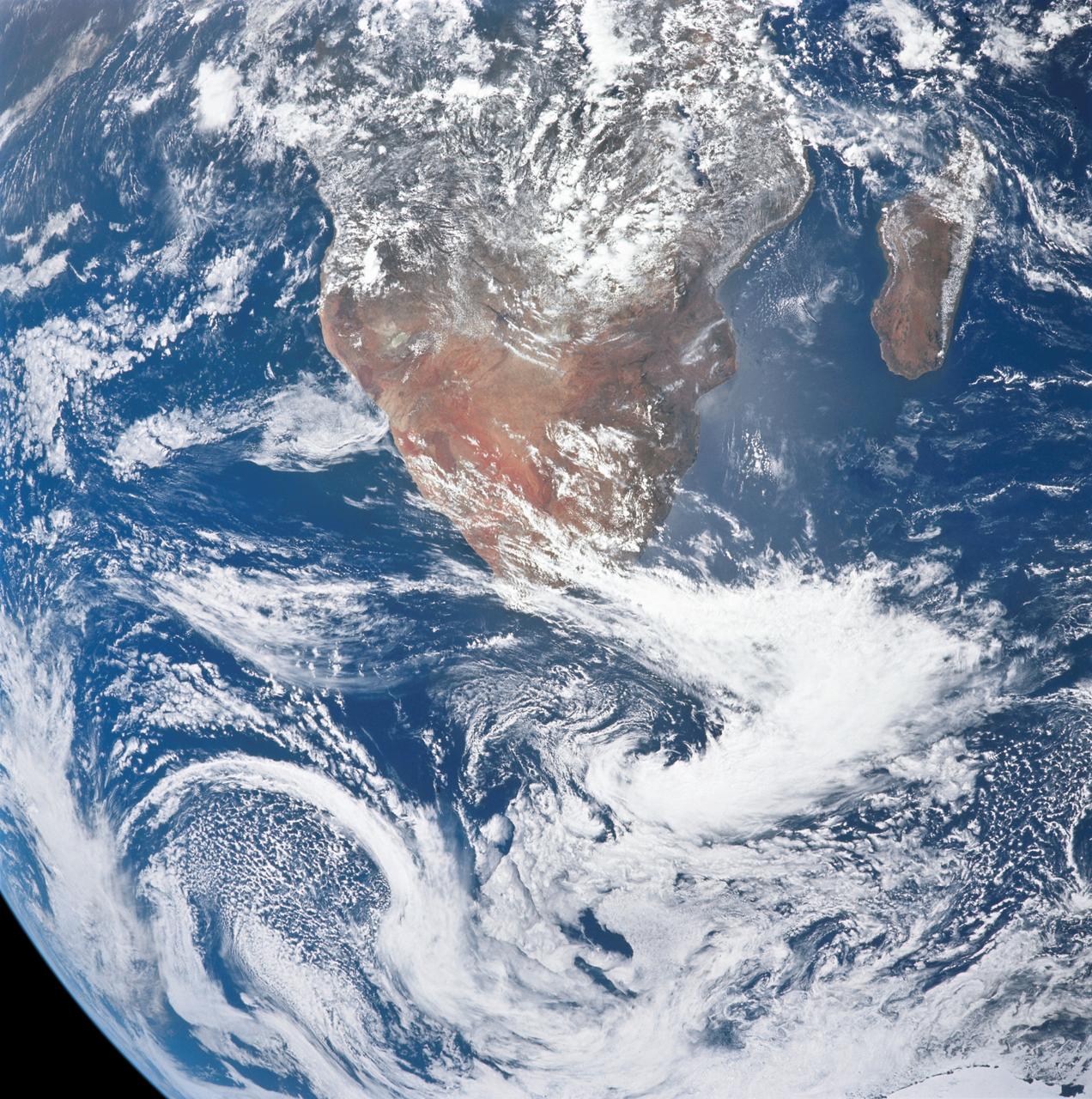
AS17-148-22717 (7 Dec. 1972) --- This view of a portion of Earth was taken from the Apollo 17 spacecraft following trans-lunar insertion during the final lunar landing mission in NASA's Apollo Program. The visible land mass is the southern two-thirds of the African continent, with Madagascar at right. A portion of Antarctica is visible at bottom frame. Onboard the Apollo 17 spacecraft were astronauts Eugene A. Cernan, commander; Ronald E. Evans, command module pilot; and Harrison H. Schmitt, lunar module pilot. While astronauts Cernan and Schmitt descended in the Lunar Module (LM) "Challenger" to explore the Hadley-Apennine region of the moon, astronaut Evans remained with the Command and Service Modules (CSM) "America" in lunar orbit.
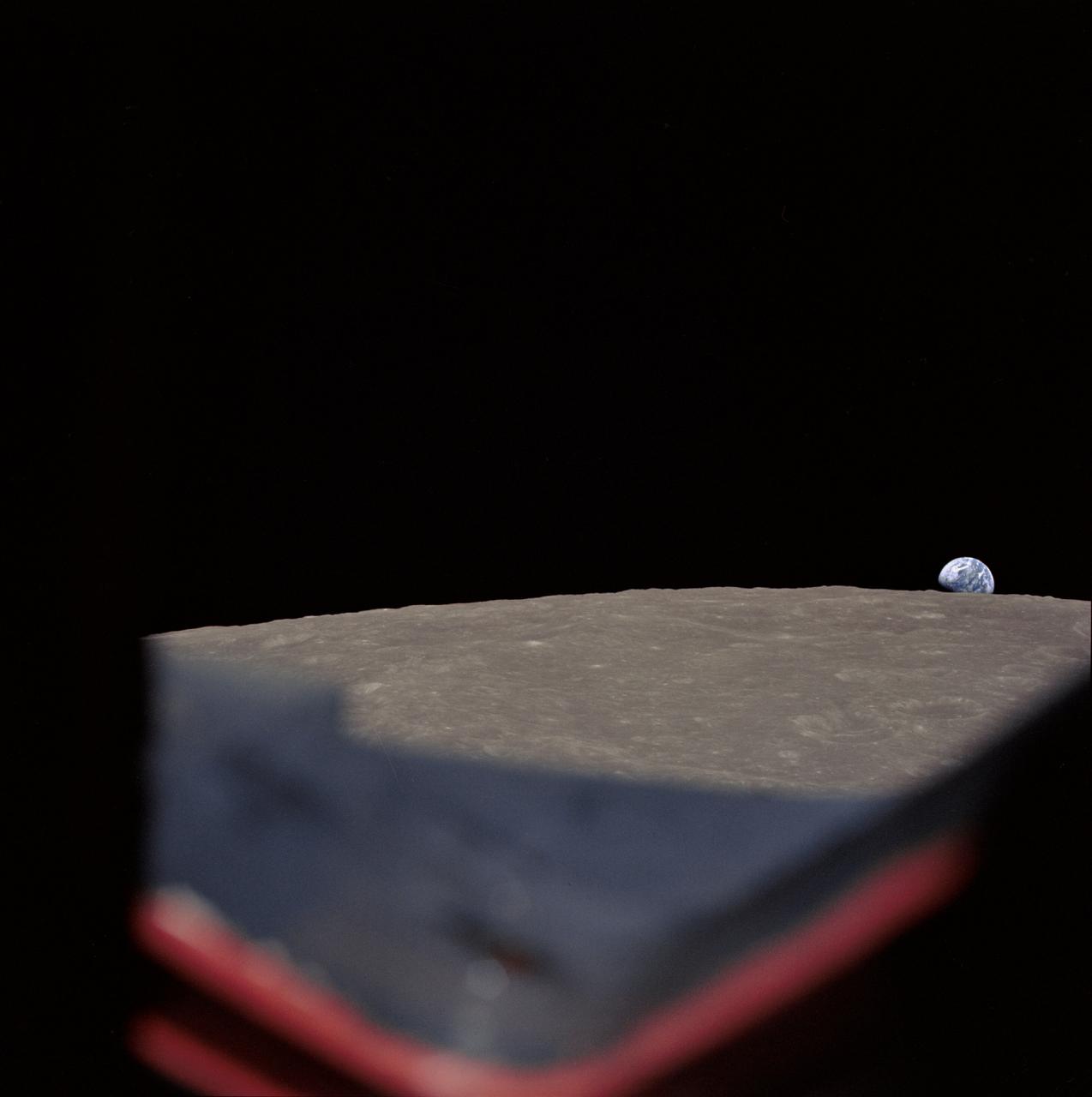
AS8-14-2392 (21-27 Dec. 1968) --- High-oblique view of the moon's surface showing Earth rising above the lunar horizon, looking west-southwest, as photographed from the Apollo 8 spacecraft as it orbited the moon. The center of the picture is located at about 105 degrees east longitude and 13 degrees south latitude. The lunar surface probably has less pronounced color than indicated by this print.
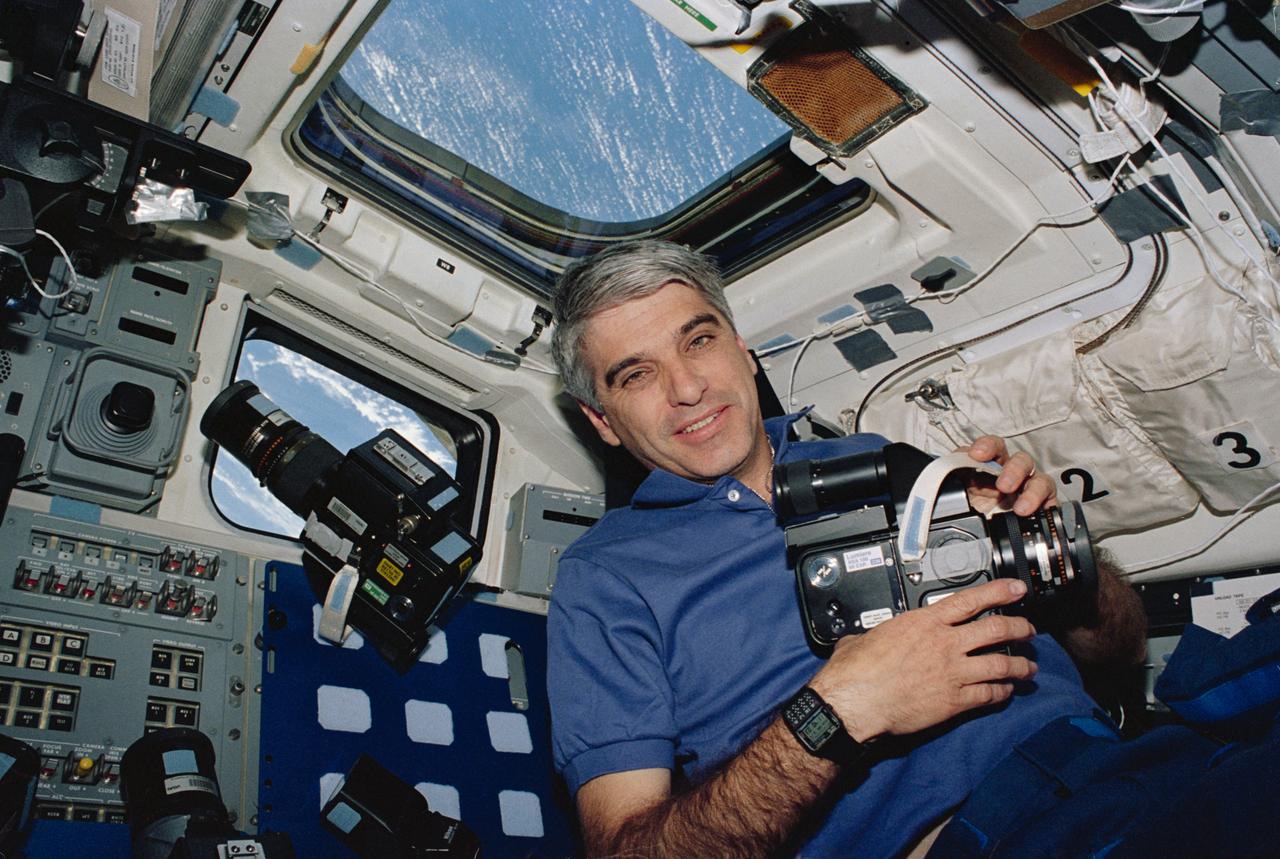
STS059-19-004 (9-20 April 1994) --- Astronaut Sidney M. Gutierrez, mission commander, pauses on the flight deck during Earth observations on the Space Shuttle Endeavour. Gutierrez, who was joined by five other NASA astronauts for 11-days in Earth orbit, holds a 70mm Hasselblad camera. The camera was one of several instruments used during the SRL mission to record an unprecedented compilation of data on planet Earth.

41D-12-020 (6 Sept 1984) --- Astronaut Judith A. Resnik, mission specialist, anchors herself on the flight deck (out of frame) to take a peek at mid-deck activity aboard the Earth-orbiting Space Shuttle Discovery. Among the many stationary and portable cameras onboard the flight are (left to right) TV camera, a data acquisition motion picture camera and the IMAX.
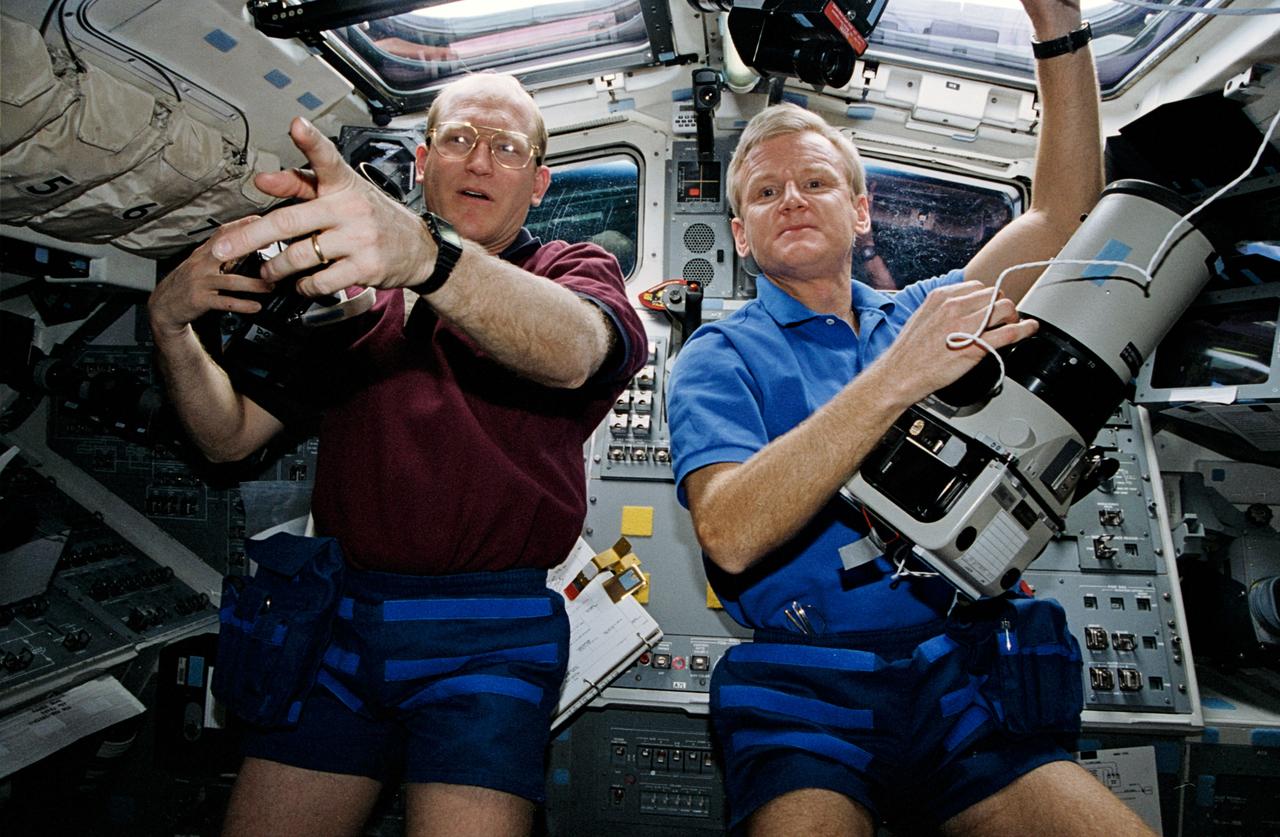
STS062-06-030 (4-18 March 1994) --- With cameras in hand two of the STS-62 astronauts prepare to take pictures of their home planet. John H. Casper (right), mission commander, handles a large format, Linhof camera, while Charles D. (Sam) Gemar, mission specialist, has just added a roll of film to a 70mm handheld Hasselblad camera. Earth observations and documentation occupied muc of the on-duty time of all five of the STS-62 crewmembers during their 14-day mission in earth orbit.
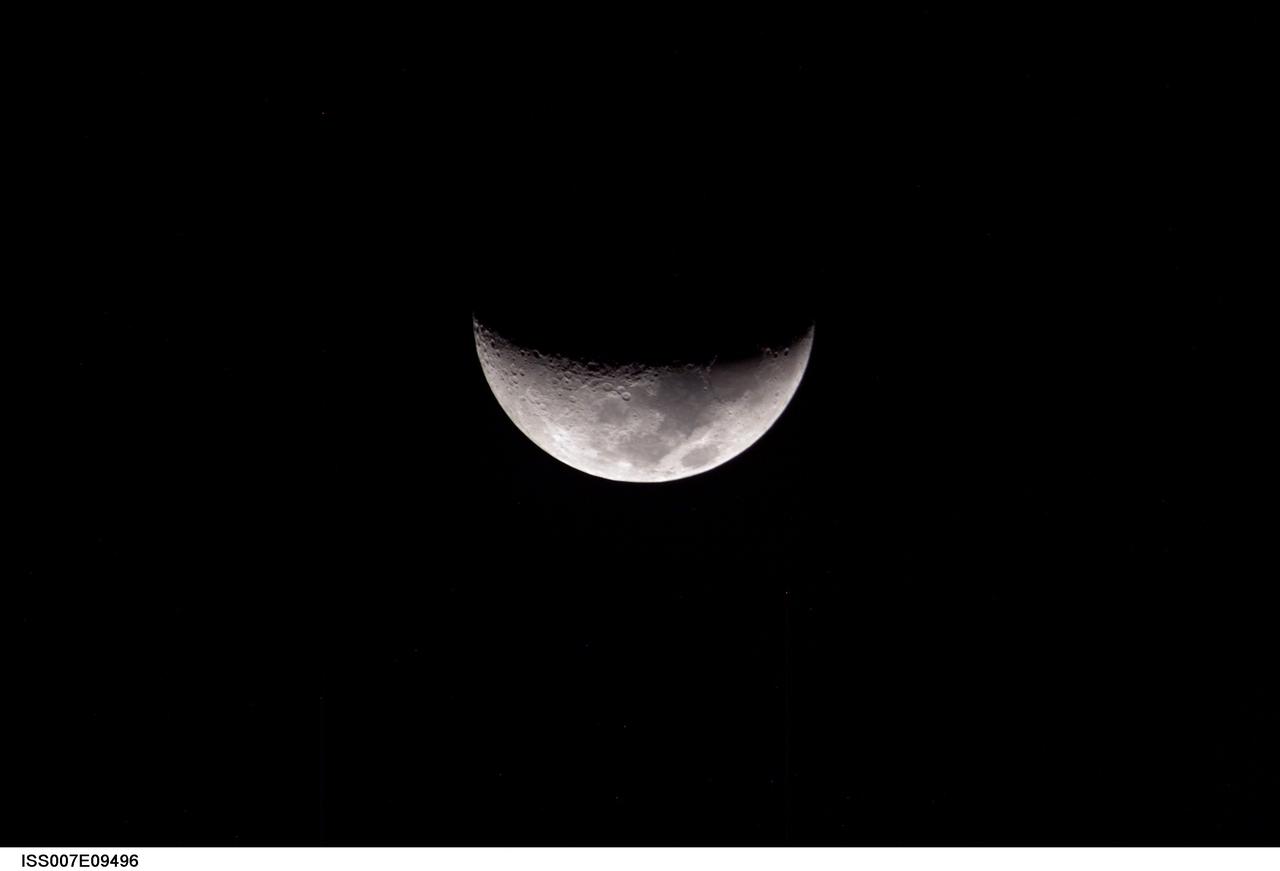
ISS007-E-09496 (5 July 2003) --- A partial moon was photographed by an Expedition 7 crewmember onboard the International Space Station (ISS).

S114-E-5632 (28 July 2005) --- Tokyo Bay area is featured in this image photographed by a STS-114 crewmember onboard the Space Shuttle Discovery.

S117-E-09604 (21 June 2007) --- The profile of the atmosphere and a setting sun are featured in this image photographed by a STS-117 crewmember onboard Space Shuttle Atlantis.
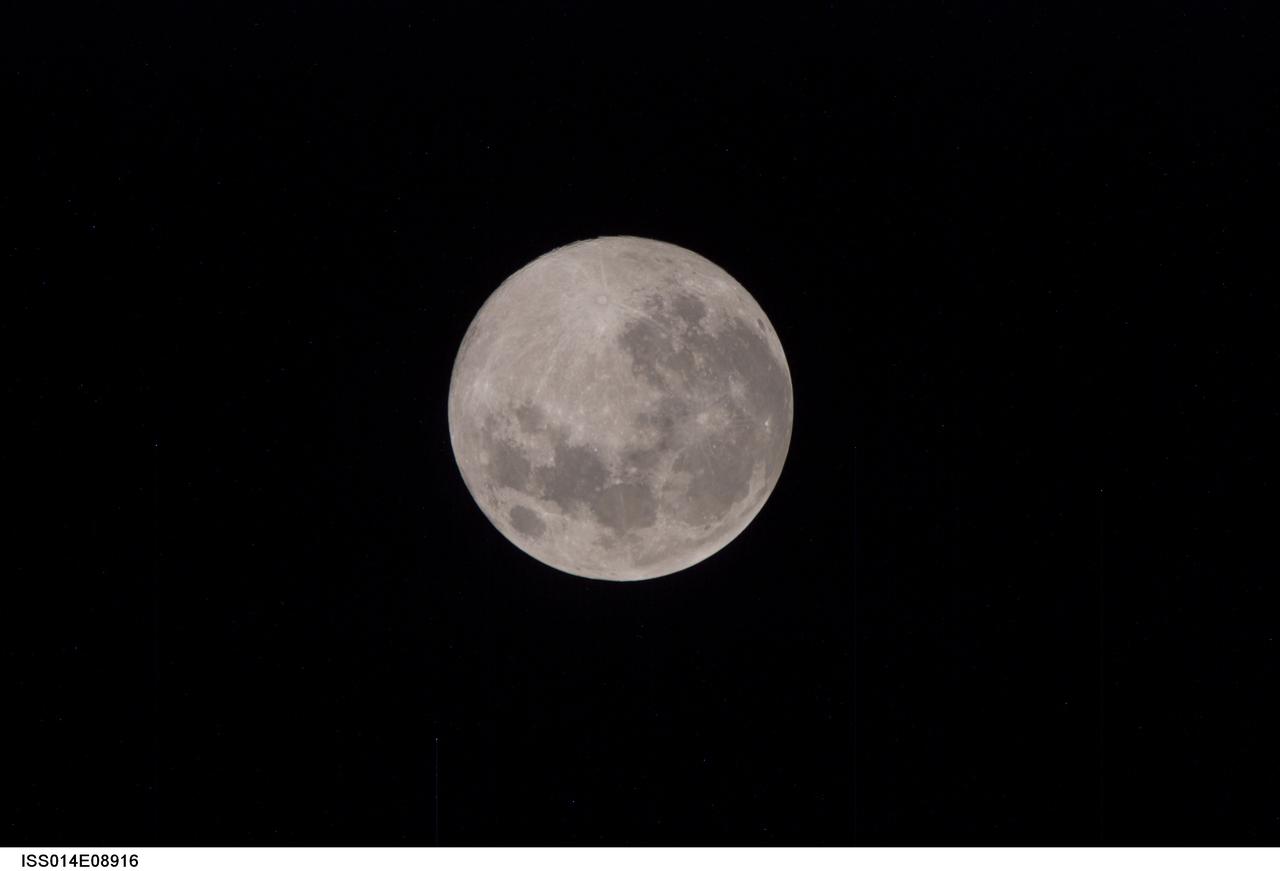
ISS014-E-08916 (4 Dec. 2006) --- This view of a full moon was photographed by an Expedition 14 crewmember onboard the International Space Station.

ISS007-E-12270 (9 August 2003) --- View of a gibbous Moon photographed by an Expedition 7 crewmember onboard the International Space Station (ISS).
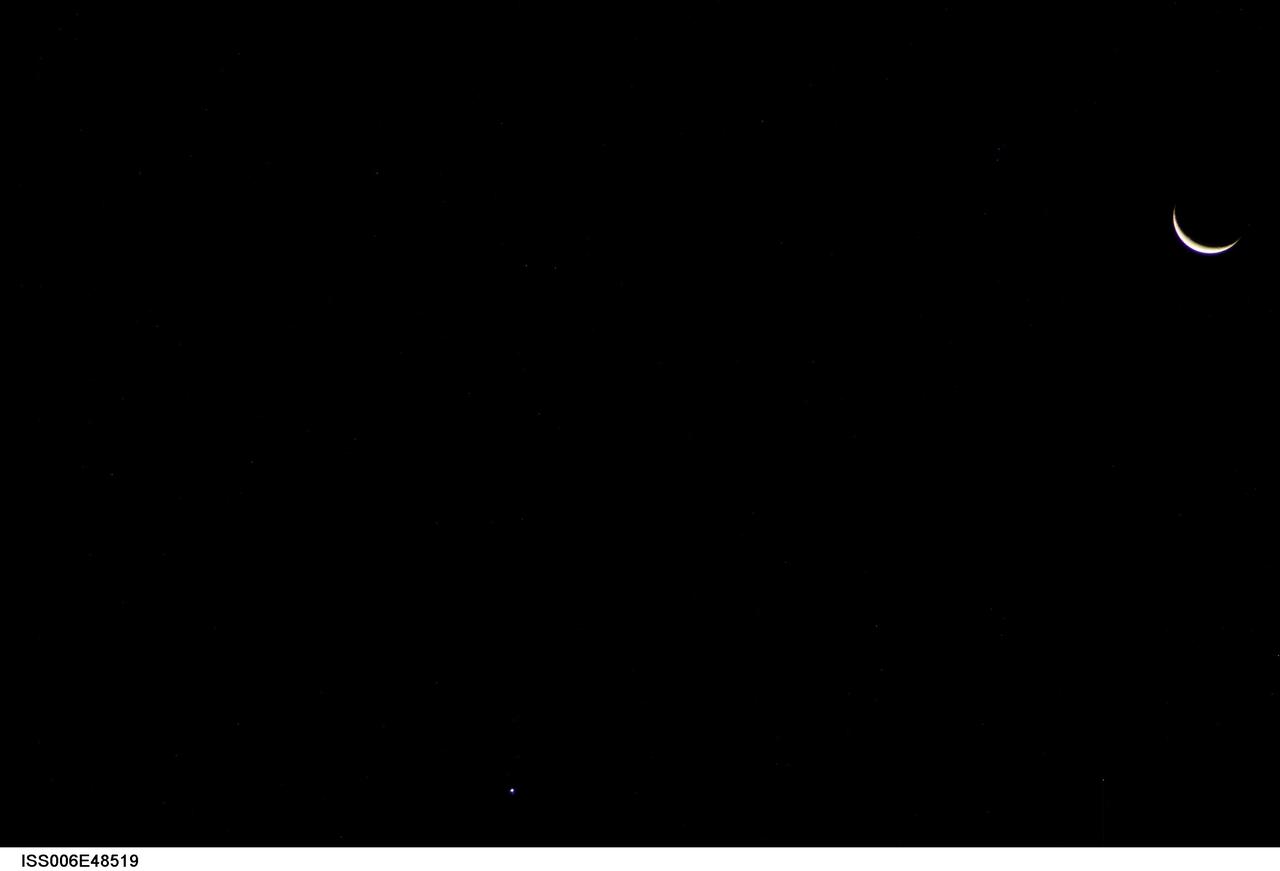
ISS006-E-48519 (28 April 2003) --- A crescent moon was photographed by an Expedition Six crewmember onboard the International Space Station (ISS).

ISS007-E-14296 (2 September 2003) --- Lightning in clouds at night is featured in this image photographed by an Expedition 7 crewmember onboard the International Space Station (ISS).
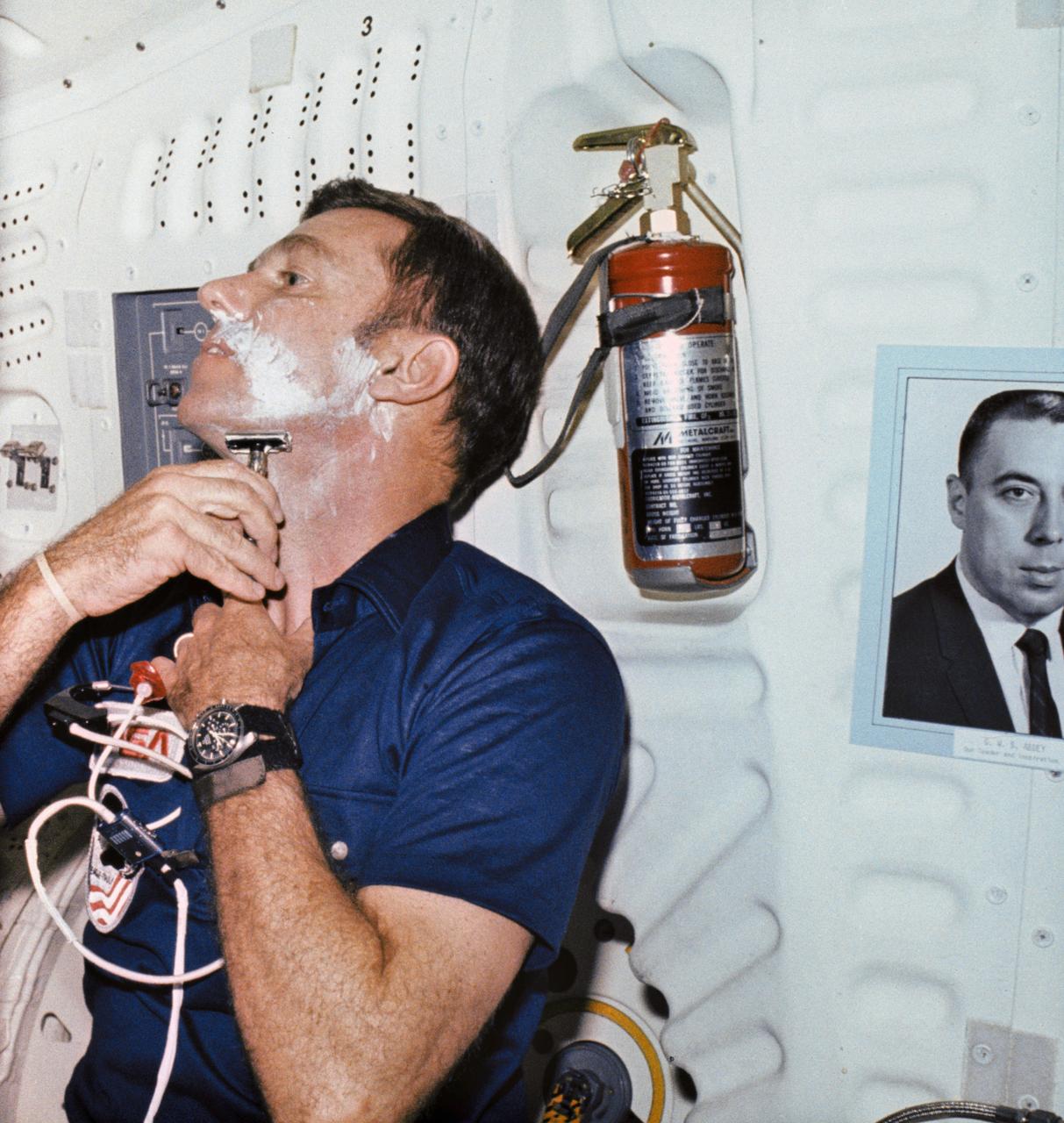
S81-39573 (12-14 Nov. 1981) --- This photograph was taken during a two-and a fourth-day stay in Earth orbit by astronauts Joe H. Engle, here shaving, and Richard H. Truly, photographer for this frame. A portion of that time was spent in the living area of middeck portion of the 122-ft-long (37 meters) vehicle as the astronauts ate, slept and took care of hygiene matters here. An onboard fire extinguisher is in upper right corner. Partially out of the frame at right edge is a photograph of George W. S. Abbey, Director of Flight Operations at Johnson Space Center. Engle is attired in an onboard constant wear type garment. Photo credit: NASA
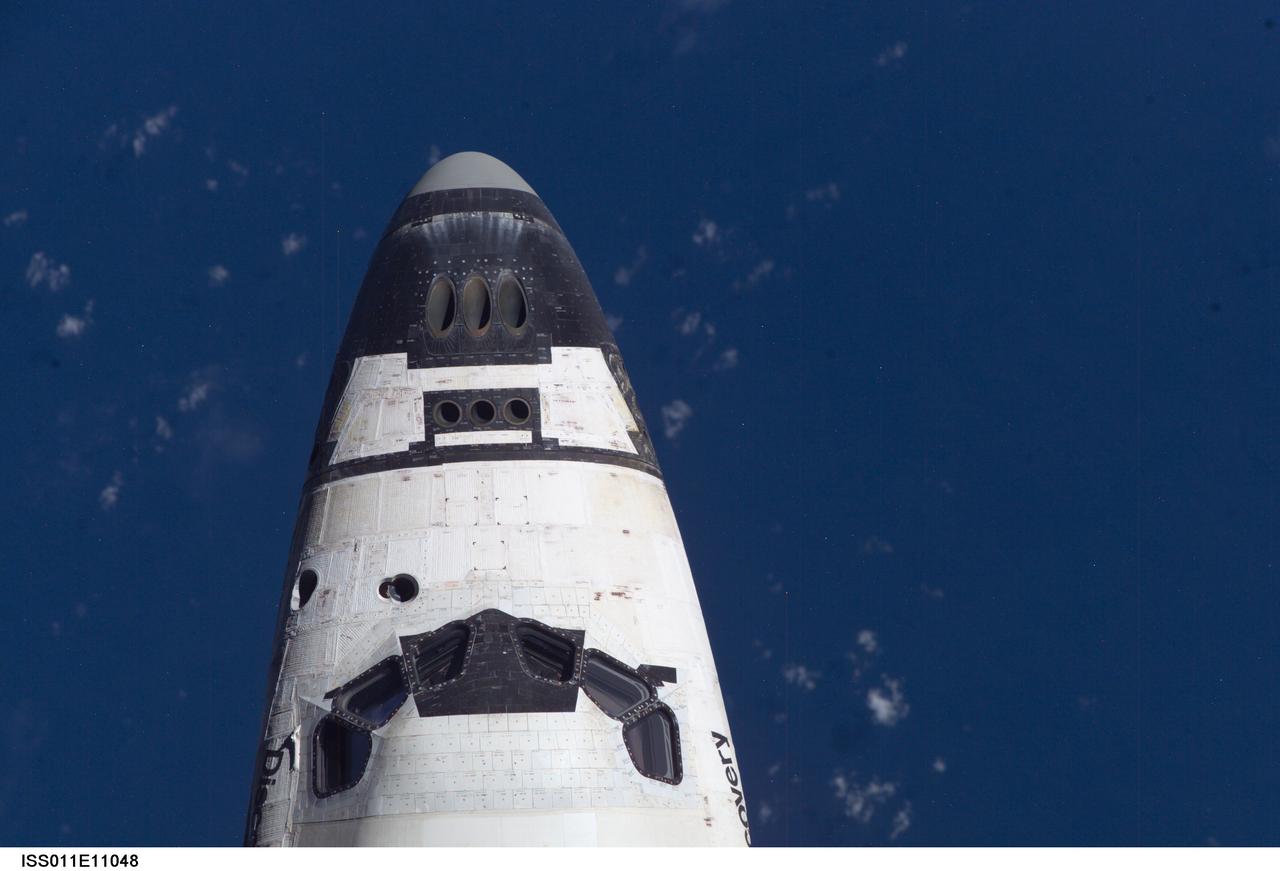
ISS011-E-11048 (28 July 2005) --- The crew cabin of the Space Shuttle Discovery was photographed by the crewmembers of the International Space Station as the two spacecraft approached each other for docking on July 28, 2005. The Expedition 12 crewmembers onboard the orbital outpost took a battery of survey photographs of the Shuttle thermal protection system.
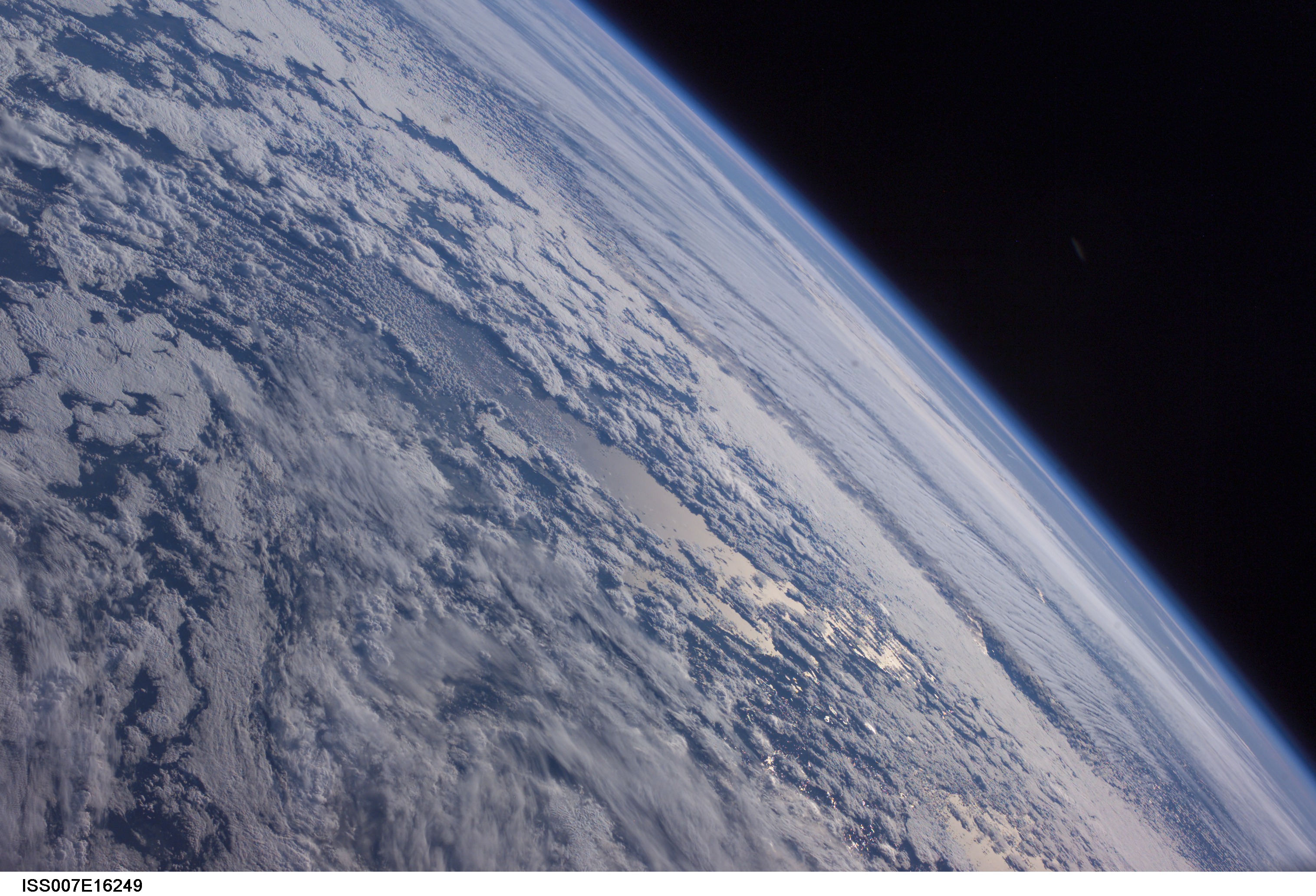
ISS007-E-16249 (4 October 2003) --- Earth’s horizon against the blackness of space is featured in this image photographed by an Expedition 7 crewmember onboard the International Space Station (ISS).
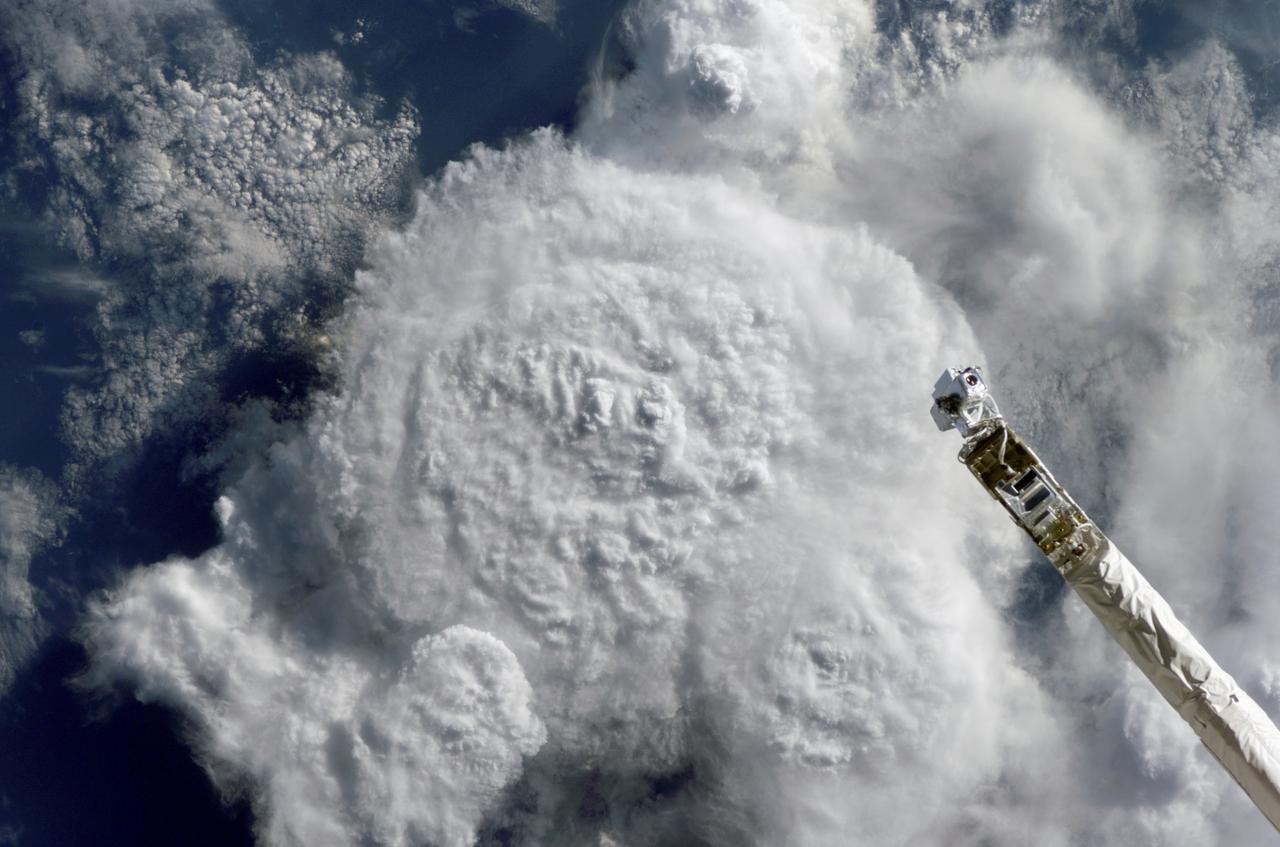
S114-E-5746 (29 July 2005) --- A mass of storm clouds was photographed by a STS-114 crewmember onboard the Space Shuttle Discovery. Part of the Orbiter Boom Sensor system end effector is also visible in the frame.
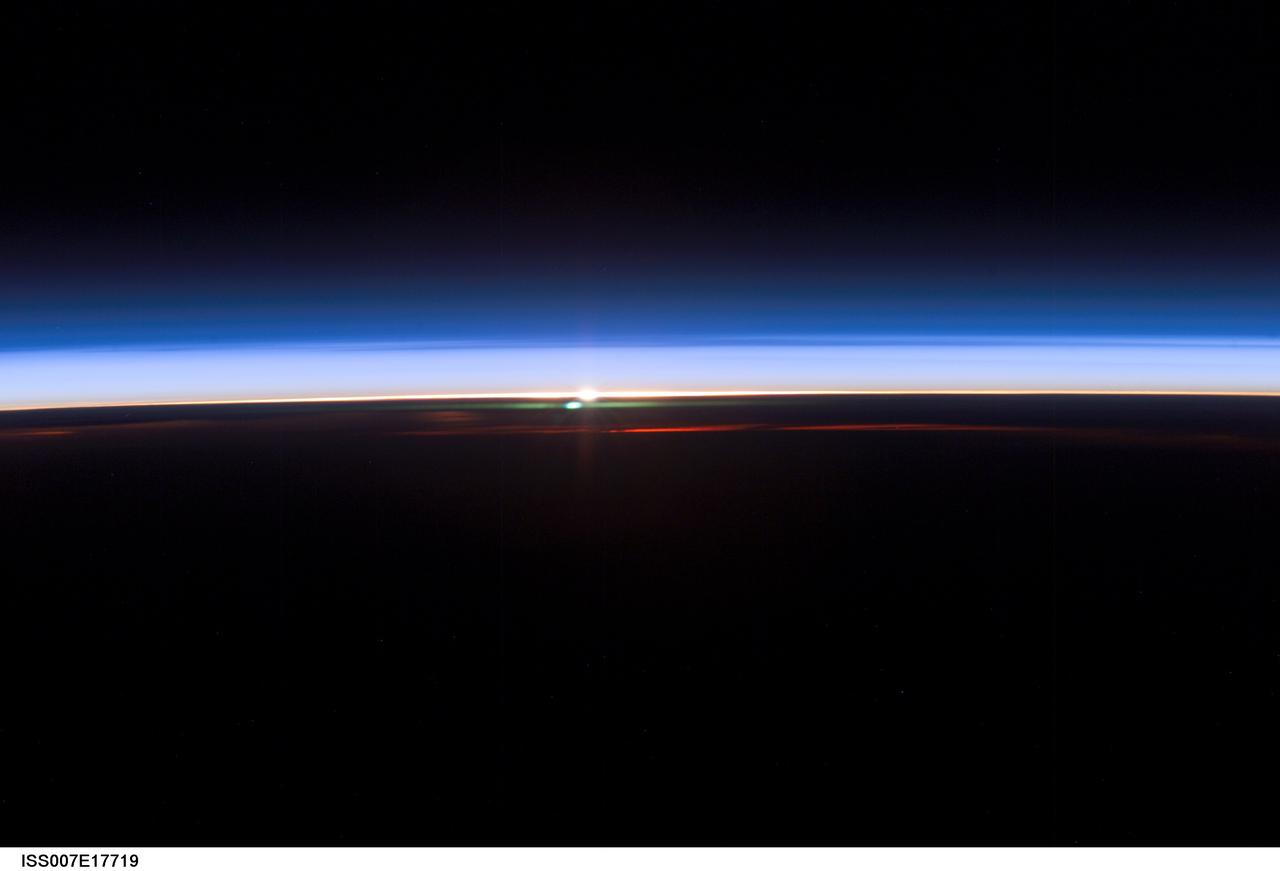
ISS007-E-17719 (20 October 2003) --- The airglow above Earth’s horizon was photographed by an Expedition 7 crewmember onboard the International Space Station (ISS).
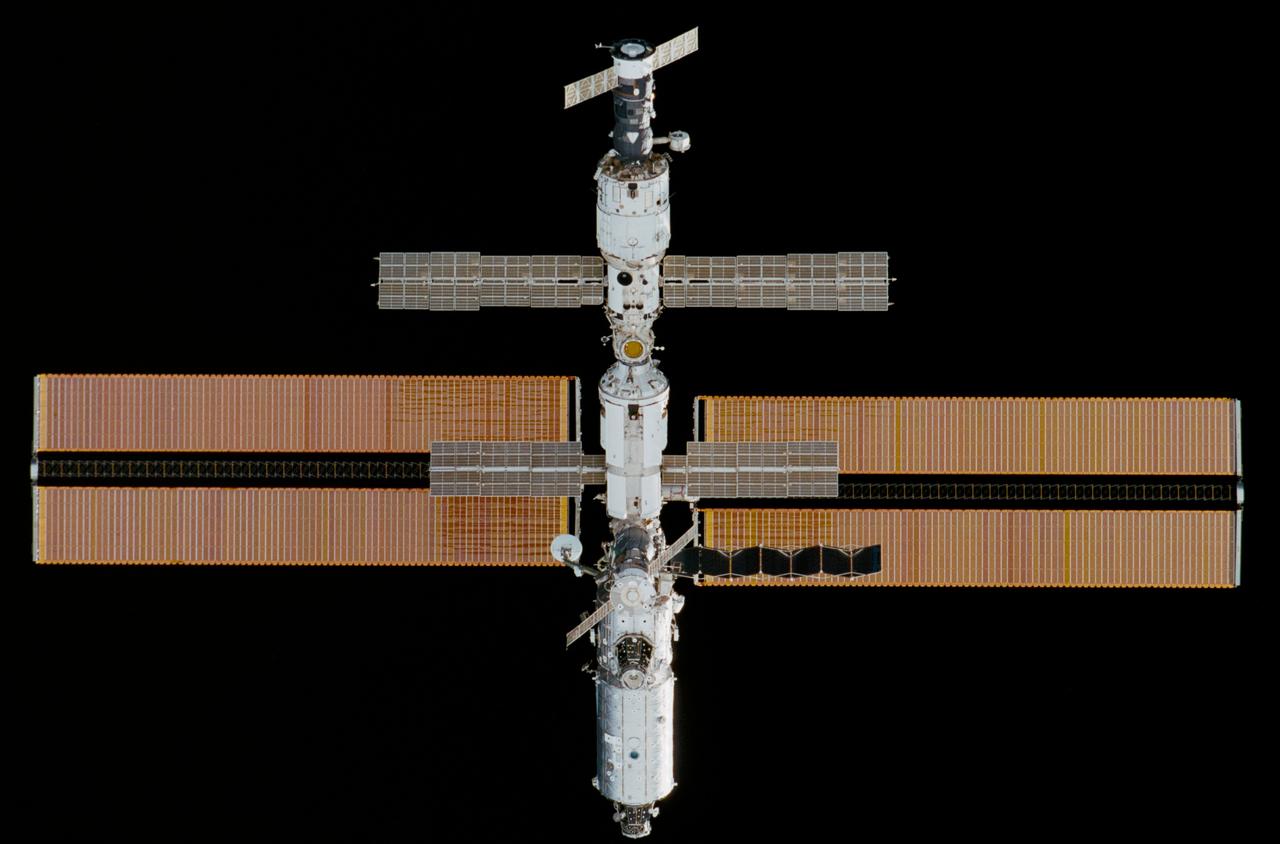
STS102-329-037 (8-21 March 2001)--- Backdropped against the blackness of space, the International Space Station (ISS) was photographed with a 35mm camera by one of the astronauts onboard the Discovery following separation of the station and the shuttle.
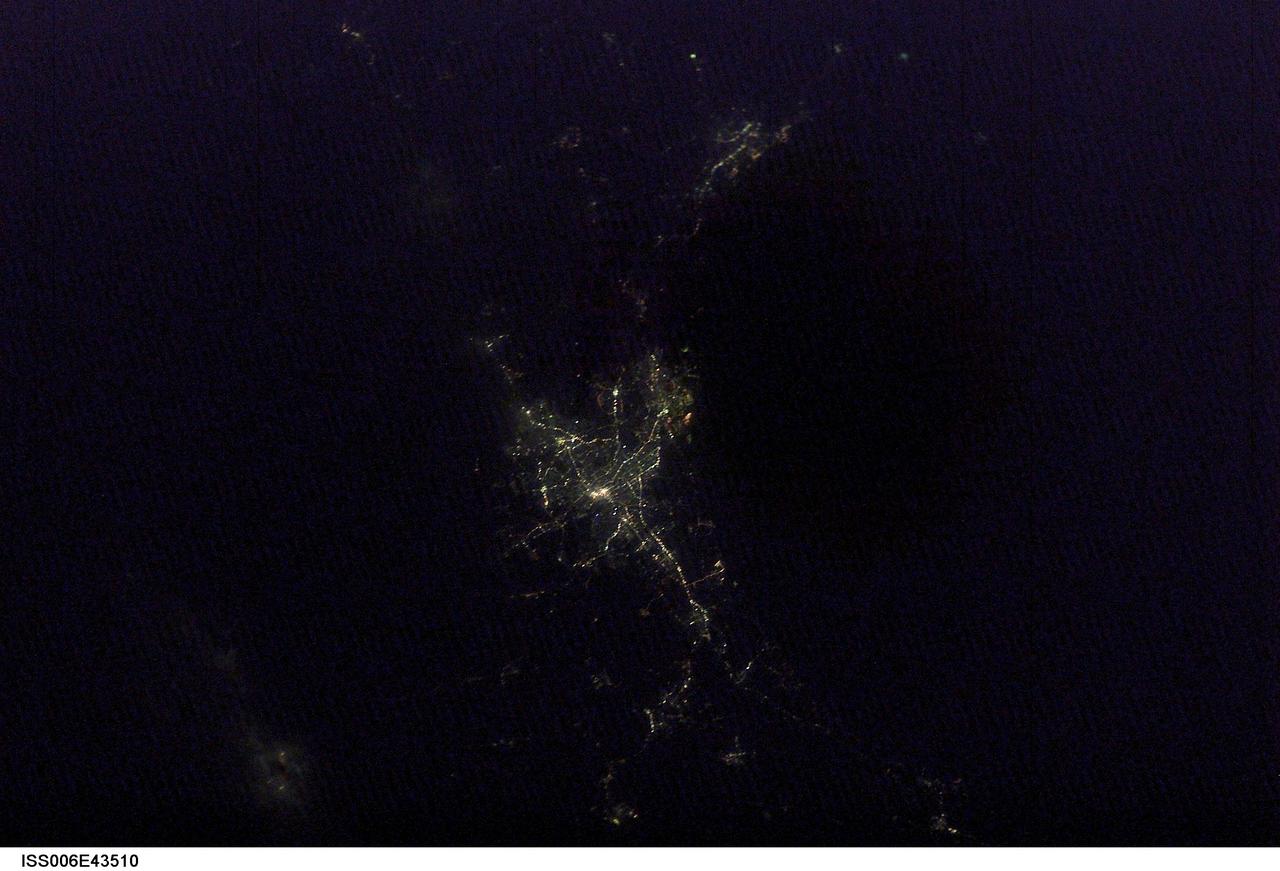
ISS006-E-43510 (6 April 2003) --- Photographed by one of the Expedition 6 crew members onboard the International Space Station 220 miles above Earth, this night view is of the city lights of Sendai, Japan.
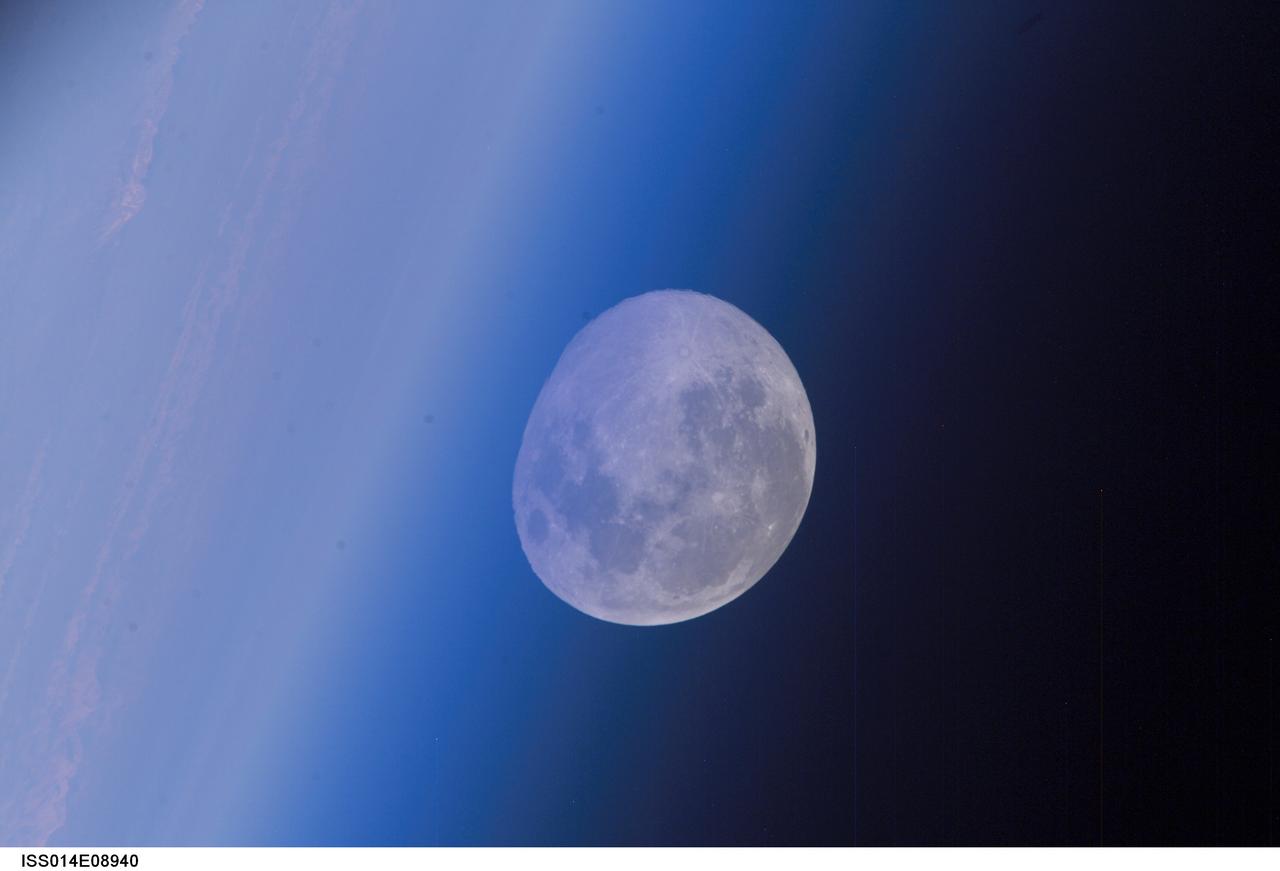
ISS014-E-08940 (4 Dec. 2006) --- This distorted view of a full moon intersecting Earth's horizon was photographed by an Expedition 14 crewmember onboard the International Space Station.
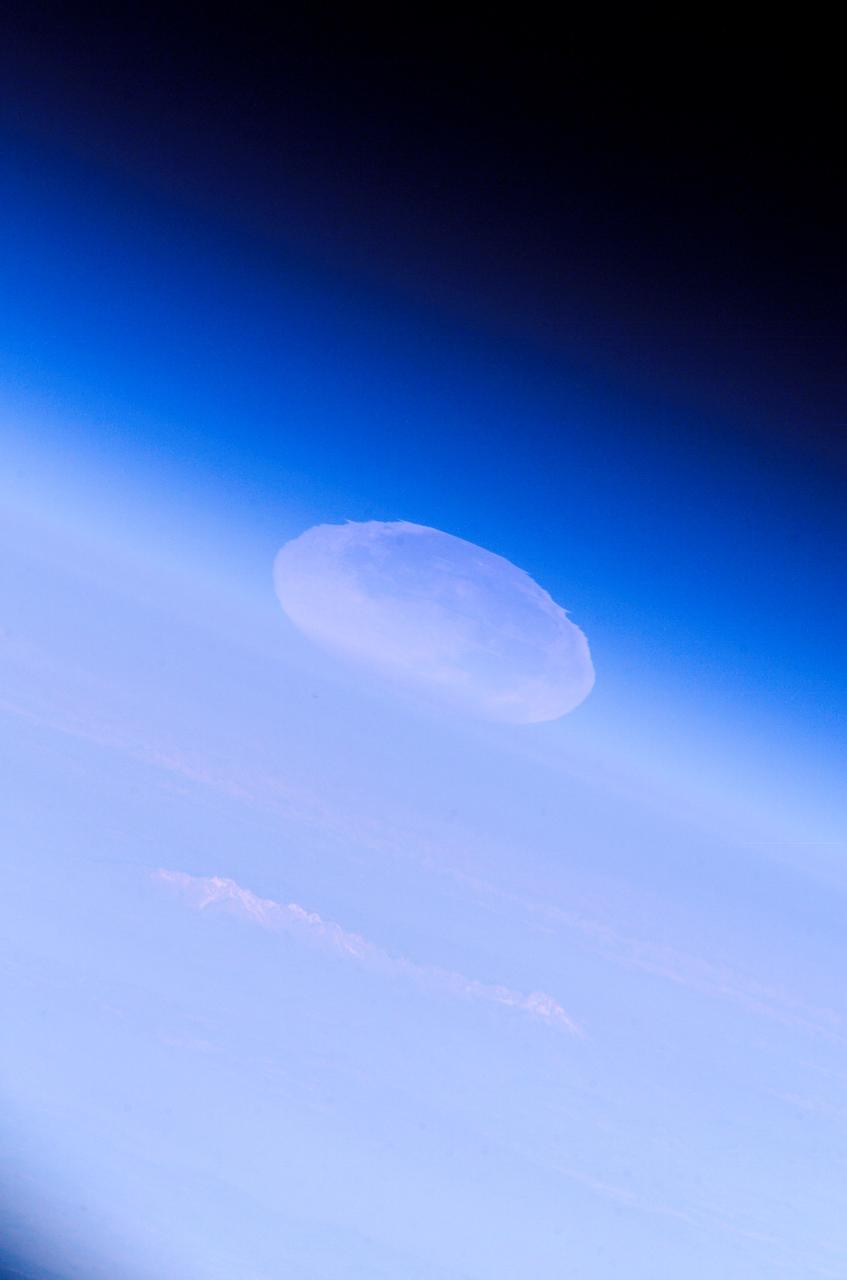
ISS014-E-08948 (4 Dec. 2006) --- This distorted view of a full moon intersecting Earth's horizon was photographed by an Expedition 14 crewmember onboard the International Space Station.
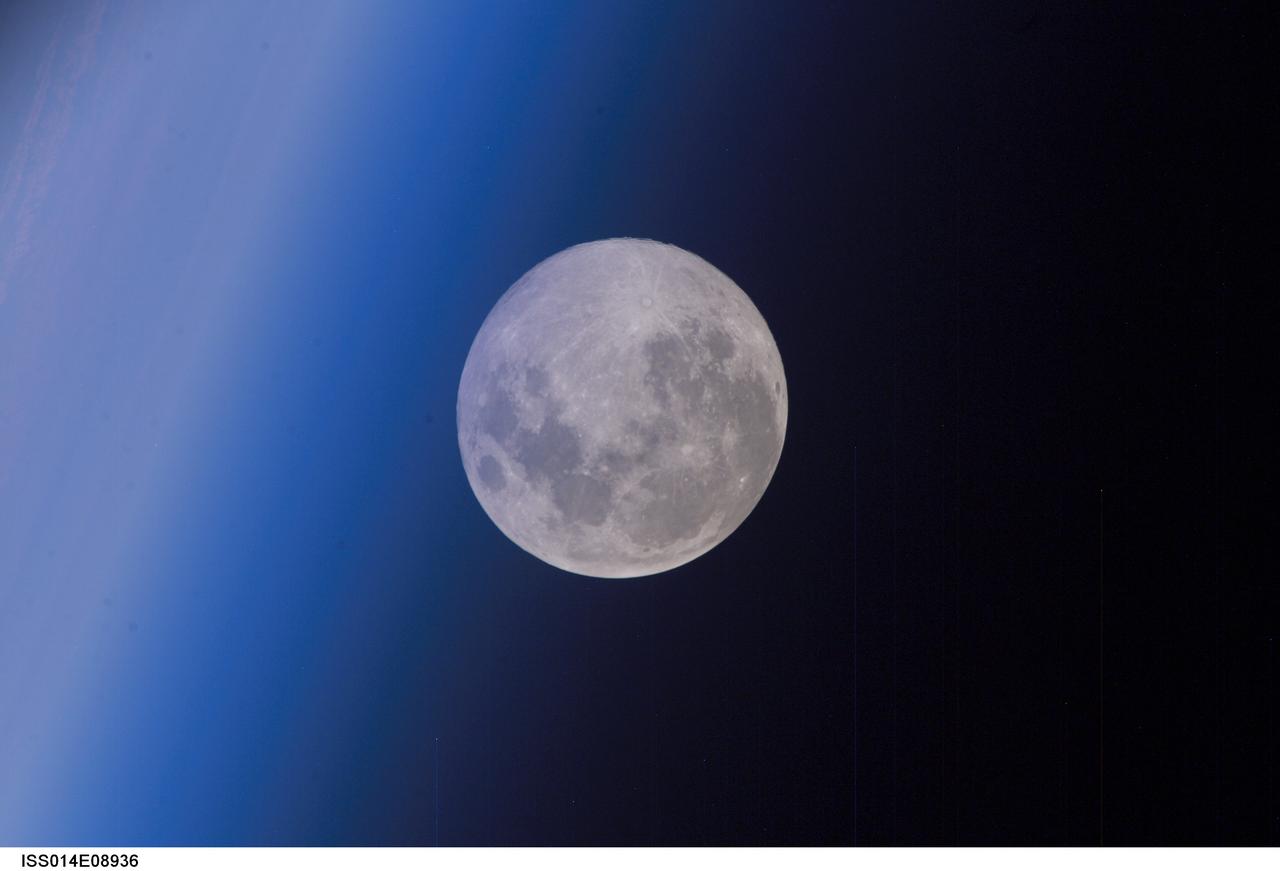
ISS014-E-08936 (4 Dec. 2006) --- This view of a full moon was photographed by an Expedition 14 crewmember onboard the International Space Station. Earth's horizon and airglow are visible at left.
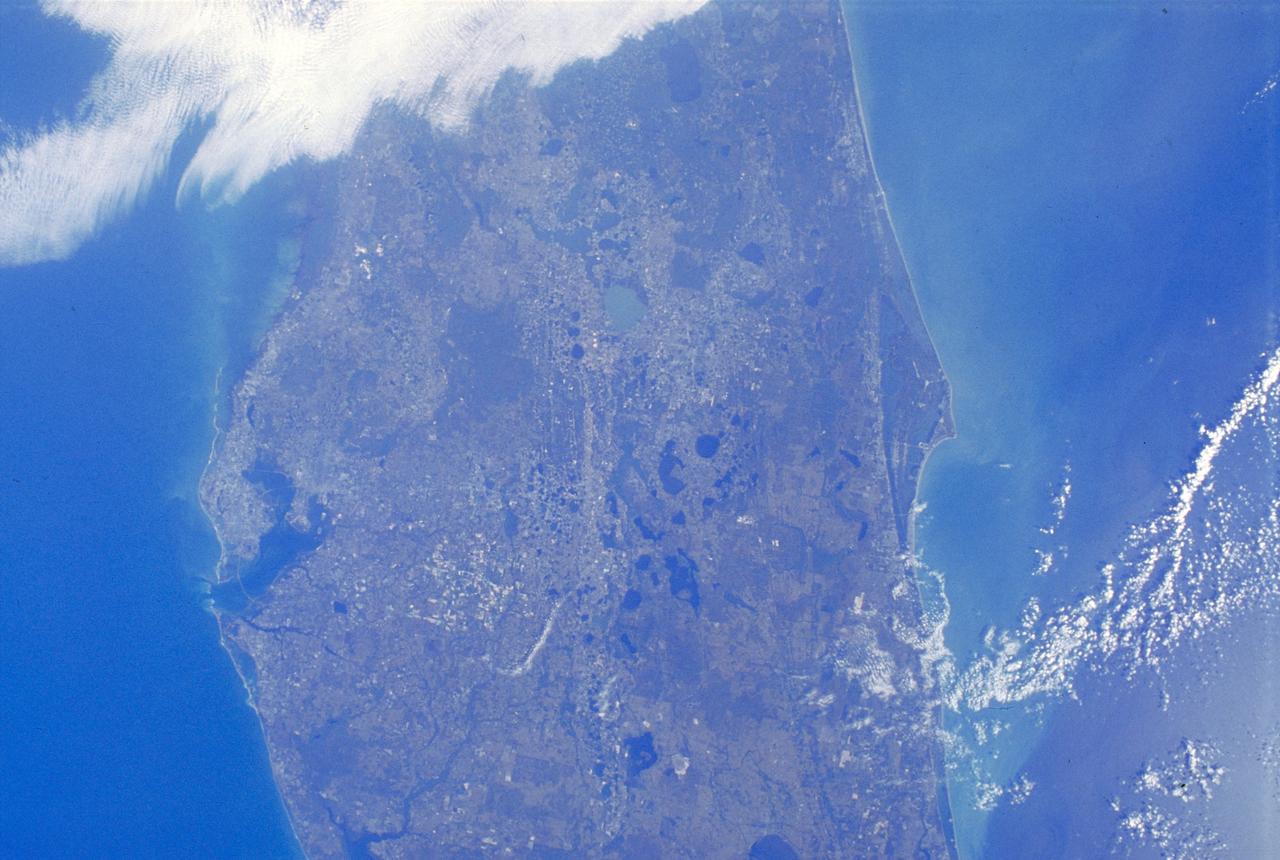
STS-29 ONBOARD - The crew of space shuttle mission STS-29 took thousands of still photographs during their five days in orbit, including this view of south/central Florida.

ISS007-E-14971 (13 September 2003) --- Earth’s horizon against the blackness of space is featured in this image photographed by an Expedition 7 crewmember onboard the International Space Station (ISS).
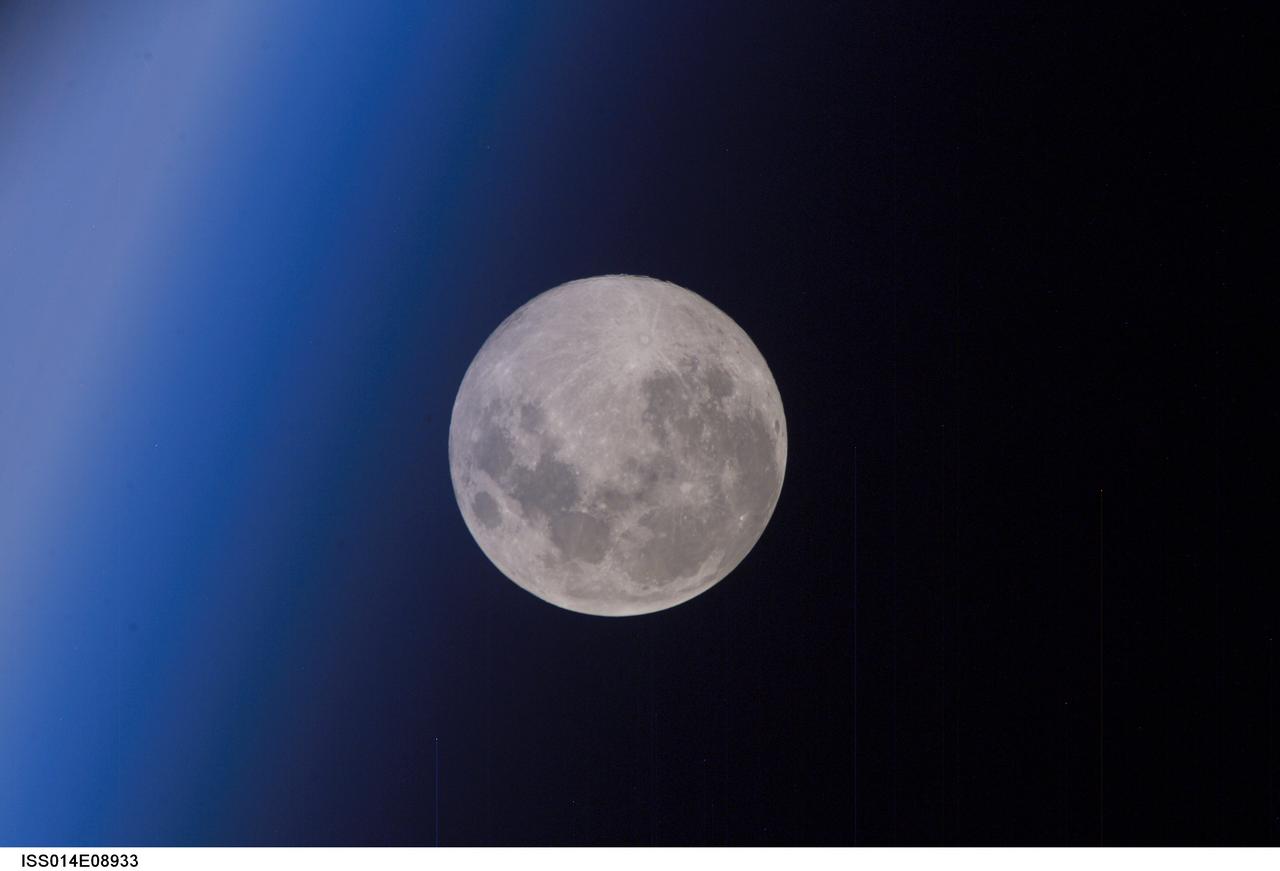
ISS014-E-08933 (4 Dec. 2006) --- This view of a full moon was photographed by an Expedition 14 crewmember onboard the International Space Station. Earth's horizon and airglow are visible at left.
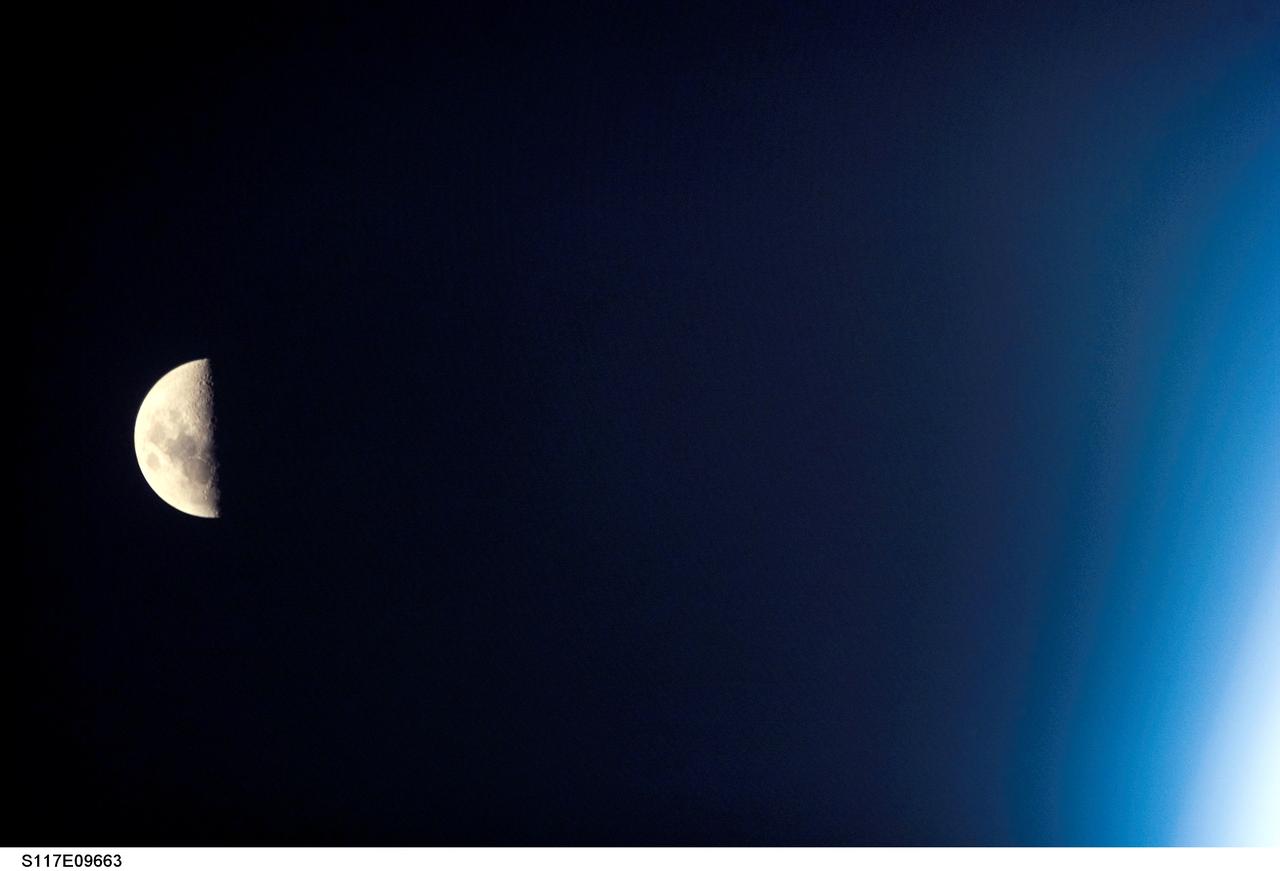
S117-E-09663 (22 June 2007) --- A gibbous moon over the airglow of Earth's atmosphere is featured in this image photographed by a STS-117 crewmember onboard Space Shuttle Atlantis.
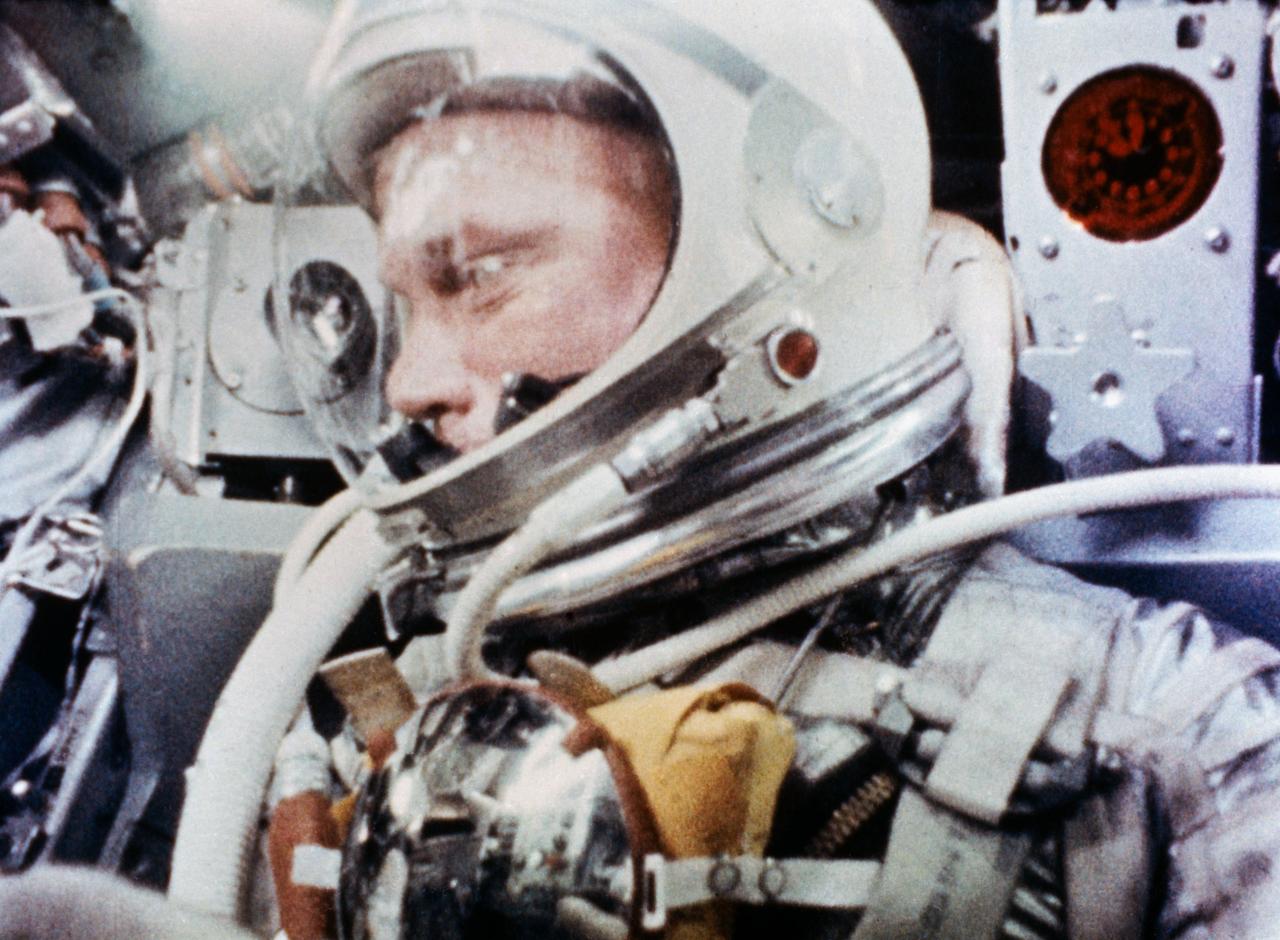
S62-00302 (20 Feb. 1962) --- A camera onboard the "Friendship 7" Mercury spacecraft photographs astronaut John H. Glenn Jr. during his Mercury-Atlas 6 spaceflight. Photo credit: NASA
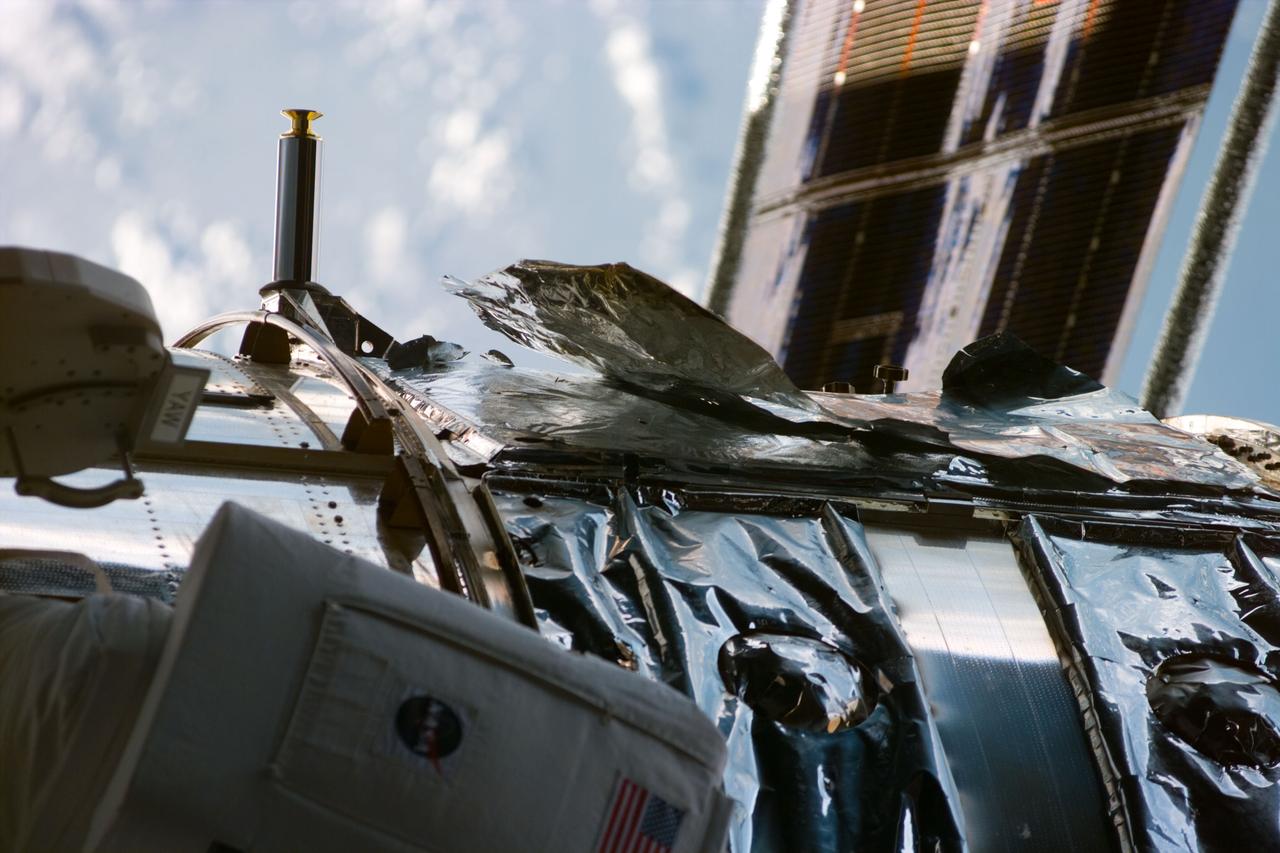
S82-E-5369 (15 Feb. 1997) --- This photograph, taken from onboard the Space Shuttle Discovery with an Electronic Still Camera (ESC) shows a tear in the thermal insulation of the Hubble Space Telescope (HST) Bay #8.
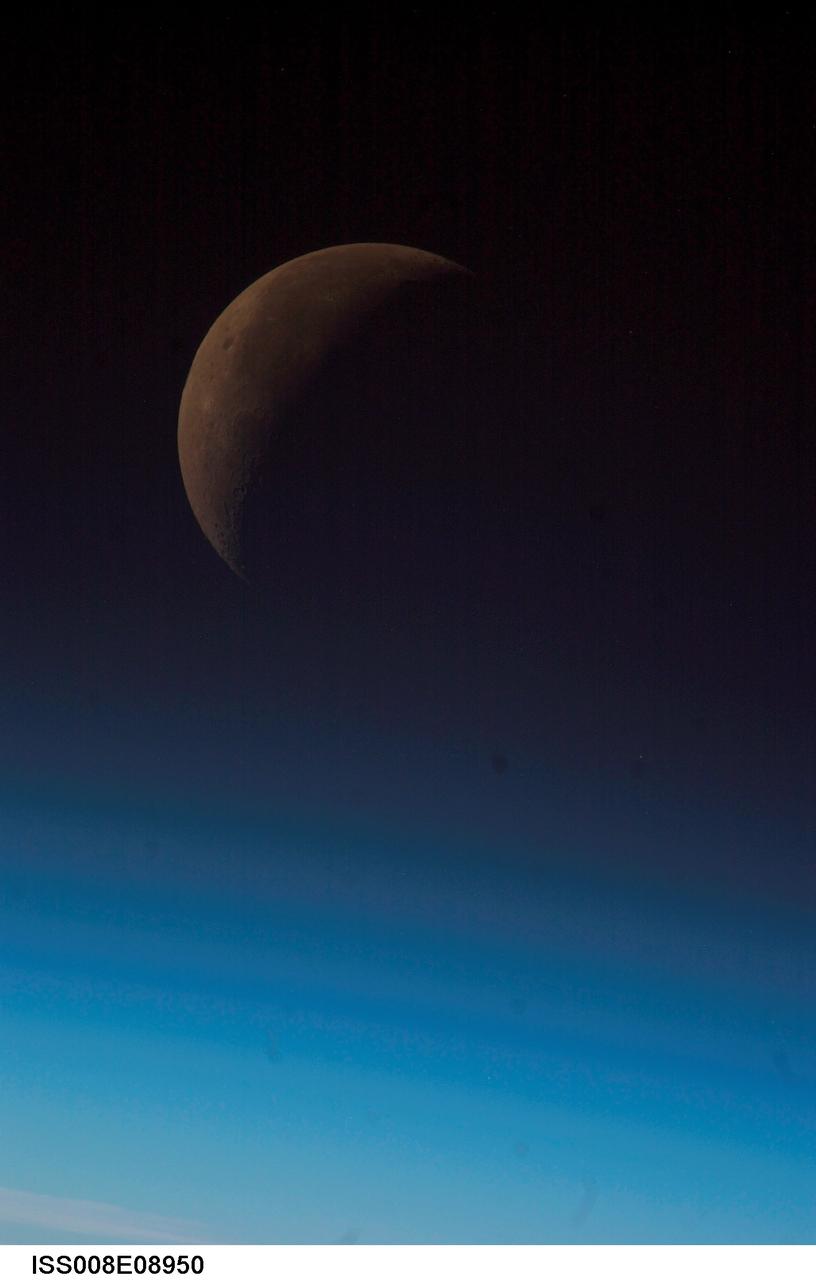
ISS008-E-08950 (December 2003) --- A partial moon is visible in this view of Earth’s horizon and airglow, photographed by an Expedition 8 crewmember onboard the International Space Station (ISS).
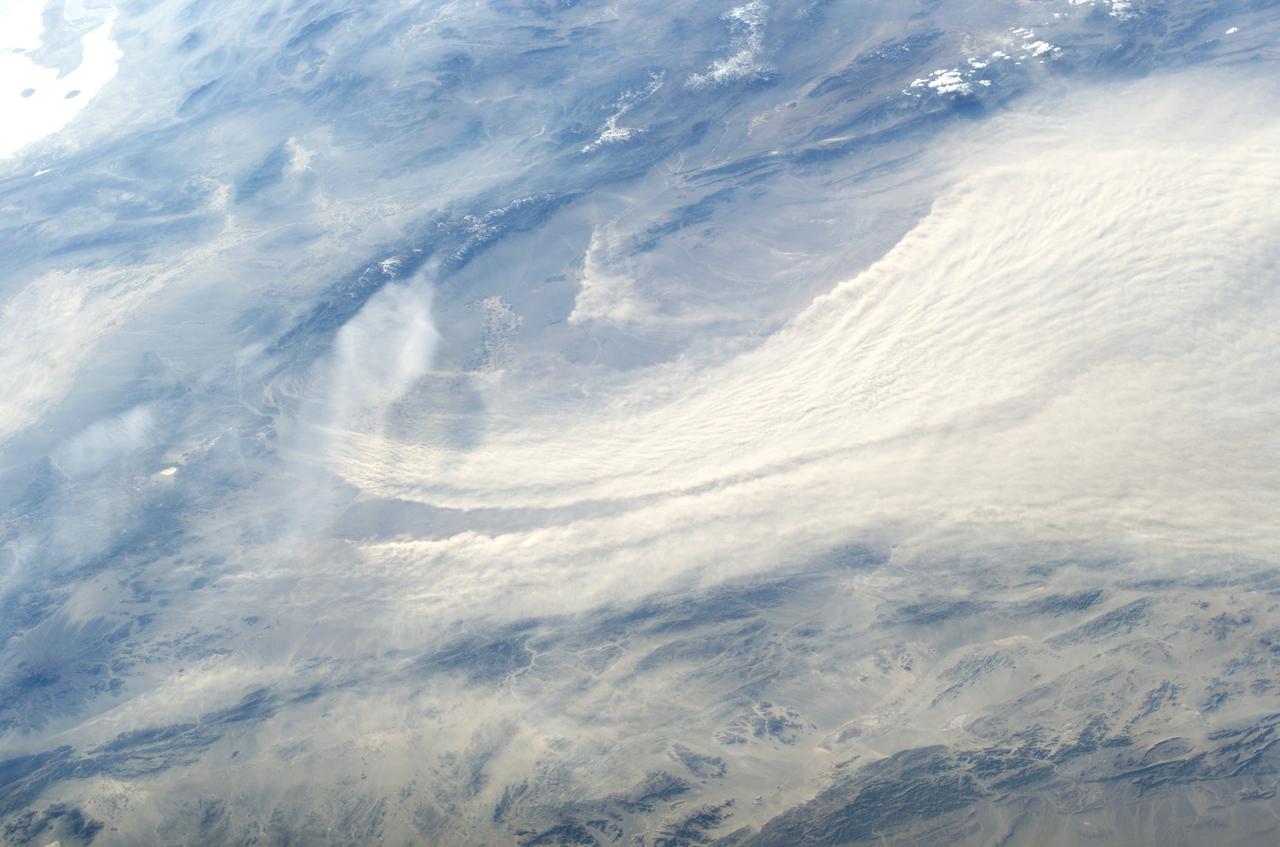
ISS008-E-16328 (15 February 2004) --- A major dust storm in the Kerman Desert, just east of the city of Bam in Southeastern Iran, was featured in this image photographed by an Expedition 8 crewmember onboard the International Space Station (ISS).
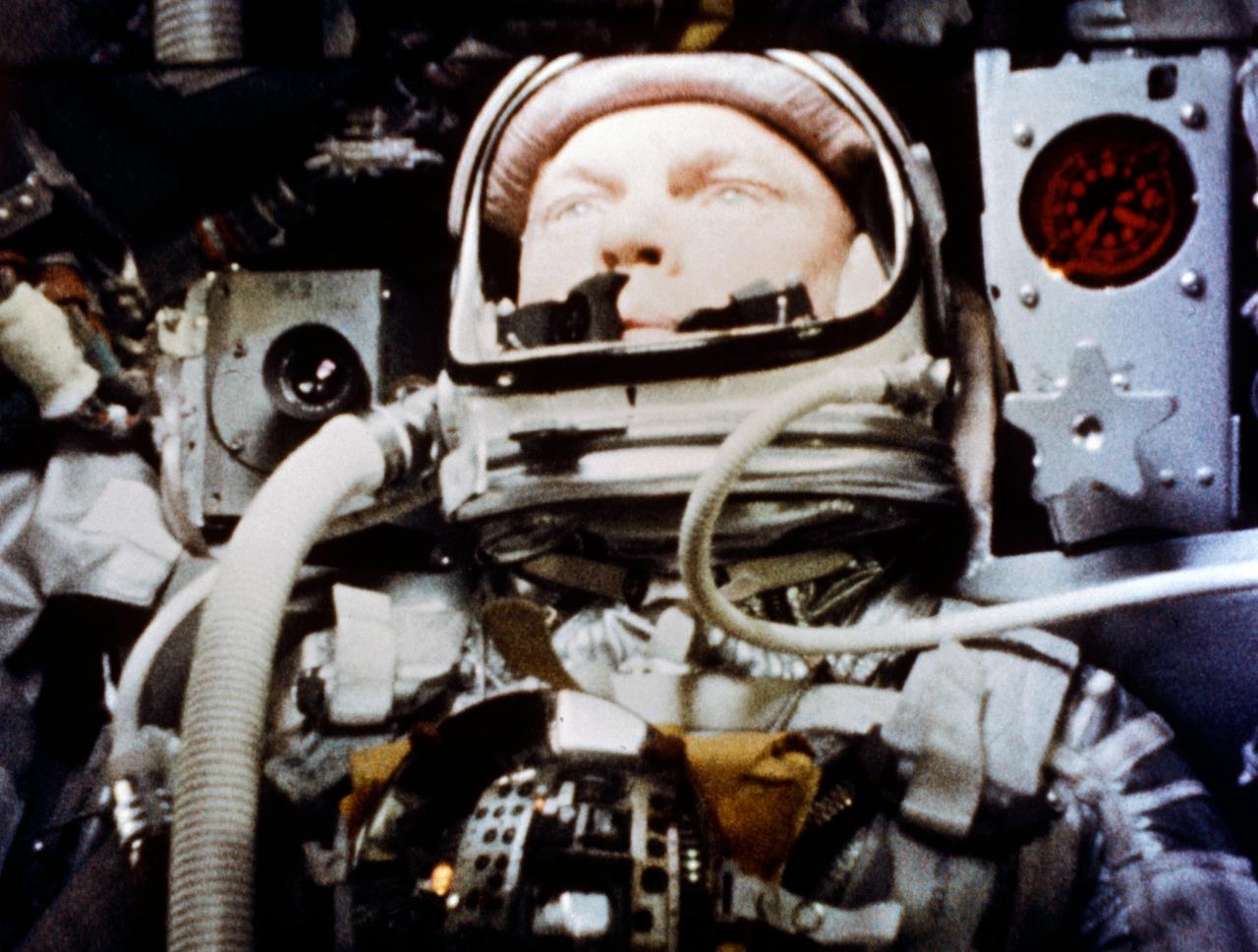
S62-00303 (20 Feb. 1962) --- A camera onboard the "Friendship 7" Mercury spacecraft photographs astronaut John H. Glenn Jr. during the Mercury-Atlas 6 spaceflight. Photo credit: NASA
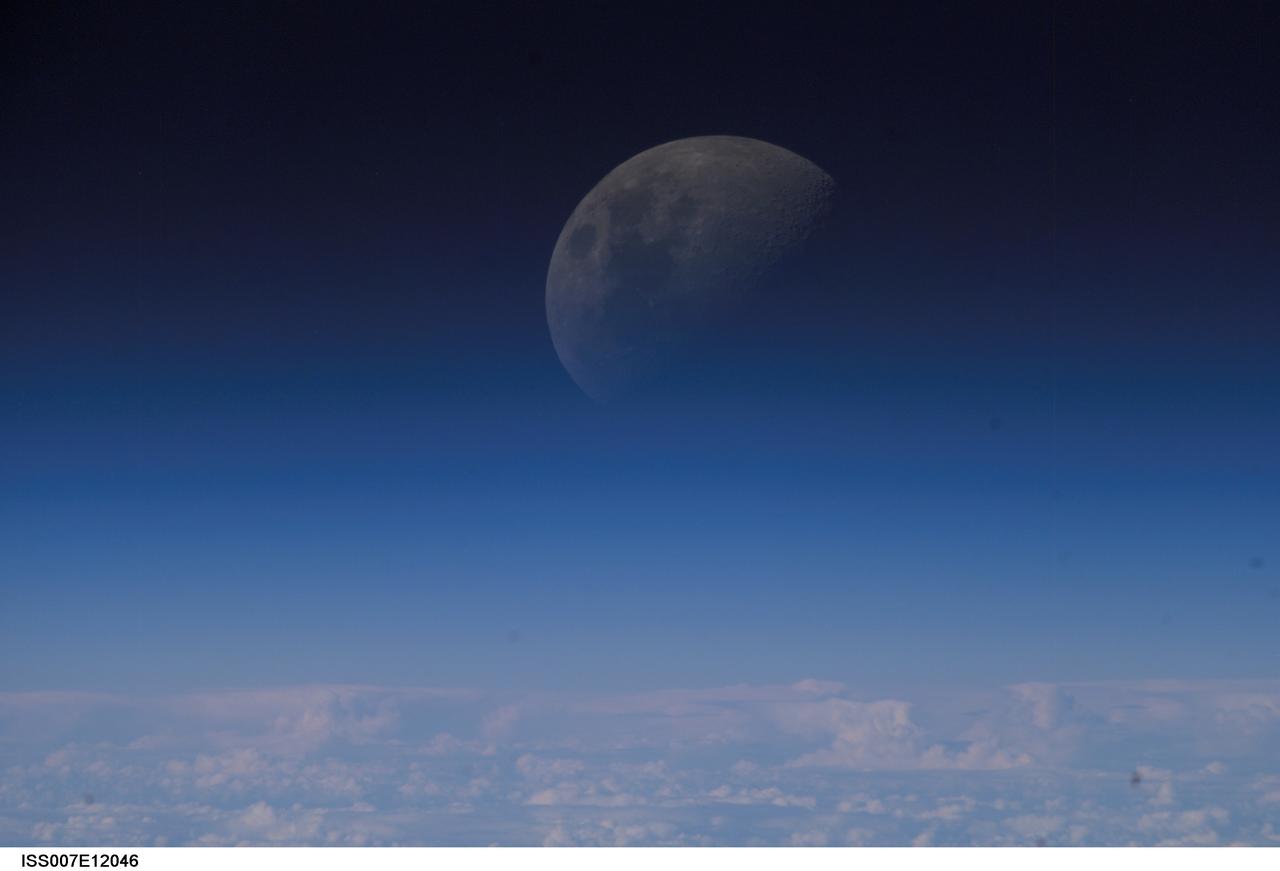
ISS007-E-12046 (5 August 2003) --- A gibbous moon is visible in this view of Earth’s horizon and airglow, photographed by an Expedition 7 crewmember onboard the International Space Station (ISS).
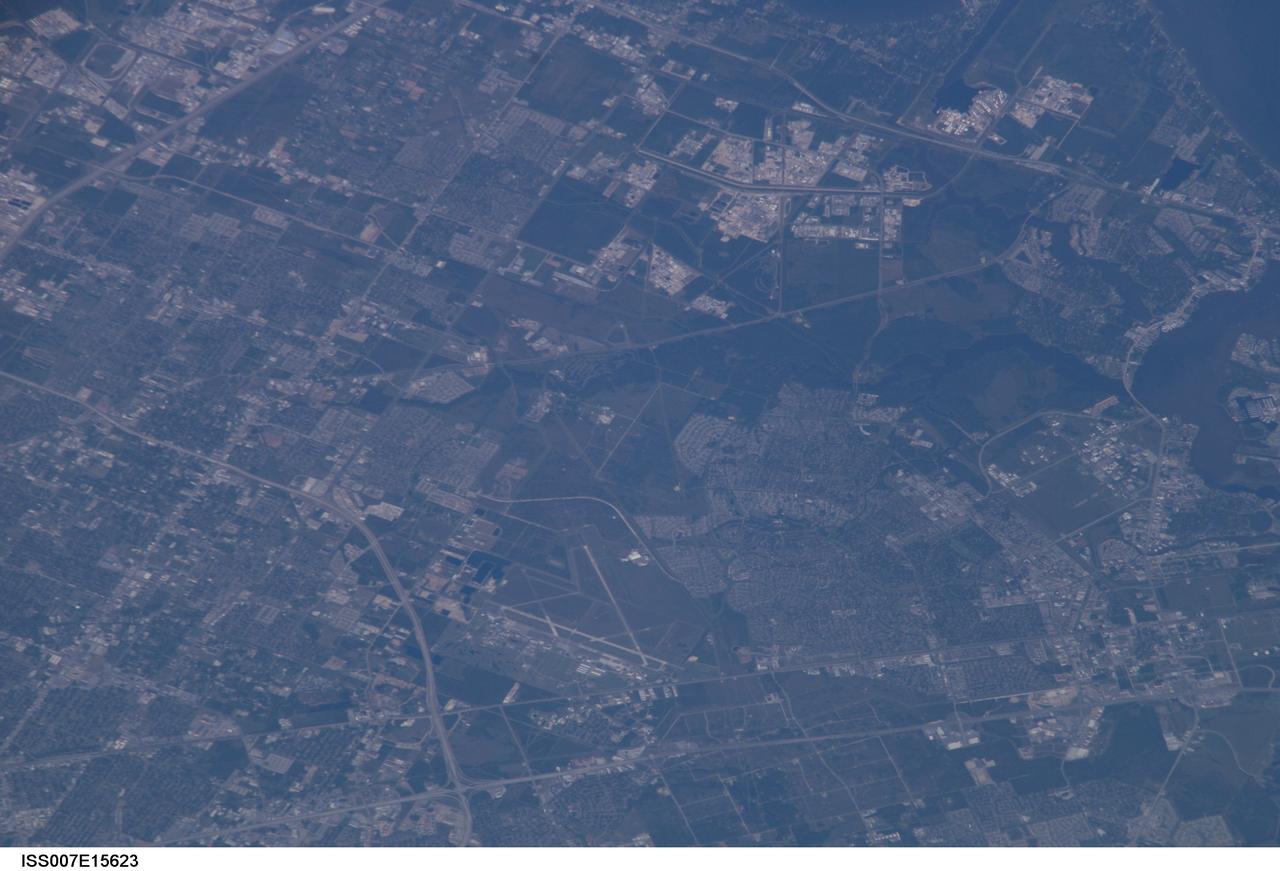
ISS007-E-15623 (28 September 2003) --- This view featuring Clear Lake area and NASA, 25 miles southeast of Houston, Texas, was photographed by an Expedition 7 crewmember onboard the International Space Station (ISS).
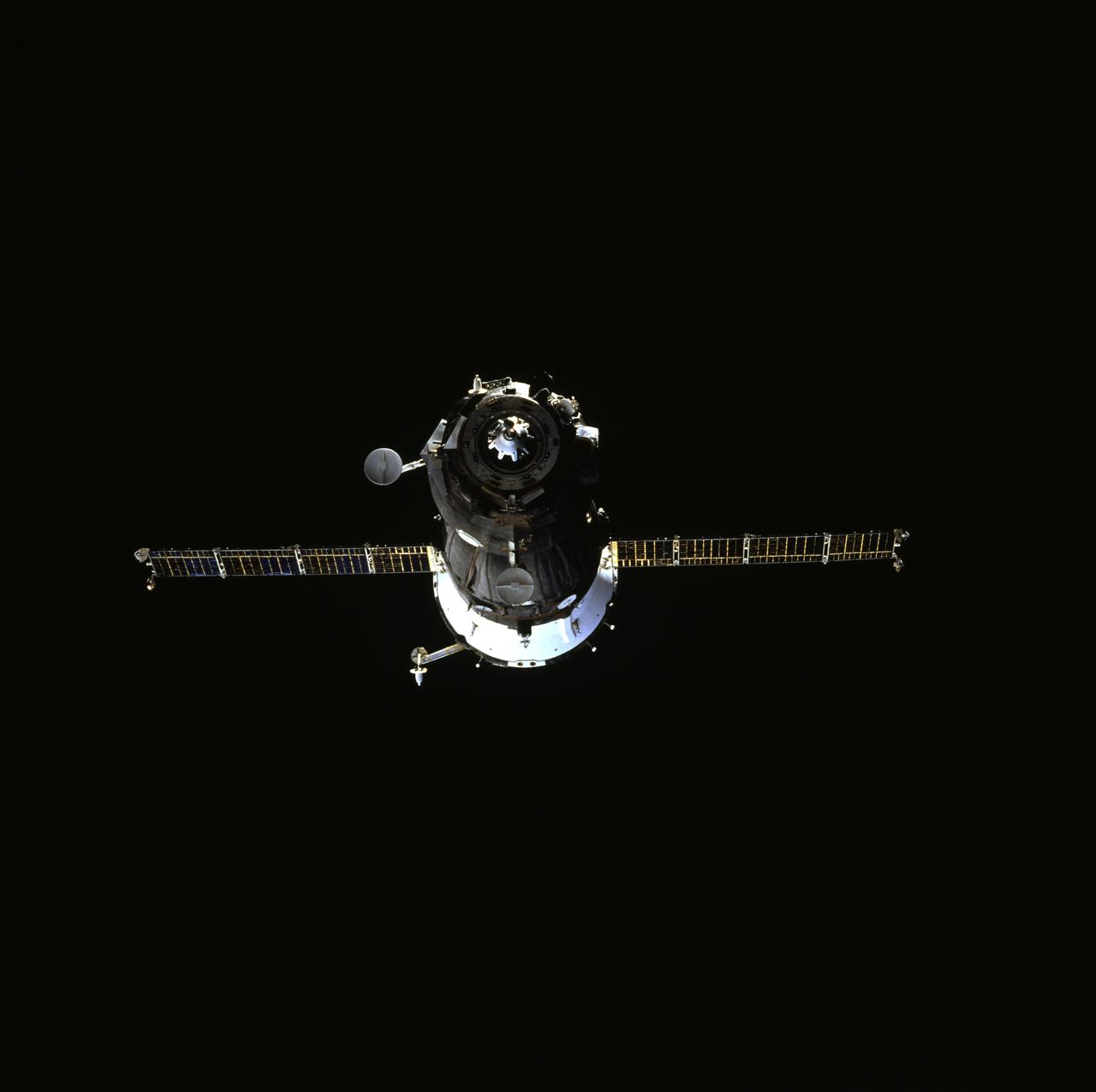
STS071-704-091 (4 July 1995) --- Russia's Soyuz spacecraft is backdropped against the darkness of space, as photographed from the space shuttle Atlantis. Onboard Soyuz were Mir-19 cosmonauts Anatoly Y. Solovyev and Nikolai M. Budarin. The 70mm photograph was recorded during the Space Shuttle Atlantis' undocking operations from the Russian Mir Space Station on July 4, 1995. Soyuz was temporarily undocked and backed away from the Mir/Atlantis tandem as the Space Shuttle Atlantis prepared to separate from the linkup. Six NASA astronauts and two cosmonauts were onboard Atlantis as it separated from Mir, which will now become the home for the two-member Mir-19 crew.
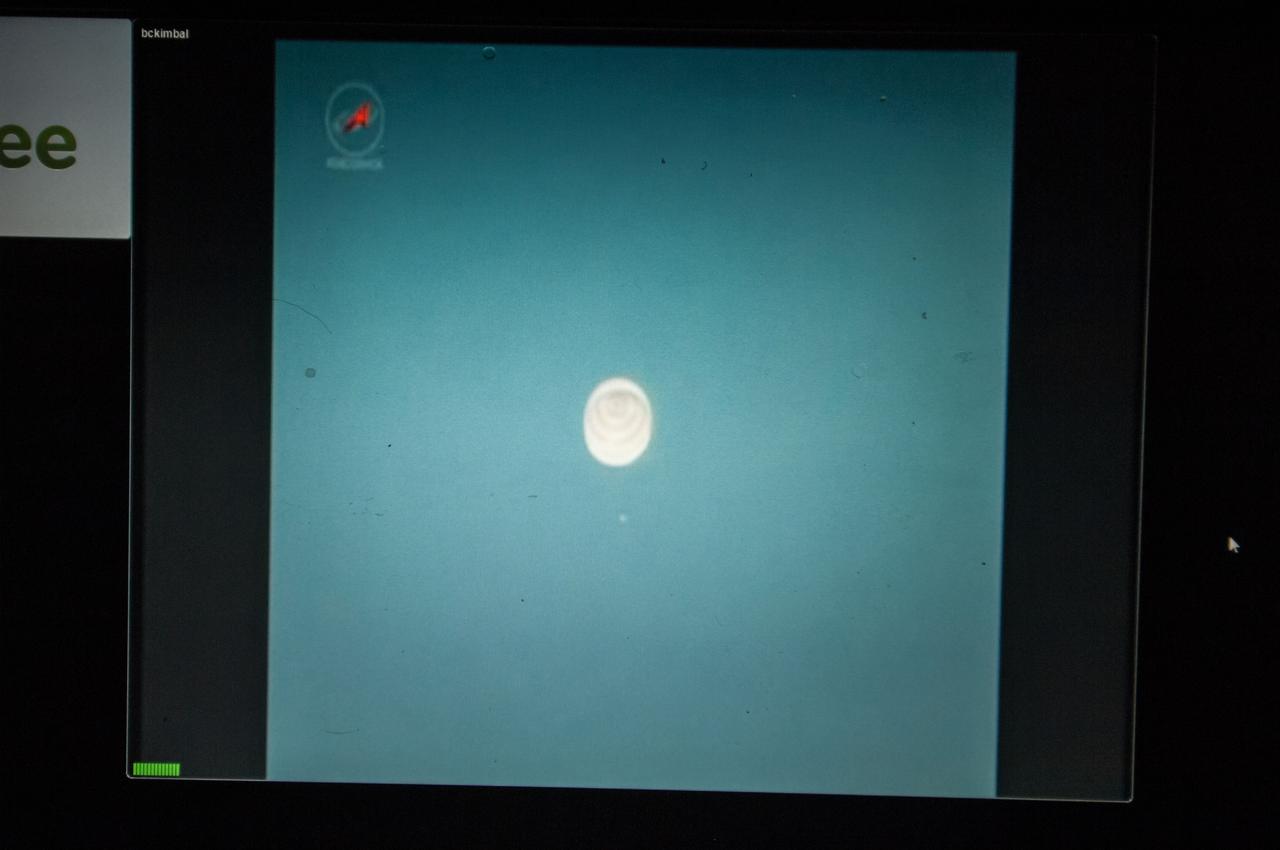
ISS041-E-000003 (11 Sept. 2014) --- A close-up view of a computer monitor onboard the International Space Station, photographed by an Expedition 41 crew member, shows the landing of the Soyuz TMA-12M spacecraft with NASA astronaut Steve Swanson, Expedition 40 commander; Russian cosmonaut Alexander Skvortsov, Soyuz commander and flight engineer; and Russian cosmonaut Oleg Artemyev, flight engineer, onboard.
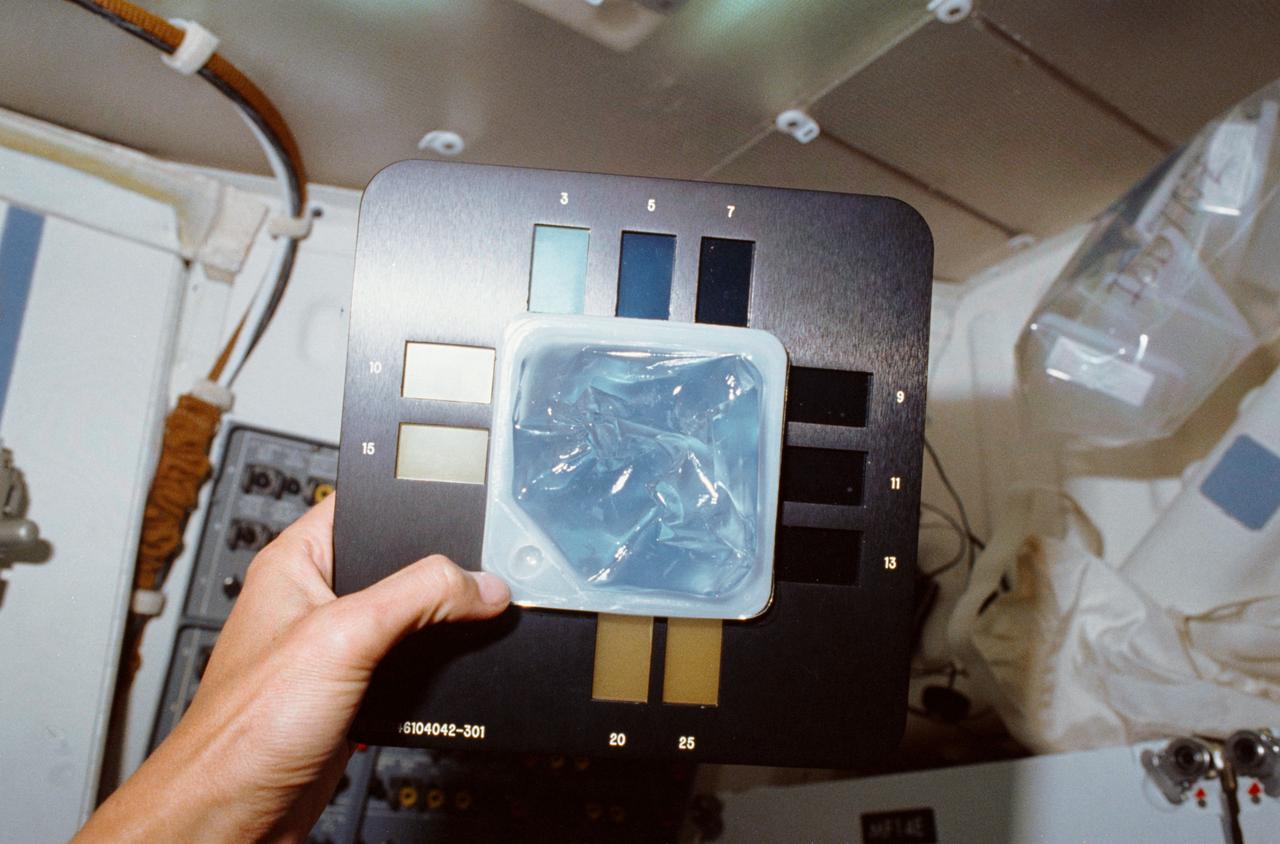
STS034-10-014 (18-23 Oct. 1989) --- An onboard 35mm camera provides a closeup view of an STS-34 beverage container doubling as an experiment module for a test involving iodine concentration in onboard water. The examination called for the adding of starch to a specimen of Atlantis' fuel-cell produced water. The liquid was then compared against the color chart for determining the degree of iodine content. The experiment was designed by Terry H. Slezak of JSC's Photographic Technology and Television Division.
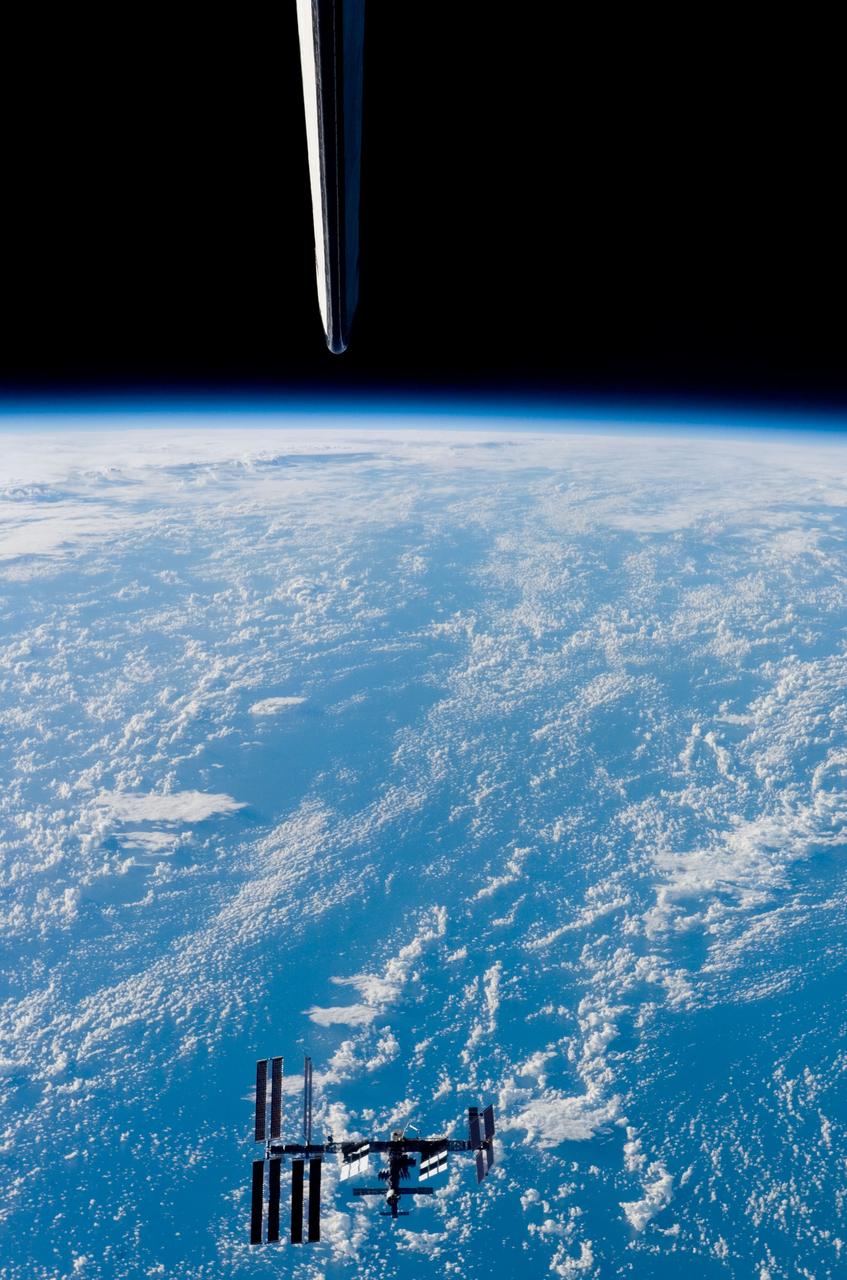
S123-E-009202 (24 March 2008) --- Backdropped by Earth's horizon and the blackness of space, the International Space Station appears small from the point of view of the Space Shuttle Endeavour as the two spacecraft carry out their relative separation. Endeavour's vertical stabilizer is seen in this image photographed by a STS-123 crewmember onboard the shuttle. Earlier the STS-123 and Expedition 16 crews concluded 12 days of cooperative work onboard the shuttle and station. Undocking of the two spacecraft occurred at 7:25 p.m. (CDT) on March 24, 2008.
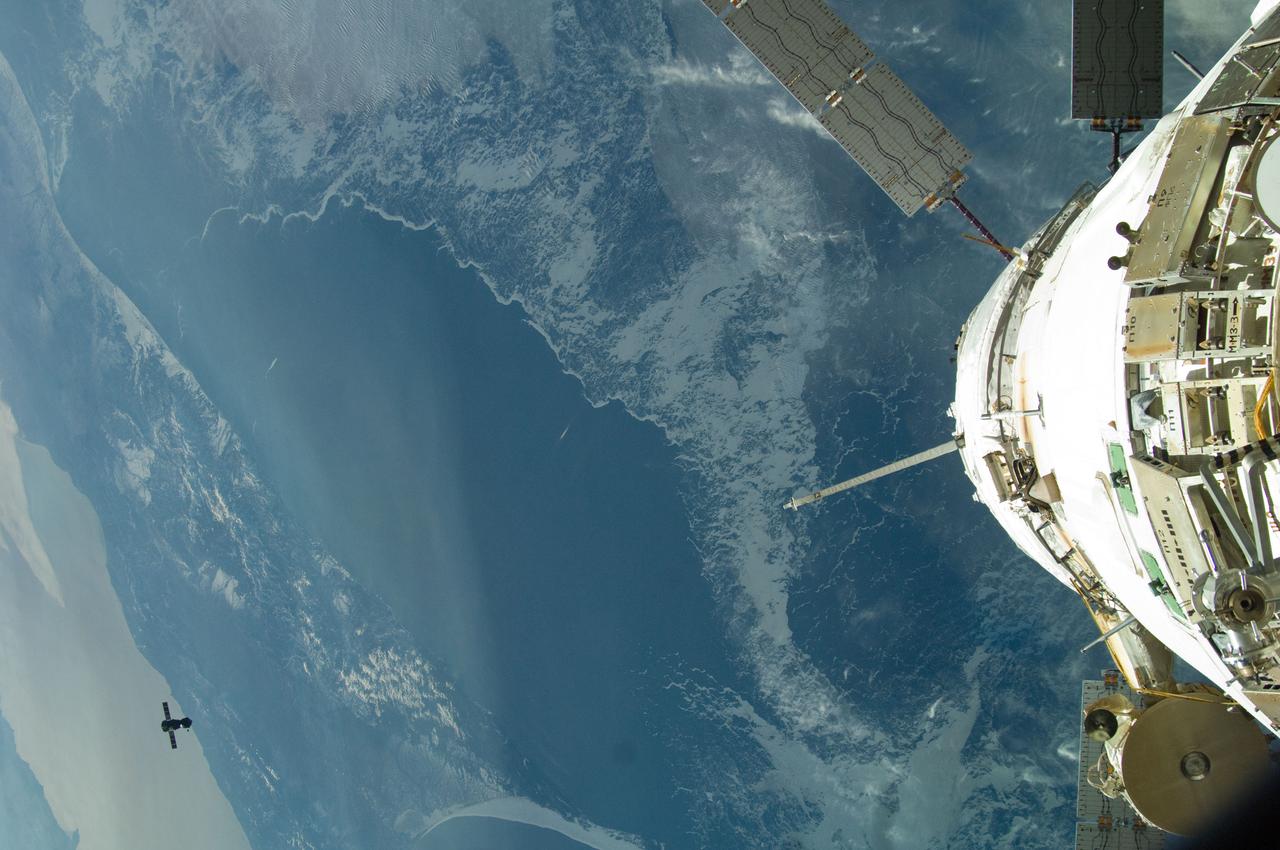
ISS031-E-005010 (27 April 2012) --- Soyuz TMA-22, with three Expedition 30 crew members onboard, appears as a tiny object in the lower left corner of this image photographed by one of the Expedition 31 crew members currently onboard the International Space Station, partially visible at right foreground. A short time earlier, the two spacecraft began their relative separation, thus cutting in half the number of personnel onboard the orbital outpost for the time being. The station was over the northwestern Pacific Ocean. Seen in the picture also are the Sea of Okhotsk, ice floes, part of the Kamchatka Peninsula, the Tartar Strait, highlighted with sun glint, and Sakhalin Island.

AS07-04-1586 (20 Oct. 1968) --- Astronaut Walter Cunningham, Apollo 7 lunar module pilot, writes with space pen as he is photographed performing flight tasks on the ninth day of the Apollo 7 mission. Note the 70mm Hasselblad camera film magazine just above Cunningham's right hand floating in the weightless (zero gravity) environment of the spacecraft.
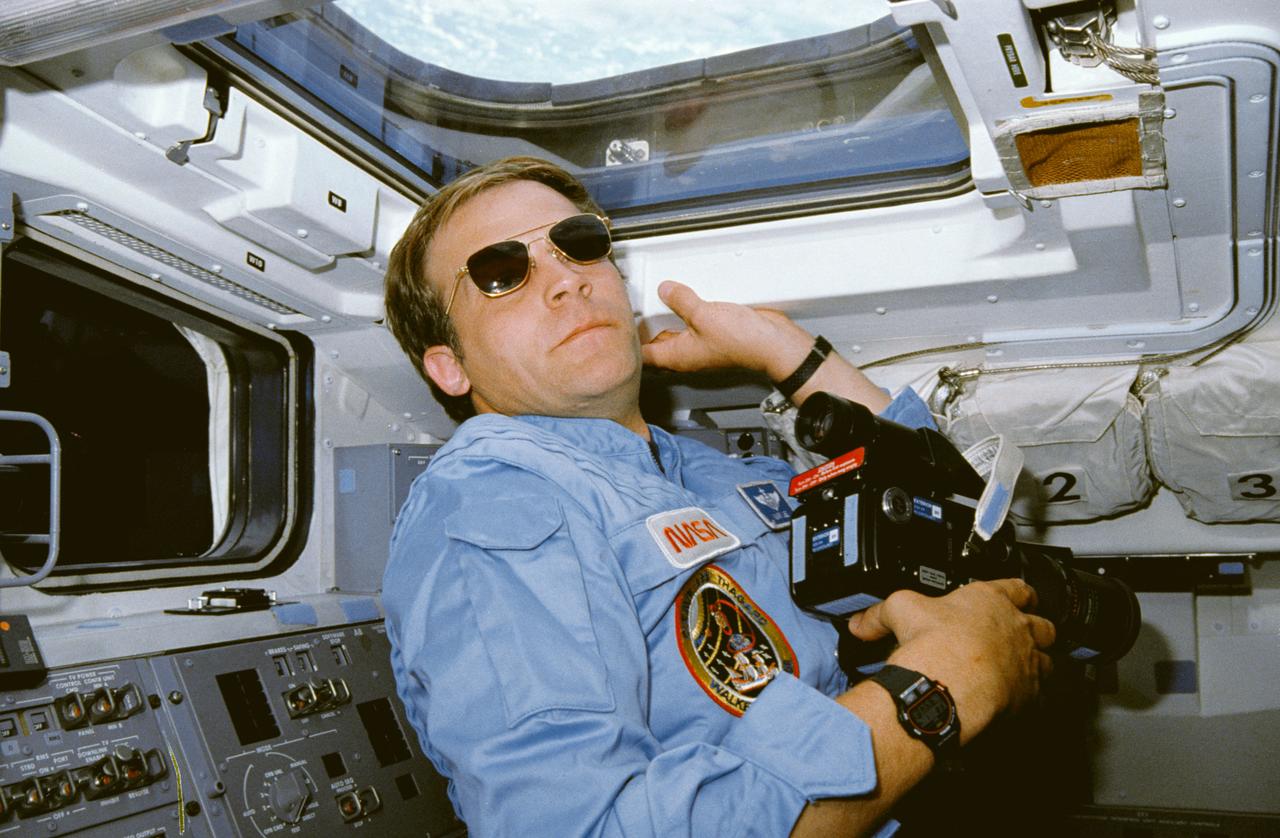
STS030-08-015 (4-8 May 1989) --- Astronaut Mark C. Lee, STS-30 mission specialist, pauses from a of Earth photography on Atlantis' aft flight deck. He holds a 70mm camera. The scene was recorded with a 35mm camera. The photo was in a group released by NASA following the completion of a four-day mission in space.
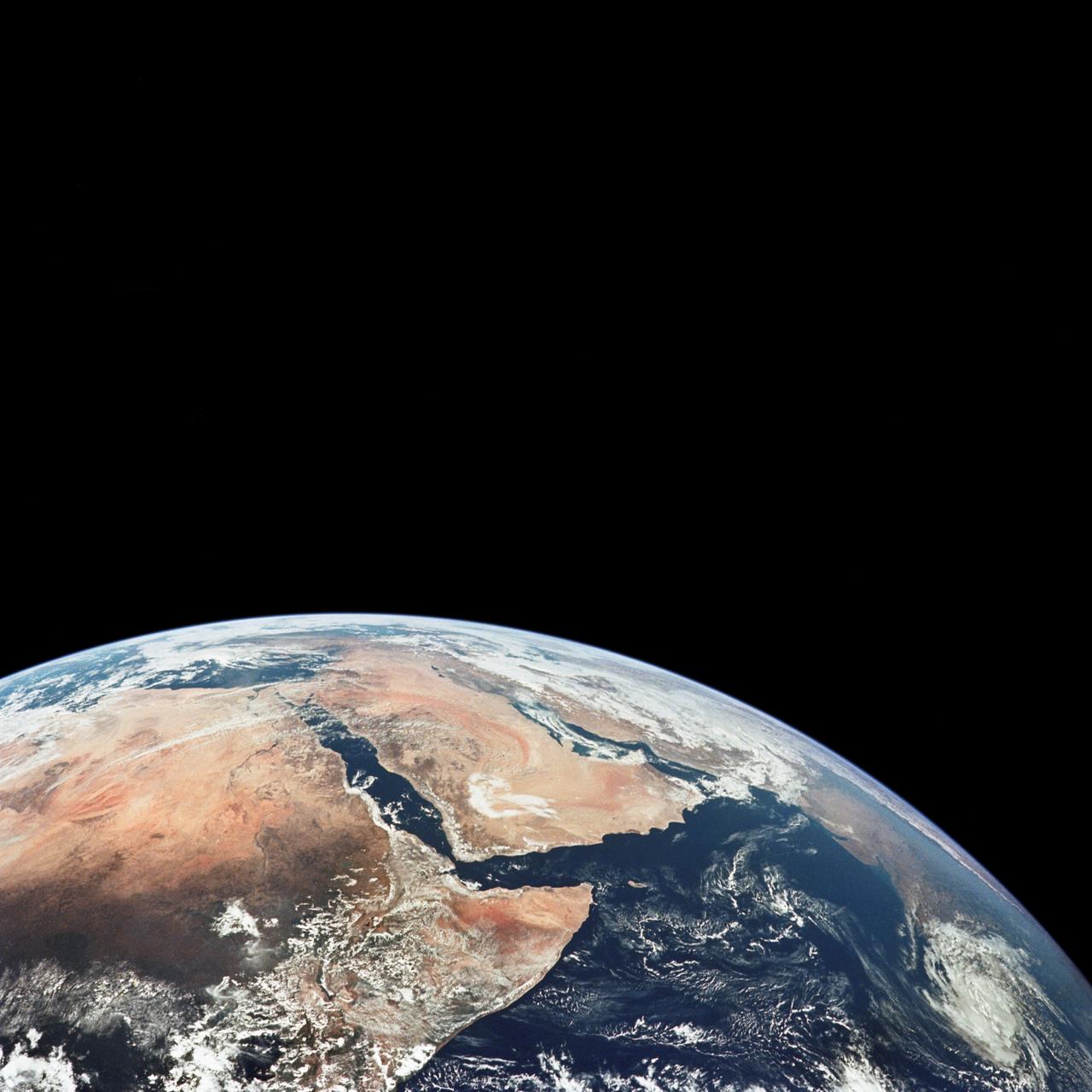
AS17-148-22718 (7-19 Dec. 1972) --- This excellent view of Saudi Arabia and the north eastern portion of the African continent was photographed by the Apollo 17 astronauts with a hand-held camera on their trans-lunar coast toward man's last lunar visit. Egypt, Sudan, Ethiopia are some of the African nations are visible. Iran, Iraq, Jordan are not so clearly visible because of cloud cover and their particular location in the picture. India is dimly visible at right of frame. The Red Sea is seen entirely in this one single frame, a rare occurrence in Apollo photography or any photography taken from manned spacecraft. The Gulf of Suez, the Dead Sea, Gulf of Aden, Persian Gulf and Gulf of Oman are also visible. This frame is one of 169 frames on film magazine NN carried aboard Apollo 17, all of which are SO368 (color) film. A 250mm lens on a 70mm Hasselblad camera recorded the image, one of 92 taken during the trans-lunar coast. Note AS17-148-22727 (also magazine NN) for an excellent full Earth picture showing the entire African continent.
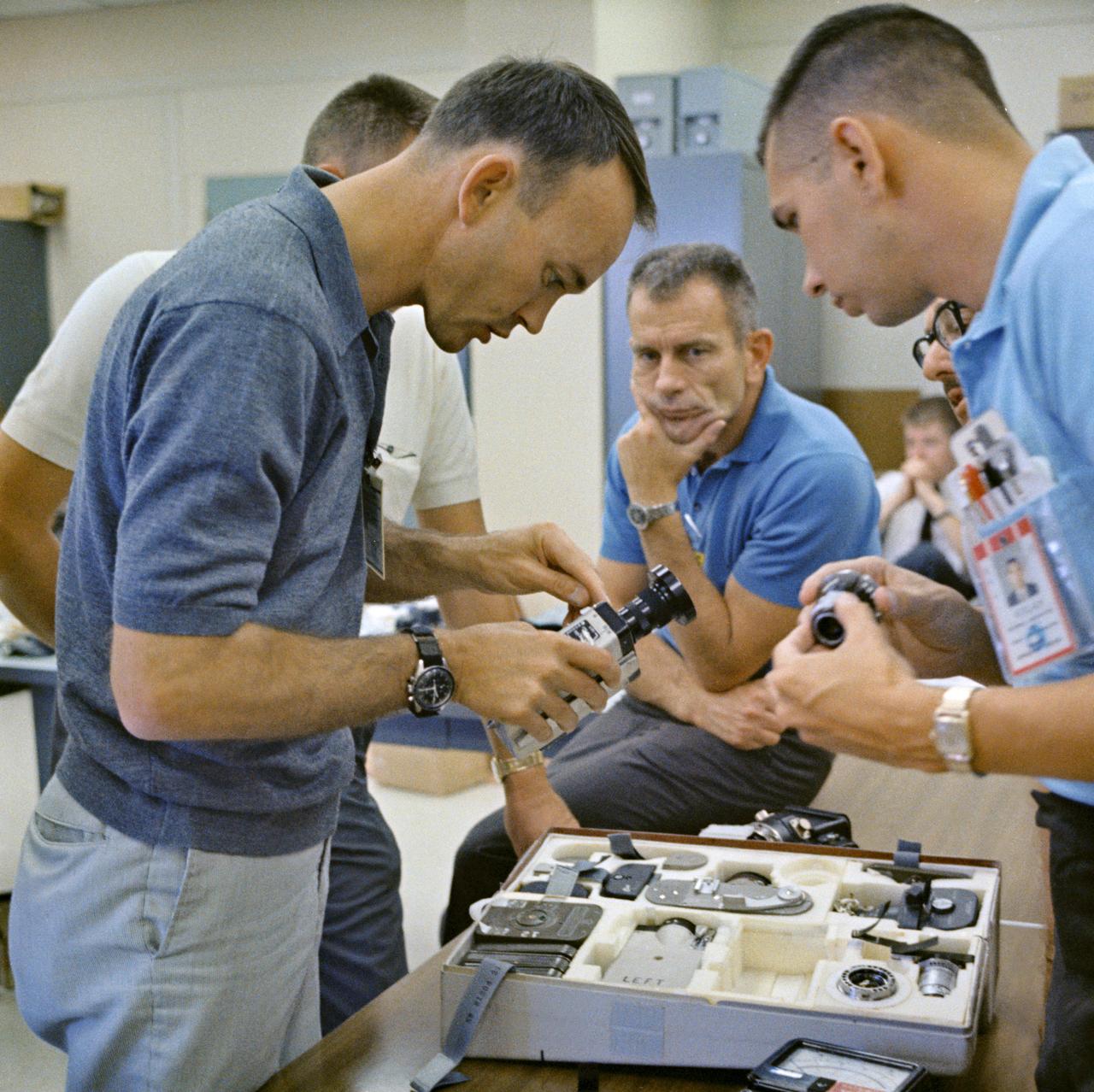
S66-42763 (18 July 1966) --- Astronaut Michael Collins (left), Gemini-10 prime crew pilot, inspects a camera during prelaunch activity at Cape Kennedy, Florida. In center background is Dr. Donald K. Slayton, Manned Spacecraft Center (MSC) Director of Flight Crew Operations. Photo credit: NASA
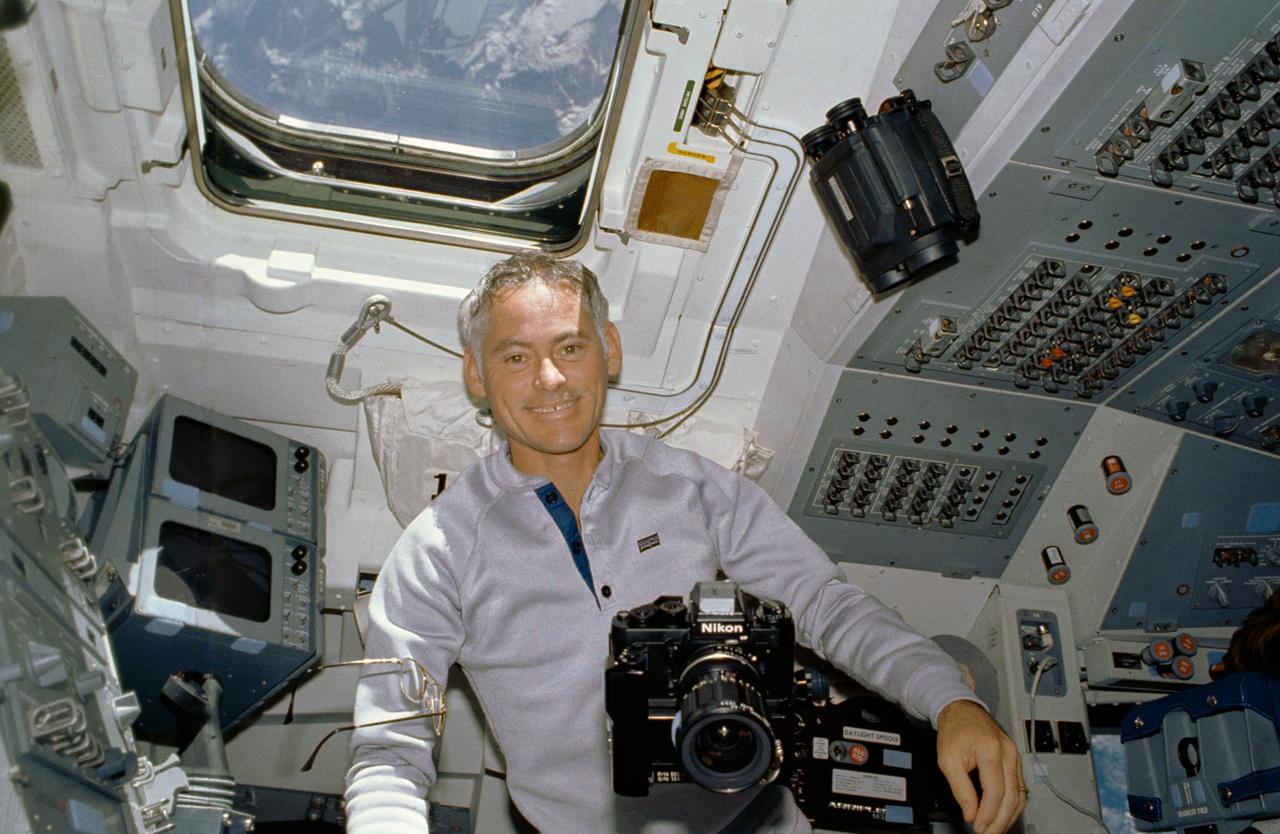
STS027-10-021 (2-6 Dec. 1988) --- Astronaut Richard M. (Mike) Mullane, STS-27 mission specialist, is able to handle a number of cameras with the aid of the microgravity in the shirt sleeve environment of the Earth-orbiting space shuttle Atlantis. Photo credit: NASA
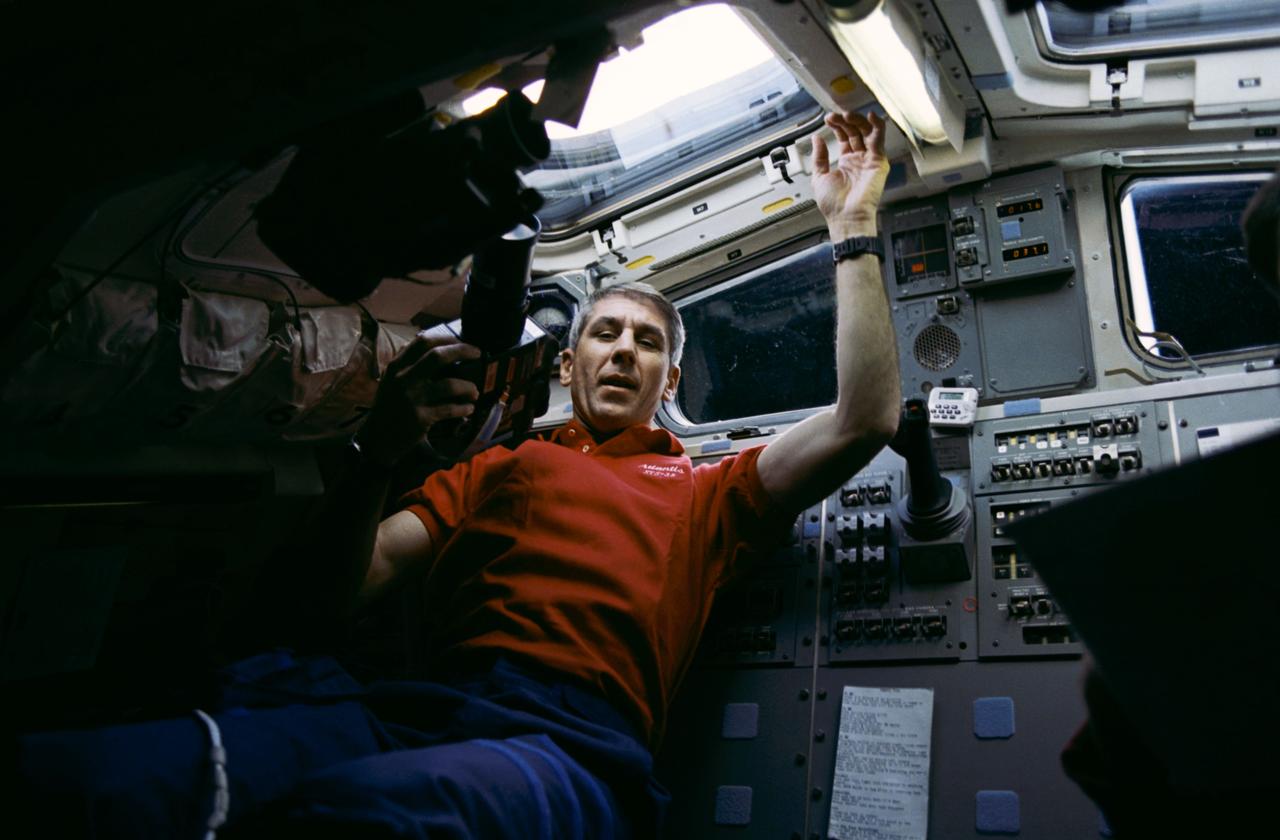
STS038-25-005 (20 Nov 1990) --- STS-38 Mission Specialist (MS) Robert C. Springer, holding HASSELBLAD camera, positions himself under aft flight deck overhead window W7 before recording the Earth's surface below. Behind Springer are Atlantis', Orbiter Vehicle (OV) 104's, on orbit station and aft flight deck viewing windows.
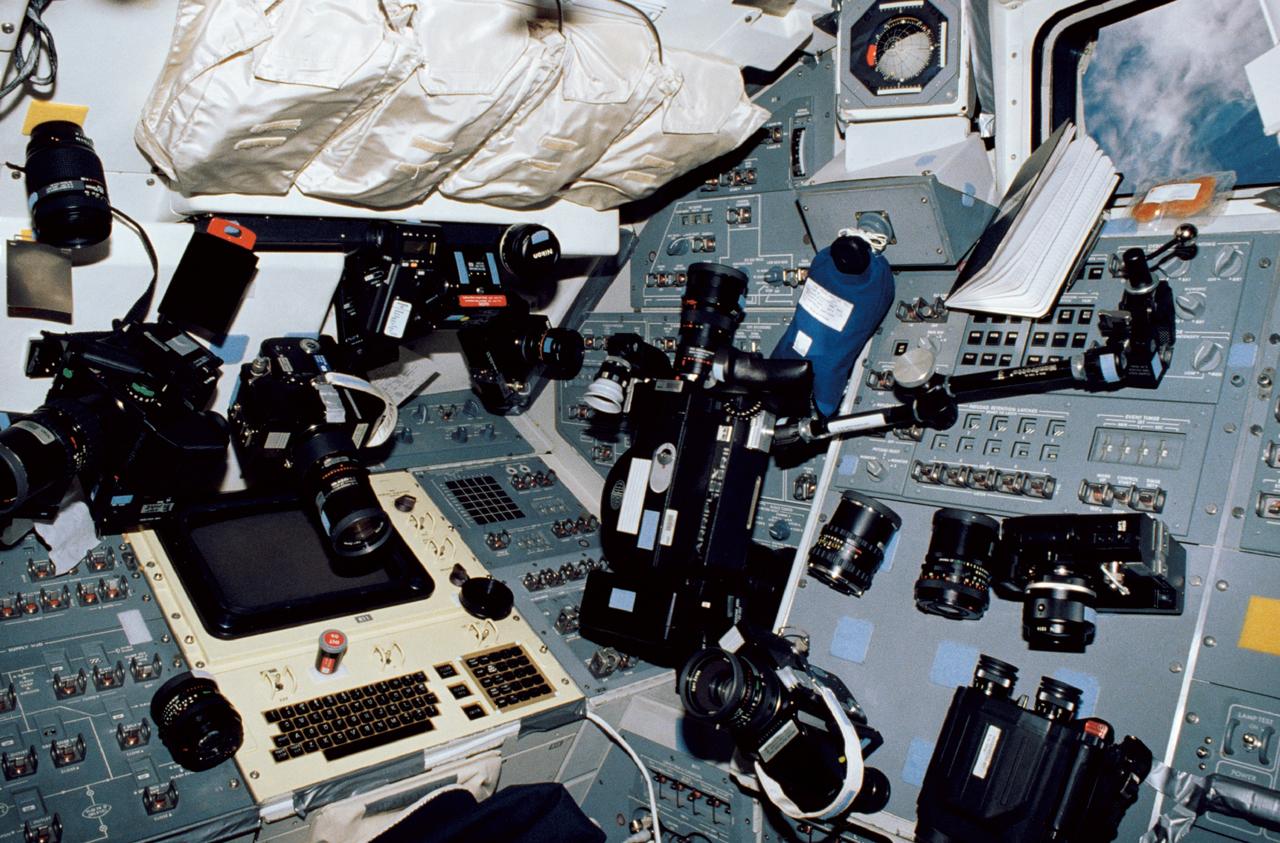
STS035-10-015 (2-10 Dec 1990) --- This busy scene shows cameras and supportive photographic gear temporarily stowed on Space Shuttle Columbia's aft flight deck. It was photographed with a 35mm camera by astronaut Jeffrey A. Hoffman, mission specialist, who called the cluster a "camera forest." The seven STS-35 crewmembers trained to record a wide variety of imagery with an equally broad range of equipment. In addition to cameras, a spot meter, film, a pair of binoculars, a bracket, lenses, lens cleaner and other photographic equipment are in the scene. Clouds over ocean waters are framed by an aft flight deck window at upper right.
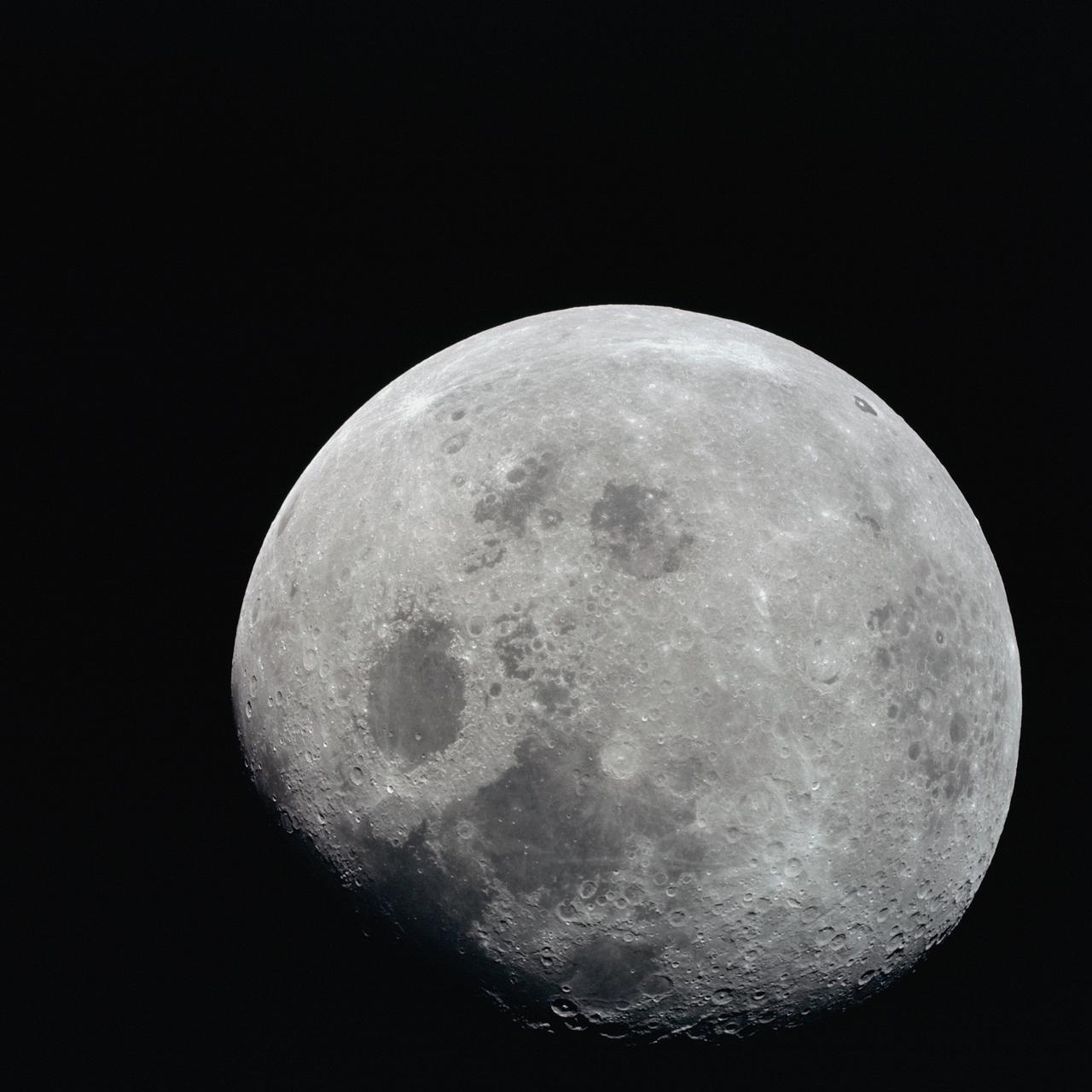
AS08-14-2506 (21-27 Dec. 1968) --- This photograph of a nearly full moon was taken from the Apollo 8 spacecraft at a point above 70 degrees east longitude. (Hold picture with moon's dark portion at left). Mare Crisium, the circular, dark-colored area near the center, is near the eastern edge of the moon as viewed from Earth. Mare Nectaris is the circular mare near the terminator. The large, irregular maira are Tranquillitatis and Fecunditatis. The terminator at left side of picture crosses Mare Tranquillitatis and highlands to the south. Lunar farside features occupy most of the right half of the picture. The large, dark-colored crater Tsiolkovsky is near the limb at the lower right. Conspicuous bright rays radiate from two large craters, one to the north of Tsiolkovsky, the other near the limb in the upper half of the picture. These rayed craters were not conspicuous in Lunar Orbiter photography due to the low sun elevations when the Lunar Orbiter photography was made. The crater Langrenus is near the center of the picture at the eastern edge of Mare Fecunditatis. The lunar surface probably has less pronounced color that indicated by this print.
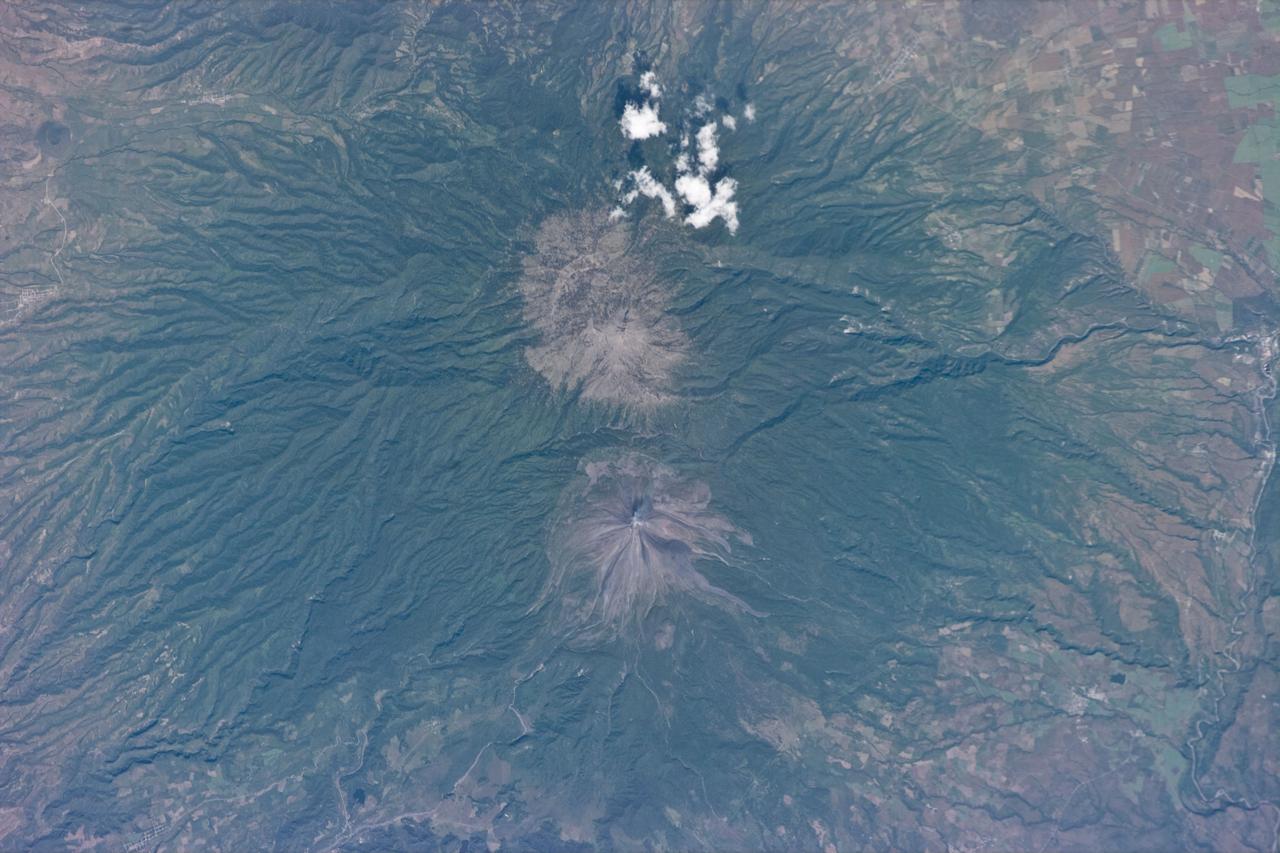
STS073-E-5274 (3 Nov. 1995) --- Colima was photographed with a color Electronic Still Camera (ESC) onboard the Earth-orbiting space shuttle Columbia. The volcano lies due south of Guadalajara and Lake Chapala. It is considered to be one of Mexico's most active and most dangerous volcanoes, lying not far from heavily populated areas.

ISS030-E-015491 (22 Dec. 2011) --- Comet Lovejoy is visible near Earth’s horizon in this nighttime image photographed by NASA astronaut Dan Burbank, Expedition 30 commander, onboard the International Space Station on Dec. 22, 2011.
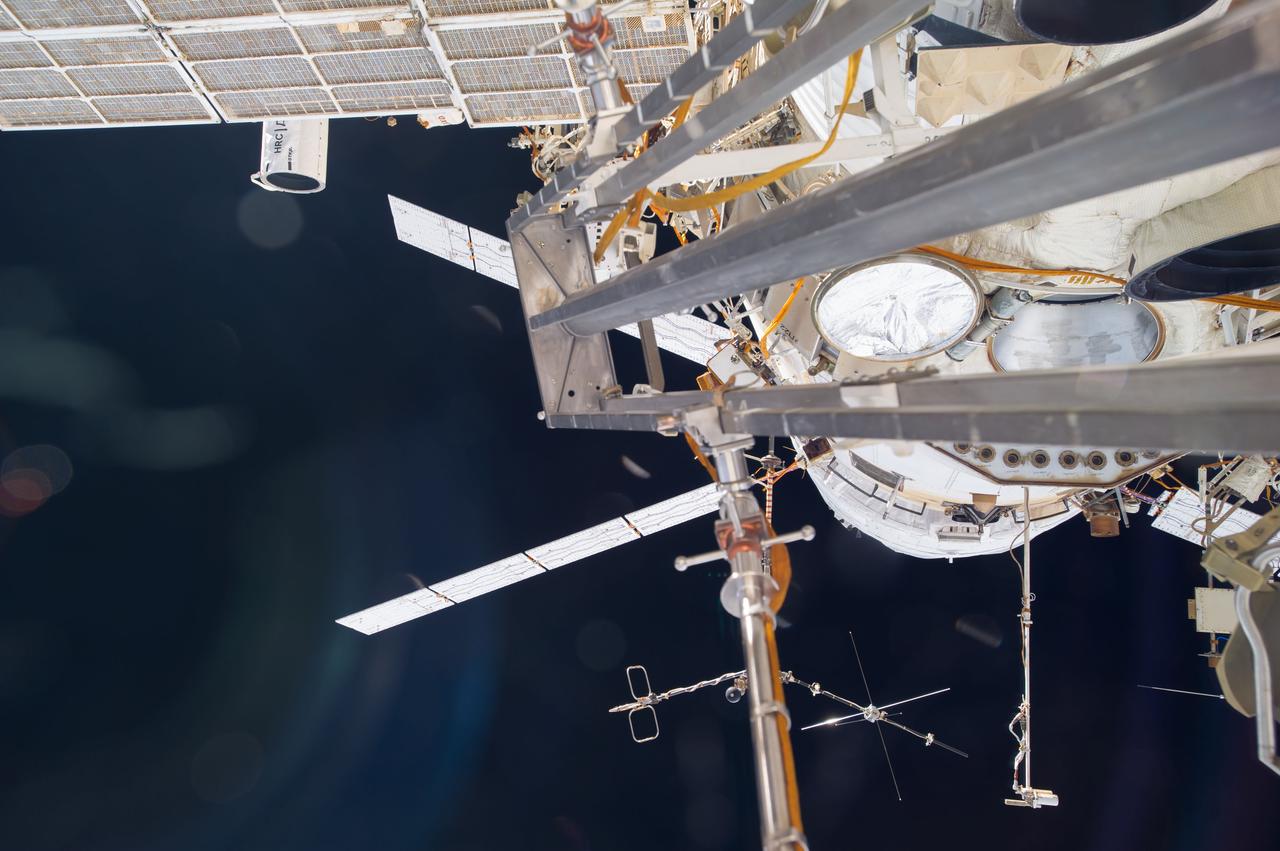
ISS040-E-123171 (2 Sept. 2014) --- A portion of the International Space Station’s Russian segment is pictured in this image photographed by an Expedition 40 crew member onboard the station. A portion of the "Georges Lemaitre" Automated Transfer Vehicle-5 (ATV-5) docked to the Zvezda Service Module is visible at right background.
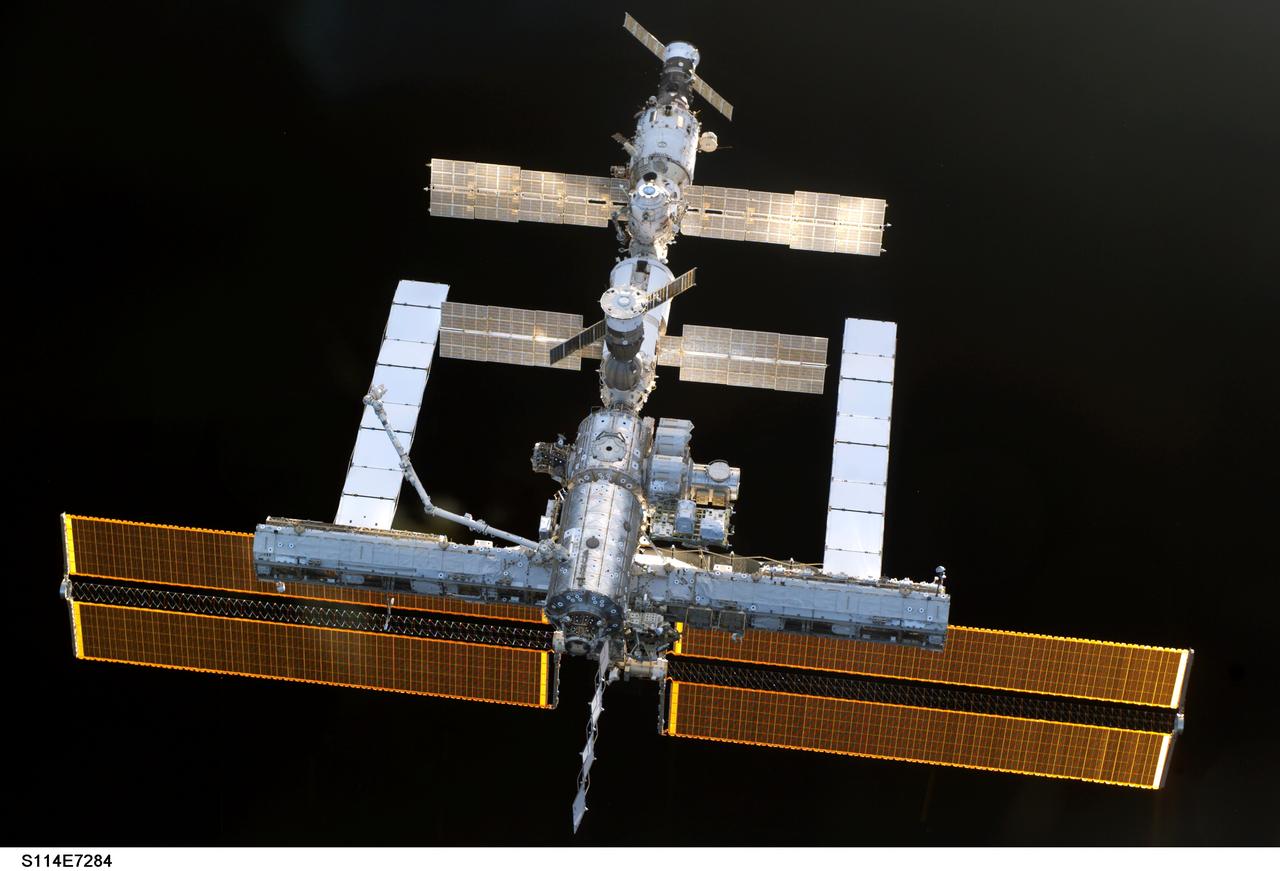
S114-E-7284 (6 August 2005) --- Backdropped by the blackness of space, this full view of the International Space Station was photographed by a crewmember onboard the Space Shuttle Discovery following the undocking of the two spacecraft. Discovery pulled away from the complex at 2:24 a.m. (CDT) on August 6, 2005.
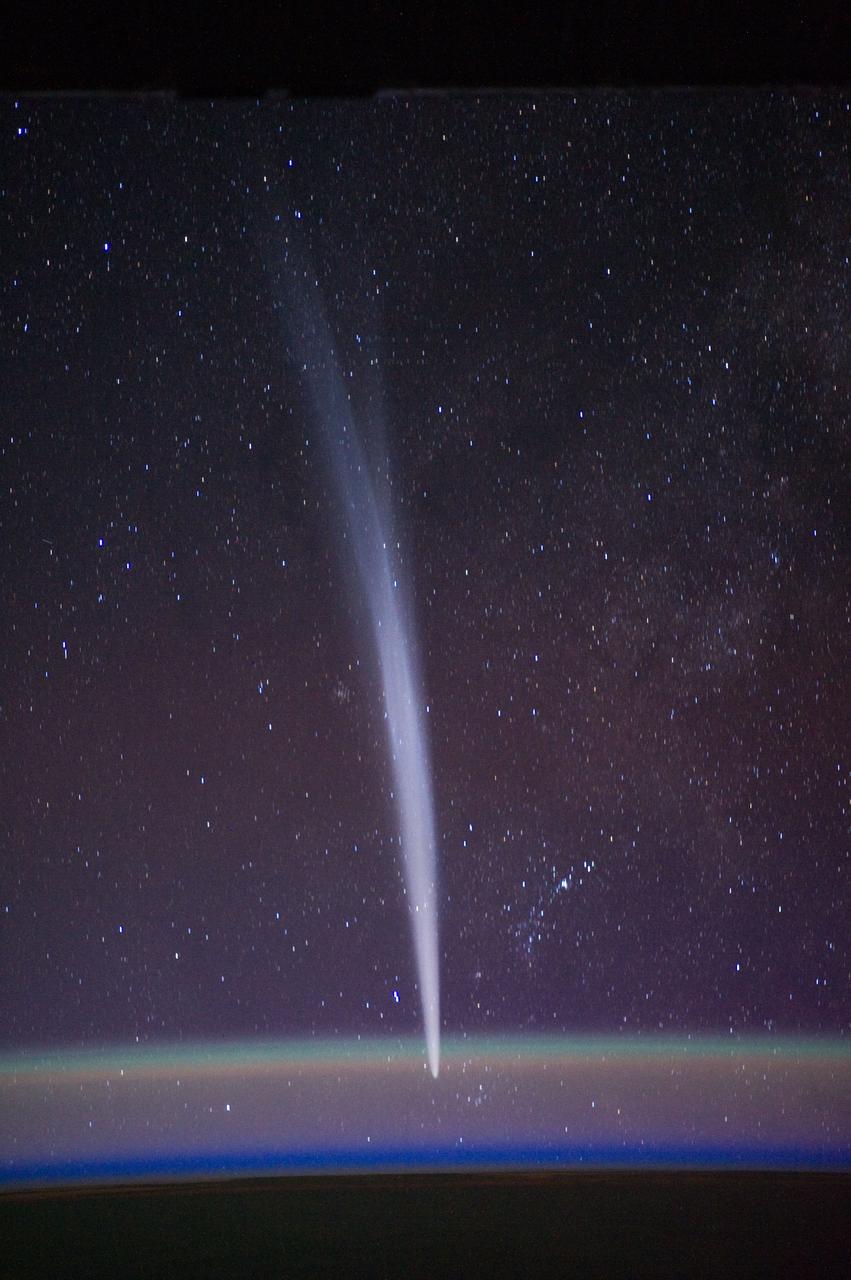
ISS030-E-015472 (22 Dec. 2011) --- Comet Lovejoy is visible near Earth’s horizon in this nighttime image photographed by NASA astronaut Dan Burbank, Expedition 30 commander, onboard the International Space Station on Dec. 22, 2011.
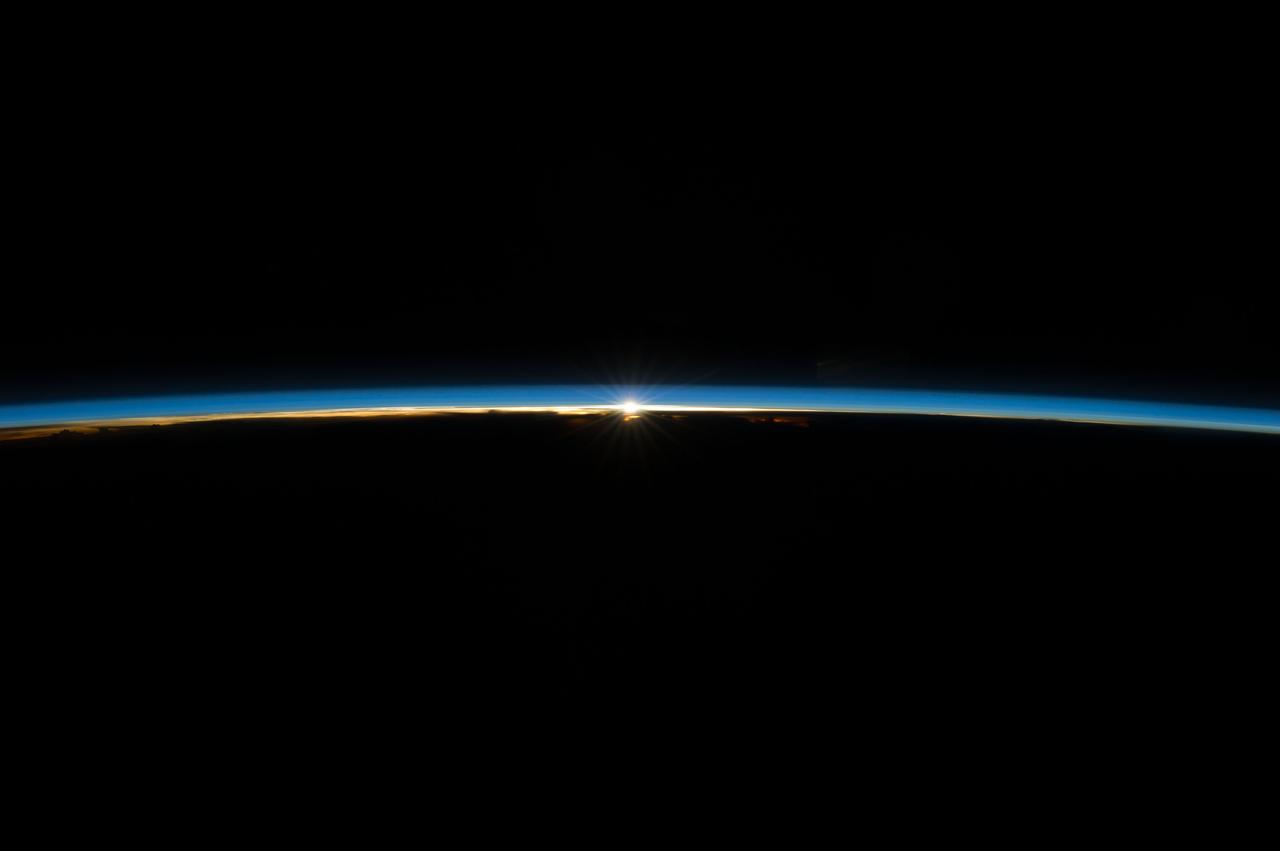
ISS040-E-008179 (7 June 2014) --- The sun, peeking through the thin line of Earth’s atmosphere, is featured in this image photographed by an Expedition 40 crew member on the International Space Station. Crew members onboard the space station see, on average, sixteen sunrises and sunsets during a 24-hour orbital period.
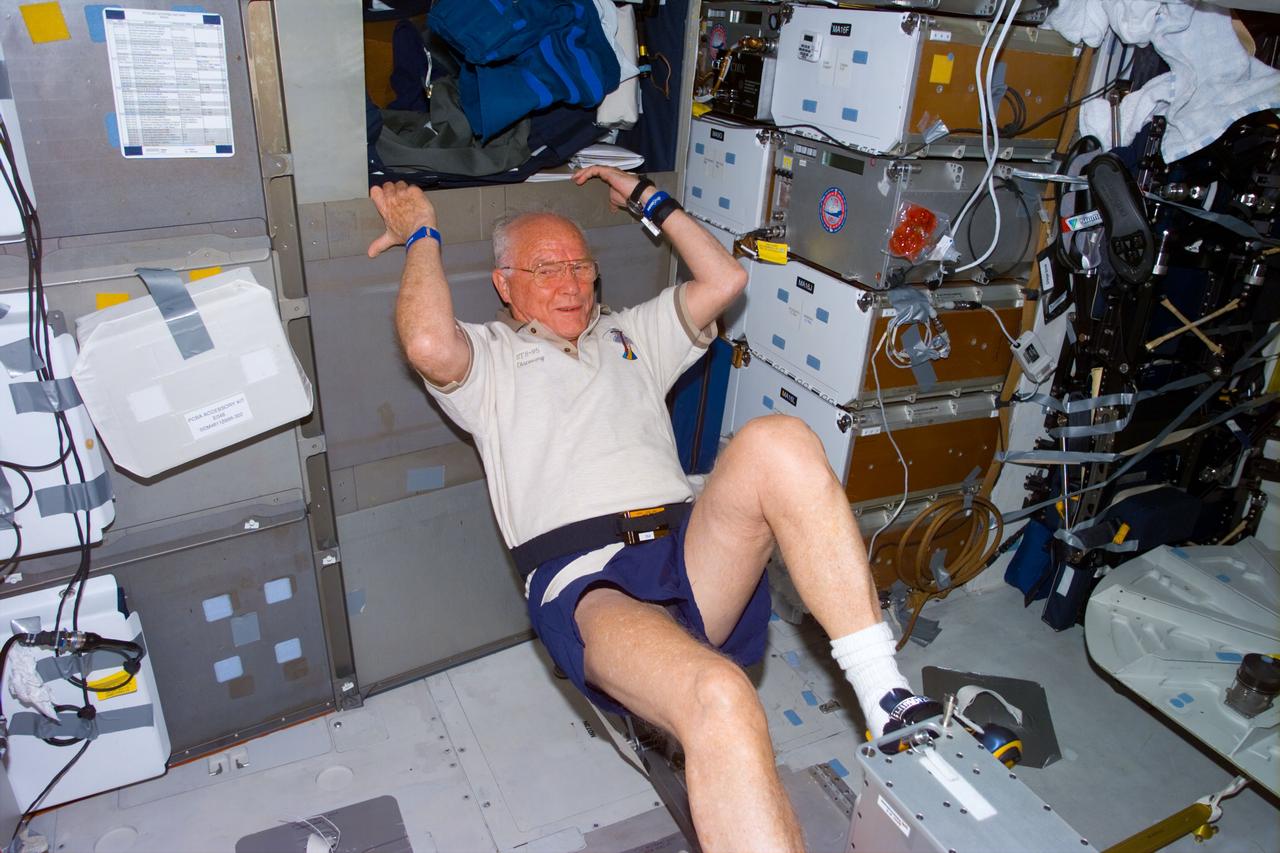
STS095-E-5251 (4 Nov. 1998) --- U.S. Sen. John H. Glenn Jr. (D.-Ohio), STS-95 payload specialist, works out on the ergometer device onboard Discovery. The photograph was taken with an electronic still camera (ESC) at 21:52:07 GMT, Nov. 4.
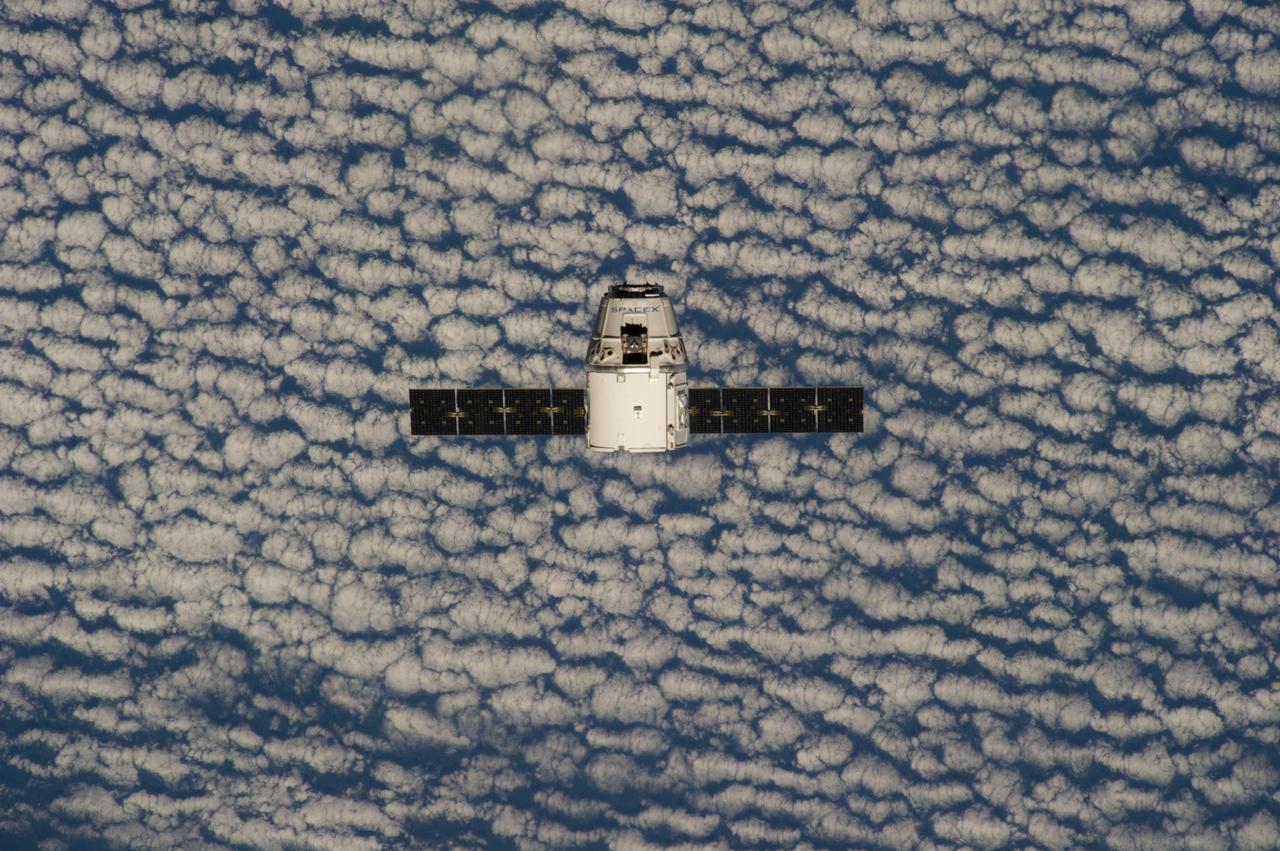
ISS039-E-013373 (20 April 2014) --- This is one of an extensive series of still photos documenting the arrival and ultimate capture and berthing of the SpaceX Dragon at the International Space Station, as photographed by the Expedition 39 crew members onboard the orbital outpost. The spacecraft was captured by the space station and successfully berthed, following the April 20 arrival.
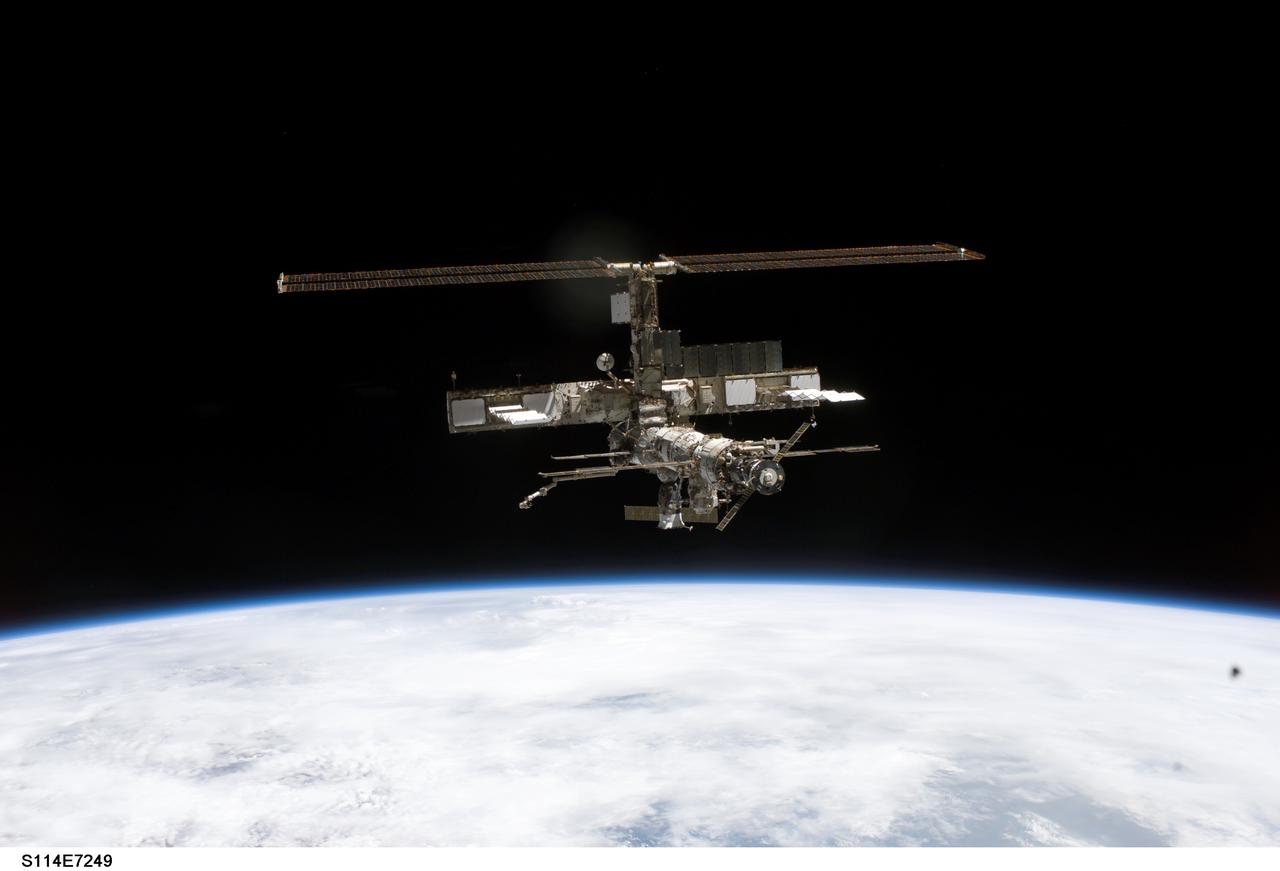
S114-E-7249 (6 August 2005) --- Backdropped by the blackness of space and Earth’s horizon, this view of the International Space Station was photographed by a crewmember onboard the Space Shuttle Discovery following the undocking of the two spacecraft. Discovery pulled away from the complex at 2:24 a.m. (CDT) on August 6, 2005.
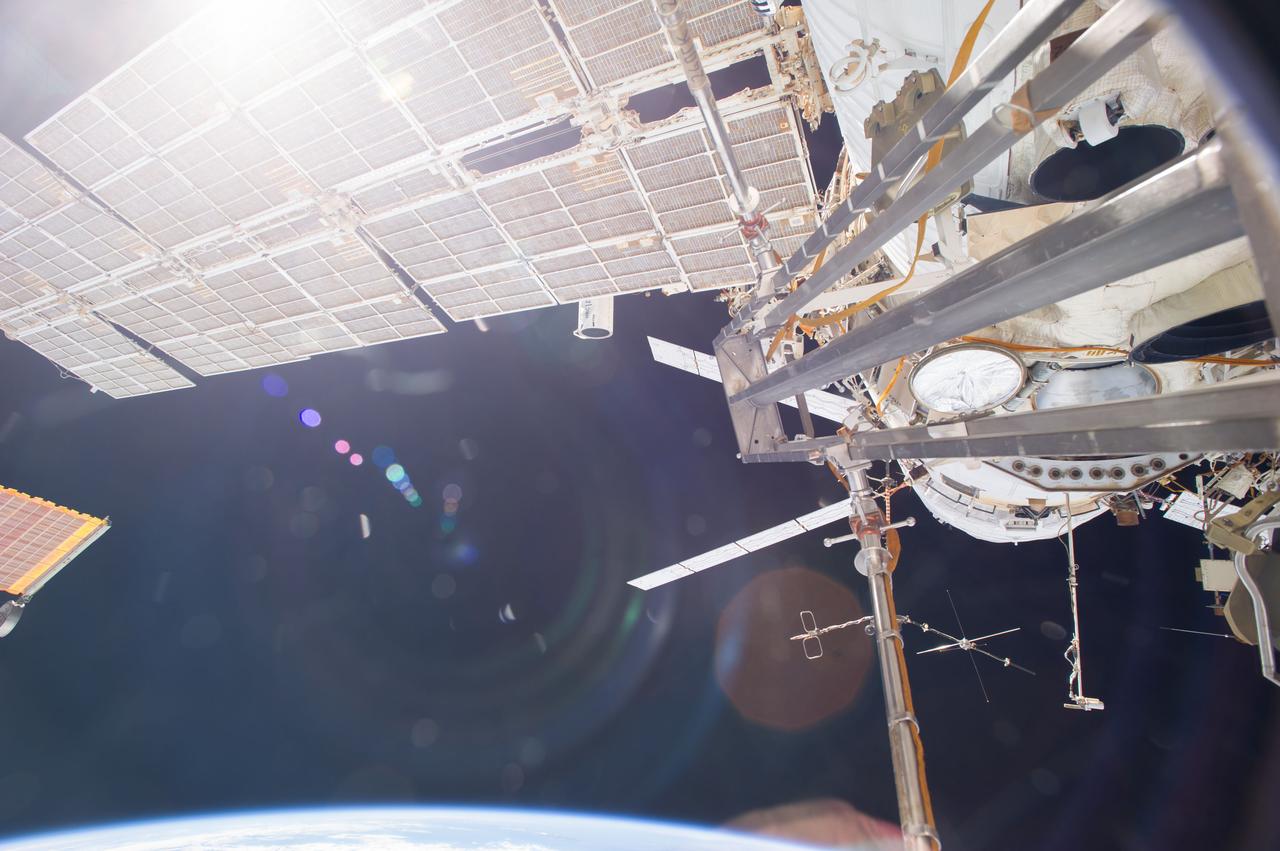
ISS040-E-123168 (2 Sept. 2014) --- A portion of the International Space Station’s Russian segment is pictured in this image photographed by an Expedition 40 crew member onboard the station. A portion of the "Georges Lemaitre" Automated Transfer Vehicle-5 (ATV-5) docked to the Zvezda Service Module is visible at right background.
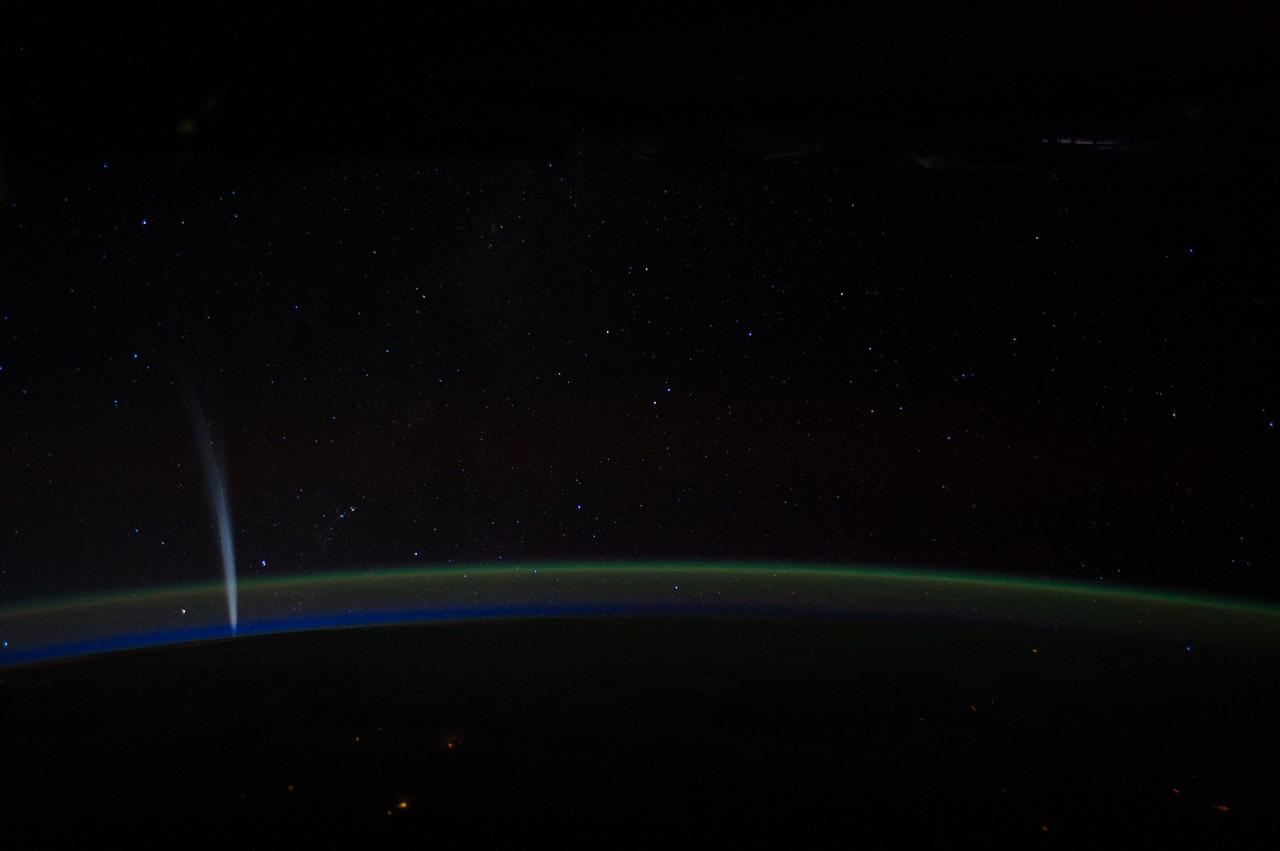
ISS030-E-014336 (21 Dec. 2011) --- Comet Lovejoy is visible near Earth’s horizon in this nighttime image photographed by NASA astronaut Dan Burbank, Expedition 30 commander, onboard the International Space Station on Dec. 21, 2011.
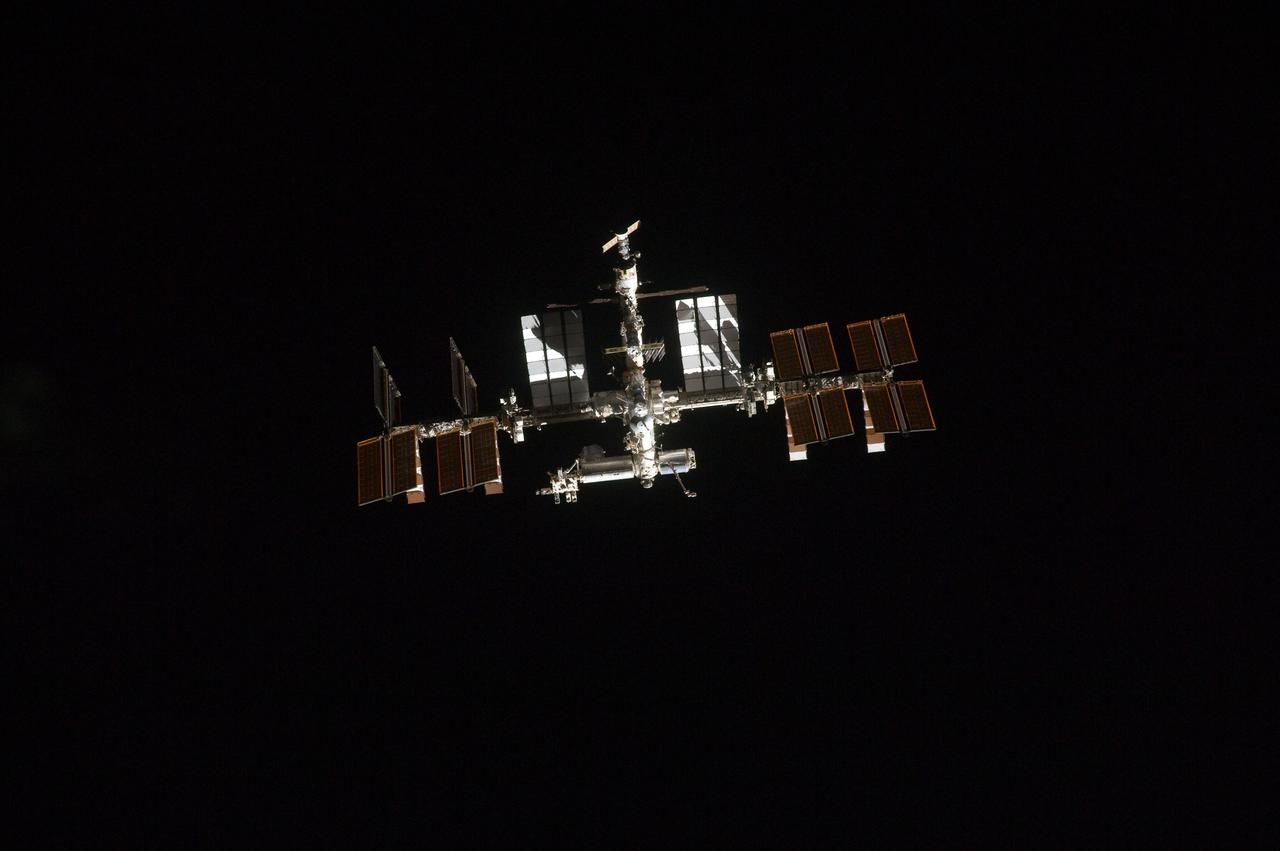
S135-E-006700 (10 July 2011) --- This is one of a series of images showing the International Space Station photographed by a crewmember onboard the space shuttle Atlantis as the two spacecraft performed rendezvous and docking operations on the STS-135 mission's third day in Earth orbit. Photo credit: NASA
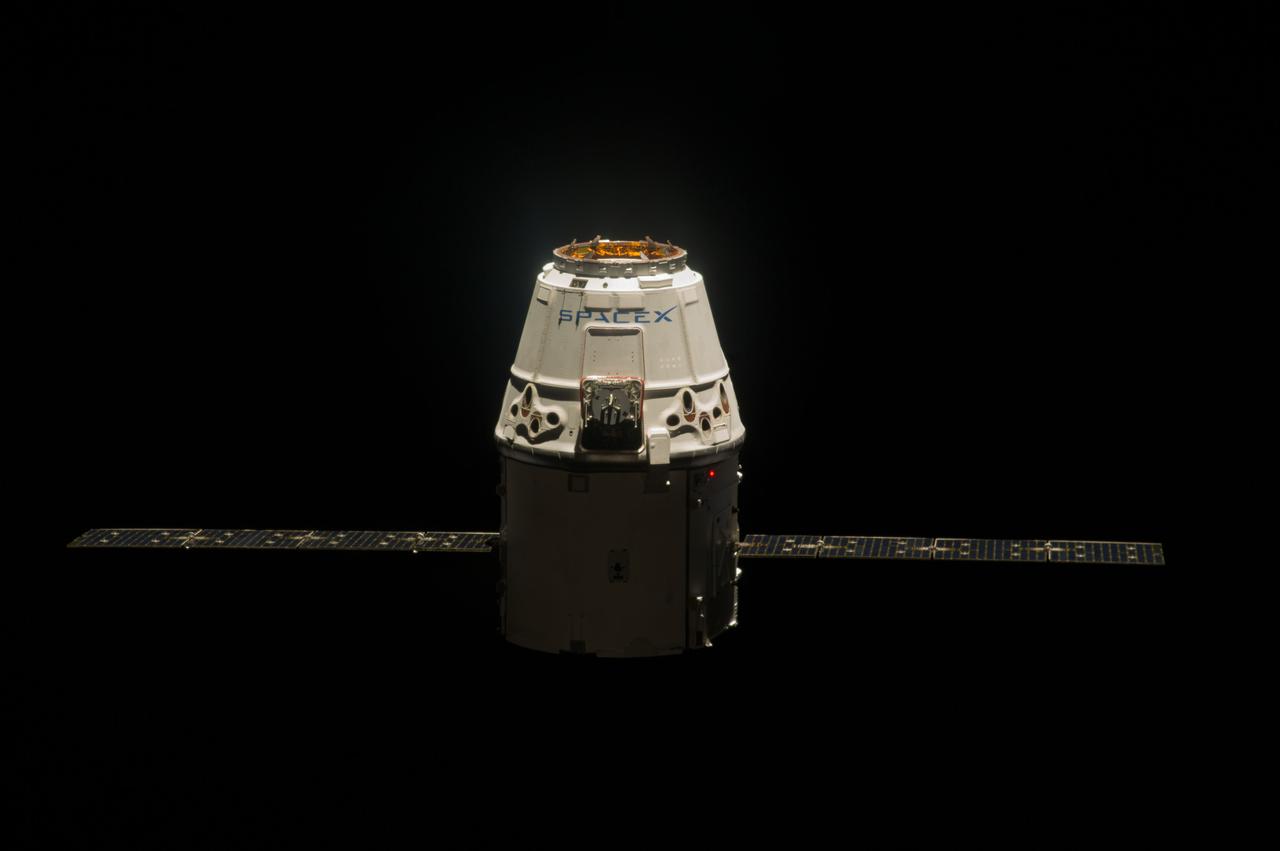
ISS039-E-013437 (20 April 2014) --- This is one of an extensive series of still photos documenting the arrival and ultimate capture and berthing of the SpaceX Dragon at the International Space Station, as photographed by the Expedition 39 crew members onboard the orbital outpost. The spacecraft was captured by the space station and successfully berthed, following the April 20 arrival.
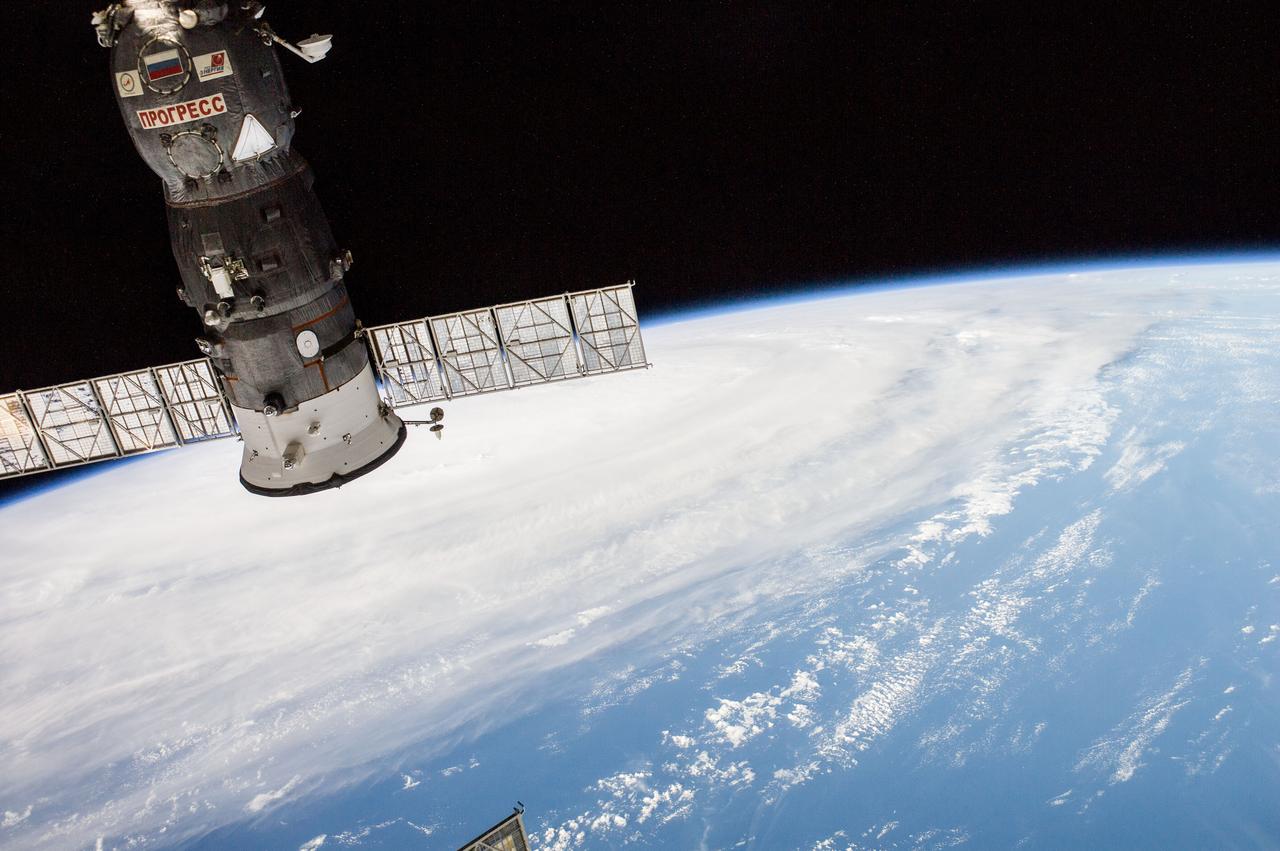
ISS040-E-038897 (5 July 2014) --- One of the Expedition 40 crew members onboard the International Space Station photographed this image of Super Typhoon Neoguri headed toward Japan at 21:58:27 GMT on July 5, 2014. A Russian Progress vehicle, docked to the orbital outpost, is in the foreground.
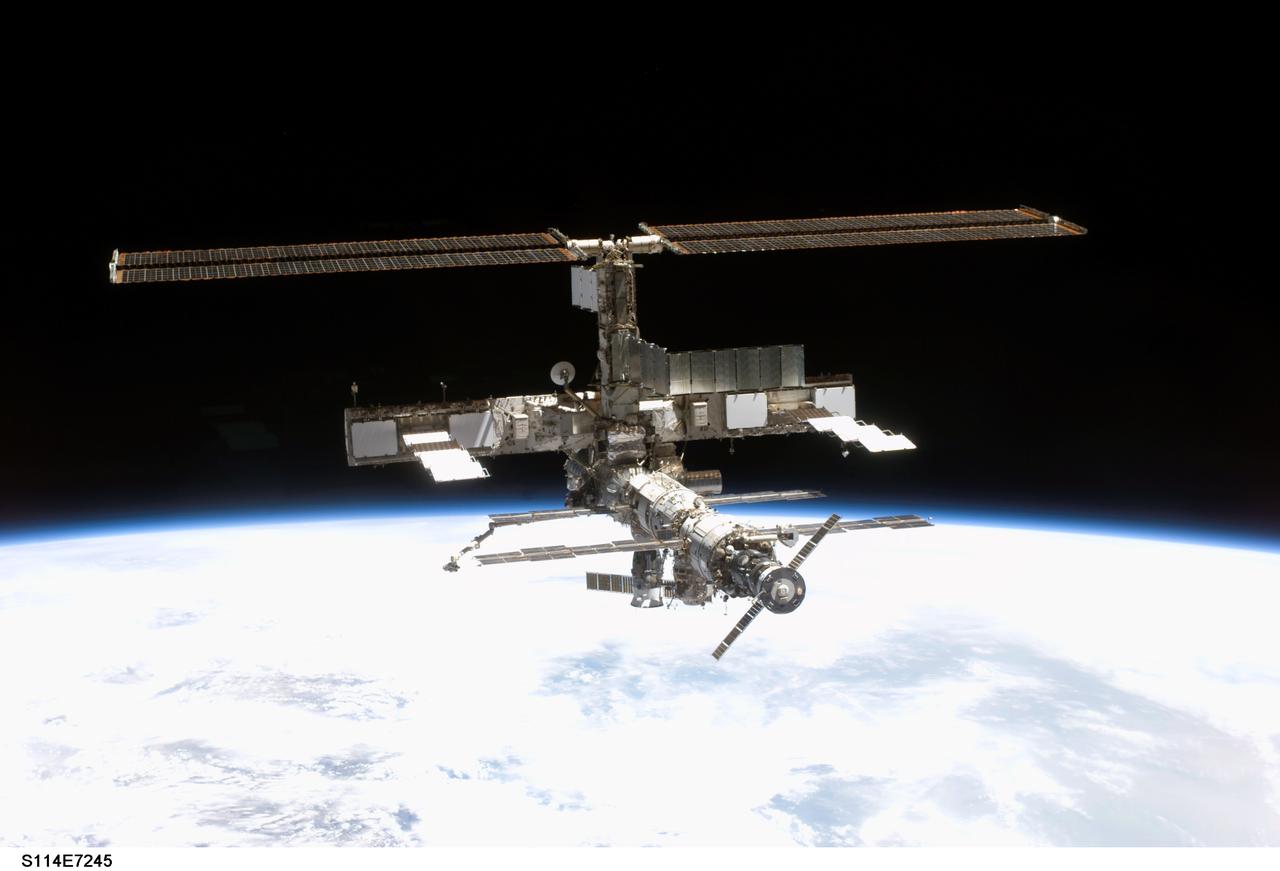
S114-E-7245 (6 August 2005) --- Backdropped by the blackness of space and Earth’s horizon, this full view of the International Space Station was photographed by a crewmember onboard the Space Shuttle Discovery following the undocking of the two spacecraft. Discovery pulled away from the complex at 2:24 a.m. (CDT) on August 6, 2005.
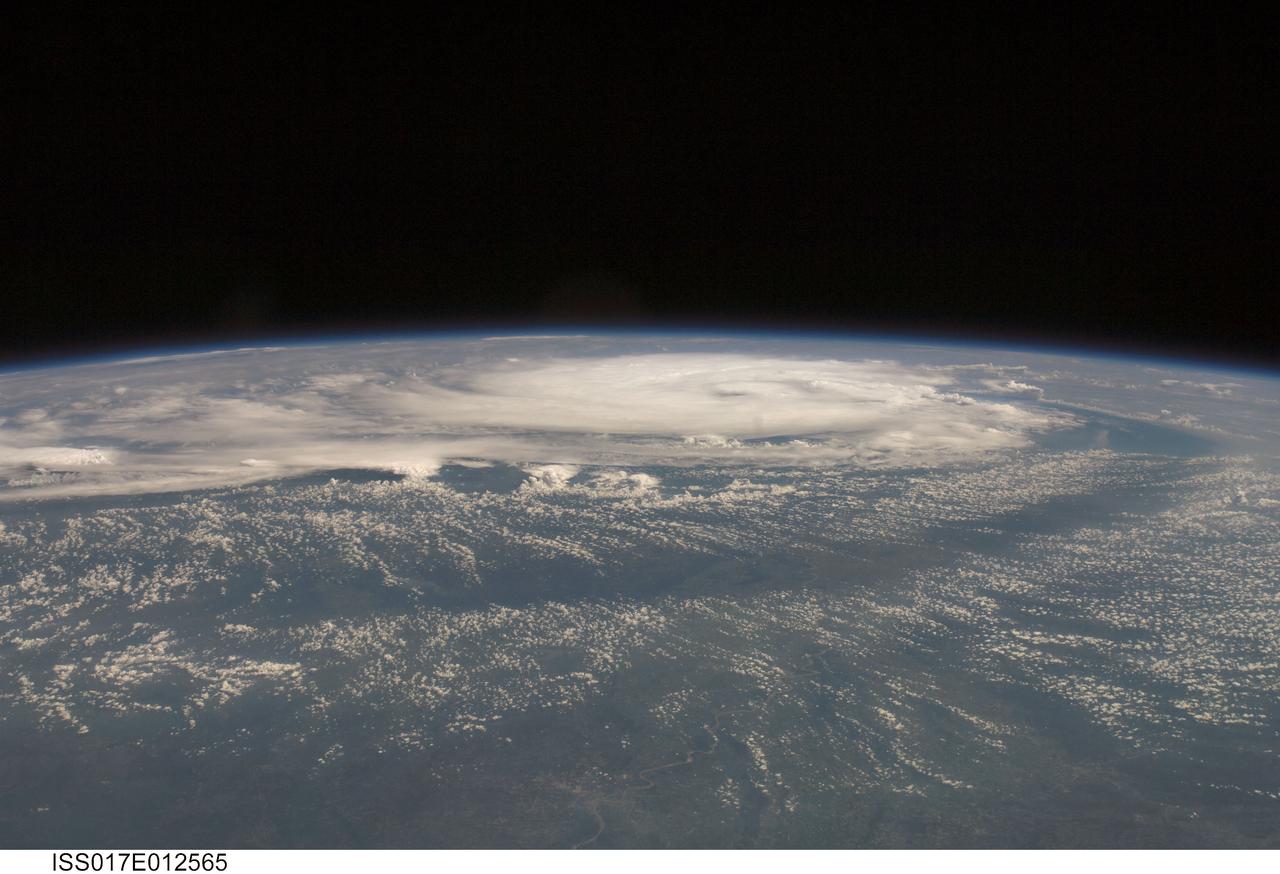
ISS017-E-012465 (4 Aug. 2008) --- Tropical Storm Edouard, as photographed from the International Space Station by one of the Expedition 17 crewmembers onboard, from a vantage point of 220 statute miles above the Earth, stirs in the Gulf of Mexico roughly 24 hours prior to landfall at a point east of Galveston, Texas

ISS030-E-015479 (22 Dec. 2011) --- Comet Lovejoy is visible near Earth’s horizon in this nighttime image photographed by NASA astronaut Dan Burbank, Expedition 30 commander, onboard the International Space Station on Dec. 22, 2011.
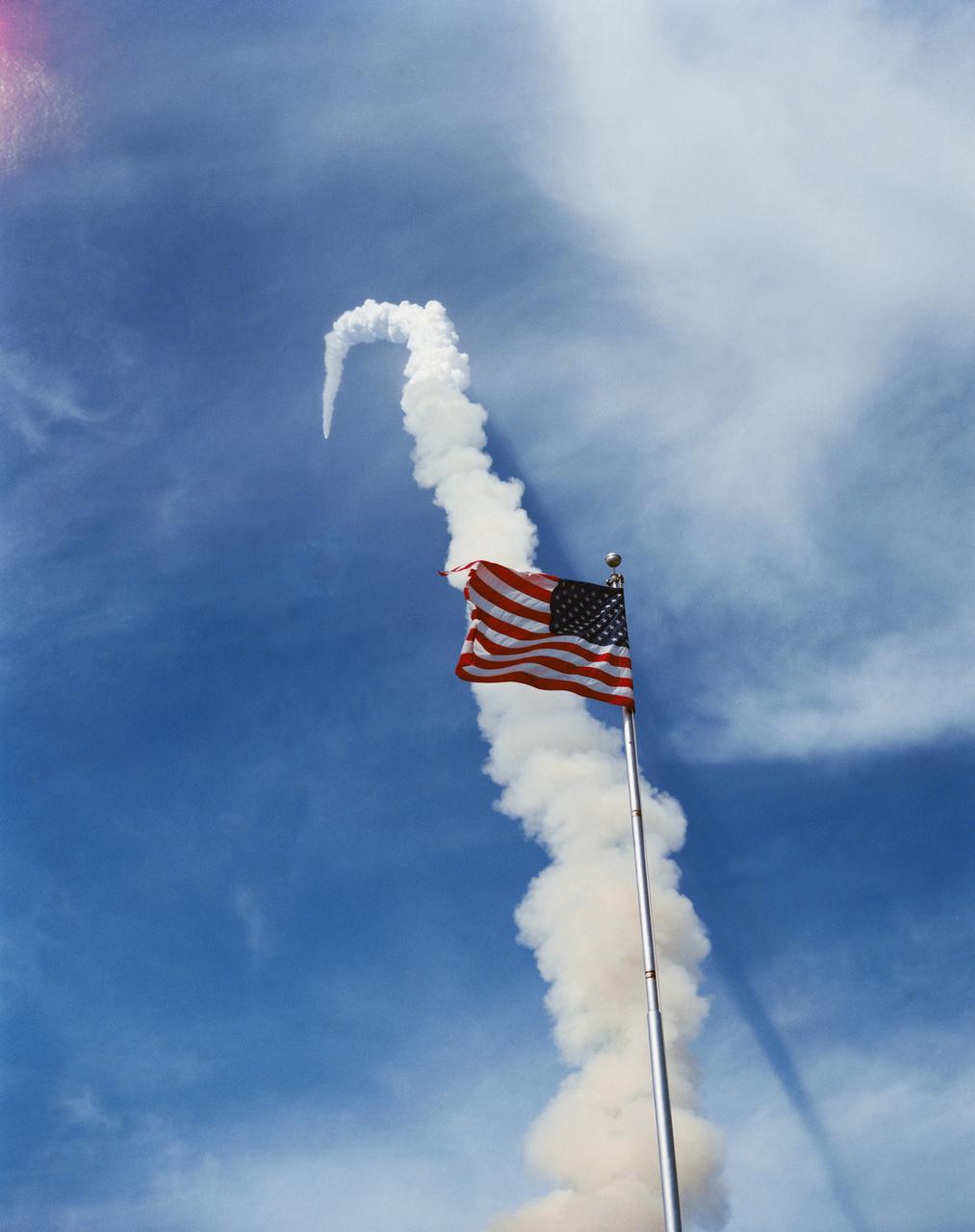
51F-S-068 (29 July 1985) --- The Space Shuttle Challenger heads toward Earth-orbit with the Spacelab-2 experiment pallet and a team of astronauts and scientists onboard. This photograph was taken by Otis Imboden of the National Geographic Society for NASA from the press site at Kennedy Space Center (KSC).
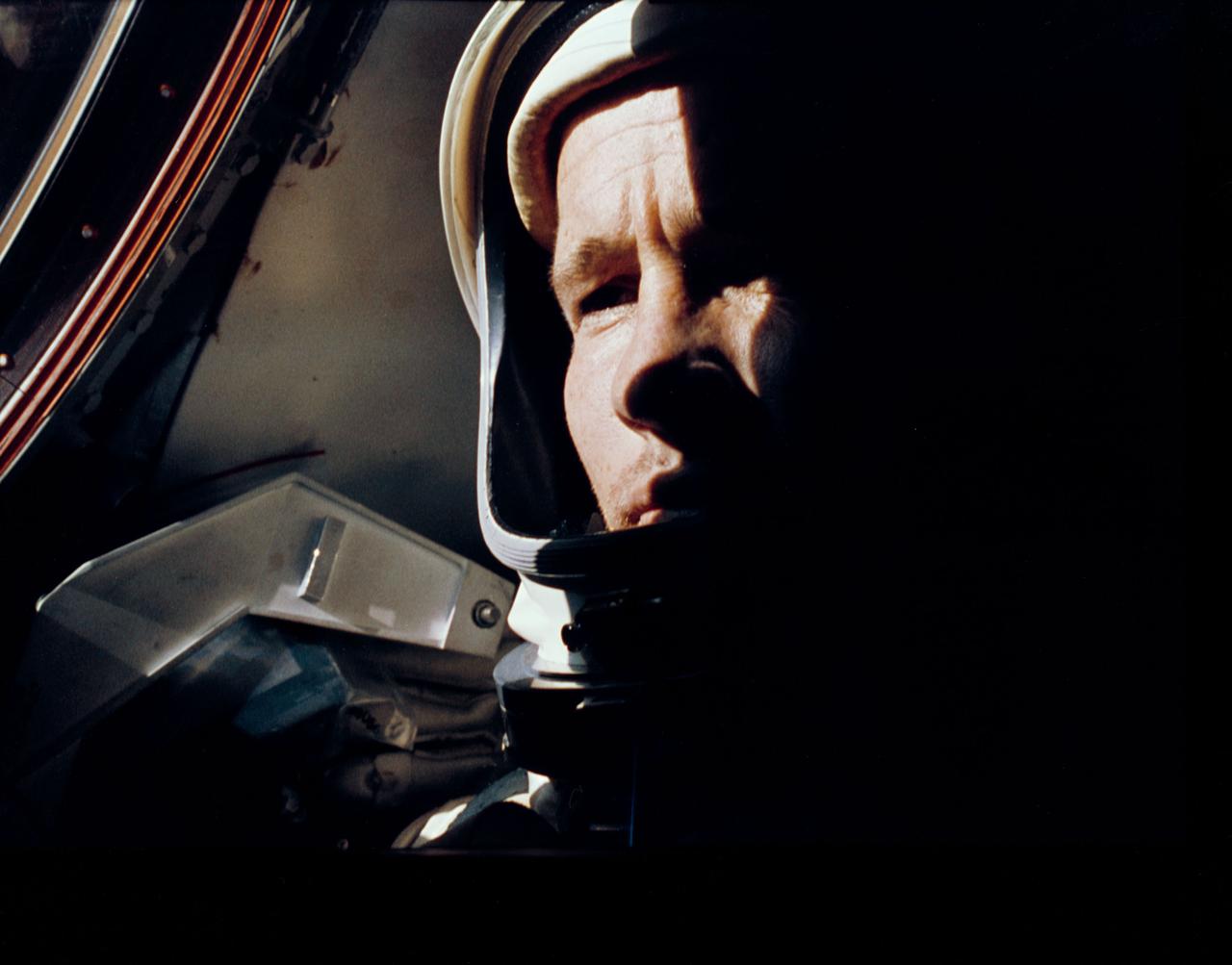
S65-30548 (3-7 June 1965) --- Astronaut Edward H. White II, Gemini IV pilot, is photographed onboard the Gemini-Titan 4 spacecraft during the four-day Earth-orbital mission. Photo credit: NASA
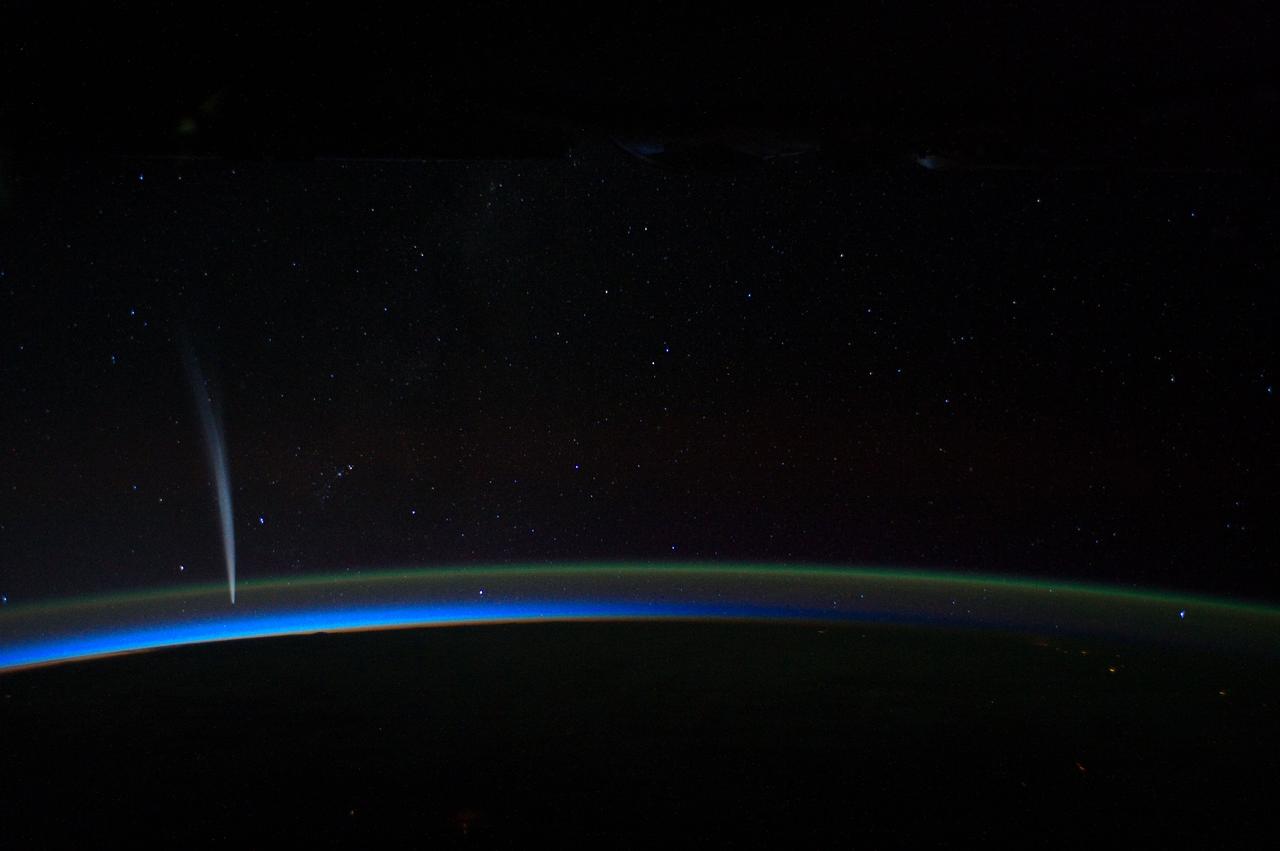
ISS030-E-014350 (21 Dec. 2011) --- Comet Lovejoy is visible near Earth’s horizon in this nighttime image photographed by NASA astronaut Dan Burbank, Expedition 30 commander, onboard the International Space Station on Dec. 21, 2011.
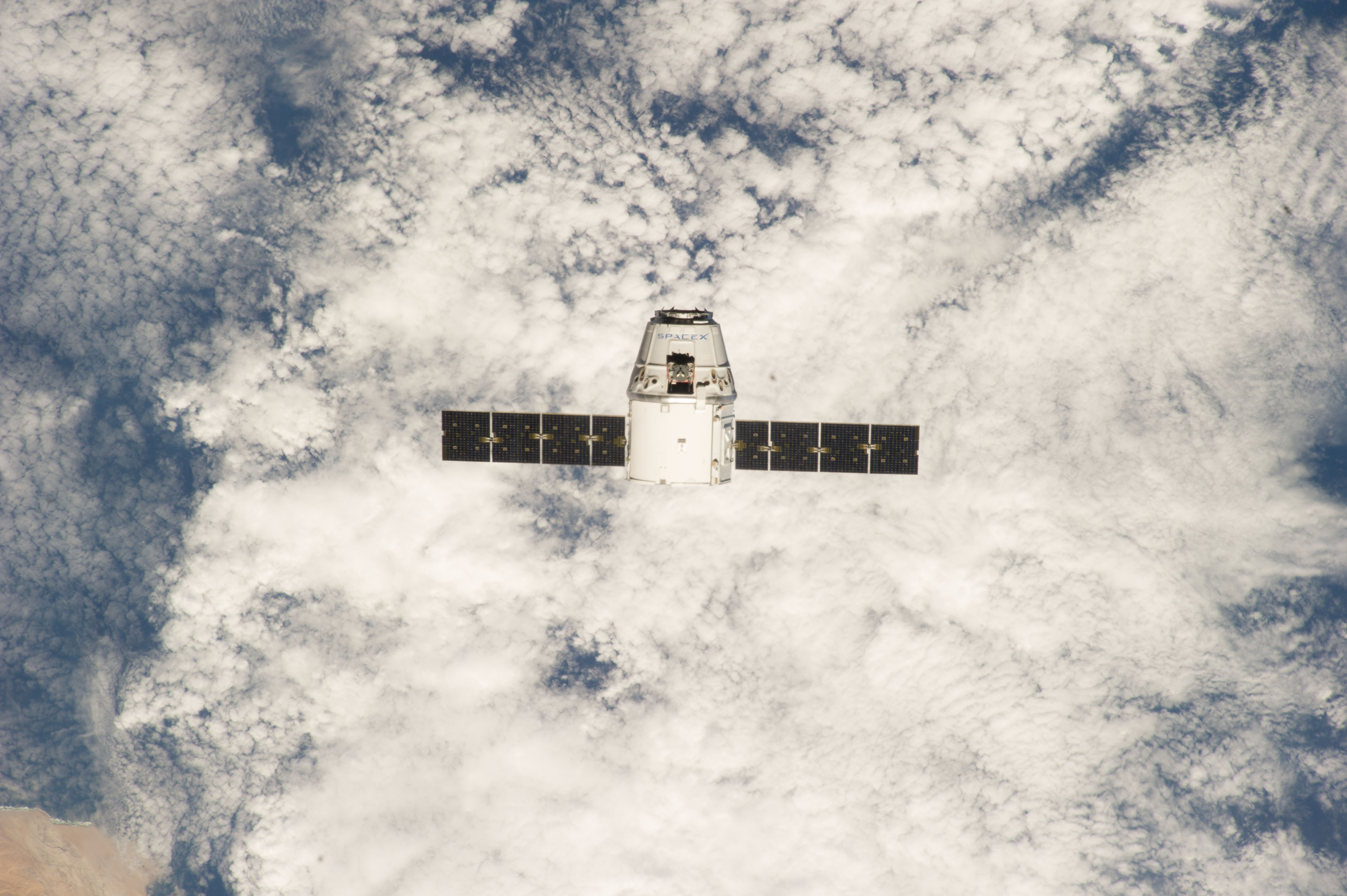
ISS039-E-013377 (20 April 2014) --- This is one of an extensive series of still photos documenting the arrival and ultimate capture and berthing of the SpaceX Dragon at the International Space Station, as photographed by the Expedition 39 crew members onboard the orbital outpost. The spacecraft was captured by the space station and successfully berthed, following the April 20 arrival.

S134-E-008222 (21 May 2011) --- The docked space shuttle Endeavour is featured in this image photographed by an STS-134 crew member onboard the International Space Station during flight day six activities. Earth’s horizon and the blackness of space provide the backdrop for the scene. Photo credit: NASA
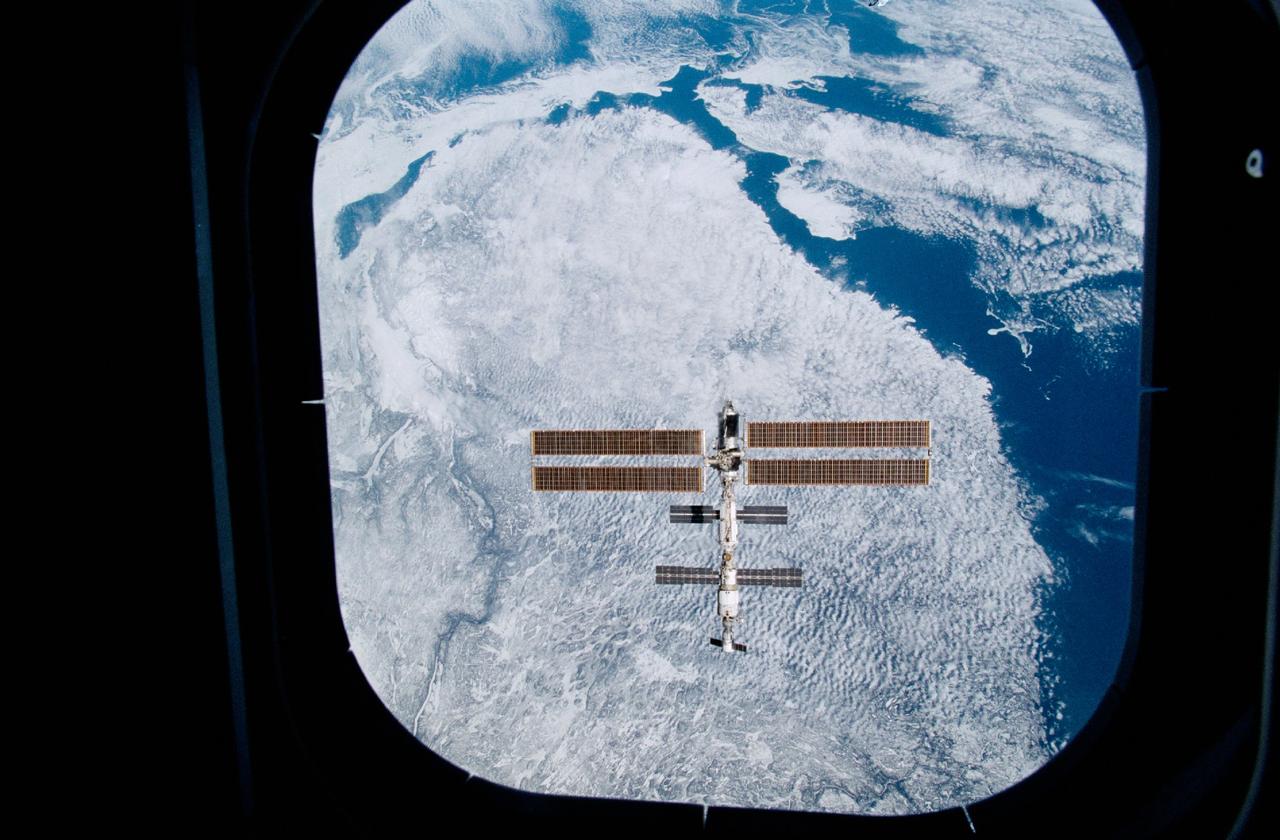
STS100-332-020 (29 April 2001) --- Backdropped against the topography of the Canadian province of Quebec, the International Space Station (ISS) was photographed through an aft flight deck window following separation from the Space Shuttle Endeavour. The 35mm frame was exposed by one of the STS-100 crewmembers onboard the shuttle.
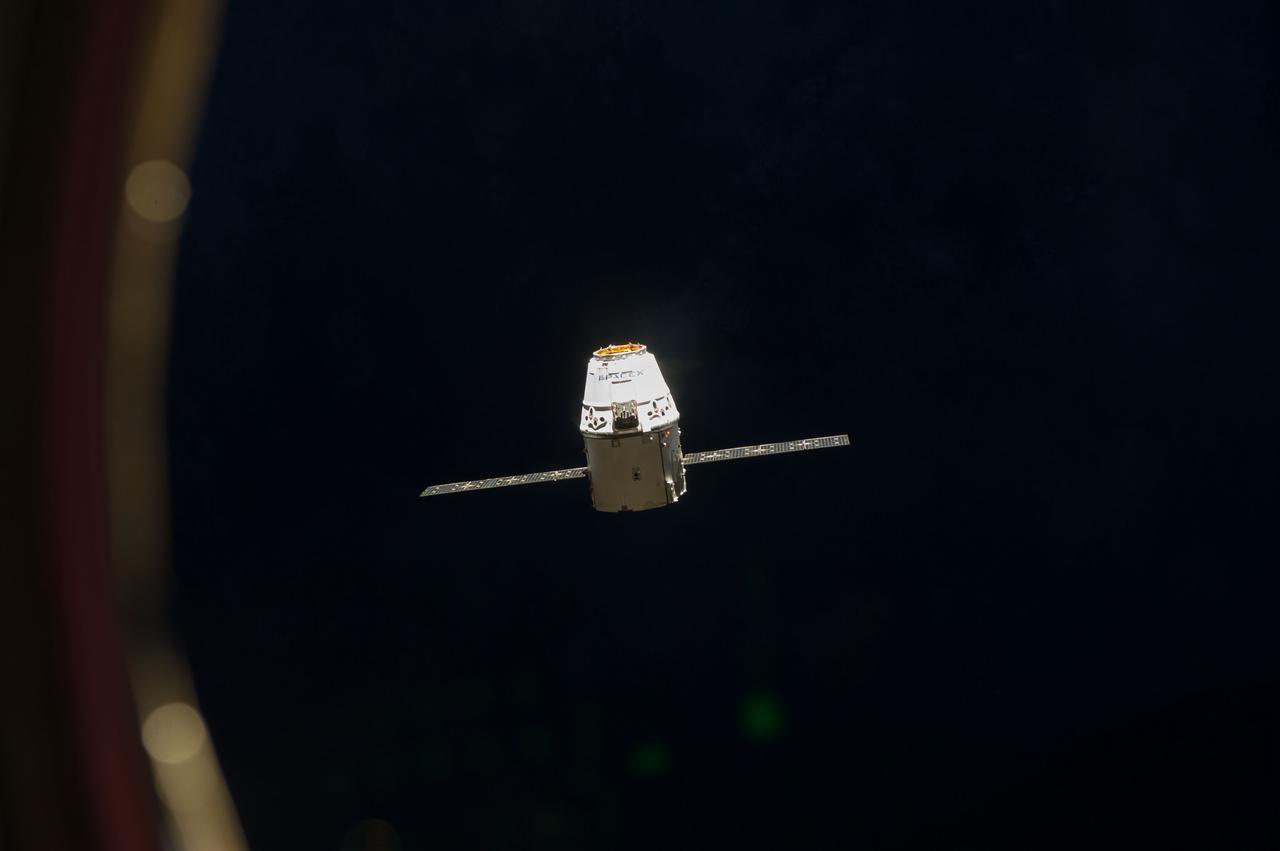
ISS039-E-013584 (20 April 2014) --- This is one of an extensive series of still photos documenting the arrival and ultimate capture and berthing of the SpaceX Dragon at the International Space Station, as photographed by the Expedition 39 crew members onboard the orbital outpost. The spacecraft was captured by the space station and successfully berthed, following the April 20 arrival.
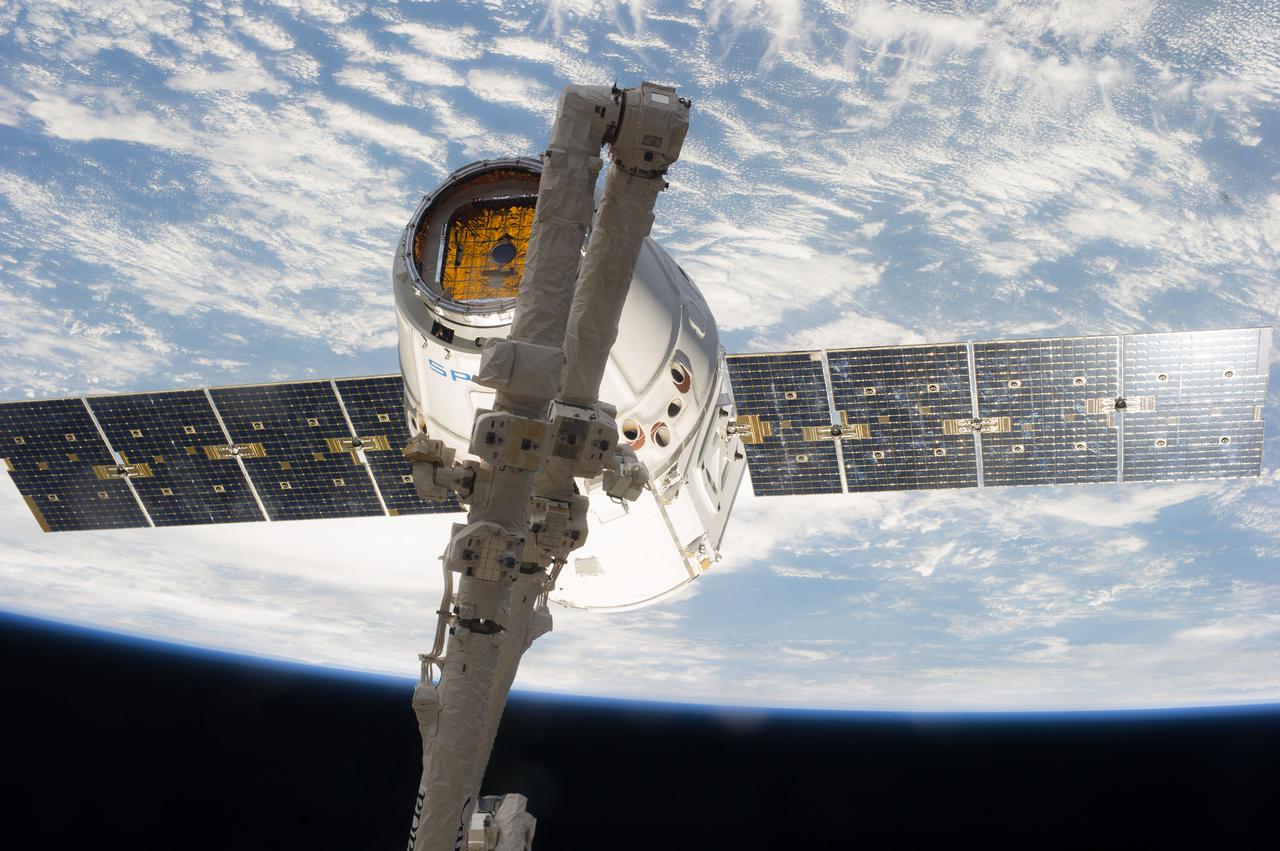
ISS039-E-013501 (20 April 2014) --- This is one of an extensive series of still photos documenting the arrival and ultimate capture and berthing of the SpaceX Dragon at the International Space Station, as photographed by the Expedition 39 crew members onboard the orbital outpost. The spacecraft was captured by the space station and successfully berthed, following the April 20 arrival.
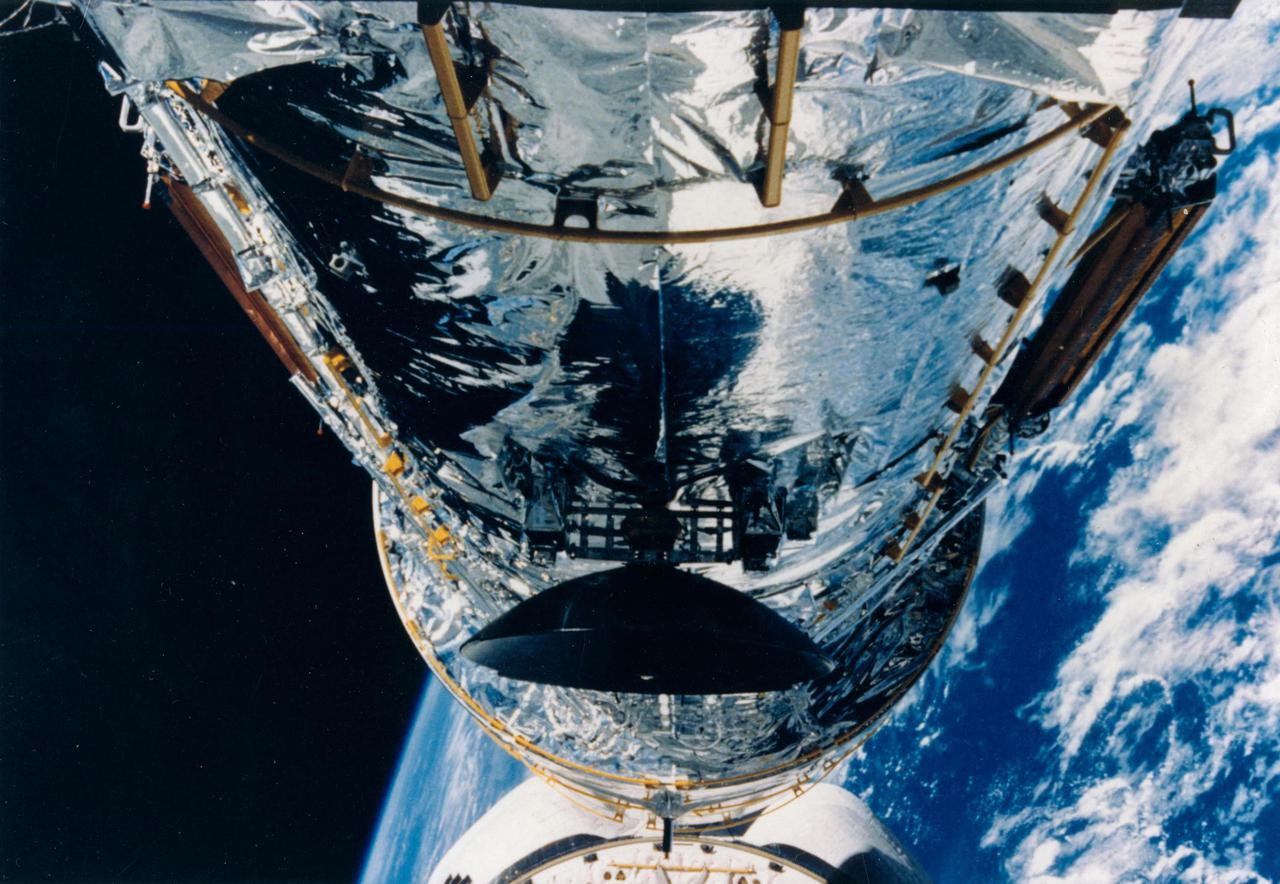
JOHNSON SPACE CENTER, HOUSTON, TEXAS-- STS-31 ONBOARD SCENE -- A medium closeup view photographed with fish-eye lens on a 35mm camera shooting the Hubble Space Telescope (HST) held above Discovery's cargo bay by the remote manipulator system prior to solar array and antennae deployment.
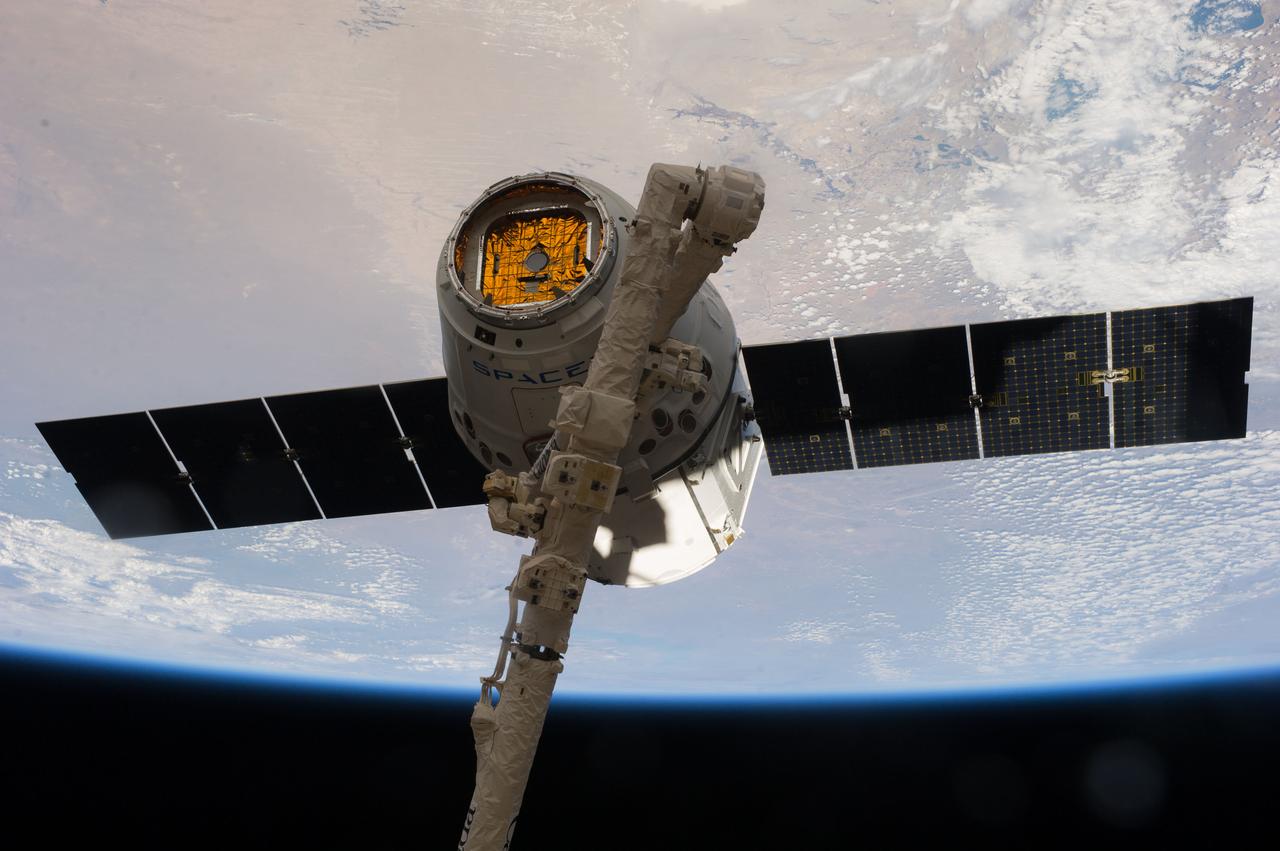
ISS039-E-013522 (20 April 2014) --- This is one of an extensive series of still photos documenting the arrival and ultimate capture and berthing of the SpaceX Dragon at the International Space Station, as photographed by the Expedition 39 crew members onboard the orbital outpost. The spacecraft was captured by the space station and successfully berthed, following the April 20 arrival.
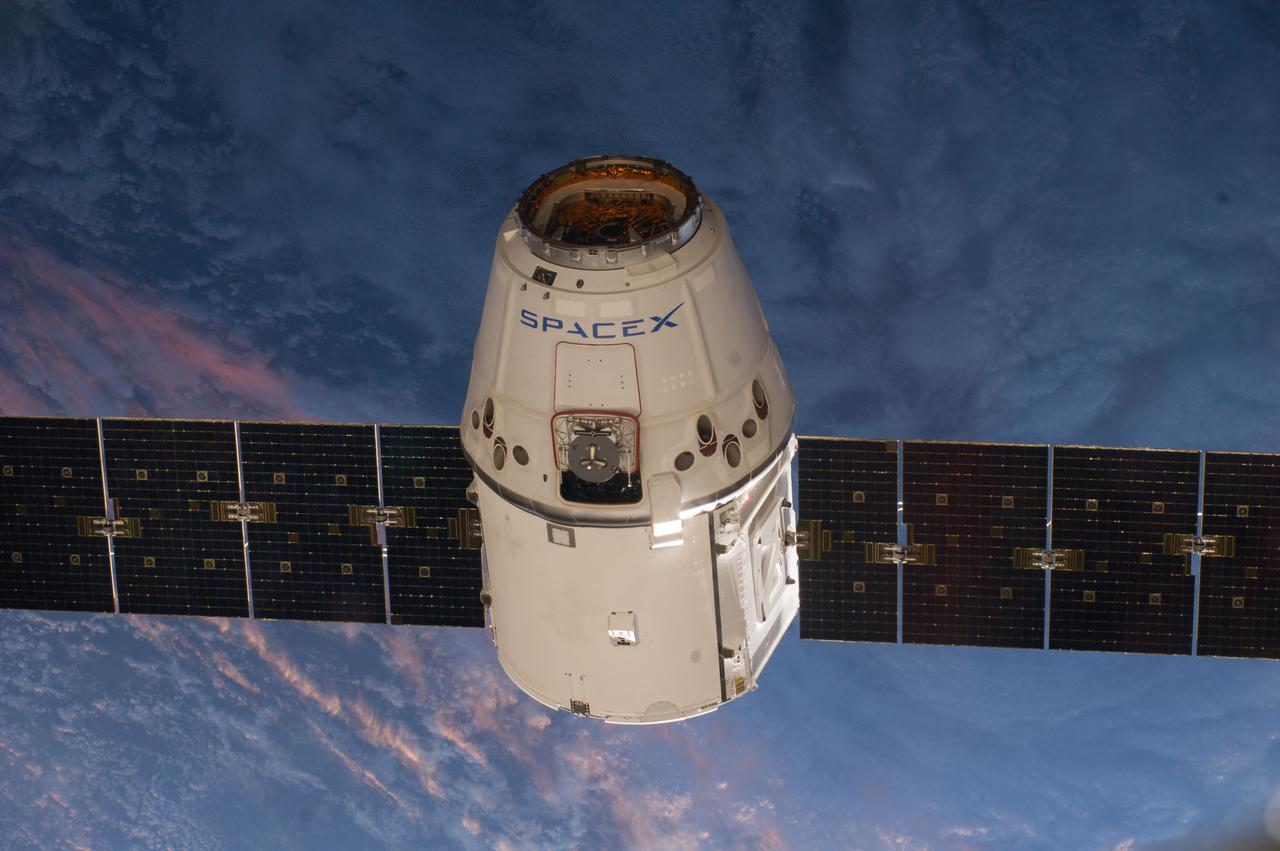
ISS039-E-013475 (20 April 2014) --- This is one of an extensive series of still photos documenting the arrival and ultimate capture and berthing of the SpaceX Dragon at the International Space Station, as photographed by the Expedition 39 crew members onboard the orbital outpost. The spacecraft was captured by the space station and successfully berthed, following the April 20 arrival.
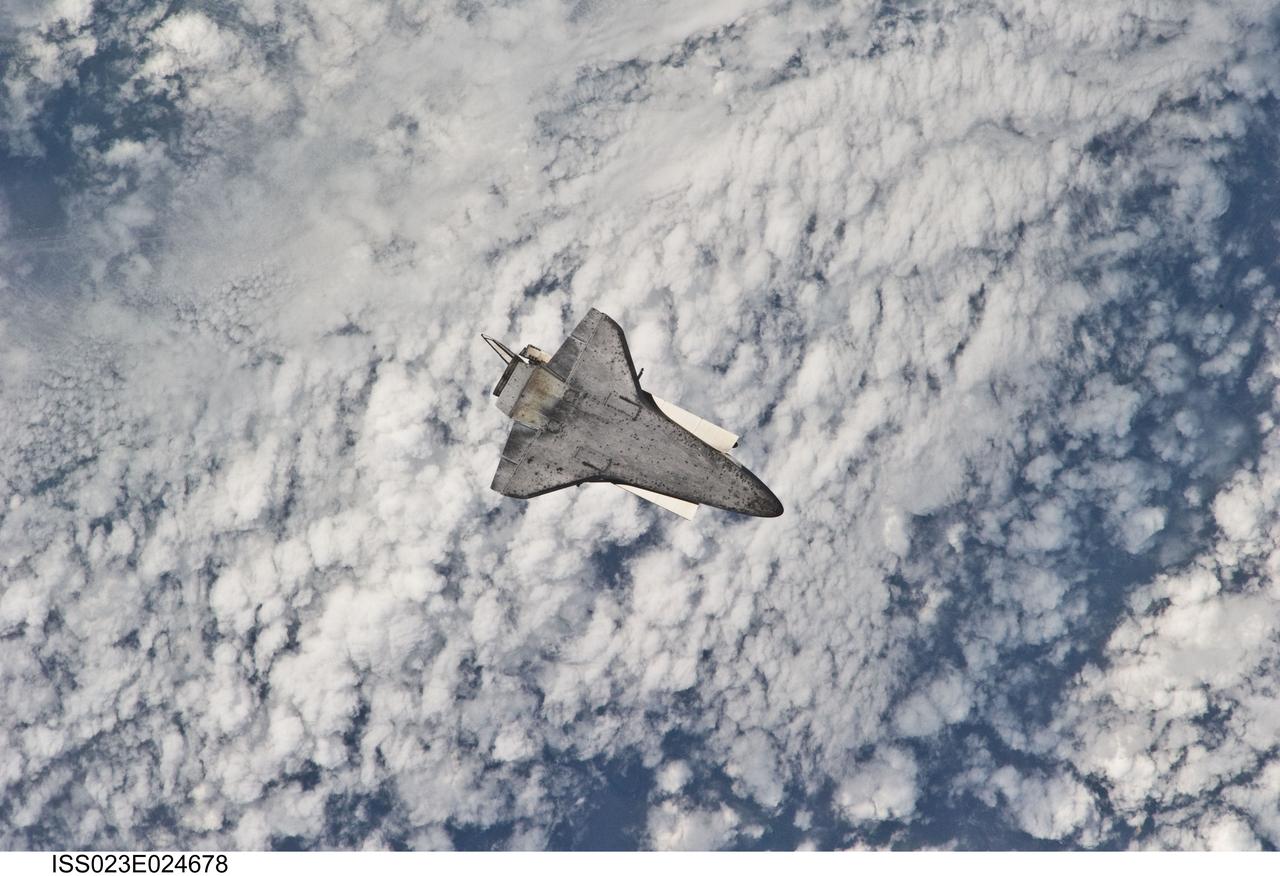
ISS023-E-024678 (17 April 2010) --- The space shuttle Discovery flies with its payload bay facing Earth so that the astronauts and cosmonauts onboard the International Space Station could survey and photograph it following the relative separation of the two spacecraft on April 17.
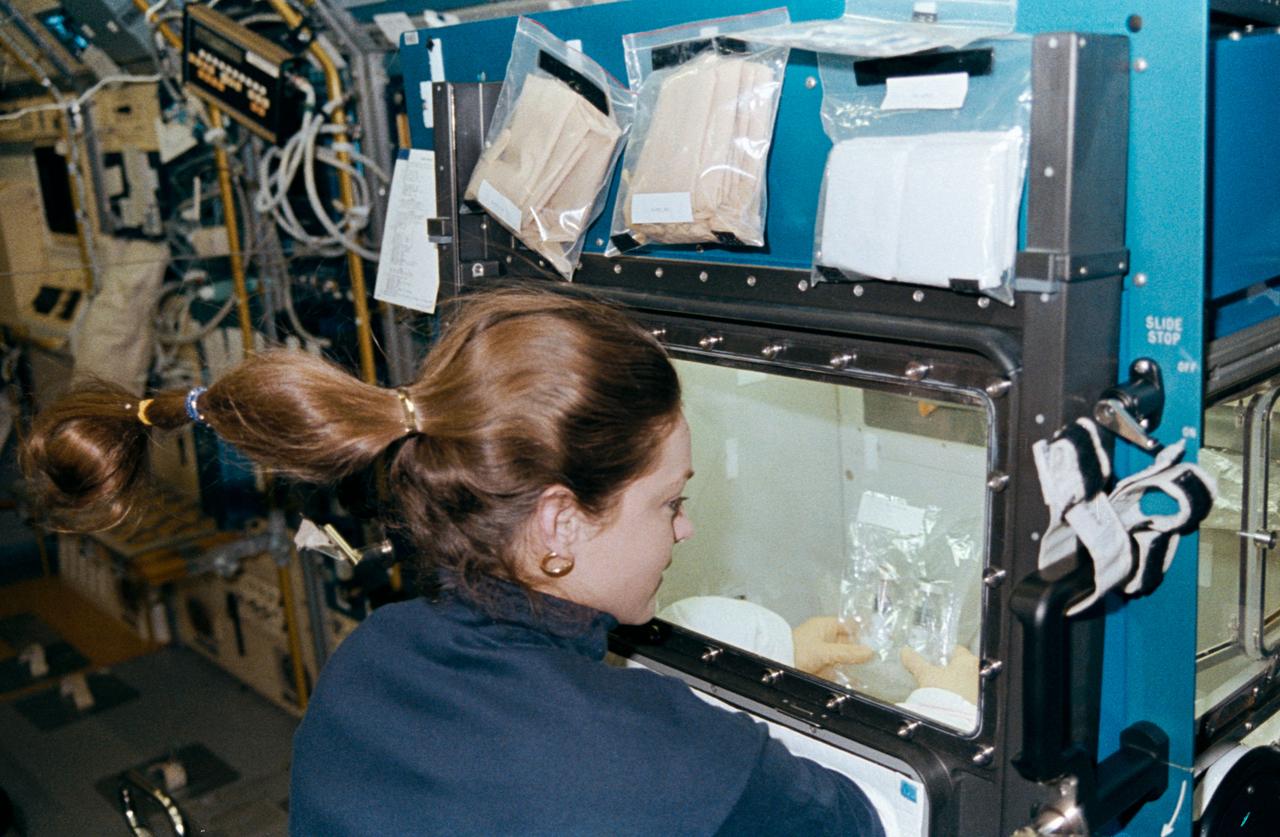
STS040-224-005 (5-14 June 1991) --- Astronaut Tamara E. Jernigan, STS-40 mission specialist, conducts an evaluation of the General Purpose Work Station (GPWS) in the Spacelab Life Sciences (SLS-1) module onboard the Earth-orbiting Space Shuttle Columbia. The photograph was taken with a 35mm camera.
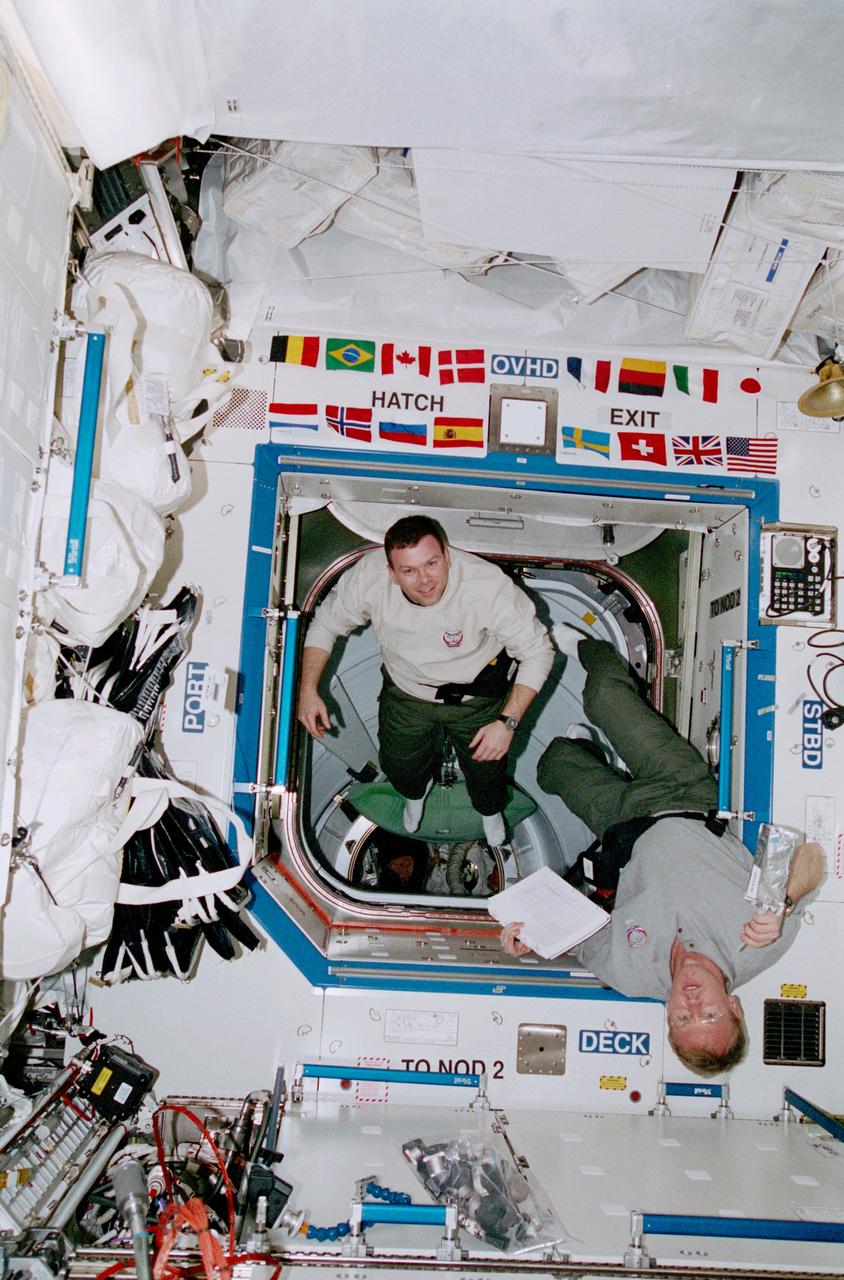
STS102-368-030 (8-21 March 2001) --- Astronauts Andrew S. W. Thomas (holding a beverage), STS-102 mission specialist and James M. Kelly, STS-102 pilot, are photographed while onboard the Destiny laboratory on the International Space Station (ISS).
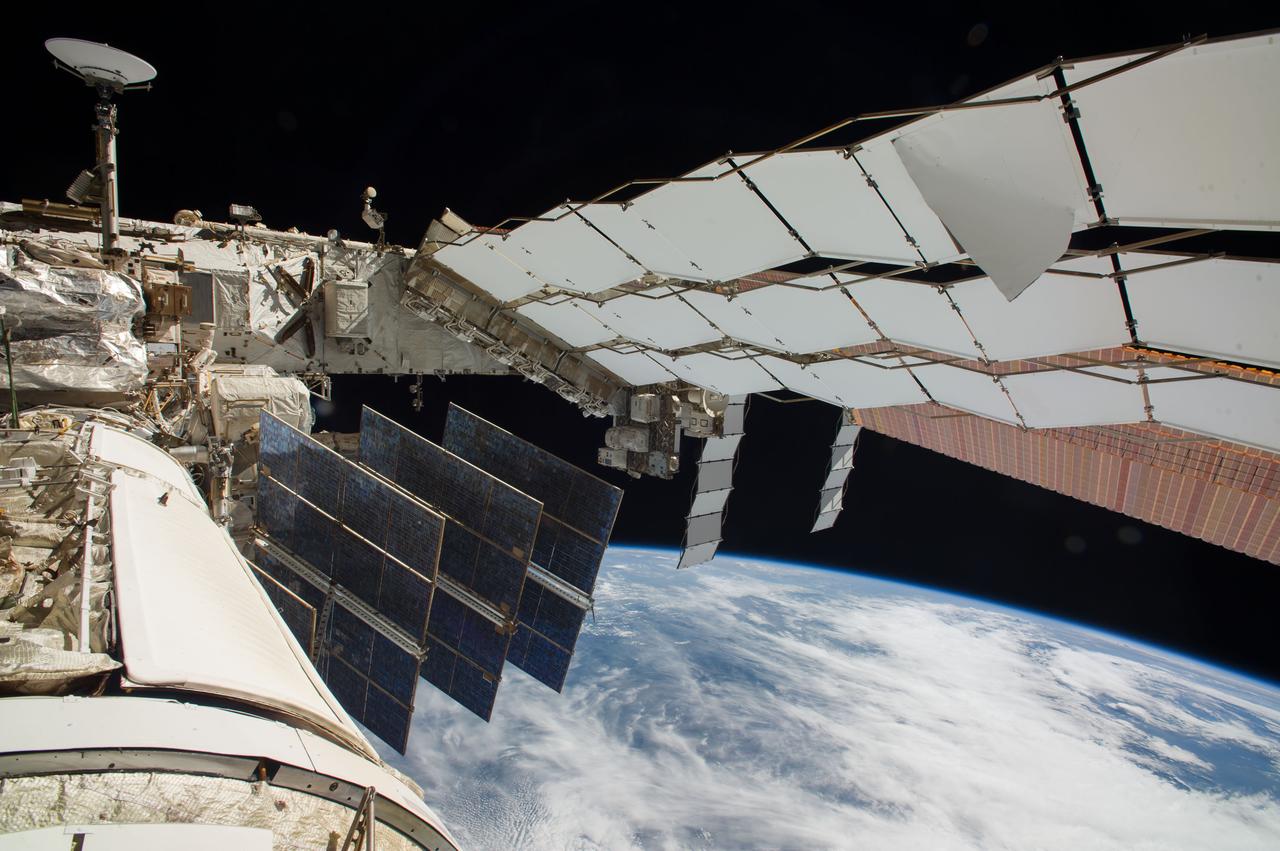
ISS040-E-123158 (2 Sept. 2014) --- A portion of the Russian segment of the International Space Station is featured in this image photographed by an Expedition 40 crew member onboard the station. A blue and white part of Earth and the blackness of space provide the backdrop for the scene.
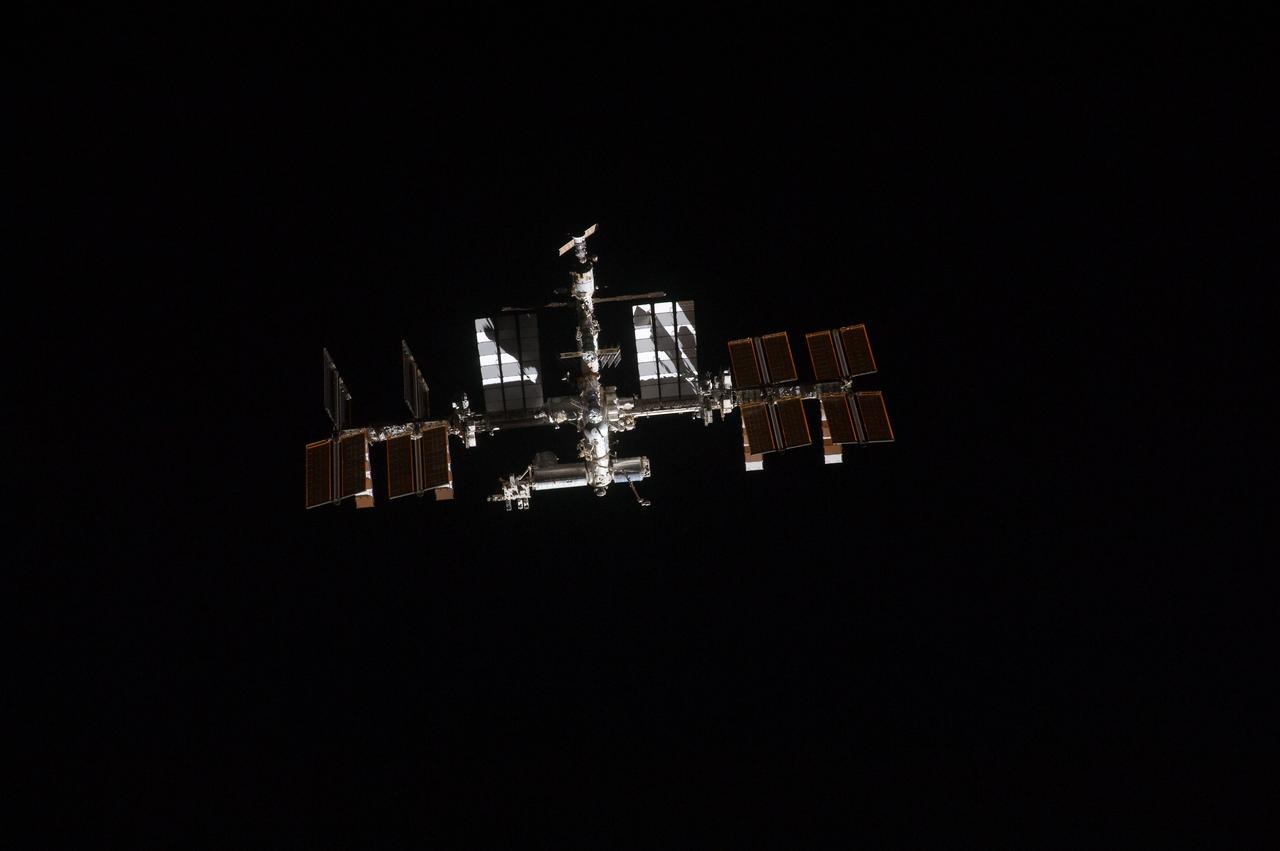
S135-E-006702 (10 July 2011) --- This is one of a series of images showing the International Space Station photographed by a crewmember onboard the space shuttle Atlantis as the two spacecraft performed rendezvous and docking operations on the STS-135 mission's third day in Earth orbit. Photo credit: NASA
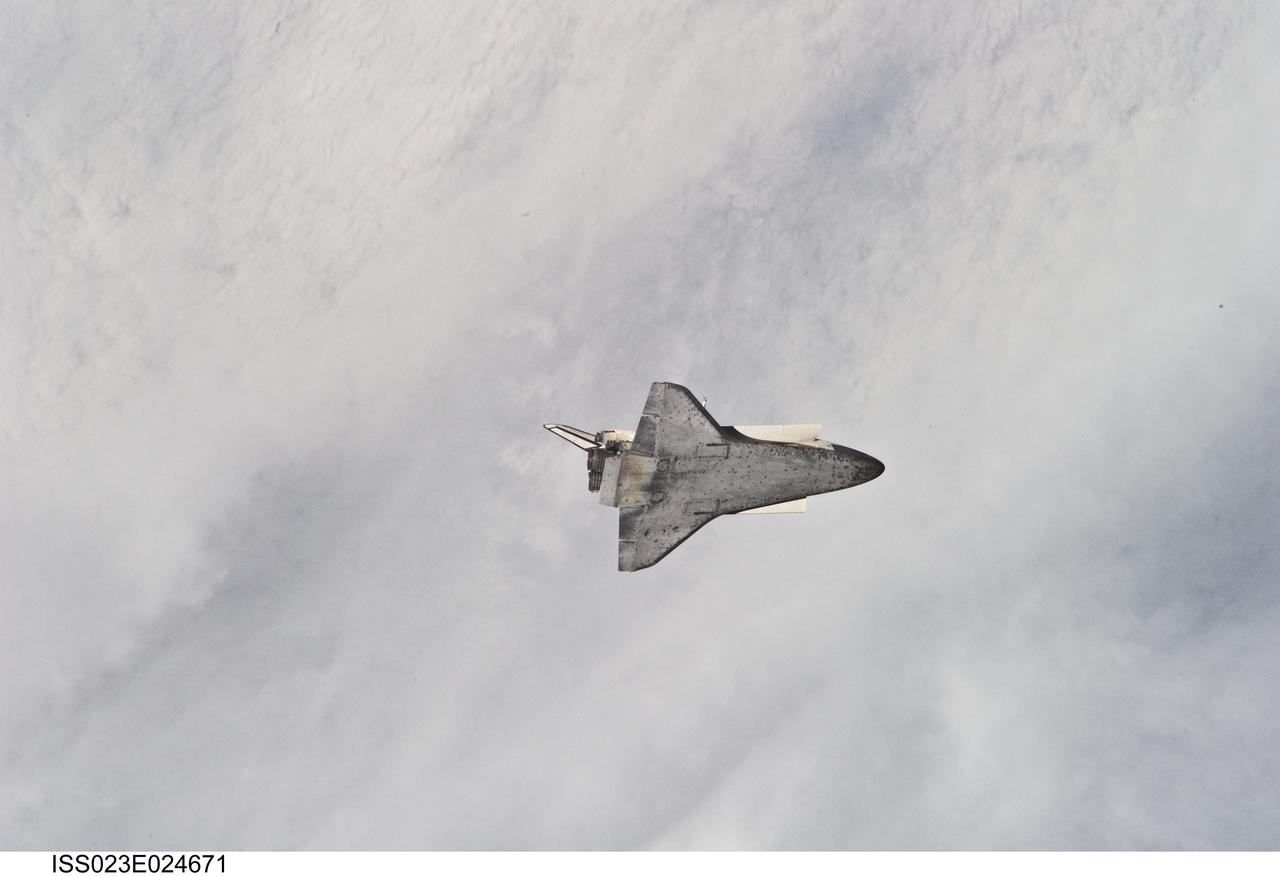
ISS023-E-024671 (17 April 2010) --- The space shuttle Discovery flies with its payload bay facing Earth so that the astronauts and cosmonauts onboard the International Space Station could survey and photograph it following the relative separation of the two spacecraft on April 17.
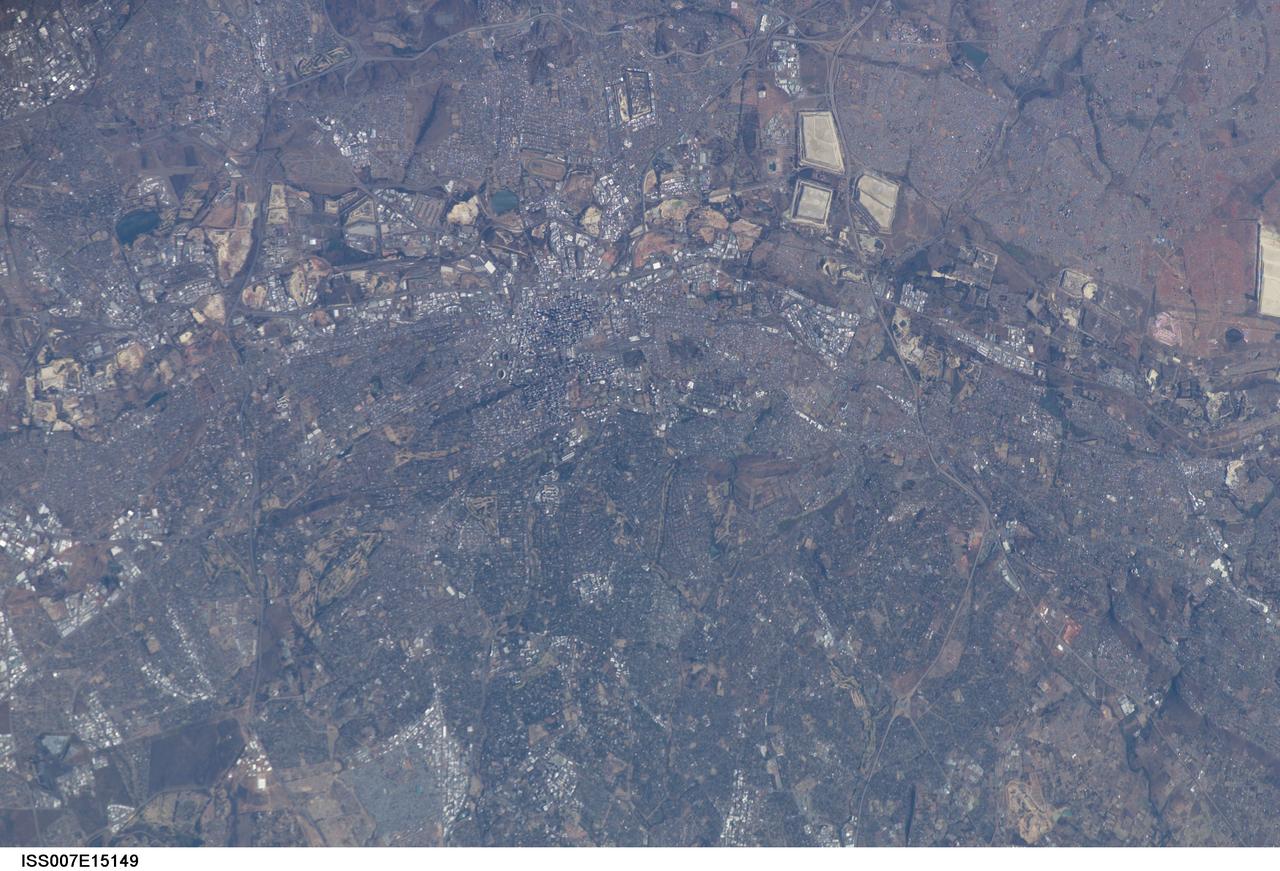
ISS007-E-15149 (21 September 2003) --- This image, photographed by an Expedition 7 crewmember onboard the International Space Station (ISS), was merged with images ISS007-E-15148 and ISS007-E-15150 to create a mosaic of Johannesburg, South Africa. The mosaic can be viewed on http://eol.jsc.nasa.gov
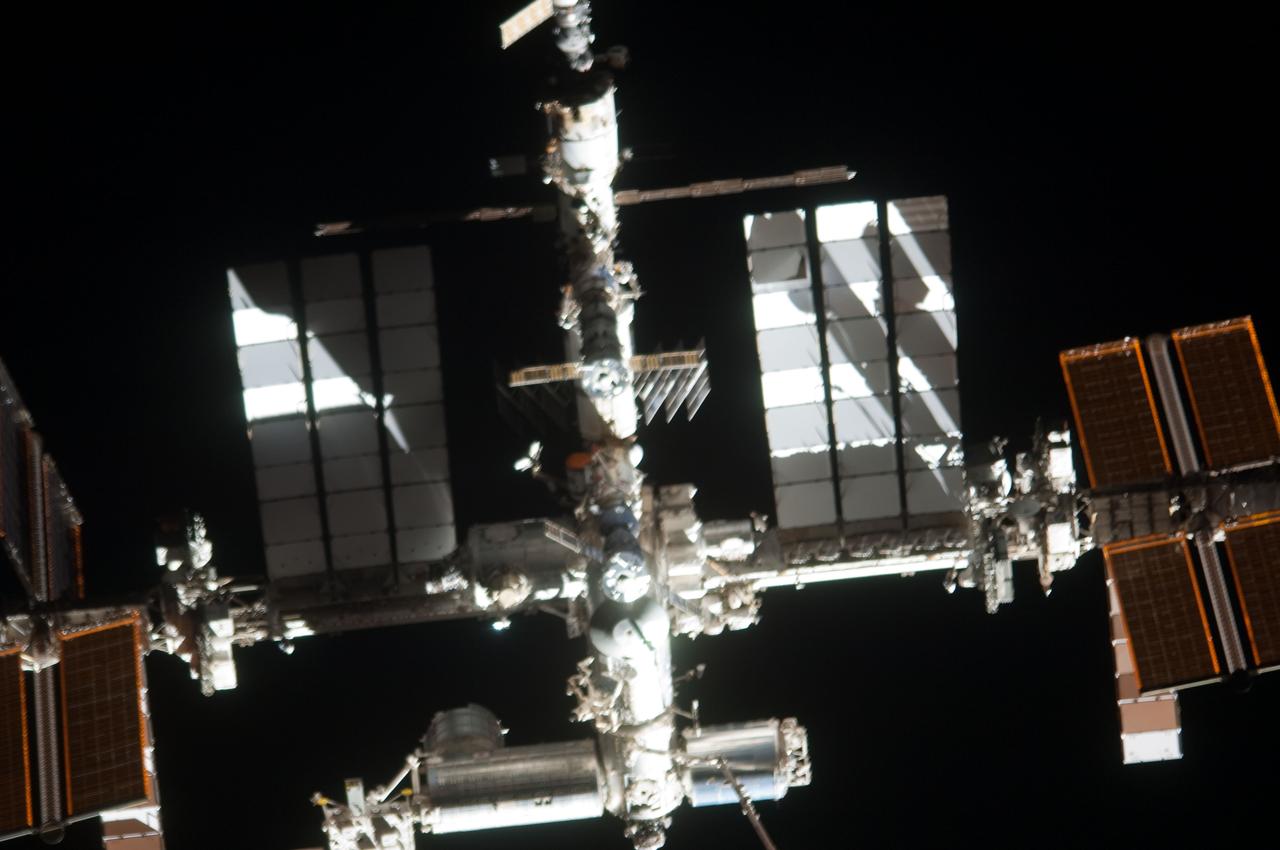
S135-E-006784 (10 July 2011) --- This is one of a series of images showing the International Space Station photographed by a crewmember onboard the space shuttle Atlantis as the two spacecraft performed rendezvous and docking operations on the STS-135 mission's third day in Earth orbit. Photo credit: NASA
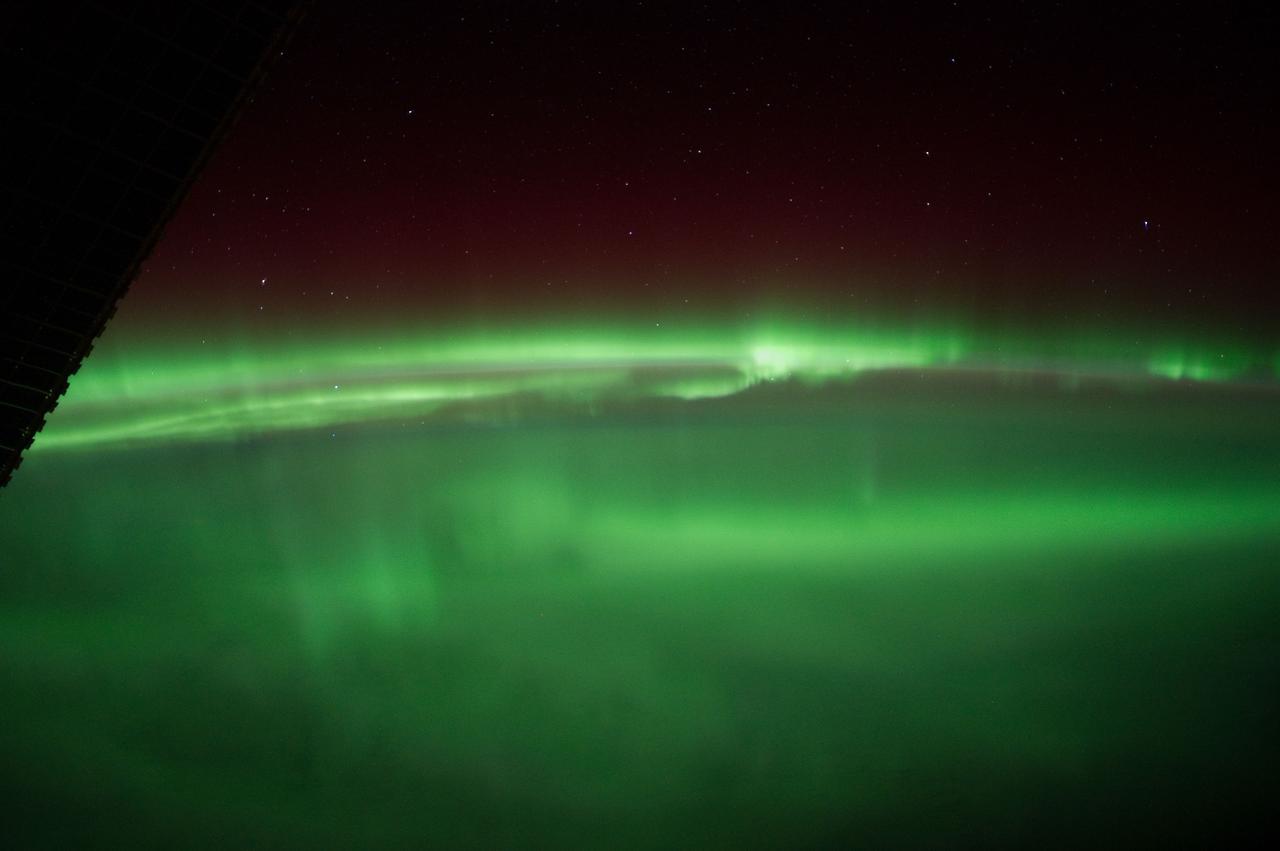
ISS030-E-102292 (25 Jan. 2012) --- This is one of a series of photos showing Aurora Borealis as photographed by one of the Expedition 30 crew members onboard the International Space Station from approximately 240 miles above Earth on Jan. 25, 2012.