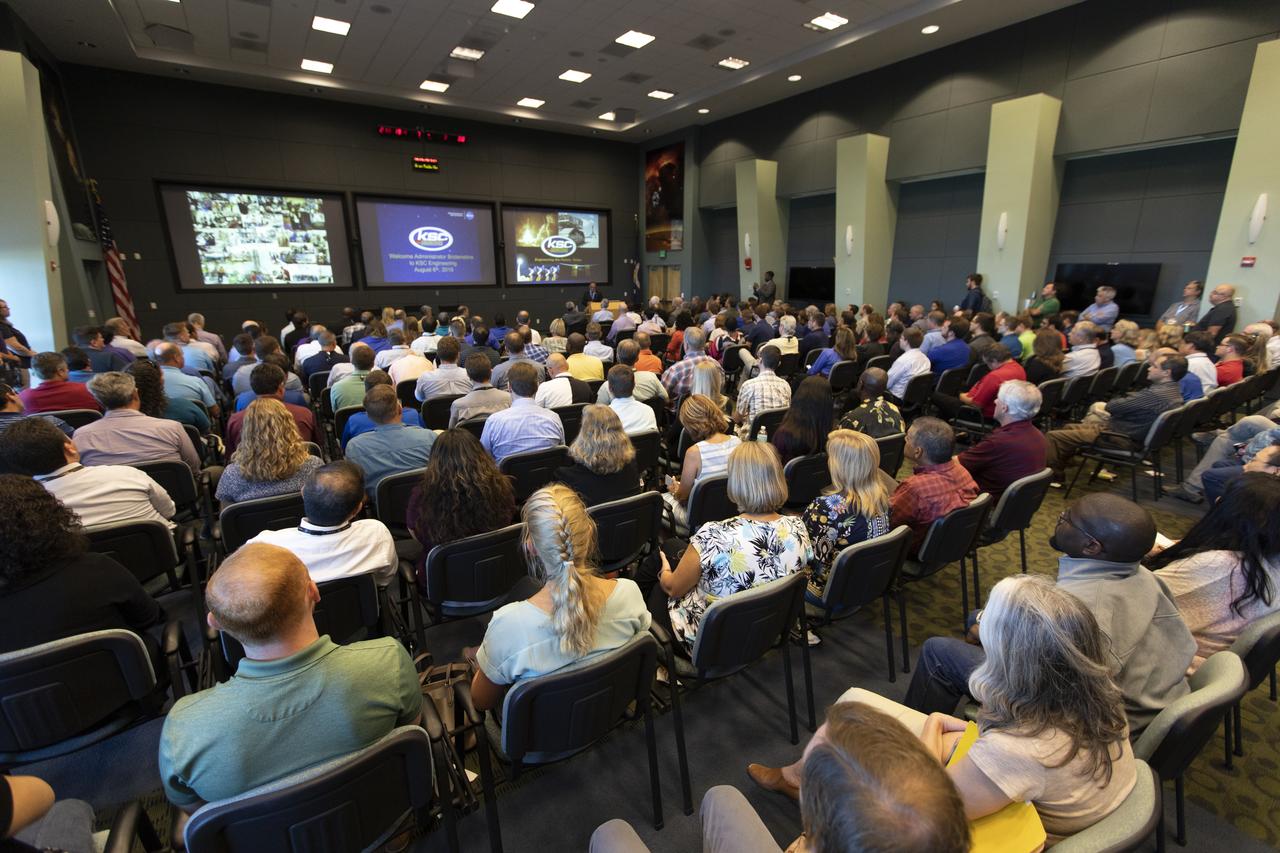
Employees of the Engineering Directorate at NASA's Kennedy Space Center gather in the conference room of Operations Support Building II for a presentation by NASA Administrator Jim Bridenstine. He made his first official visit to the Florida spaceport on Aug. 6 and 7, 2018.

Teams at NASA’s Kennedy Space Center in Florida meet on Saturday, March 28, 2026, at the Operations Support Building II for the Artemis II launch countdown pre-test briefing. Photo Credit: (NASA/Bill Ingalls)
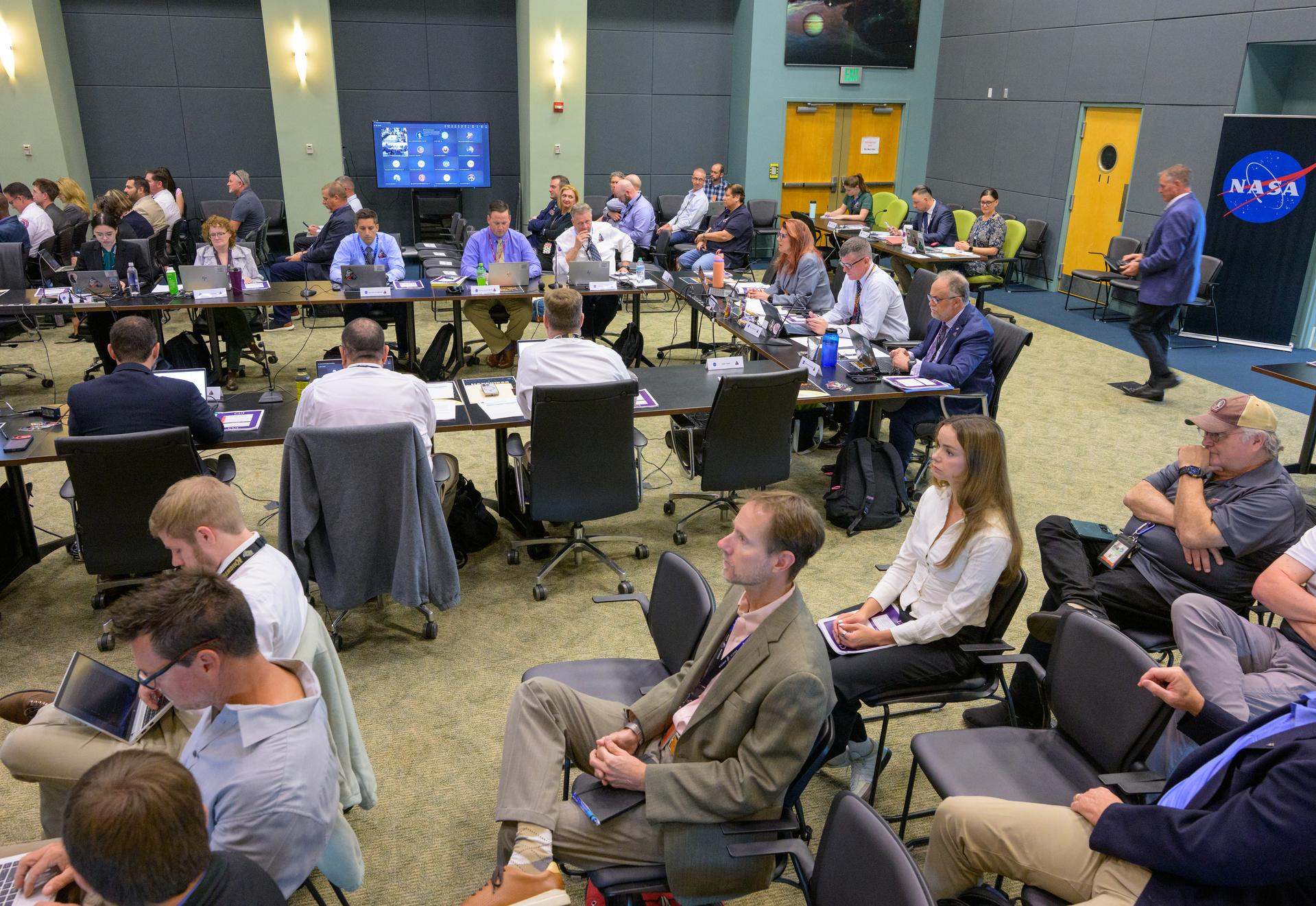
Teams at NASA’s Kennedy Space Center in Florida meet on Saturday, March 28, 2026, at the Operations Support Building II for the Artemis II launch countdown pre-test briefing. Photo Credit: (NASA/Bill Ingalls)
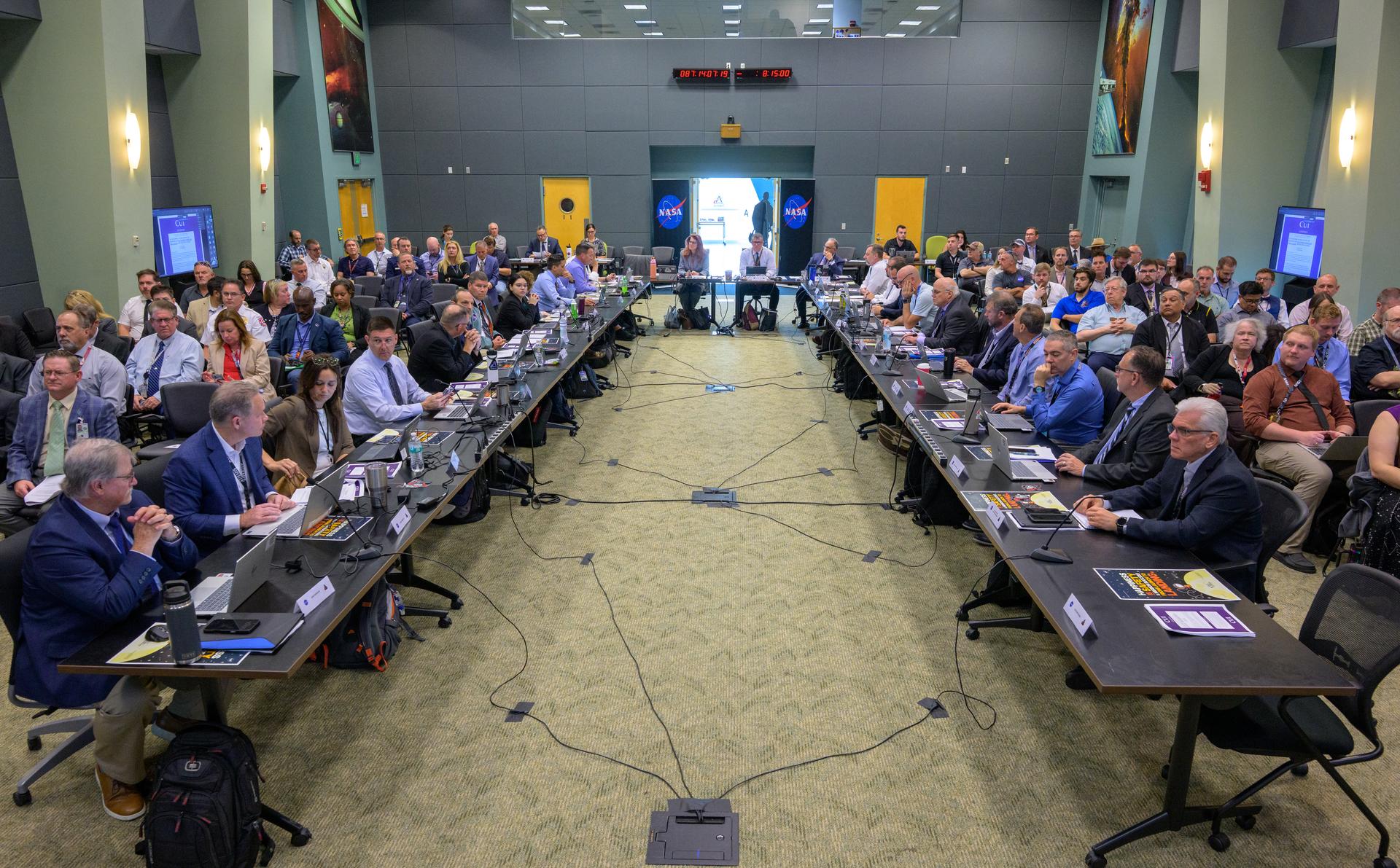
Teams at NASA’s Kennedy Space Center in Florida meet on Saturday, March 28, 2026, at the Operations Support Building II for the Artemis II launch countdown pre-test briefing. Photo Credit: (NASA/Bill Ingalls)
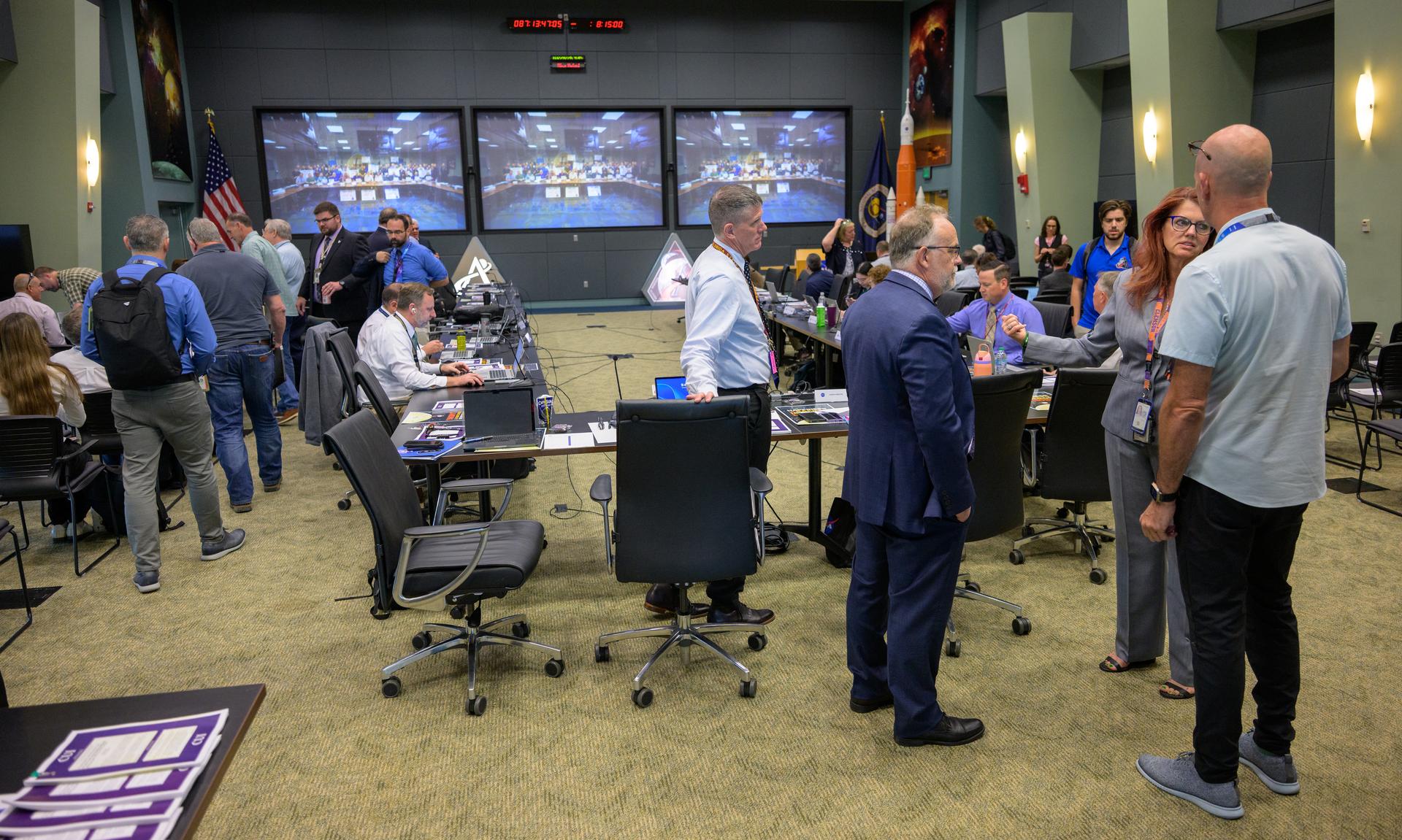
Teams at NASA’s Kennedy Space Center in Florida meet on Saturday, March 28, 2026, at the Operations Support Building II for the Artemis II launch countdown pre-test briefing. Photo Credit: (NASA/Bill Ingalls) NOTE - Portions of this image have been blurred for security reasons.
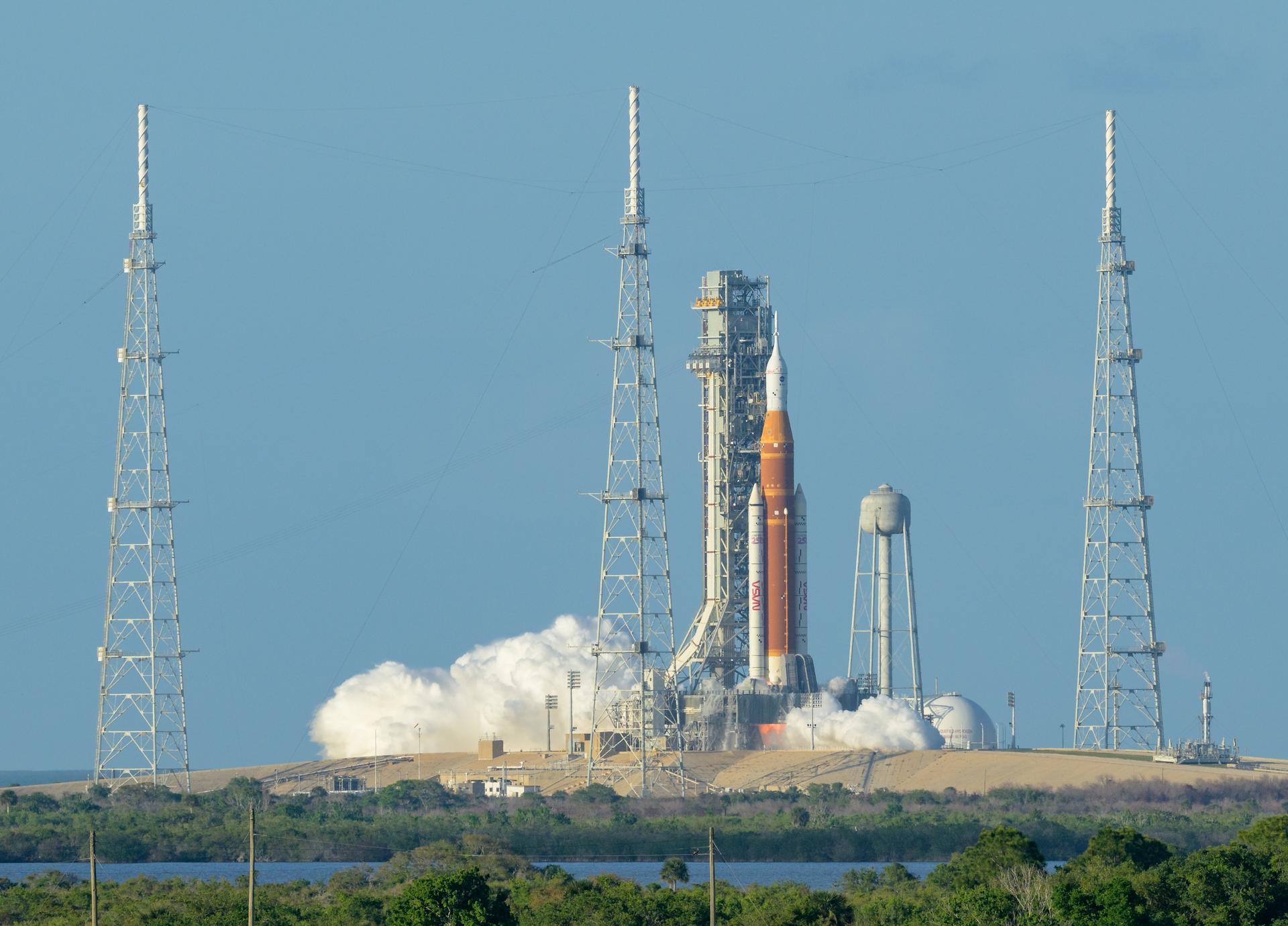
NASA’s Space Launch System rocket launches carrying the Orion spacecraft with NASA astronauts Reid Wiseman, commander; Victor Glover, pilot; Christina Koch, mission specialist; and CSA (Canadian Space Agency) astronaut Jeremy Hansen, mission specialist on NASA’s Artemis II mission, Wednesday, April 1, 2026, from Operations and Support Building II at NASA’s Kennedy Space Center in Florida. NASA’s Artemis II mission will take Wiseman, Glover, Koch, and Hansen on a 10-day journey around the Moon and back aboard SLS rocket and Orion spacecraft launched at 6:35pm EDT from Launch Complex 39B. Photo Credit: (NASA/Bill Ingalls)
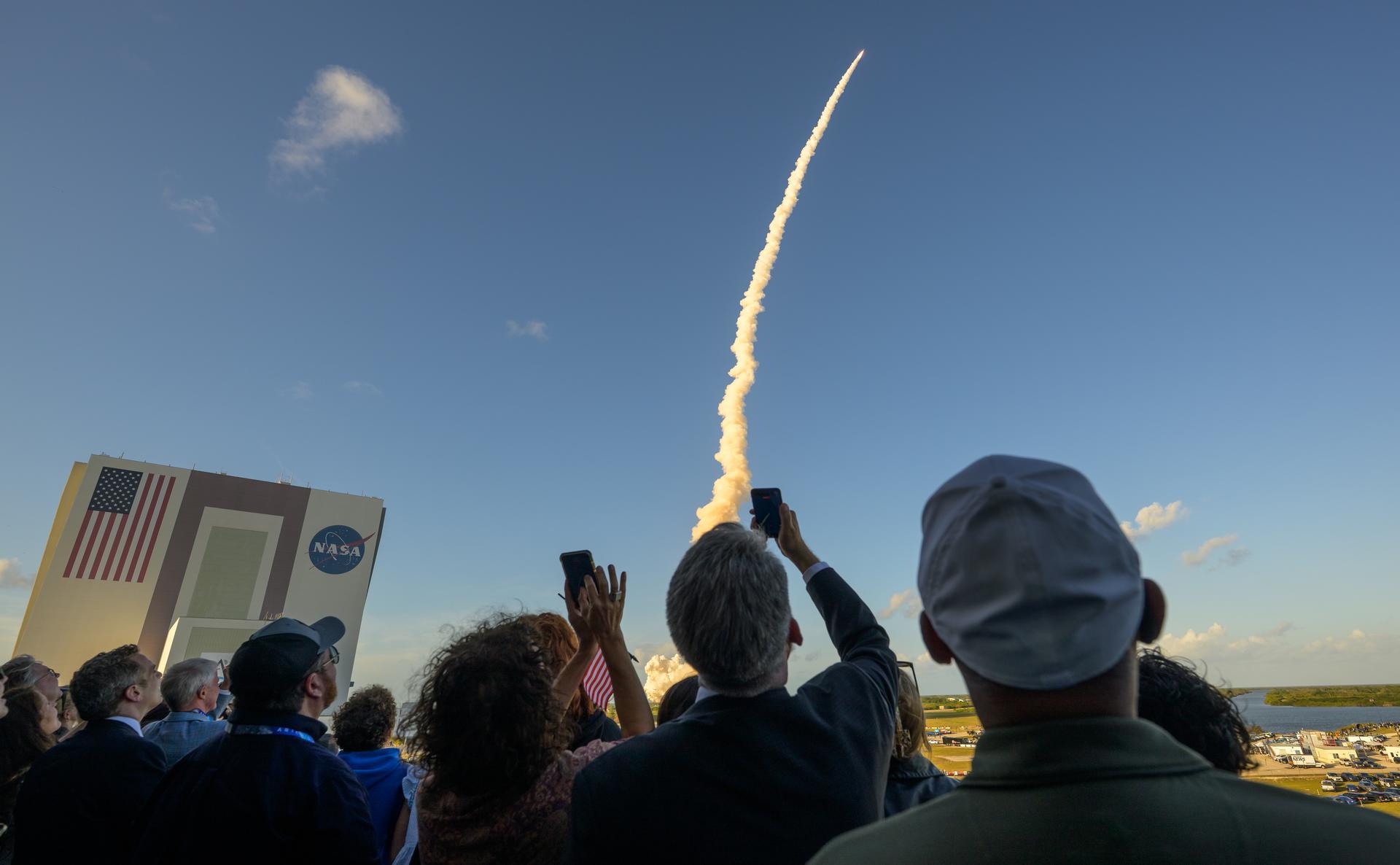
Guests watch the launch of NASA’s Space Launch System rocket carrying the Orion spacecraft with NASA astronauts Reid Wiseman, commander; Victor Glover, pilot; Christina Koch, mission specialist; and CSA (Canadian Space Agency) astronaut Jeremy Hansen, mission specialist on NASA’s Artemis II mission,, Wednesday, April 1, 2026, from Operations and Support Building II at NASA’s Kennedy Space Center in Florida. NASA’s Artemis II mission will take Wiseman, Glover, Koch, and Hansen on a 10-day journey around the Moon and back aboard SLS rocket and Orion spacecraft launched at 6:35pm EDT, from Launch Complex 39B. Photo Credit: (NASA/Bill Ingalls)
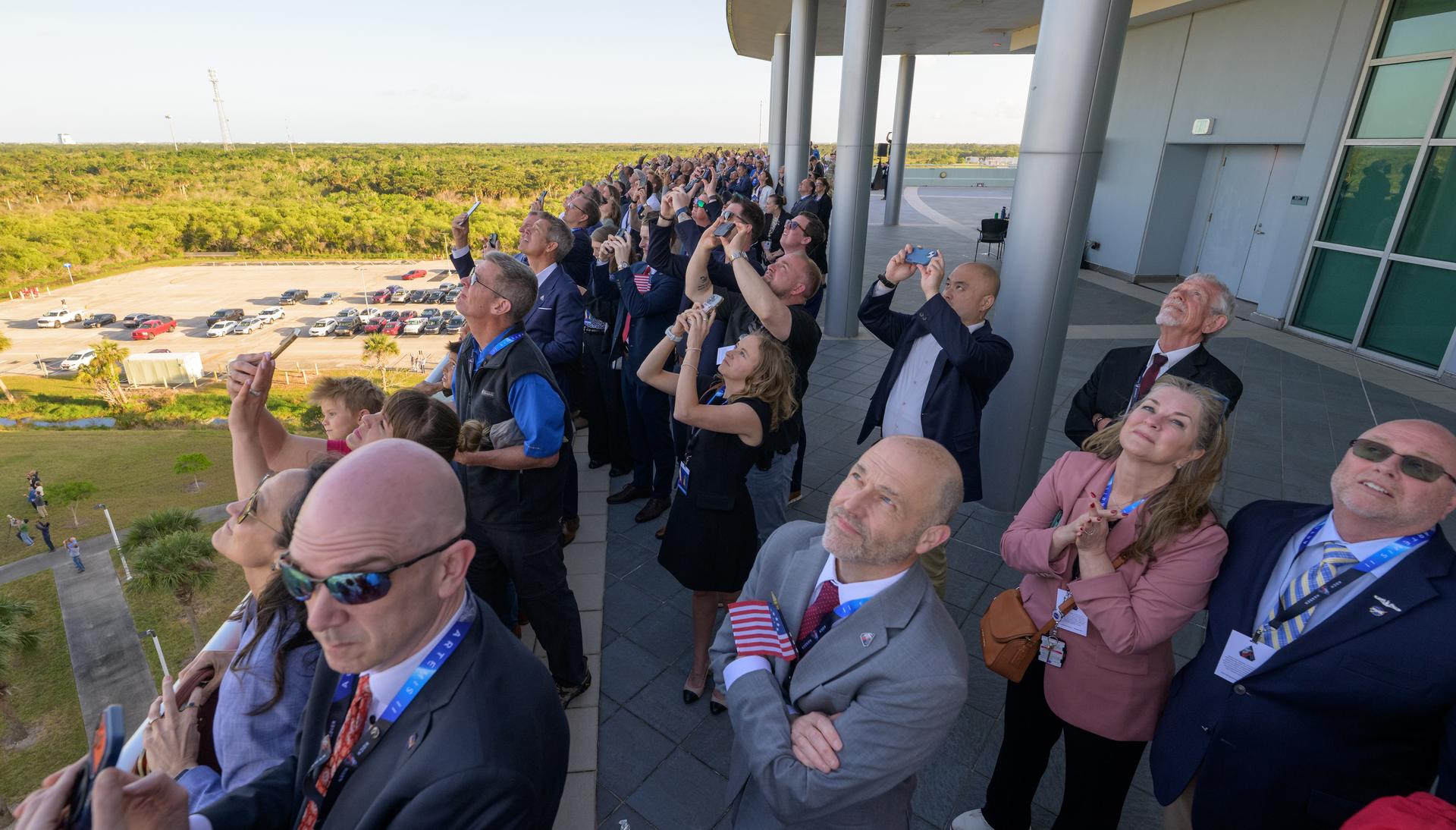
Guests watch the launch of NASA’s Space Launch System rocket carrying the Orion spacecraft with NASA astronauts Reid Wiseman, commander; Victor Glover, pilot; Christina Koch, mission specialist; and CSA (Canadian Space Agency) astronaut Jeremy Hansen, mission specialist on NASA’s Artemis II mission,, Wednesday, April 1, 2026, from Operations and Support Building II at NASA’s Kennedy Space Center in Florida. NASA’s Artemis II mission will take Wiseman, Glover, Koch, and Hansen on a 10-day journey around the Moon and back aboard SLS rocket and Orion spacecraft launched at 6:35pm EDT, from Launch Complex 39B. Photo Credit: (NASA/Bill Ingalls)
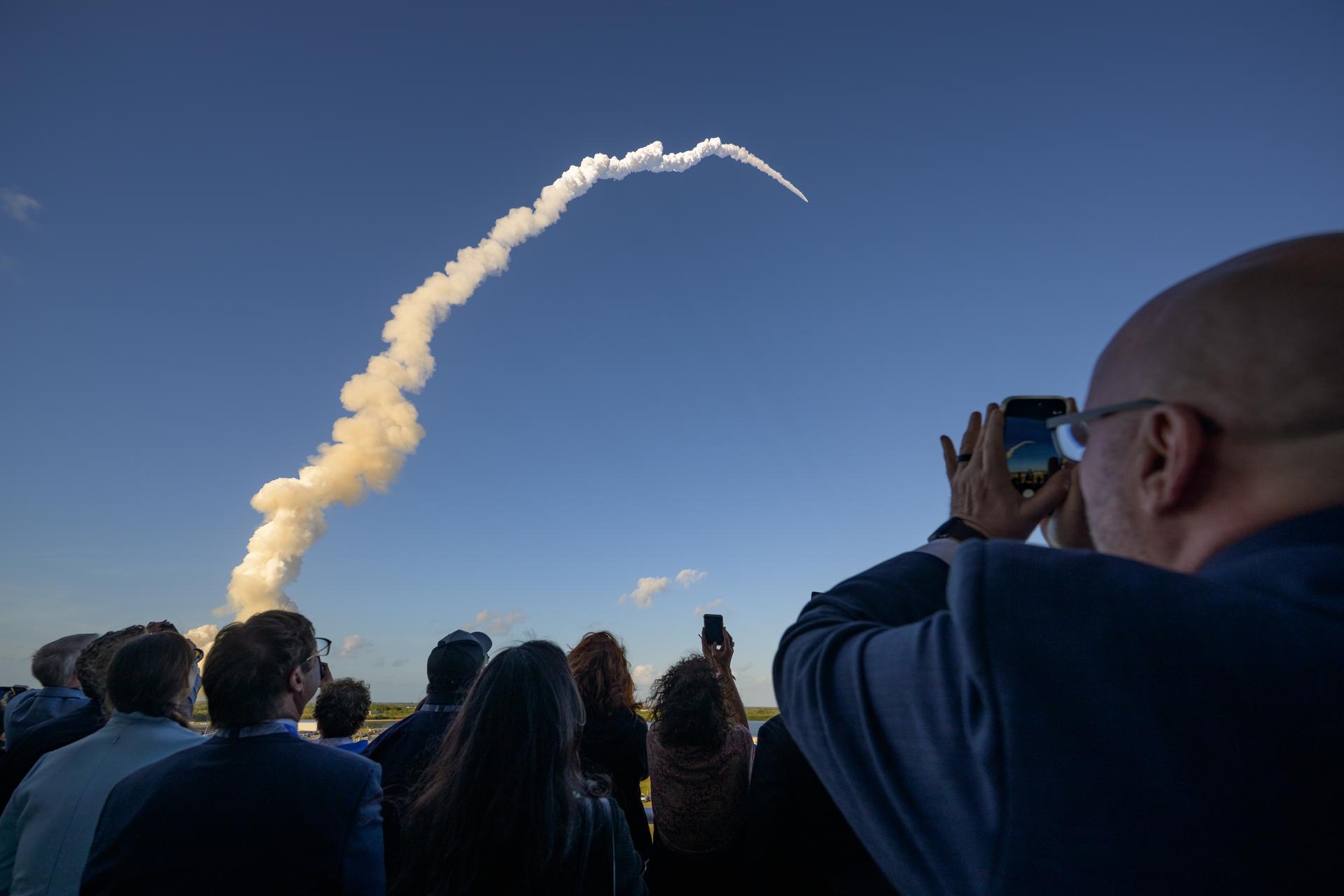
Guests watch the launch of NASA’s Space Launch System rocket carrying the Orion spacecraft with NASA astronauts Reid Wiseman, commander; Victor Glover, pilot; Christina Koch, mission specialist; and CSA (Canadian Space Agency) astronaut Jeremy Hansen, mission specialist on NASA’s Artemis II mission,, Wednesday, April 1, 2026, from Operations and Support Building II at NASA’s Kennedy Space Center in Florida. NASA’s Artemis II mission will take Wiseman, Glover, Koch, and Hansen on a 10-day journey around the Moon and back aboard SLS rocket and Orion spacecraft launched at 6:35pm EDT, from Launch Complex 39B. Photo Credit: (NASA/Bill Ingalls)
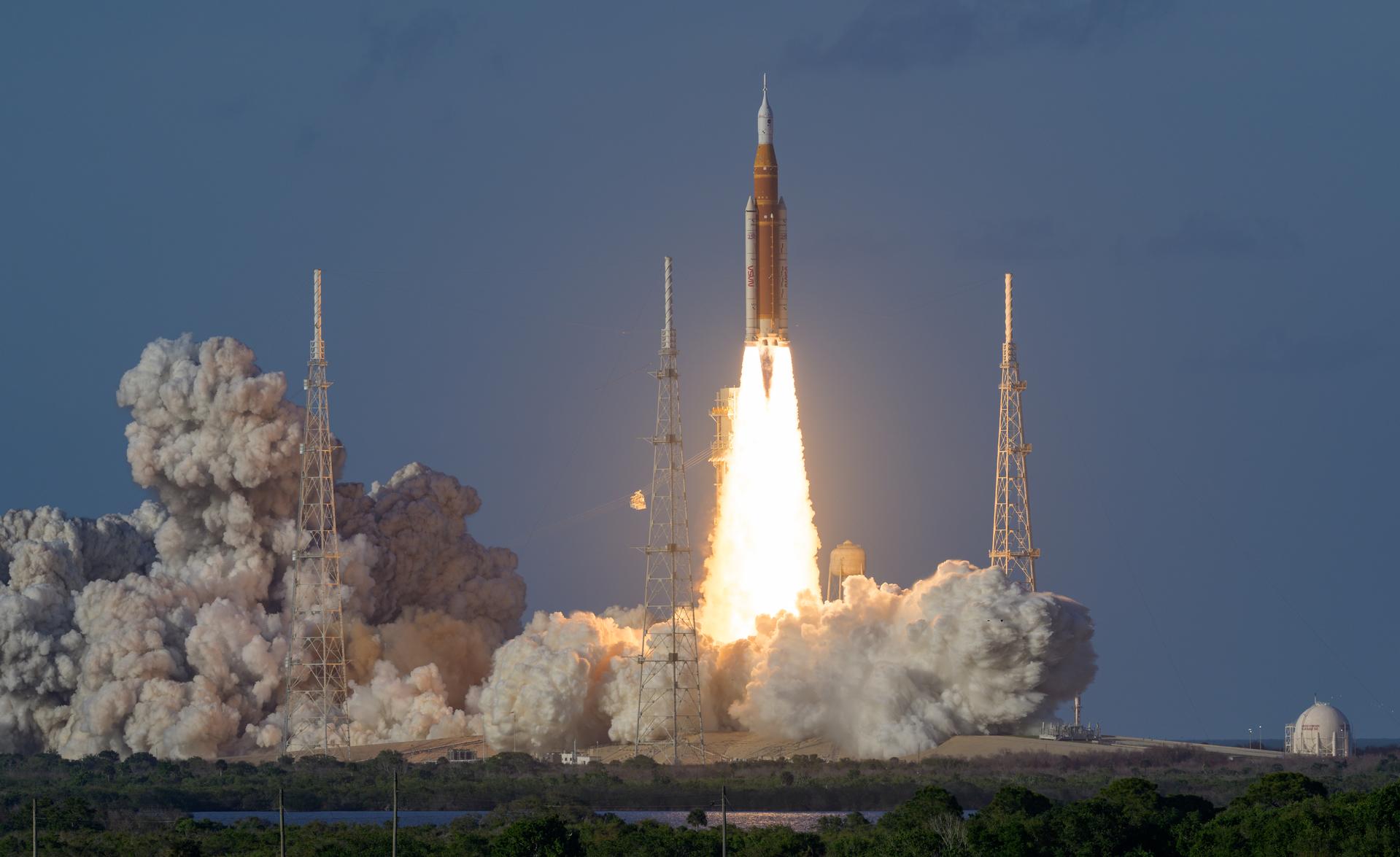
NASA’s Space Launch System rocket launches carrying the Orion spacecraft with NASA astronauts Reid Wiseman, commander; Victor Glover, pilot; Christina Koch, mission specialist; and CSA (Canadian Space Agency) astronaut Jeremy Hansen, mission specialist on NASA’s Artemis II mission, Wednesday, April 1, 2026, from Operations and Support Building II at NASA’s Kennedy Space Center in Florida. NASA’s Artemis II mission will take Wiseman, Glover, Koch, and Hansen on a 10-day journey around the Moon and back aboard SLS rocket and Orion spacecraft launched at 6:35pm EDT from Launch Complex 39B. Photo Credit: (NASA/Bill Ingalls)
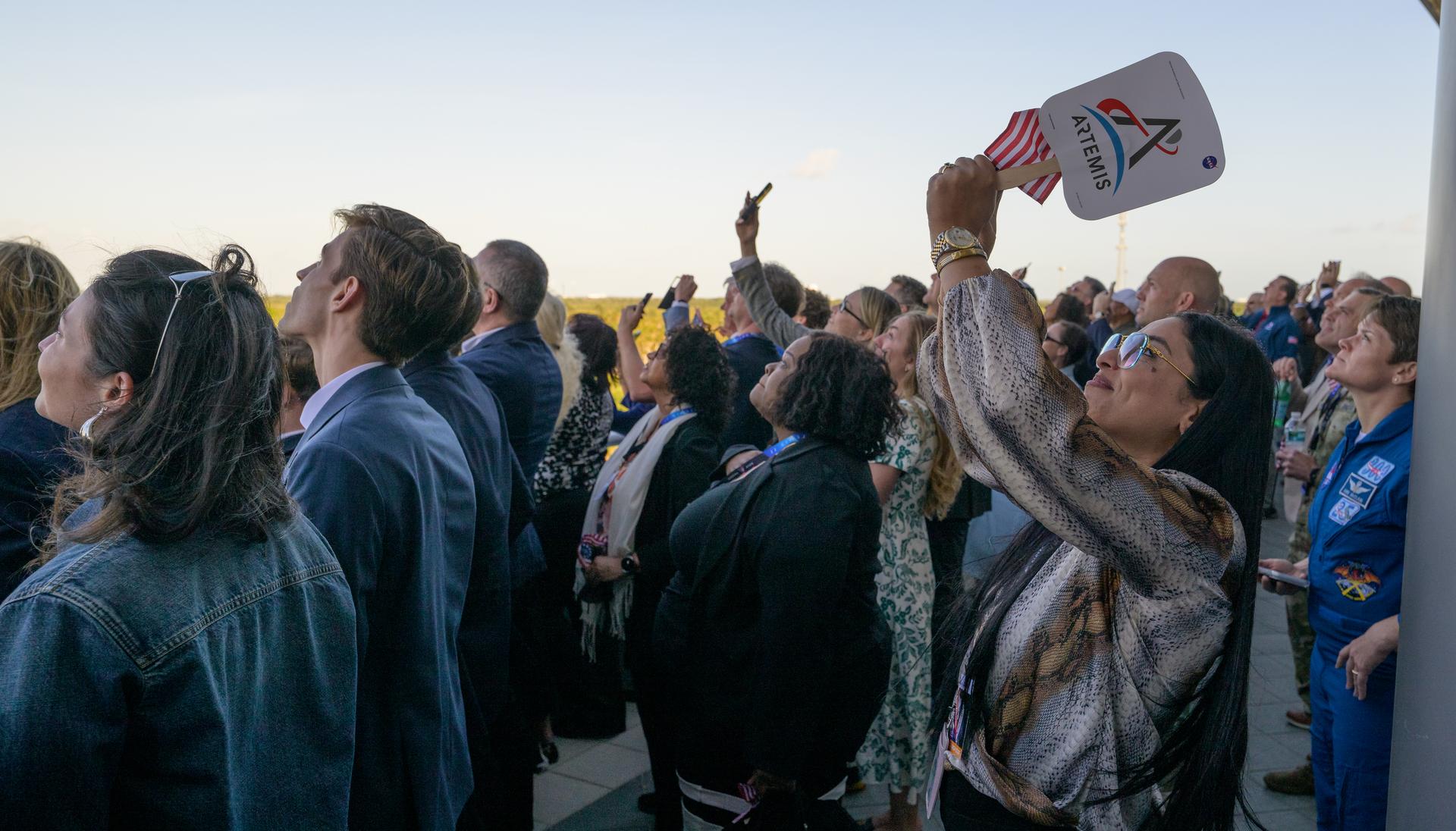
Guests watch the launch of NASA’s Space Launch System rocket carrying the Orion spacecraft with NASA astronauts Reid Wiseman, commander; Victor Glover, pilot; Christina Koch, mission specialist; and CSA (Canadian Space Agency) astronaut Jeremy Hansen, mission specialist on NASA’s Artemis II mission,, Wednesday, April 1, 2026, from Operations and Support Building II at NASA’s Kennedy Space Center in Florida. NASA’s Artemis II mission will take Wiseman, Glover, Koch, and Hansen on a 10-day journey around the Moon and back aboard SLS rocket and Orion spacecraft launched at 6:35pm EDT, from Launch Complex 39B. Photo Credit: (NASA/Bill Ingalls)
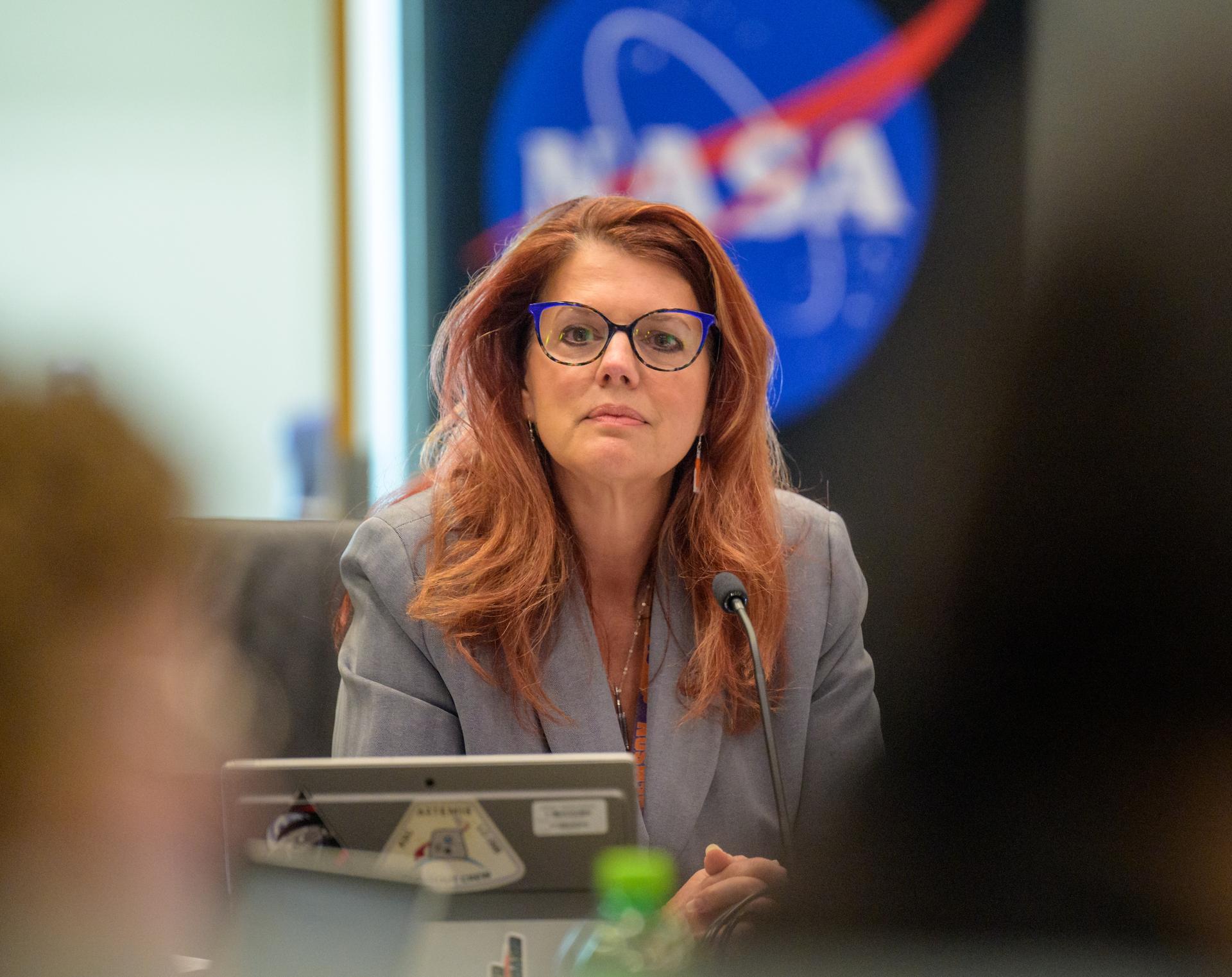
Charlie Blackwell-Thompson, Artemis II launch director, is seen as teams meet for the Artemis II launch countdown pre-test briefing, Saturday, March 28, 2026, at NASA’s Kennedy Space Center, Operations Support Building II in Florida. Photo Credit: (NASA/Bill Ingalls)
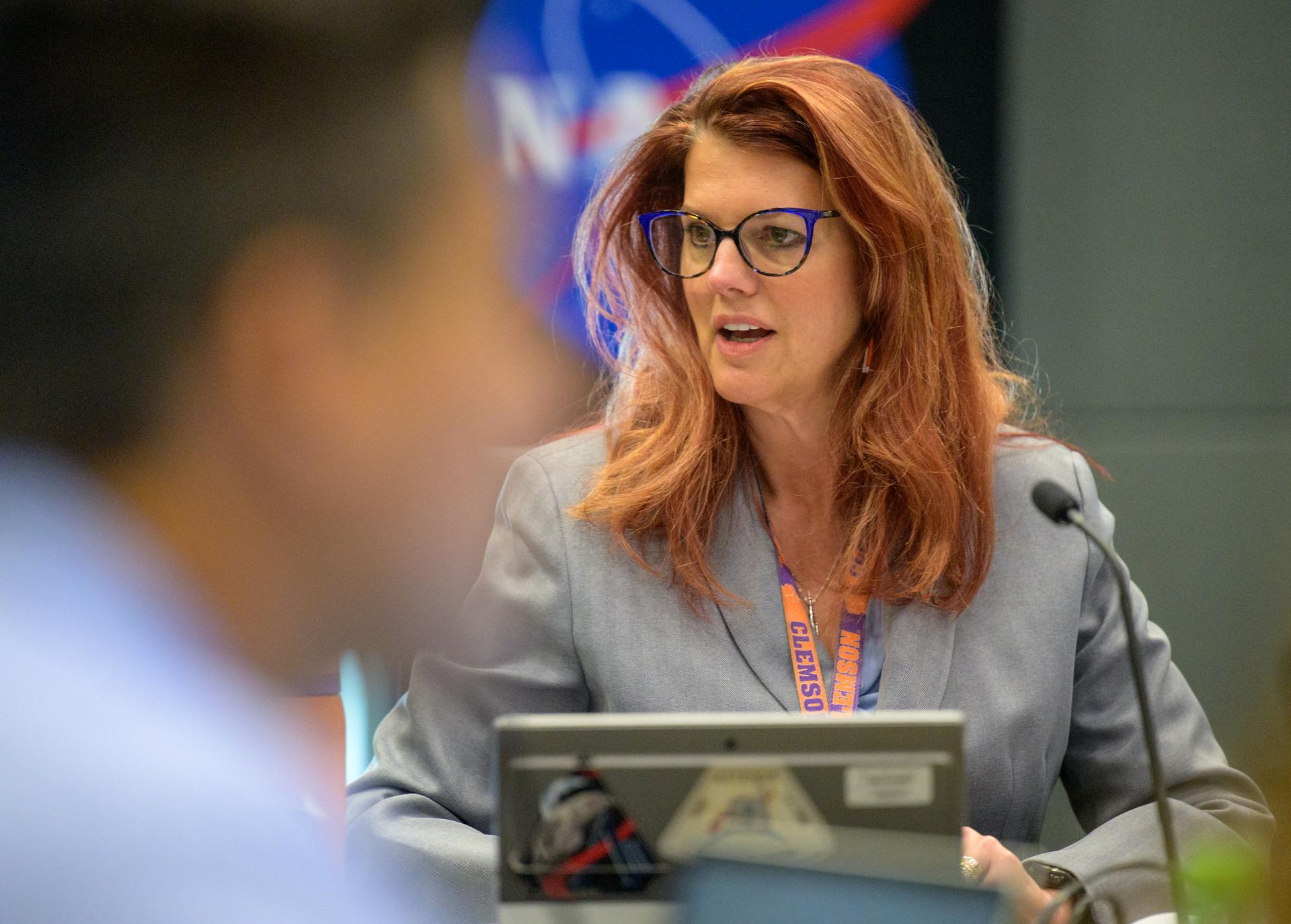
Charlie Blackwell-Thompson, Artemis II launch director, is seen as teams meet for the Artemis II launch countdown pre-test briefing, Saturday, March 28, 2026, at NASA’s Kennedy Space Center, Operations Support Building II in Florida. Photo Credit: (NASA/Bill Ingalls)

Artemis II Assistant Launch Director Jeremy Graeber, is seen as teams meet for the Artemis II launch countdown pre-test briefing, Saturday, March 28, 2026, at NASA’s Kennedy Space Center, Operations Support Building II in Florida. Photo Credit: (NASA/Bill Ingalls)
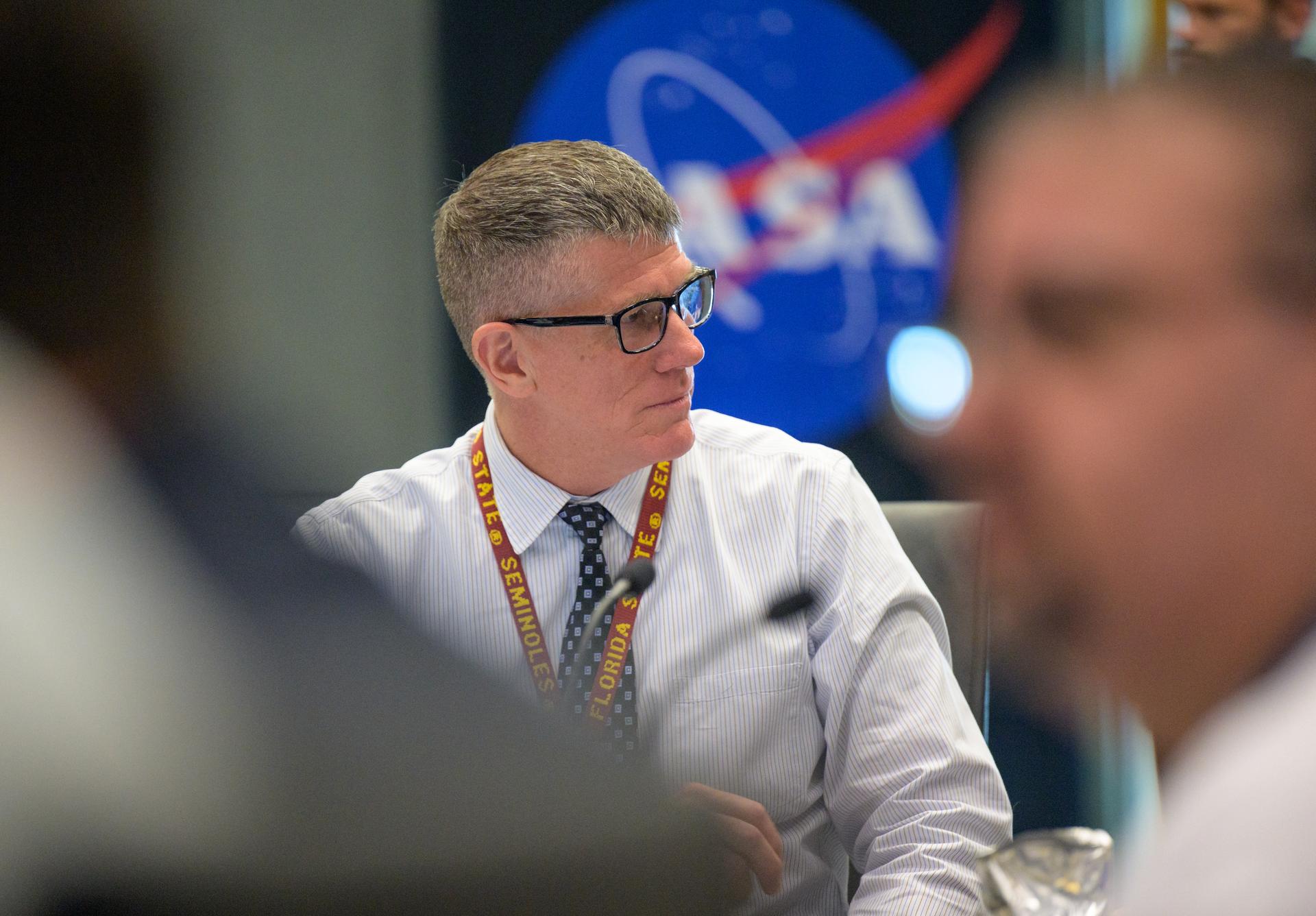
Artemis II Assistant Launch Director Jeremy Graeber, is seen as teams meet for the Artemis II launch countdown pre-test briefing, Saturday, March 28, 2026, at NASA’s Kennedy Space Center, Operations Support Building II in Florida. Photo Credit: (NASA/Bill Ingalls)
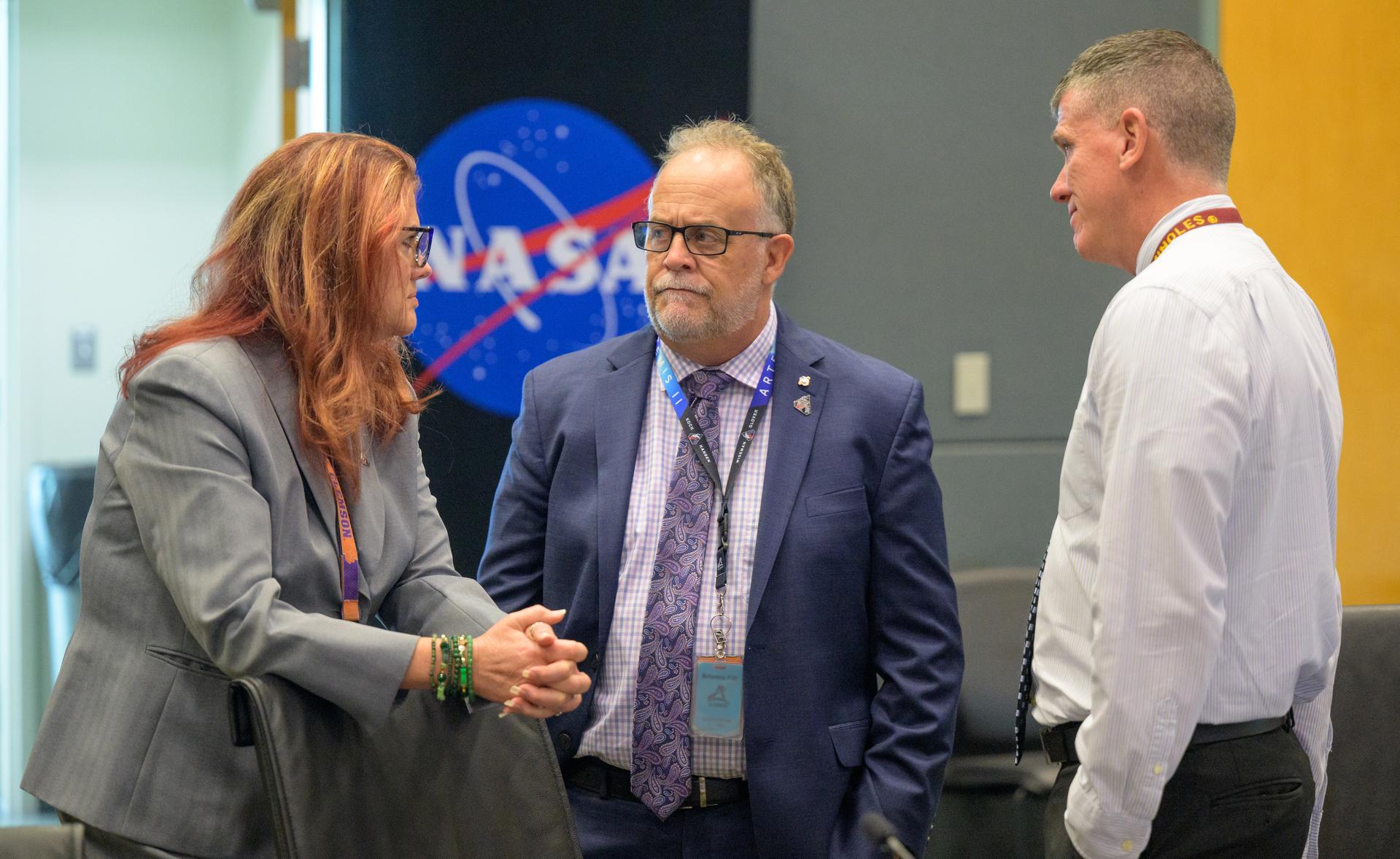
Charlie Blackwell-Thompson, Artemis II launch director, left, and speaks with Shawn Quinn, manager of Exploration Ground Systems, and Artemis II Assistant Launch Director Jeremy Graeber, right, as they meet for the Artemis II launch countdown pre-test briefing, Saturday, March 28, 2026, at NASA’s Kennedy Space Center, Operations Support Building II in Florida. Photo Credit: (NASA/Bill Ingalls) NOTE - Portions of this image have been blurred for security reasons.
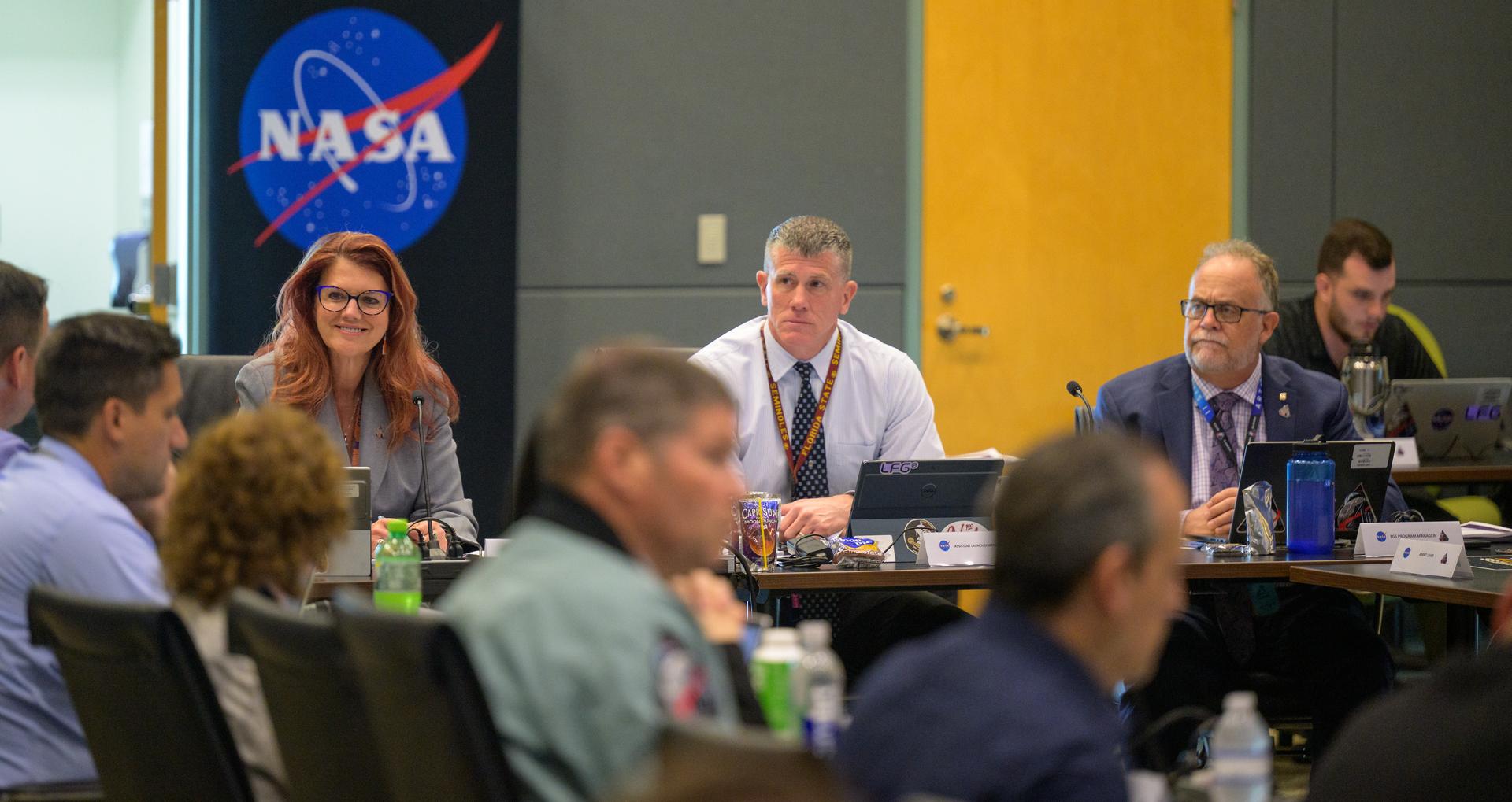
Charlie Blackwell-Thompson, Artemis II launch director, left, and Artemis II Assistant Launch Director Jeremy Graeber, and Shawn Quinn, manager of Exploration Ground Systems, right, are seen as teams meet for the Artemis II launch countdown pre-test briefing, Saturday, March 28, 2026, at NASA’s Kennedy Space Center, Operations Support Building II in Florida. Photo Credit: (NASA/Bill Ingalls)
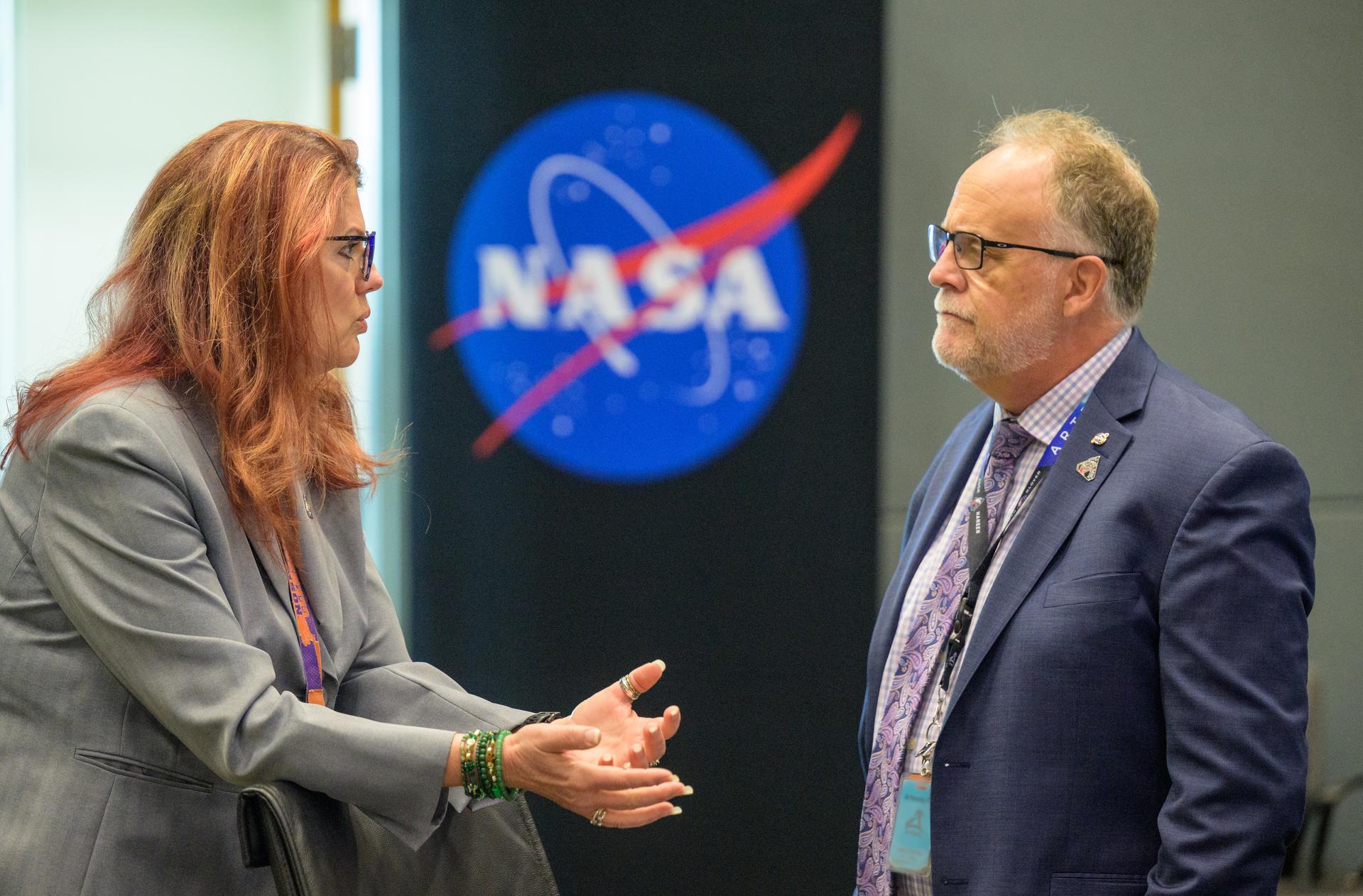
Charlie Blackwell-Thompson, Artemis II launch director, left, and speaks with Shawn Quinn, manager of Exploration Ground Systems, as they meet for the Artemis II launch countdown pre-test briefing, Saturday, March 28, 2026, at NASA’s Kennedy Space Center, Operations Support Building II in Florida. Photo Credit: (NASA/Bill Ingalls) NOTE - Portions of this image have been blurred for security reasons.
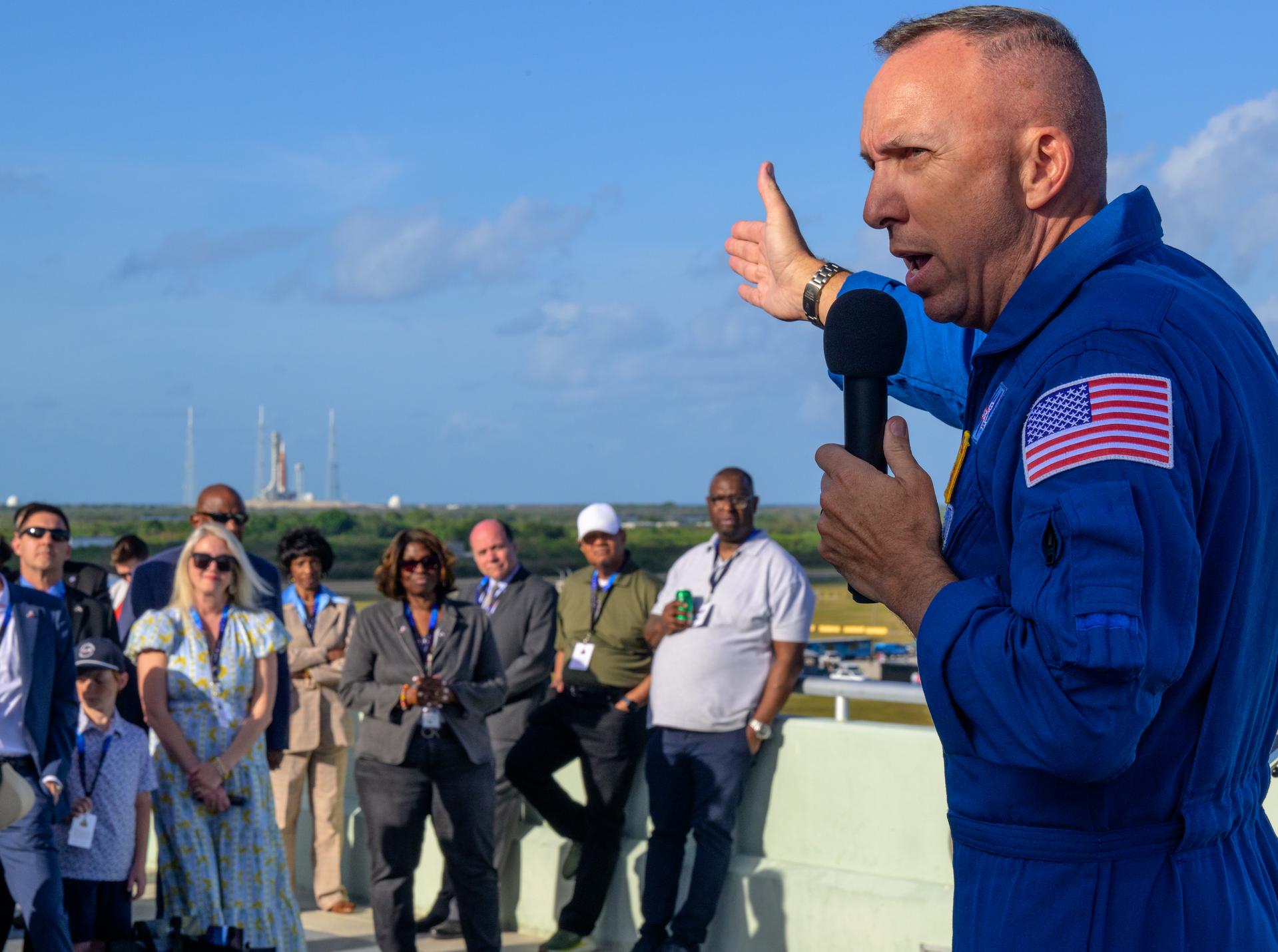
NASA astronaut Randy Bresnik gives remarks to guest ahead of the launch of NASA’s Space Launch System rocket carrying the Orion spacecraft with NASA astronauts Reid Wiseman, commander; Victor Glover, pilot; Christina Koch, mission specialist; and CSA (Canadian Space Agency) astronaut Jeremy Hansen, mission specialist on NASA’s Artemis II mission, Wednesday, April 1, 2026, from Operations and Support Building II at NASA’s Kennedy Space Center in Florida. NASA’s Artemis II mission will take Wiseman, Glover, Koch, and Hansen on a 10-day journey around the Moon and back aboard SLS rocket and Orion spacecraft which launched at 6:35pm EDT from Launch Complex 39B. Photo Credit: (NASA/Bill Ingalls)

Country artist Anne Wilson sings the national anthem, accompanied on guitar by Chris Wrate, ahead of the launch of NASA’s Space Launch System rocket carrying the Orion spacecraft with NASA astronauts Reid Wiseman, commander; Victor Glover, pilot; Christina Koch, mission specialist; and CSA (Canadian Space Agency) astronaut Jeremy Hansen, mission specialist on NASA’s Artemis II mission, Wednesday, April 1, 2026, from Operations and Support Building II at NASA’s Kennedy Space Center in Florida. NASA’s Artemis II mission will take Wiseman, Glover, Koch, and Hansen on a 10-day journey around the Moon and back aboard SLS rocket and Orion spacecraft which launched at 6:35pm EDT from Launch Complex 39B. Photo Credit: (NASA/Bill Ingalls)
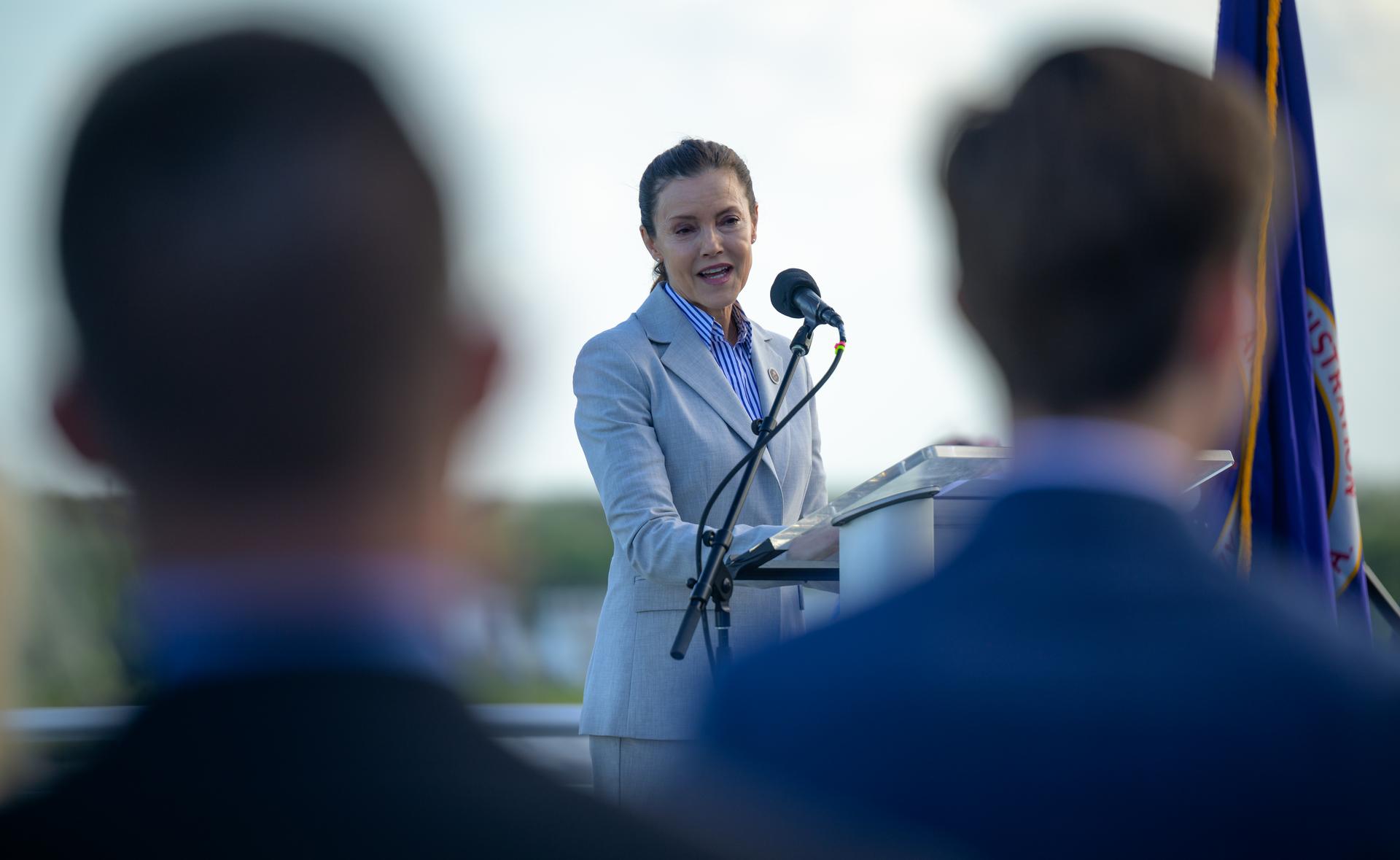
Lisa Campbell, President of CSA (Canadian Space Agency) gives remarks to guest ahead of the launch of NASA’s Space Launch System rocket carrying the Orion spacecraft with NASA astronauts Reid Wiseman, commander; Victor Glover, pilot; Christina Koch, mission specialist; and CSA (Canadian Space Agency) astronaut Jeremy Hansen, mission specialist on NASA’s Artemis II mission, Wednesday, April 1, 2026, from Operations and Support Building II at NASA’s Kennedy Space Center in Florida. NASA’s Artemis II mission will take Wiseman, Glover, Koch, and Hansen on a 10-day journey around the Moon and back aboard SLS rocket and Orion spacecraft which launched at 6:35pm EDT from Launch Complex 39B. Photo Credit: (NASA/Bill Ingalls)
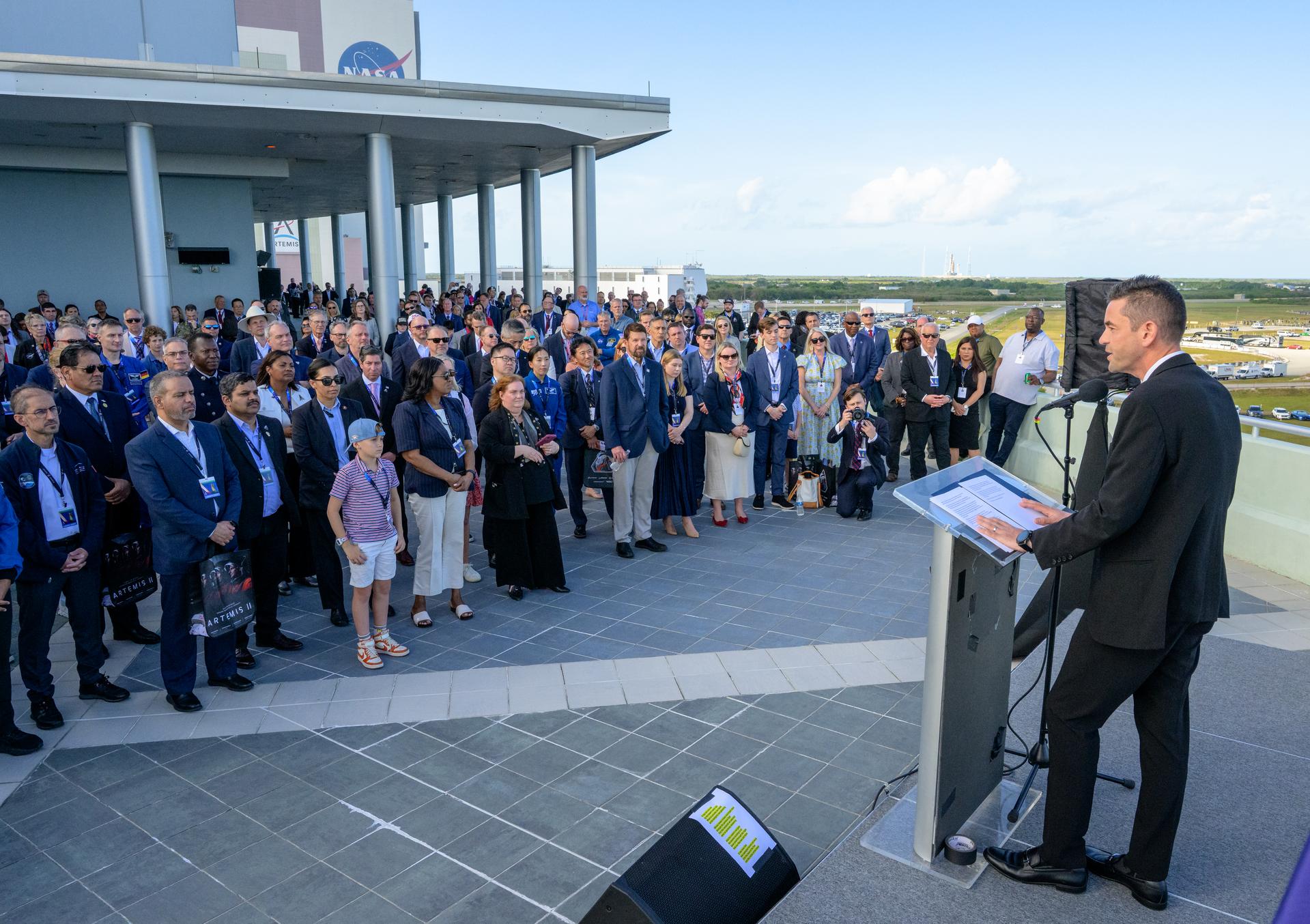
NASA Administrator Jared Isaacman gives remarks to guest ahead of the launch of NASA’s Space Launch System rocket carrying the Orion spacecraft with NASA astronauts Reid Wiseman, commander; Victor Glover, pilot; Christina Koch, mission specialist; and CSA (Canadian Space Agency) astronaut Jeremy Hansen, mission specialist on NASA’s Artemis II mission, Wednesday, April 1, 2026, from Operations and Support Building II at NASA’s Kennedy Space Center in Florida. NASA’s Artemis II mission will take Wiseman, Glover, Koch, and Hansen on a 10-day journey around the Moon and back aboard SLS rocket and Orion spacecraft which launched at 6:35pm EDT from Launch Complex 39B. Photo Credit: (NASA/Bill Ingalls)
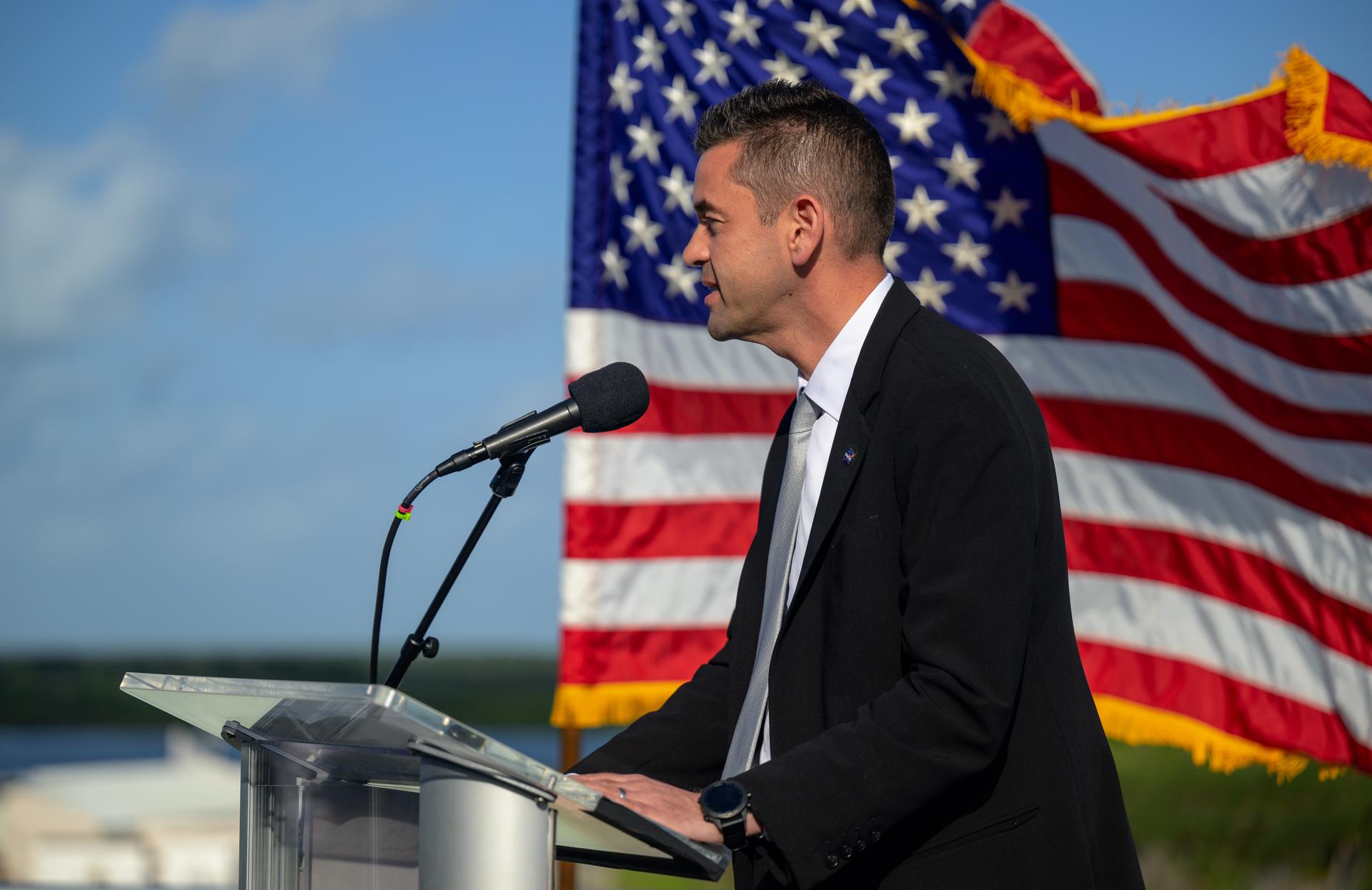
NASA Administrator Jared Isaacman gives remarks to guest ahead of the launch of NASA’s Space Launch System rocket carrying the Orion spacecraft with NASA astronauts Reid Wiseman, commander; Victor Glover, pilot; Christina Koch, mission specialist; and CSA (Canadian Space Agency) astronaut Jeremy Hansen, mission specialist on NASA’s Artemis II mission, Wednesday, April 1, 2026, from Operations and Support Building II at NASA’s Kennedy Space Center in Florida. NASA’s Artemis II mission will take Wiseman, Glover, Koch, and Hansen on a 10-day journey around the Moon and back aboard SLS rocket and Orion spacecraft which launched at 6:35pm EDT from Launch Complex 39B. Photo Credit: (NASA/Bill Ingalls)

Country artist Anne Wilson sings the national anthem ahead of the launch of NASA’s Space Launch System rocket carrying the Orion spacecraft with NASA astronauts Reid Wiseman, commander; Victor Glover, pilot; Christina Koch, mission specialist; and CSA (Canadian Space Agency) astronaut Jeremy Hansen, mission specialist on NASA’s Artemis II mission, Wednesday, April 1, 2026, from Operations and Support Building II at NASA’s Kennedy Space Center in Florida. NASA’s Artemis II mission will take Wiseman, Glover, Koch, and Hansen on a 10-day journey around the Moon and back aboard SLS rocket and Orion spacecraft which launched at 6:35pm EDT from Launch Complex 39B. Photo Credit: (NASA/Bill Ingalls)
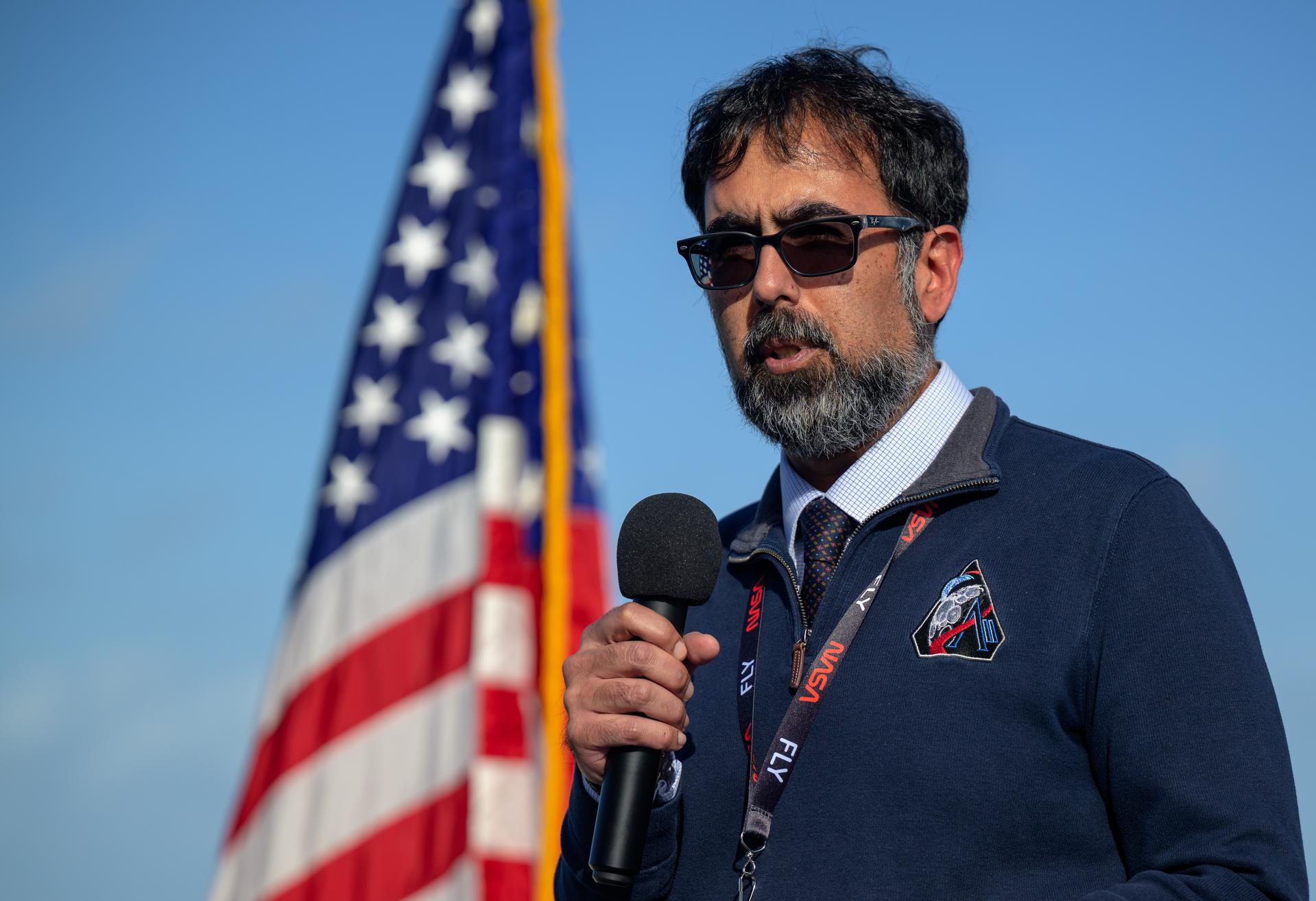
Amit Kshatriya, NASA Associate Administrator gives remarks to guest ahead of the launch of NASA’s Space Launch System rocket carrying the Orion spacecraft with NASA astronauts Reid Wiseman, commander; Victor Glover, pilot; Christina Koch, mission specialist; and CSA (Canadian Space Agency) astronaut Jeremy Hansen, mission specialist on NASA’s Artemis II mission, Wednesday, April 1, 2026, from Operations and Support Building II at NASA’s Kennedy Space Center in Florida. NASA’s Artemis II mission will take Wiseman, Glover, Koch, and Hansen on a 10-day journey around the Moon and back aboard SLS rocket and Orion spacecraft which launched at 6:35pm EDT from Launch Complex 39B. Photo Credit: (NASA/Bill Ingalls)
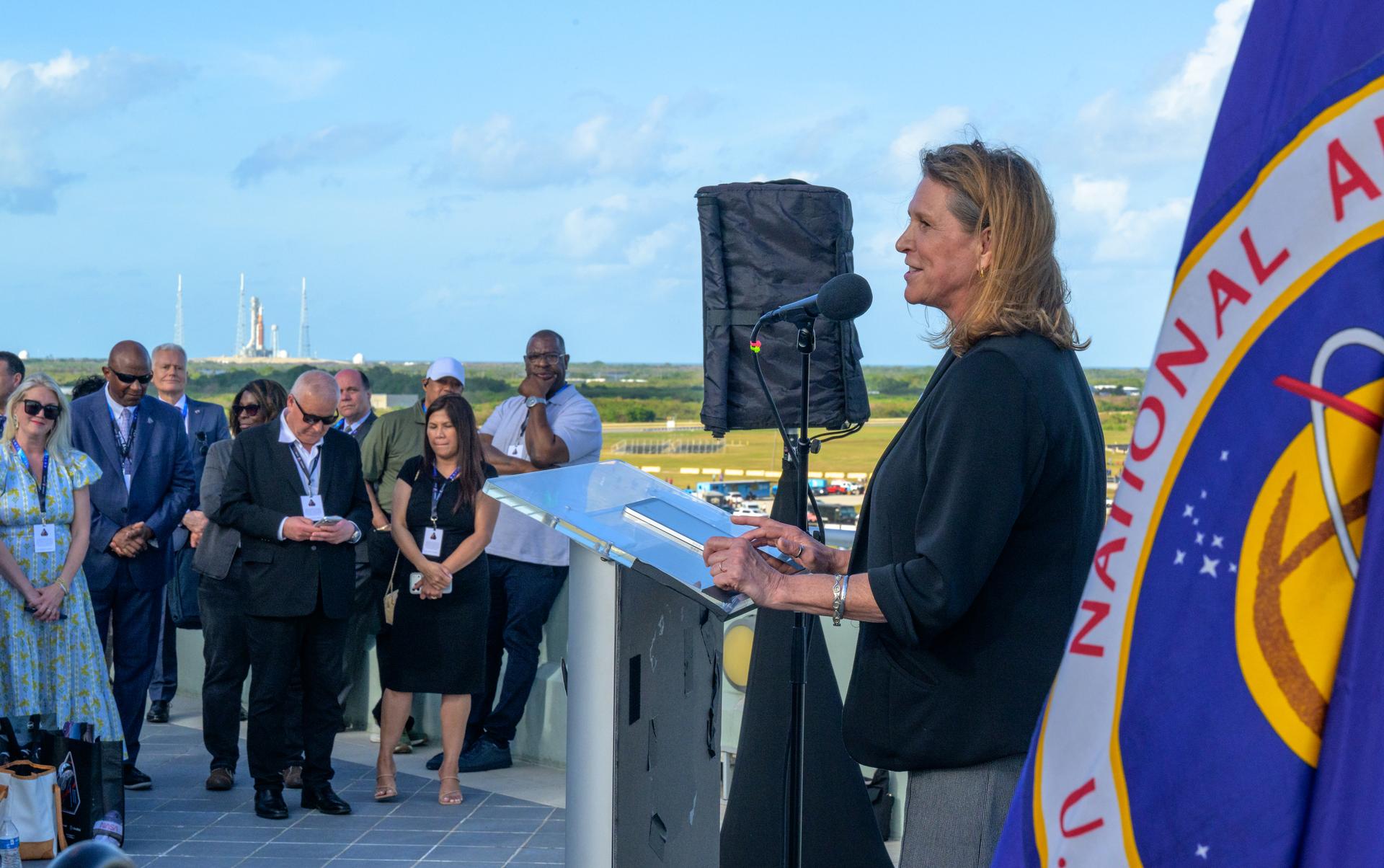
Lori Glaze, acting associate administrator for NASA's Exploration Systems Development Mission Directorate gives remarks to guest ahead of the launch of NASA’s Space Launch System rocket carrying the Orion spacecraft with NASA astronauts Reid Wiseman, commander; Victor Glover, pilot; Christina Koch, mission specialist; and CSA (Canadian Space Agency) astronaut Jeremy Hansen, mission specialist on NASA’s Artemis II mission, Wednesday, April 1, 2026, from Operations and Support Building II at NASA’s Kennedy Space Center in Florida. NASA’s Artemis II mission will take Wiseman, Glover, Koch, and Hansen on a 10-day journey around the Moon and back aboard SLS rocket and Orion spacecraft which launched at 6:35pm EDT from Launch Complex 39B. Photo Credit: (NASA/Bill Ingalls)
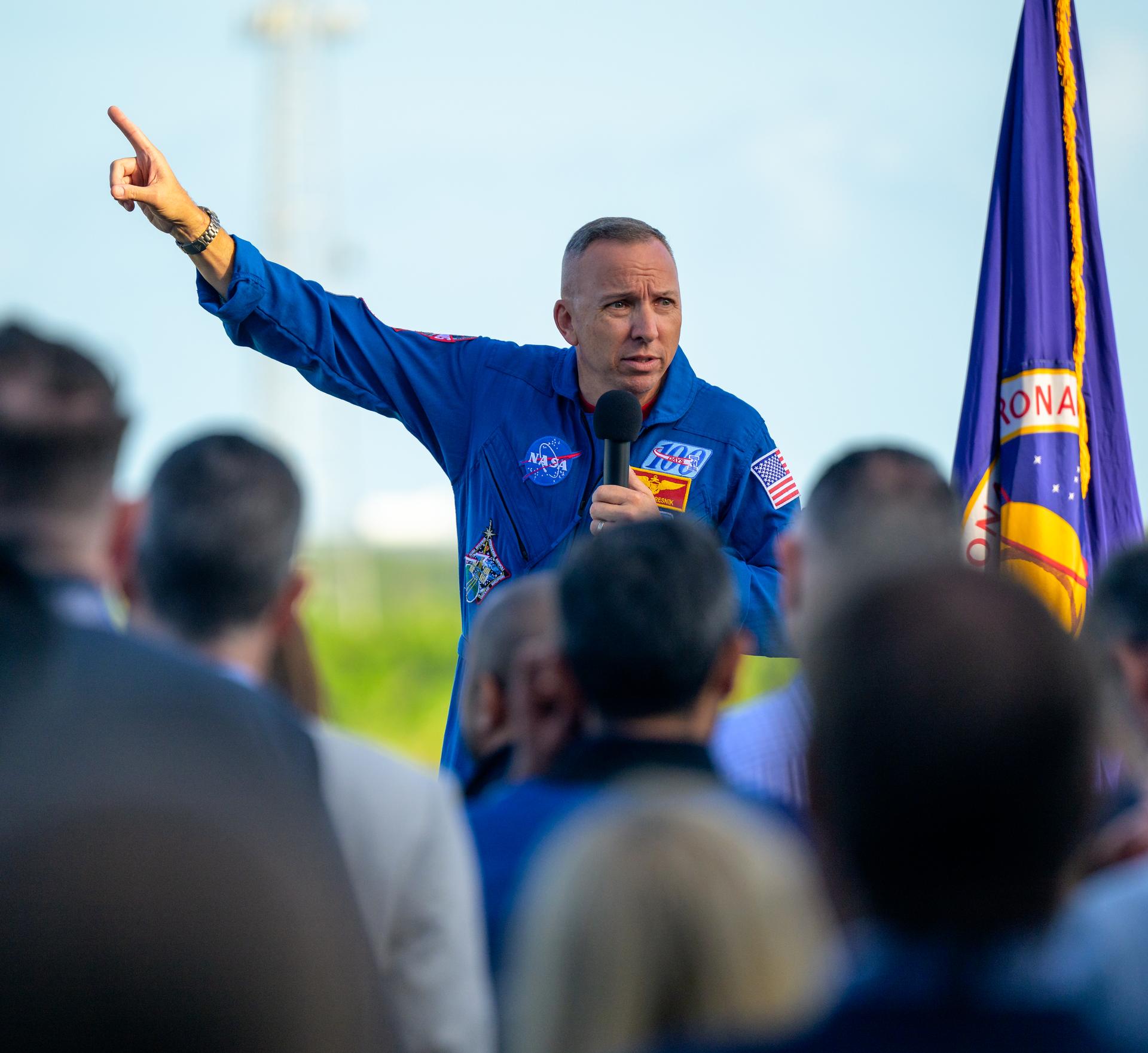
NASA astronaut Randy Bresnik gives remarks to guest ahead of the launch of NASA’s Space Launch System rocket carrying the Orion spacecraft with NASA astronauts Reid Wiseman, commander; Victor Glover, pilot; Christina Koch, mission specialist; and CSA (Canadian Space Agency) astronaut Jeremy Hansen, mission specialist on NASA’s Artemis II mission, Wednesday, April 1, 2026, from Operations and Support Building II at NASA’s Kennedy Space Center in Florida. NASA’s Artemis II mission will take Wiseman, Glover, Koch, and Hansen on a 10-day journey around the Moon and back aboard SLS rocket and Orion spacecraft which launched at 6:35pm EDT from Launch Complex 39B. Photo Credit: (NASA/Bill Ingalls)
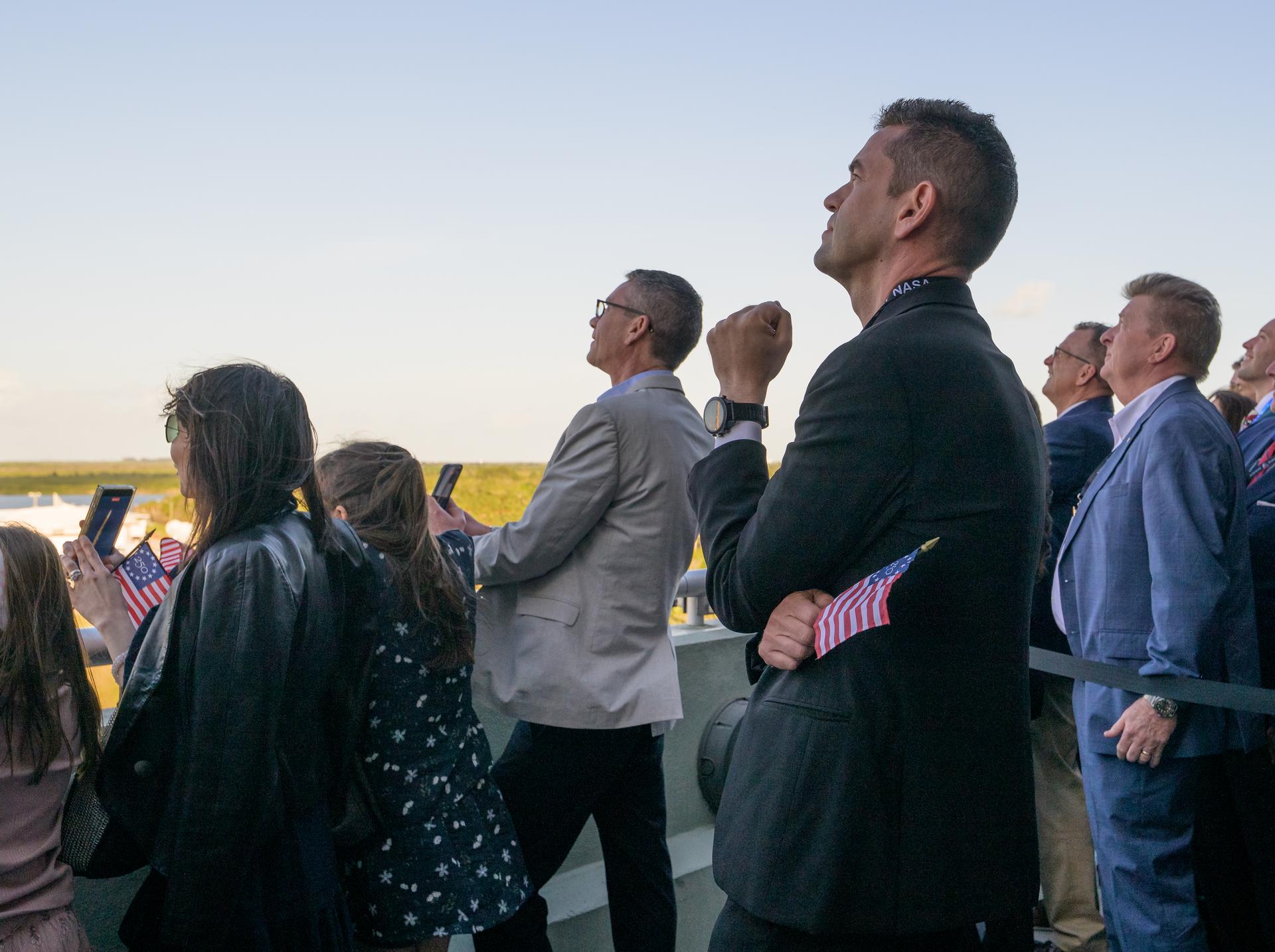
NASA Administrator Jared Isaacman and guests watch the launch of NASA’s Space Launch System rocket carrying the Orion spacecraft with NASA astronauts Reid Wiseman, commander; Victor Glover, pilot; Christina Koch, mission specialist; and CSA (Canadian Space Agency) astronaut Jeremy Hansen, mission specialist on NASA’s Artemis II mission,, Wednesday, April 1, 2026, from Operations and Support Building II at NASA’s Kennedy Space Center in Florida. NASA’s Artemis II mission will take Wiseman, Glover, Koch, and Hansen on a 10-day journey around the Moon and back aboard SLS rocket and Orion spacecraft launched at 6:35pm EDT, from Launch Complex 39B. Photo Credit: (NASA/Bill Ingalls)
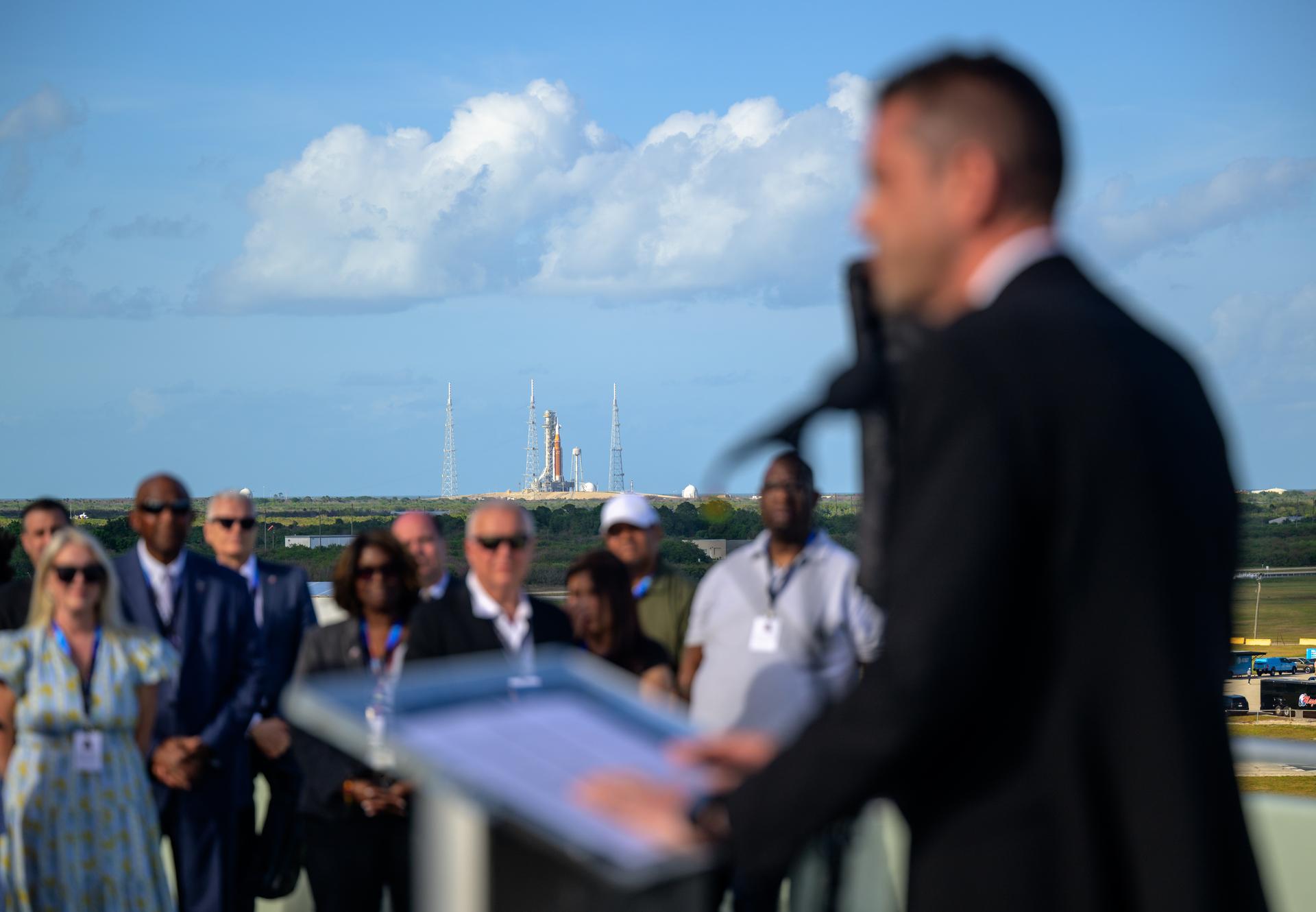
NASA Administrator Jared Isaacman gives remarks to guest ahead of the launch of NASA’s Space Launch System rocket carrying the Orion spacecraft with NASA astronauts Reid Wiseman, commander; Victor Glover, pilot; Christina Koch, mission specialist; and CSA (Canadian Space Agency) astronaut Jeremy Hansen, mission specialist on NASA’s Artemis II mission, Wednesday, April 1, 2026, from Operations and Support Building II at NASA’s Kennedy Space Center in Florida. NASA’s Artemis II mission will take Wiseman, Glover, Koch, and Hansen on a 10-day journey around the Moon and back aboard SLS rocket and Orion spacecraft which launched at 6:35pm EDT from Launch Complex 39B. Photo Credit: (NASA/Bill Ingalls)
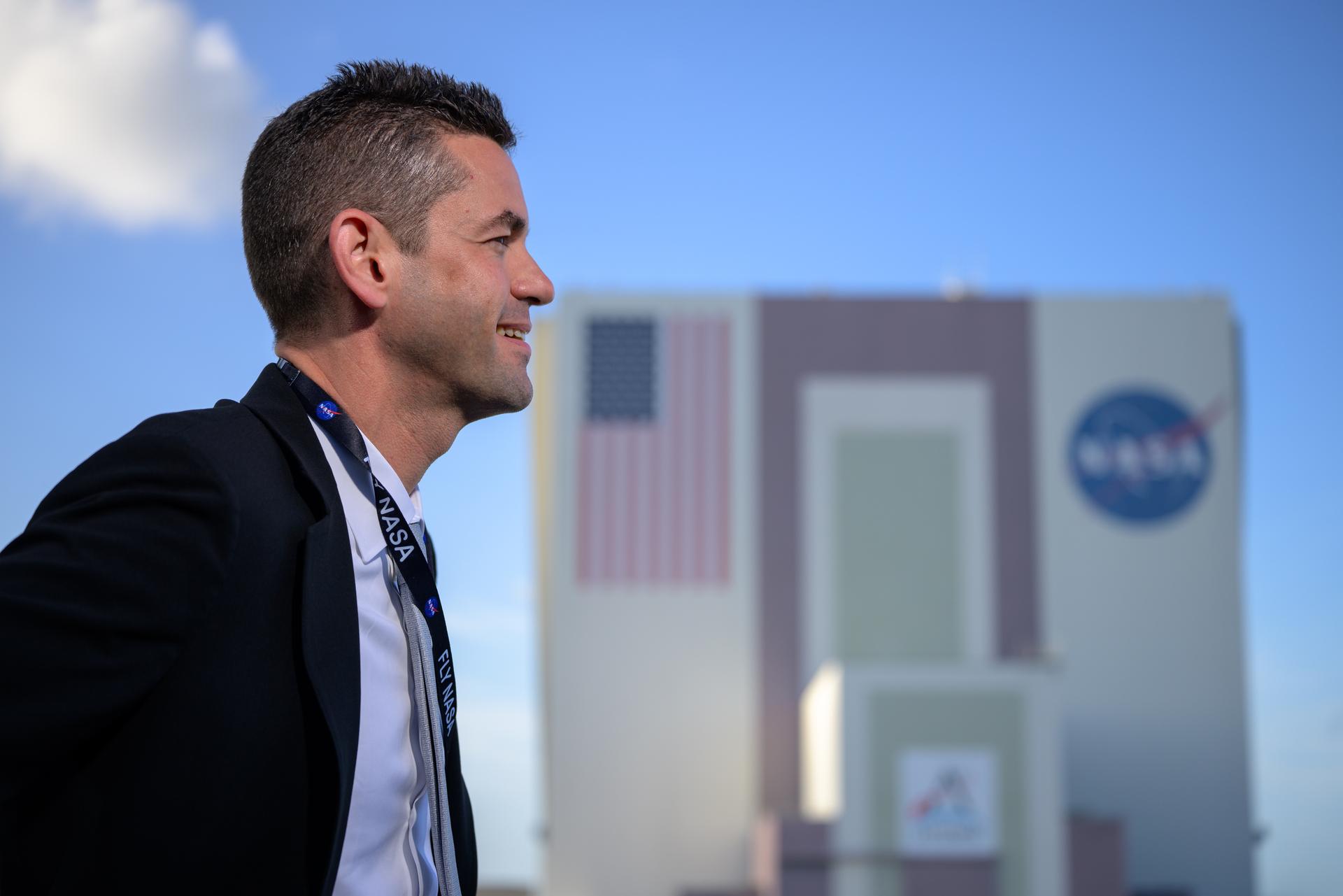
NASA Administrator Jared Isaacman monitors the countdown to the launch of NASA’s Space Launch System rocket carrying the Orion spacecraft with NASA astronauts Reid Wiseman, commander; Victor Glover, pilot; Christina Koch, mission specialist; and CSA (Canadian Space Agency) astronaut Jeremy Hansen, mission specialist on NASA’s Artemis II mission, Wednesday, April 1, 2026, from the Operations and Support Building II at NASA’s Kennedy Space Center in Florida. NASA’s Artemis II mission will take Wiseman, Glover, Koch, and Hansen on a 10-day journey around the Moon and back aboard SLS rocket and Orion spacecraft which launched at 6:35pm EDT from Launch Complex 39B. Photo Credit: (NASA/Bill Ingalls)

Country artist Anne Wilson sings the national anthem ahead of the launch of NASA’s Space Launch System rocket carrying the Orion spacecraft with NASA astronauts Reid Wiseman, commander; Victor Glover, pilot; Christina Koch, mission specialist; and CSA (Canadian Space Agency) astronaut Jeremy Hansen, mission specialist on NASA’s Artemis II mission, Wednesday, April 1, 2026, from Operations and Support Building II at NASA’s Kennedy Space Center in Florida. NASA’s Artemis II mission will take Wiseman, Glover, Koch, and Hansen on a 10-day journey around the Moon and back aboard SLS rocket and Orion spacecraft which launched at 6:35pm EDT from Launch Complex 39B. Photo Credit: (NASA/Bill Ingalls)
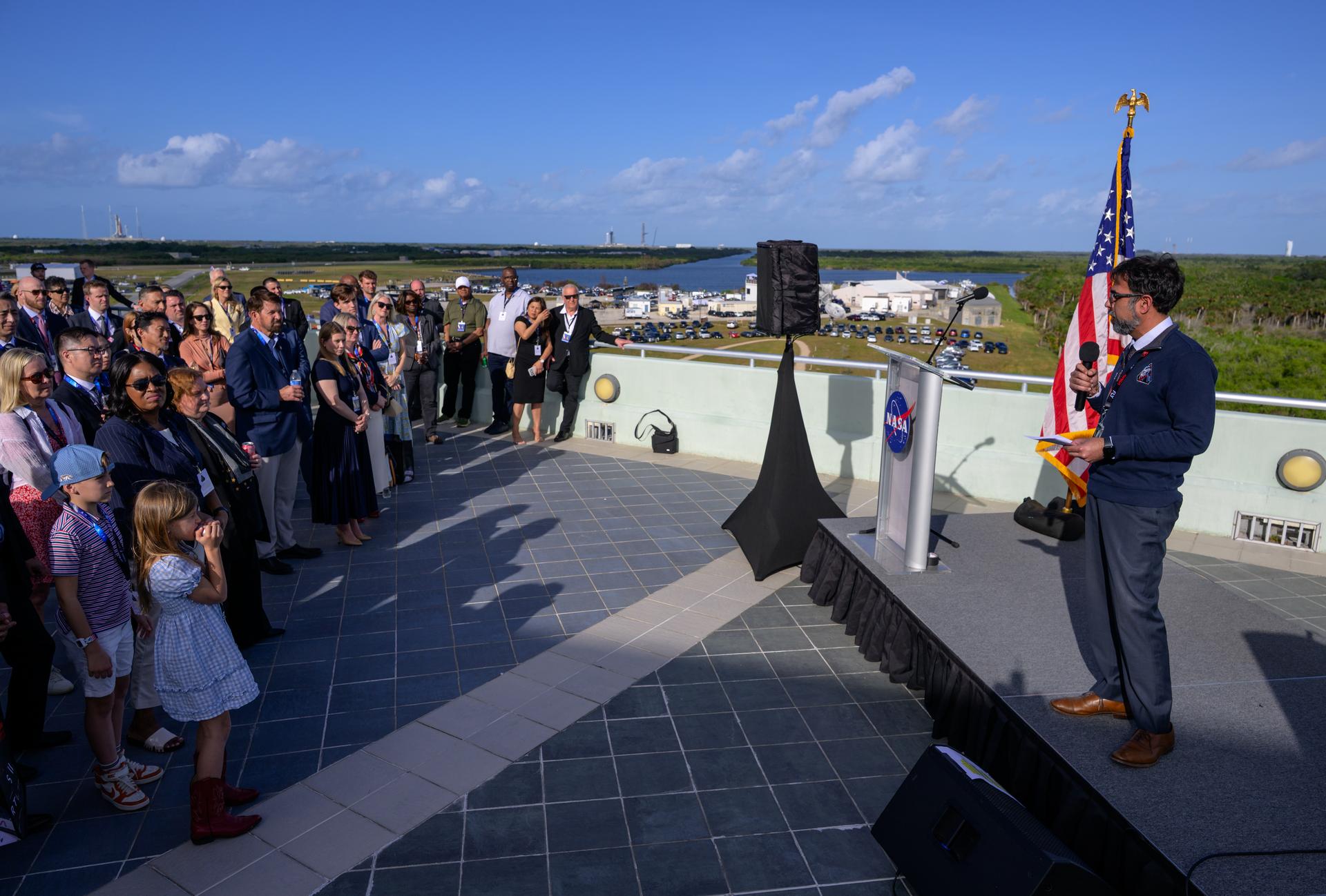
Amit Kshatriya, NASA Associate Administrator gives remarks to guest ahead of the launch of NASA’s Space Launch System rocket carrying the Orion spacecraft with NASA astronauts Reid Wiseman, commander; Victor Glover, pilot; Christina Koch, mission specialist; and CSA (Canadian Space Agency) astronaut Jeremy Hansen, mission specialist on NASA’s Artemis II mission, Wednesday, April 1, 2026, from Operations and Support Building II at NASA’s Kennedy Space Center in Florida. NASA’s Artemis II mission will take Wiseman, Glover, Koch, and Hansen on a 10-day journey around the Moon and back aboard SLS rocket and Orion spacecraft which launched at 6:35pm EDT from Launch Complex 39B. Photo Credit: (NASA/Bill Ingalls)
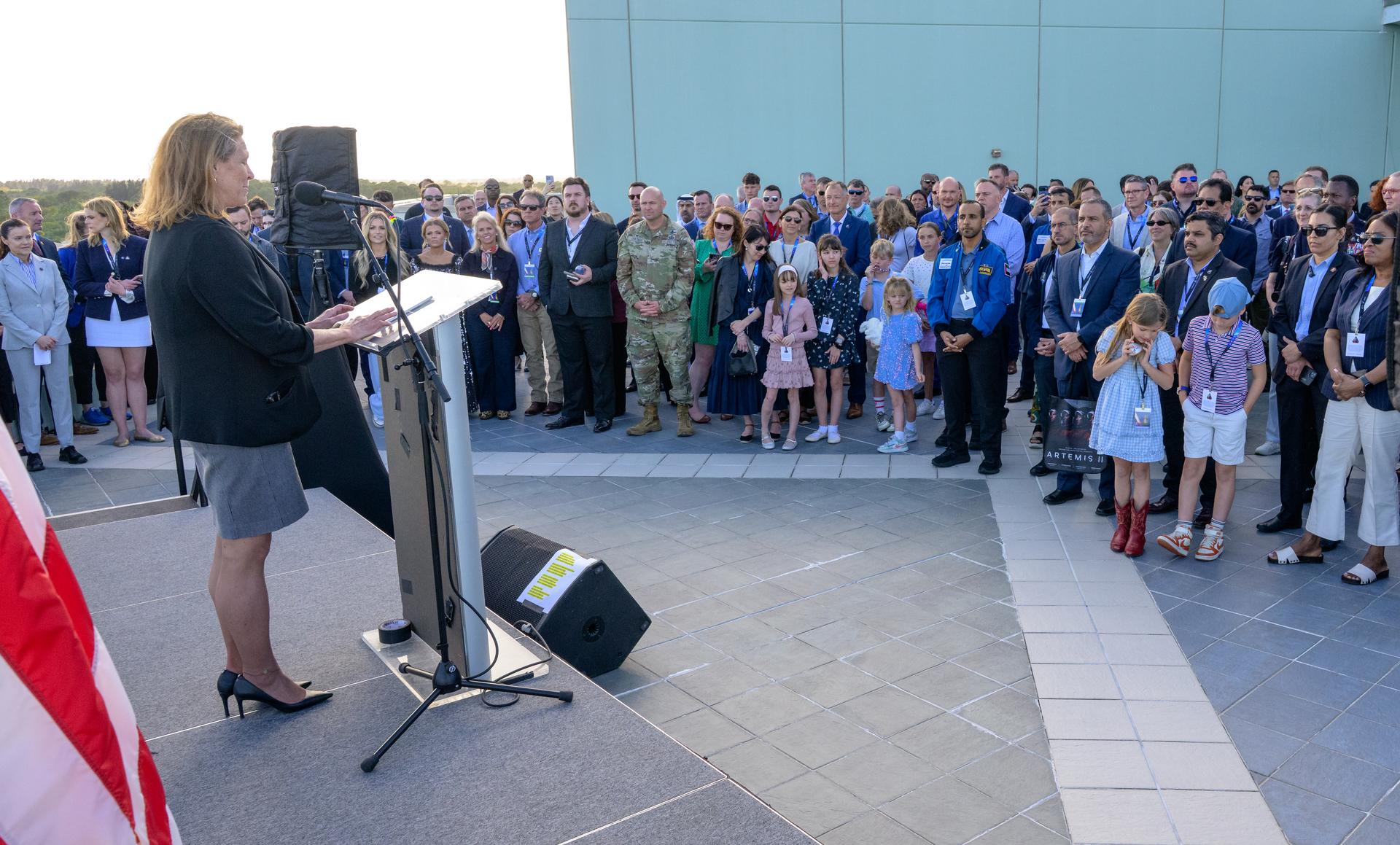
Lori Glaze, acting associate administrator for NASA's Exploration Systems Development Mission Directorate gives remarks to guest ahead of the launch of NASA’s Space Launch System rocket carrying the Orion spacecraft with NASA astronauts Reid Wiseman, commander; Victor Glover, pilot; Christina Koch, mission specialist; and CSA (Canadian Space Agency) astronaut Jeremy Hansen, mission specialist on NASA’s Artemis II mission, Wednesday, April 1, 2026, from Operations and Support Building II at NASA’s Kennedy Space Center in Florida. NASA’s Artemis II mission will take Wiseman, Glover, Koch, and Hansen on a 10-day journey around the Moon and back aboard SLS rocket and Orion spacecraft which launched at 6:35pm EDT from Launch Complex 39B. Photo Credit: (NASA/Bill Ingalls)
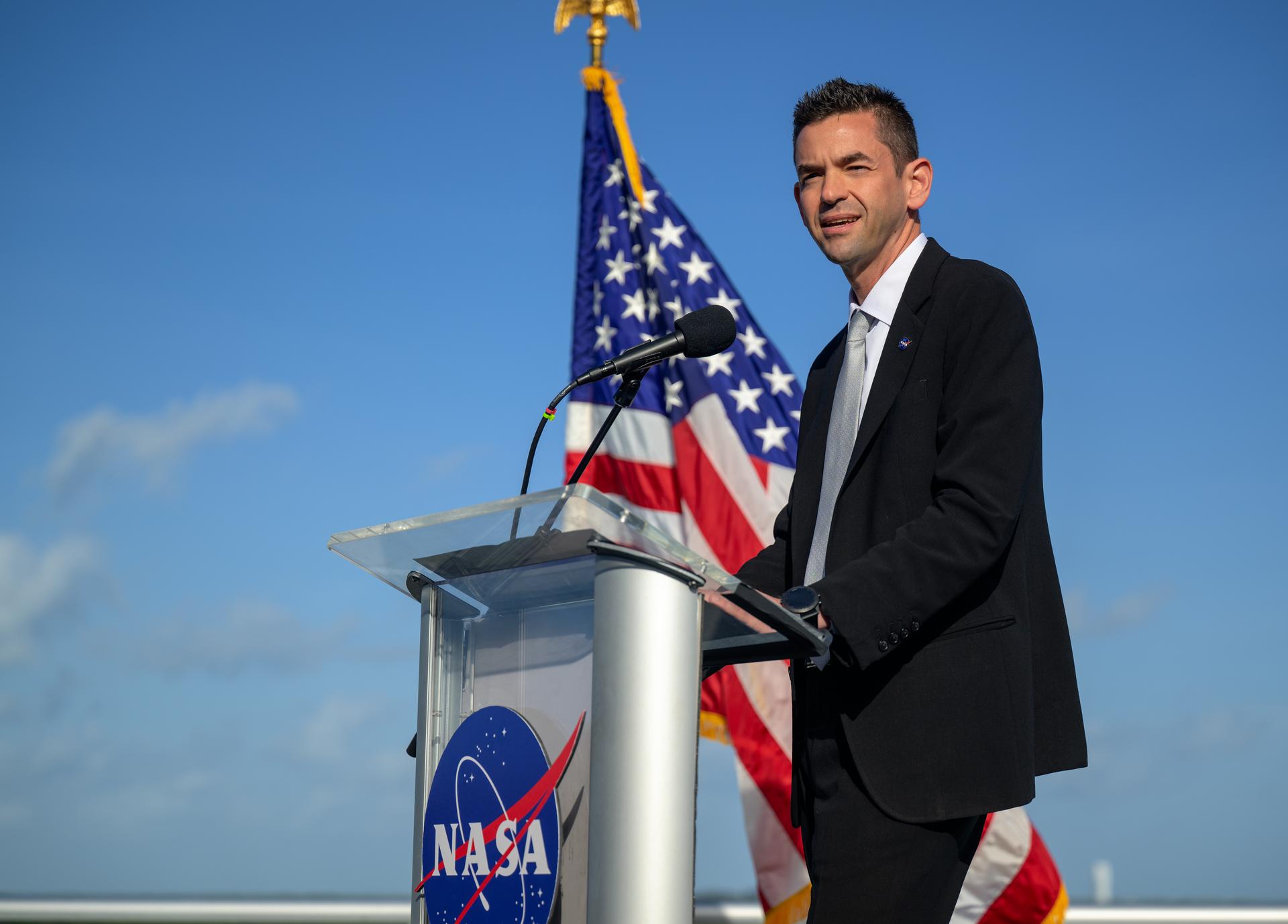
NASA Administrator Jared Isaacman gives remarks to guest ahead of the launch of NASA’s Space Launch System rocket carrying the Orion spacecraft with NASA astronauts Reid Wiseman, commander; Victor Glover, pilot; Christina Koch, mission specialist; and CSA (Canadian Space Agency) astronaut Jeremy Hansen, mission specialist on NASA’s Artemis II mission, Wednesday, April 1, 2026, from Operations and Support Building II at NASA’s Kennedy Space Center in Florida. NASA’s Artemis II mission will take Wiseman, Glover, Koch, and Hansen on a 10-day journey around the Moon and back aboard SLS rocket and Orion spacecraft which launched at 6:35pm EDT from Launch Complex 39B. Photo Credit: (NASA/Bill Ingalls)
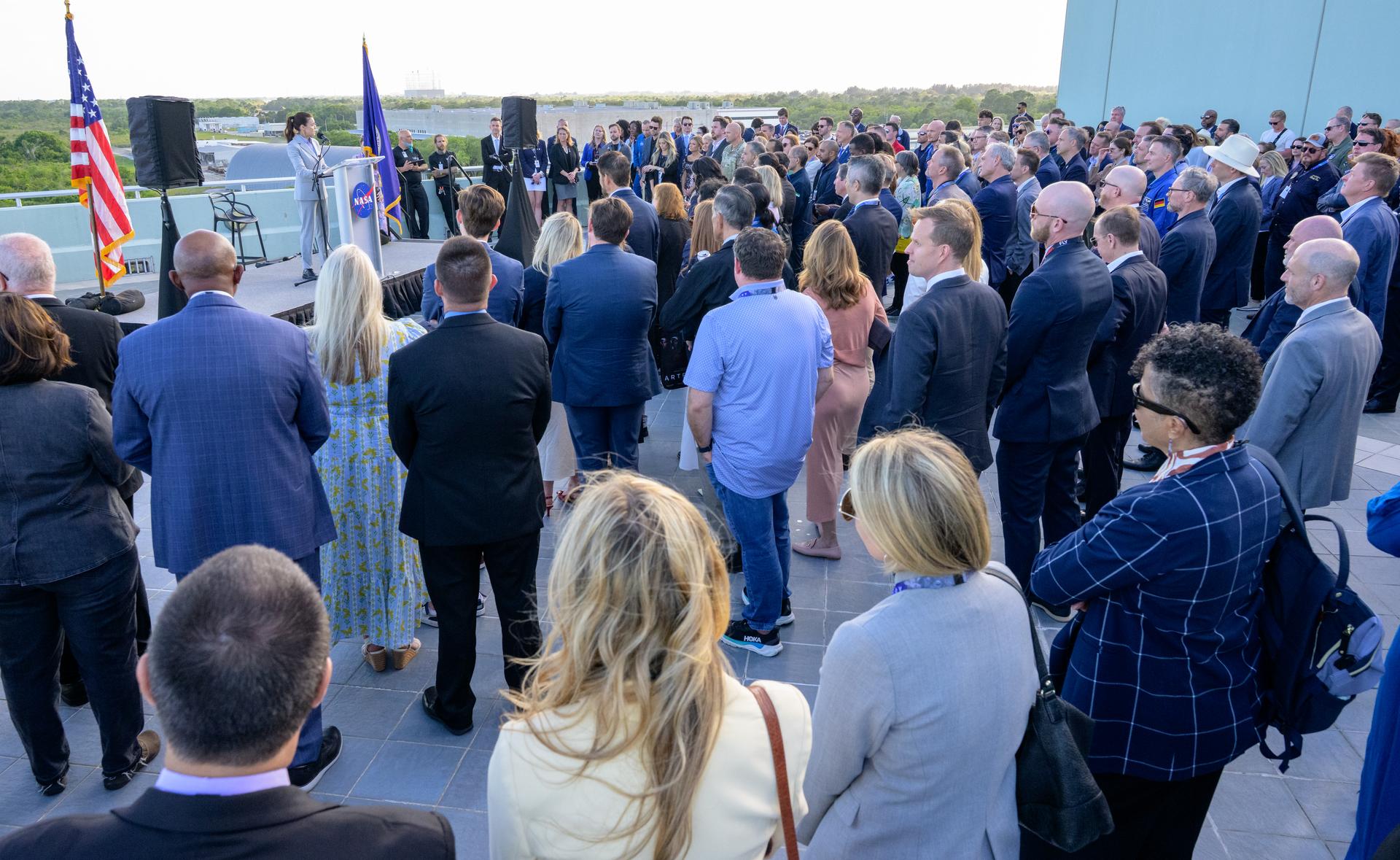
Lisa Campbell, President of CSA (Canadian Space Agency) gives remarks to guest ahead of the launch of NASA’s Space Launch System rocket carrying the Orion spacecraft with NASA astronauts Reid Wiseman, commander; Victor Glover, pilot; Christina Koch, mission specialist; and CSA (Canadian Space Agency) astronaut Jeremy Hansen, mission specialist on NASA’s Artemis II mission, Wednesday, April 1, 2026, from Operations and Support Building II at NASA’s Kennedy Space Center in Florida. NASA’s Artemis II mission will take Wiseman, Glover, Koch, and Hansen on a 10-day journey around the Moon and back aboard SLS rocket and Orion spacecraft which launched at 6:35pm EDT from Launch Complex 39B. Photo Credit: (NASA/Bill Ingalls)
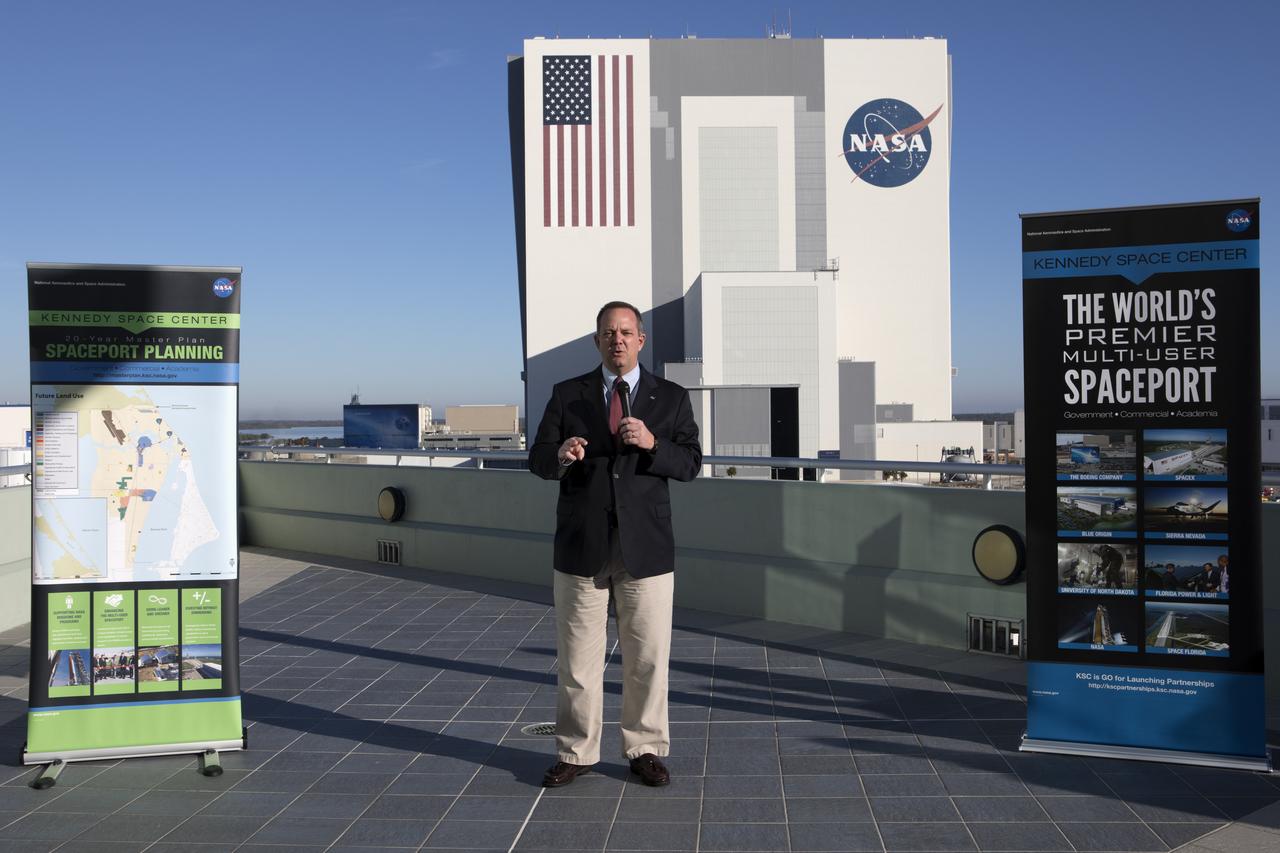
Tom Engler, director of Center Planning and Development at NASA's Kennedy Space Center, speaks to members of the news media on the balcony of Operations Support Building II describing the site's transition from a primarily government-only facility to a premier, multi-user spaceport. In the background is the Vehicle Assembly Building (VAB). Modifications were recently completed in the VAB where new work platforms were installed to support processing of NASA's Space Launch System rocket designed to send the Orion spacecraft on missions beyond low-Earth orbit.
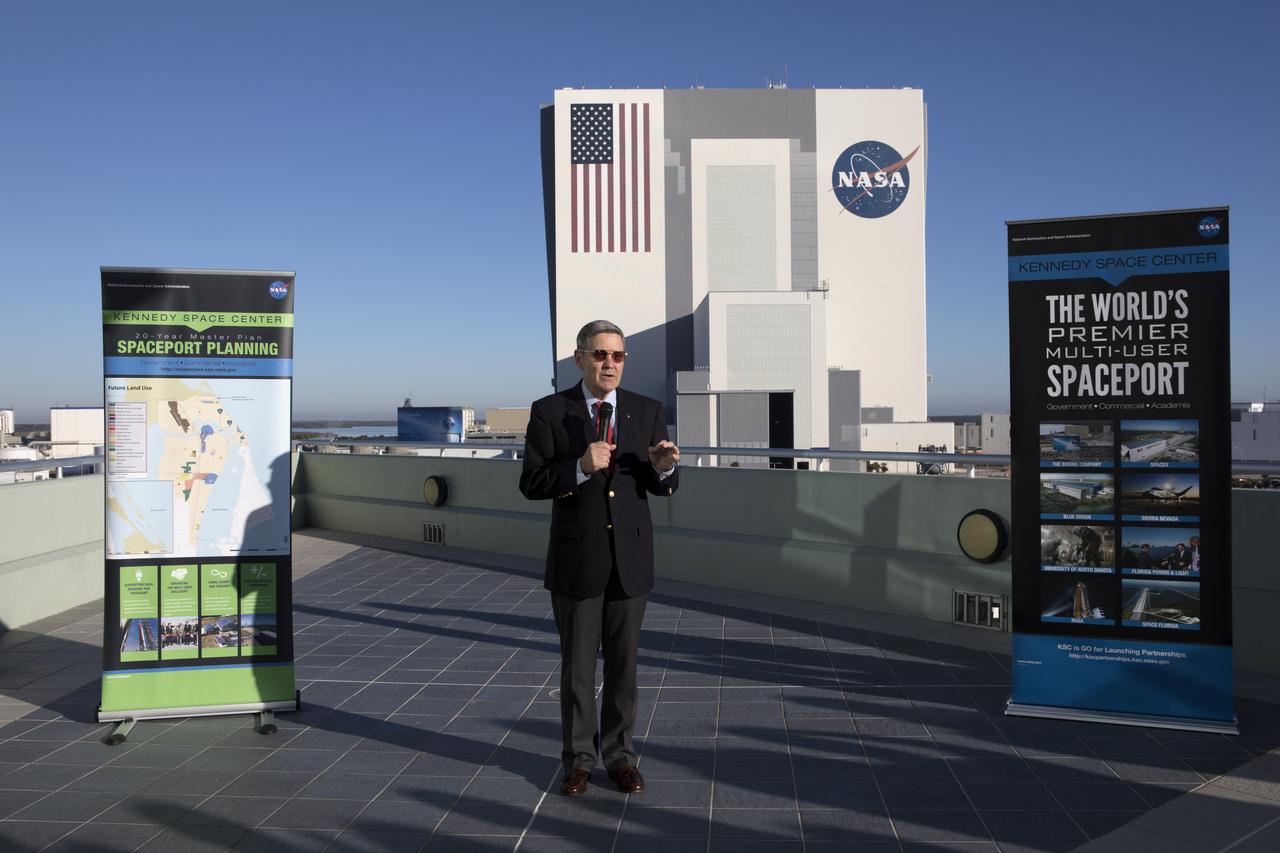
Kennedy Space Center Director Bob Cabana speaks to members of the news media on the balcony of Operations Support Building II describing the site's transition from a primarily government-only facility to a premier, multi-user spaceport. In the background is the Vehicle Assembly Building (VAB). Modifications were recently completed in the VAB where new work platforms were installed to support processing of NASA's Space Launch System rocket designed to send the Orion spacecraft on missions beyond low-Earth orbit.
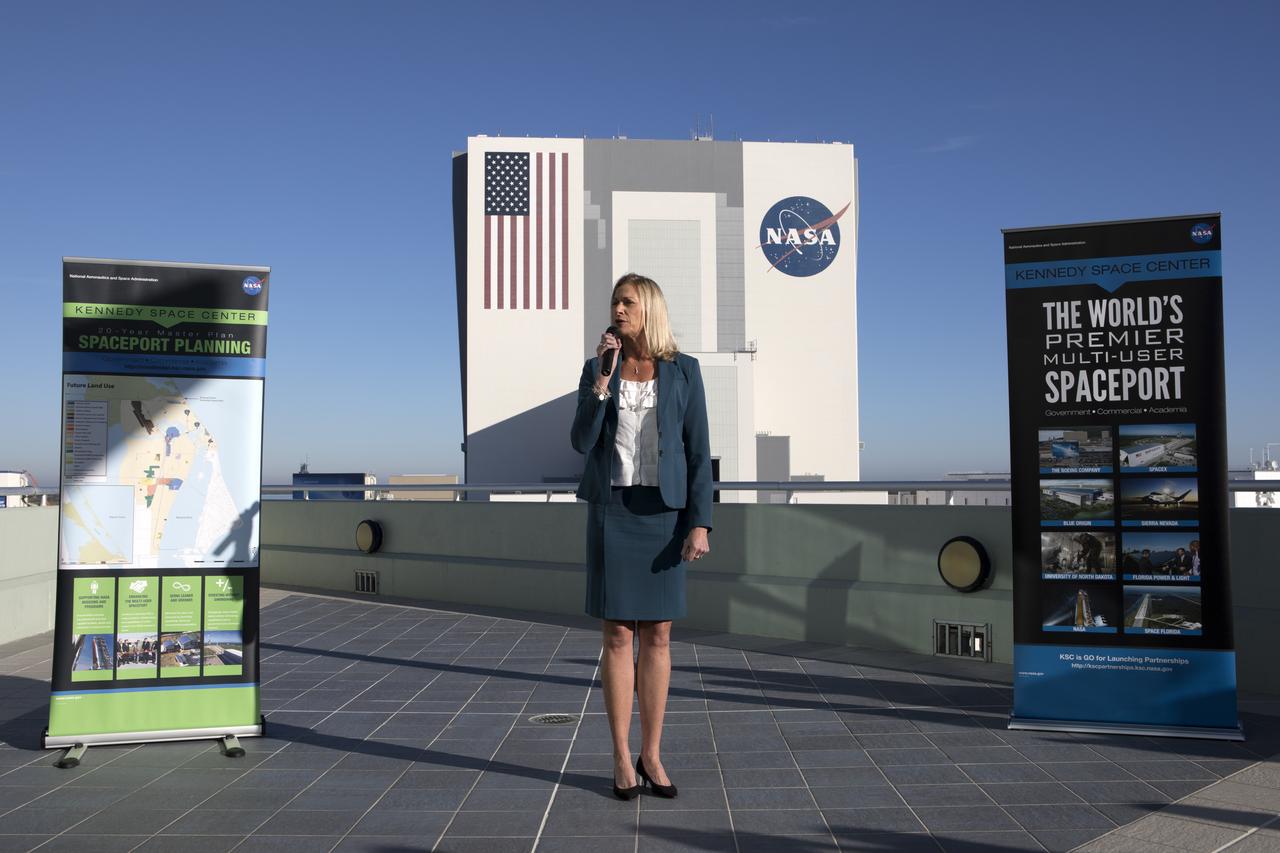
Nancy Bray, director of Spaceport Integration and Services at NASA's Kennedy Space Center, speaks to members of the news media on the balcony of Operations Support Building II describing the site's transition from a primarily government-only facility to a premier, multi-user spaceport. In the background is the Vehicle Assembly Building (VAB). Modifications were recently completed in the VAB where new work platforms were installed to support processing of NASA's Space Launch System rocket designed to send the Orion spacecraft on missions beyond low-Earth orbit.
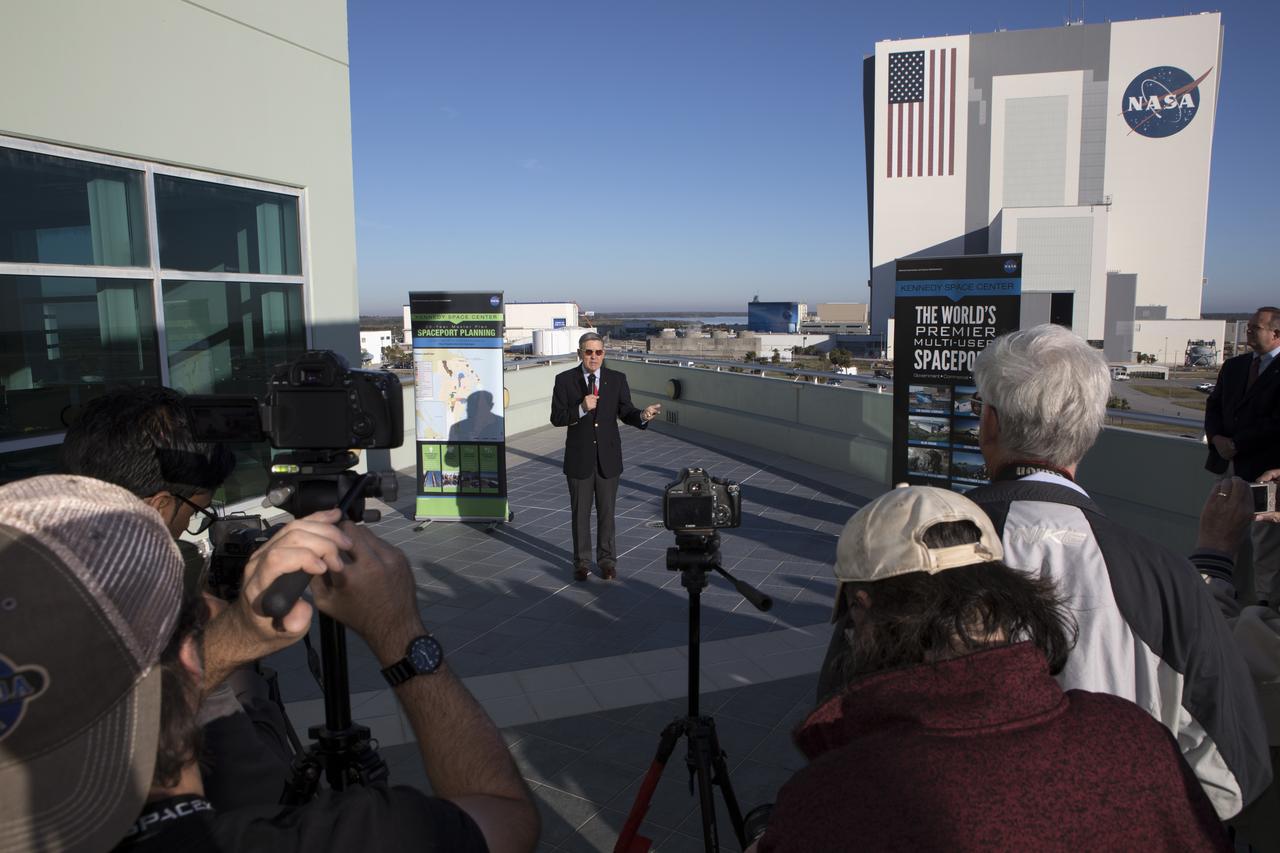
Kennedy Space Center Director Bob Cabana speaks to members of the news media on the balcony of Operations Support Building II describing the site's transition from a primarily government-only facility to a premier, multi-user spaceport. In the background is the Vehicle Assembly Building (VAB). Modifications were recently completed in the VAB where new work platforms were installed to support processing of NASA's Space Launch System rocket designed to send the Orion spacecraft on missions beyond low-Earth orbit.
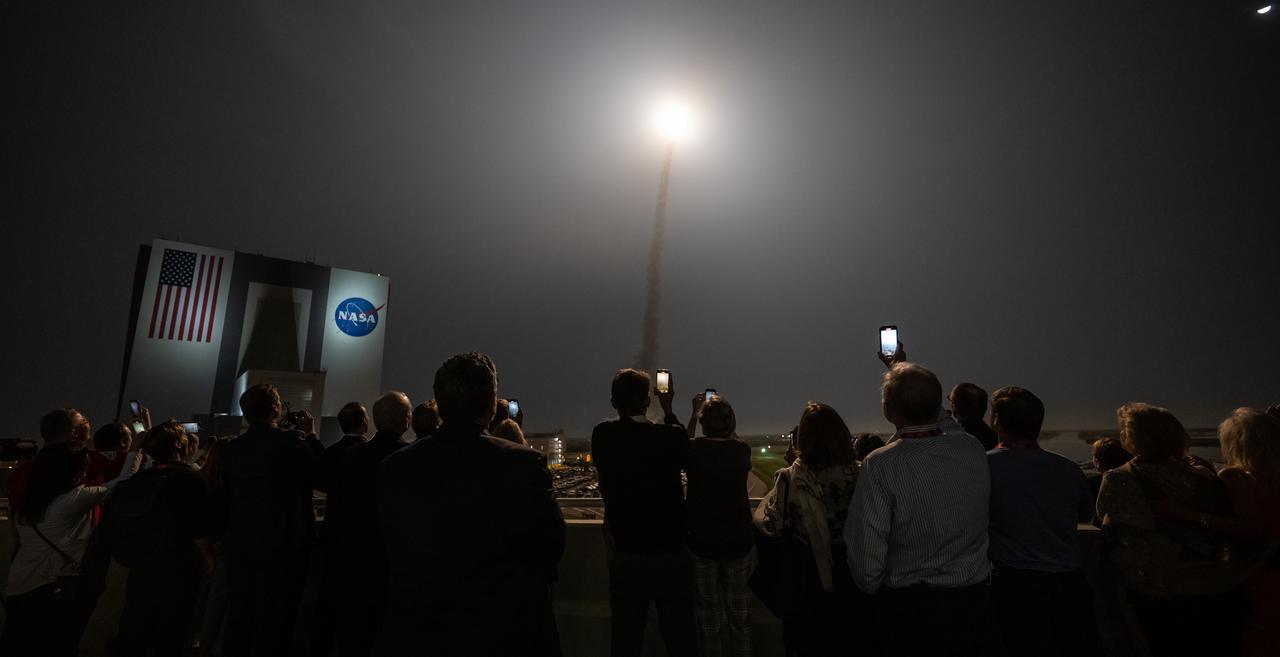
Guests watch the launch of NASA’s Space Launch System rocket carrying the Orion spacecraft on the Artemis I flight test, Wednesday, Nov. 16, 2022, from Operations and Support Building II at NASA’s Kennedy Space Center in Florida. NASA’s Artemis I flight test is the first integrated flight test of the agency’s deep space exploration systems: the Orion spacecraft, Space Launch System (SLS) rocket, and ground systems. SLS and Orion launched at 1:47 a.m. EST, from Launch Pad 39B at the Kennedy Space Center. Photo Credit: (NASA/Bill Ingalls)
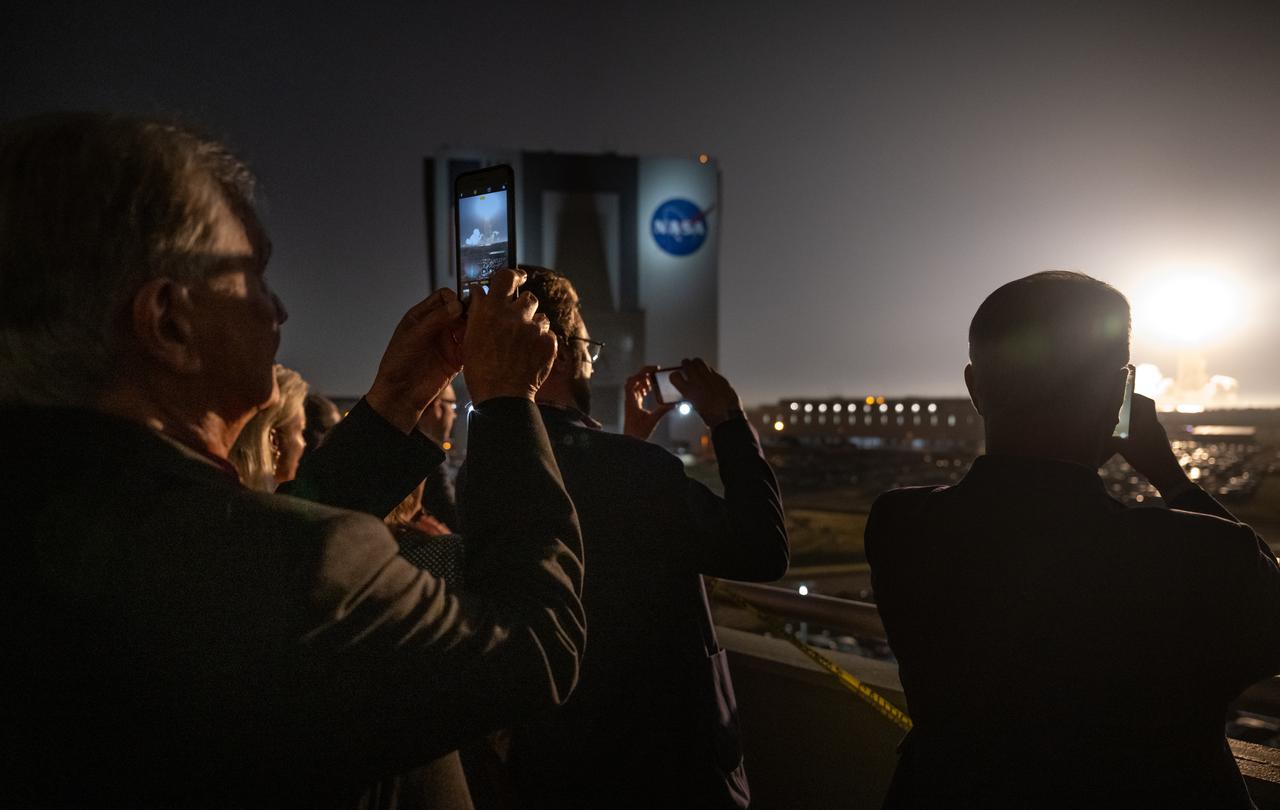
Guests watch the launch of NASA’s Space Launch System rocket carrying the Orion spacecraft on the Artemis I flight test, Wednesday, Nov. 16, 2022, from Operations and Support Building II at NASA’s Kennedy Space Center in Florida. NASA’s Artemis I flight test is the first integrated flight test of the agency’s deep space exploration systems: the Orion spacecraft, Space Launch System (SLS) rocket, and ground systems. SLS and Orion launched at 1:47 a.m. EST, from Launch Pad 39B at the Kennedy Space Center. Photo Credit: (NASA/Bill Ingalls)
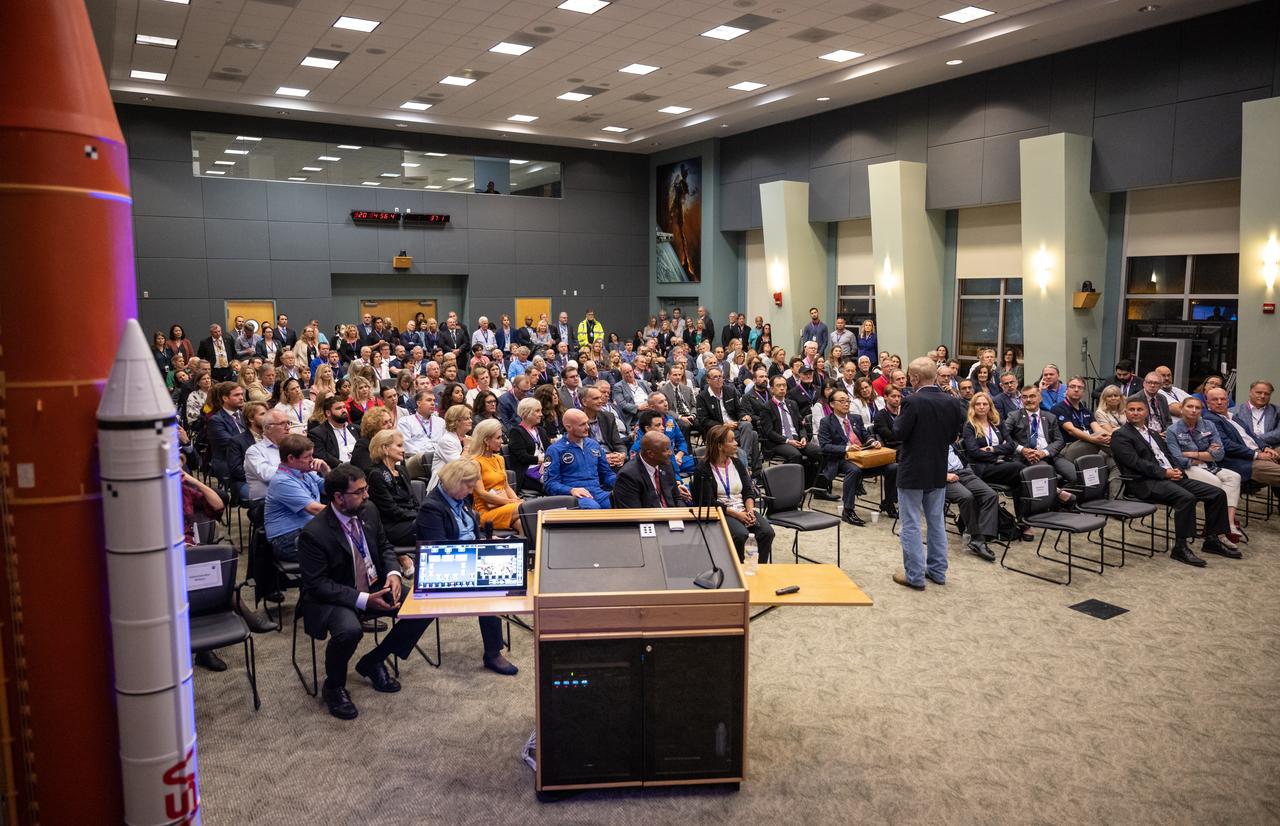
NASA Administrator Bill Nelson gives remarks ahead of the launch of NASA’s Space Launch System rocket carrying the Orion spacecraft on the Artemis I flight test, Tuesday, Nov. 15, 2022, from Operations and Support Building II at NASA’s Kennedy Space Center in Florida. NASA’s Artemis I flight test is the first integrated flight test of the agency’s deep space exploration systems: the Orion spacecraft, Space Launch System (SLS) rocket, and ground systems. Photo Credit: (NASA/Bill Ingalls)
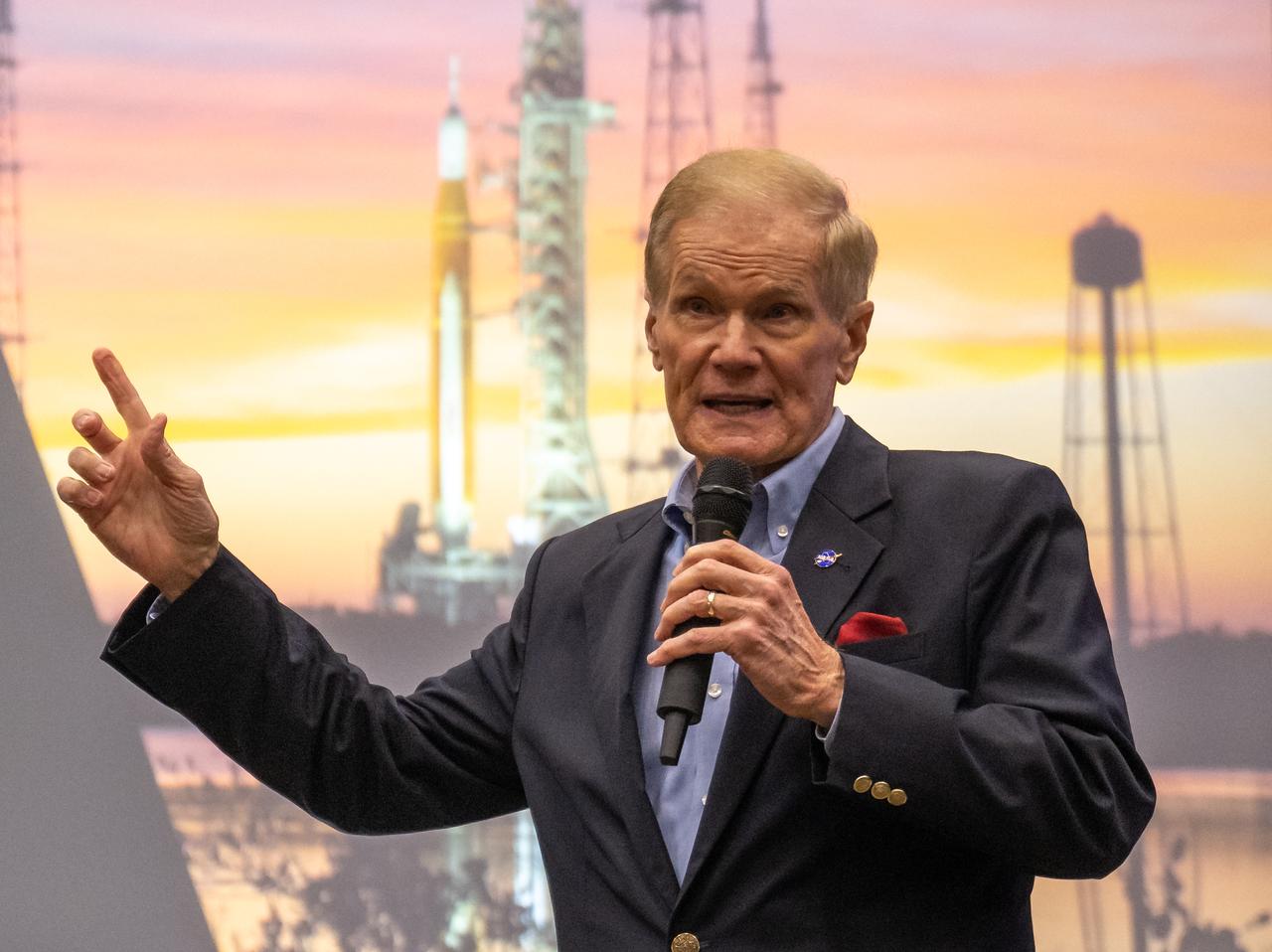
NASA Administrator Bill Nelson gives remarks ahead of the launch of NASA’s Space Launch System rocket carrying the Orion spacecraft on the Artemis I flight test, Tuesday, Nov. 15, 2022, from Operations and Support Building II at NASA’s Kennedy Space Center in Florida. NASA’s Artemis I flight test is the first integrated flight test of the agency’s deep space exploration systems: the Orion spacecraft, Space Launch System (SLS) rocket, and ground systems. Photo Credit: (NASA/Bill Ingalls)
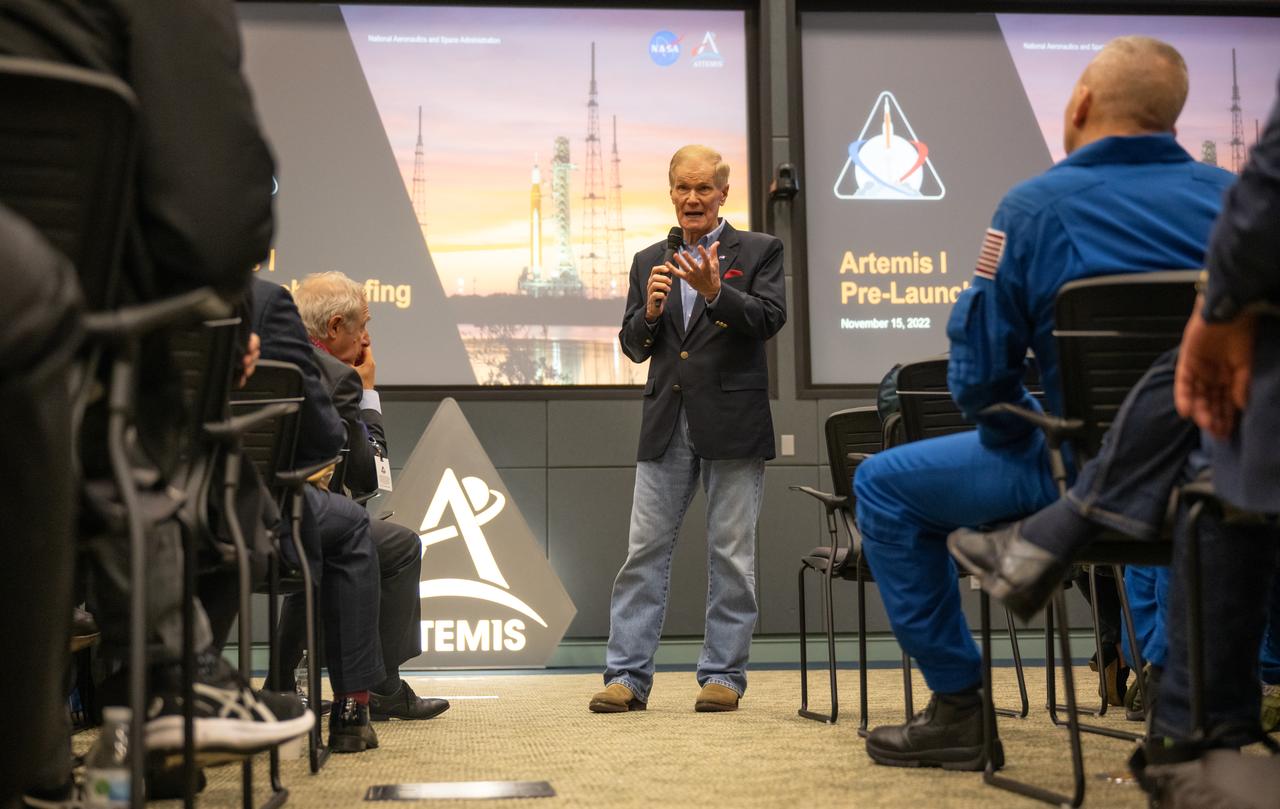
NASA Administrator Bill Nelson gives remarks ahead of the launch of NASA’s Space Launch System rocket carrying the Orion spacecraft on the Artemis I flight test, Tuesday, Nov. 15, 2022, from Operations and Support Building II at NASA’s Kennedy Space Center in Florida. NASA’s Artemis I flight test is the first integrated flight test of the agency’s deep space exploration systems: the Orion spacecraft, Space Launch System (SLS) rocket, and ground systems. Photo Credit: (NASA/Bill Ingalls)
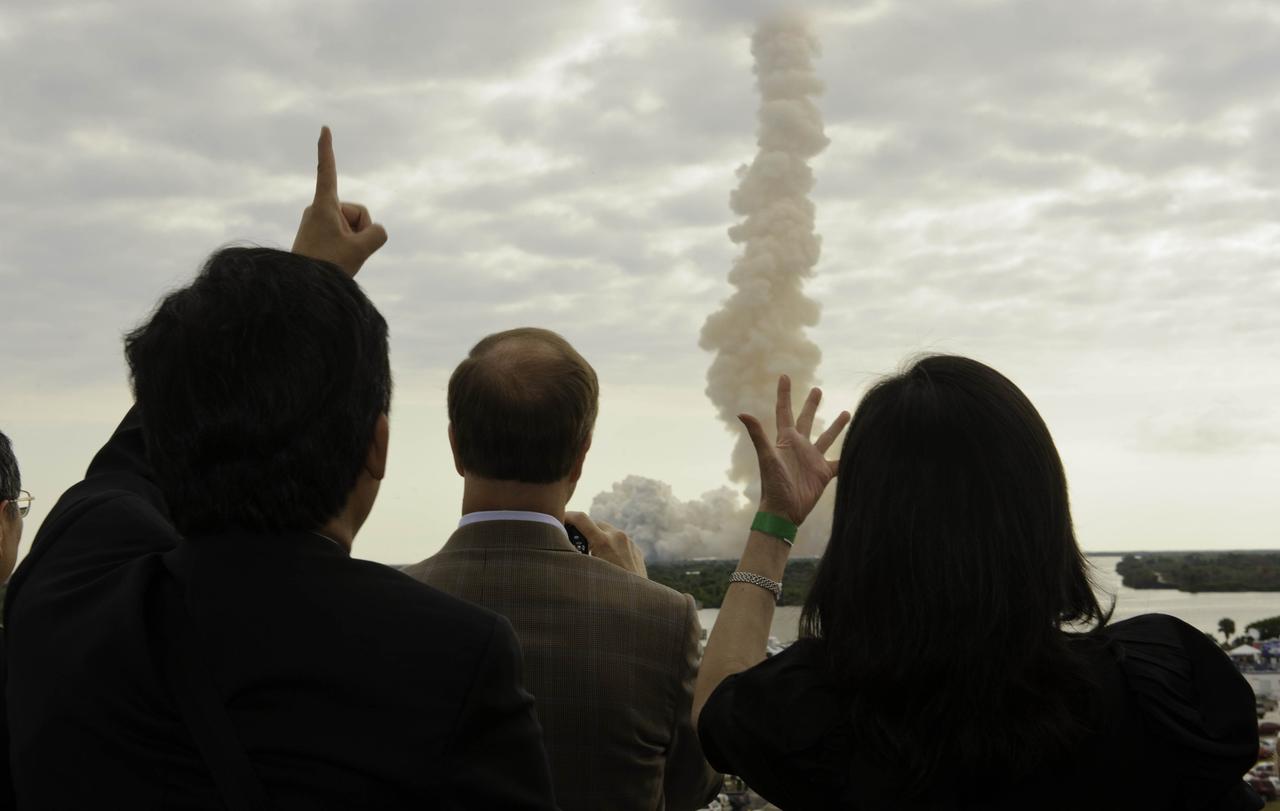
Guests view space shuttle Endeavour (STS-134) as it launches skyward from the balcony of the Operations Support Building II (OSB-II), Monday, May 16, 2011, at Kennedy Space Center in Cape Canaveral, Fla. During the 16-day mission, Endeavour, with Commander Mark Kelly, Pilot Gregory H. Johnson, Mission Specialists Michael Fincke, Greg Chamitoff, Andrew Feustel and European Space Agency astronaut Robert Vittori will deliver the Alpha Magnetic Spectrometer (AMS) and spare parts including two S-band communications antennas, a high-pressure gas tank and additional spare parts for Dextre. Photo Credit: (NASA/Paul E. Alers)
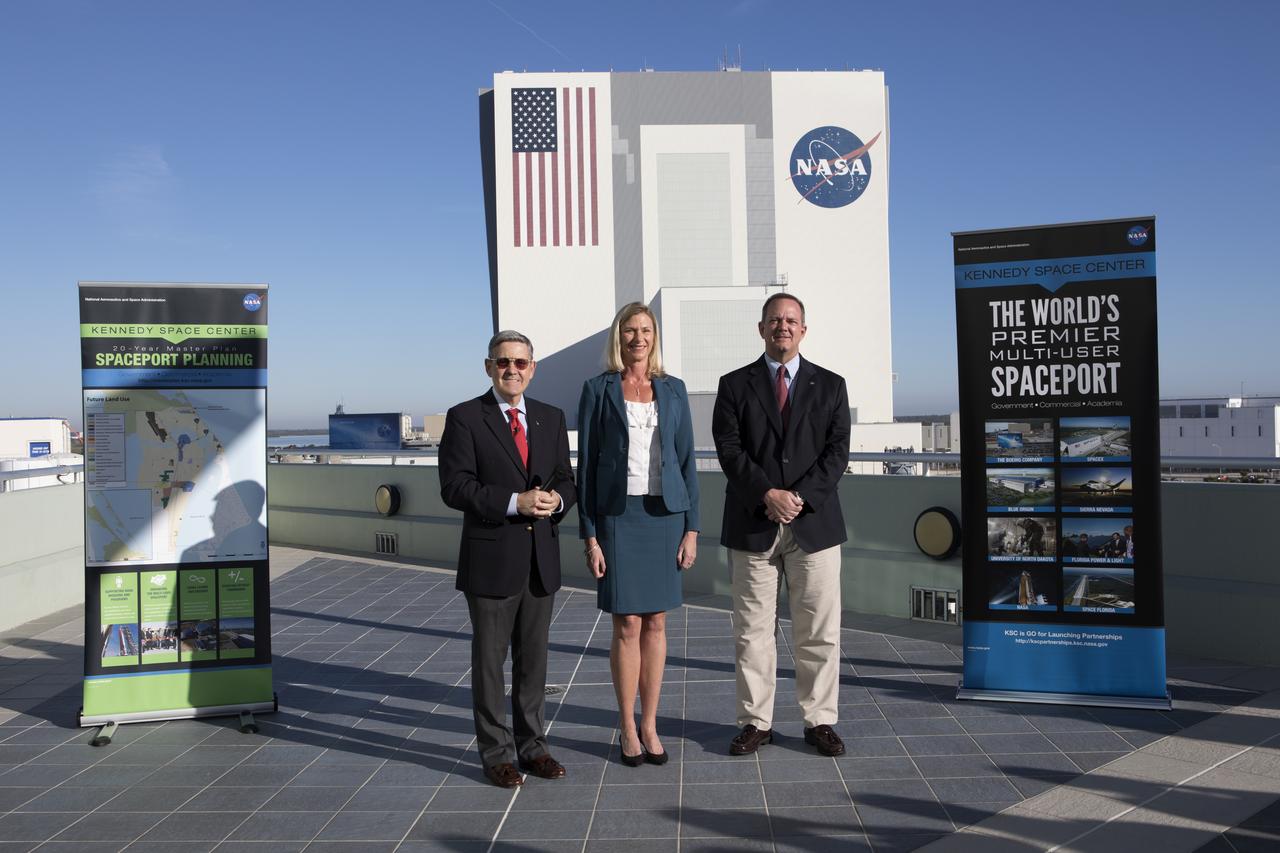
Kennedy Space Center Director Bob Cabana, left, was joined by Nancy Bray, director of Spaceport Integration and Services, center, and Tom Engler, director of Center Planning and Development in briefing members of the news media on the balcony of Operations Support Building II. They described Kennedy's transition from a primarily government-only facility to a premier, multi-user spaceport. In the background is the Vehicle Assembly Building (VAB). Modifications were recently completed in the VAB where new work platforms were installed to support processing of NASA's Space Launch System rocket designed to send the Orion spacecraft on missions beyond low-Earth orbit.
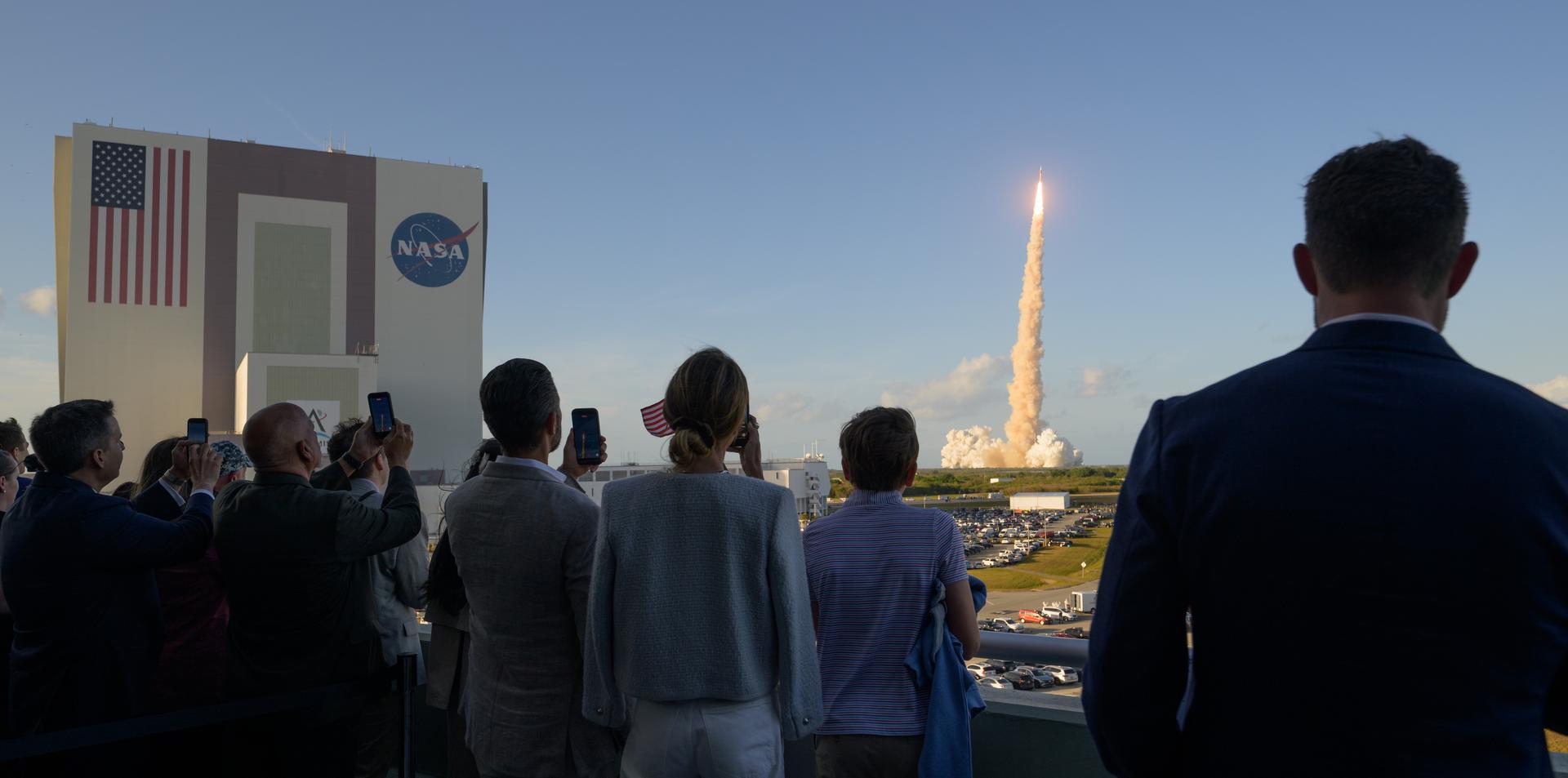
Employees and invited guest, including Eric Trump family, left, and Donald Trump Jr. family, right, watch the launch of NASA’s Space Launch System rocket carrying the Orion spacecraft with NASA astronauts Reid Wiseman, commander; Victor Glover, pilot; Christina Koch, mission specialist; and CSA (Canadian Space Agency) astronaut Jeremy Hansen, mission specialist on NASA’s Artemis II mission,, Wednesday, April 1, 2026, from Operations and Support Building II at NASA’s Kennedy Space Center in Florida. NASA’s Artemis II mission will take Wiseman, Glover, Koch, and Hansen on a 10-day journey around the Moon and back aboard SLS rocket and Orion spacecraft launched at 6:35pm EDT from Launch Complex 39B. Photo Credit: (NASA/Bill Ingalls)
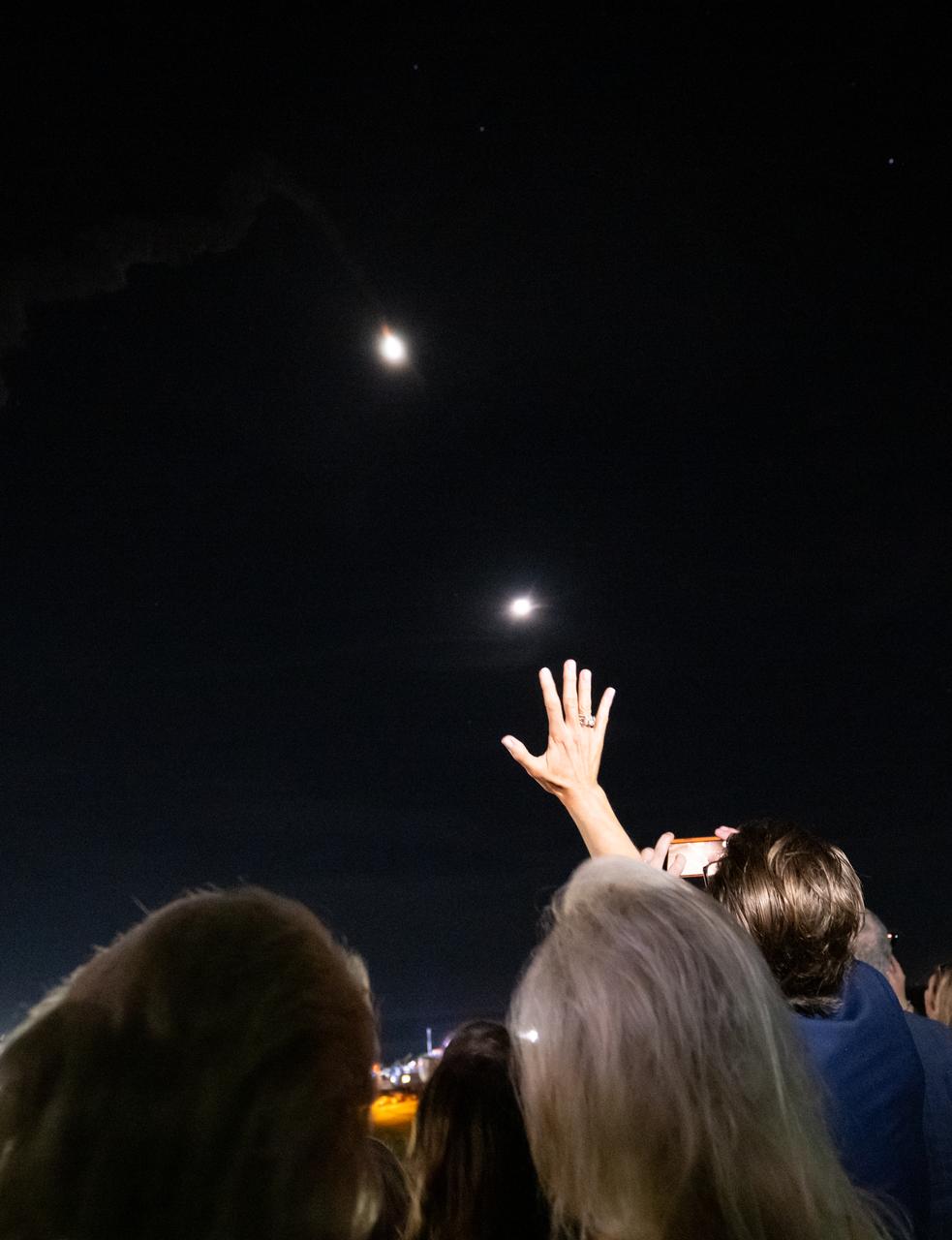
Guests watch the launch of NASA’s Space Launch System rocket carrying the Orion spacecraft on the Artemis I flight test, Wednesday, Nov. 16, 2022, from Operations and Support Building II at NASA’s Kennedy Space Center in Florida. NASA’s Artemis I flight test is the first integrated flight test of the agency’s deep space exploration systems: the Orion spacecraft, Space Launch System (SLS) rocket, and ground systems. SLS and Orion launched at 1:47 a.m. EST, from Launch Pad 39B at the Kennedy Space Center. The Moon is in the upper right. Photo Credit: (NASA/Bill Ingalls)
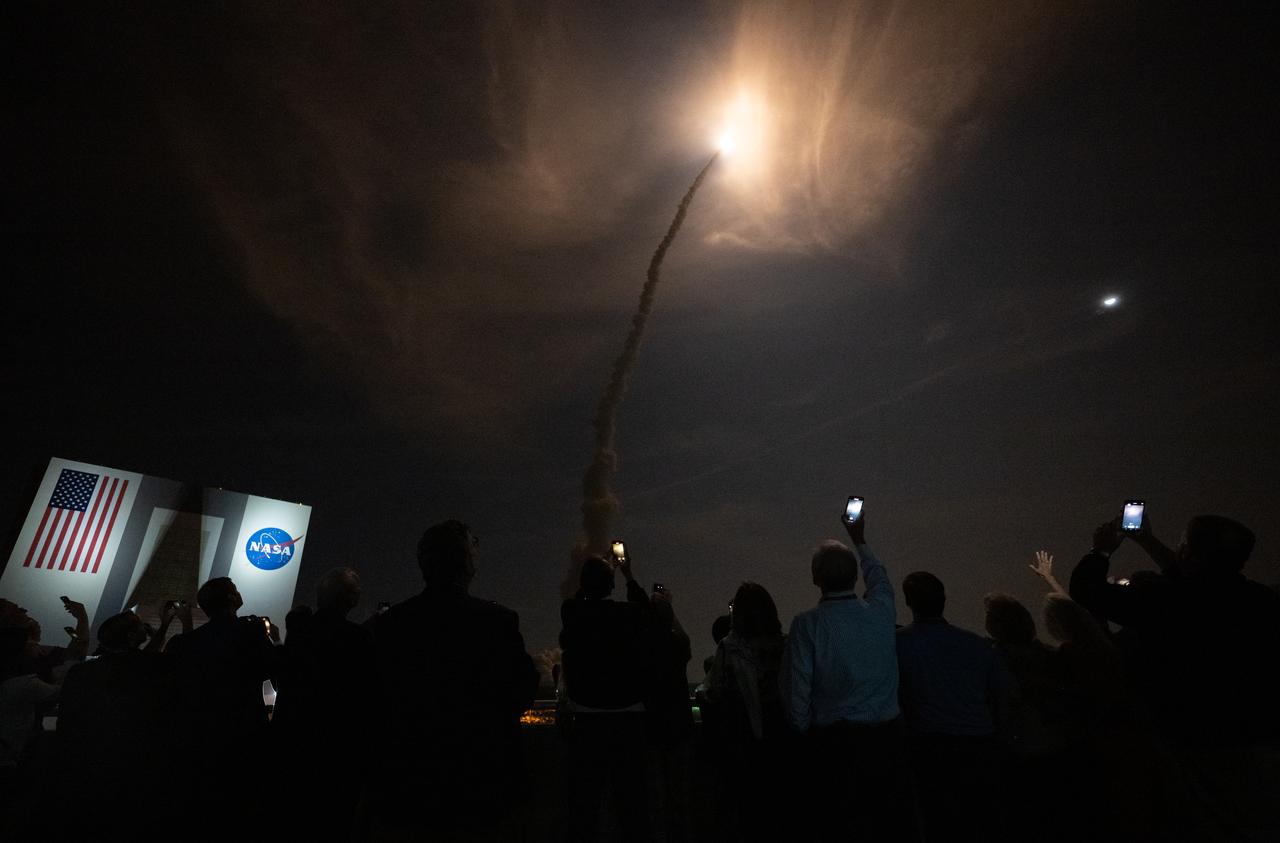
Guests watch the launch of NASA’s Space Launch System rocket carrying the Orion spacecraft on the Artemis I flight test, Wednesday, Nov. 16, 2022, from Operations and Support Building II at NASA’s Kennedy Space Center in Florida. NASA’s Artemis I flight test is the first integrated flight test of the agency’s deep space exploration systems: the Orion spacecraft, Space Launch System (SLS) rocket, and ground systems. SLS and Orion launched at 1:47 a.m. EST, from Launch Pad 39B at the Kennedy Space Center. The Moon is in the upper right. Photo Credit: (NASA/Bill Ingalls)

Vice President Kamala Harris answers questions from the media, Monday, Aug. 29, 2022, at the Operations and Support Building II at NASA’s Kennedy Space Center in Florida. The Vice President was to watch the launch of NASA’s Space Launch System rocket carrying the Orion spacecraft on the Artemis I flight test, however the launch attempt was halted at approximately 8:30 a.m. ET. Photo Credit: (NASA/Bill Ingalls)
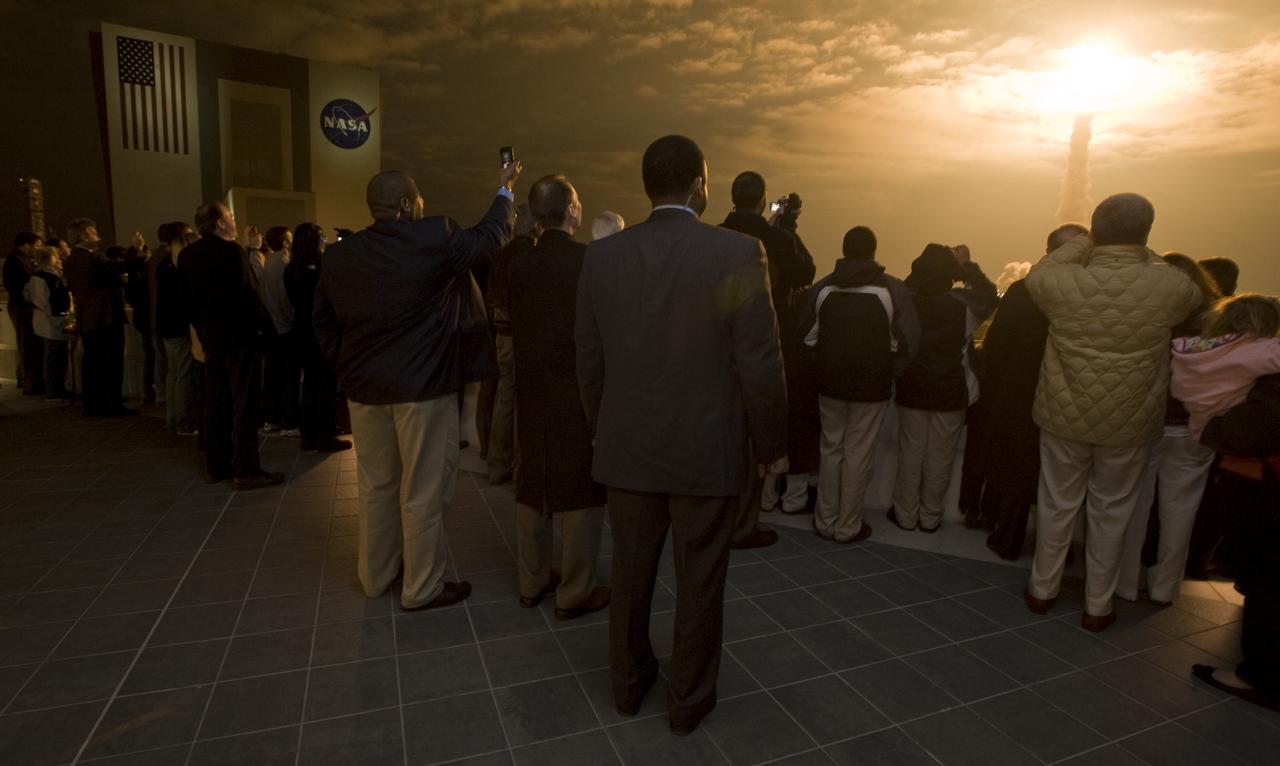
Guests look on from the terrace of Operations Support Building II as space shuttle Endeavour launches from pad 39A on the STS-130 mission early Monday, Feb. 8, 2010, at Kennedy Space Center in Cape Canaveral, Fla. Endeavour and its crew will deliver to the International Space Station a third connecting module, the Italian-built Tranquility node and the seven-windowed cupola, which will be used as a control room for robotics. The mission will feature three spacewalks. Photo Credit: (NASA/Paul E. Alers)
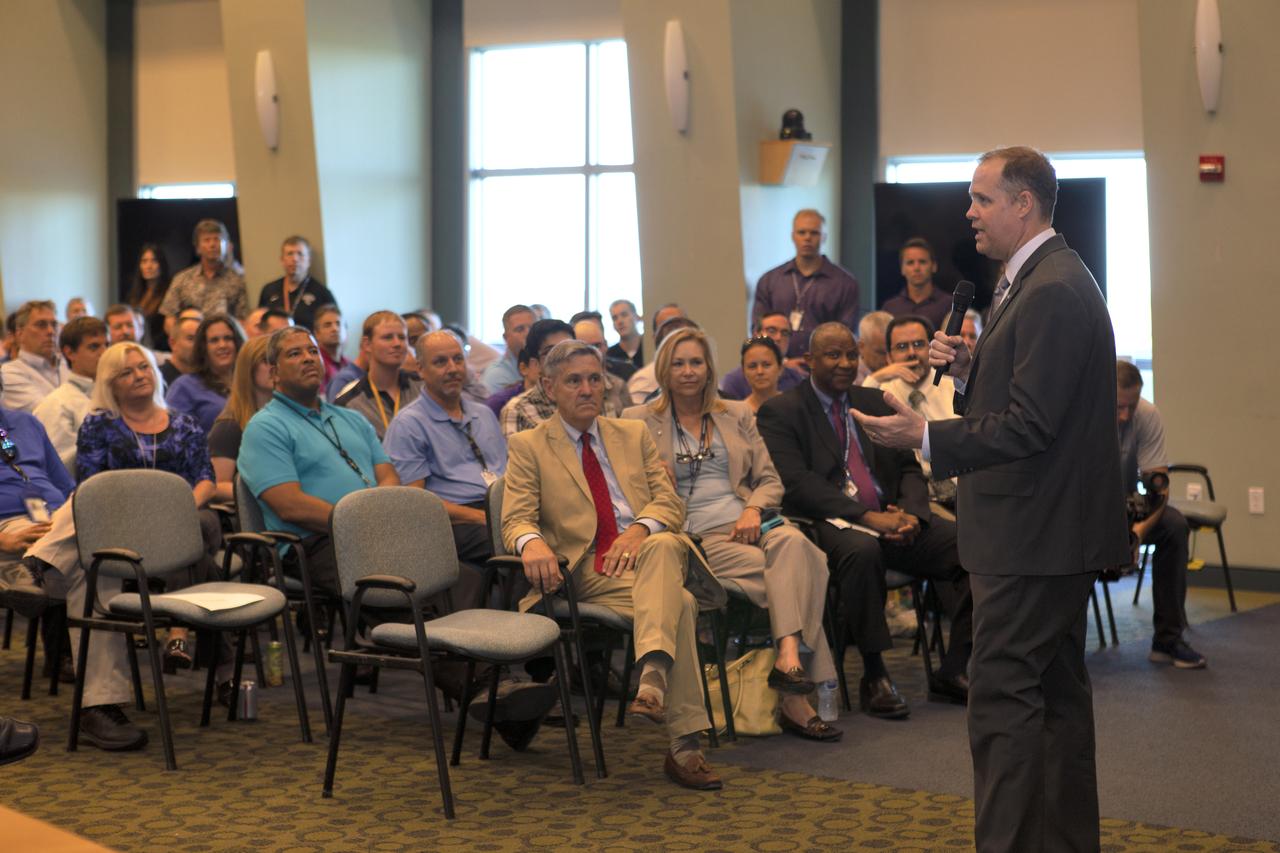
NASA Kennedy Space Center Engineering Directorate employees listen to a presentation by the agency's Administrator Jim Bridenstine. He made his first official visit to the Florida spaceport on Aug. 6 and 7, 2018.
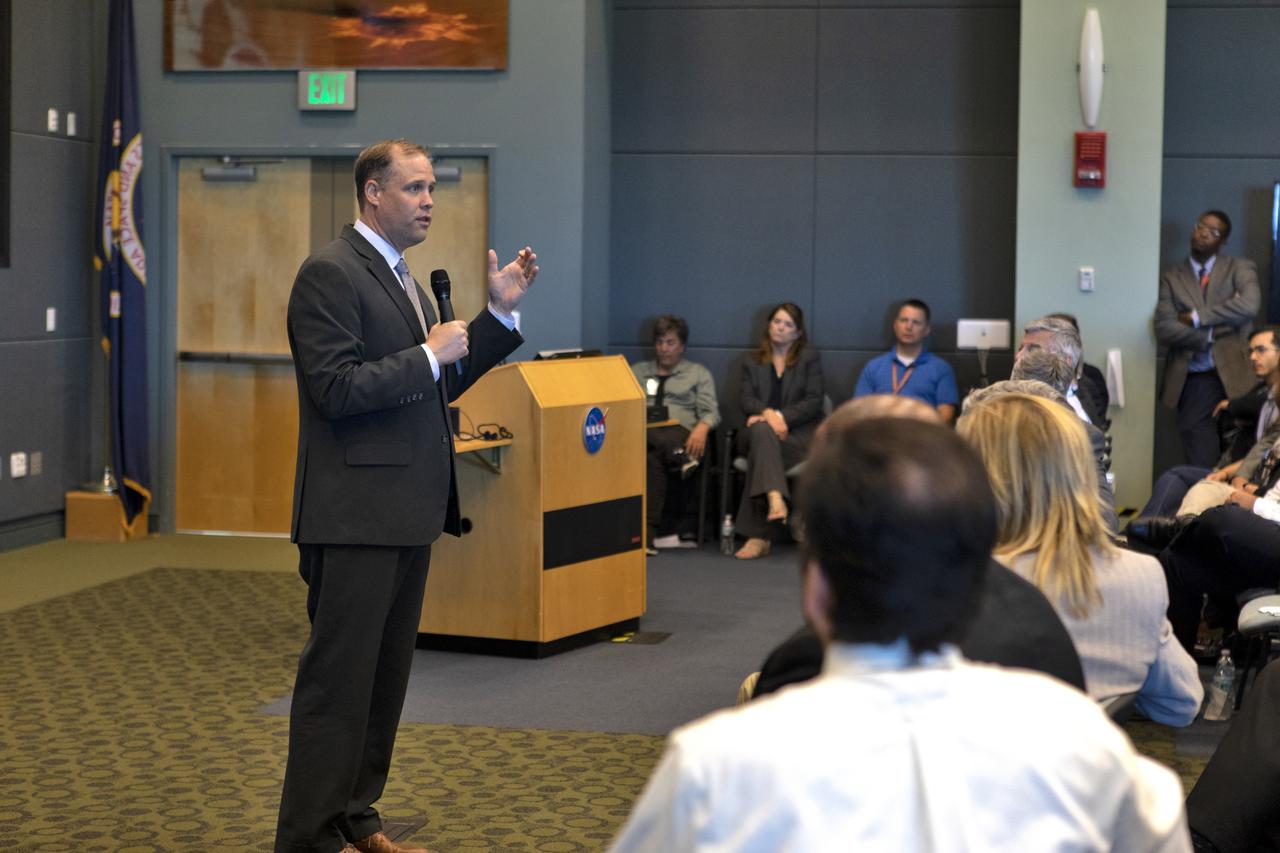
NASA Kennedy Space Center Engineering Directorate employees listen to a presentation by the agency's Administrator Jim Bridenstine. He made his first official visit to the Florida spaceport on Aug. 6 and 7, 2018.
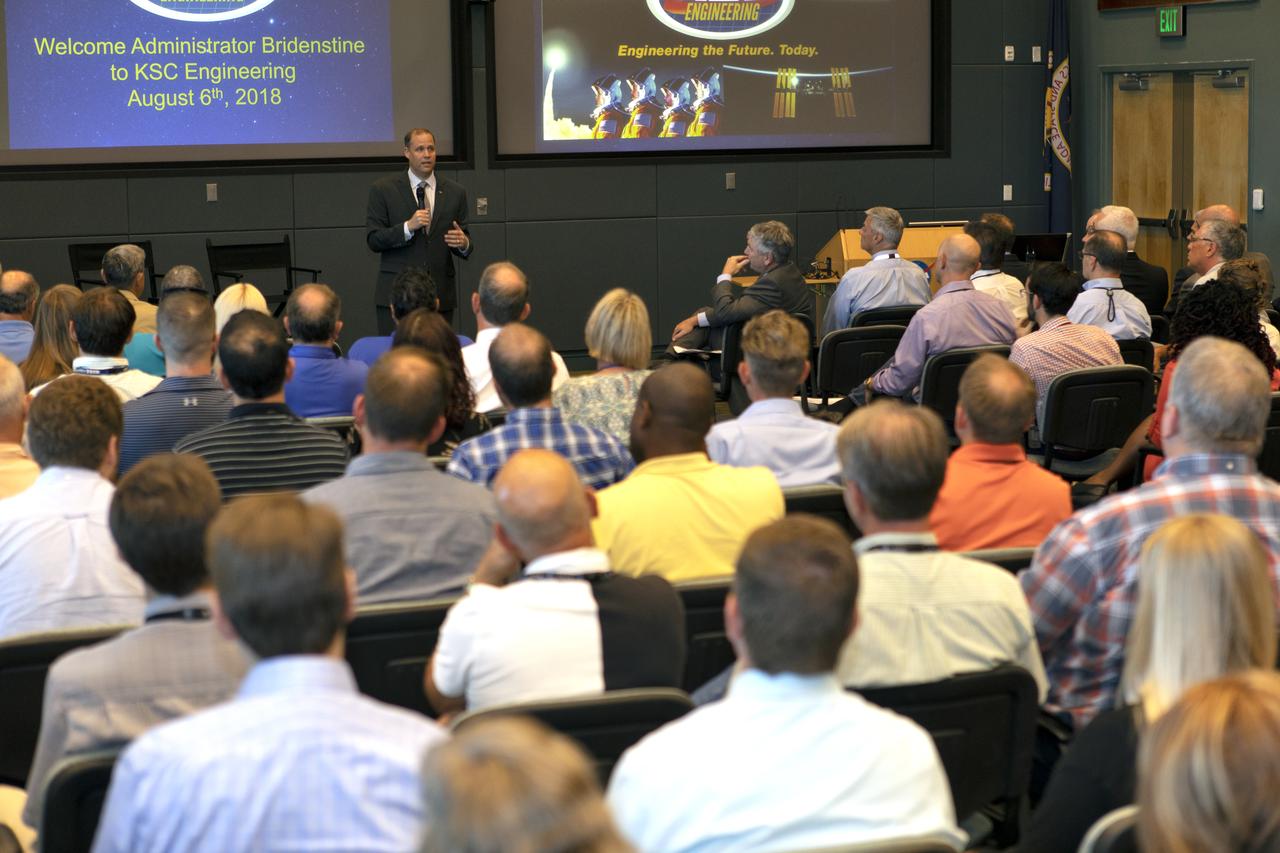
NASA Kennedy Space Center Engineering Directorate employees listen to a presentation by the agency's Administrator Jim Bridenstine. He made his first official visit to the Florida spaceport on Aug. 6 and 7, 2018.
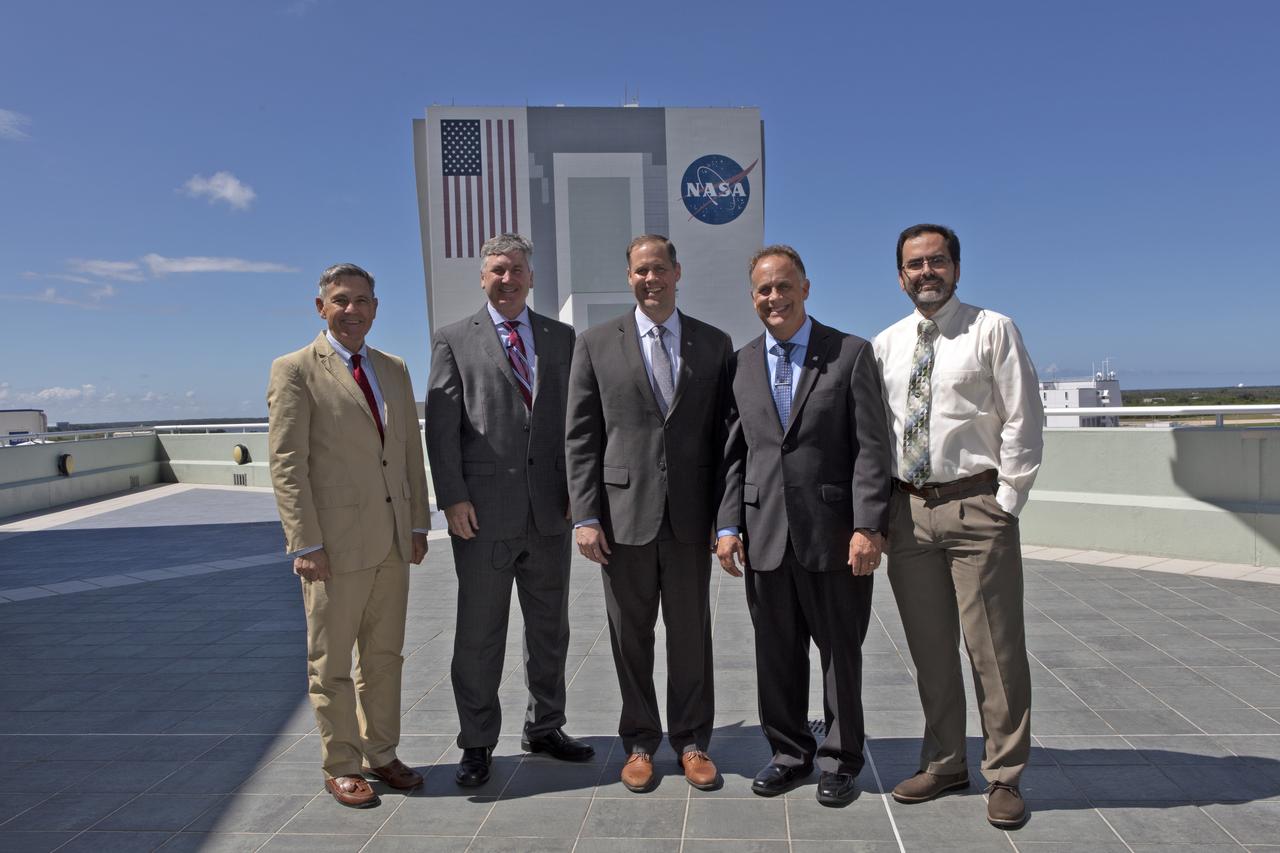
Back dropped by the iconic Vehicle Assembly Building NASA Administrator Jim Bridenstine poses with key leaders of the agency's Kennedy Space Center. From the left are, Center Director Bob Cabana, Scott Colloredo, associate director of NASA Engineering, Bridenstine, Shawn Quinn, director of NASA Engineering, and Ronnie Rodriguez, NASA Engineering. Bridenstine made his first official visit to the Florida spaceport on Aug. 6 and 7, 2018.

A SpaceX Falcon Heavy rocket carrying NASA’s Europa Clipper spacecraft lifts off from Launch Complex 39A at NASA’s Kennedy Space Center in Florida at 12:06 p.m. EDT on Monday, Oct. 14, 2024. After launch, the spacecraft plans to fly by Mars in February 2025, then back by Earth in December 2026, using the gravity of each planet to increase its momentum. With help of these “gravity assists,” Europa Clipper will achieve the velocity needed to reach Jupiter in April 2030.
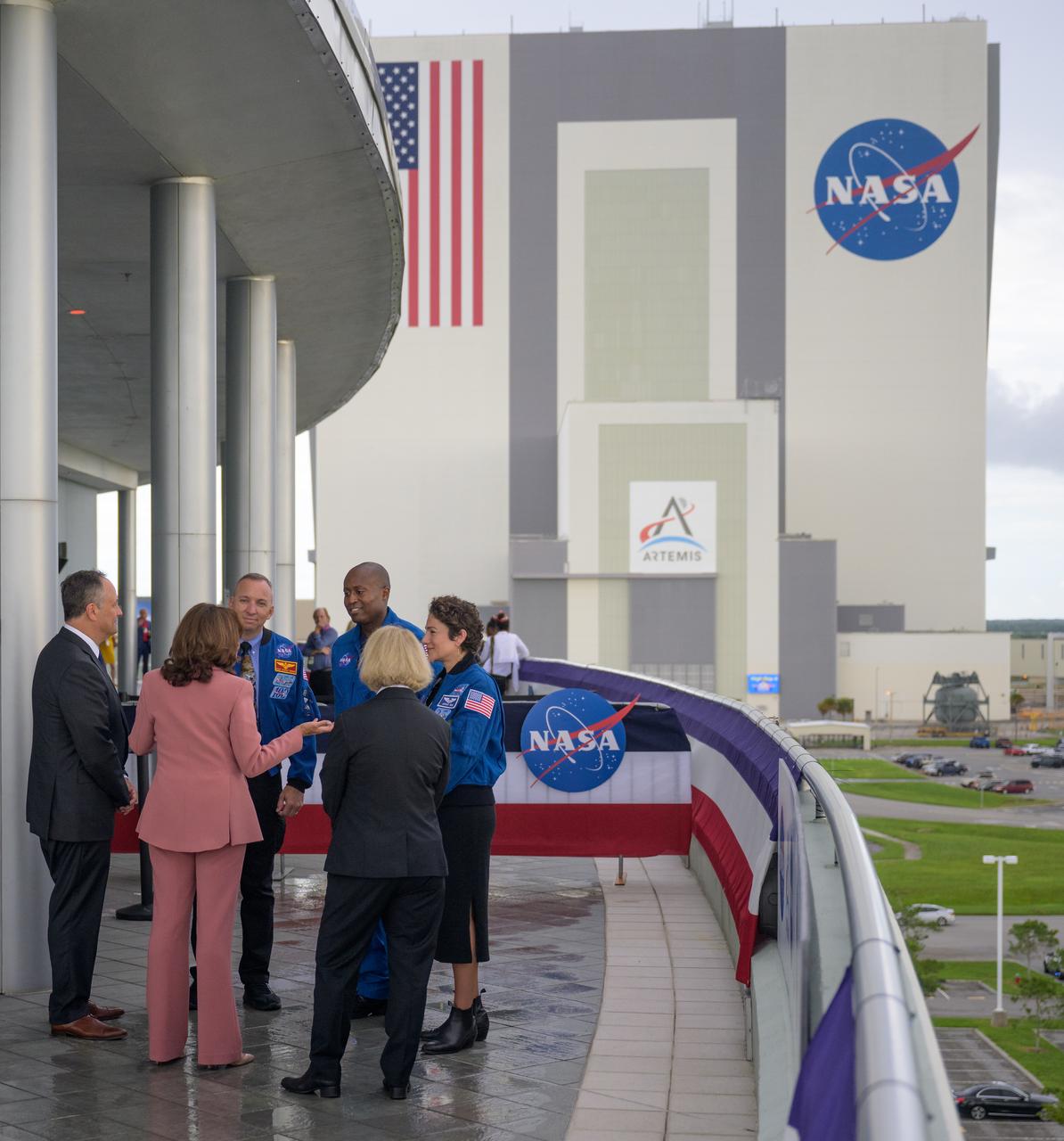
Vice President Kamala Harris and Second Gentleman Doug Emhoff meet with NASA astronaut Randy Bresnik, NASA astronaut candidate Andre Douglas, NASA astronaut Jessica Meir, and NASA Deputy Administrator Pam Melroy, Monday, Aug. 29, 2022, at the Operations and Support Building II at NASA’s Kennedy Space Center in Florida. The Vice President was to watch the launch of NASA’s Space Launch System rocket carrying the Orion spacecraft on the Artemis I flight test, however the launch attempt was halted at approximately 8:30 a.m. ET. Photo Credit: (NASA/Bill Ingalls)
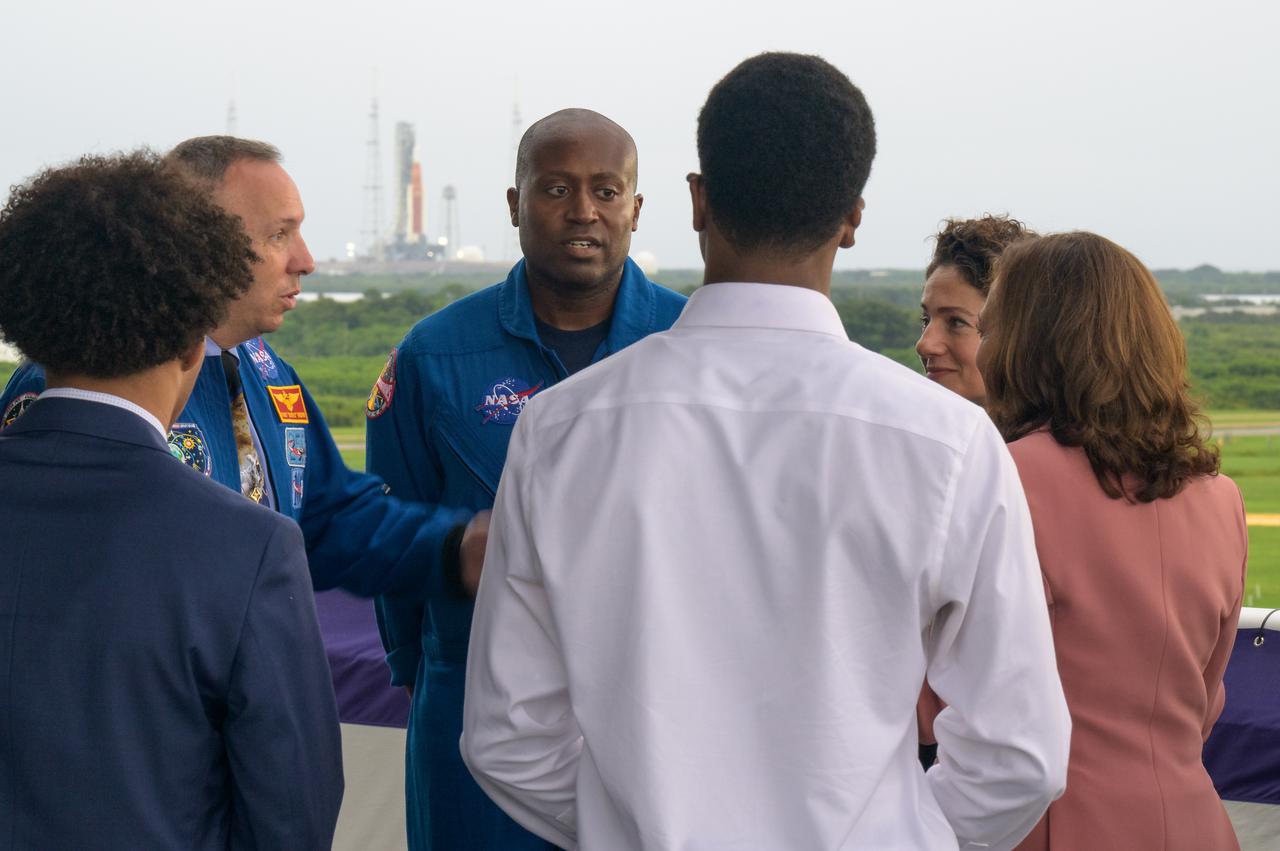
Vice President Kamala Harris and Second Gentleman Doug Emhoff meet with NASA astronaut Randy Bresnik, NASA astronaut candidate Andre Douglas, NASA astronaut Jessica Meir, NASA Deputy Administrator Pam Melroy, and NASA STEM interns, Monday, Aug. 29, 2022, at the Operations and Support Building II at NASA’s Kennedy Space Center in Florida. The Vice President was to watch the launch of NASA’s Space Launch System rocket carrying the Orion spacecraft on the Artemis I flight test, however the launch attempt was halted at approximately 8:30 a.m. ET. Photo Credit: (NASA/Bill Ingalls)
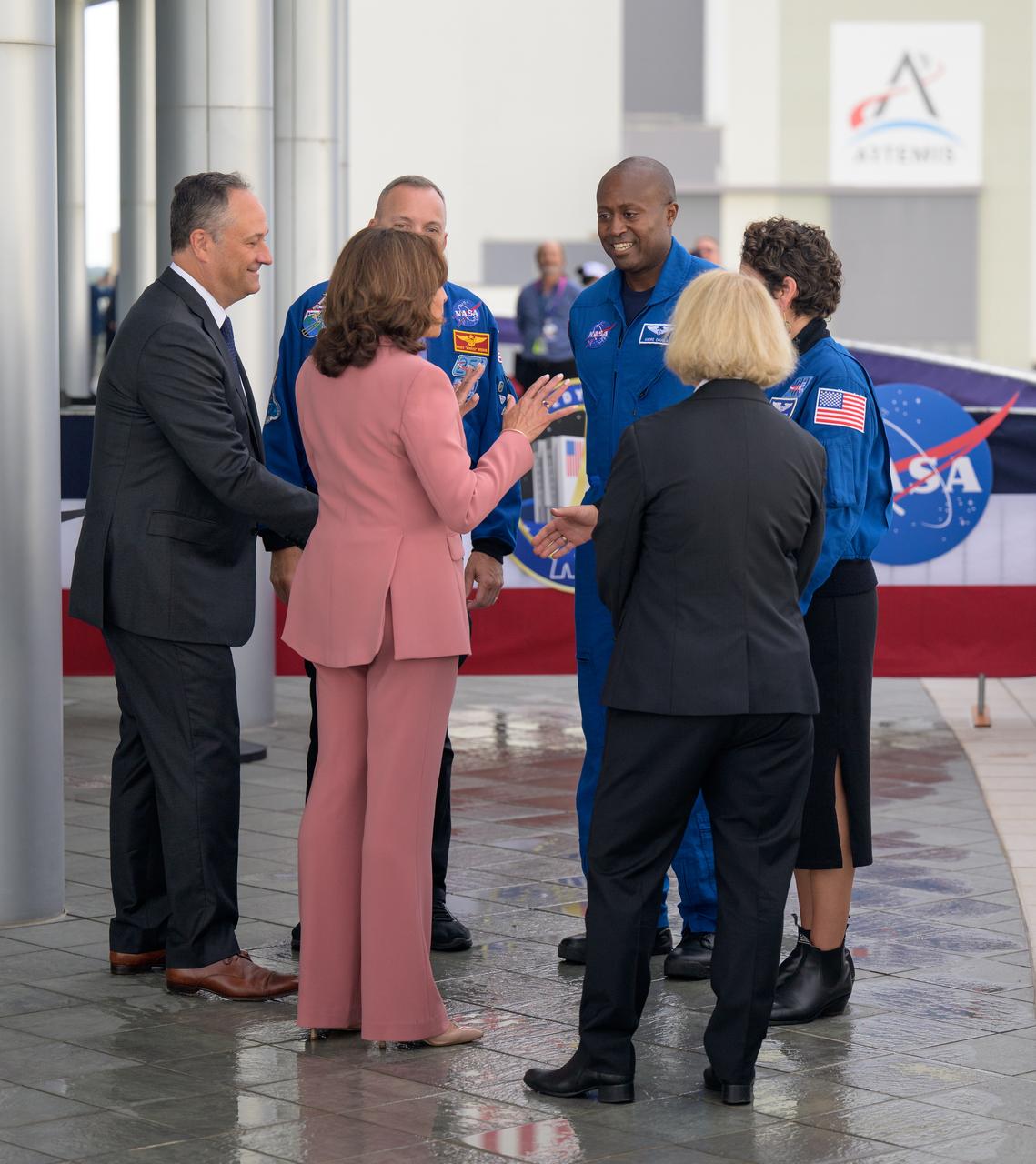
Vice President Kamala Harris and Second Gentleman Doug Emhoff meet with NASA astronaut Randy Bresnik, NASA astronaut candidate Andre Douglas, NASA astronaut Jessica Meir, and NASA Deputy Administrator Pam Melroy, Monday, Aug. 29, 2022, at the Operations and Support Building II at NASA’s Kennedy Space Center in Florida. The Vice President was to watch the launch of NASA’s Space Launch System rocket carrying the Orion spacecraft on the Artemis I flight test, however the launch attempt was halted at approximately 8:30 a.m. ET. Photo Credit: (NASA/Bill Ingalls)
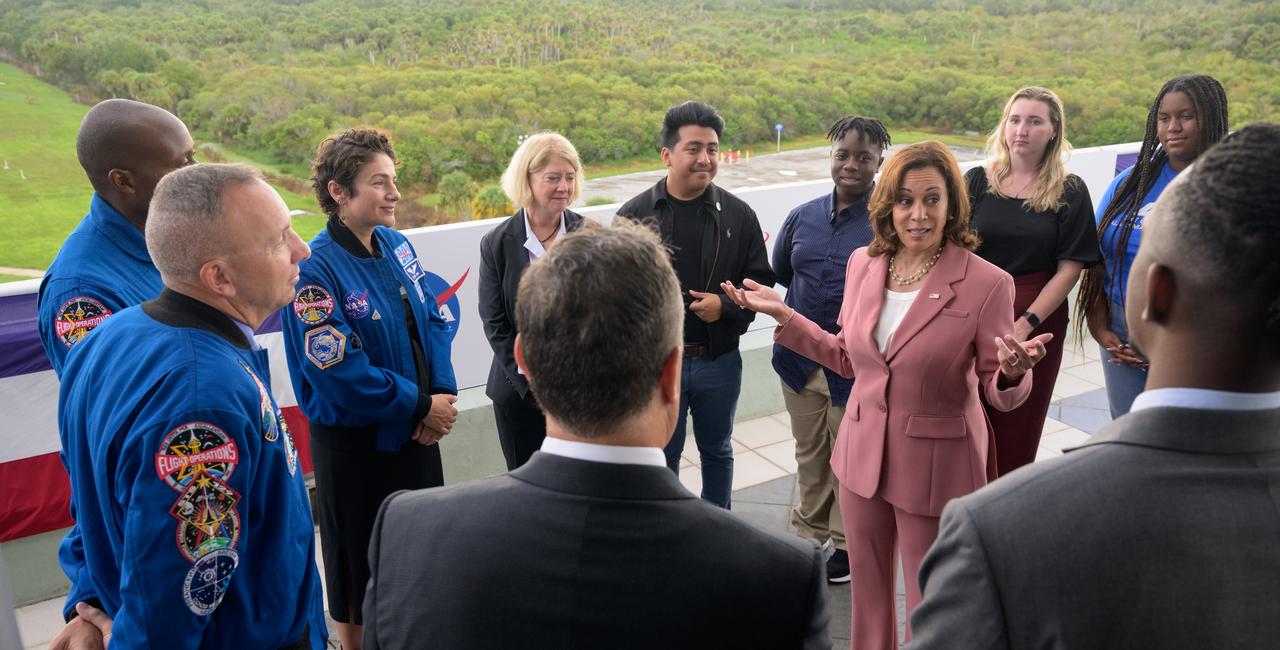
Vice President Kamala Harris and Second Gentleman Doug Emhoff meet with NASA astronaut Randy Bresnik, NASA astronaut candidate Andre Douglas, NASA astronaut Jessica Meir, NASA Deputy Administrator Pam Melroy, and NASA STEM interns, Monday, Aug. 29, 2022, at the Operations and Support Building II at NASA’s Kennedy Space Center in Florida. The Vice President was to watch the launch of NASA’s Space Launch System rocket carrying the Orion spacecraft on the Artemis I flight test, however the launch attempt was halted at approximately 8:30 a.m. ET. Photo Credit: (NASA/Bill Ingalls)
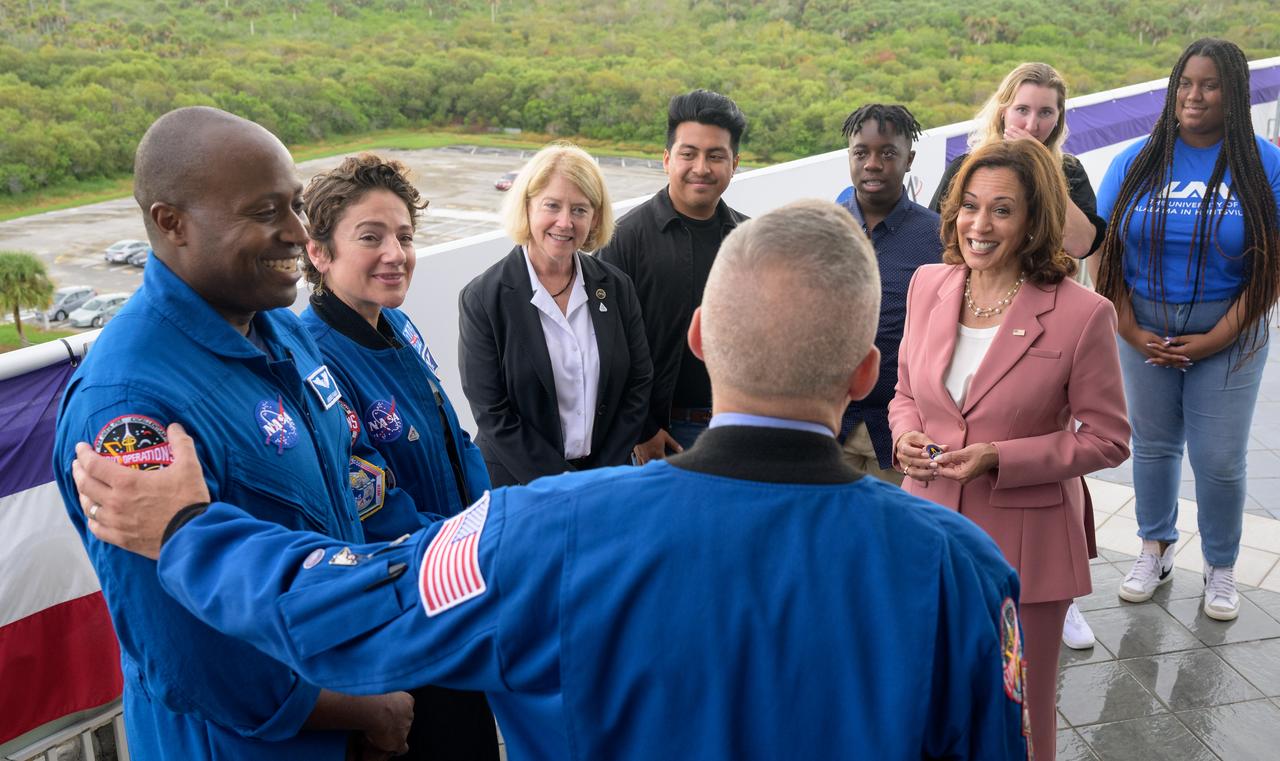
Vice President Kamala Harris and Second Gentleman Doug Emhoff meet with NASA astronaut Randy Bresnik, NASA astronaut candidate Andre Douglas, NASA astronaut Jessica Meir, NASA Deputy Administrator Pam Melroy, and NASA STEM interns, Monday, Aug. 29, 2022, at the Operations and Support Building II at NASA’s Kennedy Space Center in Florida. The Vice President was to watch the launch of NASA’s Space Launch System rocket carrying the Orion spacecraft on the Artemis I flight test, however the launch attempt was halted at approximately 8:30 a.m. ET. Photo Credit: (NASA/Bill Ingalls)
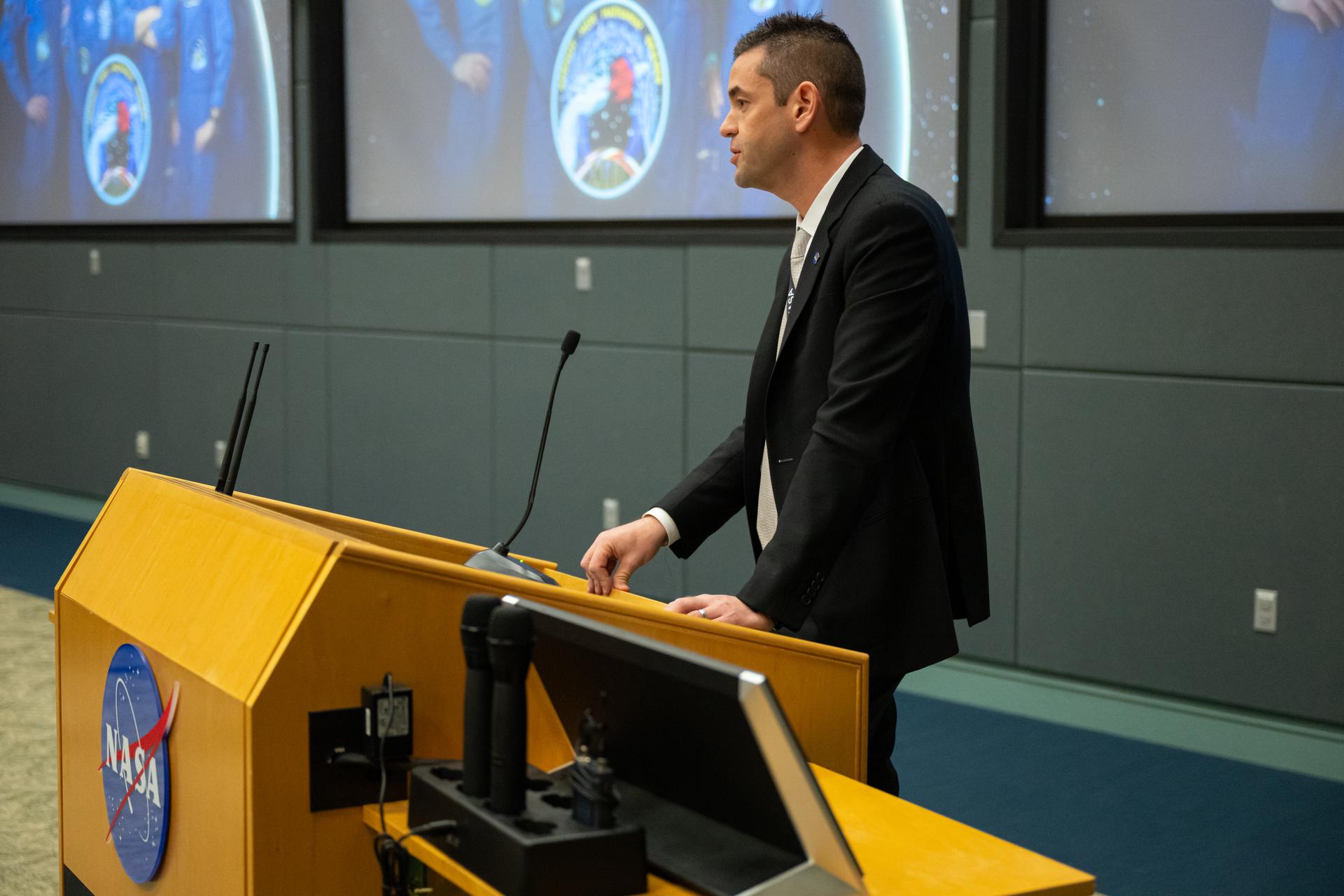
NASA Administrator Jared Isaacman gives remarks ahead of the launch of NASA’s SpaceX Crew-12 mission, Friday, Feb. 13, 2026, at the Operations and Support Building II at NASA’s Kennedy Space Center in Florida. NASA’s SpaceX Crew-12 mission is the twelfth crew rotation mission of the SpaceX Falcon 9 rocket and Dragon spacecraft to the International Space Station as part of the agency’s Commercial Crew Program. NASA astronauts Jessica Meir, Jack Hathaway, ESA (European Space Agency) astronaut Sophie Adenot, and Roscosmos cosmonaut Andrey Fedyaev are scheduled to launch at 5:15 a.m. EST on Friday, Feb. 13, from Space Launch Complex 40. Photo Credit: (NASA/John Kraus)
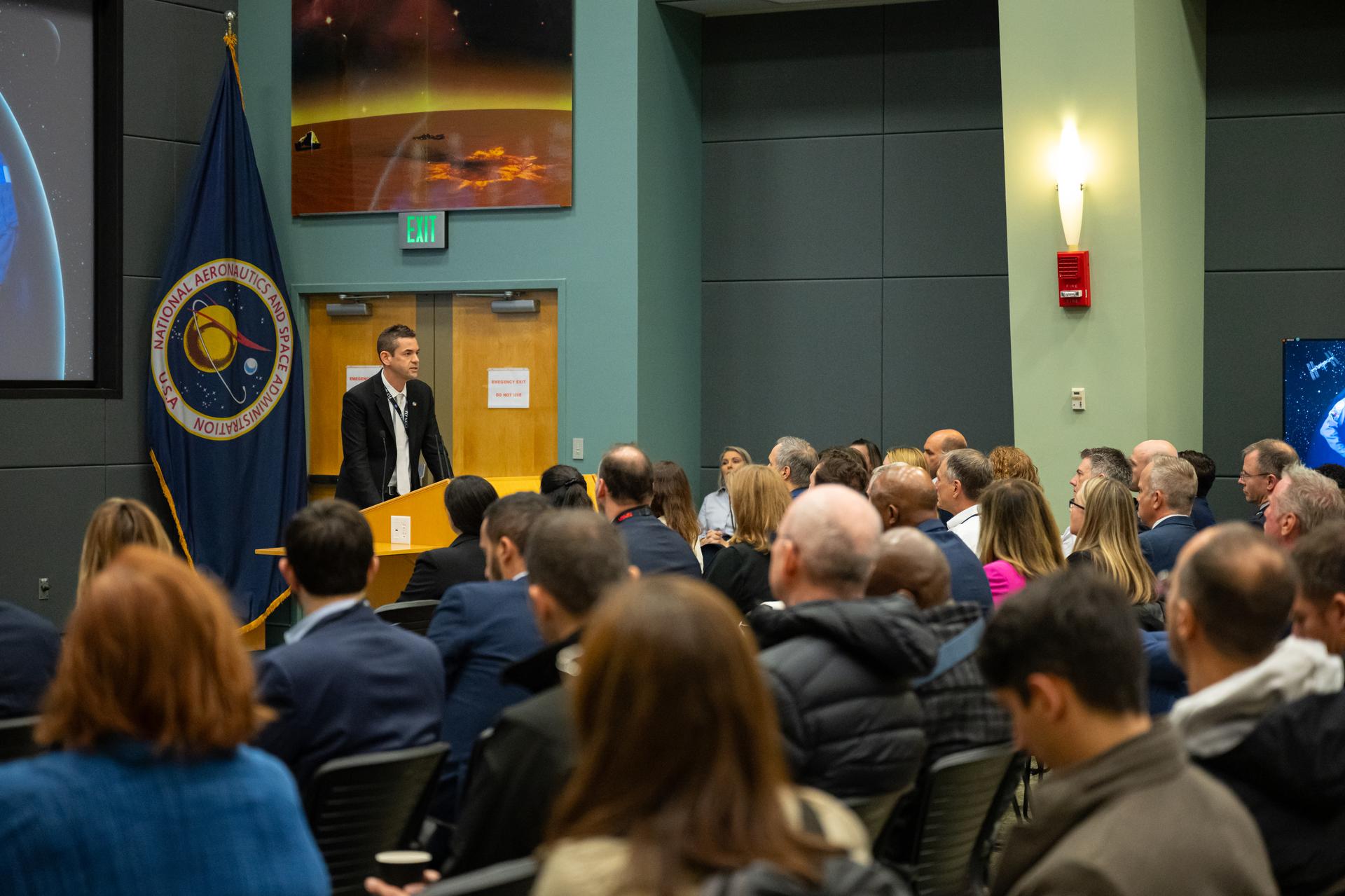
NASA Administrator Jared Isaacman gives remarks ahead of the launch of NASA’s SpaceX Crew-12 mission, Friday, Feb. 13, 2026, at the Operations and Support Building II at NASA’s Kennedy Space Center in Florida. NASA’s SpaceX Crew-12 mission is the twelfth crew rotation mission of the SpaceX Falcon 9 rocket and Dragon spacecraft to the International Space Station as part of the agency’s Commercial Crew Program. NASA astronauts Jessica Meir, Jack Hathaway, ESA (European Space Agency) astronaut Sophie Adenot, and Roscosmos cosmonaut Andrey Fedyaev are scheduled to launch at 5:15 a.m. EST on Friday, Feb. 13, from Space Launch Complex 40. Photo Credit: (NASA/John Kraus)
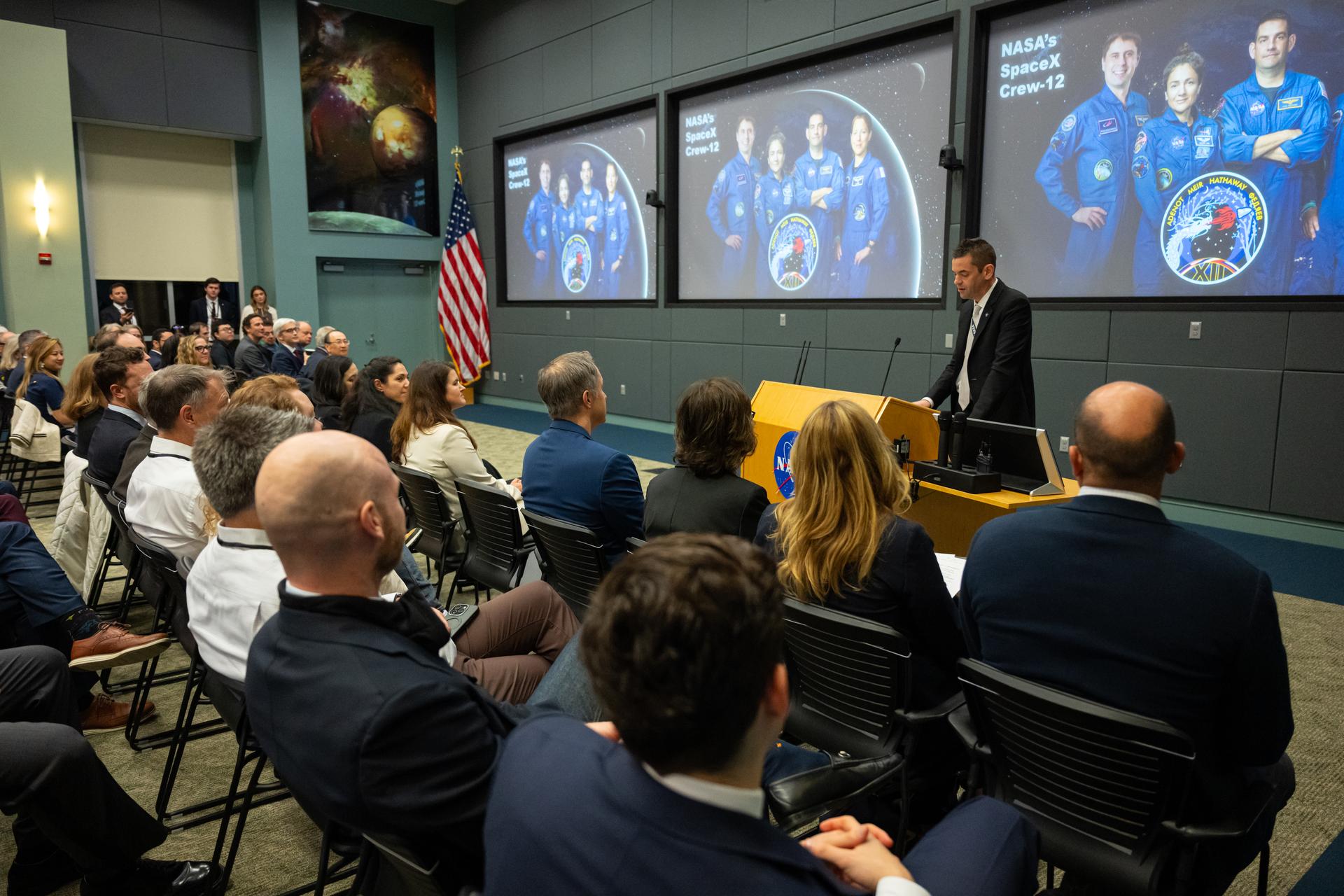
NASA Administrator Jared Isaacman gives remarks ahead of the launch of NASA’s SpaceX Crew-12 mission, Friday, Feb. 13, 2026, at the Operations and Support Building II at NASA’s Kennedy Space Center in Florida. NASA’s SpaceX Crew-12 mission is the twelfth crew rotation mission of the SpaceX Falcon 9 rocket and Dragon spacecraft to the International Space Station as part of the agency’s Commercial Crew Program. NASA astronauts Jessica Meir, Jack Hathaway, ESA (European Space Agency) astronaut Sophie Adenot, and Roscosmos cosmonaut Andrey Fedyaev are scheduled to launch at 5:15 a.m. EST on Friday, Feb. 13, from Space Launch Complex 40. Photo Credit: (NASA/John Kraus)
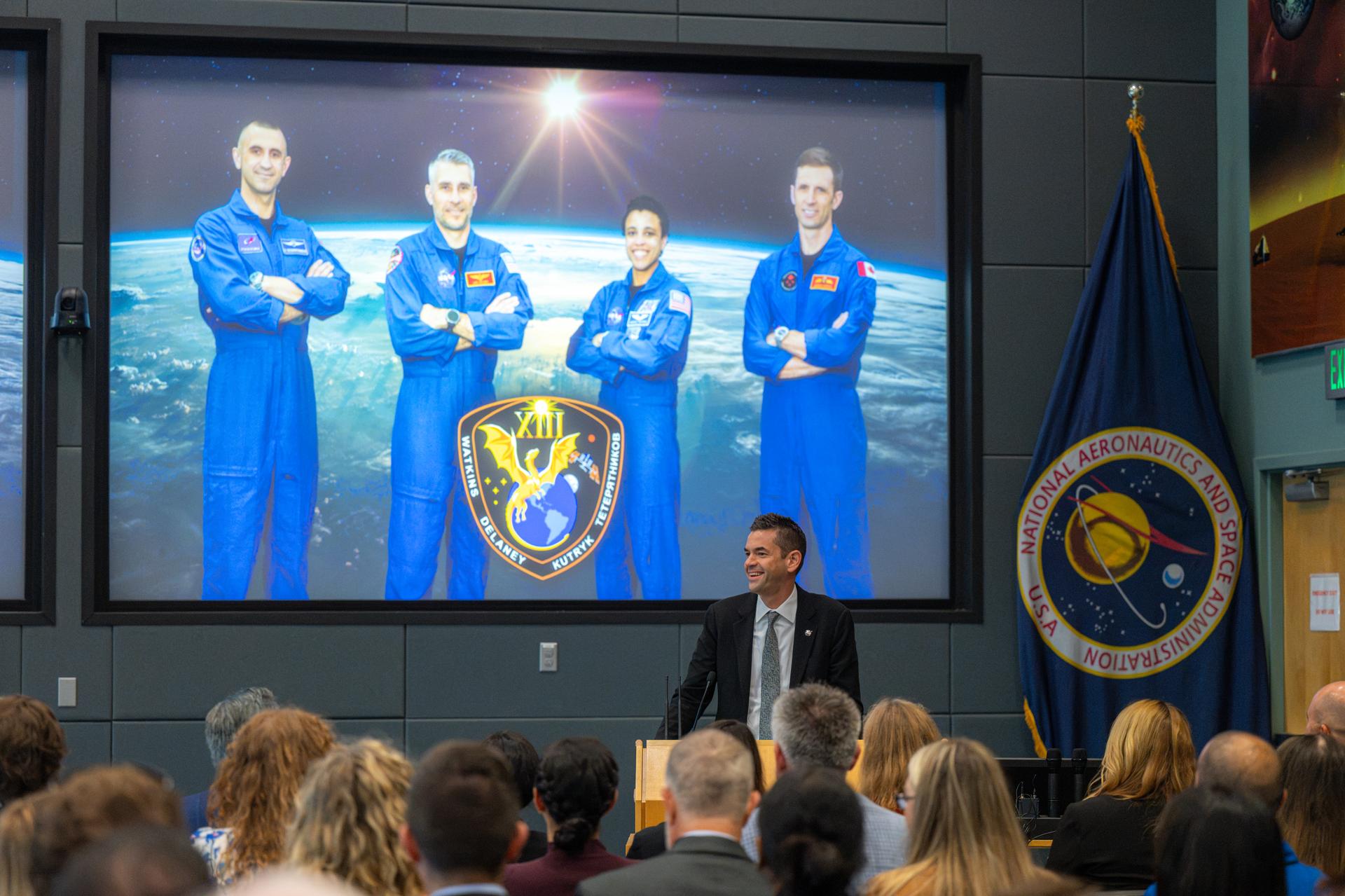
NASA Administrator Jared Isaacman gives remarks during a prelaunch briefing for NASA’s SpaceX Crew-13 mission, Thursday, Oct. 1, 2026, at the Operations Support Building II at NASA’s Kennedy Space Center in Florida. NASA’s SpaceX Crew-13 mission is the thirteenth crew rotation mission of the SpaceX Falcon 9 rocket and Dragon spacecraft to the International Space Station as part of the agency’s Commercial Crew Program. NASA astronauts Jessica Watkins and Luke Delaney, CSA (Canadian Space Agency) astronaut Joshua Kutryk, and Roscosmos cosmonaut Sergey Teteryatnikov will conduct scientific research, technology demonstrations, and maintenance during their long-duration stay aboard the orbital outpost. Photo Credit: (NASA/John Kraus)
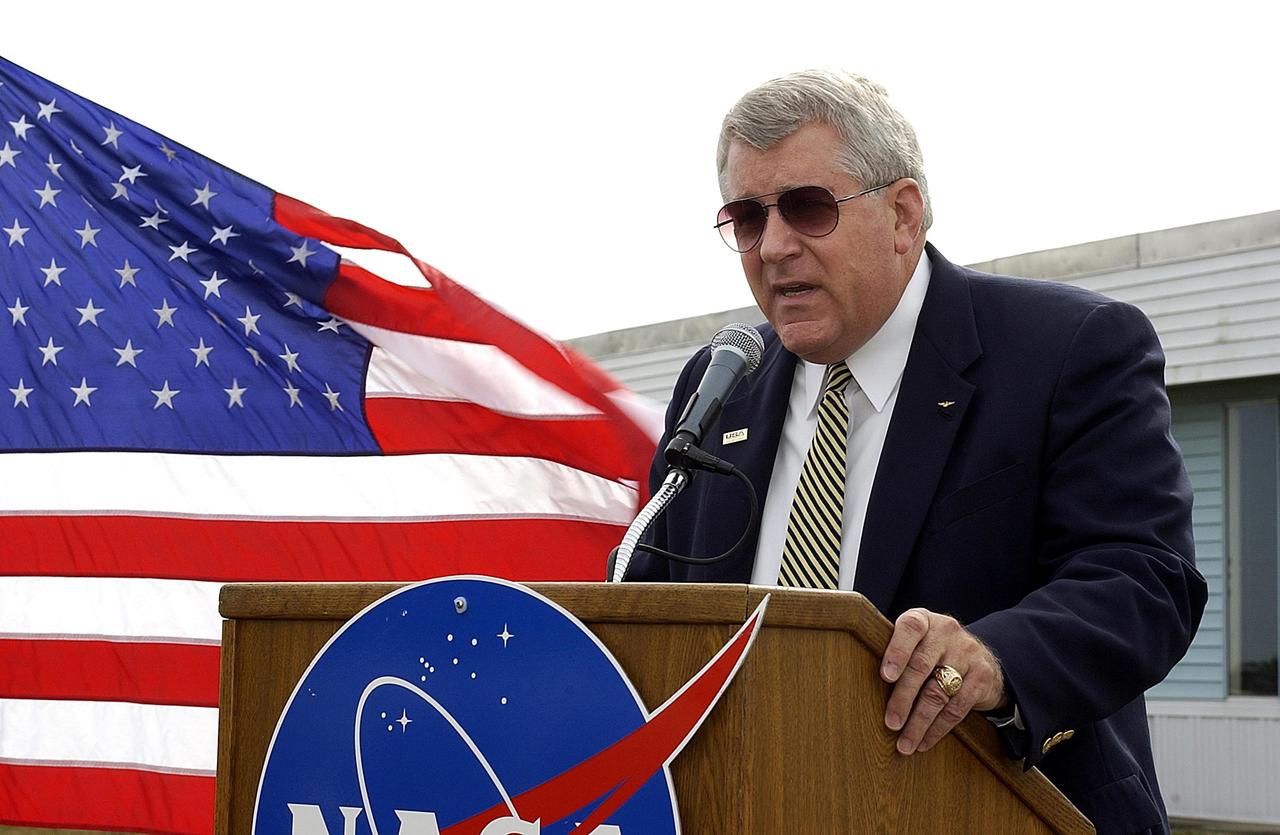
KENNEDY SPACE CENTER, FLA. -- At the groundbreaking for the Operations Support Building II, United Space Alliance Vice President Bill Pickavance praises NASA's decision to build the new facility. The audience included representatives of Governor Jeb Bush and the state of Florida. The new building will replace modular housing constructed more than 20 years ago and house NASA and contractor support staff for shuttle operations. The demolition of the modular buildings has begun and construction will immediately follow. The new structure is projected to be ready in April 2005.
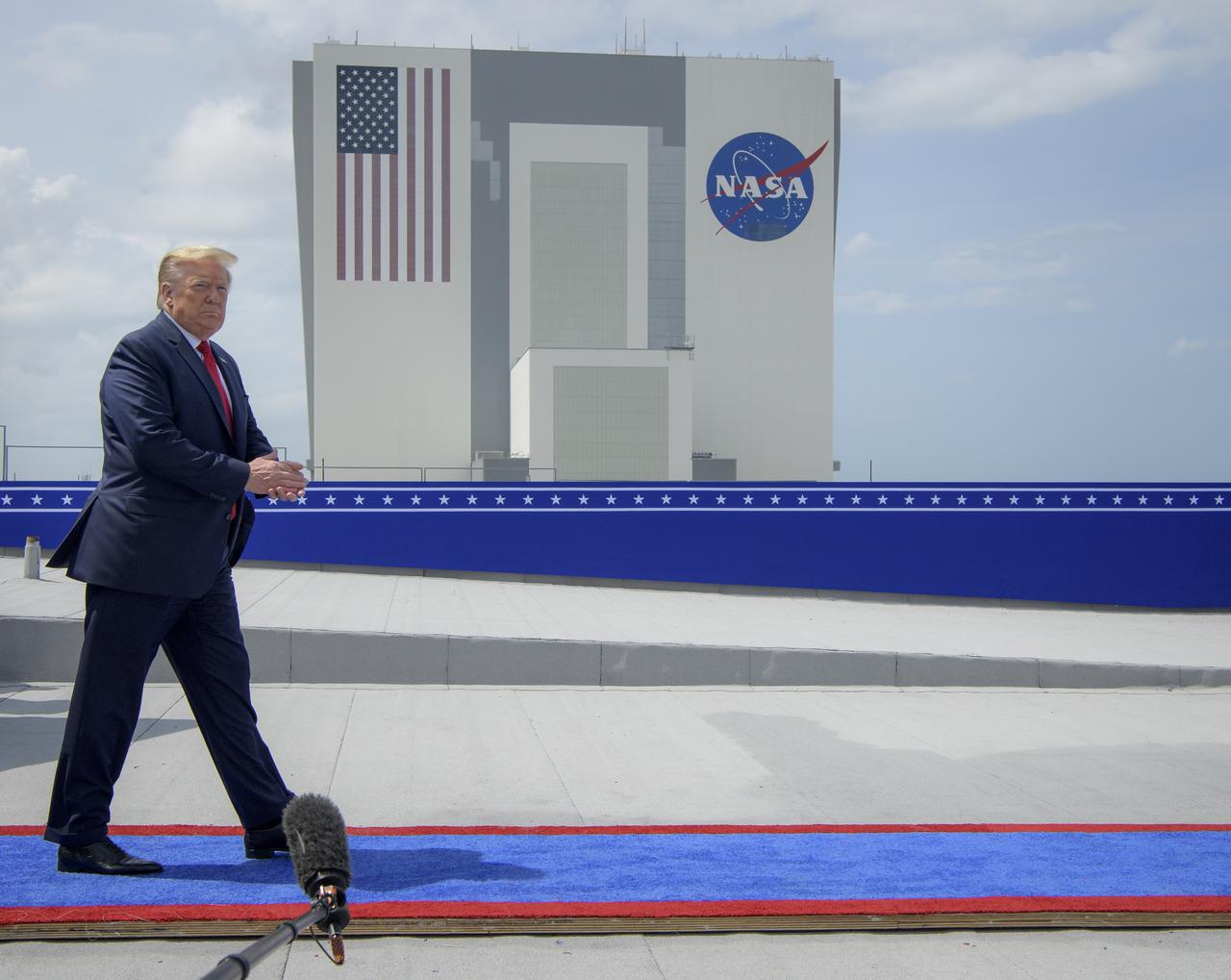
President Donald Trump walks out on to the roof of the Operations Support Building II to view the launch of a SpaceX Falcon 9 rocket carrying the company's Crew Dragon spacecraft on NASA’s SpaceX Demo-2 mission with NASA astronauts Robert Behnken and Douglas Hurley onboard, Saturday, May 30, 2020, at NASA’s Kennedy Space Center in Florida. NASA’s SpaceX Demo-2 mission is the first launch with astronauts of the SpaceX Crew Dragon spacecraft and Falcon 9 rocket to the International Space Station as part of the agency’s Commercial Crew Program. The test flight serves as an end-to-end demonstration of SpaceX’s crew transportation system. Behnken and Hurley launched at 3:22 p.m. EDT on Saturday, May 30, from Launch Complex 39A at the Kennedy Space Center. A new era of human spaceflight is set to begin as American astronauts once again launch on an American rocket from American soil to low-Earth orbit for the first time since the conclusion of the Space Shuttle Program in 2011. Photo Credit: (NASA/Bill Ingalls)
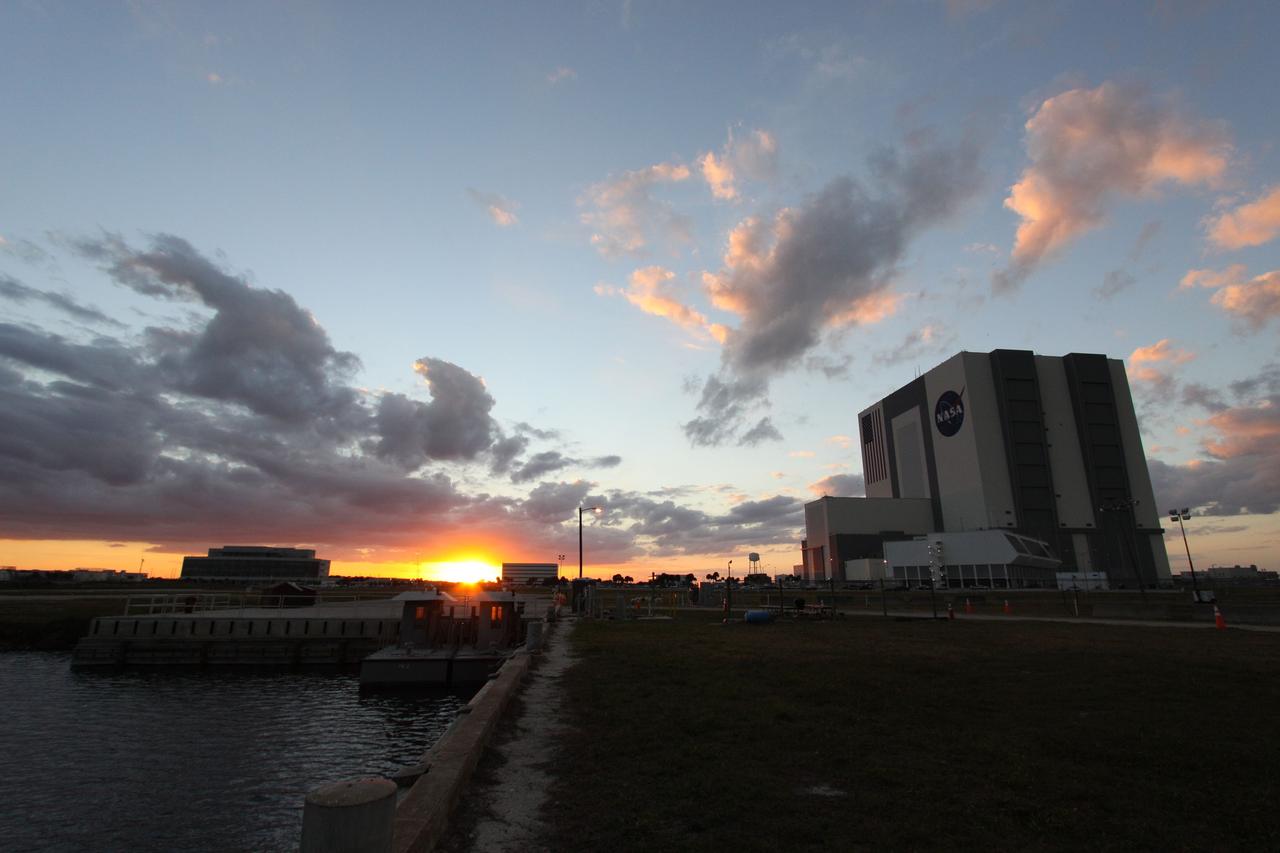
CAPE CANAVERAL, Fla. -- From the Turn Basin at NASA's Kennedy Space Center in Florida, the sun sets over the Launch Complex 39 area. The Operations Support Building II is at left, the Operations Support Building I is at center, and the mammoth Vehicle Assembly Building and Launch Control Center are to the right. Photo credit: NASA/Troy Cryder
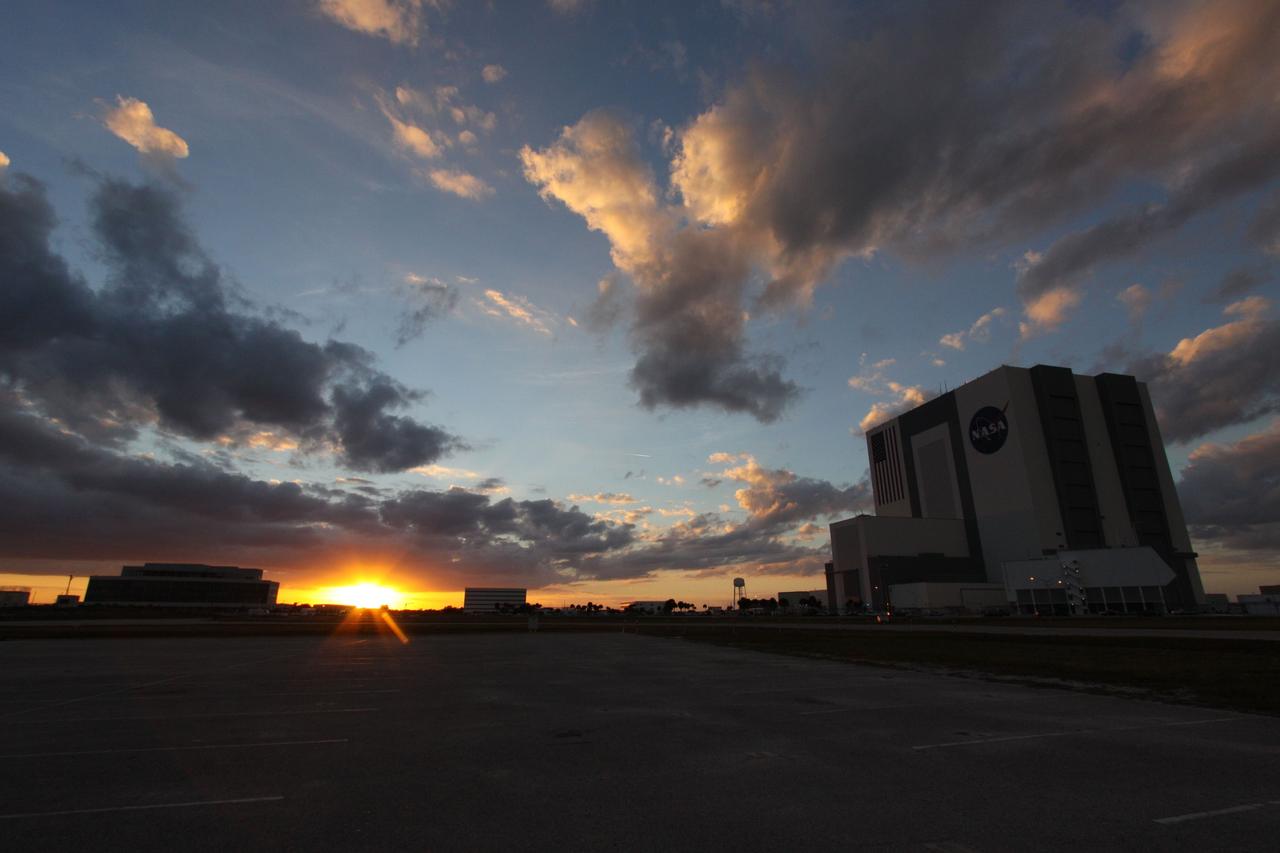
CAPE CANAVERAL, Fla. -- From the Press Site parking lot at NASA's Kennedy Space Center in Florida, the sun sets over the Launch Complex 39 area shadowing the Operations Support Building II, left, Operations Support Building I, Processing Control Center, Vehicle Assembly Building and Launch Control Center. Photo credit: NASA/Troy Cryder
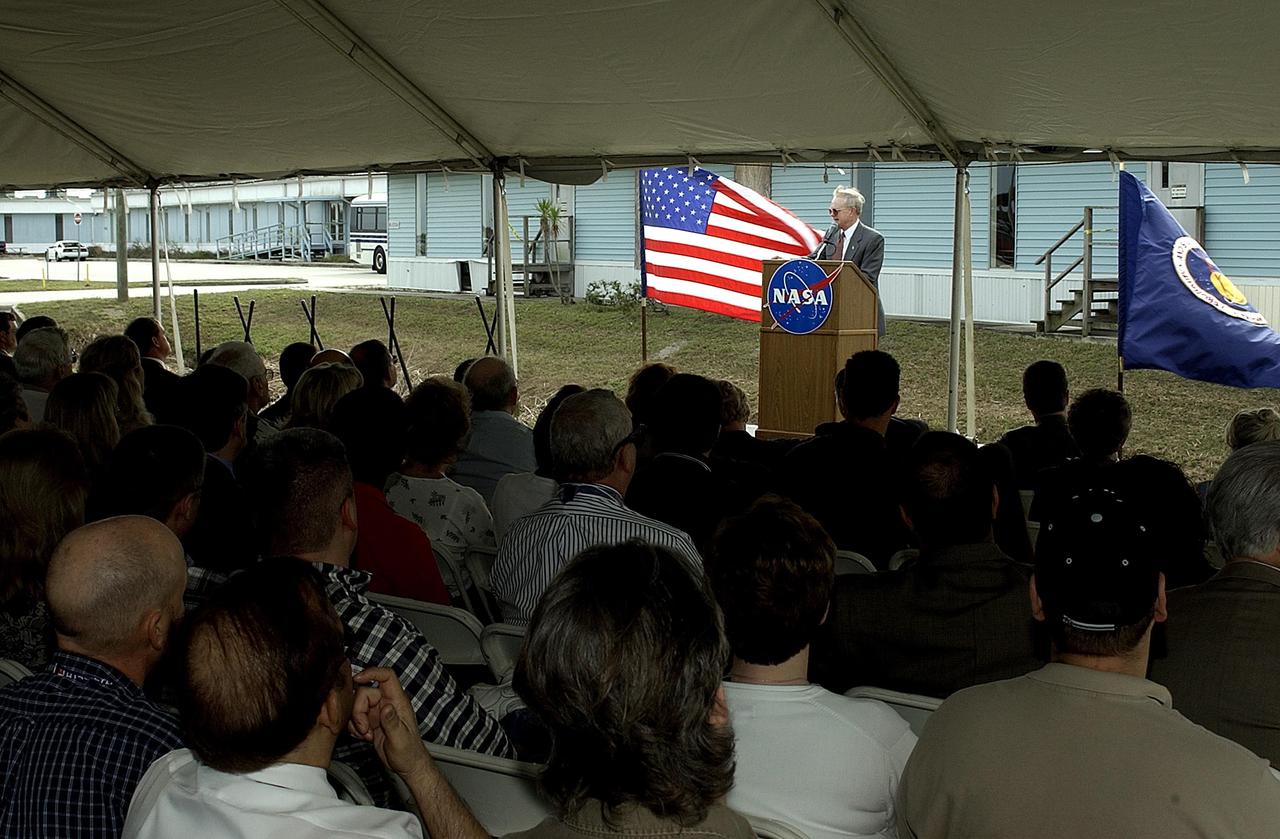
KENNEDY SPACE CENTER, FLA. -- Center Director Roy Bridges speaks to attendees at the groundbreaking for the Operations Support Building II. The audience included representatives of Governor Jeb Bush and the state of Florida. The new building will replace modular housing constructed more than 20 years ago and house NASA and contractor support staff for shuttle operations. The demolition of the modular buildings has begun and construction will immediately follow. The new structure is projected to be ready in April 2005.
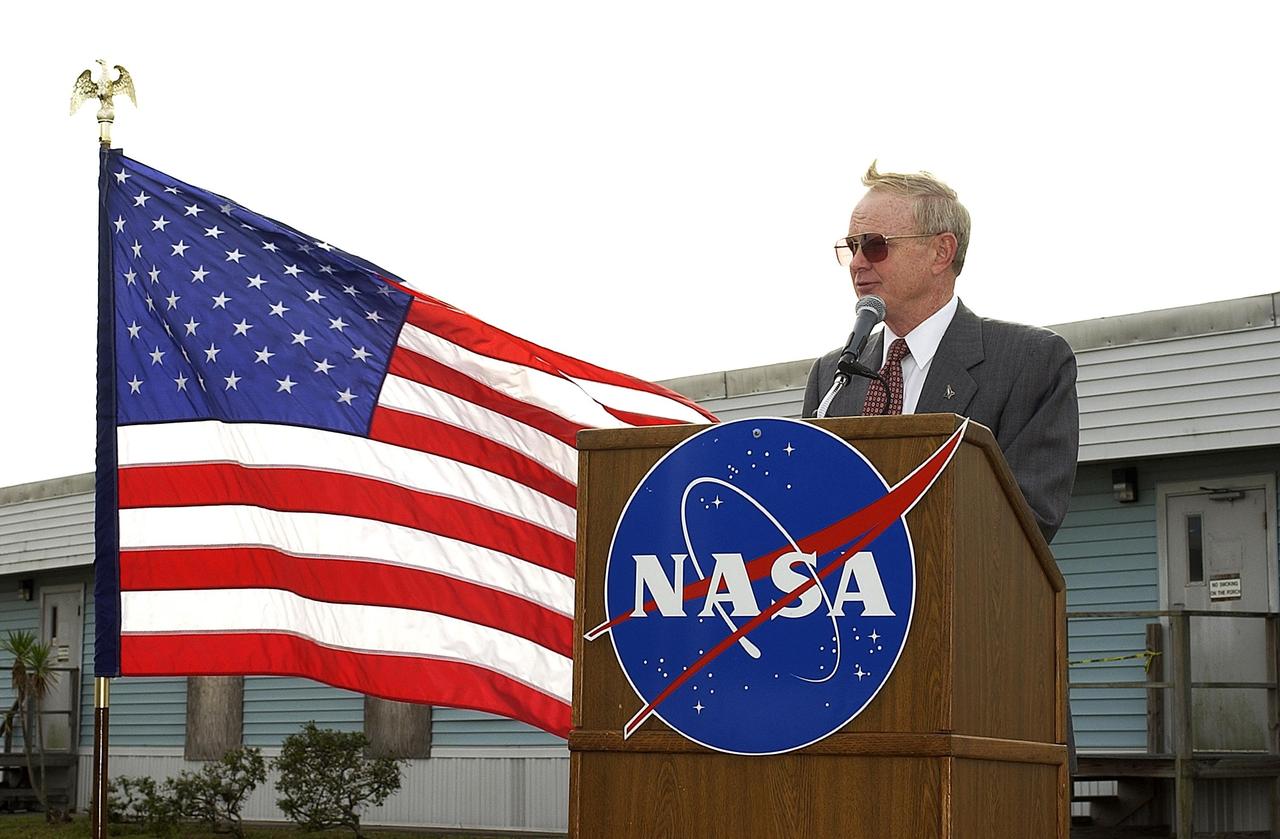
KENNEDY SPACE CENTER, FLA. - Center Director Roy Bridges speaks to attendees at the groundbreaking for the Operations Support Building II. The audience included representatives of Governor Jeb Bush and the state of Florida. The new building will replace modular housing constructed more than 20 years ago and house NASA and contractor support staff for shuttle operations. The demolition of the modular buildings has begun and construction will immediately follow. The new structure is projected to be ready in April 2005.
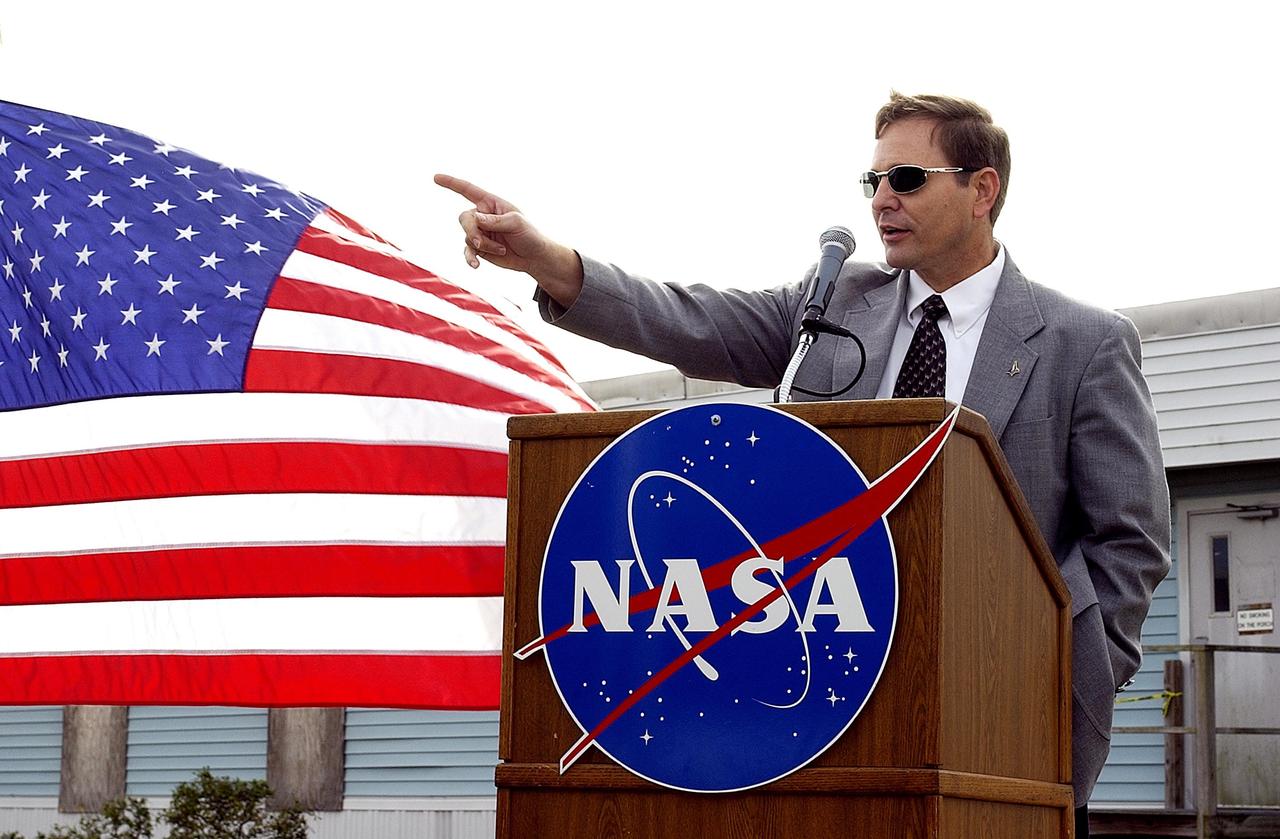
KENNEDY SPACE CENTER, FLA. - Director of Shuttle Processing Mike Wetmore speaks to attendees at the groundbreaking for the Operations Support Building II. The audience included representatives of Governor Jeb Bush and the state of Florida. The new building will replace modular housing constructed more than 20 years ago and house NASA and contractor support staff for shuttle operations. The demolition of the modular buildings has begun and construction will immediately follow. The new structure is projected to be ready in April 2005.
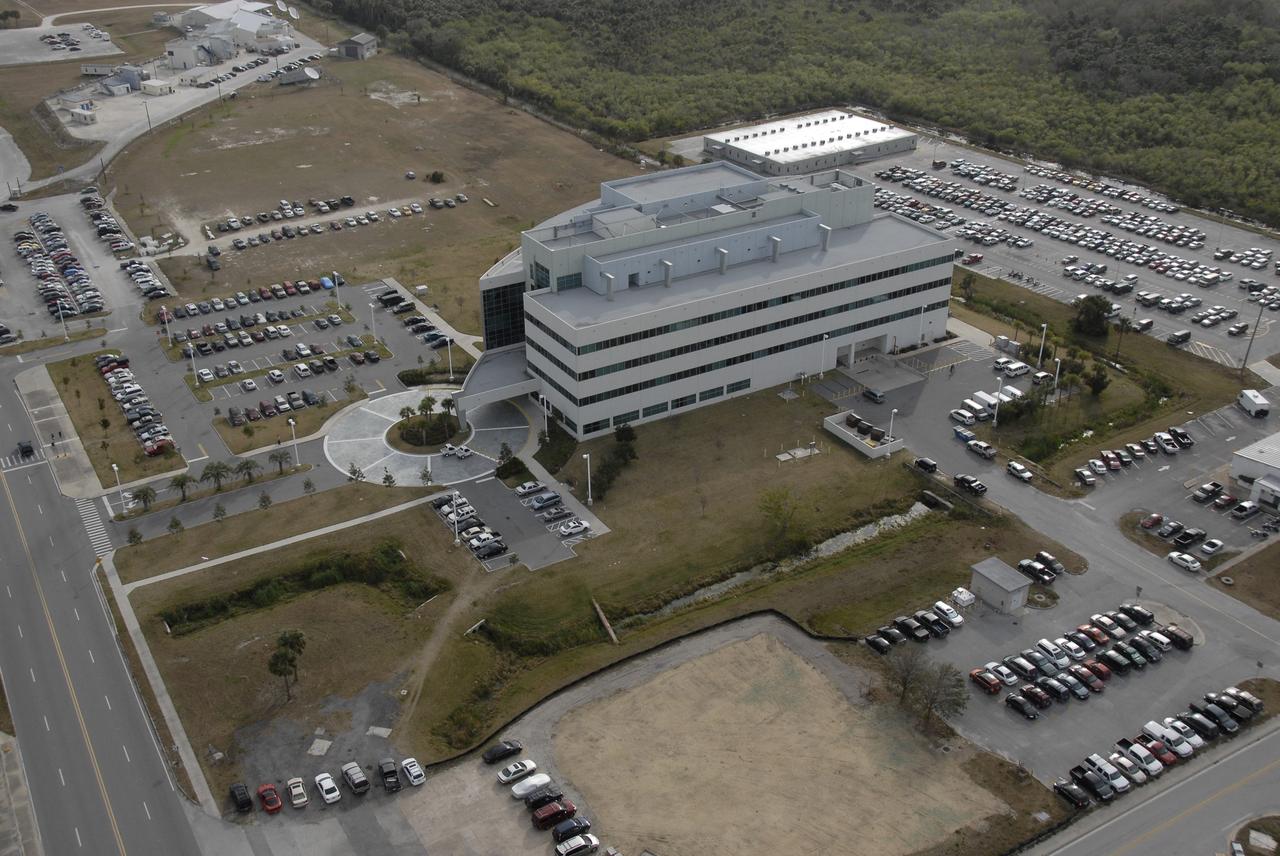
CAPE CANAVERAL, Fla. – – An aerial view of the Operations Support Building II in the Launch Complex 39 Area at NASA's Kennedy Space Center in Florida. Photo credit: NASA/Kim Shiflett
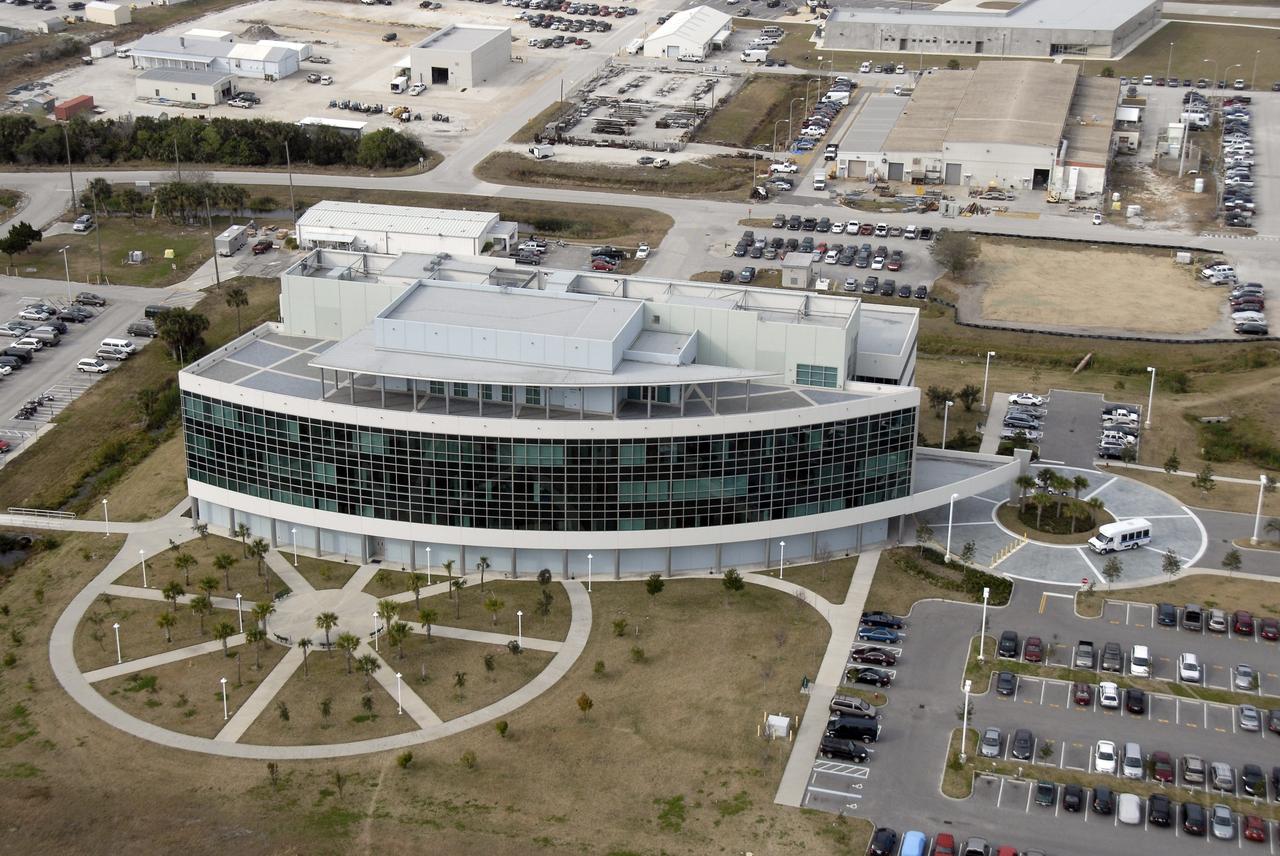
CAPE CANAVERAL, Fla. – An aerial view of the Operations Support Building II in the Launch Complex 39 Area at NASA's Kennedy Space Center in Florida. The panorama of windows faces the launch pads. Photo credit: NASA/Kim Shiflett
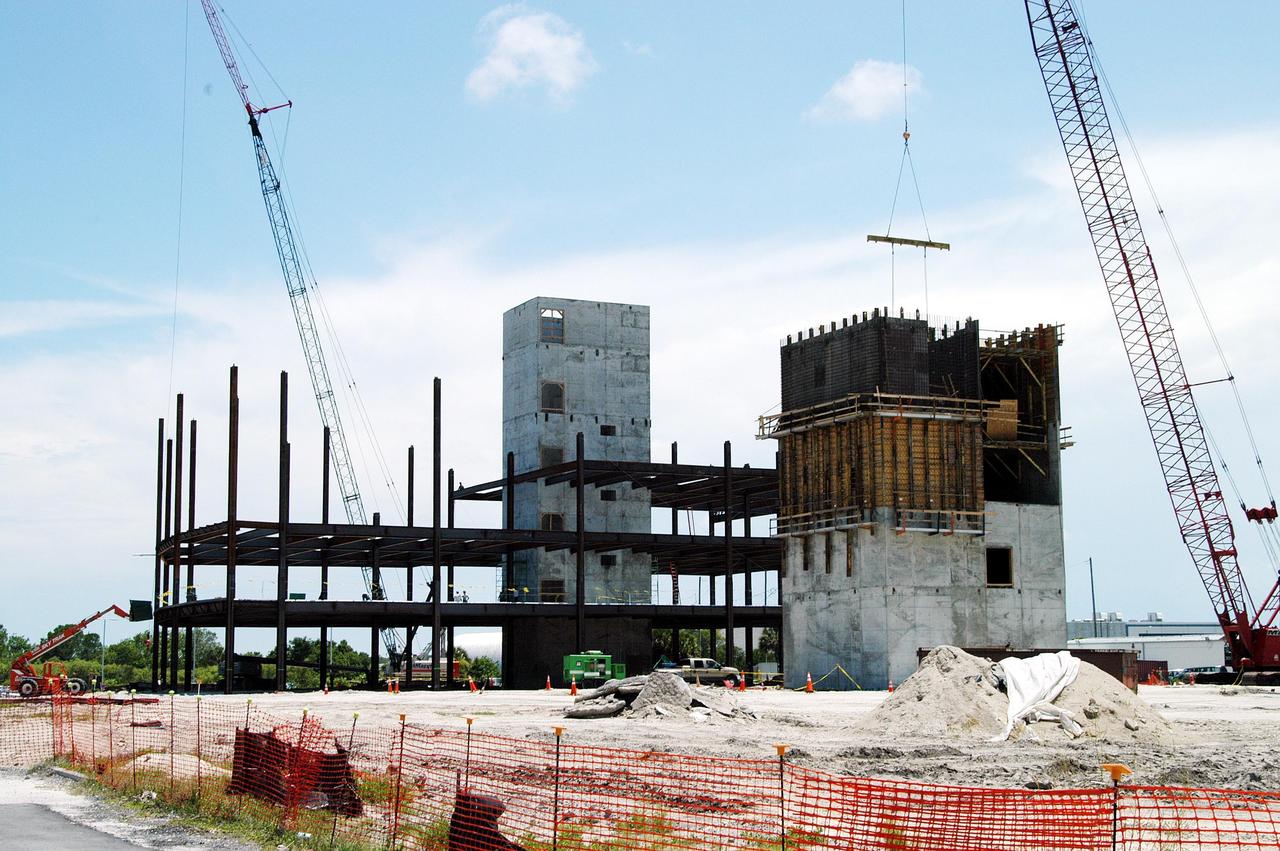
KENNEDY SPACE CENTER, FLA. - Towers and girders are the current construction components on the Operations Support Building (OSB) II in the Launch Complex 39 Area. The new building, which replaces modular housing constructed more than 20 years ago, will house NASA and contractor support staff for shuttle operations. The new structure is projected to be ready in April 2005.
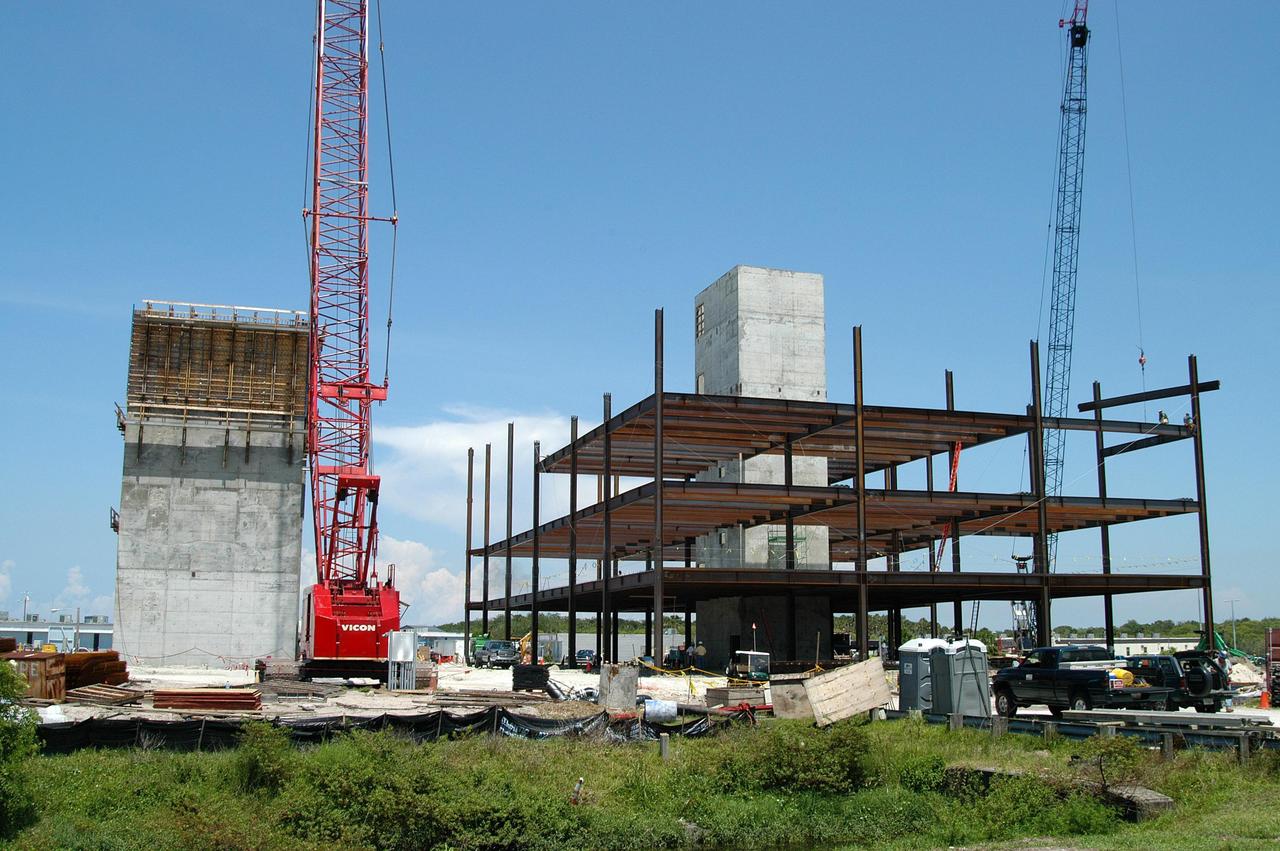
KENNEDY SPACE CENTER, FLA. - Towers and girders are the current construction components on the Operations Support Building (OSB) II in the Launch Complex 39 Area. The new building, which replaces modular housing constructed more than 20 years ago, will house NASA and contractor support staff for shuttle operations. The new structure is projected to be ready in April 2005.
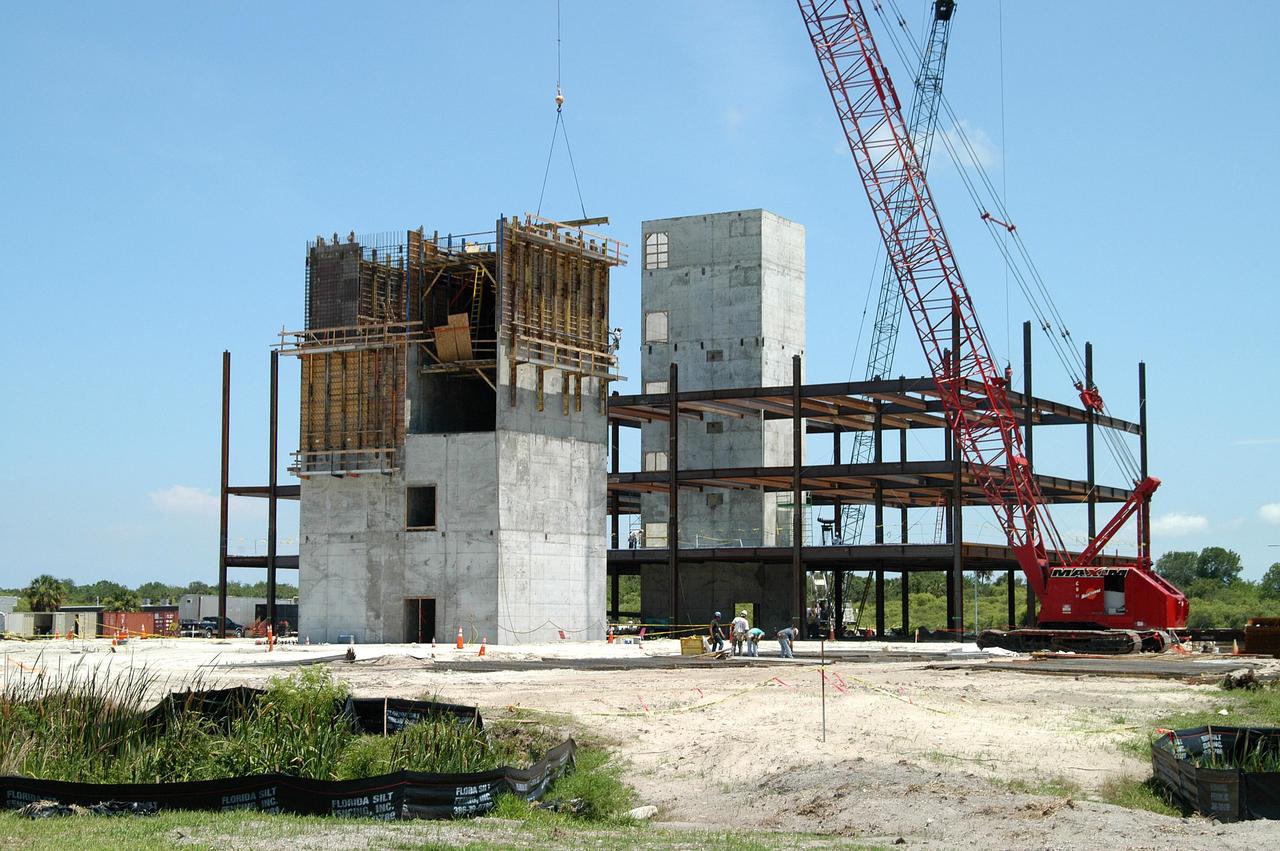
KENNEDY SPACE CENTER, FLA. - Another phase of construction is shown on the Operations Support Building (OSB) II in the Launch Complex 39 Area. The new building, which replaces modular housing constructed more than 20 years ago, will house NASA and contractor support staff for shuttle operations. The new structure is projected to be ready in April 2005.
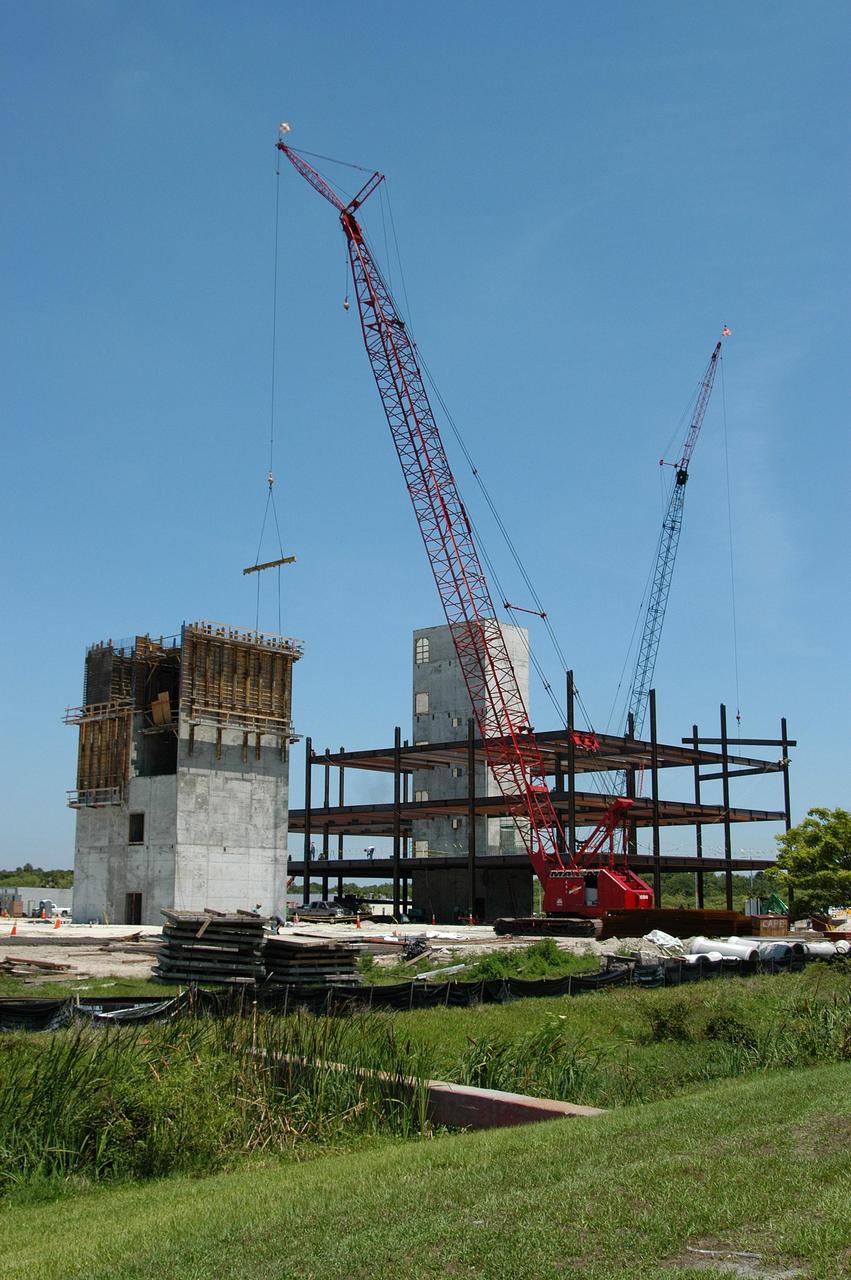
KENNEDY SPACE CENTER, FLA. - Towers and girders are the current construction components on the Operations Support Building (OSB) II in the Launch Complex 39 Area. The new building, which replaces modular housing constructed more than 20 years ago, will house NASA and contractor support staff for shuttle operations. The new structure is projected to be ready in April 2005.
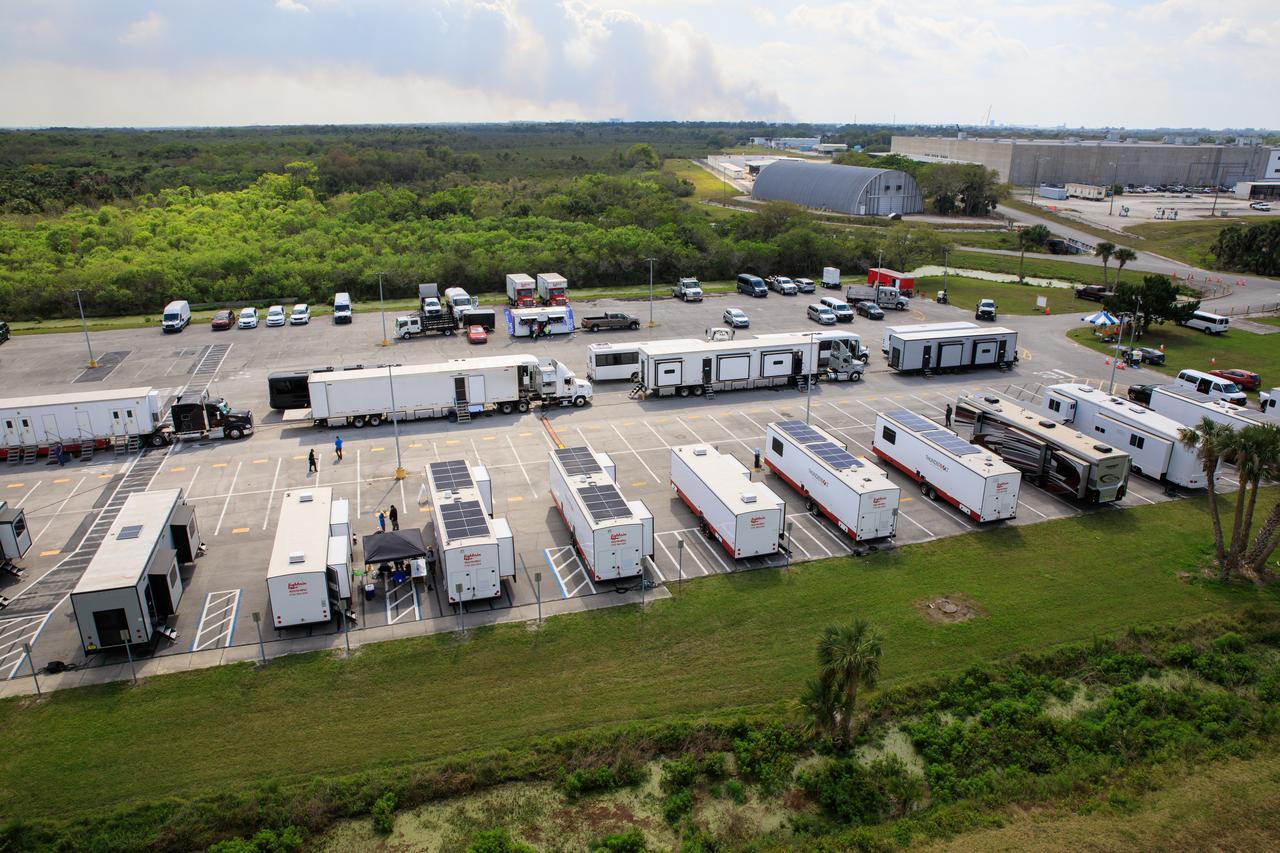
A major motion picture is being filmed in February 2023 at NASA’s Kennedy Space Center in Florida. In view is Base Camp #1 in the Launch Complex 39 area that includes support buildings for the film project.
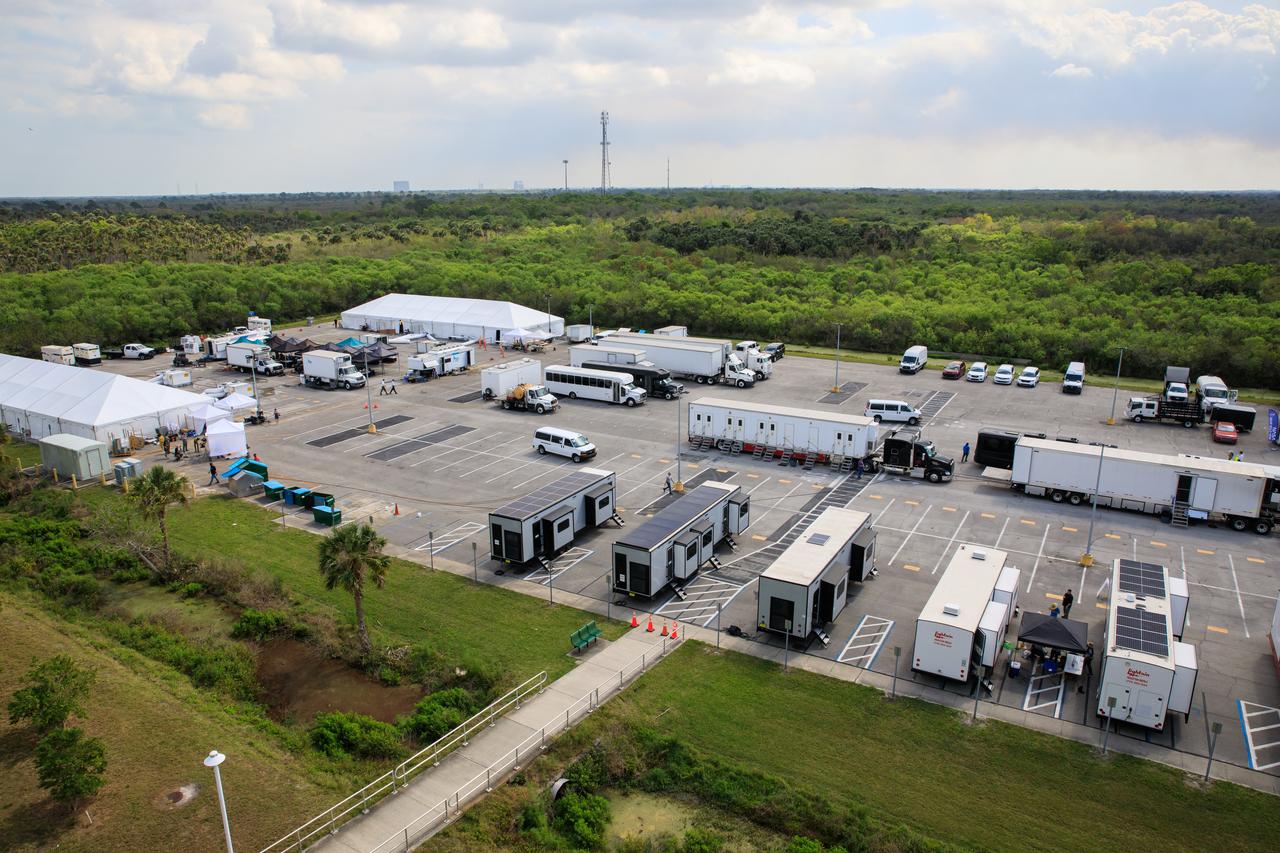
A major motion picture is being filmed in February 2023 at NASA’s Kennedy Space Center in Florida. In view is Base Camp #1 in the Launch Complex 39 area that includes support buildings for the film project.
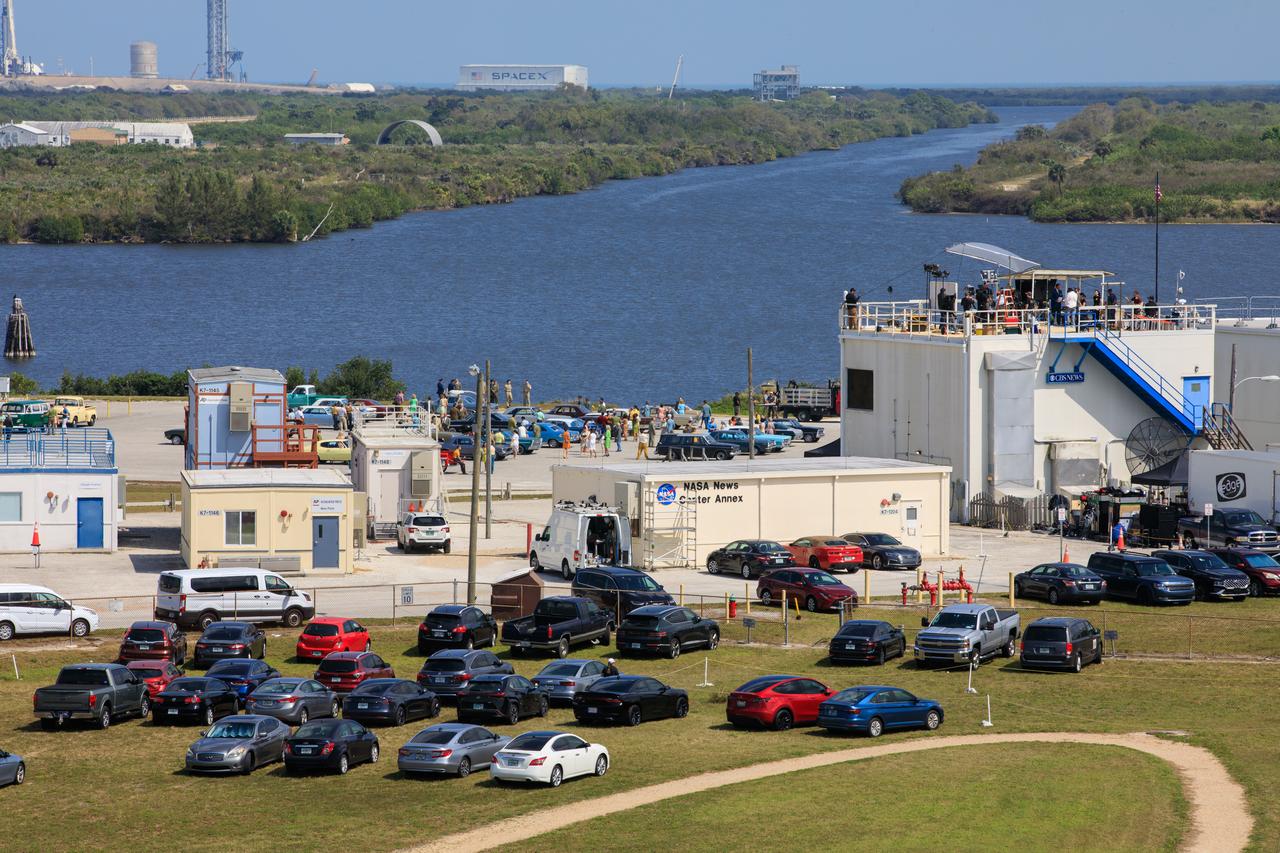
A major motion picture is being filmed in February 2023 at NASA’s Kennedy Space Center in Florida. Filming is in progress in the lower parking lot of the News Center.
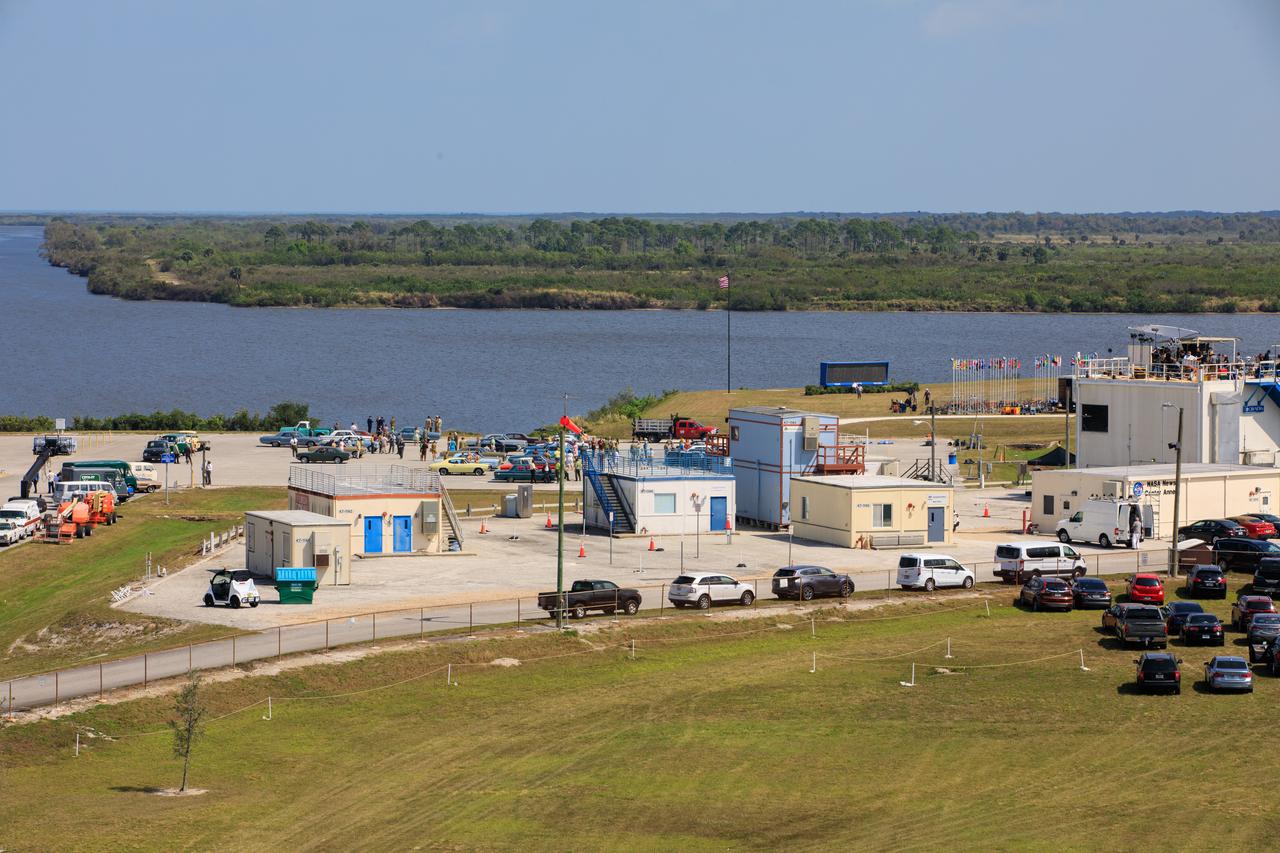
A major motion picture is being filmed in February 2023 at NASA’s Kennedy Space Center in Florida. Filming is in progress in the lower parking lot of the News Center.
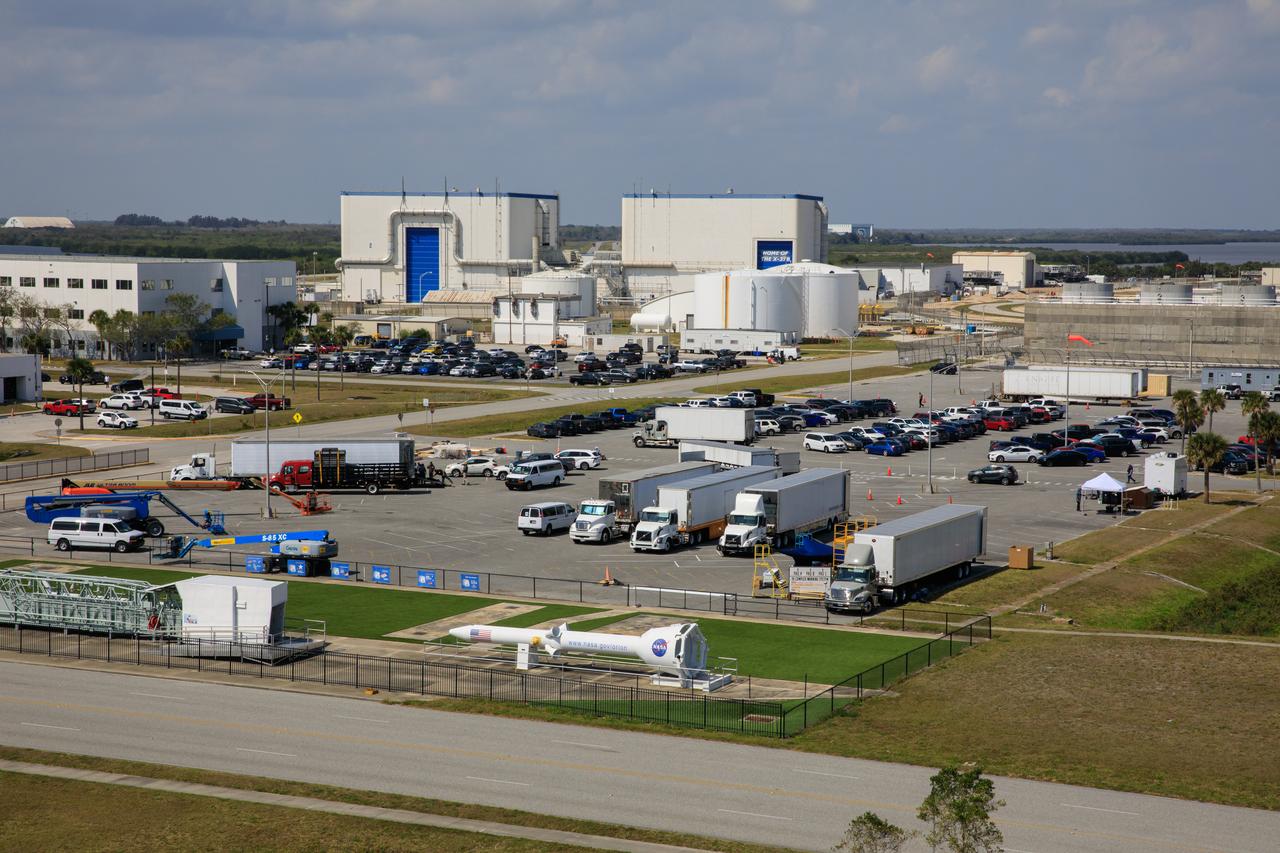
A major motion picture is being filmed in February 2023 at NASA’s Kennedy Space Center in Florida. In view are some of the support vehicles in use for the film project in the Launch Complex 39 area.
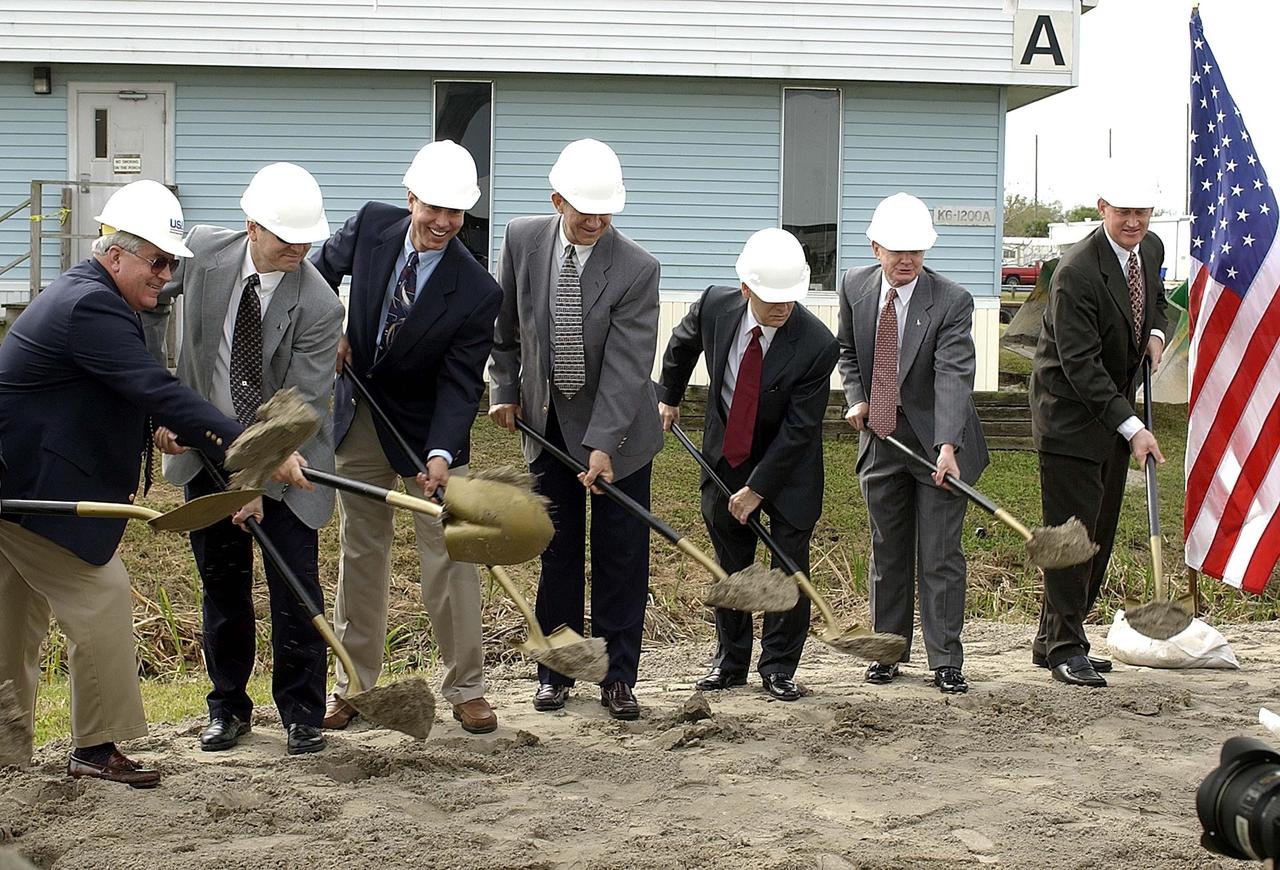
KENNEDY SPACE CENTER, FLA. -- -- Lifting their shovels for the groundbreaking of the Operations Support Building II are (left to right) Bill Pickavance, Vice President & Deputy Program Manager Florida Operations, United Space Alliance; Mike Wetmore, director of Shuttle Processing; Miguel Morales, chief, Facilities Division, Spaceport Services; Mike Sumner, chief of operations, Spaceport Services; David Wolfberg, designer of the facility, with Architect and Engineers Wolfberg, Alvarez and Partners of Coral Gables; Roy Bridges, KSC director; and Don Minderman, OSB II project manager, Spaceport Services. Not shown: David Boland, David Boland Inc.(construction company). The new building will replace modular housing constructed more than 20 years ago and house NASA and contractor support staff for shuttle operations. The demolition of the modular buildings has begun and construction will immediately follow. The new structure is projected to be ready in April 2005.
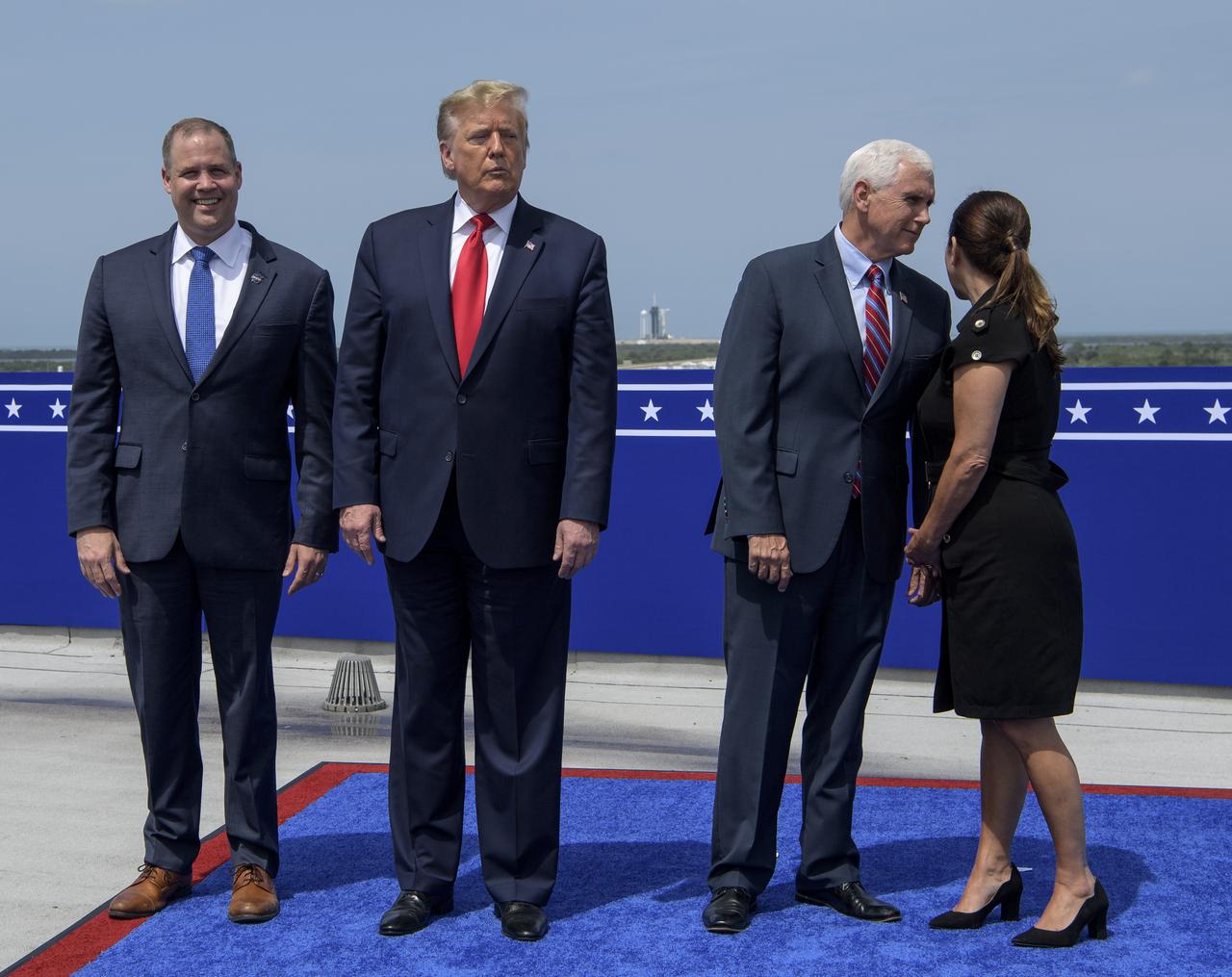
NASA Administrator Jim Bridenstine, left, President Donald Trump, Vice President Mike Pence, and Second Lady Karen Pence, prepare to watch the launch of a SpaceX Falcon 9 rocket carrying the company's Crew Dragon spacecraft on NASA’s SpaceX Demo-2 mission with NASA astronauts Robert Behnken and Douglas Hurley onboard, Saturday, May 30, 2020, from the balcony of Operations Support Building II at NASA’s Kennedy Space Center in Florida. NASA’s SpaceX Demo-2 mission is the first launch with astronauts of the SpaceX Crew Dragon spacecraft and Falcon 9 rocket to the International Space Station as part of the agency’s Commercial Crew Program. The test flight serves as an end-to-end demonstration of SpaceX’s crew transportation system. Behnken and Hurley launched at 3:22 p.m. EDT on Saturday, May 30, from Launch Complex 39A at the Kennedy Space Center. A new era of human spaceflight is set to begin as American astronauts once again launch on an American rocket from American soil to low-Earth orbit for the first time since the conclusion of the Space Shuttle Program in 2011. Photo Credit: (NASA/Bill Ingalls)
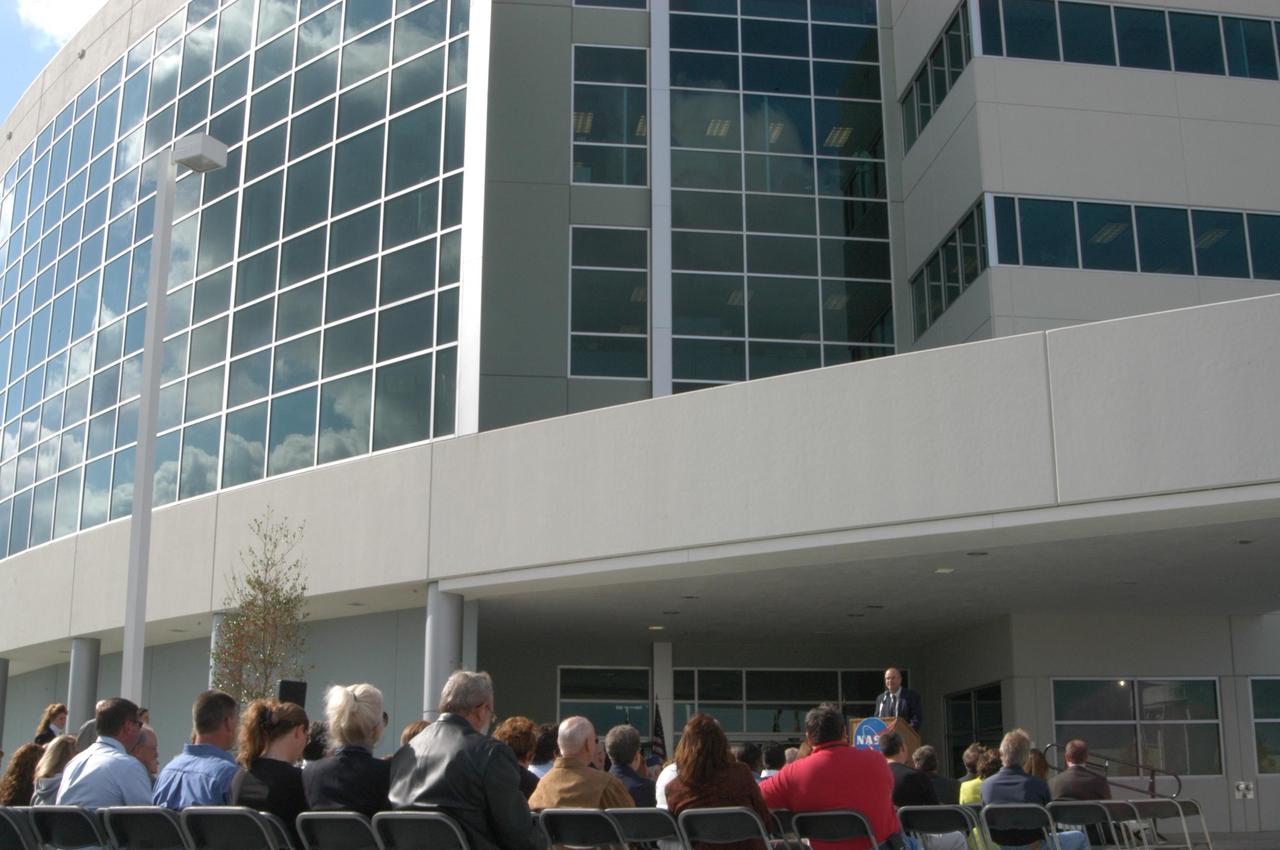
KENNEDY SPACE CENTER, FLA. -- Scott Kerr, director of Engineering Development at Kennedy Space Center, addresses guests at a ribbon-cutting ceremony for the Operations Support Building II (behind him). He and other key Center personnel and guests attended the significant event. The Operations Support Building II is an Agency safety and health initiative project to replace 198,466 square feet of substandard modular housing and trailers in the Launch Complex 39 area at Kennedy Space Center. The five-story building, which sits south of the Vehicle Assembly Building and faces the launch pads, includes 960 office spaces, 16 training rooms, computer and multimedia conference rooms, a Mission Conference Center with an observation deck, technical libraries, an Exchange store, storage, break areas, and parking. Photo credit: NASA/George Shelton
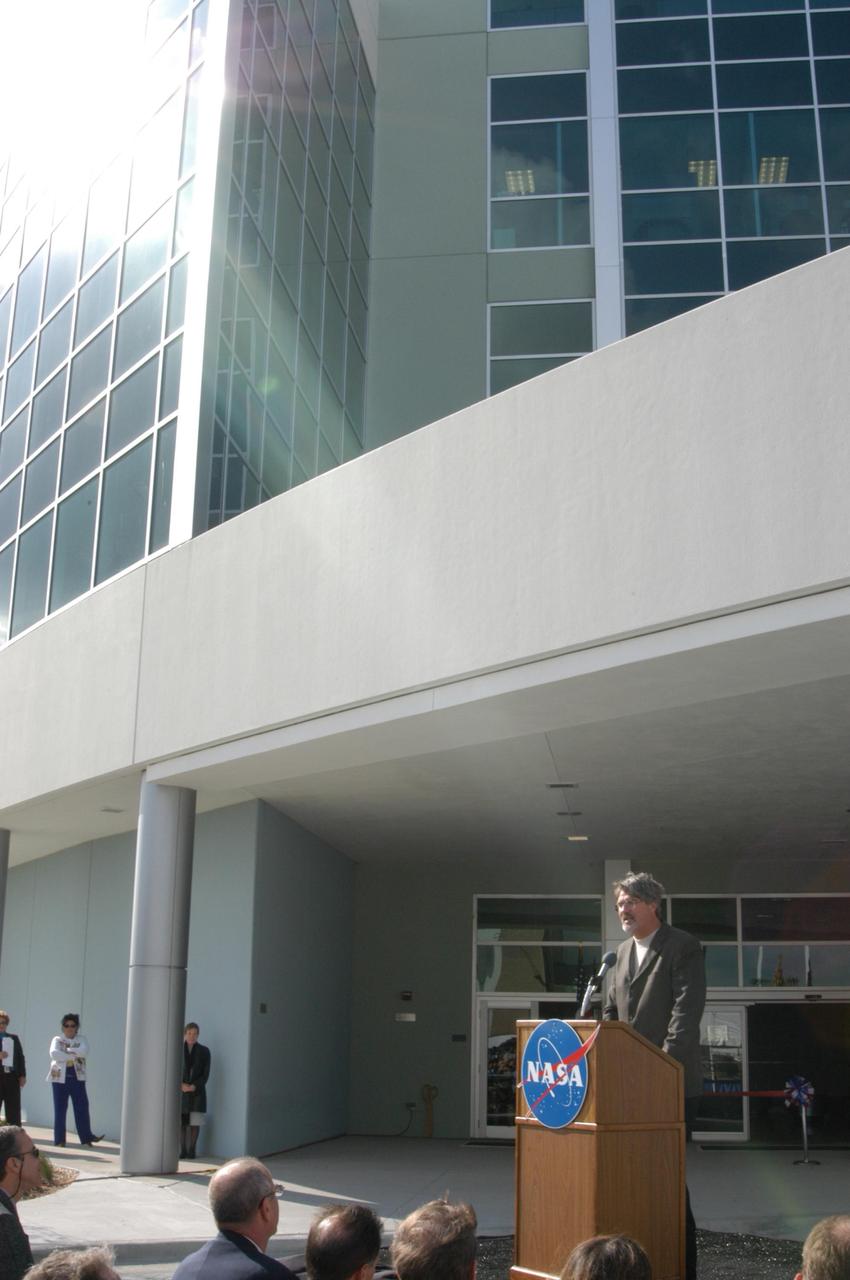
KENNEDY SPACE CENTER, FLA. -- Kennedy Space Center Deputy Director Bill Parsons talks to guests at a ribbon-cutting ceremony for the Operations Support Building II (behind him). He and other key Center personnel and guests attended the significant event. The Operations Support Building II is an Agency safety and health initiative project to replace 198,466 square feet of substandard modular housing and trailers in the Launch Complex 39 area at Kennedy Space Center. The five-story building, which sits south of the Vehicle Assembly Building and faces the launch pads, includes 960 office spaces, 16 training rooms, computer and multimedia conference rooms, a Mission Conference Center with an observation deck, technical libraries, an Exchange store, storage, break areas, and parking. Photo credit: NASA/George Shelton
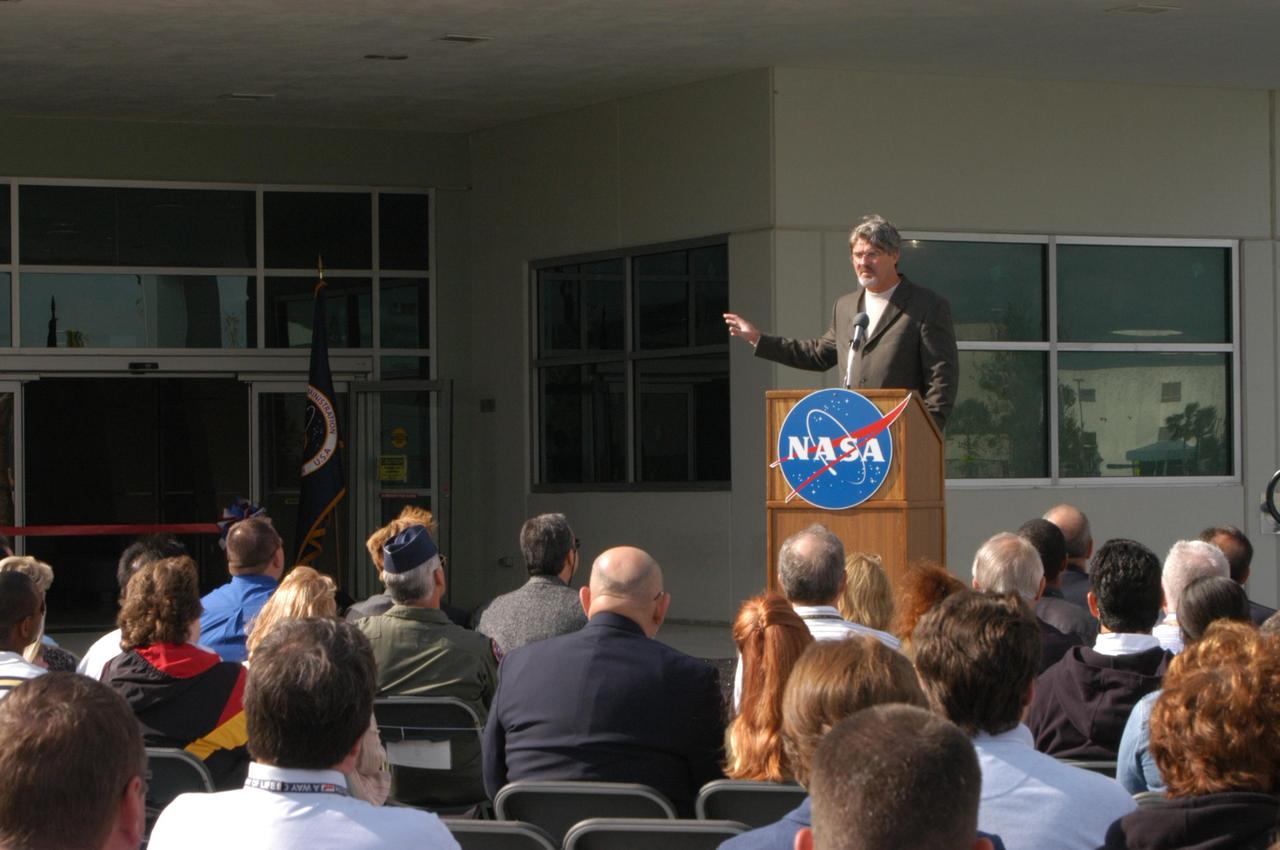
KENNEDY SPACE CENTER, FLA. -- Kennedy Space Center Deputy Director Bill Parsons explains the significance of the Operations Support Building II (behind him) to guests at the ribbon-cutting ceremony. The Operations Support Building II is an Agency safety and health initiative project to replace 198,466 square feet of substandard modular housing and trailers in the Launch Complex 39 area at Kennedy Space Center. The five-story building, which sits south of the Vehicle Assembly Building and faces the launch pads, includes 960 office spaces, 16 training rooms, computer and multimedia conference rooms, a Mission Conference Center with an observation deck, technical libraries, an Exchange store, storage, break areas, and parking. Photo credit: NASA/George Shelton
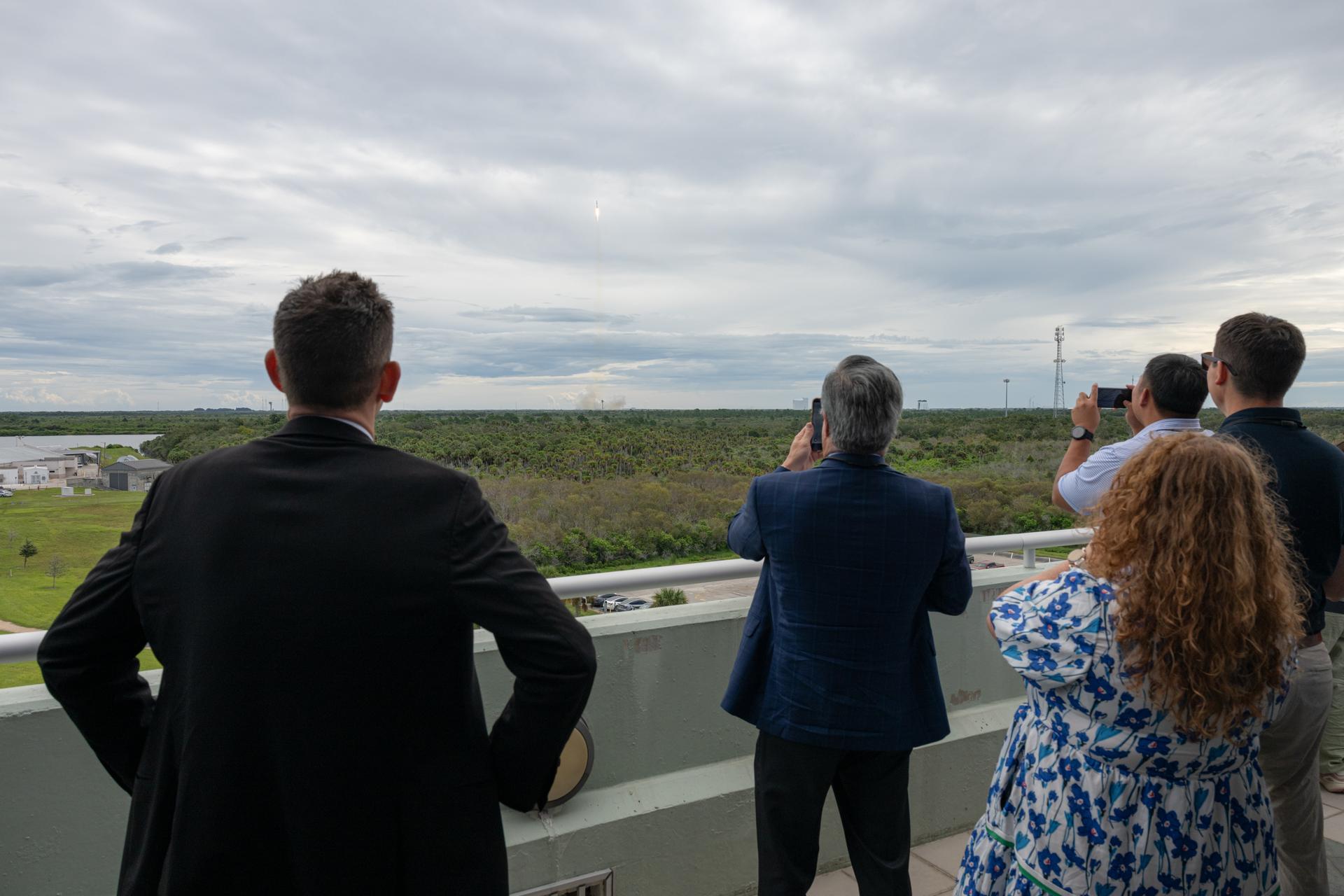
NASA Administrator Jared Isaacman, left, and invited guests and NASA employees watch as a SpaceX Falcon 9 rocket carrying the company’s Dragon spacecraft launches on NASA’s SpaceX Crew-13 mission to the International Space Station with NASA astronauts Jessica Watkins and Luke Delaney, CSA (Canadian Space Agency) astronaut Joshua Kutryk, and Roscosmos cosmonaut Sergey Teteryatnikov, Thursday, Oct. 1, 2026, at the Operations Support Building II at NASA’s Kennedy Space Center in Florida. NASA’s SpaceX Crew-13 mission is the thirteenth crew rotation mission of the SpaceX Falcon 9 rocket and Dragon spacecraft to the International Space Station as part of the agency’s Commercial Crew Program. Watkins, Delaney, Kutryk, and Teteryatnikov launched at 11:10 a.m. EDT from Space Launch Complex 40 at Cape Canaveral Space Force Station to begin their mission aboard the orbital outpost. Photo Credit: (NASA/John Kraus)
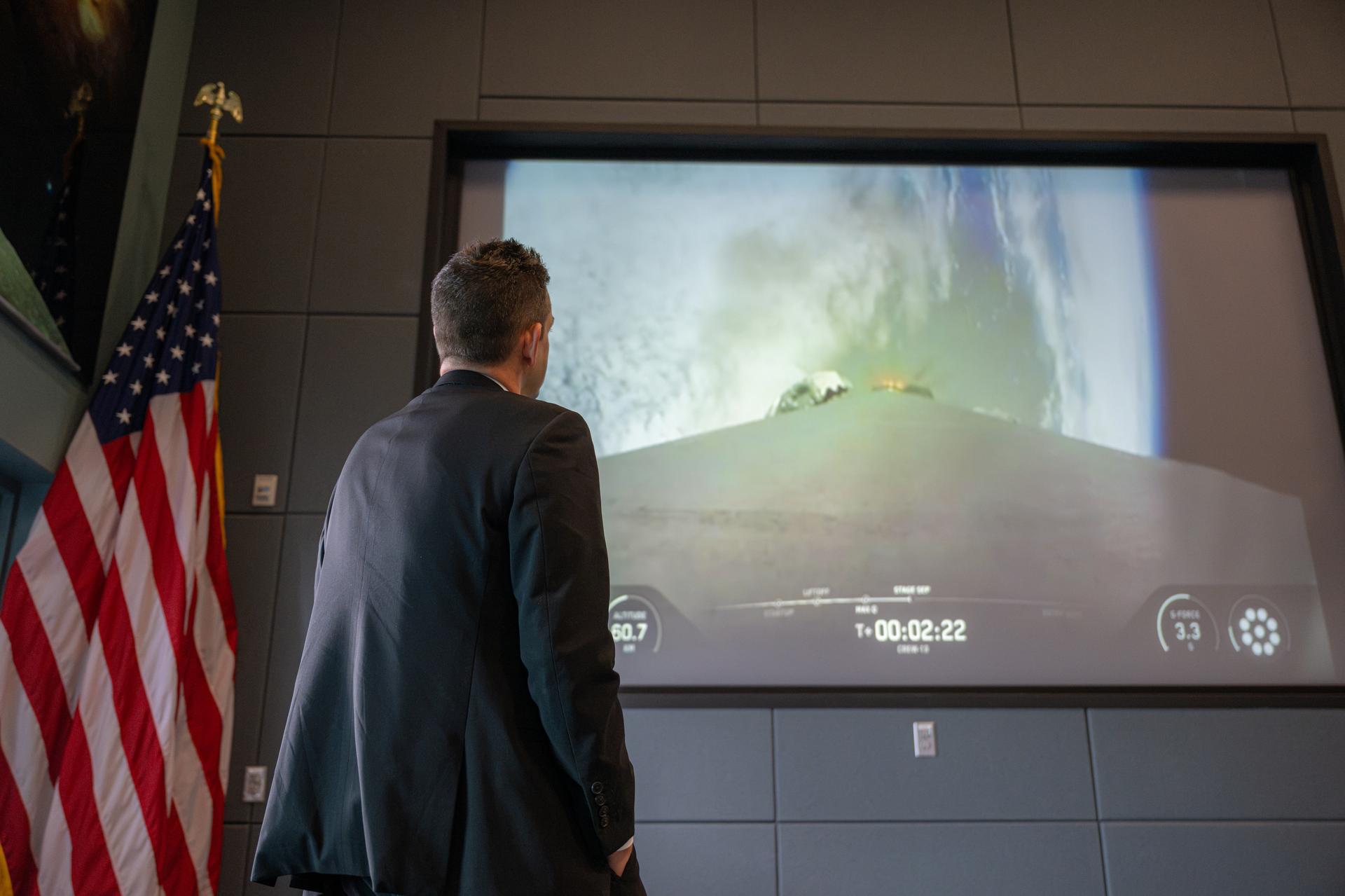
NASA Administrator Jared Isaacman watches a webcast of the launch of a SpaceX Falcon 9 rocket carrying the company’s Dragon spacecraft on NASA’s SpaceX Crew-13 mission to the International Space Station with NASA astronauts Jessica Watkins and Luke Delaney, CSA (Canadian Space Agency) astronaut Joshua Kutryk, and Roscosmos cosmonaut Sergey Teteryatnikov, Thursday, Oct. 1, 2026, at the Operations Support Building II at NASA’s Kennedy Space Center in Florida. NASA’s SpaceX Crew-13 mission is the thirteenth crew rotation mission of the SpaceX Falcon 9 rocket and Dragon spacecraft to the International Space Station as part of the agency’s Commercial Crew Program. Watkins, Delaney, Kutryk, and Teteryatnikov launched at 11:10 a.m. EDT from Space Launch Complex 40 at Cape Canaveral Space Force Station in Florida to begin their mission aboard the orbital outpost. Photo Credit: (NASA/John Kraus)
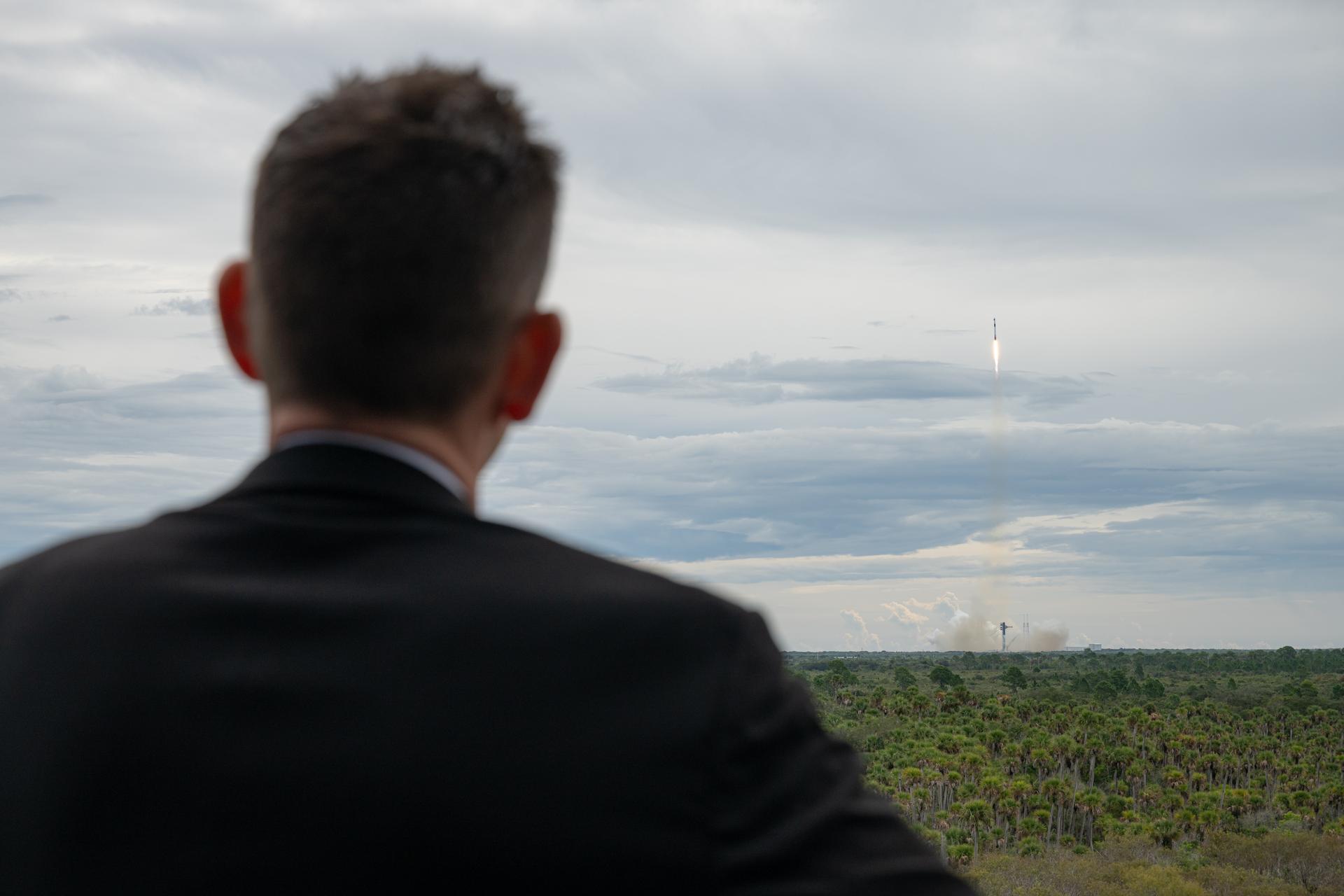
NASA Administrator Jared Isaacman watches as a SpaceX Falcon 9 rocket carrying the company’s Dragon spacecraft launches on NASA’s SpaceX Crew-13 mission to the International Space Station with NASA astronauts Jessica Watkins and Luke Delaney, CSA (Canadian Space Agency) astronaut Joshua Kutryk, and Roscosmos cosmonaut Sergey Teteryatnikov, Thursday, Oct. 1, 2026, at the Operations Support Building II at NASA’s Kennedy Space Center in Florida. NASA’s SpaceX Crew-13 mission is the thirteenth crew rotation mission of the SpaceX Falcon 9 rocket and Dragon spacecraft to the International Space Station as part of the agency’s Commercial Crew Program. Watkins, Delaney, Kutryk, and Teteryatnikov launched at 11:10 a.m. EDT from Space Launch Complex 40 at Cape Canaveral Space Force Station to begin their mission aboard the orbital outpost. Photo Credit: (NASA/John Kraus)
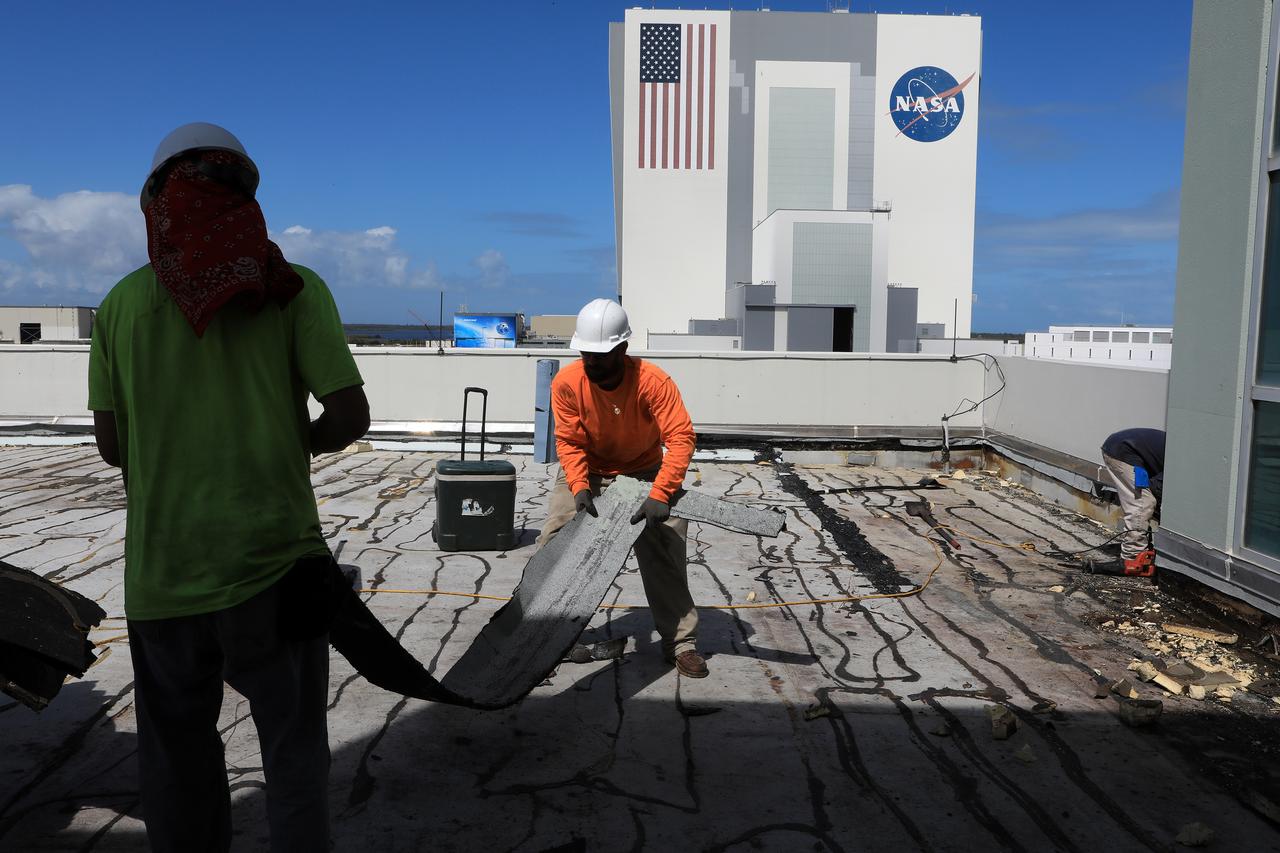
Members of the Disaster Assessment and Recovery Team (DART) repair a section of roof atop the Operations Support Building II at NASA’s Kennedy Space Center in Florida. The effort is part of the spaceport’s ongoing recovery from Hurricane Matthew, which passed to the east of Kennedy on Oct. 6 and 7, 2016. The center received some isolated roof damage, damaged support buildings, a few downed power lines, and limited water intrusion. Beach erosion also occurred, although the storm surge was less than expected.
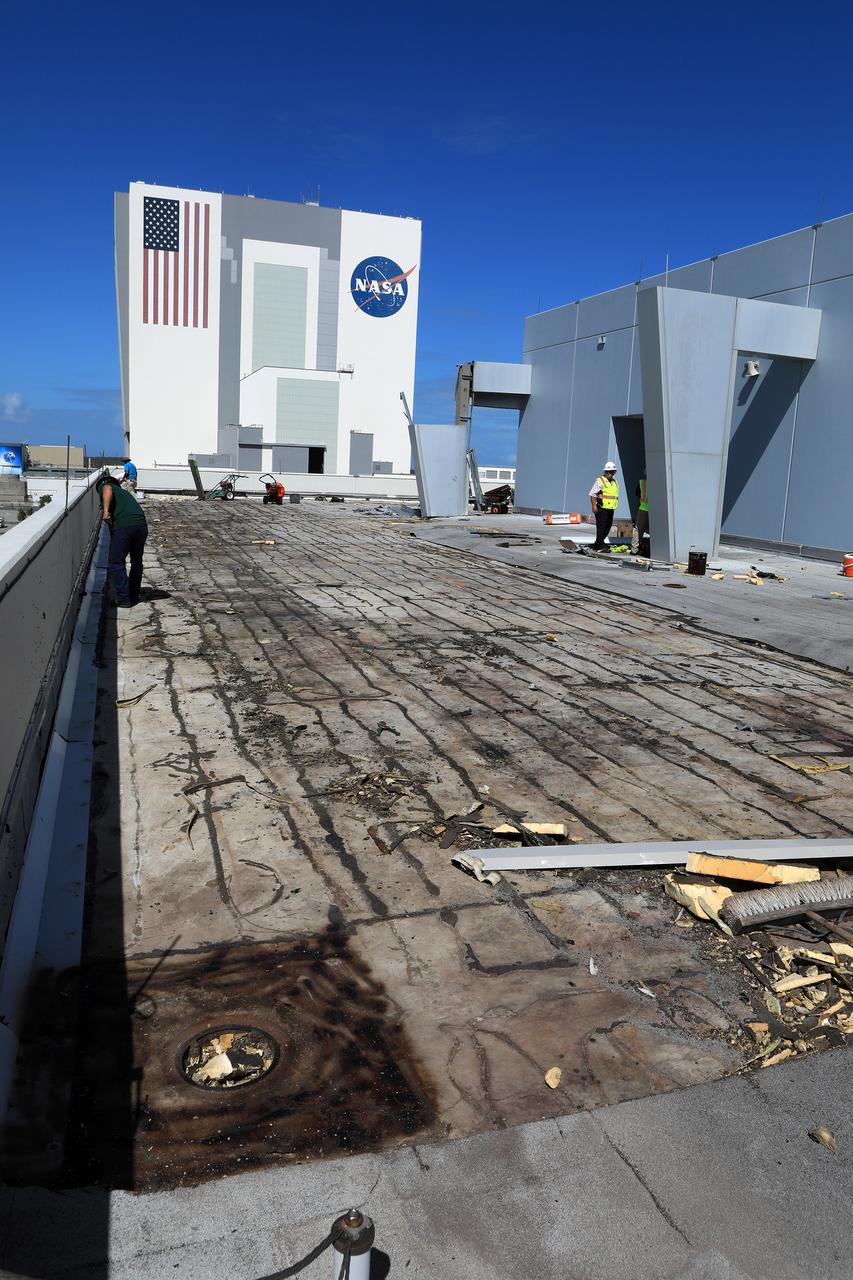
Members of the Disaster Assessment and Recovery Team (DART) repair a section of roof atop the Operations Support Building II at NASA’s Kennedy Space Center in Florida. The effort is part of the spaceport’s ongoing recovery from Hurricane Matthew, which passed to the east of Kennedy on Oct. 6 and 7, 2016. The center received some isolated roof damage, damaged support buildings, a few downed power lines, and limited water intrusion. Beach erosion also occurred, although the storm surge was less than expected.
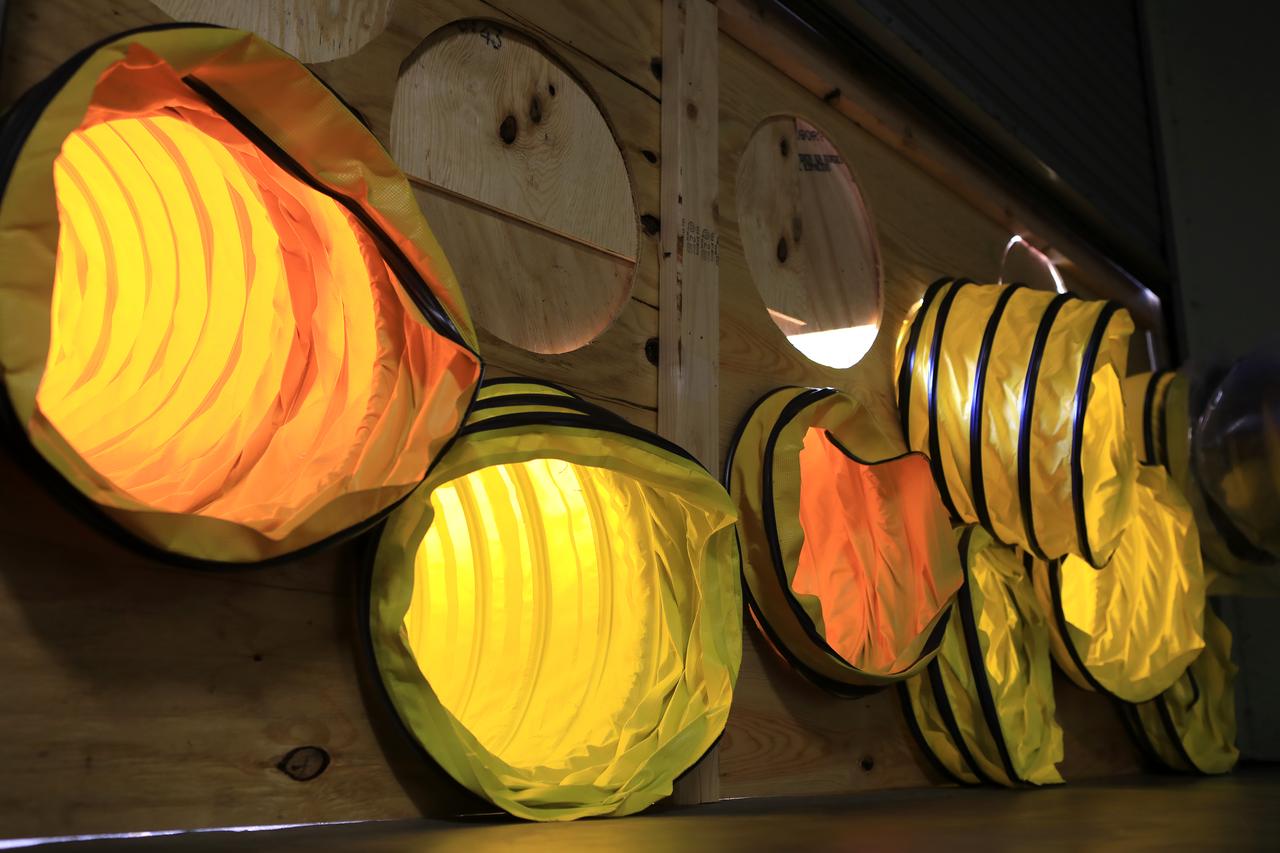
Tubing provides ventilation through boarded-up windows on the Operations Support Building II at NASA’s Kennedy Space Center in Florida. Members of the Disaster Assessment and Recovery Team (DART) are working on repairs to the facility following Hurricane Matthew, which passed to the east of Kennedy on Oct. 6 and 7, 2016. The center received some isolated roof damage, damaged support buildings, a few downed power lines, and limited water intrusion. Beach erosion also occurred, although the storm surge was less than expected.

Members of the Disaster Assessment and Recovery Team (DART) repair a section of roof atop the Operations Support Building II at NASA’s Kennedy Space Center in Florida. The effort is part of the spaceport’s ongoing recovery from Hurricane Matthew, which passed to the east of Kennedy on Oct. 6 and 7, 2016. The center received some isolated roof damage, damaged support buildings, a few downed power lines, and limited water intrusion. Beach erosion also occurred, although the storm surge was less than expected.
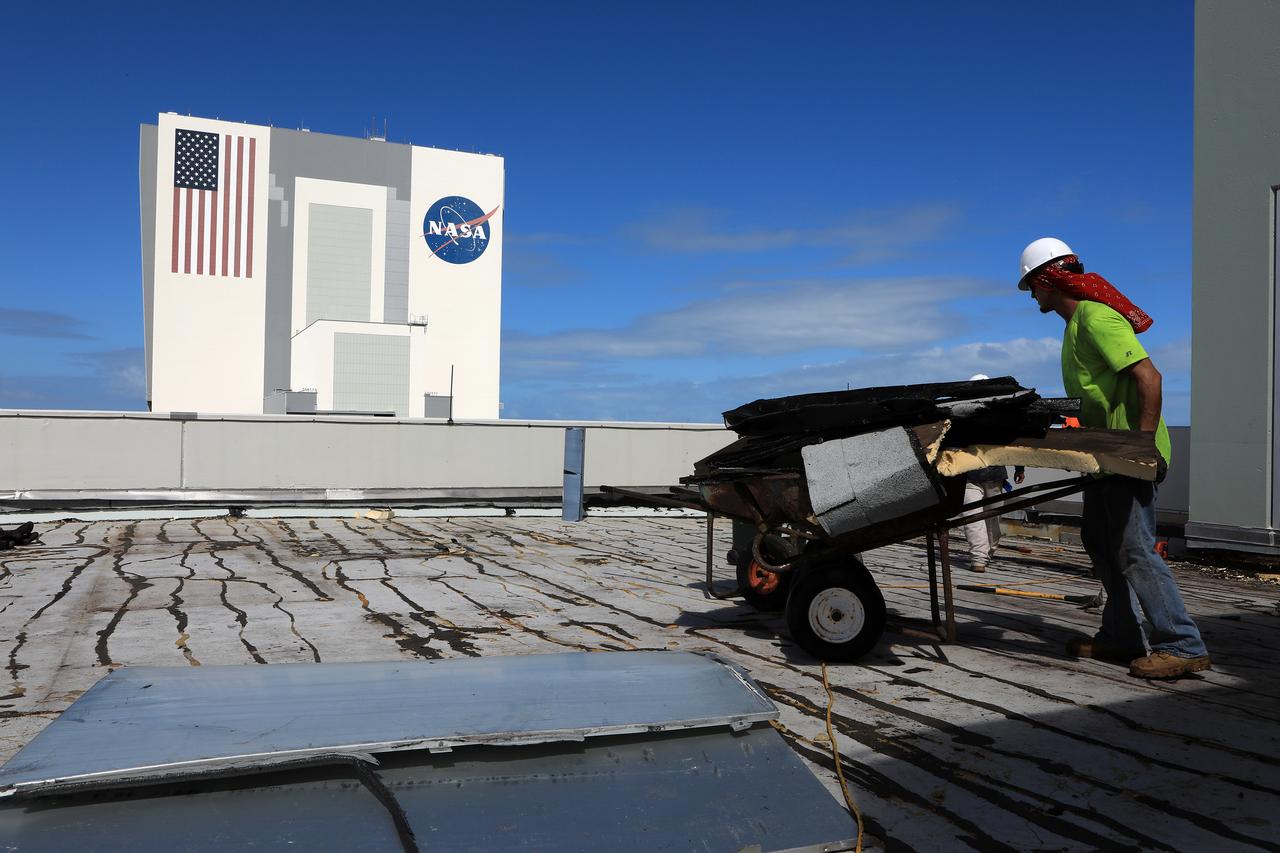
Members of the Disaster Assessment and Recovery Team (DART) repair a section of roof atop the Operations Support Building II at NASA’s Kennedy Space Center in Florida. The effort is part of the spaceport’s ongoing recovery from Hurricane Matthew, which passed to the east of Kennedy on Oct. 6 and 7, 2016. The center received some isolated roof damage, damaged support buildings, a few downed power lines, and limited water intrusion. Beach erosion also occurred, although the storm surge was less than expected.
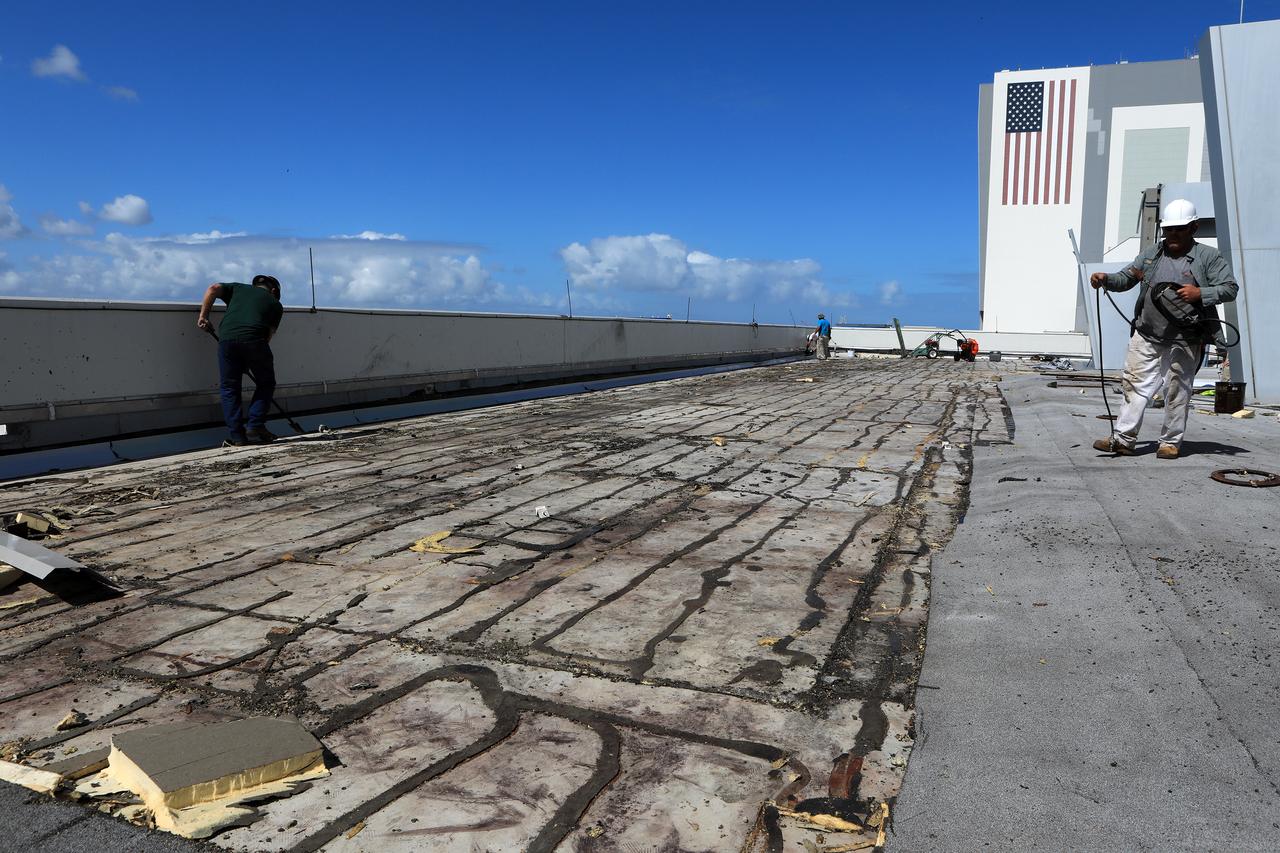
Members of the Disaster Assessment and Recovery Team (DART) repair a section of roof atop the Operations Support Building II at NASA’s Kennedy Space Center in Florida. The effort is part of the spaceport’s ongoing recovery from Hurricane Matthew, which passed to the east of Kennedy on Oct. 6 and 7, 2016. The center received some isolated roof damage, damaged support buildings, a few downed power lines, and limited water intrusion. Beach erosion also occurred, although the storm surge was less than expected.
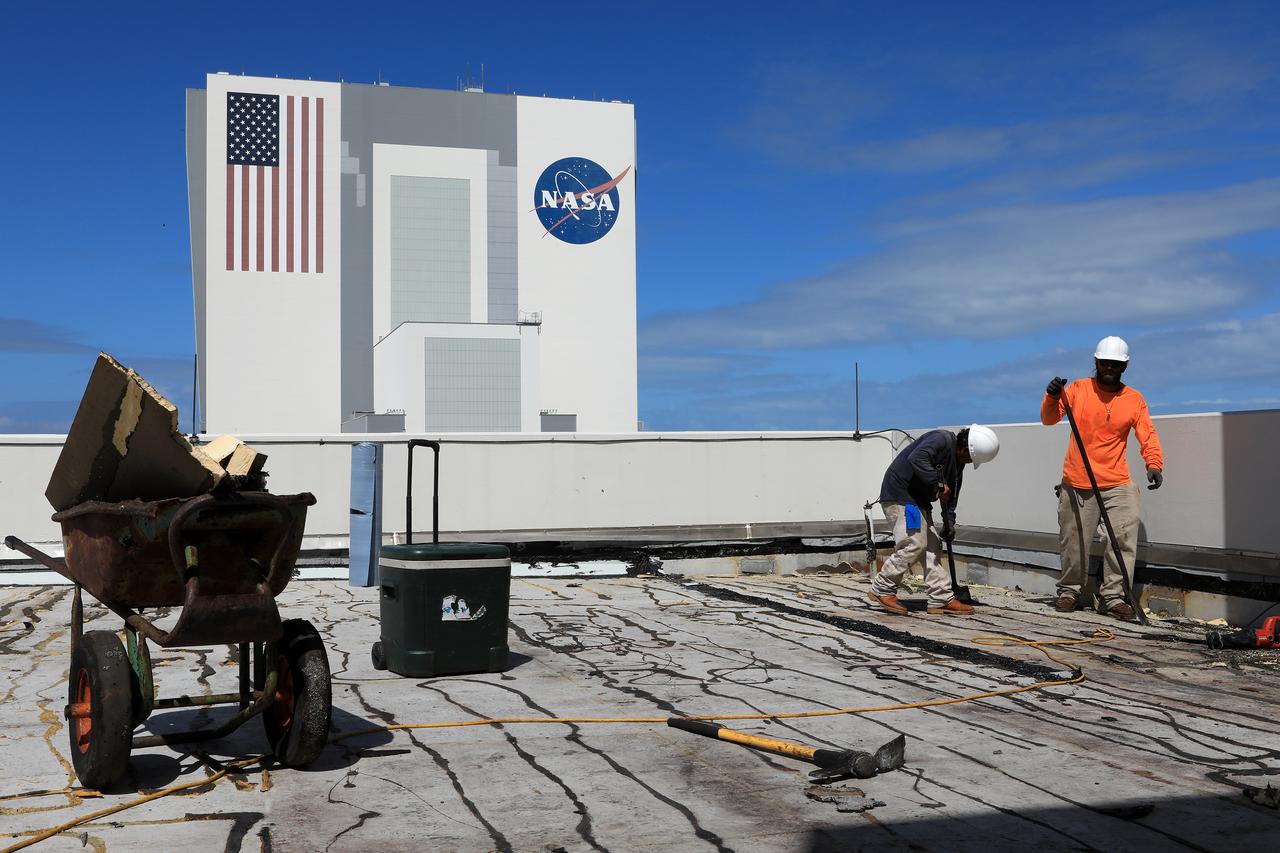
Members of the Disaster Assessment and Recovery Team (DART) repair a section of roof atop the Operations Support Building II at NASA’s Kennedy Space Center in Florida. The effort is part of the spaceport’s ongoing recovery from Hurricane Matthew, which passed to the east of Kennedy on Oct. 6 and 7, 2016. The center received some isolated roof damage, damaged support buildings, a few downed power lines, and limited water intrusion. Beach erosion also occurred, although the storm surge was less than expected.
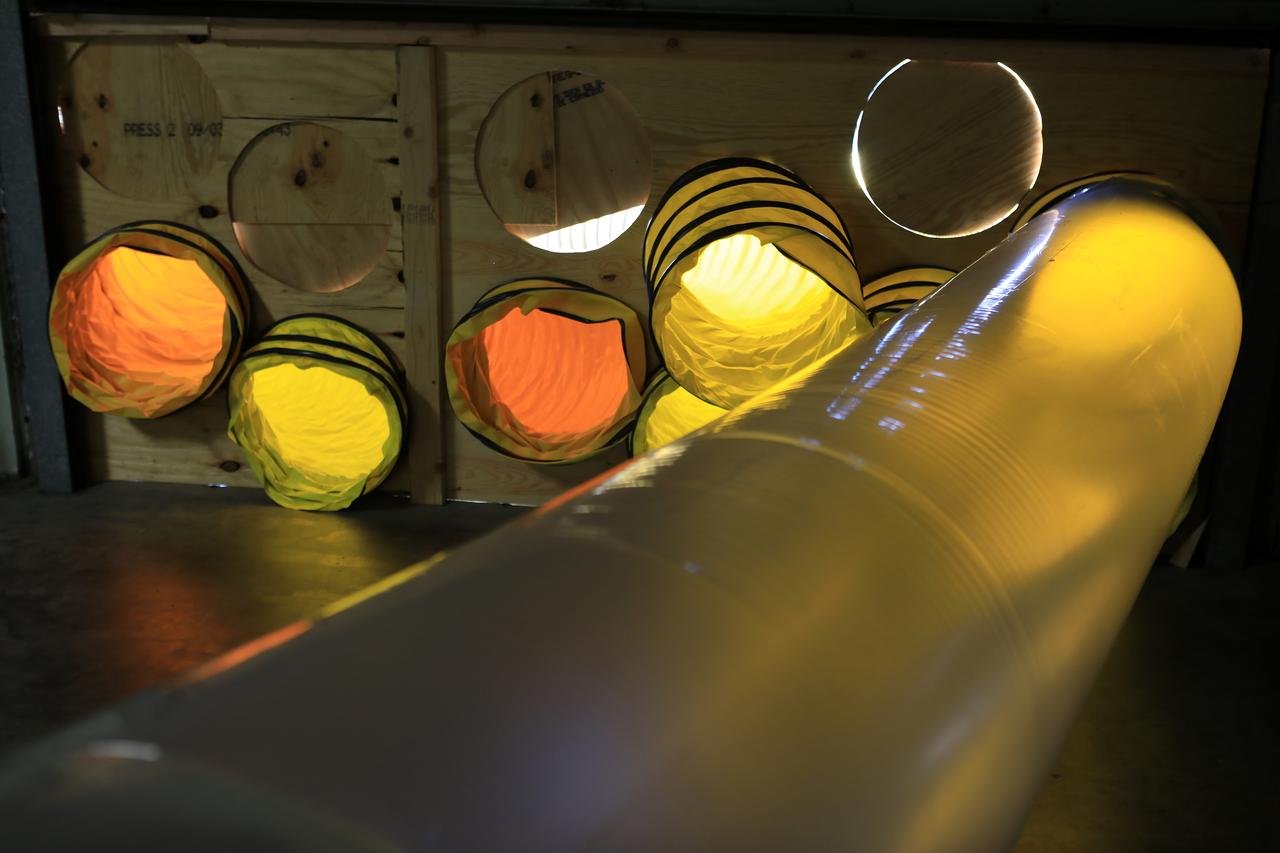
Tubing provides ventilation through boarded-up windows on the Operations Support Building II at NASA’s Kennedy Space Center in Florida. Members of the Disaster Assessment and Recovery Team (DART) are working on repairs to the facility following Hurricane Matthew, which passed to the east of Kennedy on Oct. 6 and 7, 2016. The center received some isolated roof damage, damaged support buildings, a few downed power lines, and limited water intrusion. Beach erosion also occurred, although the storm surge was less than expected.
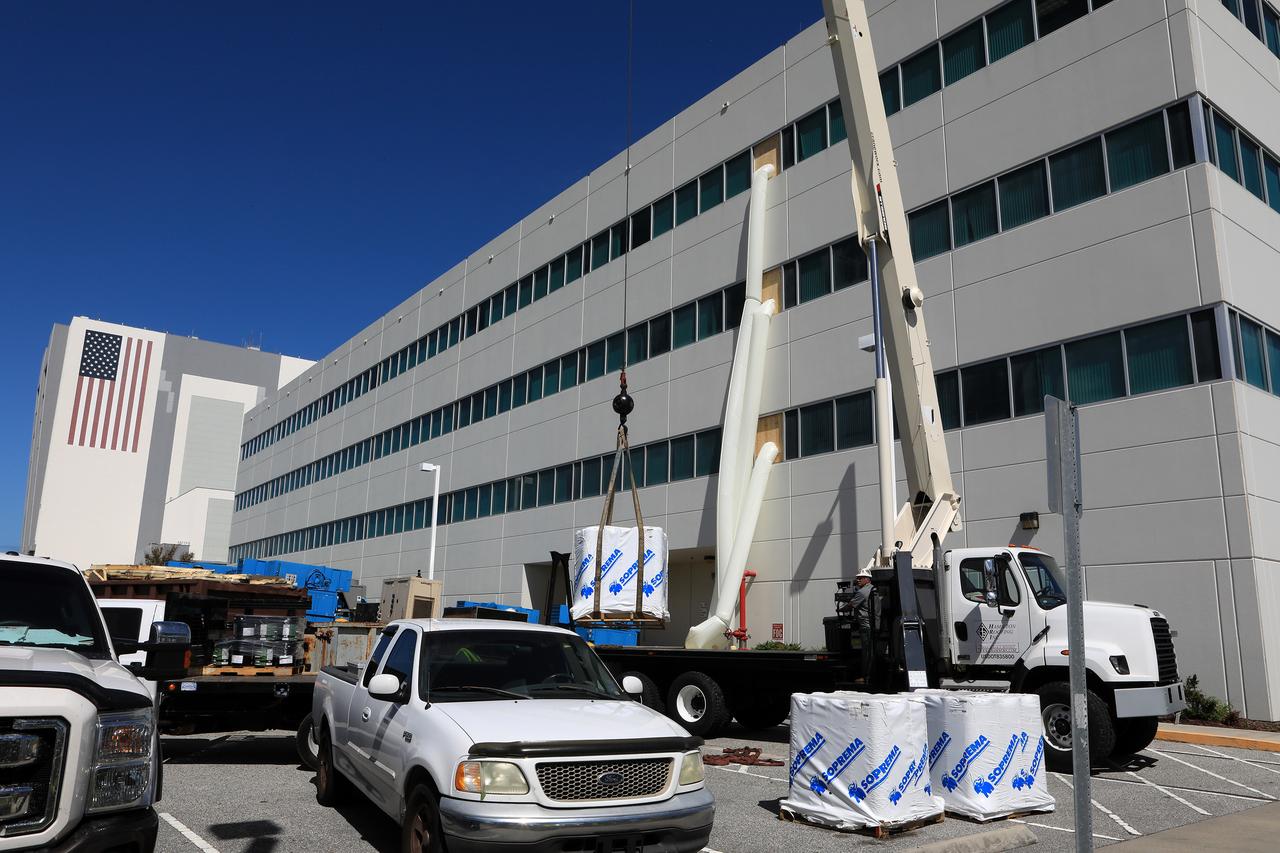
Members of the Disaster Assessment and Recovery Team (DART) work on repairs to the Operations Support Building II at NASA’s Kennedy Space Center in Florida. The effort is part of the spaceport’s ongoing recovery from Hurricane Matthew, which passed to the east of Kennedy on Oct. 6 and 7, 2016. The center received some isolated roof damage, damaged support buildings, a few downed power lines, and limited water intrusion. Beach erosion also occurred, although the storm surge was less than expected.