NASA Deputy Administrator Lori Garver, left, and White House Office of Science and Technology Chief of Staff Jim Kohlenberger, right, listen to Mr. David W. Thompson, Chairman and Chief Executive Officer Orbital Sciences Corporation as he gives a tour of the Orbital Sciences facilities on Tuesday, Jan. 11, 2011 in Dulles, VA.  Photo Credit: (NASA/Bill Ingalls)
Deputy Admin. Tours Orbital Sciences
This is an artist concept of NASA Mars Reconnaissance Orbiter during the critical process of Mars orbit insertion.
Orbit Insertion by Mars Reconnaissance Orbiter Artist Concept
NASA Mars Reconnaissance Orbiter will be the largest spacecraft to orbit Mars, weighing 2,180 kilograms 4,796 pounds at liftoff.
Orbiter Near Final Configuration
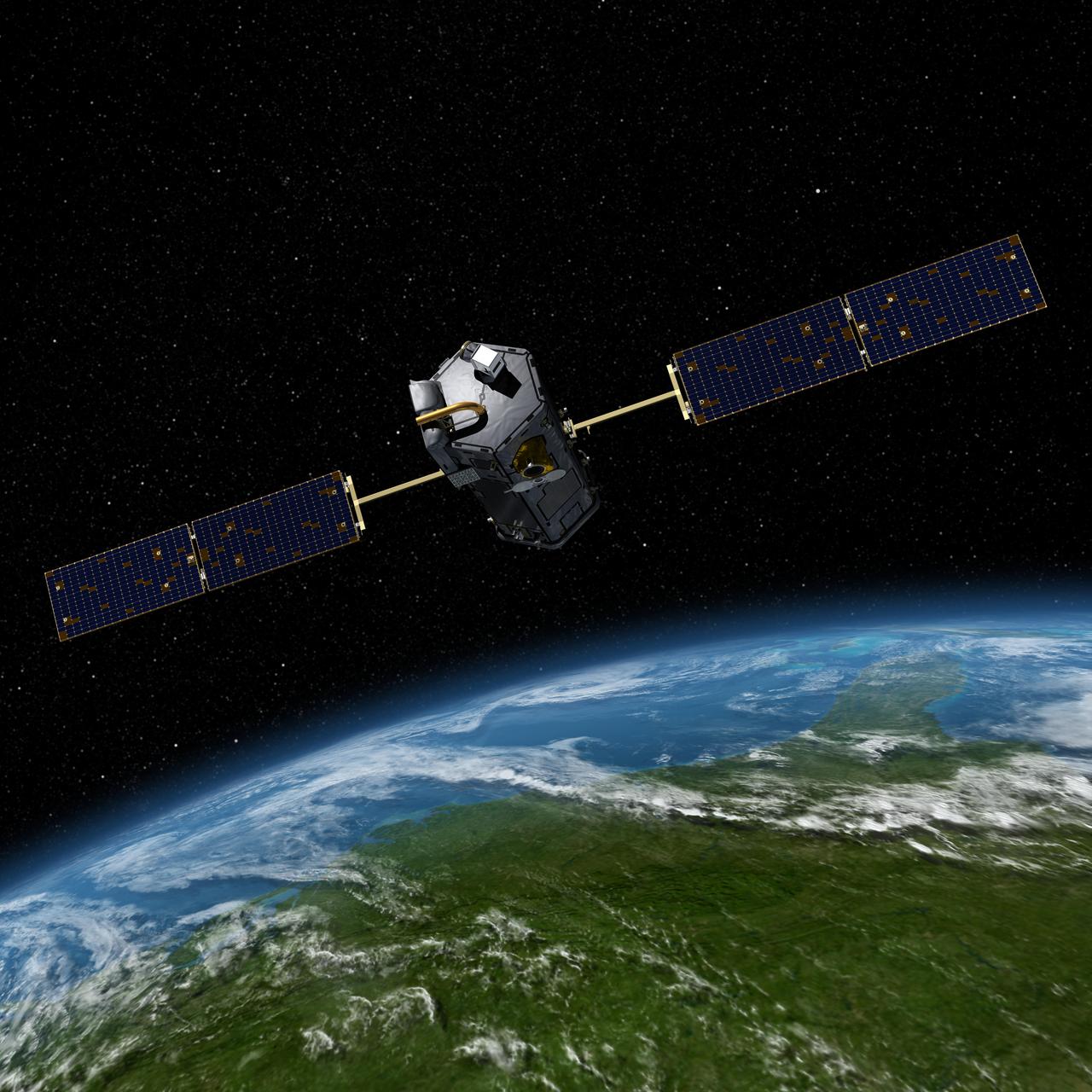
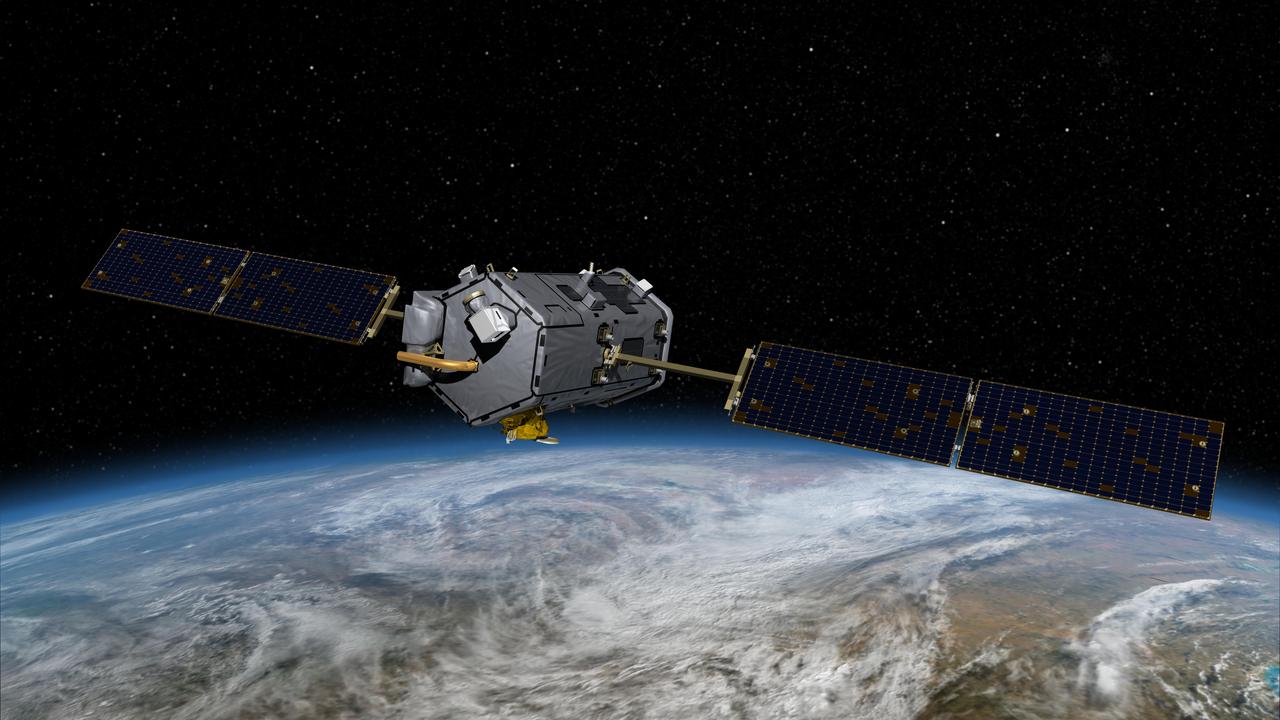
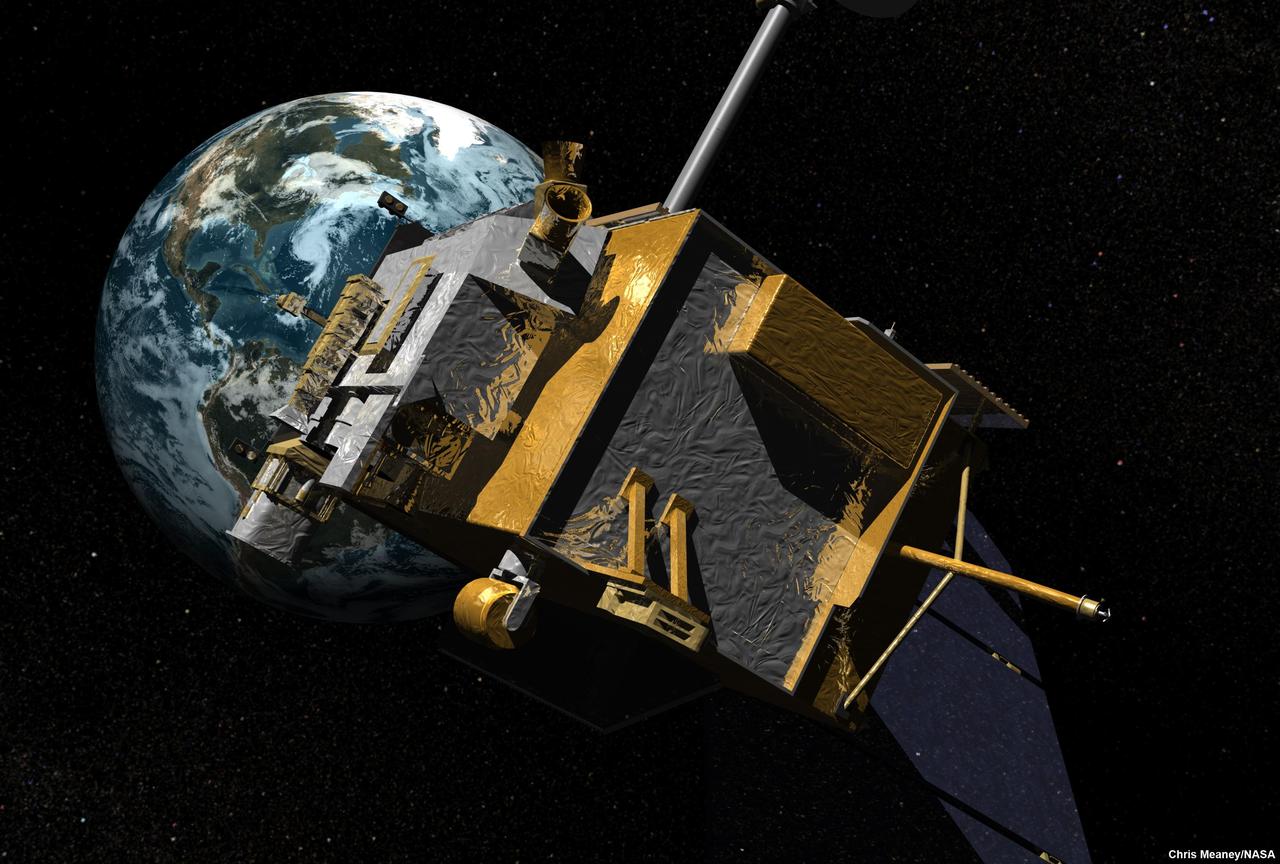
Artist’s concept of the Orbiting Carbon Observatory.
Artist Concept of the Orbiting Carbon Observatory
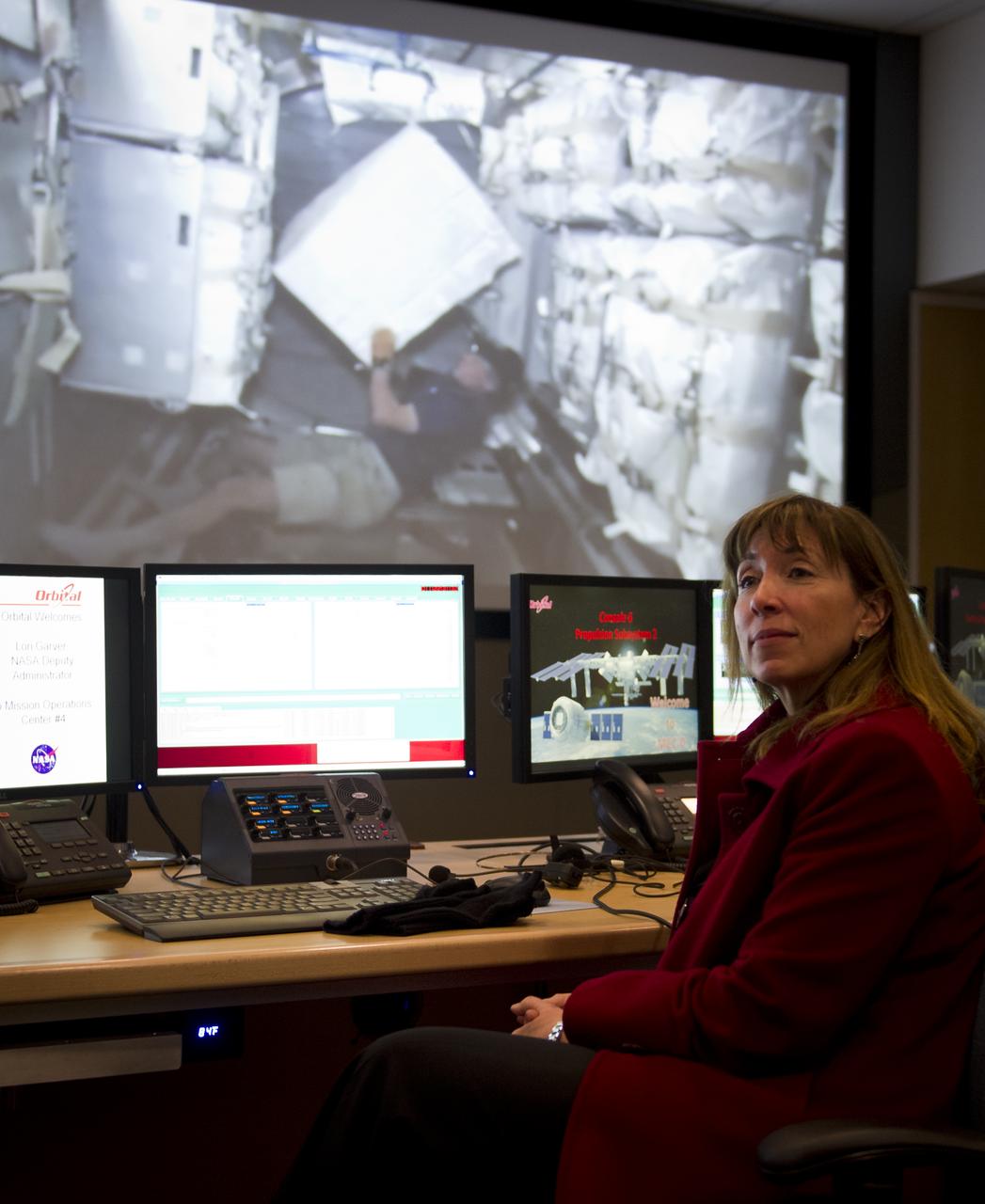
NASA Deputy Administrator Lori Garver, listens during a tour of the Orbital Sciences Corporation, Mission Operations Center, Tuesday, Jan. 11, 2011 in Dulles, VA.  Photo Credit: (NASA/Bill Ingalls)
Deputy Admin. Tours Orbital Sciences
Artist Concept of Mars Reconnaissance Orbiter
This image is an artist concept of the Orbiting Carbon Observatory OCO.
Artist Concept of the Orbiting Carbon Observatory
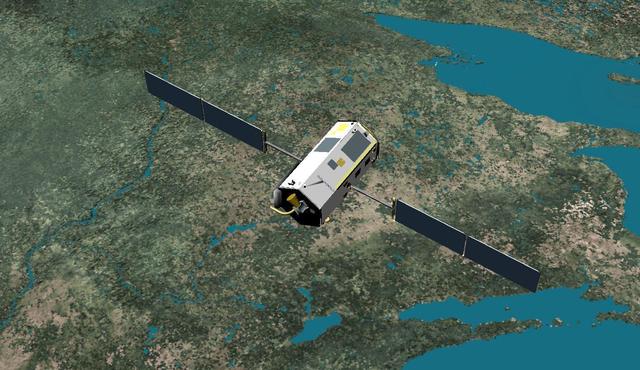
This image is an artist’s concept of the Orbiting Carbon Observatory
Artist Concept of the Orbiting Carbon Observatory
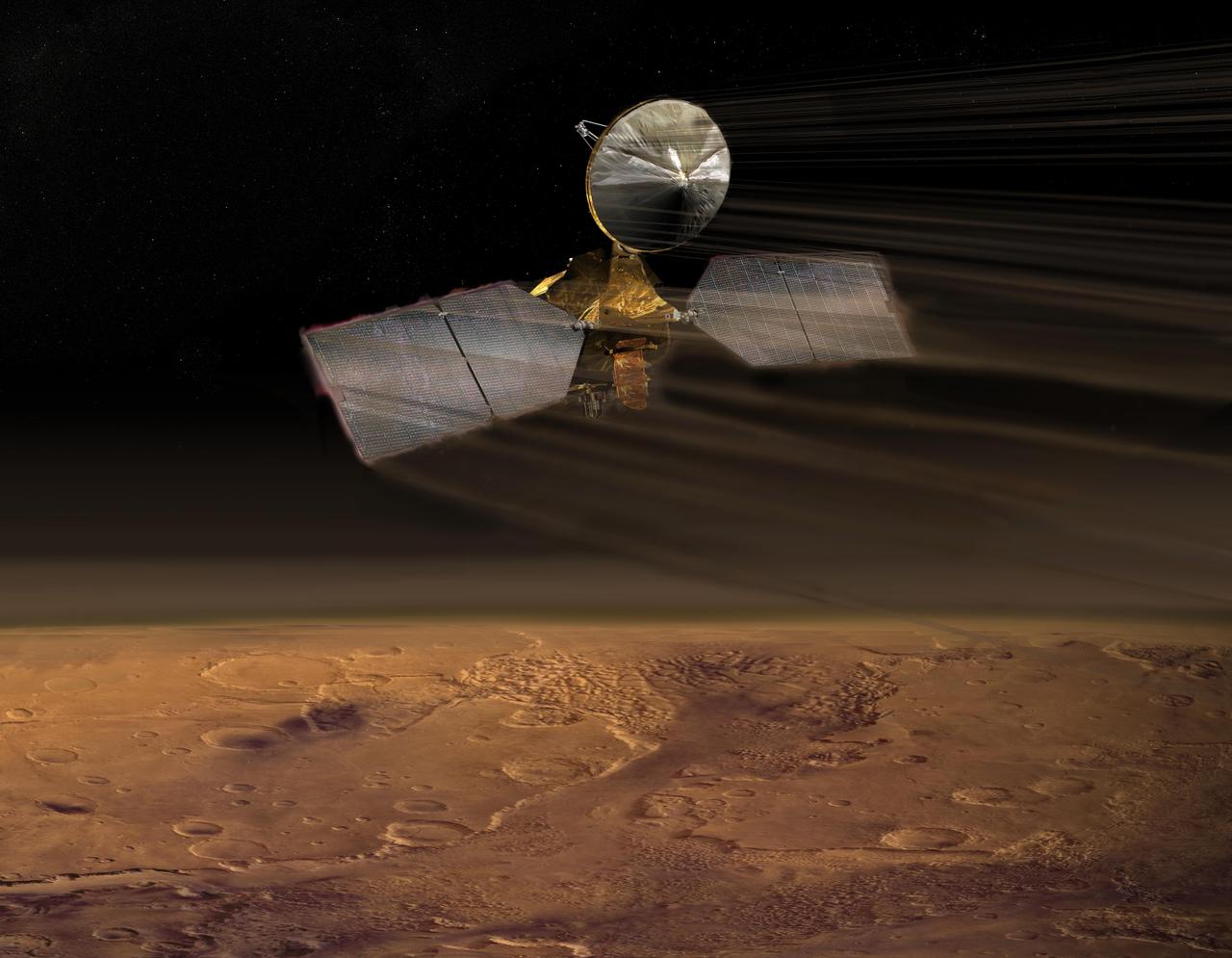
NASA Mars Reconnaissance Orbiter dips into the thin martian atmosphere to adjust its orbit in this artist concept illustration.
Mars Reconnaissance Orbiter Aerobraking Artist Concept
The Diviner instrument following integration to NASA Lunar Reconnaissance Orbiter. Diviner is one of seven instruments aboard the Lunar Reconnaissance Orbiter.
Diviner Following Integration to the Lunar Reconnaissance Orbiter LRO
Mars Climate Orbiter MARCI Approach Image
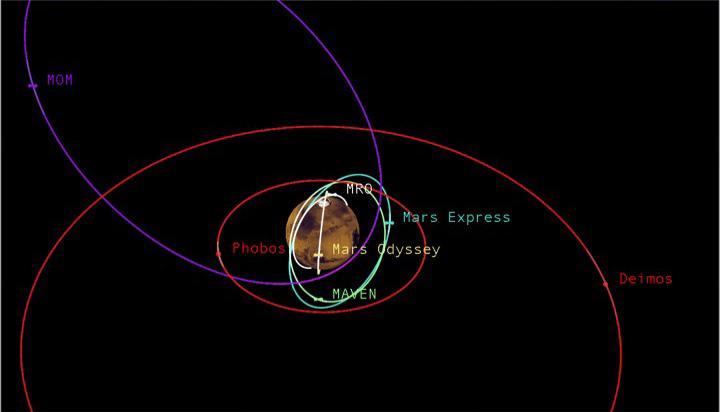
This graphic depicts the relative shapes and distances from Mars for five active orbiter missions plus the planet's two natural satellites. It illustrates the potential for intersections of the spacecraft orbits.  The number of active orbiter missions at Mars increased from three to five in 2014. With the increased traffic, NASA has augmented a process for anticipating orbit intersections and avoiding collisions.  NASA's Mars Odyssey and MRO (Mars Reconnaissance Orbiter) travel near-circular orbits. The European Space Agency's Mars Express, NASA's MAVEN (Mars Atmosphere and Volatile Evolution) and India's MOM (Mars Orbiter Mission), travel more elliptical orbits. Phobos and Deimos are the two natural moons of Mars.  http://photojournal.jpl.nasa.gov/catalog/PIA19396
Diverse Orbits Around Mars Graphic
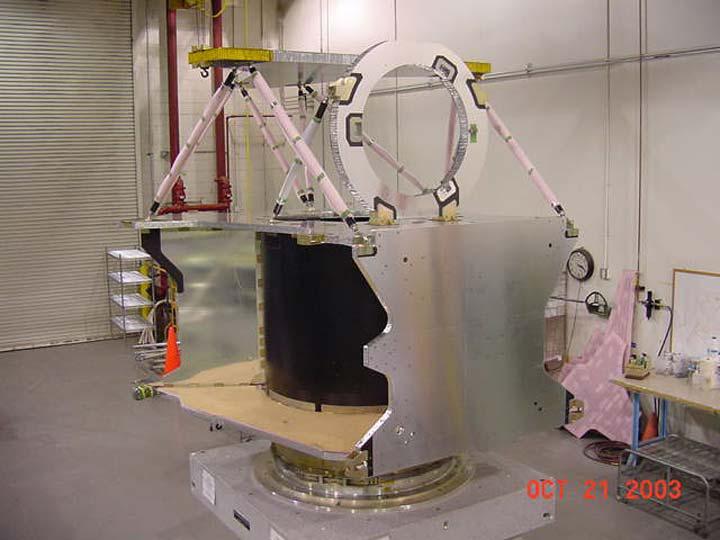
The structure of NASA Mars Reconnaissance Orbiter spacecraft is constructed from composite panels of carbon layers over aluminum honeycomb, lightweight yet strong.
Orbiter Skeleton
This illustration depicts a concept for NASA Mars Telecommunications Orbiter in flight around Mars.
Mars Telecommunications Orbiter, Artist Concept
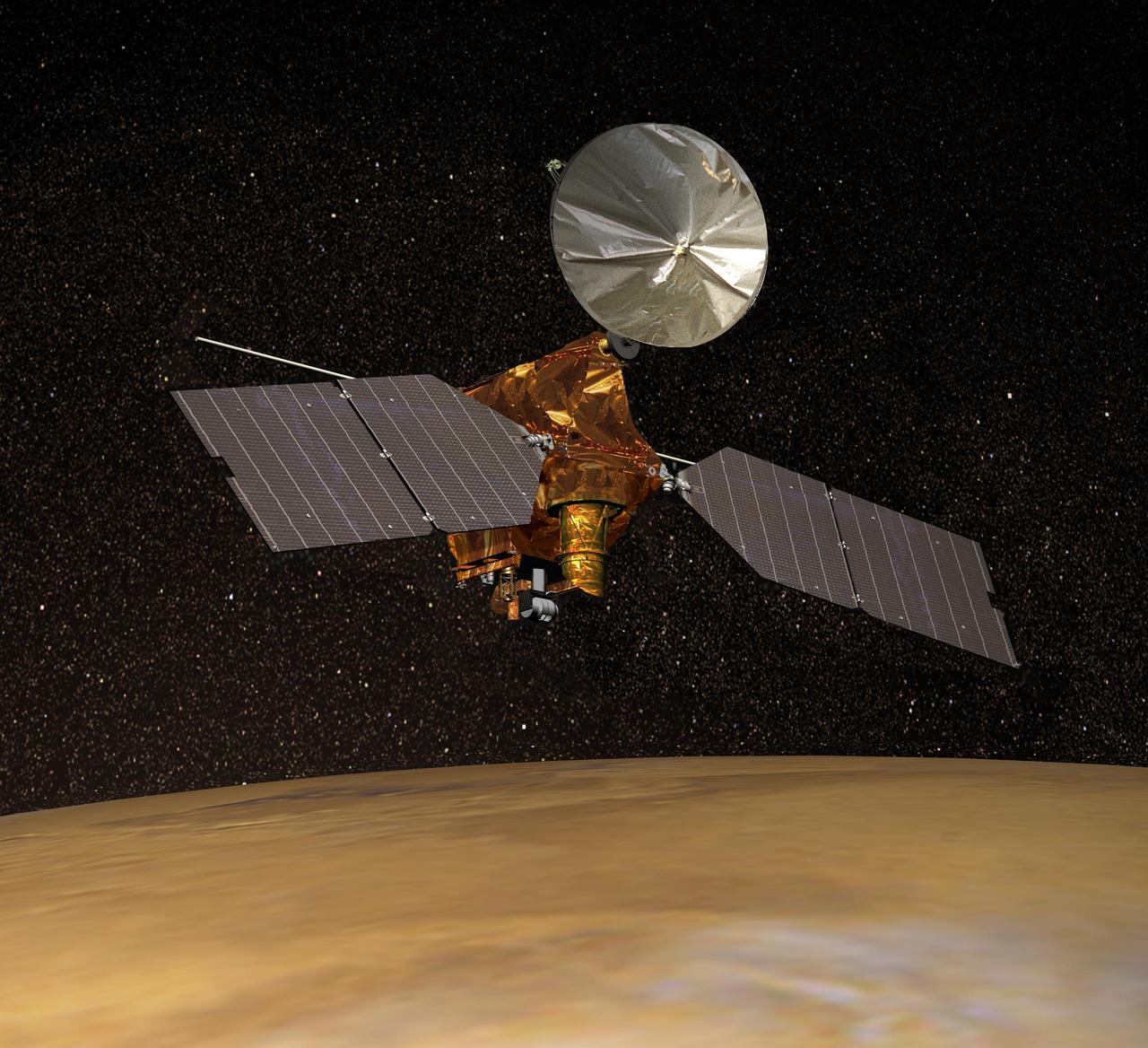
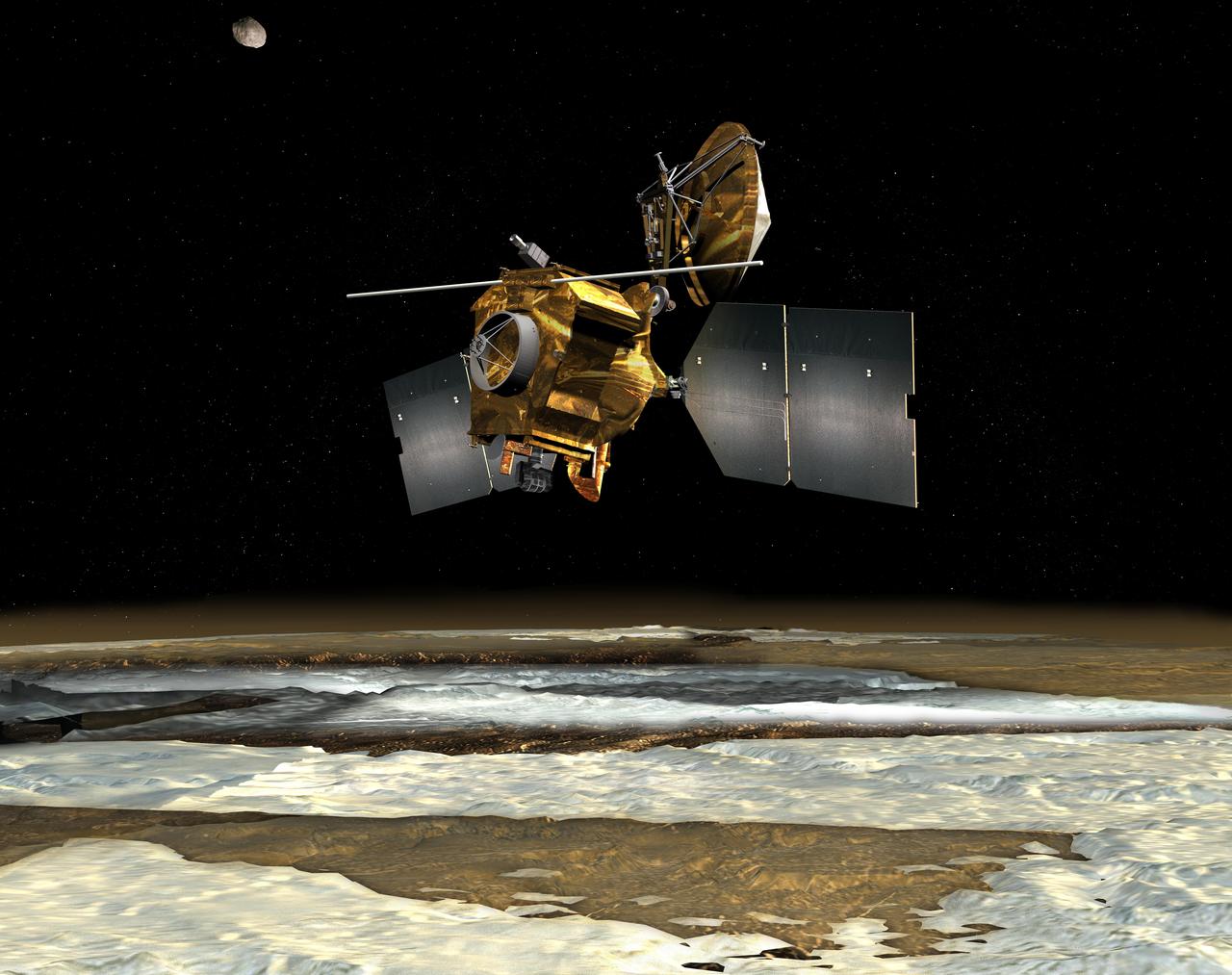
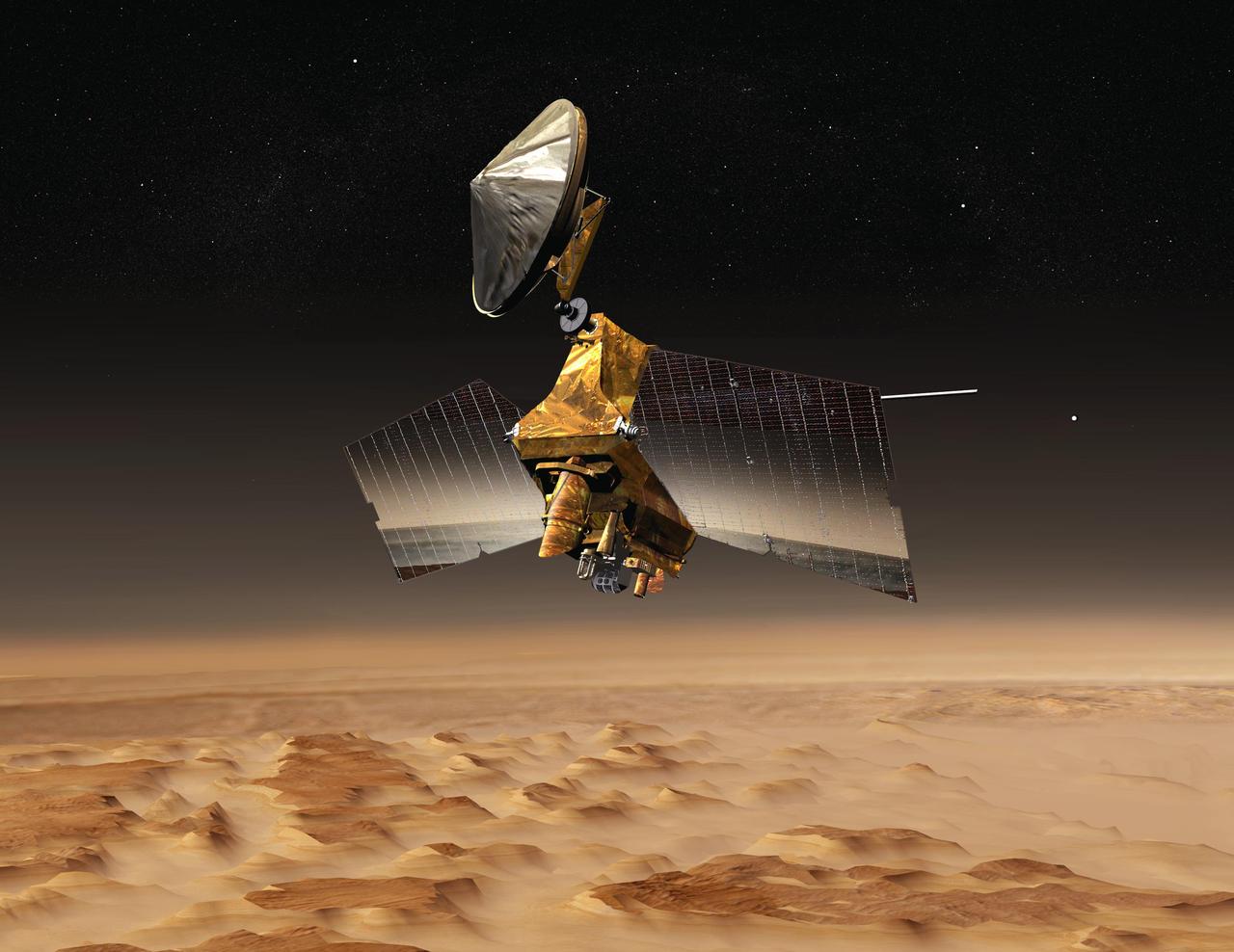
Artist concept of NASA Mars Reconnaissance Orbiter.  http://photojournal.jpl.nasa.gov/catalog/PIA04241
Artist concept of Mars Reconnaissance Orbiter
The Orbiting Fleet
The Orbiting Fleet
Orbit Quest
Orbit Quest
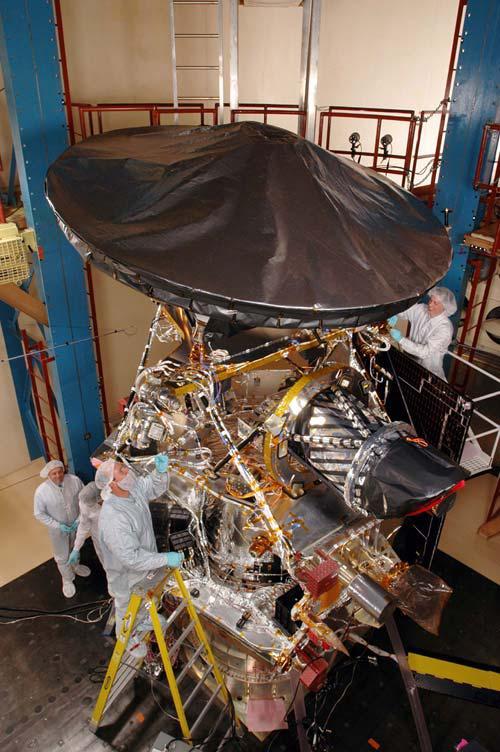
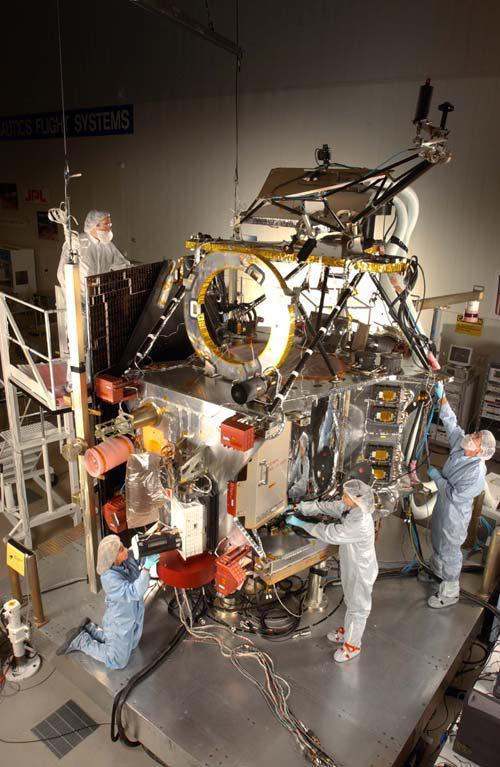
Engineers and technicians at Lockheed Martin Space Systems, Denver, building the Mars Reconnaissance Orbiter for NASA.
Mars Reconnaissance Orbiter in High Bay
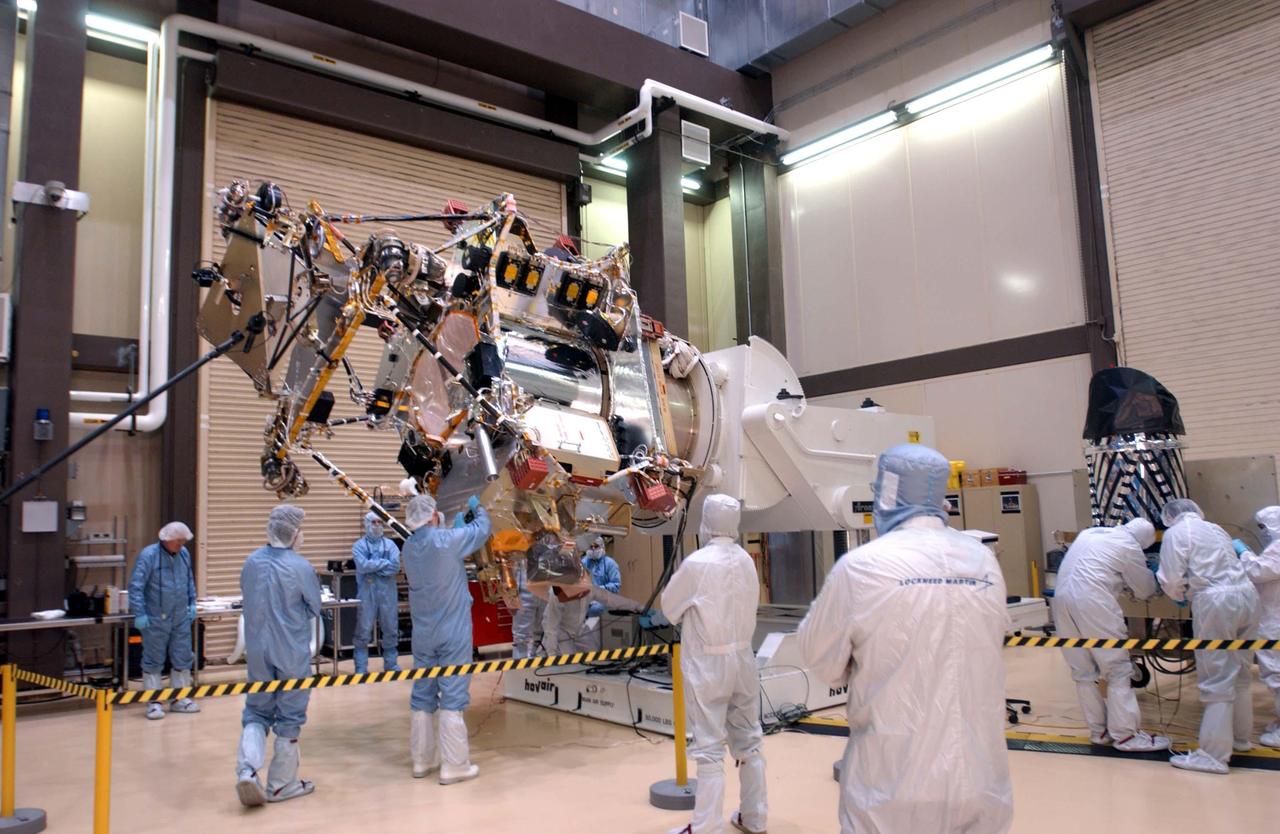
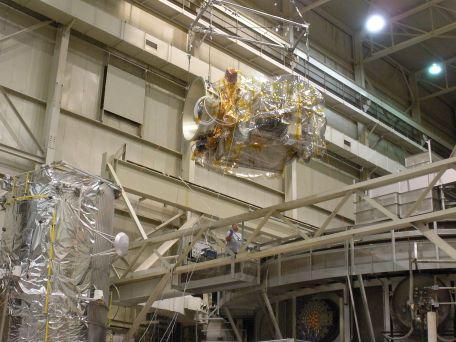
In late October 2004, NASA Mars Reconnaissance Orbiter was moved from the High Bay 100,000-class clean room at Lockheed Martin Space Systems, Denver, to the facility Reverberant Acoustic Lab.
Moving the Mars Reconnaissance Orbiter
NASA Curiosity rover and its parachute were spotted by NASA Mars Reconnaissance Orbiter as Curiosity descended to the surface. The HiRISE camera captured this image of Curiosity while the orbiter was listening to transmissions from the rover.
Curiosity Spotted on Parachute by Orbiter
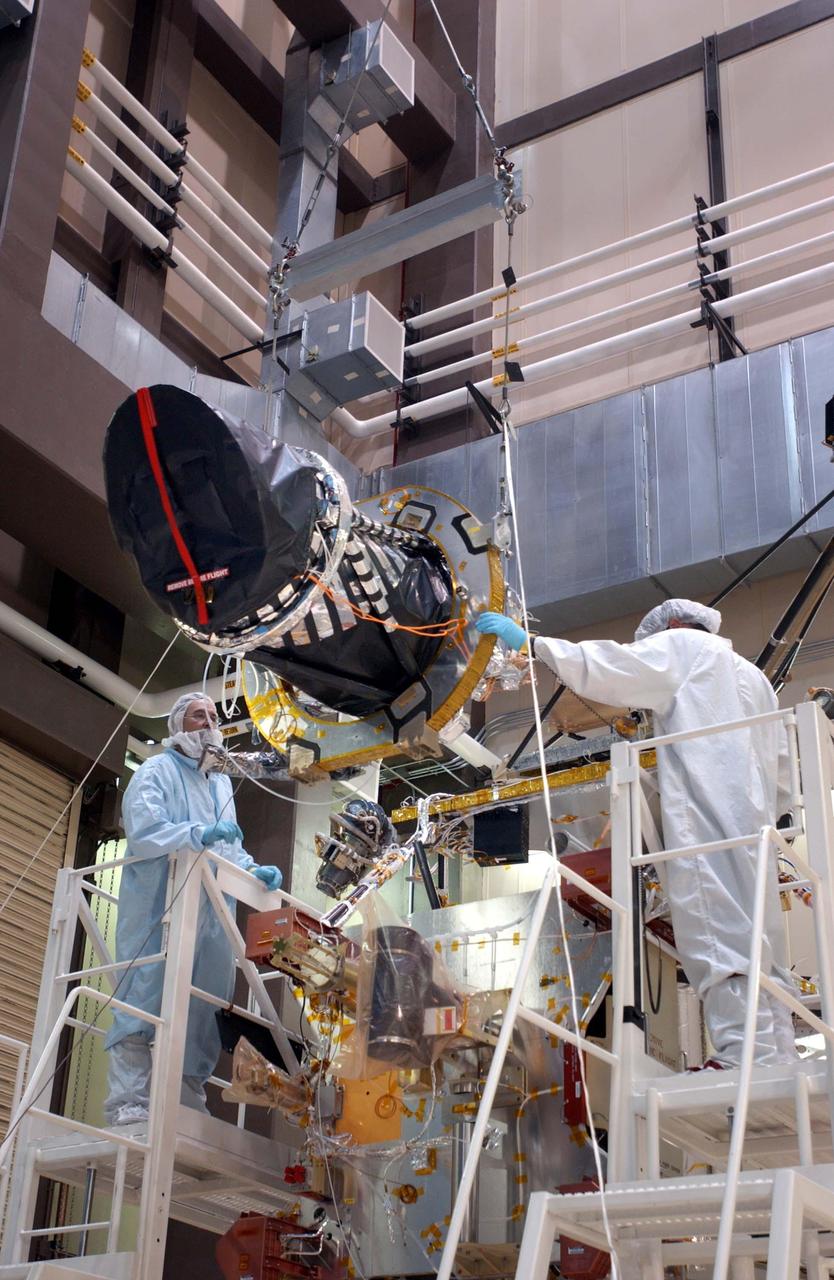
Workers at Lockheed Martin Space Systems, Denver, hoist a telescopic camera for installation onto NASA Mars Reconnaissance Orbiter spacecraft on Dec. 11, 2004.
Hoisting a Camera for Mars Reconnaissance Orbiter
Workers at Lockheed Martin Space Systems, Denver, install a telescopic camera on NASA Mars Reconnaissance Orbiter spacecraft on Dec. 11, 2004.
Installing a Camera on Mars Reconnaissance Orbiter
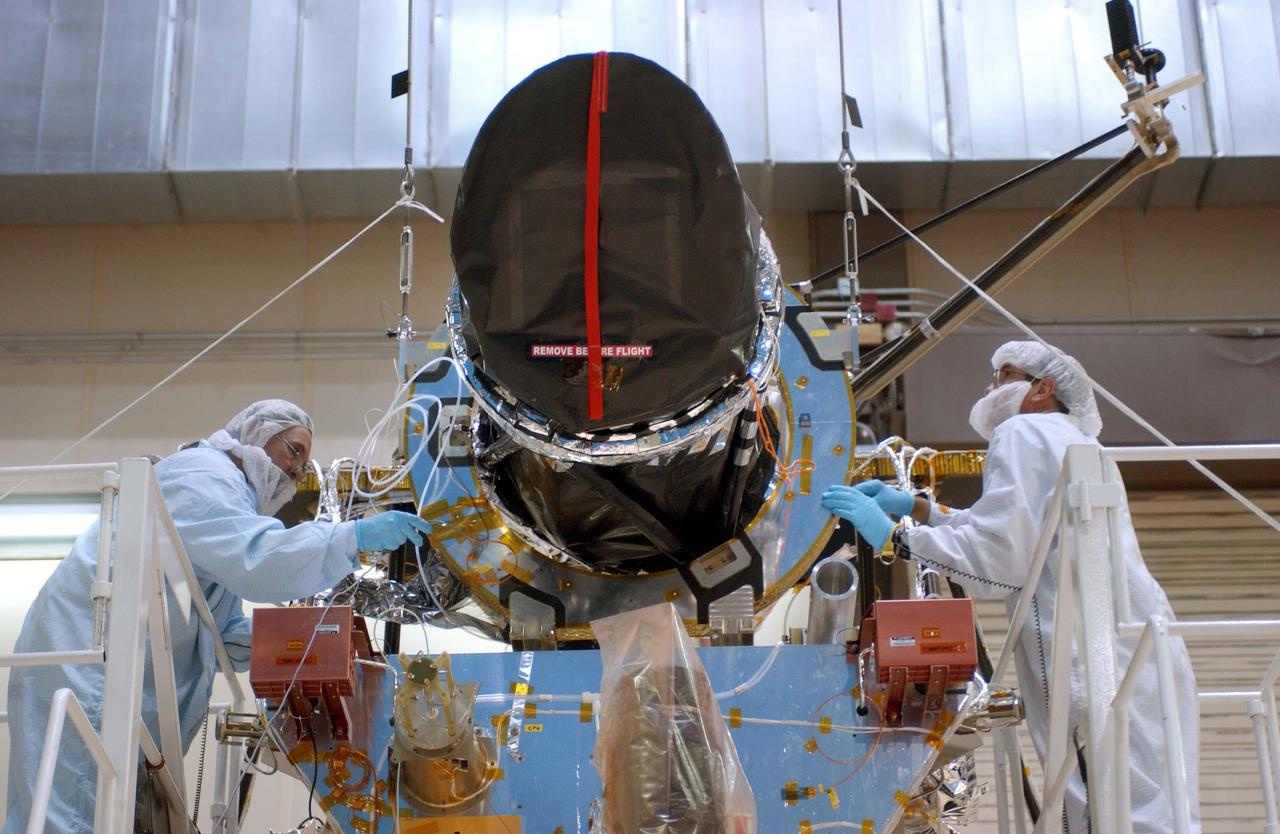
Workers at Lockheed Martin Space Systems, Denver, position a telescopic camera for installation onto NASA Mars Reconnaissance Orbiter spacecraft on Dec. 11, 2004.
Positioning a Camera for Mars Reconnaissance Orbiter
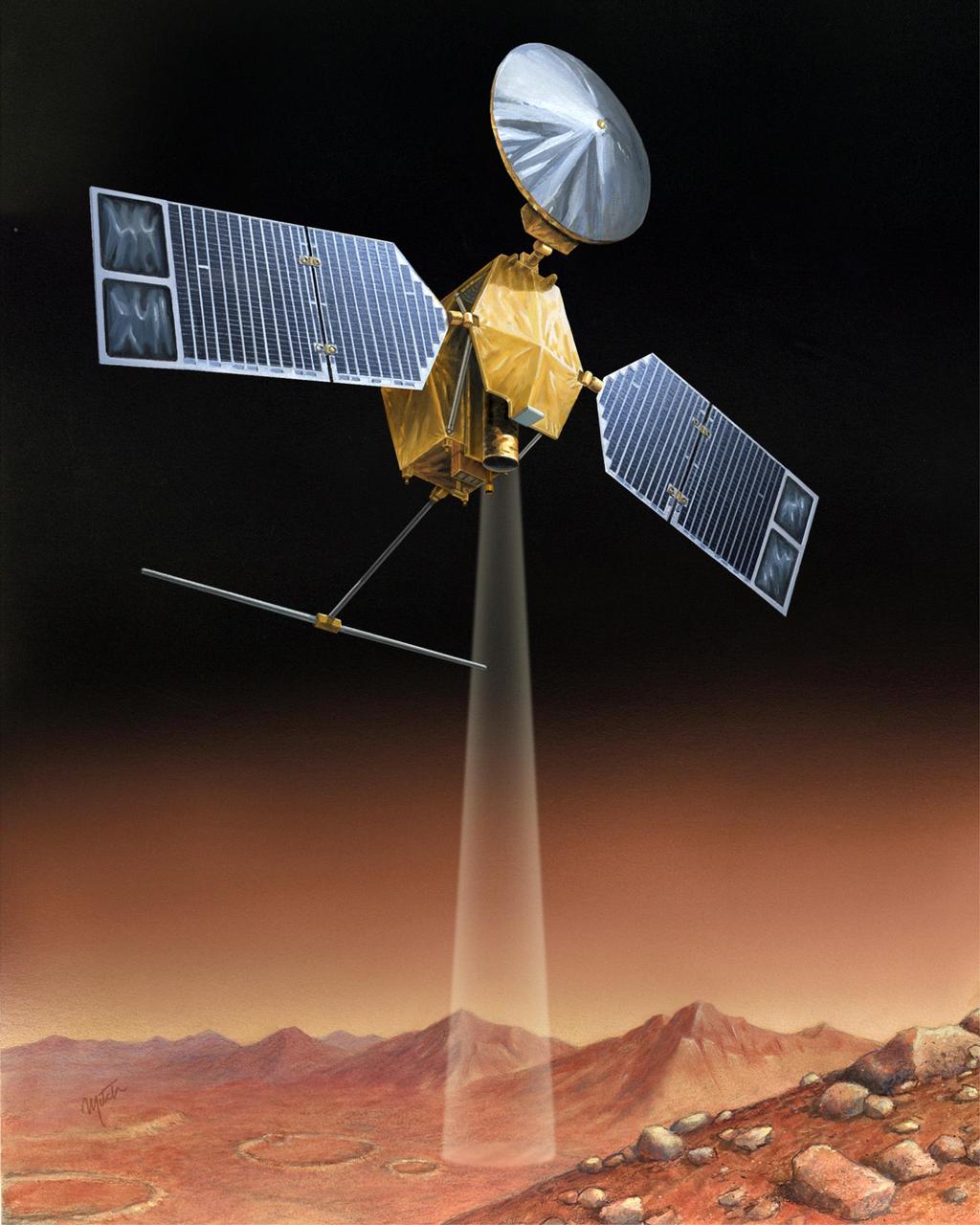
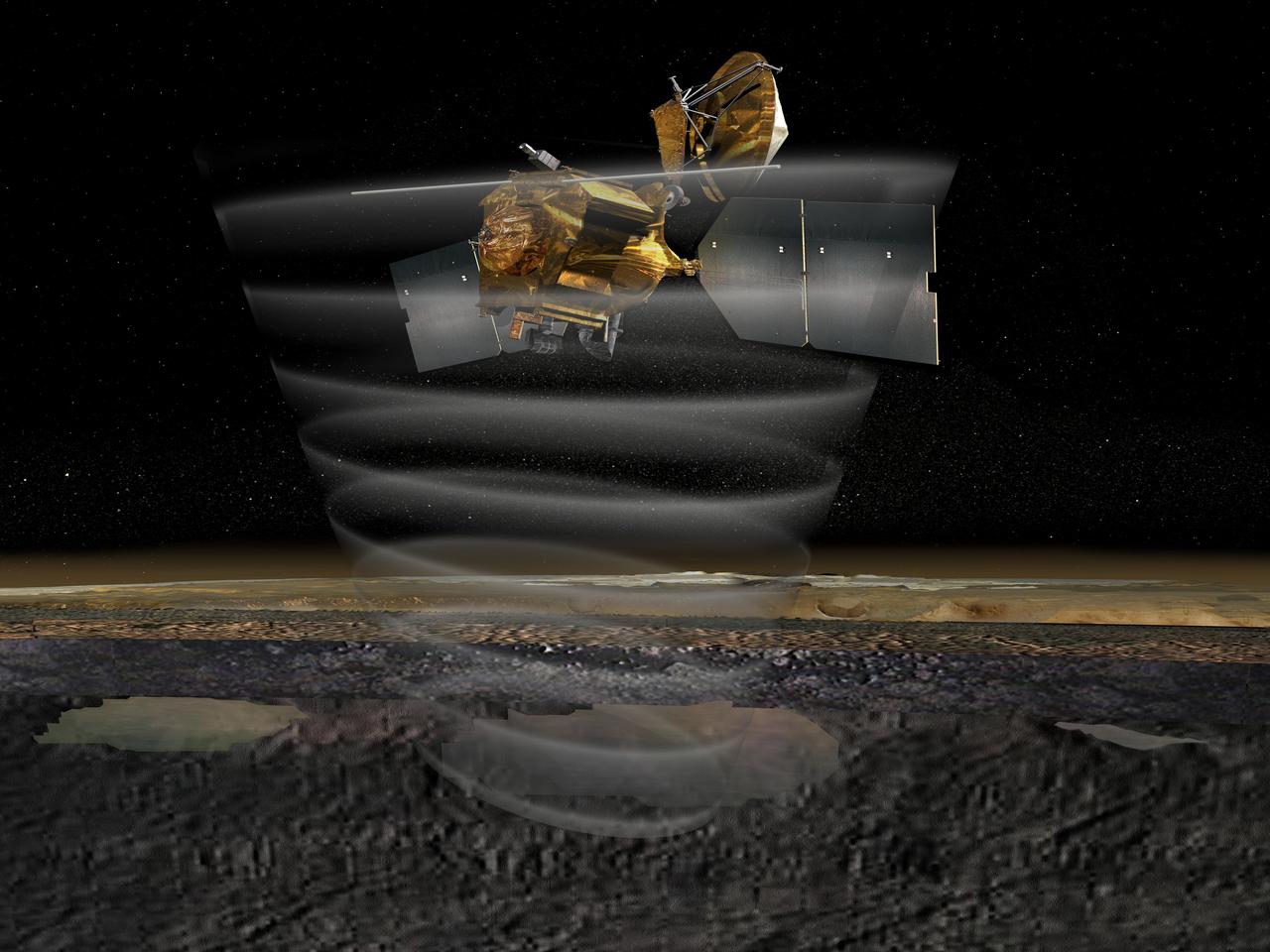
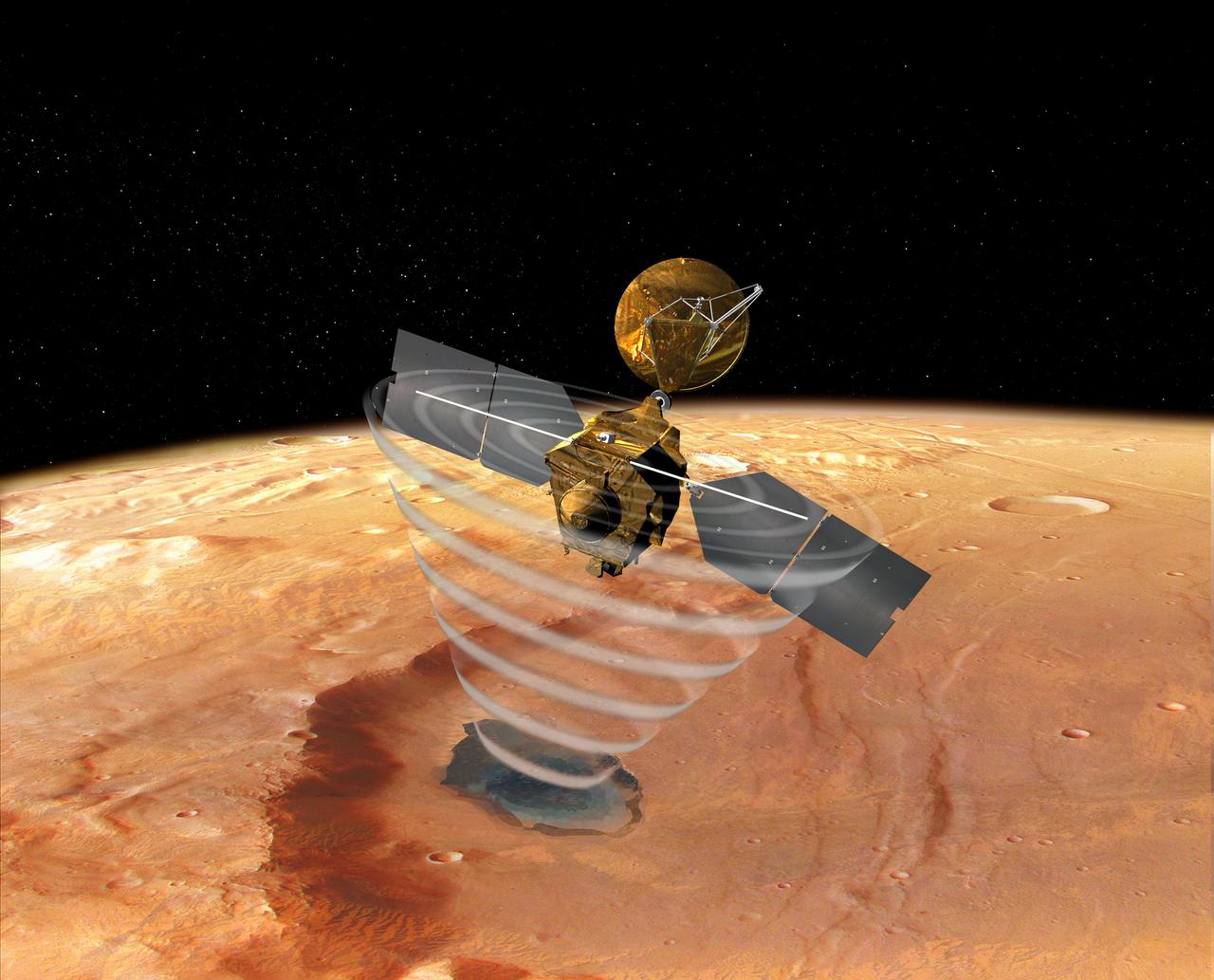
This artist concept of NASA Mars Reconnaissance Orbiter highlights the spacecraft radar capability.
Mars Reconnaissance Orbiter Radar at Work, Top View Artist Concept
This image is an artist concept of a view looking down on NASA Mars Reconnaissance Orbiter.
Mars Reconnaissance Orbiter Radar, Top View Artist Concept
NASA Mars Reconnaissance Orbiter passes over the planet south polar region in this artist concept illustration.
Mars Reconnaissance Orbiter over Pole Artist Concept
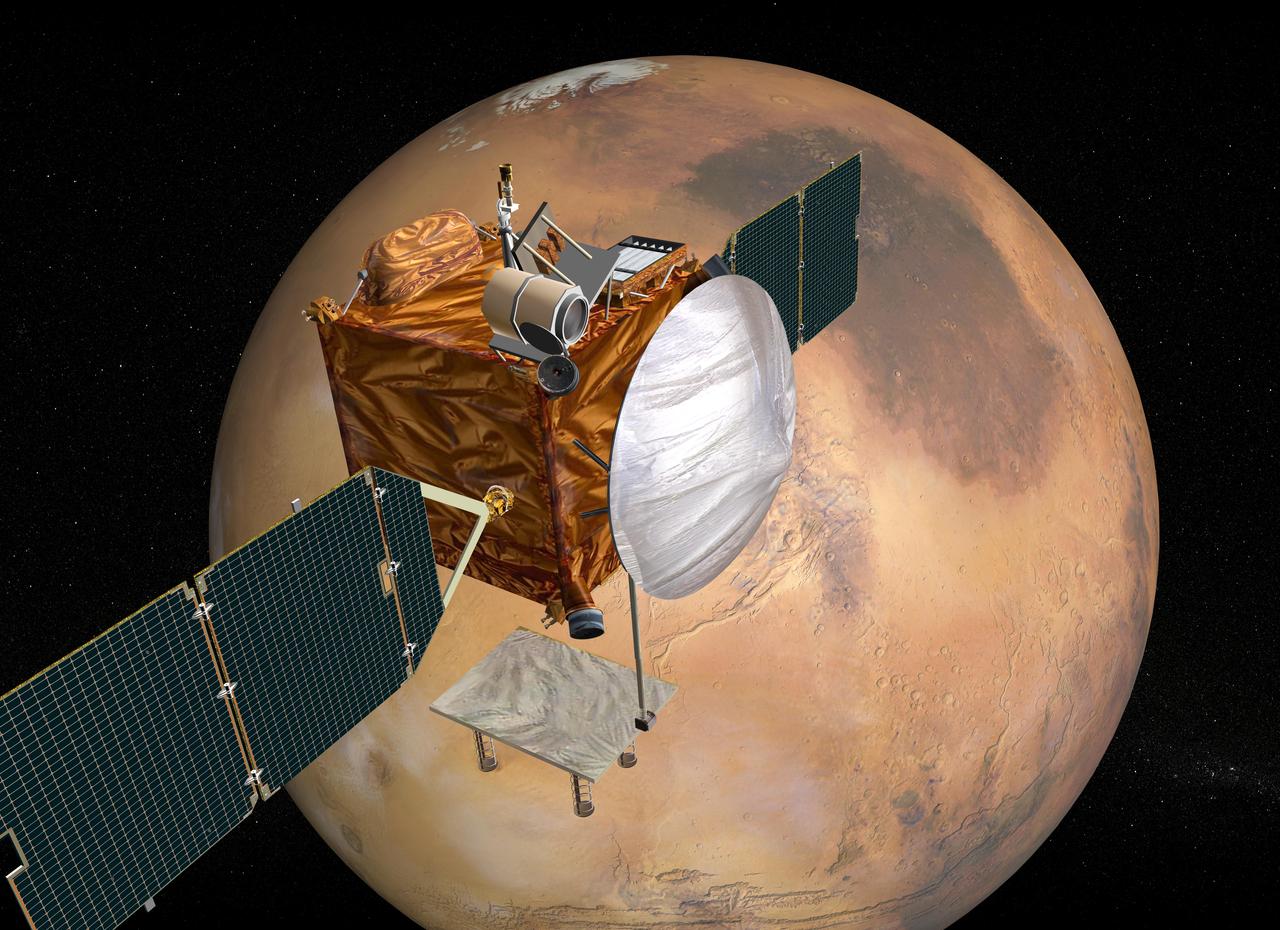
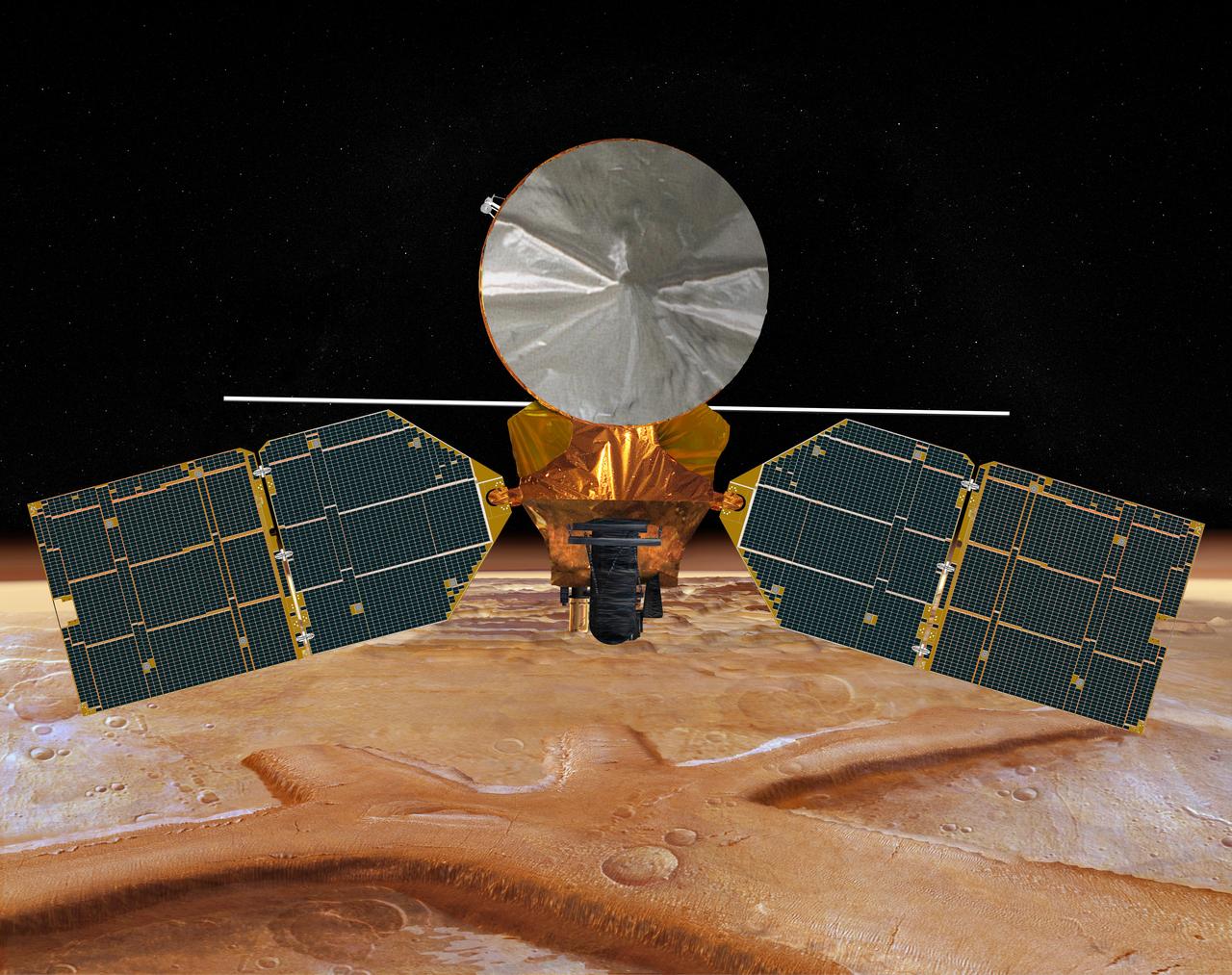
This artist concept of NASA Mars Reconnaissance Orbiter features the spacecraft main bus facing down, toward the red planet.
Mars Reconnaissance Orbiter, Front View Artist Concept
NASA is scheduled to launch the Lunar Reconnaissance Orbiter, an unmanned mission to comprehensively map the entire moon, on June 18, 2009.
Lunar Reconnaissance Orbiter LRO Artist Concept
NASA Mars Reconnaissance Orbiter passes above a portion of the planet called Nilosyrtis Mensae in this artist concept illustration.
Mars Reconnaissance Orbiter over Nilosyrtis Artist Concept
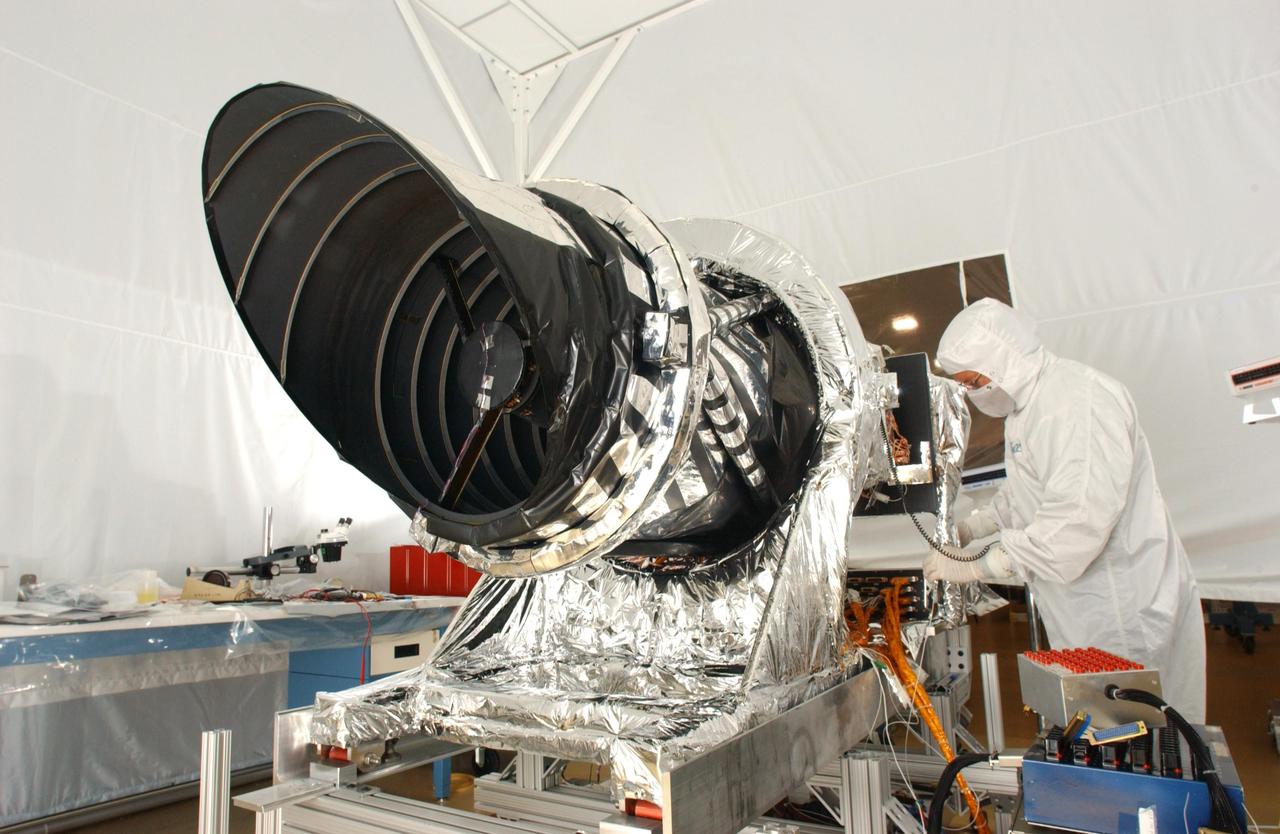
The high resolution imaging science experiment HiRISE is one of six science instruments for NASA Mars Reconnaissance Orbiter.
Telescopic Camera for Mars Reconnaissance Orbiter, Front End
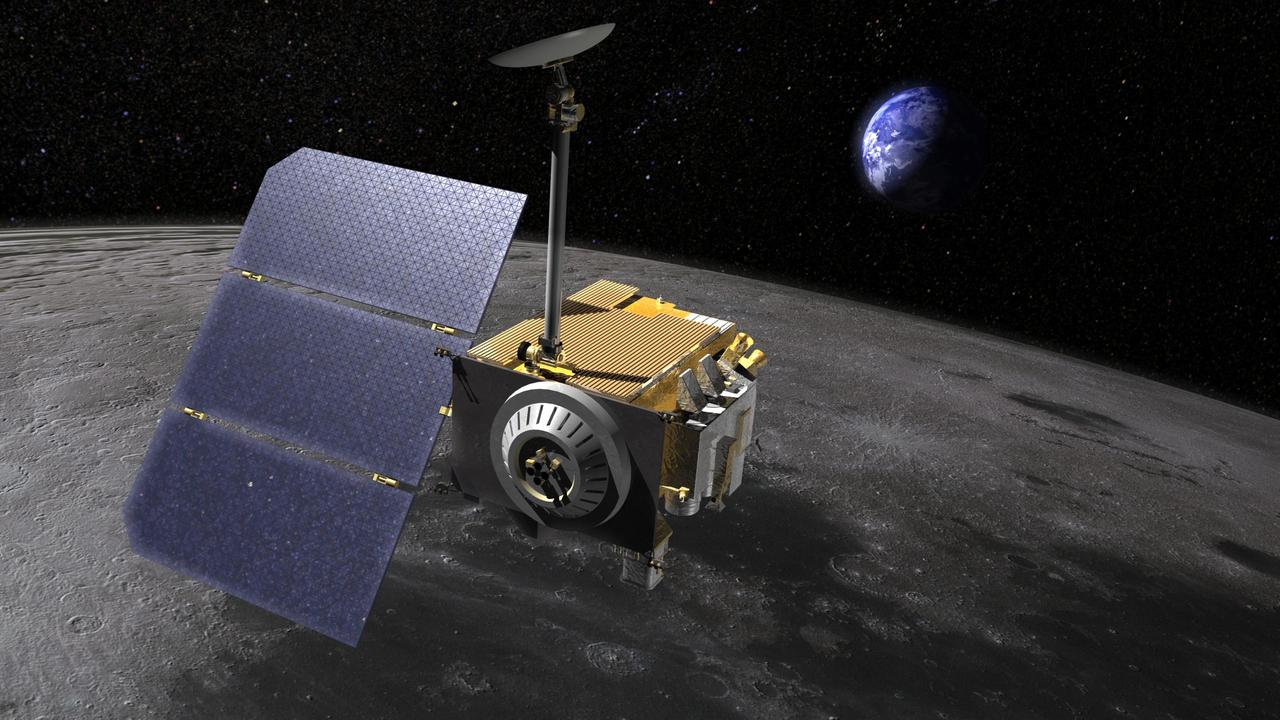
Artist rendering of the Lunar Reconnaissance Orbiter LRO, above the moon.  LRO carries seven instruments that make comprehensive remote sensing observations of the moon and measurements of the lunar radiation environment. The LRO mission is managed by NASA Goddard for the Science Mission Directorate at NASA Headquarters in Washington.  http://photojournal.jpl.nasa.gov/catalog/PIA18163
Lunar Reconnaissance Orbiter Artist Concept
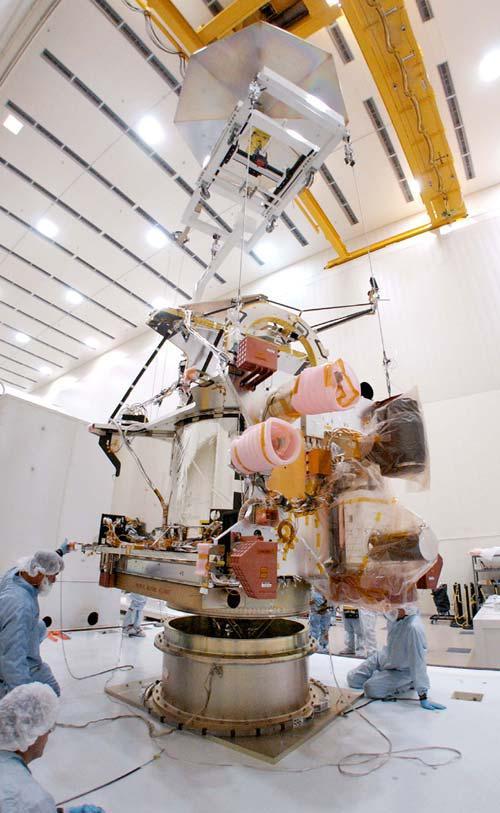
Lockheed Martin Space Systems engineer Terry Kampmann left and lead technician Jack Farmerie work on assembly and test of NASA Mars Reconnaissance Orbiter spacecraft bus in a cleanroom at the company Denver facility.
Mars Reconnaissance Orbiter Taking Shape
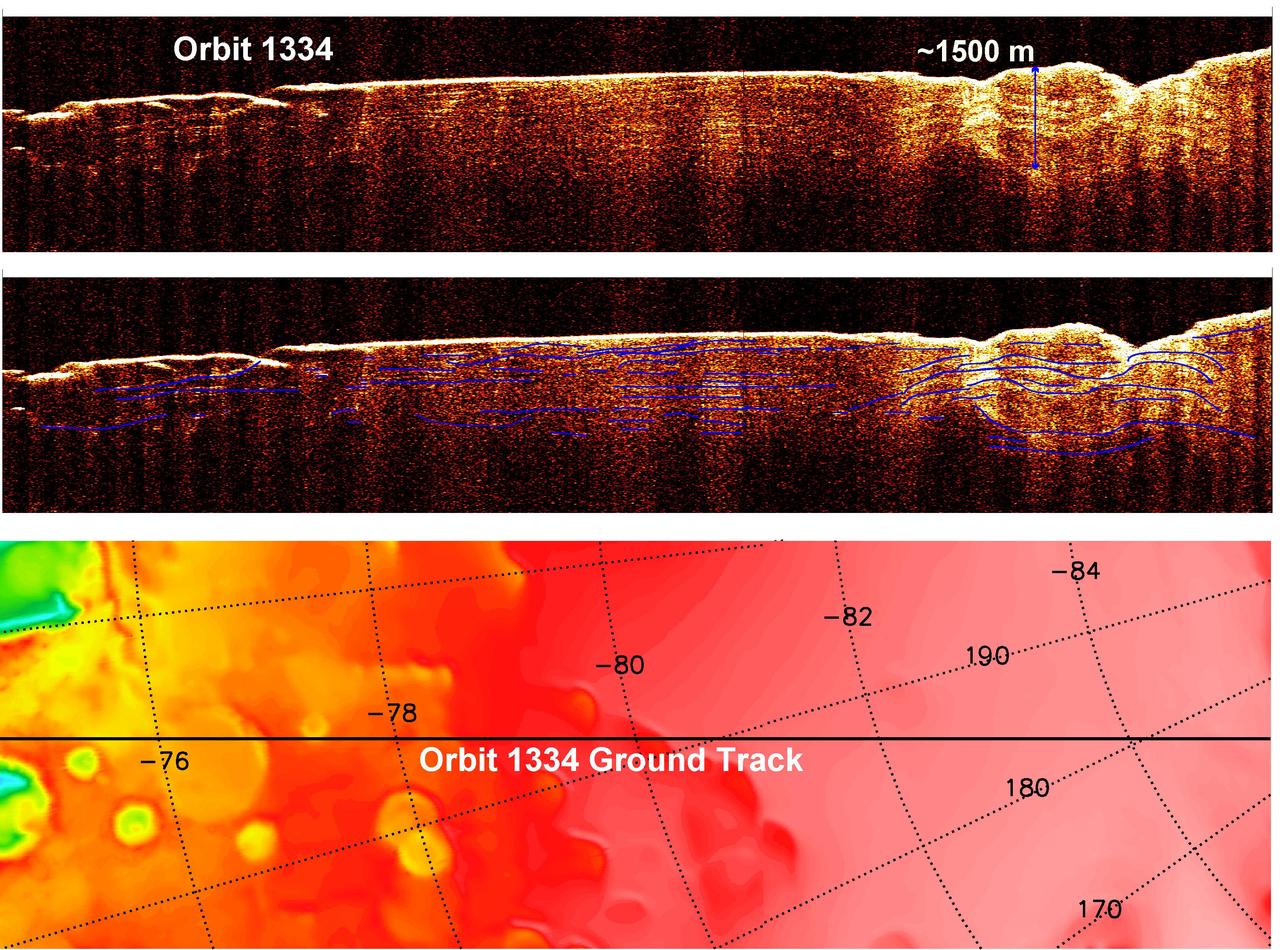
Interpreting Radar View near Mars South Pole, Orbit 1334
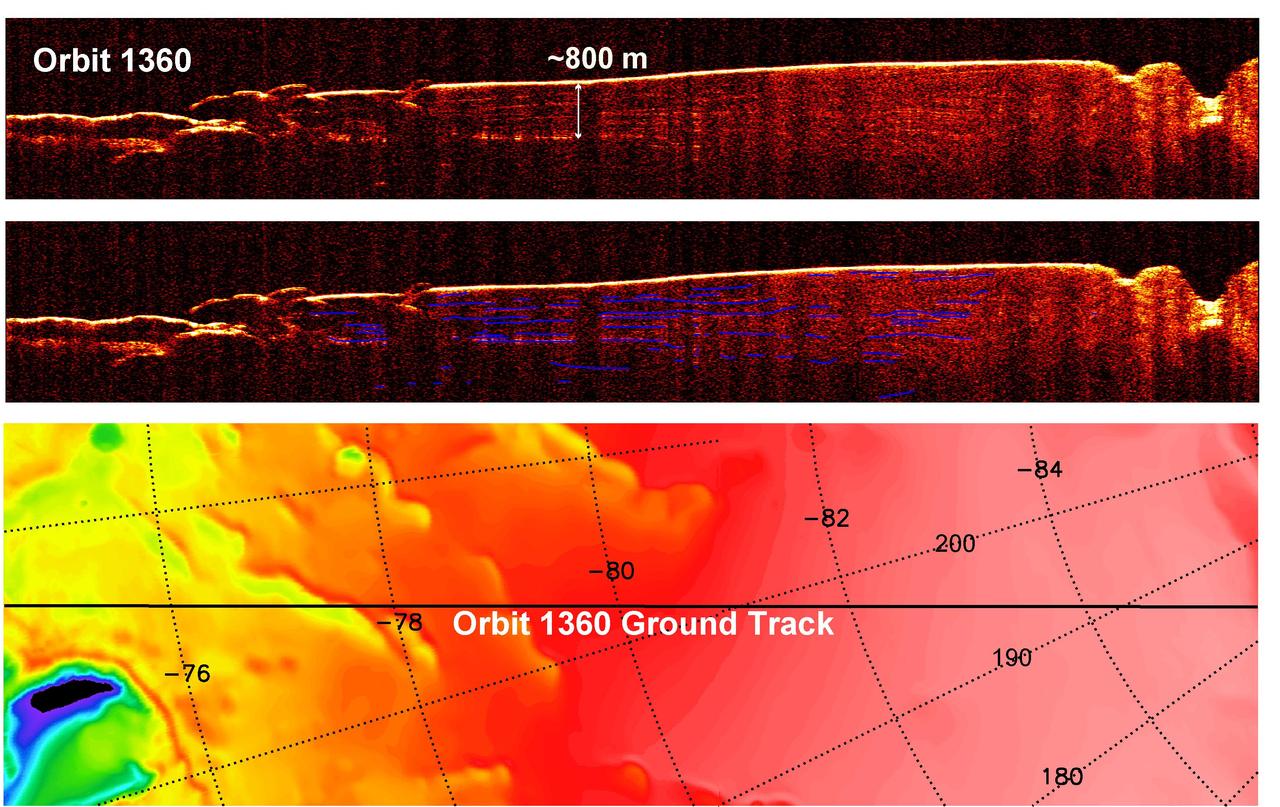
Interpreting Radar View near Mars South Pole, Orbit 1360
Interpreting Radar View near Mars South Pole, Orbit 1334
Radar View of Layering near Mars South Pole, Orbit 1360
New Mars Camera First Image of Mars from Mapping Orbit
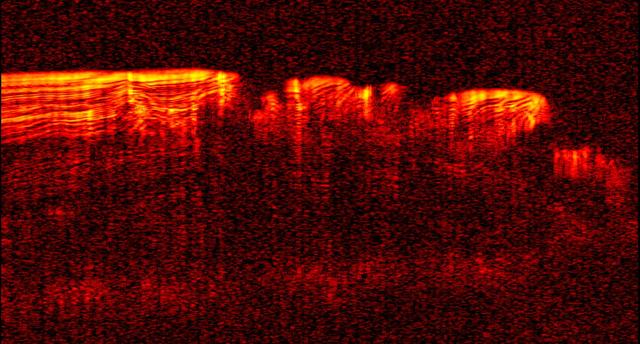
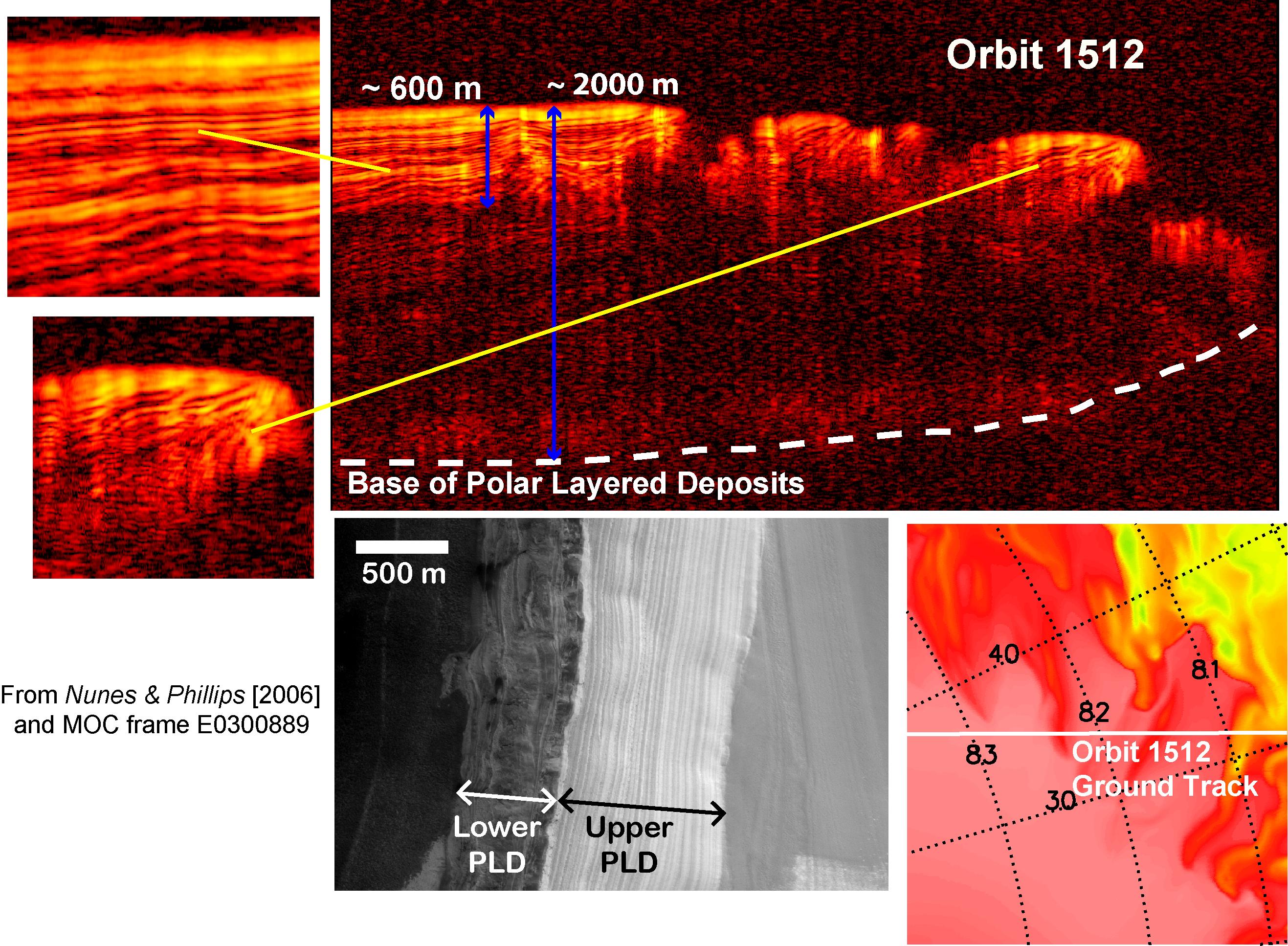
Interpreting Radar View near Mars North Pole, Orbit 1512
Radar View of Layering near Mars South Pole, Orbit 1360
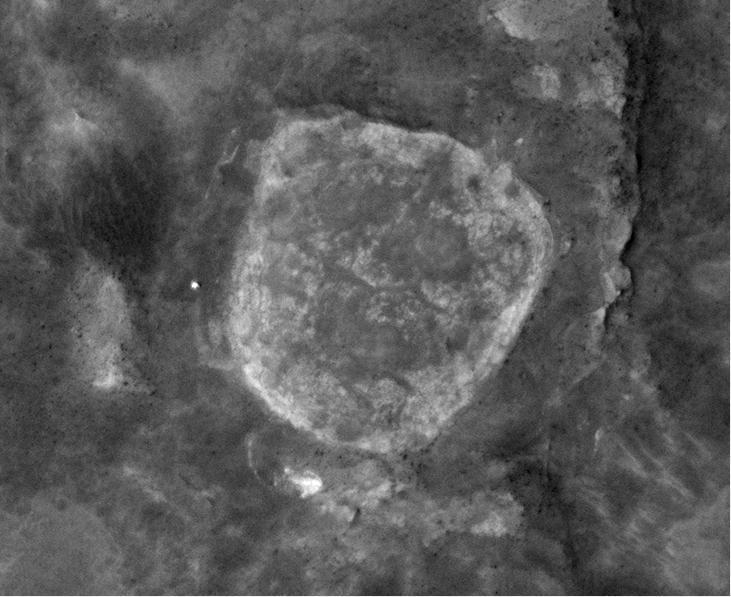
This view, taken by NASA Mars Reconnaissance Orbiter from Martian orbit, shows a pale circular shape in the center is a low plateau called Home
Orbital View of Spirit at Troy
The combination of morphological and topographic information from stereo images from NASA's Mars Reconnaissance Orbiter, as well as compositional data from near-infrared spectroscopy has been proven to be a powerful tool for understanding the geology of Mars.  Beginning with the OMEGA instrument on the European Space Agency's Mars Express orbiter in 2003, the surface of Mars has been examined at near-infrared wavelengths by imaging spectrometers that are capable of detecting specific minerals and mapping their spatial extent. The CRISM (Compact Reconnaissance Imaging Spectrometer for Mars) instrument on our orbiter is a visible/near-infrared imaging spectrometer, and the HiRISE camera works together with it to document the appearance of mineral deposits detected by this orbital prospecting.  Mawrth Vallis is one of the regions on Mars that has attracted much attention because of the nature and diversity of the minerals identified by these spectrometers. It is a large, ancient outflow channel on the margin of the Southern highlands and Northern lowlands. Both the OMEGA and CRISM instruments have detected clay minerals here that must have been deposited in a water-rich environment, probably more than 4 billion years ago. For this reason, Mawrth Vallis is one of the two candidate landing sites for the future Mars Express Rover Mission planned by the European Space Agency.  This image was targeted on a location where the CRISM instrument detected a specific mineral called alunite, KAl3(SO4)2(OH)6. Alunite is a hydrated aluminum potassium sulfate, a mineral that is notable because it must have been deposited in a wet acidic environment, rich in sulfuric acid. Our image shows that the deposit is bright and colorful, and extensively fractured. The width of the cutout is 1.2 kilometers.  The map is projected here at a scale of 50 centimeters (19.7 inches) per pixel. [The original image scale is 60.1 centimeters (23.7 inches) per pixel (with 2 x 2 binning); objects on the order of 180 centimeters (70.9 inches) across are resolved.] North is up.  https://photojournal.jpl.nasa.gov/catalog/PIA21936
Prospecting from Orbit
Viking Lander 2 Gerald A. Soffen Memorial Station Imaged from Orbit
Viking Lander 1 Thomas A. Mutch Memorial Station Imaged from Orbit
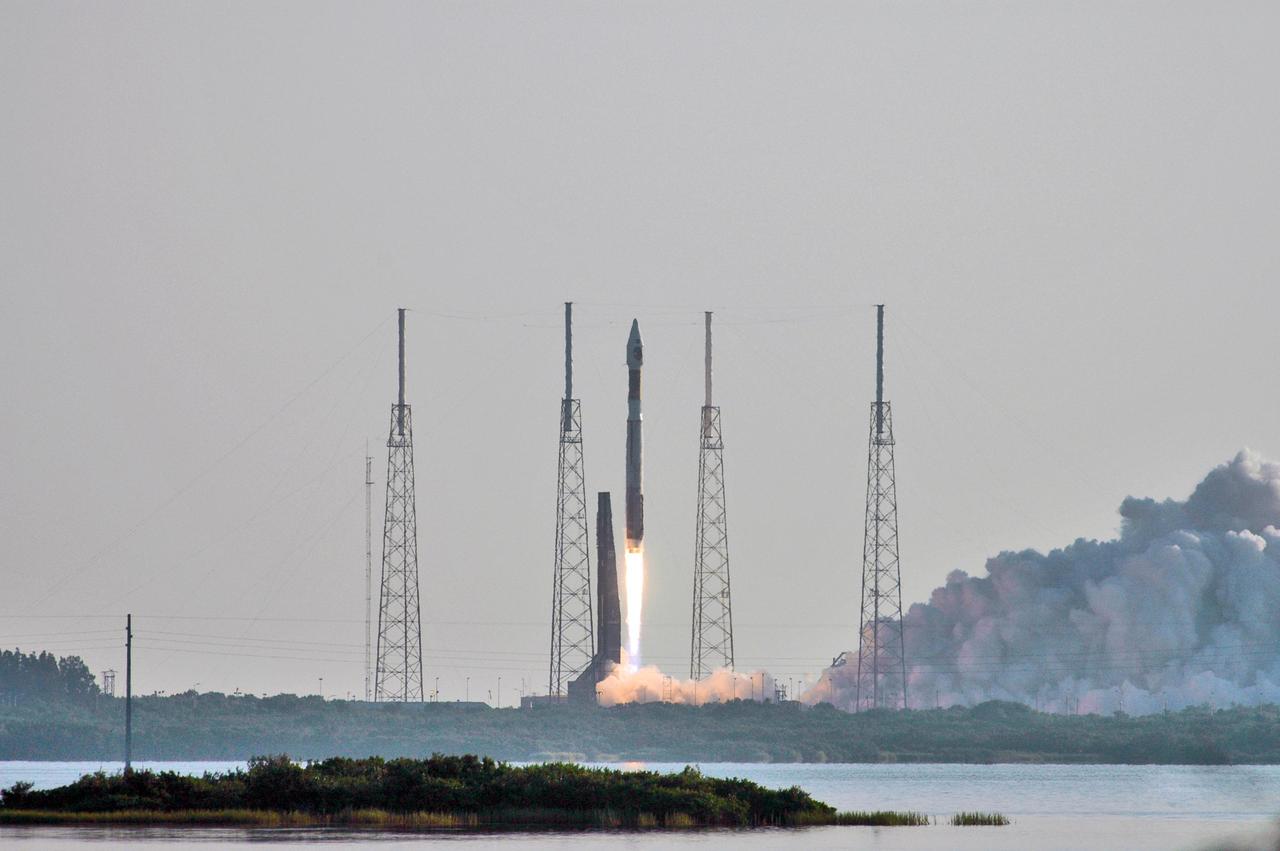
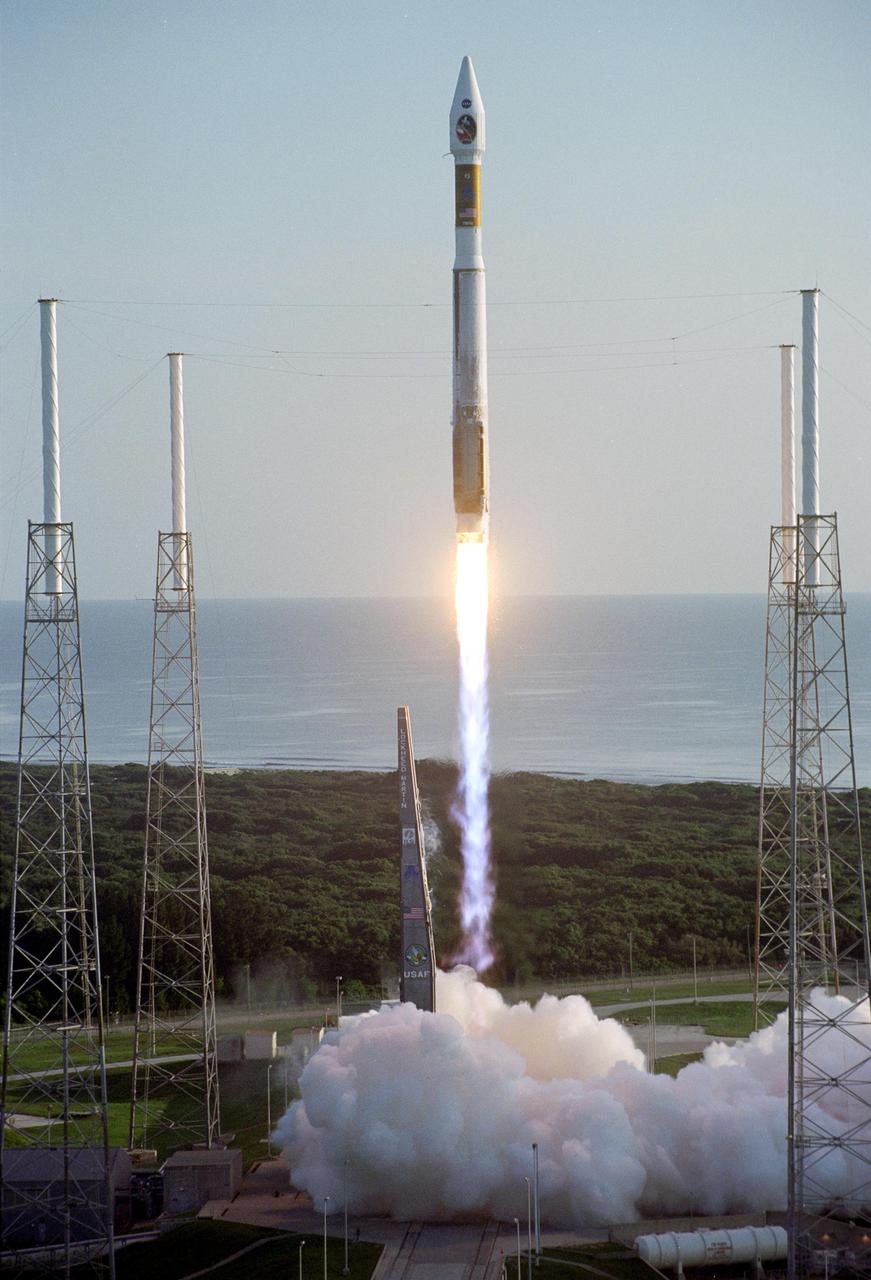
NASA Mars Reconnaissance Orbiter MRO launched at 7:43 a.m. EDT atop a Lockheed Martin Atlas V rocket from Launch Complex 41 at Cape Canaveral Air Force Station in Florida on Aug. 12, 2005.
Mars Reconnaissance Orbiter MRO Launches
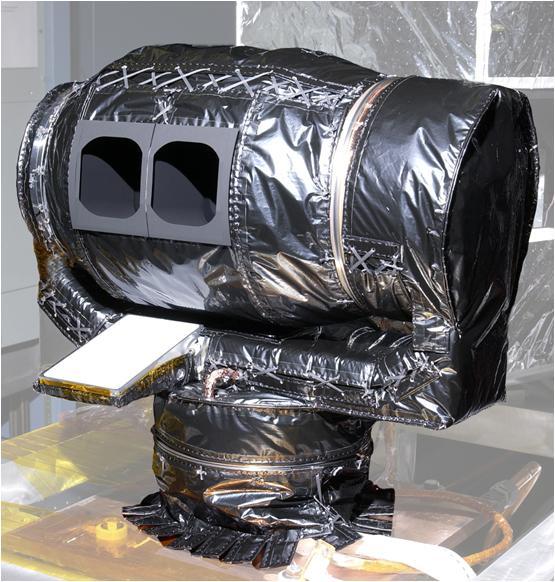
The Mars Climate Sounder instrument, shown here prior to its installation onto NASA Mars Reconnaissance Orbiter for the mission 2006 launch, will get a similar-looking sibling at Mars in 2016.
Climate Sounder Instrument for Mars Reconnaissance Orbiter
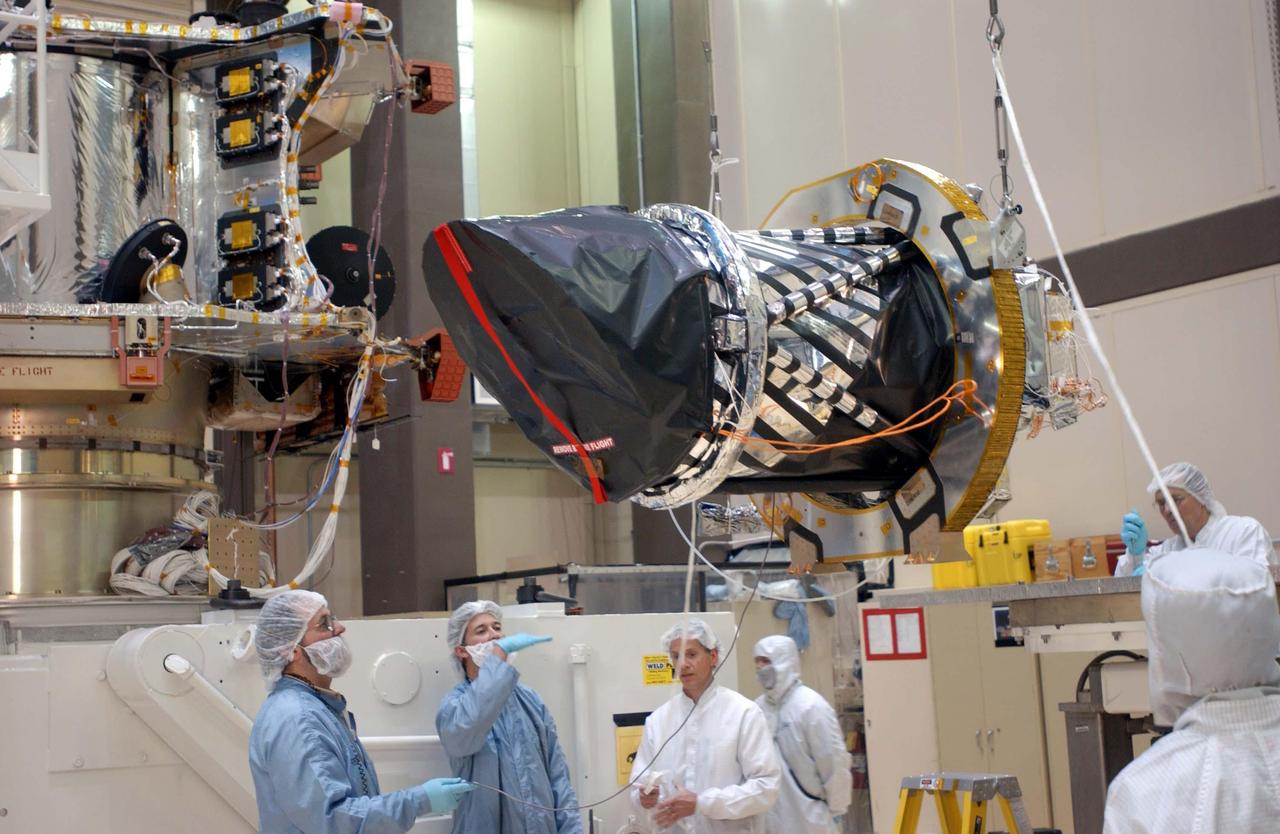
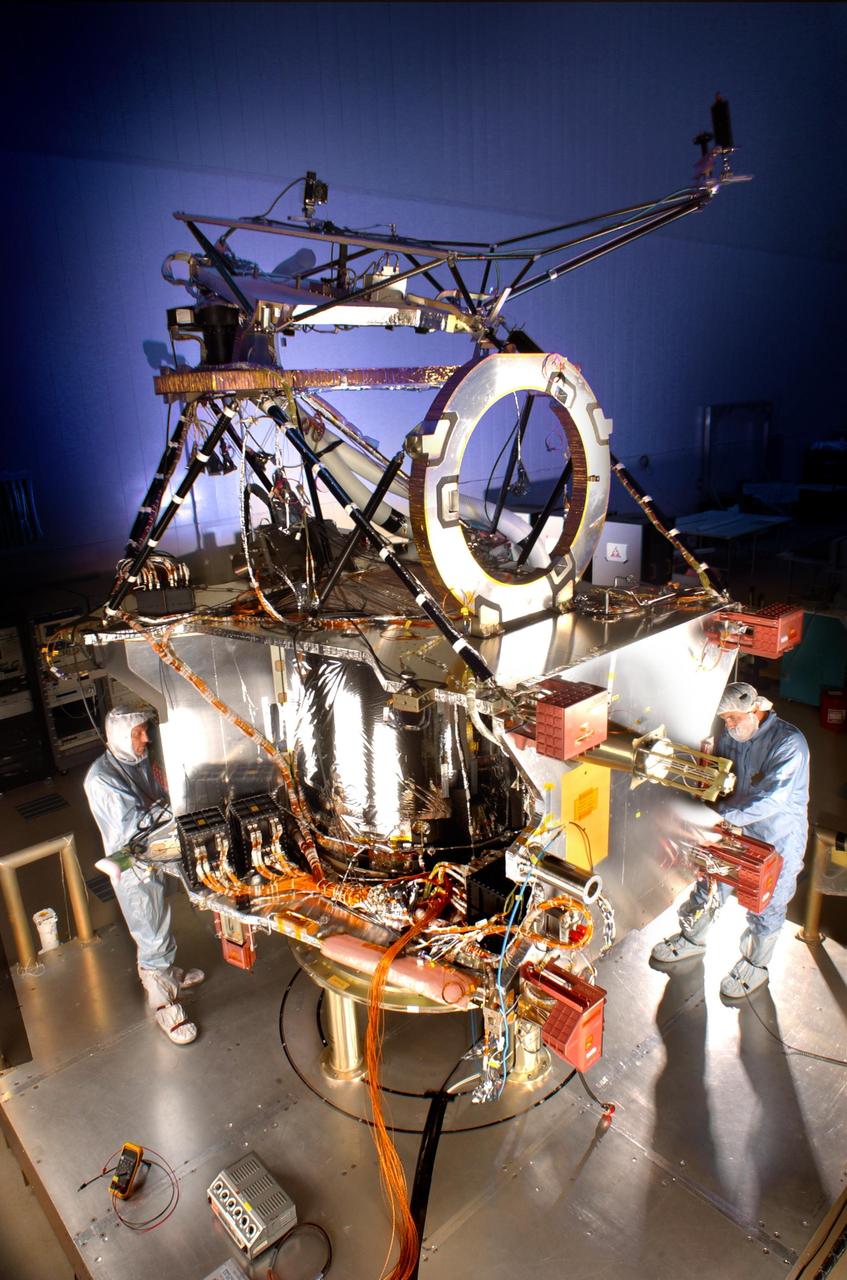
A telescopic camera called the High Resolution Imaging Science Experiment, or HiRISE, right was installed onto the main structure of NASA Mars Reconnaissance Orbiter left on Dec. 11, 2004 at Lockheed Martin Space Systems, Denver.
Camera Ready to Install on Mars Reconnaissance Orbiter
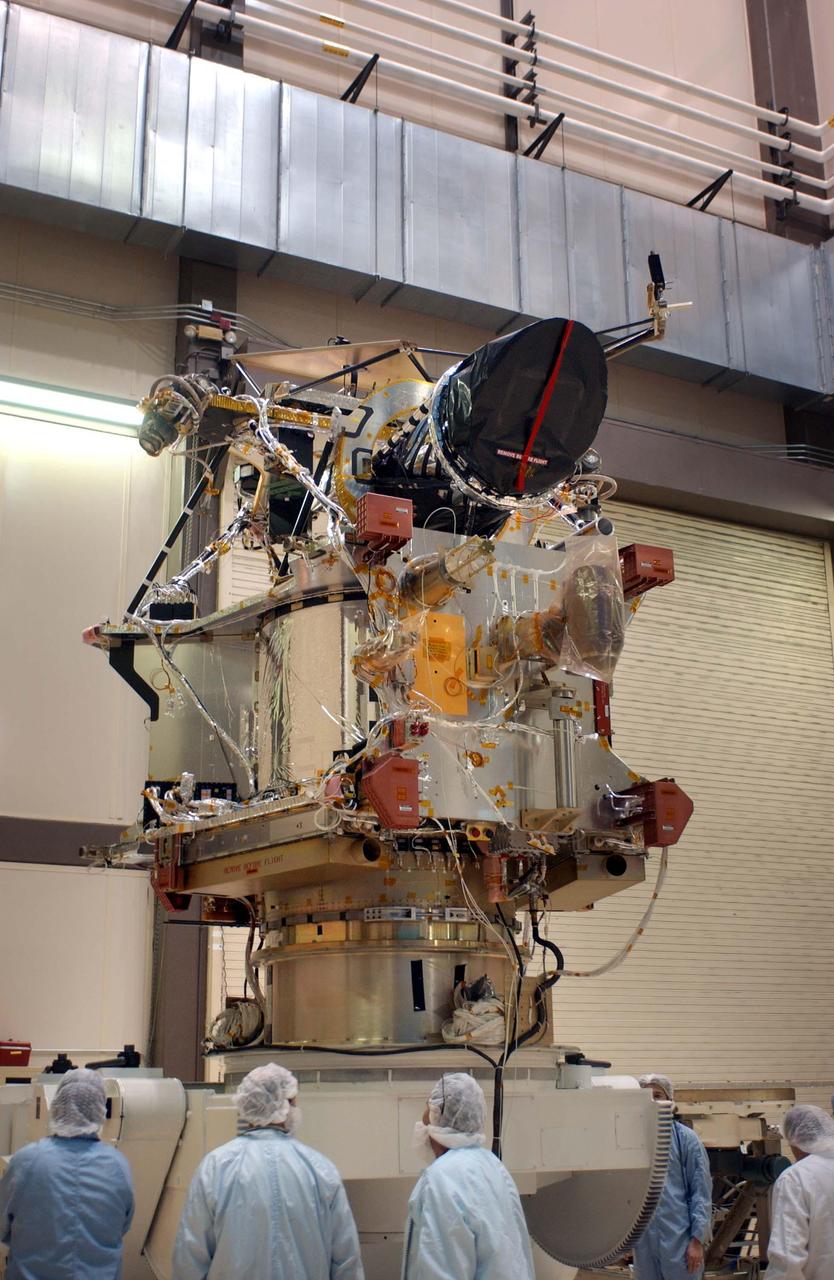
A telescopic camera called the High Resolution Imaging Science Experiment, or HiRISE, was installed onto the main structure of NASA Mars Reconnaissance Orbiter on Dec. 11, 2004 at Lockheed Martin Space Systems, Denver, Colo. HiRISE is at the top of the spacecraft in this image. Some other large components, including solar panels and the high-gain antenna, had not yet been installed. The orbiter is scheduled for launch in August 2005 carrying six science instruments. Ball Aerospace and Technology Corp., Boulder, Colo., built HiRISE for the University of Arizona, Tucson, to supply for the mission.  http://photojournal.jpl.nasa.gov/catalog/PIA07210
Mars Reconnaissance Orbiter After Camera Installation
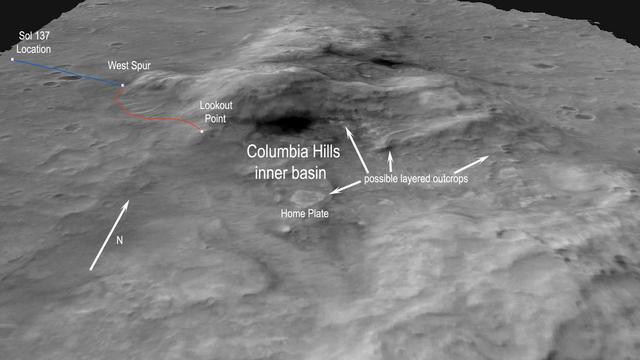
Columbia Hills from Orbit
The View from Low Orbit
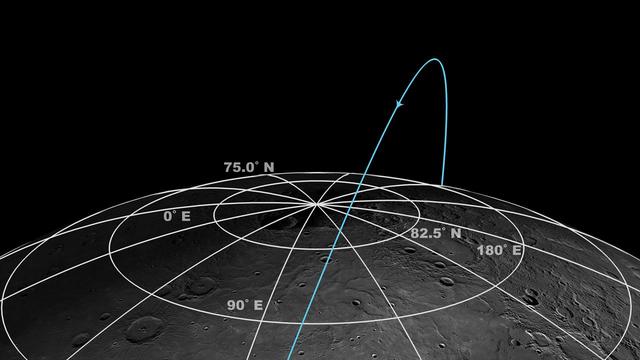
MESSENGER Polar Orbit
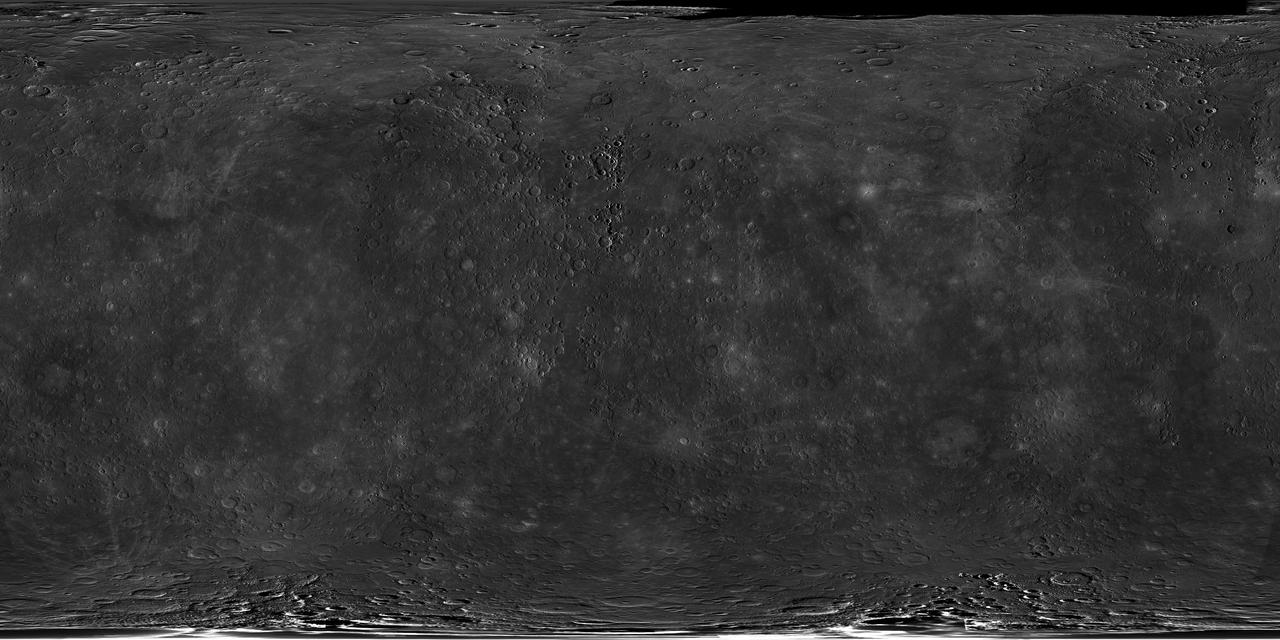
A Global View from Orbit
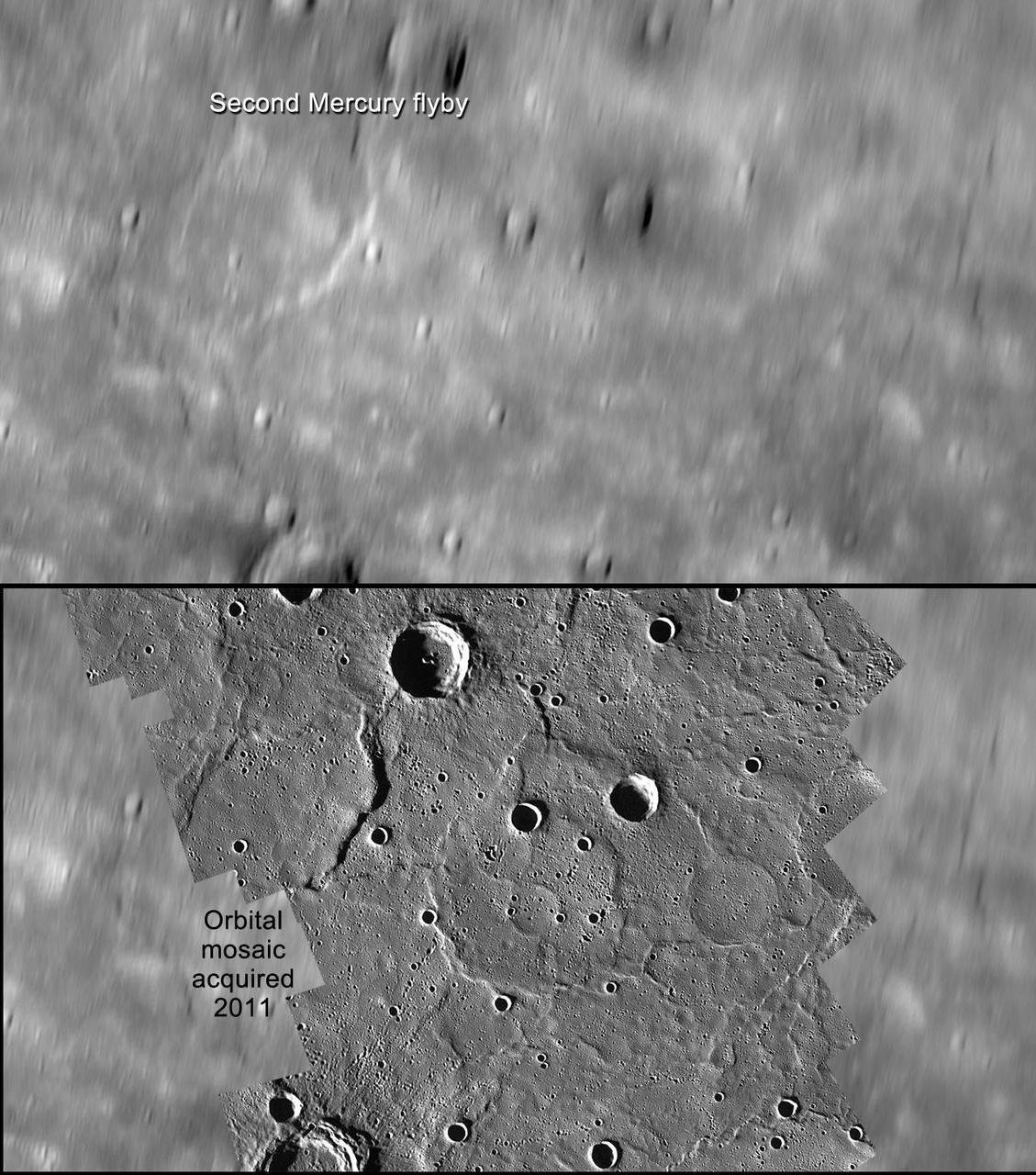
A Comparison of Flyby and Orbital Imaging
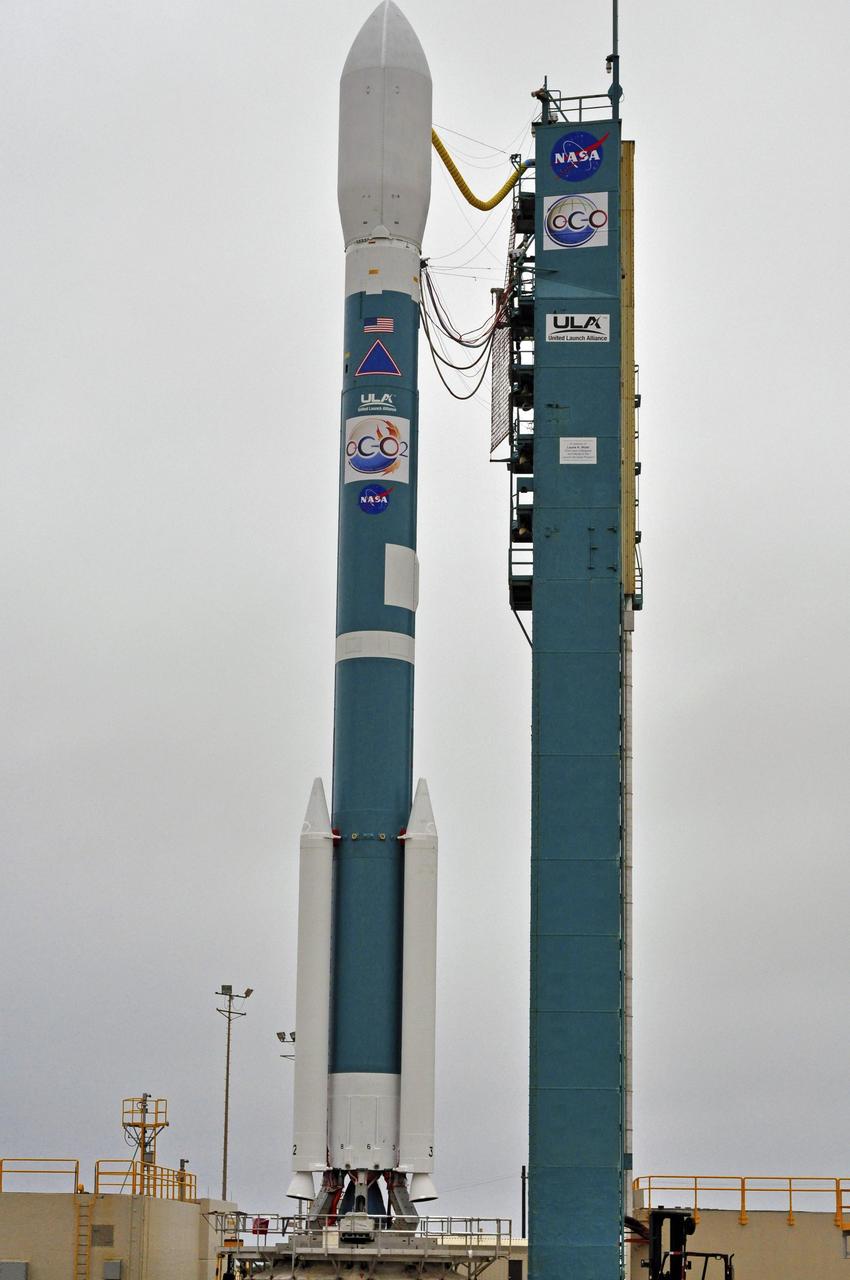
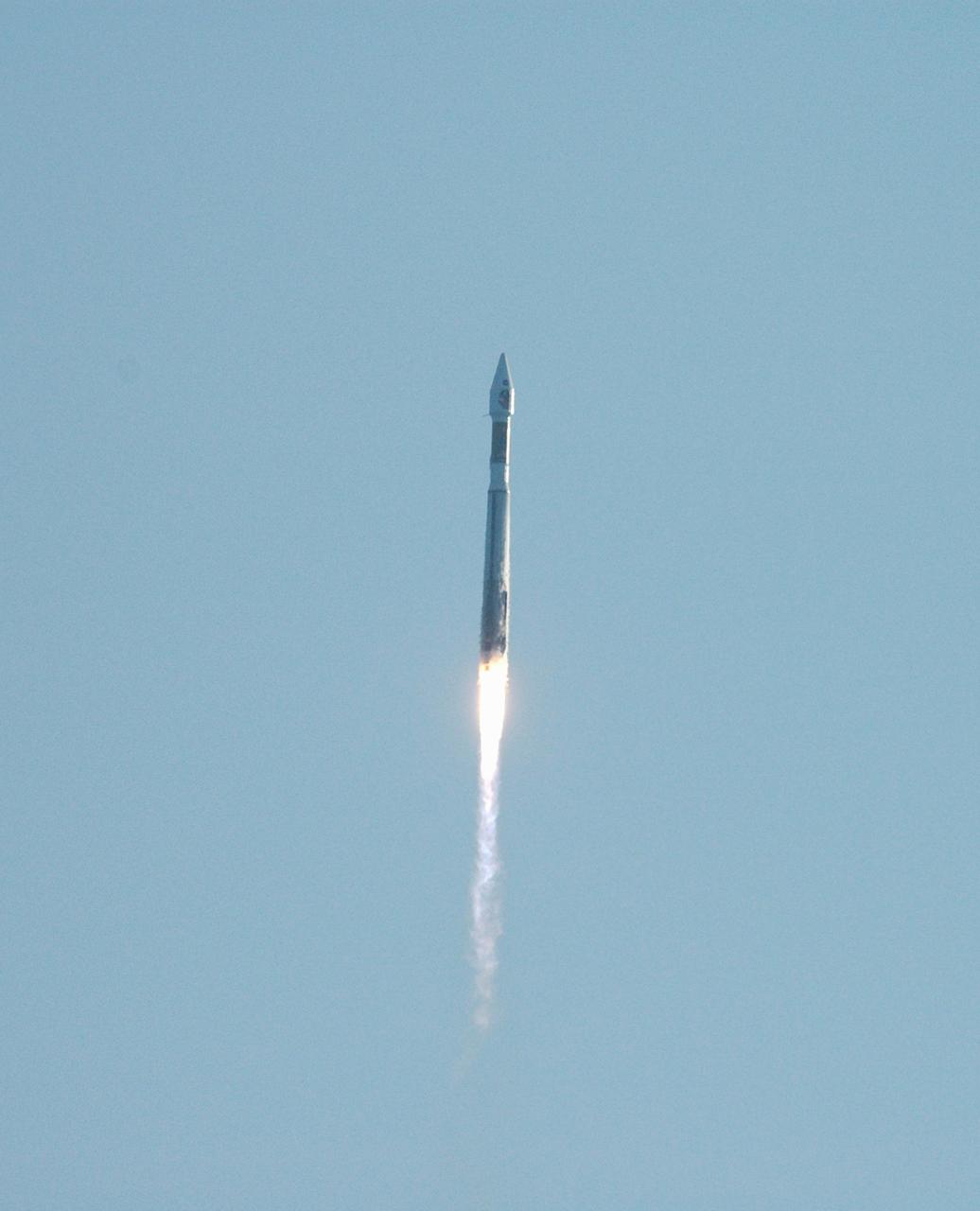
NASA Orbiting Carbon Observatory-2, perched atop a United Launch Alliance Delta II rocket, awaits launch at the Vandenberg Air Force Base in central California.
Orbiting Carbon Observatory-2 on the Pad
Loading the Lunar Reconnaissance Orbiter into the thermal vacuum chamber at Goddard Space Flight Center. Diviner is one of seven instruments aboard NASA LRO Mission.
Loading Lunar Reconnaissance Orbiter LRO in the Thermal Vacuum Chamber
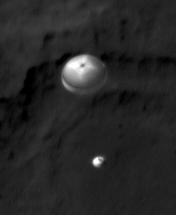
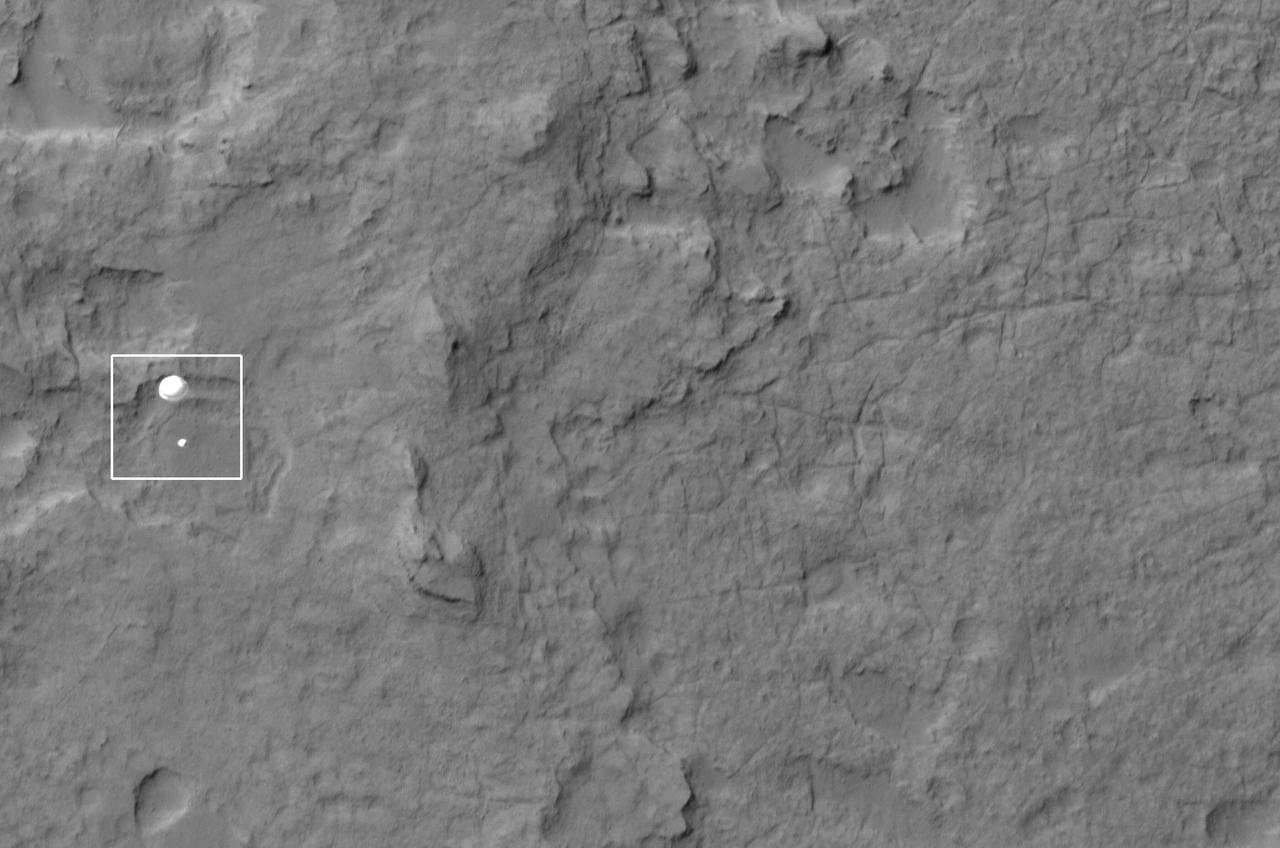
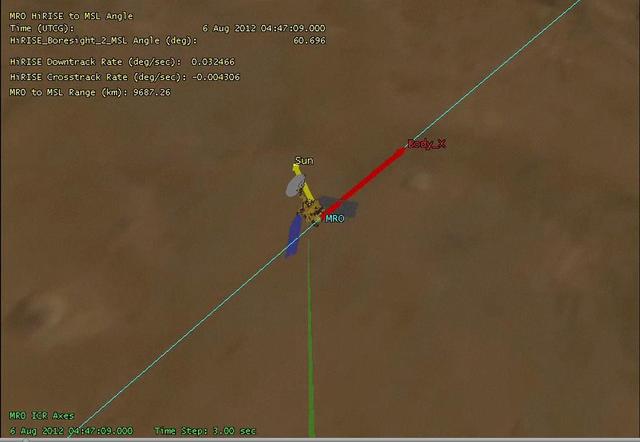
NASA Curiosity rover and its parachute were spotted by NASA Mars Reconnaissance Orbiter as Curiosity descended to the surface on Aug. 5 PDT Aug. 6 EDT. Curiosity and its parachute are in the center of the white box.
Curiosity Spotted on Parachute by Orbiter
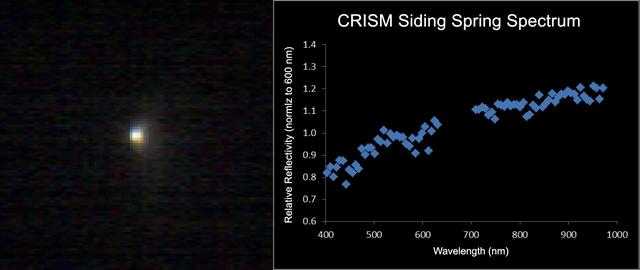
The Compact Reconnaissance Imaging Spectrometer for Mars CRISM aboard NASA Mars Reconnaissance Orbiter obtained this spectrum for comet C/2013 A1 Siding Spring during the comet close approach to Mars.
Mars-Orbiting Spectrometer Shows Dusty Comet Spectrum
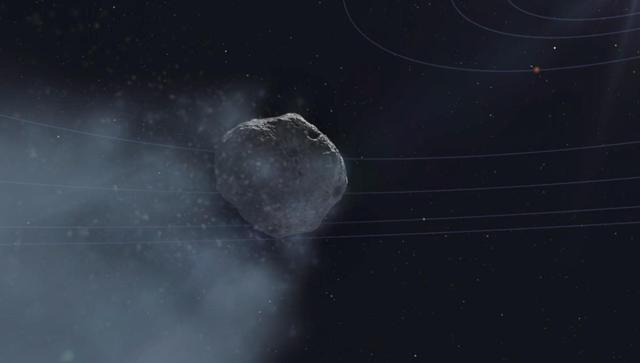
This frame from an animated artist rendering begins with NASA Mars Reconnaissance Orbiter spacecraft above Mars. The movie then transitions to a sequence of HiRISE images of the comet taken as it flew past Mars.
Mars Orbiter Observes Comet Siding Spring Animation
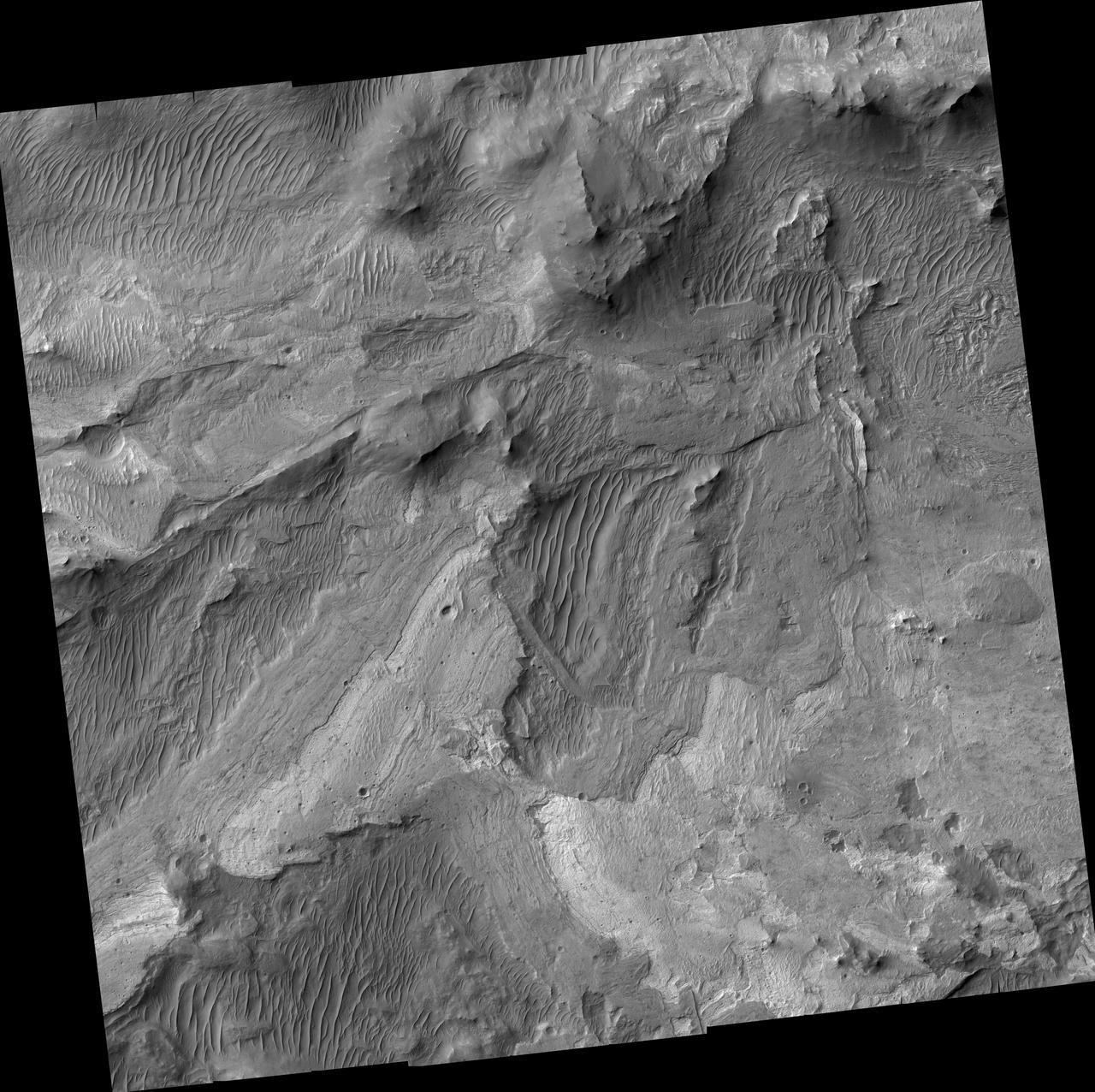
NASA Mars Reconnaissance Orbiter used its HiRISE camera to obtain this view of an area with unusual texture on the southern floor of Gale Crater. An enigmatic deposit appears to have flowed into the small crater from the south.
For a Decade Orbiting Mars: One Recent View
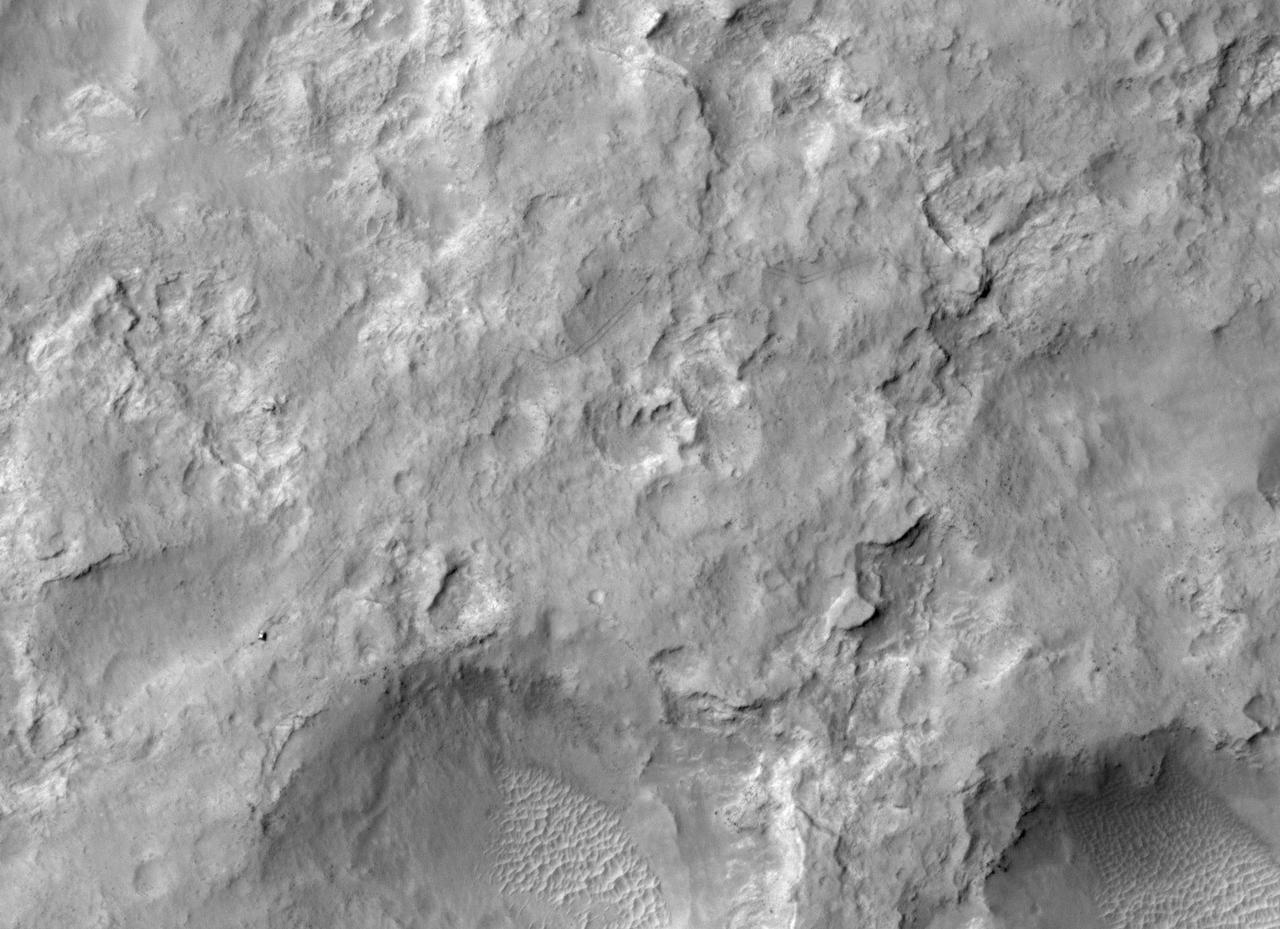
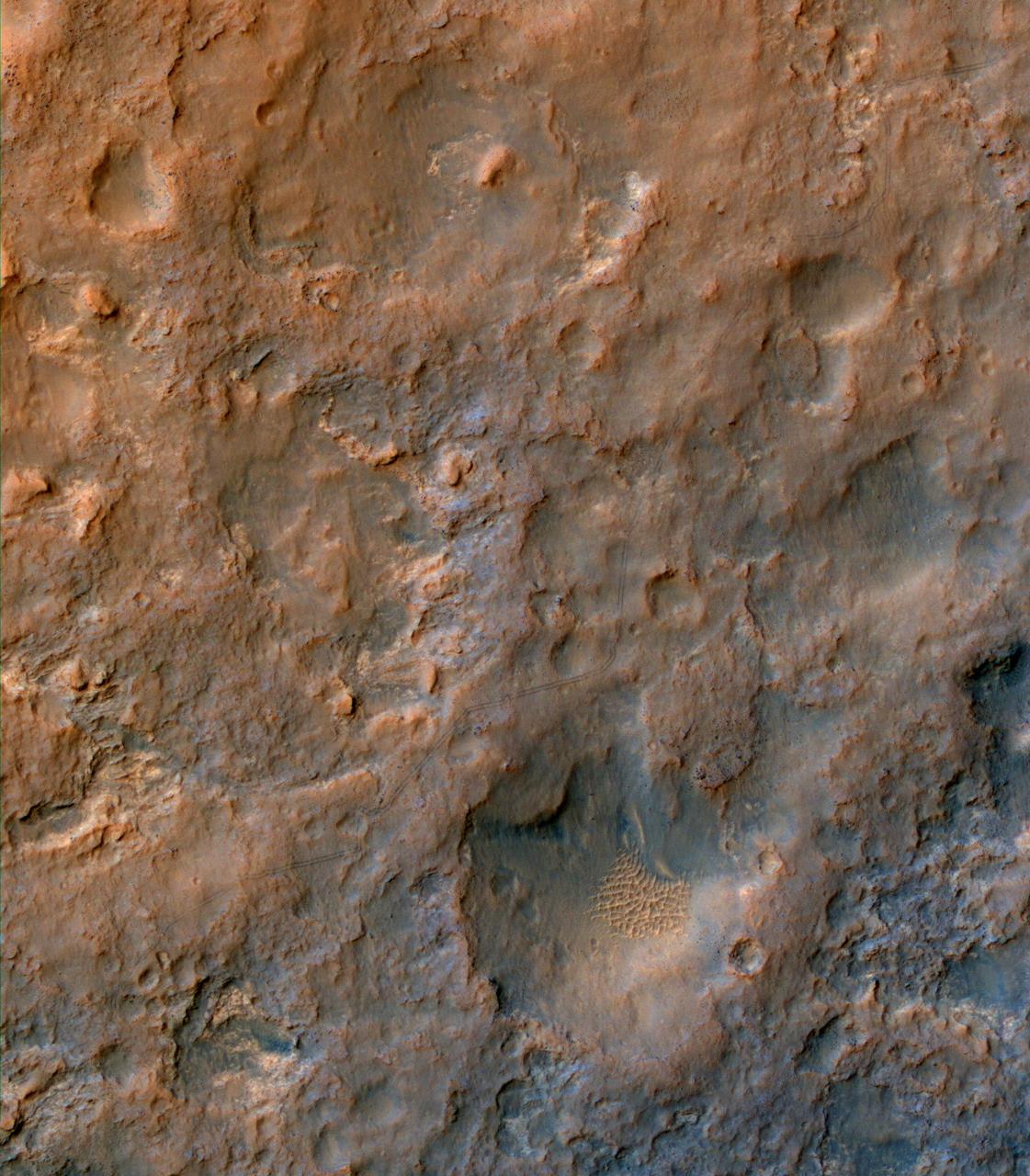
NASA Curiosity Mars rover and tracks left by its driving appear in this portion of a Dec. 11, 2013, observation by the HiRISE camera on NASA Mars Reconnaissance Orbiter. The rover is near the lower-left corner of this view.
Curiosity Trekking, Viewed from Orbit in December 2013
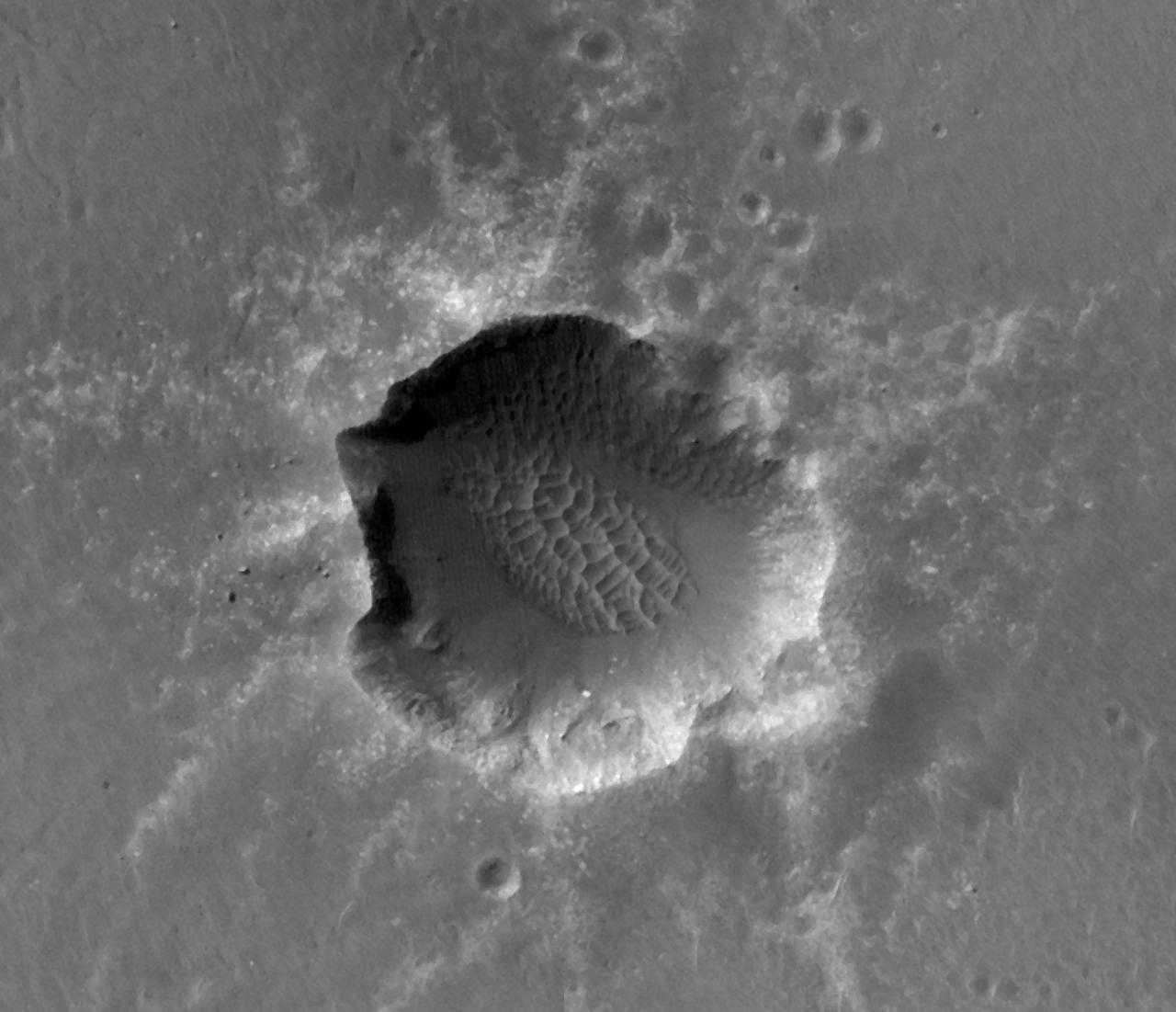
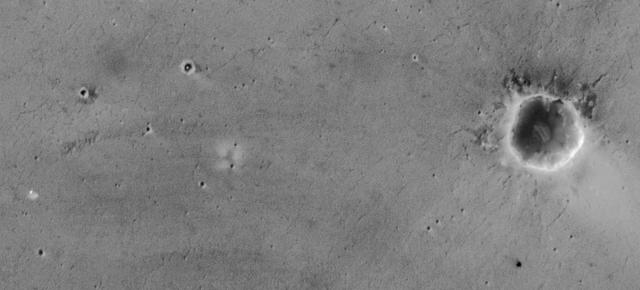
This image, acquired by NASA Mars Reconnaissance Orbiter, shows the rover Opportunity perched on the edge of Concepci?n crater, a fresh crater with dark rays that clearly overprint the north-trending, wind-shaped ripples, in Meridiani Planum.
Opportunity at Concepci?n Crater, Seen from Orbit
This image of Santa Maria Crater was taken by HiRISE camera on NASA Mars Reconnaissance Orbiter where NASA rover Opportunity approached Santa Maria Crater in December 2010.
Orbital Observations of Crater on Mars Rover Route
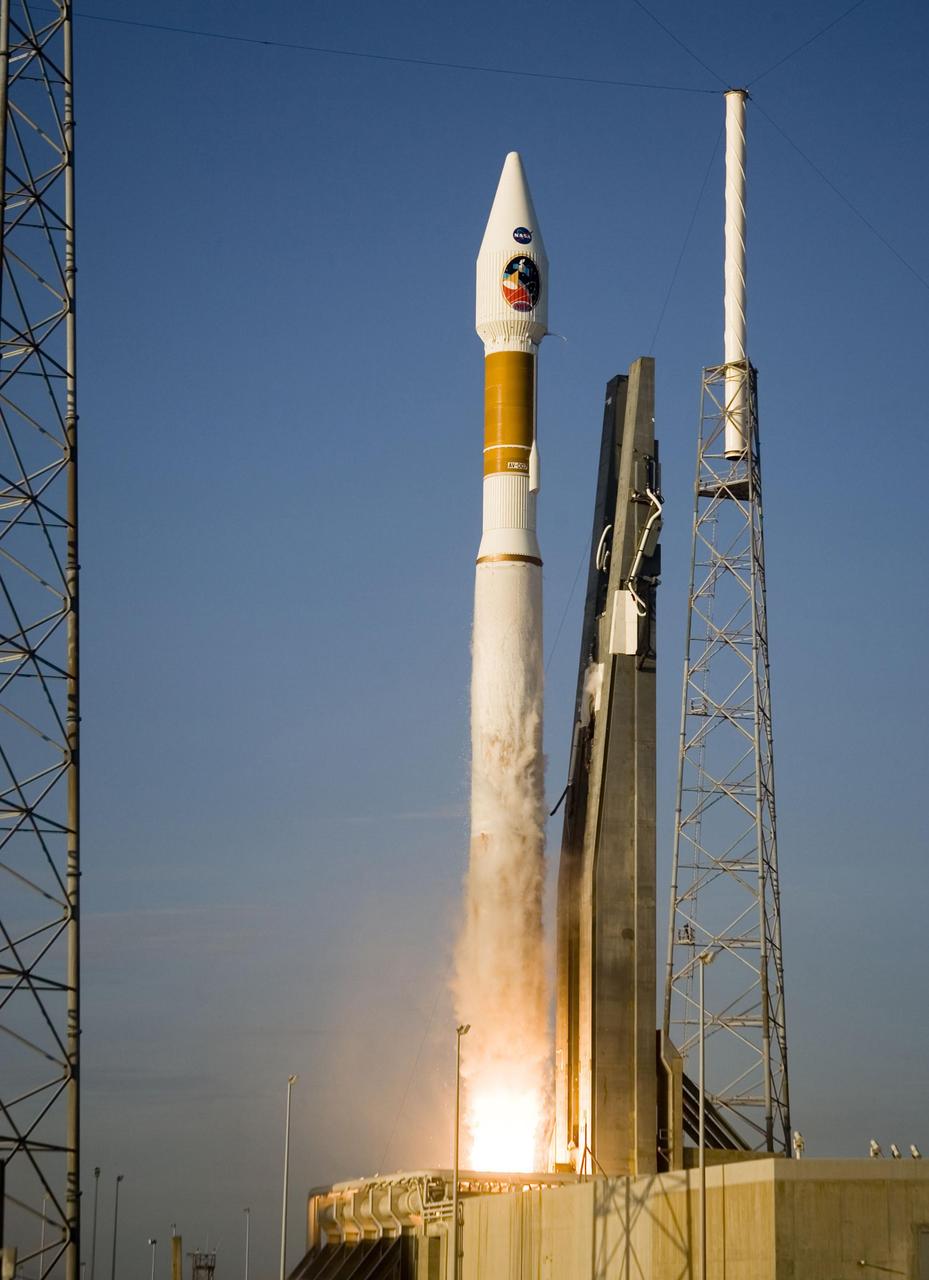
Atlas V launch vehicle, 19 stories tall, with a two-ton NASA Mars Reconnaissance Orbiter MRO on top, lifts off the pad on Launch Complex 41 at Cape Canaveral Air Force Station in Florida on Aug. 12, 2005.
Mars Reconnaissance Orbiter MRO Lifts Off
With the Atlantic Ocean as a backdrop, an Atlas V launch vehicle, 19 stories tall, with a two-ton NASA Mars Reconnaissance Orbiter MRO on top, roars away from Launch Complex 41 at Cape Canaveral Air Force Station.
Mars Reconnaissance Orbiter MRO Roars Away
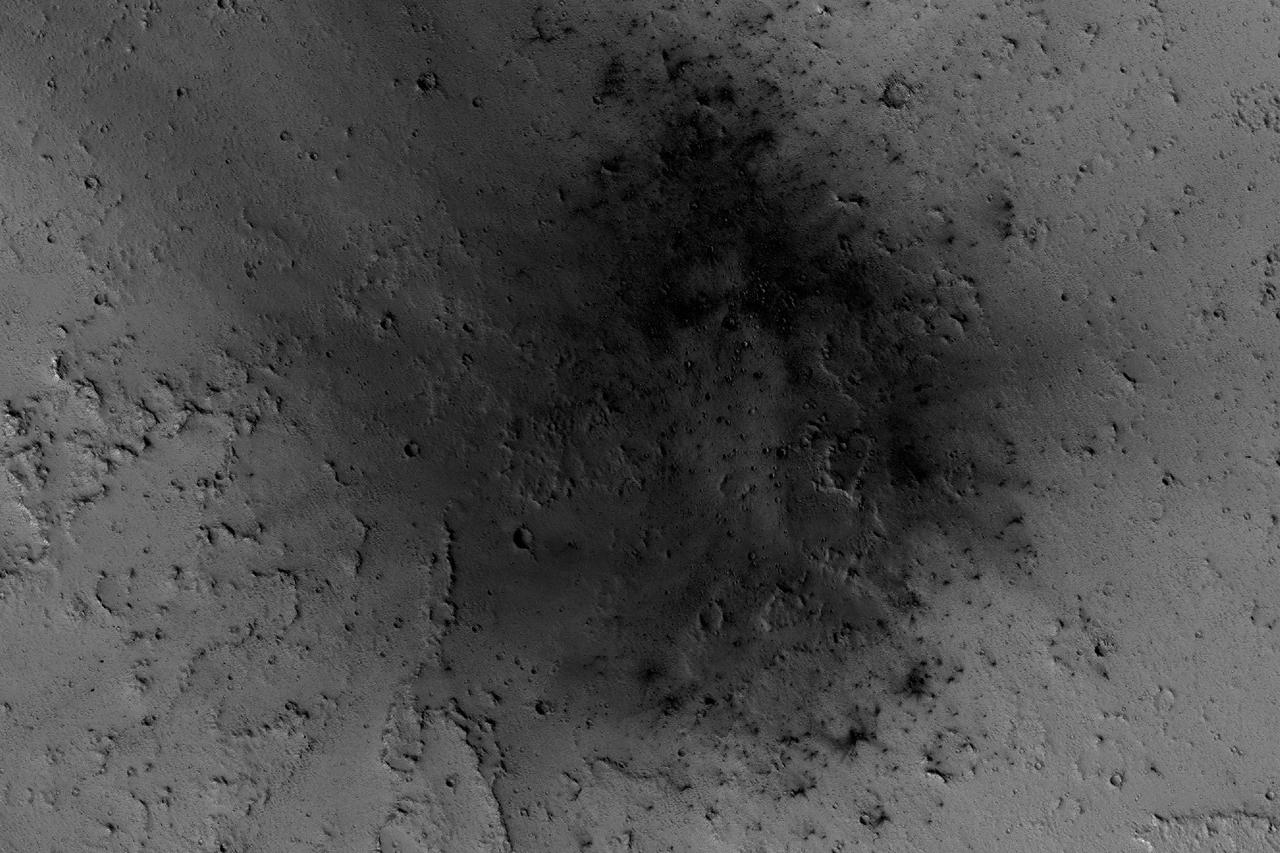
NASA's Mars Reconnaissance Orbiter has been observing Mars in sharp detail for more than a decade, enabling it to document many types of changes, such as the way winds alter the appearance of this recent impact site.  The space-rock impact that created this blast zone occurred sometime between September 2005 and February 2006, as bracketed by observations made with the Mars Orbiter Camera on NASA's Mars Global Surveyor spacecraft. The location is between two large volcanos, named Ascraeus Mons and Pavonis Mons, in a dusty area of the Tharsis region of Mars. During the period from 2007 to 2012, winds blowing through the pass between the volcanoes darkened some regions and brightened others, probably by removing and depositing dust.   The view covers an area about 1.0 mile (1.6 kilometers) across, at 7 degrees north latitude, 248 degrees east longitude. North is toward the top.  An animation is availalble at http://photojournal.jpl.nasa.gov/catalog/PIA21267
Mars Reconnaissance Orbiter Observes Changes
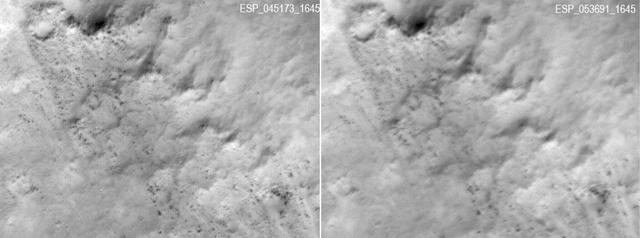
These two frames were taken of the same place on Mars by the same orbiting camera before (left) and after some images from the camera began showing unexpected blur.  The images are from the High Resolution Imaging Science Experiment (HiRISE) camera on NASA's Mars Reconnaissance Orbiter. They show a patch of ground about 500 feet or 150 meters wide in Gusev Crater. The one on the left, from HiRISE observation ESP_045173_1645, was taken March 16, 2016. The one on the right was taken Jan. 9, 2018. Gusev Crater, at 15 degrees south latitude and 176 degrees east longitude, is the landing site of NASA's Spirit Mars rover in 2004 and a candidate landing site for a rover to be launched in 2020. HiRISE images provide important information for evaluating potential landing sites. The smallest boulders with measurable diameters in the left image are about 3 feet (90 centimeters) wide. In the blurred image, the smallest measurable are about double that width.  As of early 2018, most full-resolution images from HiRISE are not blurred, and the cause of the blur is still under investigation. Even before blurred images were first seen, in 2017, observations with HiRISE commonly used a technique that covers more ground area at half the resolution. This shows features smaller than can be distinguished with any other camera orbiting Mars, and little blurring has appeared in these images.   https://photojournal.jpl.nasa.gov/catalog/PIA22215
Slight Blurring in Newer Image from Mars Orbiter
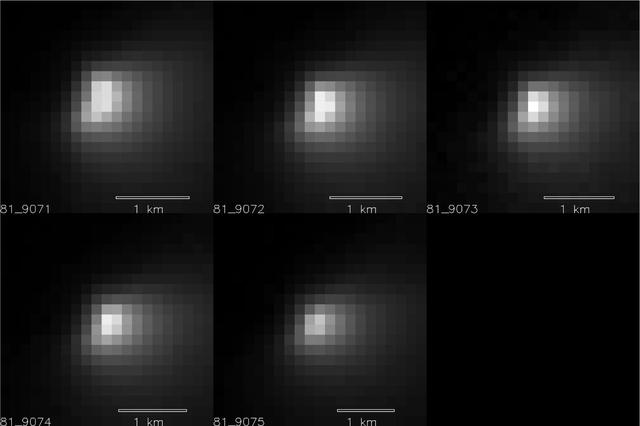
Five images of comet Siding Spring taken within a 35-minute period as it passed near Mars on Oct. 19, 2014, provide information about the size of the comet nucleus. The images were acquired by the HiRISE camera on NASA Mars Reconnaissance Orbiter.
Mars Orbiter Sizes Up Passing Comet
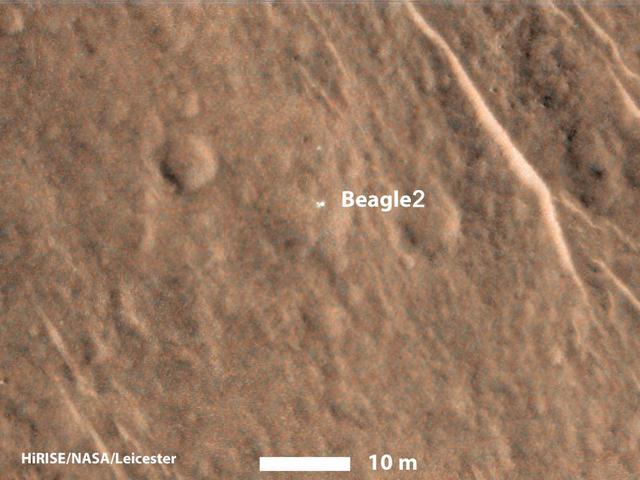
This annotated image taken on Dec. 15, 2014 by NASA Mars Reconnaissance Orbiter shows a bright feature interpreted as the United Kingdom Beagle 2 Lander, which was never heard from after its expected Dec. 25, 2003, landing.
Beagle 2 Lander Observed by Mars Reconnaissance Orbiter
This frame from an animation shows NASA Mars Reconnaissance Orbiter flying over NASA Curiosity shown in pink as the rover lands on the Red Planet.
Mars Reconnaissance Orbiter Flying Over Mars
New Mars Camera First Image of Mars from Mapping Orbit Full Frame
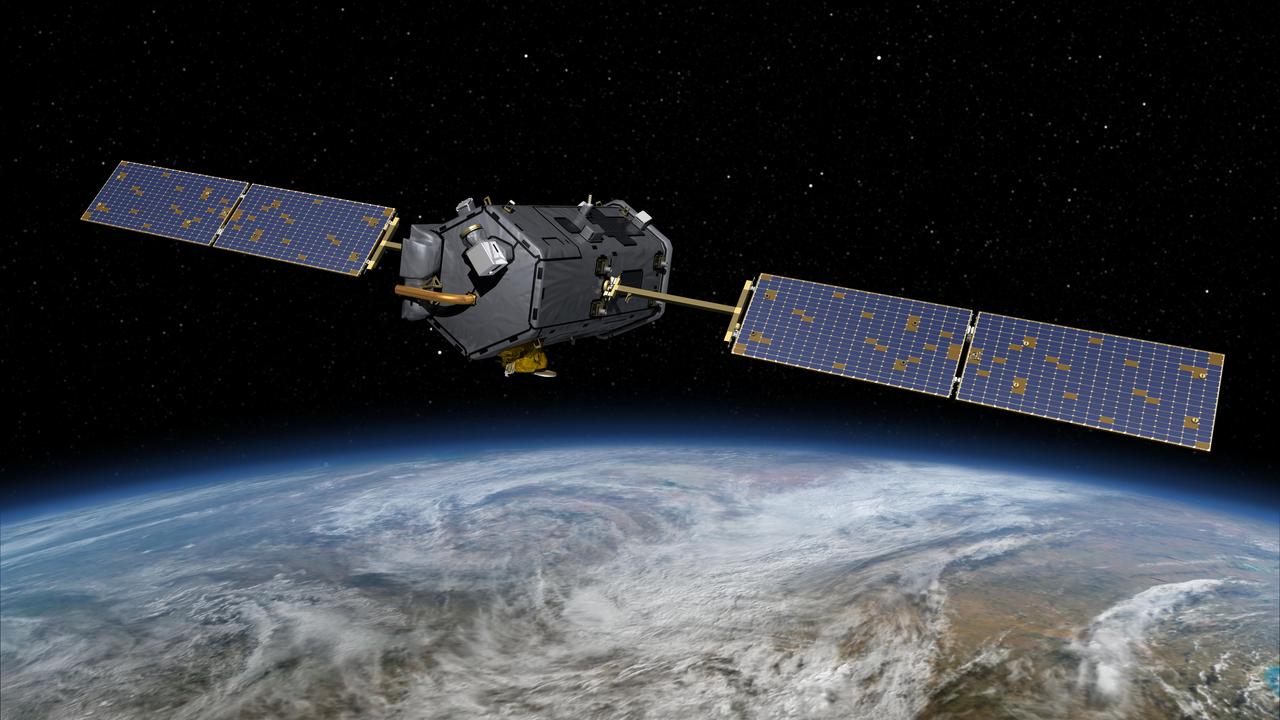
This most recent artist rendering shows NASA Orbiting Carbon Observatory OCO-2, one of five new NASA Earth science missions set to launch in 2014, and one of three managed by the Jet Propulsion Laboratory JPL.
NASA Orbiting Carbon Observatory OCO-2 Artist Concept
Two parallel tracks left by the wheels of NASA Curiosity Mars rover cross rugged ground in this portion of an observation by the HiRISE camera on NASA Mars Reconnaissance Orbiter on Dec. 11, 2013. The rover itself does not appear in this image.
Curiosity Rover Tracks, Viewed from Orbit in December 2013
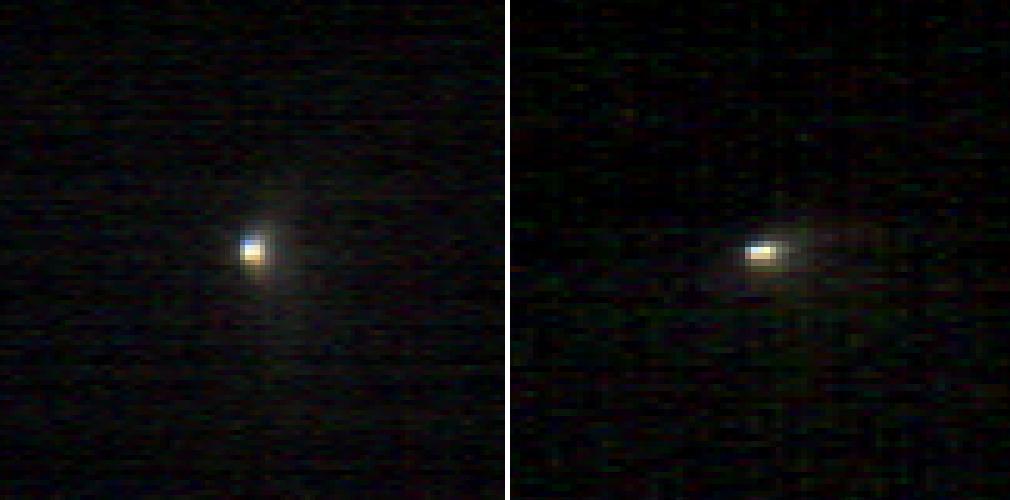
These two infrared images of comet C/2013 A1 Siding Spring were taken by the Compact Reconnaissance Imaging Spectrometer for Mars CRISM aboard NASA Mars Reconnaissance Orbiter on Oct. 19, 2014.
Images From Mars-Orbiting Spectrometer Show Comet Coma
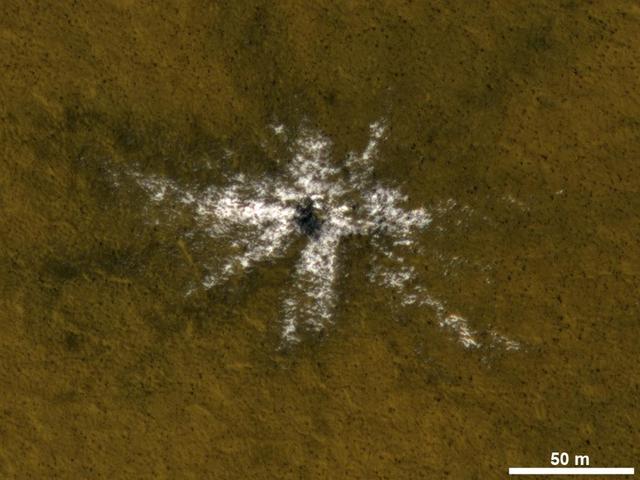
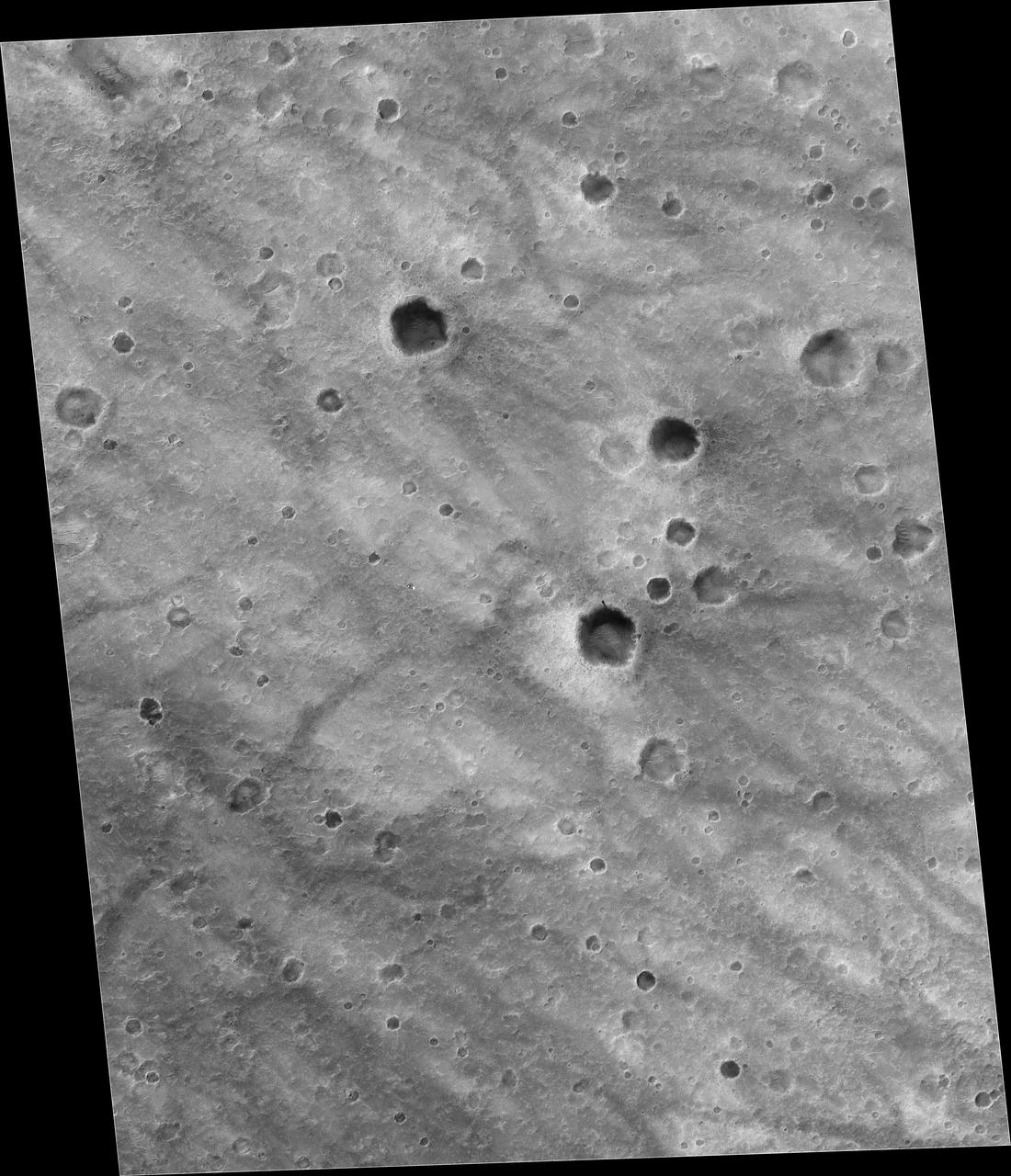
This image taken by NASA Mars Reconnaissance Orbite on May 19, 2010, shows an impact crater that had not existed when the same location on Mars was previously observed in March 2008.
Mars Orbiter Laser Altimeter, Thermal Emission Imaging System
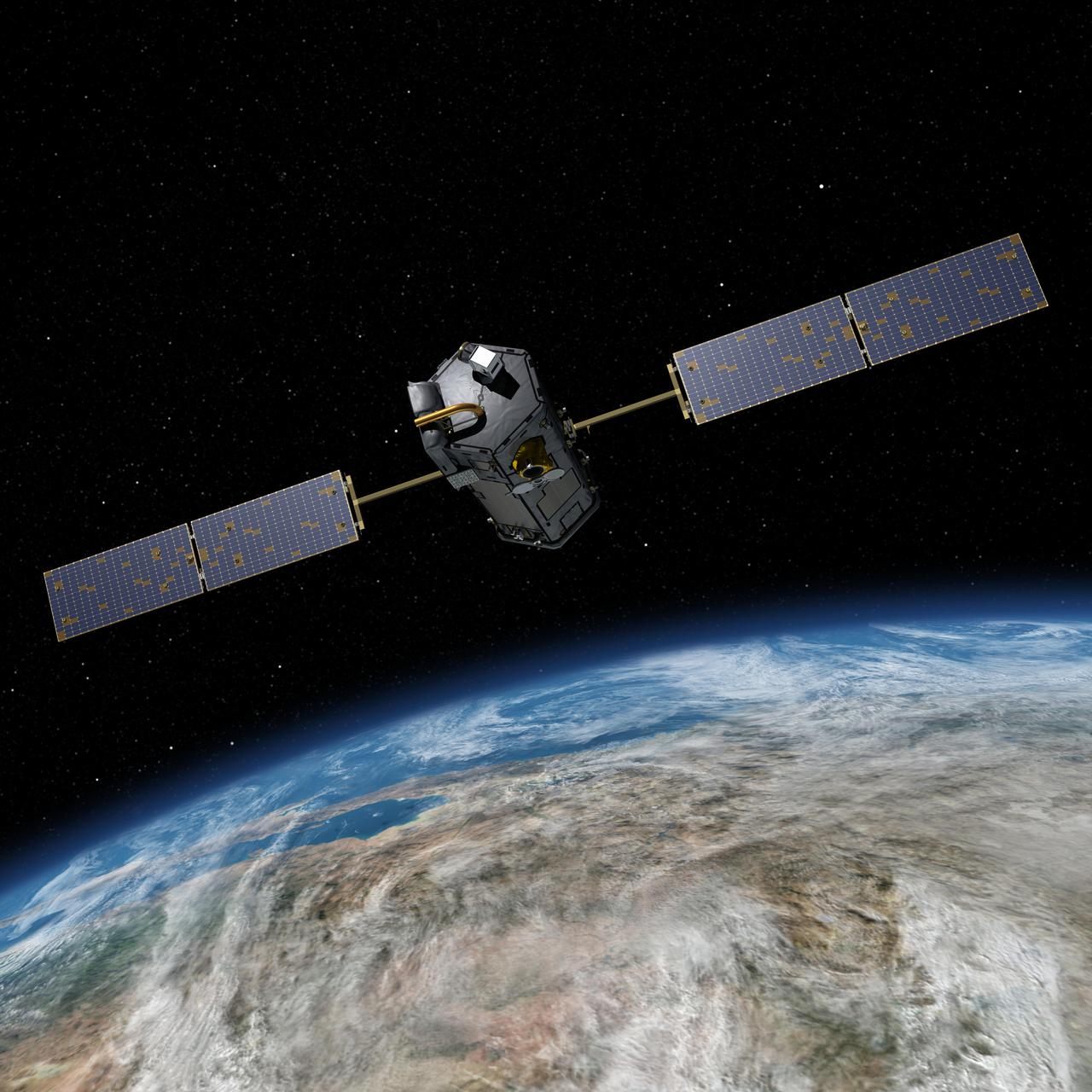
This most recent artist rendering shows NASA Orbiting Carbon Observatory OCO-2, one of five new NASA Earth science missions set to launch in 2014, and one of three managed by the Jet Propulsion Laboratory JPL.
NASA Orbiting Carbon Observatory OCO-2 Artist Concept
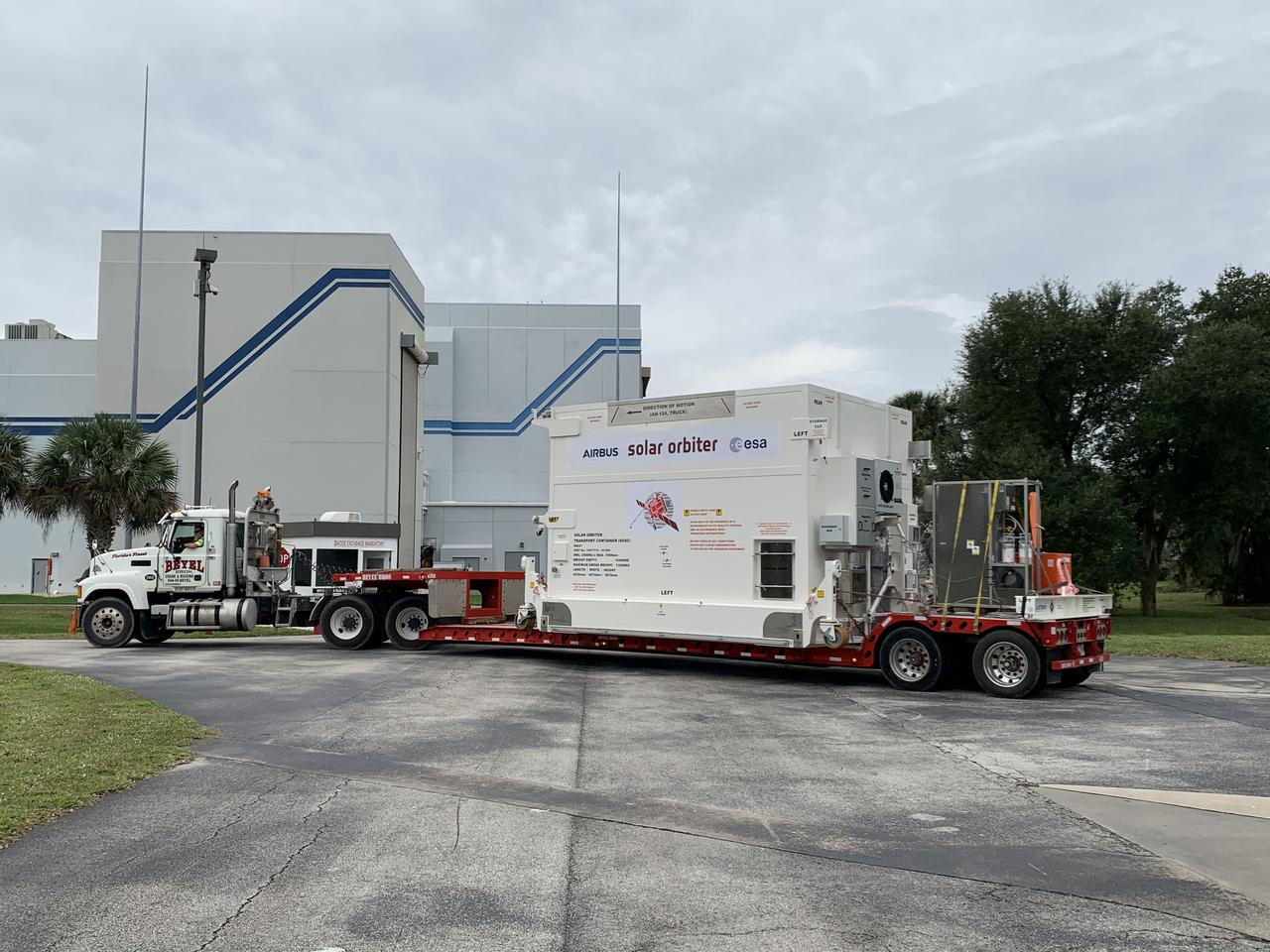
The Solar Orbiter spacecraft is transferred between buildings as it undergoes prelaunch processing at the Astrotech Space Operations facility in Titusville, Florida. Solar Orbiter aims to study the Sun, its outer atmosphere and solar wind, and will provide the first images of the Sun’s poles. Solar Orbiter is a space mission of international collaboration between ESA (European Space Agency) and NASA. The spacecraft has been developed by Airbus. NASA’s Launch Services Program based at Kennedy Space Center in Florida is managing the launch. Liftoff is scheduled for Feb. 5, 2020, from Cape Canaveral Air Force Station aboard a United Launch Alliance Atlas V rocket.
Solar Orbiter Processing: Spacecraft Transfer at Astrotech
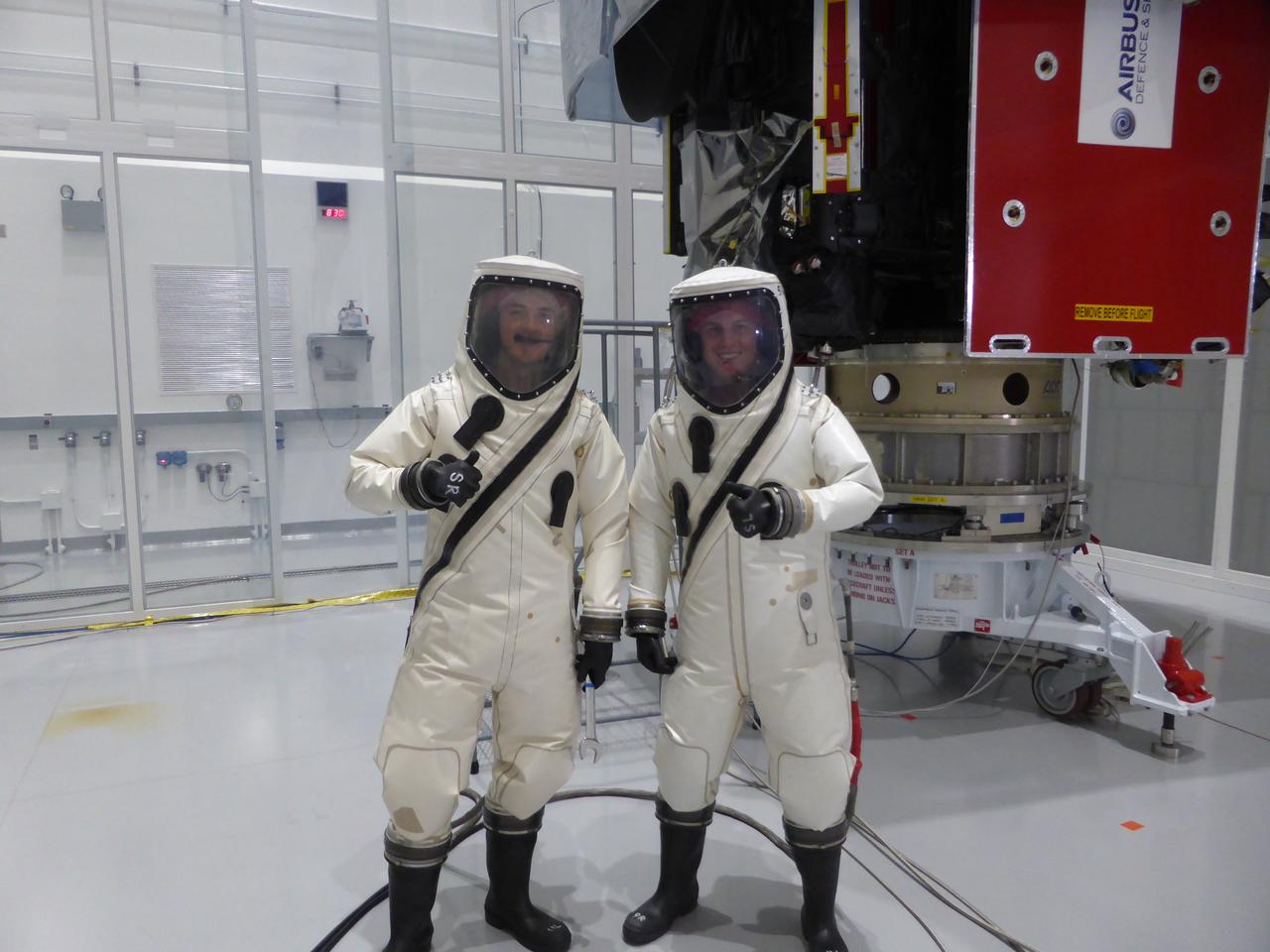
Members of the Airbus team preparing the Solar Orbiter spacecraft for launch pause for a photo inside the Astrotech Space Operations facility in Titusville, Florida. Solar Orbiter aims to study the Sun, its outer atmosphere and solar wind, and will provide the first images of the Sun’s poles. Solar Orbiter is a space mission of international collaboration between ESA (European Space Agency) and NASA. The spacecraft has been developed by Airbus. NASA’s Launch Services Program based at Kennedy Space Center in Florida is managing the launch. Liftoff is scheduled for Feb. 5, 2020, from Cape Canaveral Air Force Station aboard a United Launch Alliance Atlas V rocket.
Solar Orbiter Processing: Propellant Loading Operations at Astro
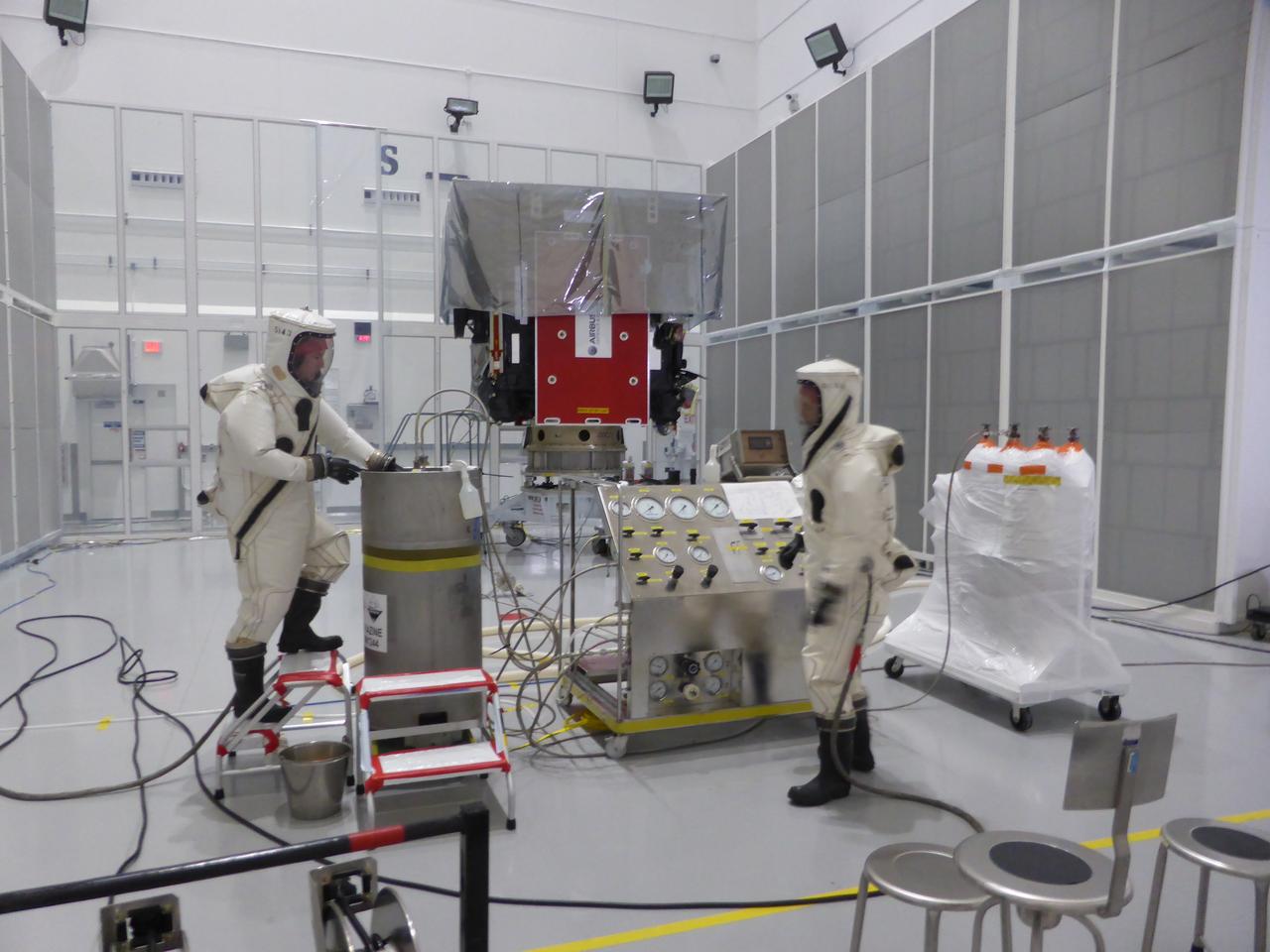
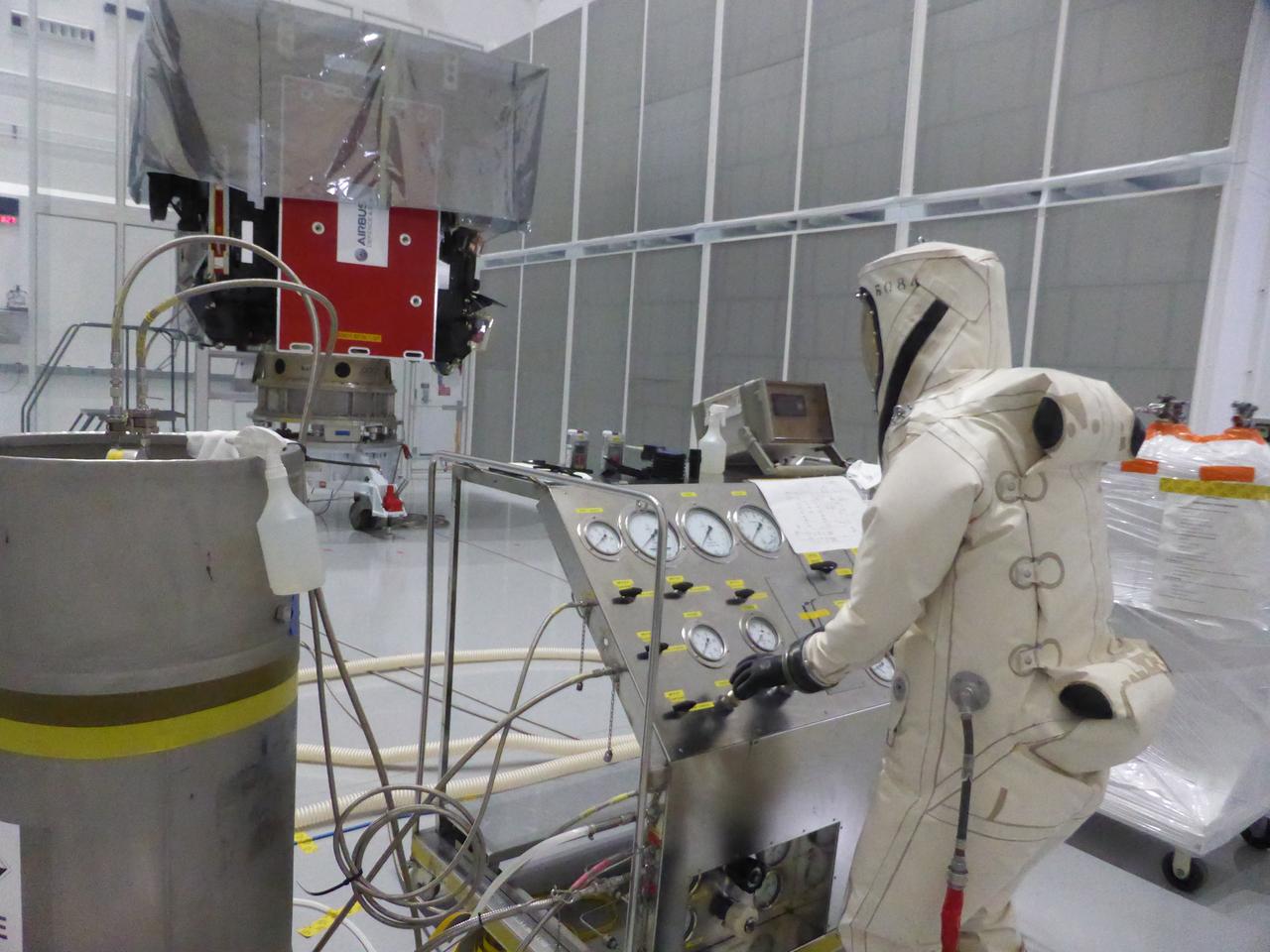
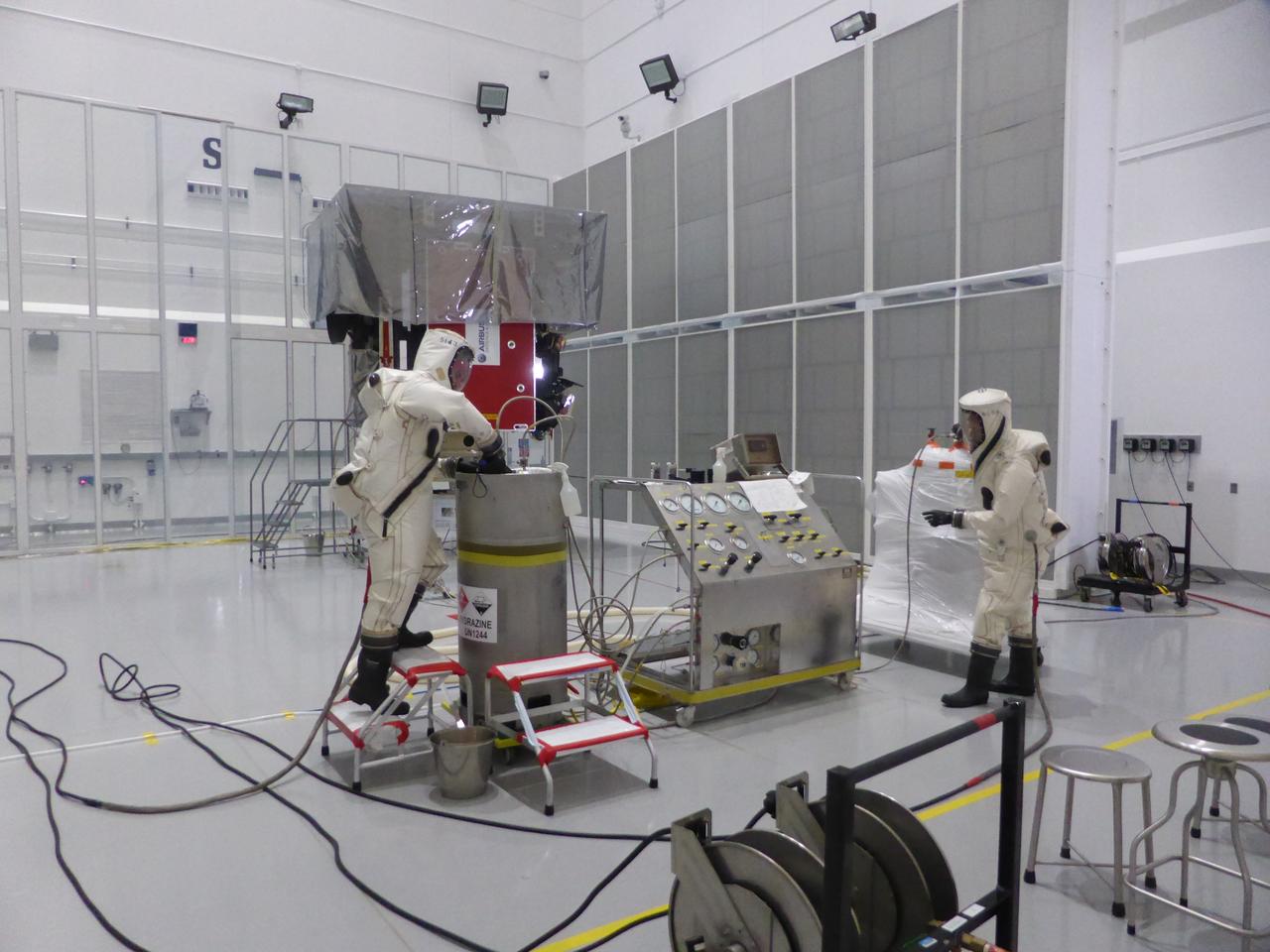
The Solar Orbiter spacecraft is loaded with propellants during processing activities inside the Astrotech Space Operations facility in Titusville, Florida. Solar Orbiter aims to study the Sun, its outer atmosphere and solar wind, and will provide the first images of the Sun’s poles. Solar Orbiter is a space mission of international collaboration between ESA (European Space Agency) and NASA. The spacecraft has been developed by Airbus. NASA’s Launch Services Program based at Kennedy Space Center in Florida is managing the launch. Liftoff is scheduled for Feb. 5, 2020, from Cape Canaveral Air Force Station aboard a United Launch Alliance Atlas V rocket.
Solar Orbiter Processing: Propellant Loading Operations at Astro
The Solar Orbiter spacecraft is loaded with propellants during processing activities inside the Astrotech Space Operations facility in Titusville, Florida. Solar Orbiter aims to study the Sun, its outer atmosphere and solar wind, and will provide the first images of the Sun’s poles. Solar Orbiter is a space mission of international collaboration between ESA (European Space Agency) and NASA. The spacecraft has been developed by Airbus. NASA’s Launch Services Program based at Kennedy Space Center in Florida is managing the launch. Liftoff is scheduled for Feb. 5, 2020, from Cape Canaveral Air Force Station aboard a United Launch Alliance Atlas V rocket.
Solar Orbiter Processing: Propellant Loading Operations at Astro
The Solar Orbiter spacecraft is loaded with propellants during processing activities inside the Astrotech Space Operations facility in Titusville, Florida. Solar Orbiter aims to study the Sun, its outer atmosphere and solar wind, and will provide the first images of the Sun’s poles. Solar Orbiter is a space mission of international collaboration between ESA (European Space Agency) and NASA. The spacecraft has been developed by Airbus. NASA’s Launch Services Program based at Kennedy Space Center in Florida is managing the launch. Liftoff is scheduled for Feb. 5, 2020, from Cape Canaveral Air Force Station aboard a United Launch Alliance Atlas V rocket.
Solar Orbiter Processing: Propellant Loading Operations at Astro
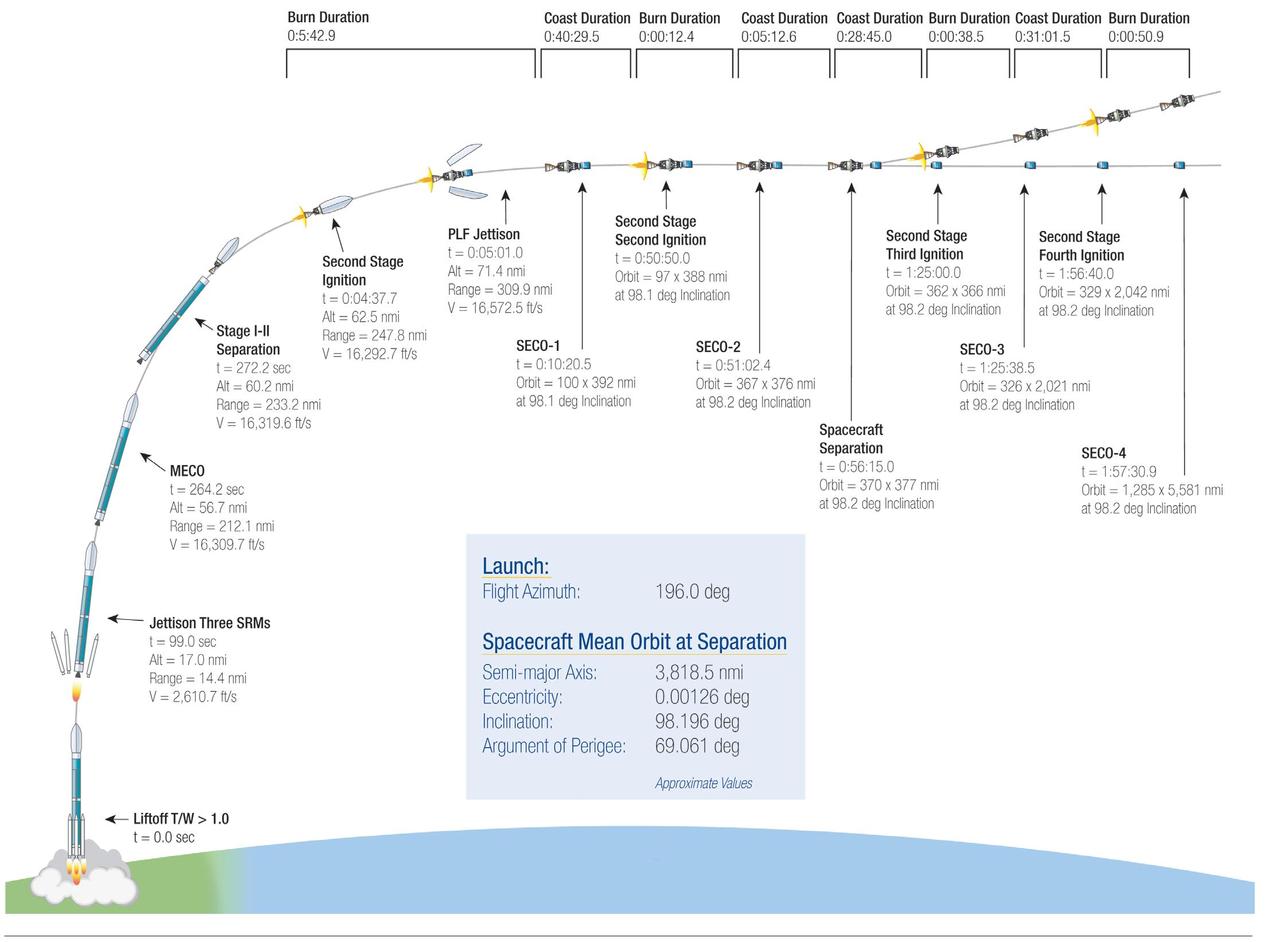
This illustration highlights key events in the launch of NASA Orbiting Carbon Observatory-2, beginning with its liftoff from Vandenberg Air Force Base in central California.
Key Events in the Launch of NASA Orbiting Carbon Observatory-2
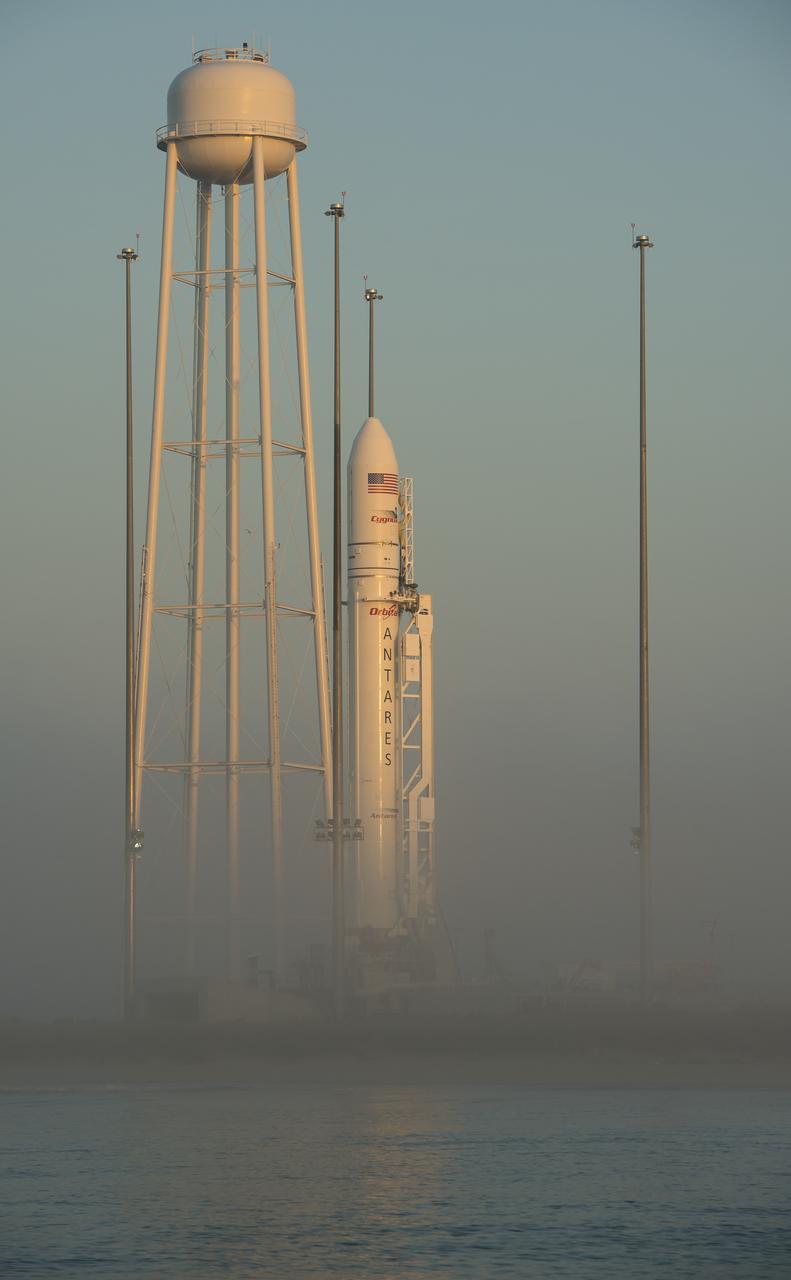
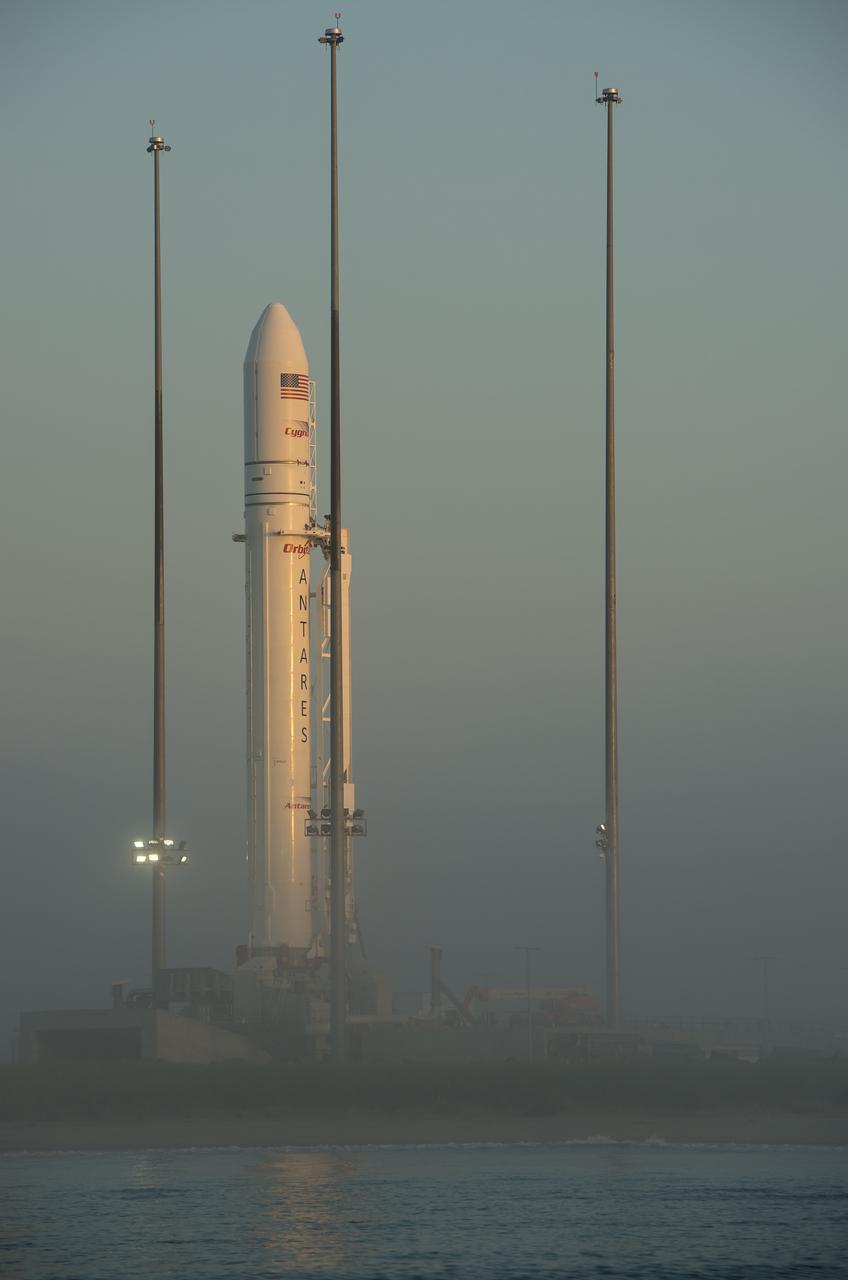
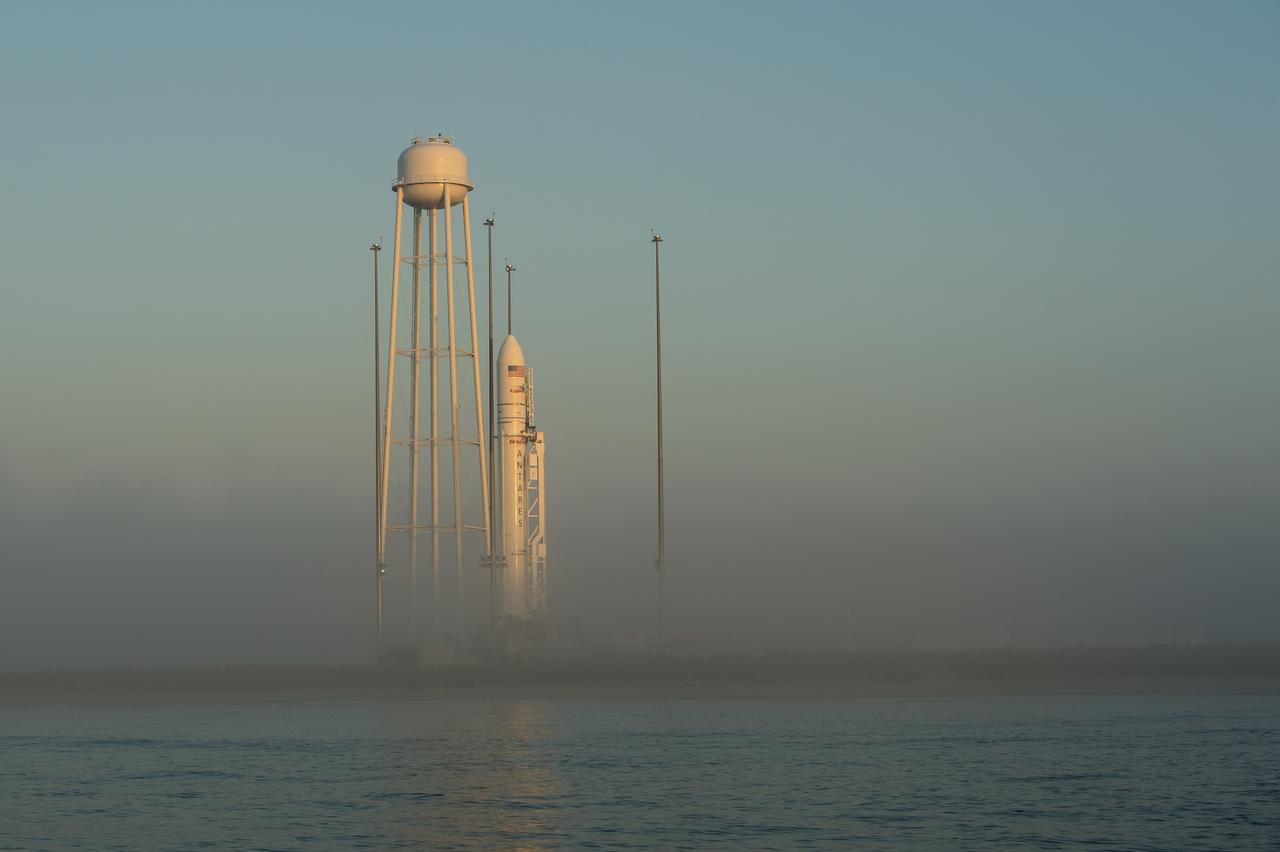
The Orbital Sciences Corporation Antares rocket, with the Cygnus spacecraft onboard, is seen during sunrise, Saturday, July 12, 2014, at launch Pad-0A of NASA's Wallops Flight Facility in Virginia. The Antares will launch with the Cygnus spacecraft filled with over 3,000 pounds of supplies for the International Space Station, including science experiments, experiment hardware, spare parts, and crew provisions. The Orbital-2 mission is Orbital Sciences' second contracted cargo delivery flight to the space station for NASA. Photo Credit: (NASA/Bill Ingalls)
Orbital-2 Mission
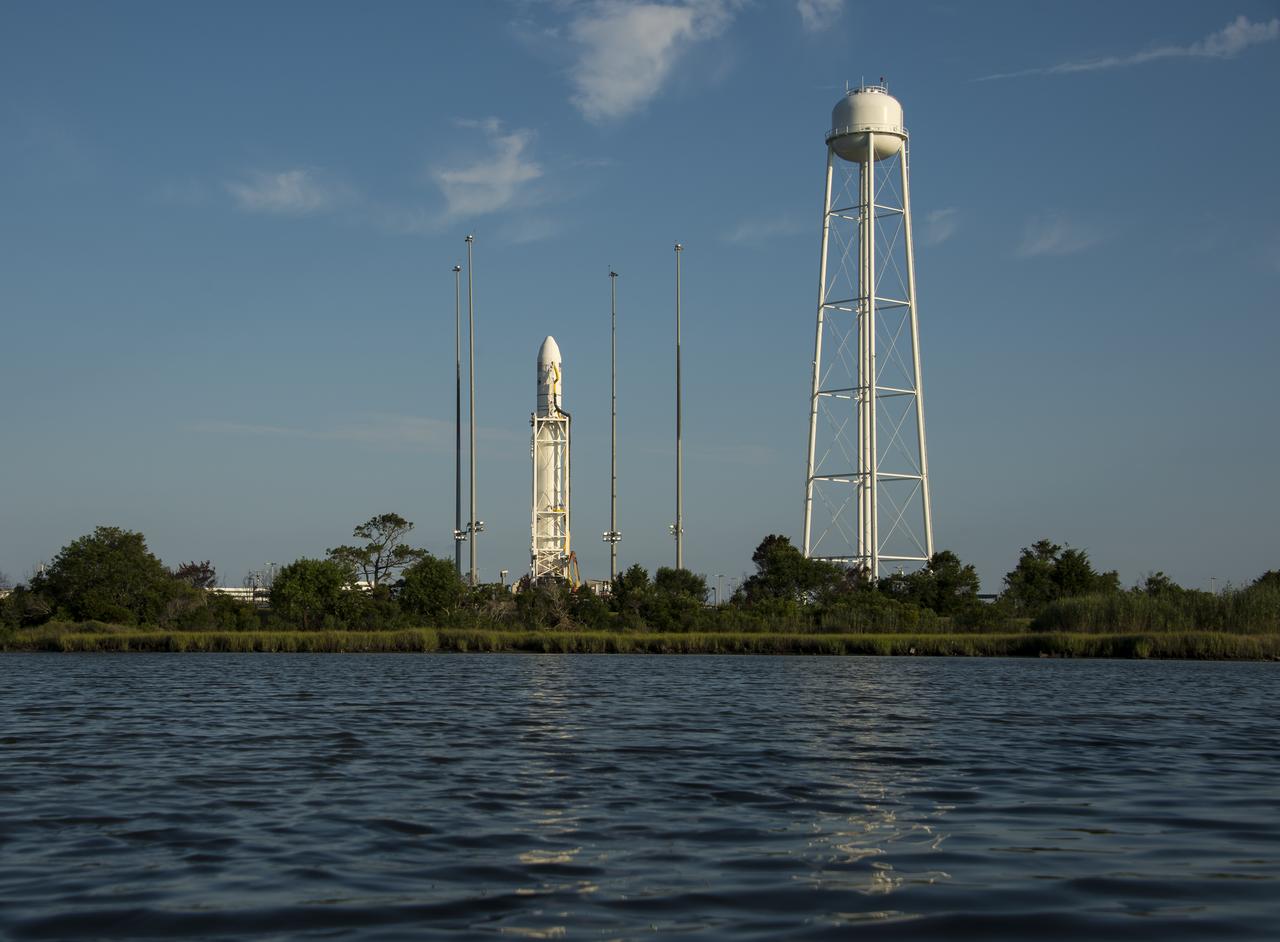
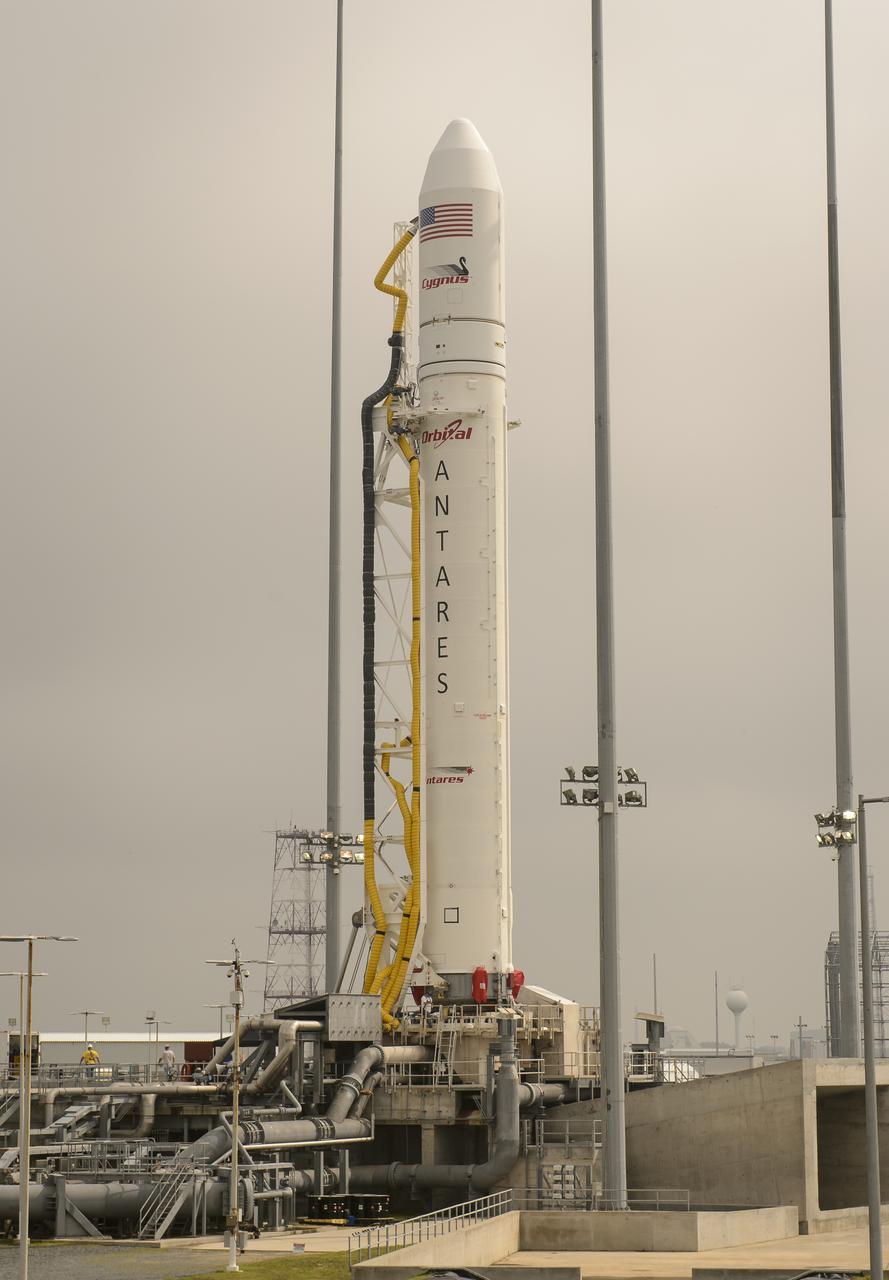
The Orbital Sciences Corporation Antares rocket, with the Cygnus spacecraft onboard, is seen on launch Pad-0A, Friday, July 11, 2014, at NASA's Wallops Flight Facility in Virginia. The Antares will launch with the Cygnus spacecraft filled with over 3,000 pounds of supplies for the International Space Station, including science experiments, experiment hardware, spare parts, and crew provisions. The Orbital-2 mission is Orbital Sciences' second contracted cargo delivery flight to the space station for NASA. Photo Credit: (NASA/Bill Ingalls)
Orbital-2 Mission
The Orbital Sciences Corporation Antares rocket, with the Cygnus spacecraft onboard, is seen, Saturday, July 12, 2014, at launch Pad-0A of NASA's Wallops Flight Facility in Virginia. The Antares will launch with the Cygnus spacecraft filled with over 3,000 pounds of supplies for the International Space Station, including science experiments, experiment hardware, spare parts, and crew provisions. The Orbital-2 mission is Orbital Sciences' second contracted cargo delivery flight to the space station for NASA. Photo Credit: (NASA/Bill Ingalls)
Orbital-2 Mission
The Orbital Sciences Corporation Antares rocket, with the Cygnus spacecraft onboard, is seen, Saturday, July 12, 2014, at launch Pad-0A of NASA's Wallops Flight Facility in Virginia. The Antares will launch with the Cygnus spacecraft filled with over 3,000 pounds of supplies for the International Space Station, including science experiments, experiment hardware, spare parts, and crew provisions. The Orbital-2 mission is Orbital Sciences' second contracted cargo delivery flight to the space station for NASA. Photo Credit: (NASA/Bill Ingalls)
Orbital-2 Mission
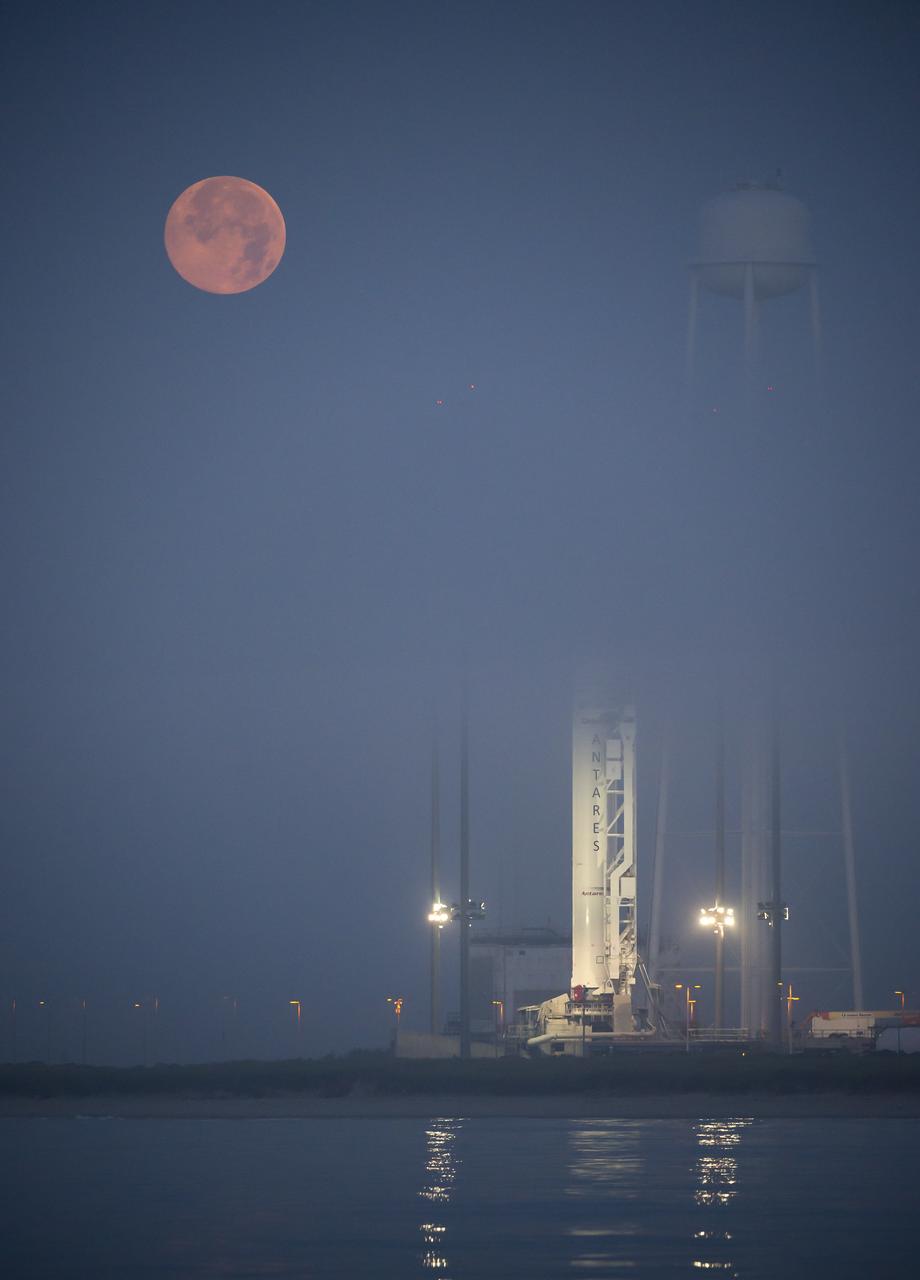
The full Moon sets in the fog behind the Orbital Sciences Corporation Antares rocket, with the Cygnus spacecraft onboard, Saturday, July 12, 2014, launch Pad-0A, NASA's Wallops Flight Facility in Virginia. The Antares will launch with the Cygnus spacecraft filled with over 3,000 pounds of supplies for the International Space Station, including science experiments, experiment hardware, spare parts, and crew provisions. The Orbital-2 mission is Orbital Sciences' second contracted cargo delivery flight to the space station for NASA. Photo Credit: (NASA/Bill Ingalls)
Orbital-2 Mission
The Orbital Sciences Corporation Antares rocket, with the Cygnus spacecraft onboard, is seen during sunrise, Saturday, July 12, 2014, at launch Pad-0A of NASA's Wallops Flight Facility in Virginia. The Antares will launch with the Cygnus spacecraft filled with over 3,000 pounds of supplies for the International Space Station, including science experiments, experiment hardware, spare parts, and crew provisions. The Orbital-2 mission is Orbital Sciences' second contracted cargo delivery flight to the space station for NASA. Photo Credit: (NASA/Bill Ingalls)
Orbital-2 Mission
The Orbital Sciences Corporation Antares rocket, with the Cygnus spacecraft onboard, is seen during sunrise, Saturday, July 12, 2014, at launch Pad-0A of NASA's Wallops Flight Facility in Virginia. The Antares will launch with the Cygnus spacecraft filled with over 3,000 pounds of supplies for the International Space Station, including science experiments, experiment hardware, spare parts, and crew provisions. The Orbital-2 mission is Orbital Sciences' second contracted cargo delivery flight to the space station for NASA. Photo Credit: (NASA/Bill Ingalls)
Orbital-2 Mission
NASA Mars Reconnaissance Orbiter MRO launched at 7:43 a.m. EDT atop a Lockheed Martin Atlas V rocket from Launch Complex 41 at Cape Canaveral Air Force Station in Florida on Aug. 12, 2005.
Mars Reconnaissance Orbiter MRO Multipurpose Mission Successfully Launched
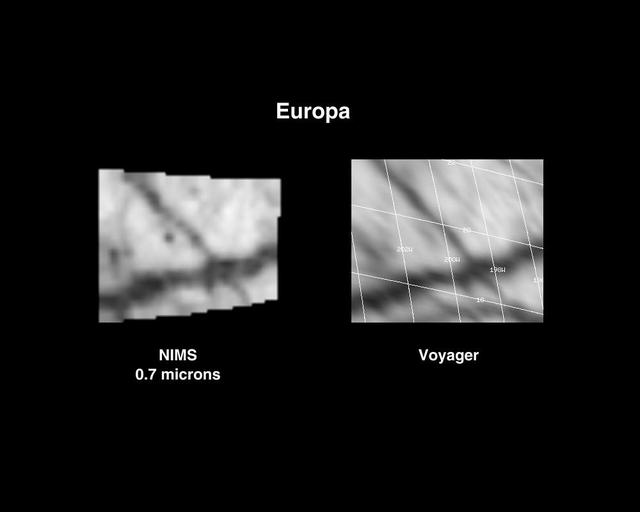
Europa 6th Orbit NIMS Data
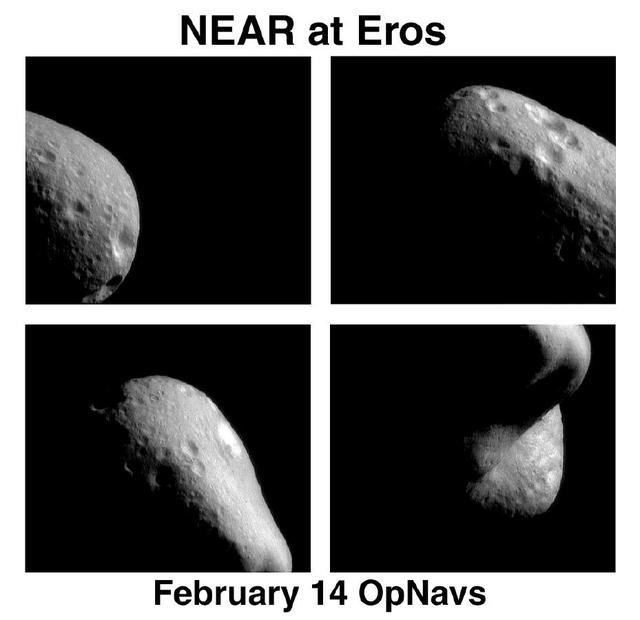
Eros: The First Look from Orbit
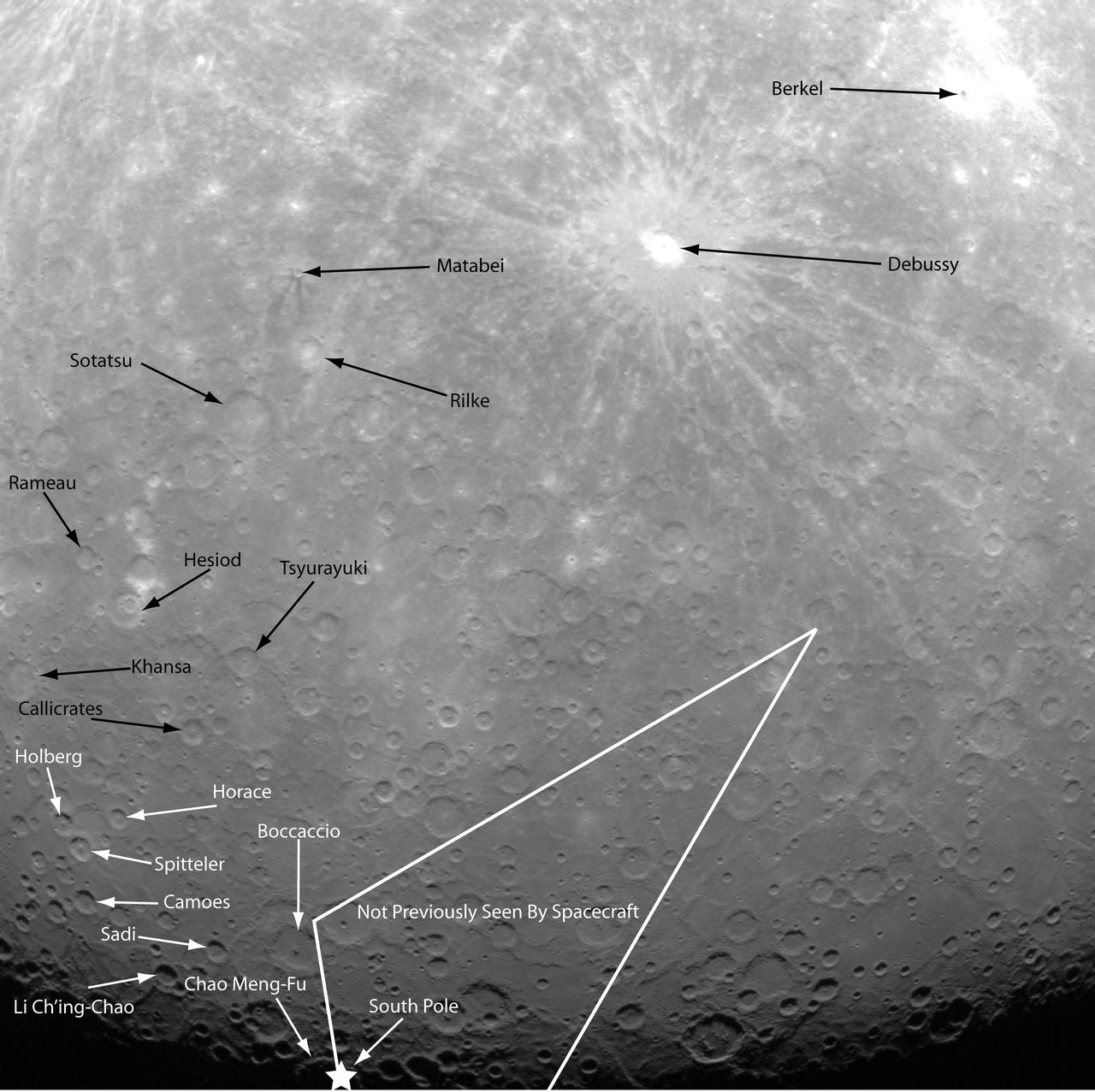
An Annotated Guide to the First Orbital Image
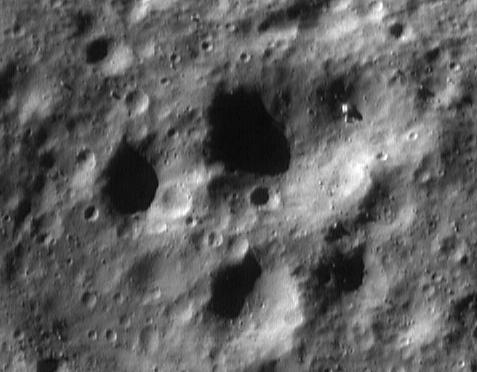
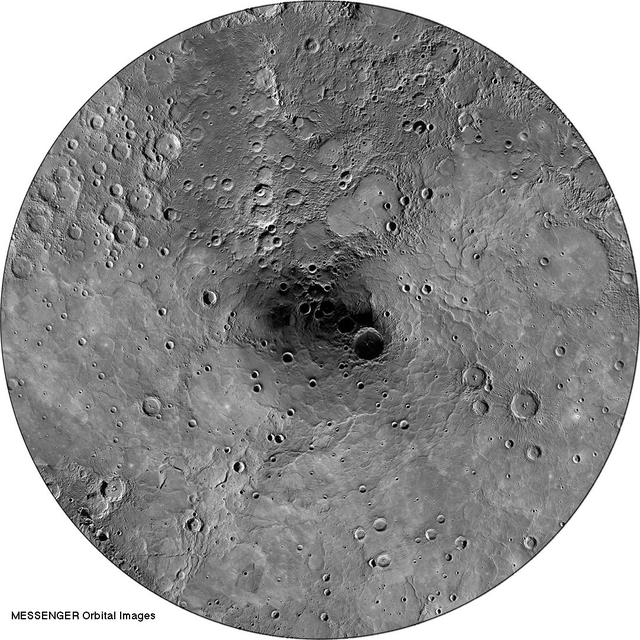
Orbital Mosaic of Mercury North Pole
Rover Tracks Seen from Orbit
A Regional View of Mars on Orbit 63
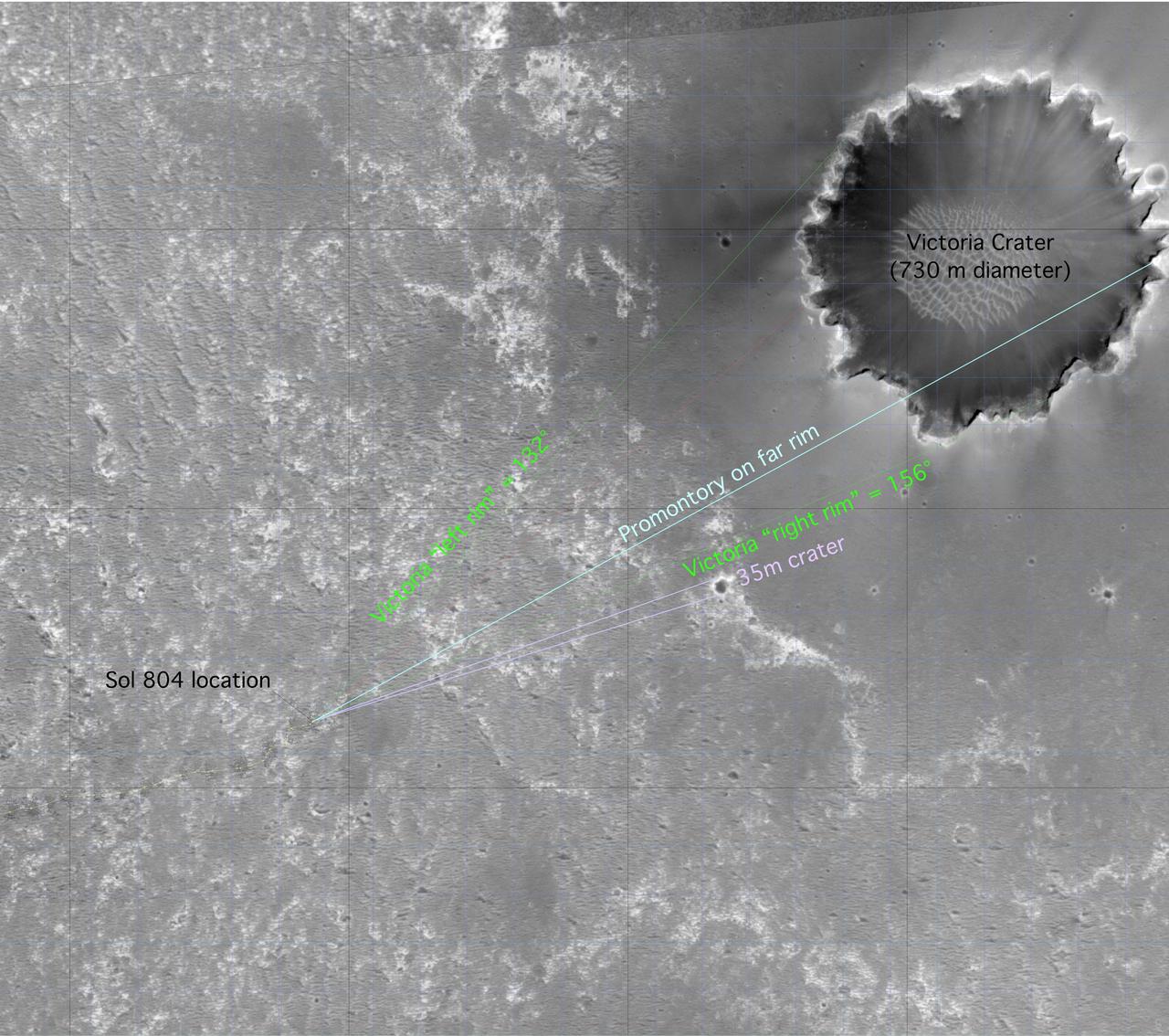
Victoria on Opportunity Horizon Orbital View
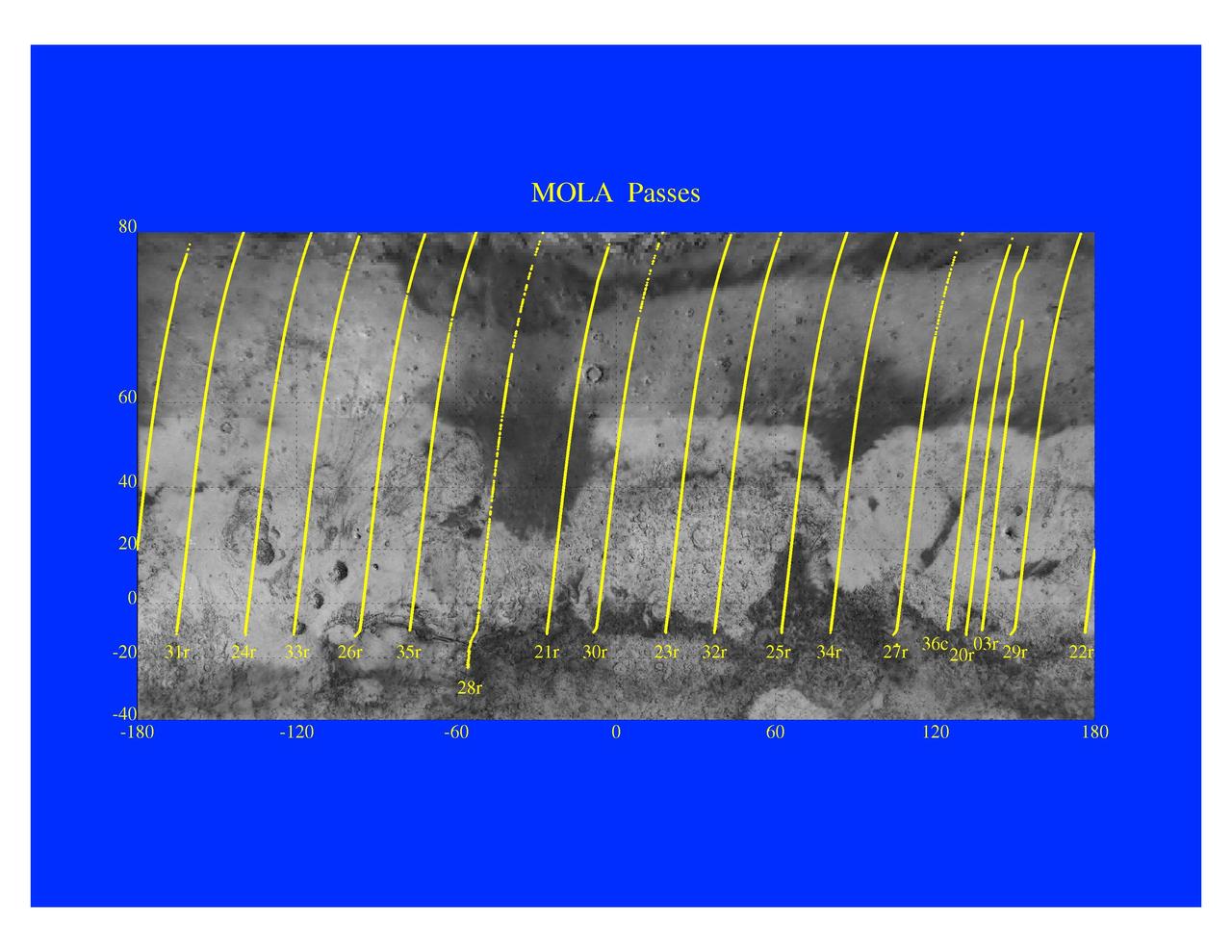
Mars Orbiter Laser Altimeter Passes
Opportunity Tracks Seen from Orbit
Anna Michalak, an Orbiting Carbon Observatory science team member from the University of Michigan, Ann Arbor, speaks during a media briefing to discuss the upcoming Orbiting Carbon Observatory mission, the first NASA spacecraft dedicated to studying carbon dioxide, Thursday, Jan. 29, 2009, at NASA Headquarters in Washington. Photo Credit: (NASA/Paul E. Alers)
Orbiting Carbon Observatory Briefing
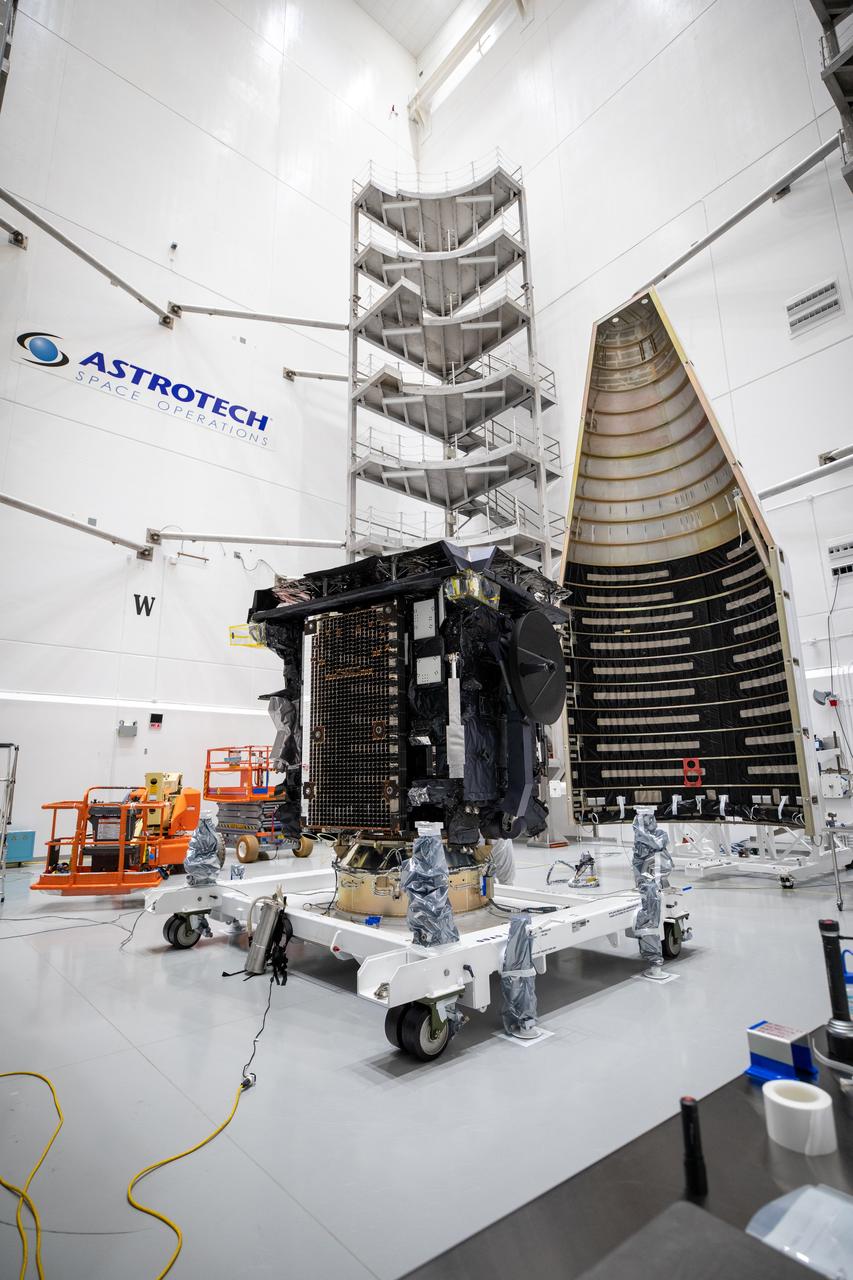
The Solar Orbiter spacecraft is prepared for encapsulation in the United Launch Alliance Atlas V payload fairing inside the Astrotech Space Operations facility in Titusville, Florida, on Jan. 20, 2020. The fairing provides a protective, aerodynamic cover to the payload inside during the early minutes of ascent. Solar Orbiter is an international cooperative mission between ESA (European Space Agency) and NASA. The mission aims to study the Sun, its outer atmosphere and solar wind. The spacecraft will provide the first images of the Sun’s poles. NASA’s Launch Services Program based at Kennedy Space Center in Florida is managing the launch. The spacecraft has been developed by Airbus Defence and Space. Solar Orbiter will launch aboard an Atlas V rocket from Space Launch Complex 41 at Cape Canaveral Air Force Station in Florida. Liftoff is scheduled for Feb. 5, 2020.
Solar Orbiter Encapsulation at Astrotech
One half of a United Launch Alliance Atlas V payload fairing is positioned for installation around the Solar Orbiter spacecraft inside the Astrotech Space Operations facility in Titusville, Florida, on Jan. 20, 2020. The fairing provides a protective, aerodynamic covering to the payload inside during the early minutes of ascent. Solar Orbiter is an international cooperative mission between ESA (European Space Agency) and NASA. The mission aims to study the Sun, its outer atmosphere and solar wind. The spacecraft will provide the first images of the Sun’s poles. NASA’s Launch Services Program based at Kennedy Space Center in Florida is managing the launch. The spacecraft has been developed by Airbus Defence and Space. Solar Orbiter will launch aboard an Atlas V rocket from Space Launch Complex 41 at Cape Canaveral Air Force Station in Florida. Liftoff is scheduled for Feb. 5, 2020.
Solar Orbiter Encapsulation at Astrotech