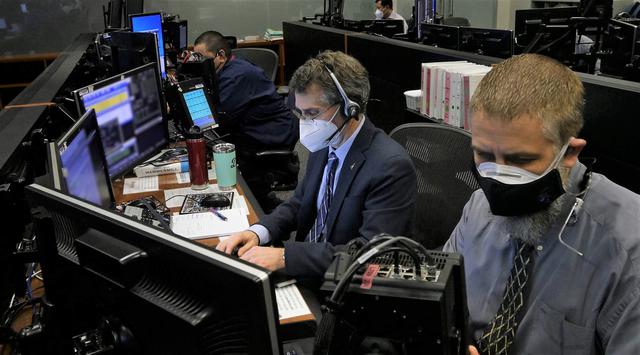
Boeing CST-100 Starliner flight directors Bob Dempsey and Edward Van Cise operate a simulated Orbital Flight Test-2 rendezvous and docking with the International Space Station from inside the Mission Control Center at NASA’s Johnson Space Center on Friday, April 23, 2021. As part of NASA’s Commercial Crew Program, OFT-2 is a critical developmental milestone on Boeing’s path to fly crew missions for NASA.
Boeing and NASA teams work around Boeing’s CST-100 Starliner spacecraft after it landed at White Sands Missile Range’s Space Harbor, Wednesday, May 25, 2022, in New Mexico. Boeing’s Orbital Flight Test-2 (OFT-2) is Starliner’s second uncrewed flight test to the International Space Station as part of NASA's Commercial Crew Program. OFT-2 serves as an end-to-end test of the system's capabilities. Photo Credit: (NASA/Bill Ingalls)
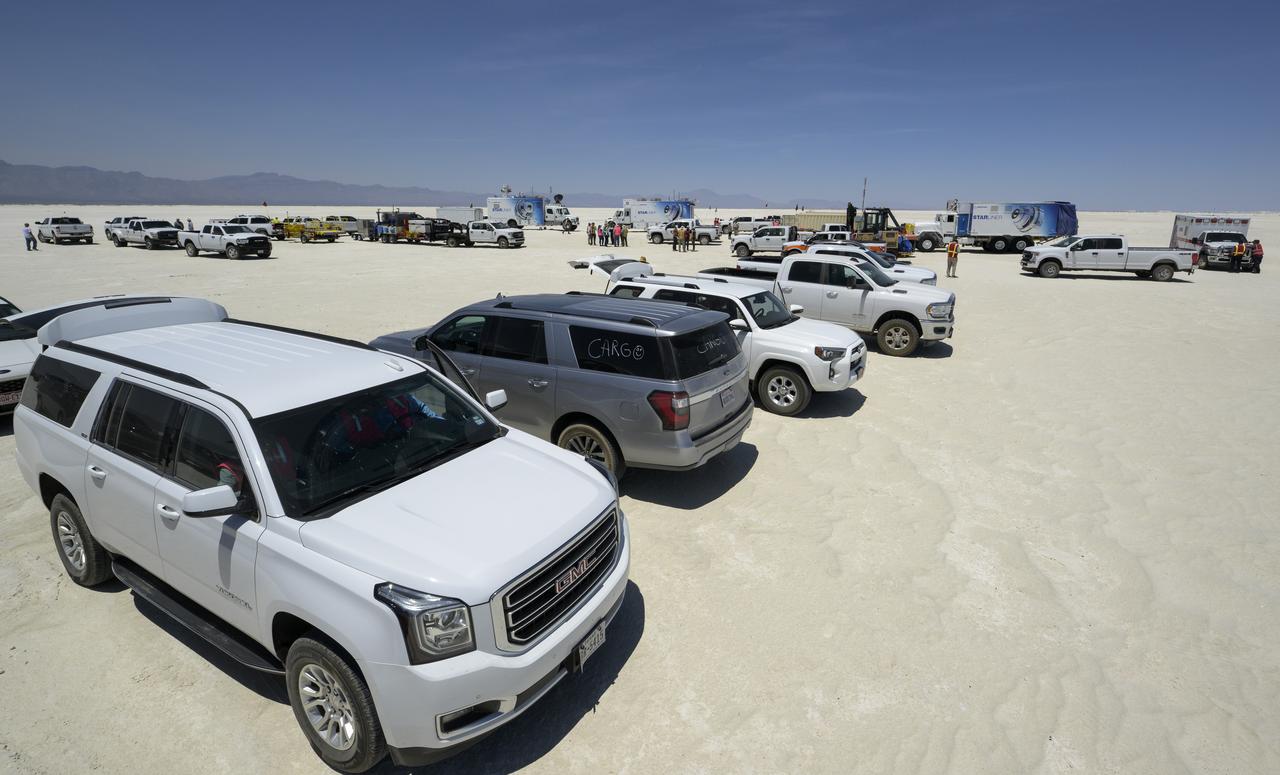
NASA and Boeing teams prepare for the landing of Boeing’s CST-100 Starliner spacecraft at White Sands Missile Range’s Space Harbor, Wednesday, May 25, 2022, in New Mexico. Boeing’s Orbital Flight Test-2 (OFT-2) is Starliner’s second uncrewed flight test to the International Space Station as part of NASA's Commercial Crew Program. OFT-2 serves as an end-to-end test of the system's capabilities. Photo Credit: (NASA/Bill Ingalls)
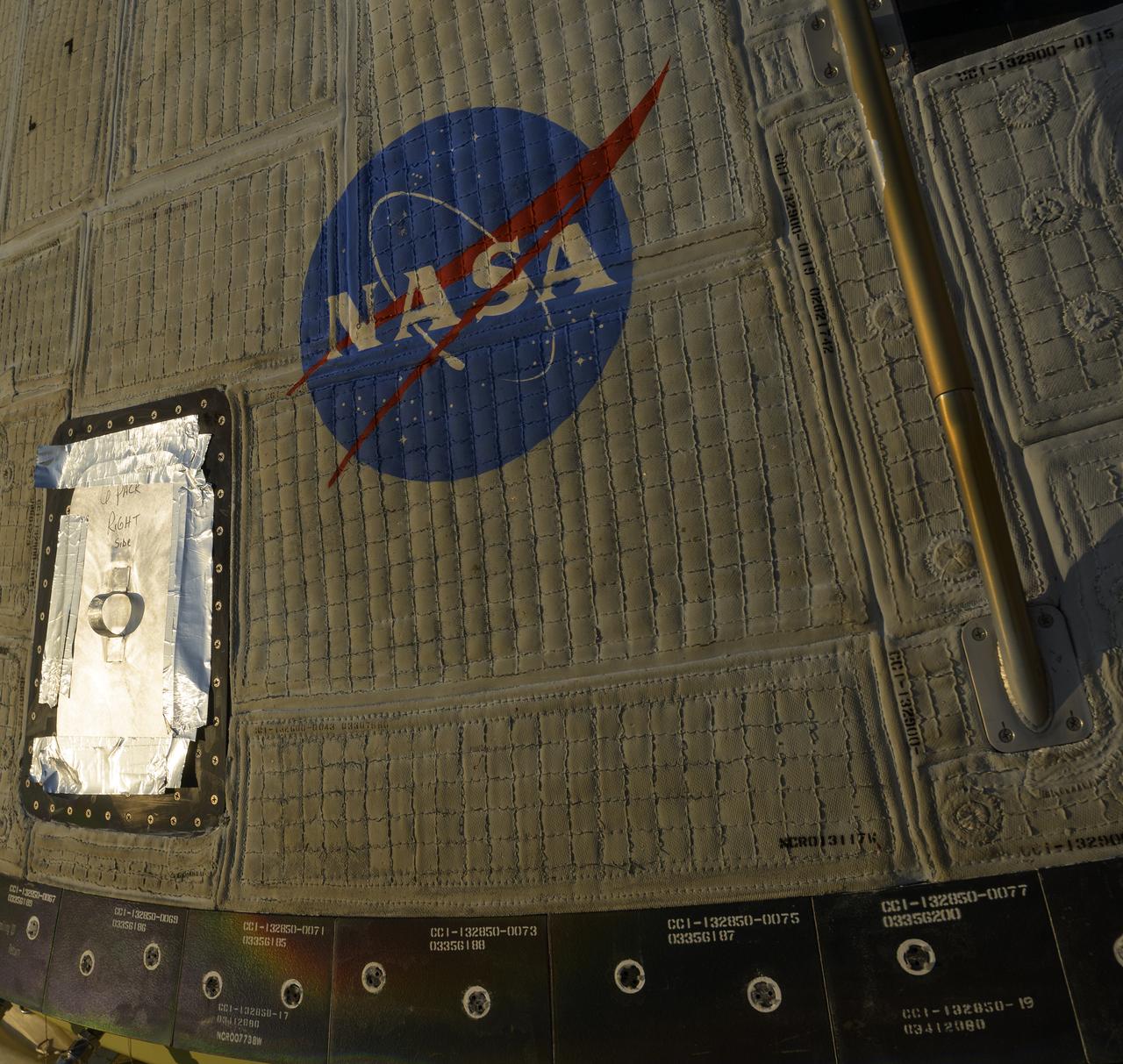
Boeing’s CST-100 Starliner spacecraft is seen after it landed at White Sands Missile Range’s Space Harbor, Wednesday, May 25, 2022, in New Mexico. Boeing’s Orbital Flight Test-2 (OFT-2) is Starliner’s second uncrewed flight test to the International Space Station as part of NASA's Commercial Crew Program. OFT-2 serves as an end-to-end test of the system's capabilities. Photo Credit: (NASA/Bill Ingalls)
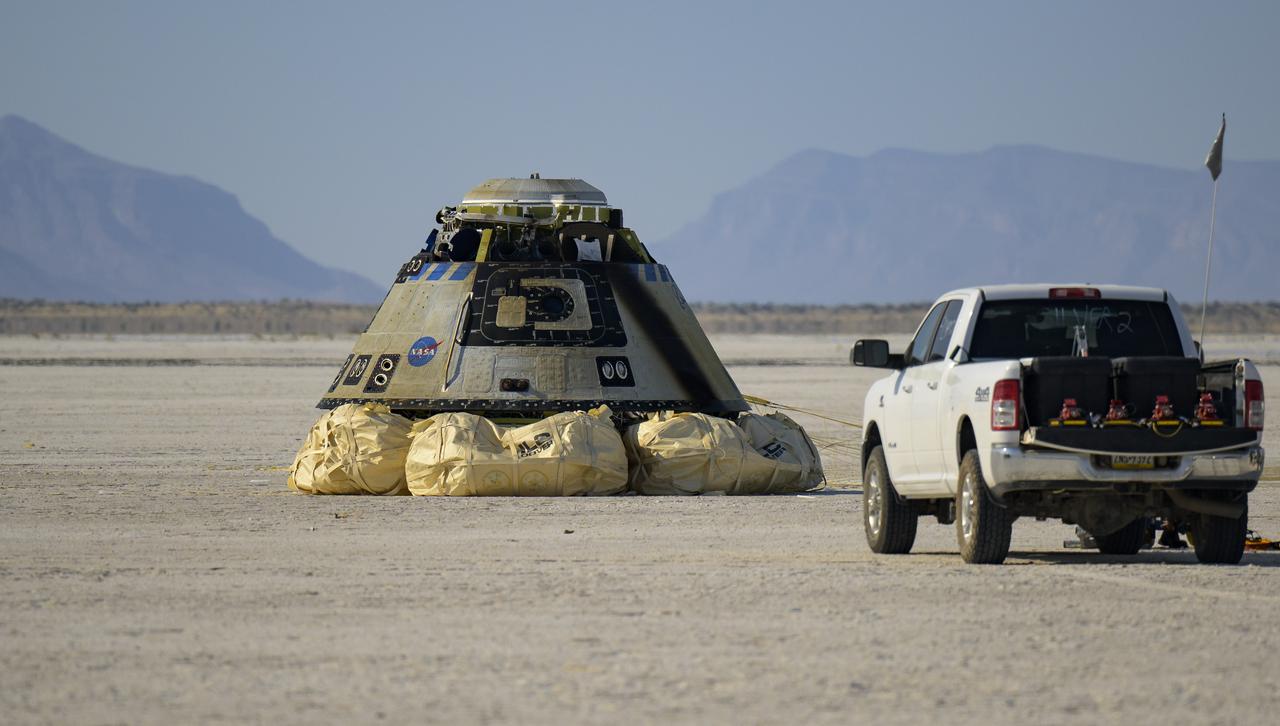
Boeing and NASA teams work around Boeing’s CST-100 Starliner spacecraft after it landed at White Sands Missile Range’s Space Harbor, Wednesday, May 25, 2022, in New Mexico. Boeing’s Orbital Flight Test-2 (OFT-2) is Starliner’s second uncrewed flight test to the International Space Station as part of NASA's Commercial Crew Program. OFT-2 serves as an end-to-end test of the system's capabilities. Photo Credit: (NASA/Bill Ingalls)

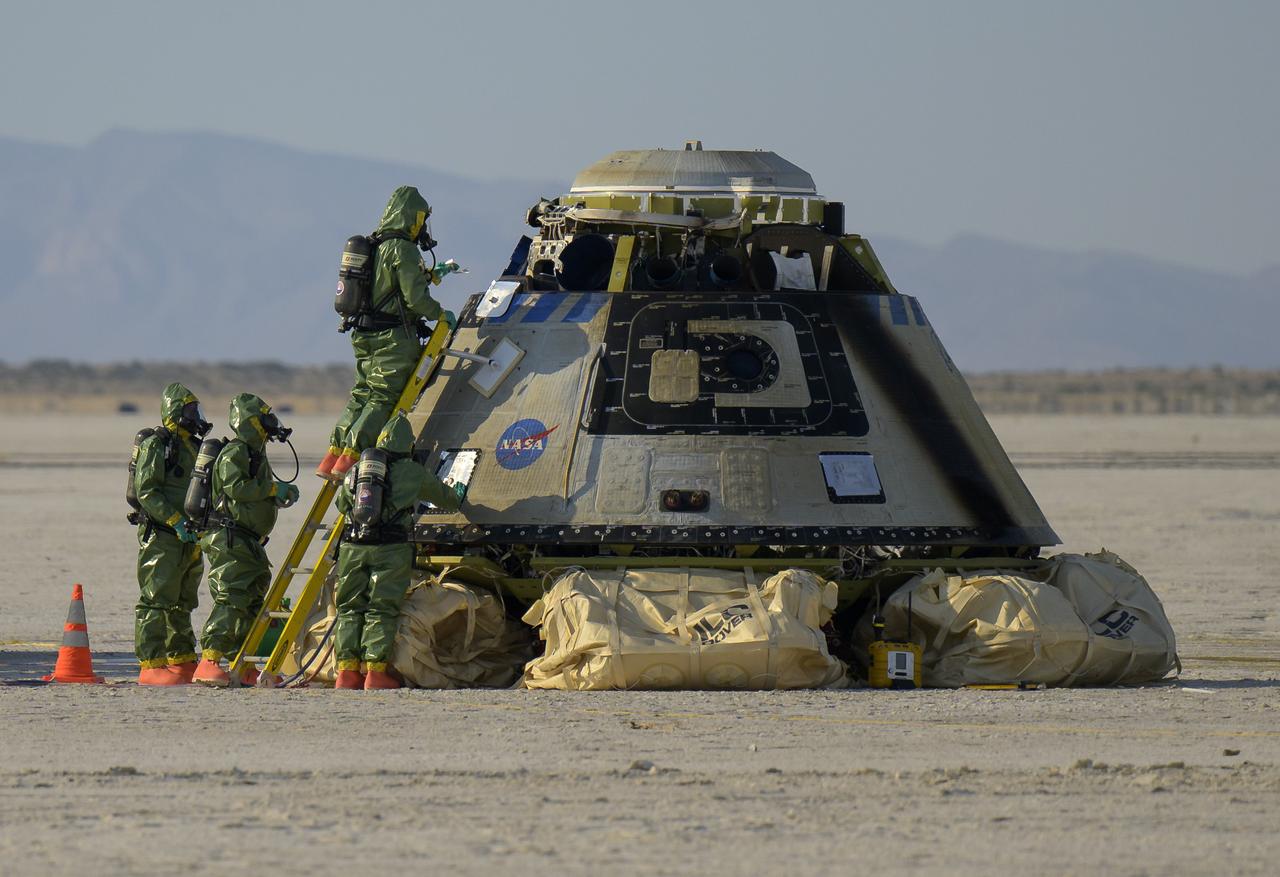
Boeing hazmat teams work around Boeing’s CST-100 Starliner spacecraft after it landed at White Sands Missile Range’s Space Harbor, Wednesday, May 25, 2022, in New Mexico. Boeing’s Orbital Flight Test-2 (OFT-2) is Starliner’s second uncrewed flight test to the International Space Station as part of NASA's Commercial Crew Program. OFT-2 serves as an end-to-end test of the system's capabilities. Photo Credit: (NASA/Bill Ingalls)
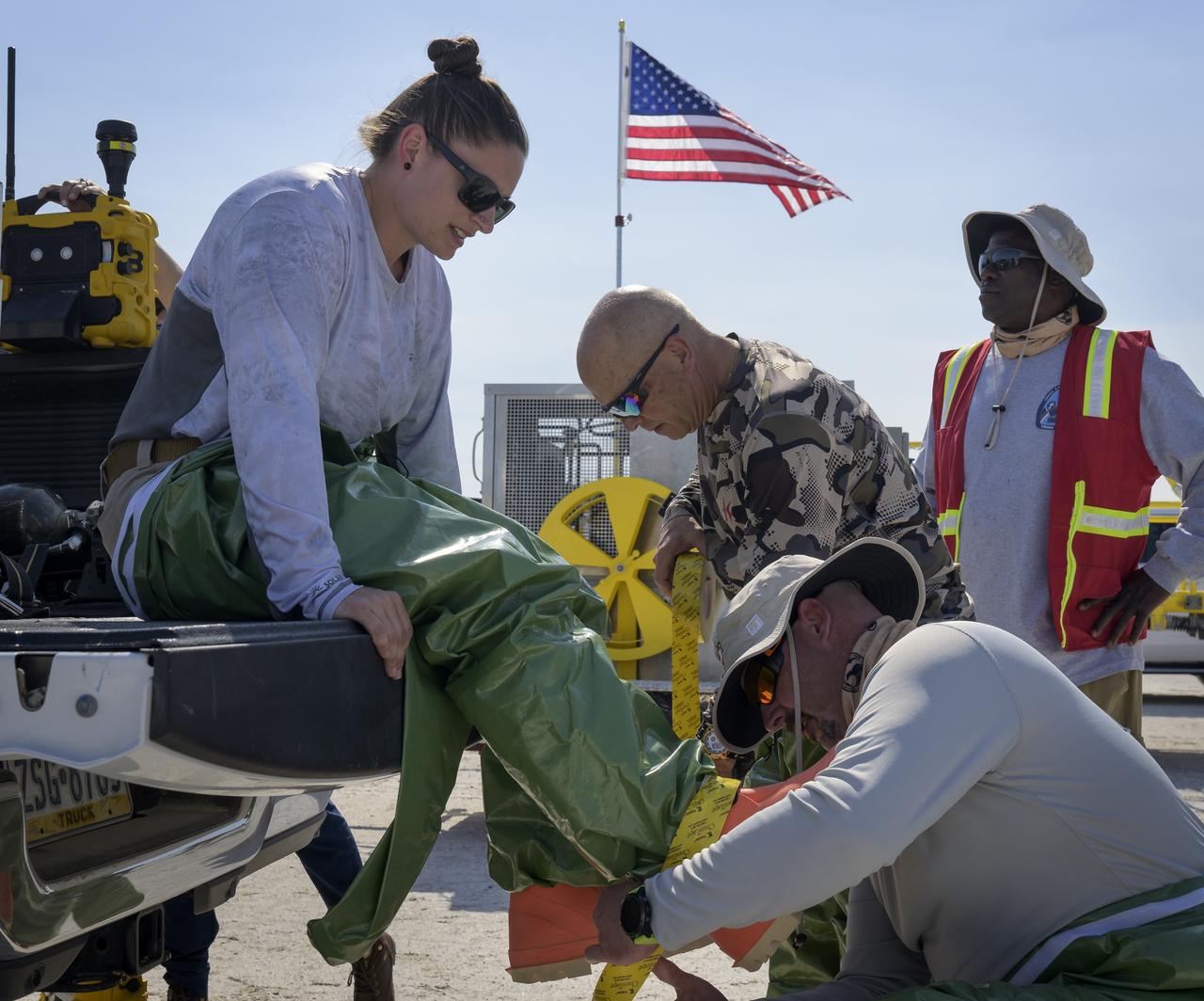
Boeing team members don hazmat suits as they prepare for the landing of Boeing’s CST-100 Starliner spacecraft at White Sands Missile Range’s Space Harbor, Wednesday, May 25, 2022, in New Mexico. Boeing’s Orbital Flight Test-2 (OFT-2) is Starliner’s second uncrewed flight test to the International Space Station as part of NASA's Commercial Crew Program. OFT-2 serves as an end-to-end test of the system's capabilities. Photo Credit: (NASA/Bill Ingalls)
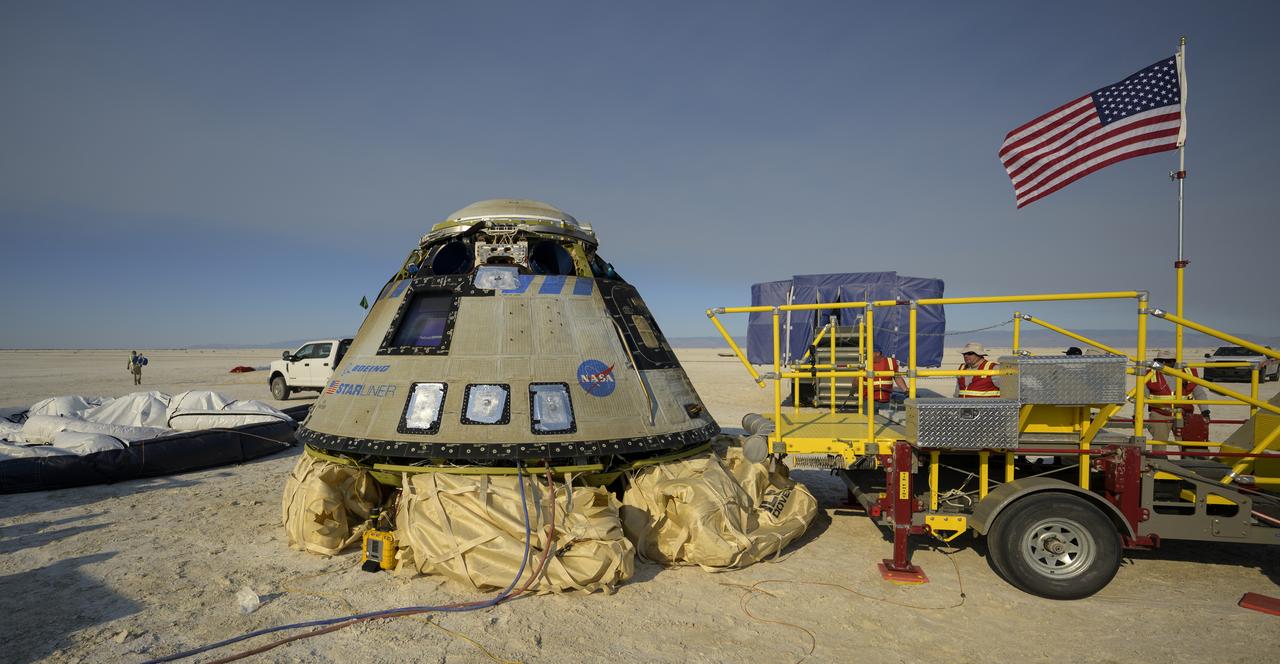
Boeing and NASA teams work around Boeing’s CST-100 Starliner spacecraft after it landed at White Sands Missile Range’s Space Harbor, Wednesday, May 25, 2022, in New Mexico. Boeing’s Orbital Flight Test-2 (OFT-2) is Starliner’s second uncrewed flight test to the International Space Station as part of NASA's Commercial Crew Program. OFT-2 serves as an end-to-end test of the system's capabilities. Photo Credit: (NASA/Bill Ingalls)
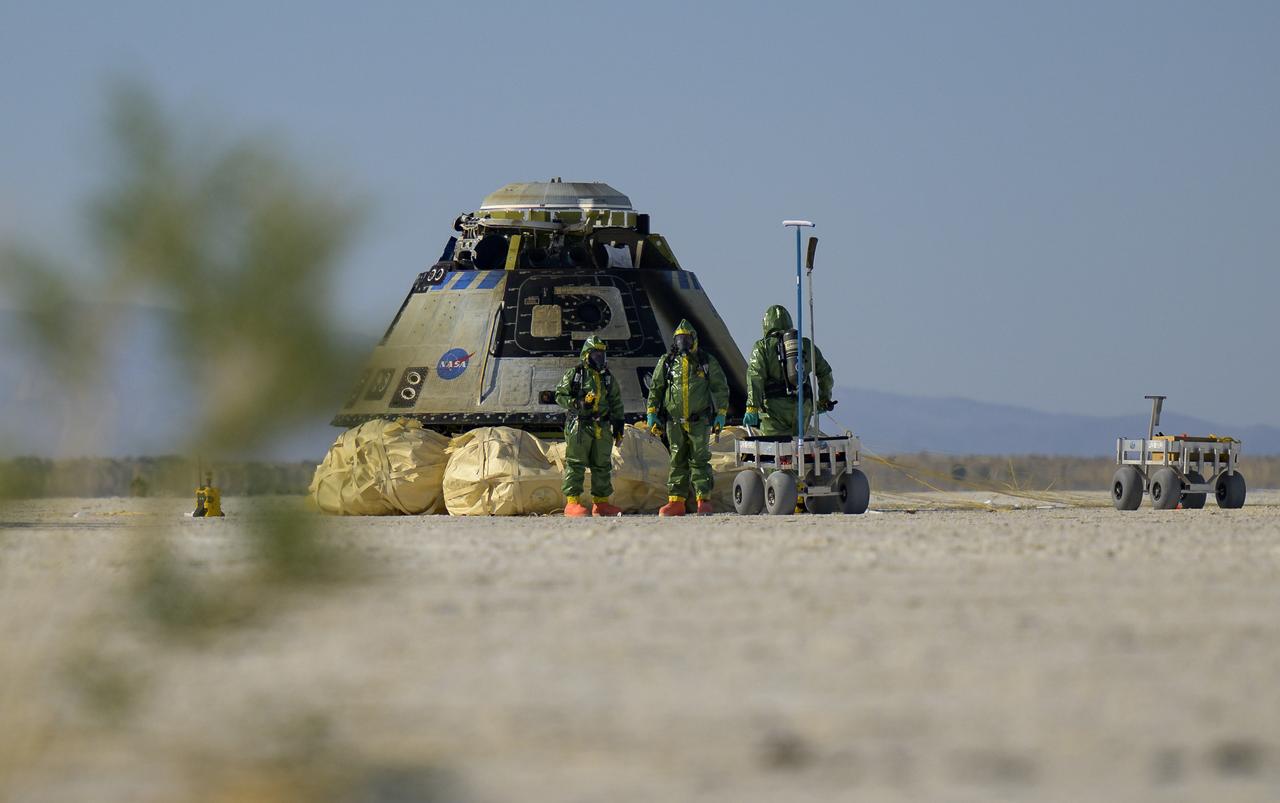
Boeing hazmat teams work around Boeing’s CST-100 Starliner spacecraft after it landed at White Sands Missile Range’s Space Harbor, Wednesday, May 25, 2022, in New Mexico. Boeing’s Orbital Flight Test-2 (OFT-2) is Starliner’s second uncrewed flight test to the International Space Station as part of NASA's Commercial Crew Program. OFT-2 serves as an end-to-end test of the system's capabilities. Photo Credit: (NASA/Bill Ingalls)
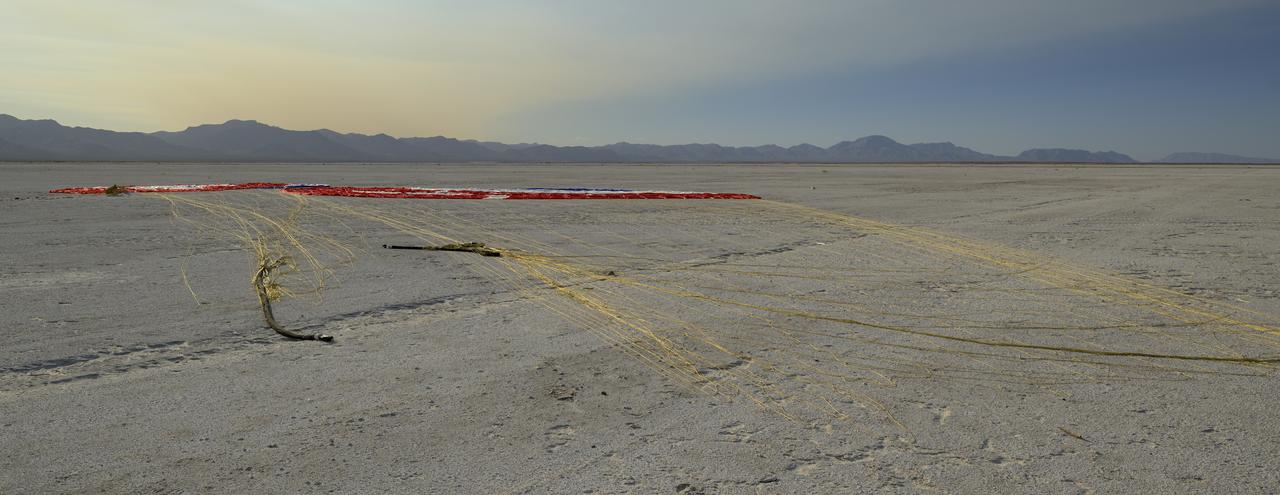
The Boeing CST-100 Starliner parachute is seen after the spacecraft landed at White Sands Missile Range’s Space Harbor, Wednesday, May 25, 2022, in New Mexico. Boeing’s Orbital Flight Test-2 (OFT-2) is Starliner’s second uncrewed flight test to the International Space Station as part of NASA's Commercial Crew Program. OFT-2 serves as an end-to-end test of the system's capabilities. Photo Credit: (NASA/Bill Ingalls)
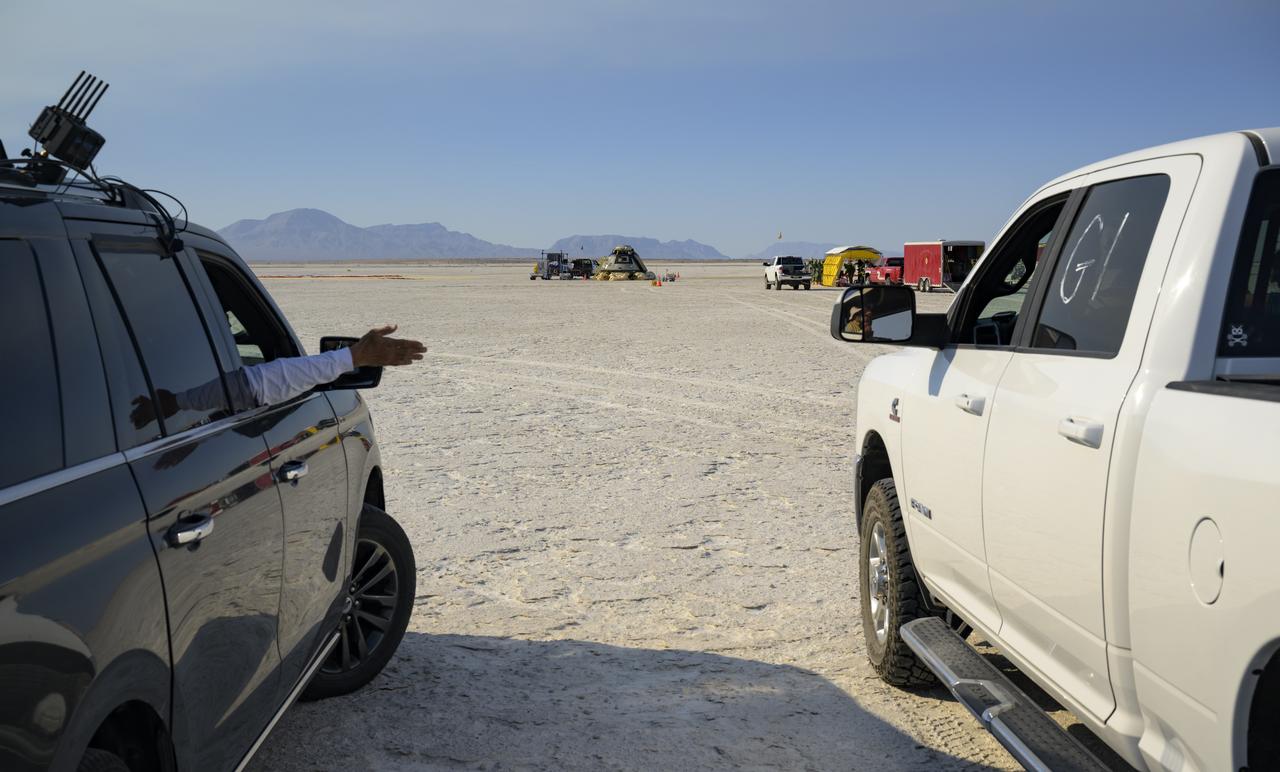
Boeing and NASA teams work around Boeing’s CST-100 Starliner spacecraft after it landed at White Sands Missile Range’s Space Harbor, Wednesday, May 25, 2022, in New Mexico. Boeing’s Orbital Flight Test-2 (OFT-2) is Starliner’s second uncrewed flight test to the International Space Station as part of NASA's Commercial Crew Program. OFT-2 serves as an end-to-end test of the system's capabilities. Photo Credit: (NASA/Bill Ingalls)
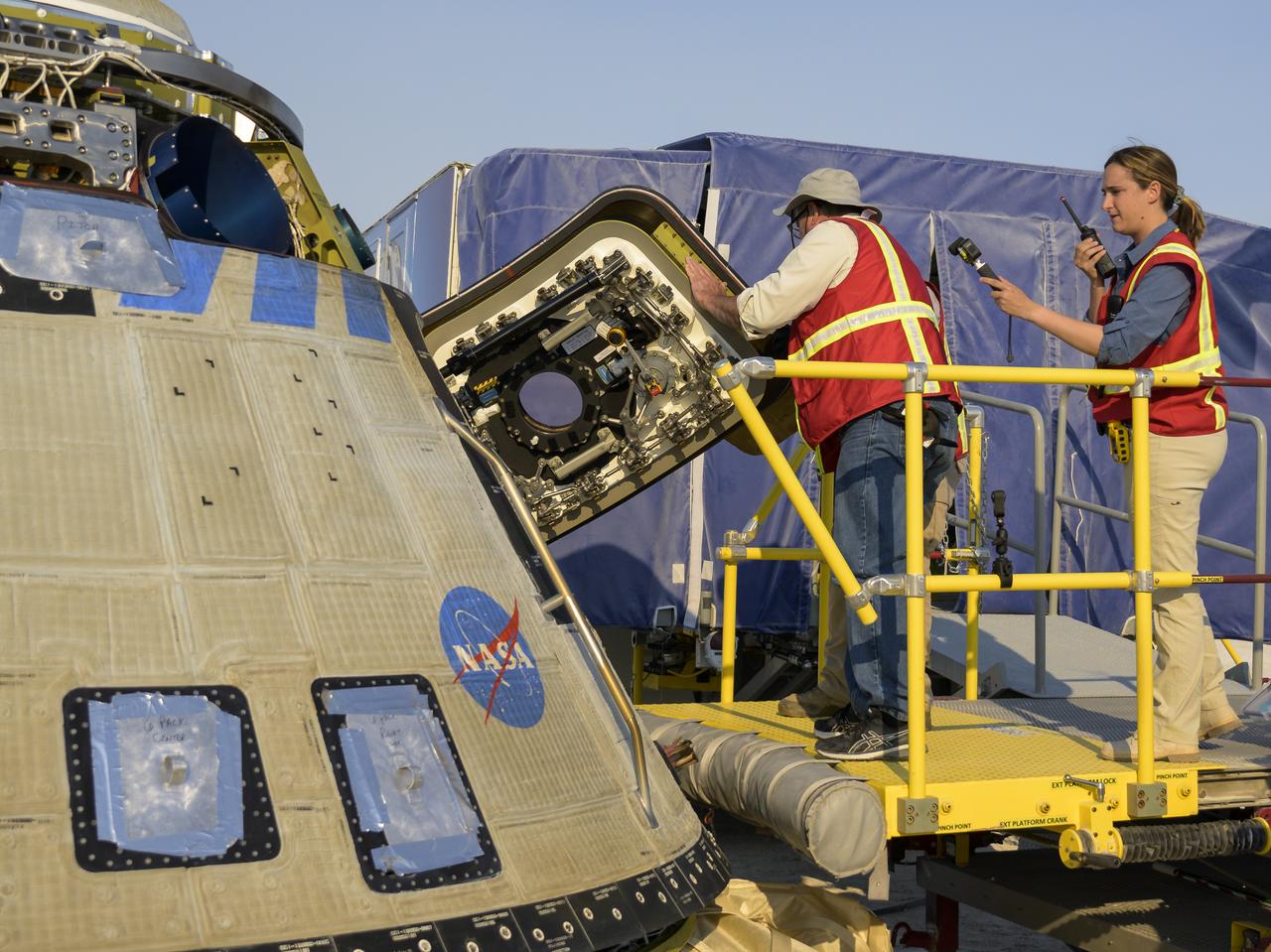
Boeing and NASA teams work around Boeing’s CST-100 Starliner spacecraft after it landed at White Sands Missile Range’s Space Harbor, Wednesday, May 25, 2022, in New Mexico. Boeing’s Orbital Flight Test-2 (OFT-2) is Starliner’s second uncrewed flight test to the International Space Station as part of NASA's Commercial Crew Program. OFT-2 serves as an end-to-end test of the system's capabilities. Photo Credit: (NASA/Bill Ingalls)
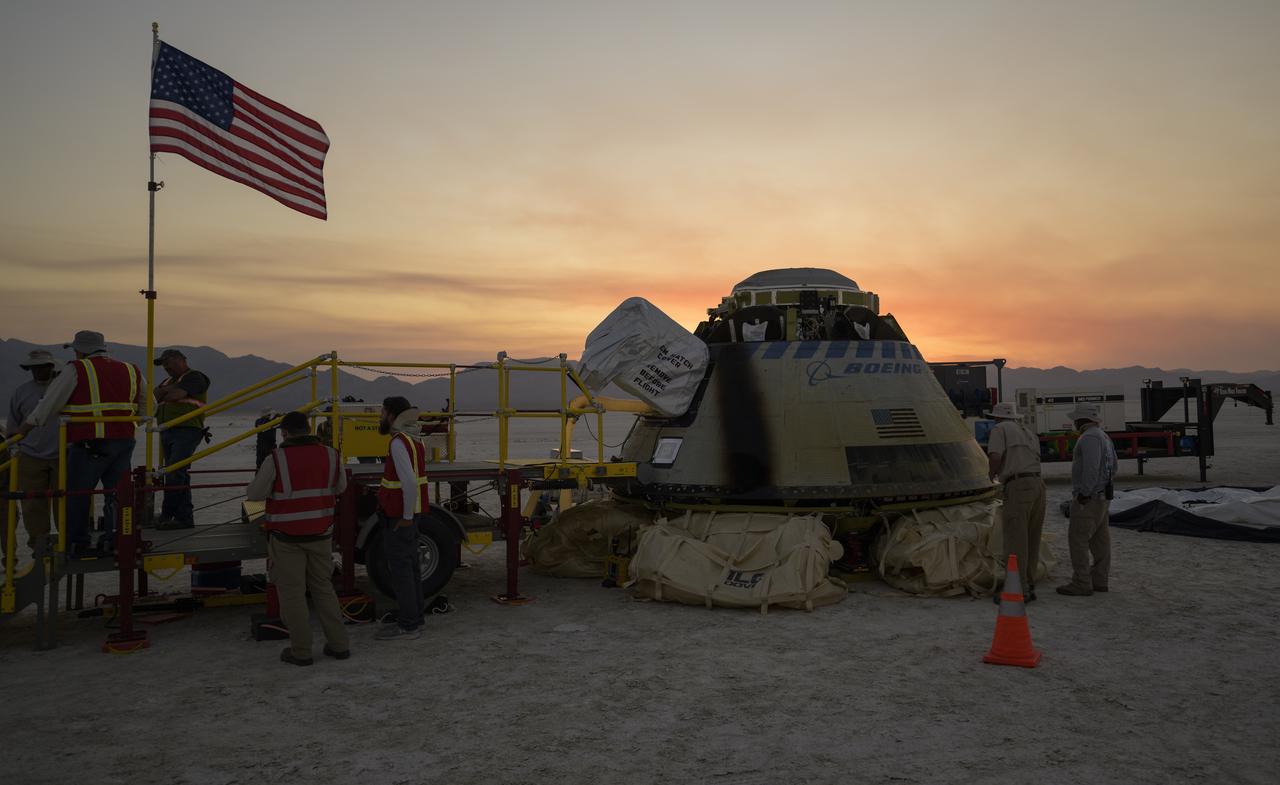
Boeing and NASA teams work around Boeing’s CST-100 Starliner spacecraft after it landed at White Sands Missile Range’s Space Harbor, Wednesday, May 25, 2022, in New Mexico. Boeing’s Orbital Flight Test-2 (OFT-2) is Starliner’s second uncrewed flight test to the International Space Station as part of NASA's Commercial Crew Program. OFT-2 serves as an end-to-end test of the system's capabilities. Photo Credit: (NASA/Bill Ingalls)
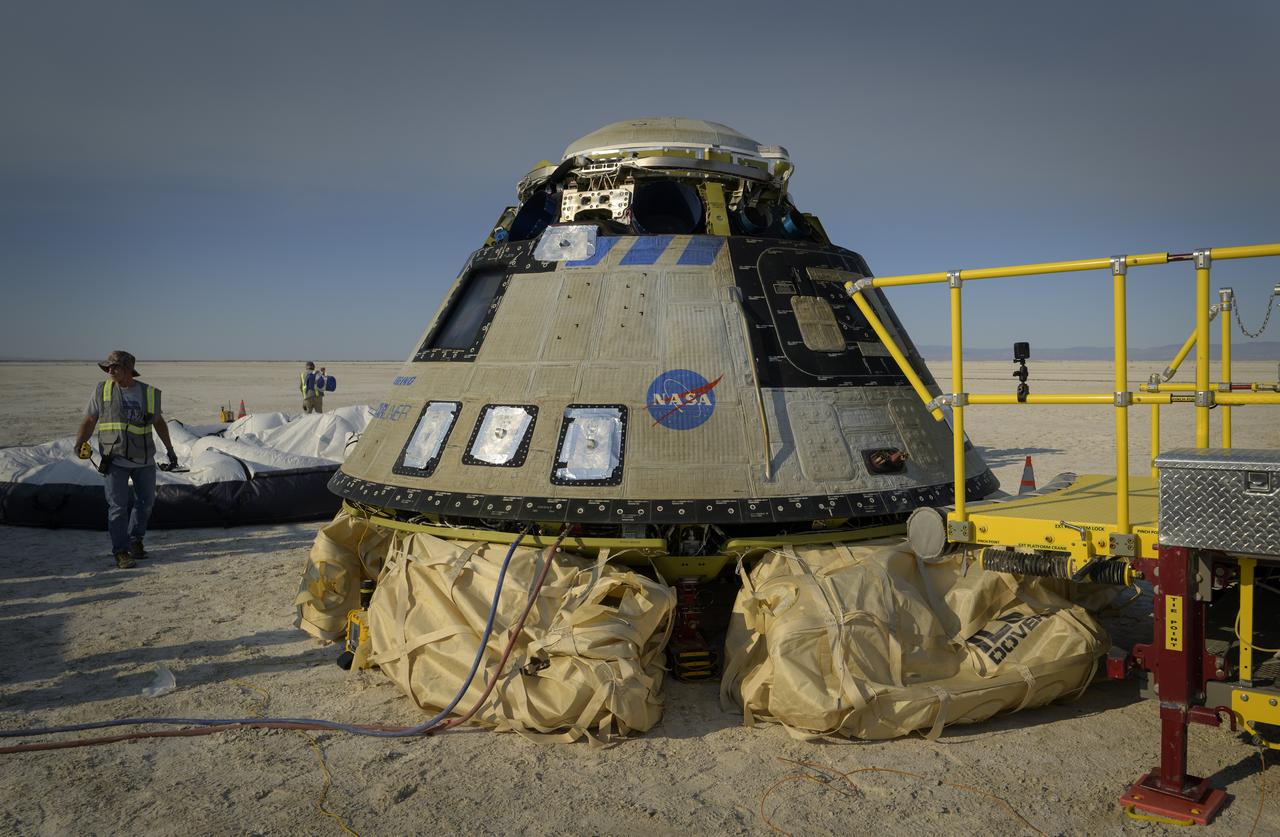
Boeing and NASA teams work around Boeing’s CST-100 Starliner spacecraft after it landed at White Sands Missile Range’s Space Harbor, Wednesday, May 25, 2022, in New Mexico. Boeing’s Orbital Flight Test-2 (OFT-2) is Starliner’s second uncrewed flight test to the International Space Station as part of NASA's Commercial Crew Program. OFT-2 serves as an end-to-end test of the system's capabilities. Photo Credit: (NASA/Bill Ingalls)
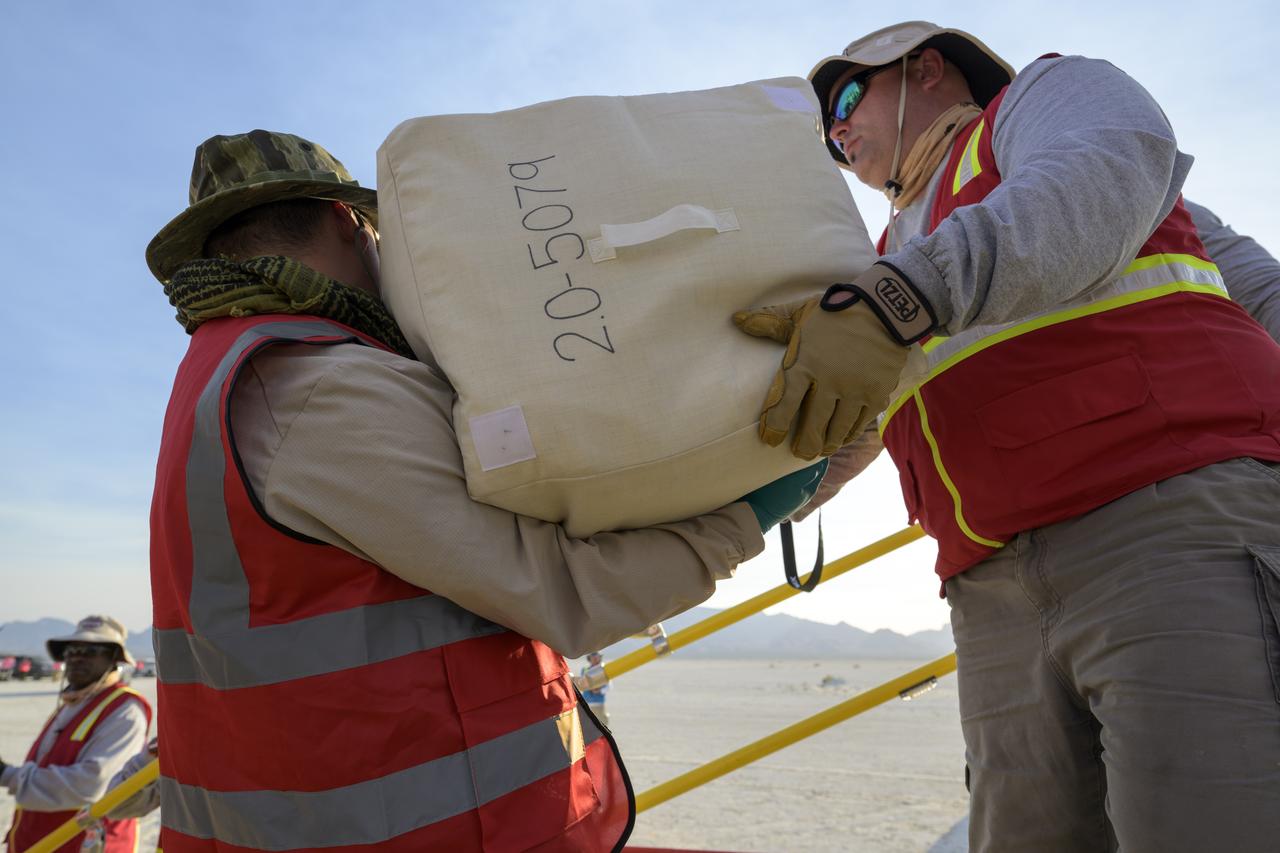
Boeing and NASA teams unload cargo from Boeing’s CST-100 Starliner spacecraft after it landed at White Sands Missile Range’s Space Harbor, Wednesday, May 25, 2022, in New Mexico. Boeing’s Orbital Flight Test-2 (OFT-2) is Starliner’s second uncrewed flight test to the International Space Station as part of NASA's Commercial Crew Program. OFT-2 serves as an end-to-end test of the system's capabilities. Photo Credit: (NASA/Bill Ingalls)
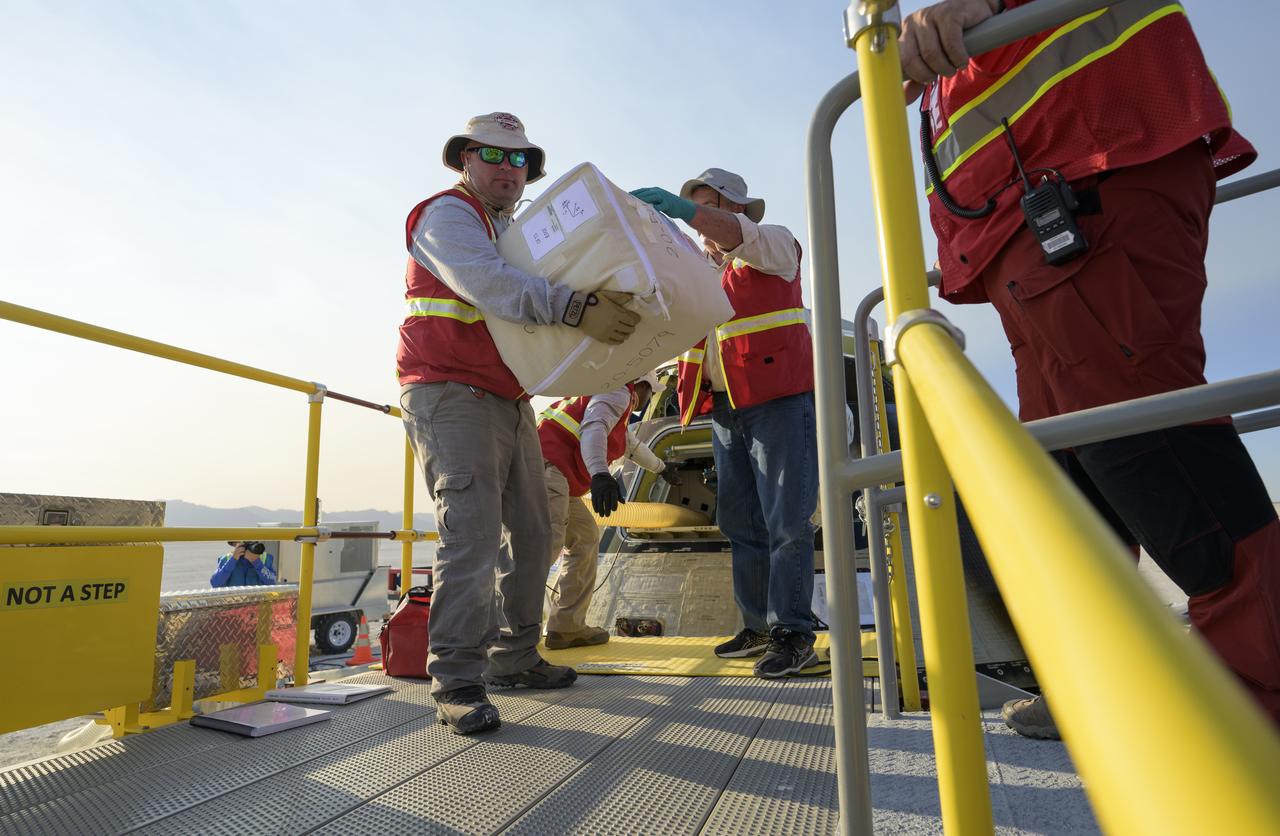
Boeing and NASA teams unload cargo from Boeing’s CST-100 Starliner spacecraft after it landed at White Sands Missile Range’s Space Harbor, Wednesday, May 25, 2022, in New Mexico. Boeing’s Orbital Flight Test-2 (OFT-2) is Starliner’s second uncrewed flight test to the International Space Station as part of NASA's Commercial Crew Program. OFT-2 serves as an end-to-end test of the system's capabilities. Photo Credit: (NASA/Bill Ingalls)
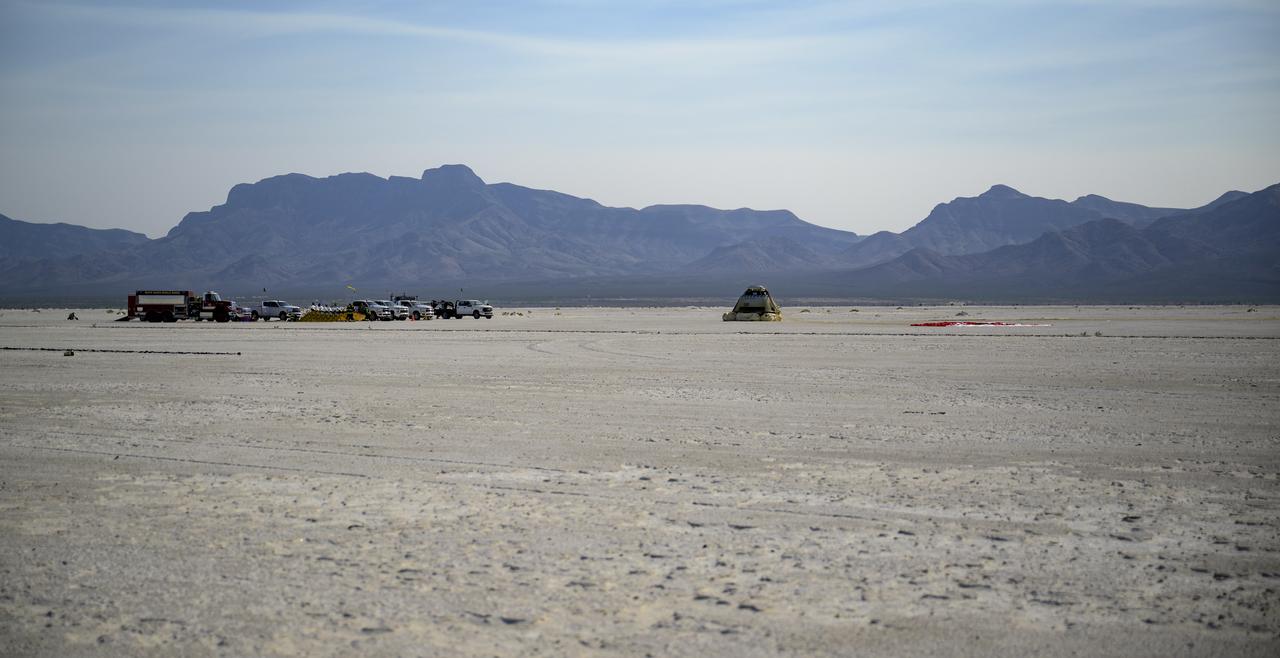
Boeing and NASA teams arrive at Boeing’s CST-100 Starliner spacecraft after it landed at White Sands Missile Range’s Space Harbor, Wednesday, May 25, 2022, in New Mexico. Boeing’s Orbital Flight Test-2 (OFT-2) is Starliner’s second uncrewed flight test to the International Space Station as part of NASA's Commercial Crew Program. OFT-2 serves as an end-to-end test of the system's capabilities. Photo Credit: (NASA/Bill Ingalls)
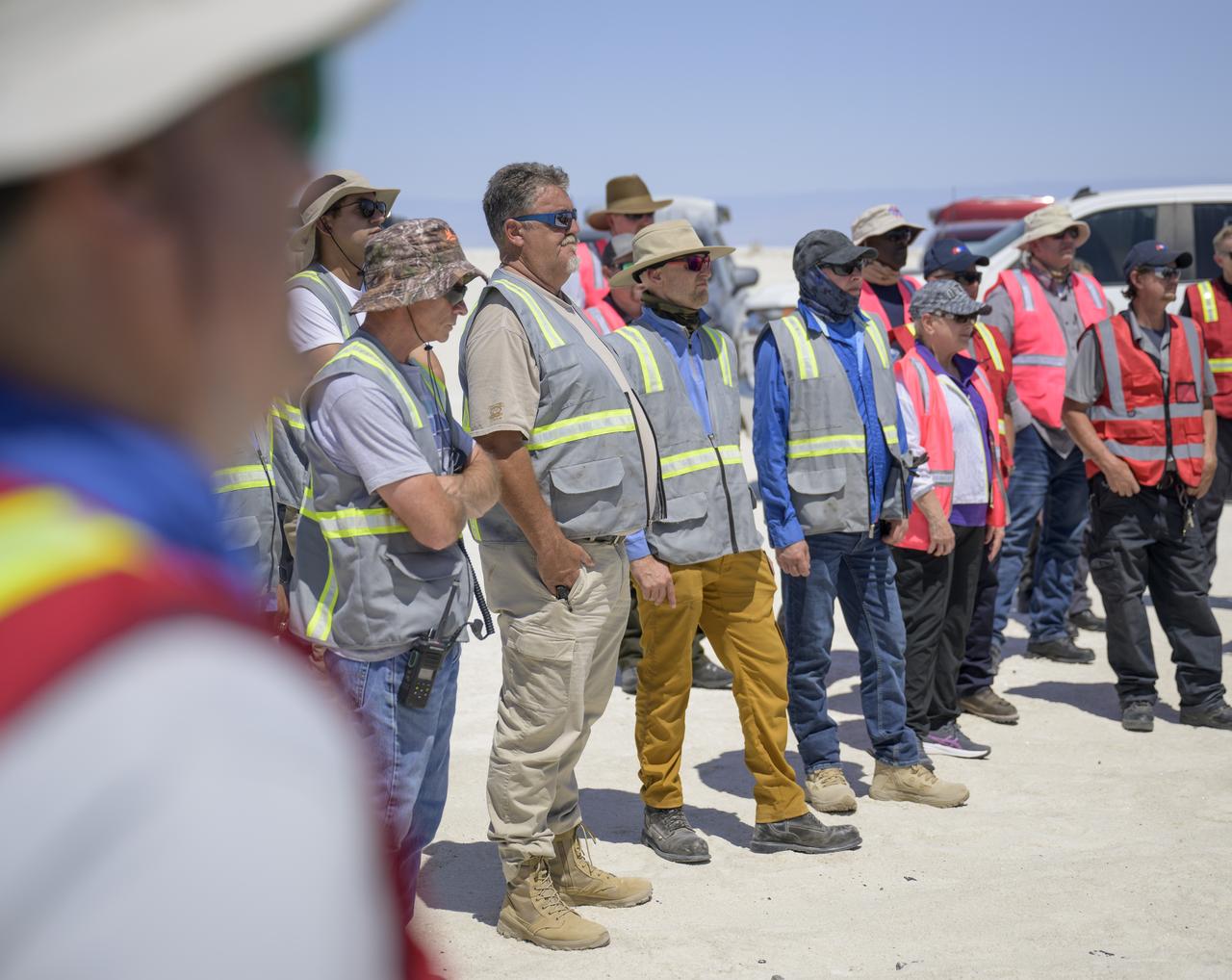
NASA and Boeing teams prepare for the landing of Boeing’s CST-100 Starliner spacecraft at White Sands Missile Range’s Space Harbor, Wednesday, May 25, 2022, in New Mexico. Boeing’s Orbital Flight Test-2 (OFT-2) is Starliner’s second uncrewed flight test to the International Space Station as part of NASA's Commercial Crew Program. OFT-2 serves as an end-to-end test of the system's capabilities. Photo Credit: (NASA/Bill Ingalls)
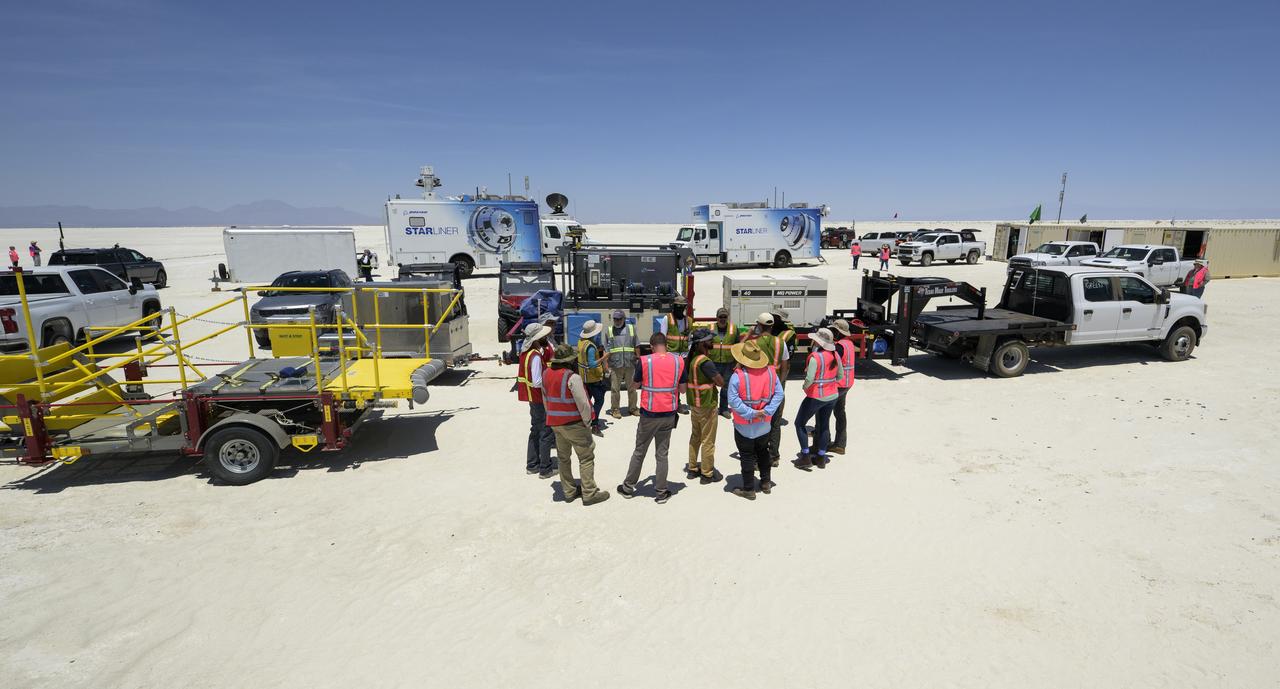
NASA and Boeing teams prepare for the landing of Boeing’s CST-100 Starliner spacecraft at White Sands Missile Range’s Space Harbor, Wednesday, May 25, 2022, in New Mexico. Boeing’s Orbital Flight Test-2 (OFT-2) is Starliner’s second uncrewed flight test to the International Space Station as part of NASA's Commercial Crew Program. OFT-2 serves as an end-to-end test of the system's capabilities. Photo Credit: (NASA/Bill Ingalls)
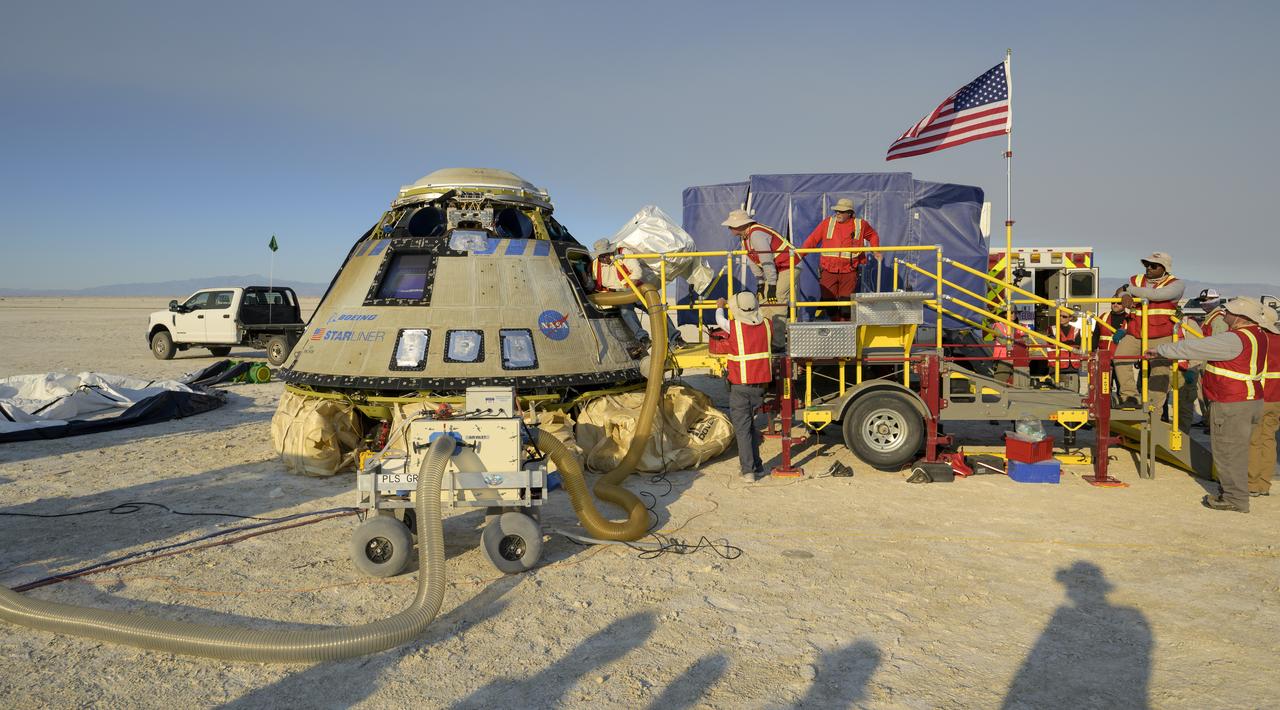
Boeing and NASA teams work around Boeing’s CST-100 Starliner spacecraft after it landed at White Sands Missile Range’s Space Harbor, Wednesday, May 25, 2022, in New Mexico. Boeing’s Orbital Flight Test-2 (OFT-2) is Starliner’s second uncrewed flight test to the International Space Station as part of NASA's Commercial Crew Program. OFT-2 serves as an end-to-end test of the system's capabilities. Photo Credit: (NASA/Bill Ingalls)
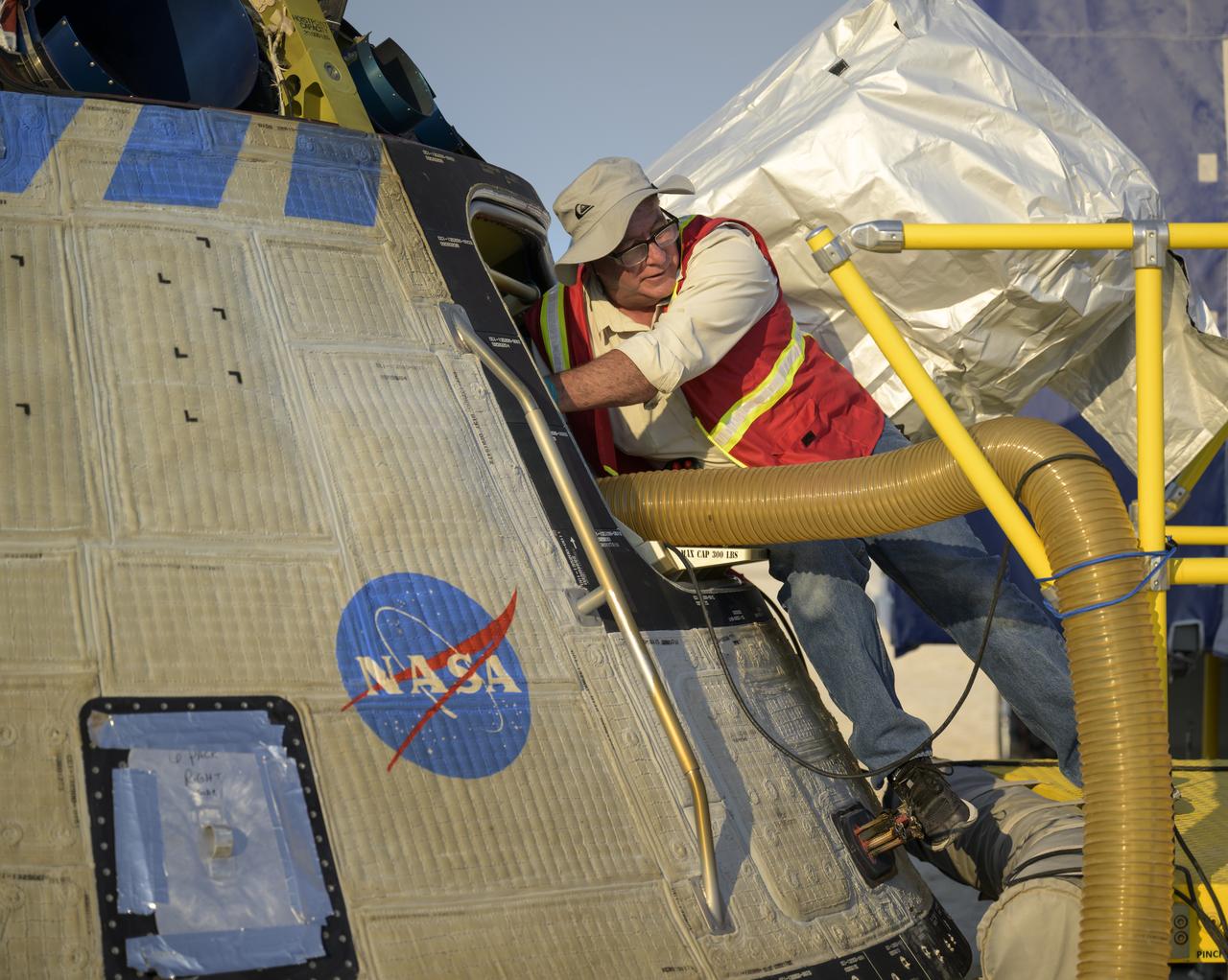
Boeing and NASA teams work around Boeing’s CST-100 Starliner spacecraft after it landed at White Sands Missile Range’s Space Harbor, Wednesday, May 25, 2022, in New Mexico. Boeing’s Orbital Flight Test-2 (OFT-2) is Starliner’s second uncrewed flight test to the International Space Station as part of NASA's Commercial Crew Program. OFT-2 serves as an end-to-end test of the system's capabilities. Photo Credit: (NASA/Bill Ingalls)

Boeing and NASA teams work around Boeing’s CST-100 Starliner spacecraft after it landed at White Sands Missile Range’s Space Harbor, Wednesday, May 25, 2022, in New Mexico. Boeing’s Orbital Flight Test-2 (OFT-2) is Starliner’s second uncrewed flight test to the International Space Station as part of NASA's Commercial Crew Program. OFT-2 serves as an end-to-end test of the system's capabilities. Photo Credit: (NASA/Bill Ingalls)
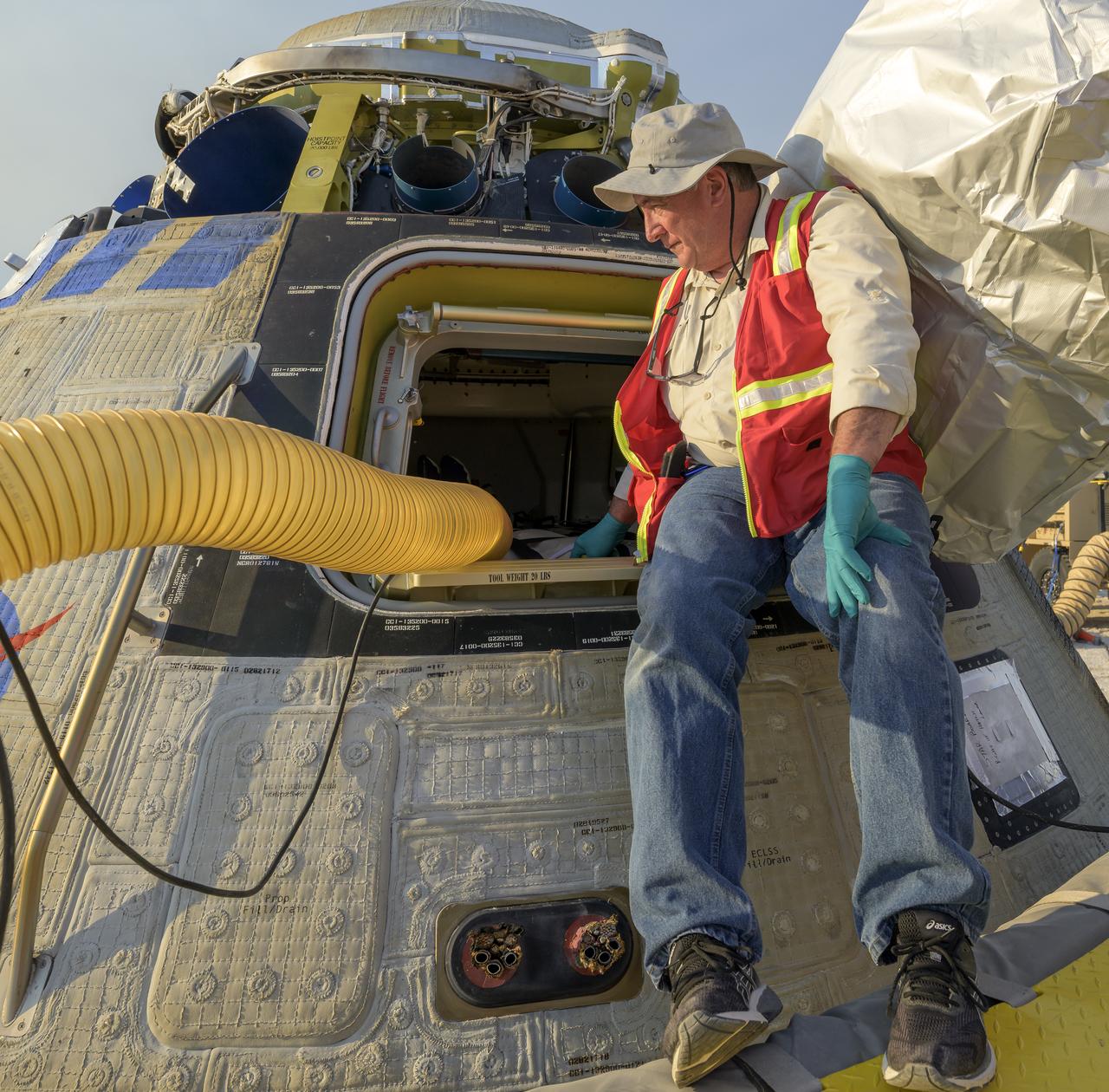
Boeing and NASA teams work around Boeing’s CST-100 Starliner spacecraft after it landed at White Sands Missile Range’s Space Harbor, Wednesday, May 25, 2022, in New Mexico. Boeing’s Orbital Flight Test-2 (OFT-2) is Starliner’s second uncrewed flight test to the International Space Station as part of NASA's Commercial Crew Program. OFT-2 serves as an end-to-end test of the system's capabilities. Photo Credit: (NASA/Bill Ingalls)
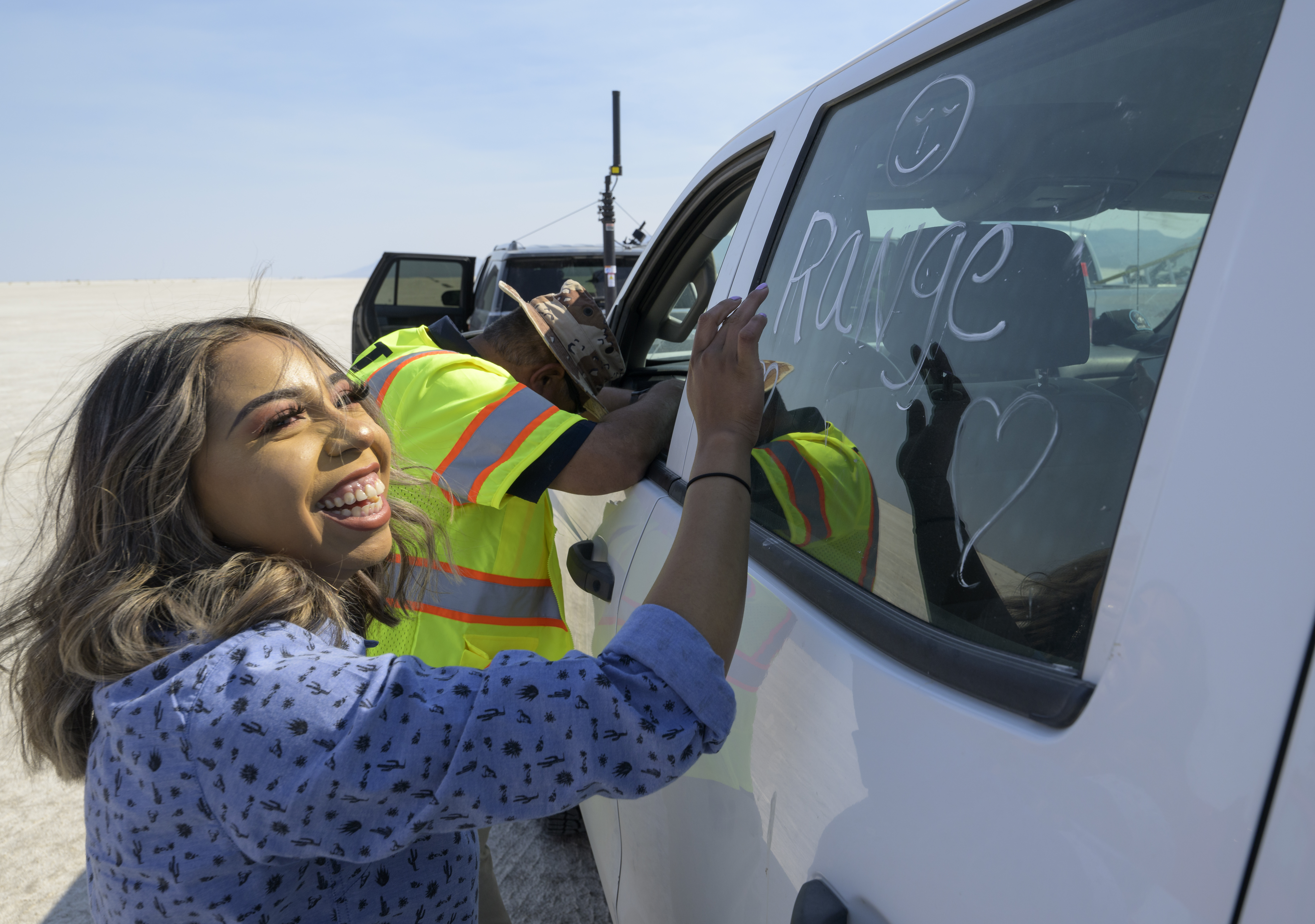
A member of the range safety team labels her convoy vehicle as they prepare for the landing of Boeing’s CST-100 Starliner spacecraft at White Sands Missile Range’s Space Harbor, Wednesday, May 25, 2022, in New Mexico. Boeing’s Orbital Flight Test-2 (OFT-2) is Starliner’s second uncrewed flight test to the International Space Station as part of NASA's Commercial Crew Program. OFT-2 serves as an end-to-end test of the system's capabilities. Photo Credit: (NASA/Bill Ingalls)
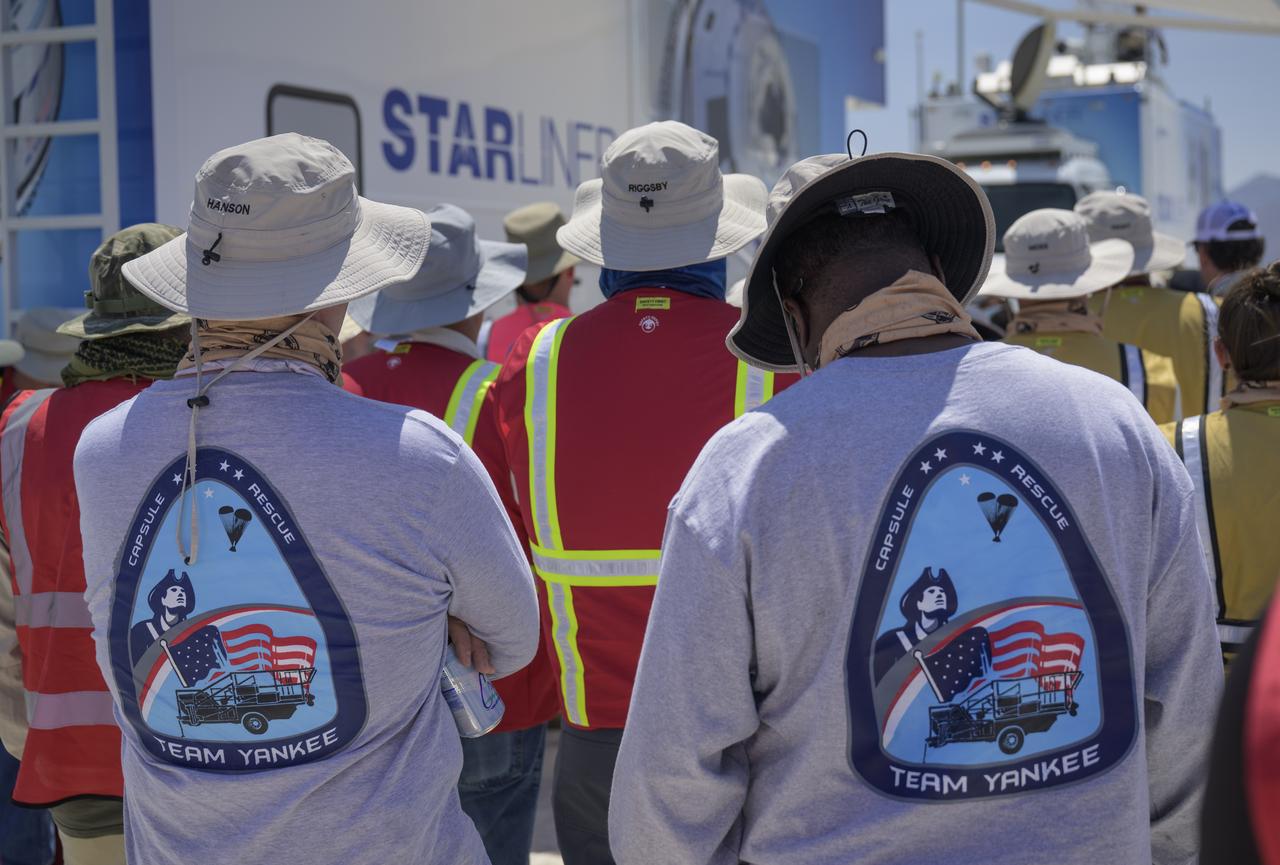
NASA and Boeing teams prepare for the landing of Boeing’s CST-100 Starliner spacecraft at White Sands Missile Range’s Space Harbor, Wednesday, May 25, 2022, in New Mexico. Boeing’s Orbital Flight Test-2 (OFT-2) is Starliner’s second uncrewed flight test to the International Space Station as part of NASA's Commercial Crew Program. OFT-2 serves as an end-to-end test of the system's capabilities. Photo Credit: (NASA/Bill Ingalls)
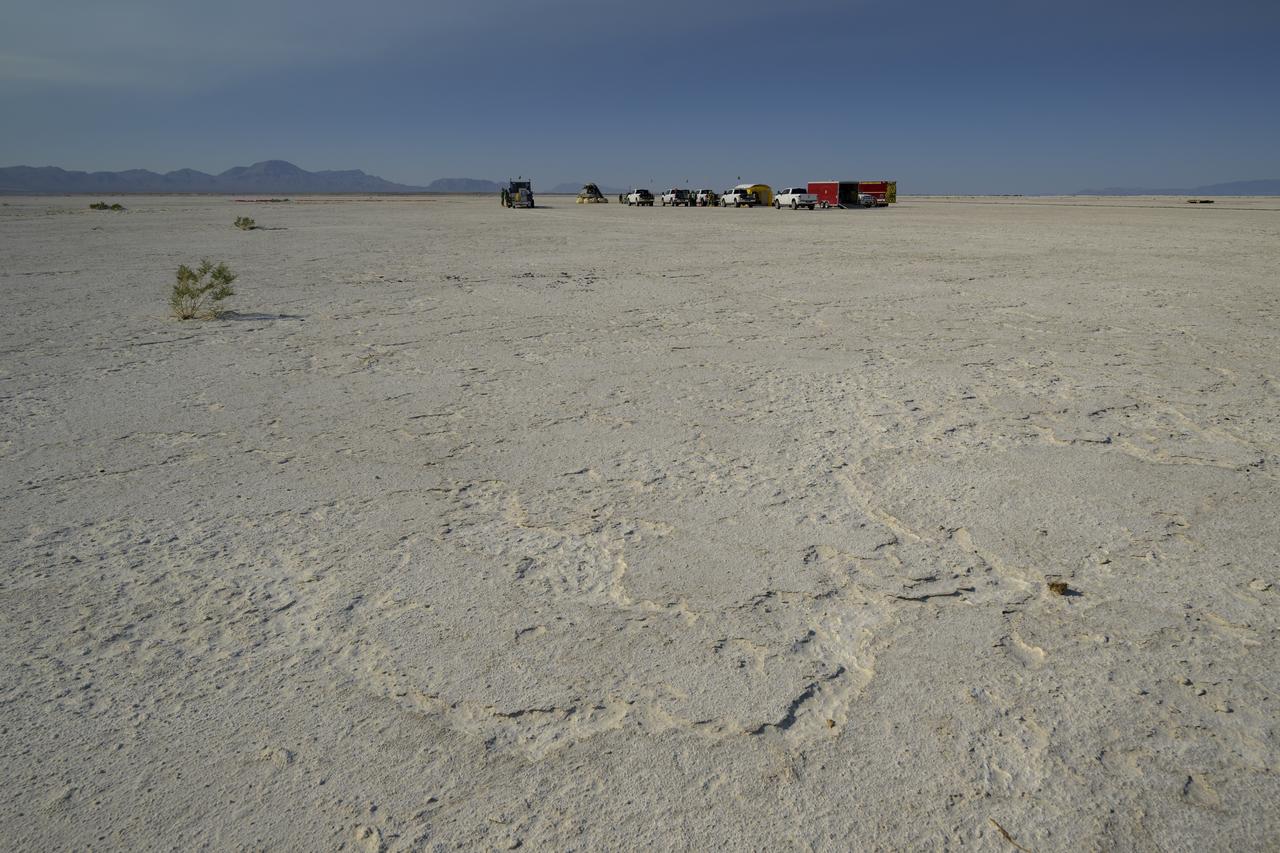
Boeing and NASA teams work around Boeing’s CST-100 Starliner spacecraft after it landed at White Sands Missile Range’s Space Harbor, Wednesday, May 25, 2022, in New Mexico. Boeing’s Orbital Flight Test-2 (OFT-2) is Starliner’s second uncrewed flight test to the International Space Station as part of NASA's Commercial Crew Program. OFT-2 serves as an end-to-end test of the system's capabilities. Photo Credit: (NASA/Bill Ingalls)
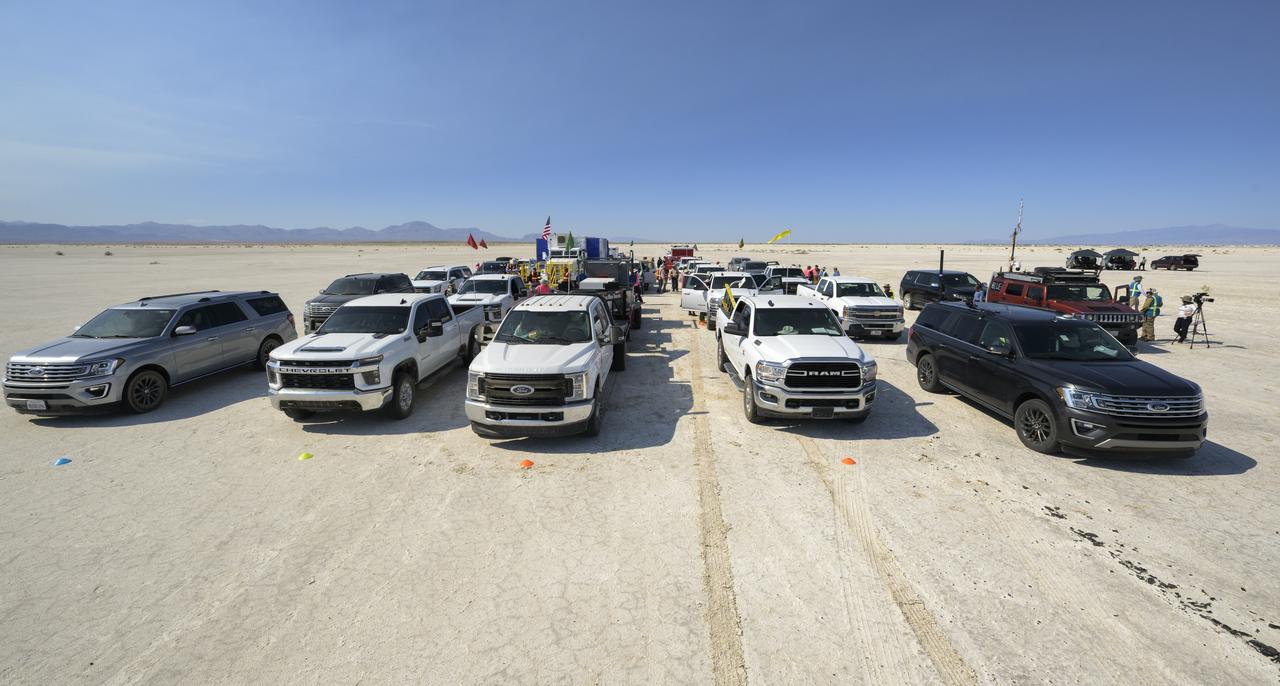
NASA and Boeing teams line up in a convoy as they prepare for the landing of Boeing’s CST-100 Starliner spacecraft at White Sands Missile Range’s Space Harbor, Wednesday, May 25, 2022, in New Mexico. Boeing’s Orbital Flight Test-2 (OFT-2) is Starliner’s second uncrewed flight test to the International Space Station as part of NASA's Commercial Crew Program. OFT-2 serves as an end-to-end test of the system's capabilities. Photo Credit: (NASA/Bill Ingalls)
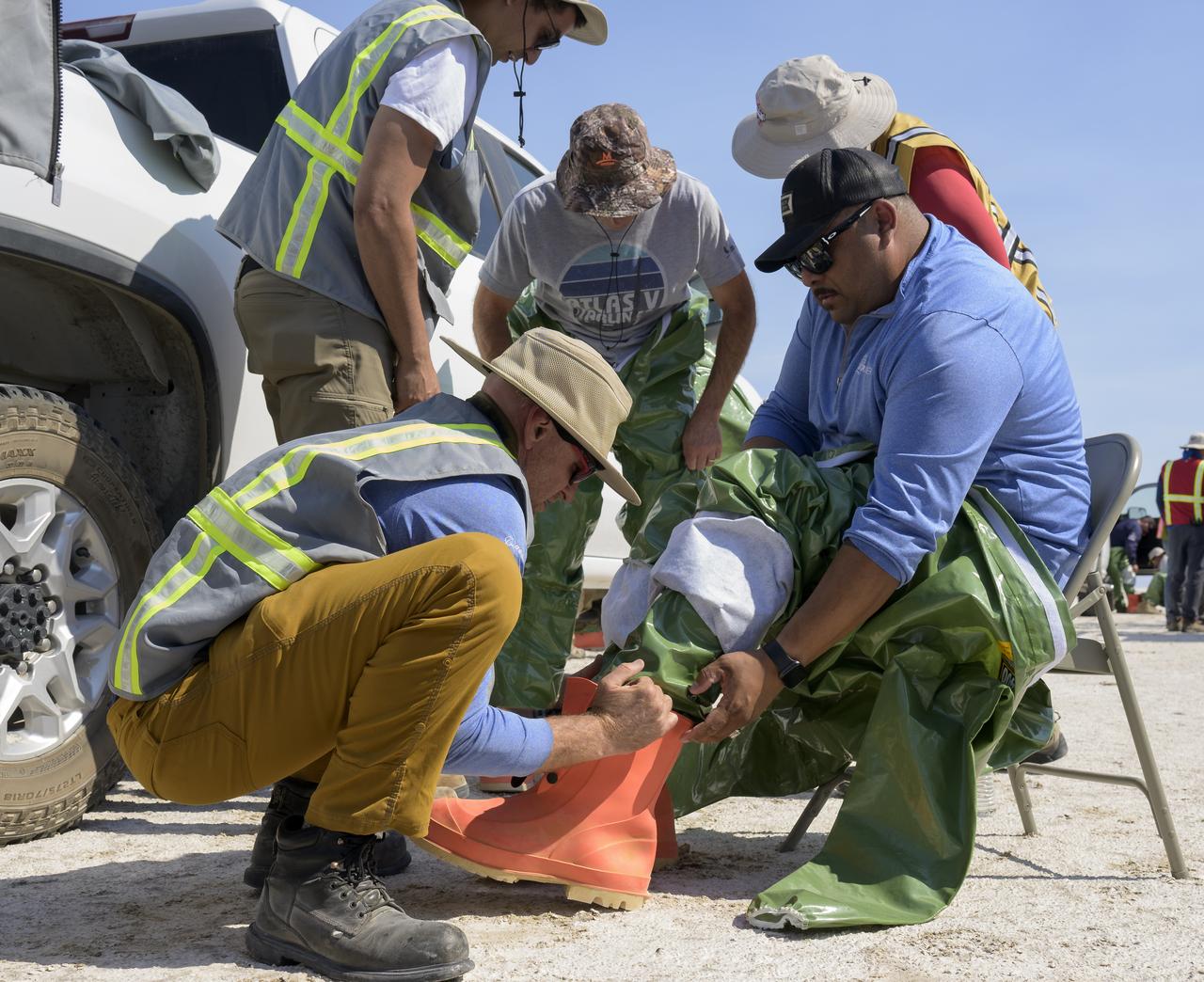
Boeing team members don hazmat suits as they prepare for the landing of Boeing’s CST-100 Starliner spacecraft at White Sands Missile Range’s Space Harbor, Wednesday, May 25, 2022, in New Mexico. Boeing’s Orbital Flight Test-2 (OFT-2) is Starliner’s second uncrewed flight test to the International Space Station as part of NASA's Commercial Crew Program. OFT-2 serves as an end-to-end test of the system's capabilities. Photo Credit: (NASA/Bill Ingalls)
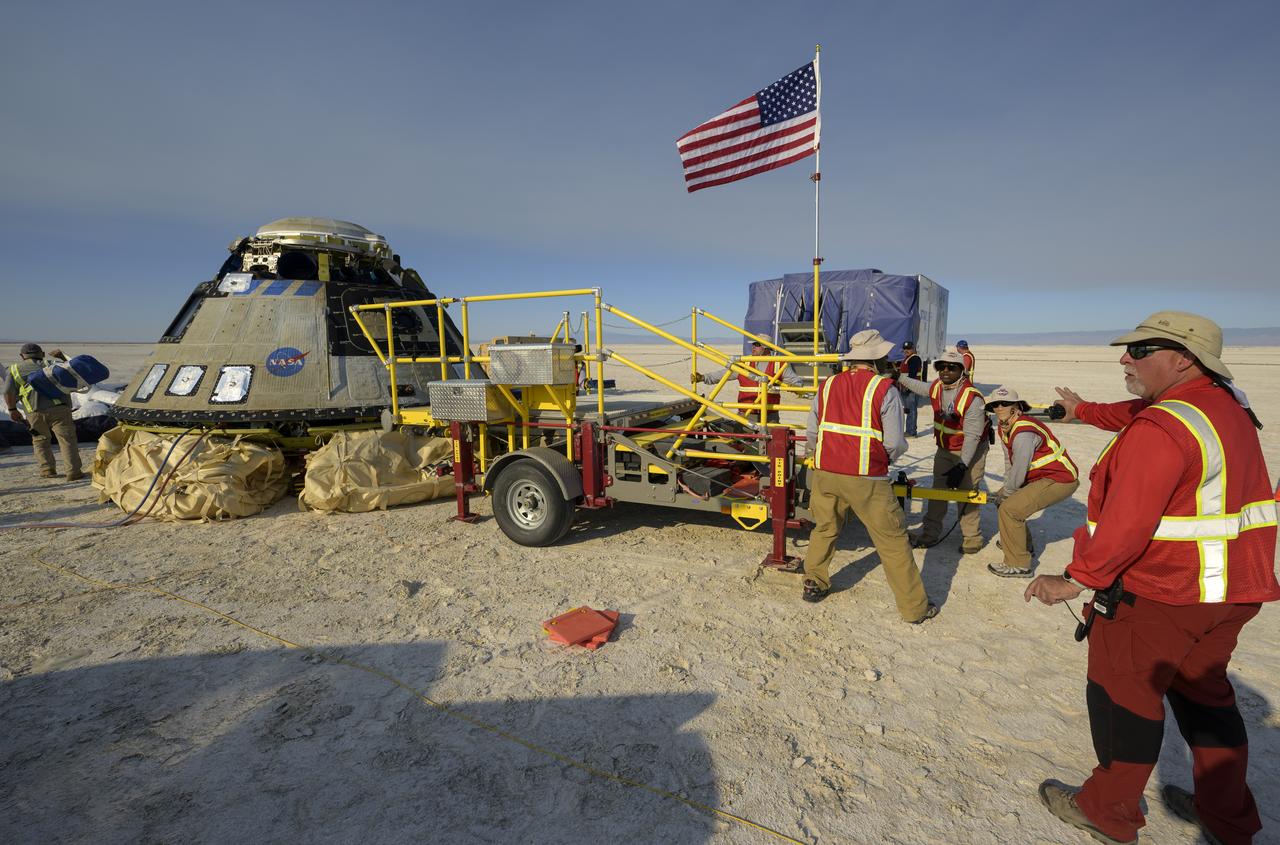
Boeing and NASA teams work around Boeing’s CST-100 Starliner spacecraft after it landed at White Sands Missile Range’s Space Harbor, Wednesday, May 25, 2022, in New Mexico. Boeing’s Orbital Flight Test-2 (OFT-2) is Starliner’s second uncrewed flight test to the International Space Station as part of NASA's Commercial Crew Program. OFT-2 serves as an end-to-end test of the system's capabilities. Photo Credit: (NASA/Bill Ingalls)
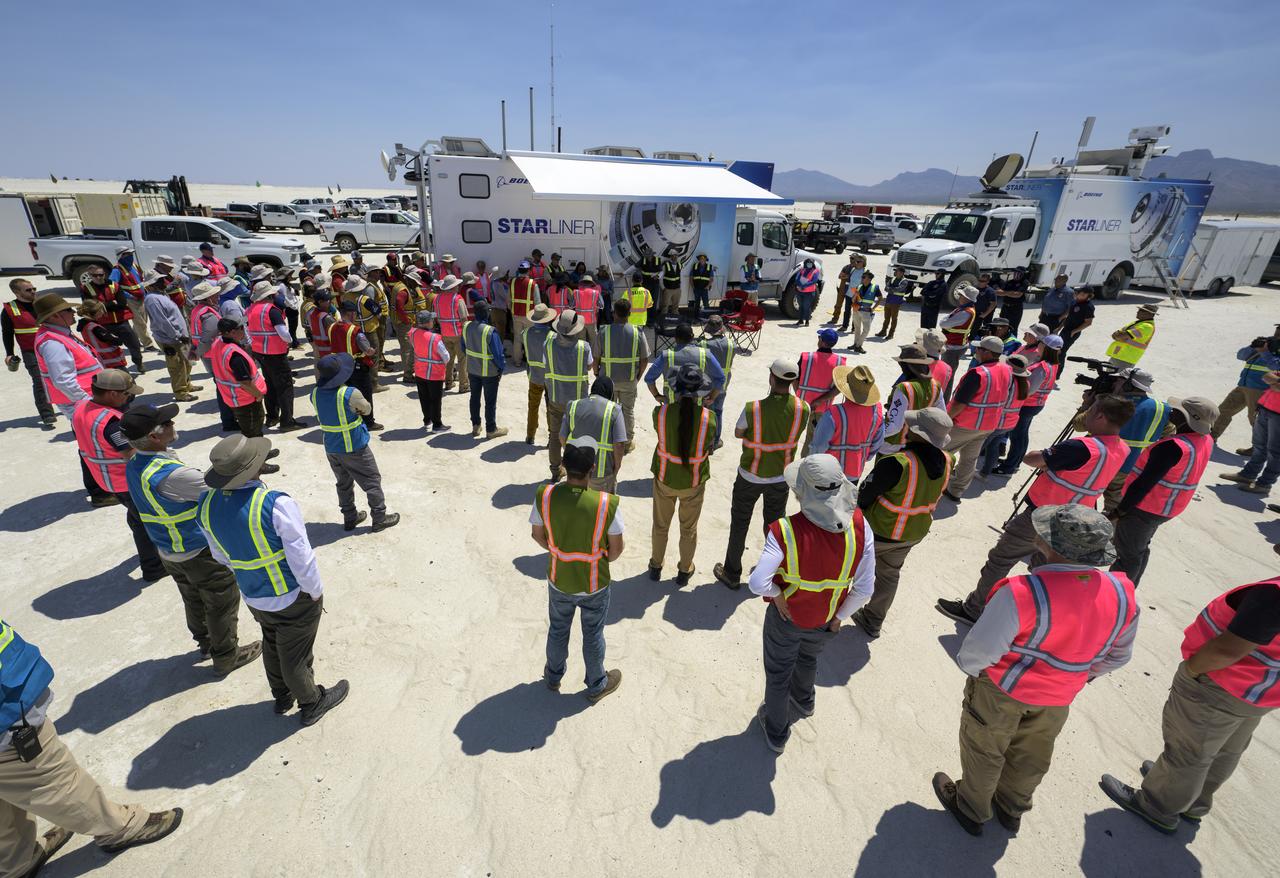
NASA and Boeing teams prepare for the landing of Boeing’s CST-100 Starliner spacecraft at White Sands Missile Range’s Space Harbor, Wednesday, May 25, 2022, in New Mexico. Boeing’s Orbital Flight Test-2 (OFT-2) is Starliner’s second uncrewed flight test to the International Space Station as part of NASA's Commercial Crew Program. OFT-2 serves as an end-to-end test of the system's capabilities. Photo Credit: (NASA/Bill Ingalls)
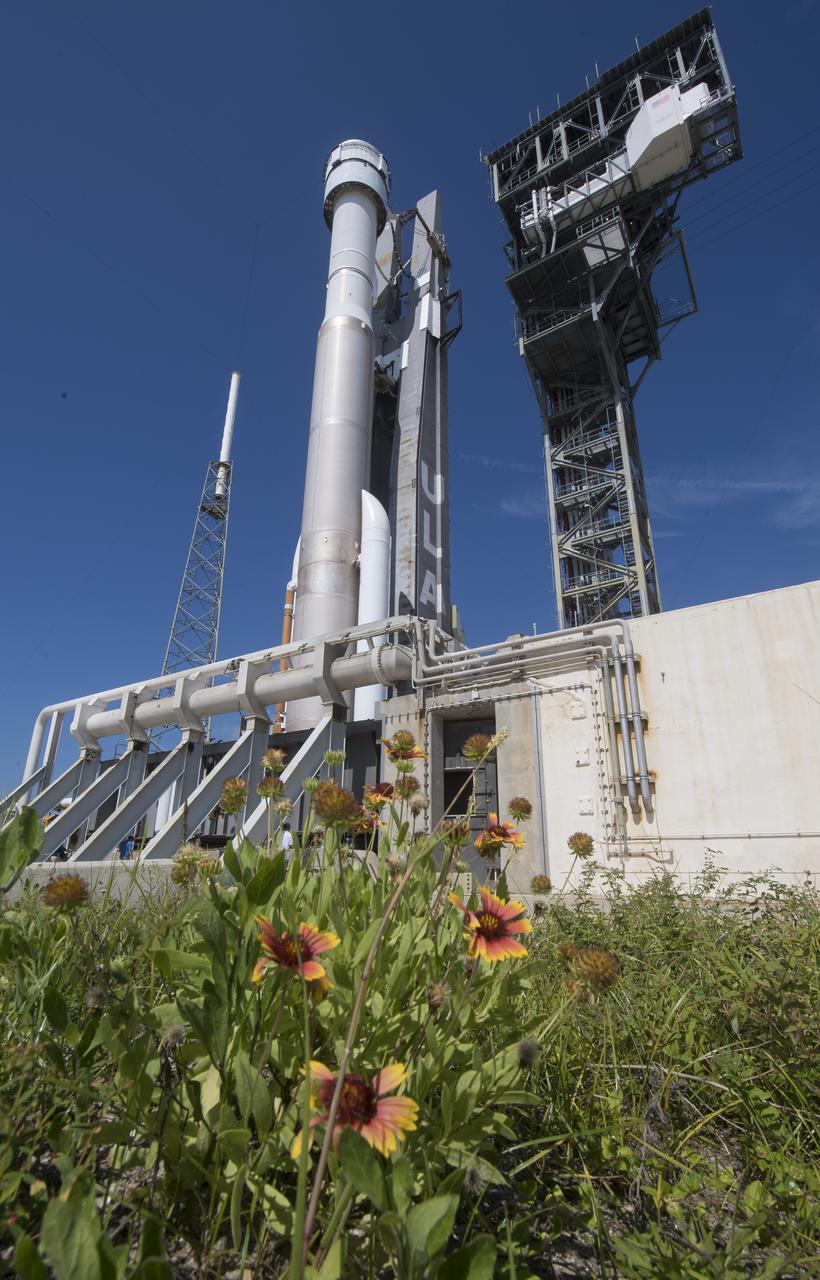
A United Launch Alliance Atlas V rocket with Boeing’s CST-100 Starliner spacecraft onboard is seen on the launch pad at Space Launch Complex 41 ahead of the Orbital Flight Test-2 (OFT-2) mission, Thursday, July 29, 2021 at Cape Canaveral Space Force Station in Florida. Boeing’s Orbital Flight Test-2 will be Starliner’s second uncrewed flight test and will dock to the International Space Station as part of NASA's Commercial Crew Program. Photo Credit: (NASA/Aubrey Gemignani)
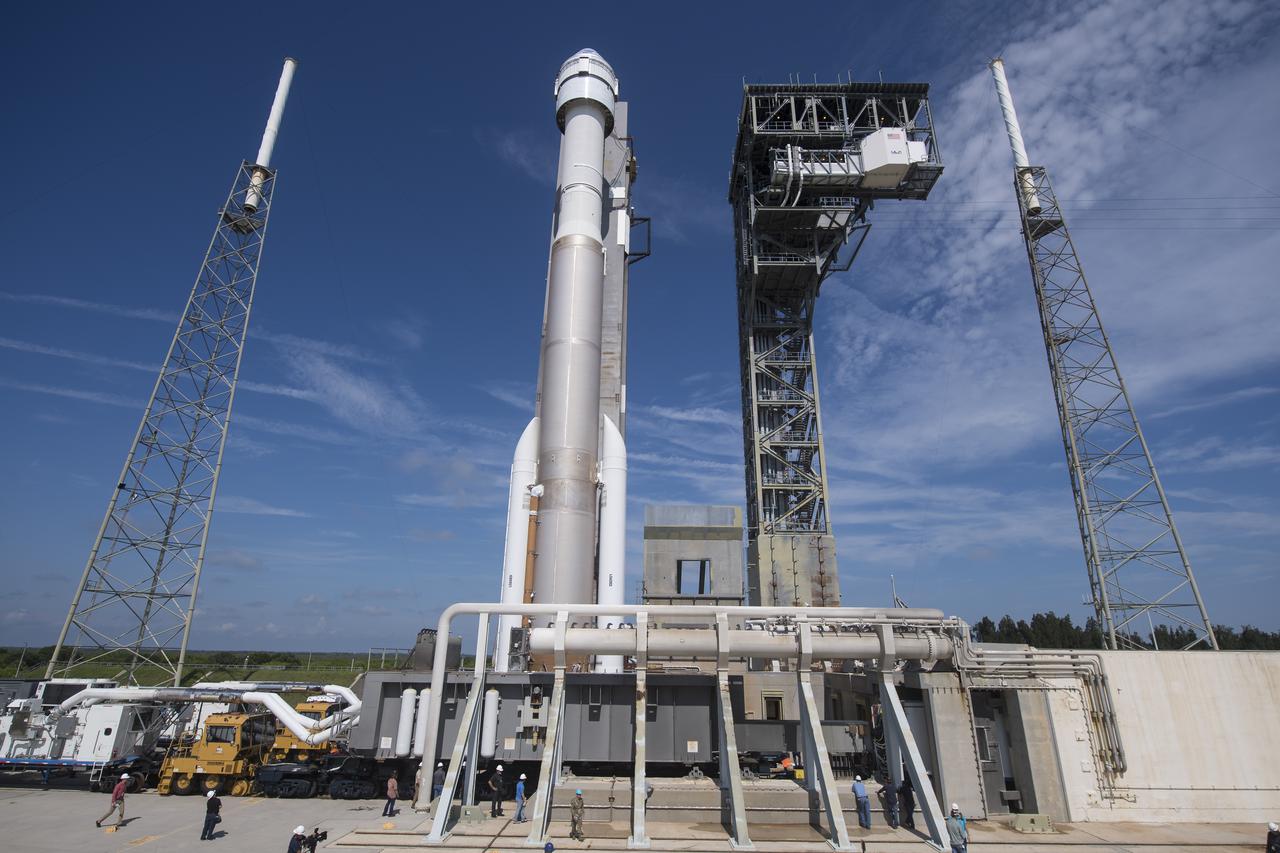
A United Launch Alliance Atlas V rocket with Boeing’s CST-100 Starliner spacecraft onboard is seen on the launch pad at Space Launch Complex 41 ahead of the Orbital Flight Test-2 (OFT-2) mission, Thursday, July 29, 2021 at Cape Canaveral Space Force Station in Florida. Boeing’s Orbital Flight Test-2 will be Starliner’s second uncrewed flight test and will dock to the International Space Station as part of NASA's Commercial Crew Program. Photo Credit: (NASA/Aubrey Gemignani)
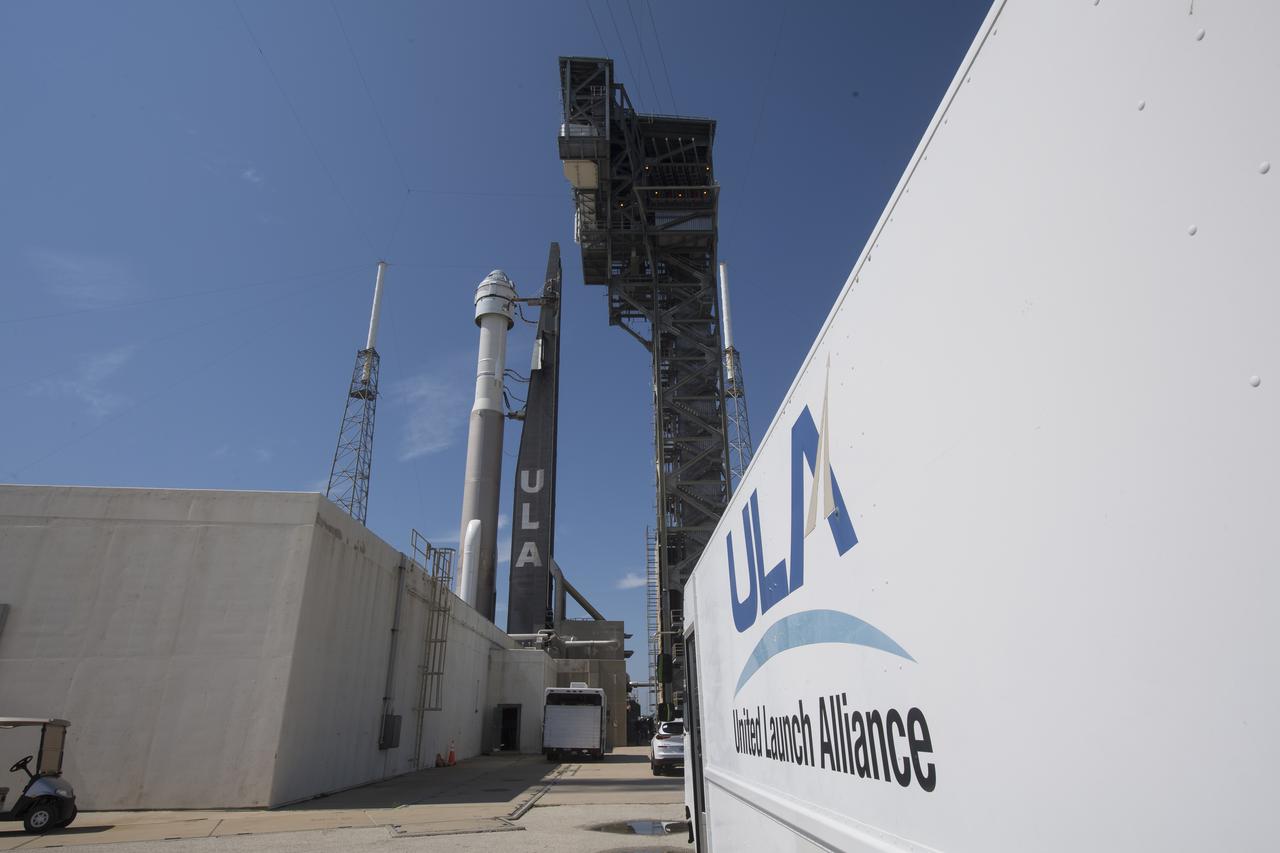
A United Launch Alliance Atlas V rocket with Boeing’s CST-100 Starliner spacecraft onboard is seen on the launch pad at Space Launch Complex 41 ahead of the Orbital Flight Test-2 (OFT-2) mission, Thursday, July 29, 2021 at Cape Canaveral Space Force Station in Florida. Boeing’s Orbital Flight Test-2 will be Starliner’s second uncrewed flight test and will dock to the International Space Station as part of NASA's Commercial Crew Program. Photo Credit: (NASA/Aubrey Gemignani)
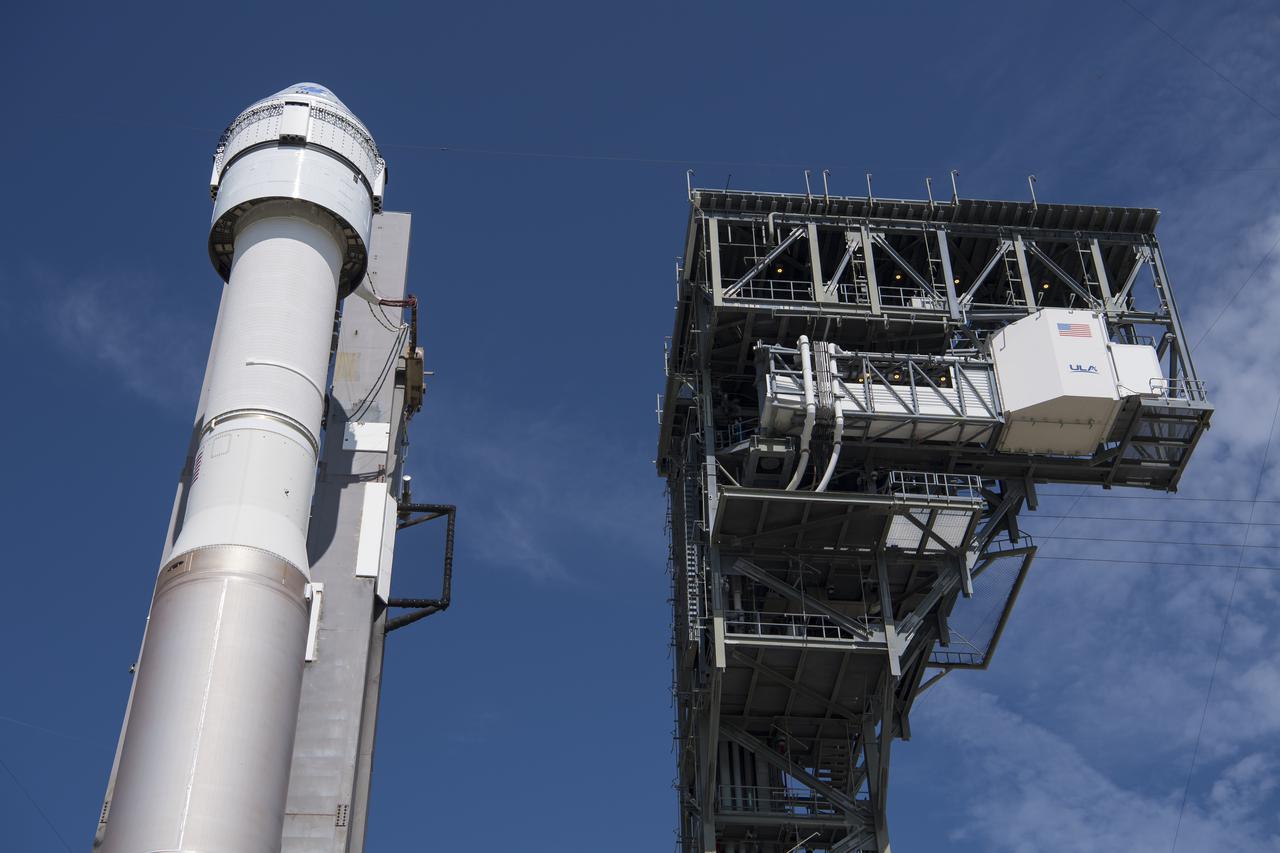
A United Launch Alliance Atlas V rocket with Boeing’s CST-100 Starliner spacecraft onboard is seen on the launch pad at Space Launch Complex 41 ahead of the Orbital Flight Test-2 (OFT-2) mission, Thursday, July 29, 2021 at Cape Canaveral Space Force Station in Florida. Boeing’s Orbital Flight Test-2 will be Starliner’s second uncrewed flight test and will dock to the International Space Station as part of NASA's Commercial Crew Program. Photo Credit: (NASA/Aubrey Gemignani)
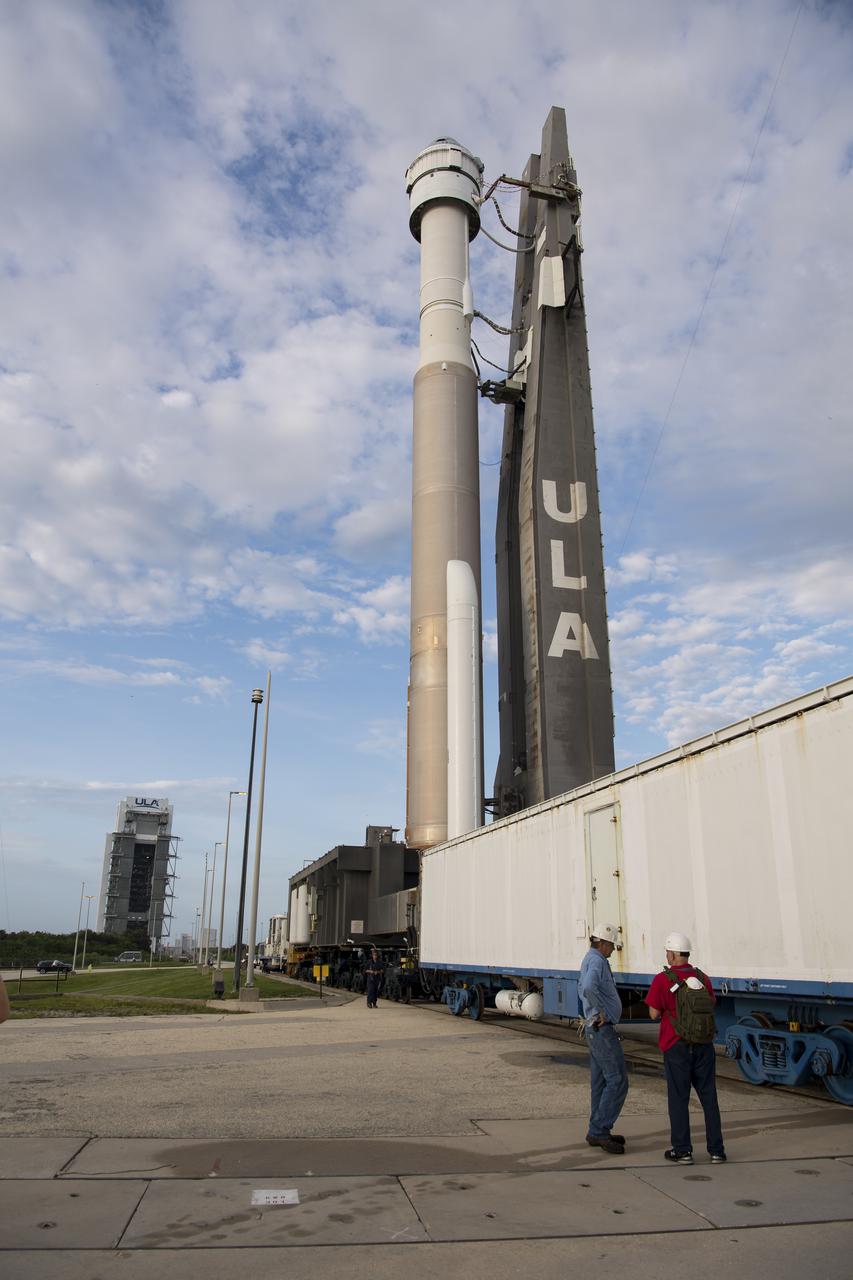
A United Launch Alliance Atlas V rocket with Boeing’s CST-100 Starliner spacecraft aboard is seen as it is rolled out of the Vertical Integration Facility to the launch pad at Space Launch Complex 41 ahead of the Orbital Flight Test-2 (OFT-2) mission, Monday, Aug. 2, 2021 at Cape Canaveral Space Force Station in Florida. Boeing’s Orbital Flight Test-2 will be Starliner’s second uncrewed flight test and will dock to the International Space Station as part of NASA's Commercial Crew Program. The mission, currently targeted for launch at 1:20 p.m. EDT Tuesday, Aug. 3, will serve as an end-to-end test of the system's capabilities. Photo Credit: (NASA/Aubrey Gemignani)
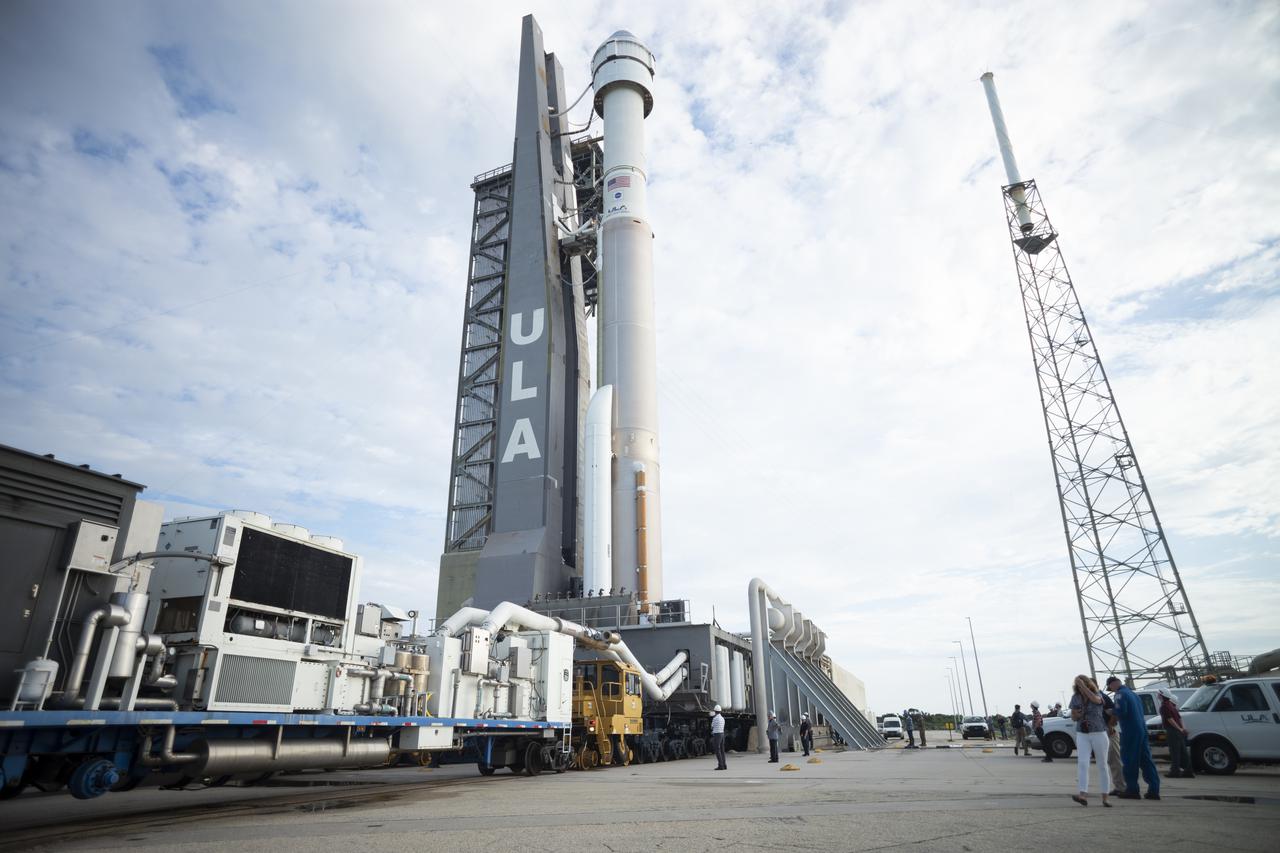
A United Launch Alliance Atlas V rocket with Boeing’s CST-100 Starliner spacecraft aboard is seen as it is rolled out of the Vertical Integration Facility to the launch pad at Space Launch Complex 41 ahead of the Orbital Flight Test-2 (OFT-2) mission, Monday, Aug. 2, 2021 at Cape Canaveral Space Force Station in Florida. Boeing’s Orbital Flight Test-2 will be Starliner’s second uncrewed flight test and will dock to the International Space Station as part of NASA's Commercial Crew Program. The mission, currently targeted for launch at 1:20 p.m. EDT Tuesday, Aug. 3, will serve as an end-to-end test of the system's capabilities. Photo Credit: (NASA/Joel Kowsky)
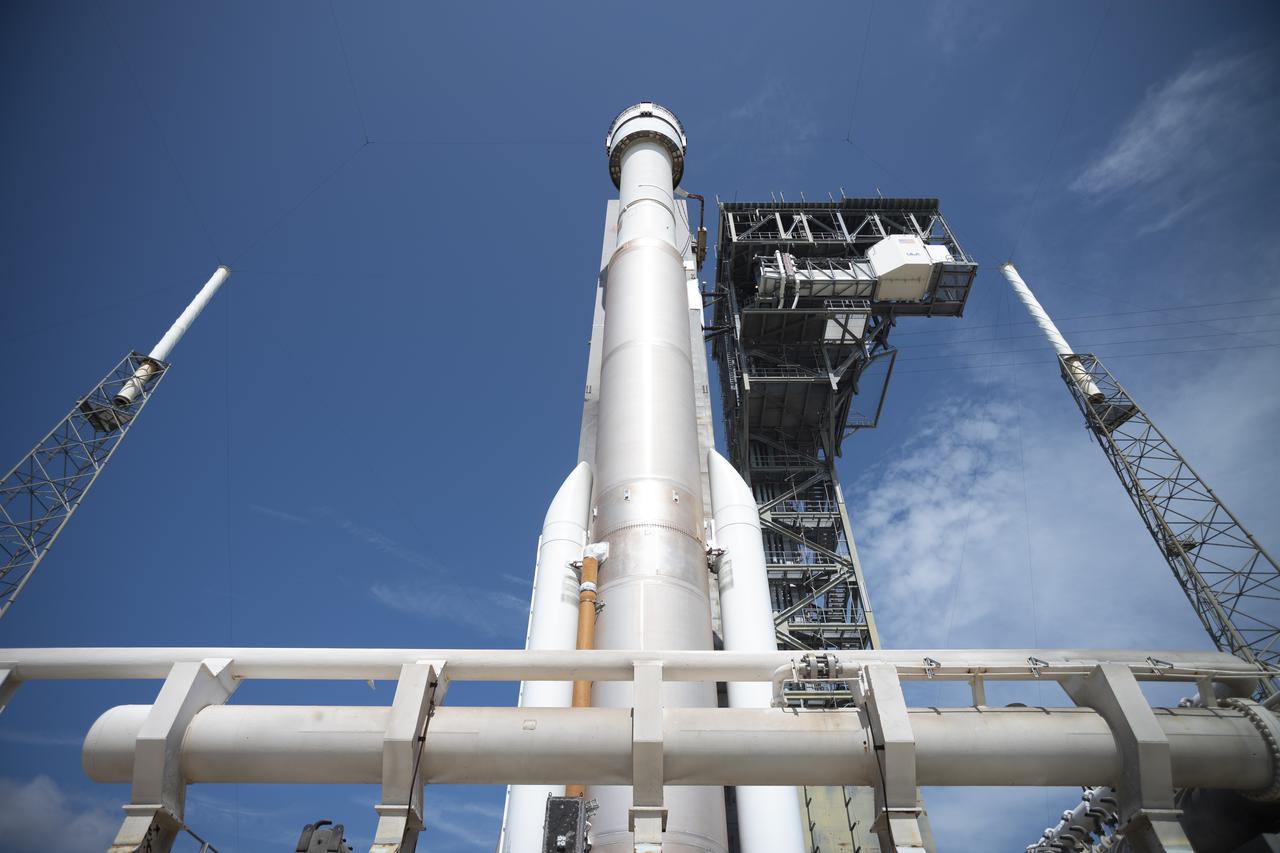
A United Launch Alliance Atlas V rocket with Boeing’s CST-100 Starliner spacecraft onboard is seen as it is rolled out of the Vertical Integration Facility to the launch pad at Space Launch Complex 41 ahead of the Orbital Flight Test-2 (OFT-2) mission, Thursday, July 29, 2021 at Cape Canaveral Space Force Station in Florida. Boeing’s Orbital Flight Test-2 will be Starliner’s second uncrewed flight test and will dock to the International Space Station as part of NASA's Commercial Crew Program. The mission, currently targeted for launch at 2:53 p.m. EDT Friday, July 30, will serve as an end-to-end test of the system's capabilities. Photo Credit: (NASA/Joel Kowsky)
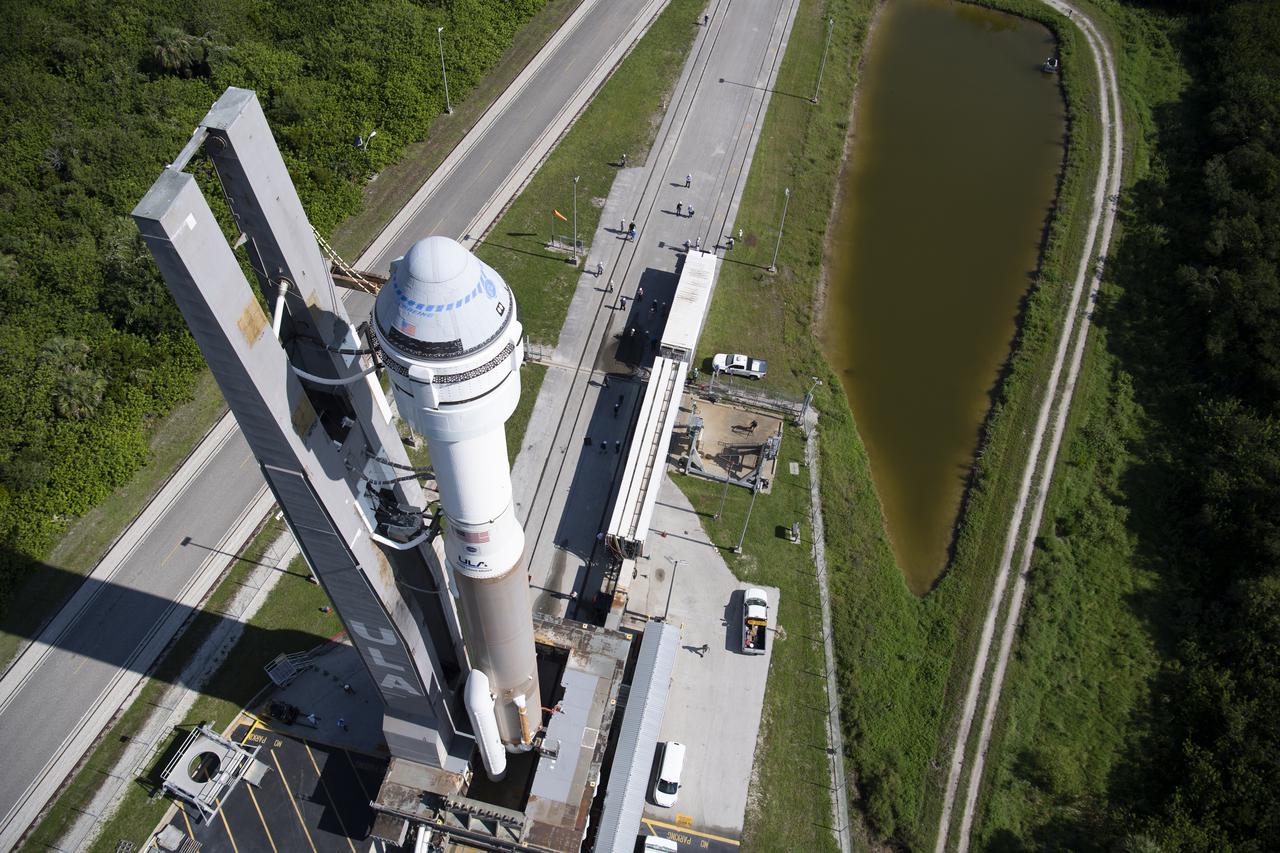
A United Launch Alliance Atlas V rocket with Boeing’s CST-100 Starliner spacecraft onboard is seen as it is rolled out of the Vertical Integration Facility to the launch pad at Space Launch Complex 41 ahead of the Orbital Flight Test-2 (OFT-2) mission, Thursday, July 29, 2021 at Cape Canaveral Space Force Station in Florida. Boeing’s Orbital Flight Test-2 will be Starliner’s second uncrewed flight test and will dock to the International Space Station as part of NASA's Commercial Crew Program. The mission, currently targeted for launch at 2:53 p.m. EDT Friday, July 30, will serve as an end-to-end test of the system's capabilities. Photo Credit: (NASA/Joel Kowsky)
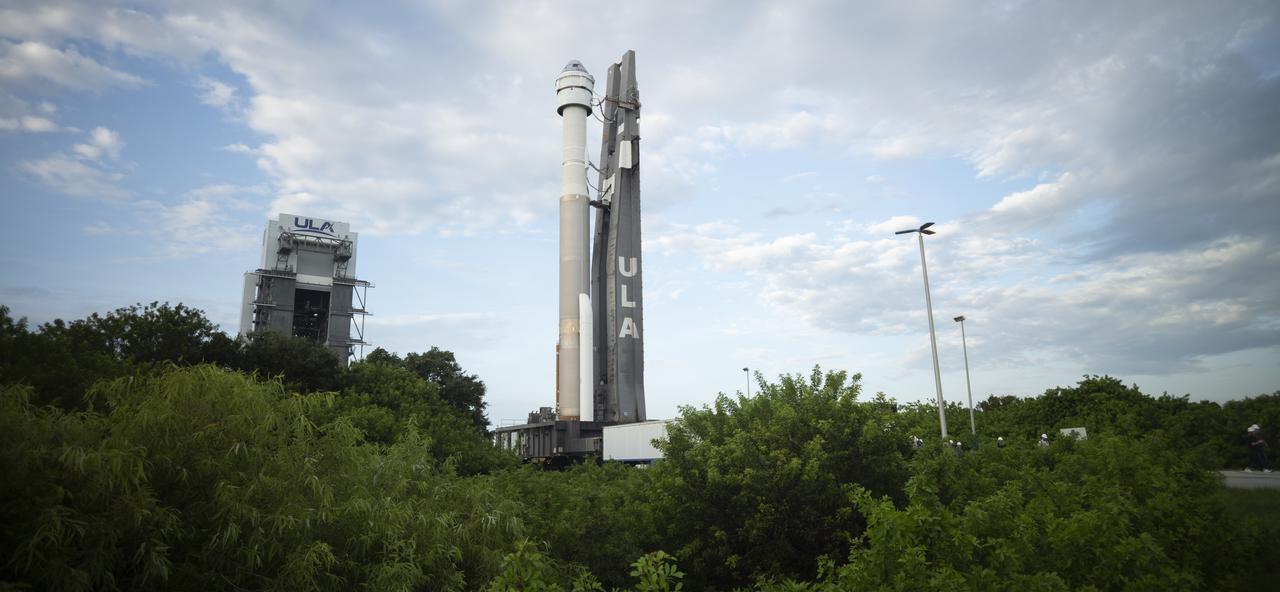
A United Launch Alliance Atlas V rocket with Boeing’s CST-100 Starliner spacecraft aboard is seen as it is rolled out of the Vertical Integration Facility to the launch pad at Space Launch Complex 41 ahead of the Orbital Flight Test-2 (OFT-2) mission, Monday, Aug. 2, 2021 at Cape Canaveral Space Force Station in Florida. Boeing’s Orbital Flight Test-2 will be Starliner’s second uncrewed flight test and will dock to the International Space Station as part of NASA's Commercial Crew Program. The mission, currently targeted for launch at 1:20 p.m. EDT Tuesday, Aug. 3, will serve as an end-to-end test of the system's capabilities. Photo Credit: (NASA/Joel Kowsky)
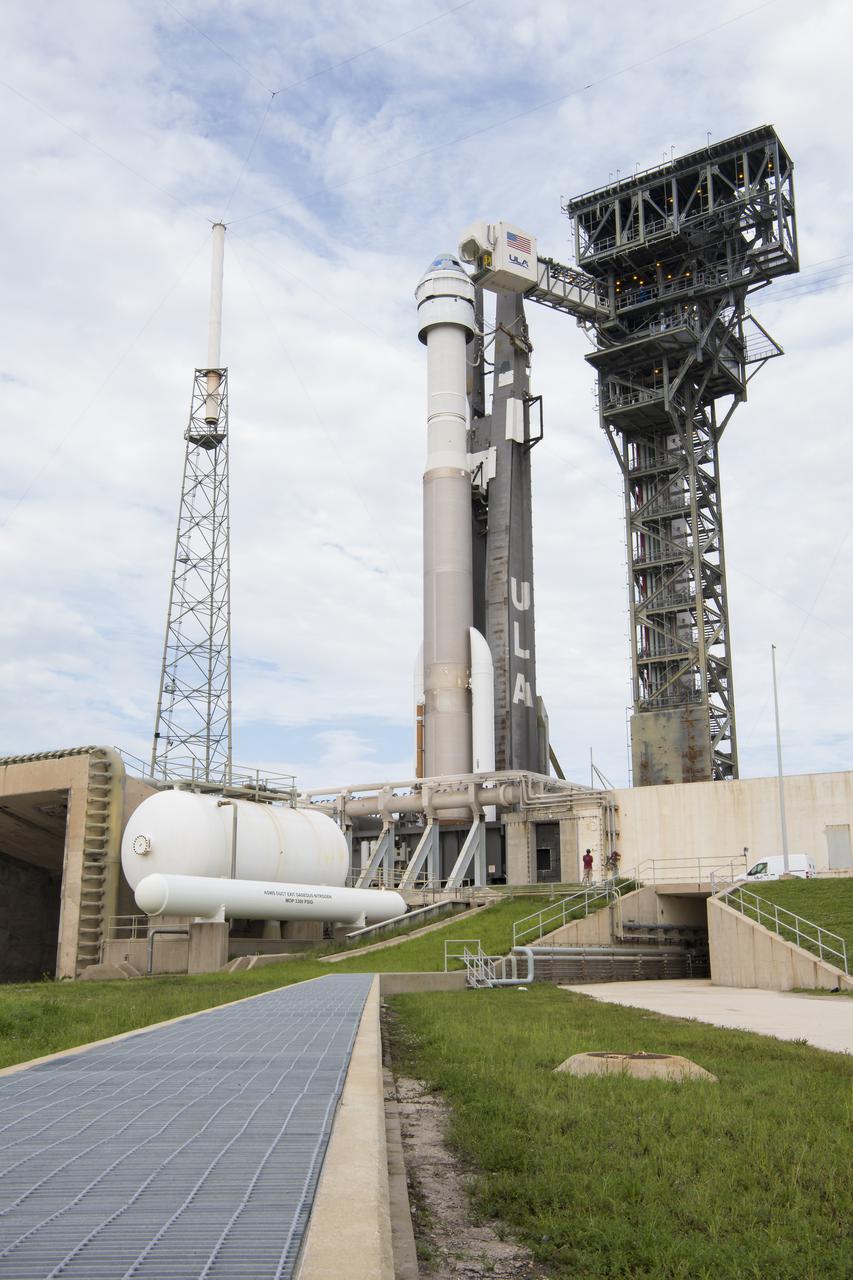
The crew access arm is seen as it swings into position for Boeing’s CST-100 Starliner spacecraft atop a United Launch Alliance Atlas V rocket at the launch pad at Space Launch Complex 41 ahead of the Orbital Flight Test-2 (OFT-2) mission, Monday, Aug. 2, 2021 at Cape Canaveral Space Force Station in Florida. Boeing’s Orbital Flight Test-2 will be Starliner’s second uncrewed flight test and will dock to the International Space Station as part of NASA's Commercial Crew Program. The mission, currently targeted for launch at 1:20 p.m. EDT Tuesday, Aug. 3, will serve as an end-to-end test of the system's capabilities. Photo Credit: (NASA/Aubrey Gemignani)
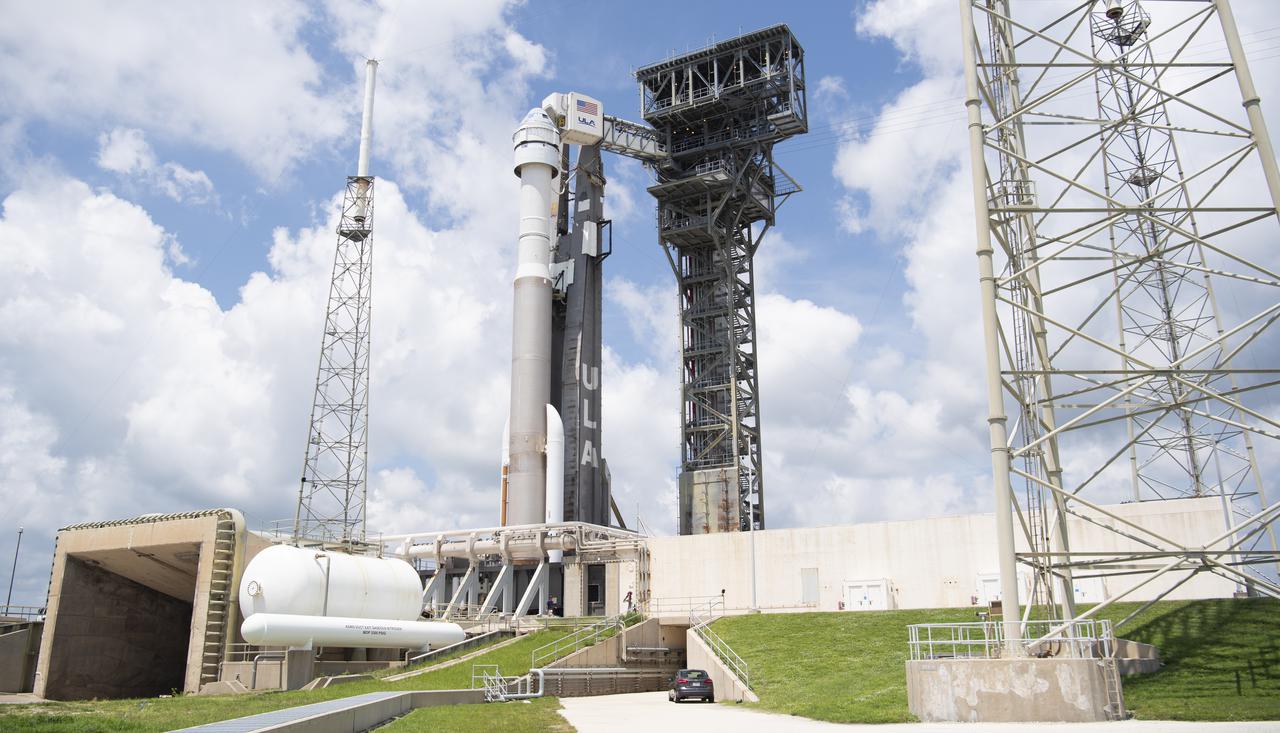
A United Launch Alliance Atlas V rocket with Boeing’s CST-100 Starliner spacecraft onboard is seen on the launch pad at Space Launch Complex 41 ahead of the Orbital Flight Test-2 (OFT-2) mission, Thursday, July 29, 2021 at Cape Canaveral Space Force Station in Florida. Boeing’s Orbital Flight Test-2 will be Starliner’s second uncrewed flight test and will dock to the International Space Station as part of NASA's Commercial Crew Program. The mission, currently targeted for launch at 2:53 p.m. EDT Friday, July 30, will serve as an end-to-end test of the system's capabilities. Photo Credit: (NASA/Joel Kowsky)
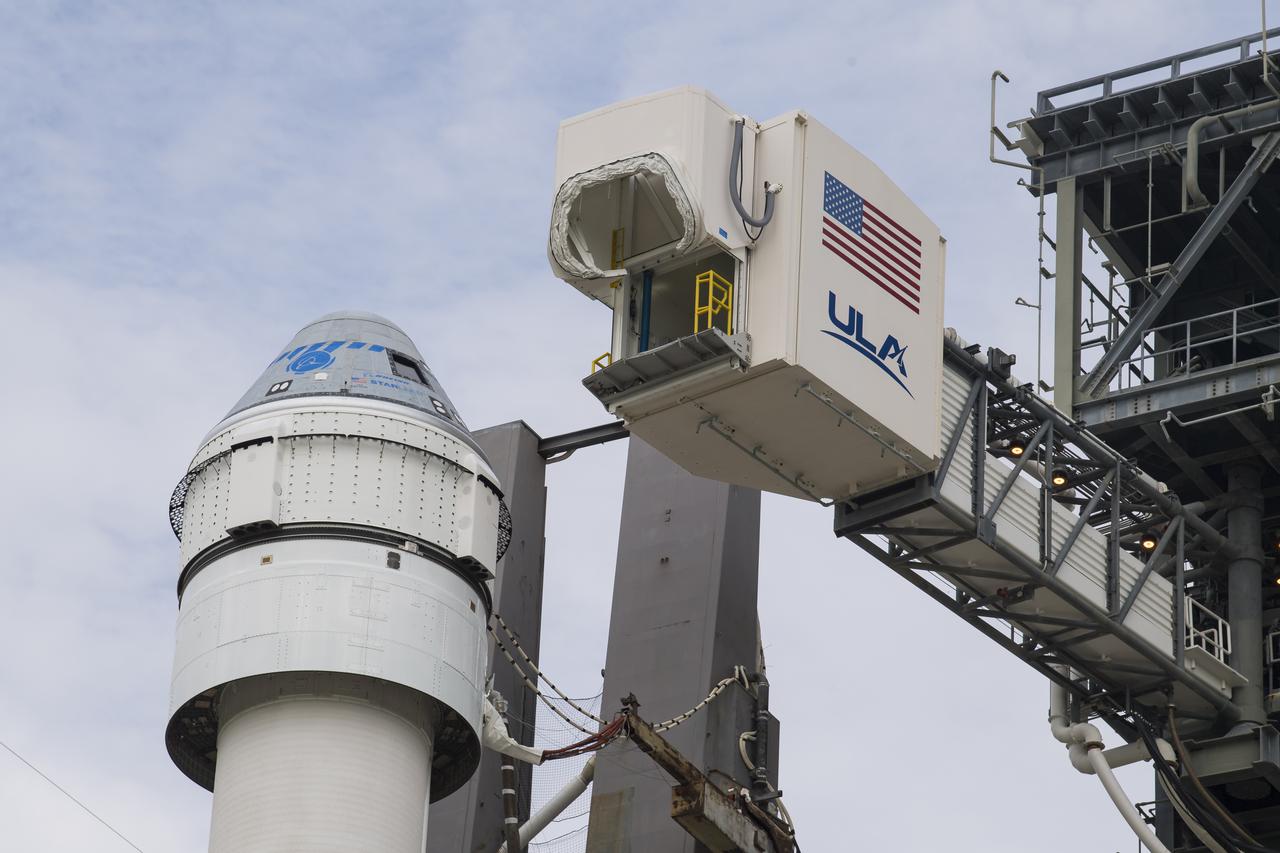
The crew access arm is seen as it swings into position for Boeing’s CST-100 Starliner spacecraft atop a United Launch Alliance Atlas V rocket at the launch pad at Space Launch Complex 41 ahead of the Orbital Flight Test-2 (OFT-2) mission, Monday, Aug. 2, 2021 at Cape Canaveral Space Force Station in Florida. Boeing’s Orbital Flight Test-2 will be Starliner’s second uncrewed flight test and will dock to the International Space Station as part of NASA's Commercial Crew Program. The mission, currently targeted for launch at 1:20 p.m. EDT Tuesday, Aug. 3, will serve as an end-to-end test of the system's capabilities. Photo Credit: (NASA/Aubrey Gemignani)
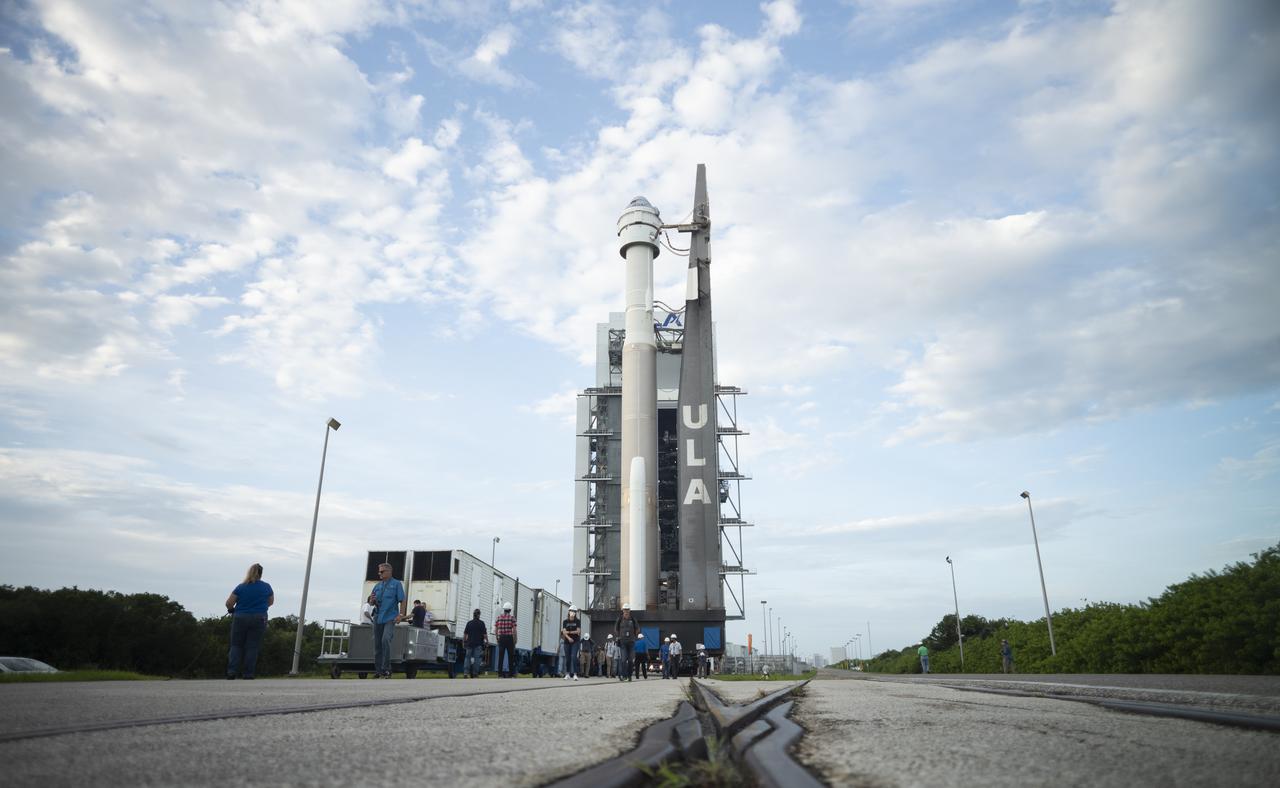
A United Launch Alliance Atlas V rocket with Boeing’s CST-100 Starliner spacecraft aboard is seen as it is rolled out of the Vertical Integration Facility to the launch pad at Space Launch Complex 41 ahead of the Orbital Flight Test-2 (OFT-2) mission, Monday, Aug. 2, 2021 at Cape Canaveral Space Force Station in Florida. Boeing’s Orbital Flight Test-2 will be Starliner’s second uncrewed flight test and will dock to the International Space Station as part of NASA's Commercial Crew Program. The mission, currently targeted for launch at 1:20 p.m. EDT Tuesday, Aug. 3, will serve as an end-to-end test of the system's capabilities. Photo Credit: (NASA/Joel Kowsky)
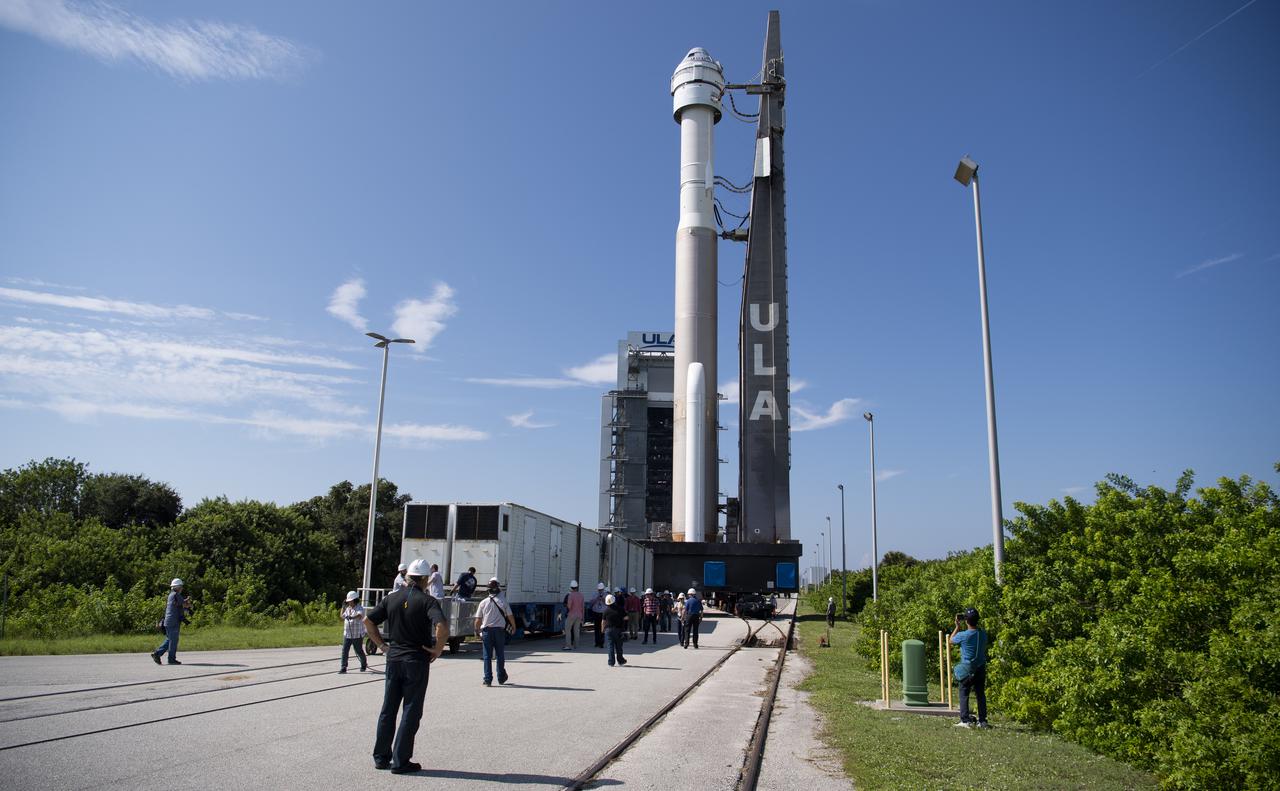
A United Launch Alliance Atlas V rocket with Boeing’s CST-100 Starliner spacecraft onboard is seen as it is rolled out of the Vertical Integration Facility to the launch pad at Space Launch Complex 41 ahead of the Orbital Flight Test-2 (OFT-2) mission, Thursday, July 29, 2021 at Cape Canaveral Space Force Station in Florida. Boeing’s Orbital Flight Test-2 will be Starliner’s second uncrewed flight test and will dock to the International Space Station as part of NASA's Commercial Crew Program. The mission, currently targeted for launch at 2:53 p.m. EDT Friday, July 30, will serve as an end-to-end test of the system's capabilities. Photo Credit: (NASA/Joel Kowsky)
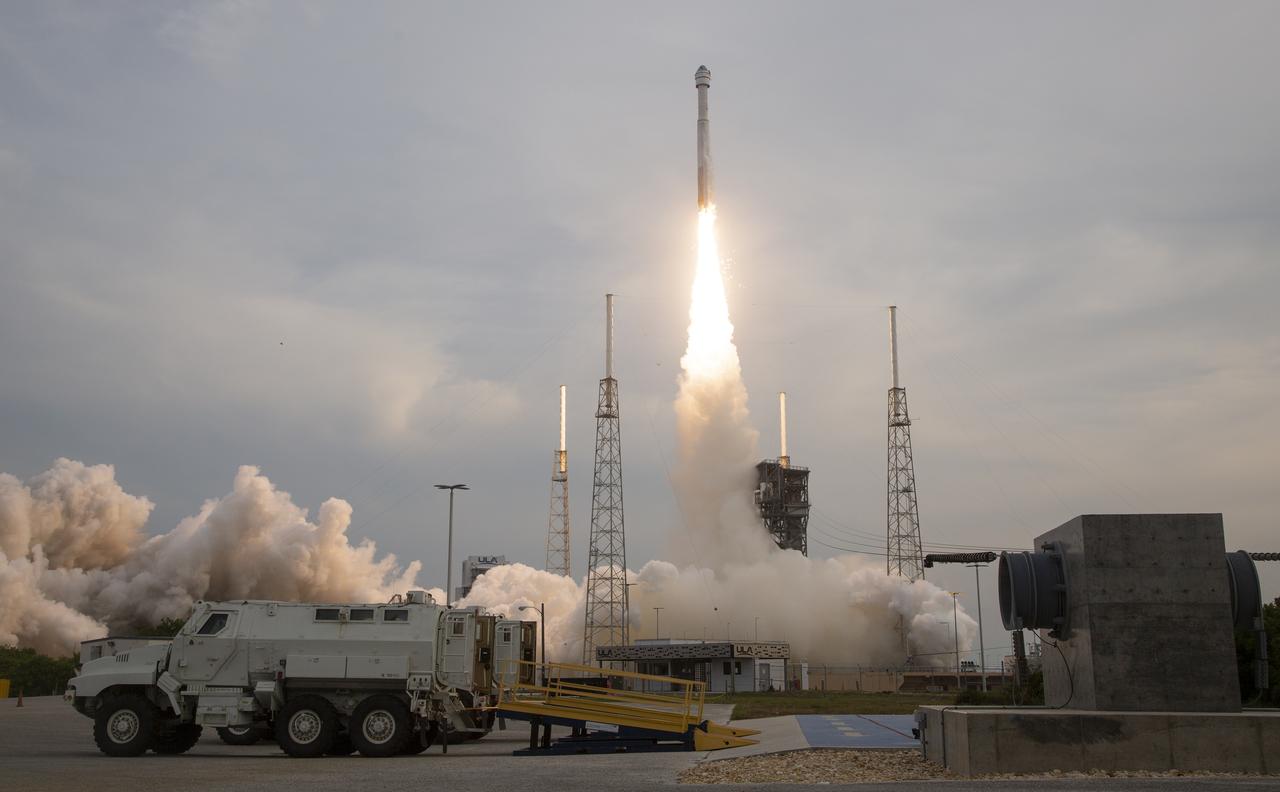
Two emergency egress vehicles are seen positioned at the slidewire termination area at Space Launch Complex 41 as a United Launch Alliance Atlas V rocket with Boeing’s CST-100 Starliner spacecraft aboard launches on the Orbital Flight Test-2 mission, Thursday, May 19, 2022, at Cape Canaveral Space Force Station in Florida. Boeing’s Orbital Flight Test-2 (OFT-2) is Starliner’s second uncrewed flight test and will dock to the International Space Station as part of NASA's Commercial Crew Program. OFT-2 launched at 6:54 p.m. ET, and will serve as an end-to-end test of the system's capabilities. Photo Credit: (NASA/Joel Kowsky)
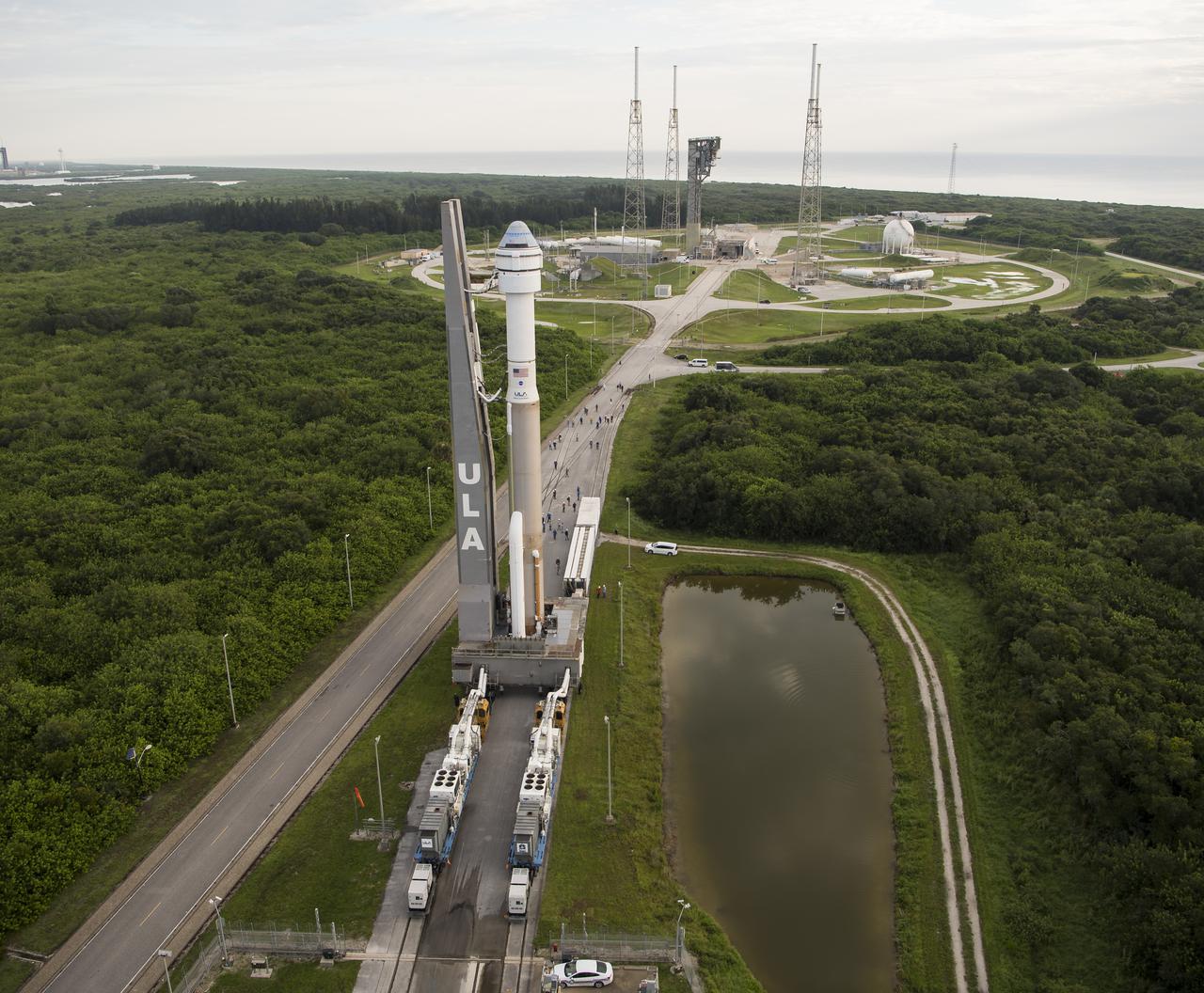
A United Launch Alliance Atlas V rocket with Boeing’s CST-100 Starliner spacecraft aboard is seen as it is rolled out of the Vertical Integration Facility to the launch pad at Space Launch Complex 41 ahead of the Orbital Flight Test-2 (OFT-2) mission, Monday, Aug. 2, 2021 at Cape Canaveral Space Force Station in Florida. Boeing’s Orbital Flight Test-2 will be Starliner’s second uncrewed flight test and will dock to the International Space Station as part of NASA's Commercial Crew Program. The mission, currently targeted for launch at 1:20 p.m. EDT Tuesday, Aug. 3, will serve as an end-to-end test of the system's capabilities. Photo Credit: (NASA/Aubrey Gemignani)
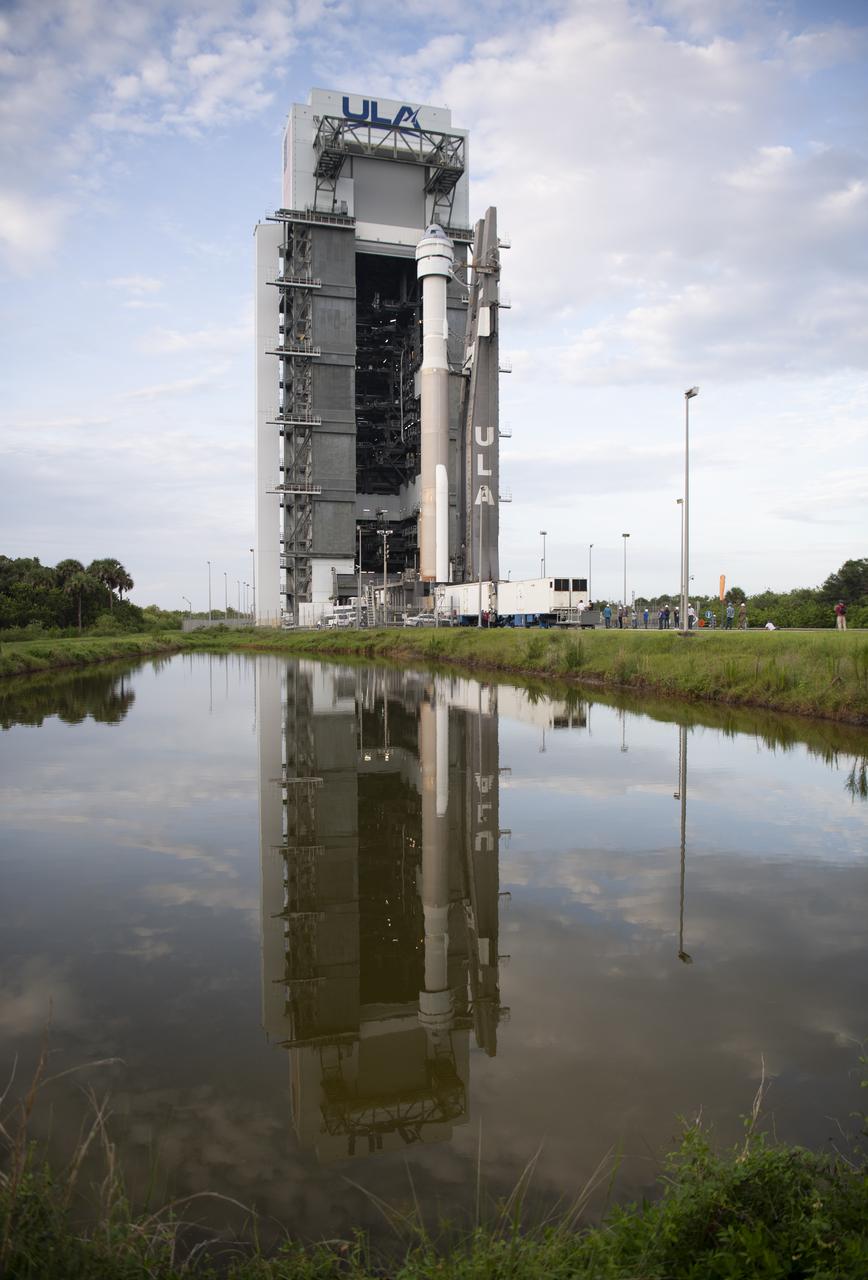
A United Launch Alliance Atlas V rocket with Boeing’s CST-100 Starliner spacecraft aboard is seen as it is rolled out of the Vertical Integration Facility to the launch pad at Space Launch Complex 41 ahead of the Orbital Flight Test-2 (OFT-2) mission, Monday, Aug. 2, 2021 at Cape Canaveral Space Force Station in Florida. Boeing’s Orbital Flight Test-2 will be Starliner’s second uncrewed flight test and will dock to the International Space Station as part of NASA's Commercial Crew Program. The mission, currently targeted for launch at 1:20 p.m. EDT Tuesday, Aug. 3, will serve as an end-to-end test of the system's capabilities. Photo Credit: (NASA/Joel Kowsky)
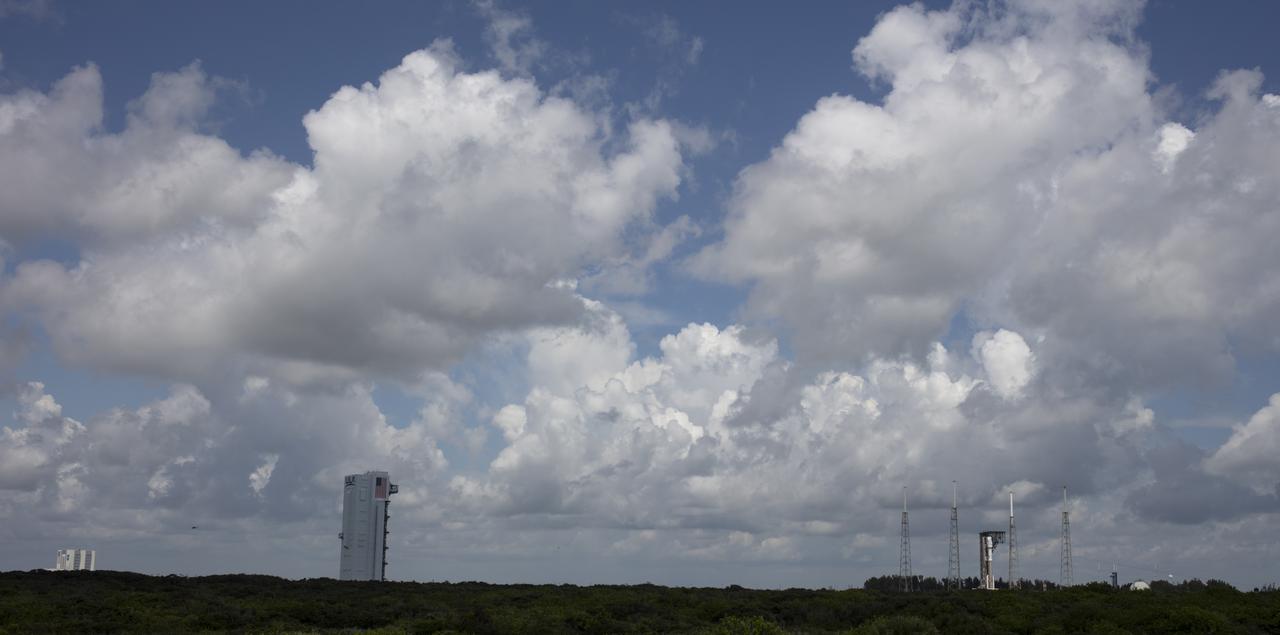
A United Launch Alliance Atlas V rocket with Boeing’s CST-100 Starliner spacecraft aboard is seen on the launch pad at Space Launch Complex 41 ahead of the Orbital Flight Test-2 (OFT-2) mission, Monday, Aug. 2, 2021 at Cape Canaveral Space Force Station in Florida. Boeing’s Orbital Flight Test-2 will be Starliner’s second uncrewed flight test and will dock to the International Space Station as part of NASA's Commercial Crew Program. The mission, currently targeted for launch at 1:20 p.m. EDT Tuesday, Aug. 3, will serve as an end-to-end test of the system's capabilities. Photo Credit: (NASA/Joel Kowsky)
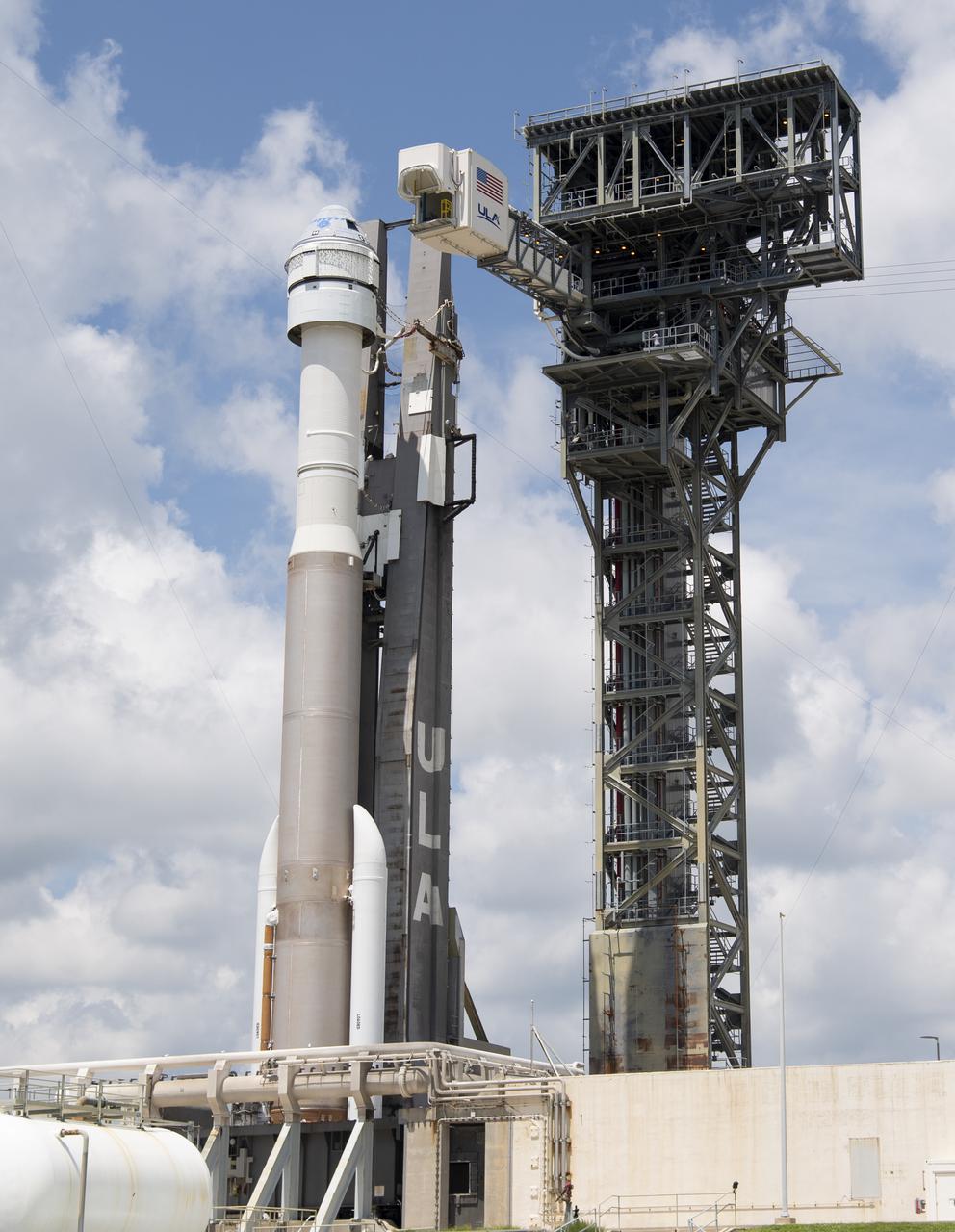
The crew access arm is seen as it swings into position for Boeing’s CST-100 Starliner spacecraft atop a United Launch Alliance Atlas V rocket at the launch pad at Space Launch Complex 41 ahead of the Orbital Flight Test-2 (OFT-2) mission, Thursday, July 29, 2021 at Cape Canaveral Space Force Station in Florida. Boeing’s Orbital Flight Test-2 will be Starliner’s second uncrewed flight test and will dock to the International Space Station as part of NASA's Commercial Crew Program. The mission, currently targeted for launch at 2:53 p.m. EDT Friday, July 30, will serve as an end-to-end test of the system's capabilities. Photo Credit: (NASA/Joel Kowsky)
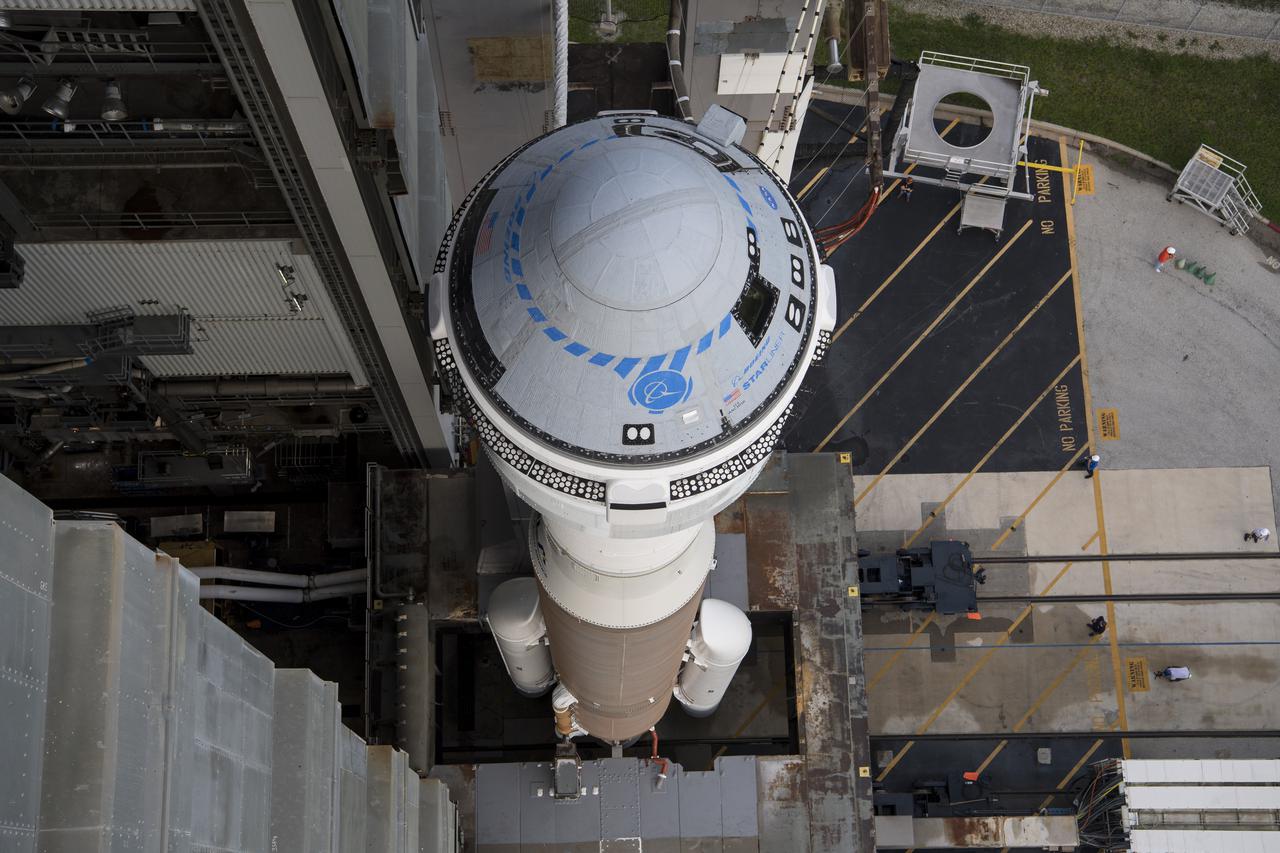
A United Launch Alliance Atlas V rocket with Boeing’s CST-100 Starliner spacecraft aboard is seen as it is rolled out of the Vertical Integration Facility to the launch pad at Space Launch Complex 41 ahead of the Orbital Flight Test-2 (OFT-2) mission, Monday, Aug. 2, 2021 at Cape Canaveral Space Force Station in Florida. Boeing’s Orbital Flight Test-2 will be Starliner’s second uncrewed flight test and will dock to the International Space Station as part of NASA's Commercial Crew Program. The mission, currently targeted for launch at 1:20 p.m. EDT Tuesday, Aug. 3, will serve as an end-to-end test of the system's capabilities. Photo Credit: (NASA/Aubrey Gemignani)
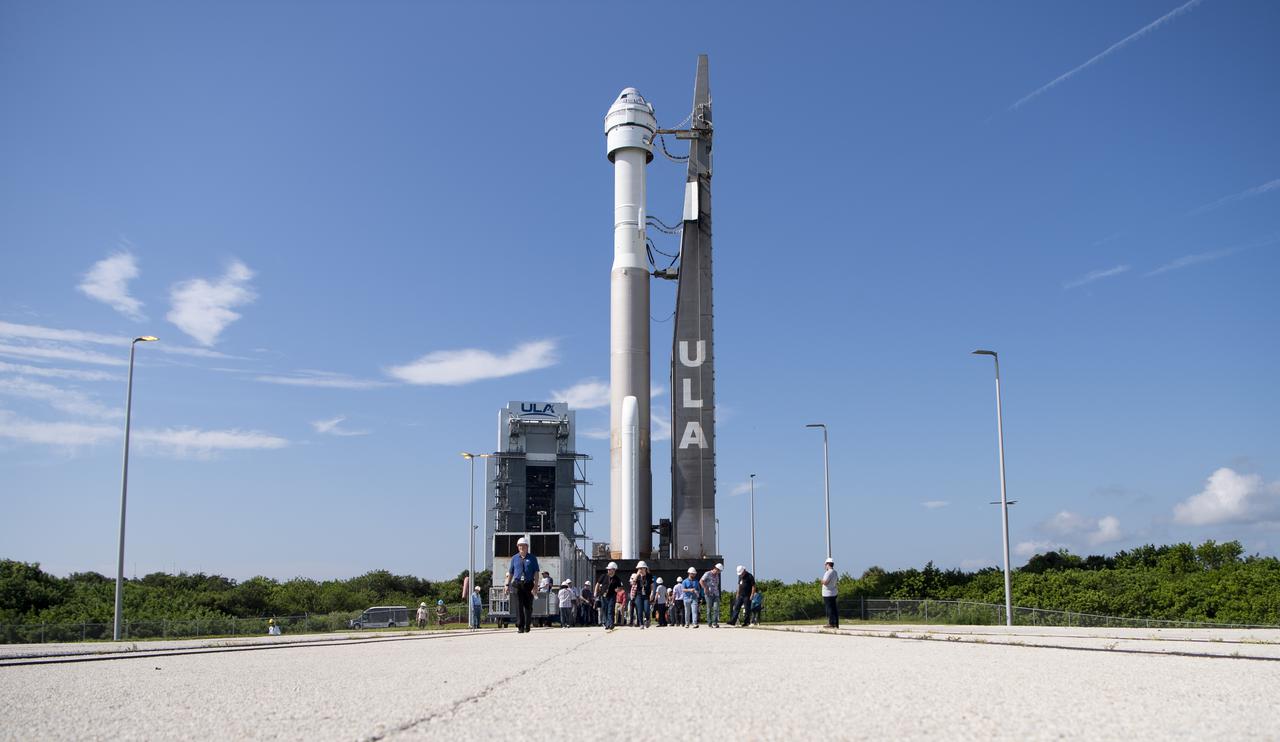
A United Launch Alliance Atlas V rocket with Boeing’s CST-100 Starliner spacecraft onboard is seen as it is rolled out of the Vertical Integration Facility to the launch pad at Space Launch Complex 41 ahead of the Orbital Flight Test-2 (OFT-2) mission, Thursday, July 29, 2021 at Cape Canaveral Space Force Station in Florida. Boeing’s Orbital Flight Test-2 will be Starliner’s second uncrewed flight test and will dock to the International Space Station as part of NASA's Commercial Crew Program. The mission, currently targeted for launch at 2:53 p.m. EDT Friday, July 30, will serve as an end-to-end test of the system's capabilities. Photo Credit: (NASA/Joel Kowsky)
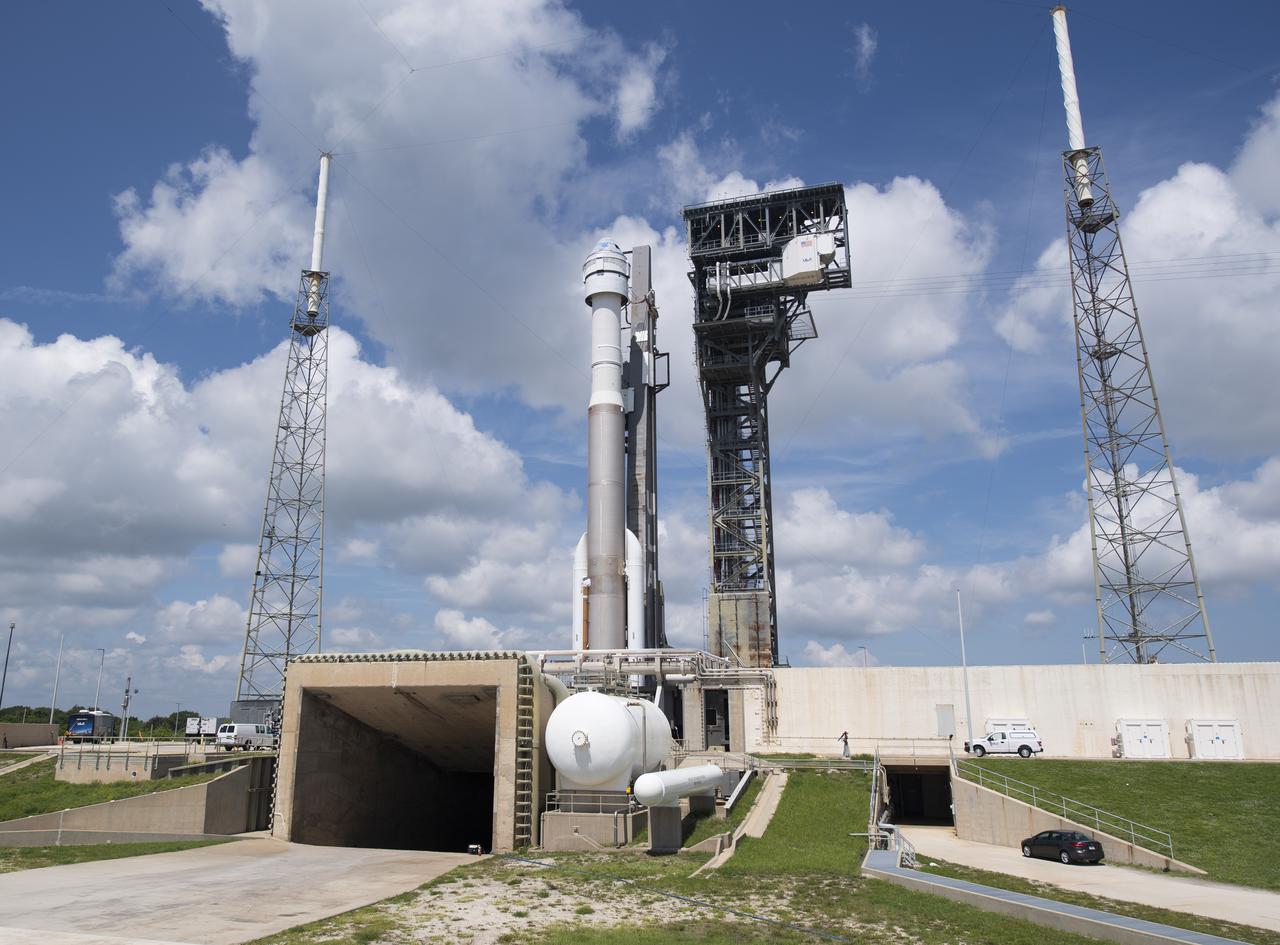
A United Launch Alliance Atlas V rocket with Boeing’s CST-100 Starliner spacecraft onboard is seen on the launch pad at Space Launch Complex 41 ahead of the Orbital Flight Test-2 (OFT-2) mission, Thursday, July 29, 2021 at Cape Canaveral Space Force Station in Florida. Boeing’s Orbital Flight Test-2 will be Starliner’s second uncrewed flight test and will dock to the International Space Station as part of NASA's Commercial Crew Program. The mission, currently targeted for launch at 2:53 p.m. EDT Friday, July 30, will serve as an end-to-end test of the system's capabilities. Photo Credit: (NASA/Joel Kowsky)
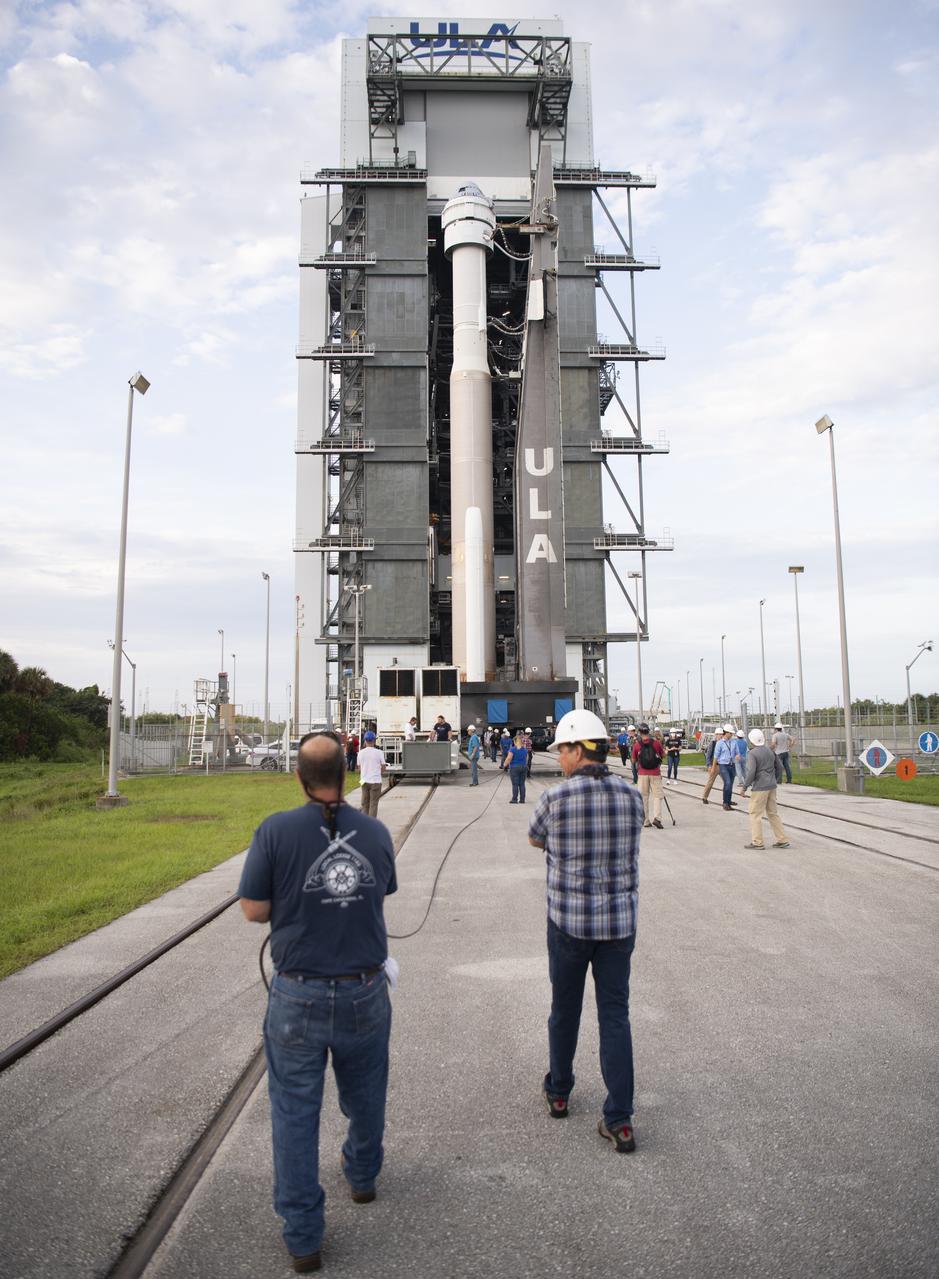
A United Launch Alliance Atlas V rocket with Boeing’s CST-100 Starliner spacecraft aboard is seen as it is rolled out of the Vertical Integration Facility to the launch pad at Space Launch Complex 41 ahead of the Orbital Flight Test-2 (OFT-2) mission, Monday, Aug. 2, 2021 at Cape Canaveral Space Force Station in Florida. Boeing’s Orbital Flight Test-2 will be Starliner’s second uncrewed flight test and will dock to the International Space Station as part of NASA's Commercial Crew Program. The mission, currently targeted for launch at 1:20 p.m. EDT Tuesday, Aug. 3, will serve as an end-to-end test of the system's capabilities. Photo Credit: (NASA/Joel Kowsky)
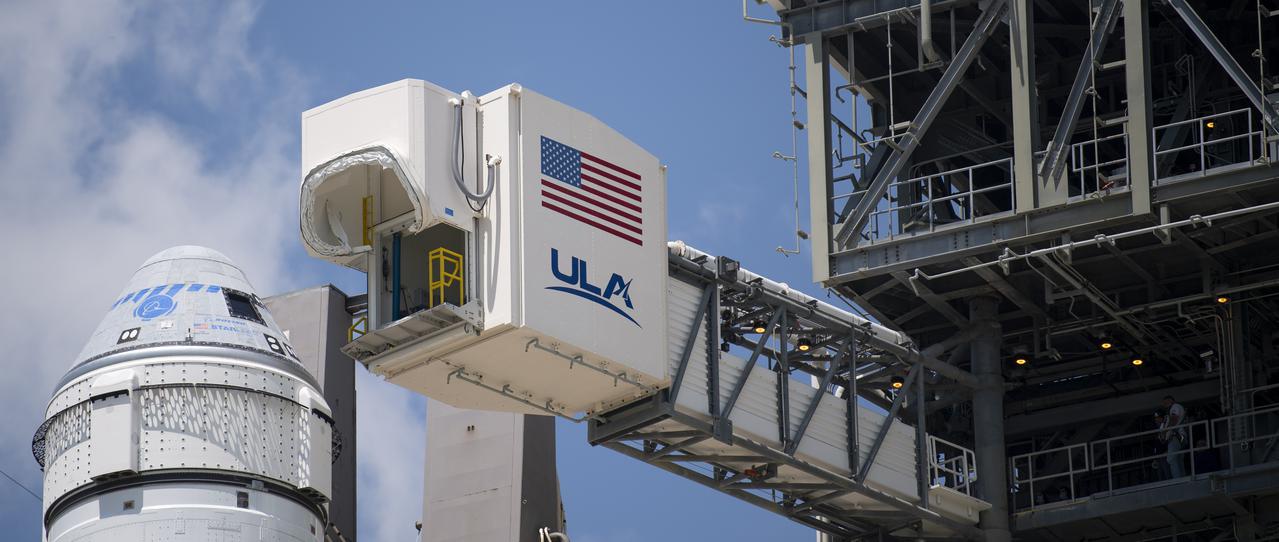
The crew access arm is seen as it swings into position for Boeing’s CST-100 Starliner spacecraft atop a United Launch Alliance Atlas V rocket at the launch pad at Space Launch Complex 41 ahead of the Orbital Flight Test-2 (OFT-2) mission, Thursday, July 29, 2021 at Cape Canaveral Space Force Station in Florida. Boeing’s Orbital Flight Test-2 will be Starliner’s second uncrewed flight test and will dock to the International Space Station as part of NASA's Commercial Crew Program. The mission, currently targeted for launch at 2:53 p.m. EDT Friday, July 30, will serve as an end-to-end test of the system's capabilities. Photo Credit: (NASA/Joel Kowsky)
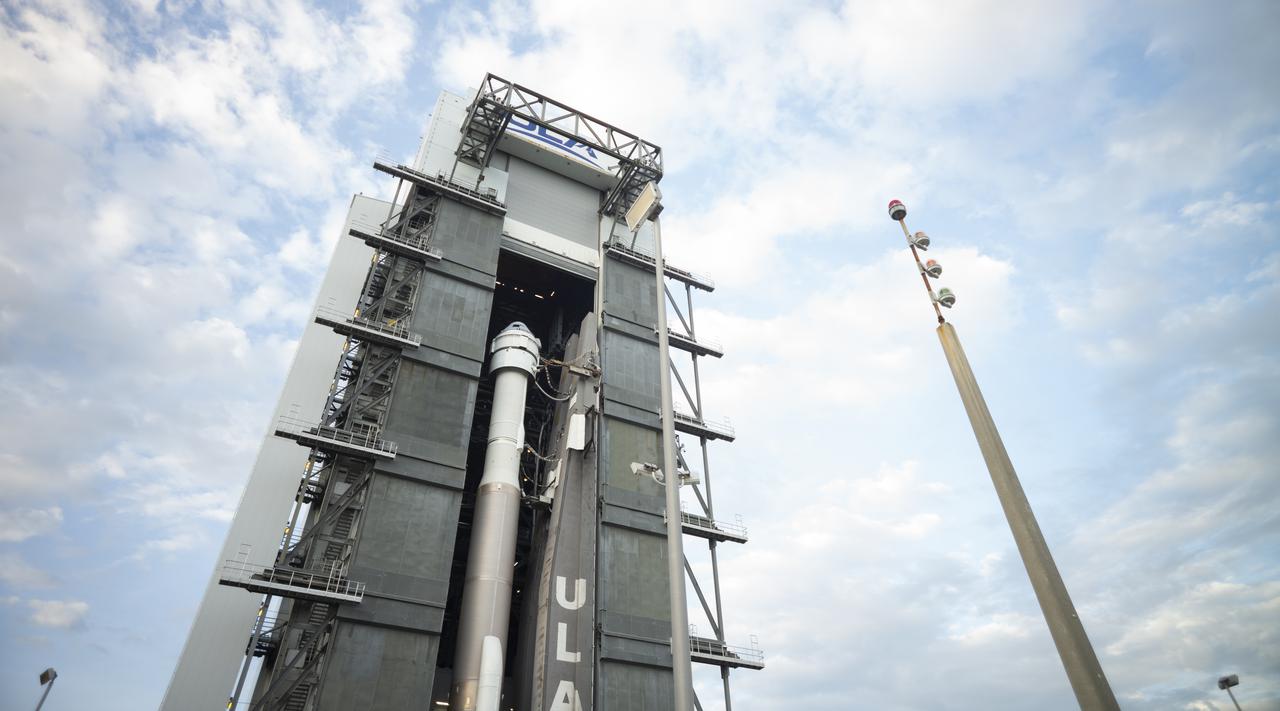
A United Launch Alliance Atlas V rocket with Boeing’s CST-100 Starliner spacecraft aboard is seen as it is rolled out of the Vertical Integration Facility to the launch pad at Space Launch Complex 41 ahead of the Orbital Flight Test-2 (OFT-2) mission, Monday, Aug. 2, 2021 at Cape Canaveral Space Force Station in Florida. Boeing’s Orbital Flight Test-2 will be Starliner’s second uncrewed flight test and will dock to the International Space Station as part of NASA's Commercial Crew Program. The mission, currently targeted for launch at 1:20 p.m. EDT Tuesday, Aug. 3, will serve as an end-to-end test of the system's capabilities. Photo Credit: (NASA/Joel Kowsky)
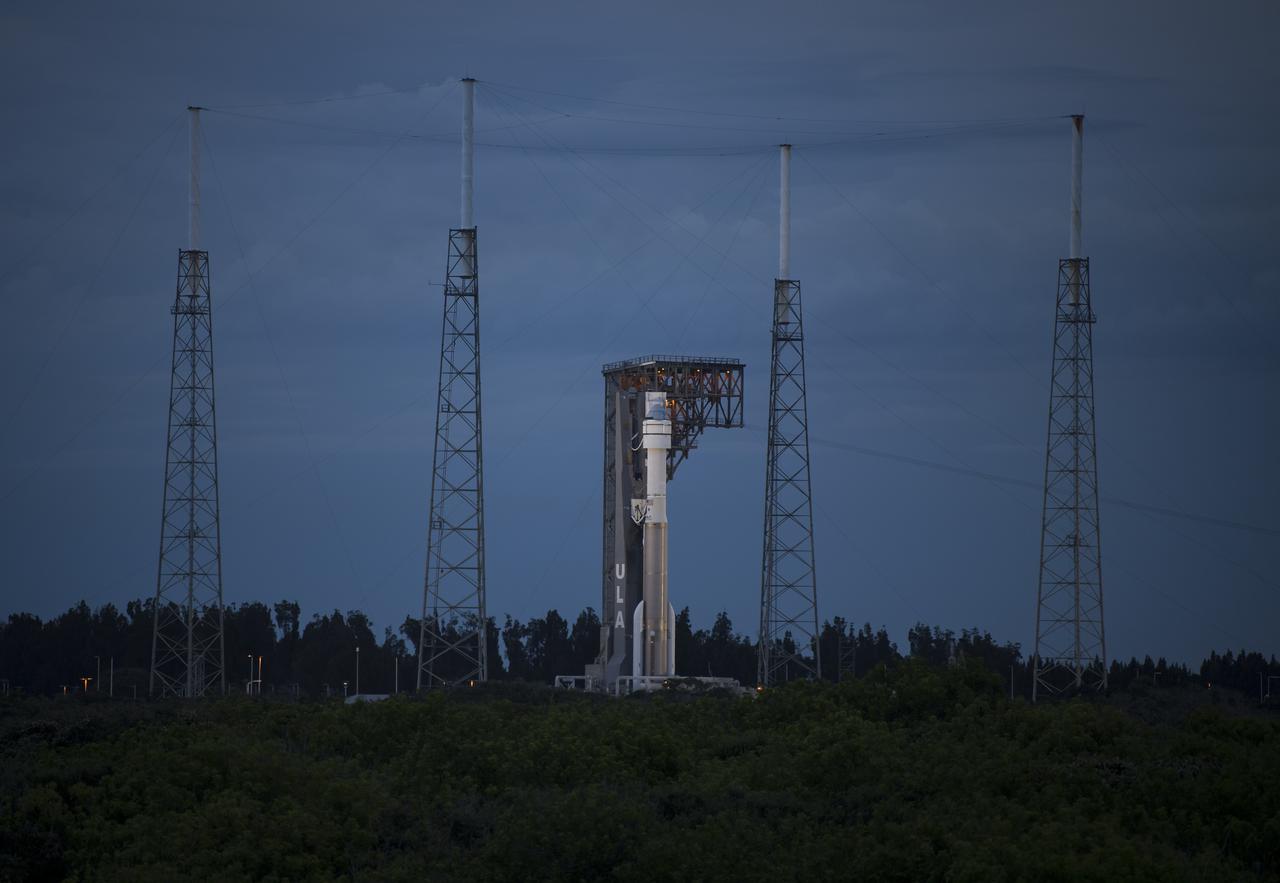
A United Launch Alliance Atlas V rocket with Boeing’s CST-100 Starliner spacecraft aboard is seen on the launch pad at Space Launch Complex 41 ahead of the Orbital Flight Test-2 mission, Monday, Aug. 2, 2021 at Cape Canaveral Space Force Station in Florida. Boeing’s Orbital Flight Test-2 will be Starliner’s second uncrewed flight test and will dock to the International Space Station as part of NASA's Commercial Crew Program. The mission, currently targeted for launch at 1:20 p.m. EDT Tuesday, Aug. 3, will serve as an end-to-end test of the system's capabilities. Photo Credit: (NASA/Aubrey Gemignani)
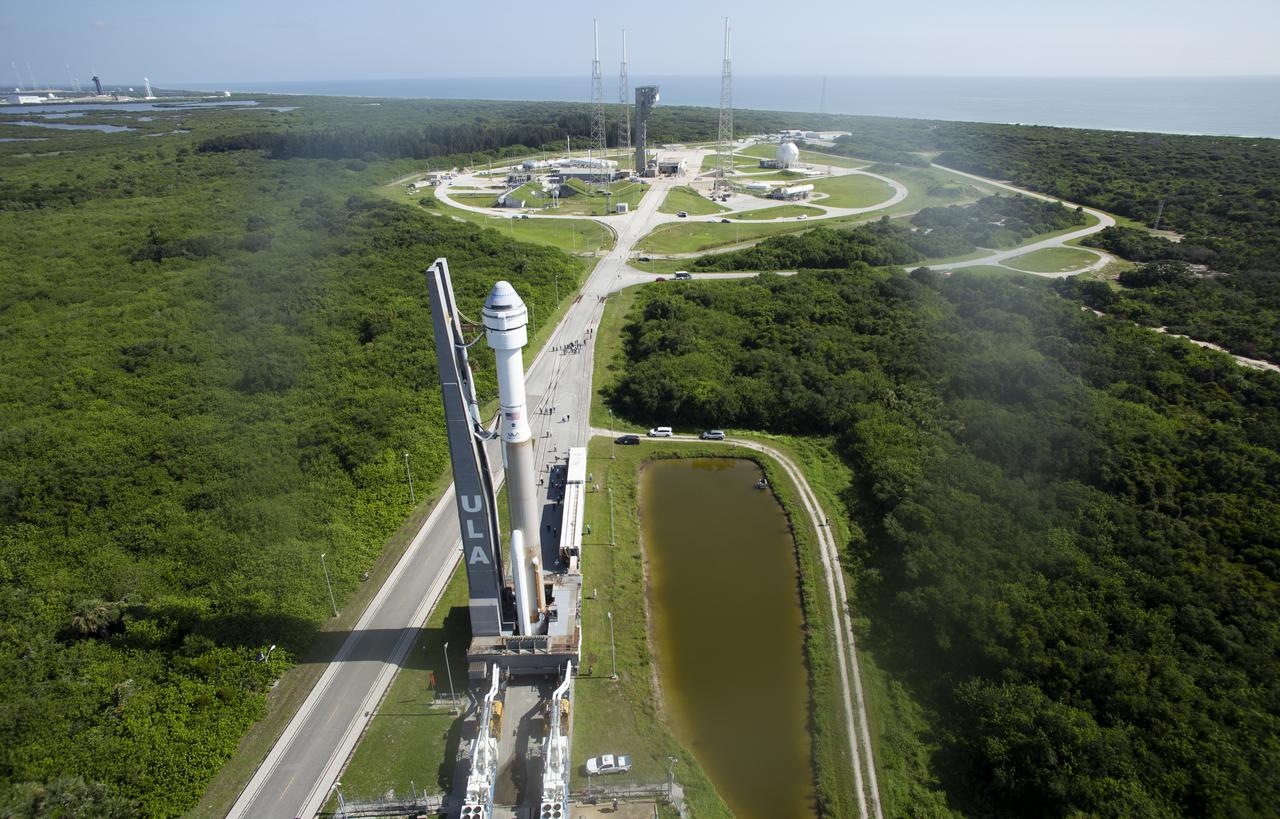
A United Launch Alliance Atlas V rocket with Boeing’s CST-100 Starliner spacecraft onboard is seen as it is rolled out of the Vertical Integration Facility to the launch pad at Space Launch Complex 41 ahead of the Orbital Flight Test-2 (OFT-2) mission, Thursday, July 29, 2021 at Cape Canaveral Space Force Station in Florida. Boeing’s Orbital Flight Test-2 will be Starliner’s second uncrewed flight test and will dock to the International Space Station as part of NASA's Commercial Crew Program. The mission will serve as an end-to-end test of the system's capabilities. Photo Credit: (NASA/Joel Kowsky)
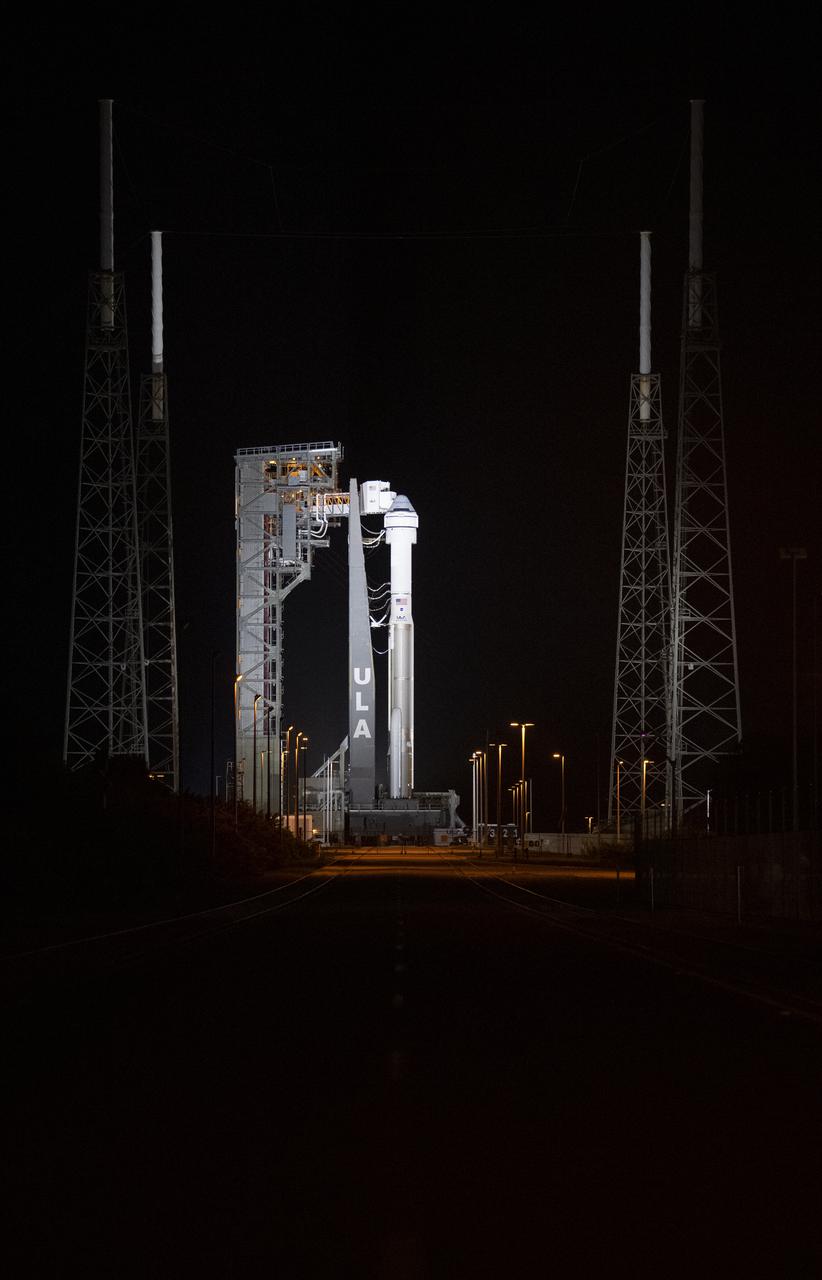
A United Launch Alliance Atlas V rocket with Boeing’s CST-100 Starliner spacecraft aboard is seen illuminated by spotlights on the launch pad at Space Launch Complex 41 ahead of the Orbital Flight Test-2 mission, Monday, Aug. 2, 2021 at Cape Canaveral Space Force Station in Florida. Boeing’s Orbital Flight Test-2 will be Starliner’s second uncrewed flight test and will dock to the International Space Station as part of NASA's Commercial Crew Program. The mission, currently targeted for launch on 1:20 p.m. EDT Tuesday, Aug. 3, will serve as an end-to-end test of the system's capabilities. Photo Credit: (NASA/Joel Kowsky)
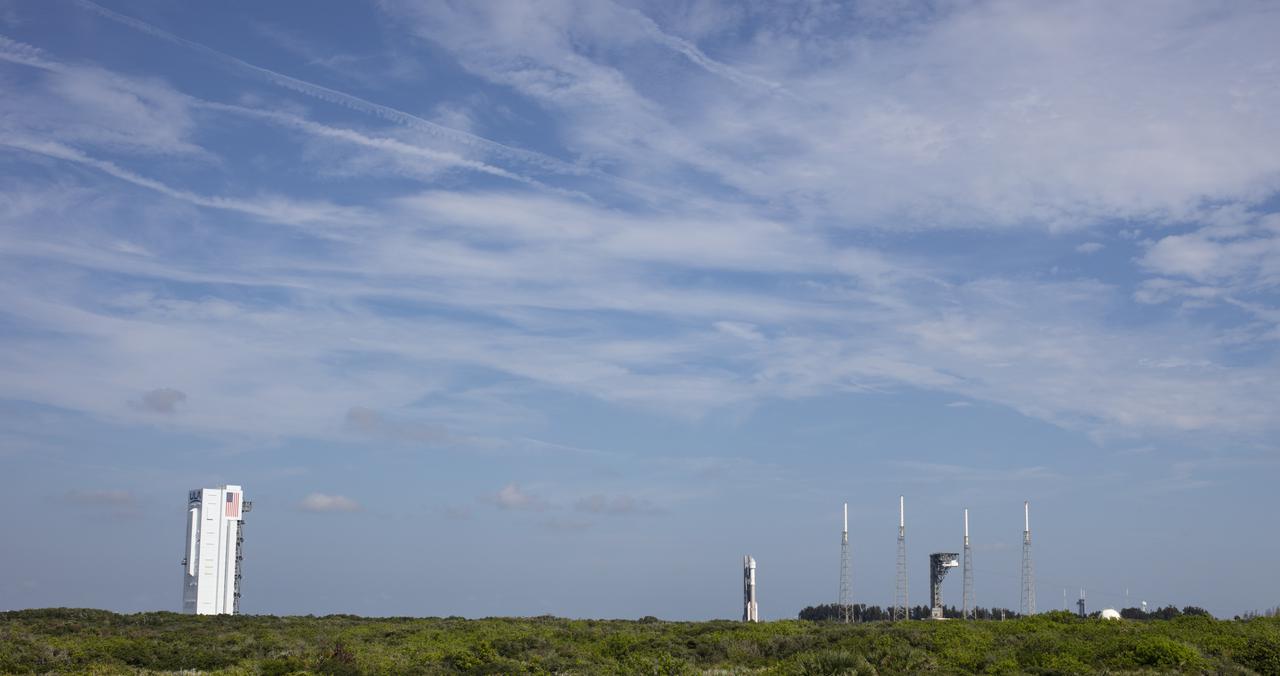
A United Launch Alliance Atlas V rocket with Boeing’s CST-100 Starliner spacecraft onboard is seen as it is rolled out of the Vertical Integration Facility to the launch pad at Space Launch Complex 41 ahead of the Orbital Flight Test-2 (OFT-2) mission, Thursday, July 29, 2021 at Cape Canaveral Space Force Station in Florida. Boeing’s Orbital Flight Test-2 will be Starliner’s second uncrewed flight test and will dock to the International Space Station as part of NASA's Commercial Crew Program. The mission will serve as an end-to-end test of the system's capabilities. Photo Credit: (NASA/Joel Kowsky)
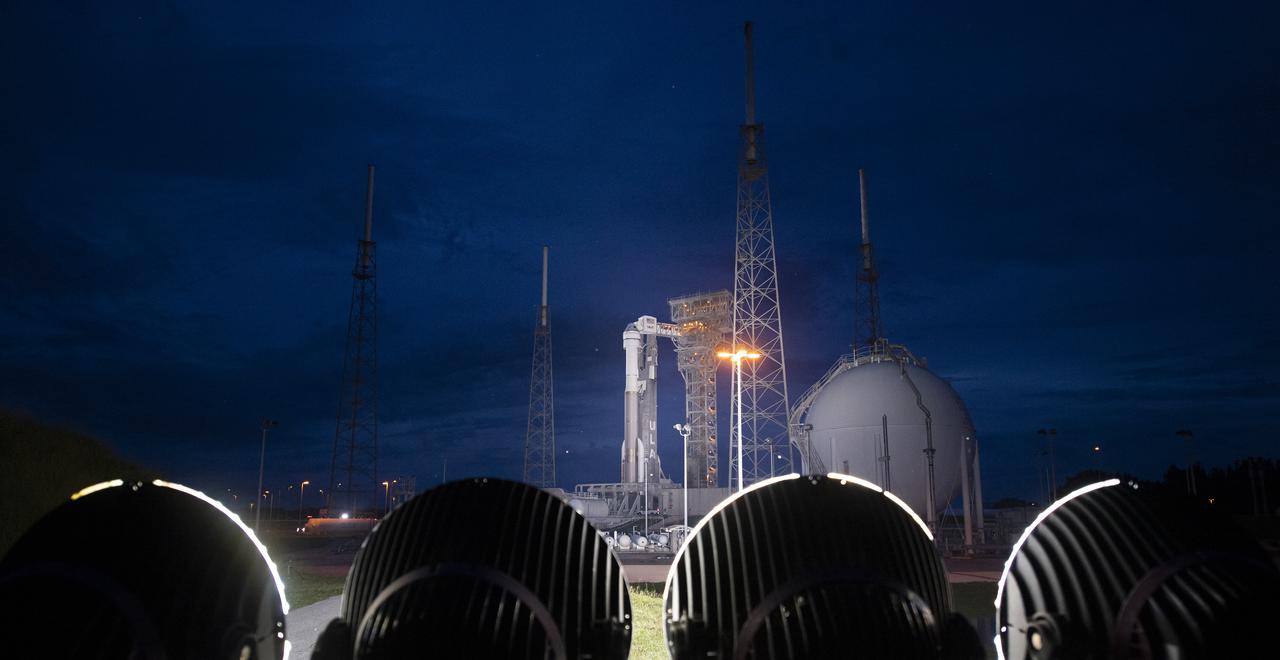
A United Launch Alliance Atlas V rocket with Boeing’s CST-100 Starliner spacecraft aboard is seen illuminated by spotlights on the launch pad at Space Launch Complex 41 ahead of the Orbital Flight Test-2 mission, Monday, Aug. 2, 2021 at Cape Canaveral Space Force Station in Florida. Boeing’s Orbital Flight Test-2 will be Starliner’s second uncrewed flight test and will dock to the International Space Station as part of NASA's Commercial Crew Program. The mission, currently targeted for launch on 1:20 p.m. EDT Tuesday, Aug. 3, will serve as an end-to-end test of the system's capabilities. Photo Credit: (NASA/Joel Kowsky)
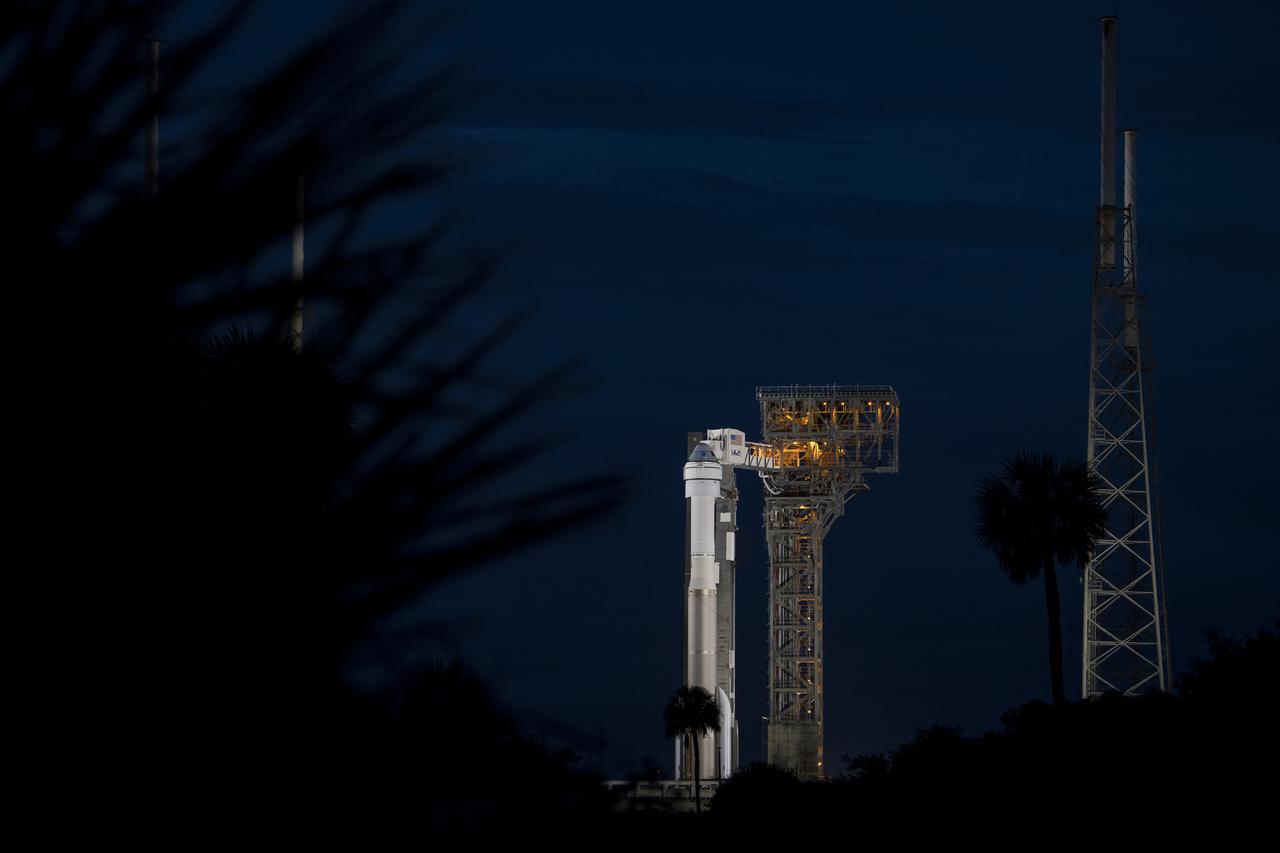
A United Launch Alliance Atlas V rocket with Boeing’s CST-100 Starliner spacecraft aboard is seen on the launch pad at Space Launch Complex 41 ahead of the Orbital Flight Test-2 mission, Monday, Aug. 2, 2021 at Cape Canaveral Space Force Station in Florida. Boeing’s Orbital Flight Test-2 will be Starliner’s second uncrewed flight test and will dock to the International Space Station as part of NASA's Commercial Crew Program. The mission, currently targeted for launch at 1:20 p.m. EDT Tuesday, Aug. 3, will serve as an end-to-end test of the system's capabilities. Photo Credit: (NASA/Aubrey Gemignani)
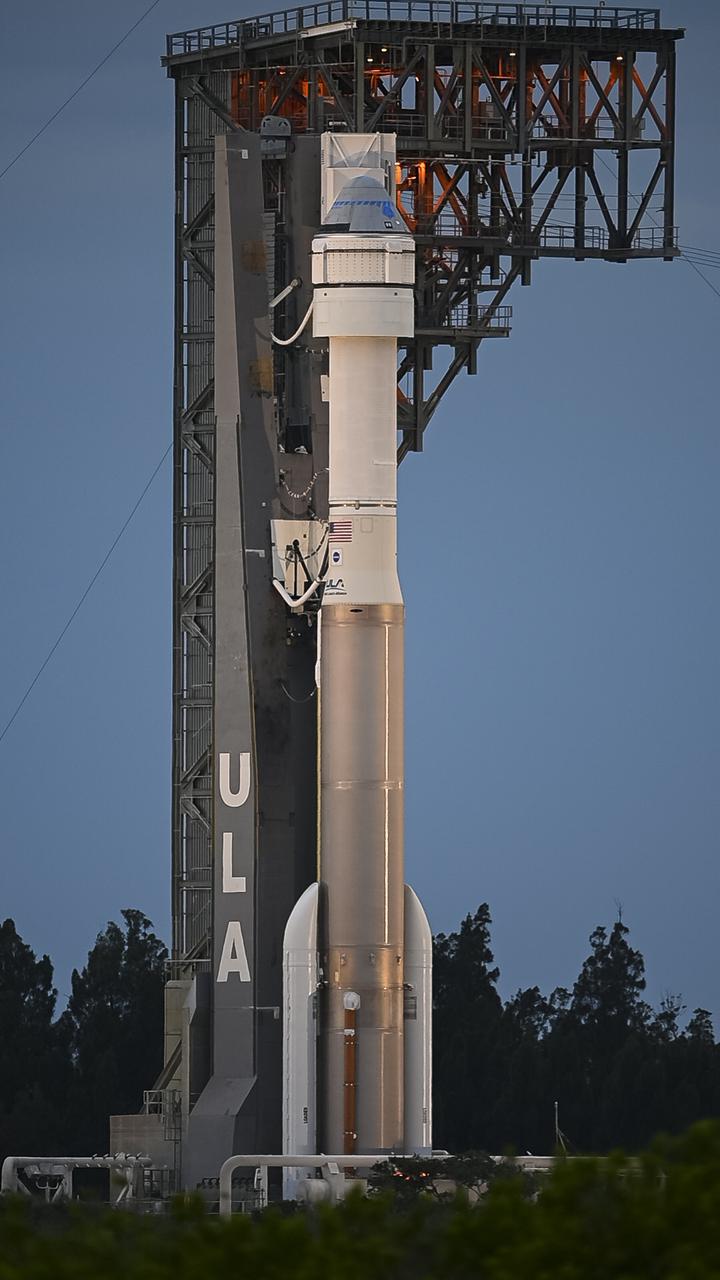
A United Launch Alliance Atlas V rocket with Boeing’s CST-100 Starliner spacecraft aboard is seen on the launch pad at Space Launch Complex 41 ahead of the Orbital Flight Test-2 mission, Monday, Aug. 2, 2021 at Cape Canaveral Space Force Station in Florida. Boeing’s Orbital Flight Test-2 will be Starliner’s second uncrewed flight test and will dock to the International Space Station as part of NASA's Commercial Crew Program. The mission, currently targeted for launch at 1:20 p.m. EDT Tuesday, Aug. 3, will serve as an end-to-end test of the system's capabilities. Photo Credit: (NASA/Aubrey Gemignani)
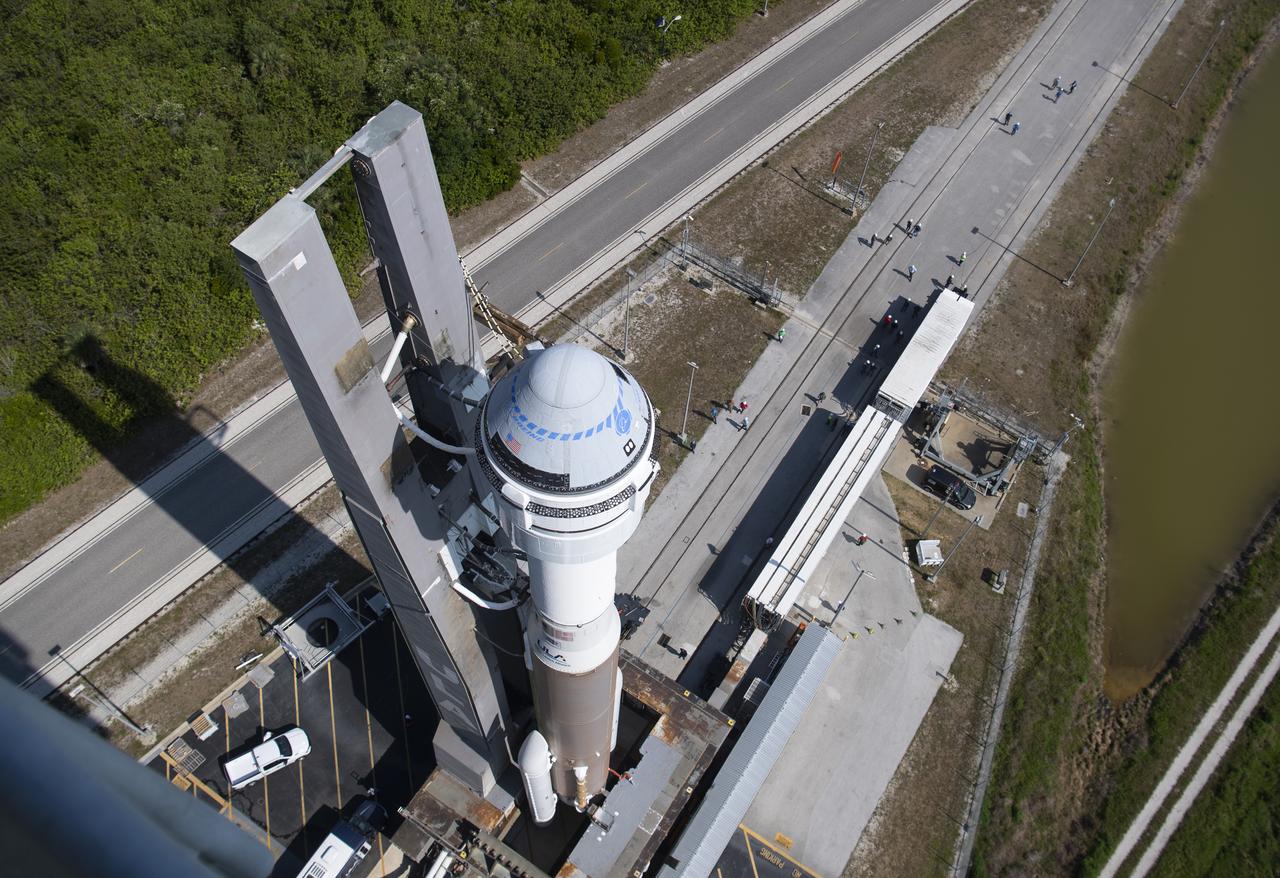
A United Launch Alliance Atlas V rocket with Boeing’s CST-100 Starliner spacecraft aboard is seen as it is rolled out of the Vertical Integration Facility to the launch pad at Space Launch Complex 41 ahead of the Orbital Flight Test-2 (OFT-2) mission, Wednesday, May 18, 2022 at Cape Canaveral Space Force Station in Florida. Boeing’s Orbital Flight Test-2 will be Starliner’s second uncrewed flight test and will dock to the International Space Station as part of NASA's Commercial Crew Program. The mission, currently targeted for launch at 6:54 p.m. ET on May 19, will serve as an end-to-end test of the system's capabilities. Photo Credit: (NASA/Joel Kowsky)
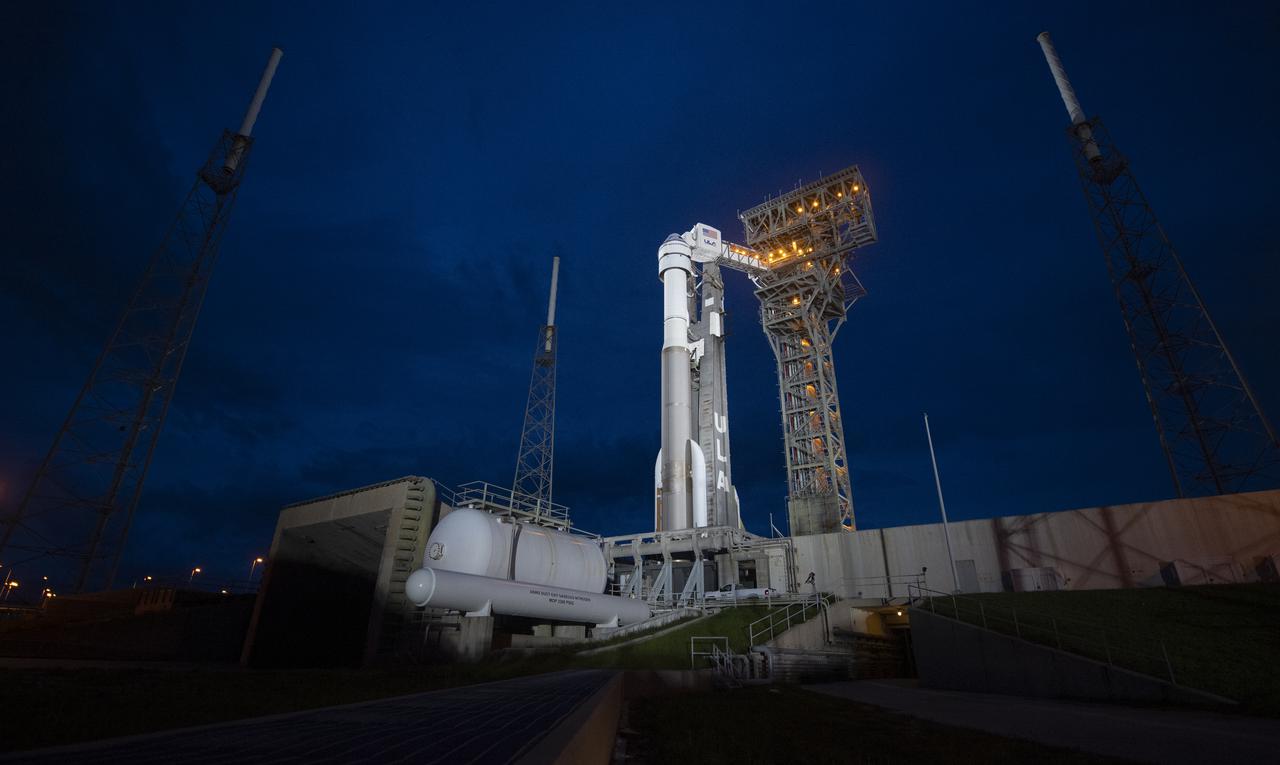
A United Launch Alliance Atlas V rocket with Boeing’s CST-100 Starliner spacecraft aboard is seen illuminated by spotlights on the launch pad at Space Launch Complex 41 ahead of the Orbital Flight Test-2 mission, Monday, Aug. 2, 2021 at Cape Canaveral Space Force Station in Florida. Boeing’s Orbital Flight Test-2 will be Starliner’s second uncrewed flight test and will dock to the International Space Station as part of NASA's Commercial Crew Program. The mission, currently targeted for launch on 1:20 p.m. EDT Tuesday, Aug. 3, will serve as an end-to-end test of the system's capabilities. Photo Credit: (NASA/Joel Kowsky)
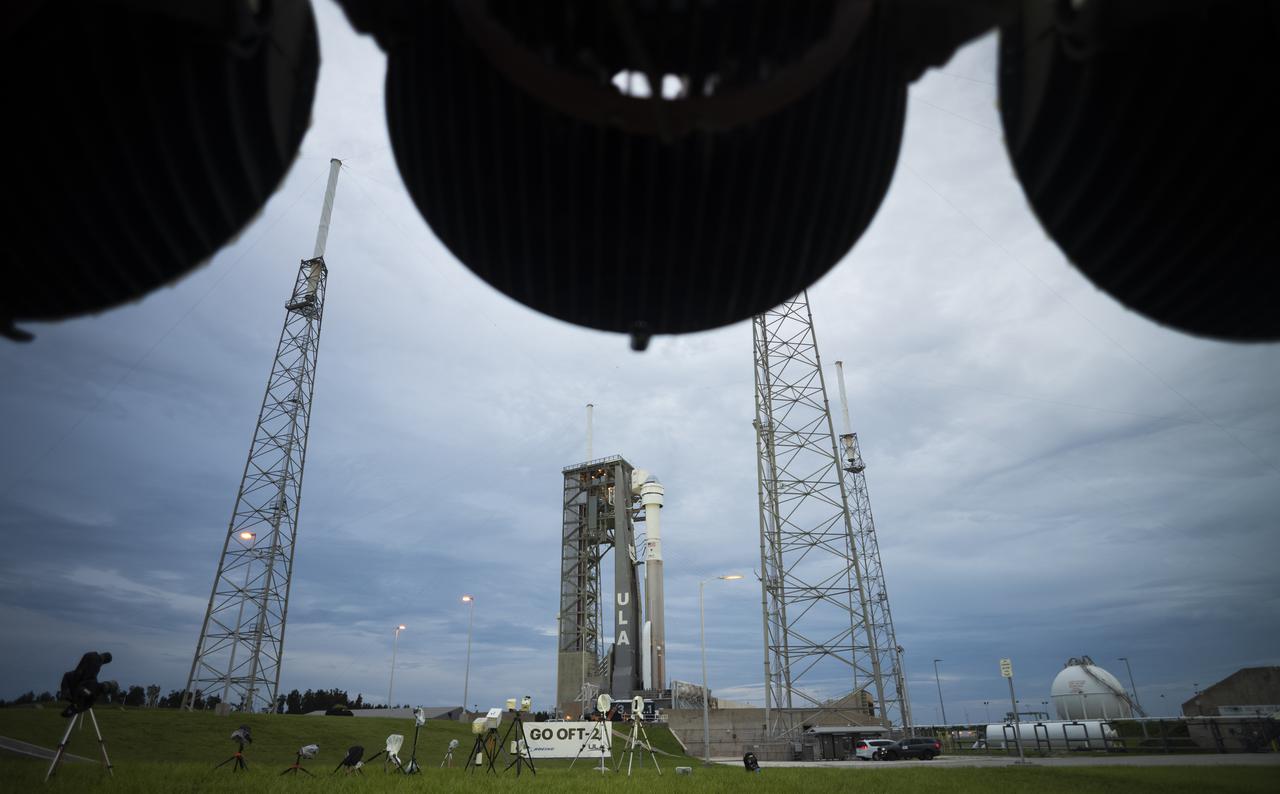
A United Launch Alliance Atlas V rocket with Boeing’s CST-100 Starliner spacecraft aboard is seen on the launch pad at Space Launch Complex 41 ahead of the Orbital Flight Test-2 mission, Monday, Aug. 2, 2021 at Cape Canaveral Space Force Station in Florida. Boeing’s Orbital Flight Test-2 will be Starliner’s second uncrewed flight test and will dock to the International Space Station as part of NASA's Commercial Crew Program. The mission, currently targeted for launch on 1:20 p.m. EDT Tuesday, Aug. 3, will serve as an end-to-end test of the system's capabilities. Photo Credit: (NASA/Joel Kowsky)
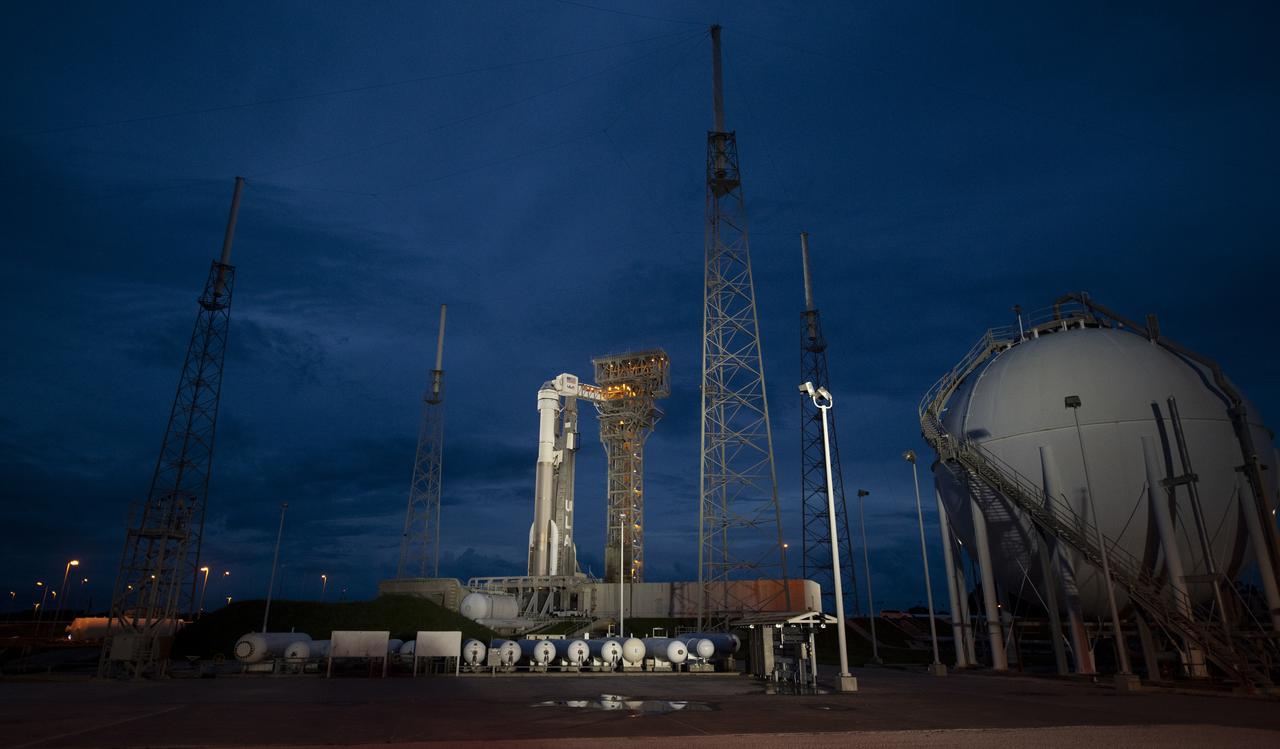
A United Launch Alliance Atlas V rocket with Boeing’s CST-100 Starliner spacecraft aboard is seen illuminated by spotlights on the launch pad at Space Launch Complex 41 ahead of the Orbital Flight Test-2 mission, Monday, Aug. 2, 2021 at Cape Canaveral Space Force Station in Florida. Boeing’s Orbital Flight Test-2 will be Starliner’s second uncrewed flight test and will dock to the International Space Station as part of NASA's Commercial Crew Program. The mission, currently targeted for launch on 1:20 p.m. EDT Tuesday, Aug. 3, will serve as an end-to-end test of the system's capabilities. Photo Credit: (NASA/Joel Kowsky)
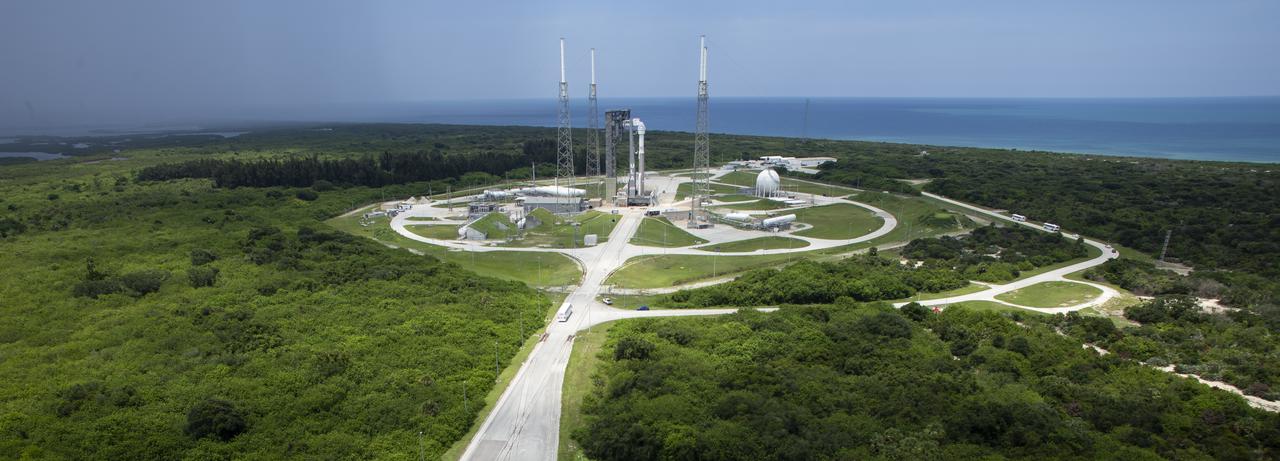
A United Launch Alliance Atlas V rocket with Boeing’s CST-100 Starliner spacecraft onboard is seen on the launch pad at Space Launch Complex 41 ahead of the Orbital Flight Test-2 (OFT-2) mission after being rolled out from the Vertical Integration Facility, Thursday, July 29, 2021 at Cape Canaveral Space Force Station in Florida. Boeing’s Orbital Flight Test-2 will be Starliner’s second uncrewed flight test and will dock to the International Space Station as part of NASA's Commercial Crew Program. The mission will serve as an end-to-end test of the system's capabilities. Photo Credit: (NASA/Joel Kowsky)
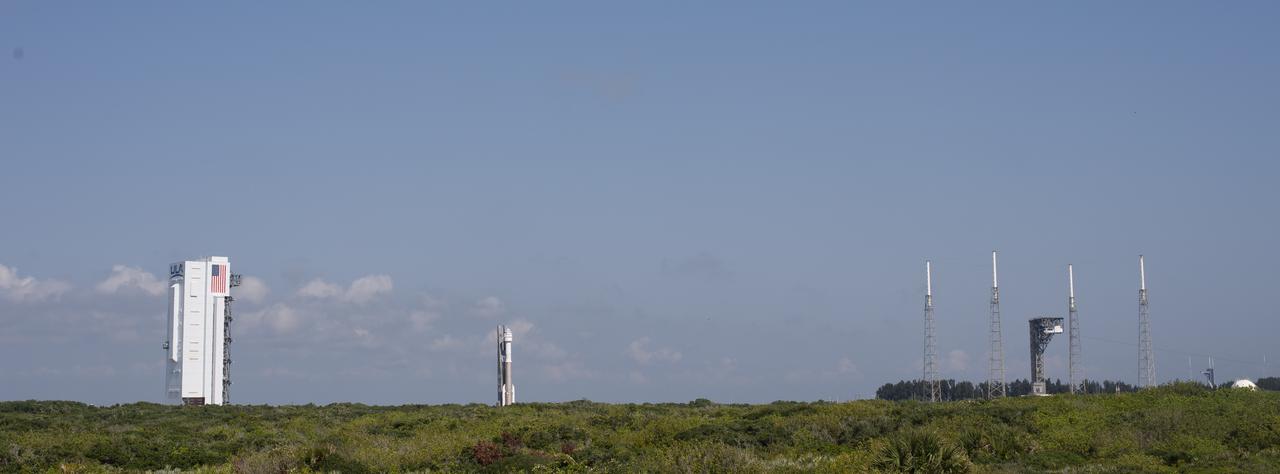
A United Launch Alliance Atlas V rocket with Boeing’s CST-100 Starliner spacecraft aboard is seen as it is rolled out of the Vertical Integration Facility to the launch pad at Space Launch Complex 41 ahead of the Orbital Flight Test-2 (OFT-2) mission, Wednesday, May 18, 2022 at Cape Canaveral Space Force Station in Florida. Boeing’s Orbital Flight Test-2 will be Starliner’s second uncrewed flight test and will dock to the International Space Station as part of NASA's Commercial Crew Program. The mission, currently targeted for launch at 6:54 p.m. ET on May 19, will serve as an end-to-end test of the system's capabilities. Photo Credit: (NASA/Joel Kowsky)
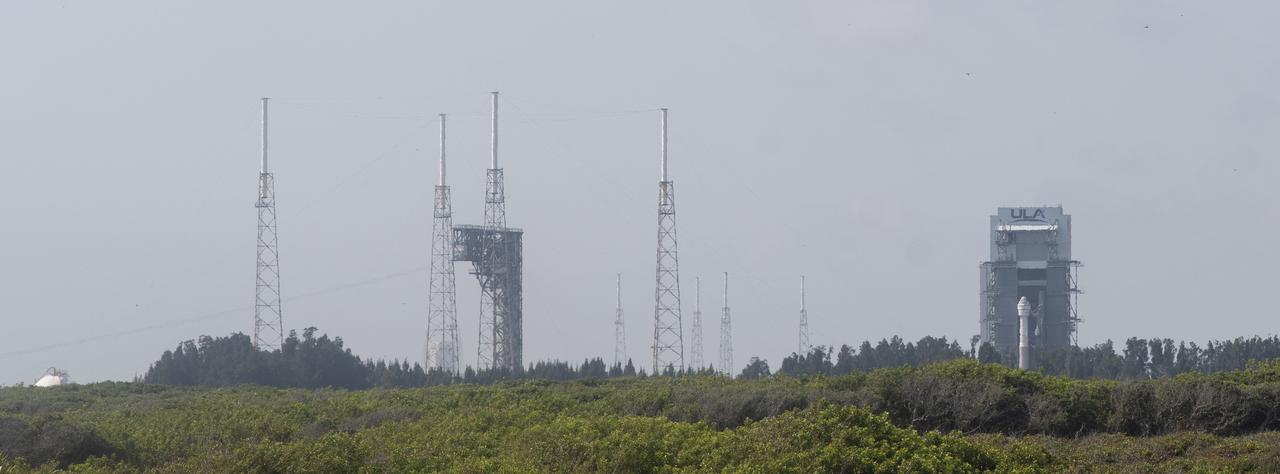
A United Launch Alliance Atlas V rocket with Boeing’s CST-100 Starliner spacecraft aboard is seen as it is rolled out of the Vertical Integration Facility to the launch pad at Space Launch Complex 41 ahead of the Orbital Flight Test-2 (OFT-2) mission, Wednesday, May 18, 2022 at Cape Canaveral Space Force Station in Florida. Boeing’s Orbital Flight Test-2 will be Starliner’s second uncrewed flight test and will dock to the International Space Station as part of NASA's Commercial Crew Program. The mission, currently targeted for launch at 6:54 p.m. ET on May 19, will serve as an end-to-end test of the system's capabilities. Photo Credit: (NASA/Joel Kowsky)
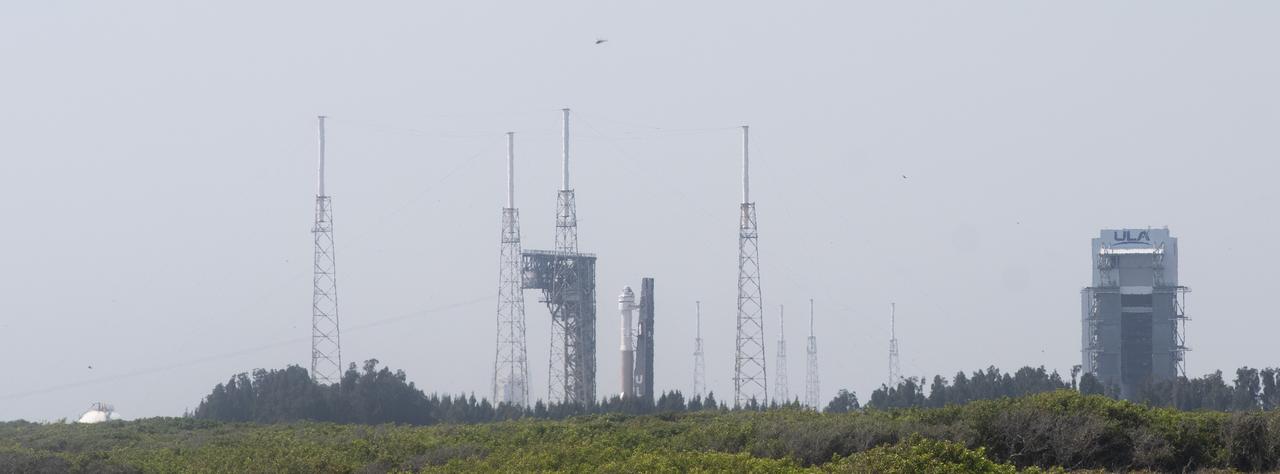
A United Launch Alliance Atlas V rocket with Boeing’s CST-100 Starliner spacecraft aboard is seen as it is rolled out of the Vertical Integration Facility to the launch pad at Space Launch Complex 41 ahead of the Orbital Flight Test-2 (OFT-2) mission, Wednesday, May 18, 2022 at Cape Canaveral Space Force Station in Florida. Boeing’s Orbital Flight Test-2 will be Starliner’s second uncrewed flight test and will dock to the International Space Station as part of NASA's Commercial Crew Program. The mission, currently targeted for launch at 6:54 p.m. ET on May 19, will serve as an end-to-end test of the system's capabilities. Photo Credit: (NASA/Joel Kowsky)
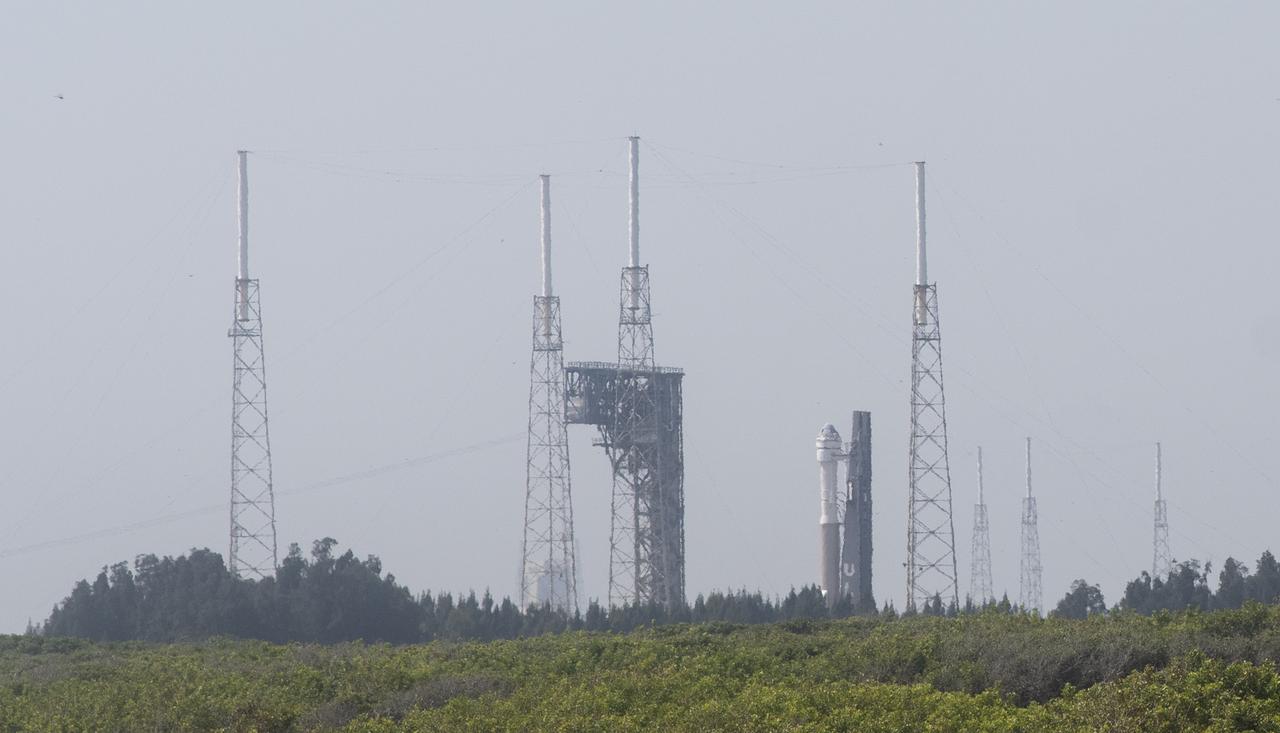
A United Launch Alliance Atlas V rocket with Boeing’s CST-100 Starliner spacecraft aboard is seen as it is rolled out of the Vertical Integration Facility to the launch pad at Space Launch Complex 41 ahead of the Orbital Flight Test-2 (OFT-2) mission, Wednesday, May 18, 2022 at Cape Canaveral Space Force Station in Florida. Boeing’s Orbital Flight Test-2 will be Starliner’s second uncrewed flight test and will dock to the International Space Station as part of NASA's Commercial Crew Program. The mission, currently targeted for launch at 6:54 p.m. ET on May 19, will serve as an end-to-end test of the system's capabilities. Photo Credit: (NASA/Joel Kowsky)
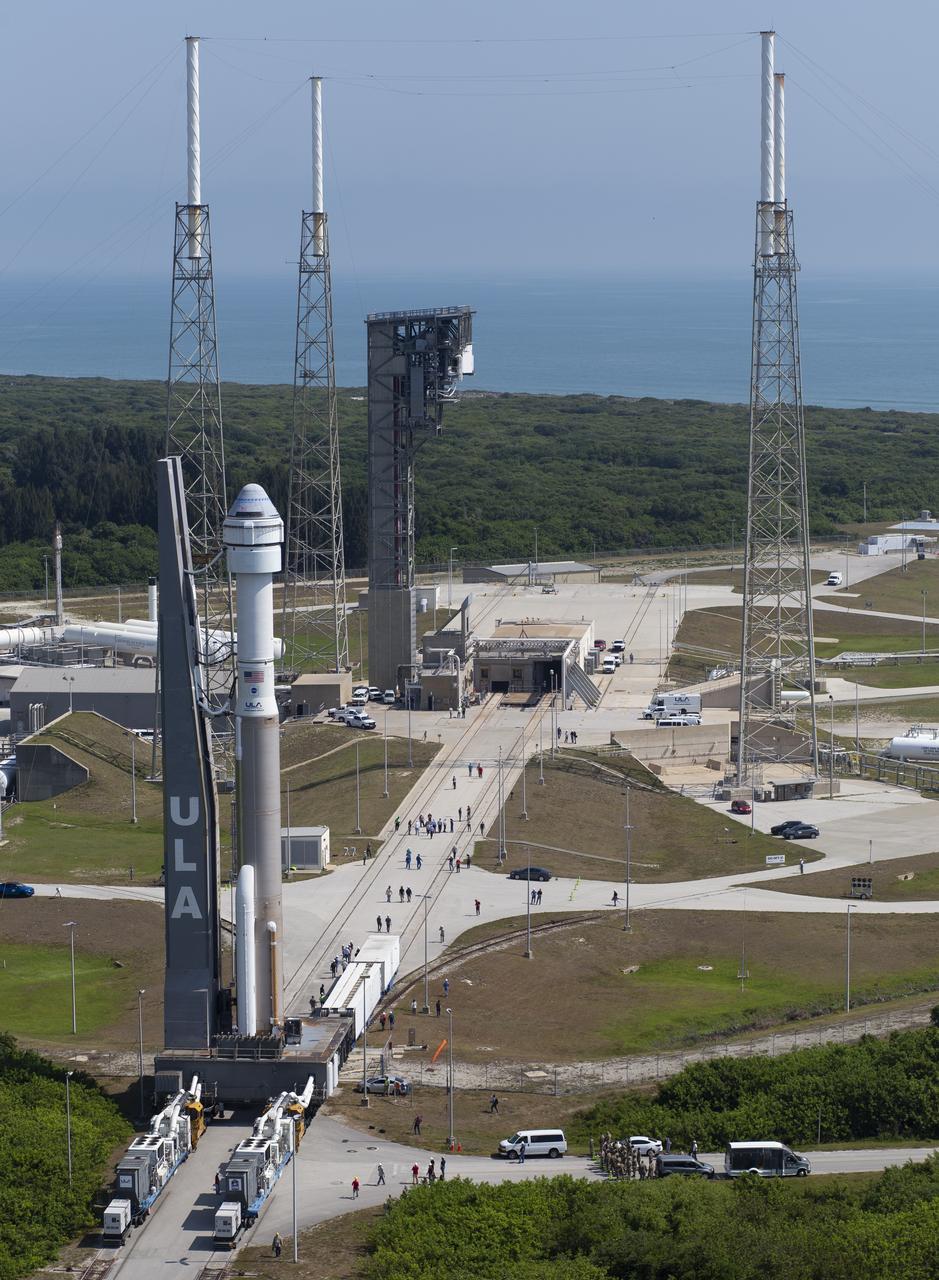
A United Launch Alliance Atlas V rocket with Boeing’s CST-100 Starliner spacecraft aboard is seen as it is rolled out of the Vertical Integration Facility to the launch pad at Space Launch Complex 41 ahead of the Orbital Flight Test-2 (OFT-2) mission, Wednesday, May 18, 2022 at Cape Canaveral Space Force Station in Florida. Boeing’s Orbital Flight Test-2 will be Starliner’s second uncrewed flight test and will dock to the International Space Station as part of NASA's Commercial Crew Program. The mission, currently targeted for launch at 6:54 p.m. ET on May 19, will serve as an end-to-end test of the system's capabilities. Photo Credit: (NASA/Joel Kowsky)
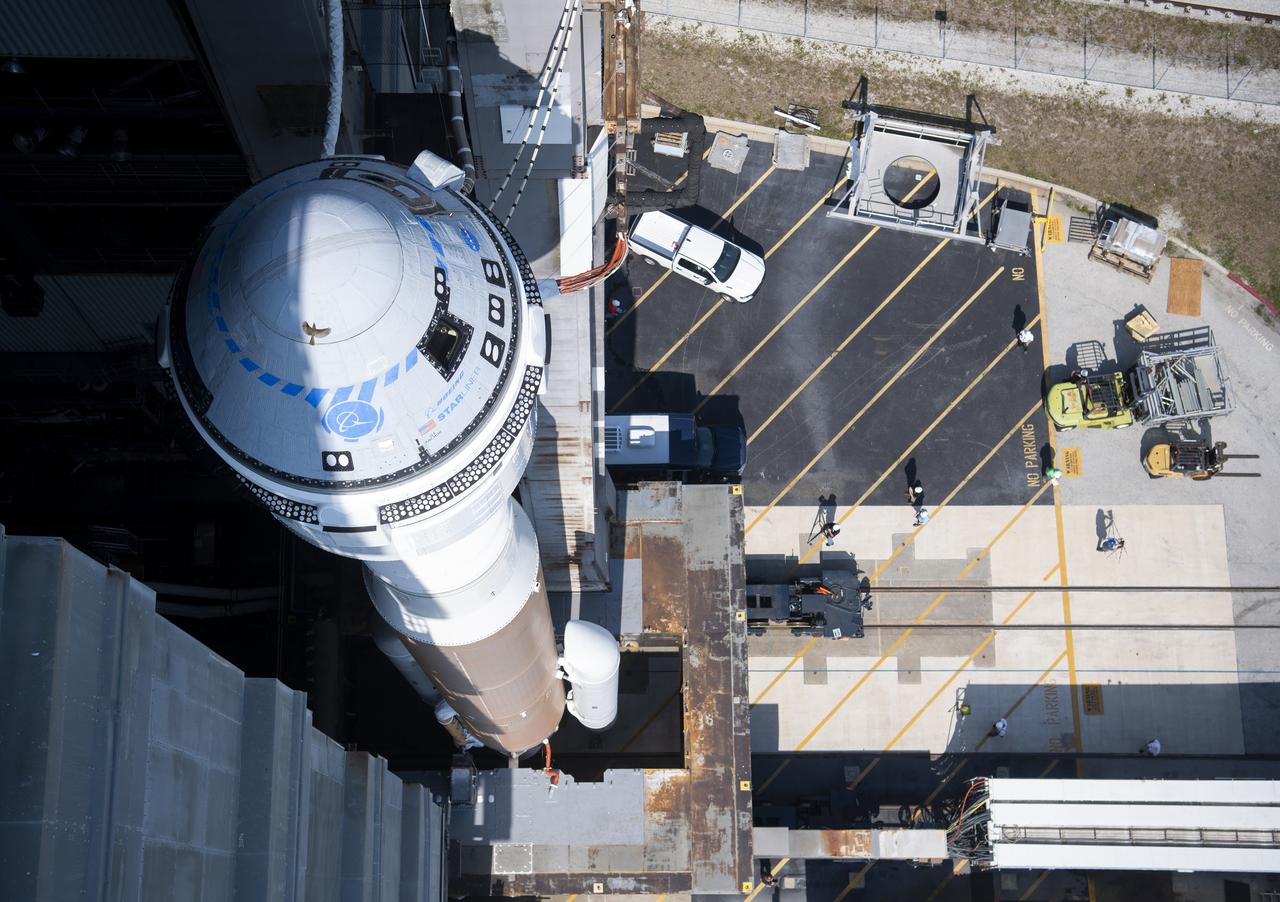
A United Launch Alliance Atlas V rocket with Boeing’s CST-100 Starliner spacecraft aboard is seen as it is rolled out of the Vertical Integration Facility to the launch pad at Space Launch Complex 41 ahead of the Orbital Flight Test-2 (OFT-2) mission, Wednesday, May 18, 2022 at Cape Canaveral Space Force Station in Florida. Boeing’s Orbital Flight Test-2 will be Starliner’s second uncrewed flight test and will dock to the International Space Station as part of NASA's Commercial Crew Program. The mission, currently targeted for launch at 6:54 p.m. ET on May 19, will serve as an end-to-end test of the system's capabilities. Photo Credit: (NASA/Joel Kowsky)
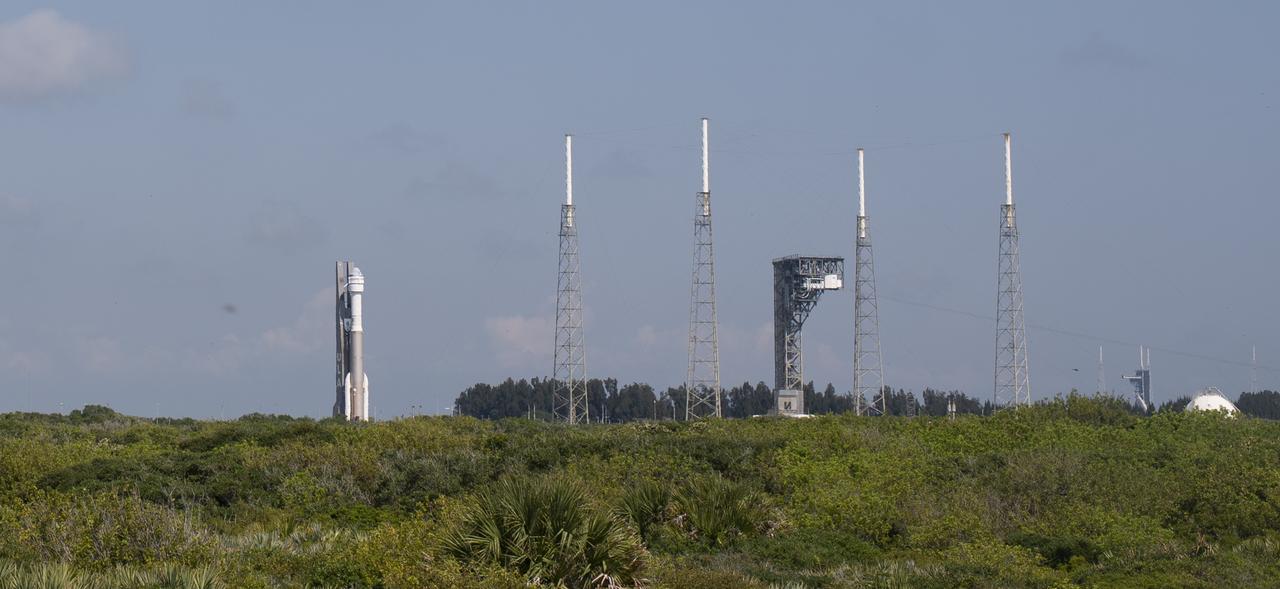
A United Launch Alliance Atlas V rocket with Boeing’s CST-100 Starliner spacecraft aboard is seen as it is rolled out of the Vertical Integration Facility to the launch pad at Space Launch Complex 41 ahead of the Orbital Flight Test-2 (OFT-2) mission, Wednesday, May 18, 2022 at Cape Canaveral Space Force Station in Florida. Boeing’s Orbital Flight Test-2 will be Starliner’s second uncrewed flight test and will dock to the International Space Station as part of NASA's Commercial Crew Program. The mission, currently targeted for launch at 6:54 p.m. ET on May 19, will serve as an end-to-end test of the system's capabilities. Photo Credit: (NASA/Joel Kowsky)
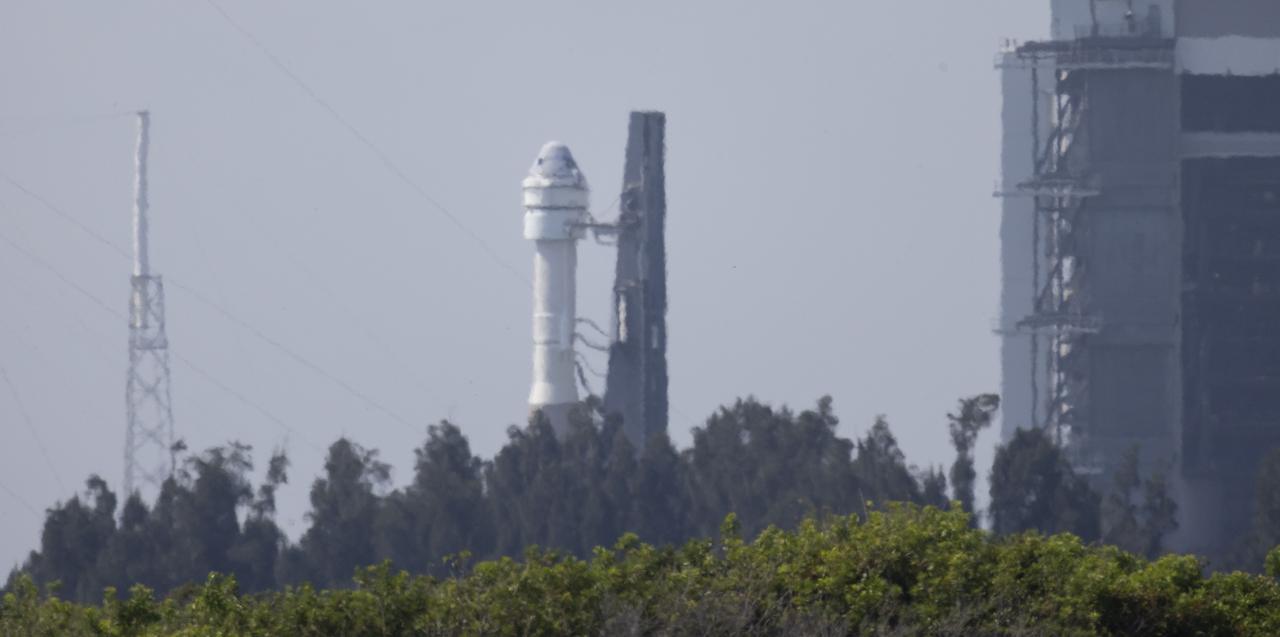
A United Launch Alliance Atlas V rocket with Boeing’s CST-100 Starliner spacecraft aboard is seen as it is rolled out of the Vertical Integration Facility to the launch pad at Space Launch Complex 41 ahead of the Orbital Flight Test-2 (OFT-2) mission, Wednesday, May 18, 2022 at Cape Canaveral Space Force Station in Florida. Boeing’s Orbital Flight Test-2 will be Starliner’s second uncrewed flight test and will dock to the International Space Station as part of NASA's Commercial Crew Program. The mission, currently targeted for launch at 6:54 p.m. ET on May 19, will serve as an end-to-end test of the system's capabilities. Photo Credit: (NASA/Joel Kowsky)
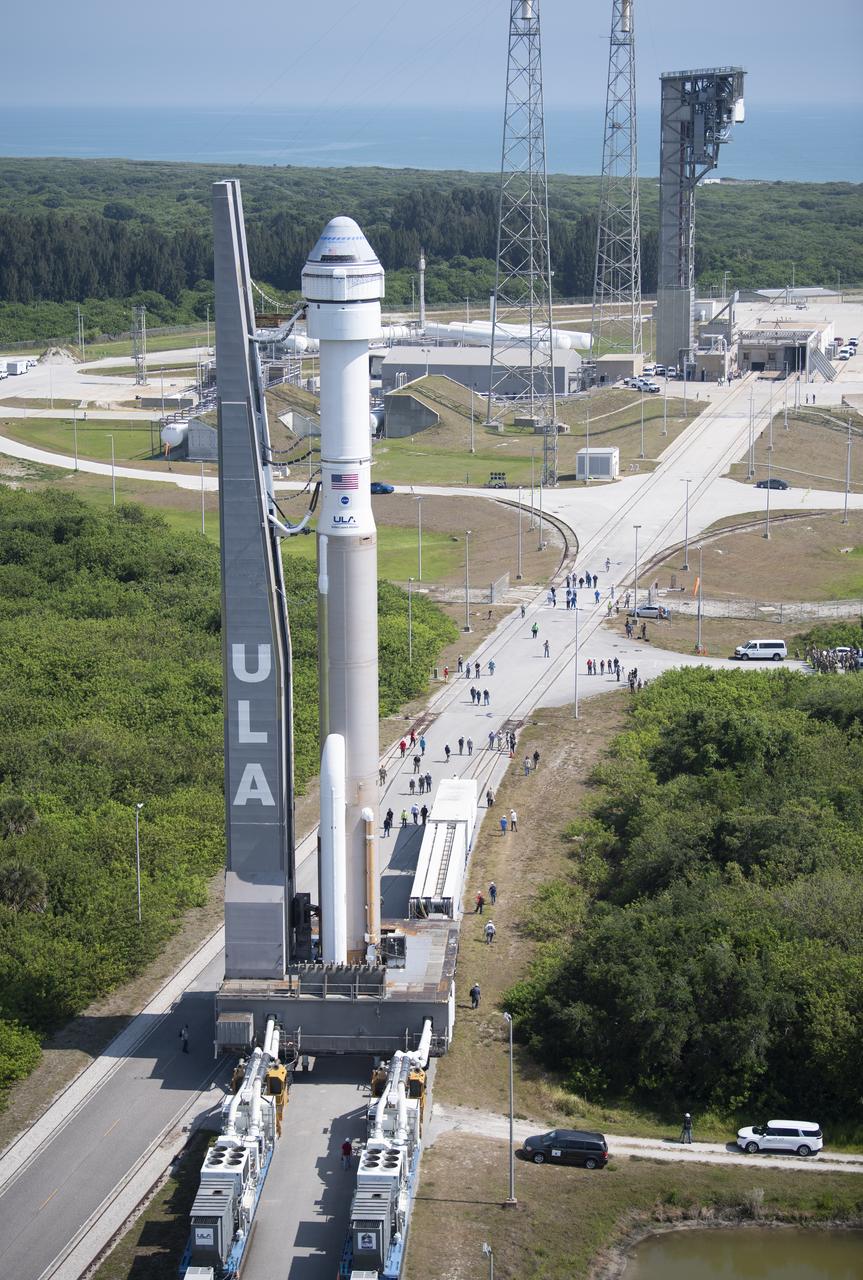
A United Launch Alliance Atlas V rocket with Boeing’s CST-100 Starliner spacecraft aboard is seen as it is rolled out of the Vertical Integration Facility to the launch pad at Space Launch Complex 41 ahead of the Orbital Flight Test-2 (OFT-2) mission, Wednesday, May 18, 2022 at Cape Canaveral Space Force Station in Florida. Boeing’s Orbital Flight Test-2 will be Starliner’s second uncrewed flight test and will dock to the International Space Station as part of NASA's Commercial Crew Program. The mission, currently targeted for launch at 6:54 p.m. ET on May 19, will serve as an end-to-end test of the system's capabilities. Photo Credit: (NASA/Joel Kowsky)
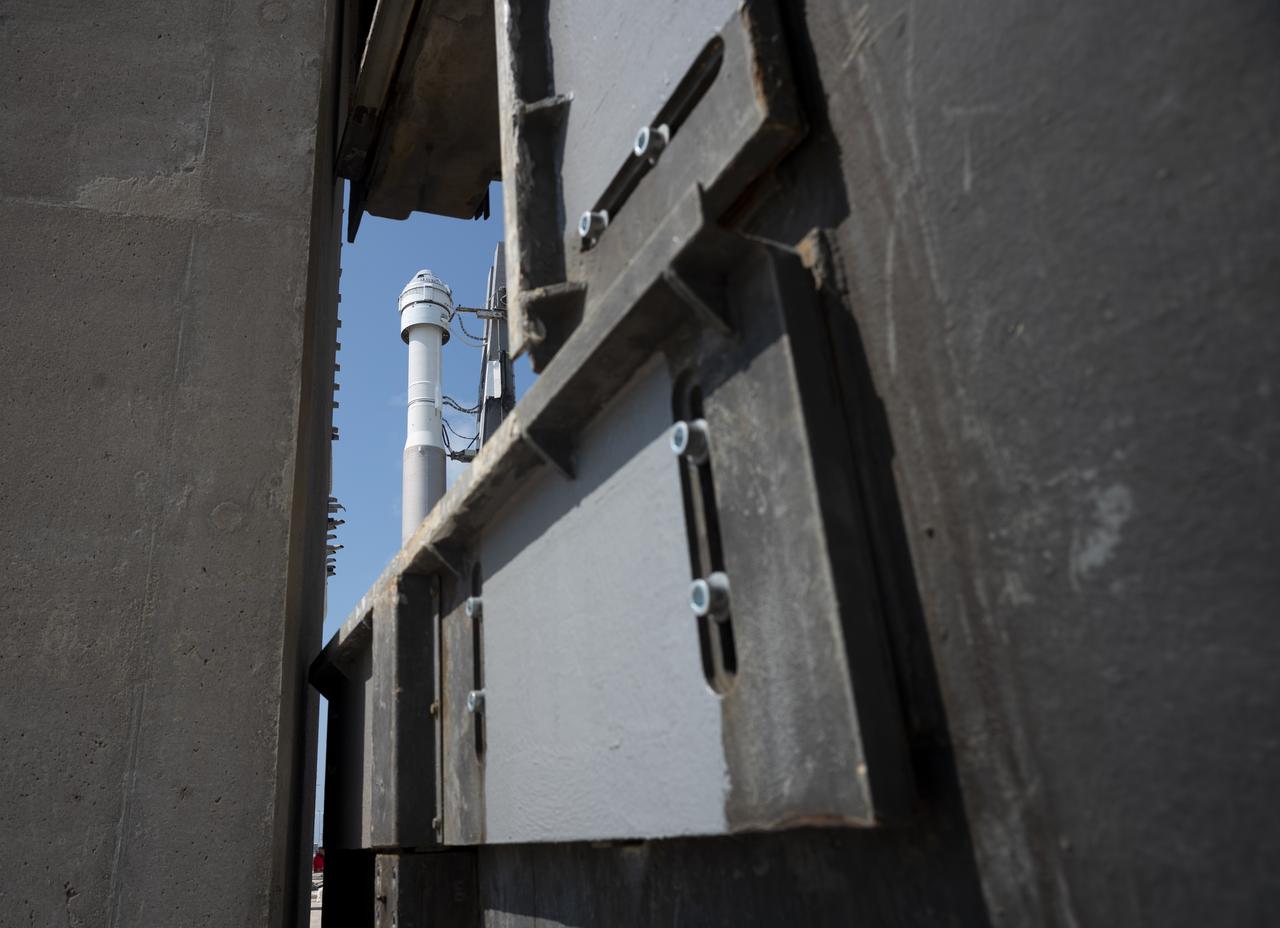
A United Launch Alliance Atlas V rocket with Boeing’s CST-100 Starliner spacecraft aboard is seen as it is rolled out of the Vertical Integration Facility to the launch pad at Space Launch Complex 41 ahead of the Orbital Flight Test-2 (OFT-2) mission, Wednesday, May 18, 2022 at Cape Canaveral Space Force Station in Florida. Boeing’s Orbital Flight Test-2 will be Starliner’s second uncrewed flight test and will dock to the International Space Station as part of NASA's Commercial Crew Program. The mission, currently targeted for launch at 6:54 p.m. ET on May 19, will serve as an end-to-end test of the system's capabilities. Photo Credit: (NASA/Joel Kowsky)
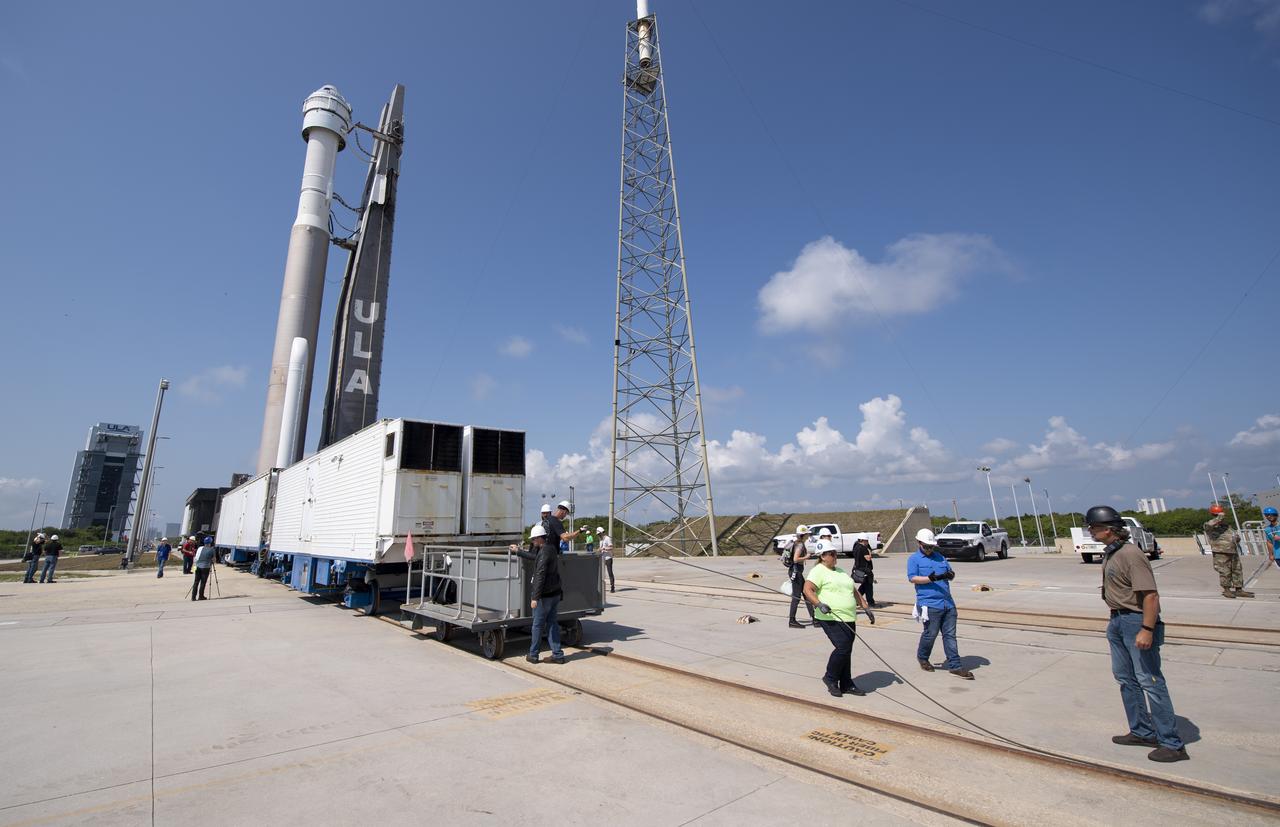
A United Launch Alliance Atlas V rocket with Boeing’s CST-100 Starliner spacecraft aboard is seen as it is rolled out of the Vertical Integration Facility to the launch pad at Space Launch Complex 41 ahead of the Orbital Flight Test-2 (OFT-2) mission, Wednesday, May 18, 2022 at Cape Canaveral Space Force Station in Florida. Boeing’s Orbital Flight Test-2 will be Starliner’s second uncrewed flight test and will dock to the International Space Station as part of NASA's Commercial Crew Program. The mission, currently targeted for launch at 6:54 p.m. ET on May 19, will serve as an end-to-end test of the system's capabilities. Photo Credit: (NASA/Joel Kowsky)
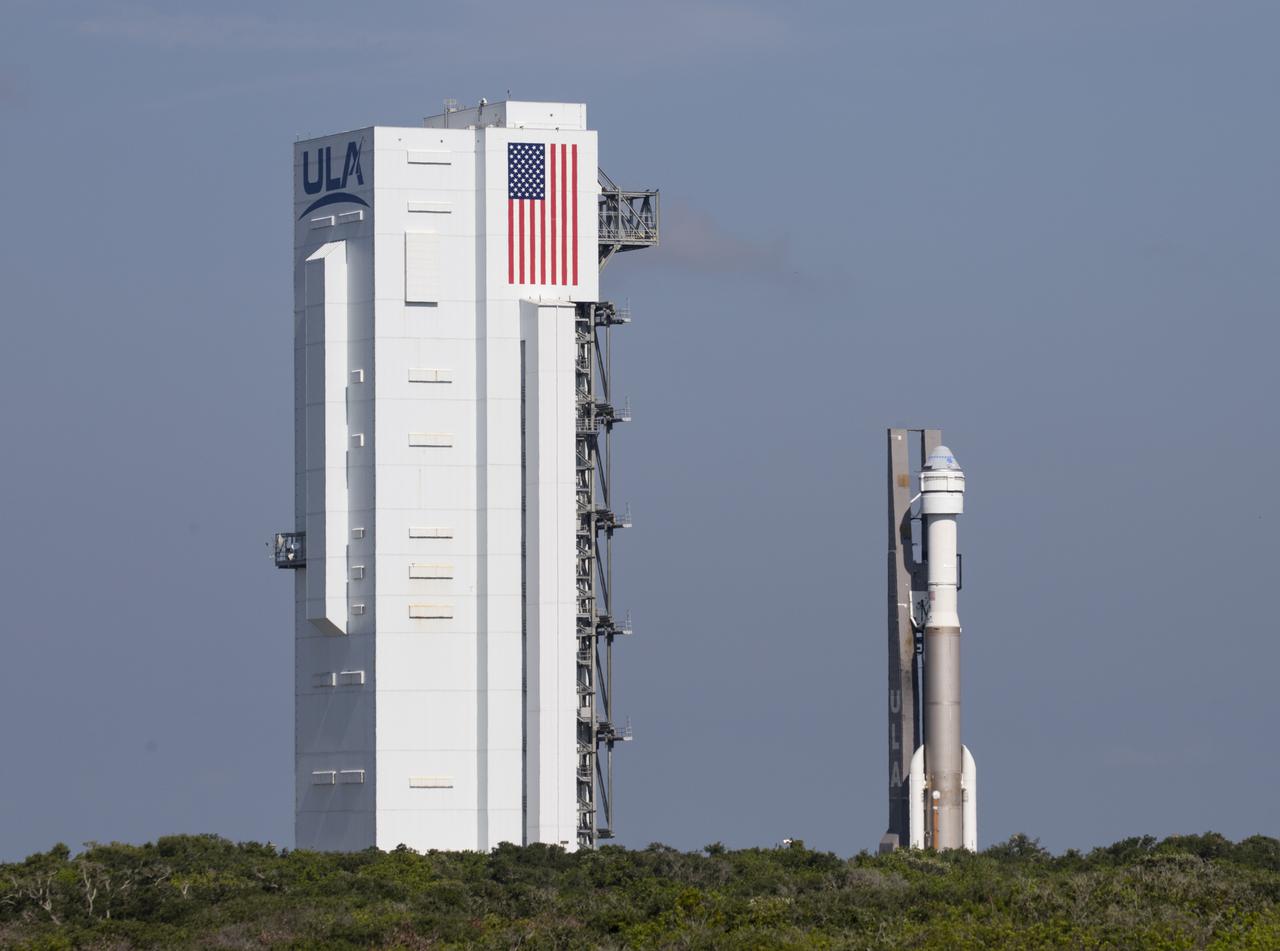
A United Launch Alliance Atlas V rocket with Boeing’s CST-100 Starliner spacecraft onboard is seen as it is rolled out of the Vertical Integration Facility to the launch pad at Space Launch Complex 41 ahead of the Orbital Flight Test-2 (OFT-2) mission, Thursday, July 29, 2021 at Cape Canaveral Space Force Station in Florida. Boeing’s Orbital Flight Test-2 will be Starliner’s second uncrewed flight test and will dock to the International Space Station as part of NASA's Commercial Crew Program. The mission will serve as an end-to-end test of the system's capabilities. Photo Credit: (NASA/Joel Kowsky)
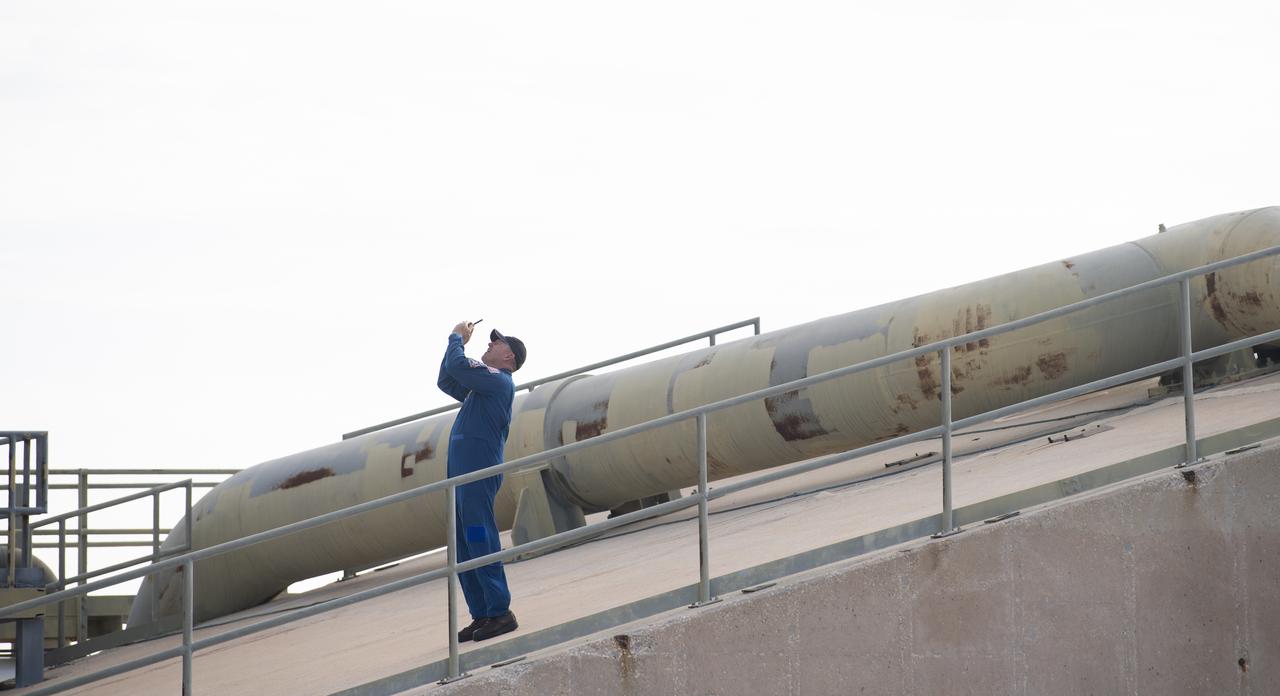
NASA astronaut Barry “Butch” Wilmore takes a picture of a United Launch Alliance Atlas V rocket with Boeing’s CST-100 Starliner spacecraft aboard after it was rolled out of the Vertical Integration Facility to the launch pad at Space Launch Complex 41 ahead of the Orbital Flight Test-2 (OFT-2) mission, Monday, Aug. 2, 2021 at Cape Canaveral Space Force Station in Florida. Boeing’s Orbital Flight Test-2 will be Starliner’s second uncrewed flight test and will dock to the International Space Station as part of NASA's Commercial Crew Program. The mission, currently targeted for launch at 1:20 p.m. EDT Tuesday, Aug. 3, will serve as an end-to-end test of the system's capabilities. Wilmore is scheduled to fly aboard Starliner’s Crewed Flight Test mission. Photo Credit: (NASA/Joel Kowsky)
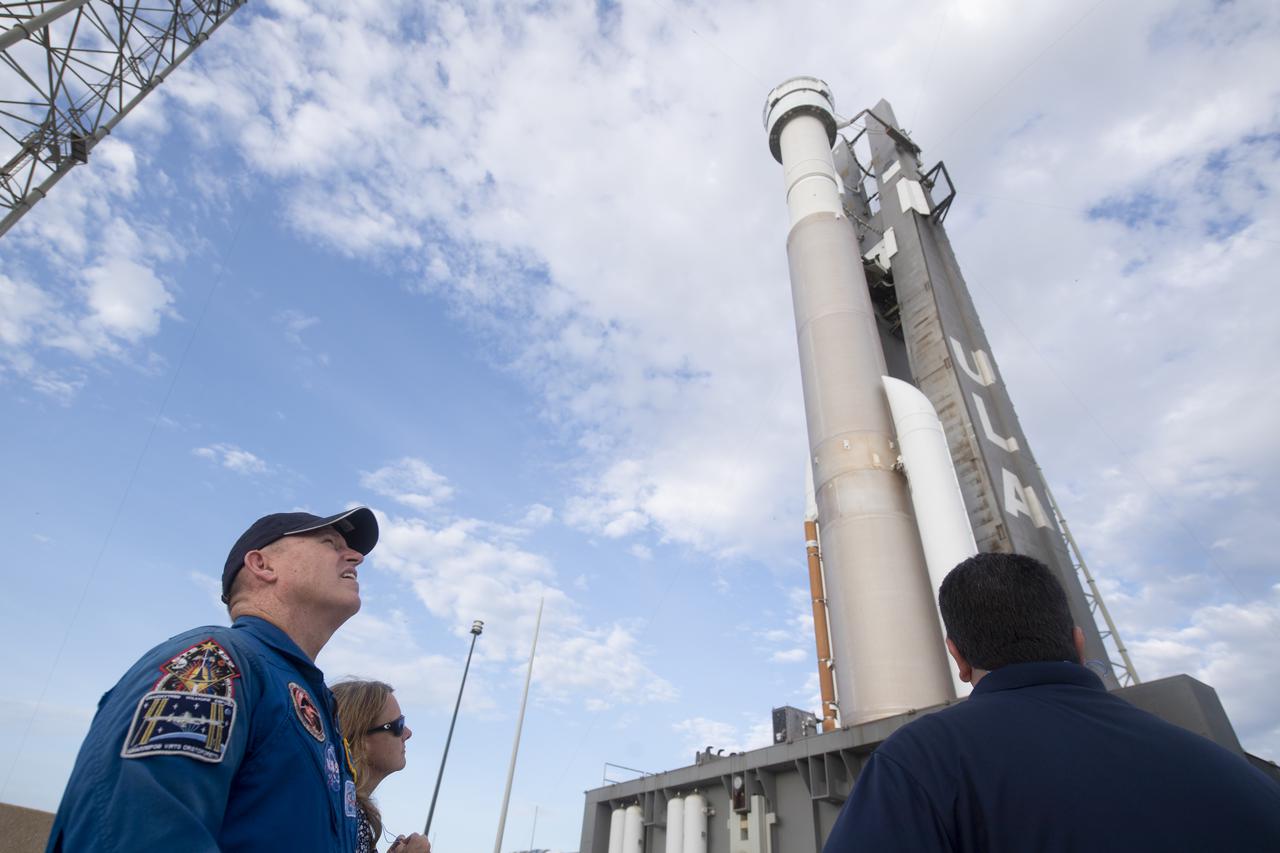
NASA astronaut Barry “Butch" Wilmore watches as a United Launch Alliance Atlas V rocket with Boeing’s CST-100 Starliner spacecraft aboard is seen as it is rolled out of the Vertical Integration Facility to the launch pad at Space Launch Complex 41 ahead of the Orbital Flight Test-2 (OFT-2) mission, Monday, Aug. 2, 2021 at Cape Canaveral Space Force Station in Florida. Boeing’s Orbital Flight Test-2 will be Starliner’s second uncrewed flight test and will dock to the International Space Station as part of NASA's Commercial Crew Program. The mission, currently targeted for launch at 1:20 p.m. EDT Tuesday, Aug. 3, will serve as an end-to-end test of the system's capabilities. Wilmore is scheduled to fly aboard Starliner’s Crewed Flight Test mission. Photo Credit: (NASA/Joel Kowsky)
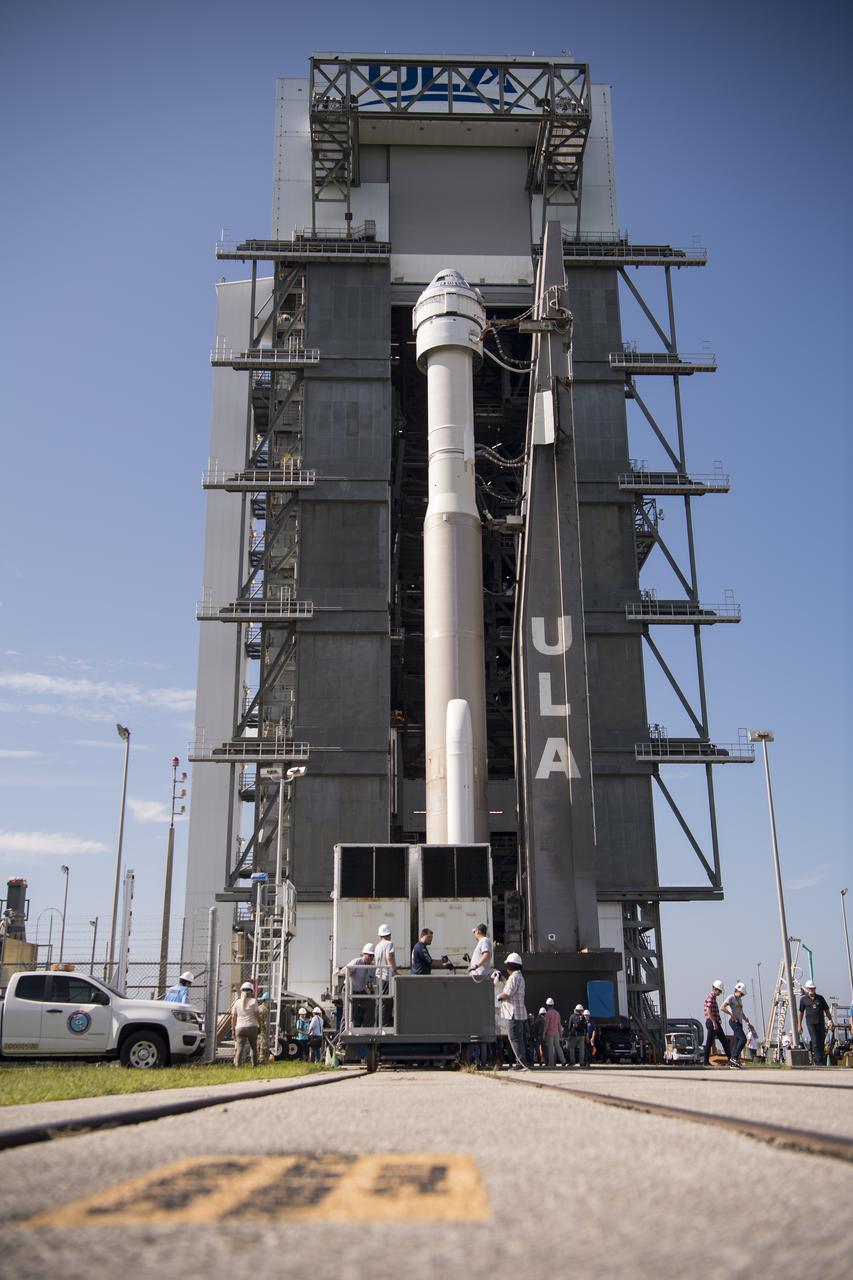
A United Launch Alliance Atlas V rocket with Boeing’s CST-100 Starliner spacecraft onboard is seen as it is rolled out of the Vertical Integration Facility to the launch pad at Space Launch Complex 41 ahead of the Orbital Flight Test-2 (OFT-2) mission, Thursday, July 29, 2021 at Cape Canaveral Space Force Station in Florida. Boeing’s Orbital Flight Test-2 will be Starliner’s second uncrewed flight test and will dock to the International Space Station as part of NASA's Commercial Crew Program. Photo Credit: (NASA/Aubrey Gemignani)
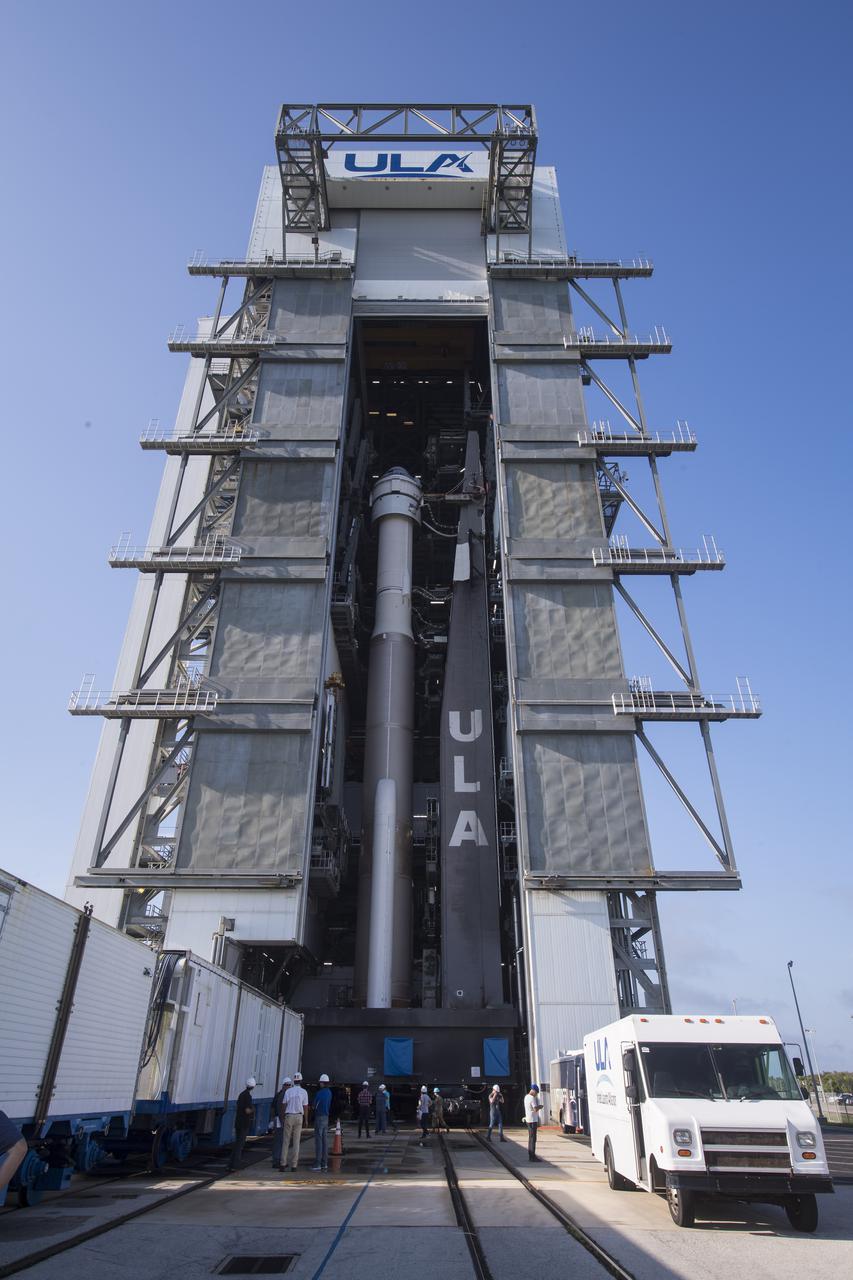
A United Launch Alliance Atlas V rocket with Boeing’s CST-100 Starliner spacecraft onboard is seen as it is rolled out of the Vertical Integration Facility to the launch pad at Space Launch Complex 41 ahead of the Orbital Flight Test-2 (OFT-2) mission, Thursday, July 29, 2021 at Cape Canaveral Space Force Station in Florida. Boeing’s Orbital Flight Test-2 will be Starliner’s second uncrewed flight test and will dock to the International Space Station as part of NASA's Commercial Crew Program. Photo Credit: (NASA/Aubrey Gemignani)
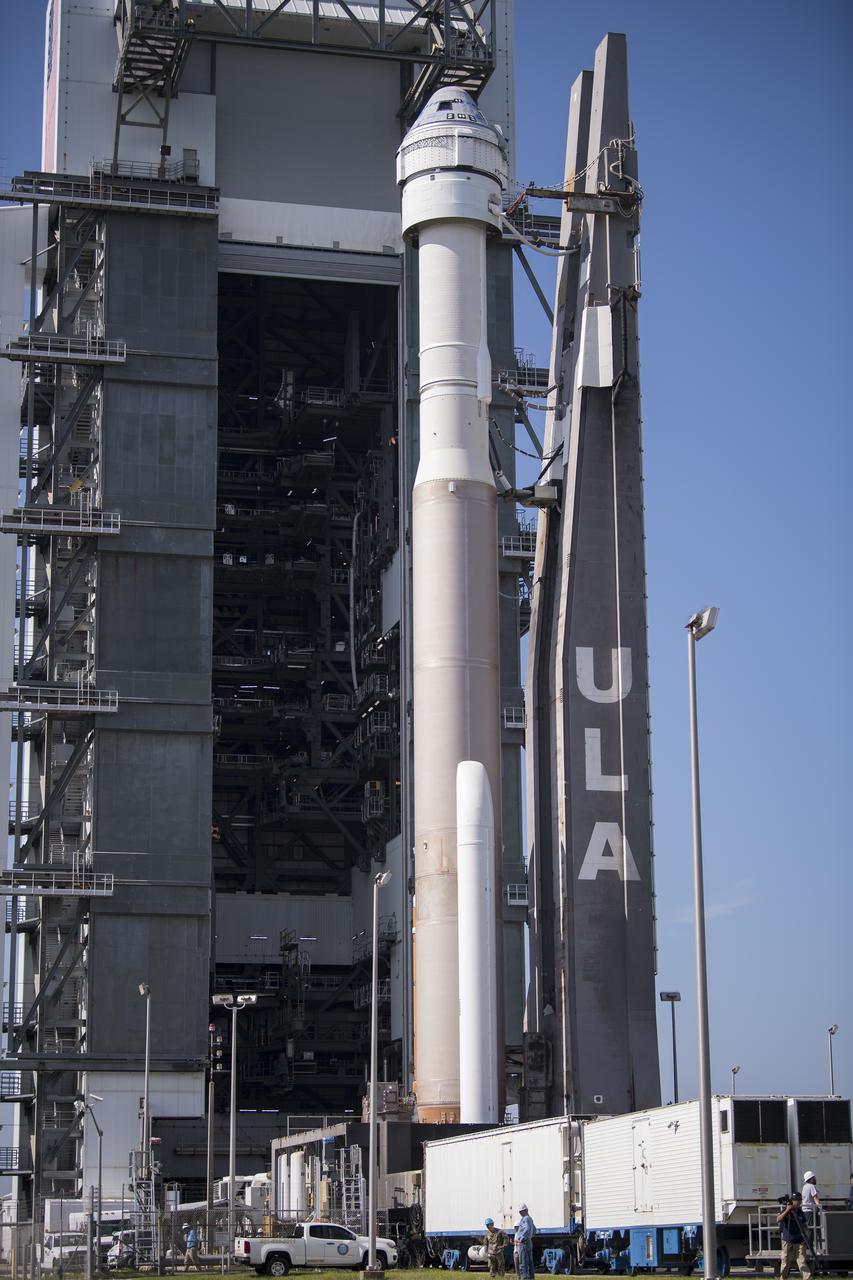
A United Launch Alliance Atlas V rocket with Boeing’s CST-100 Starliner spacecraft onboard is seen as it is rolled out of the Vertical Integration Facility to the launch pad at Space Launch Complex 41 ahead of the Orbital Flight Test-2 (OFT-2) mission, Thursday, July 29, 2021 at Cape Canaveral Space Force Station in Florida. Boeing’s Orbital Flight Test-2 will be Starliner’s second uncrewed flight test and will dock to the International Space Station as part of NASA's Commercial Crew Program. Photo Credit: (NASA/Aubrey Gemignani)
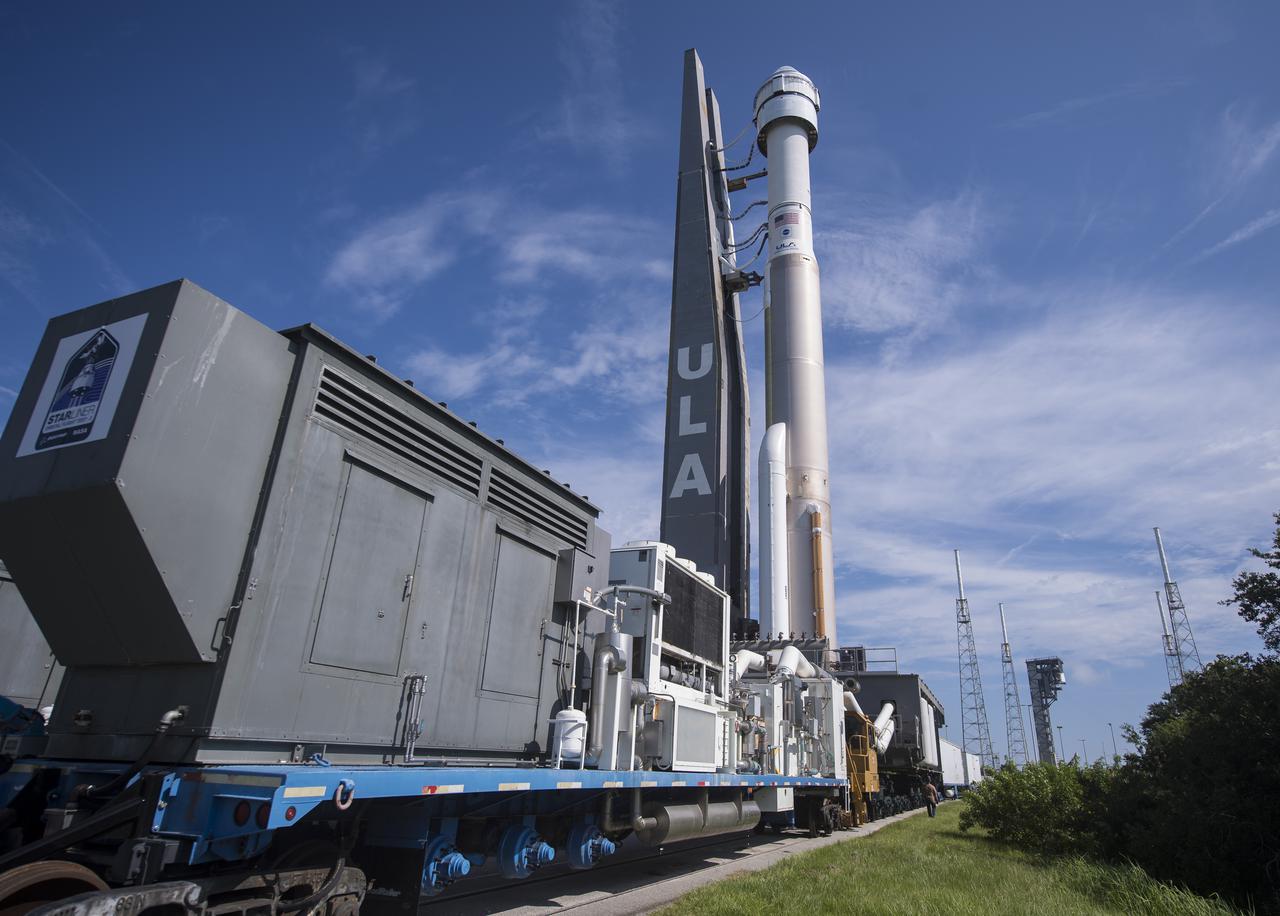
A United Launch Alliance Atlas V rocket with Boeing’s CST-100 Starliner spacecraft onboard is seen as it is rolled out of the Vertical Integration Facility to the launch pad at Space Launch Complex 41 ahead of the Orbital Flight Test-2 (OFT-2) mission, Thursday, July 29, 2021 at Cape Canaveral Space Force Station in Florida. Boeing’s Orbital Flight Test-2 will be Starliner’s second uncrewed flight test and will dock to the International Space Station as part of NASA's Commercial Crew Program. Photo Credit: (NASA/Aubrey Gemignani)
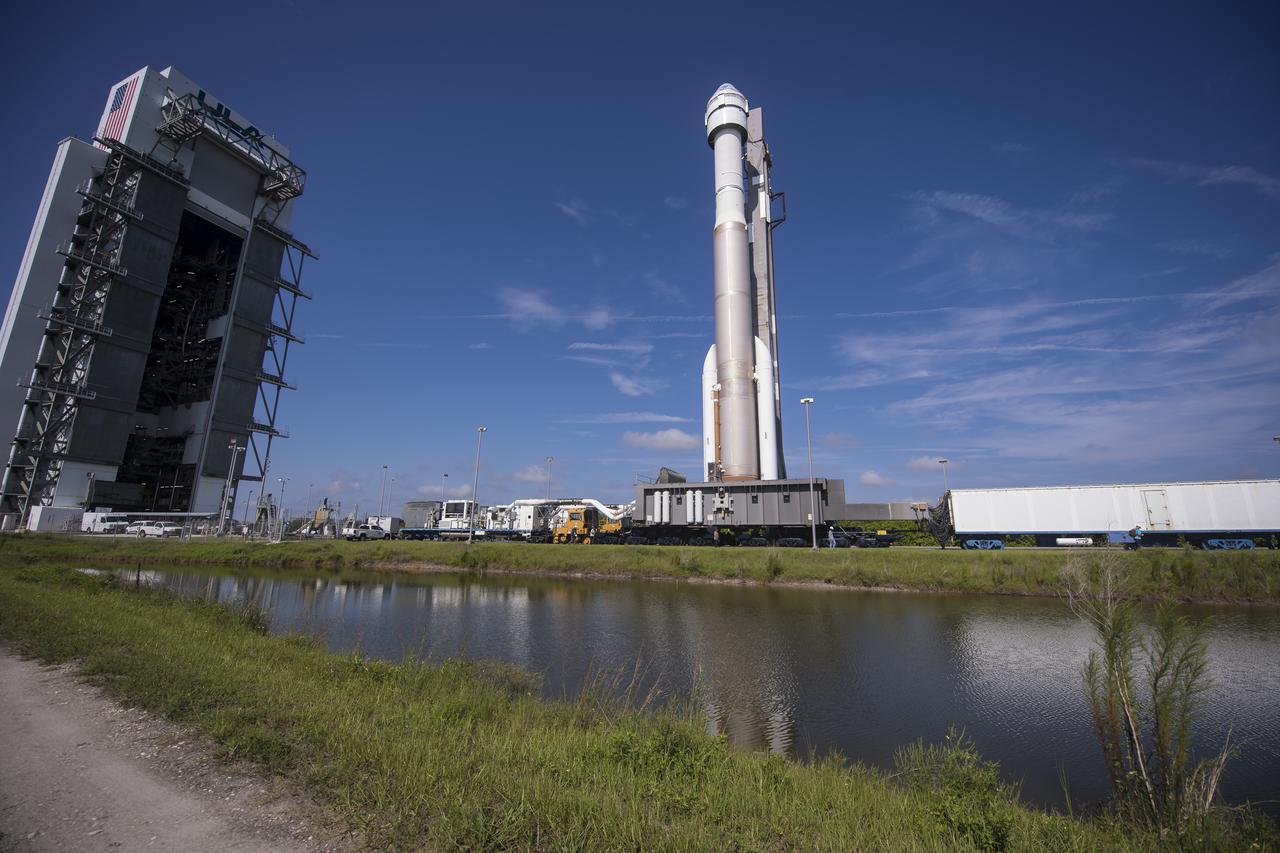
A United Launch Alliance Atlas V rocket with Boeing’s CST-100 Starliner spacecraft onboard is seen as it is rolled out of the Vertical Integration Facility to the launch pad at Space Launch Complex 41 ahead of the Orbital Flight Test-2 (OFT-2) mission, Thursday, July 29, 2021 at Cape Canaveral Space Force Station in Florida. Boeing’s Orbital Flight Test-2 will be Starliner’s second uncrewed flight test and will dock to the International Space Station as part of NASA's Commercial Crew Program. Photo Credit: (NASA/Aubrey Gemignani)
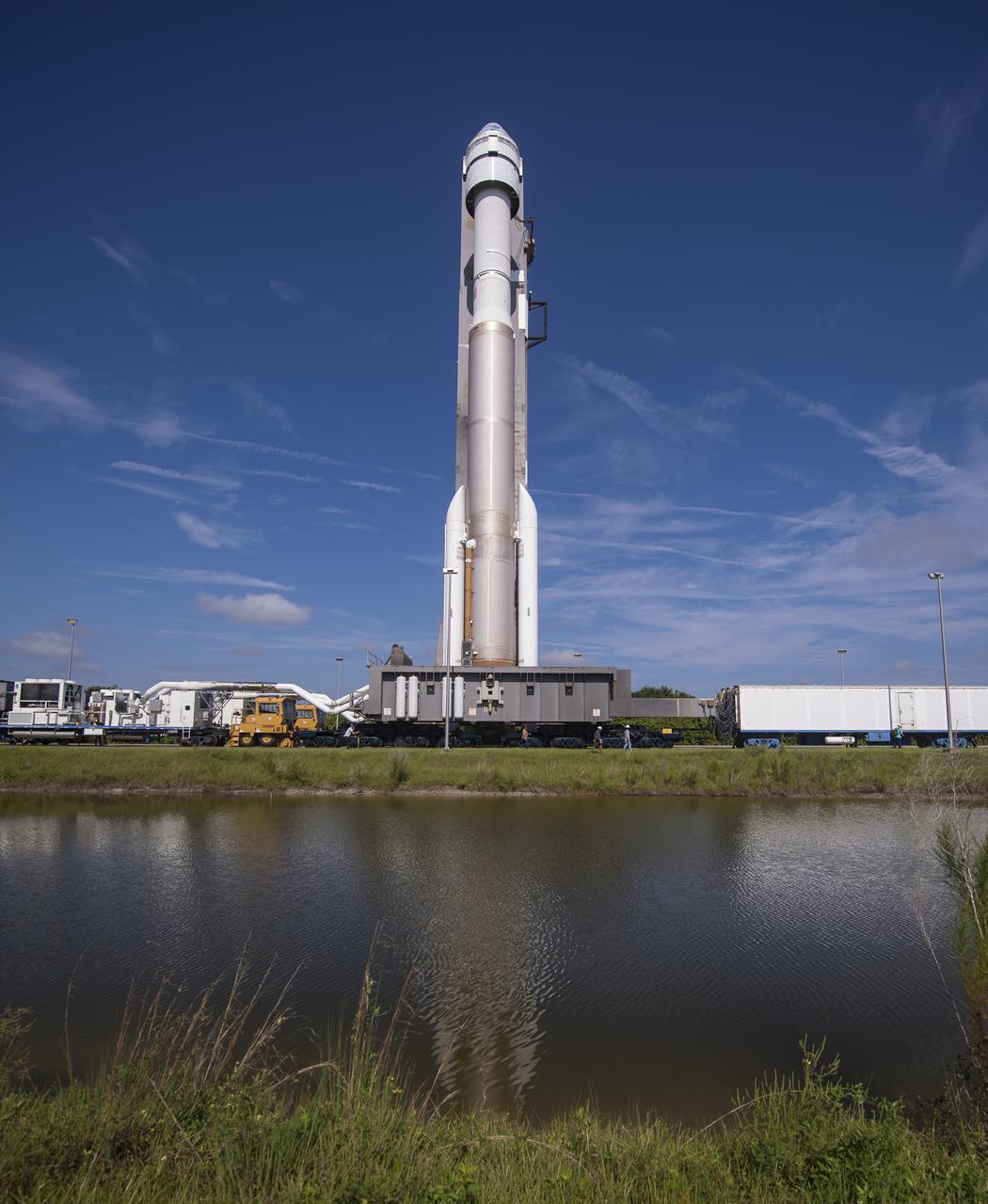
A United Launch Alliance Atlas V rocket with Boeing’s CST-100 Starliner spacecraft onboard is seen as it is rolled out of the Vertical Integration Facility to the launch pad at Space Launch Complex 41 ahead of the Orbital Flight Test-2 (OFT-2) mission, Thursday, July 29, 2021 at Cape Canaveral Space Force Station in Florida. Boeing’s Orbital Flight Test-2 will be Starliner’s second uncrewed flight test and will dock to the International Space Station as part of NASA's Commercial Crew Program. Photo Credit: (NASA/Aubrey Gemignani)
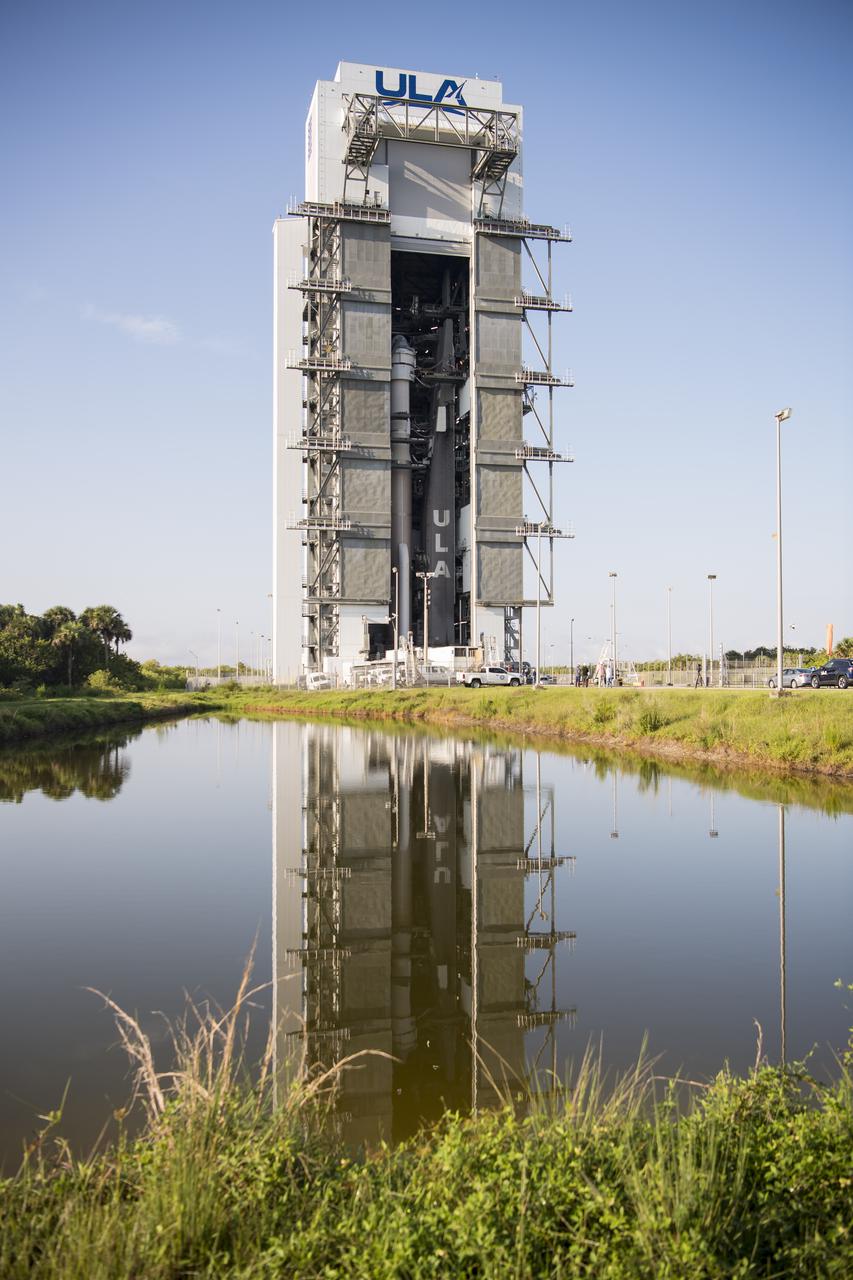
A United Launch Alliance Atlas V rocket with Boeing’s CST-100 Starliner spacecraft onboard is seen as it is rolled out of the Vertical Integration Facility to the launch pad at Space Launch Complex 41 ahead of the Orbital Flight Test-2 (OFT-2) mission, Thursday, July 29, 2021 at Cape Canaveral Space Force Station in Florida. Boeing’s Orbital Flight Test-2 will be Starliner’s second uncrewed flight test and will dock to the International Space Station as part of NASA's Commercial Crew Program. Photo Credit: (NASA/Aubrey Gemignani)
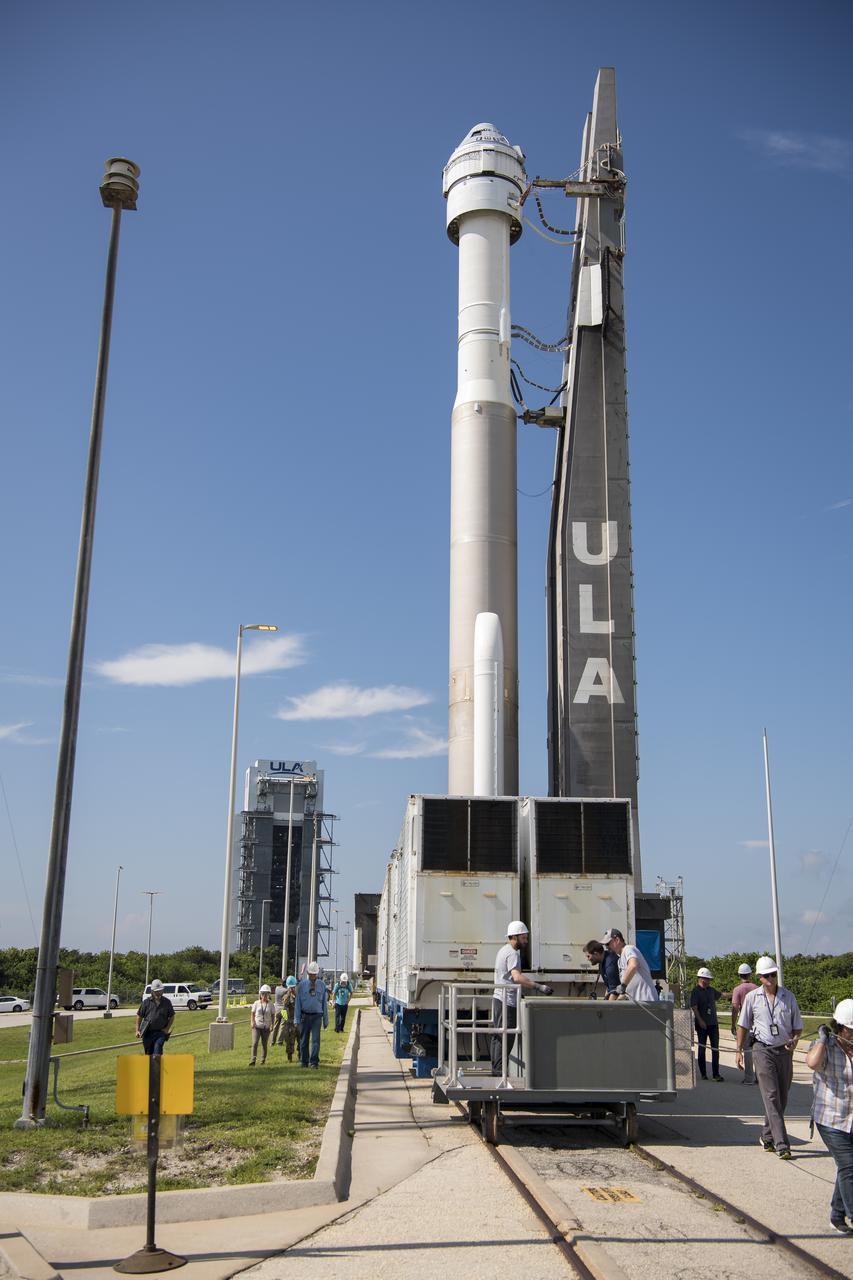
A United Launch Alliance Atlas V rocket with Boeing’s CST-100 Starliner spacecraft onboard is seen as it is rolled out of the Vertical Integration Facility to the launch pad at Space Launch Complex 41 ahead of the Orbital Flight Test-2 (OFT-2) mission, Thursday, July 29, 2021 at Cape Canaveral Space Force Station in Florida. Boeing’s Orbital Flight Test-2 will be Starliner’s second uncrewed flight test and will dock to the International Space Station as part of NASA's Commercial Crew Program. Photo Credit: (NASA/Aubrey Gemignani)
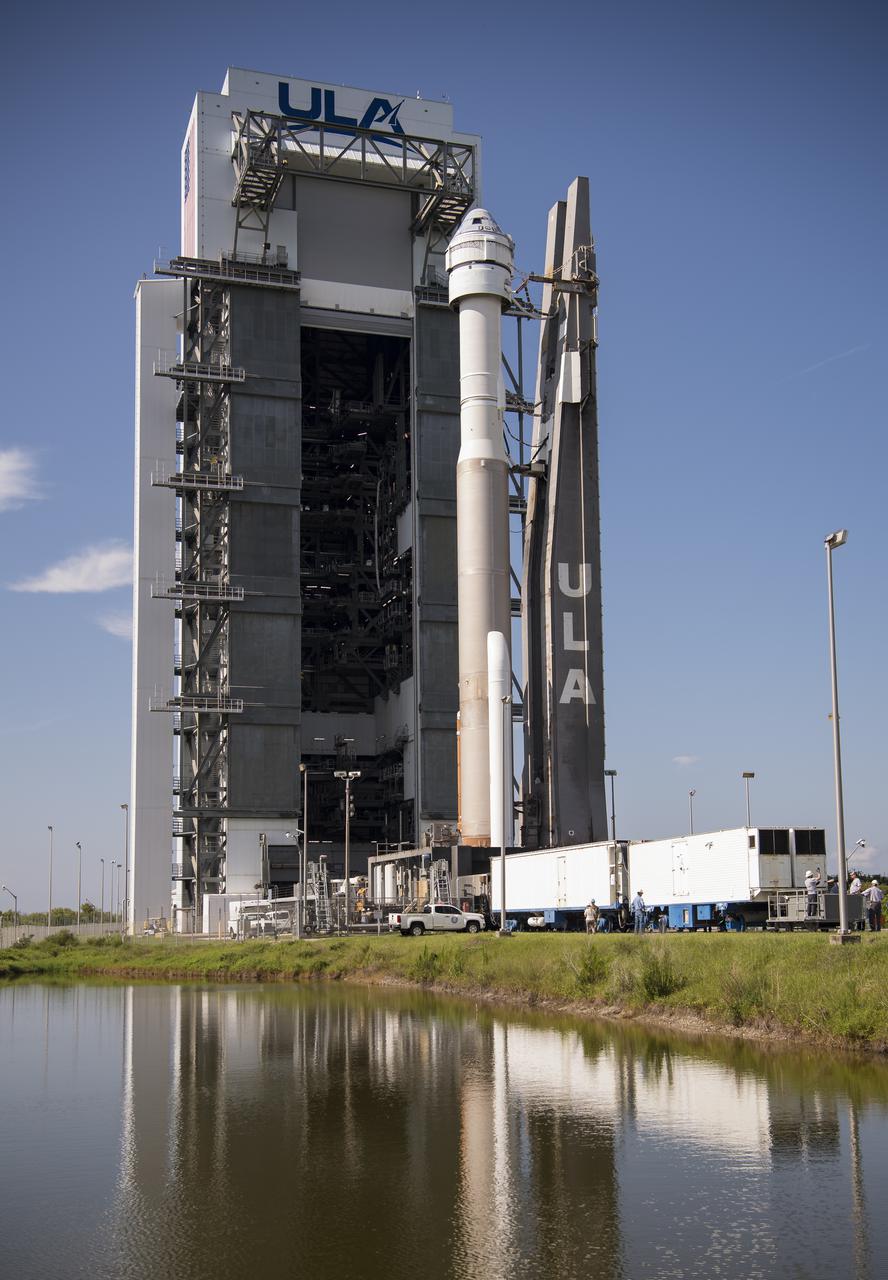
A United Launch Alliance Atlas V rocket with Boeing’s CST-100 Starliner spacecraft onboard is seen as it is rolled out of the Vertical Integration Facility to the launch pad at Space Launch Complex 41 ahead of the Orbital Flight Test-2 (OFT-2) mission, Thursday, July 29, 2021 at Cape Canaveral Space Force Station in Florida. Boeing’s Orbital Flight Test-2 will be Starliner’s second uncrewed flight test and will dock to the International Space Station as part of NASA's Commercial Crew Program. Photo Credit: (NASA/Aubrey Gemignani)
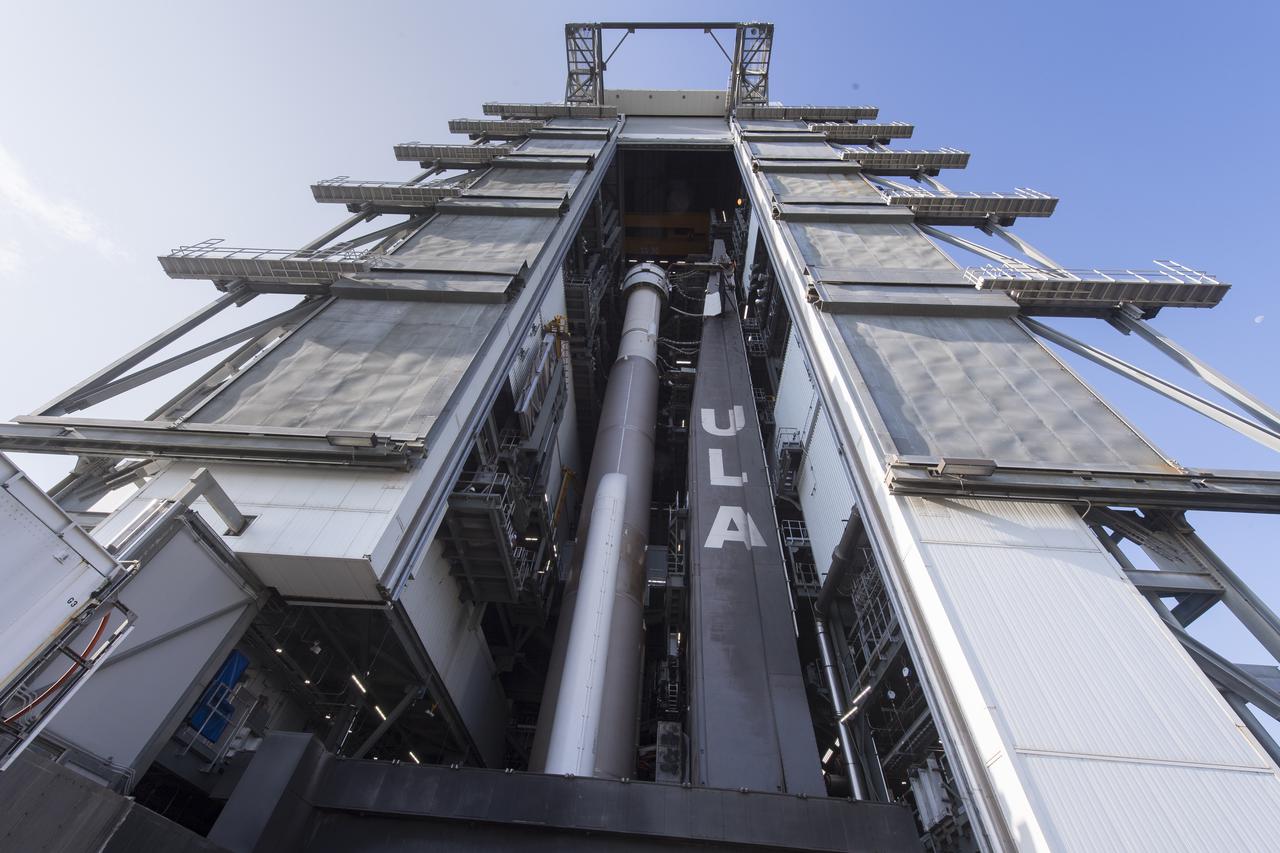
A United Launch Alliance Atlas V rocket with Boeing’s CST-100 Starliner spacecraft onboard is seen as it is rolled out of the Vertical Integration Facility to the launch pad at Space Launch Complex 41 ahead of the Orbital Flight Test-2 (OFT-2) mission, Thursday, July 29, 2021 at Cape Canaveral Space Force Station in Florida. Boeing’s Orbital Flight Test-2 will be Starliner’s second uncrewed flight test and will dock to the International Space Station as part of NASA's Commercial Crew Program. Photo Credit: (NASA/Aubrey Gemignani)
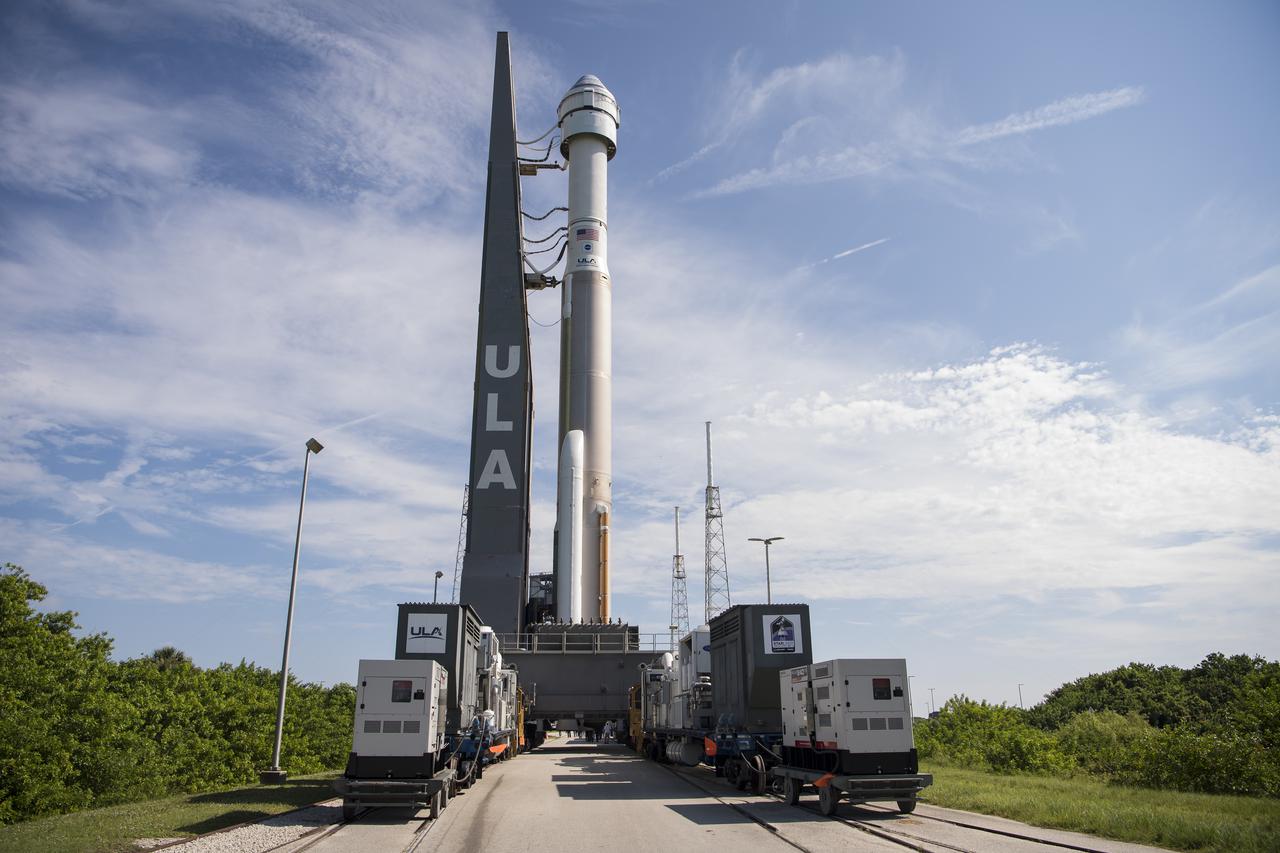
A United Launch Alliance Atlas V rocket with Boeing’s CST-100 Starliner spacecraft onboard is seen as it is rolled out of the Vertical Integration Facility to the launch pad at Space Launch Complex 41 ahead of the Orbital Flight Test-2 (OFT-2) mission, Thursday, July 29, 2021 at Cape Canaveral Space Force Station in Florida. Boeing’s Orbital Flight Test-2 will be Starliner’s second uncrewed flight test and will dock to the International Space Station as part of NASA's Commercial Crew Program. Photo Credit: (NASA/Aubrey Gemignani)
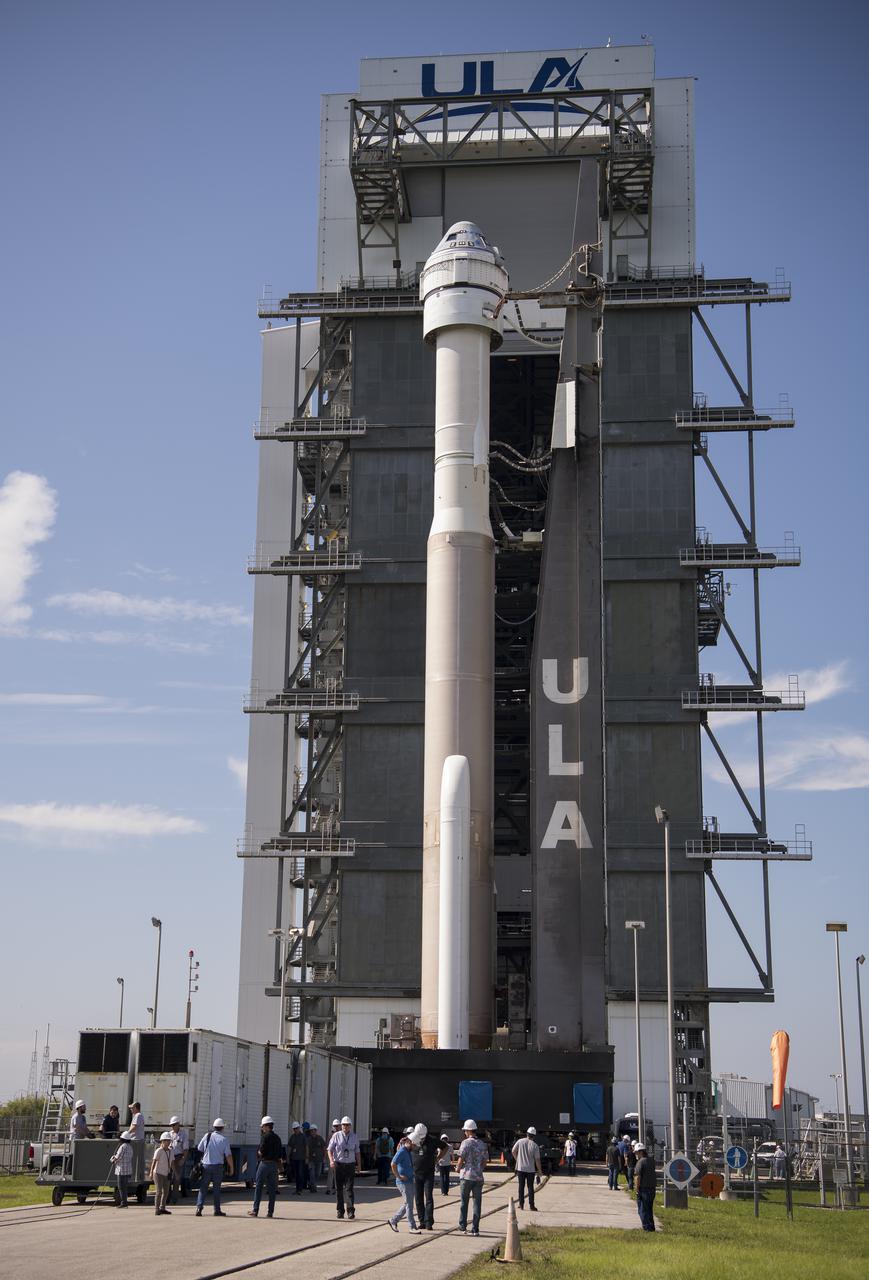
A United Launch Alliance Atlas V rocket with Boeing’s CST-100 Starliner spacecraft onboard is seen as it is rolled out of the Vertical Integration Facility to the launch pad at Space Launch Complex 41 ahead of the Orbital Flight Test-2 (OFT-2) mission, Thursday, July 29, 2021 at Cape Canaveral Space Force Station in Florida. Boeing’s Orbital Flight Test-2 will be Starliner’s second uncrewed flight test and will dock to the International Space Station as part of NASA's Commercial Crew Program. Photo Credit: (NASA/Aubrey Gemignani)
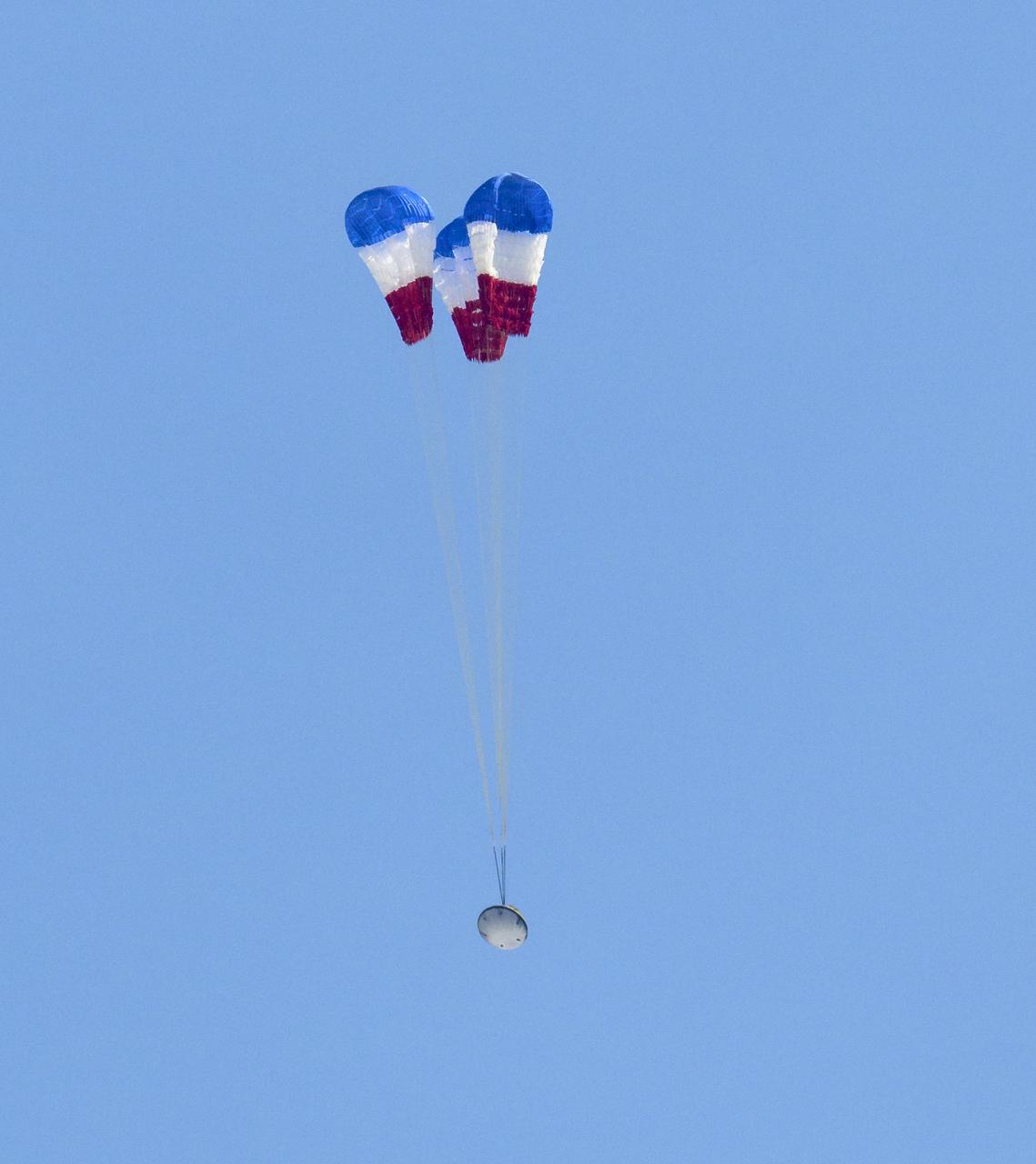
Boeing’s CST-100 Starliner spacecraft opens it’s main parachutes as it lands at White Sands Missile Range’s Space Harbor, Wednesday, May 25, 2022, in New Mexico. Boeing’s Orbital Flight Test-2 (OFT-2) is Starliner’s second uncrewed flight test to the International Space Station as part of NASA's Commercial Crew Program. OFT-2 serves as an end-to-end test of the system's capabilities. Photo Credit: (NASA/Bill Ingalls)
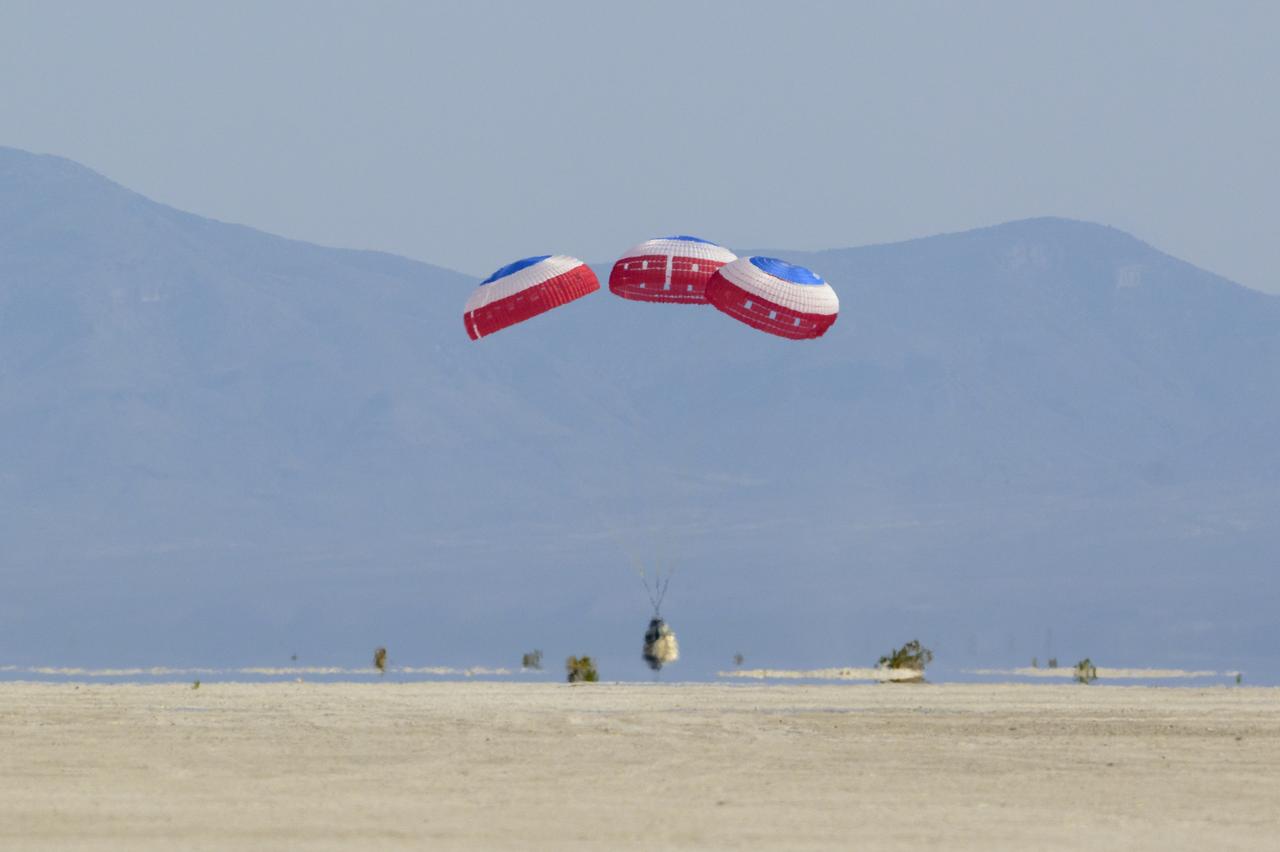
Boeing’s CST-100 Starliner spacecraft lands at White Sands Missile Range’s Space Harbor, Wednesday, May 25, 2022, in New Mexico. Boeing’s Orbital Flight Test-2 (OFT-2) is Starliner’s second uncrewed flight test to the International Space Station as part of NASA's Commercial Crew Program. OFT-2 serves as an end-to-end test of the system's capabilities. Photo Credit: (NASA/Bill Ingalls)
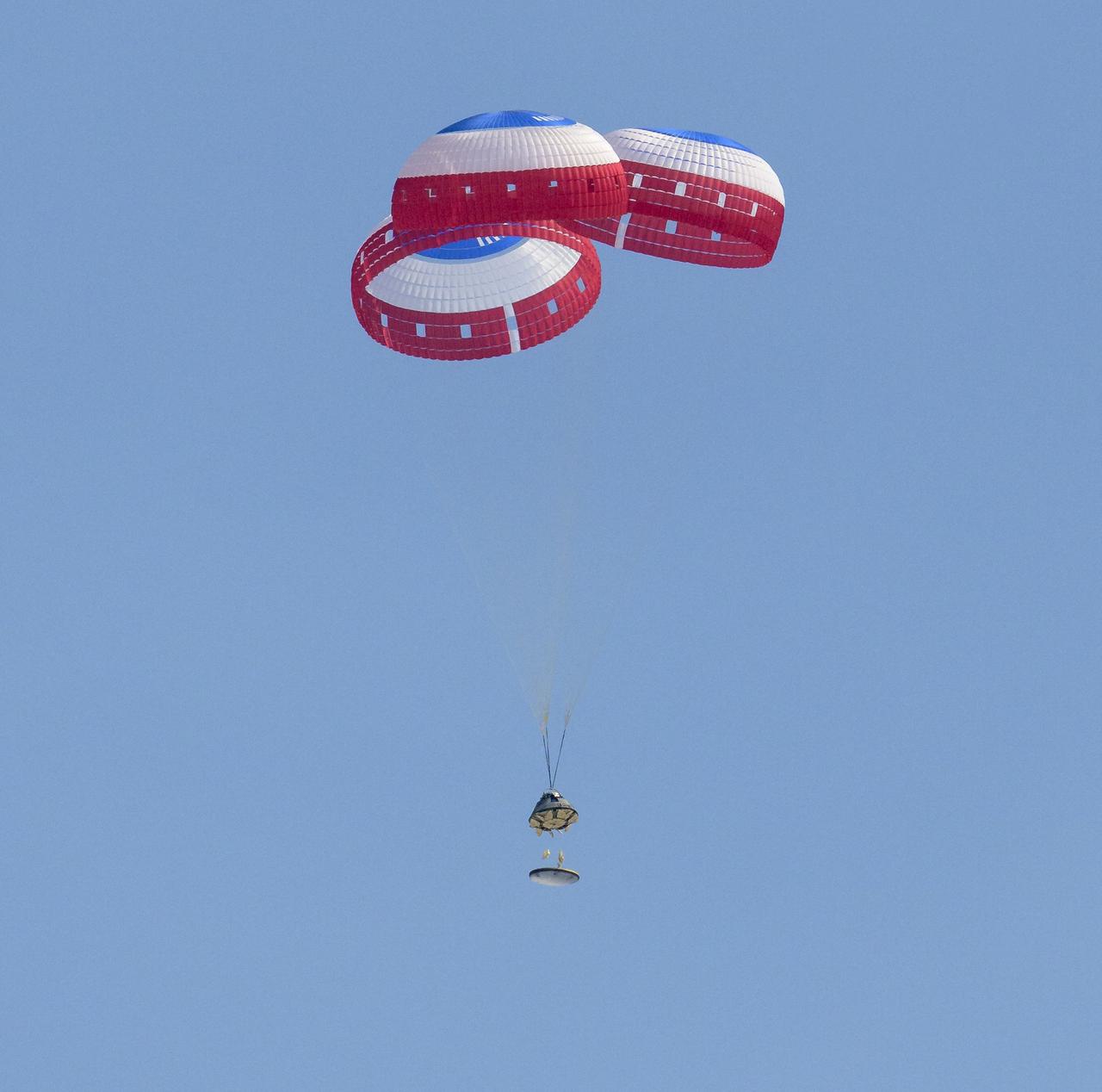
The Boeing CST-100 Starliner spacecraft jettisons the heat shield as it lands at White Sands Missile Range’s Space Harbor, Wednesday, May 25, 2022, in New Mexico. Boeing’s Orbital Flight Test-2 (OFT-2) is Starliner’s second uncrewed flight test to the International Space Station as part of NASA's Commercial Crew Program. OFT-2 serves as an end-to-end test of the system's capabilities. Photo Credit: (NASA/Bill Ingalls)
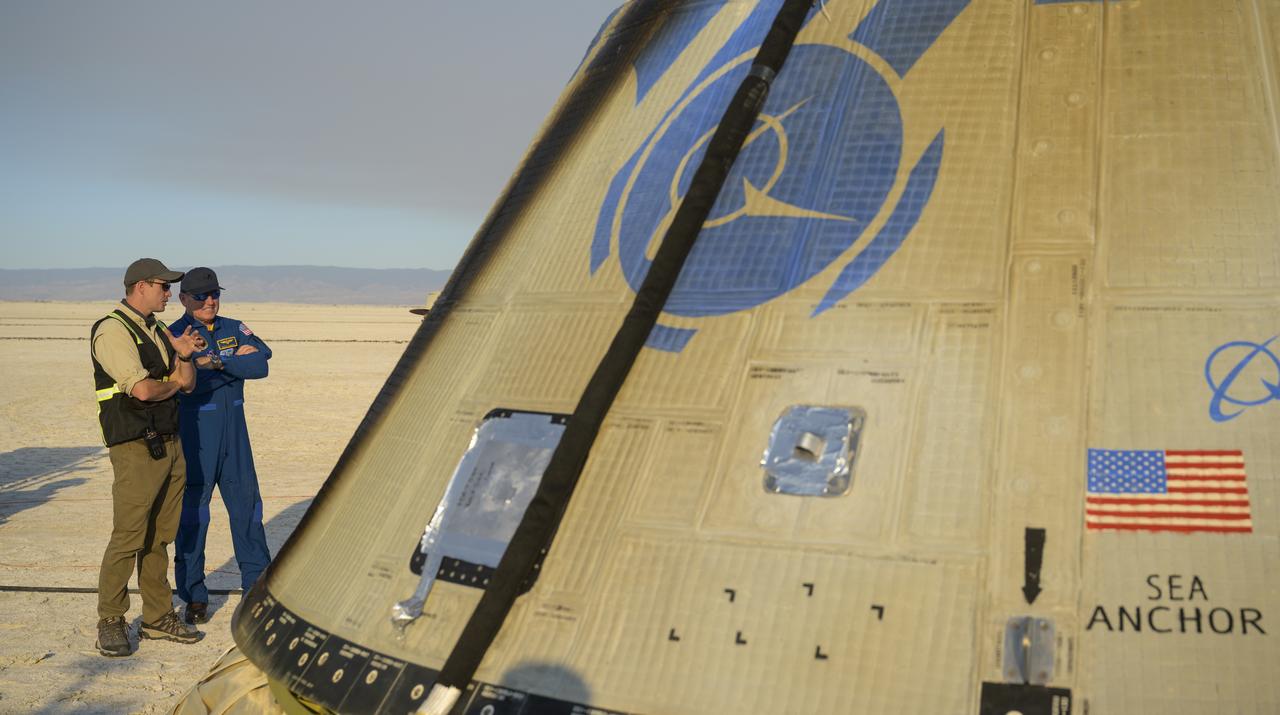
Boeing Starliner Launch Conductor Louis Atchison, left, and NASA astronaut Butch Wilmore look at Boeing’s CST-100 Starliner spacecraft after it landed at White Sands Missile Range’s Space Harbor, Wednesday, May 25, 2022, in New Mexico. Boeing’s Orbital Flight Test-2 (OFT-2) is Starliner’s second uncrewed flight test to the International Space Station as part of NASA's Commercial Crew Program. OFT-2 serves as an end-to-end test of the system's capabilities. Photo Credit: (NASA/Bill Ingalls)
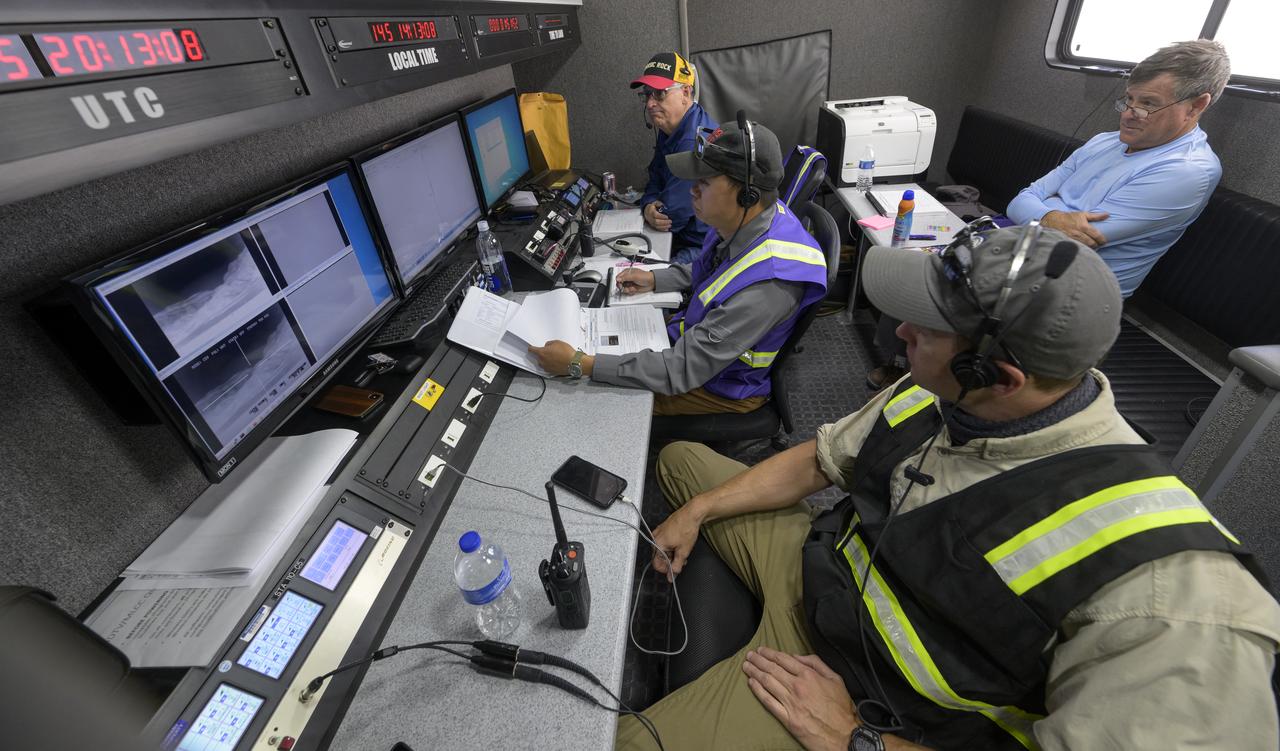
Boeing teams inside the Mobile Landing Control Center (MLCC) prepare for the landing of Boeing’s CST-100 Starliner spacecraft at White Sands Missile Range’s Space Harbor, Wednesday, May 25, 2022, in New Mexico. Boeing’s Orbital Flight Test-2 (OFT-2) is Starliner’s second uncrewed flight test to the International Space Station as part of NASA's Commercial Crew Program. OFT-2 serves as an end-to-end test of the system's capabilities. Photo Credit: (NASA/Bill Ingalls)
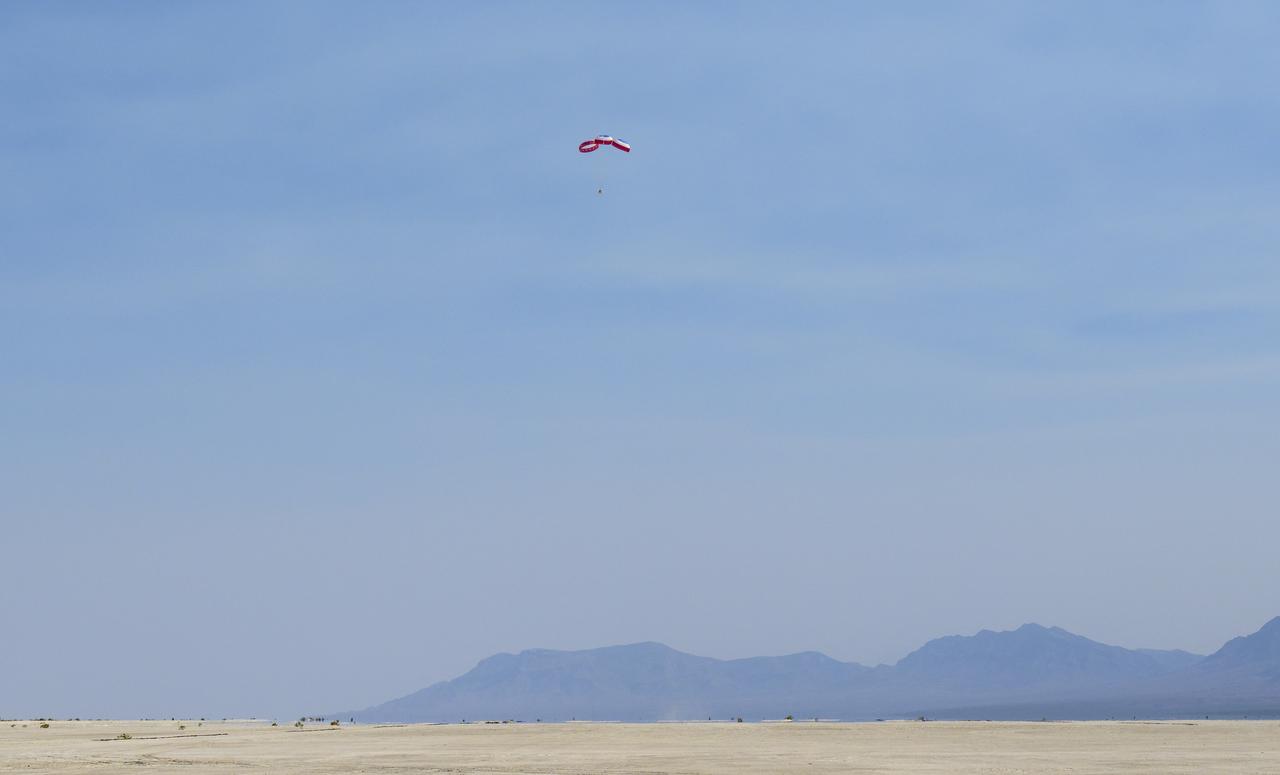
Boeing’s CST-100 Starliner spacecraft lands at White Sands Missile Range’s Space Harbor, Wednesday, May 25, 2022, in New Mexico. Boeing’s Orbital Flight Test-2 (OFT-2) is Starliner’s second uncrewed flight test to the International Space Station as part of NASA's Commercial Crew Program. OFT-2 serves as an end-to-end test of the system's capabilities. Photo Credit: (NASA/Bill Ingalls)
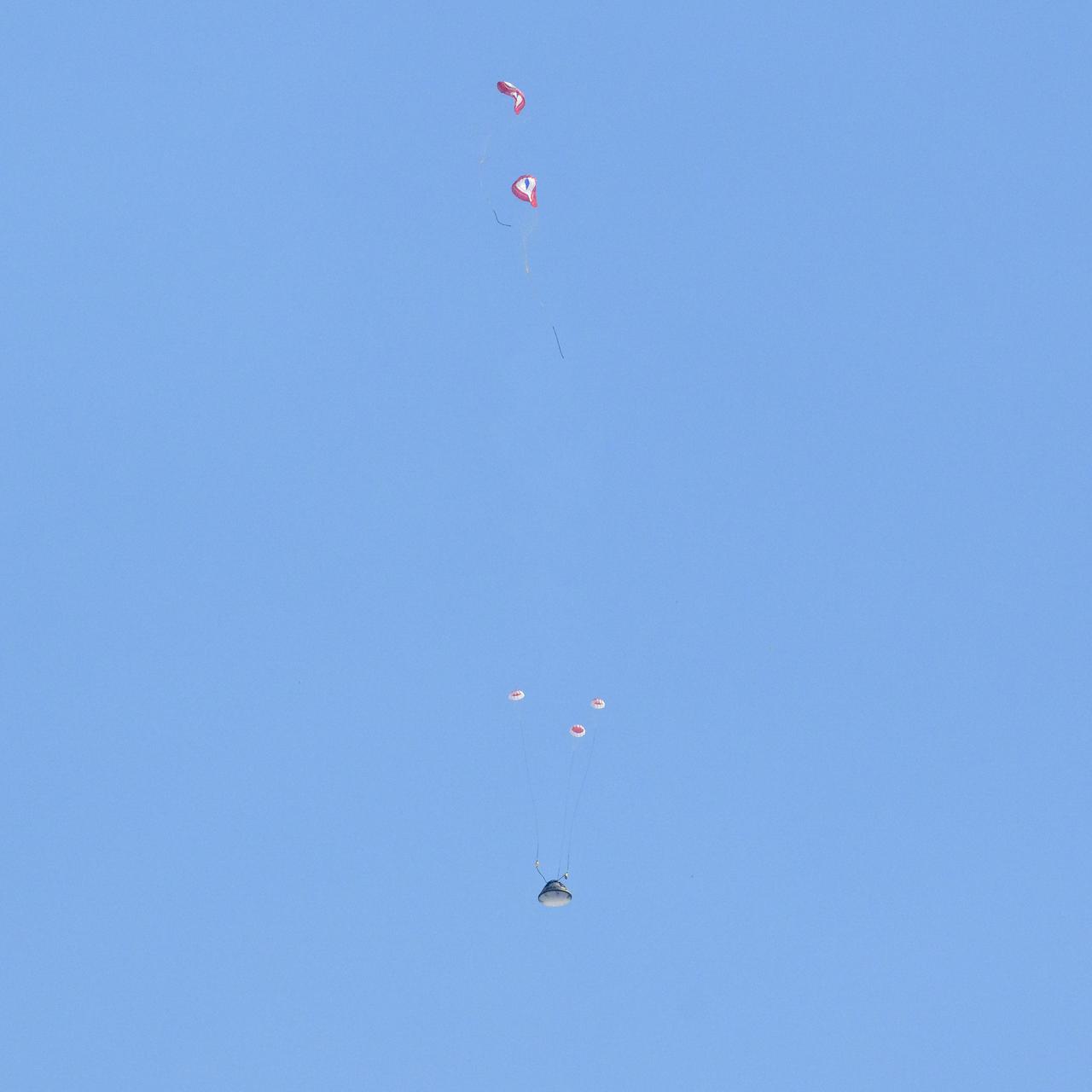
Boeing’s CST-100 Starliner spacecraft transitions to main chutes from drogue parachutes as it lands at White Sands Missile Range’s Space Harbor, Wednesday, May 25, 2022, in New Mexico. Boeing’s Orbital Flight Test-2 (OFT-2) is Starliner’s second uncrewed flight test to the International Space Station as part of NASA's Commercial Crew Program. OFT-2 serves as an end-to-end test of the system's capabilities. Photo Credit: (NASA/Bill Ingalls)