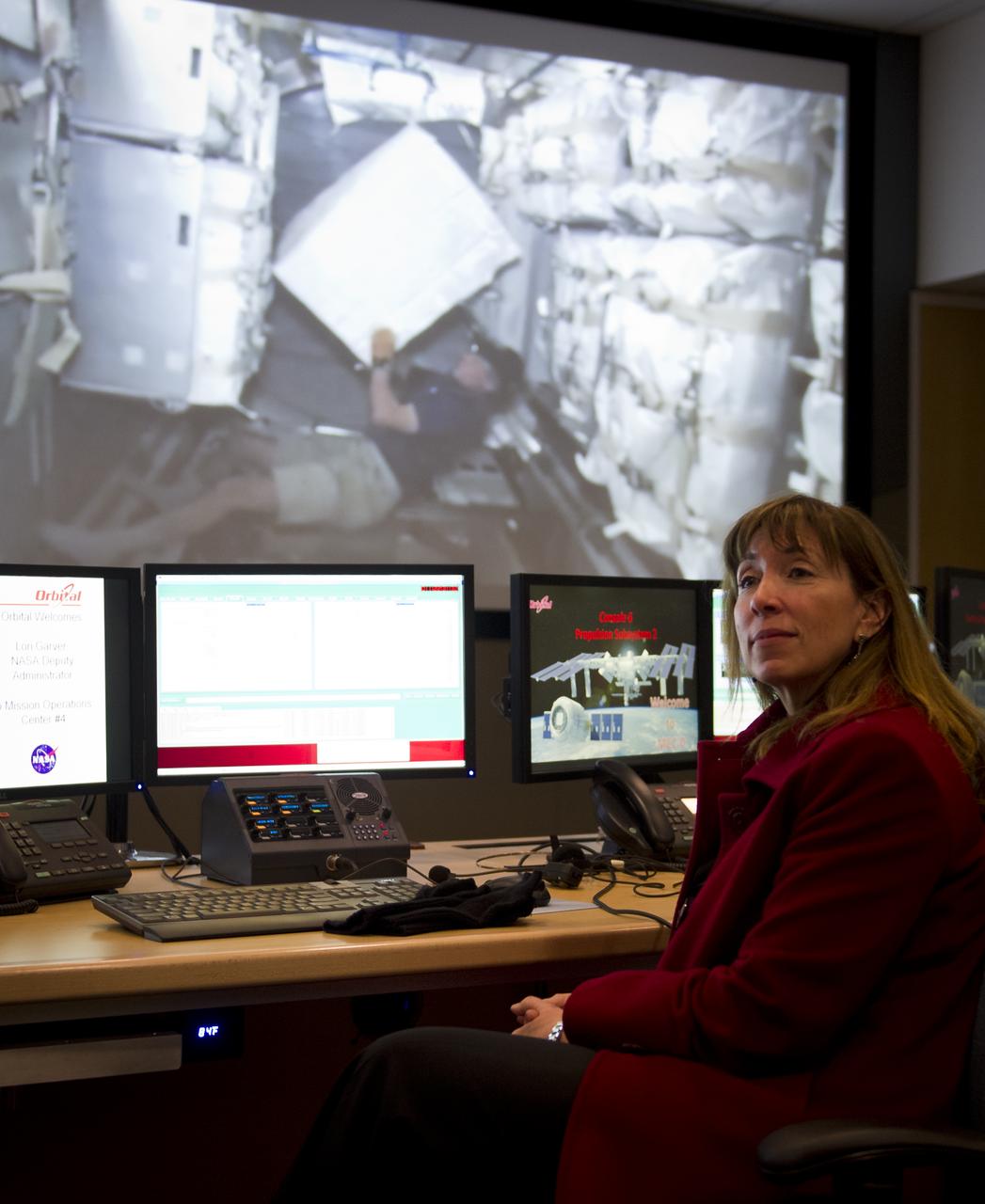
NASA Deputy Administrator Lori Garver, listens during a tour of the Orbital Sciences Corporation, Mission Operations Center, Tuesday, Jan. 11, 2011 in Dulles, VA. Photo Credit: (NASA/Bill Ingalls)

NASA Deputy Administrator Lori Garver, left, and White House Office of Science and Technology Chief of Staff Jim Kohlenberger, right, listen to Mr. David W. Thompson, Chairman and Chief Executive Officer Orbital Sciences Corporation as he gives a tour of the Orbital Sciences facilities on Tuesday, Jan. 11, 2011 in Dulles, VA. Photo Credit: (NASA/Bill Ingalls)
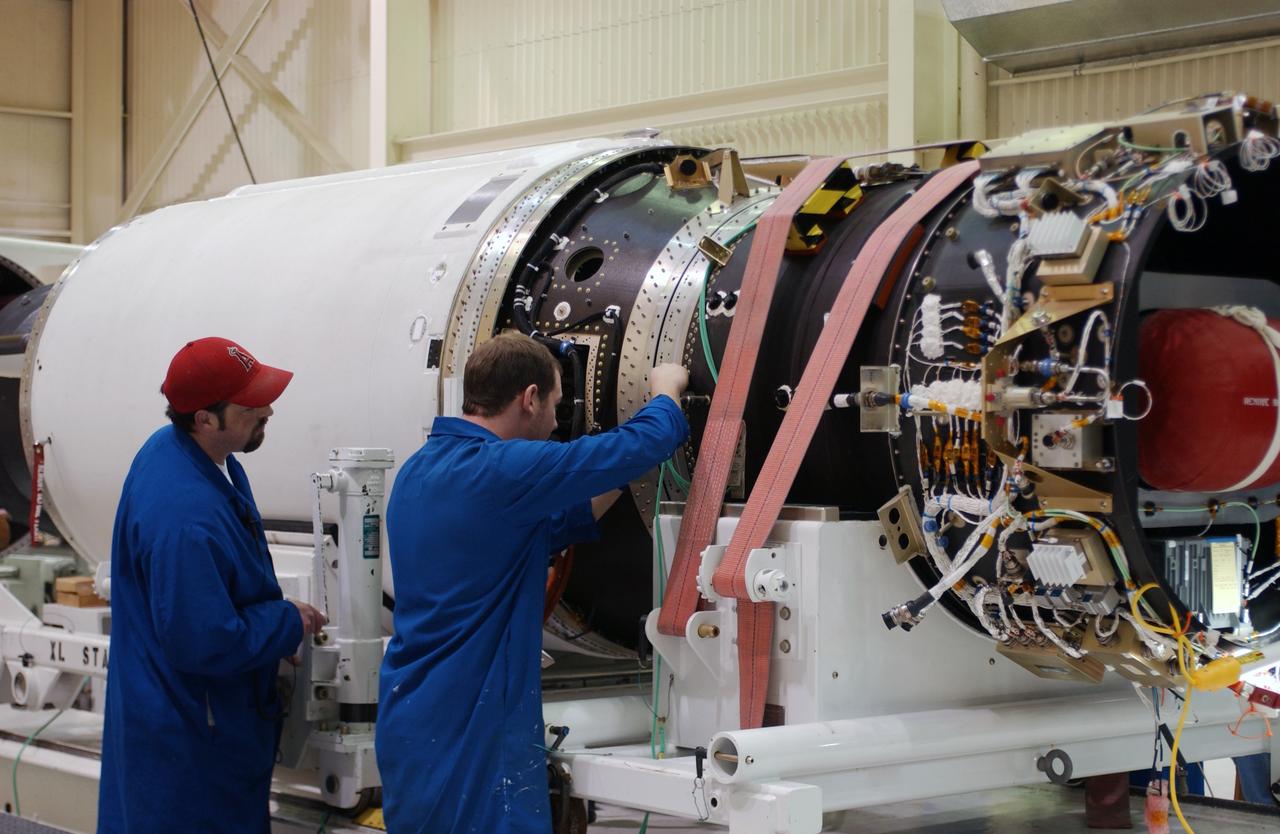
At Vandenberg Air Force Base in California, the three stages of the Orbital Sciences Pegasus XL are being mated for the launch of NASA's Aeronomy of Ice in the Mesosphere, or AIM, spacecraft. AIM is the seventh Small Explorers mission under NASA's Explorer Program. The program provides frequent flight opportunities for world-class scientific investigations from space within heliophysics and astrophysics. The AIM spacecraft will fly three instruments designed to study polar mesospheric clouds located at the edge of space, 50 miles above the Earth's surface in the coldest part of the planet's atmosphere. The mission's primary goal is to explain why these clouds form and what has caused them to become brighter and more numerous and appear at lower latitudes in recent years. AIM's results will provide the basis for the study of long-term variability in the mesospheric climate and its relationship to global climate change. AIM is scheduled to be mated to the Pegasus XL during the second week of April, after which final inspections will be conducted. Launch is scheduled for April 25.

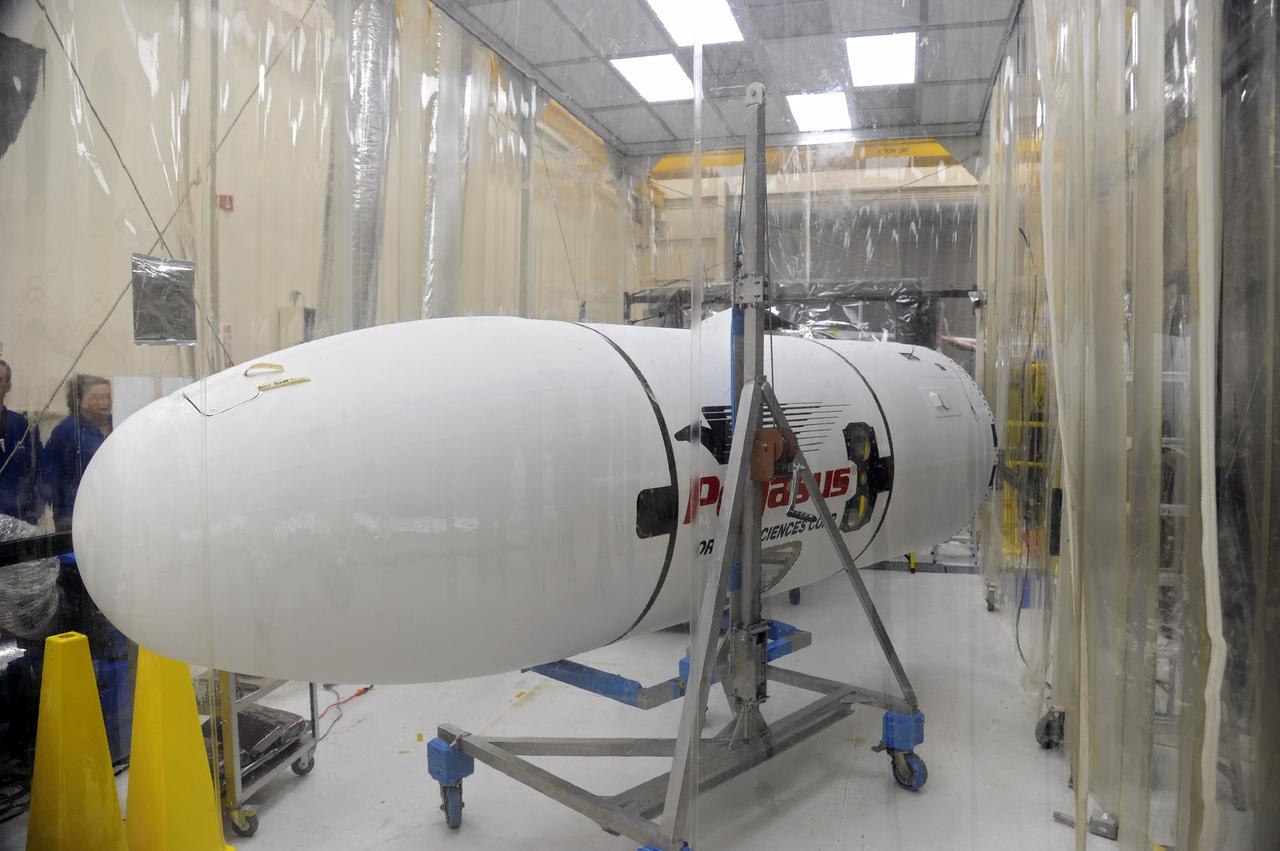
At Vandenberg Air Force Base in California, the second and third stages of the Orbital Sciences Pegasus XL rocket wait for mating. The rocket is the launch vehicle for the NASA's Aeronomy of Ice in the Mesosphere, or AIM, spacecraft. AIM is the seventh Small Explorers mission under NASA's Explorer Program. The program provides frequent flight opportunities for world-class scientific investigations from space within heliophysics and astrophysics. The AIM spacecraft will fly three instruments designed to study polar mesospheric clouds located at the edge of space, 50 miles above the Earth's surface in the coldest part of the planet's atmosphere. The mission's primary goal is to explain why these clouds form and what has caused them to become brighter and more numerous and appear at lower latitudes in recent years. AIM's results will provide the basis for the study of long-term variability in the mesospheric climate and its relationship to global climate change. AIM is scheduled to be mated to the Pegasus XL during the second week of April, after which final inspections will be conducted. Launch is scheduled for April 25.
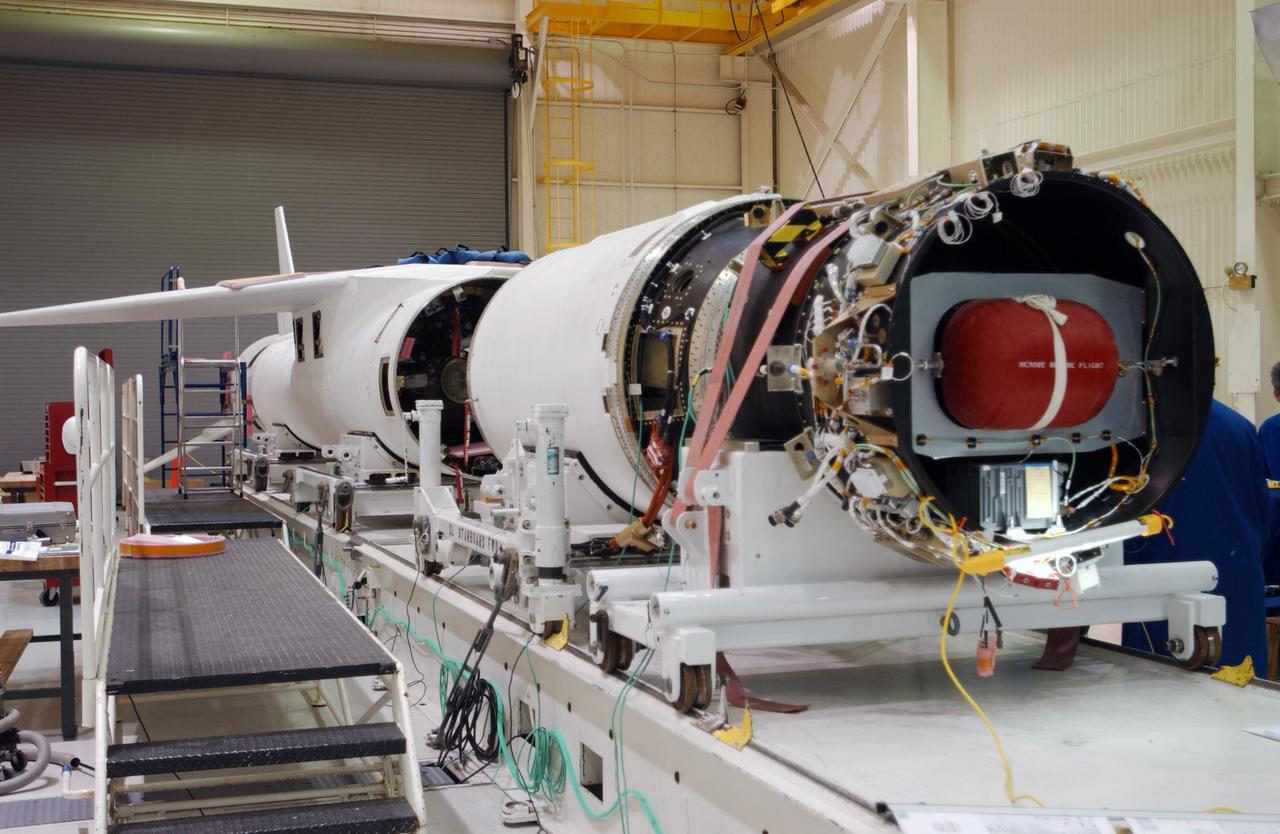
At Vandenberg Air Force Base in California, the three stages of the Orbital Sciences Pegasus XL are being mated for the launch of NASA's Aeronomy of Ice in the Mesosphere, or AIM, spacecraft. AIM is the seventh Small Explorers mission under NASA's Explorer Program. The program provides frequent flight opportunities for world-class scientific investigations from space within heliophysics and astrophysics. The AIM spacecraft will fly three instruments designed to study polar mesospheric clouds located at the edge of space, 50 miles above the Earth's surface in the coldest part of the planet's atmosphere. The mission's primary goal is to explain why these clouds form and what has caused them to become brighter and more numerous and appear at lower latitudes in recent years. AIM's results will provide the basis for the study of long-term variability in the mesospheric climate and its relationship to global climate change. AIM is scheduled to be mated to the Pegasus XL during the second week of April, after which final inspections will be conducted. Launch is scheduled for April 25.
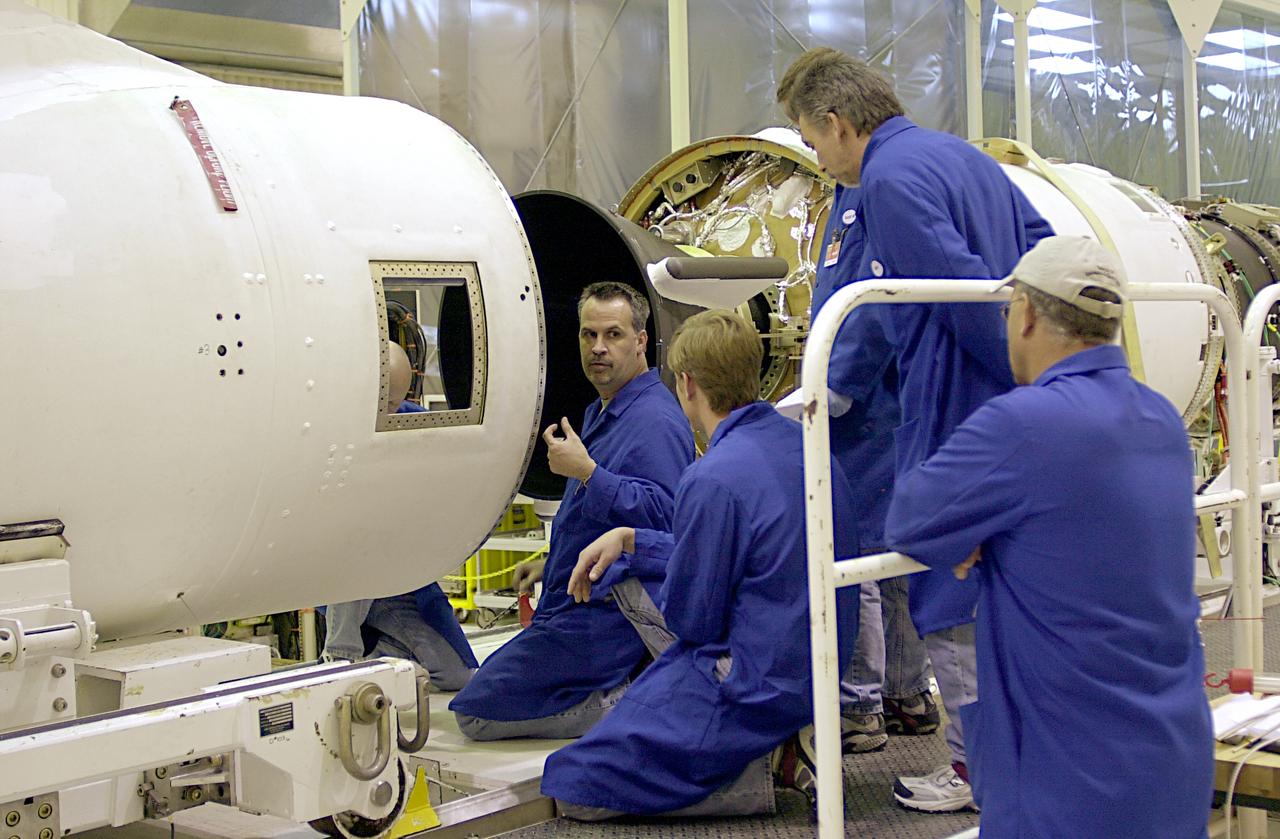
At Vandenberg Air Force Base in California, technicians discuss the process for mating the first and second stages of the Orbital Sciences Pegasus XL rocket in front of them. The rocket is the launch vehicle for NASA's Aeronomy of Ice in the Mesosphere, or AIM, spacecraft. AIM is the seventh Small Explorers mission under NASA's Explorer Program. The program provides frequent flight opportunities for world-class scientific investigations from space within heliophysics and astrophysics. The AIM spacecraft will fly three instruments designed to study polar mesospheric clouds located at the edge of space, 50 miles above the Earth's surface in the coldest part of the planet's atmosphere. The mission's primary goal is to explain why these clouds form and what has caused them to become brighter and more numerous and appear at lower latitudes in recent years. AIM's results will provide the basis for the study of long-term variability in the mesospheric climate and its relationship to global climate change. AIM is scheduled to be mated to the Pegasus XL during the second week of April, after which final inspections will be conducted. Launch is scheduled for April 25.
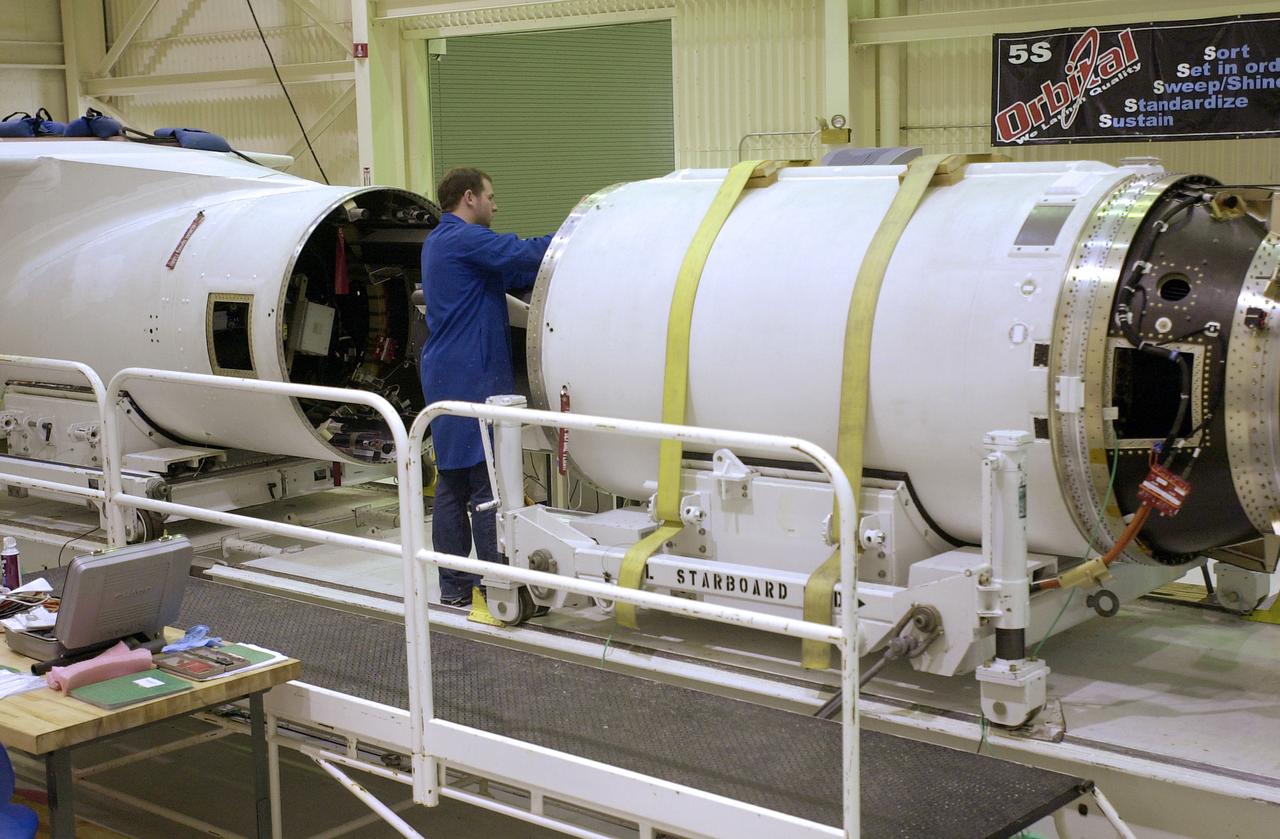
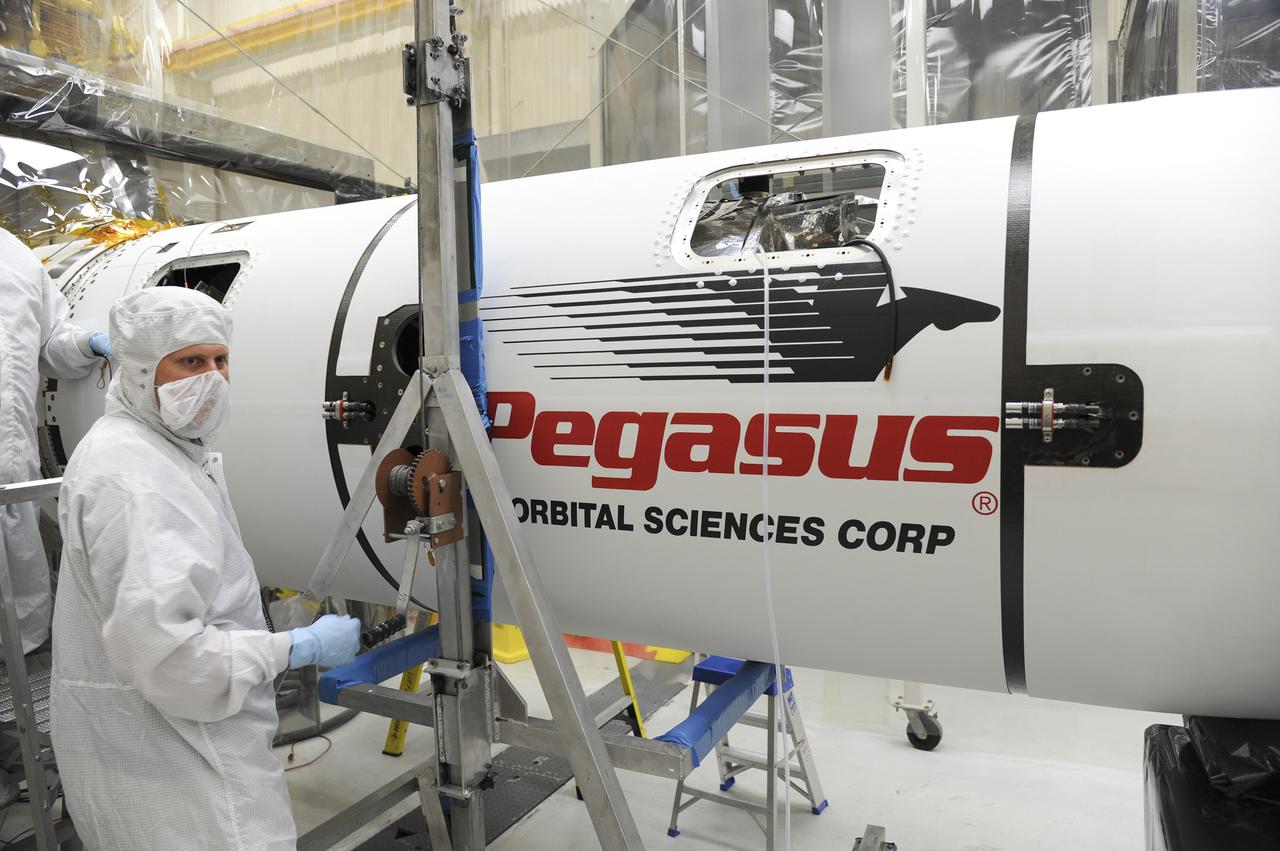
At Vandenberg Air Force Base in California, a technician on the work stand prepares the second stage of the Orbital Sciences Pegasus XL rocket to be mated to the first stage, at left, for the launch of NASA's Aeronomy of Ice in the Mesosphere, or AIM, spacecraft. AIM is the seventh Small Explorers mission under NASA's Explorer Program. The program provides frequent flight opportunities for world-class scientific investigations from space within heliophysics and astrophysics. The AIM spacecraft will fly three instruments designed to study polar mesospheric clouds located at the edge of space, 50 miles above the Earth's surface in the coldest part of the planet's atmosphere. The mission's primary goal is to explain why these clouds form and what has caused them to become brighter and more numerous and appear at lower latitudes in recent years. AIM's results will provide the basis for the study of long-term variability in the mesospheric climate and its relationship to global climate change. AIM is scheduled to be mated to the Pegasus XL during the second week of April, after which final inspections will be conducted. Launch is scheduled for April 25.
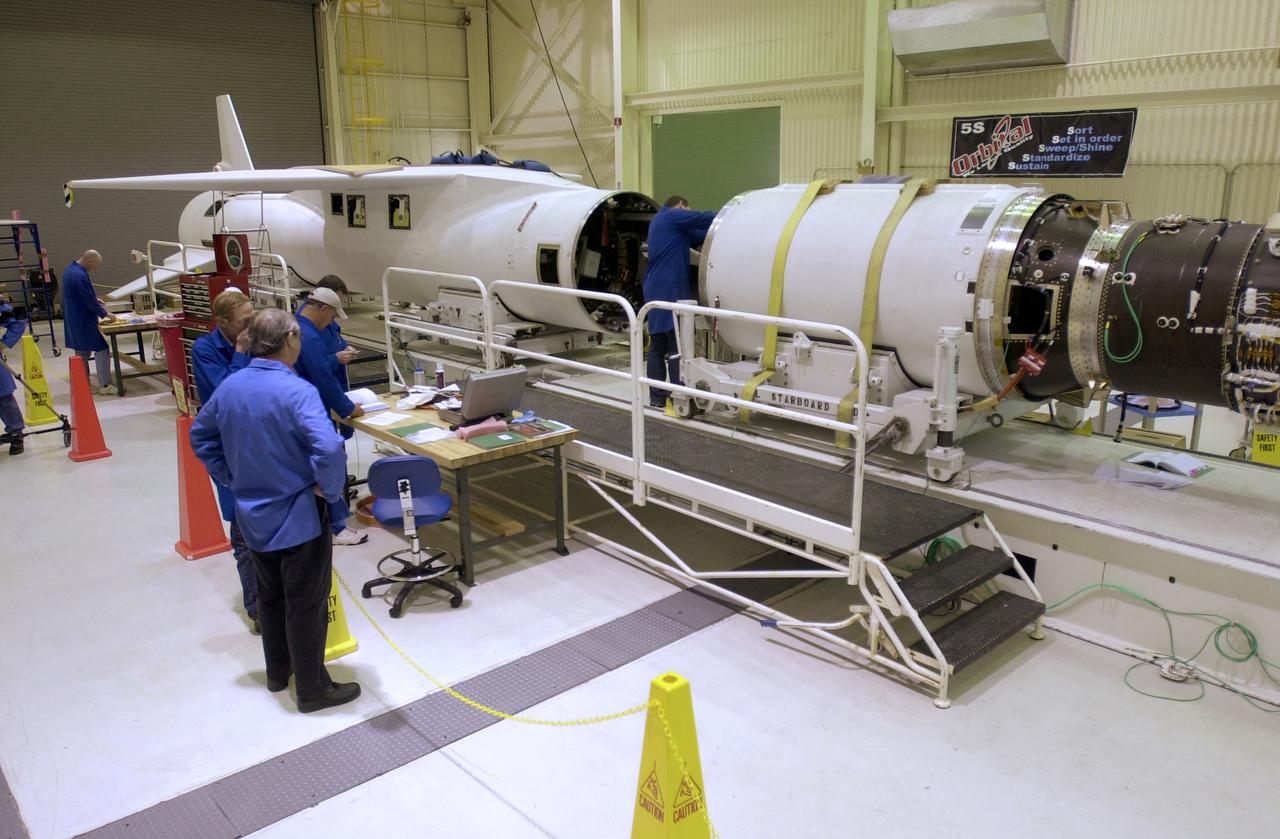
At Vandenberg Air Force Base in California, a technician on the work stand (center) prepares the second stage of the Orbital Sciences Pegasus XL rocket to be mated to the first stage, at left, for the launch of NASA's Aeronomy of Ice in the Mesosphere, or AIM, spacecraft. AIM is the seventh Small Explorers mission under NASA's Explorer Program. The program provides frequent flight opportunities for world-class scientific investigations from space within heliophysics and astrophysics. The AIM spacecraft will fly three instruments designed to study polar mesospheric clouds located at the edge of space, 50 miles above the Earth's surface in the coldest part of the planet's atmosphere. The mission's primary goal is to explain why these clouds form and what has caused them to become brighter and more numerous and appear at lower latitudes in recent years. AIM's results will provide the basis for the study of long-term variability in the mesospheric climate and its relationship to global climate change. AIM is scheduled to be mated to the Pegasus XL during the second week of April, after which final inspections will be conducted. Launch is scheduled for April 25.
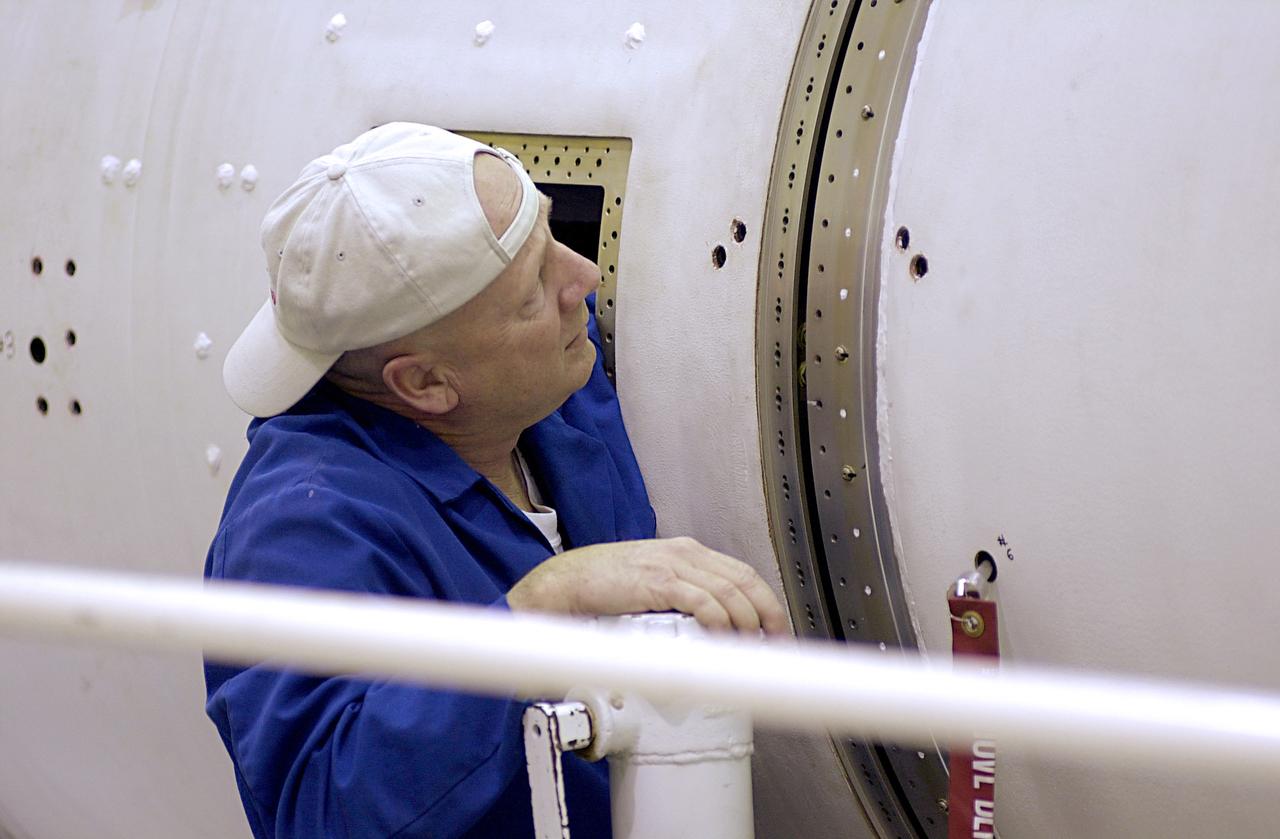
At Vandenberg Air Force Base in California, a technician checks the final step in mating of the first and second stages of the Orbital Sciences Pegasus XL rocket. The rocket is the launch vehicle for NASA's Aeronomy of Ice in the Mesosphere, or AIM, spacecraft. AIM is the seventh Small Explorers mission under NASA's Explorer Program. The program provides frequent flight opportunities for world-class scientific investigations from space within heliophysics and astrophysics. The AIM spacecraft will fly three instruments designed to study polar mesospheric clouds located at the edge of space, 50 miles above the Earth's surface in the coldest part of the planet's atmosphere. The mission's primary goal is to explain why these clouds form and what has caused them to become brighter and more numerous and appear at lower latitudes in recent years. AIM's results will provide the basis for the study of long-term variability in the mesospheric climate and its relationship to global climate change. AIM is scheduled to be mated to the Pegasus XL during the second week of April, after which final inspections will be conducted. Launch is scheduled for April 25.
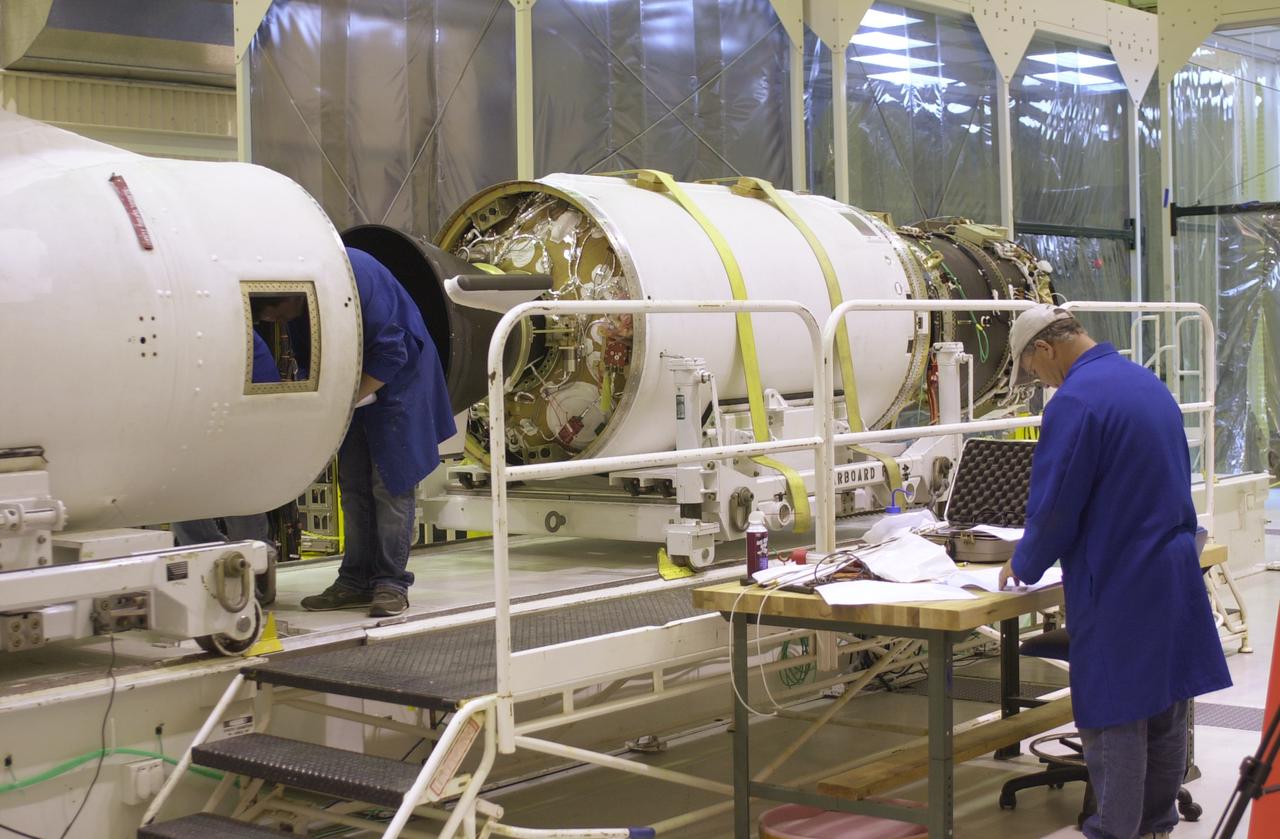
At Vandenberg Air Force Base in California, a technician on the work stand prepares the first stage of the Orbital Sciences Pegasus XL rocket, at left, to be mated to the second stage, at right, for the launch of NASA's Aeronomy of Ice in the Mesosphere, or AIM, spacecraft. AIM is the seventh Small Explorers mission under NASA's Explorer Program. The program provides frequent flight opportunities for world-class scientific investigations from space within heliophysics and astrophysics. The AIM spacecraft will fly three instruments designed to study polar mesospheric clouds located at the edge of space, 50 miles above the Earth's surface in the coldest part of the planet's atmosphere. The mission's primary goal is to explain why these clouds form and what has caused them to become brighter and more numerous and appear at lower latitudes in recent years. AIM's results will provide the basis for the study of long-term variability in the mesospheric climate and its relationship to global climate change. AIM is scheduled to be mated to the Pegasus XL during the second week of April, after which final inspections will be conducted. Launch is scheduled for April 25.
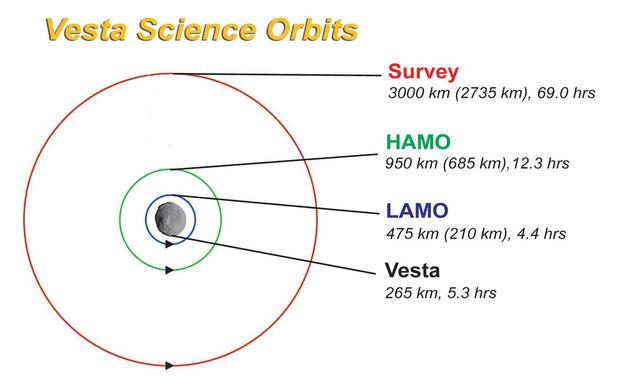
Vesta science orbits from NASA Dawn mission, part of the Mission Art series. http://photojournal.jpl.nasa.gov/catalog/PIA19373
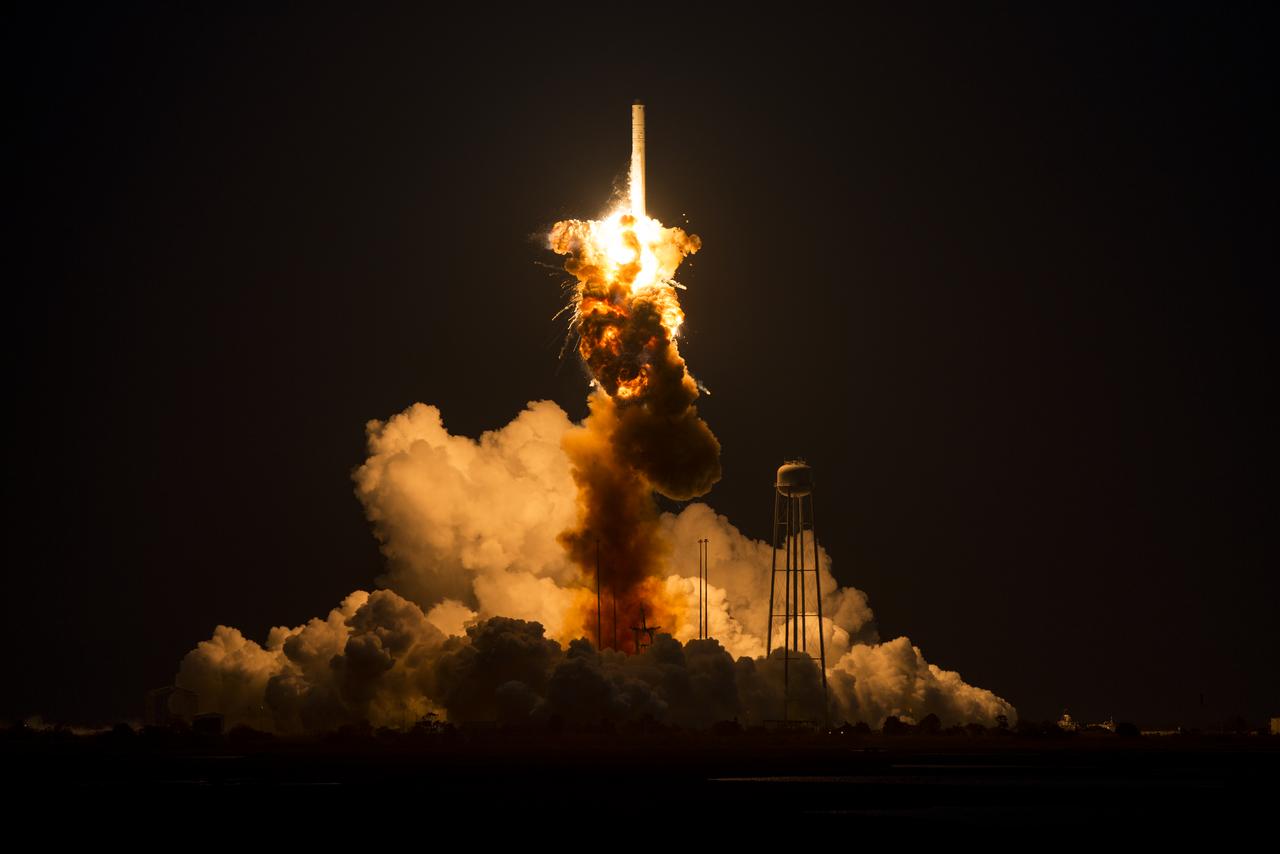
The Orbital Sciences Corporation Antares rocket, with the Cygnus spacecraft onboard suffers a catastrophic anomaly moments after launch from the Mid-Atlantic Regional Spaceport Pad 0A, Tuesday, Oct. 28, 2014, at NASA's Wallops Flight Facility in Virginia. The Cygnus spacecraft was filled with about 5,000 pounds of supplies slated for the International Space Station, including science experiments, experiment hardware, spare parts, and crew provisions. Photo Credit: (NASA/Joel Kowsky)
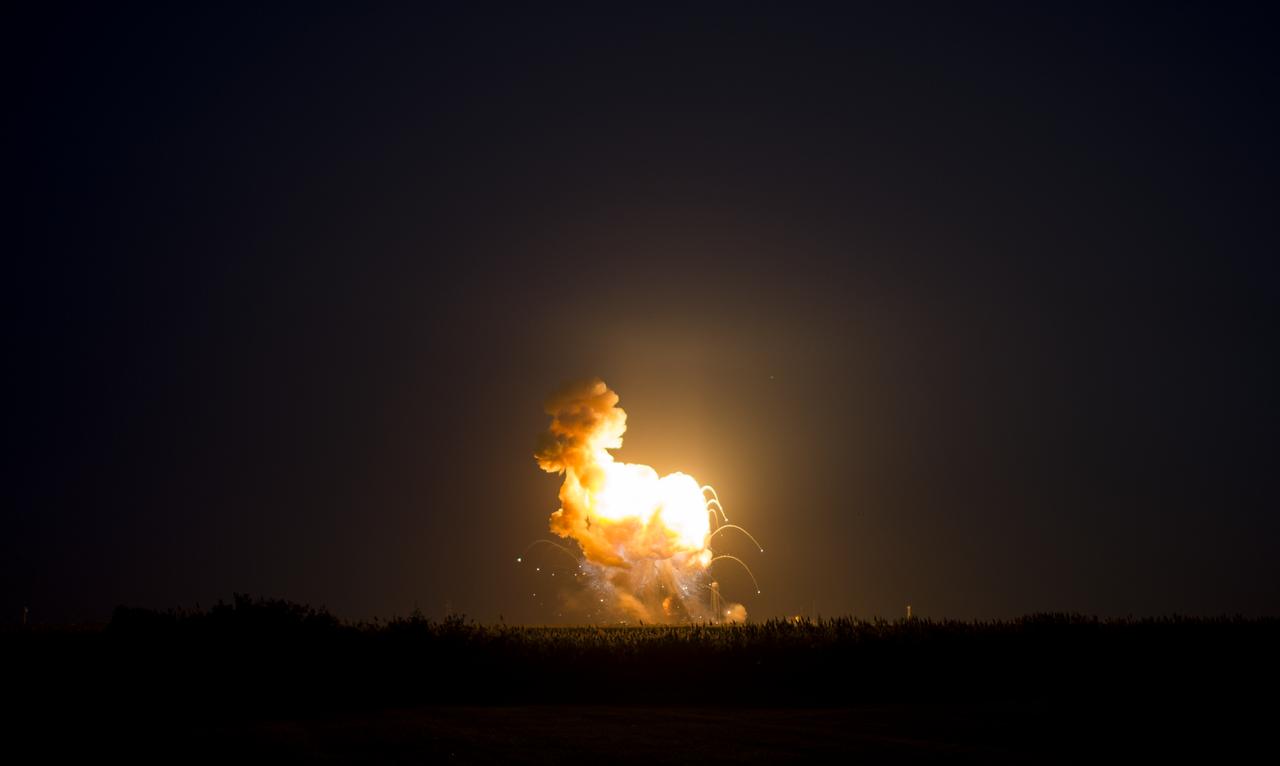
The Orbital Sciences Corporation Antares rocket, with the Cygnus spacecraft onboard suffers a catastrophic anomaly moments after launch from the Mid-Atlantic Regional Spaceport Pad 0A, Tuesday, Oct. 28, 2014, at NASA's Wallops Flight Facility in Virginia. The Cygnus spacecraft was filled with about 5,000 pounds of supplies slated for the International Space Station, including science experiments, experiment hardware, spare parts, and crew provisions. Photo Credit: (NASA/Joel Kowsky)
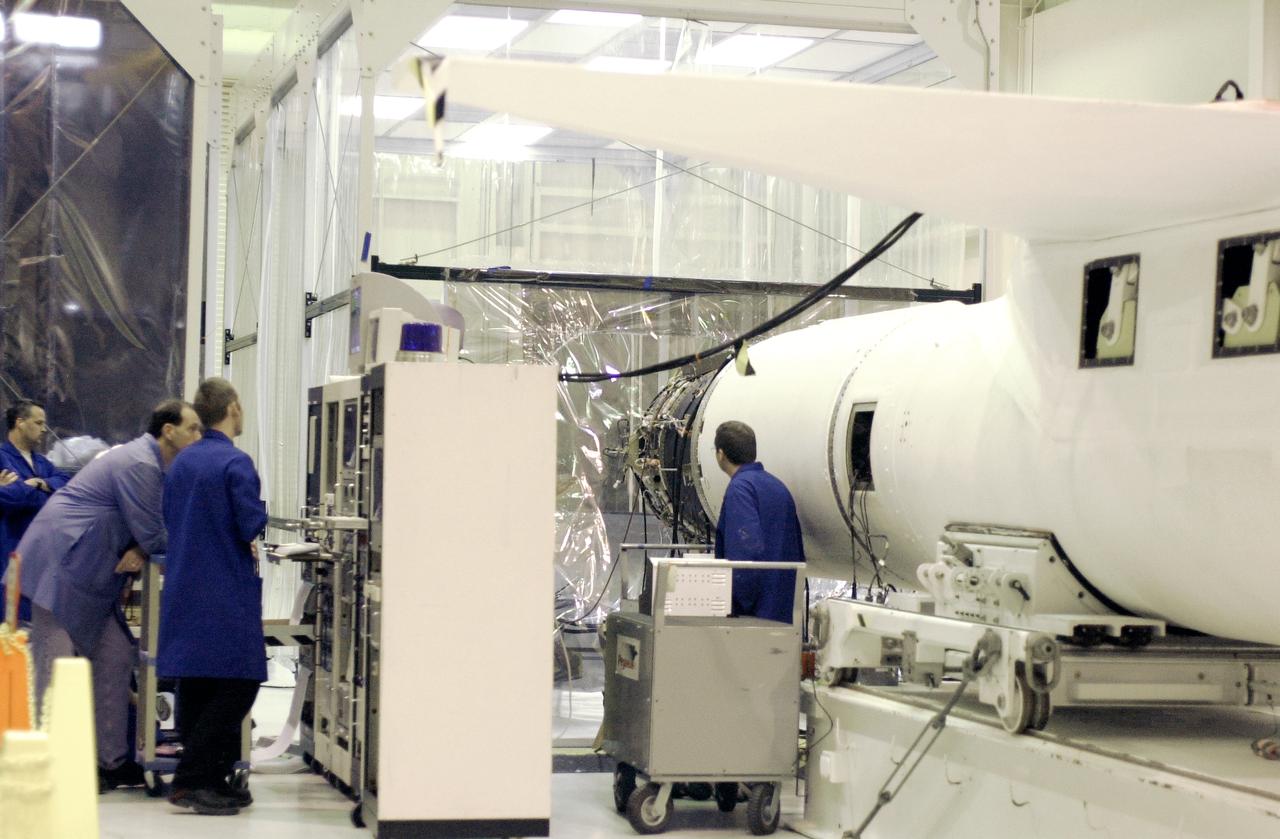
At Vandenberg Air Force Base in California, workers monitor the data produced by the second flight simulation of the Orbital Sciences Pegasus XL rocket. The rocket is the launch vehicle for NASA's Aeronomy of Ice in the Mesosphere, or AIM, spacecraft. AIM is the seventh Small Explorers mission under NASA's Explorer Program. The program provides frequent flight opportunities for world-class scientific investigations from space within heliophysics and astrophysics. The AIM spacecraft will fly three instruments designed to study polar mesospheric clouds located at the edge of space, 50 miles above the Earth's surface in the coldest part of the planet's atmosphere. The mission's primary goal is to explain why these clouds form and what has caused them to become brighter and more numerous and appear at lower latitudes in recent years. AIM's results will provide the basis for the study of long-term variability in the mesospheric climate and its relationship to global climate change. AIM is scheduled to be mated to the Pegasus XL during the second week of April, after which final inspections will be conducted. Launch is scheduled for April 25.
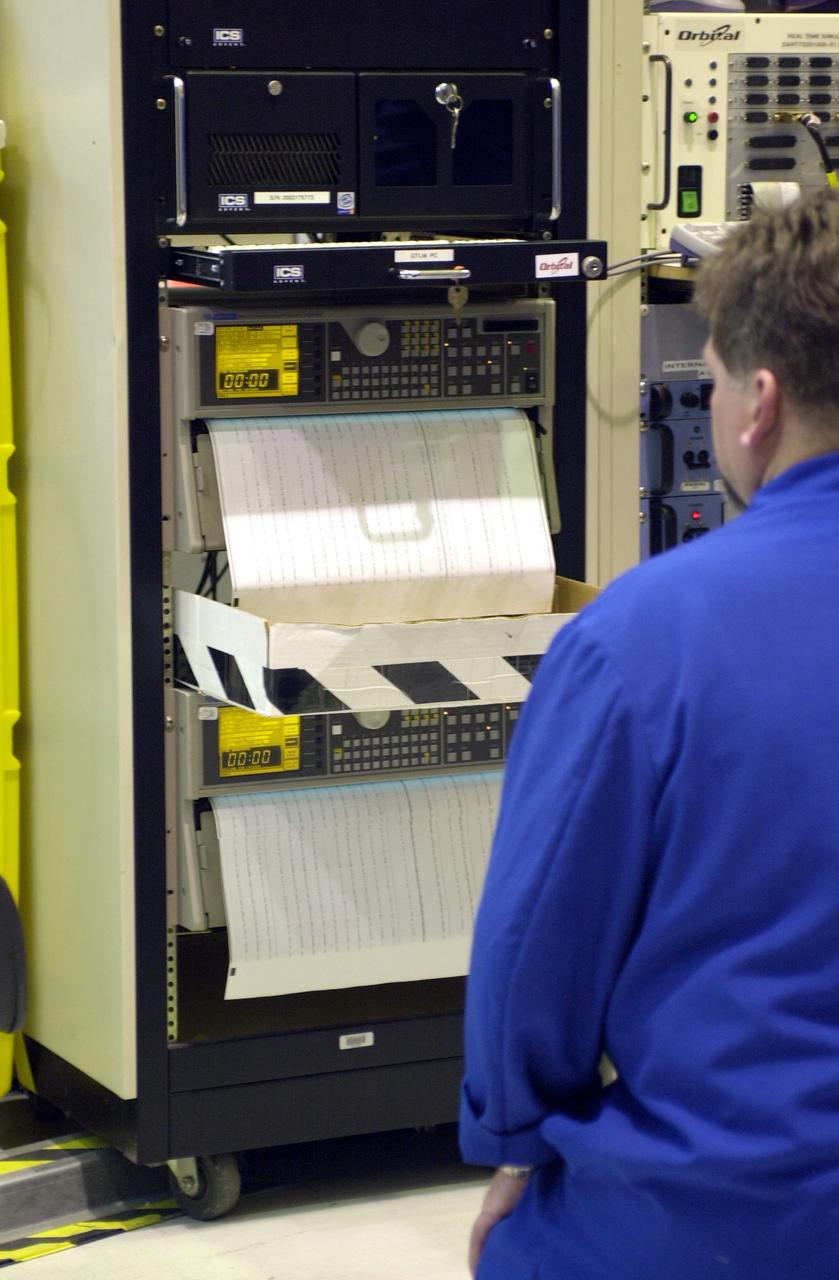
At Vandenberg Air Force Base in California, a worker monitors the data produced by the second flight simulation of the Orbital Sciences Pegasus XL rocket. The rocket is the launch vehicle for NASA's Aeronomy of Ice in the Mesosphere, or AIM, spacecraft. AIM is the seventh Small Explorers mission under NASA's Explorer Program. The program provides frequent flight opportunities for world-class scientific investigations from space within heliophysics and astrophysics. The AIM spacecraft will fly three instruments designed to study polar mesospheric clouds located at the edge of space, 50 miles above the Earth's surface in the coldest part of the planet's atmosphere. The mission's primary goal is to explain why these clouds form and what has caused them to become brighter and more numerous and appear at lower latitudes in recent years. AIM's results will provide the basis for the study of long-term variability in the mesospheric climate and its relationship to global climate change. AIM is scheduled to be mated to the Pegasus XL during the second week of April, after which final inspections will be conducted. Launch is scheduled for April 25.
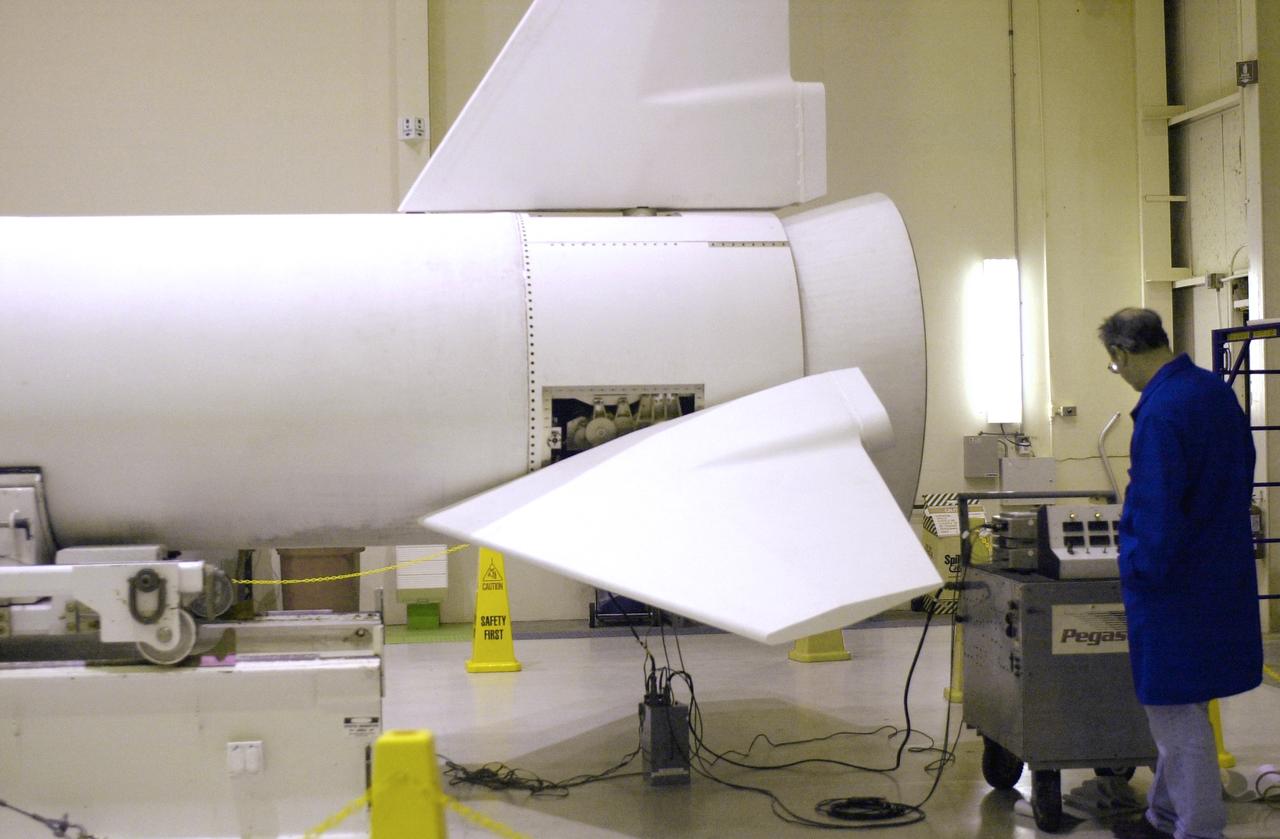
At Vandenberg Air Force Base in California, a worker monitors the Orbital Sciences Pegasus XL rocket after a second flight simulation. The rocket is the launch vehicle for NASA's Aeronomy of Ice in the Mesosphere, or AIM, spacecraft. AIM is the seventh Small Explorers mission under NASA's Explorer Program. The program provides frequent flight opportunities for world-class scientific investigations from space within heliophysics and astrophysics. The AIM spacecraft will fly three instruments designed to study polar mesospheric clouds located at the edge of space, 50 miles above the Earth's surface in the coldest part of the planet's atmosphere. The mission's primary goal is to explain why these clouds form and what has caused them to become brighter and more numerous and appear at lower latitudes in recent years. AIM's results will provide the basis for the study of long-term variability in the mesospheric climate and its relationship to global climate change. AIM is scheduled to be mated to the Pegasus XL during the second week of April, after which final inspections will be conducted. Launch is scheduled for April 25.
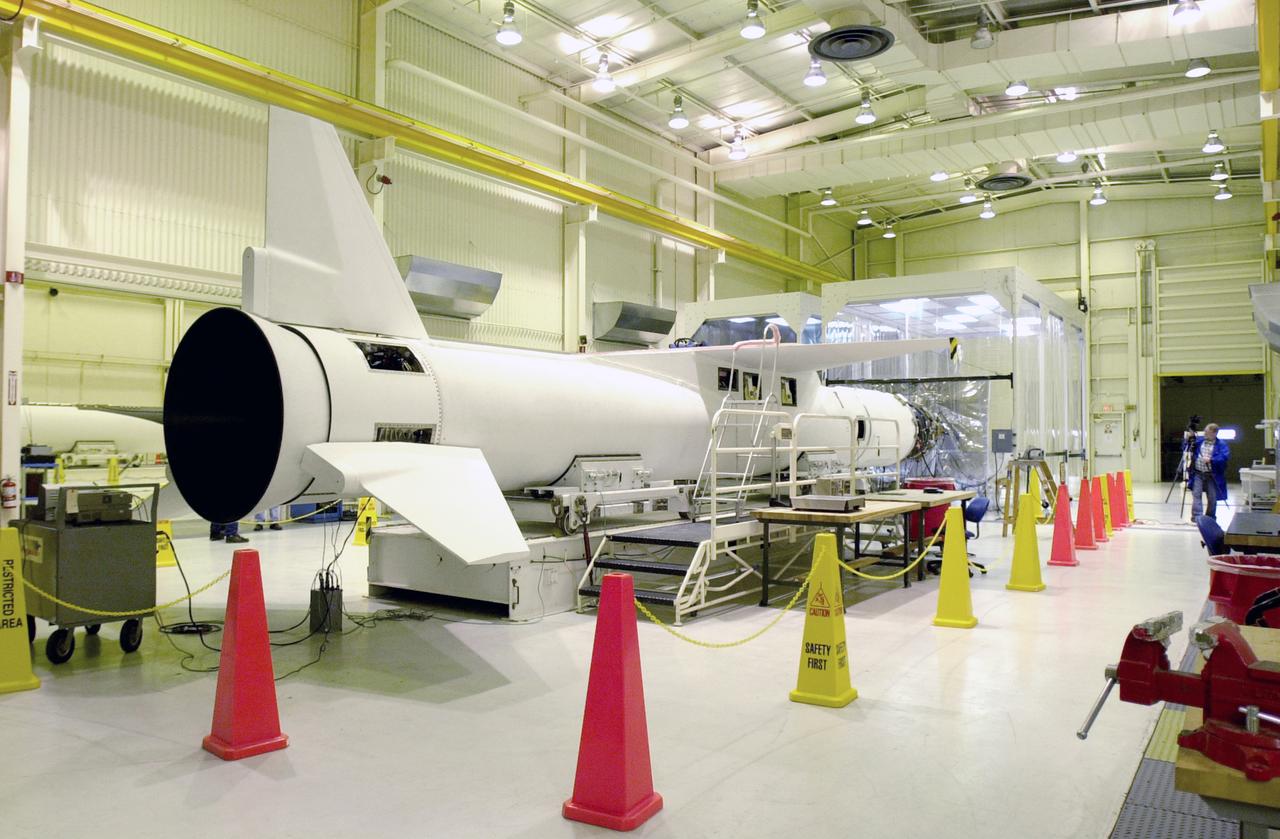
At Vandenberg Air Force Base in California, the Orbital Sciences Pegasus XL rocket undergoes its second flight simulation. The rocket is the launch vehicle for NASA's Aeronomy of Ice in the Mesosphere, or AIM, spacecraft. AIM is the seventh Small Explorers mission under NASA's Explorer Program. The program provides frequent flight opportunities for world-class scientific investigations from space within heliophysics and astrophysics. The AIM spacecraft will fly three instruments designed to study polar mesospheric clouds located at the edge of space, 50 miles above the Earth's surface in the coldest part of the planet's atmosphere. The mission's primary goal is to explain why these clouds form and what has caused them to become brighter and more numerous and appear at lower latitudes in recent years. AIM's results will provide the basis for the study of long-term variability in the mesospheric climate and its relationship to global climate change. AIM is scheduled to be mated to the Pegasus XL during the second week of April, after which final inspections will be conducted. Launch is scheduled for April 25.
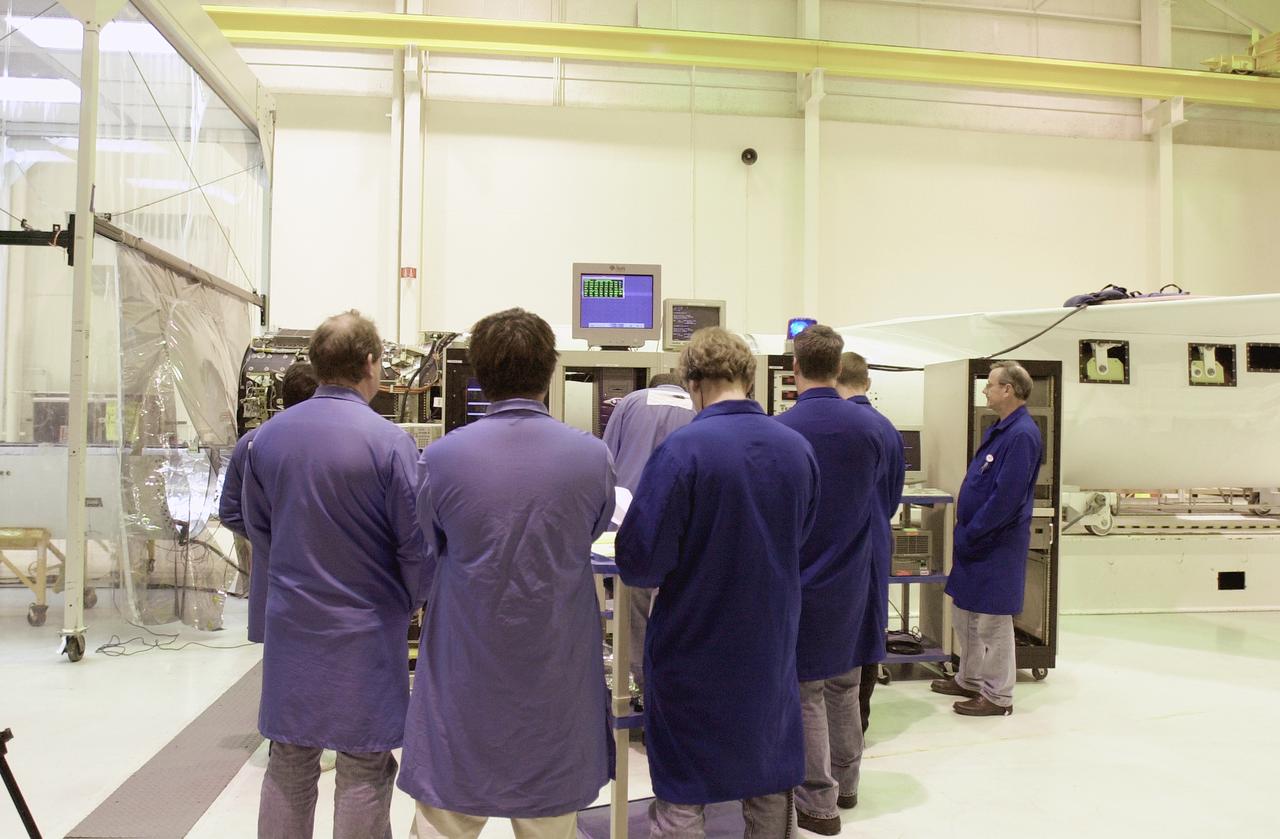
At Vandenberg Air Force Base in California, workers monitor the data produced by the second flight simulation of the Orbital Sciences Pegasus XL rocket. The rocket is the launch vehicle for NASA's Aeronomy of Ice in the Mesosphere, or AIM, spacecraft. AIM is the seventh Small Explorers mission under NASA's Explorer Program. The program provides frequent flight opportunities for world-class scientific investigations from space within heliophysics and astrophysics. The AIM spacecraft will fly three instruments designed to study polar mesospheric clouds located at the edge of space, 50 miles above the Earth's surface in the coldest part of the planet's atmosphere. The mission's primary goal is to explain why these clouds form and what has caused them to become brighter and more numerous and appear at lower latitudes in recent years. AIM's results will provide the basis for the study of long-term variability in the mesospheric climate and its relationship to global climate change. AIM is scheduled to be mated to the Pegasus XL during the second week of April, after which final inspections will be conducted. Launch is scheduled for April 25.

Guenther Hasinger, director of science, European Space Agency, participates in a Solar Orbiter science press conference at NASA’s Kennedy Space Center in Florida on Feb. 7, 2020. Solar Orbiter is an international cooperative mission between ESA (European Space Agency) and NASA. The mission aims to study the Sun, its outer atmosphere and solar wind. The spacecraft will provide the first images of the Sun’s poles. The spacecraft was developed by Airbus Defence and Space. NASA’s Launch Services Program based at Kennedy is managing the launch. Solar Orbiter will launch aboard a United Launch Alliance Atlas V rocket on Feb. 9, 2020, from Space Launch Complex 41 at Cape Canaveral Air Force Station.
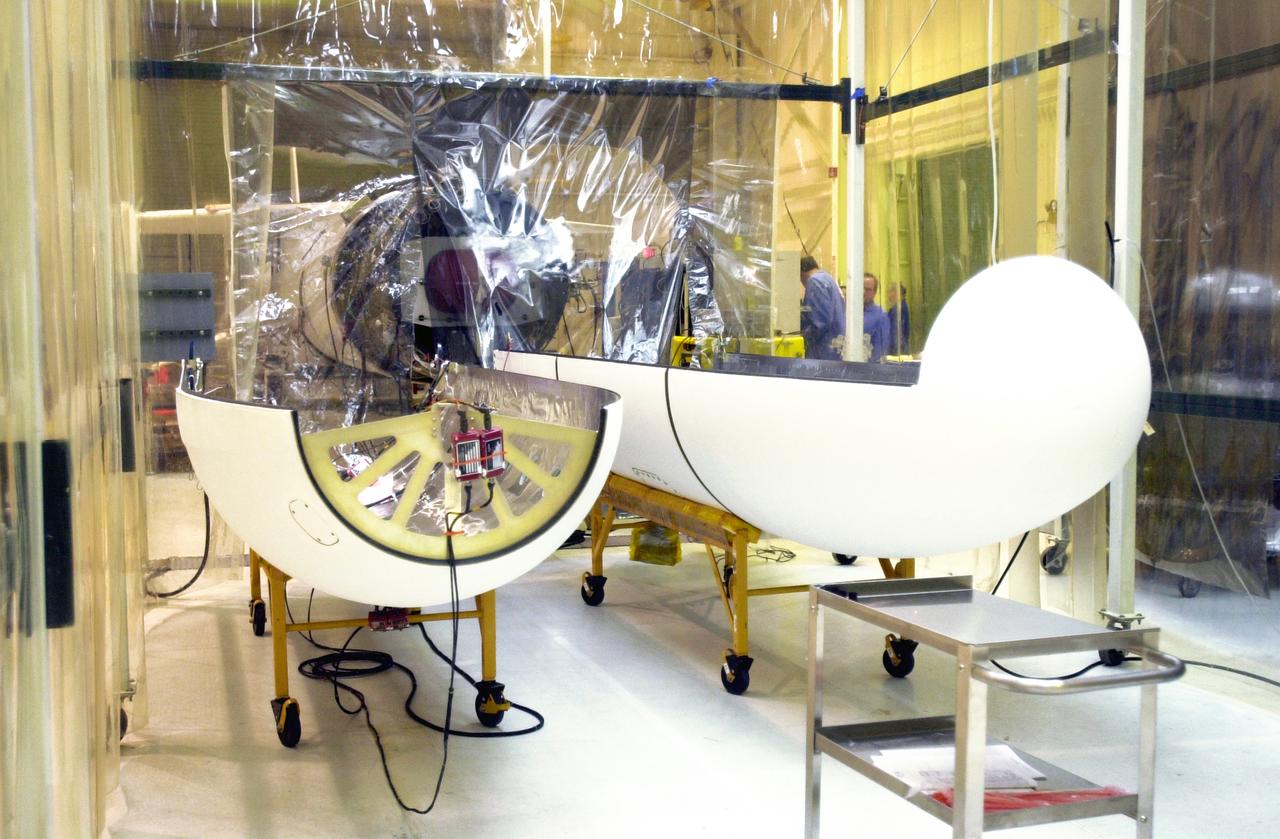
Seen at Vandenberg Air Force Base in California is the fairing (foreground) for the Orbital Sciences Pegasus XL rocket. In the background is the third stage, under the clean room tent. The rocket is the launch vehicle for NASA's Aeronomy of Ice in the Mesosphere, or AIM, spacecraft. AIM is the seventh Small Explorers mission under NASA's Explorer Program. The program provides frequent flight opportunities for world-class scientific investigations from space within heliophysics and astrophysics. The AIM spacecraft will fly three instruments designed to study polar mesospheric clouds located at the edge of space, 50 miles above the Earth's surface in the coldest part of the planet's atmosphere. The mission's primary goal is to explain why these clouds form and what has caused them to become brighter and more numerous and appear at lower latitudes in recent years. AIM's results will provide the basis for the study of long-term variability in the mesospheric climate and its relationship to global climate change. AIM is scheduled to be mated to the Pegasus XL during the second week of April, after which final inspections will be conducted. Launch is scheduled for April 25.

Karen Fox, far left, with Goddard Space Flight Center, moderates a Solar Orbiter science press conference at NASA’s Kennedy Space Center in Florida on Feb. 7, 2020. Participants from left are Daniel Mueller, Solar Orbiter Project scientist, European Space Agency; Nicky Fox, director, NASA Heliophysics Division; Guenther Hasinger, director of science, European Space Agency; and Thomas Zurbuchen, associate administrator, NASA Science Mission Directorate. Solar Orbiter is an international cooperative mission between ESA (European Space Agency) and NASA. The mission aims to study the Sun, its outer atmosphere and solar wind. The spacecraft will provide the first images of the Sun’s poles. The spacecraft was developed by Airbus Defence and Space. NASA’s Launch Services Program based at Kennedy is managing the launch. Solar Orbiter will launch aboard a United Launch Alliance Atlas V rocket on Feb. 9, 2020, from Space Launch Complex 41 at Cape Canaveral Air Force Station.

Karen Fox, far left, with Goddard Space Flight Center, moderates a Solar Orbiter science press conference at NASA’s Kennedy Space Center in Florida on Feb. 7, 2020. Participants from left are Daniel Mueller, Solar Orbiter Project scientist, European Space Agency; Nicky Fox, director, NASA Heliophysics Division; Guenther Hasinger, director of science, European Space Agency; and Thomas Zurbuchen, associate administrator, NASA Science Mission Directorate. Solar Orbiter is an international cooperative mission between ESA (European Space Agency) and NASA. The mission aims to study the Sun, its outer atmosphere and solar wind. The spacecraft will provide the first images of the Sun’s poles. The spacecraft was developed by Airbus Defence and Space. NASA’s Launch Services Program based at Kennedy is managing the launch. Solar Orbiter will launch aboard a United Launch Alliance Atlas V rocket on Feb. 9, 2020, from Space Launch Complex 41 at Cape Canaveral Air Force Station.

From left, Nicky Fox, director, NASA Heliophysics Division; and Guenther Hasinger, director of science, European Space Agency, participate in a Solar Orbiter science press conference at NASA’s Kennedy Space Center in Florida on Feb. 7, 2020. Solar Orbiter is an international cooperative mission between ESA (European Space Agency) and NASA. The mission aims to study the Sun, its outer atmosphere and solar wind. The spacecraft will provide the first images of the Sun’s poles. The spacecraft was developed by Airbus Defence and Space. NASA’s Launch Services Program based at Kennedy is managing the launch. Solar Orbiter will launch aboard a United Launch Alliance Atlas V rocket on Feb. 9, 2020, from Space Launch Complex 41 at Cape Canaveral Air Force Station.

Thomas Zurbuchen, associate administrator, NASA Science Mission Directorate, participates in a Solar Orbiter science press conference at NASA’s Kennedy Space Center in Florida on Feb. 7, 2020. Solar Orbiter is an international cooperative mission between ESA (European Space Agency) and NASA. The mission aims to study the Sun, its outer atmosphere and solar wind. The spacecraft will provide the first images of the Sun’s poles. The spacecraft was developed by Airbus Defence and Space. NASA’s Launch Services Program based at Kennedy is managing the launch. Solar Orbiter will launch aboard a United Launch Alliance Atlas V rocket on Feb. 9, 2020, from Space Launch Complex 41 at Cape Canaveral Air Force Station.

Thomas Zurbuchen, associate administrator, NASA Science Mission Directorate, participates in a Solar Orbiter science press conference at NASA’s Kennedy Space Center in Florida on Feb. 7, 2020. Solar Orbiter is an international cooperative mission between ESA (European Space Agency) and NASA. The mission aims to study the Sun, its outer atmosphere and solar wind. The spacecraft will provide the first images of the Sun’s poles. The spacecraft was developed by Airbus Defence and Space. NASA’s Launch Services Program based at Kennedy is managing the launch. Solar Orbiter will launch aboard a United Launch Alliance Atlas V rocket on Feb. 9, 2020, from Space Launch Complex 41 at Cape Canaveral Air Force Station.

Karen Fox, with Goddard Space Flight Center, moderates a Solar Orbiter science press conference at NASA’s Kennedy Space Center in Florida on Feb. 7, 2020. Solar Orbiter is an international cooperative mission between ESA (European Space Agency) and NASA. The mission aims to study the Sun, its outer atmosphere and solar wind. The spacecraft will provide the first images of the Sun’s poles. The spacecraft was developed by Airbus Defence and Space. NASA’s Launch Services Program based at Kennedy is managing the launch. Solar Orbiter will launch aboard a United Launch Alliance Atlas V rocket on Feb. 9, 2020, from Space Launch Complex 41 at Cape Canaveral Air Force Station.
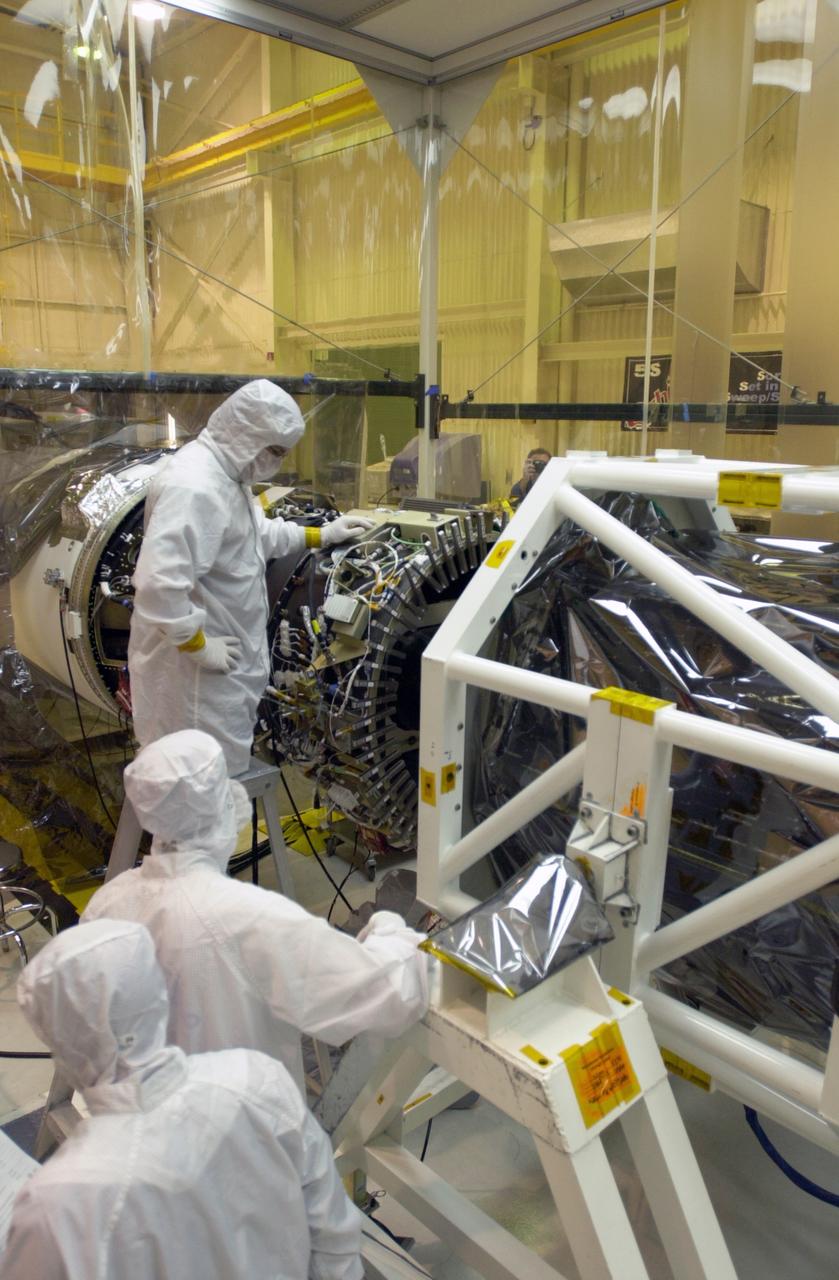
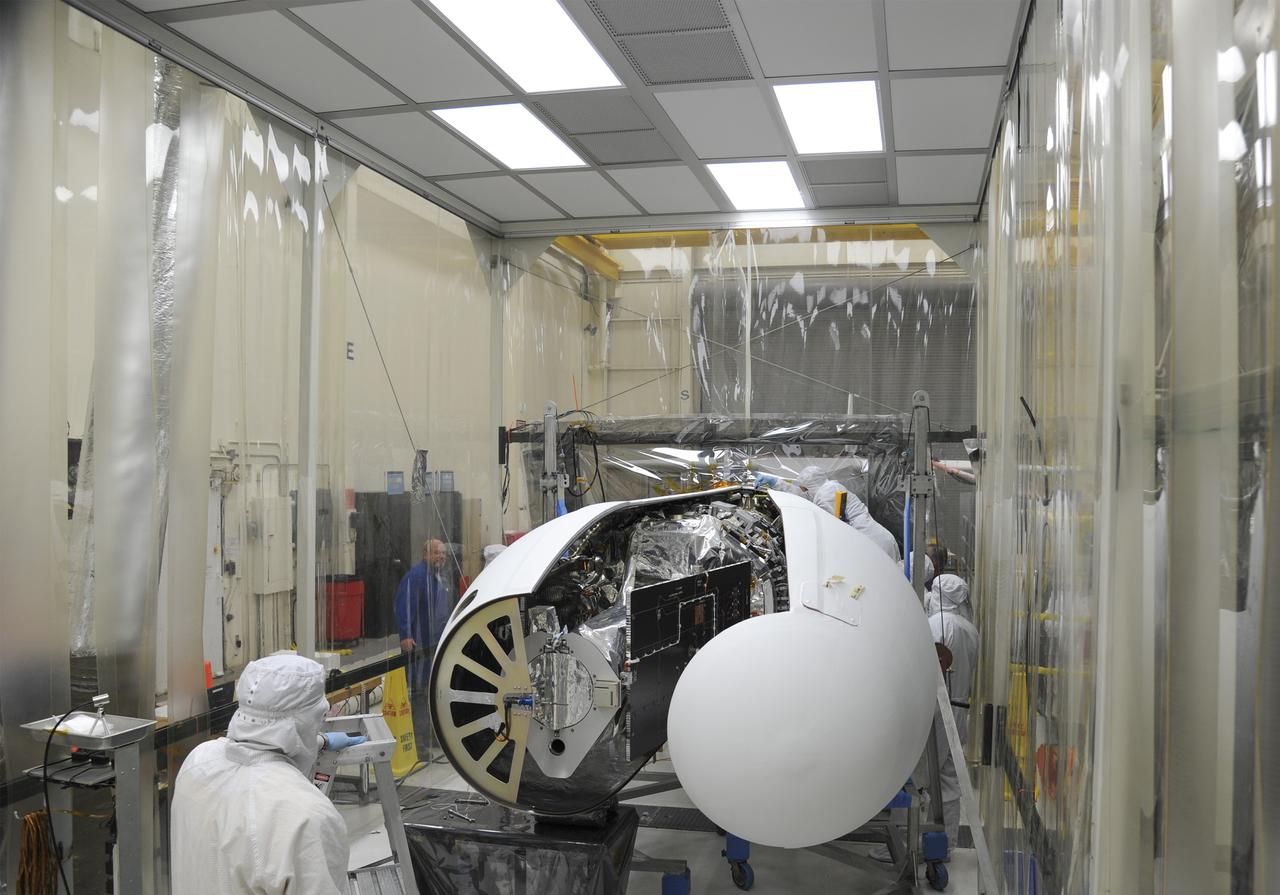
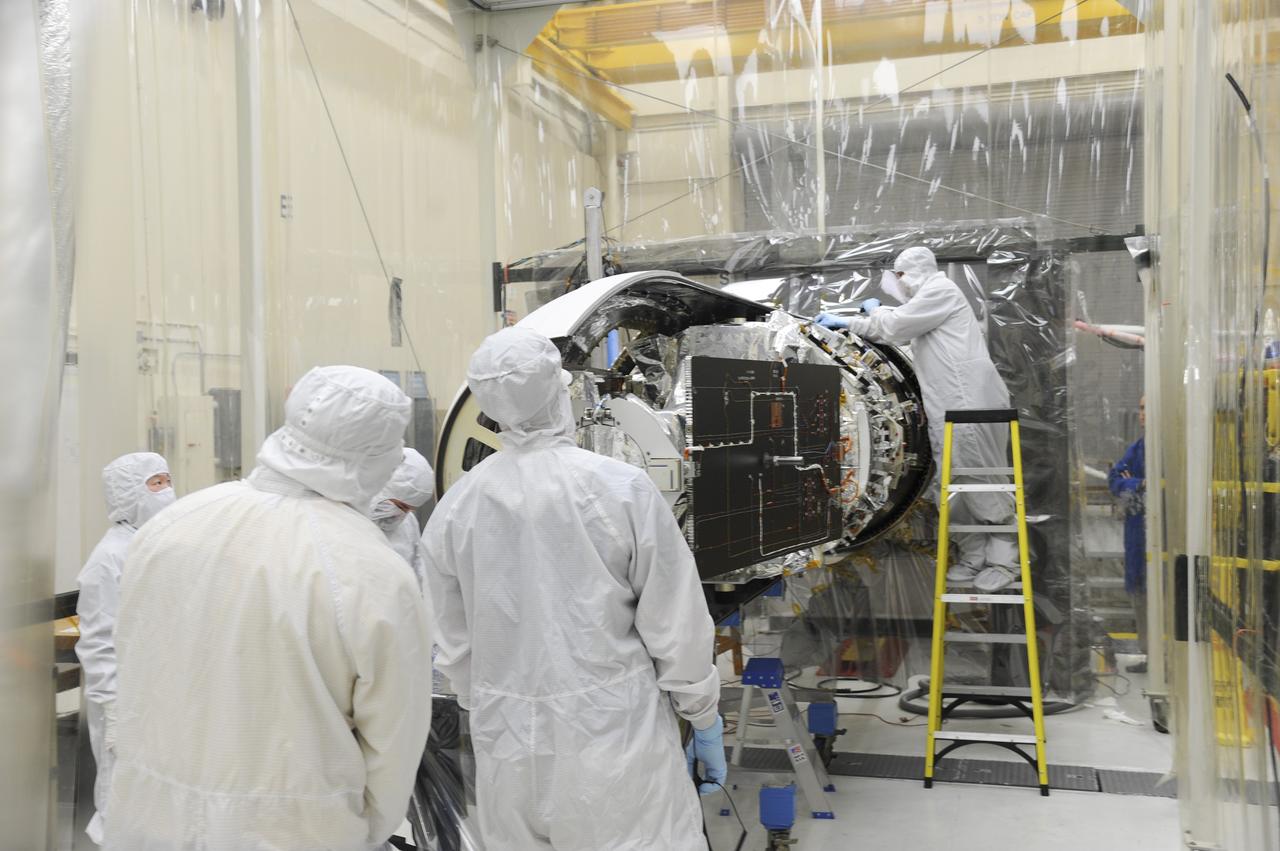
At Vandenberg Air Force Base in California, the third stage of the Orbital Sciences Pegasus XL rocket is being mated to the AIM spacecraft, at right. AIM, which stands for Aeronomy of Ice in the Mesosphere, is being prepared for integrated testing and a flight simulation. The AIM spacecraft will fly three instruments designed to study polar mesospheric clouds located at the edge of space, 50 miles above the Earth's surface in the coldest part of the planet's atmosphere. The mission's primary goal is to explain why these clouds form and what has caused them to become brighter and more numerous and appear at lower latitudes in recent years. AIM's results will provide the basis for the study of long-term variability in the mesospheric climate and its relationship to global climate change. Launch from the Pegasus XL rocket is scheduled for April 25.

At Vandenberg Air Force Base in California, technicians prepare to mate the AIM spacecraft (at left) to the SoftRide isolation system on the Orbital Sciences Pegasus XL rocket. The Cosmic Dust Experiment surfaces can be clearly seen as 12 rectangular areas on the aft portion of the spacecraft. AIM, which stands for Aeronomy of Ice in the Mesosphere, is being prepared for integrated testing and a flight simulation. The AIM spacecraft will fly three instruments designed to study polar mesospheric clouds located at the edge of space, 50 miles above the Earth's surface in the coldest part of the planet's atmosphere. The mission's primary goal is to explain why these clouds form and what has caused them to become brighter and more numerous and appear at lower latitudes in recent years. AIM's results will provide the basis for the study of long-term variability in the mesospheric climate and its relationship to global climate change. Launch from the Pegasus XL rocket is scheduled for April 25.
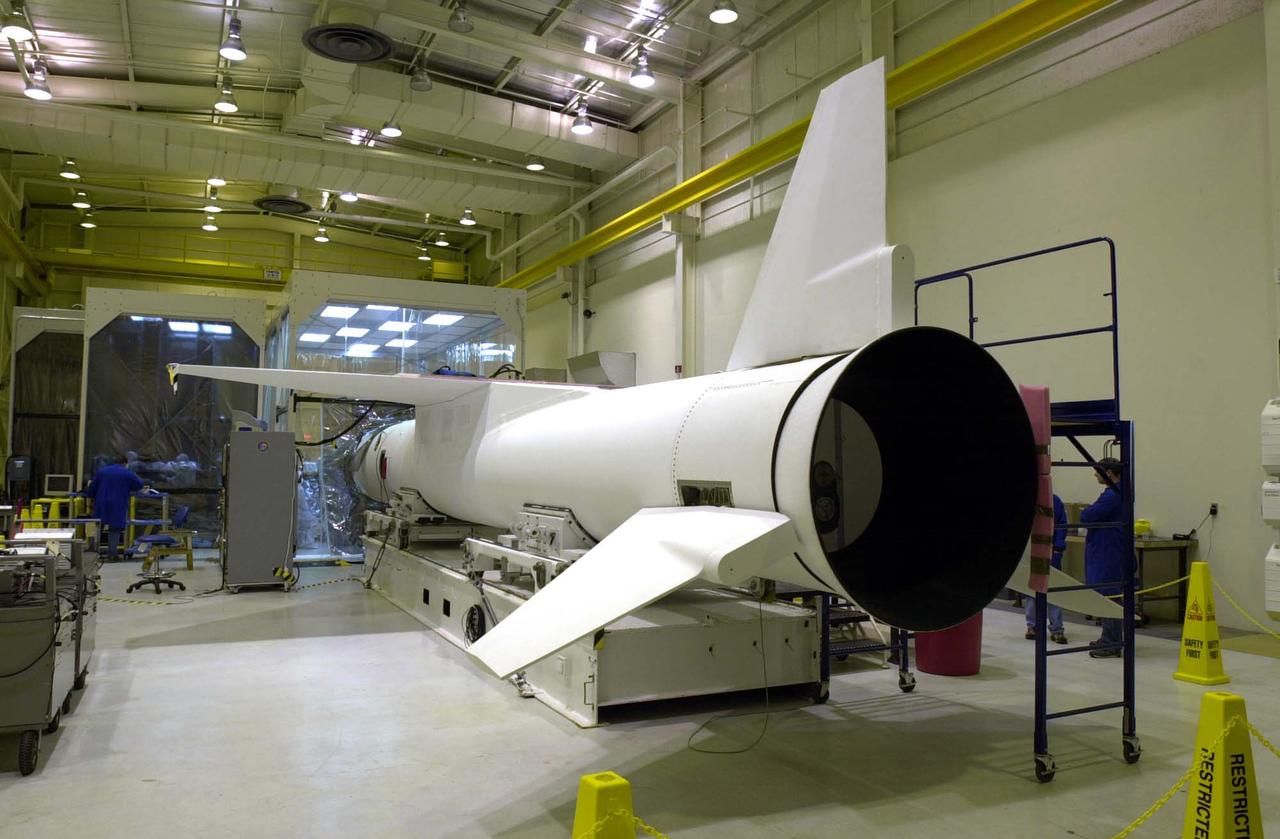
At Vandenberg Air Force Base in California, the Orbital Sciences Pegasus XL rocket is ready for mating to the AIM spacecraft. AIM, which stands for Aeronomy of Ice in the Mesosphere, is being prepared for integrated testing and a flight simulation. The AIM spacecraft will fly three instruments designed to study polar mesospheric clouds located at the edge of space, 50 miles above the Earth's surface in the coldest part of the planet's atmosphere. The mission's primary goal is to explain why these clouds form and what has caused them to become brighter and more numerous and appear at lower latitudes in recent years. AIM's results will provide the basis for the study of long-term variability in the mesospheric climate and its relationship to global climate change. Launch from the Pegasus XL rocket is scheduled for April 25.
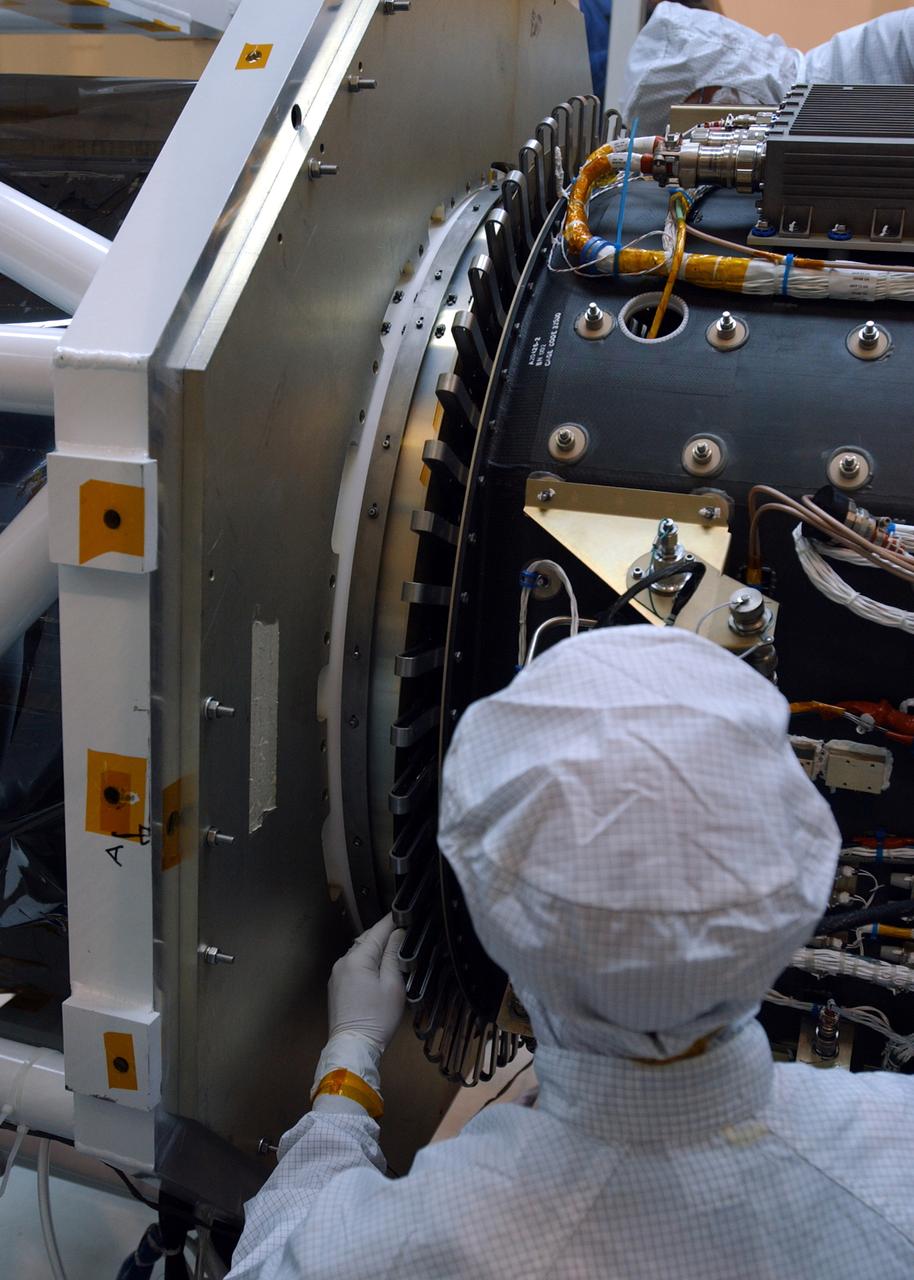
At Vandenberg Air Force Base in California, a technician mates the AIM spacecraft, at left, to the Orbital Sciences Pegasus XL rocket, at right. AIM, which stands for Aeronomy of Ice in the Mesosphere, is being prepared for integrated testing and a flight simulation. The AIM spacecraft will fly three instruments designed to study polar mesospheric clouds located at the edge of space, 50 miles above the Earth's surface in the coldest part of the planet's atmosphere. The mission's primary goal is to explain why these clouds form and what has caused them to become brighter and more numerous and appear at lower latitudes in recent years. AIM's results will provide the basis for the study of long-term variability in the mesospheric climate and its relationship to global climate change. Launch from the Pegasus XL rocket is scheduled for April 25.

Daniel Mueller, Solar Orbiter Project scientist, European Space Agency, participates in a Solar Orbiter science press conference at NASA’s Kennedy Space Center in Florida on Feb. 7, 2020. Solar Orbiter is an international cooperative mission between ESA (European Space Agency) and NASA. The mission aims to study the Sun, its outer atmosphere and solar wind. The spacecraft will provide the first images of the Sun’s poles. The spacecraft was developed by Airbus Defence and Space. NASA’s Launch Services Program based at Kennedy is managing the launch. Solar Orbiter will launch aboard a United Launch Alliance Atlas V rocket on Feb. 9, 2020, from Space Launch Complex 41 at Cape Canaveral Air Force Station.
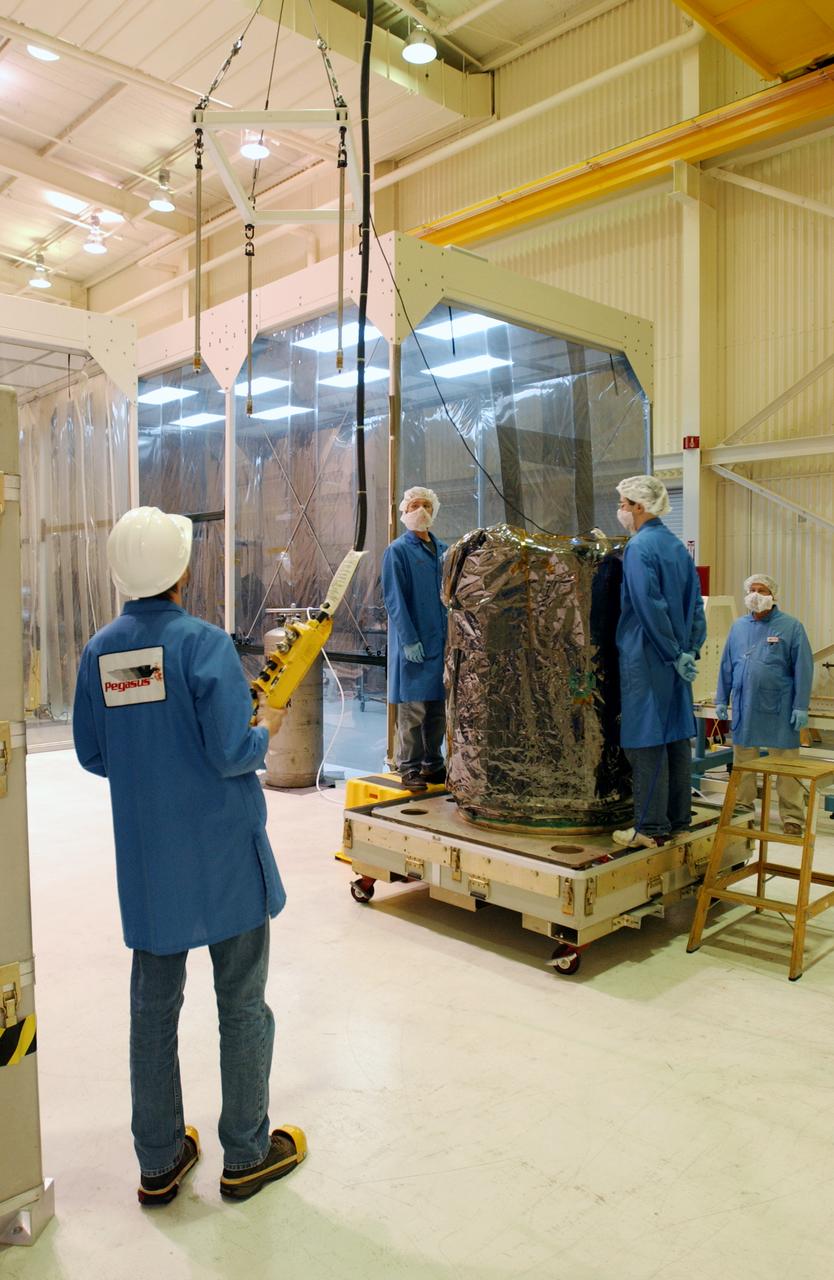
Inside a clean room at Vandenberg Air Force Base in California, workers stand beside NASA's Aeronomy of Ice in the Mesosphere, or AIM, spacecraft, waiting for an overhead crane they will attach. AIM is the seventh Small Explorers mission under NASA's Explorer Program. The program provides frequent flight opportunities for world-class scientific investigations from space within heliophysics and astrophysics. The AIM spacecraft will fly three instruments designed to study polar mesospheric clouds located at the edge of space, 50 miles above the Earth's surface in the coldest part of the planet's atmosphere. The mission's primary goal is to explain why these clouds form and what has caused them to become brighter and more numerous and appear at lower latitudes in recent years. AIM's results will provide the basis for the study of long-term variability in the mesospheric climate and its relationship to global climate change. AIM is scheduled to be mated to the Pegasus XL during the second week of April, after which final inspections will be conducted. Launch is scheduled for April 25.
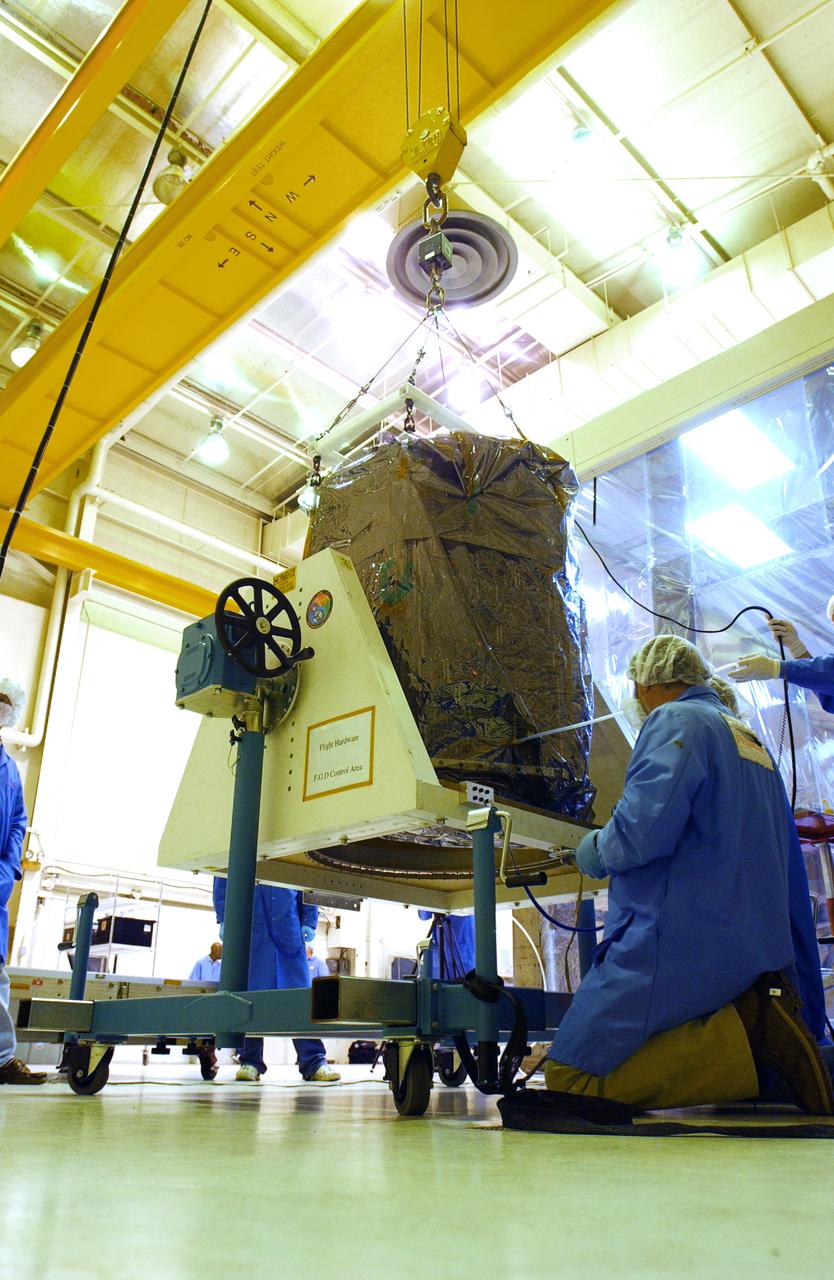
Inside a clean room at Vandenberg Air Force Base in California, NASA's Aeronomy of Ice in the Mesosphere, or AIM, spacecraft is weighed. AIM is the seventh Small Explorers mission under NASA's Explorer Program. The program provides frequent flight opportunities for world-class scientific investigations from space within heliophysics and astrophysics. The AIM spacecraft will fly three instruments designed to study polar mesospheric clouds located at the edge of space, 50 miles above the Earth's surface in the coldest part of the planet's atmosphere. The mission's primary goal is to explain why these clouds form and what has caused them to become brighter and more numerous and appear at lower latitudes in recent years. AIM's results will provide the basis for the study of long-term variability in the mesospheric climate and its relationship to global climate change. AIM is scheduled to be mated to the Pegasus XL during the second week of April, after which final inspections will be conducted. Launch is scheduled for April 25.
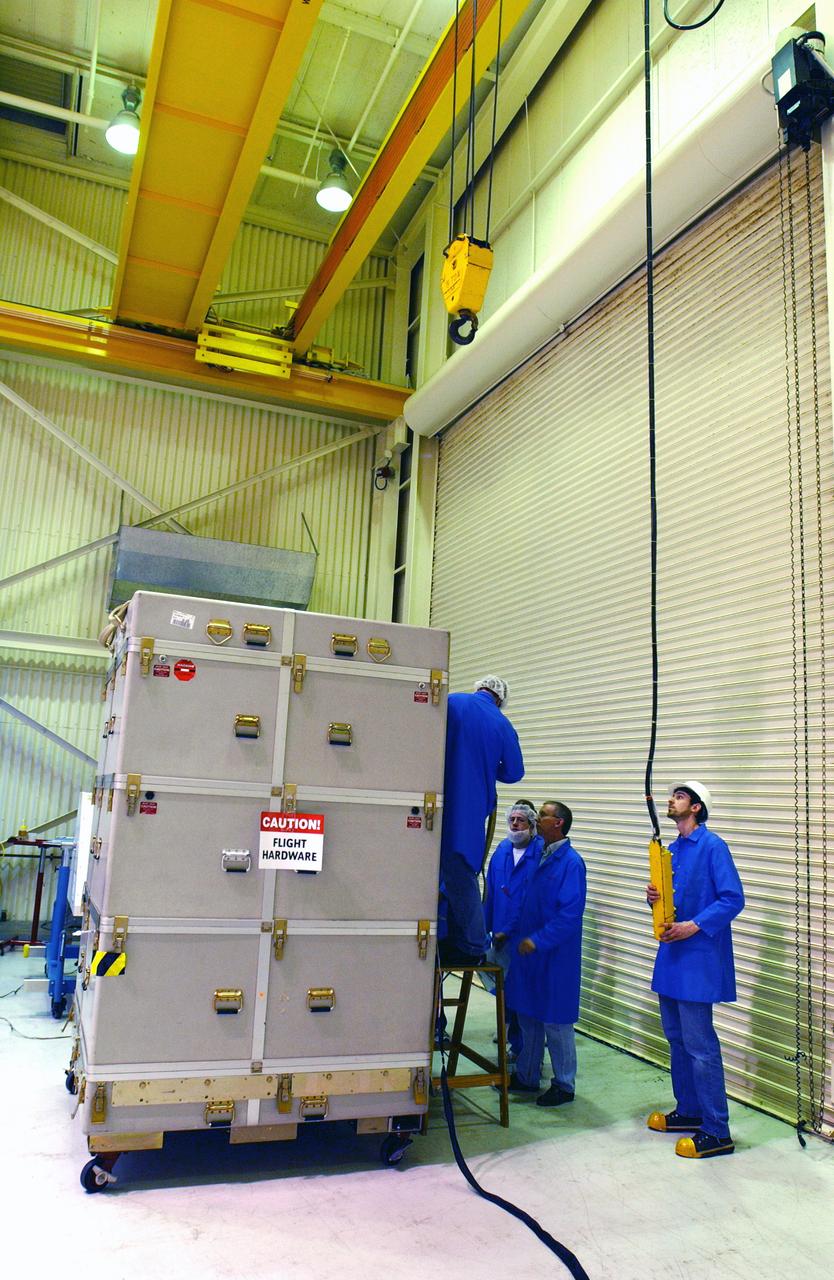
NASA's Aeronomy of Ice in the Mesosphere, or AIM, spacecraft arrives in a clean room at Vandenberg Air Force Base in California. AIM is the seventh Small Explorers mission under NASA's Explorer Program. The program provides frequent flight opportunities for world-class scientific investigations from space within heliophysics and astrophysics. The AIM spacecraft will fly three instruments designed to study polar mesospheric clouds located at the edge of space, 50 miles above the Earth's surface in the coldest part of the planet's atmosphere. The mission's primary goal is to explain why these clouds form and what has caused them to become brighter and more numerous and appear at lower latitudes in recent years. AIM's results will provide the basis for the study of long-term variability in the mesospheric climate and its relationship to global climate change. AIM is scheduled to be mated to the Pegasus XL during the second week of April, after which final inspections will be conducted. Launch is scheduled for April 25.
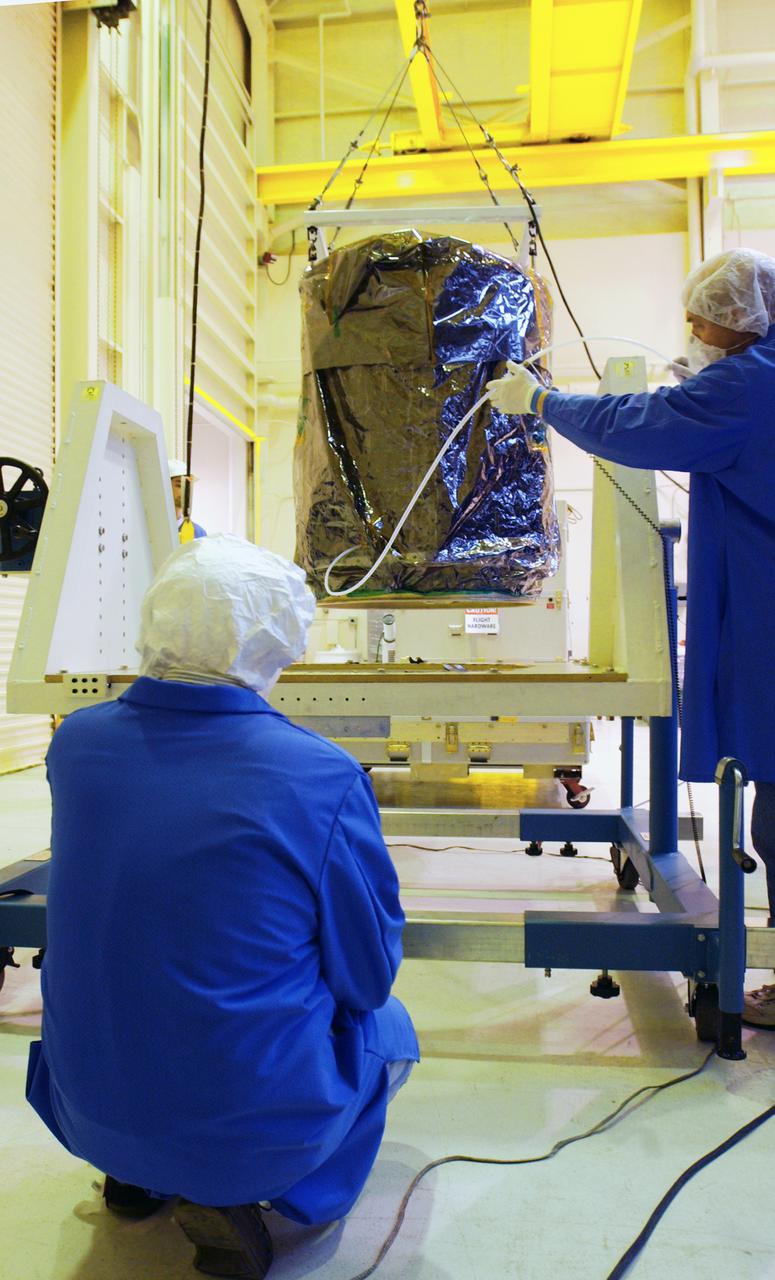
Inside a clean room at Vandenberg Air Force Base in California, workers observe NASA's Aeronomy of Ice in the Mesosphere, or AIM, spacecraft as it is lowered onto a scale. AIM is the seventh Small Explorers mission under NASA's Explorer Program. The program provides frequent flight opportunities for world-class scientific investigations from space within heliophysics and astrophysics. The AIM spacecraft will fly three instruments designed to study polar mesospheric clouds located at the edge of space, 50 miles above the Earth's surface in the coldest part of the planet's atmosphere. The mission's primary goal is to explain why these clouds form and what has caused them to become brighter and more numerous and appear at lower latitudes in recent years. AIM's results will provide the basis for the study of long-term variability in the mesospheric climate and its relationship to global climate change. AIM is scheduled to be mated to the Pegasus XL during the second week of April, after which final inspections will be conducted. Launch is scheduled for April 25.
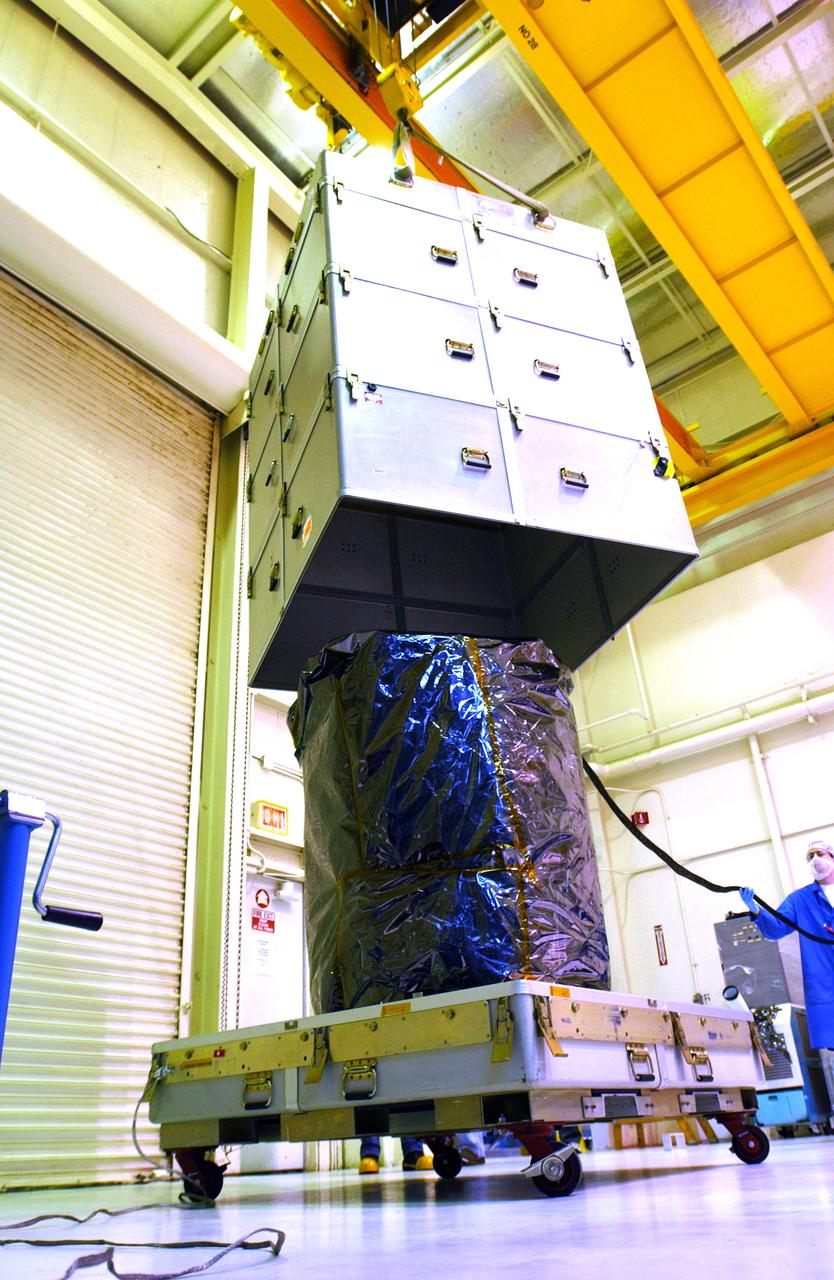
Inside a clean room at Vandenberg Air Force Base in California, workers remove the shipping container from around NASA's Aeronomy of Ice in the Mesosphere, or AIM, spacecraft. AIM is the seventh Small Explorers mission under NASA's Explorer Program. The program provides frequent flight opportunities for world-class scientific investigations from space within heliophysics and astrophysics. The AIM spacecraft will fly three instruments designed to study polar mesospheric clouds located at the edge of space, 50 miles above the Earth's surface in the coldest part of the planet's atmosphere. The mission's primary goal is to explain why these clouds form and what has caused them to become brighter and more numerous and appear at lower latitudes in recent years. AIM's results will provide the basis for the study of long-term variability in the mesospheric climate and its relationship to global climate change. AIM is scheduled to be mated to the Pegasus XL during the second week of April, after which final inspections will be conducted. Launch is scheduled for April 25.
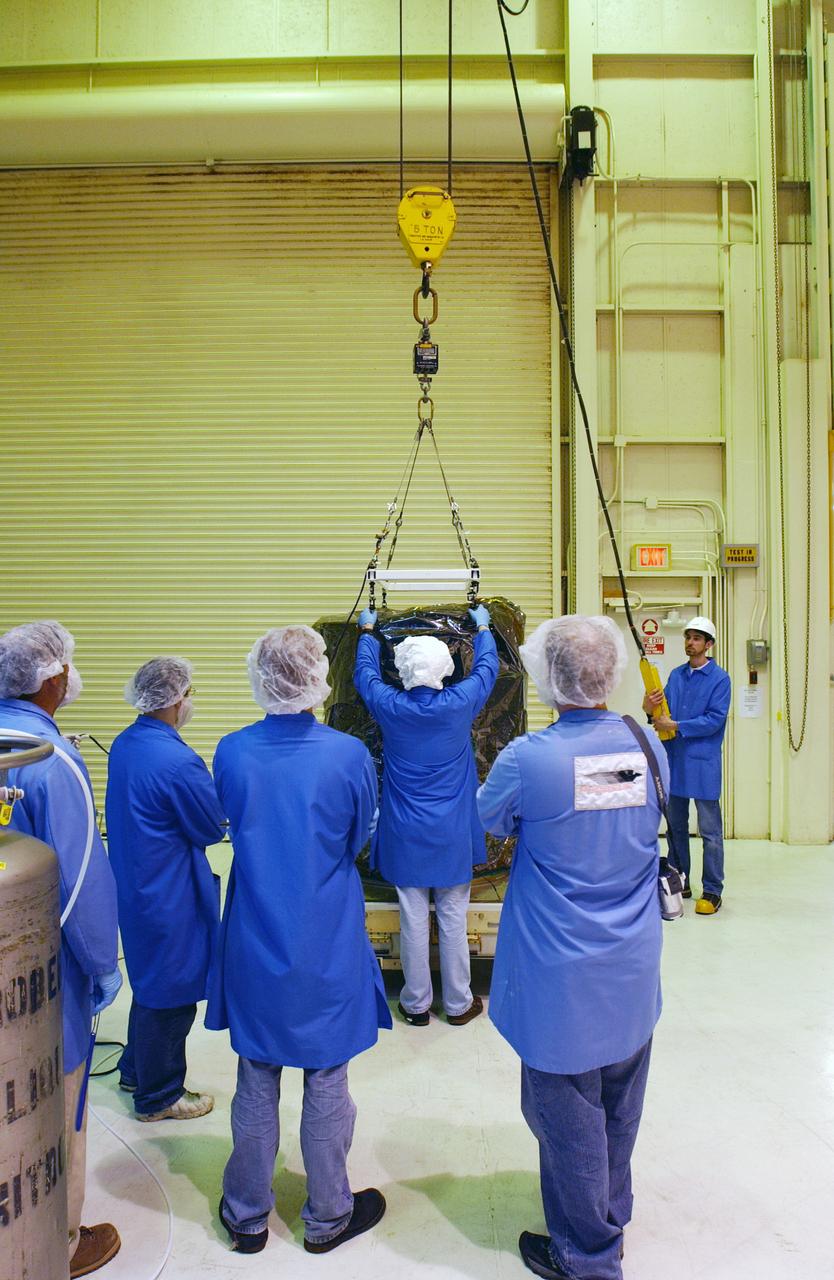
Inside a clean room at Vandenberg Air Force Base in California, a worker adjusts the attach points of an overhead crane on NASA's Aeronomy of Ice in the Mesosphere, or AIM, spacecraft. AIM is the seventh Small Explorers mission under NASA's Explorer Program. The program provides frequent flight opportunities for world-class scientific investigations from space within heliophysics and astrophysics. The AIM spacecraft will fly three instruments designed to study polar mesospheric clouds located at the edge of space, 50 miles above the Earth's surface in the coldest part of the planet's atmosphere. The mission's primary goal is to explain why these clouds form and what has caused them to become brighter and more numerous and appear at lower latitudes in recent years. AIM's results will provide the basis for the study of long-term variability in the mesospheric climate and its relationship to global climate change. AIM is scheduled to be mated to the Pegasus XL during the second week of April, after which final inspections will be conducted. Launch is scheduled for April 25.
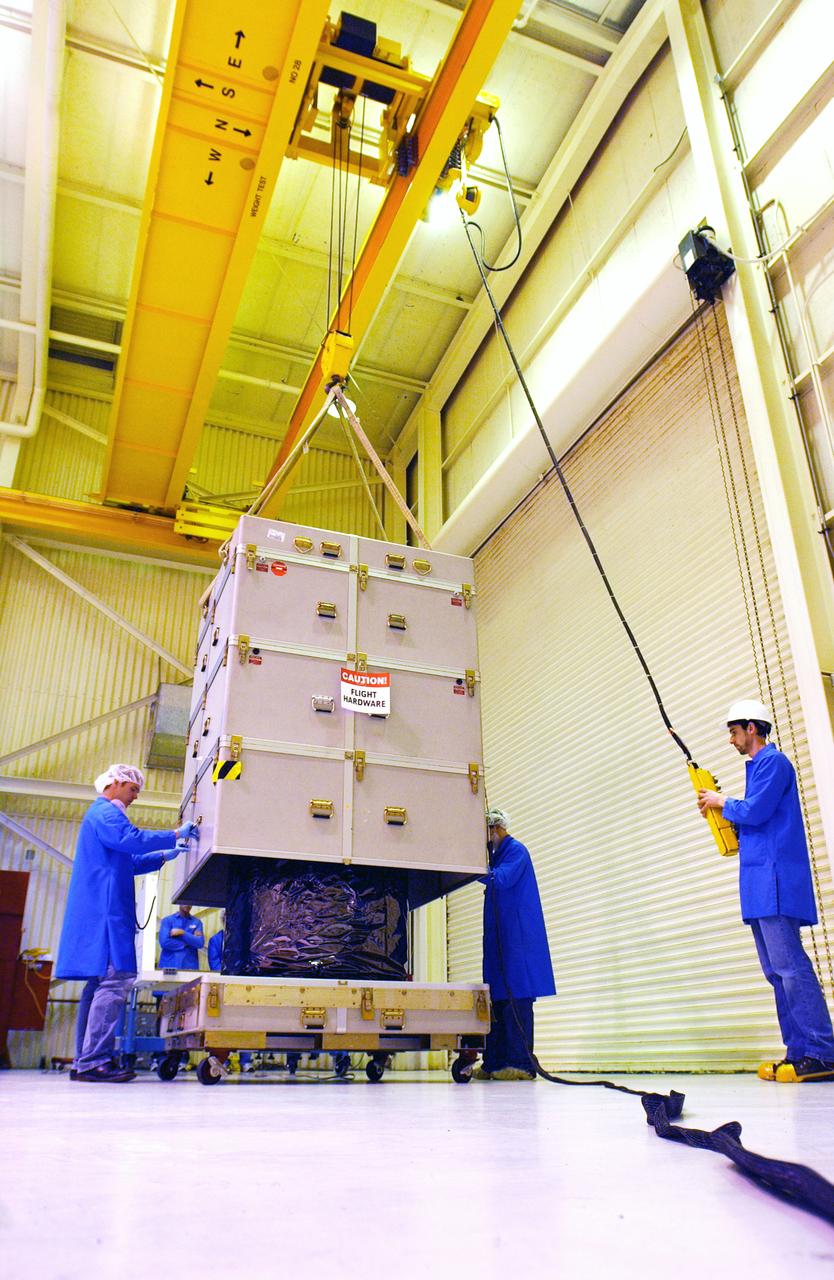
Inside a clean room at Vandenberg Air Force Base in California, workers begin lifting the shipping container from around NASA's Aeronomy of Ice in the Mesosphere, or AIM, spacecraft. AIM is the seventh Small Explorers mission under NASA's Explorer Program. The program provides frequent flight opportunities for world-class scientific investigations from space within heliophysics and astrophysics. The AIM spacecraft will fly three instruments designed to study polar mesospheric clouds located at the edge of space, 50 miles above the Earth's surface in the coldest part of the planet's atmosphere. The mission's primary goal is to explain why these clouds form and what has caused them to become brighter and more numerous and appear at lower latitudes in recent years. AIM's results will provide the basis for the study of long-term variability in the mesospheric climate and its relationship to global climate change. AIM is scheduled to be mated to the Pegasus XL during the second week of April, after which final inspections will be conducted. Launch is scheduled for April 25.
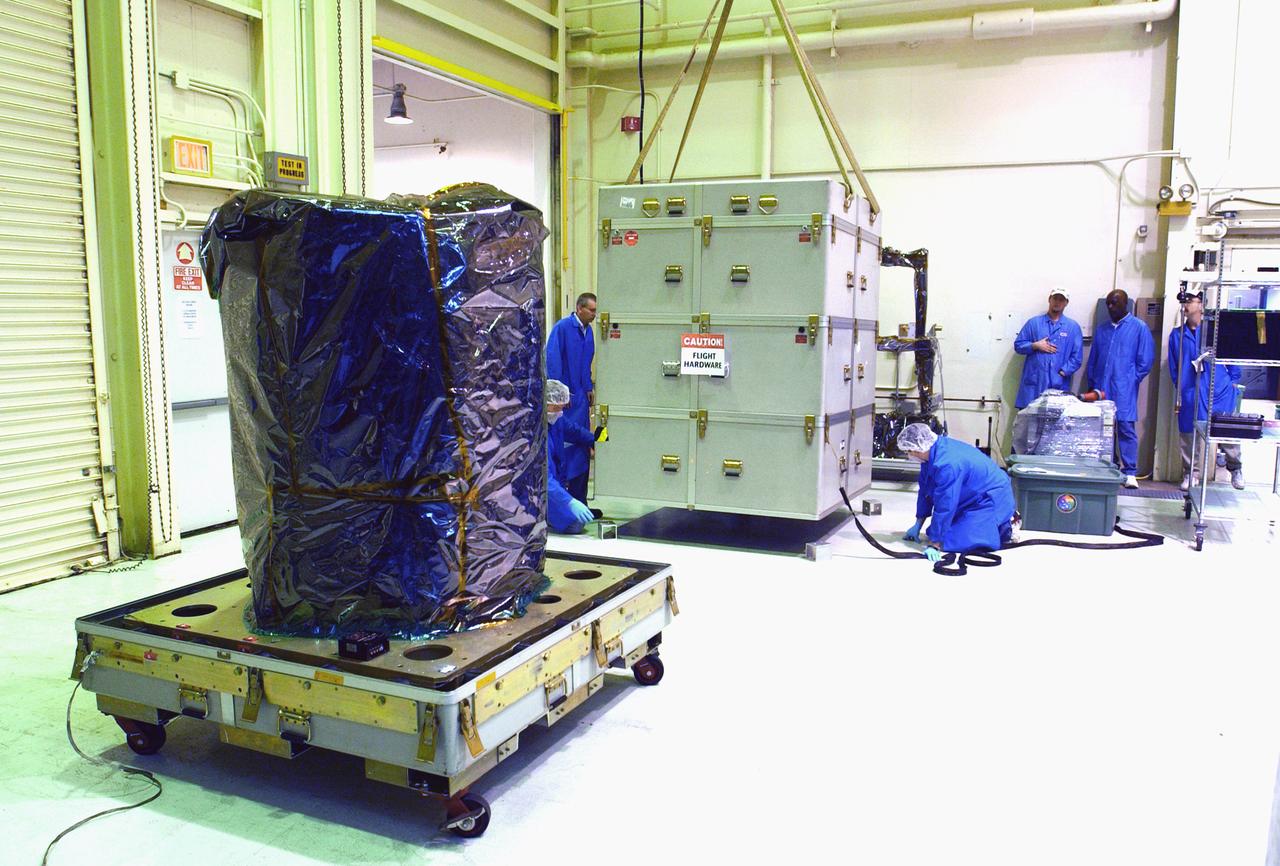
Inside a clean room at Vandenberg Air Force Base in California, the shipping container removed from around NASA's Aeronomy of Ice in the Mesosphere, or AIM, spacecraft at left, is lowered onto the floor nearby. AIM is the seventh Small Explorers mission under NASA's Explorer Program. The program provides frequent flight opportunities for world-class scientific investigations from space within heliophysics and astrophysics. The AIM spacecraft will fly three instruments designed to study polar mesospheric clouds located at the edge of space, 50 miles above the Earth's surface in the coldest part of the planet's atmosphere. The mission's primary goal is to explain why these clouds form and what has caused them to become brighter and more numerous and appear at lower latitudes in recent years. AIM's results will provide the basis for the study of long-term variability in the mesospheric climate and its relationship to global climate change. AIM is scheduled to be mated to the Pegasus XL during the second week of April, after which final inspections will be conducted. Launch is scheduled for April 25.
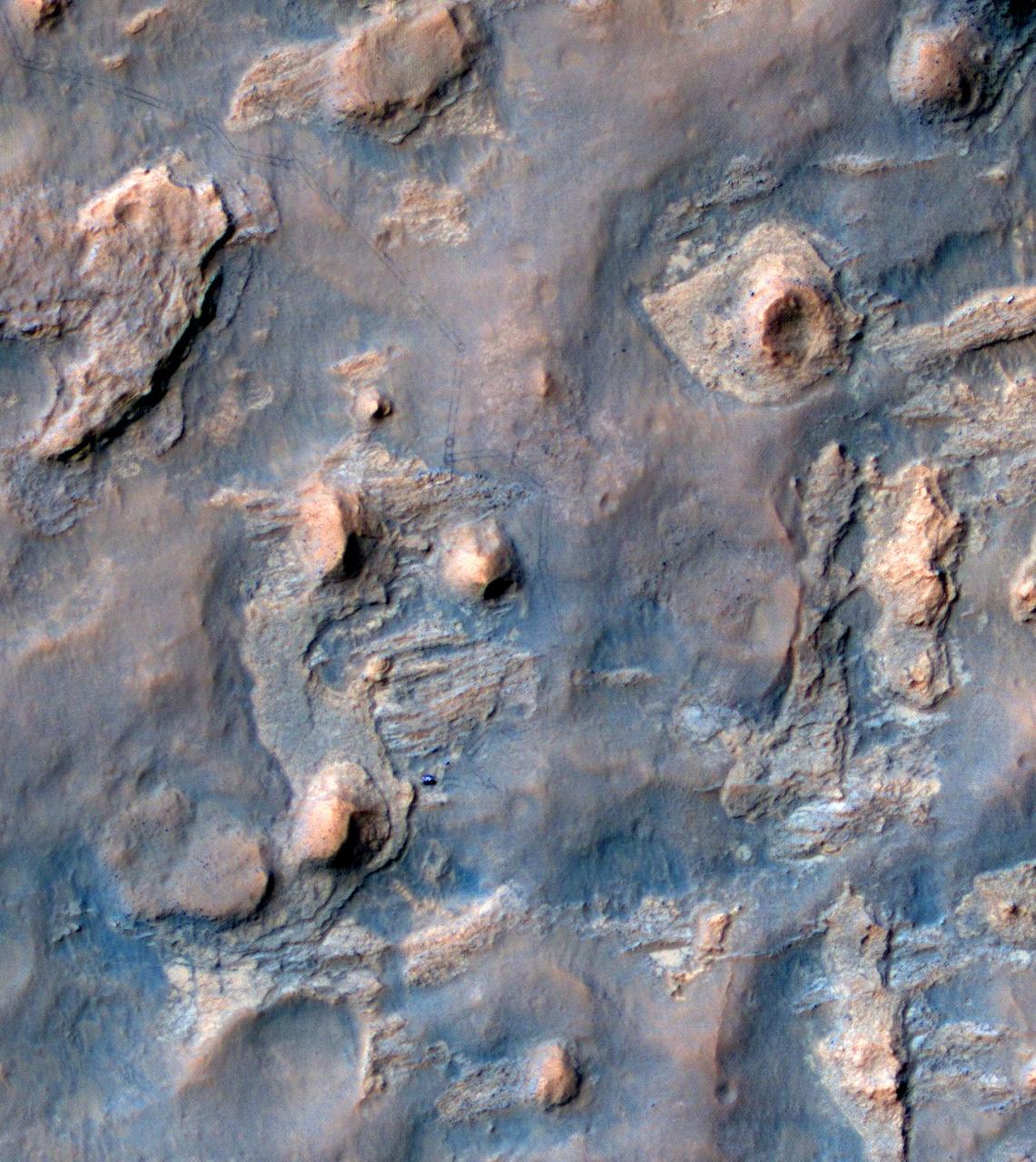
NASA Curiosity Mars rover and tracks from its driving are visible in this view from orbit, acquired on April 11, 2014, by the High Resolution Imaging Science Experiment HiRISE camera on NASA Mars Reconnaissance Orbiter.
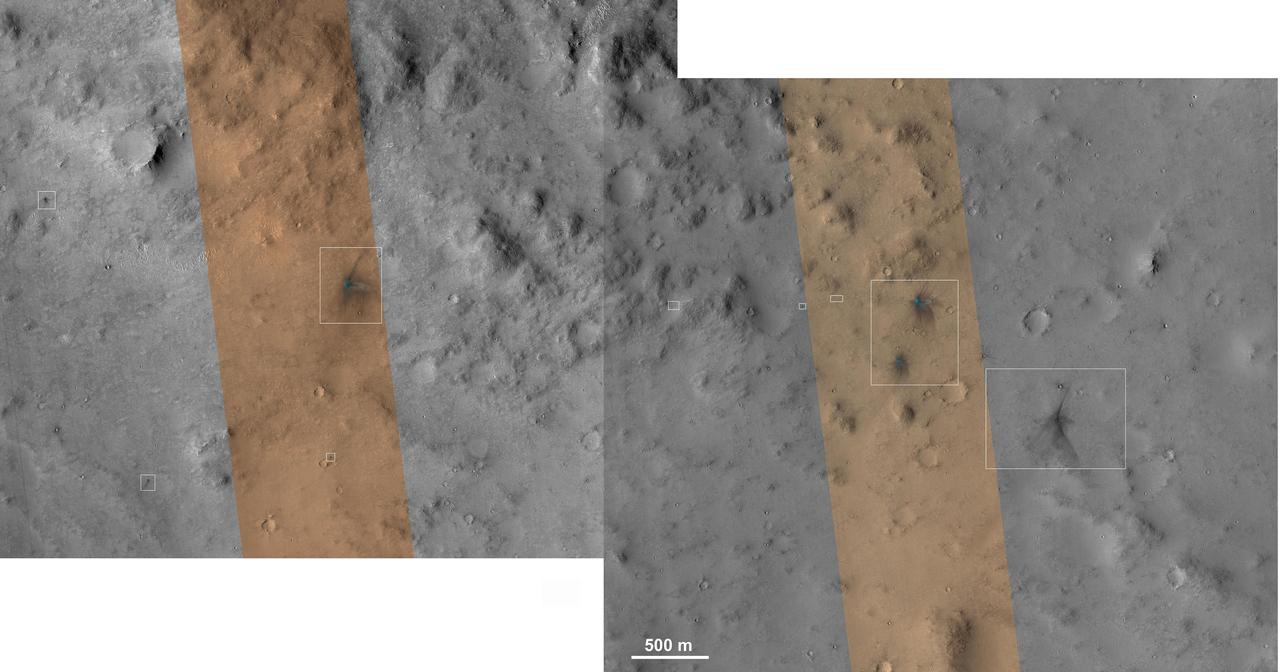
These images from the NASA Mars Reconnaissance Orbiter show several impact scars on Mars made by pieces of the NASA Mars Science Laboratory spacecraft that the spacecraft shed just before entering the Martian atmosphere.
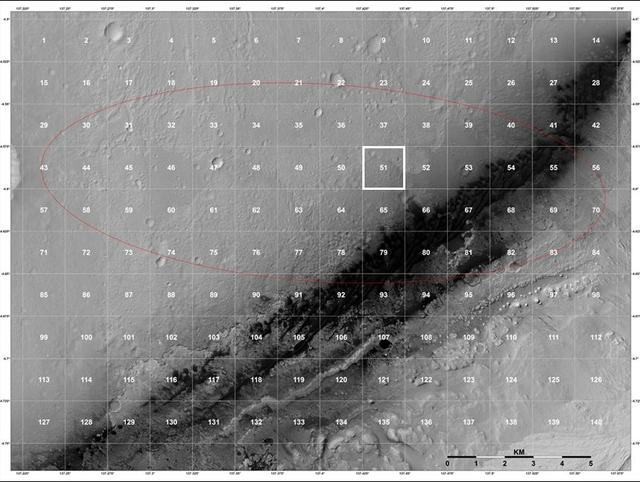
The geological context for the landing site of NASA Curiosity rover is visible in this image mosaic obtained by the High-Resolution Imaging Science Experiment HiRISE camera on NASA Mars Reconnaissance Orbiter.
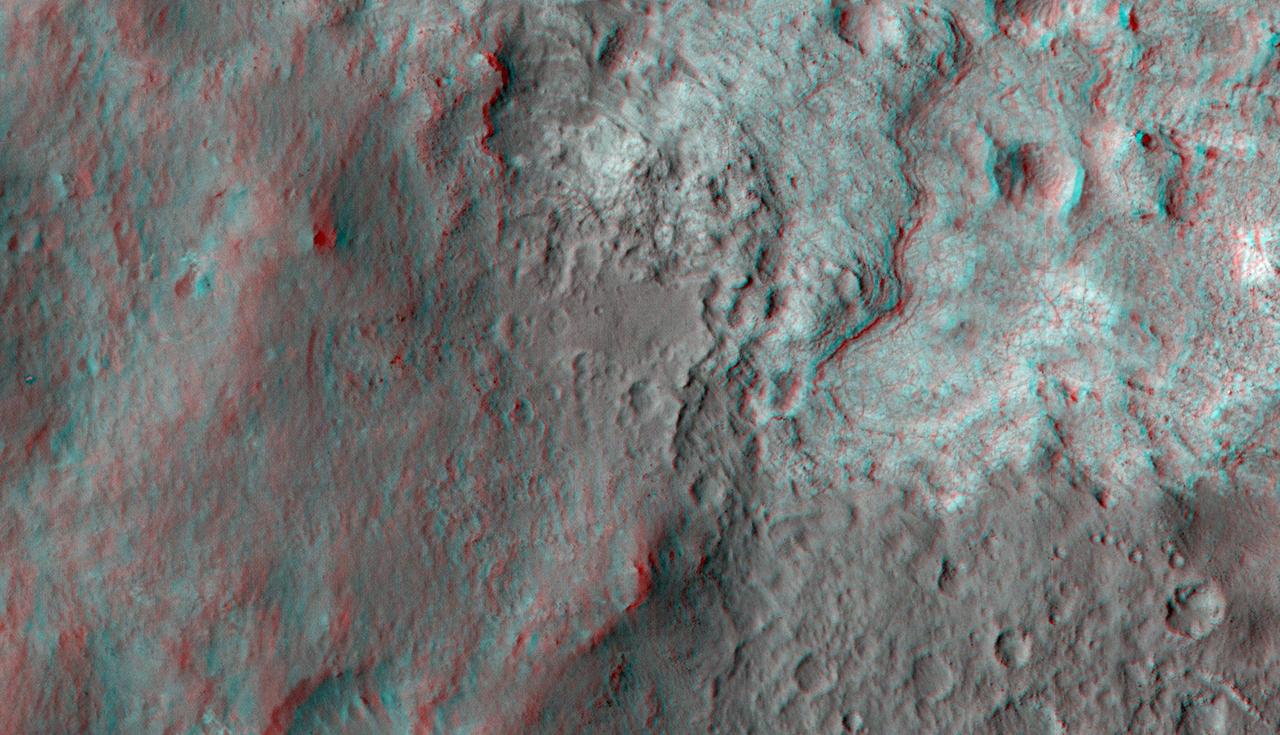
This 3-D image shows the upcoming science destination for NASA Mars rover Curiosity, a region dubbed Glenelg, where three different types of material seen from orbit come together.
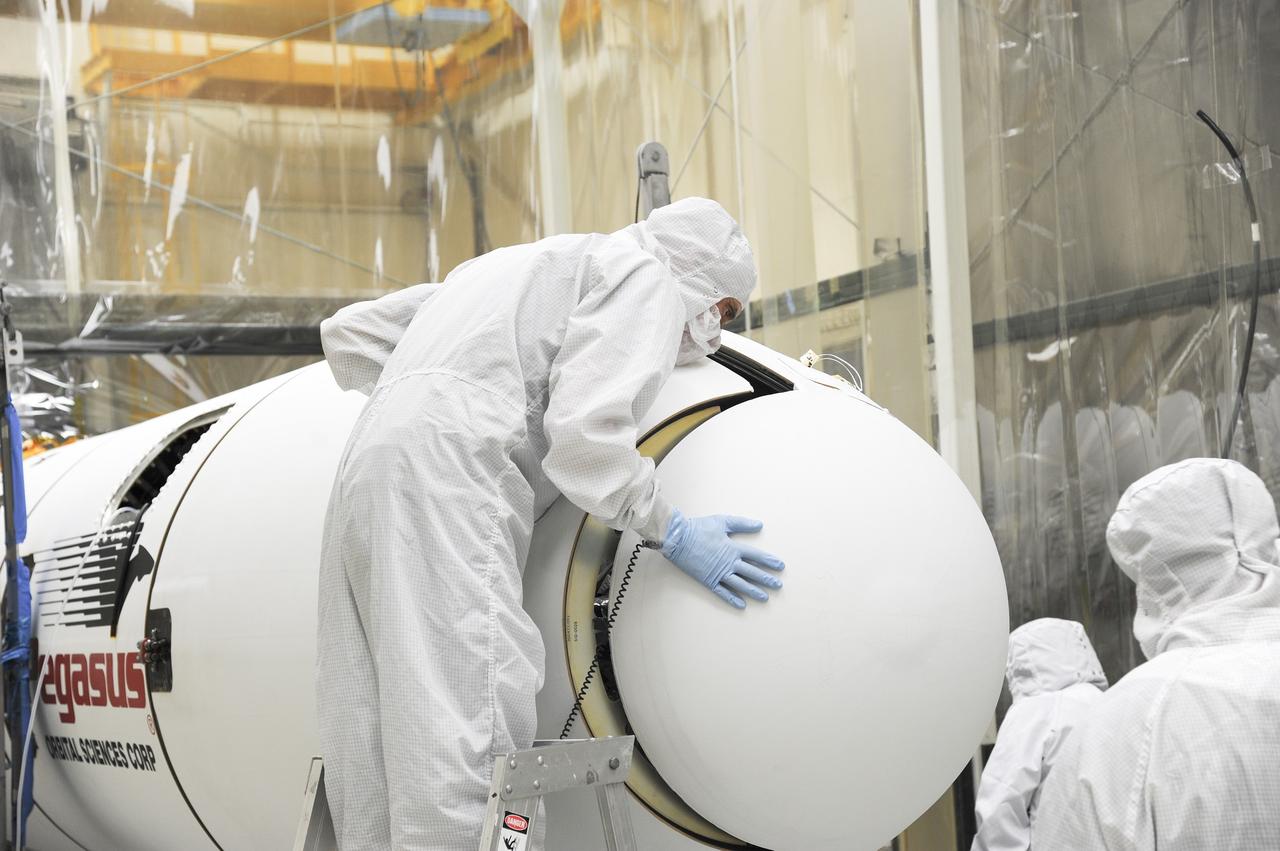
VANDENBERG AFB – Orbital Sciences engineers connect the payload fairing over NASA's IRIS spacecraft. The fairing connects to the nose of the Orbital Sciences Pegasus XL rocket that will lift the solar observatory into orbit in June. The work is taking place in a hangar at Vandenberg Air Force Base where IRIS, short for Interface Region Imaging Spectrograph, is being prepared for launch on a Pegasus XL rocket. Scheduled for launch from Vandenberg June 26, IRIS will open a new window of discovery by tracing the flow of energy and plasma through the chromospheres and transition region into the sun’s corona using spectrometry and imaging. IRIS fills a crucial gap in our ability to advance studies of the sun-to-Earth connection by tracing the flow of energy and plasma through the foundation of the corona and the region around the sun known as the heliosphere. Photo credit: NASA/Tony Vauclin
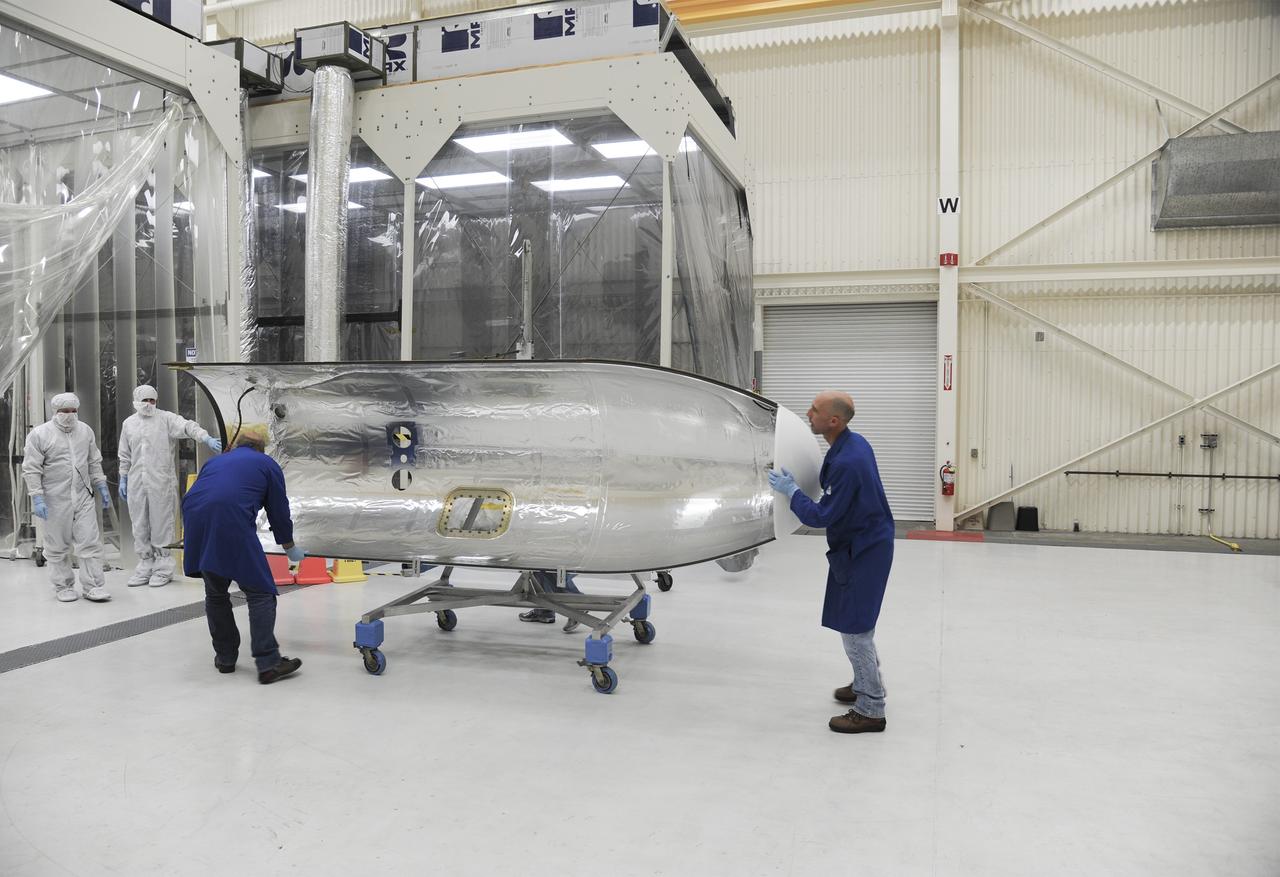
VANDENBERG AFB – Orbital Sciences team members move the second half of the payload fairing before it is placed over NASA's IRIS spacecraft. The fairing connects to the nose of the Orbital Sciences Pegasus XL rocket that will lift the solar observatory into orbit in June. The work is taking place in a hangar at Vandenberg Air Force Base where IRIS, short for Interface Region Imaging Spectrograph, is being prepared for launch on a Pegasus XL rocket. Scheduled for launch from Vandenberg June 26, IRIS will open a new window of discovery by tracing the flow of energy and plasma through the chromospheres and transition region into the sun’s corona using spectrometry and imaging. IRIS fills a crucial gap in our ability to advance studies of the sun-to-Earth connection by tracing the flow of energy and plasma through the foundation of the corona and the region around the sun known as the heliosphere. Photo credit: NASA/Tony Vauclin
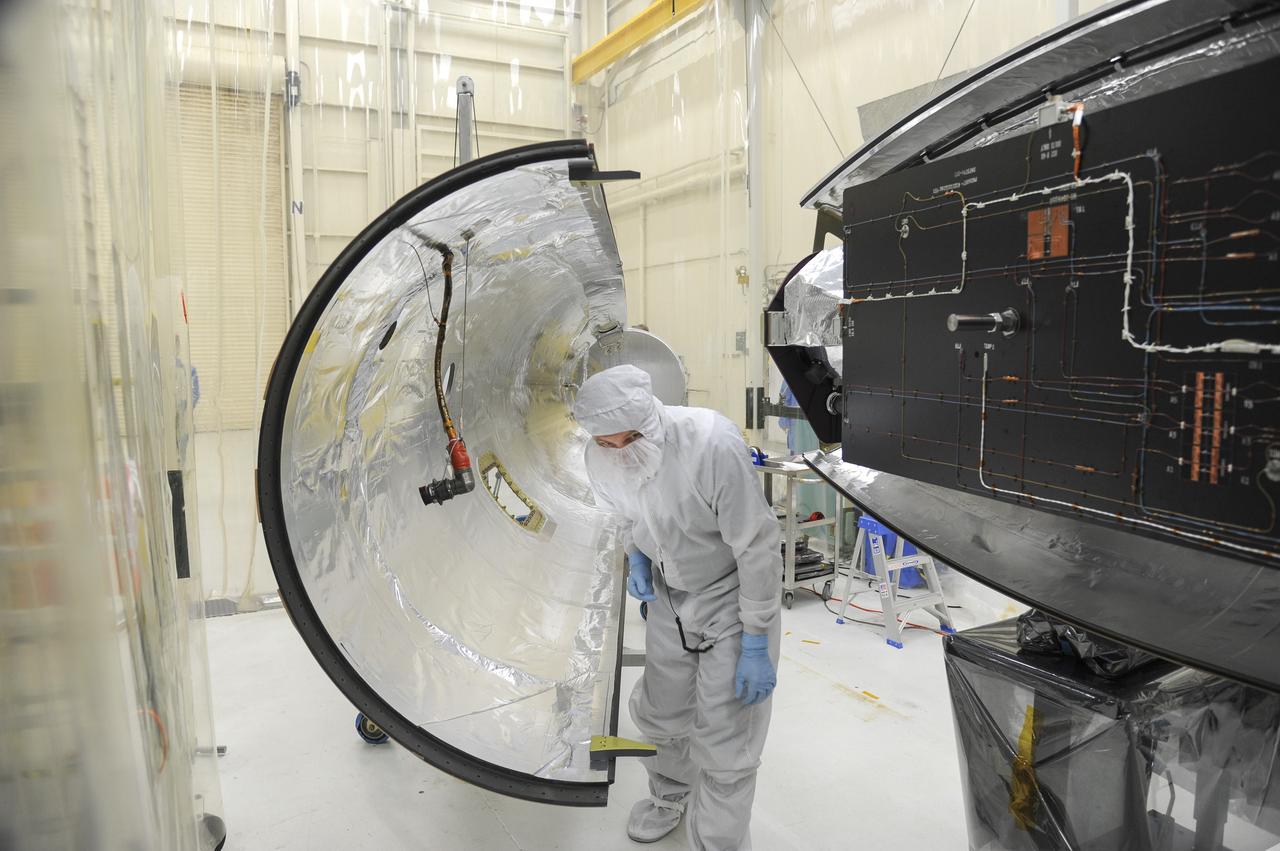
VANDENBERG AFB – Orbital Sciences team members move the second half of the payload fairing before it is placed over NASA's IRIS spacecraft. The fairing connects to the nose of the Orbital Sciences Pegasus XL rocket that will lift the solar observatory into orbit in June. The work is taking place in a hangar at Vandenberg Air Force Base where IRIS, short for Interface Region Imaging Spectrograph, is being prepared for launch on a Pegasus XL rocket. Scheduled for launch from Vandenberg June 26, IRIS will open a new window of discovery by tracing the flow of energy and plasma through the chromospheres and transition region into the sun’s corona using spectrometry and imaging. IRIS fills a crucial gap in our ability to advance studies of the sun-to-Earth connection by tracing the flow of energy and plasma through the foundation of the corona and the region around the sun known as the heliosphere. Photo credit: NASA/Tony Vauclin
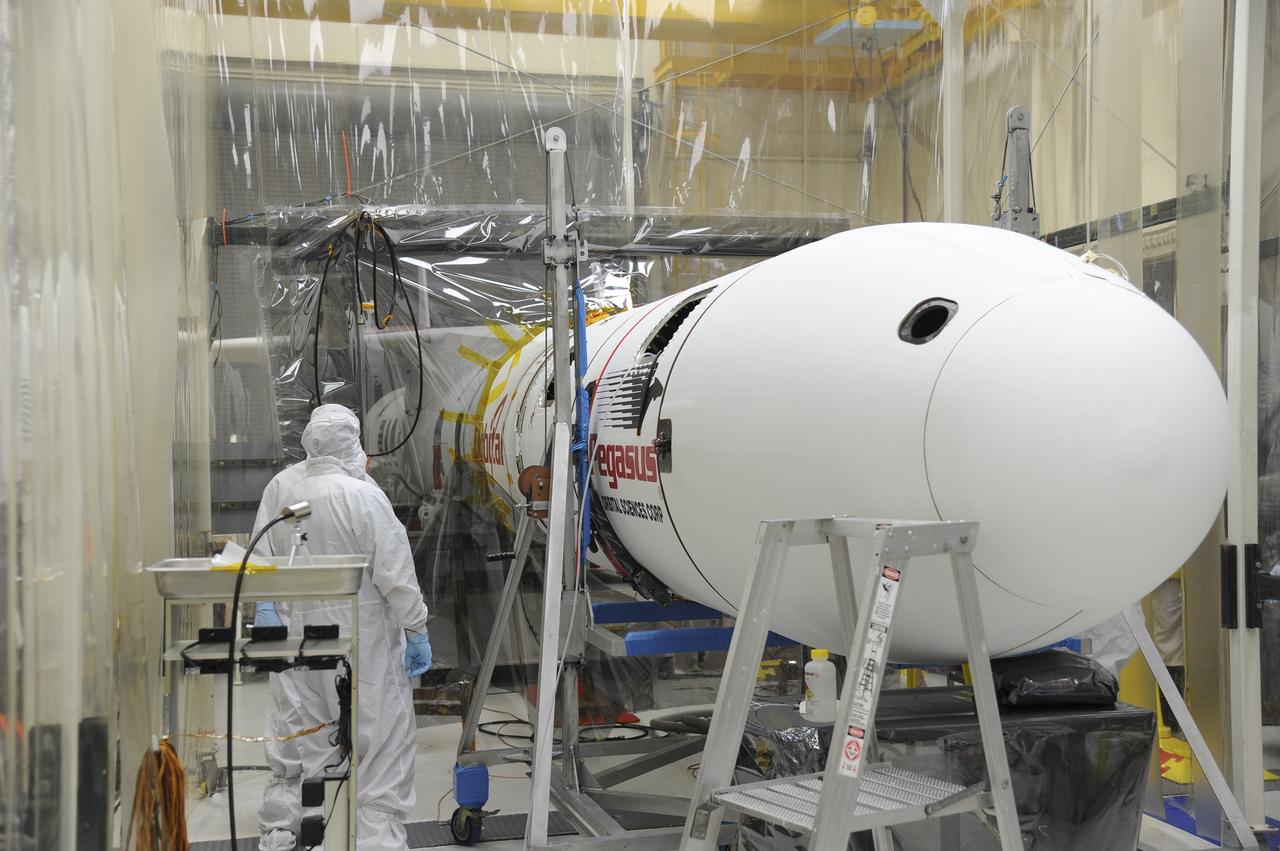
VANDENBERG AFB – Orbital Sciences engineers monitor the connection of the payload fairing over NASA's IRIS spacecraft. The fairing connects to the nose of the Orbital Sciences Pegasus XL rocket that will lift the solar observatory into orbit in June. The work is taking place in a hangar at Vandenberg Air Force Base where IRIS, short for Interface Region Imaging Spectrograph, is being prepared for launch on a Pegasus XL rocket. Scheduled for launch from Vandenberg June 26, IRIS will open a new window of discovery by tracing the flow of energy and plasma through the chromospheres and transition region into the sun’s corona using spectrometry and imaging. IRIS fills a crucial gap in our ability to advance studies of the sun-to-Earth connection by tracing the flow of energy and plasma through the foundation of the corona and the region around the sun known as the heliosphere. Photo credit: NASA/Tony Vauclin
VANDENBERG AFB - Orbital Sciences engineers connect the payload fairing over NASA's IRIS spacecraft. The fairing connects to the nose of the Orbital Sciences Pegasus XL rocket that will lift the solar observatory into orbit in June. The work is taking place in a hangar at Vandenberg Air Force Base where IRIS, short for Interface Region Imaging Spectrograph, is being prepared for launch on a Pegasus XL rocket. Scheduled for launch from Vandenberg June 26, IRIS will open a new window of discovery by tracing the flow of energy and plasma through the chromospheres and transition region into the sun’s corona using spectrometry and imaging. IRIS fills a crucial gap in our ability to advance studies of the sun-to-Earth connection by tracing the flow of energy and plasma through the foundation of the corona and the region around the sun known as the heliosphere. Photo credit: NASA/Tony Vauclin
VANDENBERG AFB – Orbital Sciences engineers connect the payload fairing over NASA's IRIS spacecraft. The fairing connects to the nose of the Orbital Sciences Pegasus XL rocket that will lift the solar observatory into orbit in June. The work is taking place in a hangar at Vandenberg Air Force Base where IRIS, short for Interface Region Imaging Spectrograph, is being prepared for launch on a Pegasus XL rocket. Scheduled for launch from Vandenberg June 26, IRIS will open a new window of discovery by tracing the flow of energy and plasma through the chromospheres and transition region into the sun’s corona using spectrometry and imaging. IRIS fills a crucial gap in our ability to advance studies of the sun-to-Earth connection by tracing the flow of energy and plasma through the foundation of the corona and the region around the sun known as the heliosphere. Photo credit: NASA/Tony Vauclin
VANDENBERG AFB – Orbital Sciences team members move the second half of the payload fairing before it is placed over NASA's IRIS spacecraft. The fairing connects to the nose of the Orbital Sciences Pegasus XL rocket that will lift the solar observatory into orbit in June. The work is taking place in a hangar at Vandenberg Air Force Base where IRIS, short for Interface Region Imaging Spectrograph, is being prepared for launch on a Pegasus XL rocket. Scheduled for launch from Vandenberg June 26, IRIS will open a new window of discovery by tracing the flow of energy and plasma through the chromospheres and transition region into the sun’s corona using spectrometry and imaging. IRIS fills a crucial gap in our ability to advance studies of the sun-to-Earth connection by tracing the flow of energy and plasma through the foundation of the corona and the region around the sun known as the heliosphere. Photo credit: NASA/Tony Vauclin
VANDENBERG AFB – Orbital Sciences engineers connect the payload fairing over NASA's IRIS spacecraft. The fairing connects to the nose of the Orbital Sciences Pegasus XL rocket that will lift the solar observatory into orbit in June. The work is taking place in a hangar at Vandenberg Air Force Base where IRIS, short for Interface Region Imaging Spectrograph, is being prepared for launch on a Pegasus XL rocket. Scheduled for launch from Vandenberg June 26, IRIS will open a new window of discovery by tracing the flow of energy and plasma through the chromospheres and transition region into the sun’s corona using spectrometry and imaging. IRIS fills a crucial gap in our ability to advance studies of the sun-to-Earth connection by tracing the flow of energy and plasma through the foundation of the corona and the region around the sun known as the heliosphere. Photo credit: NASA/Tony Vauclin
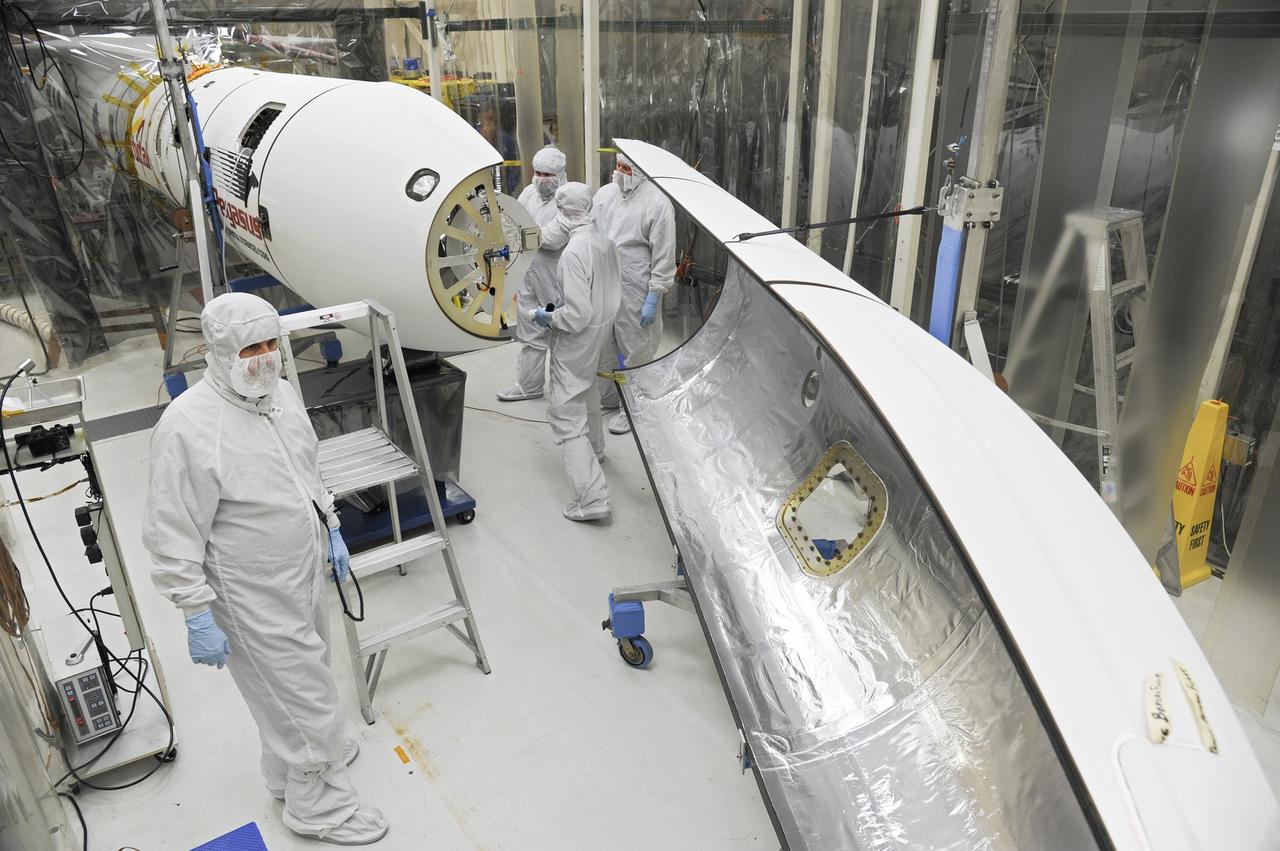
VANDENBERG AFB – Orbital Sciences team members move the second half of the payload fairing before it is placed over NASA's IRIS spacecraft. The fairing connects to the nose of the Orbital Sciences Pegasus XL rocket that will lift the solar observatory into orbit in June. The work is taking place in a hangar at Vandenberg Air Force Base where IRIS, short for Interface Region Imaging Spectrograph, is being prepared for launch on a Pegasus XL rocket. Scheduled for launch from Vandenberg June 26, IRIS will open a new window of discovery by tracing the flow of energy and plasma through the chromospheres and transition region into the sun’s corona using spectrometry and imaging. IRIS fills a crucial gap in our ability to advance studies of the sun-to-Earth connection by tracing the flow of energy and plasma through the foundation of the corona and the region around the sun known as the heliosphere. Photo credit: NASA/Tony Vauclin
VANDENBERG AFB – Orbital Sciences team members move the second half of the payload fairing before it is placed over NASA's IRIS spacecraft. The fairing connects to the nose of the Orbital Sciences Pegasus XL rocket that will lift the solar observatory into orbit in June. The work is taking place in a hangar at Vandenberg Air Force Base where IRIS, short for Interface Region Imaging Spectrograph, is being prepared for launch on a Pegasus XL rocket. Scheduled for launch from Vandenberg June 26, IRIS will open a new window of discovery by tracing the flow of energy and plasma through the chromospheres and transition region into the sun’s corona using spectrometry and imaging. IRIS fills a crucial gap in our ability to advance studies of the sun-to-Earth connection by tracing the flow of energy and plasma through the foundation of the corona and the region around the sun known as the heliosphere. Photo credit: NASA/Tony Vauclin
VANDENBERG AFB – Orbital Sciences team members move the second half of the payload fairing before it is placed over NASA's IRIS spacecraft. The fairing connects to the nose of the Orbital Sciences Pegasus XL rocket that will lift the solar observatory into orbit in June. The work is taking place in a hangar at Vandenberg Air Force Base where IRIS, short for Interface Region Imaging Spectrograph, is being prepared for launch on a Pegasus XL rocket. Scheduled for launch from Vandenberg June 26, IRIS will open a new window of discovery by tracing the flow of energy and plasma through the chromospheres and transition region into the sun’s corona using spectrometry and imaging. IRIS fills a crucial gap in our ability to advance studies of the sun-to-Earth connection by tracing the flow of energy and plasma through the foundation of the corona and the region around the sun known as the heliosphere. Photo credit: NASA/Tony Vauclin
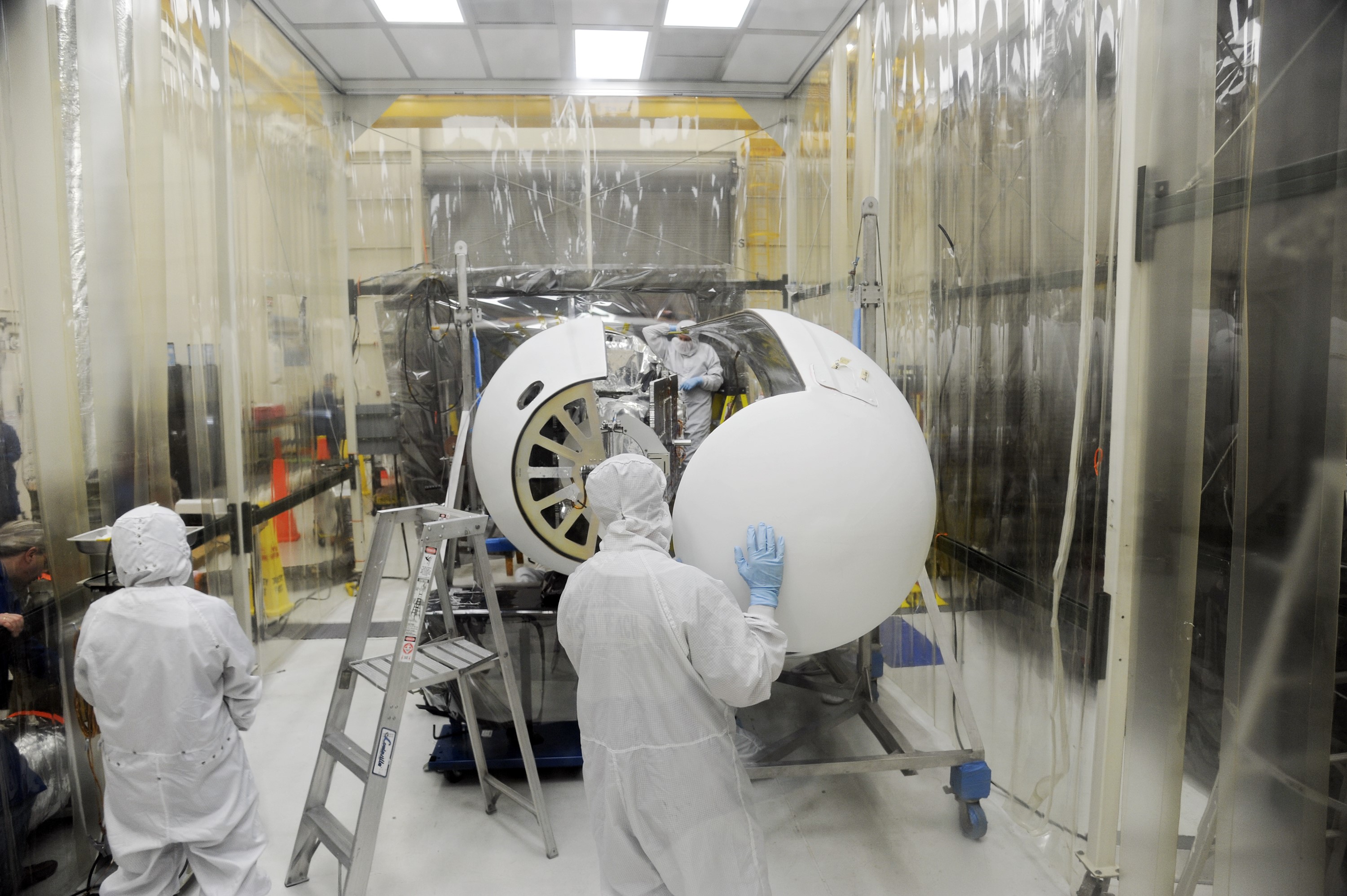
VANDENBERG AFB – Orbital Sciences team engineers monitor the connection of the payload fairing over NASA's IRIS spacecraft. The fairing connects to the nose of the Orbital Sciences Pegasus XL rocket that will lift the solar observatory into orbit in June. The work is taking place in a hangar at Vandenberg Air Force Base where IRIS, short for Interface Region Imaging Spectrograph, is being prepared for launch on a Pegasus XL rocket. Scheduled for launch from Vandenberg June 26, IRIS will open a new window of discovery by tracing the flow of energy and plasma through the chromospheres and transition region into the sun’s corona using spectrometry and imaging. IRIS fills a crucial gap in our ability to advance studies of the sun-to-Earth connection by tracing the flow of energy and plasma through the foundation of the corona and the region around the sun known as the heliosphere. Photo credit: NASA/Tony Vauclin
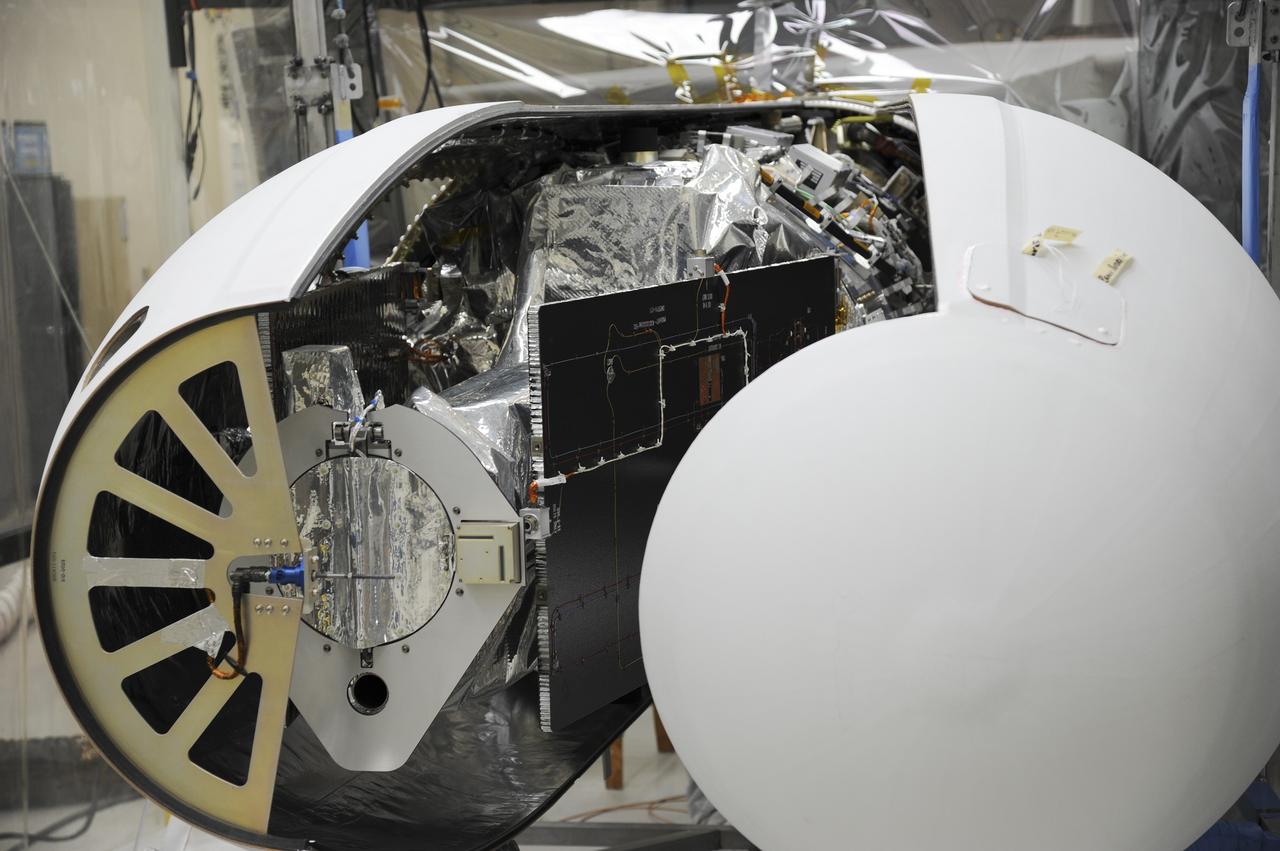
VANDENBERG AFB – Orbital Sciences team members move the second half of the payload fairing before it is placed over NASA's IRIS spacecraft. The fairing connects to the nose of the Orbital Sciences Pegasus XL rocket that will lift the solar observatory into orbit in June. The work is taking place in a hangar at Vandenberg Air Force Base where IRIS, short for Interface Region Imaging Spectrograph, is being prepared for launch on a Pegasus XL rocket. Scheduled for launch from Vandenberg June 26, IRIS will open a new window of discovery by tracing the flow of energy and plasma through the chromospheres and transition region into the sun’s corona using spectrometry and imaging. IRIS fills a crucial gap in our ability to advance studies of the sun-to-Earth connection by tracing the flow of energy and plasma through the foundation of the corona and the region around the sun known as the heliosphere. Photo credit: NASA/Tony Vauclin
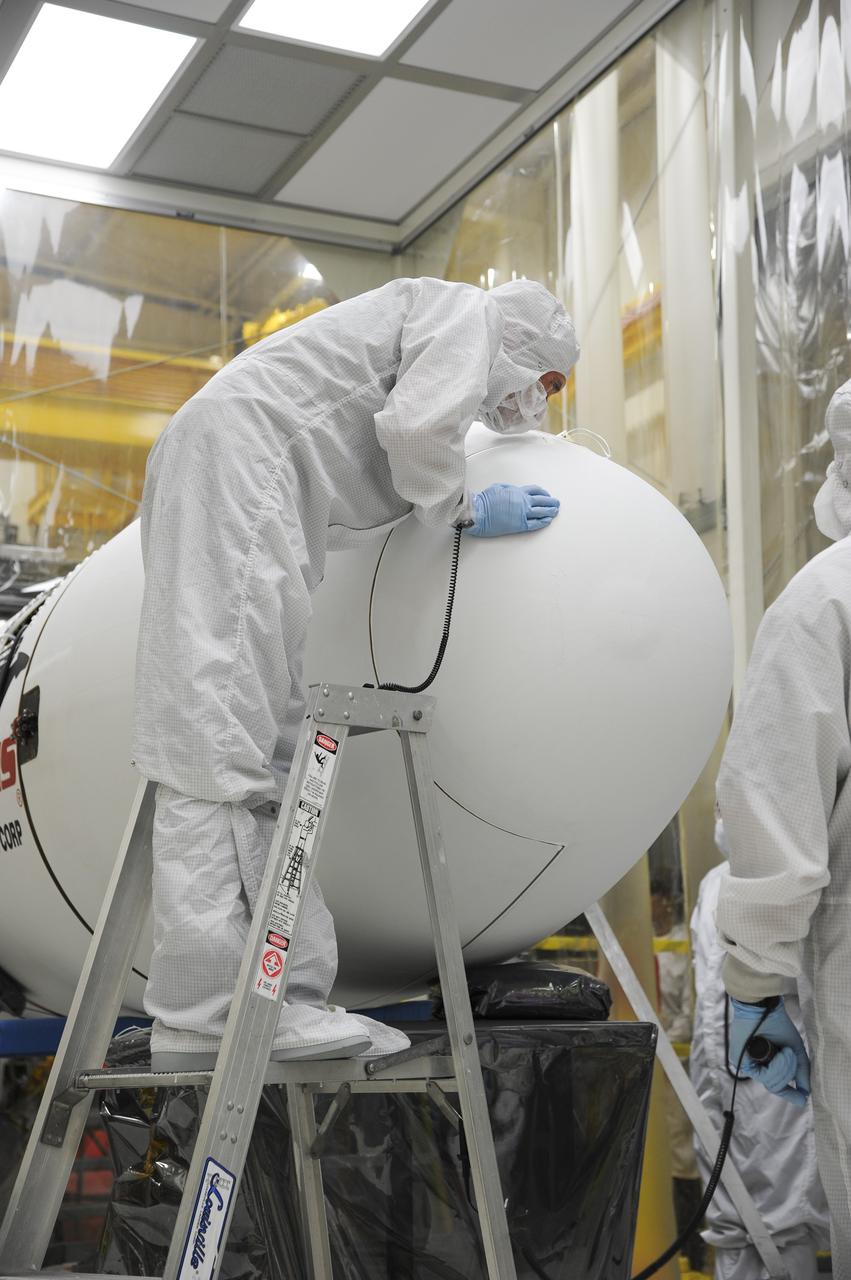
VANDENBERG AFB – Orbital Sciences engineers connect the payload fairing over NASA's IRIS spacecraft. The fairing connects to the nose of the Orbital Sciences Pegasus XL rocket that will lift the solar observatory into orbit in June. The work is taking place in a hangar at Vandenberg Air Force Base where IRIS, short for Interface Region Imaging Spectrograph, is being prepared for launch on a Pegasus XL rocket. Scheduled for launch from Vandenberg June 26, IRIS will open a new window of discovery by tracing the flow of energy and plasma through the chromospheres and transition region into the sun’s corona using spectrometry and imaging. IRIS fills a crucial gap in our ability to advance studies of the sun-to-Earth connection by tracing the flow of energy and plasma through the foundation of the corona and the region around the sun known as the heliosphere. Photo credit: NASA/Tony Vauclin
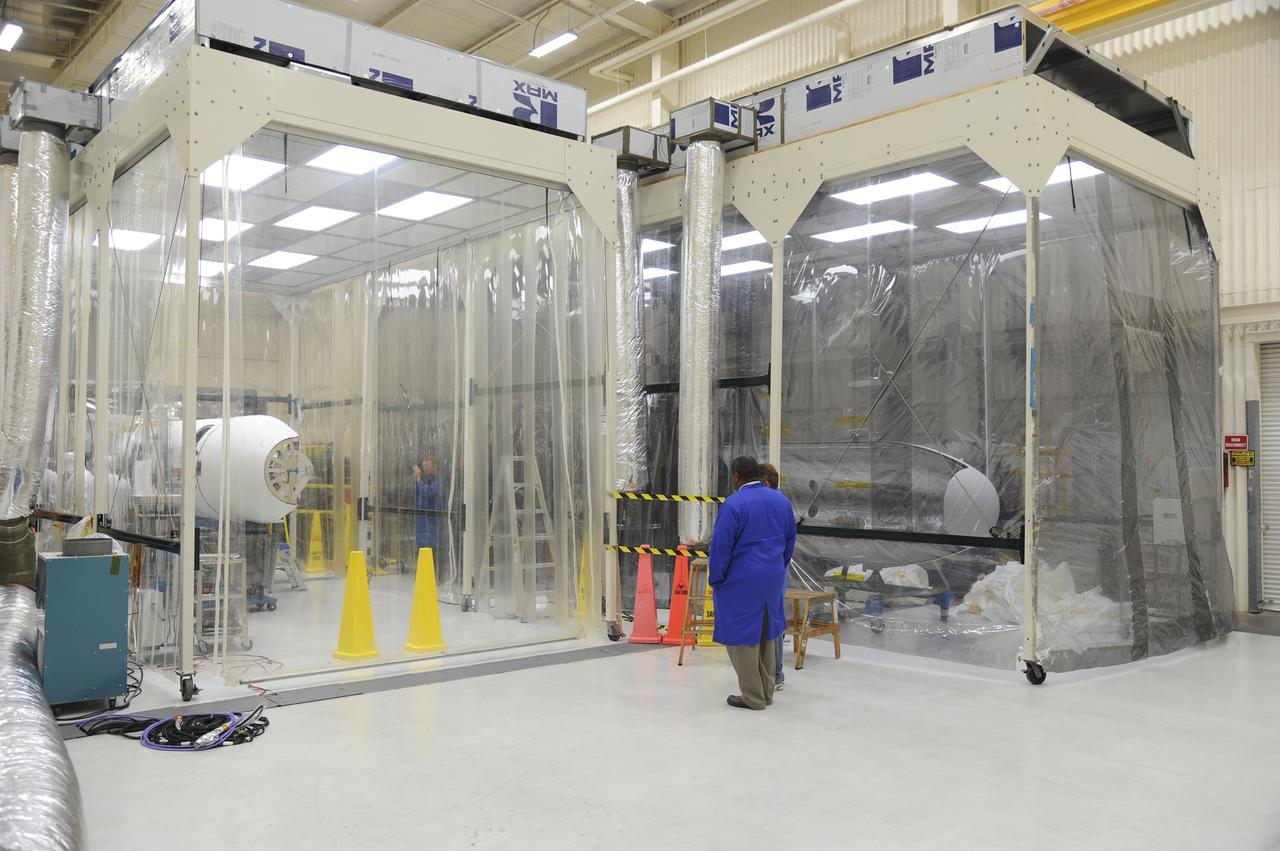
VANDENBERG AFB – Orbital Sciences team members watch as engineers connect the payload fairing over NASA's IRIS spacecraft. The fairing connects to the nose of the Orbital Sciences Pegasus XL rocket that will lift the solar observatory into orbit in June. The work is taking place in a hangar at Vandenberg Air Force Base where IRIS, short for Interface Region Imaging Spectrograph, is being prepared for launch on a Pegasus XL rocket. Scheduled for launch from Vandenberg June 26, IRIS will open a new window of discovery by tracing the flow of energy and plasma through the chromospheres and transition region into the sun’s corona using spectrometry and imaging. IRIS fills a crucial gap in our ability to advance studies of the sun-to-Earth connection by tracing the flow of energy and plasma through the foundation of the corona and the region around the sun known as the heliosphere. Photo credit: NASA/Tony Vauclin
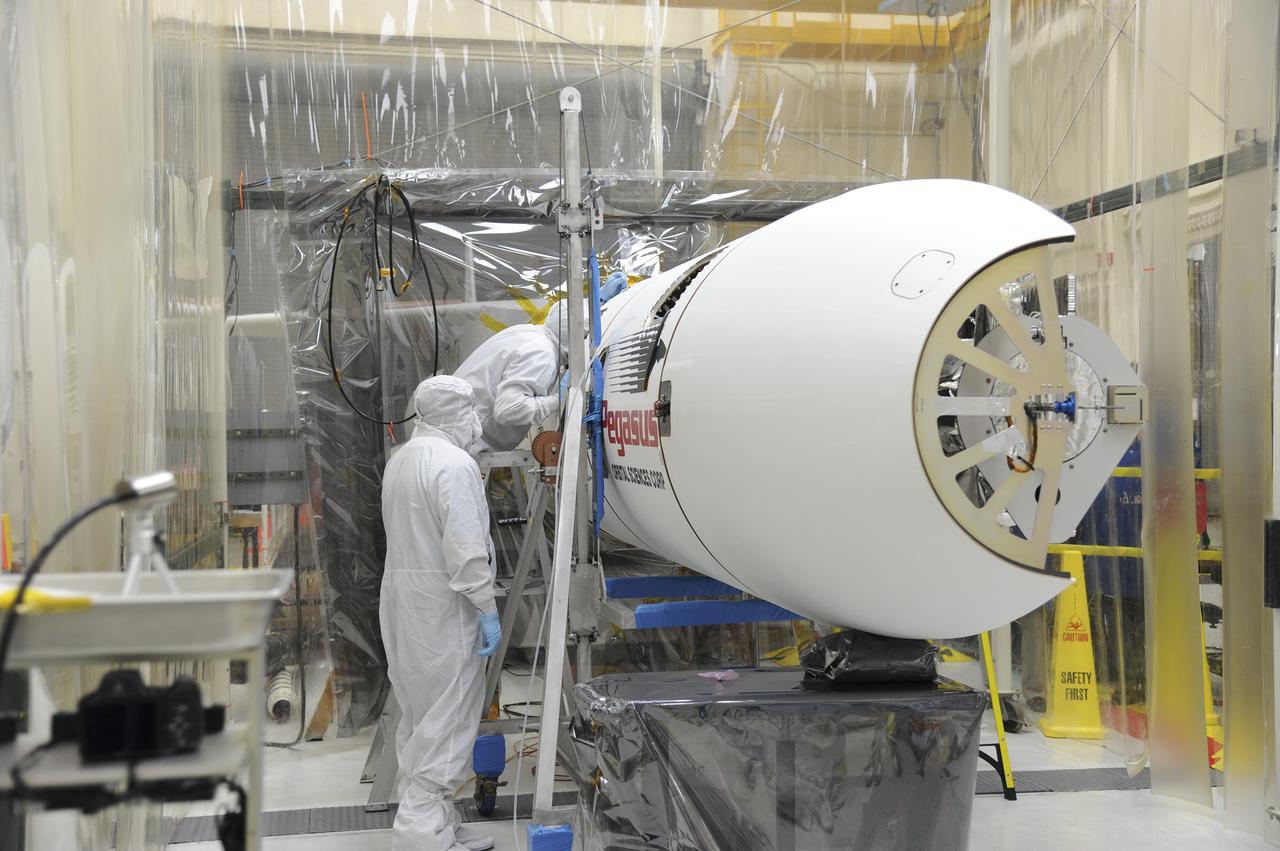
Orbital Sciences engineers connect the payload fairing over NASA's IRIS spacecraft. The fairing connects to the nose of the Orbital Sciences Pegasus XL rocket that will lift the solar observatory into orbit in June. The work is taking place in a hangar at Vandenberg Air Force Base where IRIS, short for Interface Region Imaging Spectrograph, is being prepared for launch on a Pegasus XL rocket. Scheduled for launch from Vandenberg June 26, IRIS will open a new window of discovery by tracing the flow of energy and plasma through the chromospheres and transition region into the sun’s corona using spectrometry and imaging. IRIS fills a crucial gap in our ability to advance studies of the sun-to-Earth connection by tracing the flow of energy and plasma through the foundation of the corona and the region around the sun known as the heliosphere. Photo credit: NASA/Tony Vauclin
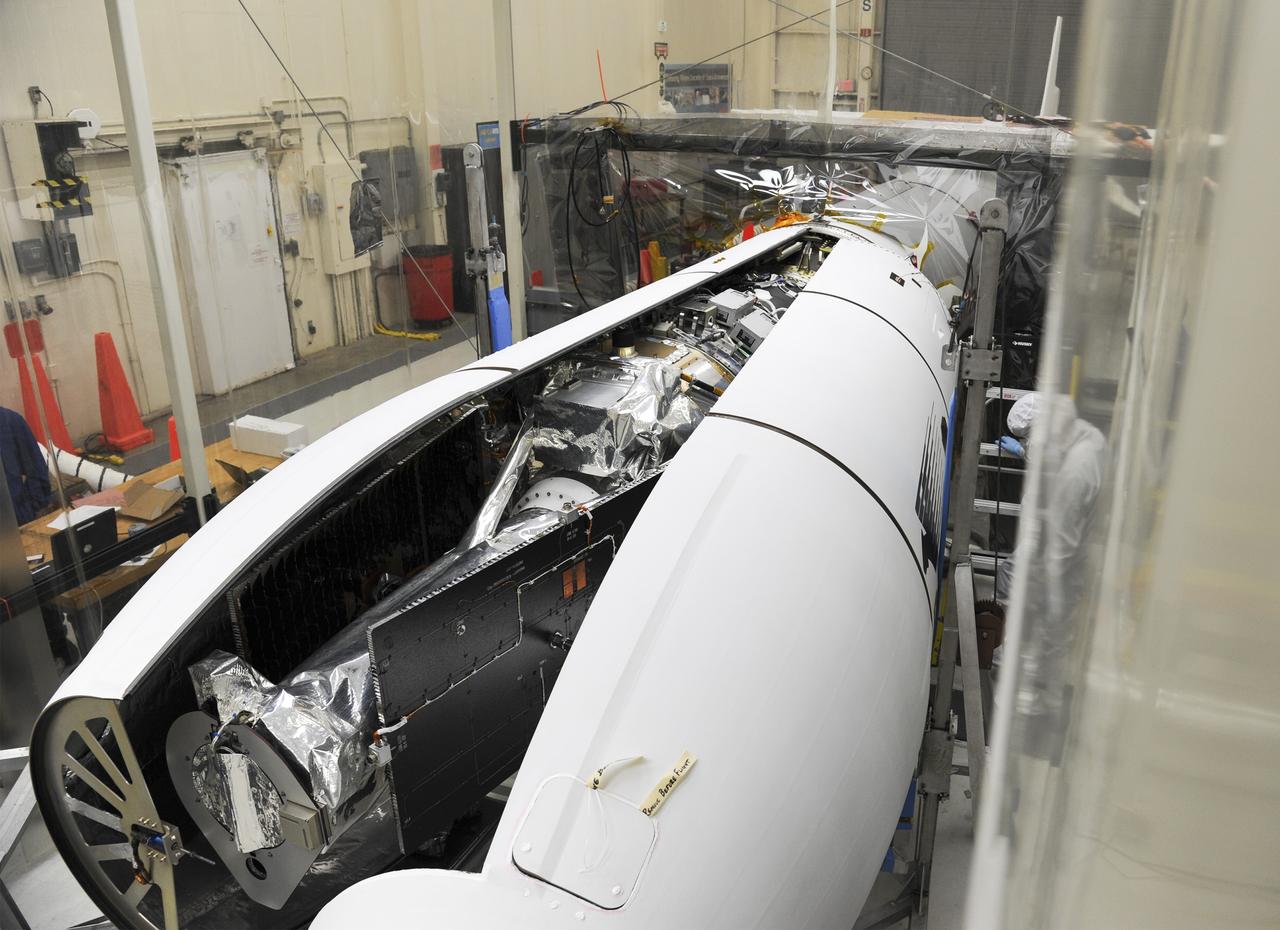
VANDENBERG AFB – Orbital Sciences engineers connect the payload fairing over NASA's IRIS spacecraft. The fairing connects to the nose of the Orbital Sciences Pegasus XL rocket that will lift the solar observatory into orbit in June. The work is taking place in a hangar at Vandenberg Air Force Base where IRIS, short for Interface Region Imaging Spectrograph, is being prepared for launch on a Pegasus XL rocket. Scheduled for launch from Vandenberg June 26, IRIS will open a new window of discovery by tracing the flow of energy and plasma through the chromospheres and transition region into the sun’s corona using spectrometry and imaging. IRIS fills a crucial gap in our ability to advance studies of the sun-to-Earth connection by tracing the flow of energy and plasma through the foundation of the corona and the region around the sun known as the heliosphere. Photo credit: NASA/Tony Vauclin
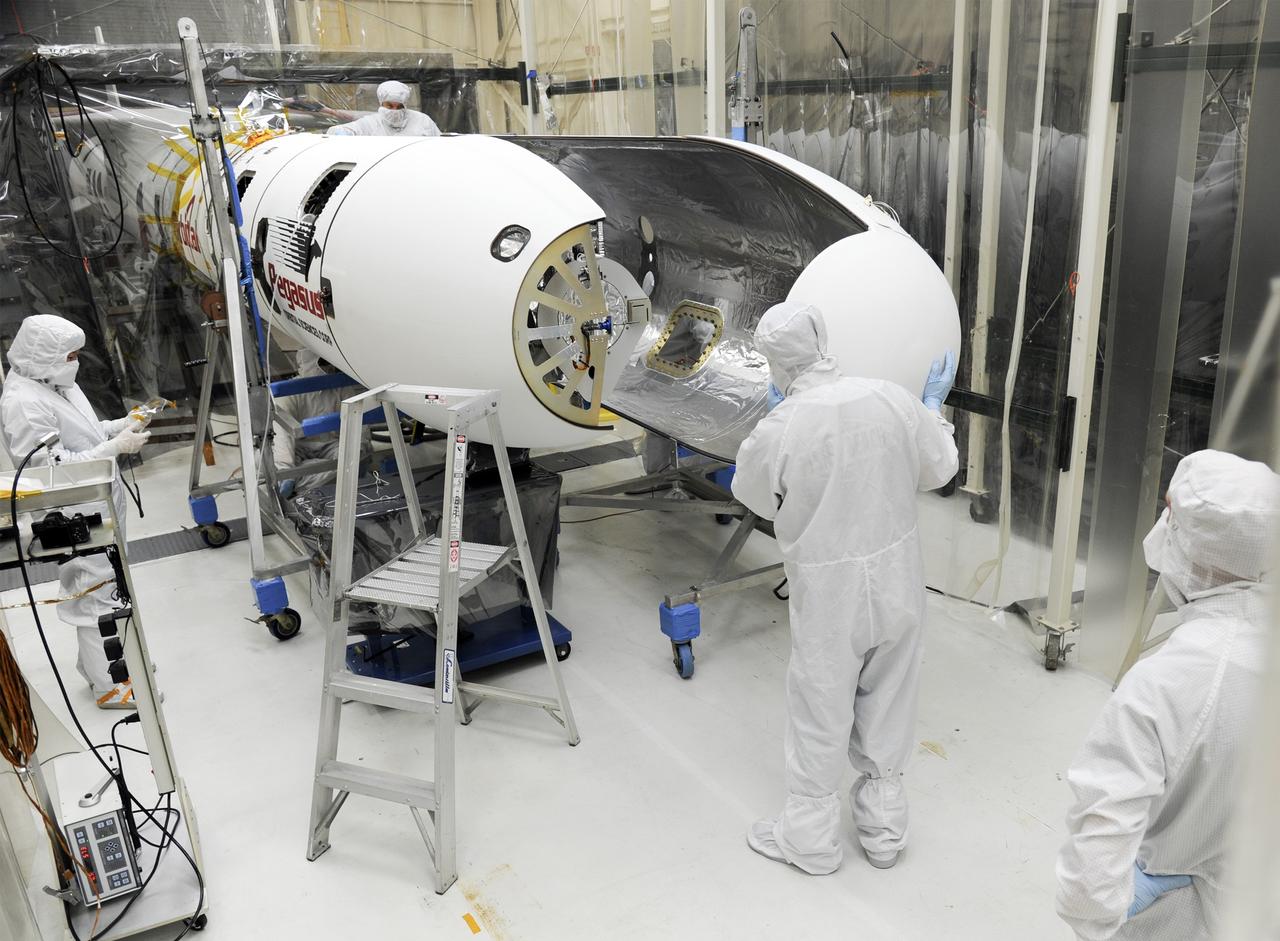
VANDENBERG AFB – Orbital Sciences team members move the second half of the payload fairing before it is placed over NASA's IRIS spacecraft. The fairing connects to the nose of the Orbital Sciences Pegasus XL rocket that will lift the solar observatory into orbit in June. The work is taking place in a hangar at Vandenberg Air Force Base where IRIS, short for Interface Region Imaging Spectrograph, is being prepared for launch on a Pegasus XL rocket. Scheduled for launch from Vandenberg June 26, IRIS will open a new window of discovery by tracing the flow of energy and plasma through the chromospheres and transition region into the sun’s corona using spectrometry and imaging. IRIS fills a crucial gap in our ability to advance studies of the sun-to-Earth connection by tracing the flow of energy and plasma through the foundation of the corona and the region around the sun known as the heliosphere. Photo credit: NASA/Tony Vauclin
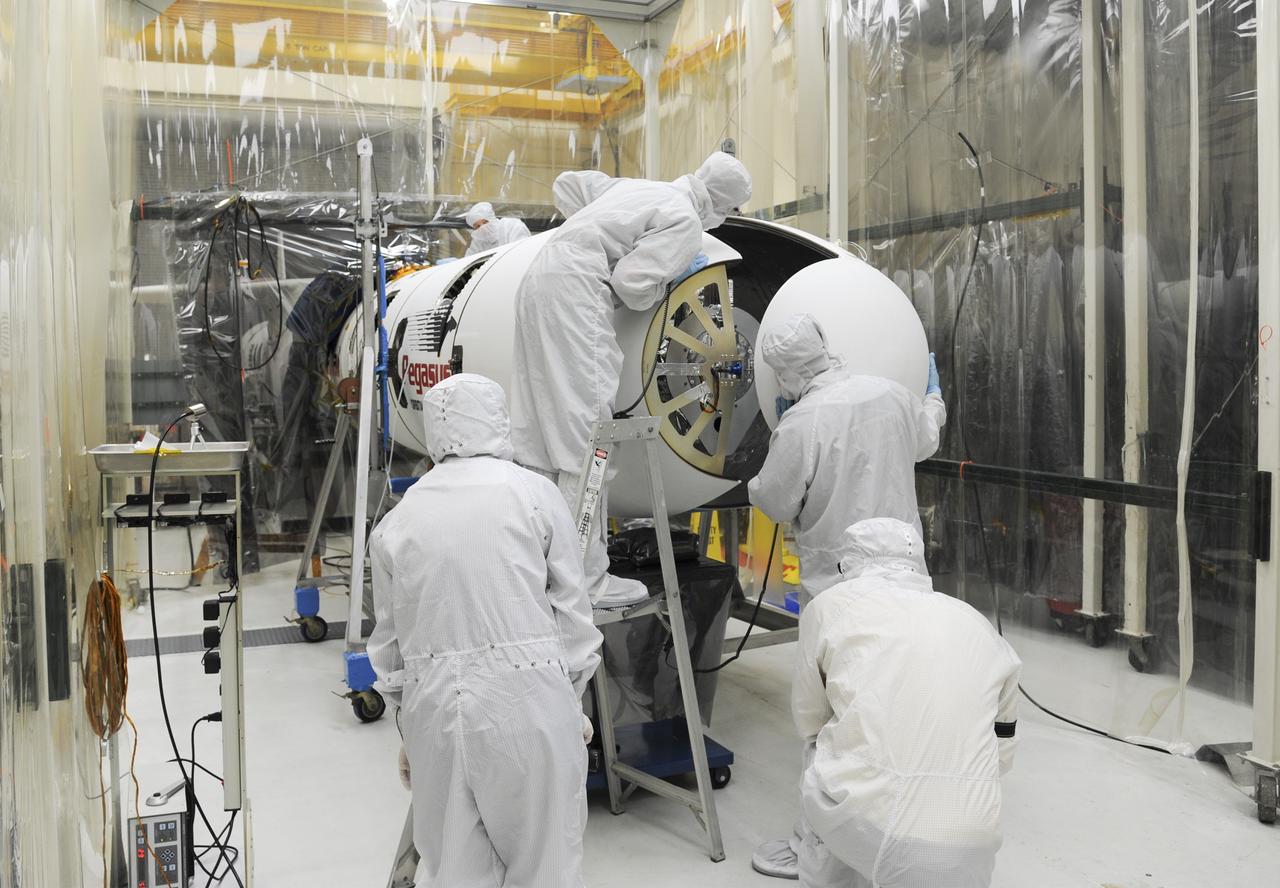
VANDENBERG AFB – Orbital Sciences engineers connect the payload fairing over NASA's IRIS spacecraft. The fairing connects to the nose of the Orbital Sciences Pegasus XL rocket that will lift the solar observatory into orbit in June. The work is taking place in a hangar at Vandenberg Air Force Base where IRIS, short for Interface Region Imaging Spectrograph, is being prepared for launch on a Pegasus XL rocket. Scheduled for launch from Vandenberg June 26, IRIS will open a new window of discovery by tracing the flow of energy and plasma through the chromospheres and transition region into the sun’s corona using spectrometry and imaging. IRIS fills a crucial gap in our ability to advance studies of the sun-to-Earth connection by tracing the flow of energy and plasma through the foundation of the corona and the region around the sun known as the heliosphere. Photo credit: NASA/Tony Vauclin
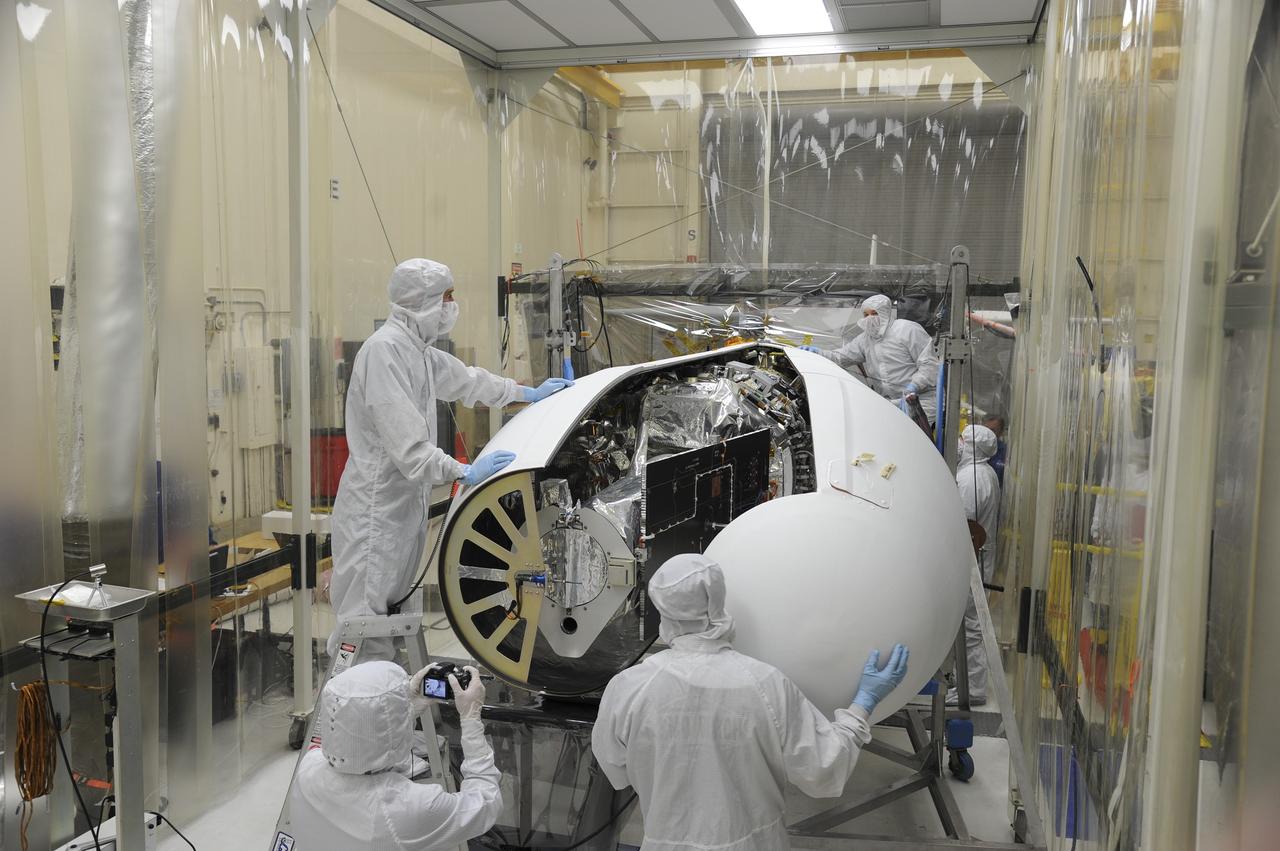
VANDENBERG AFB – Orbital Sciences engineers connect the payload fairing over NASA's IRIS spacecraft. The fairing connects to the nose of the Orbital Sciences Pegasus XL rocket that will lift the solar observatory into orbit in June. The work is taking place in a hangar at Vandenberg Air Force Base where IRIS, short for Interface Region Imaging Spectrograph, is being prepared for launch on a Pegasus XL rocket. Scheduled for launch from Vandenberg June 26, IRIS will open a new window of discovery by tracing the flow of energy and plasma through the chromospheres and transition region into the sun’s corona using spectrometry and imaging. IRIS fills a crucial gap in our ability to advance studies of the sun-to-Earth connection by tracing the flow of energy and plasma through the foundation of the corona and the region around the sun known as the heliosphere. Photo credit: NASA/Tony Vauclin
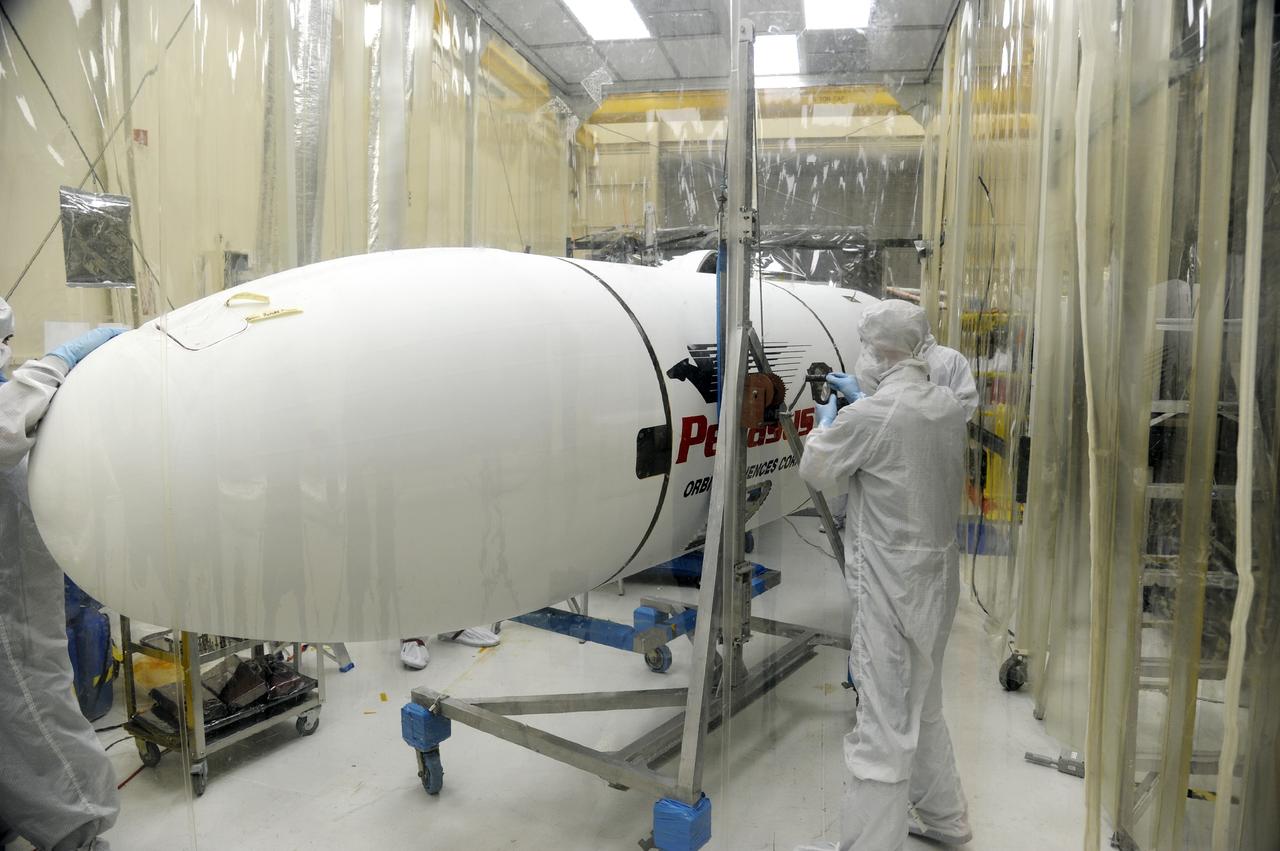
VANDENBERG AFB – Orbital Sciences team members move the second half of the payload fairing before it is placed over NASA's IRIS spacecraft. The fairing connects to the nose of the Orbital Sciences Pegasus XL rocket that will lift the solar observatory into orbit in June. The work is taking place in a hangar at Vandenberg Air Force Base where IRIS, short for Interface Region Imaging Spectrograph, is being prepared for launch on a Pegasus XL rocket. Scheduled for launch from Vandenberg June 26, IRIS will open a new window of discovery by tracing the flow of energy and plasma through the chromospheres and transition region into the sun’s corona using spectrometry and imaging. IRIS fills a crucial gap in our ability to advance studies of the sun-to-Earth connection by tracing the flow of energy and plasma through the foundation of the corona and the region around the sun known as the heliosphere. Photo credit: NASA/Tony Vauclin
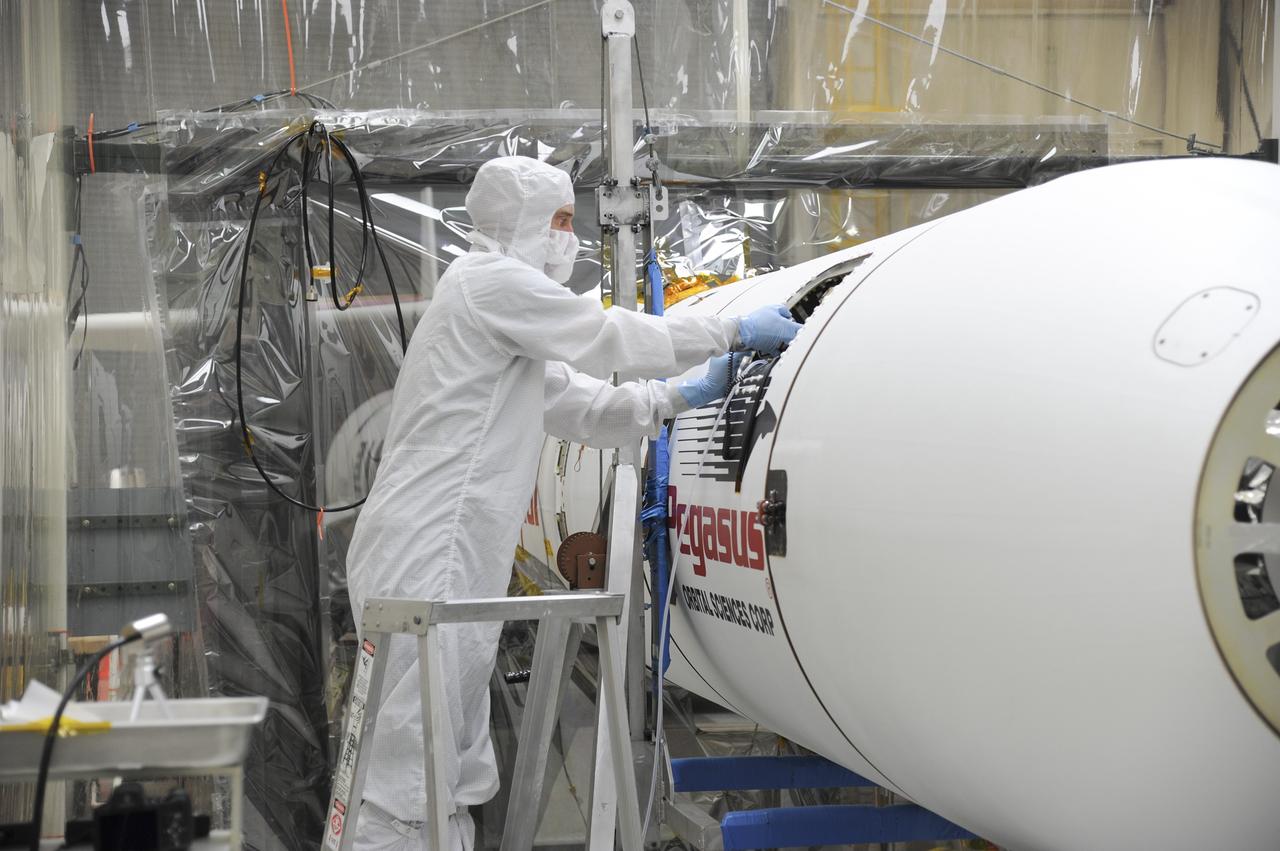
VANDENBERG AFB – Orbital Sciences engineers connect the payload fairing over NASA's IRIS spacecraft. The fairing connects to the nose of the Orbital Sciences Pegasus XL rocket that will lift the solar observatory into orbit in June. The work is taking place in a hangar at Vandenberg Air Force Base where IRIS, short for Interface Region Imaging Spectrograph, is being prepared for launch on a Pegasus XL rocket. Scheduled for launch from Vandenberg June 26, IRIS will open a new window of discovery by tracing the flow of energy and plasma through the chromospheres and transition region into the sun’s corona using spectrometry and imaging. IRIS fills a crucial gap in our ability to advance studies of the sun-to-Earth connection by tracing the flow of energy and plasma through the foundation of the corona and the region around the sun known as the heliosphere. Photo credit: NASA/Tony Vauclin
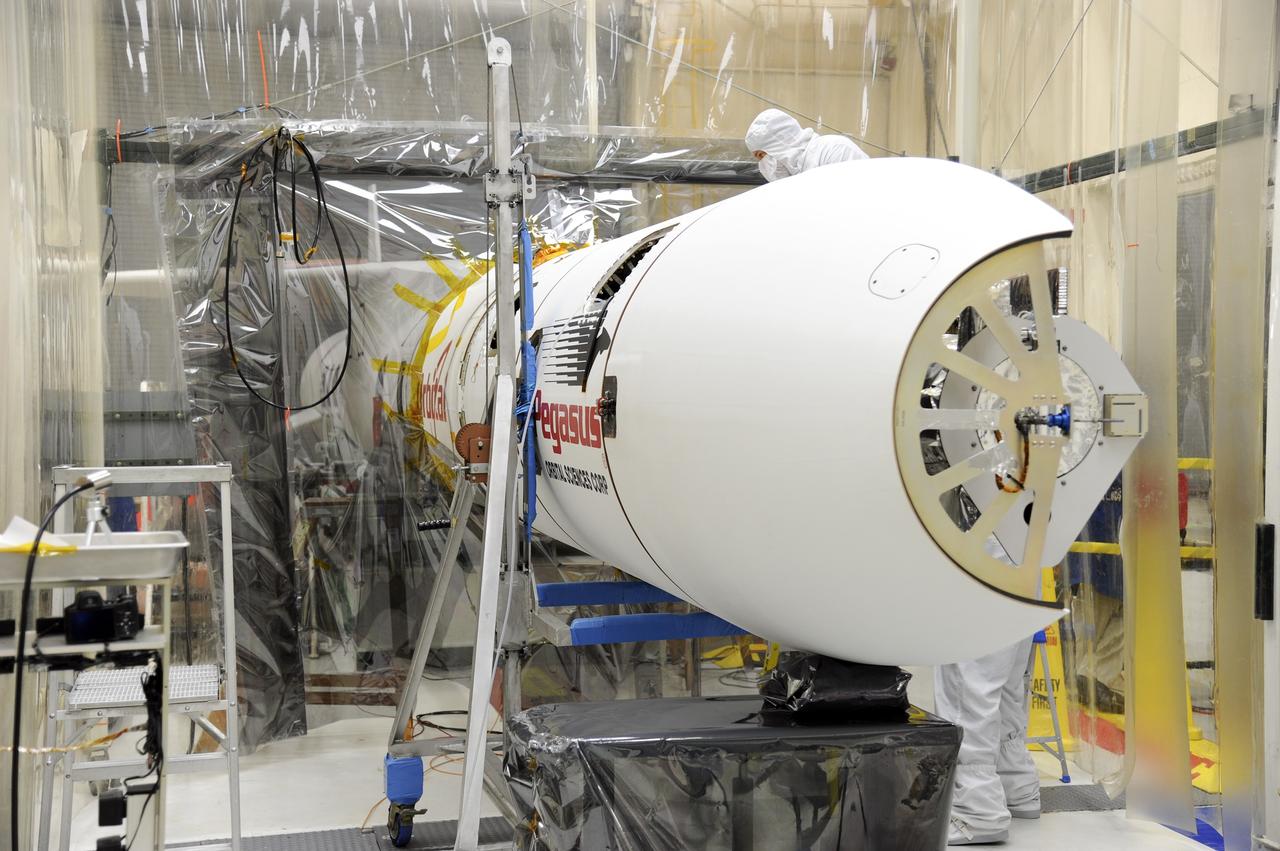
VANDENBERG AFB – Orbital Sciences team members prepare to move the second half of the payload fairing before it is placed over NASA's IRIS spacecraft. The fairing connects to the nose of the Orbital Sciences Pegasus XL rocket that will lift the solar observatory into orbit in June. The work is taking place in a hangar at Vandenberg Air Force Base where IRIS, short for Interface Region Imaging Spectrograph, is being prepared for launch on a Pegasus XL rocket. Scheduled for launch from Vandenberg June 26, IRIS will open a new window of discovery by tracing the flow of energy and plasma through the chromospheres and transition region into the sun’s corona using spectrometry and imaging. IRIS fills a crucial gap in our ability to advance studies of the sun-to-Earth connection by tracing the flow of energy and plasma through the foundation of the corona and the region around the sun known as the heliosphere. Photo credit: NASA/Tony Vauclin
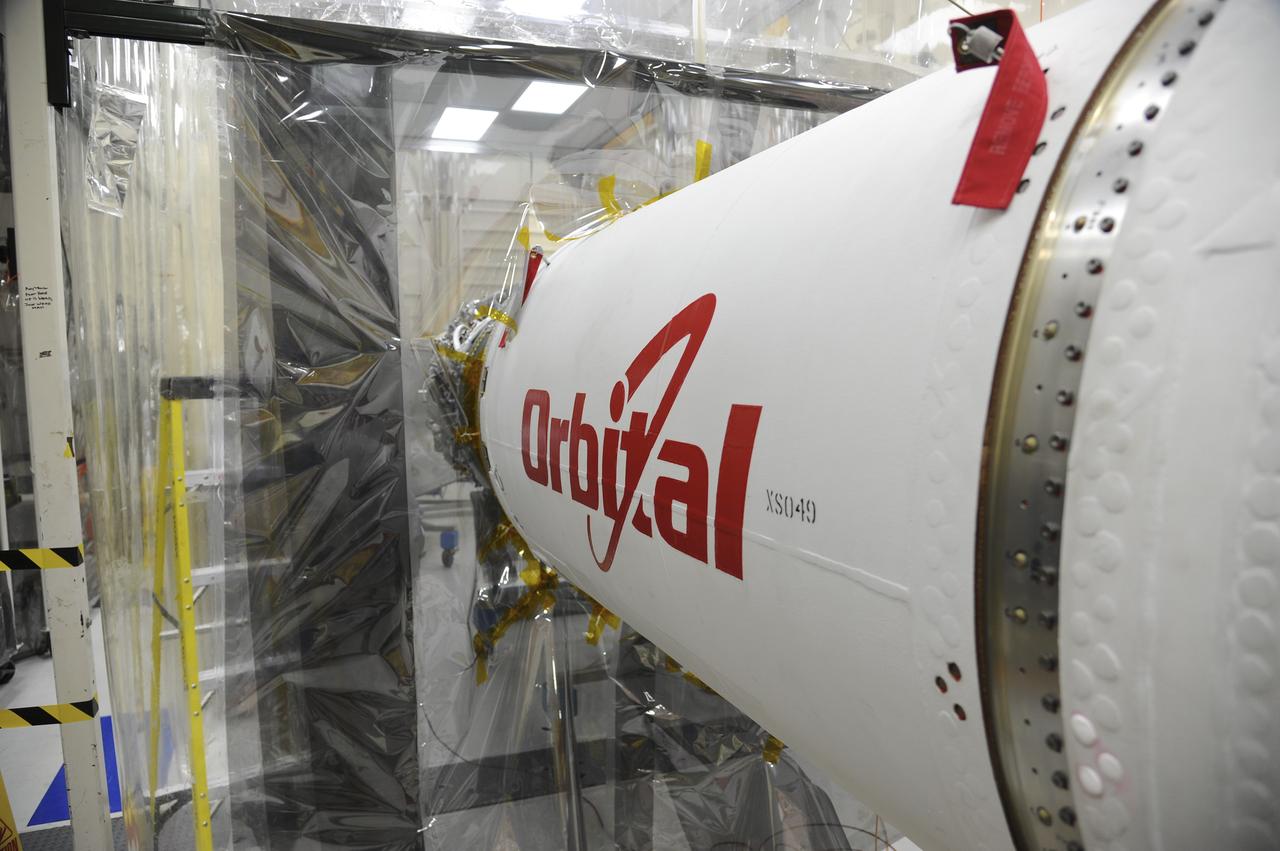
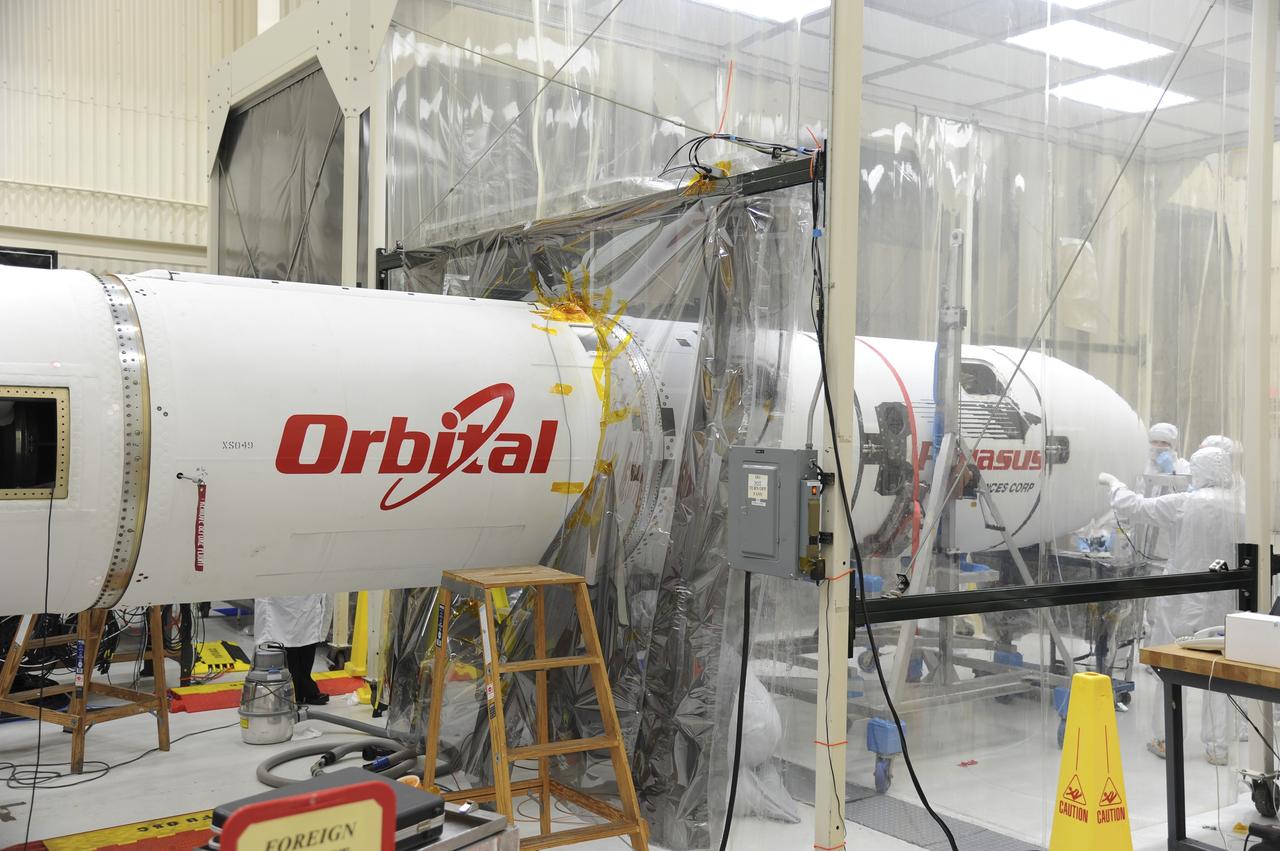
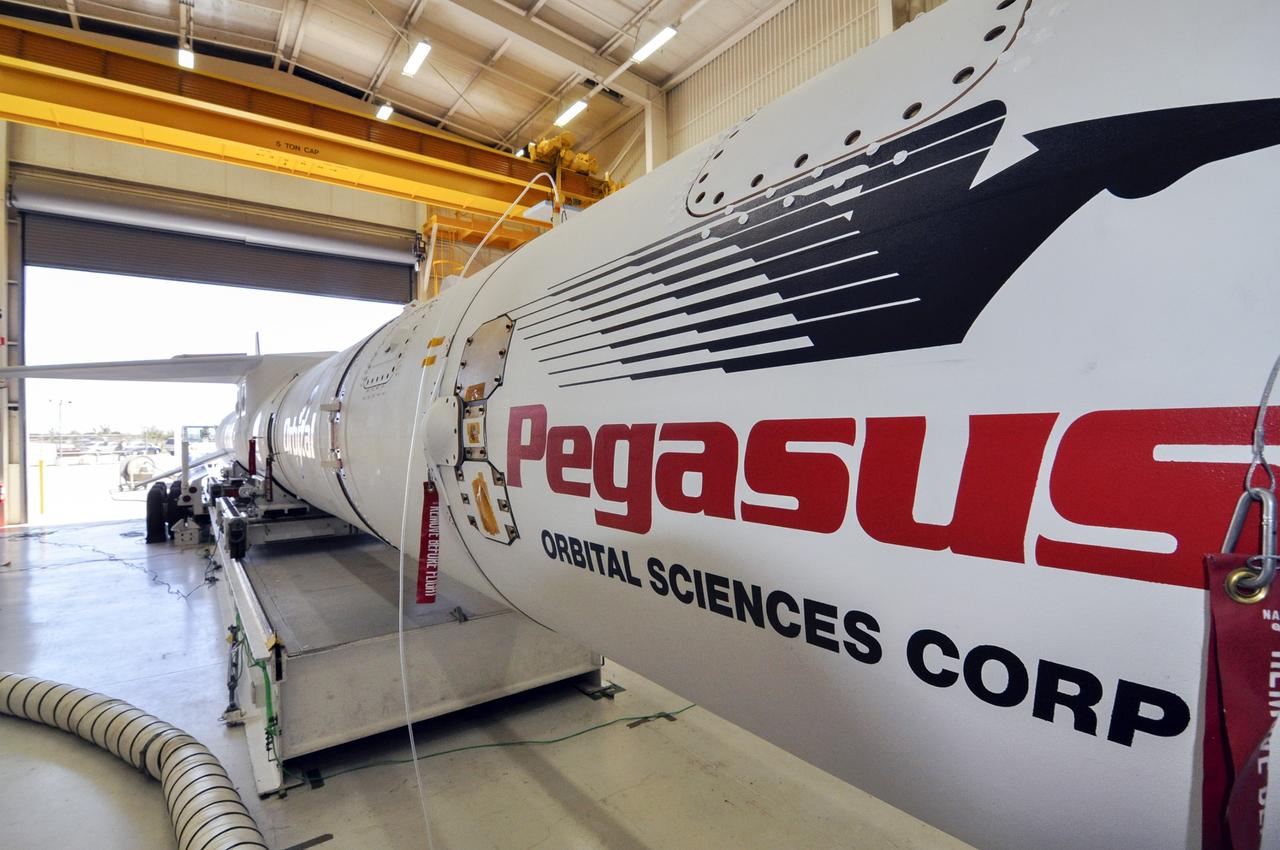
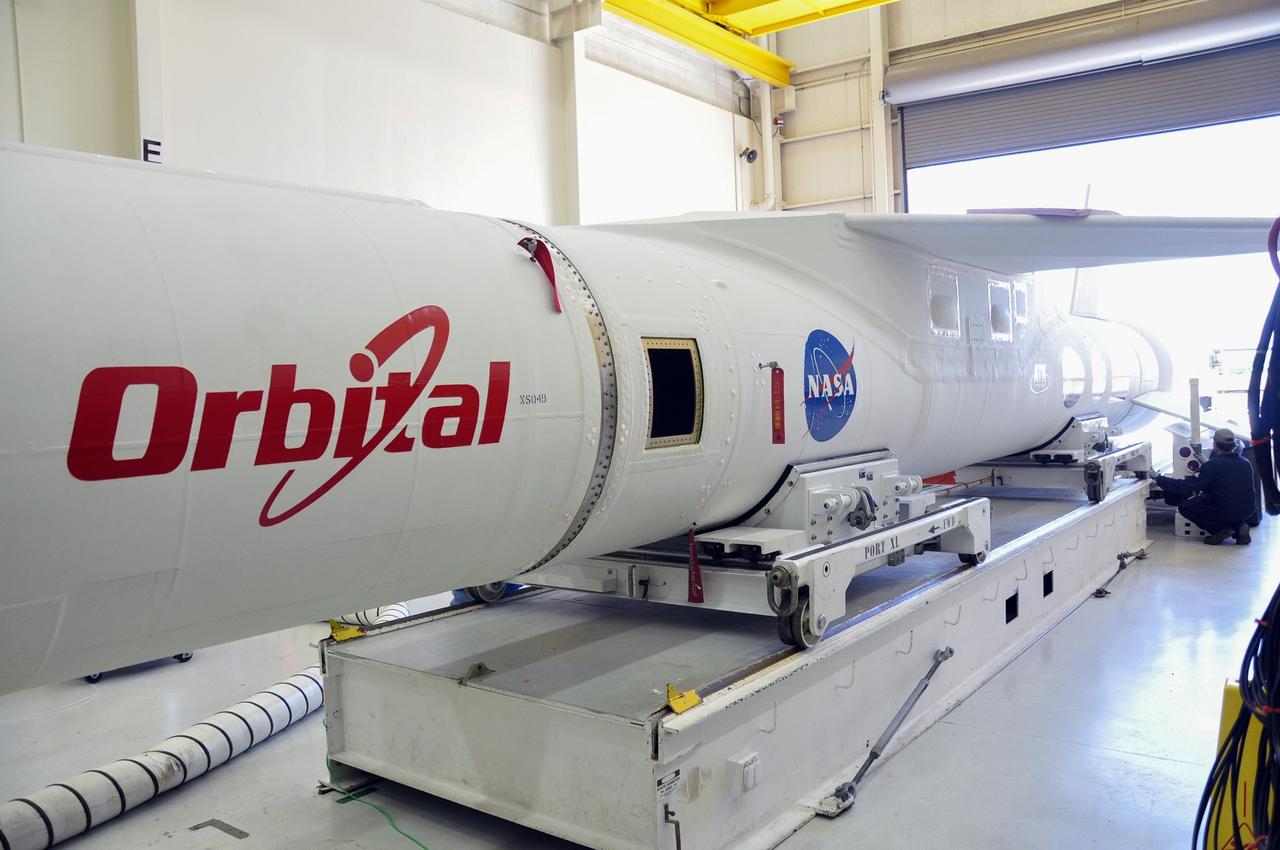
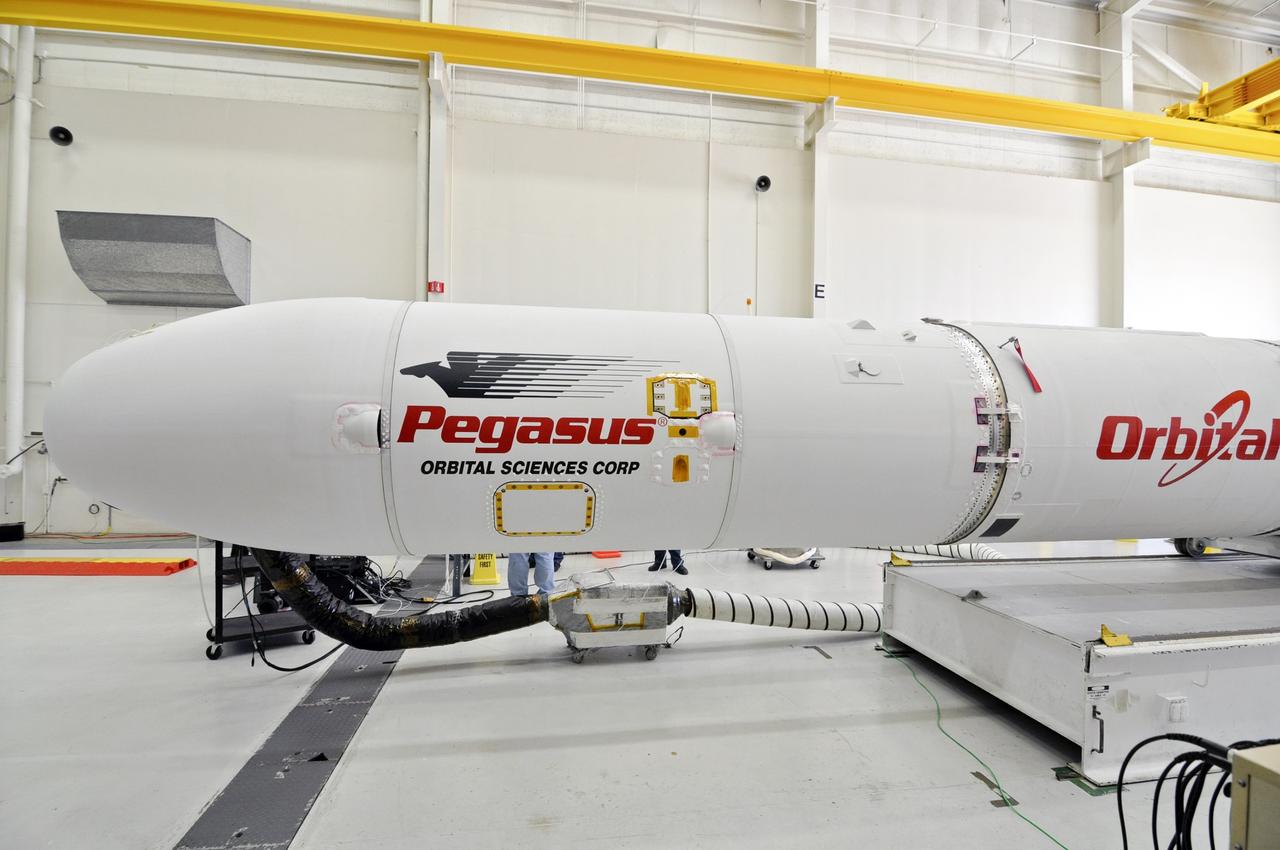
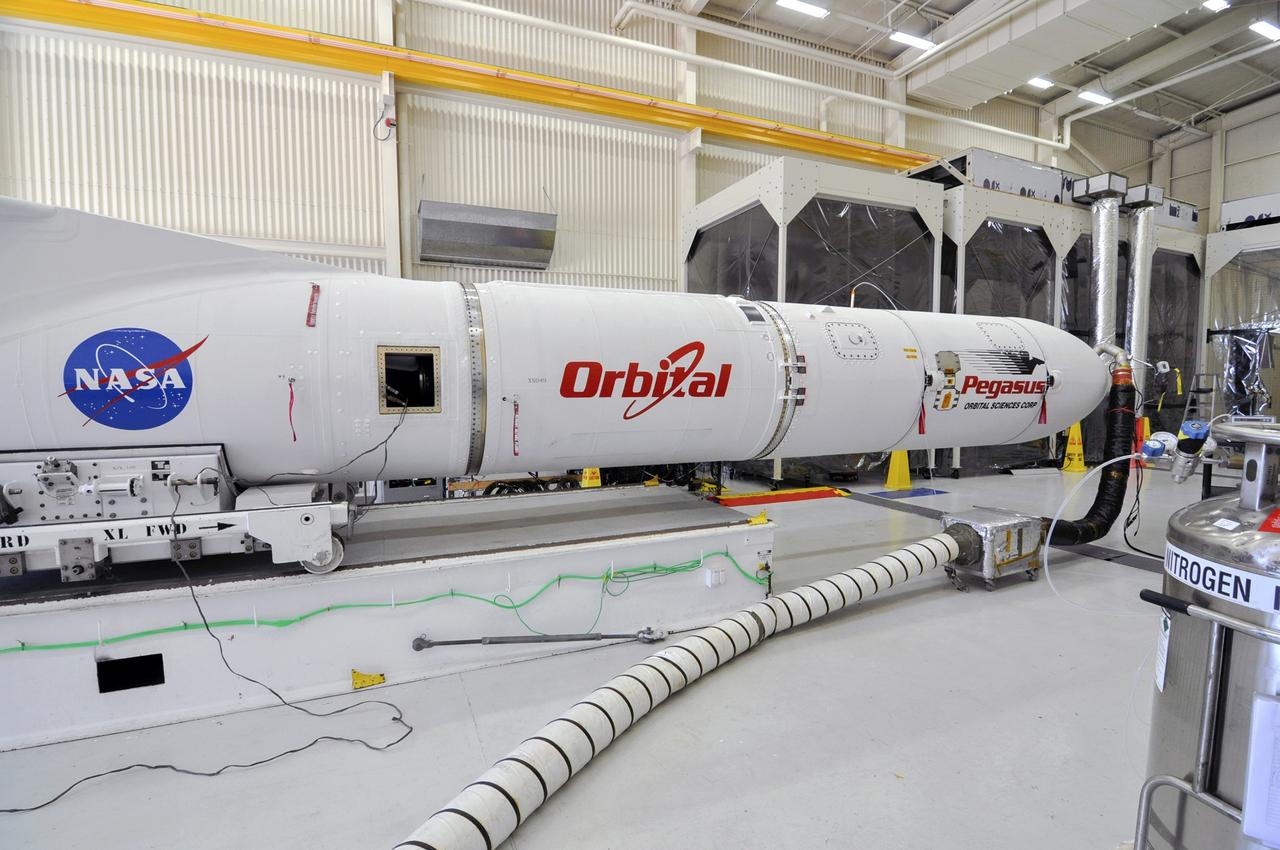
VANDENBERG AFB – Detail of the Orbital Sciences Pegasus XL rocket that will lift NASA's IRIS solar observatory into orbit in June. The work is taking place in a hangar at Vandenberg Air Force Base where IRIS, short for Interface Region Imaging Spectrograph, is being prepared for launch from Vandenberg June 26. IRIS will open a new window of discovery by tracing the flow of energy and plasma through the chromospheres and transition region into the sun’s corona using spectrometry and imaging. IRIS fills a crucial gap in our ability to advance studies of the sun-to-Earth connection by tracing the flow of energy and plasma through the foundation of the corona and the region around the sun known as the heliosphere. Photo credit: NASA/Tony Vauclin
VANDENBERG ABF, Calif. - The Orbital Sciences Pegasus XL rocket that will lift NASA's IRIS solar observatory into orbit is moved from a hangar onto a transporter at Vandenberg Air Force Base. IRIS, short for Interface Region Imaging Spectrograph, is being prepared for launch from Vandenberg June 26. IRIS will open a new window of discovery by tracing the flow of energy and plasma through the chromospheres and transition region into the sun’s corona using spectrometry and imaging. IRIS fills a crucial gap in our ability to advance studies of the sun-to-Earth connection by tracing the flow of energy and plasma through the foundation of the corona and the region around the sun known as the heliosphere. Photo credit: VAFB/Randy Beaudoin
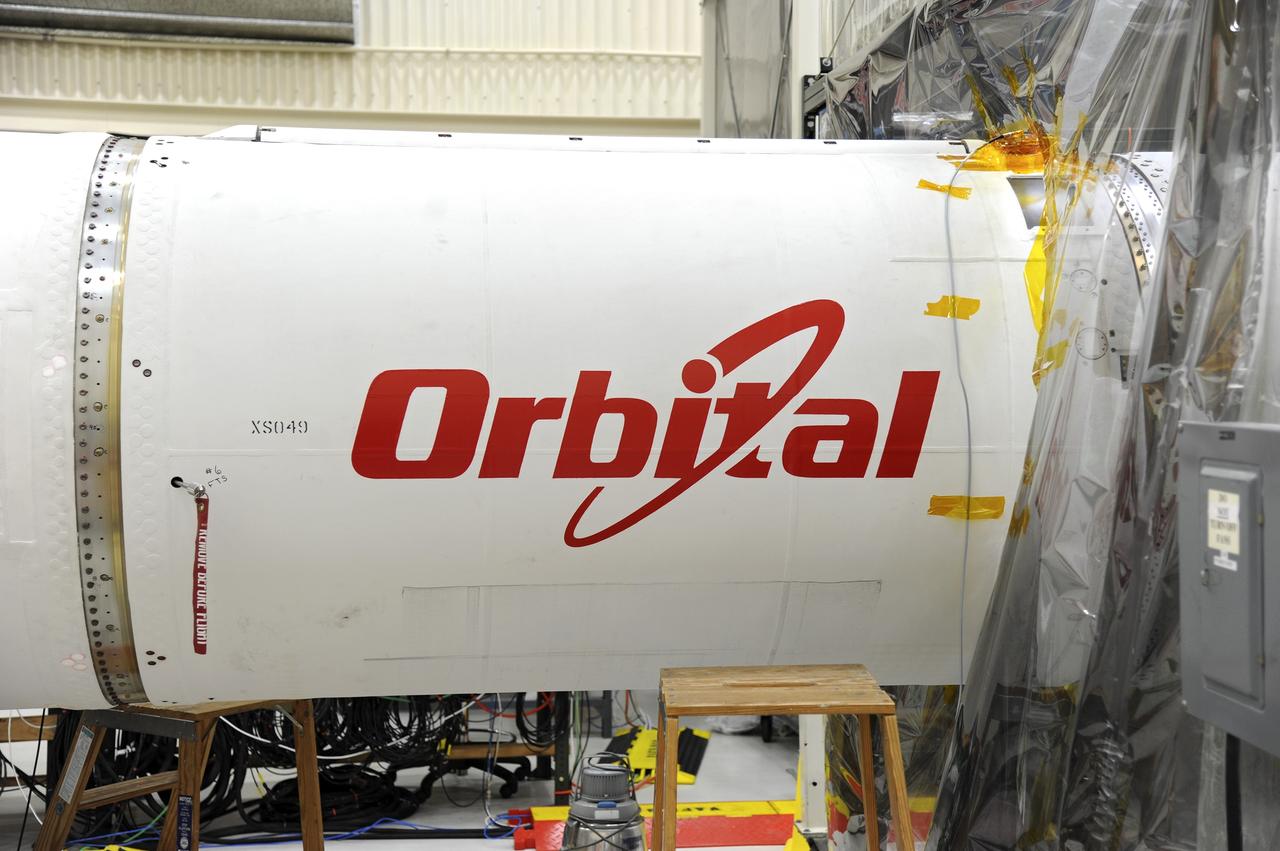
VANDENBERG AFB – Detail of the Orbital Sciences Pegasus XL rocket that will lift NASA's IRIS solar observatory into orbit in June. The work is taking place in a hangar at Vandenberg Air Force Base where IRIS, short for Interface Region Imaging Spectrograph, is being prepared for launch from Vandenberg June 26. IRIS will open a new window of discovery by tracing the flow of energy and plasma through the chromospheres and transition region into the sun’s corona using spectrometry and imaging. IRIS fills a crucial gap in our ability to advance studies of the sun-to-Earth connection by tracing the flow of energy and plasma through the foundation of the corona and the region around the sun known as the heliosphere. Photo credit: NASA/Tony Vauclin
VANDENBERG ABF, Calif. - The Orbital Sciences Pegasus XL rocket that will lift NASA's IRIS solar observatory into orbit is moved from a hangar onto a transporter at Vandenberg Air Force Base. IRIS, short for Interface Region Imaging Spectrograph, is being prepared for launch from Vandenberg June 26. IRIS will open a new window of discovery by tracing the flow of energy and plasma through the chromospheres and transition region into the sun’s corona using spectrometry and imaging. IRIS fills a crucial gap in our ability to advance studies of the sun-to-Earth connection by tracing the flow of energy and plasma through the foundation of the corona and the region around the sun known as the heliosphere. Photo credit: VAFB/Randy Beaudoin
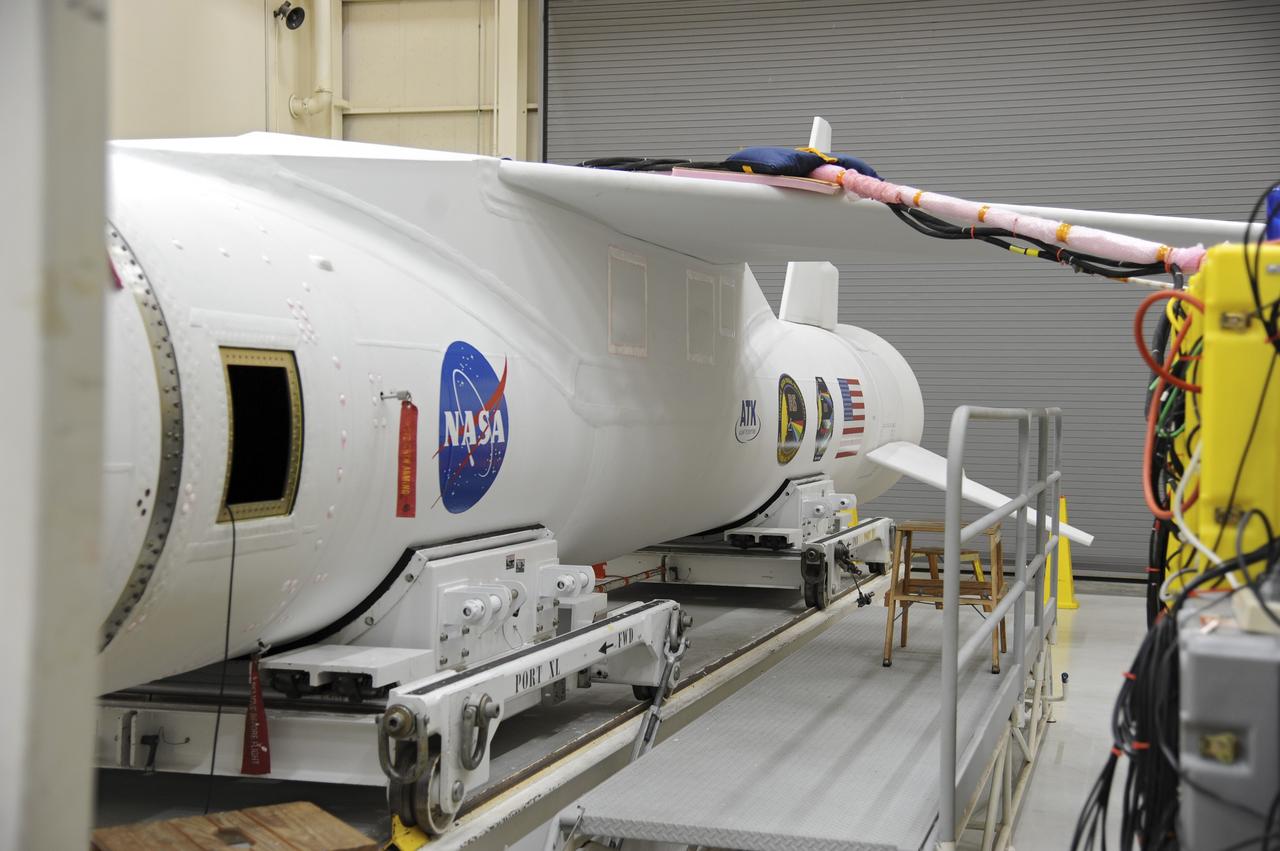
VANDENBERG AFB – Detail of the Orbital Sciences Pegasus XL rocket that will lift NASA's IRIS solar observatory into orbit in June. The work is taking place in a hangar at Vandenberg Air Force Base where IRIS, short for Interface Region Imaging Spectrograph, is being prepared for launch from Vandenberg June 26. IRIS will open a new window of discovery by tracing the flow of energy and plasma through the chromospheres and transition region into the sun’s corona using spectrometry and imaging. IRIS fills a crucial gap in our ability to advance studies of the sun-to-Earth connection by tracing the flow of energy and plasma through the foundation of the corona and the region around the sun known as the heliosphere. Photo credit: NASA/Tony Vauclin
VANDENBERG ABF, Calif. - The Orbital Sciences Pegasus XL rocket that will lift NASA's IRIS solar observatory into orbit is moved from a hangar onto a transporter at Vandenberg Air Force Base. IRIS, short for Interface Region Imaging Spectrograph, is being prepared for launch from Vandenberg June 26. IRIS will open a new window of discovery by tracing the flow of energy and plasma through the chromospheres and transition region into the sun’s corona using spectrometry and imaging. IRIS fills a crucial gap in our ability to advance studies of the sun-to-Earth connection by tracing the flow of energy and plasma through the foundation of the corona and the region around the sun known as the heliosphere. Photo credit: VAFB/Randy Beaudoin
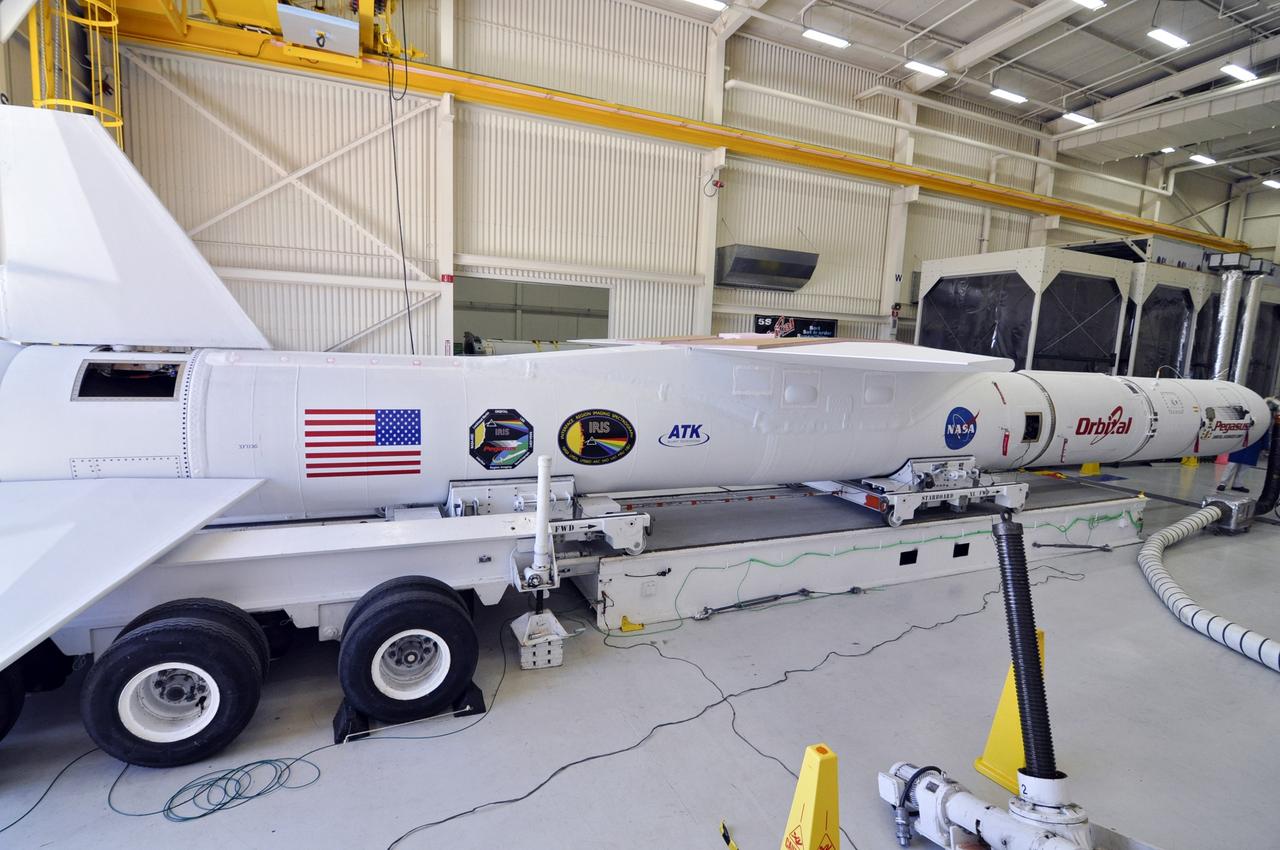
VANDENBERG ABF, Calif. - The Orbital Sciences Pegasus XL rocket that will lift NASA's IRIS solar observatory into orbit is moved from a hangar onto a transporter at Vandenberg Air Force Base. IRIS, short for Interface Region Imaging Spectrograph, is being prepared for launch from Vandenberg June 26. IRIS will open a new window of discovery by tracing the flow of energy and plasma through the chromospheres and transition region into the sun’s corona using spectrometry and imaging. IRIS fills a crucial gap in our ability to advance studies of the sun-to-Earth connection by tracing the flow of energy and plasma through the foundation of the corona and the region around the sun known as the heliosphere. Photo credit: VAFB/Randy Beaudoin
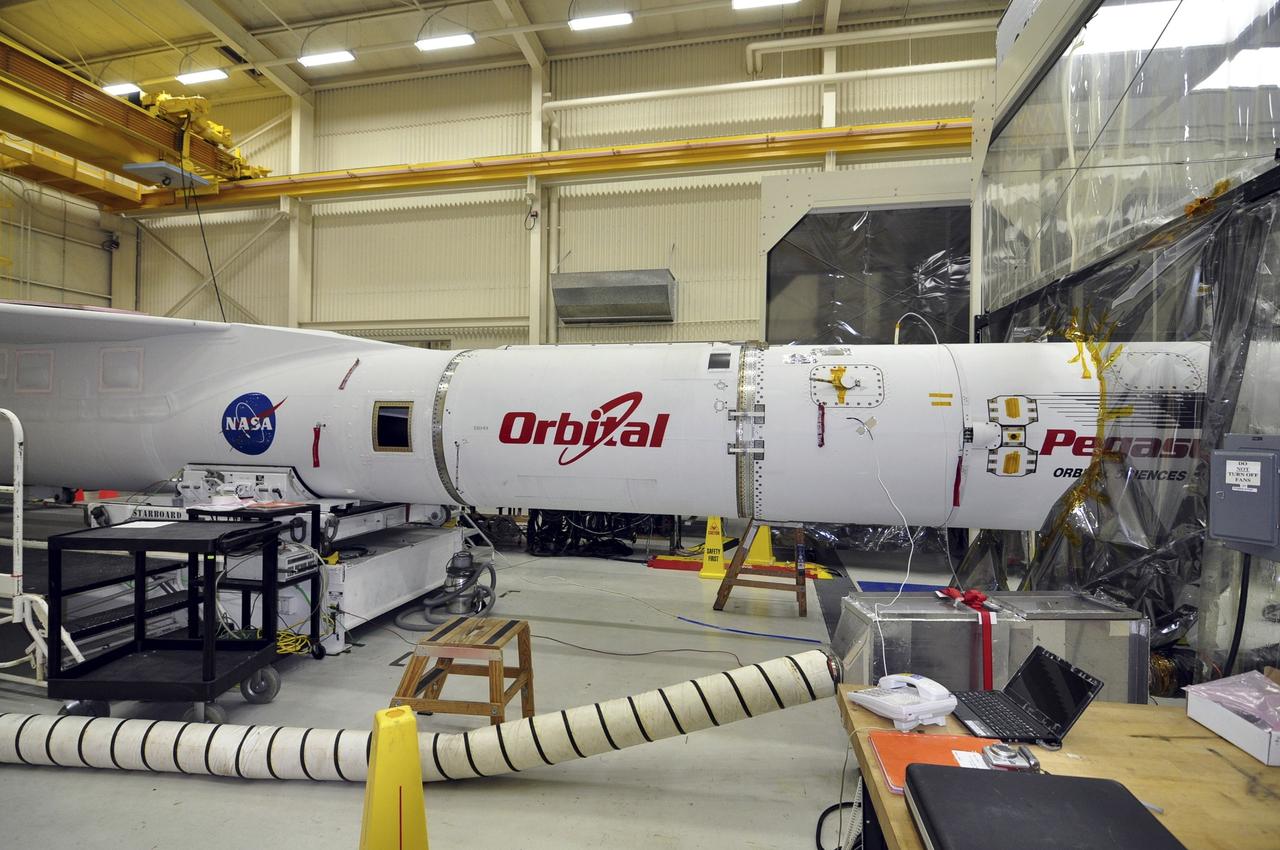
VANDENBERG ABF, Calif. - The Orbital Sciences Pegasus XL rocket that will lift NASA's IRIS solar observatory into orbit in June is seen in a hangar at Vandenberg Air Force Base. IRIS, short for Interface Region Imaging Spectrograph, is being prepared for launch from Vandenberg June 26. IRIS will open a new window of discovery by tracing the flow of energy and plasma through the chromospheres and transition region into the sun’s corona using spectrometry and imaging. IRIS fills a crucial gap in our ability to advance studies of the sun-to-Earth connection by tracing the flow of energy and plasma through the foundation of the corona and the region around the sun known as the heliosphere. Photo credit: VAFB/Randy Beaudoin
VANDENBERG ABF, Calif. - The Orbital Sciences Pegasus XL rocket that will lift NASA's IRIS solar observatory into orbit is moved from a hangar onto a transporter at Vandenberg Air Force Base. IRIS, short for Interface Region Imaging Spectrograph, is being prepared for launch from Vandenberg June 26. IRIS will open a new window of discovery by tracing the flow of energy and plasma through the chromospheres and transition region into the sun’s corona using spectrometry and imaging. IRIS fills a crucial gap in our ability to advance studies of the sun-to-Earth connection by tracing the flow of energy and plasma through the foundation of the corona and the region around the sun known as the heliosphere. Photo credit: VAFB/Randy Beaudoin
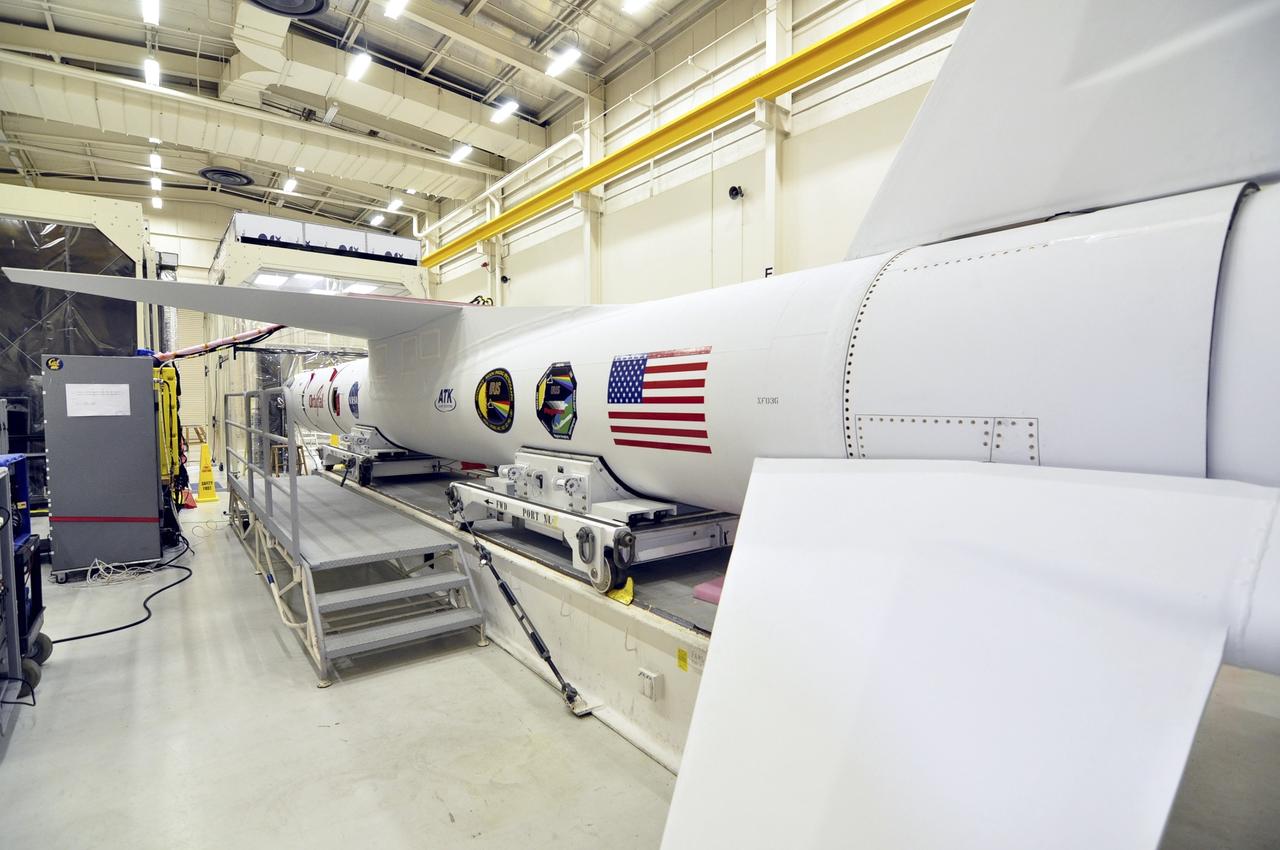
VANDENBERG ABF, Calif. - The Orbital Sciences Pegasus XL rocket that will lift NASA's IRIS solar observatory into orbit in June is seen in a hangar at Vandenberg Air Force Base. IRIS, short for Interface Region Imaging Spectrograph, is being prepared for launch from Vandenberg June 26. IRIS will open a new window of discovery by tracing the flow of energy and plasma through the chromospheres and transition region into the sun’s corona using spectrometry and imaging. IRIS fills a crucial gap in our ability to advance studies of the sun-to-Earth connection by tracing the flow of energy and plasma through the foundation of the corona and the region around the sun known as the heliosphere. Photo credit: VAFB/Randy Beaudoin
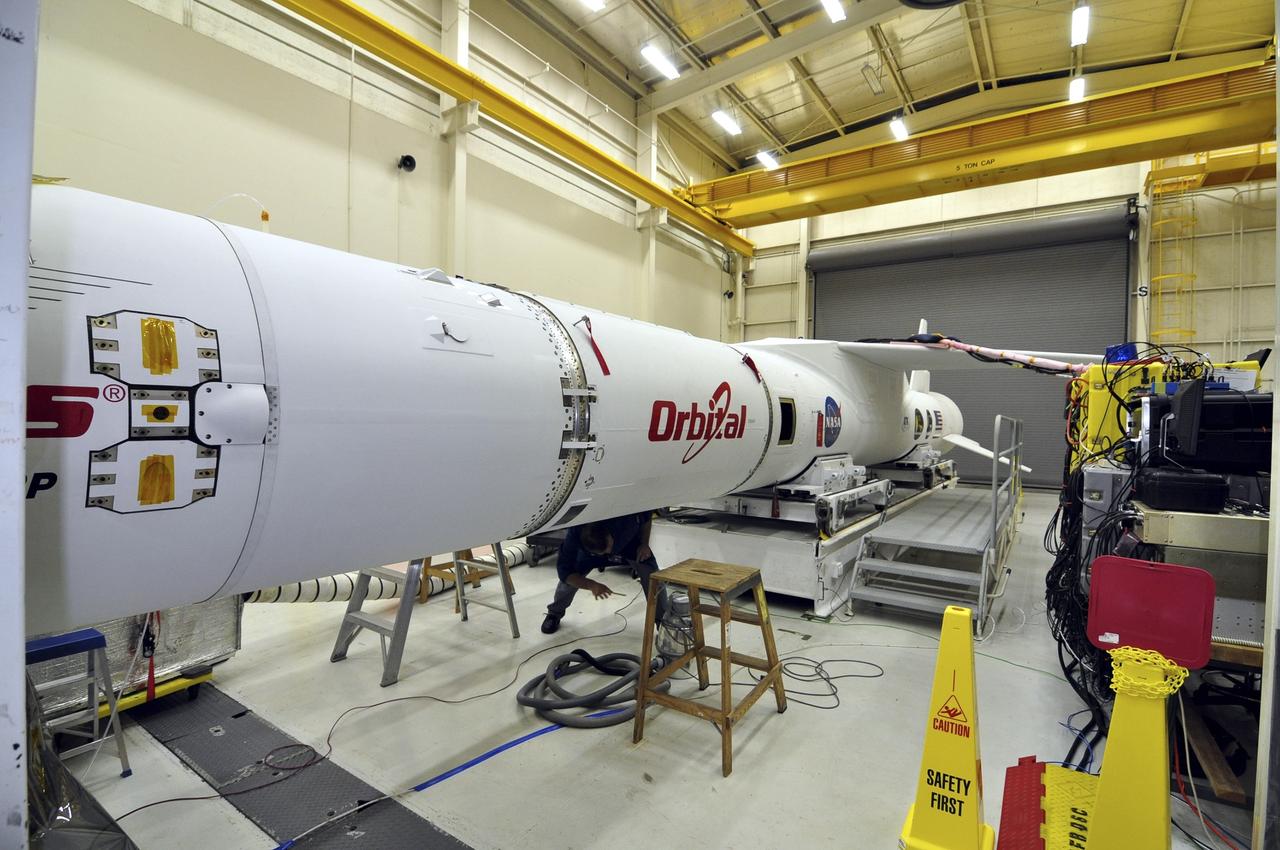
VANDENBERG ABF, Calif. - The Orbital Sciences Pegasus XL rocket that will lift NASA's IRIS solar observatory into orbit in June is seen in a hangar at Vandenberg Air Force Base. IRIS, short for Interface Region Imaging Spectrograph, is being prepared for launch from Vandenberg June 26. IRIS will open a new window of discovery by tracing the flow of energy and plasma through the chromospheres and transition region into the sun’s corona using spectrometry and imaging. IRIS fills a crucial gap in our ability to advance studies of the sun-to-Earth connection by tracing the flow of energy and plasma through the foundation of the corona and the region around the sun known as the heliosphere. Photo credit: VAFB/Randy Beaudoin
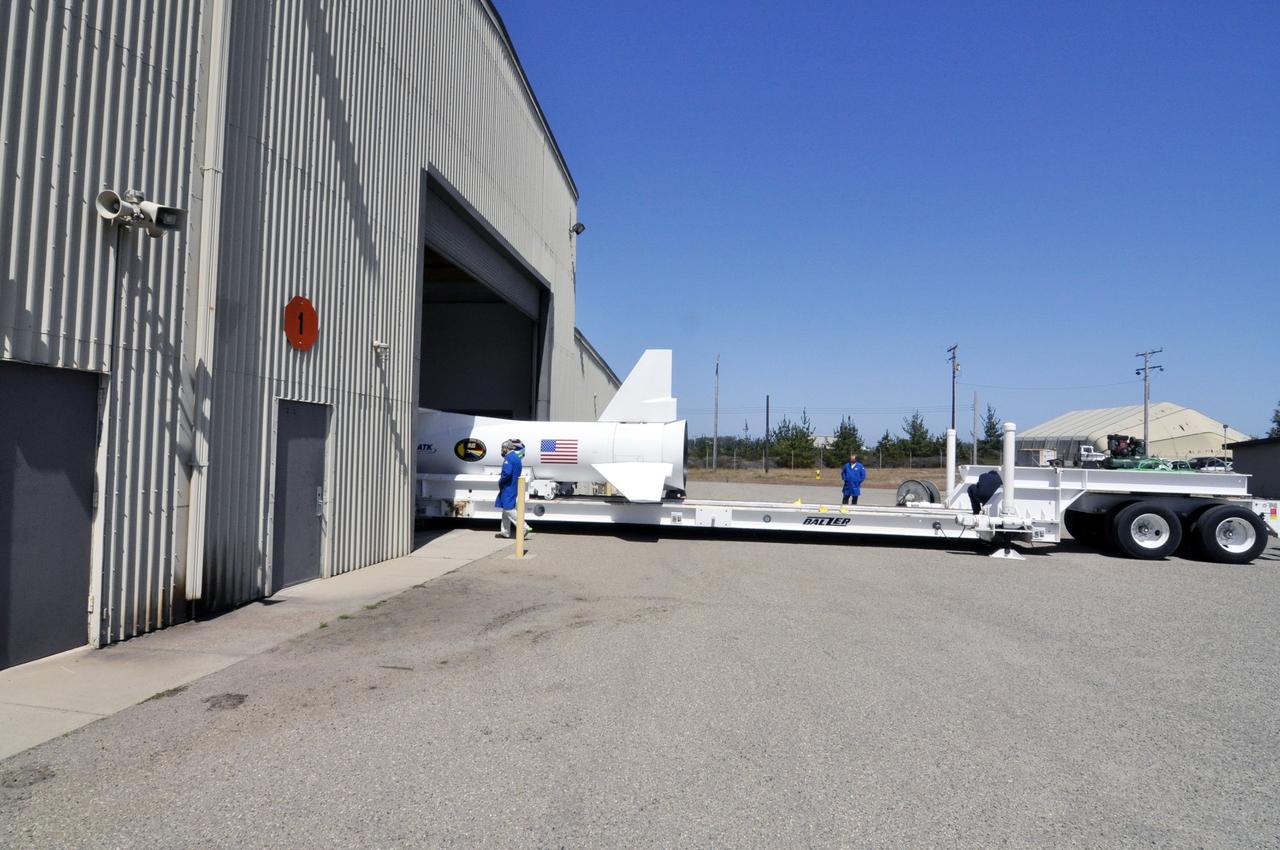
VANDENBERG ABF, Calif. - The Orbital Sciences Pegasus XL rocket that will lift NASA's IRIS solar observatory into orbit is moved from a hangar onto a transporter at Vandenberg Air Force Base. IRIS, short for Interface Region Imaging Spectrograph, is being prepared for launch from Vandenberg June 26. IRIS will open a new window of discovery by tracing the flow of energy and plasma through the chromospheres and transition region into the sun’s corona using spectrometry and imaging. IRIS fills a crucial gap in our ability to advance studies of the sun-to-Earth connection by tracing the flow of energy and plasma through the foundation of the corona and the region around the sun known as the heliosphere. Photo credit: VAFB/Randy Beaudoin
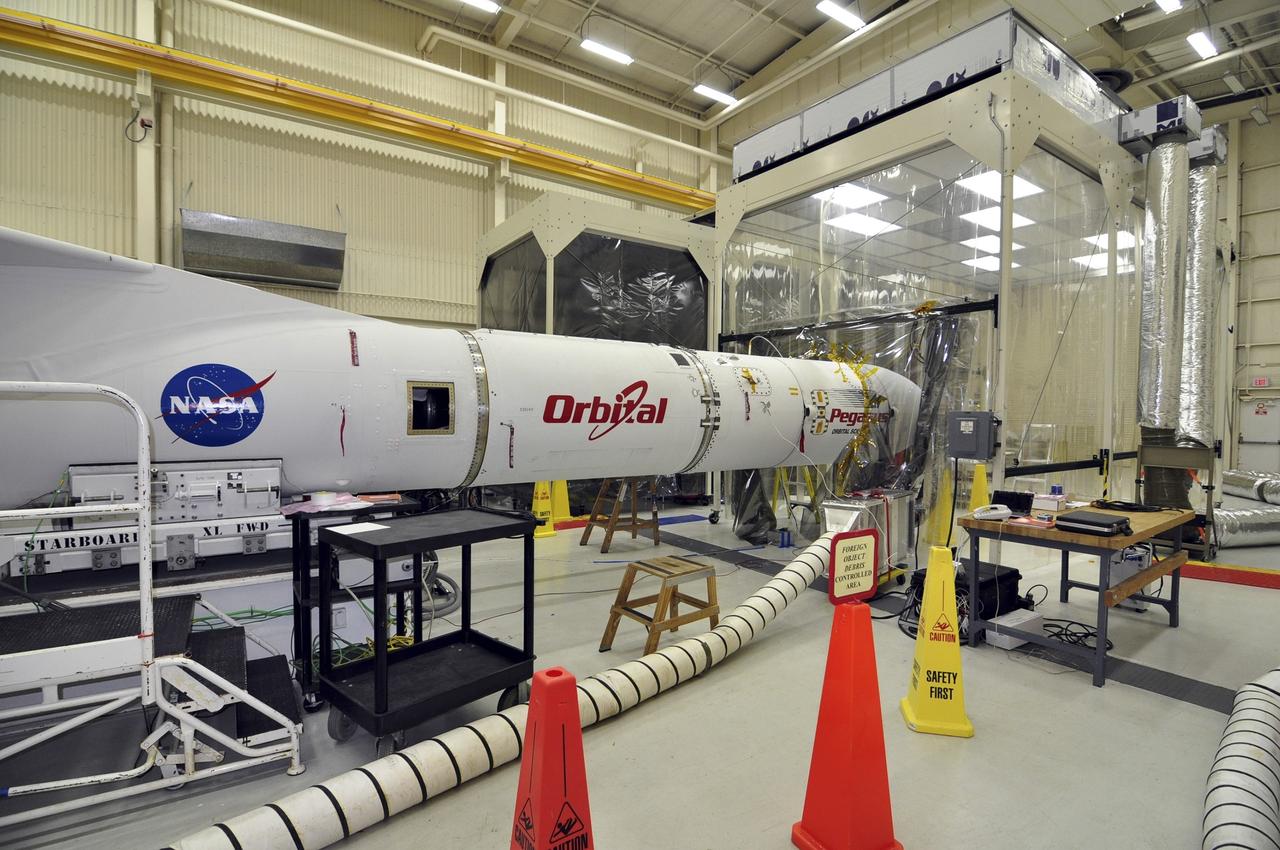
VANDENBERG ABF, Calif. - The Orbital Sciences Pegasus XL rocket that will lift NASA's IRIS solar observatory into orbit in June is seen in a hangar at Vandenberg Air Force Base. IRIS, short for Interface Region Imaging Spectrograph, is being prepared for launch from Vandenberg June 26. IRIS will open a new window of discovery by tracing the flow of energy and plasma through the chromospheres and transition region into the sun’s corona using spectrometry and imaging. IRIS fills a crucial gap in our ability to advance studies of the sun-to-Earth connection by tracing the flow of energy and plasma through the foundation of the corona and the region around the sun known as the heliosphere. Photo credit: VAFB/Randy Beaudoin
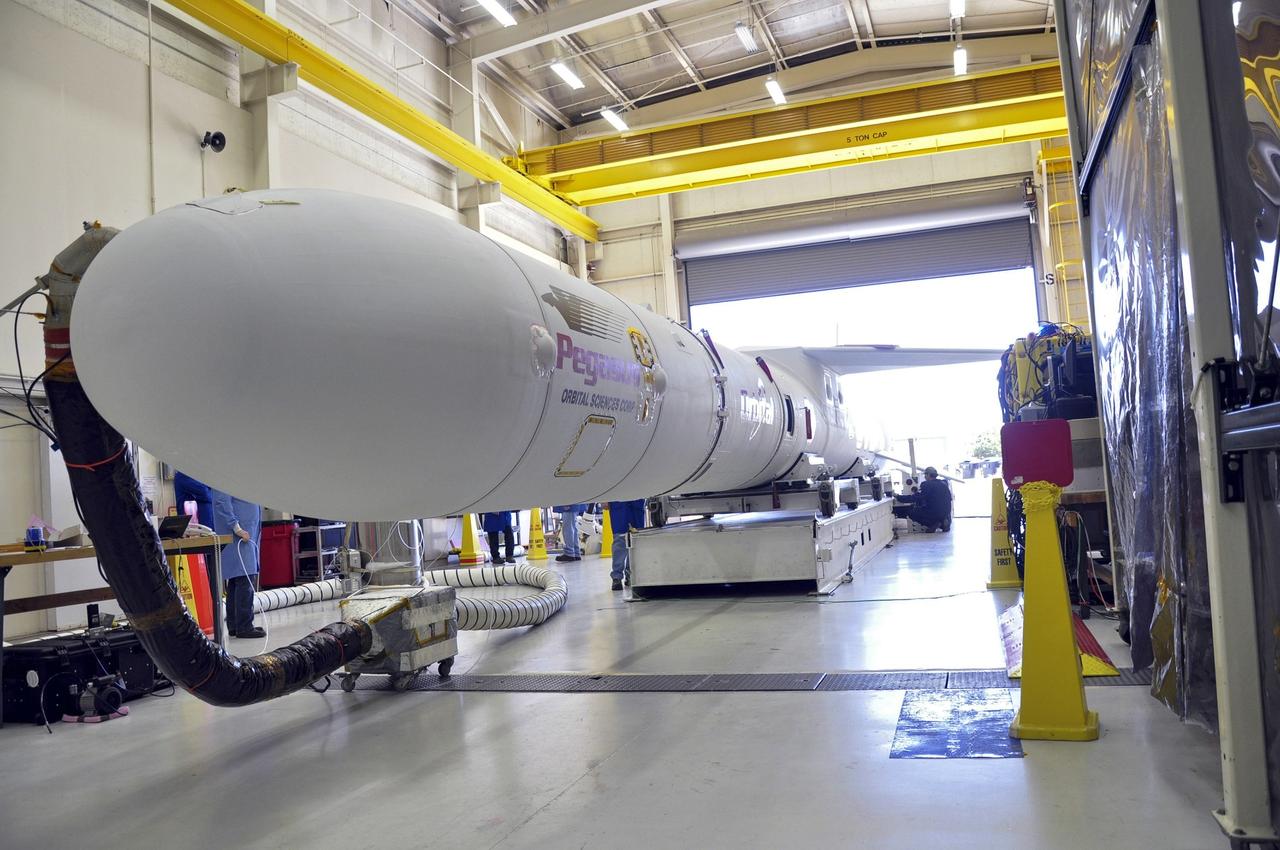
VANDENBERG ABF, Calif. - The Orbital Sciences Pegasus XL rocket that will lift NASA's IRIS solar observatory into orbit is moved from a hangar onto a transporter at Vandenberg Air Force Base. IRIS, short for Interface Region Imaging Spectrograph, is being prepared for launch from Vandenberg June 26. IRIS will open a new window of discovery by tracing the flow of energy and plasma through the chromospheres and transition region into the sun’s corona using spectrometry and imaging. IRIS fills a crucial gap in our ability to advance studies of the sun-to-Earth connection by tracing the flow of energy and plasma through the foundation of the corona and the region around the sun known as the heliosphere. Photo credit: VAFB/Randy Beaudoin
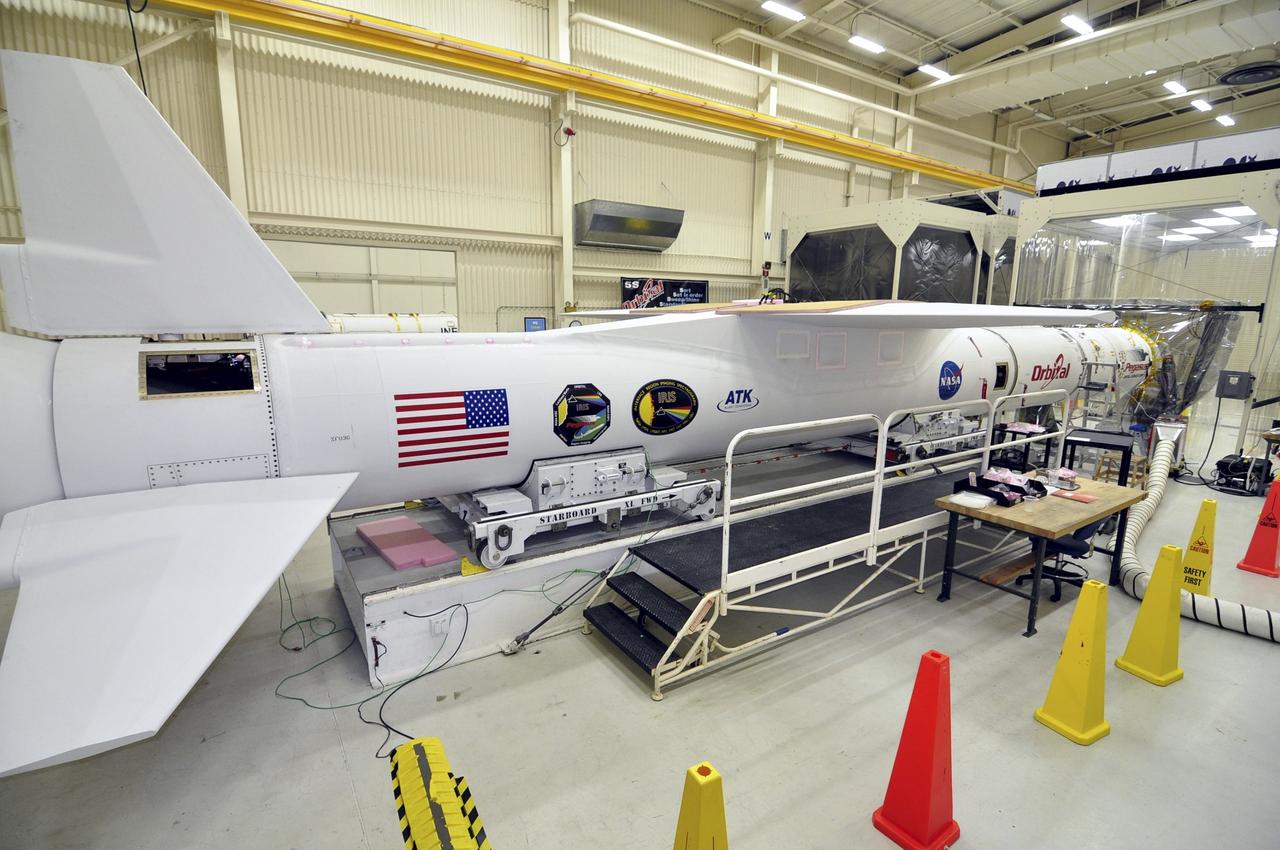
VANDENBERG ABF, Calif. - The Orbital Sciences Pegasus XL rocket that will lift NASA's IRIS solar observatory into orbit in June is seen in a hangar at Vandenberg Air Force Base. IRIS, short for Interface Region Imaging Spectrograph, is being prepared for launch from Vandenberg June 26. IRIS will open a new window of discovery by tracing the flow of energy and plasma through the chromospheres and transition region into the sun’s corona using spectrometry and imaging. IRIS fills a crucial gap in our ability to advance studies of the sun-to-Earth connection by tracing the flow of energy and plasma through the foundation of the corona and the region around the sun known as the heliosphere. Photo credit: VAFB/Randy Beaudoin
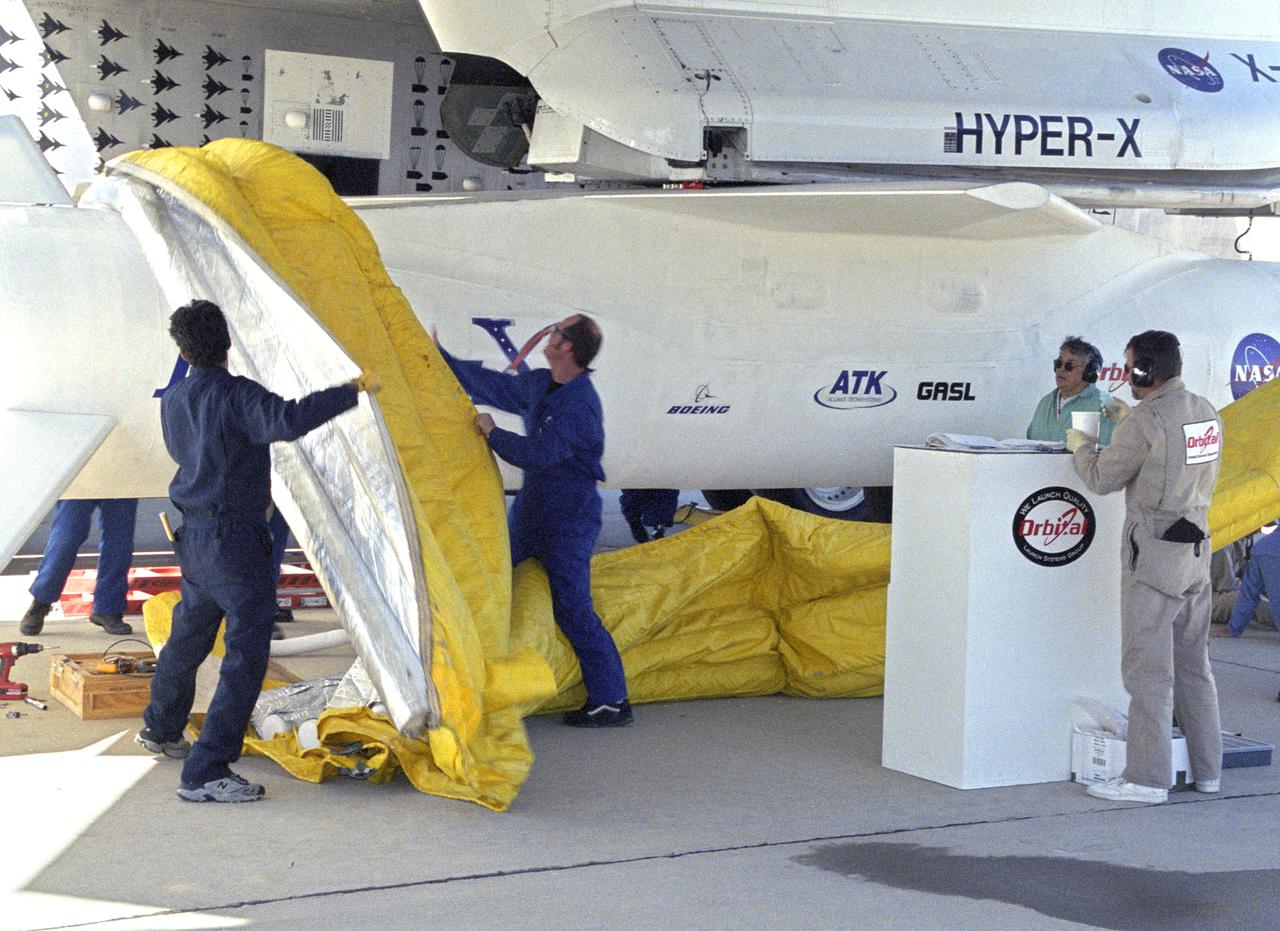
Orbital Sciences Corp. technicians remove protective shrouds from the modified Pegasus booster before takeoff on the X-43A's Mach 9.6 record scramjet flight.
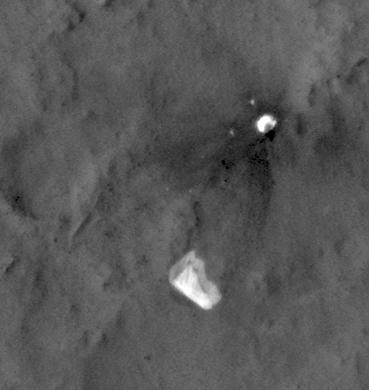
This image from NASA Mars Reconnaissance Orbiter shows wind-caused changes in the parachute of NASA Mars Science Laboratory spacecraft as the chute lay on the Martian ground during months after its use in safe landing of the Curiosity rover.

VANDENBERG ABF, Calif. - The Orbital Sciences launch team monitors the Pegasus XL rocket that will lift NASA's IRIS solar observatory into orbit as the rocket and payload are moved from a hangar onto a transporter at Vandenberg Air Force Base. IRIS, short for Interface Region Imaging Spectrograph, is being prepared for launch from Vandenberg June 26. IRIS will open a new window of discovery by tracing the flow of energy and plasma through the chromospheres and transition region into the sun’s corona using spectrometry and imaging. IRIS fills a crucial gap in our ability to advance studies of the sun-to-Earth connection by tracing the flow of energy and plasma through the foundation of the corona and the region around the sun known as the heliosphere. Photo credit: VAFB/Randy Beaudoin
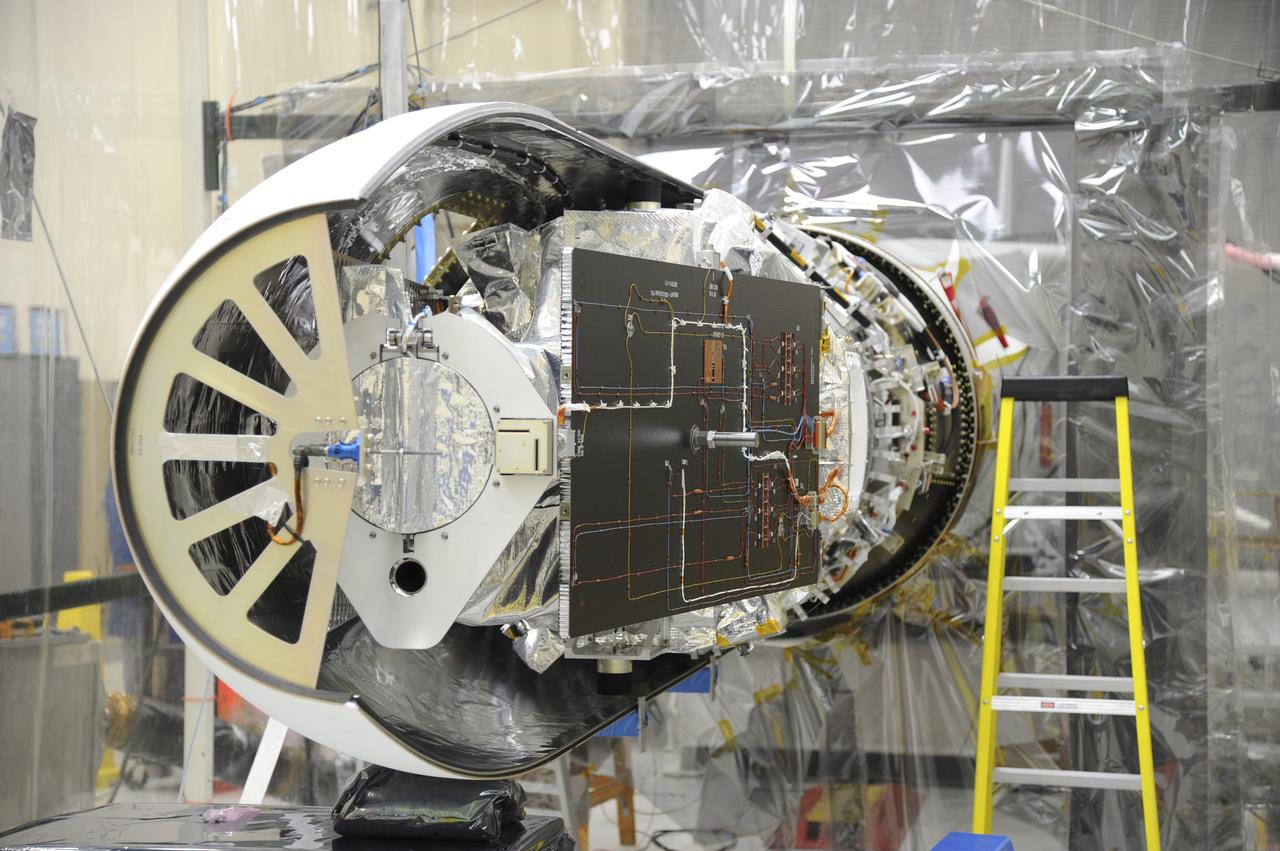
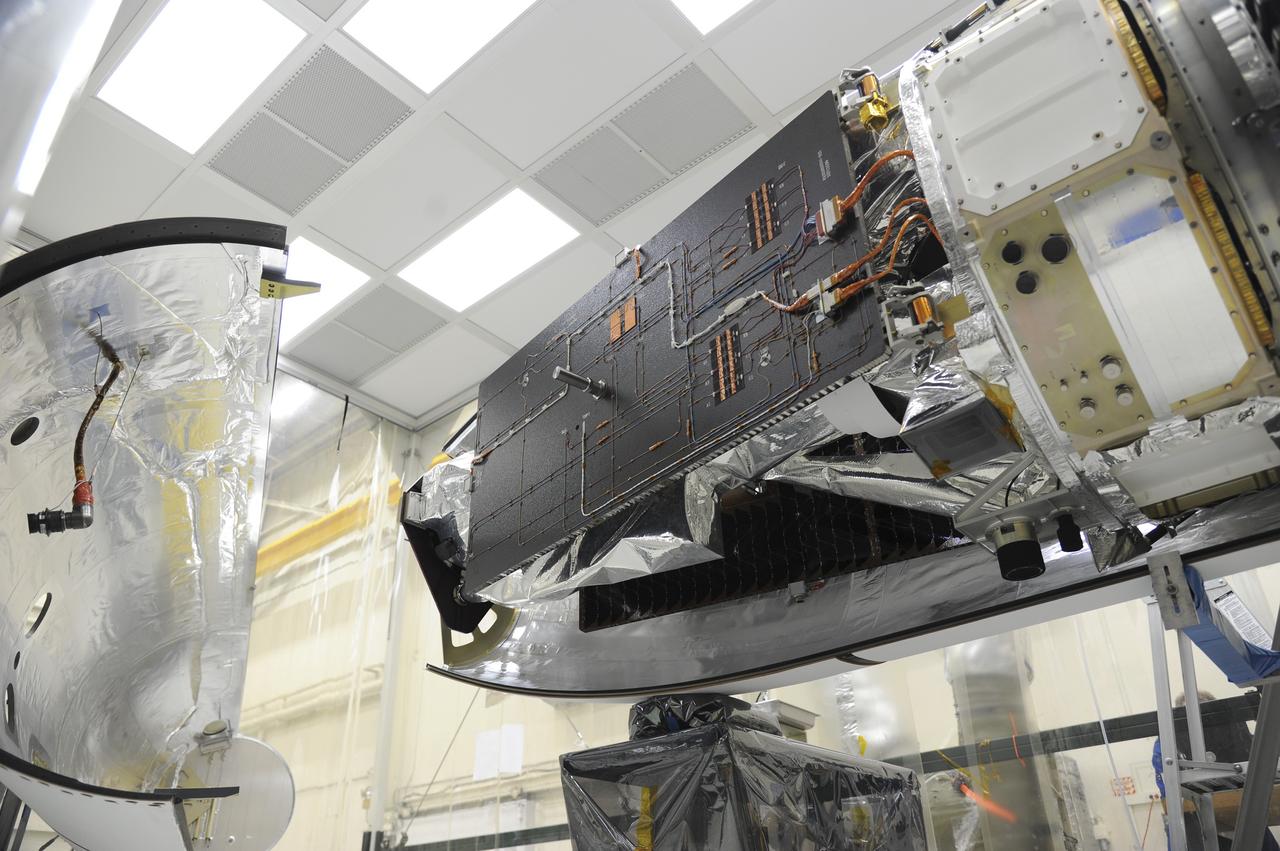
VANDENBERG AFB – NASA's IRIS spacecraft before the second half of the payload fairing is installed over it. The fairing connects to the nose of the Orbital Sciences Pegasus XL rocket that will lift the solar observatory into orbit in June. The work is taking place in a hangar at Vandenberg Air Force Base where IRIS, short for Interface Region Imaging Spectrograph, is being prepared for launch on a Pegasus XL rocket. Scheduled for launch from Vandenberg June 26, IRIS will open a new window of discovery by tracing the flow of energy and plasma through the chromospheres and transition region into the sun’s corona using spectrometry and imaging. IRIS fills a crucial gap in our ability to advance studies of the sun-to-Earth connection by tracing the flow of energy and plasma through the foundation of the corona and the region around the sun known as the heliosphere. Photo credit: NASA/Tony Vauclin
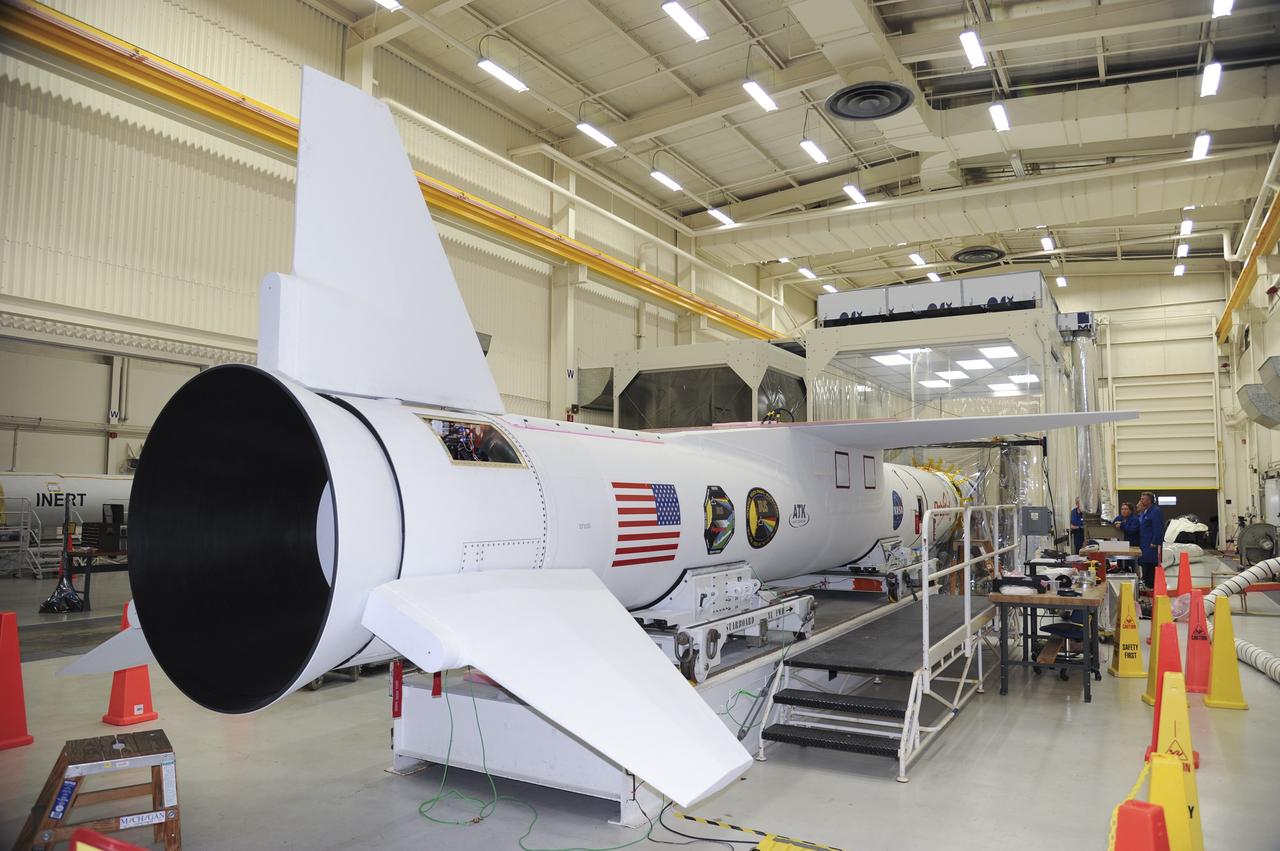
VANDENBERG AFB – The Orbital Sciences Pegasus XL rocket that will lift the solar observatory into orbit in June is seen after the payload fairing was connected over NASA's IRIS spacecraft. The work is taking place in a hangar at Vandenberg Air Force Base where IRIS, short for Interface Region Imaging Spectrograph, is being prepared for launch on a Pegasus XL rocket. Scheduled for launch from Vandenberg June 26, IRIS will open a new window of discovery by tracing the flow of energy and plasma through the chromospheres and transition region into the sun’s corona using spectrometry and imaging. IRIS fills a crucial gap in our ability to advance studies of the sun-to-Earth connection by tracing the flow of energy and plasma through the foundation of the corona and the region around the sun known as the heliosphere. Photo credit: NASA/Tony Vauclin
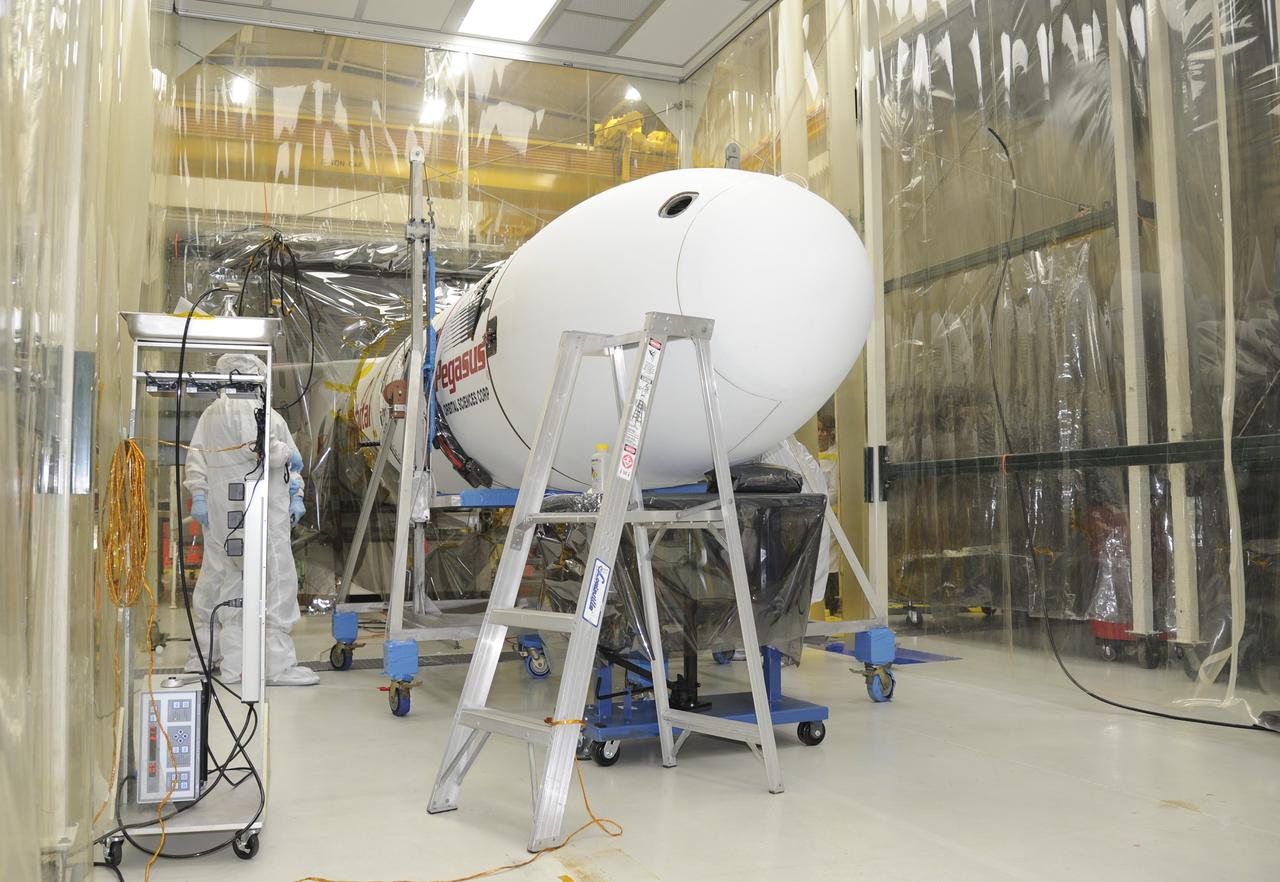
VANDENBERG AFB – The payload fairing locked in place over NASA's IRIS spacecraft. The fairing connects to the nose of the Orbital Sciences Pegasus XL rocket that will lift the solar observatory into orbit in June. The work is taking place in a hangar at Vandenberg Air Force Base where IRIS, short for Interface Region Imaging Spectrograph, is being prepared for launch on a Pegasus XL rocket. Scheduled for launch from Vandenberg June 26, IRIS will open a new window of discovery by tracing the flow of energy and plasma through the chromospheres and transition region into the sun’s corona using spectrometry and imaging. IRIS fills a crucial gap in our ability to advance studies of the sun-to-Earth connection by tracing the flow of energy and plasma through the foundation of the corona and the region around the sun known as the heliosphere. Photo credit: NASA/Tony Vauclin
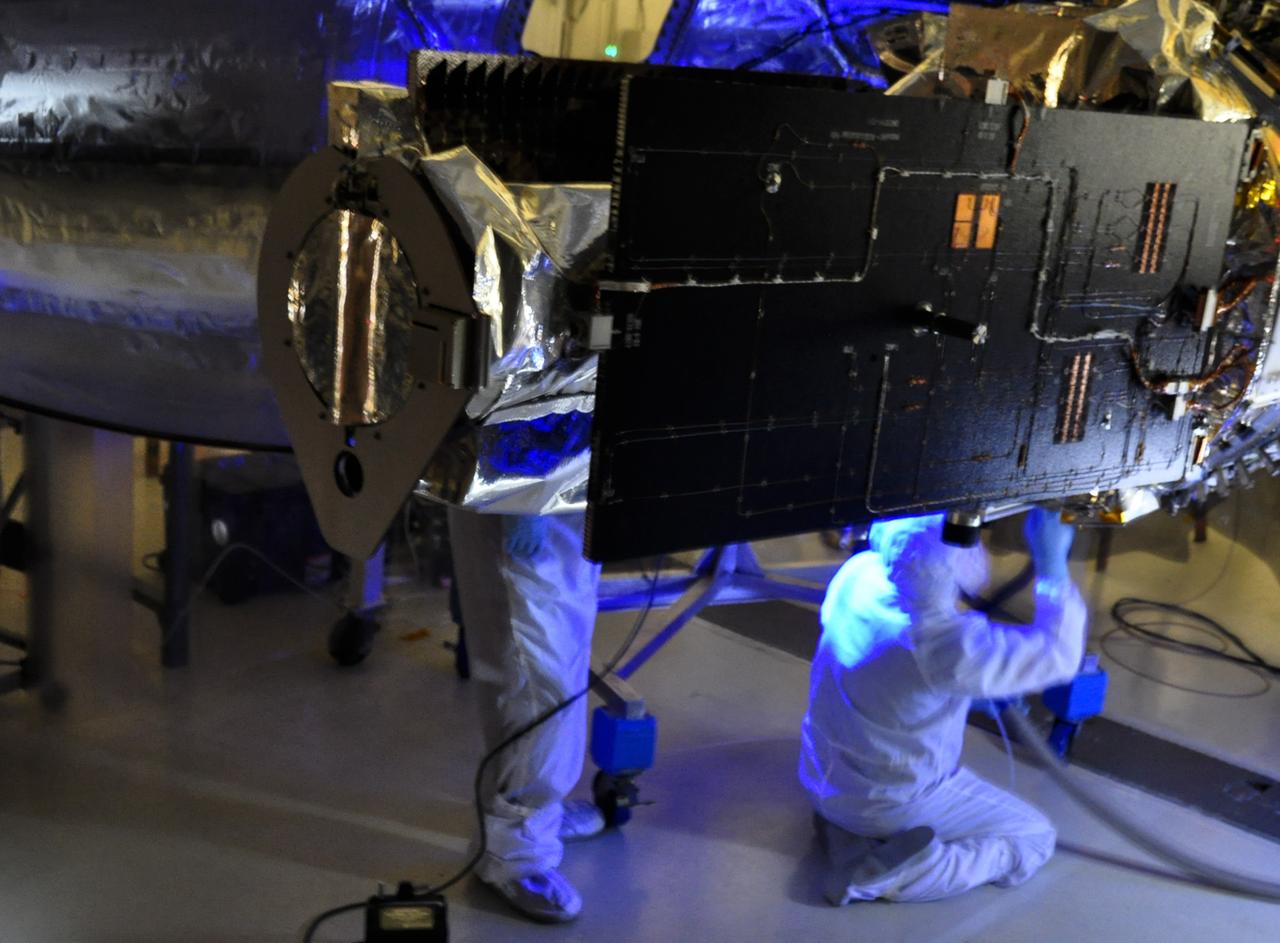
VANDENBERG AFB, Calif. – Engineers conduct inspections on NASA's IRIS spacecraft with blacklights before the payload fairing before it is connected. The fairing connects to the nose of the Orbital Sciences Pegasus XL rocket that will lift the solar observatory into orbit in June. The work is taking place in a hangar at Vandenberg Air Force Base where IRIS, short for Interface Region Imaging Spectrograph, is being prepared for launch on a Pegasus XL rocket. Scheduled for launch from Vandenberg June 26, IRIS will open a new window of discovery by tracing the flow of energy and plasma through the chromospheres and transition region into the sun’s corona using spectrometry and imaging. IRIS fills a crucial gap in our ability to advance studies of the sun-to-Earth connection by tracing the flow of energy and plasma through the foundation of the corona and the region around the sun known as the heliosphere. Photo credit: NASA/Randy Beaudoin
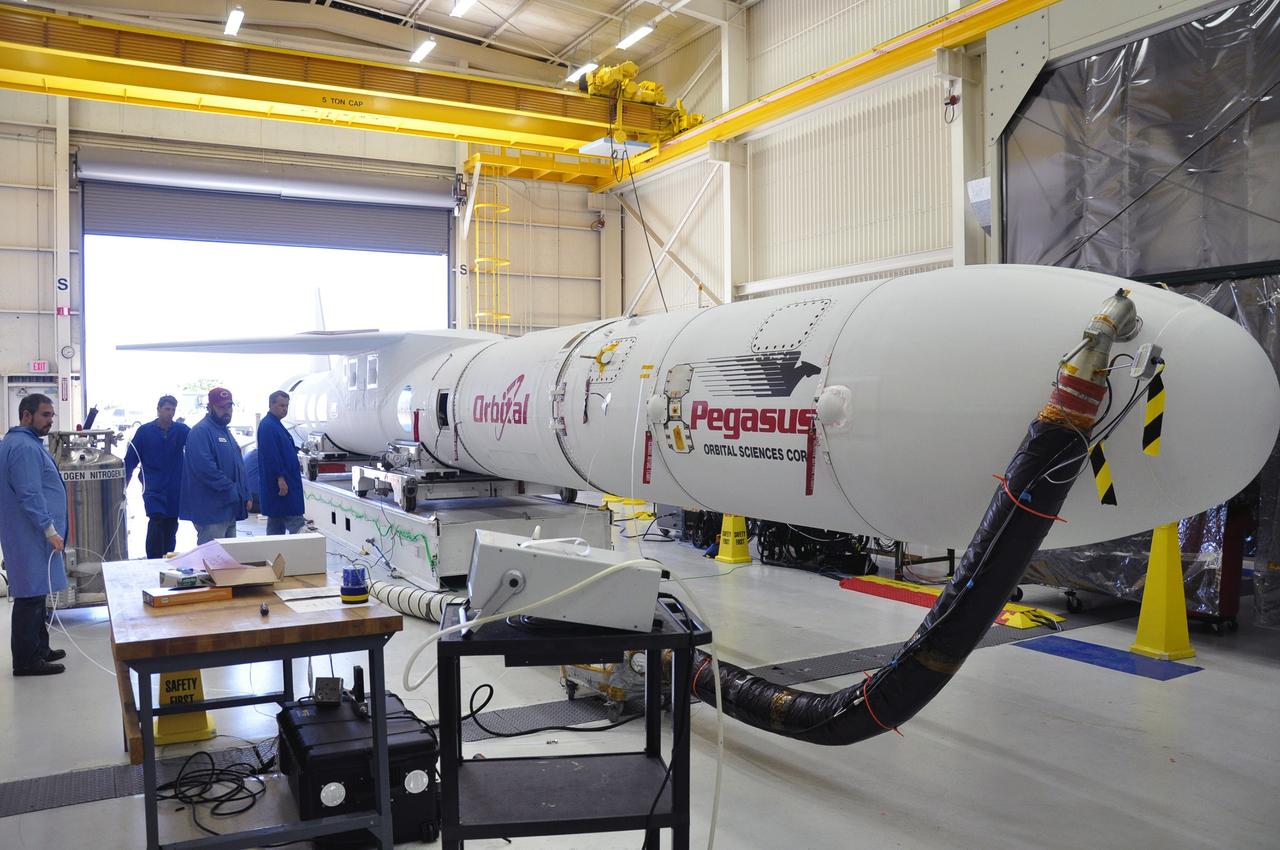
VANDENBERG ABF, Calif. - The Orbital Sciences launch team monitors the Pegasus XL rocket that will lift NASA's IRIS solar observatory into orbit as the rocket and payload are moved from a hangar onto a transporter at Vandenberg Air Force Base. IRIS, short for Interface Region Imaging Spectrograph, is being prepared for launch from Vandenberg June 26. IRIS will open a new window of discovery by tracing the flow of energy and plasma through the chromospheres and transition region into the sun’s corona using spectrometry and imaging. IRIS fills a crucial gap in our ability to advance studies of the sun-to-Earth connection by tracing the flow of energy and plasma through the foundation of the corona and the region around the sun known as the heliosphere. Photo credit: VAFB/Randy Beaudoin
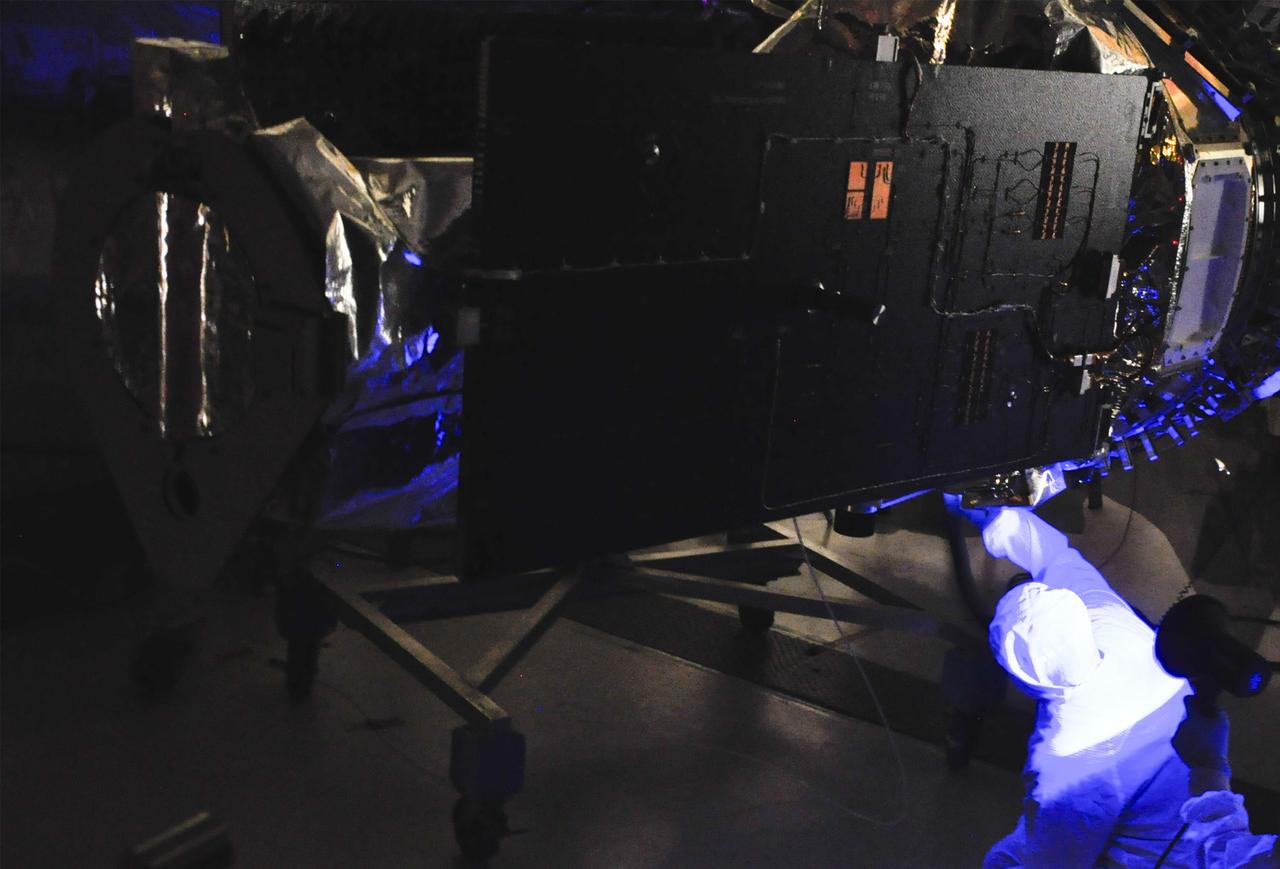
VANDENBERG AFB, Calif. – Engineers conduct inspections on NASA's IRIS spacecraft with blacklights before the payload fairing before it is connected. The fairing connects to the nose of the Orbital Sciences Pegasus XL rocket that will lift the solar observatory into orbit in June. The work is taking place in a hangar at Vandenberg Air Force Base where IRIS, short for Interface Region Imaging Spectrograph, is being prepared for launch on a Pegasus XL rocket. Scheduled for launch from Vandenberg June 26, IRIS will open a new window of discovery by tracing the flow of energy and plasma through the chromospheres and transition region into the sun’s corona using spectrometry and imaging. IRIS fills a crucial gap in our ability to advance studies of the sun-to-Earth connection by tracing the flow of energy and plasma through the foundation of the corona and the region around the sun known as the heliosphere. Photo credit: NASA/Randy Beaudoin
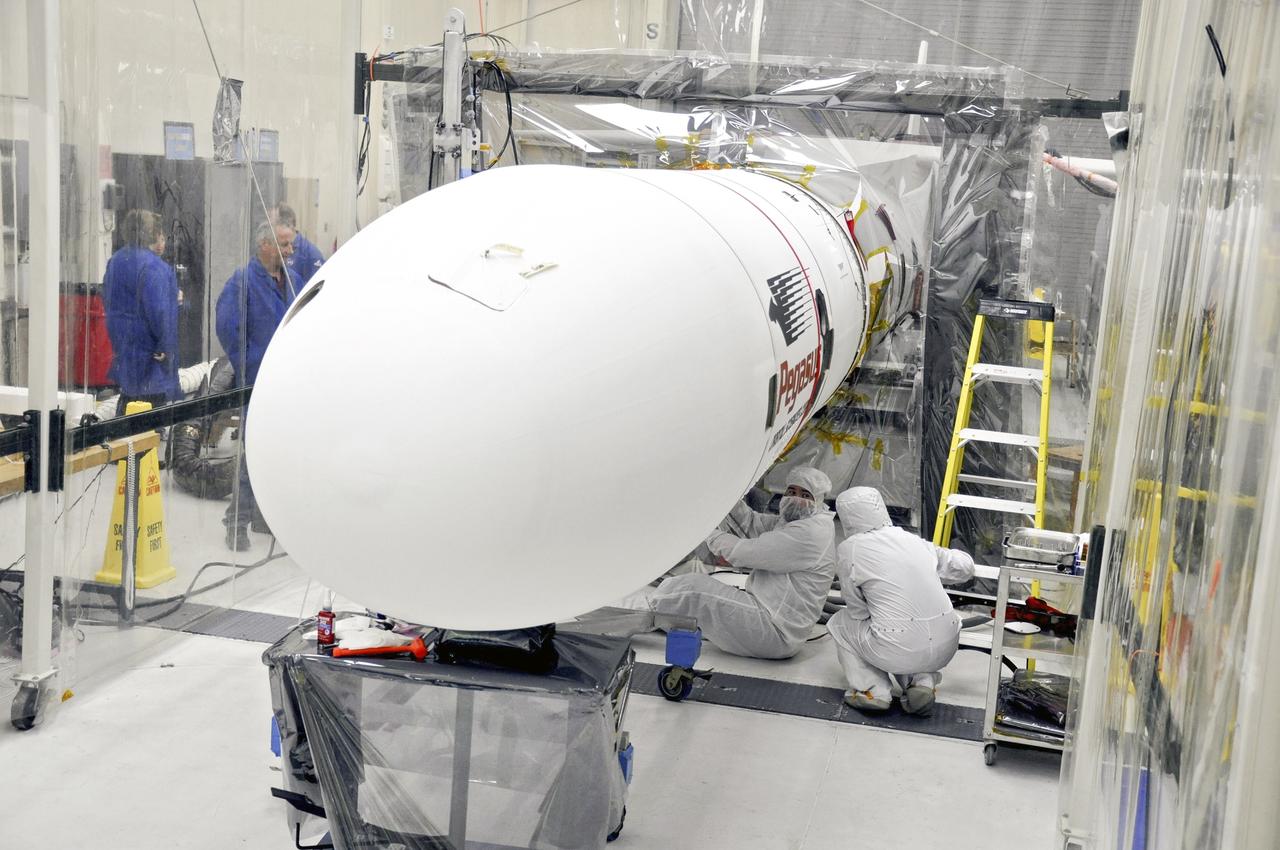
VANDENBERG AFB – Engineers connect the payload fairing over NASA's IRIS spacecraft. The fairing connects to the nose of the Orbital Sciences Pegasus XL rocket that will lift the solar observatory into orbit in June. The work is taking place in a hangar at Vandenberg Air Force Base where IRIS, short for Interface Region Imaging Spectrograph, is being prepared for launch on a Pegasus XL rocket. Scheduled for launch from Vandenberg June 26, IRIS will open a new window of discovery by tracing the flow of energy and plasma through the chromospheres and transition region into the sun’s corona using spectrometry and imaging. IRIS fills a crucial gap in our ability to advance studies of the sun-to-Earth connection by tracing the flow of energy and plasma through the foundation of the corona and the region around the sun known as the heliosphere. Photo credit: NASA/Randy Beaudoin
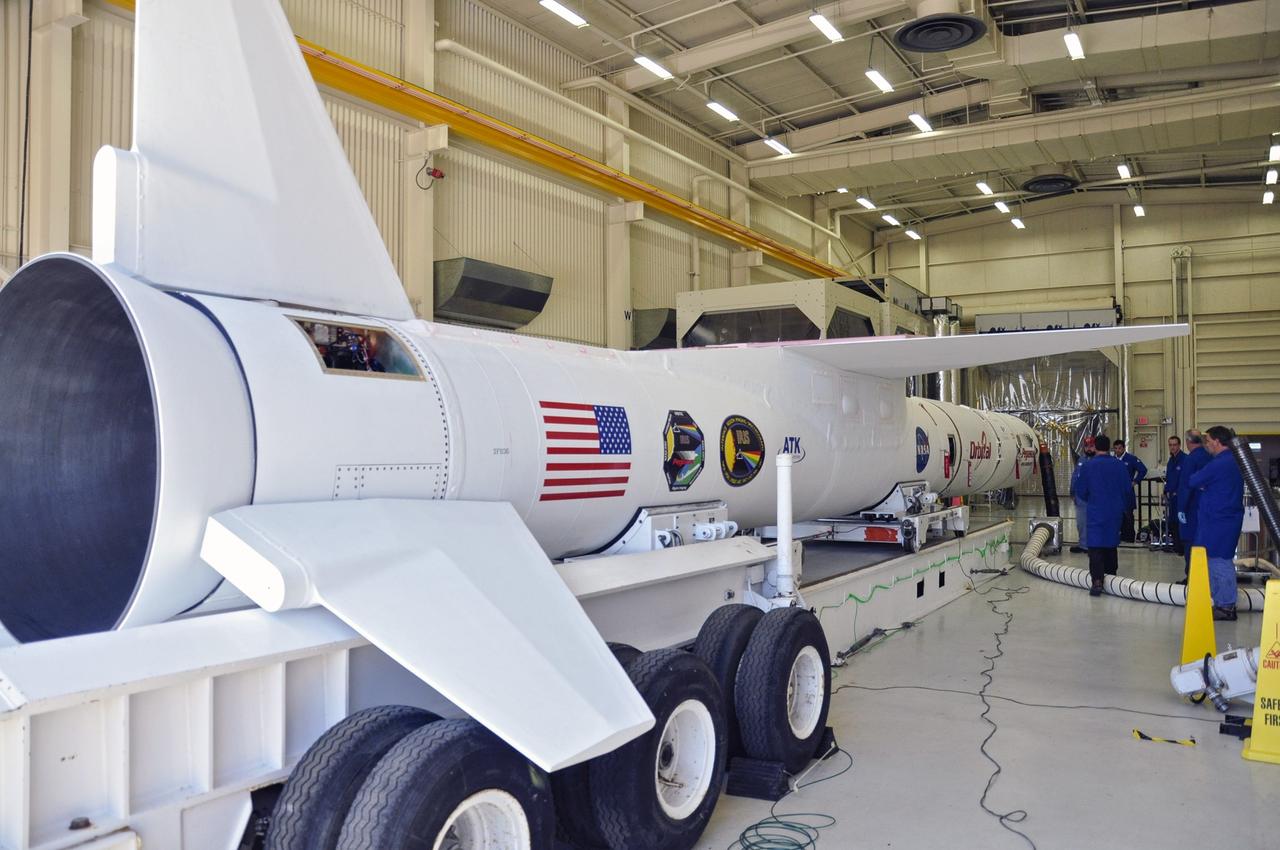
VANDENBERG ABF, Calif. - The Orbital Sciences launch team monitors the Pegasus XL rocket that will lift NASA's IRIS solar observatory into orbit as the rocket and payload are moved from a hangar onto a transporter at Vandenberg Air Force Base. IRIS, short for Interface Region Imaging Spectrograph, is being prepared for launch from Vandenberg June 26. IRIS will open a new window of discovery by tracing the flow of energy and plasma through the chromospheres and transition region into the sun’s corona using spectrometry and imaging. IRIS fills a crucial gap in our ability to advance studies of the sun-to-Earth connection by tracing the flow of energy and plasma through the foundation of the corona and the region around the sun known as the heliosphere. Photo credit: VAFB/Randy Beaudoin
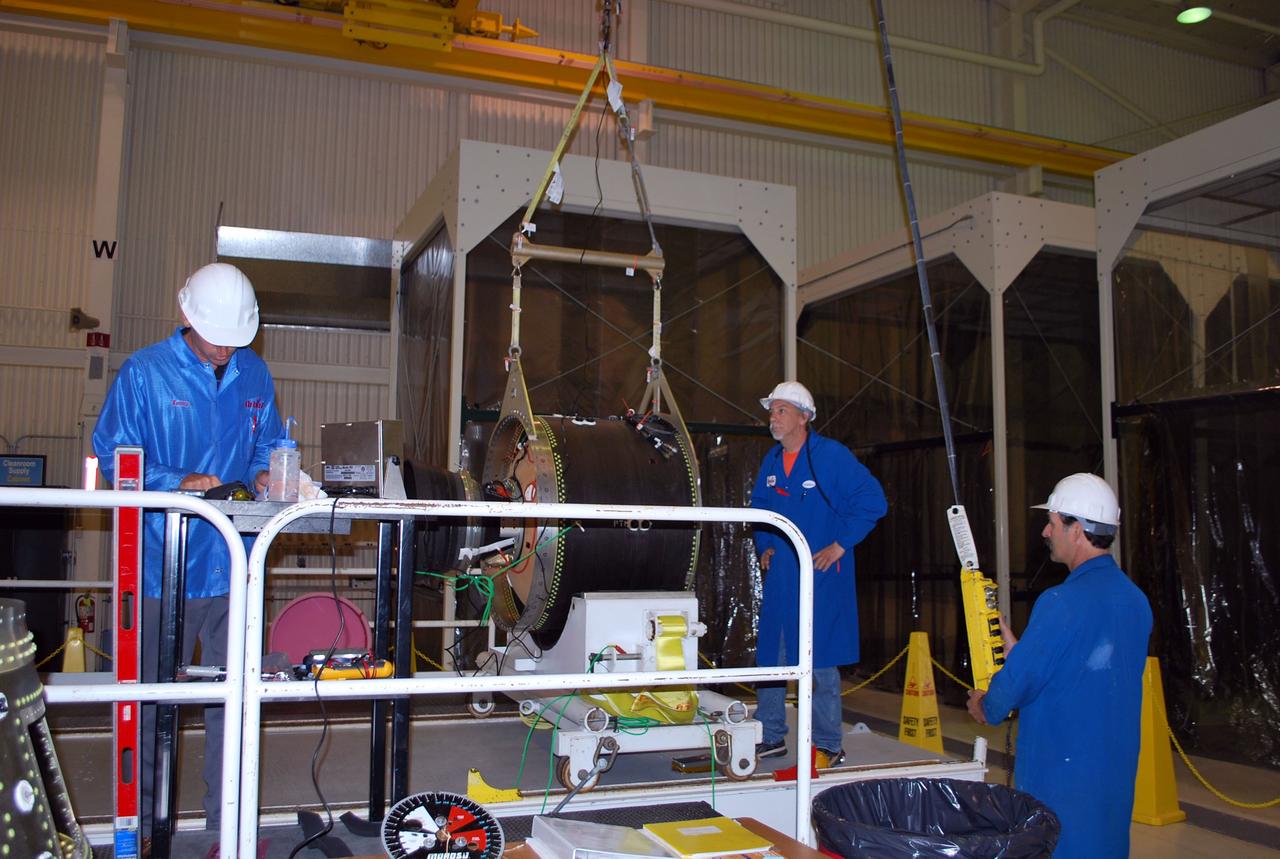
VANDENBERG AIR FORCE BASE, Calif. -- At Vandenberg Air Force Base in California, Orbital Sciences Corp. technicians weigh stage 3 of the Pegasus XL rocket motor that will launch the Nuclear Spectroscopic Telescope Array (NuSTAR) into space. After the rocket and spacecraft are processed at Vandenberg, they will be flown on the Orbital Sciences' L-1011 carrier aircraft to the Ronald Reagan Ballistic Missile Defense Test Site located at the Pacific Ocean’s Kwajalein Atoll for launch. The high-energy X-ray telescope will conduct a census for black holes, map radioactive material in young supernovae remnants, and study the origins of cosmic rays and the extreme physics around collapsed stars. Photo credit: NASA/Randy Beaudoin, VAFB
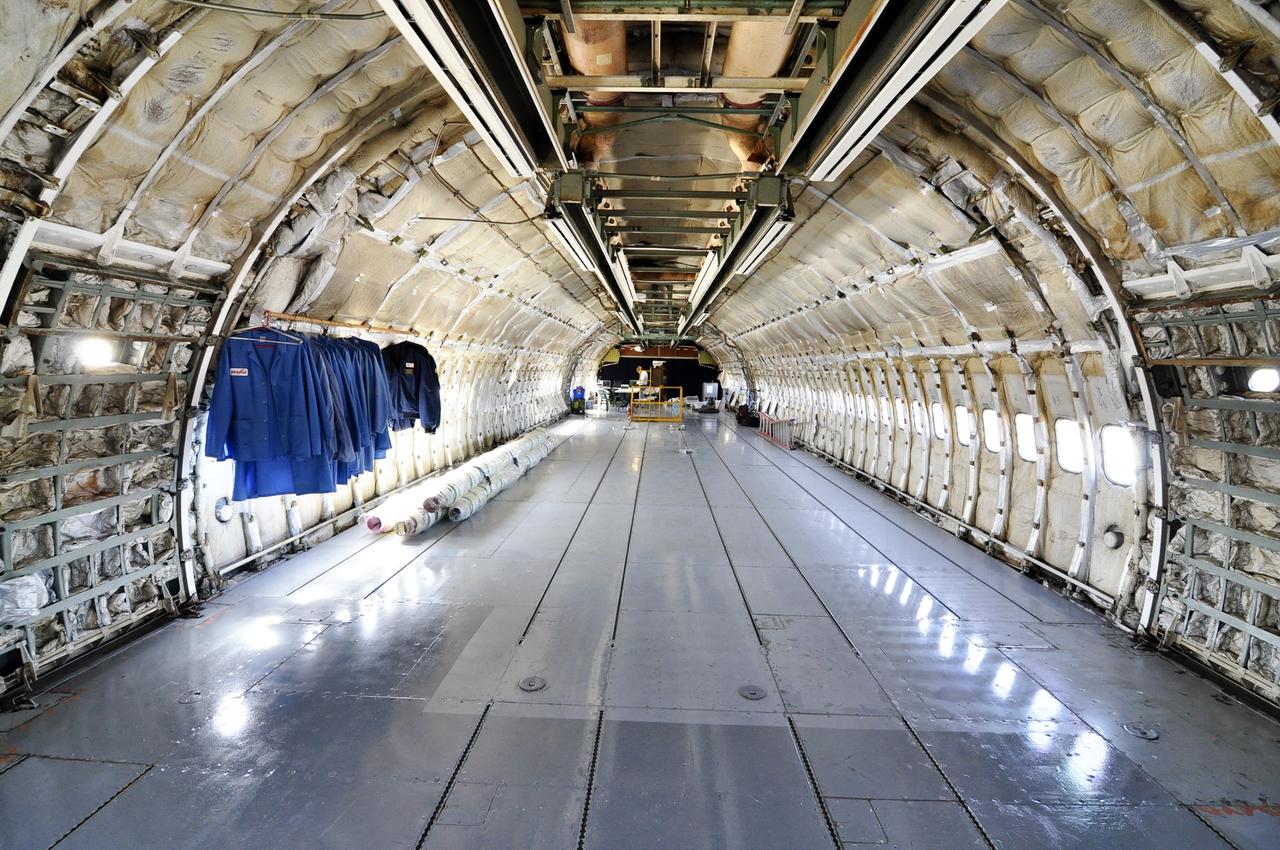
VANDENBERG ABF, Calif. – A look through the inside of the fuselage of the Orbital Sciences L-1011 aircraft called "Stargazer" after arrival at Vandenberg Air Force Base for the upcoming launch of the company's Pegasus XL rocket lifting NASA's IRIS solar observatory into orbit. The aircraft will carry the winged rocket to an altitude of 39,000 feet before releasing the Pegasus so its own motors can ignite to send the IRIS into space. The L-1011 is a modified airliner equipped to hold the Pegasus under its body safely. IRIS, short for Interface Region Imaging Spectrograph, is being prepared for launch from Vandenberg June 26. IRIS will open a new window of discovery by tracing the flow of energy and plasma through the chromospheres and transition region into the sun’s corona using spectrometry and imaging. IRIS fills a crucial gap in our ability to advance studies of the sun-to-Earth connection by tracing the flow of energy and plasma through the foundation of the corona and the region around the sun known as the heliosphere. Photo credit: VAFB/Randy Beaudoin
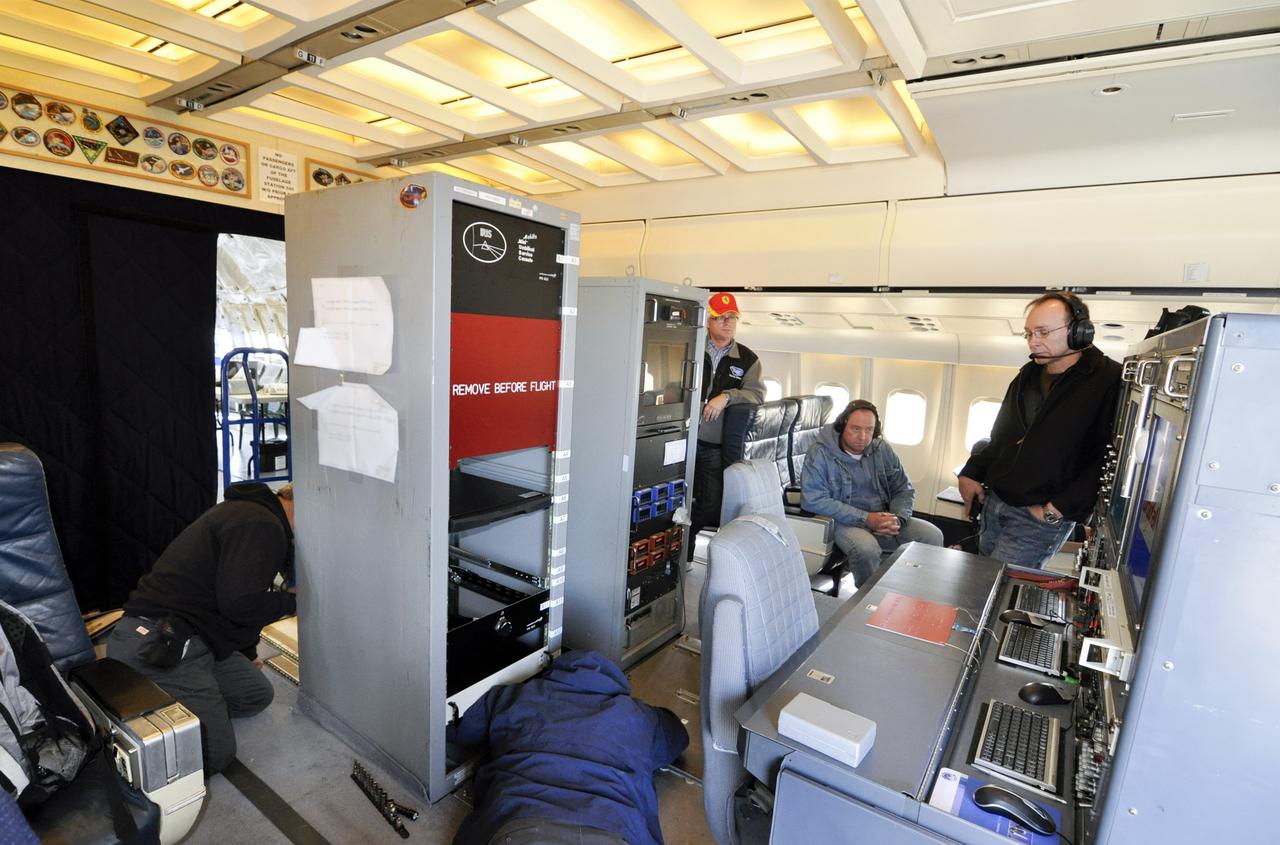
VANDENBERG ABF, Calif. - The launch crew of the Orbital Sciences L-1011 aircraft called "Stargazer" after arrival at Vandenberg Air Force Base for the upcoming launch of the company's Pegasus XL rocket lifting NASA's IRIS solar observatory into orbit. The aircraft will carry the winged rocket to an altitude of 39,000 feet before releasing the Pegasus so its own motors can ignite to send the IRIS into space. The L-1011 is a modified airliner equipped to hold the Pegasus under its body safely. IRIS, short for Interface Region Imaging Spectrograph, is being prepared for launch from Vandenberg June 26. IRIS will open a new window of discovery by tracing the flow of energy and plasma through the chromospheres and transition region into the sun’s corona using spectrometry and imaging. IRIS fills a crucial gap in our ability to advance studies of the sun-to-Earth connection by tracing the flow of energy and plasma through the foundation of the corona and the region around the sun known as the heliosphere. Photo credit: VAFB/Randy Beaudoin
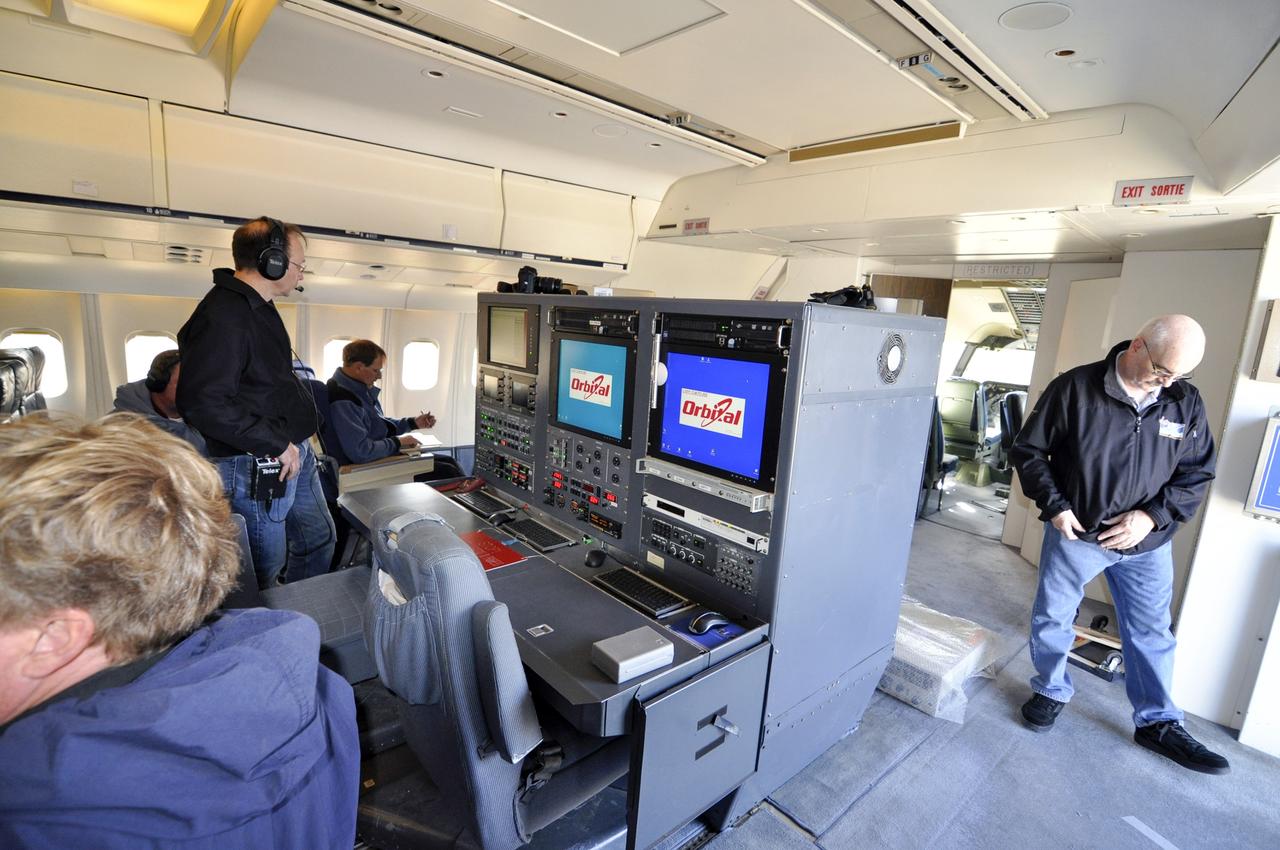
VANDENBERG ABF, Calif. - The launch crew of the Orbital Sciences L-1011 aircraft called "Stargazer" after arrival at Vandenberg Air Force Base for the upcoming launch of the company's Pegasus XL rocket lifting NASA's IRIS solar observatory into orbit. The aircraft will carry the winged rocket to an altitude of 39,000 feet before releasing the Pegasus so its own motors can ignite to send the IRIS into space. The L-1011 is a modified airliner equipped to hold the Pegasus under its body safely. IRIS, short for Interface Region Imaging Spectrograph, is being prepared for launch from Vandenberg June 26. IRIS will open a new window of discovery by tracing the flow of energy and plasma through the chromospheres and transition region into the sun’s corona using spectrometry and imaging. IRIS fills a crucial gap in our ability to advance studies of the sun-to-Earth connection by tracing the flow of energy and plasma through the foundation of the corona and the region around the sun known as the heliosphere. Photo credit: VAFB/Randy Beaudoin

VANDENBERG ABF, Calif. - The Orbital Sciences L-1011 aircraft called "Stargazer" arrives at Vandenberg Air Force Base for the upcoming launch of the company's Pegasus XL rocket lifting NASA's IRIS solar observatory into orbit. The aircraft will carry the winged rocket to an altitude of 39,000 feet before releasing the Pegasus so its own motors can ignite to send the IRIS into space. The L-1011 is a modified airliner equipped to hold the Pegasus under its body safely. IRIS, short for Interface Region Imaging Spectrograph, is being prepared for launch from Vandenberg June 26. IRIS will open a new window of discovery by tracing the flow of energy and plasma through the chromospheres and transition region into the sun’s corona using spectrometry and imaging. IRIS fills a crucial gap in our ability to advance studies of the sun-to-Earth connection by tracing the flow of energy and plasma through the foundation of the corona and the region around the sun known as the heliosphere. Photo credit: VAFB/Randy Beaudoin
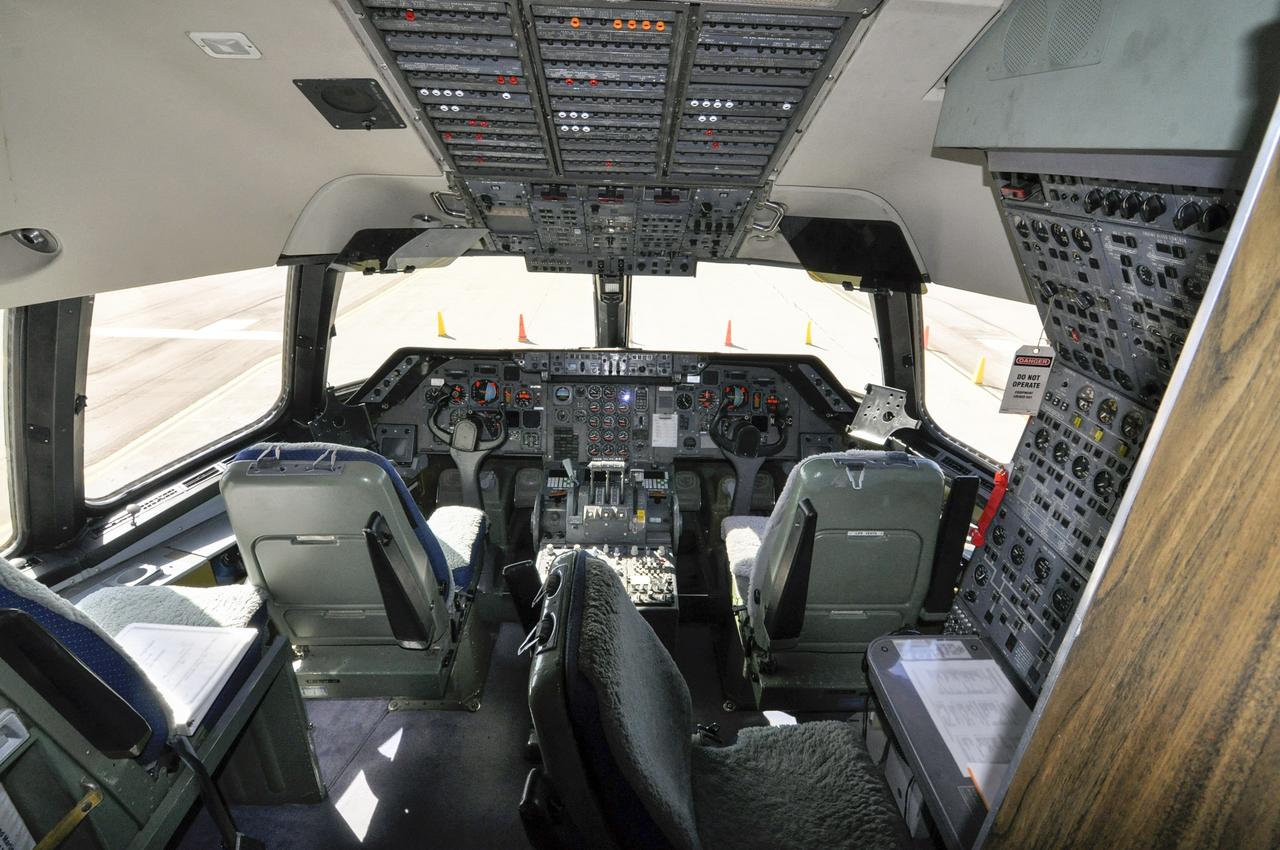
VANDENBERG ABF, Calif. - The cockpit of the Orbital Sciences L-1011 aircraft called "Stargazer" after arrival at Vandenberg Air Force Base for the upcoming launch of the company's Pegasus XL rocket lifting NASA's IRIS solar observatory into orbit. The aircraft will carry the winged rocket to an altitude of 39,000 feet before releasing the Pegasus so its own motors can ignite to send the IRIS into space. The L-1011 is a modified airliner equipped to hold the Pegasus under its body safely. IRIS, short for Interface Region Imaging Spectrograph, is being prepared for launch from Vandenberg June 26. IRIS will open a new window of discovery by tracing the flow of energy and plasma through the chromospheres and transition region into the sun’s corona using spectrometry and imaging. IRIS fills a crucial gap in our ability to advance studies of the sun-to-Earth connection by tracing the flow of energy and plasma through the foundation of the corona and the region around the sun known as the heliosphere. Photo credit: VAFB/Randy Beaudoin
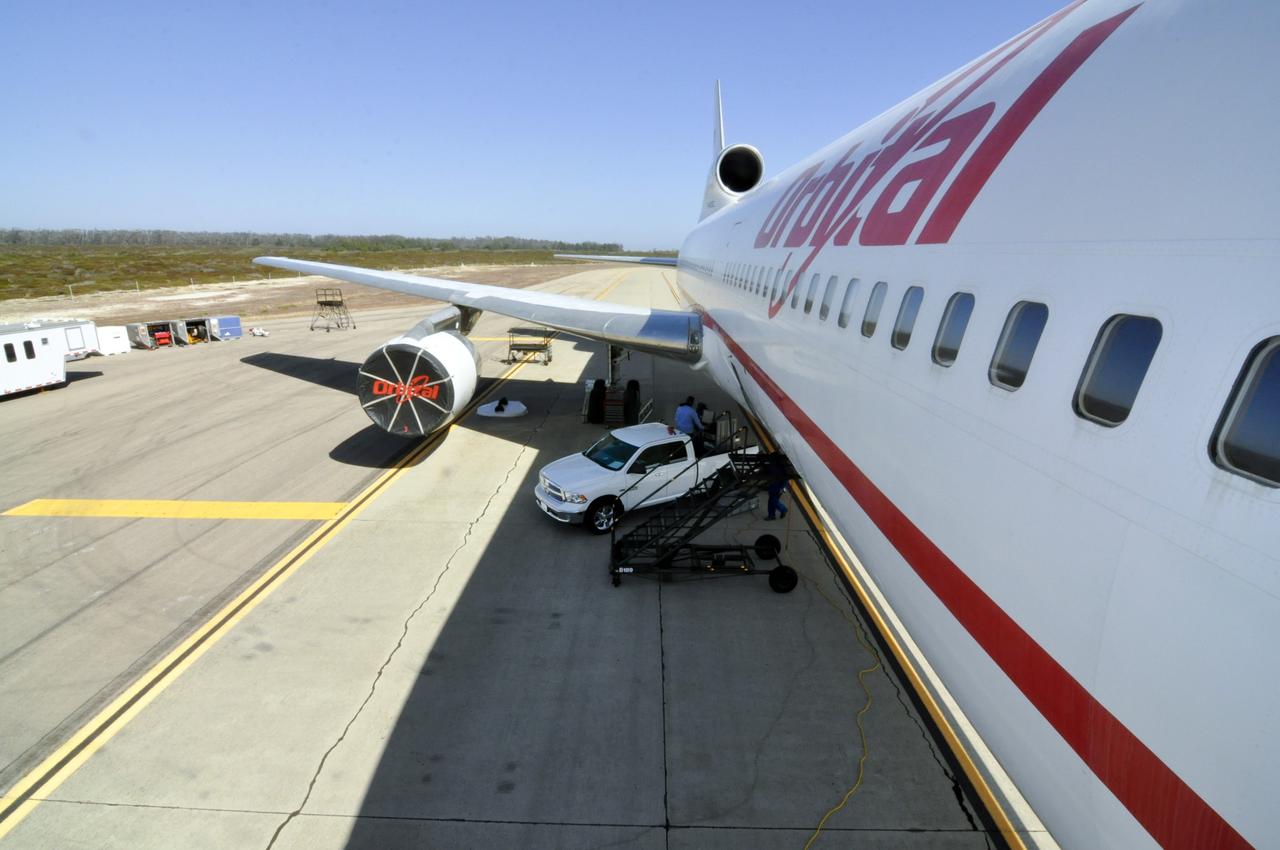
VANDENBERG ABF, Calif. - The Orbital Sciences L-1011 aircraft called "Stargazer" arrives at Vandenberg Air Force Base for the upcoming launch of the company's Pegasus XL rocket lifting NASA's IRIS solar observatory into orbit. The aircraft will carry the winged rocket to an altitude of 39,000 feet before releasing the Pegasus so its own motors can ignite to send the IRIS into space. The L-1011 is a modified airliner equipped to hold the Pegasus under its body safely. IRIS, short for Interface Region Imaging Spectrograph, is being prepared for launch from Vandenberg June 26. IRIS will open a new window of discovery by tracing the flow of energy and plasma through the chromospheres and transition region into the sun’s corona using spectrometry and imaging. IRIS fills a crucial gap in our ability to advance studies of the sun-to-Earth connection by tracing the flow of energy and plasma through the foundation of the corona and the region around the sun known as the heliosphere. Photo credit: VAFB/Randy Beaudoin
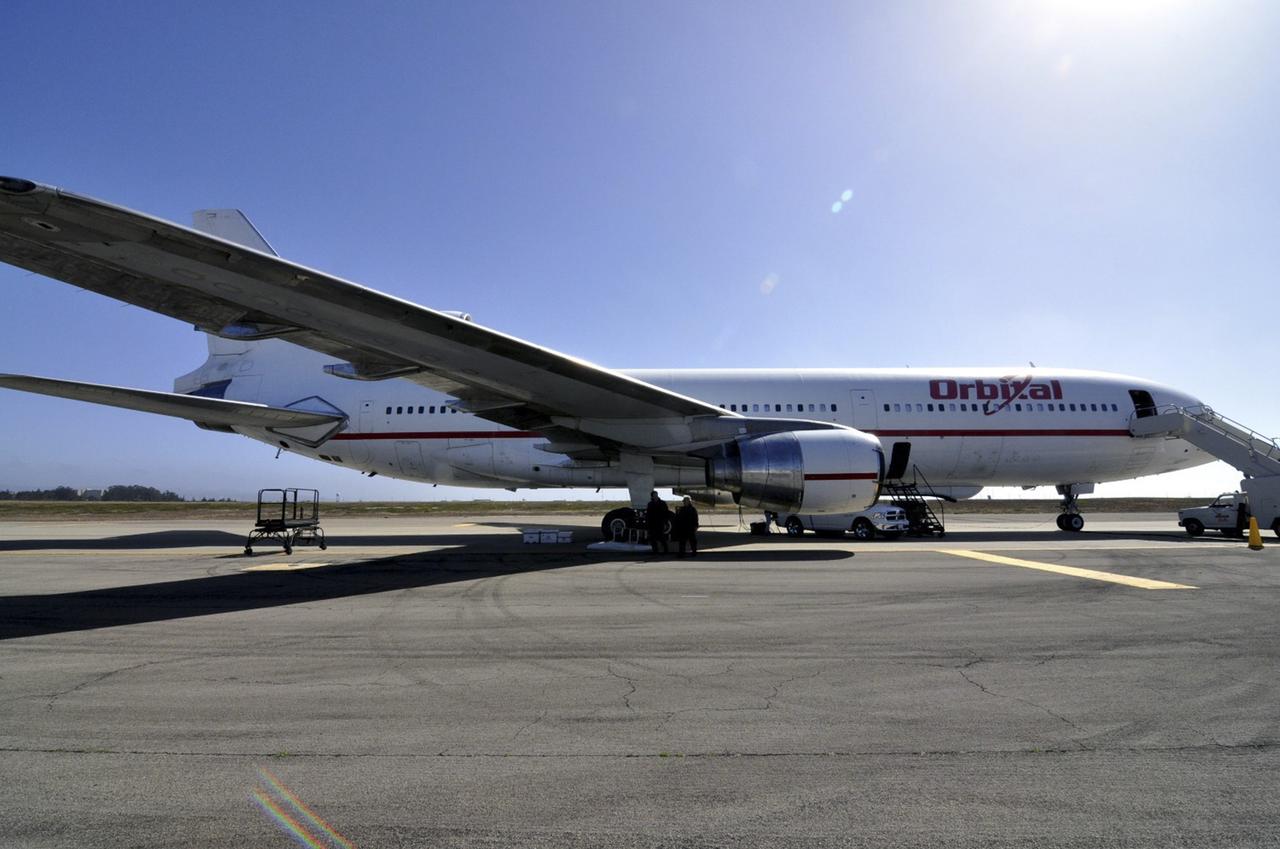
VANDENBERG ABF, Calif. - The Orbital Sciences L-1011 aircraft called "Stargazer" arrives at Vandenberg Air Force Base for the upcoming launch of the company's Pegasus XL rocket lifting NASA's IRIS solar observatory into orbit. The aircraft will carry the winged rocket to an altitude of 39,000 feet before releasing the Pegasus so its own motors can ignite to send the IRIS into space. The L-1011 is a modified airliner equipped to hold the Pegasus under its body safely. IRIS, short for Interface Region Imaging Spectrograph, is being prepared for launch from Vandenberg June 26. IRIS will open a new window of discovery by tracing the flow of energy and plasma through the chromospheres and transition region into the sun’s corona using spectrometry and imaging. IRIS fills a crucial gap in our ability to advance studies of the sun-to-Earth connection by tracing the flow of energy and plasma through the foundation of the corona and the region around the sun known as the heliosphere. Photo credit: VAFB/Randy Beaudoin