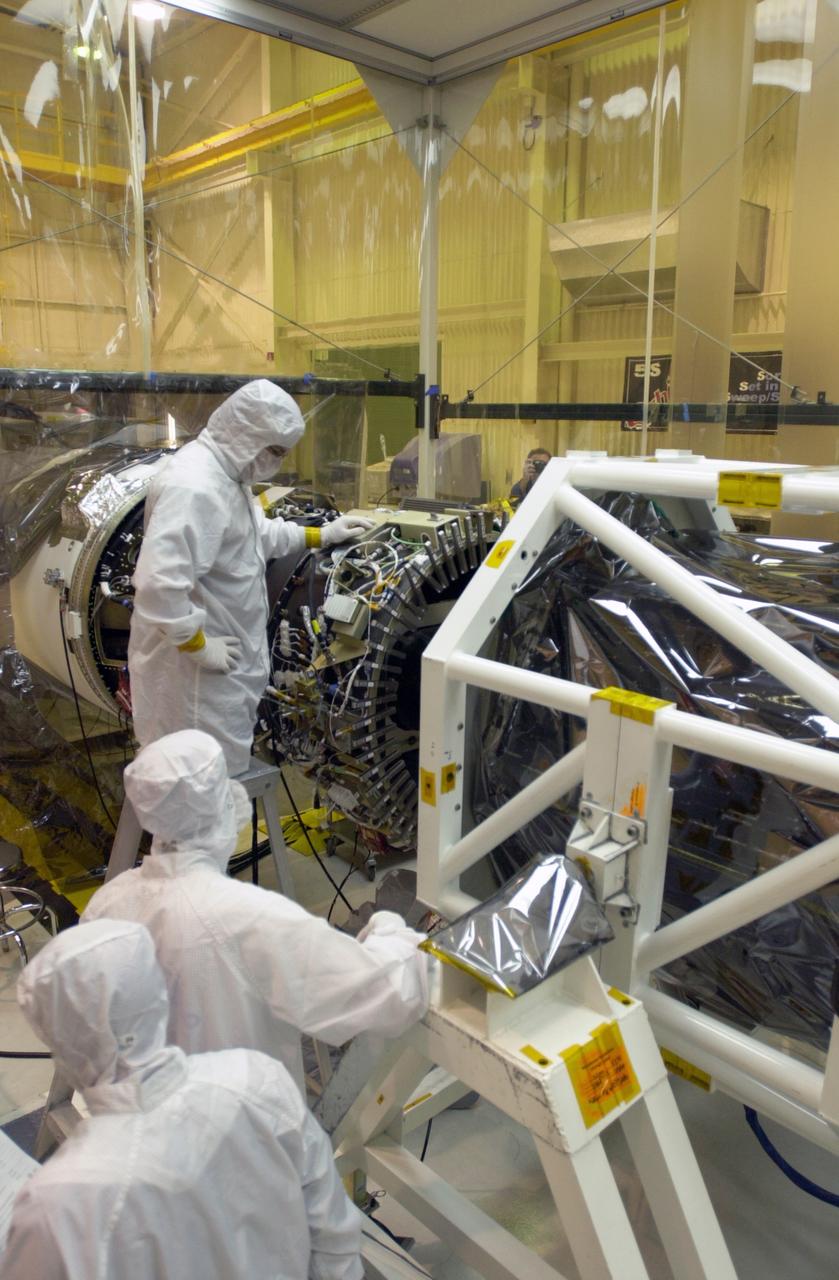
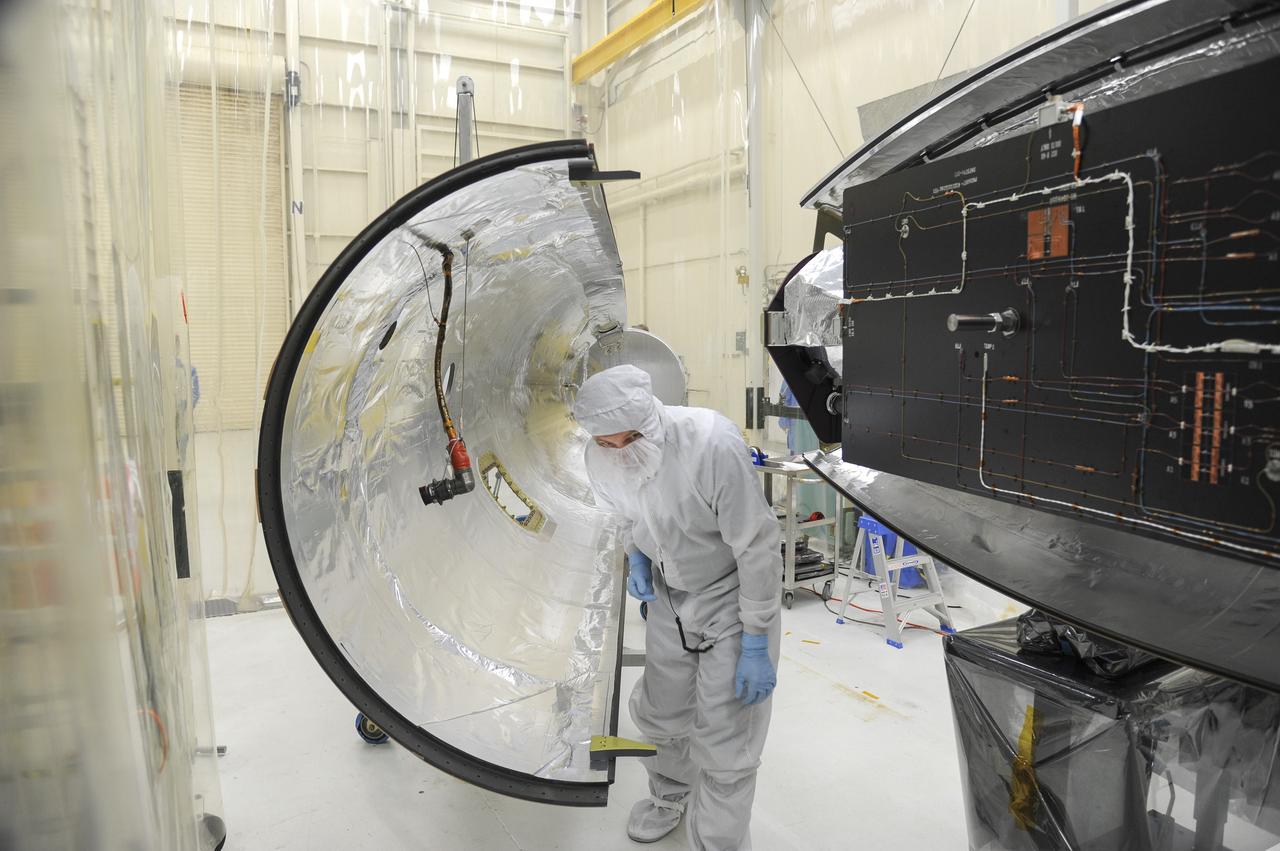
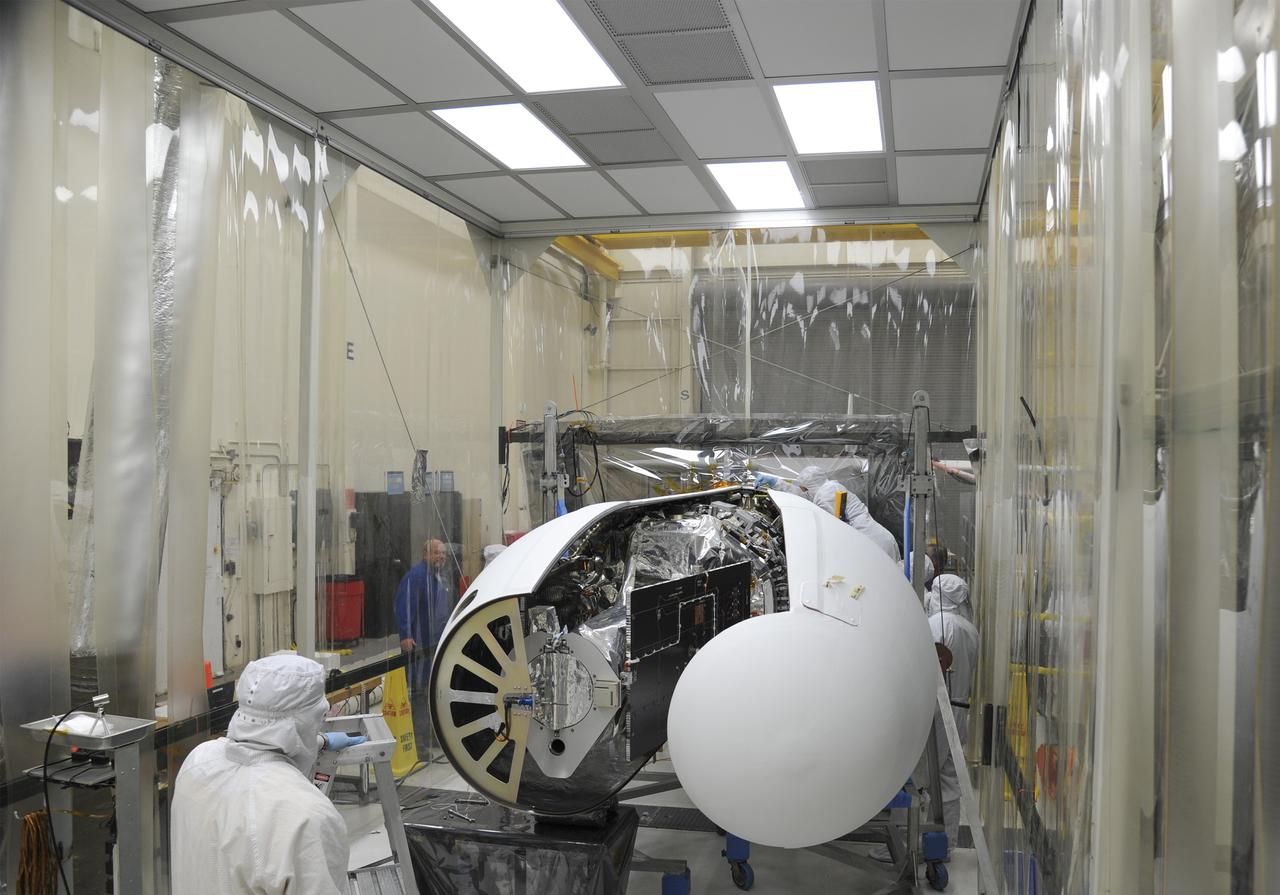
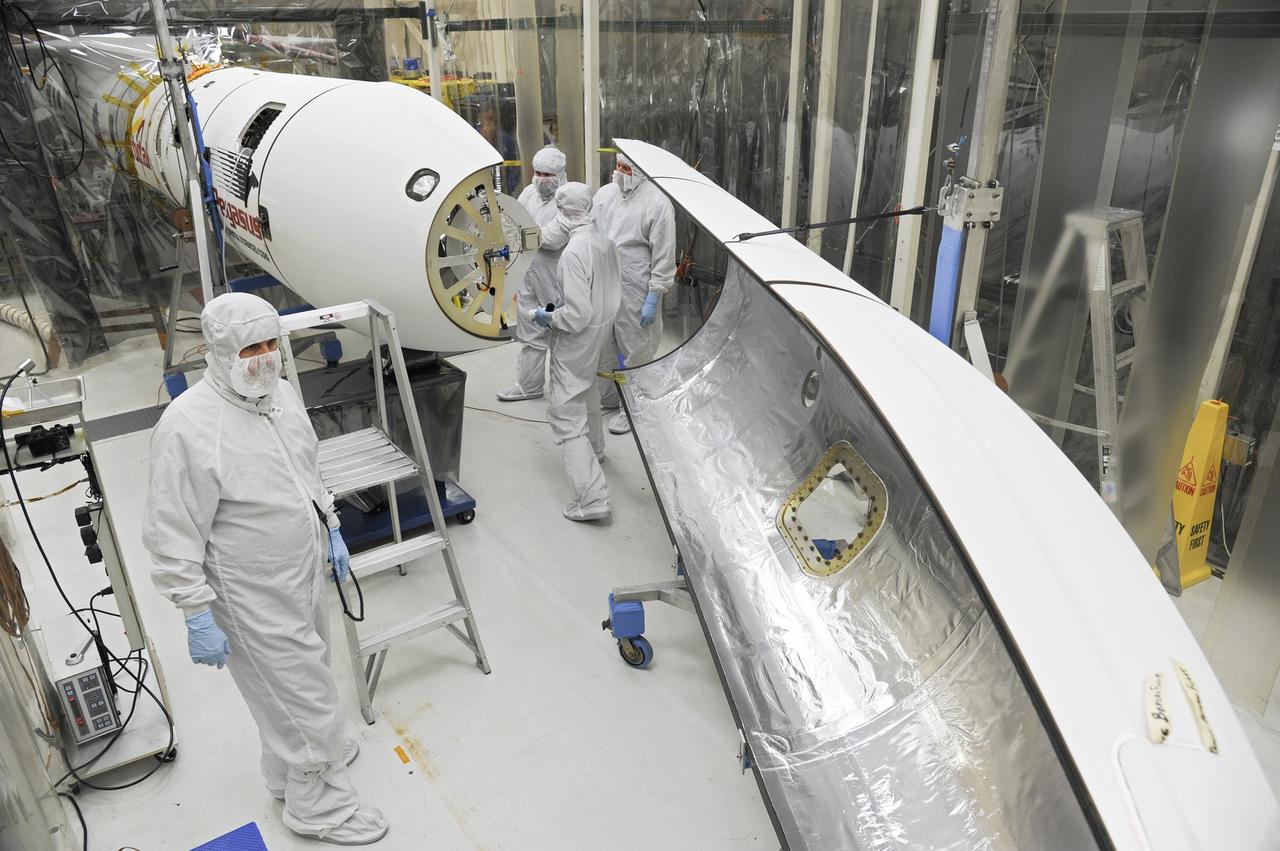
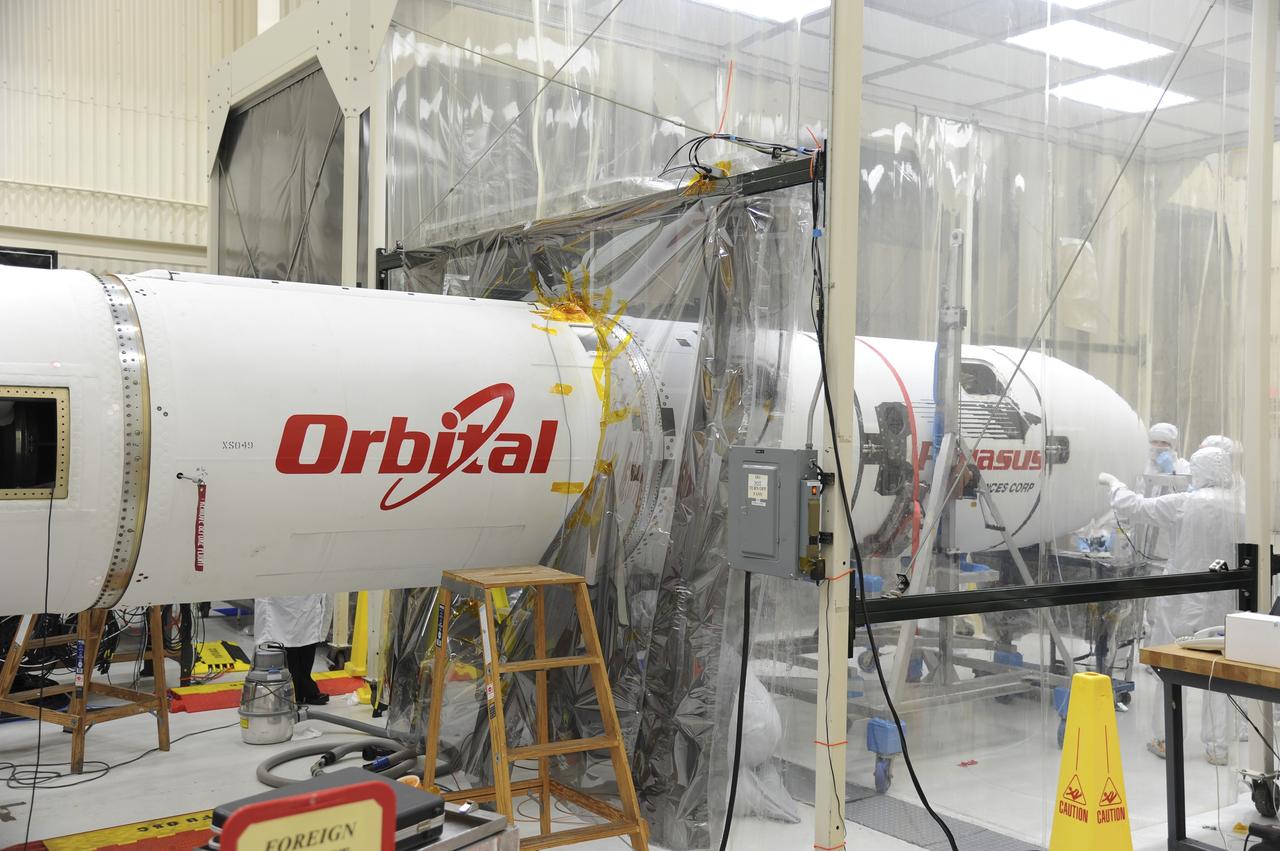
At Vandenberg Air Force Base in California, the third stage of the Orbital Sciences Pegasus XL rocket is being mated to the AIM spacecraft, at right. AIM, which stands for Aeronomy of Ice in the Mesosphere, is being prepared for integrated testing and a flight simulation. The AIM spacecraft will fly three instruments designed to study polar mesospheric clouds located at the edge of space, 50 miles above the Earth's surface in the coldest part of the planet's atmosphere. The mission's primary goal is to explain why these clouds form and what has caused them to become brighter and more numerous and appear at lower latitudes in recent years. AIM's results will provide the basis for the study of long-term variability in the mesospheric climate and its relationship to global climate change. Launch from the Pegasus XL rocket is scheduled for April 25.

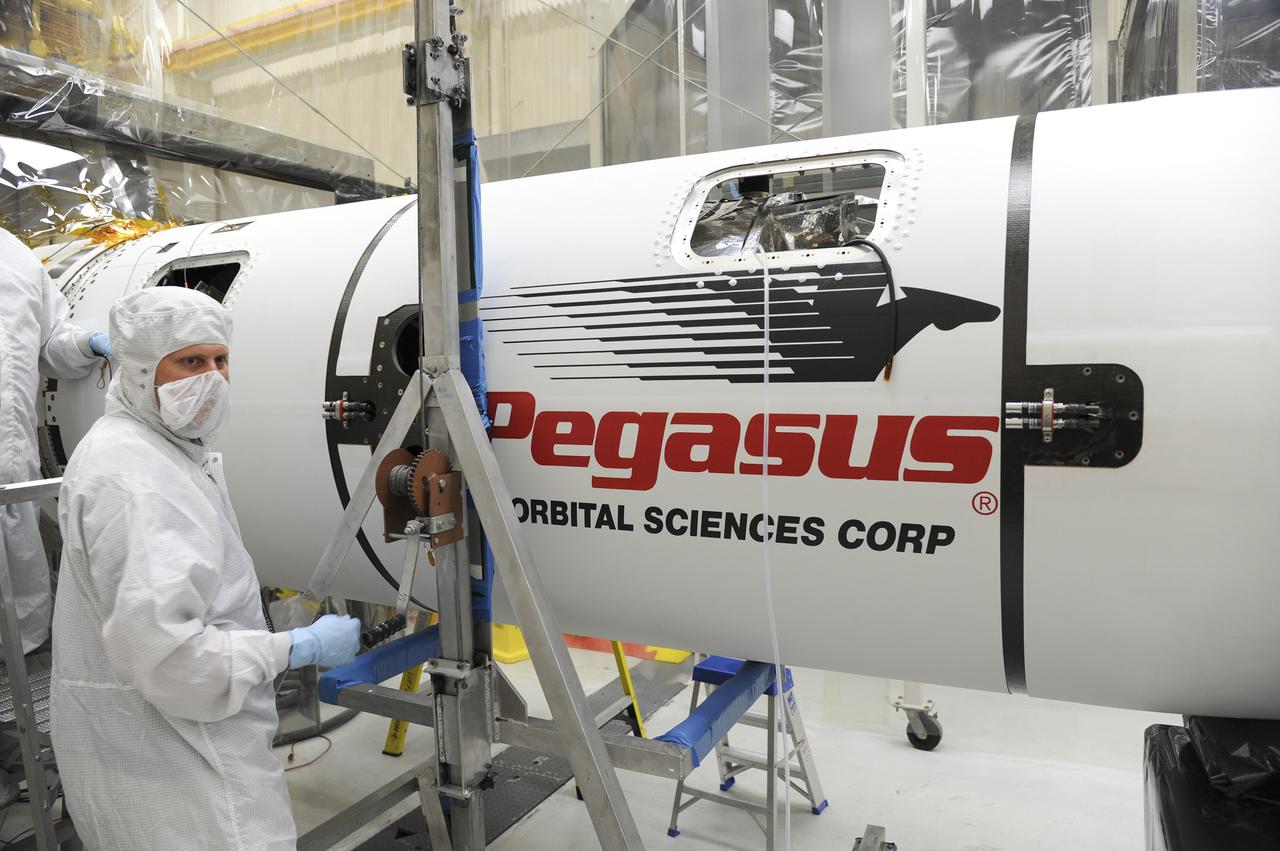
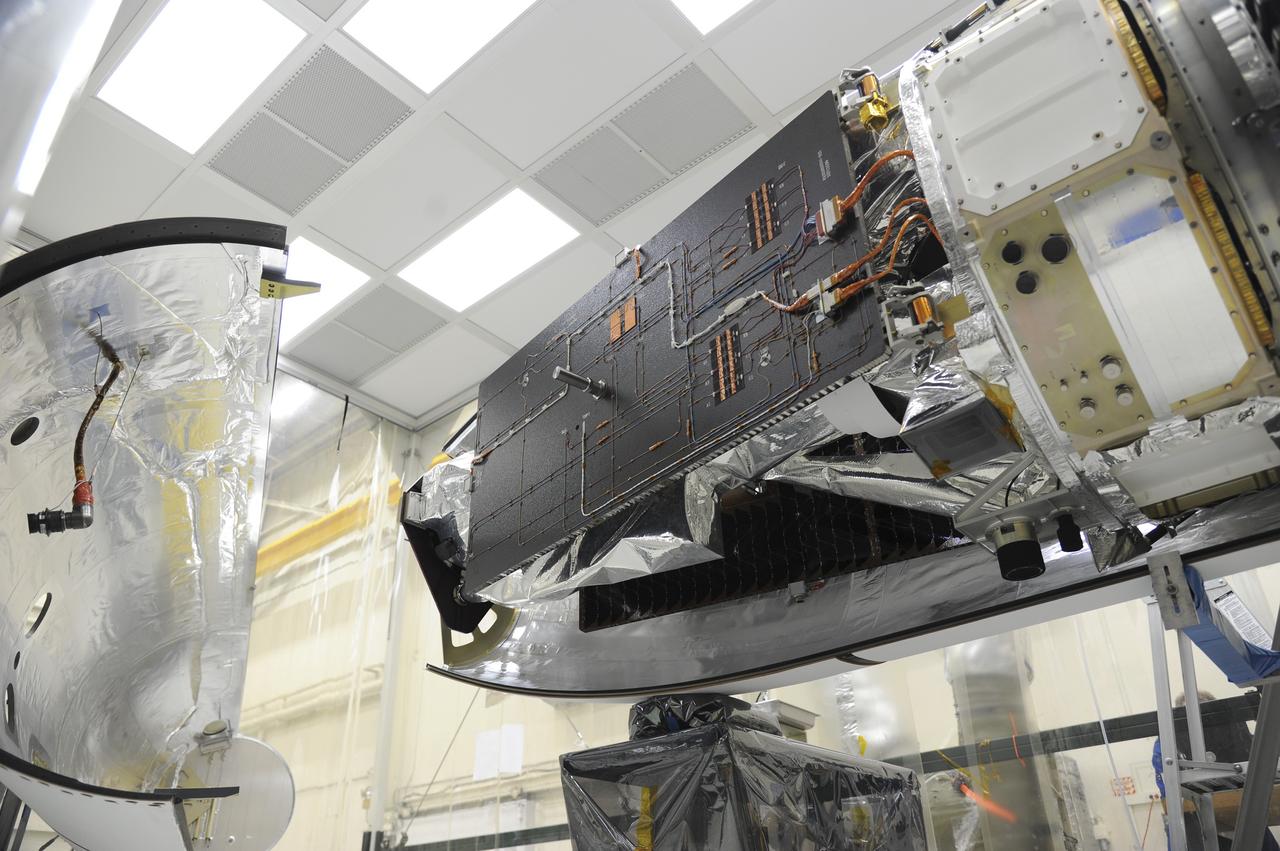
At Vandenberg Air Force Base in California, technicians prepare to mate the AIM spacecraft (at left) to the SoftRide isolation system on the Orbital Sciences Pegasus XL rocket. The Cosmic Dust Experiment surfaces can be clearly seen as 12 rectangular areas on the aft portion of the spacecraft. AIM, which stands for Aeronomy of Ice in the Mesosphere, is being prepared for integrated testing and a flight simulation. The AIM spacecraft will fly three instruments designed to study polar mesospheric clouds located at the edge of space, 50 miles above the Earth's surface in the coldest part of the planet's atmosphere. The mission's primary goal is to explain why these clouds form and what has caused them to become brighter and more numerous and appear at lower latitudes in recent years. AIM's results will provide the basis for the study of long-term variability in the mesospheric climate and its relationship to global climate change. Launch from the Pegasus XL rocket is scheduled for April 25.
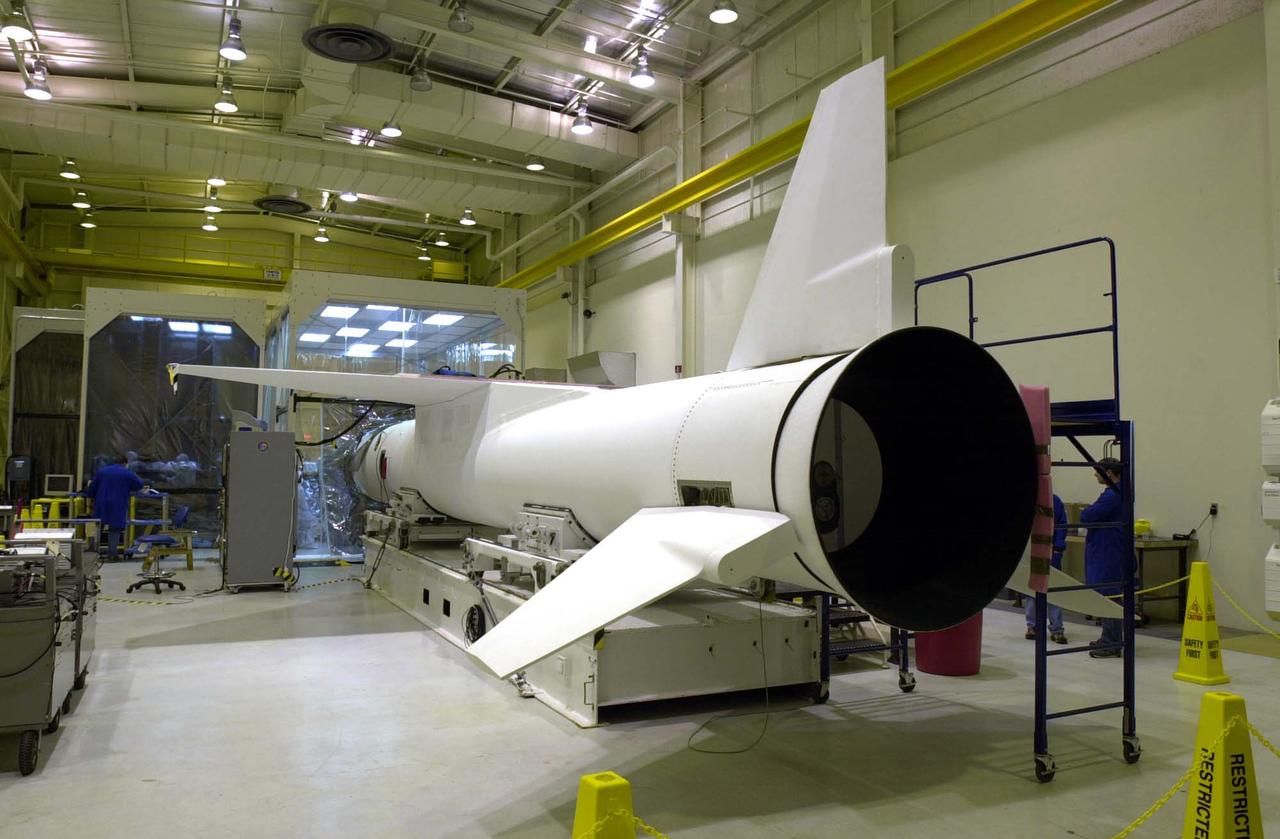
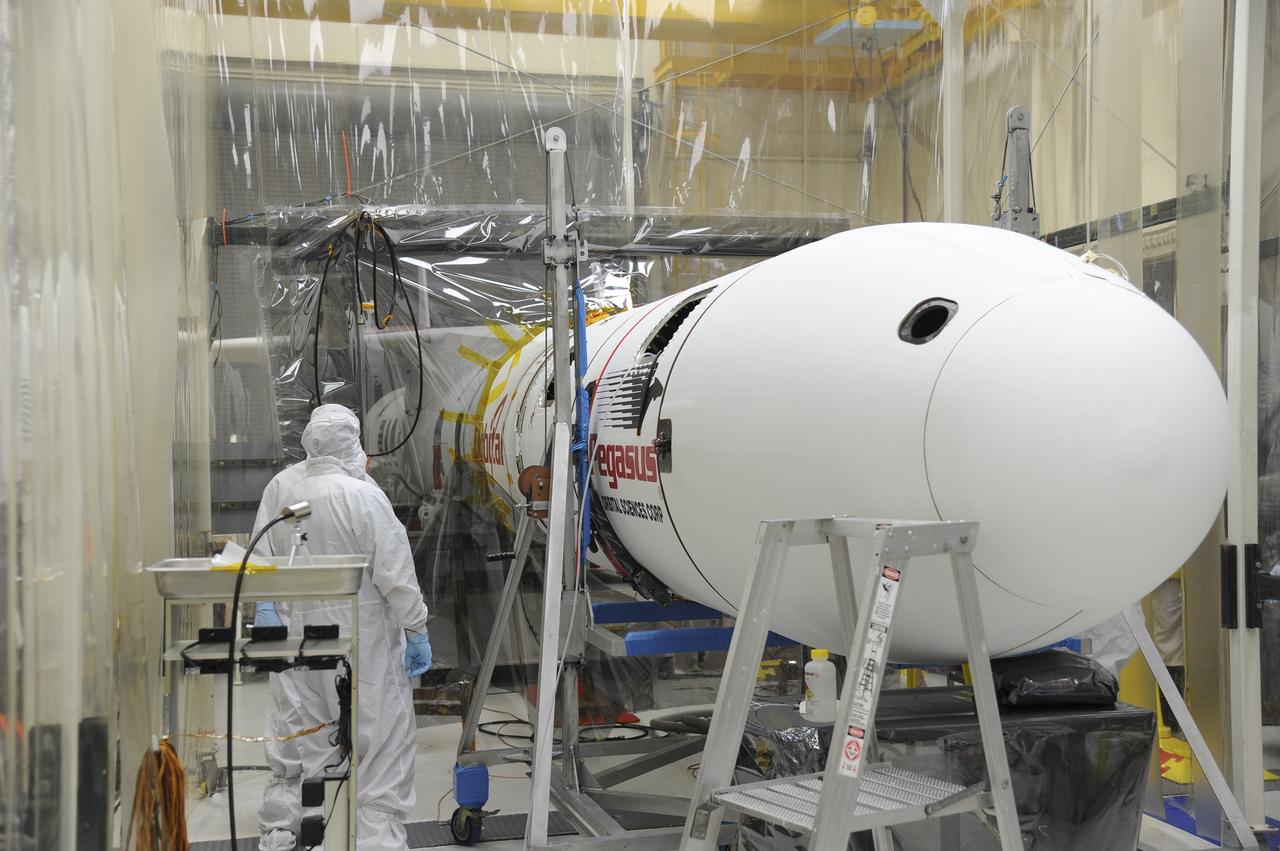
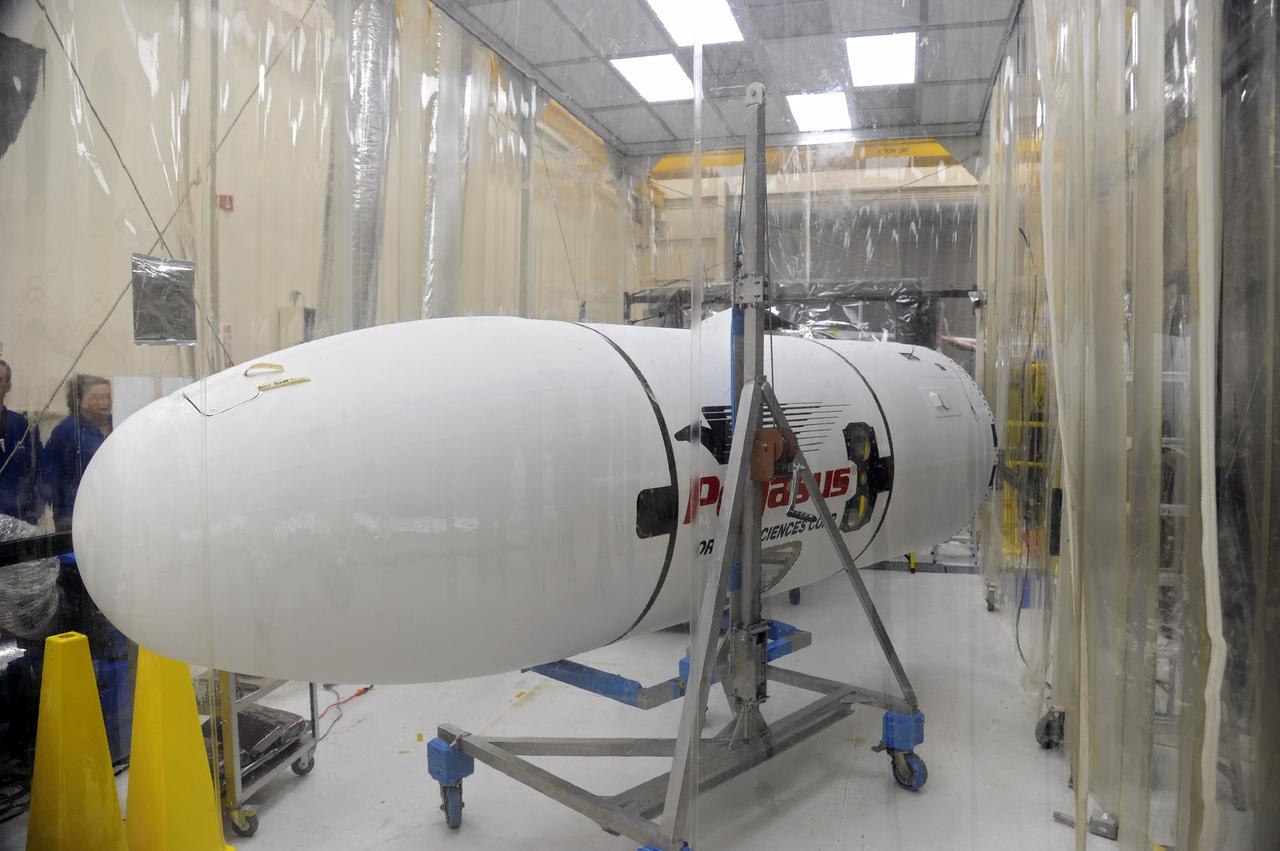
At Vandenberg Air Force Base in California, the Orbital Sciences Pegasus XL rocket is ready for mating to the AIM spacecraft. AIM, which stands for Aeronomy of Ice in the Mesosphere, is being prepared for integrated testing and a flight simulation. The AIM spacecraft will fly three instruments designed to study polar mesospheric clouds located at the edge of space, 50 miles above the Earth's surface in the coldest part of the planet's atmosphere. The mission's primary goal is to explain why these clouds form and what has caused them to become brighter and more numerous and appear at lower latitudes in recent years. AIM's results will provide the basis for the study of long-term variability in the mesospheric climate and its relationship to global climate change. Launch from the Pegasus XL rocket is scheduled for April 25.
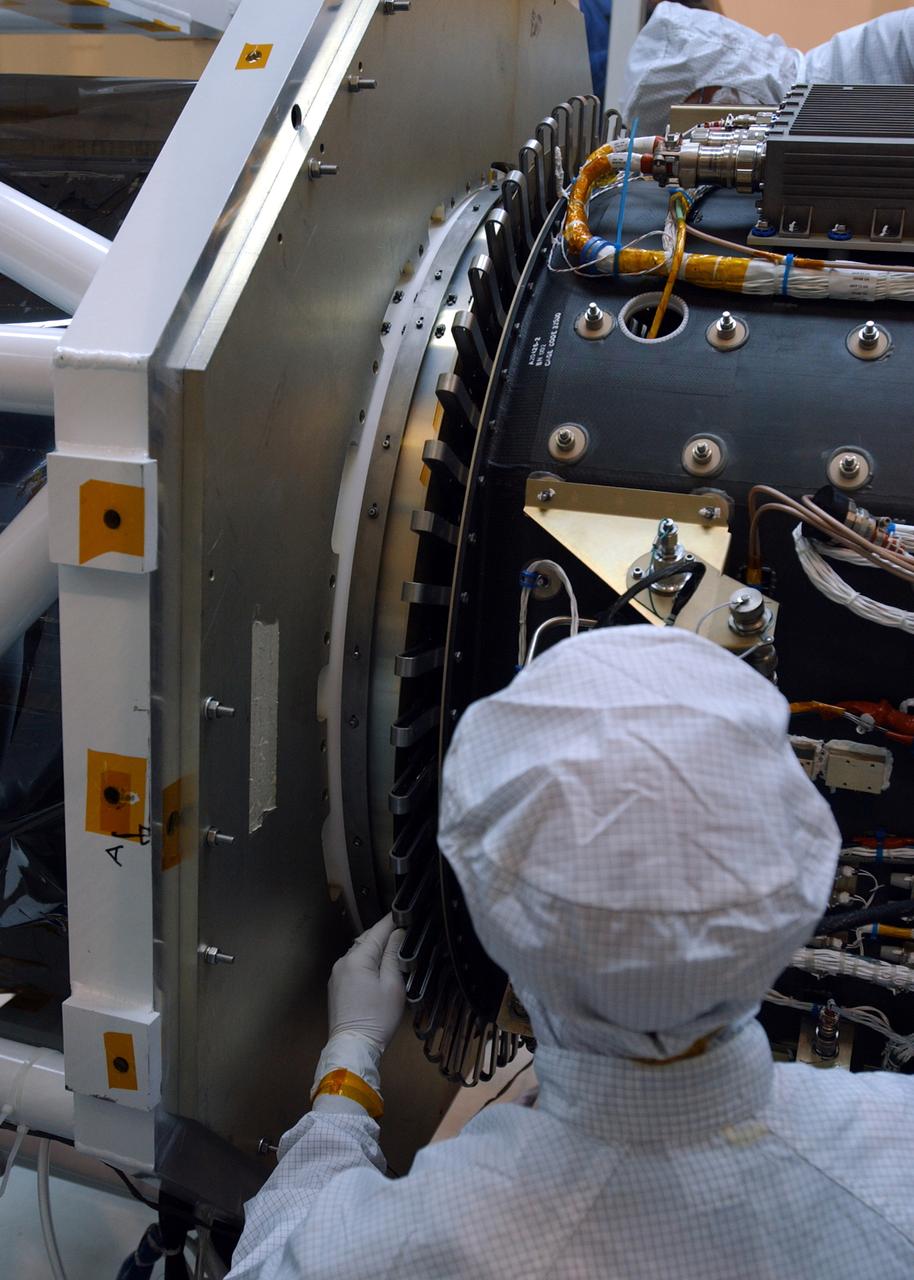
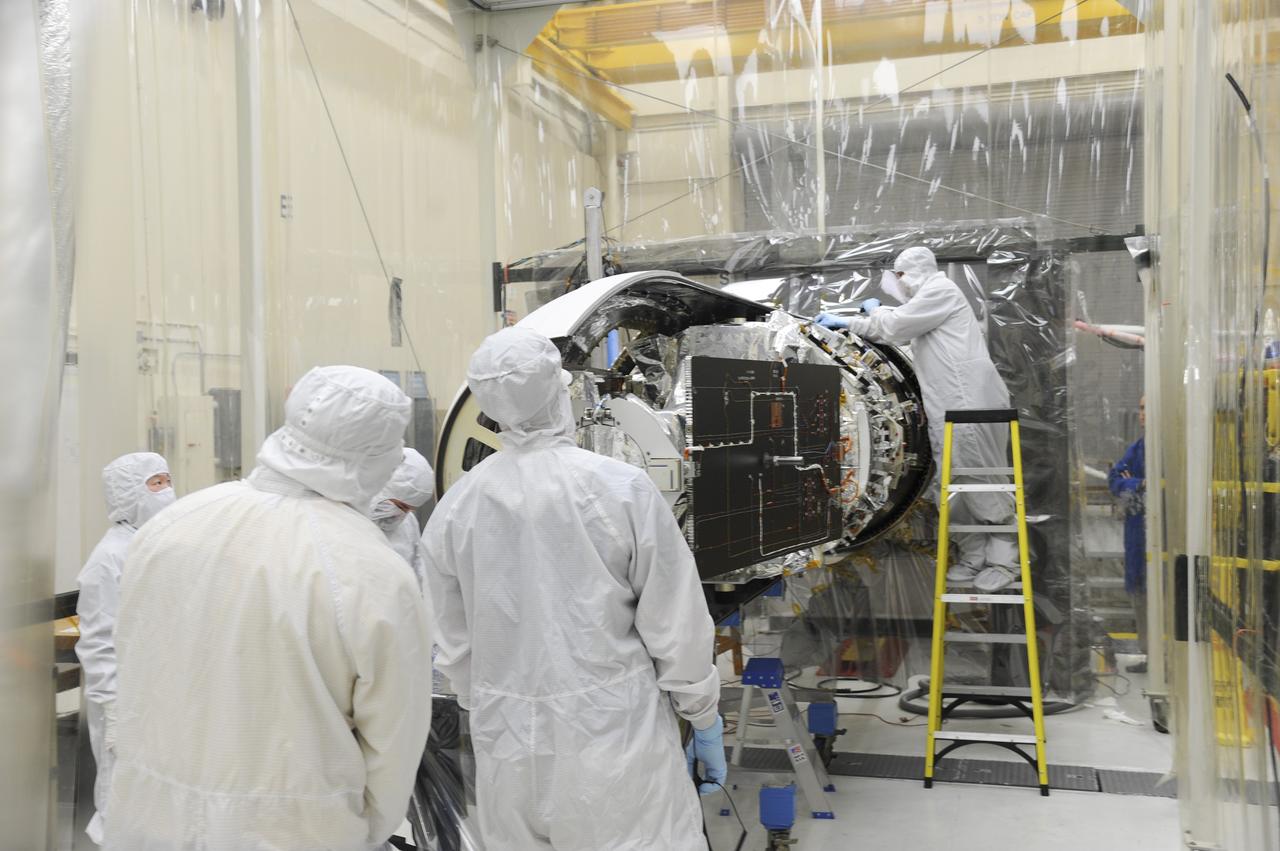
At Vandenberg Air Force Base in California, a technician mates the AIM spacecraft, at left, to the Orbital Sciences Pegasus XL rocket, at right. AIM, which stands for Aeronomy of Ice in the Mesosphere, is being prepared for integrated testing and a flight simulation. The AIM spacecraft will fly three instruments designed to study polar mesospheric clouds located at the edge of space, 50 miles above the Earth's surface in the coldest part of the planet's atmosphere. The mission's primary goal is to explain why these clouds form and what has caused them to become brighter and more numerous and appear at lower latitudes in recent years. AIM's results will provide the basis for the study of long-term variability in the mesospheric climate and its relationship to global climate change. Launch from the Pegasus XL rocket is scheduled for April 25.
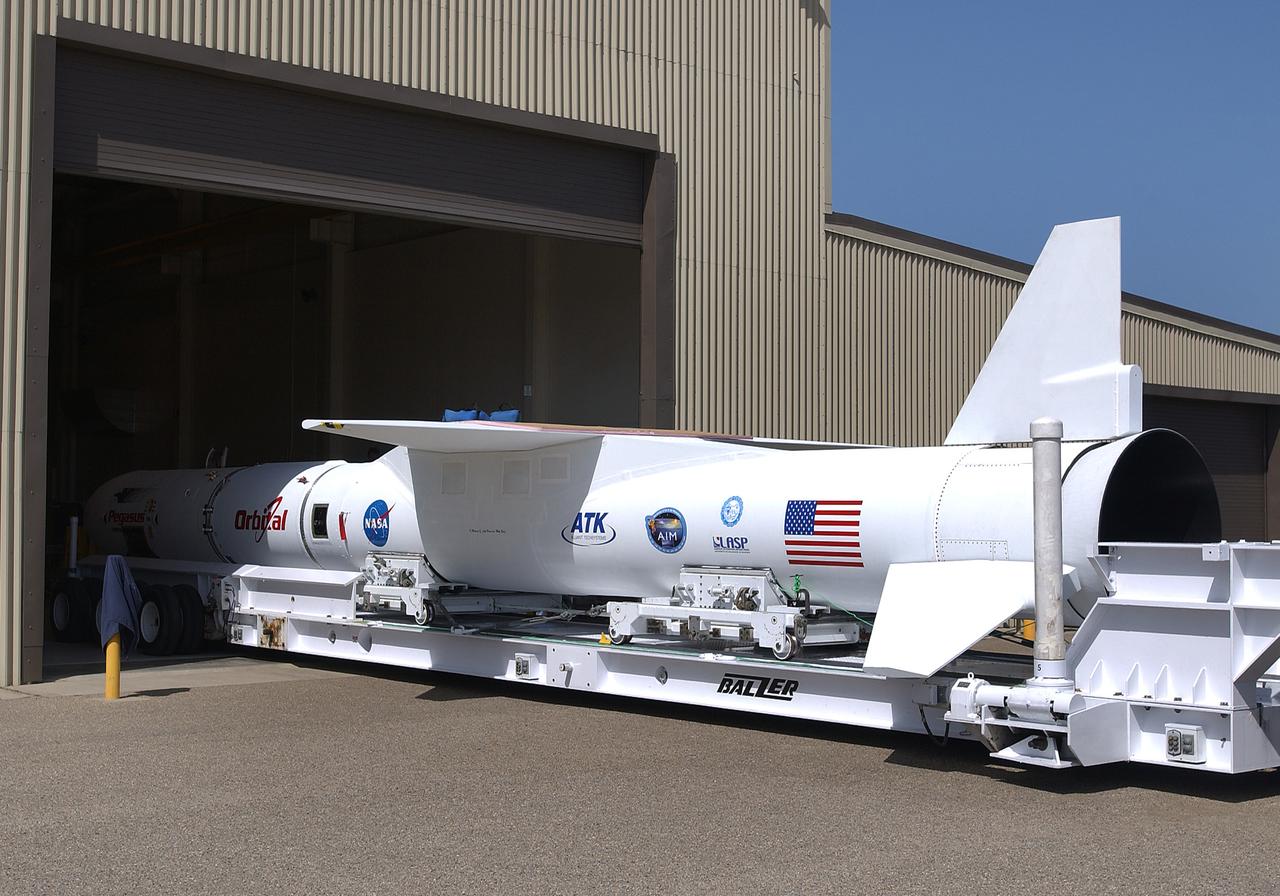
The mated Pegasus XL rocket - AIM spacecraft leaves Building 1655 at Vandenberg Air Force Base in California. The rocket will be transferred to a waiting Orbital Sciences Stargazer L-1011 aircraft for launch. AIM, which stands for Aeronomy of Ice in the Mesosphere, is being prepared for integrated testing and a flight simulation. The AIM spacecraft will fly three instruments designed to study polar mesospheric clouds located at the edge of space, 50 miles above the Earth's surface in the coldest part of the planet's atmosphere. The mission's primary goal is to explain why these clouds form and what has caused them to become brighter and more numerous and appear at lower latitudes in recent years. AIM's results will provide the basis for the study of long-term variability in the mesospheric climate and its relationship to global climate change. Launch is scheduled for April 25.
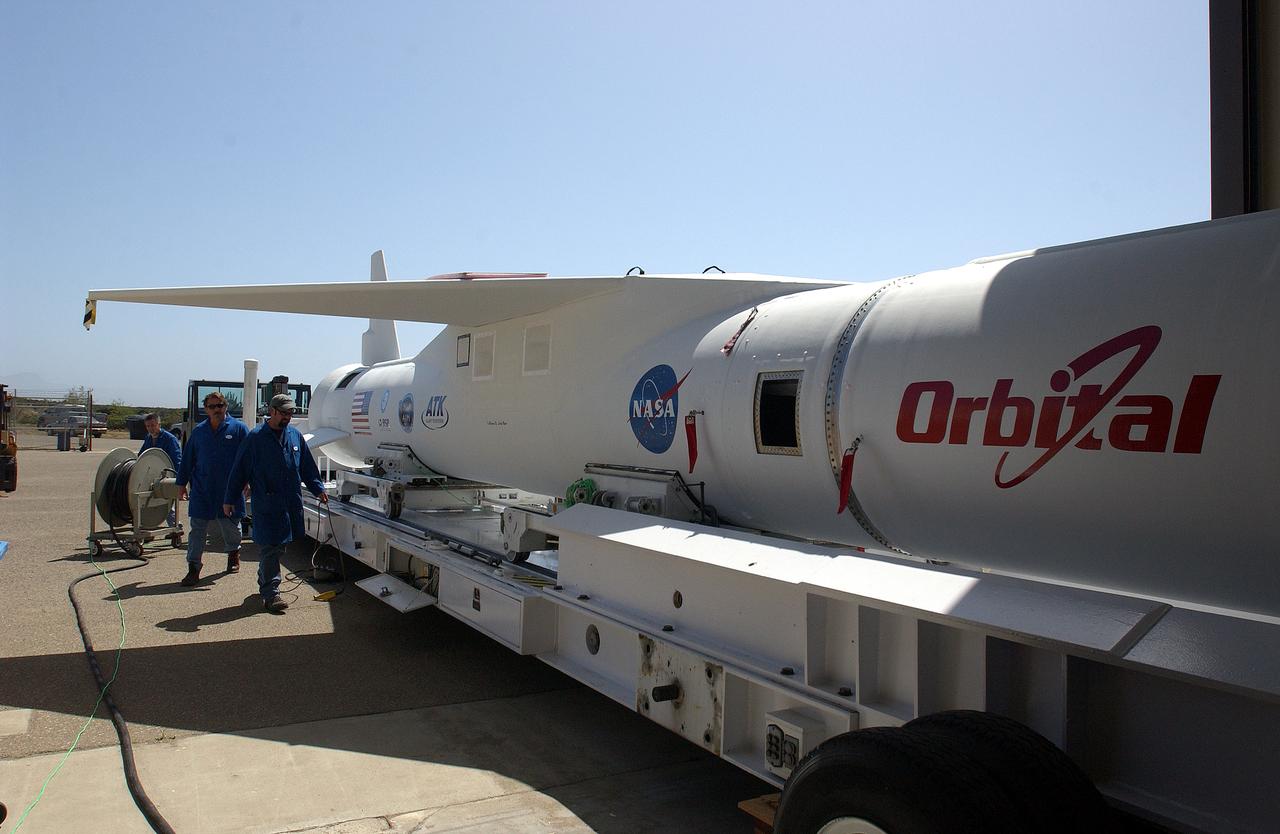
The mated Pegasus XL rocket - AIM spacecraft is secured onto a transporter at Vandenberg Air Force Base in California. The rocket will be transferred to a waiting Orbital Sciences Stargazer L-1011 aircraft for launch. AIM, which stands for Aeronomy of Ice in the Mesosphere, is being prepared for integrated testing and a flight simulation. The AIM spacecraft will fly three instruments designed to study polar mesospheric clouds located at the edge of space, 50 miles above the Earth's surface in the coldest part of the planet's atmosphere. The mission's primary goal is to explain why these clouds form and what has caused them to become brighter and more numerous and appear at lower latitudes in recent years. AIM's results will provide the basis for the study of long-term variability in the mesospheric climate and its relationship to global climate change. Launch is scheduled for April 25.

The mated Pegasus XL rocket - AIM spacecraft is moved onto a transporter in Building 1655 at Vandenberg Air Force Base in California. The launch vehicle will be transferred to a waiting Orbital Sciences Stargazer L-1011 aircraft for launch. AIM, which stands for Aeronomy of Ice in the Mesosphere, is being prepared for integrated testing and a flight simulation. The AIM spacecraft will fly three instruments designed to study polar mesospheric clouds located at the edge of space, 50 miles above the Earth's surface in the coldest part of the planet's atmosphere. The mission's primary goal is to explain why these clouds form and what has caused them to become brighter and more numerous and appear at lower latitudes in recent years. AIM's results will provide the basis for the study of long-term variability in the mesospheric climate and its relationship to global climate change. Launch is scheduled for April 25.
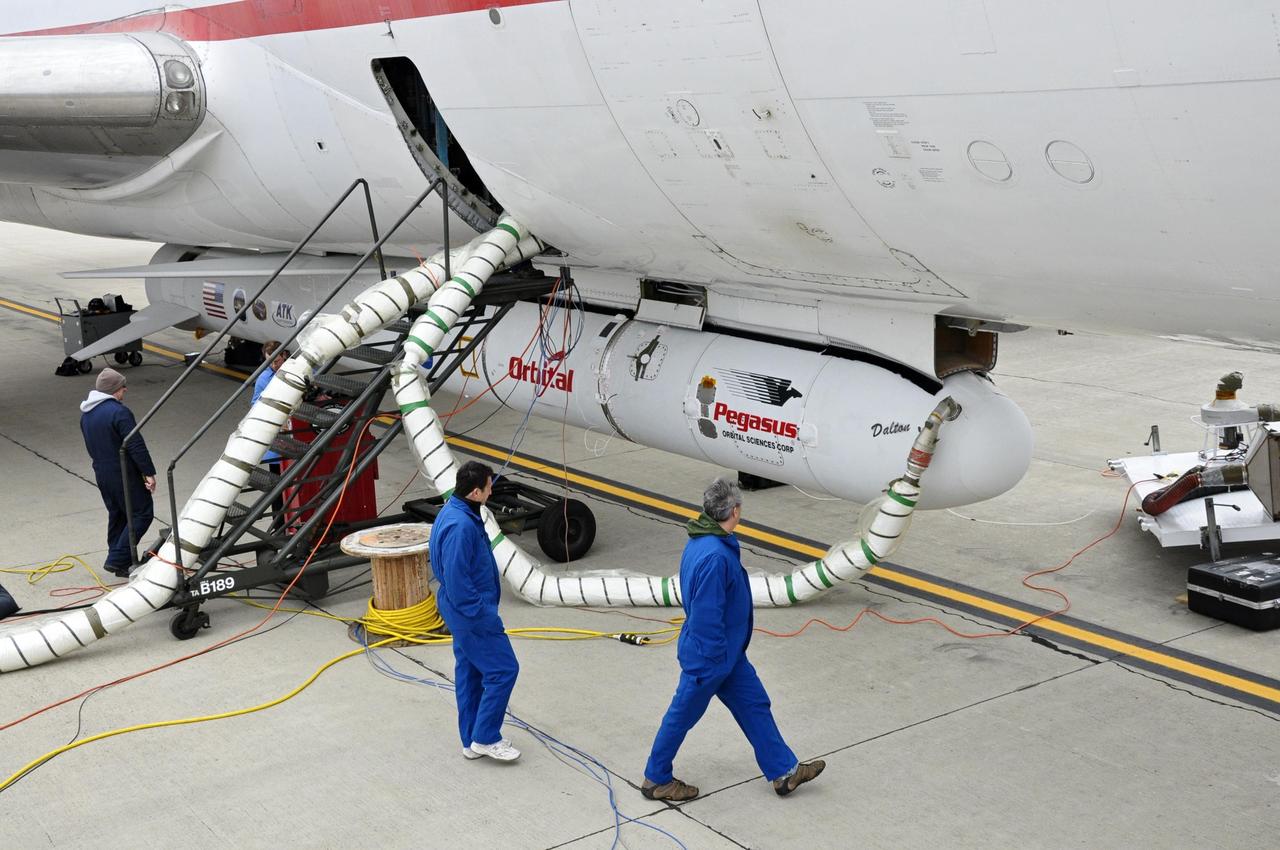
This photo shows the Orbital Sciences Corporation Pegasus XL rocket with NASA NuSTAR spacecraft after attachment to the L-1011 carrier aircraft known as Stargazer.
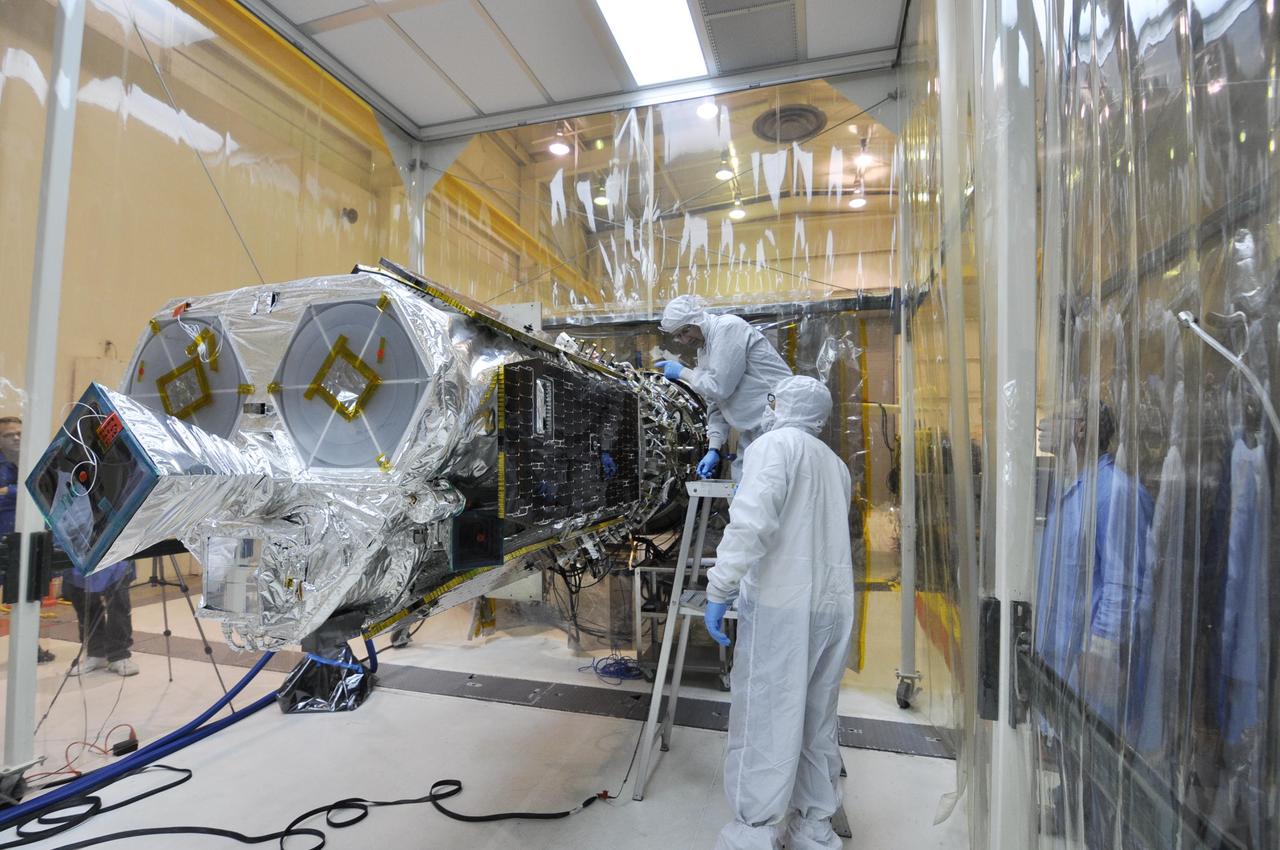
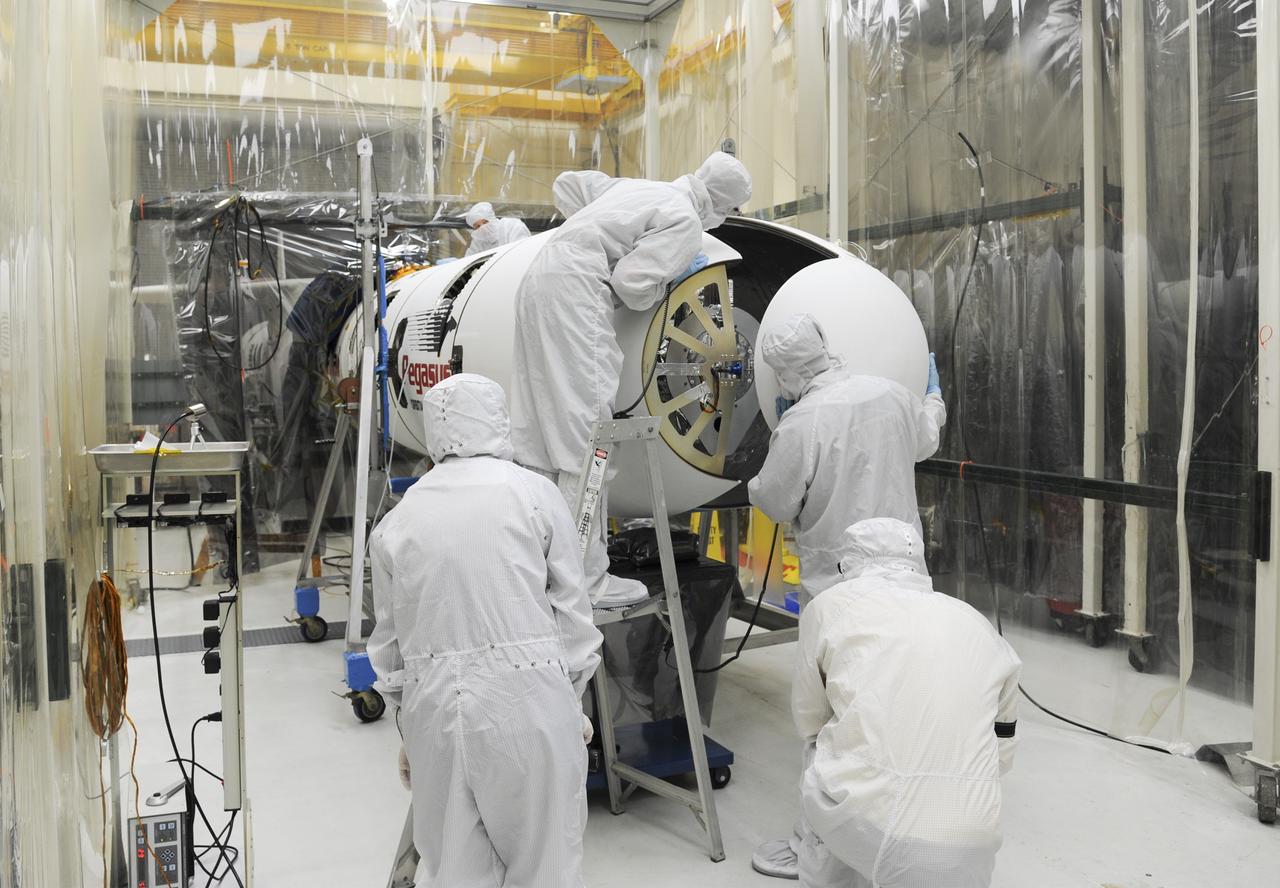
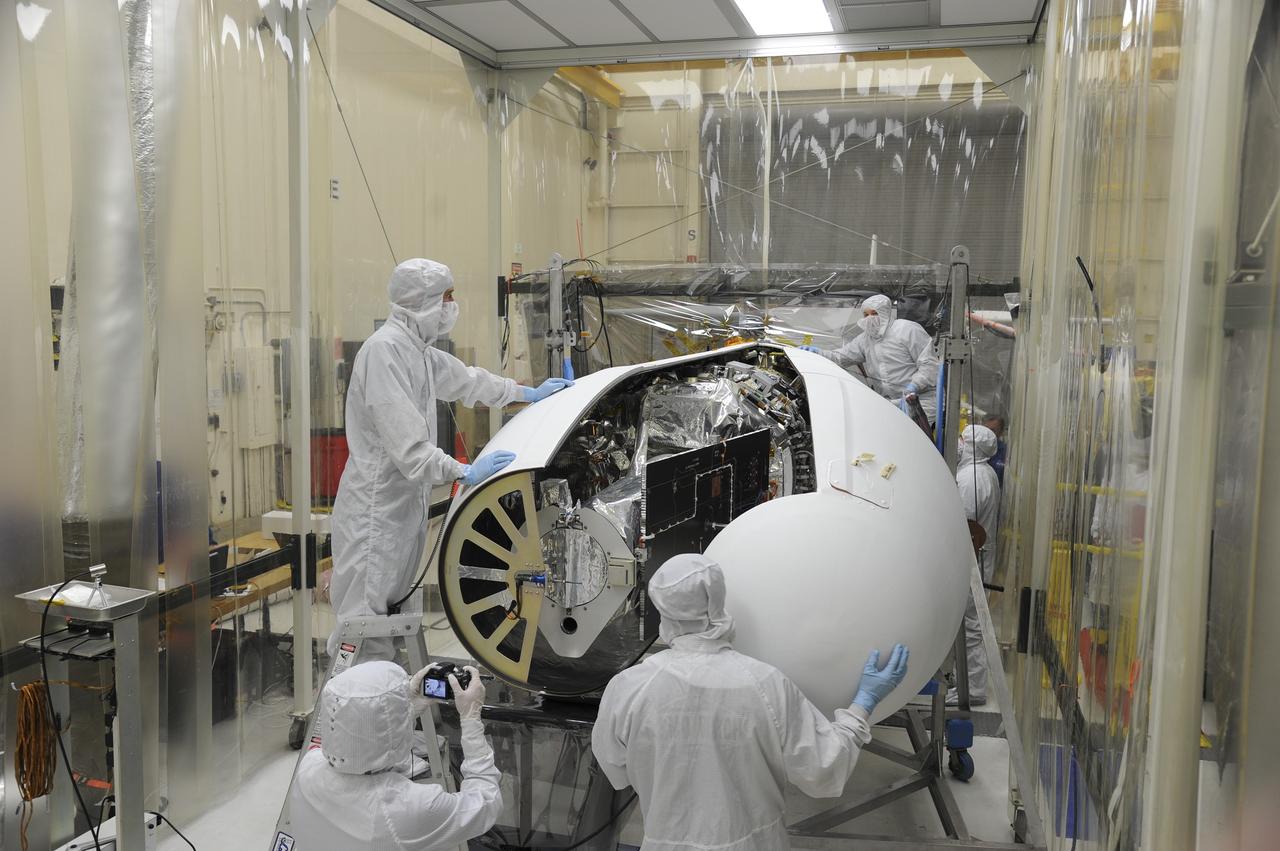
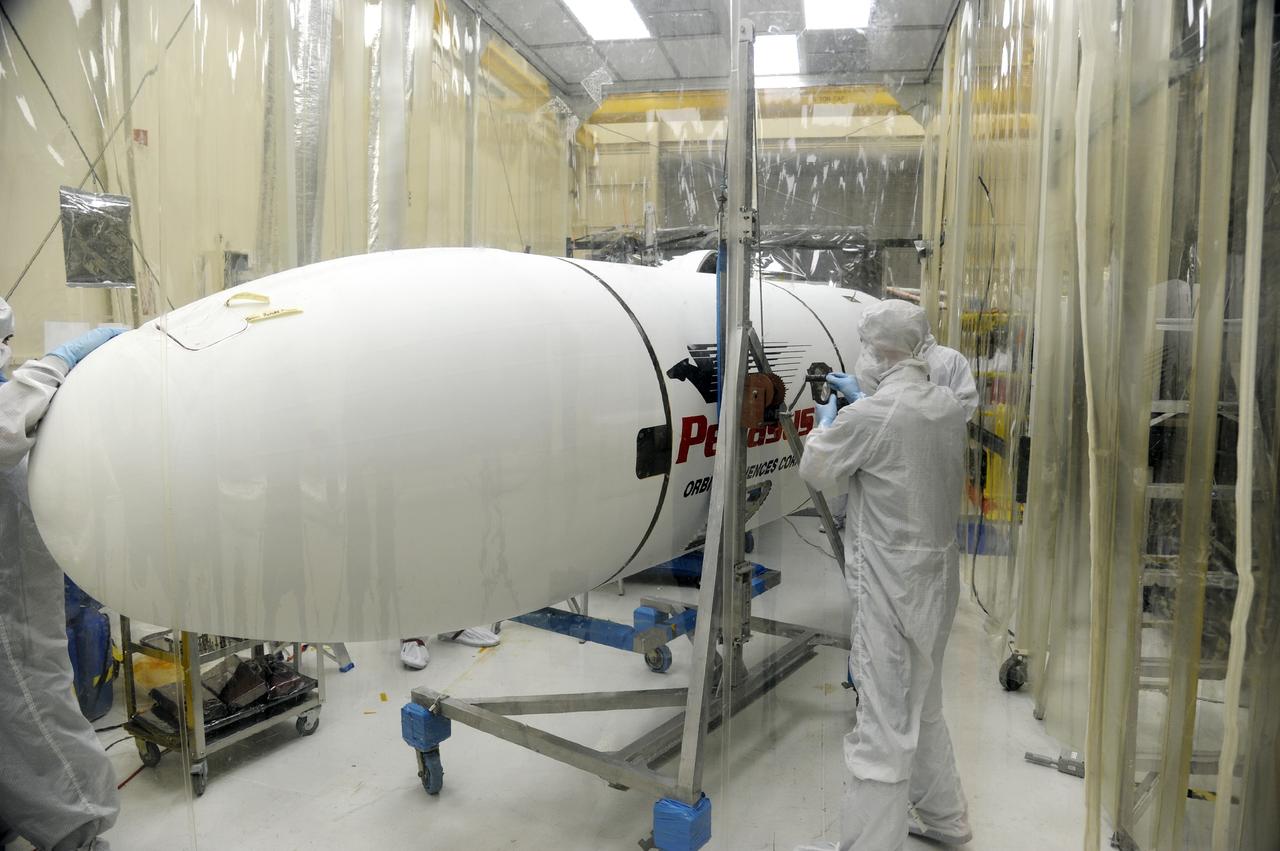
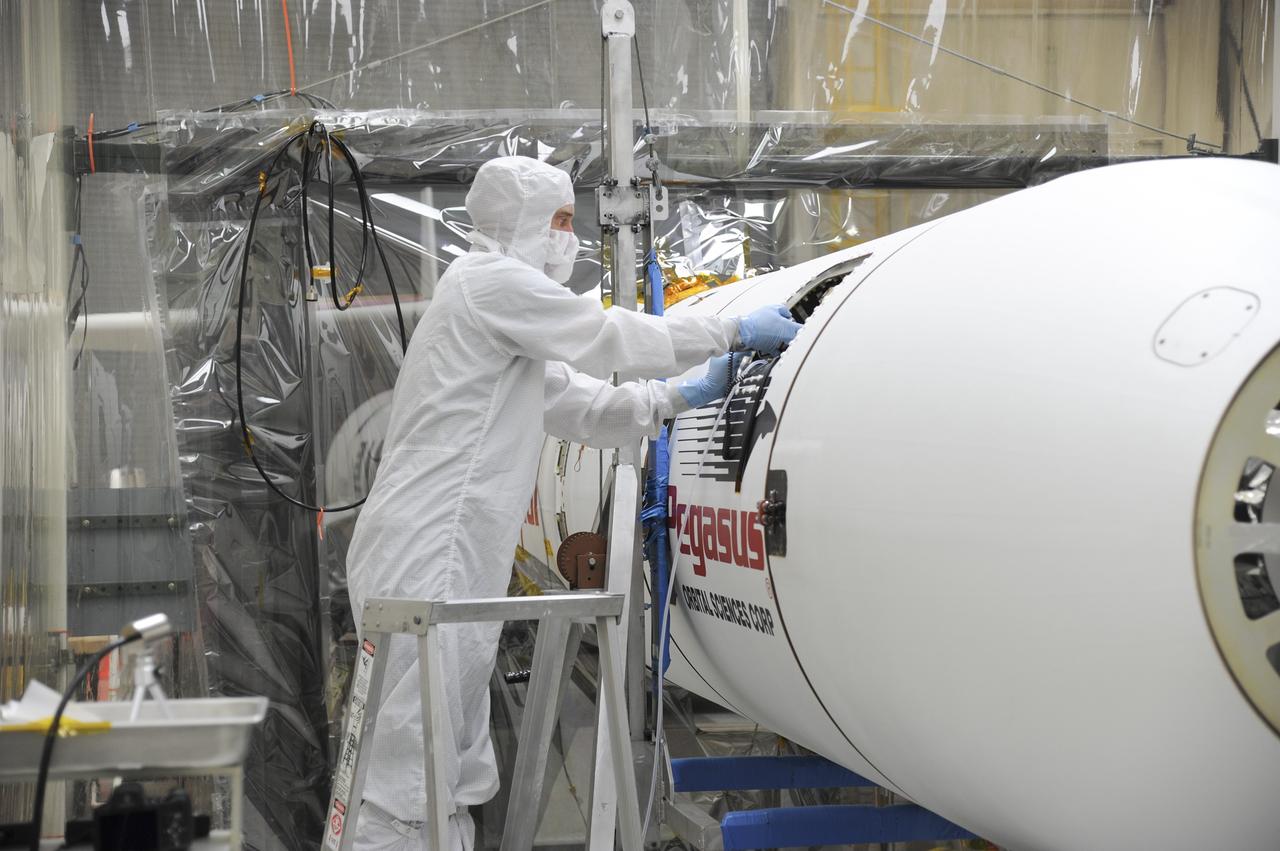
Inside an environmental enclosure at Vandenberg Air Force Base processing facility in California, technicians complete the final steps in mating NASA Nuclear Spectroscopic Telescope Array NuSTAR and its Orbital Sciences Pegasus XL rocket.
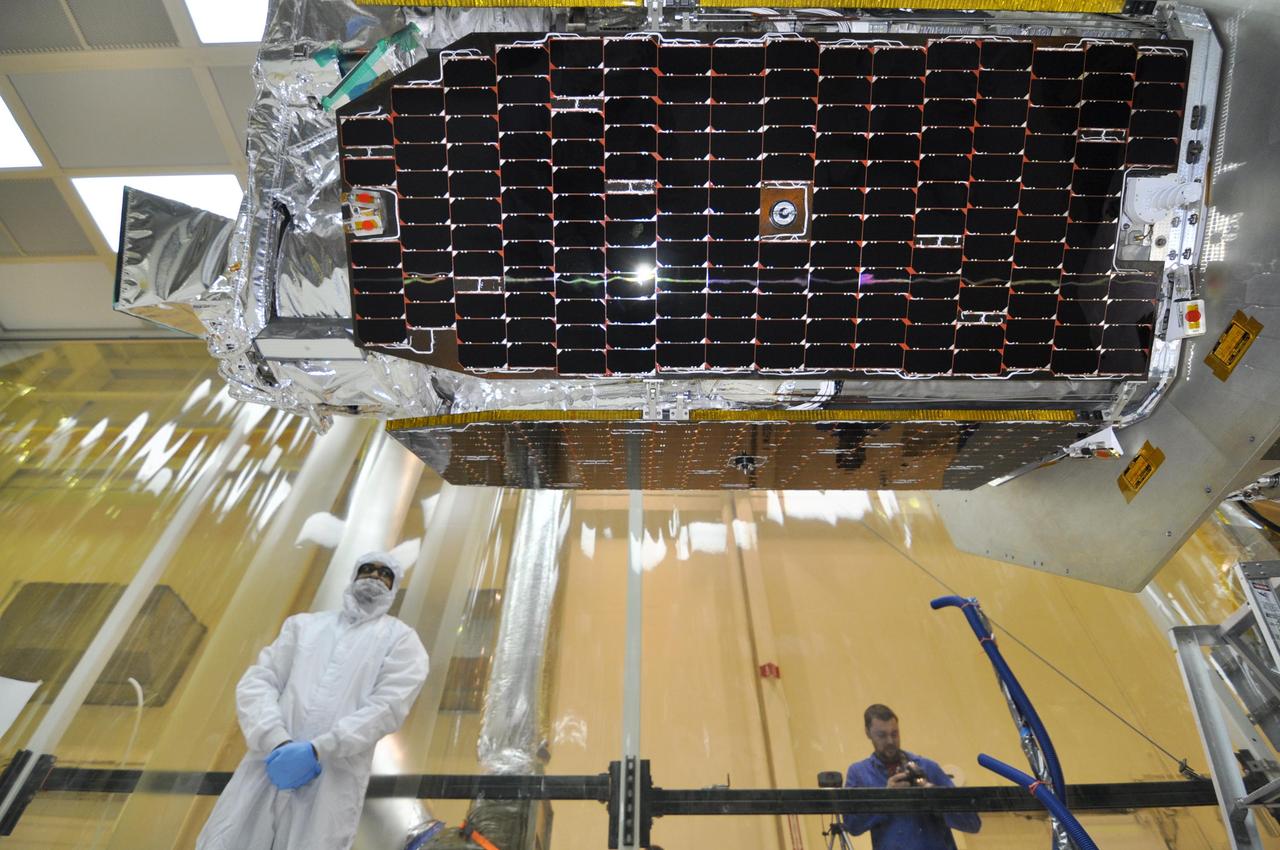
Inside an environmental enclosure at Vandenberg Air Force Base processing facility in California, solar panels line the sides of NASA Nuclear Spectroscopic Telescope Array NuSTAR, which was just joined to the Orbital Sciences Pegasus XL rocket.
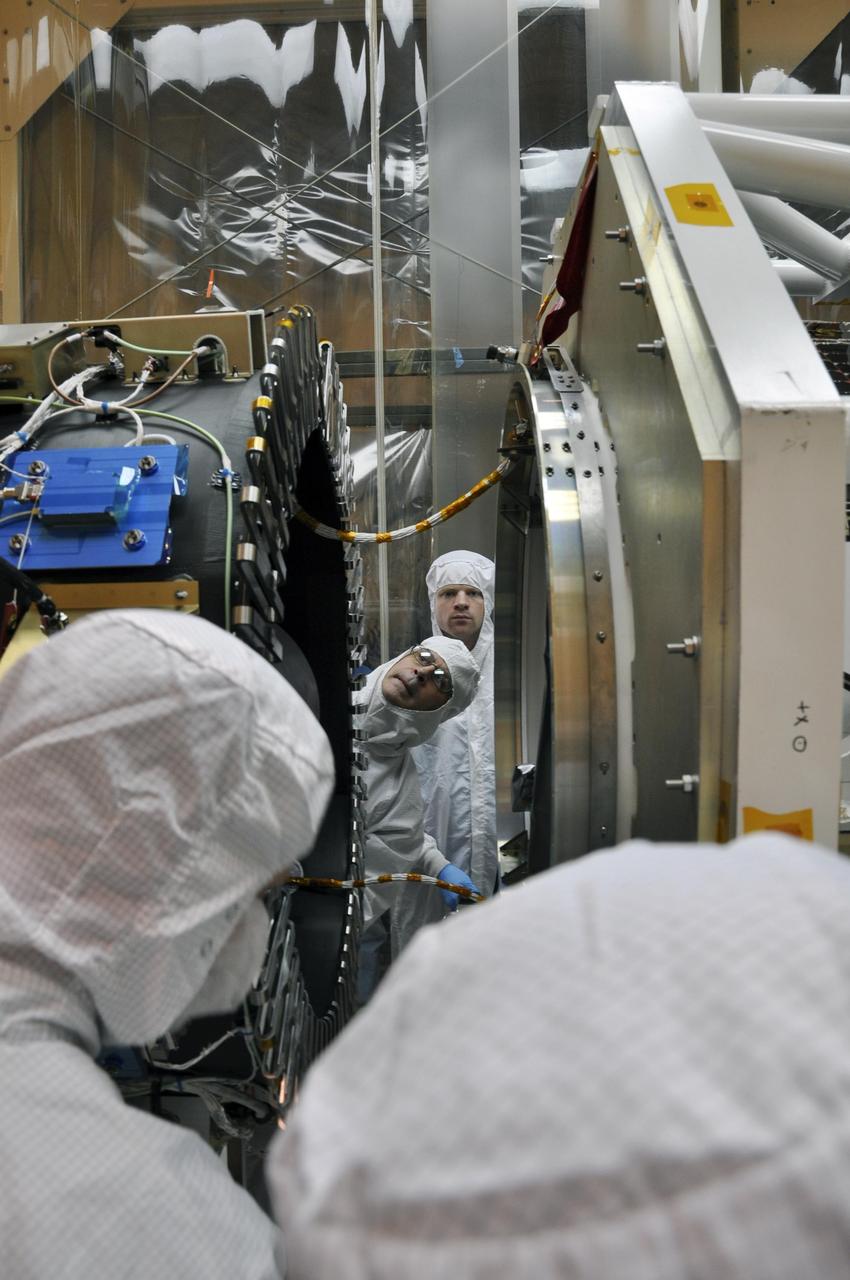
At Vandenberg Air Force Base processing facility in California, the separation ring on the aft end of NASA Nuclear Spectroscopic Telescope Array NuSTAR, at right, inches its way toward the third stage of an Orbital Sciences Pegasus XL rocket.
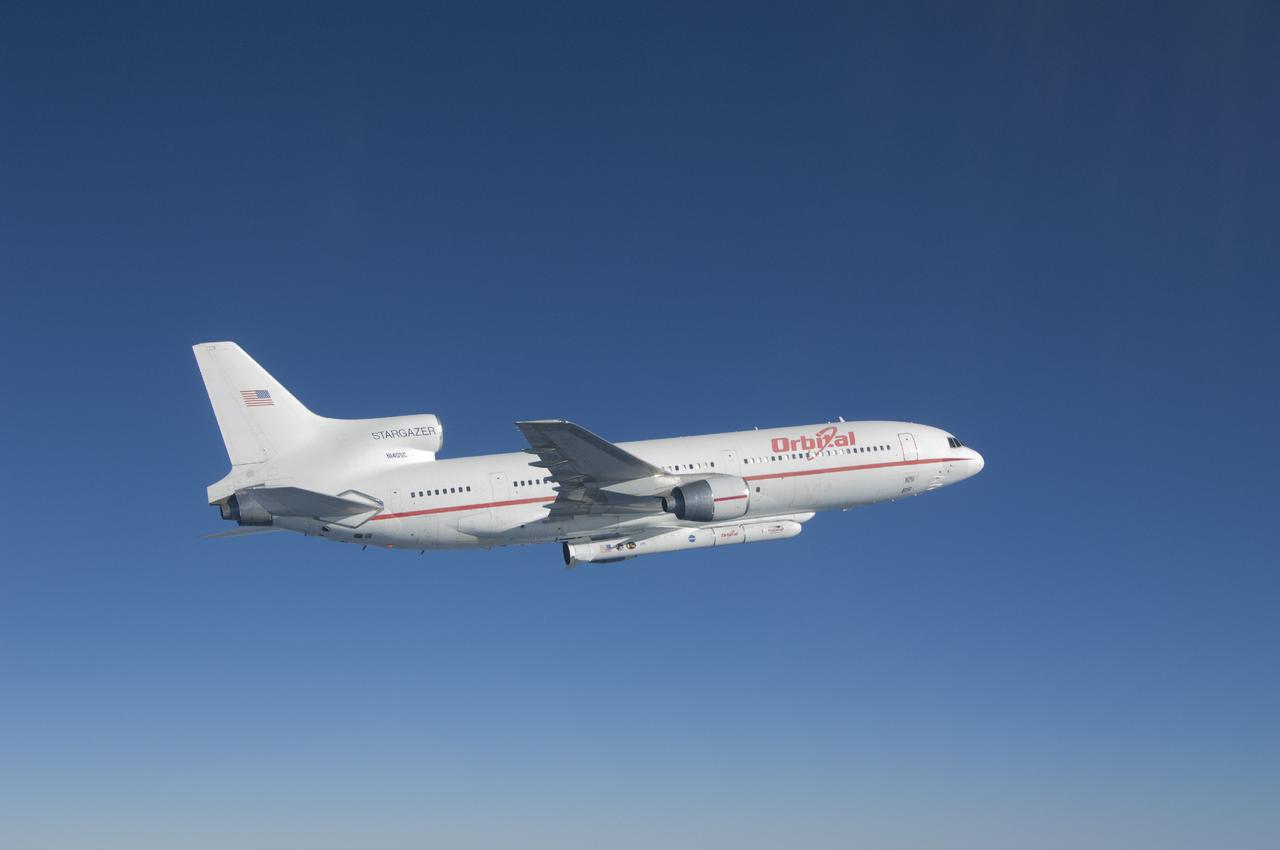
IRIS launch from Orbital Sciences Corporation Pegasus XL rocket
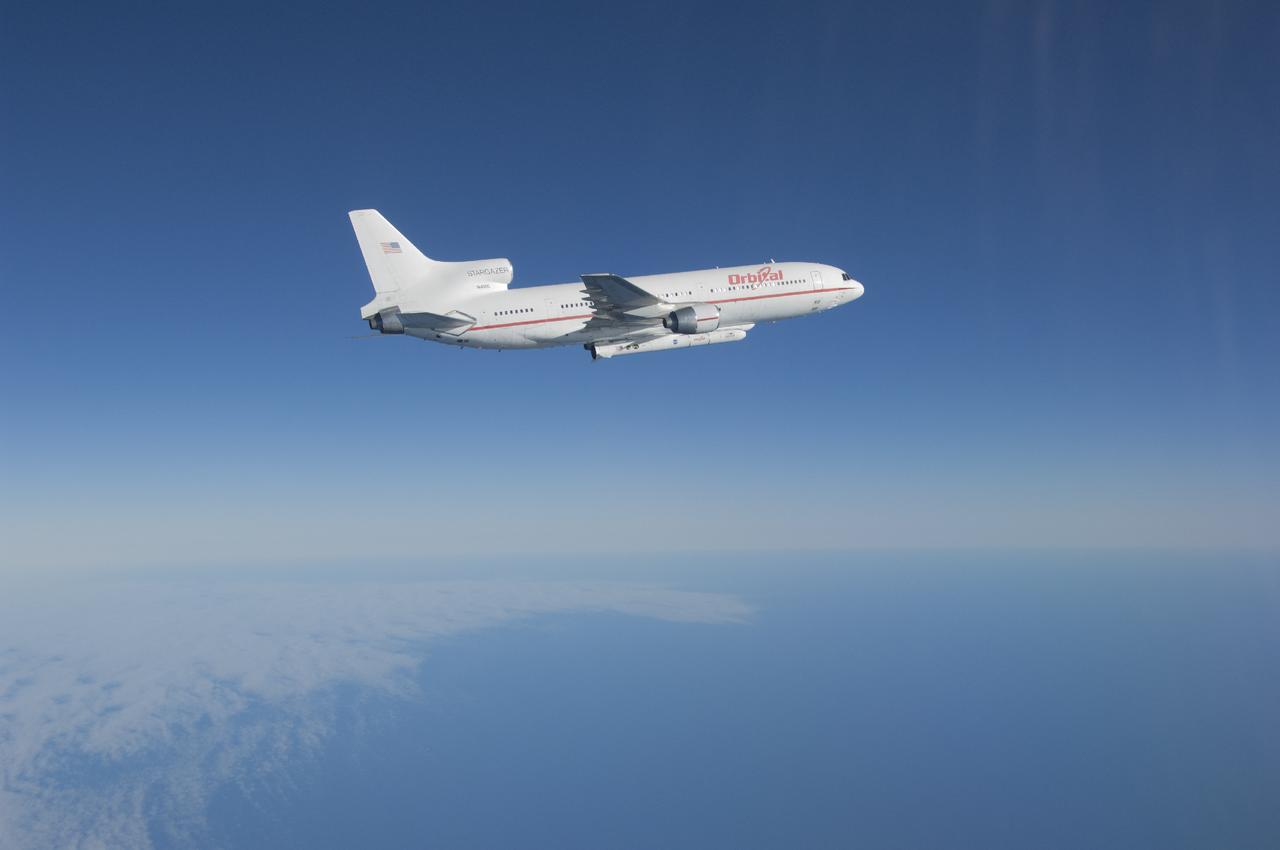
IRIS launch from Orbital Sciences Corporation Pegasus XL rocket
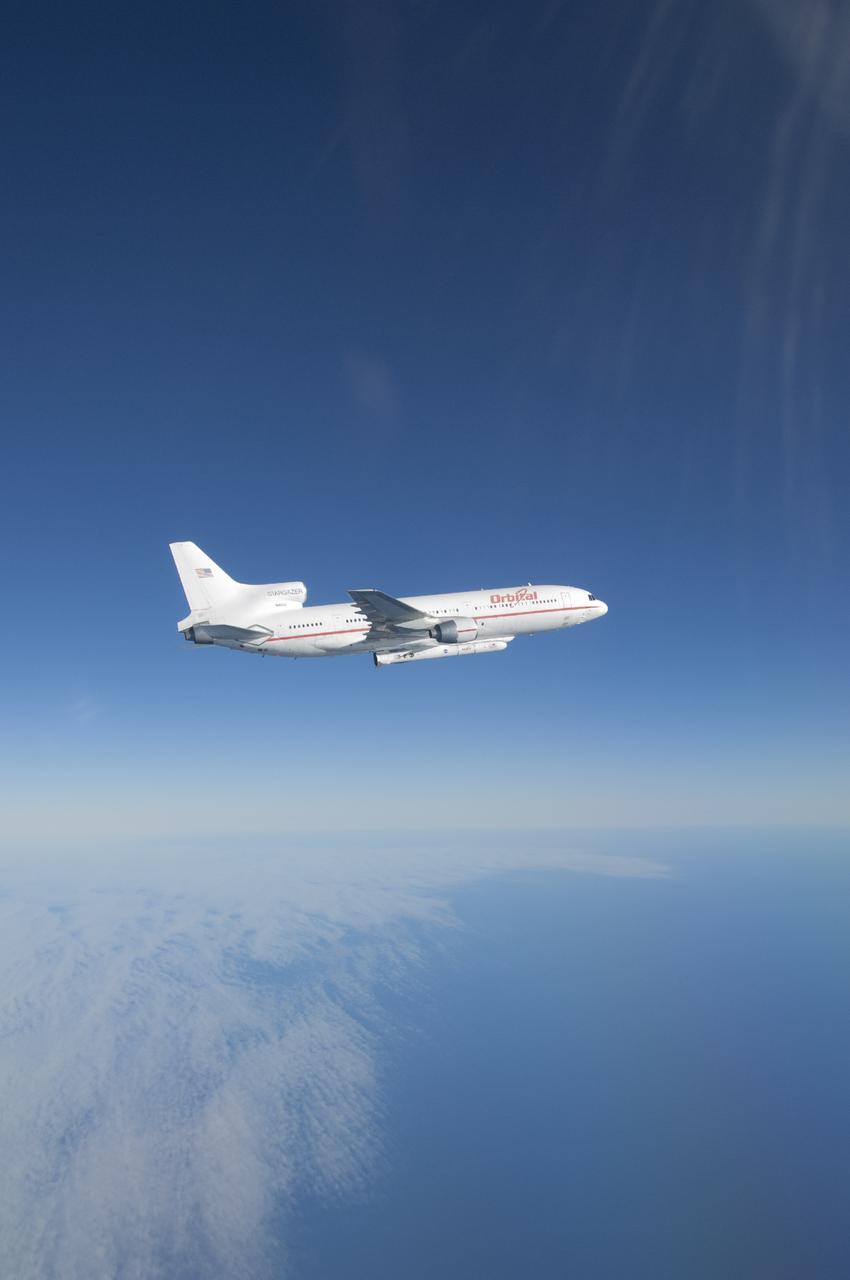
IRIS launch from Orbital Sciences Corporation Pegasus XL rocket
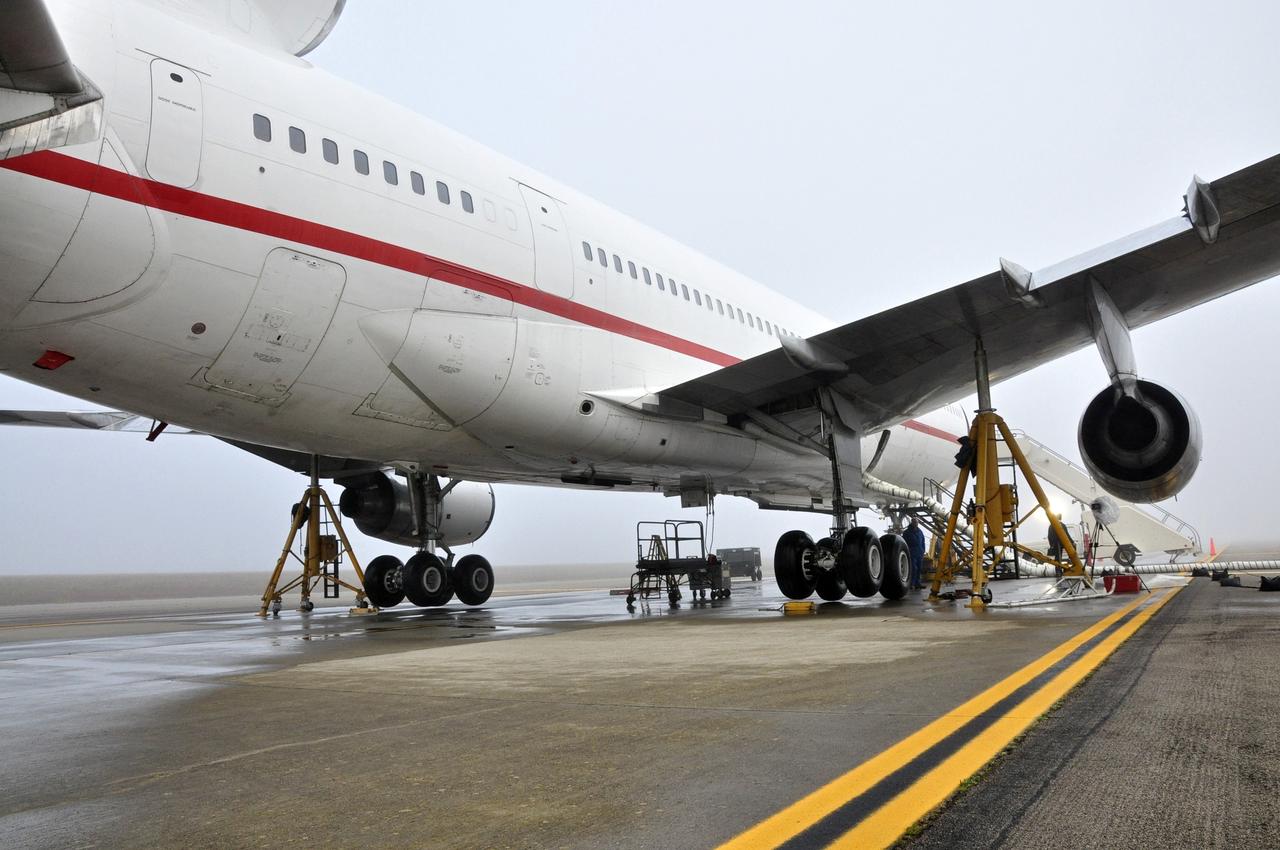
VANDENBERG AFB, Calif. – The Orbital Sciences L-1011 known as "Stargazer" awaits the Orbital Sciences Pegasus XL rocket with its NuSTAR spacecraft. The Pegasus will launch NuSTAR into space where the high-energy x-ray telescope will conduct a census for black holes, map radioactive material in young supernovae remnants, and study the origins of cosmic rays and the extreme physics around collapsed stars. Photo credit: NASA/Randy Beaudoin, VAFB
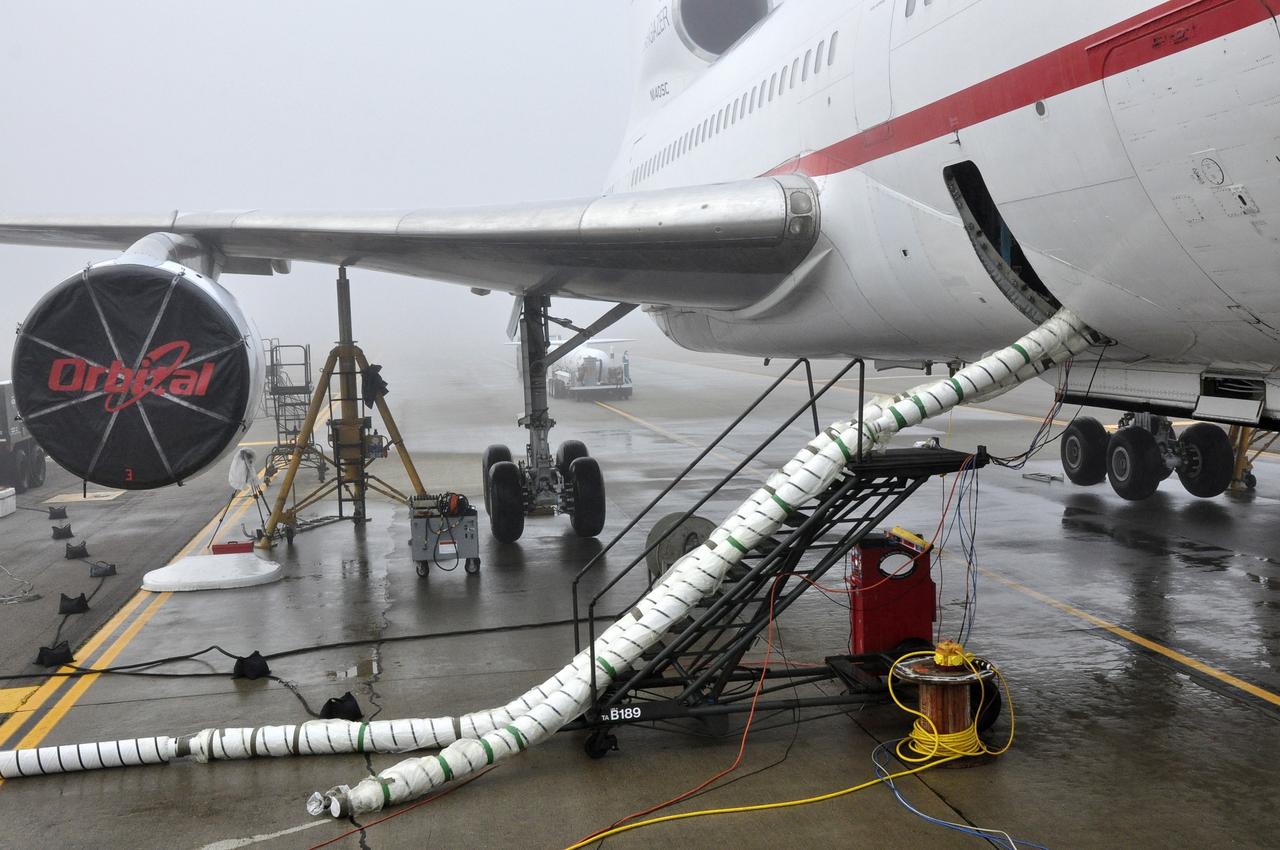
VANDENBERG AFB, Calif. – The Orbital Sciences L-1011 known as "Stargazer" awaits the Orbital Sciences Pegasus XL rocket with its NuSTAR spacecraft. The Pegasus will launch NuSTAR into space where the high-energy x-ray telescope will conduct a census for black holes, map radioactive material in young supernovae remnants, and study the origins of cosmic rays and the extreme physics around collapsed stars. Photo credit: NASA/Randy Beaudoin, VAFB

KWAJALEIN ATOLL, S. Pacific – The Orbital Sciences L-1011 carrier aircraft arrives at Kwajalein Atoll Oct. 12, 2008, with the Pegasus XL rocket and the Interstellar Boundary Explorer, or IBEX. The two-day ferry flight began from Vandenberg Air Force Base in California on Oct. 11. After an overnight stopover in Hawaii, the ferry flight to the South Pacific continued. Launch of IBEX aboard the Pegasus XL rocket successfully occurred over the Pacific Ocean Oct. 19 at a location 125 miles north of Kwajalein. Photo credit: Ivy Springer
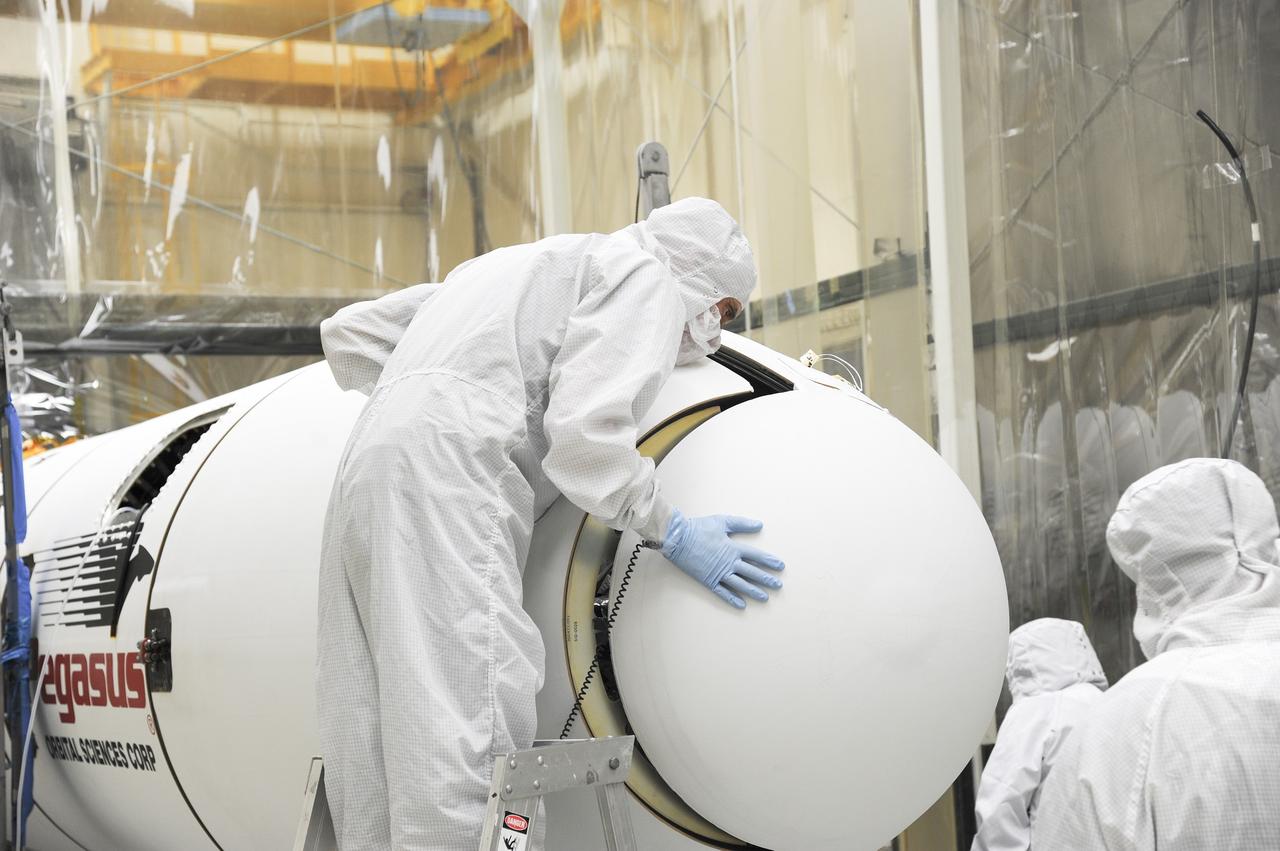
VANDENBERG AFB – Orbital Sciences engineers connect the payload fairing over NASA's IRIS spacecraft. The fairing connects to the nose of the Orbital Sciences Pegasus XL rocket that will lift the solar observatory into orbit in June. The work is taking place in a hangar at Vandenberg Air Force Base where IRIS, short for Interface Region Imaging Spectrograph, is being prepared for launch on a Pegasus XL rocket. Scheduled for launch from Vandenberg June 26, IRIS will open a new window of discovery by tracing the flow of energy and plasma through the chromospheres and transition region into the sun’s corona using spectrometry and imaging. IRIS fills a crucial gap in our ability to advance studies of the sun-to-Earth connection by tracing the flow of energy and plasma through the foundation of the corona and the region around the sun known as the heliosphere. Photo credit: NASA/Tony Vauclin
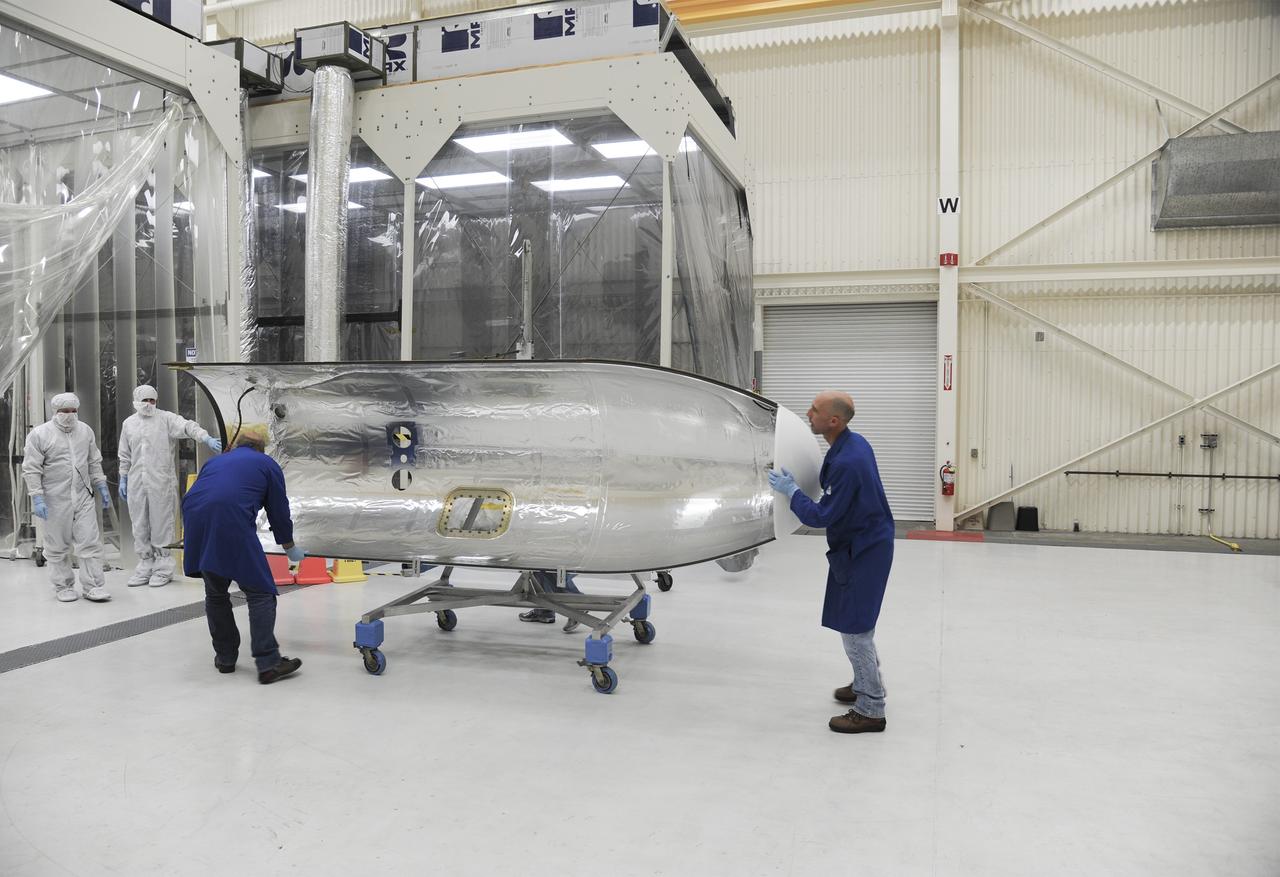
VANDENBERG AFB – Orbital Sciences team members move the second half of the payload fairing before it is placed over NASA's IRIS spacecraft. The fairing connects to the nose of the Orbital Sciences Pegasus XL rocket that will lift the solar observatory into orbit in June. The work is taking place in a hangar at Vandenberg Air Force Base where IRIS, short for Interface Region Imaging Spectrograph, is being prepared for launch on a Pegasus XL rocket. Scheduled for launch from Vandenberg June 26, IRIS will open a new window of discovery by tracing the flow of energy and plasma through the chromospheres and transition region into the sun’s corona using spectrometry and imaging. IRIS fills a crucial gap in our ability to advance studies of the sun-to-Earth connection by tracing the flow of energy and plasma through the foundation of the corona and the region around the sun known as the heliosphere. Photo credit: NASA/Tony Vauclin
VANDENBERG AFB – Orbital Sciences team members move the second half of the payload fairing before it is placed over NASA's IRIS spacecraft. The fairing connects to the nose of the Orbital Sciences Pegasus XL rocket that will lift the solar observatory into orbit in June. The work is taking place in a hangar at Vandenberg Air Force Base where IRIS, short for Interface Region Imaging Spectrograph, is being prepared for launch on a Pegasus XL rocket. Scheduled for launch from Vandenberg June 26, IRIS will open a new window of discovery by tracing the flow of energy and plasma through the chromospheres and transition region into the sun’s corona using spectrometry and imaging. IRIS fills a crucial gap in our ability to advance studies of the sun-to-Earth connection by tracing the flow of energy and plasma through the foundation of the corona and the region around the sun known as the heliosphere. Photo credit: NASA/Tony Vauclin
VANDENBERG AFB – Orbital Sciences engineers monitor the connection of the payload fairing over NASA's IRIS spacecraft. The fairing connects to the nose of the Orbital Sciences Pegasus XL rocket that will lift the solar observatory into orbit in June. The work is taking place in a hangar at Vandenberg Air Force Base where IRIS, short for Interface Region Imaging Spectrograph, is being prepared for launch on a Pegasus XL rocket. Scheduled for launch from Vandenberg June 26, IRIS will open a new window of discovery by tracing the flow of energy and plasma through the chromospheres and transition region into the sun’s corona using spectrometry and imaging. IRIS fills a crucial gap in our ability to advance studies of the sun-to-Earth connection by tracing the flow of energy and plasma through the foundation of the corona and the region around the sun known as the heliosphere. Photo credit: NASA/Tony Vauclin
VANDENBERG AFB - Orbital Sciences engineers connect the payload fairing over NASA's IRIS spacecraft. The fairing connects to the nose of the Orbital Sciences Pegasus XL rocket that will lift the solar observatory into orbit in June. The work is taking place in a hangar at Vandenberg Air Force Base where IRIS, short for Interface Region Imaging Spectrograph, is being prepared for launch on a Pegasus XL rocket. Scheduled for launch from Vandenberg June 26, IRIS will open a new window of discovery by tracing the flow of energy and plasma through the chromospheres and transition region into the sun’s corona using spectrometry and imaging. IRIS fills a crucial gap in our ability to advance studies of the sun-to-Earth connection by tracing the flow of energy and plasma through the foundation of the corona and the region around the sun known as the heliosphere. Photo credit: NASA/Tony Vauclin
VANDENBERG AFB – Orbital Sciences engineers connect the payload fairing over NASA's IRIS spacecraft. The fairing connects to the nose of the Orbital Sciences Pegasus XL rocket that will lift the solar observatory into orbit in June. The work is taking place in a hangar at Vandenberg Air Force Base where IRIS, short for Interface Region Imaging Spectrograph, is being prepared for launch on a Pegasus XL rocket. Scheduled for launch from Vandenberg June 26, IRIS will open a new window of discovery by tracing the flow of energy and plasma through the chromospheres and transition region into the sun’s corona using spectrometry and imaging. IRIS fills a crucial gap in our ability to advance studies of the sun-to-Earth connection by tracing the flow of energy and plasma through the foundation of the corona and the region around the sun known as the heliosphere. Photo credit: NASA/Tony Vauclin
VANDENBERG AFB – Orbital Sciences team members move the second half of the payload fairing before it is placed over NASA's IRIS spacecraft. The fairing connects to the nose of the Orbital Sciences Pegasus XL rocket that will lift the solar observatory into orbit in June. The work is taking place in a hangar at Vandenberg Air Force Base where IRIS, short for Interface Region Imaging Spectrograph, is being prepared for launch on a Pegasus XL rocket. Scheduled for launch from Vandenberg June 26, IRIS will open a new window of discovery by tracing the flow of energy and plasma through the chromospheres and transition region into the sun’s corona using spectrometry and imaging. IRIS fills a crucial gap in our ability to advance studies of the sun-to-Earth connection by tracing the flow of energy and plasma through the foundation of the corona and the region around the sun known as the heliosphere. Photo credit: NASA/Tony Vauclin
VANDENBERG AFB – Orbital Sciences engineers connect the payload fairing over NASA's IRIS spacecraft. The fairing connects to the nose of the Orbital Sciences Pegasus XL rocket that will lift the solar observatory into orbit in June. The work is taking place in a hangar at Vandenberg Air Force Base where IRIS, short for Interface Region Imaging Spectrograph, is being prepared for launch on a Pegasus XL rocket. Scheduled for launch from Vandenberg June 26, IRIS will open a new window of discovery by tracing the flow of energy and plasma through the chromospheres and transition region into the sun’s corona using spectrometry and imaging. IRIS fills a crucial gap in our ability to advance studies of the sun-to-Earth connection by tracing the flow of energy and plasma through the foundation of the corona and the region around the sun known as the heliosphere. Photo credit: NASA/Tony Vauclin
VANDENBERG AFB – Orbital Sciences team members move the second half of the payload fairing before it is placed over NASA's IRIS spacecraft. The fairing connects to the nose of the Orbital Sciences Pegasus XL rocket that will lift the solar observatory into orbit in June. The work is taking place in a hangar at Vandenberg Air Force Base where IRIS, short for Interface Region Imaging Spectrograph, is being prepared for launch on a Pegasus XL rocket. Scheduled for launch from Vandenberg June 26, IRIS will open a new window of discovery by tracing the flow of energy and plasma through the chromospheres and transition region into the sun’s corona using spectrometry and imaging. IRIS fills a crucial gap in our ability to advance studies of the sun-to-Earth connection by tracing the flow of energy and plasma through the foundation of the corona and the region around the sun known as the heliosphere. Photo credit: NASA/Tony Vauclin
VANDENBERG AFB – Orbital Sciences team members move the second half of the payload fairing before it is placed over NASA's IRIS spacecraft. The fairing connects to the nose of the Orbital Sciences Pegasus XL rocket that will lift the solar observatory into orbit in June. The work is taking place in a hangar at Vandenberg Air Force Base where IRIS, short for Interface Region Imaging Spectrograph, is being prepared for launch on a Pegasus XL rocket. Scheduled for launch from Vandenberg June 26, IRIS will open a new window of discovery by tracing the flow of energy and plasma through the chromospheres and transition region into the sun’s corona using spectrometry and imaging. IRIS fills a crucial gap in our ability to advance studies of the sun-to-Earth connection by tracing the flow of energy and plasma through the foundation of the corona and the region around the sun known as the heliosphere. Photo credit: NASA/Tony Vauclin
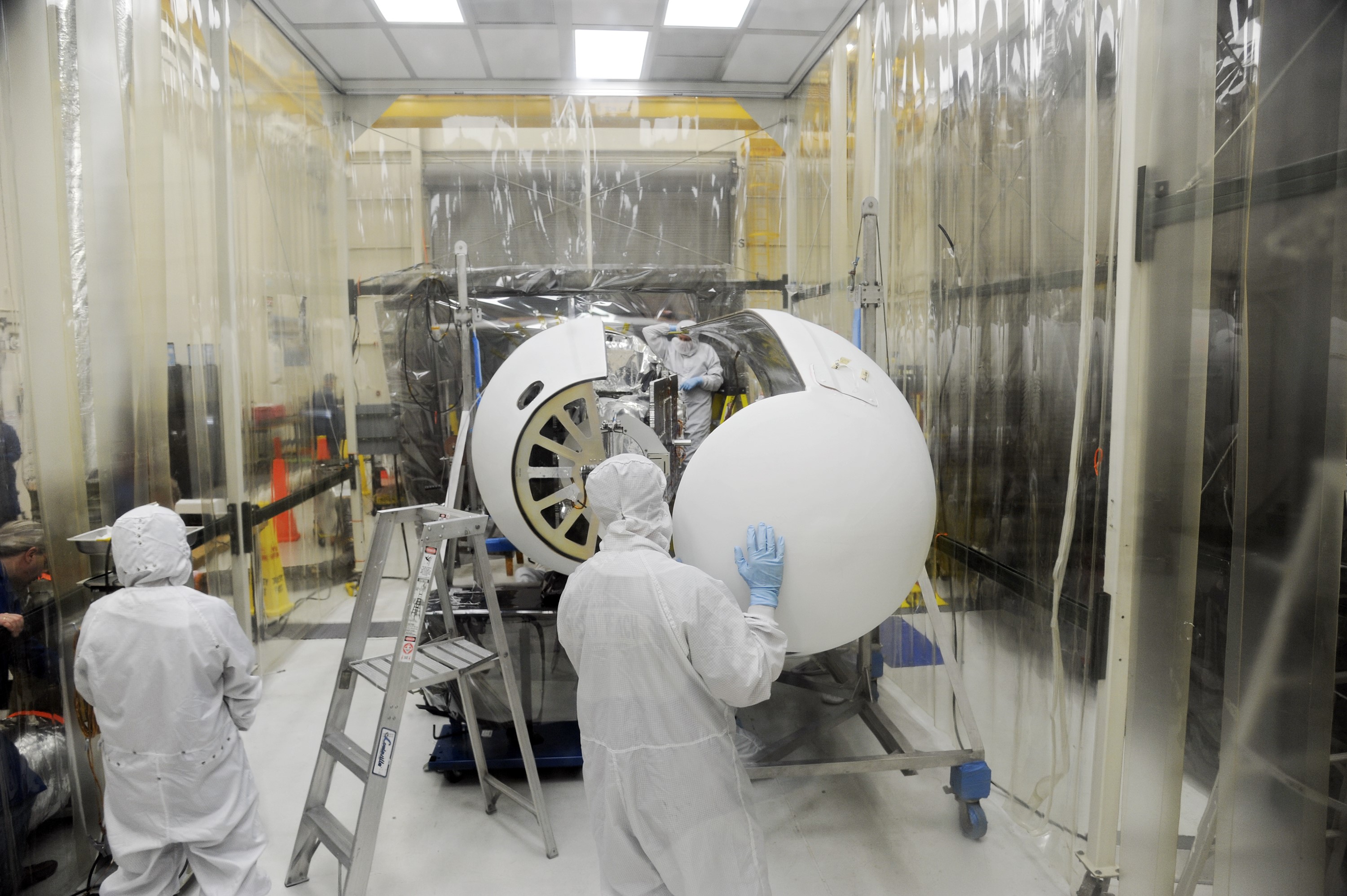
VANDENBERG AFB – Orbital Sciences team members move the second half of the payload fairing before it is placed over NASA's IRIS spacecraft. The fairing connects to the nose of the Orbital Sciences Pegasus XL rocket that will lift the solar observatory into orbit in June. The work is taking place in a hangar at Vandenberg Air Force Base where IRIS, short for Interface Region Imaging Spectrograph, is being prepared for launch on a Pegasus XL rocket. Scheduled for launch from Vandenberg June 26, IRIS will open a new window of discovery by tracing the flow of energy and plasma through the chromospheres and transition region into the sun’s corona using spectrometry and imaging. IRIS fills a crucial gap in our ability to advance studies of the sun-to-Earth connection by tracing the flow of energy and plasma through the foundation of the corona and the region around the sun known as the heliosphere. Photo credit: NASA/Tony Vauclin
VANDENBERG AFB – Orbital Sciences team engineers monitor the connection of the payload fairing over NASA's IRIS spacecraft. The fairing connects to the nose of the Orbital Sciences Pegasus XL rocket that will lift the solar observatory into orbit in June. The work is taking place in a hangar at Vandenberg Air Force Base where IRIS, short for Interface Region Imaging Spectrograph, is being prepared for launch on a Pegasus XL rocket. Scheduled for launch from Vandenberg June 26, IRIS will open a new window of discovery by tracing the flow of energy and plasma through the chromospheres and transition region into the sun’s corona using spectrometry and imaging. IRIS fills a crucial gap in our ability to advance studies of the sun-to-Earth connection by tracing the flow of energy and plasma through the foundation of the corona and the region around the sun known as the heliosphere. Photo credit: NASA/Tony Vauclin
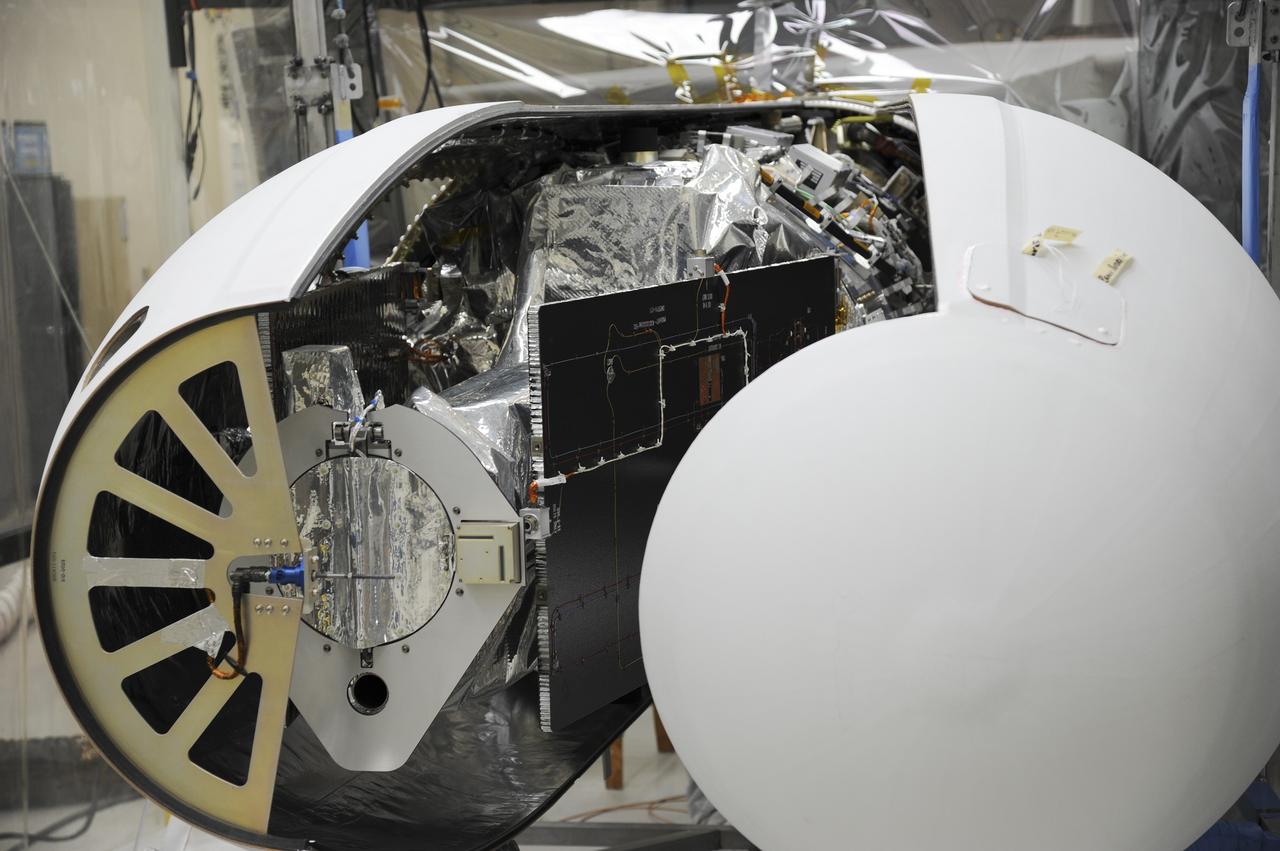
VANDENBERG AFB – Orbital Sciences team members move the second half of the payload fairing before it is placed over NASA's IRIS spacecraft. The fairing connects to the nose of the Orbital Sciences Pegasus XL rocket that will lift the solar observatory into orbit in June. The work is taking place in a hangar at Vandenberg Air Force Base where IRIS, short for Interface Region Imaging Spectrograph, is being prepared for launch on a Pegasus XL rocket. Scheduled for launch from Vandenberg June 26, IRIS will open a new window of discovery by tracing the flow of energy and plasma through the chromospheres and transition region into the sun’s corona using spectrometry and imaging. IRIS fills a crucial gap in our ability to advance studies of the sun-to-Earth connection by tracing the flow of energy and plasma through the foundation of the corona and the region around the sun known as the heliosphere. Photo credit: NASA/Tony Vauclin
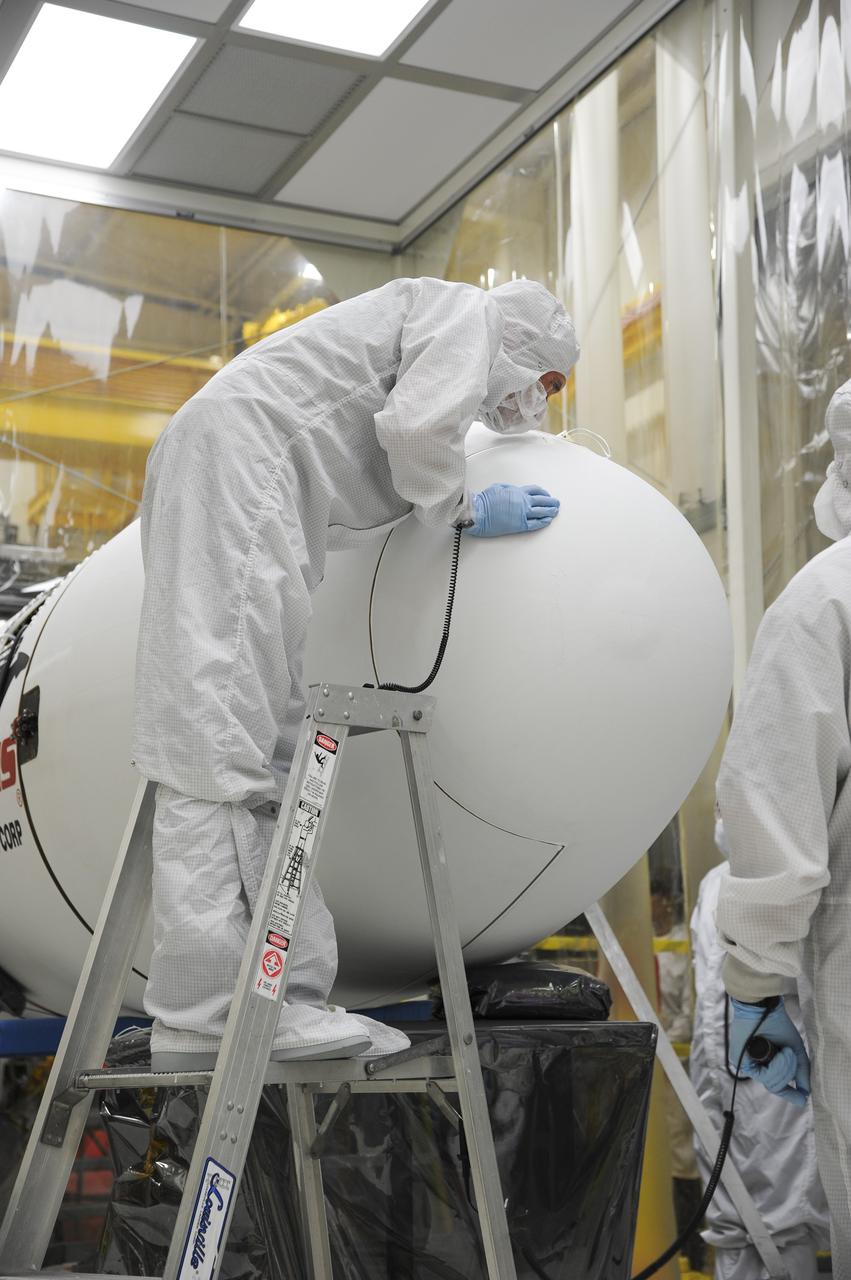
VANDENBERG AFB – Orbital Sciences engineers connect the payload fairing over NASA's IRIS spacecraft. The fairing connects to the nose of the Orbital Sciences Pegasus XL rocket that will lift the solar observatory into orbit in June. The work is taking place in a hangar at Vandenberg Air Force Base where IRIS, short for Interface Region Imaging Spectrograph, is being prepared for launch on a Pegasus XL rocket. Scheduled for launch from Vandenberg June 26, IRIS will open a new window of discovery by tracing the flow of energy and plasma through the chromospheres and transition region into the sun’s corona using spectrometry and imaging. IRIS fills a crucial gap in our ability to advance studies of the sun-to-Earth connection by tracing the flow of energy and plasma through the foundation of the corona and the region around the sun known as the heliosphere. Photo credit: NASA/Tony Vauclin
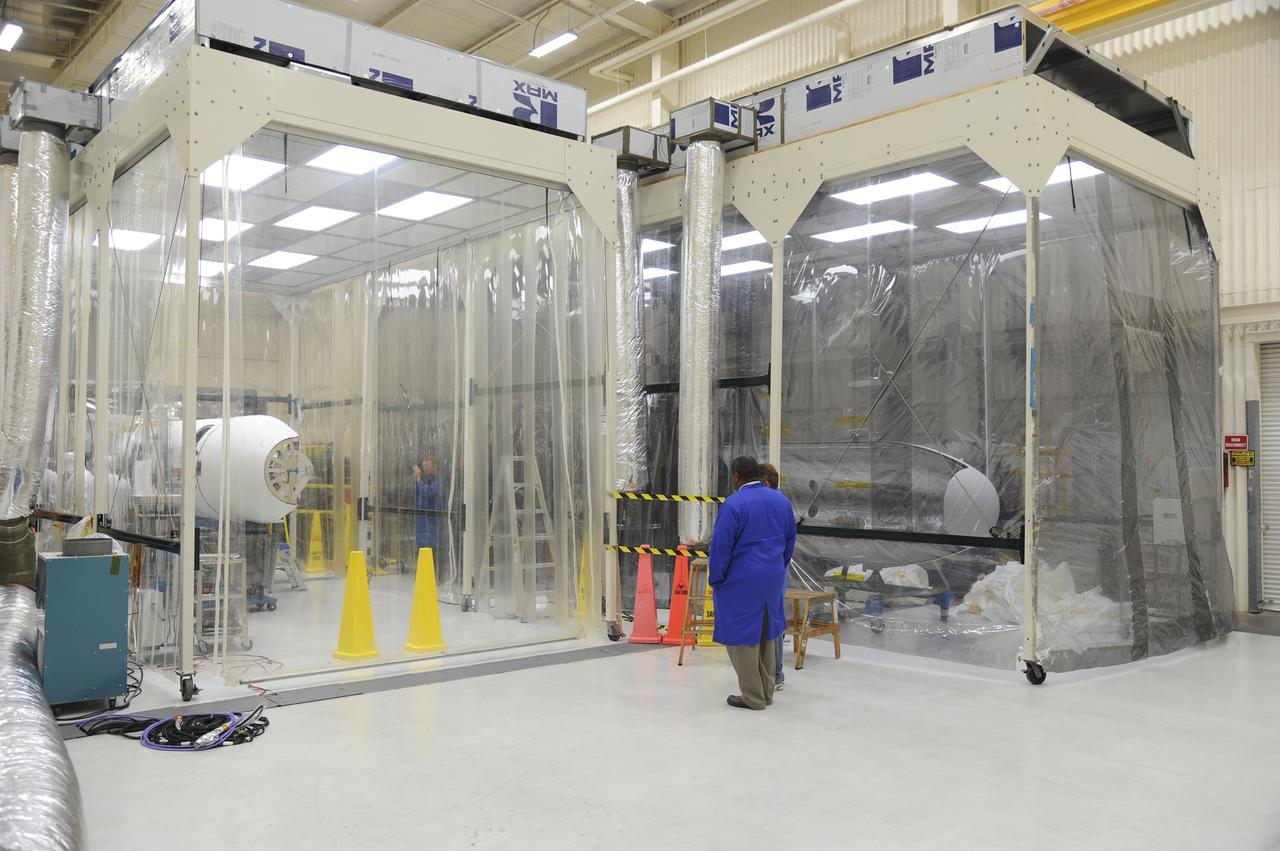
VANDENBERG AFB – Orbital Sciences team members watch as engineers connect the payload fairing over NASA's IRIS spacecraft. The fairing connects to the nose of the Orbital Sciences Pegasus XL rocket that will lift the solar observatory into orbit in June. The work is taking place in a hangar at Vandenberg Air Force Base where IRIS, short for Interface Region Imaging Spectrograph, is being prepared for launch on a Pegasus XL rocket. Scheduled for launch from Vandenberg June 26, IRIS will open a new window of discovery by tracing the flow of energy and plasma through the chromospheres and transition region into the sun’s corona using spectrometry and imaging. IRIS fills a crucial gap in our ability to advance studies of the sun-to-Earth connection by tracing the flow of energy and plasma through the foundation of the corona and the region around the sun known as the heliosphere. Photo credit: NASA/Tony Vauclin
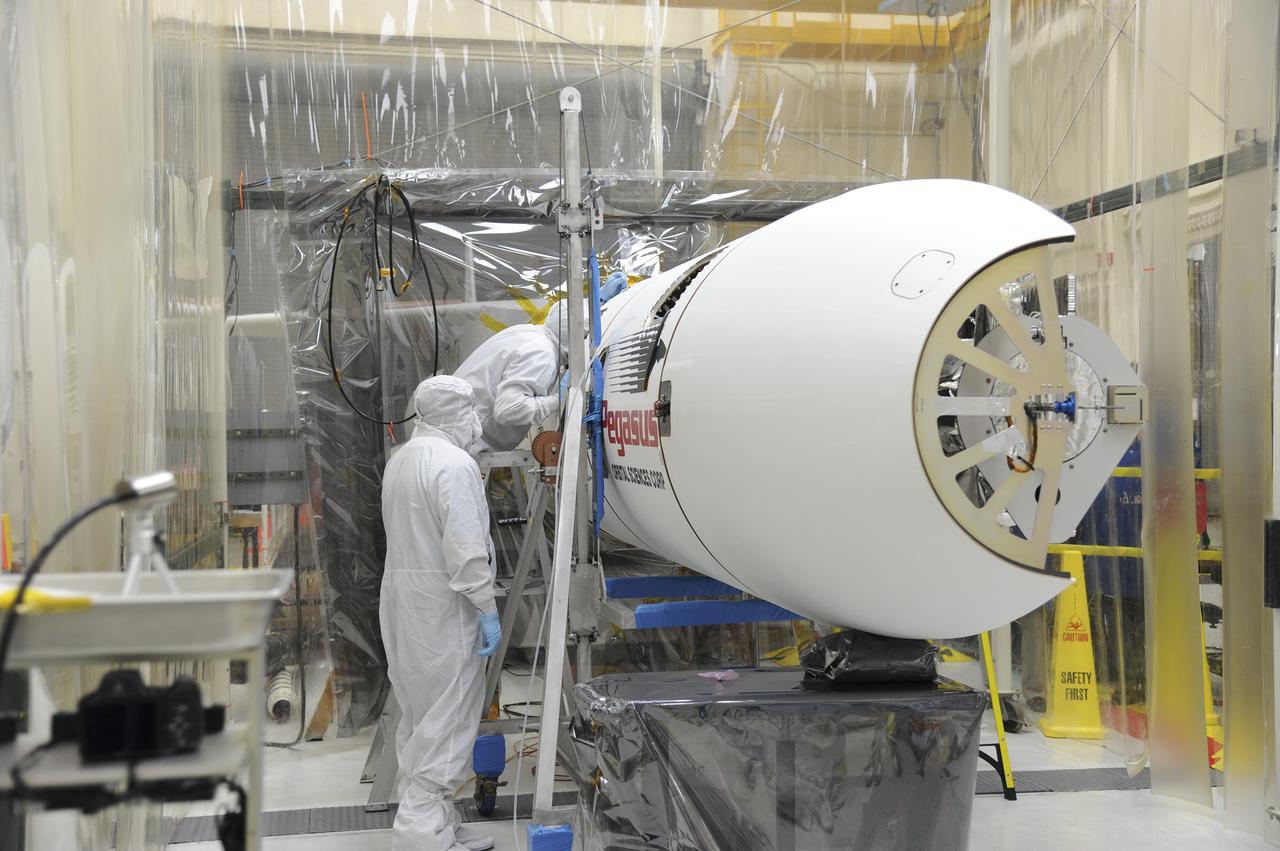
Orbital Sciences engineers connect the payload fairing over NASA's IRIS spacecraft. The fairing connects to the nose of the Orbital Sciences Pegasus XL rocket that will lift the solar observatory into orbit in June. The work is taking place in a hangar at Vandenberg Air Force Base where IRIS, short for Interface Region Imaging Spectrograph, is being prepared for launch on a Pegasus XL rocket. Scheduled for launch from Vandenberg June 26, IRIS will open a new window of discovery by tracing the flow of energy and plasma through the chromospheres and transition region into the sun’s corona using spectrometry and imaging. IRIS fills a crucial gap in our ability to advance studies of the sun-to-Earth connection by tracing the flow of energy and plasma through the foundation of the corona and the region around the sun known as the heliosphere. Photo credit: NASA/Tony Vauclin
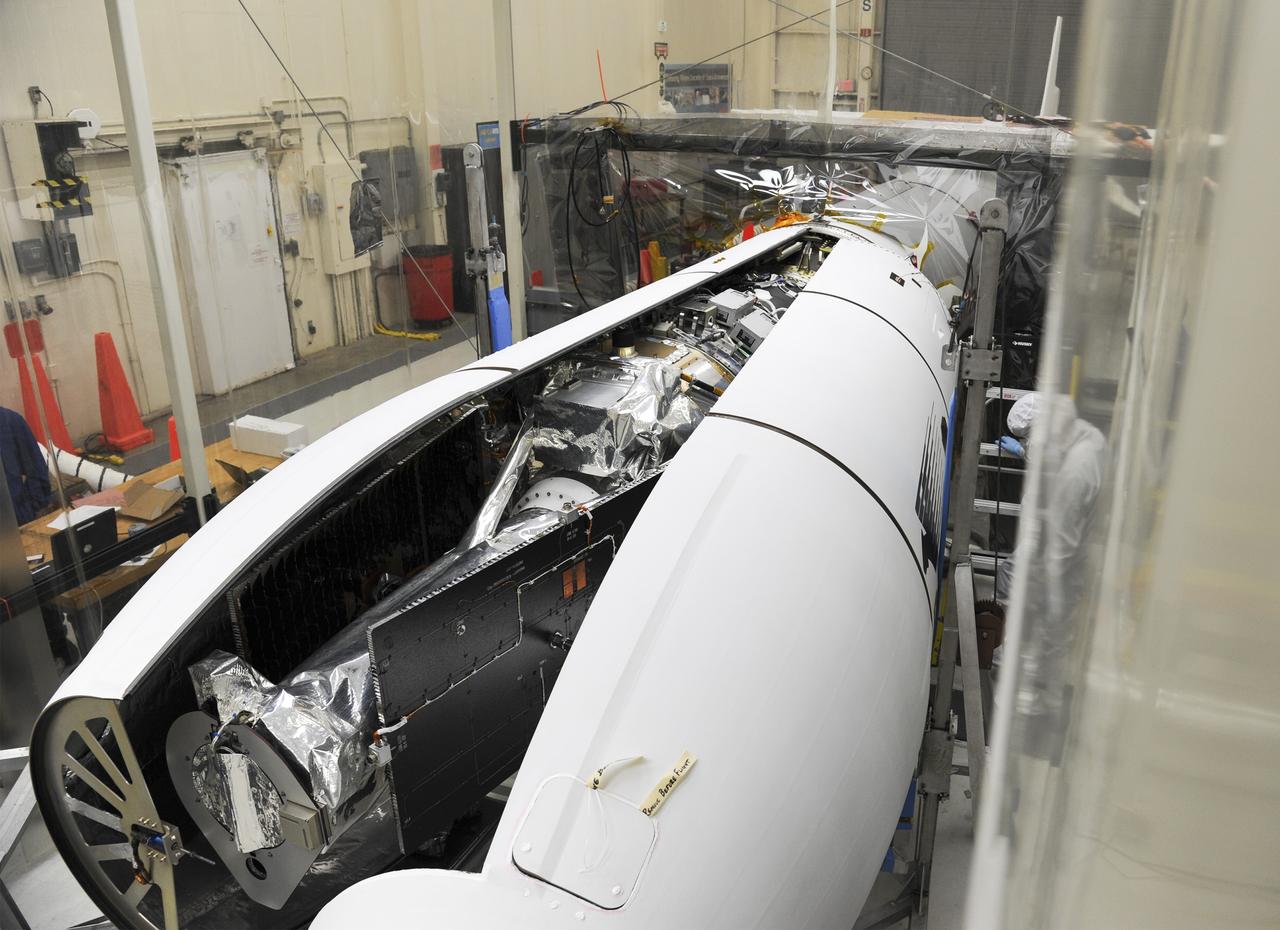
VANDENBERG AFB – Orbital Sciences engineers connect the payload fairing over NASA's IRIS spacecraft. The fairing connects to the nose of the Orbital Sciences Pegasus XL rocket that will lift the solar observatory into orbit in June. The work is taking place in a hangar at Vandenberg Air Force Base where IRIS, short for Interface Region Imaging Spectrograph, is being prepared for launch on a Pegasus XL rocket. Scheduled for launch from Vandenberg June 26, IRIS will open a new window of discovery by tracing the flow of energy and plasma through the chromospheres and transition region into the sun’s corona using spectrometry and imaging. IRIS fills a crucial gap in our ability to advance studies of the sun-to-Earth connection by tracing the flow of energy and plasma through the foundation of the corona and the region around the sun known as the heliosphere. Photo credit: NASA/Tony Vauclin
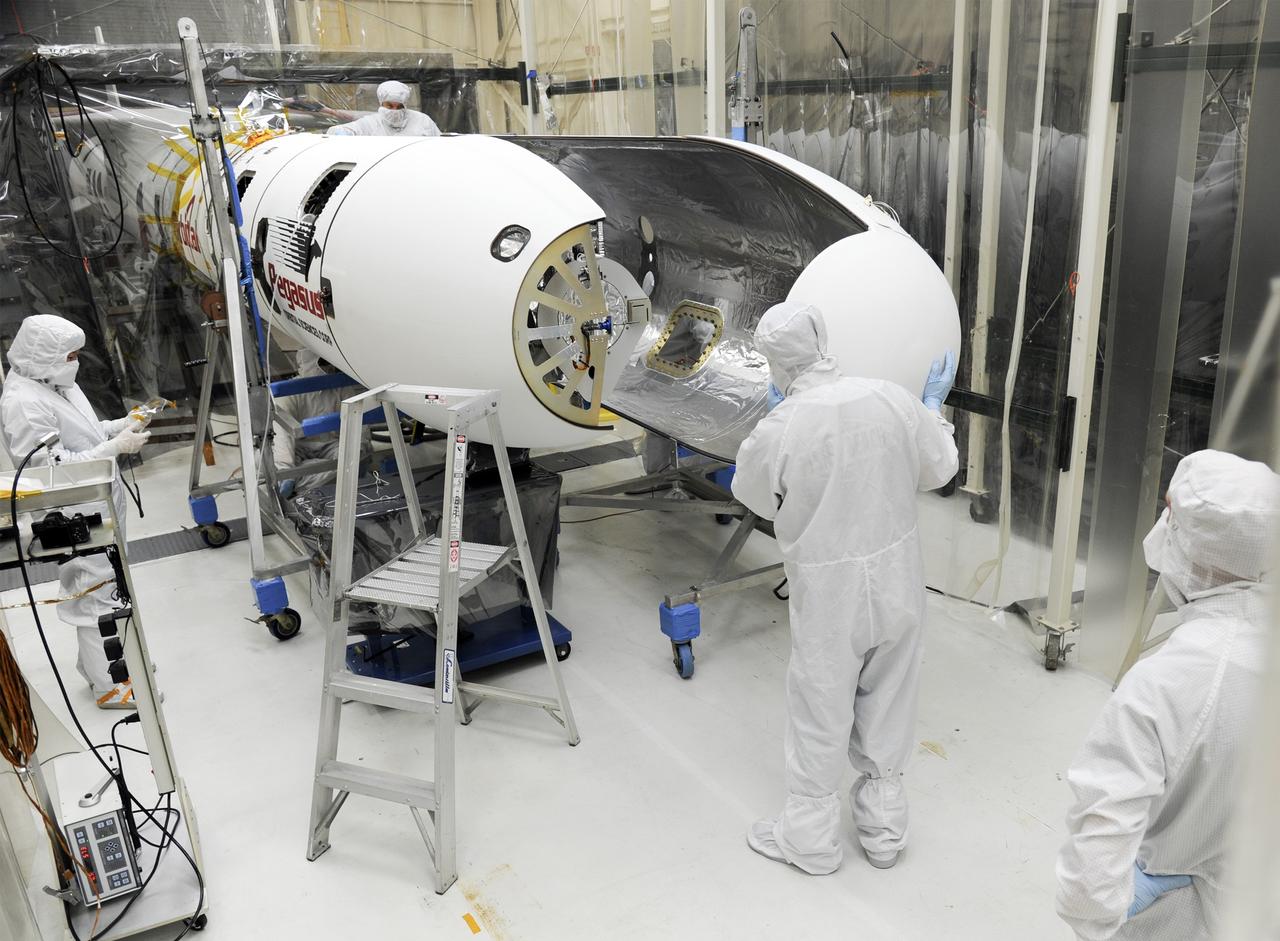
VANDENBERG AFB – Orbital Sciences team members move the second half of the payload fairing before it is placed over NASA's IRIS spacecraft. The fairing connects to the nose of the Orbital Sciences Pegasus XL rocket that will lift the solar observatory into orbit in June. The work is taking place in a hangar at Vandenberg Air Force Base where IRIS, short for Interface Region Imaging Spectrograph, is being prepared for launch on a Pegasus XL rocket. Scheduled for launch from Vandenberg June 26, IRIS will open a new window of discovery by tracing the flow of energy and plasma through the chromospheres and transition region into the sun’s corona using spectrometry and imaging. IRIS fills a crucial gap in our ability to advance studies of the sun-to-Earth connection by tracing the flow of energy and plasma through the foundation of the corona and the region around the sun known as the heliosphere. Photo credit: NASA/Tony Vauclin
VANDENBERG AFB – Orbital Sciences engineers connect the payload fairing over NASA's IRIS spacecraft. The fairing connects to the nose of the Orbital Sciences Pegasus XL rocket that will lift the solar observatory into orbit in June. The work is taking place in a hangar at Vandenberg Air Force Base where IRIS, short for Interface Region Imaging Spectrograph, is being prepared for launch on a Pegasus XL rocket. Scheduled for launch from Vandenberg June 26, IRIS will open a new window of discovery by tracing the flow of energy and plasma through the chromospheres and transition region into the sun’s corona using spectrometry and imaging. IRIS fills a crucial gap in our ability to advance studies of the sun-to-Earth connection by tracing the flow of energy and plasma through the foundation of the corona and the region around the sun known as the heliosphere. Photo credit: NASA/Tony Vauclin
VANDENBERG AFB – Orbital Sciences engineers connect the payload fairing over NASA's IRIS spacecraft. The fairing connects to the nose of the Orbital Sciences Pegasus XL rocket that will lift the solar observatory into orbit in June. The work is taking place in a hangar at Vandenberg Air Force Base where IRIS, short for Interface Region Imaging Spectrograph, is being prepared for launch on a Pegasus XL rocket. Scheduled for launch from Vandenberg June 26, IRIS will open a new window of discovery by tracing the flow of energy and plasma through the chromospheres and transition region into the sun’s corona using spectrometry and imaging. IRIS fills a crucial gap in our ability to advance studies of the sun-to-Earth connection by tracing the flow of energy and plasma through the foundation of the corona and the region around the sun known as the heliosphere. Photo credit: NASA/Tony Vauclin
VANDENBERG AFB – Orbital Sciences team members move the second half of the payload fairing before it is placed over NASA's IRIS spacecraft. The fairing connects to the nose of the Orbital Sciences Pegasus XL rocket that will lift the solar observatory into orbit in June. The work is taking place in a hangar at Vandenberg Air Force Base where IRIS, short for Interface Region Imaging Spectrograph, is being prepared for launch on a Pegasus XL rocket. Scheduled for launch from Vandenberg June 26, IRIS will open a new window of discovery by tracing the flow of energy and plasma through the chromospheres and transition region into the sun’s corona using spectrometry and imaging. IRIS fills a crucial gap in our ability to advance studies of the sun-to-Earth connection by tracing the flow of energy and plasma through the foundation of the corona and the region around the sun known as the heliosphere. Photo credit: NASA/Tony Vauclin
VANDENBERG AFB – Orbital Sciences engineers connect the payload fairing over NASA's IRIS spacecraft. The fairing connects to the nose of the Orbital Sciences Pegasus XL rocket that will lift the solar observatory into orbit in June. The work is taking place in a hangar at Vandenberg Air Force Base where IRIS, short for Interface Region Imaging Spectrograph, is being prepared for launch on a Pegasus XL rocket. Scheduled for launch from Vandenberg June 26, IRIS will open a new window of discovery by tracing the flow of energy and plasma through the chromospheres and transition region into the sun’s corona using spectrometry and imaging. IRIS fills a crucial gap in our ability to advance studies of the sun-to-Earth connection by tracing the flow of energy and plasma through the foundation of the corona and the region around the sun known as the heliosphere. Photo credit: NASA/Tony Vauclin
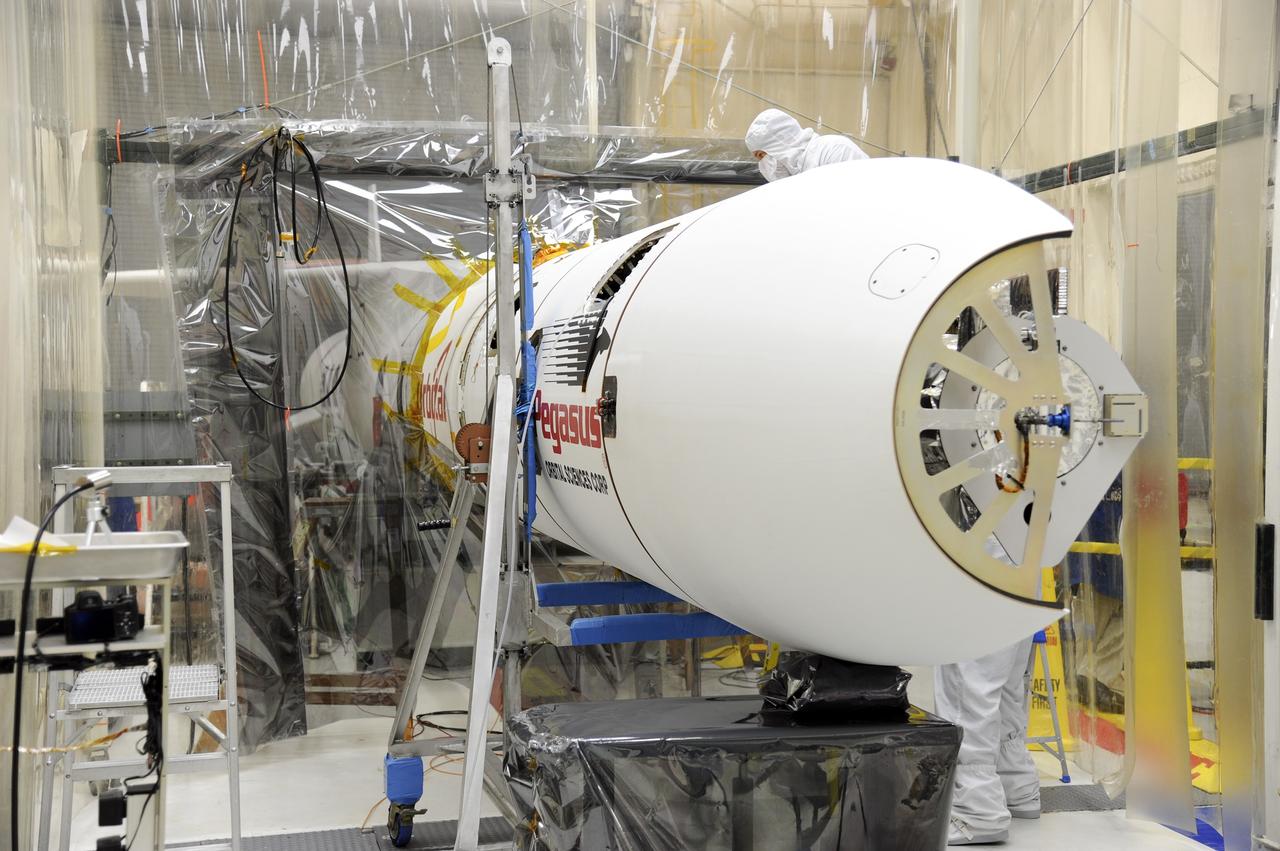
VANDENBERG AFB – Orbital Sciences team members prepare to move the second half of the payload fairing before it is placed over NASA's IRIS spacecraft. The fairing connects to the nose of the Orbital Sciences Pegasus XL rocket that will lift the solar observatory into orbit in June. The work is taking place in a hangar at Vandenberg Air Force Base where IRIS, short for Interface Region Imaging Spectrograph, is being prepared for launch on a Pegasus XL rocket. Scheduled for launch from Vandenberg June 26, IRIS will open a new window of discovery by tracing the flow of energy and plasma through the chromospheres and transition region into the sun’s corona using spectrometry and imaging. IRIS fills a crucial gap in our ability to advance studies of the sun-to-Earth connection by tracing the flow of energy and plasma through the foundation of the corona and the region around the sun known as the heliosphere. Photo credit: NASA/Tony Vauclin
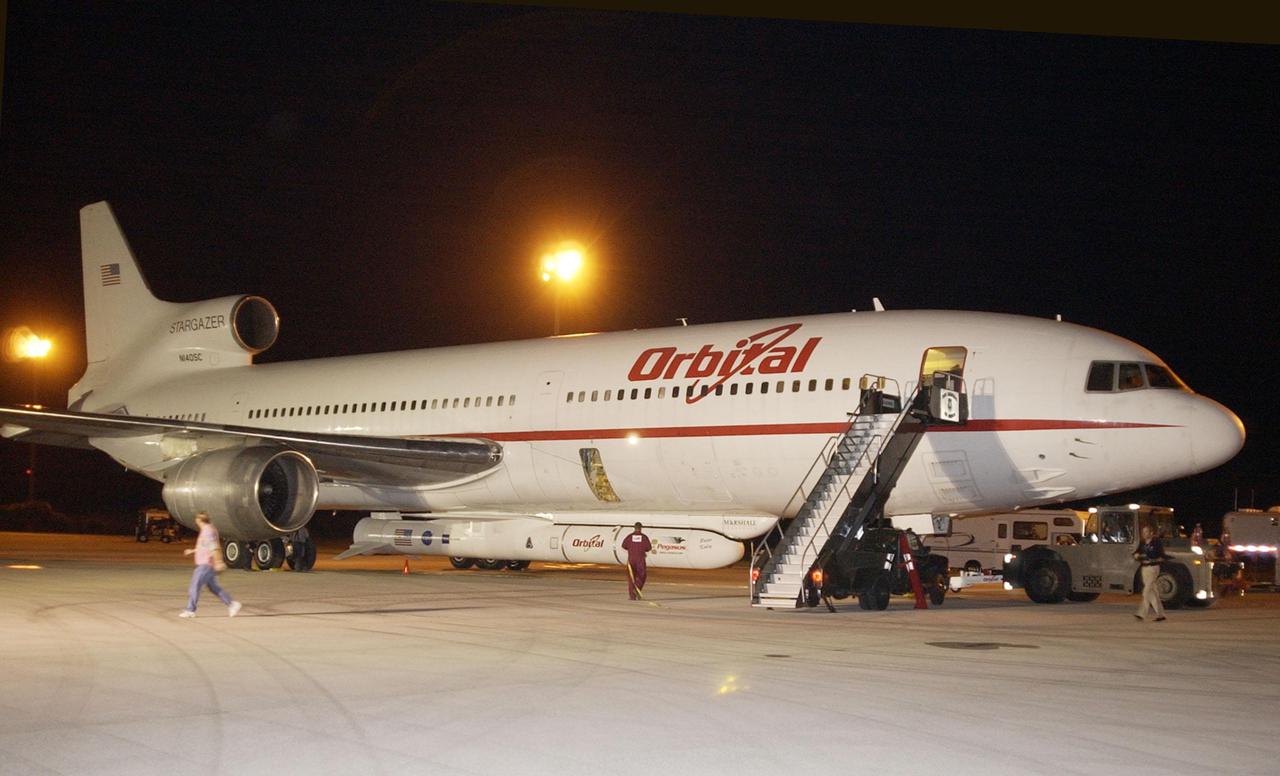
KENNEDY SPACE CENTER, FLA. -- The Orbital Sciences Corp. L-1011 aircraft waits at Cape Canaveral Air Force Station, Fla., for its mission, to carry the Pegasus XL rocket attached beneath it to the rocket's mid-air launch site. The Pegasus will launch the High Energy Solar Spectroscopic Imager (HESSI) encased in its top to explore the basic physics of particle acceleration and energy release in solar flares. The launch is scheduled for Feb. 5, 2002
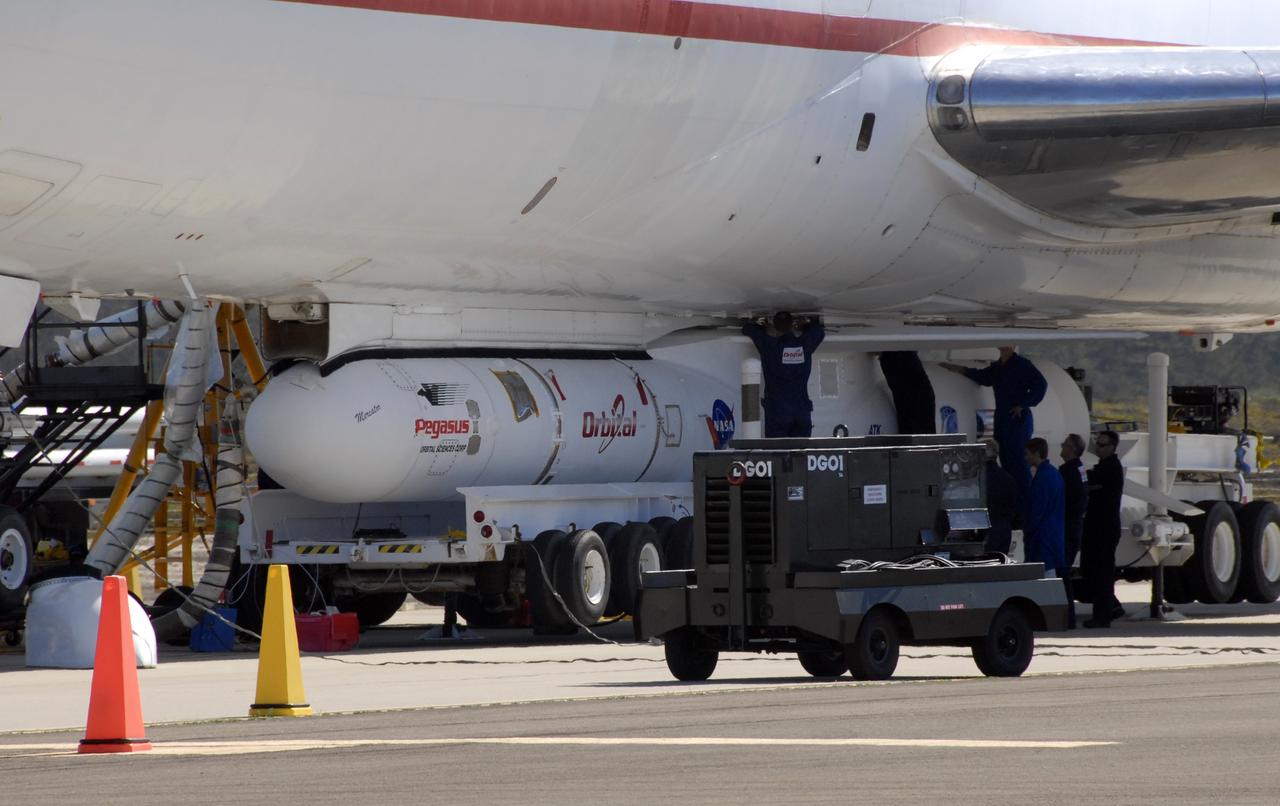
VANDENBERG AIR FORCE BASE, Fla. -- NASA’s Interstellar Boundary Explorer, or IBEX, spacecraft and mated Pegasus XL rocket are being attached to Orbital Sciences’ L-1011 aircraft for launch. IBEX is targeted for launch from the Kwajalein Atoll, a part of the Marshall Islands in the Pacific Ocean, on Oct. 19. IBEX will be launched aboard the Pegasus rocket dropped from under the wing of the L-1011 aircraft flying over the Pacific Ocean. The Pegasus will carry the spacecraft approximately 130 miles above Earth and place it in orbit. The IBEX satellite will make the first map of the boundary between the Solar System and interstellar space. Photo credit: NASA/Mark Mackley, VAFB
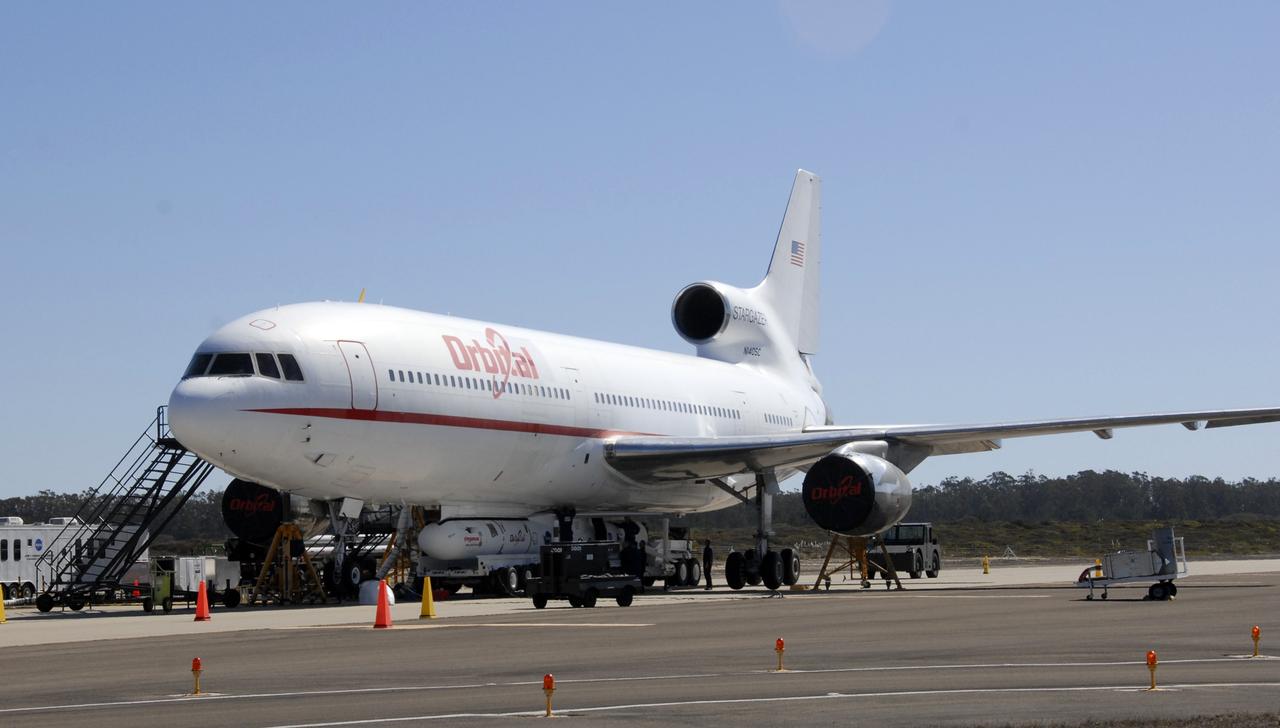
VANDENBERG AIR FORCE BASE, Fla. -- NASA’s Interstellar Boundary Explorer, or IBEX, spacecraft and mated Pegasus XL rocket are being attached to Orbital Sciences’ L-1011 aircraft for launch. IBEX is targeted for launch from the Kwajalein Atoll, a part of the Marshall Islands in the Pacific Ocean, on Oct. 19. IBEX will be launched aboard the Pegasus rocket dropped from under the wing of the L-1011 aircraft flying over the Pacific Ocean. The Pegasus will carry the spacecraft approximately 130 miles above Earth and place it in orbit. The IBEX satellite will make the first map of the boundary between the Solar System and interstellar space. Photo credit: NASA/Mark Mackley, VAFB
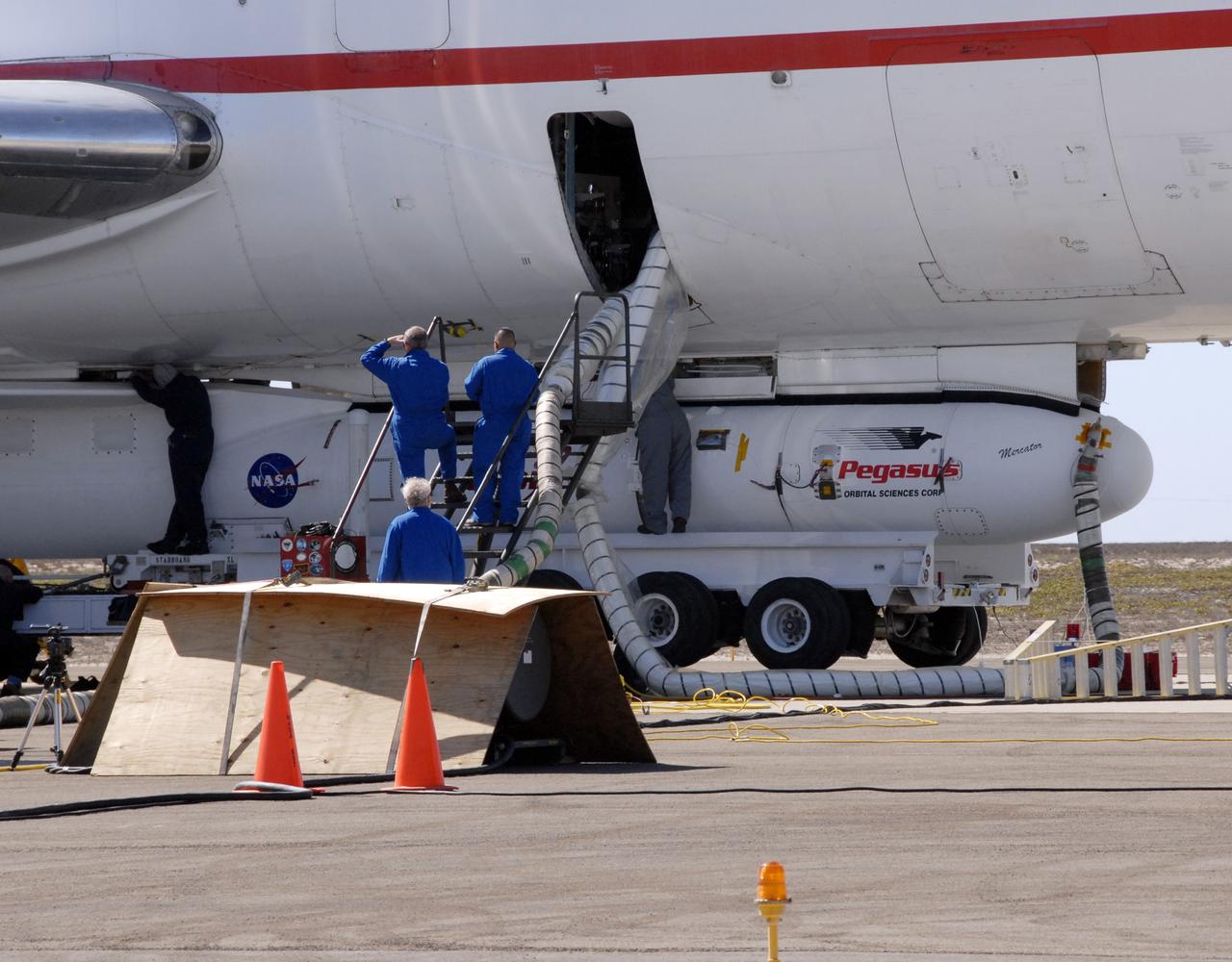
VANDENBERG AIR FORCE BASE, Fla. -- NASA’s Interstellar Boundary Explorer, or IBEX, spacecraft and mated Pegasus XL rocket are being attached to Orbital Sciences’ L-1011 aircraft for launch. IBEX is targeted for launch from the Kwajalein Atoll, a part of the Marshall Islands in the Pacific Ocean, on Oct. 19. IBEX will be launched aboard the Pegasus rocket dropped from under the wing of the L-1011 aircraft flying over the Pacific Ocean. The Pegasus will carry the spacecraft approximately 130 miles above Earth and place it in orbit. The IBEX satellite will make the first map of the boundary between the Solar System and interstellar space. Photo credit: NASA/Mark Mackley, VAFB
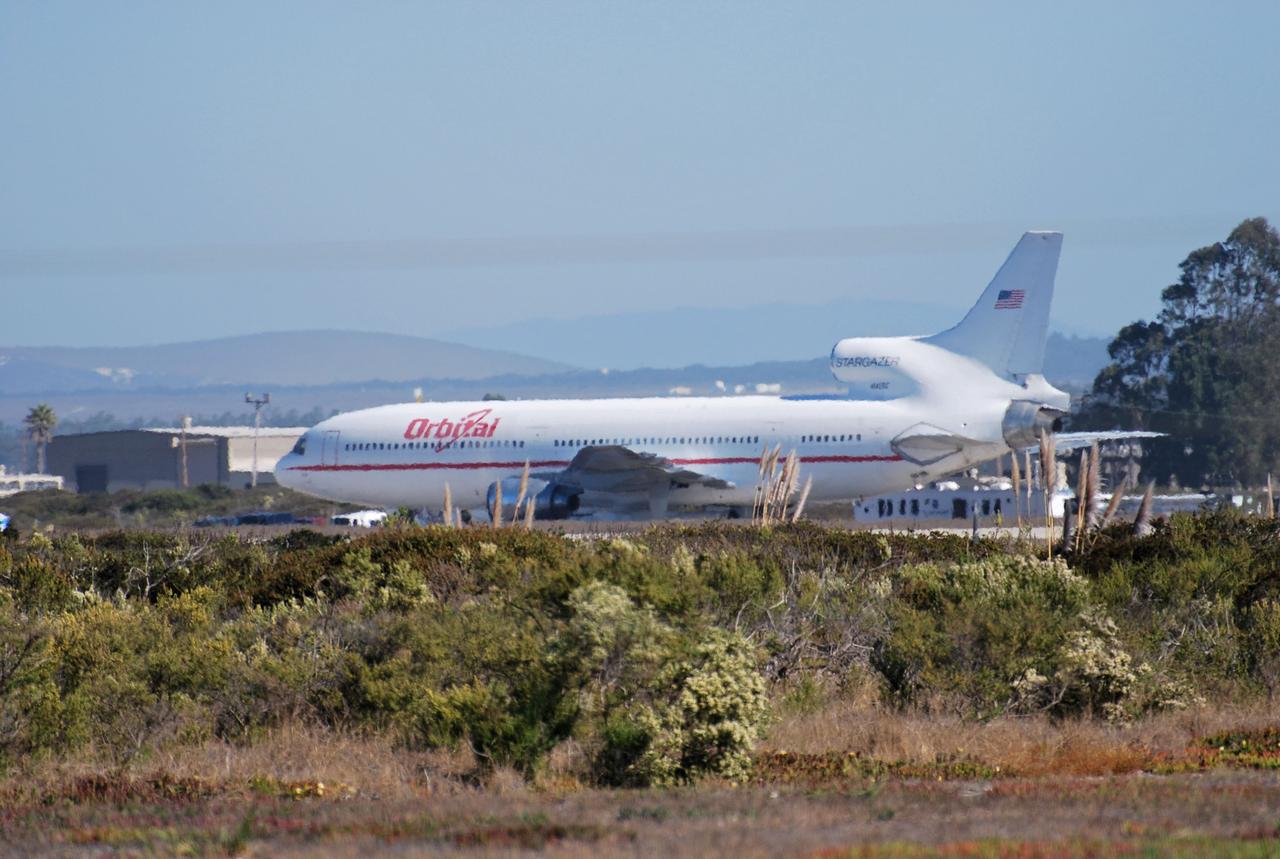
VANDENBERG AIR FORCE BASE, Calif. – On the ramp of Vandenberg Air Force Base in California, Orbital Sciences’ L-1011 aircraft is ready for departure with NASA’s Interstellar Boundary Explorer, or IBEX, spacecraft and Pegasus XL rocket. The Pegasus is attached under the wing of the aircraft for launch. The IBEX satellite will make the first map of the boundary between the Solar System and interstellar space. IBEX is targeted for launch Oct. 19. The Pegasus rocket will be dropped from under the wing of the L-1011 over the Pacific Ocean to carry the spacecraft approximately 130 miles above Earth and place it in orbit. Photo credit: NASA/Randy Beaudoin, VAFB
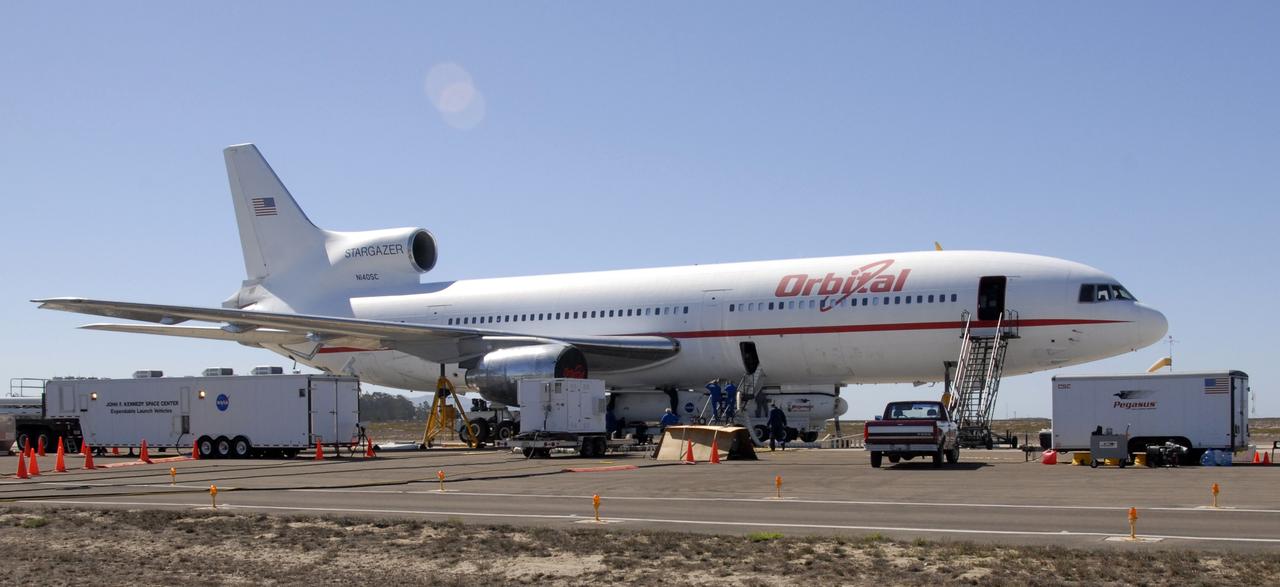
VANDENBERG AIR FORCE BASE, Fla. -- NASA’s Interstellar Boundary Explorer, or IBEX, spacecraft and mated Pegasus XL rocket are being attached to Orbital Sciences’ L-1011 aircraft for launch. IBEX is targeted for launch from the Kwajalein Atoll, a part of the Marshall Islands in the Pacific Ocean, on Oct. 19. IBEX will be launched aboard the Pegasus rocket dropped from under the wing of the L-1011 aircraft flying over the Pacific Ocean. The Pegasus will carry the spacecraft approximately 130 miles above Earth and place it in orbit. The IBEX satellite will make the first map of the boundary between the Solar System and interstellar space. Photo credit: NASA/Mark Mackley, VAFB
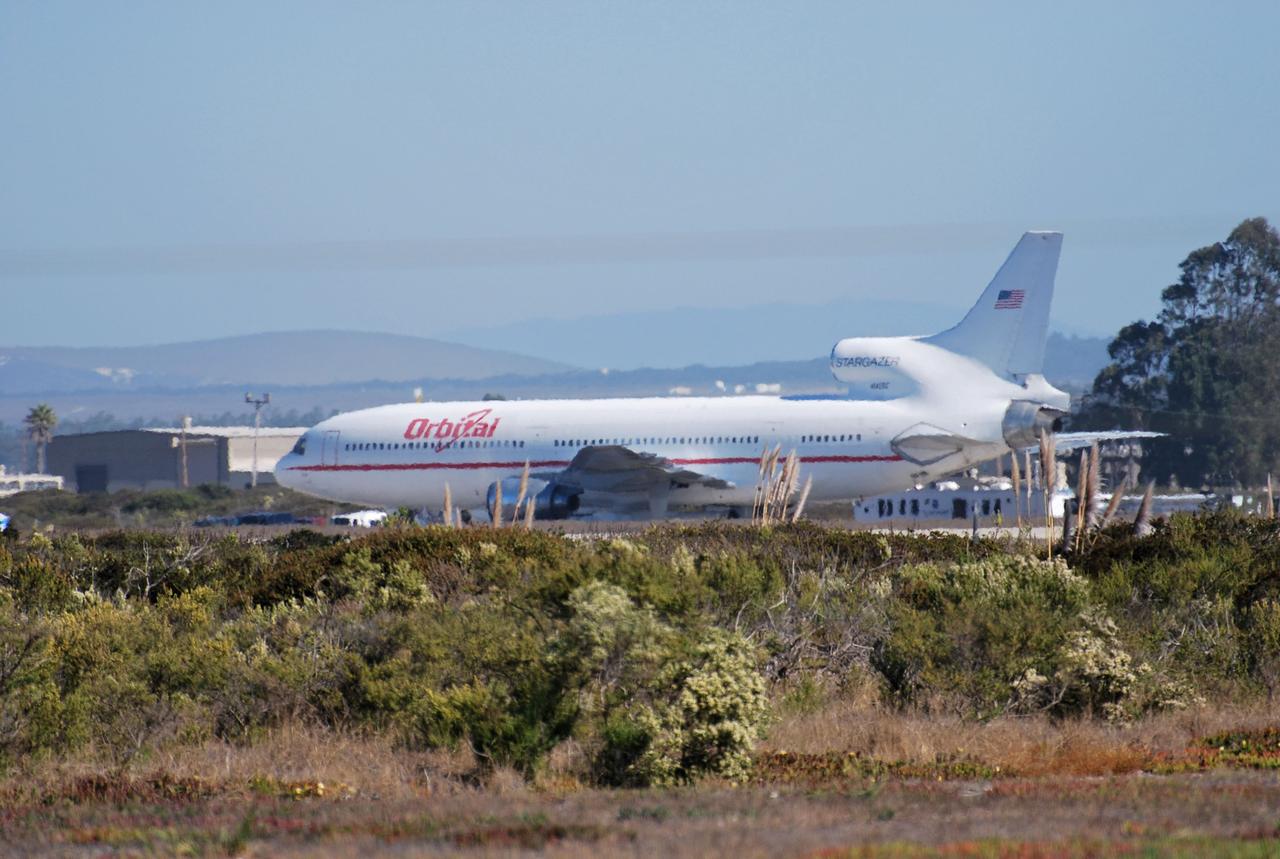
VANDENBERG AIR FORCE BASE, Calif. – On the ramp of Vandenberg Air Force Base in California, Orbital Sciences’ L-1011 aircraft is ready for departure with NASA’s Interstellar Boundary Explorer, or IBEX, spacecraft and Pegasus XL rocket. The Pegasus is attached under the wing of the aircraft for launch. The IBEX satellite will make the first map of the boundary between the Solar System and interstellar space. IBEX is targeted for launch Oct. 19. The Pegasus rocket will be dropped from under the wing of the L-1011 over the Pacific Ocean to carry the spacecraft approximately 130 miles above Earth and place it in orbit. Photo credit: NASA/Randy Beaudoin, VAFB
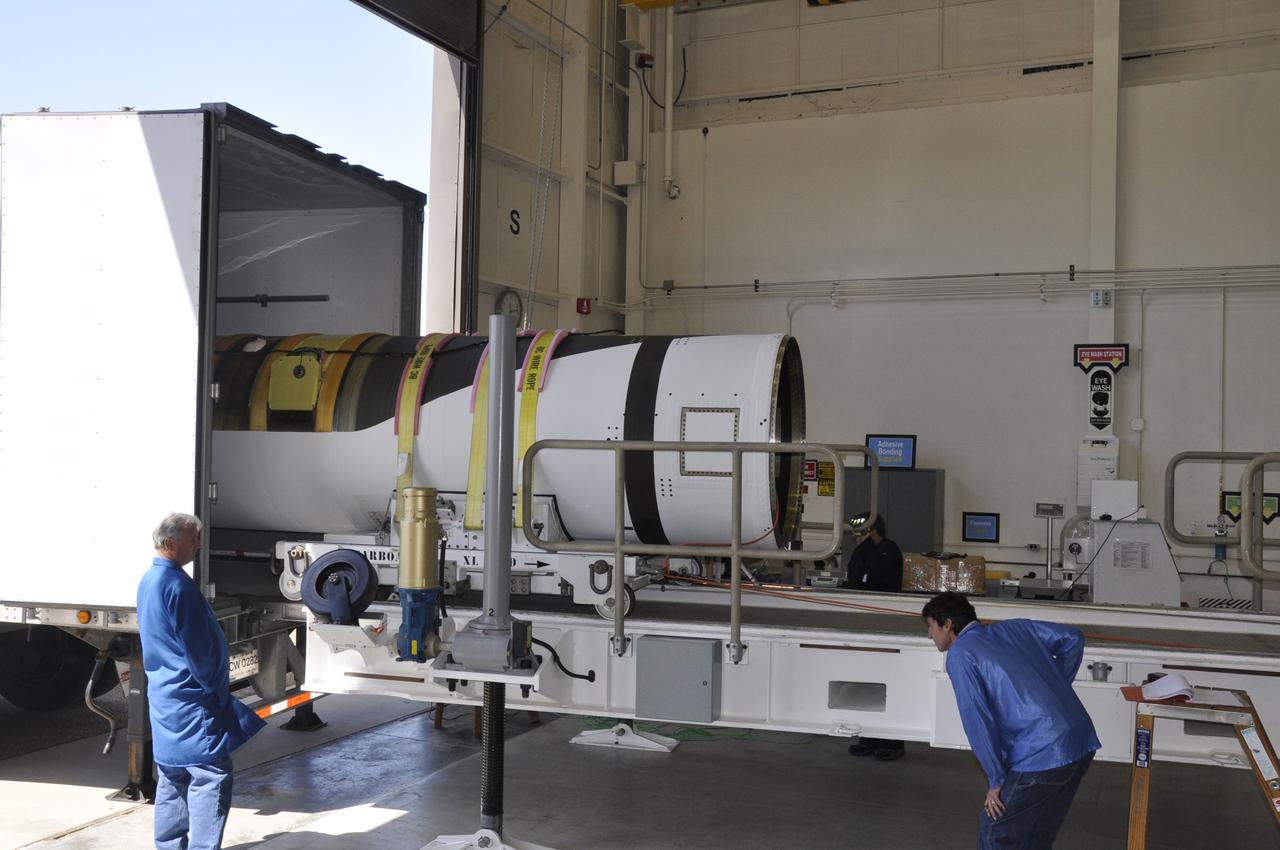
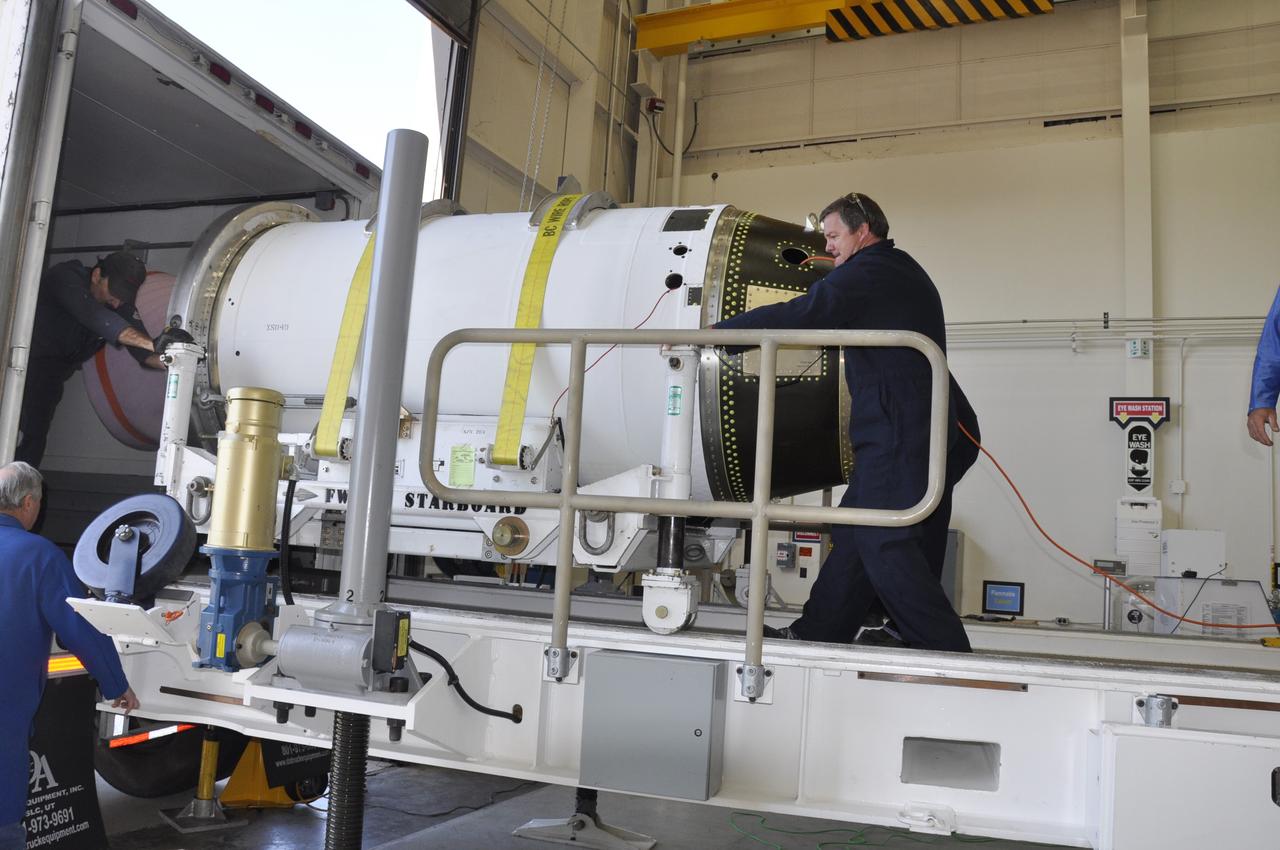
Vandenberg Air Force Base, Calif. – At Vandenberg Air Force Base in California, technicians offload the first stage of the Orbital Sciences Pegasus XL rocket from the truck in which it was transported. NASA’s Interface Region Imaging Spectrograph, or IRIS, spacecraft will launch aboard the Pegasus XL in late 2012. IRIS will open a new window of discovery by tracing the flow of energy and plasma through the chromospheres and transition region into the sun’s corona using spectrometry and imaging. IRIS fills a crucial gap in our ability to advance studies of the sun-to-Earth connection by tracing the flow of energy and plasma through the foundation of the corona and heliosphere, or region around the sun. Photo credit: NASA/Randy Beaudoin
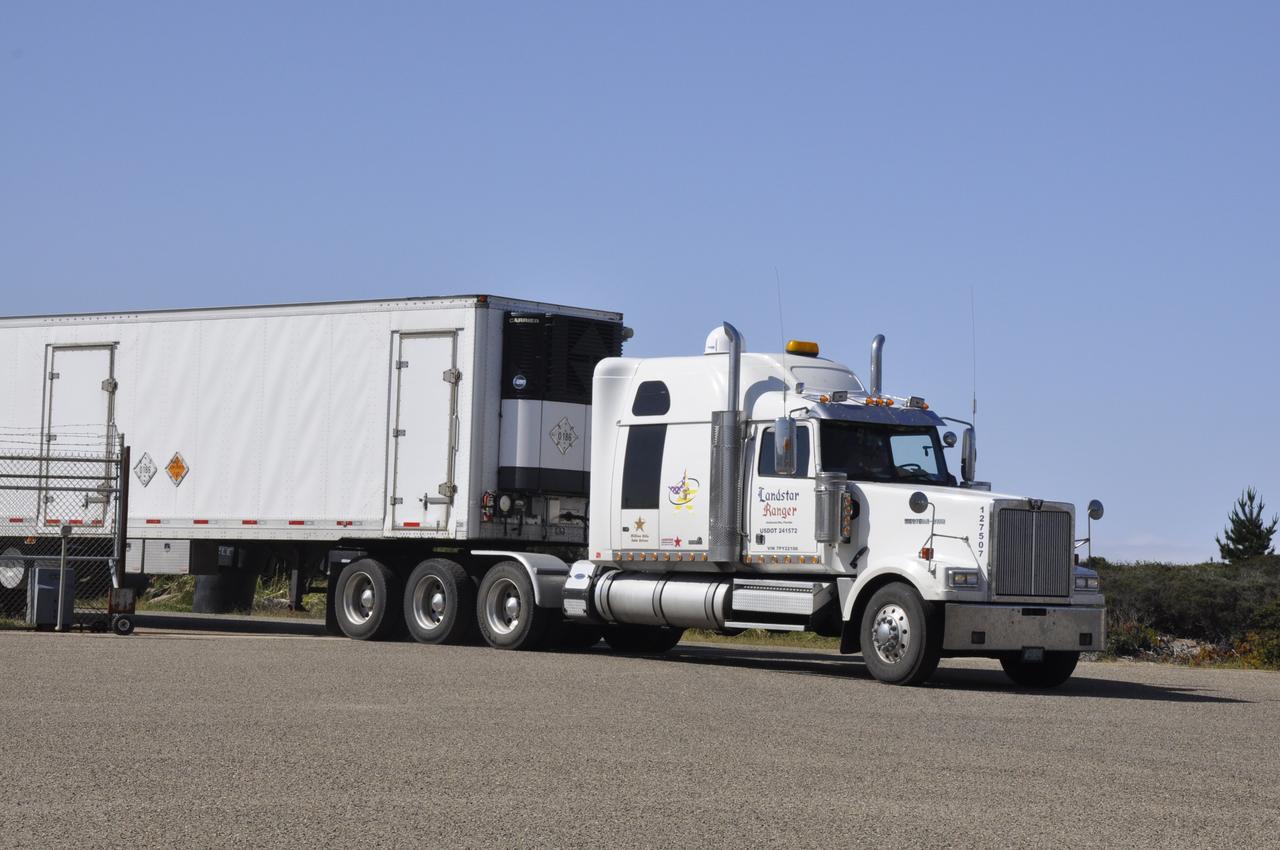
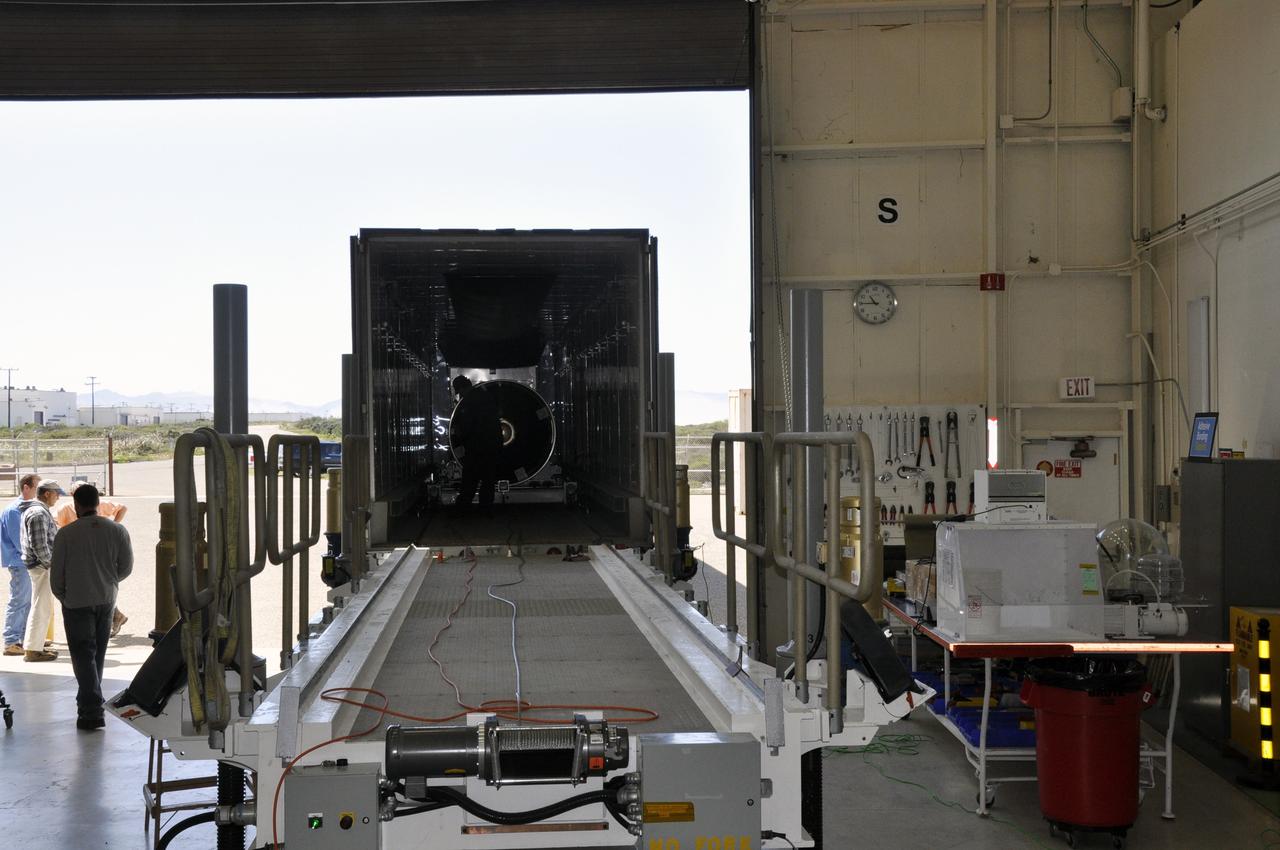
Vandenberg Air Force Base, Calif. – A truck carrying all three stages of the Orbital Sciences Pegasus XL rocket arrives at Vandenberg Air Force Base in California. NASA’s Interface Region Imaging Spectrograph, or IRIS, spacecraft will launch aboard the Pegasus XL in late 2012. IRIS will open a new window of discovery by tracing the flow of energy and plasma through the chromospheres and transition region into the sun’s corona using spectrometry and imaging. IRIS fills a crucial gap in our ability to advance studies of the sun-to-Earth connection by tracing the flow of energy and plasma through the foundation of the corona and heliosphere, or region around the sun. Photo credit: NASA/Randy Beaudoin
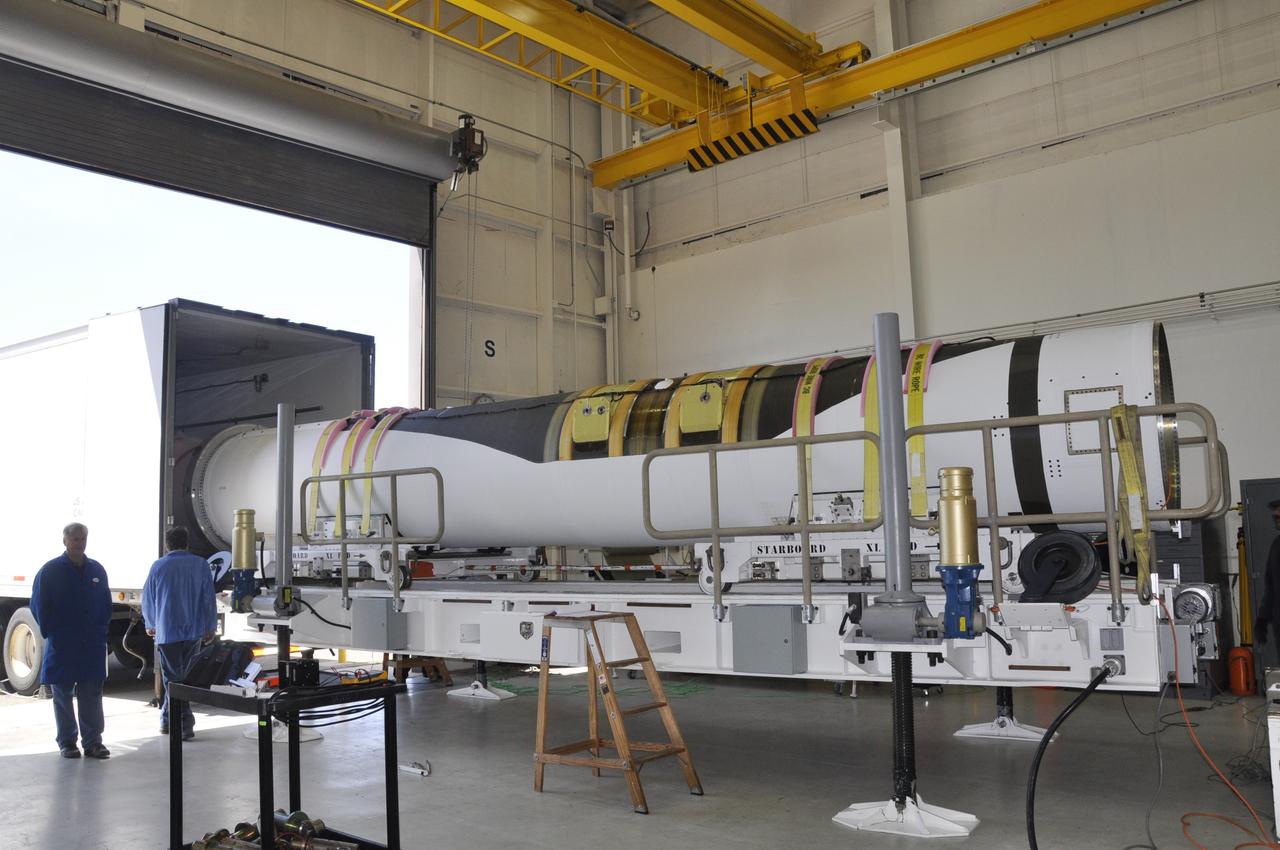
Vandenberg Air Force Base, Calif. – At Vandenberg Air Force Base in California, technicians offload the first stage of the Orbital Sciences Pegasus XL rocket from the truck in which it was transported. NASA’s Interface Region Imaging Spectrograph, or IRIS, spacecraft will launch aboard the Pegasus XL in late 2012. IRIS will open a new window of discovery by tracing the flow of energy and plasma through the chromospheres and transition region into the sun’s corona using spectrometry and imaging. IRIS fills a crucial gap in our ability to advance studies of the sun-to-Earth connection by tracing the flow of energy and plasma through the foundation of the corona and heliosphere, or region around the sun. Photo credit: NASA/Randy Beaudoin
Vandenberg Air Force Base, Calif. – Inside a hangar at Vandenberg Air Force Base in California, technicians offload the second stage of the Orbital Sciences Pegasus XL rocket from the truck in which it was transported. NASA’s Interface Region Imaging Spectrograph, or IRIS, spacecraft will launch aboard the Pegasus XL in late 2012. IRIS will open a new window of discovery by tracing the flow of energy and plasma through the chromospheres and transition region into the sun’s corona using spectrometry and imaging. IRIS fills a crucial gap in our ability to advance studies of the sun-to-Earth connection by tracing the flow of energy and plasma through the foundation of the corona and heliosphere, or region around the sun. Photo credit: NASA/Randy Beaudoin
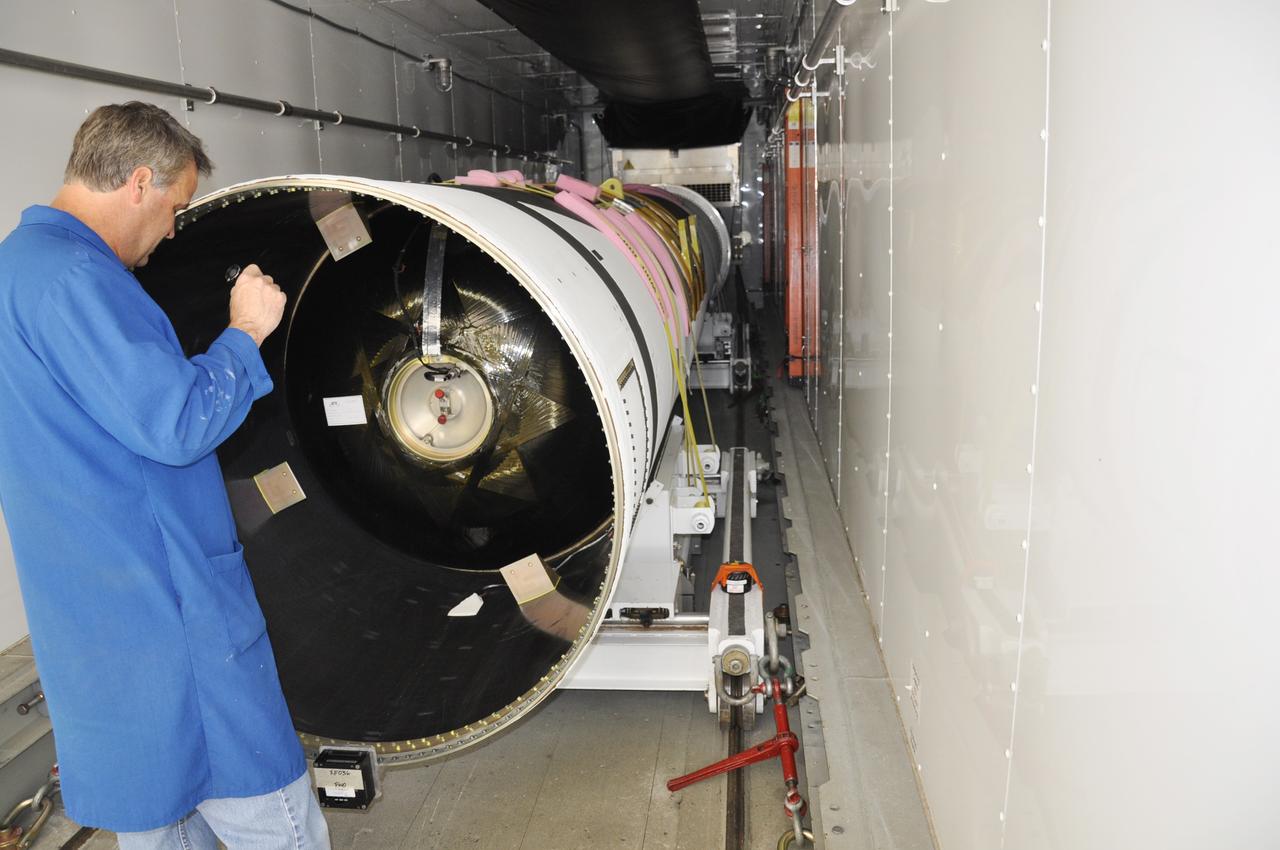
Vandenberg Air Force Base, Calif. – At Vandenberg Air Force Base in California, technicians prepare to offload the first stage of the Orbital Sciences Pegasus XL rocket from the truck in which it was transported. NASA’s Interface Region Imaging Spectrograph, or IRIS, spacecraft will launch aboard the Pegasus XL in late 2012. IRIS will open a new window of discovery by tracing the flow of energy and plasma through the chromospheres and transition region into the sun’s corona using spectrometry and imaging. IRIS fills a crucial gap in our ability to advance studies of the sun-to-Earth connection by tracing the flow of energy and plasma through the foundation of the corona and heliosphere, or region around the sun. Photo credit: NASA/Randy Beaudoin
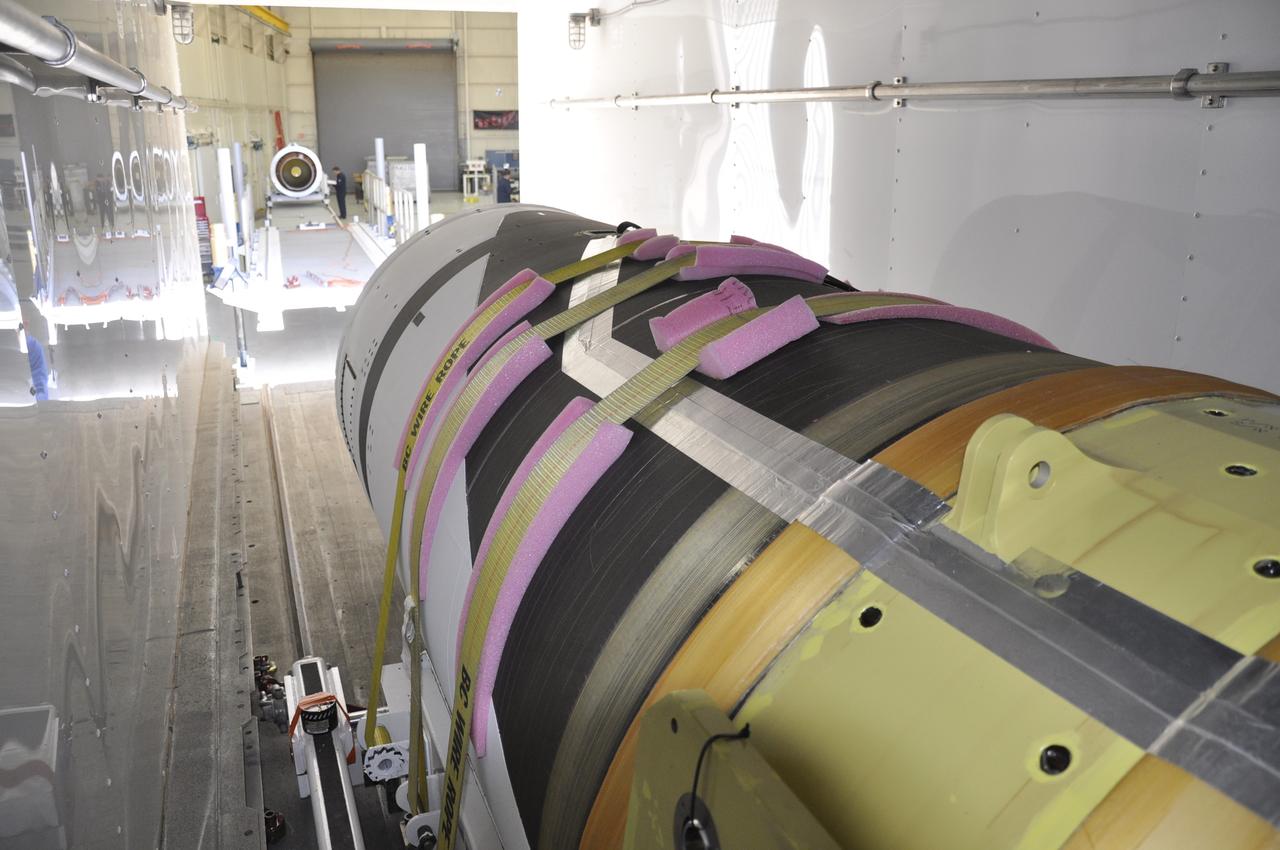
Vandenberg Air Force Base, Calif. – At Vandenberg Air Force Base in California, technicians prepare to offload the first stage of the Orbital Sciences Pegasus XL rocket from the truck in which it was transported. NASA’s Interface Region Imaging Spectrograph, or IRIS, spacecraft will launch aboard the Pegasus XL in late 2012. IRIS will open a new window of discovery by tracing the flow of energy and plasma through the chromospheres and transition region into the sun’s corona using spectrometry and imaging. IRIS fills a crucial gap in our ability to advance studies of the sun-to-Earth connection by tracing the flow of energy and plasma through the foundation of the corona and heliosphere, or region around the sun. Photo credit: NASA/Randy Beaudoin
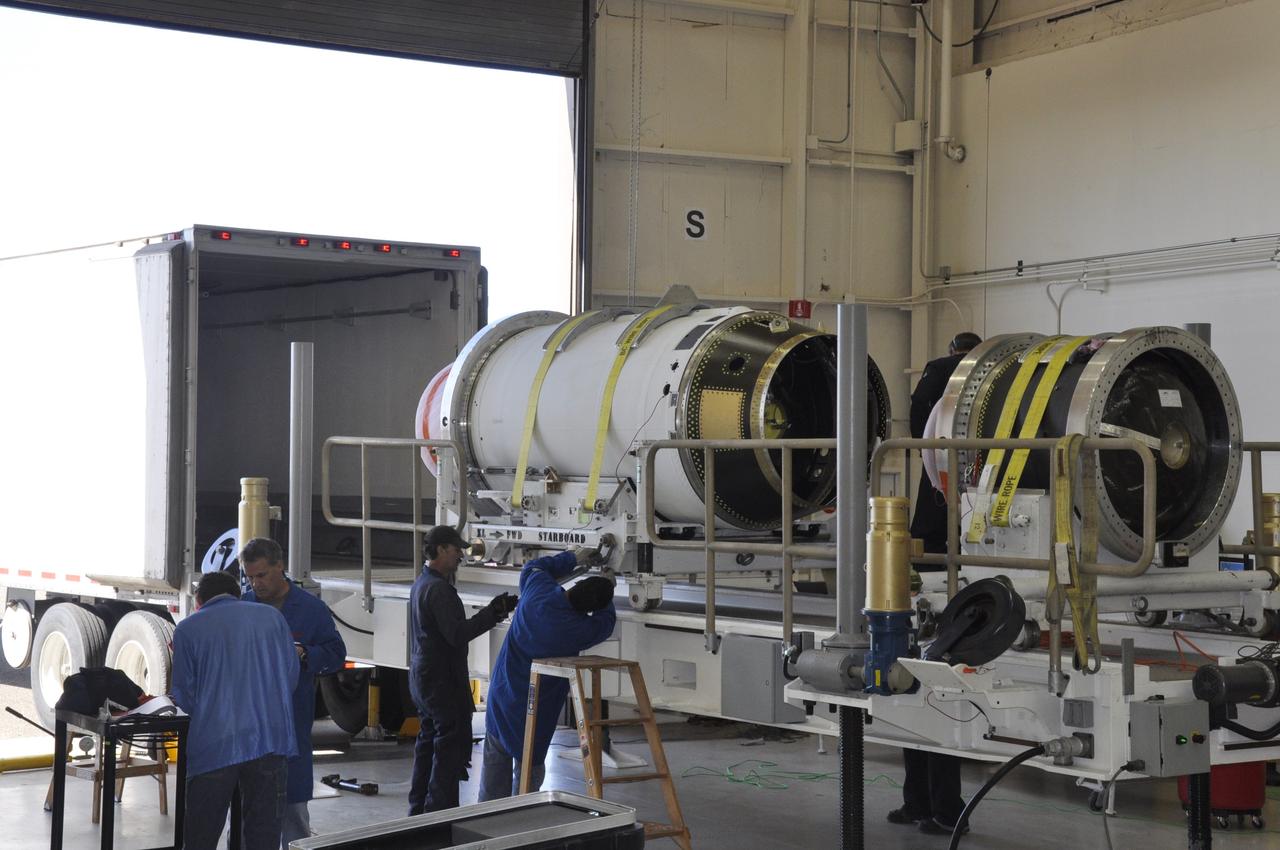
Vandenberg Air Force Base, Calif. – Inside a hangar at Vandenberg Air Force Base in California, technicians offload the second stage of the Orbital Sciences Pegasus XL rocket from the truck in which it was transported. NASA’s Interface Region Imaging Spectrograph, or IRIS, spacecraft will launch aboard the Pegasus XL in late 2012. IRIS will open a new window of discovery by tracing the flow of energy and plasma through the chromospheres and transition region into the sun’s corona using spectrometry and imaging. IRIS fills a crucial gap in our ability to advance studies of the sun-to-Earth connection by tracing the flow of energy and plasma through the foundation of the corona and heliosphere, or region around the sun. Photo credit: NASA/Randy Beaudoin
Vandenberg Air Force Base, Calif. – At Vandenberg Air Force Base in California, technicians prepare to offload the first stage of the Orbital Sciences Pegasus XL rocket from the truck in which it was transported. NASA’s Interface Region Imaging Spectrograph, or IRIS, spacecraft will launch aboard the Pegasus XL in late 2012. IRIS will open a new window of discovery by tracing the flow of energy and plasma through the chromospheres and transition region into the sun’s corona using spectrometry and imaging. IRIS fills a crucial gap in our ability to advance studies of the sun-to-Earth connection by tracing the flow of energy and plasma through the foundation of the corona and heliosphere, or region around the sun. Photo credit: NASA/Randy Beaudoin
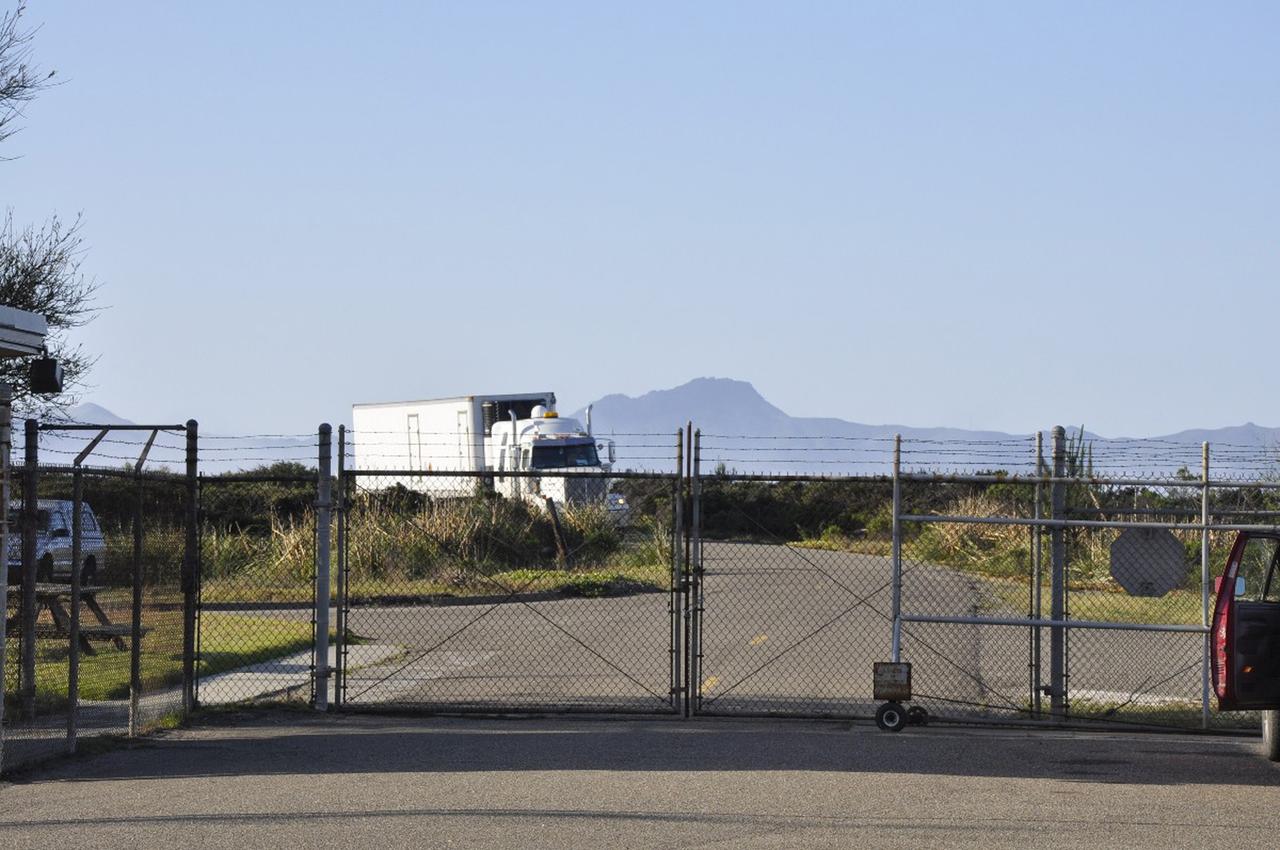
Vandenberg Air Force Base, Calif. – A truck carrying all three stages of the Orbital Sciences Pegasus XL rocket arrives at Vandenberg Air Force Base in California. NASA’s Interface Region Imaging Spectrograph, or IRIS, spacecraft will launch aboard the Pegasus XL in late 2012. IRIS will open a new window of discovery by tracing the flow of energy and plasma through the chromospheres and transition region into the sun’s corona using spectrometry and imaging. IRIS fills a crucial gap in our ability to advance studies of the sun-to-Earth connection by tracing the flow of energy and plasma through the foundation of the corona and heliosphere, or region around the sun. Photo credit: NASA/Randy Beaudoin
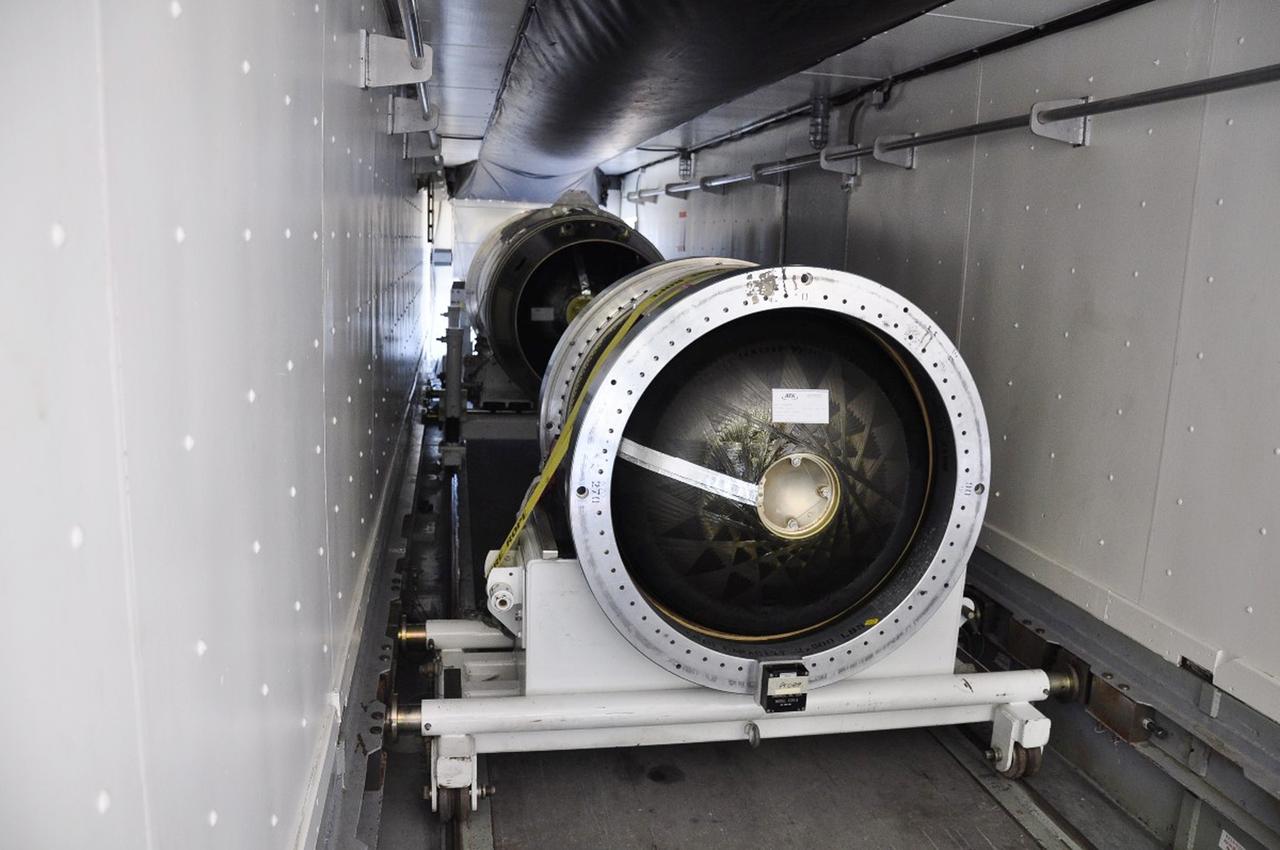
Vandenberg Air Force Base, Calif. – A truck carrying the third stage of the Orbital Sciences Pegasus XL rocket arrives at Vandenberg Air Force Base in California. NASA’s Interface Region Imaging Spectrograph, or IRIS, spacecraft will launch aboard the Pegasus XL in late 2012. IRIS will open a new window of discovery by tracing the flow of energy and plasma through the chromospheres and transition region into the sun’s corona using spectrometry and imaging. IRIS fills a crucial gap in our ability to advance studies of the sun-to-Earth connection by tracing the flow of energy and plasma through the foundation of the corona and heliosphere, or region around the sun. Photo credit: NASA/Randy Beaudoin
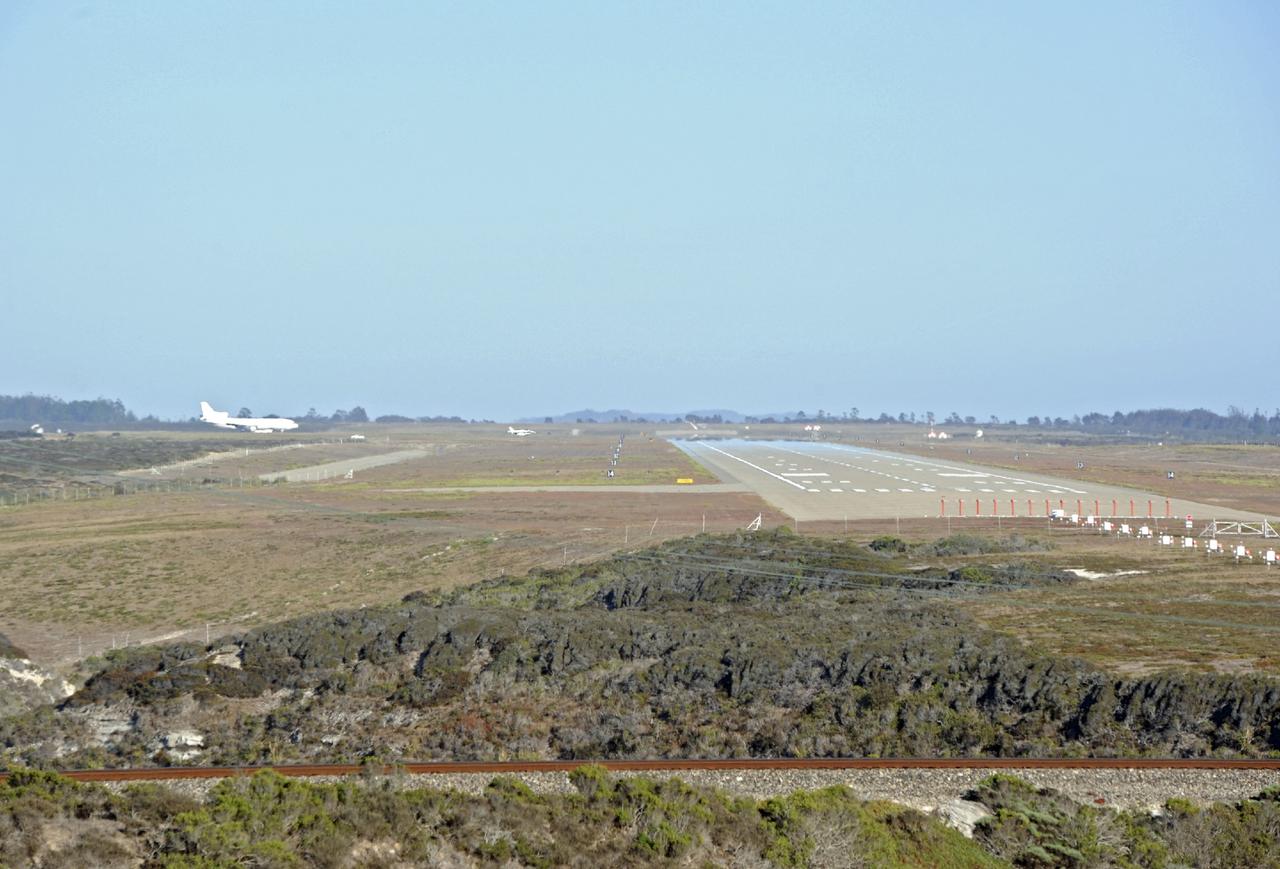
VANDENBERG AIR FORCE BASE, Calif. – A NASA F-18 and an Orbital Sciences L-1011 carrier aircraft taxi to the runway at Vandenberg Air Force Base, Calif., before taking off on a mission to launch NASA's IRIS spacecraft into low-Earth orbit. IRIS, short for Interface Region Imaging Spectrograph, was launched aboard an Orbital Sciences Pegasus XL rocket released from the L-1011. Photo credit: VAFB/ Chris Wiant
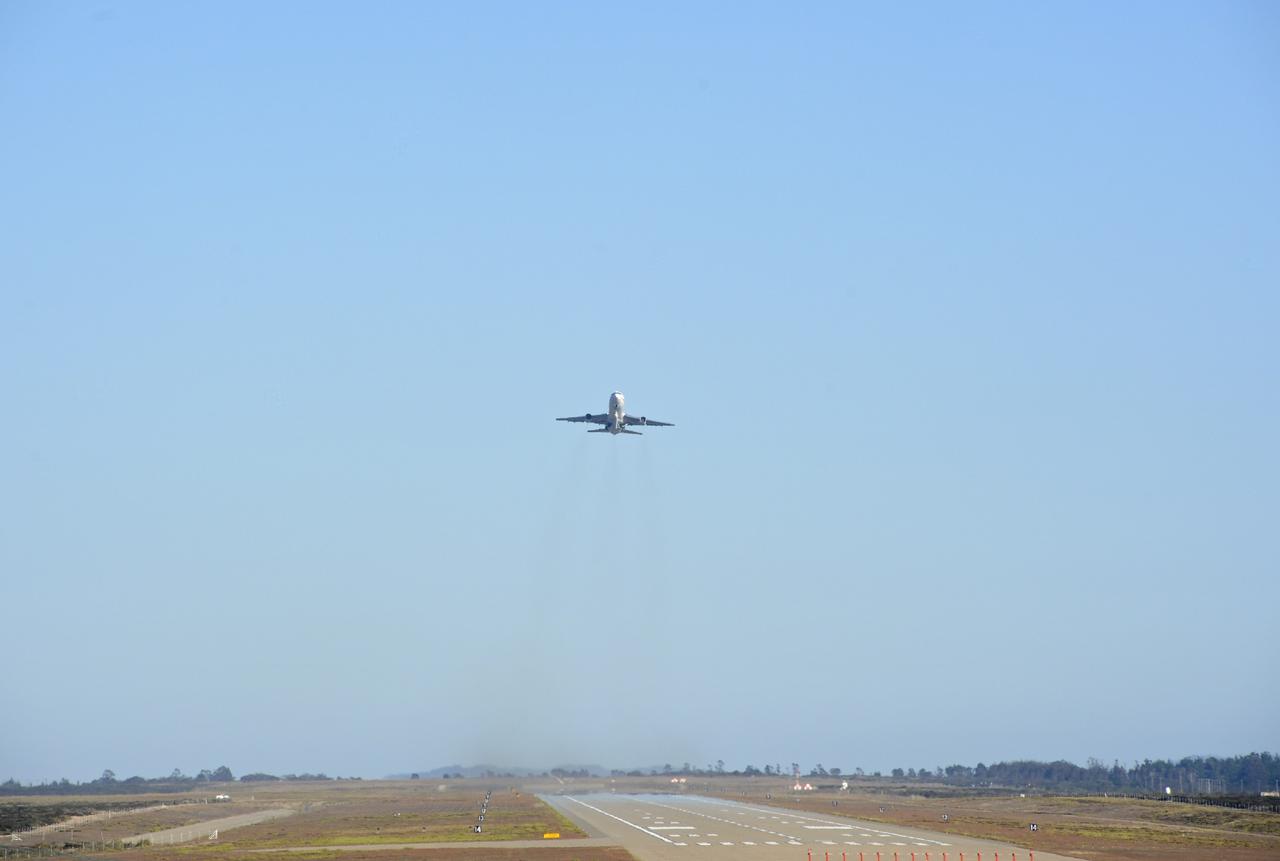
VANDENBERG AIR FORCE BASE, Calif. – An Orbital Sciences L-1011 carrier aircraft takes off from Vandenberg Air Force Base, Calif., on a mission to launch NASA's IRIS spacecraft into low-Earth orbit. IRIS, short for Interface Region Imaging Spectrograph, was launched aboard an Orbital Sciences Pegasus XL rocket released from the L-1011.Photo credit: VAFB/Chris Wiant
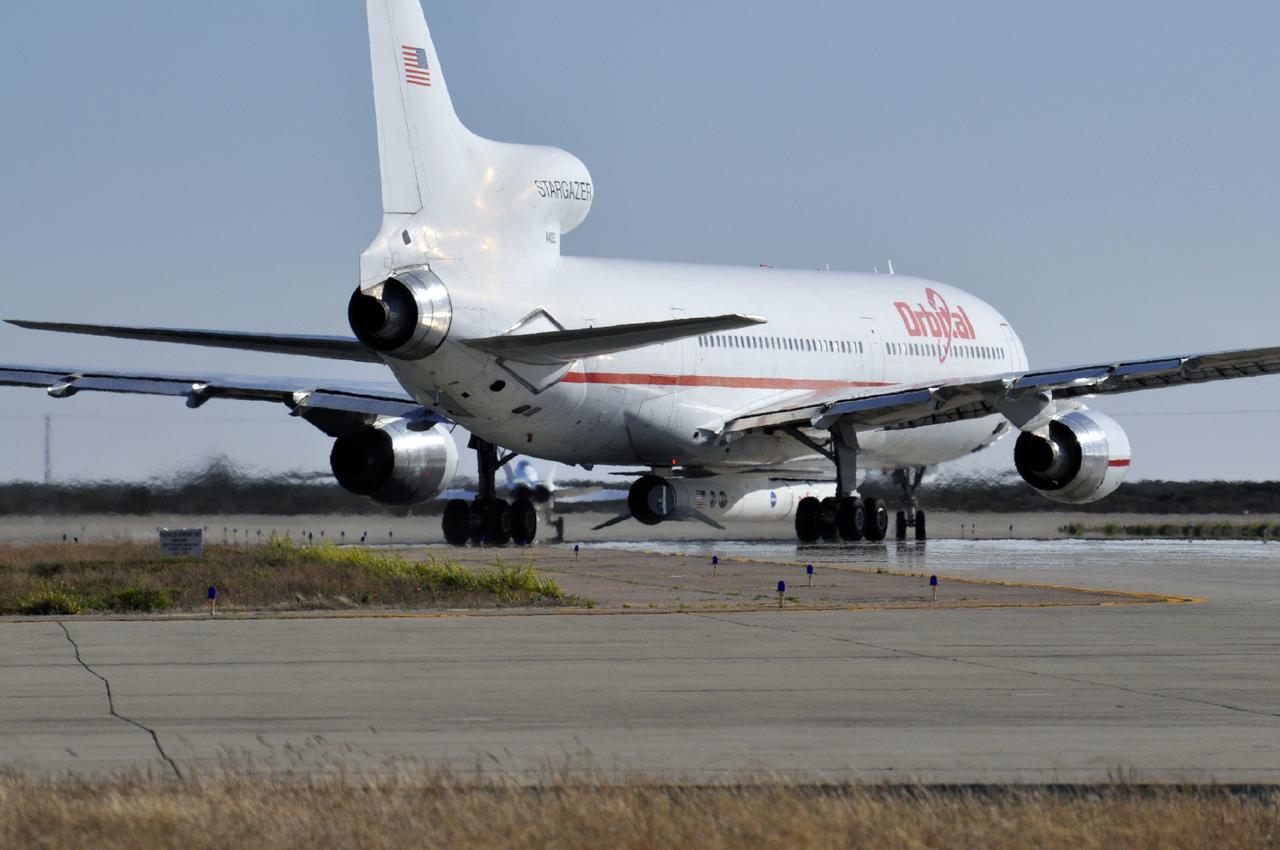
VANDENBERG AIR FORCE BASE, Calif. – An Orbital Sciences L-1011 carrier aircraft taxis to the runway at Vandenberg Air Force Base, Calif., before taking off on a mission to launch NASA's IRIS spacecraft into low-Earth orbit. IRIS, short for Interface Region Imaging Spectrograph, was launched aboard an Orbital Sciences Pegasus XL rocket released from the L-1011. Photo credit: VAFB/Randy Beaudoin
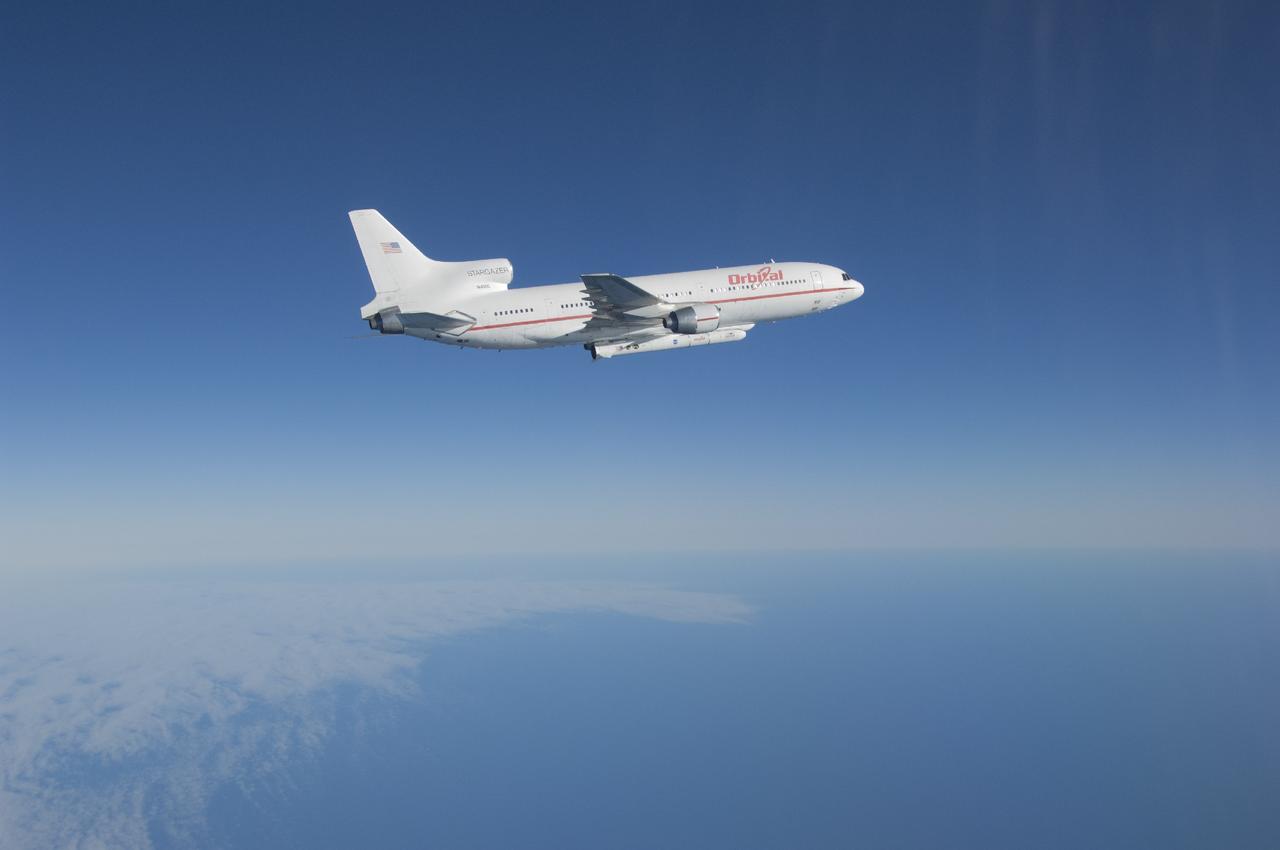
VANDENBERG AFB, Calif. – An Orbital Sciences L-1011 carrier aircraft flies over the Pacific Ocean off the California coast on a mission to launch NASA's IRIS spacecraft into low-Earth orbit. IRIS, short for Interface Region Imaging Spectrograph, was launched aboard an Orbital Sciences Pegasus XL rocket released from the bottom of the L-1011.Photo credit: NASA/Lori Losey
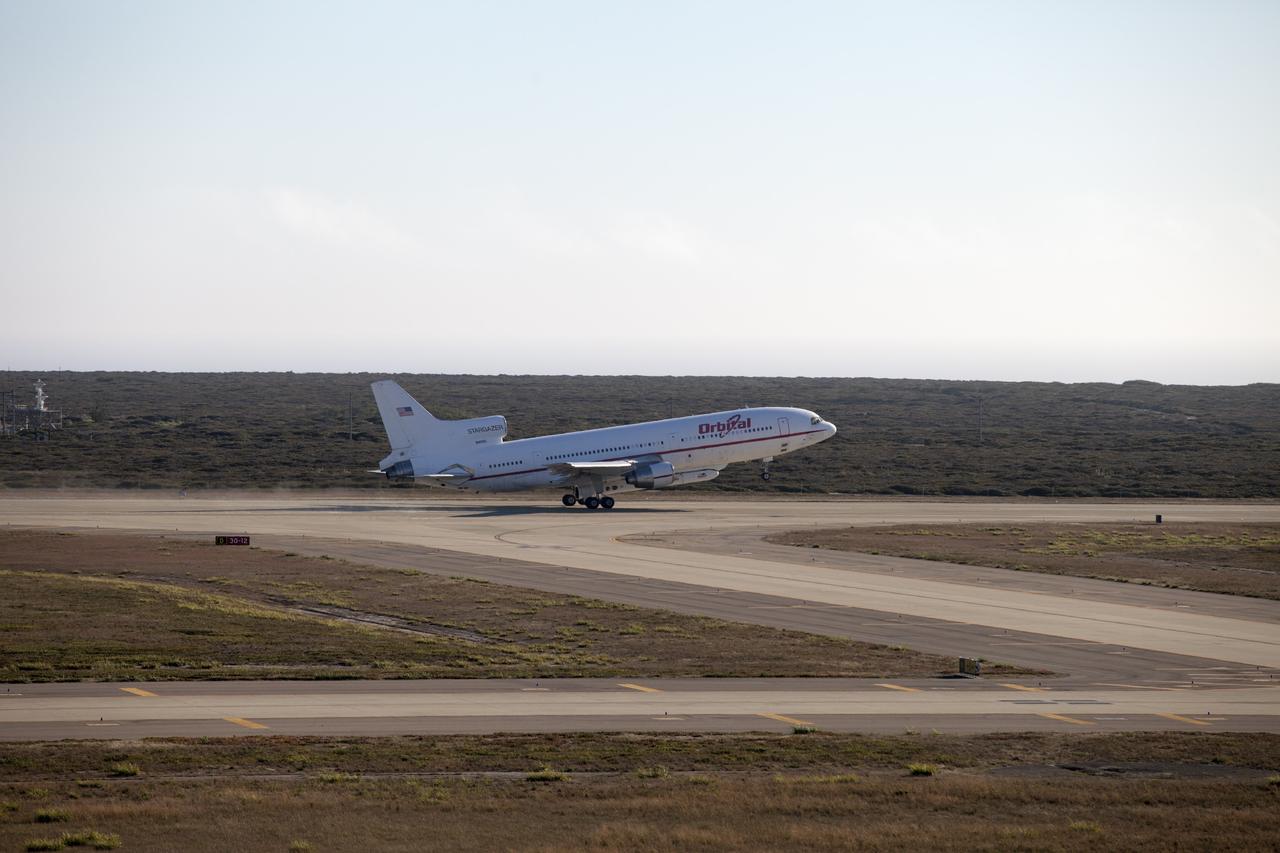
VANDENBERG AIR FORCE BASE, Calif. – An Orbital Sciences L-1011 carrier aircraft takes off from Vandenberg Air Force Base, Calif., on a mission to launch NASA's IRIS spacecraft into low-Earth orbit. IRIS, short for Interface Region Imaging Spectrograph, was launched aboard an Orbital Sciences Pegasus XL rocket released from the L-1011. Photo credit: NASA/Daniel Casper
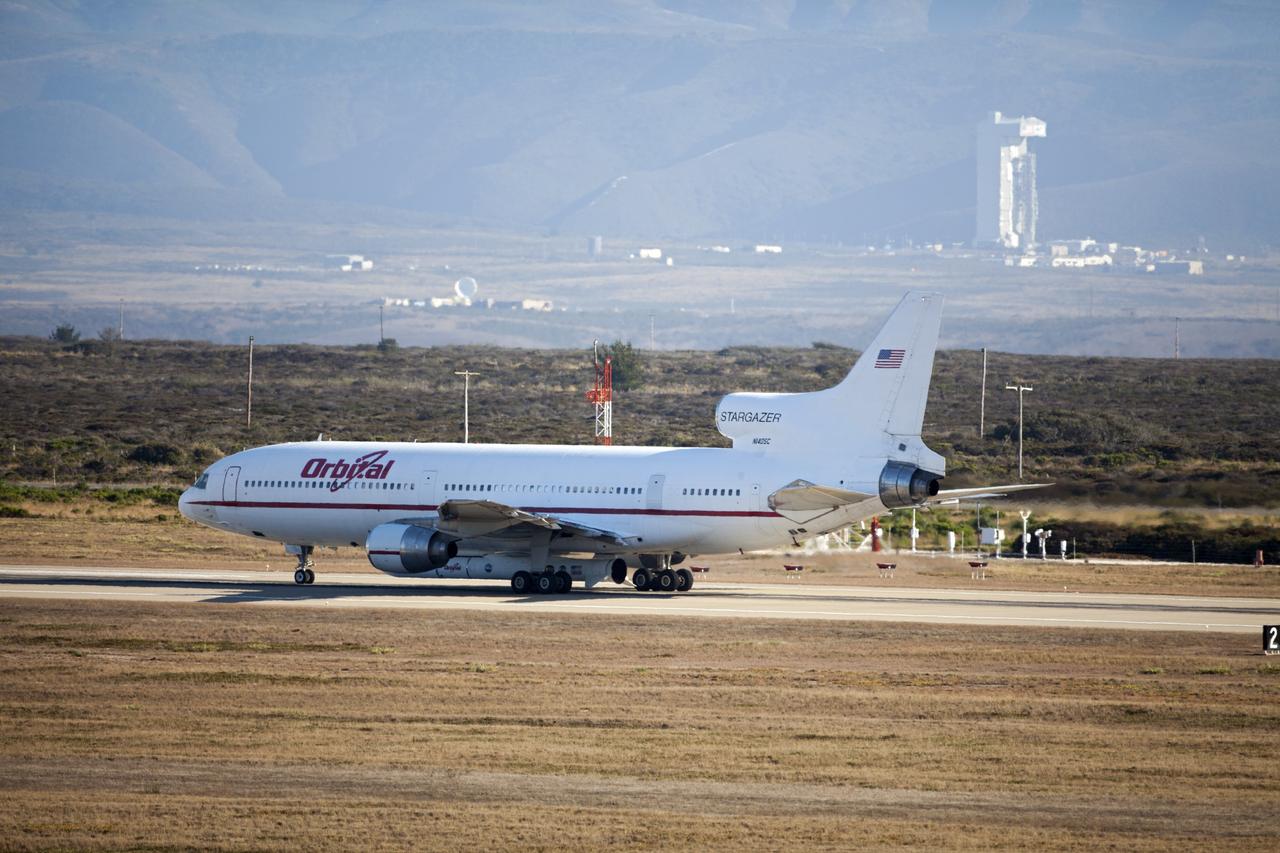
VANDENBERG AIR FORCE BASE, Calif. – An Orbital Sciences L-1011 carrier aircraft taxis to the runway at Vandenberg Air Force Base, Calif., before taking off on a mission to launch NASA's IRIS spacecraft into low-Earth orbit. IRIS, short for Interface Region Imaging Spectrograph, was launched aboard an Orbital Sciences Pegasus XL rocket released from the L-1011. Photo credit: NASA/Daniel Casper
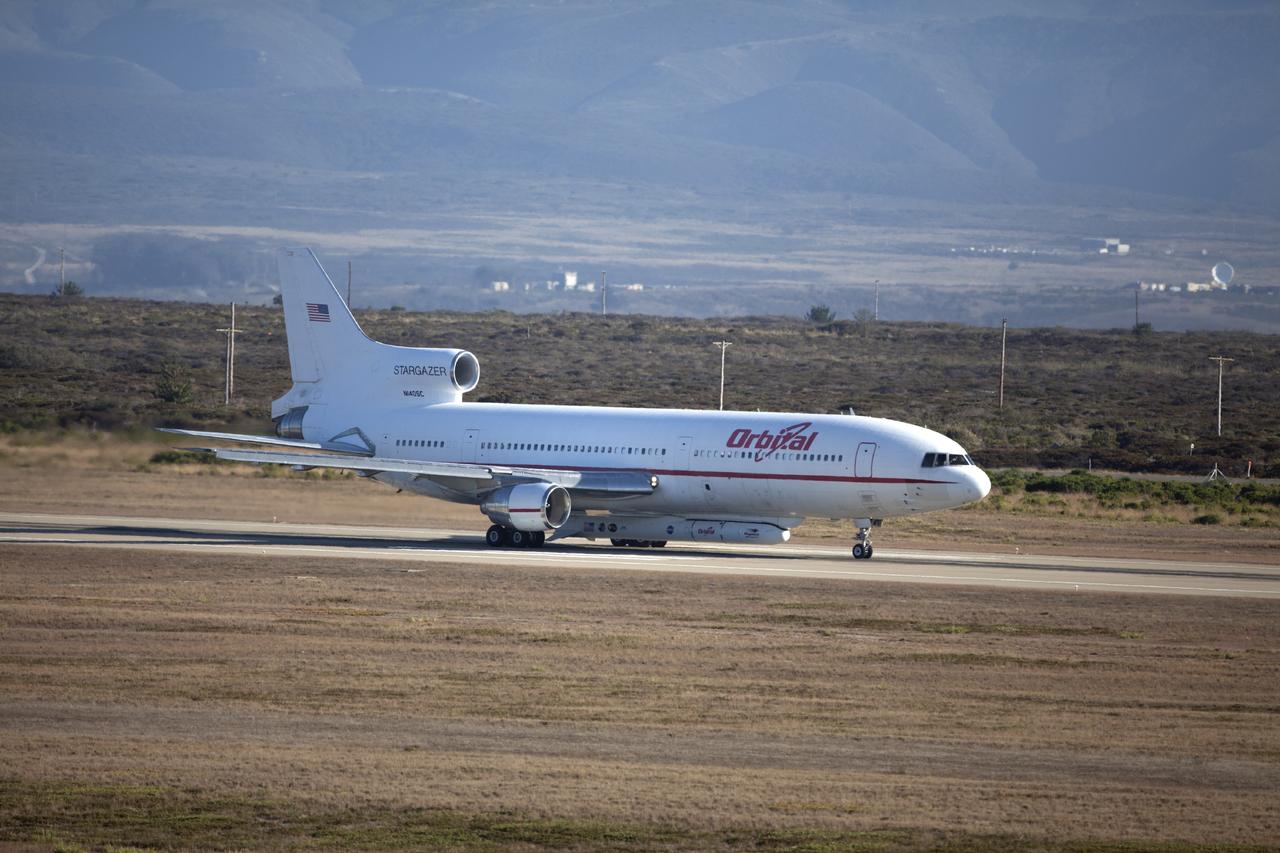
VANDENBERG AIR FORCE BASE, Calif. – An Orbital Sciences L-1011 carrier aircraft taxis to the runway at Vandenberg Air Force Base, Calif., before taking off on a mission to launch NASA's IRIS spacecraft into low-Earth orbit. IRIS, short for Interface Region Imaging Spectrograph, was launched aboard an Orbital Sciences Pegasus XL rocket released from the L-1011. Photo credit: NASA/Daniel Casper
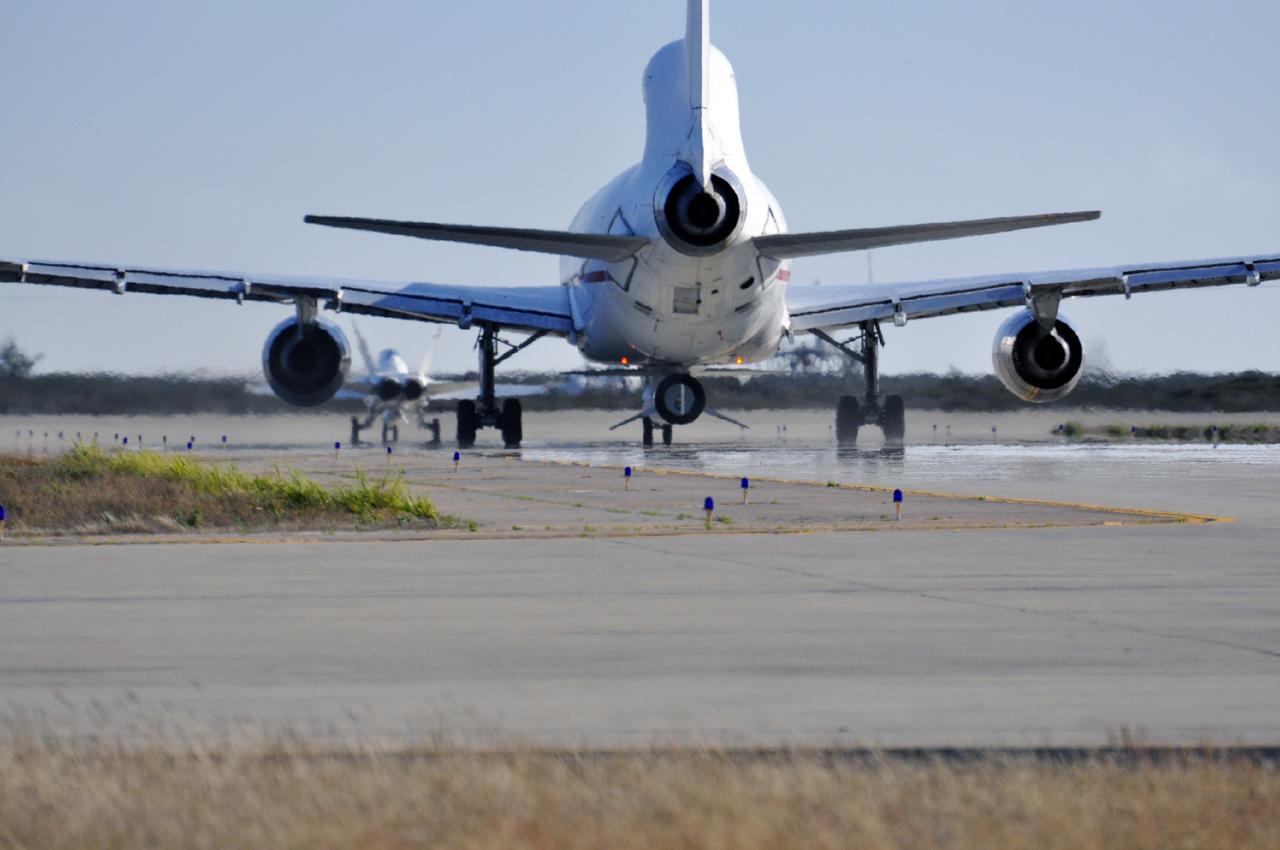
VANDENBERG AIR FORCE BASE, Calif. – A NASA F-18 and an Orbital Sciences L-1011 carrier aircraft taxi to the runway at Vandenberg Air Force Base, Calif., before taking off on a mission to launch NASA's IRIS spacecraft into low-Earth orbit. IRIS, short for Interface Region Imaging Spectrograph, was launched aboard an Orbital Sciences Pegasus XL rocket released from the L-1011. Photo credit: VAFB/ Randy Beaudoin
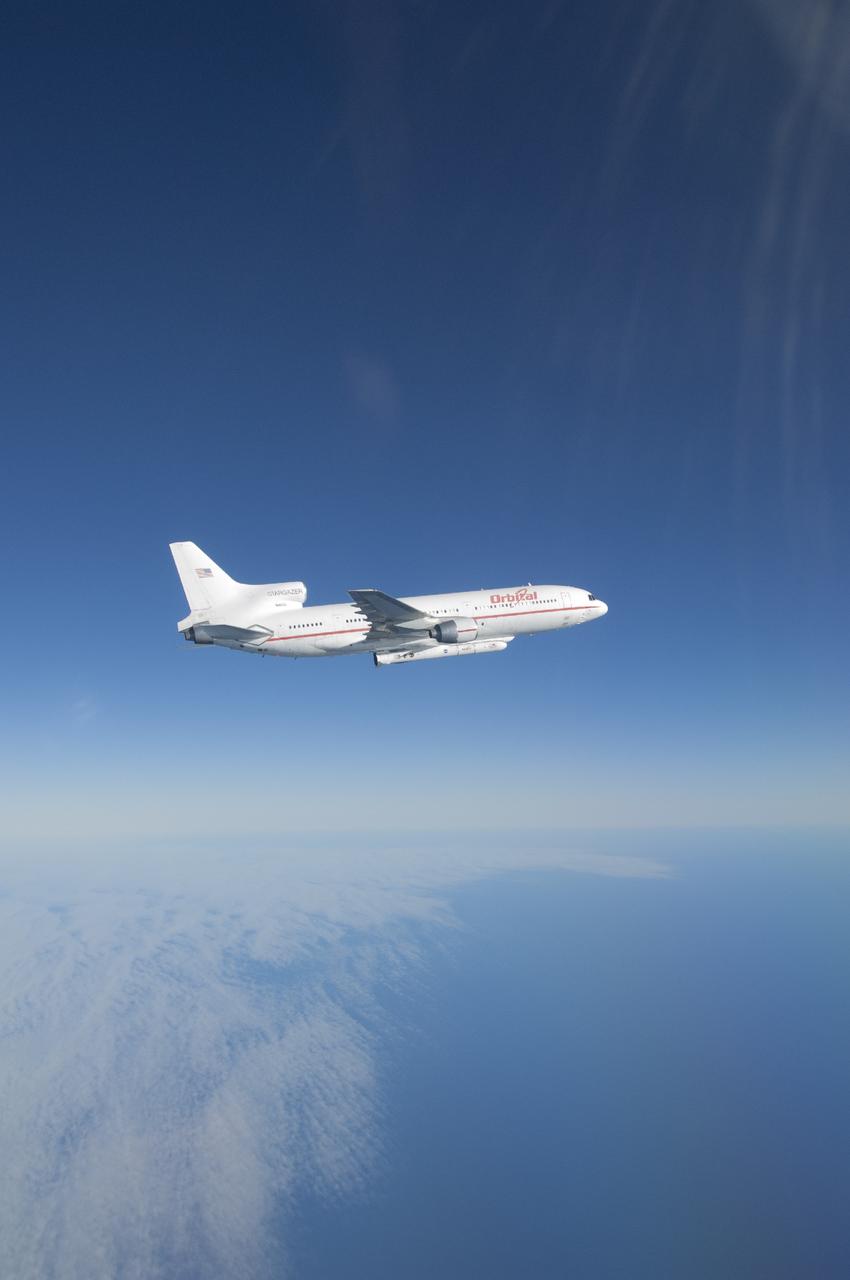
VANDENBERG AFB, Calif. – An Orbital Sciences L-1011 carrier aircraft flies over the Pacific Ocean off the California coast on a mission to launch NASA's IRIS spacecraft into low-Earth orbit. IRIS, short for Interface Region Imaging Spectrograph, was launched aboard an Orbital Sciences Pegasus XL rocket released from the bottom of the L-1011.Photo credit: NASA/Lori Losey
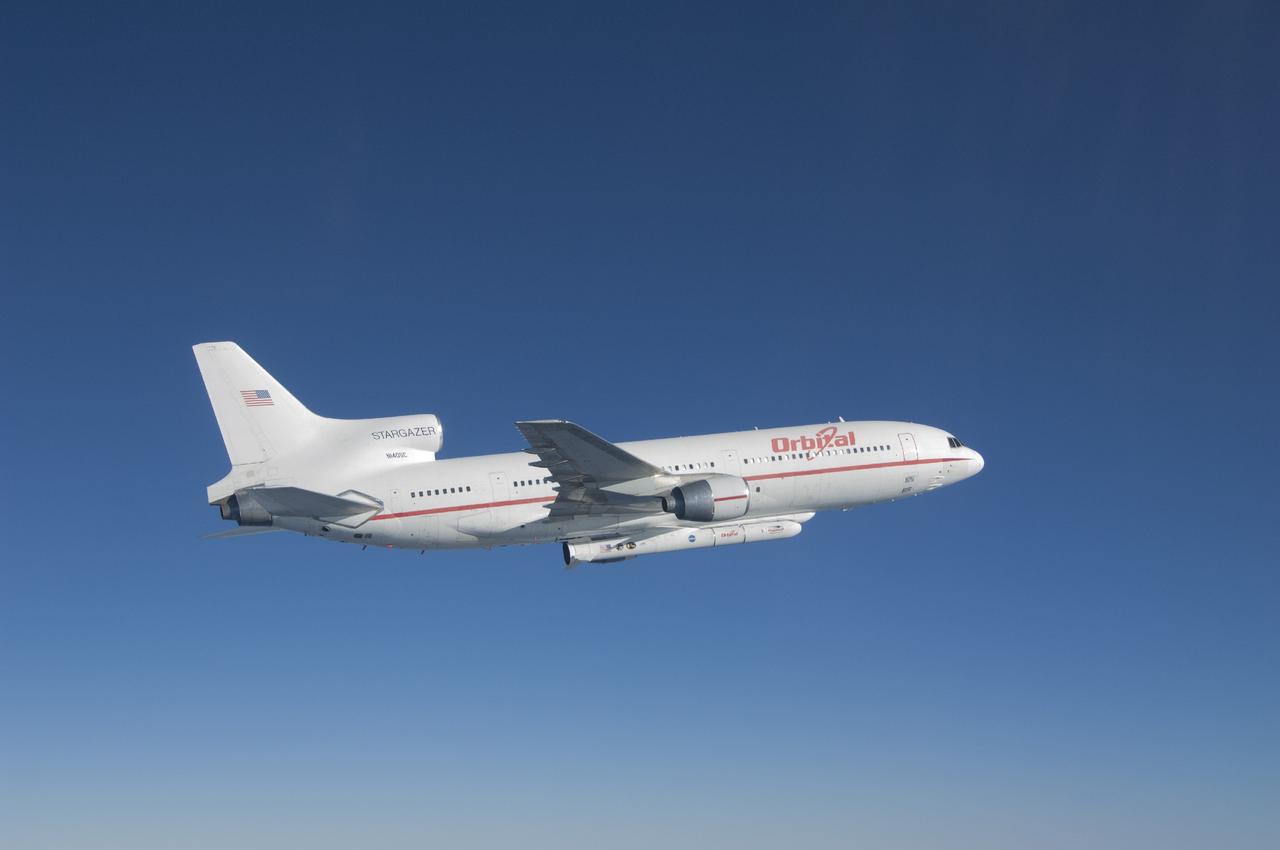
VANDENBERG AFB, Calif. – An Orbital Sciences L-1011 carrier aircraft flies over the Pacific Ocean off the California coast on a mission to launch NASA's IRIS spacecraft into low-Earth orbit. IRIS, short for Interface Region Imaging Spectrograph, was launched aboard an Orbital Sciences Pegasus XL rocket released from the bottom of the L-1011.Photo credit: NASA/Lori Losey
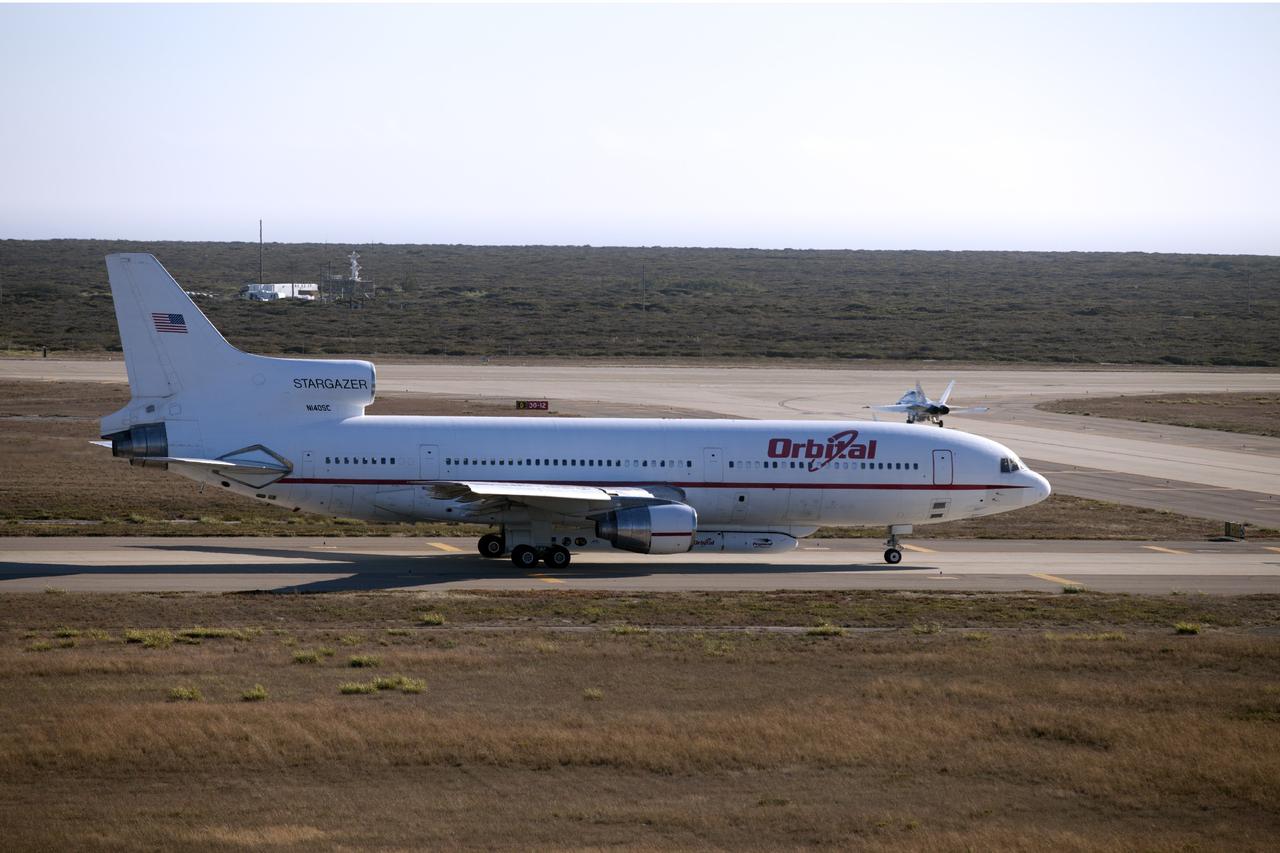
VANDENBERG AIR FORCE BASE, Calif. – A NASA F-18 and an Orbital Sciences L-1011 carrier aircraft taxi to the runway at Vandenberg Air Force Base, Calif., before taking off on a mission to launch NASA's IRIS spacecraft into low-Earth orbit. IRIS, short for Interface Region Imaging Spectrograph, was launched aboard an Orbital Sciences Pegasus XL rocket released from the L-1011. Photo credit: NASA/Daniel Casper
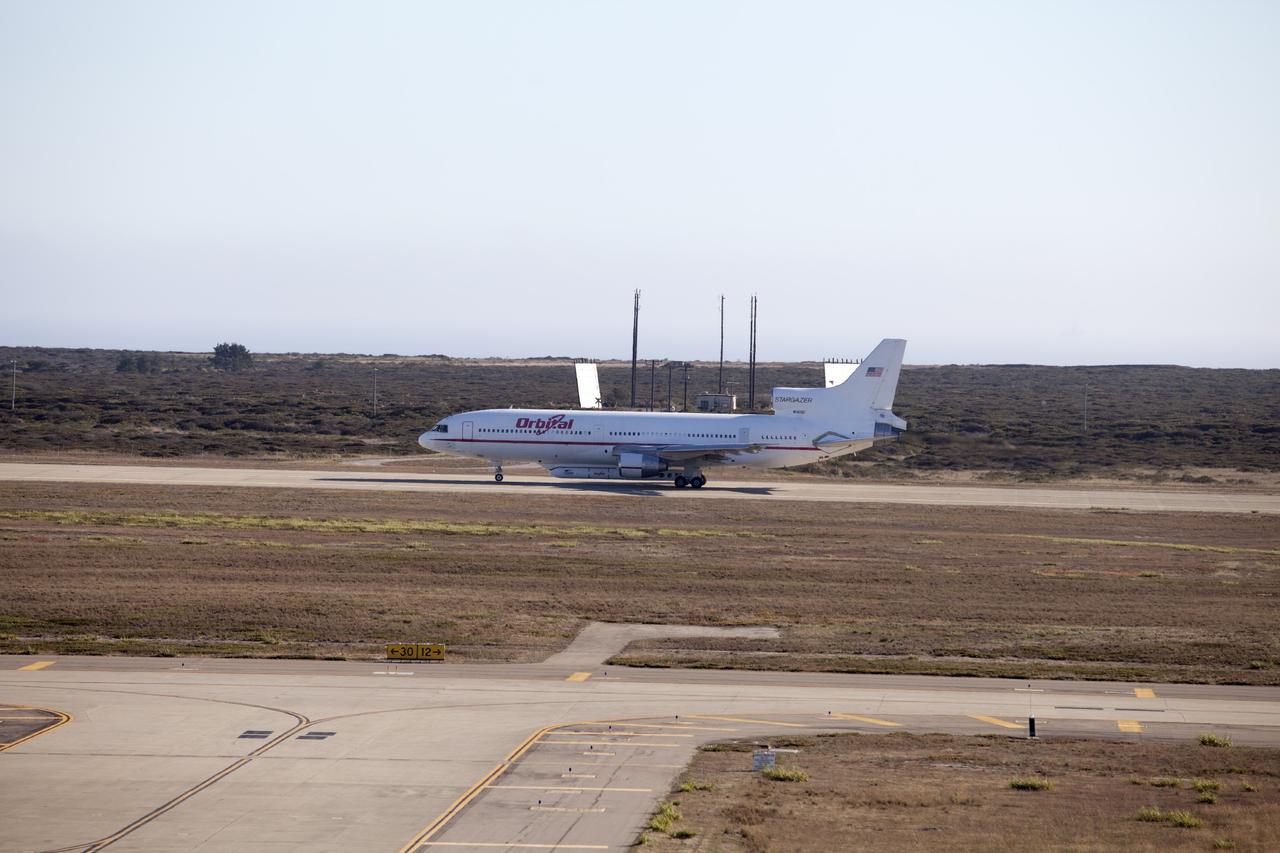
VANDENBERG AIR FORCE BASE, Calif. – An Orbital Sciences L-1011 carrier aircraft taxis to the runway at Vandenberg Air Force Base, Calif., before taking off on a mission to launch NASA's IRIS spacecraft into low-Earth orbit. IRIS, short for Interface Region Imaging Spectrograph, was launched aboard an Orbital Sciences Pegasus XL rocket released from the L-1011. Photo credit: NASA/Daniel Casper
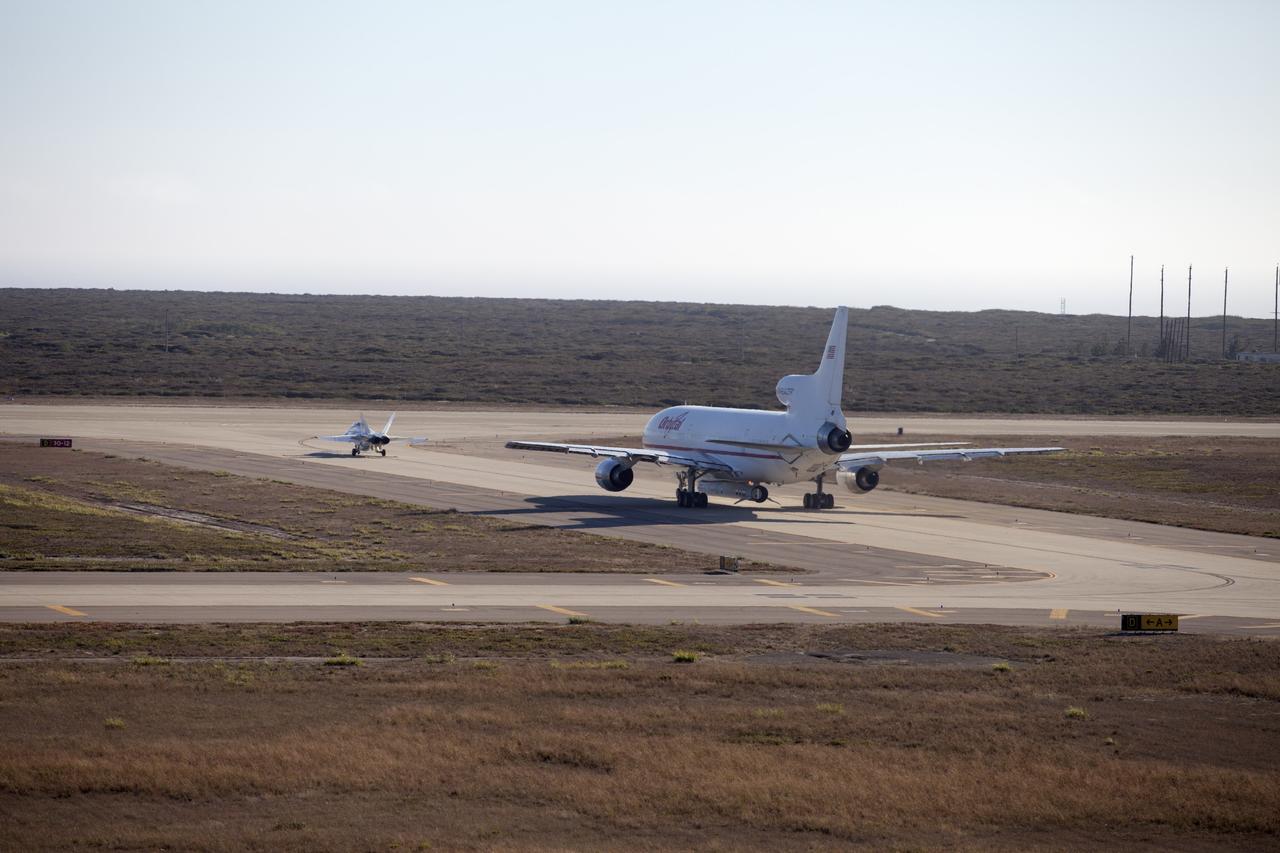
VANDENBERG AIR FORCE BASE, Calif. – A NASA F-18 and an Orbital Sciences L-1011 carrier aircraft taxi to the runway at Vandenberg Air Force Base, Calif., before taking off on a mission to launch NASA's IRIS spacecraft into low-Earth orbit. IRIS, short for Interface Region Imaging Spectrograph, was launched aboard an Orbital Sciences Pegasus XL rocket released from the L-1011. Photo credit: NASA/Daniel Casper
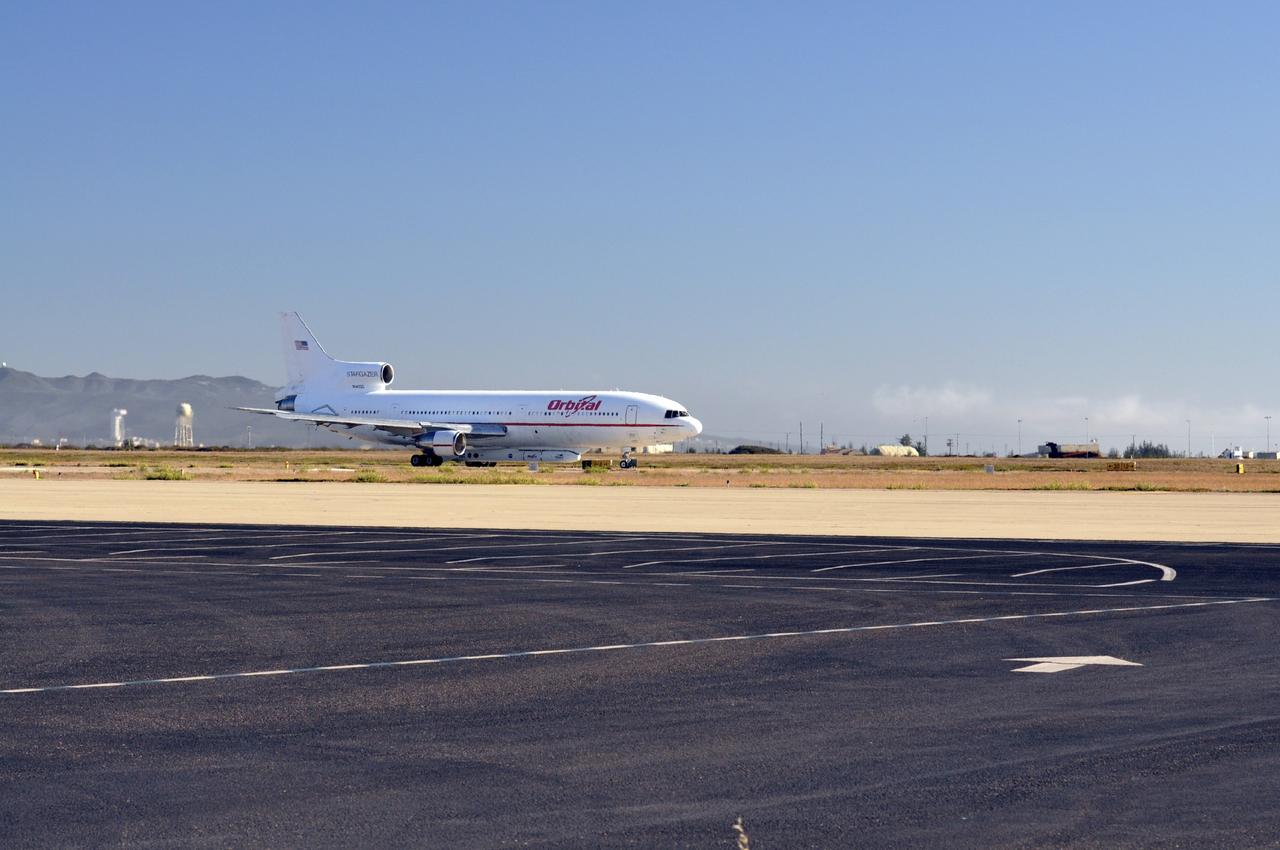
VANDENBERG AIR FORCE BASE, Calif. – An Orbital Sciences L-1011 carrier aircraft taxis to the runway at Vandenberg Air Force Base, Calif., before taking off on a mission to launch NASA's IRIS spacecraft into low-Earth orbit. IRIS, short for Interface Region Imaging Spectrograph, was launched aboard an Orbital Sciences Pegasus XL rocket released from the L-1011. Photo credit: VAFB/Randy Beaudoin
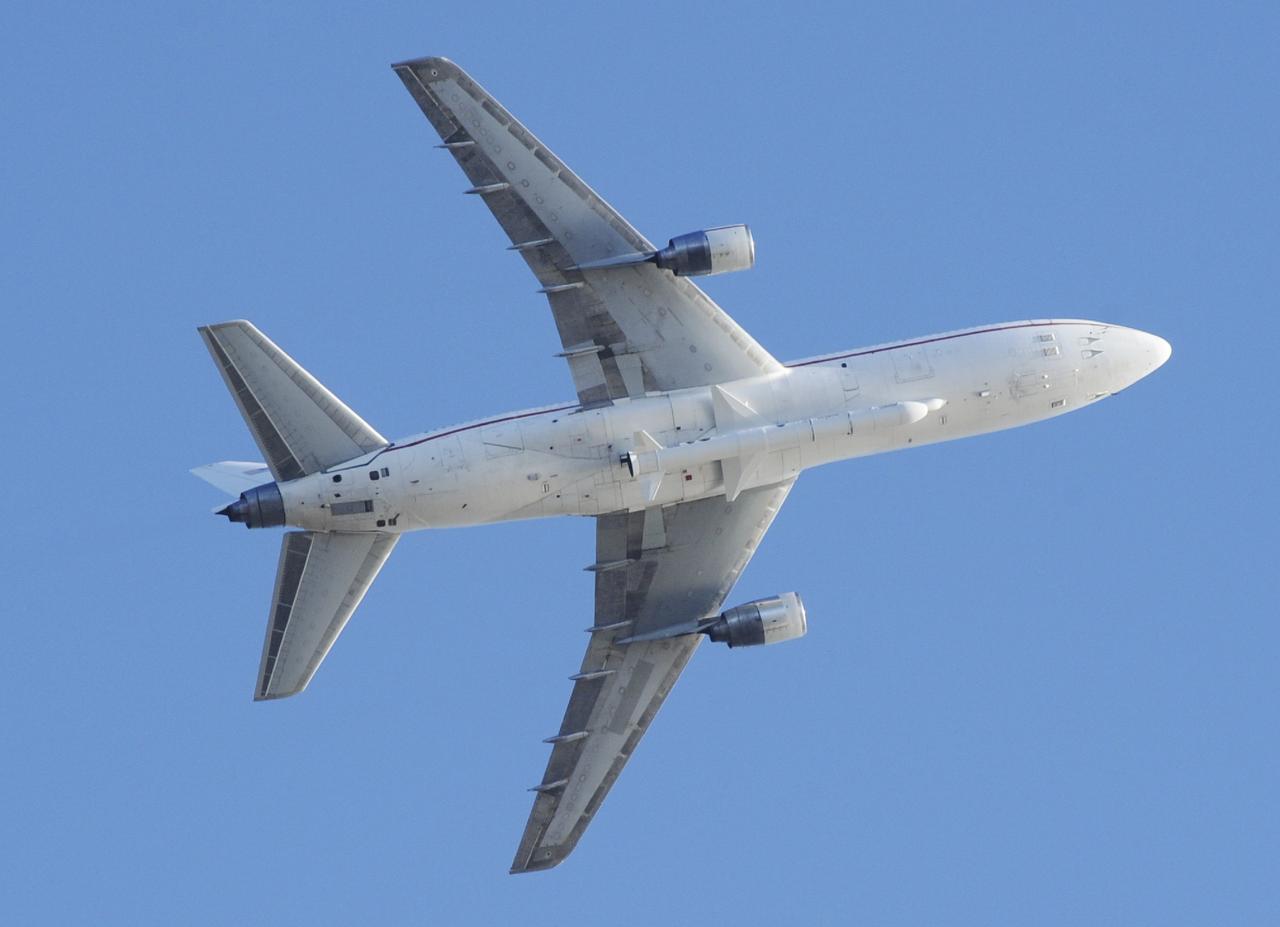
An Orbital Sciences L-1011 carrier aircraft takes off from Vandenberg Air Force Base, Calif., on a mission to launch NASA's IRIS spacecraft into low-Earth orbit. IRIS, short for Interface Region Imaging Spectrograph, was launched aboard an Orbital Sciences Pegasus XL rocket released from the L-1011.Photo credit: VAFB/Chris Wiant
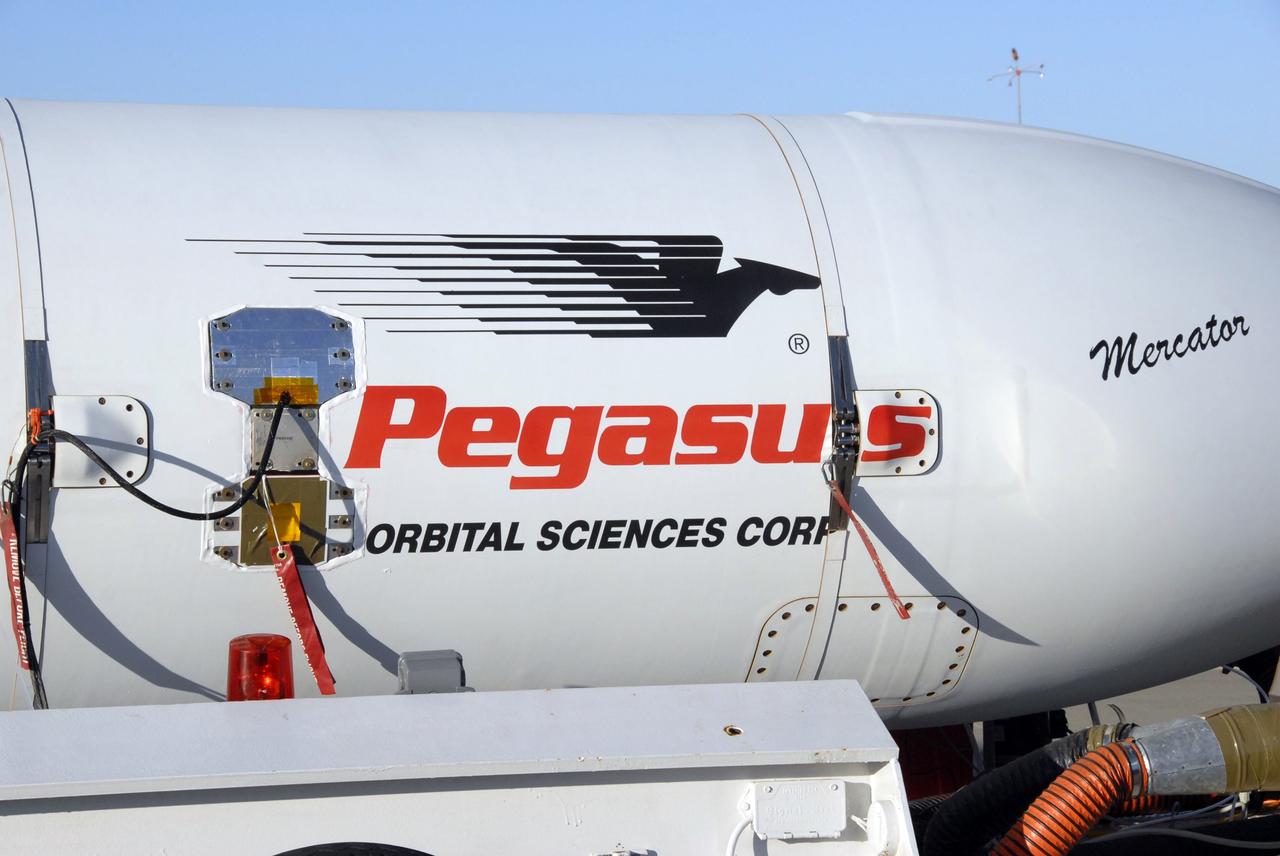
VANDENBERG AIR FORCE BASE, Fla. -- A closeup of Orbital Sciences’ Pegasus XL rocket for NASA’s Interstellar Boundary Explorer, or IBEX, spacecraft as it is enroute to the ramp on Vandenberg Air Force Base in California. There, the rocket will be attached to Orbital Sciences’ L-1011 aircraft for launch. IBEX is targeted for launch from the Kwajalein Atoll, a part of the Marshall Islands in the Pacific Ocean, on Oct. 19. IBEX will be launched aboard the Pegasus rocket dropped from under the wing of the L-1011 aircraft flying over the Pacific Ocean. The Pegasus will carry the spacecraft approximately 130 miles above Earth and place it in orbit. The IBEX satellite will make the first map of the boundary between the Solar System and interstellar space. Photo credit: NASA/Mark Mackley, VAFB
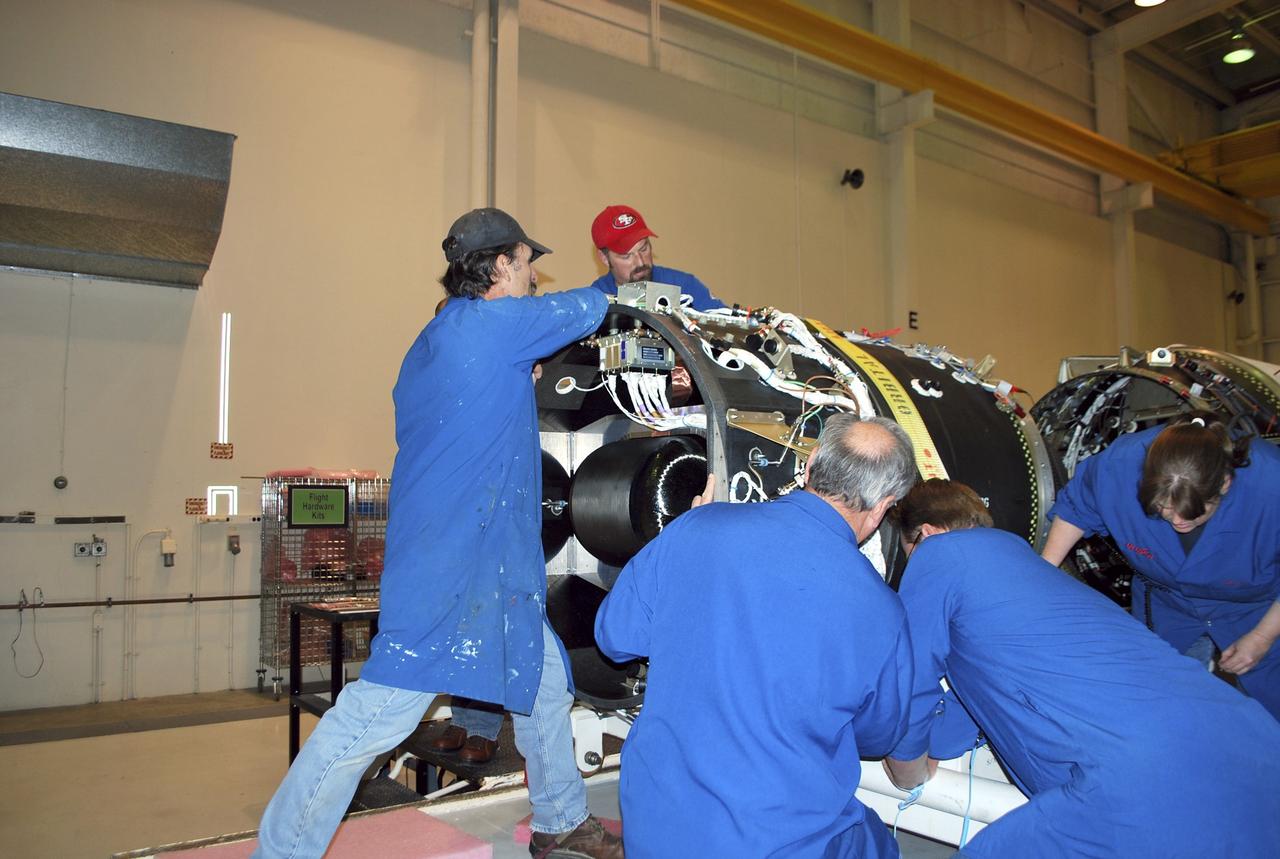
VANDENBERG AIR FORCE BASE, Calif. -- At a Pegasus booster processing facility at Vandenberg Air Force Base in California, technicians install the avionic shelf on the Pegasus XL rocket. The avionics contained in this module will issue the guidance and flight control commands for the rocket. The Orbital Sciences Corp. Pegasus rocket will launch the Nuclear Spectroscopic Telescope Array (NuSTAR) into space. After the rocket and spacecraft are processed at Vandenberg, they will be flown on the Orbital Sciences’ L-1011 carrier aircraft to the Ronald Reagan Ballistic Missile Defense Test Site at the Pacific Ocean’s Kwajalein Atoll for launch. The high-energy x-ray telescope will conduct a census for black holes, map radioactive material in young supernovae remnants, and study the origins of cosmic rays and the extreme physics around collapsed stars. For more information, visit science.nasa.gov/missions/nustar/. Photo credit: NASA/Randy Beaudoin, VAFB
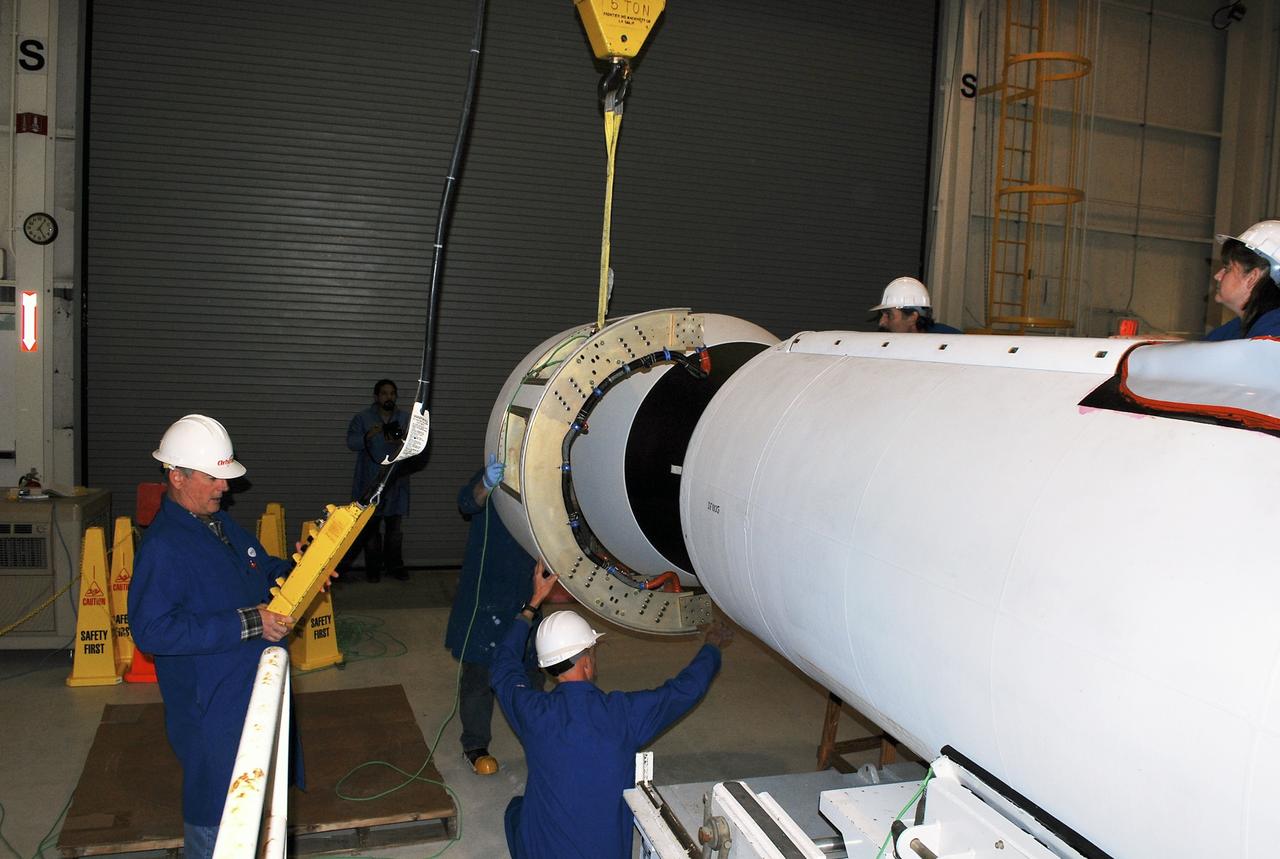
VANDENBERG AIR FORCE BASE, Calif. -- At a Pegasus booster processing facility at Vandenberg Air Force Base in California, using a crane, technicians move a section of the aft skirt toward the Pegasus XL rocket for installation to the rocket’s first stage. The Orbital Sciences Corp. Pegasus rocket will launch the Nuclear Spectroscopic Telescope Array (NuSTAR) into space. After the rocket and spacecraft are processed at Vandenberg, they will be flown on the Orbital Sciences’ L-1011 carrier aircraft to the Ronald Reagan Ballistic Missile Defense Test Site at the Pacific Ocean’s Kwajalein Atoll for launch. The high-energy x-ray telescope will conduct a census for black holes, map radioactive material in young supernovae remnants, and study the origins of cosmic rays and the extreme physics around collapsed stars. For more information, visit science.nasa.gov/missions/nustar/. Photo credit: NASA/Randy Beaudoin, VAFB
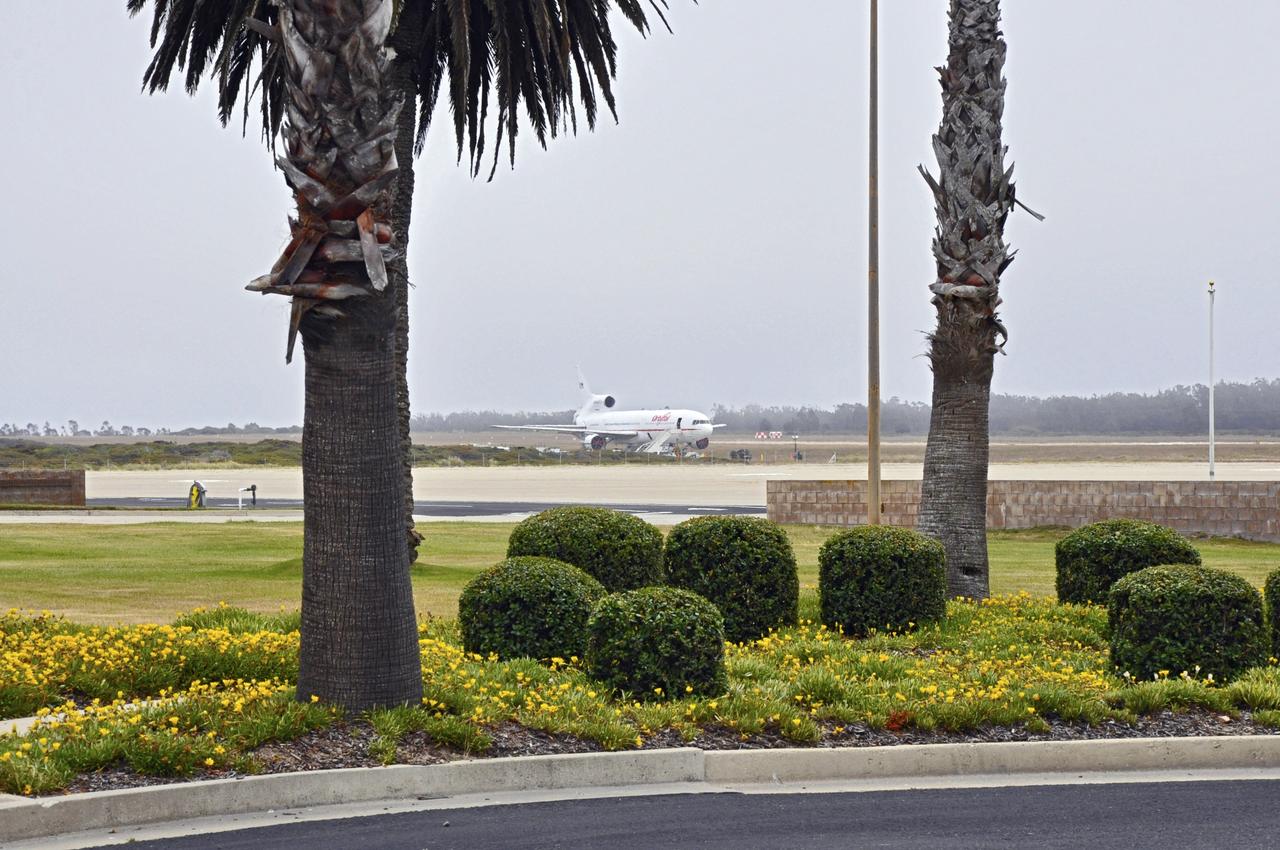
VANDENBERG AFB, Calif. – Technicians connect the Orbital Sciences Pegasus XL rocket with its NuSTAR spacecraft to the L-1011 carrier aircraft known as "Stargazer." The Pegasus will launch NuSTAR into space where the high-energy x-ray telescope will conduct a census for black holes, map radioactive material in young supernovae remnants, and study the origins of cosmic rays and the extreme physics around collapsed stars. Photo credit: NASA/Randy Beaudoin, VAFB
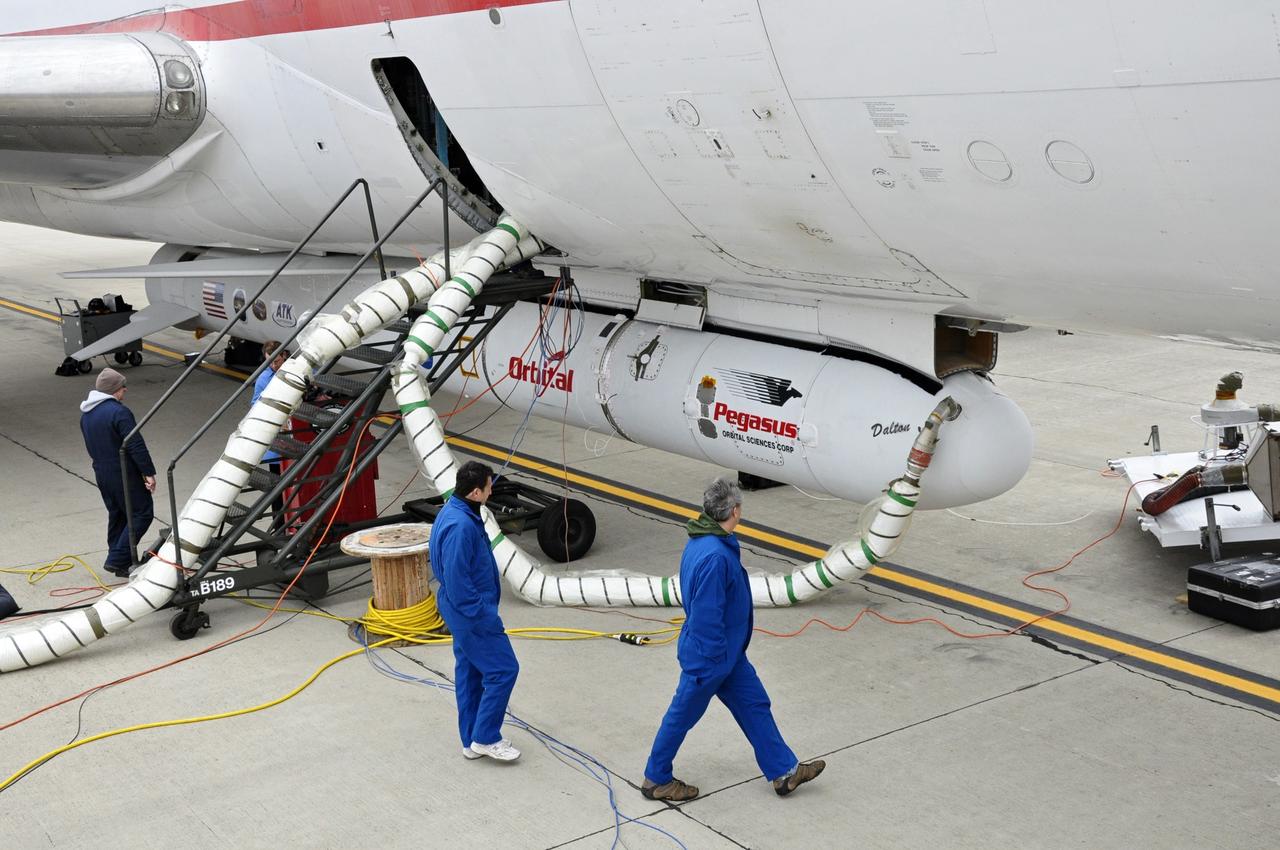
VANDENBERG AFB, Calif. – The Orbital Sciences Pegasus XL rocket with its NuSTAR spacecraft after attachment to the L-1011 carrier aircraft known as "Stargazer." The Pegasus will launch NuSTAR into space where the high-energy x-ray telescope will conduct a census for black holes, map radioactive material in young supernovae remnants, and study the origins of cosmic rays and the extreme physics around collapsed stars. Photo credit: NASA/Randy Beaudoin, VAFB
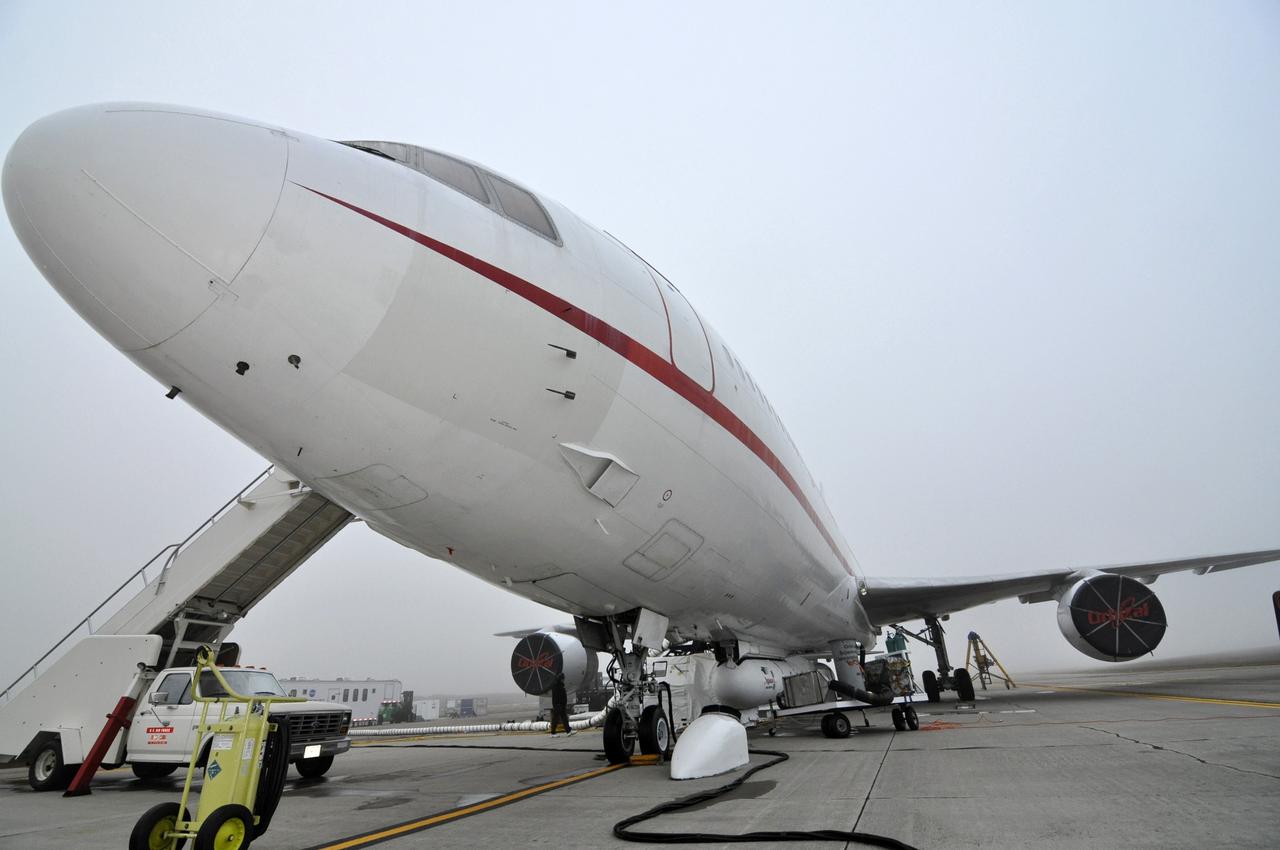
VANDENBERG AFB, Calif. – The Orbital Sciences Pegasus XL rocket with its NuSTAR spacecraft after attachment to the L-1011 carrier aircraft known as "Stargazer." The Pegasus will launch NuSTAR into space where the high-energy x-ray telescope will conduct a census for black holes, map radioactive material in young supernovae remnants, and study the origins of cosmic rays and the extreme physics around collapsed stars. Photo credit: NASA/Randy Beaudoin, VAFB
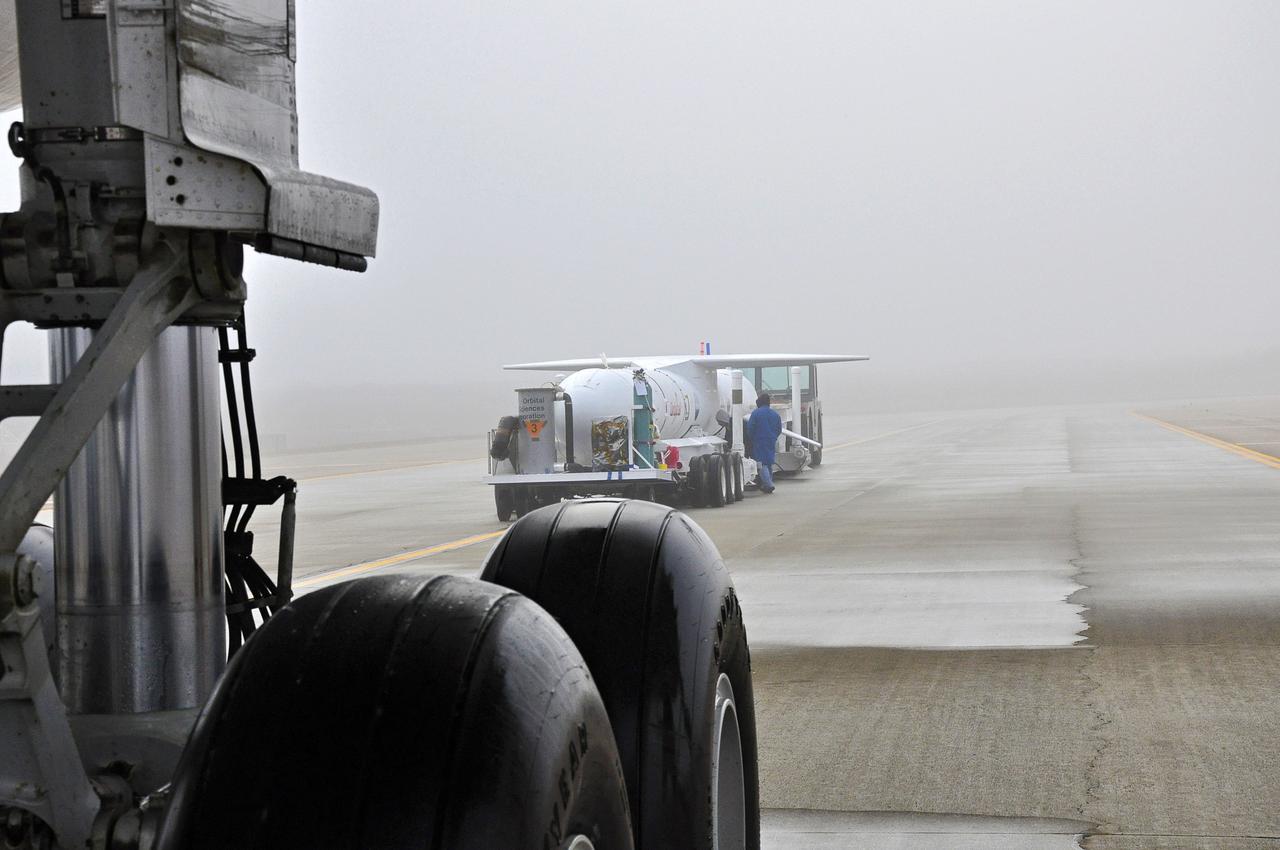
VANDENBERG AFB, Calif. – Technicians roll the Orbital Sciences Pegasus XL rocket with its NuSTAR spacecraft to the waiting L-1011 carrier aircraft known as "Stargazer." The Pegasus will launch NuSTAR into space where the high-energy x-ray telescope will conduct a census for black holes, map radioactive material in young supernovae remnants, and study the origins of cosmic rays and the extreme physics around collapsed stars. Photo credit: NASA/Randy Beaudoin, VAFB
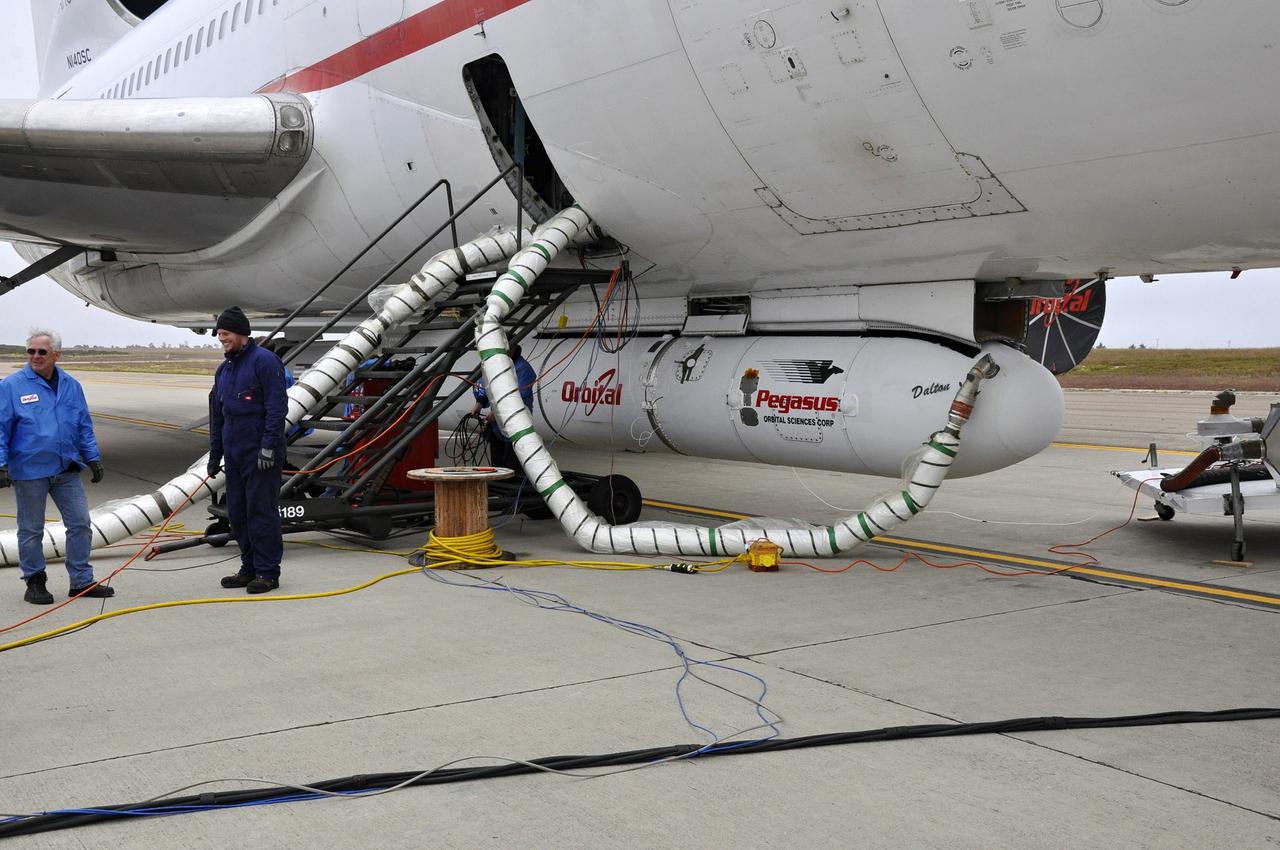
VANDENBERG AFB, Calif. – Technicians connect the Orbital Sciences Pegasus XL rocket with its NuSTAR spacecraft to the L-1011 carrier aircraft known as "Stargazer." The Pegasus will launch NuSTAR into space where the high-energy x-ray telescope will conduct a census for black holes, map radioactive material in young supernovae remnants, and study the origins of cosmic rays and the extreme physics around collapsed stars. Photo credit: NASA/Randy Beaudoin, VAFB
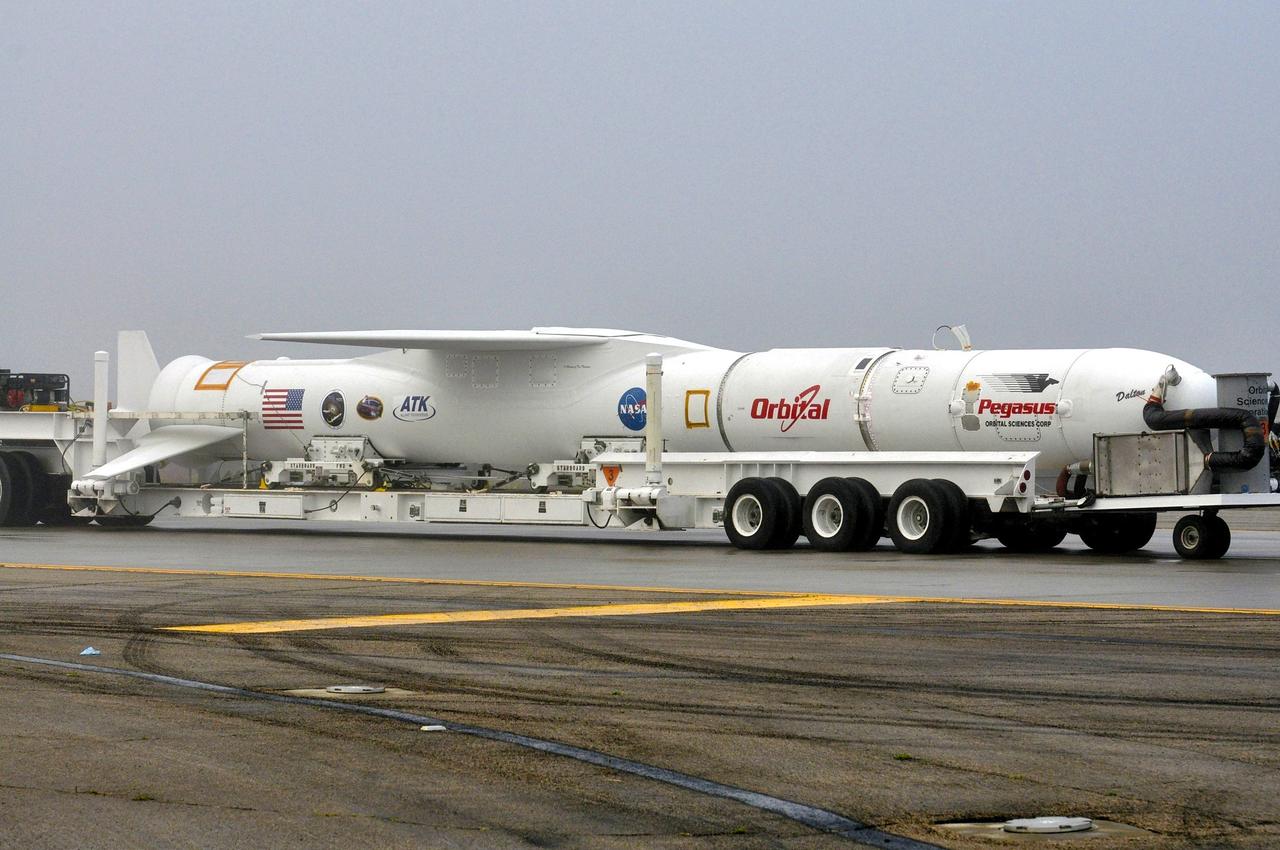
VANDENBERG AFB, Calif. – Technicians roll the Orbital Sciences Pegasus XL rocket with its NuSTAR spacecraft to the waiting L-1011 carrier aircraft known as "Stargazer." The Pegasus will launch NuSTAR into space where the high-energy x-ray telescope will conduct a census for black holes, map radioactive material in young supernovae remnants, and study the origins of cosmic rays and the extreme physics around collapsed stars. Photo credit: NASA/Randy Beaudoin, VAFB
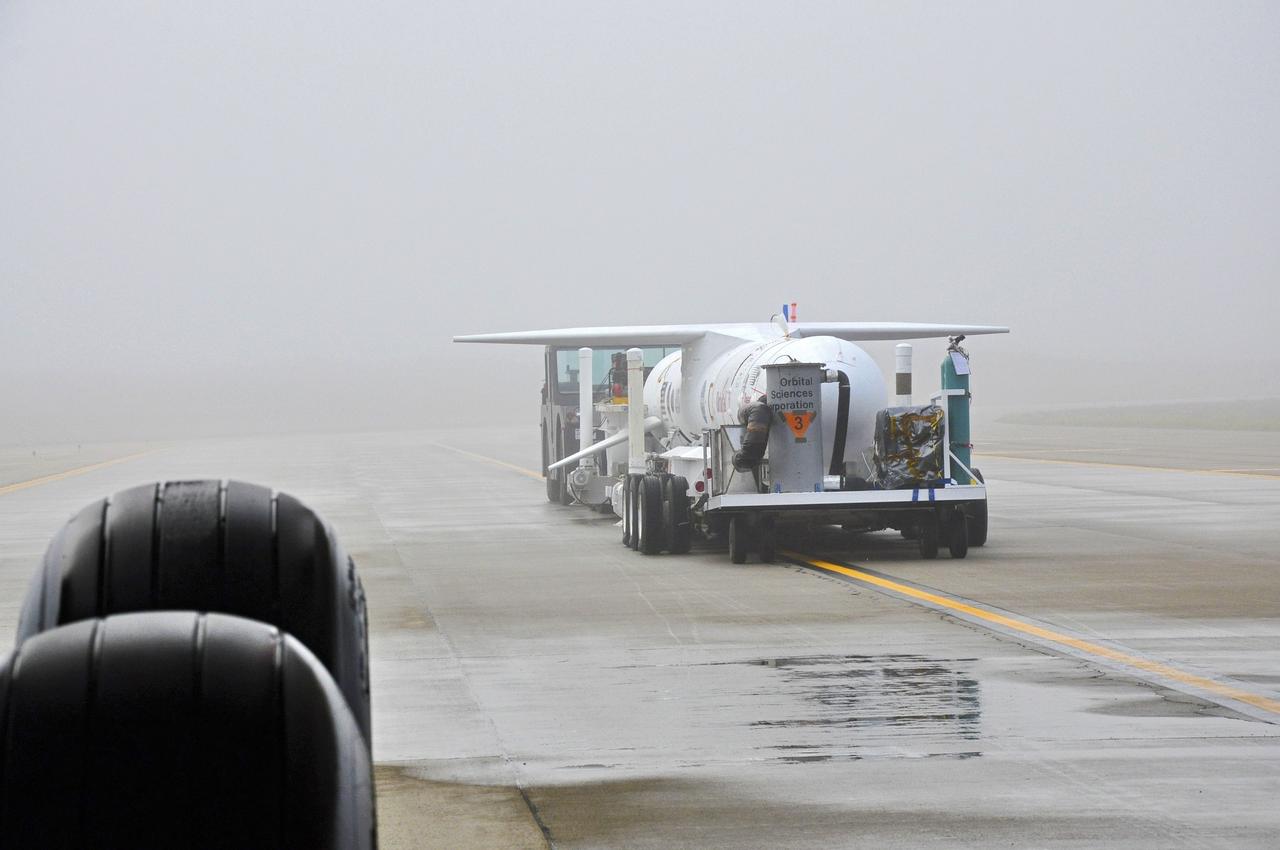
VANDENBERG AFB, Calif. – Technicians roll the Orbital Sciences Pegasus XL rocket with its NuSTAR spacecraft to the waiting L-1011 carrier aircraft known as "Stargazer." The Pegasus will launch NuSTAR into space where the high-energy x-ray telescope will conduct a census for black holes, map radioactive material in young supernovae remnants, and study the origins of cosmic rays and the extreme physics around collapsed stars. Photo credit: NASA/Randy Beaudoin, VAFB
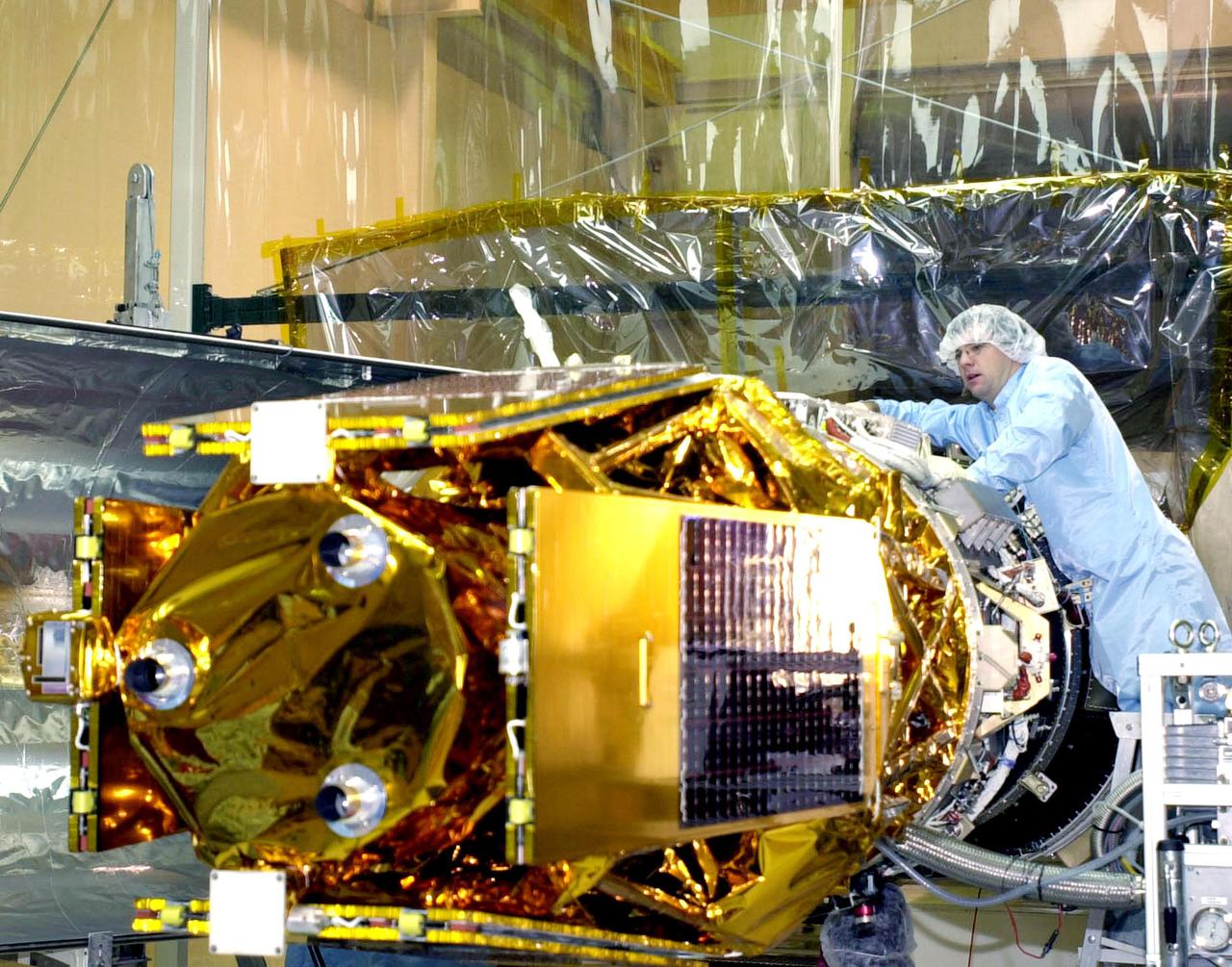
VANDENBERG AFB, CALIF. - A worker prepares the High Energy Solar Spectroscopic Imager (HESSI) for encapsulation atop the Pegasus XL rocket before its transport to Florida. The Pegasus is the vehicle that will launch HESSI on its primary mission to explore the basic physics of particle acceleration and energy release in solar flares. The launch of PegasusXL_HESSI is scheduled for Feb. 5, 2002, from beneath an Orbital Sciences Corp. L-1011 aircraft over the Atlantic Ocean
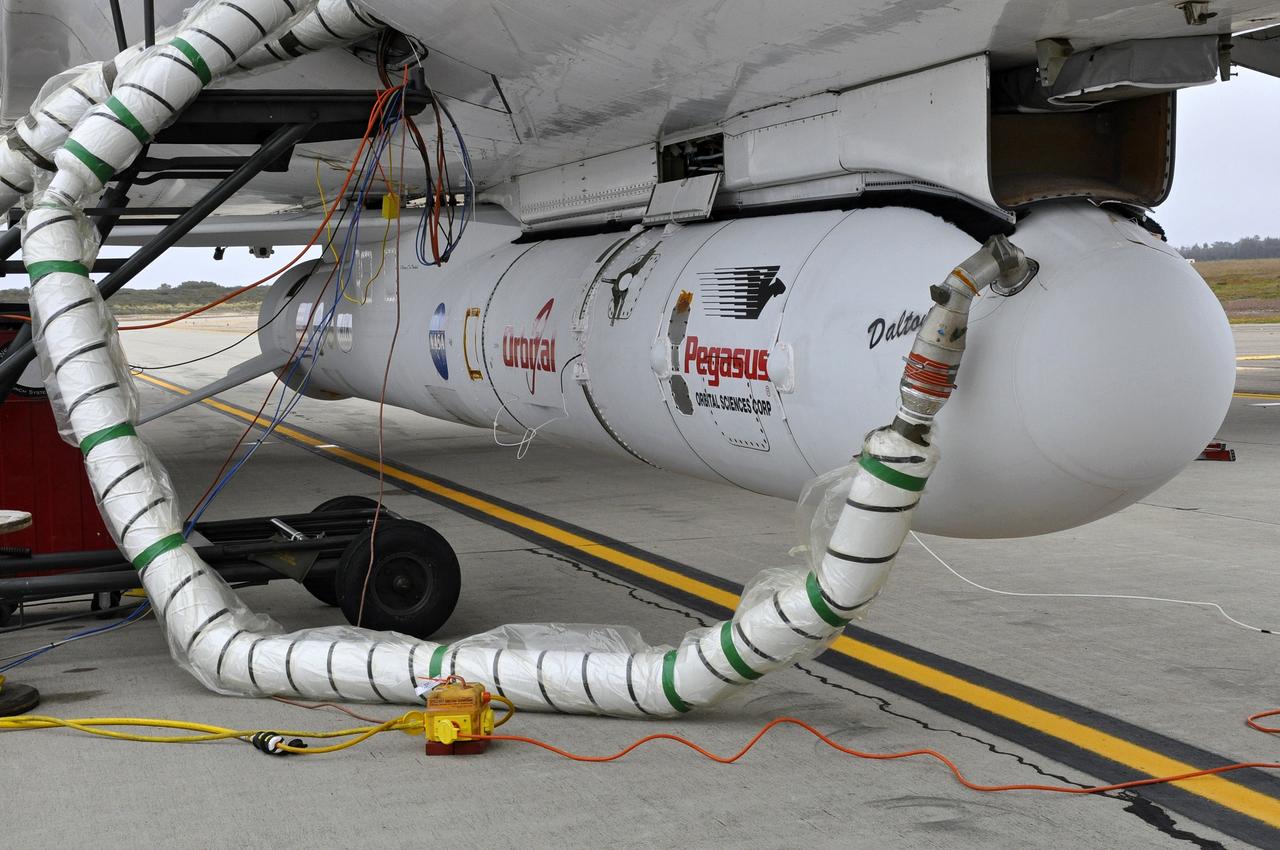
VANDENBERG AFB, Calif. – The Orbital Sciences Pegasus XL rocket with its NuSTAR spacecraft after attachment to the L-1011 carrier aircraft known as "Stargazer." The Pegasus will launch NuSTAR into space where the high-energy x-ray telescope will conduct a census for black holes, map radioactive material in young supernovae remnants, and study the origins of cosmic rays and the extreme physics around collapsed stars. Photo credit: NASA/Randy Beaudoin, VAFB

VANDENBERG AIR FORCE BASE, CALIF. - Inside Orbital Sciences Building 1555 at Vandenberg Air Force Base in California, a worker underneath the tail of the Pegasus XL rocket completes installation of the fin. The Pegasus will launch the Space Technology 5 spacecraft later this month. ST5 contains three micro-satellites that will be positioned in a "string of pearls" constellation to perform simultaneous multi-point measurements of the Earth's magnetic field using highly sensitive magnetometers. The scheduled launch date is Feb. 28.
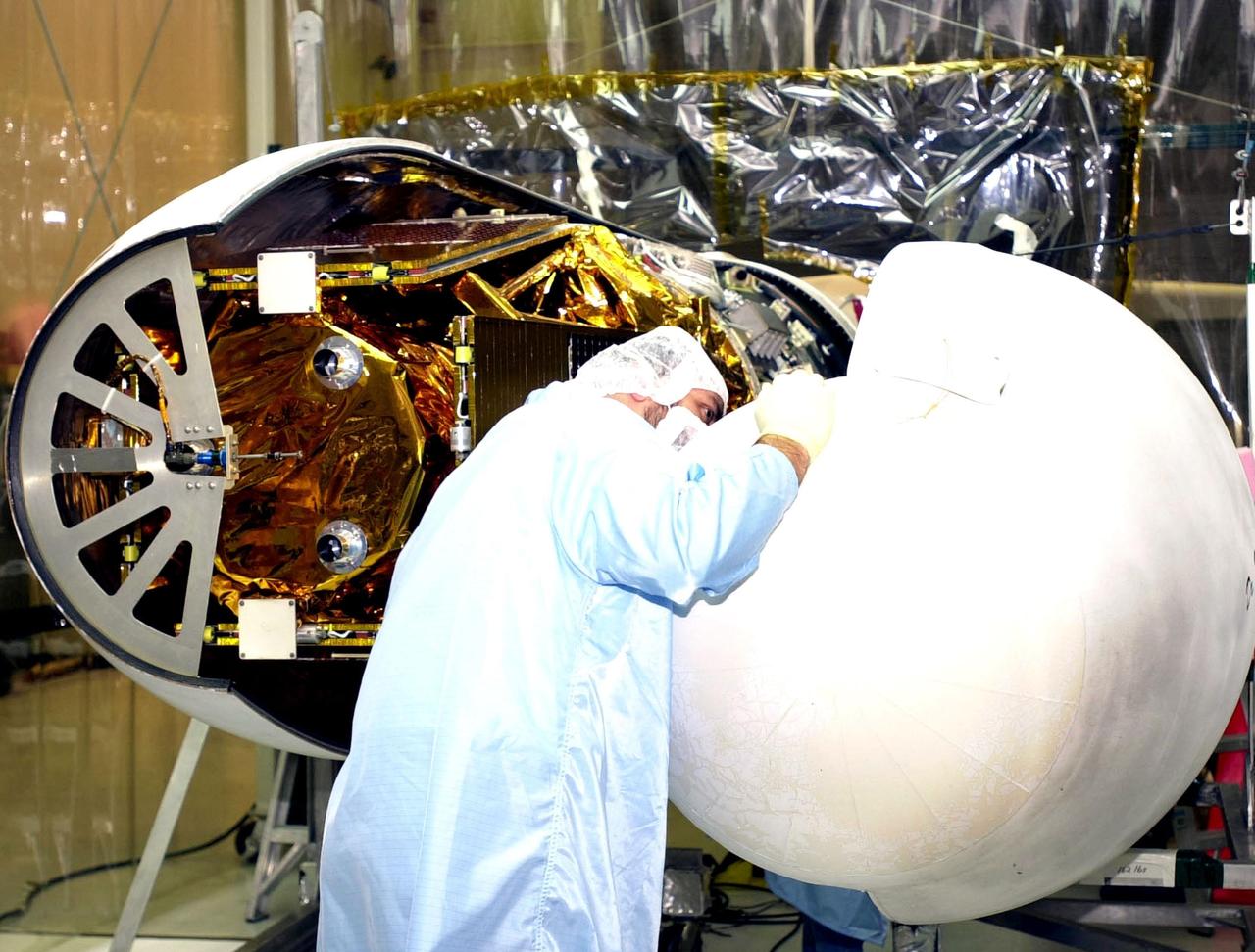
VANDENBERG AFB, CALIF. -- A worker helps guide the second half of the encapsulation around the High Energy Solar Spectroscopic Imager (HESSI) atop the Pegasus XL rocket before its transport to Florida. The Pegasus is the vehicle that will launch HESSI on its primary mission to explore the basic physics of particle acceleration and energy release in solar flares. The launch of PegasusXL/HESSI is scheduled for Feb. 5, 2002, from beneath an Orbital Sciences Corp. L-1011 aircraft over the Atlantic Ocean
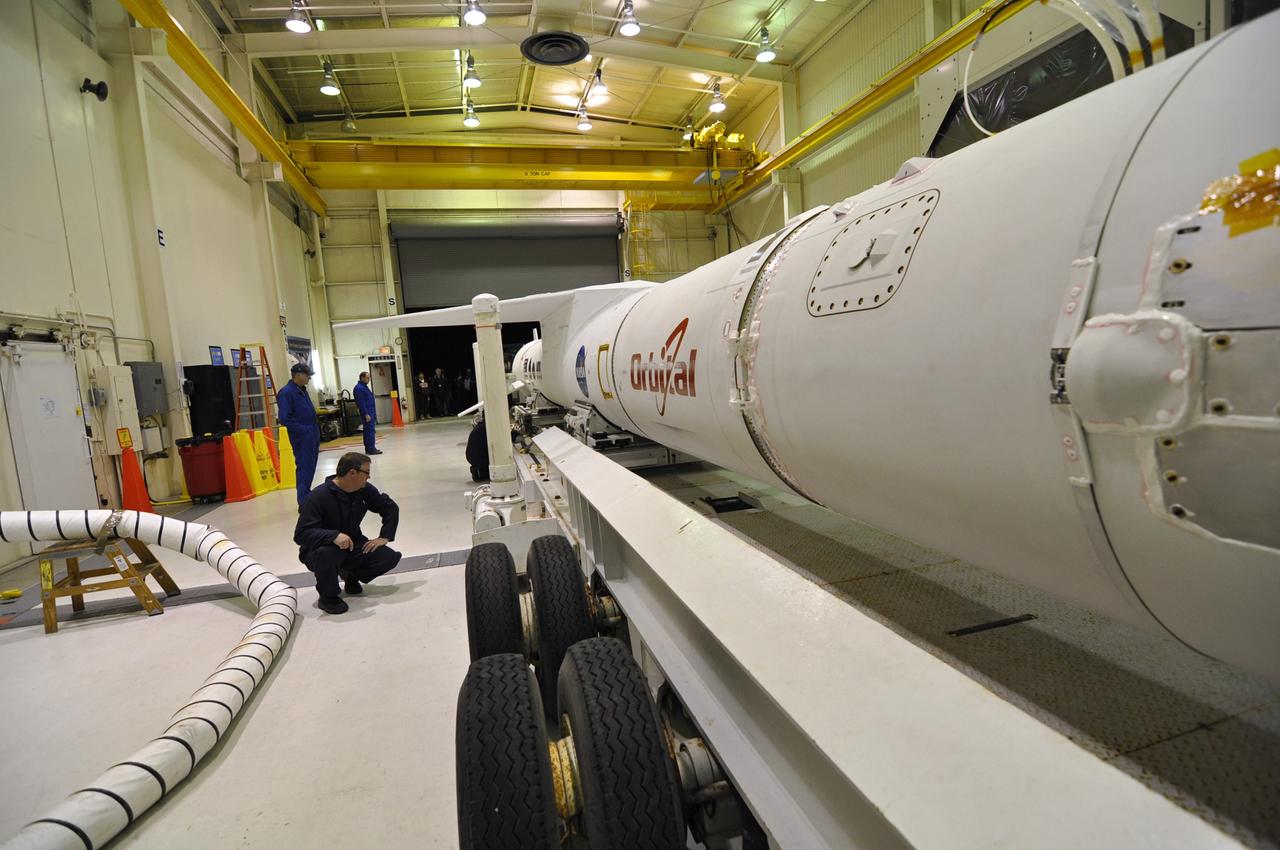
VANDENBERG AFB, Calif. – Technicians prepare to roll the Orbital Sciences Pegasus XL rocket with its NuSTAR spacecraft to the waiting L-1011 carrier aircraft known as "Stargazer." The Pegasus will launch NuSTAR into space where the high-energy x-ray telescope will conduct a census for black holes, map radioactive material in young supernovae remnants, and study the origins of cosmic rays and the extreme physics around collapsed stars. Photo credit: NASA/Randy Beaudoin, VAFB
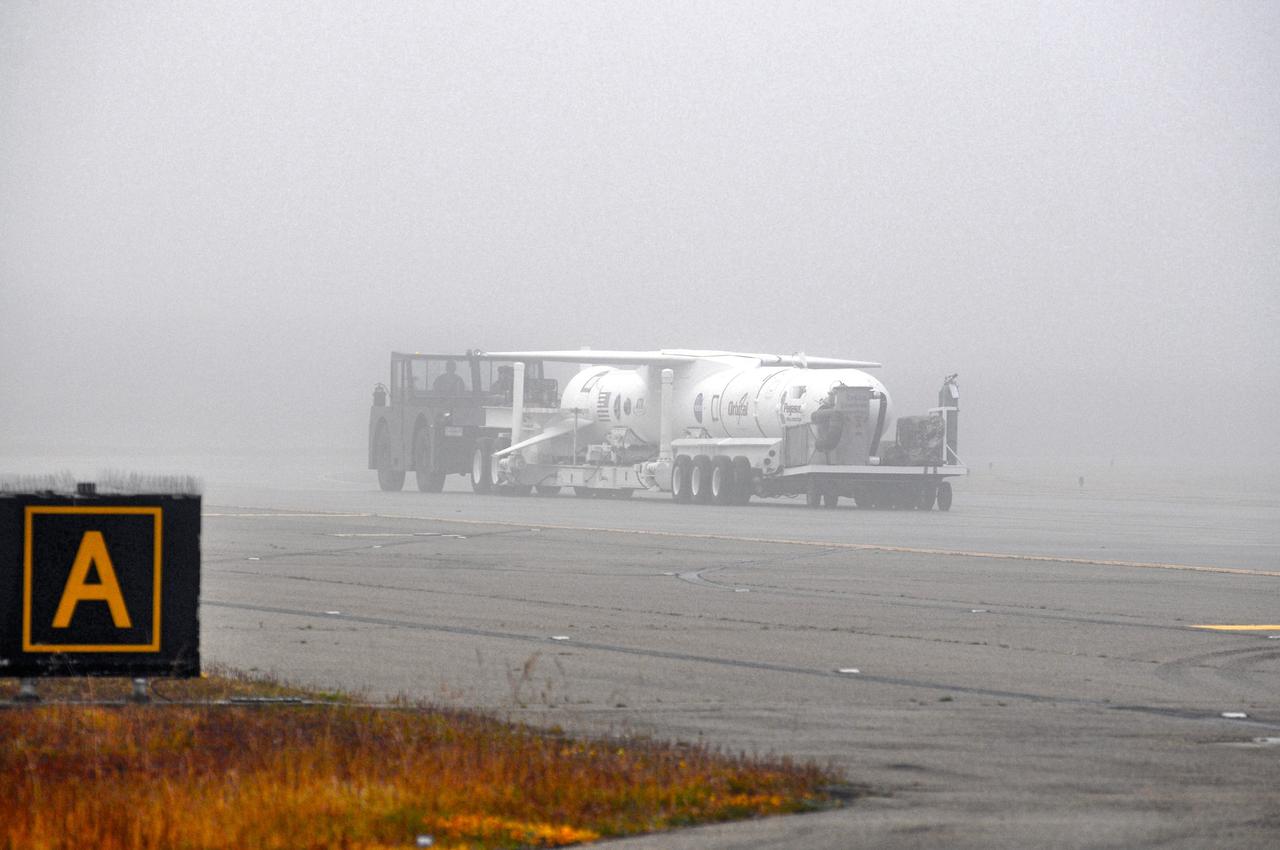
VANDENBERG AFB, Calif. – Technicians roll the Orbital Sciences Pegasus XL rocket with its NuSTAR spacecraft to the waiting L-1011 carrier aircraft known as "Stargazer." The Pegasus will launch NuSTAR into space where the high-energy x-ray telescope will conduct a census for black holes, map radioactive material in young supernovae remnants, and study the origins of cosmic rays and the extreme physics around collapsed stars. Photo credit: NASA/Randy Beaudoin, VAFB
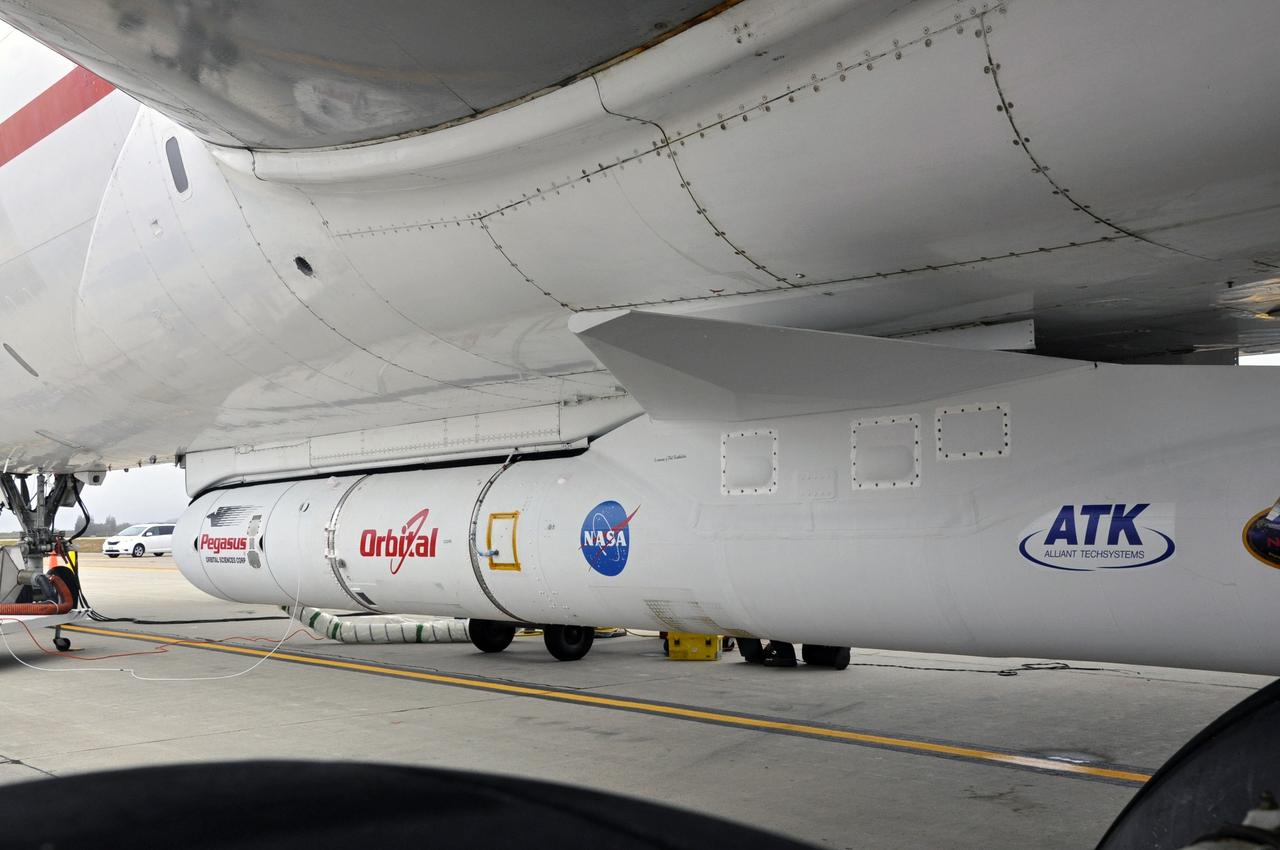
VANDENBERG AFB, Calif. – The Orbital Sciences Pegasus XL rocket with its NuSTAR spacecraft after attachment to the L-1011 carrier aircraft known as "Stargazer." The Pegasus will launch NuSTAR into space where the high-energy x-ray telescope will conduct a census for black holes, map radioactive material in young supernovae remnants, and study the origins of cosmic rays and the extreme physics around collapsed stars. Photo credit: NASA/Randy Beaudoin, VAFB
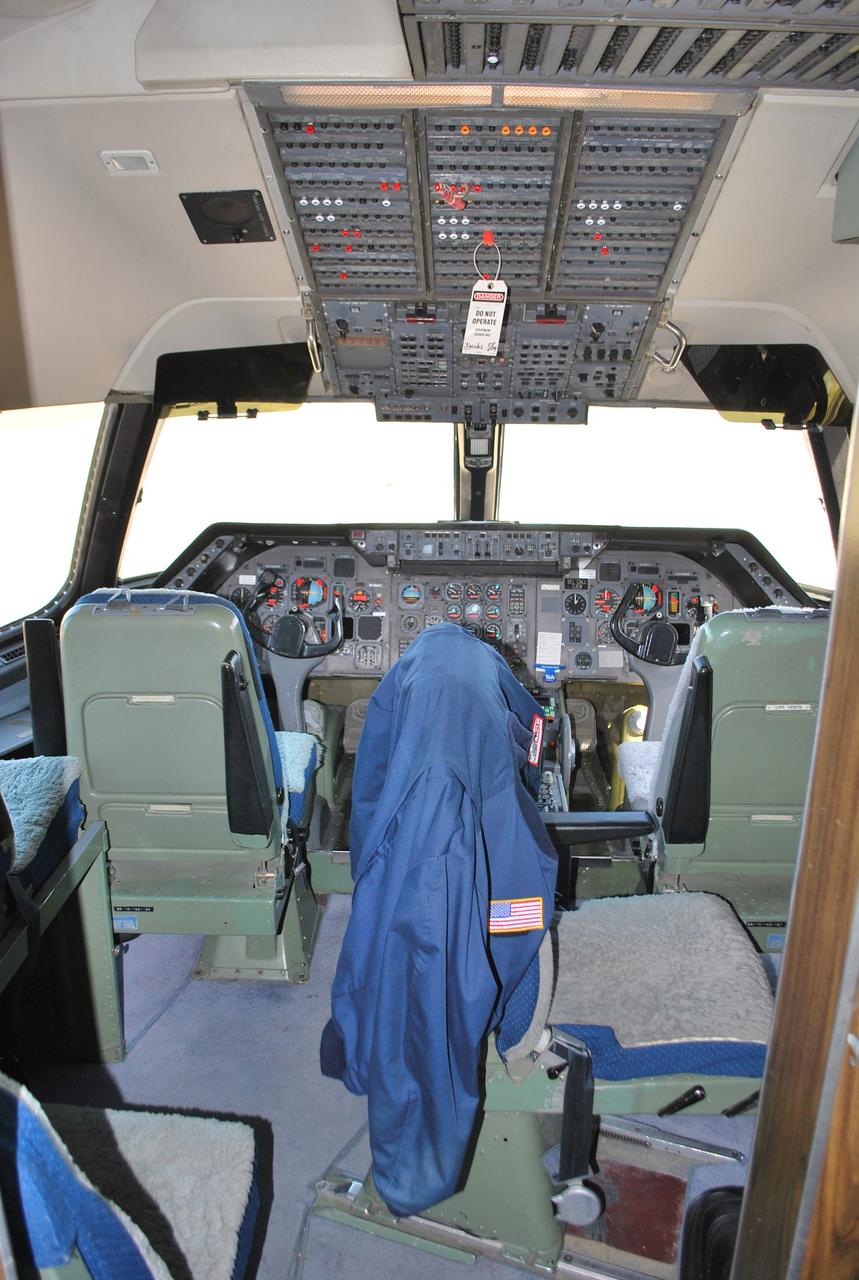
VANDENBERG AIR FORCE BASE, Calif. -- The cockpit and flight instrumentation of the Orbital Sciences' L-1011 carrier aircraft is readied for the launch of the Pegasus XL rocket. The Pegasus will launch NuSTAR into space where the high-energy x-ray telescope will conduct a census for black holes, map radioactive material in young supernovae remnants, and study the origins of cosmic rays and the extreme physics around collapsed stars. For more information, visit science.nasa.gov/missions/nustar/. Photo credit: NASA/Randy Beaudoin, VAFB
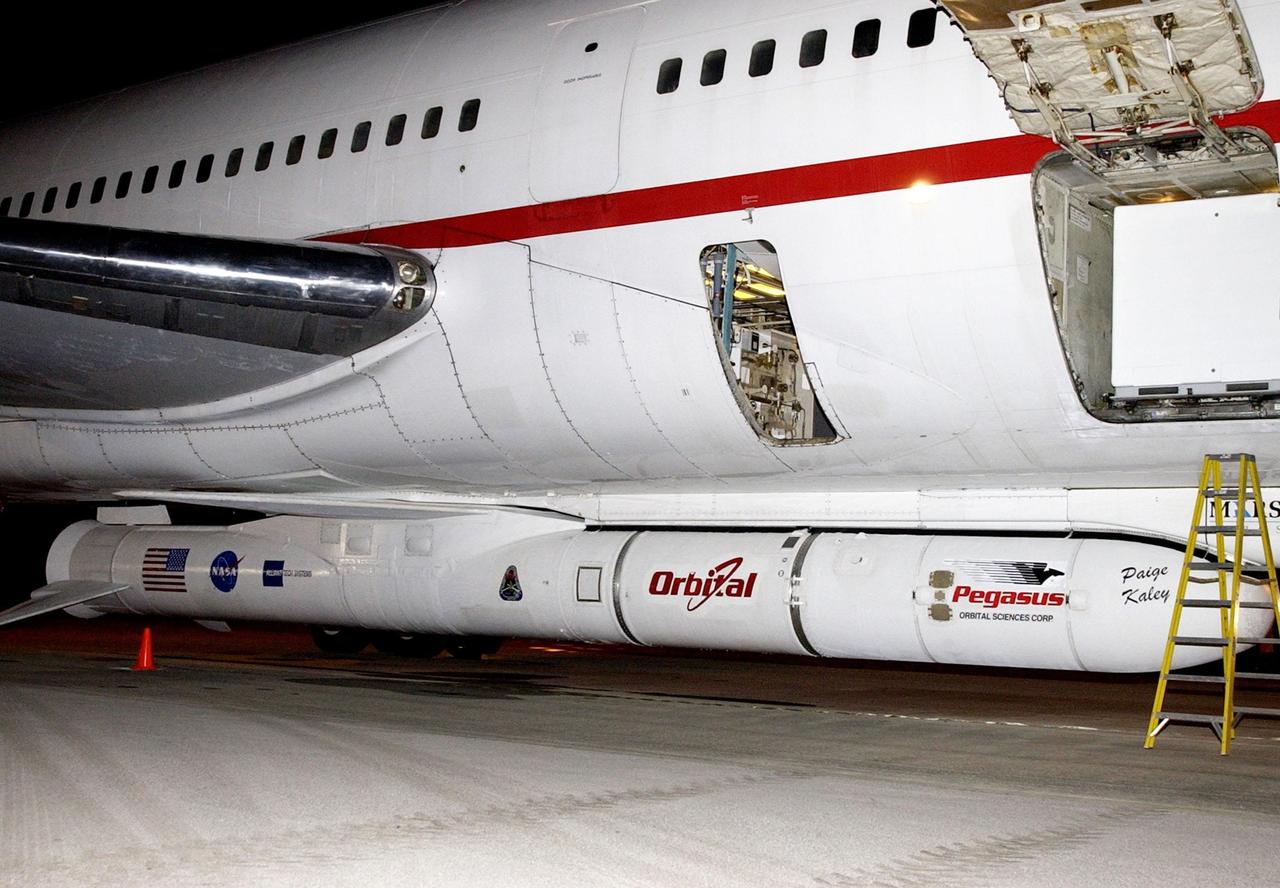
KENNEDY SPACE CENTER, FLA. -- This closeup shows the Pegasus XL rocket with the High Energy Solar Spectroscopic Imager (HESSI) attached at its top, on the right. The Pegasus will launch HESSI to explore the basic physics of particle acceleration and energy release in solar flares. The launch is scheduled for Feb. 5, 2002, from beneath the Orbital Sciences Corp. L-1011 aircraft seen here
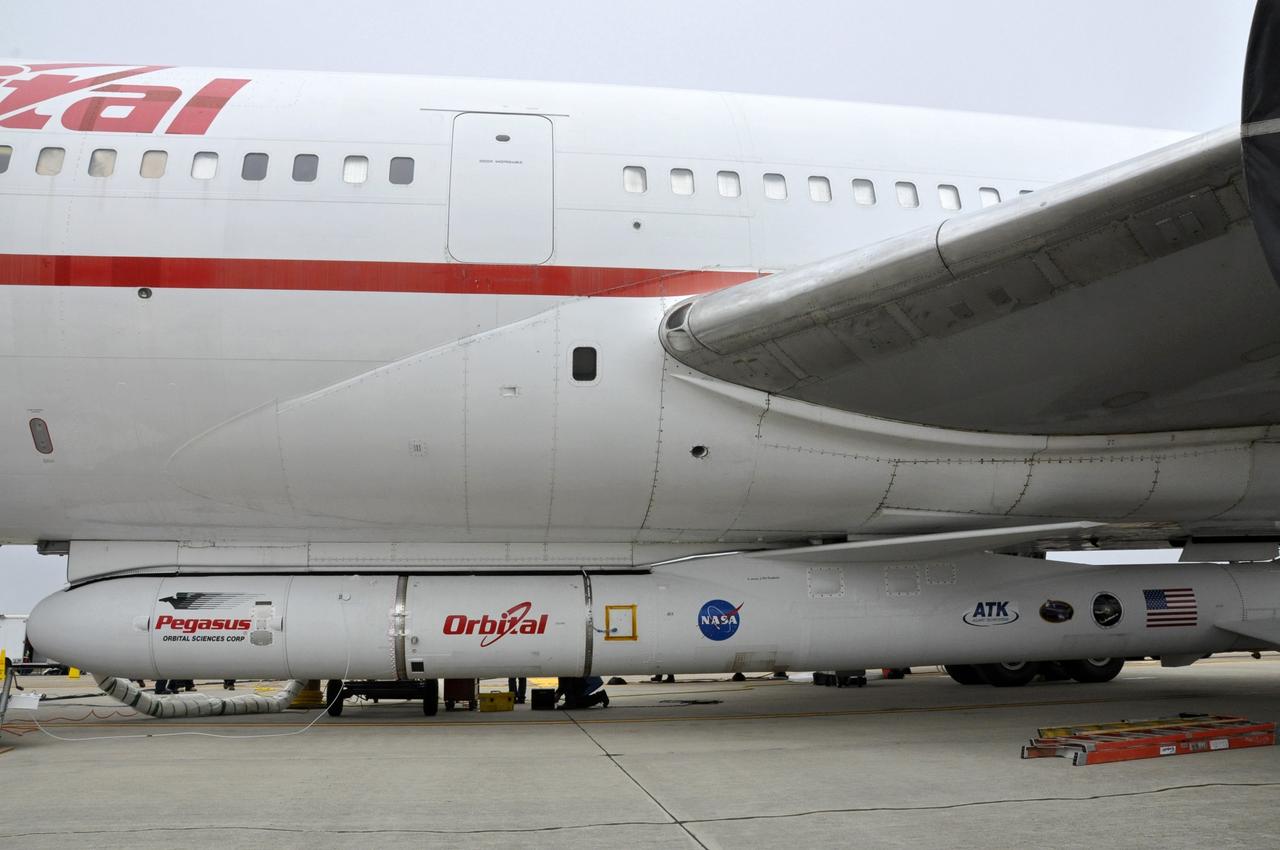
VANDENBERG AFB, Calif. – The Orbital Sciences Pegasus XL rocket with its NuSTAR spacecraft after attachment to the L-1011 carrier aircraft known as "Stargazer." The Pegasus will launch NuSTAR into space where the high-energy x-ray telescope will conduct a census for black holes, map radioactive material in young supernovae remnants, and study the origins of cosmic rays and the extreme physics around collapsed stars. Photo credit: NASA/Randy Beaudoin, VAFB
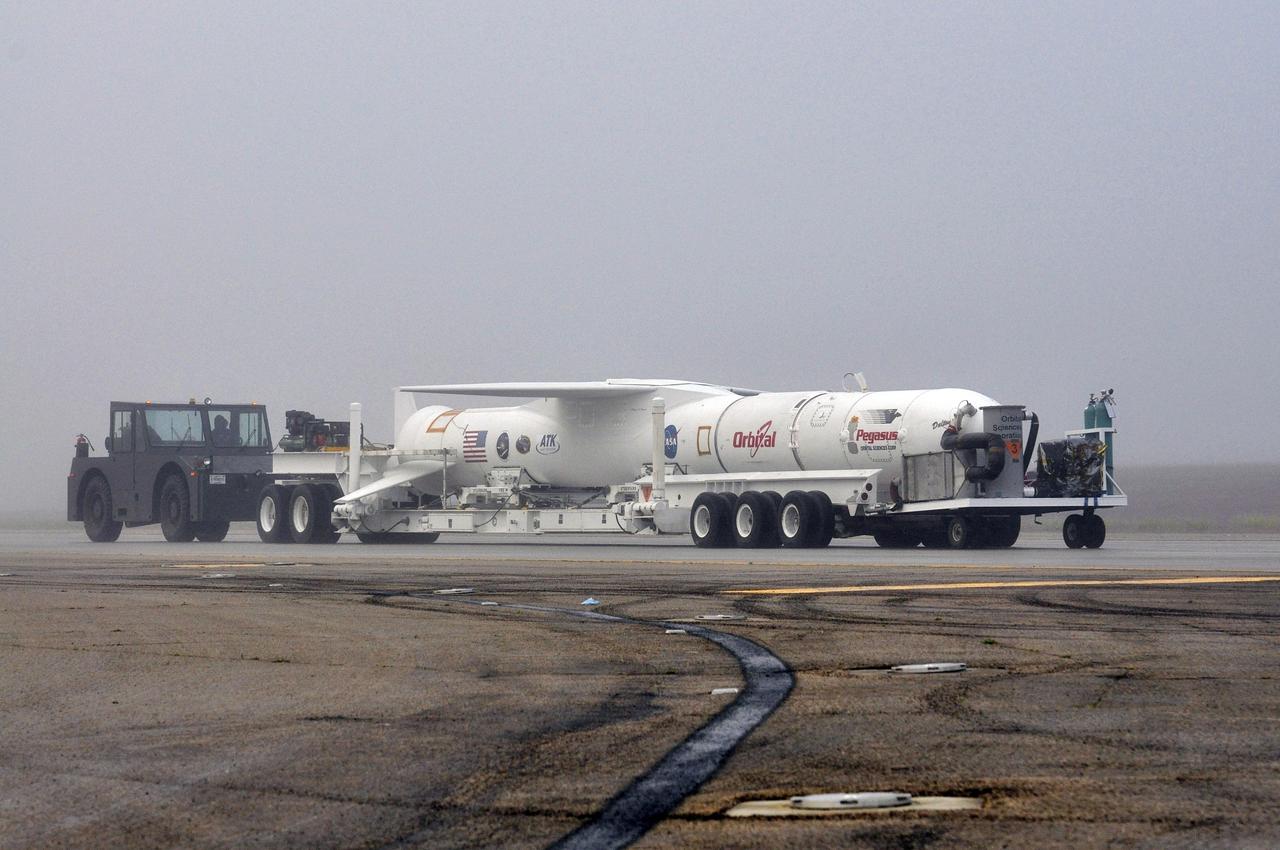
VANDENBERG AFB, Calif. – Technicians roll the Orbital Sciences Pegasus XL rocket with its NuSTAR spacecraft to the waiting L-1011 carrier aircraft known as "Stargazer." The Pegasus will launch NuSTAR into space where the high-energy x-ray telescope will conduct a census for black holes, map radioactive material in young supernovae remnants, and study the origins of cosmic rays and the extreme physics around collapsed stars. Photo credit: NASA/Randy Beaudoin, VAFB
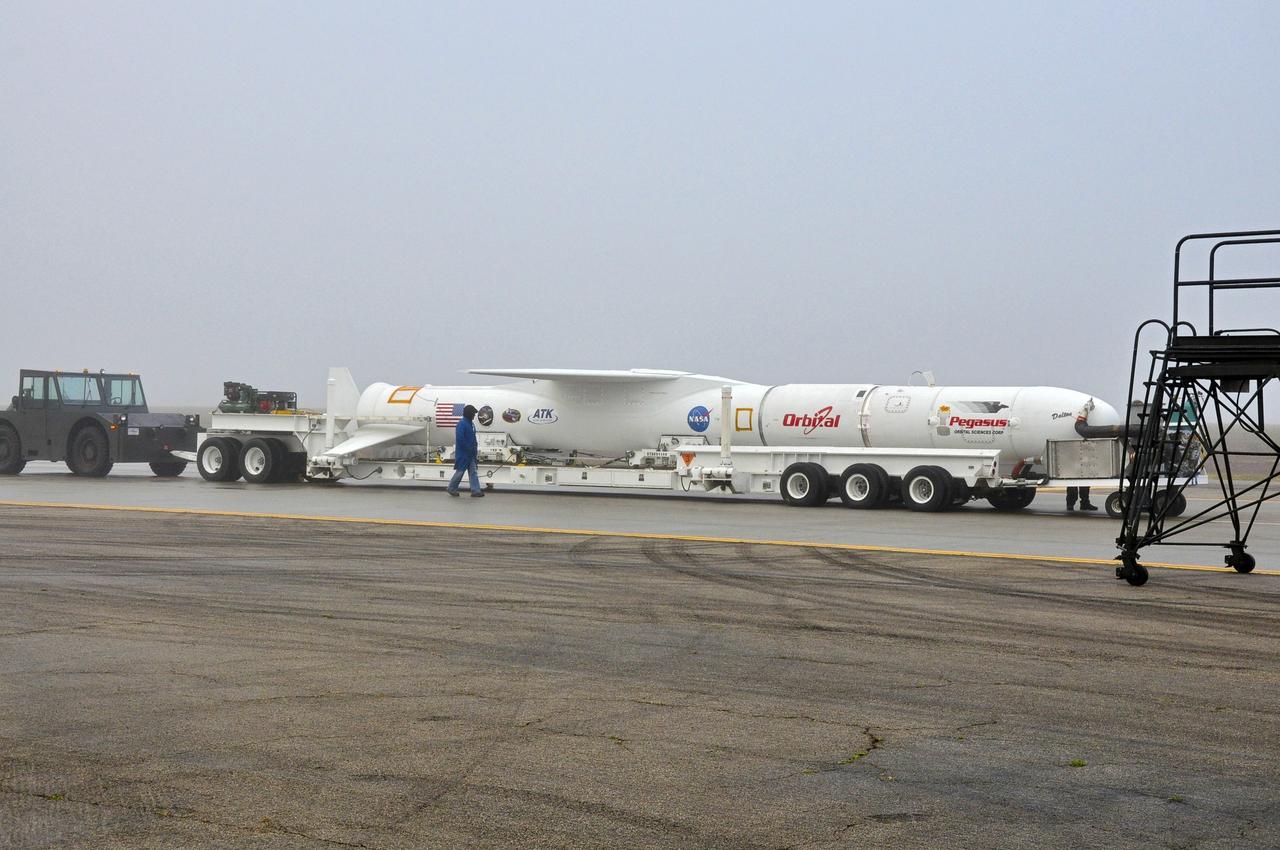
VANDENBERG AFB, Calif. – Technicians roll the Orbital Sciences Pegasus XL rocket with its NuSTAR spacecraft to the waiting L-1011 carrier aircraft known as "Stargazer." The Pegasus will launch NuSTAR into space where the high-energy x-ray telescope will conduct a census for black holes, map radioactive material in young supernovae remnants, and study the origins of cosmic rays and the extreme physics around collapsed stars. Photo credit: NASA/Randy Beaudoin, VAFB
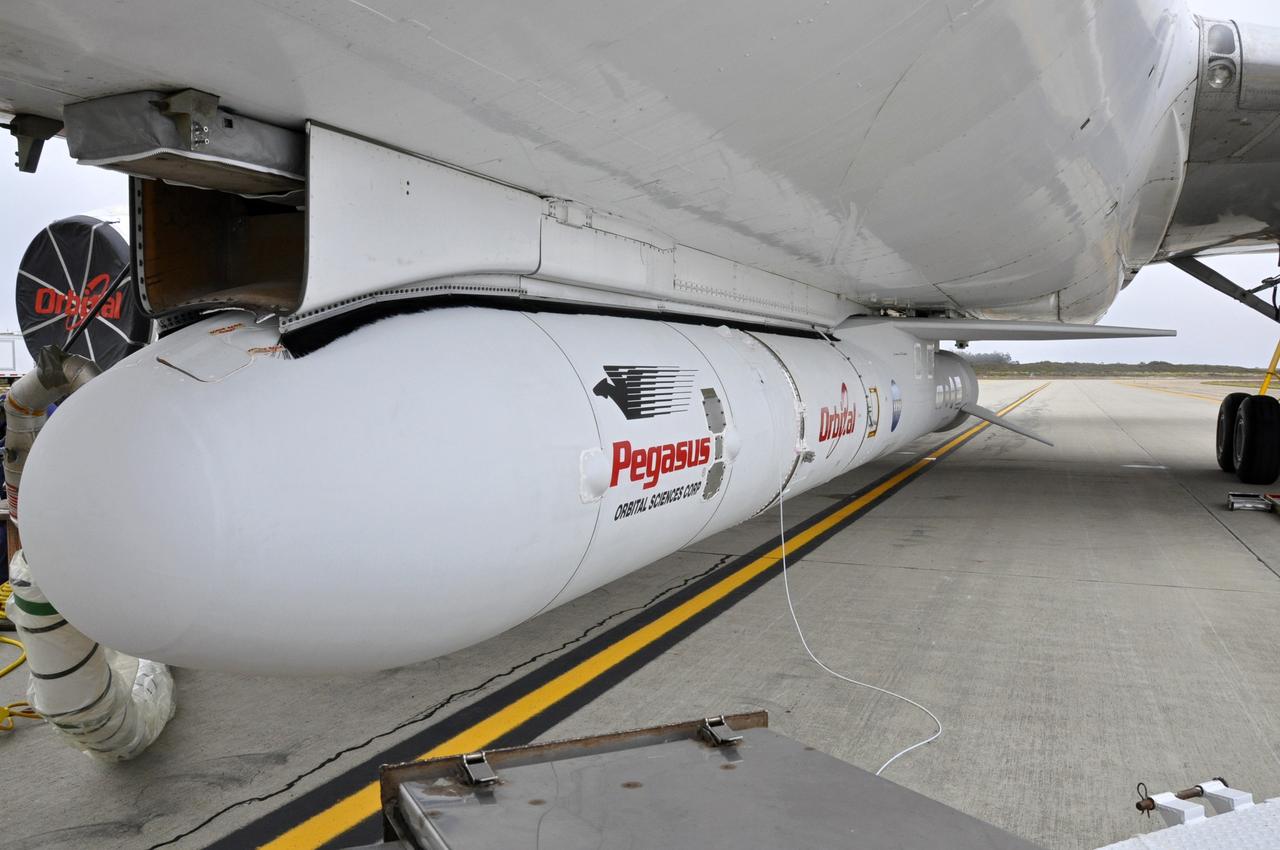
VANDENBERG AFB, Calif. – The Orbital Sciences Pegasus XL rocket with its NuSTAR spacecraft after attachment to the L-1011 carrier aircraft known as "Stargazer." The Pegasus will launch NuSTAR into space where the high-energy x-ray telescope will conduct a census for black holes, map radioactive material in young supernovae remnants, and study the origins of cosmic rays and the extreme physics around collapsed stars. Photo credit: NASA/Randy Beaudoin, VAFB
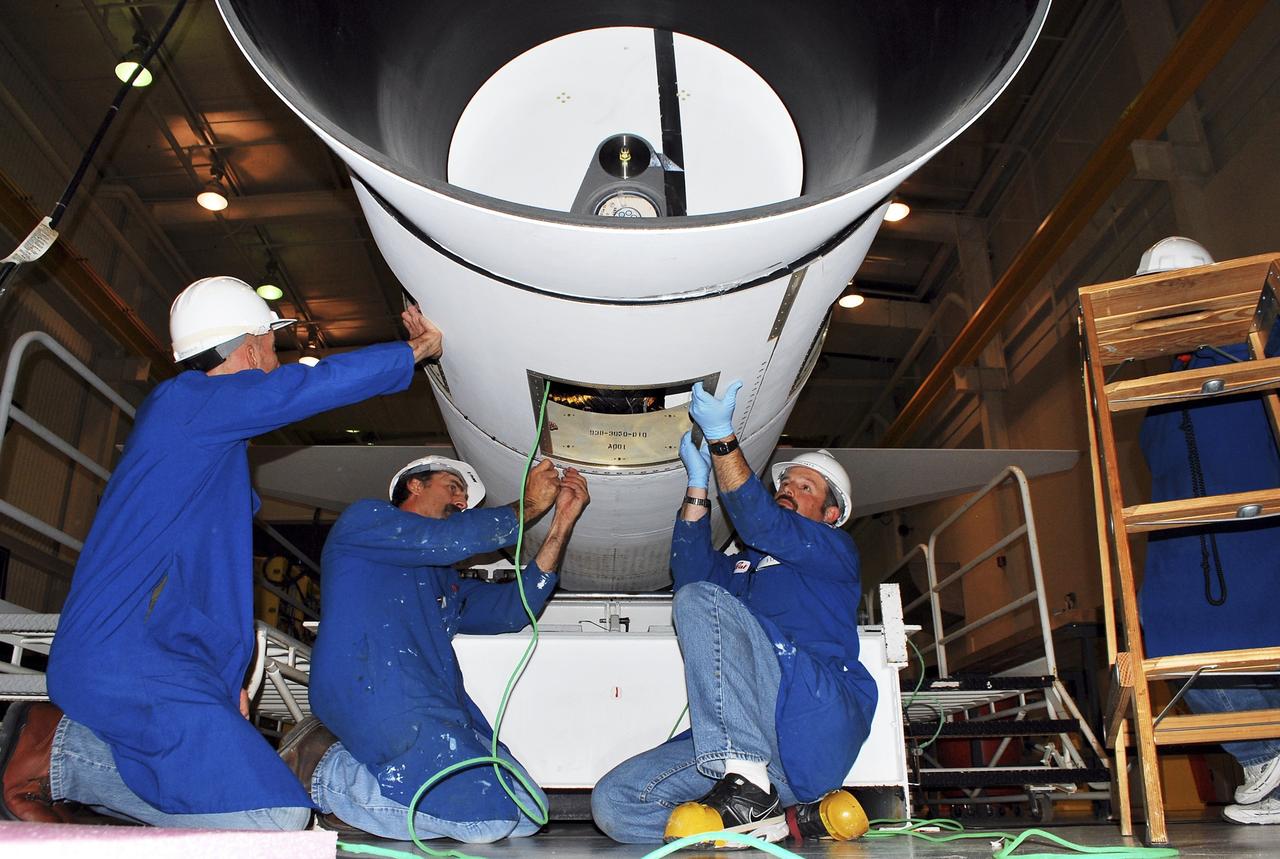
VANDENBERG AIR FORCE BASE, Calif. -- At a Pegasus booster processing facility at Vandenberg Air Force Base in California, technicians complete the final installation of the aft skirt on the first stage of the Pegasus XL rocket. The Orbital Sciences Corp. Pegasus rocket will launch the Nuclear Spectroscopic Telescope Array (NuSTAR) into space. After the rocket and spacecraft are processed at Vandenberg, they will be flown on the Orbital Sciences’ L-1011 carrier aircraft to the Ronald Reagan Ballistic Missile Defense Test Site at the Pacific Ocean’s Kwajalein Atoll for launch. The high-energy x-ray telescope will conduct a census for black holes, map radioactive material in young supernovae remnants, and study the origins of cosmic rays and the extreme physics around collapsed stars. For more information, visit science.nasa.gov/missions/nustar/. Photo credit: NASA/Randy Beaudoin, VAFB
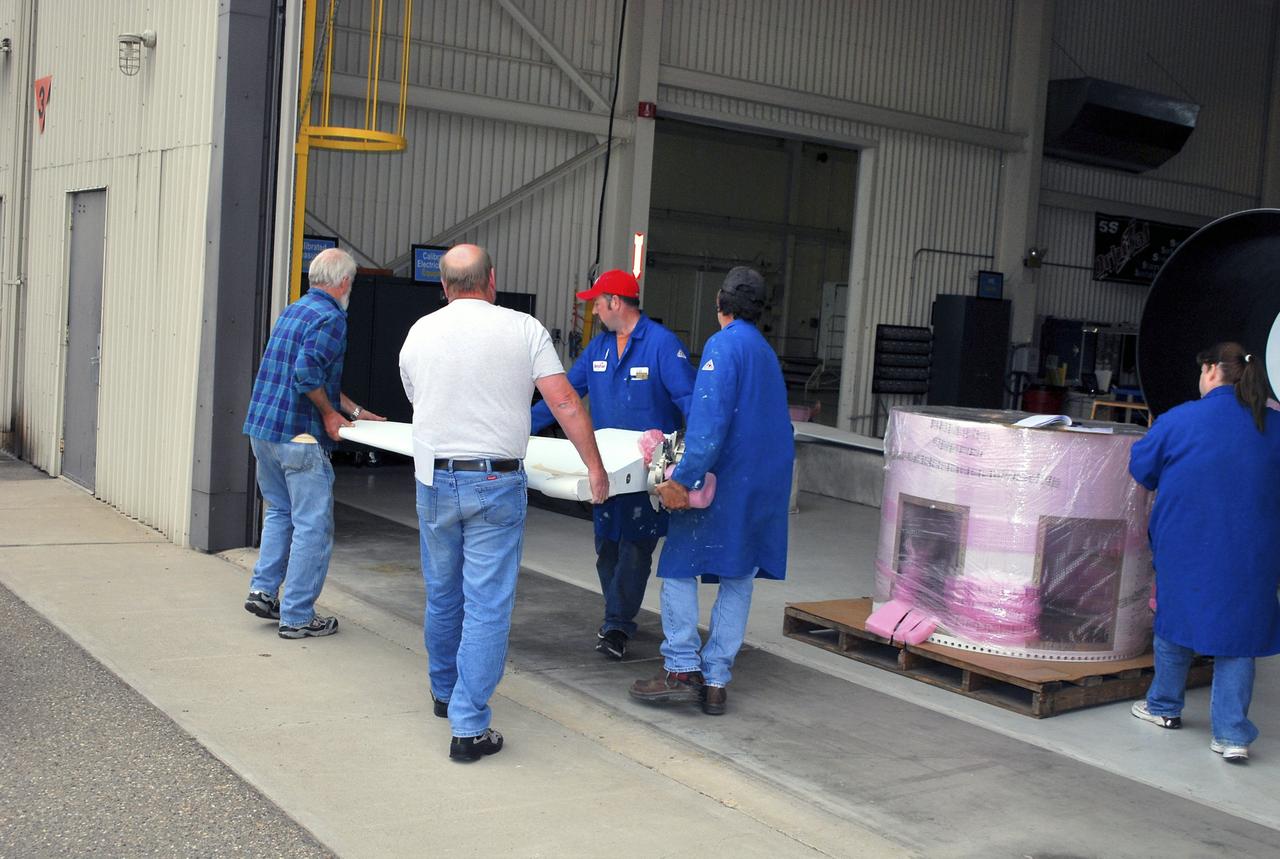
VANDENBERG AIR FORCE BASE, Calif. -- At a Pegasus booster processing facility at Vandenberg Air Force Base in California, technicians unload one of the fins for the Pegasus XL rocket after its arrival. To the right is the aft skirt. The Orbital Sciences Corp. Pegasus rocket will launch the Nuclear Spectroscopic Telescope Array (NuSTAR) into space. After the rocket and spacecraft are processed at Vandenberg, they will be flown on the Orbital Sciences’ L-1011 carrier aircraft to the Ronald Reagan Ballistic Missile Defense Test Site at the Pacific Ocean’s Kwajalein Atoll for launch. The high-energy x-ray telescope will conduct a census for black holes, map radioactive material in young supernovae remnants, and study the origins of cosmic rays and the extreme physics around collapsed stars. For more information, visit science.nasa.gov/missions/nustar/. Photo credit: NASA/Randy Beaudoin, VAFB
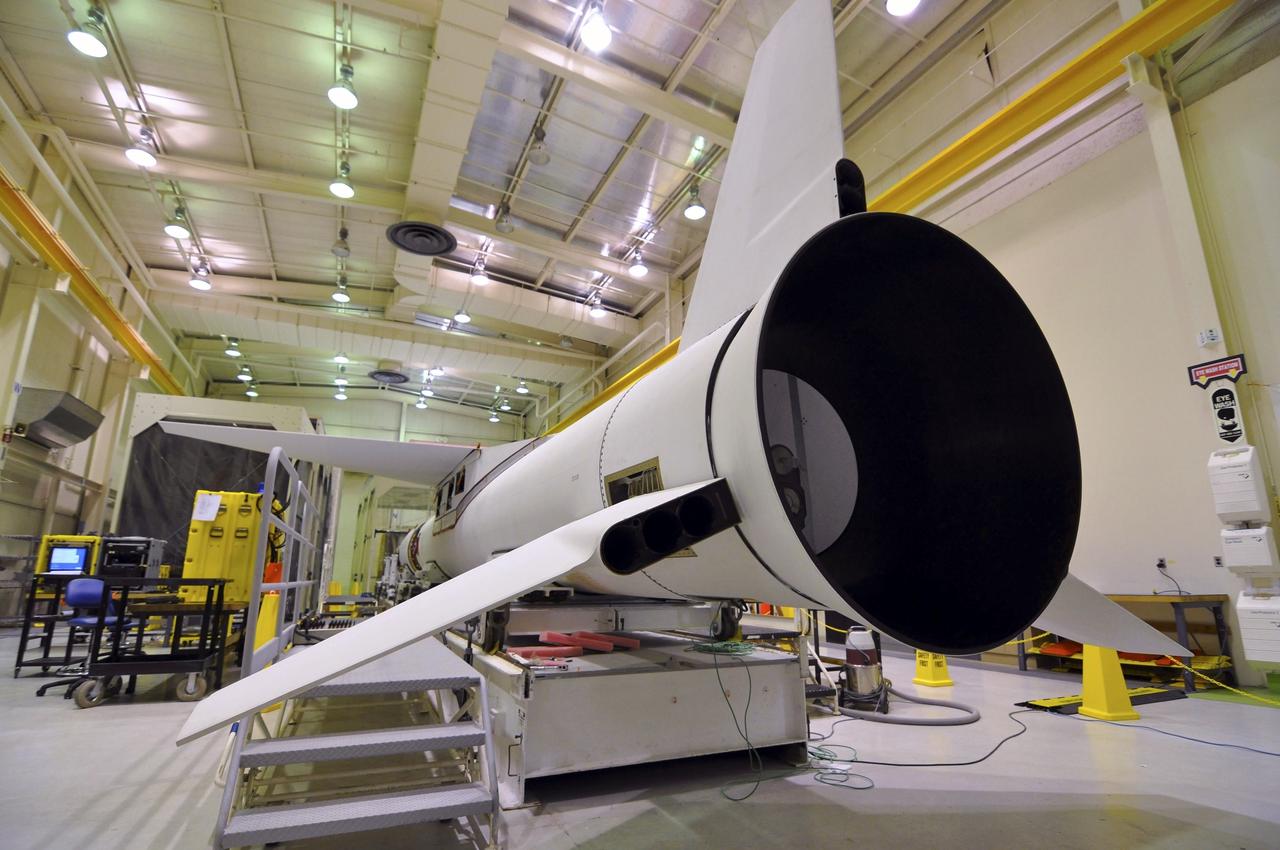
VANDENBERG AIR FORCE BASE, Calif. -- Inside a Pegasus booster processing facility at Vandenberg Air Force Base in California, all three fins on the aft end of the Pegasus XL rocket's first stage have been installed. The Orbital Sciences Corp. Pegasus rocket will launch the Nuclear Spectroscopic Telescope Array (NuSTAR) into space. After the rocket and spacecraft are processed at Vandenberg, they will be flown on the Orbital Sciences’ L-1011 carrier aircraft to the Ronald Reagan Ballistic Missile Defense Test Site at the Pacific Ocean’s Kwajalein Atoll for launch. The high-energy x-ray telescope will conduct a census for black holes, map radioactive material in young supernovae remnants, and study the origins of cosmic rays and the extreme physics around collapsed stars. For more information, visit science.nasa.gov/missions/nustar/. Photo credit: NASA/Randy Beaudoin, VAFB
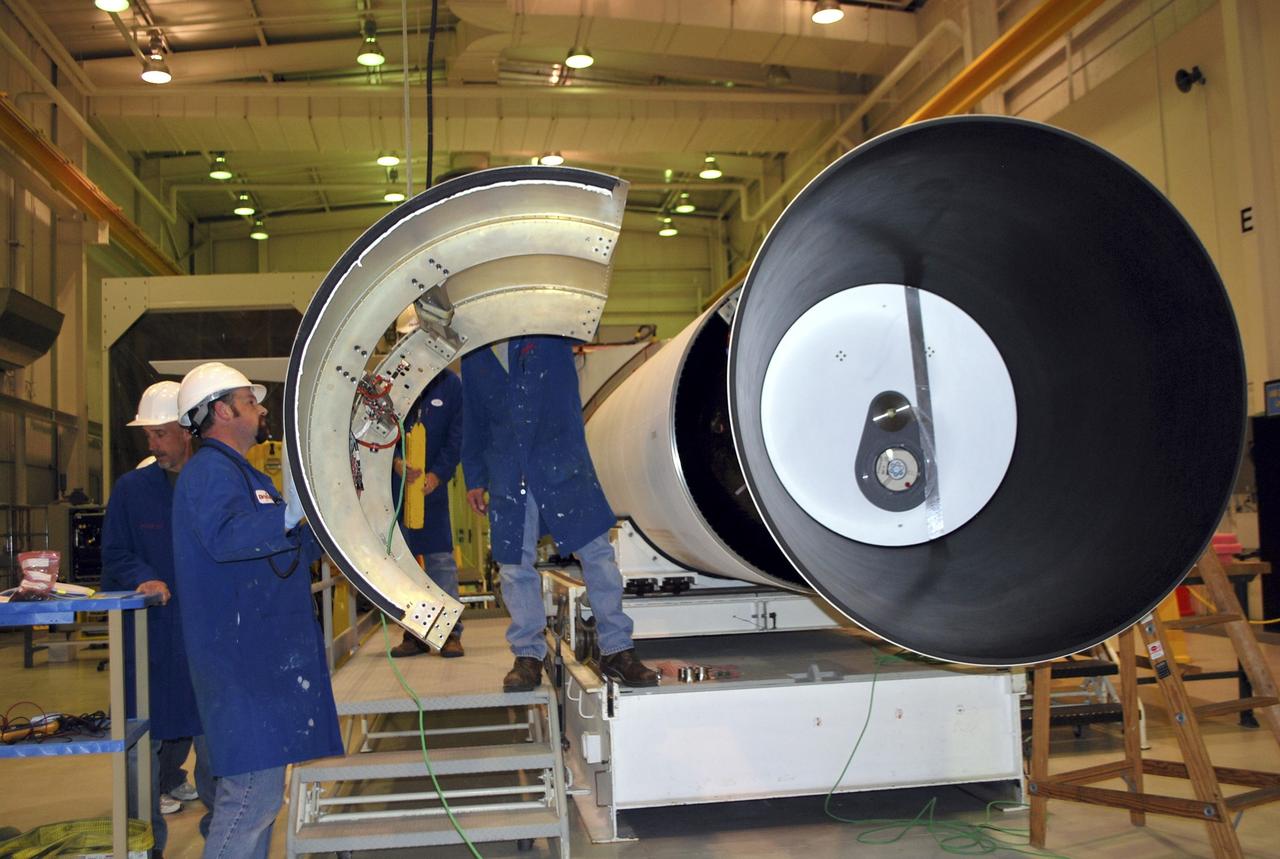
VANDENBERG AIR FORCE BASE, Calif. -- At a Pegasus booster processing facility at Vandenberg Air Force Base in California, technicians install the second section of the aft skirt on the Pegasus XL rocket’s first stage. The Orbital Sciences Corp. Pegasus rocket will launch the Nuclear Spectroscopic Telescope Array (NuSTAR) into space. After the rocket and spacecraft are processed at Vandenberg, they will be flown on the Orbital Sciences’ L-1011 carrier aircraft to the Ronald Reagan Ballistic Missile Defense Test Site at the Pacific Ocean’s Kwajalein Atoll for launch. The high-energy x-ray telescope will conduct a census for black holes, map radioactive material in young supernovae remnants, and study the origins of cosmic rays and the extreme physics around collapsed stars. For more information, visit science.nasa.gov/missions/nustar/. Photo credit: NASA/Randy Beaudoin, VAFB
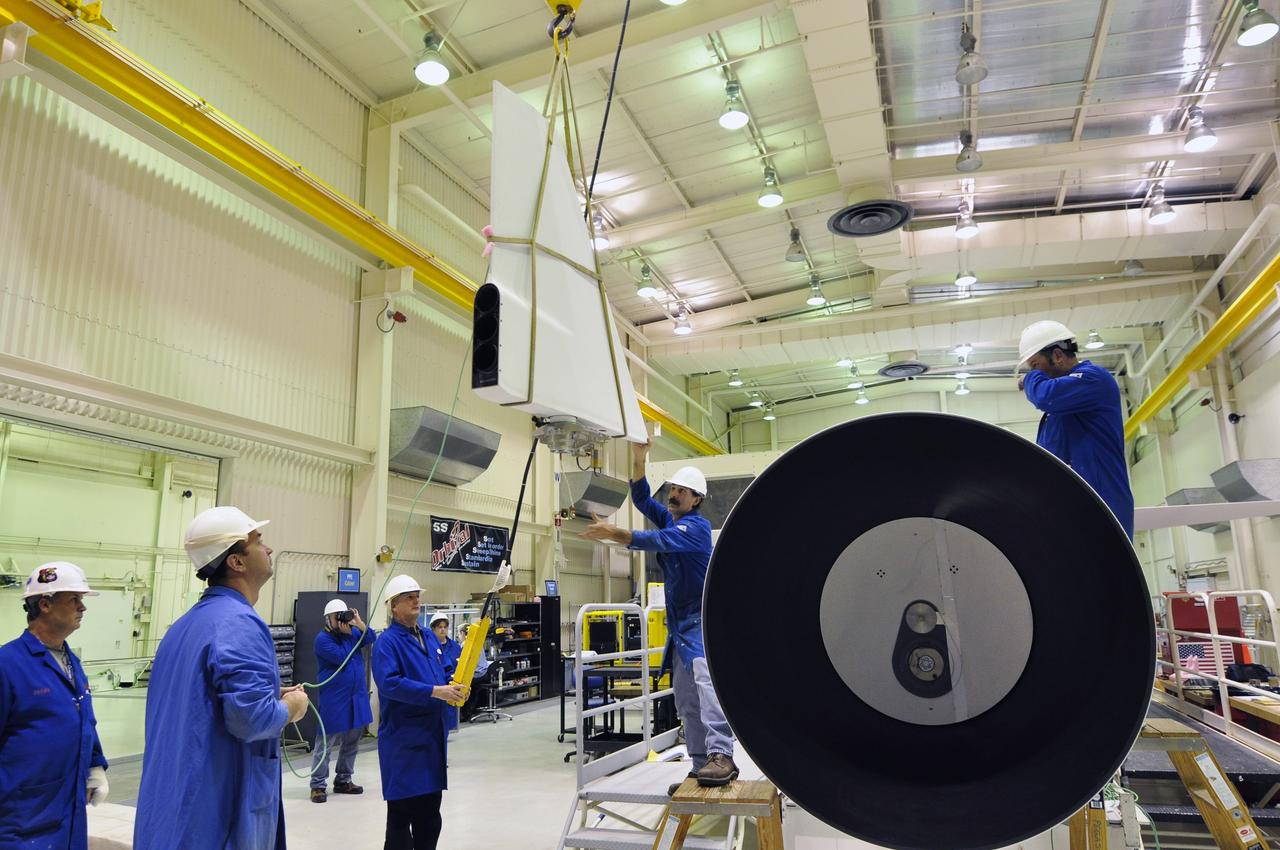
VANDENBERG AIR FORCE BASE, Calif. -- Inside a Pegasus booster processing facility at Vandenberg Air Force Base in California, an overhead crane lifts the first of the fins for the aft end of the Pegasus XL rocket's first stage as technicians guide it into place for installation. The Orbital Sciences Corp. Pegasus rocket will launch the Nuclear Spectroscopic Telescope Array (NuSTAR) into space. After the rocket and spacecraft are processed at Vandenberg, they will be flown on the Orbital Sciences’ L-1011 carrier aircraft to the Ronald Reagan Ballistic Missile Defense Test Site at the Pacific Ocean’s Kwajalein Atoll for launch. The high-energy x-ray telescope will conduct a census for black holes, map radioactive material in young supernovae remnants, and study the origins of cosmic rays and the extreme physics around collapsed stars. For more information, visit science.nasa.gov/missions/nustar/. Photo credit: NASA/Randy Beaudoin, VAFB