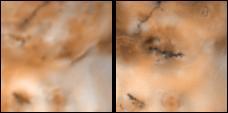
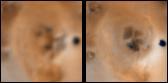
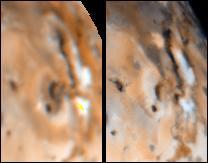
Changes on Io around Volund between Voyager 1 and Galileo Second Orbit
Viking Lander 1 Thomas A. Mutch Memorial Station Imaged from Orbit
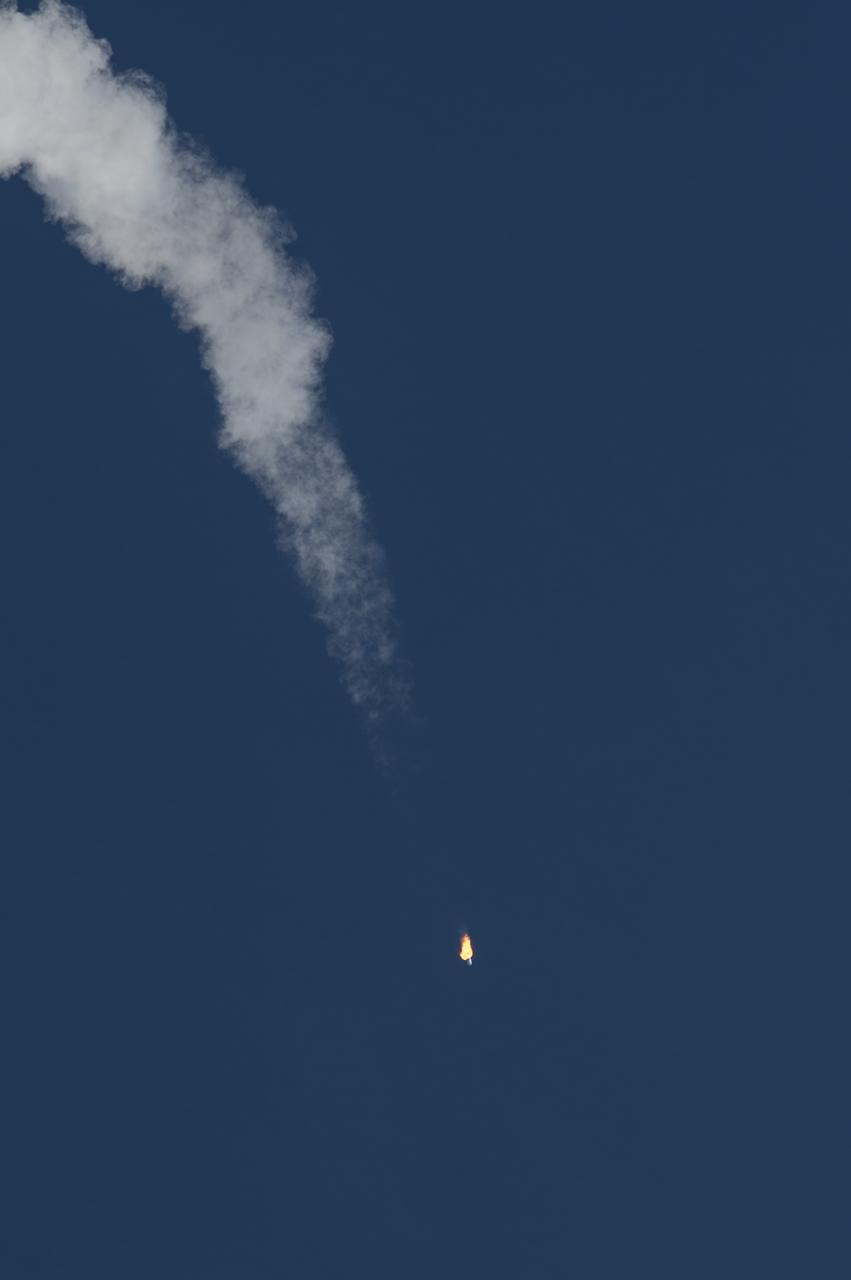
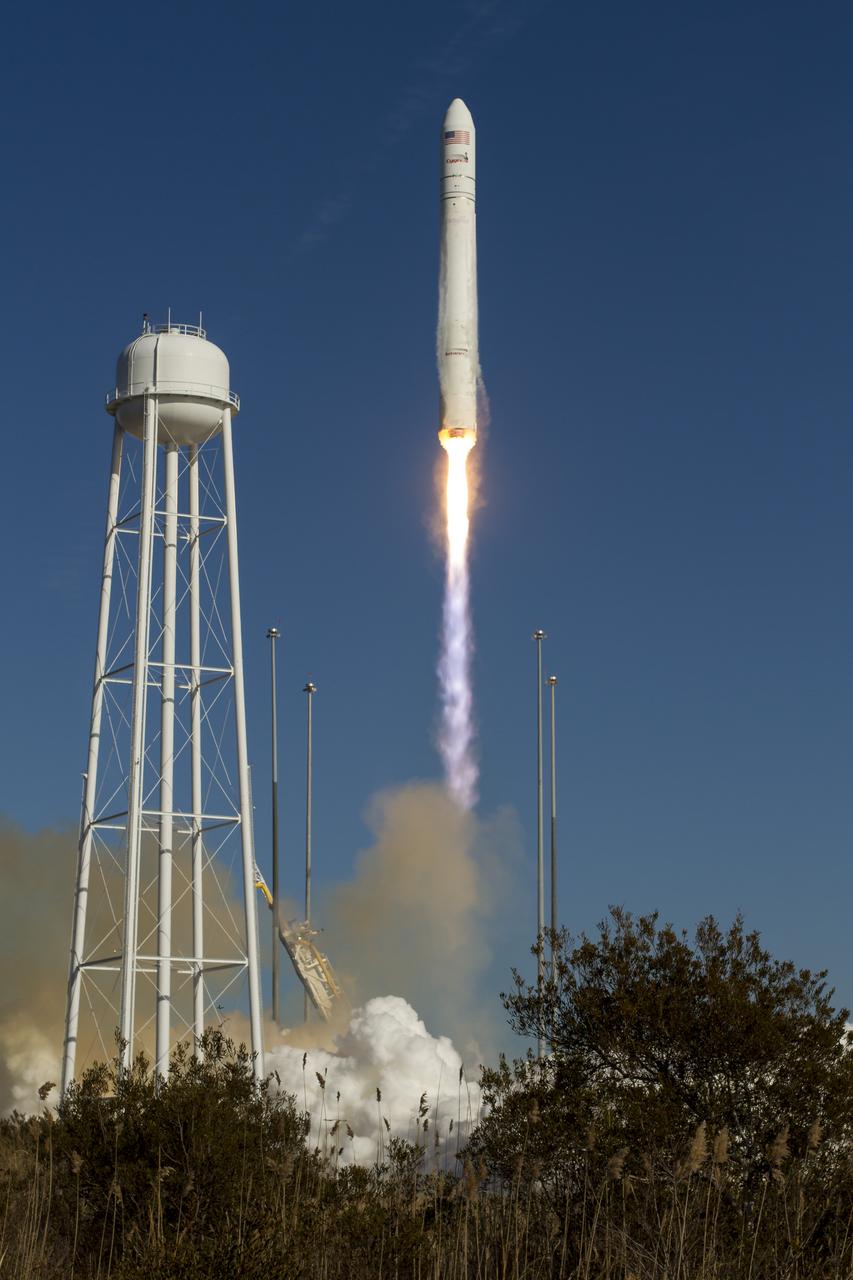
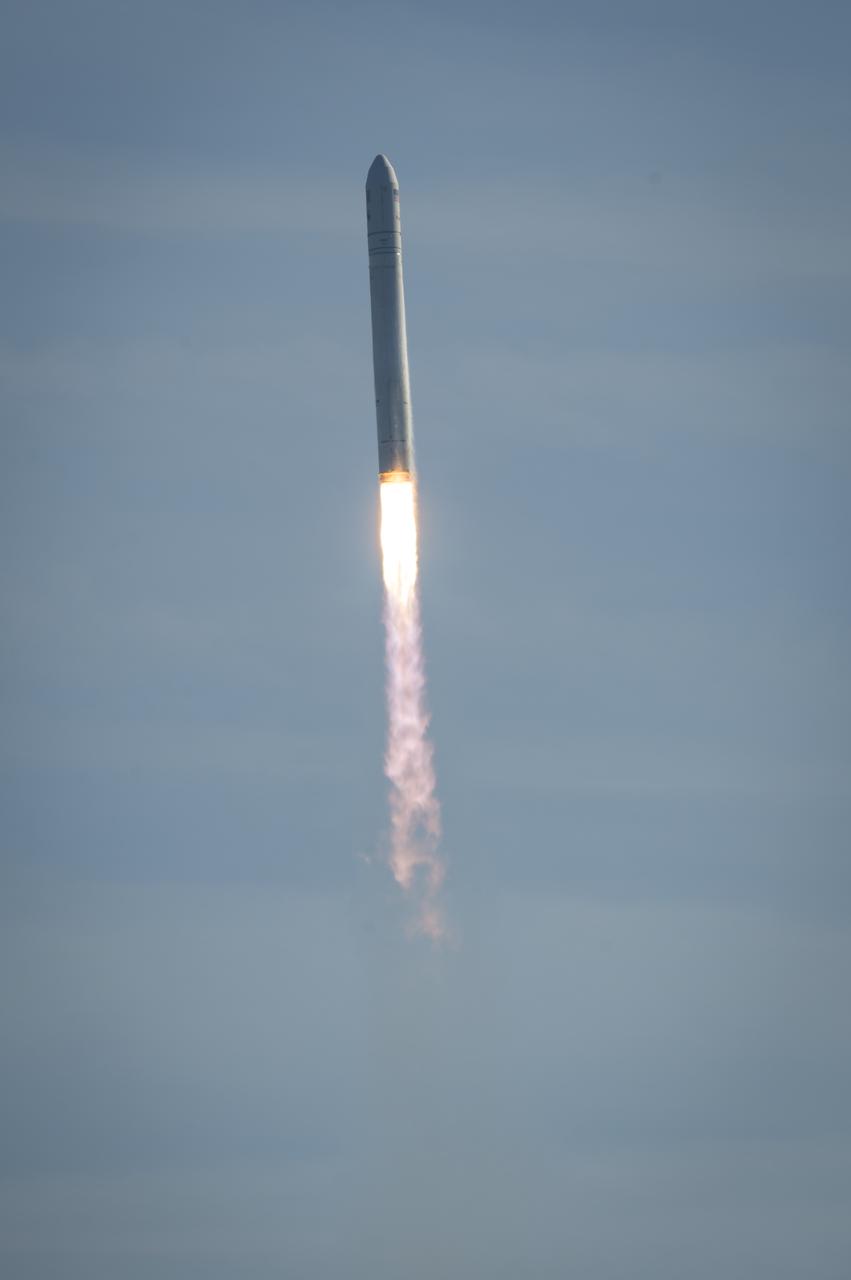
An Orbital Sciences Corporation Antares rocket is seen as it launches from Pad-0A at NASA's Wallops Flight Facility, Thursday, January 9, 2014, Wallops Island, VA. Antares is carrying the Cygnus spacecraft on a cargo resupply mission to the International Space Station. The Orbital-1 mission is Orbital Sciences' first contracted cargo delivery flight to the space station for NASA. Cygnus is carrying science experiments, crew provisions, spare parts and other hardware to the space station. Photo Credit: (NASA/Bill Ingalls)
Orbital-1 Mission Antares Launch
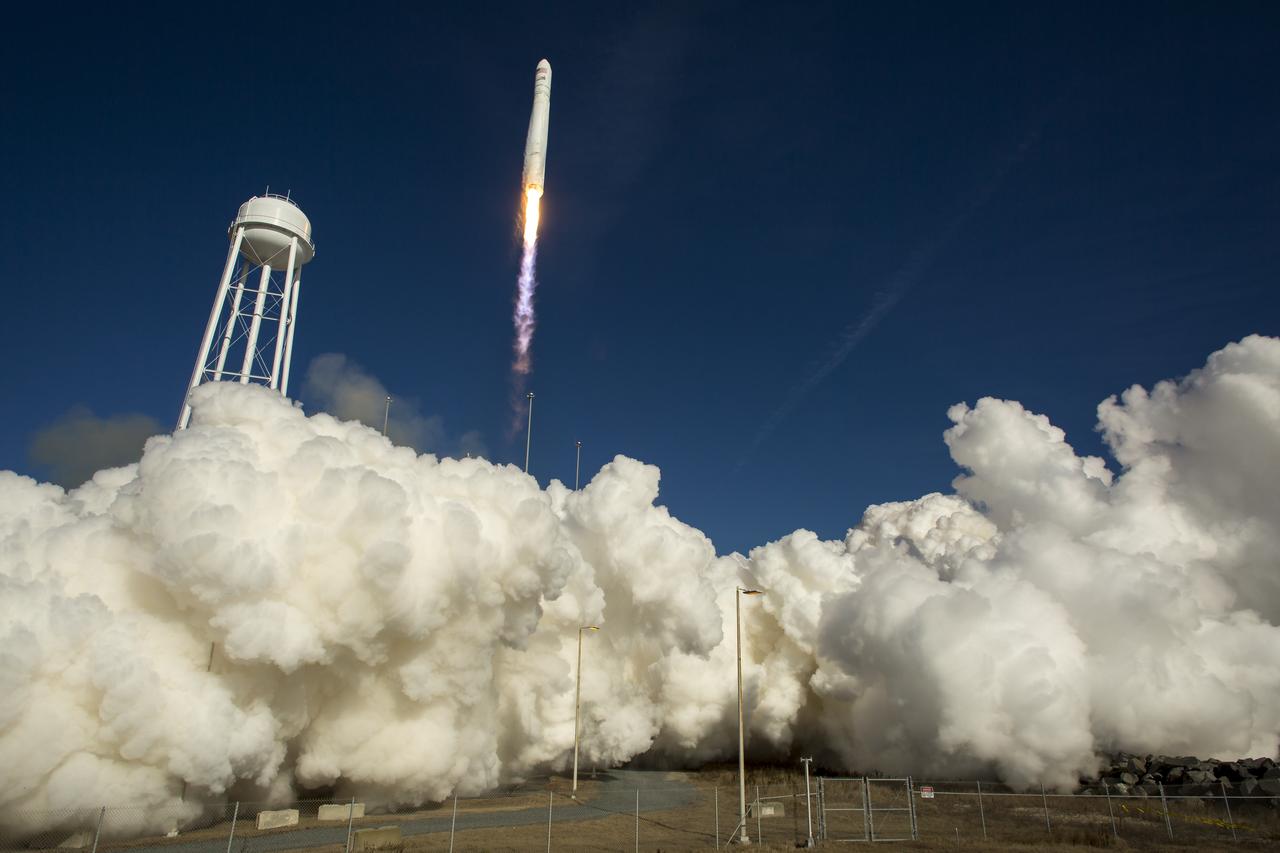
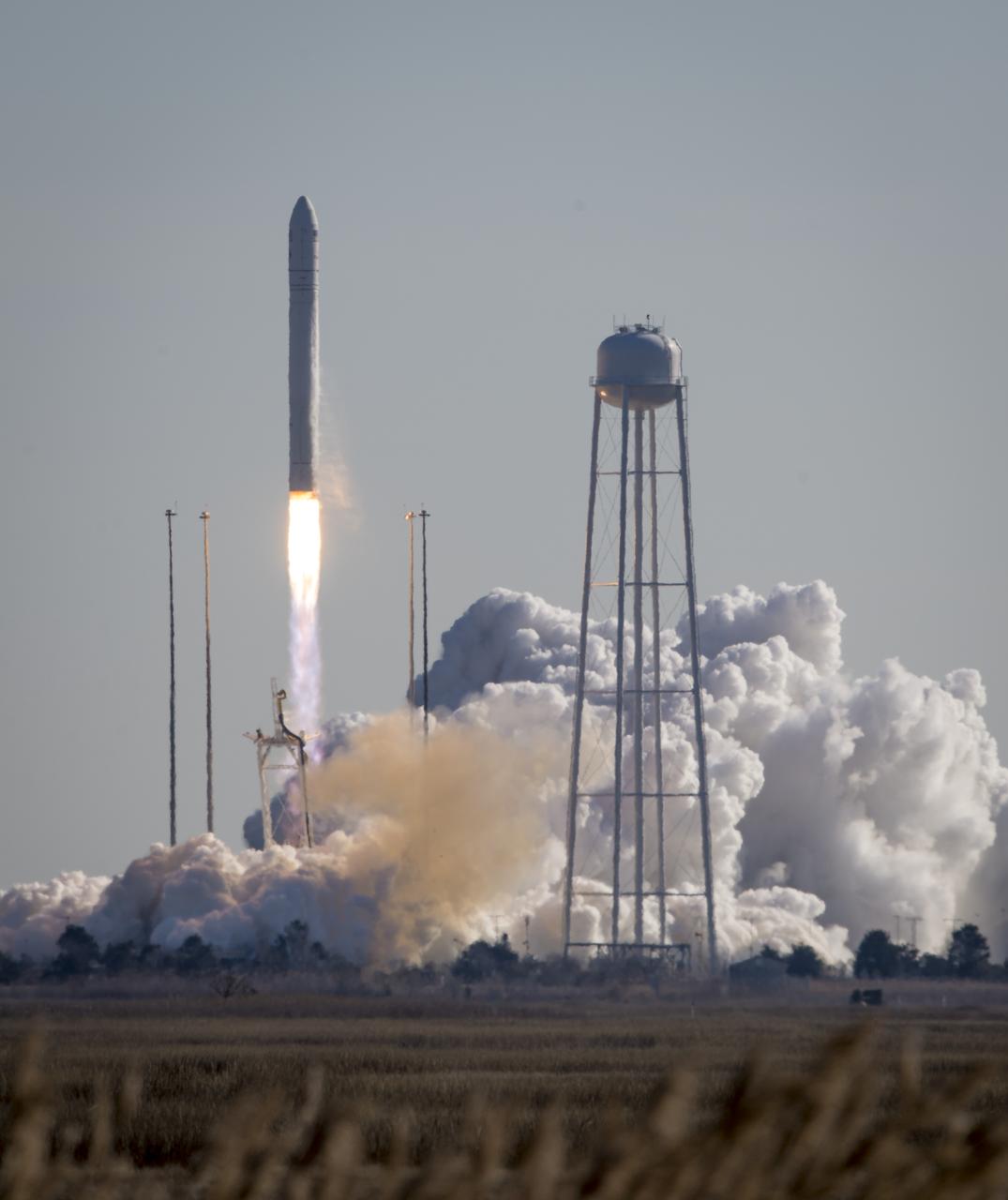
An Orbital Sciences Corporation Antares rocket is seen as it launches from Pad-0A at NASA's Wallops Flight Facility, Thursday, January 9, 2014, Wallops Island, VA. Antares is carrying the Cygnus spacecraft on a cargo resupply mission to the International Space Station. The Orbital-1 mission is Orbital Sciences' first contracted cargo delivery flight to the space station for NASA. Cygnus is carrying science experiments, crew provisions, spare parts and other hardware to the space station. Photo Credit: (NASA/Bill Ingalls)
Orbital-1 Mission Antares Launch
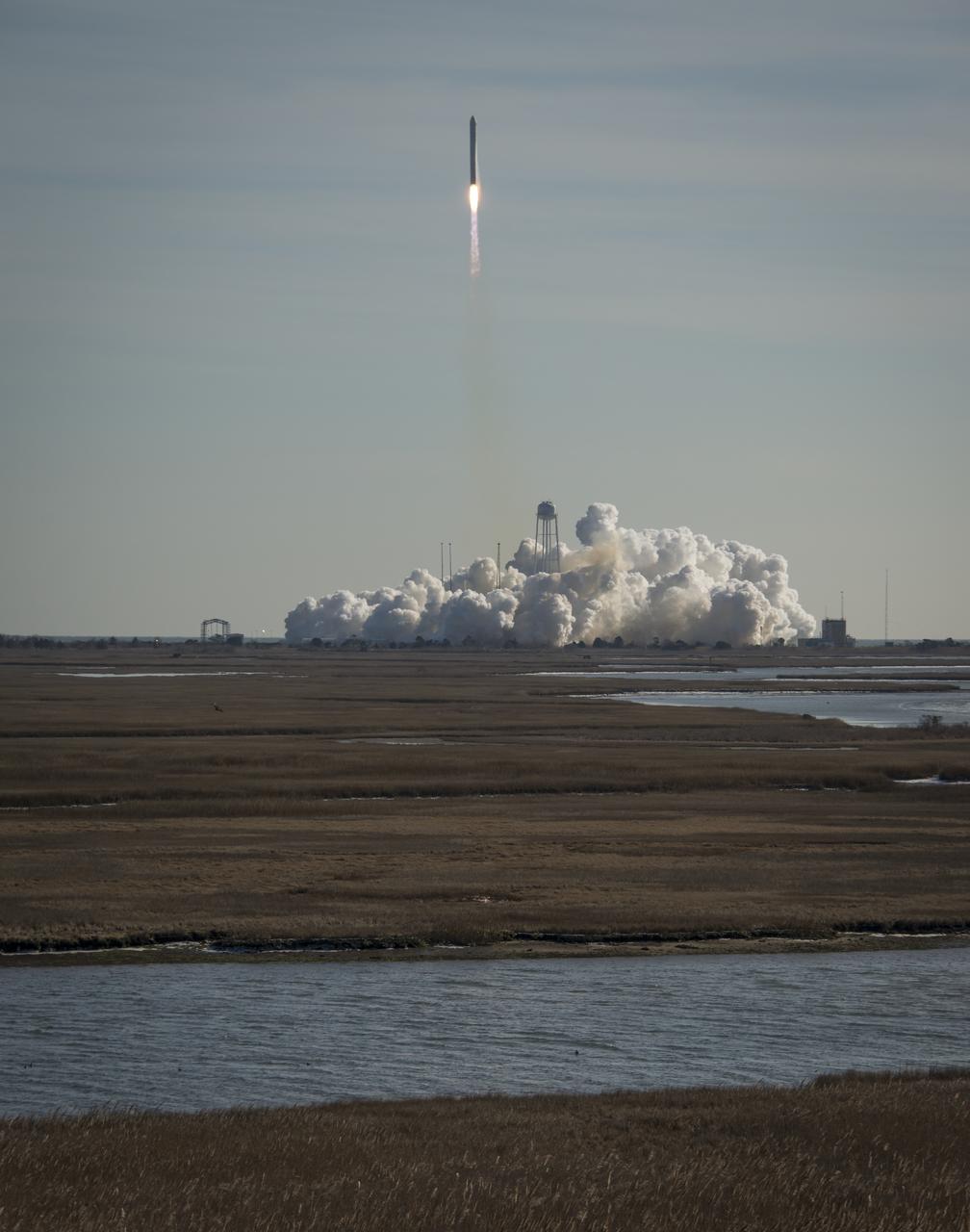
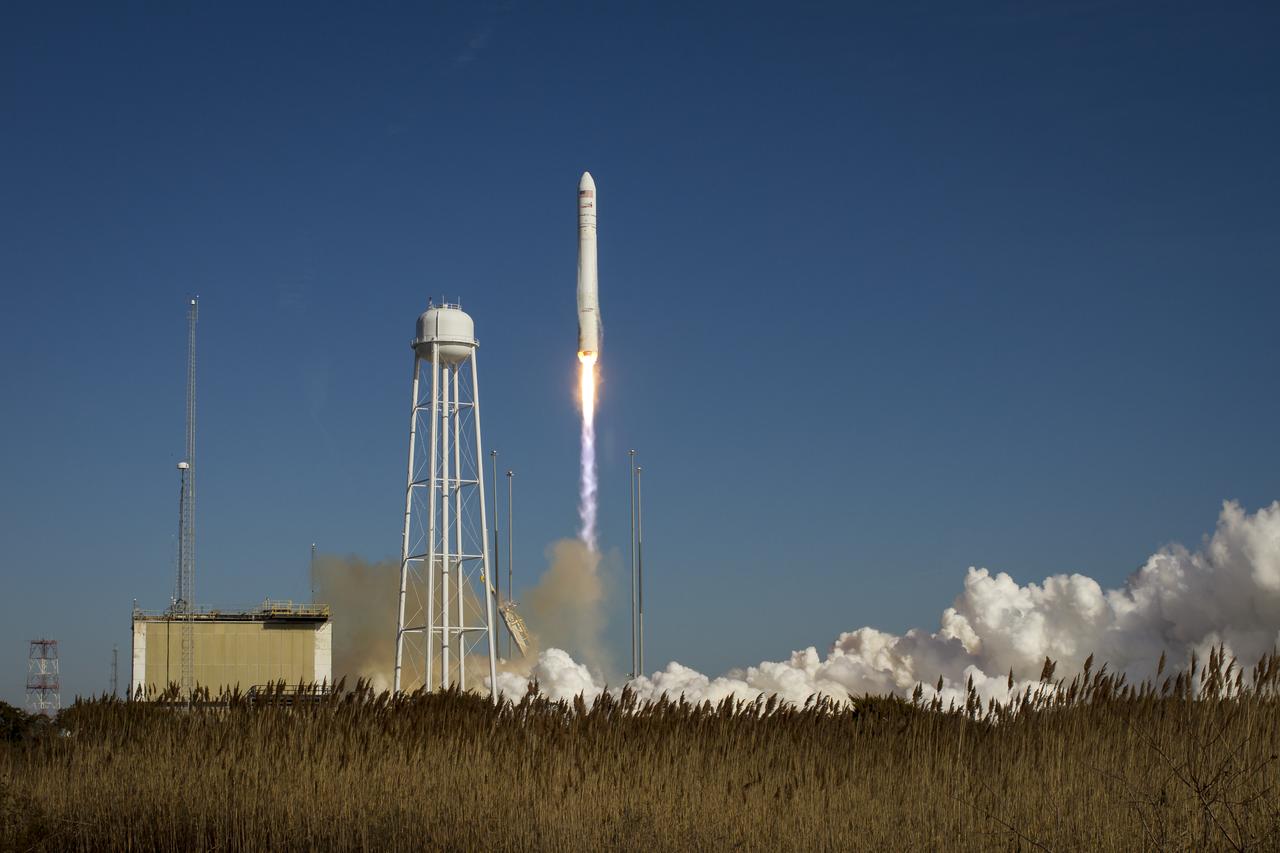
An Orbital Sciences Corporation Antares rocket is seen as it launches from Pad-0A at NASA's Wallops Flight Facility, Thursday, January 9, 2014, Wallops Island, VA. Antares is carrying the Cygnus spacecraft on a cargo resupply mission to the International Space Station. The Orbital-1 mission is Orbital Sciences' first contracted cargo delivery flight to the space station for NASA. Cygnus is carrying science experiments, crew provisions, spare parts and other hardware to the space station. Photo Credit: (NASA/Bill Ingalls)
Orbital-1 Mission Antares Launch
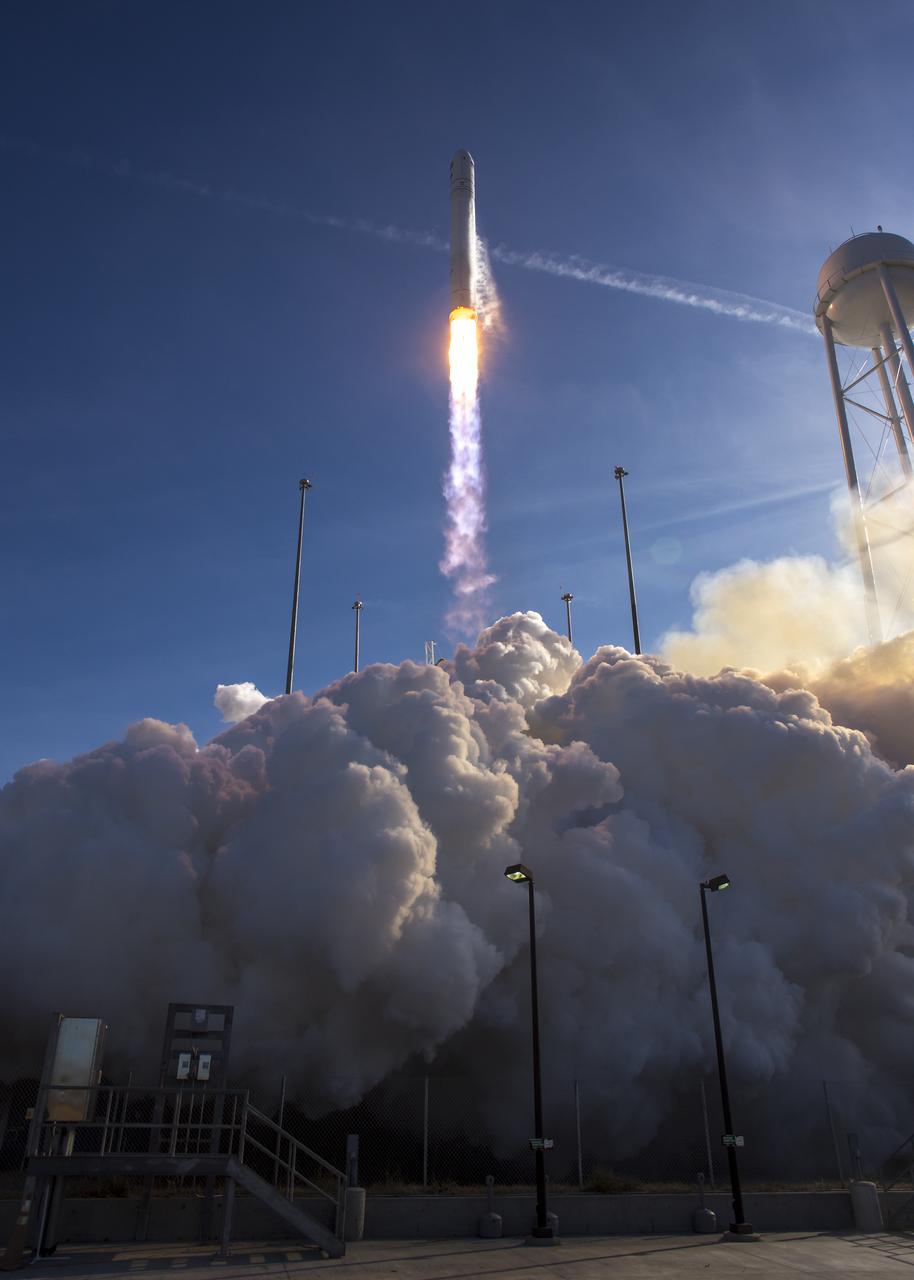
An Orbital Sciences Corporation Antares rocket is seen as it launches from Pad-0A at NASA's Wallops Flight Facility, Thursday, January 9, 2014, Wallops Island, VA. Antares is carrying the Cygnus spacecraft on a cargo resupply mission to the International Space Station. The Orbital-1 mission is Orbital Sciences' first contracted cargo delivery flight to the space station for NASA. Cygnus is carrying science experiments, crew provisions, spare parts and other hardware to the space station. Photo Credit: (NASA/Bill Ingalls)
Orbital-1 Mission Antares Launch
An Orbital Sciences Corporation Antares rocket is seen as it launches from Pad-0A at NASA's Wallops Flight Facility, Thursday, January 9, 2014, Wallops Island, VA. Antares is carrying the Cygnus spacecraft on a cargo resupply mission to the International Space Station. The Orbital-1 mission is Orbital Sciences' first contracted cargo delivery flight to the space station for NASA. Cygnus is carrying science experiments, crew provisions, spare parts and other hardware to the space station. Photo Credit: (NASA/Bill Ingalls)
Orbital-1 Mission Antares Launch
An Orbital Sciences Corporation Antares rocket is seen as it launches from Pad-0A at NASA's Wallops Flight Facility, Thursday, January 9, 2014, Wallops Island, VA. Antares is carrying the Cygnus spacecraft on a cargo resupply mission to the International Space Station. The Orbital-1 mission is Orbital Sciences' first contracted cargo delivery flight to the space station for NASA. Cygnus is carrying science experiments, crew provisions, spare parts and other hardware to the space station. Photo Credit: (NASA/Bill Ingalls)
Orbital-1 Mission Antares Launch
An Orbital Sciences Corporation Antares rocket is seen as it launches from Pad-0A at NASA's Wallops Flight Facility, Thursday, January 9, 2014, Wallops Island, VA. Antares is carrying the Cygnus spacecraft on a cargo resupply mission to the International Space Station. The Orbital-1 mission is Orbital Sciences' first contracted cargo delivery flight to the space station for NASA. Cygnus is carrying science experiments, crew provisions, spare parts and other hardware to the space station. Photo Credit: (NASA/Bill Ingalls)
Orbital-1 Mission Antares Launch
An Orbital Sciences Corporation Antares rocket is seen as it launches from Pad-0A at NASA's Wallops Flight Facility, Thursday, January 9, 2014, Wallops Island, VA. Antares is carrying the Cygnus spacecraft on a cargo resupply mission to the International Space Station. The Orbital-1 mission is Orbital Sciences' first contracted cargo delivery flight to the space station for NASA. Cygnus is carrying science experiments, crew provisions, spare parts and other hardware to the space station. Photo Credit: (NASA/Bill Ingalls)
Orbital-1 Mission Antares Launch
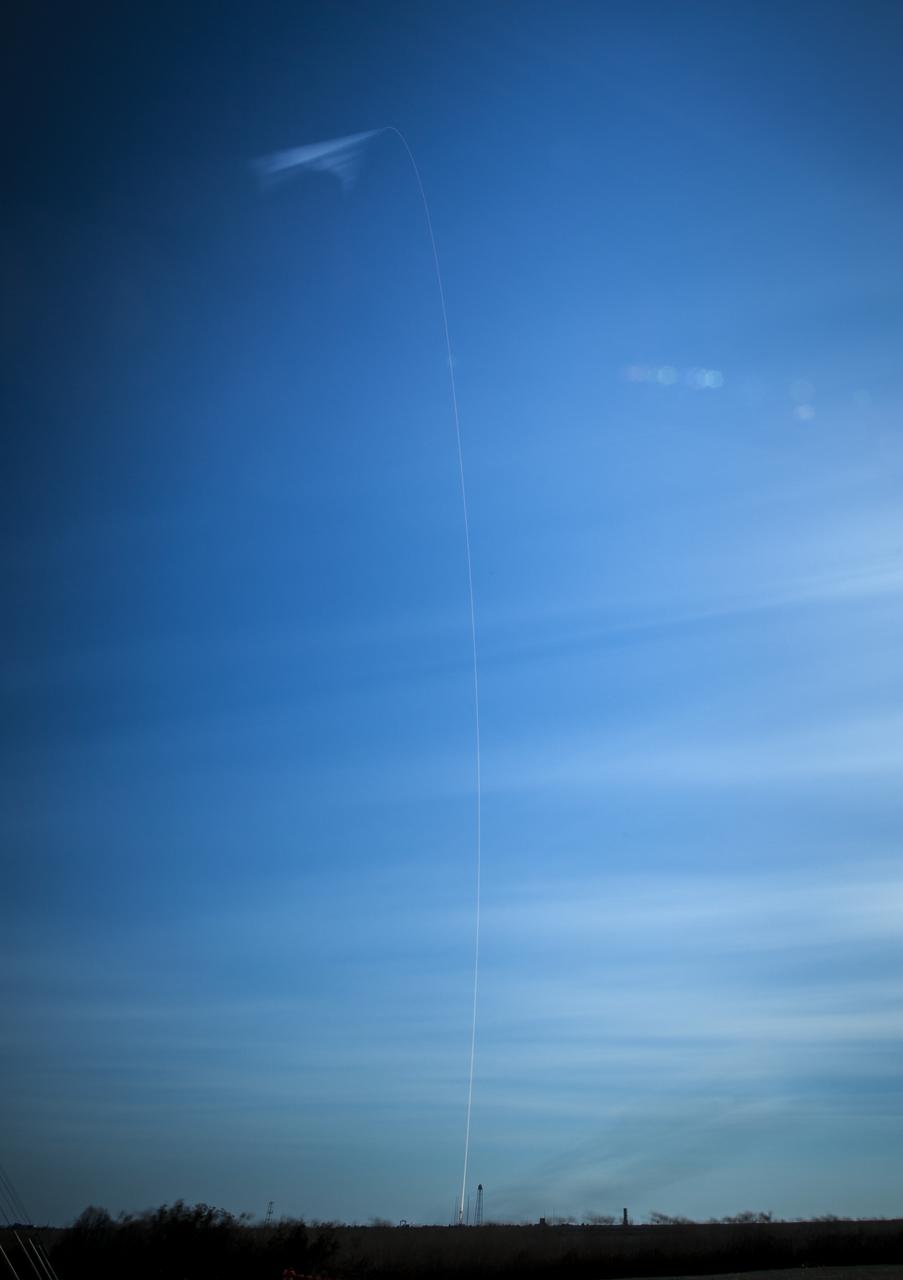
The trail of an Orbital Sciences Corporation Antares rocket is seen in this two minute exposure as it launches from Pad-0A at NASA's Wallops Flight Facility, Thursday, January 9, 2014, Wallops Island, VA. Antares is carrying the Cygnus spacecraft on a cargo resupply mission to the International Space Station. The Orbital-1 mission is Orbital Sciences' first contracted cargo delivery flight to the space station for NASA. Cygnus is carrying science experiments, crew provisions, spare parts and other hardware to the space station. Photo Credit: (NASA/Bill Ingalls)
Orbital-1 Mission Antares Launch
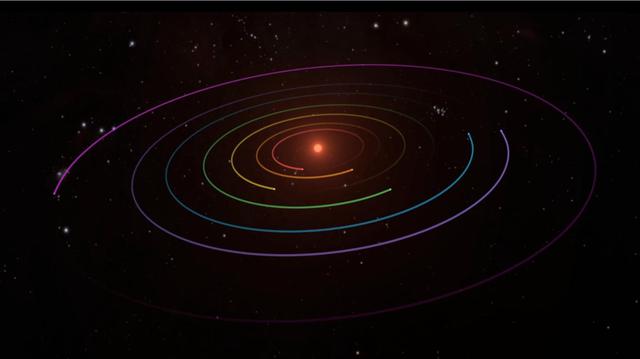
This frame from a video details a system of seven planets orbiting TRAPPIST-1, an ultra-cool dwarf star. Spitzer was able to identify a total of seven rocky worlds, including three in the habitable zone where liquid water might be found.  A study established the planets' size, distance from their sun and, for some of them, their approximate mass and density. It also established that some, if not all, of these planets are tidally locked, meaning one face of the planet permanently faces their sun.  The system has been revealed through observations from NASA's Spitzer Space Telescope and the ground-based TRAPPIST (TRAnsiting Planets and PlanetesImals Small Telescope) telescope, as well as other ground-based observatories. The system was named for the TRAPPIST telescope.  A video is available at http://photojournal.jpl.nasa.gov/catalog/PIA21427
TRAPPIST-1 Planetary Orbits and Transits
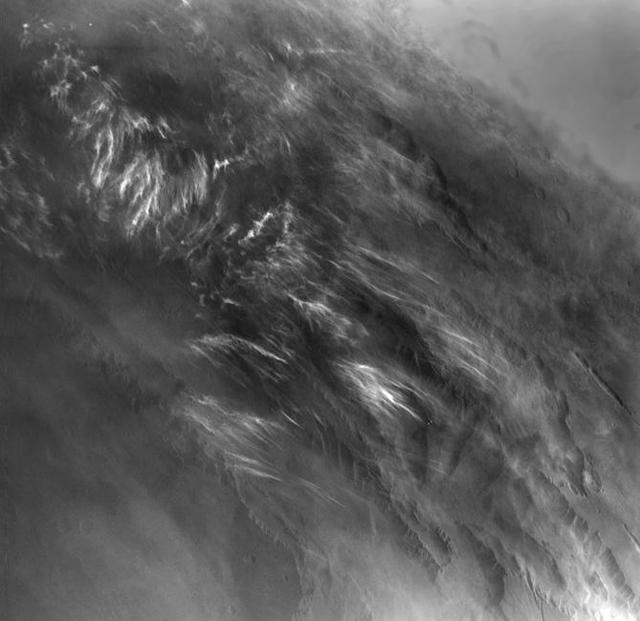
No NASA Mars orbiter has been in a position to observe morning daylight on Mars since the twin Viking orbiters of the 1970s. This image, taken by Viking Orbiter 1 on Aug. 17, 1976, shows water-ice clouds in the Valles Marineris area of equatorial Mars.
Martian Morning Clouds Seen by Viking Orbiter 1 in 1976
Changes on Io between Voyager 1 and Galileo Second Orbit Around an Unnamed Vent North of Prometheus
Changes on Io around Maui and Amirani between Voyager 1 and Galileo Second Orbit
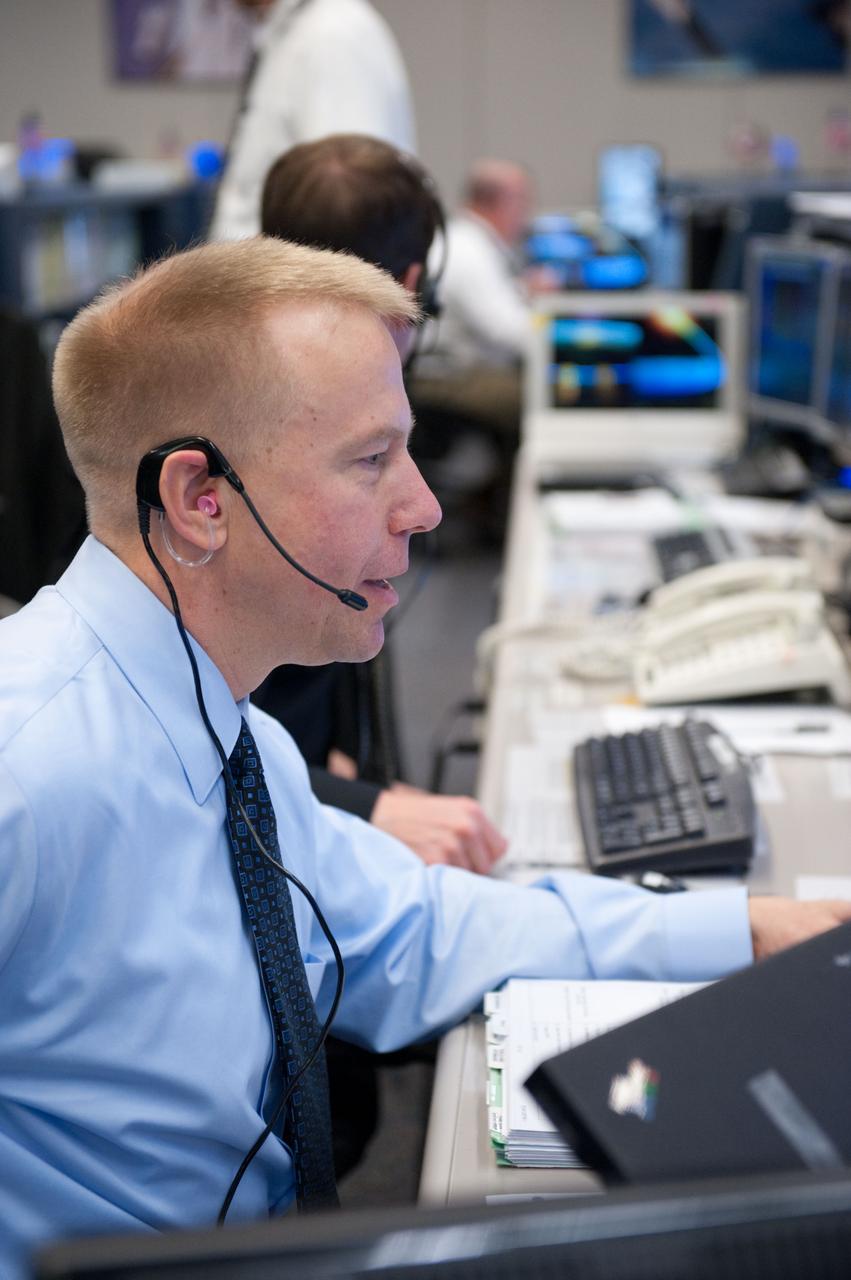
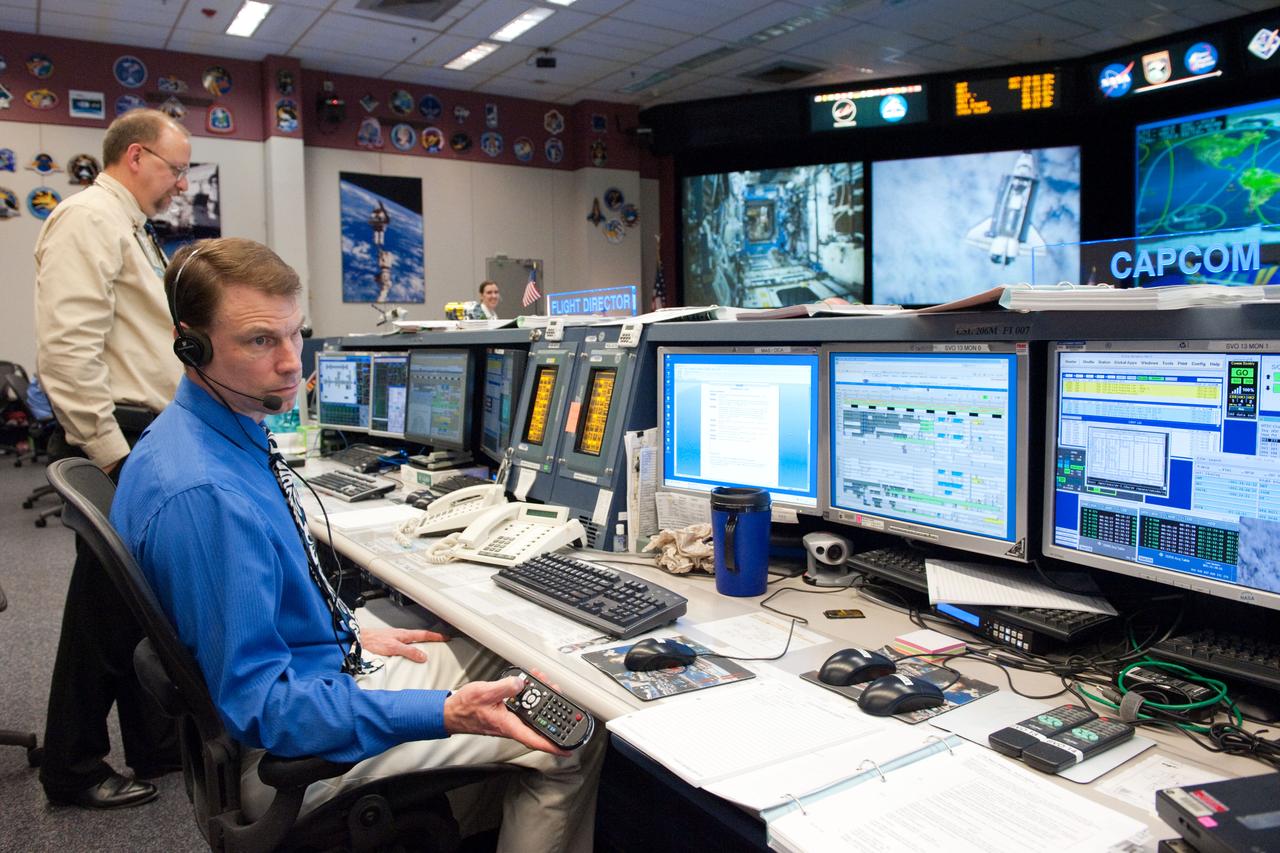
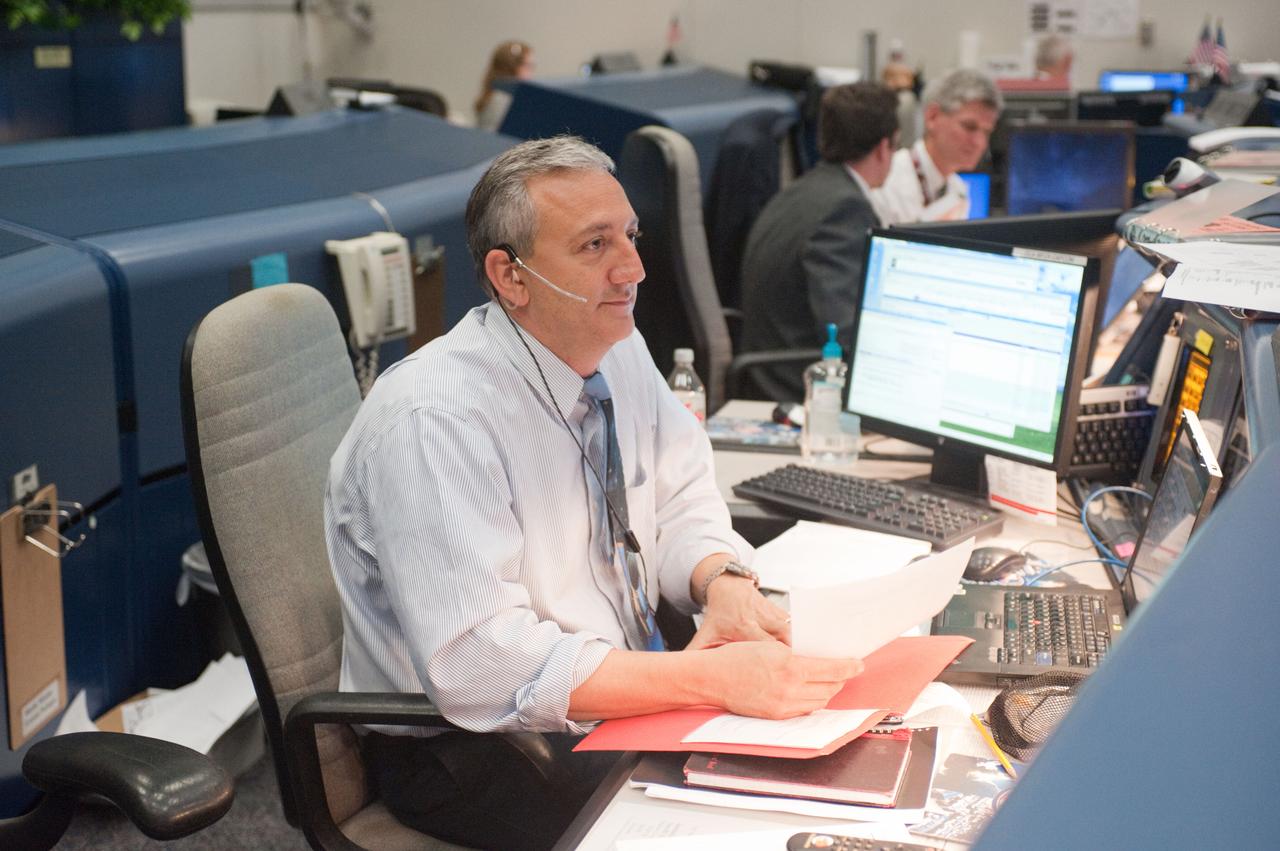
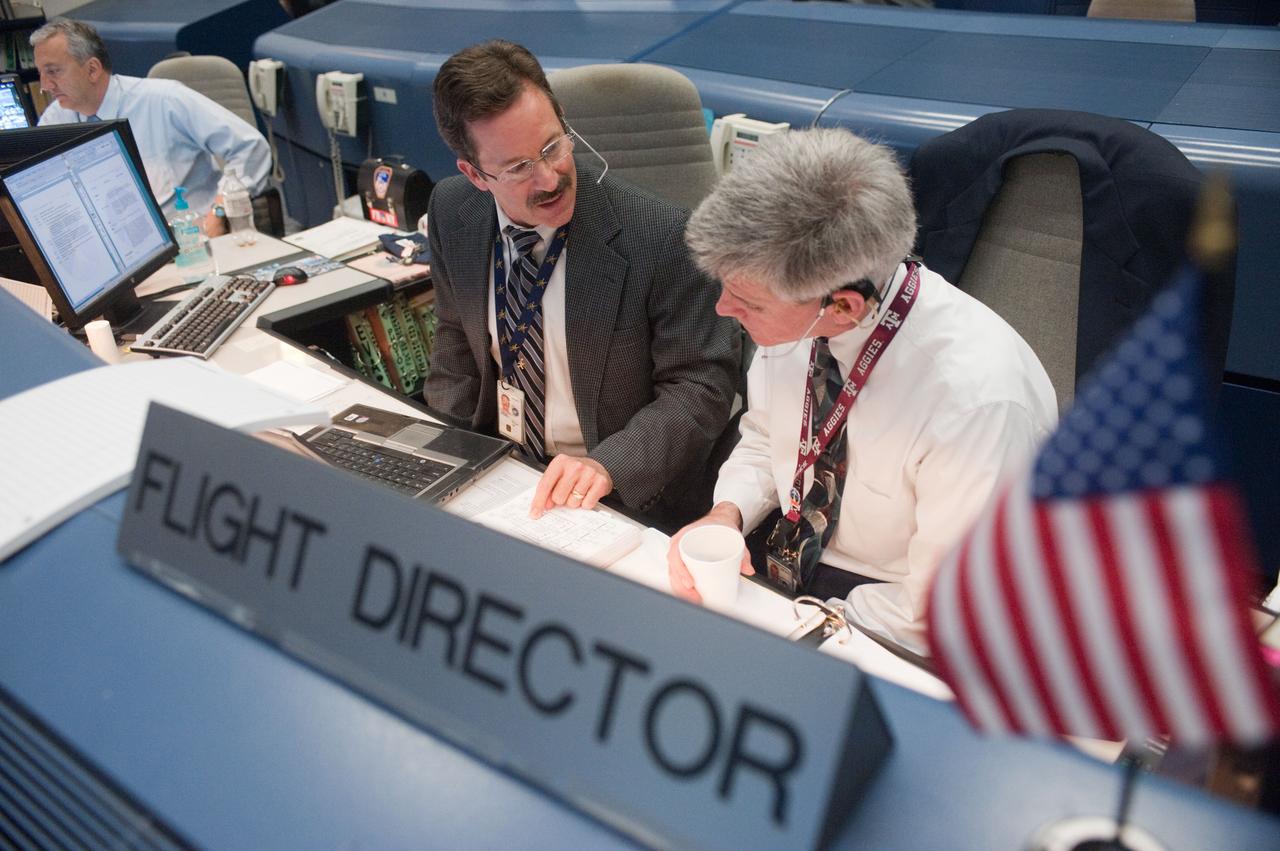
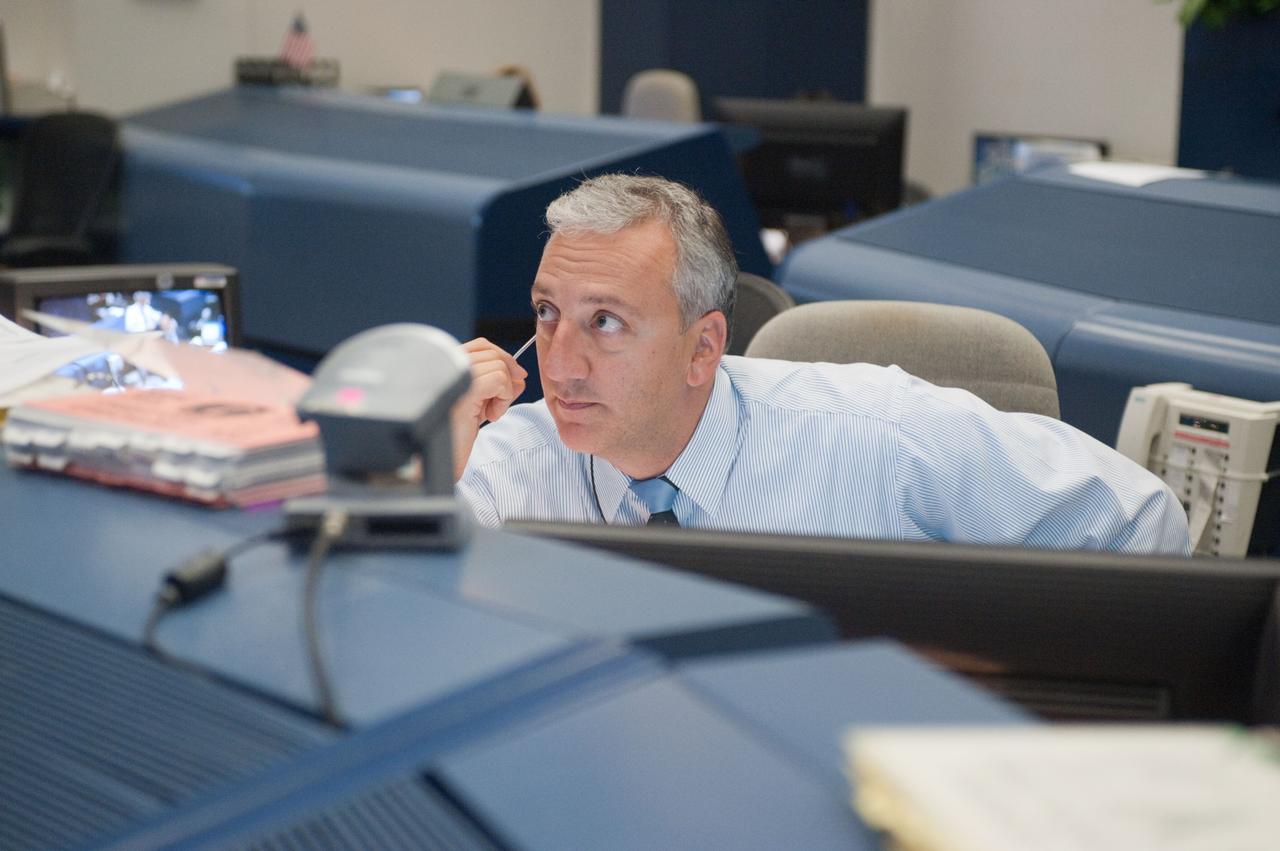
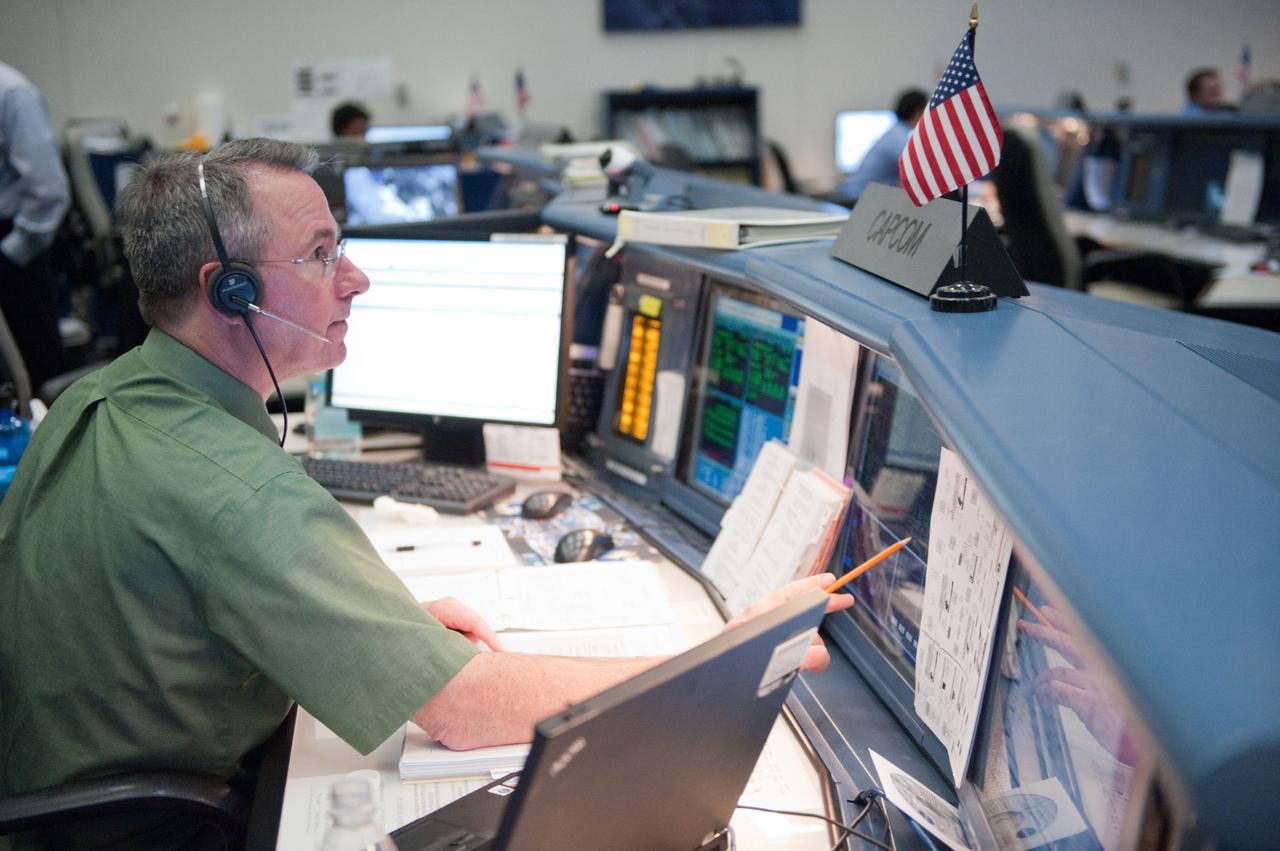
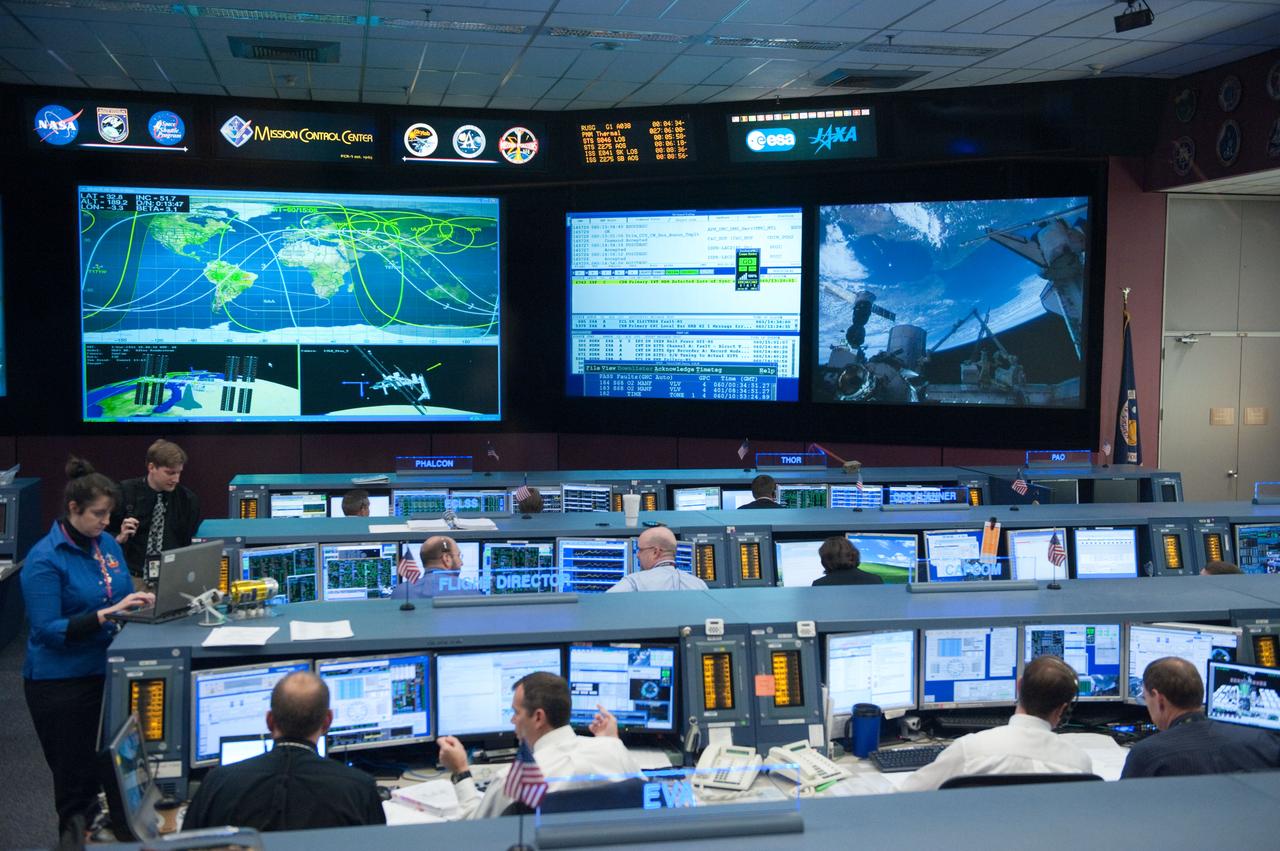
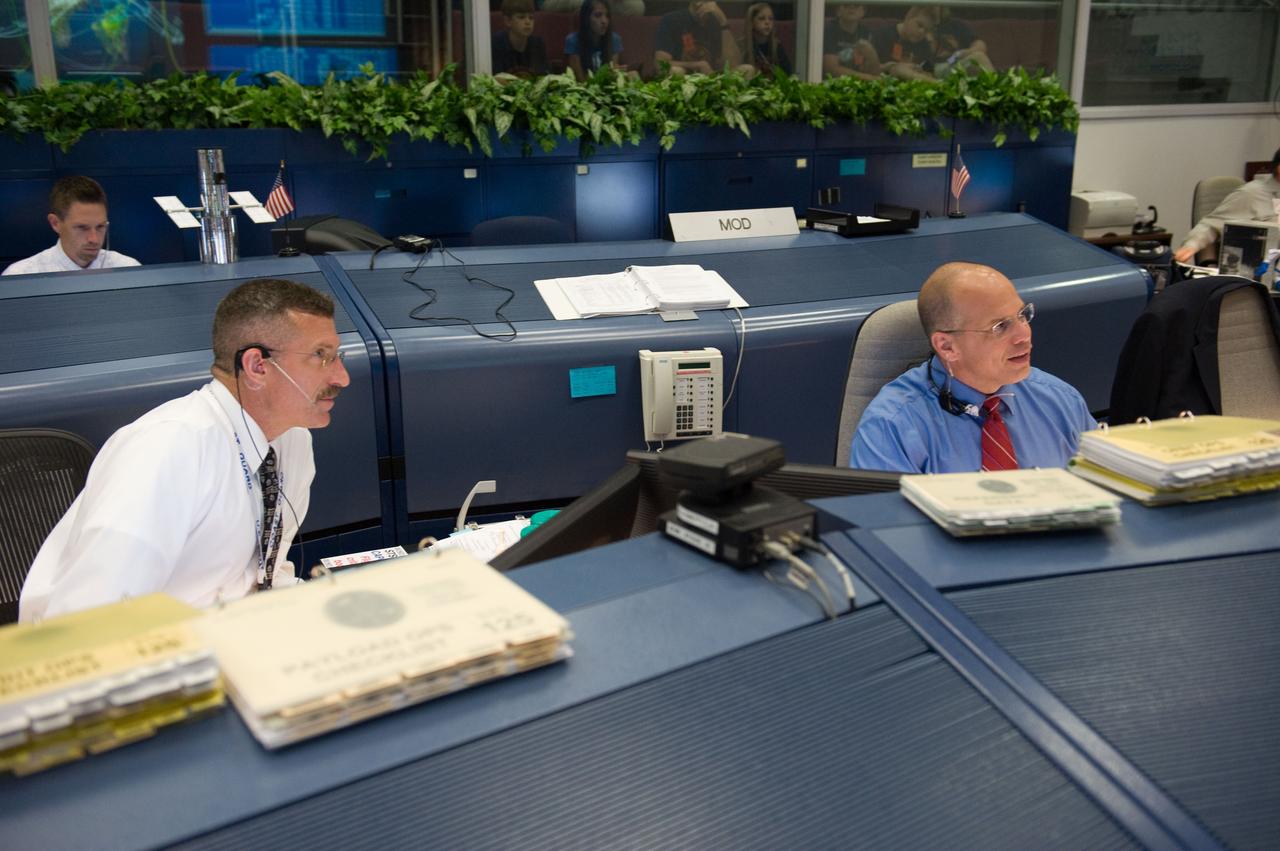
PHOTO DATE: 2-28-11 LOCATION: Bldg. 30 south - FCR-1 & Backrooms SUBJECT: STS-133/ULF5 flight controllers on console during EVA 1 with Orbit 1 Shuttle Flight Director Bryan Lunney and Orbit 2 ISS Flight Director Royce Renfrew PHOTOGRAPHER: Lauren Harnett
STS-133/ULF5 Flight Controllers on Console - EVA 1 with Orbit 1
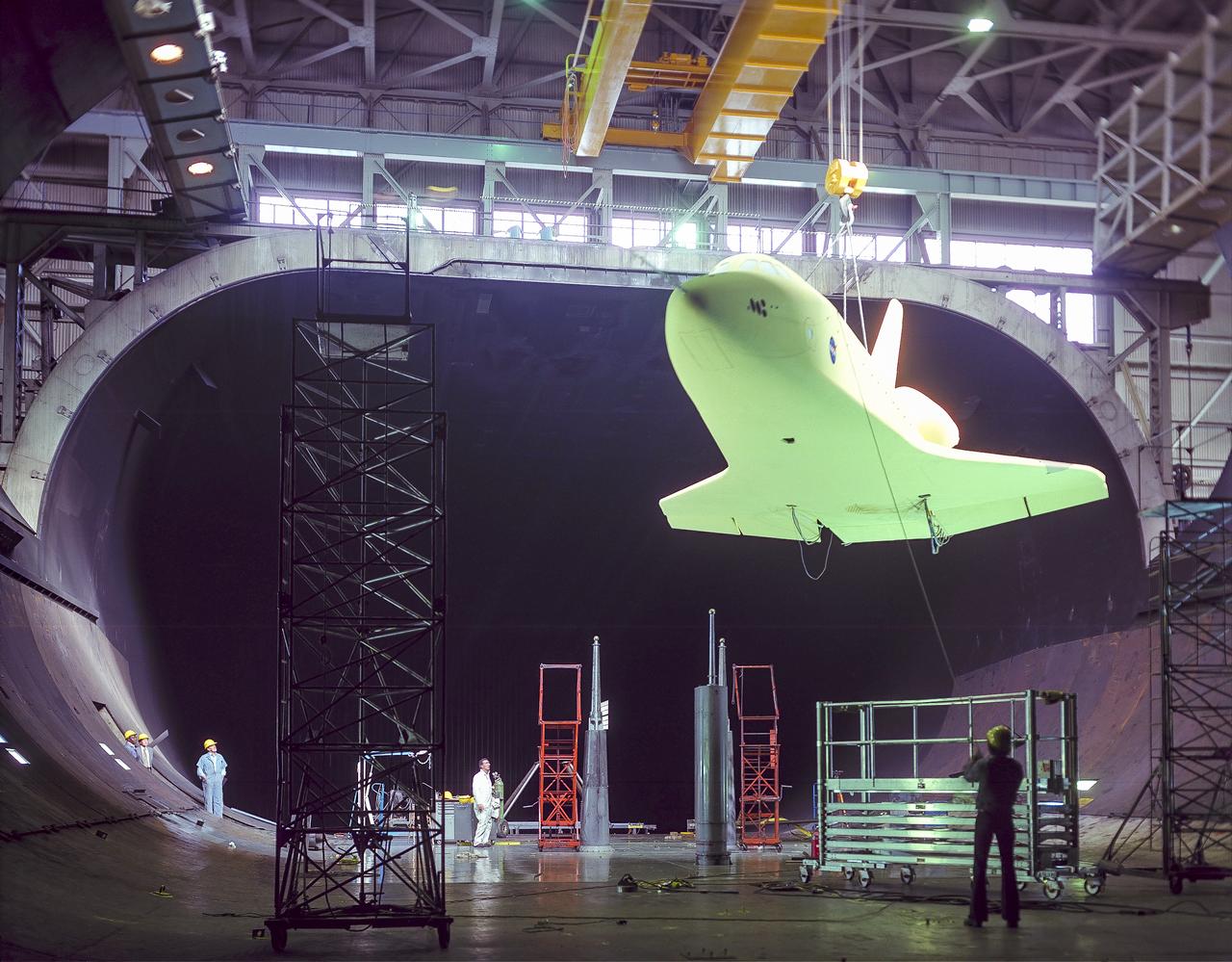
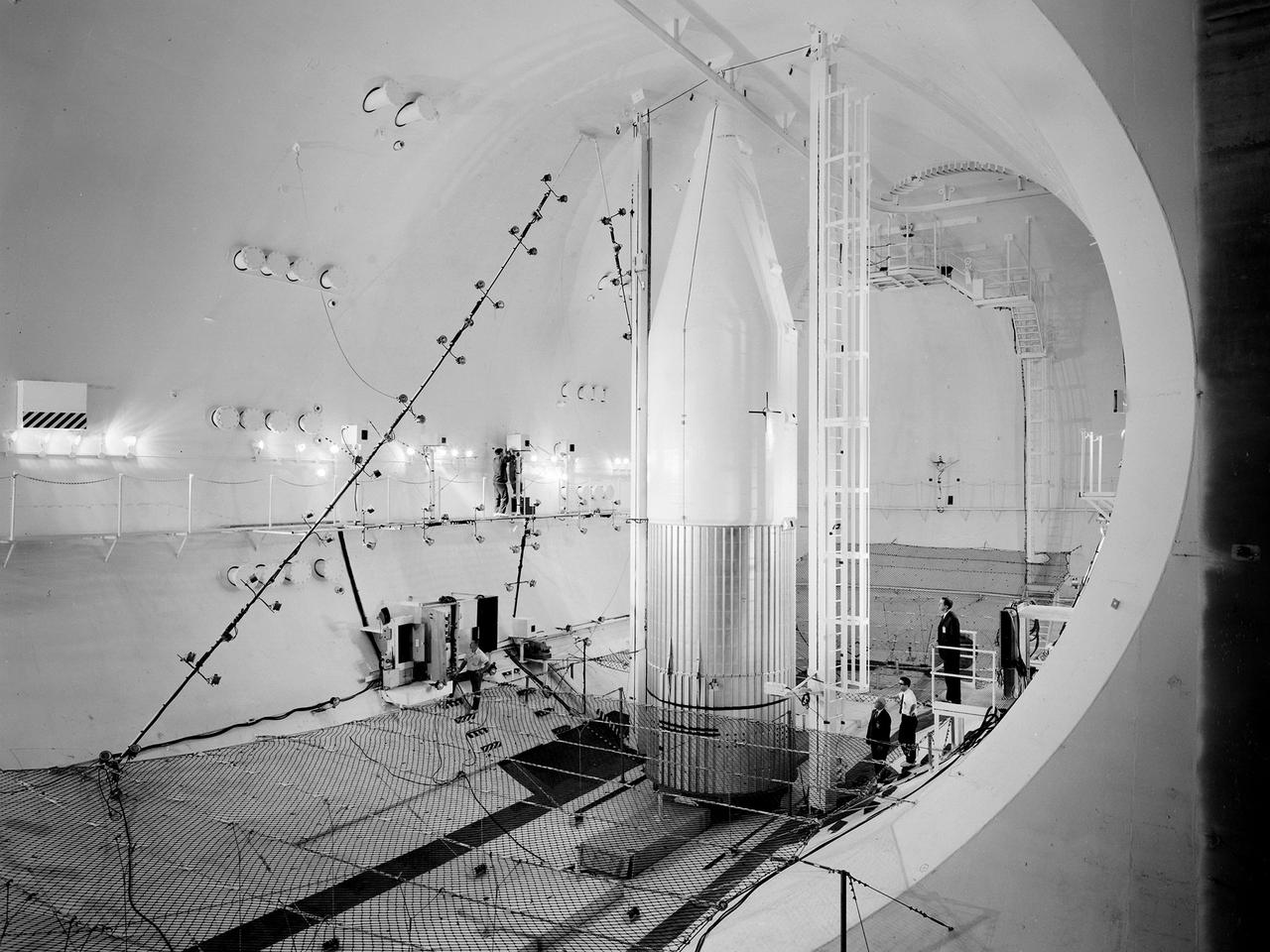
Installation of 1/3 scale model of space shuttle orbiter into the test section of the Ames 40x80 foot wind tunnel with overhead doors open.
Installation of 1/3 scale model of Space Shuttle Orbiter into 40x80 Foot Wind Tunnel.
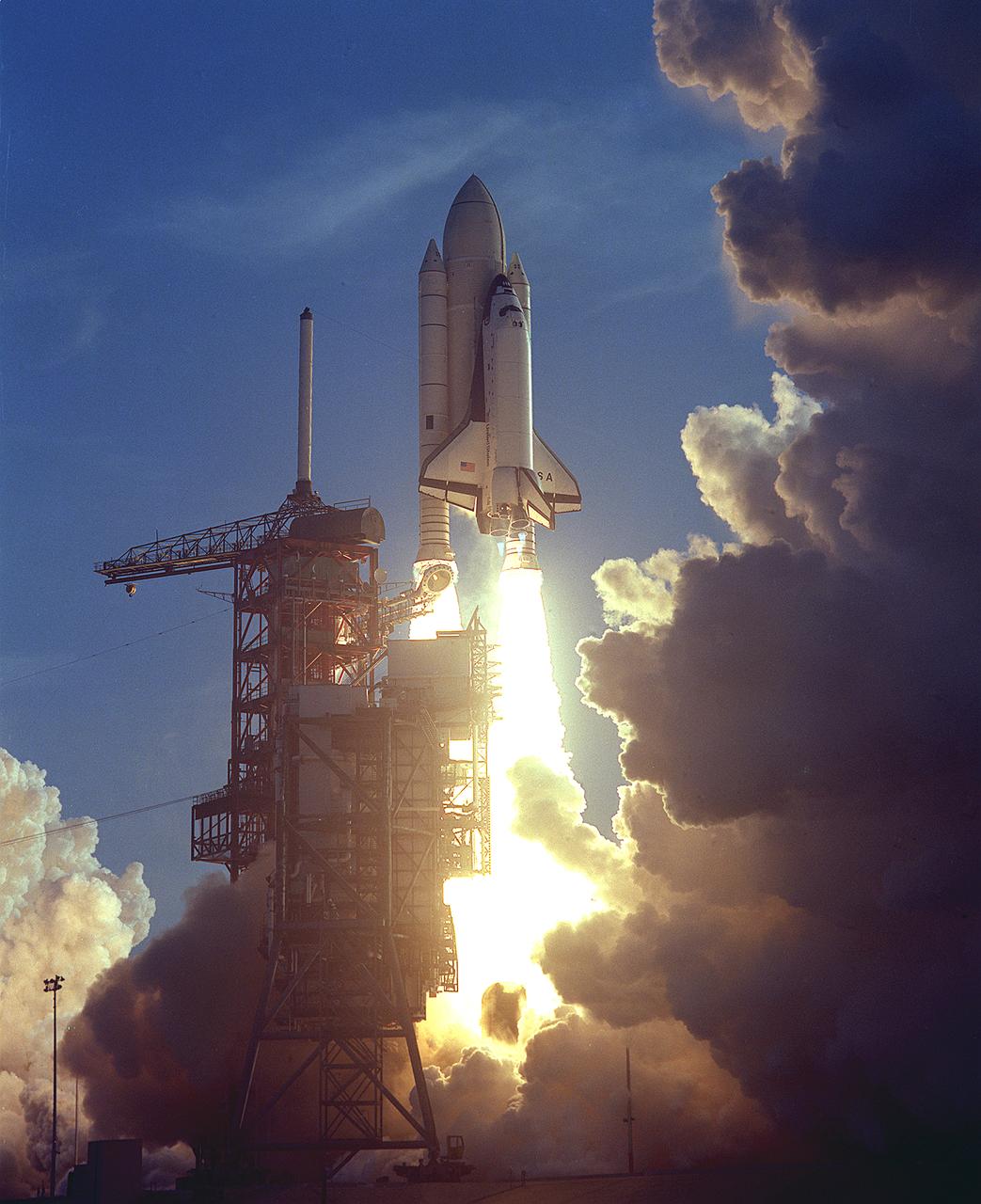
The new era in space flight began on April 12, 1981. That is when the first Space Shuttle mission (STS-1) was launched. The Marshall Space Flight Center developed the propulsion system for the Space Shuttle. This photograph depicts the launch of the Space Shuttle Orbiter Columbia marned with two astronauts, John Young and Robert Crippen.
Space Shuttle Projects
PHOTO DATE:  02-28-11 LOCATION: Bldg. 30 south  SUBJECT: STS-133/ULF5 Flight Controllers on Console - Shuttle Orbit 1   PHOTOGRAPHER: James Blair
STS133/ULF5 Flight Controllers on Console - Orbit 1
PHOTO DATE:  02-28-11 LOCATION: Bldg. 30 south  SUBJECT: STS-133/ULF5 Flight Controllers on Console - Shuttle Orbit 1   PHOTOGRAPHER: James Blair
STS133/ULF5 Flight Controllers on Console - Orbit 1
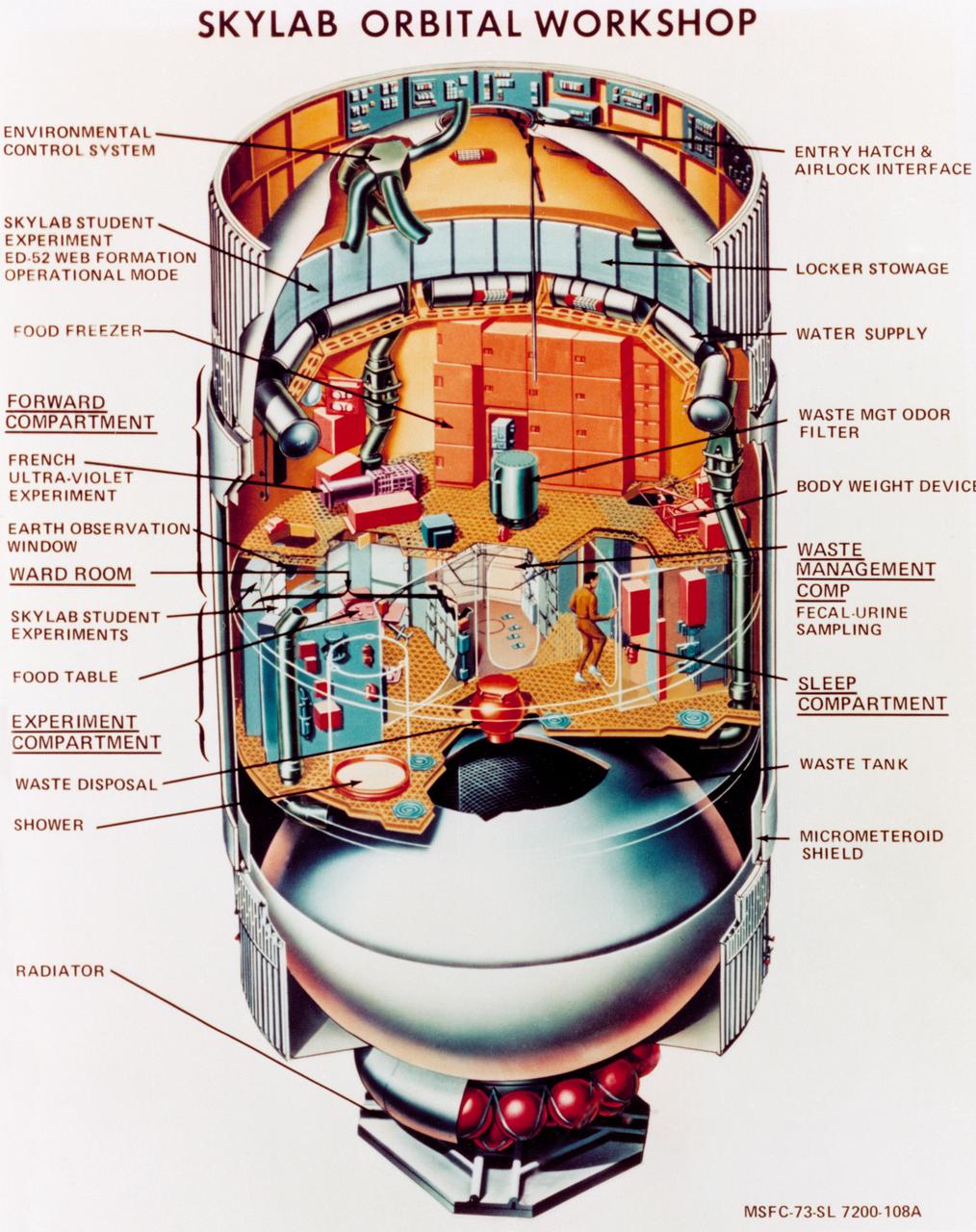
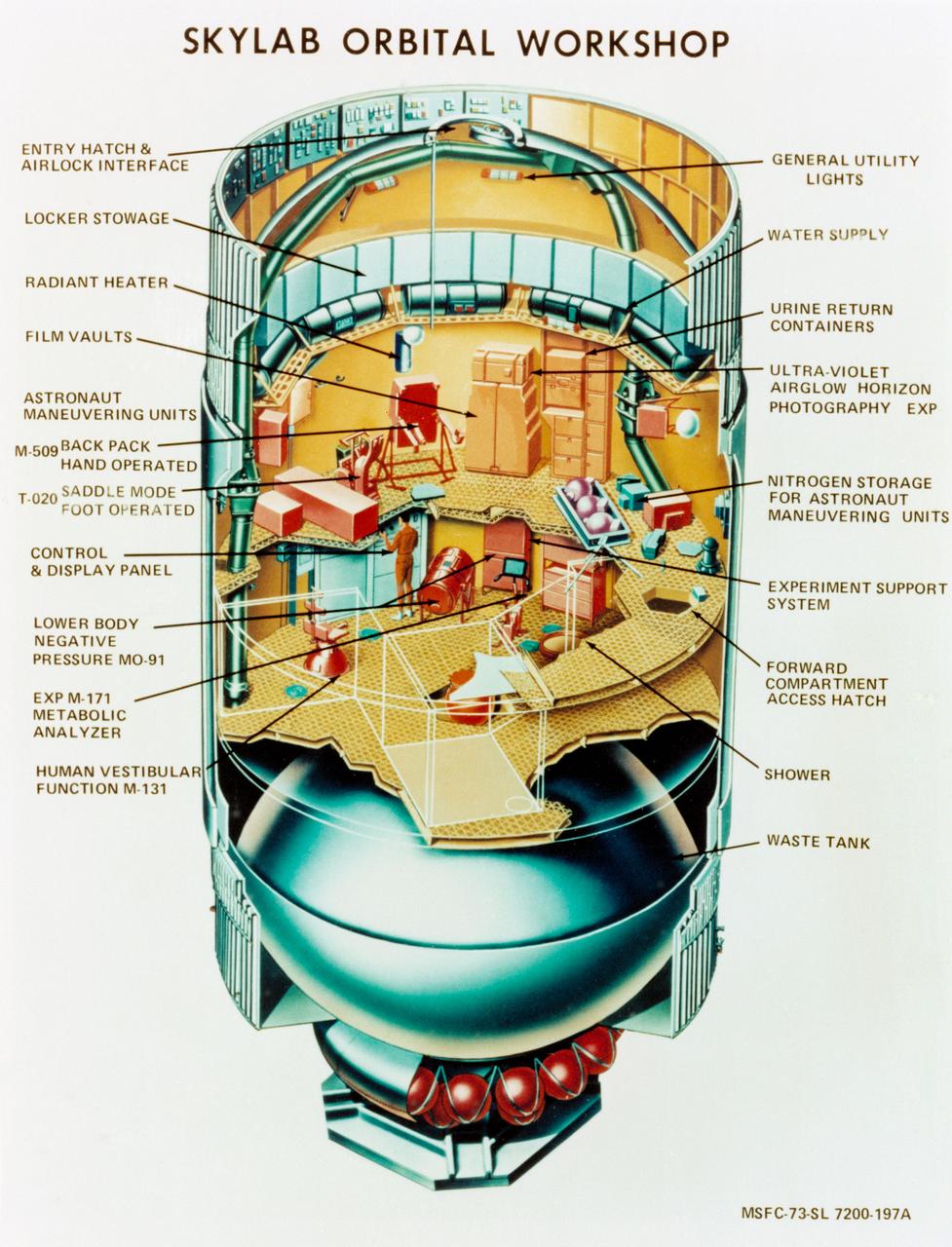
S73-23919 (May 1973) --- An artist's concept illustrating a cutaway view of the Skylab 1 Orbital Workshop (OWS). The OWS is one of the five major components of the Skylab 1 space station cluster which was launched by a Saturn V on May 14, 1973 into Earth orbit. Photo credit: NASA
ARTIST CONCEPT - CUTAWAY VIEW SKYLAB 1 ORBITAL WORKSHOP (OWS)
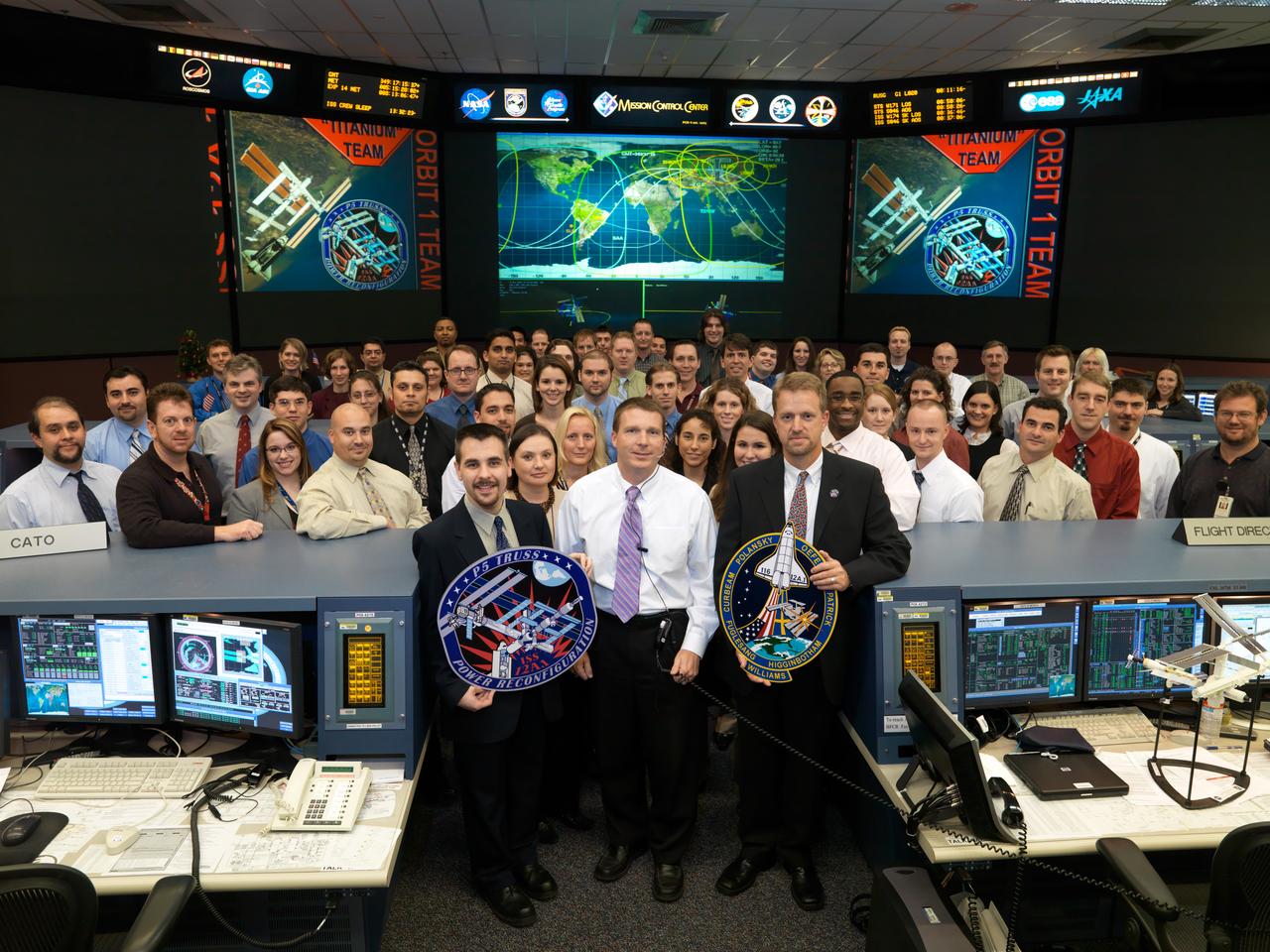
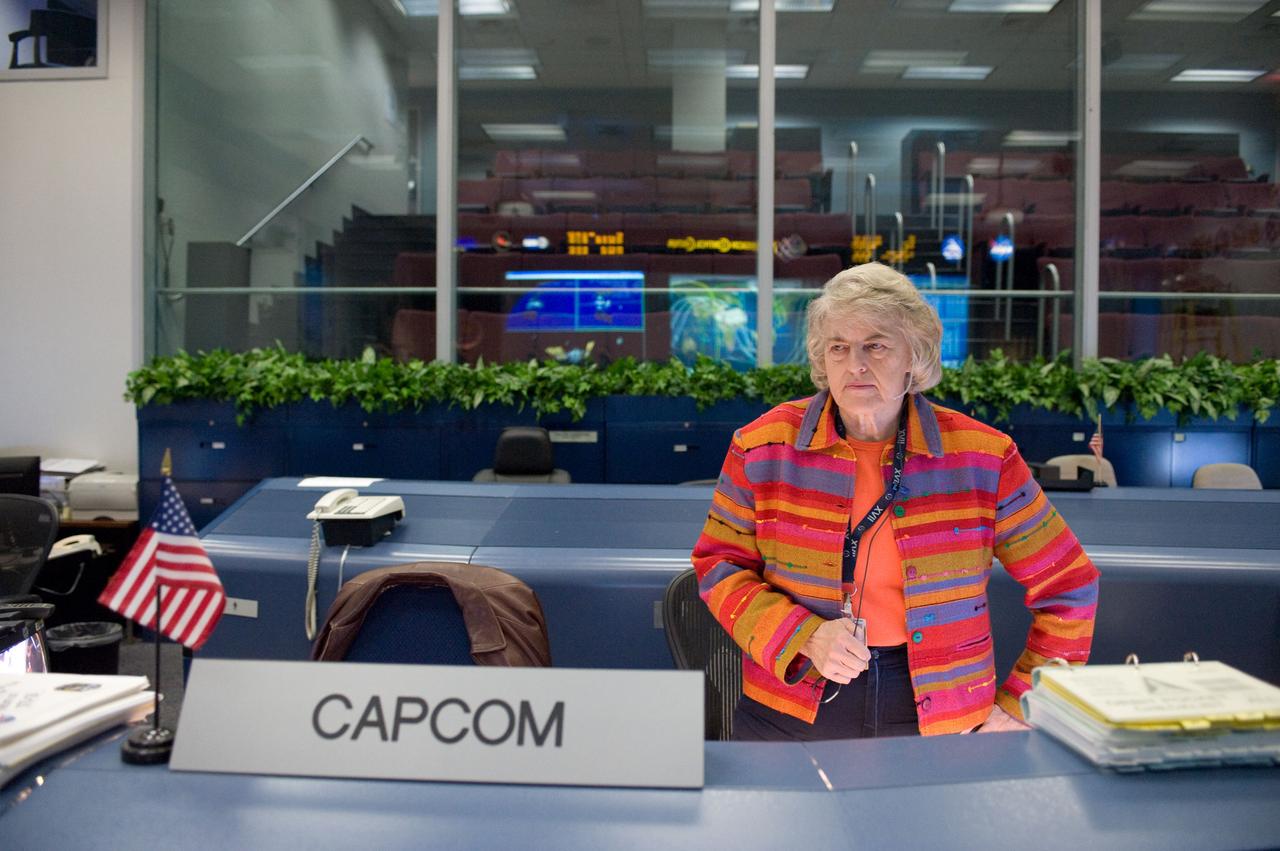
JSC2006-E-54411 (15 Dec. 2006) --- The members of the STS-116/12A.1 ISS Orbit 1 flight control team pose for a group portrait in the station flight control room of Houston's Mission Control Center (MCC). Flight director Derek Hassman (center right) holds the STS-116 mission logo. Astronaut Terry W. Virts Jr., spacecraft communicator (CAPCOM), is at center. PHALCON flight controller Scott Stover (center left) holds the P5 truss power reconfiguration logo.
ISS-12A.1 Orbit 1 Flight Control Team in FCR-1 with Flight Director Derek Hassmann
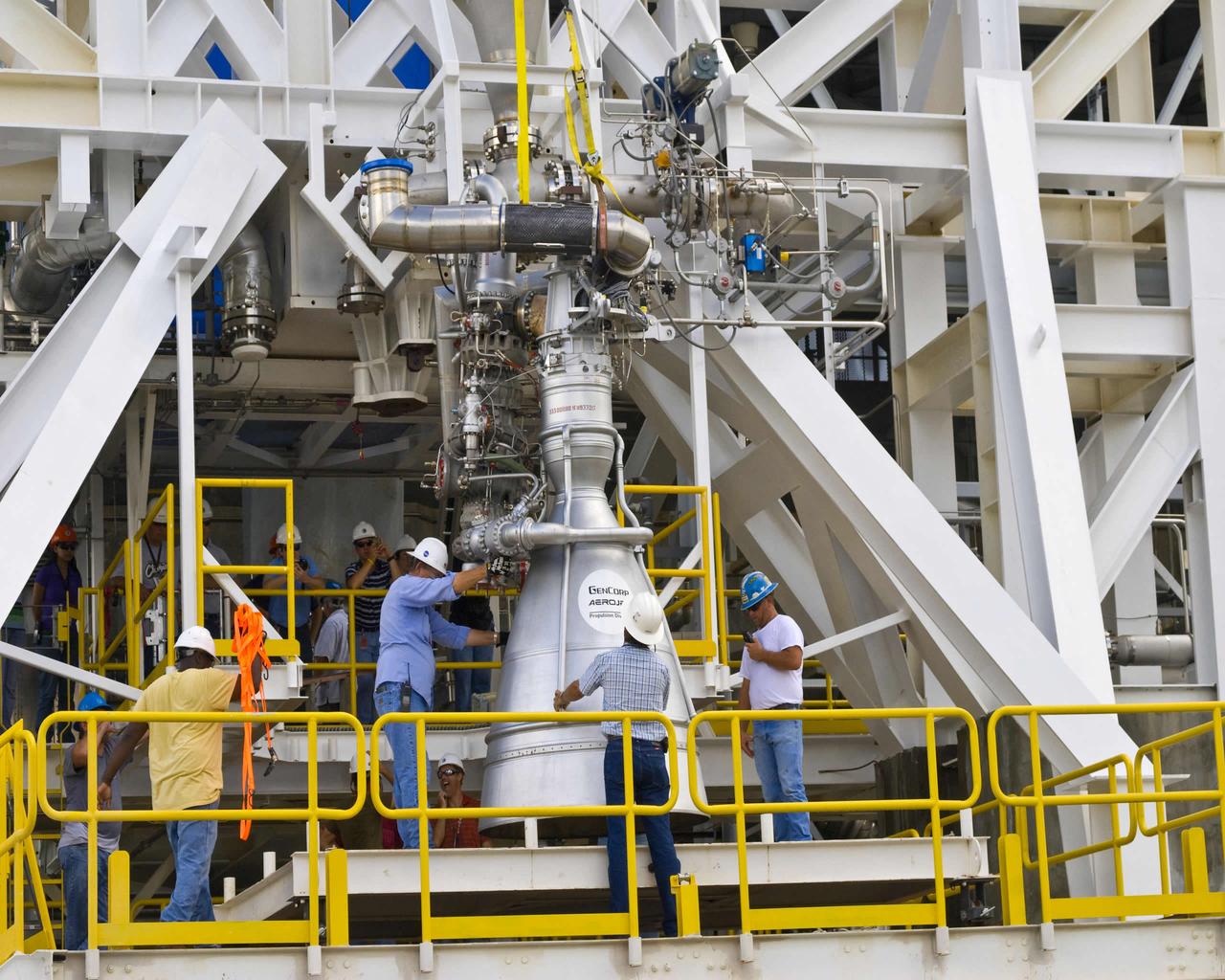
Stennis employees at the E-1 Test Stand position an Aerojet AJ26 rocket engine in preparation for a series of early tests. Stennis has partnered with Orbital Sciences Corporation to test the rocket engine for the company's commercial cargo flights to the International Space Station.
AJ26 engine testing moves forward
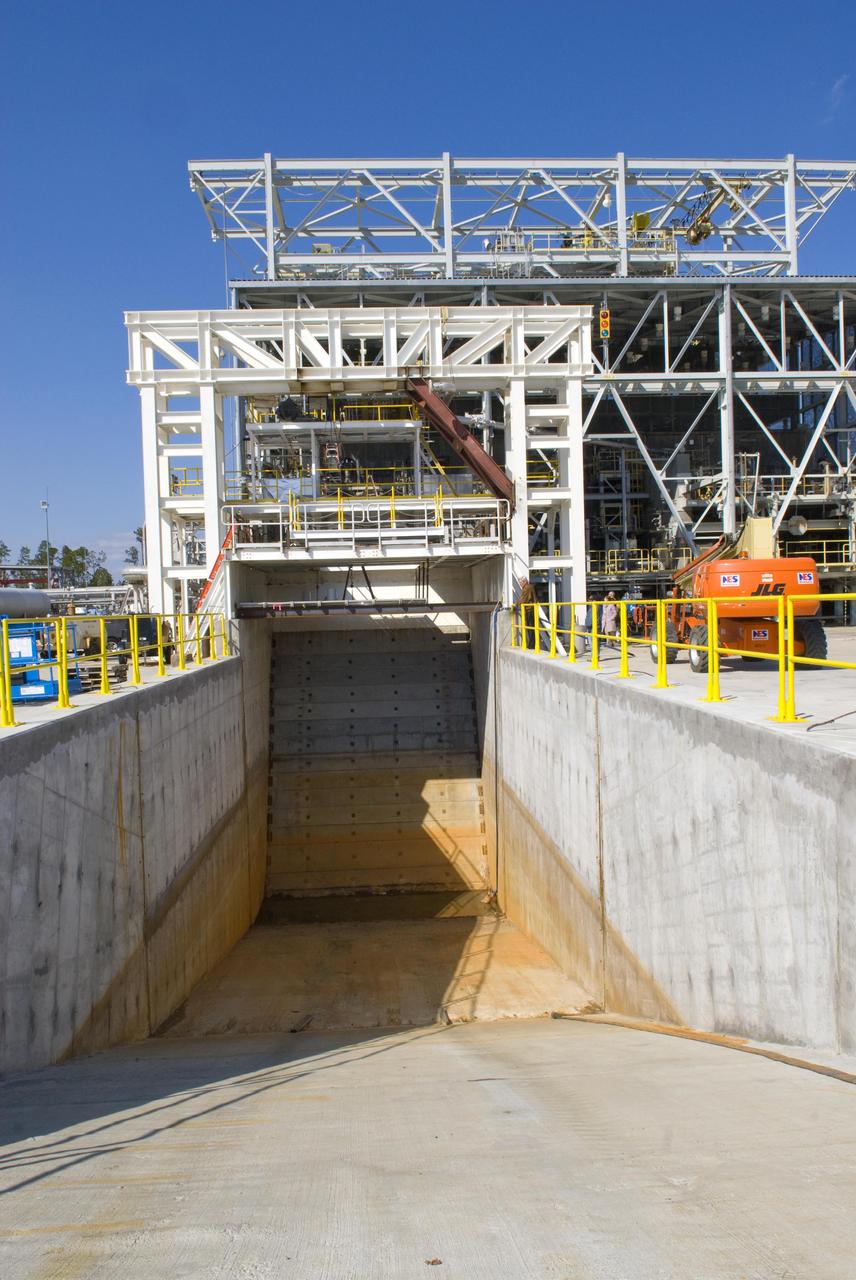
Operators at NASA's John C. Stennis Space Center are completing modifications to the E-1 Test Stand to begin testing Aerojet AJ26 rocket engines in early summer of 2010. Modifications include construction of a 27-foot-deep flame deflector trench. The AJ26 rocket engines will be used to power Orbital Sciences Corp.'s Taurus II space vehicles to provide commercial cargo transportation missions to the International Space Station for NASA. Stennis has partnered with Orbital to test all engines for the transport missions.
AJ26 rocket engine testing news briefing
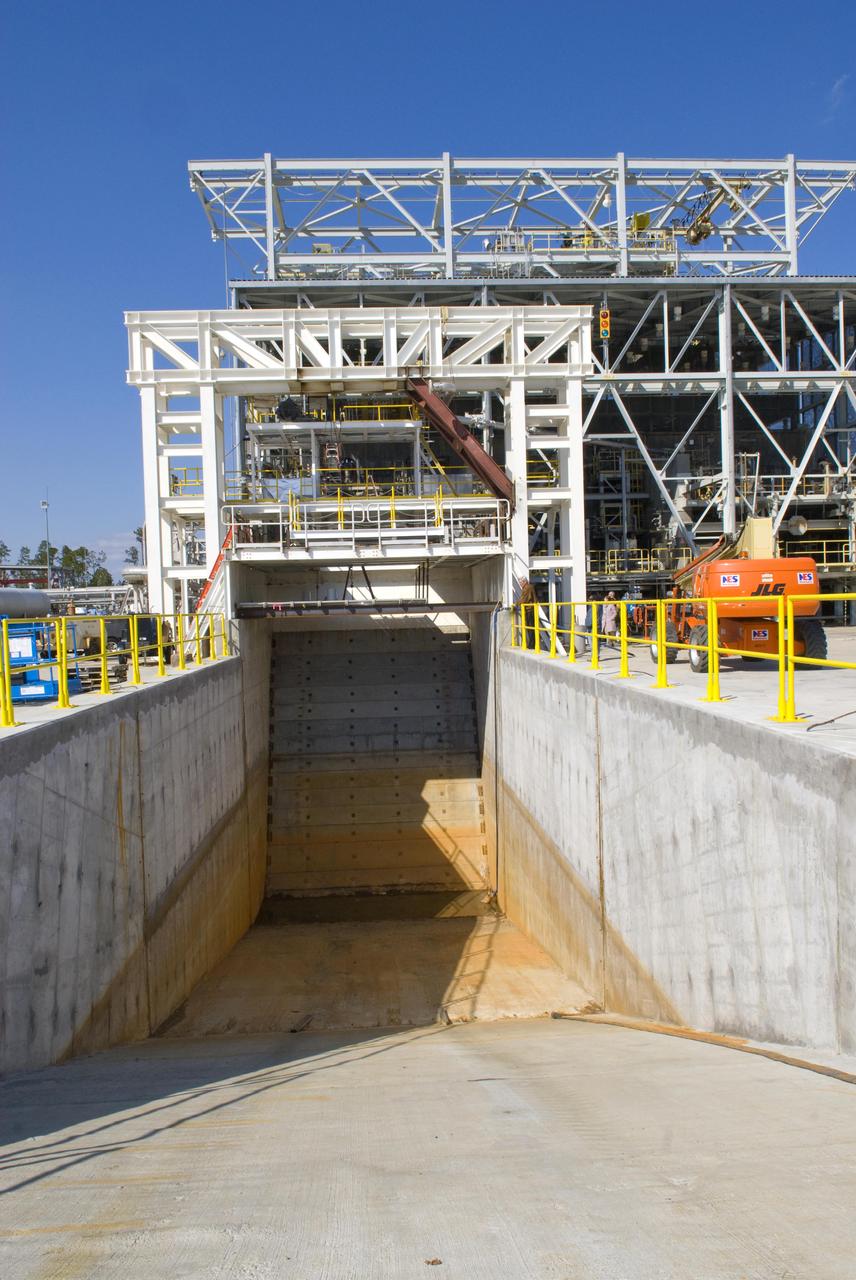
Operators at NASA's John C. Stennis Space Center are completing modifications to the E-1 Test Stand to begin testing Aerojet AJ26 rocket engines in early summer of 2010. Modifications include construction of a 27-foot-deep flame deflector trench. The AJ26 rocket engines will be used to power Orbital Sciences Corp.'s Taurus II space vehicles to provide commercial cargo transportation missions to the International Space Station for NASA. Stennis has partnered with Orbital to test all engines for the transport missions.
AJ26 rocket engine testing news briefing
PHOTO DATE: 02/25/11 LOCATION: Bldg. 30 south -WFCR SUBJECT: STS-133/ULF5 Flight Controllers on Console - Orbit Shift 3/1 -  Mike Marsh Award PHOTOGRAPHER: GEESEMAN
STS-133/ULF5 Flight Controllers on Console - Orbit Shift 3/1
PHOTO DATE: 02/25/11 LOCATION: Bldg. 30 south -WFCR SUBJECT: STS-133/ULF5 Flight Controllers on Console - Orbit Shift 3/1 -  Mike Marsh Award PHOTOGRAPHER: GEESEMAN
STS-133/ULF5 Flight Controllers on Console - Orbit Shift 3/1
PHOTO DATE: 02/25/11 LOCATION: Bldg. 30 south -WFCR SUBJECT: STS-133/ULF5 Flight Controllers on Console - Orbit Shift 3/1 -  Mike Marsh Award PHOTOGRAPHER: GEESEMAN
STS-133/ULF5 Flight Controllers on Console - Orbit Shift 3/1
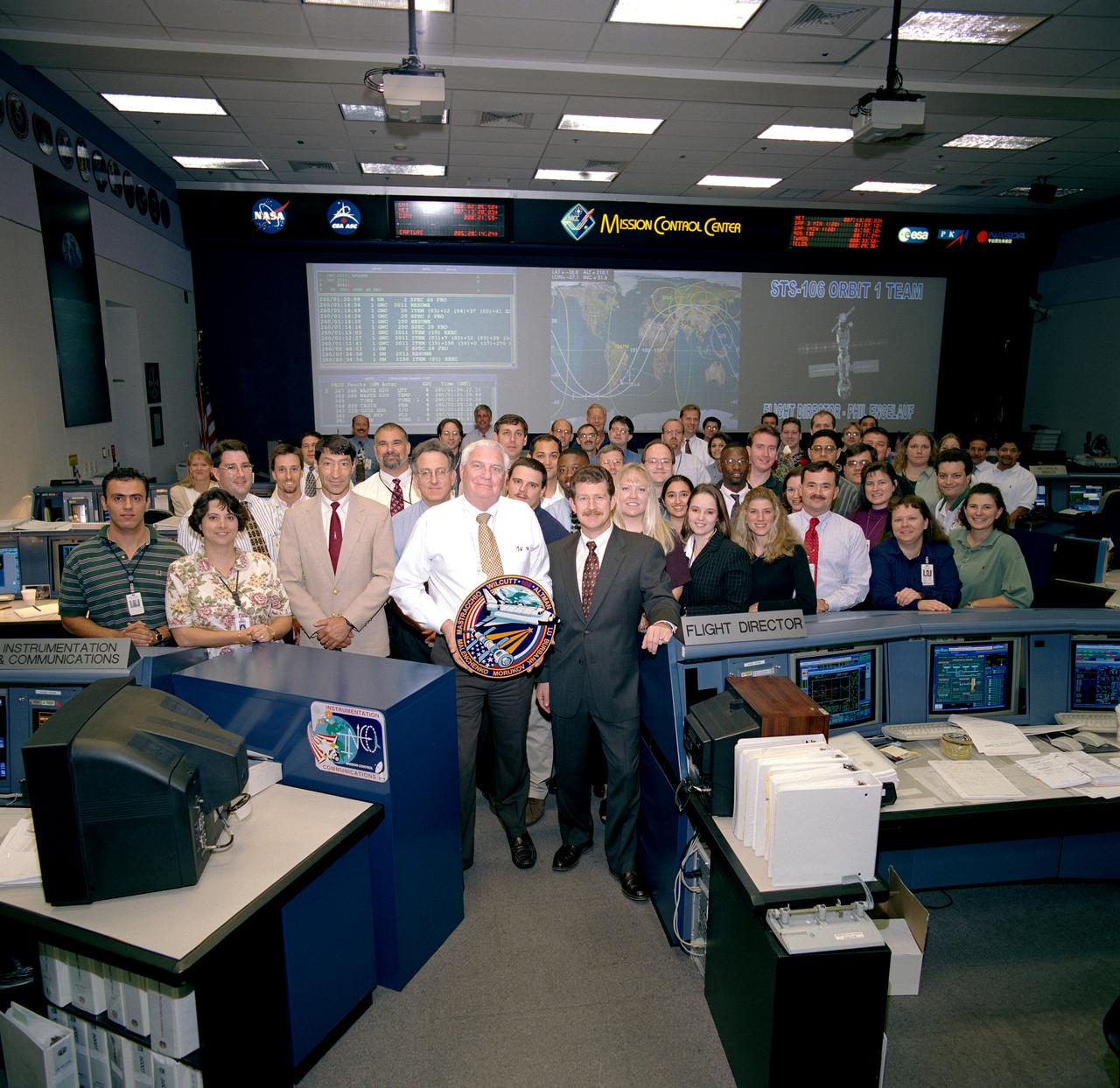
JSC2000-06253 (15 Sept. 2000) --- Flight director Phil Engelauf, front center, and the other fifty-odd flight controllers making up the STS-106 Orbit 1 team, pose for their group portrait in the Flight Control Room of Houston's Mission Control Center.
STS-106 Orbit 1 Flight Team with Phil Engelhauf in WFCR
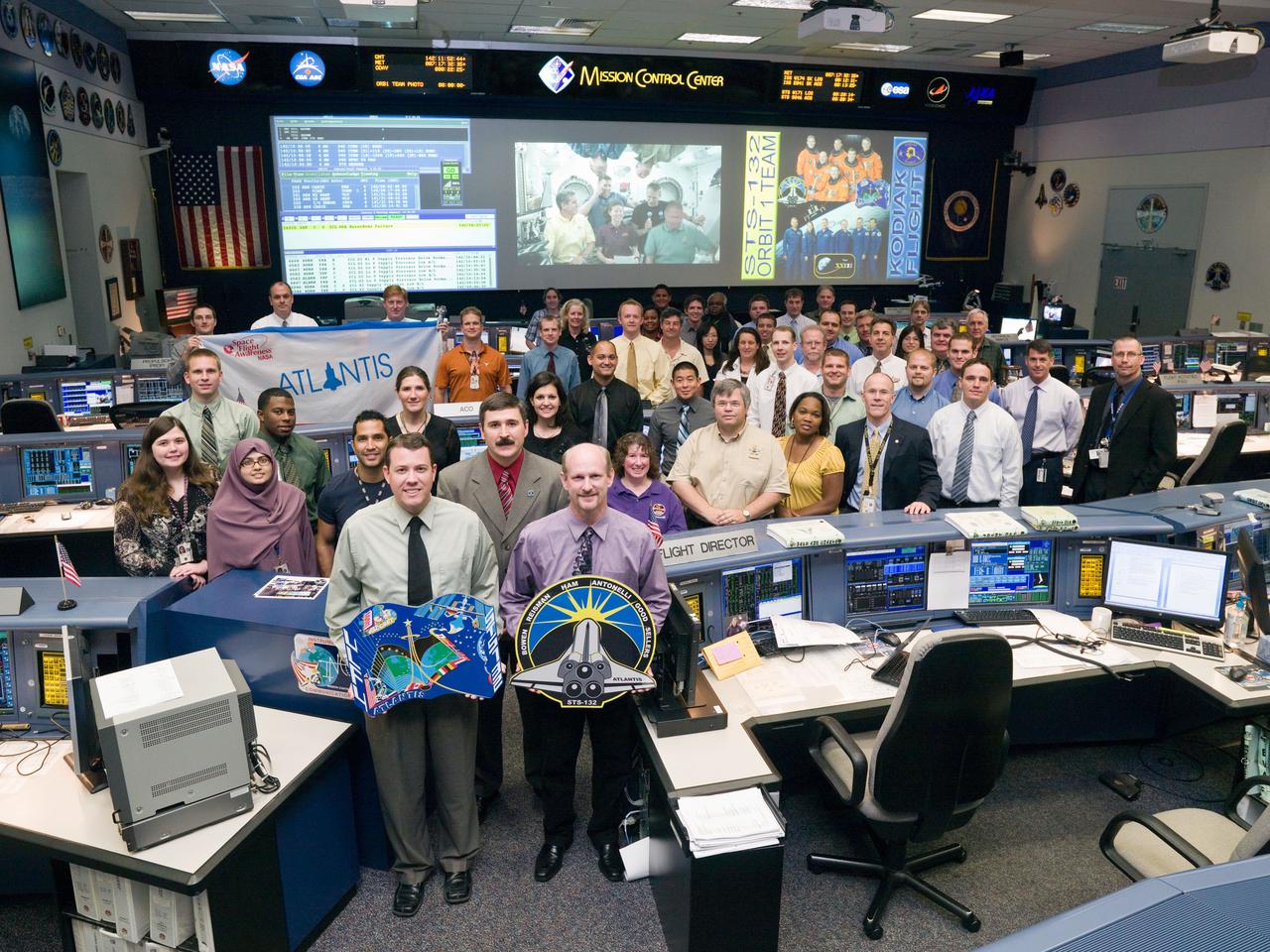
JSC2010-E-086698 (22 May 2010) --- The members of the STS-132 Orbit 1 flight control team pose for a group portrait in the space shuttle flight control room in the Mission Control Center at NASA's Johnson Space Center. Flight director Mike Sarafin (center) is visible on the front row.
STS-132 Flight Control Team in WFCR - Orbit 1
S73-23918 (May 1973) --- An artist's concept illustrating a cutaway view of the Skylab 1 Orbital Workshop (OWS). The OWS is one of the five major components of the Skylab 1 space station cluster which was launched by a Saturn V on May 14, 1973 into Earth orbit. Photo credit: NASA
Artist Concept - Illustration Cutaway View - Skylab (SL)-1 Orbital Workshop (OWS)
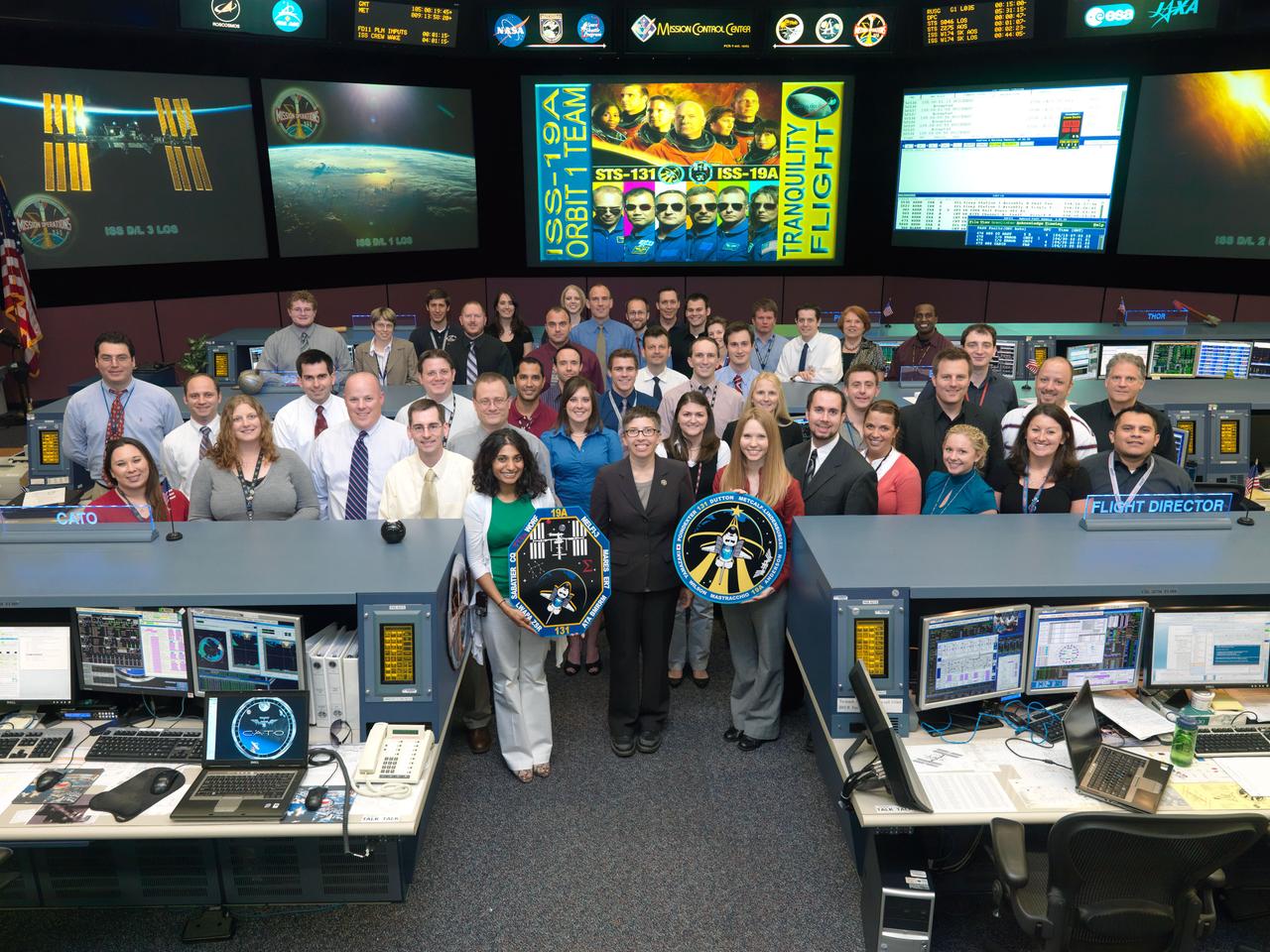
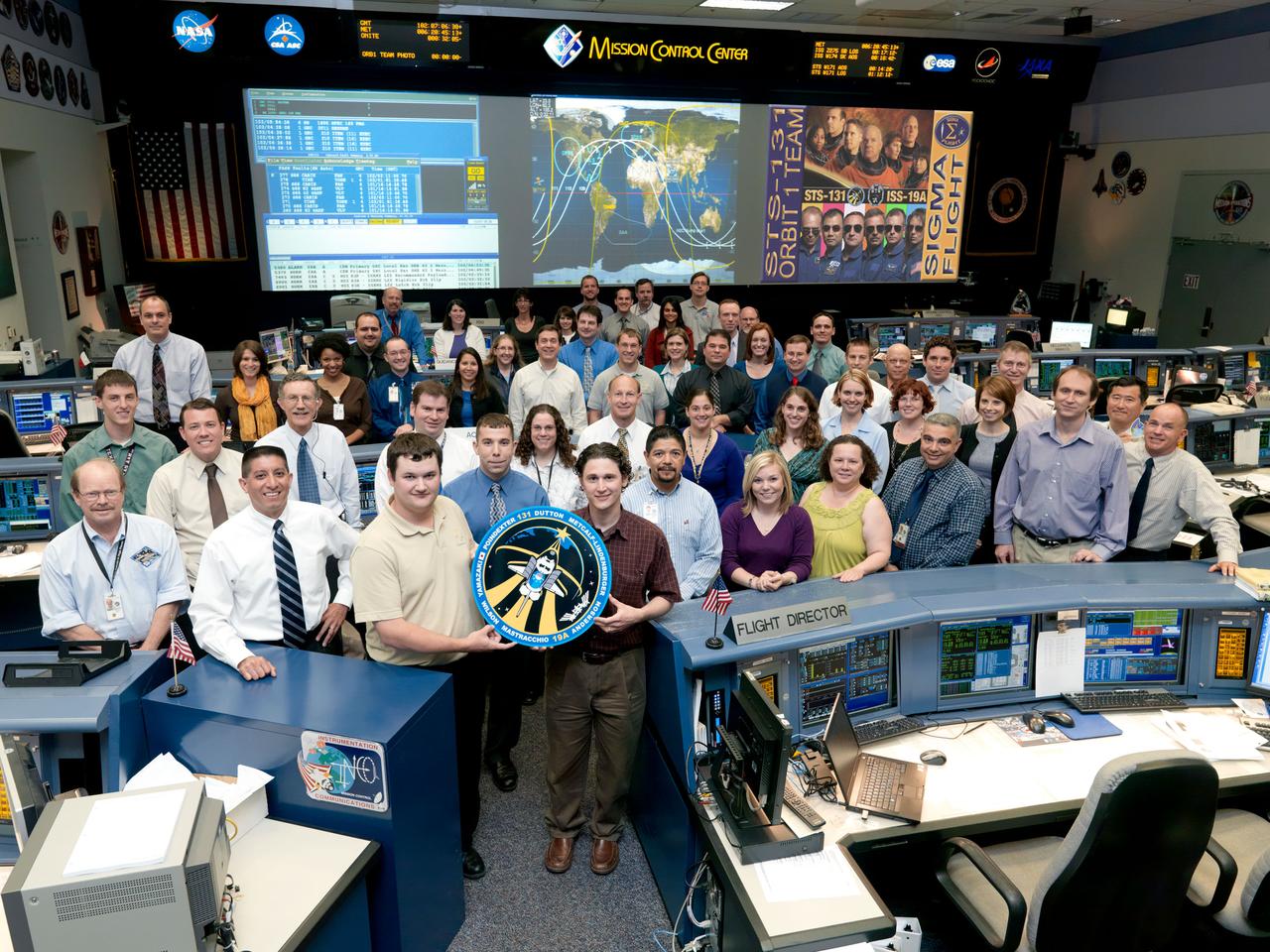
JSC2010-E-052979 (14 April 2010) --- The members of the STS-131/19A ISS Orbit 1 flight control team pose for a group portrait in the space station flight control room in the Mission Control Center at NASA's Johnson Space Center. Flight director Courtenay McMillan (center) stands on the front row.
STS-131/19A Flight Control Team in FCR-1 - Orbit 1- Flight Director Courtney McMillan
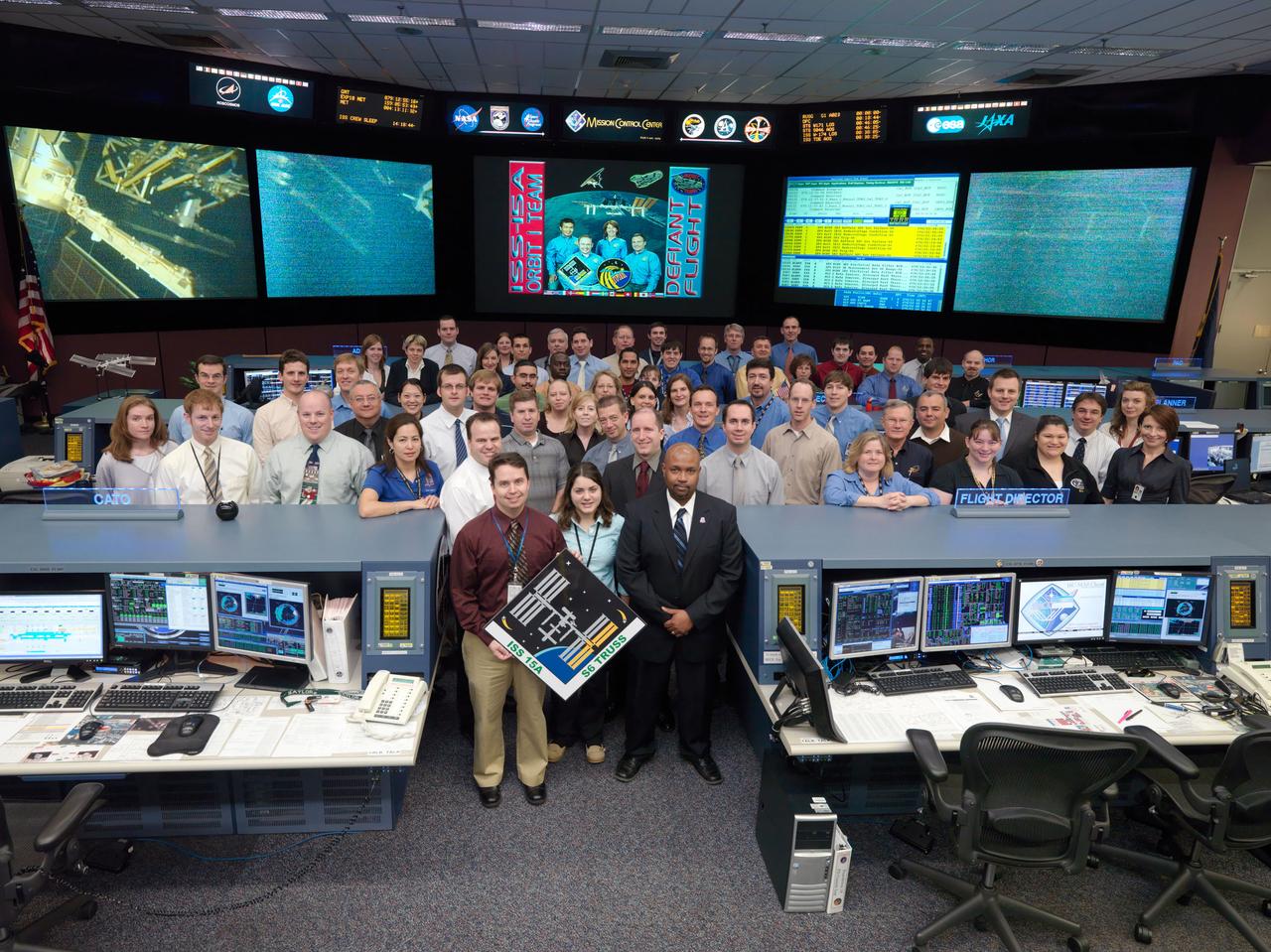
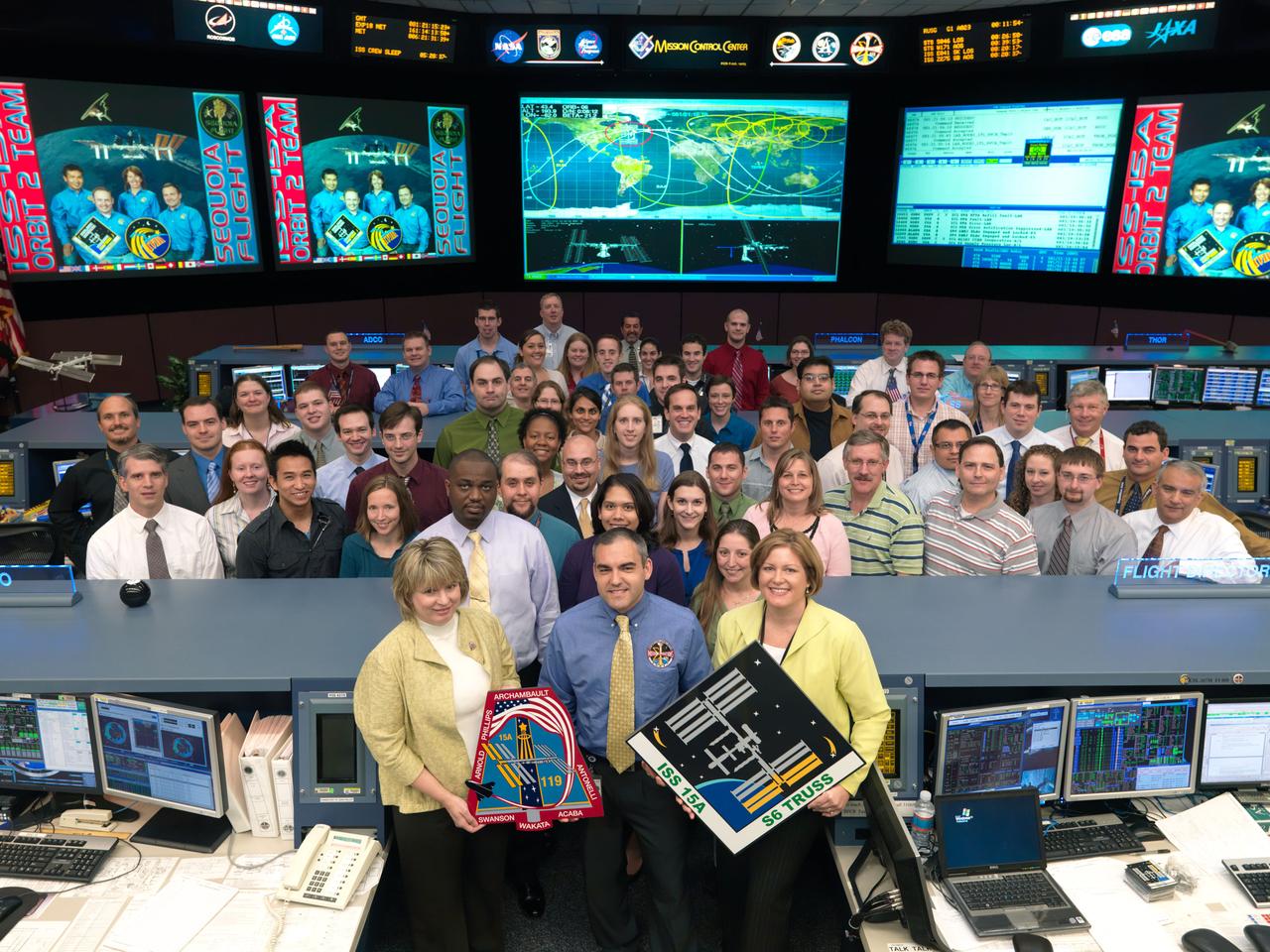
JSC2009-E-060959 (20 March 2009) --- The members of the STS-119/15A ISS Orbit 1 flight control team pose for a group portrait in the space station flight control room in the Mission Control Center at NASA’s Johnson Space Center. Flight director Kwatsi Alibaruho (right) is visible on the front row.
ISS15A Flight Control Team in FCR-1 Orbit 1 - Flight Director Kwatsi Alibaruho
STS-133/ULF5 Orbit 1 flight controllers on console during unberth of Permanment Multipurpose Module (PMM) from shuttle.  Photo Date: March 1, 2011.  Location: Building 30 - WFCR and FCR-1.  Photographer: Robert Markowitz.
STS-133/ULF5 Orbit 1 flight controllers on console during unberth of Permanent Multipurpose Module (PMM) from shuttle.
STS-133/ULF5 Orbit 1 flight controllers on console during unberth of Permanment Multipurpose Module (PMM) from shuttle.  Photo Date: March 1, 2011.  Location: Building 30 - WFCR and FCR-1.  Photographer: Robert Markowitz.
STS-133/ULF5 Orbit 1 flight controllers on console during unberth of Permanent Multipurpose Module (PMM) from shuttle.
Preparations for a shroud jettison test for the Orbiting Astronomical Observatory-1 (OAO-1) satellite in the Space Power Chambers facility at the National Aeronautics and Space Administration (NASA) Lewis Research Center. The satellite was to be launched on an Atlas-Agena rocket in the spring of 1966. The 3900-pound payload was the heaviest ever attempted by Agena. The satellite was the first of three equipped with powerful telescopes to study ultraviolet data from specific stars and galaxies. In-depth observations were not possible from Earth-bound telescopes because of the filtering and distortion of the atmosphere.    The OAO-1 satellite was wider in diameter than the Agena stage, so a new clamshell shroud was created to enclose both the satellite and the Agena. The clamshell shroud consisted of three sections that enclosed both the Agena and OAO-1: a fiberglass nose fairing and aluminum mid and aft fairings. The upper two fairings separated when the Atlas engines stopped, and the aft fairing fell away with the Atlas upon separation from the upper stages     The large altitude tank in the Space Power Chambers could simulate altitudes up to 100,000 feet. Three shroud jettison tests were run in July 1965 and the first week of August at a simulated altitude of 20 miles. The April 8, 1966 launch from Cape Canaveral went smoothly, but the OAO-1 satellite failed after only 90 minutes due to a battery failure.
Orbiting Astronomical Observatory-1 Shroud Test in Space Power Chambers
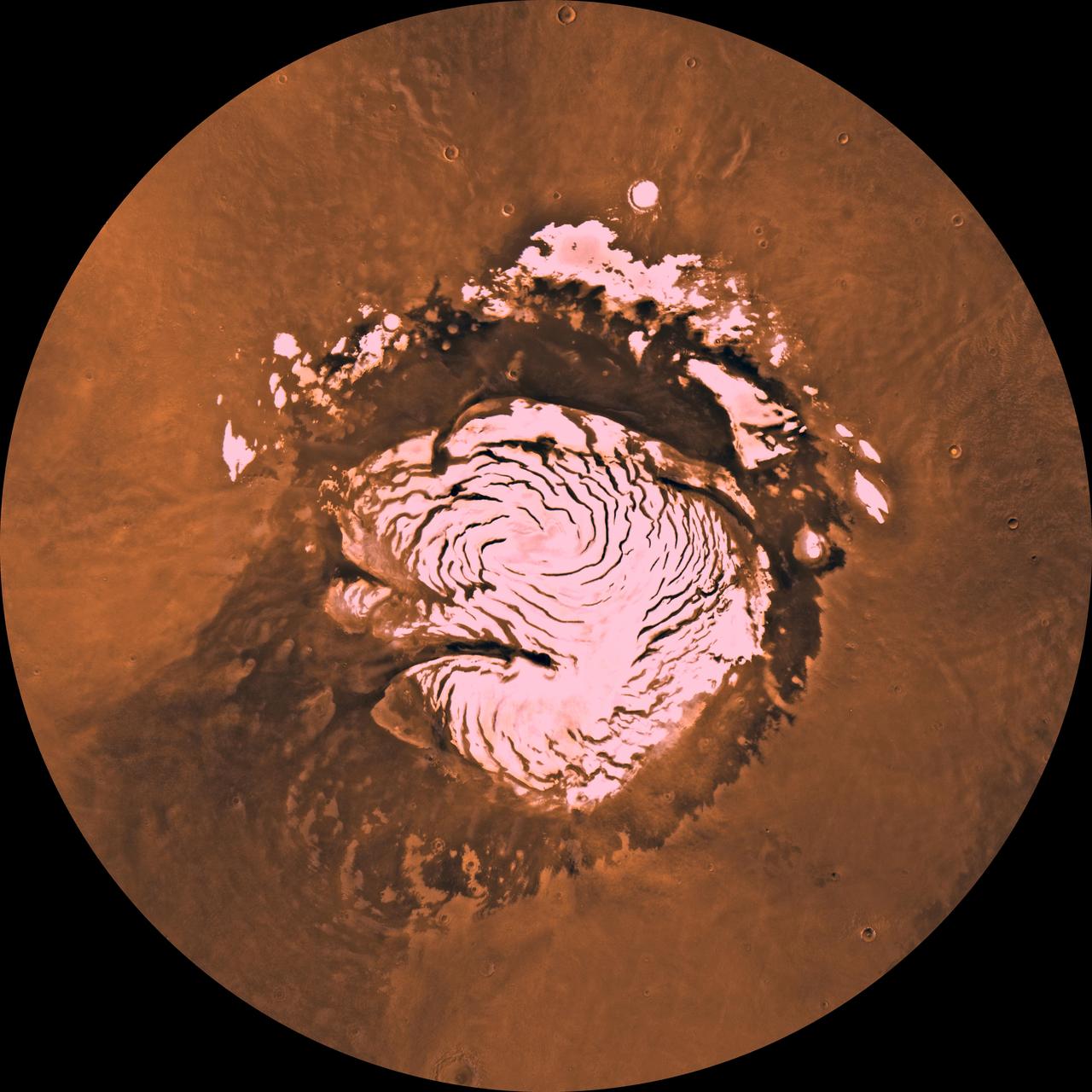
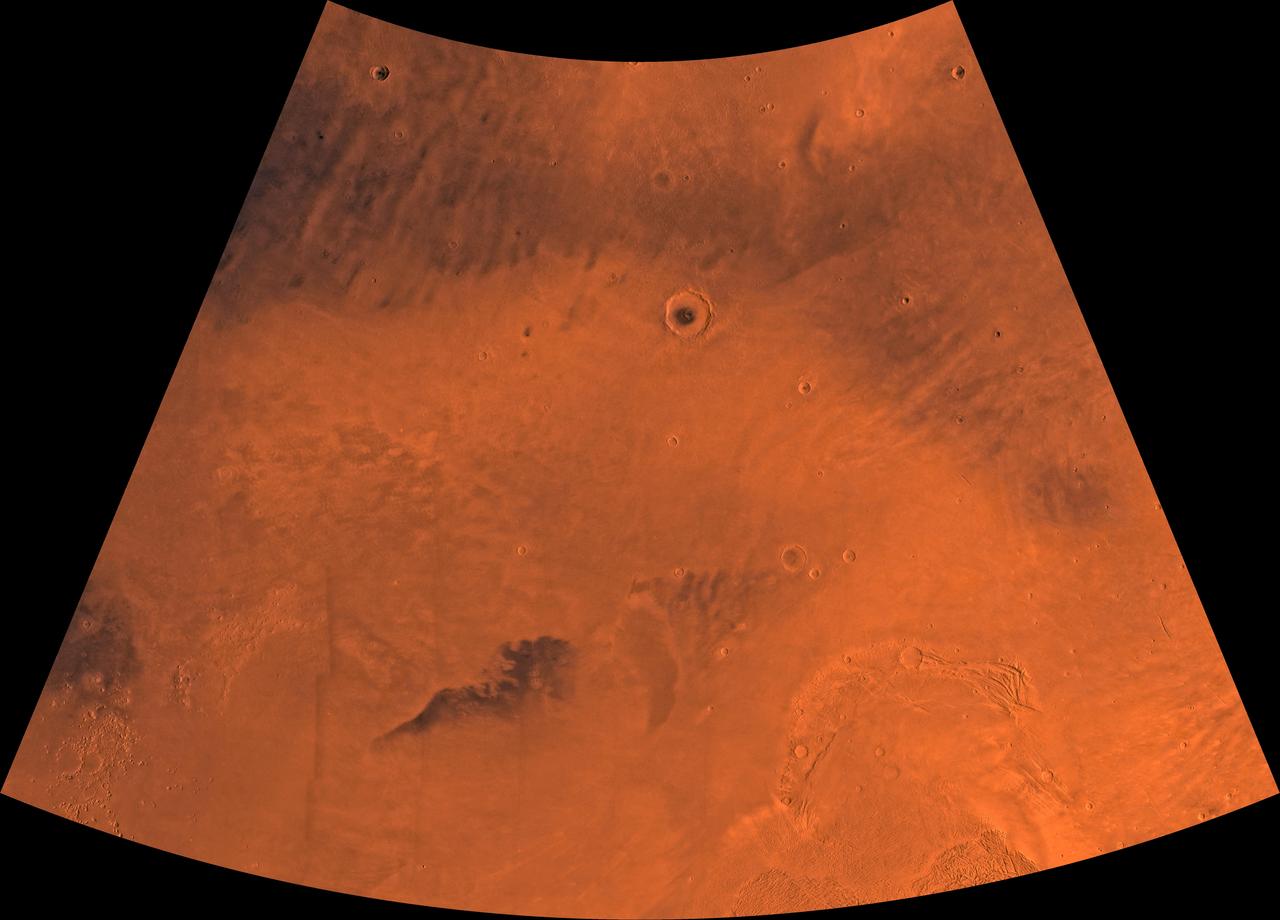
Mars digital-image mosaic merged with color of the MC-1 quadrangle, Mare Boreum region of Mars. This image is from NASA's Viking Orbiter 1.  http://photojournal.jpl.nasa.gov/catalog/PIA00161
MC-1 Mare Boreum Region
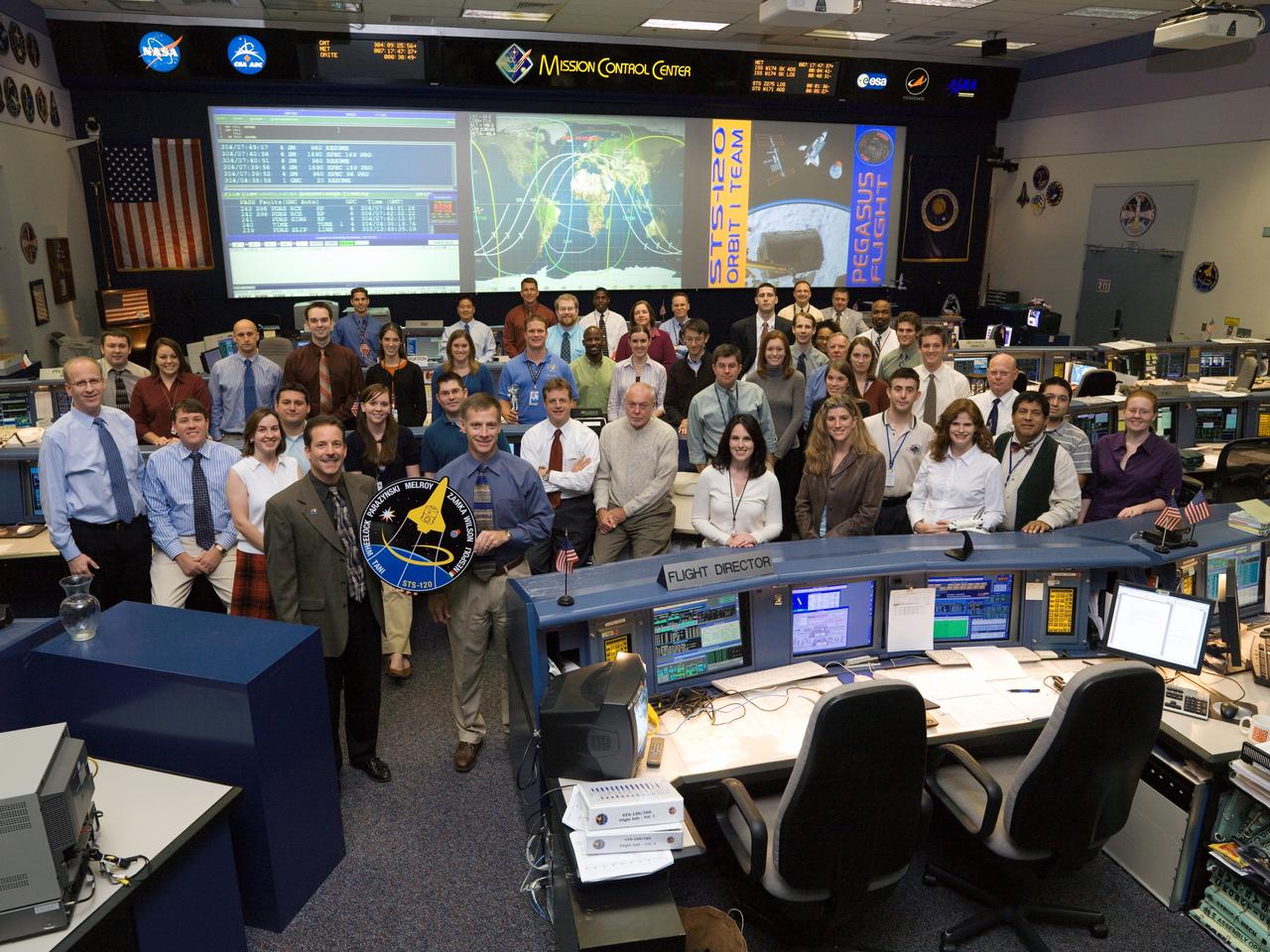
JSC2007-E-095034 (31 Oct. 2007) --- The members of the STS-120 Orbit 1 flight control team pose for a portrait in the space shuttle flight control room in Houston's Mission Control Center (MCC). Flight director Rick LaBrode (left) and astronaut Chris Ferguson, spacecraft communicator (CAPCOM), hold the STS-120 mission logo.
STS-120 Orbit 1 Flight Control Team in WFCR
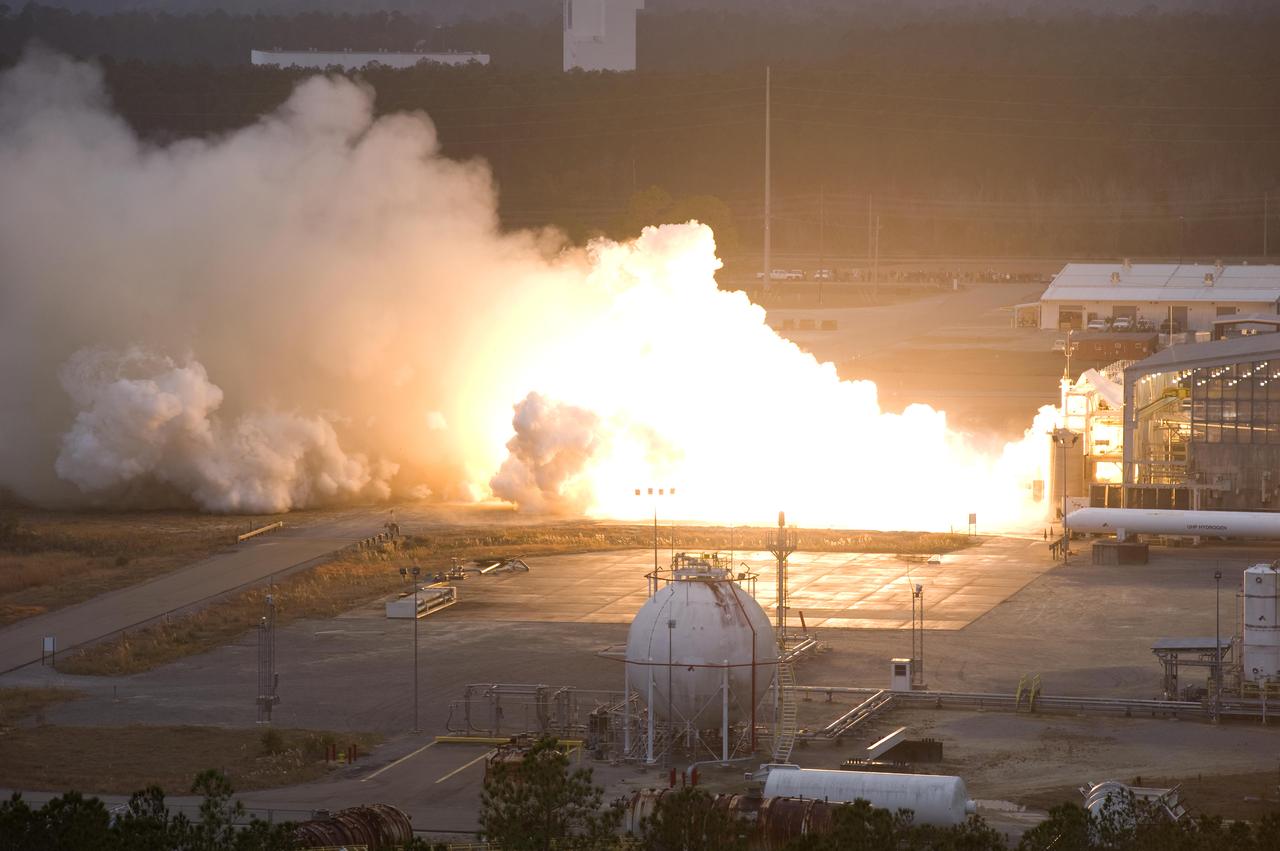
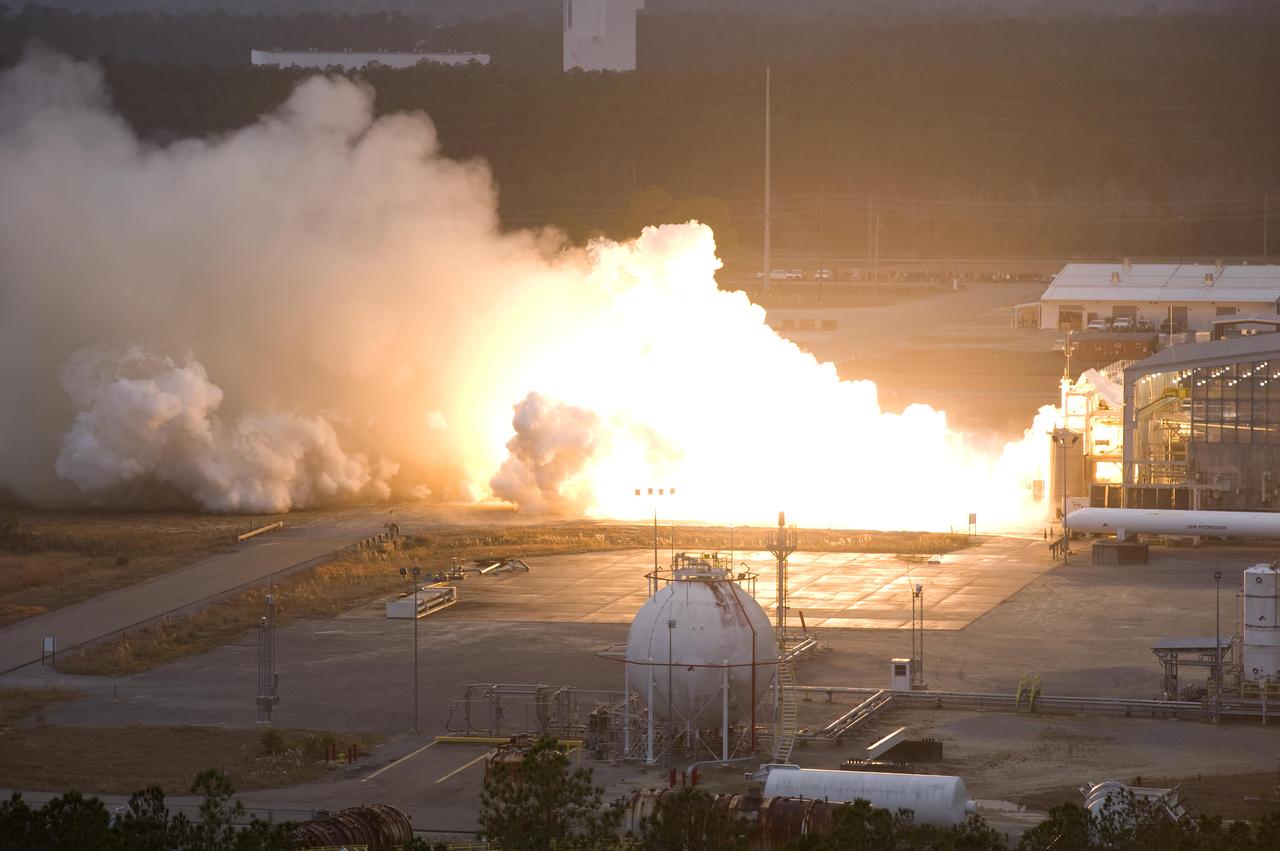
John C. Stennis Space Center engineers conduct a 55-second test fire of Aerojet's liquid-fuel AJ26 rocket engine that will power the first stage of Orbital Sciences Corporation's Taurus II space launch vehicle. The Dec. 17, 2010 test was conducted on the E-1 Test Stand at Stennis in support of NASA's Commercial Transportation Services partnerships to enable commercial cargo flights to the International Space Station. Orbital is under contract with NASA to provide eight cargo missions to the space station through 2015.
AJ26 engine test
John C. Stennis Space Center engineers conduct a 55-second test fire of Aerojet's liquid-fuel AJ26 rocket engine that will power the first stage of Orbital Sciences Corporation's Taurus II space launch vehicle. The Dec. 17, 2010 test was conducted on the E-1 Test Stand at Stennis in support of NASA's Commercial Transportation Services partnerships to enable commercial cargo flights to the International Space Station. Orbital is under contract with NASA to provide eight cargo missions to the space station through 2015.
AJ26 engine test
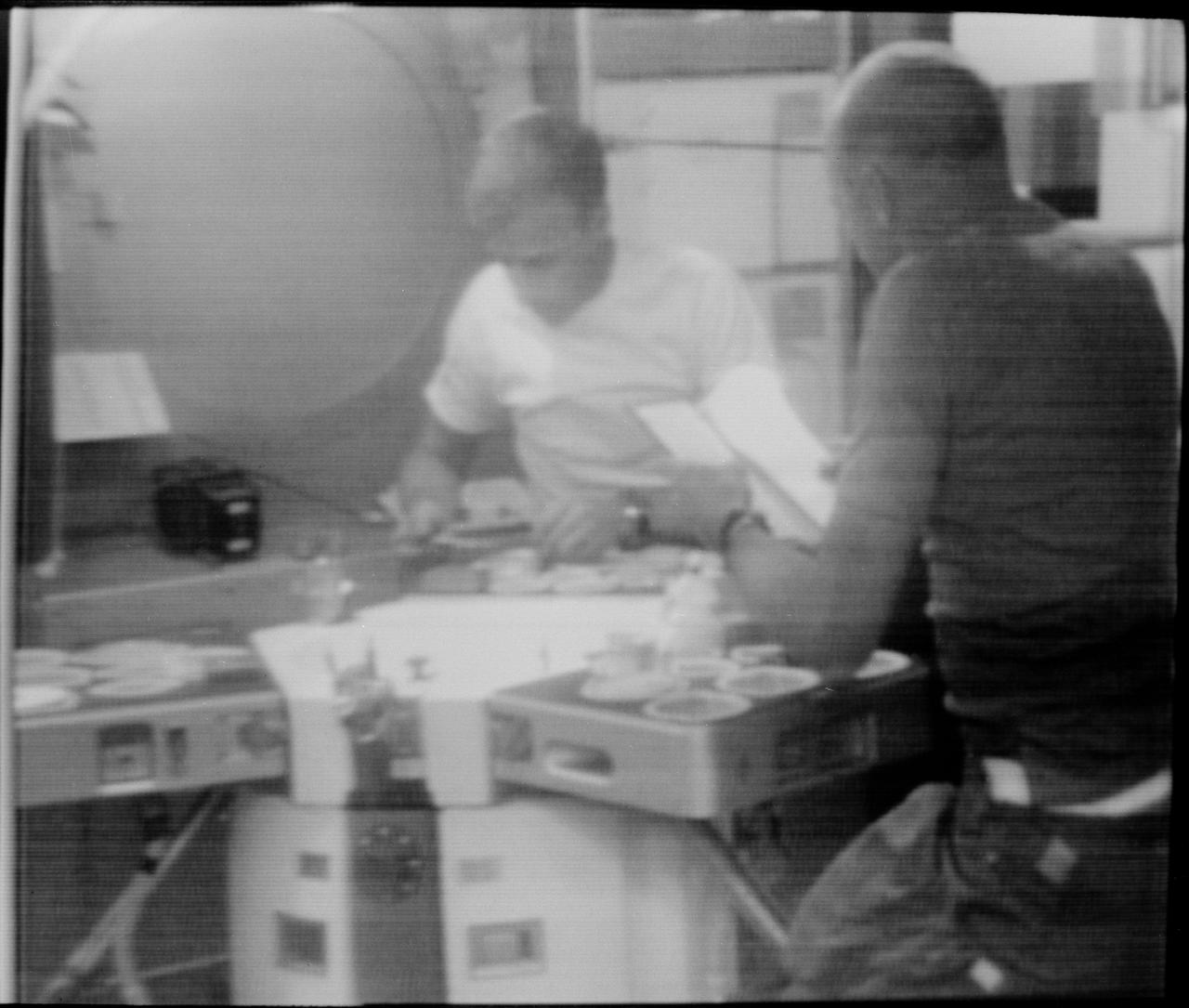
S73-27081 (30 May 1973) --- Two of the three Skylab 2 astronauts are seen in the wardroom of the crew quarters of the Orbital Workshop of the Skylab 1 space station cluster in Earth orbit in this reproduction taken from a  television transmission made by a TV camera aboard the space station. They are preparing to eat a meal. Astronaut Charles Conrad Jr., commander, is in the right foreground. In the background is astronaut Paul J. Weitz, pilot.  Photo credit: NASA
Skylab (SL)-2 Astronauts - Wardroom - Crew Quarters - SL-1 Station
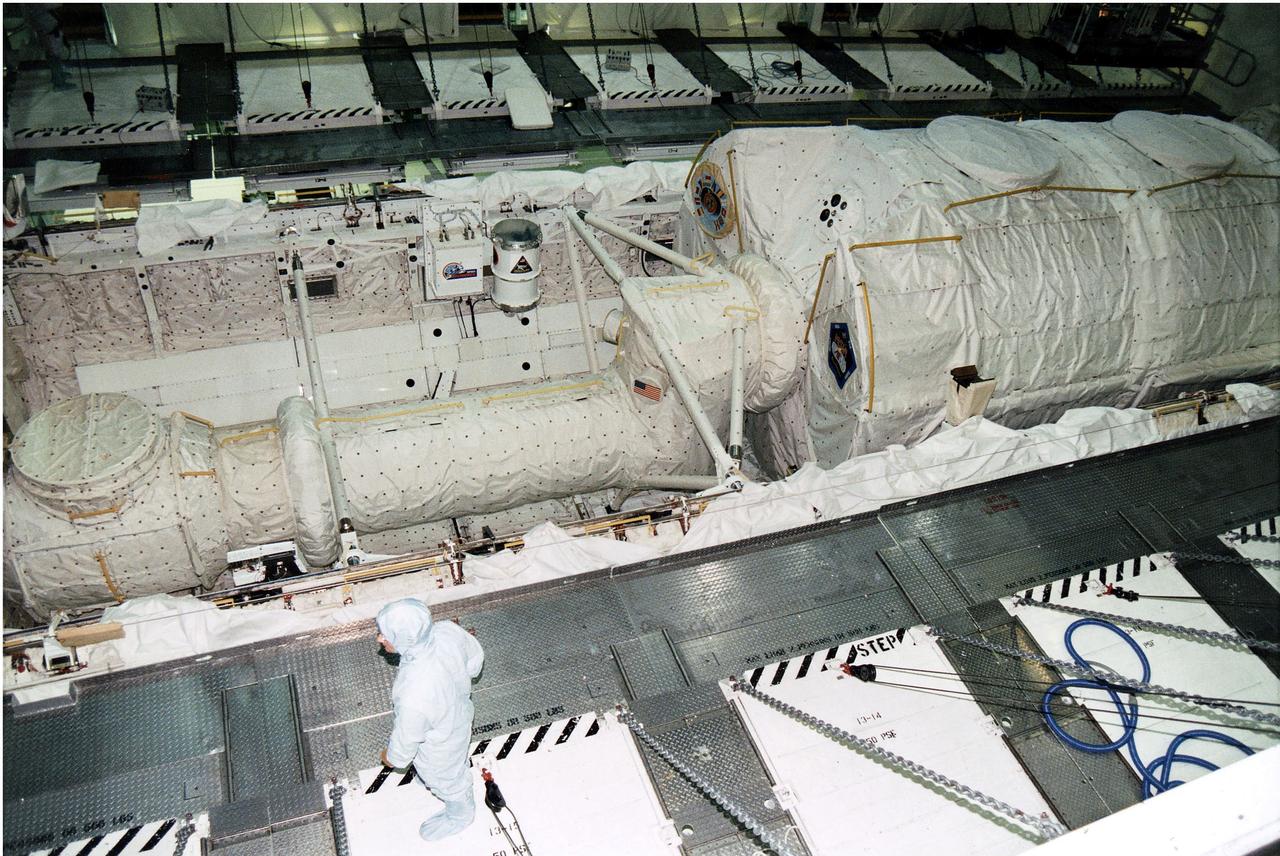
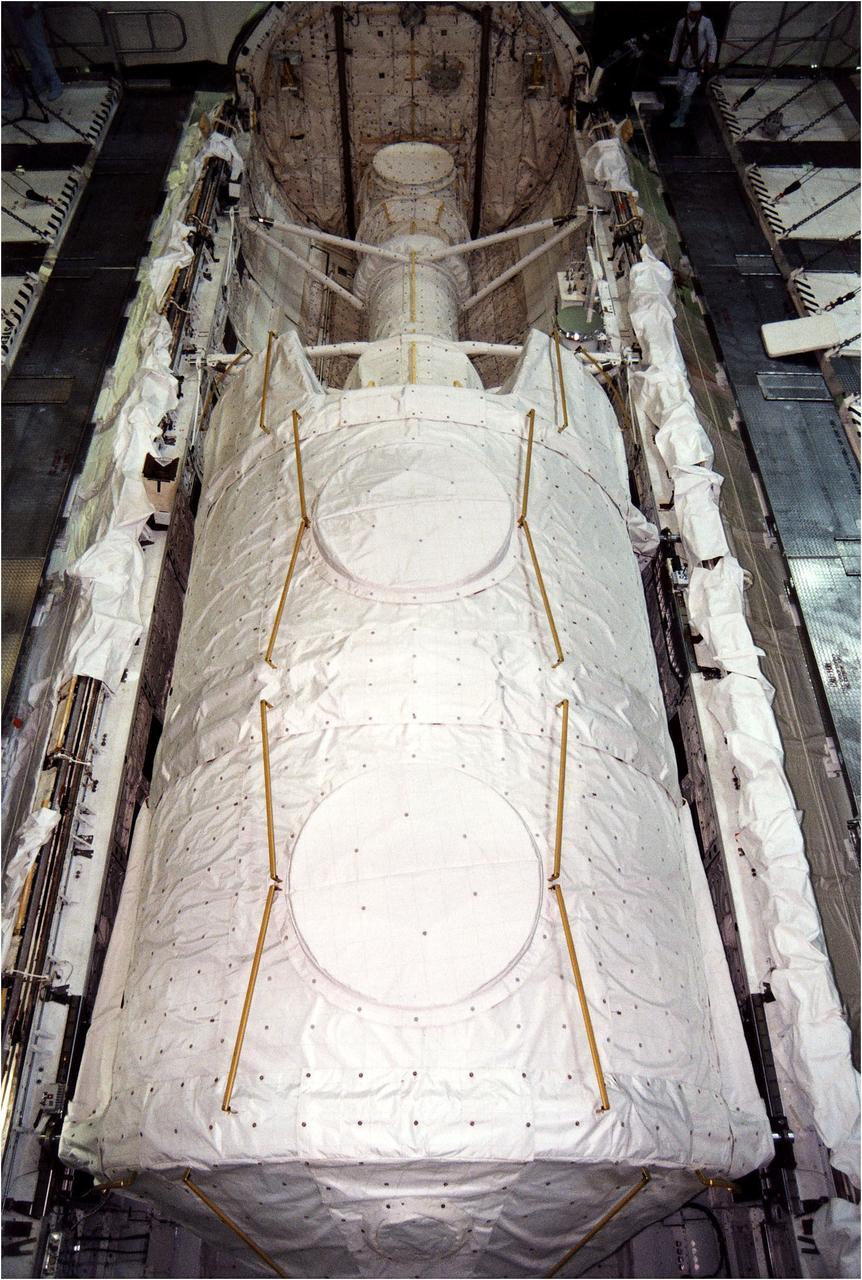
KENNEDY SPACE CENTER, FLA. - The Microgravity Science Laboratory-1 (MSL-1) Spacelab module is installed into the payload bay of the Space Shuttle Orbiter Columbia in Orbiter Processing Facility 1.  The Spacelab long crew transfer tunnel that leads from the orbiter's crew airlock to the module is also aboard, as well as the Hitchhiker Cryogenic Flexible Diode (CRYOFD) experiment payload, which is attached to the right side of Columbia's payload bay.  During the scheduled 16-day STS-83 mission, the MSL-1 will be used to test some of the hardware, facilities and procedures that are planned for use on the International Space Station while the flight crew conducts combustion, protein crystal growth and materials processing experiments.
KENNEDY SPACE CENTER, FLA. - The Microgravity Science Laboratory-1 (MSL-1) Spacelab module is installed into the payload bay of the Space Shuttle Orbiter Columbia in Orbiter Processing Facility 1. The Spacelab long crew transfer tunnel that leads from the orbiter's crew airlock to the module is also aboard, as well as the Hitchhiker Cryogenic Flexible Diode (CRYOFD) experiment payload, which is attached to the right side of Columbia's payload bay. During the scheduled 16-day STS-83 mission, the MSL-1 will be used to test some of the hardware, facilities and procedures that are planned for use on the International Space Station while the flight crew conducts combustion, protein crystal growth and materials processing experiments.
KENNEDY SPACE CENTER, FLA. - The Microgravity Science Laboratory-1 (MSL-1) Spacelab module is installed into the payload bay of the Space Shuttle Orbiter Columbia in Orbiter Processing Facility 1.  The Spacelab long crew transfer tunnel that leads from the orbiter's crew airlock to the module is also aboard, as well as the Hitchhiker Cryogenic Flexible Diode (CRYOFD) experiment payload, which is attached to the right side of Columbia's payload bay.  During the scheduled 16-day STS-83 mission, the MSL-1 will be used to test some of the hardware, facilities and procedures that are planned for use on the International Space Station while the flight crew conducts combustion, protein crystal growth and materials processing experiments.
KENNEDY SPACE CENTER, FLA. - The Microgravity Science Laboratory-1 (MSL-1) Spacelab module is installed into the payload bay of the Space Shuttle Orbiter Columbia in Orbiter Processing Facility 1. The Spacelab long crew transfer tunnel that leads from the orbiter's crew airlock to the module is also aboard, as well as the Hitchhiker Cryogenic Flexible Diode (CRYOFD) experiment payload, which is attached to the right side of Columbia's payload bay. During the scheduled 16-day STS-83 mission, the MSL-1 will be used to test some of the hardware, facilities and procedures that are planned for use on the International Space Station while the flight crew conducts combustion, protein crystal growth and materials processing experiments.
All seven planets discovered in orbit around the red dwarf star TRAPPIST-1 could easily fit inside the orbit of Mercury, the innermost planet of our solar system. In fact, they would have room to spare. TRAPPIST-1 also is only a fraction of the size of our Sun; it isn't much larger than Jupiter. So, the TRAPPIST-1 system's proportions look more like Jupiter and its moons than those of our solar system.  The seven planets of TRAPPIST-1 are all Earth-sized and terrestrial. TRAPPIST-1 is an ultra-cool dwarf star in the constellation Aquarius, and its planets orbit very close to it.  https://photojournal.jpl.nasa.gov/catalog/PIA22096
TRAPPIST-1 Compared to Jovian Moons and Inner Solar System - Updated Feb. 2018
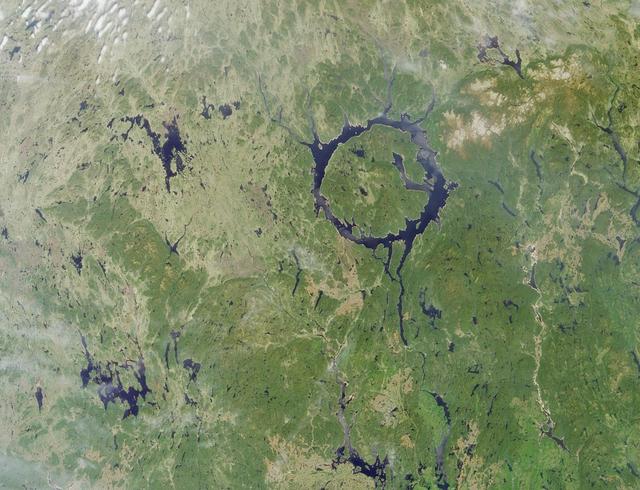
Lake Manicouagan in northern Quebec, Canada, as seen by NASA Terra satellite on June 1, 2001, during Terra orbit 7737.
Manicouagan Impact Structure, Quebec
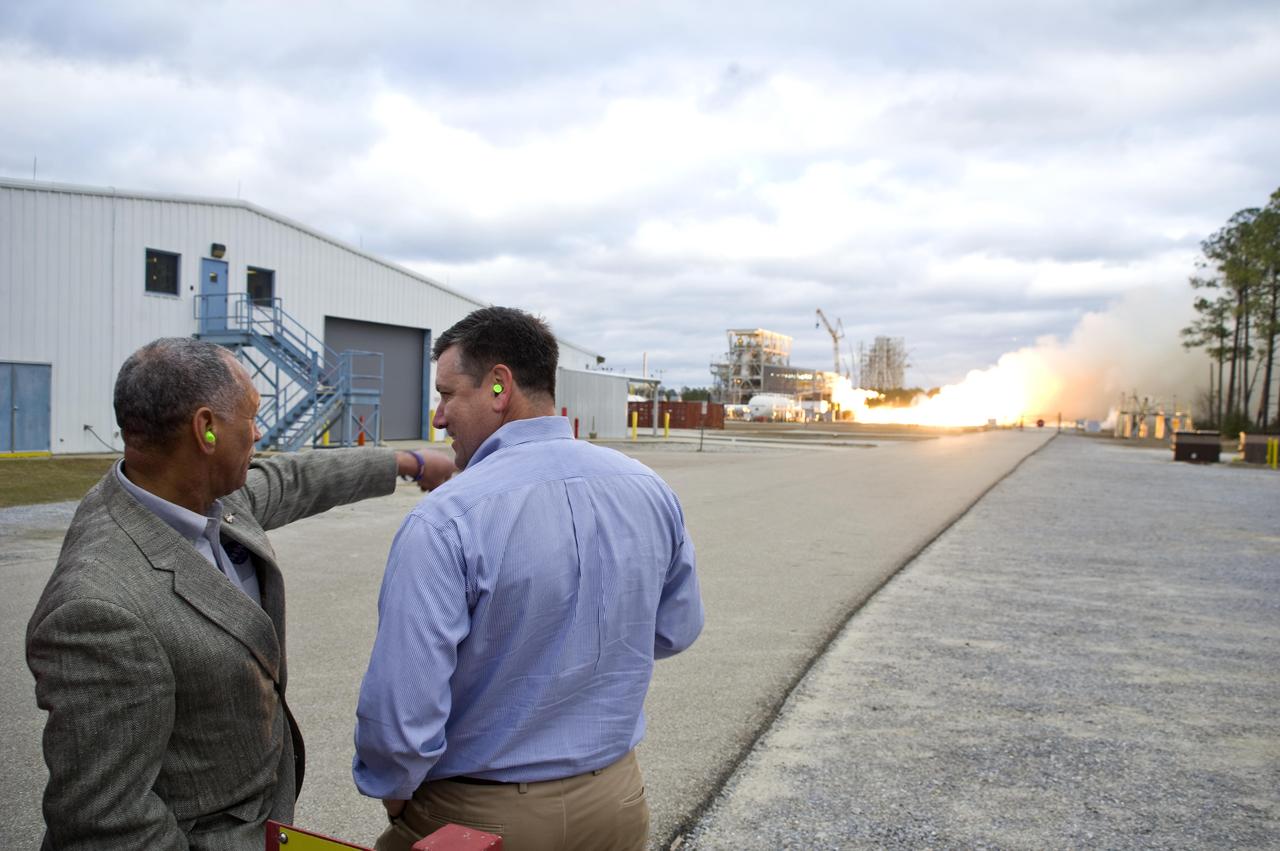
NASA Administrator Charles Bolden (l) and John C. Stennis Space Center Director Patrick Scheuermann watch the successful test of the first Aerojet AJ26 flight engine Feb. 7, 2011. The test was conducted on the E-1 Test Stand at Stennis. The engine now will be sent to Wallops Flight Facility in Virginia, where it will be used to power the first stage of Orbital Sciences Corporation's Taurus II space vehicle. The Feb. 7 test supports NASA's commitment to partner with companies to provide commercial cargo flights to the International Space Station. NASA has partnered with Orbital to carry out the first of eight cargo missions to the space station in early 2012.
AJ26 engine test
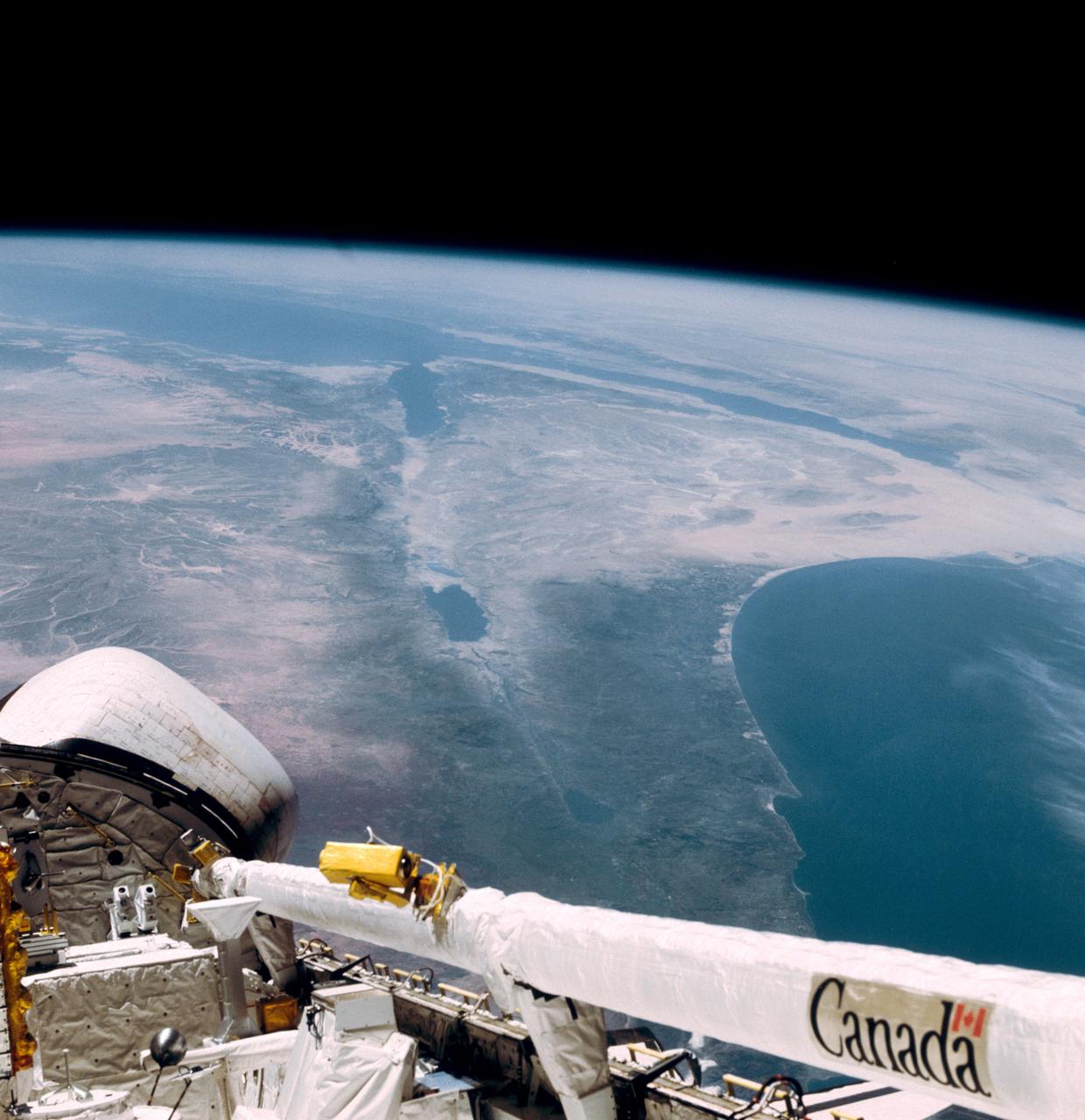
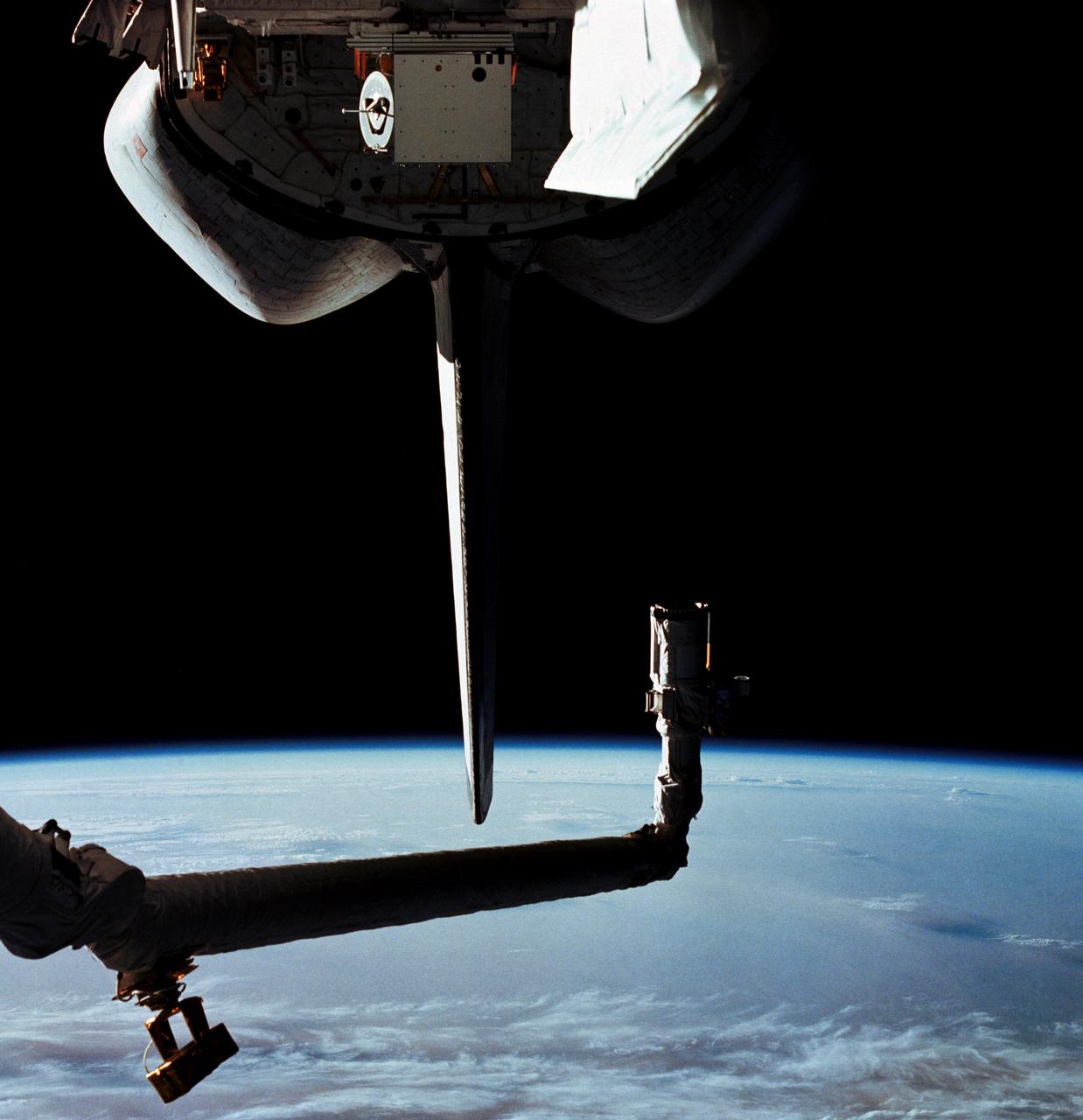
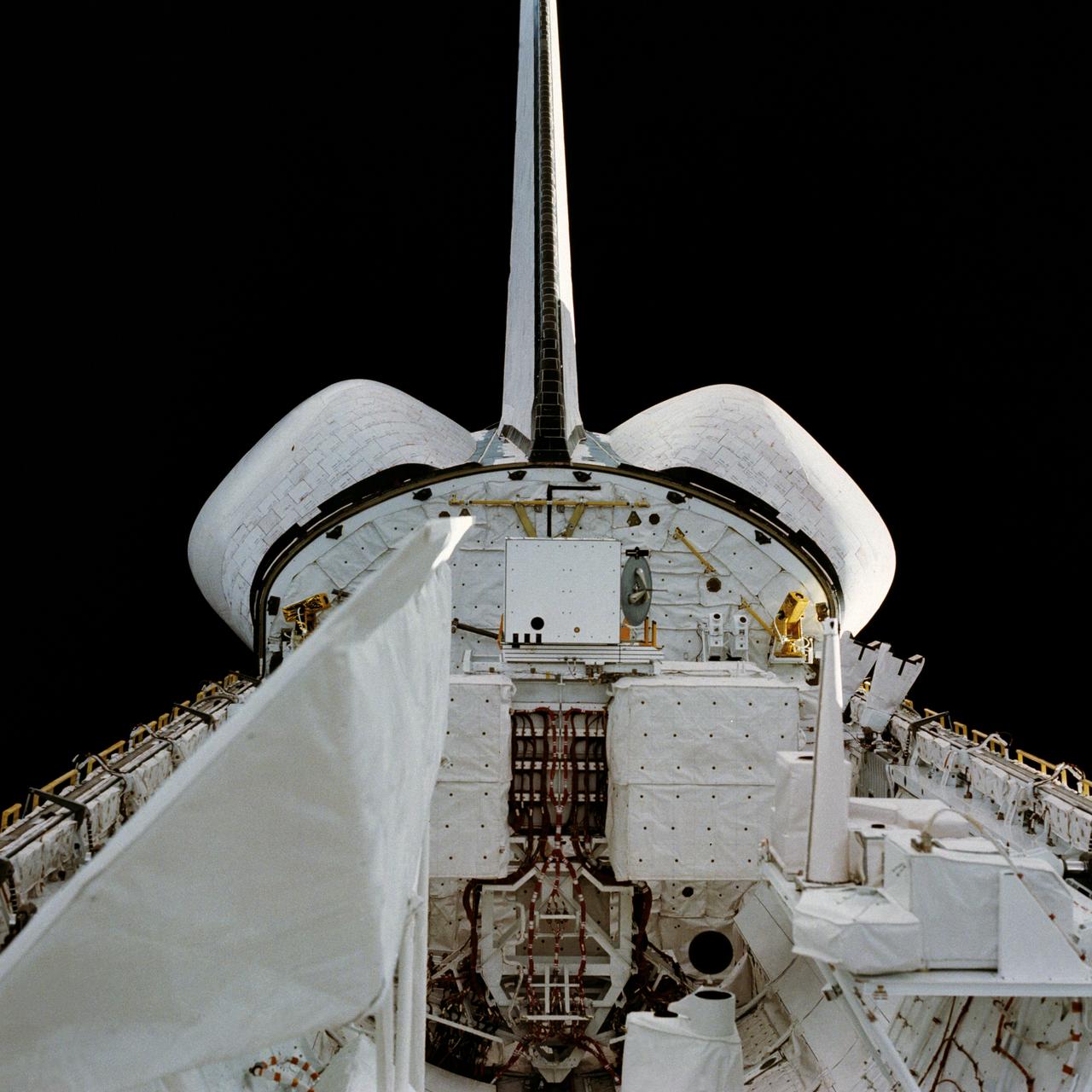
This southerly looking view photographed from the orbiting Space Shuttle Columbia shows a small portion of the vehichle's aft section. The 50-ft Canadian built remote manipulator system (RMS) is in a resting posture (lower right corner) stretched out along the 60-ft. long cargo bay. Many of the components of the OSS-1 payload package are in the bottom center. The Mediterranean Sea is at right foreground. Parts of the Sinai peninsula, Israel, Egypt, Saudi Arabia, Jordan, Palestine, Syria, and Lebanon can be located in the photo. The Red Sea, Gulf of Aqaba, Suez Canal are near the photo's horizon.
View of the Columbia's aft section while over Mediterranean Sea
PHOTO DATE: 05-13-09 LOCATION: Bldg. 30 south , WFCR & Backrooms SUBJECT: STS-125 Flight Controllers on Console During HST Grapple - Orbit 1 - Bldg. 30 south.  Flight Director: Tony Ceccacci PHOTOGRAPHER:  JAMES BLAIR
STS-125 Flight Controllers on Console During HST Grapple - Orbit 1. Flight Director: Tony Ceccacci
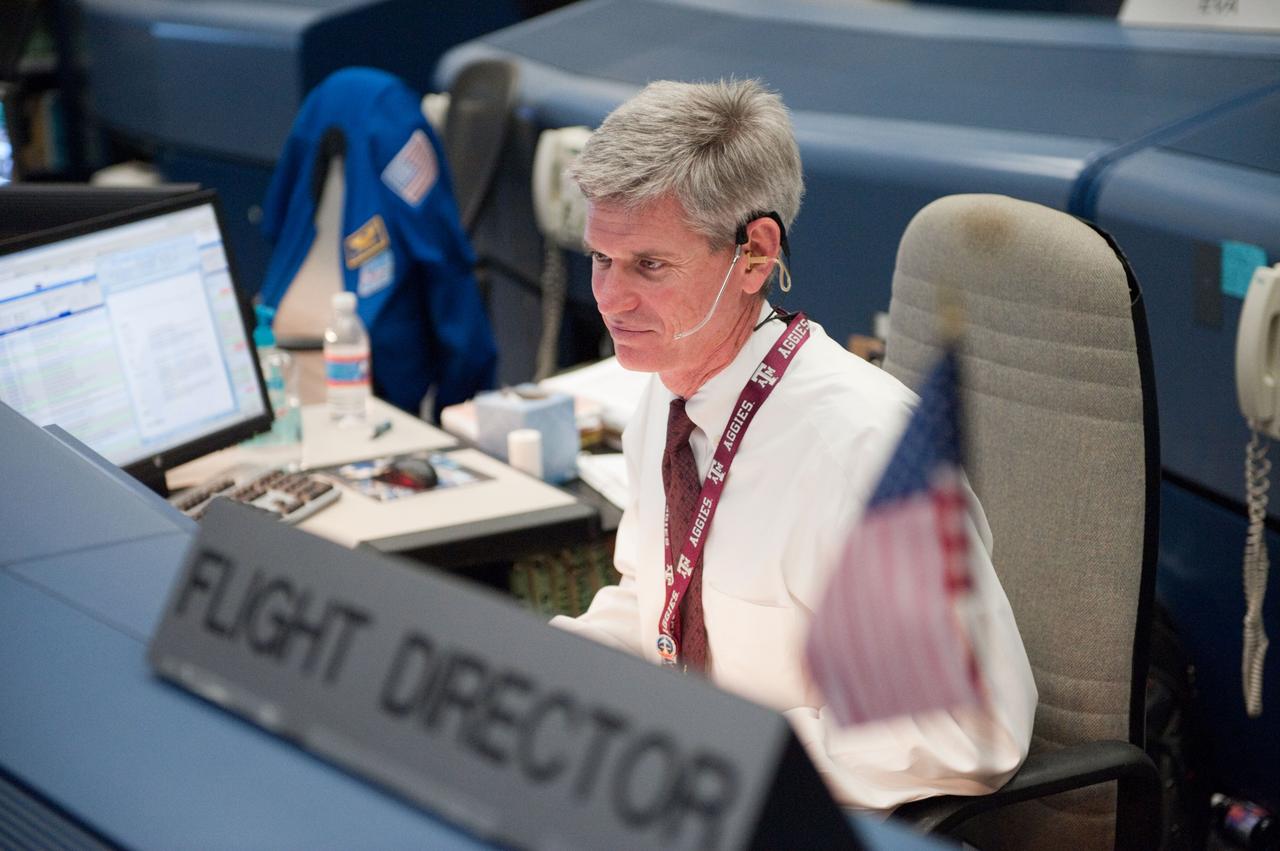
Date: 11-25-09 Location: Bldg. 2S - Rm 122 Press Conference Subject: STS-129 Flight Day 10 Mission Status Briefing with Orbit 1 Flight Director Mike Sarafin. Photographer: Lauren Harnett
STS-129 Flight Day 10 Mission Status Briefing with Orbit 1 Flight Director Mike Sarafin.
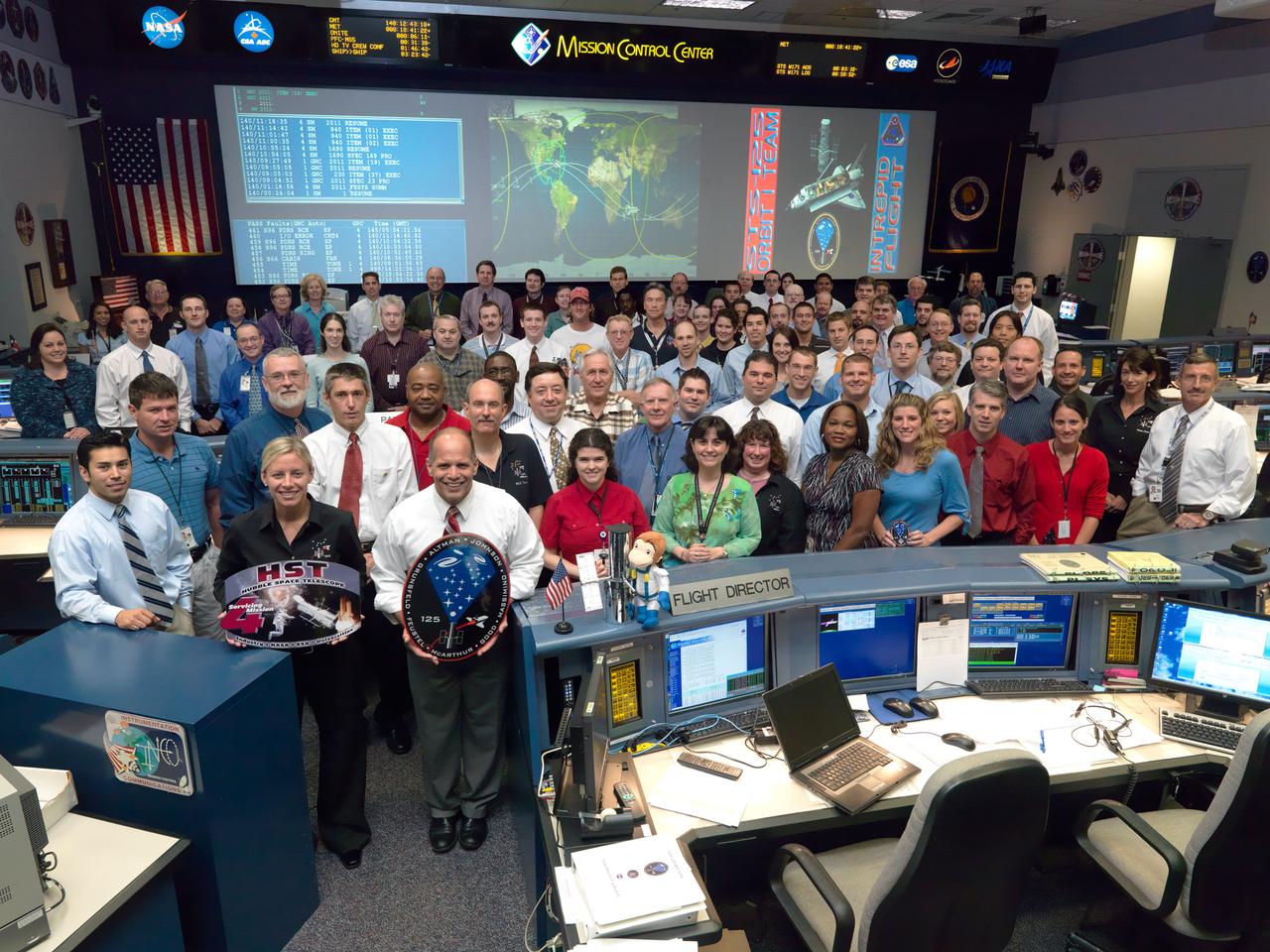
JSC2009-E-120813 (20 May 2009) --- The members of the STS-125 Orbit 1 flight control team pose for a group portrait in the space shuttle flight control room in the Mission Control Center at NASA's Johnson Space Center. Flight director Tony Ceccacci holds the STS-125 mission logo.
STS-125 Flight Control Team in WFCR - Orbit 1 - Flight Director Tony Ceccacci
PHOTO DATE:  22 March 2009 - 3:30pm LOCATION: Bldg. 30, FCR-1 SUBJECT: Team photo of ISS 15A Flight Control Team - Orbit 2 - Flight Director Heather Rarick PHOTOGRAPHER: Bill Stafford
ISS ULF2 Flight Control Team in FCR-1 - Orbit 2 - Flight Director Heather Rarick
PHOTO DATE: 11-21-08 LOCATION: Bldg. 30 south - MCC SUBJECT: STS-126/ULF2 Orbit 3 flight controllers on console. Cover WFCR, FCR-1 and all the back rooms listed - (Subject) PHOTOGRAPHER:Devin Boldt
STS-126/ULF2 Orbit 3 flight controllers on console. Cover WFCR, FCR-1 and all the back rooms.
PHOTO DATE: 05-13-09 LOCATION: Bldg. 30 south , WFCR & Backrooms SUBJECT: STS-125 Flight Controllers on Console During HST Grapple - Orbit 1 - Bldg. 30 south.  Flight Director: Tony Ceccacci PHOTOGRAPHER:  JAMES BLAIR
STS-125 Flight Controllers on Console During HST Grapple - Orbit 1. Flight Director: Tony Ceccacci
JSC2010-E-050680 (12 April 2010) --- The members of the STS-131 Orbit 1 flight control team pose for a group portrait in the space shuttle flight control room in the Mission Control Center at NASA's Johnson Space Center. Flight director Richard Jones (second left) is on the front row.
STS-131 Flight Control Team in WFCR - Orbit 1 - Flight Director: Richard Jones
Date: 11-25-09 Location: Bldg. 2S - Rm 122 Press Conference Subject: STS-129 Flight Day 10 Mission Status Briefing with Orbit 1 Flight Director Mike Sarafin. Photographer: Lauren Harnett
STS-129 Flight Day 10 Mission Status Briefing with Orbit 1 Flight Director Mike Sarafin.
STS002-12-833 (13 Nov. 1981) --- Clouds over Earth and black sky form the background for this unique photograph from the space shuttle Columbia in Earth orbit. The photograph was shot through the aft flight deck windows viewing the cargo bay. Part of the scientific payload of the Office of Space and Terrestrial Applications (OSTA-1) is visible in the open cargo bay. The astronauts inside Columbia's cabin were remotely operating the Canadian-built remote manipulator system (RMS). Note television cameras on its elbow and wrist pieces. Photo credit: NASA
View of the Columbia's open payload bay and the Canadian RMS
White walls and scaffolding had become a common sight in the High Bay 1 clean room in JPL's Spacecraft Assembly Facility by the time the Galileo orbiter was being built. This photo from Nov. 1, 1984 shows that gowning requirements had also become more complex.  Note the fully-opened high-gain antenna; an emblem on the clean room's Wall of Fame depicts it partially opened, as it was at Jupiter.  https://photojournal.jpl.nasa.gov/catalog/PIA23616
Galileo in High Bay 1
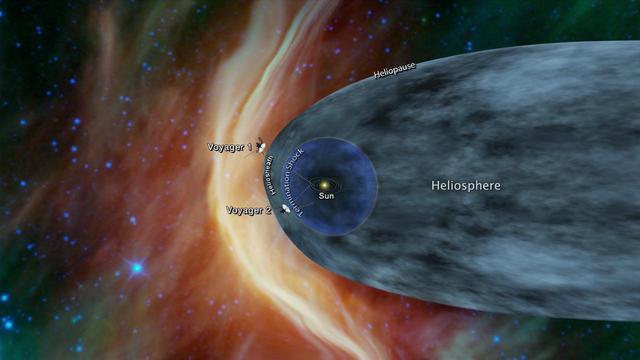
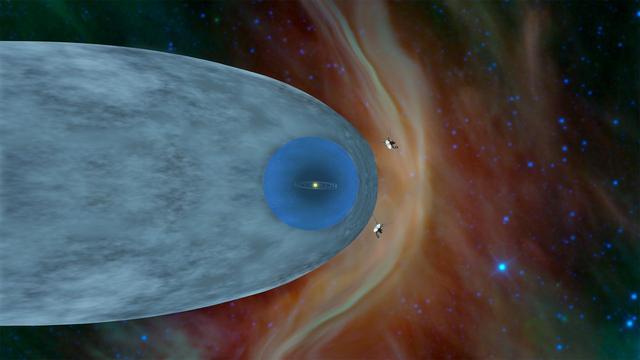
This graphic shows the position of the Voyager 1 and Voyager 2 probes, relative to the heliosphere, a protective bubble created by the Sun that extends well past the orbit of Pluto. Voyager 1 crossed the heliopause, or the edge of the heliosphere, in 2012. Voyager 2 is still in the heliosheath, or the outermost part of the heliosphere.  https://photojournal.jpl.nasa.gov/catalog/PIA22566
Voyager Probes Heliosphere Chart
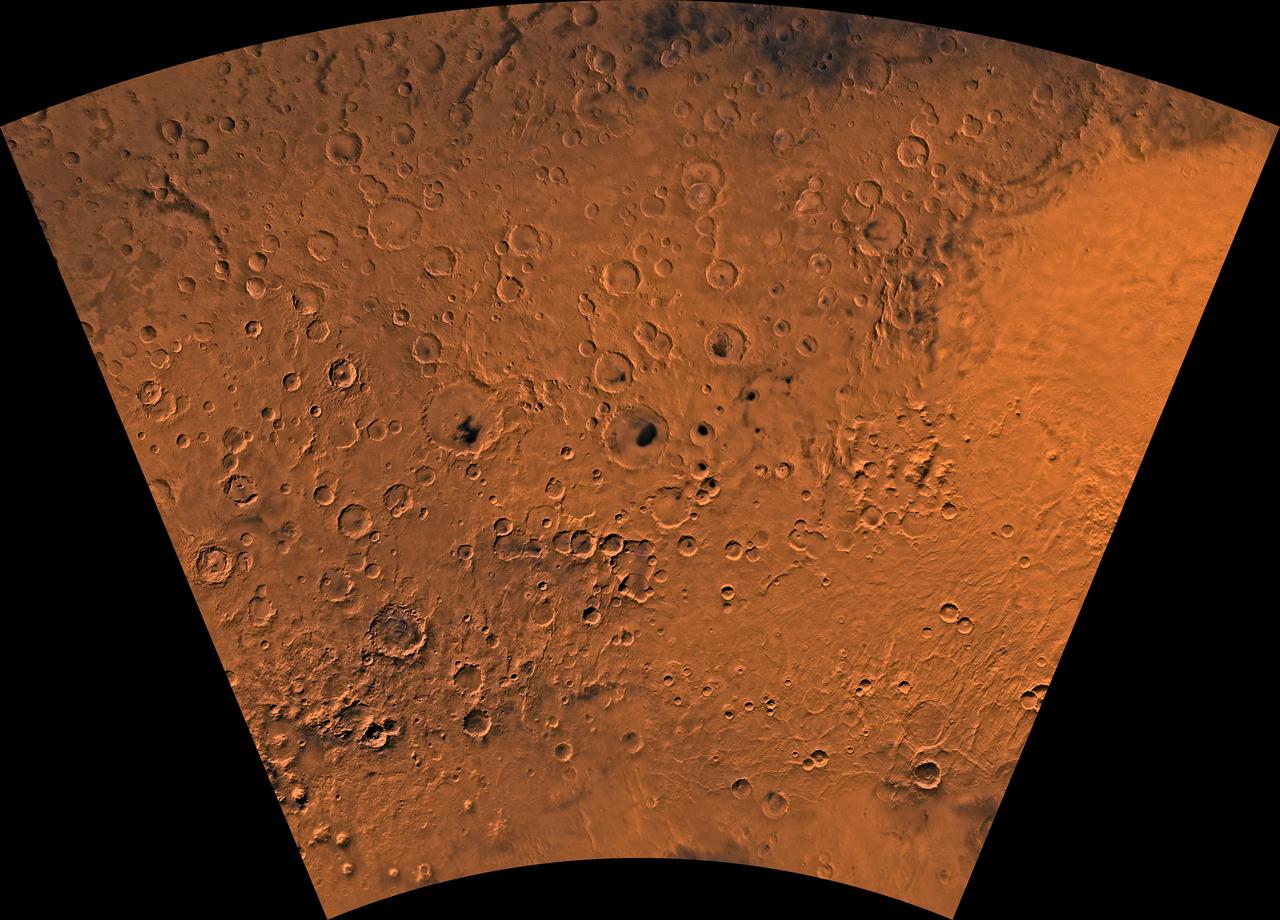
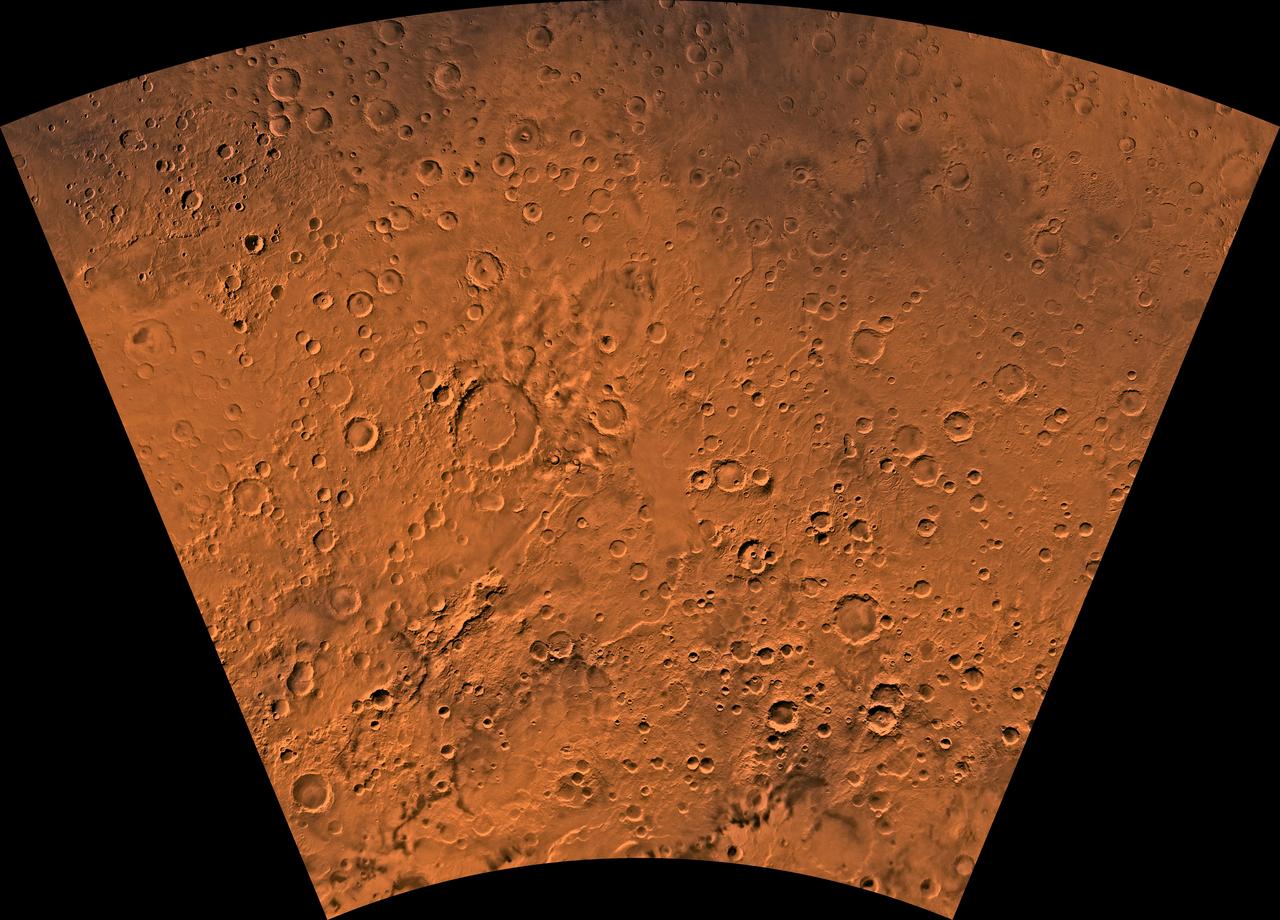
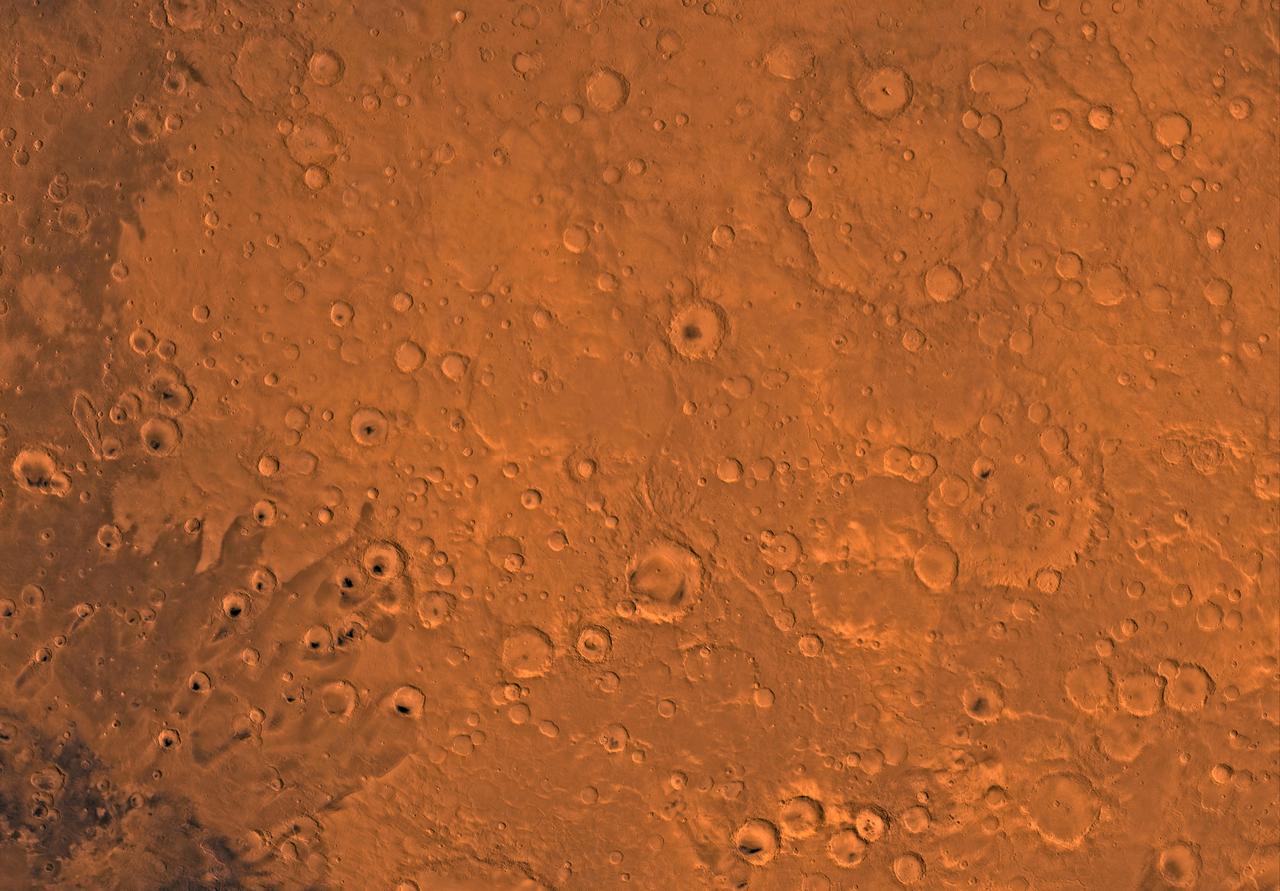
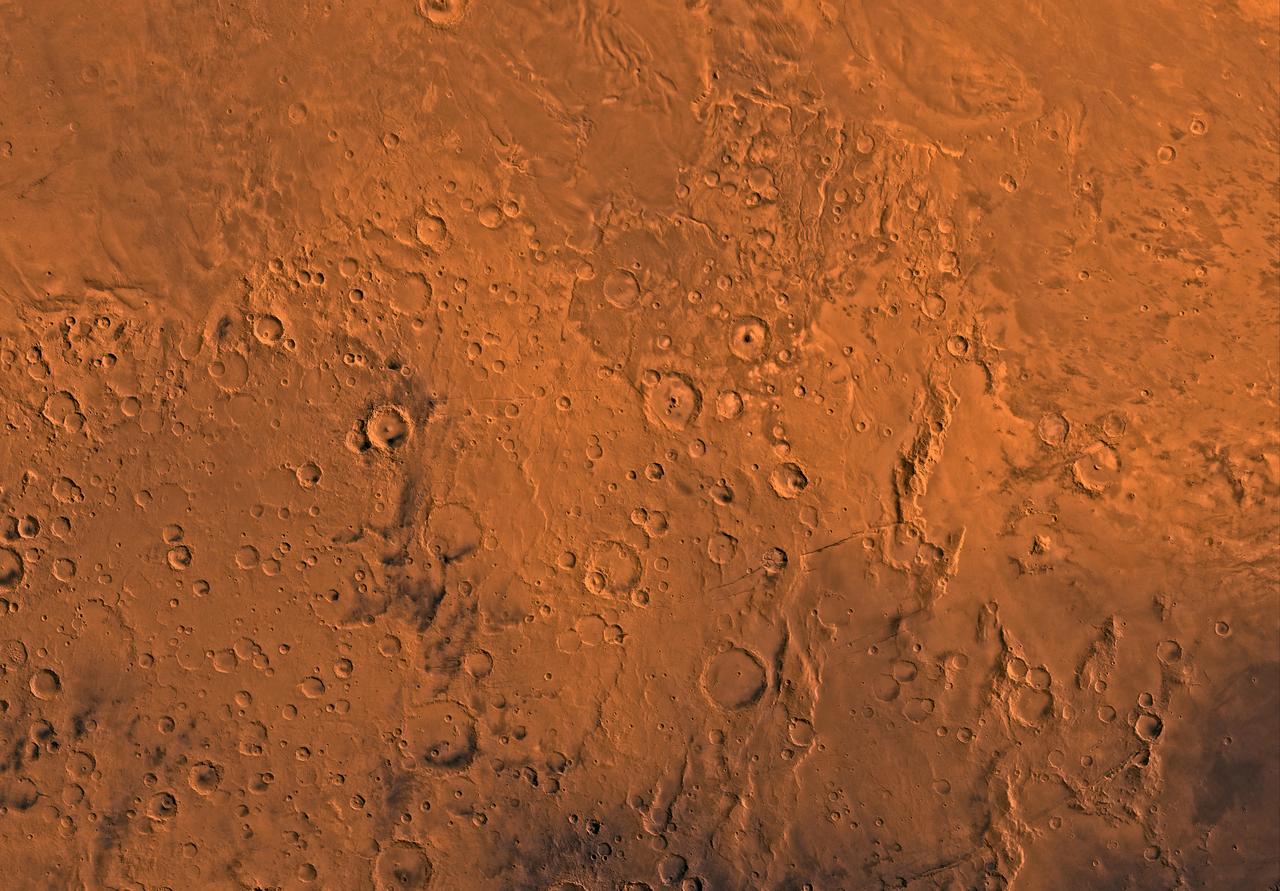
Mars digital-image mosaic merged with color of the MC-24 quadrangle, Phaethontis region of Mars. This image is from NASA Viking Orbiter 1.
MC-24 Phaethontis Region
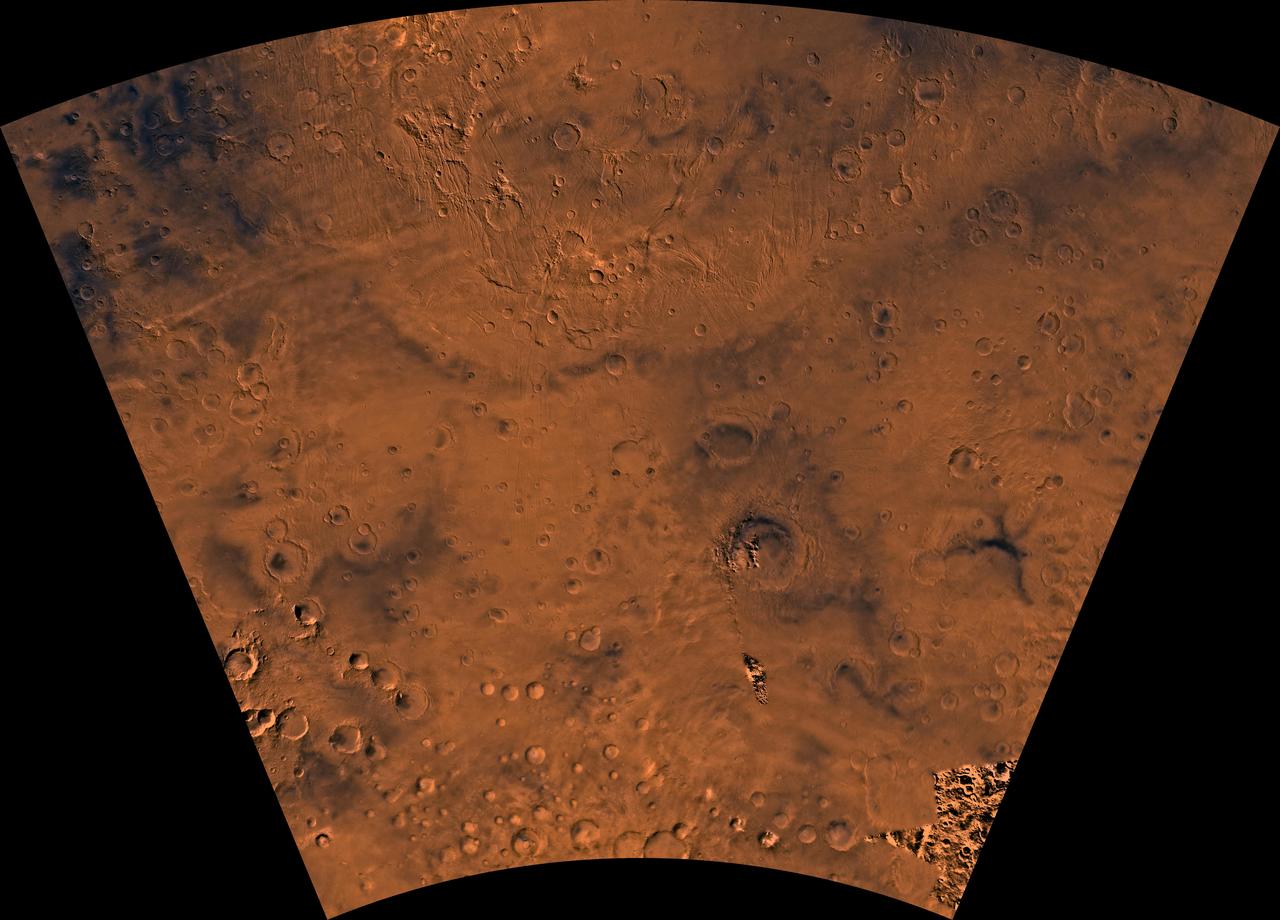
Mars digital-image mosaic merged with color of the MC-26 quadrangle, Argyre region of Mars. This image is from NASA Viking Orbiter 1.
MC-26 Argyre Region
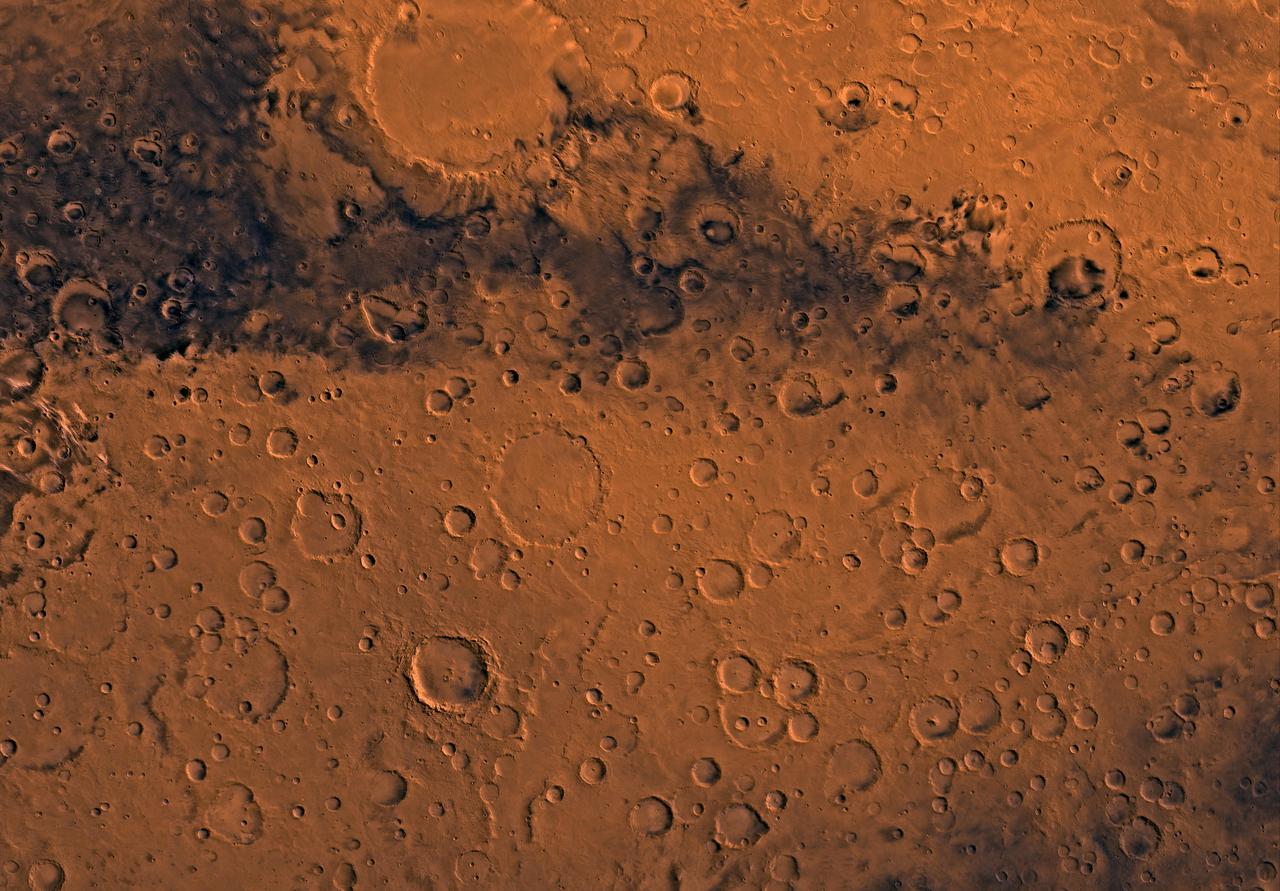
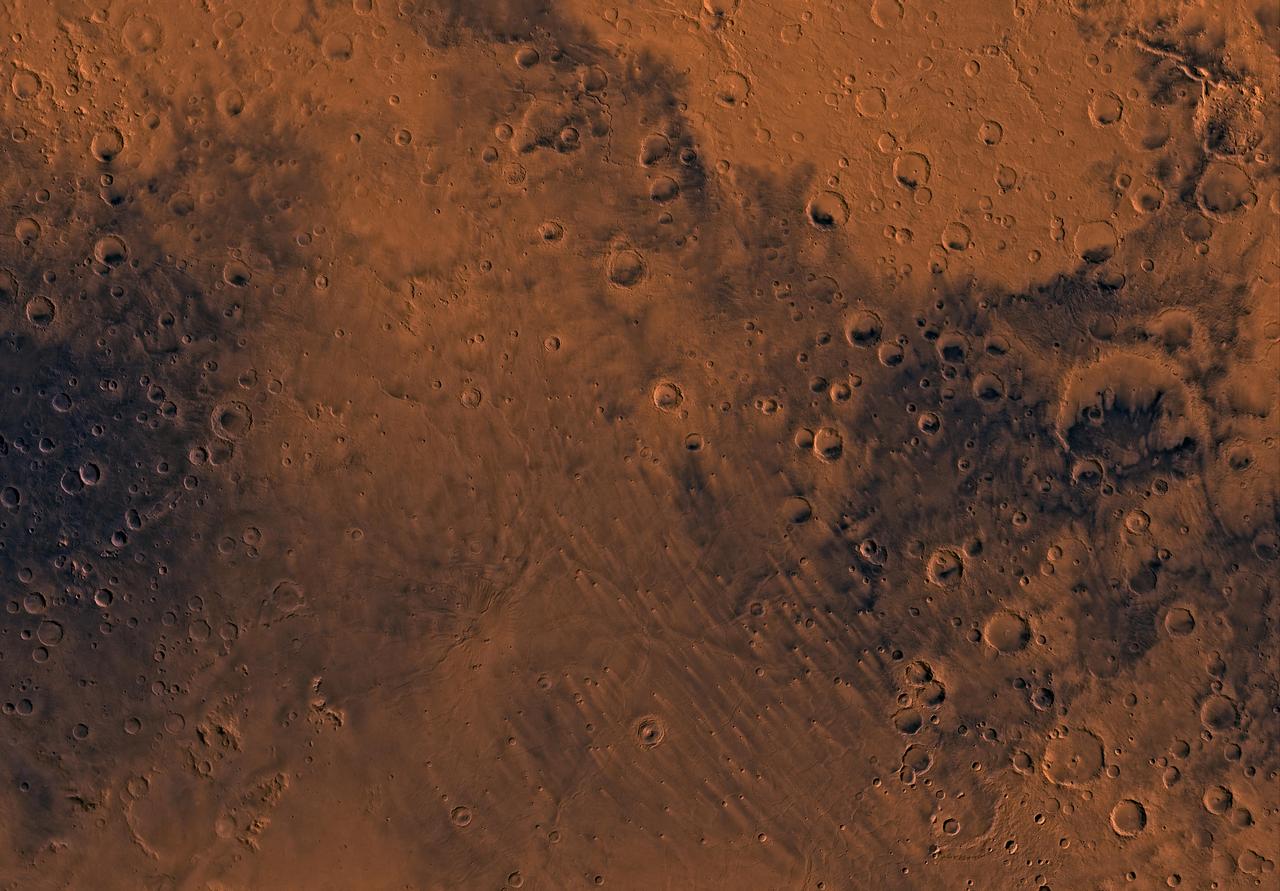
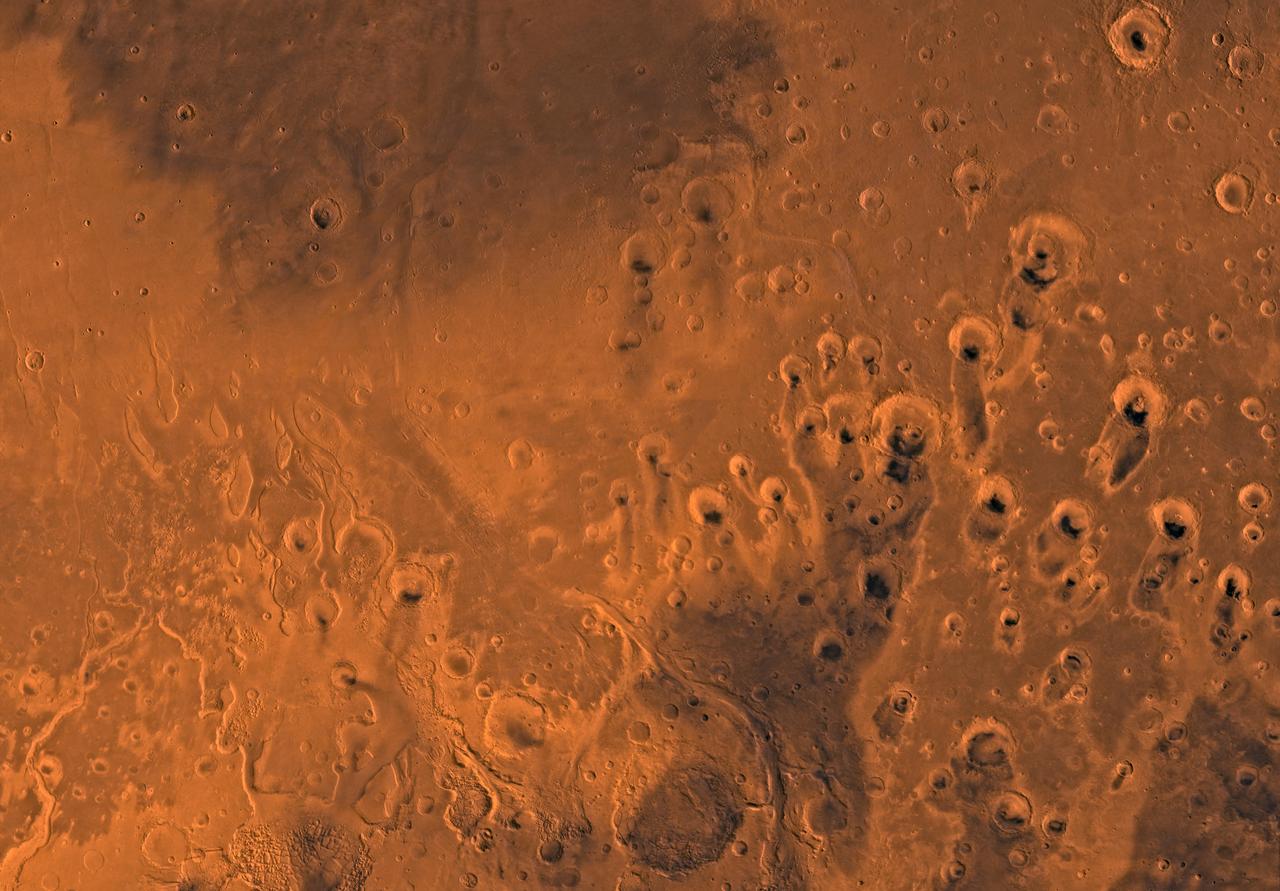
Mars digital-image mosaic merged with color of the MC-20 quadrangle, Sinus Sabeus region of Mars. This image is from NASA Viking Orbiter 1.
MC-20 Sinus Sabeus Region
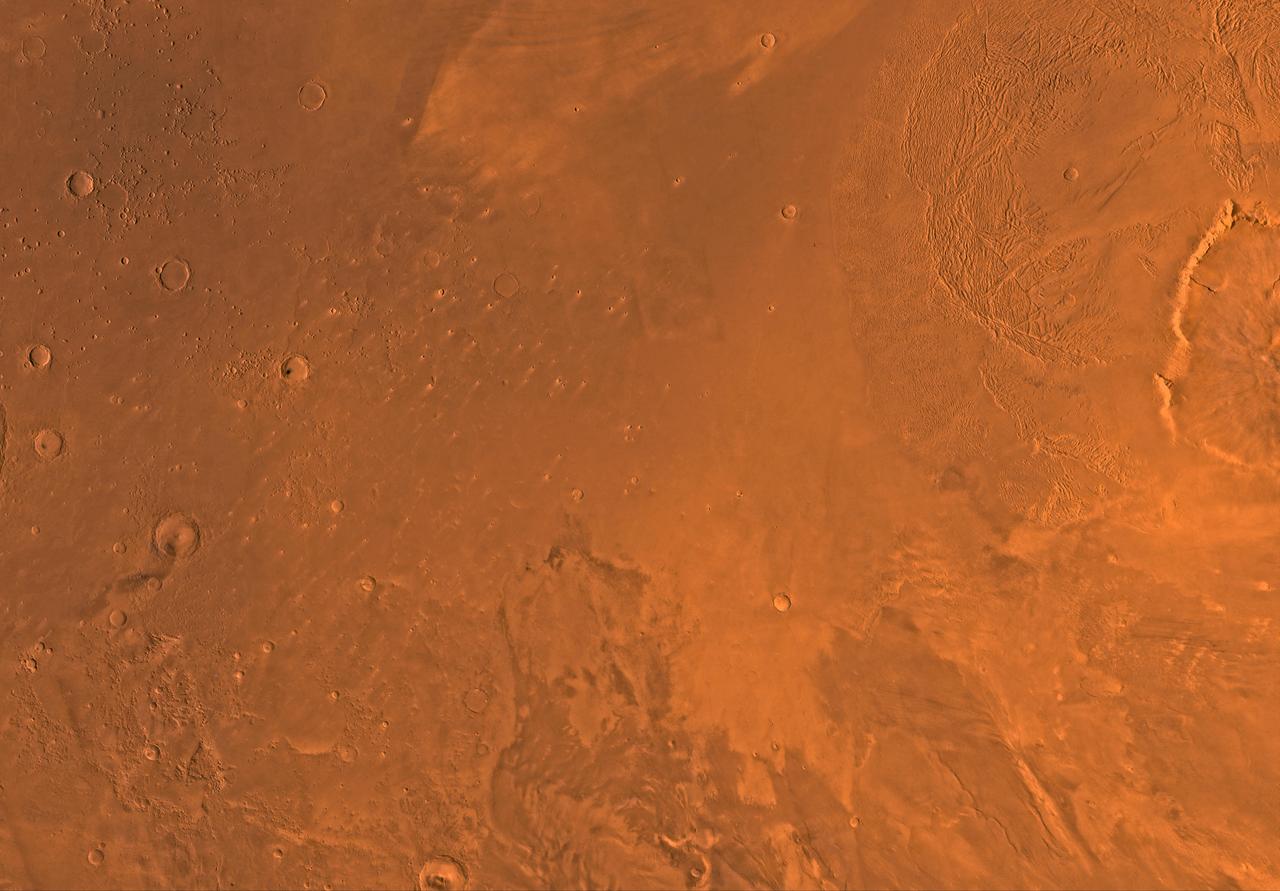
Mars digital-image mosaic merged with color of the MC-23 quadrangle, Aeolis region of Mars. This image is from NASA Viking Orbiter 1.
MC-23 Aeolis Region
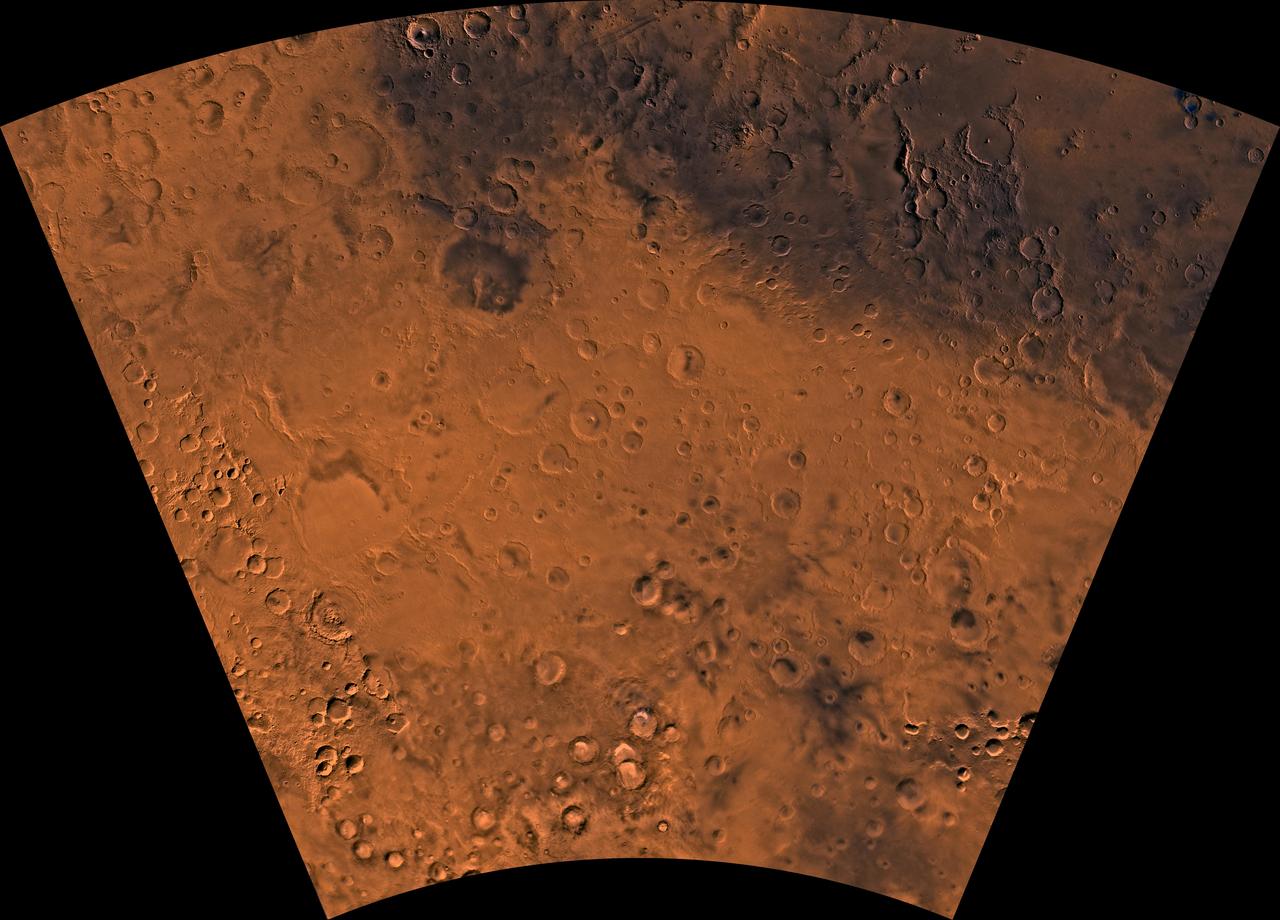
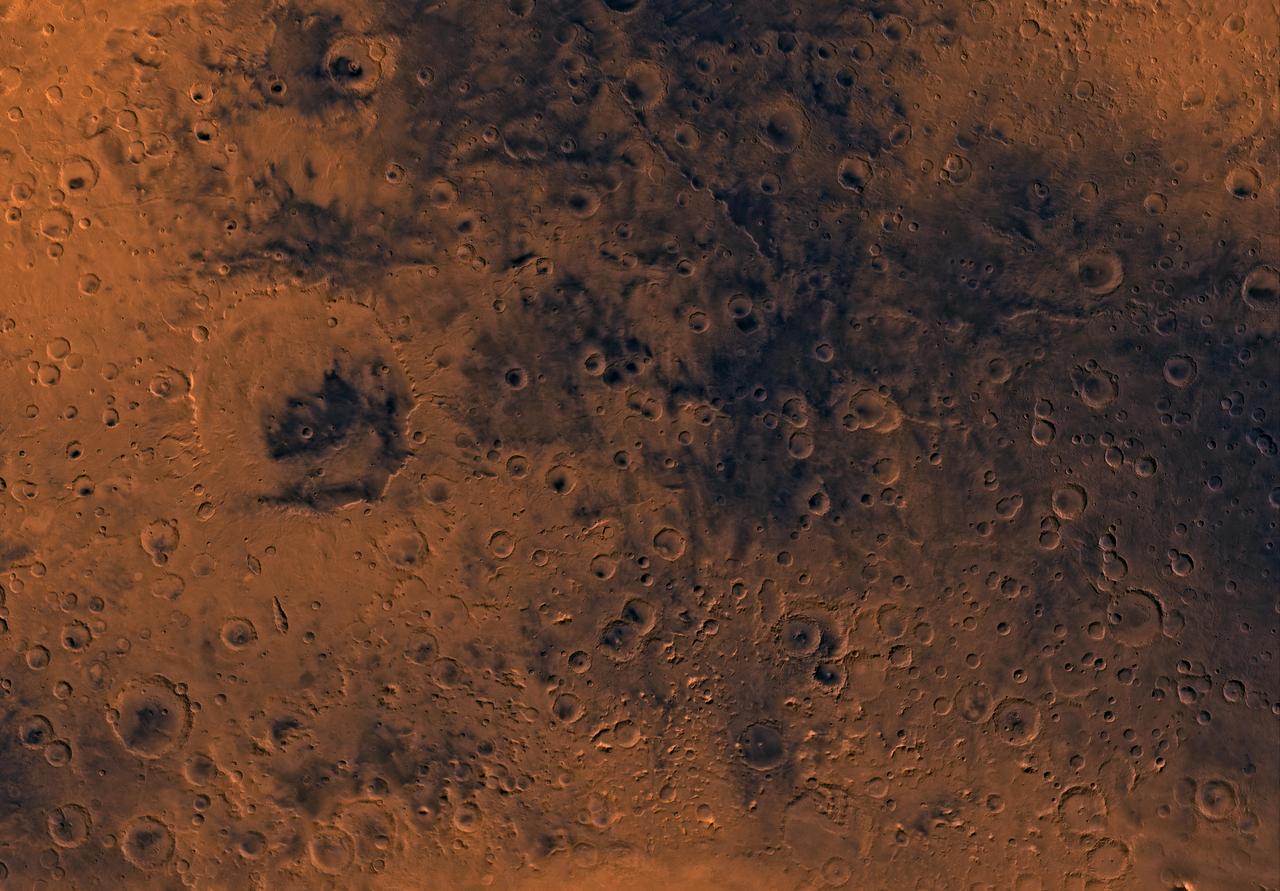
Mars digital-image mosaic merged with color of the MC-22 quadrangle, Mare Tyrrhenum region of Mars. This image is from NASA Viking Orbiter 1.
MC-22 Mare Tyrrhenum Region
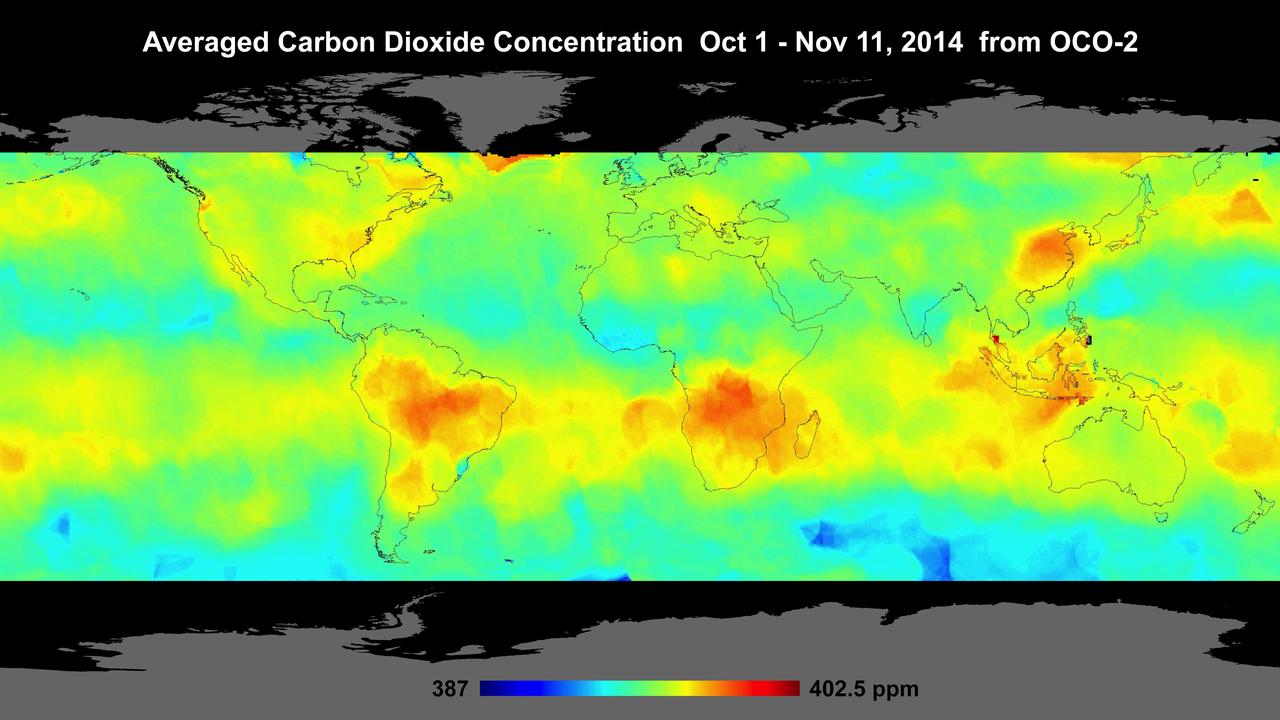
Global atmospheric carbon dioxide concentrations from Oct. 1 through Nov. 11, as recorded by NASA Orbiting Carbon Observatory-2.
Global Atmospheric Carbon Dioxide
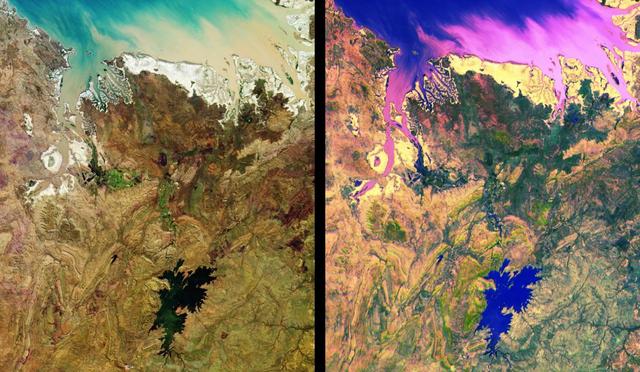
These images from NASA Terra satellite are of tropical northern Australia acquired on June 1, 2000 Terra orbit 2413 during the long dry season.
MISR Views Northern Australia
Mars digital-image mosaic merged with color of the MC-29 quadrangle, Eridania region of Mars. This image is from NASA Viking Orbiter 1.
MC-29 Eridania Region
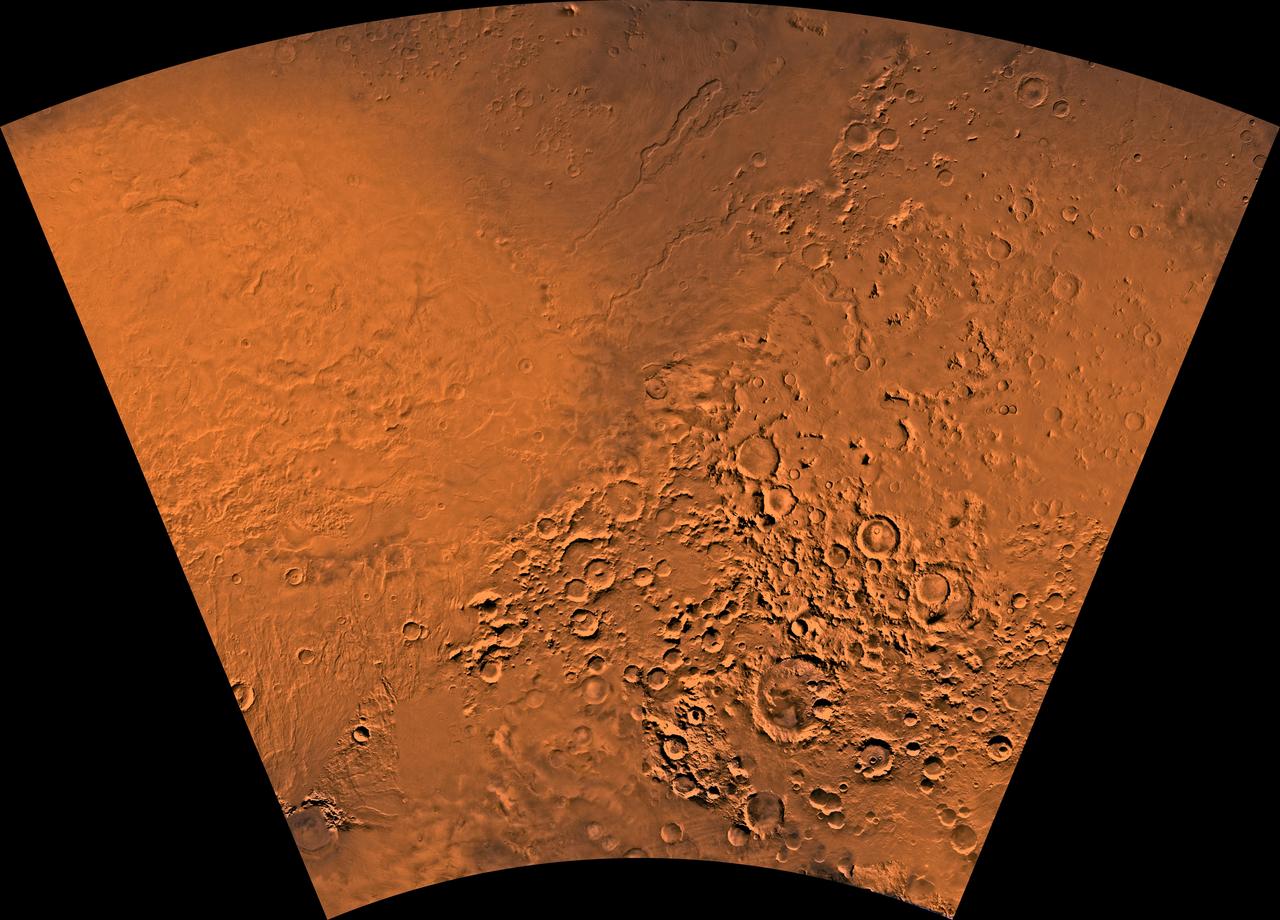
Mars digital-image mosaic merged with color of the MC-28 quadrangle, Hellas region of Mars. This image is from NASA Viking Orbiter 1.
MC-28 Hellas Region
Mars digital-image mosaic merged with color of the MC-25 quadrangle, Thaumasia region of Mars. This image is from NASA Viking Orbiter 1.
MC-25 Thaumasia Region
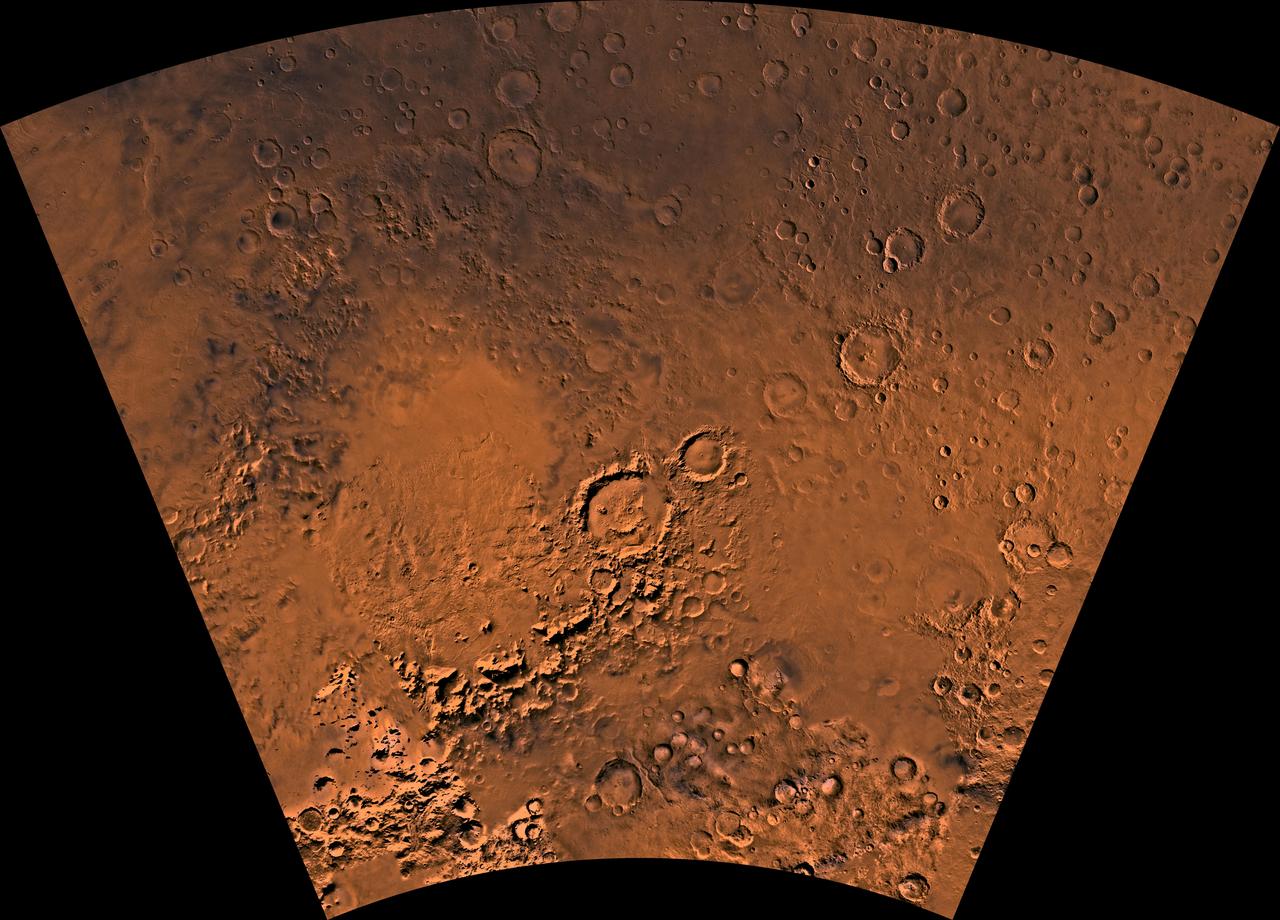
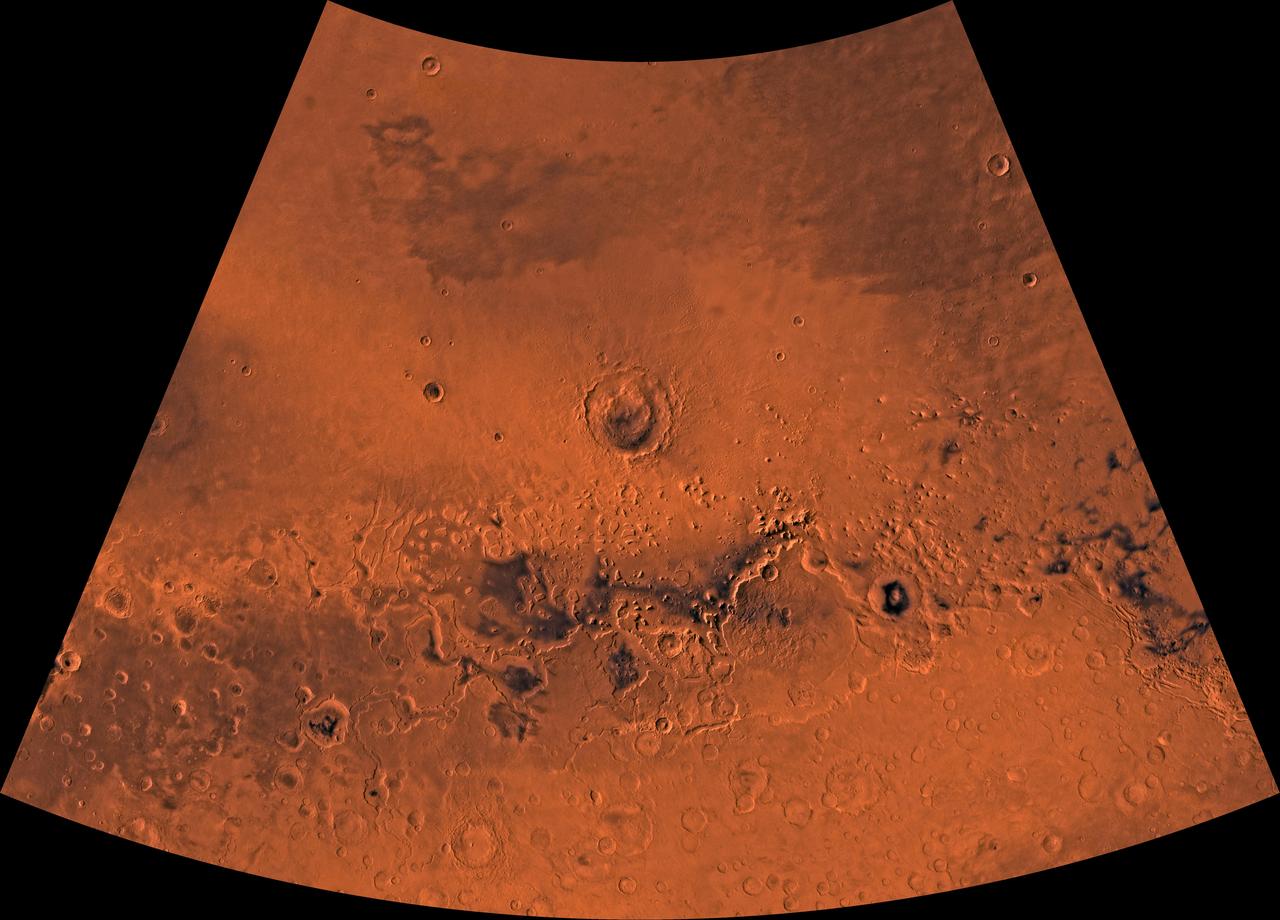
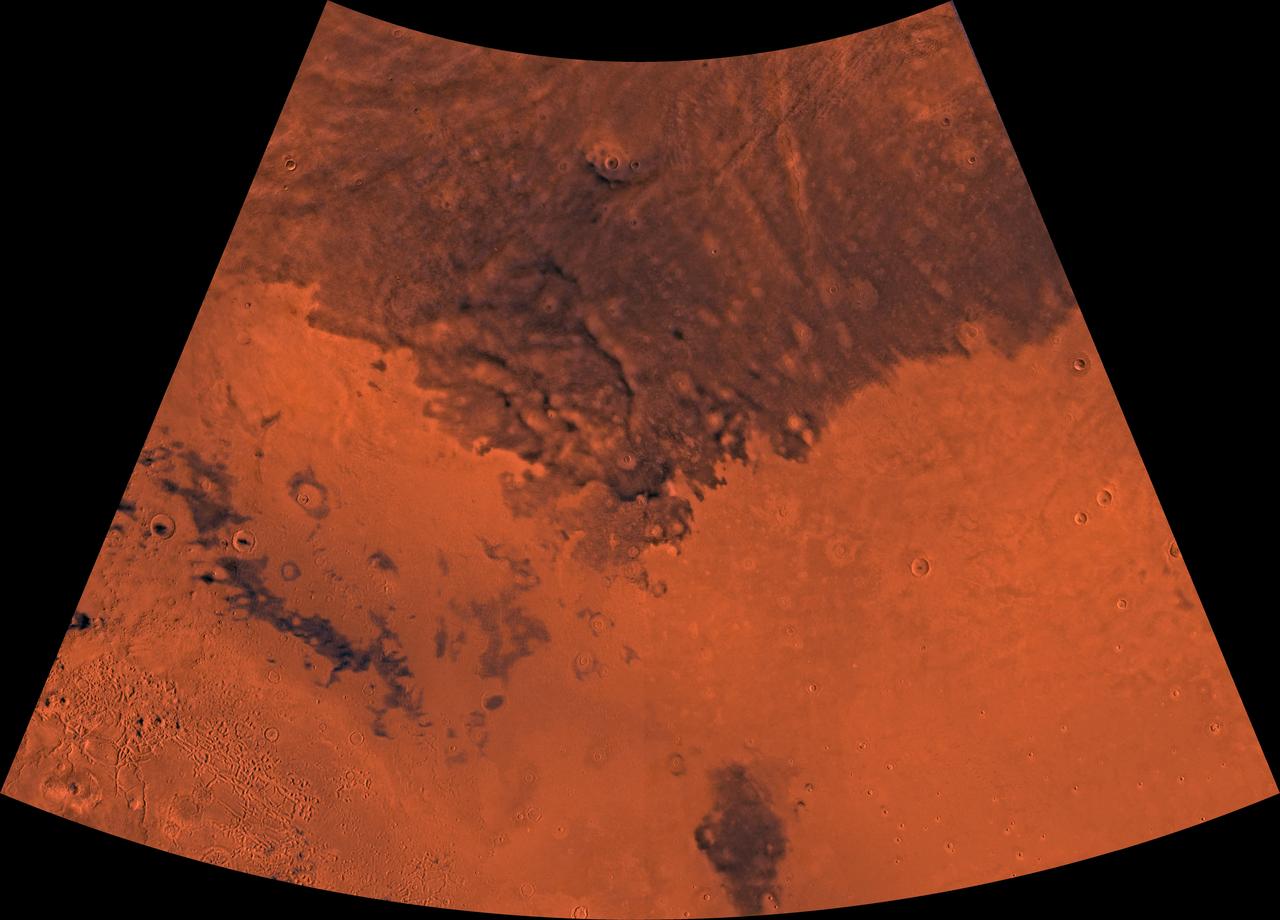
Mars digital-image mosaic merged with color of the MC-21 quadrangle, Iapygia region of Mars. This image is from NASA Viking Orbiter 1.
MC-21 Iapygia Region
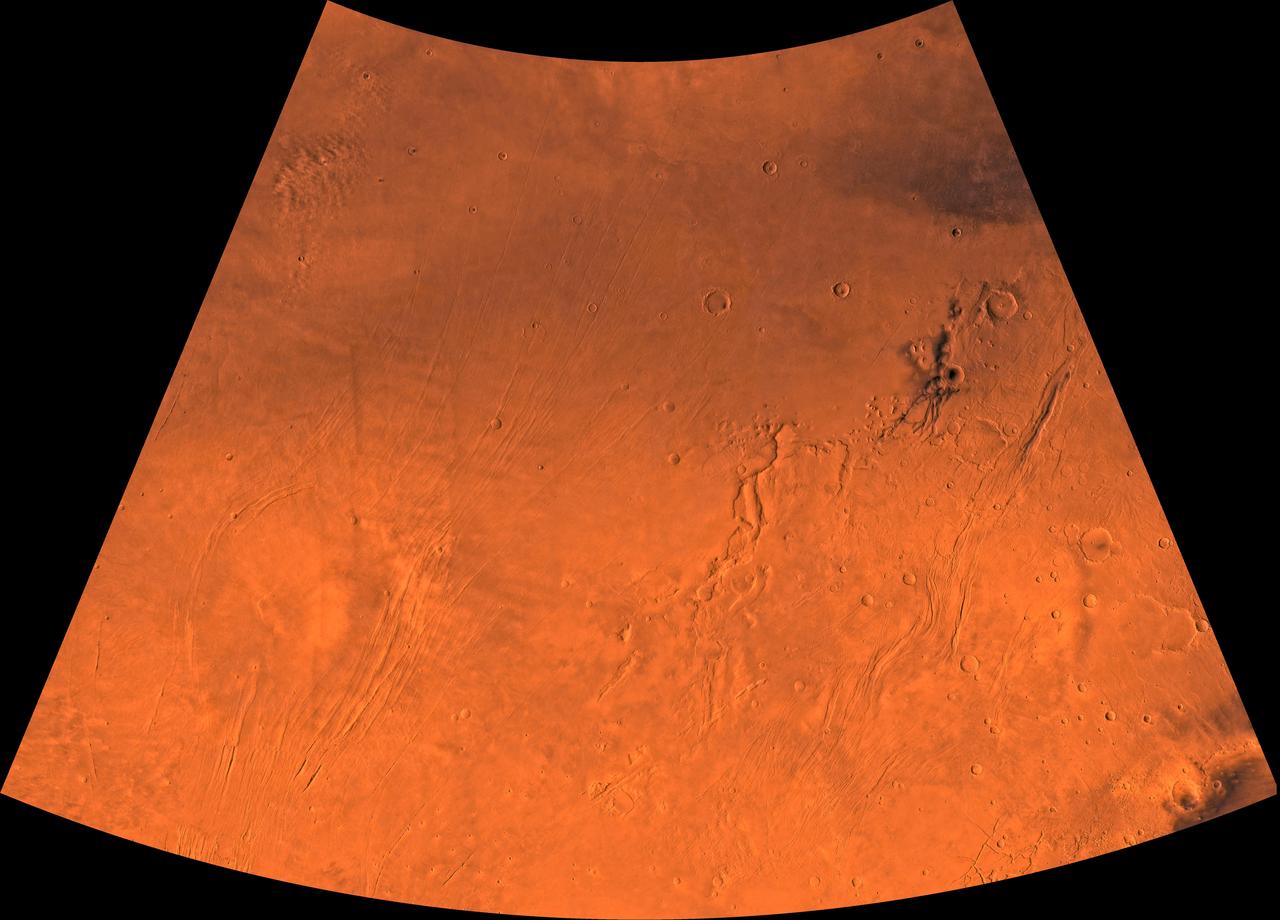
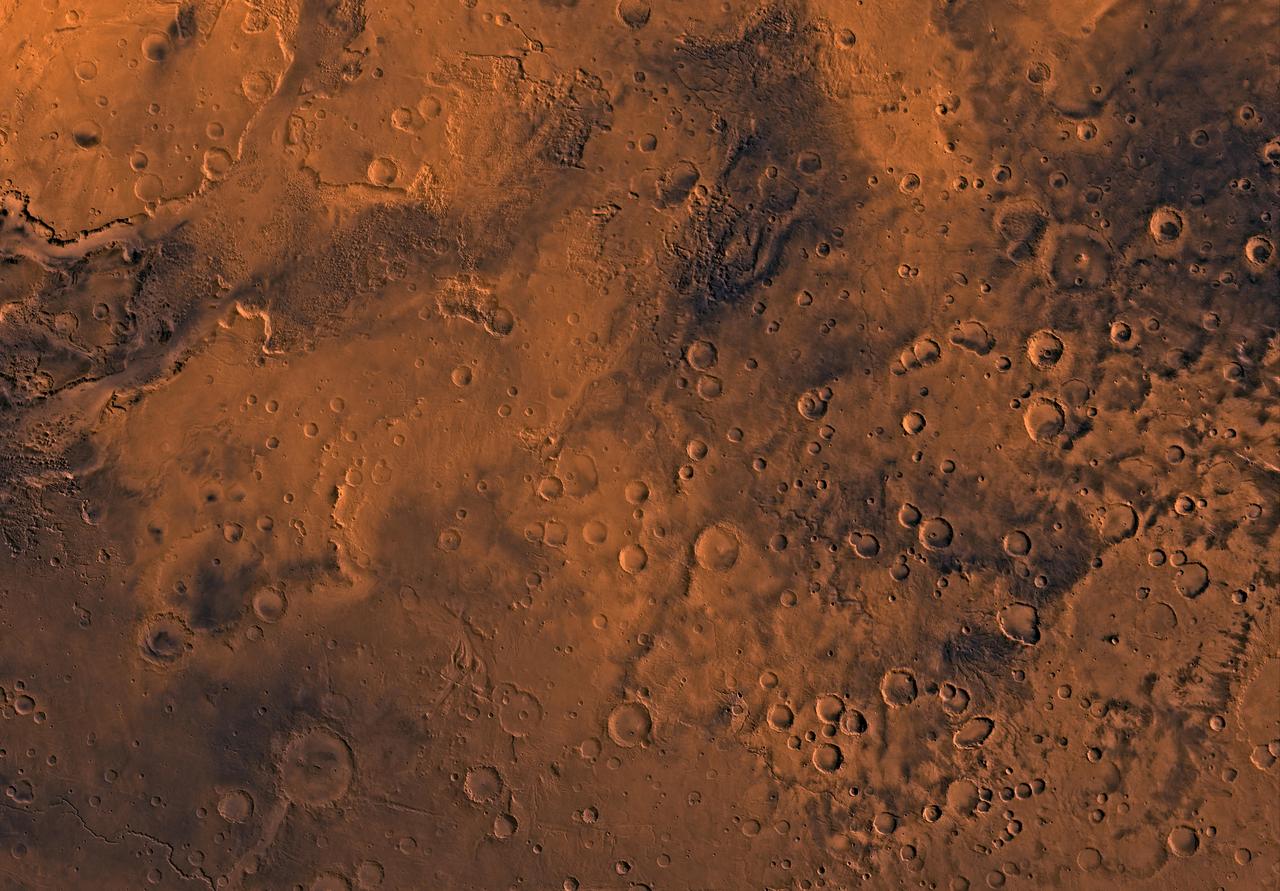
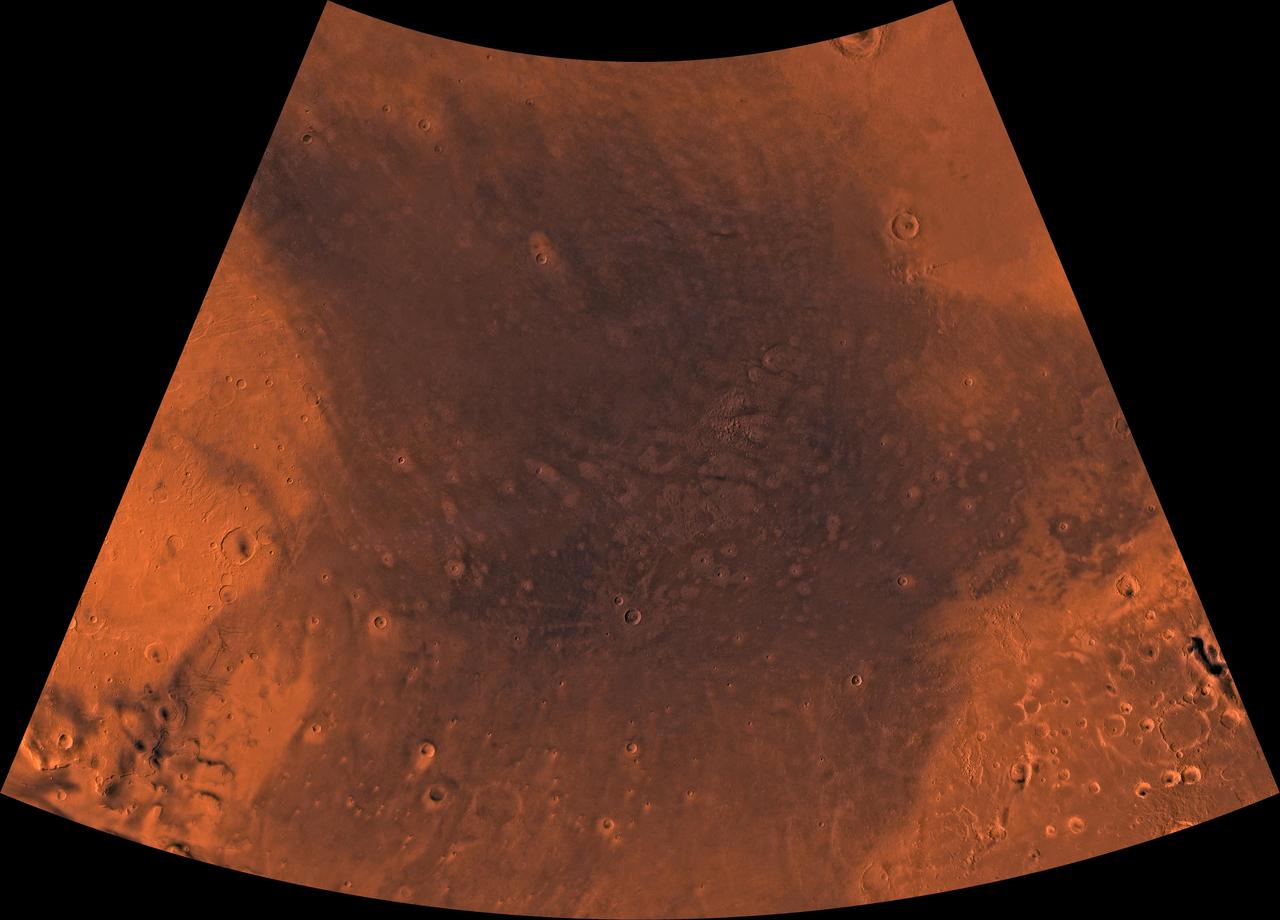
Mars digital-image mosaic merged with color of the MC-27 quadrangle, Noachis region of Mars. This image is from NASA Viking Orbiter 1.
MC-27 Noachis Region
All seven planets discovered in orbit around the red dwarf star TRAPPIST-1 could easily fit inside the orbit of Mercury, the innermost planet of our solar system. In fact, they would have room to spare. TRAPPIST-1 also is only a fraction of the size of our sun; it isn't much larger than Jupiter. So the TRAPPIST-1 system's proportions look more like Jupiter and its moons than those of our solar system.  The seven planets of TRAPPIST-1 are all Earth-sized and terrestrial, according to research published in 2017 in the journal Nature. TRAPPIST-1 is an ultra-cool dwarf star in the constellation Aquarius, and its planets orbit very close to it.  The system has been revealed through observations from NASA's Spitzer Space Telescope and the ground-based TRAPPIST (TRAnsiting Planets and PlanetesImals Small Telescope) telescope, as well as other ground-based observatories. The system was named for the TRAPPIST telescope.  http://photojournal.jpl.nasa.gov/catalog/PIA21428
TRAPPIST-1 Comparison to Solar System and Jovian Moons
STS002-13-208 (12-14 Nov. 1981) --- This clear view of the aft section of the Earth-orbiting space shuttle Columbia's cargo bay and some of its cargo was photographed through the flight deck's aft windows. Visible in the center of the photo are the twin orbital maneuvering system (OMS) pods. The vertical stabilizer or tail splits the top part of the image in half. The Induced Environment Contamination Monitor (IECM) Location experiment is located in the back center of the cargo bay, near the top. There is a grapple fixture attached to the side of the IECM. Various components of the Office of Space Terrestrial Applications (OSTA-1) payload are seen near the aft section of the cargo bay, such as the Feature Identification and Location Experiment (FILE) (the long cone shaped object on the right back), the Shuttle Multispectral Infrared Radiometer (SMIRR) (on pallet base) and the SIR-A recorder in the right foreground. In the left foreground the Shuttle Imaging Radar-A (SIR-A) antenna can be seen. Photo credit: NASA
View of the Columbia's open payload bay
Mars digital-image mosaic merged with color of the MC-12 quadrangle, Arabia region of Mars. This image is from NASA's Viking Orbiter 1.  http://photojournal.jpl.nasa.gov/catalog/PIA00172
MC-12 Arabia Region
Mars digital-image mosaic merged with color of the MC-11 quadrangle, Oxia Palus region of Mars. This image is from NASA's Viking Orbiter 1.  http://photojournal.jpl.nasa.gov/catalog/PIA00171
MC-11 Oxia Palus Region
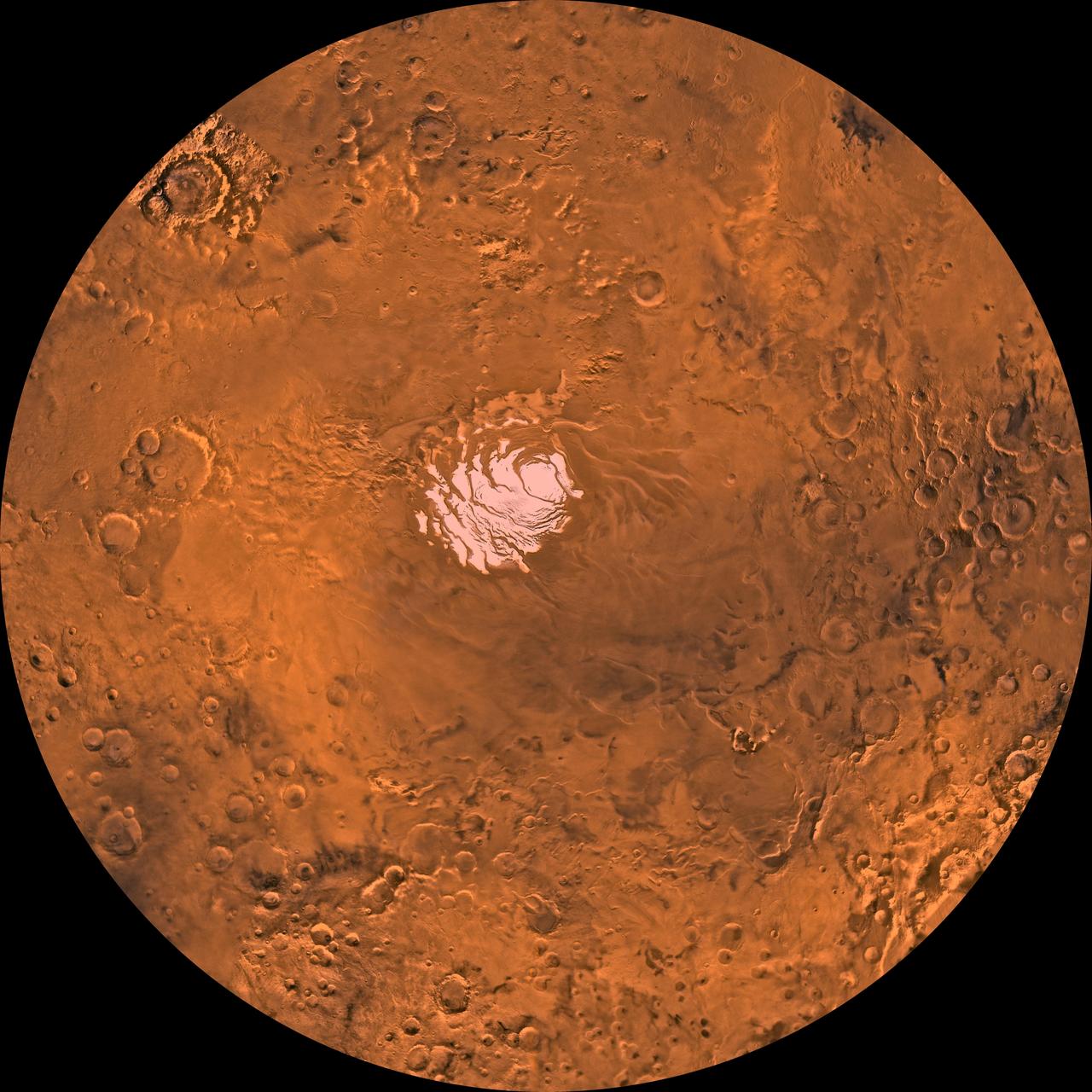
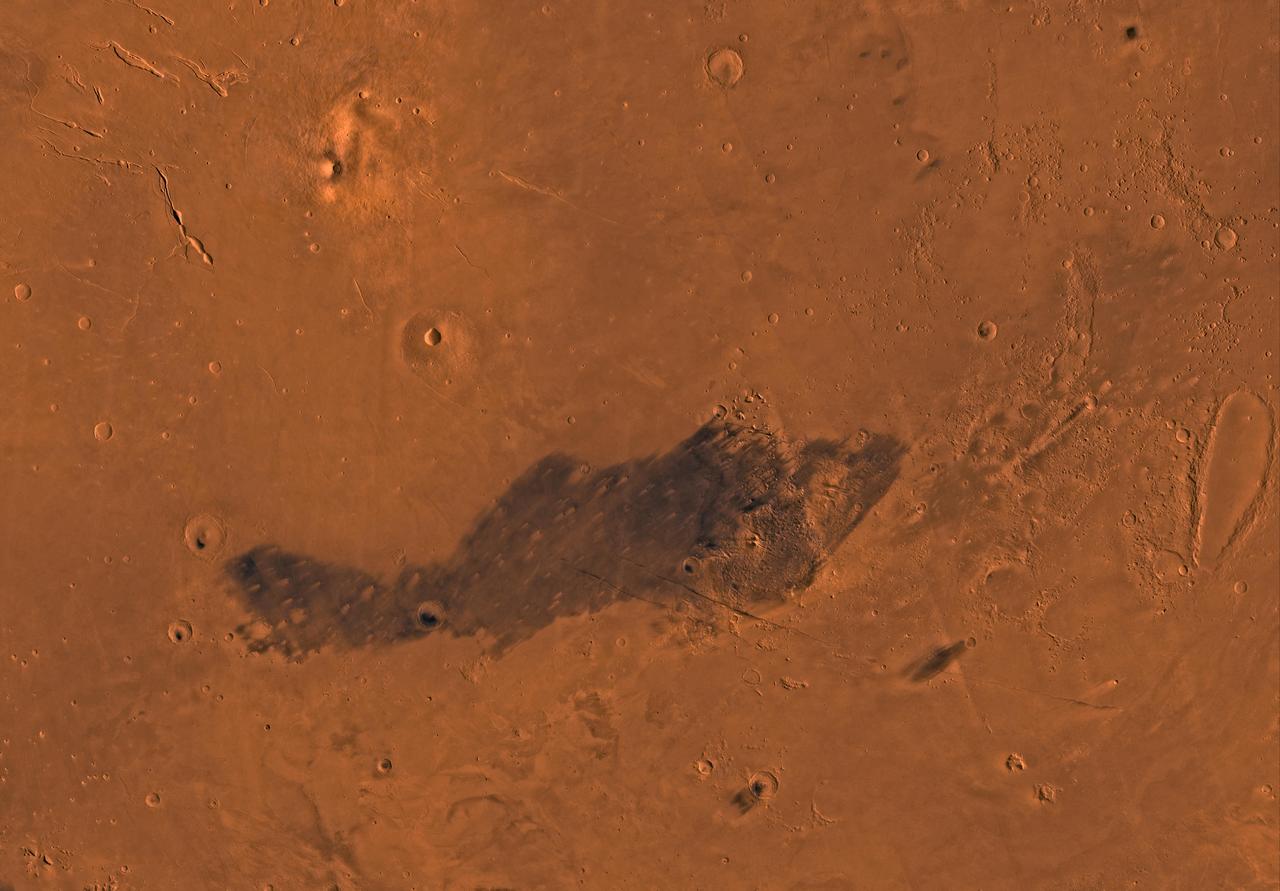
Mars digital-image mosaic merged with color of the MC-30 quadrangle, Mare Australe region of Mars. This image is from NASA's Viking Orbiter 1.  http://photojournal.jpl.nasa.gov/catalog/PIA00190
MC-30 Mare Australe Region
Mars digital-image mosaic merged with color of the MC-5 quadrangle, Ismenius Lacus region of Mars. This image is from NASA's Viking Orbiter 1.  http://photojournal.jpl.nasa.gov/catalog/PIA00165
MC-5 Ismenius Lacus Region
Mars digital-image mosaic merged with color of the MC-16 quadrangle, Memnonia region of Mars. This image is from NASA's Viking Orbiter 1.  http://photojournal.jpl.nasa.gov/catalog/PIA00176
MC-16 Memnonia Region
Mars digital-image mosaic merged with color of the MC-2 quadrangle, Diacria region of Mars. This image is from NASA's Viking Orbiter 1.  http://photojournal.jpl.nasa.gov/catalog/PIA00162
MC-2 Diacria Region
Mars digital-image mosaic merged with color of the MC-3 quadrangle, Arcadia region of Mars. This image is from NASA's Viking Orbiter 1.  http://photojournal.jpl.nasa.gov/catalog/PIA00163
MC-3 Arcadia Region
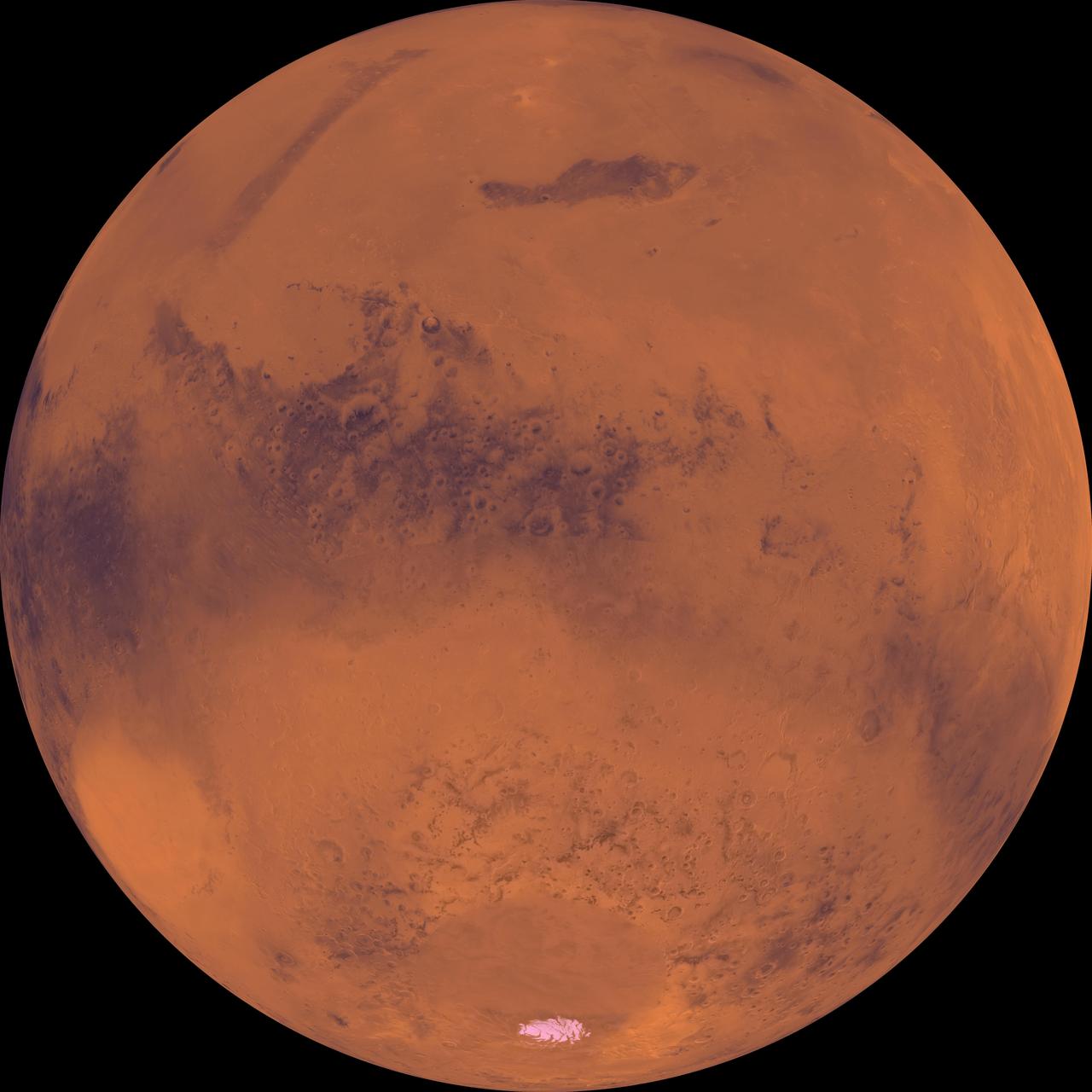
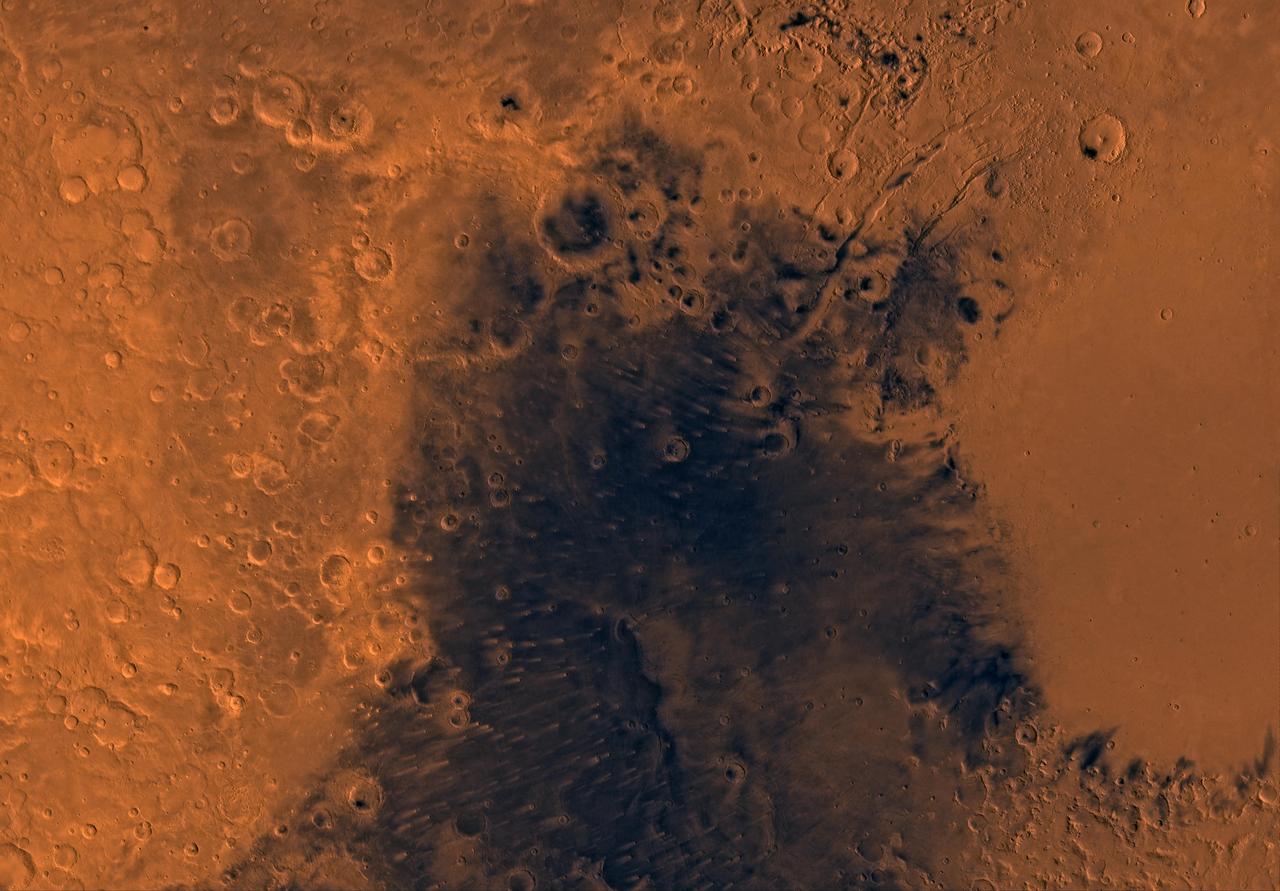
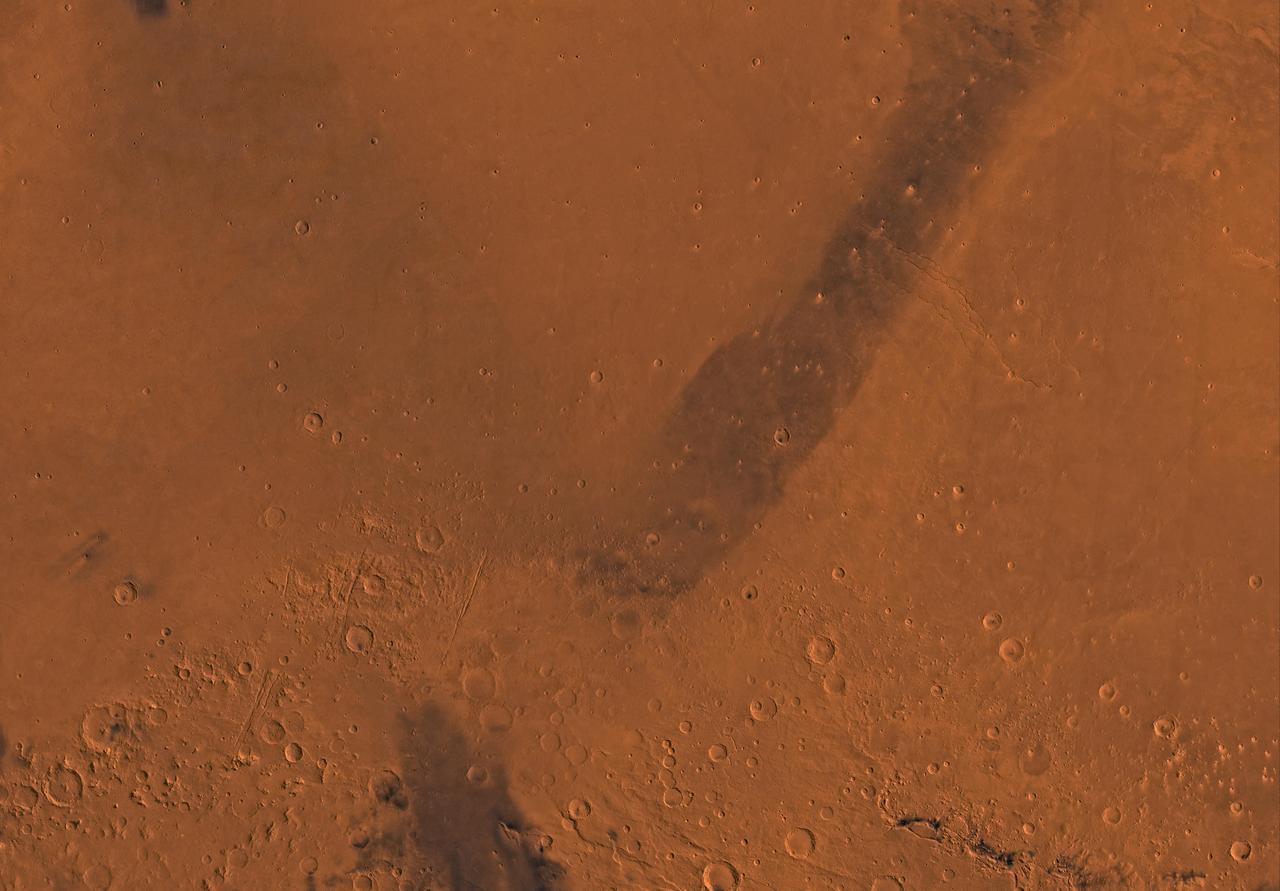
The lowland plains of Elysium and Utopia Planitiae are separated from the darker heavily cratered highlands by a broad escarpment in this image from NASA's Viking Orbiter 1.  http://photojournal.jpl.nasa.gov/catalog/PIA00196
Center is at Latitude 30 Degrees South, Longitude 210 Degrees
Mars digital-image mosaic merged with color of the MC-17 quadrangle, Phoenicis Lacus region of Mars. This image is from NASA's Viking Orbiter 1.  http://photojournal.jpl.nasa.gov/catalog/PIA00177
MC-17 Phoenicis Region
Mars digital-image mosaic merged with color of the MC-8 quadrangle, Amazonis region of Mars. This image is from NASA's Viking Orbiter 1.  http://photojournal.jpl.nasa.gov/catalog/PIA00168
MC-8 Amazonis Region
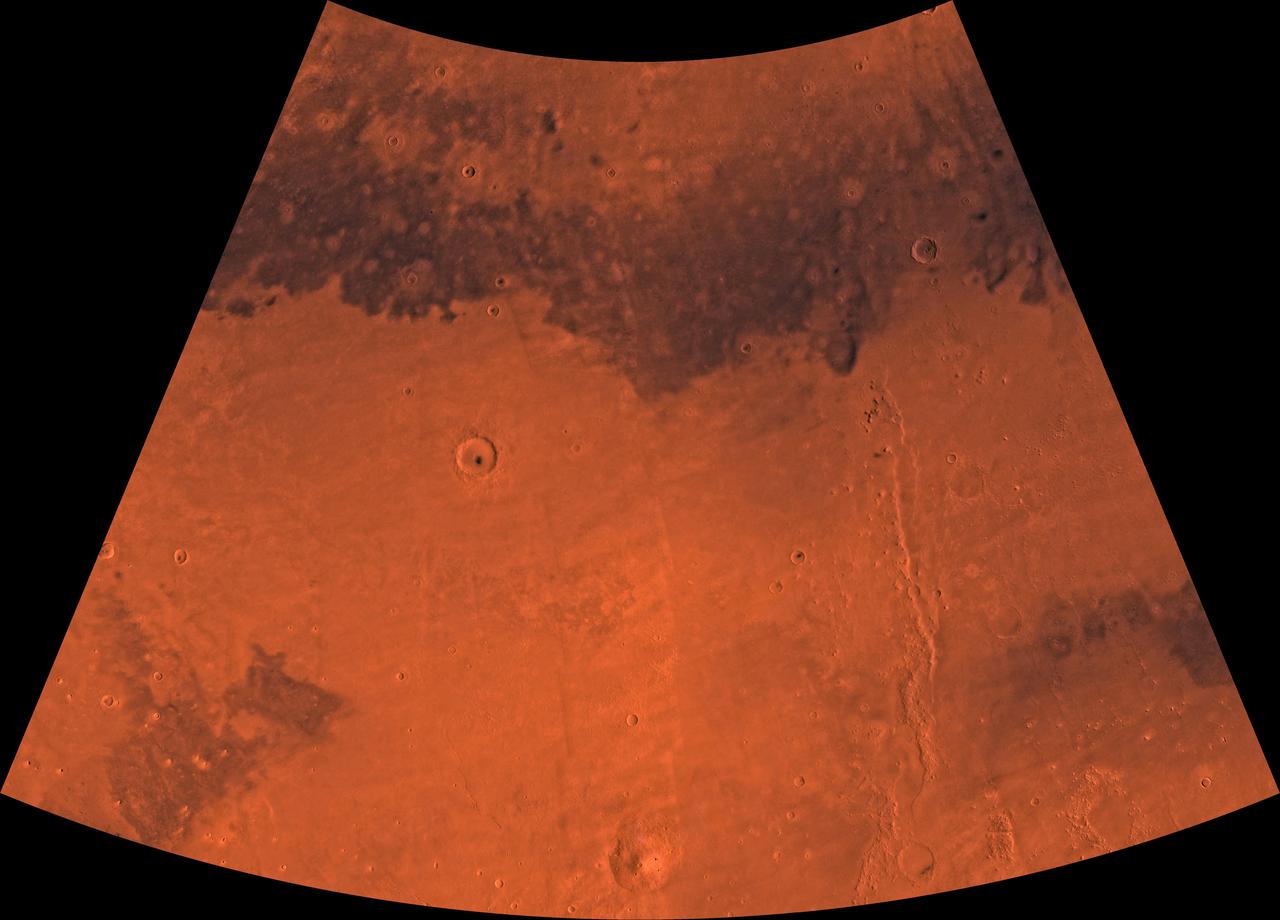
Mars digital-image mosaic merged with color of the MC-10 quadrangle, Lanae Palus region of Mars. This image is from NASA's Viking Orbiter 1.  http://photojournal.jpl.nasa.gov/catalog/PIA00170
MC-10 Lanae Palus Region
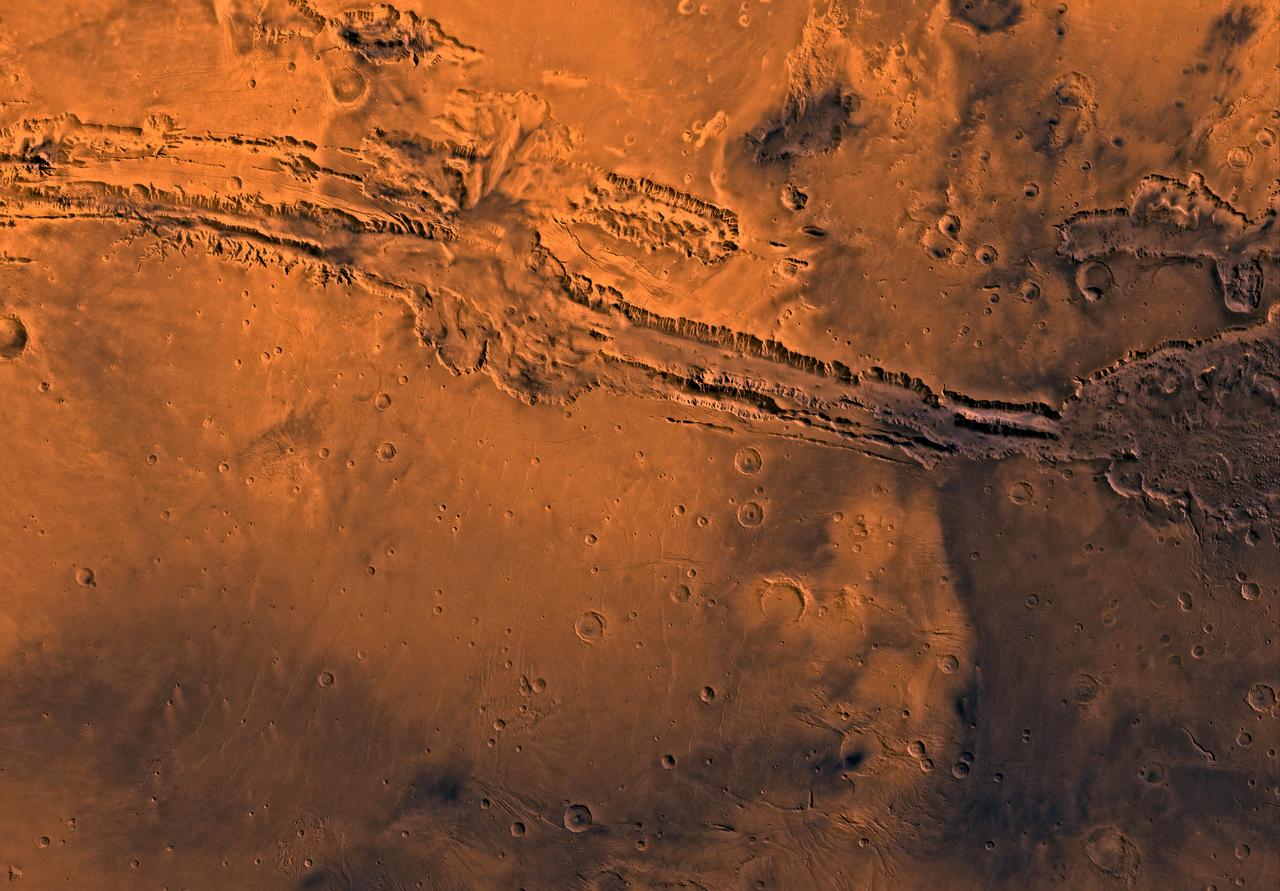
Mars digital-image mosaic merged with color of the MC-18 quadrangle, Coprates region of Mars. This image is from NASA's Viking Orbiter 1.  http://photojournal.jpl.nasa.gov/catalog/PIA00178
MC-18 Coprates Region
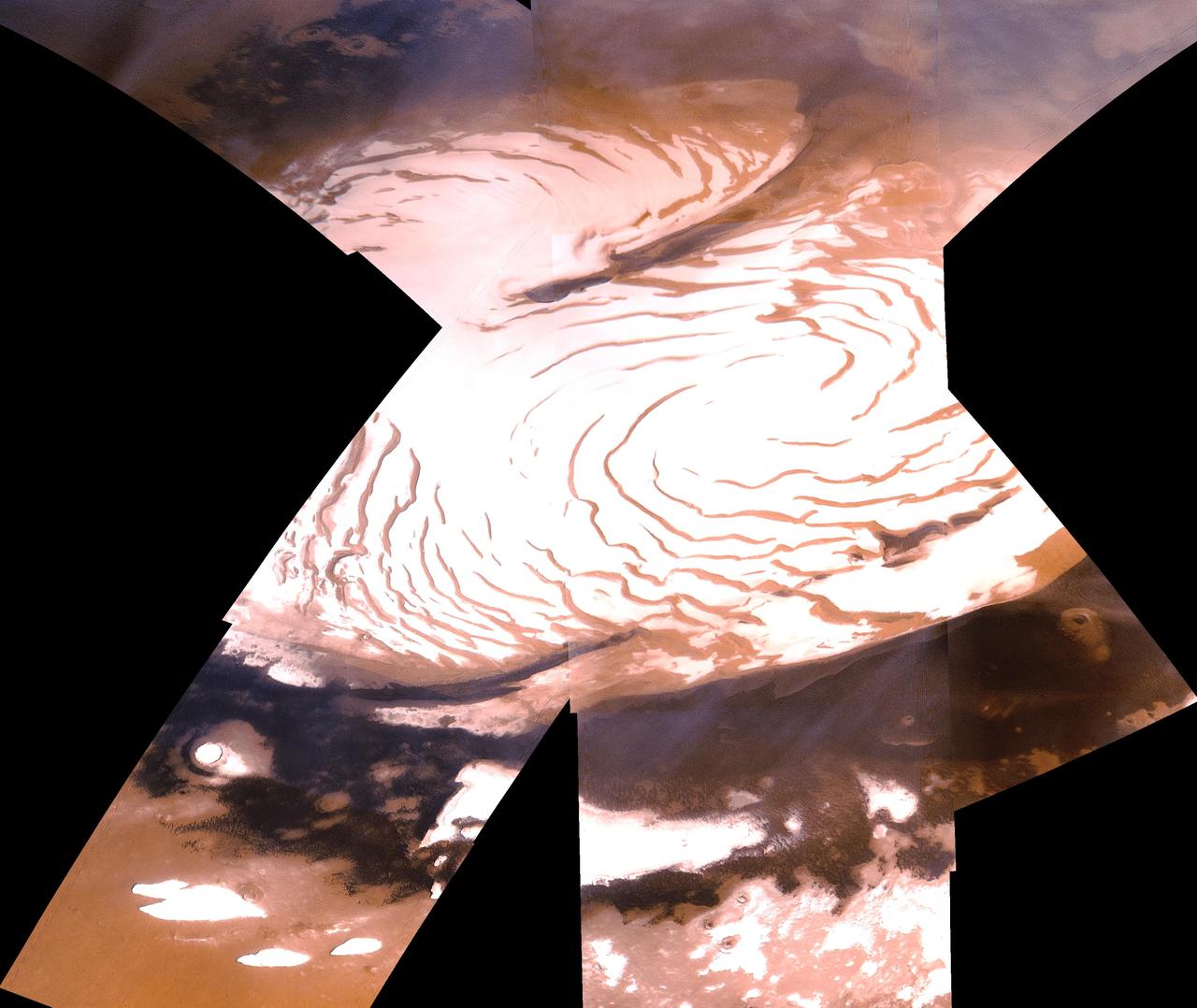
Shown here is an oblique view of the polar region, as seen with NASA Viking 1 spacecraft orbiting Mars over latitude 39 degrees north.  http://photojournal.jpl.nasa.gov/catalog/PIA00009
North Polar Ice Cap
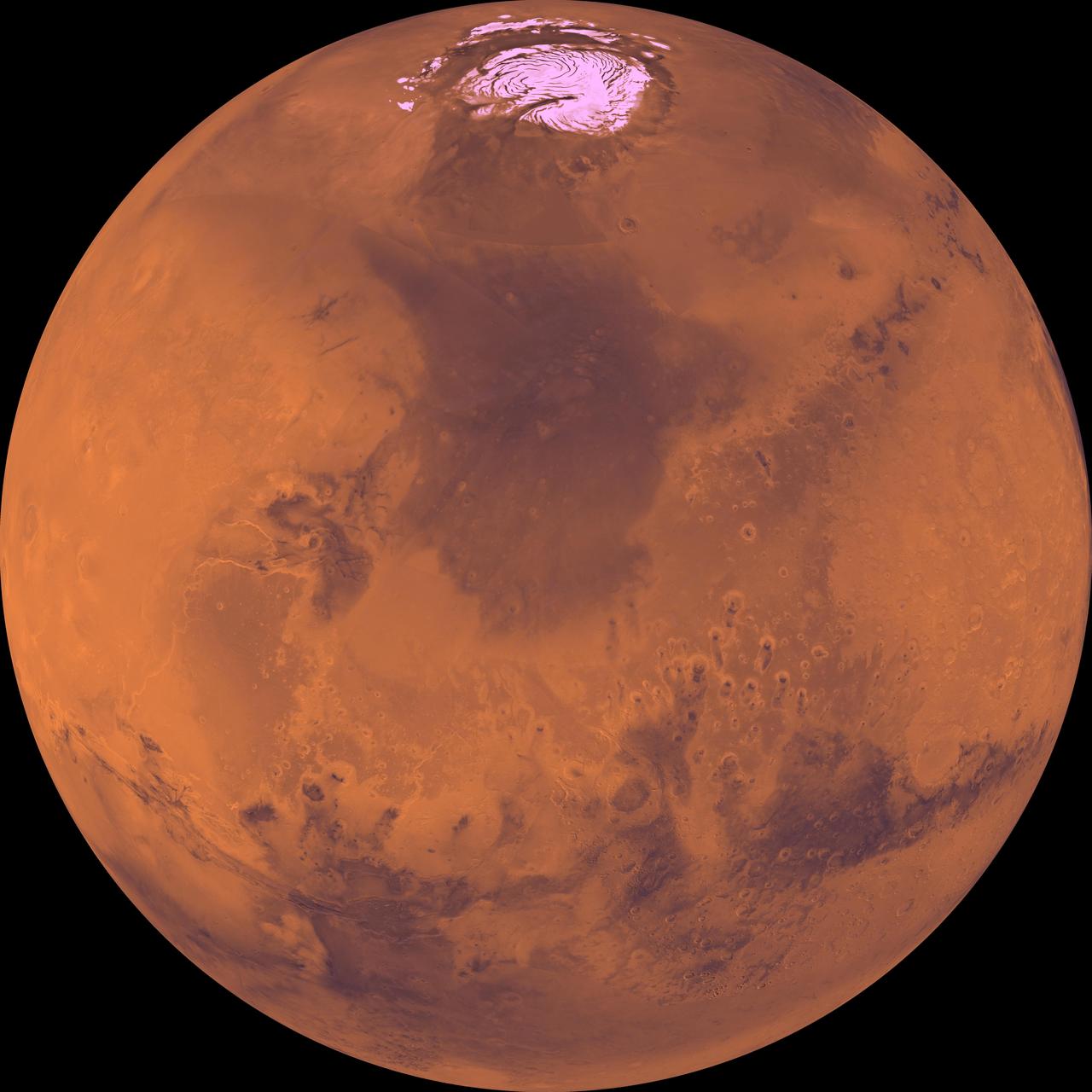
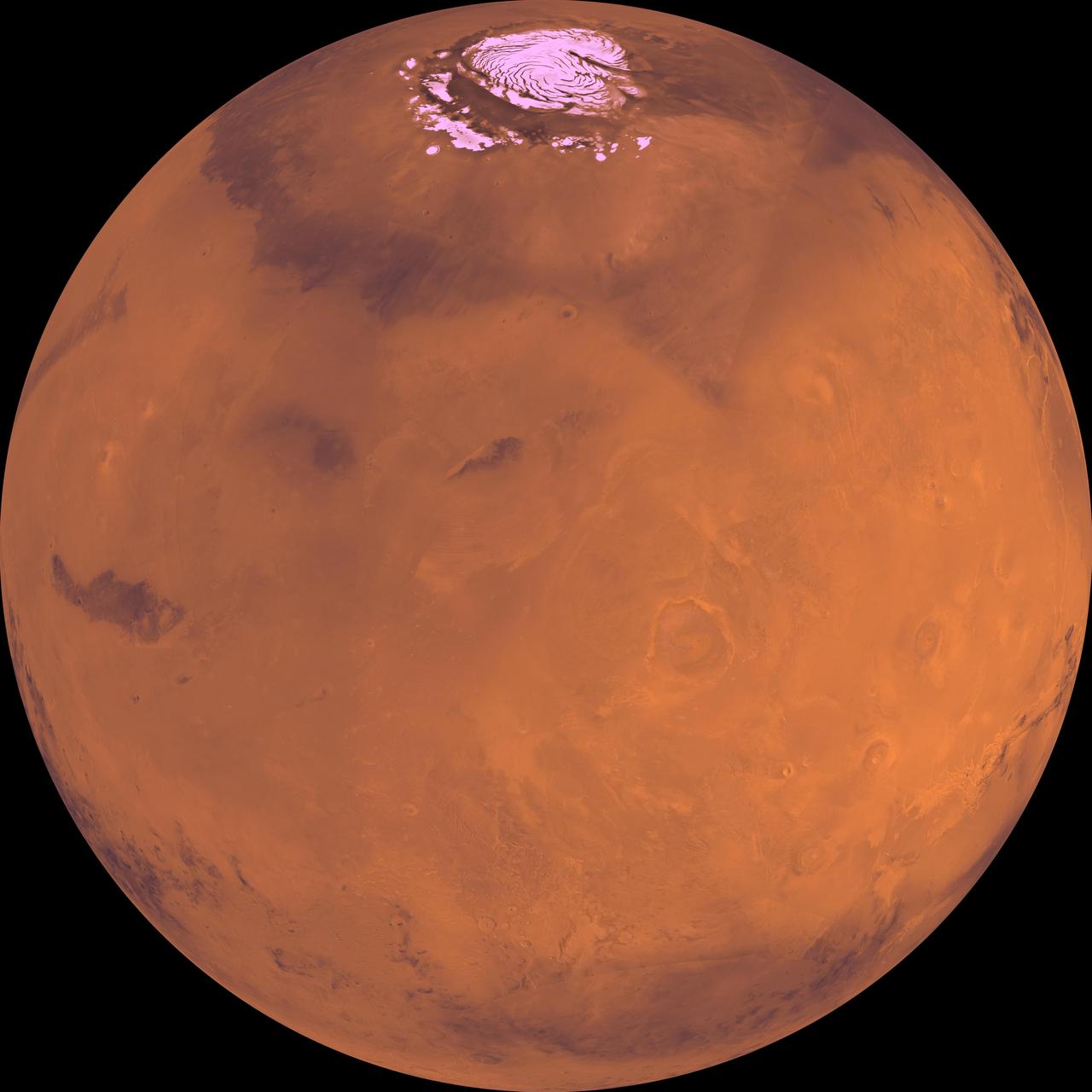
The north polar residual ice cap, which is cut by spiral-patterned troughs, is located at the top in this view from NASA's Viking Orbiter 1.  http://photojournal.jpl.nasa.gov/catalog/PIA00192
Center is at Latitude 30 Degrees North, Longitude 30 Degrees
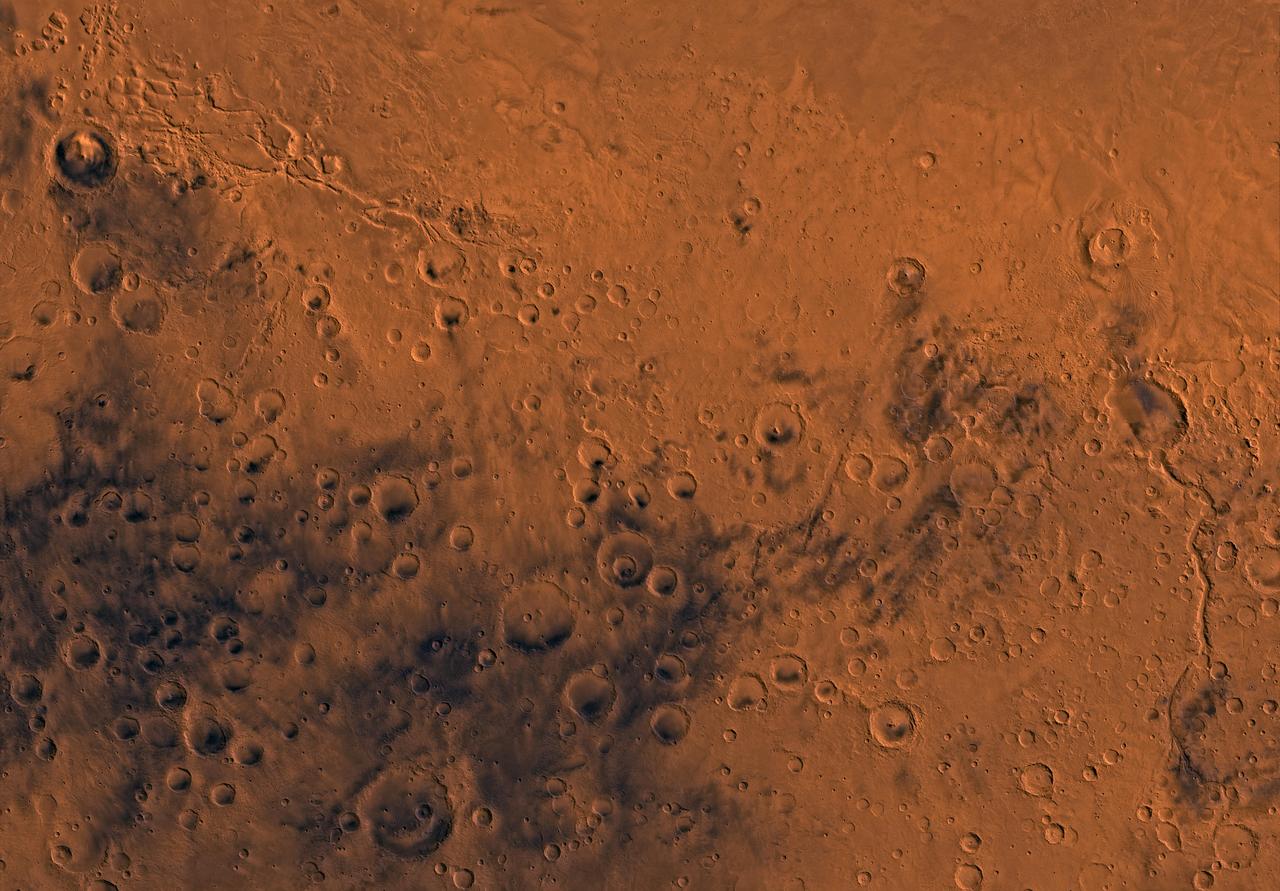
Mars digital-image mosaic merged with color of the MC-13 quadrangle, Syrtis Major region of Mars. This image is from NASA's Viking Orbiter 1.  http://photojournal.jpl.nasa.gov/catalog/PIA00173
MC-13 Syrtis Major Region
Mars digital-image mosaic merged with color of the MC-14 quadrangle, Amenthes region of Mars. This image is from NASA's Viking Orbiter 1.  http://photojournal.jpl.nasa.gov/catalog/PIA00174
MC-14 Amenthes Region
Mars digital-image mosaic merged with color of the MC-6 quadrangle, Casius region of Mars. This image is from NASA's Viking Orbiter 1.  http://photojournal.jpl.nasa.gov/catalog/PIA00166
MC-6 Casius Region
Mars digital-image mosaic merged with color of the MC-7 quadrangle, Cebrenia region of Mars. This image is from NASA's Viking Orbiter 1.  http://photojournal.jpl.nasa.gov/catalog/PIA00167
MC-7 Cebrenia Region
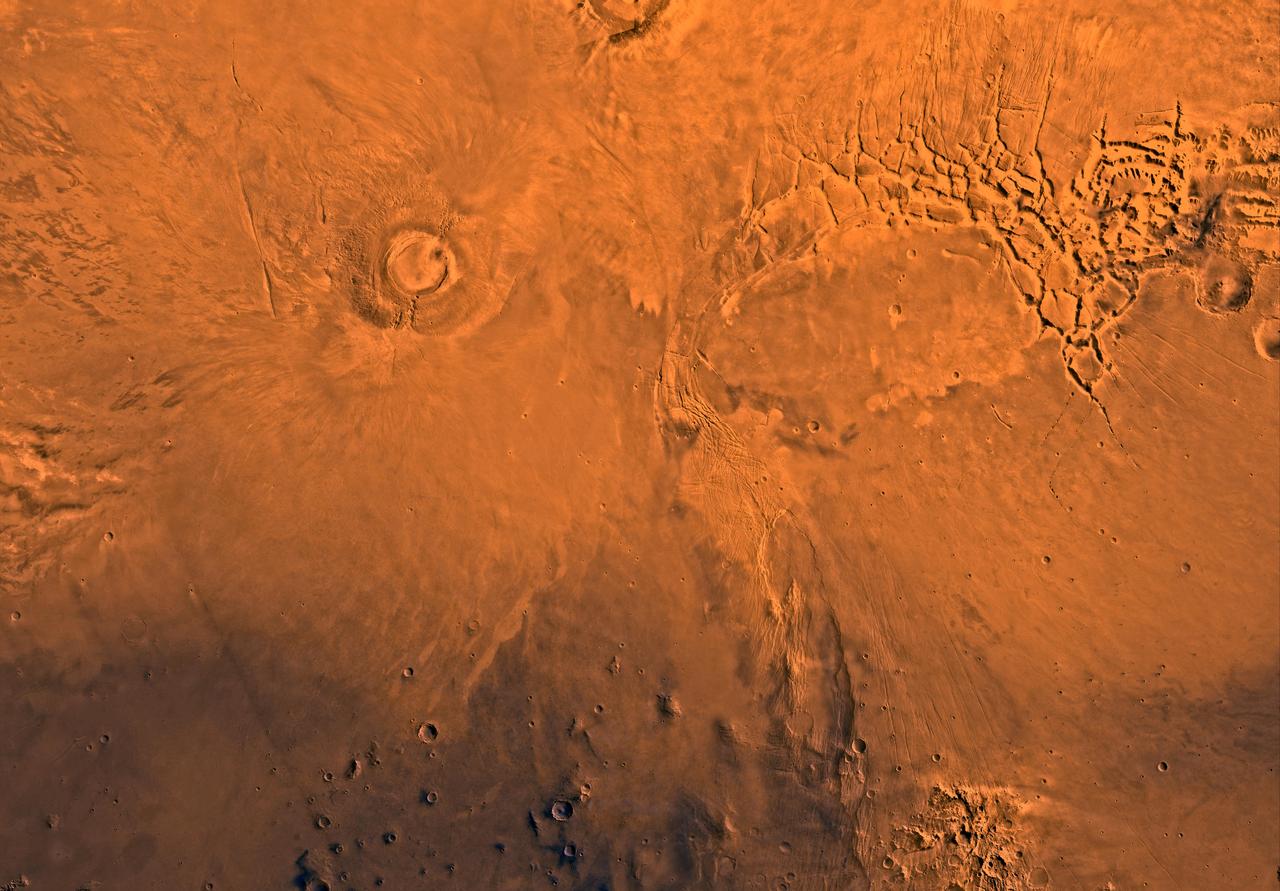
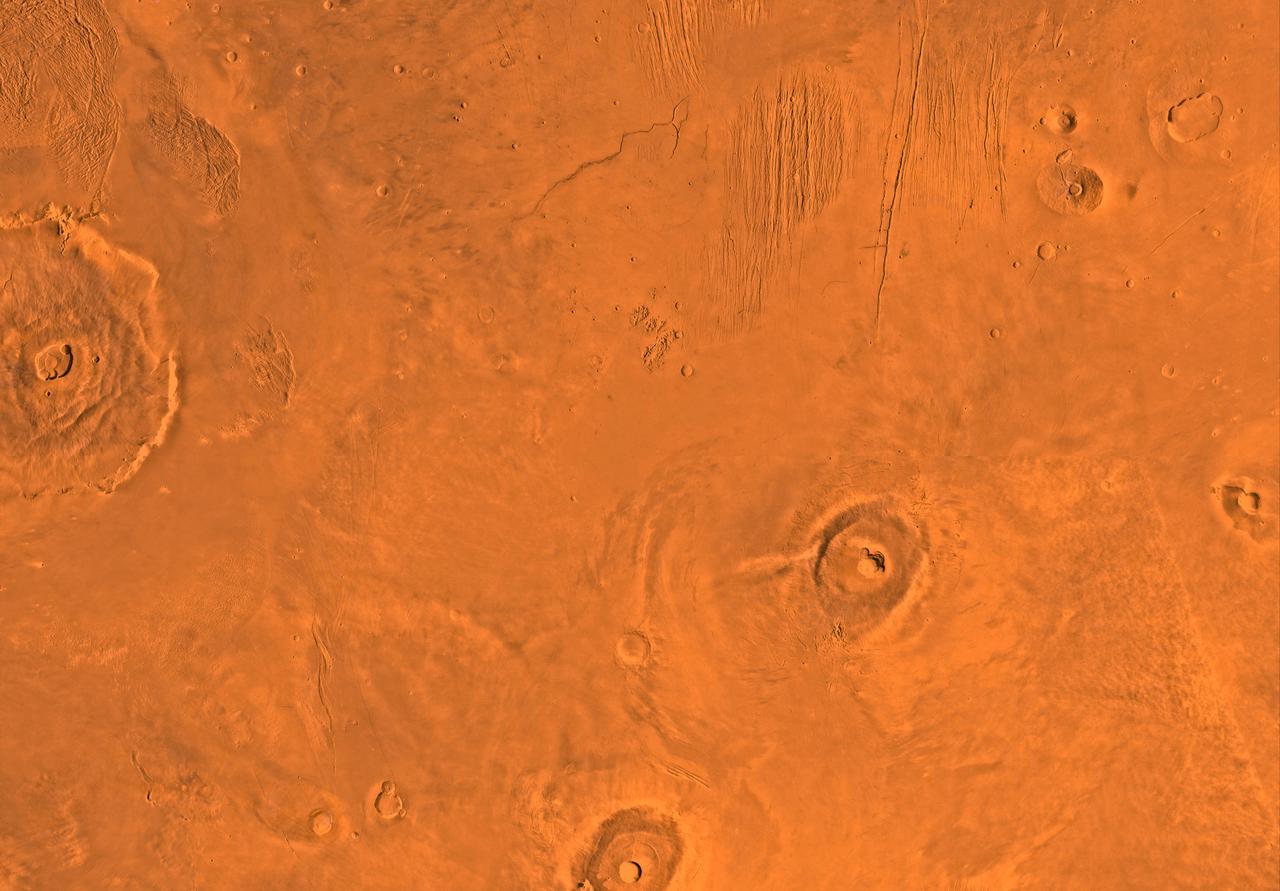
Mars digital-image mosaic merged with color of the MC-9 quadrangle, Tharsis region of Mars. This image is from NASA's Viking Orbiter 1.  http://photojournal.jpl.nasa.gov/catalog/PIA00169
Mc-9 Tharsis Region
Mars digital-image mosaic merged with color of the MC-19 quadrangle, Margaritifer Sinus region of Mars. This image is from NASA's Viking Orbiter 1.  http://photojournal.jpl.nasa.gov/catalog/PIA00179
MC-19 Margaritifer Sinus Region
Mars digital-image mosaic merged with color of the MC-4 quadrangle, Mare Acidalium region of Mars. This image is from NASA's Viking Orbiter 1.  http://photojournal.jpl.nasa.gov/catalog/PIA00164
MC-4 Mare Acidalium Region
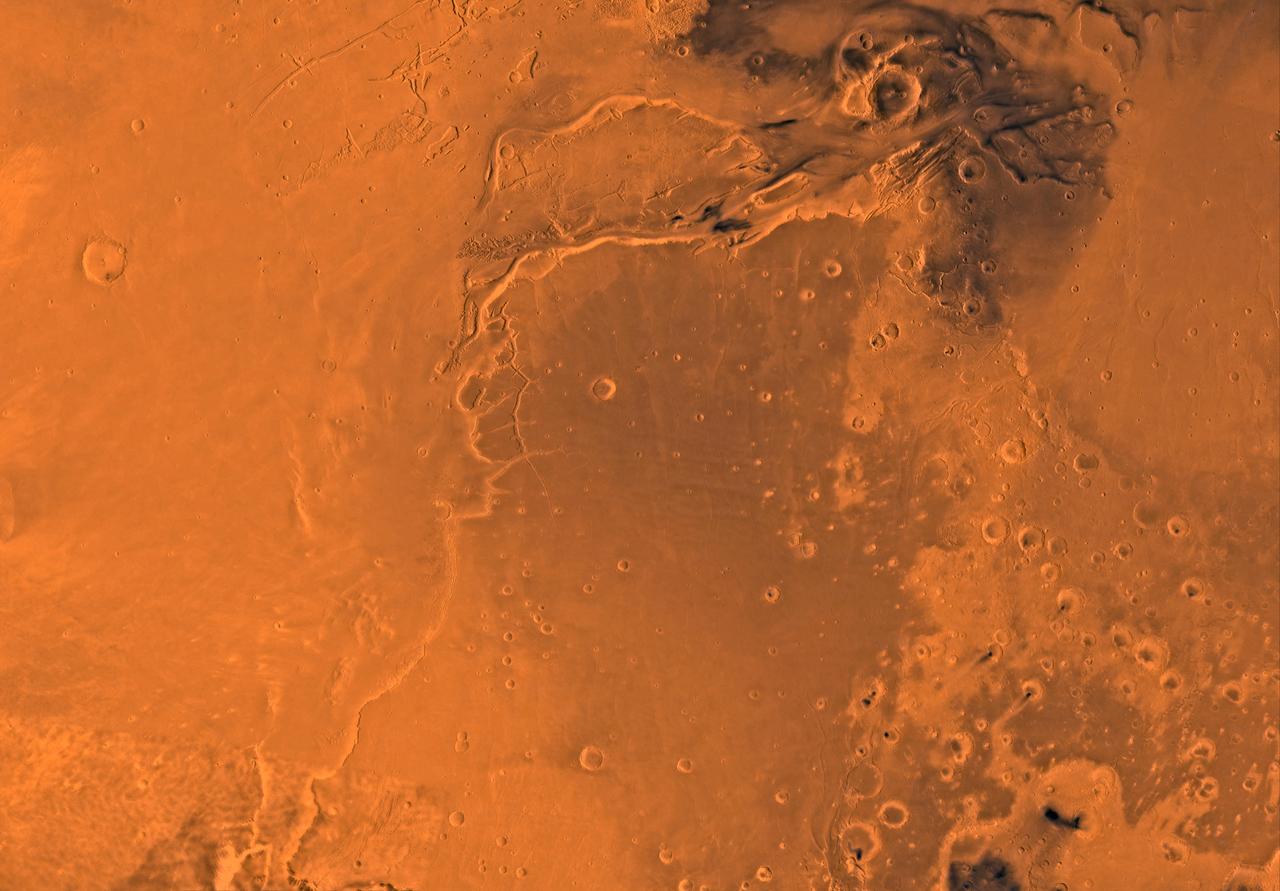
Mars digital-image mosaic merged with color of the MC-15 quadrangle, Elysium region of Mars. This image is from NASA's Viking Orbiter 1.  http://photojournal.jpl.nasa.gov/catalog/PIA00175
MC-15 Elysium Region
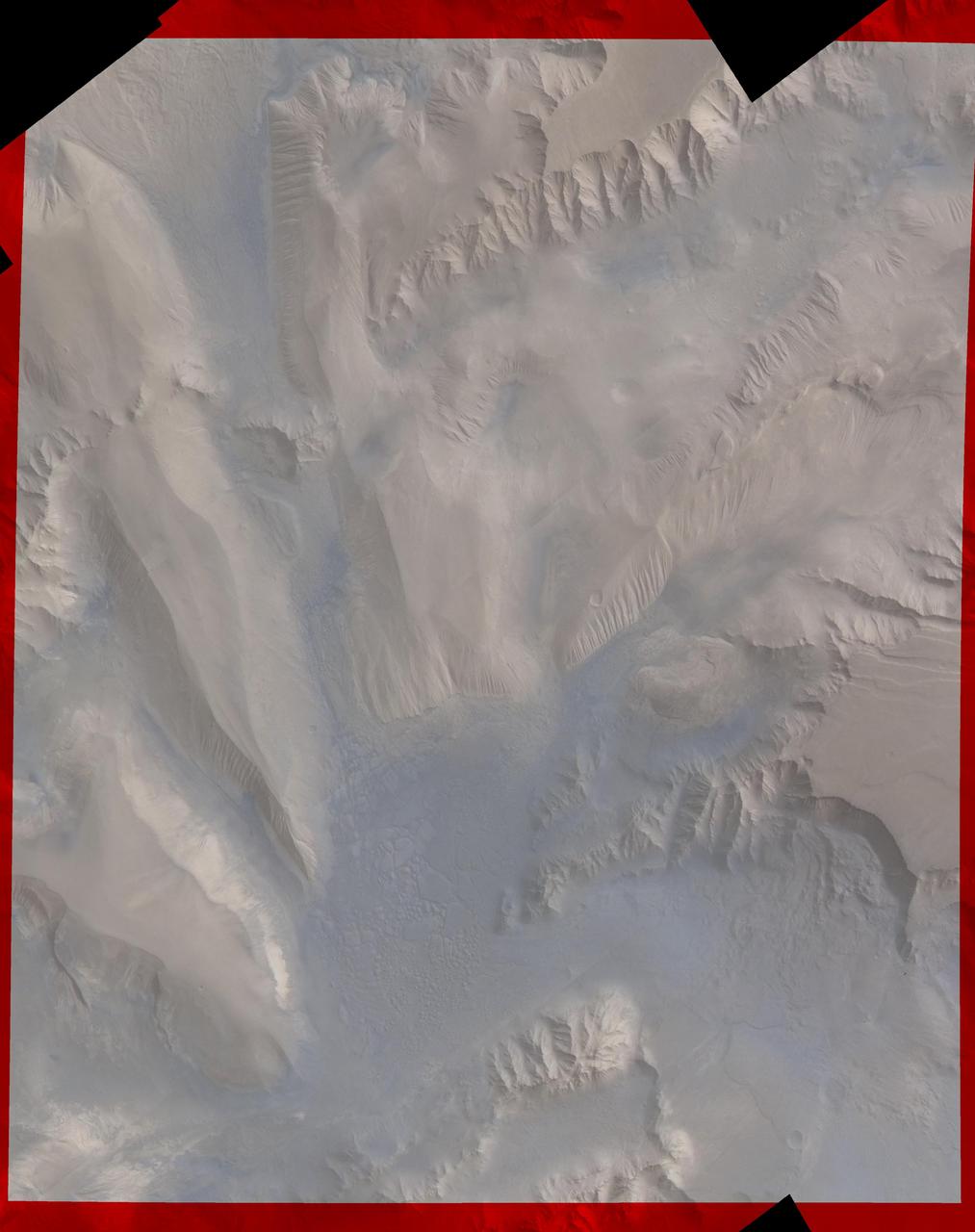
Part of Candor Chasm in Valles Marineris, Mars. Layered terrain is visible in the scene from NASA Viking Orbiter 1, perhaps due to a huge ancient lake.  http://photojournal.jpl.nasa.gov/catalog/PIA00199
Candor Chasm in Valles Marineris
This illustration shows the position of NASA's Voyager 1 and Voyager 2 probes, outside of the heliosphere, a protective bubble created by the Sun that extends well past the orbit of Pluto. Voyager 1 crossed the heliopause, or the edge of the heliosphere, in August 2012. Heading in a different direction, Voyager 2 crossed another part of the heliopause in November 2018.  https://photojournal.jpl.nasa.gov/catalog/PIA22835
Two Interstellar Travelers
This illustration shows the seven Earth-size planets of TRAPPIST-1, an exoplanet system about 40 light-years away, based on data current as of February 2018. The image shows the planets' relative sizes but does not represent their orbits to scale. The art highlights possibilities for how the surfaces of these intriguing worlds might look based on their newly calculated properties.  The seven planets of TRAPPIST-1 are all Earth-sized and terrestrial. TRAPPIST-1 is an ultra-cool dwarf star in the constellation Aquarius, and its planets orbit very close to it.  In the background, slightly distorted versions the familiar constellations of Orion and Taurus are shown as they would appear from the location of TRAPPIST-1 (courtesy of California Academy of Sciences/Dan Tell).  https://photojournal.jpl.nasa.gov/catalog/PIA22097
Illustration of TRAPPIST-1 Planets as of Feb. 2018
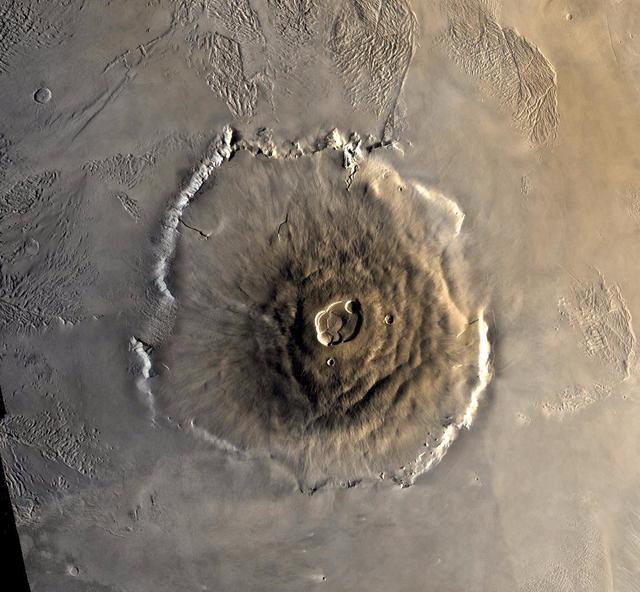
Color mosaic of Olympus Mons volcano on Mars from the Viking 1 Orbiter. The mosaic was created using images from orbit 735 taken 22 June 1978. Olympus Mons is about 600 km in diameter and the summit caldera is 24 km above the surrounding plains.
Color Mosaic of Olympus Mons
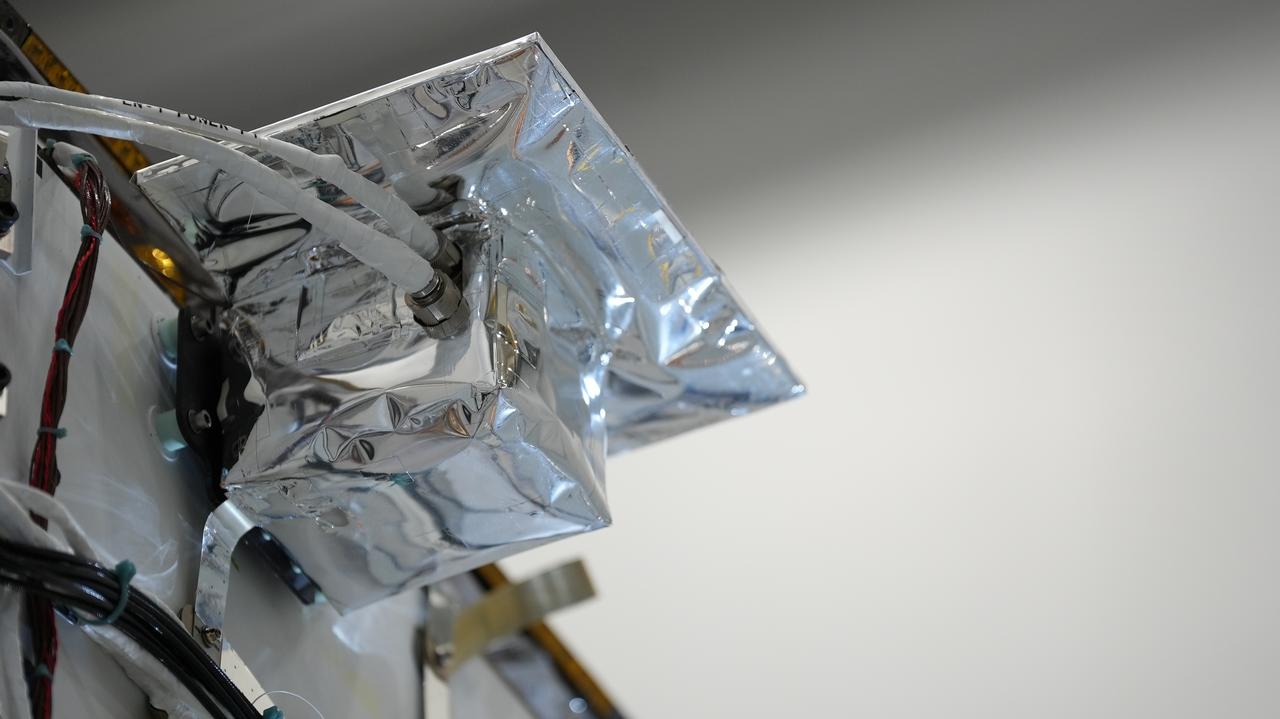
Lunar Node-1, an autonomous navigation payload that will change how human explorers safely traverse the Moon’s surface and live and work in lunar orbit, awaits liftoff as part of Intuitive Machines’ IM-1 mission, its first under NASA’s Commercial Lunar Payload Services initiative. LN-1 was developed, built, and tested at NASA’s Marshall Space Flight Center in Huntsville, Alabama.
Intuitive Machines IM-1 Lunar Node-1 (LN-1)
NASA's Viking Orbiter 1 spies the north polar residual ice cap, which is cut by spiral-patterned troughs and surrounded by the dark lowland plains of Vastitas Borealis, Mars is located at the top.  http://photojournal.jpl.nasa.gov/catalog/PIA00197
Center is at Latitude 30 Degrees North, Longitude 150 Degrees