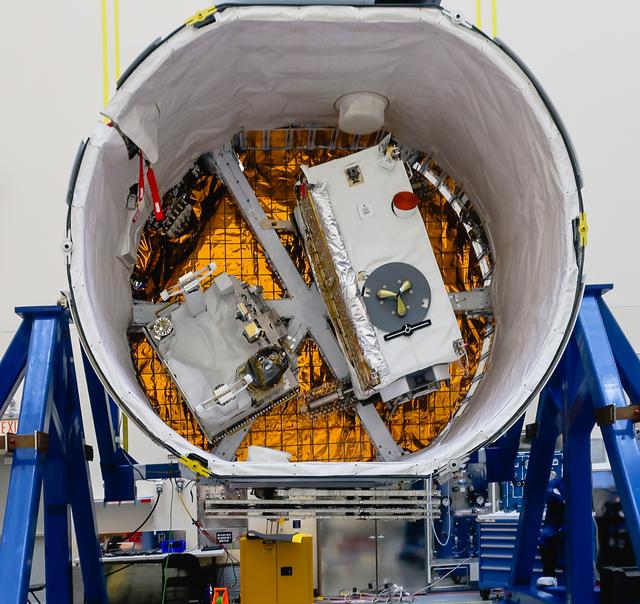
NASA’s Orbiting Carbon Observatory-3 (OCO-3) and Space Test Program-Houston 6 (STP-H6) are in view installed in the truck of SpaceX’s Dragon spacecraft inside the SpaceX facility at NASA’s Kennedy Space Center in Florida on March 23, 2019. OCO-3 and STP-H6 will be delivered to the International Space Station on SpaceX’s 17th Commercial Resupply Services mission (CRS-17) for NASA. STP-H6 is an x-ray communication investigation that will be used to perform a space-based demonstration of a new technology for generating beams of modulated x-rays. This technology may be useful for providing efficient communication to deep space probes, or communicating with hypersonic vehicles where plasma sheaths prevent traditional radio communications. OCO-3 will be robotically installed on the exterior of the space station’s Japanese Experiment Module Exposed Facility Unit, where it will measure and map carbon dioxide from space to provide further understanding of the relationship between carbon and climate. CRS-17 is scheduled to launch from Space Launch Complex 40 on Cape Canaveral Air Force Station in late April.
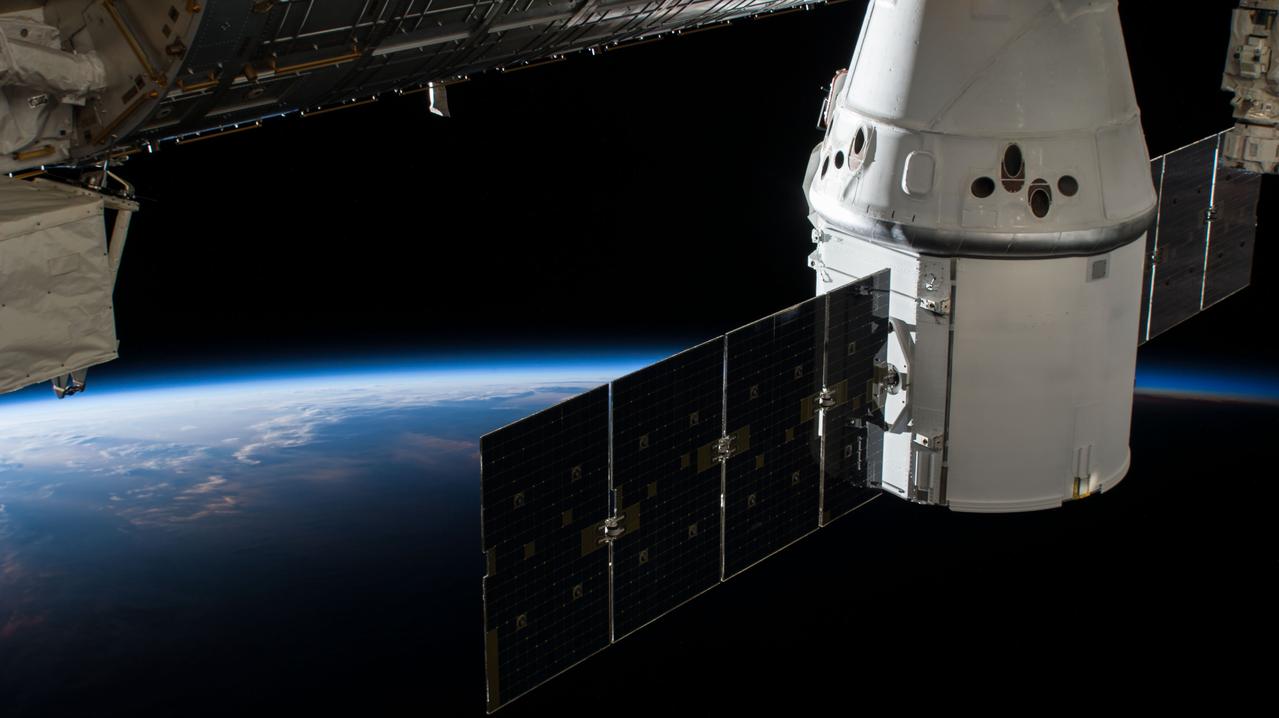
iss056e075978 (July 3, 2018) --- The SpaceX Dragon resupply ship, on its 15th Commercial Resupply Services mission (CRS-15), is pictured attached to the International Space Station the day after it was captured and installed on the Harmony module. The orbital complex was flying over northern central China near the Mongolian border at the time this photograph was taken.
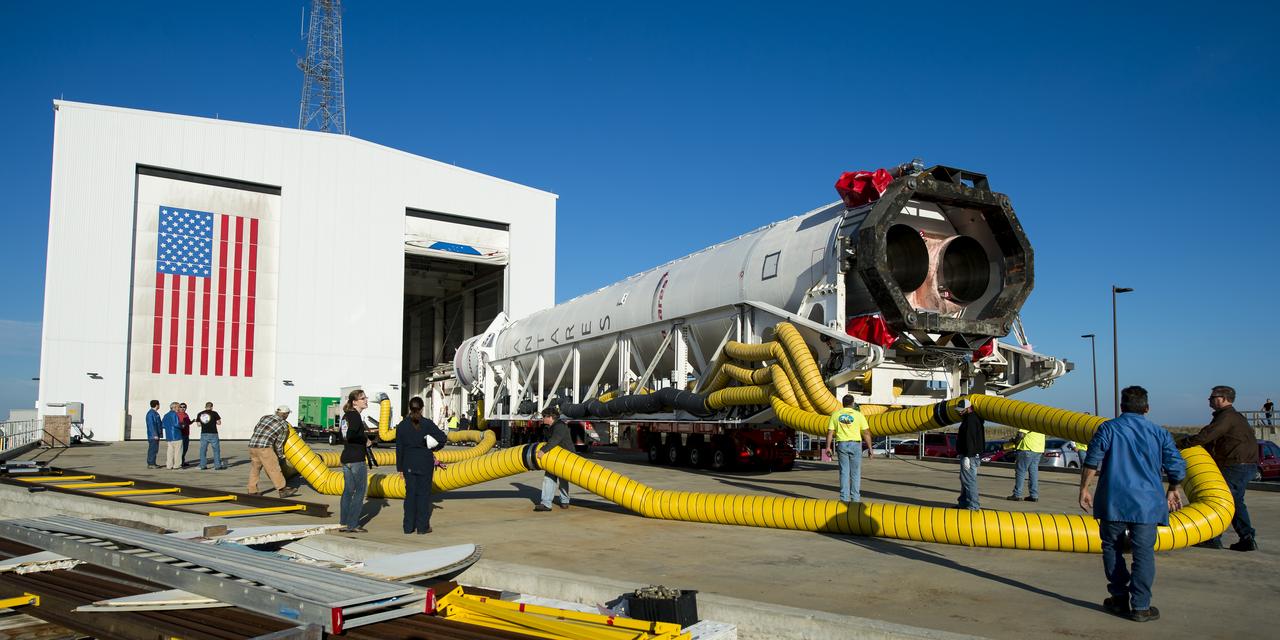
The Orbital Sciences Corporation Antares rocket, with the Cygnus spacecraft onboard, is rolled out of the Horizontal Integration Facility (HIF) to launch Pad-0A, Friday, Oct. 24, 2014, at NASA's Wallops Flight Facility in Virginia. The Antares will launch with the Cygnus spacecraft filled with over 5,000 pounds of supplies for the International Space Station, including science experiments, experiment hardware, spare parts, and crew provisions. The Orbital-3 mission is Orbital Sciences' third contracted cargo delivery flight to the space station for NASA. Photo Credit: (NASA/Joel Kowsky)
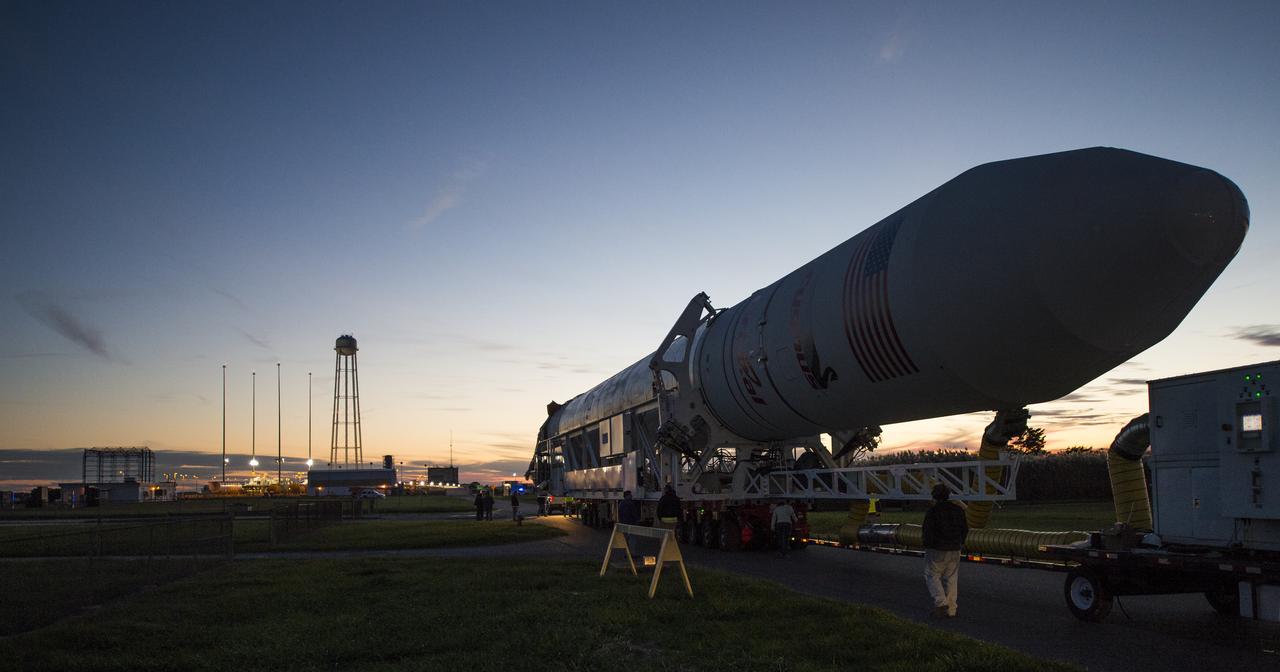
The Orbital Sciences Corporation Antares rocket, with the Cygnus spacecraft onboard, rolls from the Horizontal Integration Facility (HIF) to launch Pad-0A, Friday, Oct. 24, 2014, at NASA's Wallops Flight Facility in Virginia. The Antares will launch with the Cygnus spacecraft filled with over 5,000 pounds of supplies for the International Space Station, including science experiments, experiment hardware, spare parts, and crew provisions. The Orbital-3 mission is Orbital Sciences' third contracted cargo delivery flight to the space station for NASA. Photo Credit: (NASA/Joel Kowsky)
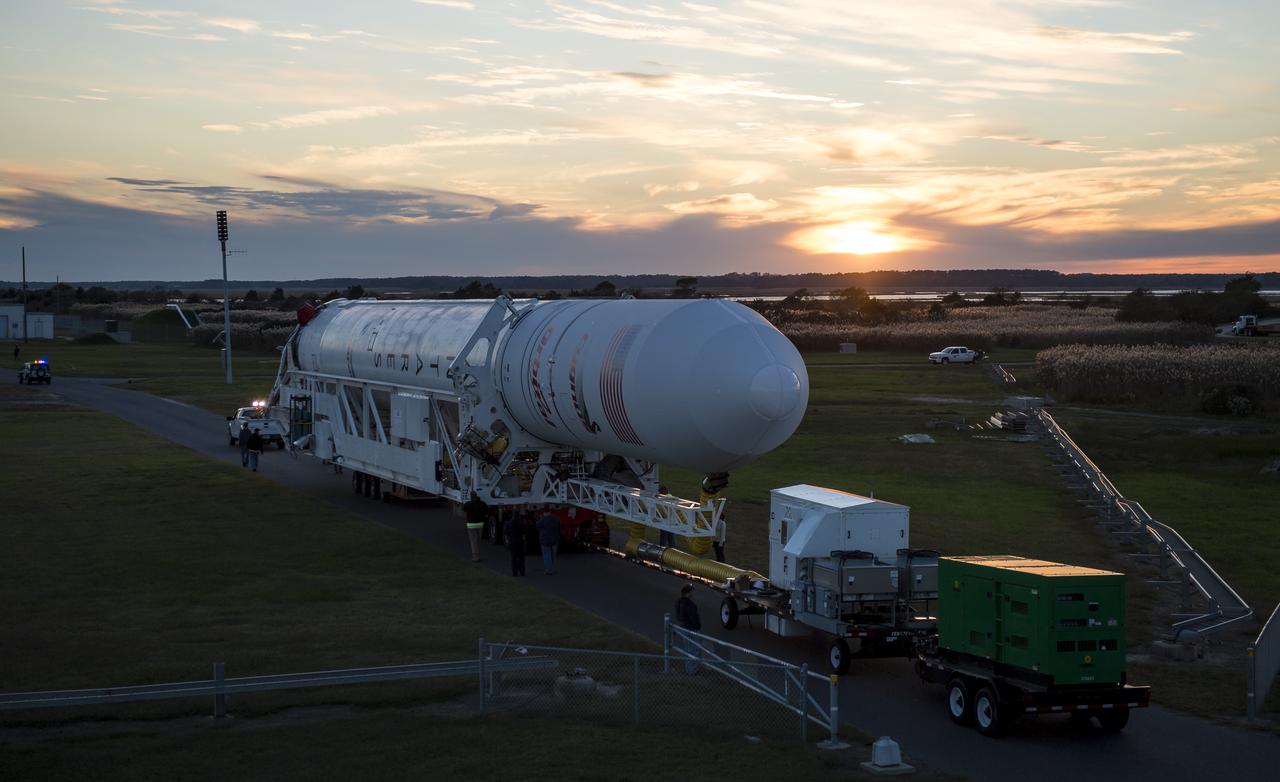
The Orbital Sciences Corporation Antares rocket, with the Cygnus spacecraft onboard, rolls from the Horizontal Integration Facility (HIF) to launch Pad-0A, Friday, Oct. 24, 2014, at NASA's Wallops Flight Facility in Virginia. The Antares will launch with the Cygnus spacecraft filled with over 5,000 pounds of supplies for the International Space Station, including science experiments, experiment hardware, spare parts, and crew provisions. The Orbital-3 mission is Orbital Sciences' third contracted cargo delivery flight to the space station for NASA. Photo Credit: (NASA/Joel Kowsky)
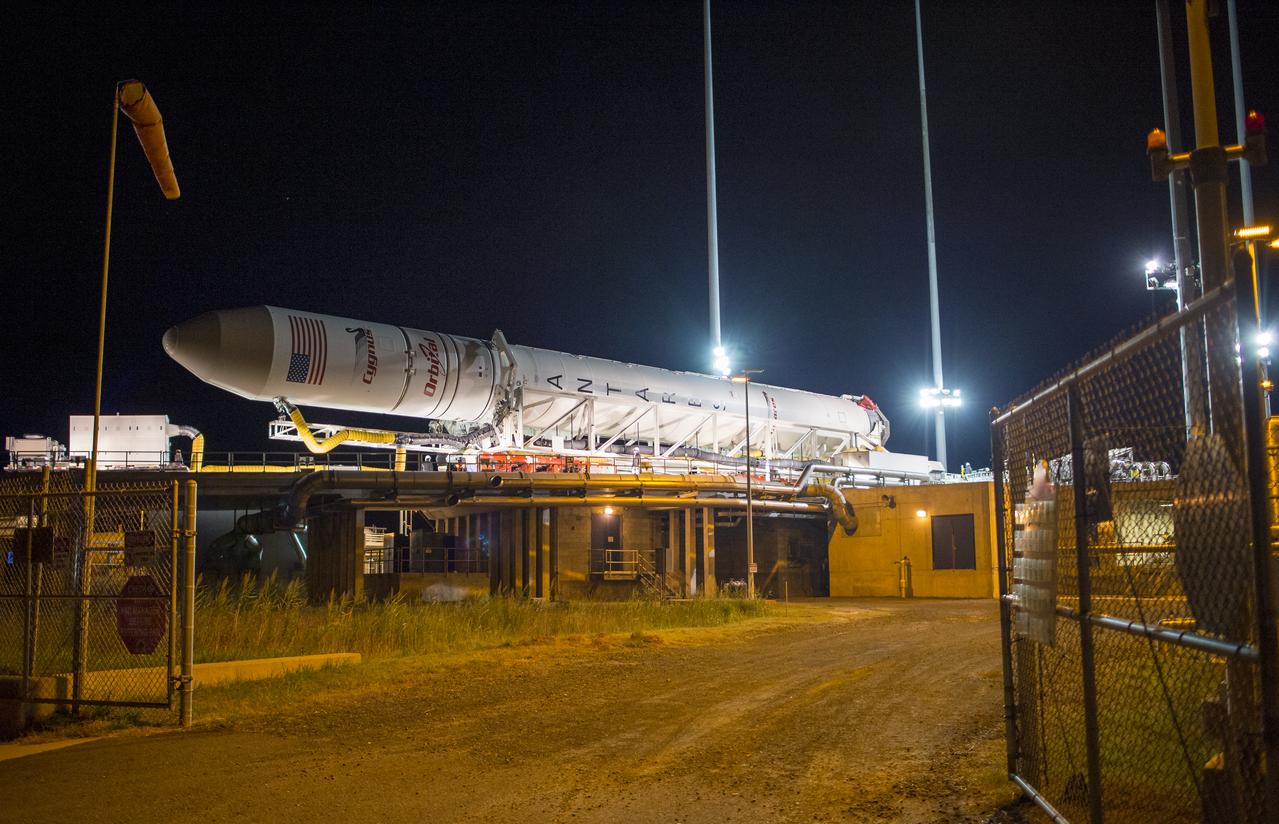
The Orbital Sciences Corporation Antares rocket, with the Cygnus spacecraft onboard, arrives at launch Pad-0A, Friday, Oct. 24, 2014, at NASA's Wallops Flight Facility in Virginia. The Antares will launch with the Cygnus spacecraft filled with over 5,000 pounds of supplies for the International Space Station, including science experiments, experiment hardware, spare parts, and crew provisions. The Orbital-3 mission is Orbital Sciences' third contracted cargo delivery flight to the space station for NASA. Photo Credit: (NASA/Joel Kowsky)
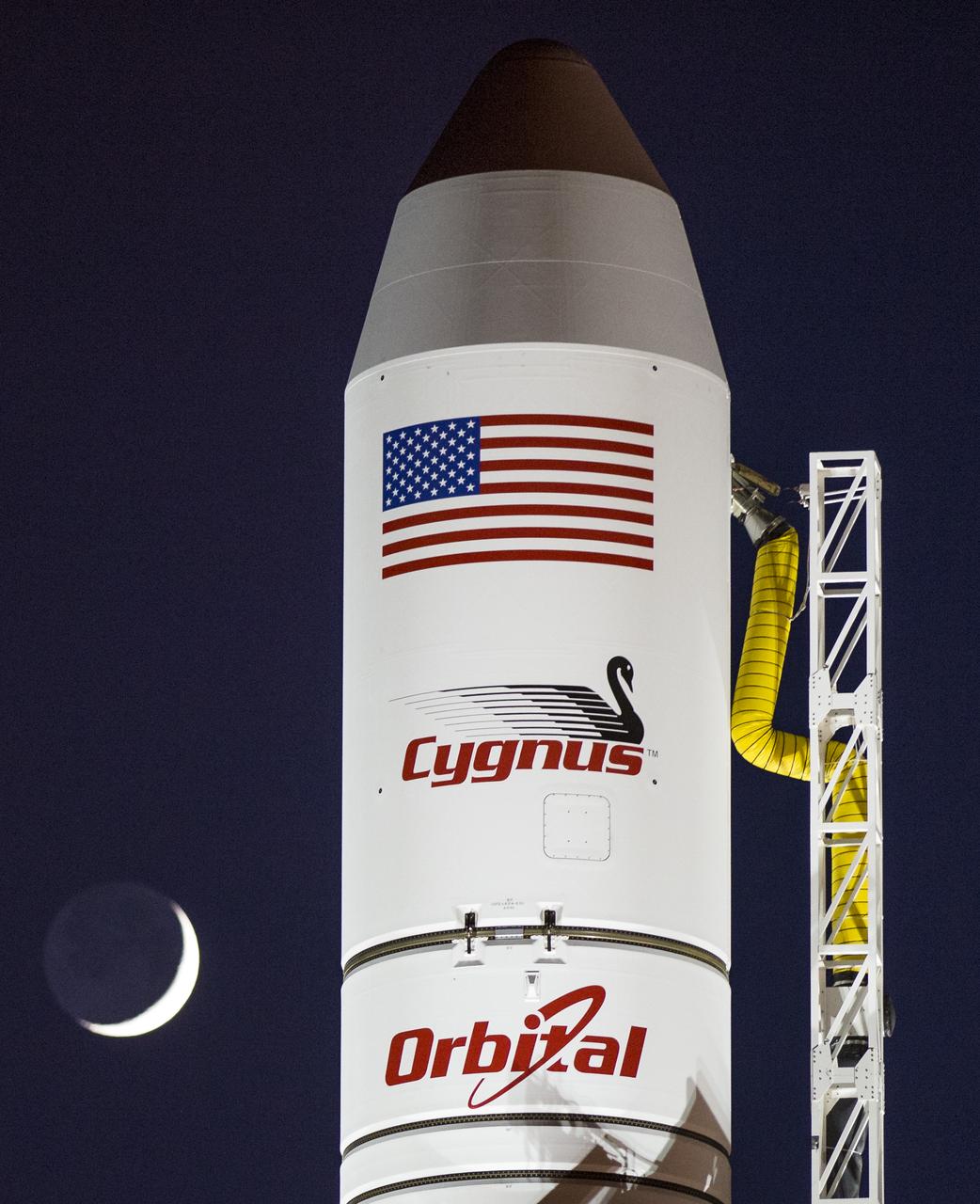
The Orbital Sciences Corporation Antares rocket, with the Cygnus spacecraft onboard, is seen on launch Pad-0A, Sunday, Oct. 26, 2014, at NASA's Wallops Flight Facility in Virginia. The Antares will launch with the Cygnus spacecraft filled with over 5,000 pounds of supplies for the International Space Station, including science experiments, experiment hardware, spare parts, and crew provisions. The Orbital-3 mission is Orbital Sciences' third contracted cargo delivery flight to the space station for NASA. Launch is scheduled for Monday, Oct. 27 at 6:45 p.m. EDT. Photo Credit: (NASA/Joel Kowsky)
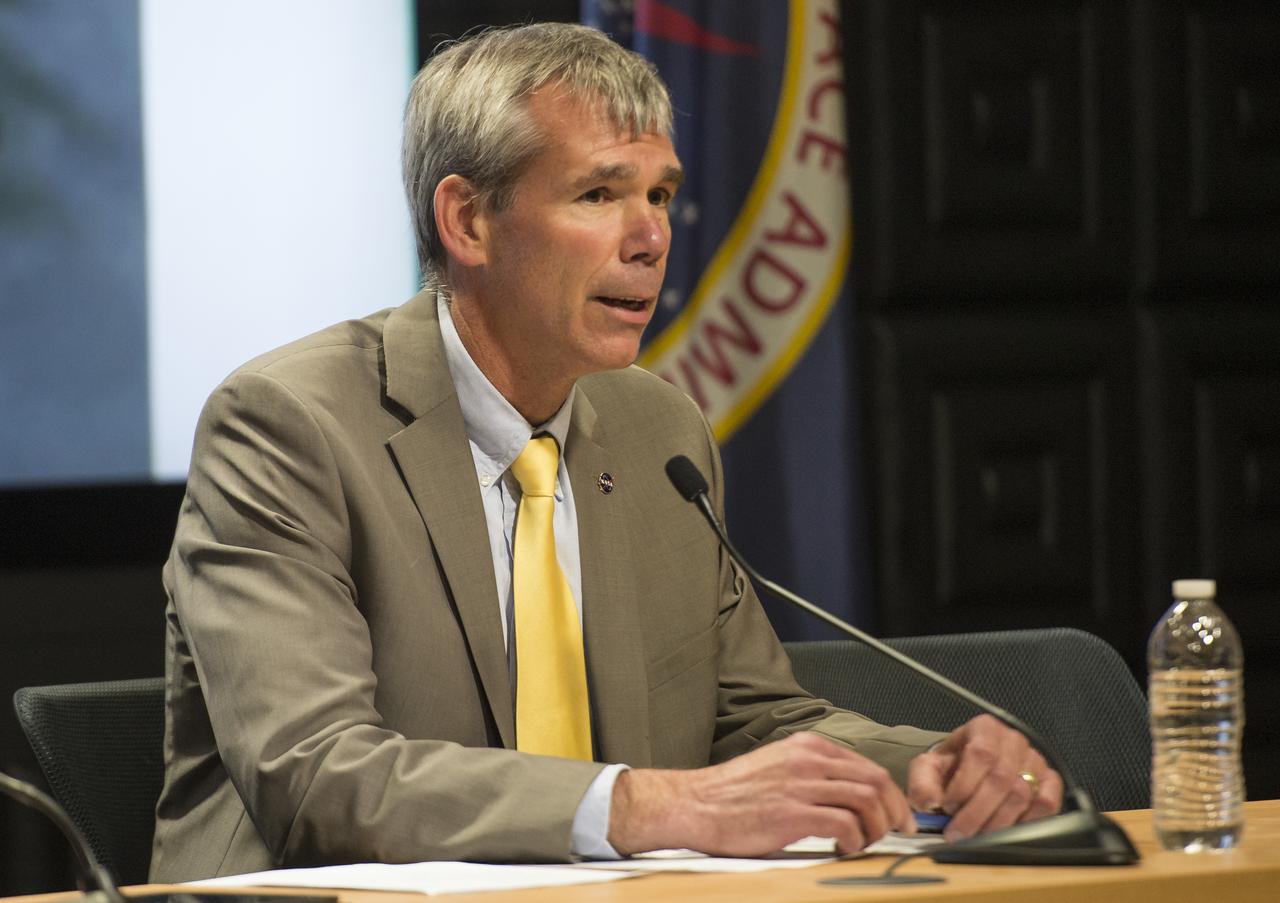
Bill Wrobel, director of NASA's Wallops Flight Facility is seen during a press conference held after a mishap occurred during the launch of the Antares rocket, with the Cygnus cargo spacecraft aboard, Tuesday, Oct. 28, 2014, NASA Wallops Flight Facility, Virginia. Cygnus was on its way to rendezvous with the space station. The Antares rocket lifted off to start its third resupply mission to the International Space Station, but suffered a catastrophic anomaly shortly after liftoff at 6:22 p.m. EDT. Photo Credit: (NASA/Joel Kowsky)
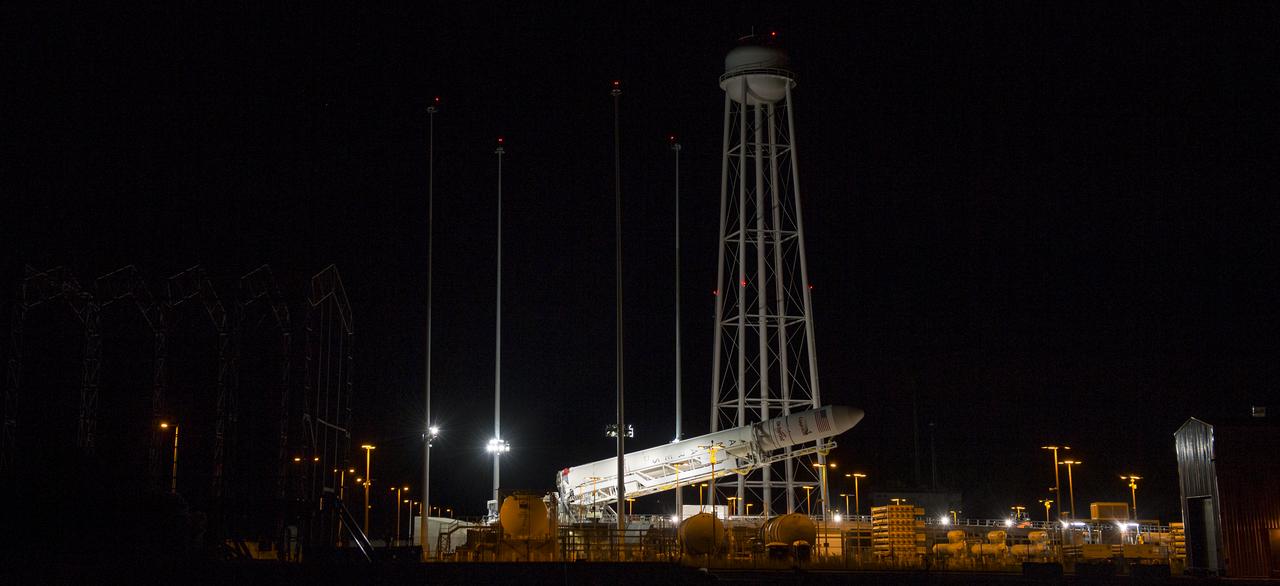
The Orbital Sciences Corporation Antares rocket, with the Cygnus spacecraft onboard, is raised at launch Pad-0A, Saturday, Oct. 25, 2014, at NASA's Wallops Flight Facility in Virginia. The Antares will launch with the Cygnus spacecraft filled with over 5,000 pounds of supplies for the International Space Station, including science experiments, experiment hardware, spare parts, and crew provisions. The Orbital-3 mission is Orbital Sciences' third contracted cargo delivery flight to the space station for NASA. Photo Credit: (NASA/Joel Kowsky)
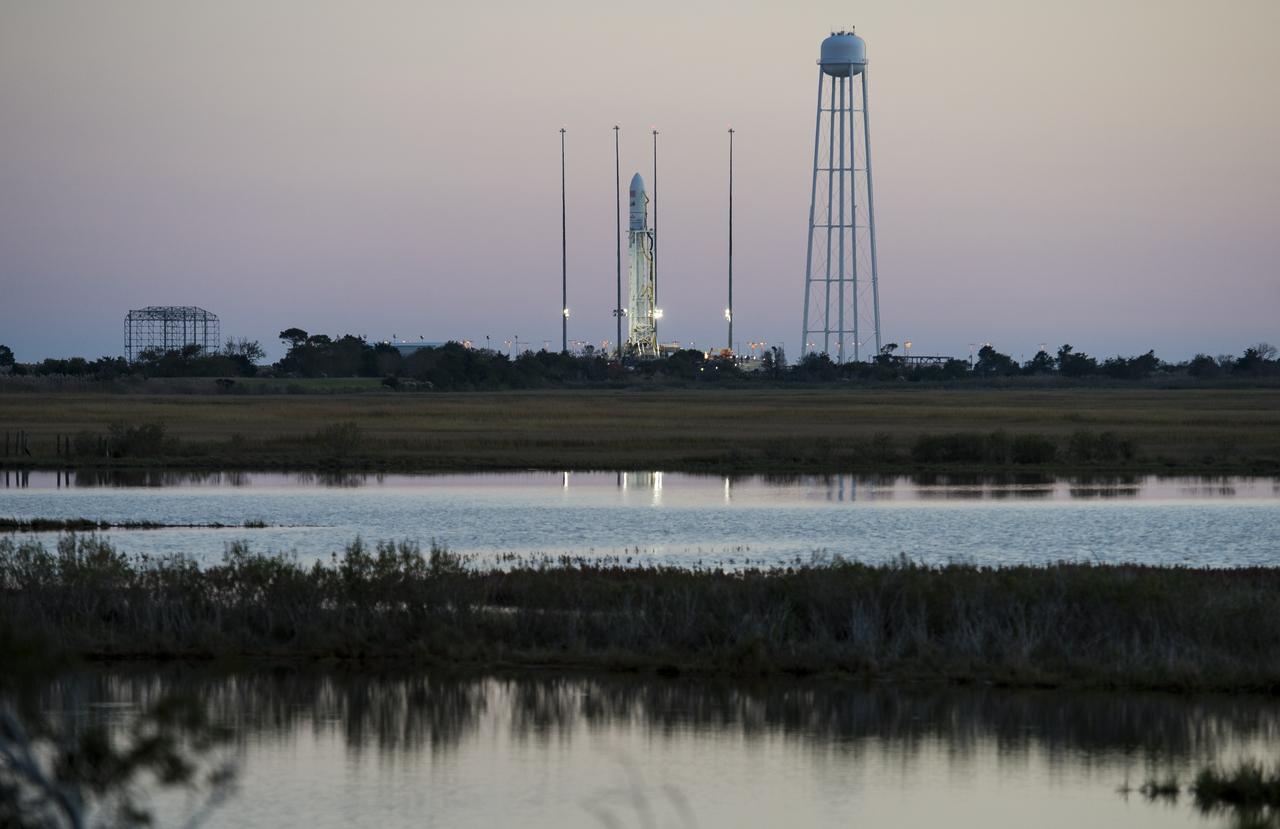
The Orbital Sciences Corporation Antares rocket, with the Cygnus spacecraft onboard, is seen on launch Pad-0A, Saturday, Oct. 25, 2014, at NASA's Wallops Flight Facility in Virginia. The Antares will launch with the Cygnus spacecraft filled with over 5,000 pounds of supplies for the International Space Station, including science experiments, experiment hardware, spare parts, and crew provisions. The Orbital-3 mission is Orbital Sciences' third contracted cargo delivery flight to the space station for NASA. Launch is scheduled for Monday, Oct. 27 at 6:45 p.m. EDT. Photo Credit: (NASA/Joel Kowsky)
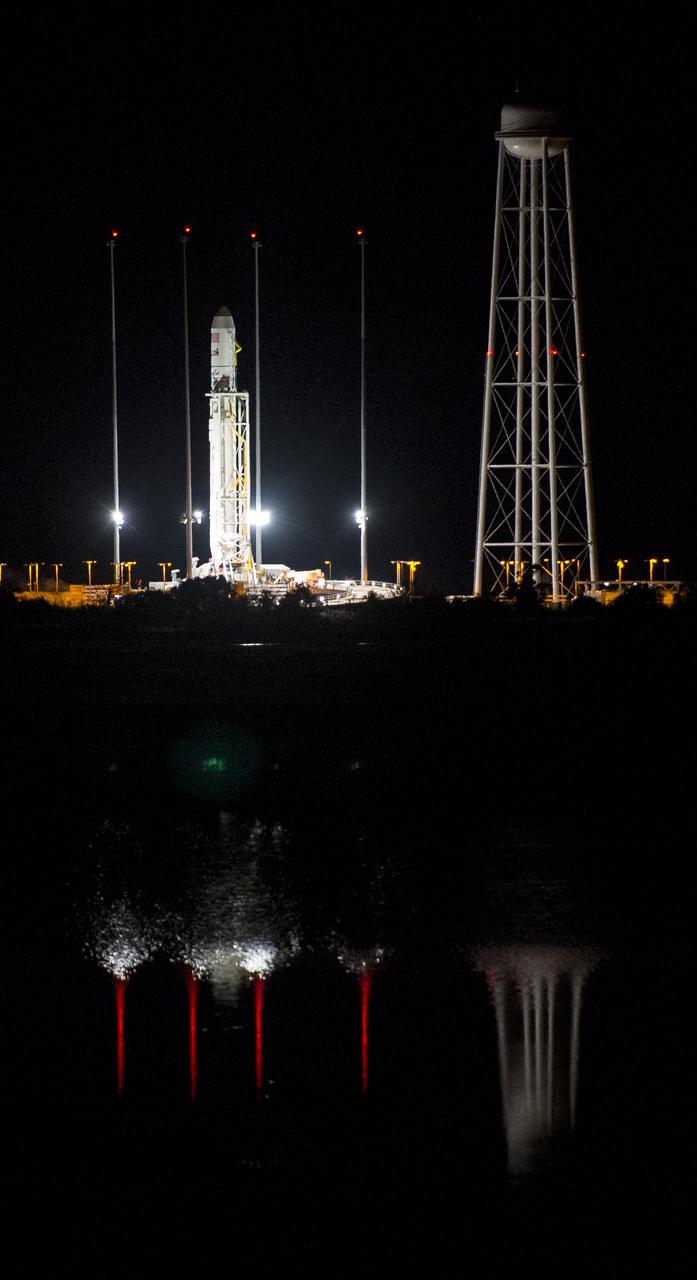
The Orbital Sciences Corporation Antares rocket, with the Cygnus spacecraft onboard, is seen after being raised into vertical position at launch Pad-0A, Saturday, Oct. 25, 2014, at NASA's Wallops Flight Facility in Virginia. The Antares will launch with the Cygnus spacecraft filled with over 5,000 pounds of supplies for the International Space Station, including science experiments, experiment hardware, spare parts, and crew provisions. The Orbital-3 mission is Orbital Sciences' third contracted cargo delivery flight to the space station for NASA. Photo Credit: (NASA/Joel Kowsky)
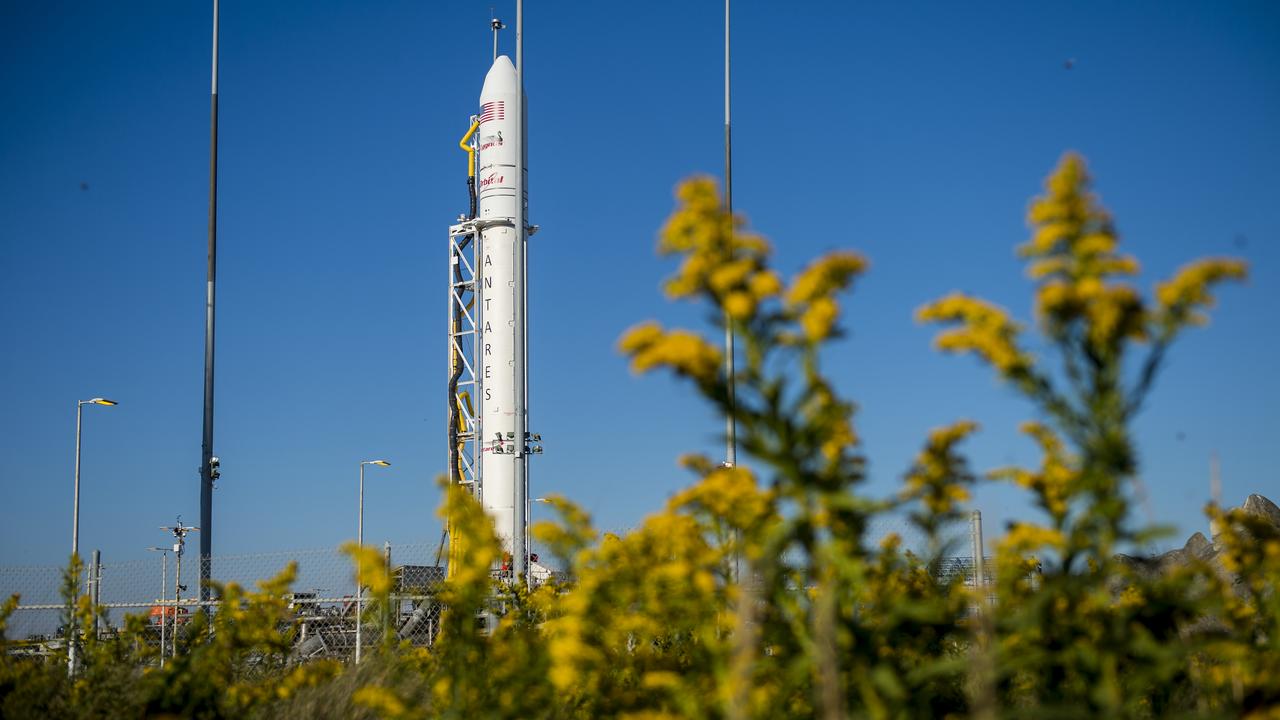
The Orbital Sciences Corporation Antares rocket, with the Cygnus spacecraft onboard, is seen on launch Pad-0A, Saturday, Oct. 25, 2014, at NASA's Wallops Flight Facility in Virginia. The Antares will launch with the Cygnus spacecraft filled with over 5,000 pounds of supplies for the International Space Station, including science experiments, experiment hardware, spare parts, and crew provisions. The Orbital-3 mission is Orbital Sciences' third contracted cargo delivery flight to the space station for NASA. Launch is scheduled for Monday, Oct. 27 at 6:45 p.m. EDT. Photo Credit: (NASA/Joel Kowsky)
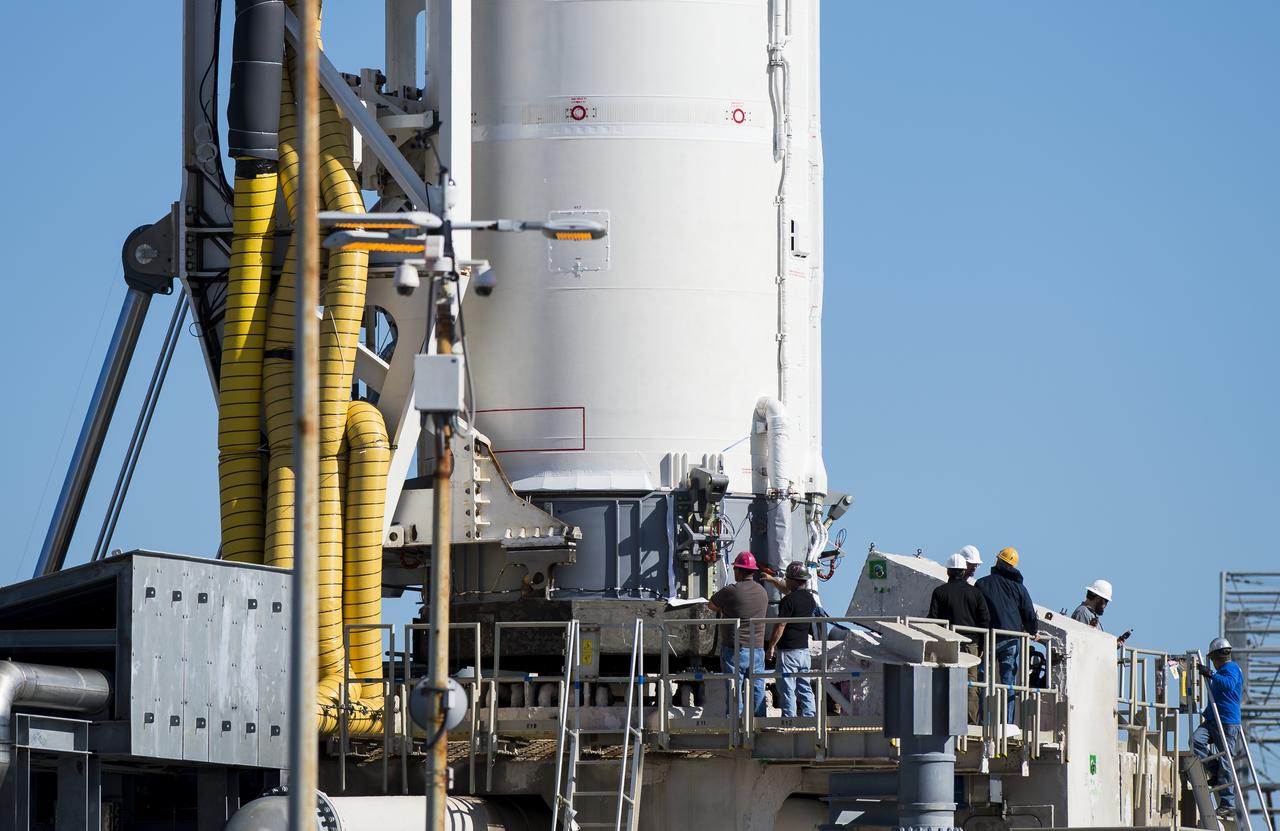
The Orbital Sciences Corporation Antares rocket, with the Cygnus spacecraft onboard, is seen on launch Pad-0A, Sunday, Oct. 26, 2014, at NASA's Wallops Flight Facility in Virginia. The Antares will launch with the Cygnus spacecraft filled with over 5,000 pounds of supplies for the International Space Station, including science experiments, experiment hardware, spare parts, and crew provisions. The Orbital-3 mission is Orbital Sciences' third contracted cargo delivery flight to the space station for NASA. Launch is scheduled for Monday, Oct. 27 at 6:45 p.m. EDT. Photo Credit: (NASA/Joel Kowsky)
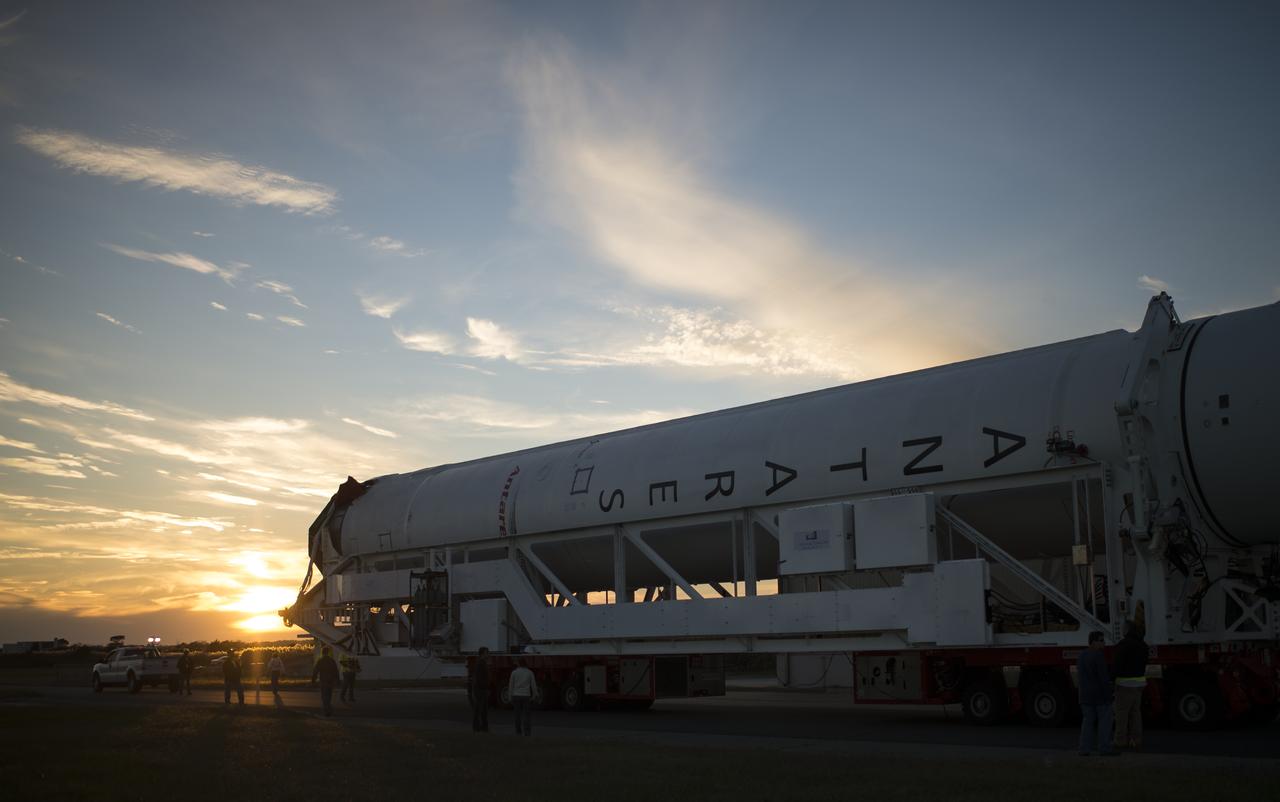
The Orbital Sciences Corporation Antares rocket, with the Cygnus spacecraft onboard, rolls from the Horizontal Integration Facility (HIF) to launch Pad-0A, Friday, Oct. 24, 2014, at NASA's Wallops Flight Facility in Virginia. The Antares will launch with the Cygnus spacecraft filled with over 5,000 pounds of supplies for the International Space Station, including science experiments, experiment hardware, spare parts, and crew provisions. The Orbital-3 mission is Orbital Sciences' third contracted cargo delivery flight to the space station for NASA. Photo Credit: (NASA/Joel Kowsky)
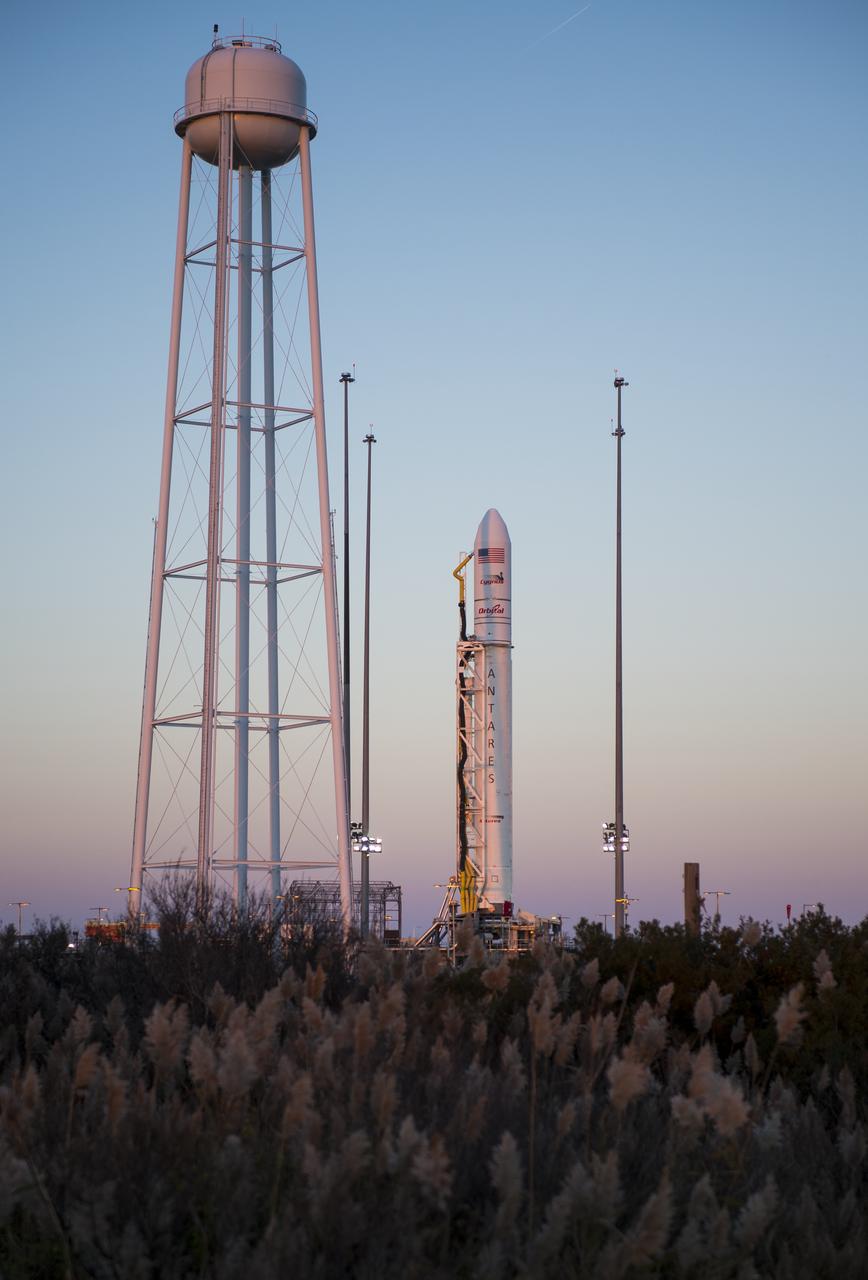
The Orbital Sciences Corporation Antares rocket, with the Cygnus spacecraft onboard, is seen on launch Pad-0A, Saturday, Oct. 25, 2014, at NASA's Wallops Flight Facility in Virginia. The Antares will launch with the Cygnus spacecraft filled with over 5,000 pounds of supplies for the International Space Station, including science experiments, experiment hardware, spare parts, and crew provisions. The Orbital-3 mission is Orbital Sciences' third contracted cargo delivery flight to the space station for NASA. Launch is scheduled for Monday, Oct. 27 at 6:45 p.m. EDT. Photo Credit: (NASA/Joel Kowsky)
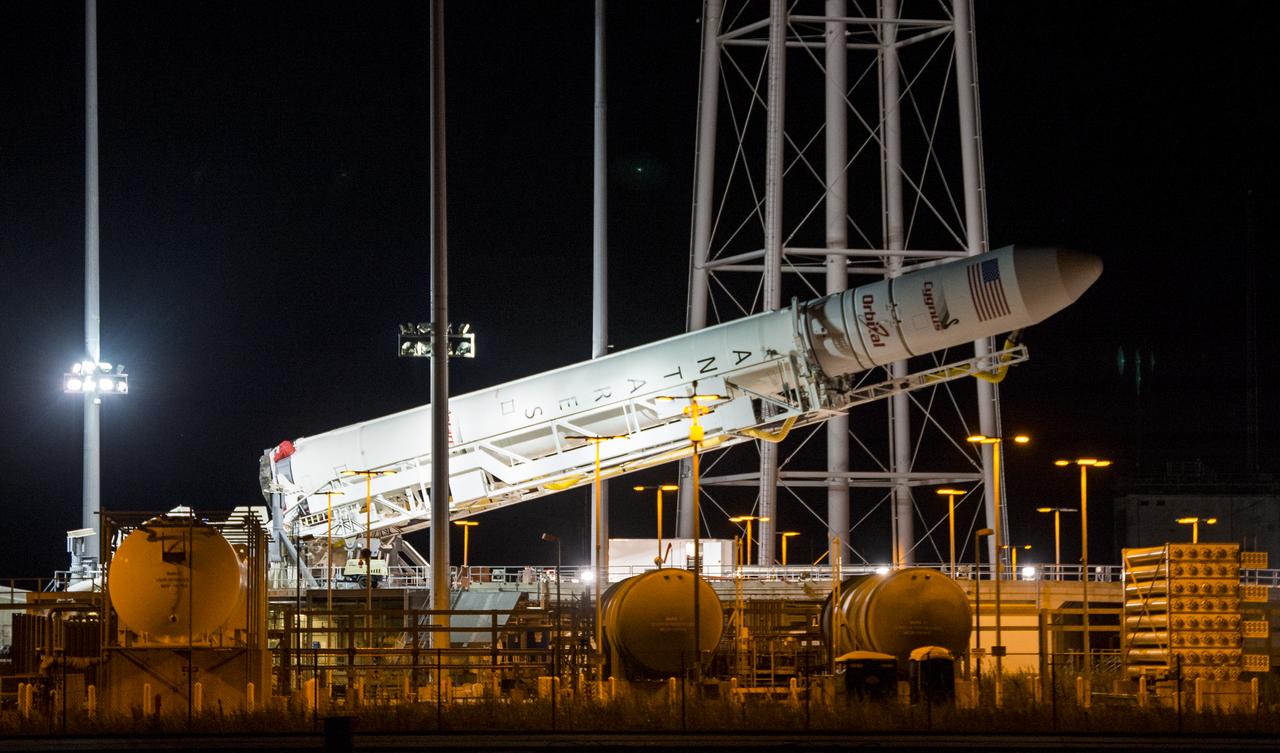
The Orbital Sciences Corporation Antares rocket, with the Cygnus spacecraft onboard, is raised at launch Pad-0A, Saturday, Oct. 25, 2014, at NASA's Wallops Flight Facility in Virginia. The Antares will launch with the Cygnus spacecraft filled with over 5,000 pounds of supplies for the International Space Station, including science experiments, experiment hardware, spare parts, and crew provisions. The Orbital-3 mission is Orbital Sciences' third contracted cargo delivery flight to the space station for NASA. Photo Credit: (NASA/Joel Kowsky)
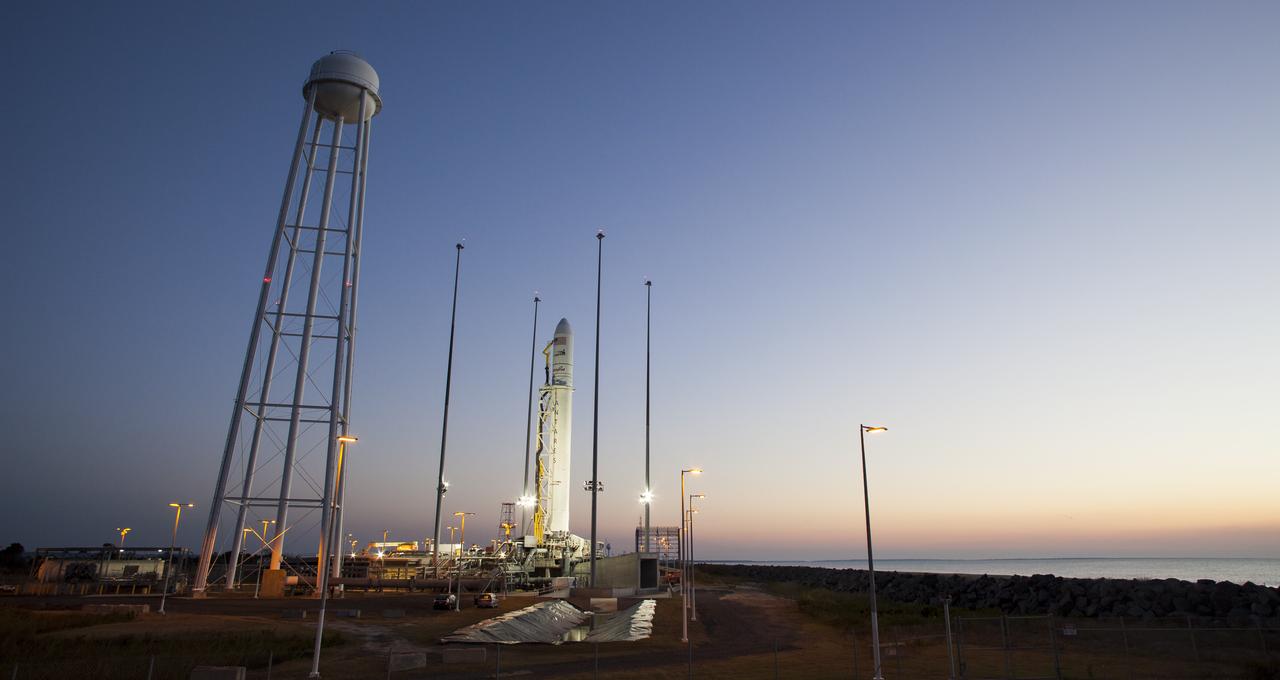
The Orbital Sciences Corporation Antares rocket, with the Cygnus spacecraft onboard, is seen on launch Pad-0A during sunrise, Sunday, Oct. 26, 2014, at NASA's Wallops Flight Facility in Virginia. The Antares will launch with the Cygnus spacecraft filled with over 5,000 pounds of supplies for the International Space Station, including science experiments, experiment hardware, spare parts, and crew provisions. The Orbital-3 mission is Orbital Sciences' third contracted cargo delivery flight to the space station for NASA. Launch is scheduled for Monday, Oct. 27 at 6:45 p.m. EDT. Photo Credit: (NASA/Joel Kowsky)
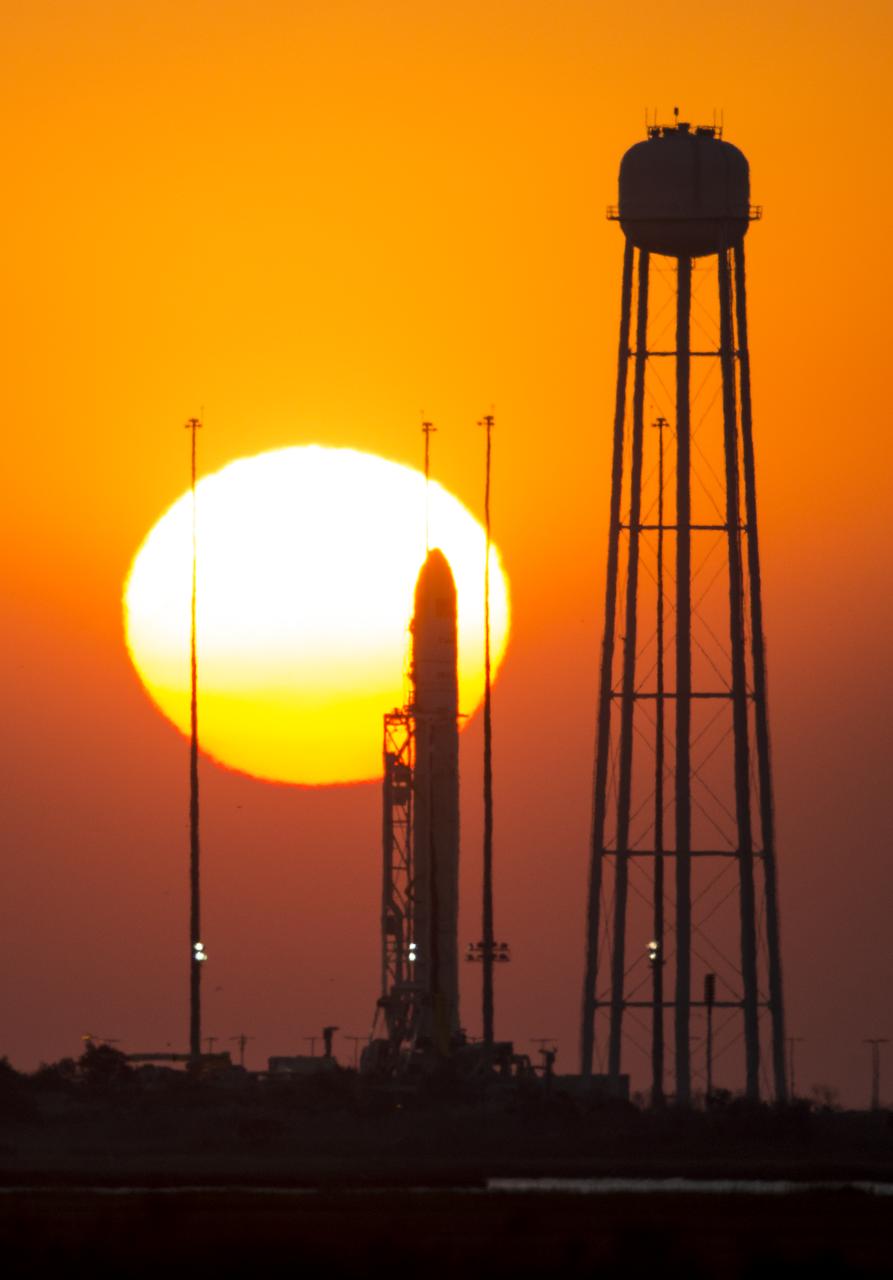
The Orbital Sciences Corporation Antares rocket, with the Cygnus spacecraft onboard, is seen on launch Pad-0A during sunrise, Sunday, Oct. 26, 2014, at NASA's Wallops Flight Facility in Virginia. The Antares will launch with the Cygnus spacecraft filled with over 5,000 pounds of supplies for the International Space Station, including science experiments, experiment hardware, spare parts, and crew provisions. The Orbital-3 mission is Orbital Sciences' third contracted cargo delivery flight to the space station for NASA. Launch is scheduled for Monday, Oct. 27 at 6:45 p.m. EDT. Photo Credit: (NASA/Joel Kowsky)
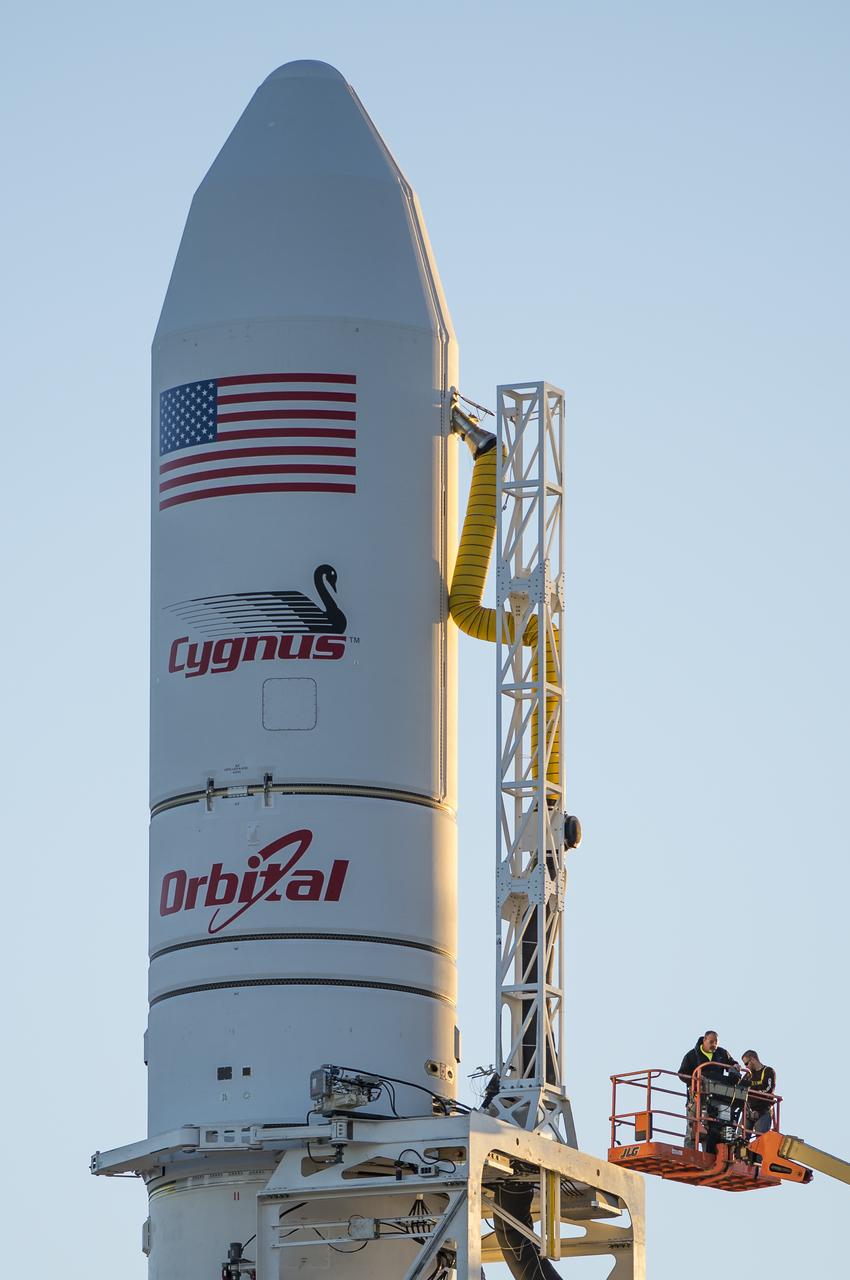
The Orbital Sciences Corporation Antares rocket, with the Cygnus spacecraft onboard, is seen on launch Pad-0A, Sunday, Oct. 26, 2014, at NASA's Wallops Flight Facility in Virginia. The Antares will launch with the Cygnus spacecraft filled with over 5,000 pounds of supplies for the International Space Station, including science experiments, experiment hardware, spare parts, and crew provisions. The Orbital-3 mission is Orbital Sciences' third contracted cargo delivery flight to the space station for NASA. Launch is scheduled for Monday, Oct. 27 at 6:45 p.m. EDT. Photo Credit: (NASA/Joel Kowsky)
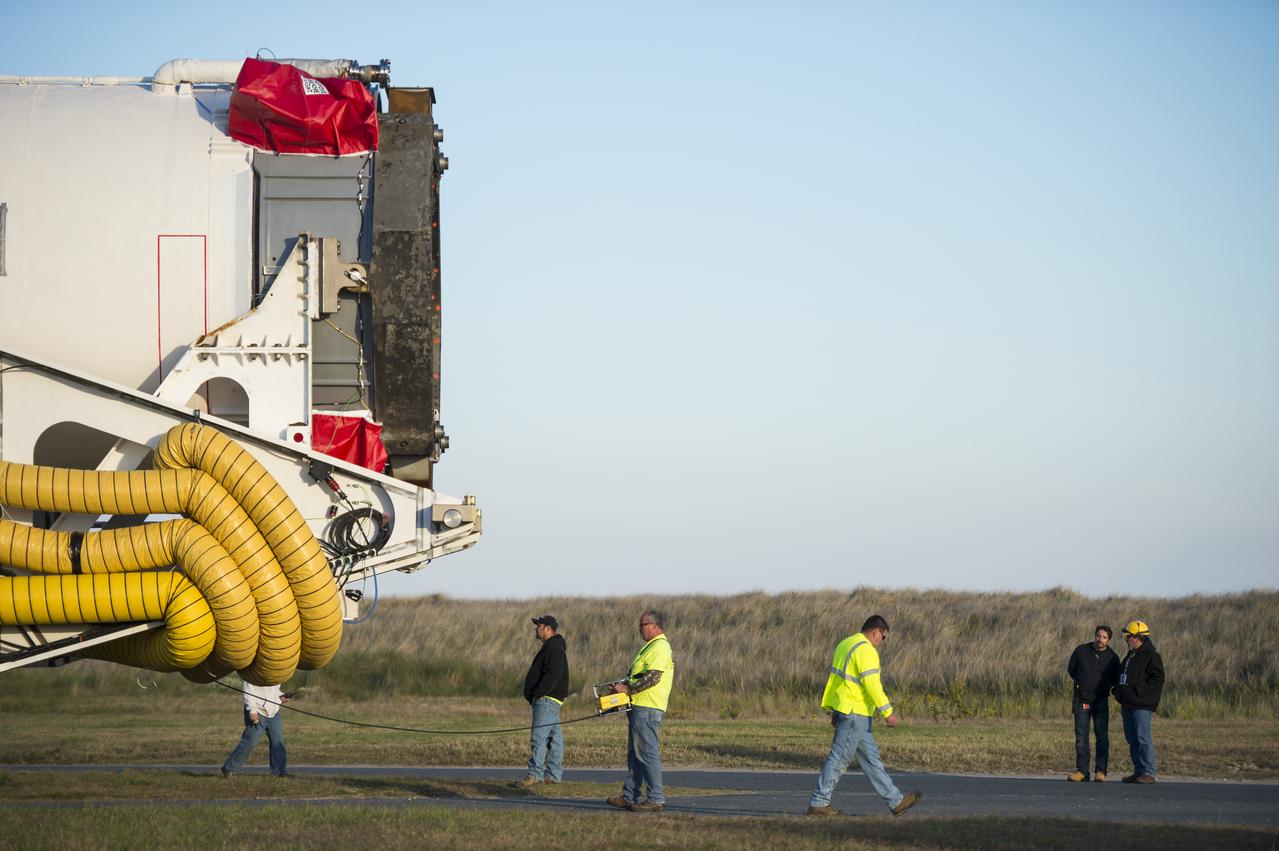
The Orbital Sciences Corporation Antares rocket, with the Cygnus spacecraft onboard, rolls from the Horizontal Integration Facility (HIF) to launch Pad-0A, Friday, Oct. 24, 2014, at NASA's Wallops Flight Facility in Virginia. The Antares will launch with the Cygnus spacecraft filled with over 5,000 pounds of supplies for the International Space Station, including science experiments, experiment hardware, spare parts, and crew provisions. The Orbital-3 mission is Orbital Sciences' third contracted cargo delivery flight to the space station for NASA. Photo Credit: (NASA/Joel Kowsky)
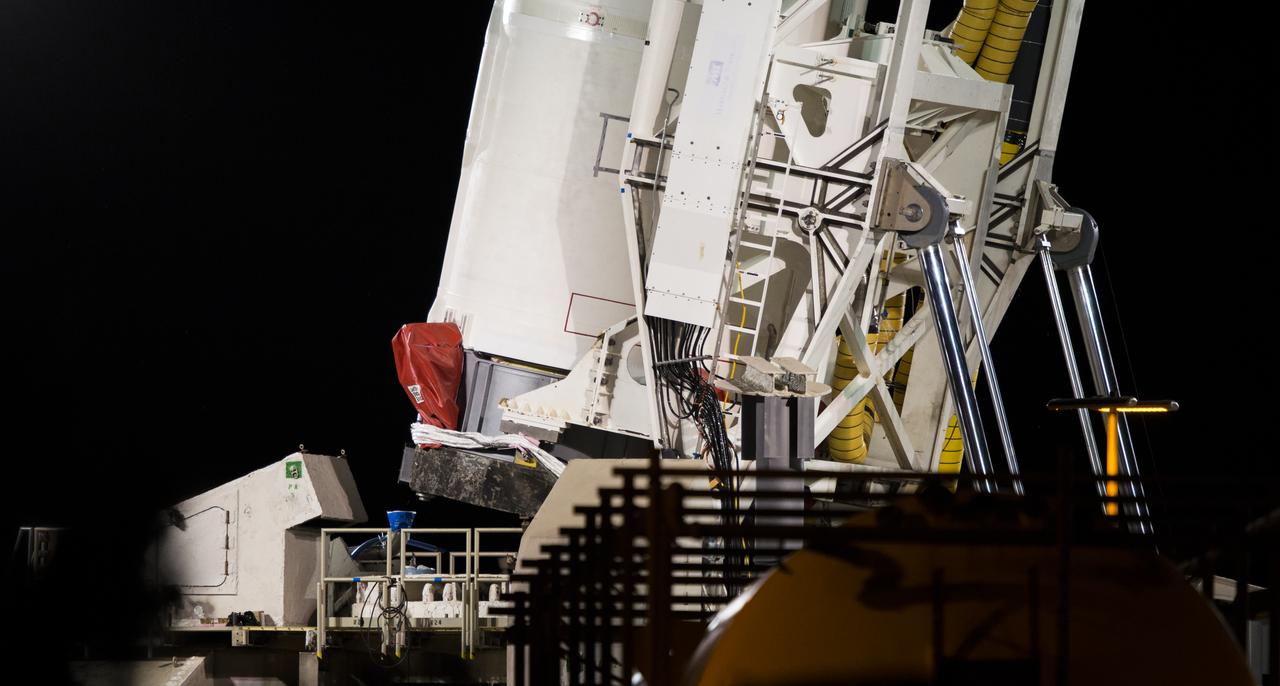
The Orbital Sciences Corporation Antares rocket, with the Cygnus spacecraft onboard, is raised at launch Pad-0A, Saturday, Oct. 25, 2014, at NASA's Wallops Flight Facility in Virginia. The Antares will launch with the Cygnus spacecraft filled with over 5,000 pounds of supplies for the International Space Station, including science experiments, experiment hardware, spare parts, and crew provisions. The Orbital-3 mission is Orbital Sciences' third contracted cargo delivery flight to the space station for NASA. Photo Credit: (NASA/Joel Kowsky)
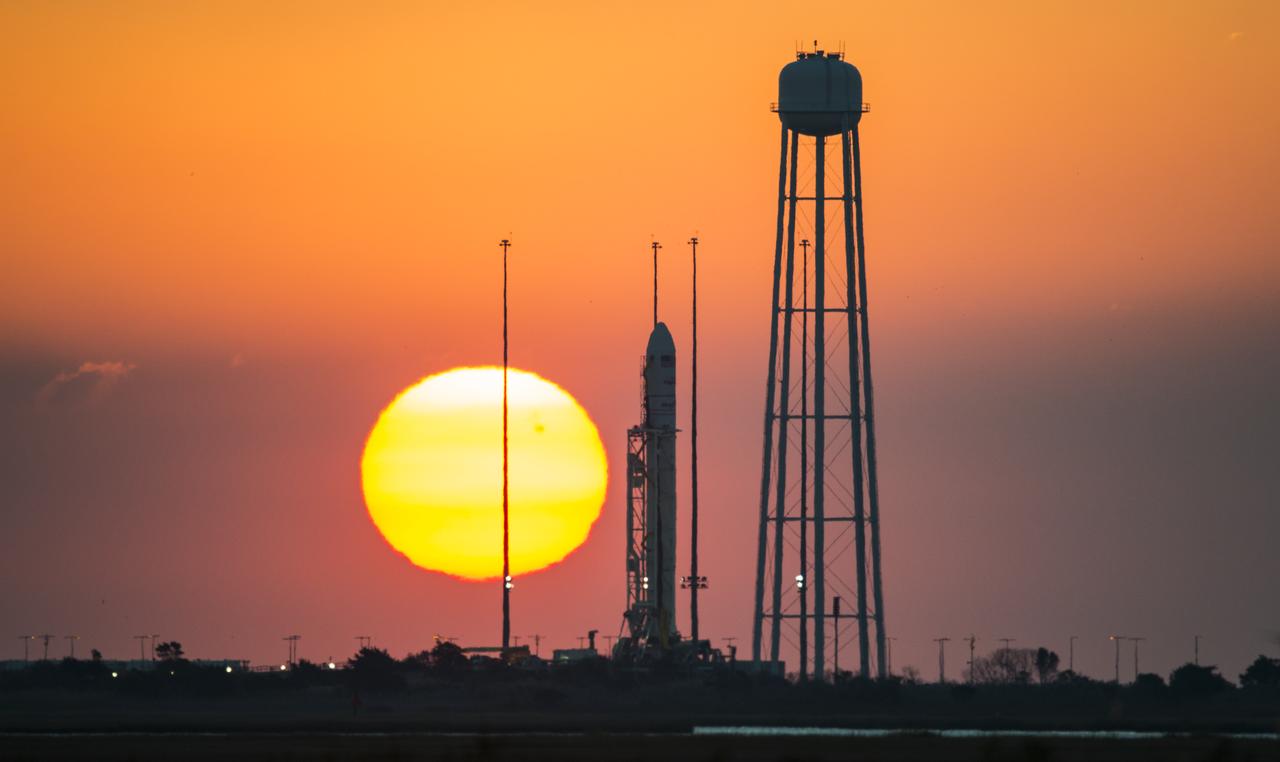
The Orbital Sciences Corporation Antares rocket, with the Cygnus spacecraft onboard, is seen on launch Pad-0A during sunrise, Sunday, Oct. 26, 2014, at NASA's Wallops Flight Facility in Virginia. The Antares will launch with the Cygnus spacecraft filled with over 5,000 pounds of supplies for the International Space Station, including science experiments, experiment hardware, spare parts, and crew provisions. The Orbital-3 mission is Orbital Sciences' third contracted cargo delivery flight to the space station for NASA. Launch is scheduled for Monday, Oct. 27 at 6:45 p.m. EDT. Photo Credit: (NASA/Joel Kowsky)
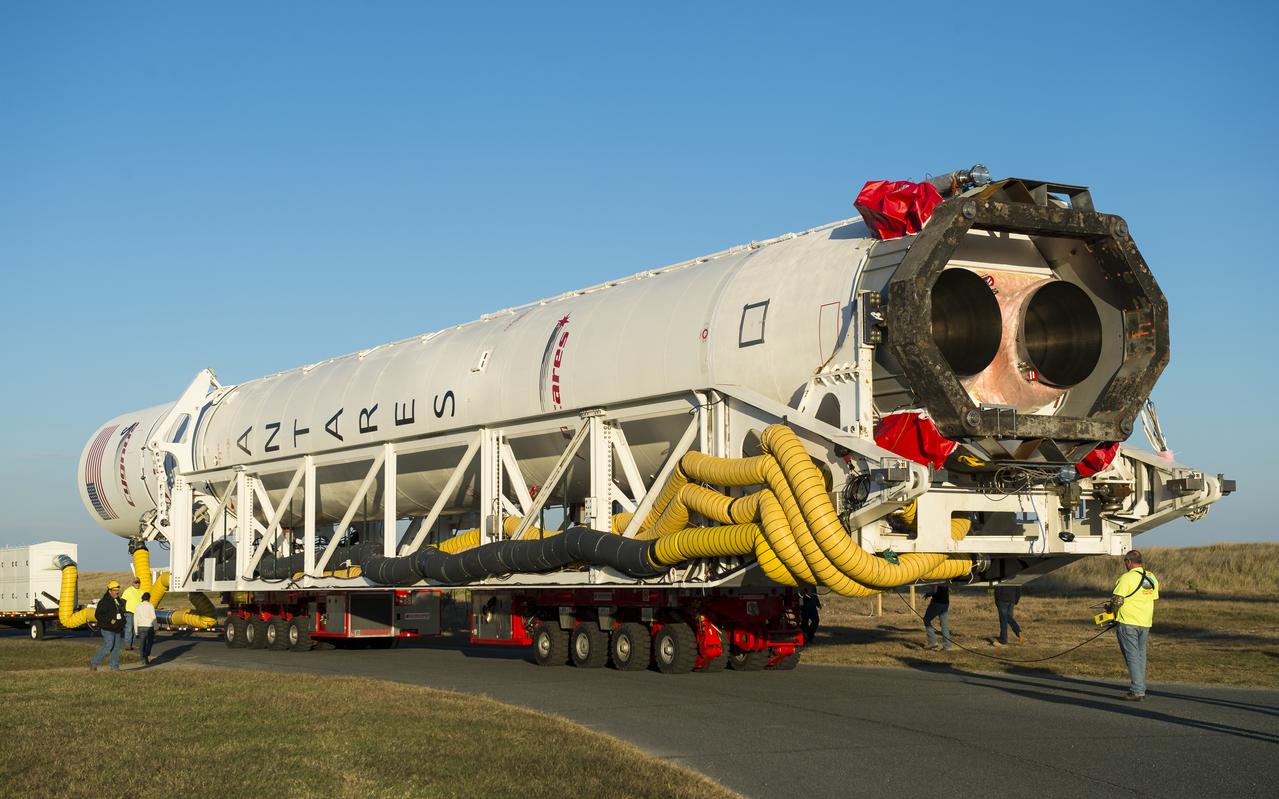
The Orbital Sciences Corporation Antares rocket, with the Cygnus spacecraft onboard, rolls from the Horizontal Integration Facility (HIF) to launch Pad-0A, Friday, Oct. 24, 2014, at NASA's Wallops Flight Facility in Virginia. The Antares will launch with the Cygnus spacecraft filled with over 5,000 pounds of supplies for the International Space Station, including science experiments, experiment hardware, spare parts, and crew provisions. The Orbital-3 mission is Orbital Sciences' third contracted cargo delivery flight to the space station for NASA. Photo Credit: (NASA/Joel Kowsky)
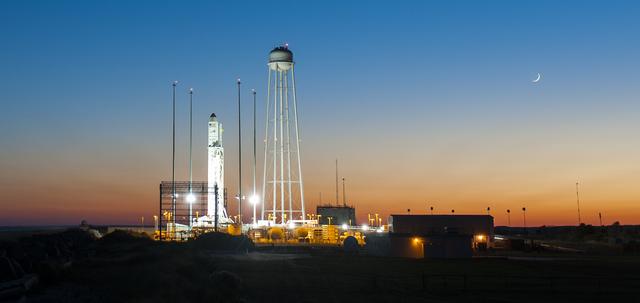
The Orbital Sciences Corporation Antares rocket, with the Cygnus spacecraft onboard, is seen at sunset on launch Pad-0A, Saturday, Oct. 25, 2014, at NASA's Wallops Flight Facility in Virginia. The Antares will launch with the Cygnus spacecraft filled with over 5,000 pounds of supplies for the International Space Station, including science experiments, experiment hardware, spare parts, and crew provisions. The Orbital-3 mission is Orbital Sciences' third contracted cargo delivery flight to the space station for NASA. Launch is scheduled for Monday, Oct. 27 at 6:45 p.m. EDT. Photo Credit: (NASA/Joel Kowsky)
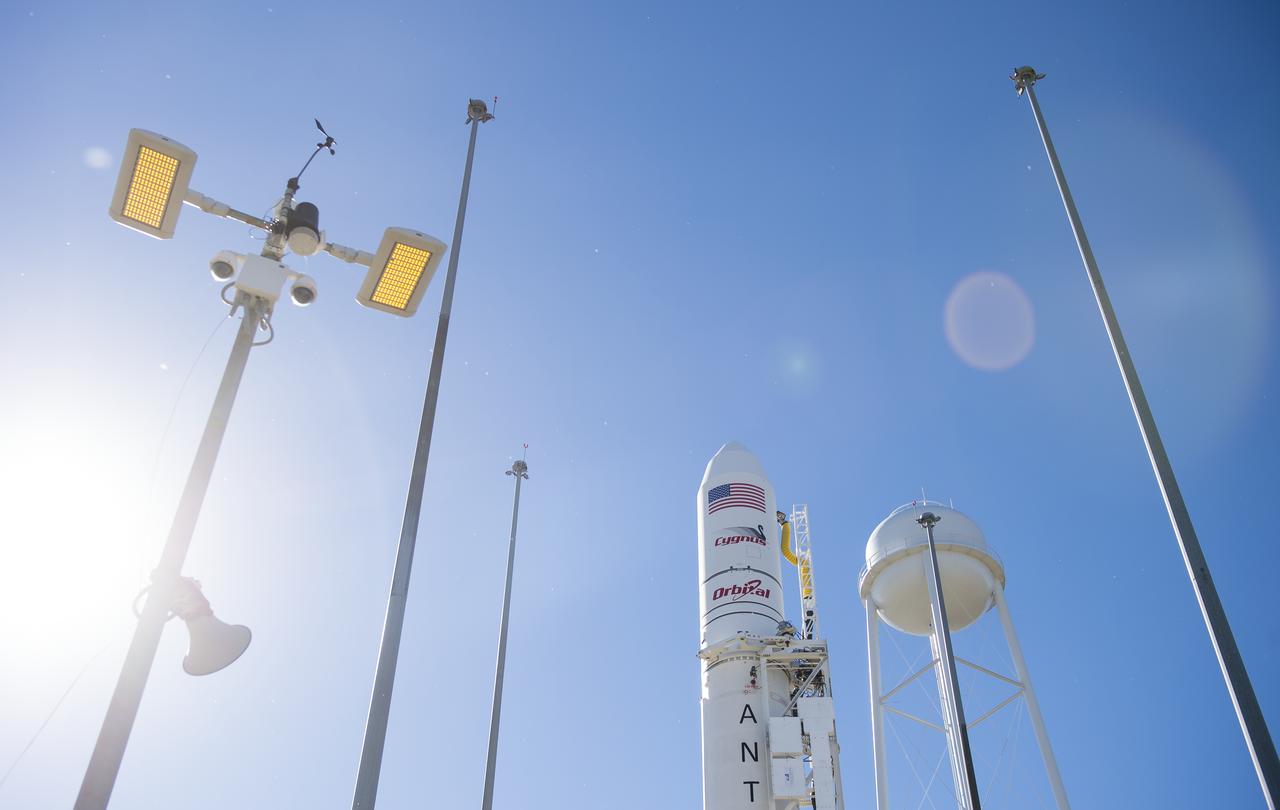
The Orbital Sciences Corporation Antares rocket, with the Cygnus spacecraft onboard, is seen on launch Pad-0A, Sunday, Oct. 26, 2014, at NASA's Wallops Flight Facility in Virginia. The Antares will launch with the Cygnus spacecraft filled with over 5,000 pounds of supplies for the International Space Station, including science experiments, experiment hardware, spare parts, and crew provisions. The Orbital-3 mission is Orbital Sciences' third contracted cargo delivery flight to the space station for NASA. Launch is scheduled for Monday, Oct. 27 at 6:45 p.m. EDT. Photo Credit: (NASA/Joel Kowsky)
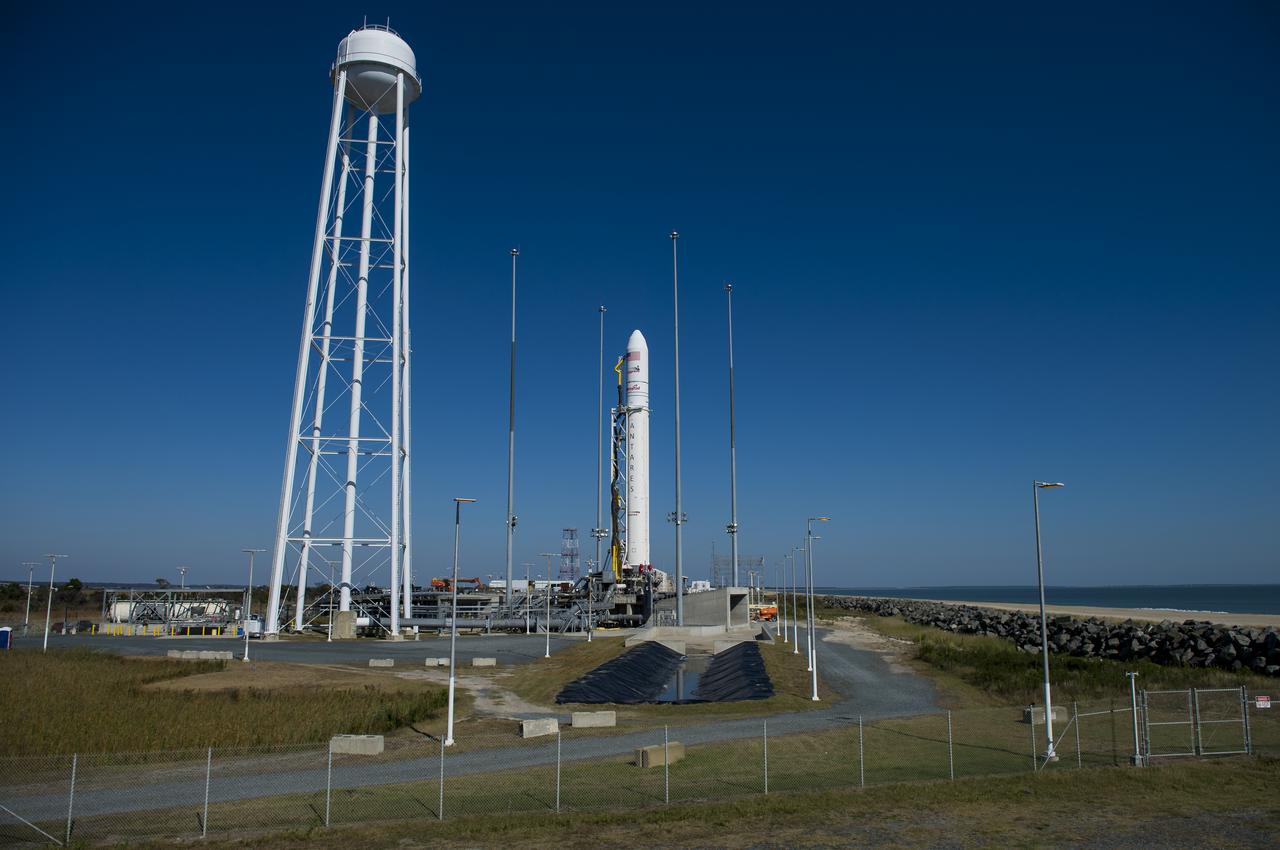
The Orbital Sciences Corporation Antares rocket, with the Cygnus spacecraft onboard, is seen on launch Pad-0A, Saturday, Oct. 25, 2014, at NASA's Wallops Flight Facility in Virginia. The Antares will launch with the Cygnus spacecraft filled with over 5,000 pounds of supplies for the International Space Station, including science experiments, experiment hardware, spare parts, and crew provisions. The Orbital-3 mission is Orbital Sciences' third contracted cargo delivery flight to the space station for NASA. Launch is scheduled for Monday, Oct. 27 at 6:45 p.m. EDT. Photo Credit: (NASA/Joel Kowsky)
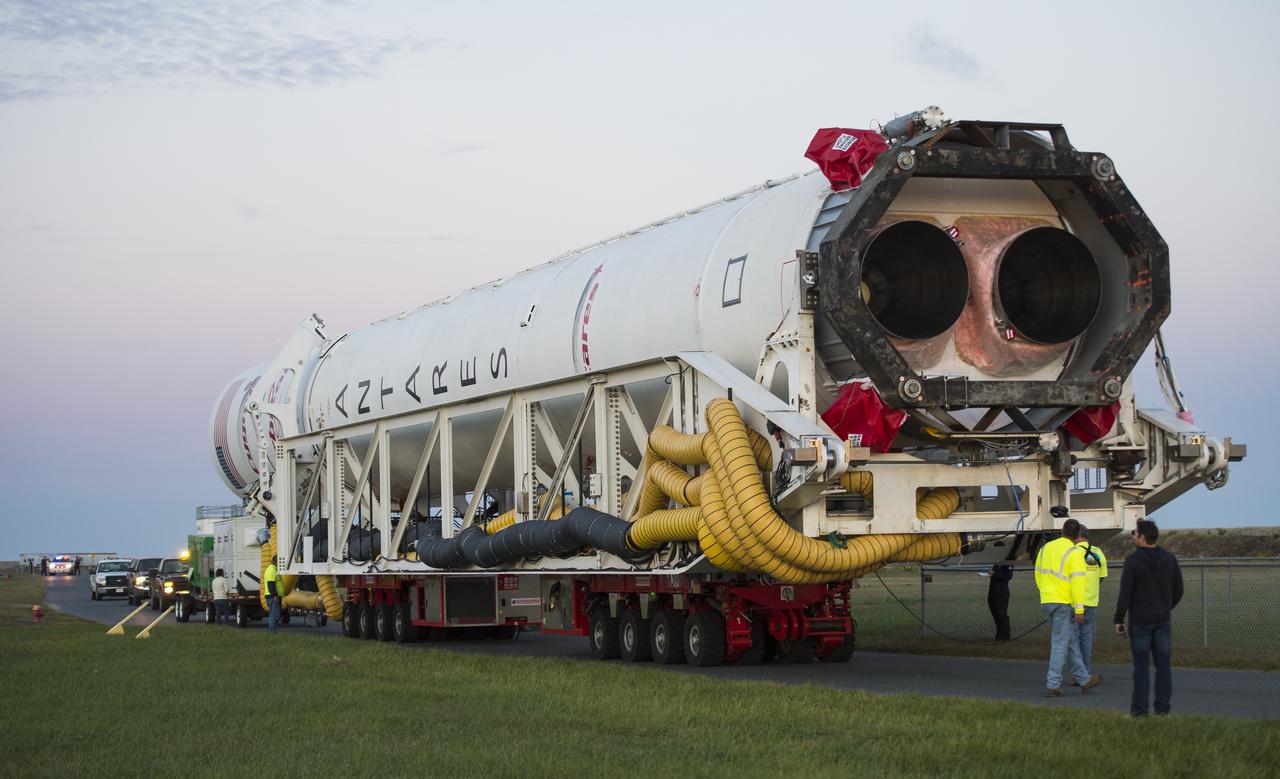
The Orbital Sciences Corporation Antares rocket, with the Cygnus spacecraft onboard, rolls from the Horizontal Integration Facility (HIF) to launch Pad-0A, Friday, Oct. 24, 2014, at NASA's Wallops Flight Facility in Virginia. The Antares will launch with the Cygnus spacecraft filled with over 5,000 pounds of supplies for the International Space Station, including science experiments, experiment hardware, spare parts, and crew provisions. The Orbital-3 mission is Orbital Sciences' third contracted cargo delivery flight to the space station for NASA. Photo Credit: (NASA/Joel Kowsky)
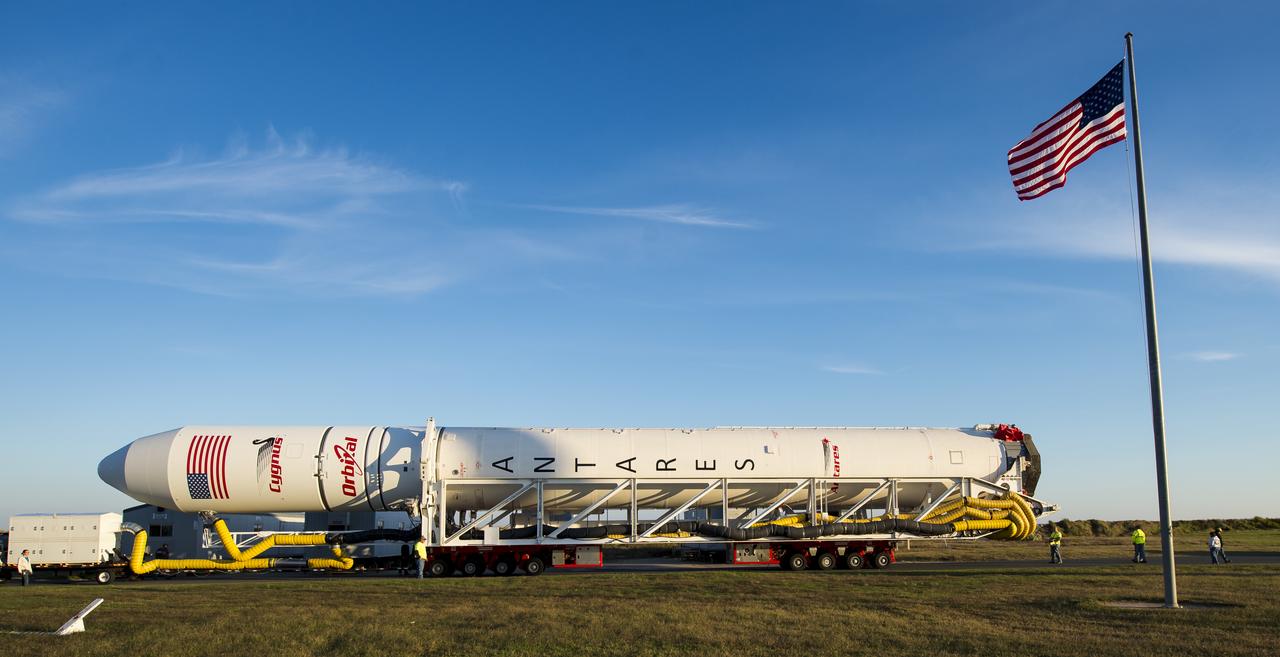
The Orbital Sciences Corporation Antares rocket, with the Cygnus spacecraft onboard, rolls from the Horizontal Integration Facility (HIF) to launch Pad-0A, Friday, Oct. 24, 2014, at NASA's Wallops Flight Facility in Virginia. The Antares will launch with the Cygnus spacecraft filled with over 5,000 pounds of supplies for the International Space Station, including science experiments, experiment hardware, spare parts, and crew provisions. The Orbital-3 mission is Orbital Sciences' third contracted cargo delivery flight to the space station for NASA. Photo Credit: (NASA/Joel Kowsky)
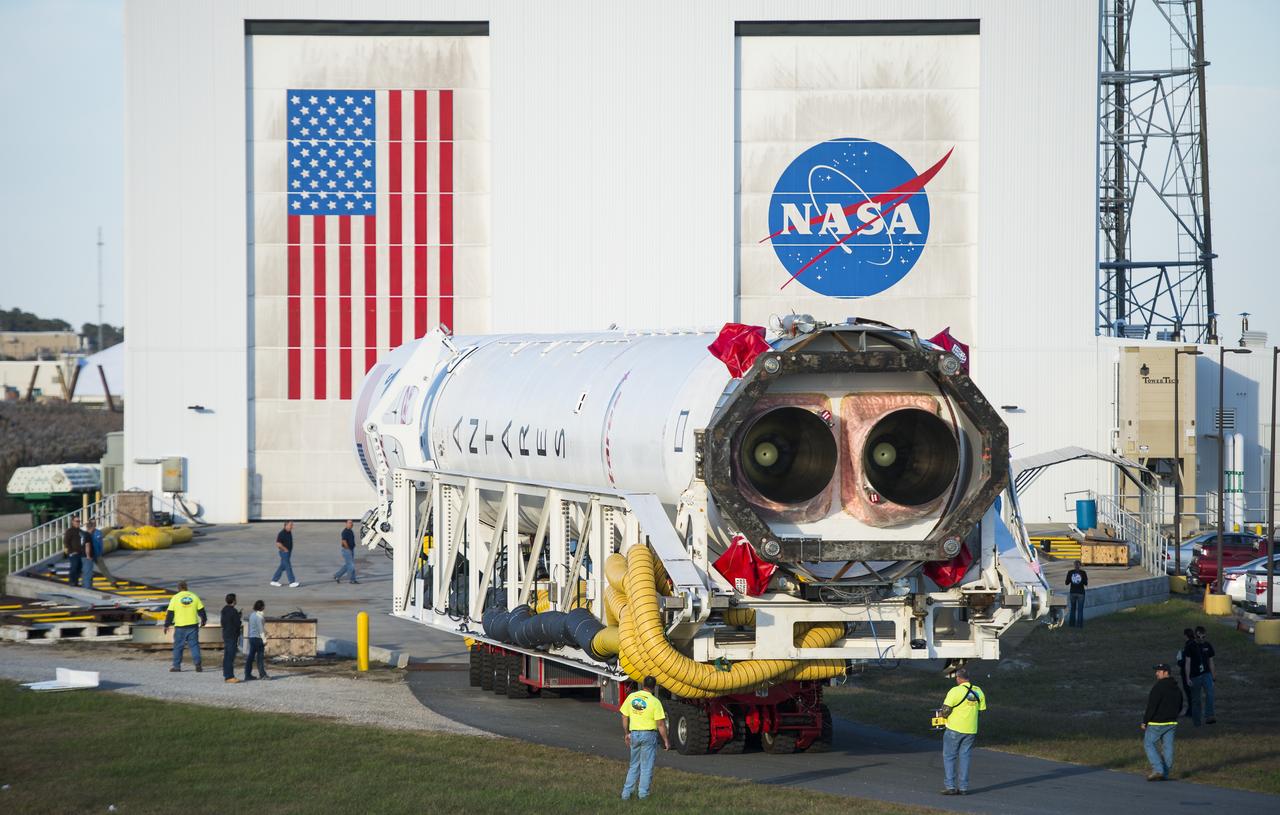
The Orbital Sciences Corporation Antares rocket, with the Cygnus spacecraft onboard, rolls from the Horizontal Integration Facility (HIF) to launch Pad-0A, Friday, Oct. 24, 2014, at NASA's Wallops Flight Facility in Virginia. The Antares will launch with the Cygnus spacecraft filled with over 5,000 pounds of supplies for the International Space Station, including science experiments, experiment hardware, spare parts, and crew provisions. The Orbital-3 mission is Orbital Sciences' third contracted cargo delivery flight to the space station for NASA. Photo Credit: (NASA/Joel Kowsky)
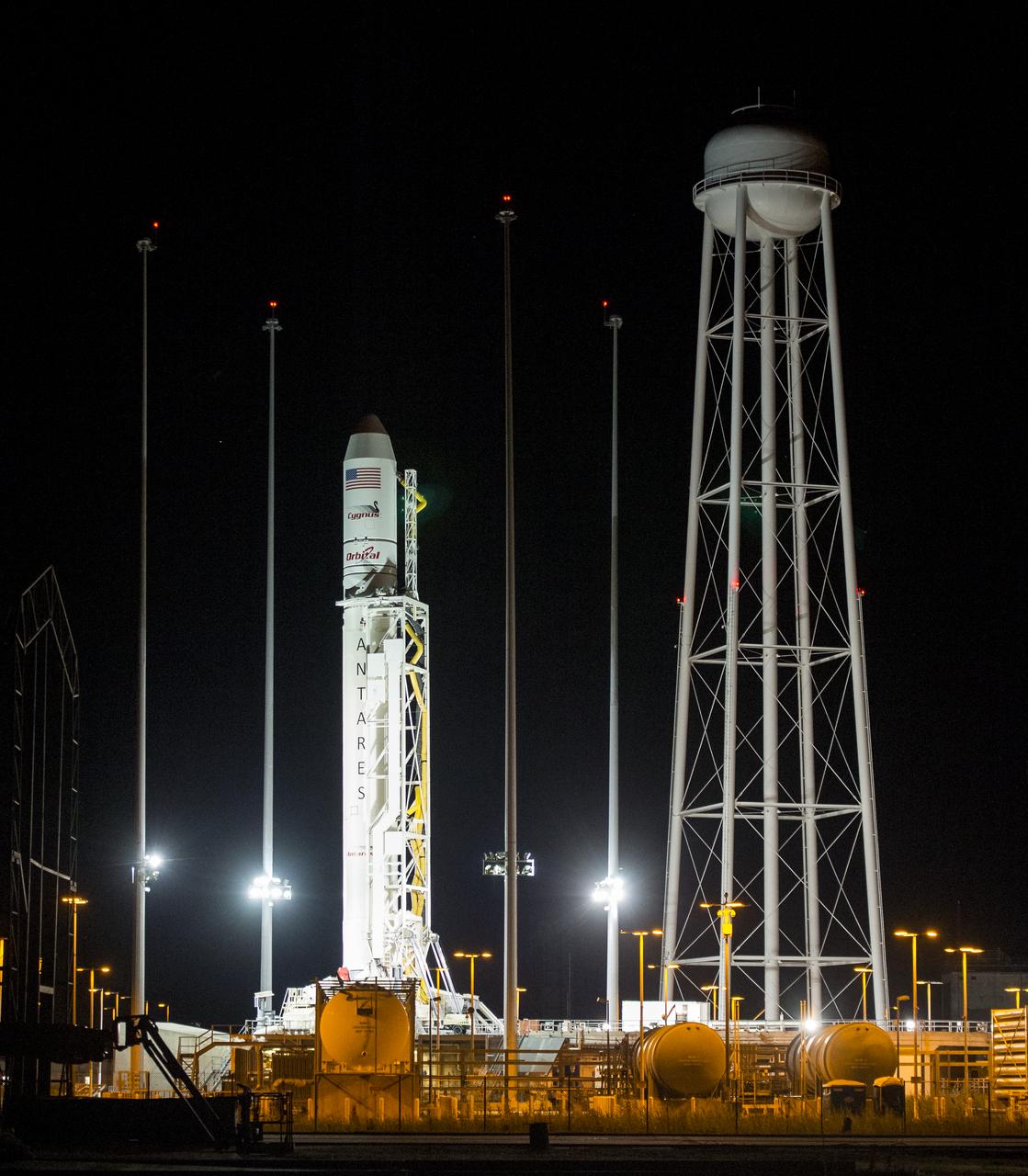
The Orbital Sciences Corporation Antares rocket, with the Cygnus spacecraft onboard, is seen after being raised into vertical position on launch Pad-0A, Saturday, Oct. 25, 2014, at NASA's Wallops Flight Facility in Virginia. The Antares will launch with the Cygnus spacecraft filled with over 5,000 pounds of supplies for the International Space Station, including science experiments, experiment hardware, spare parts, and crew provisions. The Orbital-3 mission is Orbital Sciences' third contracted cargo delivery flight to the space station for NASA. Photo Credit: (NASA/Joel Kowsky)
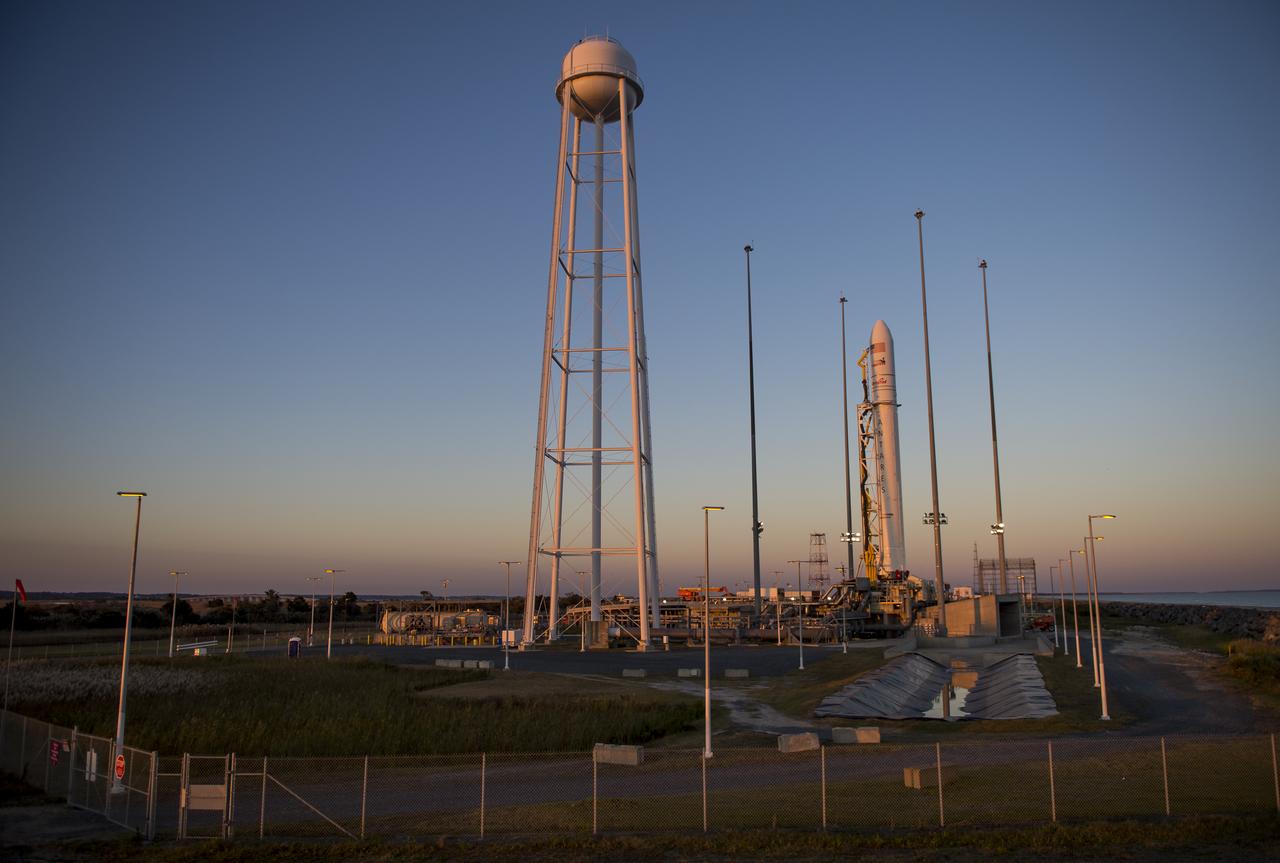
The Orbital Sciences Corporation Antares rocket, with the Cygnus spacecraft onboard, is seen on launch Pad-0A, Saturday, Oct. 25, 2014, at NASA's Wallops Flight Facility in Virginia. The Antares will launch with the Cygnus spacecraft filled with over 5,000 pounds of supplies for the International Space Station, including science experiments, experiment hardware, spare parts, and crew provisions. The Orbital-3 mission is Orbital Sciences' third contracted cargo delivery flight to the space station for NASA. Launch is scheduled for Monday, Oct. 27 at 6:45 p.m. EDT. Photo Credit: (NASA/Joel Kowsky)
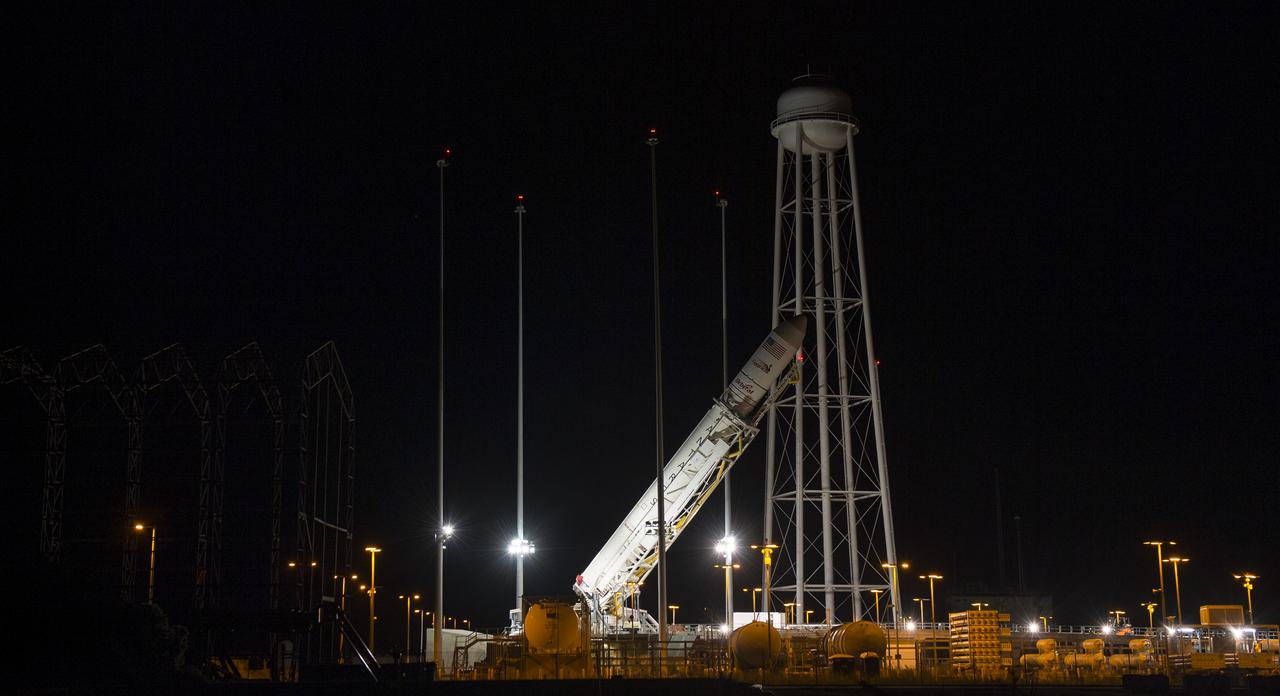
The Orbital Sciences Corporation Antares rocket, with the Cygnus spacecraft onboard, is raised at launch Pad-0A, Saturday, Oct. 25, 2014, at NASA's Wallops Flight Facility in Virginia. The Antares will launch with the Cygnus spacecraft filled with over 5,000 pounds of supplies for the International Space Station, including science experiments, experiment hardware, spare parts, and crew provisions. The Orbital-3 mission is Orbital Sciences' third contracted cargo delivery flight to the space station for NASA. Photo Credit: (NASA/Joel Kowsky)
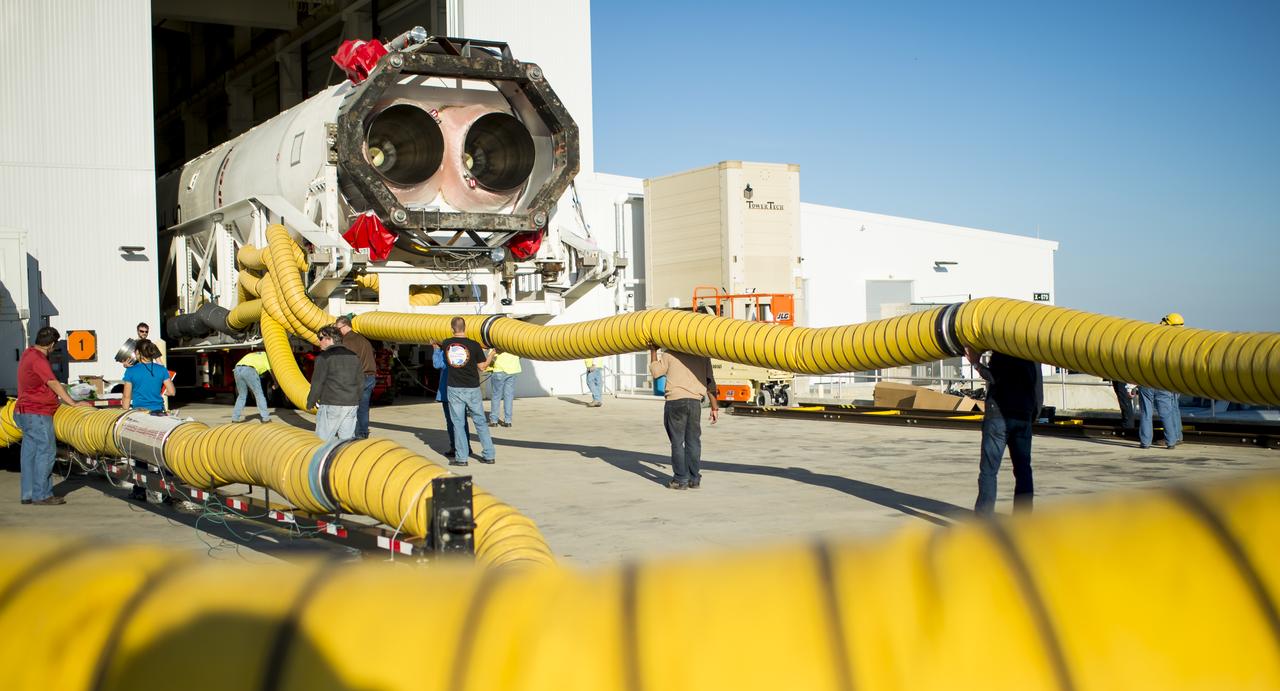
The Orbital Sciences Corporation Antares rocket, with the Cygnus spacecraft onboard, is rolled out of the Horizontal Integration Facility (HIF) to launch Pad-0A, Friday, Oct. 24, 2014, at NASA's Wallops Flight Facility in Virginia. The Antares will launch with the Cygnus spacecraft filled with over 5,000 pounds of supplies for the International Space Station, including science experiments, experiment hardware, spare parts, and crew provisions. The Orbital-3 mission is Orbital Sciences' third contracted cargo delivery flight to the space station for NASA. Photo Credit: (NASA/Joel Kowsky)
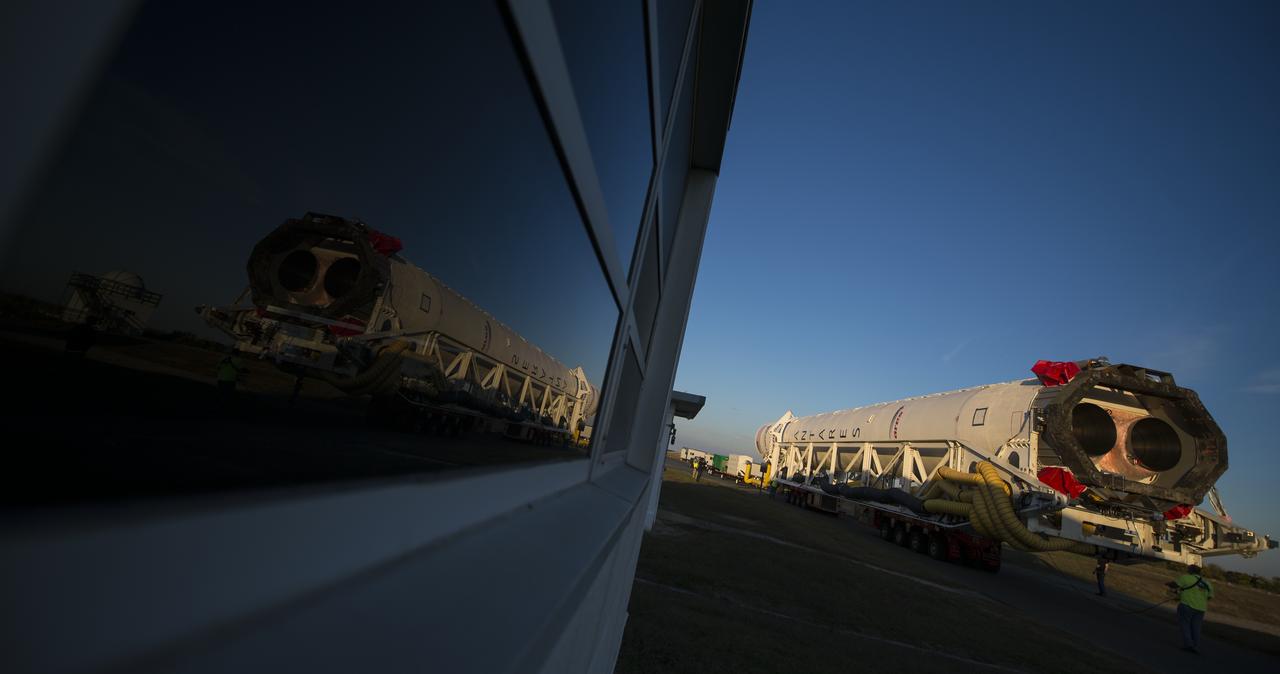
The Orbital Sciences Corporation Antares rocket, with the Cygnus spacecraft onboard, rolls from the Horizontal Integration Facility (HIF) to launch Pad-0A, Friday, Oct. 24, 2014, at NASA's Wallops Flight Facility in Virginia. The Antares will launch with the Cygnus spacecraft filled with over 5,000 pounds of supplies for the International Space Station, including science experiments, experiment hardware, spare parts, and crew provisions. The Orbital-3 mission is Orbital Sciences' third contracted cargo delivery flight to the space station for NASA. Photo Credit: (NASA/Joel Kowsky)
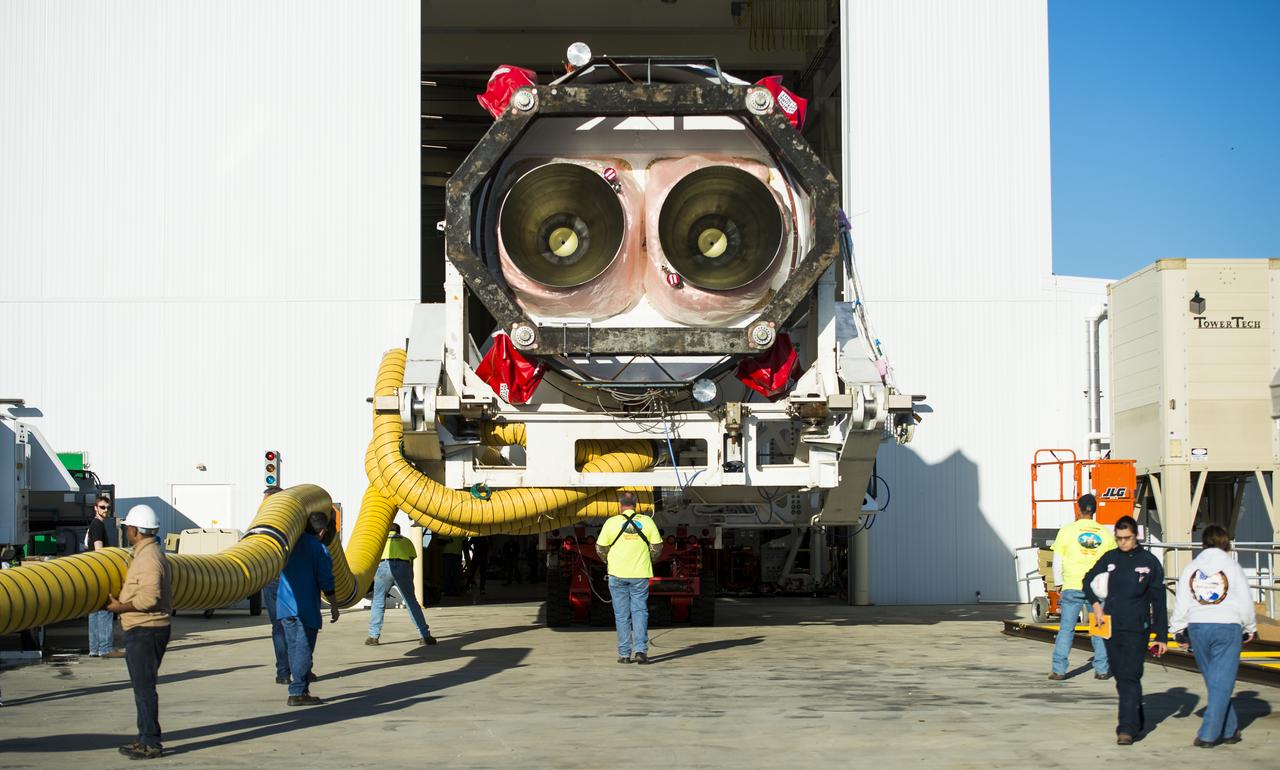
The Orbital Sciences Corporation Antares rocket, with the Cygnus spacecraft onboard, is rolled out of the Horizontal Integration Facility (HIF) to launch Pad-0A, Friday, Oct. 24, 2014, at NASA's Wallops Flight Facility in Virginia. The Antares will launch with the Cygnus spacecraft filled with over 5,000 pounds of supplies for the International Space Station, including science experiments, experiment hardware, spare parts, and crew provisions. The Orbital-3 mission is Orbital Sciences' third contracted cargo delivery flight to the space station for NASA. Photo Credit: (NASA/Joel Kowsky)
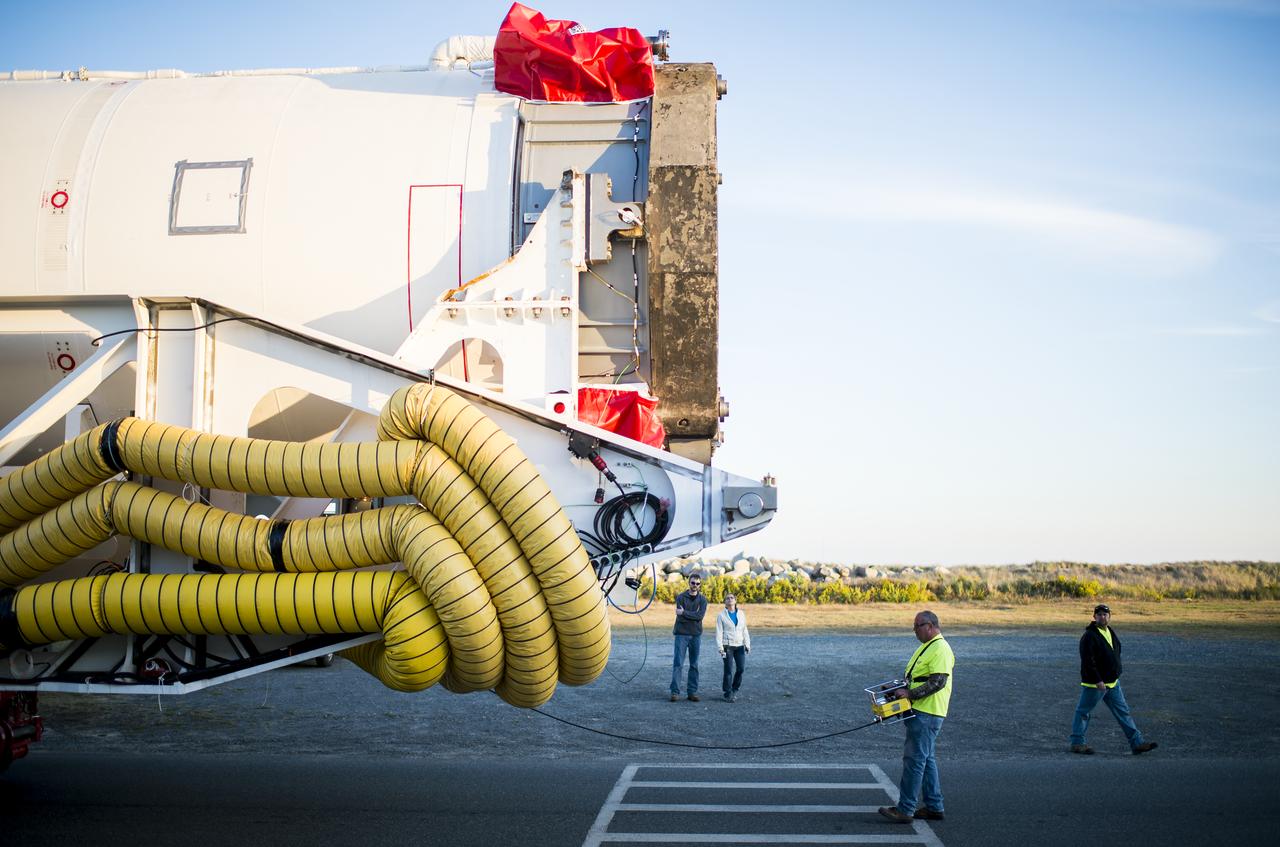
The Orbital Sciences Corporation Antares rocket, with the Cygnus spacecraft onboard, rolls from the Horizontal Integration Facility (HIF) to launch Pad-0A, Friday, Oct. 24, 2014, at NASA's Wallops Flight Facility in Virginia. The Antares will launch with the Cygnus spacecraft filled with over 5,000 pounds of supplies for the International Space Station, including science experiments, experiment hardware, spare parts, and crew provisions. The Orbital-3 mission is Orbital Sciences' third contracted cargo delivery flight to the space station for NASA. Photo Credit: (NASA/Joel Kowsky)

Michael Suffredini, NASA's International Space Station Program Manager participates via phone, in a press conference with Rachel Kraft, NASA public affairs officer, seated left, Frank Culbertson, Executive Vice President and General Manager of Advanced Program Group at Orbital Sciences Corp., center, and Bill Wrobel, director of NASA's Wallops Flight Facility, after a mishap occurred during the launch of the Antares rocket, with the Cygnus cargo spacecraft aboard, Tuesday, Oct. 28, 2014, NASA Wallops Flight Facility, Virginia. William Gerstenmaier, associate administrator of NASA's Human Exploration and Operations Mission Directorate also participated via phone. Cygnus was on its way to rendezvous with the space station. The Antares rocket lifted off to start its third resupply mission to the International Space Station, but suffered a catastrophic anomaly shortly after liftoff at 6:22 p.m. EDT. Photo Credit: (NASA/Joel Kowsky)
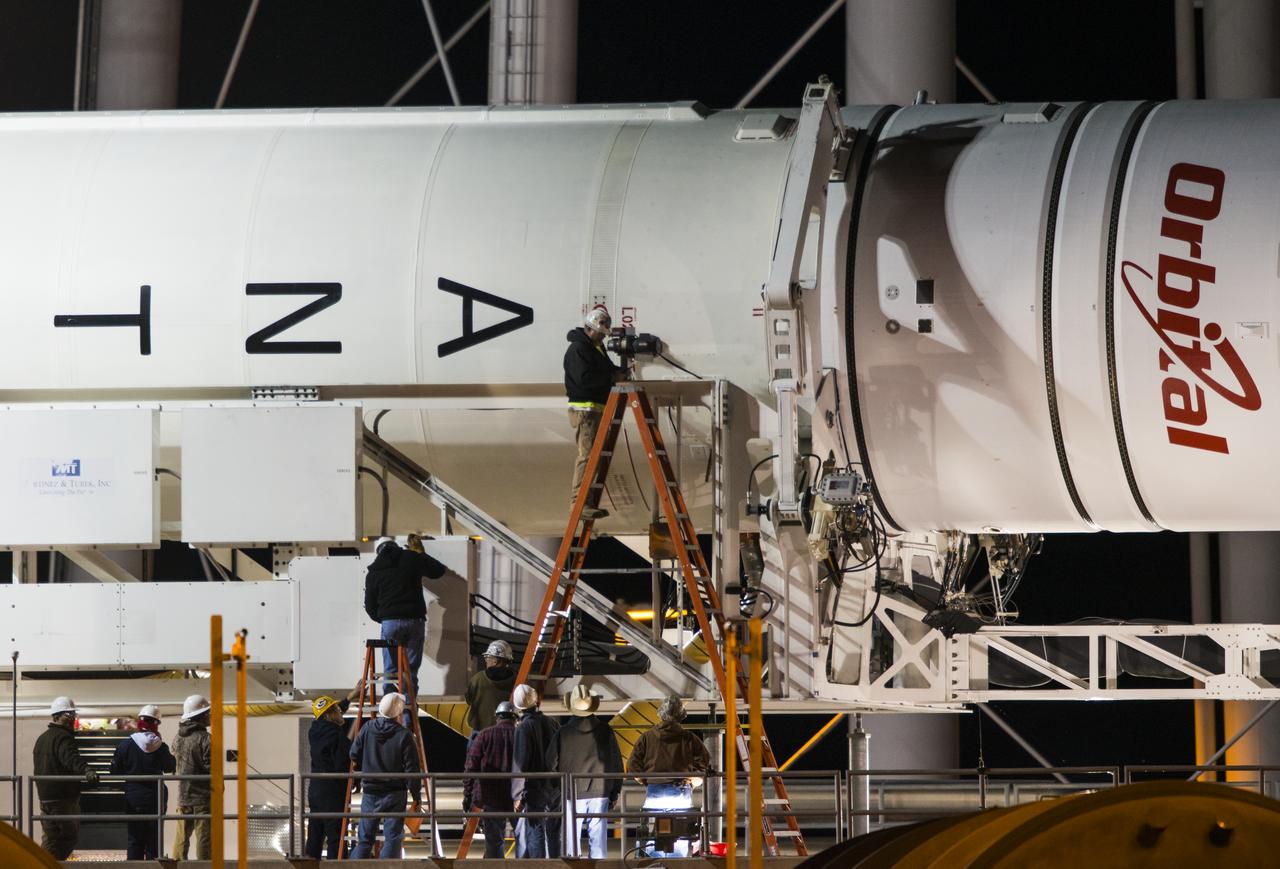
Workers are seen as they prepare the Orbital Sciences Corporation Antares rocket, with the Cygnus spacecraft onboard, to be raised at launch Pad-0A, Friday, Oct. 24, 2014, at NASA's Wallops Flight Facility in Virginia. The Antares will launch with the Cygnus spacecraft filled with over 5,000 pounds of supplies for the International Space Station, including science experiments, experiment hardware, spare parts, and crew provisions. The Orbital-3 mission is Orbital Sciences' third contracted cargo delivery flight to the space station for NASA. Photo Credit: (NASA/Joel Kowsky)
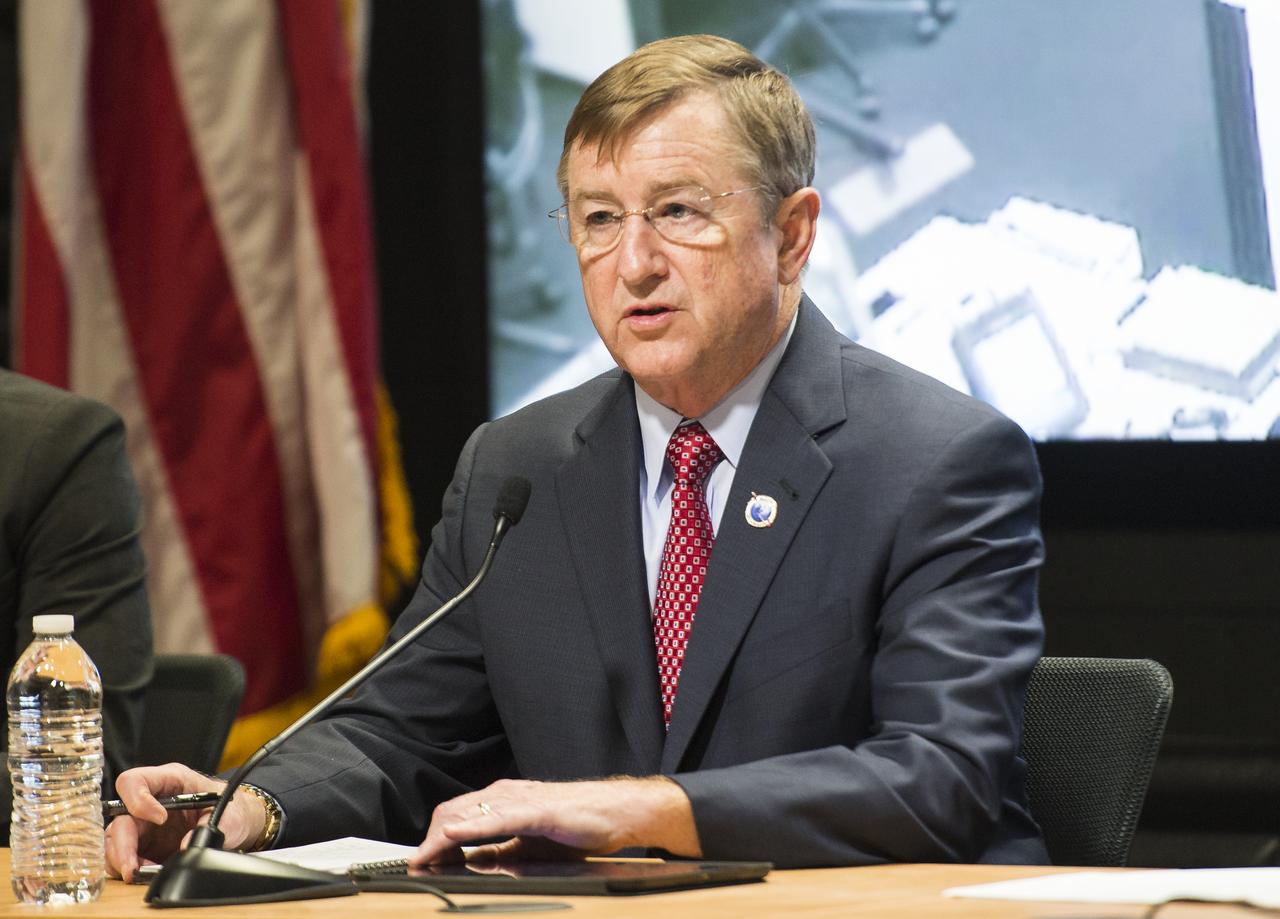
Frank Culbertson, Executive Vice President and General Manager of Advanced Program Group at Orbital Sciences Corp. is seen during a press conference held after a mishap occurred during the launch of the Antares rocket, with the Cygnus cargo spacecraft aboard, Tuesday, Oct. 28, 2014, NASA Wallops Flight Facility, Virginia. Cygnus was on its way to rendezvous with the space station. The Antares rocket lifted off to start its third resupply mission to the International Space Station, but suffered a catastrophic anomaly shortly after liftoff at 6:22 p.m. EDT. Photo Credit: (NASA/Joel Kowsky)
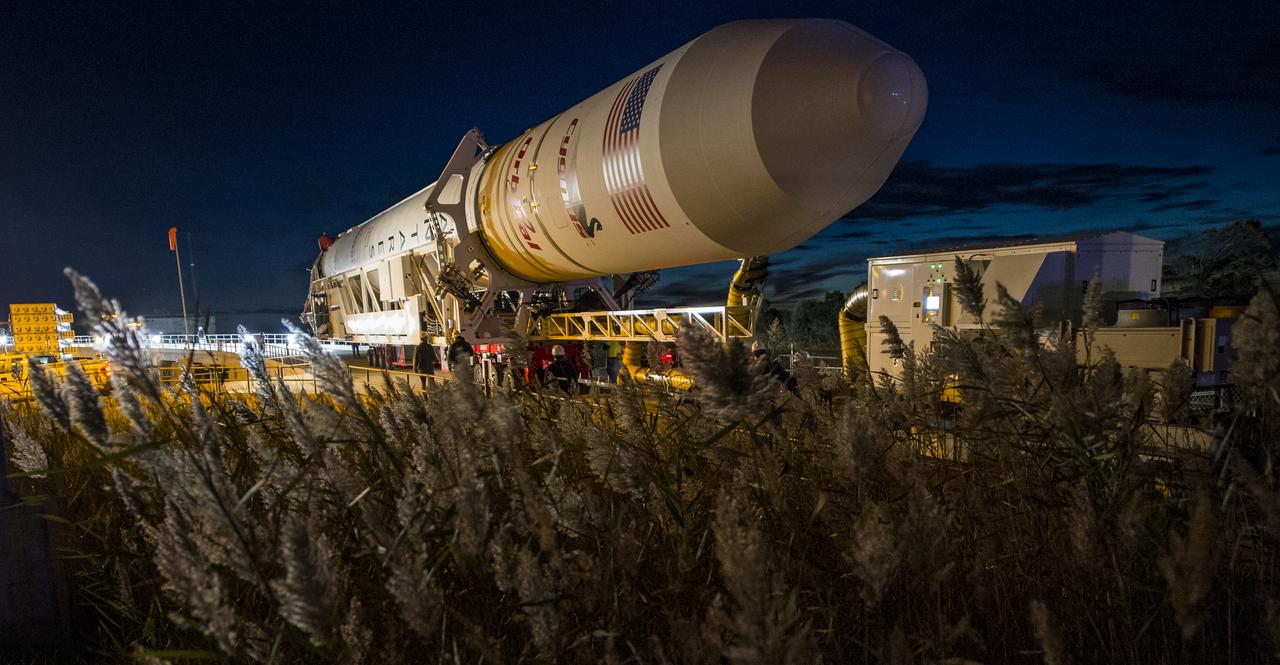
The Orbital Sciences Corporation Antares rocket, with the Cygnus spacecraft onboard, arrives at launch Pad-0A, Friday, Oct. 24, 2014, at NASA's Wallops Flight Facility in Virginia. The Antares will launch with the Cygnus spacecraft filled with over 5,000 pounds of supplies for the International Space Station, including science experiments, experiment hardware, spare parts, and crew provisions. The Orbital-3 mission is Orbital Sciences' third contracted cargo delivery flight to the space station for NASA. Photo Credit: (NASA/Joel Kowsky)
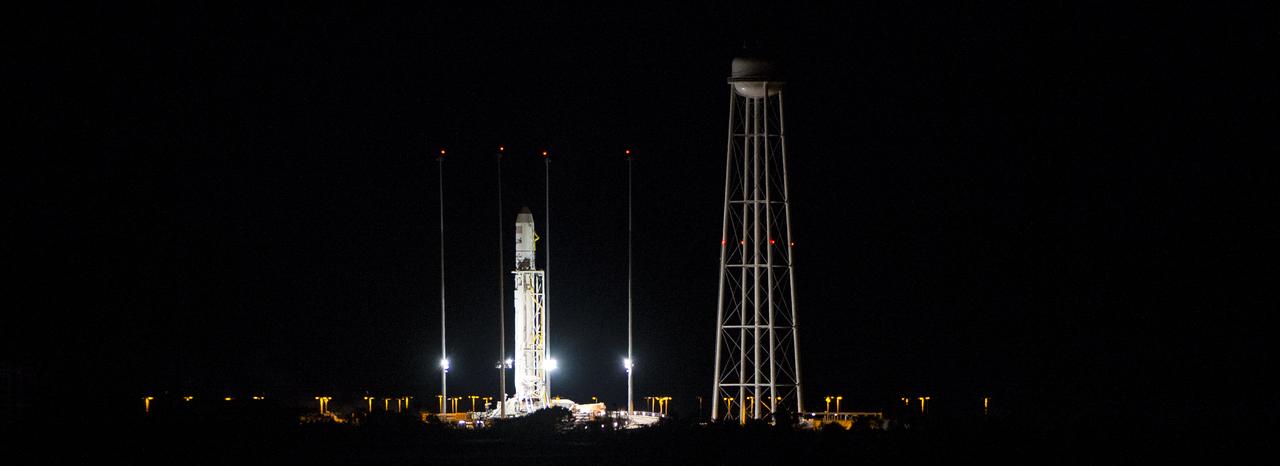
The Orbital Sciences Corporation Antares rocket, with the Cygnus spacecraft onboard, is seen after being raised into vertical position at launch Pad-0A, Saturday, Oct. 25, 2014, at NASA's Wallops Flight Facility in Virginia. The Antares will launch with the Cygnus spacecraft filled with over 5,000 pounds of supplies for the International Space Station, including science experiments, experiment hardware, spare parts, and crew provisions. The Orbital-3 mission is Orbital Sciences' third contracted cargo delivery flight to the space station for NASA. Photo Credit: (NASA/Joel Kowsky)
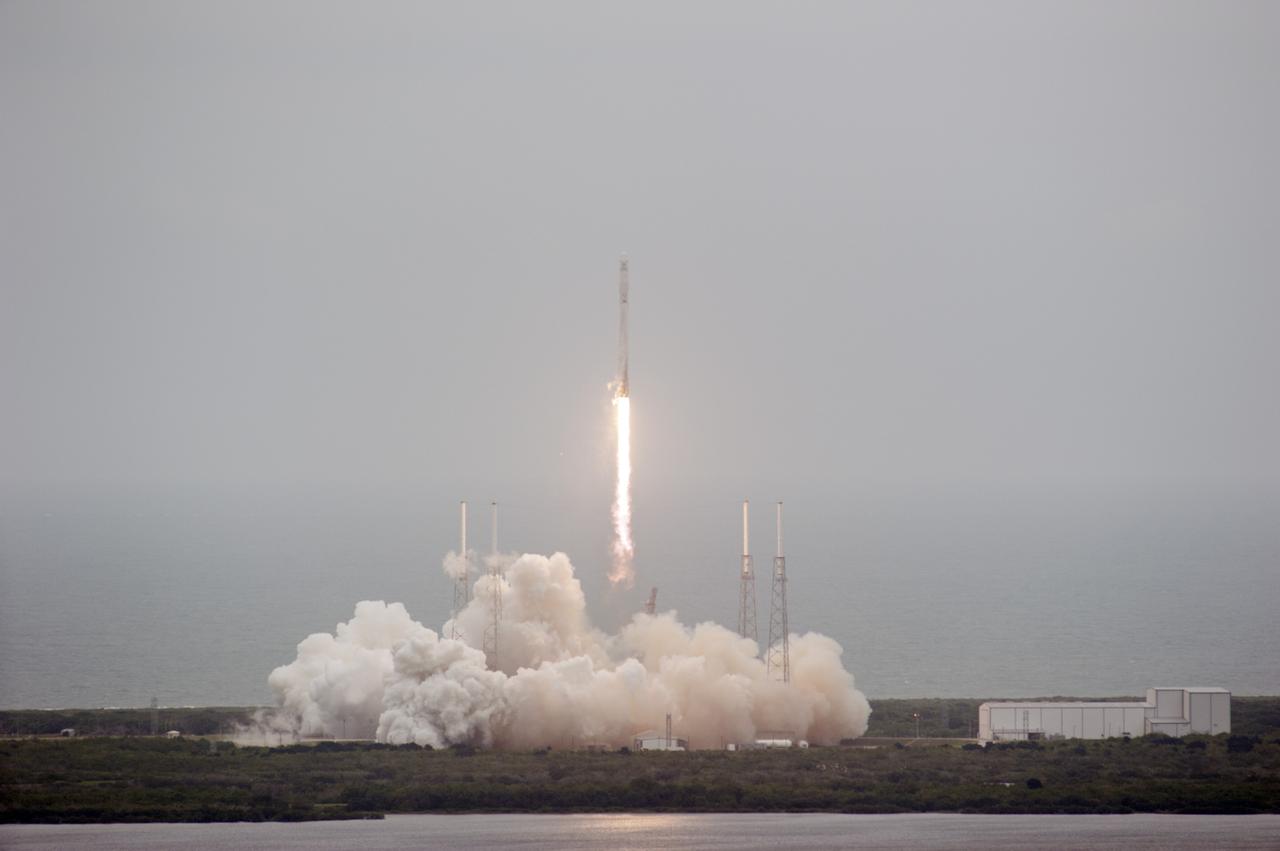
CAPE CANAVERAL, Fla. - The SpaceX Falcon 9 rocket rises above the lightning masts on Space Launch Complex 40 at Cape Canaveral Air Force Station, carrying the Dragon resupply spacecraft to the International Space Station. Liftoff was during an instantaneous window at 3:25 p.m. EDT. Dragon is making its fourth trip to the space station. The SpaceX-3 mission, carrying almost 2.5 tons of supplies, technology and science experiments, is the third of 12 flights under NASA's Commercial Resupply Services contract to resupply the orbiting laboratory. For more information, visit http://www.nasa.gov/mission_pages/station/structure/launch/index.html. Photo credit: NASA/Kim Shiflett
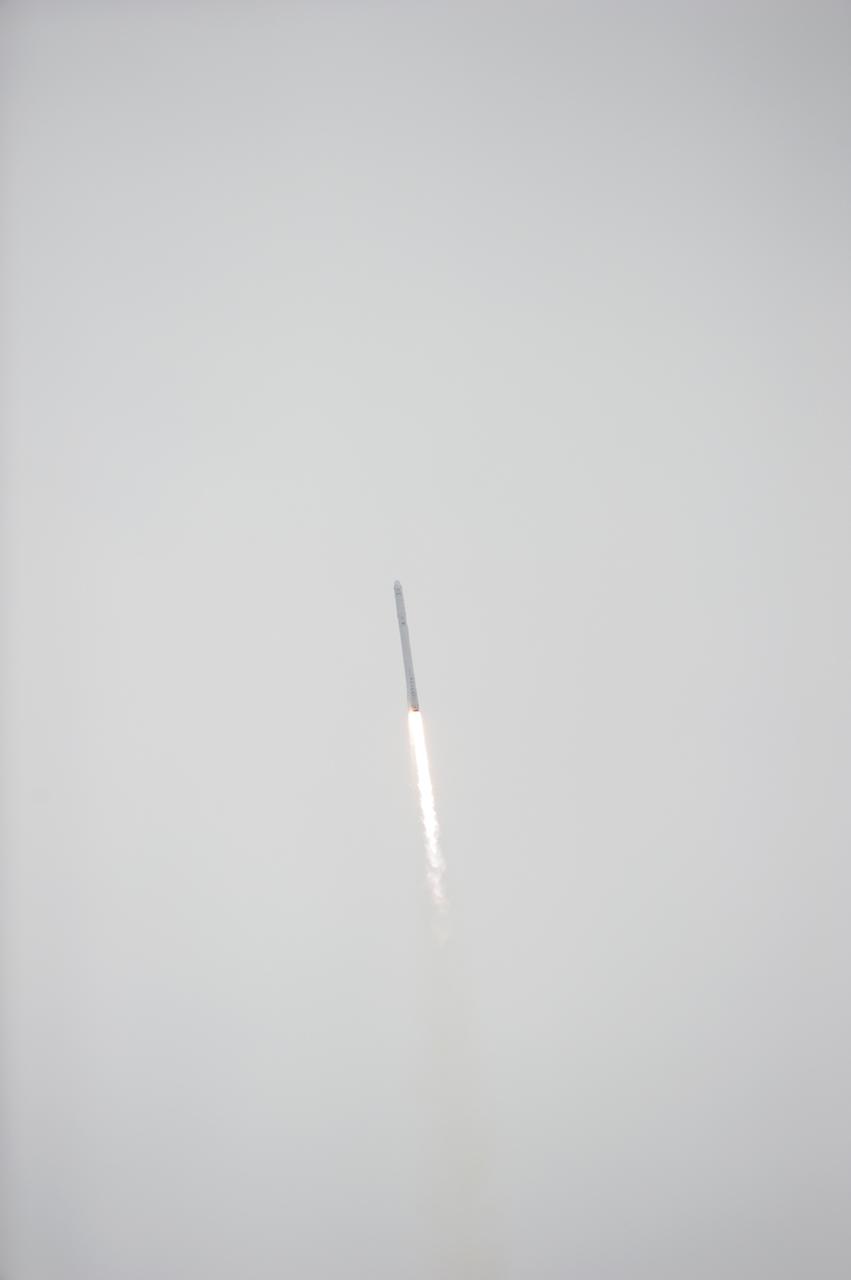
CAPE CANAVERAL, Fla. - The SpaceX-3 mission lifts off through the clouds over Space Launch Complex 40 on Cape Canaveral Air Force Station aboard a Falcon 9 rocket, carrying the Dragon resupply spacecraft to the International Space Station. Liftoff was during an instantaneous window at 3:25 p.m. EDT. Dragon is making its fourth trip to the space station. The SpaceX-3 mission, carrying almost 2.5 tons of supplies, technology and science experiments, is the third of 12 flights under NASA's Commercial Resupply Services contract to resupply the orbiting laboratory. For more information, visit http://www.nasa.gov/mission_pages/station/structure/launch/index.html. Photo credit: NASA/Kim Shiflett
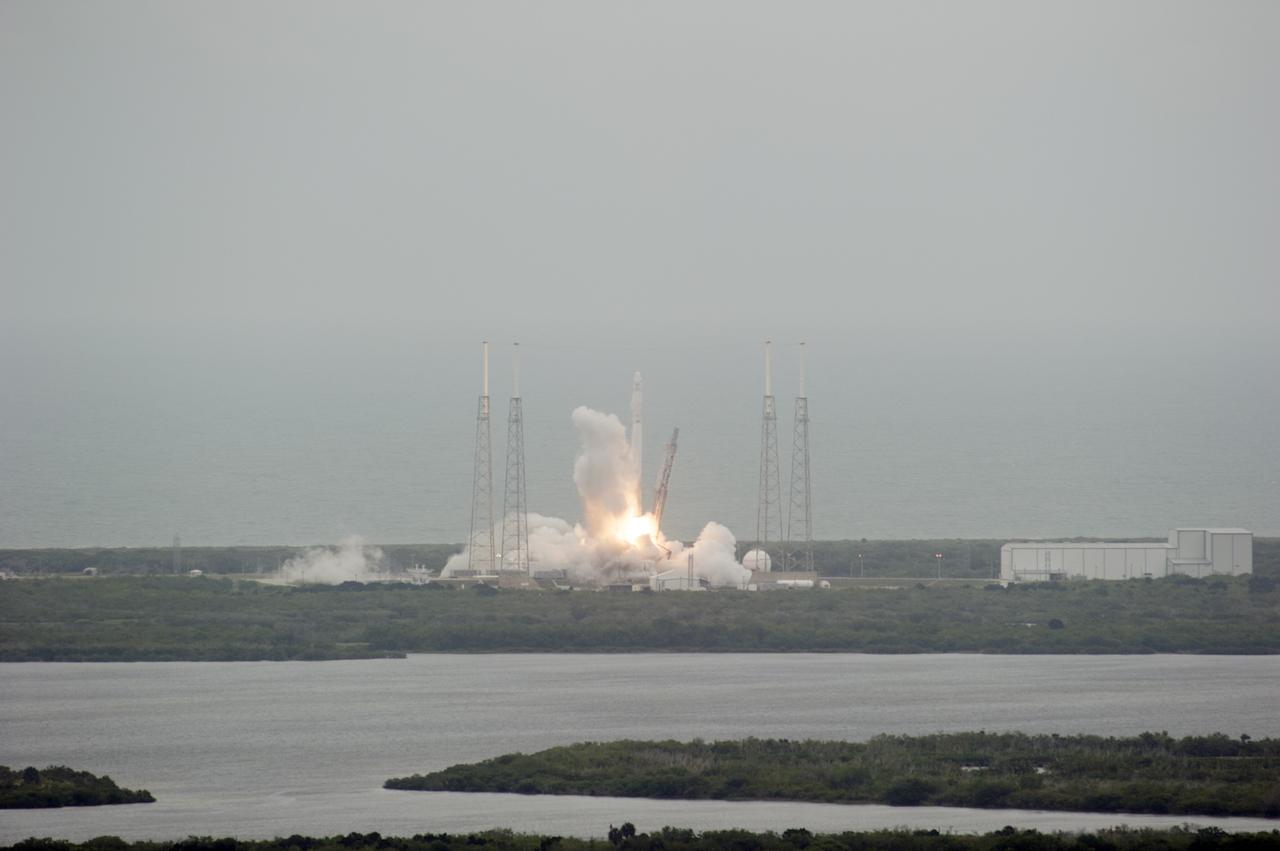
CAPE CANAVERAL, Fla. - An exhaust cloud builds around the Falcon 9 rocket on Space Launch Complex 40 on Cape Canaveral Air Force Station as the SpaceX-3 mission lifts off, carrying the Dragon resupply spacecraft to the International Space Station. Liftoff was during an instantaneous window at 3:25 p.m. EDT. Dragon is making its fourth trip to the space station. The SpaceX-3 mission, carrying almost 2.5 tons of supplies, technology and science experiments, is the third of 12 flights under NASA's Commercial Resupply Services contract to resupply the orbiting laboratory. For more information, visit http://www.nasa.gov/mission_pages/station/structure/launch/index.html. Photo credit: NASA/Kim Shiflett
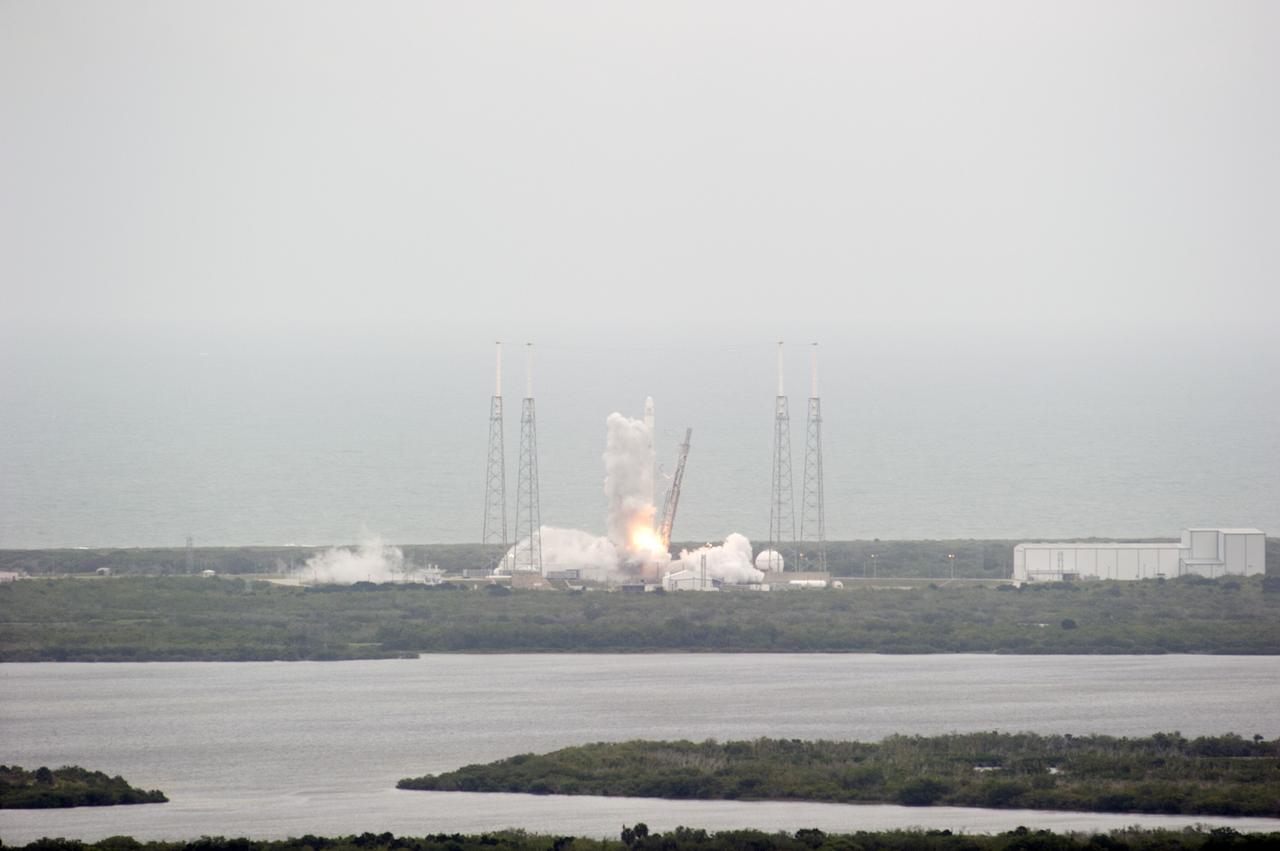
CAPE CANAVERAL, Fla. - An exhaust cloud forms around the Falcon 9 rocket on Space Launch Complex 40 on Cape Canaveral Air Force Station as the SpaceX-3 mission lifts off, carrying the Dragon resupply spacecraft to the International Space Station. Liftoff was during an instantaneous window at 3:25 p.m. EDT. Dragon is making its fourth trip to the space station. The SpaceX-3 mission, carrying almost 2.5 tons of supplies, technology and science experiments, is the third of 12 flights under NASA's Commercial Resupply Services contract to resupply the orbiting laboratory. For more information, visit http://www.nasa.gov/mission_pages/station/structure/launch/index.html. Photo credit: NASA/Kim Shiflett
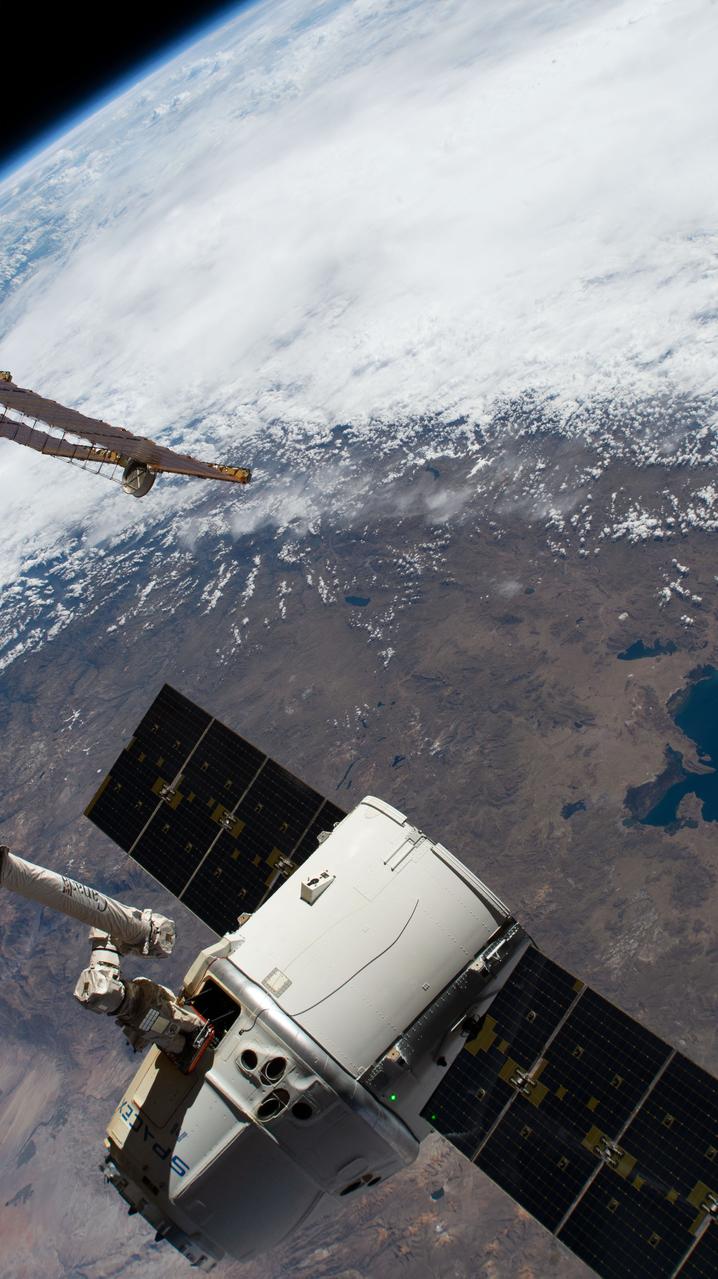
iss059e088880 (June 3, 2019) --- The SpaceX Dragon cargo craft on its 17th contracted mission to resupply mission to the International Space Station is pictured moments before being released from the Canadarm2 robotic arm. The orbiting lab was flying 257 miles above the Pacific coast of South America.
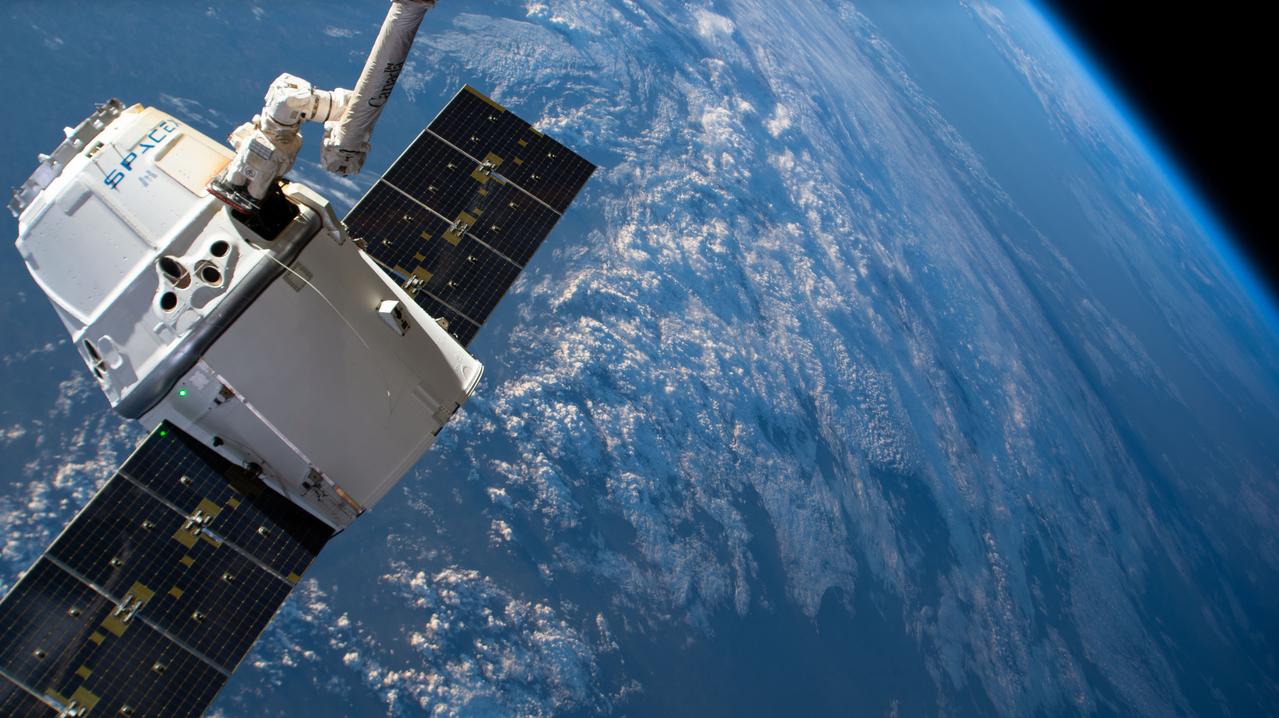
iss059e088875 (June 3, 2019) --- The SpaceX Dragon cargo craft on its 17th contracted mission to resupply mission to the International Space Station is pictured moments before being released from the Canadarm2 robotic arm. The orbiting lab was flying 261 miles above central Asia.
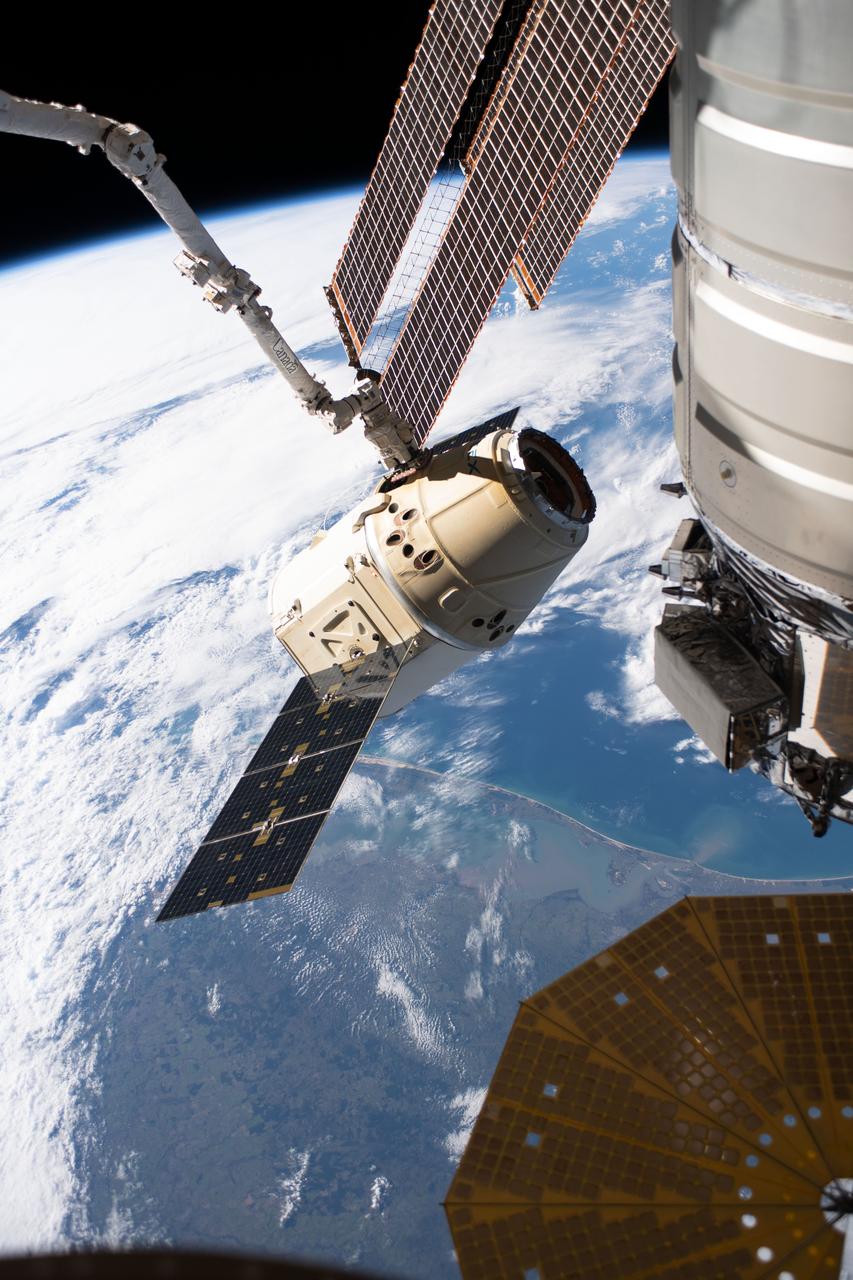
iss059e088996 (June 3, 2019) --- The SpaceX Dragon cargo craft on its 17th contracted mission to resupply mission to the International Space Station is pictured moments before being released from the Canadarm2 robotic arm. The orbiting lab was flying 261 miles above the Atlantic coast of South America.
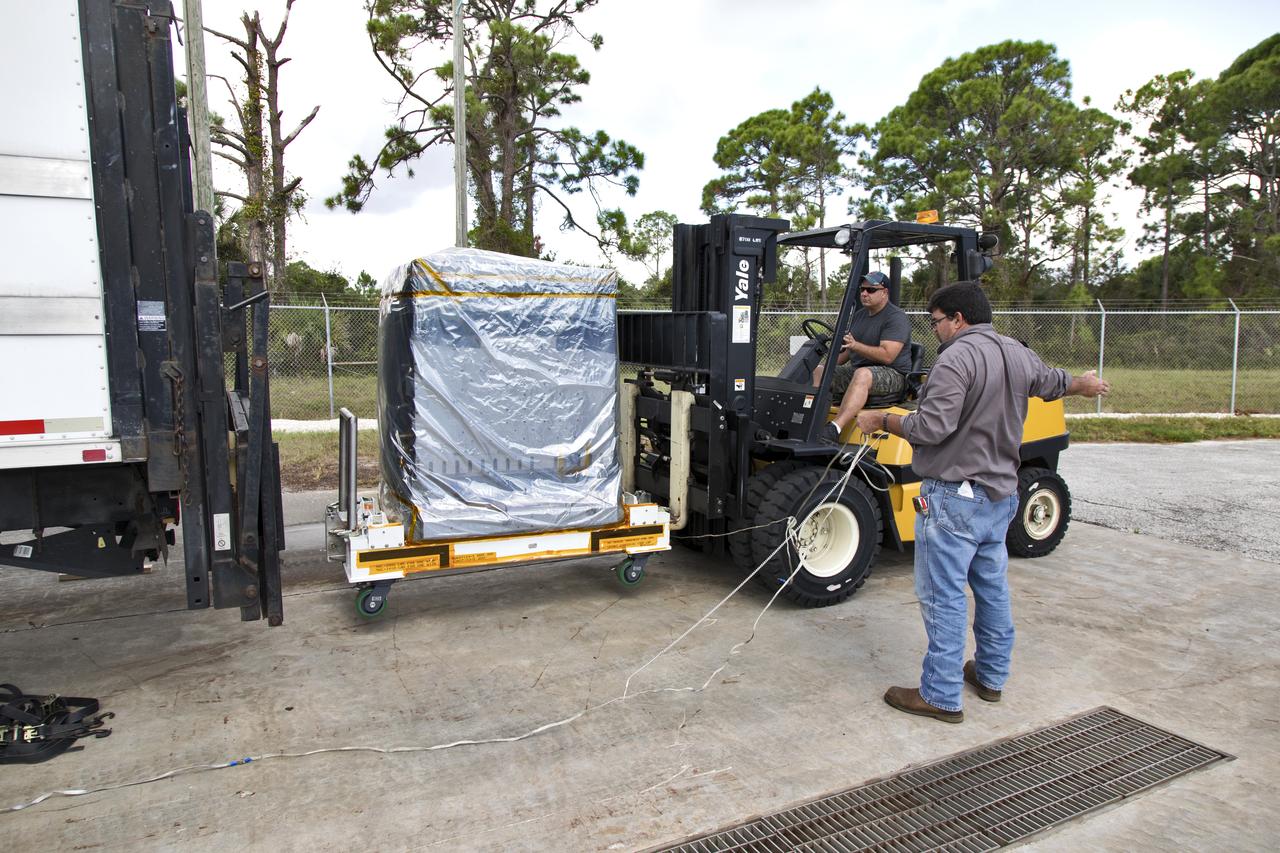
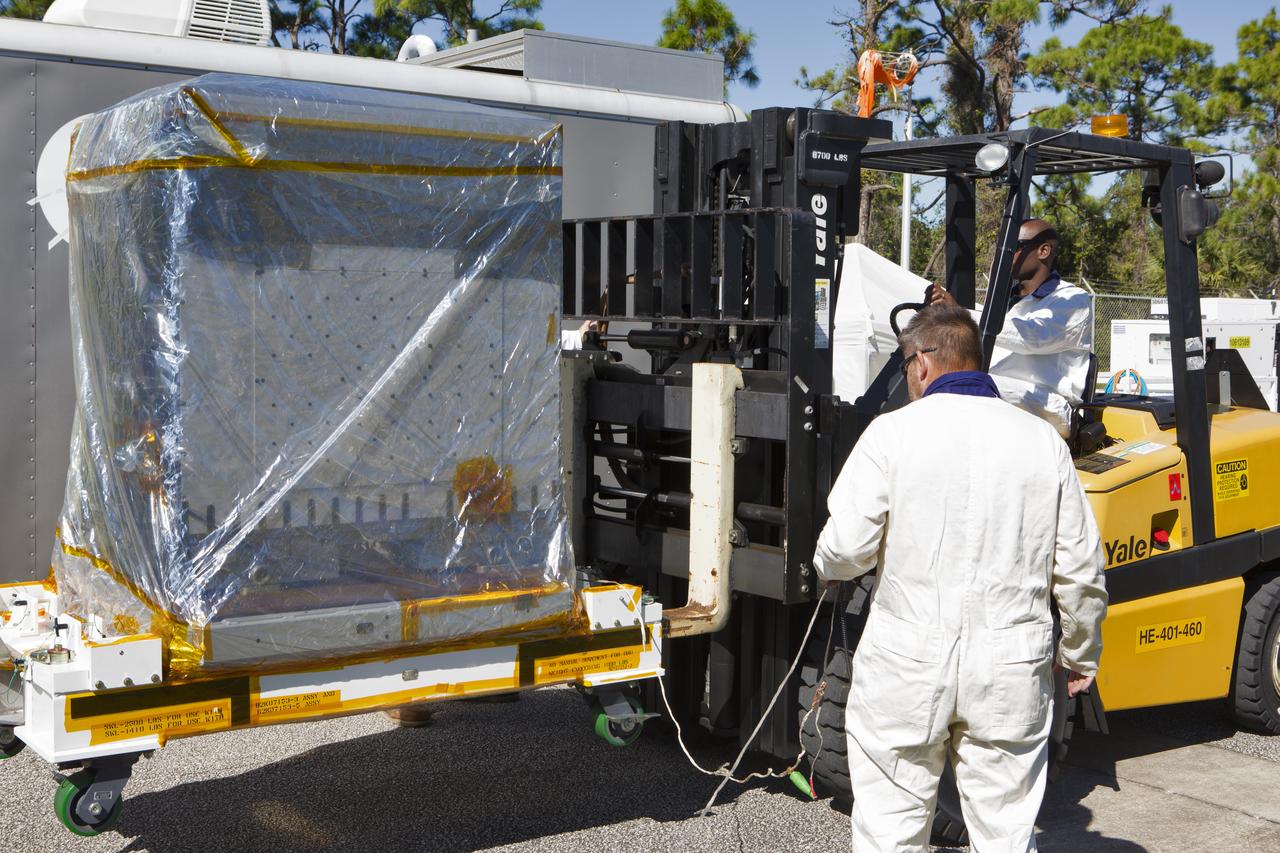
A worker uses a forklift to unload the Robotic Refueling Mission-3 (RRM3) payload from a truck at the Payload Hazardous Servicing Facility on Oct. 3, 2018, at NASA's Kennedy Space Center in Florida. The payload will be carried to the International Space Station on SpaceX's 16th Commercial Resupply Services mission. RRM3 demonstrates the transfer of xenon gas and liquid methane in microgravity, and advances technologies for storing and manipulating these cryogenic fuels robotically. RRM3 also supports development of technology for the Restore-L mission, a robotic spacecraft equipped to service satellites in-orbit.
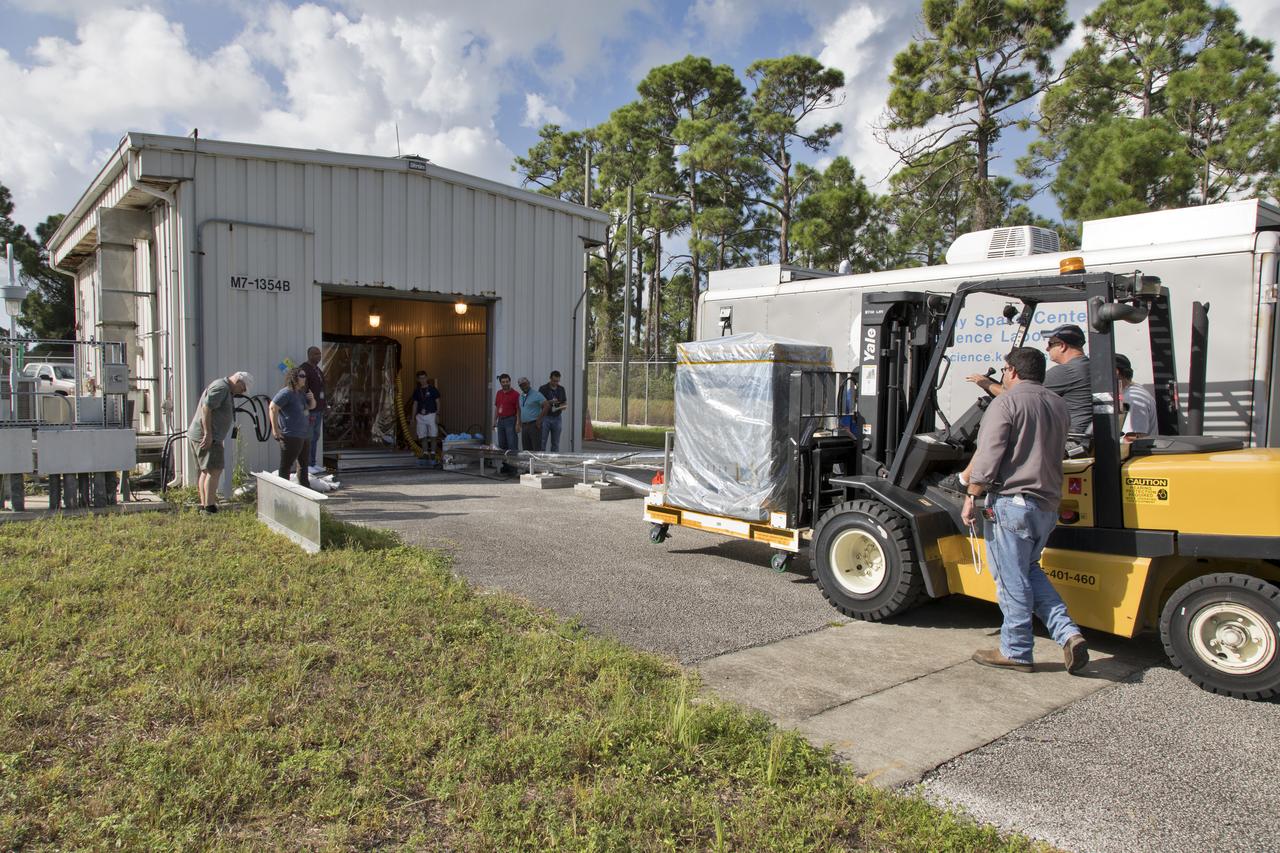
A worker uses a forklift to carry the Robotic Refueling Mission-3 (RRM3) payload to the entrance of the Payload Hazardous Servicing Facility on Oct. 3, 2018, at NASA's Kennedy Space Center in Florida. The payload will be carried to the International Space Station on SpaceX's 16th Commercial Resupply Services mission. RRM3 demonstrates the transfer of xenon gas and liquid methane in microgravity, and advances technologies for storing and manipulating these cryogenic fuels robotically. RRM3 also supports development of technology for the Restore-L mission, a robotic spacecraft equipped to service satellites in-orbit.
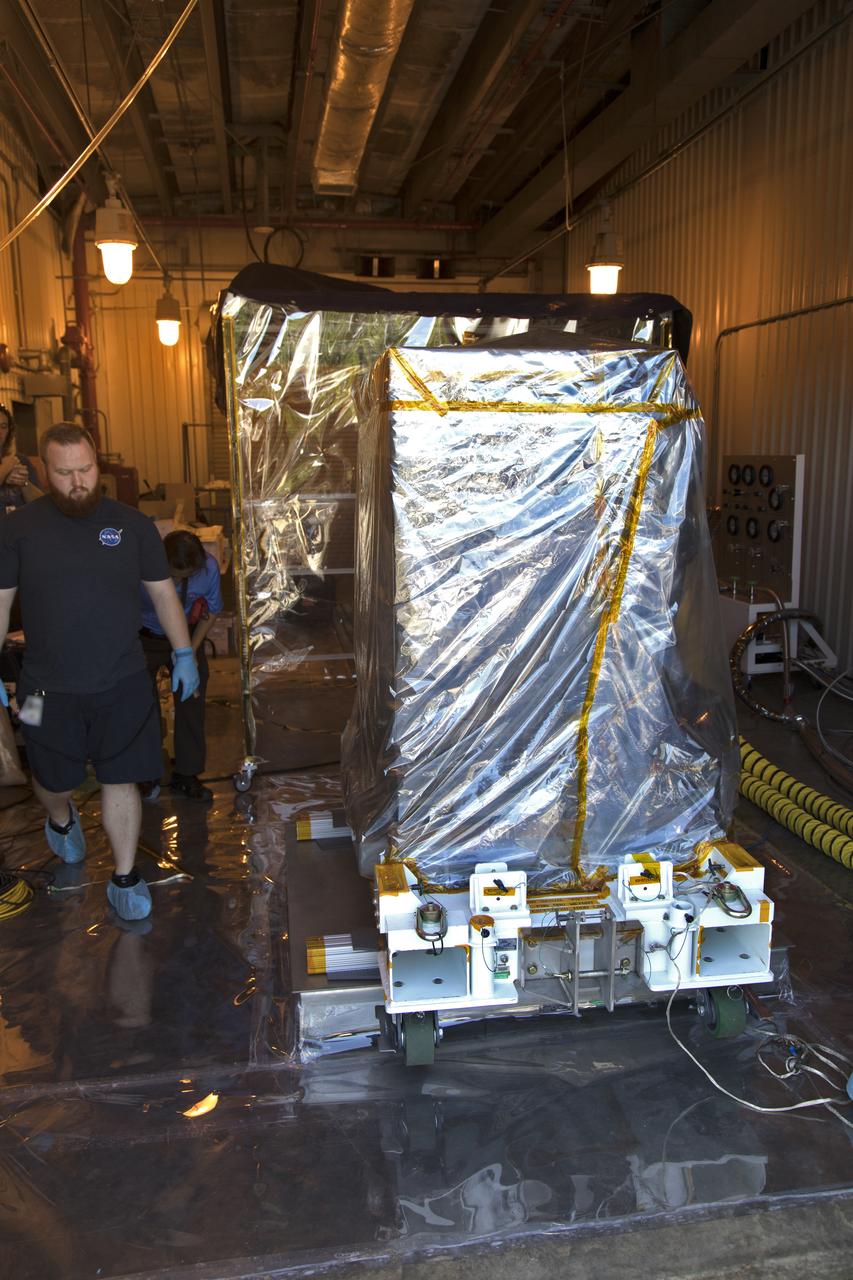
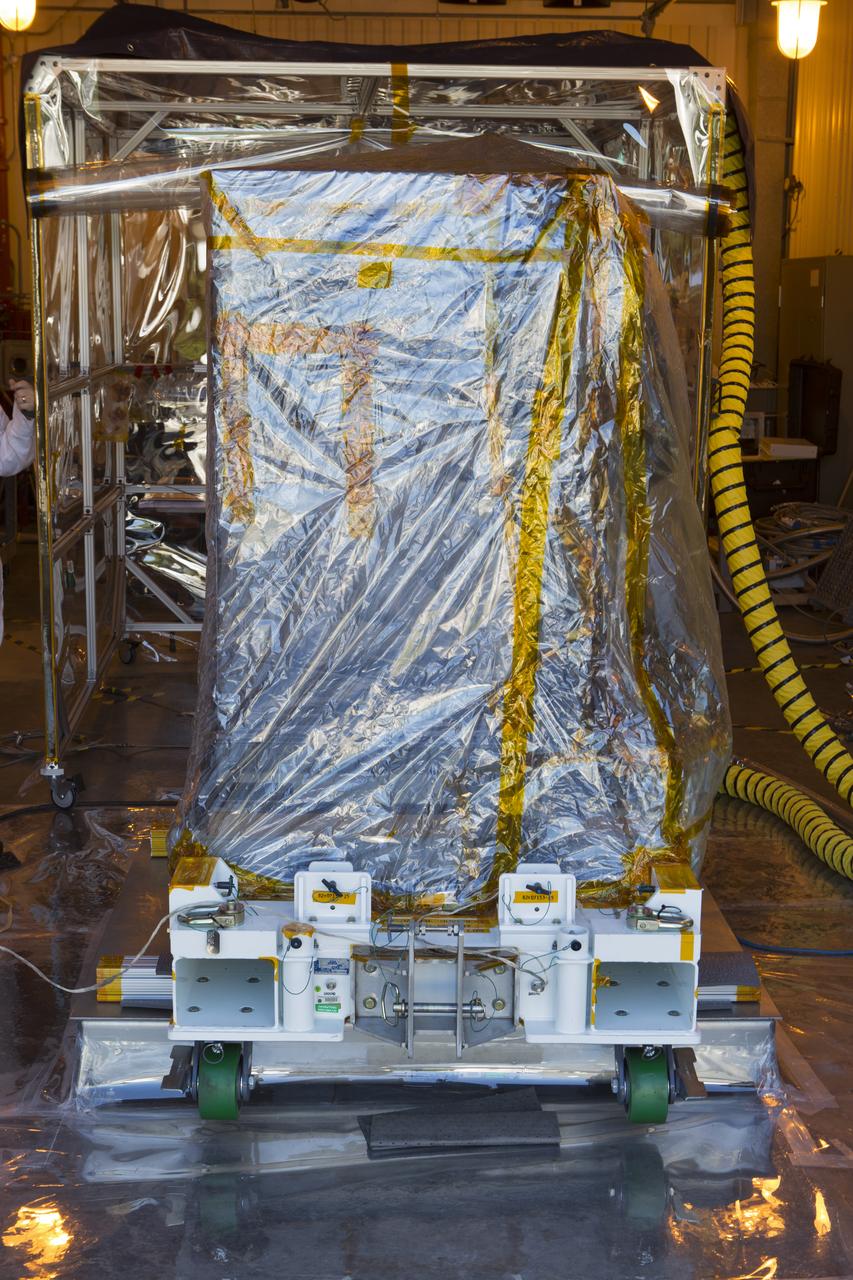
The Robotic Refueling Mission-3 (RRM3) payload is inside the Payload Hazardous Servicing Facility on Oct. 3, 2018, at NASA's Kennedy Space Center in Florida. The payload will be carried to the International Space Station on SpaceX's 16th Commercial Resupply Services mission. RRM3 demonstrates the transfer of xenon gas and liquid methane in microgravity, and advances technologies for storing and manipulating these cryogenic fuels robotically. RRM3 also supports development of technology for the Restore-L mission, a robotic spacecraft equipped to service satellites in-orbit.
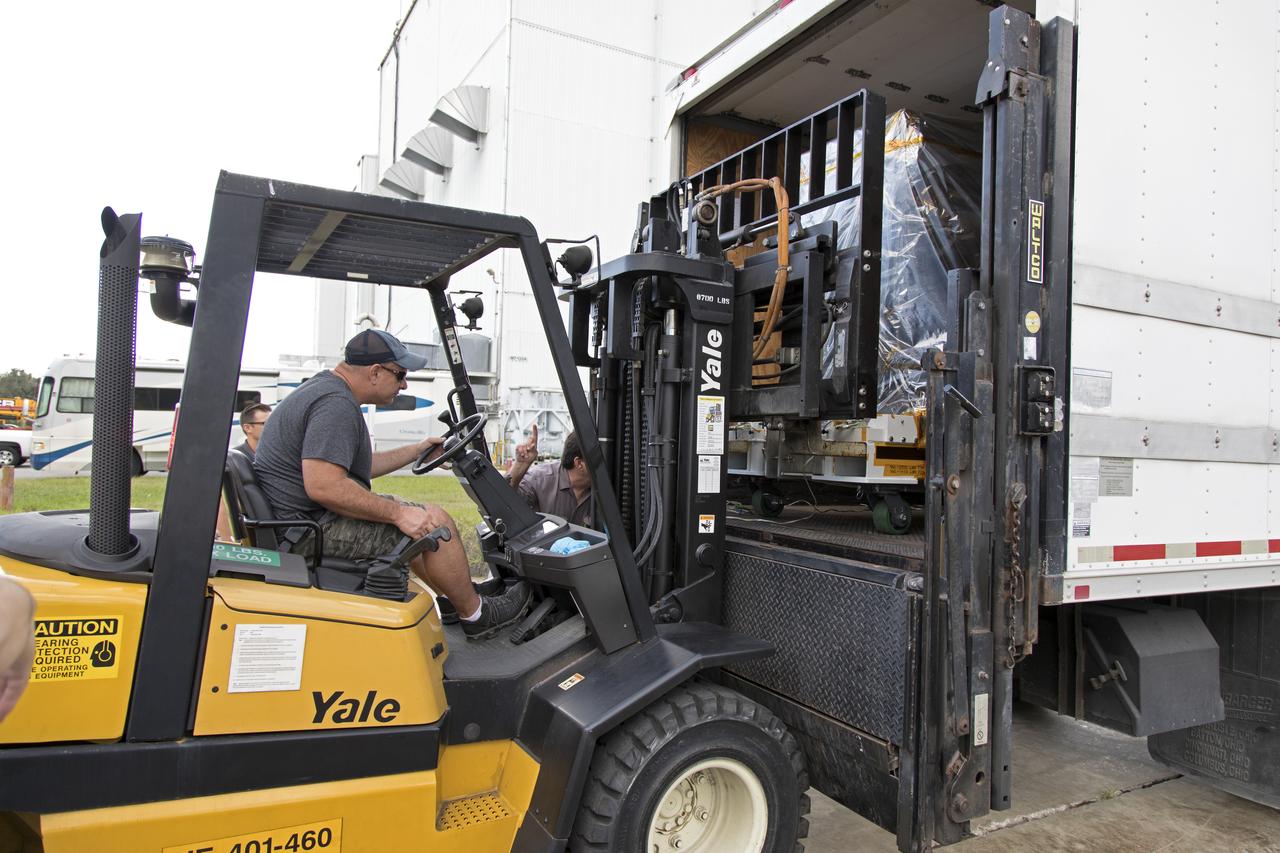
A worker uses a forklift to unload the Robotic Refueling Mission-3 (RRM3) payload from a truck at the Payload Hazardous Servicing Facility on Oct. 3, 2018, at NASA's Kennedy Space Center in Florida. The payload will be carried to the International Space Station on SpaceX's 16th Commercial Resupply Services mission. RRM3 demonstrates the transfer of xenon gas and liquid methane in microgravity, and advances technologies for storing and manipulating these cryogenic fuels robotically. RRM3 also supports development of technology for the Restore-L mission, a robotic spacecraft equipped to service satellites in-orbit.
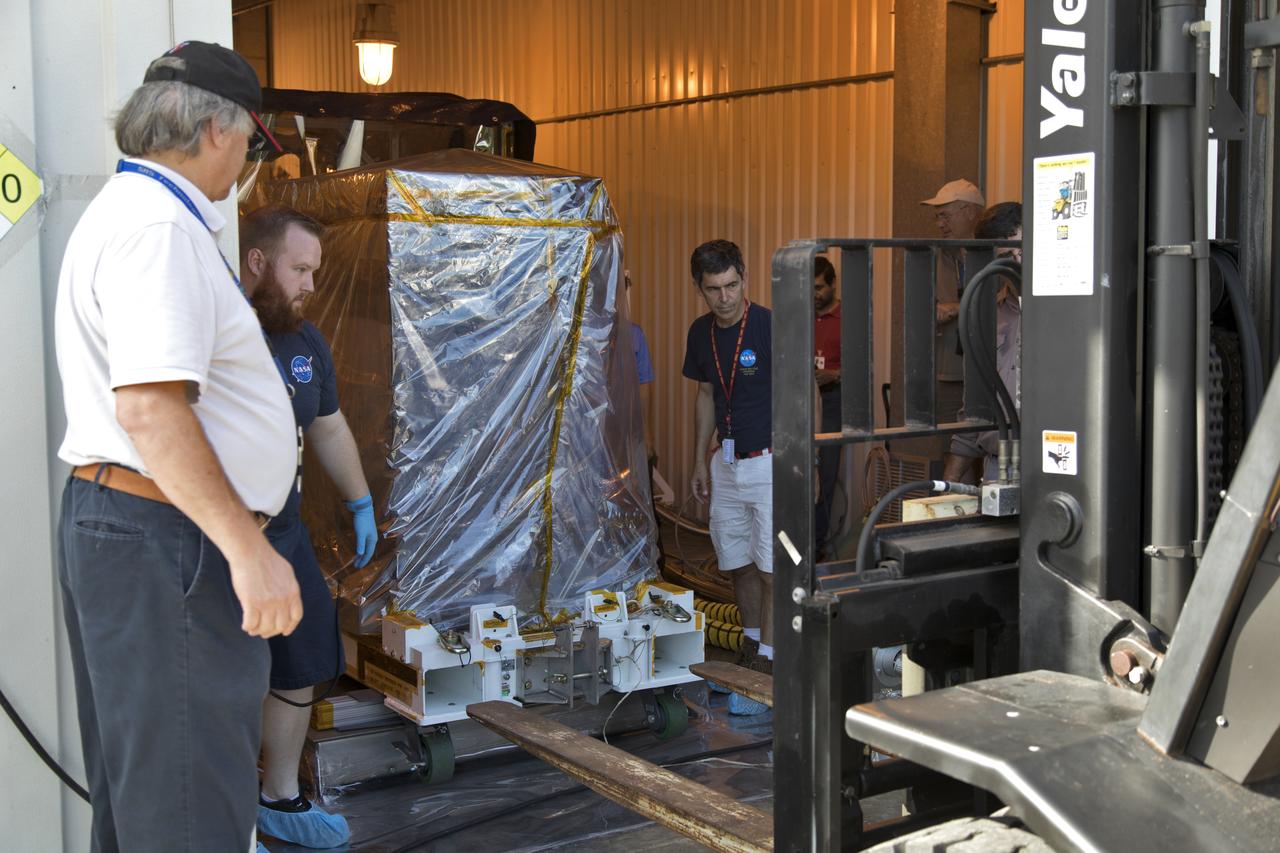
The Robotic Refueling Mission-3 (RRM3) payload is unloaded from a forklift inside the Payload Hazardous Servicing Facility on Oct. 3, 2018, at NASA's Kennedy Space Center in Florida. The payload will be carried to the International Space Station on SpaceX's 16th Commercial Resupply Services mission. RRM3 demonstrates the transfer of xenon gas and liquid methane in microgravity, and advances technologies for storing and manipulating these cryogenic fuels robotically. RRM3 also supports development of technology for the Restore-L mission, a robotic spacecraft equipped to service satellites in-orbit.
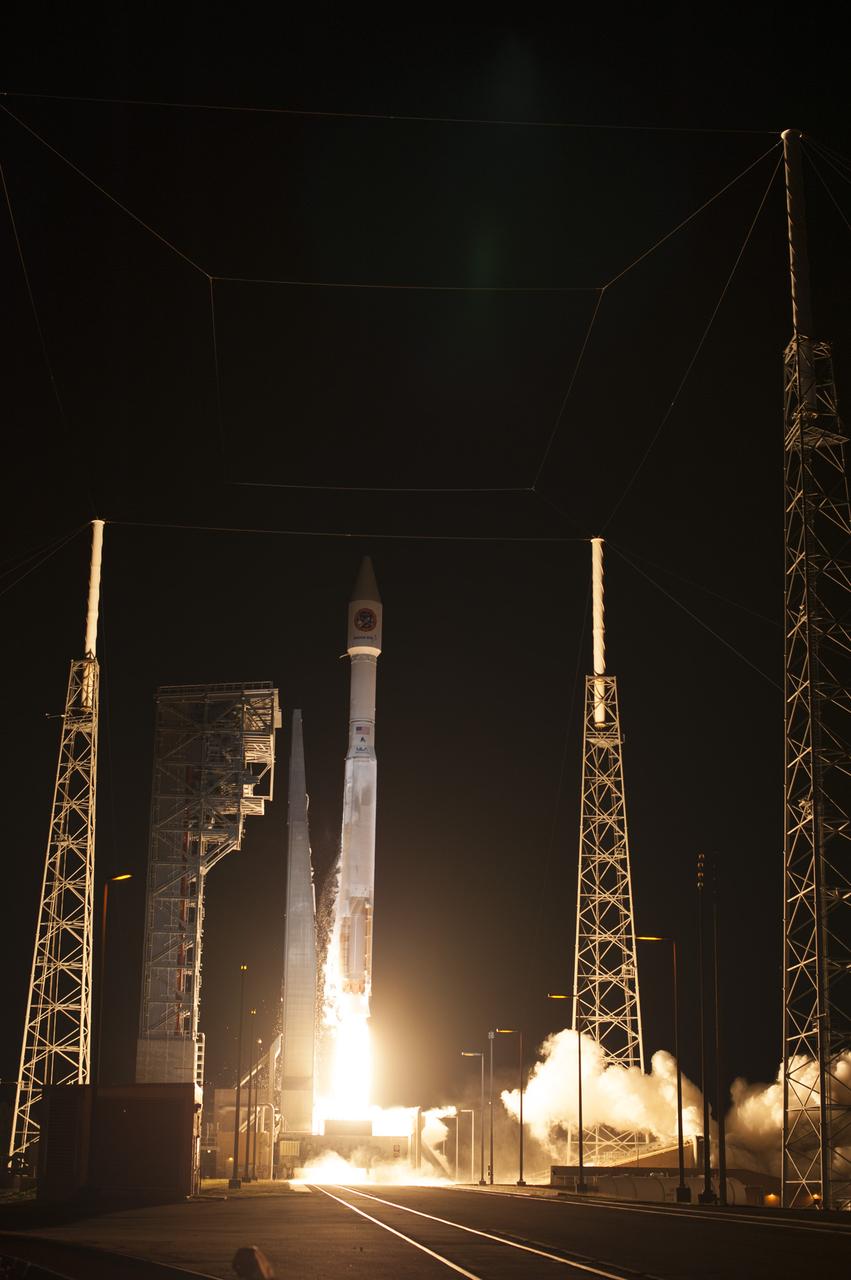
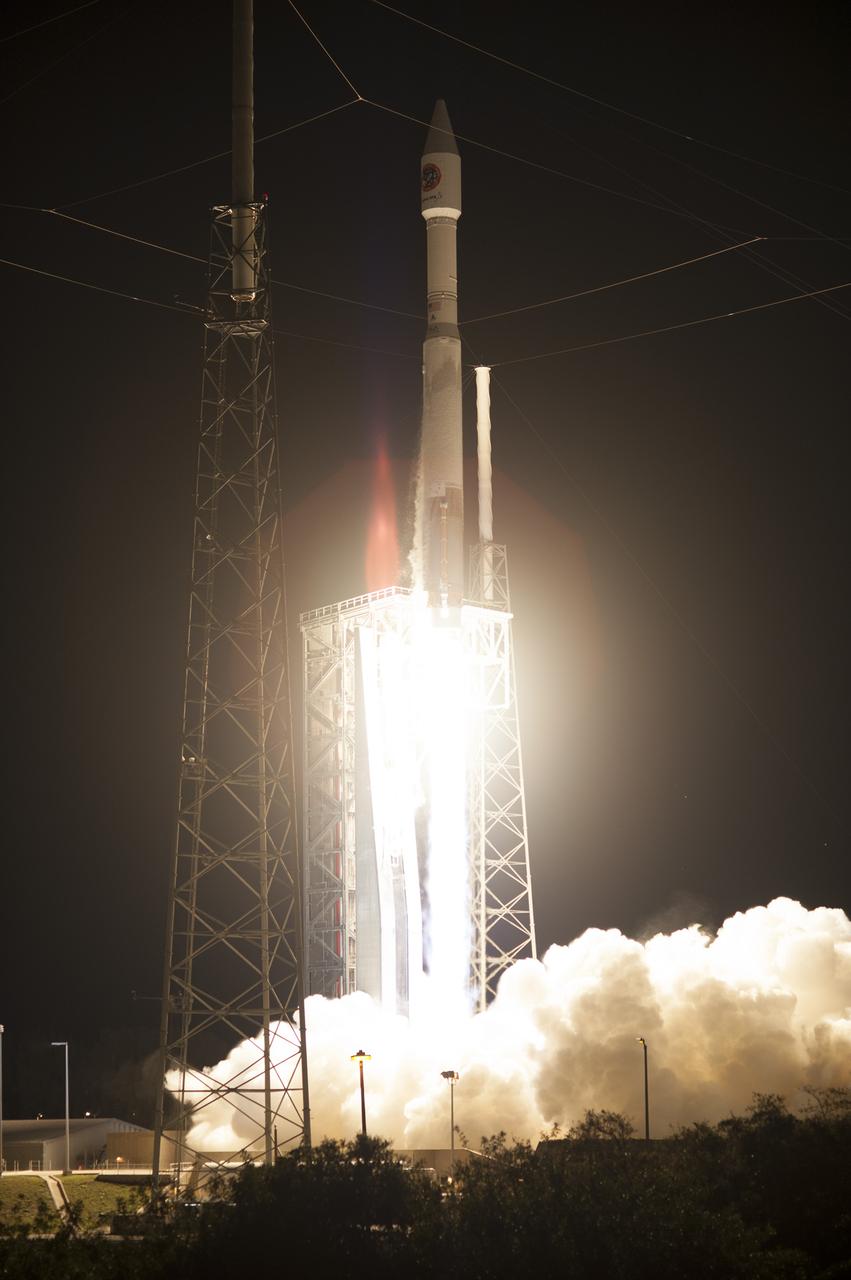
A United Launch Alliance Atlas V rocket lifts off from Space Launch Complex 41 at Cape Canaveral Air Force Station carrying an Orbital ATK Cygnus resupply spacecraft on a commercial resupply services mission to the International Space Station. Liftoff was at 11:05 p.m. EDT. Cygnus will deliver the second generation of a portable onboard printer to demonstrate 3-D printing, an instrument for first space-based observations of the chemical composition of meteors entering Earth’s atmosphere and an experiment to study how fires burn in microgravity.
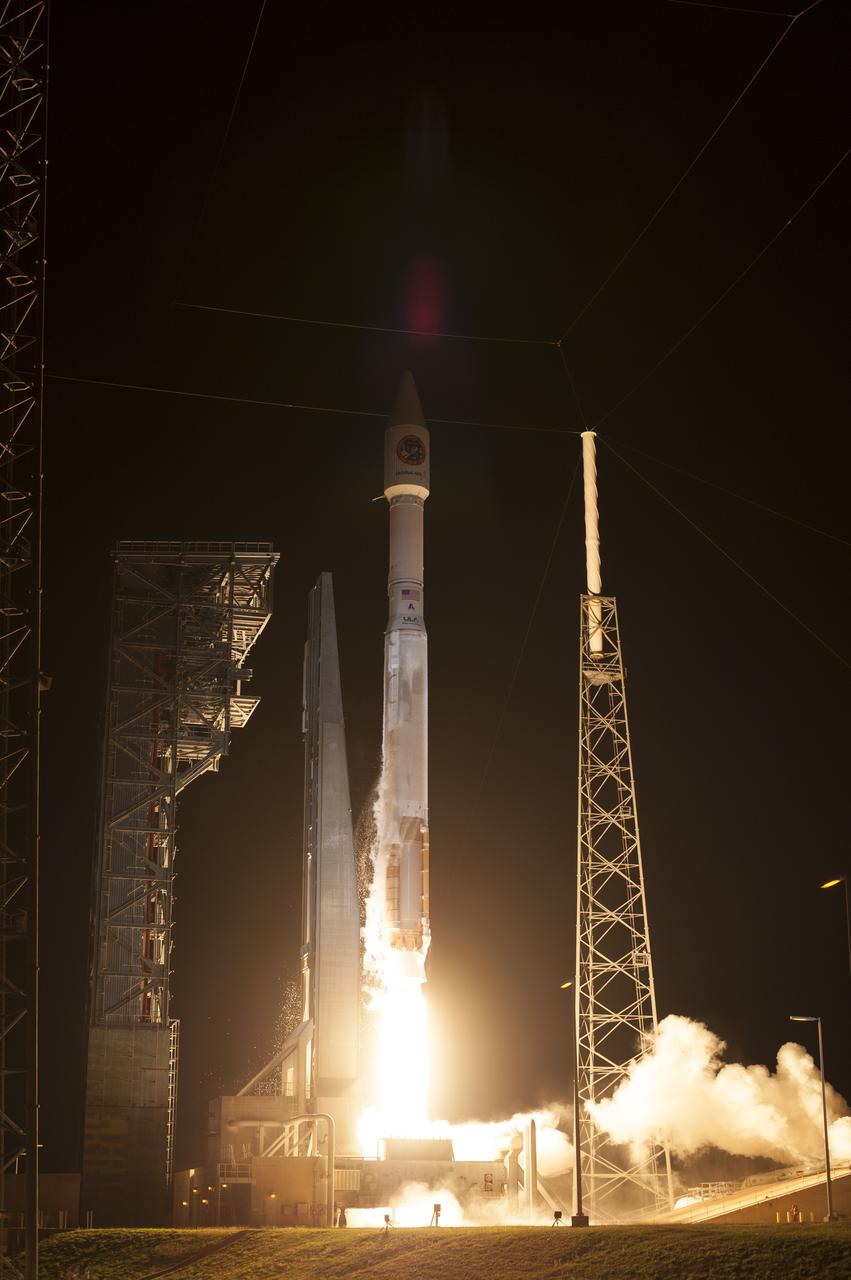
A United Launch Alliance Atlas V rocket lifts off from Space Launch Complex 41 at Cape Canaveral Air Force Station carrying an Orbital ATK Cygnus resupply spacecraft on a commercial resupply services mission to the International Space Station. Liftoff was at 11:05 p.m. EDT. Cygnus will deliver the second generation of a portable onboard printer to demonstrate 3-D printing, an instrument for first space-based observations of the chemical composition of meteors entering Earth’s atmosphere and an experiment to study how fires burn in microgravity.
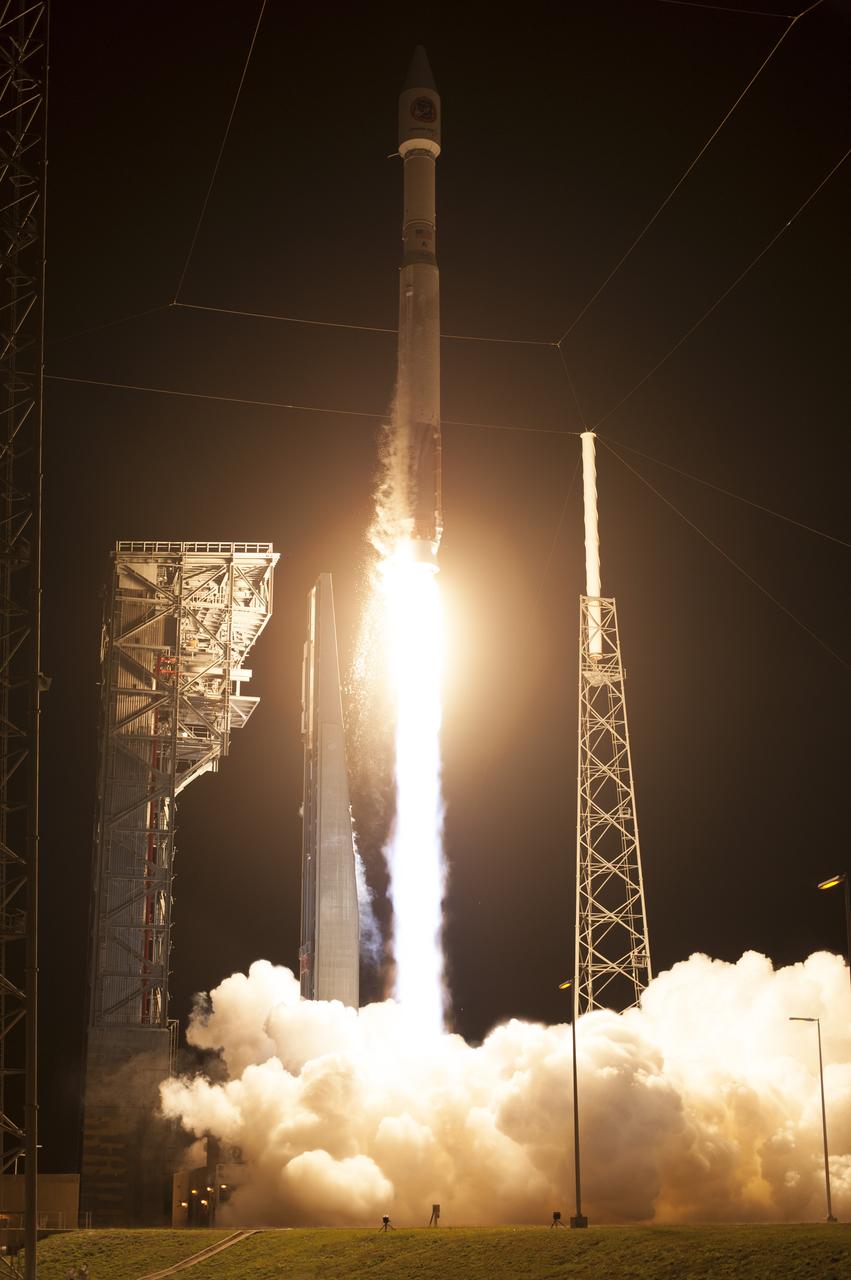
A United Launch Alliance Atlas V rocket lifts off from Space Launch Complex 41 at Cape Canaveral Air Force Station carrying an Orbital ATK Cygnus resupply spacecraft on a commercial resupply services mission to the International Space Station. Liftoff was at 11:05 p.m. EDT. Cygnus will deliver the second generation of a portable onboard printer to demonstrate 3-D printing, an instrument for first space-based observations of the chemical composition of meteors entering Earth’s atmosphere and an experiment to study how fires burn in microgravity.
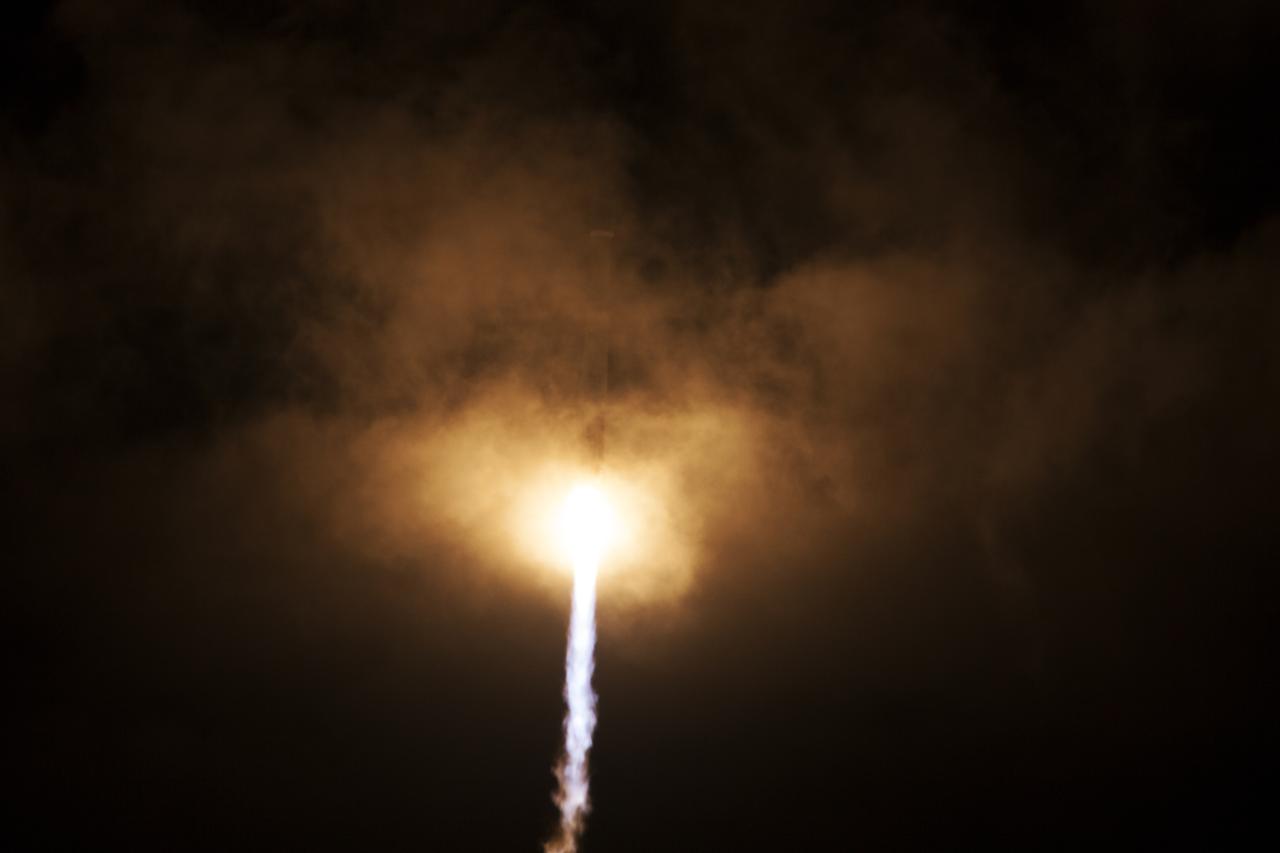
A United Launch Alliance Atlas V rocket lifts off from Space Launch Complex 41 at Cape Canaveral Air Force Station carrying an Orbital ATK Cygnus resupply spacecraft on a commercial resupply services mission to the International Space Station. Liftoff was at 11:05 p.m. EDT. Cygnus will deliver the second generation of a portable onboard printer to demonstrate 3-D printing, an instrument for first space-based observations of the chemical composition of meteors entering Earth’s atmosphere and an experiment to study how fires burn in microgravity.
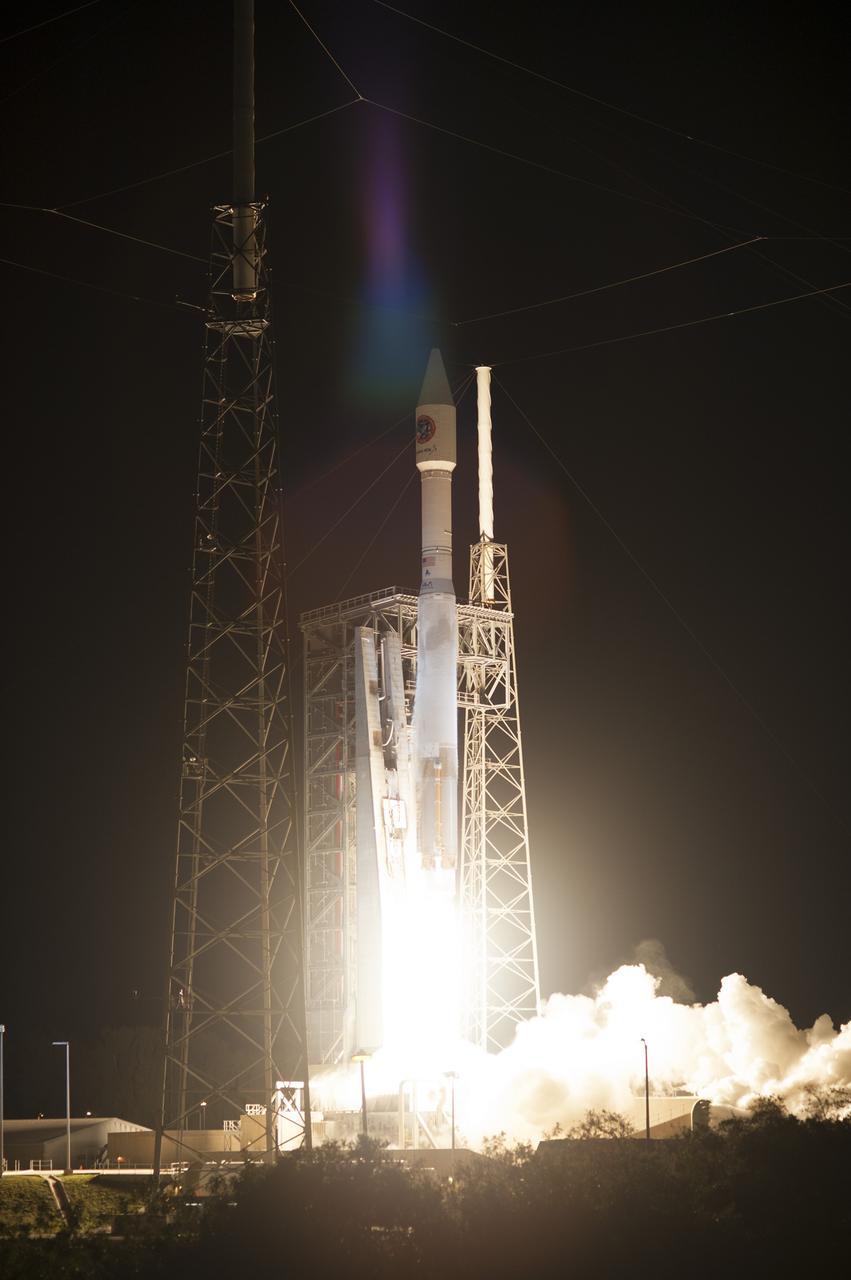
Cape Canaveral Air Force Station carrying an Orbital ATK Cygnus resupply spacecraft on a commercial resupply services mission to the International Space Station. Liftoff was at 11:05 p.m. EDT. Cygnus will deliver the second generation of a portable onboard printer to demonstrate 3-D printing, an instrument for first space-based observations of the chemical composition of meteors entering Earth’s atmosphere and an experiment to study how fires burn in microgravity.
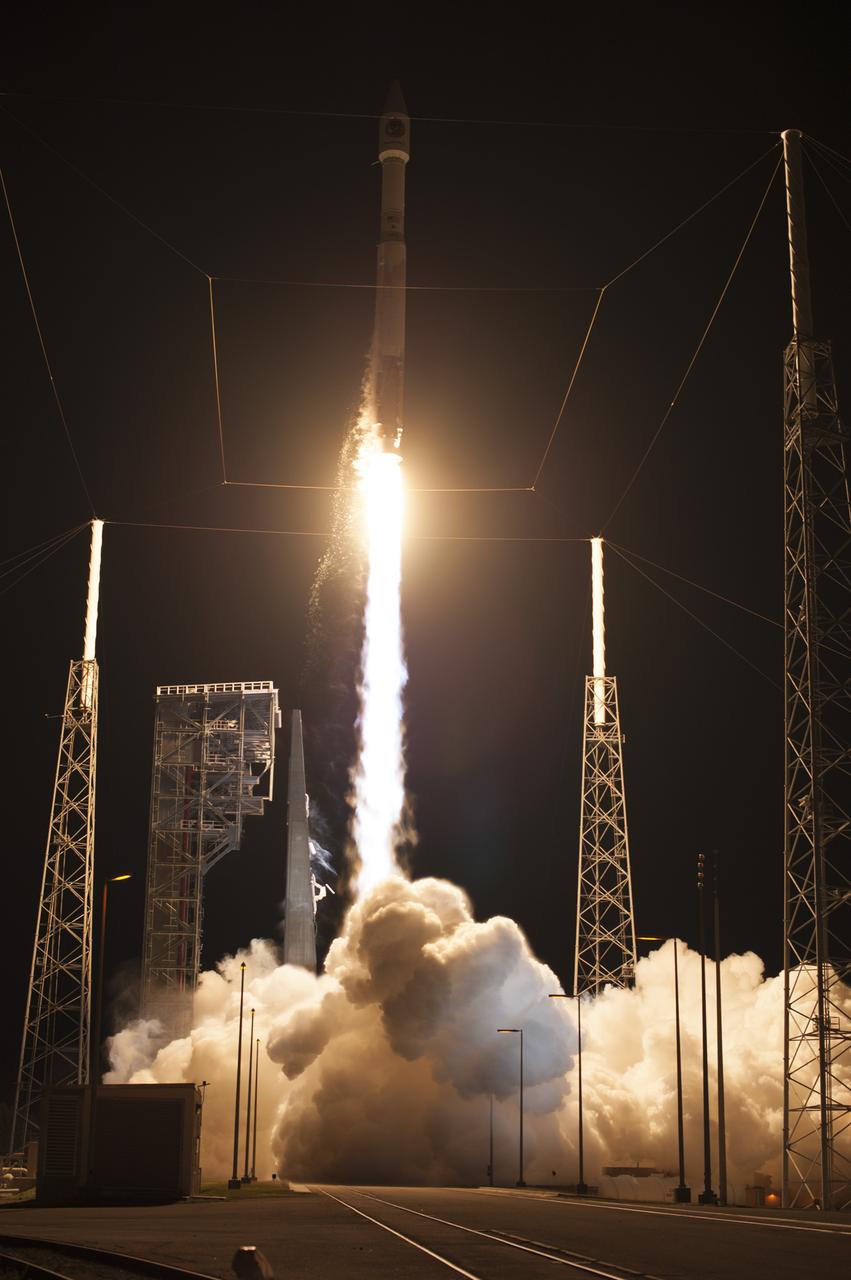
A United Launch Alliance Atlas V rocket lifts off from Space Launch Complex 41 at Cape Canaveral Air Force Station carrying an Orbital ATK Cygnus resupply spacecraft on a commercial resupply services mission to the International Space Station. Liftoff was at 11:05 p.m. EDT. Cygnus will deliver the second generation of a portable onboard printer to demonstrate 3-D printing, an instrument for first space-based observations of the chemical composition of meteors entering Earth’s atmosphere and an experiment to study how fires burn in microgravity.
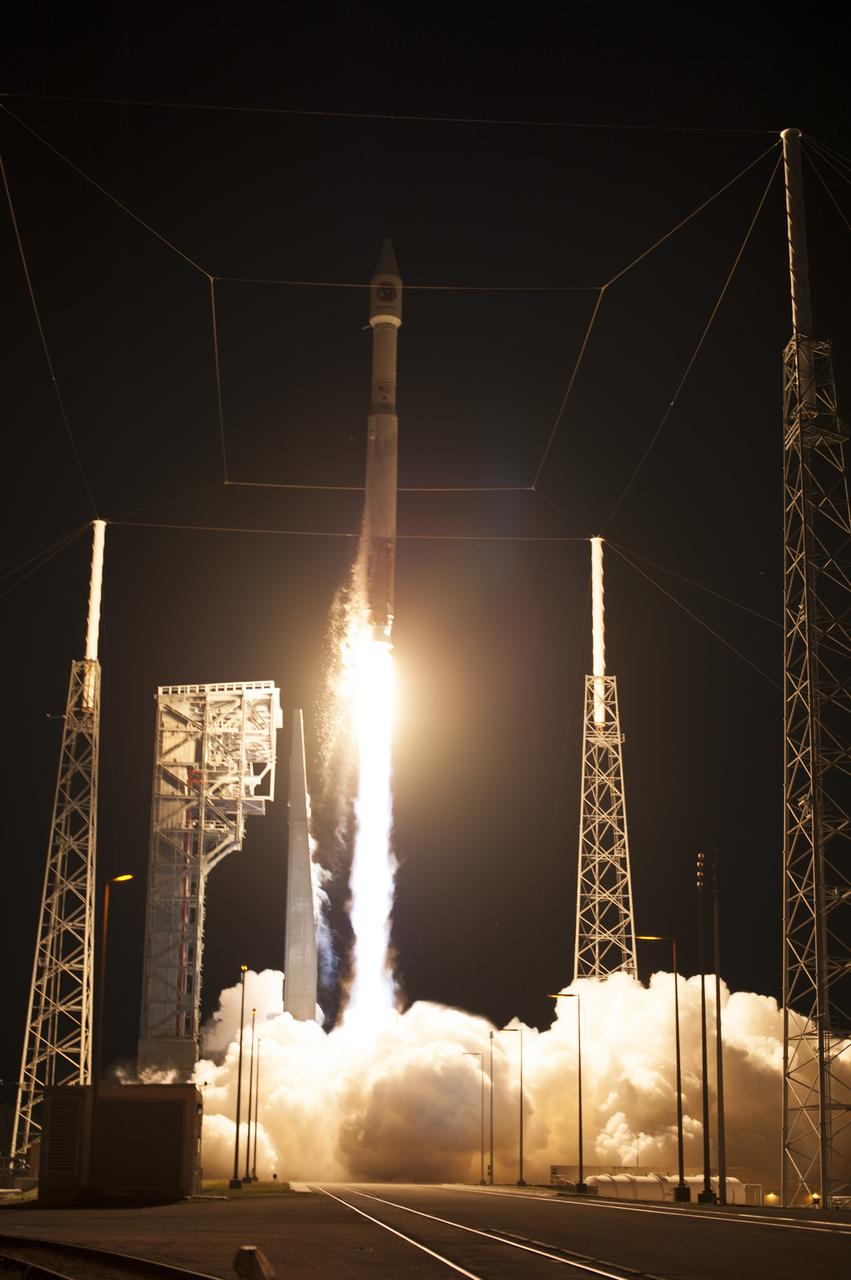
A United Launch Alliance Atlas V rocket lifts off from Space Launch Complex 41 at Cape Canaveral Air Force Station carrying an Orbital ATK Cygnus resupply spacecraft on a commercial resupply services mission to the International Space Station. Liftoff was at 11:05 p.m. EDT. Cygnus will deliver the second generation of a portable onboard printer to demonstrate 3-D printing, an instrument for first space-based observations of the chemical composition of meteors entering Earth’s atmosphere and an experiment to study how fires burn in microgravity.
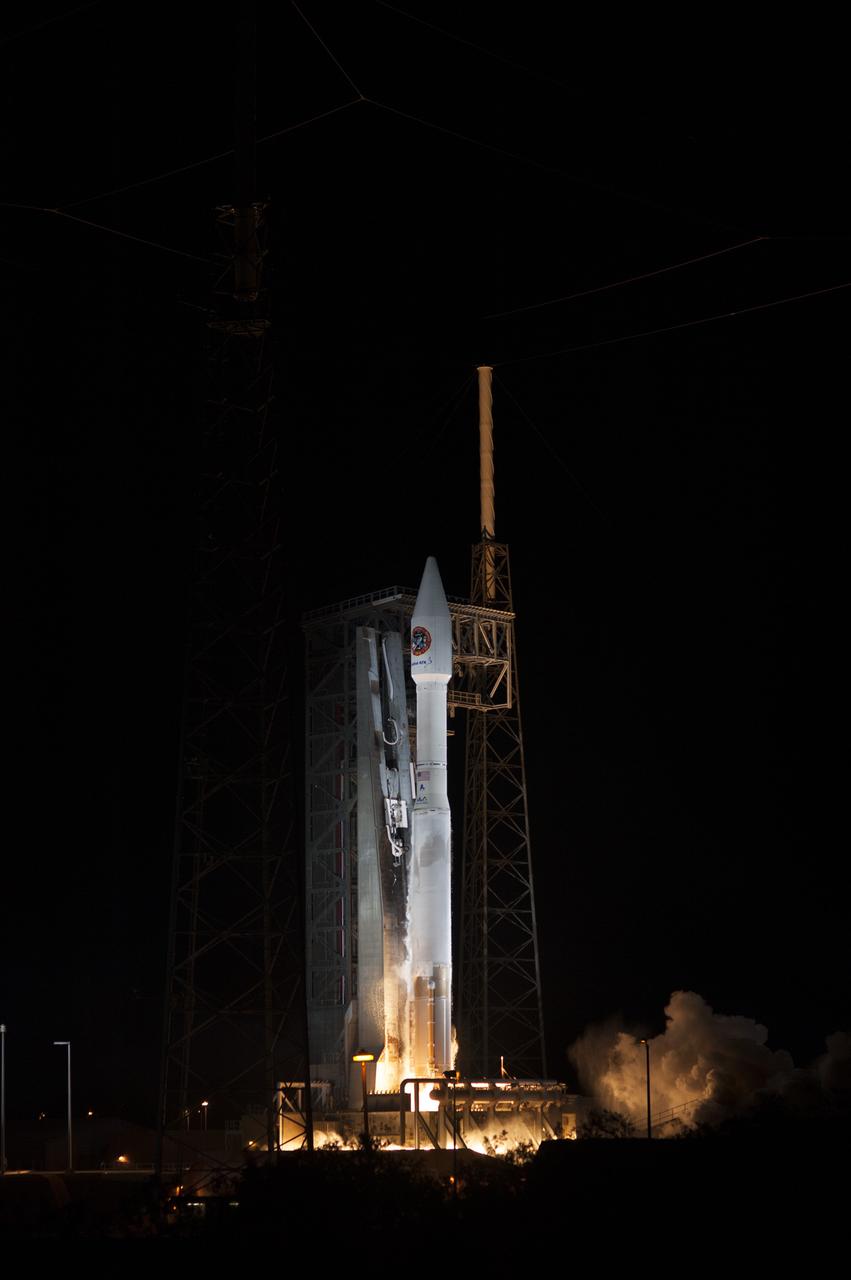
Cape Canaveral Air Force Station carrying an Orbital ATK Cygnus resupply spacecraft on a commercial resupply services mission to the International Space Station. Liftoff was at 11:05 p.m. EDT. Cygnus will deliver the second generation of a portable onboard printer to demonstrate 3-D printing, an instrument for first space-based observations of the chemical composition of meteors entering Earth’s atmosphere and an experiment to study how fires burn in microgravity.
Cape Canaveral Air Force Station carrying an Orbital ATK Cygnus resupply spacecraft on a commercial resupply services mission to the International Space Station. Liftoff was at 11:05 p.m. EDT. Cygnus will deliver the second generation of a portable onboard printer to demonstrate 3-D printing, an instrument for first space-based observations of the chemical composition of meteors entering Earth’s atmosphere and an experiment to study how fires burn in microgravity.
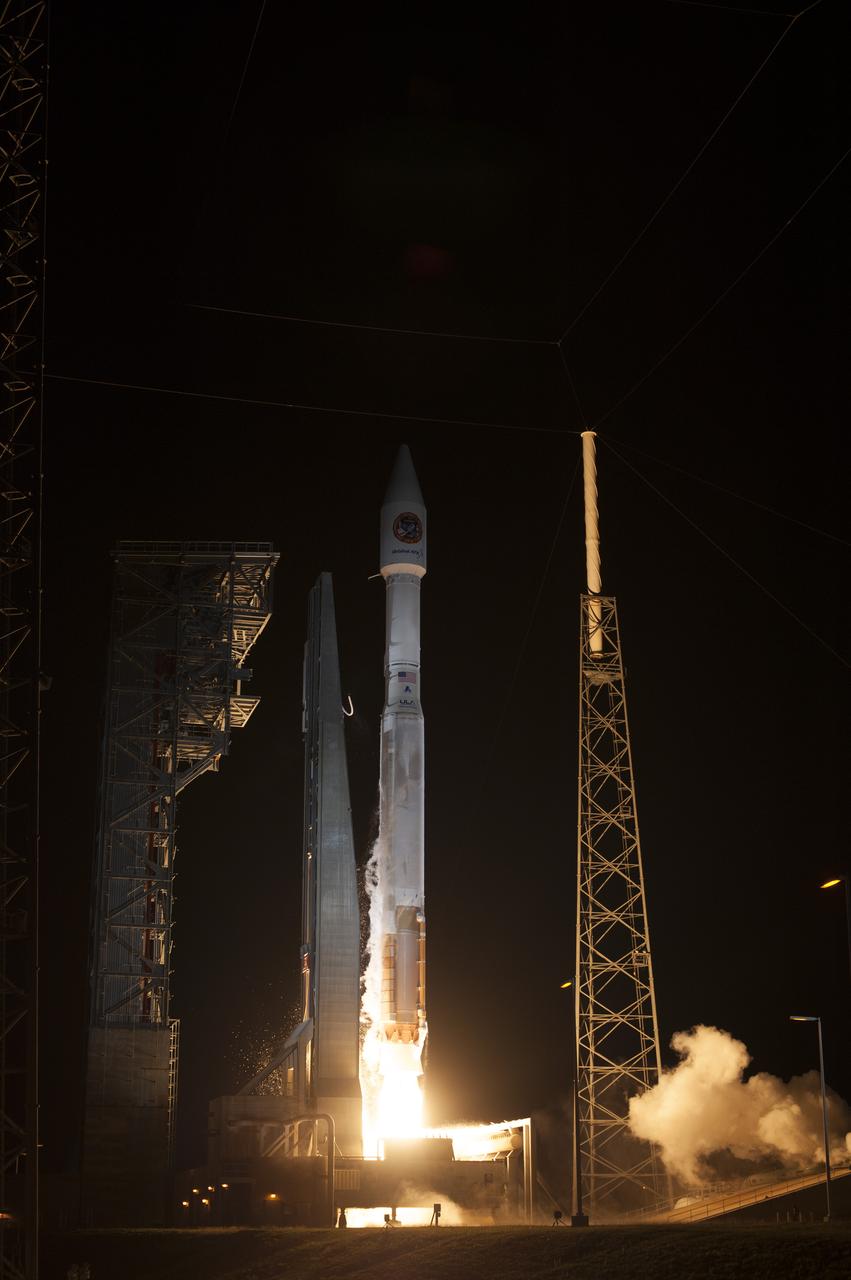
A United Launch Alliance Atlas V rocket lifts off from Space Launch Complex 41 at Cape Canaveral Air Force Station carrying an Orbital ATK Cygnus resupply spacecraft on a commercial resupply services mission to the International Space Station. Liftoff was at 11:05 p.m. EDT. Cygnus will deliver the second generation of a portable onboard printer to demonstrate 3-D printing, an instrument for first space-based observations of the chemical composition of meteors entering Earth’s atmosphere and an experiment to study how fires burn in microgravity.
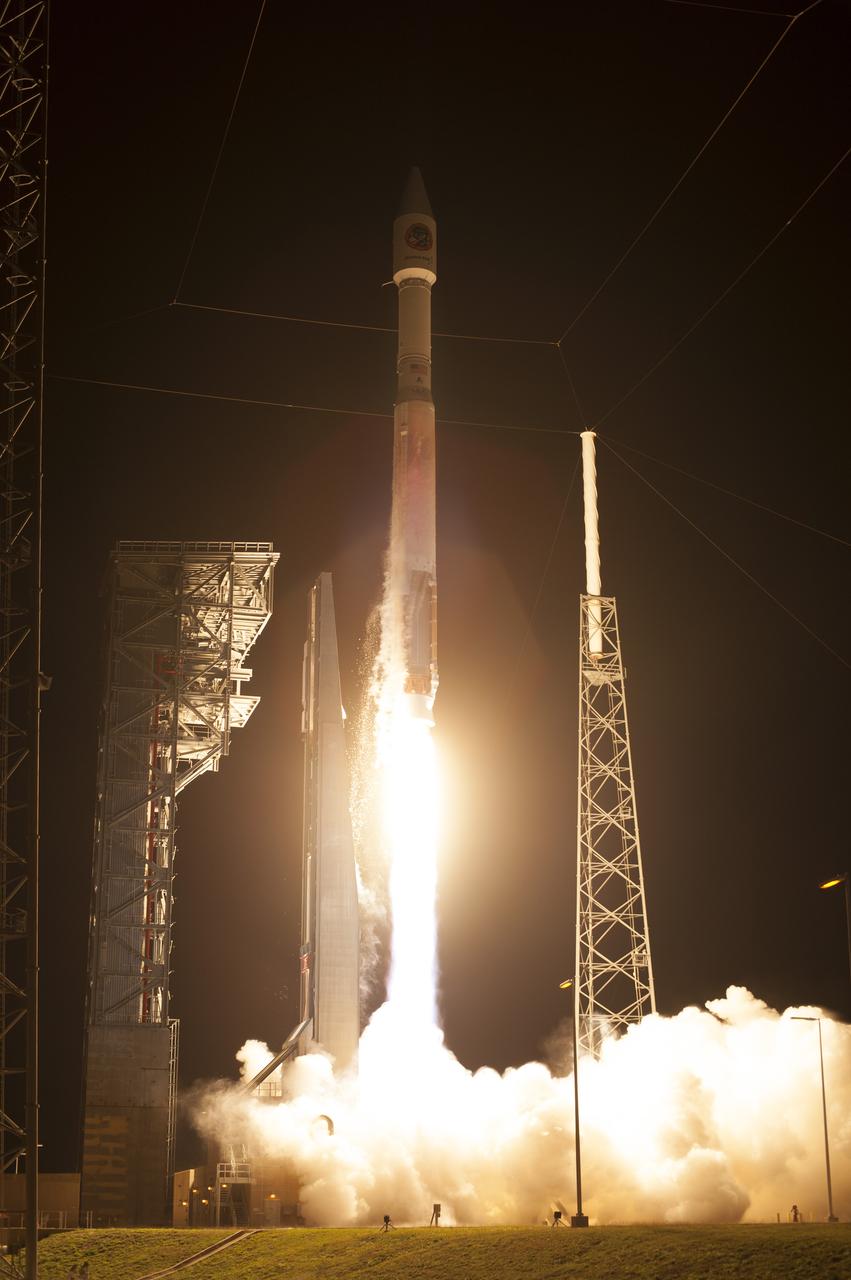
A United Launch Alliance Atlas V rocket lifts off from Space Launch Complex 41 at Cape Canaveral Air Force Station carrying an Orbital ATK Cygnus resupply spacecraft on a commercial resupply services mission to the International Space Station. Liftoff was at 11:05 p.m. EDT. Cygnus will deliver the second generation of a portable onboard printer to demonstrate 3-D printing, an instrument for first space-based observations of the chemical composition of meteors entering Earth’s atmosphere and an experiment to study how fires burn in microgravity.
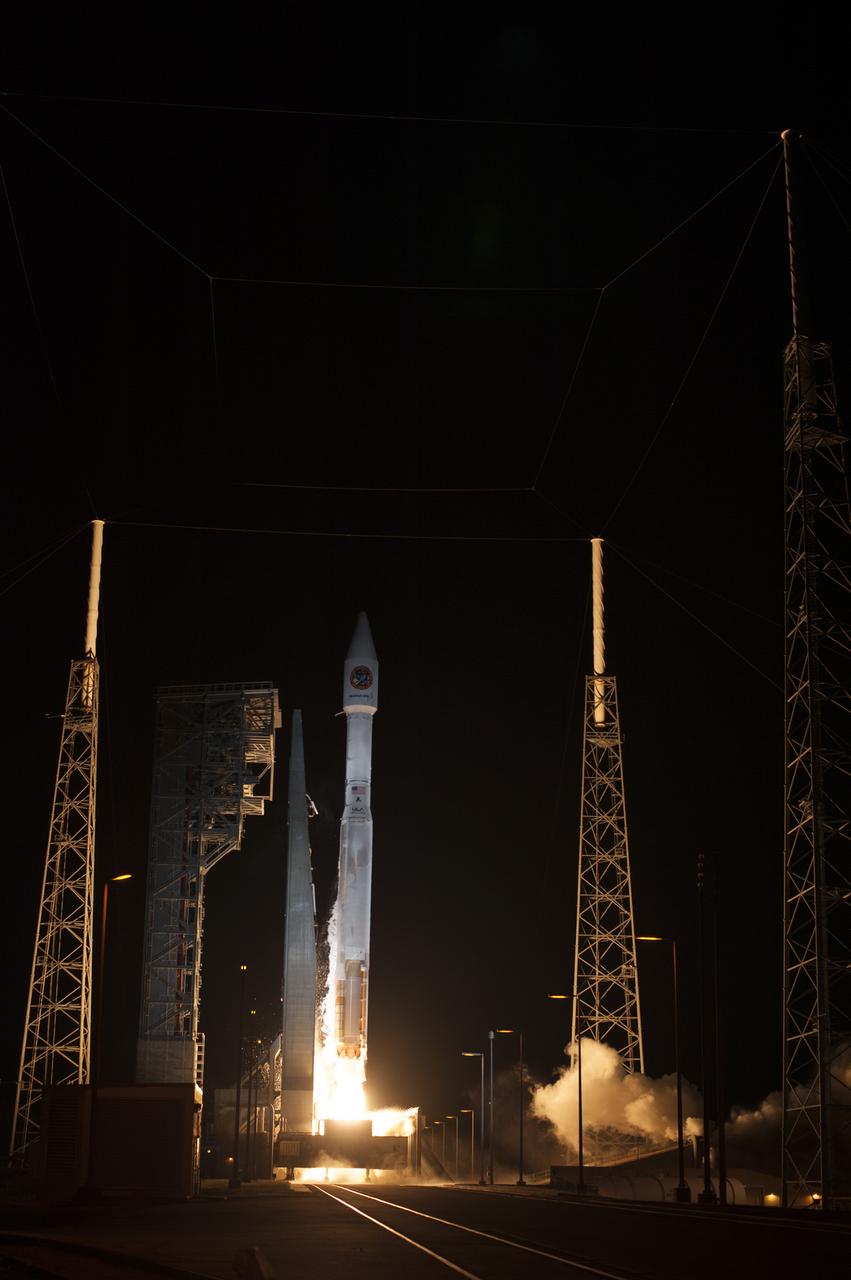
A United Launch Alliance Atlas V rocket lifts off from Space Launch Complex 41 at Cape Canaveral Air Force Station carrying an Orbital ATK Cygnus resupply spacecraft on a commercial resupply services mission to the International Space Station. Liftoff was at 11:05 p.m. EDT. Cygnus will deliver the second generation of a portable onboard printer to demonstrate 3-D printing, an instrument for first space-based observations of the chemical composition of meteors entering Earth’s atmosphere and an experiment to study how fires burn in microgravity.
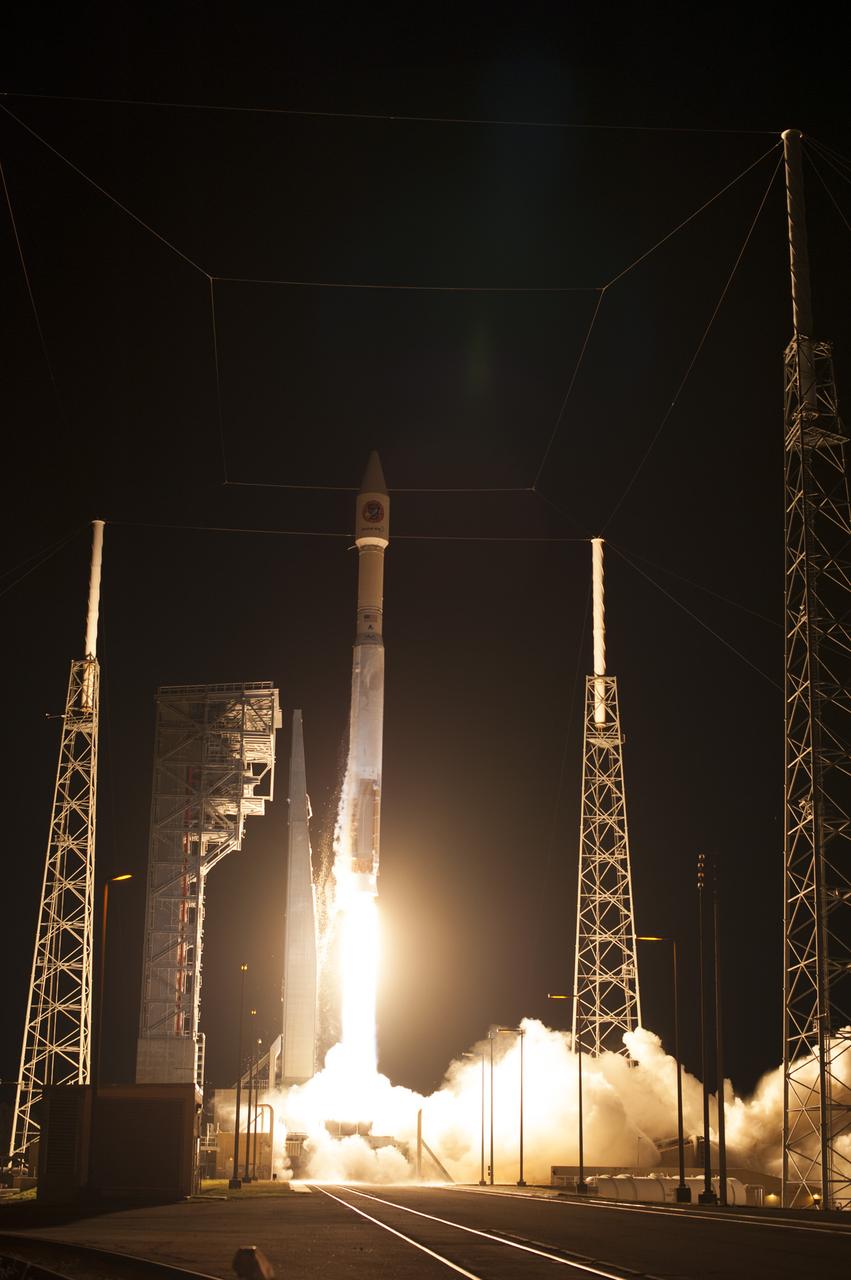
A United Launch Alliance Atlas V rocket lifts off from Space Launch Complex 41 at Cape Canaveral Air Force Station carrying an Orbital ATK Cygnus resupply spacecraft on a commercial resupply services mission to the International Space Station. Liftoff was at 11:05 p.m. EDT. Cygnus will deliver the second generation of a portable onboard printer to demonstrate 3-D printing, an instrument for first space-based observations of the chemical composition of meteors entering Earth’s atmosphere and an experiment to study how fires burn in microgravity.
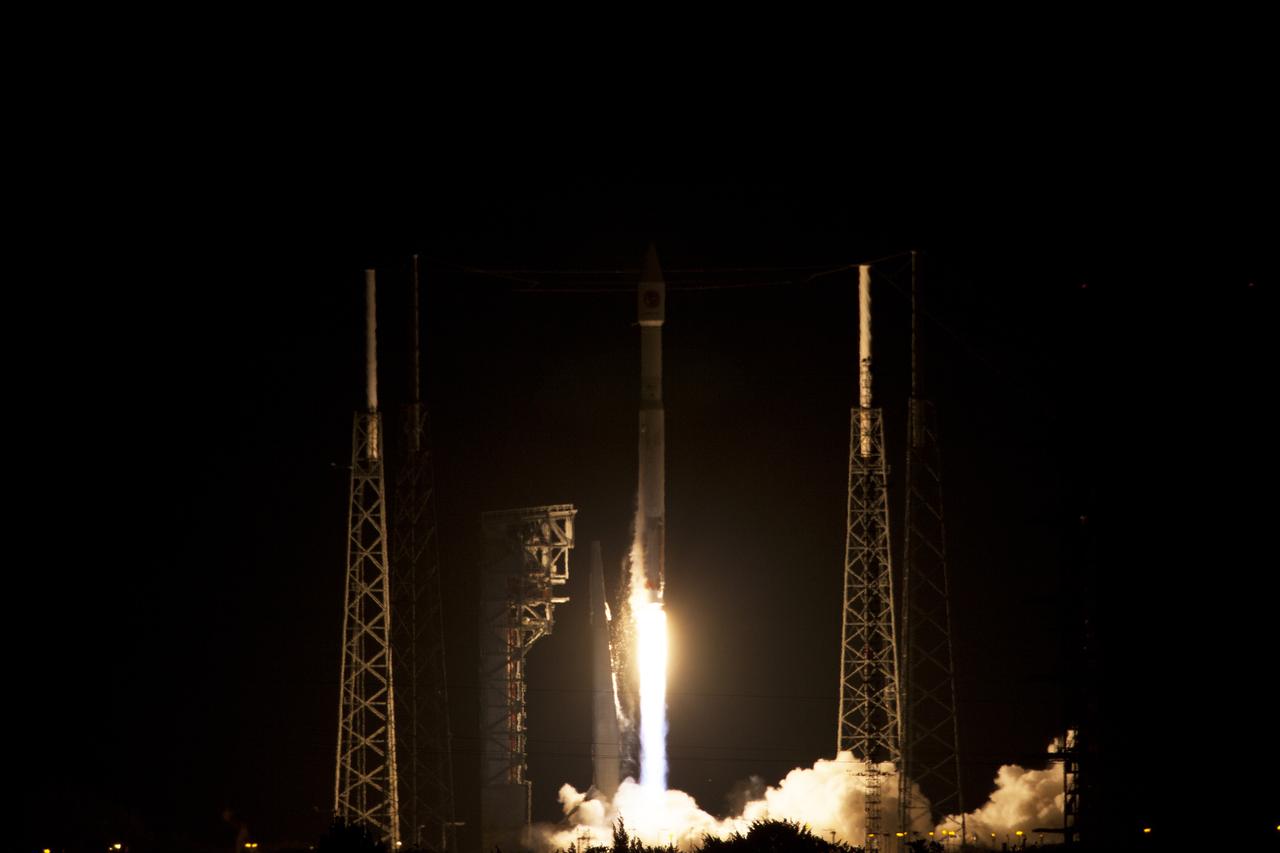
A United Launch Alliance Atlas V rocket lifts off from Space Launch Complex 41 at Cape Canaveral Air Force Station carrying an Orbital ATK Cygnus resupply spacecraft on a commercial resupply services mission to the International Space Station. Liftoff was at 11:05 p.m. EDT. Cygnus will deliver the second generation of a portable onboard printer to demonstrate 3-D printing, an instrument for first space-based observations of the chemical composition of meteors entering Earth’s atmosphere and an experiment to study how fires burn in microgravity.
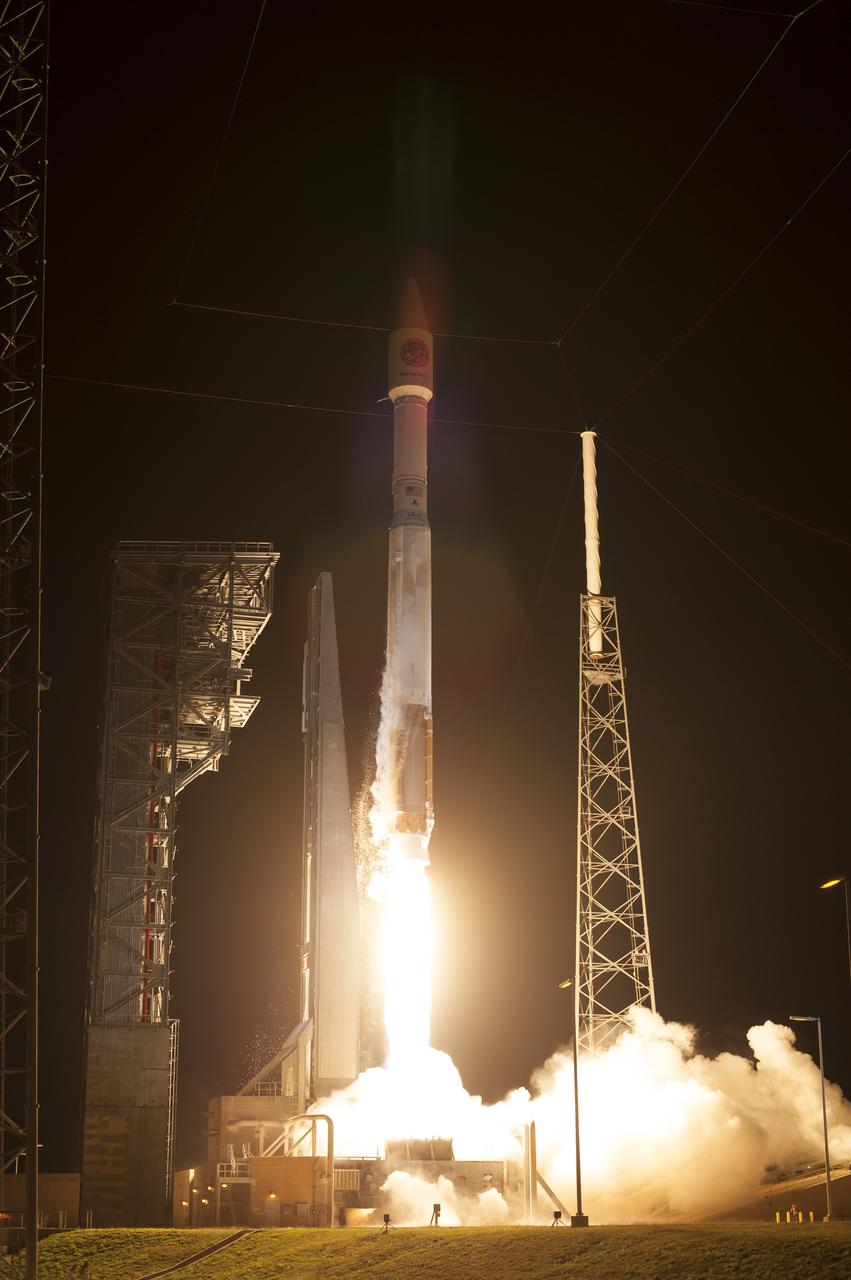
A United Launch Alliance Atlas V rocket lifts off from Space Launch Complex 41 at Cape Canaveral Air Force Station carrying an Orbital ATK Cygnus resupply spacecraft on a commercial resupply services mission to the International Space Station. Liftoff was at 11:05 p.m. EDT. Cygnus will deliver the second generation of a portable onboard printer to demonstrate 3-D printing, an instrument for first space-based observations of the chemical composition of meteors entering Earth’s atmosphere and an experiment to study how fires burn in microgravity.
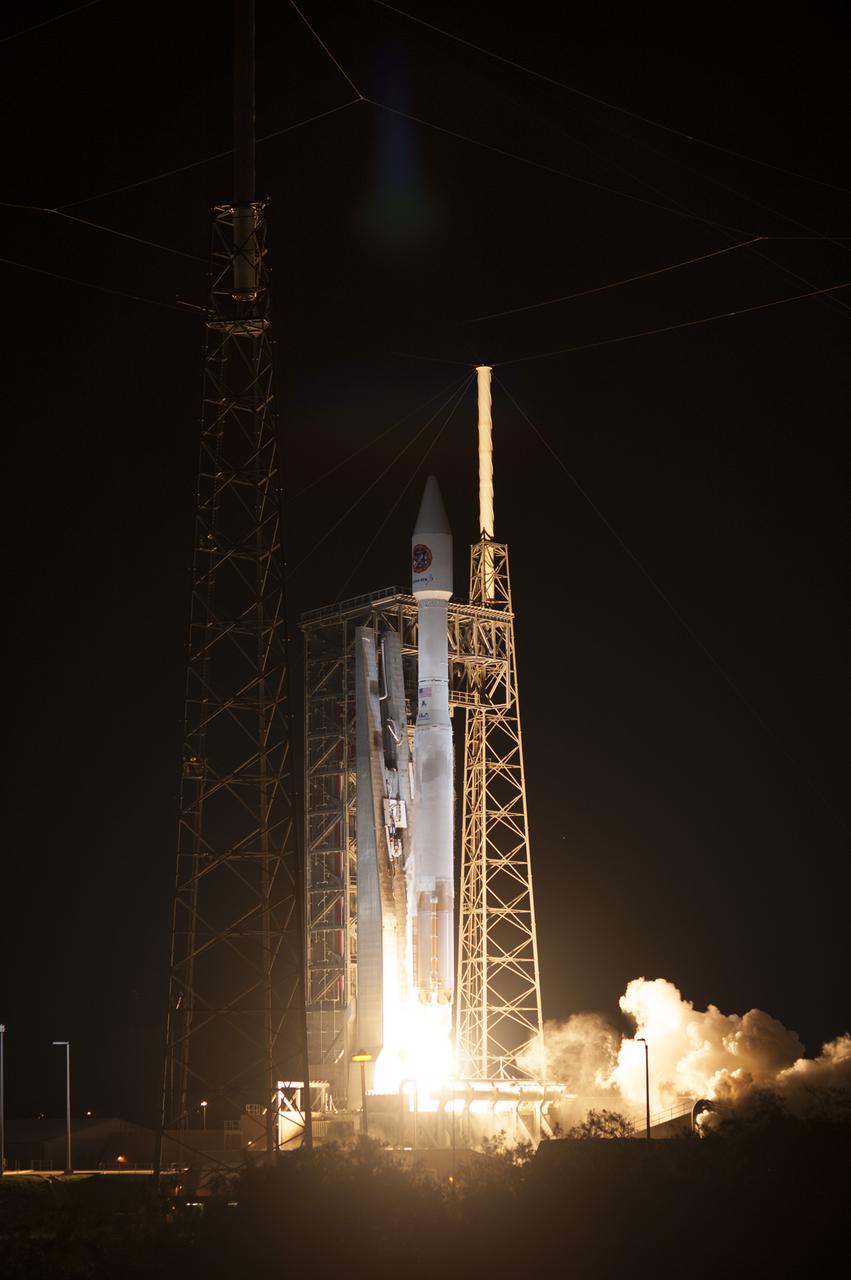
Cape Canaveral Air Force Station carrying an Orbital ATK Cygnus resupply spacecraft on a commercial resupply services mission to the International Space Station. Liftoff was at 11:05 p.m. EDT. Cygnus will deliver the second generation of a portable onboard printer to demonstrate 3-D printing, an instrument for first space-based observations of the chemical composition of meteors entering Earth’s atmosphere and an experiment to study how fires burn in microgravity.
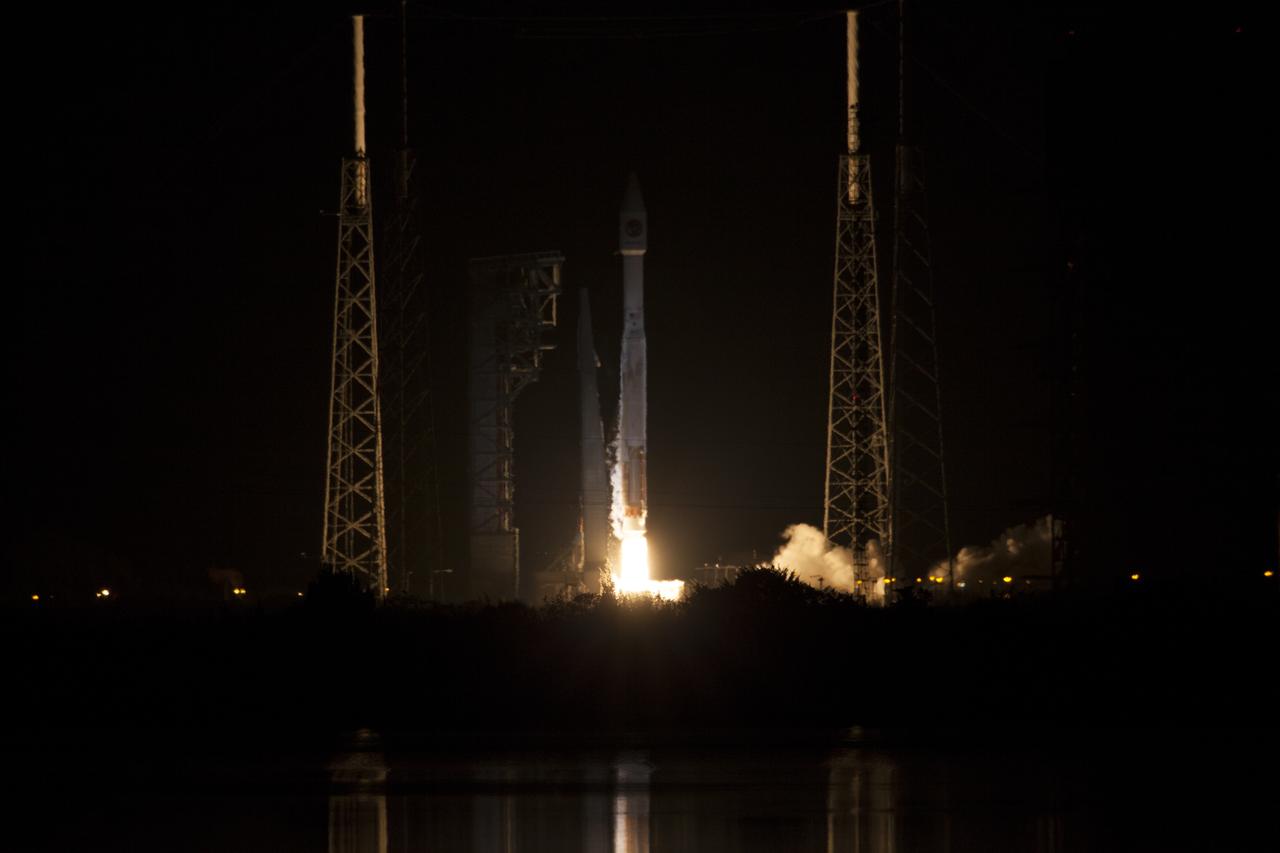
A United Launch Alliance Atlas V rocket lifts off from Space Launch Complex 41 at Cape Canaveral Air Force Station carrying an Orbital ATK Cygnus resupply spacecraft on a commercial resupply services mission to the International Space Station. Liftoff was at 11:05 p.m. EDT. Cygnus will deliver the second generation of a portable onboard printer to demonstrate 3-D printing, an instrument for first space-based observations of the chemical composition of meteors entering Earth’s atmosphere and an experiment to study how fires burn in microgravity.

CAPE CANAVERAL, Fla. – During a news conference at NASA's Kennedy Space Center in Florida, agency and contractor officials discussed science and technology experiment payloads being transported to the International Space Station by the SpaceX-3 Commercial Resupply Services mission. Andy Petro of the agency's Space Technology Mission Directorate participated in the briefing by telephone from NASA Headquarters in Washington D.C. Scheduled for launch on April 14, 2014 atop a Falcon 9 rocket, the Dragon spacecraft will be marking its fourth trip to the space station. The SpaceX-3 mission carrying almost 2.5 tons of supplies, technology and science experiments is the third of 12 flights contracted by NASA to resupply the orbiting laboratory. For more information, visit http://www.nasa.gov/mission_pages/station/structure/launch/index.html Photo credit: NASA/ Kim Shiflett

CAPE CANAVERAL, Fla. – During a news conference at NASA's Kennedy Space Center in Florida, agency and contractor officials discussed preparations for the launch of the SpaceX-3 Commercial Resupply Services mission to the International Space Station. Participating in the briefing is Hans Koenigsmann, SpaceX vice president of Mission Assurance. Scheduled for launch on April 14, 2014 atop a Falcon 9 rocket, Dragon spacecraft will be marking its fourth trip to the space station. The SpaceX-3 mission carrying almost 2.5 tons of supplies, technology and science experiments is the third of 12 flights contracted by NASA to resupply the orbiting laboratory. For more information, visit http://www.nasa.gov/mission_pages/station/structure/launch/index.html Photo credit: NASA/Kim Shiflett
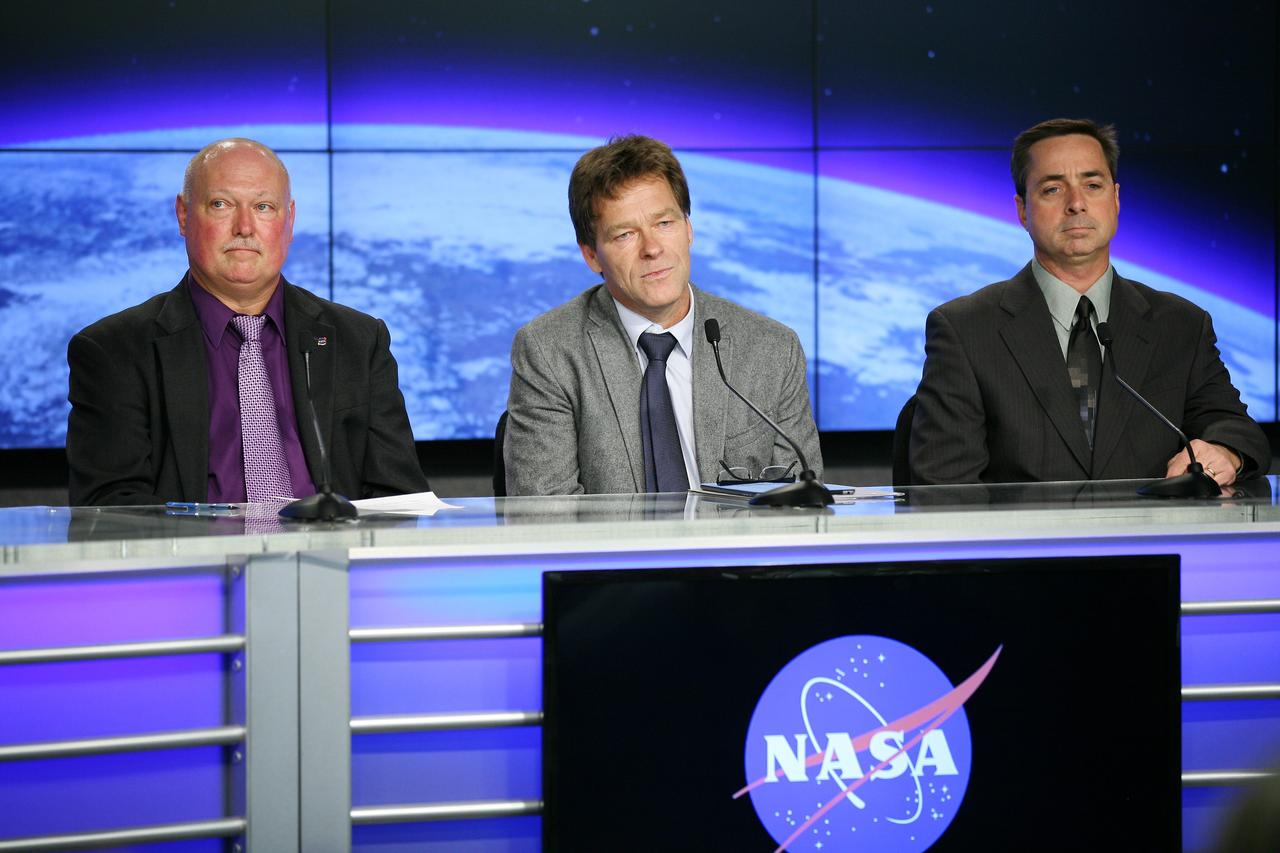
CAPE CANAVERAL, Fla. – During a news conference at NASA's Kennedy Space Center in Florida, agency and contractor officials discussed preparations for the launch of the SpaceX-3 Commercial Resupply Services mission to the International Space Station. Participating in the briefing, from the left, are Mike Curie of NASA Public Affairs, Hans Koenigsmann, SpaceX vice president of Mission Assurance, and Mike McAleenan, launch weather officer, 45th Weather Squadron. Scheduled for launch on April 14, 2014 atop a Falcon 9 rocket, Dragon spacecraft will be marking its fourth trip to the space station. The SpaceX-3 mission carrying almost 2.5 tons of supplies, technology and science experiments is the third of 12 flights contracted by NASA to resupply the orbiting laboratory. For more information, visit http://www.nasa.gov/mission_pages/station/structure/launch/index.html Photo credit: NASA/Kim Shiflett
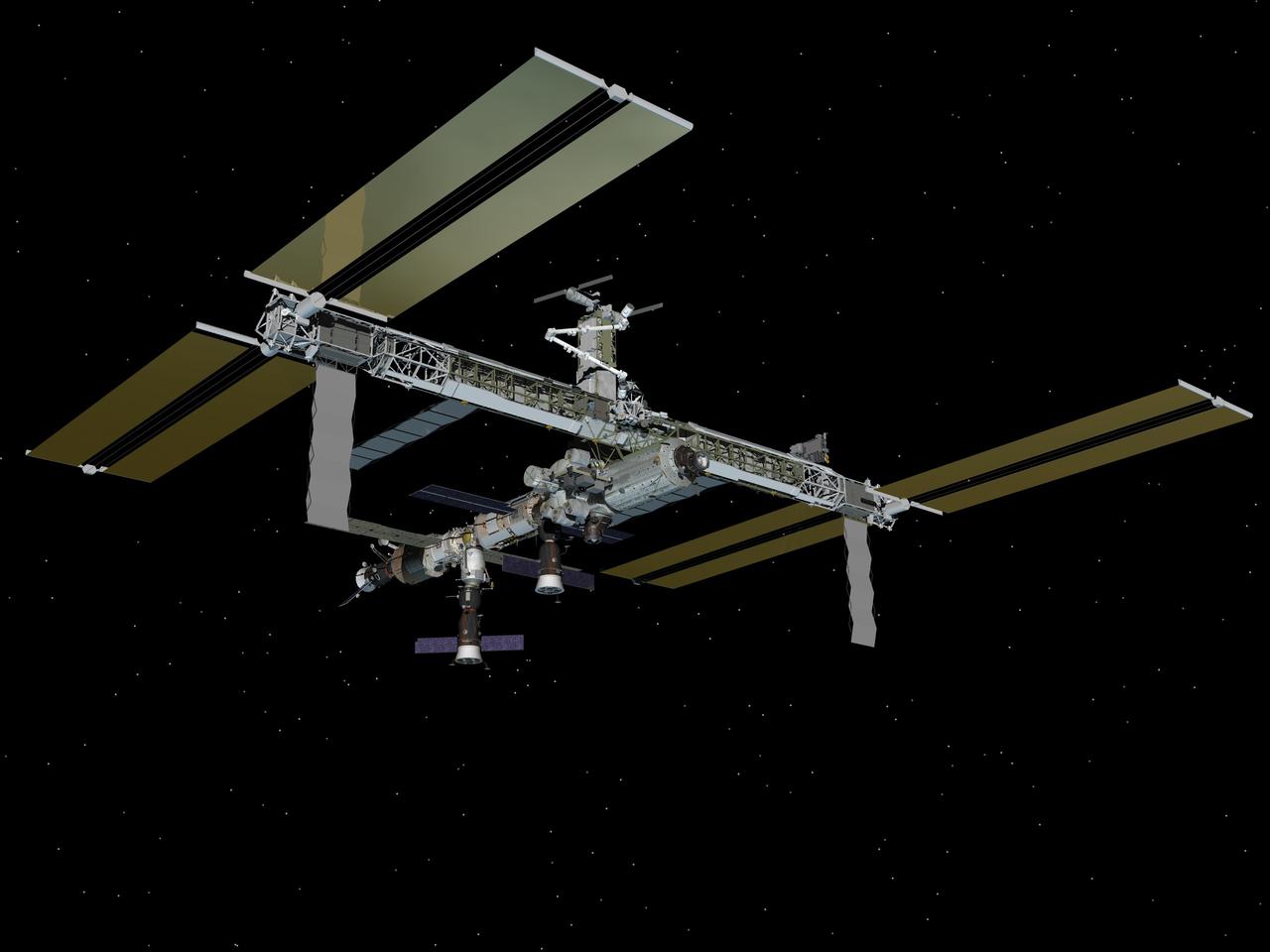
JSC2007-E-44665 (August 2007) --- Computer-generated artist's rendering of the International Space Station as of Aug. 30, 2007. This angle shows the starboard side of the orbiting complex. The Pressurized Mating Adapter-3 (PMA-3) relocates from the Unity node port docking mechanism to its nadir docking mechanism. During the STS-118 mission, the Starboard 5 (S5) truss segment and External Stowage Platform (ESP-3) were added; and the Port 6 (P6) forward radiator was retracted. Progress 26 resupply vehicle remains docked to the Pirs Docking Compartment and Progress 25 resupply vehicle is docked to the Zvezda Service Module aft port. Soyuz 14 (TMA-10) remains linked to the Zarya nadir port.

CAPE CANAVERAL, Fla. – During a news conference at NASA's Kennedy Space Center in Florida, agency and contractor officials discussed science and technology experiment payloads being transported to the International Space Station by the SpaceX-3 Commercial Resupply Services mission. Participating in the briefing is Camille Alleyne, assistant program scientist in the NASA ISS Program Science Office. Scheduled for launch on April 14, 2014 atop a Falcon 9 rocket, the Dragon spacecraft will be marking its fourth trip to the space station. The SpaceX-3 mission carrying almost 2.5 tons of supplies, technology and science experiments is the third of 12 flights contracted by NASA to resupply the orbiting laboratory. For more information, visit http://www.nasa.gov/mission_pages/station/structure/launch/index.html Photo credit: NASA/ Kim Shiflett
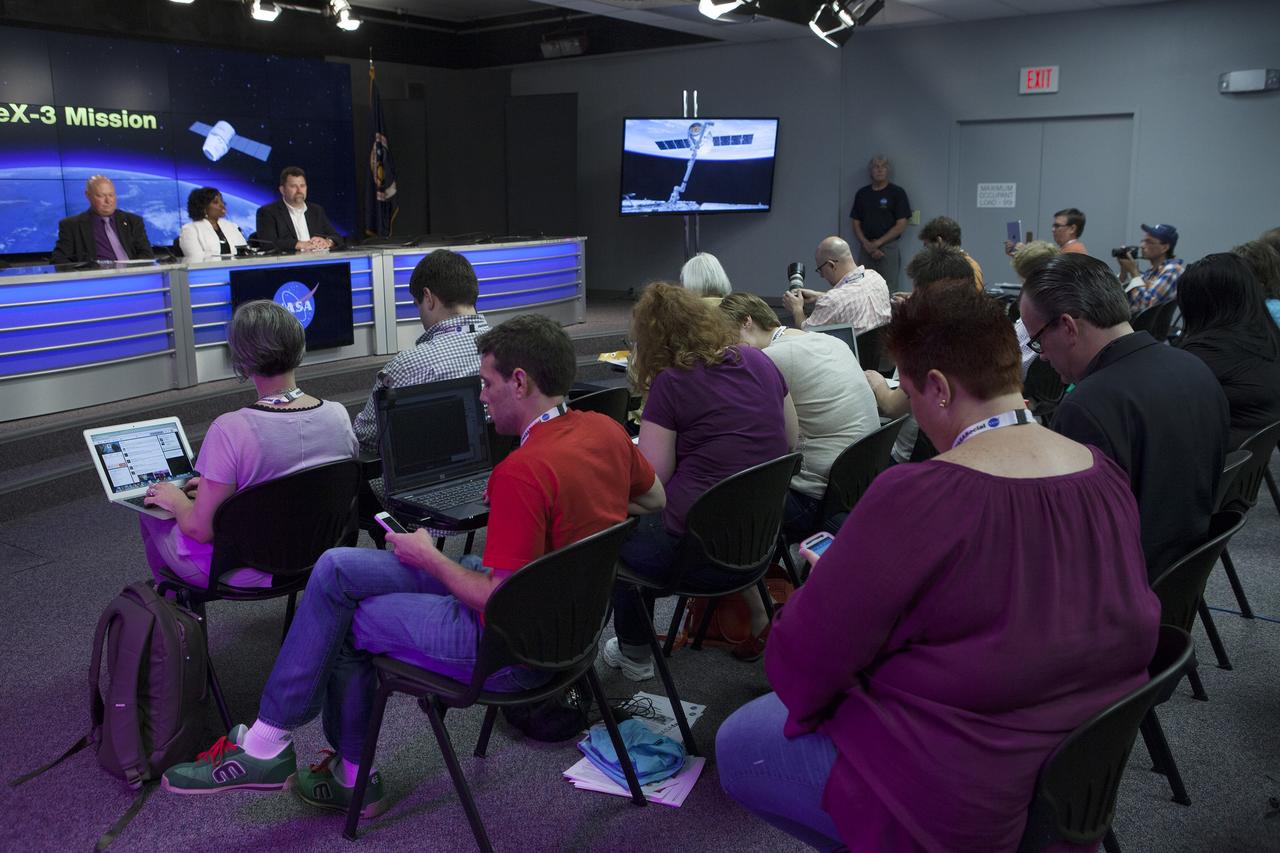
CAPE CANAVERAL, Fla. – During a news conference at NASA's Kennedy Space Center in Florida, agency and contractor officials discussed science and technology experiment payloads being transported to the International Space Station by the SpaceX-3 Commercial Resupply Services mission. Participating in the briefing, from the left, are Mike Curie of NASA Public Affairs, Camille Alleyne, assistant program scientist in the NASA ISS Program Science Office, and Michael Roberts, senior research pathway manager with the Center for the Advancement of Science in Space CASIS. Scheduled for launch on April 14, 2014 atop a Falcon 9 rocket, the Dragon spacecraft will be marking its fourth trip to the space station. The SpaceX-3 mission carrying almost 2.5 tons of supplies, technology and science experiments is the third of 12 flights contracted by NASA to resupply the orbiting laboratory. For more information, visit http://www.nasa.gov/mission_pages/station/structure/launch/index.html Photo credit: NASA/ Kim Shiflett
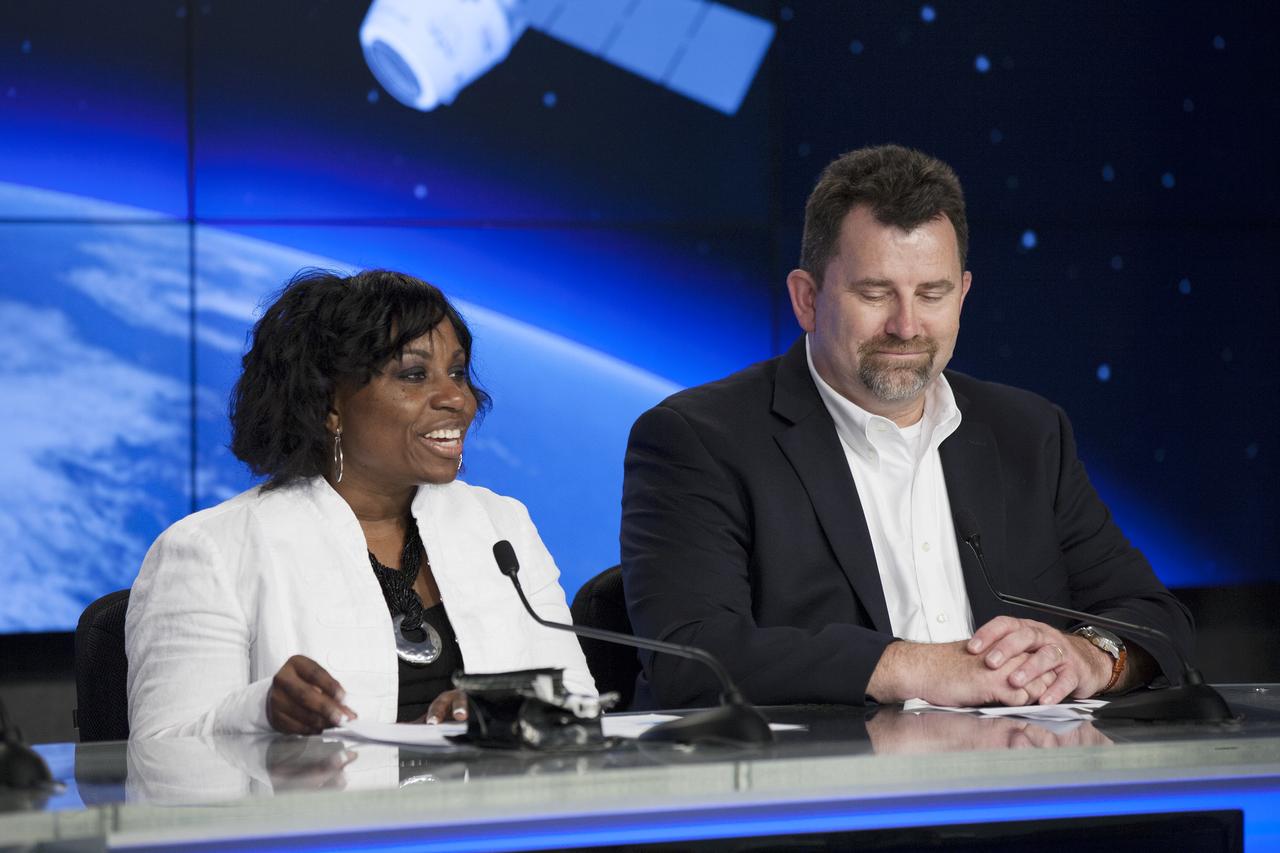
CAPE CANAVERAL, Fla. – During a news conference at NASA's Kennedy Space Center in Florida, agency and contractor officials discussed science and technology experiment payloads being transported to the International Space Station by the SpaceX-3 Commercial Resupply Services mission. Participating in the briefing, from the left, are Camille Alleyne, assistant program scientist in the NASA ISS Program Science Office, and Michael Roberts, senior research pathway manager with the Center for the Advancement of Science in Space CASIS. Scheduled for launch on April 14, 2014 atop a Falcon 9 rocket, the Dragon spacecraft will be marking its fourth trip to the space station. The SpaceX-3 mission carrying almost 2.5 tons of supplies, technology and science experiments is the third of 12 flights contracted by NASA to resupply the orbiting laboratory. For more information, visit http://www.nasa.gov/mission_pages/station/structure/launch/index.html Photo credit: NASA/ Kim Shiflett
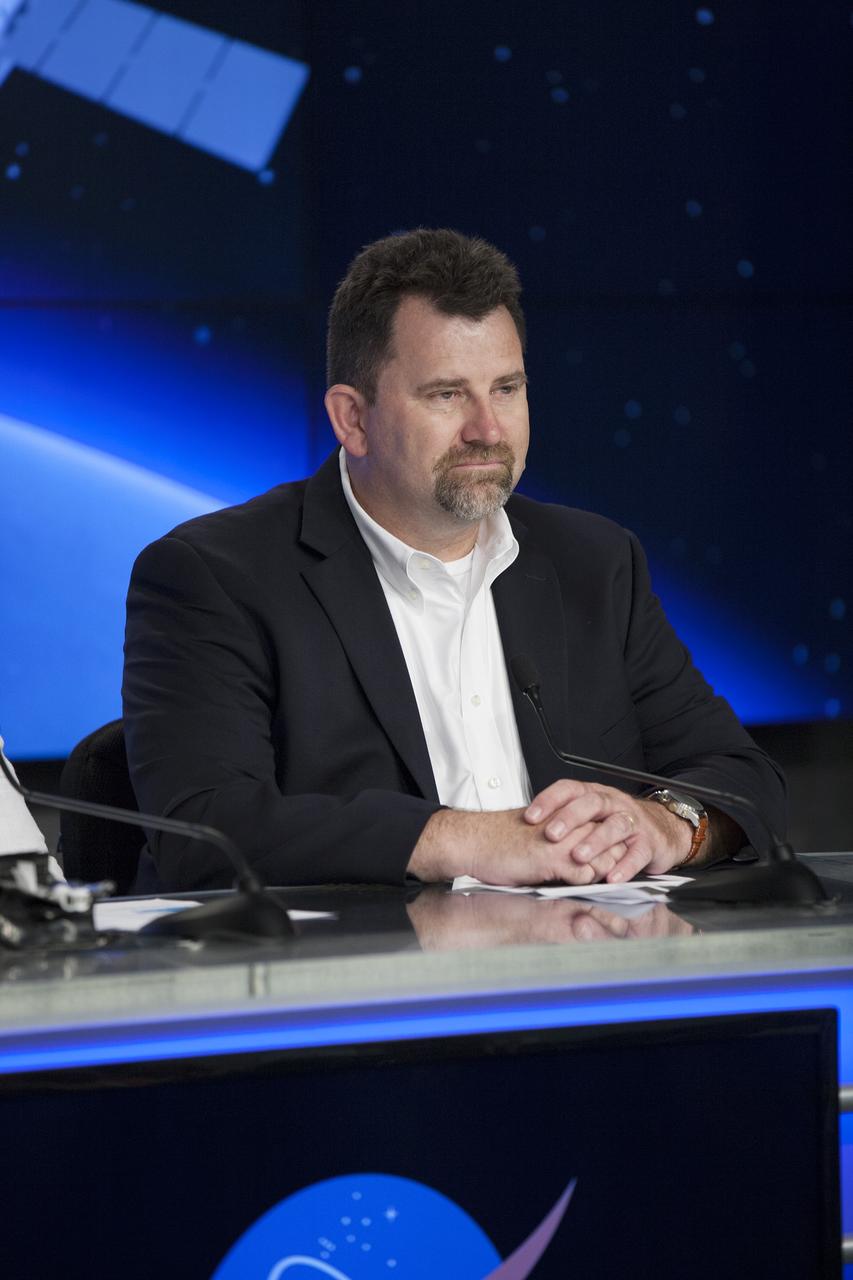
CAPE CANAVERAL, Fla. – During a news conference at NASA's Kennedy Space Center in Florida, agency and contractor officials discussed science and technology experiment payloads being transported to the International Space Station by the SpaceX-3 Commercial Resupply Services mission. Participating in the briefing is Michael Roberts, senior research pathway manager with the Center for the Advancement of Science in Space CASIS. Scheduled for launch on April 14, 2014 atop a Falcon 9 rocket, the Dragon spacecraft will be marking its fourth trip to the space station. The SpaceX-3 mission carrying almost 2.5 tons of supplies, technology and science experiments is the third of 12 flights contracted by NASA to resupply the orbiting laboratory. For more information, visit http://www.nasa.gov/mission_pages/station/structure/launch/index.html Photo credit: NASA/ Kim Shiflett
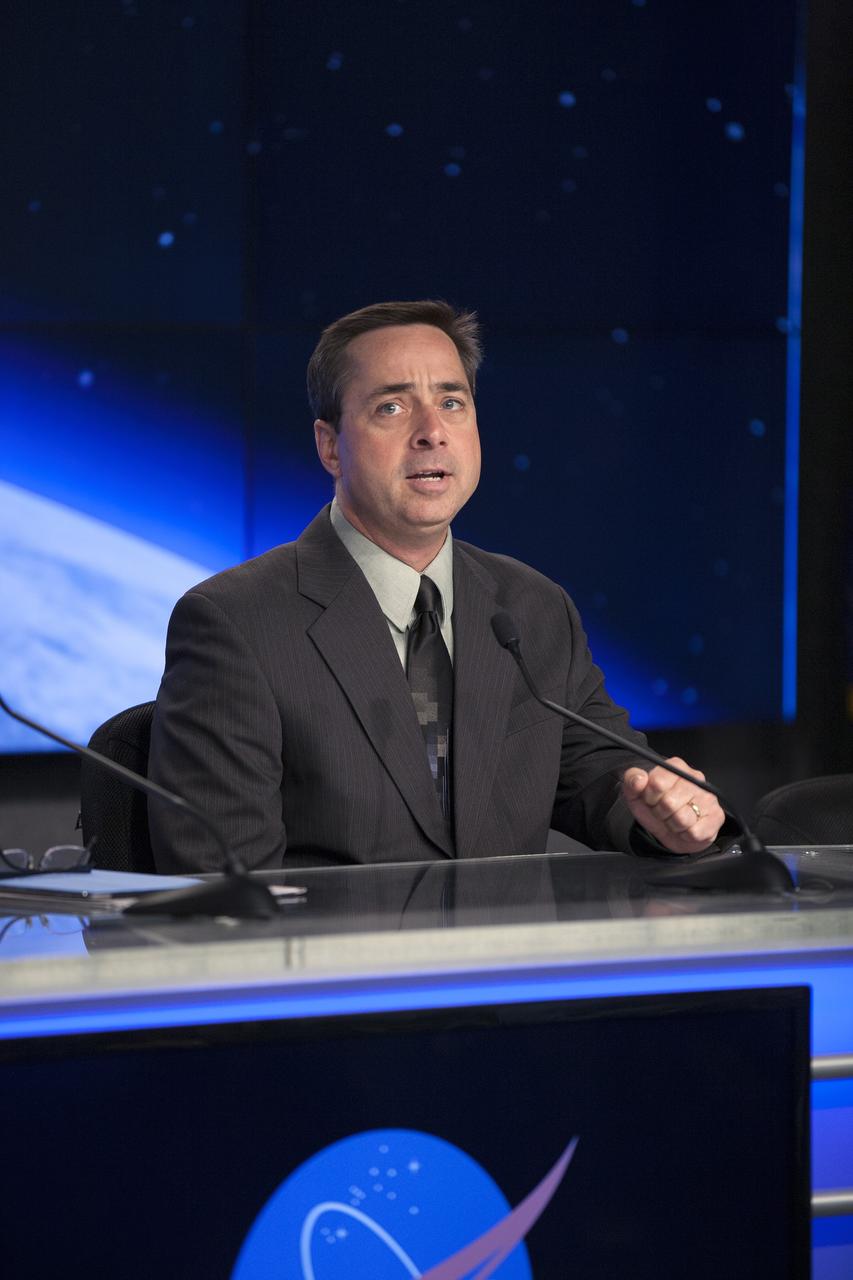
CAPE CANAVERAL, Fla. – During a news conference at NASA's Kennedy Space Center in Florida, agency and contractor officials discussed preparations for the launch of the SpaceX-3 Commercial Resupply Services mission to the International Space Station. Participating in the briefing is Mike McAleenan, launch weather officer, 45th Weather Squadron. Scheduled for launch on April 14, 2014 atop a Falcon 9 rocket, Dragon spacecraft will be marking its fourth trip to the space station. The SpaceX-3 mission carrying almost 2.5 tons of supplies, technology and science experiments is the third of 12 flights contracted by NASA to resupply the orbiting laboratory. For more information, visit http://www.nasa.gov/mission_pages/station/structure/launch/index.html Photo credit: NASA/Kim Shiflett
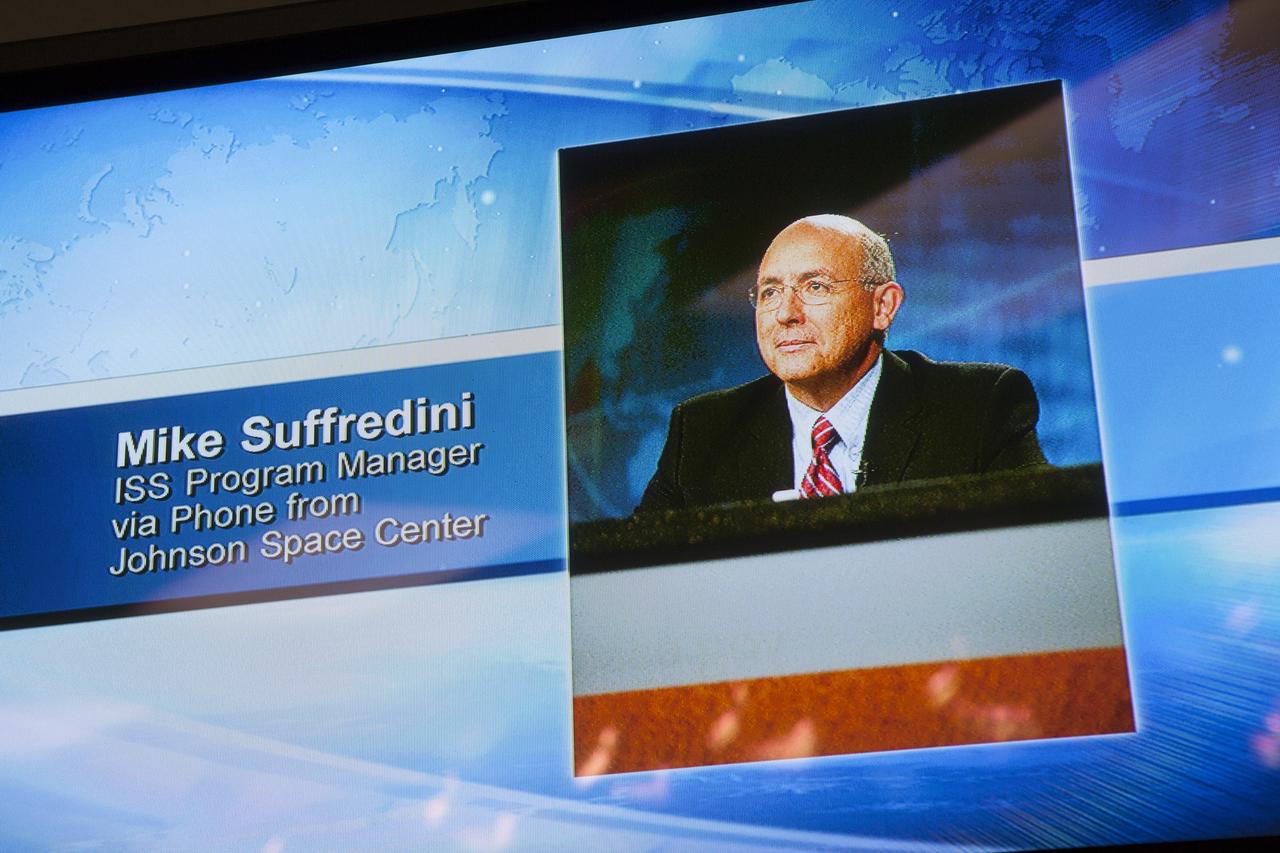
CAPE CANAVERAL, Fla. – During a news conference at NASA's Kennedy Space Center in Florida, agency and contractor officials discussed preparations for the launch of the SpaceX-3 Commercial Resupply Services mission to the International Space Station. Mike Suffredini, NASA's ISS program manager, participated in the briefing by telephone from the agency's Johnson Space Center. Scheduled for launch on April 14, 2014 atop a Falcon 9 rocket, Dragon spacecraft will be marking its fourth trip to the space station. The SpaceX-3 mission carrying almost 2.5 tons of supplies, technology and science experiments is the third of 12 flights contracted by NASA to resupply the orbiting laboratory. For more information, visit http://www.nasa.gov/mission_pages/station/structure/launch/index.html Photo credit: NASA/Kim Shiflett
Workers prepare the Robotic Refueling Mission-3 (RRM3) payload for transport from the Fuel Transfer Building to the SpaceX facility on Oct. 30, 2018, at NASA's Kennedy Space Center in Florida. The payload will be carried to the International Space Station on SpaceX's 16th Commercial Resupply Services mission. RRM3 demonstrates the transfer of xenon gas and liquid methane in microgravity, and advances technologies for storing and manipulating these cryogenic fuels robotically. RRM3 also supports development of technology for the Restore-L mission, a robotic spacecraft equipped to service satellites in-orbit.
The Robotic Refueling Mission-3 (RRM3) payload is being prepared to be moved from the Fuel Transfer Building to the SpaceX facility on Oct. 30, 2018, at NASA's Kennedy Space Center in Florida. The payload will be carried to the International Space Station on SpaceX's 16th Commercial Resupply Services mission. RRM3 demonstrates the transfer of xenon gas and liquid methane in microgravity, and advances technologies for storing and manipulating these cryogenic fuels robotically. RRM3 also supports development of technology for the Restore-L mission, a robotic spacecraft equipped to service satellites in-orbit.
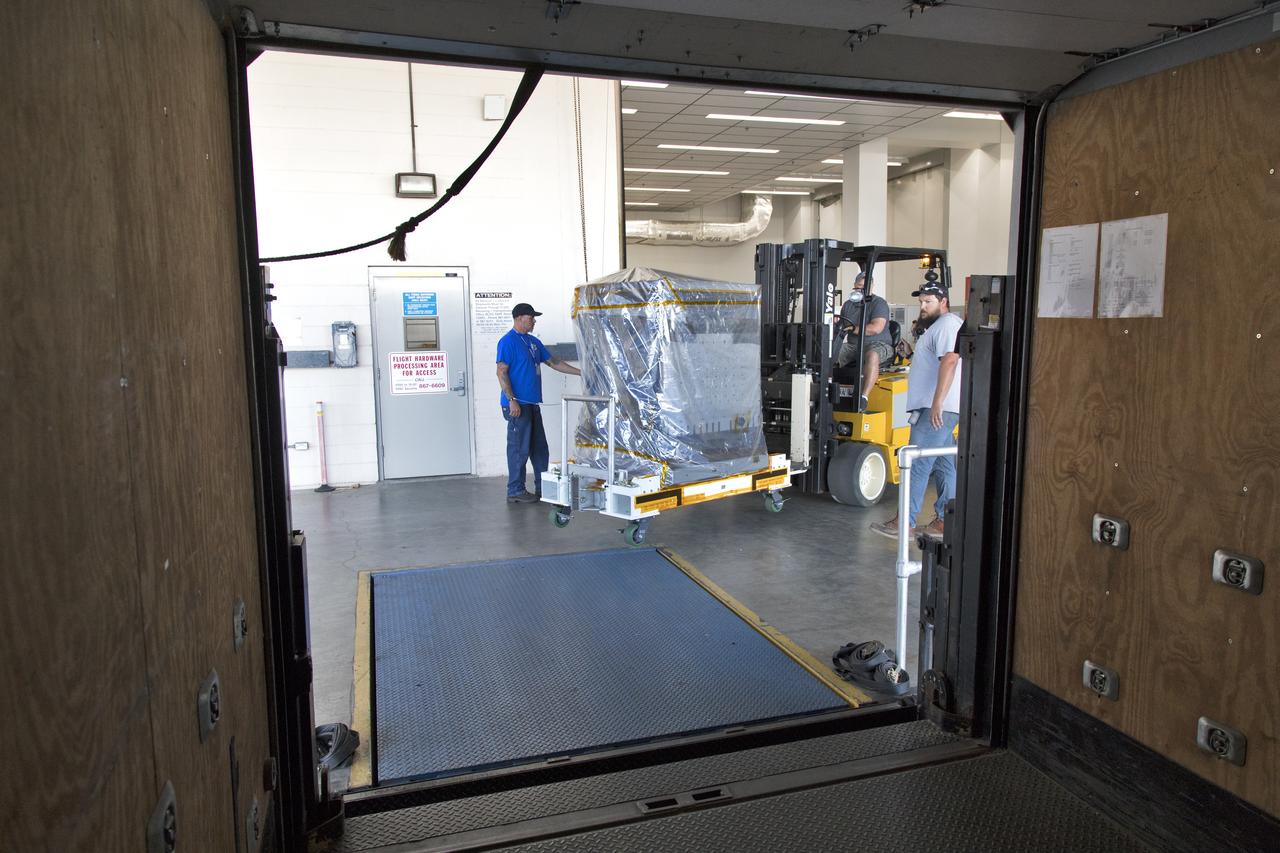
Workers prepare to transfer the Robotic Refueling Mission-3 (RRM3) payload from the Space Station Processing Facility high bay to the Payload Hazardous Servicing Facility on Oct. 3, 2018, at NASA's Kennedy Space Center in Florida. The payload will be carried to the International Space Station on SpaceX's 16th Commercial Resupply Services mission. RRM3 demonstrates the transfer of xenon gas and liquid methane in microgravity, and advances technologies for storing and manipulating these cryogenic fuels robotically. RRM3 also supports development of technology for the Restore-L mission, a robotic spacecraft equipped to service satellites in-orbit.
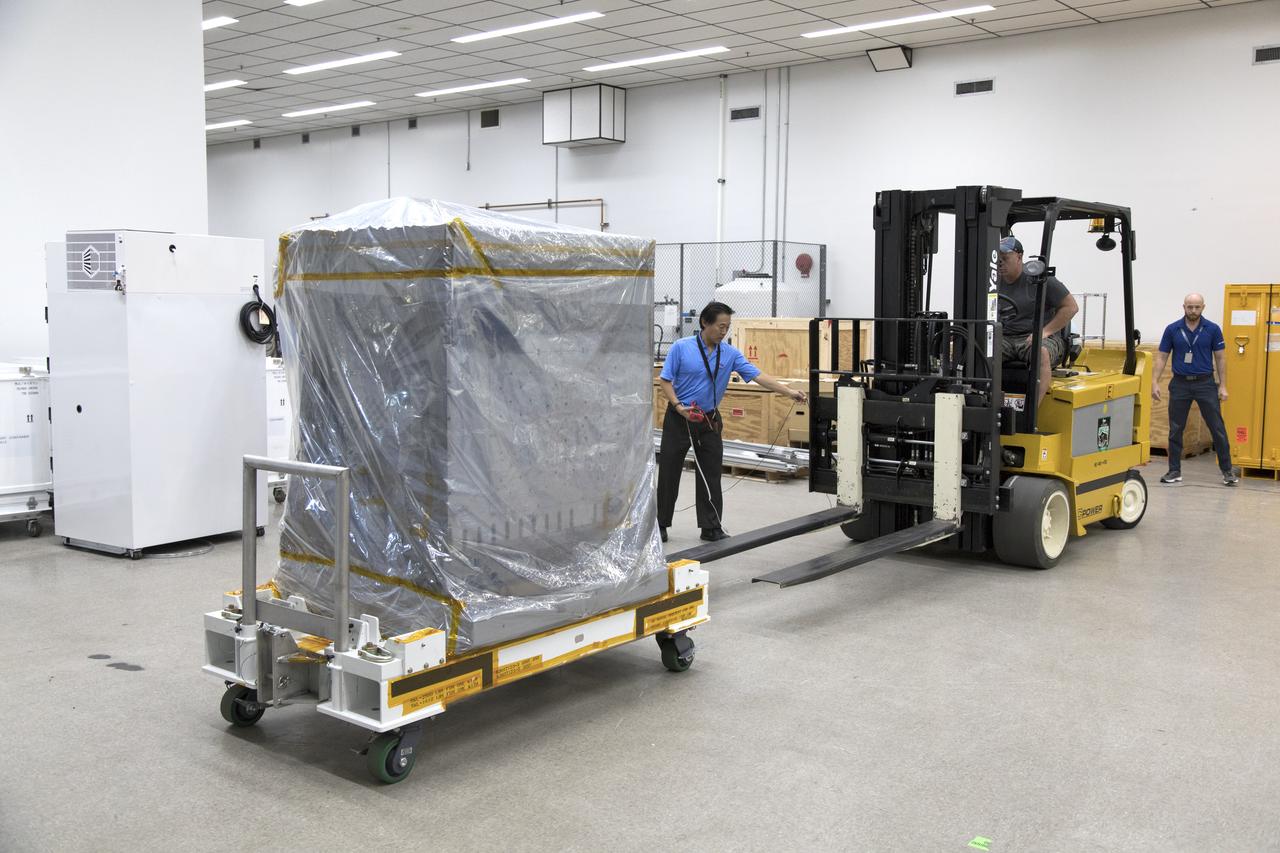
Workers prepare the Robotic Refueling Mission-3 (RRM3) payload to be transferred from the Space Station Processing Facility high bay to the Payload Hazardous Servicing Facility on Oct. 3, 2018, at NASA's Kennedy Space Center in Florida. The payload will be carried to the International Space Station on SpaceX's 16th Commercial Resupply Services mission. RRM3 demonstrates the transfer of xenon gas and liquid methane in microgravity, and advances technologies for storing and manipulating these cryogenic fuels robotically. RRM3 also supports development of technology for the Restore-L mission, a robotic spacecraft equipped to service satellites in-orbit.
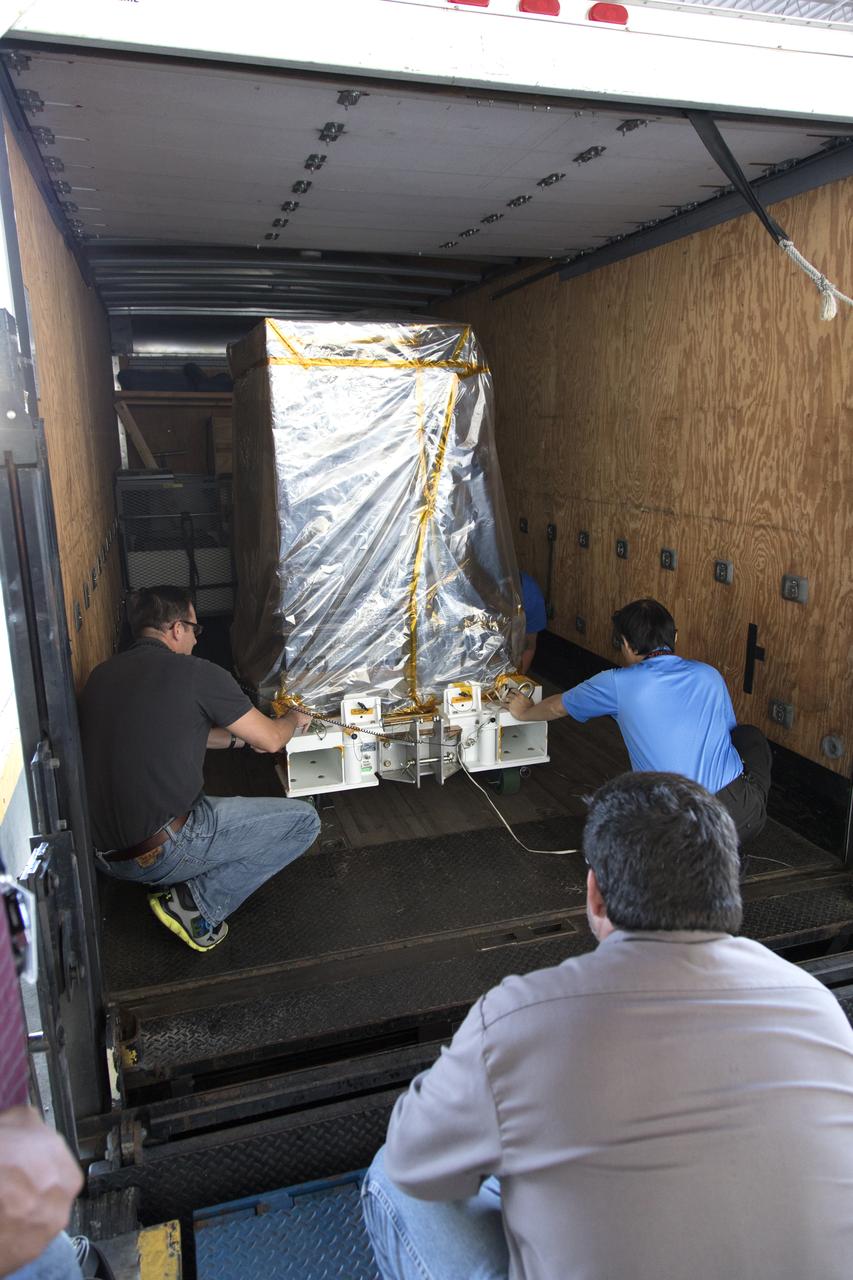
Workers load the Robotic Refueling Mission-3 (RRM3) payload onto a truck at the Space Station Processing Facility for transfer to the Payload Hazardous Servicing Facility on Oct. 3, 2018, at NASA's Kennedy Space Center in Florida. The payload will be carried to the International Space Station on SpaceX's 16th Commercial Resupply Services mission. RRM3 demonstrates the transfer of xenon gas and liquid methane in microgravity, and advances technologies for storing and manipulating these cryogenic fuels robotically. RRM3 also supports development of technology for the Restore-L mission, a robotic spacecraft equipped to service satellites in-orbit.
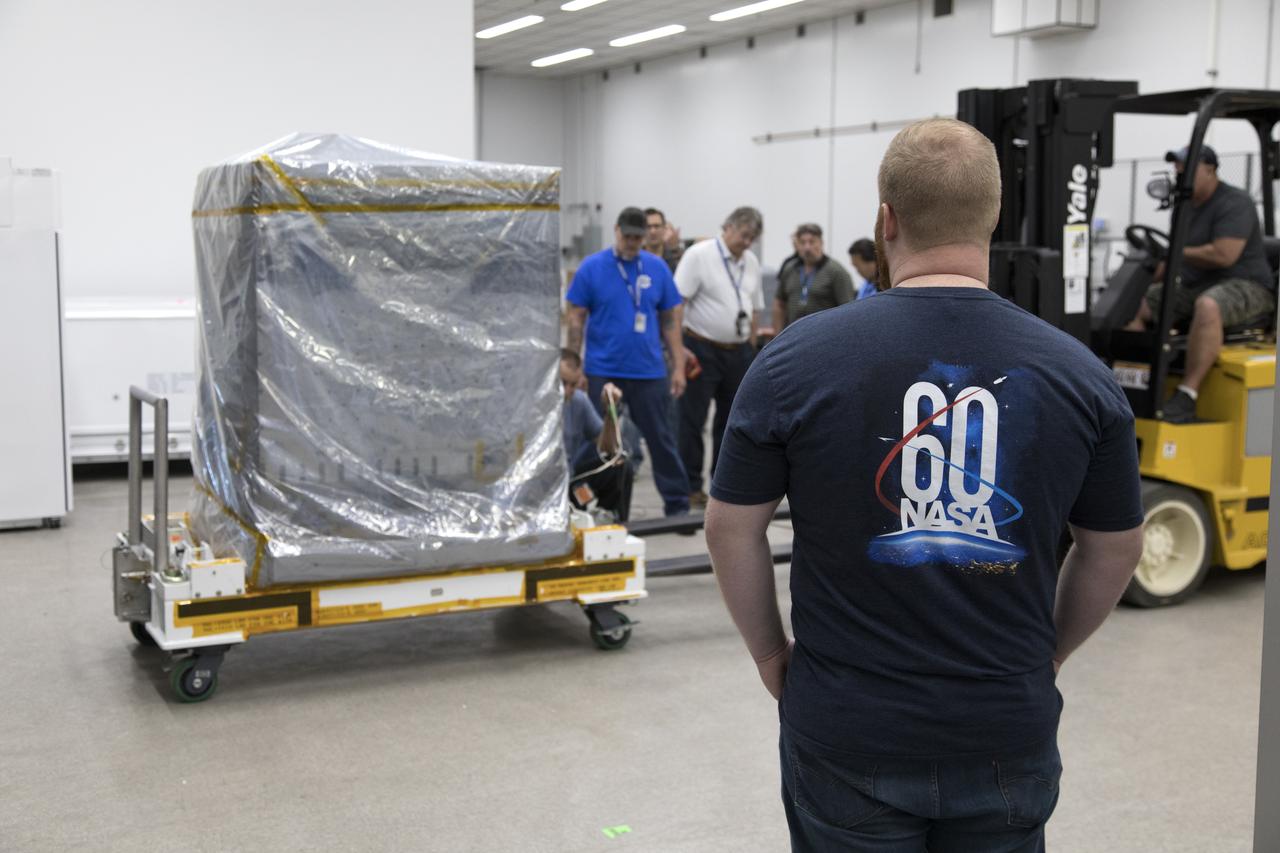
Workers prepare the Robotic Refueling Mission-3 (RRM3) payload to be transferred from the Space Station Processing Facility high bay to the Payload Hazardous Servicing Facility on Oct. 3, 2018, at NASA's Kennedy Space Center in Florida. The payload will be carried to the International Space Station on SpaceX's 16th Commercial Resupply Services mission. RRM3 demonstrates the transfer of xenon gas and liquid methane in microgravity, and advances technologies for storing and manipulating these cryogenic fuels robotically. RRM3 also supports development of technology for the Restore-L mission, a robotic spacecraft equipped to service satellites in-orbit.
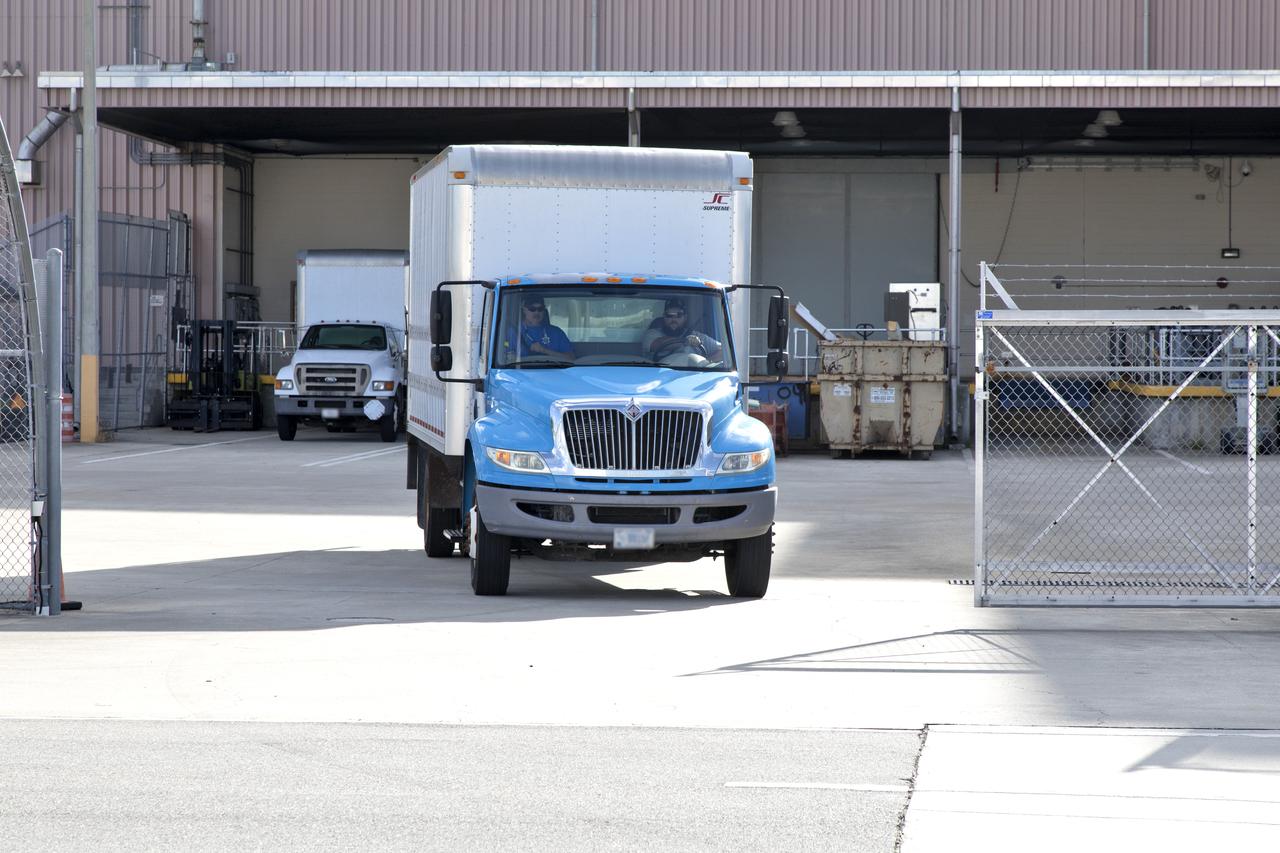
A truck carrying the Robotic Refueling Mission-3 (RRM3) payload departs from the Space Station Processing Facility on its way to the Payload Hazardous Servicing Facility on Oct. 3, 2018, at NASA's Kennedy Space Center in Florida. The payload will be carried to the International Space Station on SpaceX's 16th Commercial Resupply Services mission. RRM3 demonstrates the transfer of xenon gas and liquid methane in microgravity, and advances technologies for storing and manipulating these cryogenic fuels robotically. RRM3 also supports development of technology for the Restore-L mission, a robotic spacecraft equipped to service satellites in-orbit.
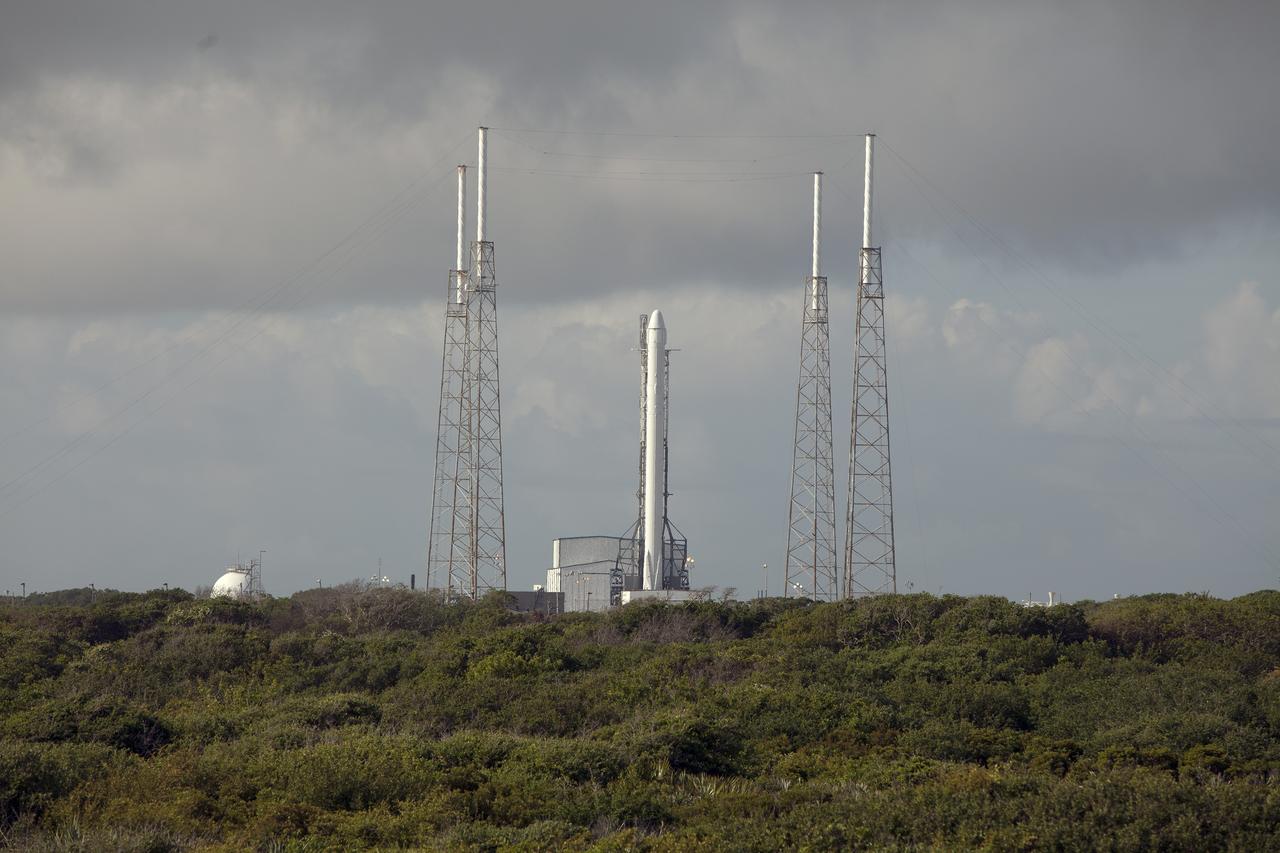
CAPE CANAVERAL, Fla. - Preparations are underway at Space Launch Complex 40 on Cape Canaveral Air Force Station in Florida to launch a SpaceX Falcon 9 rocket and a Dragon capsule on its third commercial resupply mission to deliver about 5,000 pounds of cargo to the International Space Station. Scheduled for launch at about 4:58 p.m. EDT April 14, Dragon will be making its fourth trip to the space station. The SpaceX-3 mission, carrying almost 2.5 tons of supplies, technology and science experiments, is the third of 12 flights under NASA's Commercial Resupply Services contract to resupply the orbiting laboratory. For more information, visit http://www.nasa.gov/mission_pages/station/structure/launch/index.html Photo credit: NASA/Glenn Benson
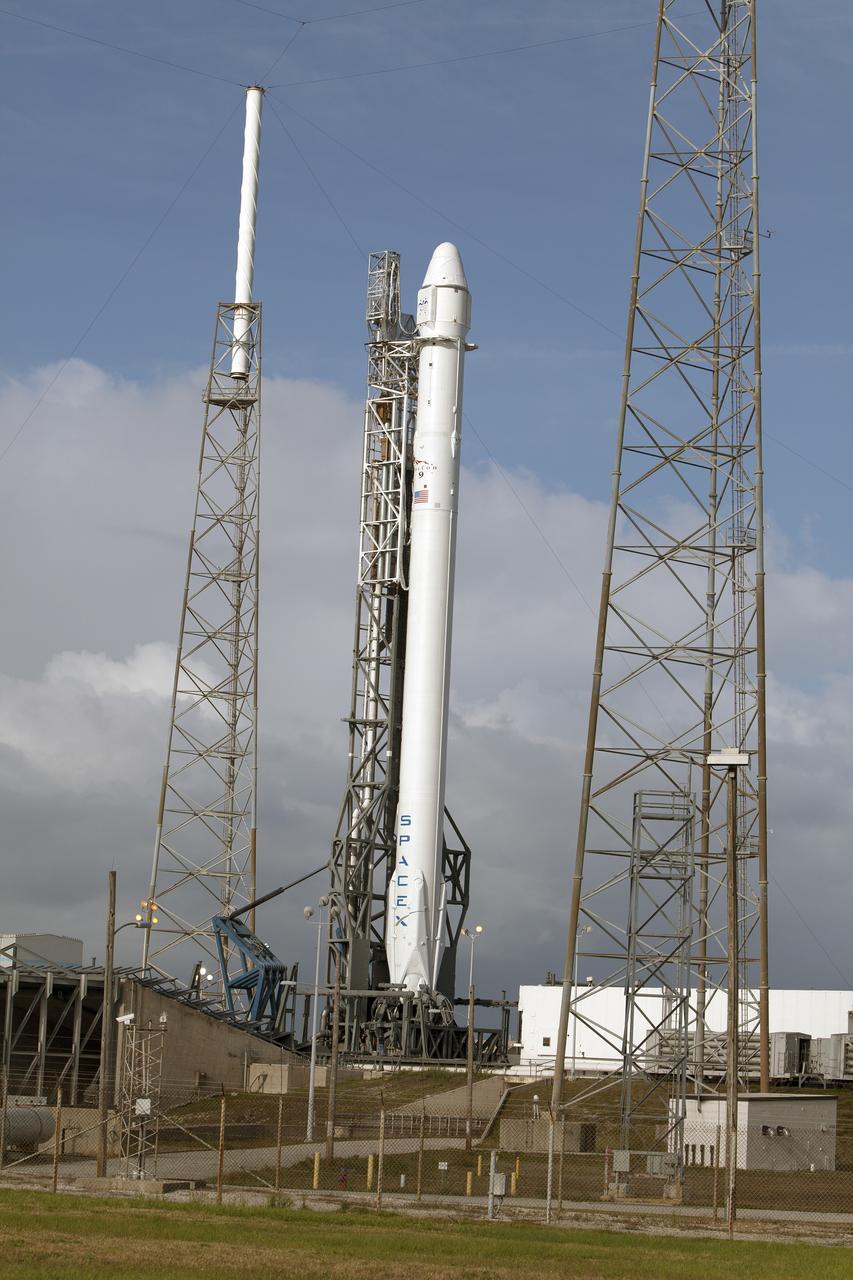
CAPE CANAVERAL, Fla. - At Space Launch Complex 40 on Cape Canaveral Air Force Station in Florida, a SpaceX Falcon 9 rocket stands ready to boost a Dragon capsule on its third commercial resupply mission to deliver about 5,000 pounds of cargo to the International Space Station. Scheduled for launch at about 4:58 p.m. EDT April 14, Dragon will be making its fourth trip to the space station. The SpaceX-3 mission, carrying almost 2.5 tons of supplies, technology and science experiments, is the third of 12 flights under NASA's Commercial Resupply Services contract to resupply the orbiting laboratory. For more information, visit http://www.nasa.gov/mission_pages/station/structure/launch/index.html Photo credit: NASA/Glenn Benson
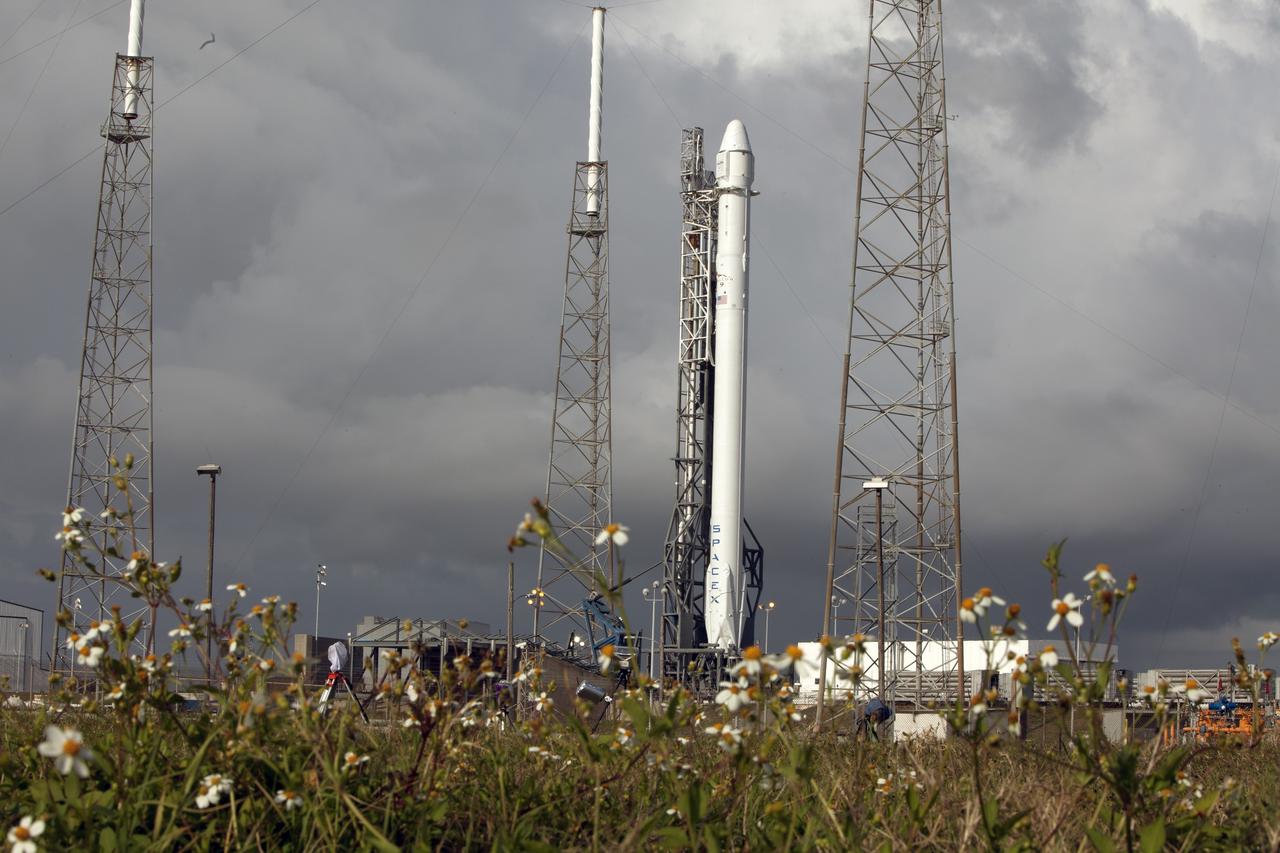
CAPE CANAVERAL, Fla. - Early morning showers pass by Space Launch Complex 40 on Cape Canaveral Air Force Station in Florida on launch day for a SpaceX Falcon 9 rocket and a Dragon capsule on its third commercial resupply mission to deliver about 5,000 pounds of cargo to the International Space Station. Scheduled for launch at about 4:58 p.m. EDT April 14, Dragon will be making its fourth trip to the space station. The SpaceX-3 mission, carrying almost 2.5 tons of supplies, technology and science experiments, is the third of 12 flights under NASA's Commercial Resupply Services contract to resupply the orbiting laboratory. For more information, visit http://www.nasa.gov/mission_pages/station/structure/launch/index.html Photo credit: NASA/Glenn Benson
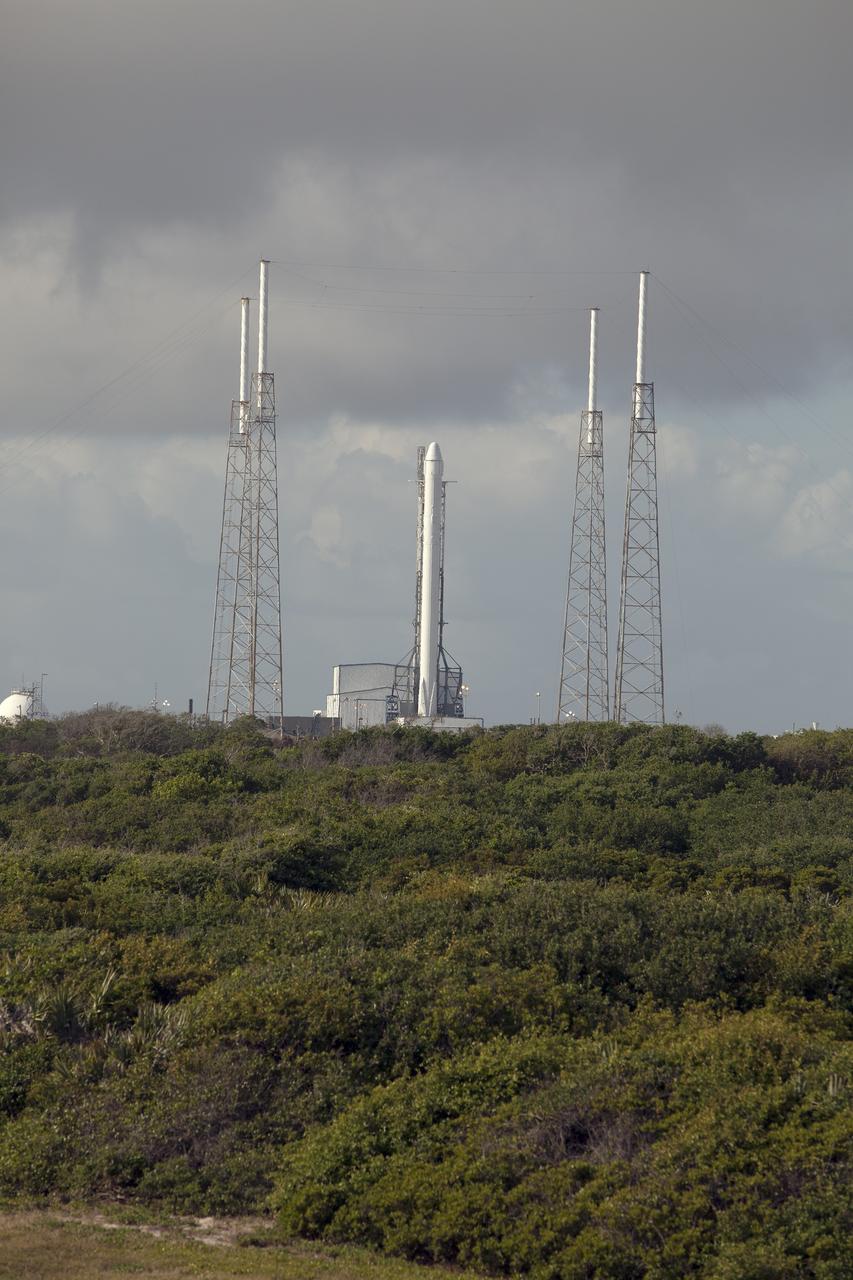
CAPE CANAVERAL, Fla. - Clouds fill the sky over Space Launch Complex 40 on Cape Canaveral Air Force Station in Florida on launch day for a SpaceX Falcon 9 rocket and a Dragon capsule on its third commercial resupply mission to deliver about 5,000 pounds of cargo to the International Space Station. Scheduled for launch at about 4:58 p.m. EDT April 14, Dragon will be making its fourth trip to the space station. The SpaceX-3 mission, carrying almost 2.5 tons of supplies, technology and science experiments, is the third of 12 flights under NASA's Commercial Resupply Services contract to resupply the orbiting laboratory. For more information, visit http://www.nasa.gov/mission_pages/station/structure/launch/index.html Photo credit: NASA/Glenn Benson
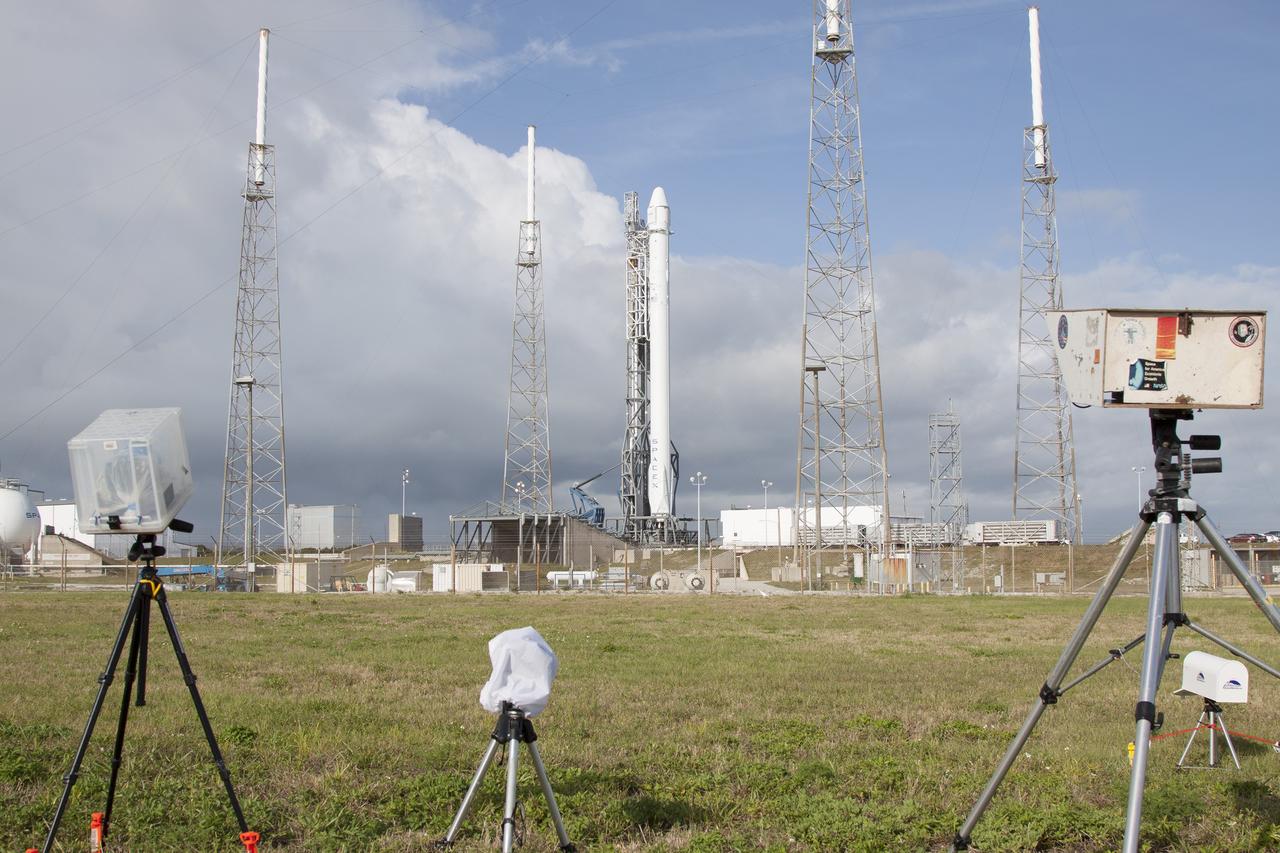
CAPE CANAVERAL, Fla. - Remote-controlled and motion-activated cameras are set up at Space Launch Complex 40 on Cape Canaveral Air Force Station in Florida to capture images of a SpaceX Falcon 9 rocket as it boosts a Dragon capsule on its third commercial resupply mission to deliver about 5,000 pounds of cargo to the International Space Station. Scheduled for launch at about 4:58 p.m. EDT April 14, Dragon will be making its fourth trip to the space station. The SpaceX-3 mission, carrying almost 2.5 tons of supplies, technology and science experiments, is the third of 12 flights under NASA's Commercial Resupply Services contract to resupply the orbiting laboratory. For more information, visit http://www.nasa.gov/mission_pages/station/structure/launch/index.html Photo credit: NASA/Glenn Benson
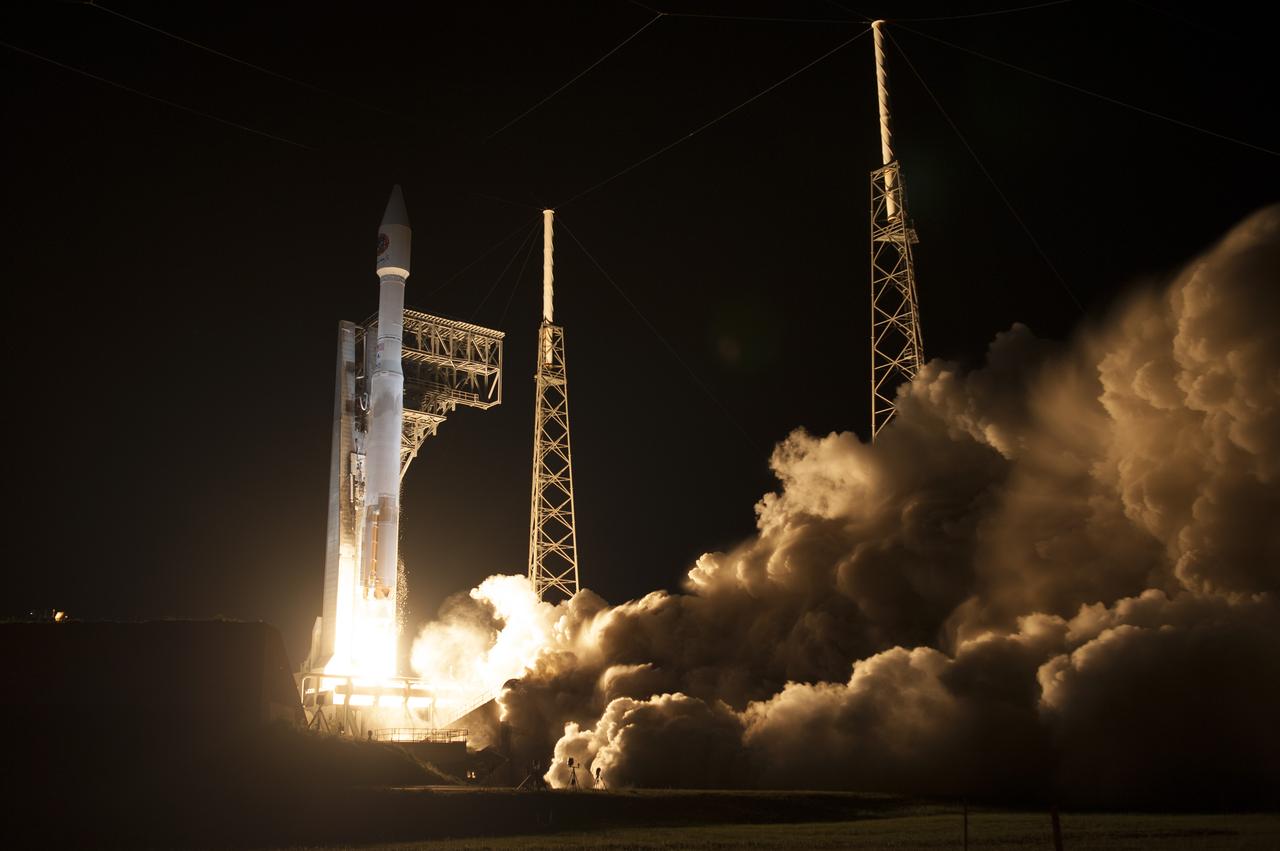
A United Launch Alliance Atlas V rocket lifts off from Space Launch Complex 41 at Cape Canaveral Air Force Station in Florida carrying an Orbital ATK Cygnus resupply spacecraft on a commercial resupply services mission to the International Space Station. Liftoff was at 11:05 p.m. EDT. Cygnus will deliver the second generation of a portable onboard printer to demonstrate 3-D printing, an instrument for first space-based observations of the chemical composition of meteors entering Earth’s atmosphere and an experiment to study how fires burn in microgravity.
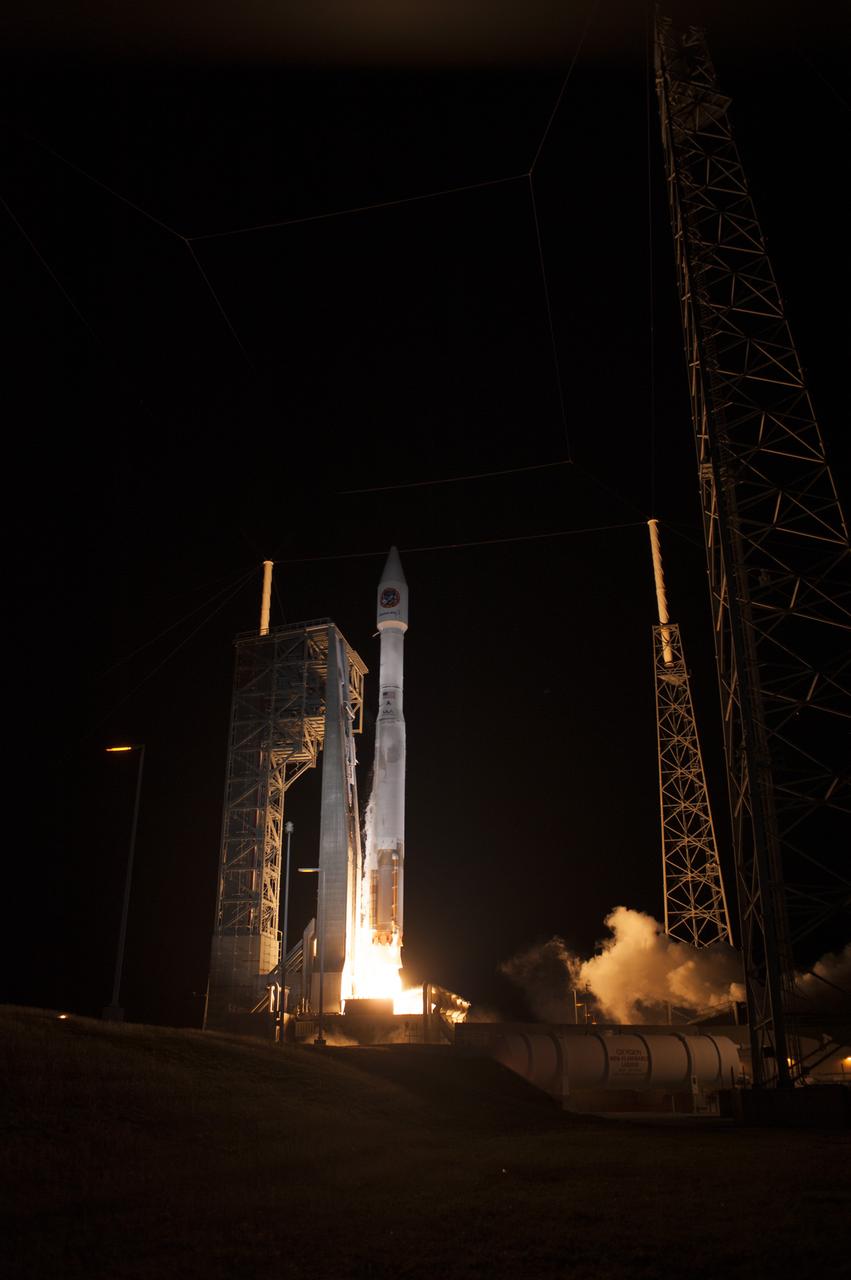
A United Launch Alliance Atlas V rocket lifts off from Space Launch Complex 41 at Cape Canaveral Air Force Station in Florida carrying an Orbital ATK Cygnus resupply spacecraft on a commercial resupply services mission to the International Space Station. Liftoff was at 11:05 p.m. EDT. Cygnus will deliver the second generation of a portable onboard printer to demonstrate 3-D printing, an instrument for first space-based observations of the chemical composition of meteors entering Earth’s atmosphere and an experiment to study how fires burn in microgravity.
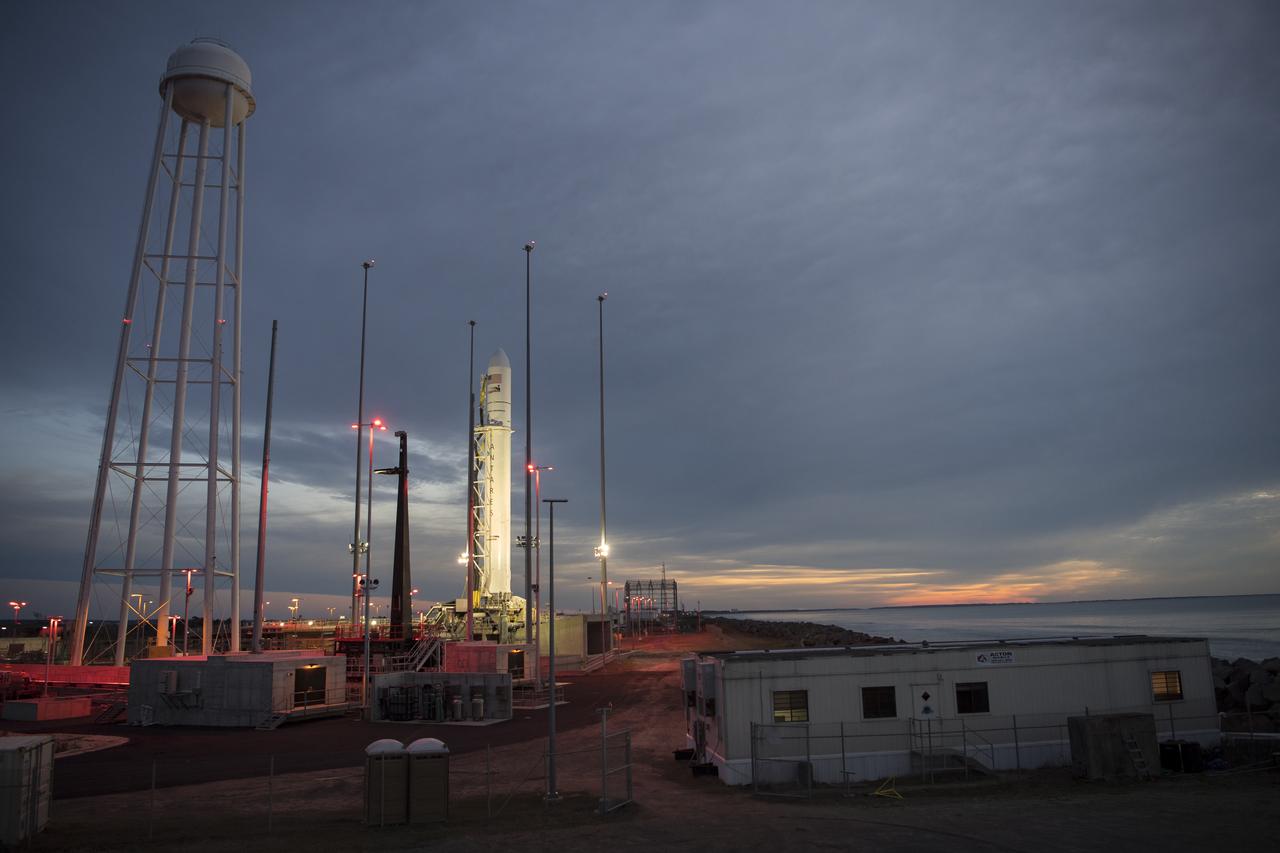
A Northrop Grumman Antares rocket carrying a Cygnus resupply spacecraft is seen at sunrise on Pad-0A, Friday, Feb. 14, 2020, at NASA's Wallops Flight Facility in Virginia. Northrop Grumman’s 13th contracted cargo resupply mission with NASA to the International Space Station will deliver more than 7,500 pounds of science and research, crew supplies and vehicle hardware to the orbital laboratory and its crew. The CRS-13 Cygnus spacecraft is named after the first African American astronaut, Major Robert Henry Lawrence Jr., and is scheduled to launch at 3:43pm EST. Photo Credit: (NASA/Aubrey Gemignani)
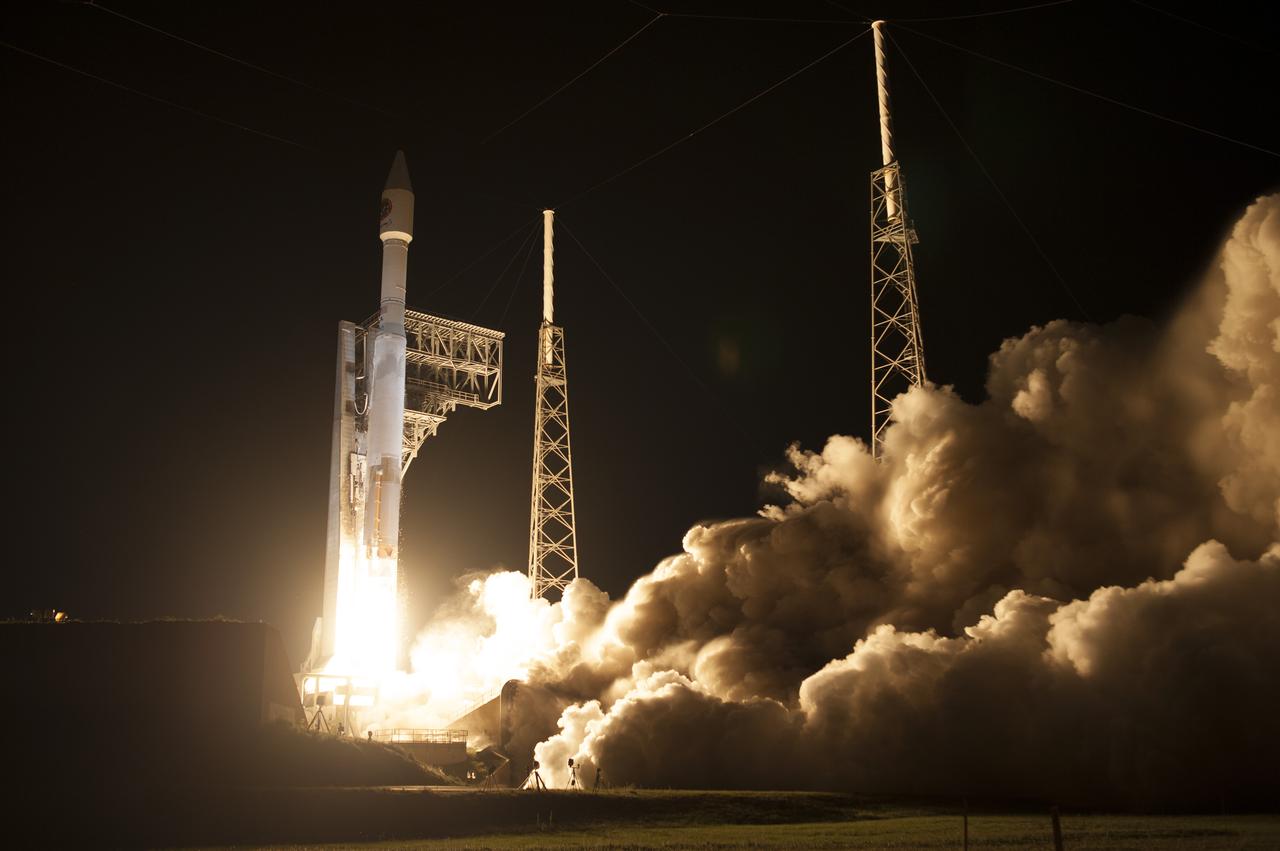
A United Launch Alliance Atlas V rocket lifts off from Space Launch Complex 41 at Cape Canaveral Air Force Station in Florida carrying an Orbital ATK Cygnus resupply spacecraft on a commercial resupply services mission to the International Space Station. Liftoff was at 11:05 p.m. EDT. Cygnus will deliver the second generation of a portable onboard printer to demonstrate 3-D printing, an instrument for first space-based observations of the chemical composition of meteors entering Earth’s atmosphere and an experiment to study how fires burn in microgravity.
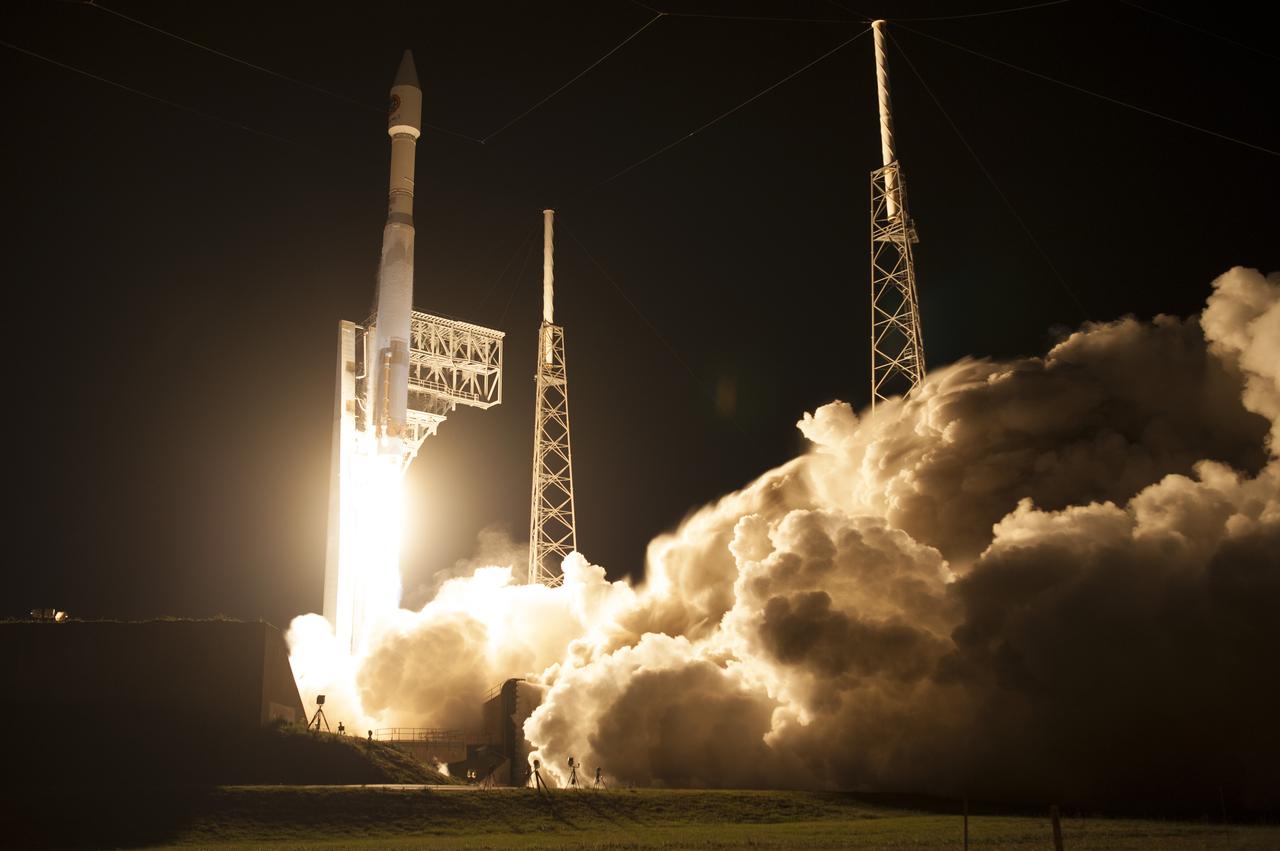
A United Launch Alliance Atlas V rocket lifts off from Space Launch Complex 41 at Cape Canaveral Air Force Station in Florida carrying an Orbital ATK Cygnus resupply spacecraft on a commercial resupply services mission to the International Space Station. Liftoff was at 11:05 p.m. EDT. Cygnus will deliver the second generation of a portable onboard printer to demonstrate 3-D printing, an instrument for first space-based observations of the chemical composition of meteors entering Earth’s atmosphere and an experiment to study how fires burn in microgravity.
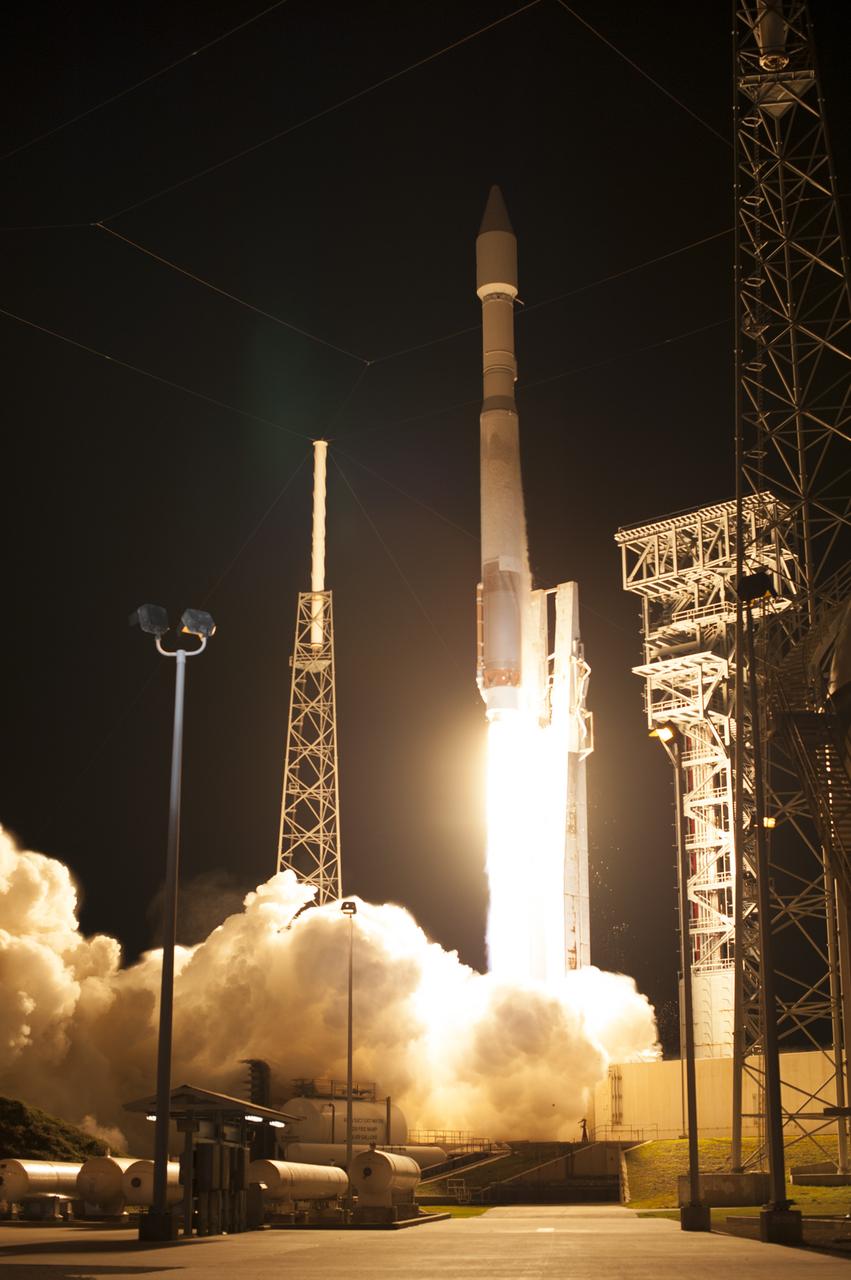
A United Launch Alliance Atlas V rocket lifts off from Space Launch Complex 41 at Cape Canaveral Air Force Station in Florida carrying an Orbital ATK Cygnus resupply spacecraft on a commercial resupply services mission to the International Space Station. Liftoff was at 11:05 p.m. EDT. Cygnus will deliver the second generation of a portable onboard printer to demonstrate 3-D printing, an instrument for first space-based observations of the chemical composition of meteors entering Earth’s atmosphere and an experiment to study how fires burn in microgravity.
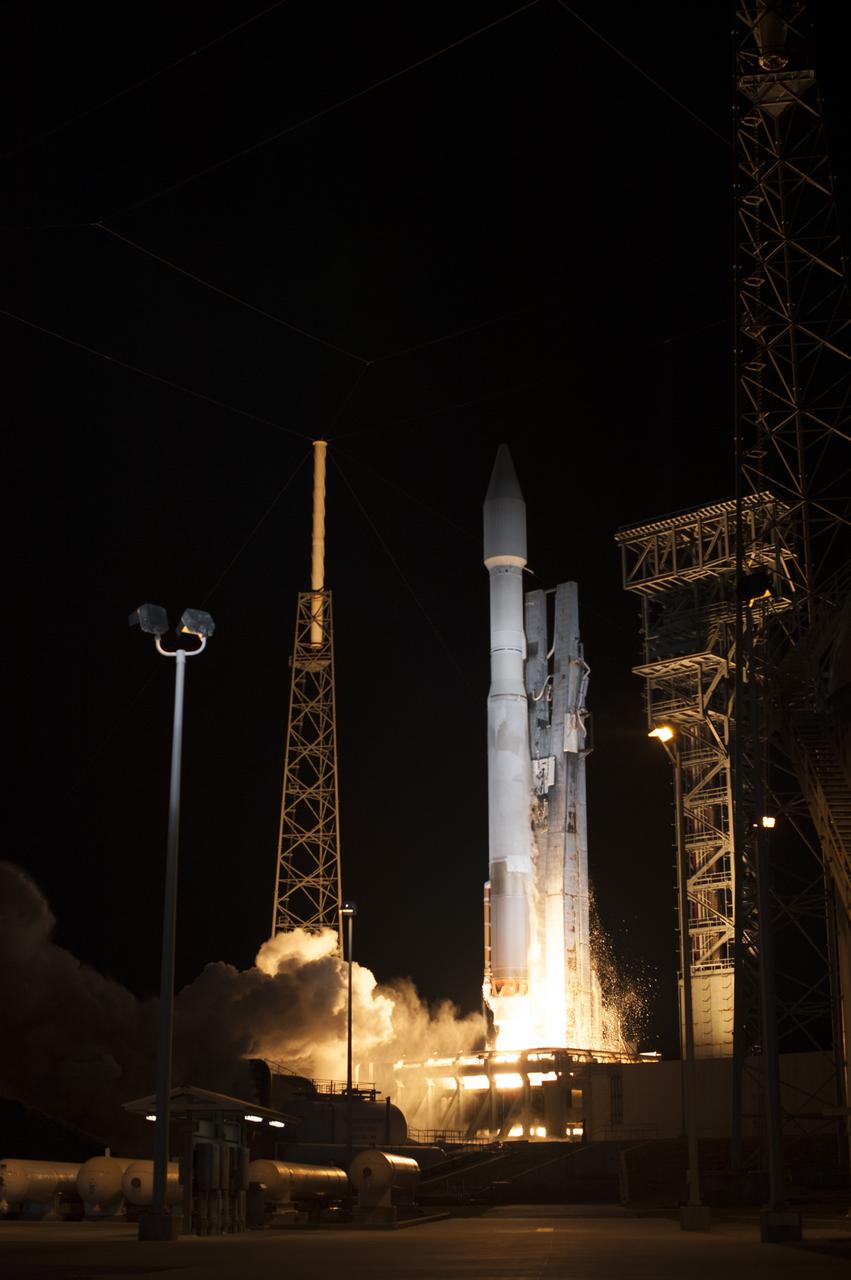
A United Launch Alliance Atlas V rocket lifts off from Space Launch Complex 41 at Cape Canaveral Air Force Station in Florida carrying an Orbital ATK Cygnus resupply spacecraft on a commercial resupply services mission to the International Space Station. Liftoff was at 11:05 p.m. EDT. Cygnus will deliver the second generation of a portable onboard printer to demonstrate 3-D printing, an instrument for first space-based observations of the chemical composition of meteors entering Earth’s atmosphere and an experiment to study how fires burn in microgravity.
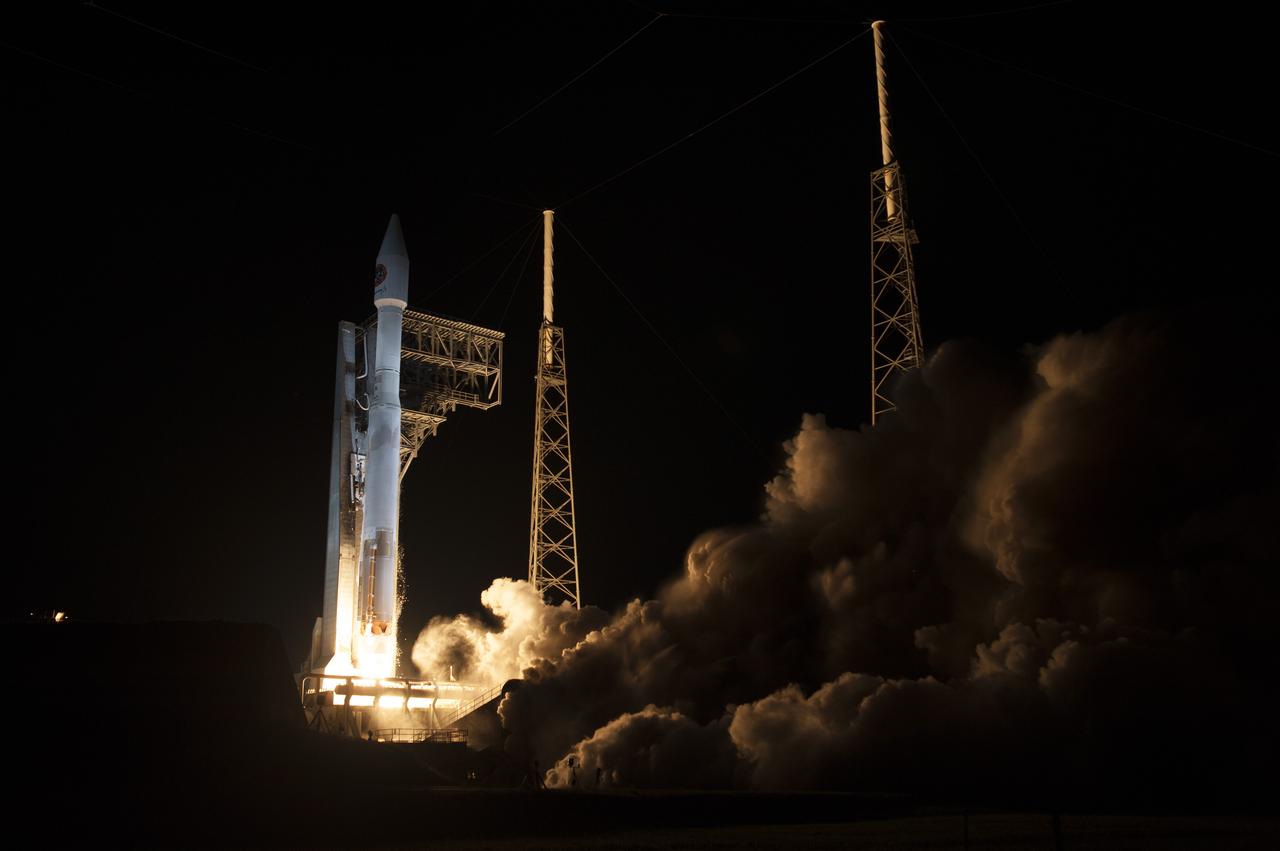
A United Launch Alliance Atlas V rocket lifts off from Space Launch Complex 41 at Cape Canaveral Air Force Station in Florida carrying an Orbital ATK Cygnus resupply spacecraft on a commercial resupply services mission to the International Space Station. Liftoff was at 11:05 p.m. EDT. Cygnus will deliver the second generation of a portable onboard printer to demonstrate 3-D printing, an instrument for first space-based observations of the chemical composition of meteors entering Earth’s atmosphere and an experiment to study how fires burn in microgravity.