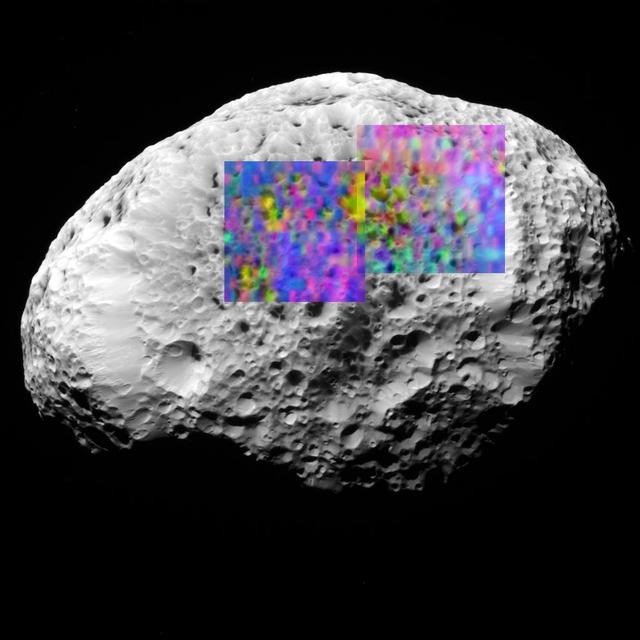
Organics Sprinkled on Hyperion

Members of the World Presidents' Organization enjoy exhibits at StenniSphere, the museum and visitor center at NASA's John C. Stennis Space Center during a tour of the space facility Jan. 26. WPO members from several states toured Stennis facilities during a daylong visit that included a presentation by Apollo 13 astronaut Fred Haise of Biloxi.

Members of the World Presidents' Organization enjoy a buffet luncheon during a Jan. 26 visit to NASA's John C. Stennis Space Center. WPO members from several states toured Stennis facilities during a daylong visit that included a river ride with Special Boat Team 22, the U.S. Navy's elite boat warriors group that trains at Stennis. Visiting president also had an opportunity to learn about the ongoing work of the nation's premier rocket engine testing site.

Mississippi Gov. Haley Barbour speaks to members of the World Presidents' Organization during the group's visit to NASA's John C. Stennis Space Center on Jan. 26. WPO members from several states spent the day touring Stennis facilities and learning about the work of the nation's premier rocket engine testing site. Barbour visited with group members during a morning session in StenniSphere, the center's visitors center and museum.

Barbara Brown, chief technologist at NASA’s Kennedy Space Center in Florida, speaks at the fifth and final TED Talk-style informational session on Nov. 14, 2019, in the Kennedy Learning Institute. Sponsored by Kennedy’s Launching Leaders and Leadership for the Future, NASAtalks focuses on the topic of intentional careers and aims to provide employees with tools and knowledge that can be utilized for career growth. The theme of this session was organizations, and additional speakers included Director of Engineering Shawn Quinn, Chief Counsel Dan Shaver and Tim Dunn, launch director for the agency’s Launch Services Program, with a skill-building section on vision by Mark Wiese, logistics element manager for the Gateway Program.

From left, Kennedy Space Center’s Chief Technologist Barbara Brown, Mark Wiese, logistics element manager for the Gateway Program, Tim Dunn, launch director for the agency’s Launch Services Program, Shawn Quinn, director of Engineering and Johnny Nguyen participate in the fifth and final TED Talk-style informational session on Nov. 14, 2019. Held in the Florida spaceport’s Kennedy Learning Institute and sponsored by the center’s Launching Leaders and Leadership for the Future, NASAtalks focuses on the topic of intentional careers and aims to provide employees with tools and knowledge that can be utilized for career growth. The theme of this final session was organizations.

Mark Wiese, logistics element manager for the Gateway Program at NASA’s Kennedy Space Center in Florida, speaks at the fifth and final TED Talk-style informational session on Nov. 14, 2019, in the Kennedy Learning Institute. Sponsored by Kennedy’s Launching Leaders and Leadership for the Future, NASAtalks focuses on the topic of intentional careers and aims to provide employees with tools and knowledge that can be utilized for career growth. The theme of this session was organizations, and additional speakers included Chief Counsel Dan Shaver, Director of Engineering Shawn Quinn, Chief Technologist Barbara Brown and Tim Dunn, launch director for the agency’s Launch Services Program.

Barbara Brown, chief technologist at NASA’s Kennedy Space Center in Florida, speaks at the fifth and final TED Talk-style informational session on Nov. 14, 2019, in the Kennedy Learning Institute. Sponsored by Kennedy’s Launching Leaders and Leadership for the Future, NASAtalks focuses on the topic of intentional careers and aims to provide employees with tools and knowledge that can be utilized for career growth. The theme of this session was organizations, and additional speakers included Director of Engineering Shawn Quinn, Chief Counsel Dan Shaver and Tim Dunn, launch director for the agency’s Launch Services Program, with a skill-building section on vision by Mark Wiese, logistics element manager for the Gateway Program.
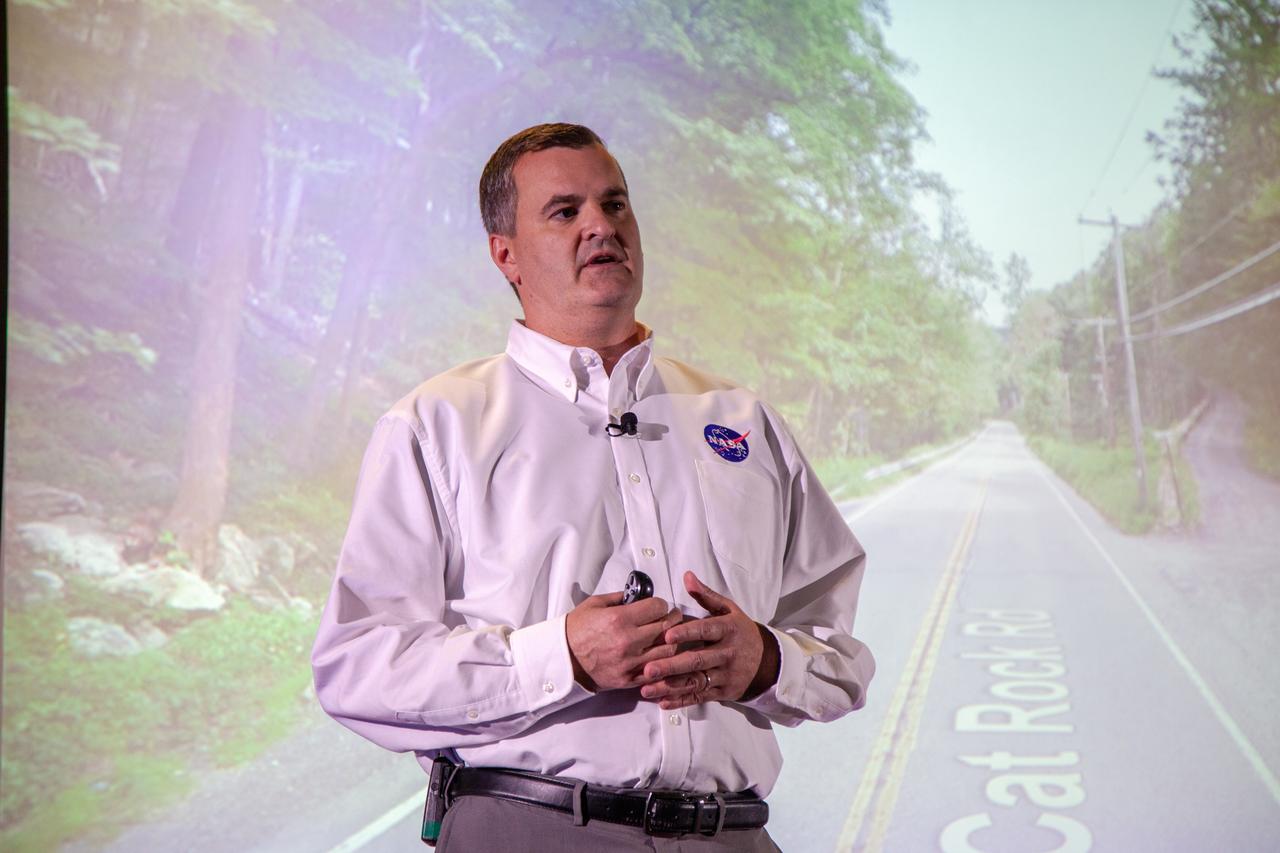
Mark Wiese, logistics element manager for the Gateway Program at NASA’s Kennedy Space Center in Florida, speaks at the fifth and final TED Talk-style informational session on Nov. 14, 2019, in the Kennedy Learning Institute. Sponsored by Kennedy’s Launching Leaders and Leadership for the Future, NASAtalks focuses on the topic of intentional careers and aims to provide employees with tools and knowledge that can be utilized for career growth. The theme of this session was organizations, and additional speakers included Chief Counsel Dan Shaver, Director of Engineering Shawn Quinn, Chief Technologist Barbara Brown and Tim Dunn, launch director for the agency’s Launch Services Program.

Shawn Quinn, director of Engineering at NASA’s Kennedy Space Center in Florida, speaks at the fifth and final TED Talk-style informational session on Nov. 14, 2019, in the Kennedy Learning Institute. Sponsored by Kennedy’s Launching Leaders and Leadership for the Future, NASAtalks focuses on the topic of intentional careers and aims to provide employees with tools and knowledge that can be utilized for career growth. The theme of this session was organizations, and additional speakers included Chief Counsel Dan Shaver, Chief Technologist Barbara Brown and Tim Dunn, launch director for the agency’s Launch Services Program, with a skill-building section on vision by Mark Wiese, logistics element manager for the Gateway Program.

Barbara Brown, chief technologist at NASA’s Kennedy Space Center in Florida, speaks at the fifth and final TED Talk-style informational session on Nov. 14, 2019, in the Kennedy Learning Institute. Sponsored by Kennedy’s Launching Leaders and Leadership for the Future, NASAtalks focuses on the topic of intentional careers and aims to provide employees with tools and knowledge that can be utilized for career growth. The theme of this session was organizations, and additional speakers included Director of Engineering Shawn Quinn, Chief Counsel Dan Shaver and Tim Dunn, launch director for the agency’s Launch Services Program, with a skill-building section on vision by Mark Wiese, logistics element manager for the Gateway Program.

Shawn Quinn, director of Engineering at NASA’s Kennedy Space Center in Florida, speaks at the fifth and final TED Talk-style informational session on Nov. 14, 2019, in the Kennedy Learning Institute. Sponsored by Kennedy’s Launching Leaders and Leadership for the Future, NASAtalks focuses on the topic of intentional careers and aims to provide employees with tools and knowledge that can be utilized for career growth. The theme of this session was organizations, and additional speakers included Chief Counsel Dan Shaver, Chief Technologist Barbara Brown and Tim Dunn, launch director for the agency’s Launch Services Program, with a skill-building section on vision by Mark Wiese, logistics element manager for the Gateway Program.
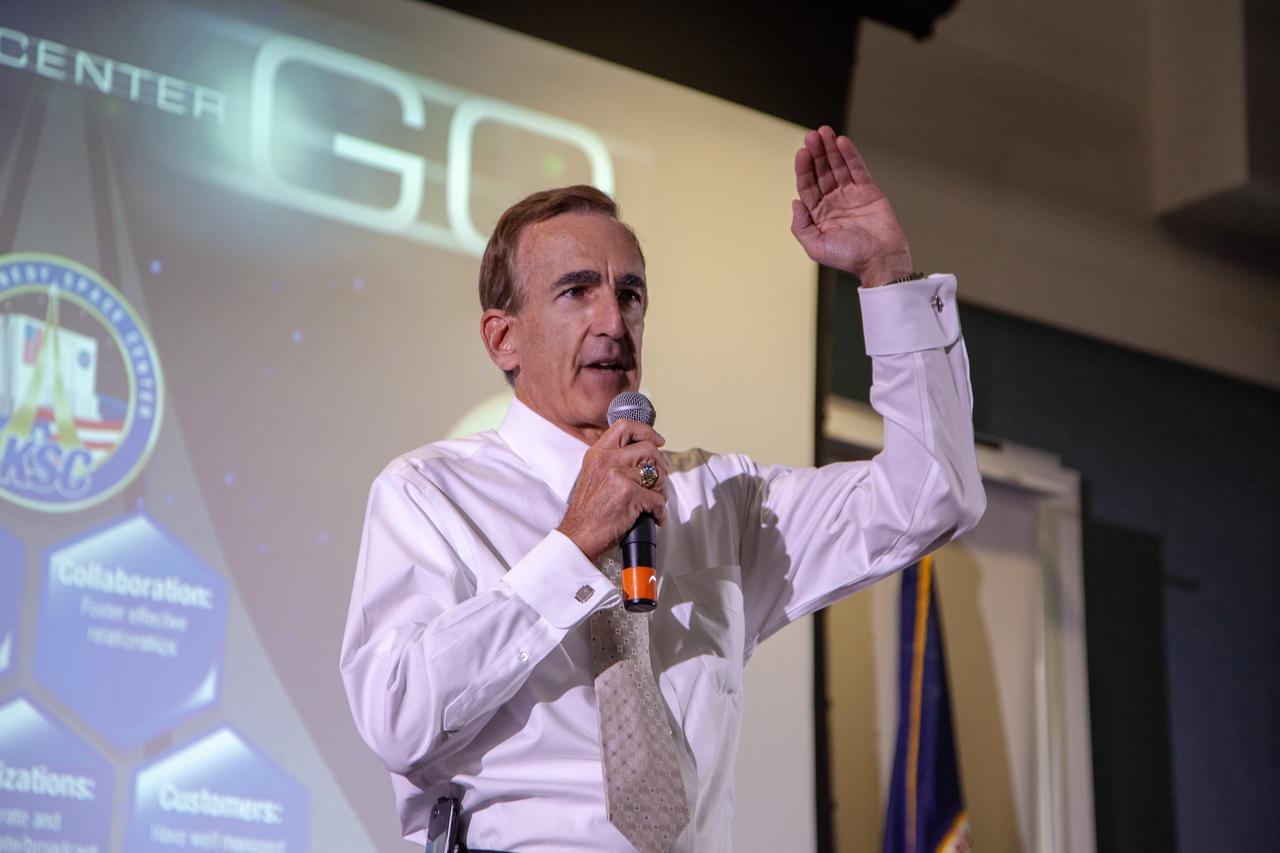
Dan Shaver, chief counsel at NASA’s Kennedy Space Center in Florida, speaks at the fifth and final TED Talk-style informational session on Nov. 14, 2019, in the Kennedy Learning Institute. Sponsored by Kennedy’s Launching Leaders and Leadership for the Future, NASAtalks focuses on the topic of intentional careers and aims to provide employees with tools and knowledge that can be utilized for career growth. The theme of this session was organizations, and additional speakers included Kennedy’s Director of Engineering Shawn Quinn, Chief Technologist Barbara Brown and Tim Dunn, launch director for the agency’s Launch Services Program, with a skill-building section on vision by Mark Wiese, logistics element manager for the Gateway Program.
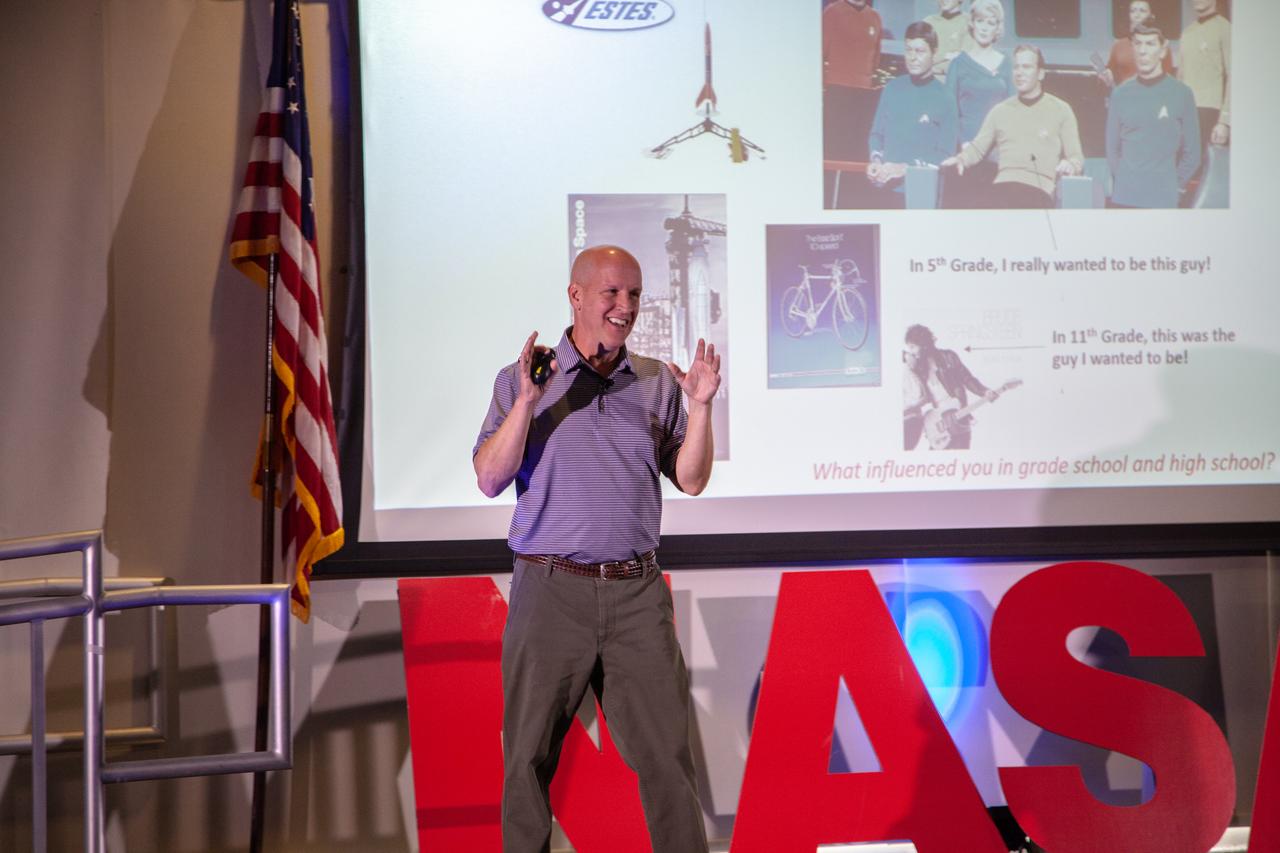
Tim Dunn, launch director for NASA’s Launch Services Program, speaks at the fifth and final TED Talk-style informational session at the agency’s Kennedy Space Center in Florida on Nov. 14, 2019. Hosted in the Kennedy Learning Institute and sponsored by the center’s Launching Leaders and Leadership for the Future, NASAtalks focuses on the topic of intentional careers and aims to provide employees with tools and knowledge that can be utilized for career growth. The theme of this session was organizations, and additional speakers included Director of Engineering Shawn Quinn, Chief Technologist Barbara Brown and Chief Counsel Dan Shaver, with a skill-building section on vision by Mark Wiese, logistics element manager for the Gateway Program.
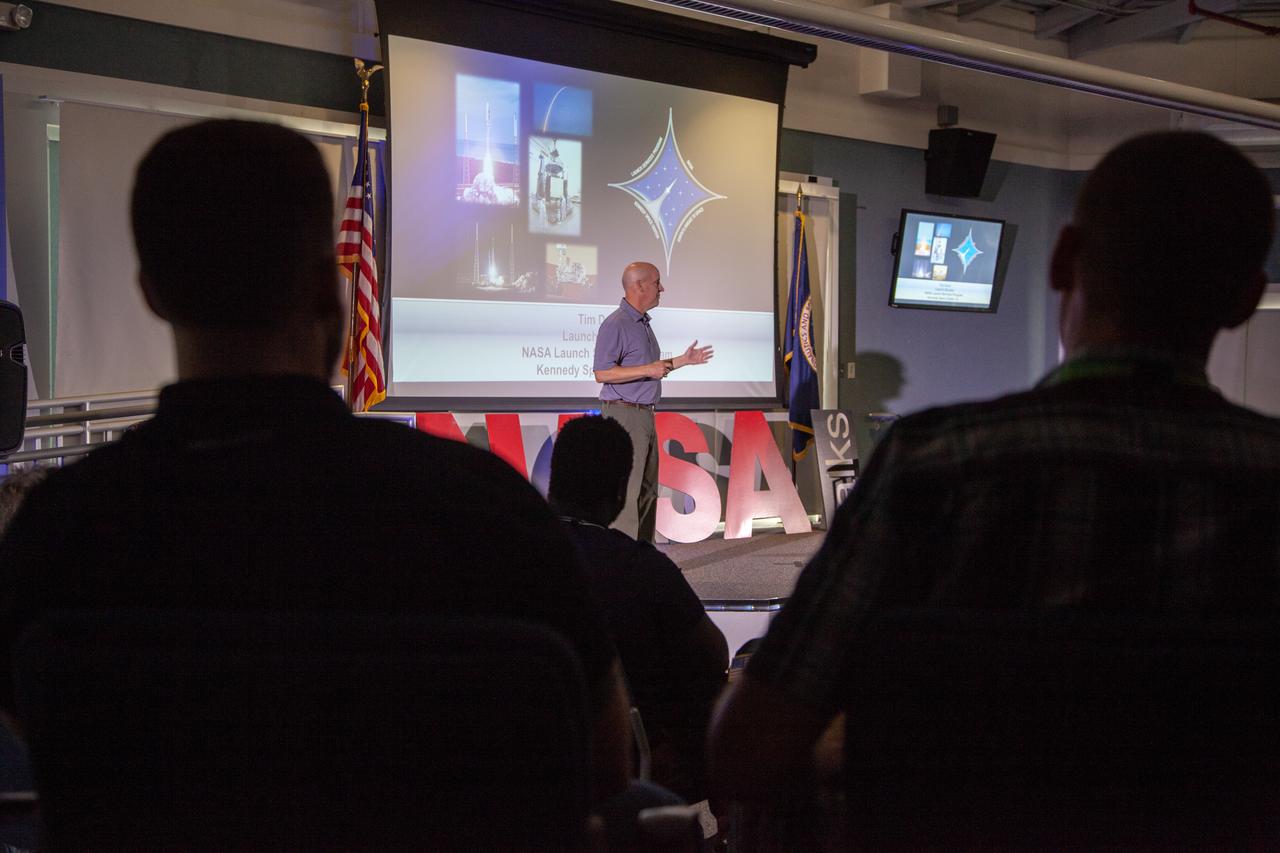
Tim Dunn, launch director for NASA’s Launch Services Program, speaks at the fifth and final TED Talk-style informational session at the agency’s Kennedy Space Center in Florida on Nov. 14, 2019. Hosted in the Kennedy Learning Institute and sponsored by the center’s Launching Leaders and Leadership for the Future, NASAtalks focuses on the topic of intentional careers and aims to provide employees with tools and knowledge that can be utilized for career growth. The theme of this session was organizations, and additional speakers included Director of Engineering Shawn Quinn, Chief Technologist Barbara Brown and Chief Counsel Dan Shaver, with a skill-building section on vision by Mark Wiese, logistics element manager for the Gateway Program.

Dan Shaver, chief counsel at NASA’s Kennedy Space Center in Florida, speaks at the fifth and final TED Talk-style informational session on Nov. 14, 2019, in the Kennedy Learning Institute. Sponsored by Kennedy’s Launching Leaders and Leadership for the Future, NASAtalks focuses on the topic of intentional careers and aims to provide employees with tools and knowledge that can be utilized for career growth. The theme of this session was organizations, and additional speakers included Kennedy’s Director of Engineering Shawn Quinn, Chief Technologist Barbara Brown and Tim Dunn, launch director for the agency’s Launch Services Program, with a skill-building section on vision by Mark Wiese, logistics element manager for the Gateway Program.
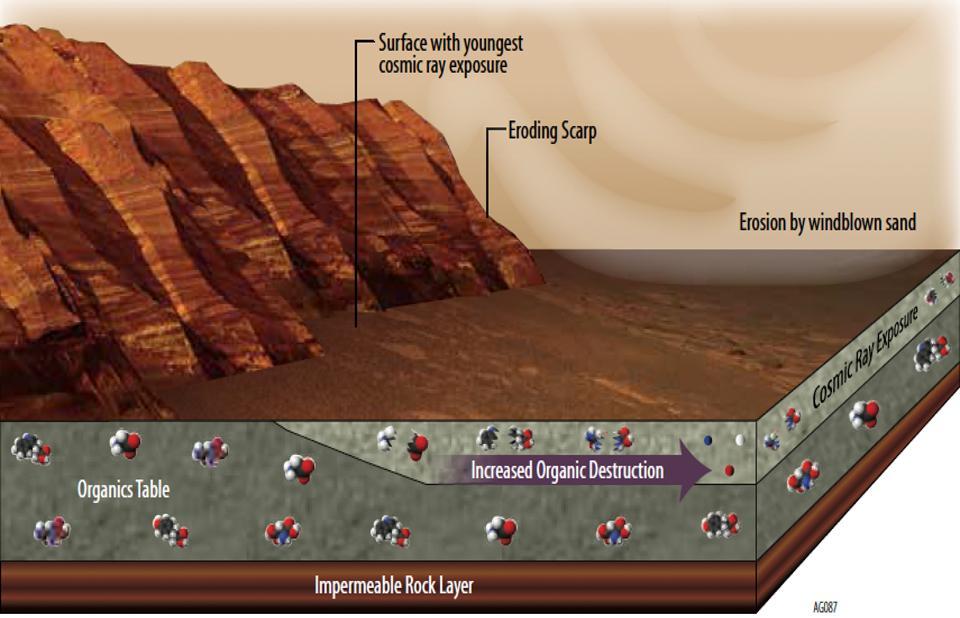
This illustration portrays some of the reasons why finding organic chemicals on Mars is challenging. Whatever organic chemicals may be produced on Mars or delivered to Mars face several possible modes of being transformed or destroyed.
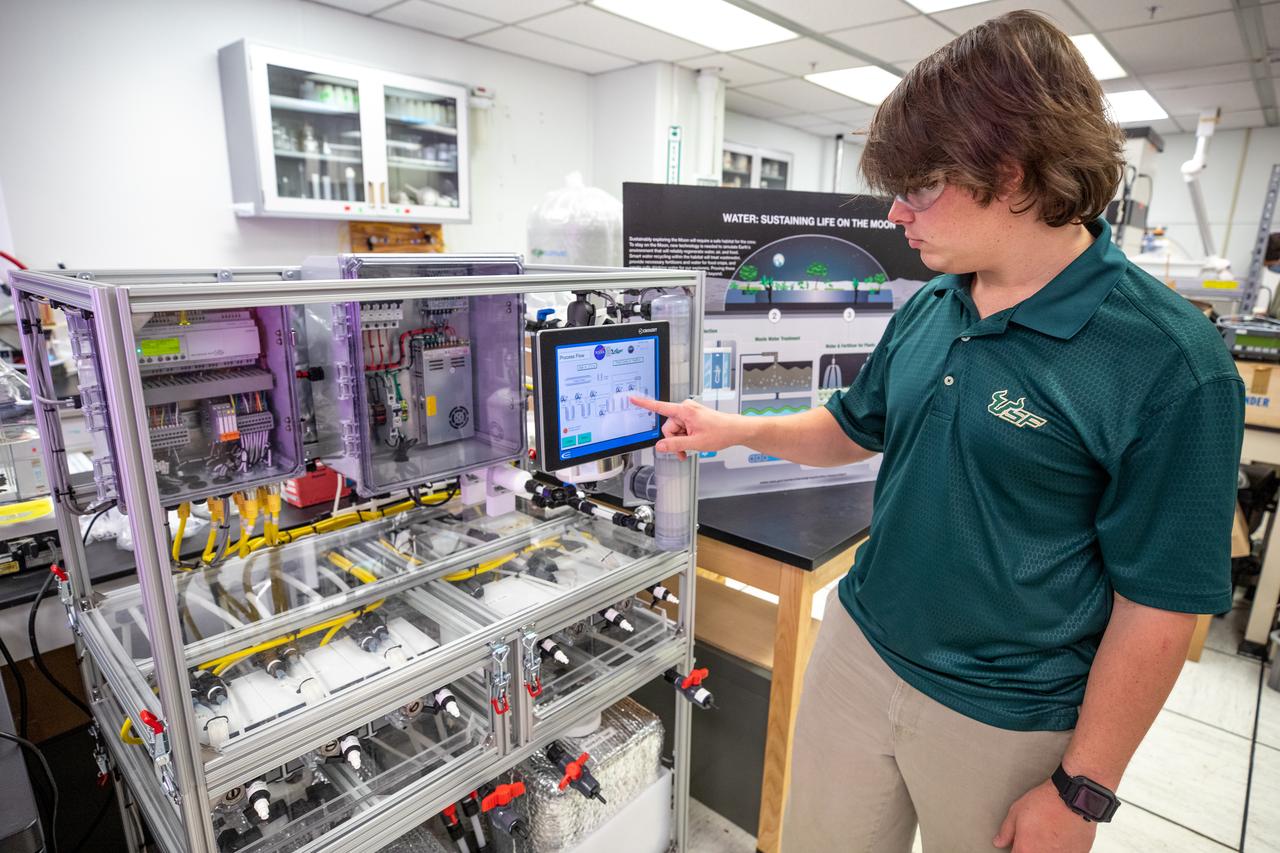
A prototype of Organic Processor Assembly (OPA) – technology capable of treating mixed organic wastes – arrives at the Neil Armstrong Operations and Checkout Building at NASA’s Kennedy Space Center in Florida on Aug. 19, 2020. Developed through a collaboration between Kennedy’s Dr. Luke Roberson and the University of South Florida’s Dr. Daniel Yeh, the OPA was designed for an early planetary base scenario to help close the resource recovery loop, decreasing the agency’s dependence on resupply missions. At the heart of the OPA is an anaerobic membrane bioreactor – a hybrid technology that couples anaerobic digestion with membrane filtration.
A prototype of Organic Processor Assembly (OPA) – technology capable of treating mixed organic wastes – arrives at the Neil Armstrong Operations and Checkout Building at NASA’s Kennedy Space Center in Florida on Aug. 19, 2020. At the heart of the OPA is an anaerobic membrane bioreactor – a hybrid technology that couples anaerobic digestion with membrane filtration. Developed through a collaboration between Kennedy’s Dr. Luke Roberson and the University of South Florida’s Dr. Daniel Yeh, the OPA was designed for an early planetary base scenario to help close the resource recovery loop, decreasing the agency’s dependence on resupply missions.
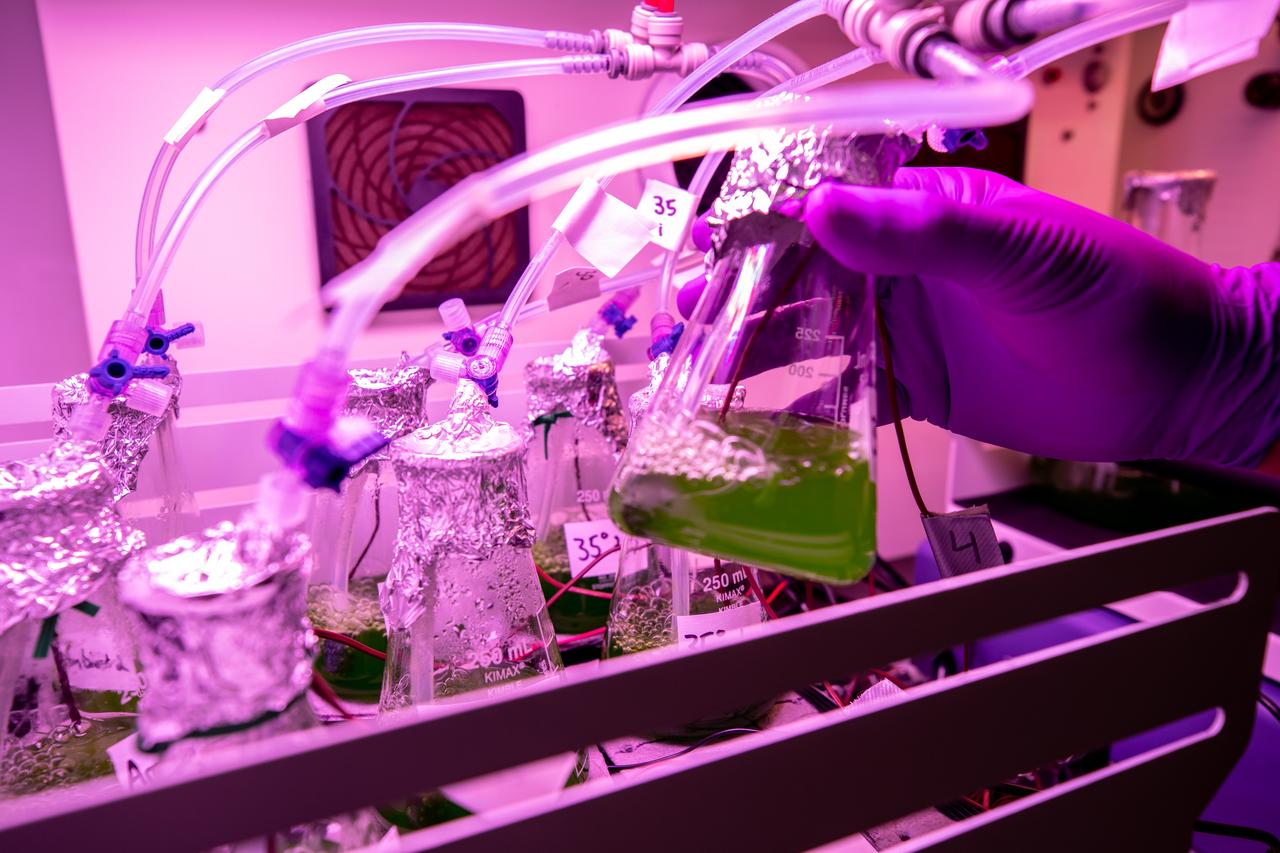
A prototype of Organic Processor Assembly (OPA) – technology capable of treating mixed organic wastes – arrives at the Neil Armstrong Operations and Checkout Building at NASA’s Kennedy Space Center in Florida on Aug. 19, 2020. At the heart of the OPA is an anaerobic membrane bioreactor – a hybrid technology that couples anaerobic digestion with membrane filtration. Developed through a collaboration between Kennedy’s Dr. Luke Roberson and the University of South Florida’s Dr. Daniel Yeh, the OPA was designed for an early planetary base scenario to help close the resource recovery loop, decreasing the agency’s dependence on resupply missions.
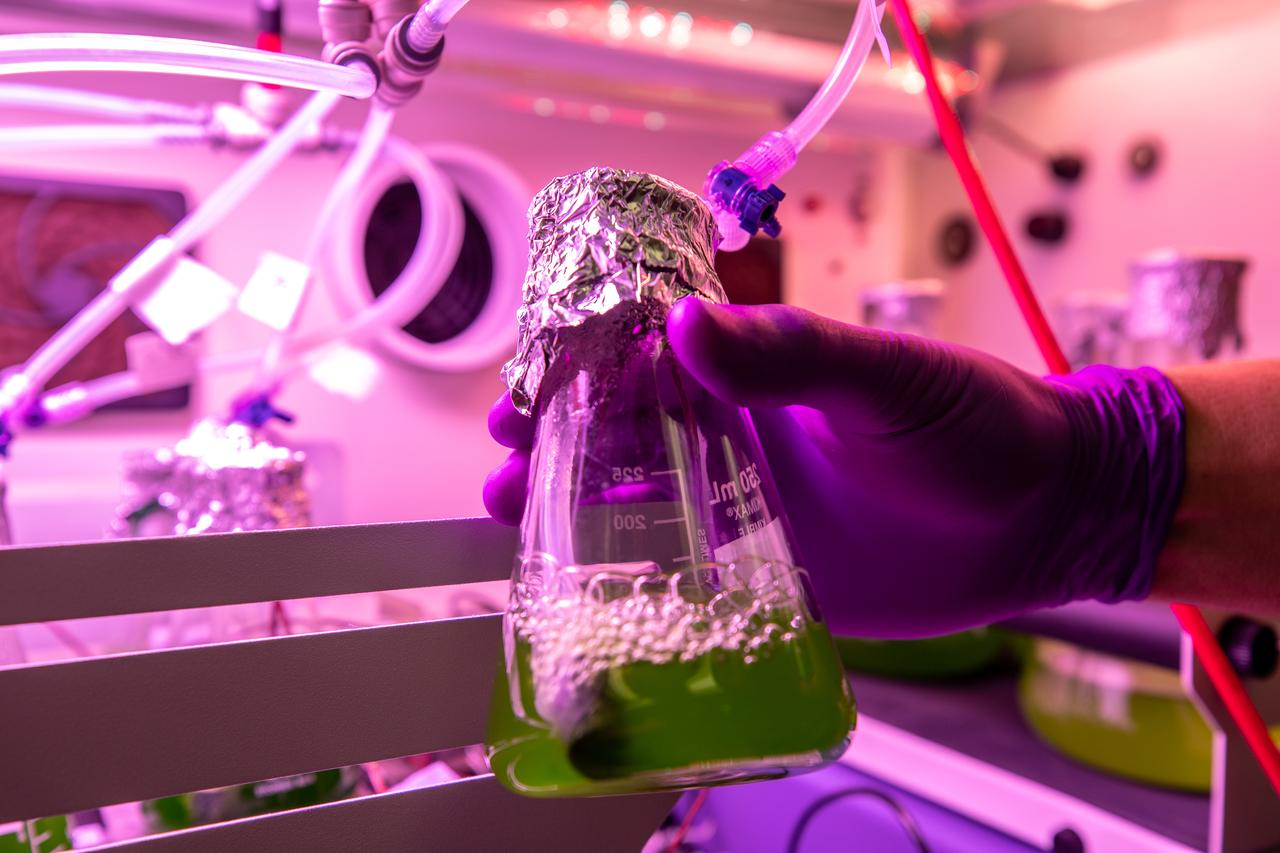
A prototype of Organic Processor Assembly (OPA) – technology capable of treating mixed organic wastes – arrives at the Neil Armstrong Operations and Checkout Building at NASA’s Kennedy Space Center in Florida on Aug. 19, 2020. At the heart of the OPA is an anaerobic membrane bioreactor – a hybrid technology that couples anaerobic digestion with membrane filtration. Developed through a collaboration between Kennedy’s Dr. Luke Roberson and the University of South Florida’s Dr. Daniel Yeh, the OPA was designed for an early planetary base scenario to help close the resource recovery loop, decreasing the agency’s dependence on resupply missions.
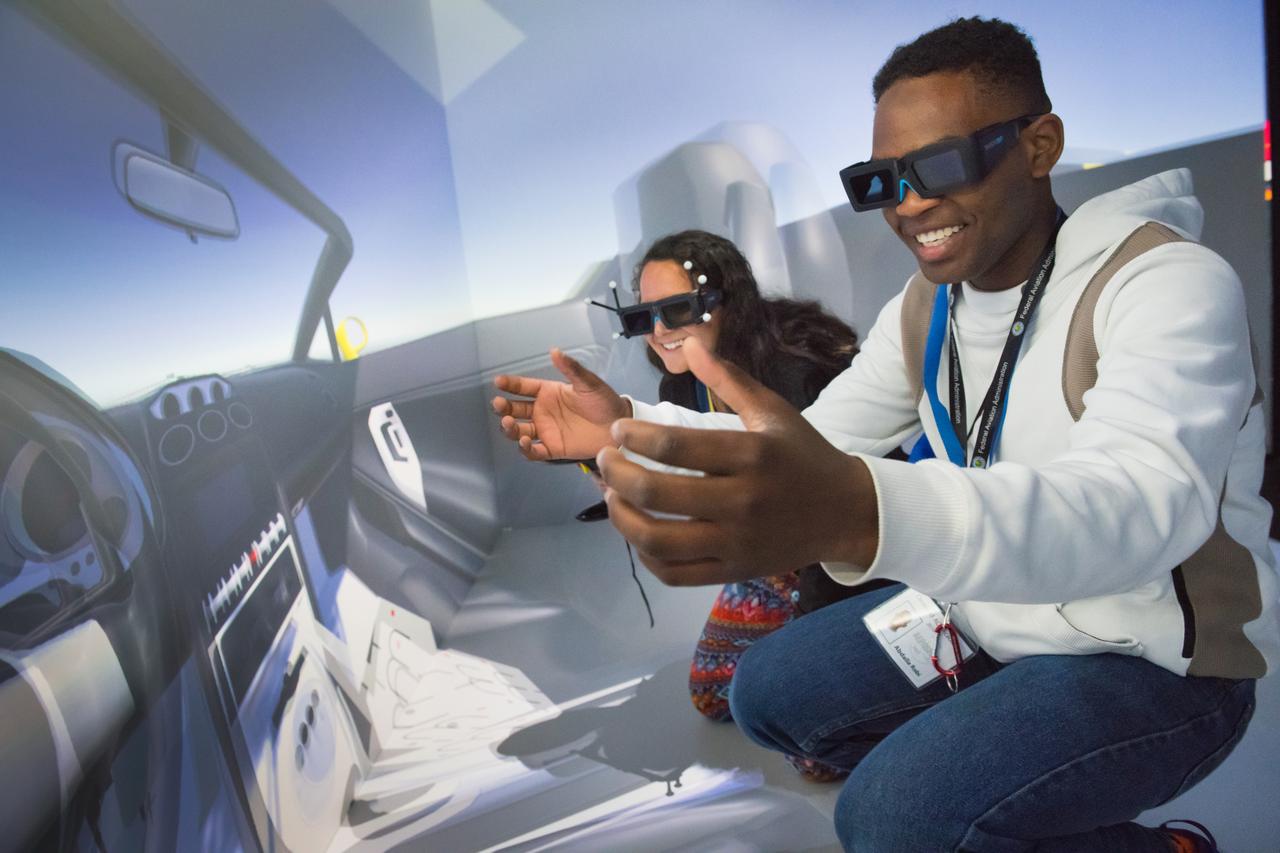
Aerospace Career Education, Organization of Black Aerospace Professionals, OBAP Cleveland ACE Academy Day
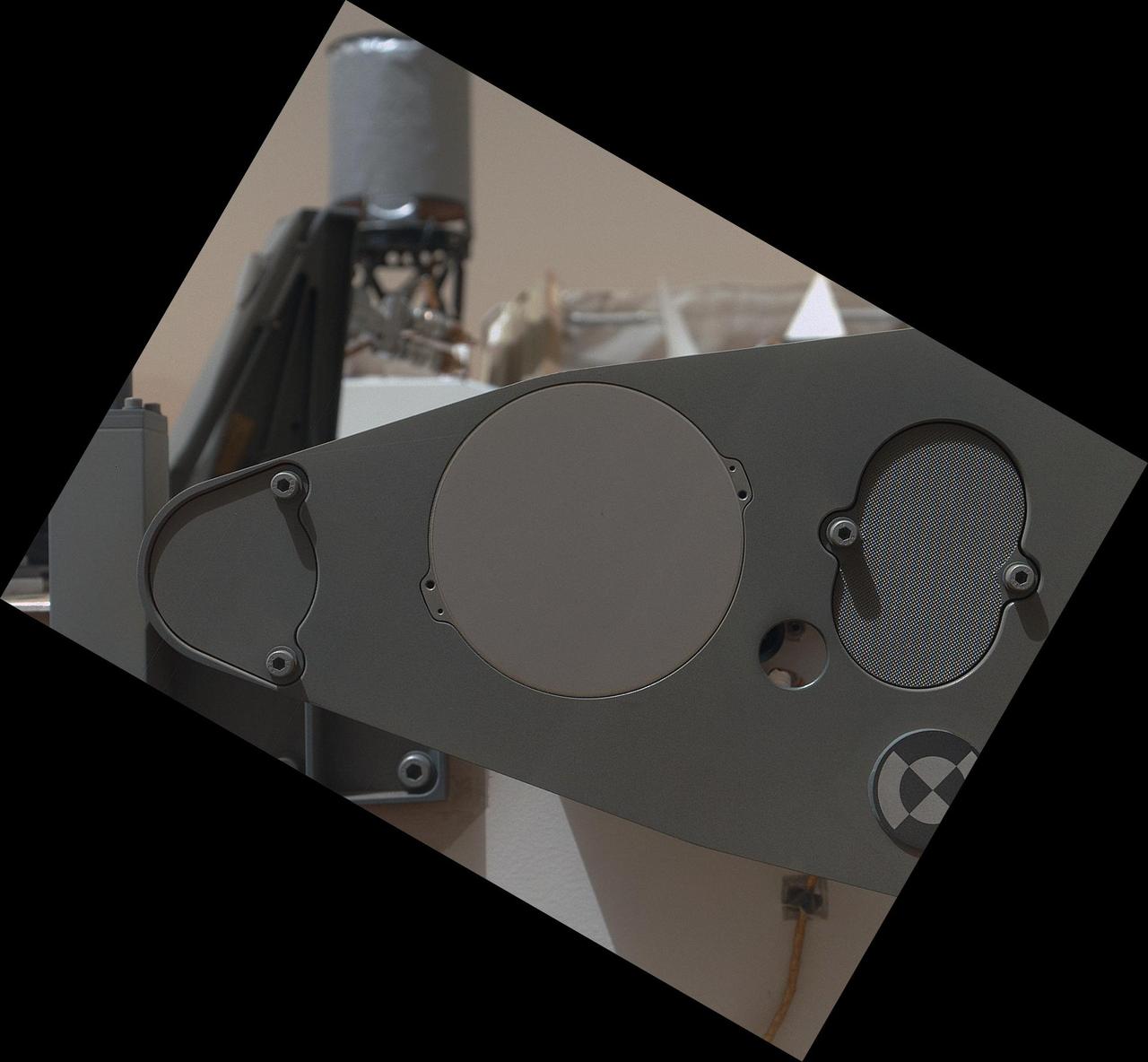
NASA Mars rover Curiosity carries five cylindrical blocks of organic check material for use in a control experiment if the rover Sample Analysis at Mars SAM laboratory detects any organic compounds in samples of Martian soil or powdered rock.
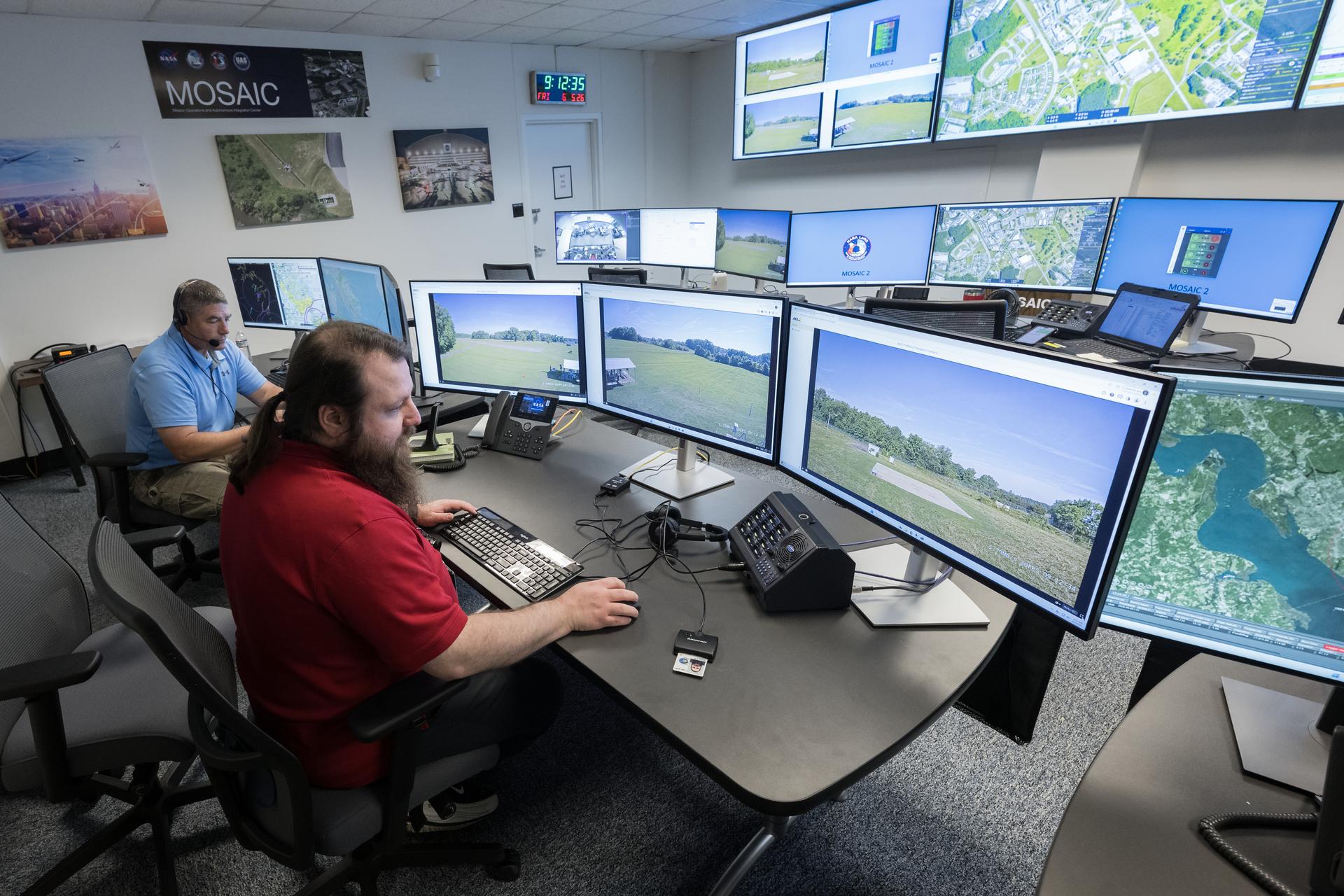
NASA Langley partnered with UNOS, a non-profit organization that manages the U.S. organ transplant system, to conduct the first-of-its-kind organ transport drone test with a human kidney on June 5, 2026 at Langley Research Center in Hampton, Va. Photo Credit NASA/Mark Knopp
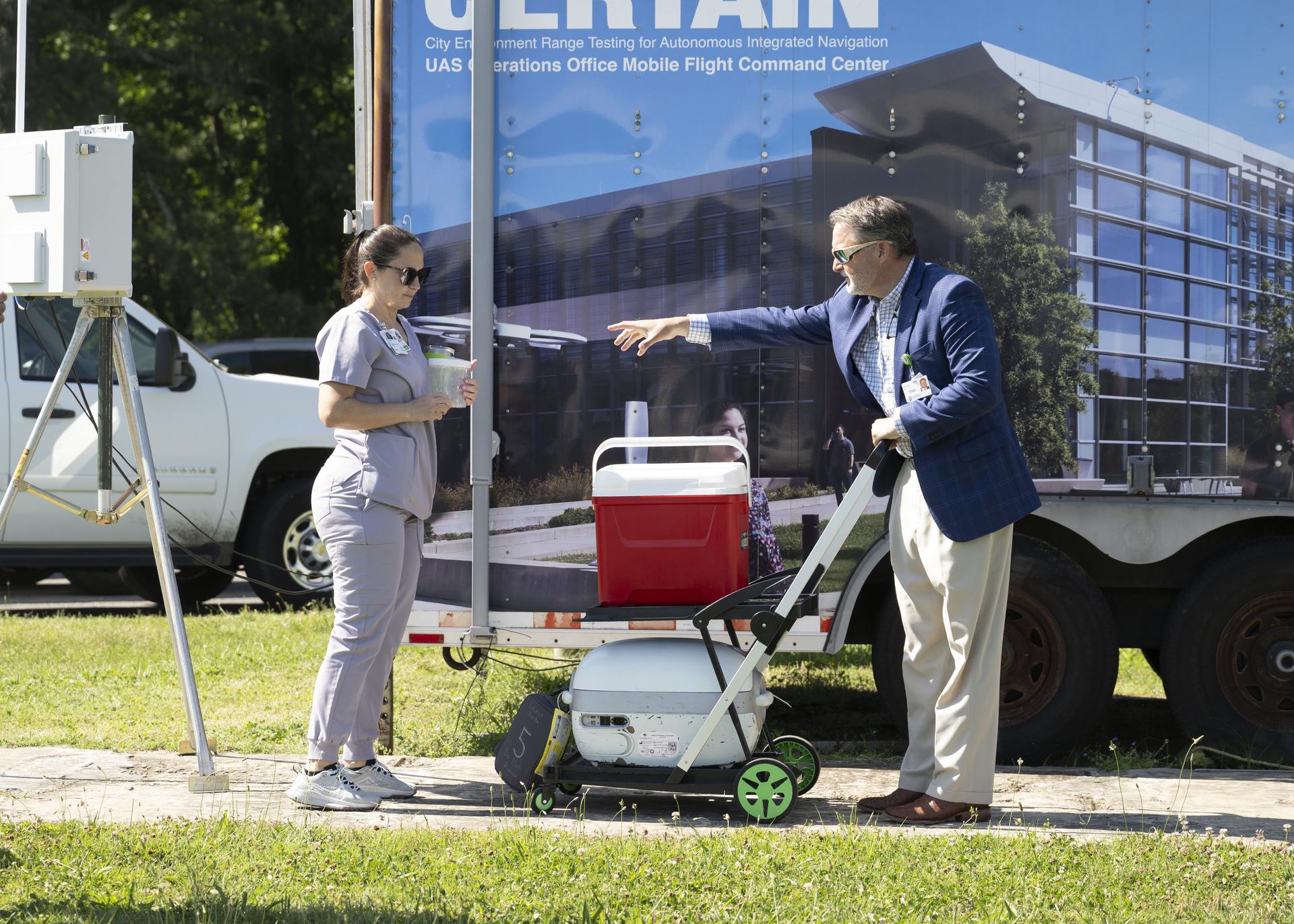
NASA Langley partnered with UNOS, a non-profit organization that manages the U.S. organ transplant system, to conduct the first-of-its-kind organ transport drone test with a human kidney on June 5, 2026 at Langley Research Center in Hampton, Va. Photo Credit NASA/Ryan Hill
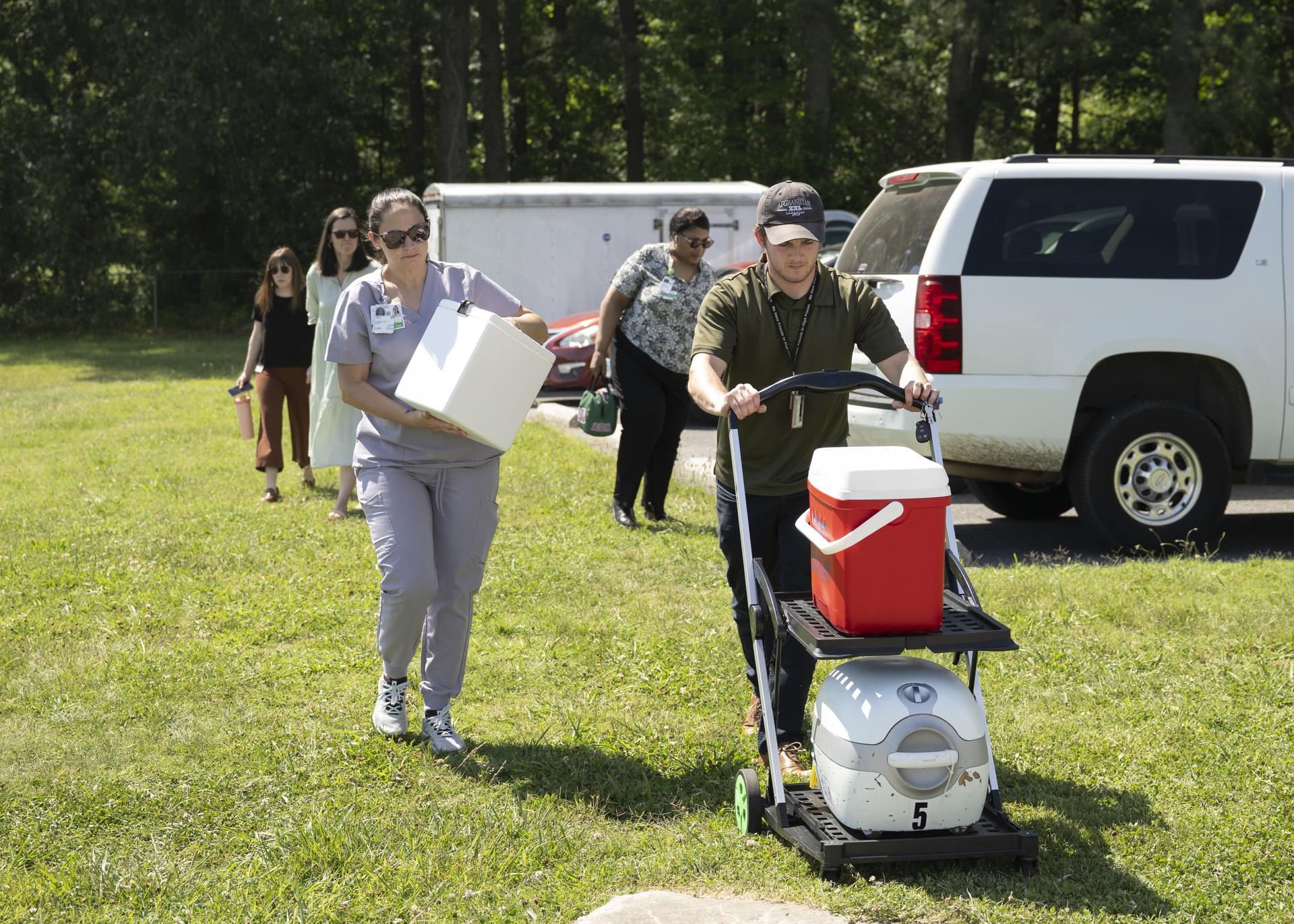
NASA Langley partnered with UNOS, a non-profit organization that manages the U.S. organ transplant system, to conduct the first-of-its-kind organ transport drone test with a human kidney on June 5, 2026 at Langley Research Center in Hampton, Va.Photo Credit NASA/Ryan Hill
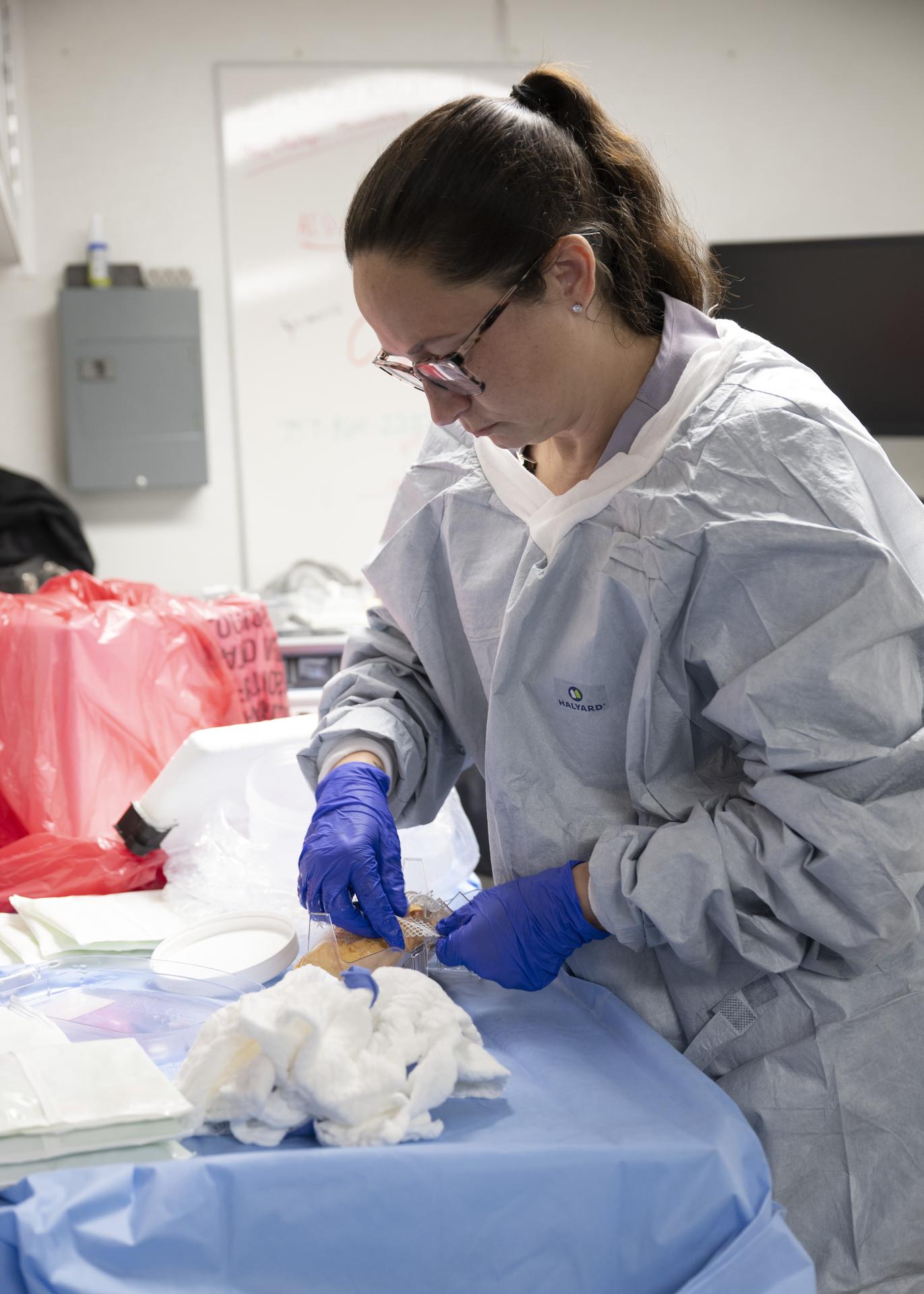
NASA Langley partnered with UNOS, a non-profit organization that manages the U.S. organ transplant system, to conduct the first-of-its-kind organ transport drone test with a human kidney on June 5, 2026 at Langley Research Center in Hampton, Va. Photo Credit NASA/Ryan Hill
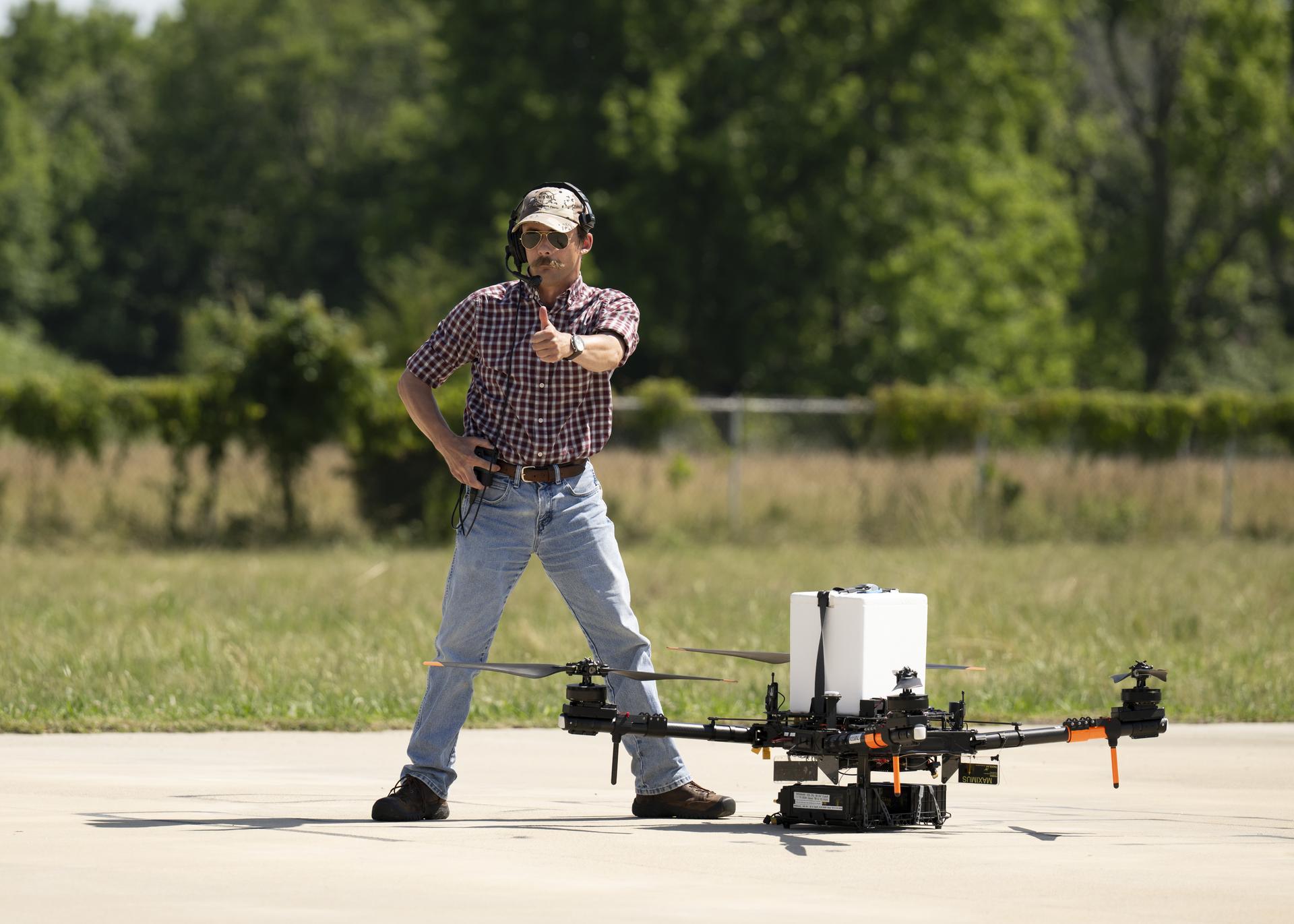
NASA Langley partnered with UNOS, a non-profit organization that manages the U.S. organ transplant system, to conduct the first-of-its-kind organ transport drone test with a human kidney on June 5, 2026 at Langley Research Center in Hampton, Va. Photo Credit NASA/Ryan Hill
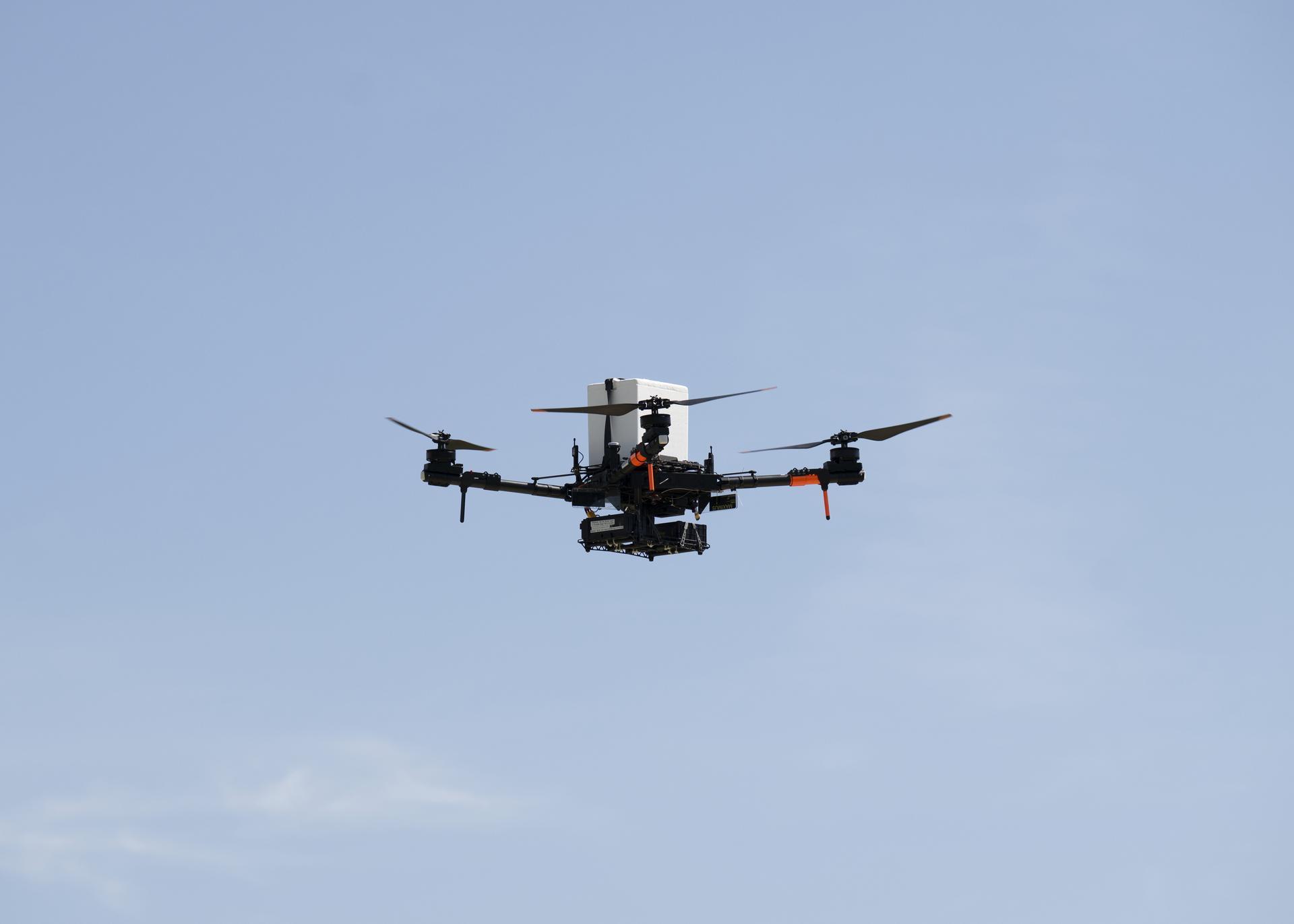
NASA Langley partnered with UNOS, a non-profit organization that manages the U.S. organ transplant system, to conduct the first-of-its-kind organ transport drone test with a human kidney on June 5, 2026 at Langley Research Center in Hampton, Va. Photo Credit NASA/Ryan Hill
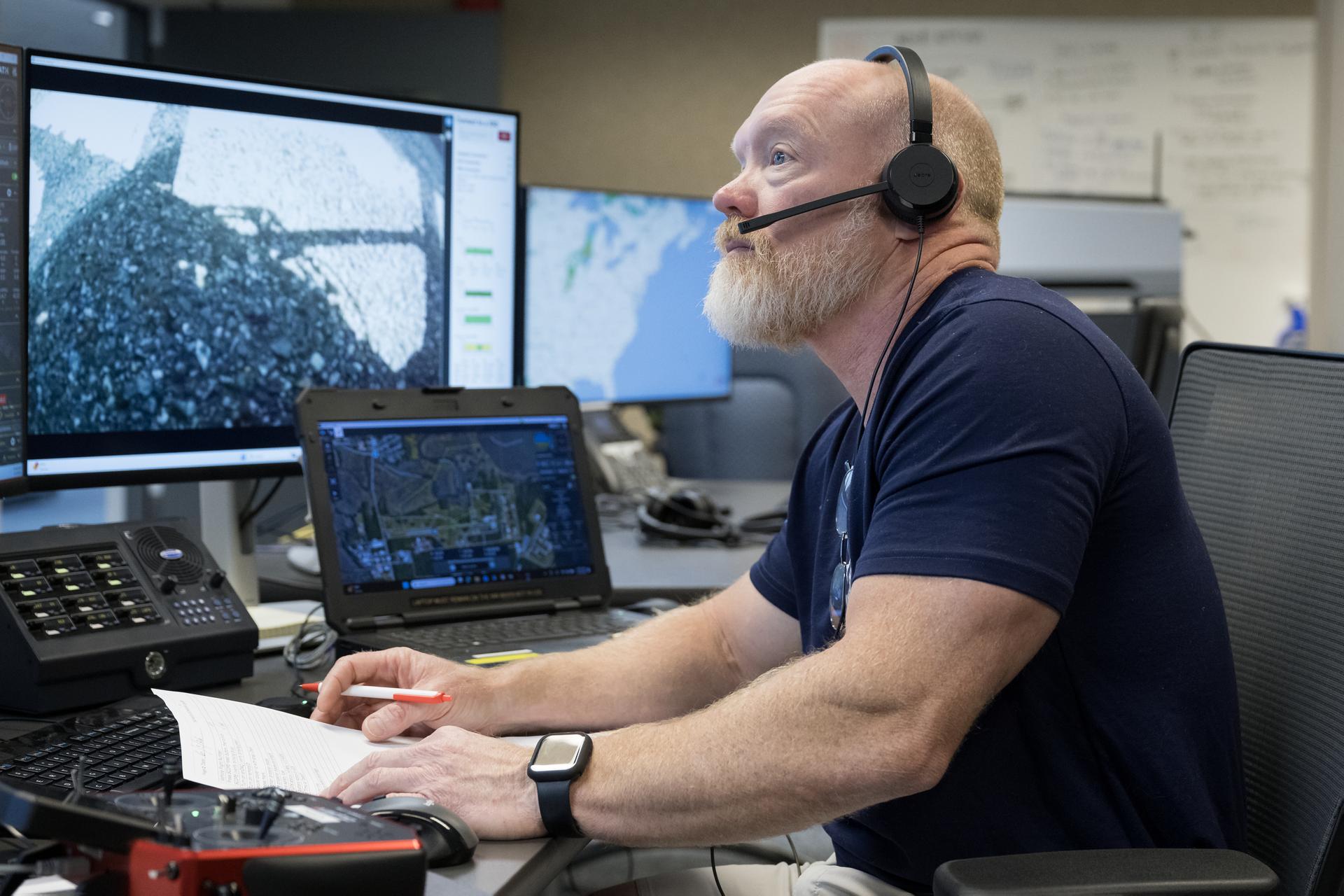
NASA Langley partnered with UNOS, a non-profit organization that manages the U.S. organ transplant system, to conduct the first-of-its-kind organ transport drone test with a human kidney on June 5, 2026 at Langley Research Center in Hampton, Va. Photo Credit NASA/Mark Knopp

This enhanced color composite image from Dawn's visible and infrared mapping spectrometer shows the area around Ernutet Crater on Ceres. The instrument detected the evidence of organic materials in this area, as reported in a 2017 study in the journal Science. In this view, areas that appear pink with respect to the background appear to be rich in organics, and green areas are where organic material appears to be less abundant. Light with a wavelength of 2000 nanometers is shown in blue, 3400 nanometers is shown in green and 1700 nanometers is shown in red. http://photojournal.jpl.nasa.gov/catalog/PIA21420
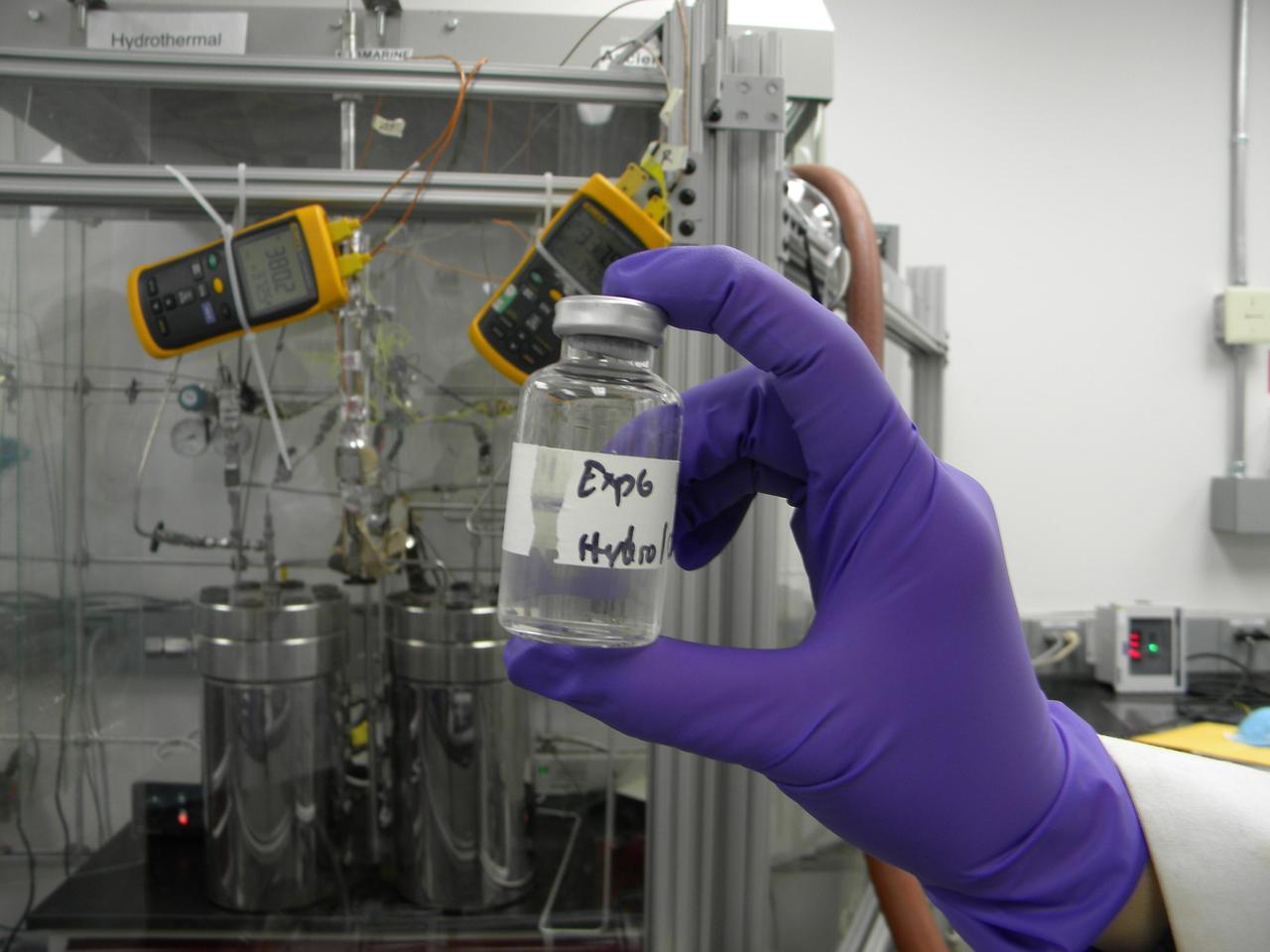
The NASA Astrobiology Icy Worlds team at NASA Jet Propulsion Laboratory are collecting samples from a simulated ocean vent to see if they can detect organic molecules being brewed.
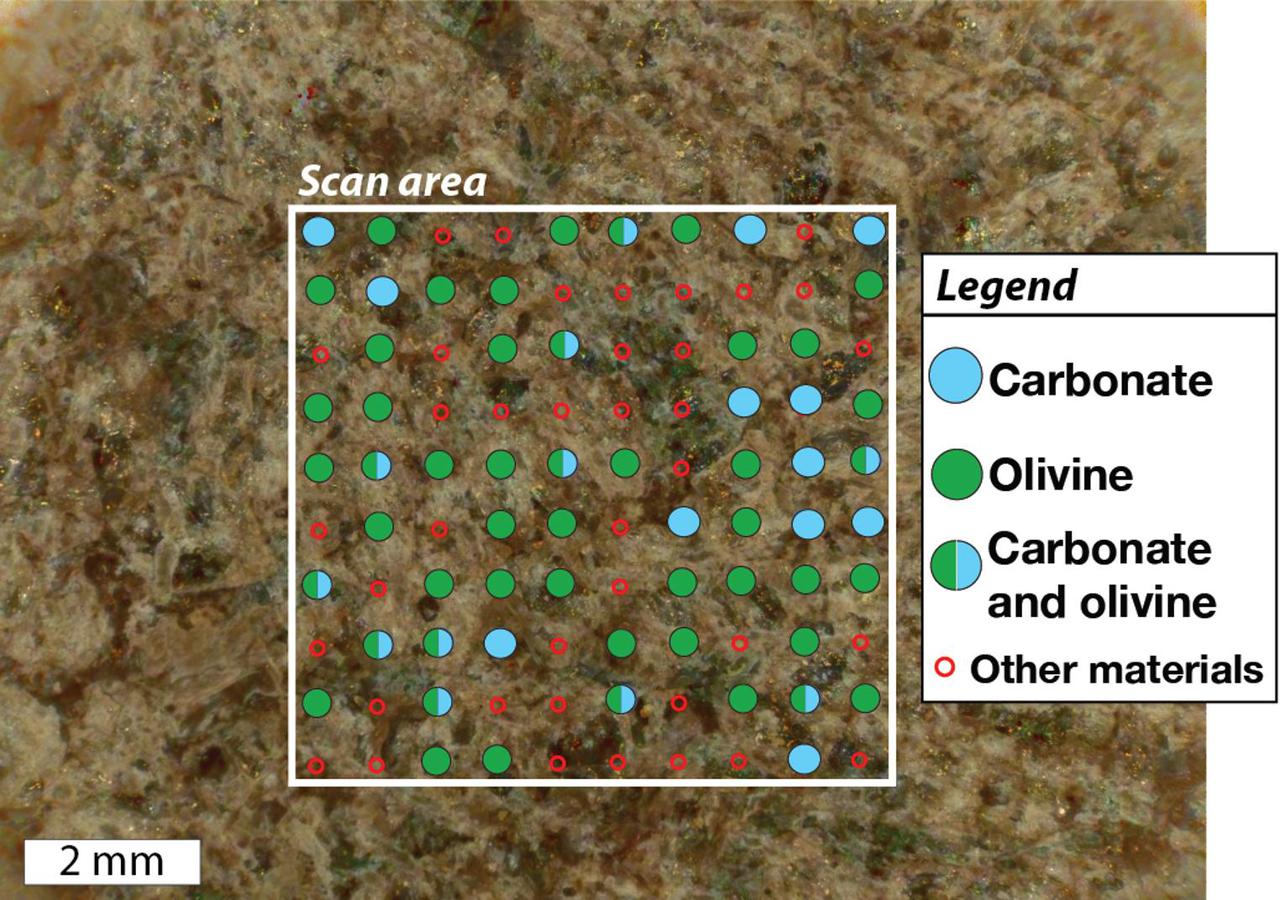
Different kinds of carbon-based molecules called organic compounds were viewed within a rock target called "Garde" by SHERLOC, one of the instruments on the end of the robotic arm aboard NASA's Perseverance Mars rover. The rover used its drill to abrade, or grind away, a patch of rock so that SHERLOC (Scanning Habitable Environments with Raman & Luminescence for Organics & Chemicals) could analyze its interior. This data was taken on Sept. 18, 2021, the 207th Martian day, or sol, of the mission. Nonbiological, geological processes can form organics. The organics found in PIXL's data and their association with the rocks that they're embedded within bear a striking resemblance to nonbiological organics within Martian meteorites, suggesting that these organics were formed by geological processes. Therefore, these organics findings are not biosignatures (compounds that indicate the presence of a biological process). SHERLOC made the first detection of organics on the Martian surface since the Curiosity rover. It is also the first detection of organics on the Martian surface made through ultraviolet fluorescence spectroscopy (whereas the Curiosity rover utilized a different methodology known as mass spectrometry), and it is the first discovery of the spatial distribution of organics on the Martian surface. The organics were found to be simple aromatics present at low concentrations, which is similar to what was found by the Curiosity rover and within Martian meteorites. A key objective for Perseverance's mission on Mars is astrobiology, including the search for signs of ancient microbial life. The rover will characterize the planet's geology and past climate, pave the way for human exploration of the Red Planet, and be the first mission to collect and cache Martian rock and regolith (broken rock and dust). Subsequent NASA missions, in cooperation with ESA (European Space Agency), would send spacecraft to Mars to collect these sealed samples from the surface and return them to Earth for in-depth analysis. The Mars 2020 Perseverance mission is part of NASA's Moon to Mars exploration approach, which includes Artemis missions to the Moon that will help prepare for human exploration of the Red Planet. https://photojournal.jpl.nasa.gov/catalog/PIA25042
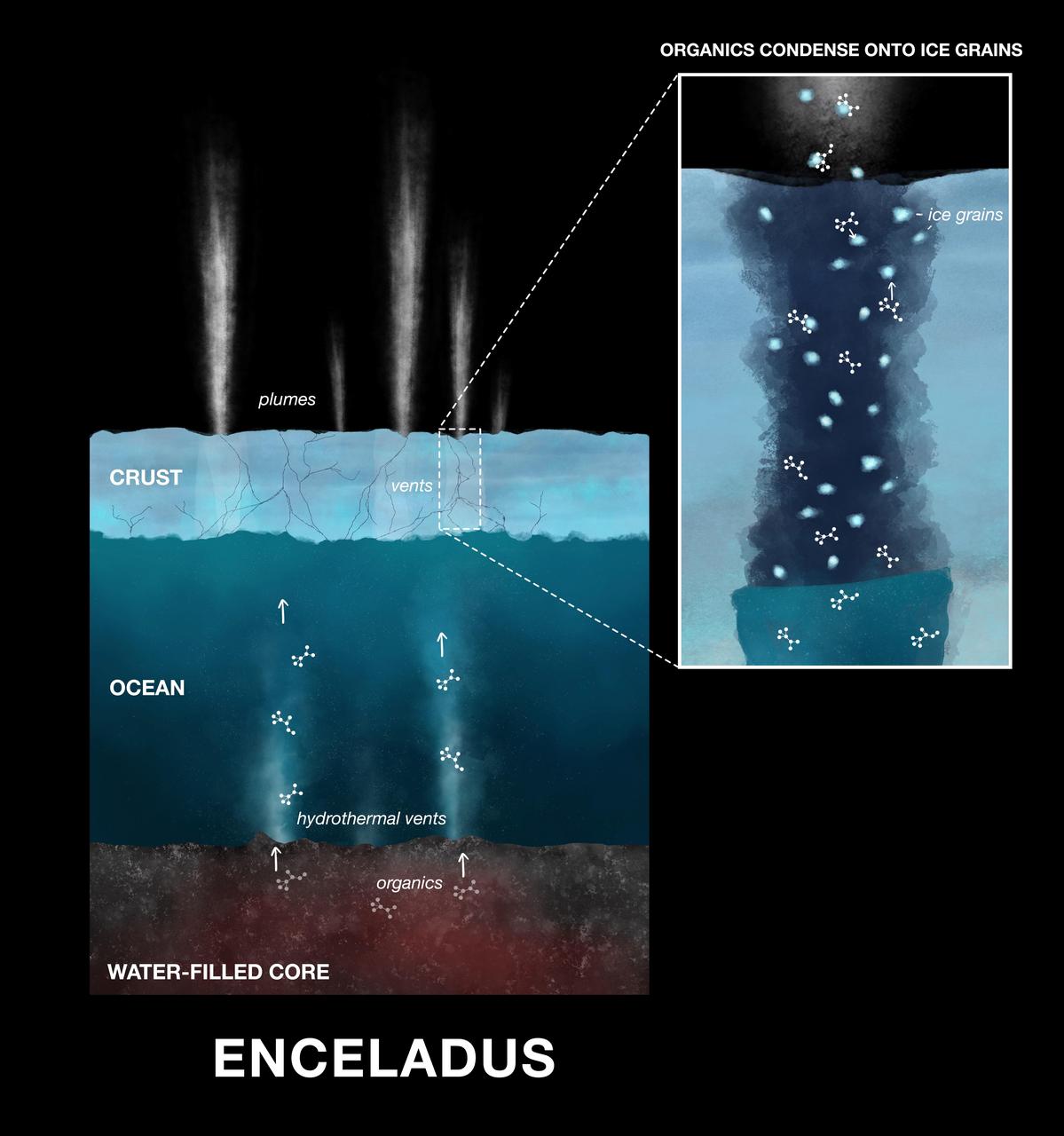
This illustration shows how newly discovered organic compounds — the ingredients of amino acids — were detected by NASA's Cassini spacecraft in the ice grains emitted from Saturn's moon Enceladus. Powerful hydrothermal vents eject material from Enceladus' core into the moon's massive subsurface ocean. After mixing with the water, the material is released into space as water vapor and ice grains. Condensed onto the ice grains are nitrogen- and oxygen-bearing organic compounds. On Earth hydrothermal vents on the ocean floor provide the energy that fuels reactions that produce amino acids, the building blocks of life. Scientists believe Enceladus' hydrothermal vents may operate in the same way, supplying energy that leads to the production of amino acids. https://photojournal.jpl.nasa.gov/catalog/PIA23173
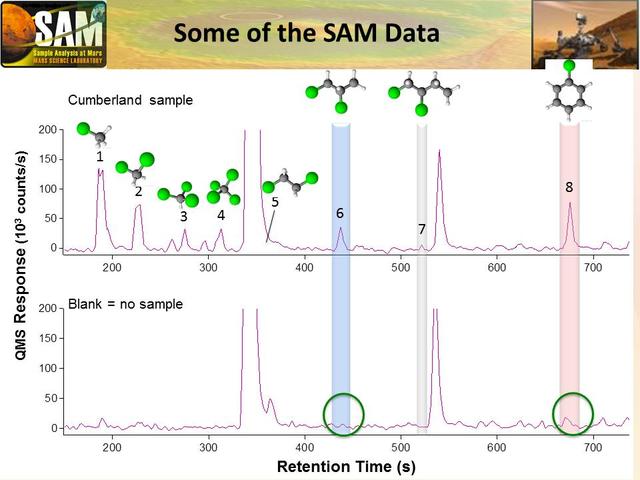
Data graphed here are examples from the Sample Analysis at Mars SAM laboratory detection of Martian organics in a sample of powder that the drill on NASA Curiosity Mars rover collected from a rock target called Cumberland.
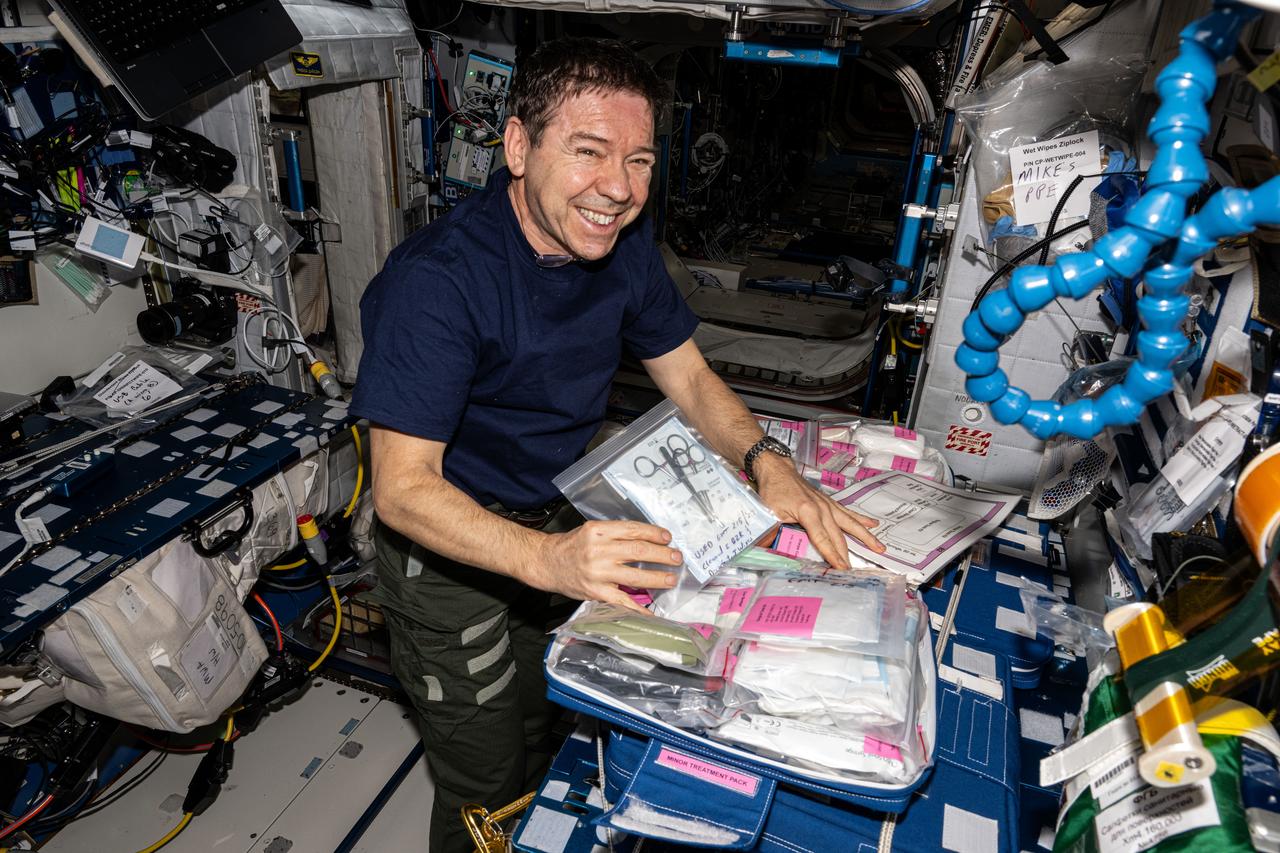
iss071e414062 (Aug. 3, 2024) --- NASA astronaut and Expedition 71 Flight Engineer Mike Barratt collects and organizes medical supplies aboard the International Space Station's Harmony module.

A team of astronomers has made the first detection ever of an organic molecule in the atmosphere of a Jupiter-sized planet orbiting another star. The breakthrough was made with NASA Hubble Space Telescope.
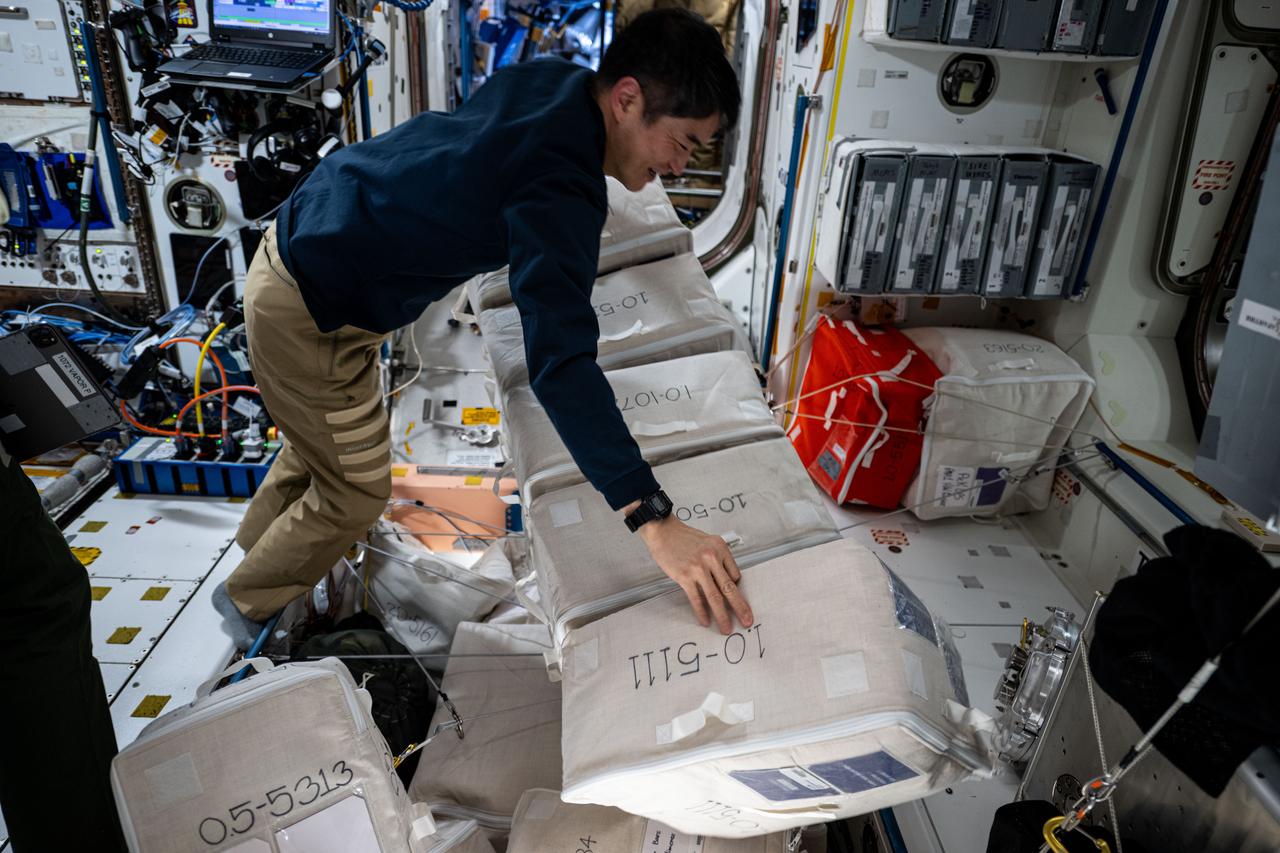
iss073e0221788 (June 19, 2025) --- JAXA (Japan Aerospace Exploration Agency) astronaut and Expedition 73 Commander Takuya Onishi organizes cargo bags inside the International Space Station's Unity module.
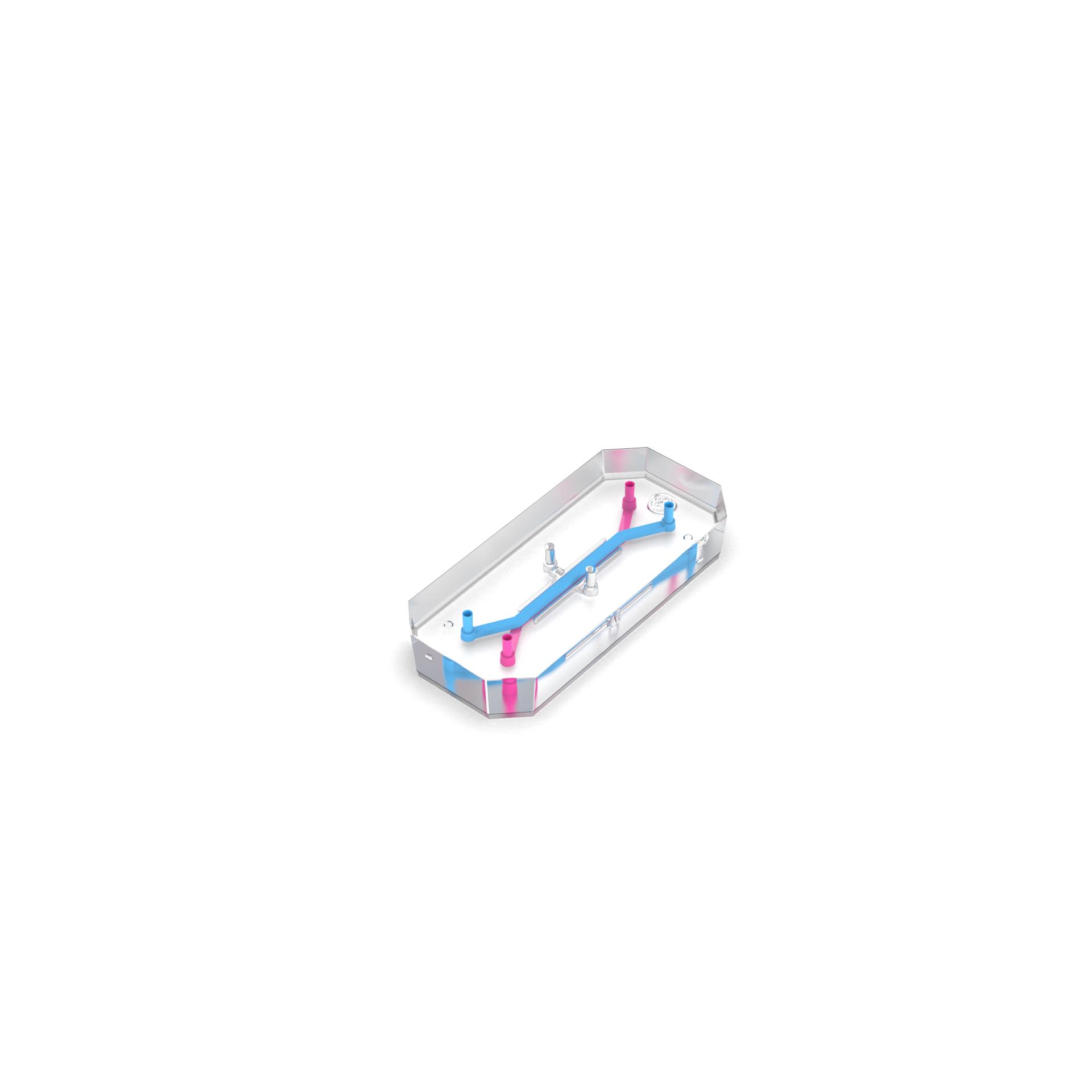
Organ chips are roughly the size of a USB drive and could be used to predict how an individual might respond to a variety of stressors, such as radiation or medical treatments, including pharmaceuticals. Made with human cells, the chips mimic how tissues, such as the brain, heart, liver, or dozens of other organs, work. NASA research will focus on validating and leveraging these models to assess the impacts of deep space stressors on astronauts’ health.
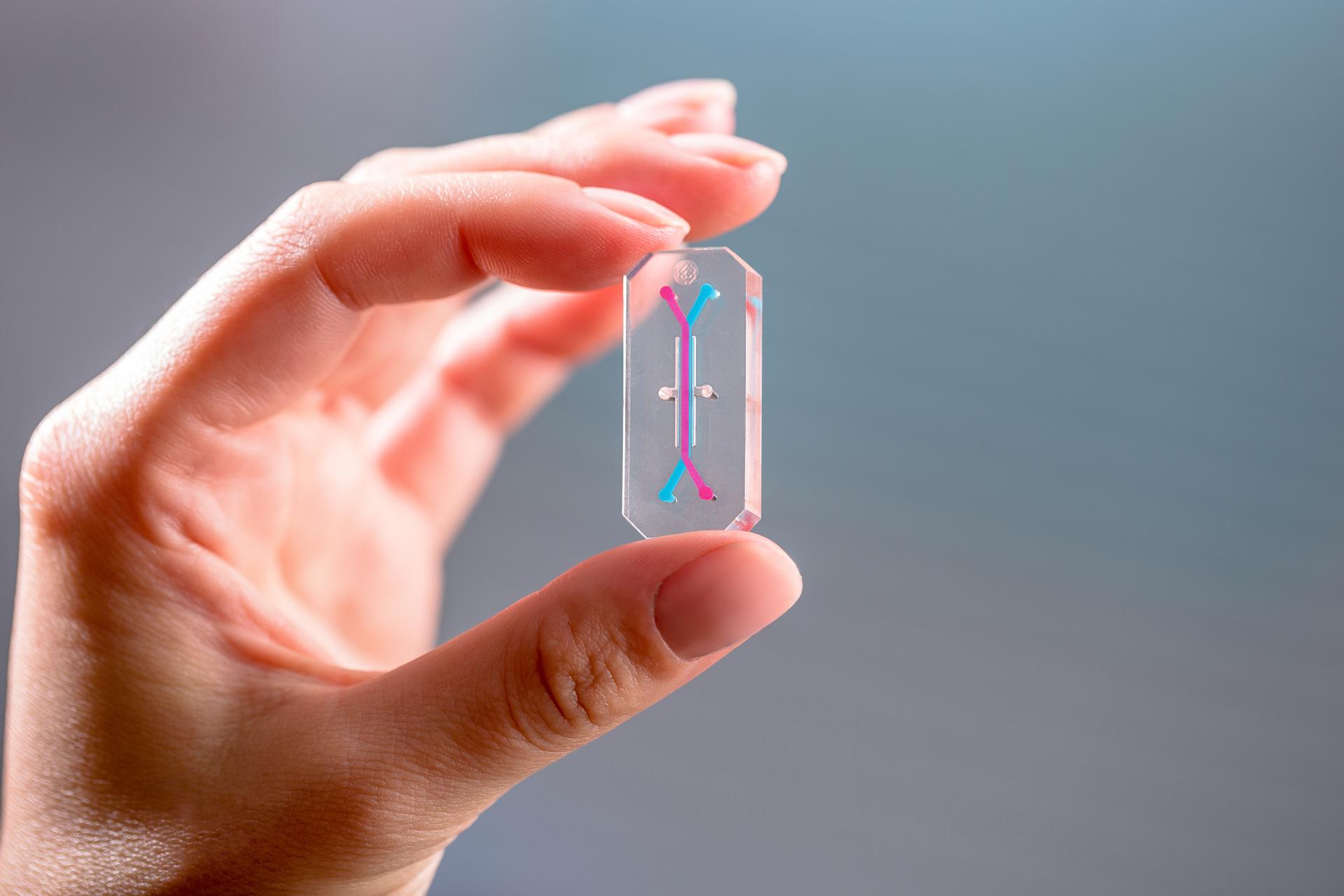
The AVATAR (A Virtual Astronaut Tissue Analog Response) investigation will use organ-on-a-chip devices, or organ chips, to study a effects of increased radiation and microgravity on human health. Artemis II AVATAR is a small experiment flying aboard Artemis II that could lead to big impacts in healthcare, both for astronauts in space and citizens on Earth. For more information on AVATAR: go.nasa.gov/4m5dGH9
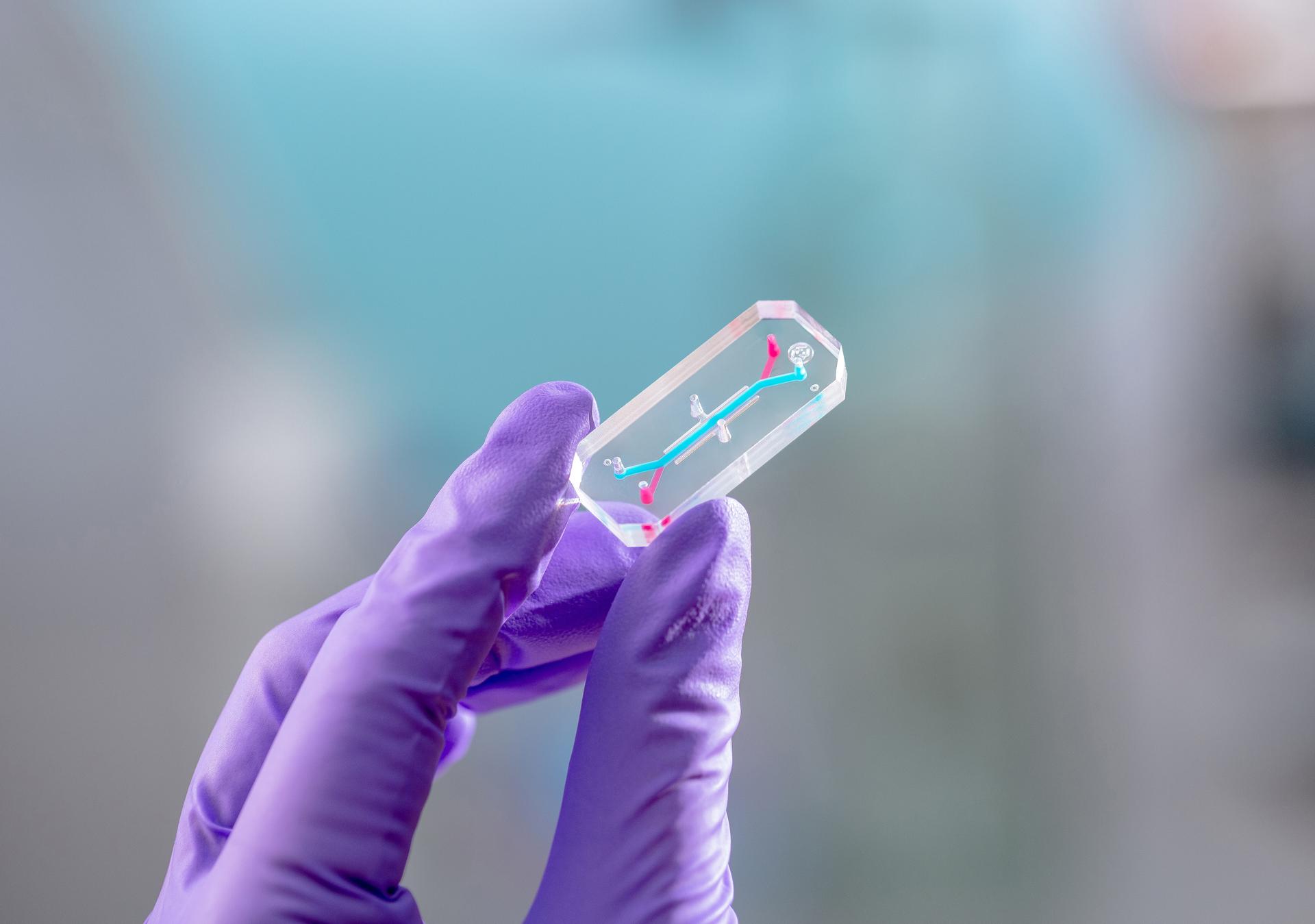
The AVATAR (A Virtual Astronaut Tissue Analog Response) investigation will use organ-on-a-chip devices, or organ chips, to study a effects of increased radiation and microgravity on human health. Artemis II AVATAR is a small experiment flying aboard Artemis II that could lead to big impacts in healthcare, both for astronauts in space and citizens on Earth. For more information on AVATAR: go.nasa.gov/4m5dGH9
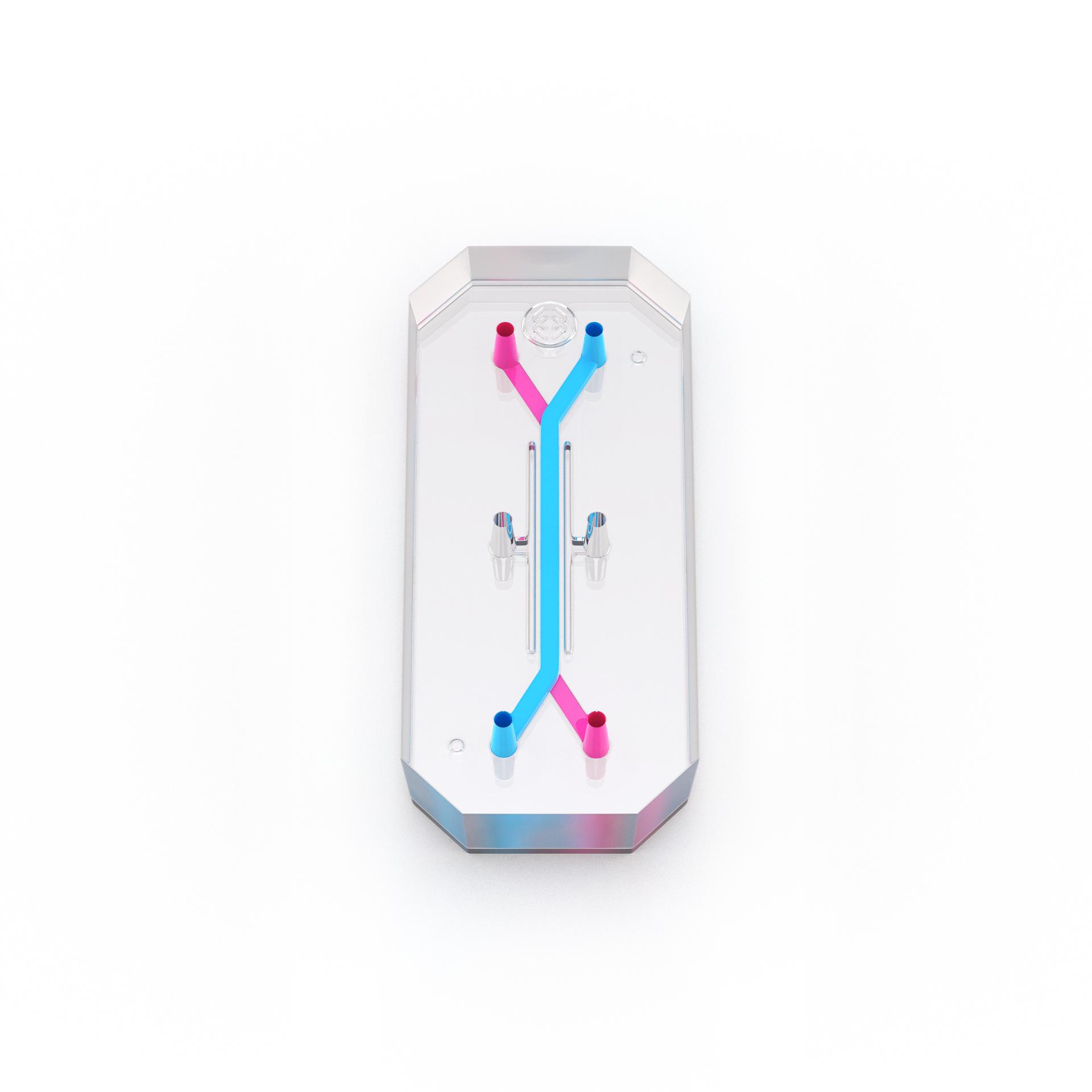
The AVATAR (A Virtual Astronaut Tissue Analog Response) investigation will use organ-on-a-chip devices, or organ chips, to study a effects of increased radiation and microgravity on human health. Artemis II AVATAR is a small experiment flying aboard Artemis II that could lead to big impacts in healthcare, both for astronauts in space and citizens on Earth. For more information on AVATAR: go.nasa.gov/4m5dGH9

iss073e0979461 (Oct. 27, 2025) --- NASA astronaut and Expedition 73 Flight Engineer Jonny Kim smiles for a portrait whle organizing cargo inside the International Space Station's Harmony module.
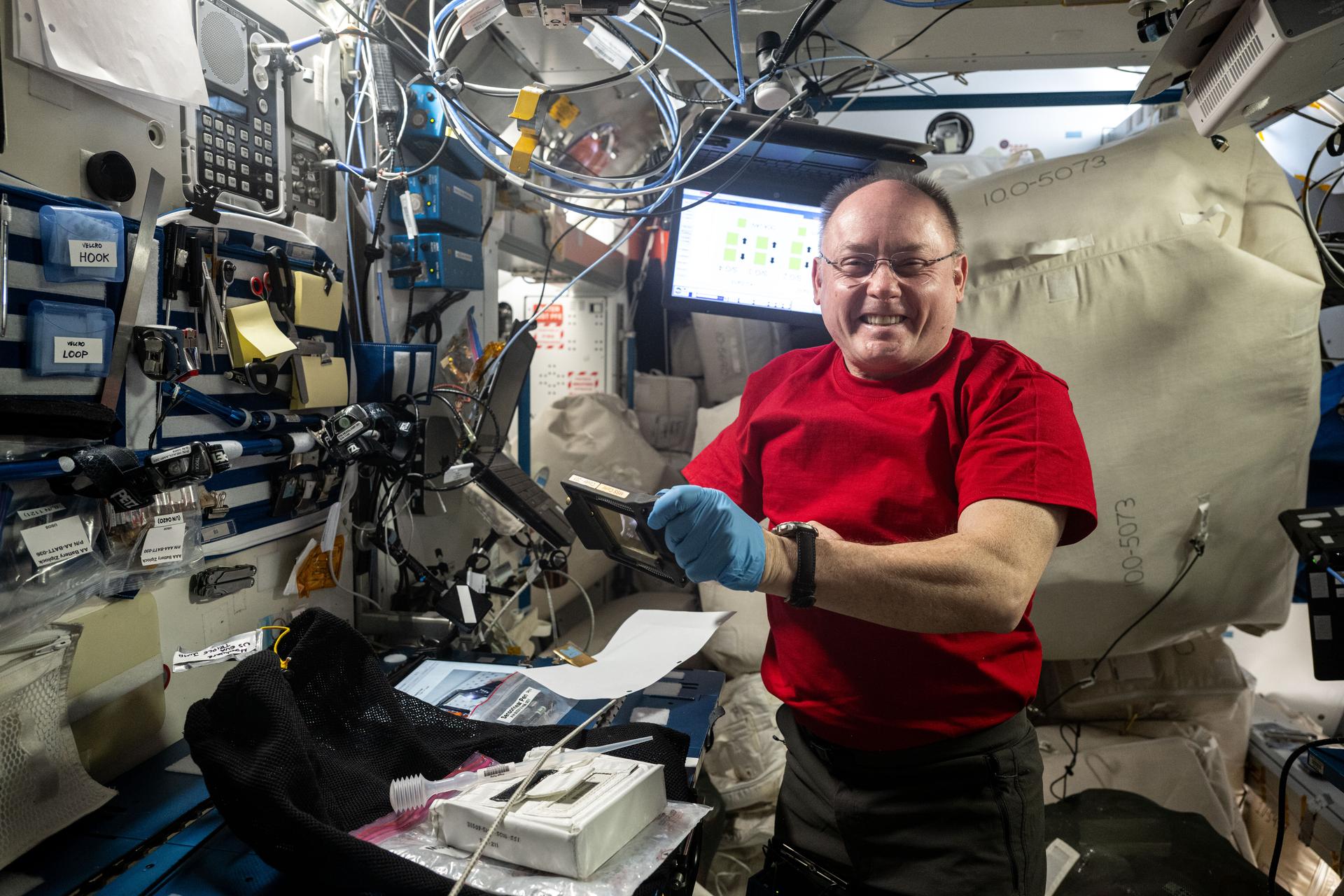
iss073e0917875 (Oct. 23, 2025) --- NASA astronaut and Expedition 73 Flight Engineer Mike Fincke smiles for a portrait while organizing cargo inside the International Space Station's Harmony module.
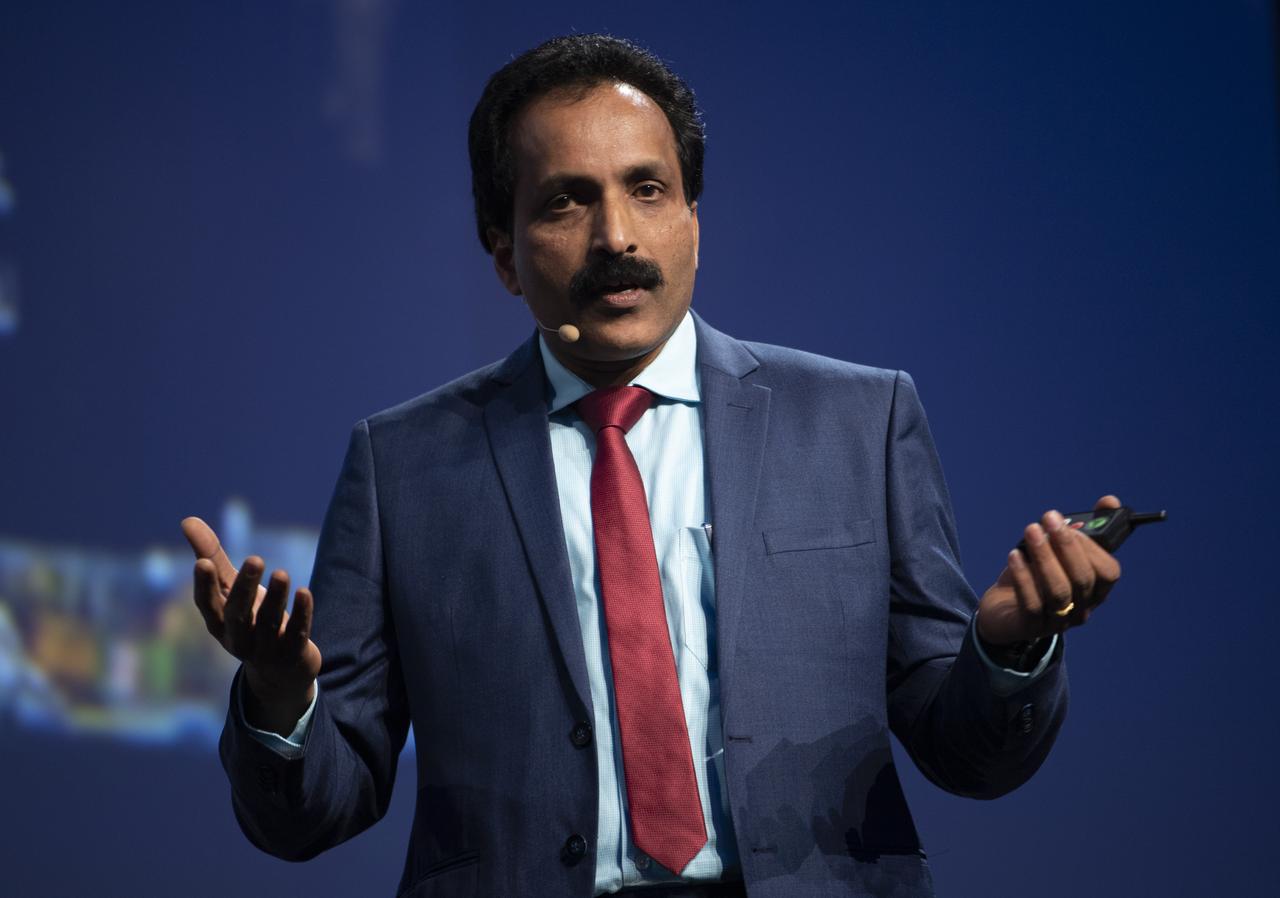
S. Somanath, Director of Vikram Sarabhai Space Centre, Indian Space Research Organization (ISRO), speaks during the Heads of Agency Plenary of the 70th International Astronautical Congress, Monday, Oct. 21, 2019 at the Walter E. Washington Convention Center in Washington. Photo Credit: (NASA/Bill Ingalls)
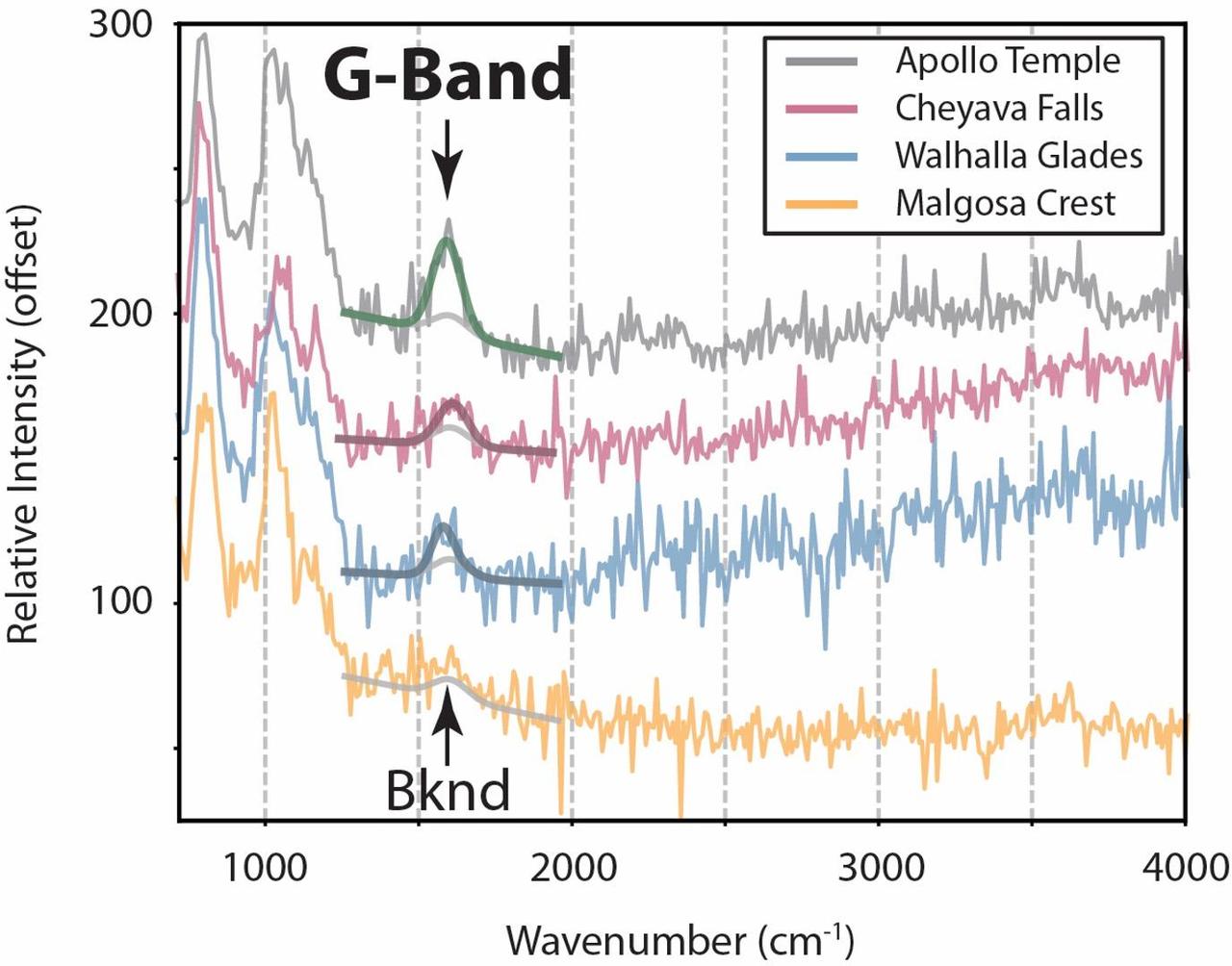
This graph displays data collected by NASA's Perseverance Mars rover from targets in a rock formation nicknamed "Bright Angel." Scientists later determined one of those targets, a rock nicknamed "Cheyava Falls" (second line from the top), contained a potential biosignature. A potential biosignature is a substance or structure that might have a biological origin but requires more data or further study before a conclusion can be reached about the absence or presence of life. The graph includes "G-bands" – a type of signal in Raman spectroscopy – indicating the presence of organic molecules, which can be created by both geological as well as biological sources. ("Bknd" is shorthand for "background.") The data was collected by an instrument on the end of Perseverance's robotic arm called SHERLOC (Scanning Habitable Environments with Raman & Luminescence for Organics & Chemicals). A key objective for Perseverance's mission on Mars is astrobiology, including the search for signs of ancient microbial life. The rover is characterizing the planet's geology and past climate, to help pave the way for human exploration of the Red Planet, and is the first mission to collect and cache Martian rock and regolith. The Mars 2020 Perseverance mission is part of NASA's Mars Exploration Program (MEP) portfolio and the agency's Moon to Mars exploration approach, which includes Artemis missions to the Moon that will help prepare for human exploration of the Red Planet. https://photojournal.jpl.nasa.gov/catalog/PIA26639

KENNEDY SPACE CENTER, FLA. - An employee gets a blood pressure check from one of the participating organizations in Spaceport Super Safety and Health Day at KSC and Cape Canaveral Air Force Station. Many vendors and Center organizations displayed and demonstrated their products during the annual event dedicated to reinforcing safe and healthful behaviors in the workforce.
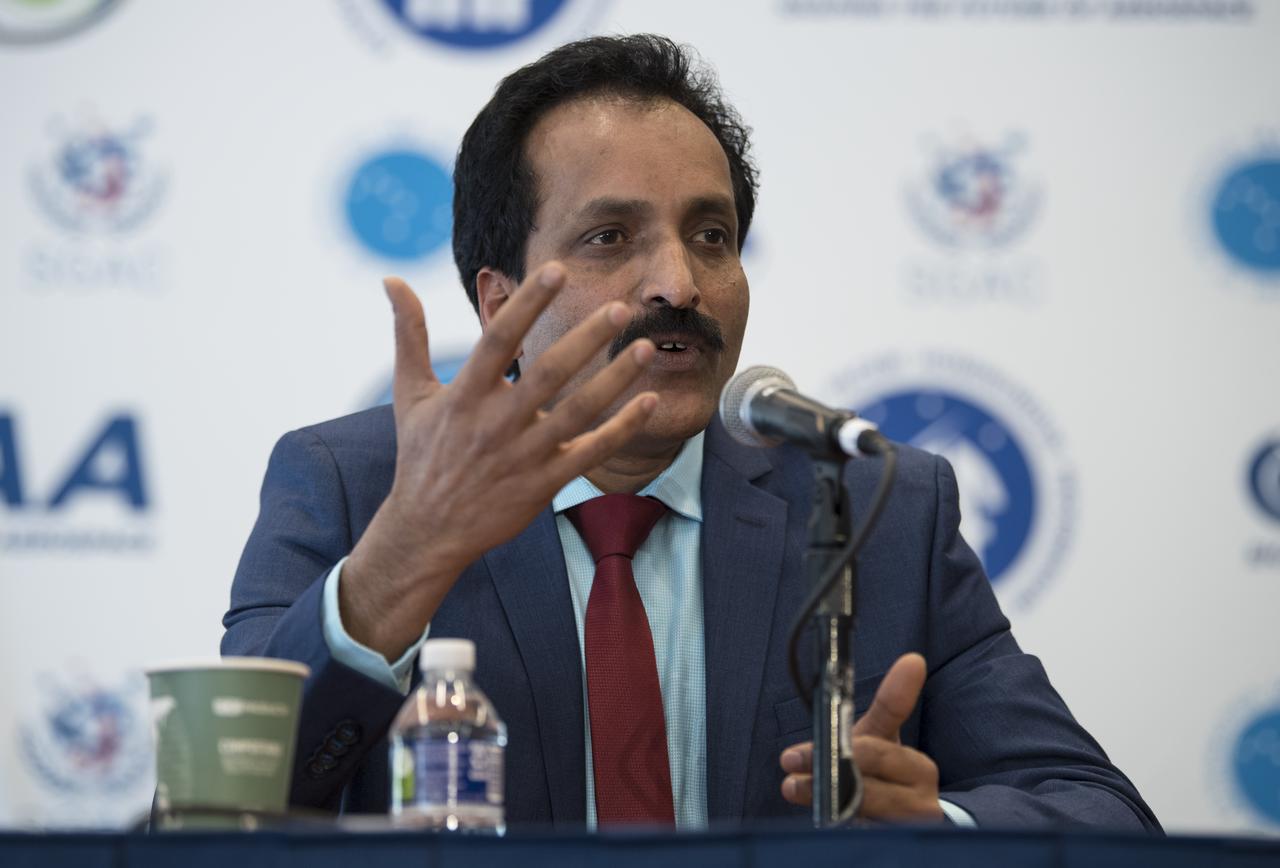
S. Somanath, Director of Vikram Sarabhai Space Centre, Indian Space Research Organization (ISRO), during the Heads of Agency press conference at the 70th International Astronautical Congress, Monday, Oct. 21, 2019 at the Walter E. Washington Convention Center in Washington. Photo Credit: (NASA/Bill Ingalls)
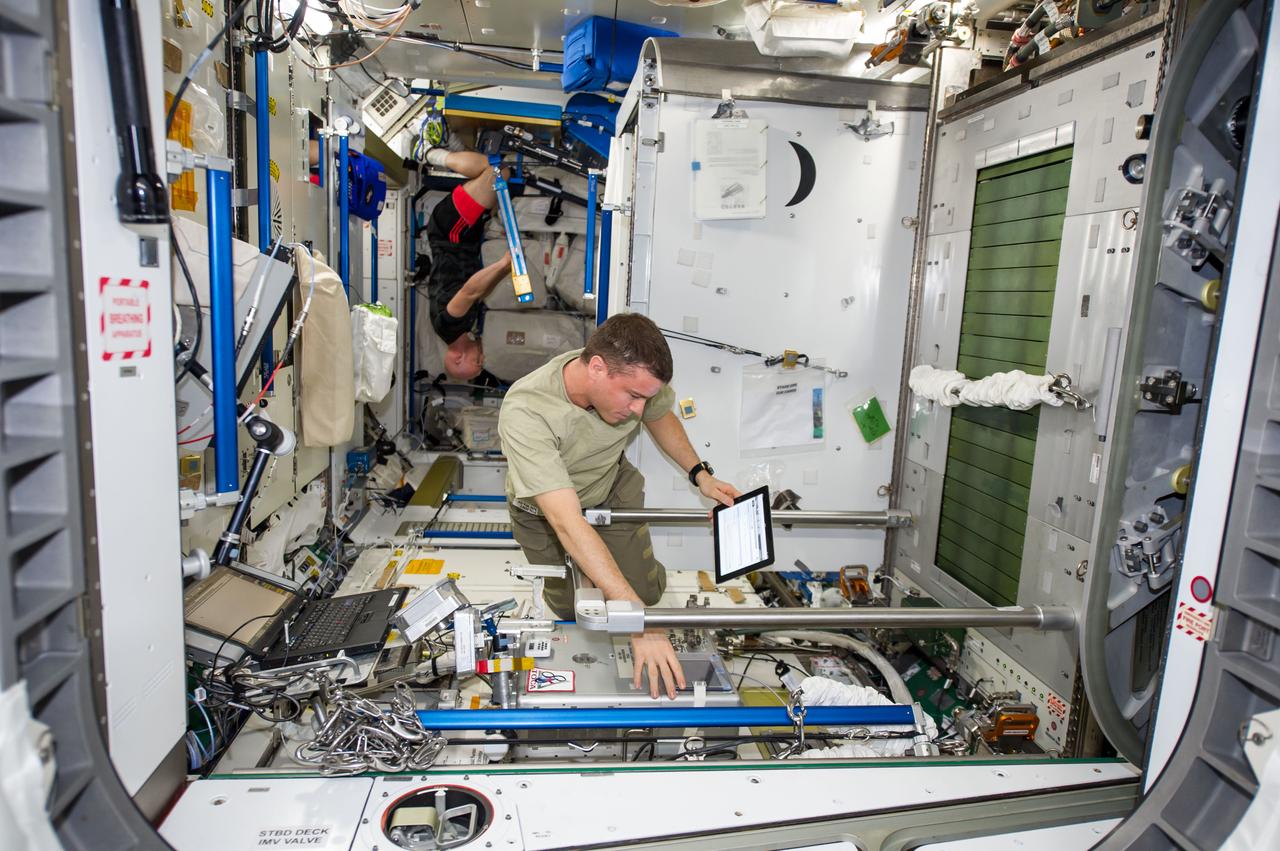
ISS040-E-139619 (10 Sept. 2014) --- In the International Space Station’s Tranquility node, NASA astronaut Reid Wiseman, Expedition 40 flight engineer, works with the Total Organic Carbon Analyzer (TOCA) while European Space Agency astronaut Alexander Gerst (background), flight engineer, gets a workout on the advanced Resistive Exercise Device (aRED).
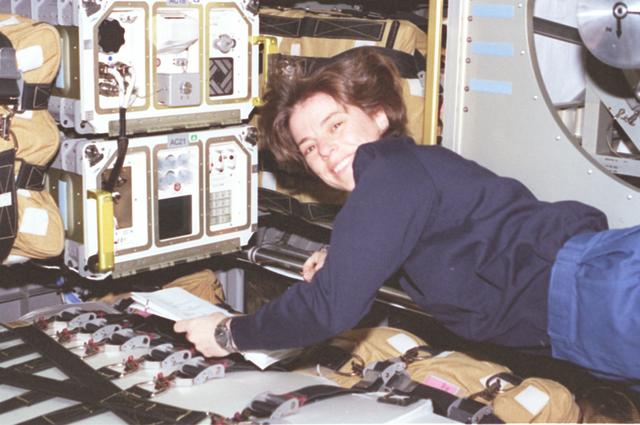
STS089-361-007 (22-31 Jan. 1998) --- Astronaut Bonnie J. Dunbar, STS-89 payload commander, checks out the Volatile Organic Analyzer (VOA) in the Spacehab Double Module aboard the Earth-orbiting space shuttle Endeavour. VOA was among a number of experiments monitored by the crew on Spacehab, while other payloads and experiments were stowed and conducted in Endeavour's cabin. Photo credit: NASA
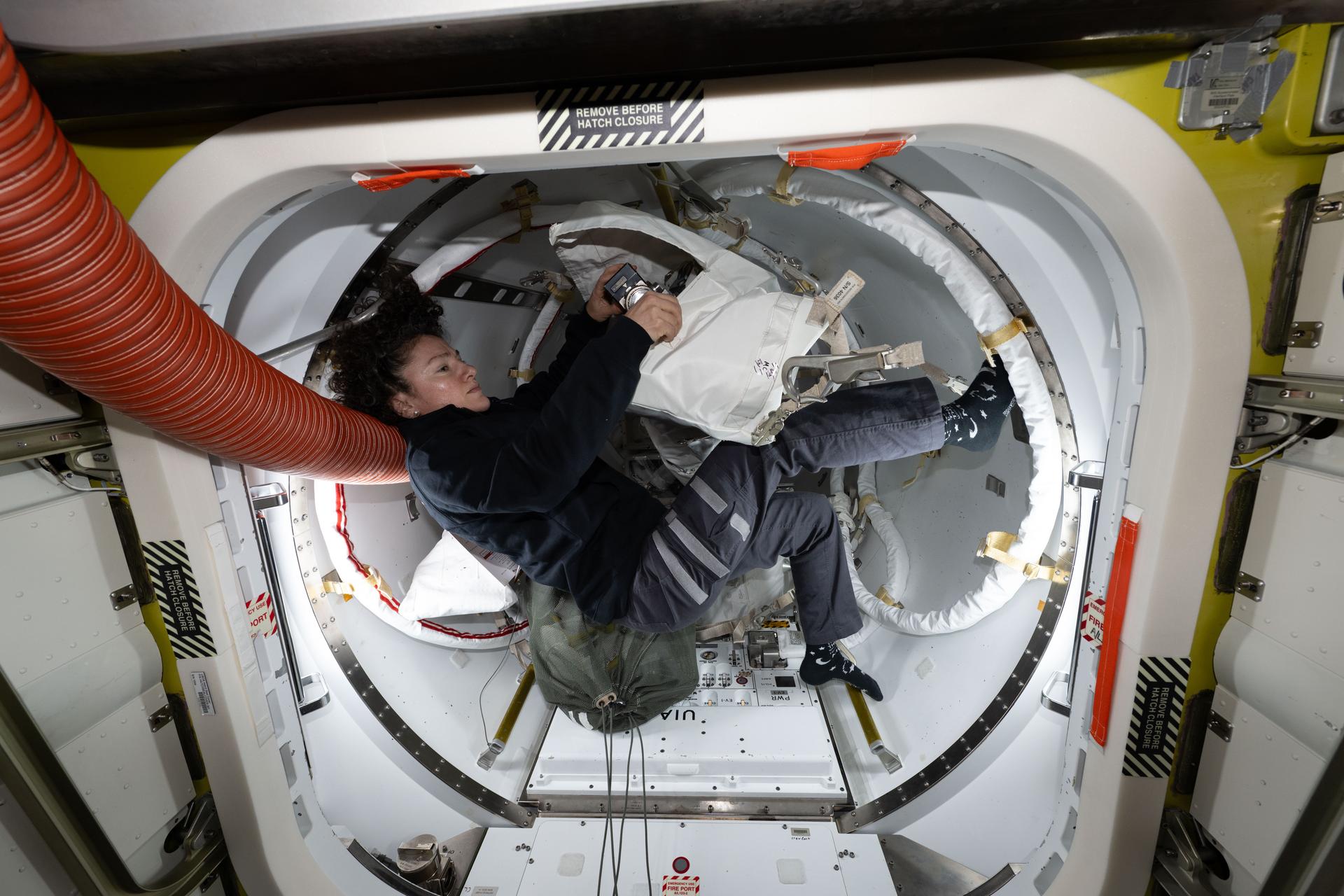
iss075e0002830 (Aug. 5, 2026) --- NASA astronaut and Expedition 75 commander Jessica Meir organizes tools inside the Quest airlock a day before her spacewalk, during which she installed hardware on the International Space Station's Starboard 6 truss segment to prepare it for future power system upgrades. Credit: NASA/Anil Menon
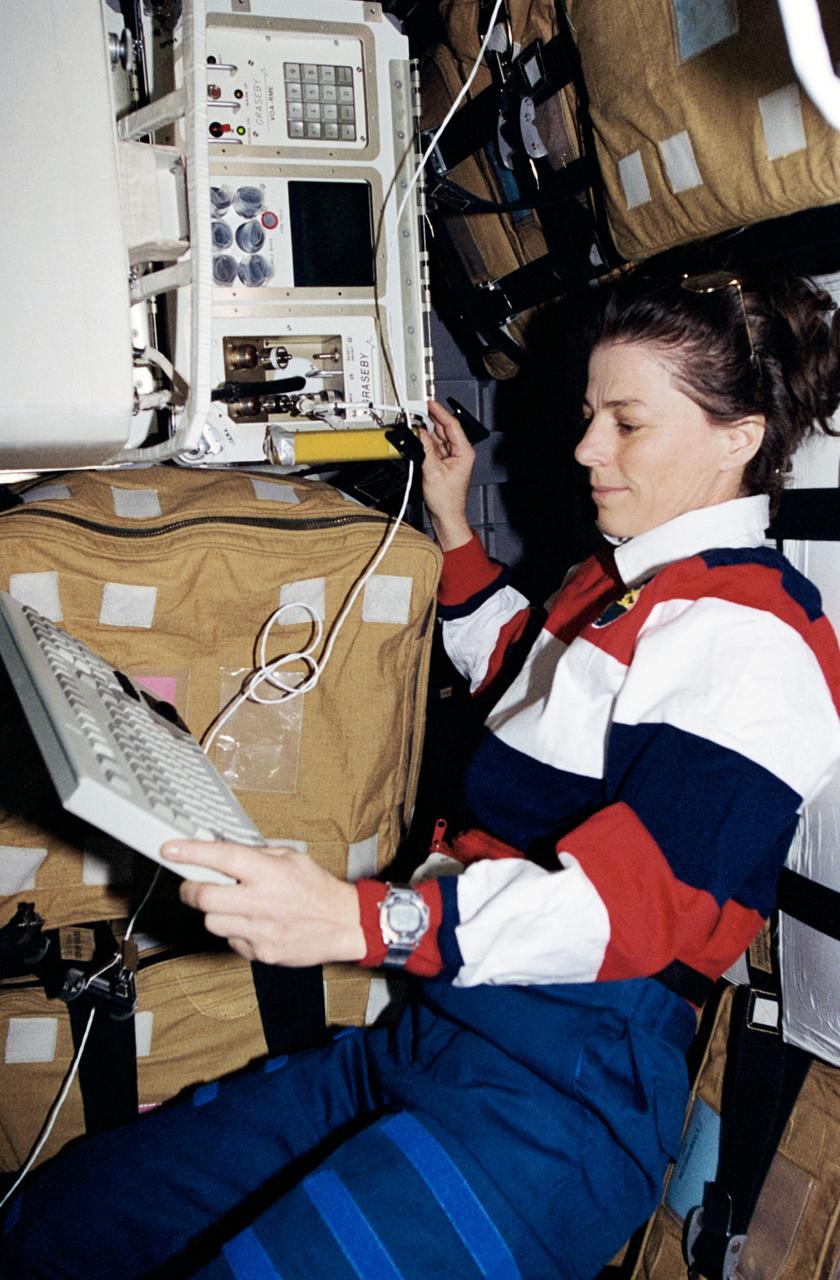
STS089-390-036 (22-31 Jan 1998) --- Astronaut Bonnie J. Dunbar, payload commander, checks out the Volatile Organic Analyzer (VOA) in the Spacehab Double Module aboard the Earth-orbiting Space Shuttle Endeavour. VOA was among a number of experiments monitored by the crew on Spacehab, while other payloads and experiments were stowed and conducted in Endeavour?s cabin.
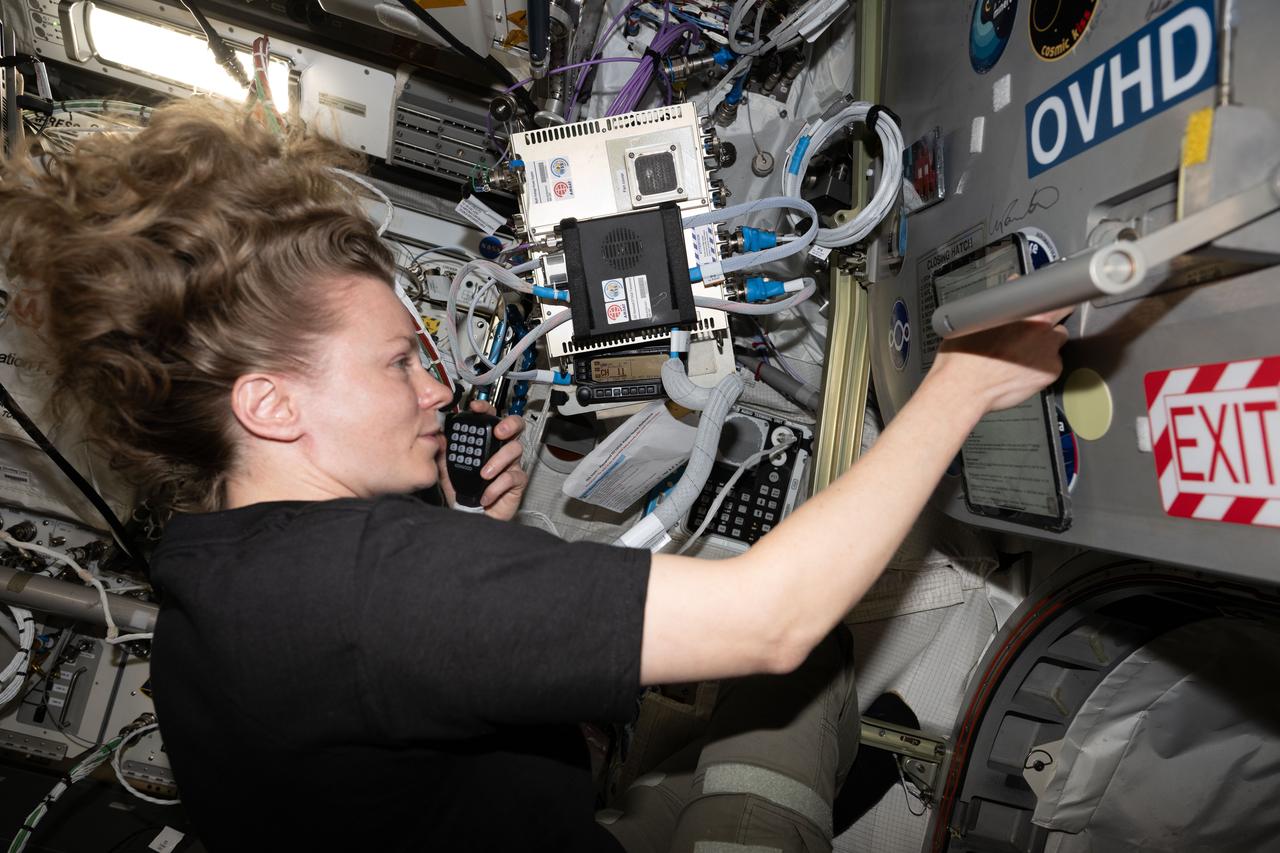
iss073e0511718 (Aug. 20, 2025) --- NASA astronaut and Expedition 73 Flight Engineer Zena Cardman speaks on a ham radio with the NixderStelar youth organization from Lima, Peru. The youngsters asked about using artificial intelligence on the International Space Station, how research in space benefits humans on Earth, and how living in weightlessness affects their bodies. Astronauts frequently speak to students, professionals, and government officials using the ham radio aboard the orbital outpost's Destiny laboratory module.
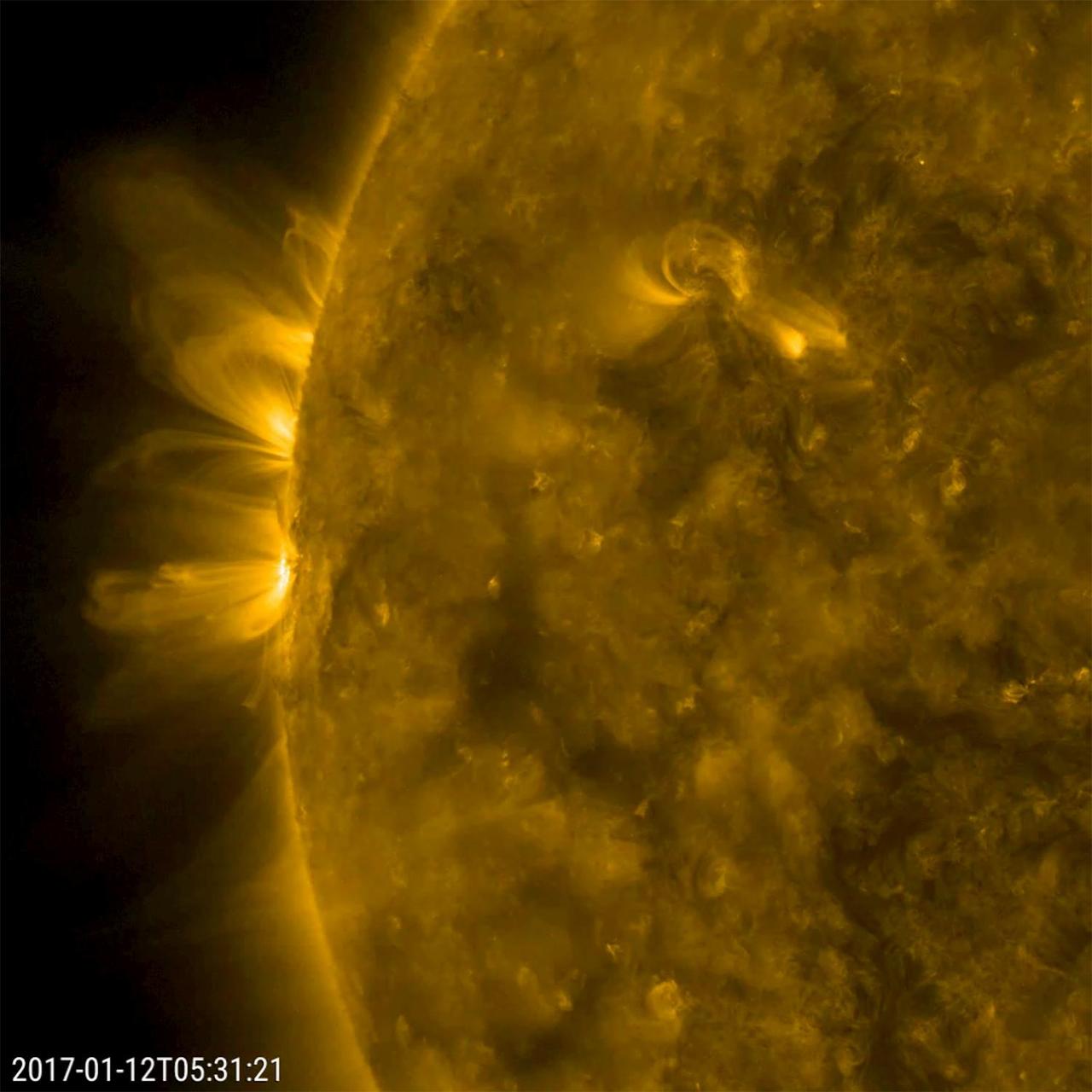
Magnetic arcs of plasma that spiraled above two active regions held their shape fairly well over 18 hours (Jan. 11-12, 2017). The charged plasma is being controlled the magnetic field lines of the active regions. The field lines become clearly visible when viewed in this wavelength of extreme ultraviolet light. Often the arches bend and twist more dynamically than the relatively stable ones seen here. Movies are available at http://photojournal.jpl.nasa.gov/catalog/PIA12327
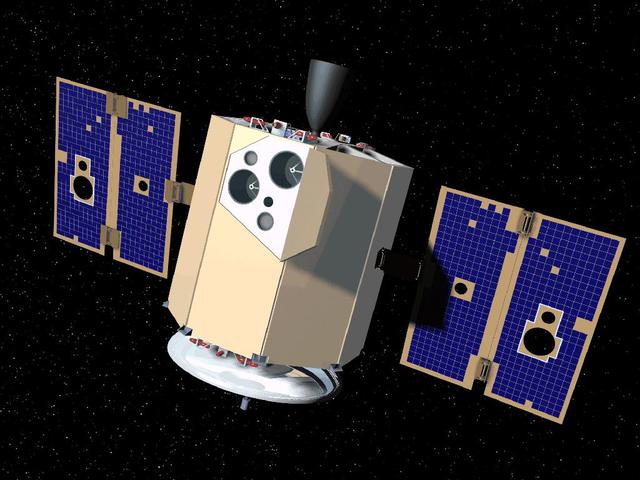
Artist conception of the Clementine spacecraft, a joint mission of the U.S. Strategic Defense Initiative Organization and NASA. http://photojournal.jpl.nasa.gov/catalog/PIA18159
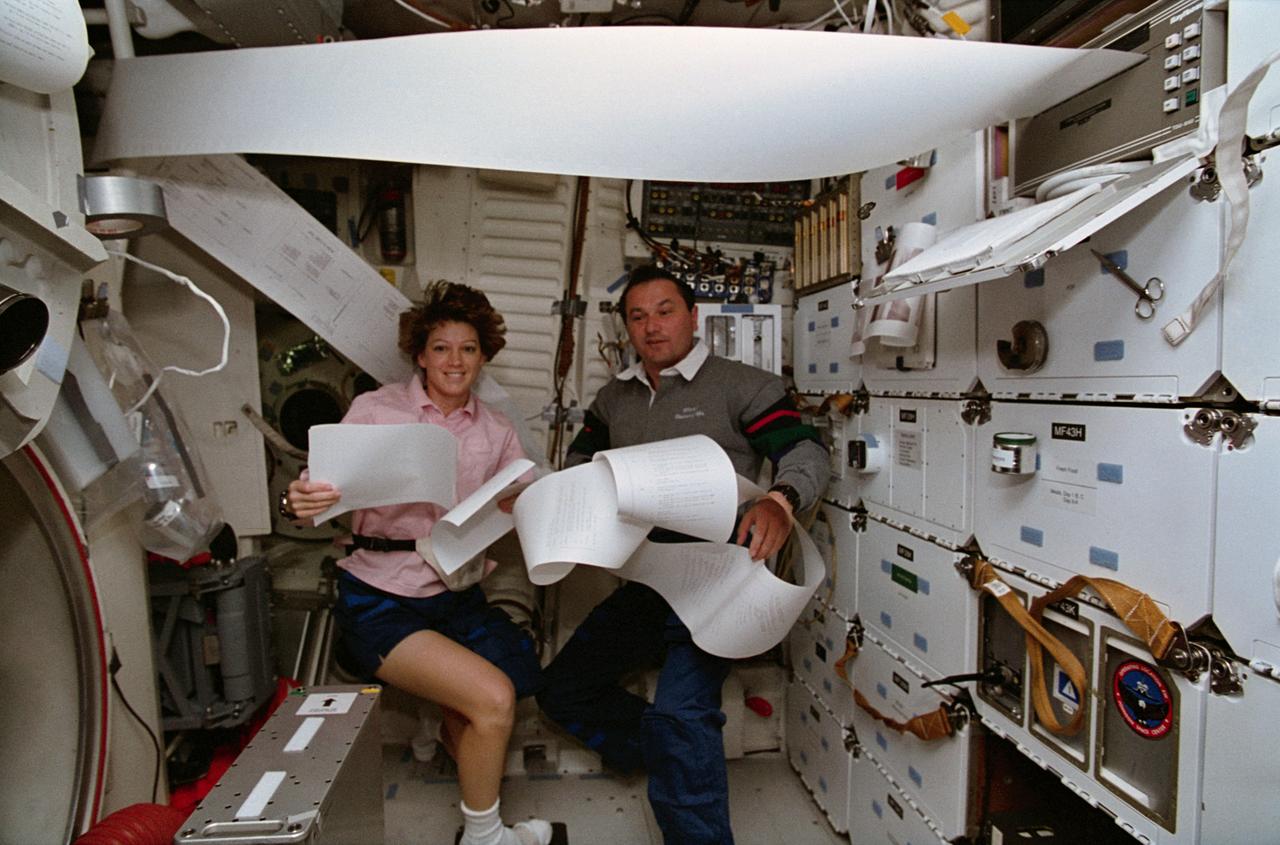
STS063-86-028 (3-11 Feb 1995) --- On the Space Shuttle Discovery's middeck, astronaut Eileen M. Collins and cosmonaut Vladimir G. Titov attempt to organize a lengthy mail message from flight controllers on Earth. Collins was pilot for the eight day mission and Titov served as a mission specialist representing the Russian Space Agency (RSA), thus becoming one of a small number of people to have flown on spacecraft launched by the United States and Russia. Approximately 30 feet of messages from the Thermal Imaging Printing System (TIPS) are spread around the middeck.
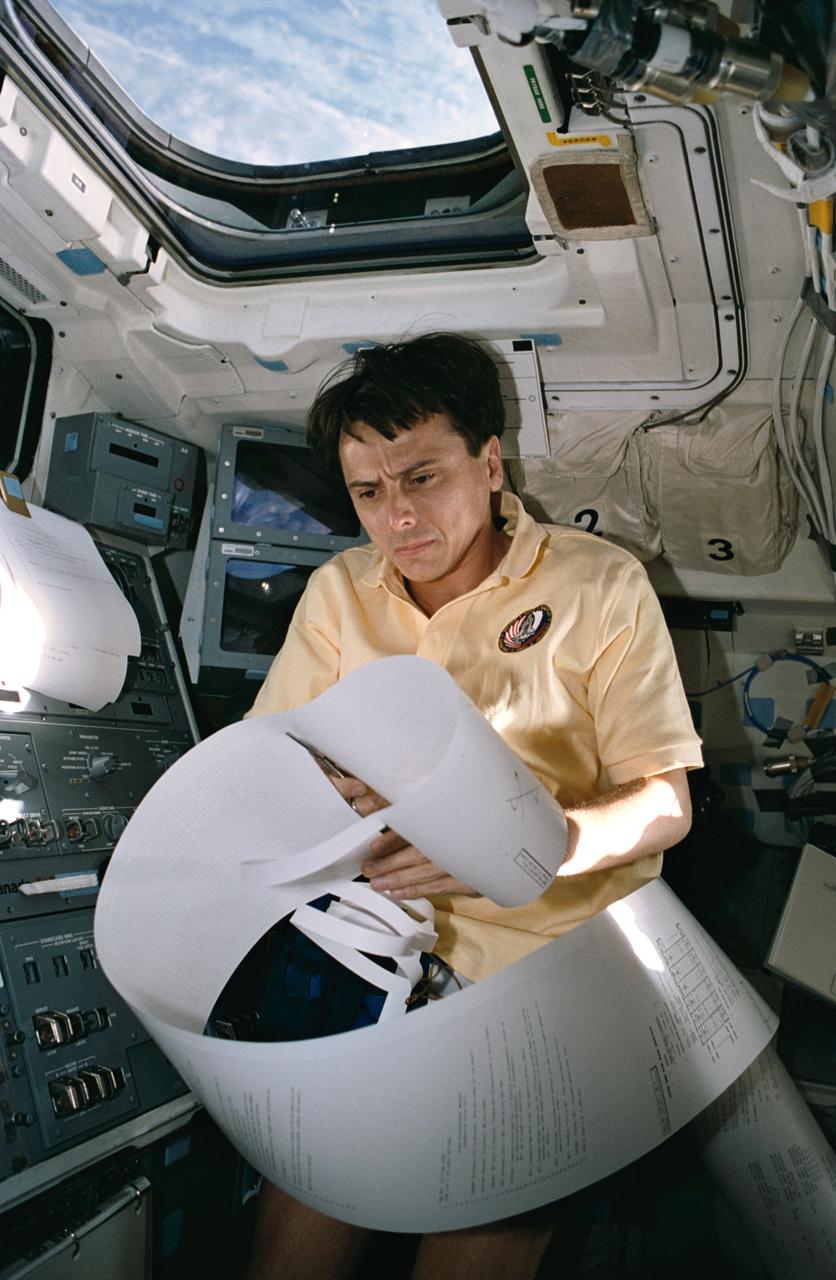
STS060-25-016 (6 Feb. 1994) --- On space shuttle Discovery?s aft flight deck, astronaut Franklin R. Chang-Diaz, STS-60 payload commander, begins to organize what was believed to be among the longest mail messages in shuttle history. Though early shuttle flights could brag of longer teleprinted messages, the Thermal Imaging Printing System?s day four correspondence, most of which is out of frame here, is record length for recent flights. Chang-Diaz joined four other NASA astronauts and a Russian cosmonaut for eight days aboard Discovery. Photo credit: NASA or National Aeronautics and Space Administration
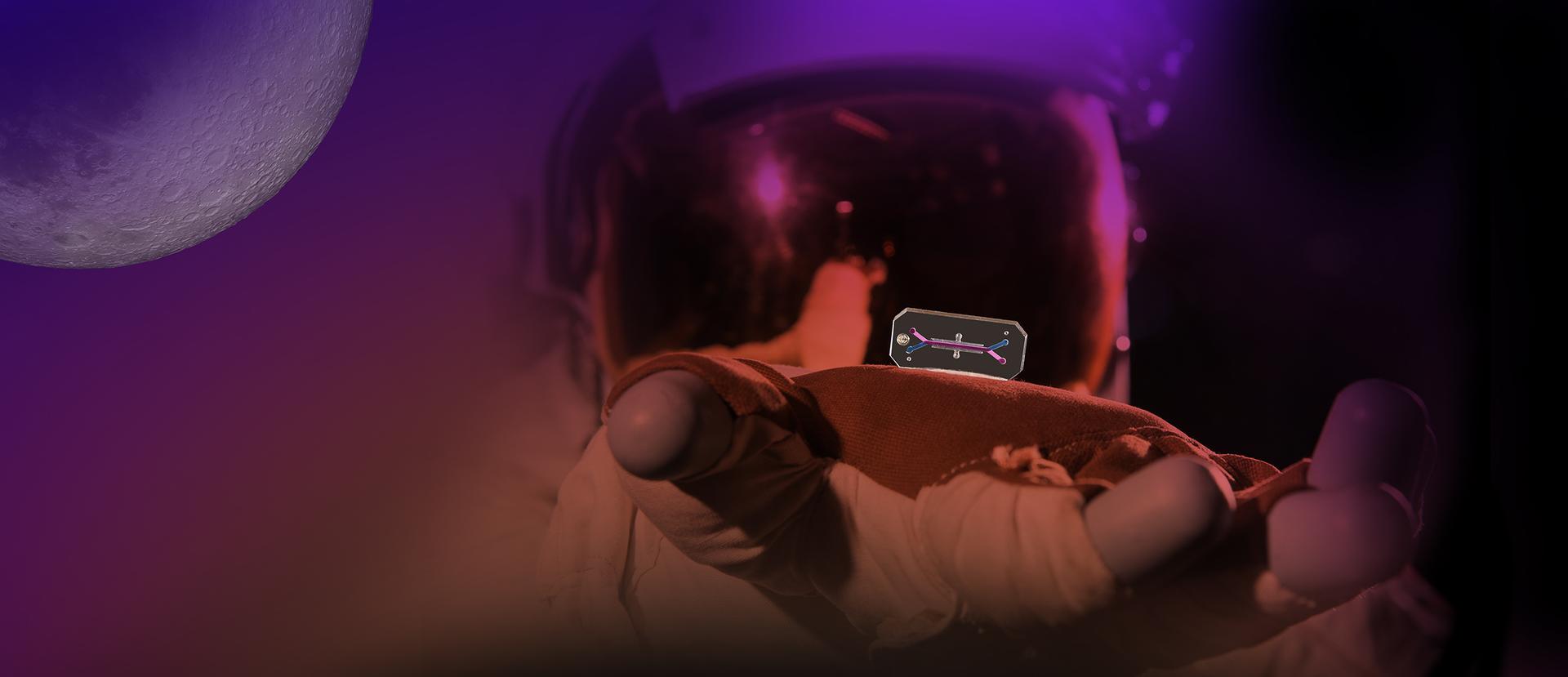
The AVATAR (A Virtual Astronaut Tissue Analog Response) investigation will use organ-on-a-chip devices, or organ chips, to study a effects of increased radiation and microgravity on human health. Artemis II AVATAR is a small experiment flying aboard Artemis II that could lead to big impacts in healthcare, both for astronauts in space and citizens on Earth. For more information on AVATAR: go.nasa.gov/4m5dGH9
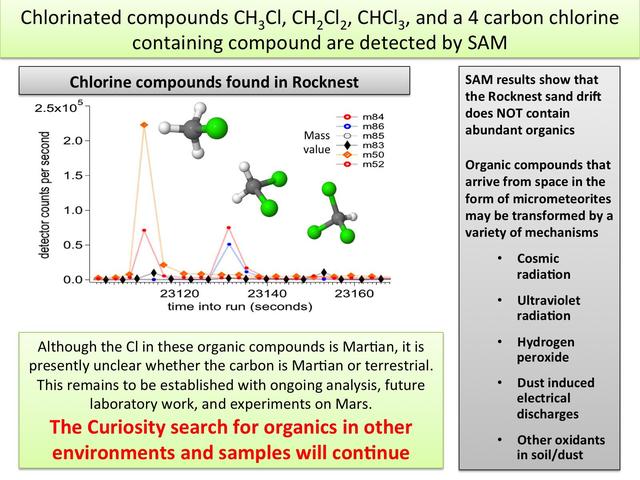
The first examinations of Martian soil by the Sample Analysis at Mars, or SAM, instrument on NASA Mars Curiosity rover show no definitive detection of Martian organic molecules at this point.

These thermal images show a hot south pole on the planet Neptune. These warmer temperatures provide an avenue for methane to escape out of the deep atmosphere. The images were obtained with the Very Large Telescope in Chile Sept. 1 and 2, 2006.

This image shows black gold, that is: organic material, which could be a biomarker sign of past life, the holy grail of Mars exploration. This image is from NASA Mars Reconnaissance Orbiter.
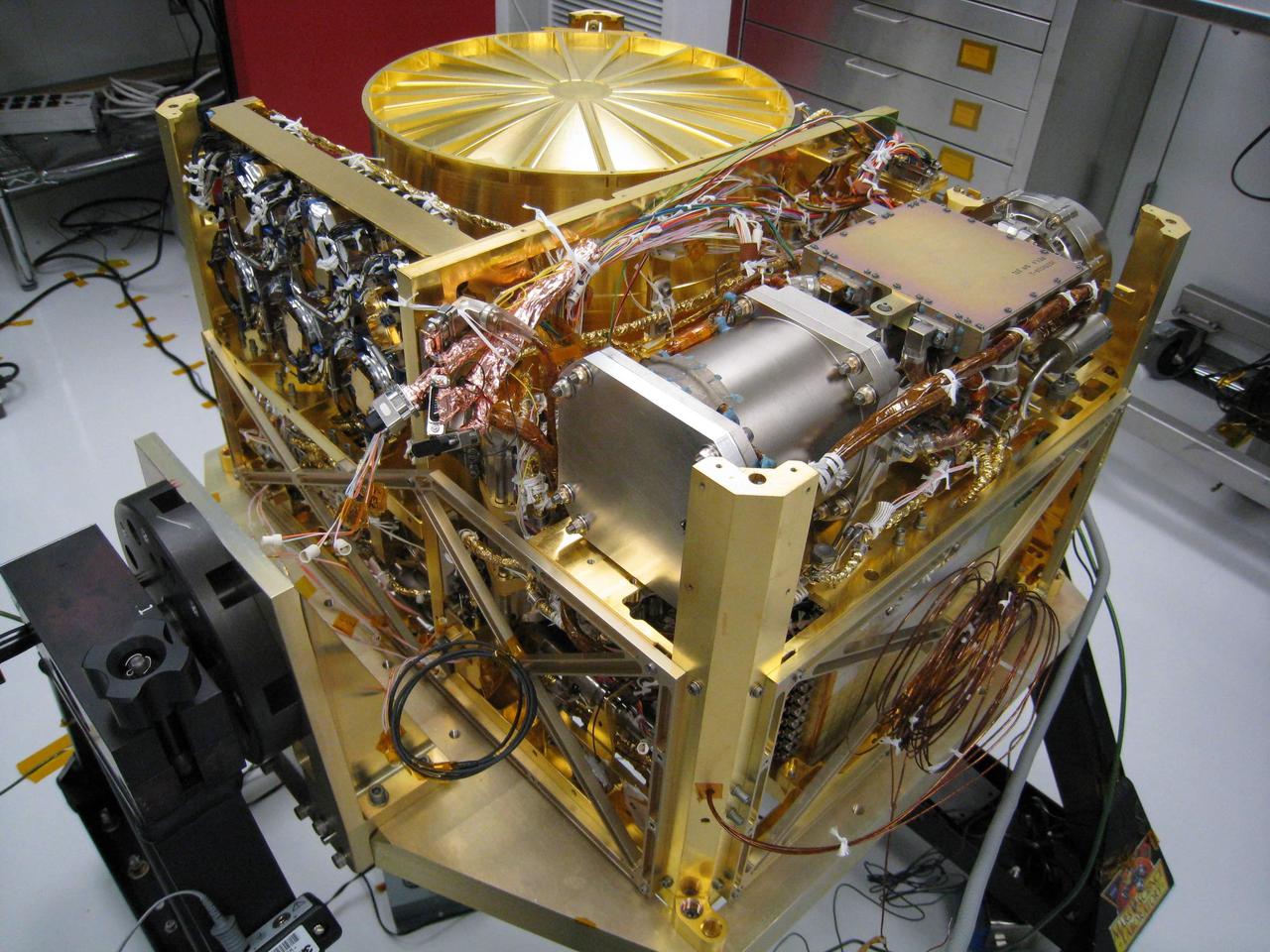
The Sample Analysis at Mars SAM instrument will analyze samples of Martian rock and soil collected by the rover arm to assess carbon chemistry through a search for organic compounds, and to look for clues about planetary change.

NASA Moon Minerology Mapper, a guest instrument onboard the Indian Space Research Organization Chandrayaan-1 mission to the moon, looks homeward. Australia is visible in the lower center of the image.
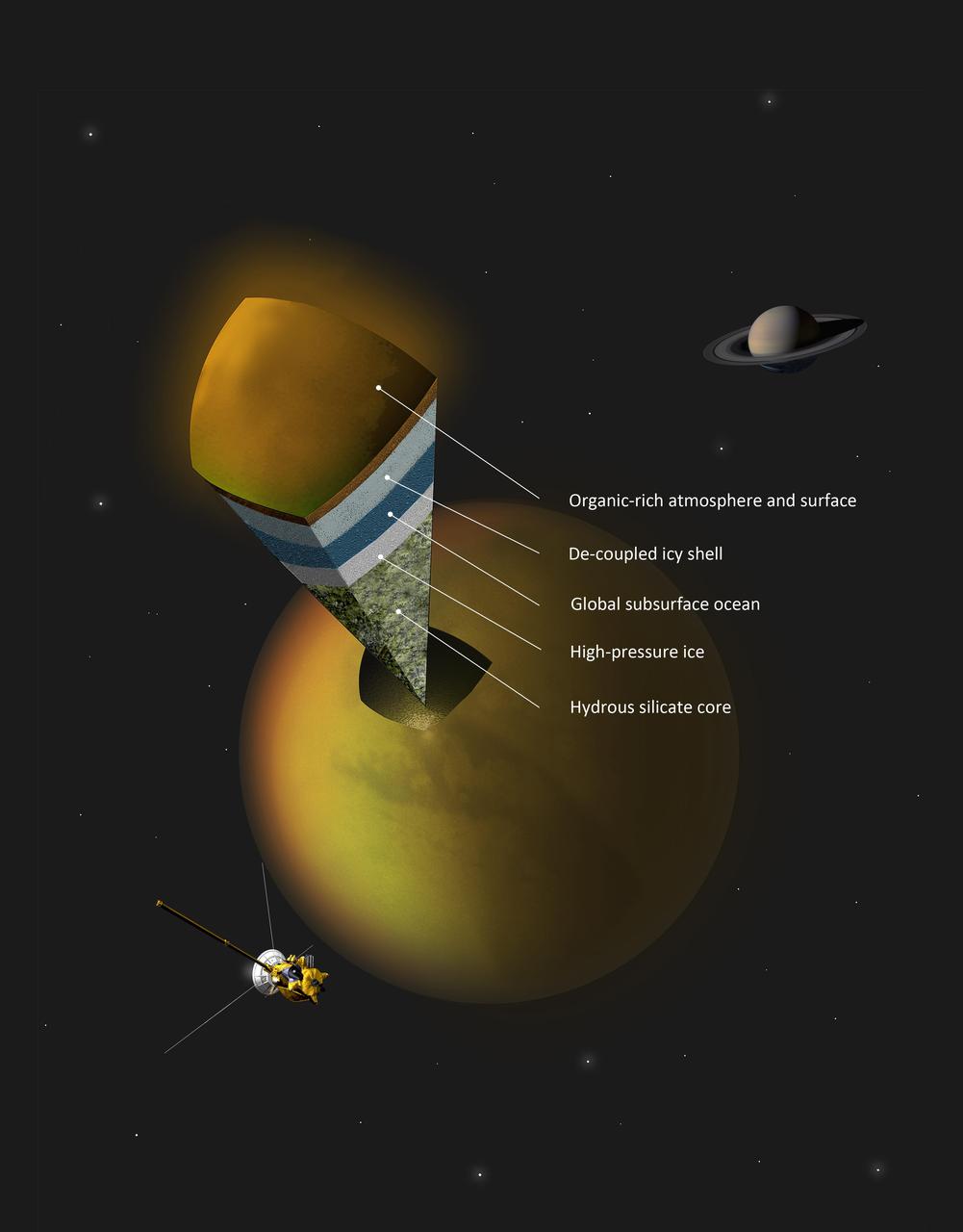
This artist concept shows a possible scenario for the internal structure of Titan, as suggested by data from NASA Cassini spacecraft. Scientists have been trying to determine what is under Titan organic-rich atmosphere and icy crust.
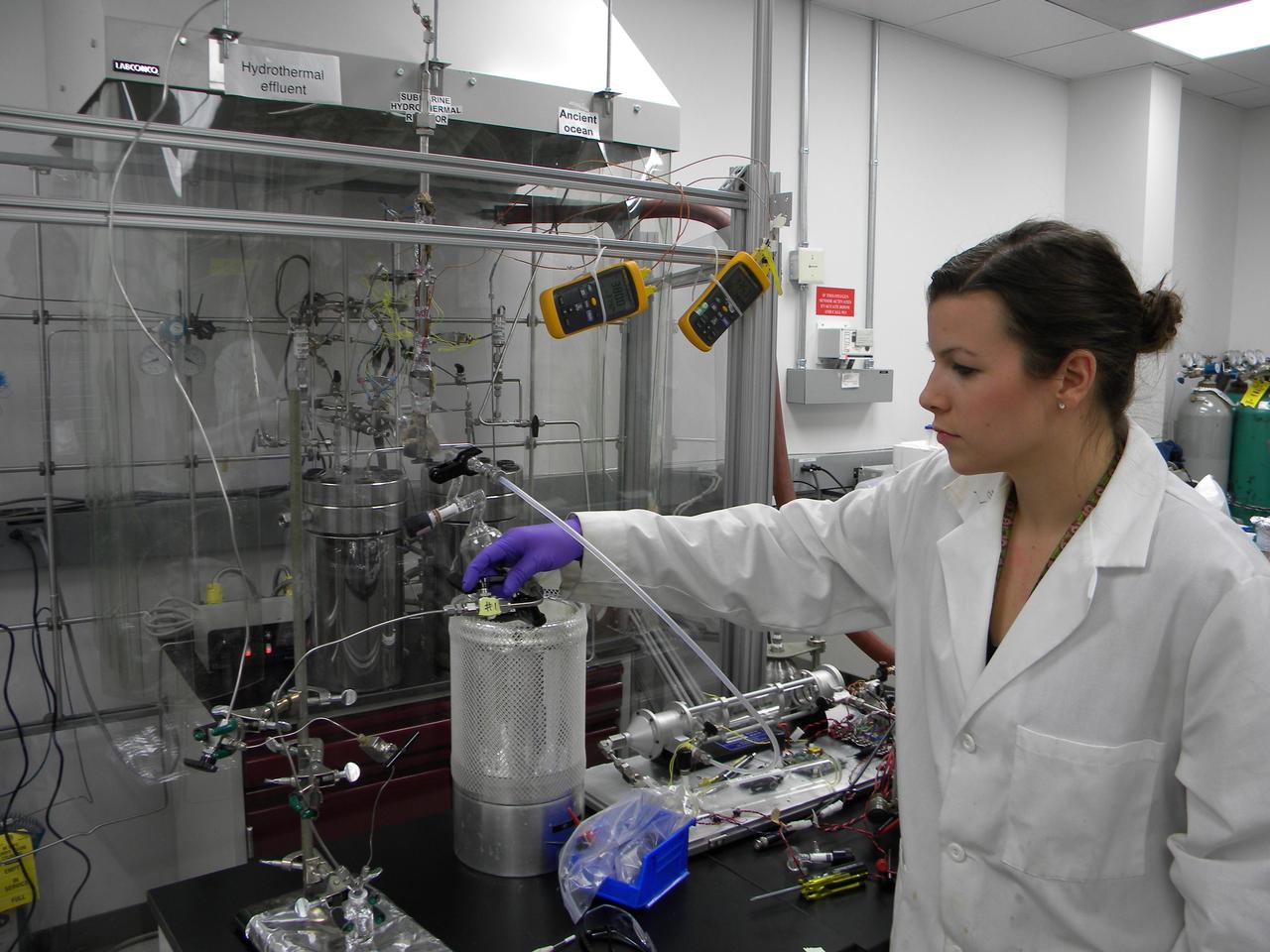
A team of scientists at NASA Jet Propulsion Laboratory is testing whether organic molecules can be brewed in a simulated ocean vent. Pictured here is Lauren White, a member of the NASA Astrobiology Icy Worlds team.
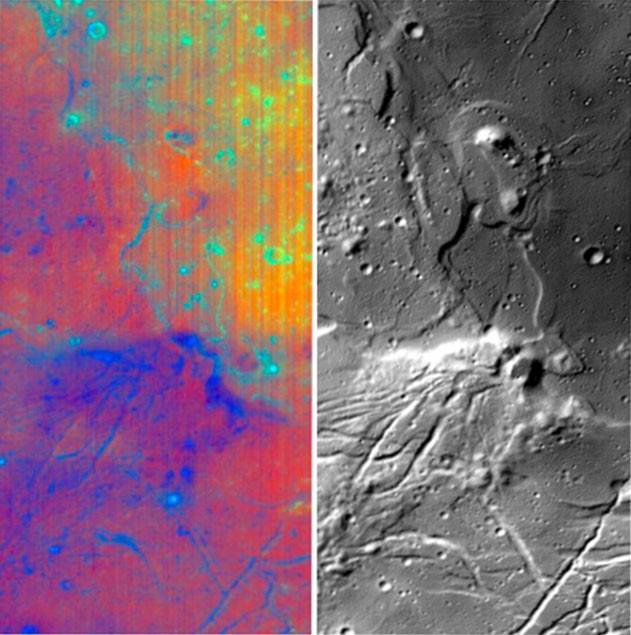
Different wavelengths of light provide new information about the Orientale Basin region of the moon in a composite image taken by NASA Moon Mineralogy Mapper, a guest instrument aboard the Indian Space Research Organization Chandrayaan-1 spacecraft.
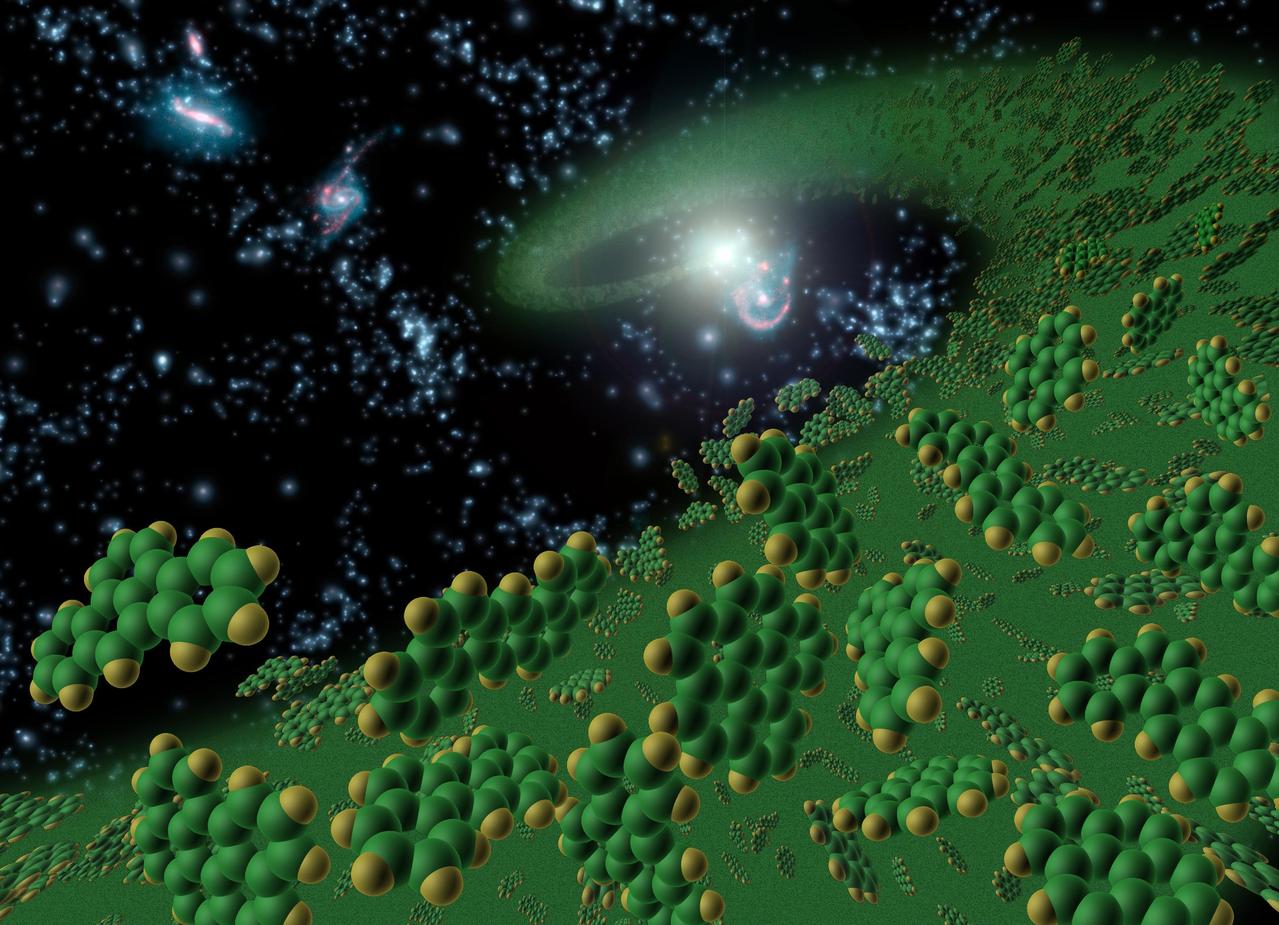
This artist conception symbolically represents complex organic molecules, known as polycyclic aromatic hydrocarbons, seen in the early universe. These large molecules, comprised of carbon and hydrogen, are considered among the building blocks of life.
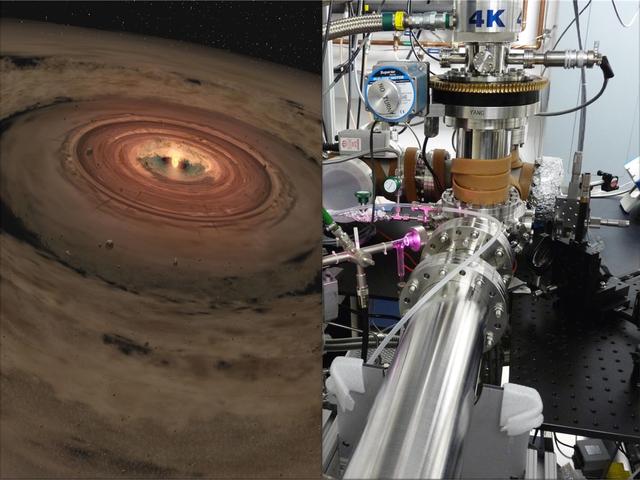
Researchers are brewing up icy, organic concoctions in the lab to mimic materials at the edge of our solar system and beyond. The lab is shown at right, and a very young solar system, with its swirling planet-forming disk is at left.
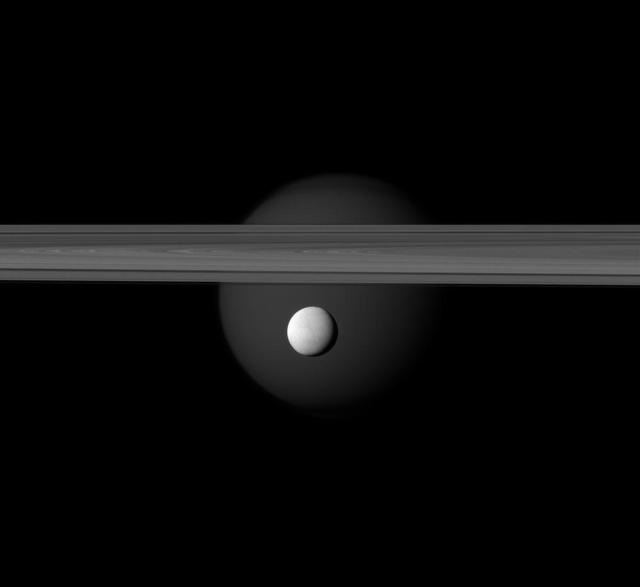
The brightly reflective moon Enceladus appears before Saturn rings while the larger moon Titan looms in the distance. Jets of water ice and vapor emanating from the south pole of Enceladus hinting at subsurface sea rich in organics.
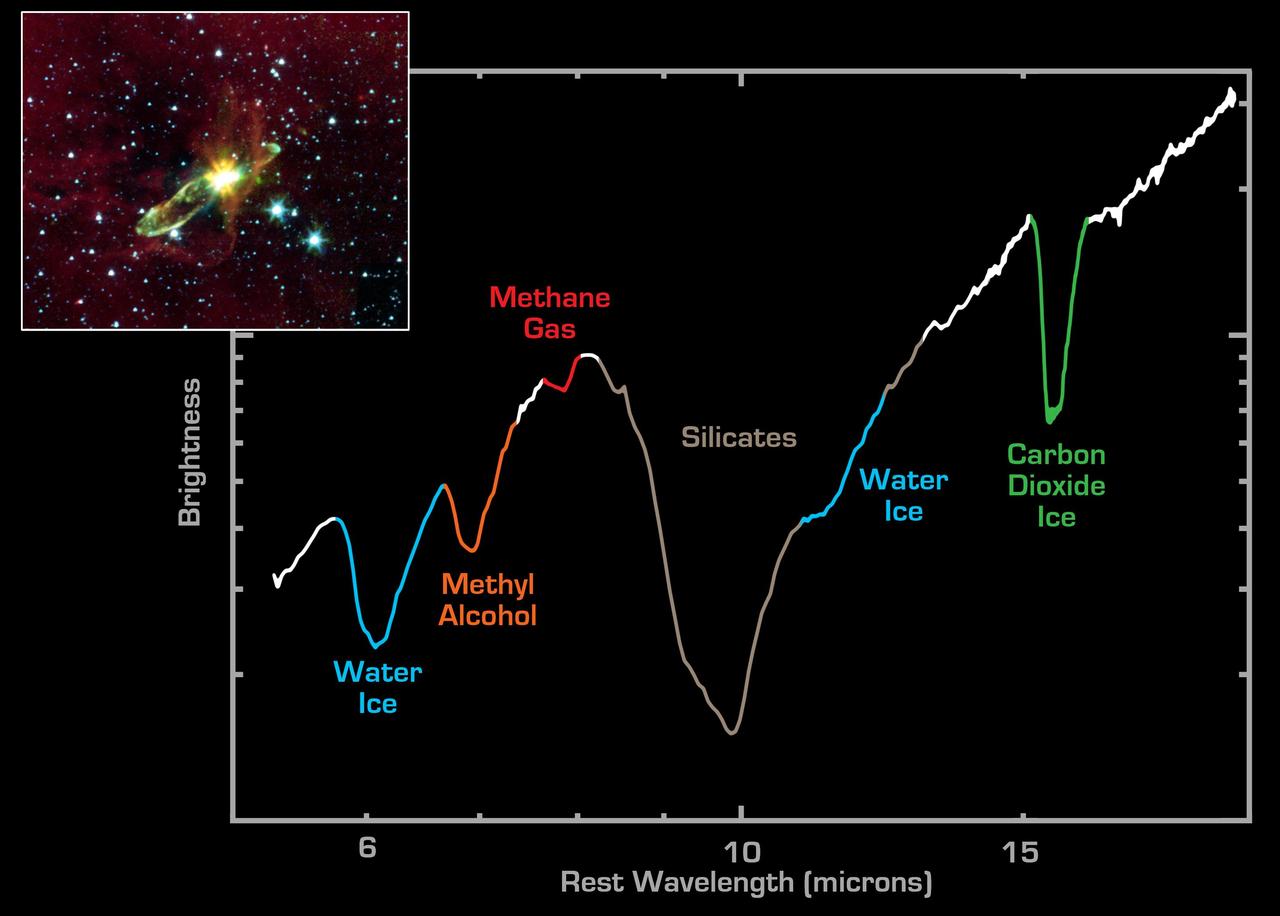
NASA Spitzer Space Telescope has lifted the cosmic veil to see an otherwise hidden newborn star, while detecting the presence of water and carbon dioxide ices, as well as organic molecules.
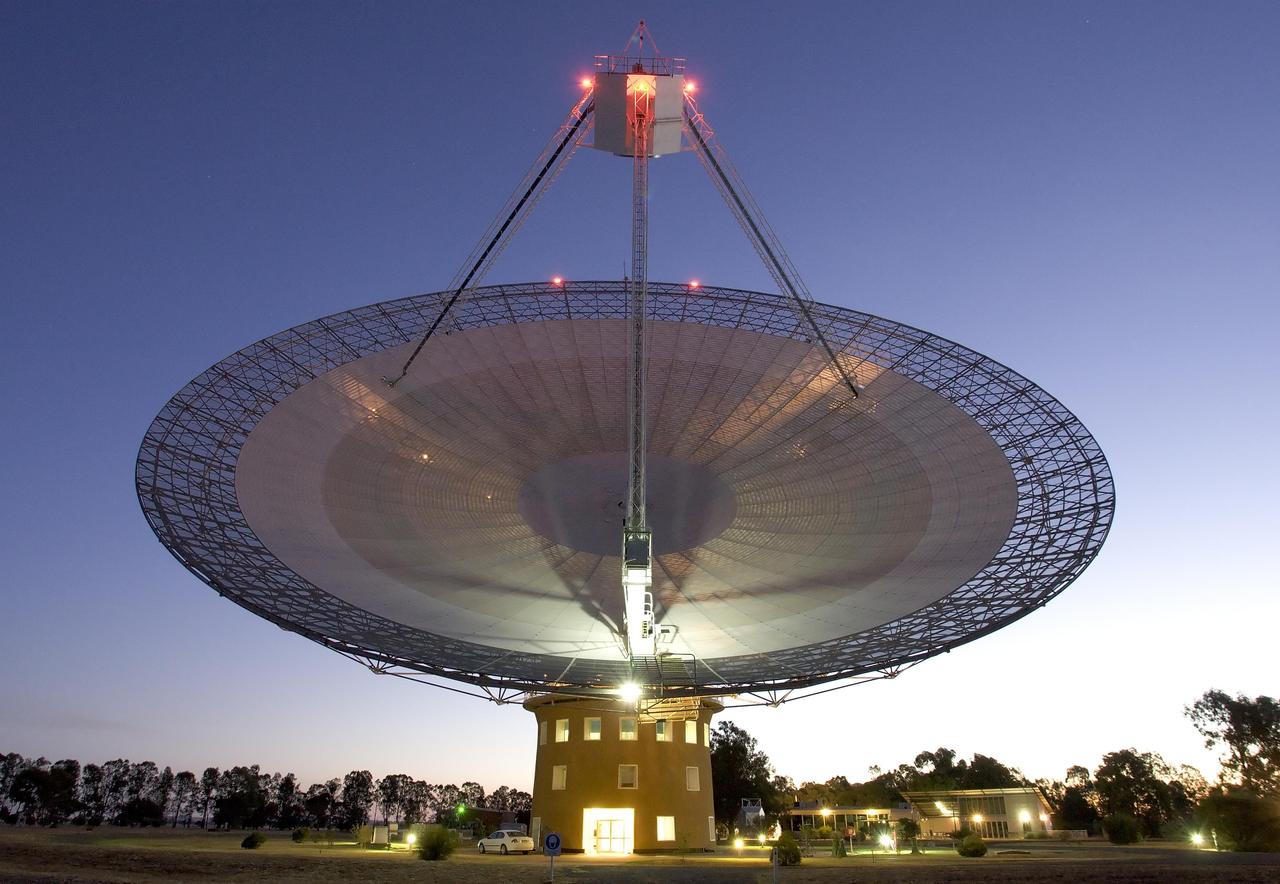
This image shows the Parkes telescope in Australia, part of the Commonwealth Scientific and Industrial Research Organization. Researchers used the telescope to detect the first population of radio bursts known to originate from beyond our galaxy.

Data from NASA Moon Mineralogy Mapper instrument on the Indian Space Research Organization Chandrayaan-1 spacecraft reveal subtle and previously unknown lunar diversity and features. Animation available at the Photojournal.

This graphic offers comparisons between the amount of an organic chemical named chlorobenzene detected in the Cumberland rock sample and amounts of it in samples from three other Martian surface targets analyzed by NASA Curiosity Mars rover.
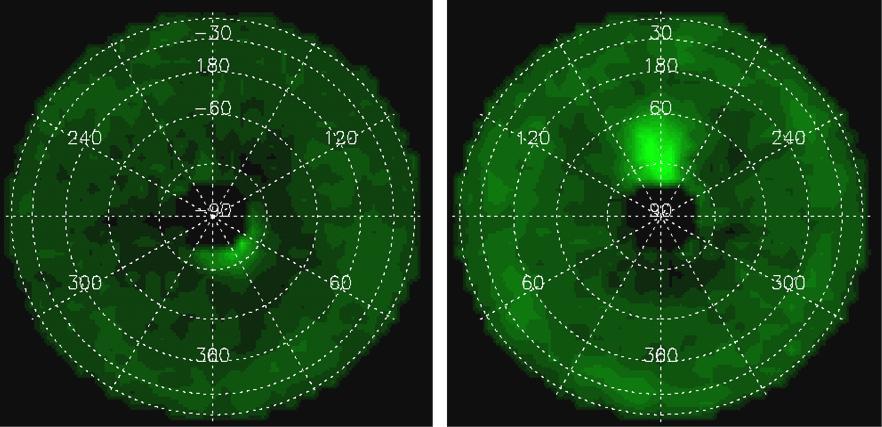
This graphic shows the distribution of the organic molecule acetylene at the north and south poles of Jupiter, based on data obtained by NASA Cassini spacecraft in early January 2001. Movie is available at the Photojournal.
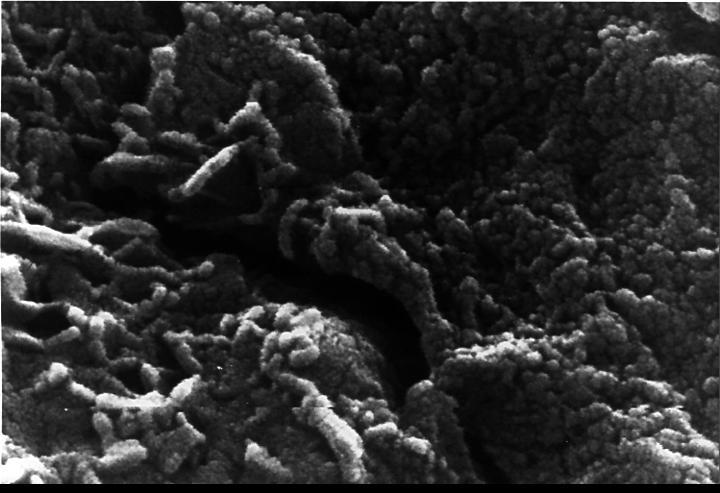
This electron microscope image shows extremely tiny tubular structures that are possible microscopic fossils of bacteria-like organisms that may have lived on Mars more than 3.6 billion years ago. http://photojournal.jpl.nasa.gov/catalog/PIA00285
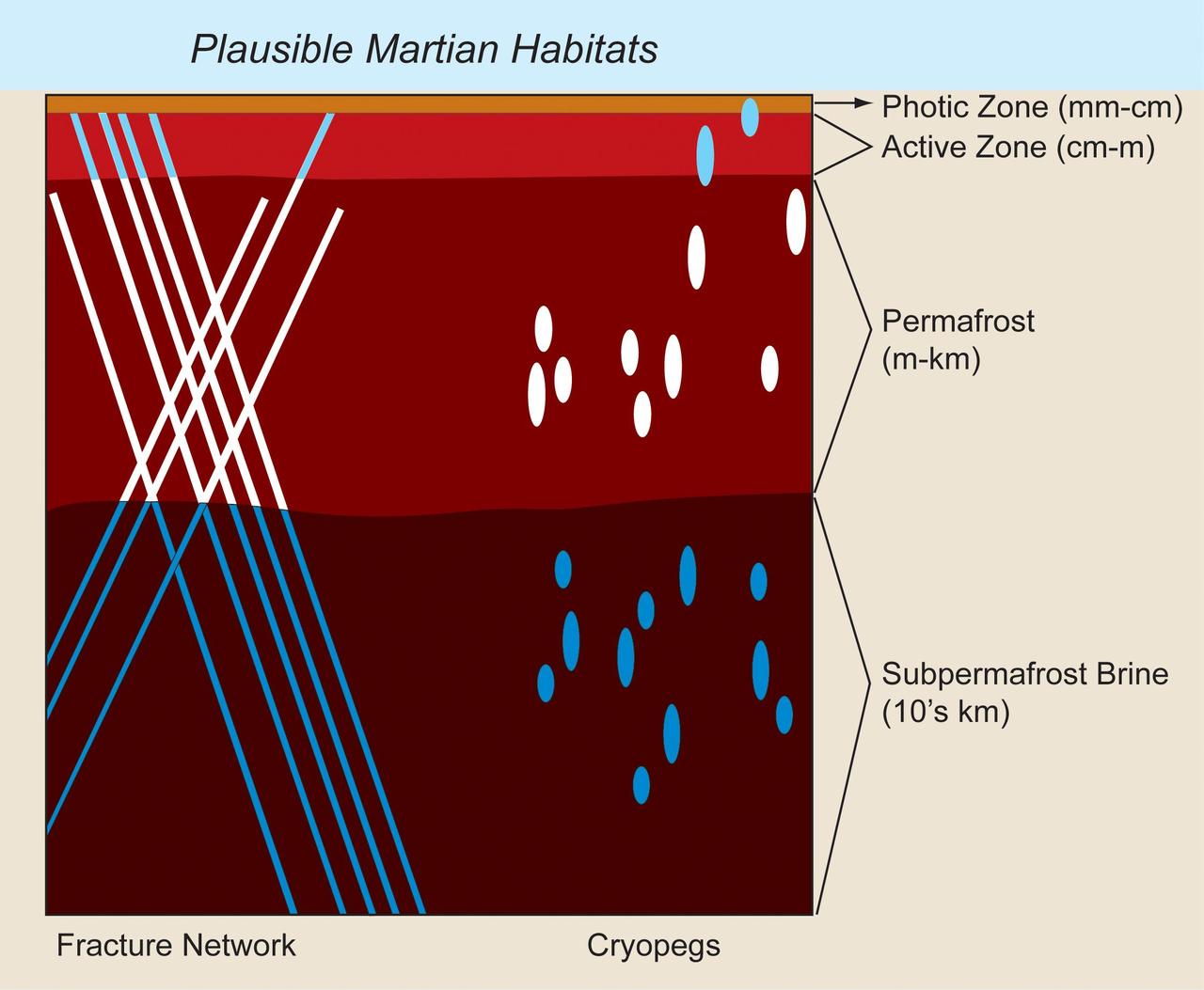
Unfrozen brine in cryopegs and fracture networks provides habitats for the survival and growth of organisms both within and under frozen rocky materials on Earth and, by analogy, could provide habitats on Mars.
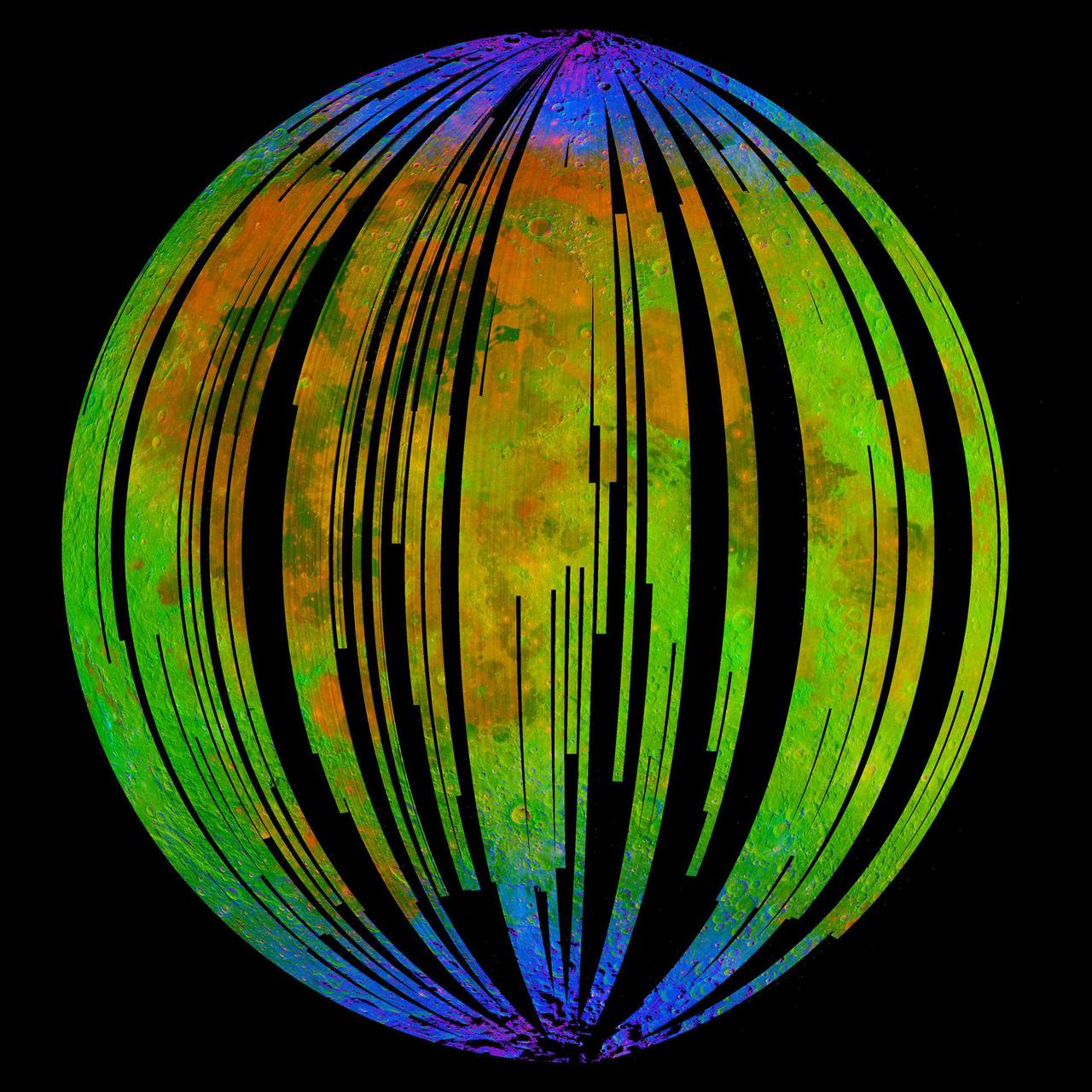
This image of the moon is from NASA Moon Mineralogy Mapper on the Indian Space Research Organization Chandrayaan-1 mission. It is a three-color composite of reflected near-infrared radiation from the sun.

STS089-333-015 (22-31 Jan. 1998) --- Onboard Russia's Mir Space Station, cosmonaut Pavel Vinogradov, Mir-24 flight engineer, tries to find room for supplies transferred from the space shuttle Endeavour during supply transfer operations, while currently docked with Mir. Photo credit: NASA
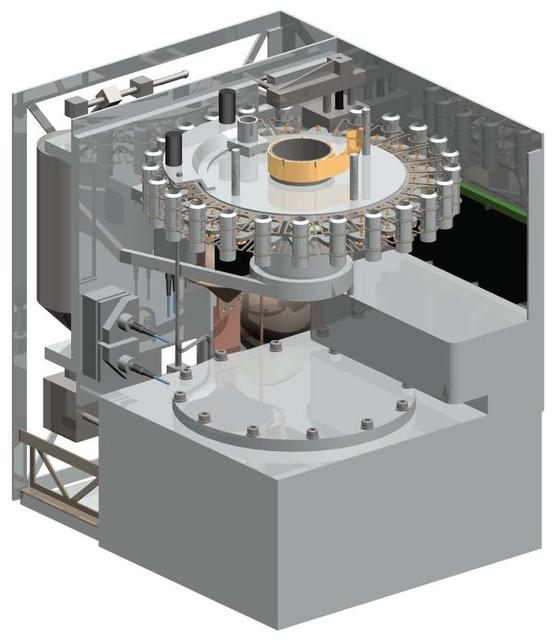
Some key components of a NASA-funded instrument being developed for the payload of the European Space Agency ExoMars mission stand out in thisillustration of the instrument
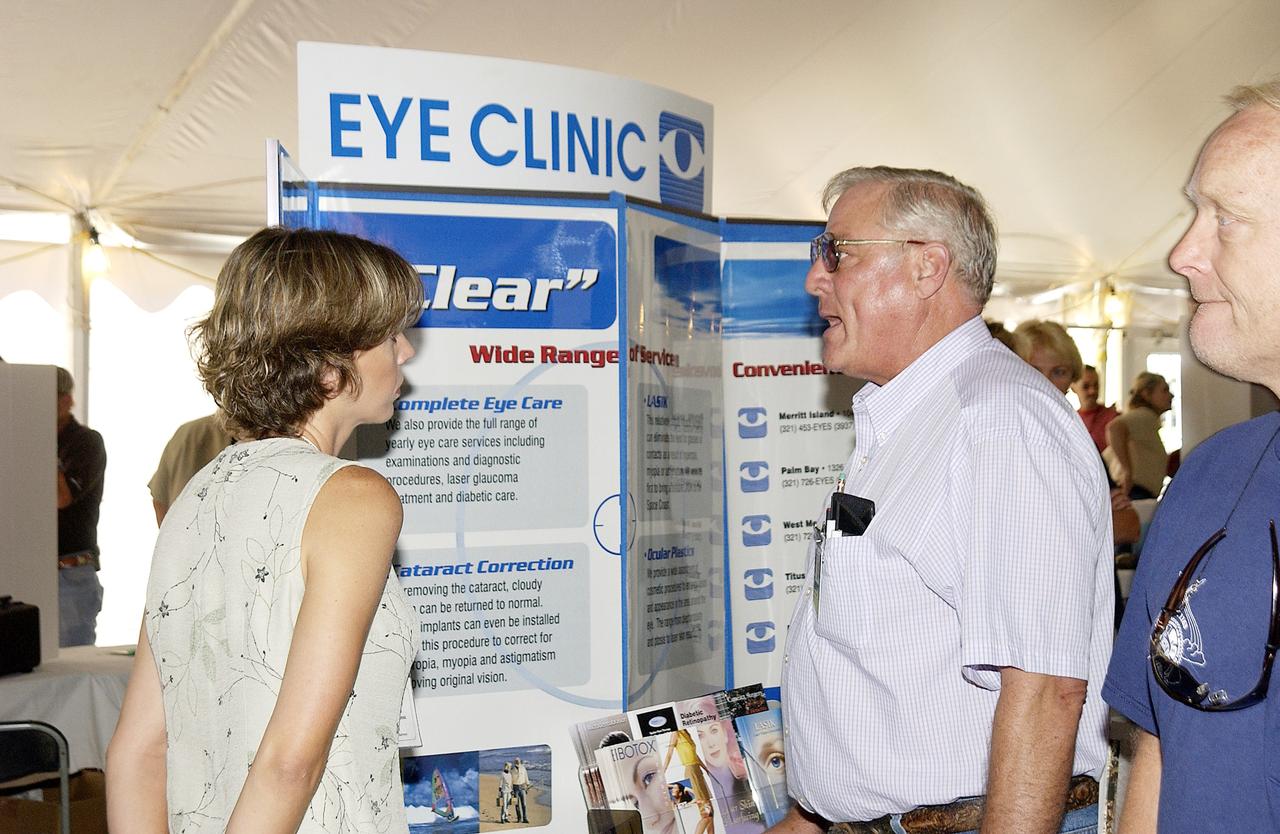
KENNEDY SPACE CENTER, FLA. - Employees file around table displays under a tent near the Operations and Checkout Building. Many vendors and organizations displayed their products during the Spaceport Super Safety and Health Day at KSC and Cape Canaveral Air Force Station, an annual event dedicated to reinforcing safe and healthful behaviors in the workforce.
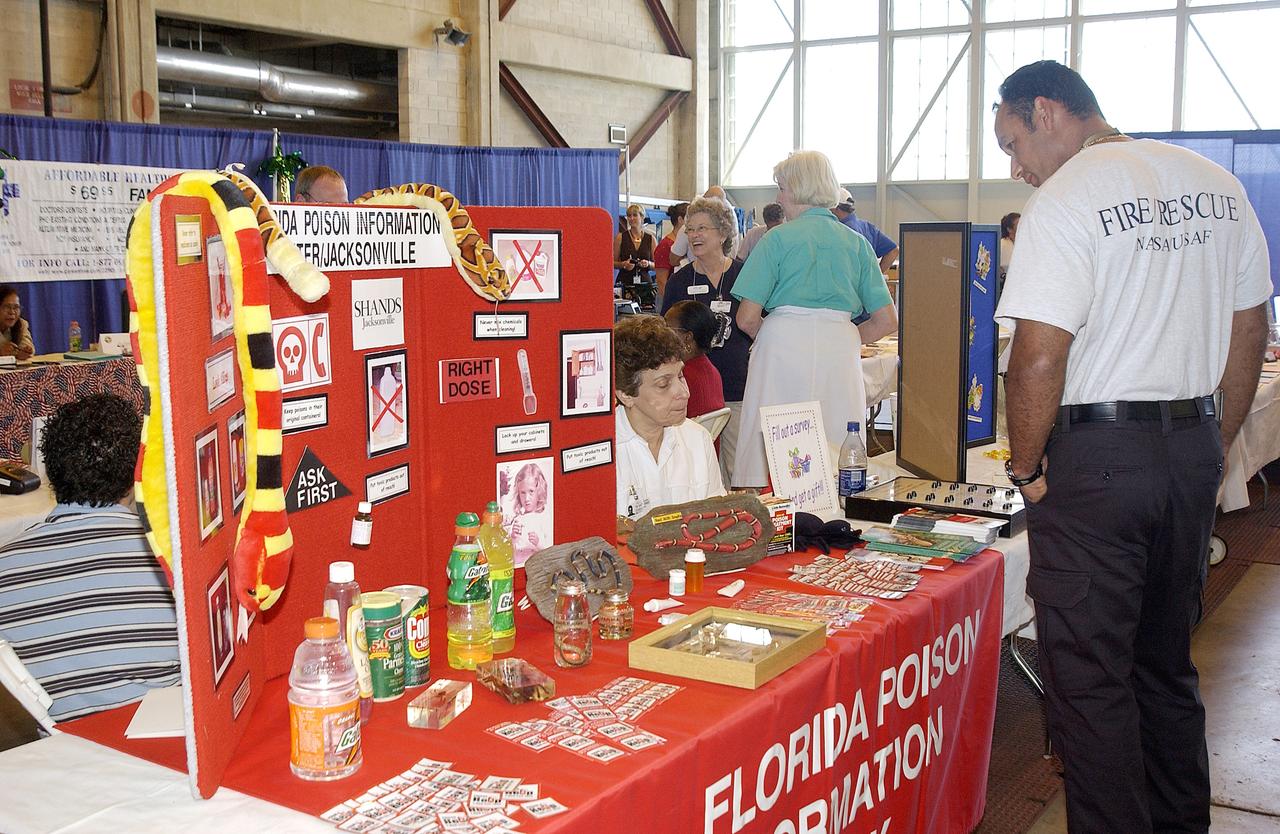
KENNEDY SPACE CENTER, FLA. - Many vendors and organizations displayed their products during the Spaceport Super Safety and Health Day at KSC and Cape Canaveral Air Force Station, an annual event dedicated to reinforcing safe and healthful behaviors in the workforce. This scene is at Hangar S, CCAFS.
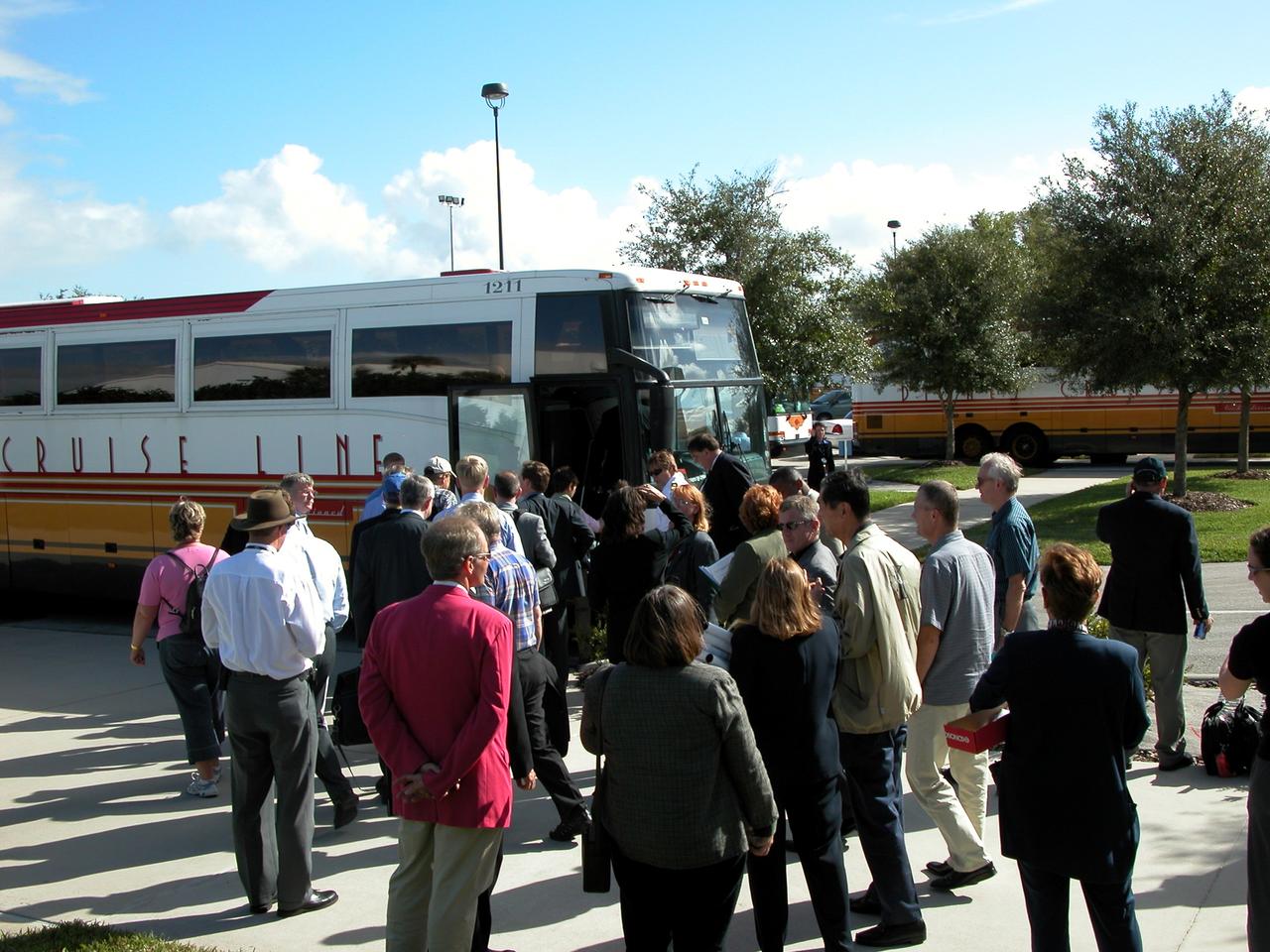
KENNEDY SPACE CENTER, FLA. - After their tour of KSC, members of the North American Treaty Organization (NATO) Parliamentary Assembly board their tour bus to return to Orlando. The Parliamentarians are meeting in Orlando this year for their 49th annual gathering. They chose to visit KSC with their families during their one-day excursion break from meetings.
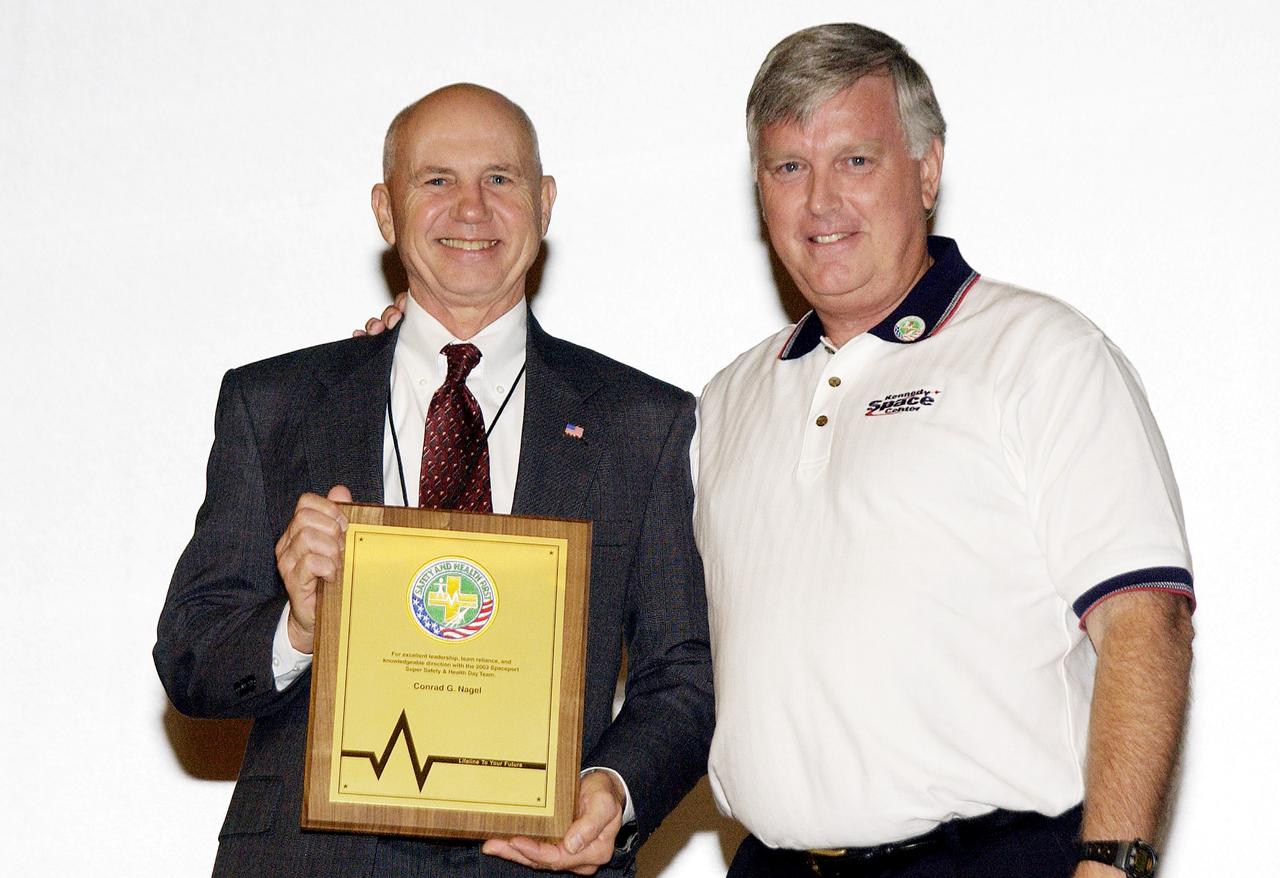
KENNEDY SPACE CENTER, FLA. - Center Director Jim Kennedy (right) presents a plaque to Conrad Nagel who organized the Spaceport Super Safety and Health Day at KSC, an annual event dedicated to reinforcing safe and healthful behaviors in the workforce. Nagel is chief of the Shuttle Project Office, Shuttle Processing.

KENNEDY SPACE CENTER, FLA. - During their tour of KSC, members of the North American Treaty Organization (NATO) Parliamentary Assembly get a close look at wheels used on an orbiter. The Parliamentarians are meeting in Orlando this year for their 49th annual gathering. They chose to visit KSC with their families during their one-day excursion break from meetings.
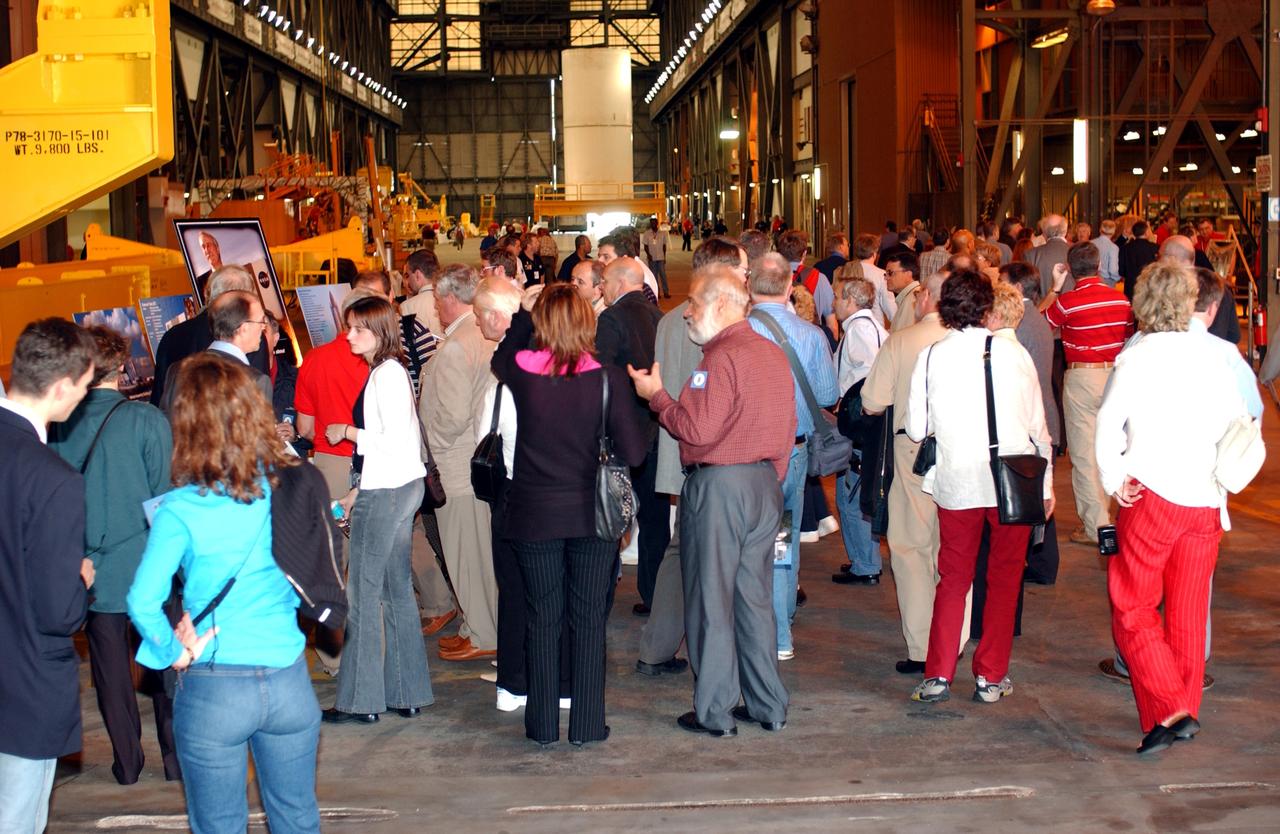
KENNEDY SPACE CENTER, FLA. - Members of the North American Treaty Organization (NATO) Parliamentary Assembly visit the Vehicle Assembly Building during their tour of KSC. The Parliamentarians are meeting in Orlando this year for their 49th annual gathering. They chose to visit KSC with their families during their one-day excursion break from meetings.
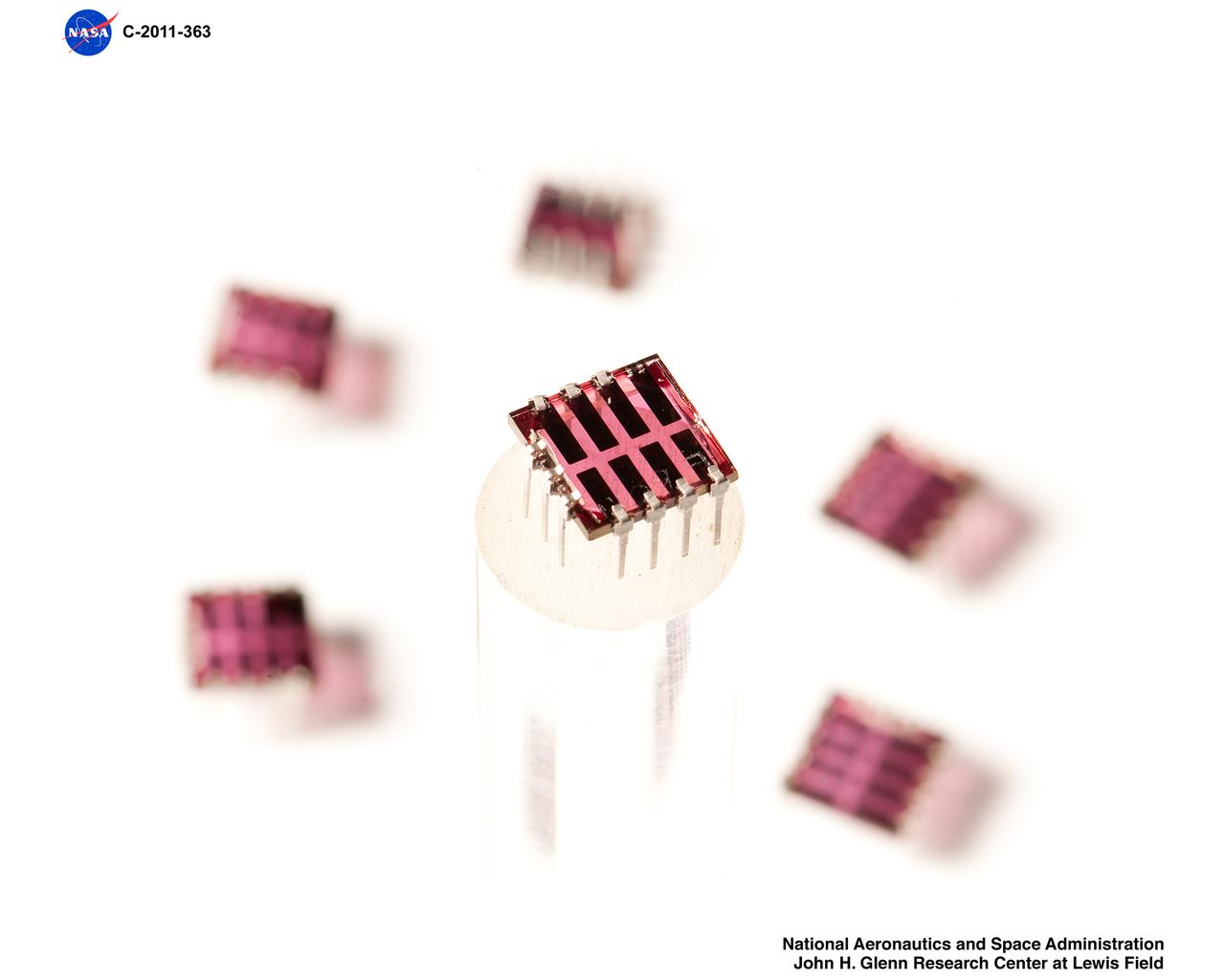
Photovoltaic Hardware - Prototype Organic Solar Cell Module
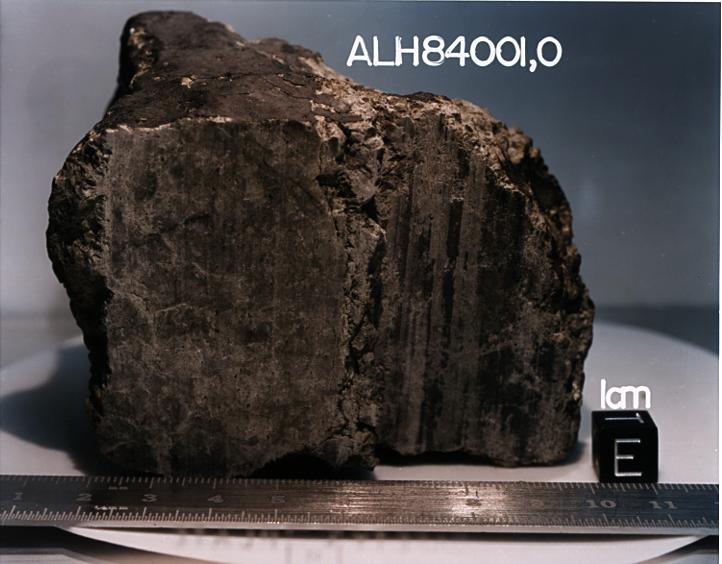
This 4.5 billion-year-old rock, labeled meteorite ALH84001, is one of 10 rocks from Mars in which researchers have found organic carbon compounds that originated on Mars without involvement of life. http://photojournal.jpl.nasa.gov/catalog/PIA00289
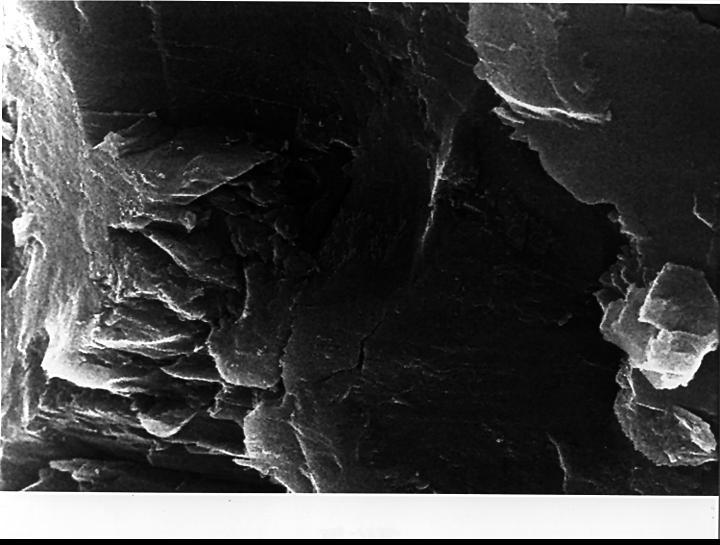
In the center of this electron microscope image of a small chip from a meteorite are several tiny structures that are possible microscopic fossils of primitive, bacteria-like organisms that may have lived on Mars more than 3.6 billion years ago. http://photojournal.jpl.nasa.gov/catalog/PIA00283
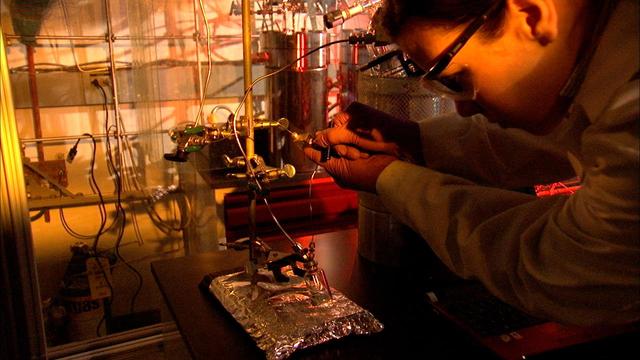
Lauren White, a scientist at NASA's Jet Propulsion Laboratory, adjusts an experiment that simulates how ancient seawater and fluid from hydrothermal vents could have reacted with minerals from the seafloor to create organic molecules 4.5 billion years ago. The image was taken at JPL in 2014. https://photojournal.jpl.nasa.gov/catalog/PIA23688
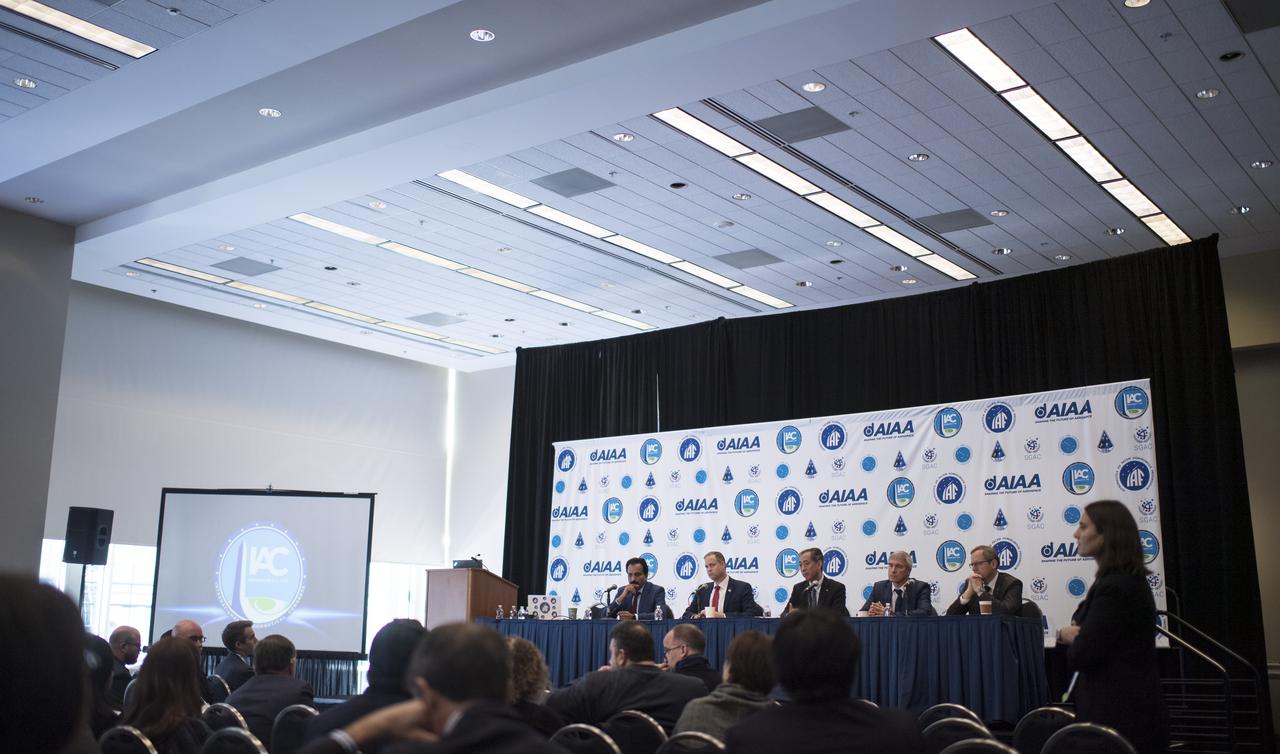
S. Somanath, Director of Vikram Sarabhai Space Centre, Indian Space Research Organization (ISRO), left, NASA Administrator Jim Bridenstine, Hiroshi Yamakawa, President of the Japan Aerospace Exploration Agency (JAXA), Sergey Krikalev, Executive Director for Piloted Spaceflights for Roscosmos, and Johann-Dietrich Woerner, Director General of ESA (European Space Agency), right, are seen during the Heads of Agency press conference at the 70th International Astronautical Congress, Monday, Oct. 21, 2019 at the Walter E. Washington Convention Center in Washington. Photo Credit: (NASA/Joel Kowsky)
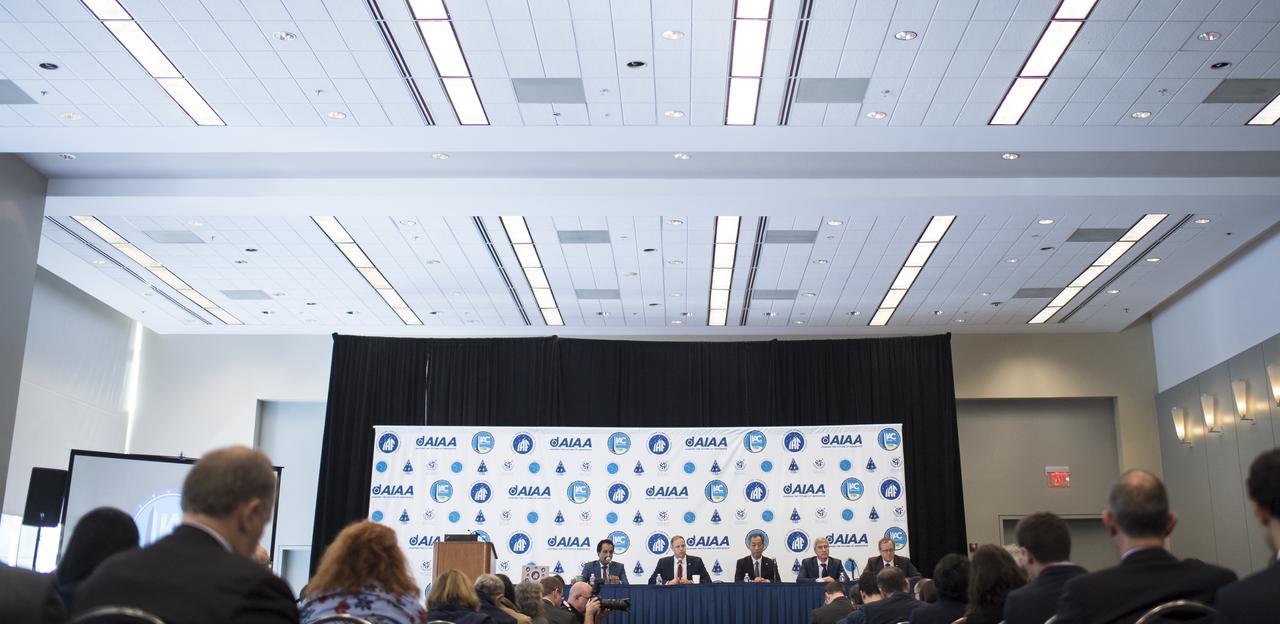
S. Somanath, Director of Vikram Sarabhai Space Centre, Indian Space Research Organization (ISRO), left, NASA Administrator Jim Bridenstine, Hiroshi Yamakawa, President of the Japan Aerospace Exploration Agency (JAXA), Sergey Krikalev, Executive Director for Piloted Spaceflights for Roscosmos, and Johann-Dietrich Woerner, Director General of ESA (European Space Agency), right, are seen during the Heads of Agency press conference at the 70th International Astronautical Congress, Monday, Oct. 21, 2019 at the Walter E. Washington Convention Center in Washington. Photo Credit: (NASA/Joel Kowsky)
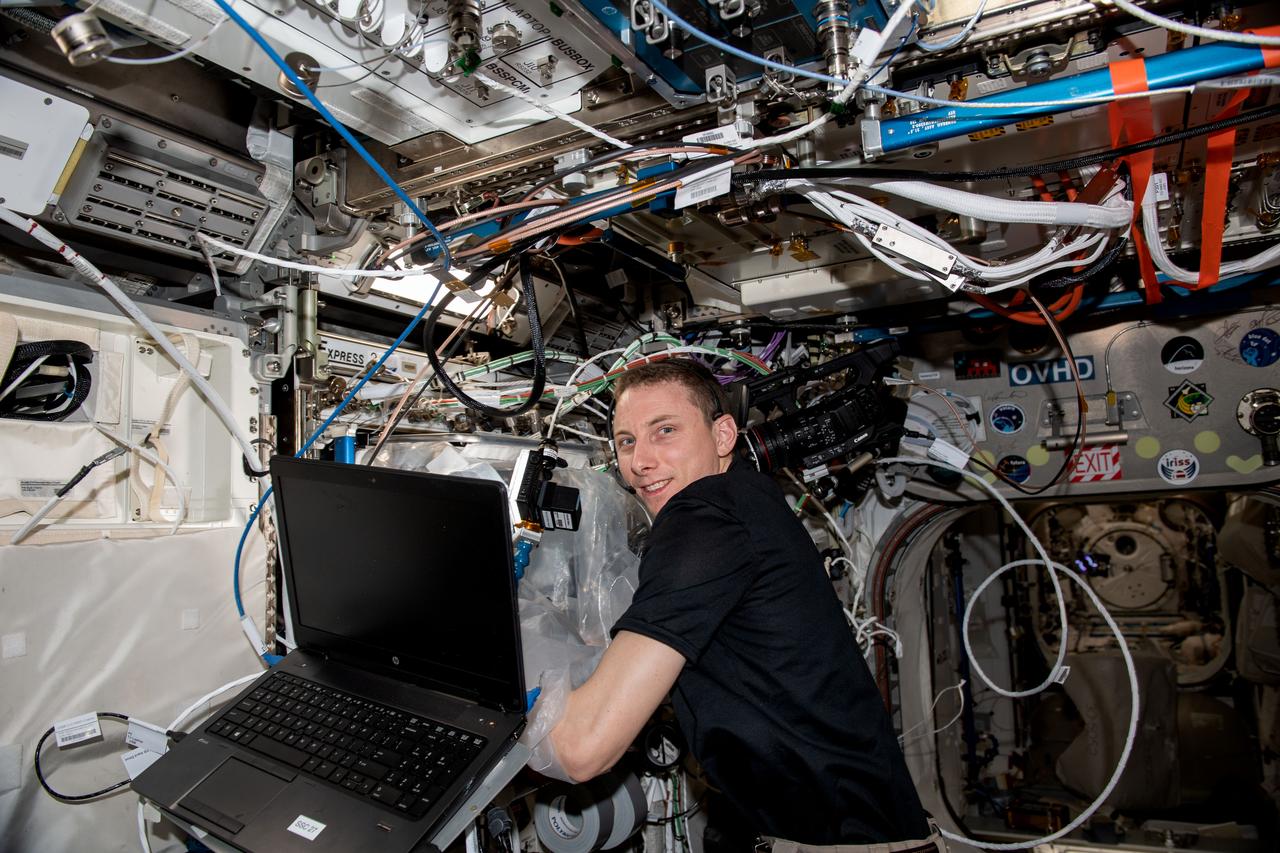
iss069e035797 (July 21, 2023) --- NASA astronaut and Expedition 69 Flight Engineer Woody Hoburg performs research activities using the Columbus laboratory module's BioFabrication Facility (BFF). The BFF is a research platform to print organ-like tissues and begin proving the viability of fabricating human organs in space.
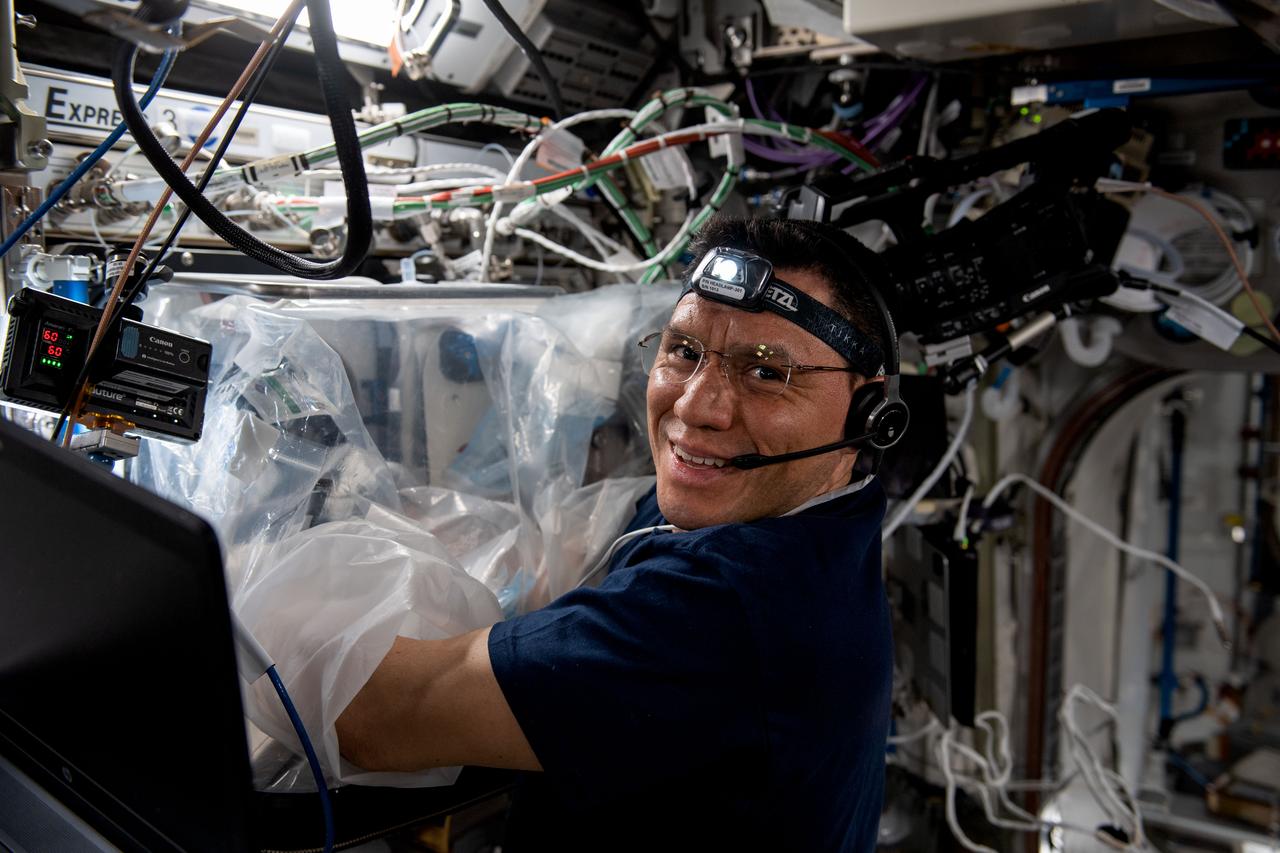
iss069e035619 (July 21, 2023) --- NASA astronaut and Expedition 69 Flight Engineer Frank Rubio uses a glovebag to perform research activities inside the Columbus laboratory module's BioFabrication Facility (BFF). The BFF is a research platform to print organ-like tissues and begin proving the viability of fabricating human organs in space.
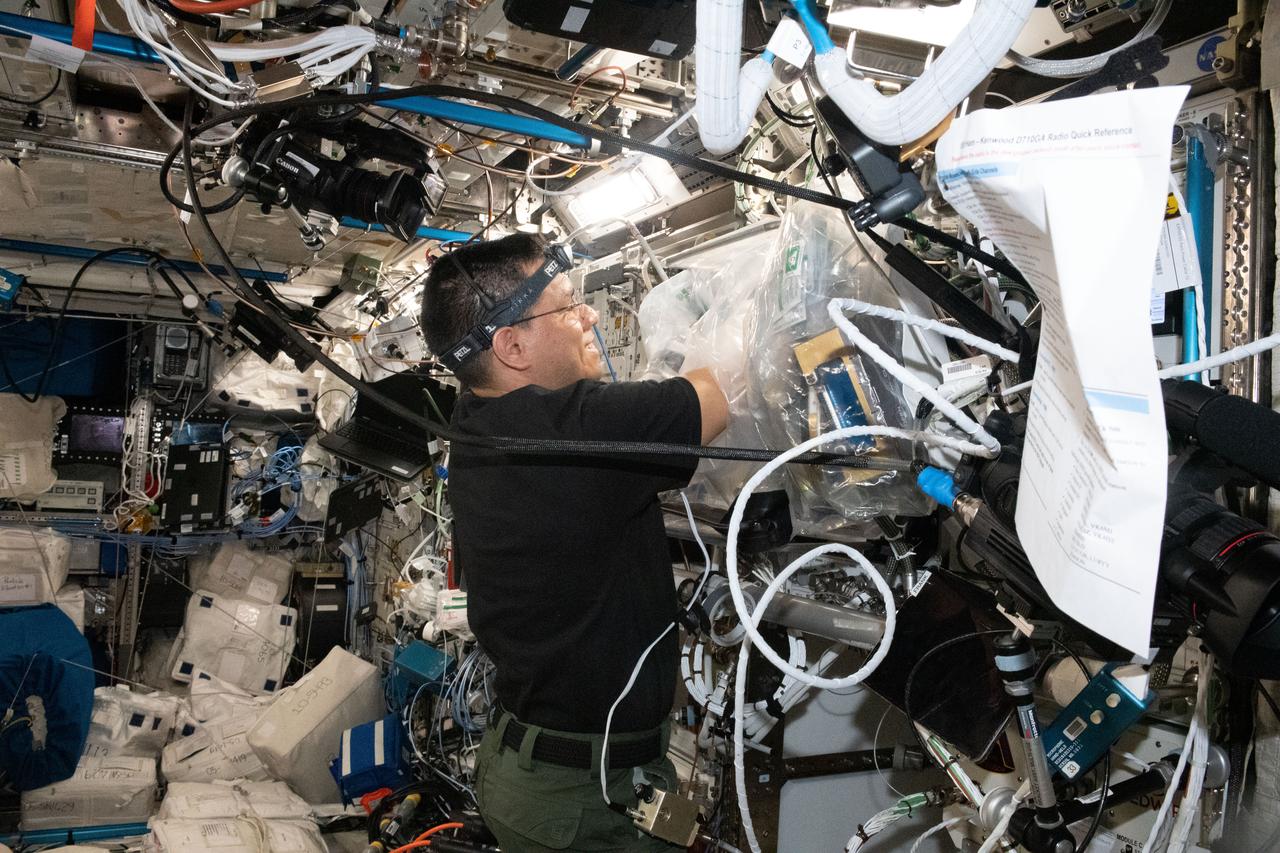
iss069e008406 (May 2, 2023) --- NASA astronaut and Expedition 69 Flight Engineer Frank Rubio uses a glovebag to service the BioFabrication Facility, replacing and installing components inside the research device designed to print organ-like tissues in microgravity and learn how to manufacture whole, fully-functioning human organs in space
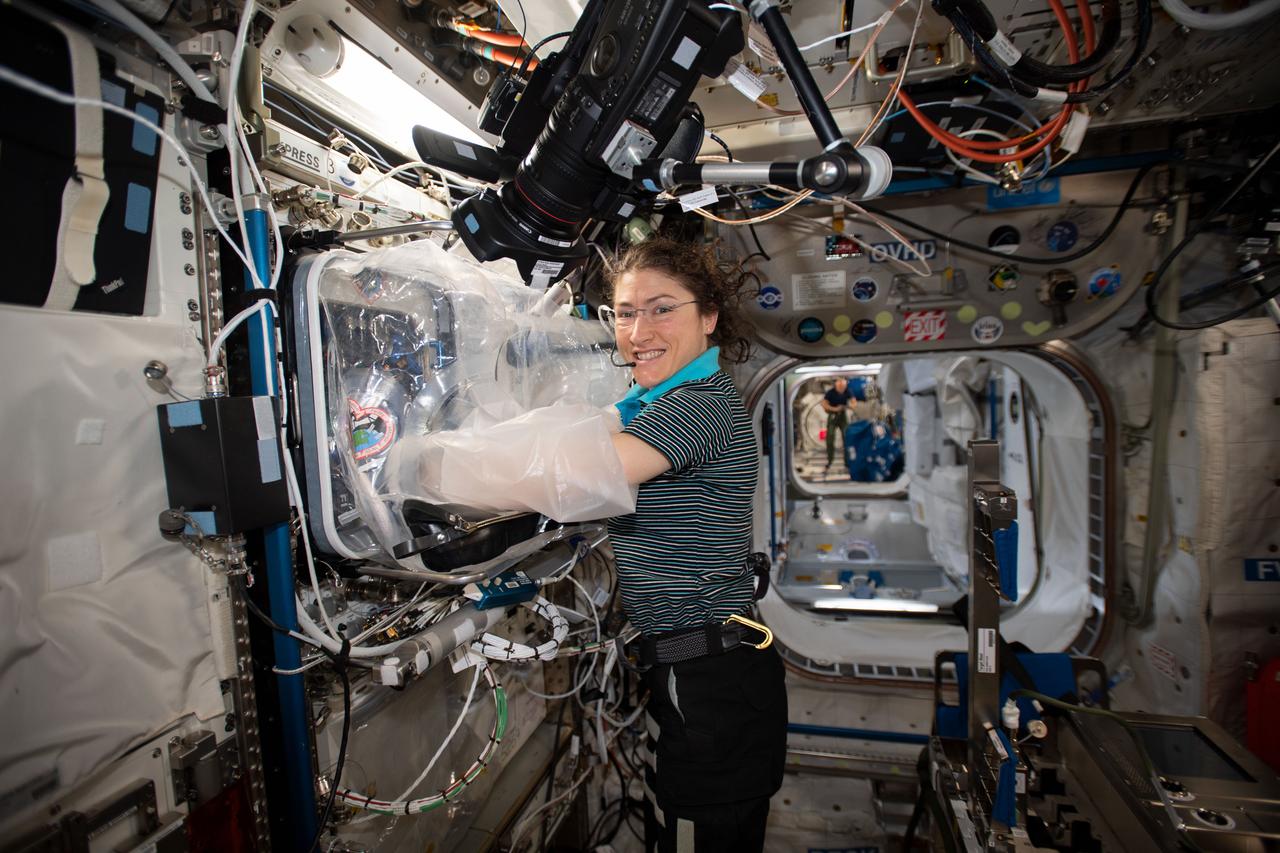
iss060e020090 (July 31, 2019) --- Expedition 60 Flight Engineer Christina Koch of NASA works with the BioFabrication Facility that will soon be tested for its ability to print organ-like tissues and begin proving viability for human organ fabrication in space.
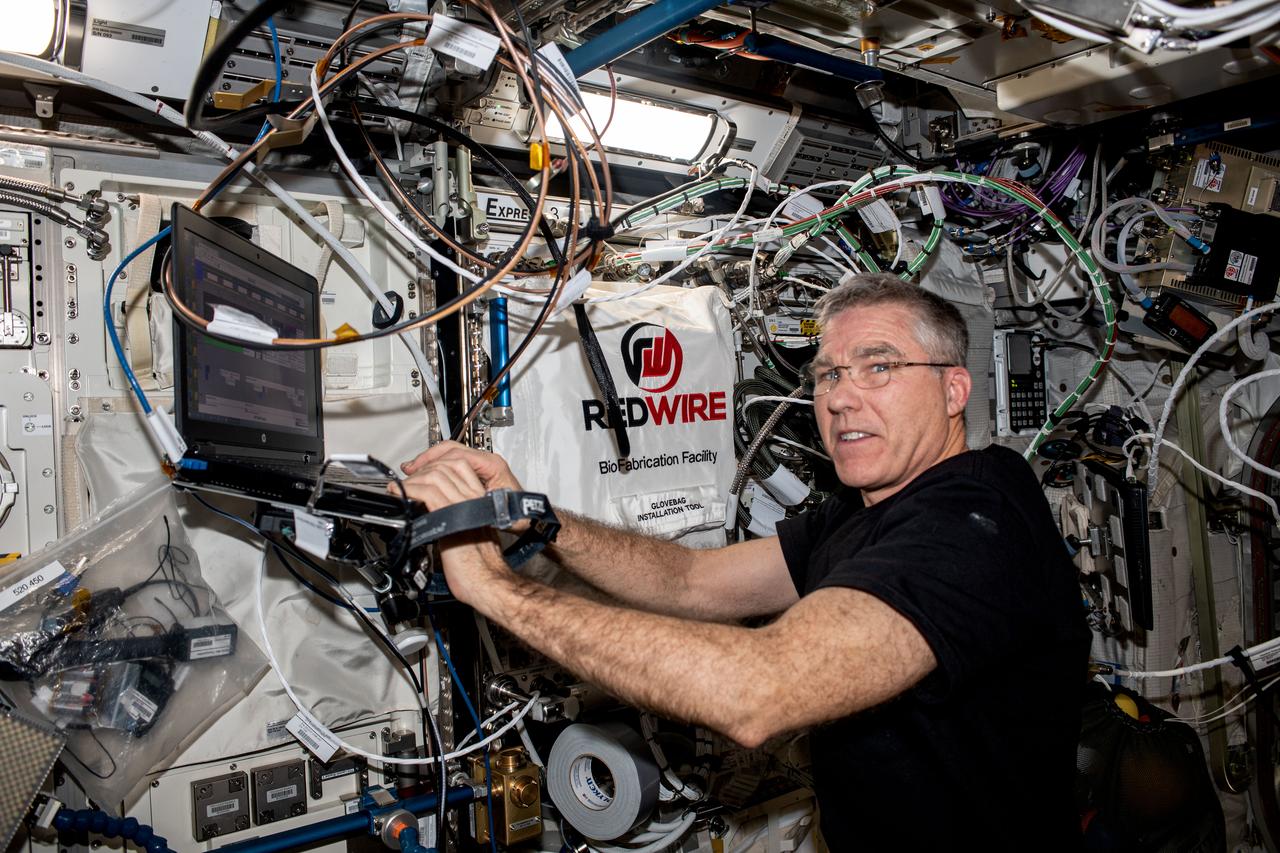
iss069e038976 (July 28, 2023) --- NASA astronaut and Expedition 69 Flight Engineer Stephen Bowen performs research activities using the Columbus laboratory module's BioFabrication Facility (BFF). The BFF is a research platform to print organ-like tissues and begin proving the viability of fabricating human organs in space.
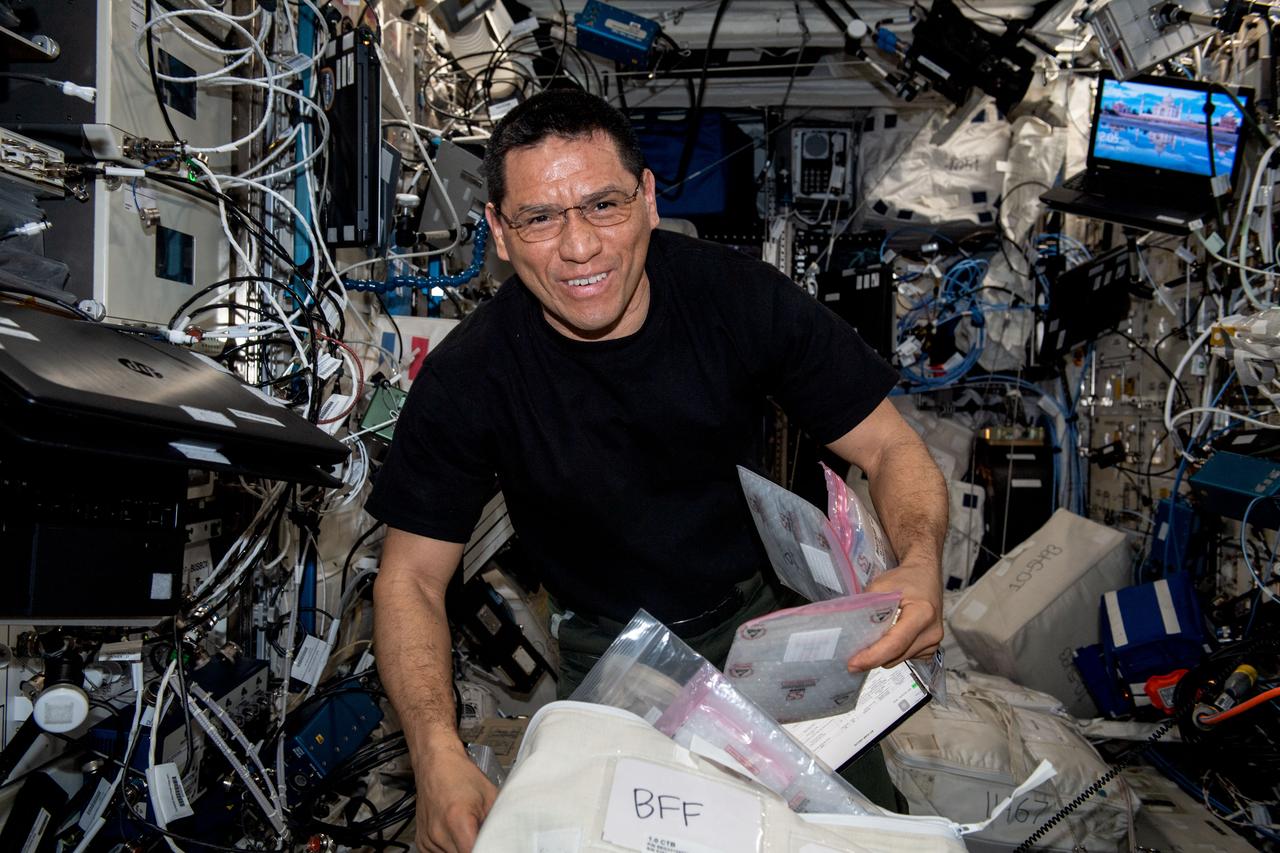
iss069e008316 (May 2, 2023) --- NASA astronaut and Expedition 69 Flight Engineer Frank Rubio unpacks gear he will use to replace and install components inside the BioFabrication Facility, a research device designed to print organ-like tissues in microgravity and learn how to manufacture whole, fully-functioning human organs in space.
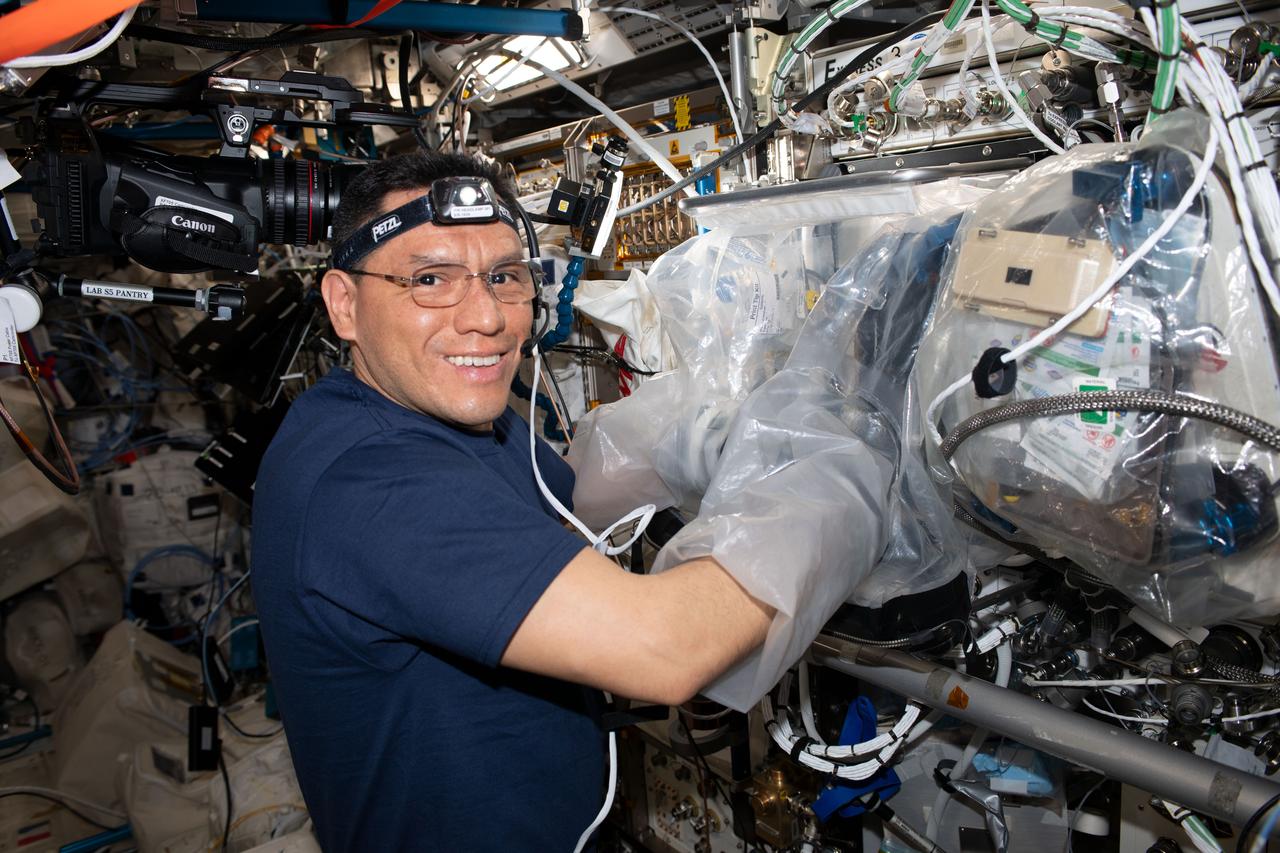
iss069e092048 (Sept. 25, 2023) --- NASA astronaut and Expedition 70 Flight Engineer Frank Rubio uses a glovebag and services the BioFabrication Facility, replacing and installing components inside the research device designed to print organ-like tissues in microgravity and learn how to manufacture whole, fully-functioning human organs in space.
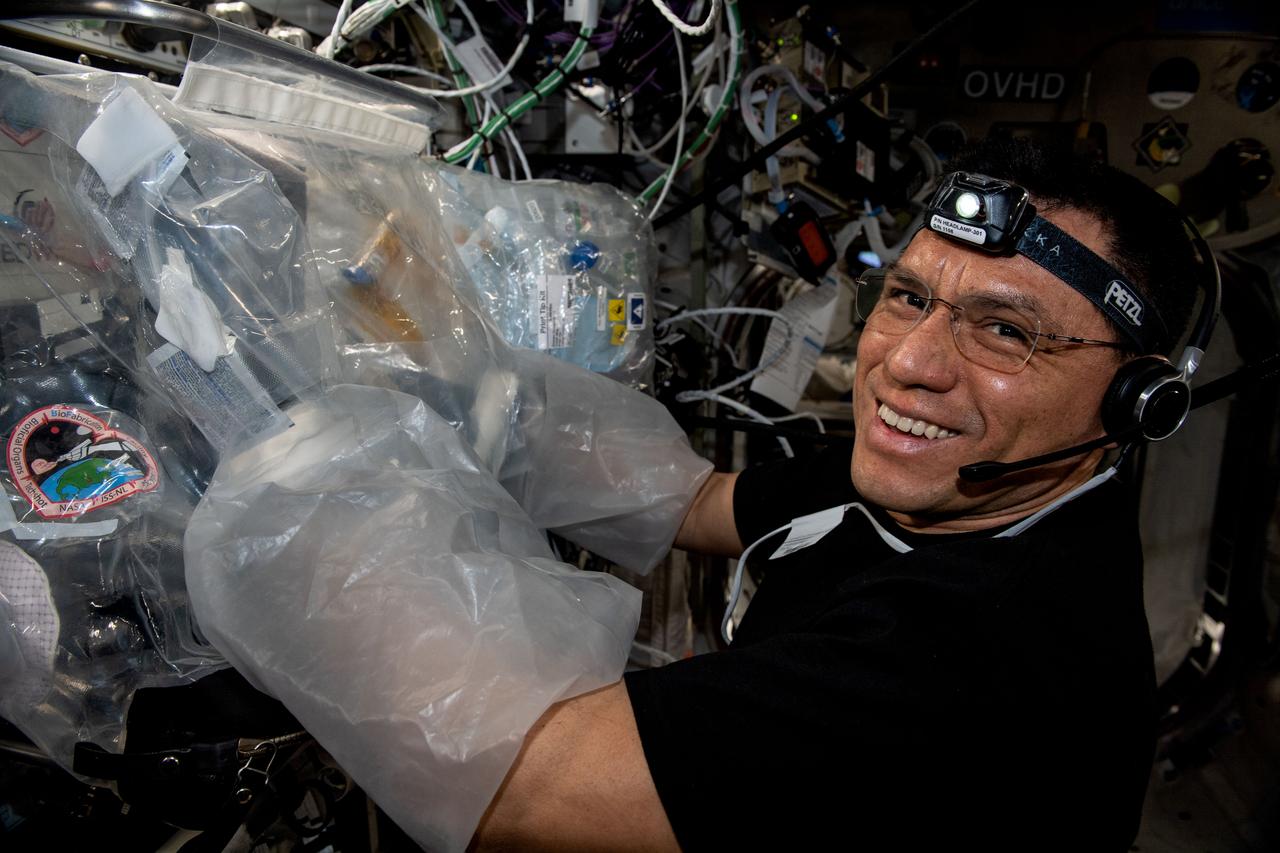
iss069e00827 (May 2, 2023) --- NASA astronaut and Expedition 69 Flight Engineer Frank Rubio uses a glovebag and services the BioFabrication Facility, replacing and installing components inside the research device designed to print organ-like tissues in microgravity and learn how to manufacture whole, fully-functioning human organs in space.
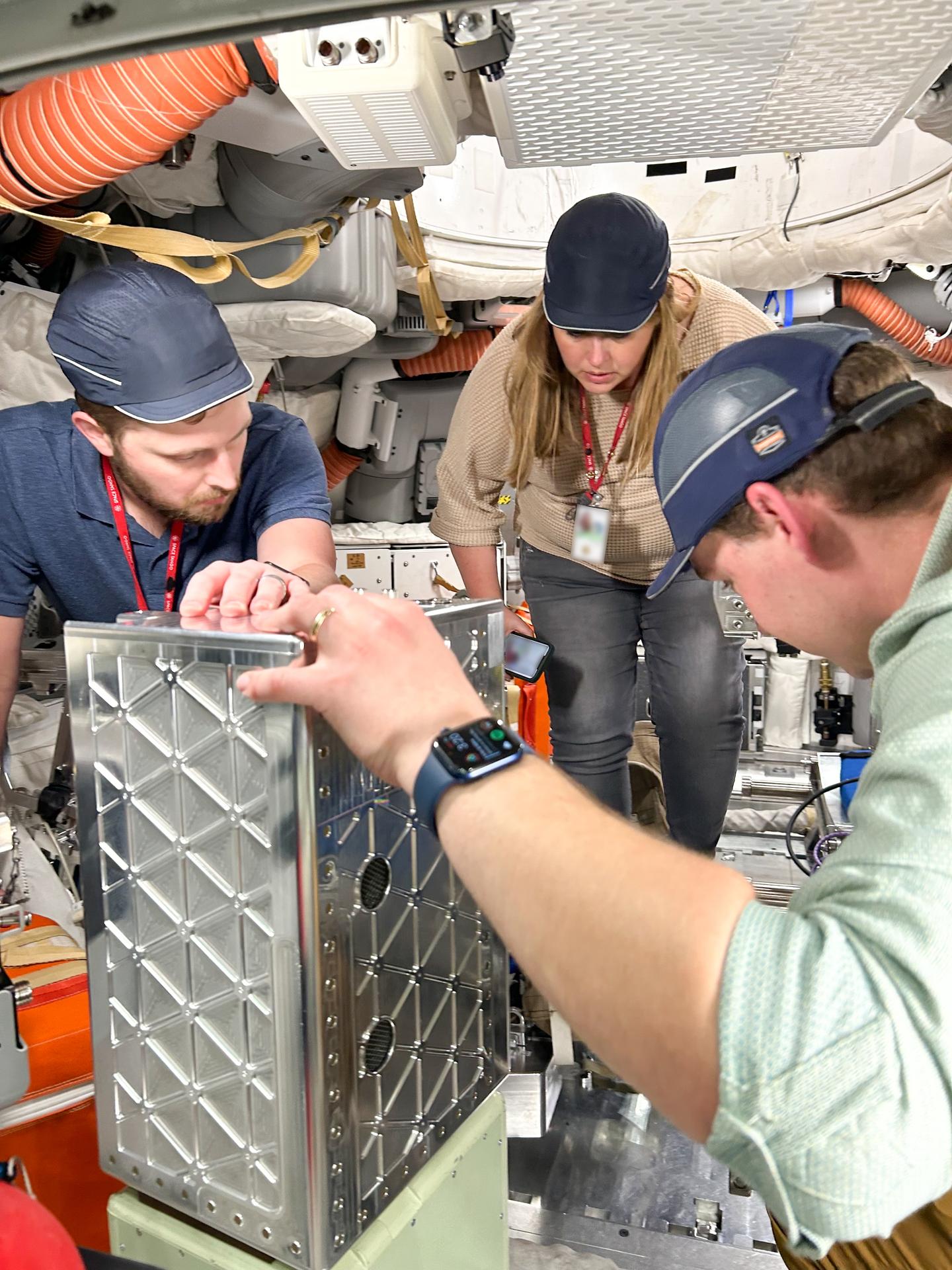
During the Artemis II mission, the organ chips will be secured in a custom payload developed by Space Tango and mounted inside the capsule during the mission. The battery-powered payload will maintain automated environmental control and media delivery to the organ chips throughout the flight.