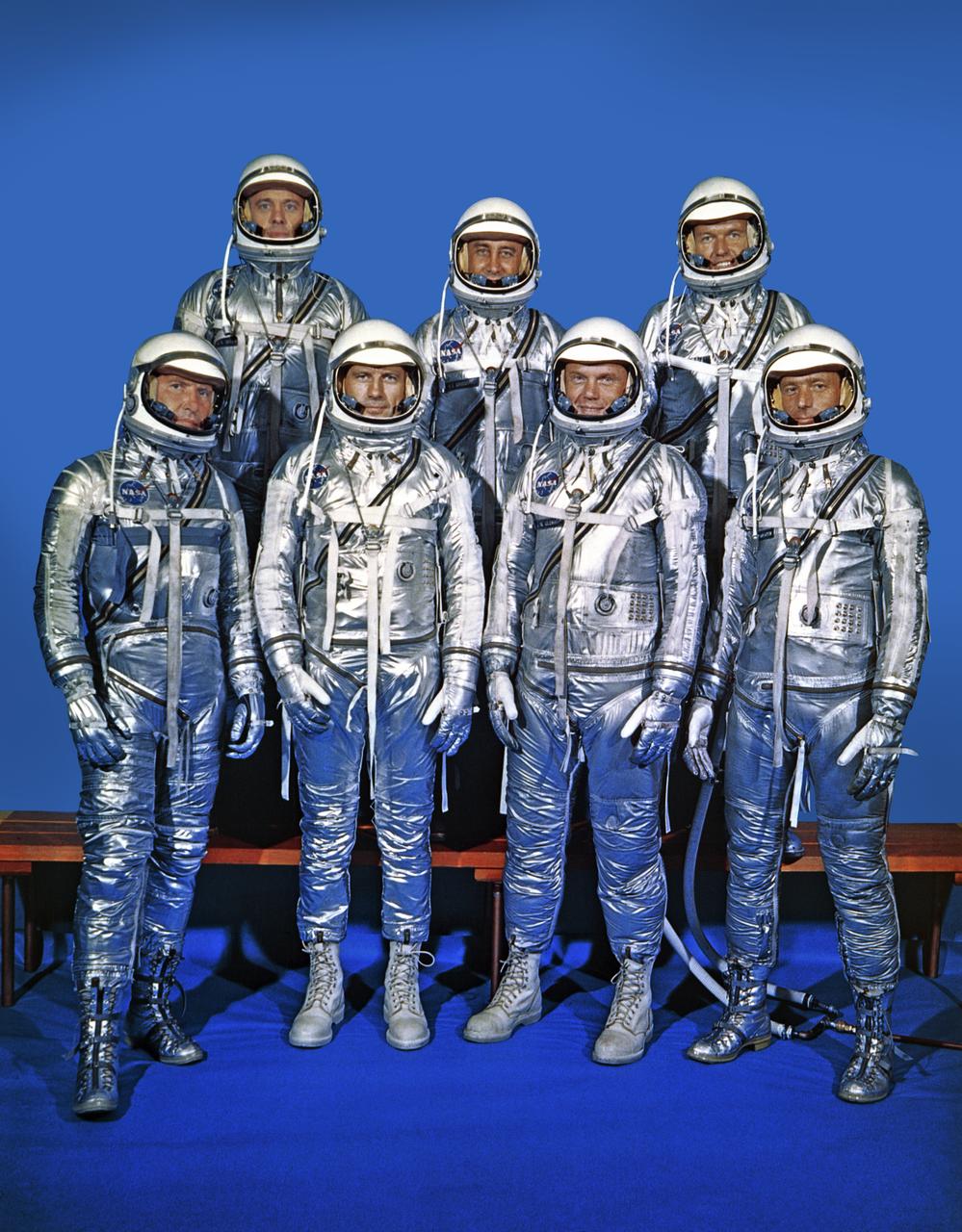
Press release information, September 13, 1968: "FIRST ASTRONAUT TEAM: Project Mercury Astronauts, whose selection was announced on April 9, 1959, only six months after the National Aeronautics and Space Administration was formally established on Oct. 1, 1958, Included: Front row, left to right, Walter M. Schirra, Jr., Donald K. Slayton, John H. Glenn, Jr., and M. Scott Carpenter; back row, Alan B. Shepard, Jr., Virgil I. "Gus" Grissom and L. Gordon Cooper. (1962), *89-361 Also in B&W. This copy of original negative was edited without shadows in the background. Photo taken at NASA Langley Research Center by Life Magazine photographer and negative copied for other centers.
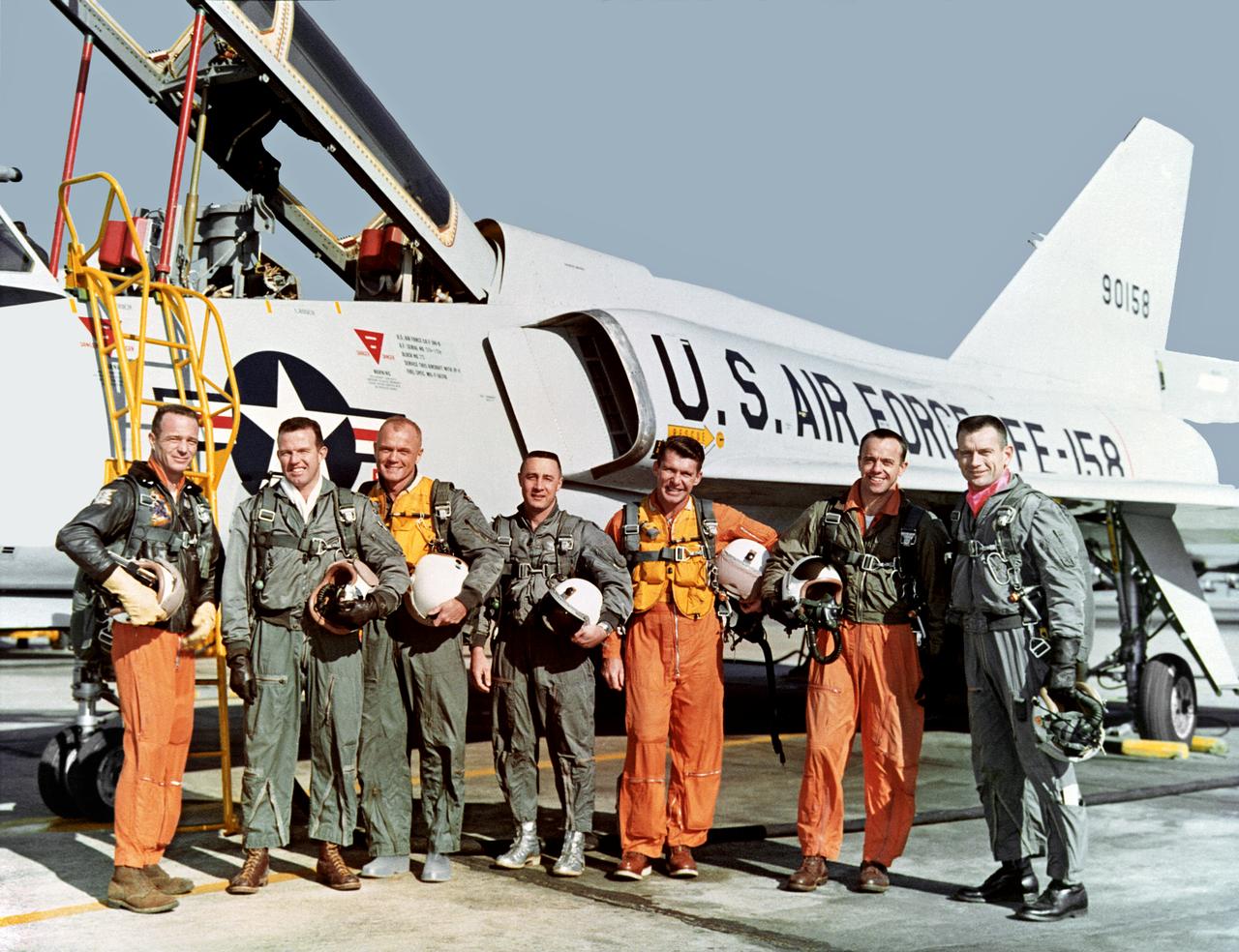
The original seven Mercury astronauts during training at NASA Langley Research Center Project Mercury. The original seven astronauts trained at NASA Langley Research Center. Chosen from among hundreds of applicants, the seven men were all test pilots. Standing in front of the U.S. Air Force Convair F-106B aircraft, the astronauts are, from left, Lt. M. Scott Carpenter, Capt. Gordon Cooper, Col. John H. Glenn Jr., Capt. Virgil "Gus" Grissom, Lt. Comdr. Walter Schirra, Lt. Comdr. Alan B. Shepard Jr. and Capt. Donald K. "Deke" Slayton. While familiarizing the astronauts with the Mercury set-up, Langley employees helped them to specialize in the technical areas crucial to the overall success of Project Mercury. Langley people also guided and monitored the astronauts activities through the many spaceflight simulators and other training devices built at the Center expressly for the manned space program. In less than three years, Project Mercury proved that men could be sent into space and returned safely to Earth, setting the stage for the longer duration Gemini flights and the Apollo lunar landings. This photograph was originally taken on 01/20/1961 and is published in Spaceflight Revolution NASA Langley Research Center from Sputnik to Apollo, NASA SP-4308, by James R. Hansen, 1995, page 40.

Astronaut Alan B. Shepard, one of the original seven astronauts for Mercury Project selected by NASA on April 27, 1959. The Freedom 7 spacecraft boosted by Mercury-Redstone vehicle for the MR-3 mission made the first marned suborbital flight and Astronaut Shepard became the first American in space.
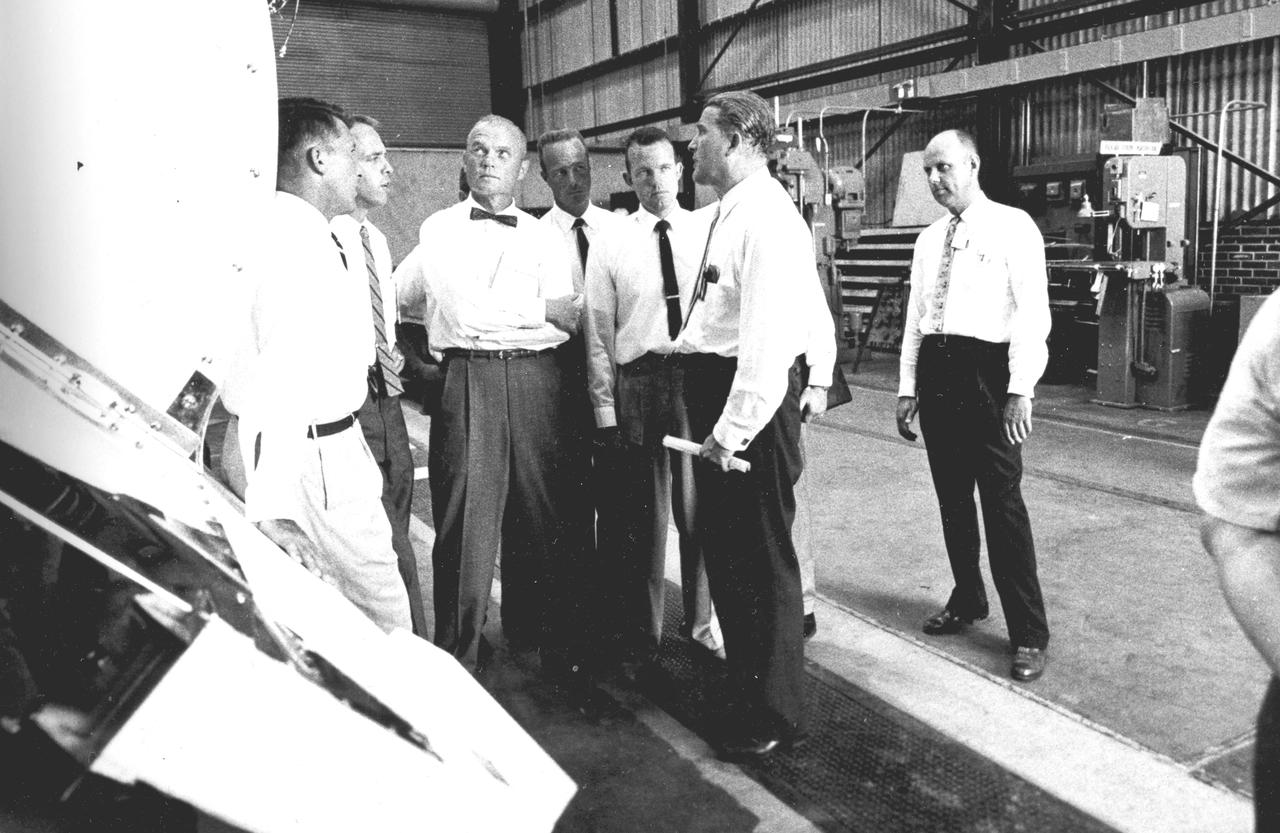
Five of the seven original astronauts are seen with Dr. von Braun inspecting the Mercury-Redstone hardware in the Fabrication Laboratory of Army Ballistic Missile Agency (ABMA) in 1959. Left to right: Astronauts Walter Schirra, Alan Shepard, John Glenn, Scott Carpenter, Gordon Cooper, and Dr. von Braun.

Astronaut Virgil I. "Gus" Grissom, one of the original seven astronauts for Mercury Project selected by NASA on April 27, 1959. The MR-4 mission, boosted by the Mercury-Redstone vehicle, made the second marned suborbital flight. The capsule, Liberty Bell 7, sank into the sea after the splashdown.
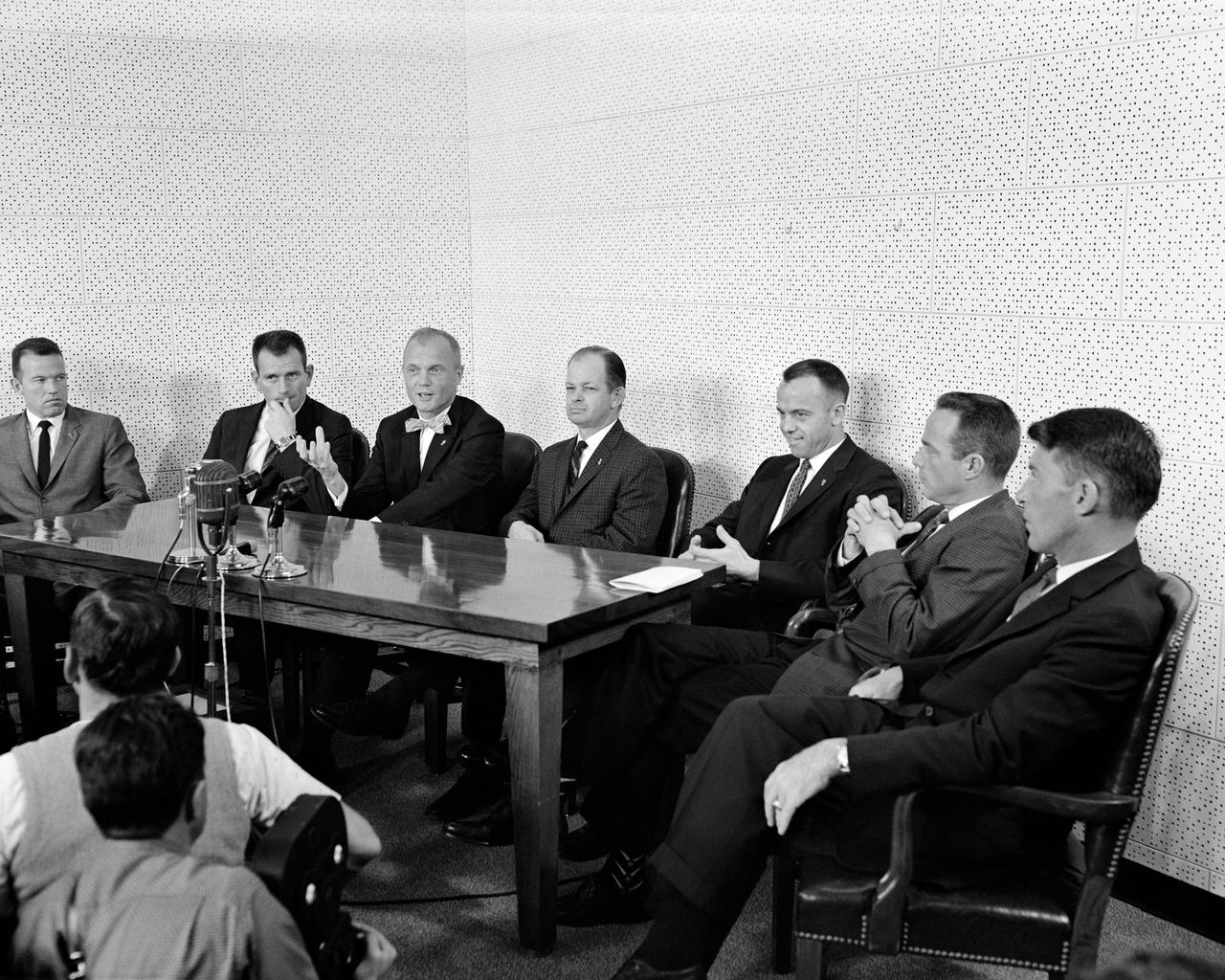
S61-00246 (25 July 1961) --- Photo of the original Mercury astronauts with Col. John A. (Shorty) Powers seated around a table talking to the news media. From left to right are: L. Gordon Cooper, Donald K. Slayton, John H. Glenn Jr., Col. Powers, Alan B. Shepard Jr., M. Scott Carpenter and Walter M. Schirra Jr. Virgil I. Grissom is out of the frame. Photo credit: NASA

Astronaut Walter M. "Wally" Schirra, one of the original seven astronauts for Mercury Project selected by NASA on April 27, 1959. The MA-8 (Mercury-Atlas) mission with Sigma 7 spacecraft was the third marned orbital flight by the United States, and made the six orbits in 9-1/4 hours.

Astronaut L. Gordon Cooper, Jr., one of the original seven astronauts for Mercury Project selected by NASA on April 27, 1959. The MA-9 mission, boosted by the Mercury-Atlas launch vehicle, was the last flight of the Mercury Project. The Faith 7 spacecraft orbited the Earth 22 times in 1-1/2 days.

The original seven astronauts for the Mercury Project pose in front of an Air Force Jet. From left to right: Scott Carpenter, L. Gordon Cooper, John H. Glenn, Virgil I. Gus Grissom, Walter M. Wally Schirra, Alan B. Shepard, and Donald K. Deke Slayton.
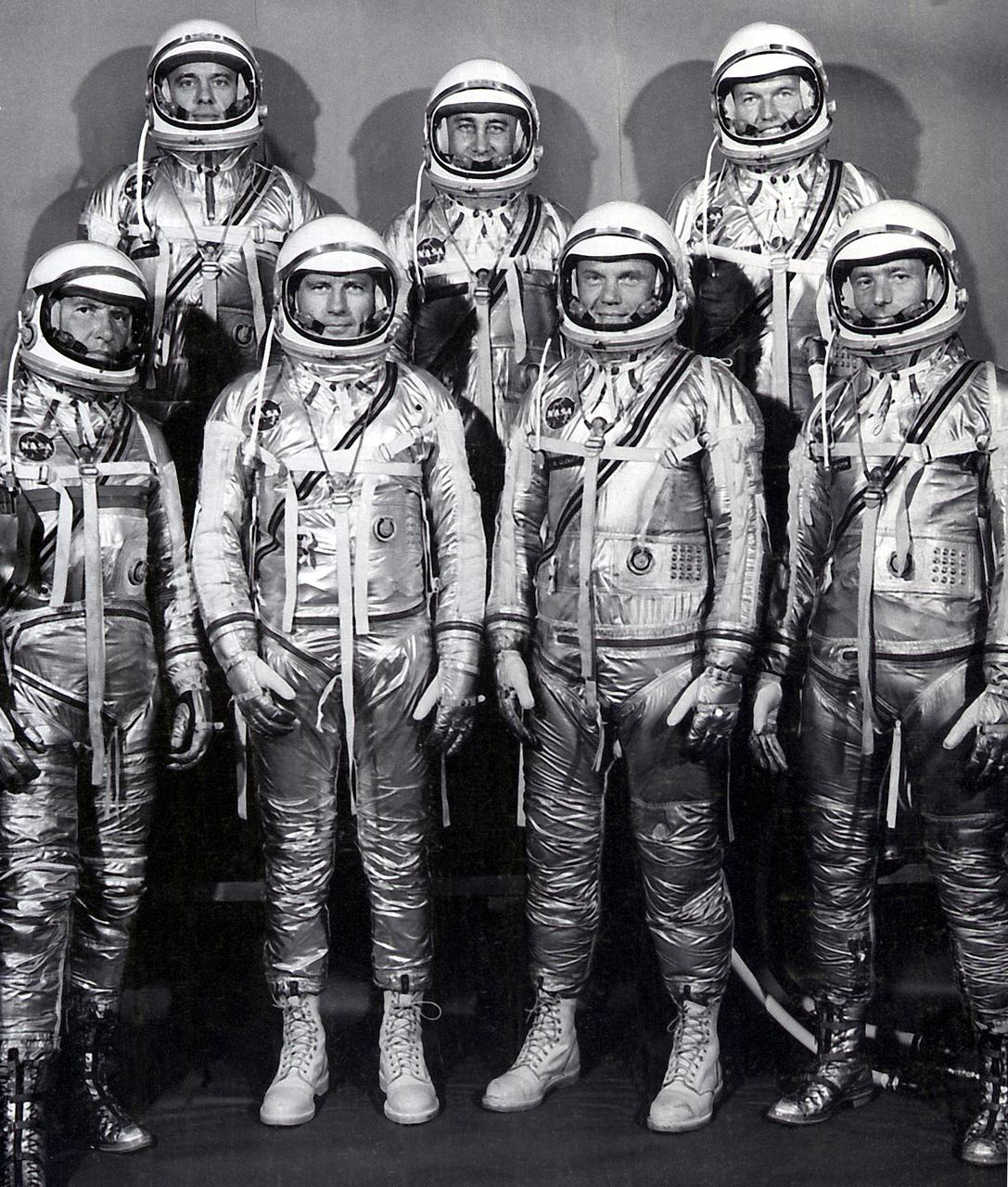
The group portrait of the original seven astronauts for the Mercury Project. NASA selected its first seven astronauts on April 27, 1959. Left to right at front: Walter M. Wally Schirra, Donald K. Deke Slayton, John H. Glenn, Jr., and Scott Carpenter. Left to right at rear: Alan B. Shepard, Virgil I. Gus Grissom, and L. Gordon Cooper, Jr.
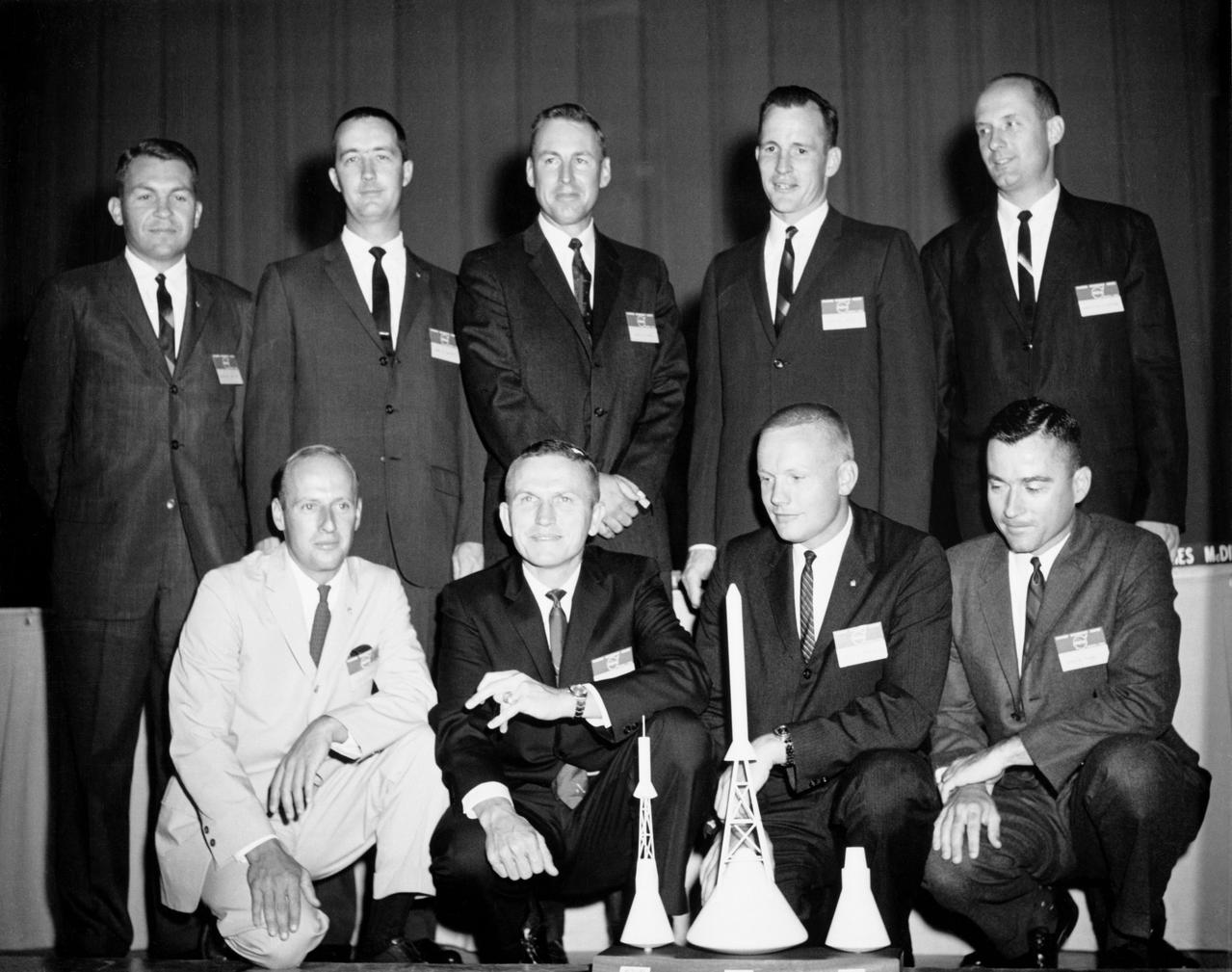
S62-03982 (September 1962) --- New National Aeronautics and Space Administration (NASA) Manned Spacecraft Center (MSC) flight crew personnel. Kneeling (left to right) are astronauts Charles Conrad Jr., Frank Borman, Neil A. Armstrong and John W. Young. Standing (left to right) are astronauts Elliot M. See Jr., James A. McDivitt, James A. Lovell Jr., Edward H. White II, and Thomas P. Stafford. Photo credit: NASA or National Aeronautics and Space Administration
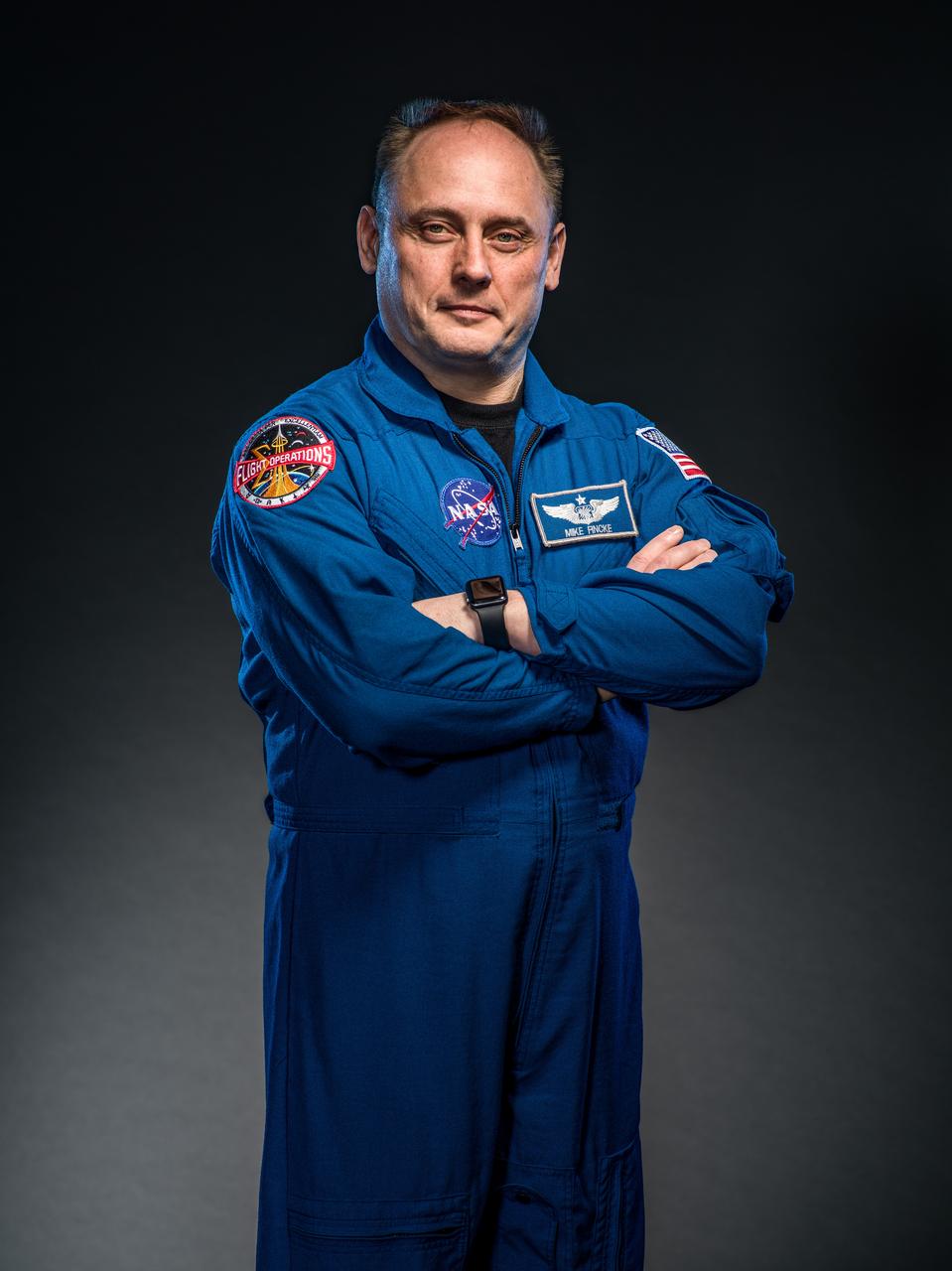
jsc2019e001293_alt (Feb. 13, 2019) --- NASA Astronaut E. Michael “Mike” Fincke has been assigned to the first flight of Boeing’s CST-100 Starliner. Fincke takes the place of astronaut Eric Boe, originally assigned to the mission in August 2018.
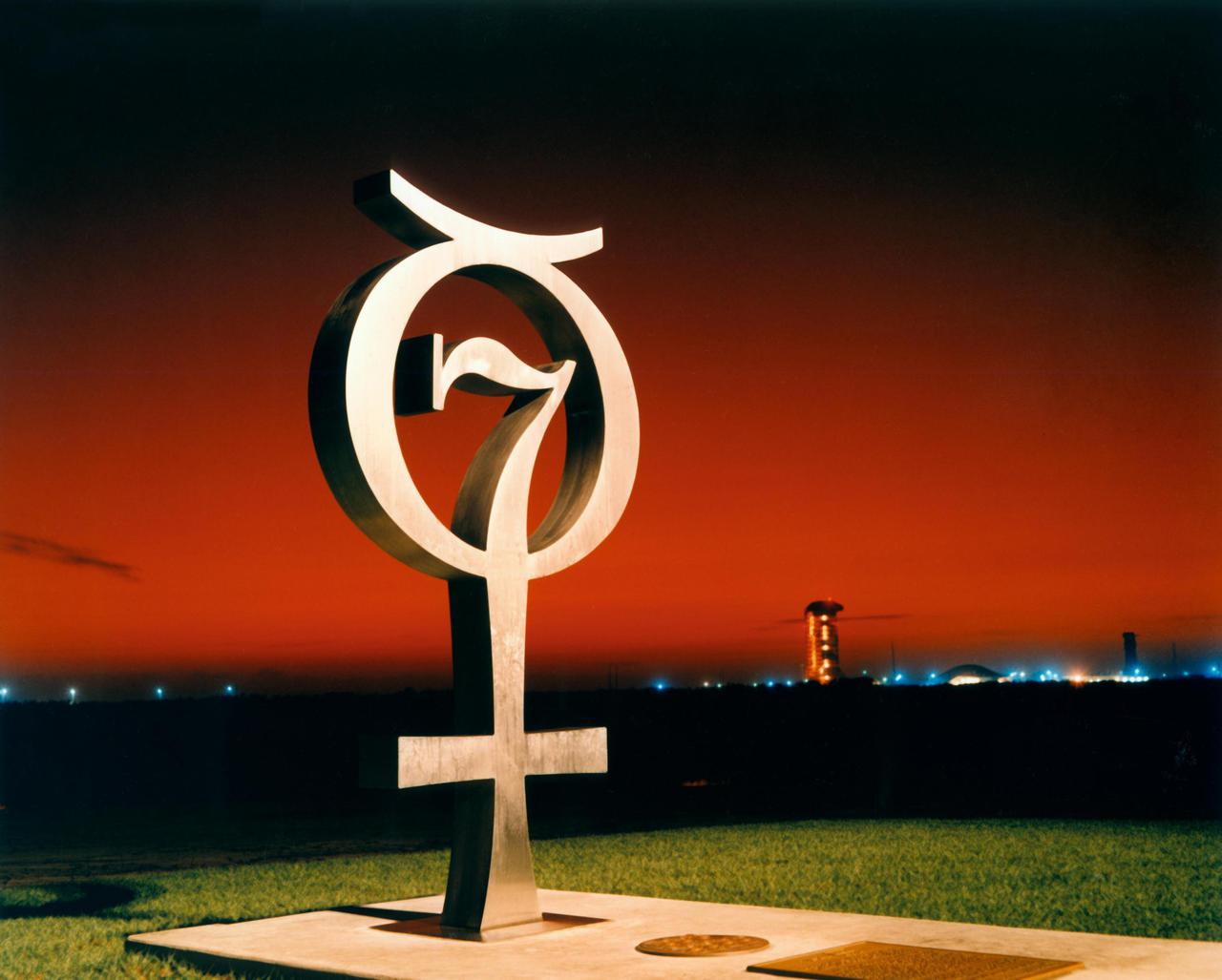
KENNEDY SPACE CENTER, FLA. -- The Mercury monument, honoring the original seven astronauts, is shown here at sunrise at Pad 14.
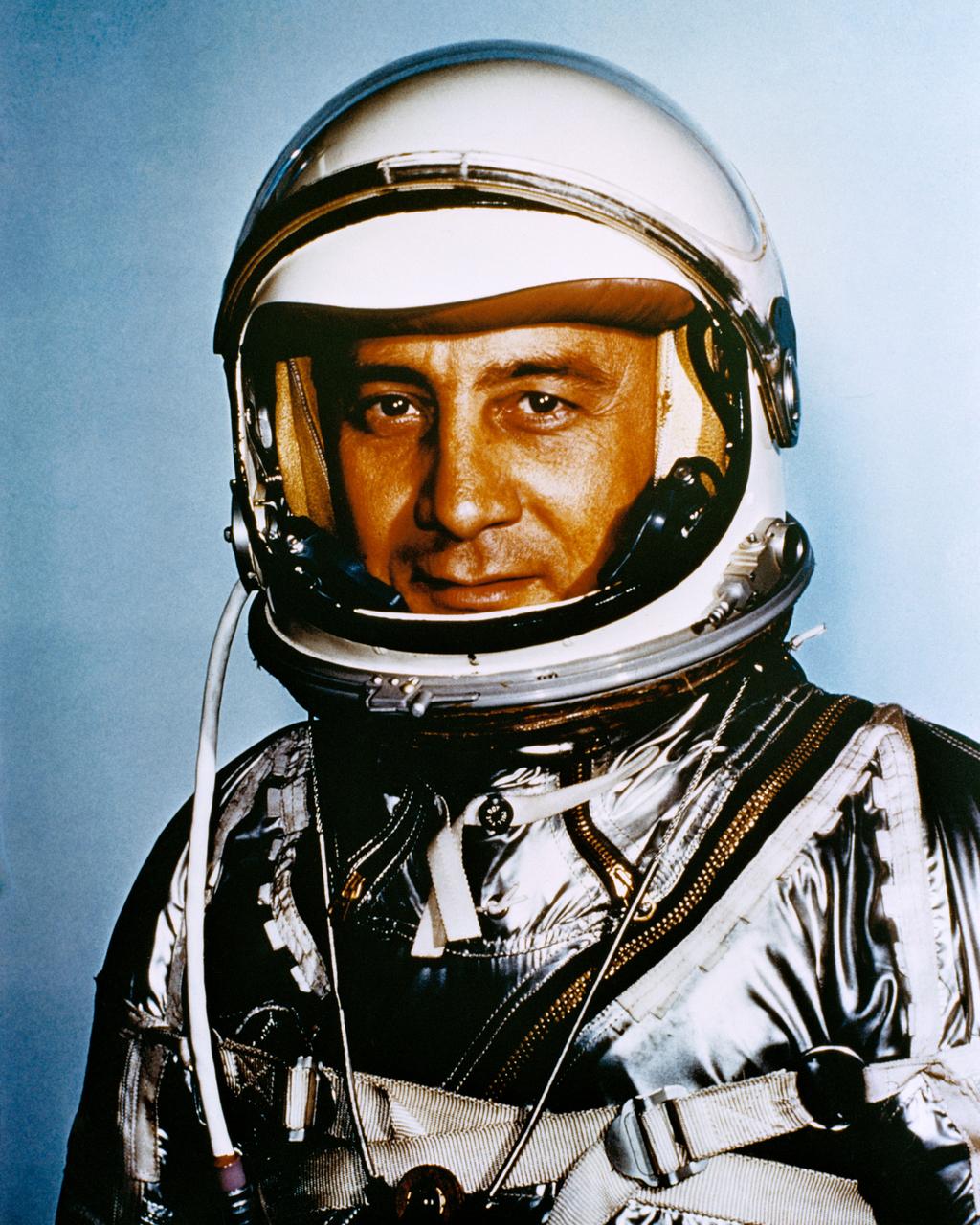
S87-40119 (1961) --- Astronaut Virgil I. Grissom. (NOTE: Astronaut "Gus" Grissom, one of the original seven astronauts, died January 27, 1967, at NASA?s John F. Kennedy Space Center (KSC), Cape Canaveral Florida, in the Apollo 1 spacecraft fire.)
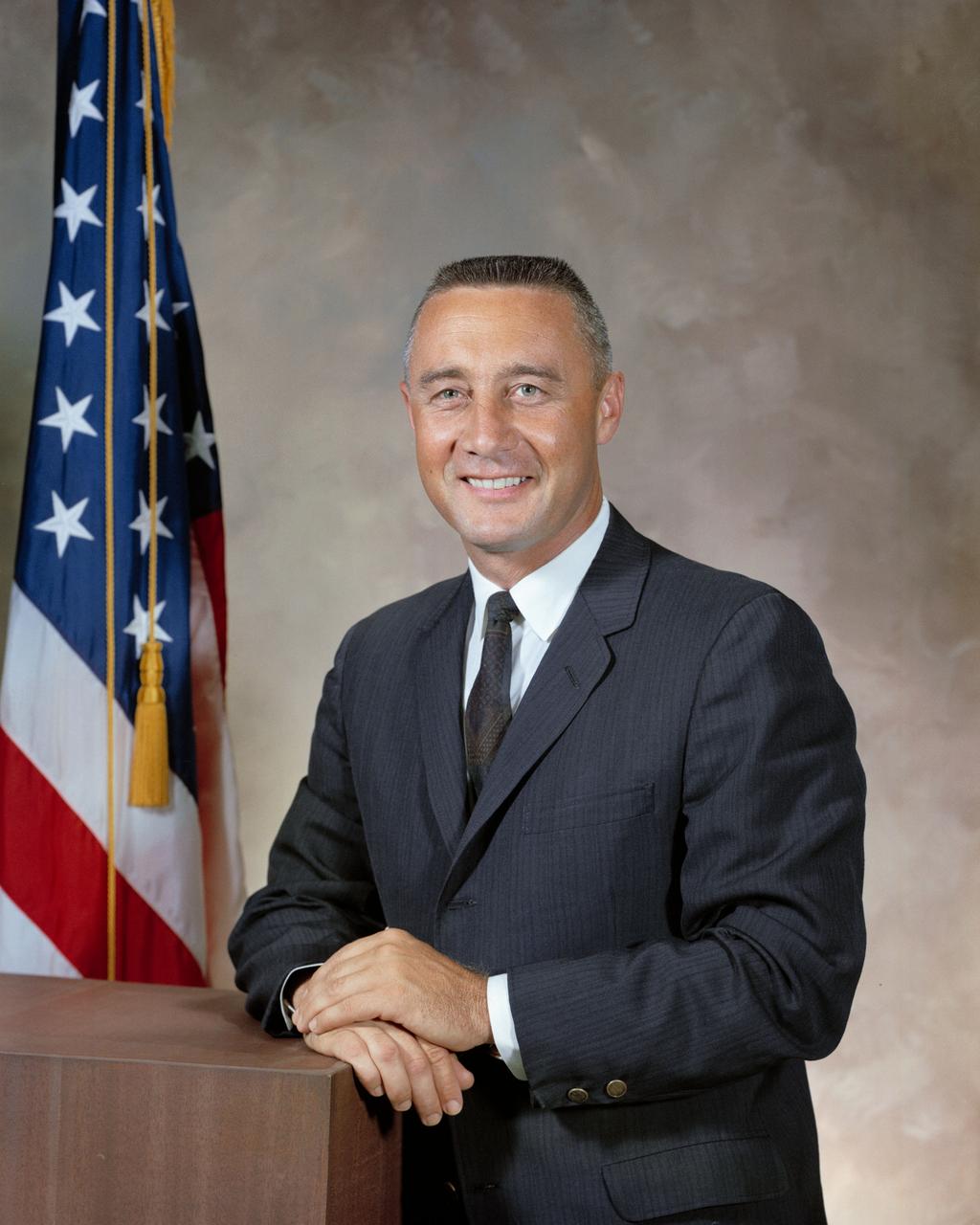
S64-32343 (10 Sept. 1964) --- Astronaut Virgil I. Grissom Editor's Note: Grissom, one of the Original Seven or Mercury astronauts, lost his life in the Apollo 204 fire at Cape Kennedy on Jan. 27, 1967, along with astronauts Edward H. White II and Roger B. Chaffee.

Astronaut John H. Glenn, one of the original seven astronauts for Mercury Project selected by NASA on April 27, 1959. The MA-6 mission, boosted by the Mercury-Atlas vehicle, was the first manned orbital launch by the United States, and carried Astronaut Glenn aboard the Friendship 7 spacecraft to orbit the Earth.
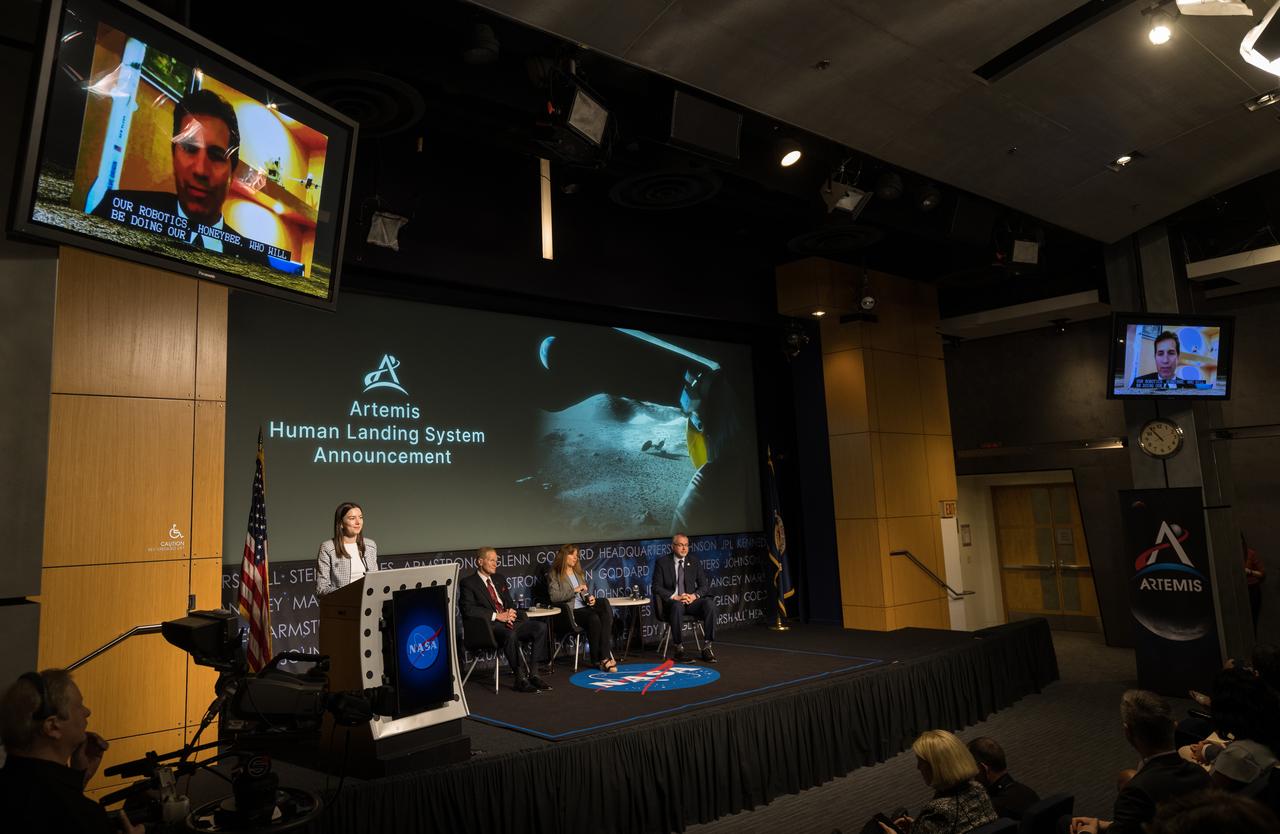
Blue Origin Human Landing System Program Manager, John Couluris, gives remarks during an event announcing Blue Origin as the company selected to develop a sustainable human landing system for the Artemis V Moon mission, Friday, May 19, 2023 at the Mary W. Jackson NASA Headquarters building in Washington. The human landing system will take astronauts to and from Gateway in lunar orbit to the surface and back to the lunar space station as part of NASA’s return to the Moon for science, exploration, and inspiration. Photo Credit: (NASA/Aubrey Gemignani)
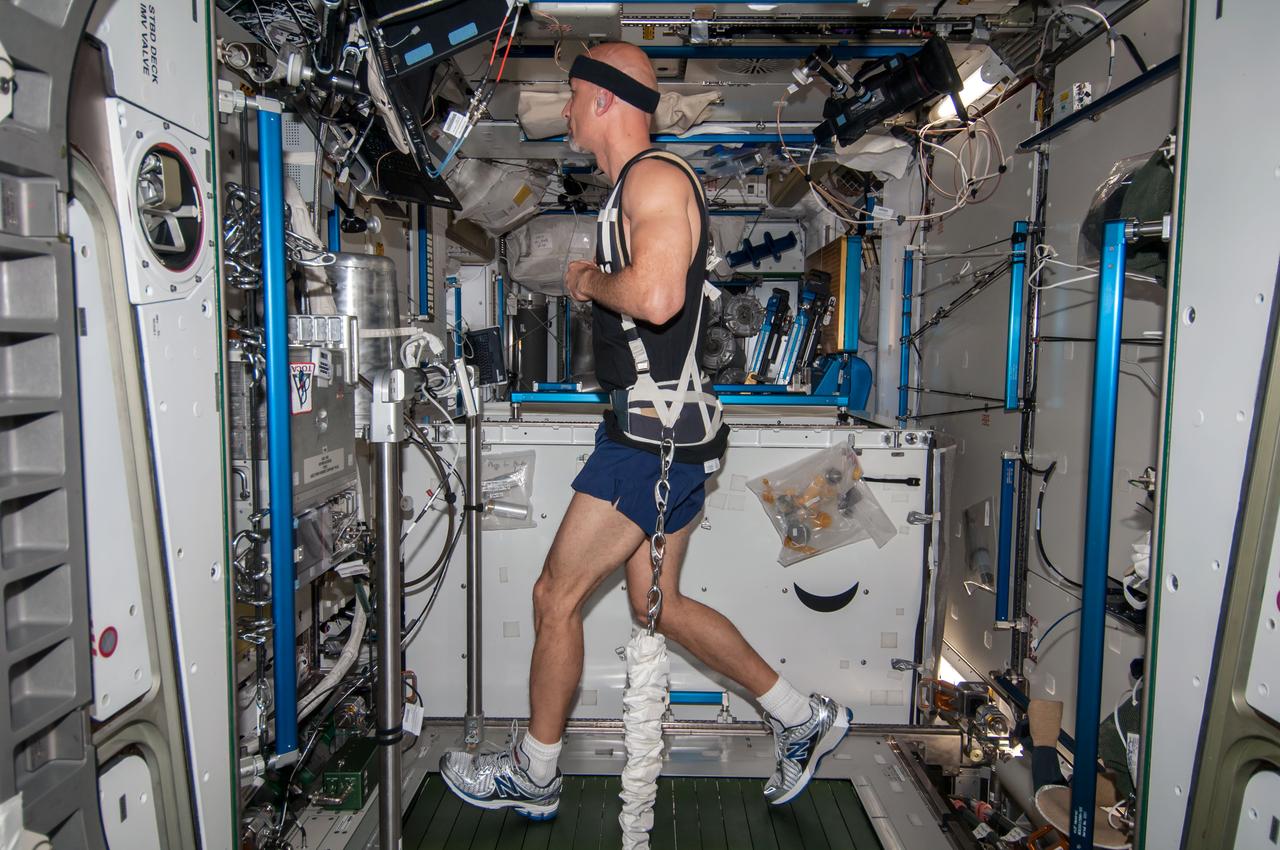
ISS036-E-005384 (2 June 2013) --- In the Tranquility node of the Earth-orbiting International Space Station, European Space Agency astronaut Luca Parmitano exercises on the Combined Operational Load Bearing External Resistance Treadmill (COLBERT), technically named the Treadmill 2 and abbreviated as T2. It is a treadmill for use on board the orbital outpost and is designed to allow astronauts to run without vibrating delicate microgravity science experiments in adjacent labs. It was derived from the treadmill that was originally taken to the station. COLBERT/T2 uses a different kind of vibration-suppression system than the original. Parmitano has been on board the orbital outpost for about three days and will continue his stay into November.
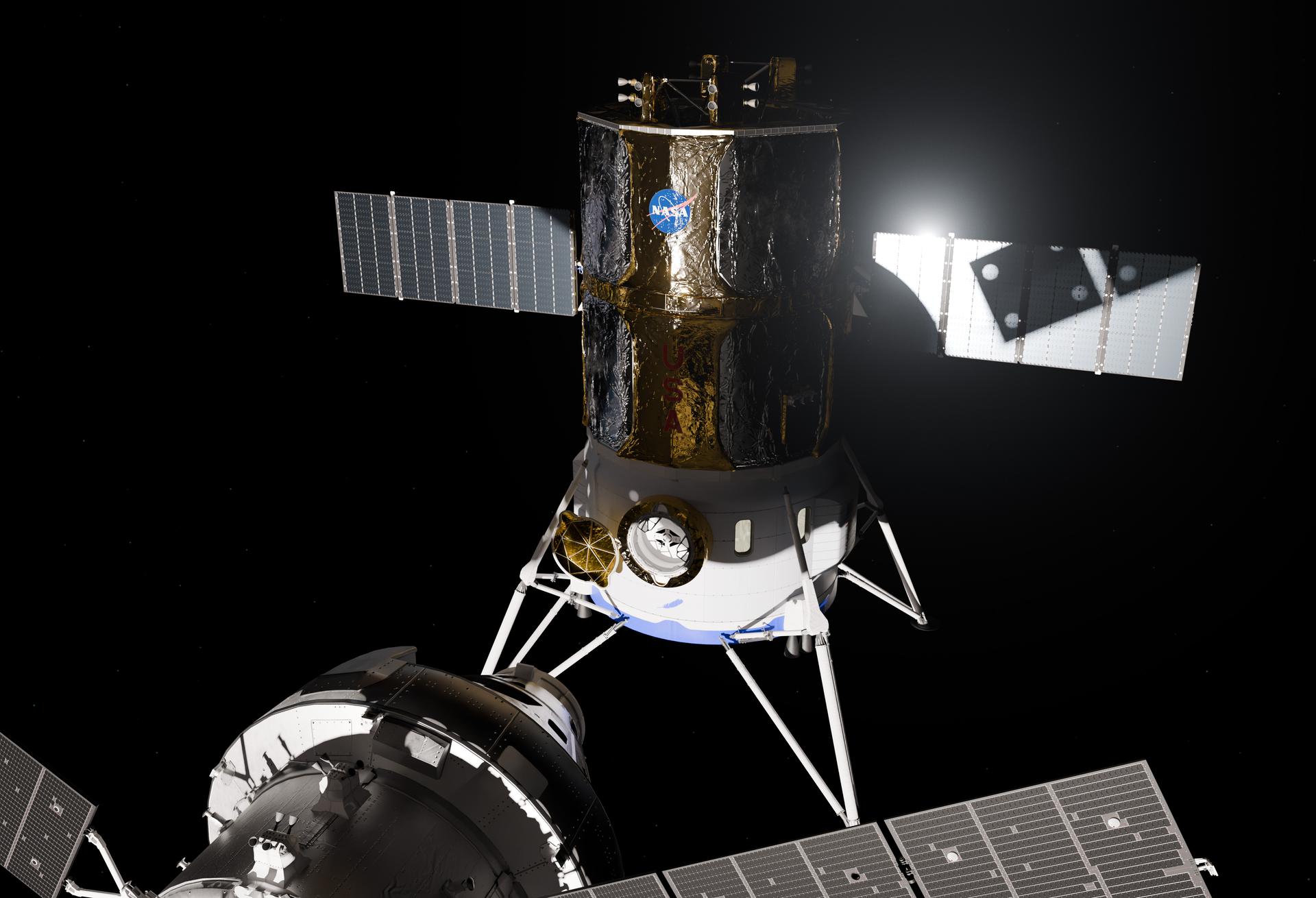
This artist’s concept depicts Blue Origin’s Blue Moon Mark 2 human landing system test article in Earth orbit with NASA’s Orion spacecraft during rendezvous and docking operations as part of NASA’s upcoming Artemis III demonstration mission in low Earth orbit. NASA is working with two American companies to develop the human landing systems that will safely transport astronauts from lunar orbit to the Moon’s surface and back for future Artemis missions. For Artemis III, both SpaceX and Blue Origin will fly test versions, or test articles, of the crewed landers that will be used for future Moon landings. The lander test articles will launch by commercial rockets, while the Artemis III crew will launch to low Earth orbit in Orion atop the agency’s SLS (Space Launch System) rocket.
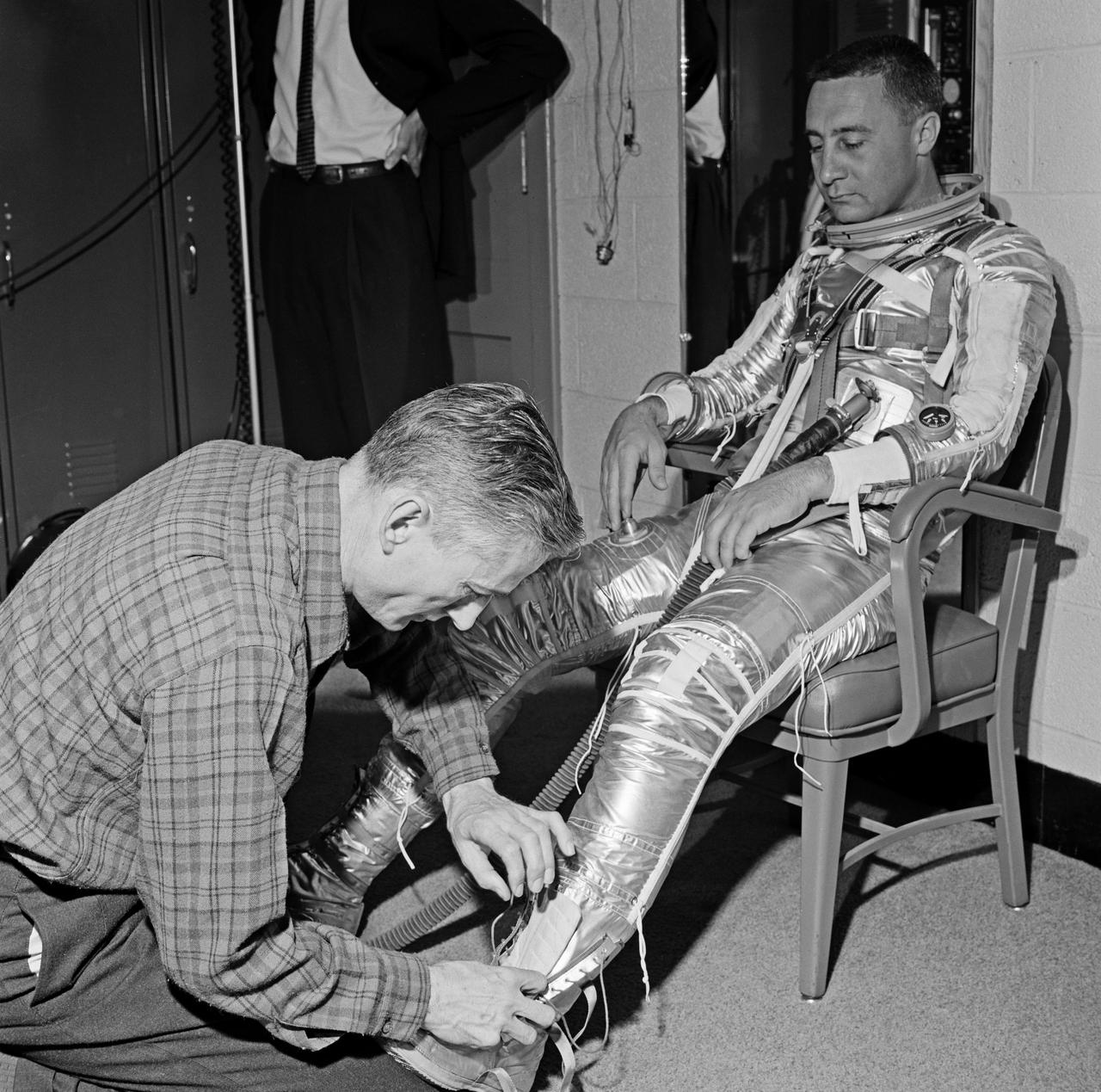
Gus Grissom trying on a Spacesuit; Seated with assistant; Seated with assistant putting on boots; Standing by mirror, name tag visible; Outside in suit, name tag visible. Mercury Project photo, 1961. Original negatives sent to Johnson Space Center when astronauts moved to that center. Photograph take on 03/27/1961.
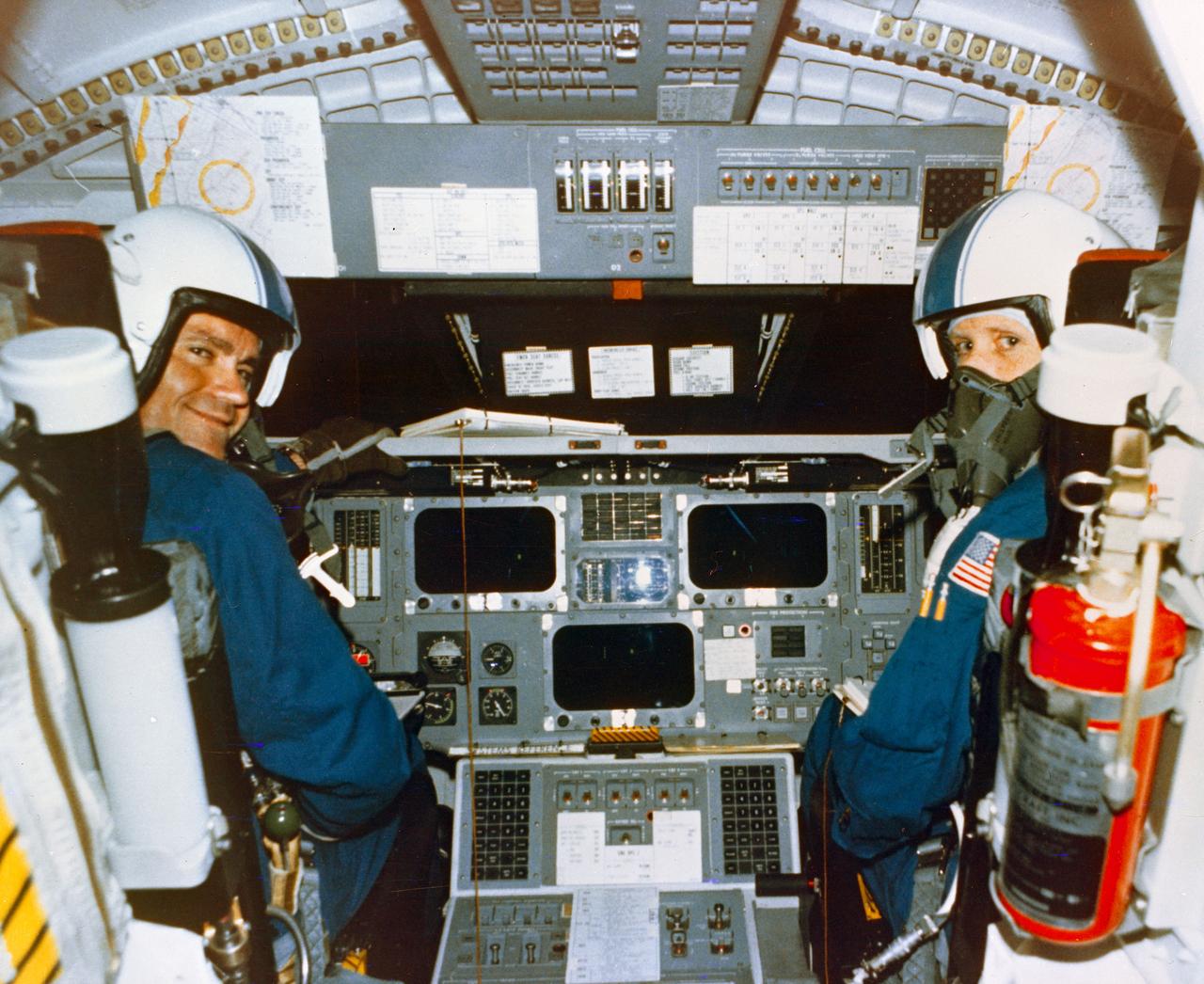
Astronauts Fred W. Haise, Jr., Commander, left, and C. Gordon Fullerton in the cockpit of the Space Shuttle Orbiter 101 "Enterprise" prior to the fifth and final FF in the Approach and Landing Test (ALT) series, from DFRC. Original photo number was 77-HC-446. DFRC, CA
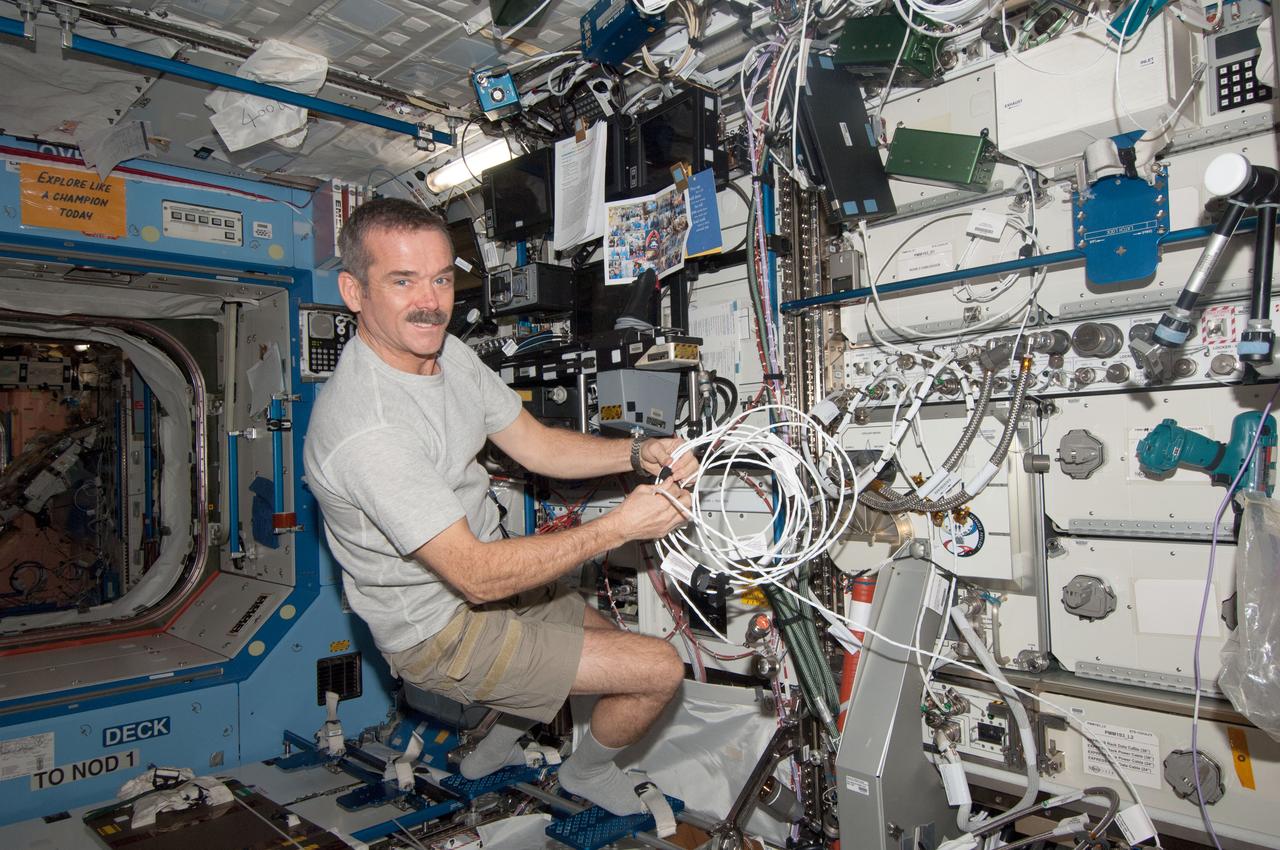
View of Canadian Space Agency (CSA) Chris Hadfield, Expedition 34 Flight Engineer (FE), wiring the condensate transfer pump, in the U.S. Laboratory. Image was released via astronaut Twitter. Original camera number is 268C1459. Photo was taken during Expedition 34.
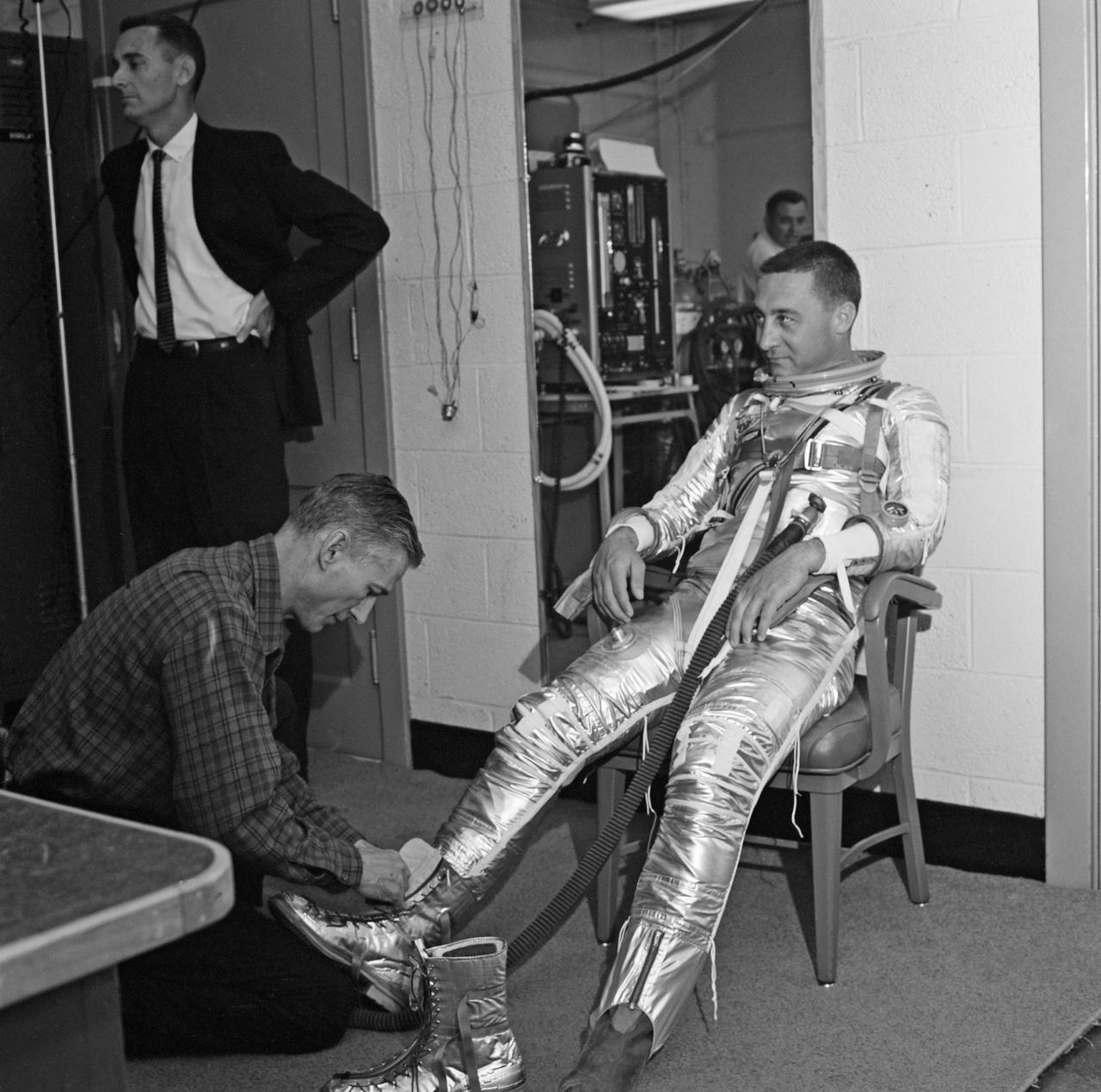
Gus Grissom trying on a Spacesuit; Seated with assistant; Seated with assistant putting on boots; Standing by mirror, name tag visible; Outside in suit, name tag visible. Mercury Project photo, 1961. Original negatives sent to Johnson Space Center when astronauts moved to that center. Photograph take on 03/27/1961.
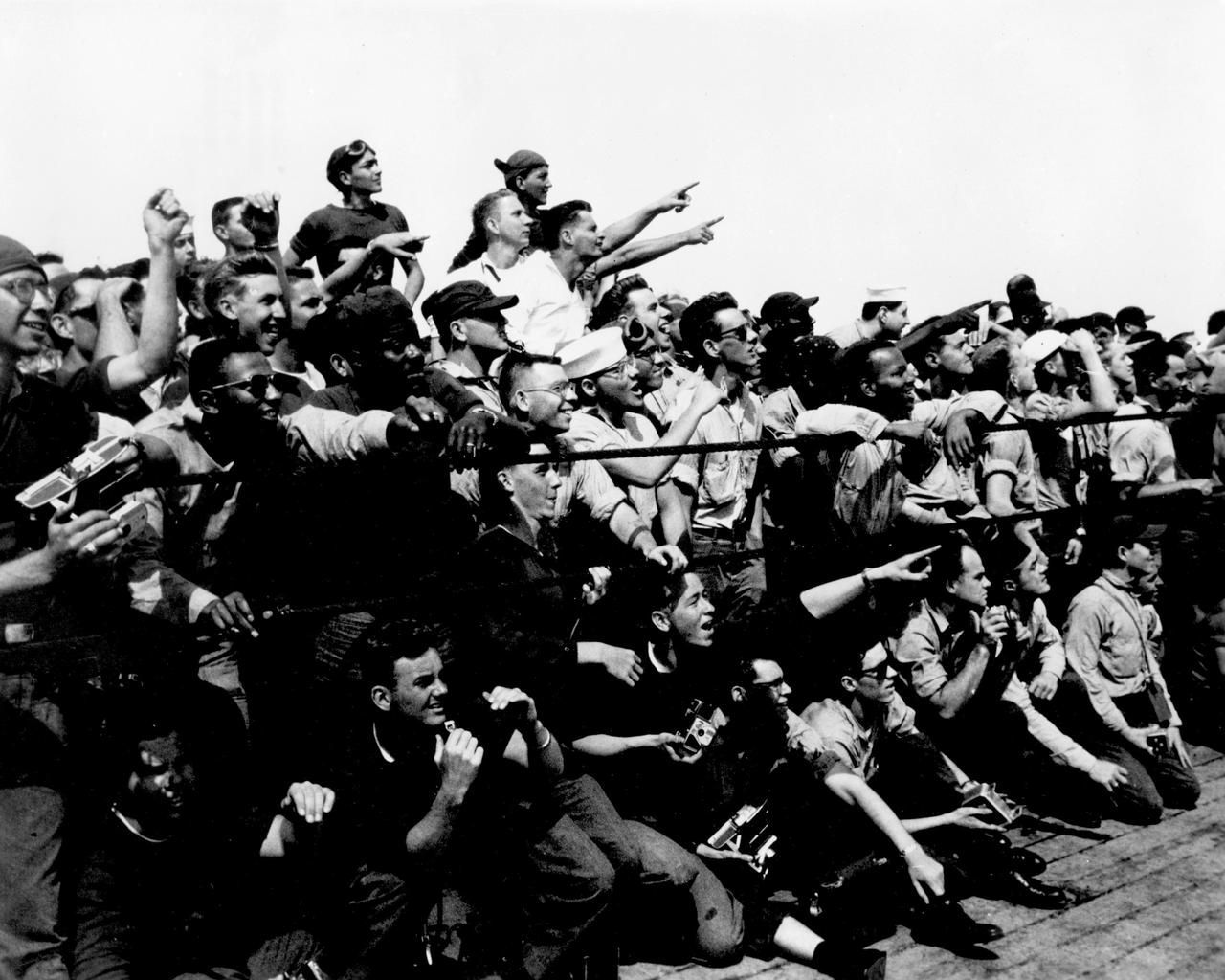
JSC2007-E-046479 (5 May 1961) --- Crew members of the U.S. Navy Carrier Champlain cheer and take pictures of the arrival of the first Project Mercury pilot to fly a suborbital flight, astronaut Alan B. Shepard Jr. Original photo number was 61-MR3-106. Photo credit: NASA
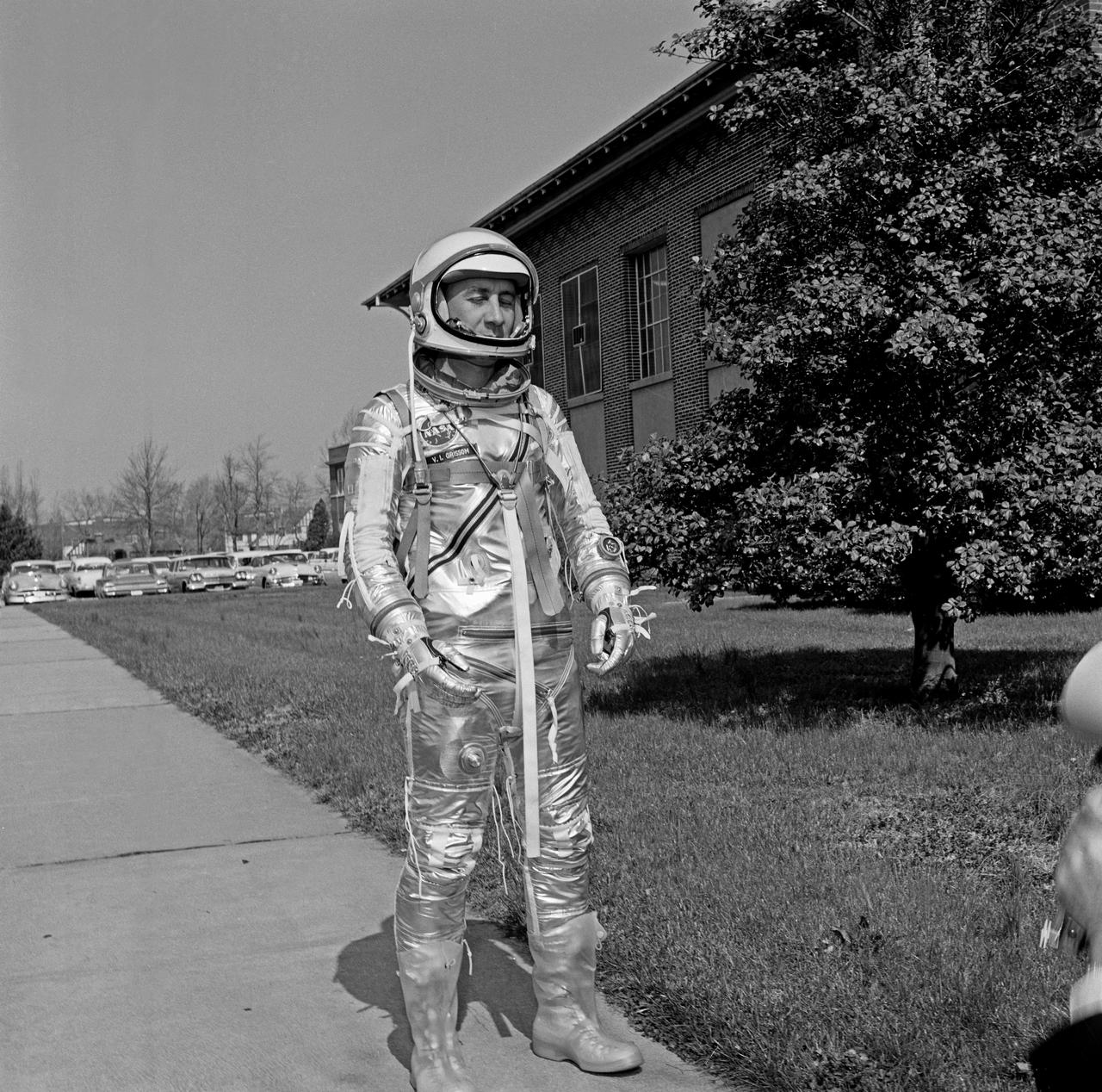
Gus Grissom trying on a Spacesuit; Seated with assistant; Seated with assistant putting on boots; Standing by mirror, name tag visible; Outside in suit, name tag visible. Mercury Project photo, 1961. Original negatives sent to Johnson Space Center when astronauts moved to that center. Photograph take on 03/27/1961.
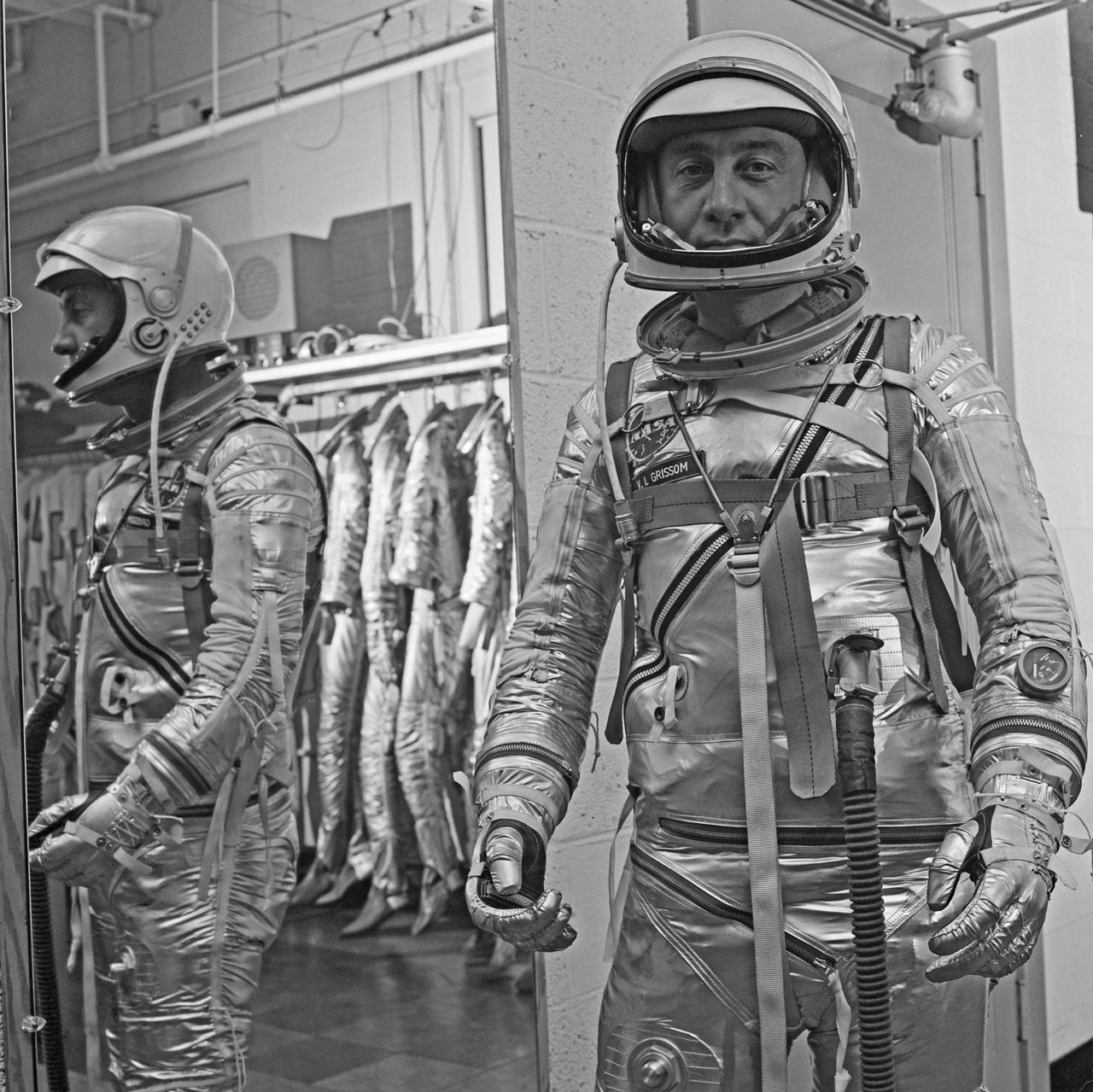
Gus Grissom trying on a Spacesuit; Seated with assistant; Seated with assistant putting on boots; Standing by mirror, name tag visible; Outside in suit, name tag visible. Mercury Project photo, 1961. Original negatives sent to Johnson Space Center when astronauts moved to that center. Photograph take on 03/27/1961.
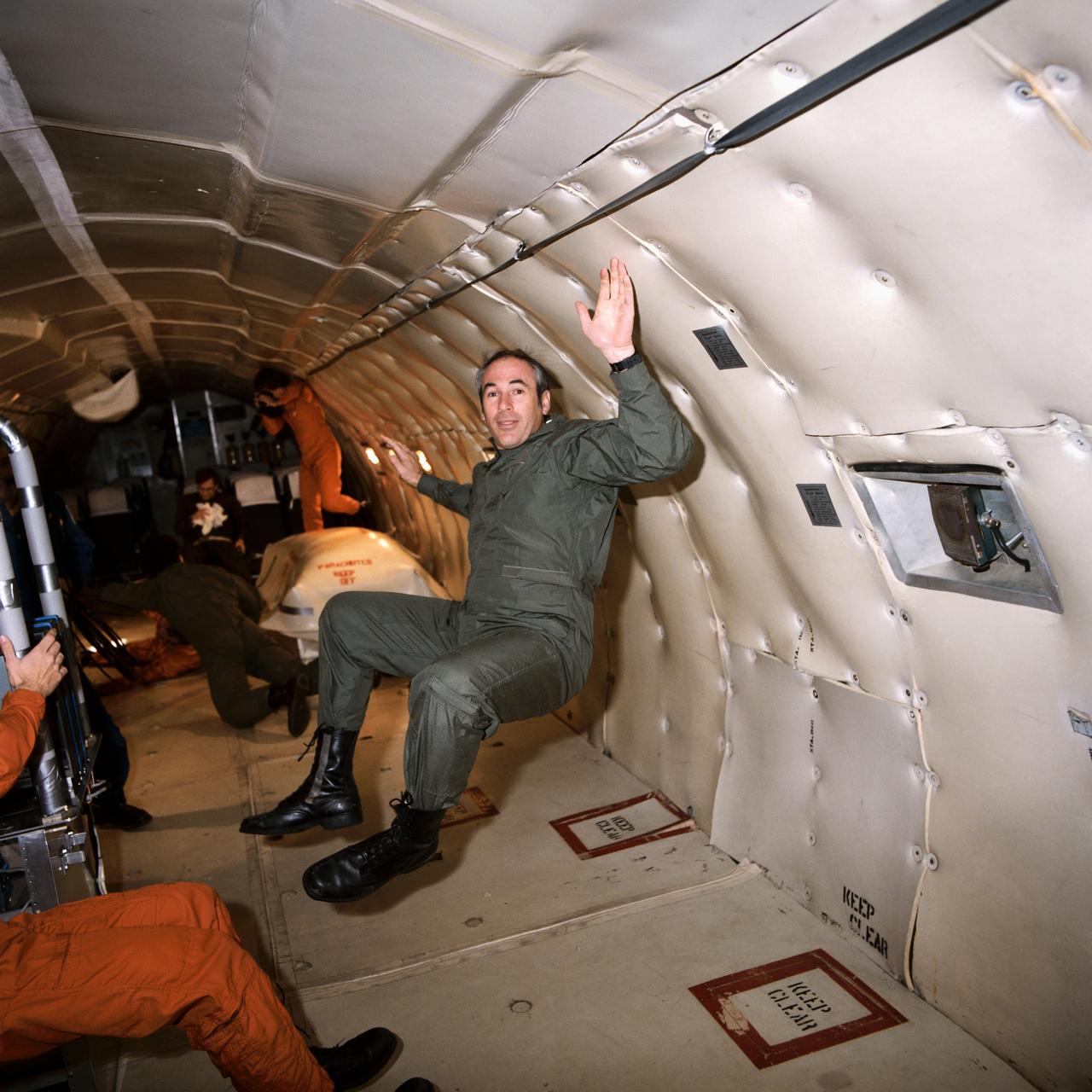
S85-26106 (25 Jan. 1985) --- Astronaut Gregory Jarvis gets a familiarization session in weightlessness aboard a KC-135 "zero gravity" aircraft. Jarvis was originally assigned as payload specialist to STS-51D but was reassigned to STS-51L. Photo credit: NASA
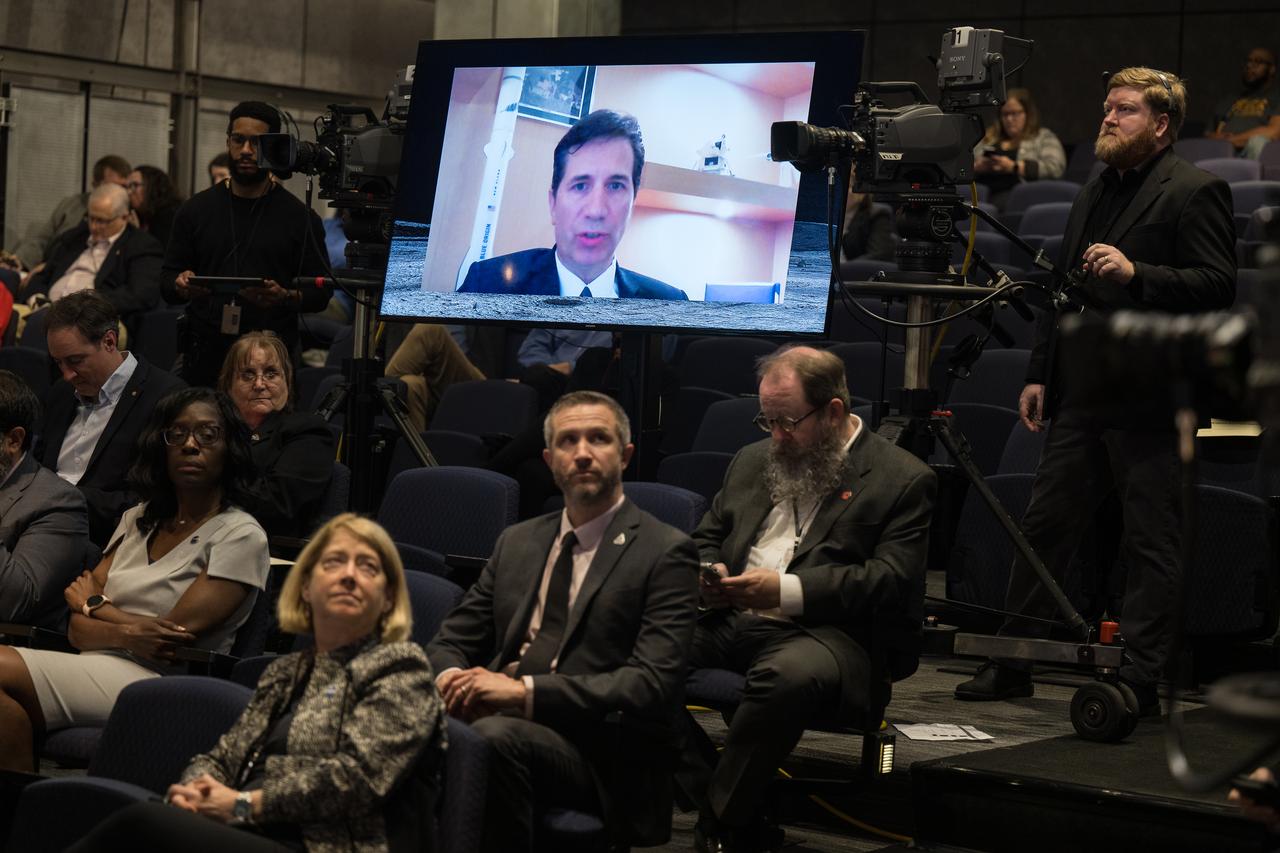
Blue Origin Human Landing System Program Manager, John Couluris, is seen on the monitor answering a question during an event announcing Blue Origin as the company selected to develop a sustainable human landing system for the Artemis V Moon mission, Friday, May 19, 2023 at the Mary W. Jackson NASA Headquarters building in Washington. The human landing system will take astronauts to and from Gateway in lunar orbit to the surface and back to the lunar space station as part of NASA’s return to the Moon for science, exploration, and inspiration. Photo Credit: (NASA/Aubrey Gemignani)
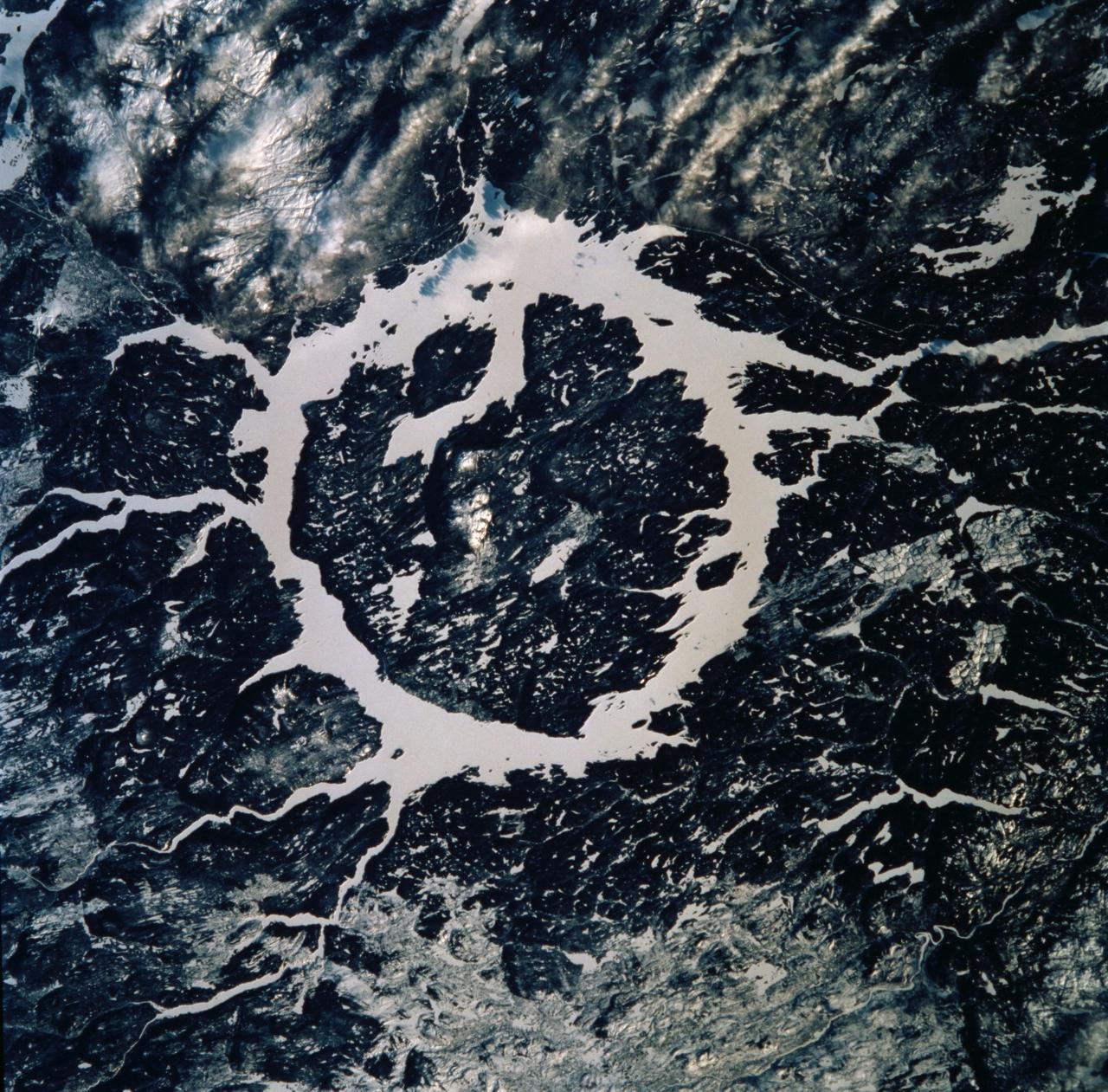
STS099-749-063 (11-22 February 2000) ---One of the astronauts aboard the Space Shuttle Endeavour for the STS-99 mission recorded this 70mm image of Manicouagan, one of the largest and most famous craters in Canada. Lake Manicouagan and Lake Mushalagan, frozen in this image, surround the central uplift of the crater. The original crater diameter was 100 kilometers and the age has been dated at 214 million years. Shattercones, striated features found in rocks deformed by the passage of shock waves, and shattered and brecciated rocks found in the central uplift confirm the crater's impact origin, according the NASA scientists studying the STS-99 photo collection.
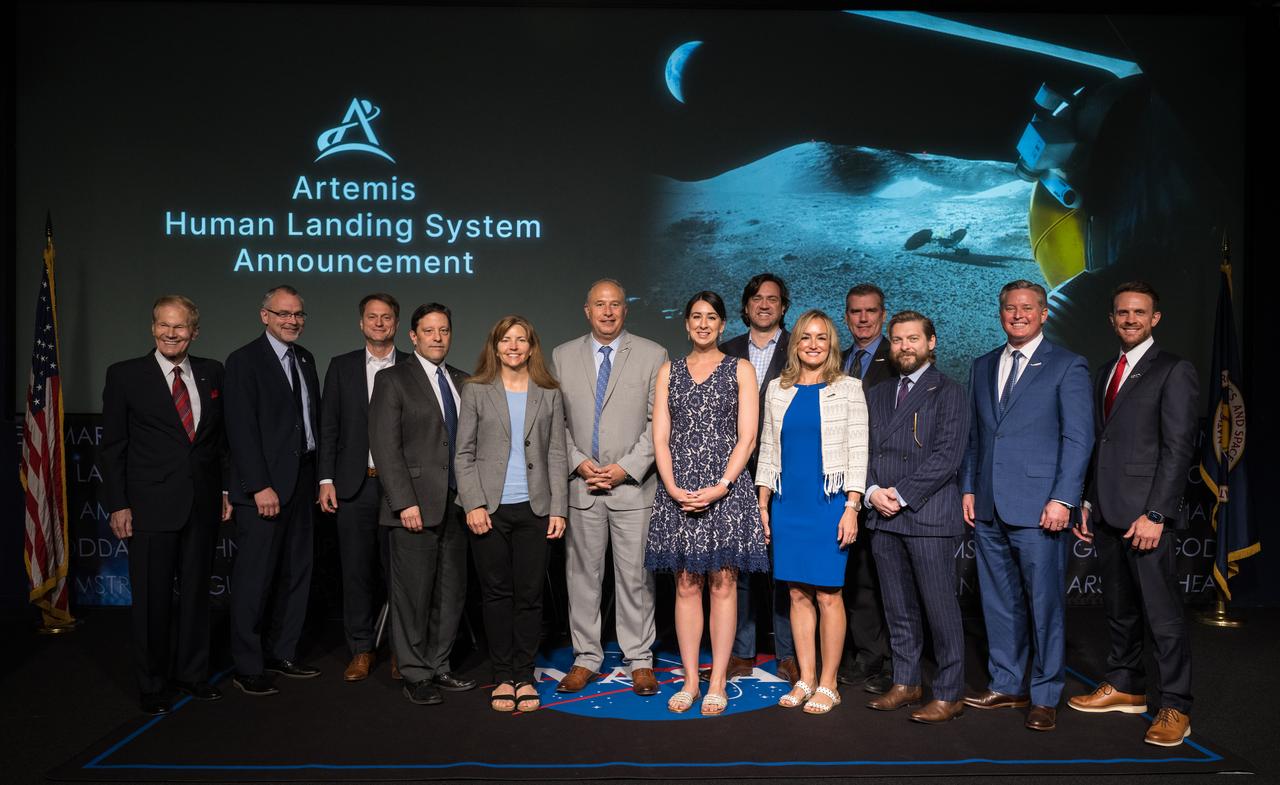
NASA Administrator Bill Nelson, NASA Associate Administrator for the Exploration Systems Development Mission Directorate Jim Free, Human Landing System Program Manager Lisa Watson-Morgan, members of Blue Origin’s team, and others pose for a photo at the conclusion of an event announcing Blue Origin as the company selected to develop a sustainable human landing system for the Artemis V Moon mission, Friday, May 19, 2023 at the Mary W. Jackson NASA Headquarters building in Washington. The human landing system will take astronauts to and from Gateway in lunar orbit to the surface and back to the lunar space station as part of NASA’s return to the Moon for science, exploration, and inspiration. Photo Credit: (NASA/Aubrey Gemignani)
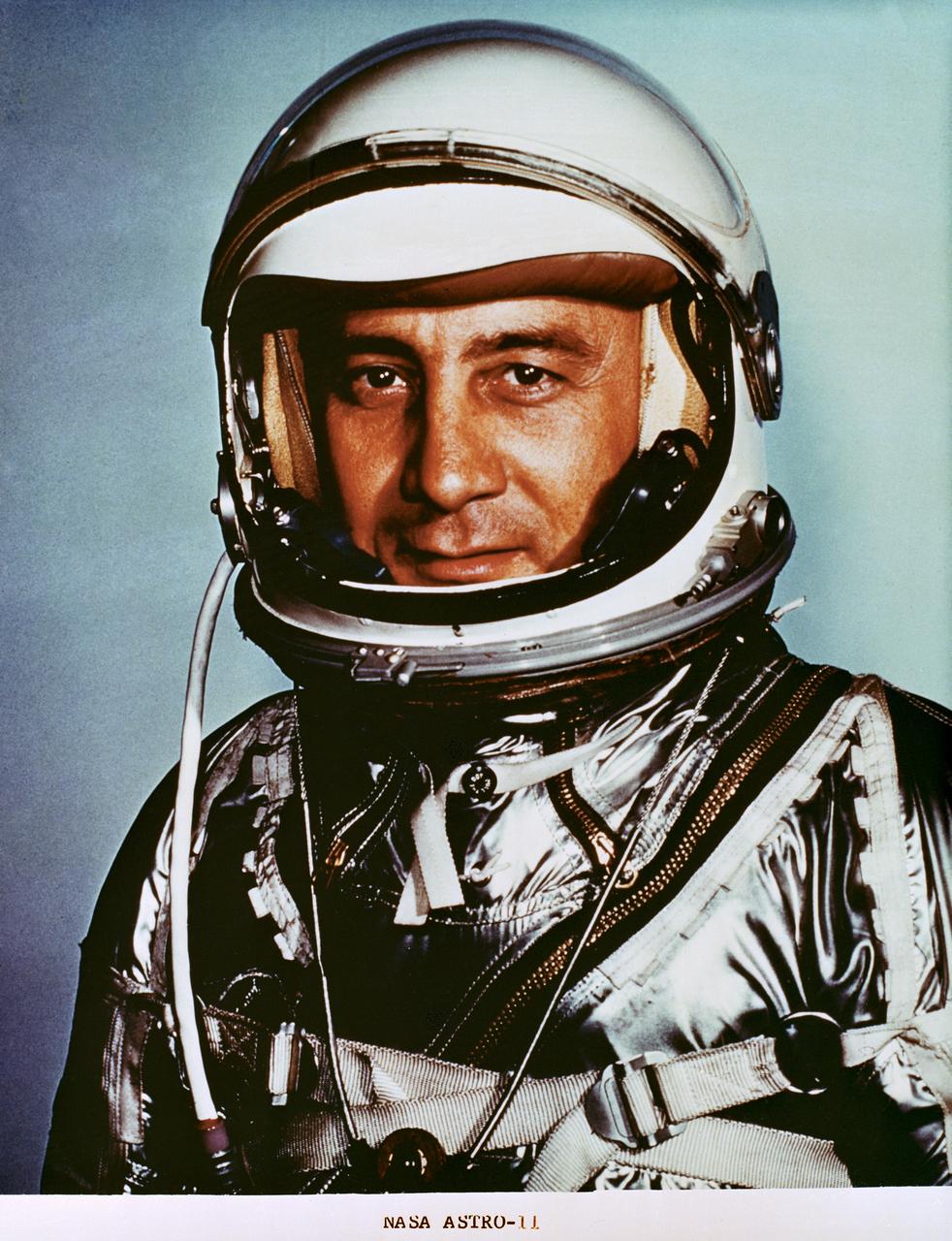
S88-55873 (1961) --- Astronaut Virgil I. (Gus) Grissom, pilot of the Mercury-Redstone 4 (MR-4) spaceflight. (NOTE: Astronaut "Gus" Grissom, one of the original seven astronauts, died Jan. 27, 1967, at NASA?s John F. Kennedy Space Center (KSC), Cape Canaveral Florida, in the Apollo 1 spacecraft fire.) Photo credit: NASA
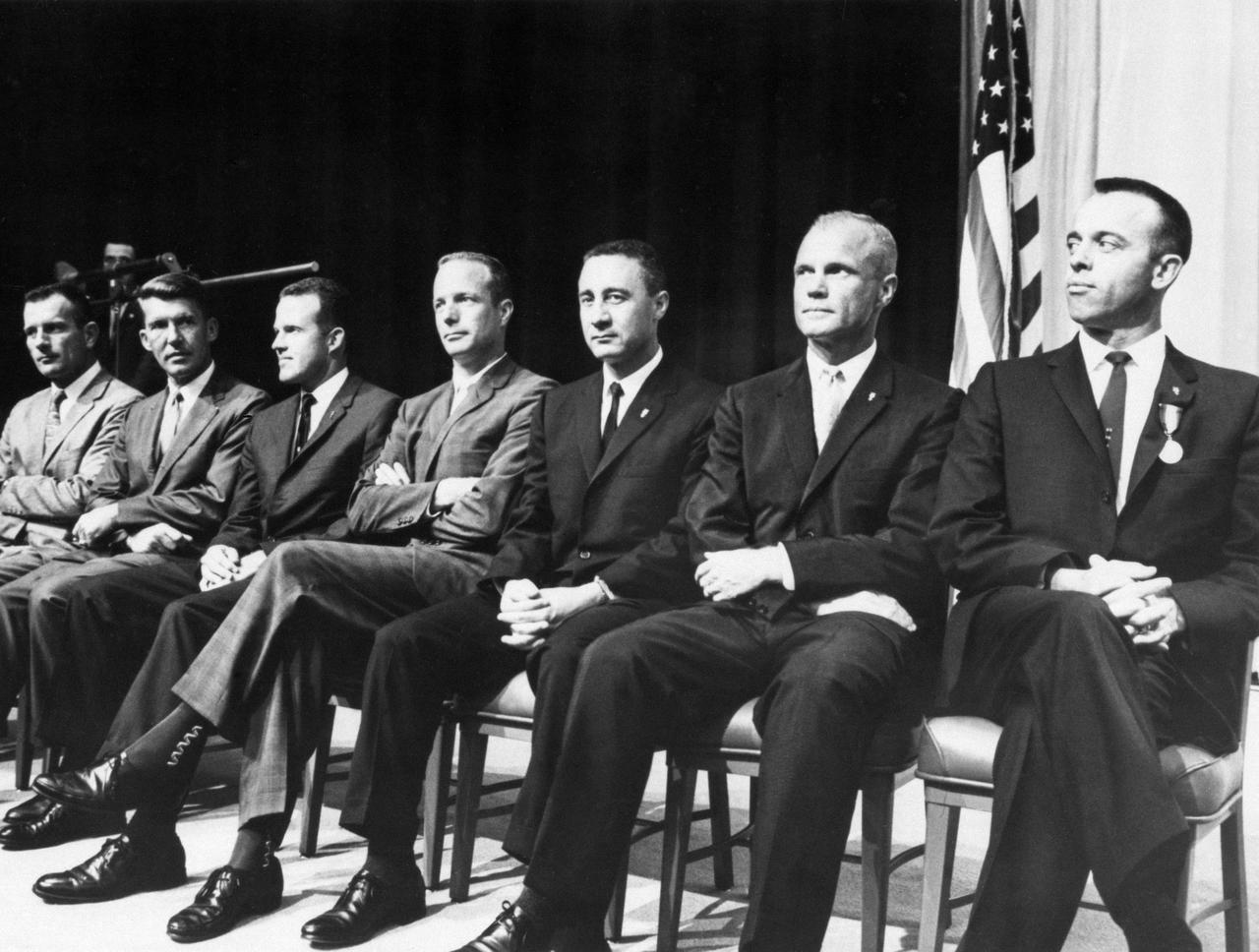
S61-02357 (8 May 1961) --- The original seven Mercury astronauts at the State Department Auditorium on May 8, 1961. The astronauts are (left to right) Donald K. Slayton, Walter M. Schirra, Jr., L. Gordon Cooper, Jr., M. Scott Carpenter, Virgil I. Grissom, John H. Glenn, Jr. and Alan B. Shepard, Jr. Earlier President John F. Kennedy had presented astronaut Shepard with the NASA Distinguished Service Medal (note it on his lapel) in the White House Rose Garden.
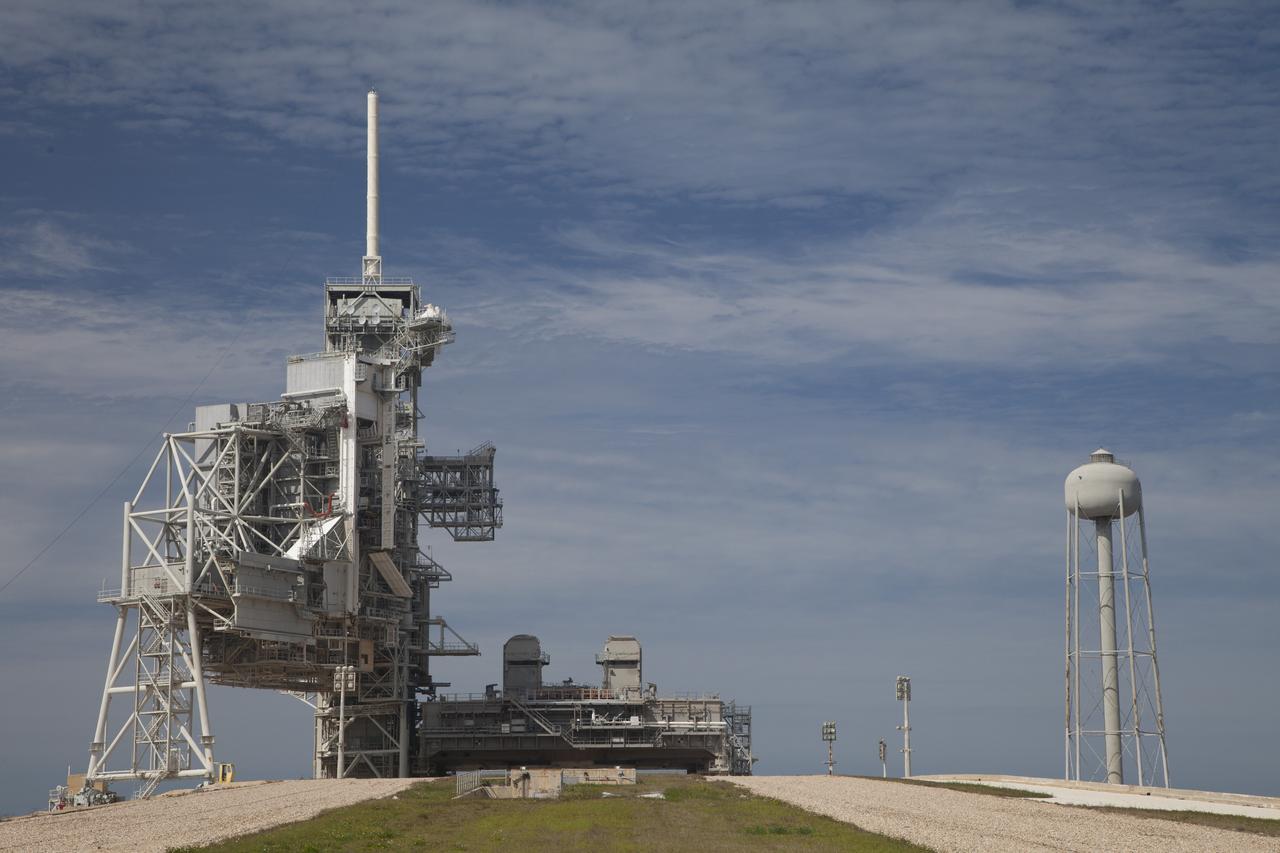
CAPE CANAVERAL, Fla. -- Launch pad 39A looks much like it did after the liftoff of STS-135, the final space shuttle mission, on July 8, 2011. The mobile launcher platform remains in place next to the fixed service structure and rotating service structure. Located at NASA's Kennedy Space Center in Florida, pad 39A was originally built for the Apollo/Saturn V rockets that launched American astronauts on their historic journeys to the moon and later modified to support the 30-year shuttle program. Both launch pad 39A and 39B pad 39A was originally built for the Apollo/Saturn V rockets that launched American astronauts on their historic journeys to the moon and later modified to support the 30-year shuttle program. To learn more about Launch Pad 39A visit: http://www.nasa.gov/mission_pages/shuttle/launch/launch-complex39-toc.html Photo credit: NASA/Dan Casper
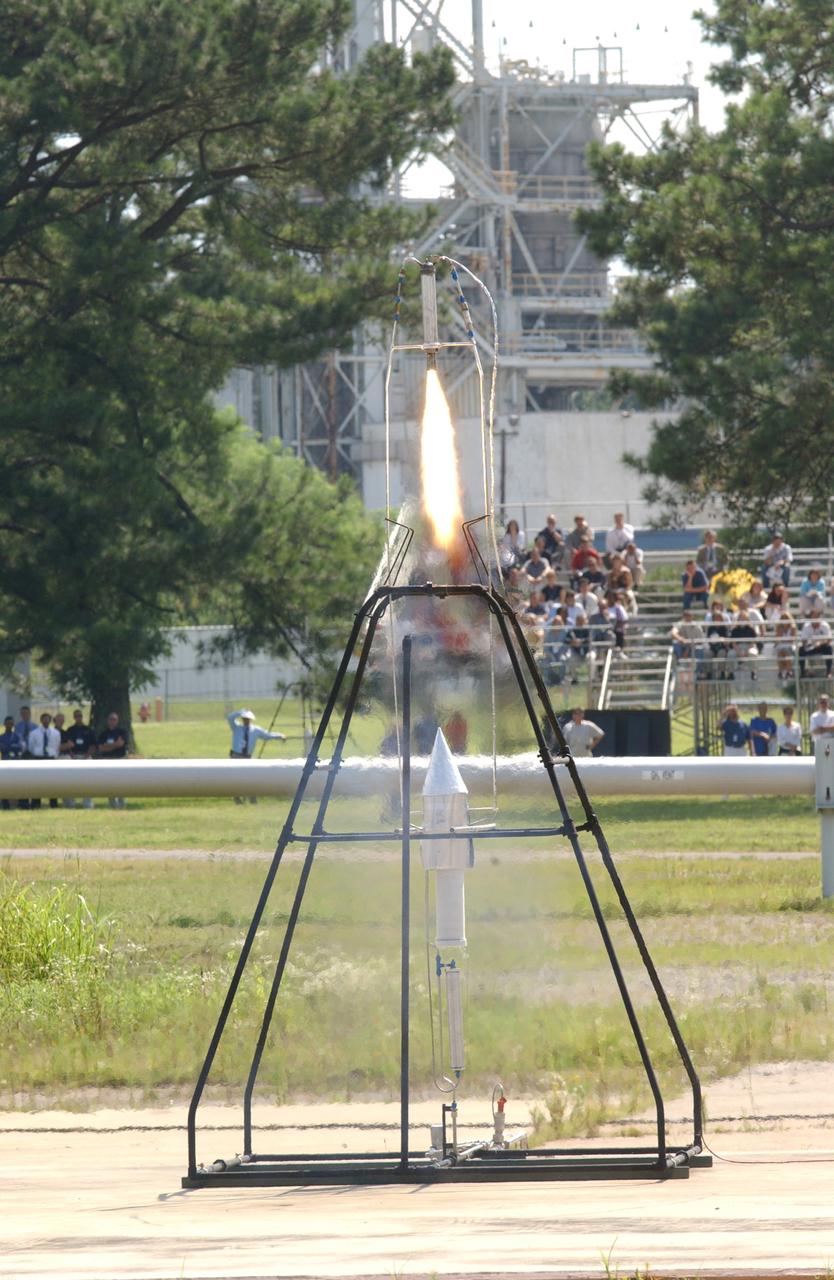
In honor of the Centernial of Flight Celebration and commissioned by the American Institute of Aeronautics and Astronautics (AIAA), a team of engineers from Marshall Space Flight Center (MSFC) built a replica of the first liquid-fueled rocket. The original rocket, designed and built by rocket engineering pioneer Robert H. Goddard in 1926, opened the door to modern rocketry. Goddard's rocket reached an altitude of 41 feet while its flight lasted only 2.5 seconds. The Marshall design team's plan was to stay as close as possible to an authentic reconstruction of Goddard's rocket. The same propellants were used - liquid oxygen and gasoline - as available during Goddard's initial testing and firing. The team also tried to construct the replica using the original materials and design to the greatest extent possible. By purposely using less advanced techniques and materials than many that are available today, the team encountered numerous technical challenges in testing the functional hardware. There were no original blueprints or drawings, only photographs and notes. However, this faithful adherence to historical accuracy has allowed the team to experience many of the same challenges Goddard faced 77 years ago, and more fully appreciate the genius of this extraordinary man. In this photo, the replica is shown firing in the A-frame launch stand in near-flight configuration at MSFC's Test Area 116 during the American Institute of Aeronautics and Astronautics 39th Joint Propulsion Conference on July 23, 2003.
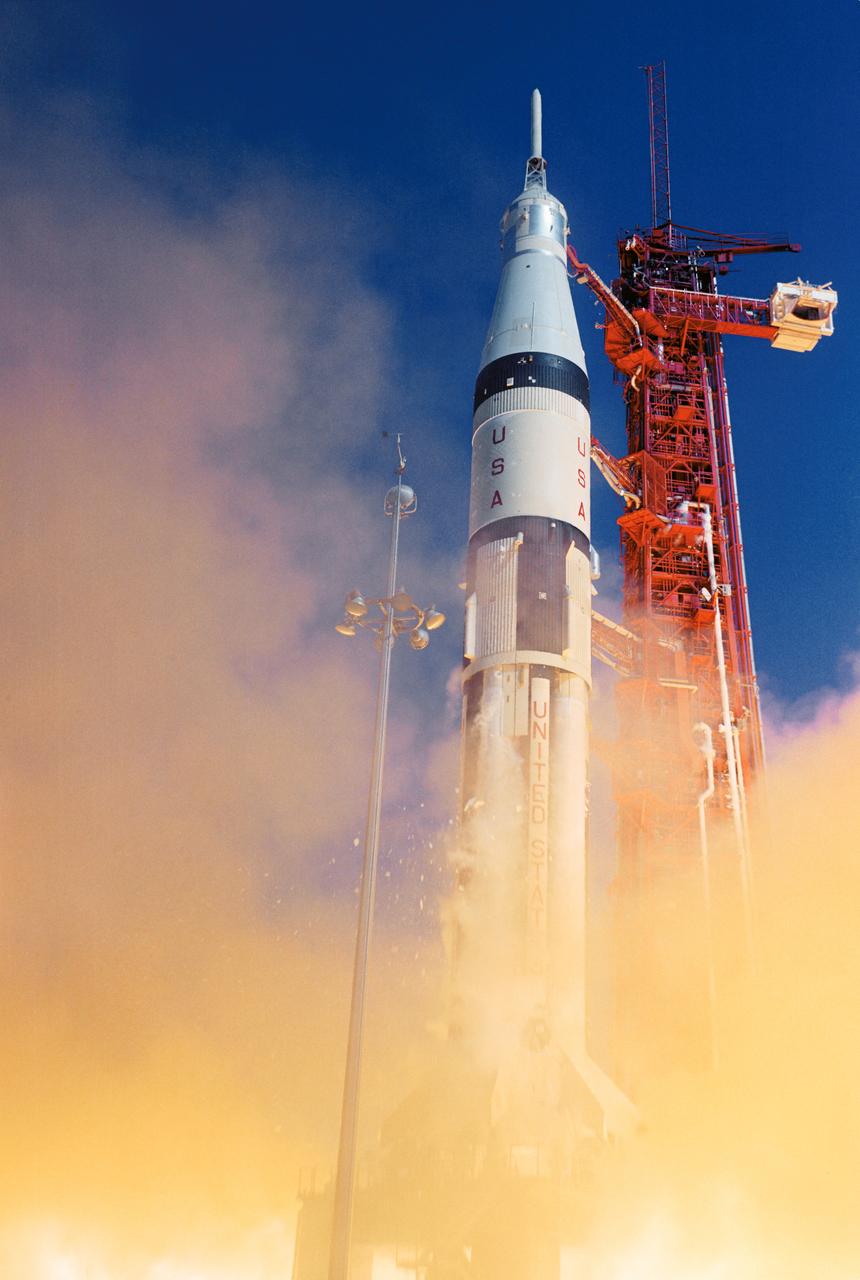
Apollo 7 lifts off from Cape Kennedy Launch Complex 34 at 11:03 A.M., EDT. The astronauts aboard, for the first manned lunar orbital mission, are Astronauts Walter M. Schirra,Jr. Commander; Donn F. Eisele, Command Module Pilot; and Walter Cunningham, Lunar Module Pilot. Original photo number was KSC-68PC-185.
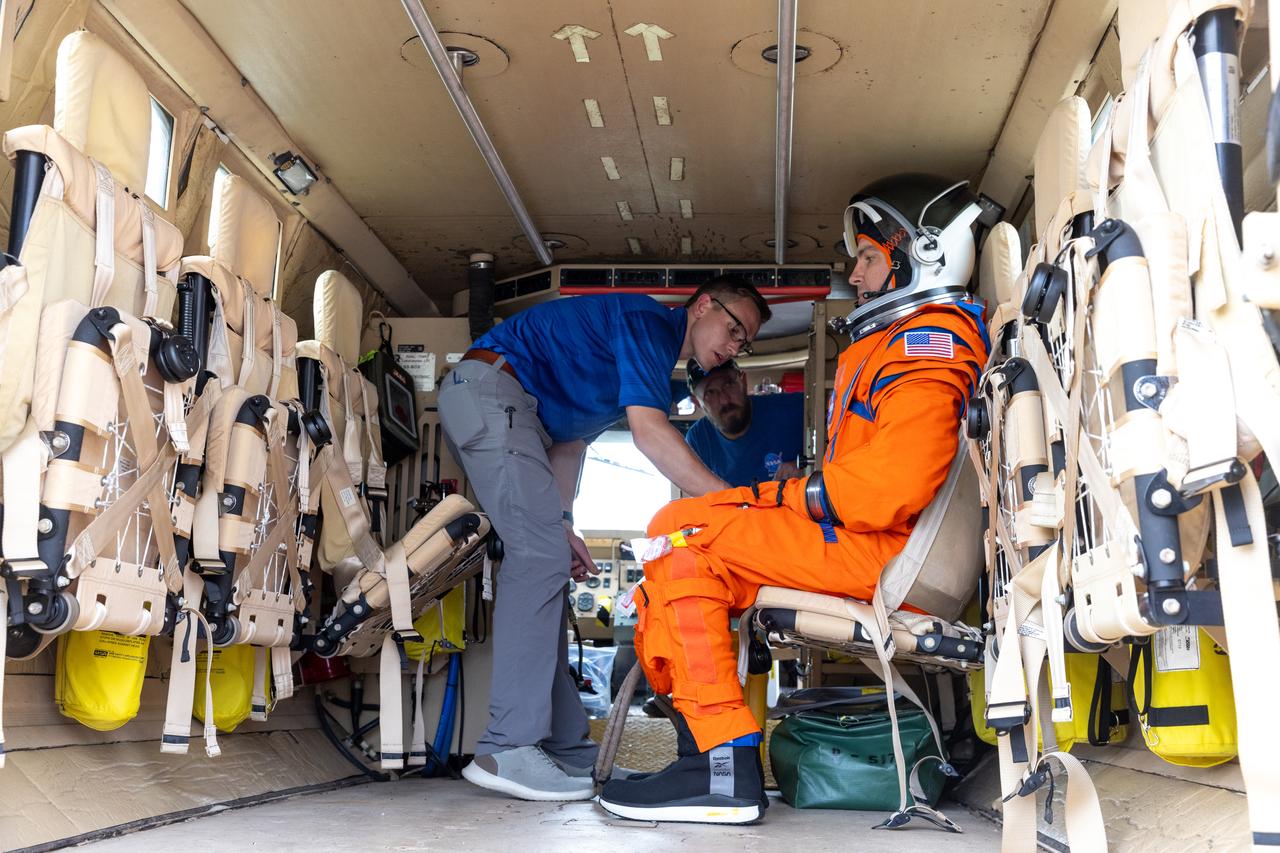
Teams with NASA’s Exploration Ground Systems Program, including an astronaut stand-in, participate in a series of integrated system verification and validation tests inside a mine-resistant ambush protected vehicle, or MRAP, at Launch Pad 39B at the agency’s Kennedy Space Center in Florida on Thursday, Aug. 8, 2024. Originally designed for military applications, the 45,000-pound MRAP offers a mobile bunker for astronauts and ground crews in the unlikely event they have to get away from the launch pad quickly in an emergency.
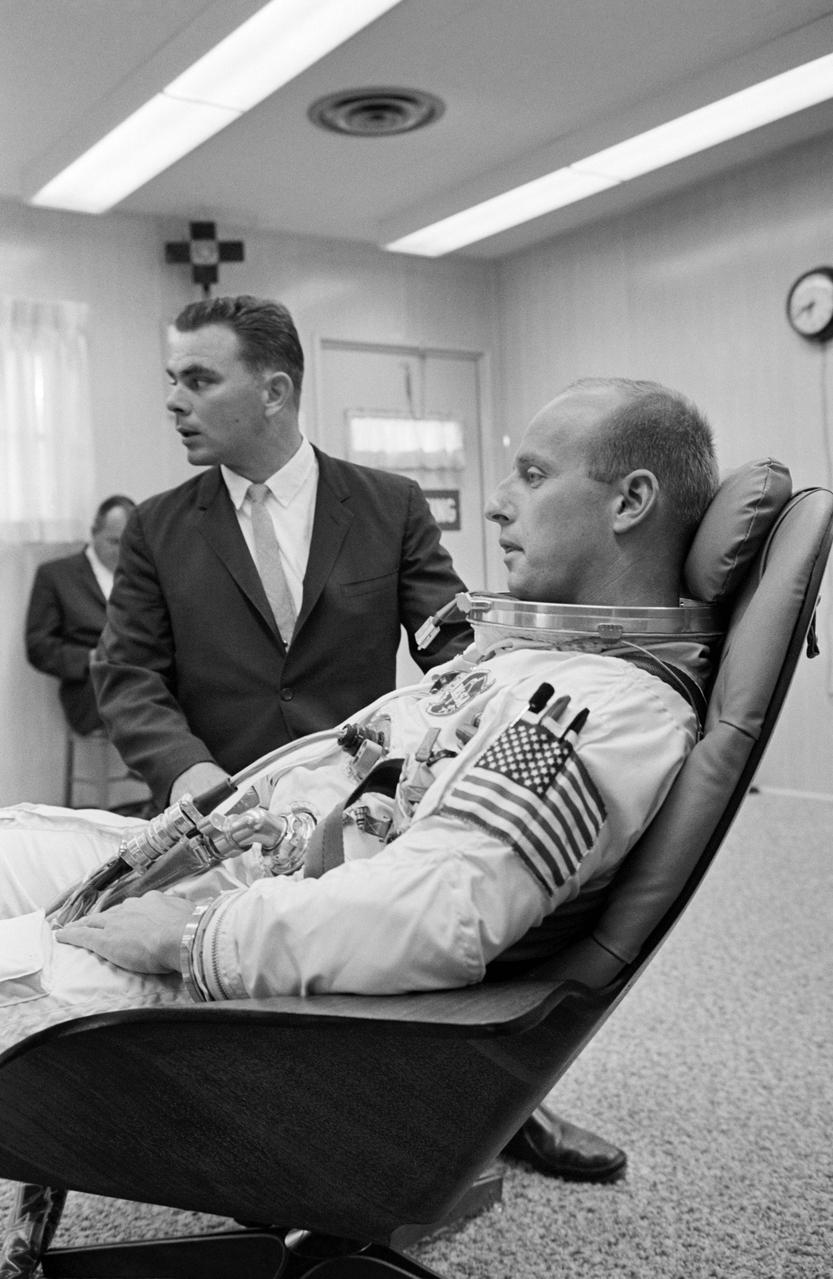
S65-46374 (21 Aug. 1965) --- Astronaut Charles Conrad Jr., Gemini-5 pilot, is pictured during suiting up operations on the morning of the flight of Gemini-5. With him is Dr. Eugene Tubbs, a member of the medical team at Cape Kennedy. The mission was originally set for Aug. 19, 1965, but was scrubbed and reset for Aug. 21. Command pilot for the flight is astronaut L. Gordon Cooper Jr.
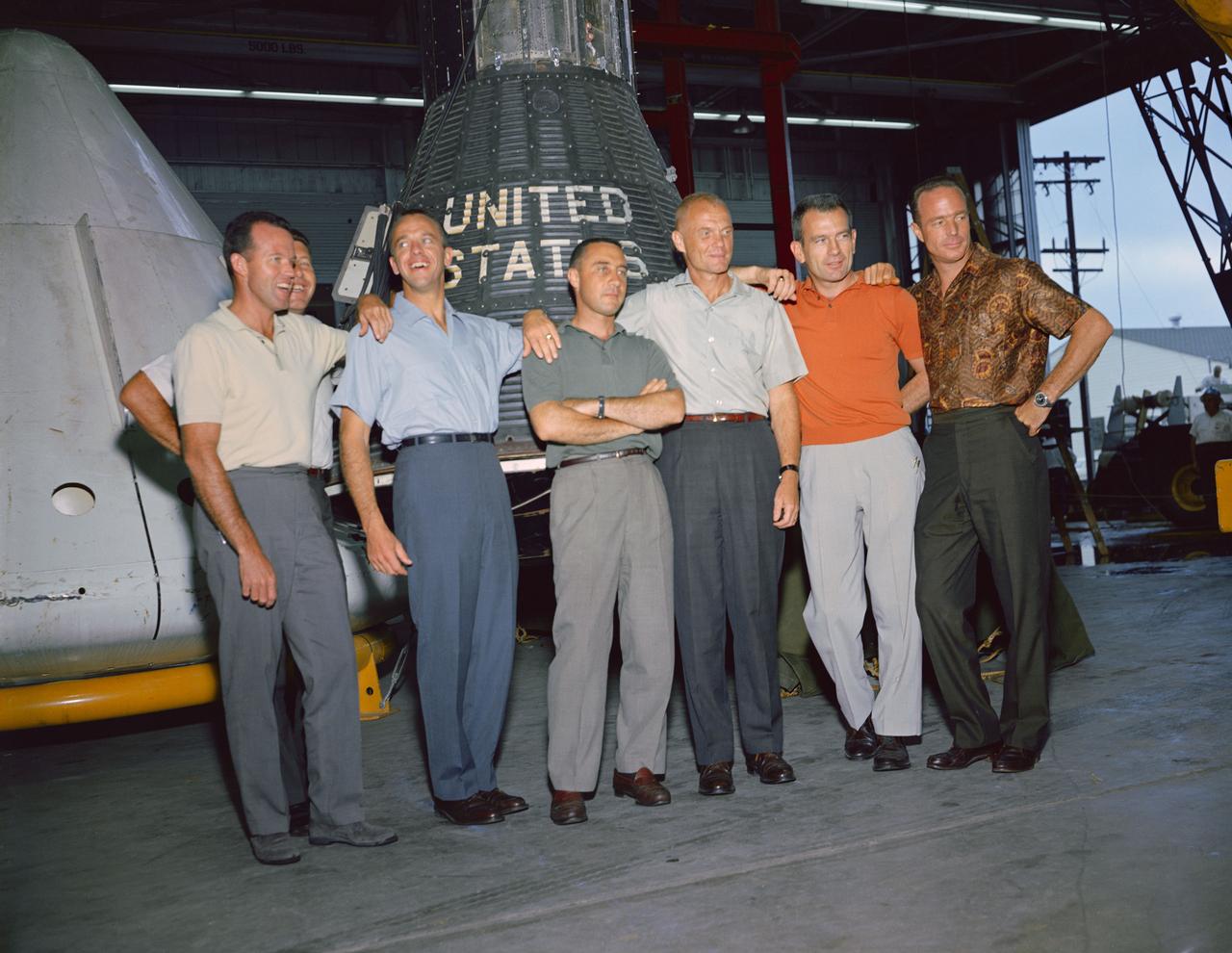
S63-18853 (1963) --- Group shot of the original Mercury astronauts taken at the Manned Spacecraft Center (MSC), Houston, Texas. The astronauts are left-to-right: L. Gordon Cooper Jr., Walter M. Schirra, Alan B. Shepard Jr., Virgil I. Grissom, John H. Glenn Jr., Donald K. Slayton and M. Scott Carpenter. Photo credit: NASA
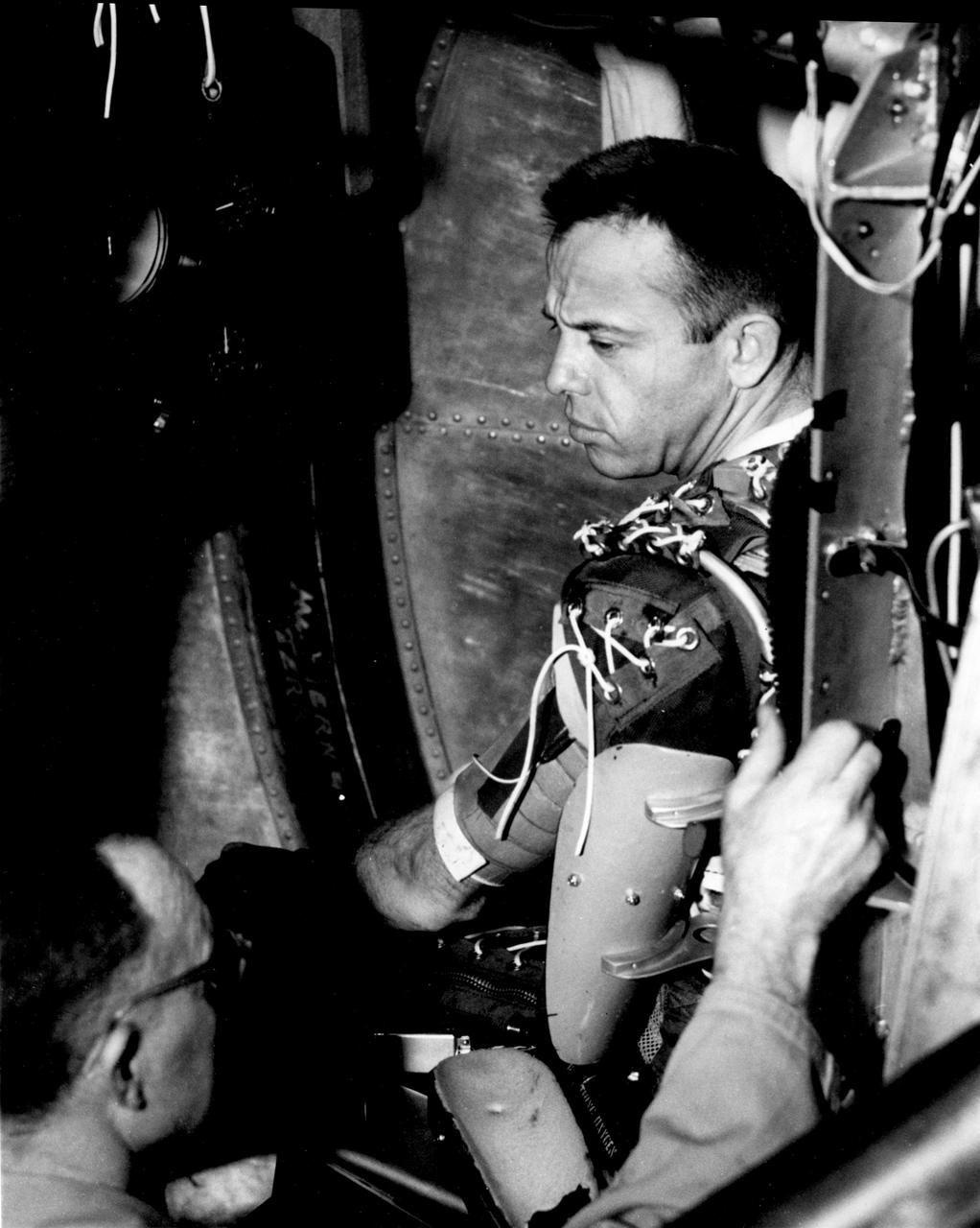
JSC2007-E-046476 (1961) --- Astronaut Alan B. Shepard Jr., one of three NASA astronauts chosen for the Project Mercury first manned suborbital flight, prepares for testing in a capsule of the U.S. Navy's centrifuge at Johnsville, Pennsylvania. Original photo number was 61-MR3-19. Photo credit: NASA or National Aeronautics and Space Administration
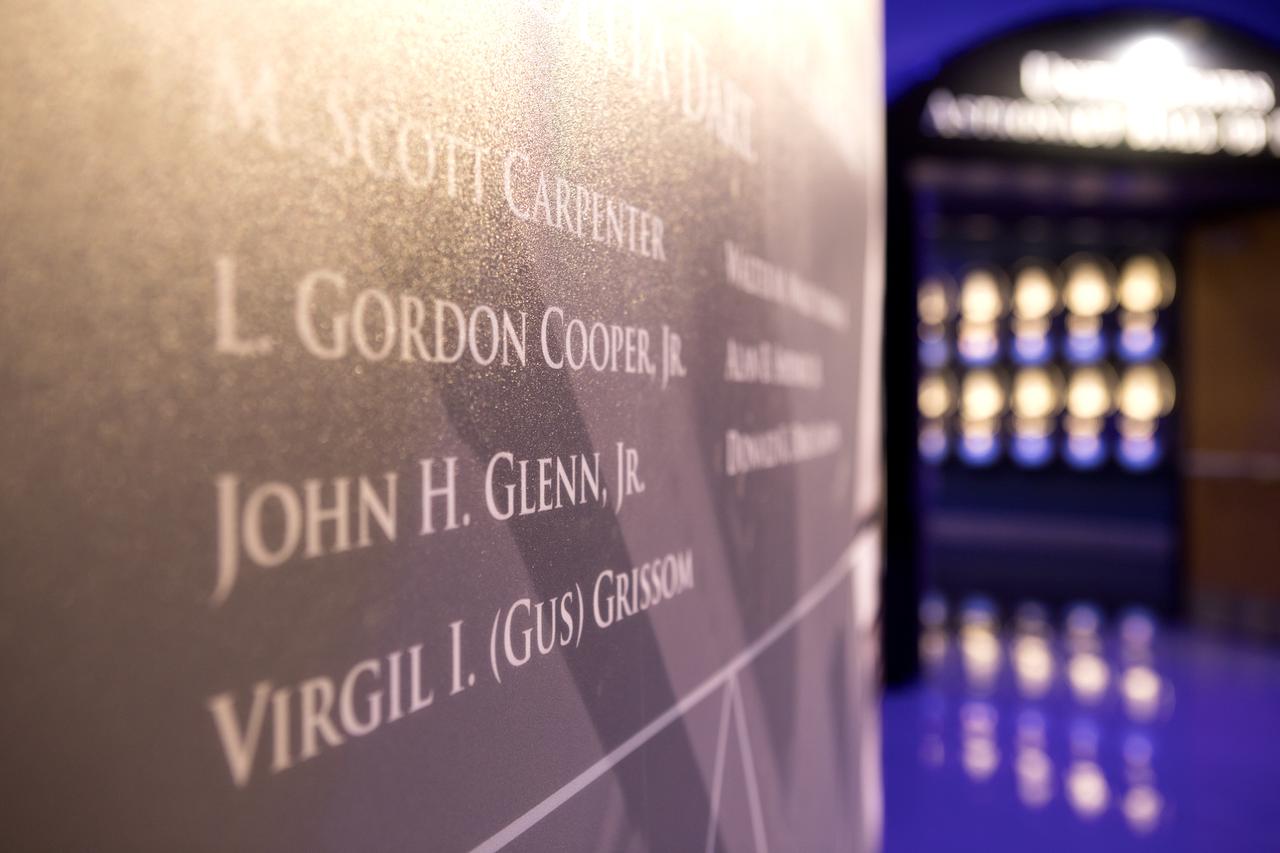
A plaque inside the Heroes and Legends exhibit hall at the Kennedy Space Center Visitor Complex shows the name of astronaut Sen. John Glenn. Glenn, who passed away Dec. 8, 2016 at age 95, was the last surviving member of NASA's original astronaut class. He gained worldwide acclaim during his Mercury mission that made him the first American to orbit the Earth. He flew again in 1998 aboard space shuttle Discovery at age 77.
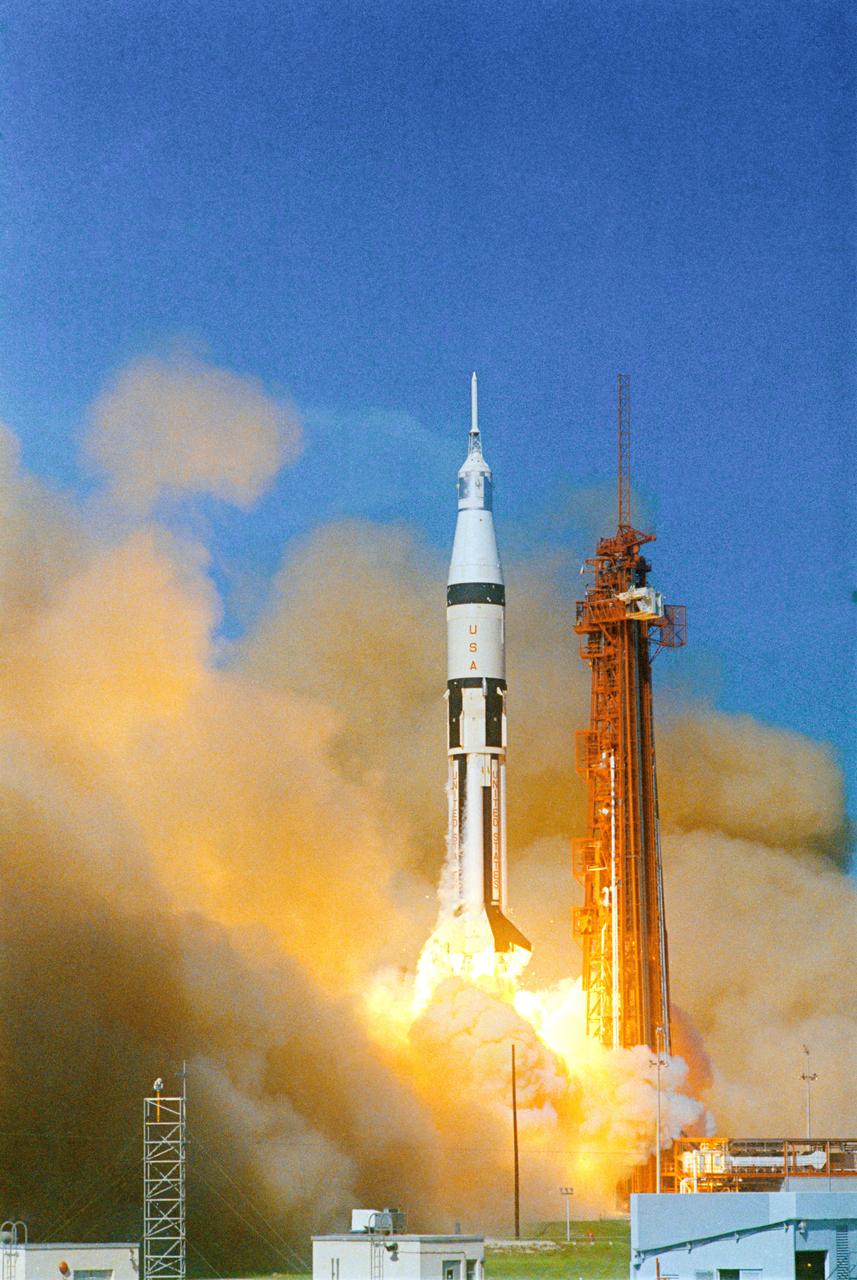
Apollo 7 lifts off from Cape Kennedy Launch Complex 34 at 11:03 A.M., EDT. The astronauts aboard, for the first manned lunar orbital mission, are Astronauts Walter M. Schirra,Jr. Commander; Donn F. Eisele, Command Module Pilot; and Walter Cunningham, Lunar Module Pilot. Original photo number was KSC-68PC-182.

STS109-E-5660 (6 March 2002) --- Astronauts John M. Grunsfeld (top) and Richard M. Linnehan participate in a 6 hour, 48 minute space walk designed to install a new Power Control Unit (PCU) on the Hubble Space Telescope (HST). The two went on to replace the original unit launched with the telescope in April 1990. Grunsfeld is on the end of Columbia's Remote Manipulator System (RMS) robotic arm, controlled from inside the crew cabin by astronaut Nancy J. Currie. The image was recorded with a digital still camera.
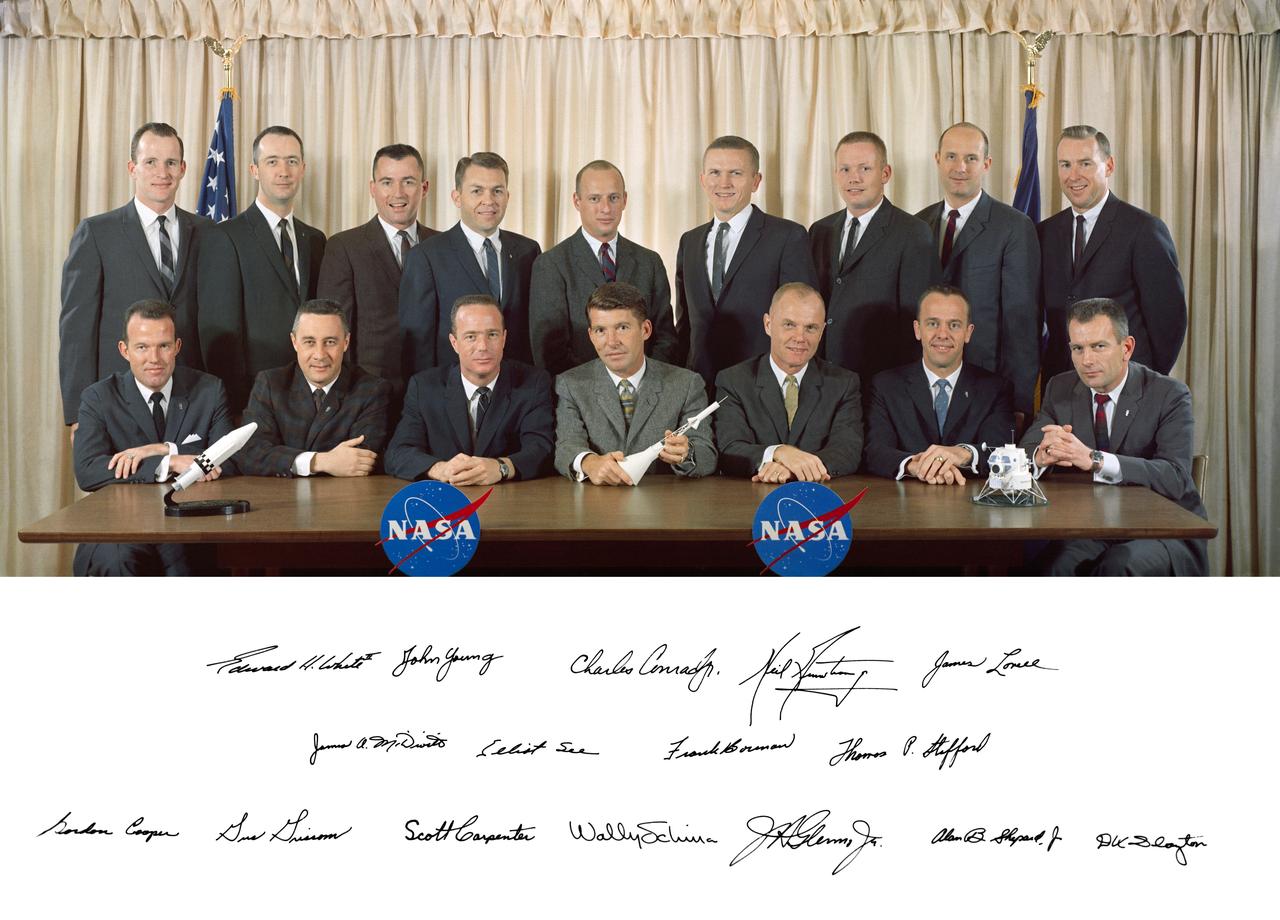
S63-01419A (1963) --- Portrait of the first two groups of astronauts. The seven original Mercury astronauts plus new members of the astronaut corps. Seated from left to right are: Gordon Cooper, Gus Grissom, Scott Carpenter, Wally Schirra, John Glenn, Alan Shepard and Deke Slayton. Standing from left to right are: Edward White, James McDivitt, John Young, Elliot See, Charles Conrad, Frank Borman, Neil Armstrong, Thomas Stafford, and James Lovell. Signatures are also visible at the bottom of the frame. Photo credit: NASA
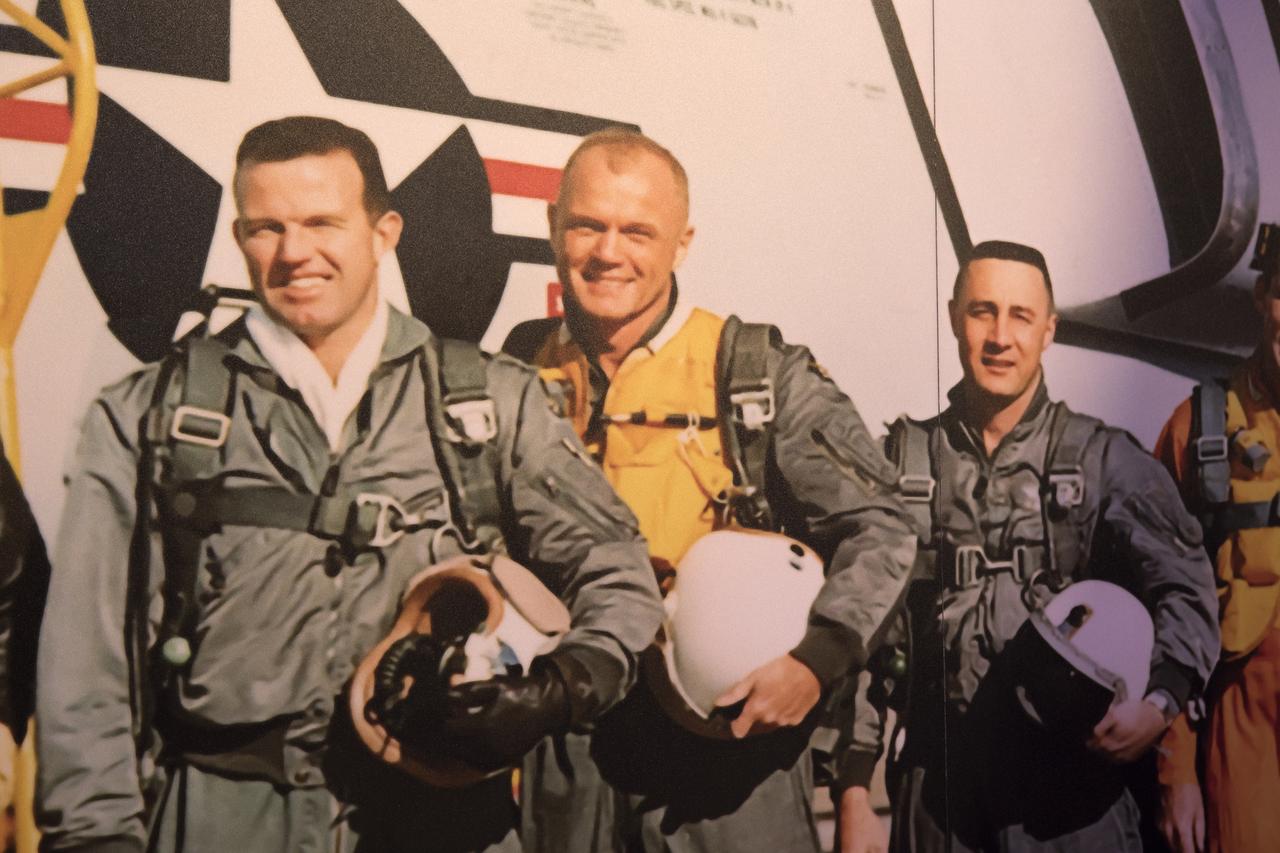
A life-size photo inside the Heroes and Legends exhibit hall at the Kennedy Space Center Visitor Complex shows astronaut Sen. John Glenn, center, with fellow Mercury Seven astronauts Gordon Cooper, left, and Gus Grissom. Glenn, who passed away Dec. 8, 2016 at age 95. Glenn, was the last surviving member of NASA's original astronaut class. He gained worldwide acclaim during his Mercury mission that made him the first American to orbit the Earth. He flew again in 1998 aboard space shuttle Discovery at age 77.
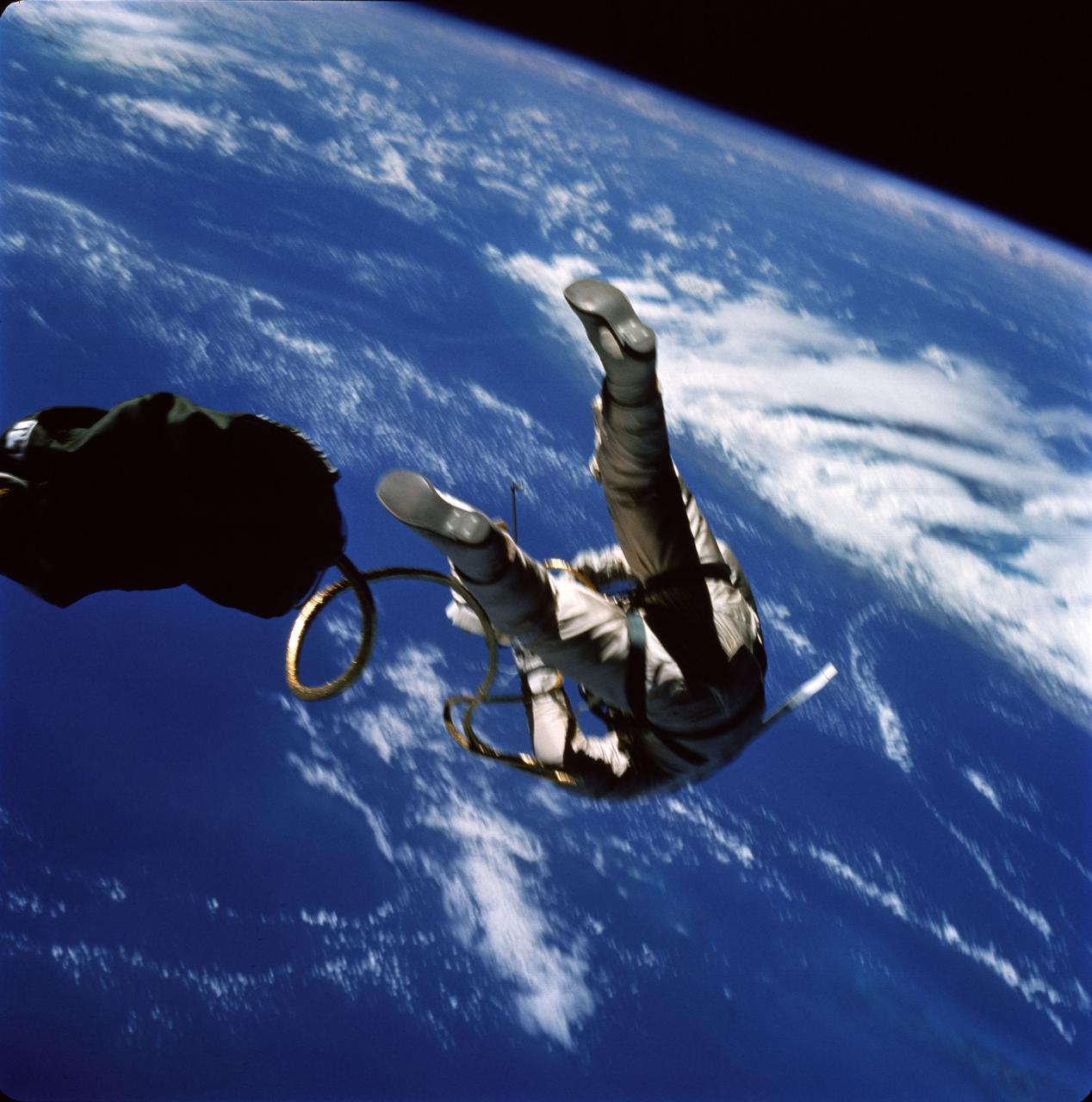
View of Astronaut Edward H. White II, pilot for the Gemini-Titan 4 space flight, as he floats in zero gravity of space. The extravehicular activity was performed during the third revolution of the Gemini 4 spacecraft. White is attached to the spacecraft by a 25-ft. umbilical line and a 23-ft. tether line,both wrapped in gold tape to form one cord. In his right hand White carries a Hand-Held Self-Maneuvering Unit (HHSMU). The visor of his helmet is gold plated to protect him from the unfiltered rays of the sun. Photo was taken on June 3,1965. G.E.T. time was 4:45 / GMT time was 20:00. Original magazine number was GEM04-16-34642, taken with a Hasselblad camera and a 70mm lens. Film type was Kodak Ektachrome MS (S.O. -217). The original photo was a color negative. It's image number is S65-34642.
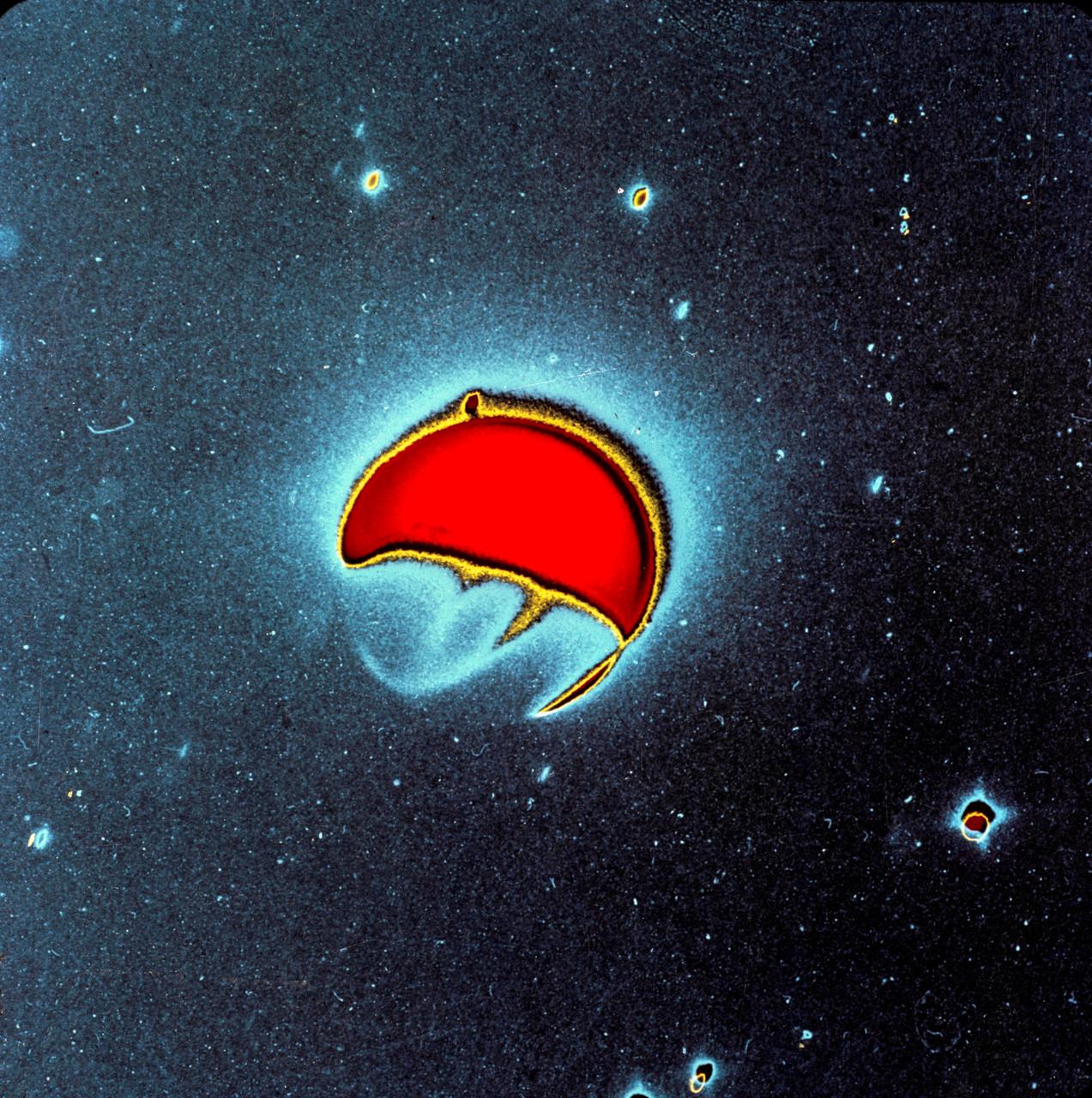
S72-36972 (21 April 1972) --- A color enhancement of a far-ultraviolet photo of Earth taken by astronaut John W. Young, commander, with the ultraviolet camera on April 21, 1972. The original black and white photo was printed on Agfacontour film three times, each exposure recording only one light level. The three light levels were then colored blue (dimmest), green (next brightest), and red (brightest). The three auroral belts, the sunlit atmosphere and the background stars (one very close to Earth, on left) can be studied quantitatively fro brightness. The UV camera was designed and built at the Naval Research Laboratory, Washington, D.C. EDITOR'S NOTE: The photographic number of the original black & white UV camera photograph from which this enhancement was made is AS16-123-19657.
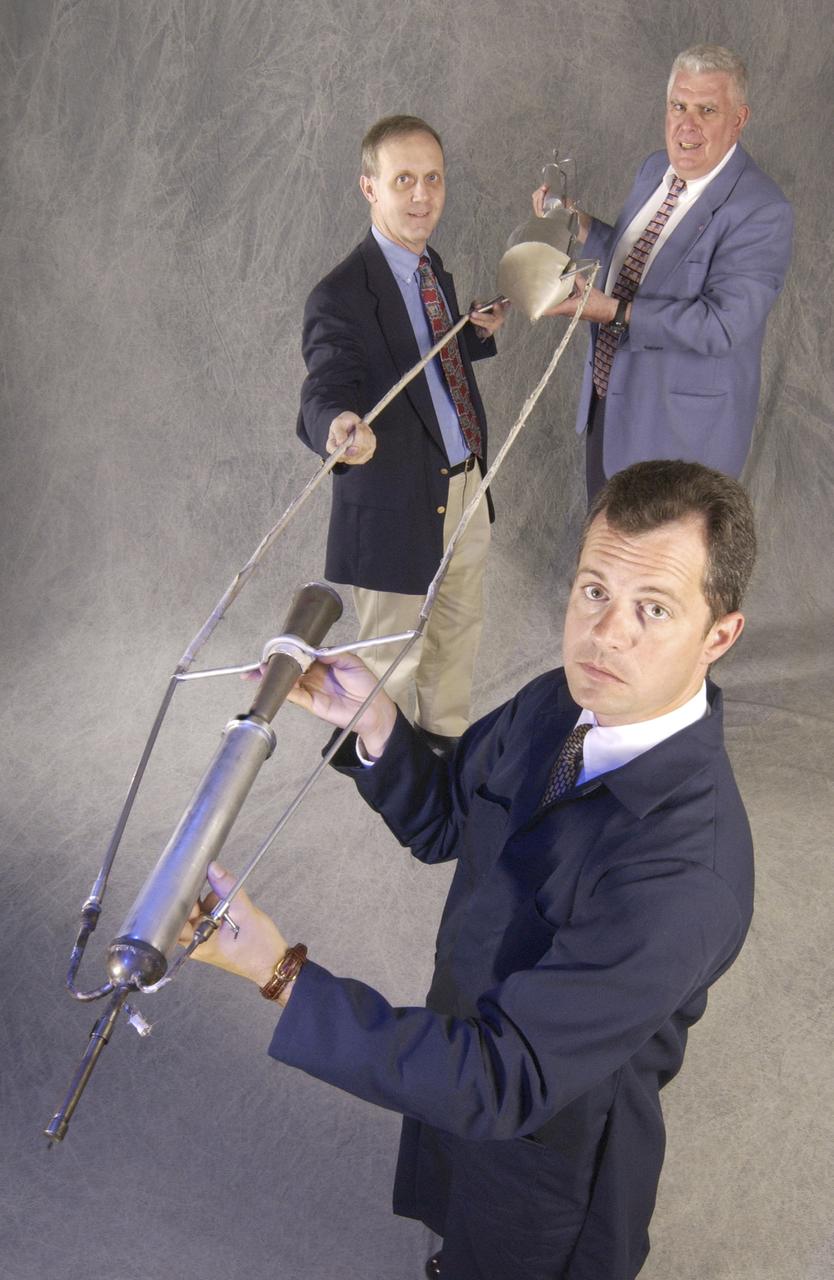
In honor of the Centernial of Flight celebration and commissioned by the American Institute of Aeronautics and Astronautics (AIAA), a team of engineers from Marshall Space Flight Center (MSFC) built a replica of the first liquid-fueled rocket. The original rocket, designed and built by rocket engineering pioneer Robert H. Goddard in 1926, opened the door to modern rocketry. Goddard's rocket reached an altitude of 41 feet while its flight lasted only 2.5 seconds. The Marshall design team's plan was to stay as close as possible to an authentic reconstruction of Goddard's rocket. The same propellants were used - liquid oxygen and gasoline - as available during Goddard's initial testing and firing. The team also tried to construct the replica using the original materials and design to the greatest extent possible. By purposely using less advanced techniques and materials than many that are available today, the team encountered numerous technical challenges in testing the functional hardware. There were no original blueprints or drawings, only photographs and notes. However, this faithful adherence to historical accuracy has also allowed the team to experience many of the same challenges Goddard faced 77 years ago, and more fully appreciate the genius of this extraordinary man. The replica will undergo ground tests at MSFC this summer.
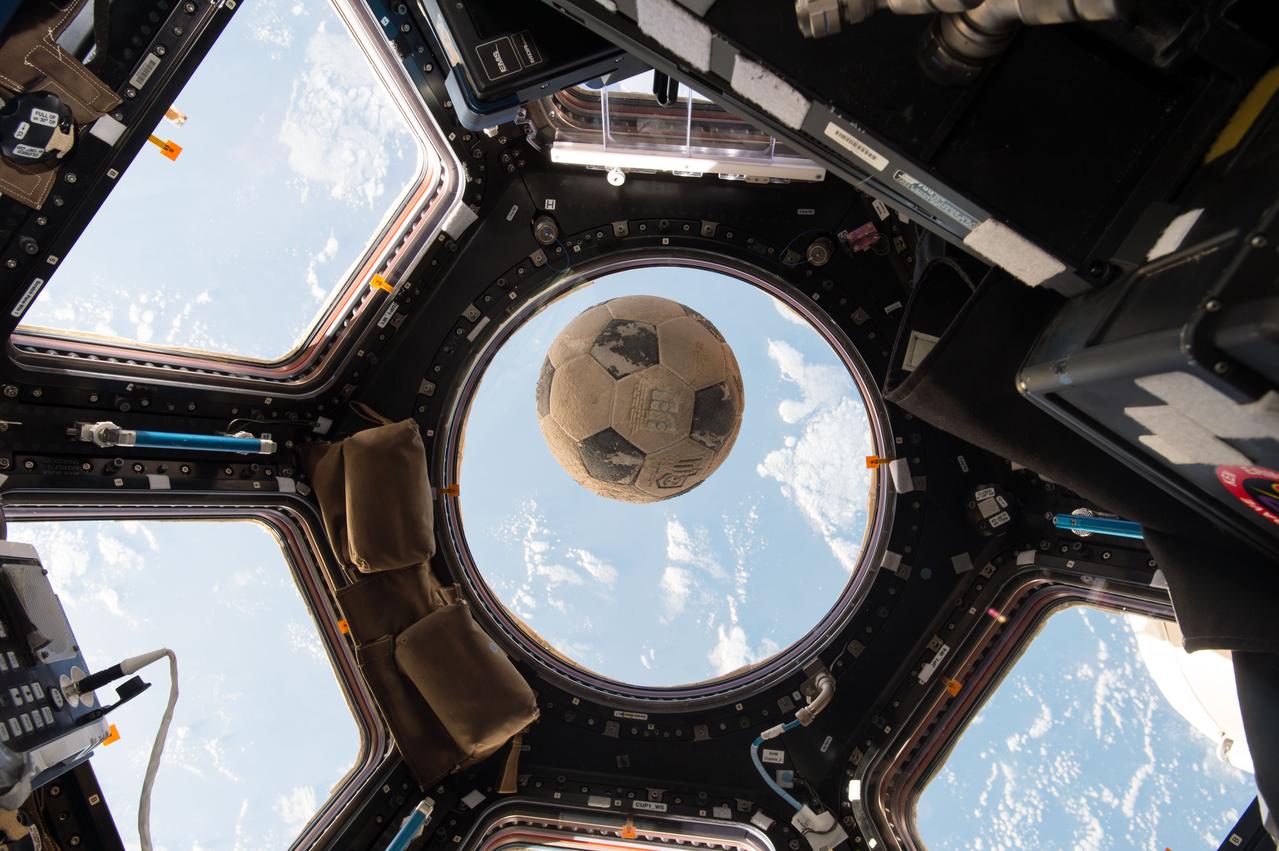
iss050e033912 (01/21/2017) --- A soccer ball originally packed onto space shuttle Challenger in 1986 is now orbiting the Earth on board the International Space Station, 31 years later. The soccer ball was signed and presented to NASA astronaut Ellison Onizuka by soccer players – including his daughter – from Clear Lake High School, near NASA’s Johnson Space Center. Onizuka was one of seven astronauts on board Challenger on Jan. 28, 1986, when it exploded shortly after liftoff. Following the accident, the ball was recovered and returned to the high school, where it has been on display for the past three decades. Its history had begun to fade into obscurity when Principal Karen Engle learned of its origin. Soon after, astronaut Shane Kimbrough, whose son attends Clear Lake High School, offered to carry up a memento on the school’s behalf, and she had the idea to send the soccer ball into space. Kimbrough snapped this photo of the ball floating in front of the station’s Cupola window in advance of Challenger anniversary and NASA’s Day of Remembrance.
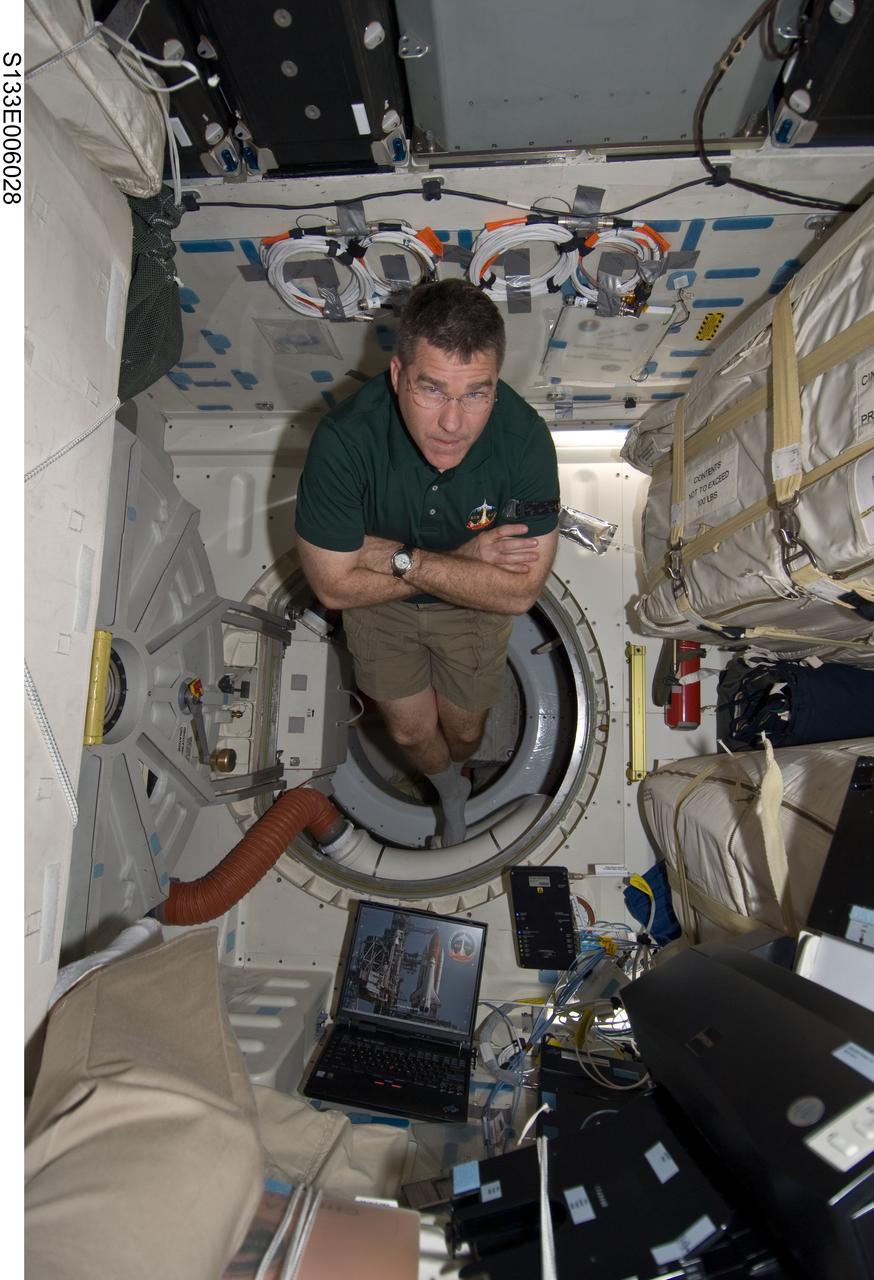
S133-E-006028 (25 Feb. 2011) --- Near space shuttle Discovery's airlock, astronaut Steve Bowen, STS-133 mission specialist, hovers momentarily on the middeck. Perhaps he is thinking about next week's extravehicular activity (EVA) on the International Space Station to which he has been assigned as a replacement for an original prime crew member who was injured in an accident weeks prior to the shuttle's scheduled launch. Photo credit: NASA or National Aeronautics and Space Administration
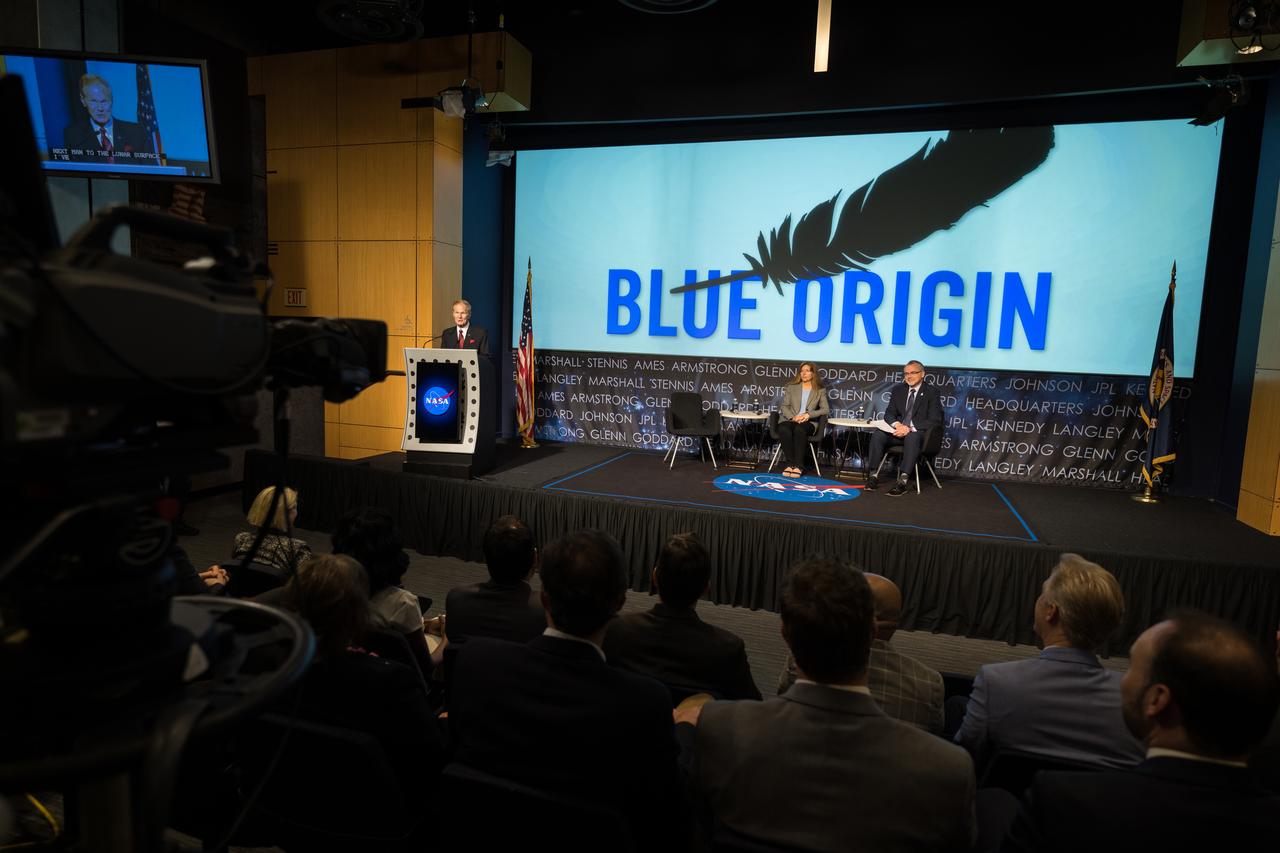
NASA Administrator Bill Nelson announces Blue Origin as the company selected to develop a sustainable human landing system for the Artemis V Moon mission, Friday, May 19, 2023 at the Mary W. Jackson NASA Headquarters building in Washington. The human landing system will take astronauts to and from Gateway in lunar orbit to the surface and back to the lunar space station as part of NASA’s return to the Moon for science, exploration, and inspiration. Photo Credit: (NASA/Aubrey Gemignani)
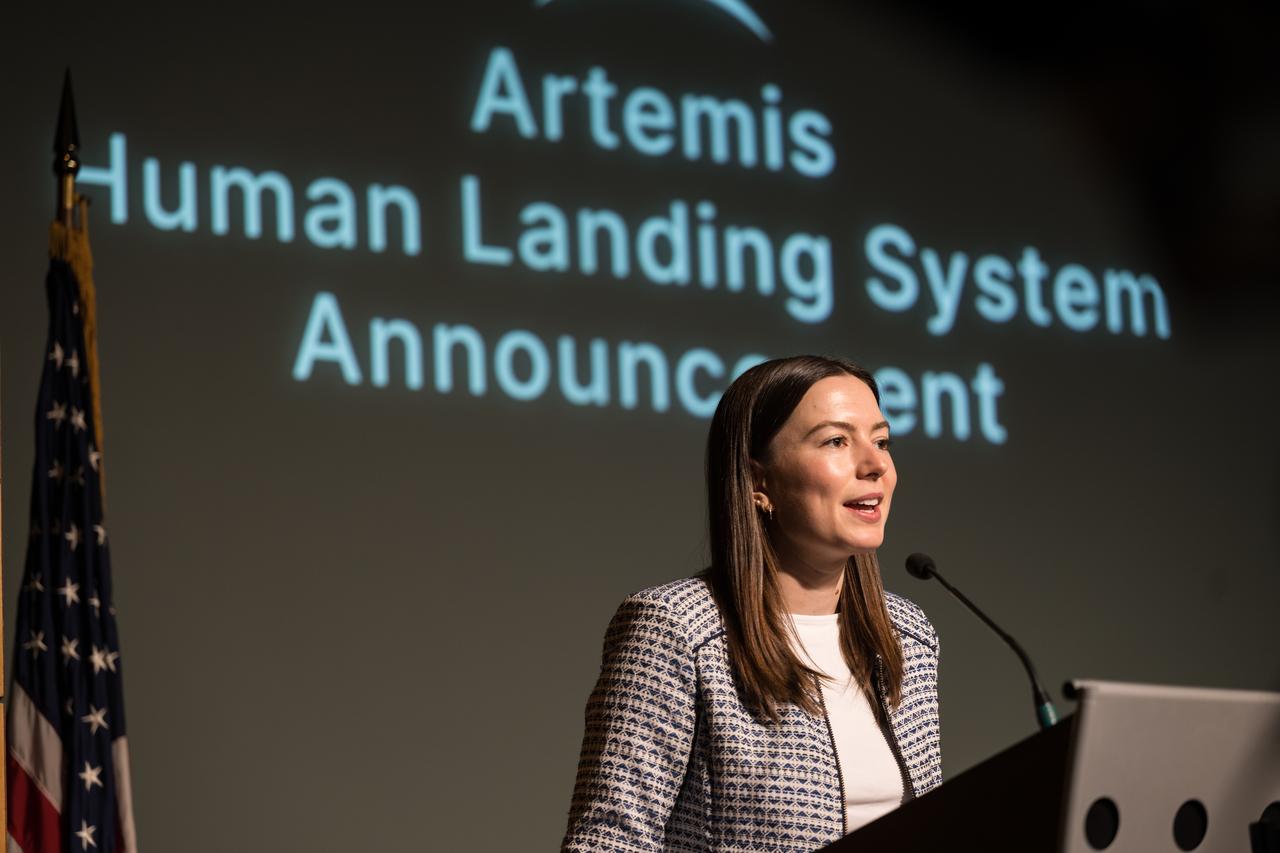
NASA Press Secretary Jackie McGuinness introduces NASA Administrator Bill Nelson during an event announcing Blue Origin as the company selected to develop a sustainable human landing system for the Artemis V Moon mission, Friday, May 19, 2023 at the Mary W. Jackson NASA Headquarters building in Washington. The human landing system will take astronauts to and from Gateway in lunar orbit to the surface and back to the lunar space station as part of NASA’s return to the Moon for science, exploration, and inspiration. Photo Credit: (NASA/Aubrey Gemignani)
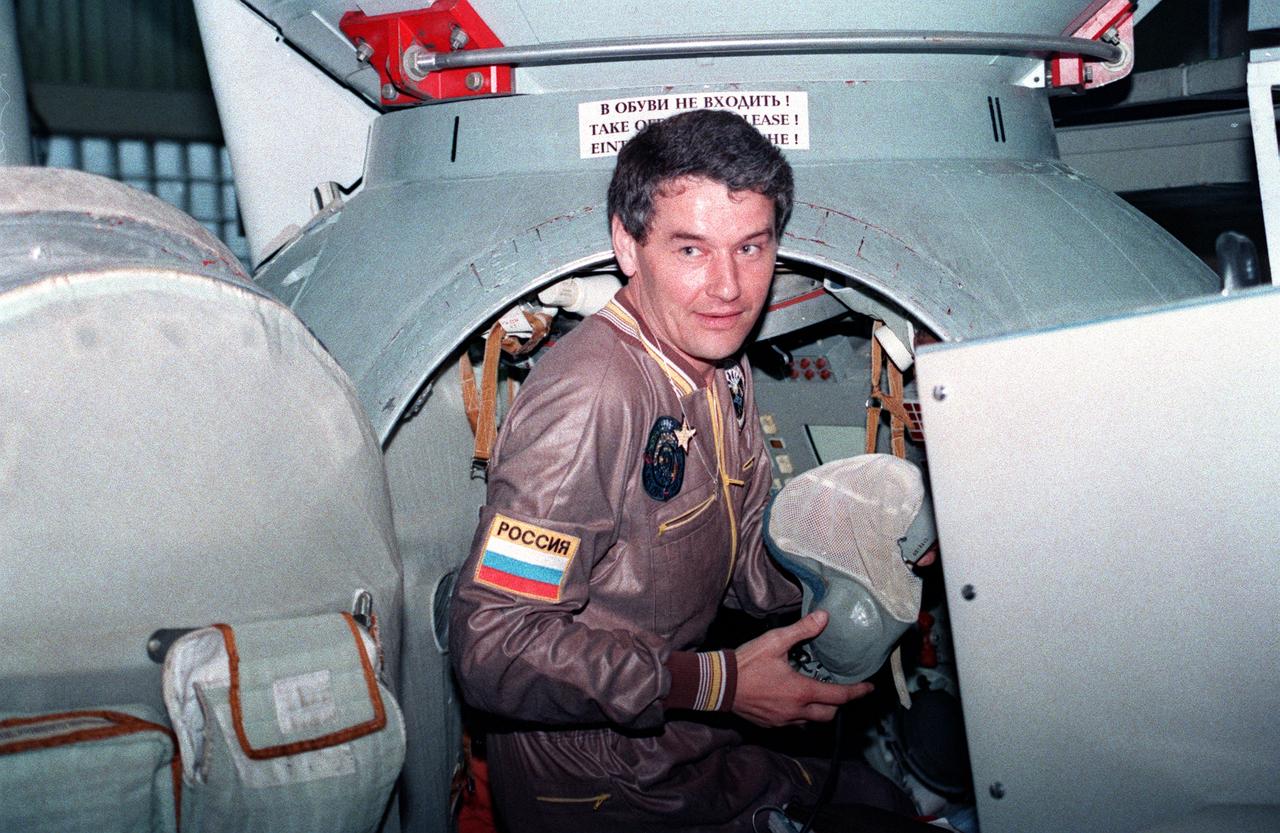
S96-13233 (July 1996) --- Cosmonaut Valeri G. Korzun egresses a trainer at the Yuri Gagarin Cosmonaut Training Center in Russia. Korzun is Mir-24 commander. EDITOR'S NOTE: Since this photograph was taken cosmonauts Korzun and Aleksandr Y. Kaleri were named to replace the original Mir-22 crew. Along with French spationaut Claudie desHayes, the two joined NASA astronaut Shannon W. Lucid onboard the Mir space station in August.

ISS043E183985 (05/08/2015) --- Typhoon Noul from a camera aboard the International Space Station taken by the Expedition 43 crew led by Commander Terry Virts, NASA astronaut. Noul originated in the tropical Western Pacific, brushing the island of Yap before strengthening rapidly and clipping the northern Philippines as a super typhoon, winding up on the Pacific coast of Japan reduced to a tropical storm.
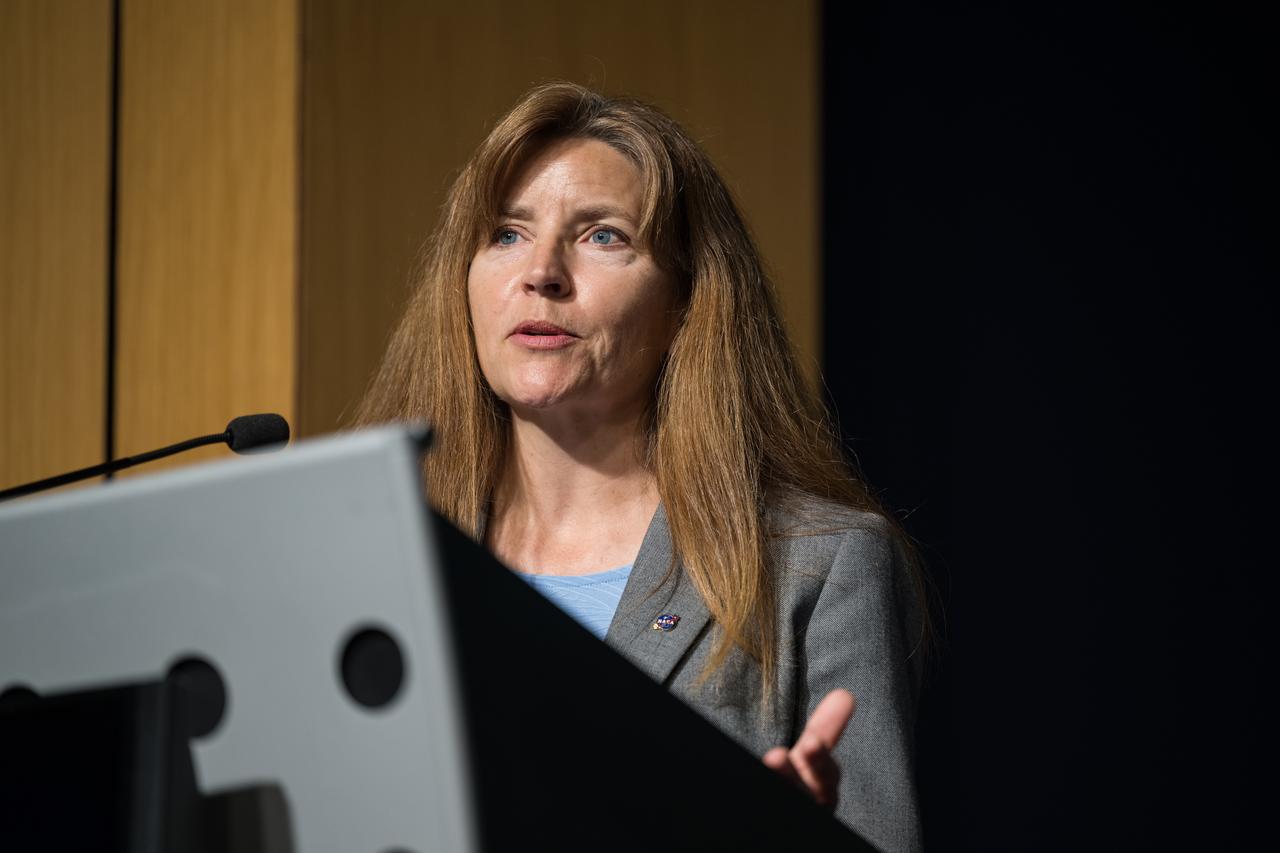
Human Landing System Program Manager Lisa Watson-Morgan gives remarks during an event announcing Blue Origin as the company selected to develop a sustainable human landing system for the Artemis V Moon mission, Friday, May 19, 2023 at the Mary W. Jackson NASA Headquarters building in Washington. The human landing system will take astronauts to and from Gateway in lunar orbit to the surface and back to the lunar space station as part of NASA’s return to the Moon for science, exploration, and inspiration. Photo Credit: (NASA/Aubrey Gemignani)
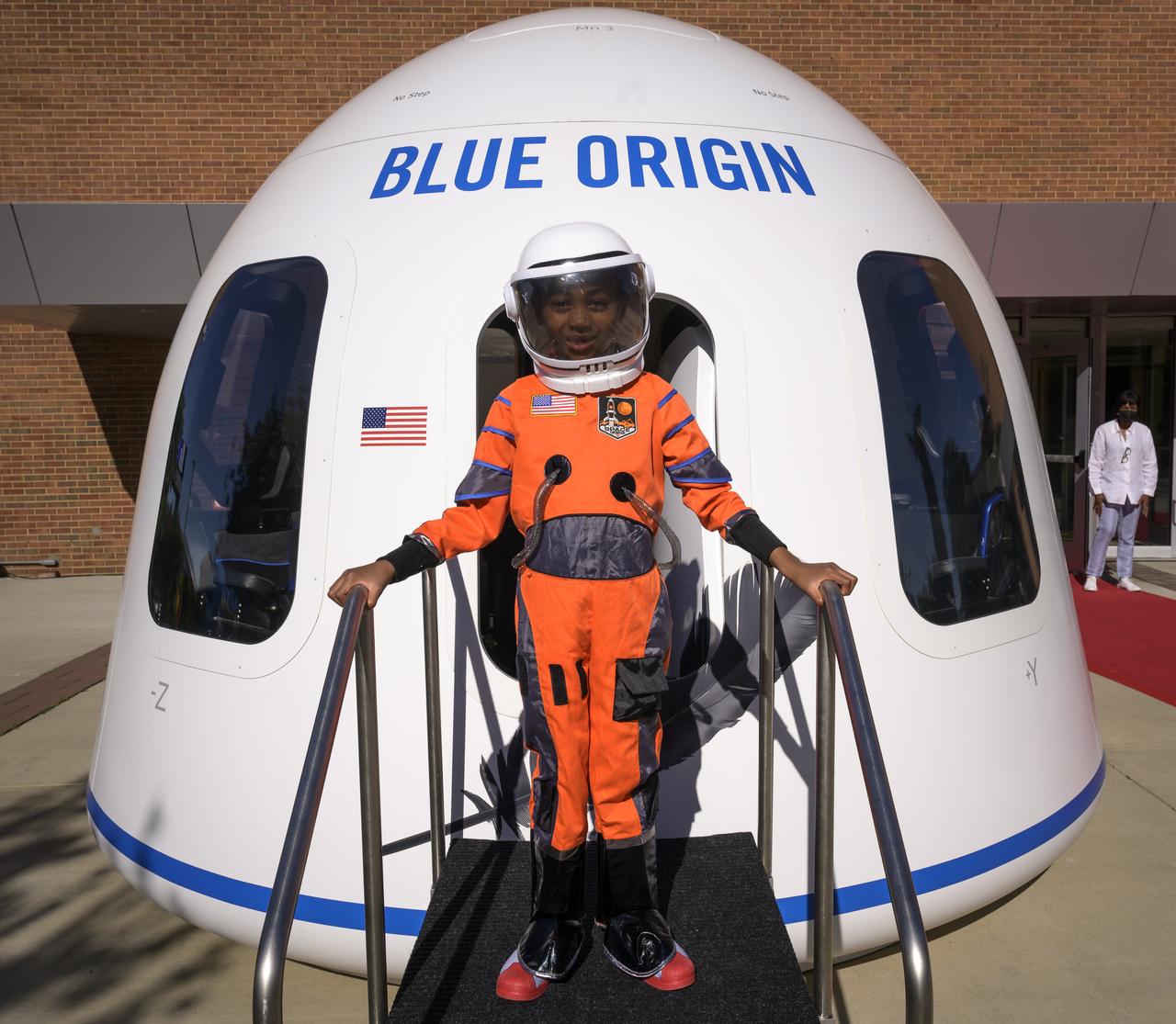
6-year old Armani Bonds poses for a photograph as he exits a Blue Origin New Shepard capsule mockup prior to the screening of the NASA produced documentary “The Color of Space” at Howard University’s Cramton Auditorium in Washington, Saturday, June 18, 2022. Premiering on Juneteenth, the federal holiday commemorating the end of slavery in the United States, “The Color of Space” is an inspirational documentary that tells the stories of NASA’s Black astronauts determined to reach the stars. Photo Credit: (NASA/Bill Ingalls)
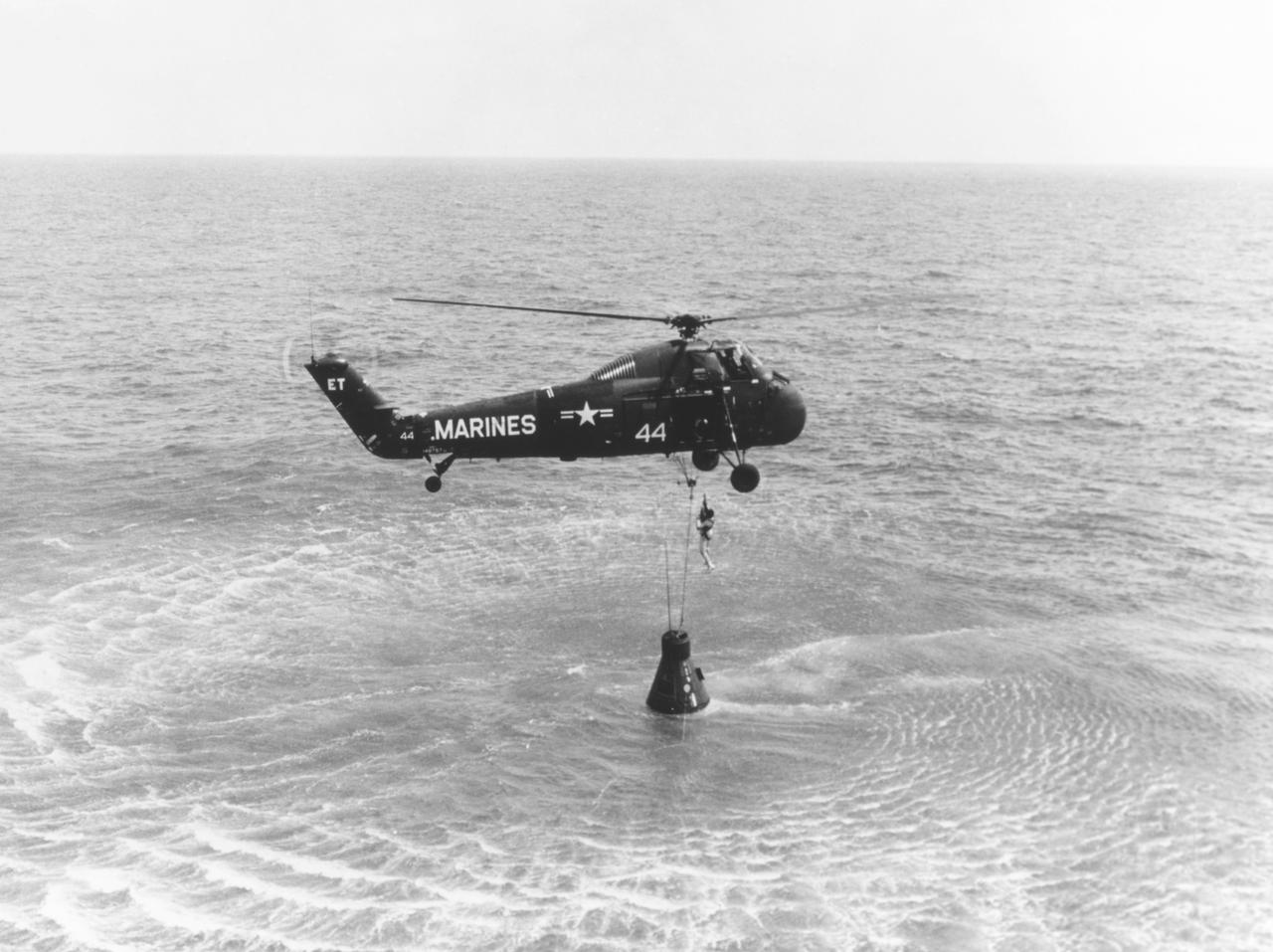
JSC2007-E-046478 (5 May 1961) --- Astronaut Alan B. Shepard Jr. is rescued by a U.S. Marine helicopter at the termination of his suborbital flight May 5, 1961, down range from the Florida eastern coast. Original photo number was 61-MR3-76A. Photo credit: NASA or National Aeronautics and Space Administration
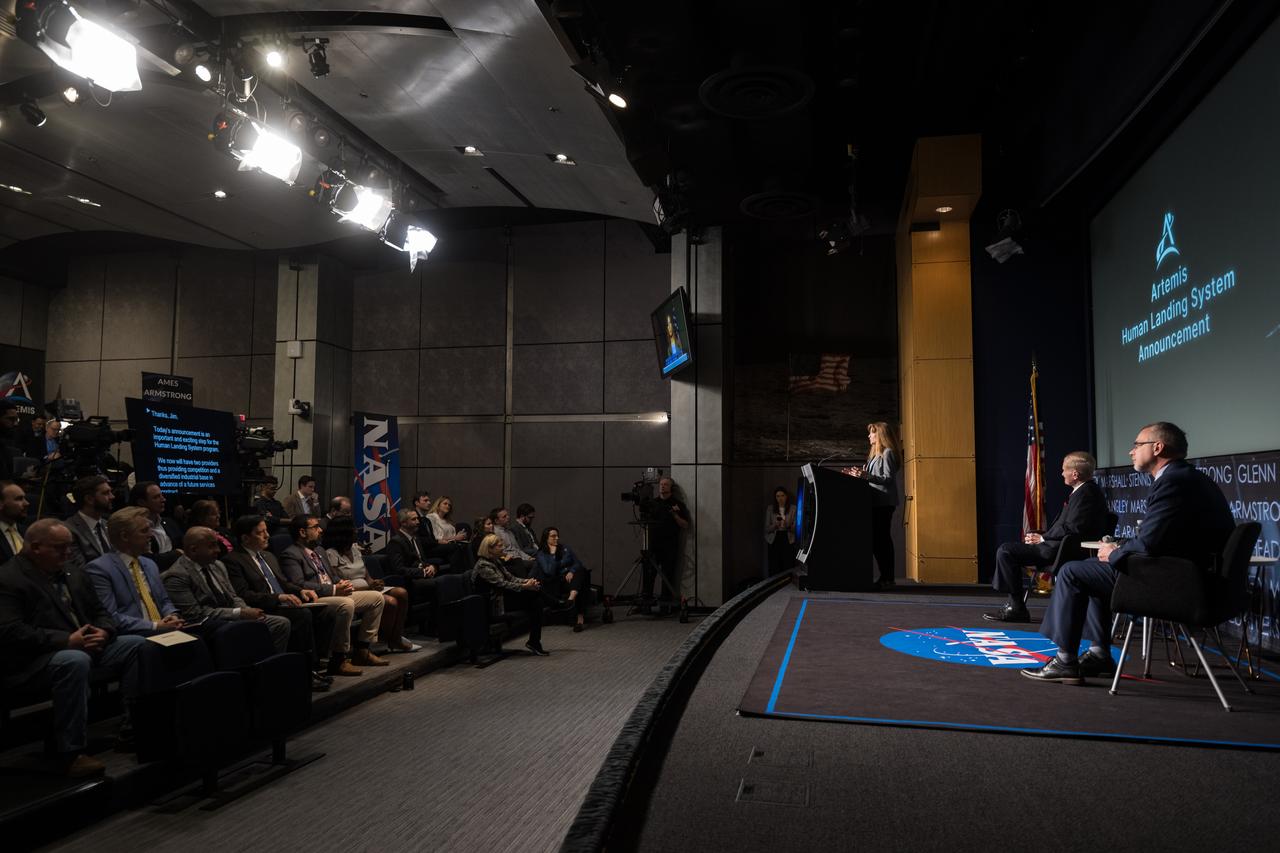
Human Landing System Program Manager Lisa Watson-Morgan gives remarks during an event announcing Blue Origin as the company selected to develop a sustainable human landing system for the Artemis V Moon mission, Friday, May 19, 2023 at the Mary W. Jackson NASA Headquarters building in Washington. The human landing system will take astronauts to and from Gateway in lunar orbit to the surface and back to the lunar space station as part of NASA’s return to the Moon for science, exploration, and inspiration. Photo Credit: (NASA/Aubrey Gemignani)
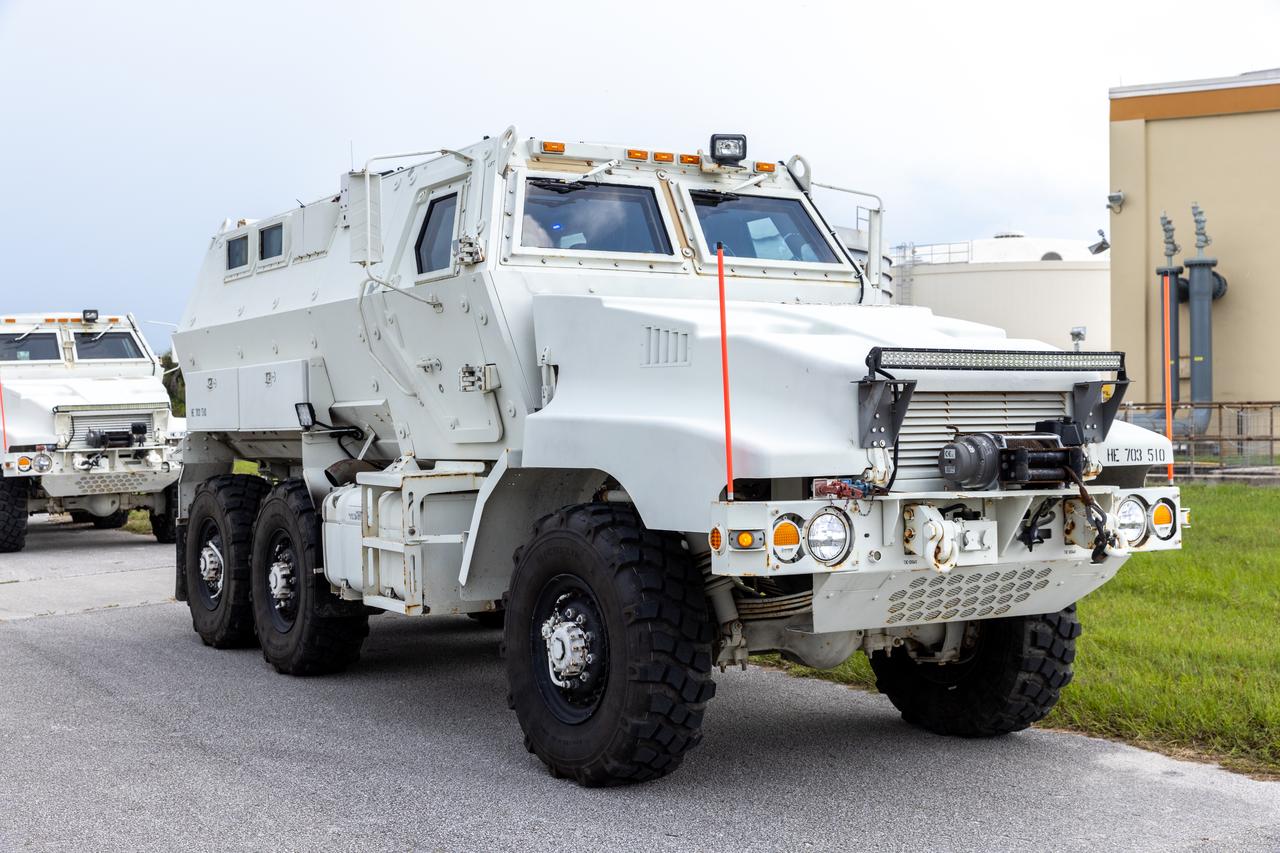
Multiple 45,000-pound mine-resistant ambush protected vehicles, or MRAPs, participate in a series of integrated system verification and validation tests inside at Launch Pad 39B at the agency’s Kennedy Space Center in Florida on Thursday, Aug. 8, 2024. Originally designed for military applications, the MRAP offers a mobile bunker for astronauts and ground crews in the unlikely event they have to get away from the launch pad quickly in an emergency.
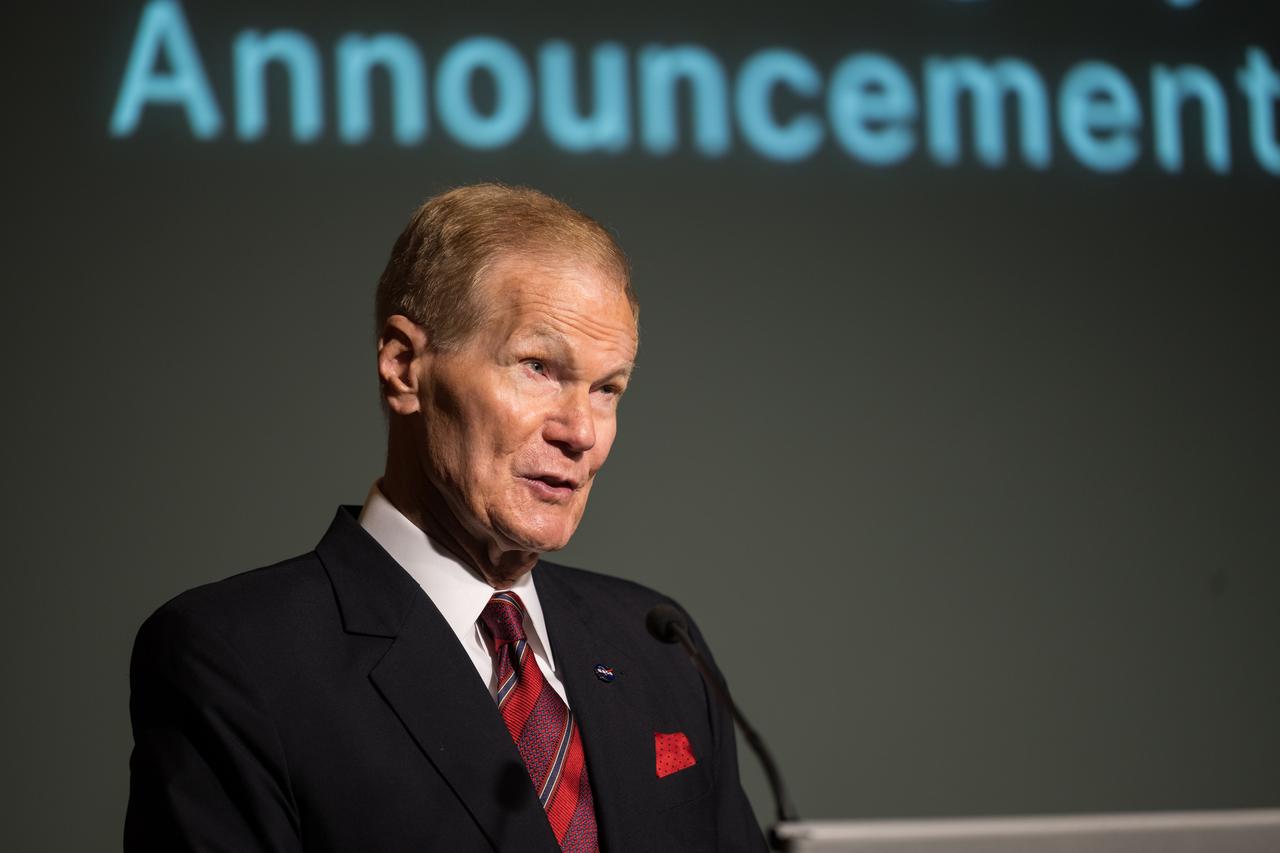
NASA Administrator Bill Nelson gives remarks during an event announcing Blue Origin as the company selected to develop a sustainable human landing system for the Artemis V Moon mission, Friday, May 19, 2023 at the Mary W. Jackson NASA Headquarters building in Washington. The human landing system will take astronauts to and from Gateway in lunar orbit to the surface and back to the lunar space station as part of NASA’s return to the Moon for science, exploration, and inspiration. Photo Credit: (NASA/Aubrey Gemignani)
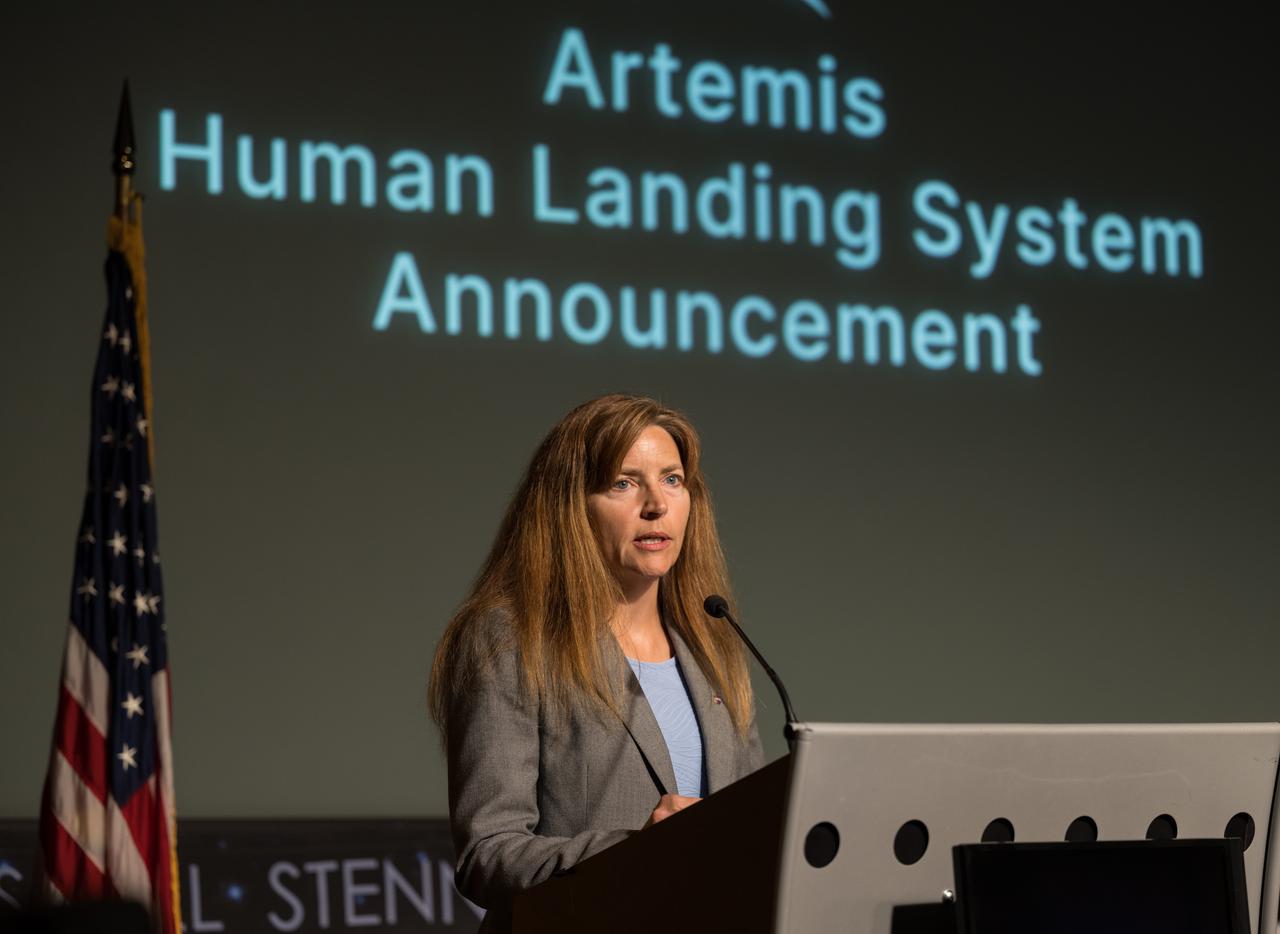
Human Landing System Program Manager Lisa Watson-Morgan gives remarks during an event announcing Blue Origin as the company selected to develop a sustainable human landing system for the Artemis V Moon mission, Friday, May 19, 2023 at the Mary W. Jackson NASA Headquarters building in Washington. The human landing system will take astronauts to and from Gateway in lunar orbit to the surface and back to the lunar space station as part of NASA’s return to the Moon for science, exploration, and inspiration. Photo Credit: (NASA/Aubrey Gemignani)
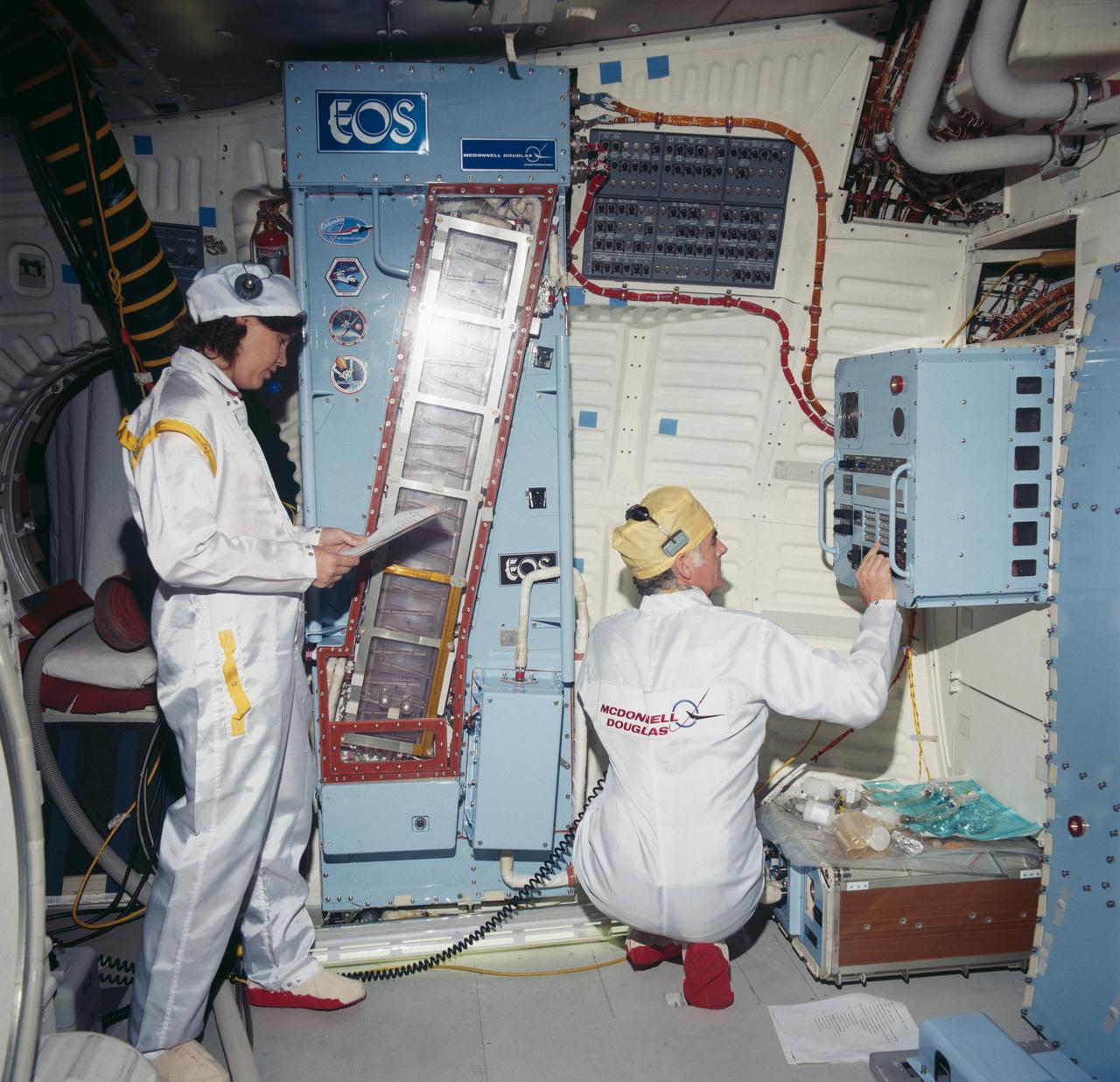
KSC-84PC-248 (For release Aug. 27, 1984) --- The Continuous Flow Electrophoresis System (CFES) is being installed in the middeck of the Orbiter Discovery in preparation for the flight of mission STS-41D in June. The CFES, originating from the McDonnell Douglas Astronautics Co. includes a fluid systems module, and experiment control and monitoring module, a sample storage module and a pump/accumulator package along with miscellaneous equipment stored in a middeck locker. Photo credit: NASA
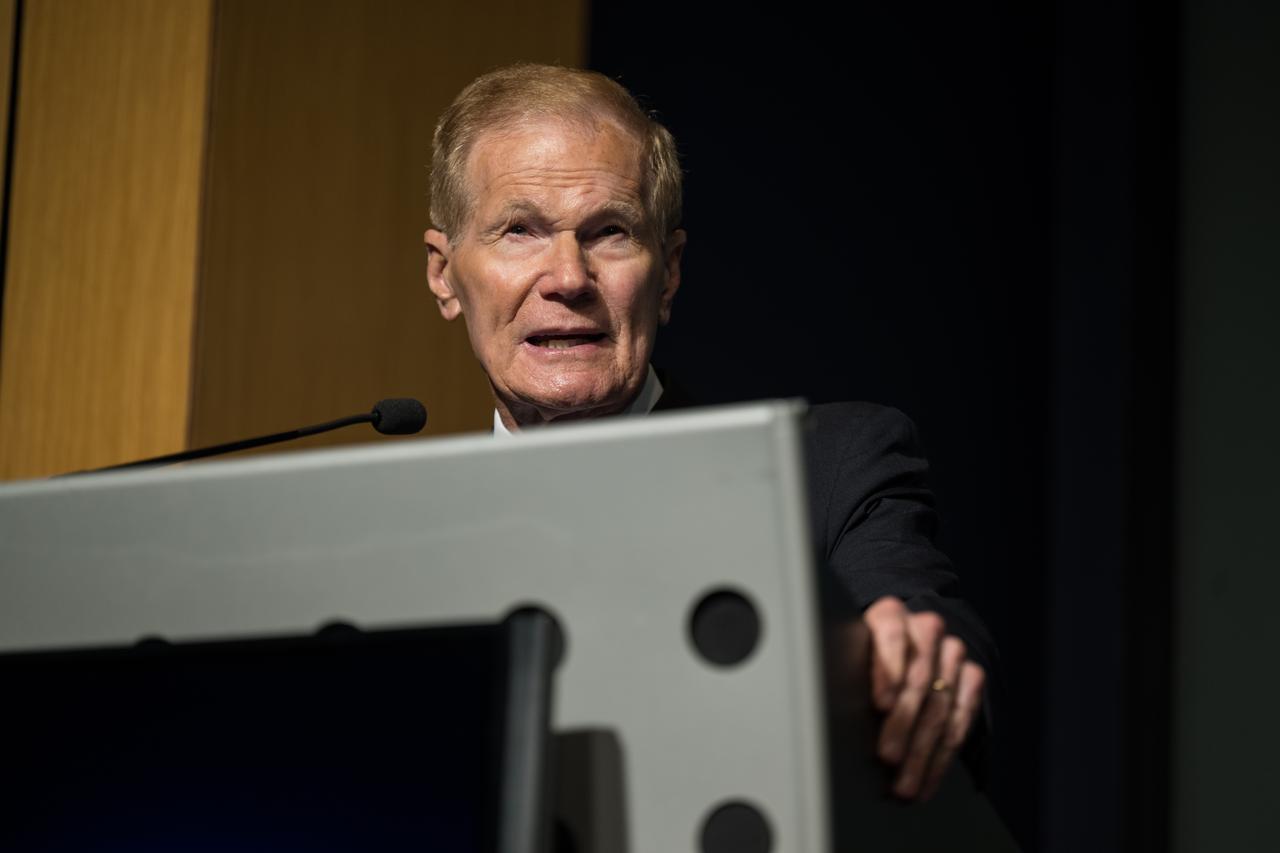
NASA Administrator Bill Nelson gives remarks during an event announcing Blue Origin as the company selected to develop a sustainable human landing system for the Artemis V Moon mission, Friday, May 19, 2023 at the Mary W. Jackson NASA Headquarters building in Washington. The human landing system will take astronauts to and from Gateway in lunar orbit to the surface and back to the lunar space station as part of NASA’s return to the Moon for science, exploration, and inspiration. Photo Credit: (NASA/Aubrey Gemignani)

S86-28458 (28 Feb. 1986) --- Astronaut Michael L. Coats participates in a rehearsal for his assigned flight at the commander's station of the Shuttle Mission Simulator (SMS) at the Johnson Space Center (JSC). NOTE: Coats, a veteran of spaceflight, originally trained for STS 61-H, which was cancelled in the wake of the Challenger accident. Following the Janaury 1986 accident he was named to serve on a mock crew (STS-61M) for personnel training and simulation purposes. Photo credit: NASA
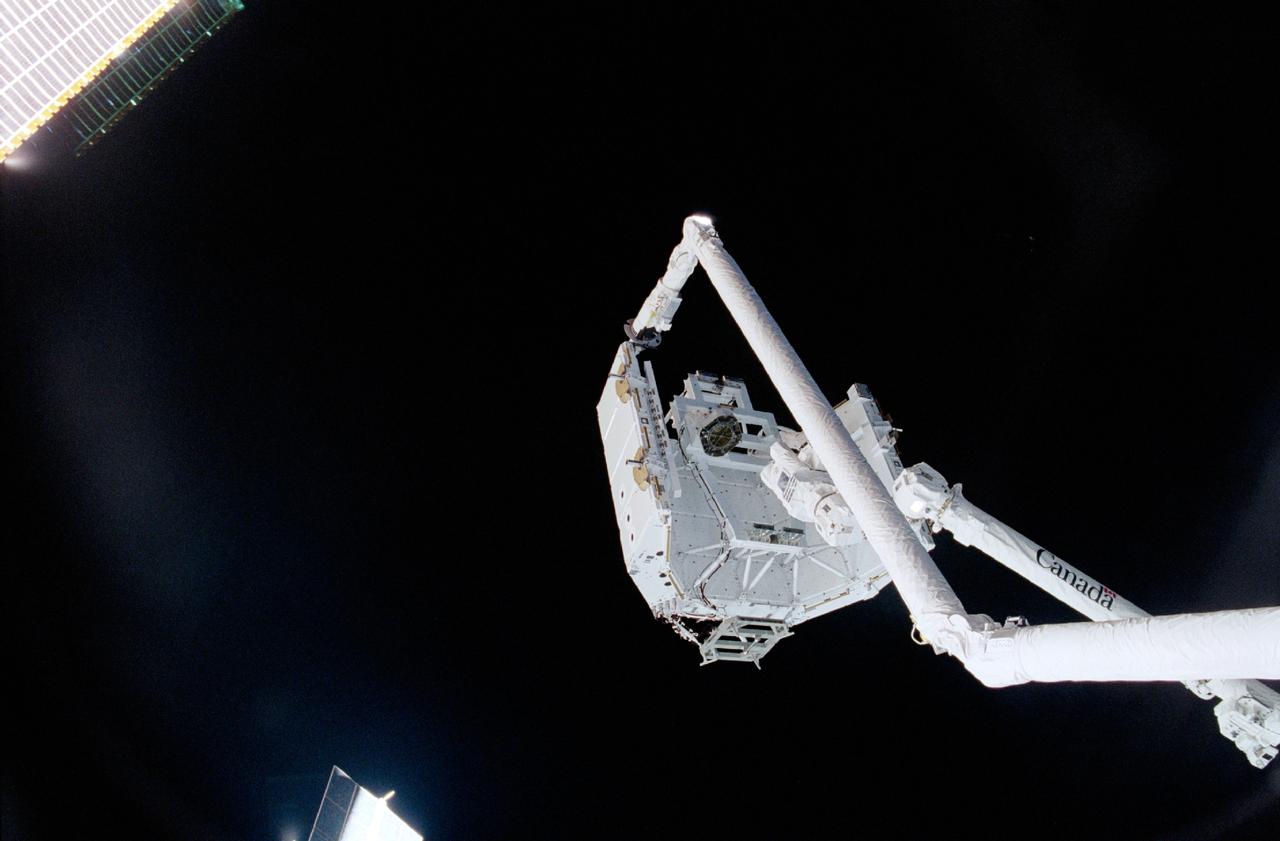
STS100-347-007 (28 April 2001) --- A Canadian "handshake in space" occurred on April 28, 2001 as the Canadian-built space station robotic arm (right) transferred its launch cradle over to Endeavour's Canadian-built robotic arm. A Canadian mission specialist--astronaut Chris A. Hadfield of the Canadian Space Agency (CSA)--was also instrumental in the activity as he was at the controls of the original robot arm from his post on the aft flight deck of the shuttle.
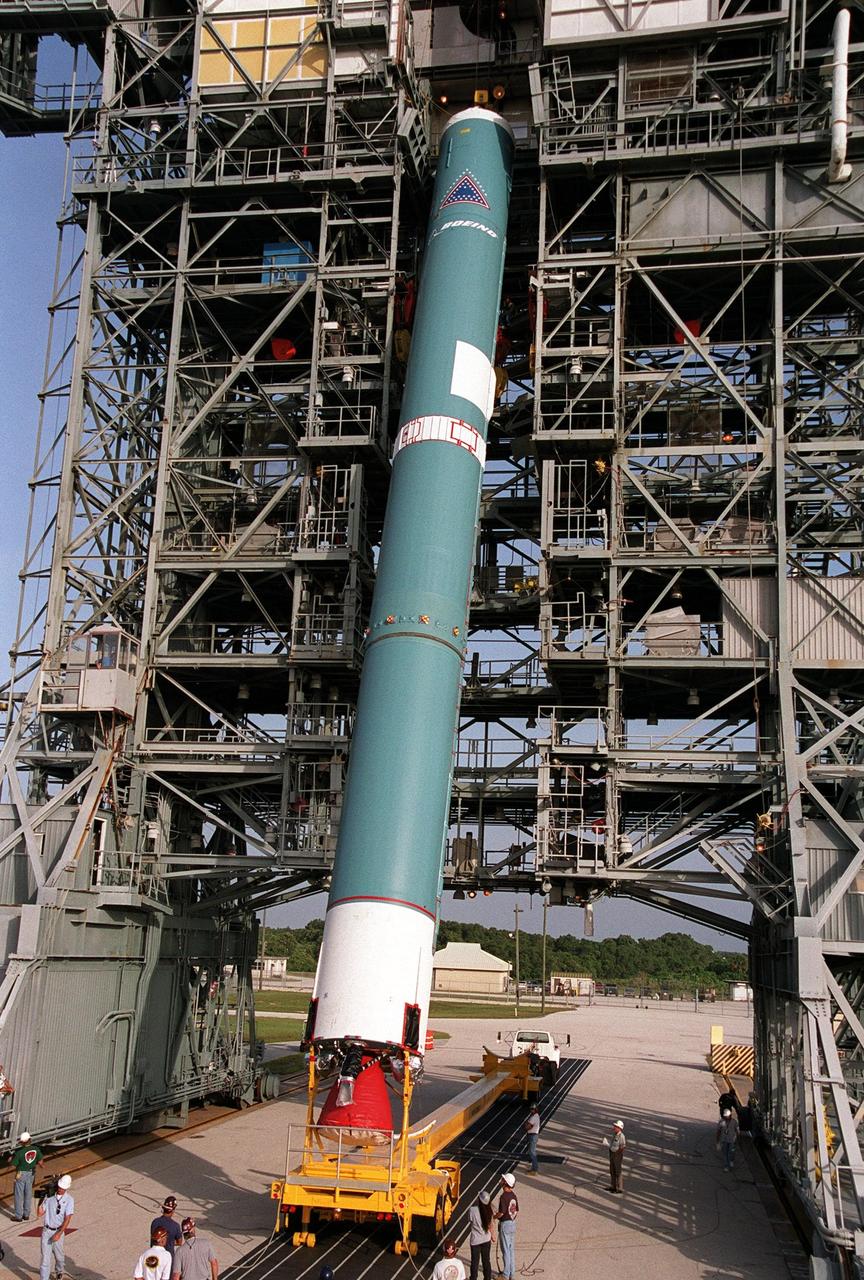
KENNEDY SPACE CENTER, Fla. -- A Boeing Delta II rocket is raised from its transporter in order to be lifted into the gantry. The rocket will propel the Genesis spacecraft on a journey to capture samples of the ions and elements in the solar wind and return them to Earth for scientists to use to determine the exact composition of the Sun and the solar system's origin. NASA’s Genesis project in managed by the Jet Propulsion Laboratory in Pasadena, Calif. Lockheed Martin Astronautics built the Genesis spacecraft for NASA in Denver, Colo. The launch is scheduled for July 30 at 12:36 p.m. EDT
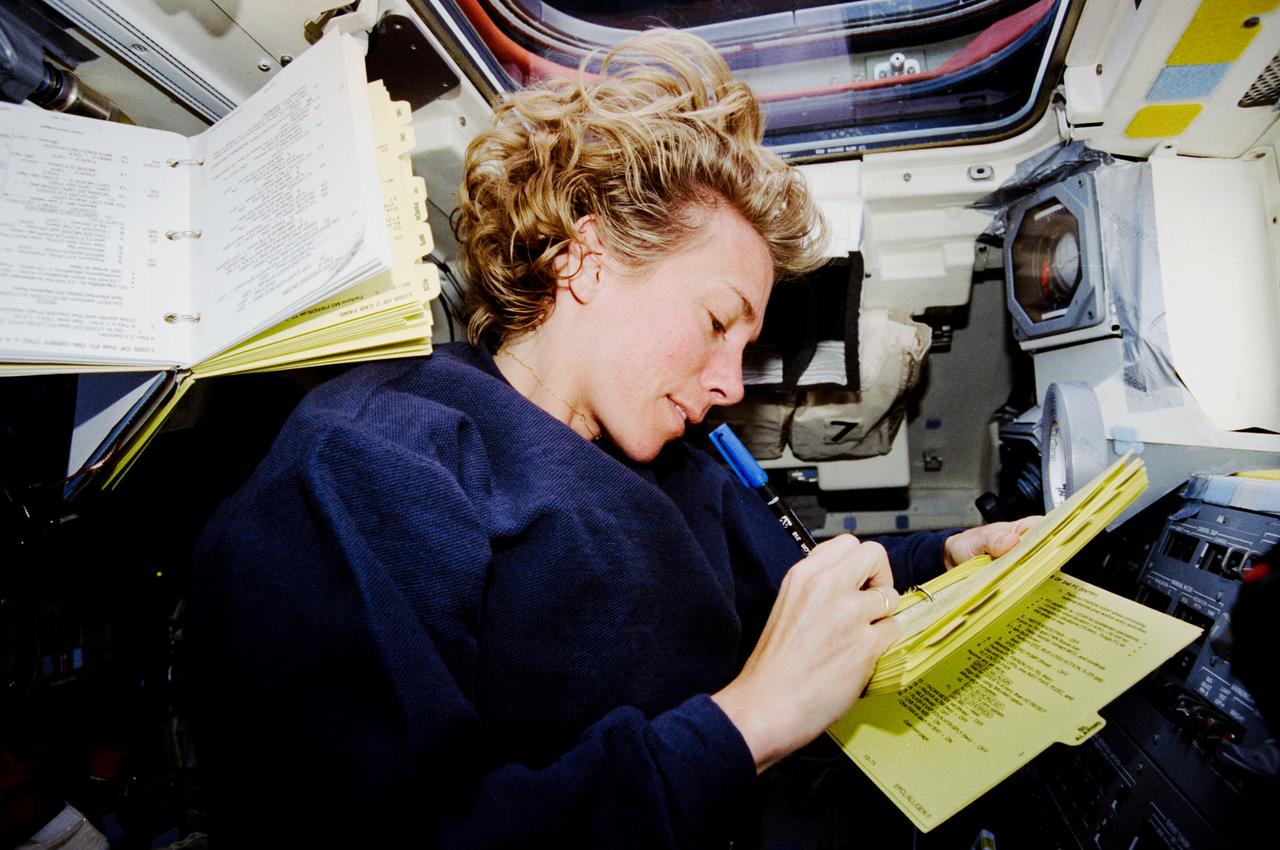
STS083-317-009 (4-8 April 1997) --- Astronaut Susan L. Still, pilot, goes over a checklist at the control panel on the aft flight deck of the Earth-orbiting Space Shuttle Columbia. Scheduled originally as a 16-day mission, the Microgravity Sciences Laboratory (MSL-1) flight completed about one-fourth of its manifest time frame prior to being cut short by a power shortage.
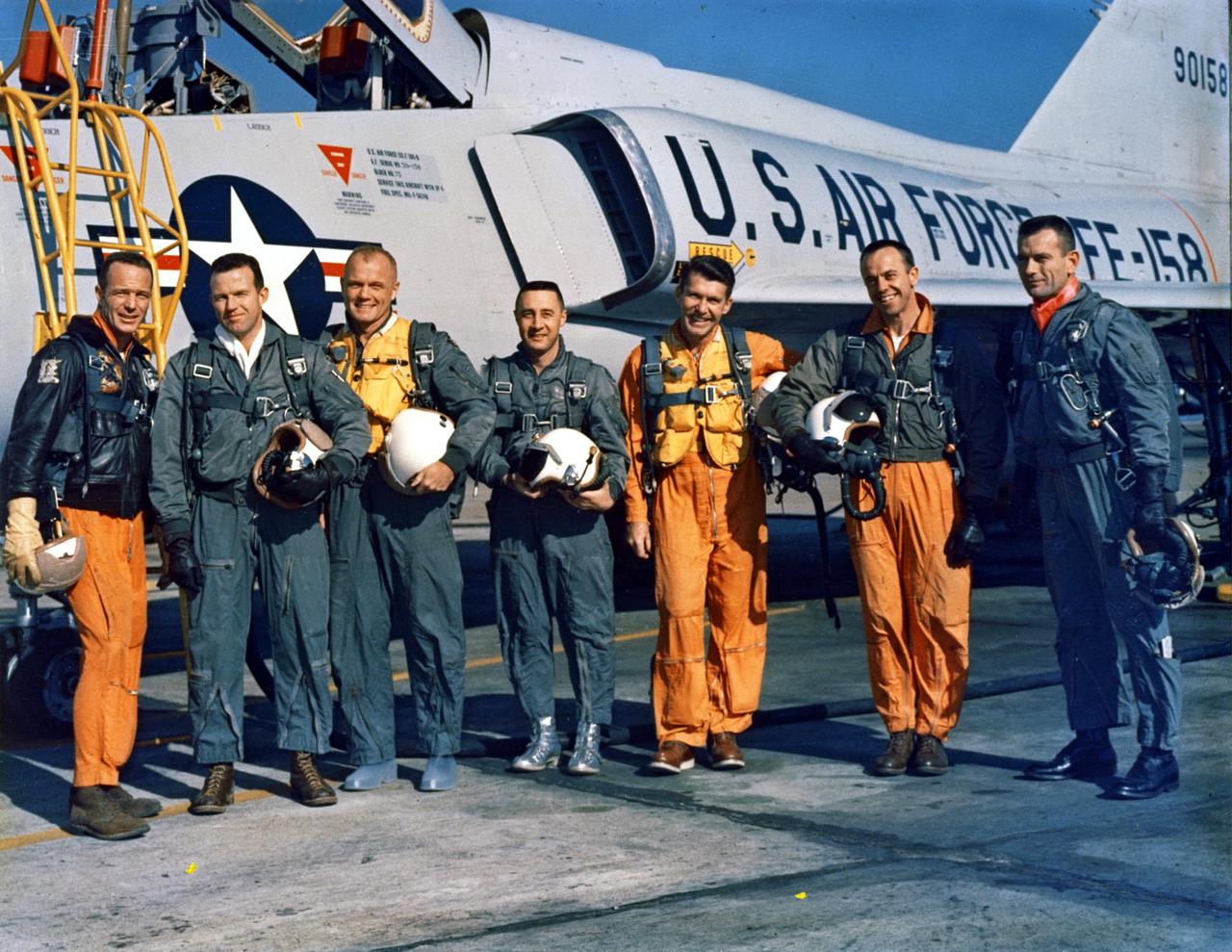
CAPE CANAVERAL, FLA. -- The Original Seven Mercury Astronauts pose beside an Air Force F-102 jet. Standing, left to right, are M. Scott Carpenter, L. Gordon Cooper, John H. Glenn Jr., Virgil I. 'Gus' Grissom, Walter M. Schirra Jr., Alan B. Shepherd Jr., and Donald K. 'Deke' Slayton.
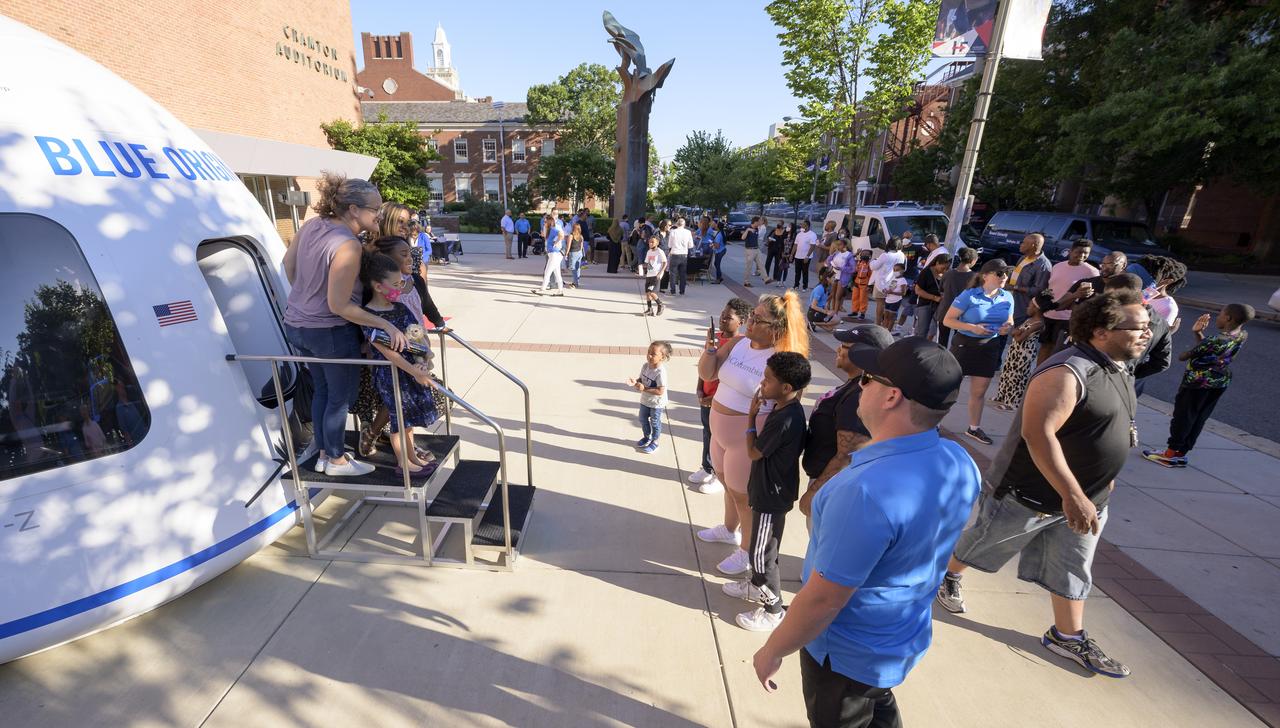
Attendees line up to go inside a Blue Origin New Shepard capsule mockup prior to the screening of the NASA produced documentary “The Color of Space” at Howard University’s Cramton Auditorium in Washington, Saturday, June 18, 2022. Premiering on Juneteenth, the federal holiday commemorating the end of slavery in the United States, “The Color of Space” is an inspirational documentary that tells the stories of NASA’s Black astronauts determined to reach the stars. Photo Credit: (NASA/Bill Ingalls)
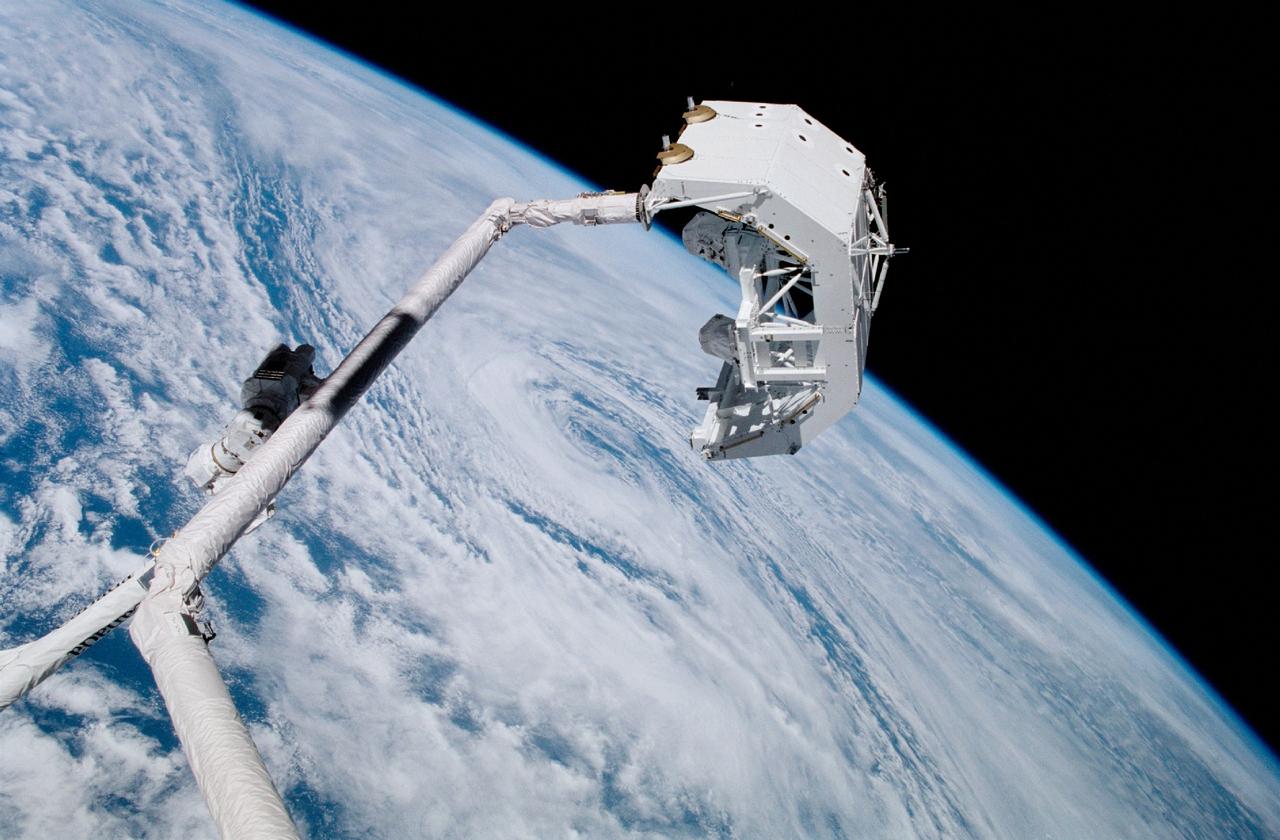
STS100-347-025 (28 April 2001) --- A Canadian "handshake in space" occurred on April 28, 2001 as the Canadian-built space station robotic arm transferred its launch cradle over to Endeavour's Canadian-built robotic arm. A Canadian mission specialist--astronaut Chris A. Hadfield of the Canadian Space Agency (CSA)--was also instrumental in the activity as he was at the controls of the original robot arm from his post on the aft flight deck of the shuttle.
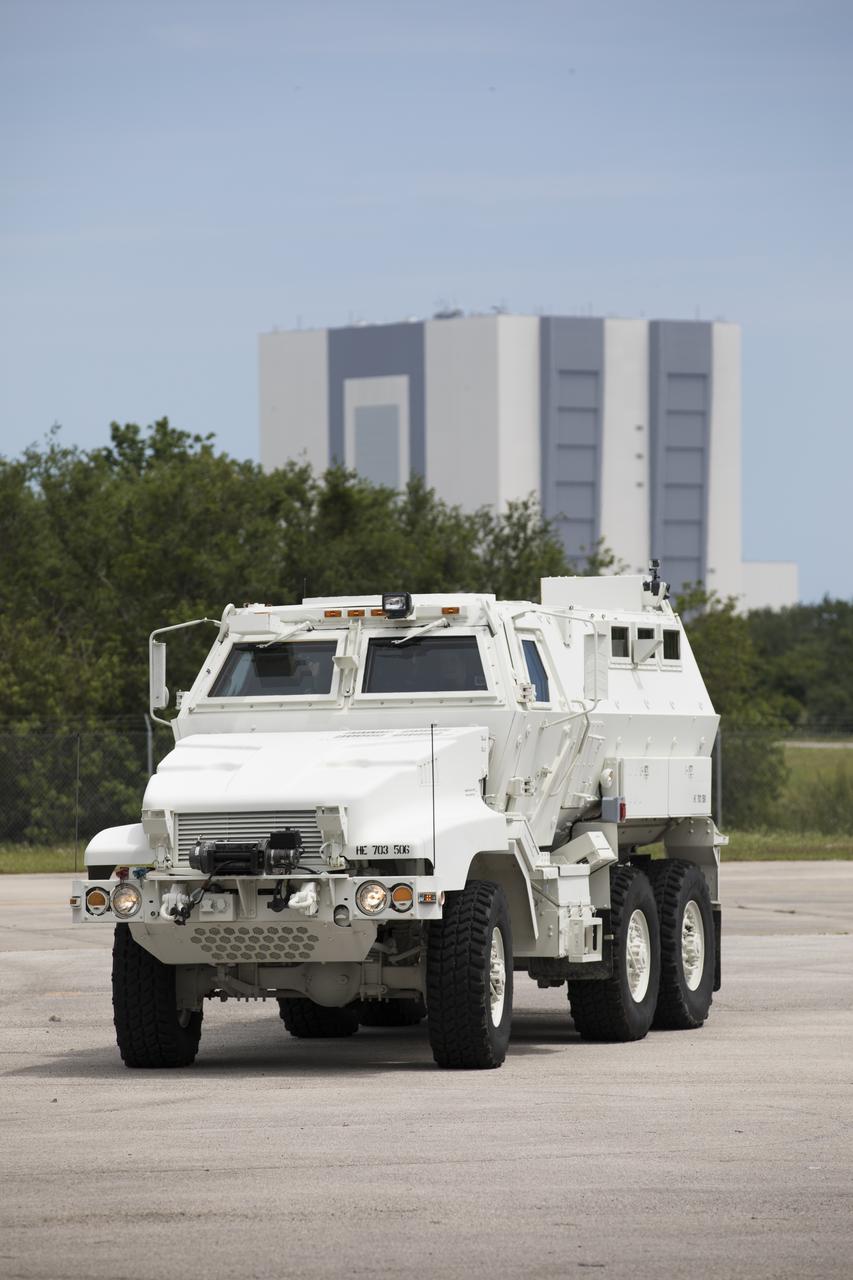
An MRAP armored vehicle goes through a training run on the Shuttle Landing Facility to support NASA's Commercial Crew Program at the agency's Kennedy Space Center in Florida. The 45,000-pound mine-resistant ambush protected vehicle, or MRAP, was originally designed for military applications. The MRAP offers a mobile bunker for astronauts and ground crews in the unlikely event they have to get away from the launch pad quickly in an emergency.
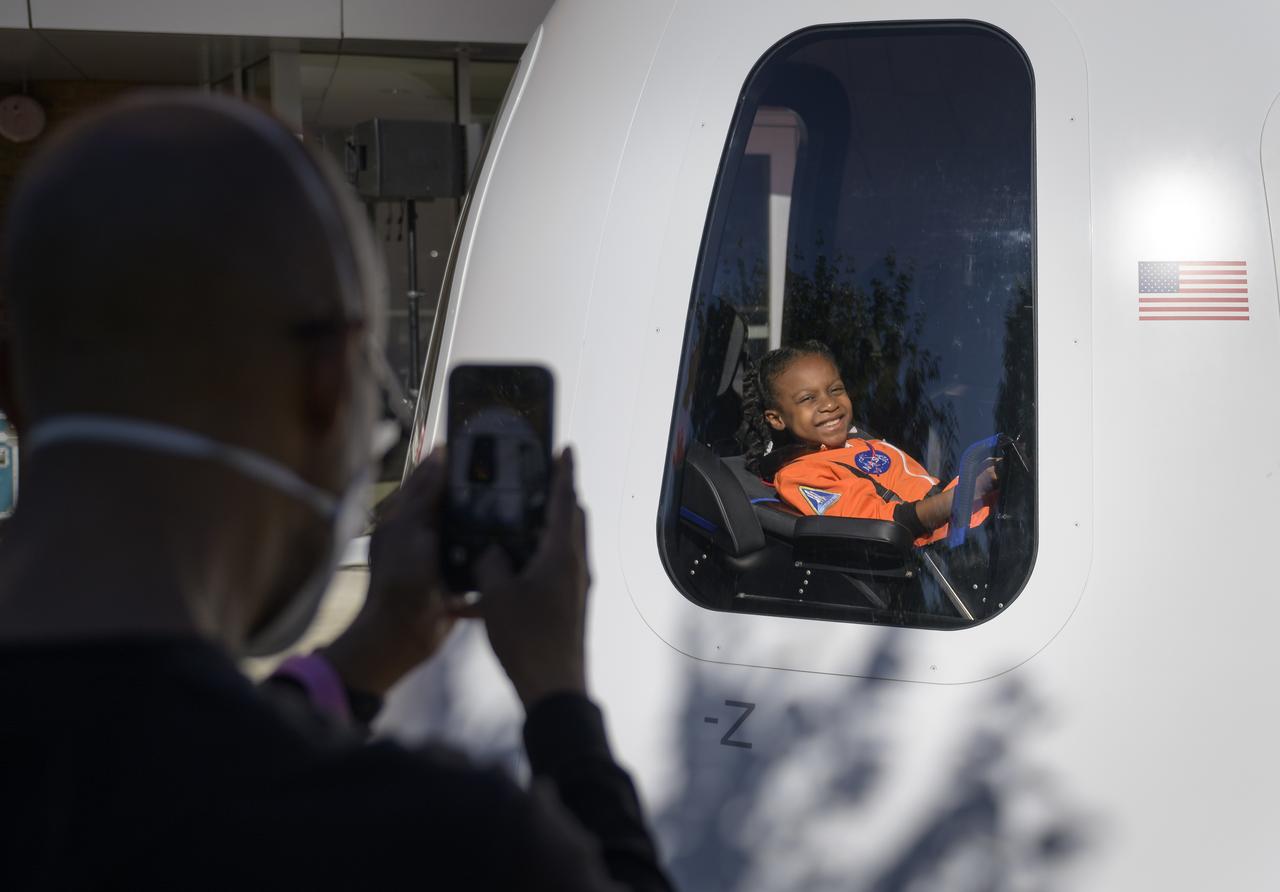
9-year old Amara Bowman smiles as her father photographs her inside a Blue Origin New Shepard capsule mockup prior to the screening of the NASA produced documentary “The Color of Space” at Howard University’s Cramton Auditorium in Washington, Saturday, June 18, 2022. Premiering on Juneteenth, the federal holiday commemorating the end of slavery in the United States, “The Color of Space” is an inspirational documentary that tells the stories of NASA’s Black astronauts determined to reach the stars. Photo Credit: (NASA/Bill Ingalls)
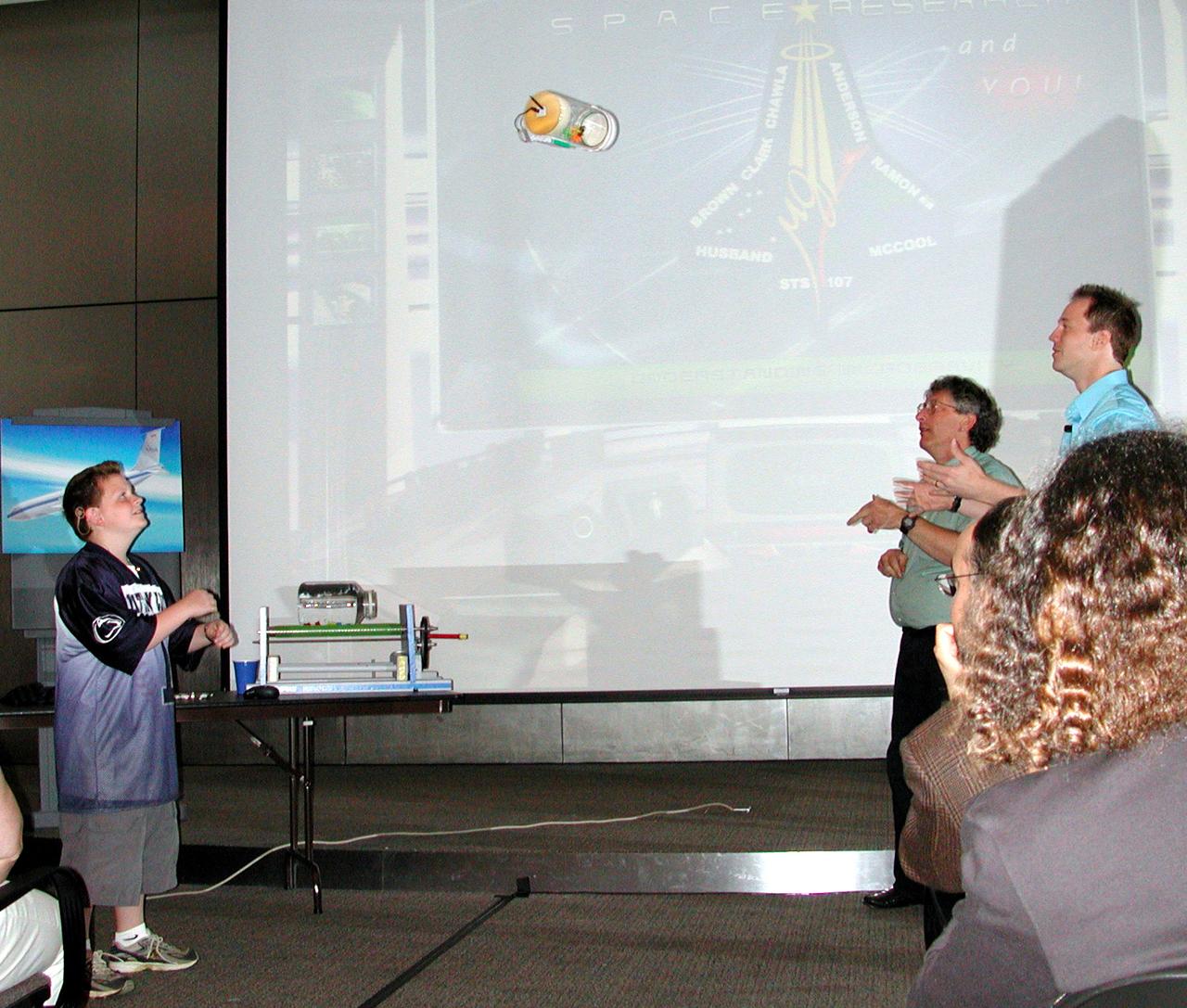
A student gets ready to catch a plastic tube carrying a small fluid bottle and a wireless video camera. As it arced through the air, the container was in free-fall -- just like astronauts in space -- and the TV camera broadcast images of how the fluid behaved. The activity was part of the Space Research and You education event held by NASA's Office of Biological and Physical Research on June 25, 2002, in Arlington, VA, to highlight the research that will be conducted on STS-107. (Digital camera image; no film original.
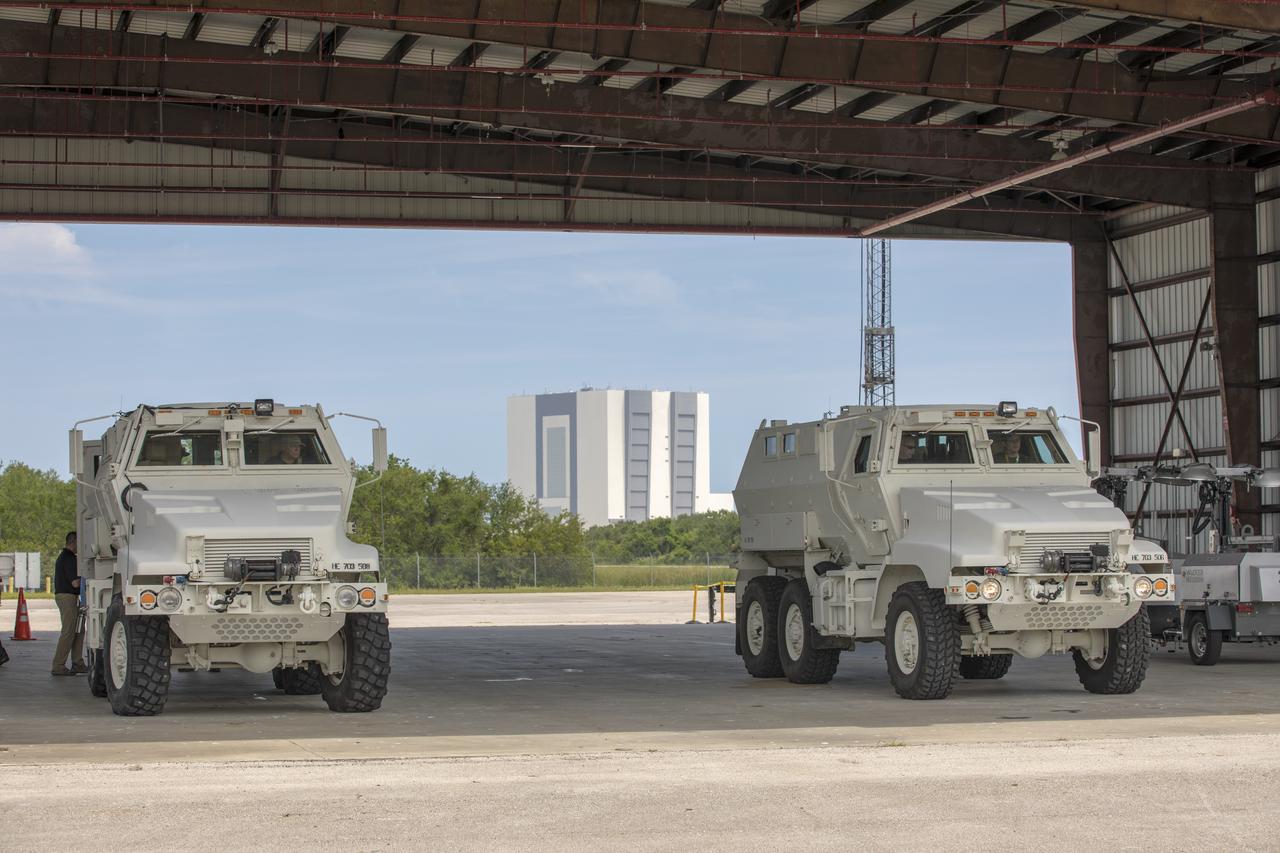
Inside a Shuttle Landing Facility hangar at NASA's Kennedy Space Center in Florida, two MRAP armored vehicles are prepared for a training drive to support the agency's Commercial Crew Program. The 45,000-pound mine-resistant ambush protected vehicle, or MRAP, was originally designed for military applications. The MRAP offers a mobile bunker for astronauts and ground crews in the unlikely event they have to get away from the launch pad quickly in an emergency.
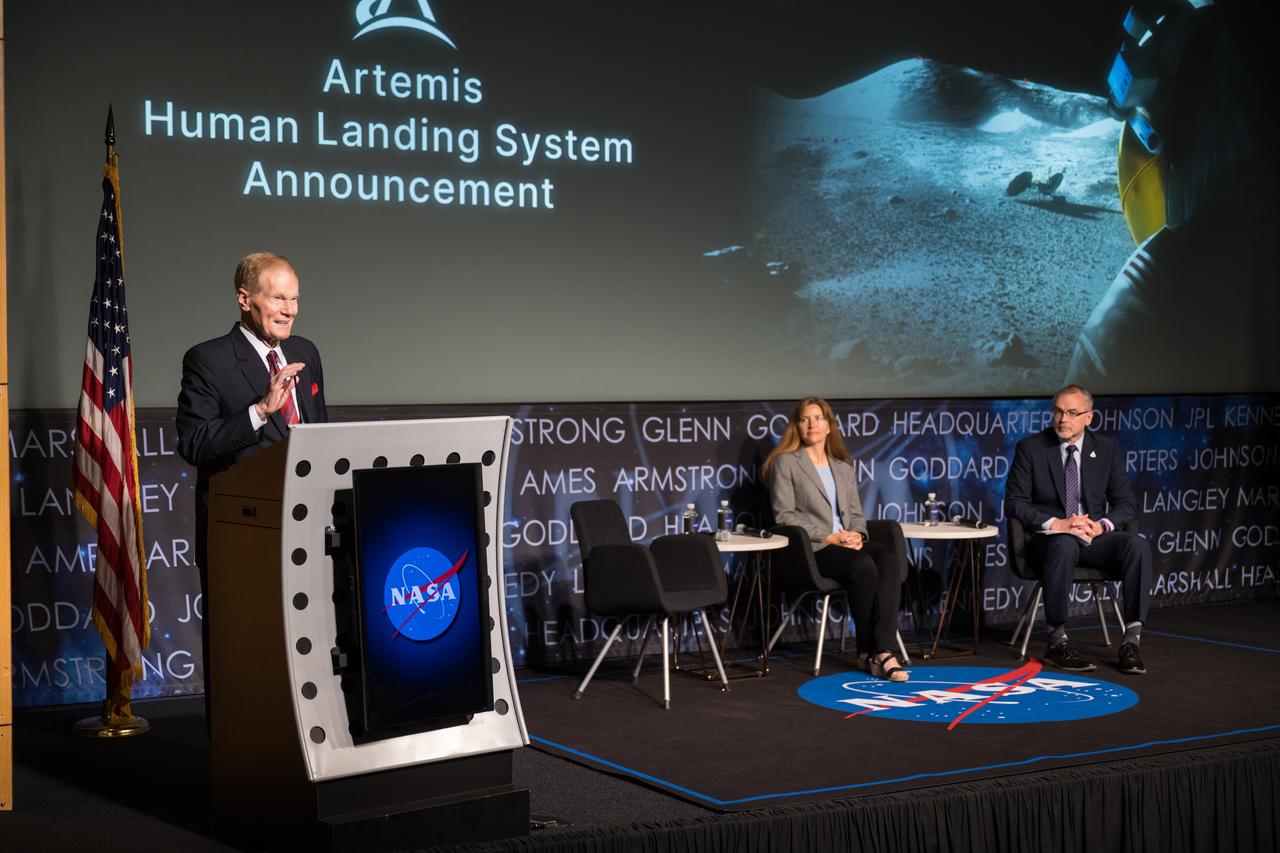
NASA Administrator Bill Nelson gives remarks during an event announcing Blue Origin as the company selected to develop a sustainable human landing system for the Artemis V Moon mission, Friday, May 19, 2023 at the Mary W. Jackson NASA Headquarters building in Washington. The human landing system will take astronauts to and from Gateway in lunar orbit to the surface and back to the lunar space station as part of NASA’s return to the Moon for science, exploration, and inspiration. Photo Credit: (NASA/Aubrey Gemignani)
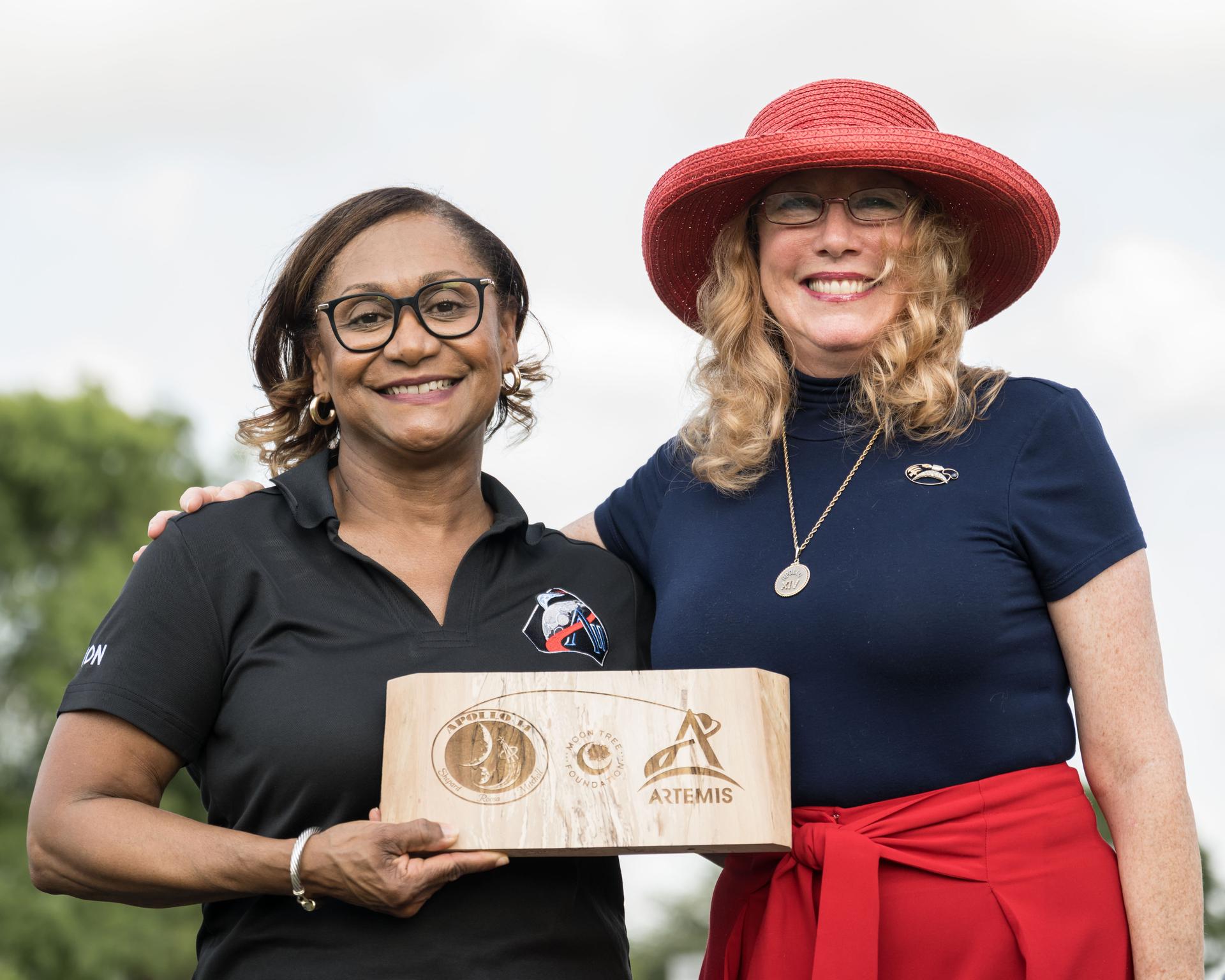
jsc2026e396742 (June 25, 2026) - NASA's Johnson Space Center Director Vanessa Wyche and Rosemary Roosa, president of The Moon Tree foundation and daughter of late Apollo 14 astronaut Stuart Roosa, share a special plaque honoring the ties between the Apollo and Artemis Programs. The plaque is constructed from an original Moon tree planted soon after the Apollo 14 mission and symbolizes the passing of the baton from Apollo to Artemis. Credit: NASA
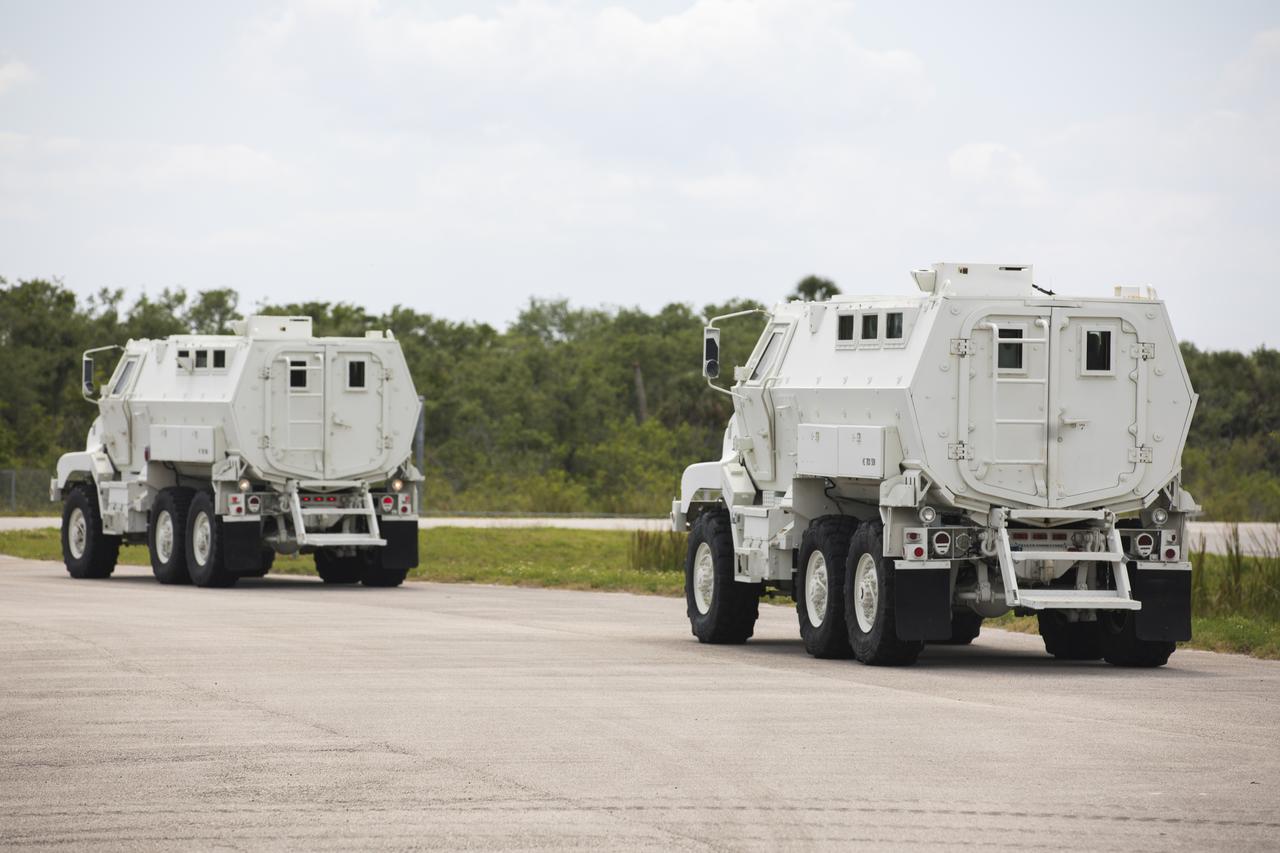
Two MRAP armored vehicles go through a training run on the Shuttle Landing Facility to support NASA's Commercial Crew Program at the agency's Kennedy Space Center in Florida. The 45,000-pound mine-resistant ambush protected vehicle, or MRAPs, were originally designed for military applications. The MRAP offers a mobile bunker for astronauts and ground crews in the unlikely event they have to get away from the launch pad quickly in an emergency.
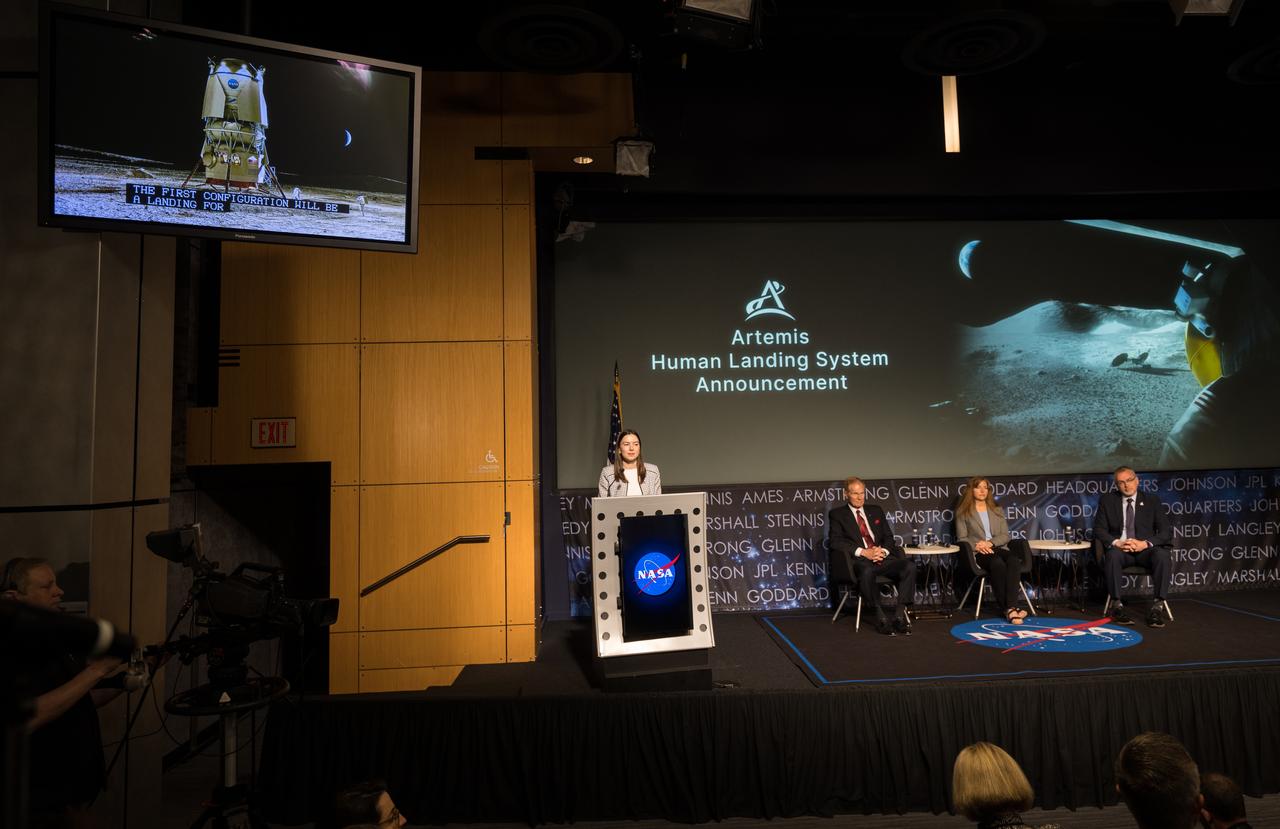
A view of the human landing system is seen on the monitor during an event announcing Blue Origin as the company selected to develop a sustainable human landing system for the Artemis V Moon mission, Friday, May 19, 2023 at the Mary W. Jackson NASA Headquarters building in Washington. The human landing system will take astronauts to and from Gateway in lunar orbit to the surface and back to the lunar space station as part of NASA’s return to the Moon for science, exploration, and inspiration. Photo Credit: (NASA/Aubrey Gemignani)
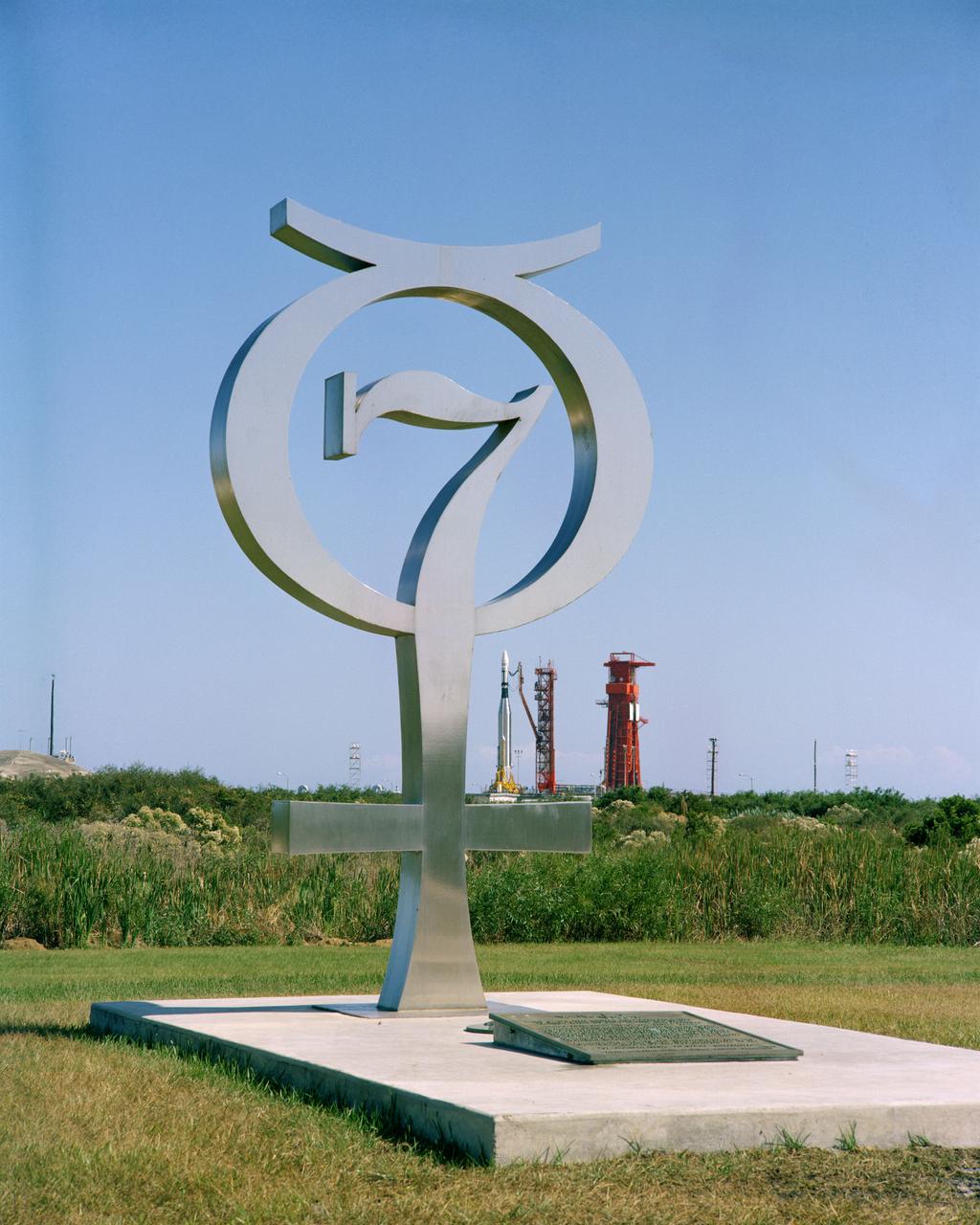
S66-59963 (9 Nov. 1966) --- Monument at Pad 14 honoring Project Mercury. The Arabic number seven represents the seven original astronauts. The other figure is the astronomical symbol of the Planet Mercury. In background is the Gemini-12 Agena Target Docking Vehicle atop its Atlas launch vehicle at Cape Kennedy, Florida. Photo credit: NASA
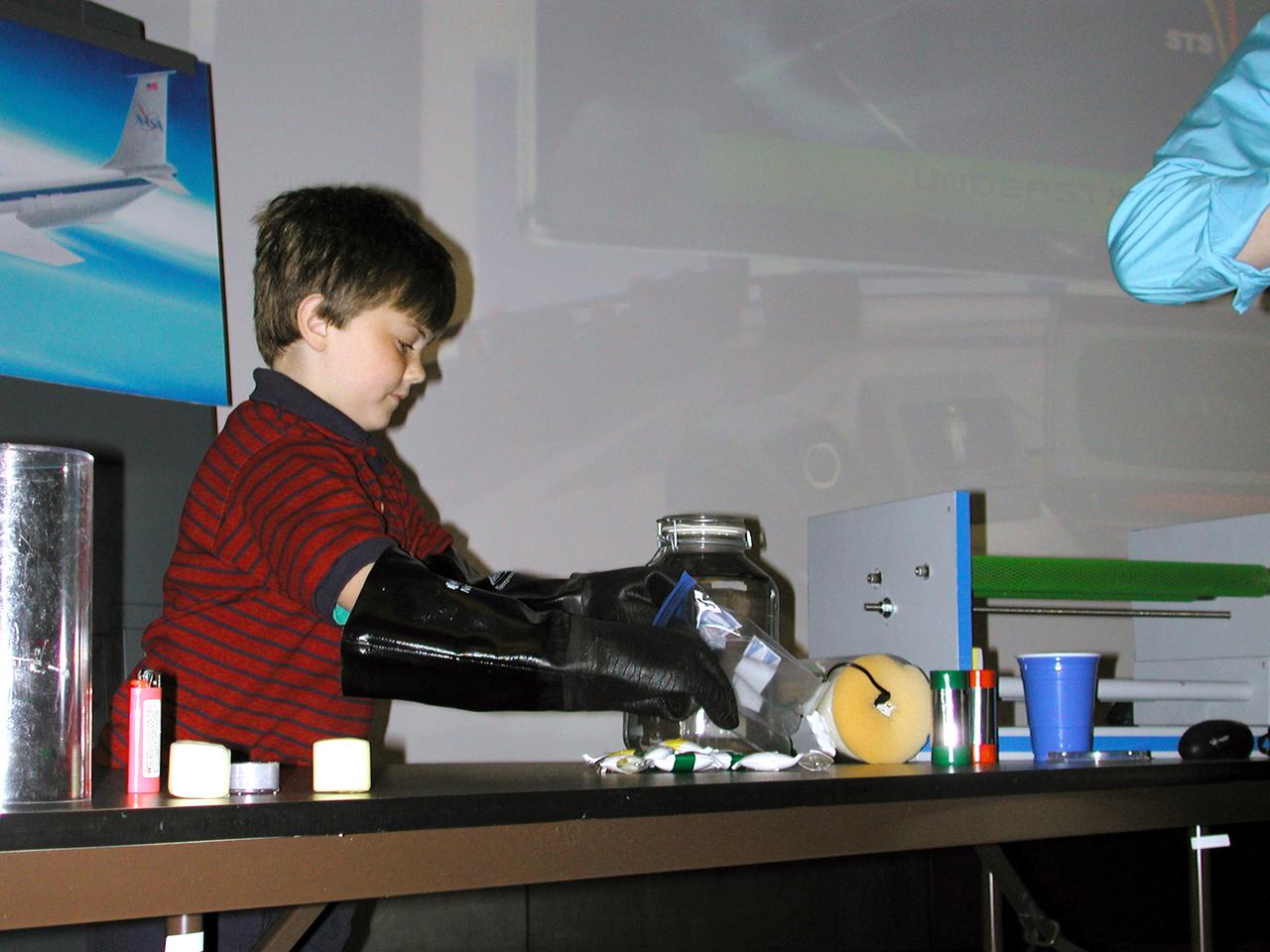
A Virginia student wears gloves to simulate the awkward feel and dexterity that astronauts experience when working in spacesuits. The activity was part of the Space Research and You education event held by NASA's Office of Biological and Physical Research on June 25, 2002, in Arlington, VA, to highlight the research that will be conducted on STS-107. (Digital camera image; no film original.
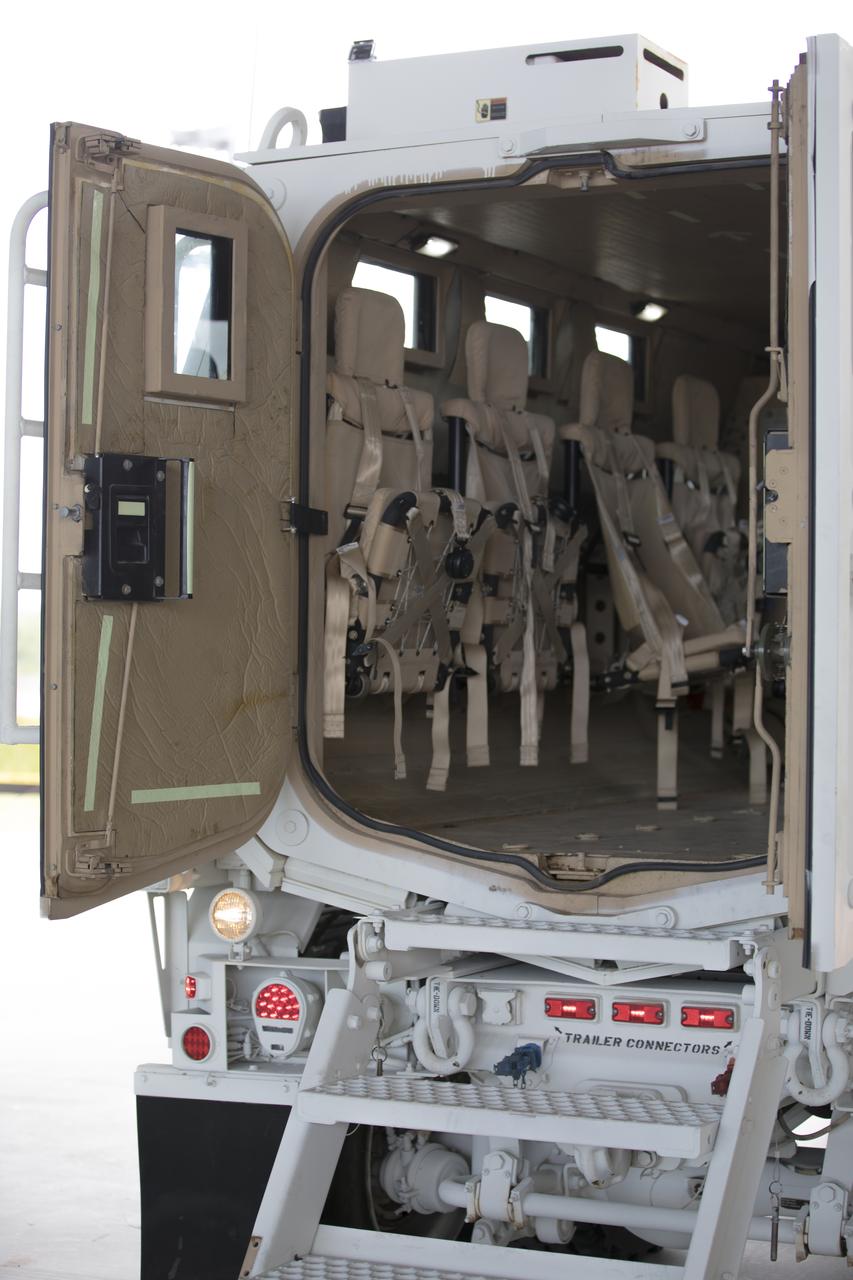
Following a training run on the Shuttle Landing Facility at NASA's Kennedy Space Center in Florida, MRAP back doors are opened showing seating in the armored vehicle. The 45,000-pound mine-resistant ambush protected vehicle, or MRAP, was originally designed for military applications, but will support the agency's Commercial Crew Program at the spaceport. The MRAP offers a mobile bunker for astronauts and ground crews in the unlikely event they have to get away from the launch pad quickly in an emergency.
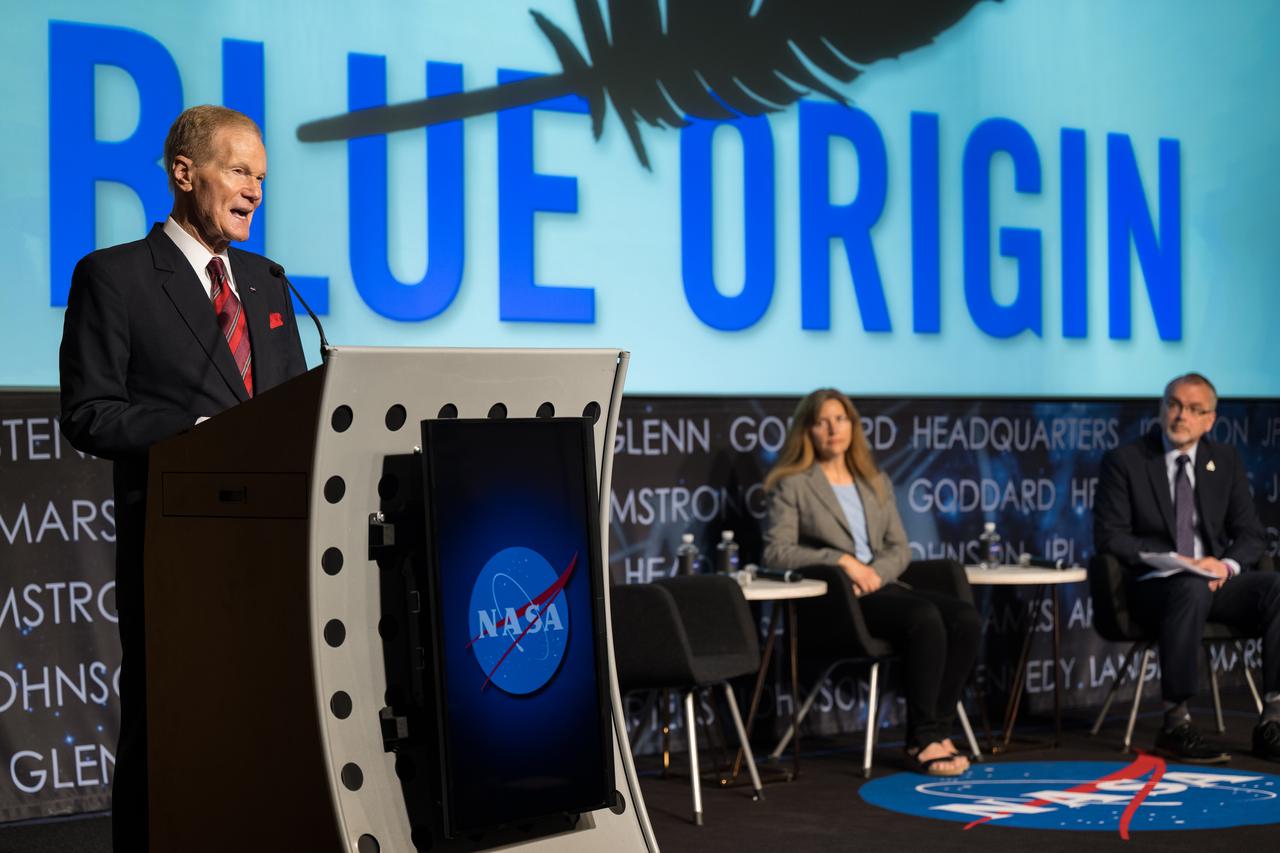
NASA Administrator Bill Nelson announces Blue Origin as the company selected to develop a sustainable human landing system for the Artemis V Moon mission, Friday, May 19, 2023 at the Mary W. Jackson NASA Headquarters building in Washington. The human landing system will take astronauts to and from Gateway in lunar orbit to the surface and back to the lunar space station as part of NASA’s return to the Moon for science, exploration, and inspiration. Photo Credit: (NASA/Aubrey Gemignani)
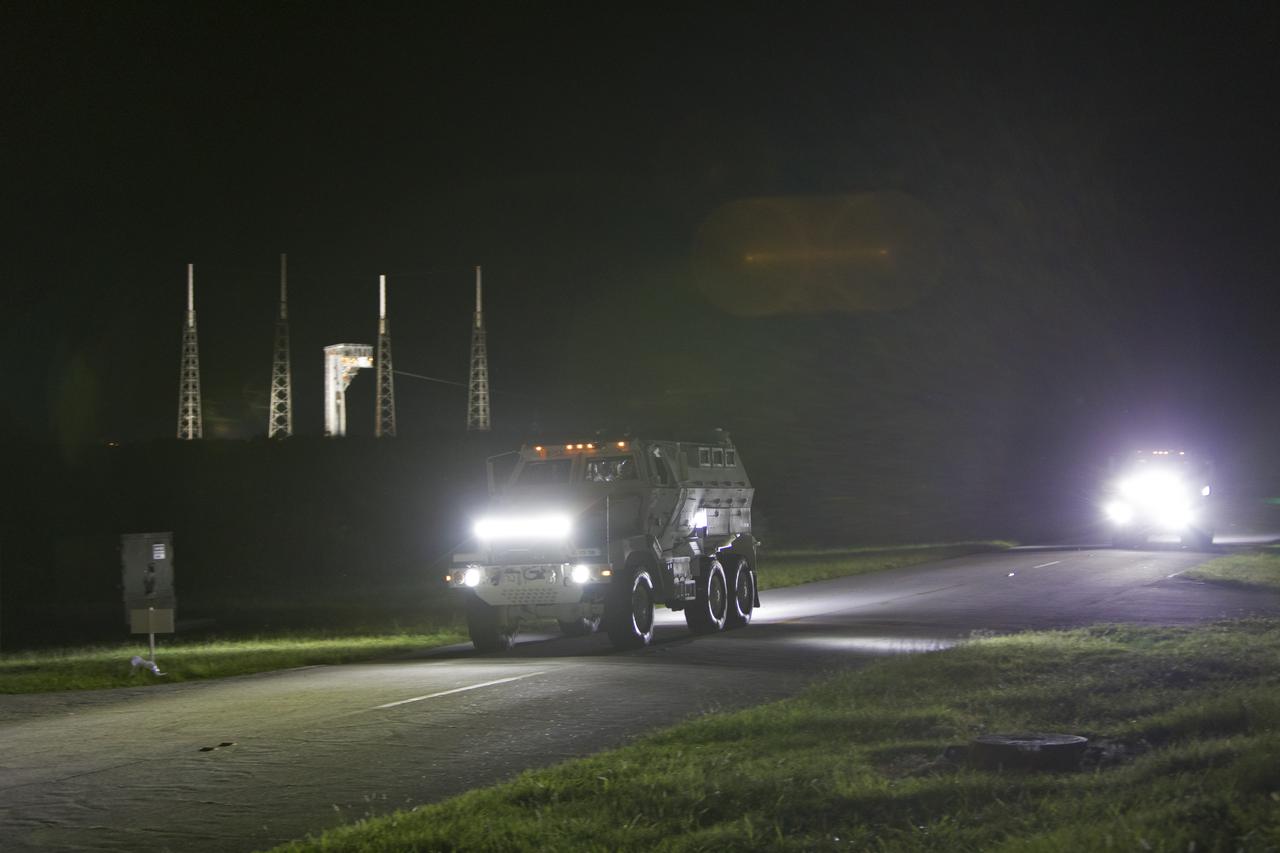
Originally designed for military applications, NASA’s mine-resistant ambush protected vehicles, or MRAPs, will be used in the unlikely event of an emergency at the launch pad prior to liftoff. The vehicles, seen here during a Boeing/United Launch Alliance emergency egress system demonstration at Cape Canaveral Air Force Station’s Launch Complex 41 in Florida on June 19, 2018, offer a mobile bunker for astronauts and ground crews, should they need to get away from the launch pad quickly in an emergency.
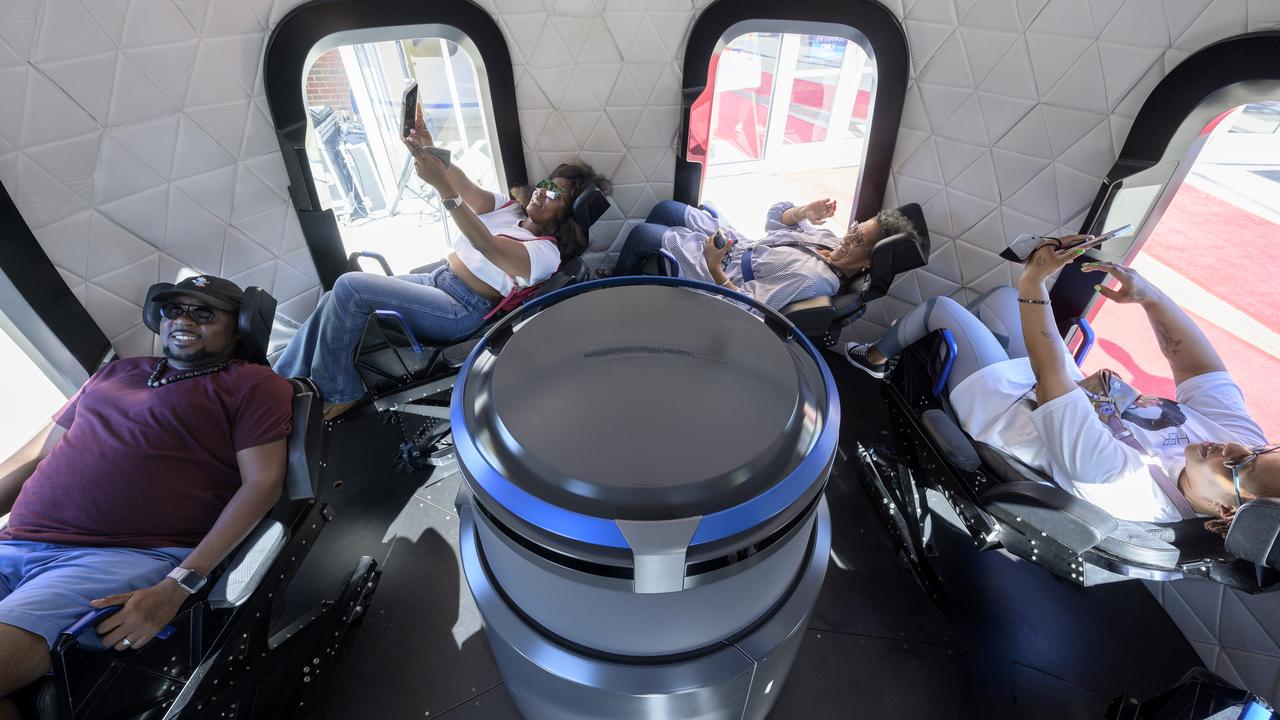
Attendees experience the inside of a Blue Origin New Shepard capsule mockup prior to the screening of the NASA produced documentary “The Color of Space” at Howard University’s Cramton Auditorium in Washington, Saturday, June 18, 2022. Premiering on Juneteenth, the federal holiday commemorating the end of slavery in the United States, “The Color of Space” is an inspirational documentary that tells the stories of NASA’s Black astronauts determined to reach the stars. Photo Credit: (NASA/Bill Ingalls)
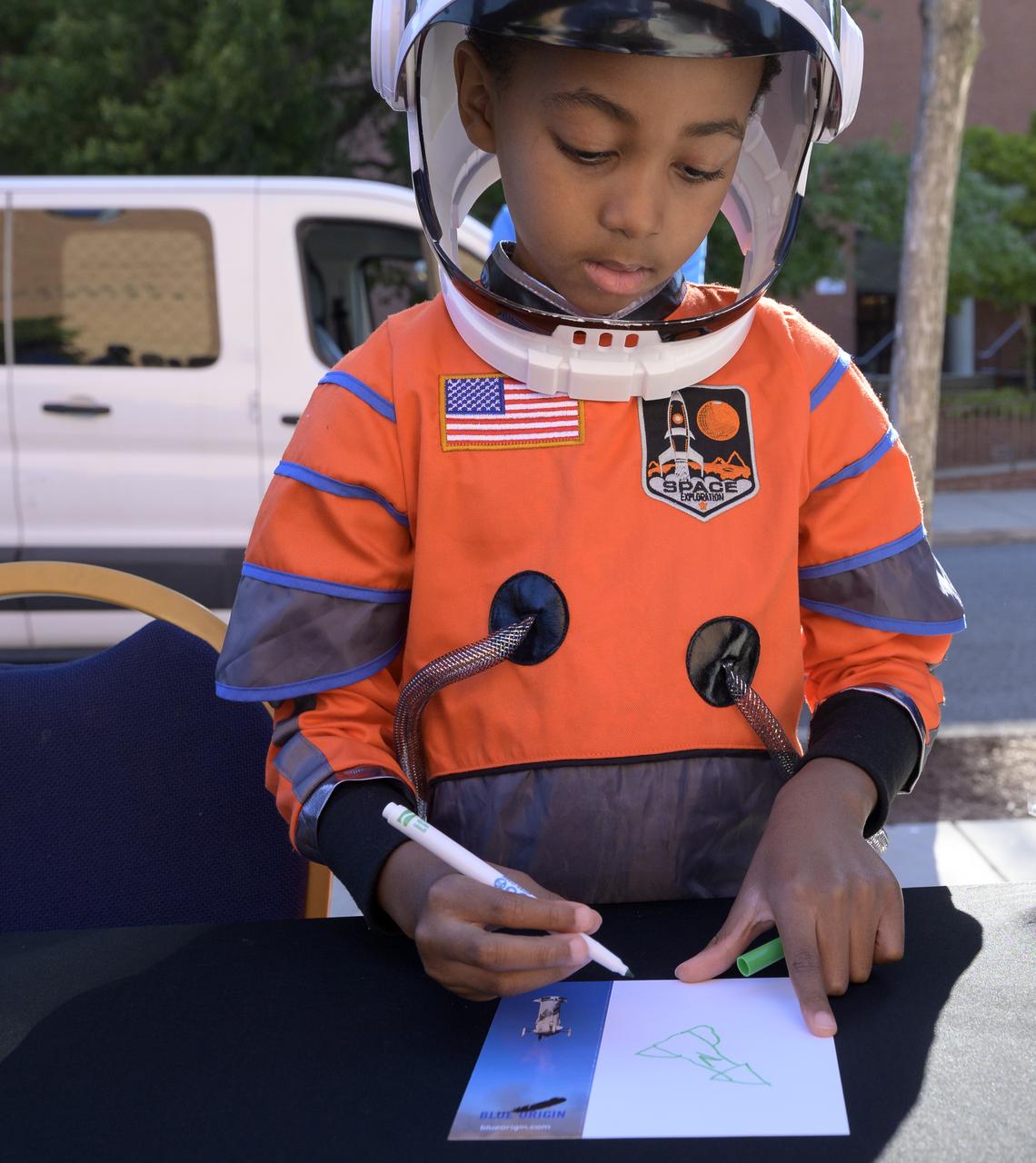
6-year old Armani Bonds draws on a postcard that will be sent to space by Club for the Future on a Blue Origin New Shepard rocket prior to he and his family screening the NASA produced documentary “The Color of Space” at Howard University’s Cramton Auditorium in Washington, Saturday, June 18, 2022. Premiering on Juneteenth, the federal holiday commemorating the end of slavery in the United States, “The Color of Space” is an inspirational documentary that tells the stories of NASA’s Black astronauts determined to reach the stars. Photo Credit: (NASA/Bill Ingalls)
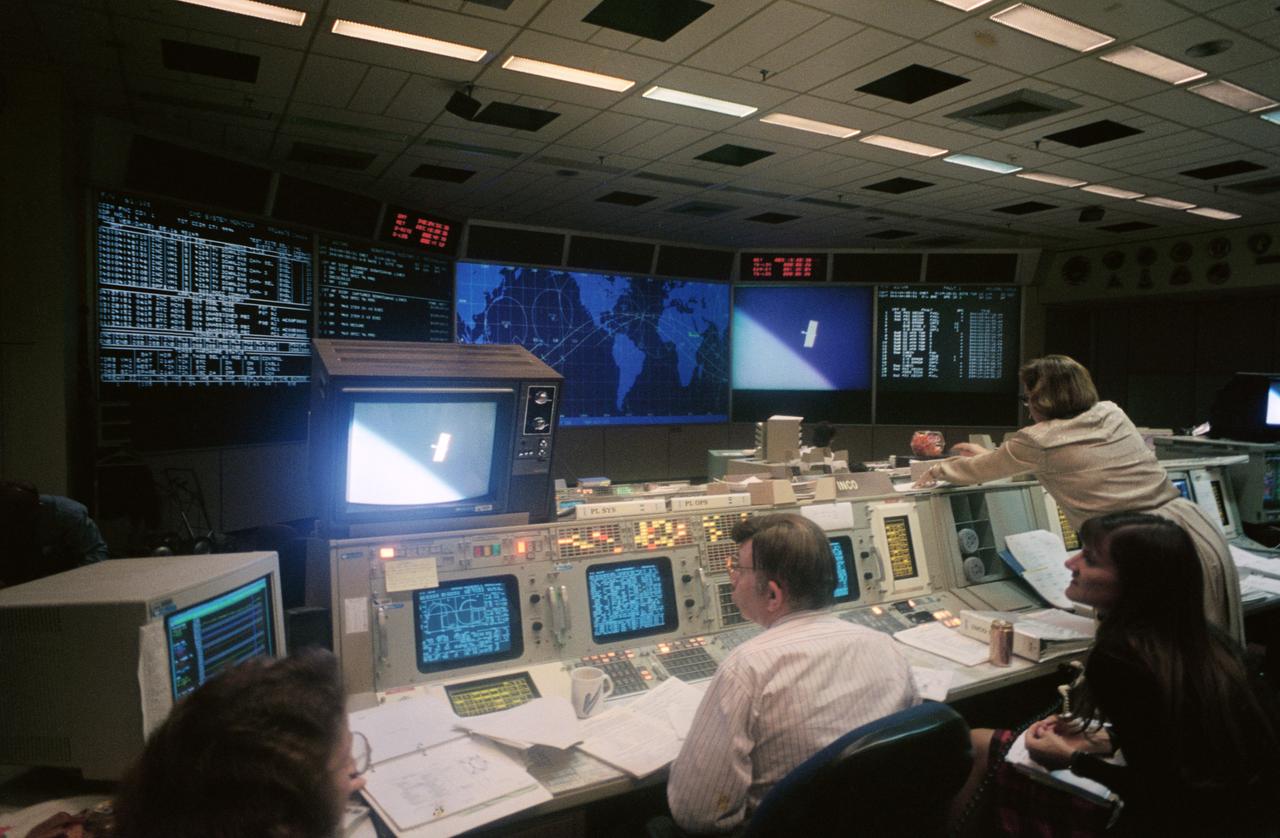
Harry Black, at the Integrated Communications Officer's console in the Mission Control Center (MCC), monitors the second extravehicular activity (EVA-2) of the STS-61 Hubble Space Telescope (HST) servicing mission. Others pictured, left to right, are Judy Alexander, Kathy Morrison and Linda Thomas. Note monitor scene of one of HST's original solar array panels floating in space moments after being tossed away by Astronaut Kathryn C. Thornton.

A member of the news media asks a question during an event announcing Blue Origin as the company selected to develop a sustainable human landing system for the Artemis V Moon mission, Friday, May 19, 2023 at the Mary W. Jackson NASA Headquarters building in Washington. The human landing system will take astronauts to and from Gateway in lunar orbit to the surface and back to the lunar space station as part of NASA’s return to the Moon for science, exploration, and inspiration. Photo Credit: (NASA/Aubrey Gemignani)
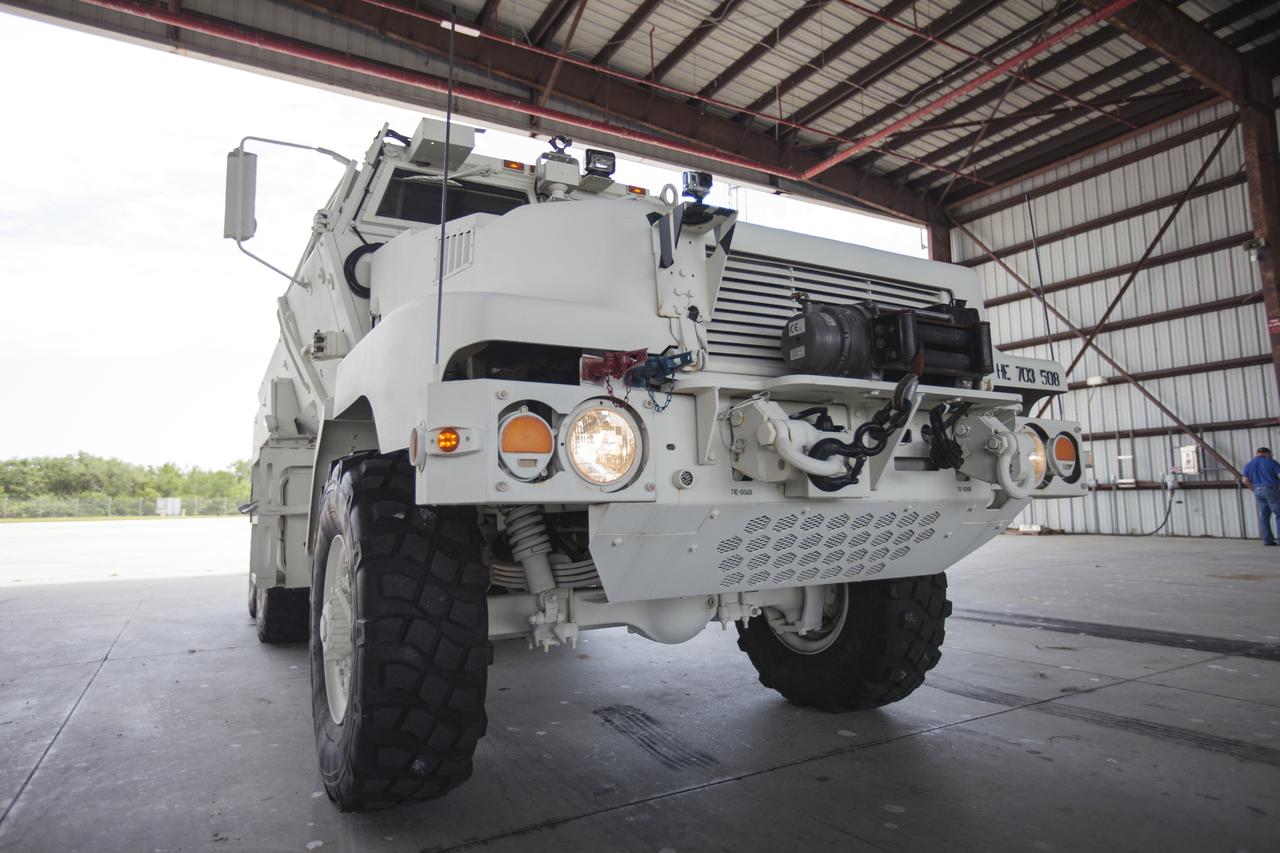
Inside a Shuttle Landing Facility hangar at NASA's Kennedy Space Center in Florida, an MRAP armored vehicle is prepared for a training drive to support the agency's Commercial Crew Program. The 45,000-pound mine-resistant ambush protected vehicle, or MRAP, was originally designed for military applications. The MRAP offers a mobile bunker for astronauts and ground crews in the unlikely event they have to get away from the launch pad quickly in an emergency.
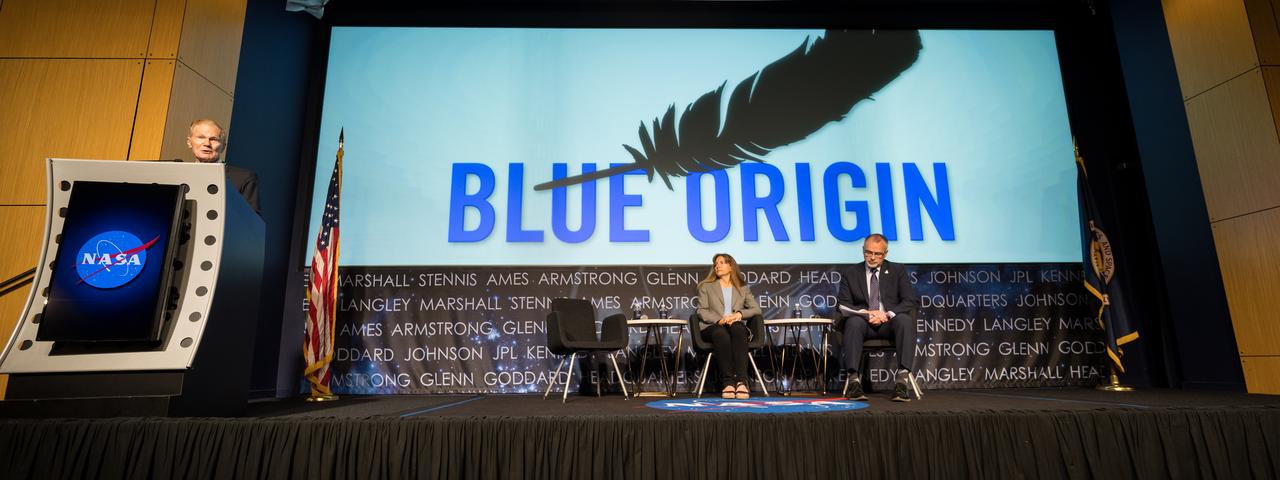
NASA Administrator Bill Nelson announces Blue Origin as the company selected to develop a sustainable human landing system for the Artemis V Moon mission, Friday, May 19, 2023 at the Mary W. Jackson NASA Headquarters building in Washington. The human landing system will take astronauts to and from Gateway in lunar orbit to the surface and back to the lunar space station as part of NASA’s return to the Moon for science, exploration, and inspiration. Photo Credit: (NASA/Aubrey Gemignani)
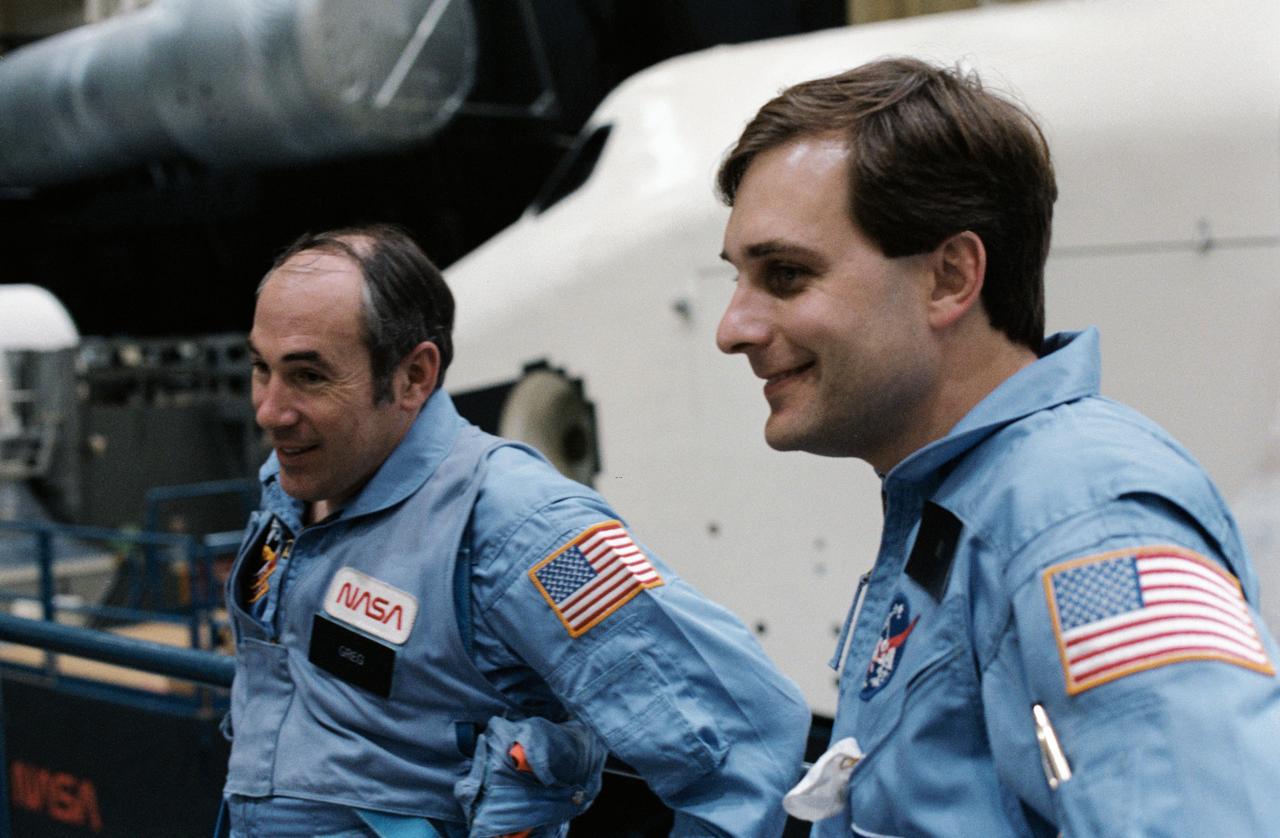
S85-28161 (1 March 1985) --- Astronauts Gregory Jarvis, left, and L. William Butterworth take a breather from training activities in Johnson Space Center’s (JSC) shuttle mock-up and integration laboratory. Jarvis and Butterworth, both Hughes Co. payload specialists, were originally assigned as payload specialists to STS-51D but were reassigned to STS-51L. Photo credit: NASA
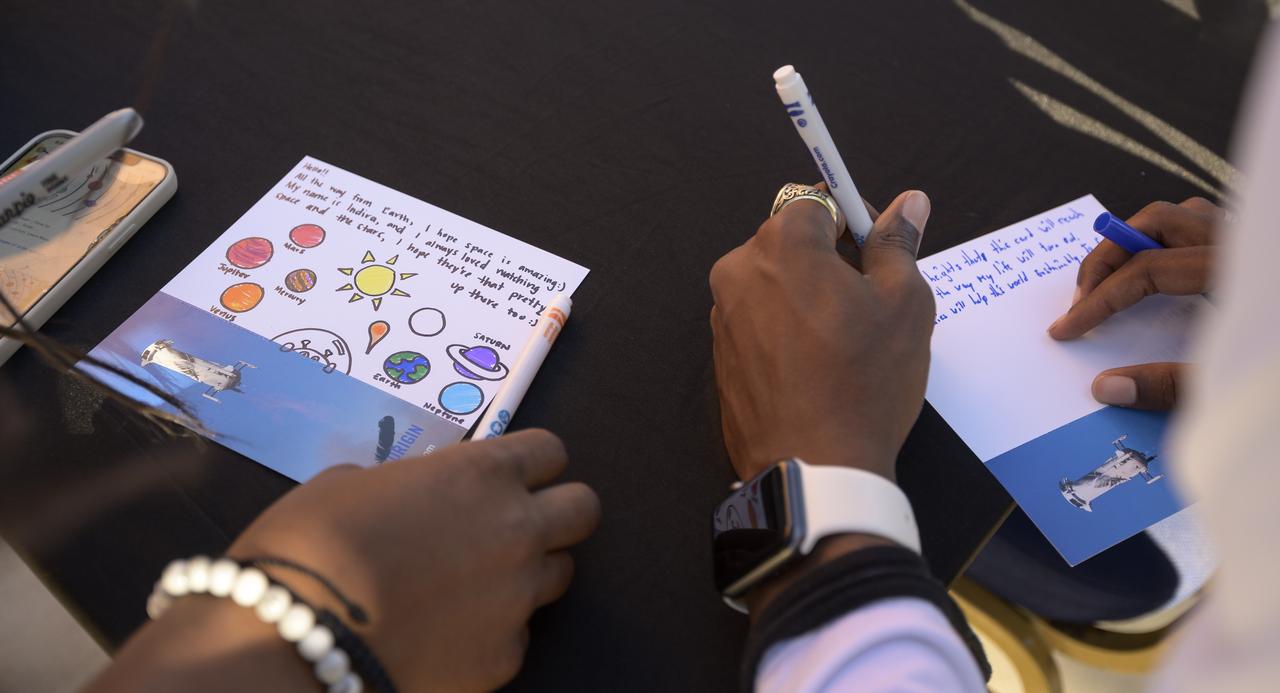
Children in attendance for the screening the NASA produced documentary “The Color of Space” draw on postcards that will be sent to space by Club for the Future on a Blue Origin New Shepard rocket at Howard University’s Cramton Auditorium in Washington, Saturday, June 18, 2022. Premiering on Juneteenth, the federal holiday commemorating the end of slavery in the United States, “The Color of Space” is an inspirational documentary that tells the stories of NASA’s Black astronauts determined to reach the stars. Photo Credit: (NASA/Bill Ingalls)
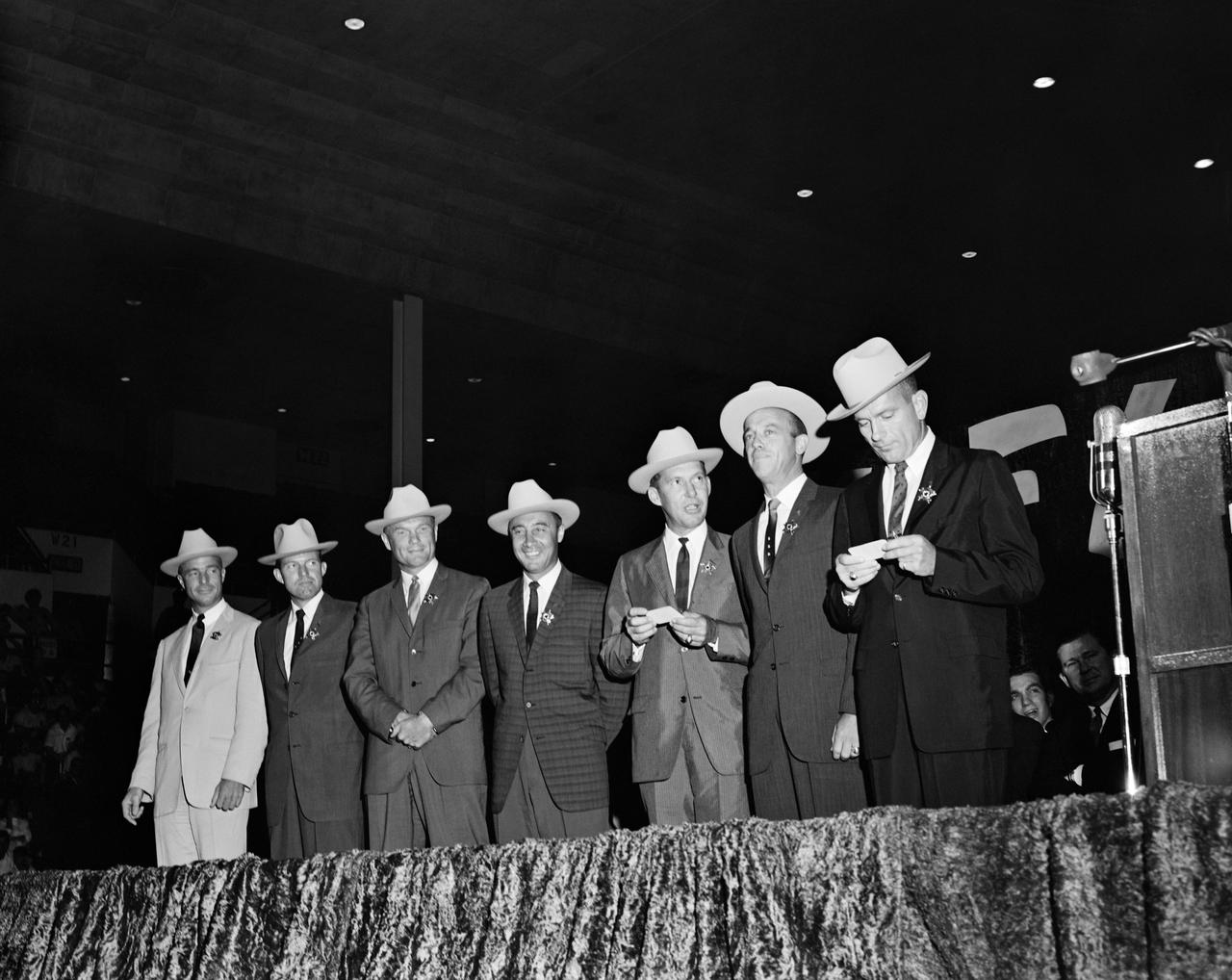
S62-03709 (4 July 1962) --- The original seven Mercury astronauts, each wearing new cowboy hats and a badge in the shape of a star, are pictured on stage at the Sam Houston Coliseum. A large crowd was on hand to welcome them to Houston, Texas. Left to right are astronauts M. Scott Carpenter, L. Gordon Cooper Jr., John H. Glenn Jr., Virgil I. Grissom, Walter M. Schirra Jr., Alan B. Shepard Jr., and Donald K. Slayton. Sen. John Tower (R.-Texas) is seen in far right background. Photo credit: NASA
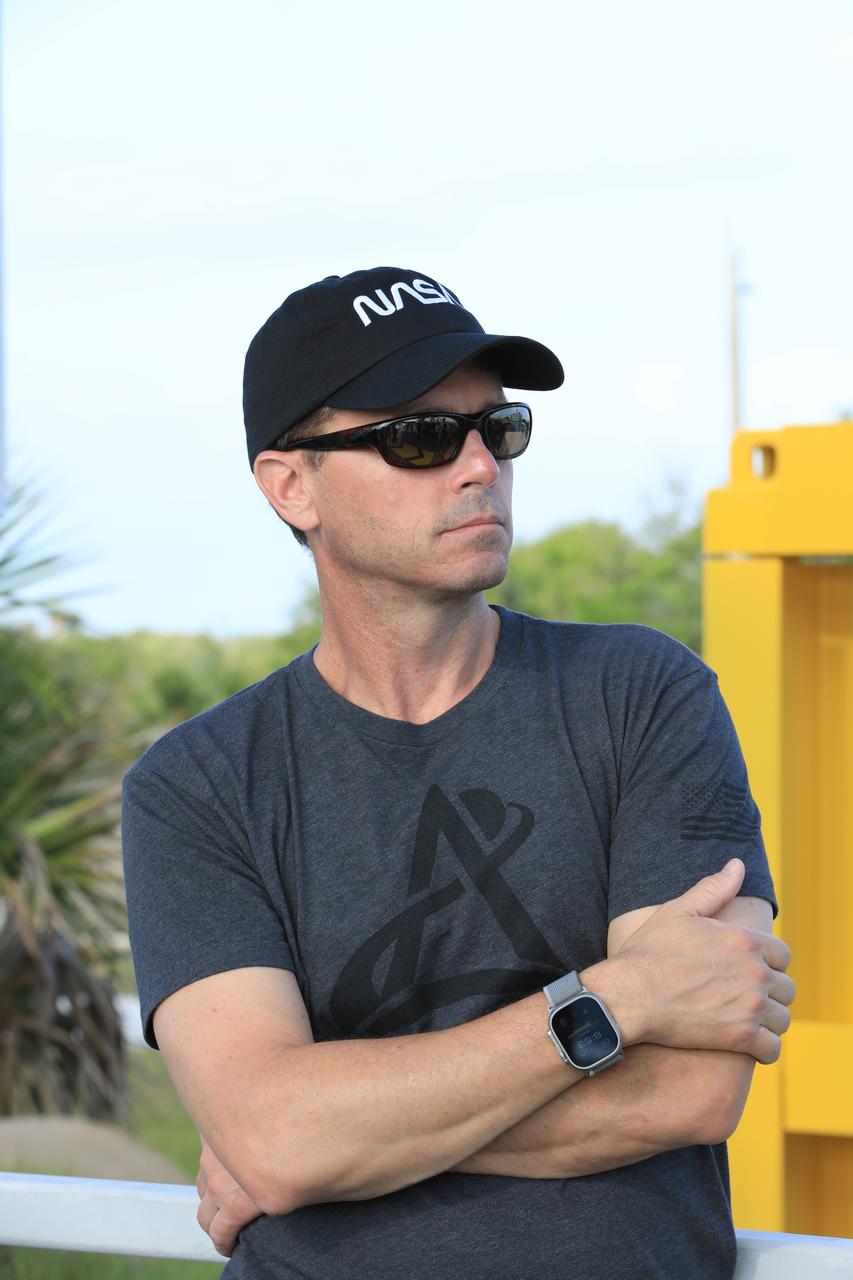
NASA astronaut Reid Wiseman participates in training with teams from NASA’s Exploration Ground Systems Program at Launch Complex 39B at the agency’s Kennedy Space Center in Florida on Tuesday, May 6, 2025. Wiseman and fellow Artemis II crew members and backup members trained with the mine-resistant ambush protected vehicles, or MRAPs, inside the launch pad area. Originally designed for military applications, the 45,000-pound MRAP offers a mobile bunker for astronauts and ground crews in the unlikely event they must get away from the launch pad quickly in an emergency.
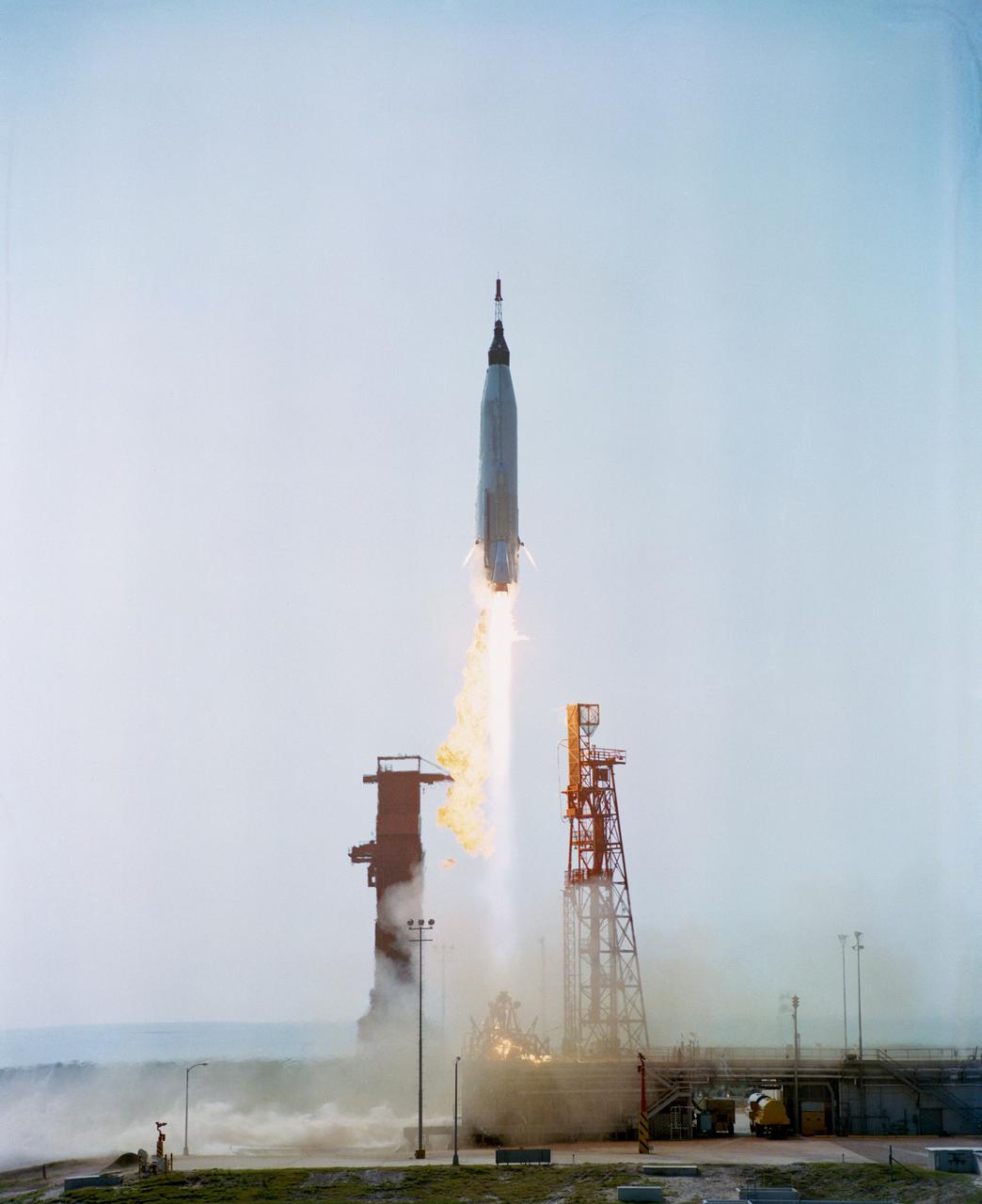
S63-07135 (16 May 1963) --- This was the Nation?s sixth manned orbital space flight, and the ?Faith 7? spacecraft was piloted by astronaut L. Gordon Cooper Jr. The launch was originally scheduled for May 14, 1963, but due to a malfunction in the radar tracking system at Bermuda. The launch was ?scrubbed? 12 minutes before countdown would have been completed. At midnight, May 15, 1963, countdown was resumed and liftoff occurred at 8:04 a.m. (EST), May 16, 1963. Astronaut L. Gordon Cooper Jr., completed a total of 22.9 orbits and spent 34 hours, 20 minutes in space flight. The launch and recovery was highly successful and was the last of the Mercury flights.
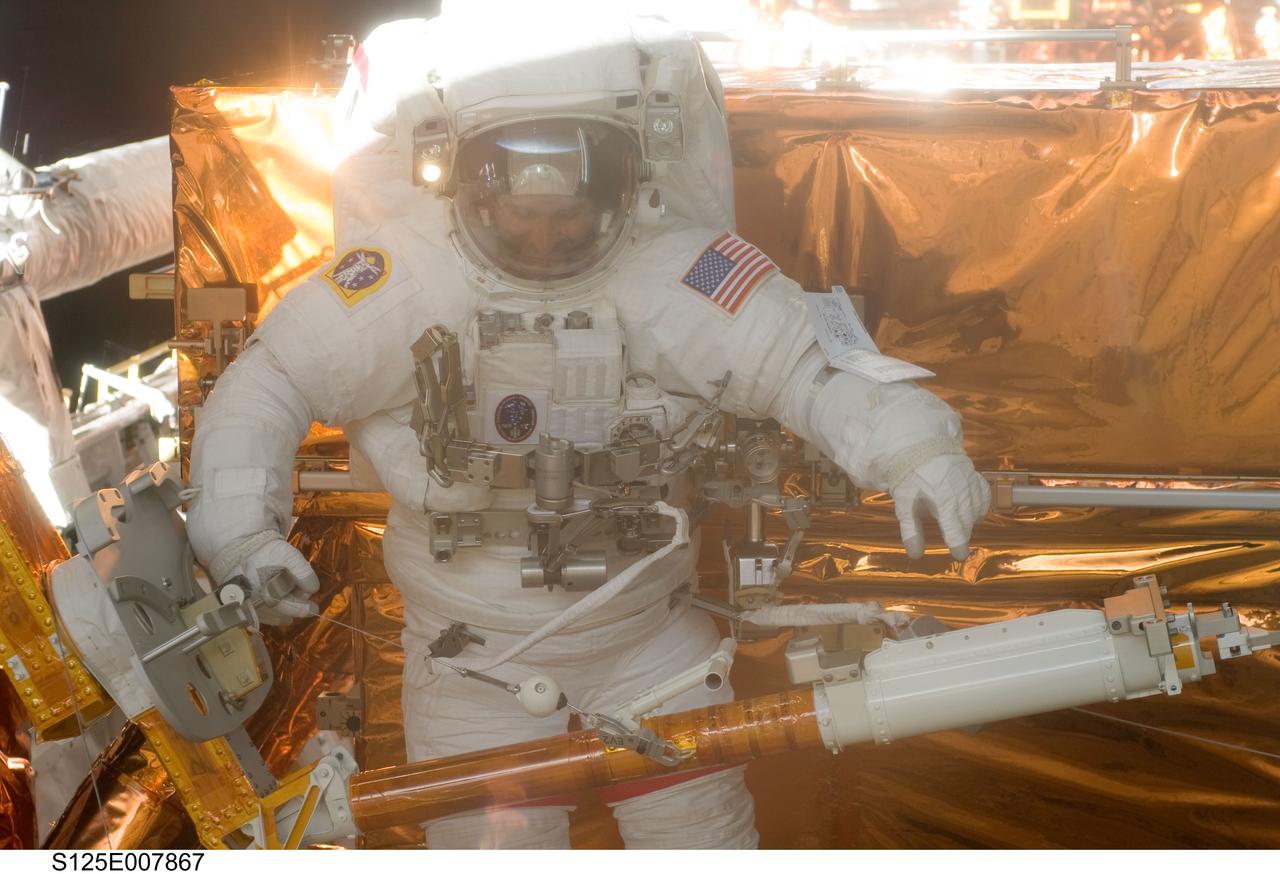
S125-E-007867 (16 May 2009) --- Astronaut John Grunsfeld, STS-125 mission specialist, participates in the mission?s third session of extravehicular activity (EVA) as work continues to refurbish and upgrade the Hubble Space Telescope. During the six-hour, 36-minute spacewalk, Grunsfeld and astronaut Andrew Feustel (out of frame), mission specialist, removed the Corrective Optics Space Telescope Axial Replacement and installed in its place the new Cosmic Origins Spectrograph. They also completed the Advanced Camera for Surveys electronic card replacement work, and completed part 2 of the ACS repair, installing a new electronics box and cable.
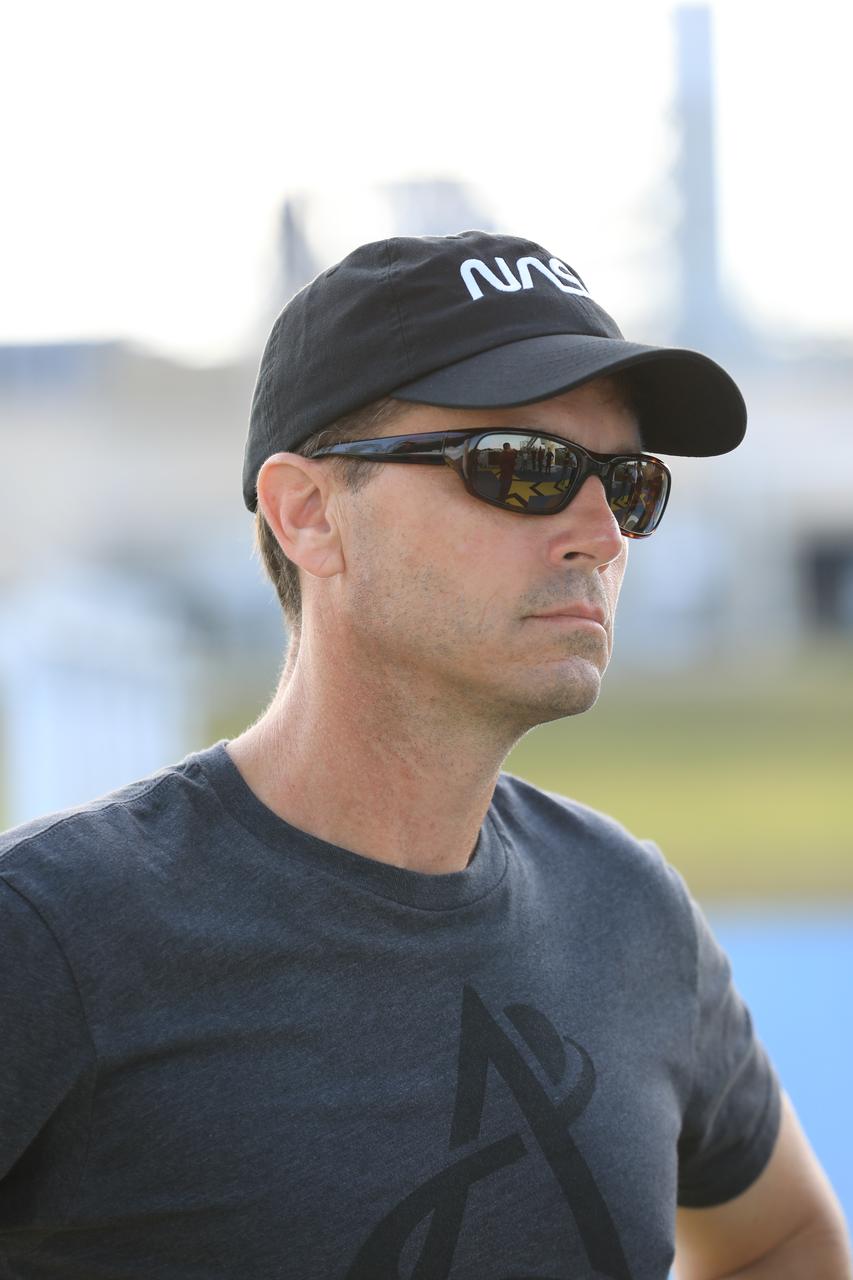
NASA astronaut Reid Wiseman participates in training with teams from NASA’s Exploration Ground Systems Program at Launch Complex 39B at the agency’s Kennedy Space Center in Florida on Tuesday, May 6, 2025. Wiseman and fellow Artemis II crew members and backup members trained with the mine-resistant ambush protected vehicles, or MRAPs, inside the launch pad area. Originally designed for military applications, the 45,000-pound MRAP offers a mobile bunker for astronauts and ground crews in the unlikely event they must get away from the launch pad quickly in an emergency.
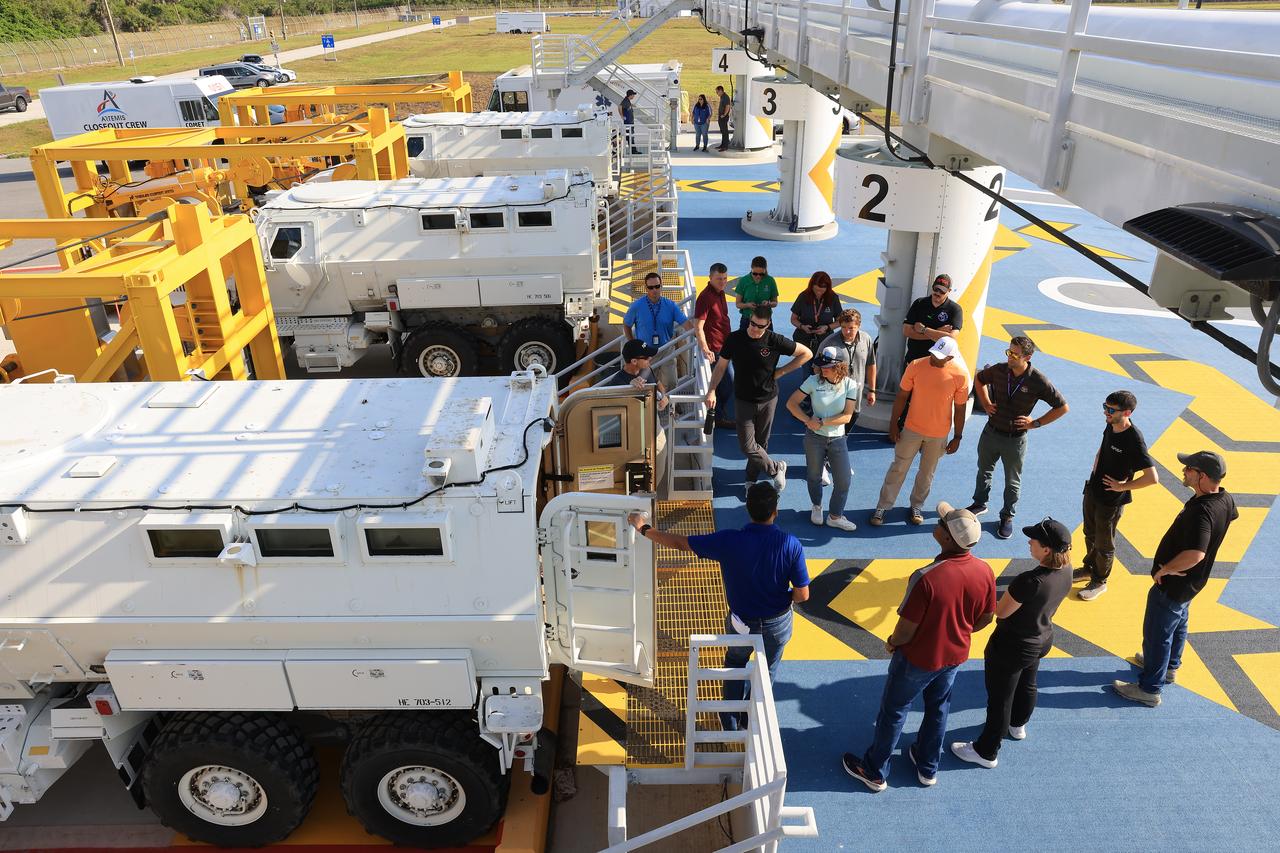
Crew members and backup members for NASA’s Artemis II mission and teams from the agency’s Exploration Ground Systems Program participate in emergency egress training at Launch Complex 39B at NASA’s Kennedy Space Center in Florida on Tuesday, May 6, 2025. Teams trained with the mine-resistant ambush protected vehicles, or MRAPs, inside the launch pad terminus area, where the emergency egress baskets carrying the astronauts and flight crew will arrive following their safe exit from the mobile launcher. Originally designed for military applications, the 45,000-pound MRAP offers a mobile bunker for astronauts and ground crews in the unlikely event they must get away from the launch pad quickly in an emergency.
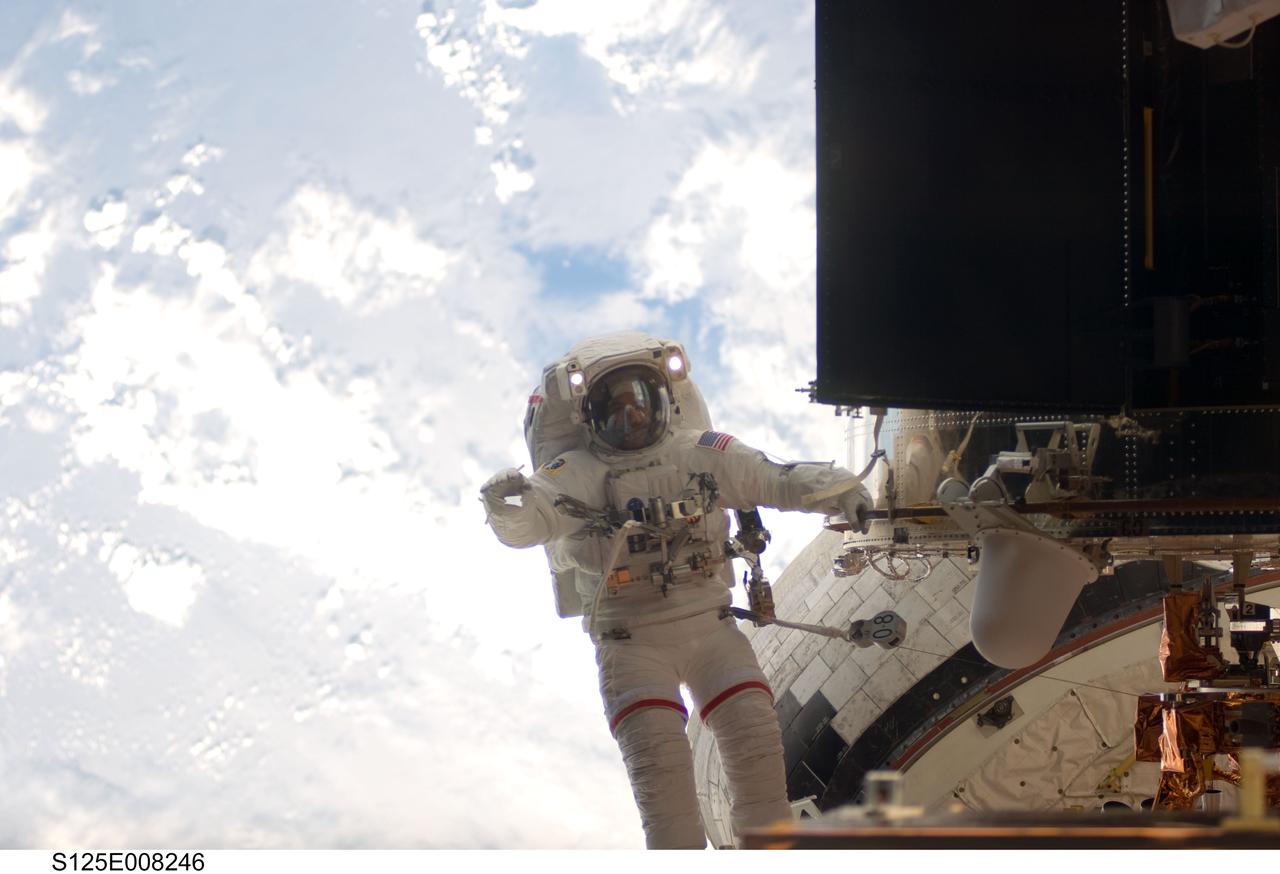
S125-E-008246 (16 May 2009) --- Astronaut John Grunsfeld, STS-125 mission specialist, participates in the mission?s third session of extravehicular activity (EVA) as work continues to refurbish and upgrade the Hubble Space Telescope. During the six-hour, 36-minute spacewalk, Grunsfeld and astronaut Andrew Feustel (out of frame), mission specialist, removed the Corrective Optics Space Telescope Axial Replacement and installed in its place the new Cosmic Origins Spectrograph. They also completed the Advanced Camera for Surveys electronic card replacement work, and completed part 2 of the ACS repair, installing a new electronics box and cable.
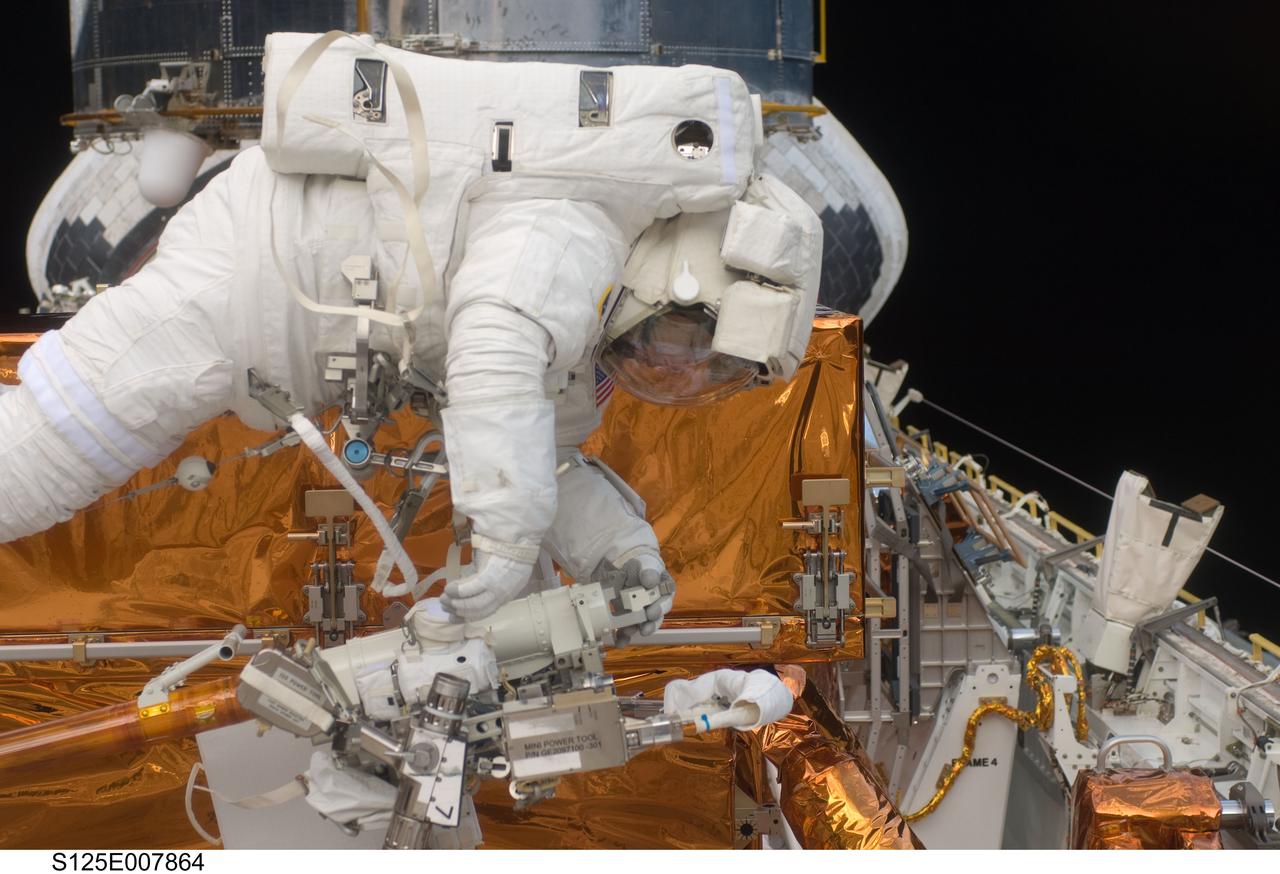
S125-E-007864 (16 May 2009) --- With the Hubble Space Telescope in the background, astronaut Andrew Feustel, STS-125 mission specialist, is seen here working during the mission?s third extravehicular activity (EVA). Feustel and astronaut John Grunsfeld (out of frame), mission specialist, removed the Corrective Optics Space Telescope Axial Replacement and installed in its place the new Cosmic Origins Spectrograph. They also completed the Advanced Camera for Surveys electronic card replacement work, and completed part 2 of the ACS repair, installing a new electronics box and cable.
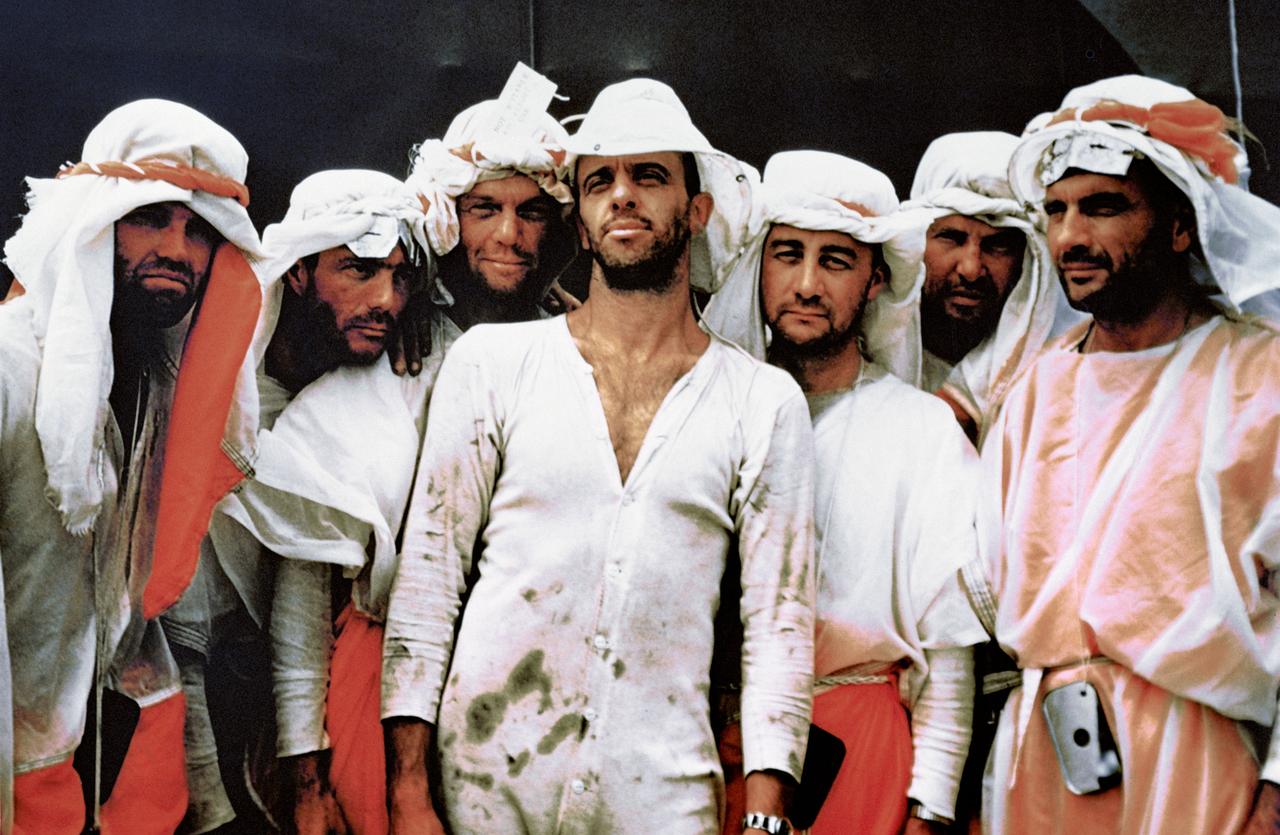
S88-31375 (1960) --- Although more easily recognized in their spacesuits, these seven men are actually NASA astronauts participating in a U.S. Air Force survival school at Stead Air Force Base in Nevada. The original seven Mercury astronauts are, left to right, L. Gordon Cooper Jr.; M. Scott Carpenter; John H. Glenn Jr.; Alan B. Shepard Jr.; Virgil I. Grissom; Walter M. Schirra Jr. and Donald K. Slayton. Portions of their clothing have been fashioned from parachute material. Photo credit: NASA
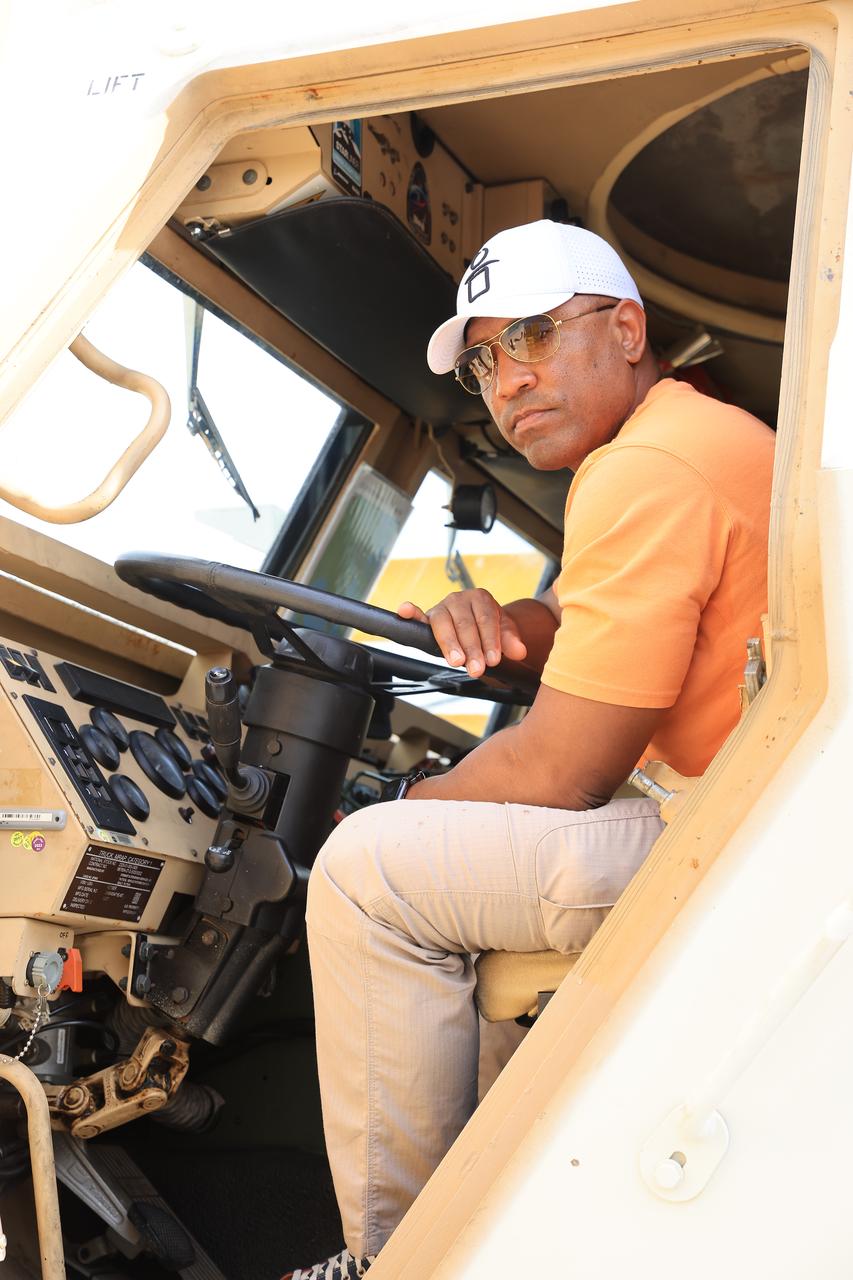
NASA astronaut Victor Glover participates in emergency egress training with teams from NASA’s Exploration Ground Systems Program at Launch Complex 39B at the agency’s Kennedy Space Center in Florida on Tuesday, May 6, 2025. Glover and fellow Artemis II crew members and backup members trained with the mine-resistant ambush protected vehicles, or MRAPs, inside the launch pad area. Originally designed for military applications, the 45,000-pound MRAP offers a mobile bunker for astronauts and ground crews in the unlikely event they must get away from the launch pad quickly in an emergency.