
Astronaut Alan B. Shepard, one of the original seven astronauts for Mercury Project selected by NASA on April 27, 1959. The Freedom 7 spacecraft boosted by Mercury-Redstone vehicle for the MR-3 mission made the first marned suborbital flight and Astronaut Shepard became the first American in space.

Astronaut Virgil I. "Gus" Grissom, one of the original seven astronauts for Mercury Project selected by NASA on April 27, 1959. The MR-4 mission, boosted by the Mercury-Redstone vehicle, made the second marned suborbital flight. The capsule, Liberty Bell 7, sank into the sea after the splashdown.

Astronaut Walter M. "Wally" Schirra, one of the original seven astronauts for Mercury Project selected by NASA on April 27, 1959. The MA-8 (Mercury-Atlas) mission with Sigma 7 spacecraft was the third marned orbital flight by the United States, and made the six orbits in 9-1/4 hours.

Astronaut L. Gordon Cooper, Jr., one of the original seven astronauts for Mercury Project selected by NASA on April 27, 1959. The MA-9 mission, boosted by the Mercury-Atlas launch vehicle, was the last flight of the Mercury Project. The Faith 7 spacecraft orbited the Earth 22 times in 1-1/2 days.
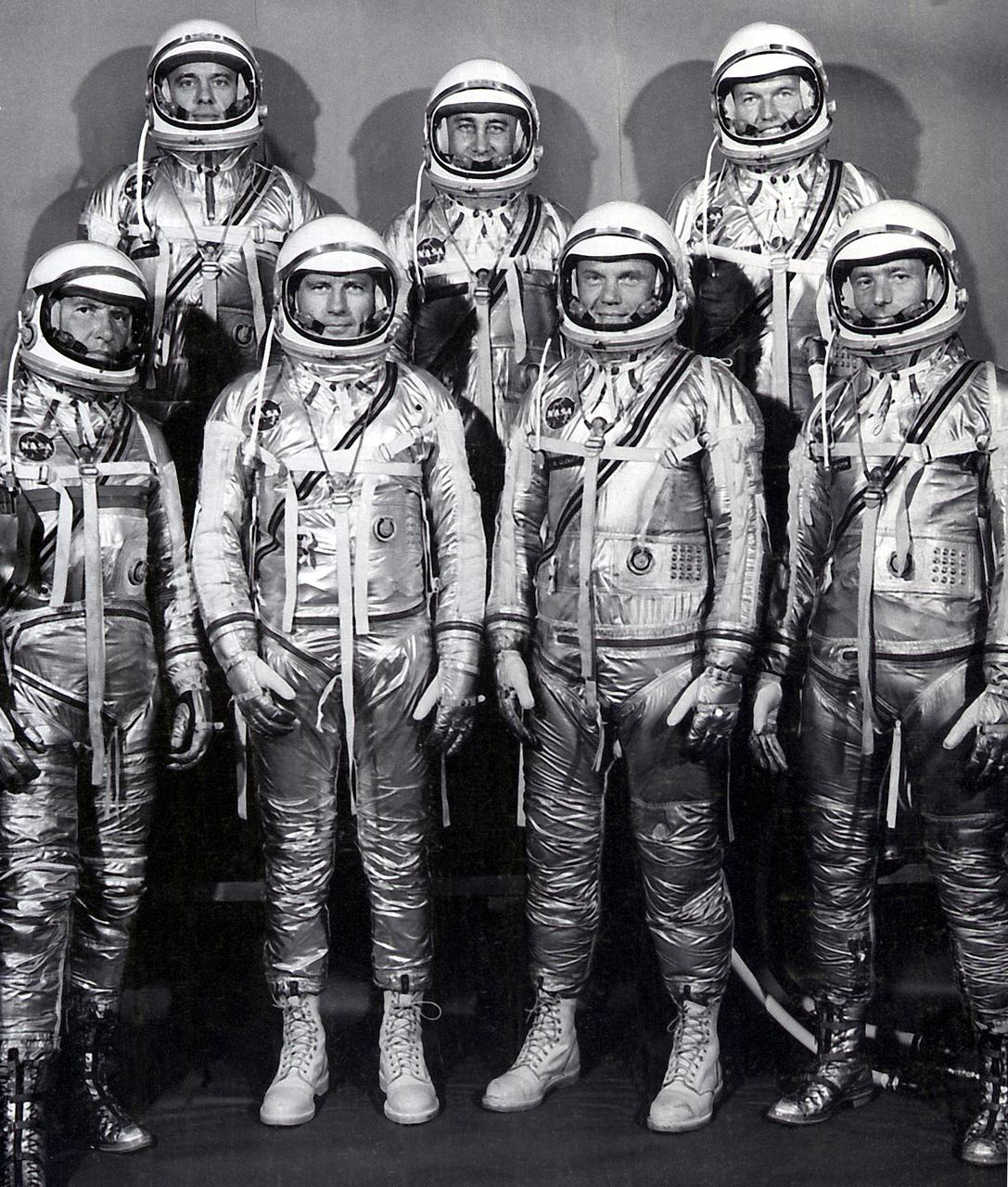
The group portrait of the original seven astronauts for the Mercury Project. NASA selected its first seven astronauts on April 27, 1959. Left to right at front: Walter M. Wally Schirra, Donald K. Deke Slayton, John H. Glenn, Jr., and Scott Carpenter. Left to right at rear: Alan B. Shepard, Virgil I. Gus Grissom, and L. Gordon Cooper, Jr.

The original seven astronauts for the Mercury Project pose in front of an Air Force Jet. From left to right: Scott Carpenter, L. Gordon Cooper, John H. Glenn, Virgil I. Gus Grissom, Walter M. Wally Schirra, Alan B. Shepard, and Donald K. Deke Slayton.
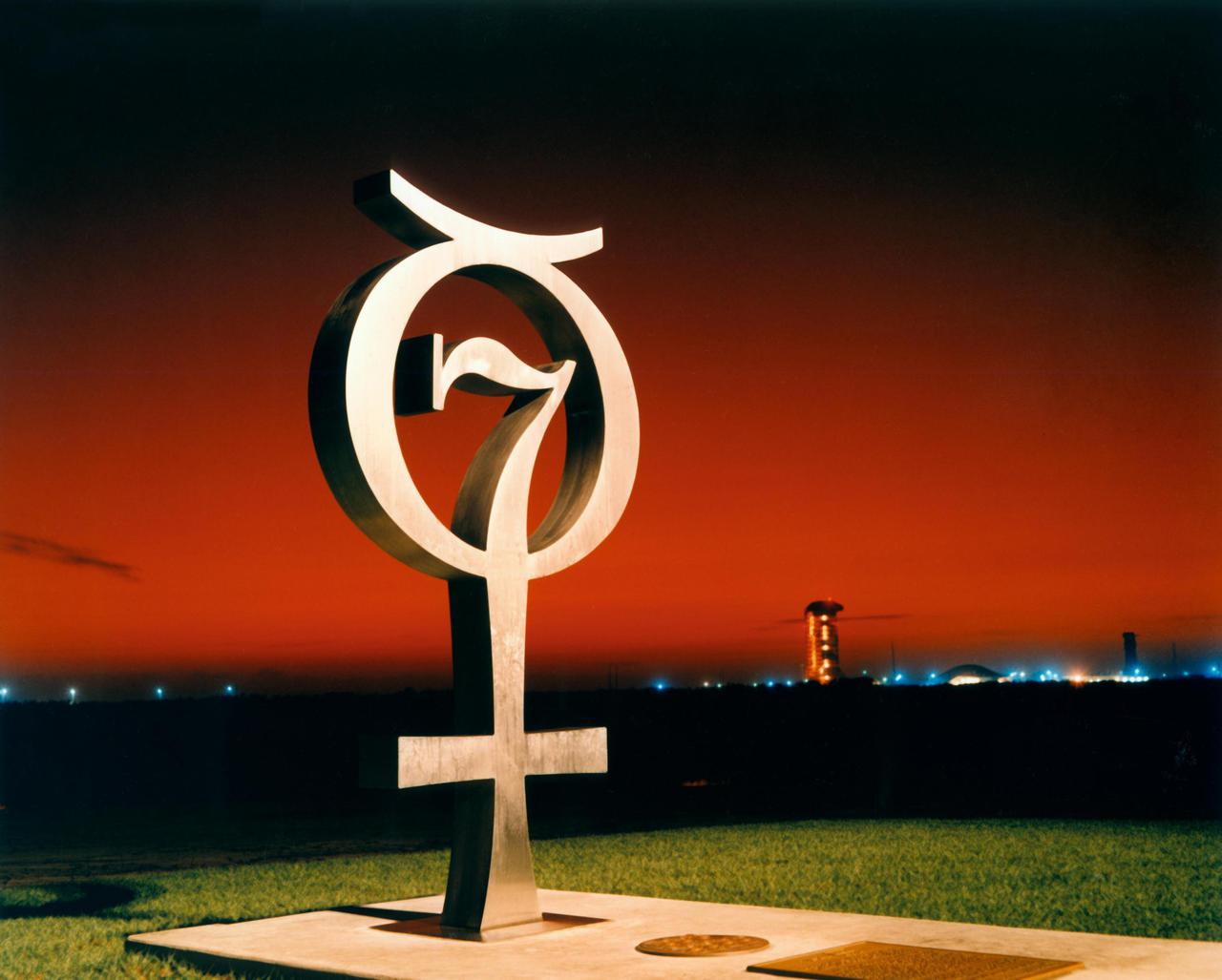
KENNEDY SPACE CENTER, FLA. -- The Mercury monument, honoring the original seven astronauts, is shown here at sunrise at Pad 14.
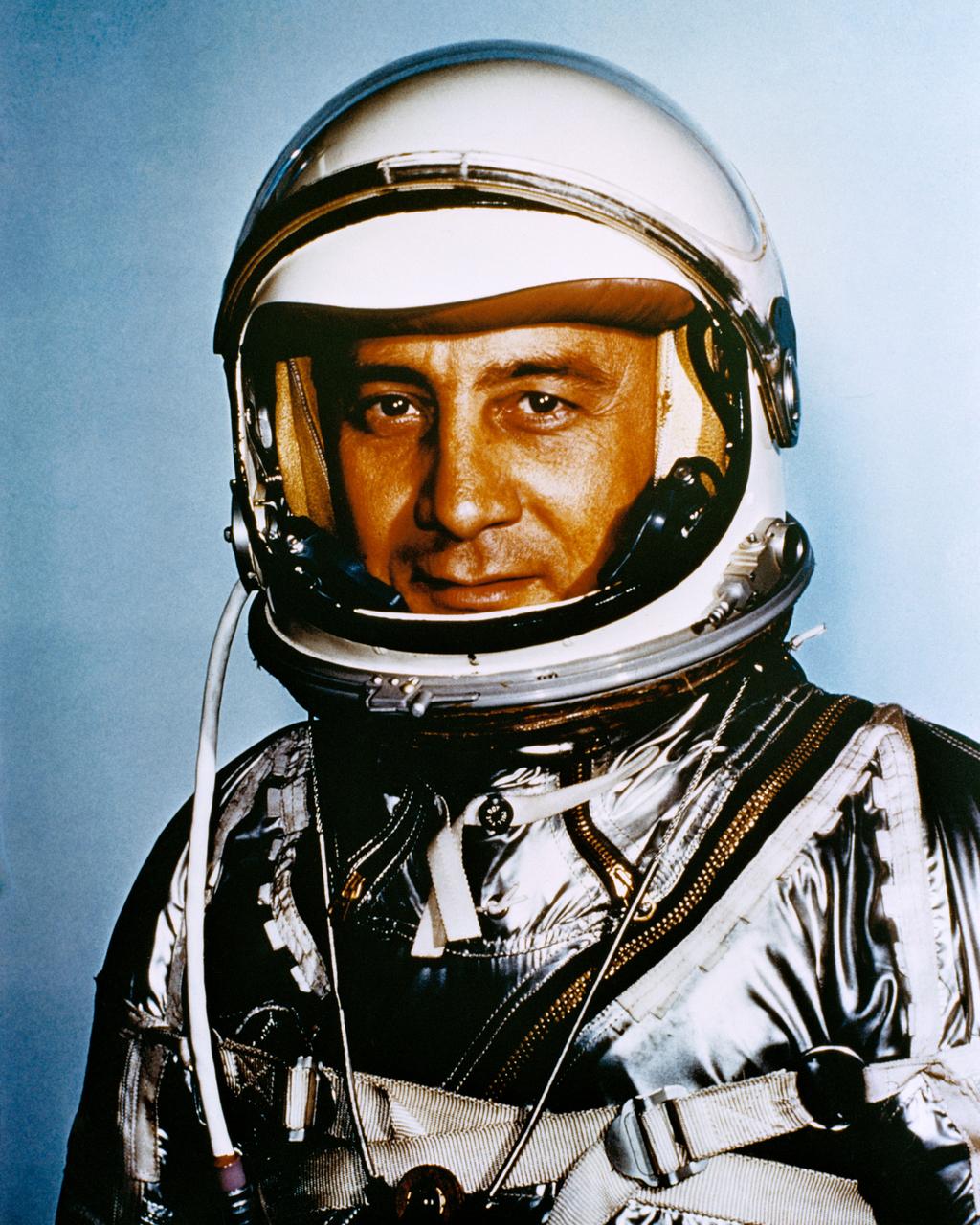
S87-40119 (1961) --- Astronaut Virgil I. Grissom. (NOTE: Astronaut "Gus" Grissom, one of the original seven astronauts, died January 27, 1967, at NASA?s John F. Kennedy Space Center (KSC), Cape Canaveral Florida, in the Apollo 1 spacecraft fire.)
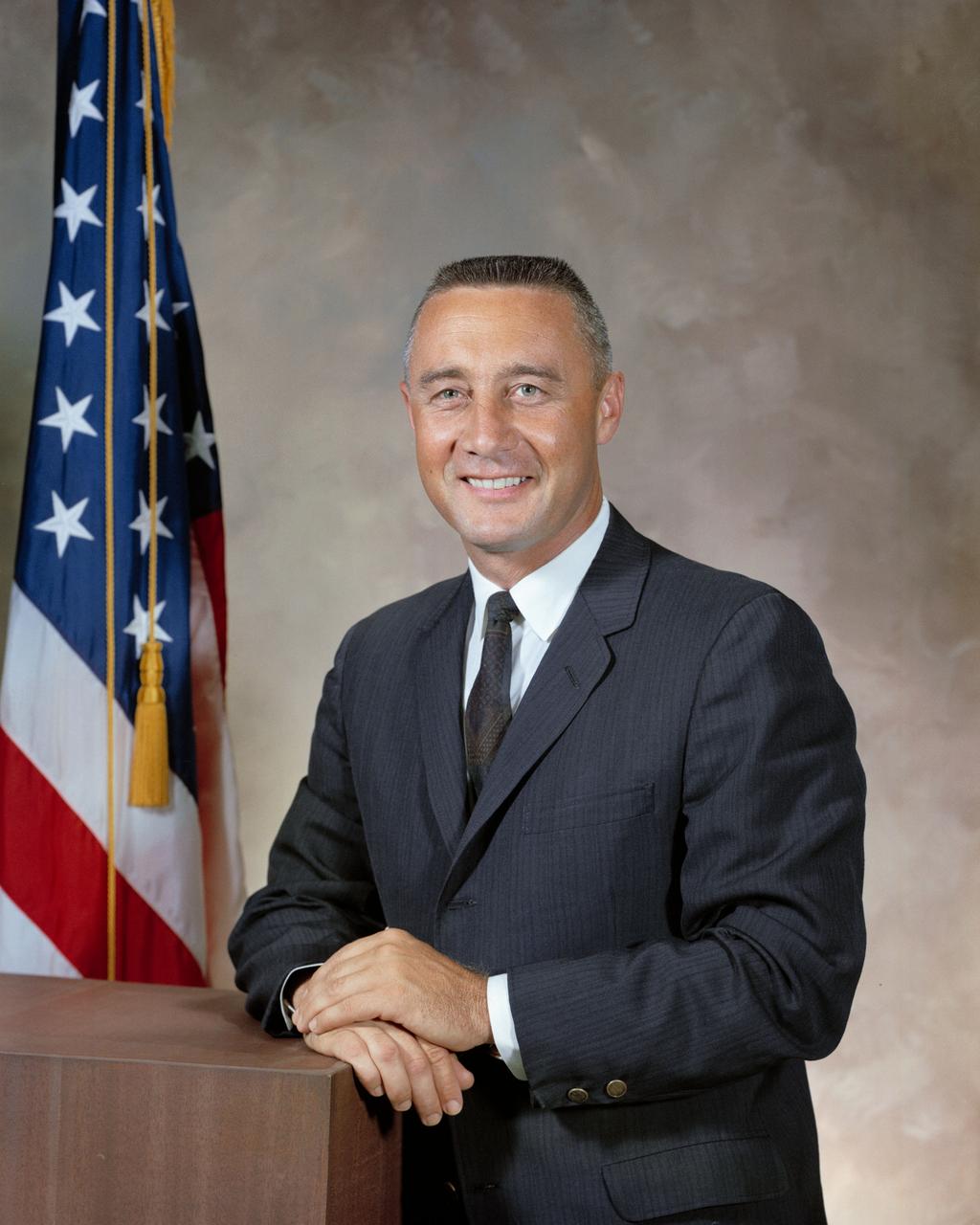
S64-32343 (10 Sept. 1964) --- Astronaut Virgil I. Grissom Editor's Note: Grissom, one of the Original Seven or Mercury astronauts, lost his life in the Apollo 204 fire at Cape Kennedy on Jan. 27, 1967, along with astronauts Edward H. White II and Roger B. Chaffee.

Astronaut John H. Glenn, one of the original seven astronauts for Mercury Project selected by NASA on April 27, 1959. The MA-6 mission, boosted by the Mercury-Atlas vehicle, was the first manned orbital launch by the United States, and carried Astronaut Glenn aboard the Friendship 7 spacecraft to orbit the Earth.
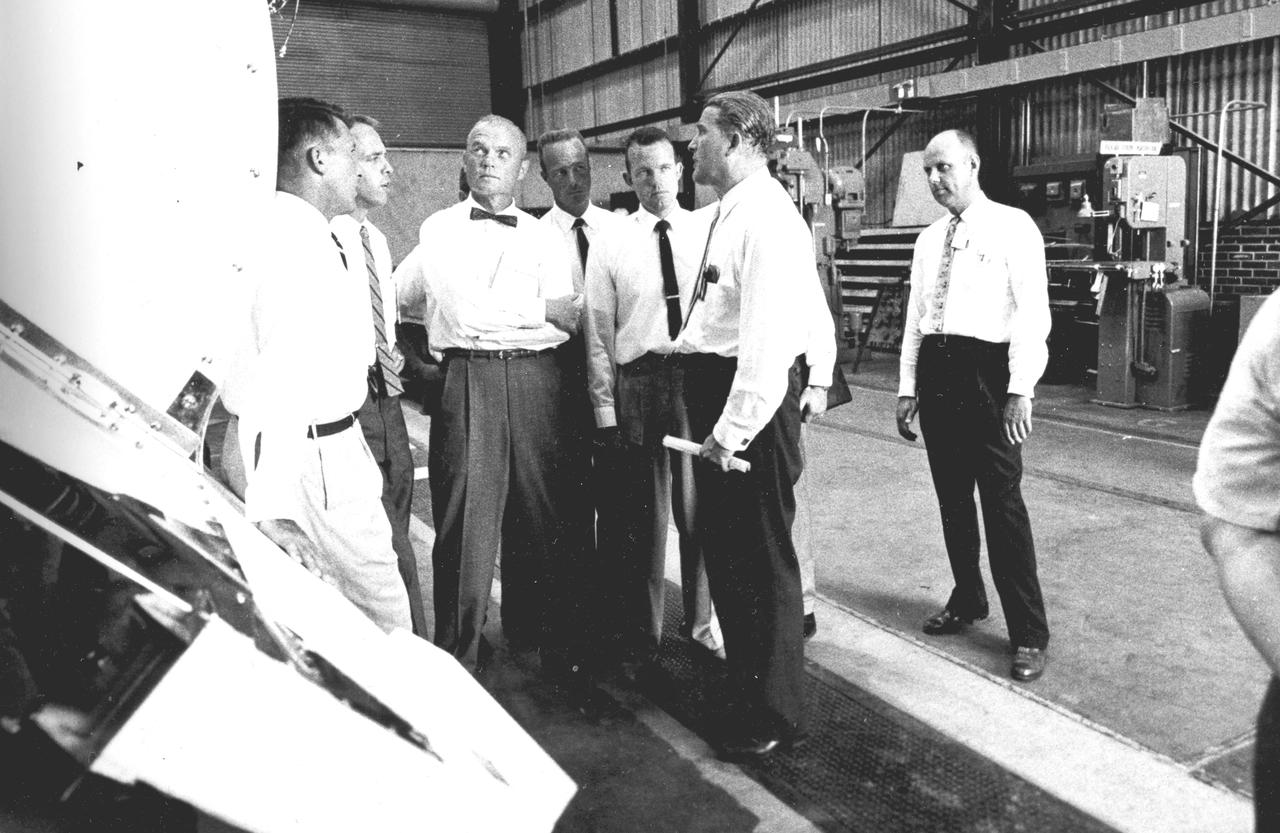
Five of the seven original astronauts are seen with Dr. von Braun inspecting the Mercury-Redstone hardware in the Fabrication Laboratory of Army Ballistic Missile Agency (ABMA) in 1959. Left to right: Astronauts Walter Schirra, Alan Shepard, John Glenn, Scott Carpenter, Gordon Cooper, and Dr. von Braun.
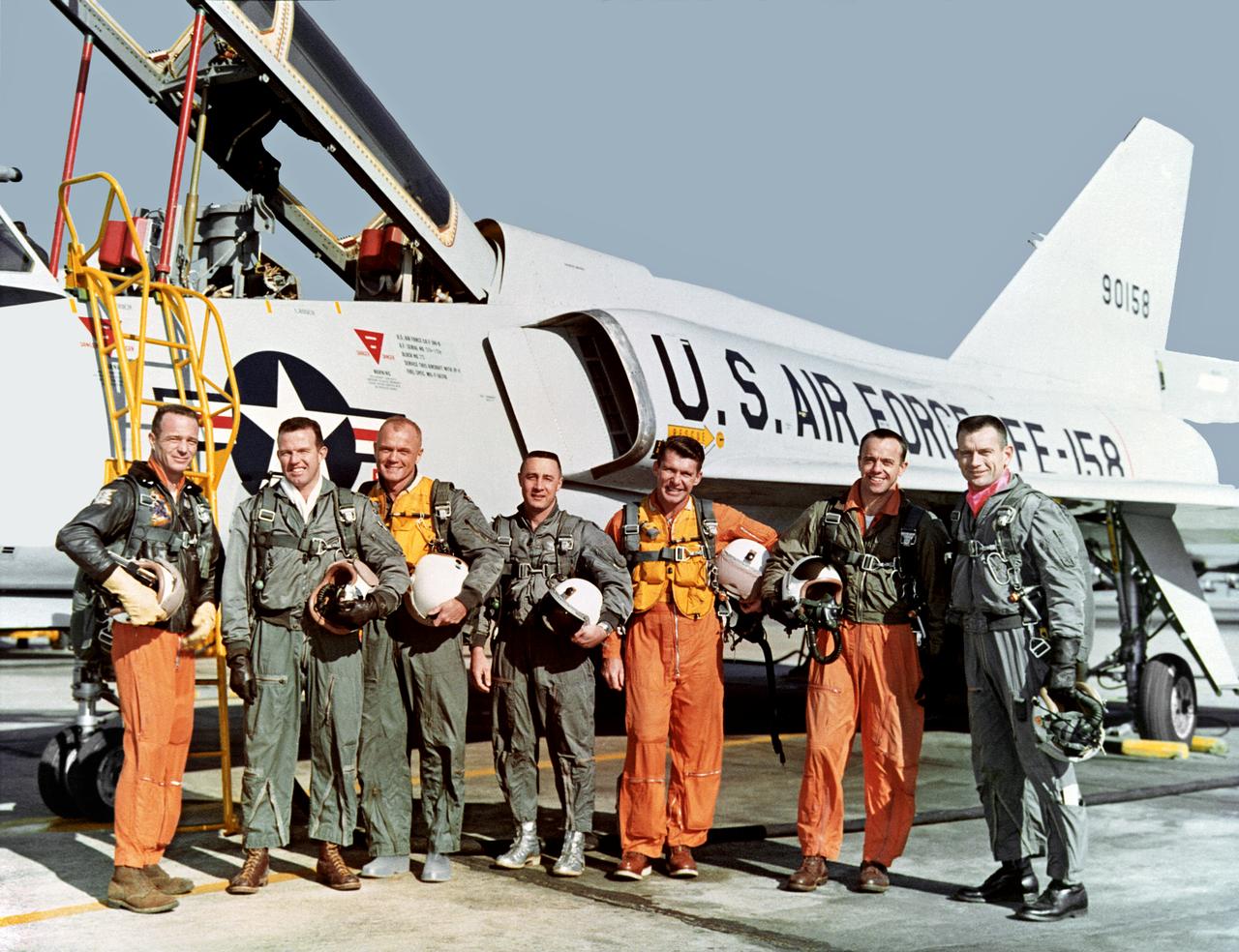
The original seven Mercury astronauts during training at NASA Langley Research Center Project Mercury. The original seven astronauts trained at NASA Langley Research Center. Chosen from among hundreds of applicants, the seven men were all test pilots. Standing in front of the U.S. Air Force Convair F-106B aircraft, the astronauts are, from left, Lt. M. Scott Carpenter, Capt. Gordon Cooper, Col. John H. Glenn Jr., Capt. Virgil "Gus" Grissom, Lt. Comdr. Walter Schirra, Lt. Comdr. Alan B. Shepard Jr. and Capt. Donald K. "Deke" Slayton. While familiarizing the astronauts with the Mercury set-up, Langley employees helped them to specialize in the technical areas crucial to the overall success of Project Mercury. Langley people also guided and monitored the astronauts activities through the many spaceflight simulators and other training devices built at the Center expressly for the manned space program. In less than three years, Project Mercury proved that men could be sent into space and returned safely to Earth, setting the stage for the longer duration Gemini flights and the Apollo lunar landings. This photograph was originally taken on 01/20/1961 and is published in Spaceflight Revolution NASA Langley Research Center from Sputnik to Apollo, NASA SP-4308, by James R. Hansen, 1995, page 40.
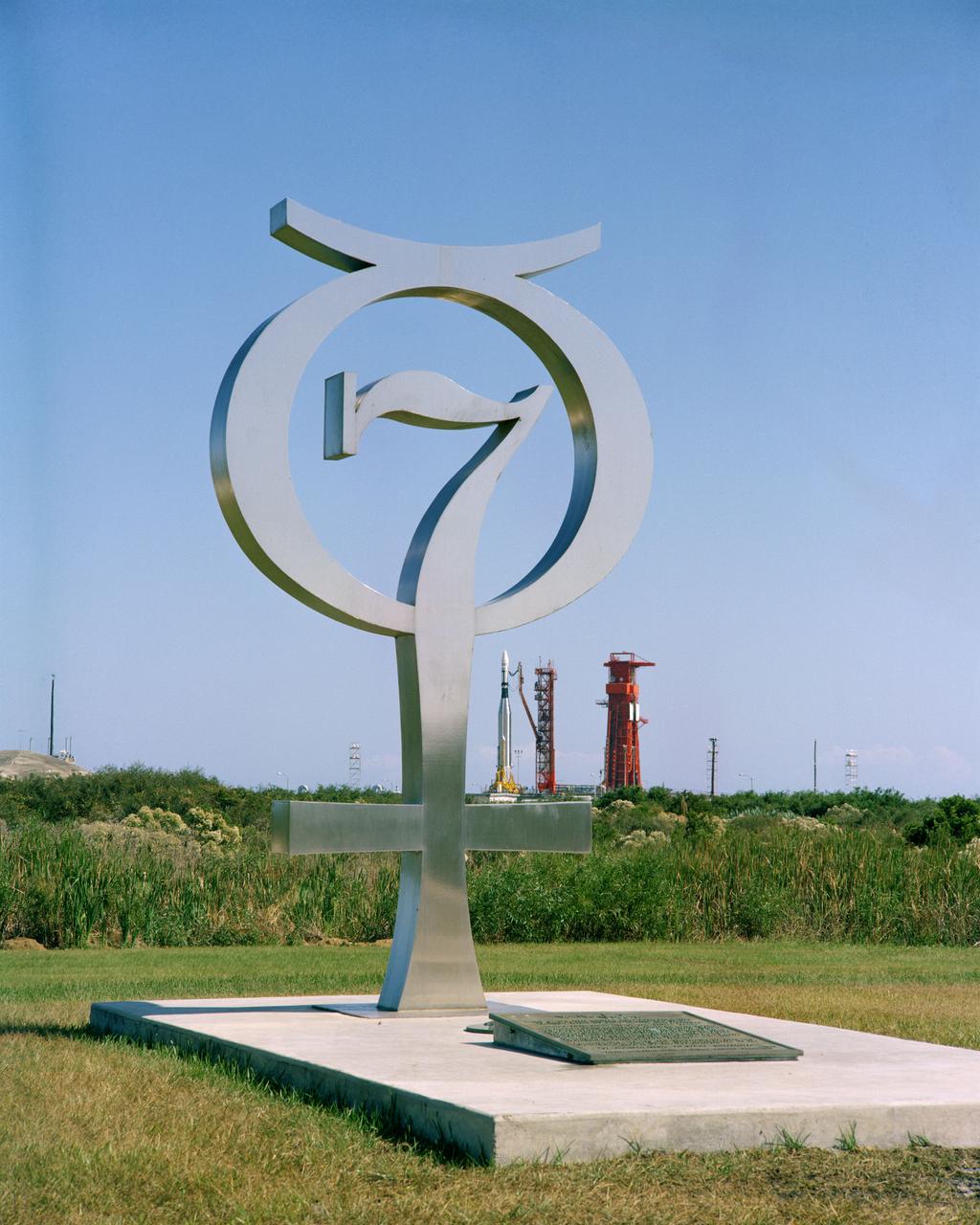
S66-59963 (9 Nov. 1966) --- Monument at Pad 14 honoring Project Mercury. The Arabic number seven represents the seven original astronauts. The other figure is the astronomical symbol of the Planet Mercury. In background is the Gemini-12 Agena Target Docking Vehicle atop its Atlas launch vehicle at Cape Kennedy, Florida. Photo credit: NASA
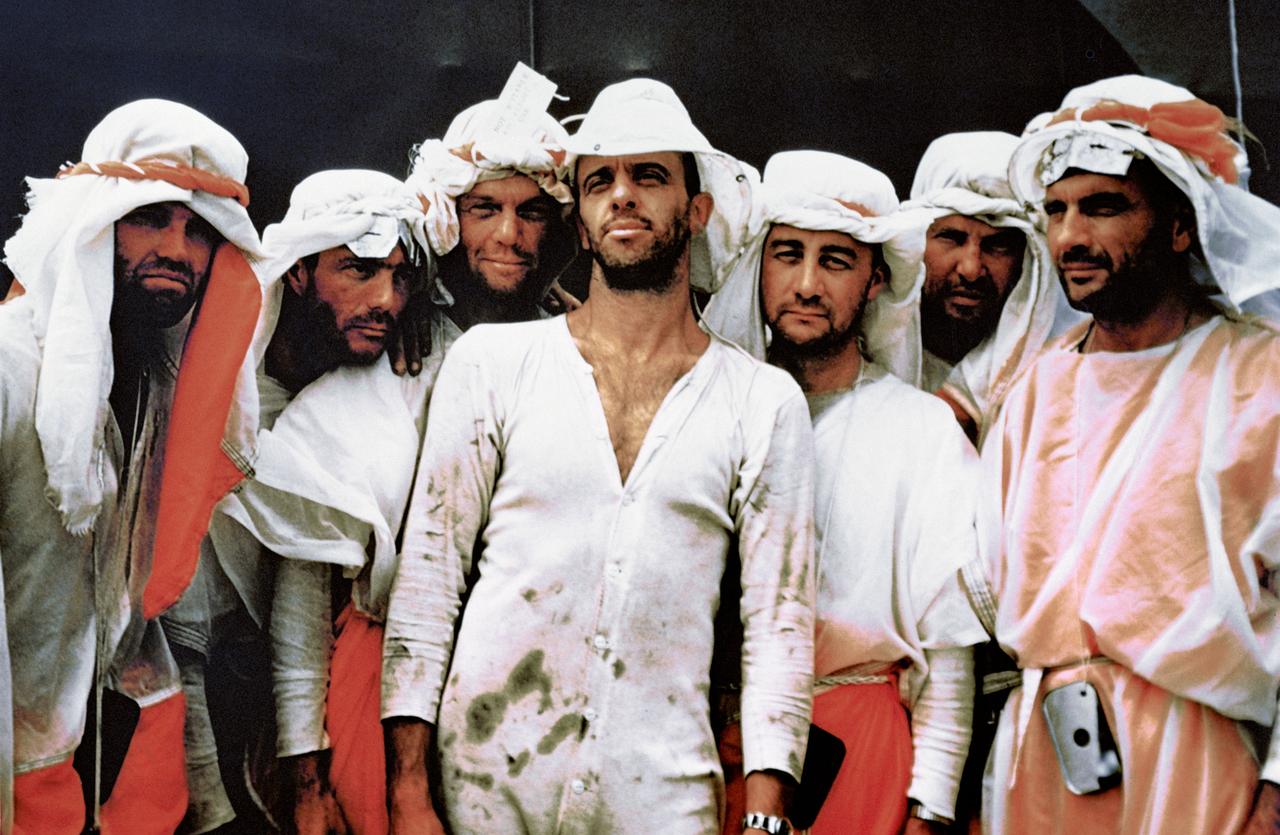
S88-31375 (1960) --- Although more easily recognized in their spacesuits, these seven men are actually NASA astronauts participating in a U.S. Air Force survival school at Stead Air Force Base in Nevada. The original seven Mercury astronauts are, left to right, L. Gordon Cooper Jr.; M. Scott Carpenter; John H. Glenn Jr.; Alan B. Shepard Jr.; Virgil I. Grissom; Walter M. Schirra Jr. and Donald K. Slayton. Portions of their clothing have been fashioned from parachute material. Photo credit: NASA
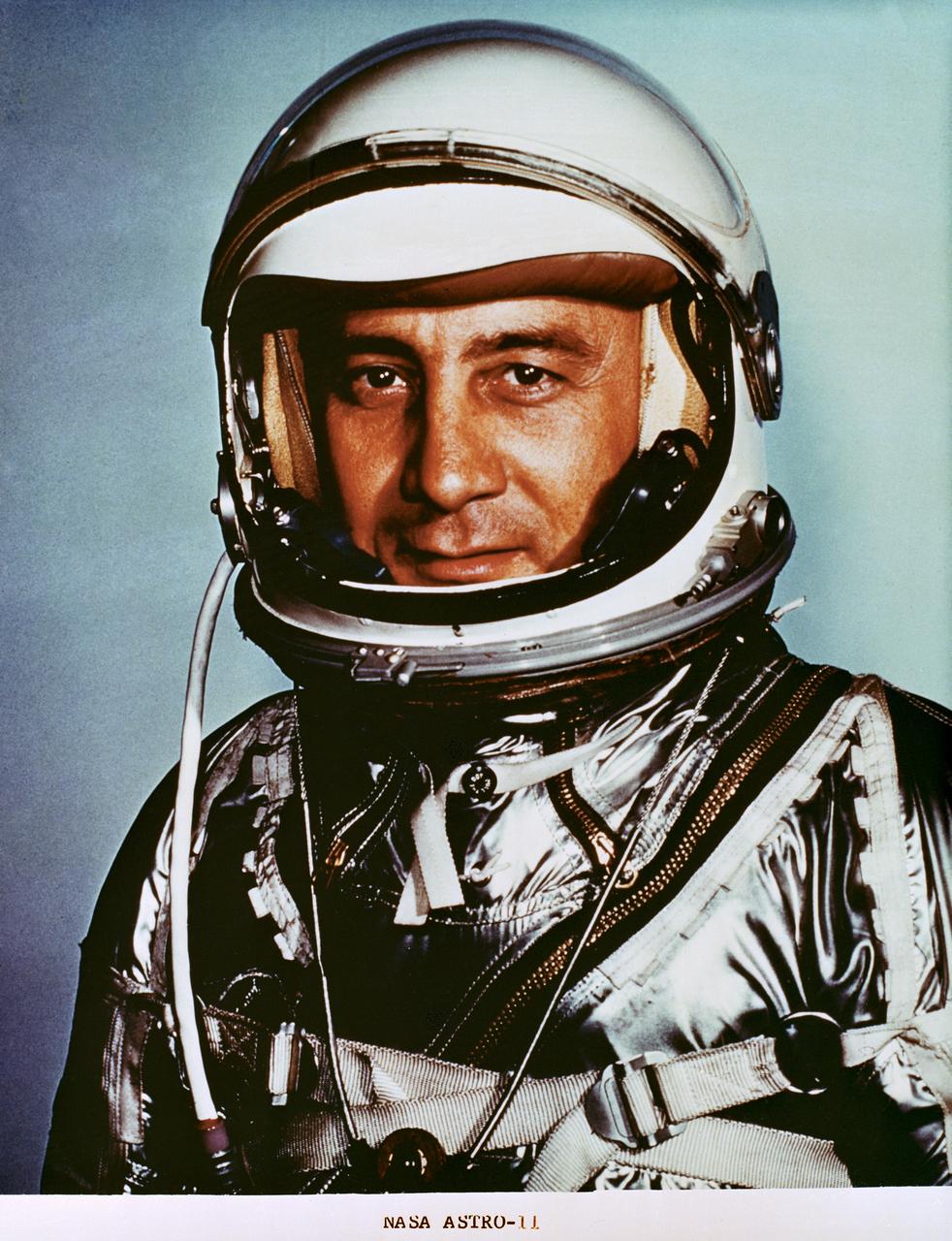
S88-55873 (1961) --- Astronaut Virgil I. (Gus) Grissom, pilot of the Mercury-Redstone 4 (MR-4) spaceflight. (NOTE: Astronaut "Gus" Grissom, one of the original seven astronauts, died Jan. 27, 1967, at NASA?s John F. Kennedy Space Center (KSC), Cape Canaveral Florida, in the Apollo 1 spacecraft fire.) Photo credit: NASA
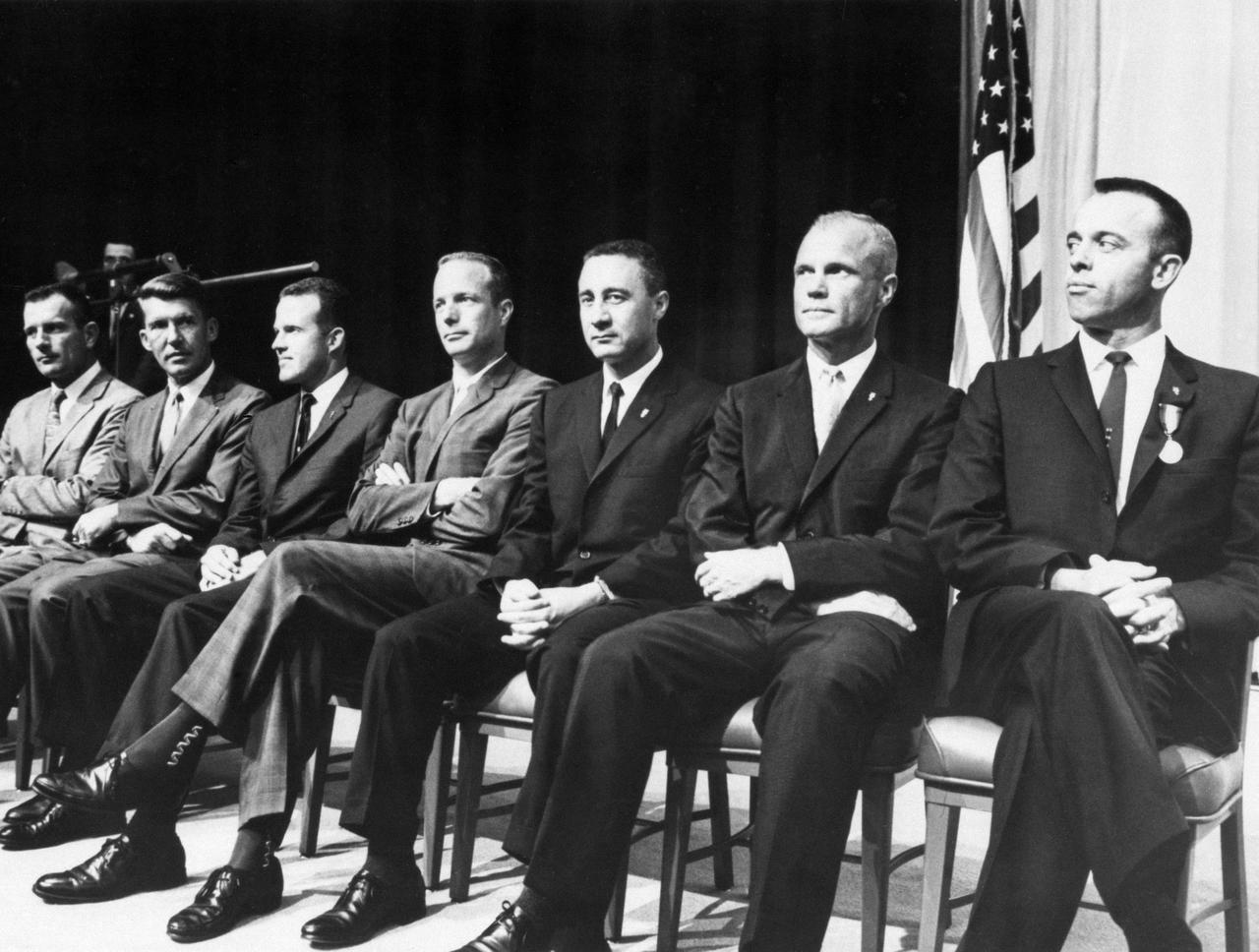
S61-02357 (8 May 1961) --- The original seven Mercury astronauts at the State Department Auditorium on May 8, 1961. The astronauts are (left to right) Donald K. Slayton, Walter M. Schirra, Jr., L. Gordon Cooper, Jr., M. Scott Carpenter, Virgil I. Grissom, John H. Glenn, Jr. and Alan B. Shepard, Jr. Earlier President John F. Kennedy had presented astronaut Shepard with the NASA Distinguished Service Medal (note it on his lapel) in the White House Rose Garden.
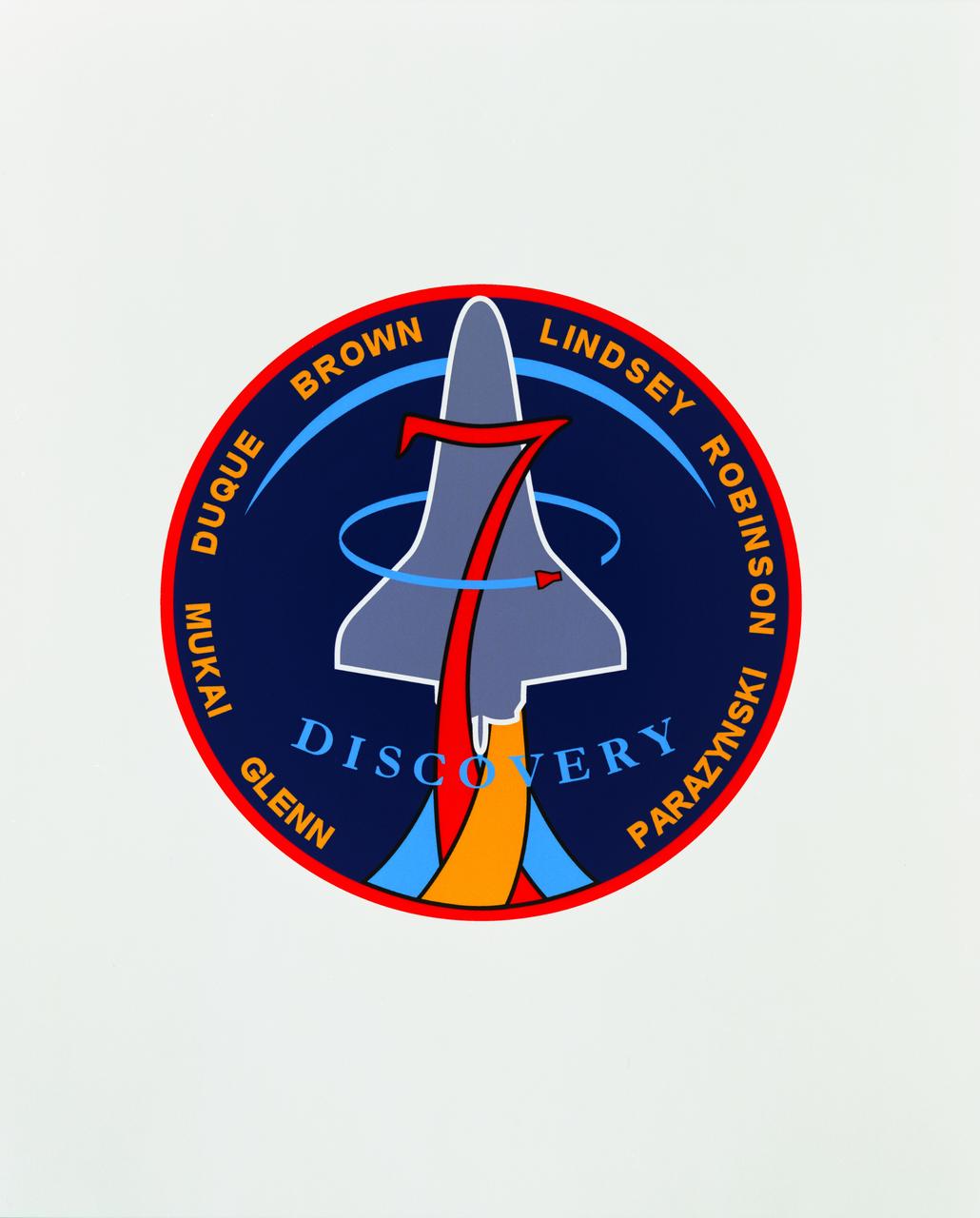
The STS-95 patch, designed by the crew, is intended to reflect the scientific, engineering, and historic elements of the mission. The Space Shuttle Discovery is shown rising over the sunlit Earth limb, representing the global benefits of the mission science and the solar science objectives of the Spartan Satellite. The bold number '7' signifies the seven members of Discovery's crew and also represents a historical link to the original seven Mercury astronauts. The STS-95 crew member John Glenn's first orbital flight is represented by the Friendship 7 capsule. The rocket plumes symbolize the three major fields of science represented by the mission payloads: microgravity material science, medical research for humans on Earth and in space, and astronomy.
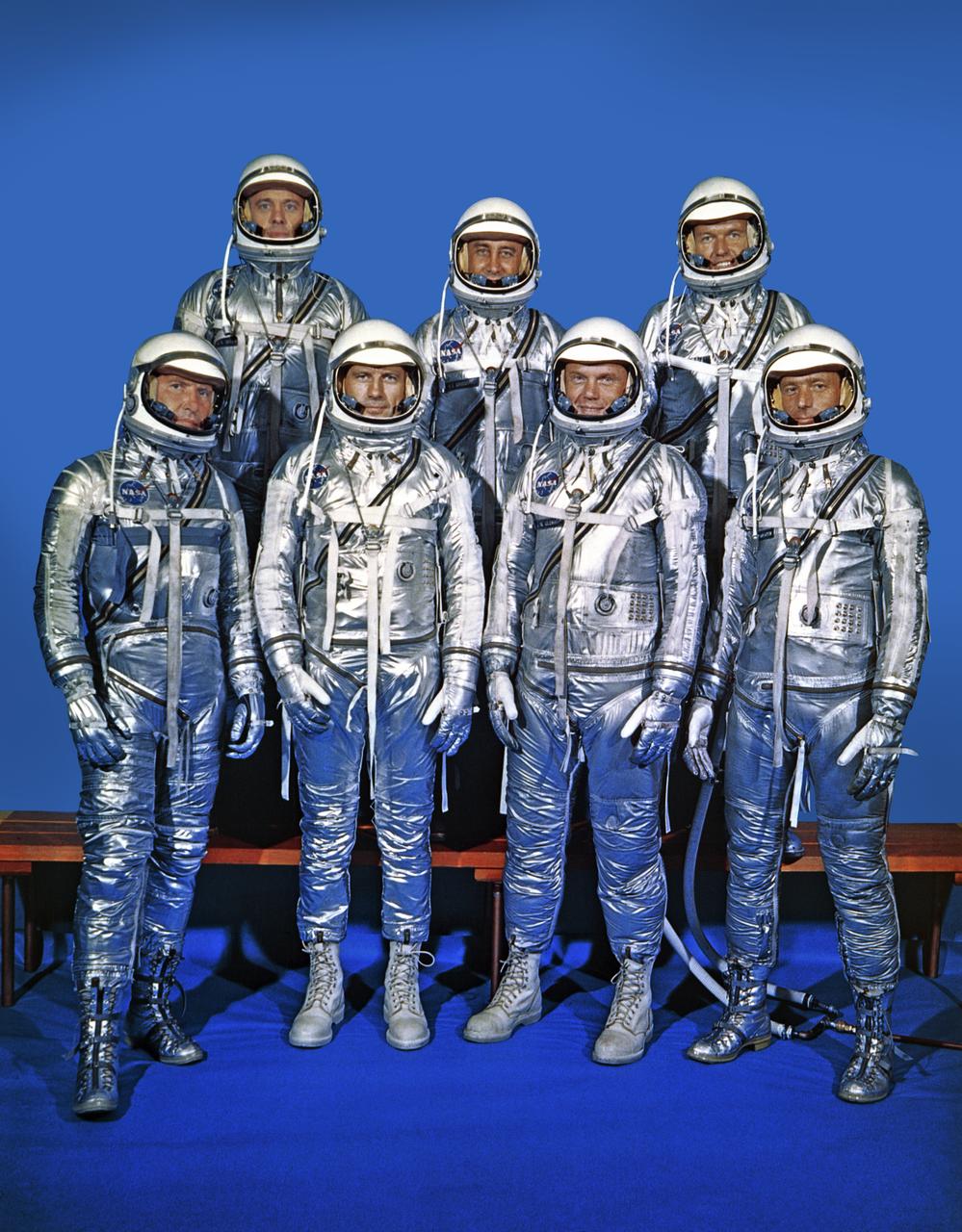
Press release information, September 13, 1968: "FIRST ASTRONAUT TEAM: Project Mercury Astronauts, whose selection was announced on April 9, 1959, only six months after the National Aeronautics and Space Administration was formally established on Oct. 1, 1958, Included: Front row, left to right, Walter M. Schirra, Jr., Donald K. Slayton, John H. Glenn, Jr., and M. Scott Carpenter; back row, Alan B. Shepard, Jr., Virgil I. "Gus" Grissom and L. Gordon Cooper. (1962), *89-361 Also in B&W. This copy of original negative was edited without shadows in the background. Photo taken at NASA Langley Research Center by Life Magazine photographer and negative copied for other centers.
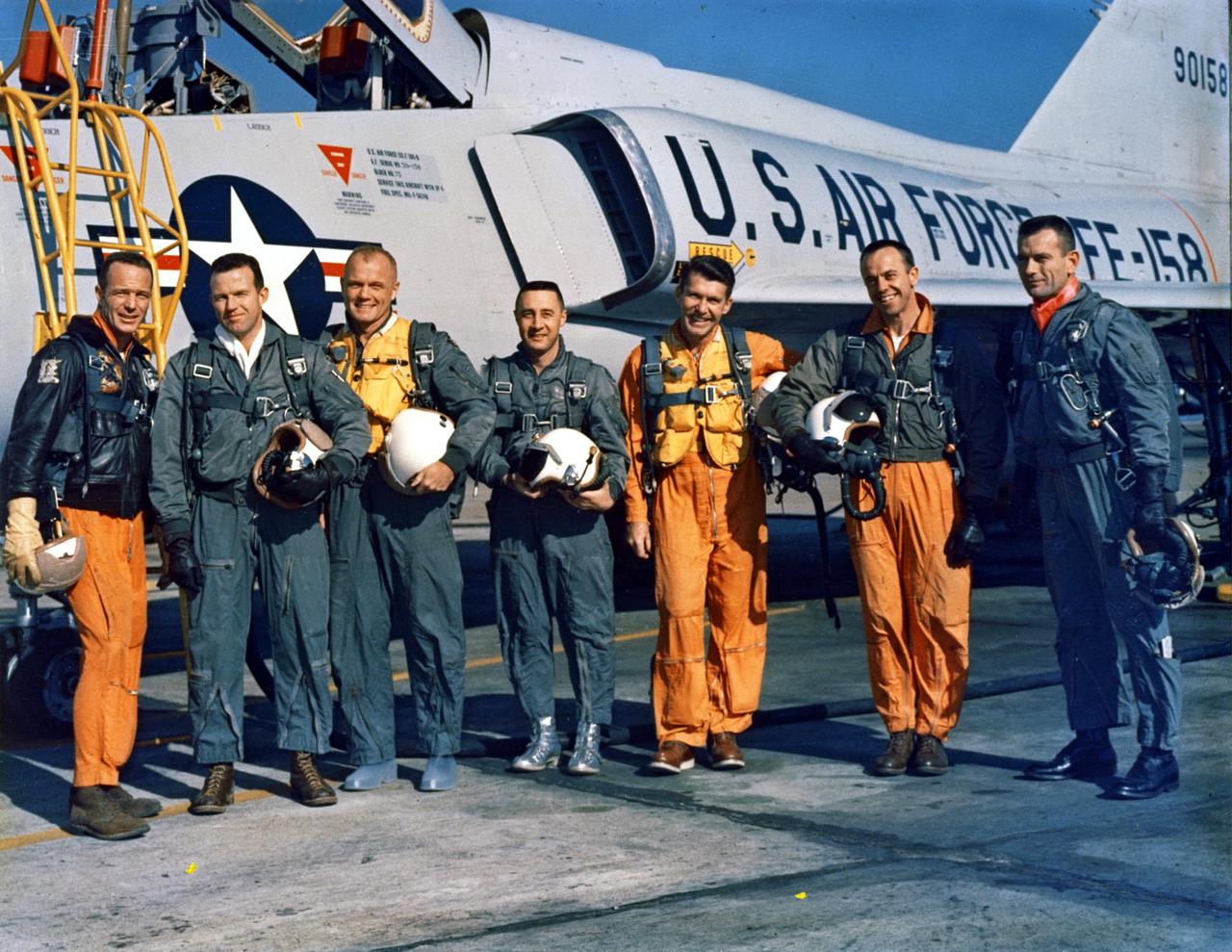
CAPE CANAVERAL, FLA. -- The Original Seven Mercury Astronauts pose beside an Air Force F-102 jet. Standing, left to right, are M. Scott Carpenter, L. Gordon Cooper, John H. Glenn Jr., Virgil I. 'Gus' Grissom, Walter M. Schirra Jr., Alan B. Shepherd Jr., and Donald K. 'Deke' Slayton.
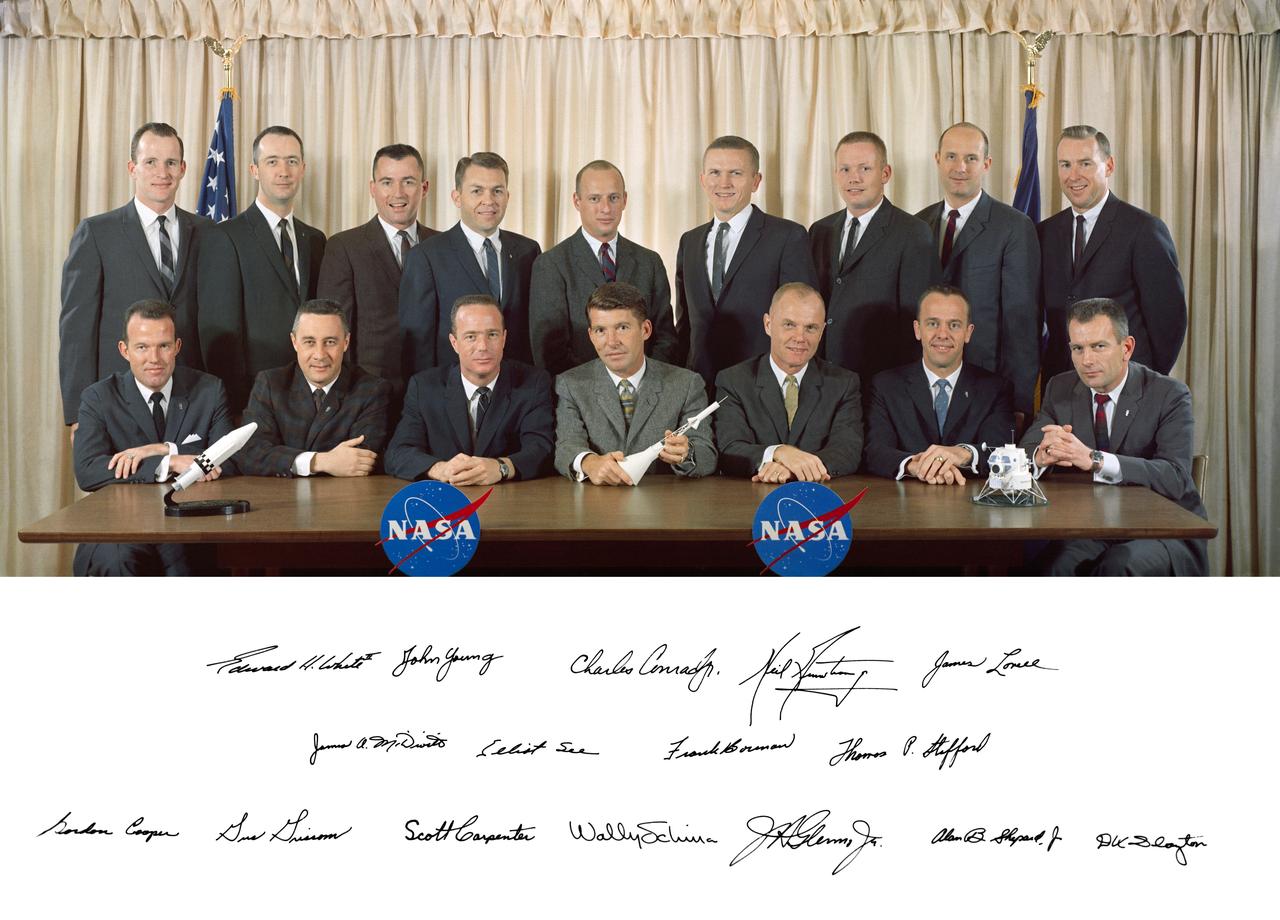
S63-01419A (1963) --- Portrait of the first two groups of astronauts. The seven original Mercury astronauts plus new members of the astronaut corps. Seated from left to right are: Gordon Cooper, Gus Grissom, Scott Carpenter, Wally Schirra, John Glenn, Alan Shepard and Deke Slayton. Standing from left to right are: Edward White, James McDivitt, John Young, Elliot See, Charles Conrad, Frank Borman, Neil Armstrong, Thomas Stafford, and James Lovell. Signatures are also visible at the bottom of the frame. Photo credit: NASA
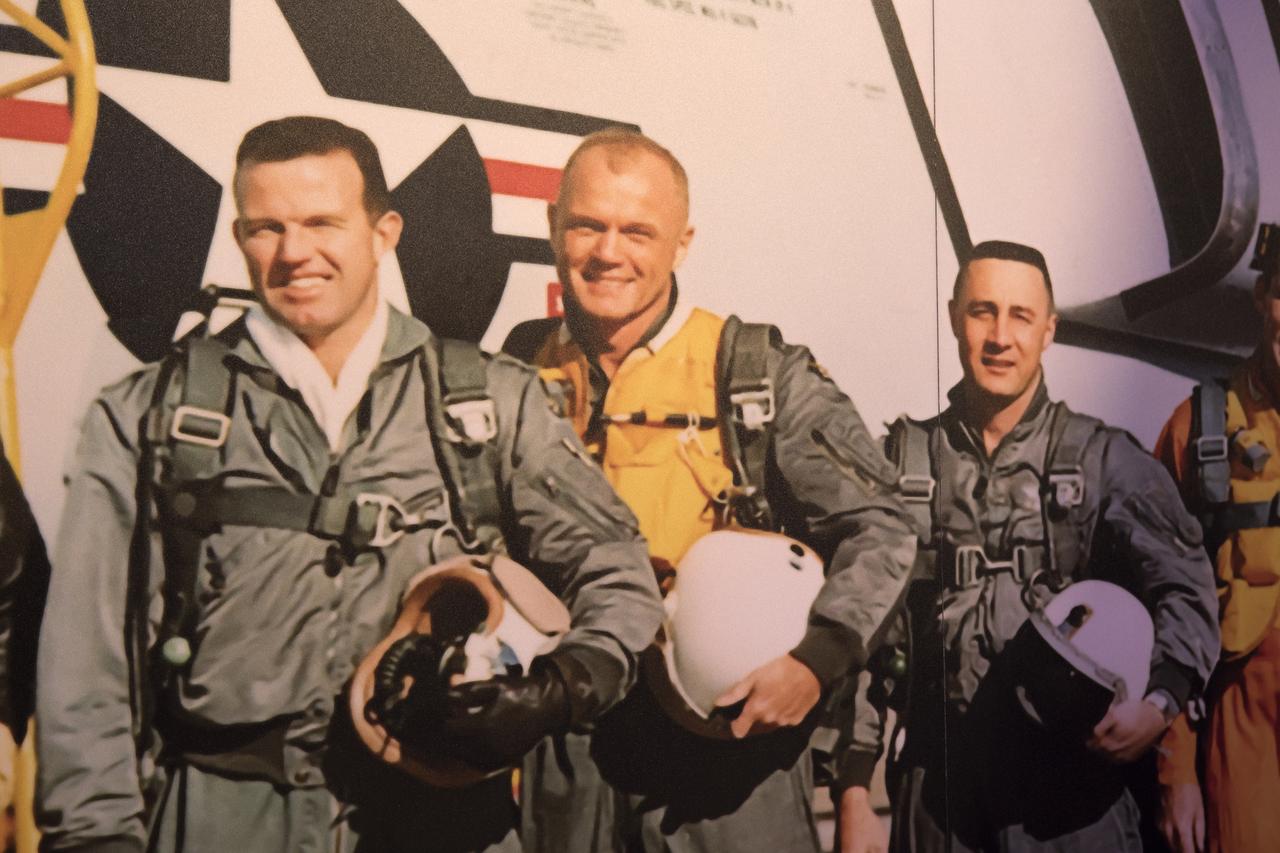
A life-size photo inside the Heroes and Legends exhibit hall at the Kennedy Space Center Visitor Complex shows astronaut Sen. John Glenn, center, with fellow Mercury Seven astronauts Gordon Cooper, left, and Gus Grissom. Glenn, who passed away Dec. 8, 2016 at age 95. Glenn, was the last surviving member of NASA's original astronaut class. He gained worldwide acclaim during his Mercury mission that made him the first American to orbit the Earth. He flew again in 1998 aboard space shuttle Discovery at age 77.
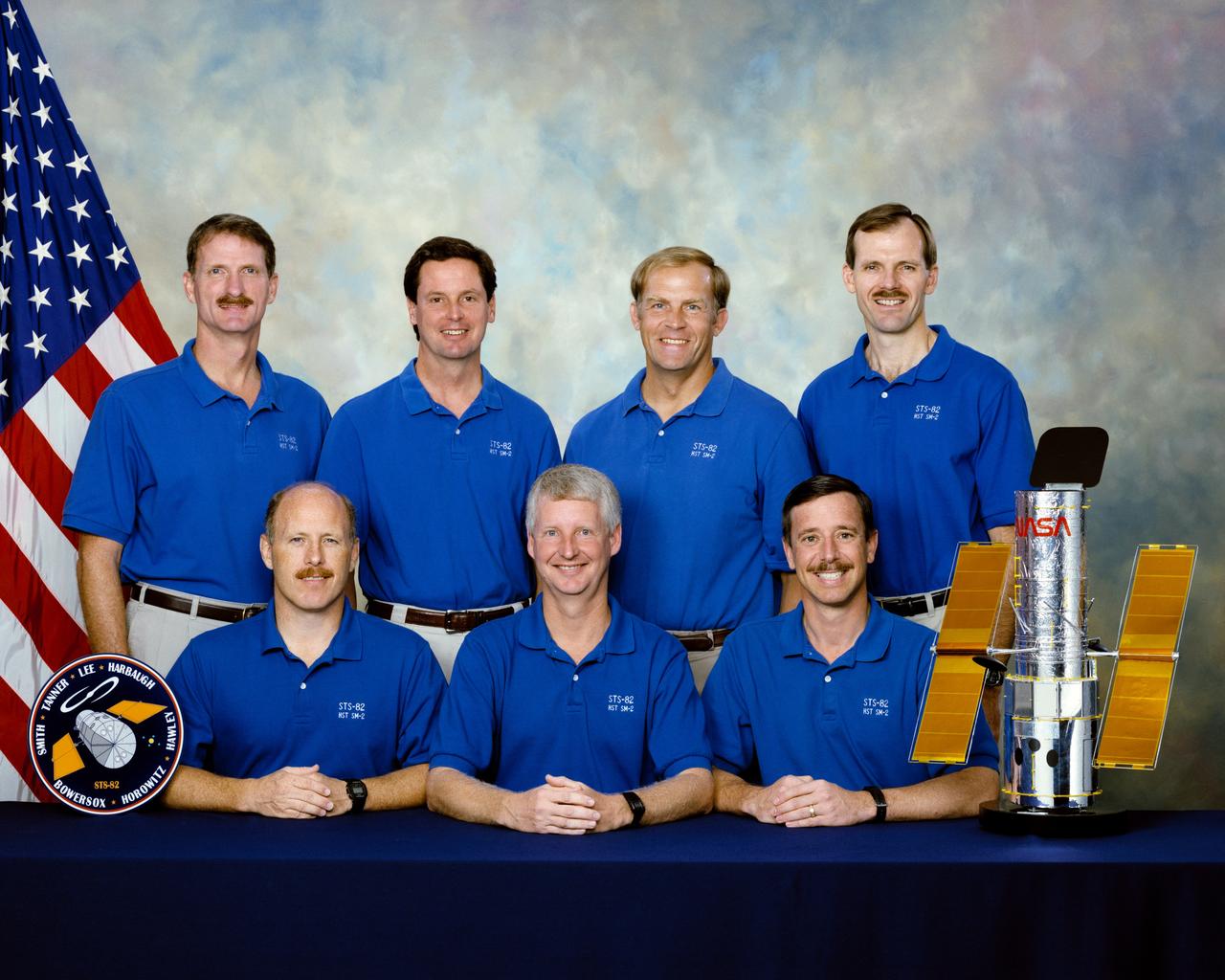
STS082-S-002 (December 1996) --- These seven astronauts are prime crew members for NASA’s STS-82 mission. They are, on the front row, from the left, Kenneth D. Bowersox, Steven A. Hawley and Scott J. Horowitz. On the back row are Joseph R. Tanner, Gregory J. Harbaugh; Mark C. Lee and Steven L. Smith. Bowersox and Horowitz are commander and pilot, respectively, with Lee assigned as payload commander. Hawley, Harbaugh, Smith and Tanner are mission specialists. The seven are pictured with a small model of the Hubble Space Telescope (HST), which they will be paying a visit representing the second HST maintenance mission. Bowersox was pilot for the STS-61 mission, which performed the first maintenance on HST. Hawley was a mission specialist on STS-31, the mission whose astronauts originally deployed the HST.
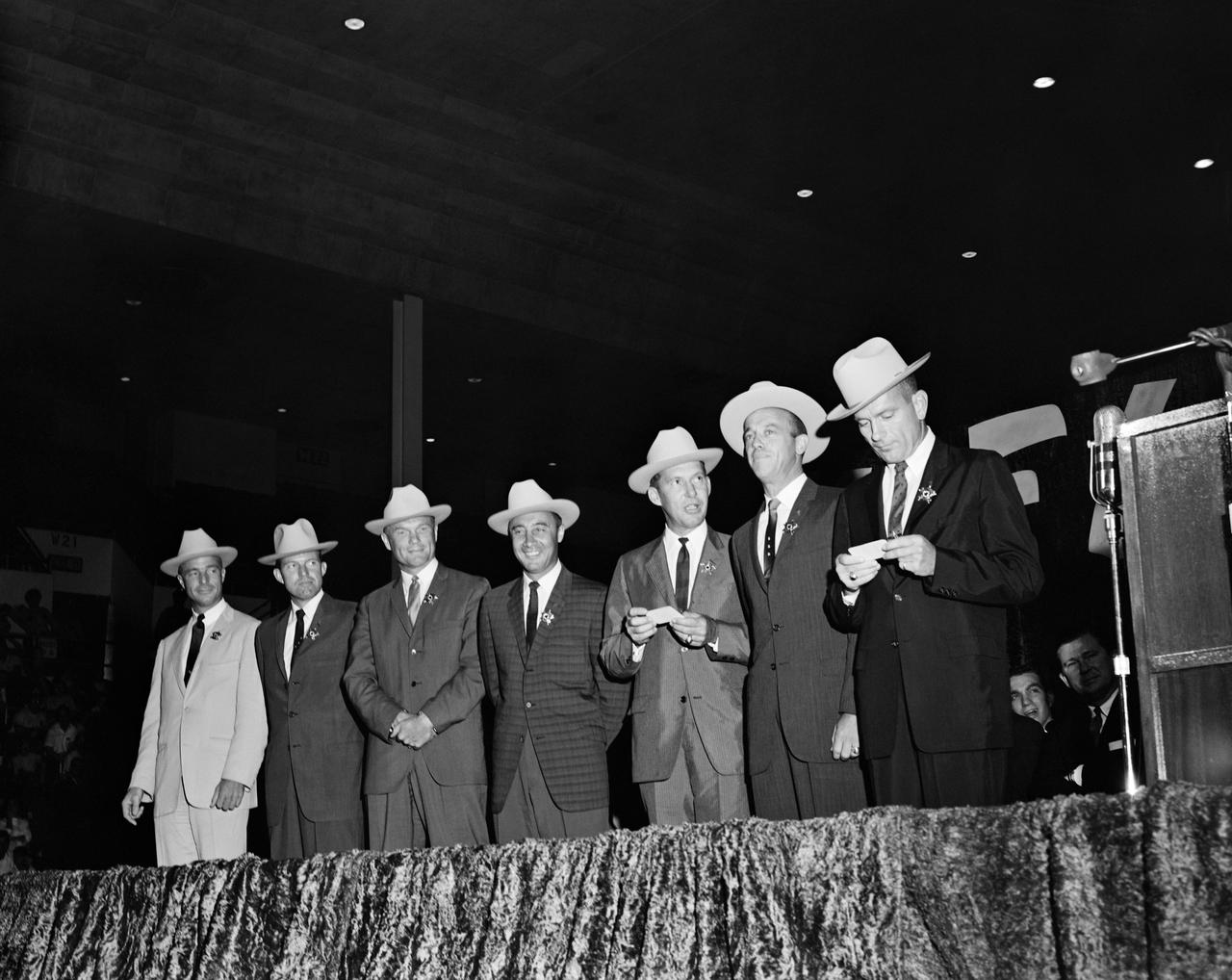
S62-03709 (4 July 1962) --- The original seven Mercury astronauts, each wearing new cowboy hats and a badge in the shape of a star, are pictured on stage at the Sam Houston Coliseum. A large crowd was on hand to welcome them to Houston, Texas. Left to right are astronauts M. Scott Carpenter, L. Gordon Cooper Jr., John H. Glenn Jr., Virgil I. Grissom, Walter M. Schirra Jr., Alan B. Shepard Jr., and Donald K. Slayton. Sen. John Tower (R.-Texas) is seen in far right background. Photo credit: NASA
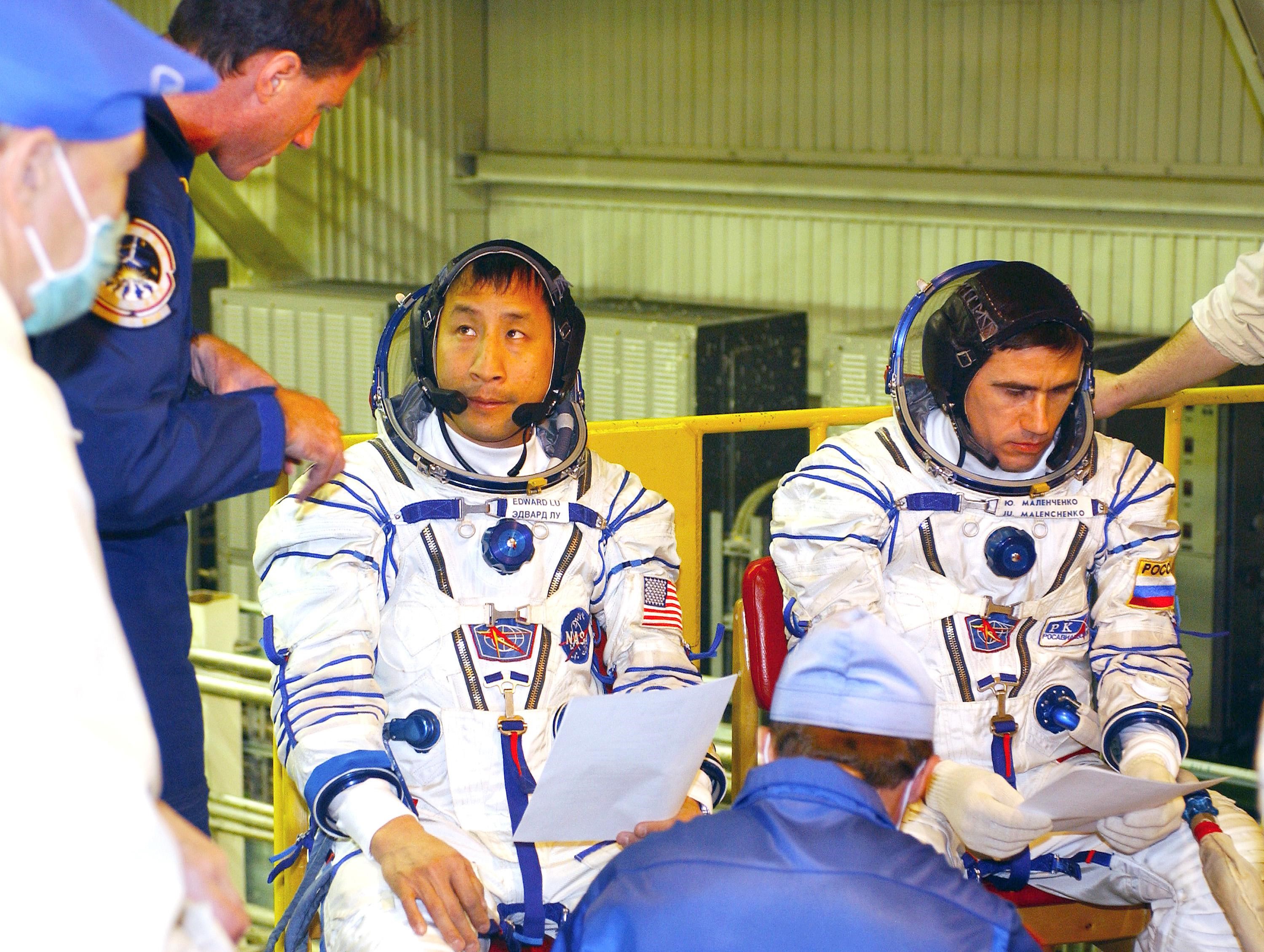
Baikonur Cosmodrome, Kazakhstan -- Astronaut Michael Foale (left standing), backup crew for Expedition Seven, talks with astronaut Edward T. Lu, NASA ISS science officer and flight engineer for Expedition Seven. Seated on the right is Cosmonaut Yuri I. Malenchenko, Expedition Seven commander. The crew is reviewing documents prior to entering the Soyuz TMA-2 capsule for inspection and seat liner check. Malenchenko and Lu were named as the primary crew, Expedition 7, for the launch to the International Space Station. Russian cosmonaut Alexander Kaleri and NASA astronaut Michael Foale are the backup crewmembers to Malenchenko and Lu. Expedition 6 Commander Ken Bowersox, Flight Engineer Nikolai Budarin and NASA Space Station Science Officer Don Pettit will return to Earth aboard the Soyuz TMA-1 craft in May 2003. The three Expedition 6 crewmembers were launched on Nov. 23, 2002. They have been aboard the Station since November 25. They were originally scheduled to return in March aboard the Space Shuttle Atlantis during the STS-114 mission. Malenchenko and Lu will continue to operate the science payloads already on board, as well as maintaining the Station. Photo Credit: NASA/Bill Ingalls
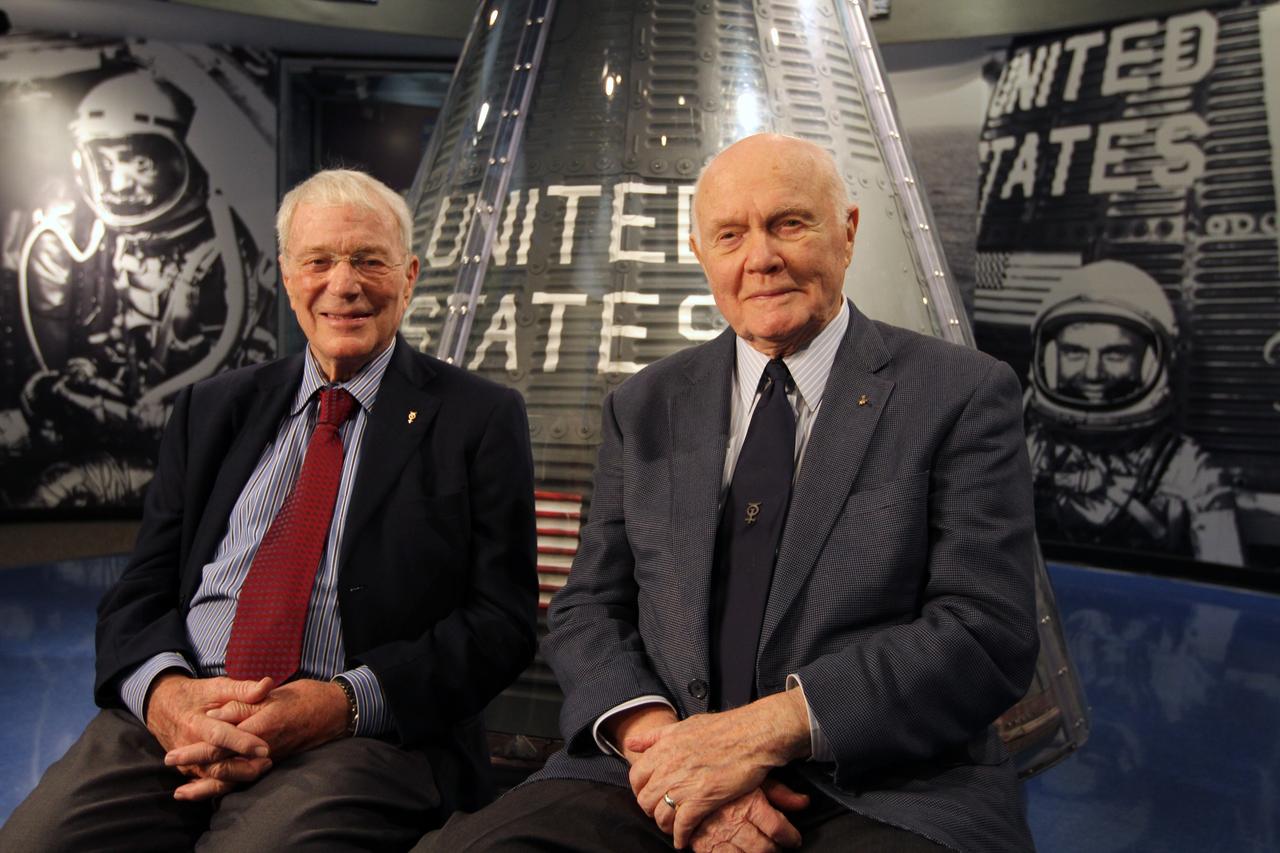
CAPE CANAVERAL, Fla. -- Mercury astronauts Scott Carpenter, left, and John Glenn sit in front of a capsule from the Mercury program on display at the Kennedy Space Center Visitor Complex in Florida. The two astronauts, part of the original class of seven astronauts chosen by NASA, were taking part in events celebrating 50 years of Americans in orbit, an era which began with Glenn's Mercury mission MA-6, on Feb. 20, 1962. Glenn's launch aboard an Atlas rocket took with it the hopes of an entire nation and ushered in a new era of space travel that eventually led to Americans walking on the moon by the end of the 1960s. Glenn soon was followed into orbit by Carpenter, Walter Schirra and Gordon Cooper. Their fellow Mercury astronauts Alan Shepard and Virgil "Gus" Grissom flew earlier suborbital flights. Deke Slayton was grounded by a medical condition until the Apollo-Soyuz Test Project in 1975. Photo credit: NASA/Kim Shiflett
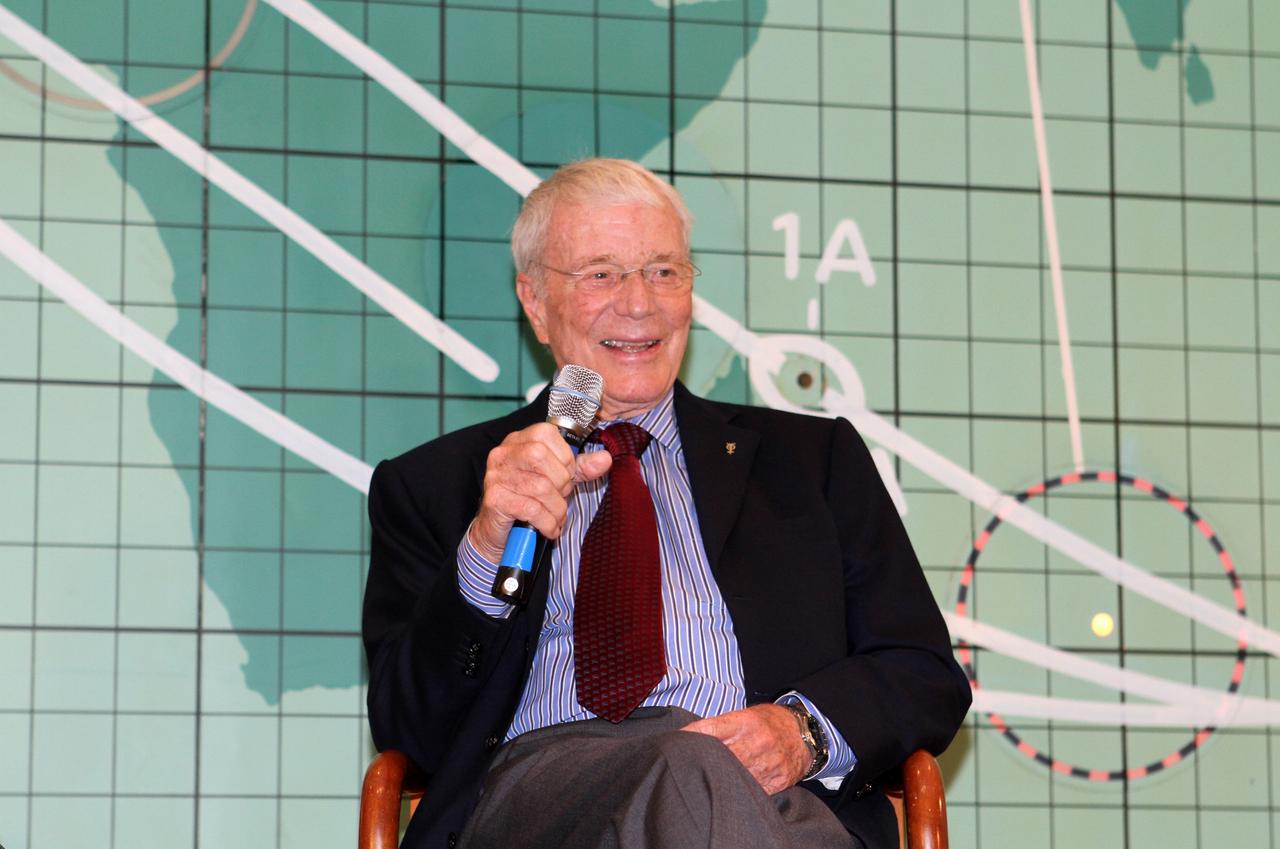
CAPE CANAVERAL, Fla. -- Mercury astronaut Scott Carpenter sits in front of the plot board from the Mercury control center on display at the Kennedy Space Center Visitor Complex in Florida. The astronaut, part of the original class of seven astronauts chosen by NASA, was taking part in a question-and-answer session with the media as part of events celebrating 50 years of Americans in orbit, an era which began with John Glenn's Mercury mission MA-6, on Feb. 20, 1962. Glenn's launch aboard an Atlas rocket took with it the hopes of an entire nation and ushered in a new era of space travel that eventually led to Americans walking on the moon by the end of the 1960s. Glenn soon was followed into orbit by Carpenter, Walter Schirra and Gordon Cooper. Their fellow Mercury astronauts Alan Shepard and Virgil "Gus" Grissom flew earlier suborbital flights. Deke Slayton was grounded by a medical condition until the Apollo-Soyuz Test Project in 1975. Photo credit: NASA/Kim Shiflett
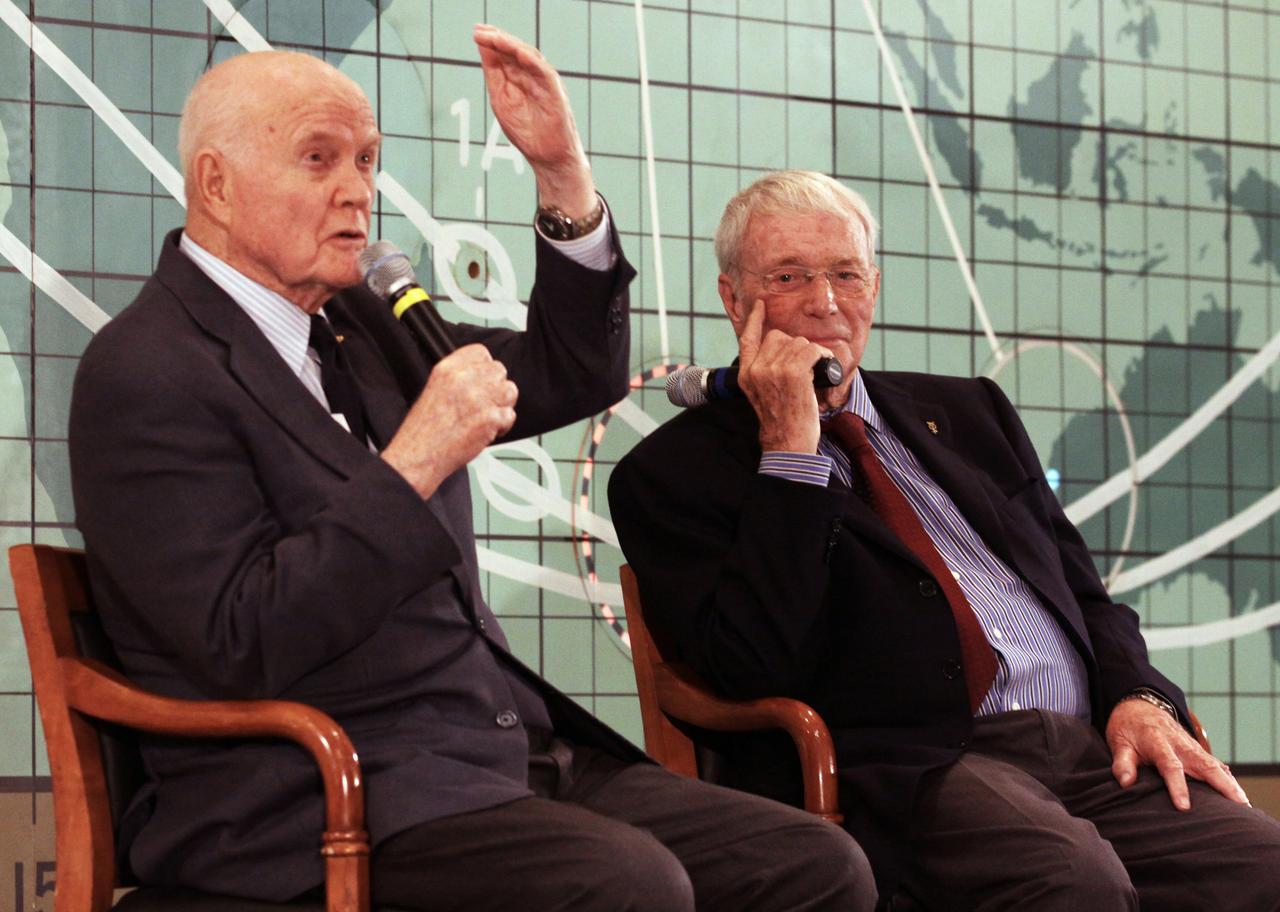
Mercury astronauts John Glenn, left, and Scott Carpenter sit in front of the plot board from the Mercury control center on display at the Kennedy Space Center Visitor Complex. The astronauts, part of the original class of seven astronauts chosen by NASA, were taking part in a question-and-answer session with the media as part of events celebrating 50 years of Americans in orbit, an era which began with John Glenn's Mercury mission MA-6, on Feb. 20, 1962. Glenn's launch aboard an Atlas rocket took with it the hopes of an entire nation and ushered in a new era of space travel that eventually led to Americans walking on the moon by the end of the 1960s. Glenn soon was followed into orbit by Carpenter, Walter Schirra and Gordon Cooper. Their fellow Mercury astronauts Alan Shepard and Virgil "Gus" Grissom flew earlier suborbital flights. Deke Slayton was grounded by a medical condition until the Apollo-Soyuz Test Project in 1975.
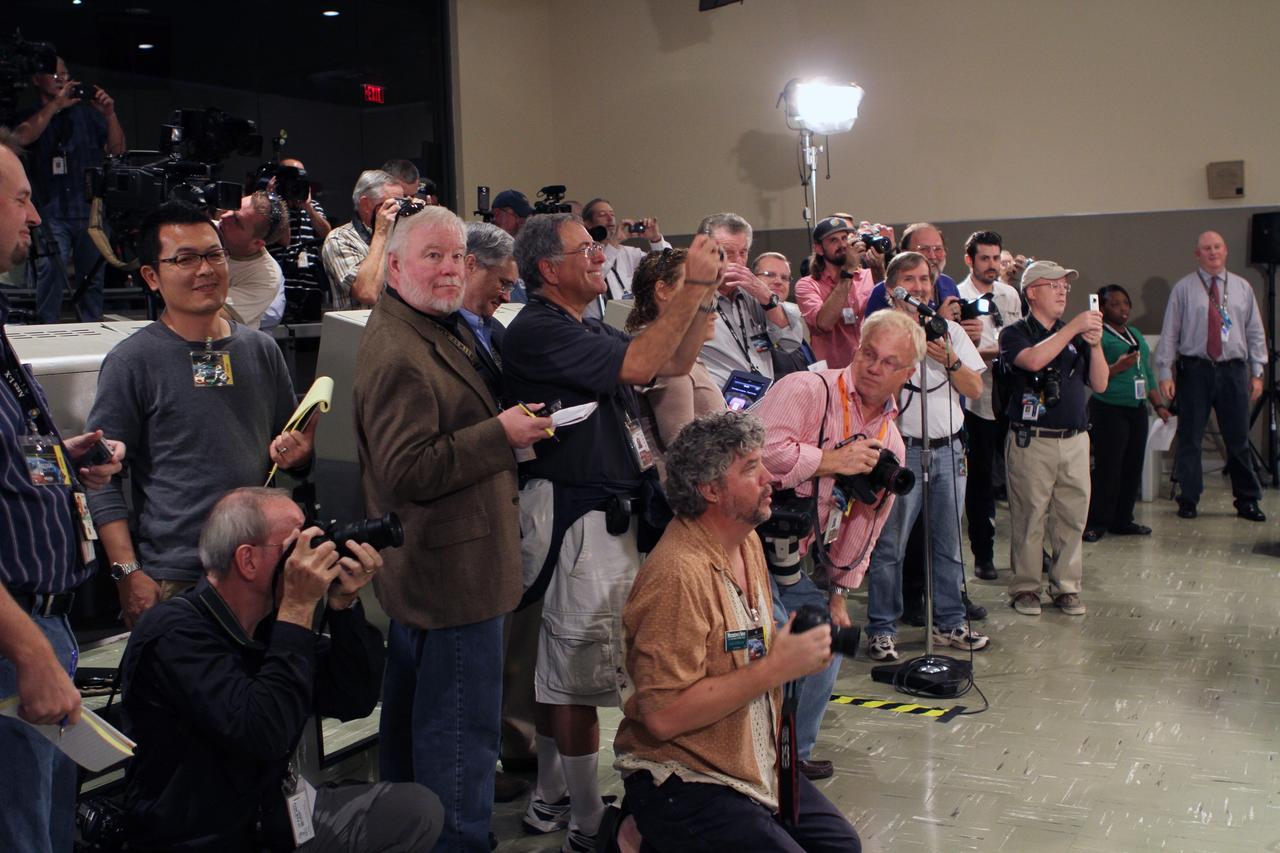
CAPE CANAVERAL, Fla. -- The international news media takes part in a question-and-answer session with Mercury astronauts John Glenn and Scott Carpenter at the Kennedy Space Center Visitor Complex in Florida. The astronauts, part of the original class of seven astronauts chosen by NASA, were taking part in events celebrating 50 years of Americans in orbit, an era which began with John Glenn's Mercury mission MA-6, on Feb. 20, 1962. Glenn's launch aboard an Atlas rocket took with it the hopes of an entire nation and ushered in a new era of space travel that eventually led to Americans walking on the moon by the end of the 1960s. Glenn soon was followed into orbit by Carpenter, Walter Schirra and Gordon Cooper. Their fellow Mercury astronauts Alan Shepard and Virgil "Gus" Grissom flew earlier suborbital flights. Deke Slayton was grounded by a medical condition until the Apollo-Soyuz Test Project in 1975. Photo credit: NASA/Kim Shiflett
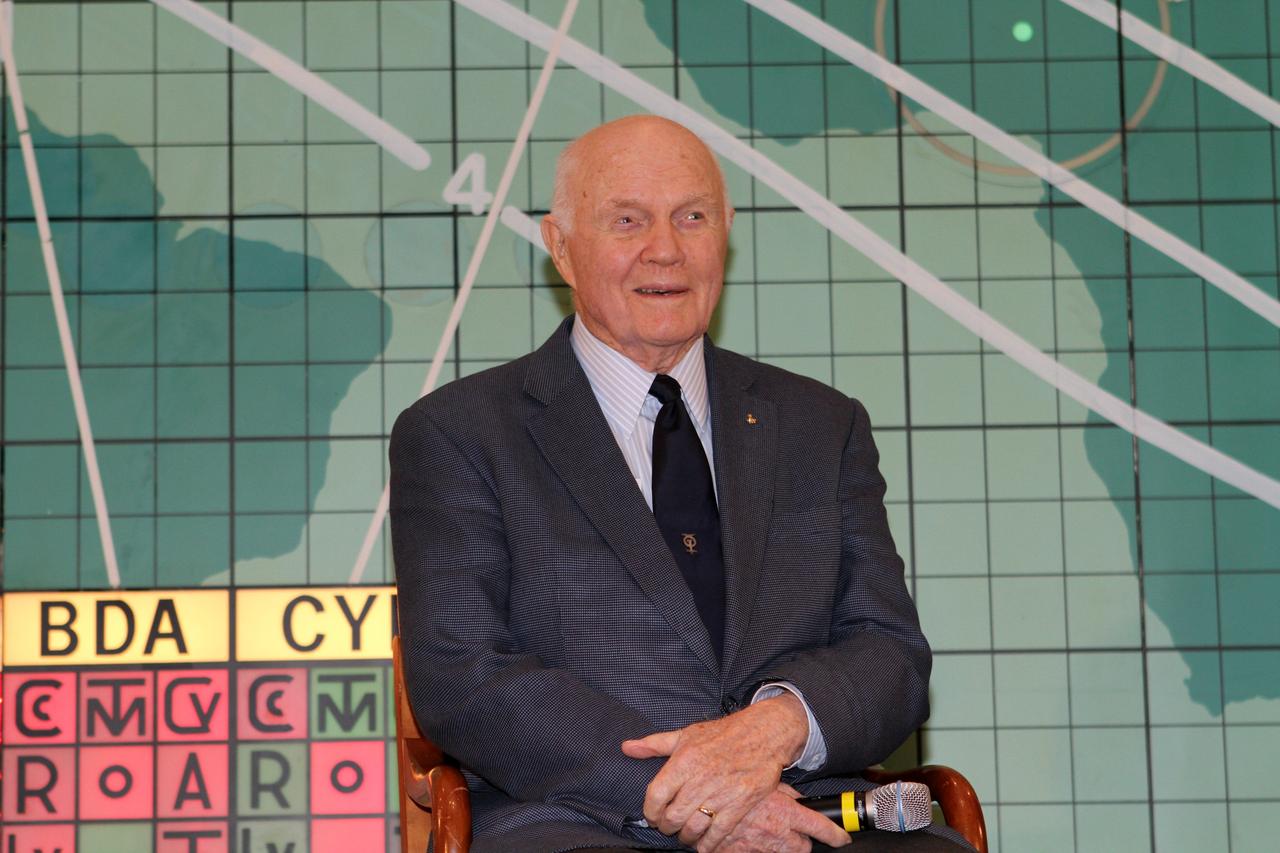
CAPE CANAVERAL, Fla. -- Mercury astronaut John Glenn sits in front of the plot board from the Mercury control center on display at the Kennedy Space Center Visitor Complex in Florida. The astronaut, part of the original class of seven astronauts chosen by NASA, was taking part in a question-and-answer session with the media as part of events celebrating 50 years of Americans in orbit, an era which began with Glenn's Mercury mission MA-6, on Feb. 20, 1962. Glenn's launch aboard an Atlas rocket took with it the hopes of an entire nation and ushered in a new era of space travel that eventually led to Americans walking on the moon by the end of the 1960s. Glenn soon was followed into orbit by Carpenter, Walter Schirra and Gordon Cooper. Their fellow Mercury astronauts Alan Shepard and Virgil "Gus" Grissom flew earlier suborbital flights. Deke Slayton was grounded by a medical condition until the Apollo-Soyuz Test Project in 1975. Photo credit: NASA/Kim Shiflett

S63-00562 (February 1963) --- Portrait of astronaut groups 1 and 2. The original seven Mercury astronauts selected by NASA in April 1959, are seated (left to right): L. Gordon Cooper Jr., Virgil I. Grissom, M. Scott Carpenter, Water M. Schirra Jr., John H. Glenn Jr., Alan B. Shepard Jr., and Donald K. Slayton. The second group of NASA astronauts, which were named in September 1962, are standing (left to right): Edward H. White II, James A. McDivitt, John W. Young, Elliot M. See Jr., Charles Conrad Jr., Frank Borman, Neil A. Armstrong, Thomas P. Stafford, and James A. Lovell Jr. Photo credit: NASA or National Aeronautics and Space Administration
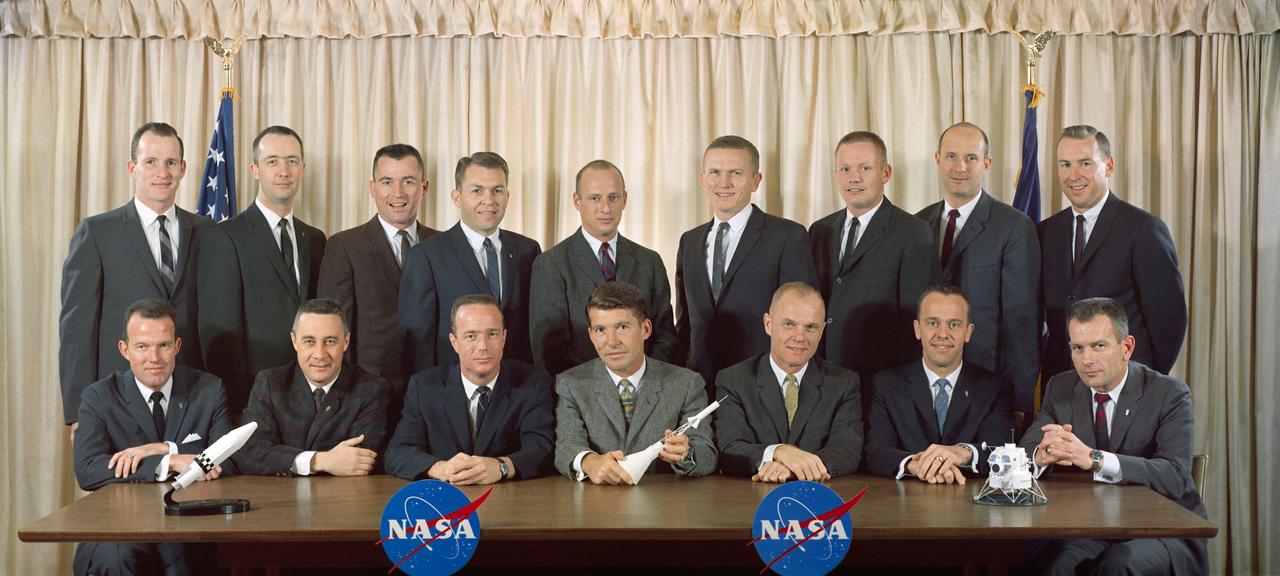
S63-01419 (1963) --- The first two groups of astronauts selected by the National Aeronautics and Space Administration (NASA). The original seven Mercury astronauts, selected in April 1959, are seated left to right, L. Gordon Cooper Jr., Virgil I. Grissom, M. Scott Carpenter, Walter M. Schirra Jr., John H. Glenn Jr., Alan B. Shepard Jr. and Donald K. Slayton. The second group of NASA astronauts, named in September 1962 are, standing left to right, Edward H. White II, James A. McDivitt, John W. Young, Elliot M. See Jr., Charles Conrad Jr., Frank Borman, Neil A. Armstrong, Thomas P. Stafford and James A. Lovell Jr. Photo credit: NASA
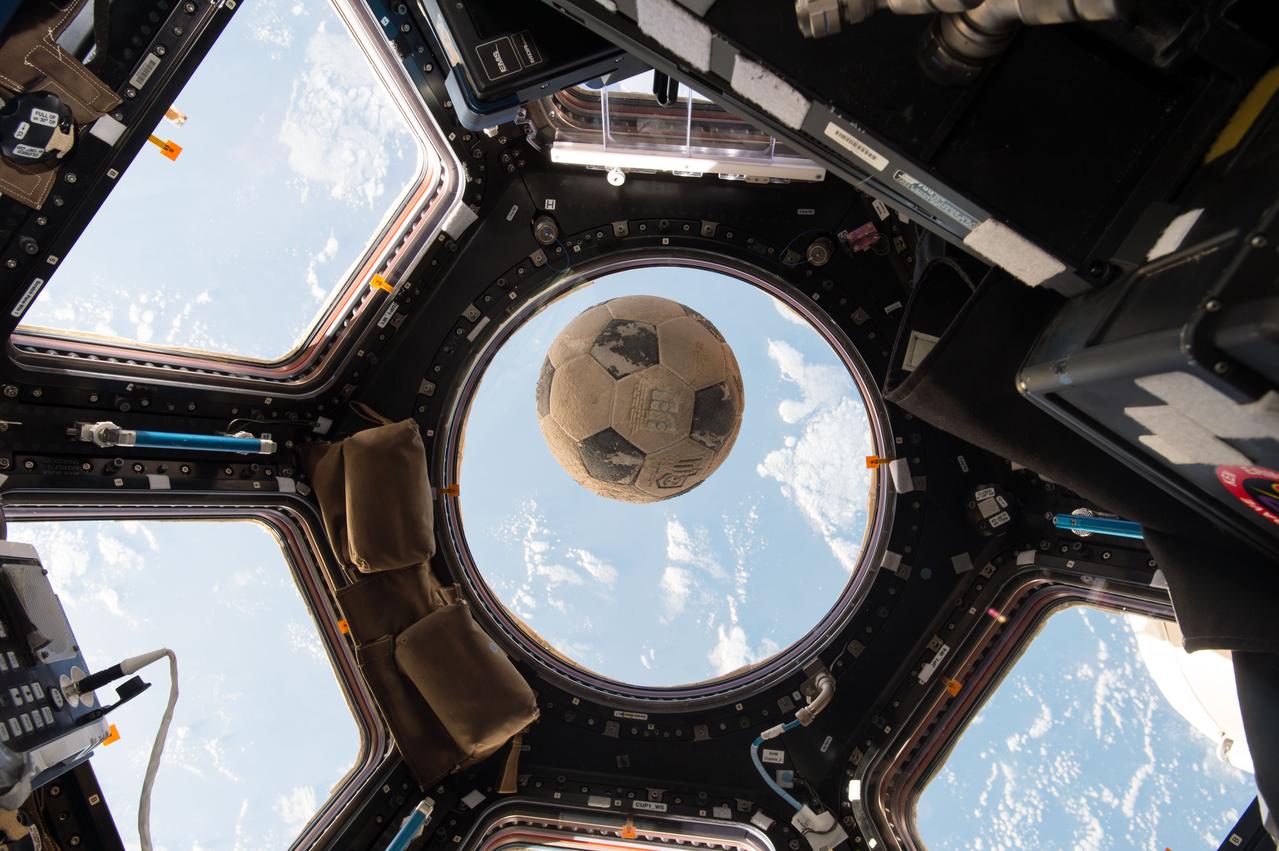
iss050e033912 (01/21/2017) --- A soccer ball originally packed onto space shuttle Challenger in 1986 is now orbiting the Earth on board the International Space Station, 31 years later. The soccer ball was signed and presented to NASA astronaut Ellison Onizuka by soccer players – including his daughter – from Clear Lake High School, near NASA’s Johnson Space Center. Onizuka was one of seven astronauts on board Challenger on Jan. 28, 1986, when it exploded shortly after liftoff. Following the accident, the ball was recovered and returned to the high school, where it has been on display for the past three decades. Its history had begun to fade into obscurity when Principal Karen Engle learned of its origin. Soon after, astronaut Shane Kimbrough, whose son attends Clear Lake High School, offered to carry up a memento on the school’s behalf, and she had the idea to send the soccer ball into space. Kimbrough snapped this photo of the ball floating in front of the station’s Cupola window in advance of Challenger anniversary and NASA’s Day of Remembrance.
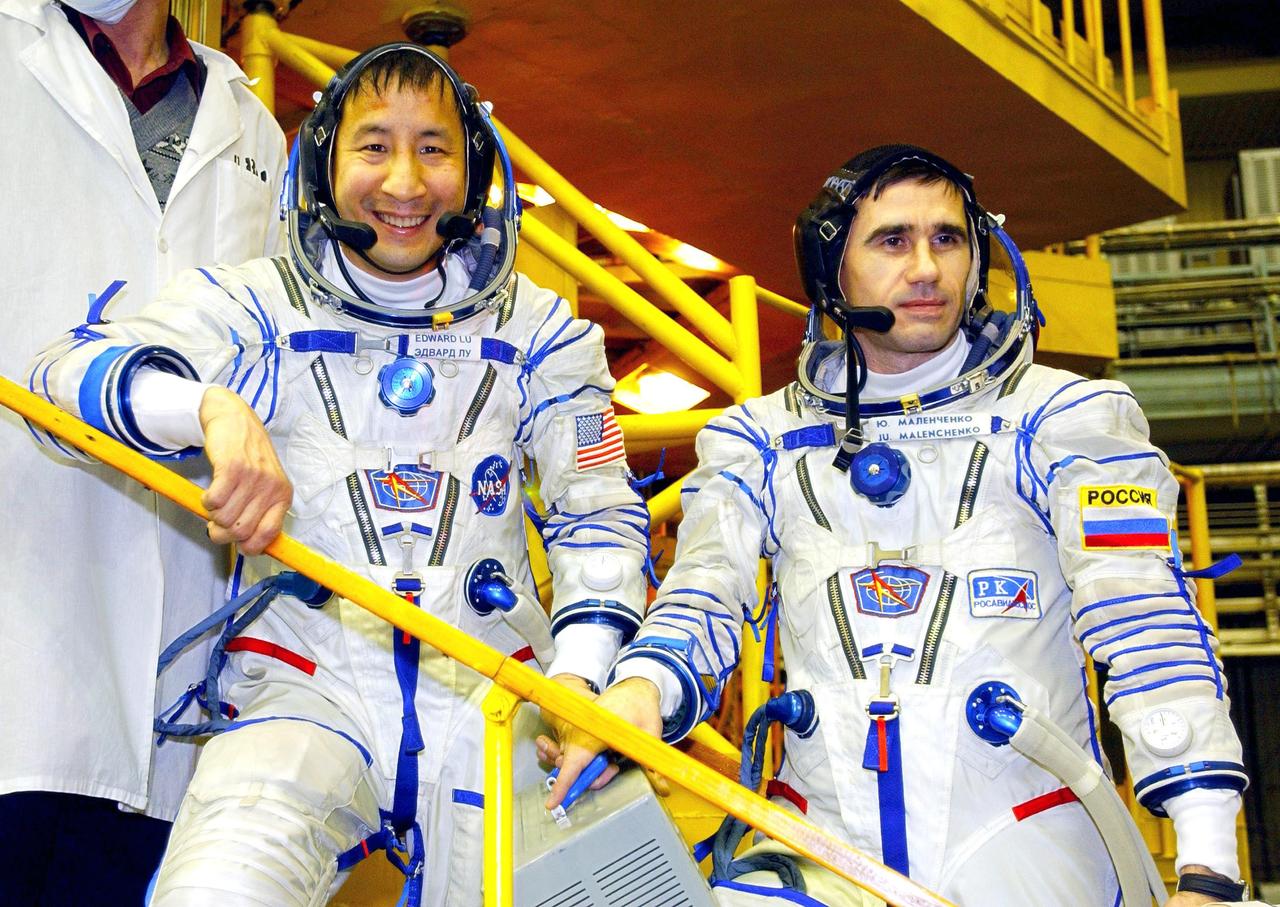
Baikonur Cosmodrome, Kazakhstan -- Building 254, Soyuz Integration Facility. Cosmonaut Yuri I. Malenchenko (right), Expedition Seven commander, and astronaut Edward T. Lu, NASA ISS science officer and flight engineer for Expedition Seven, pause for a photograph on the Soyuz stand after the Soyuz inspection, seat liner check. Veteran Russian cosmonaut Yuri Malenchenko and veteran NASA astronaut Ed Lu were named as the primary crew for the planned April 26, 2003, launch of a Russian Soyuz TMA-2 spacecraft to the International Space Station. Russian cosmonaut Alexander Kaleri and NASA astronaut Michael Foale are the backup crewmembers to Malenchenko and Lu. Expedition 6 Commander Ken Bowersox, Flight Engineer Nikolai Budarin and NASA Space Station Science Officer Don Pettit will return to Earth aboard the Soyuz TMA-1 craft in May 2003. The three Expedition 6 crewmembers were launched on Nov. 23, 2002. They have been aboard the Station since November 25. They were originally scheduled to return in March aboard the Space Shuttle Atlantis during the STS-114 mission. Malenchenko and Lu will continue to operate the science payloads already on board, as well as maintaining the Station. Photo Credit: NASA/Bill Ingalls
![KENNEDY SPACE CENTER, FLA. -- Seventeen new astronaut candidates visited the Vehicle Assembly Building as part of an orientation tour of KSC facilities. Here they are grouped around one of the external fuel tanks in the transfer aisle of the VAB. This latest group of candidates is the tenth chosen since the original seven Mercury astronauts. [From left, Michael J. McCulley, Curtis L. Brown Jr., Frank L. Culbertson Jr., Kathryn C. Thornton, Mark N. Brown, Mark C. Lee, Kenneth D. Cameron, John H. Casper, L. Blaine Hammond Jr., Charles Lacy Veach (deceased), James C. Adamson, William M. Shepherd, Sidney M. Gutierrez, Marsha S. Ivins, David G. Low, Michael J. Smith (deceased), Ellen S. Baker, Sonny Carter (deceased).]](https://images-assets.nasa.gov/image/108-KSC-84P-339/108-KSC-84P-339~medium.jpg)
KENNEDY SPACE CENTER, FLA. -- Seventeen new astronaut candidates visited the Vehicle Assembly Building as part of an orientation tour of KSC facilities. Here they are grouped around one of the external fuel tanks in the transfer aisle of the VAB. This latest group of candidates is the tenth chosen since the original seven Mercury astronauts. [From left, Michael J. McCulley, Curtis L. Brown Jr., Frank L. Culbertson Jr., Kathryn C. Thornton, Mark N. Brown, Mark C. Lee, Kenneth D. Cameron, John H. Casper, L. Blaine Hammond Jr., Charles Lacy Veach (deceased), James C. Adamson, William M. Shepherd, Sidney M. Gutierrez, Marsha S. Ivins, David G. Low, Michael J. Smith (deceased), Ellen S. Baker, Sonny Carter (deceased).]
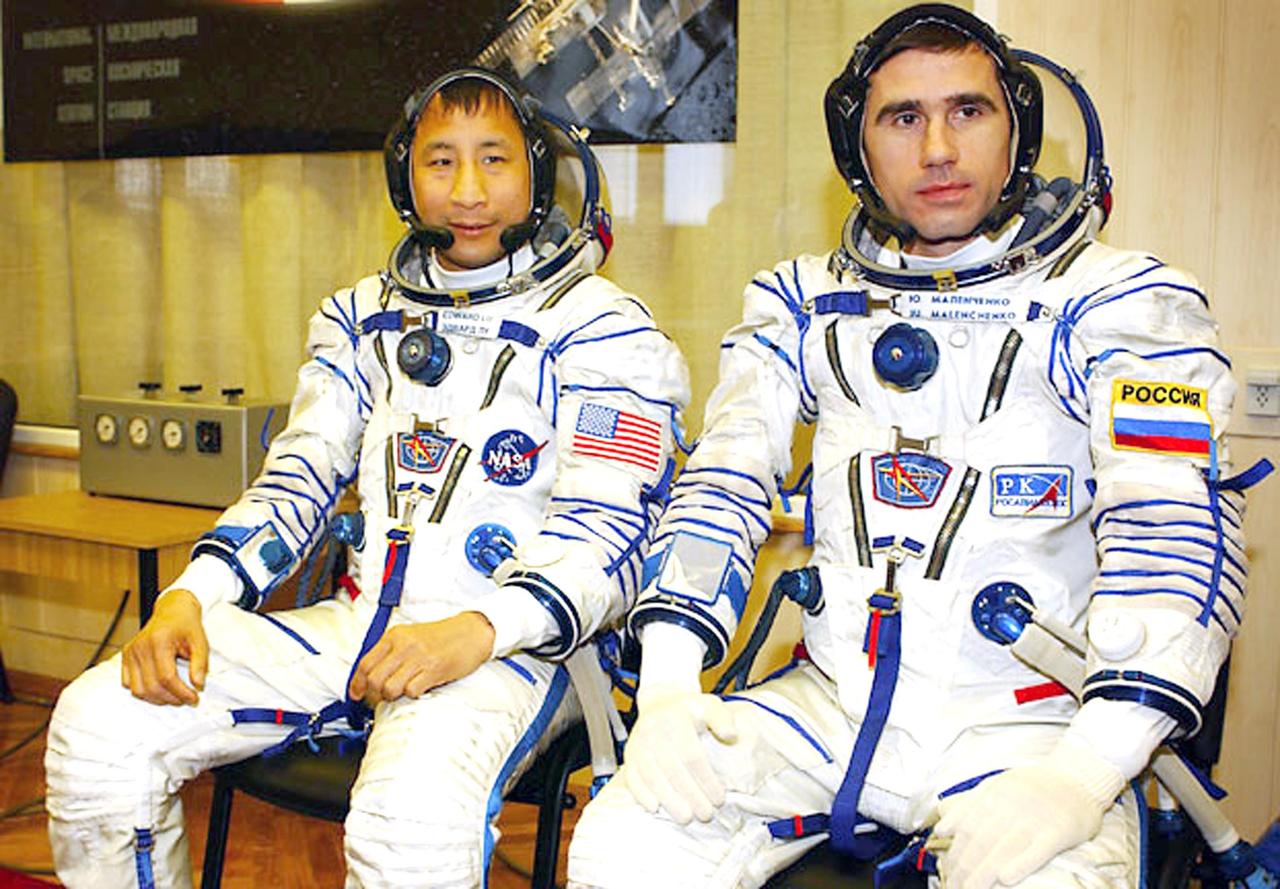
Baikonur Cosmodrome, Kazakhstan -- Building 254, Soyuz Integration Facility. Cosmonaut Yuri I. Malenchenko (right), Expedition Seven commander, and astronaut Edward T. Lu, NASA ISS science officer and flight engineer for Expedition Seven, pause for a photograph after the Soyuz inspection, seat liner check. Malenchenko and Lu were named as the primary crew, Expedition 7, for the launch to the International Space Station. Russian cosmonaut Alexander Kaleri and NASA astronaut Michael Foale are the backup crewmembers to Malenchenko and Lu. Expedition 6 Commander Ken Bowersox, Flight Engineer Nikolai Budarin and NASA Space Station Science Officer Don Pettit will return to Earth aboard the Soyuz TMA-1 craft in May 2003. The three Expedition 6 crewmembers were launched on Nov. 23, 2002. They have been aboard the Station since November 25. They were originally scheduled to return in March aboard the Space Shuttle Atlantis during the STS-114 mission. Malenchenko and Lu will continue to operate the science payloads already on board, as well as maintaining the Station. Photo Credit: NASA/Bill Ingalls
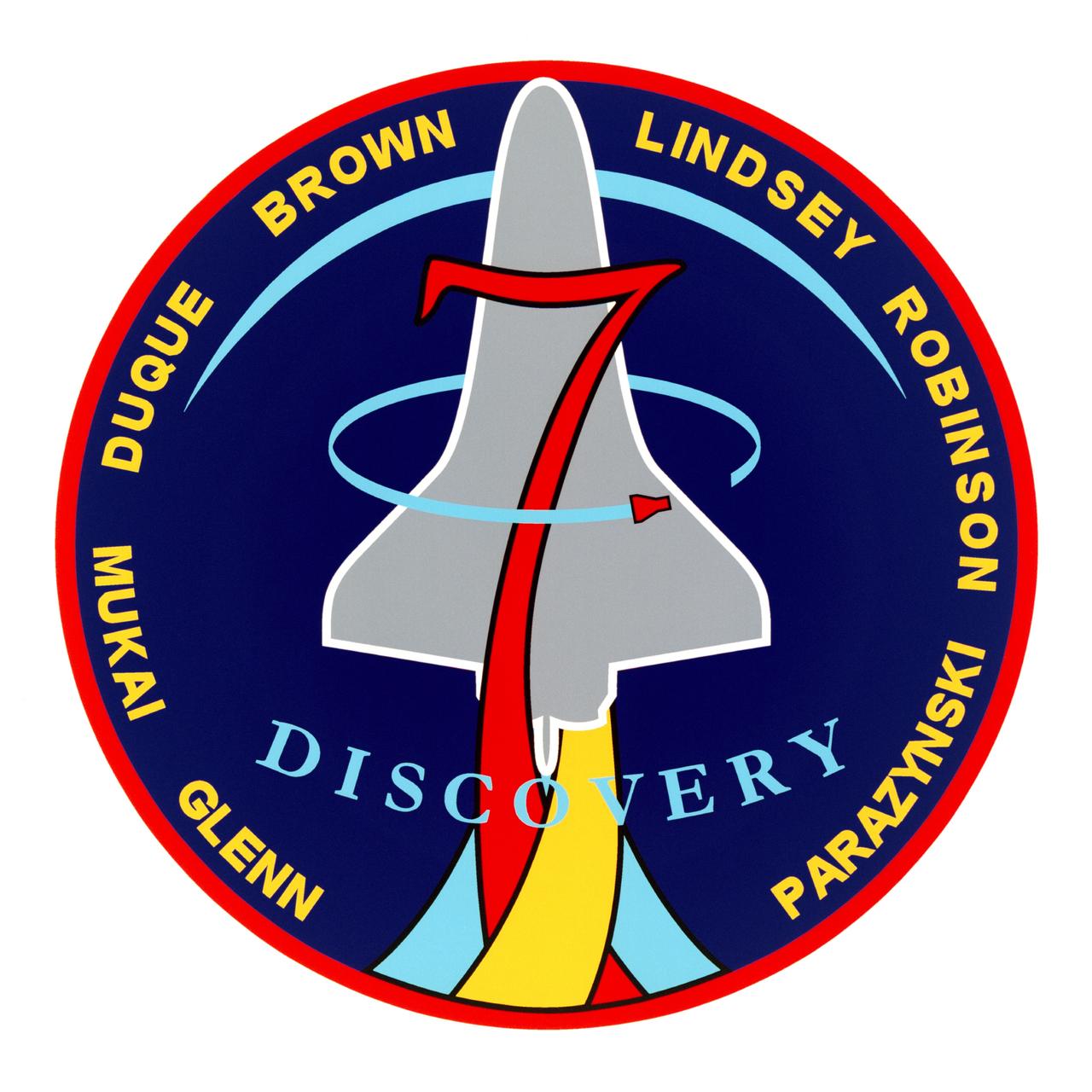
STS095-S-001 (June 1998) --- The STS-95 patch, designed by the crew, is intended to reflect the scientific, engineering, and historic elements of the mission. The space shuttle Discovery is shown rising over the sunlit Earth limb, representing the global benefits of the mission science and the solar science objectives of the Spartan Satellite. The bold number "7" signifies the seven members of Discovery's crew and also represents a historical link to the original seven Mercury astronauts. The STS-95 crew member John Glenn's first orbital flight is represnted by the Friendship 7 capsule. The rocket plumes symbolize the three major fields of science represented by the mission payloads: microgravity material science, medical research for humans on Earth and in space, and astronomy. The NASA insignia design for space shuttle flights is reserved for use by the astronauts and for other official use as the NASA Administrator may authorize. Public availability has been approved only in the forms of illustrations by the various news media. When and if there is any change in this policy, which is not anticipated, the change will be publicly announced. Photo credit: NASA
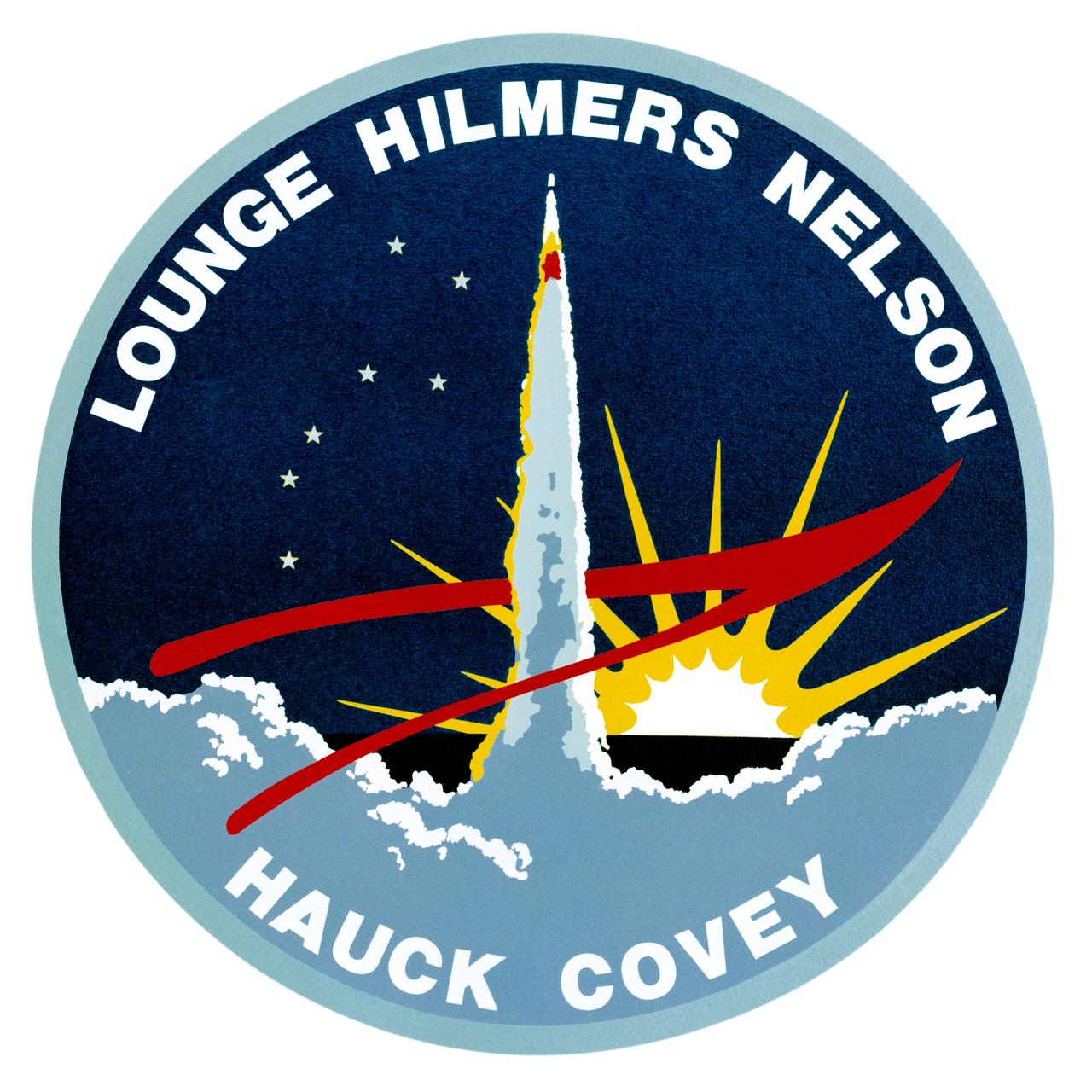
S87-39136 (4 Aug. 1987) --- This is the STS-26 crew patch. The predominant themes are: a new beginning (sunrise), a safe mission (stylized launch and plume), the building upon the traditional strengths of NASA (the red vector which symbolizes aeronautics on the original NASA insignia), and a remembrance of their seven colleagues who died aboard Challenger (the seven-starred Big Dipper). The patch was designed by artist Stephen R. Hustvedt of Annapolis, MD. STS-26 crew members are astronauts Frederick H. (Rick) Hauck, commander; Richard O. Covey, pilot; and George D. (Pinky) Nelson, John M. (Mike) Lounge and David C. Hilmers, mission specialists. The NASA insignia design for space shuttle flights is reserved for use by the astronauts and for other official use as the NASA Administrator may authorize. Public availability has been approved only in the forms of illustrations by the various news media. When and if there is any change in this policy, which is not anticipated, the change will be publicly announced. Photo credit: NASA
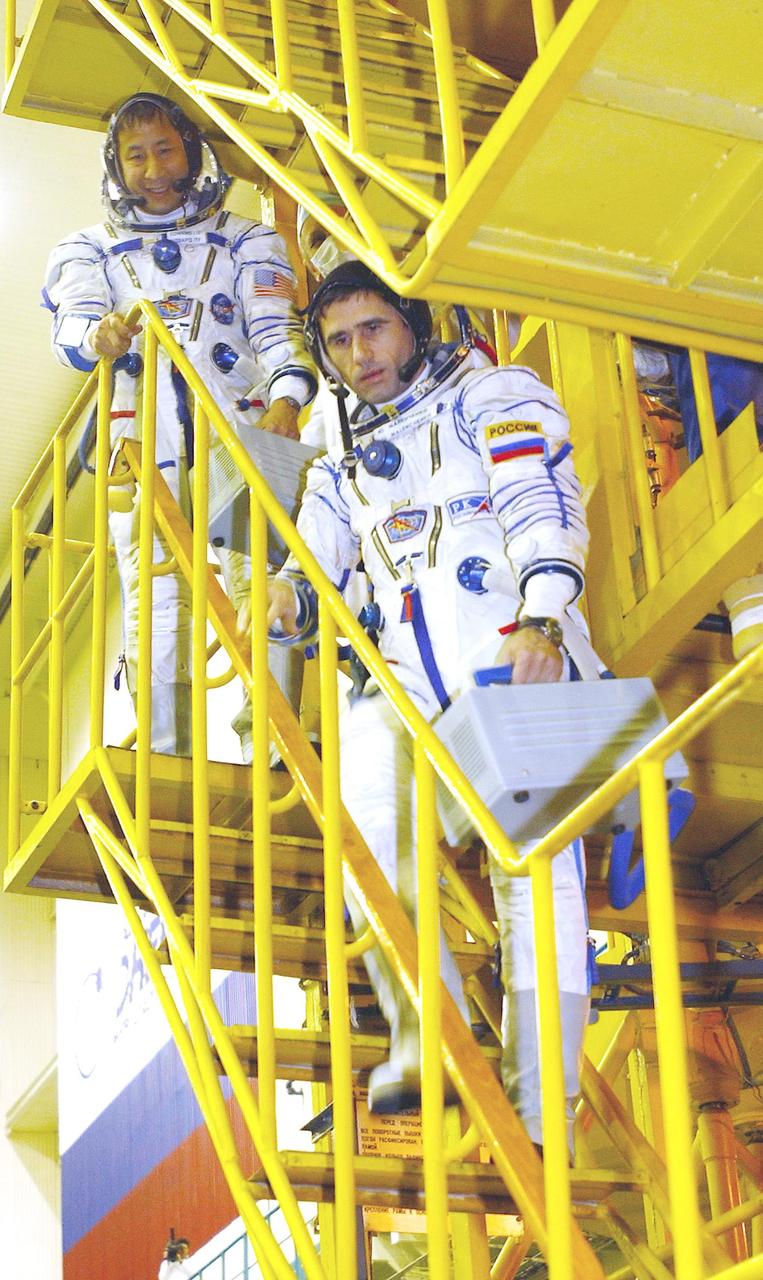
Baikonur Cosmodrome, Kazakhstan -- Cosmonaut Yuri I. Malenchenko (foreground), Expedition Seven commander, and astronaut Edward T. Lu, NASA ISS science officer and flight engineer for Expedition Seven, walk down the Soyuz stand after the Soyuz inspection, seat liner checkMalenchenko and Lu were named as the primary crew, Expedition 7, for the launch to the International Space Station. Russian cosmonaut Alexander Kaleri and NASA astronaut Michael Foale are the backup crewmembers to Malenchenko and Lu. Expedition 6 Commander Ken Bowersox, Flight Engineer Nikolai Budarin and NASA Space Station Science Officer Don Pettit will return to Earth aboard the Soyuz TMA-1 craft in May 2003. The three Expedition 6 crewmembers were launched on Nov. 23, 2002. They have been aboard the Station since November 25. They were originally scheduled to return in March aboard the Space Shuttle Atlantis during the STS-114 mission. Malenchenko and Lu will continue to operate the science payloads already on board, as well as maintaining the Station. Photo Credit: NASA/Bill Ingalls
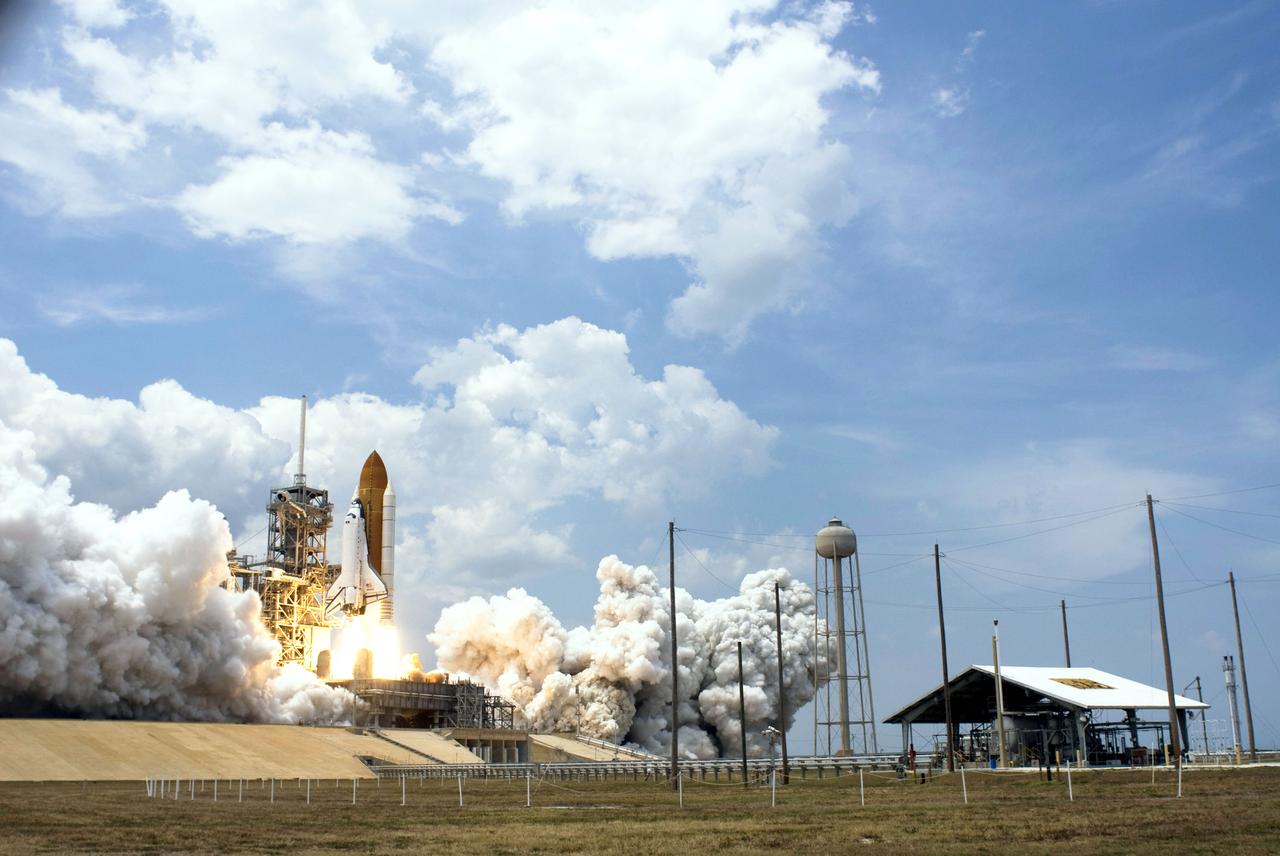
STS125-S-036 (11 May 2009) --- Space Shuttle Atlantis and its seven-member STS-125 crew head toward Earth orbit and rendezvous with NASA?s Hubble Space Telescope. Liftoff was on time at 2:01 p.m. (EDT) on May 11, 2009 from launch pad 39A at NASA's Kennedy Space Center. Onboard are astronauts Scott Altman, commander; Gregory C. Johnson, pilot; Michael Good, Megan McArthur, John Grunsfeld, Mike Massimino and Andrew Feustel, all mission specialists. Atlantis' 11-day flight will include five spacewalks to refurbish and upgrade the telescope with state-of-the-art science instruments that will expand Hubble's capabilities and extend its operational lifespan through at least 2014. The payload includes Wide Field Camera 3, fine guidance sensor and the Cosmic Origins Spectrograph.
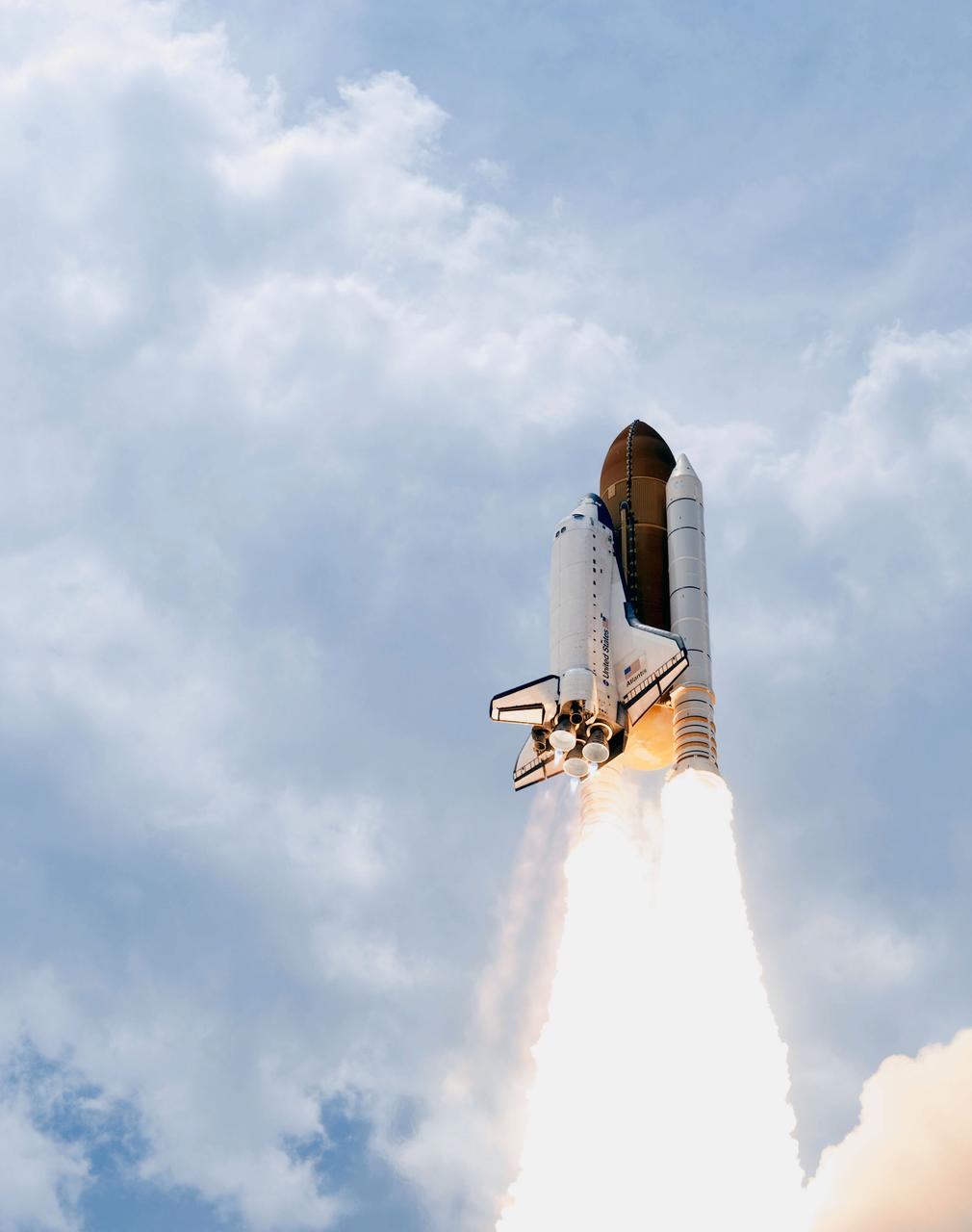
STS125-S-043 (11 May 2009) --- Space Shuttle Atlantis and its seven-member STS-125 crew head toward Earth orbit and rendezvous with NASA?s Hubble Space Telescope. Liftoff was on time at 2:01 p.m. (EDT) on May 11, 2009 from launch pad 39A at NASA's Kennedy Space Center. Onboard are astronauts Scott Altman, commander; Gregory C. Johnson, pilot; Michael Good, Megan McArthur, John Grunsfeld, Mike Massimino and Andrew Feustel, all mission specialists. Atlantis' 11-day flight will include five spacewalks to refurbish and upgrade the telescope with state-of-the-art science instruments that will expand Hubble's capabilities and extend its operational lifespan through at least 2014. The payload includes Wide Field Camera 3, fine guidance sensor and the Cosmic Origins Spectrograph.
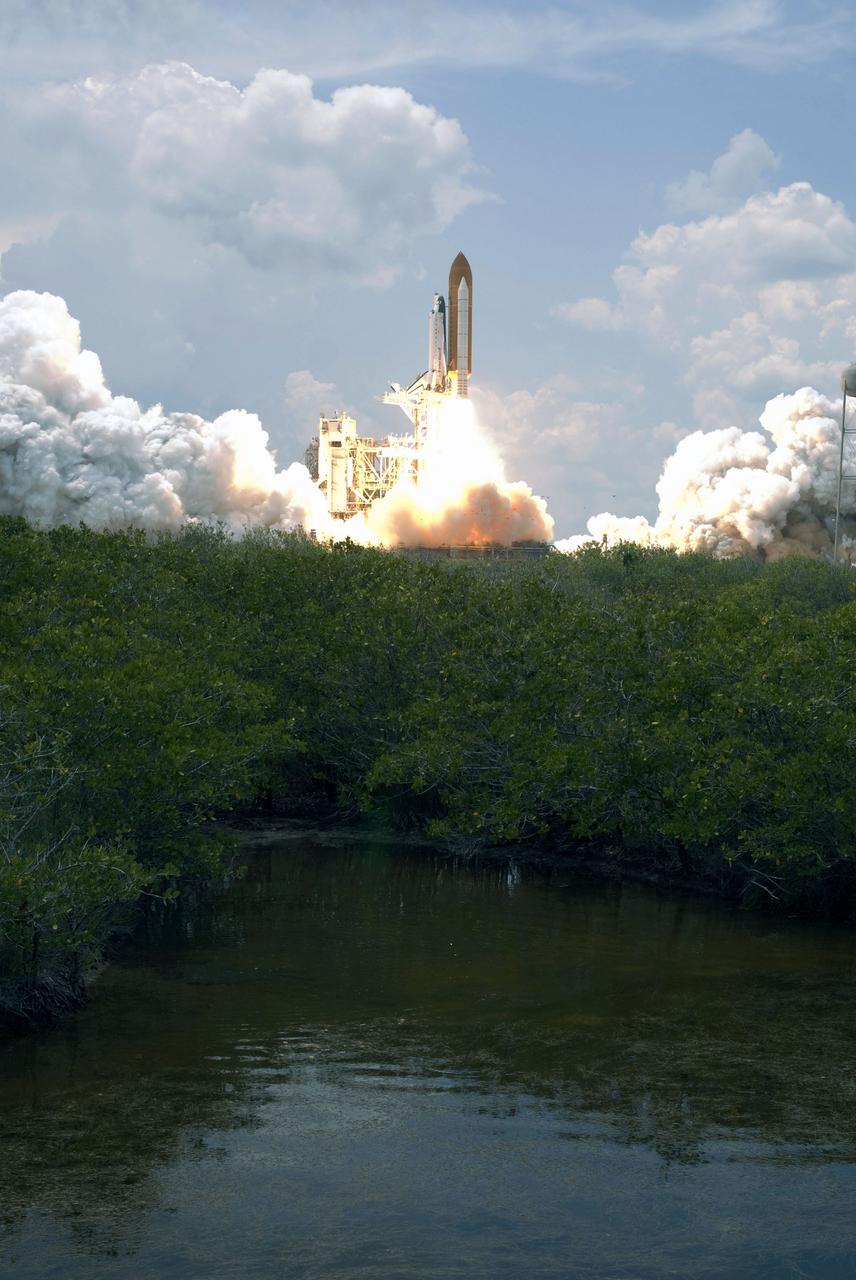
STS125-S-040 (11 May 2009) --- Space Shuttle Atlantis and its seven-member STS-125 crew head toward Earth orbit and rendezvous with NASA?s Hubble Space Telescope. Liftoff was on time at 2:01 p.m. (EDT) on May 11, 2009 from launch pad 39A at NASA's Kennedy Space Center. Onboard are astronauts Scott Altman, commander; Gregory C. Johnson, pilot; Michael Good, Megan McArthur, John Grunsfeld, Mike Massimino and Andrew Feustel, all mission specialists. Atlantis' 11-day flight will include five spacewalks to refurbish and upgrade the telescope with state-of-the-art science instruments that will expand Hubble's capabilities and extend its operational lifespan through at least 2014. The payload includes Wide Field Camera 3, fine guidance sensor and the Cosmic Origins Spectrograph.
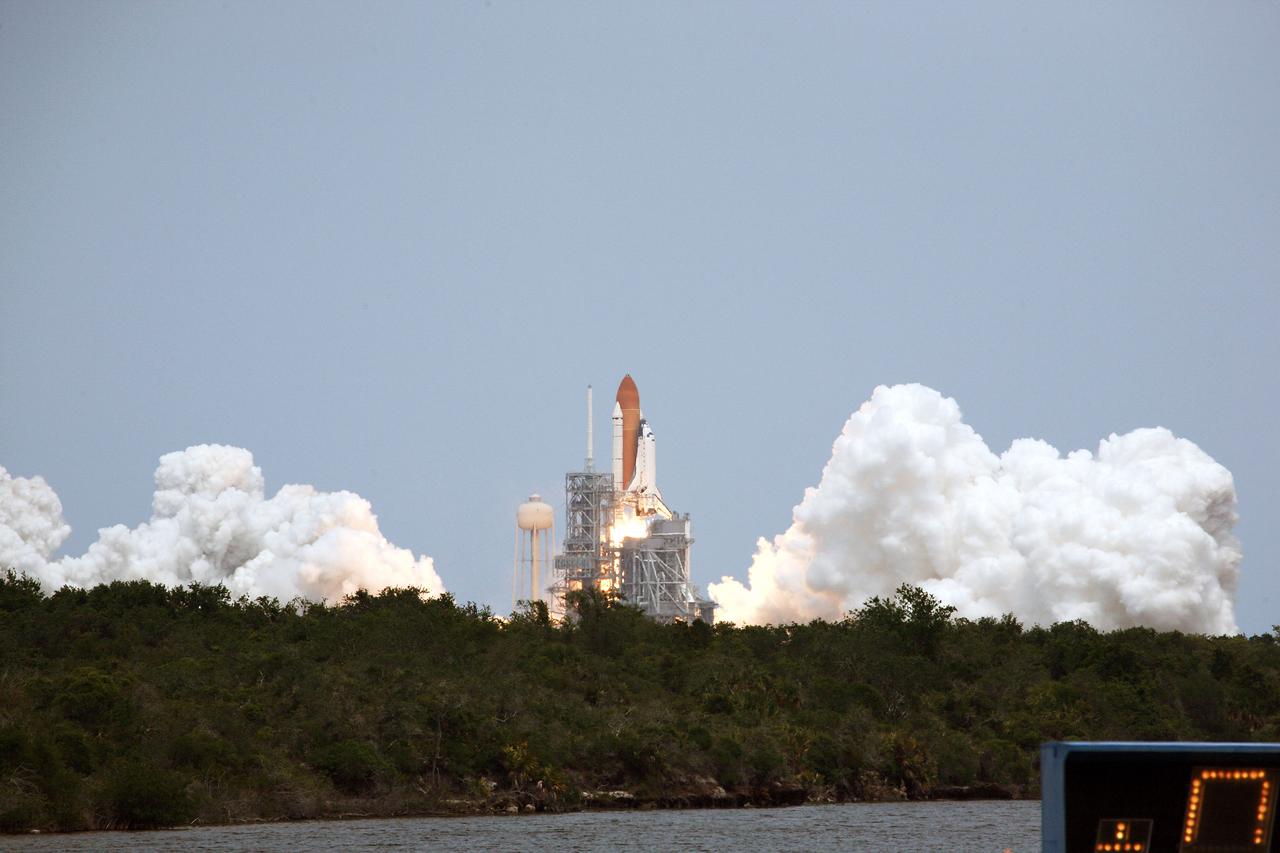
STS125-S-006 (11 May 2009) --- Space Shuttle Atlantis and its seven-member STS-125 crew head toward Earth orbit and rendezvous with NASA?s Hubble Space Telescope. Liftoff was on time at 2:01 p.m. (EDT) on May 11, 2009 from launch pad 39A at NASA's Kennedy Space Center. Onboard are astronauts Scott Altman, commander; Gregory C. Johnson, pilot: Michael Good, Megan McArthur, John Grunsfeld, Mike Massimino and Andrew Feustel, all mission specialists. Atlantis' 11-day flight will include five spacewalks to refurbish and upgrade the telescope with state-of-the-art science instruments that will expand Hubble's capabilities and extend its operational lifespan through at least 2014. The payload includes Wide Field Camera 3, fine guidance sensor and the Cosmic Origins Spectrograph.
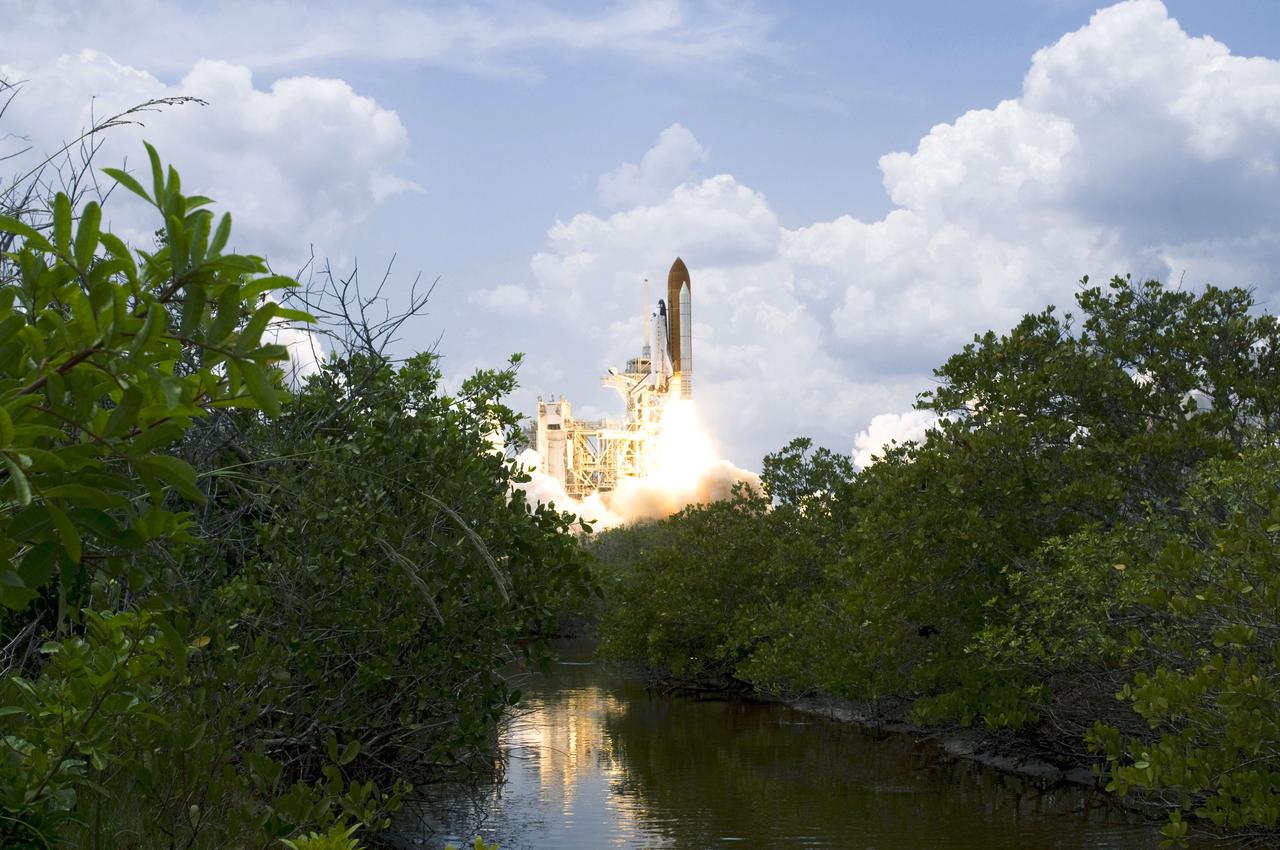
STS125-S-022 (11 May 2009) --- Space Shuttle Atlantis and its seven-member STS-125 crew head toward Earth orbit and rendezvous with NASA?s Hubble Space Telescope. Liftoff was on time at 2:01 p.m. (EDT) on May 11, 2009 from launch pad 39A at NASA's Kennedy Space Center. Onboard are astronauts Scott Altman, commander; Gregory C. Johnson, pilot; Michael Good, Megan McArthur, John Grunsfeld, Mike Massimino and Andrew Feustel, all mission specialists. Atlantis' 11-day flight will include five spacewalks to refurbish and upgrade the telescope with state-of-the-art science instruments that will expand Hubble's capabilities and extend its operational lifespan through at least 2014. The payload includes Wide Field Camera 3, fine guidance sensor and the Cosmic Origins Spectrograph.
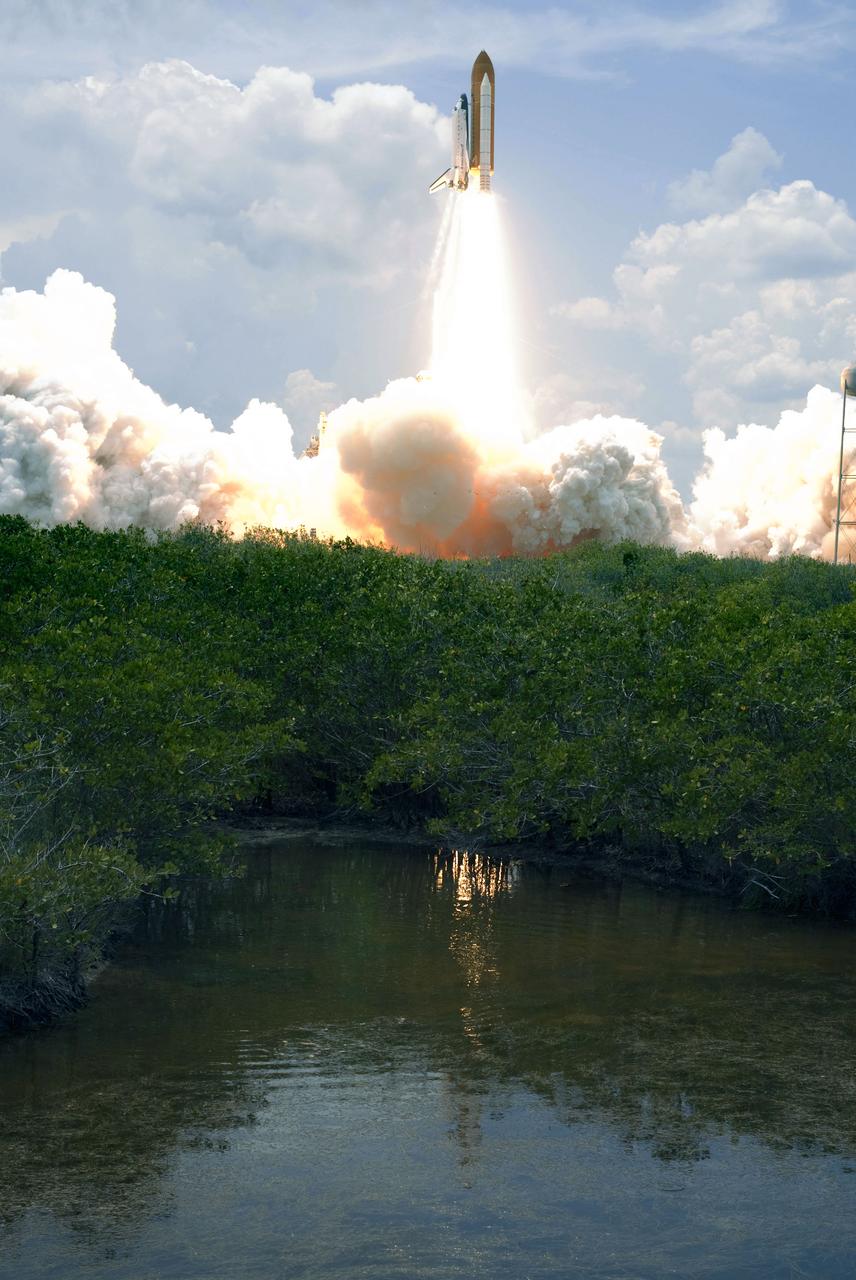
STS125-S-041 (11 May 2009) --- Space Shuttle Atlantis and its seven-member STS-125 crew head toward Earth orbit and rendezvous with NASA?s Hubble Space Telescope. Liftoff was on time at 2:01 p.m. (EDT) on May 11, 2009 from launch pad 39A at NASA's Kennedy Space Center. Onboard are astronauts Scott Altman, commander; Gregory C. Johnson, pilot; Michael Good, Megan McArthur, John Grunsfeld, Mike Massimino and Andrew Feustel, all mission specialists. Atlantis' 11-day flight will include five spacewalks to refurbish and upgrade the telescope with state-of-the-art science instruments that will expand Hubble's capabilities and extend its operational lifespan through at least 2014. The payload includes Wide Field Camera 3, fine guidance sensor and the Cosmic Origins Spectrograph.
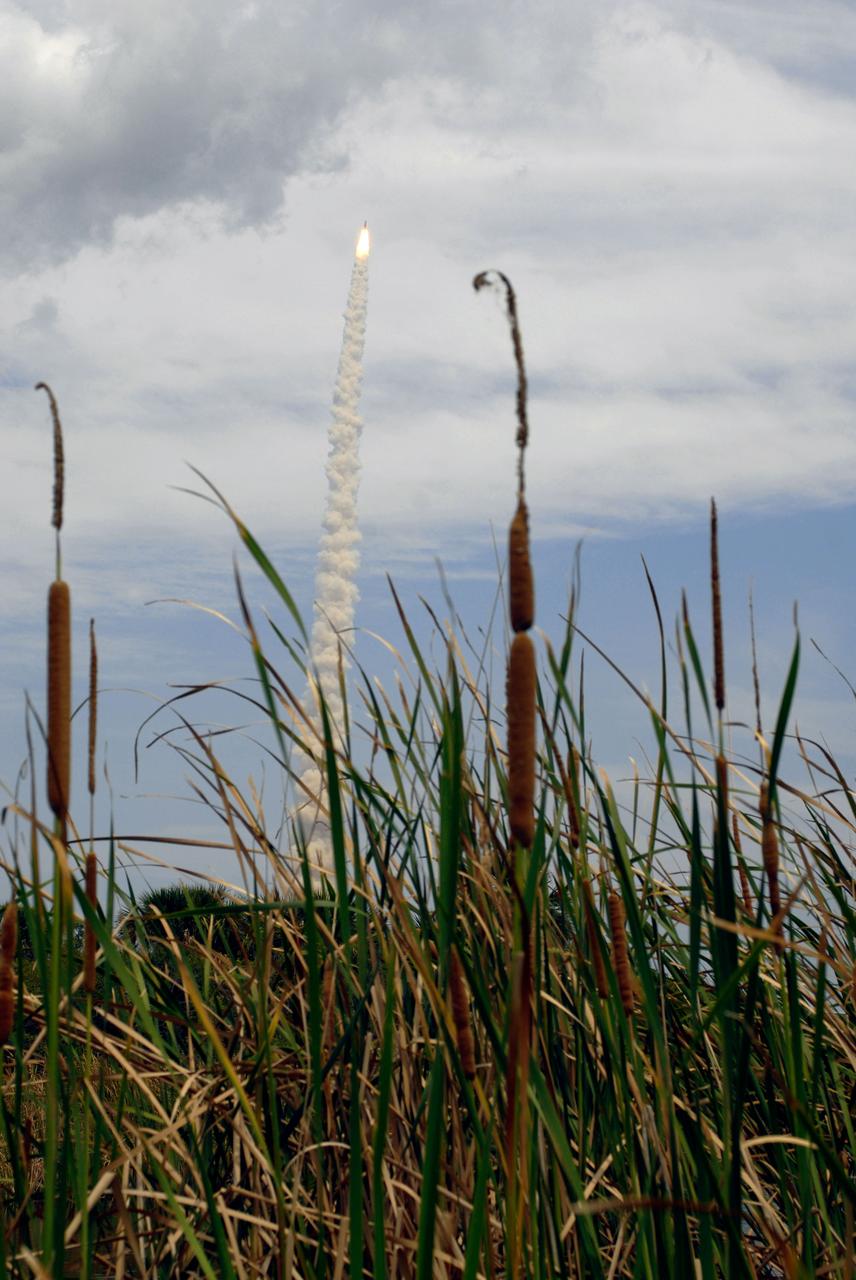
STS125-S-045 (11 May 2009) --- Space Shuttle Atlantis and its seven-member STS-125 crew head toward Earth orbit and rendezvous with NASA?s Hubble Space Telescope. Liftoff was on time at 2:01 p.m. (EDT) on May 11, 2009 from launch pad 39A at NASA's Kennedy Space Center. Onboard are astronauts Scott Altman, commander; Gregory C. Johnson, pilot; Michael Good, Megan McArthur, John Grunsfeld, Mike Massimino and Andrew Feustel, all mission specialists. Atlantis' 11-day flight will include five spacewalks to refurbish and upgrade the telescope with state-of-the-art science instruments that will expand Hubble's capabilities and extend its operational lifespan through at least 2014. The payload includes Wide Field Camera 3, fine guidance sensor and the Cosmic Origins Spectrograph.
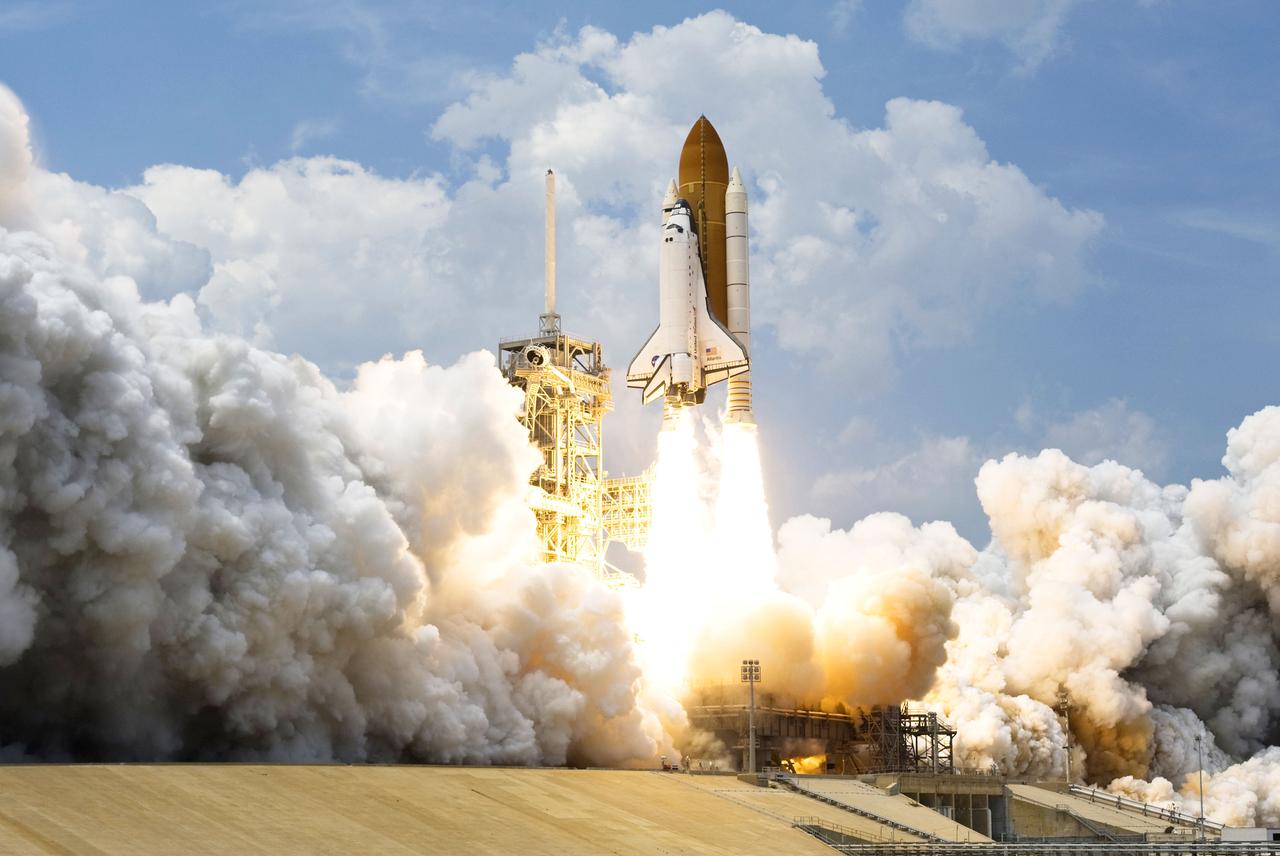
STS125-S-048 (11 May 2009) --- Space Shuttle Atlantis and its seven-member STS-125 crew head toward Earth orbit and rendezvous with NASA?s Hubble Space Telescope. Liftoff was on time at 2:01 p.m. (EDT) on May 11, 2009 from launch pad 39A at NASA's Kennedy Space Center. Onboard are astronauts Scott Altman, commander; Gregory C. Johnson, pilot; Michael Good, Megan McArthur, John Grunsfeld, Mike Massimino and Andrew Feustel, all mission specialists. Atlantis' 11-day flight will include five spacewalks to refurbish and upgrade the telescope with state-of-the-art science instruments that will expand Hubble's capabilities and extend its operational lifespan through at least 2014. The payload includes Wide Field Camera 3, fine guidance sensor and the Cosmic Origins Spectrograph.
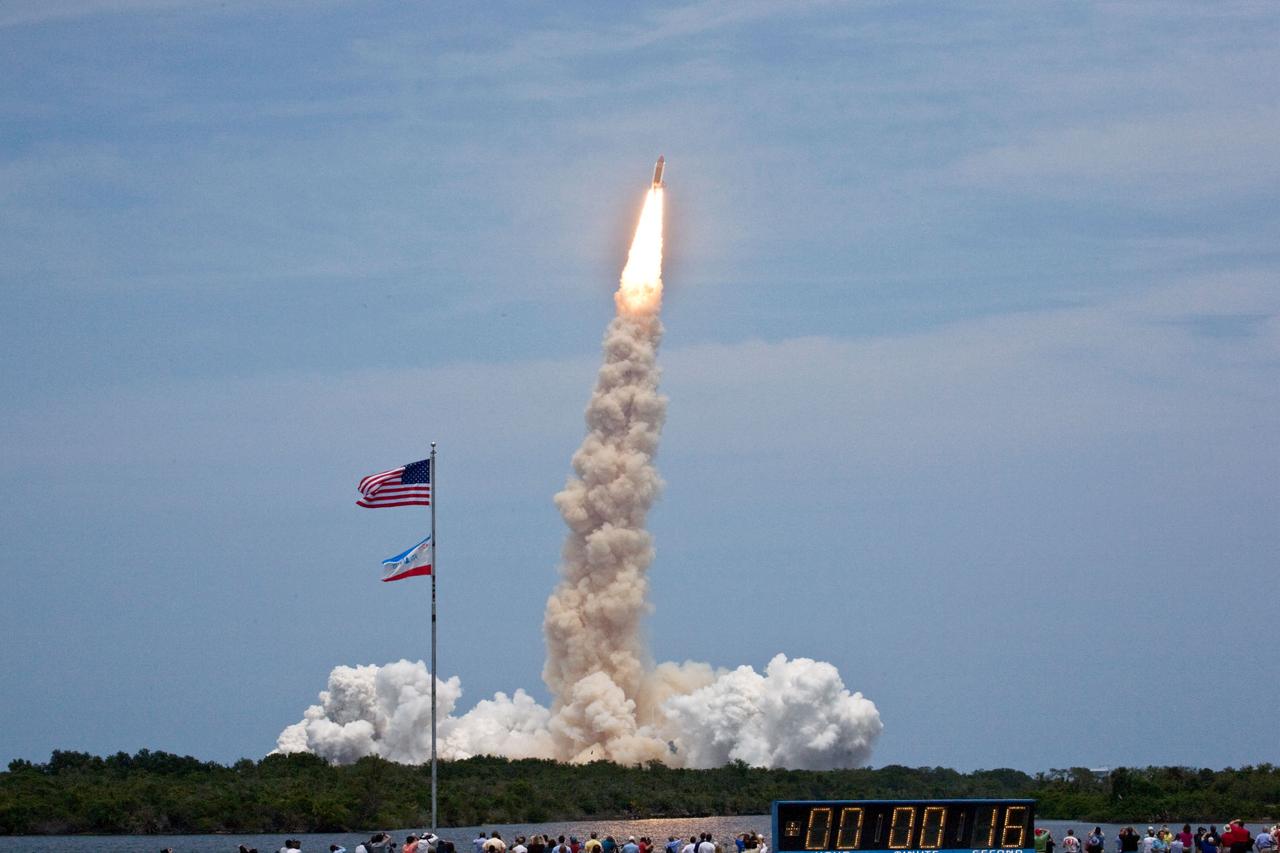
STS125-S-005 (11 May 2009) --- Space Shuttle Atlantis and its seven-member STS-125 crew head toward Earth orbit and rendezvous with NASA?s Hubble Space Telescope. Liftoff was on time at 2:01 p.m. (EDT) on May 11, 2009 from launch pad 39A at NASA's Kennedy Space Center. Onboard are astronauts Scott Altman, commander; Gregory C. Johnson, pilot: Michael Good, Megan McArthur, John Grunsfeld, Mike Massimino and Andrew Feustel, all mission specialists. Atlantis' 11-day flight will include five spacewalks to refurbish and upgrade the telescope with state-of-the-art science instruments that will expand Hubble's capabilities and extend its operational lifespan through at least 2014. The payload includes Wide Field Camera 3, fine guidance sensor and the Cosmic Origins Spectrograph.
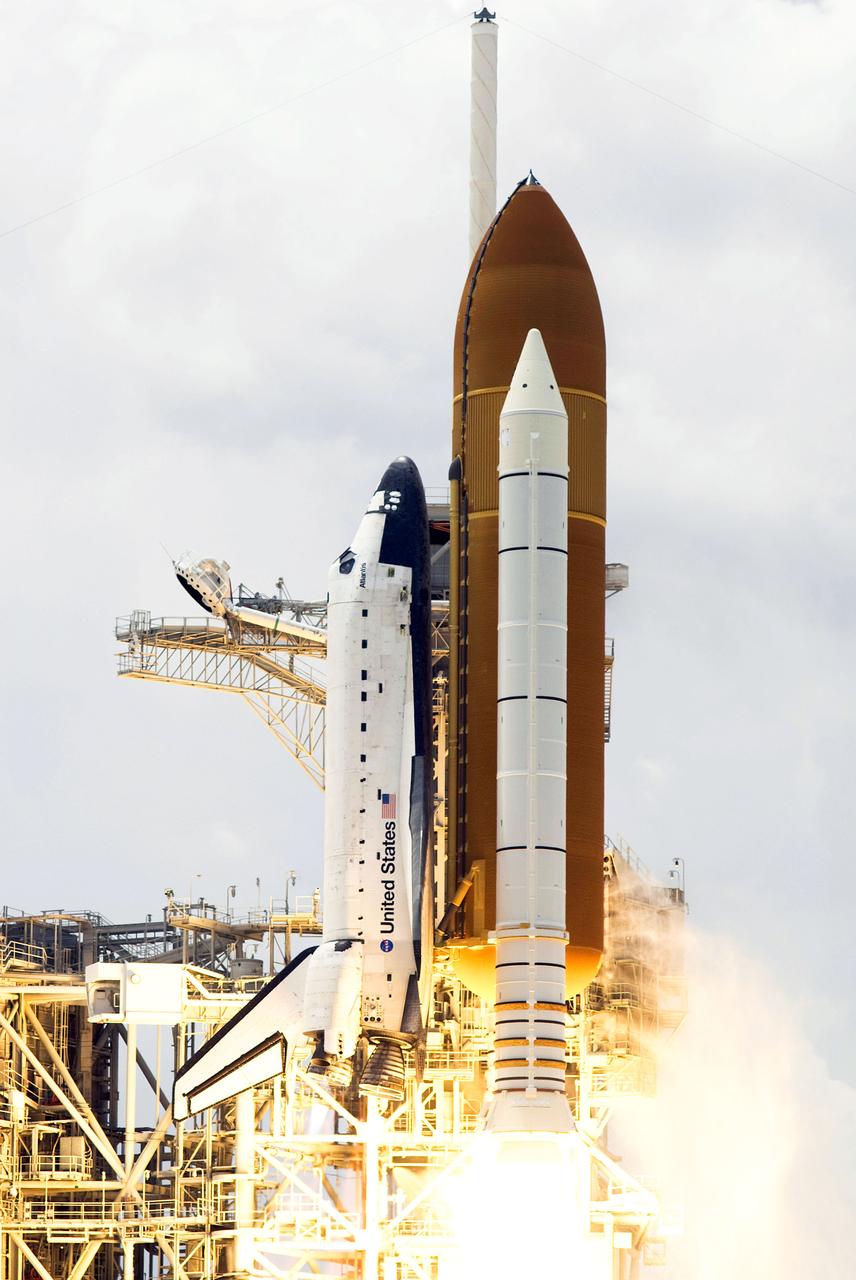
STS125-S-033 (11 May 2009) --- Space Shuttle Atlantis and its seven-member STS-125 crew head toward Earth orbit and rendezvous with NASA?s Hubble Space Telescope. Liftoff was on time at 2:01 p.m. (EDT) on May 11, 2009 from launch pad 39A at NASA's Kennedy Space Center. Onboard are astronauts Scott Altman, commander; Gregory C. Johnson, pilot; Michael Good, Megan McArthur, John Grunsfeld, Mike Massimino and Andrew Feustel, all mission specialists. Atlantis' 11-day flight will include five spacewalks to refurbish and upgrade the telescope with state-of-the-art science instruments that will expand Hubble's capabilities and extend its operational lifespan through at least 2014. The payload includes Wide Field Camera 3, fine guidance sensor and the Cosmic Origins Spectrograph.
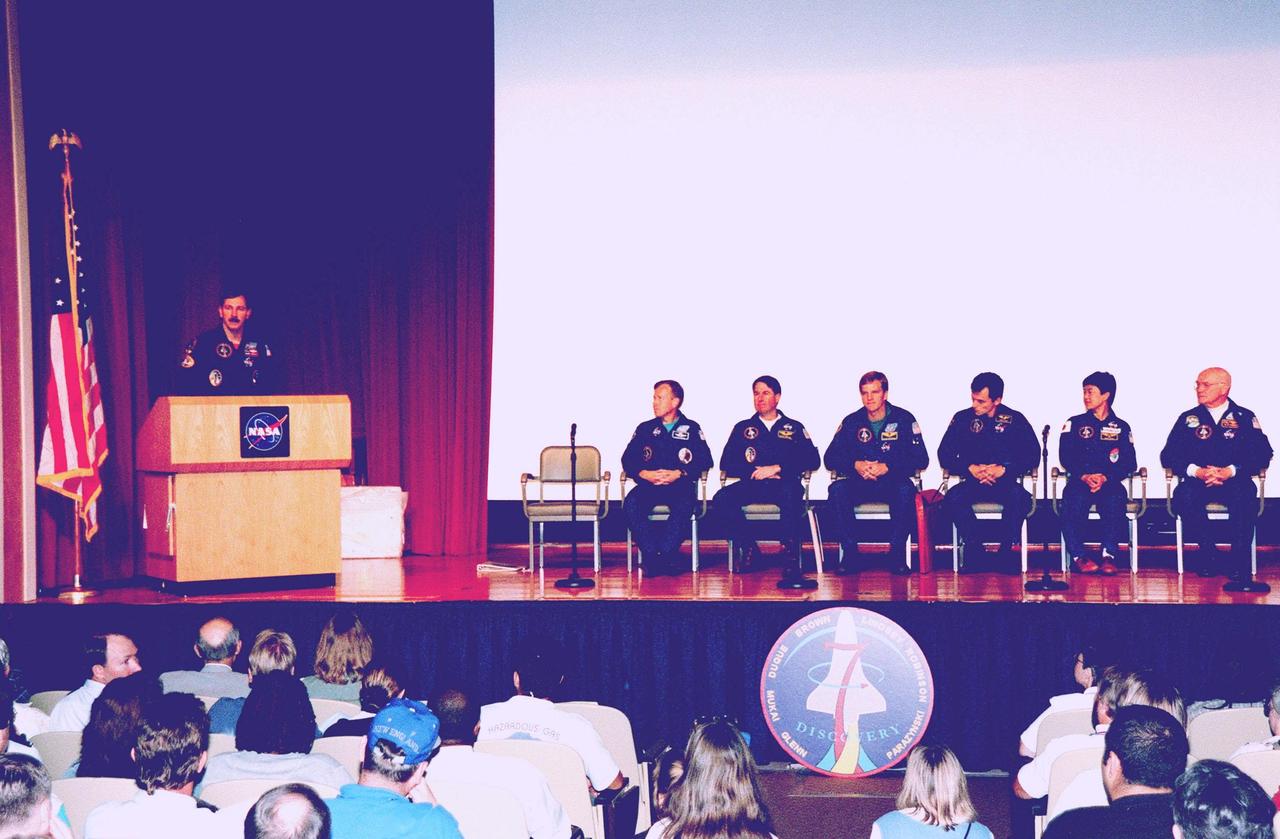
In the Kennedy Space Center (KSC) Training Auditorium, STS-95 Commander Curtis L. Brown Jr. (at podium) addresses KSC employees who were invited to hear the STS-95 crew describe their experiences during their successful mission dedicated to microgravity research and to view a videotape of the highlights of the mission. The other STS-95 crew members are (seated, from left to right) Pilot Steven W. Lindsey; Mission Specialist and Payload Commander Stephen K. Robinson; Mission Specialists Scott E. Parazynski and Pedro Duque, with the European Space Agency (ESA); and Payload Specialists Chiaki Mukai, with the National Space Development Agency of Japan (NASDA), and John H. Glenn Jr., a senator from Ohio and one of the original seven Project Mercury astronauts. Later in the afternoon, the crew will participate in a parade down State Road A1A in nearby Cocoa Beach, reminiscent of those held after missions during the Mercury Program
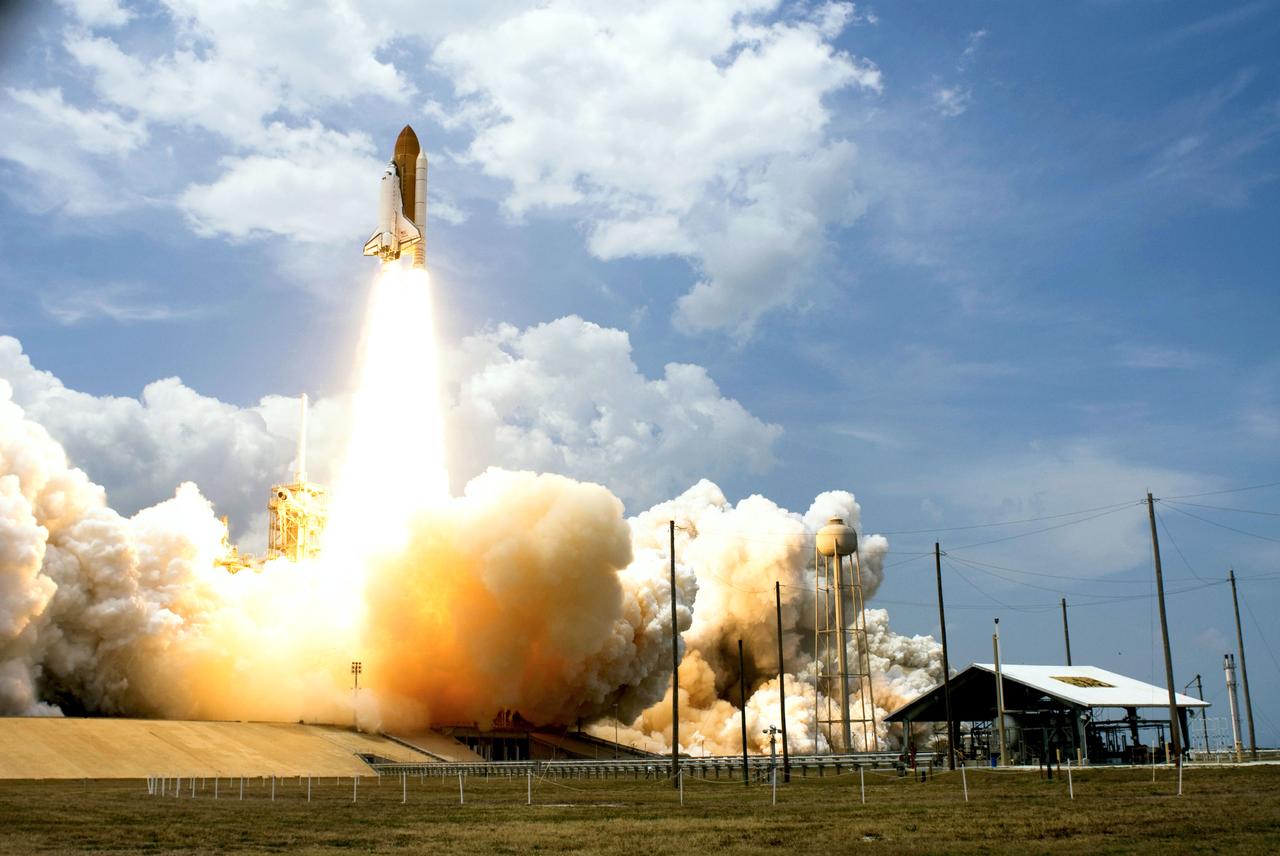
STS125-S-037 (11 May 2009) --- Space Shuttle Atlantis and its seven-member STS-125 crew head toward Earth orbit and rendezvous with NASA?s Hubble Space Telescope. Liftoff was on time at 2:01 p.m. (EDT) on May 11, 2009 from launch pad 39A at NASA's Kennedy Space Center. Onboard are astronauts Scott Altman, commander; Gregory C. Johnson, pilot; Michael Good, Megan McArthur, John Grunsfeld, Mike Massimino and Andrew Feustel, all mission specialists. Atlantis' 11-day flight will include five spacewalks to refurbish and upgrade the telescope with state-of-the-art science instruments that will expand Hubble's capabilities and extend its operational lifespan through at least 2014. The payload includes Wide Field Camera 3, fine guidance sensor and the Cosmic Origins Spectrograph.
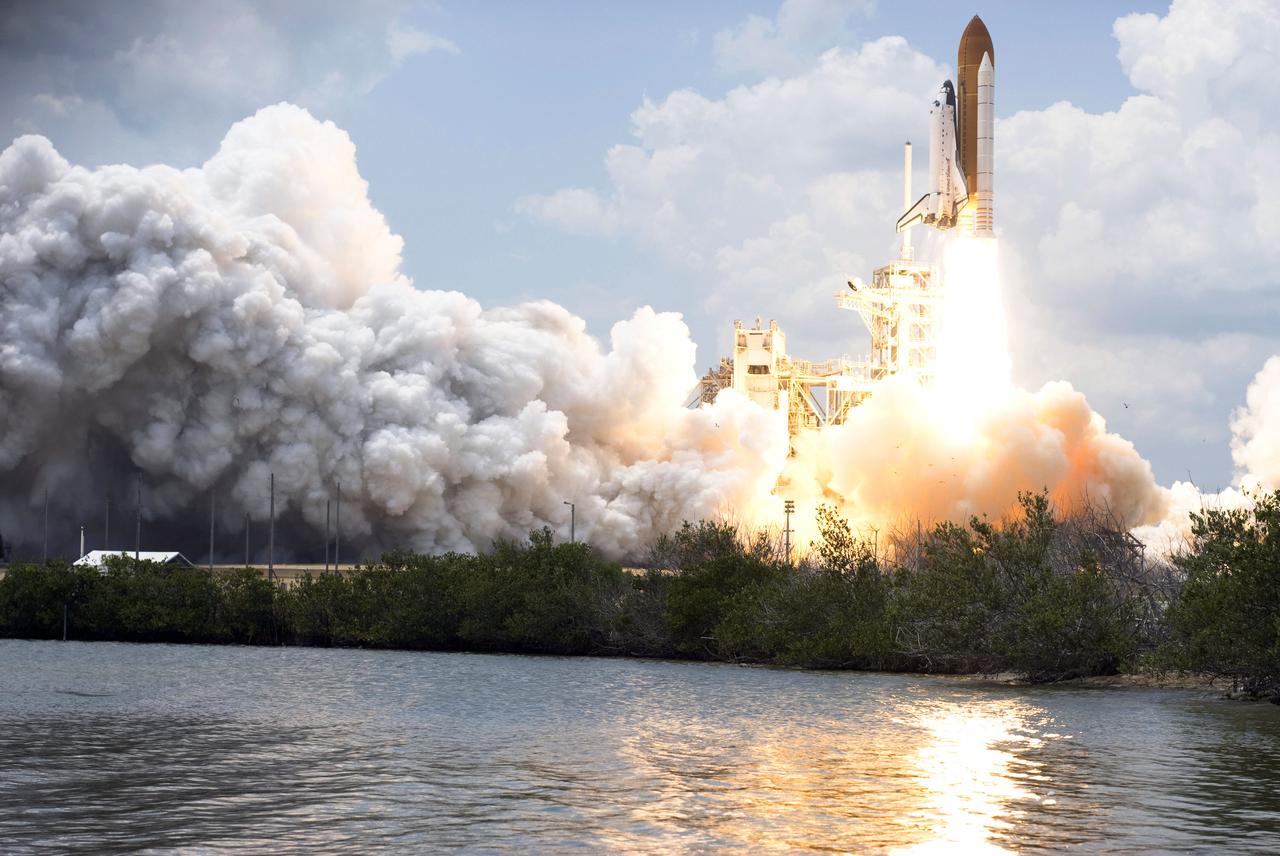
STS125-S-028 (11 May 2009) --- Space Shuttle Atlantis and its seven-member STS-125 crew head toward Earth orbit and rendezvous with NASA?s Hubble Space Telescope. Liftoff was on time at 2:01 p.m. (EDT) on May 11, 2009 from launch pad 39A at NASA's Kennedy Space Center. Onboard are astronauts Scott Altman, commander; Gregory C. Johnson, pilot; Michael Good, Megan McArthur, John Grunsfeld, Mike Massimino and Andrew Feustel, all mission specialists. Atlantis' 11-day flight will include five spacewalks to refurbish and upgrade the telescope with state-of-the-art science instruments that will expand Hubble's capabilities and extend its operational lifespan through at least 2014. The payload includes Wide Field Camera 3, fine guidance sensor and the Cosmic Origins Spectrograph.
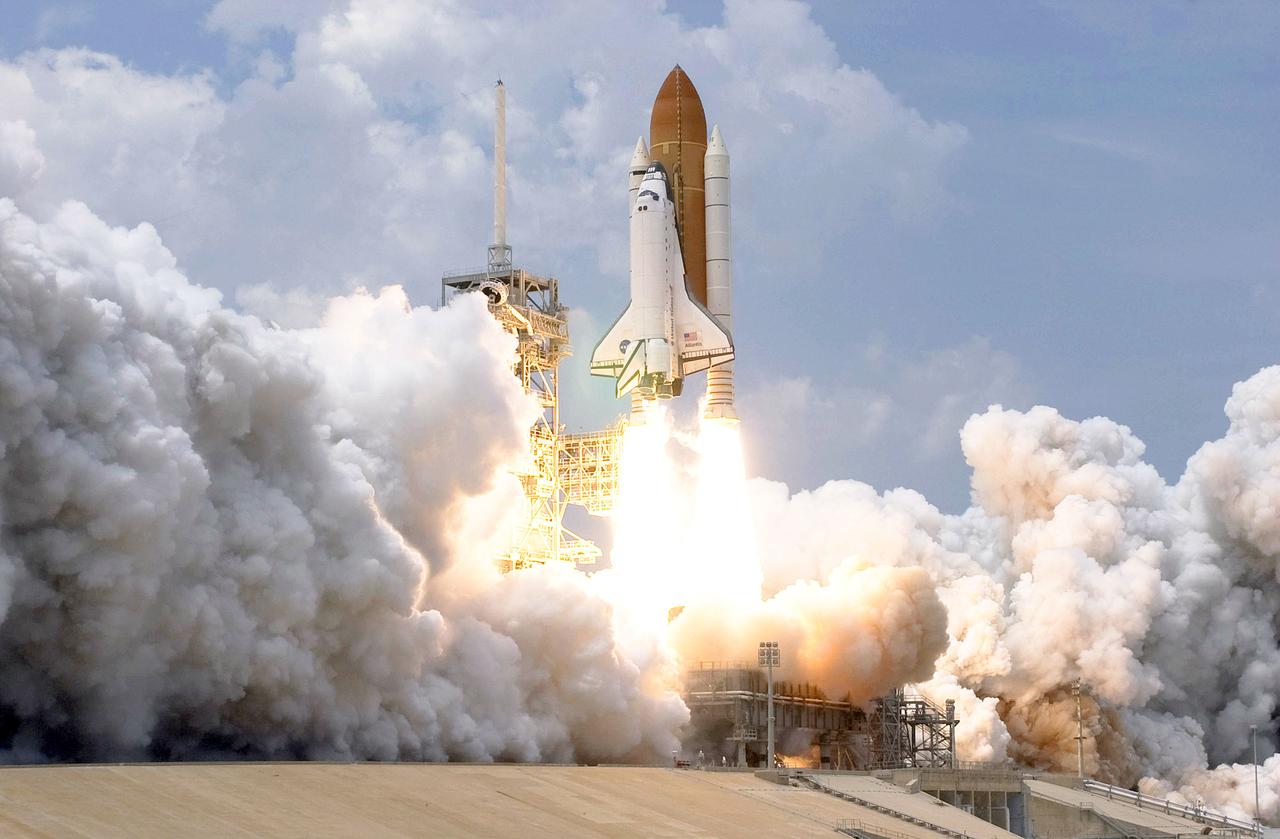
STS125-S-032 (11 May 2009) --- Space Shuttle Atlantis and its seven-member STS-125 crew head toward Earth orbit and rendezvous with NASA?s Hubble Space Telescope. Liftoff was on time at 2:01 p.m. (EDT) on May 11, 2009 from launch pad 39A at NASA's Kennedy Space Center. Onboard are astronauts Scott Altman, commander; Gregory C. Johnson, pilot; Michael Good, Megan McArthur, John Grunsfeld, Mike Massimino and Andrew Feustel, all mission specialists. Atlantis' 11-day flight will include five spacewalks to refurbish and upgrade the telescope with state-of-the-art science instruments that will expand Hubble's capabilities and extend its operational lifespan through at least 2014. The payload includes Wide Field Camera 3, fine guidance sensor and the Cosmic Origins Spectrograph.
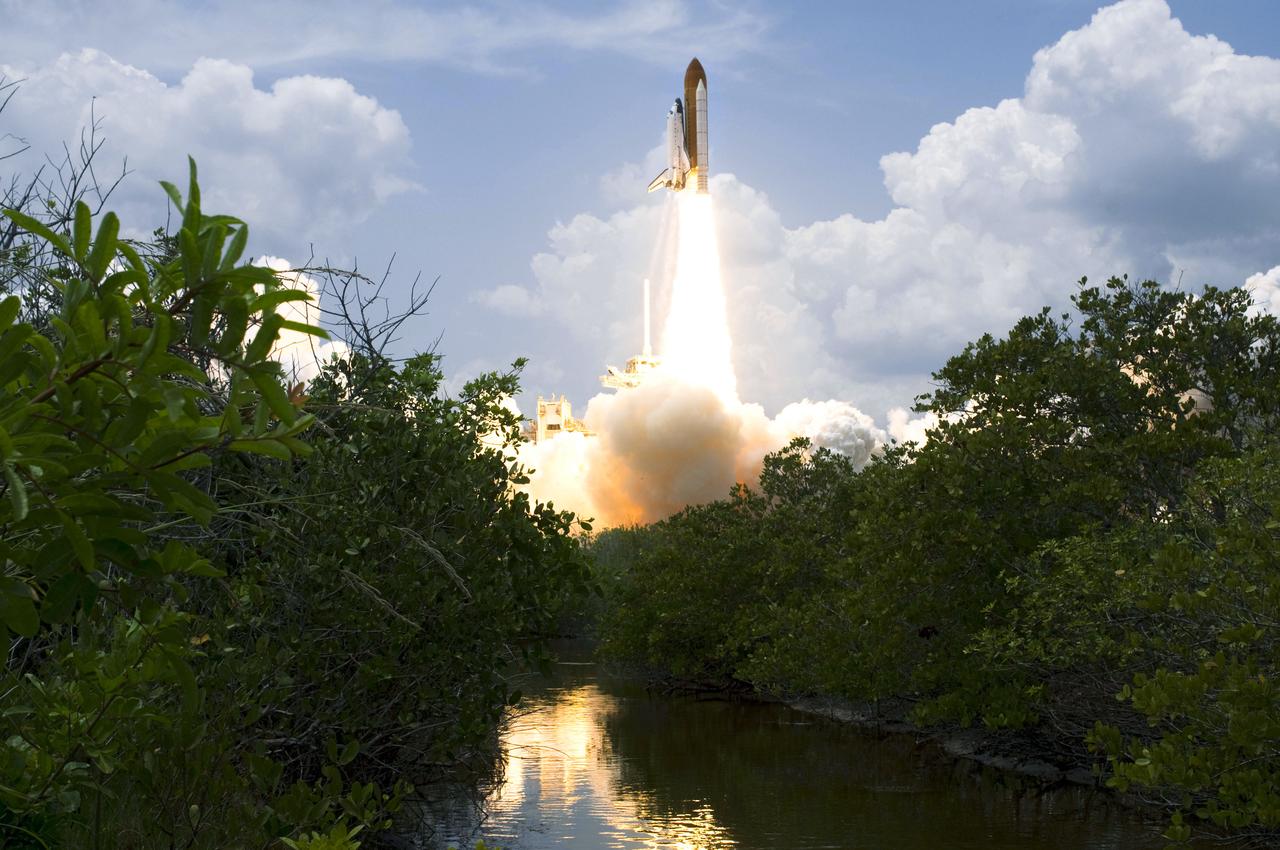
STS125-S-023 (11 May 2009) --- Space Shuttle Atlantis and its seven-member STS-125 crew head toward Earth orbit and rendezvous with NASA?s Hubble Space Telescope. Liftoff was on time at 2:01 p.m. (EDT) on May 11, 2009 from launch pad 39A at NASA's Kennedy Space Center. Onboard are astronauts Scott Altman, commander; Gregory C. Johnson, pilot; Michael Good, Megan McArthur, John Grunsfeld, Mike Massimino and Andrew Feustel, all mission specialists. Atlantis' 11-day flight will include five spacewalks to refurbish and upgrade the telescope with state-of-the-art science instruments that will expand Hubble's capabilities and extend its operational lifespan through at least 2014. The payload includes Wide Field Camera 3, fine guidance sensor and the Cosmic Origins Spectrograph.
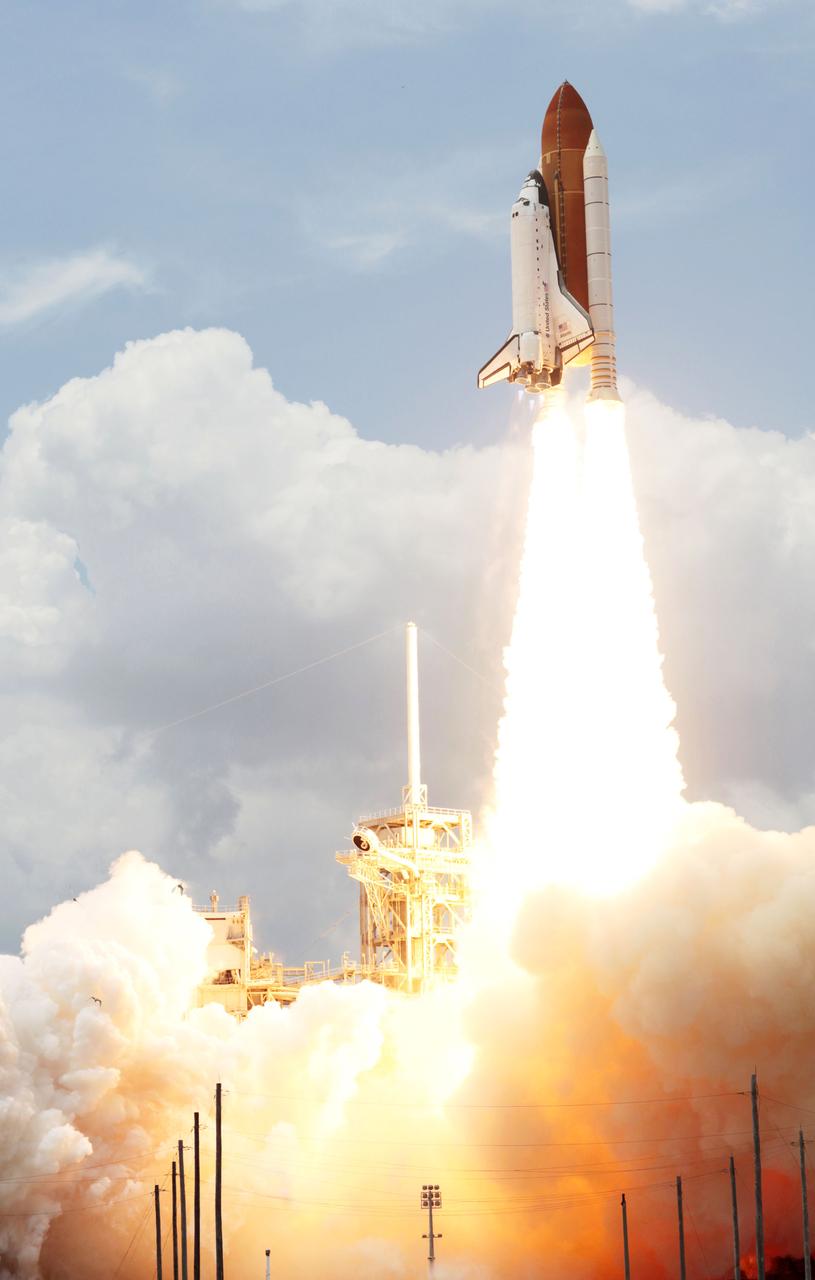
STS125-S-054 (11 May 2009) --- Space Shuttle Atlantis and its seven-member STS-125 crew head toward Earth orbit and rendezvous with NASA?s Hubble Space Telescope. Liftoff was on time at 2:01 p.m. (EDT) on May 11, 2009 from launch pad 39A at NASA's Kennedy Space Center. Onboard are astronauts Scott Altman, commander; Gregory C. Johnson, pilot; Michael Good, Megan McArthur, John Grunsfeld, Mike Massimino and Andrew Feustel, all mission specialists. Atlantis' 11-day flight will include five spacewalks to refurbish and upgrade the telescope with state-of-the-art science instruments that will expand Hubble's capabilities and extend its operational lifespan through at least 2014. The payload includes Wide Field Camera 3, fine guidance sensor and the Cosmic Origins Spectrograph.
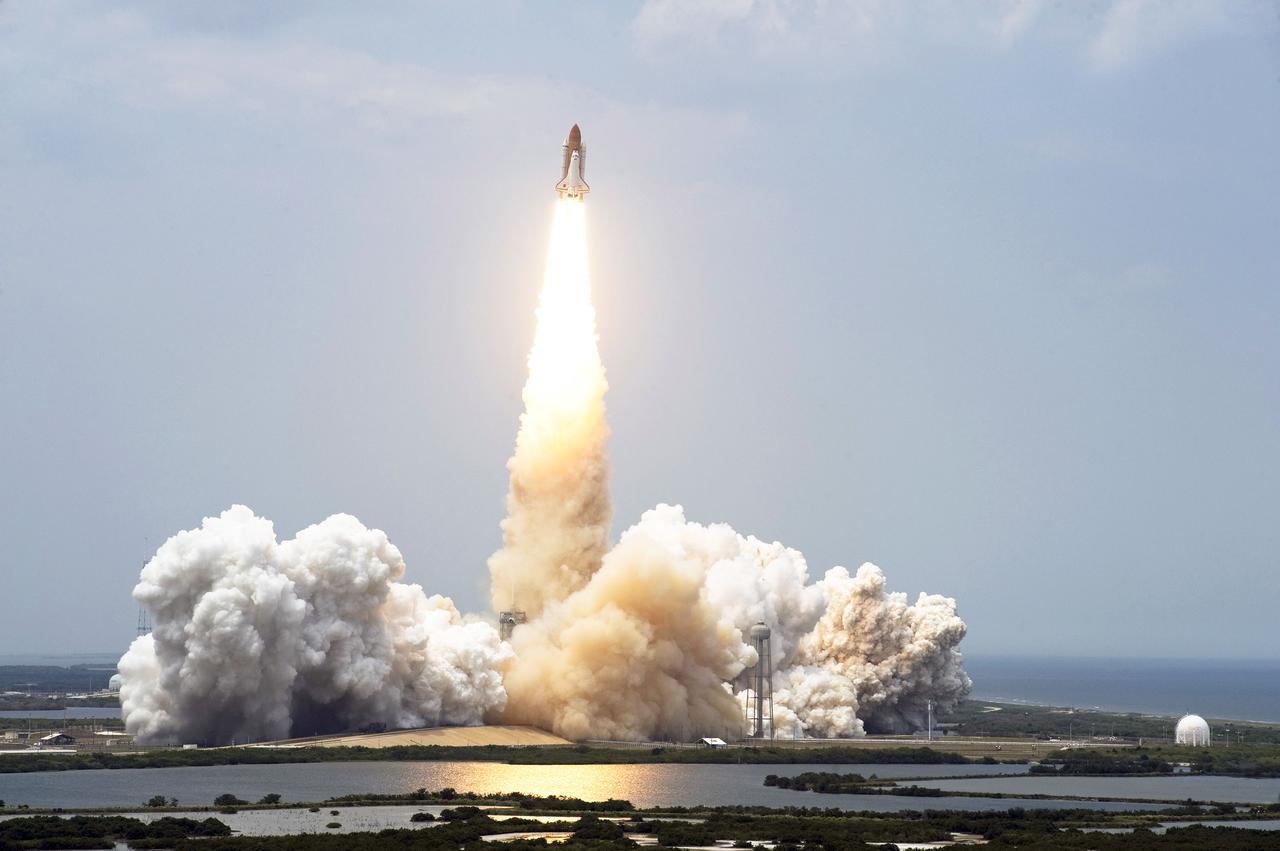
STS125-S-056 (11 May 2009) --- Space Shuttle Atlantis and its seven-member STS-125 crew head toward Earth orbit and rendezvous with NASA?s Hubble Space Telescope. Liftoff was on time at 2:01 p.m. (EDT) on May 11, 2009 from launch pad 39A at NASA's Kennedy Space Center. Onboard are astronauts Scott Altman, commander; Gregory C. Johnson, pilot; Michael Good, Megan McArthur, John Grunsfeld, Mike Massimino and Andrew Feustel, all mission specialists. Atlantis' 11-day flight will include five spacewalks to refurbish and upgrade the telescope with state-of-the-art science instruments that will expand Hubble's capabilities and extend its operational lifespan through at least 2014. The payload includes Wide Field Camera 3, fine guidance sensor and the Cosmic Origins Spectrograph.
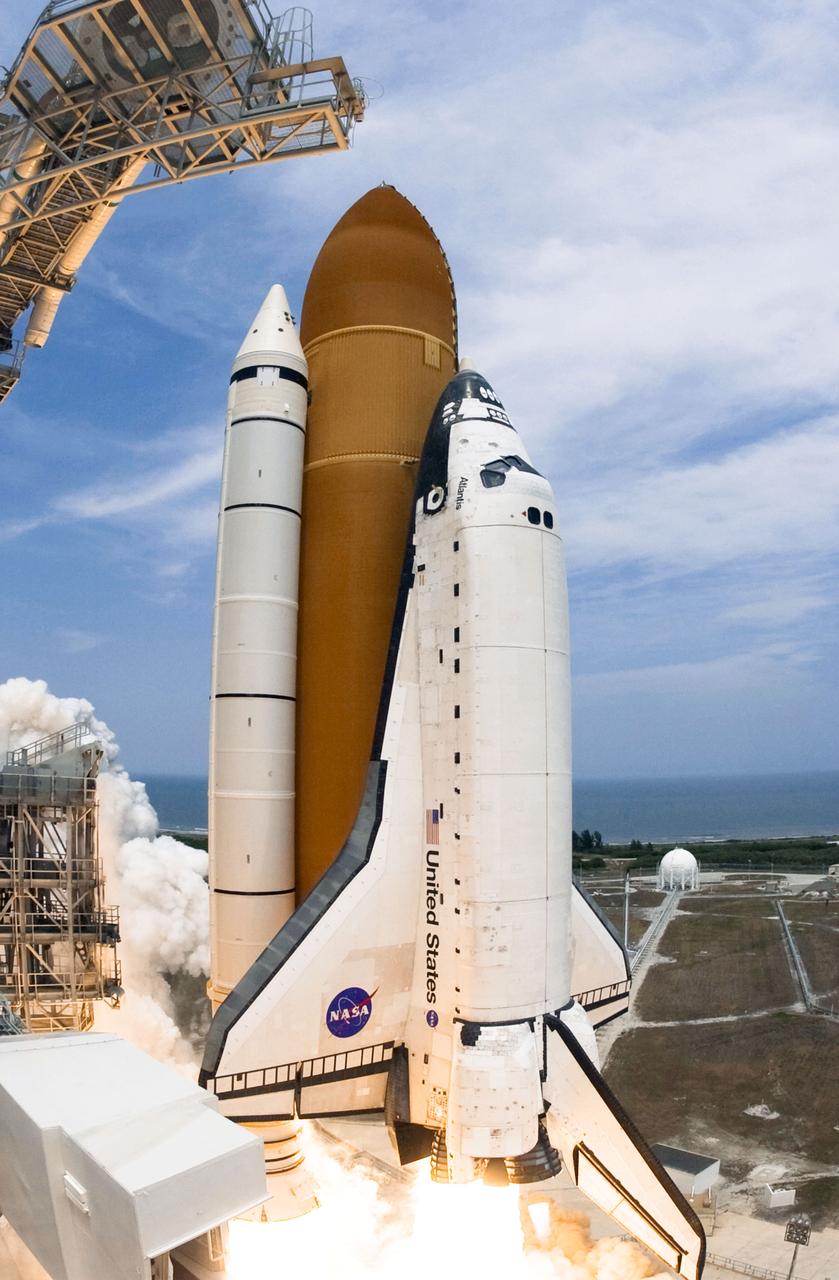
STS125-S-044 (11 May 2009) --- Space Shuttle Atlantis and its seven-member STS-125 crew head toward Earth orbit and rendezvous with NASA?s Hubble Space Telescope. Liftoff was on time at 2:01 p.m. (EDT) on May 11, 2009 from launch pad 39A at NASA's Kennedy Space Center. Onboard are astronauts Scott Altman, commander; Gregory C. Johnson, pilot; Michael Good, Megan McArthur, John Grunsfeld, Mike Massimino and Andrew Feustel, all mission specialists. Atlantis' 11-day flight will include five spacewalks to refurbish and upgrade the telescope with state-of-the-art science instruments that will expand Hubble's capabilities and extend its operational lifespan through at least 2014. The payload includes Wide Field Camera 3, fine guidance sensor and the Cosmic Origins Spectrograph.
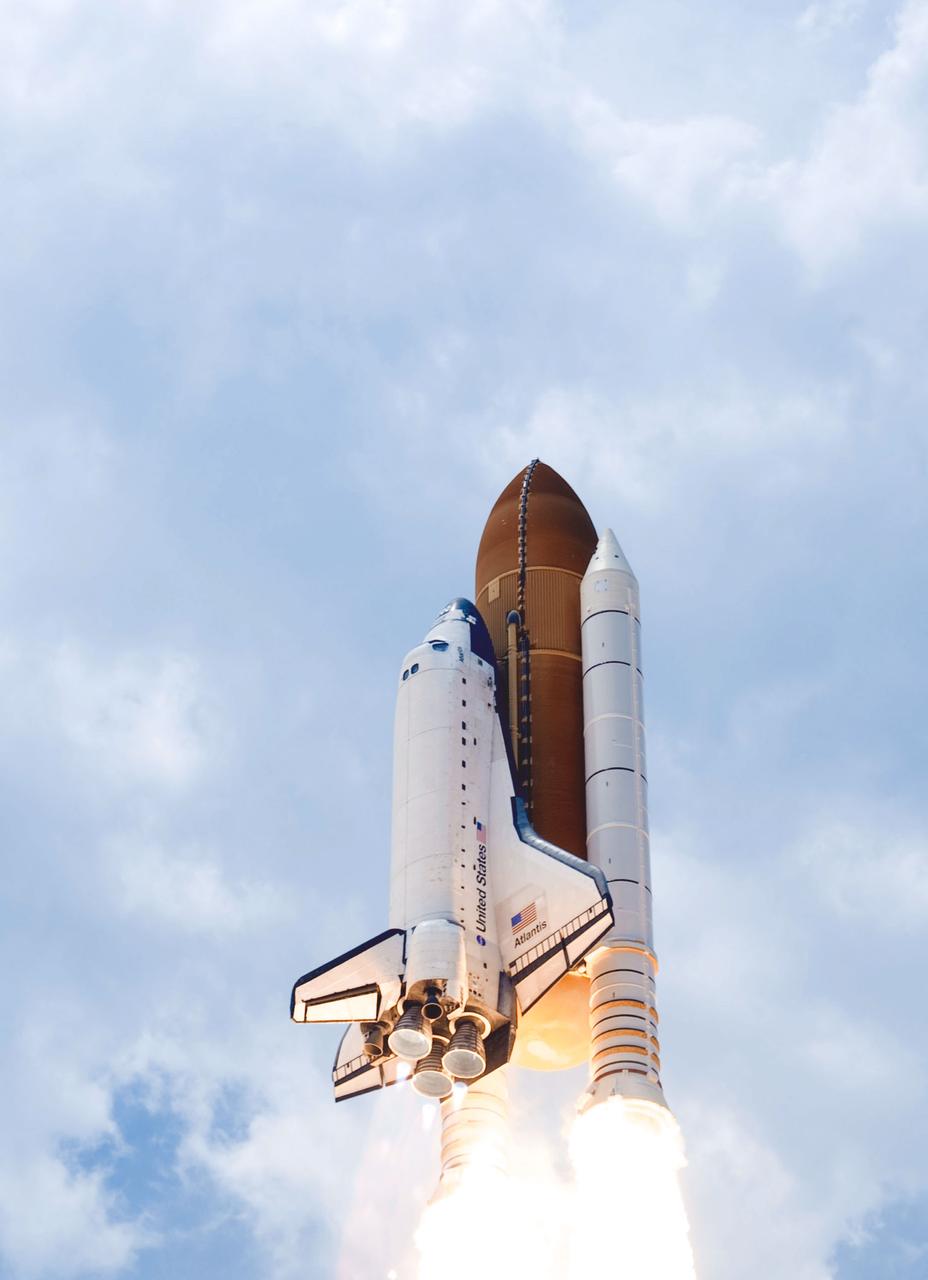
STS125-S-042 (11 May 2009) --- Space Shuttle Atlantis and its seven-member STS-125 crew head toward Earth orbit and rendezvous with NASA?s Hubble Space Telescope. Liftoff was on time at 2:01 p.m. (EDT) on May 11, 2009 from launch pad 39A at NASA's Kennedy Space Center. Onboard are astronauts Scott Altman, commander; Gregory C. Johnson, pilot; Michael Good, Megan McArthur, John Grunsfeld, Mike Massimino and Andrew Feustel, all mission specialists. Atlantis' 11-day flight will include five spacewalks to refurbish and upgrade the telescope with state-of-the-art science instruments that will expand Hubble's capabilities and extend its operational lifespan through at least 2014. The payload includes Wide Field Camera 3, fine guidance sensor and the Cosmic Origins Spectrograph.
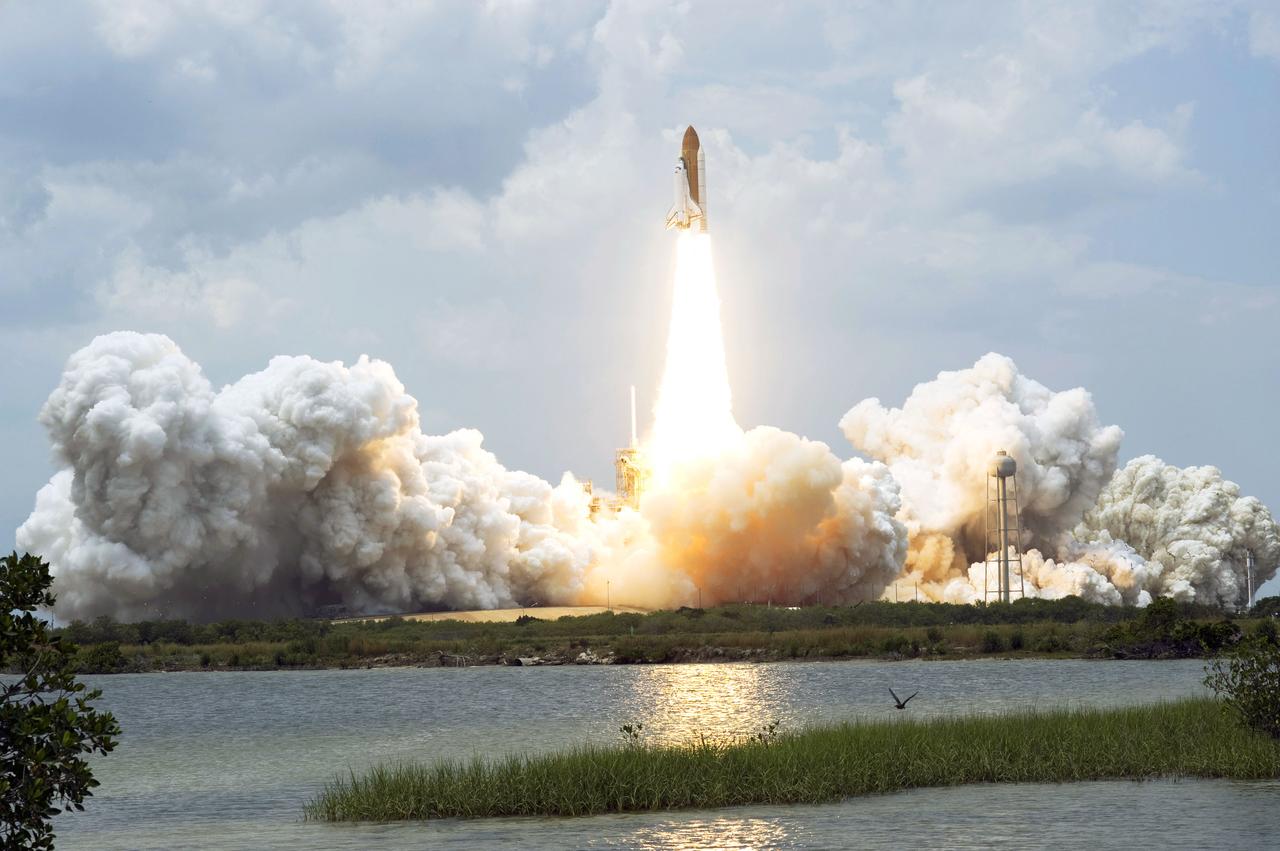
STS125-S-025 (11 May 2009) --- Space Shuttle Atlantis and its seven-member STS-125 crew head toward Earth orbit and rendezvous with NASA?s Hubble Space Telescope. Liftoff was on time at 2:01 p.m. (EDT) on May 11, 2009 from launch pad 39A at NASA's Kennedy Space Center. Onboard are astronauts Scott Altman, commander; Gregory C. Johnson, pilot; Michael Good, Megan McArthur, John Grunsfeld, Mike Massimino and Andrew Feustel, all mission specialists. Atlantis' 11-day flight will include five spacewalks to refurbish and upgrade the telescope with state-of-the-art science instruments that will expand Hubble's capabilities and extend its operational lifespan through at least 2014. The payload includes Wide Field Camera 3, fine guidance sensor and the Cosmic Origins Spectrograph.
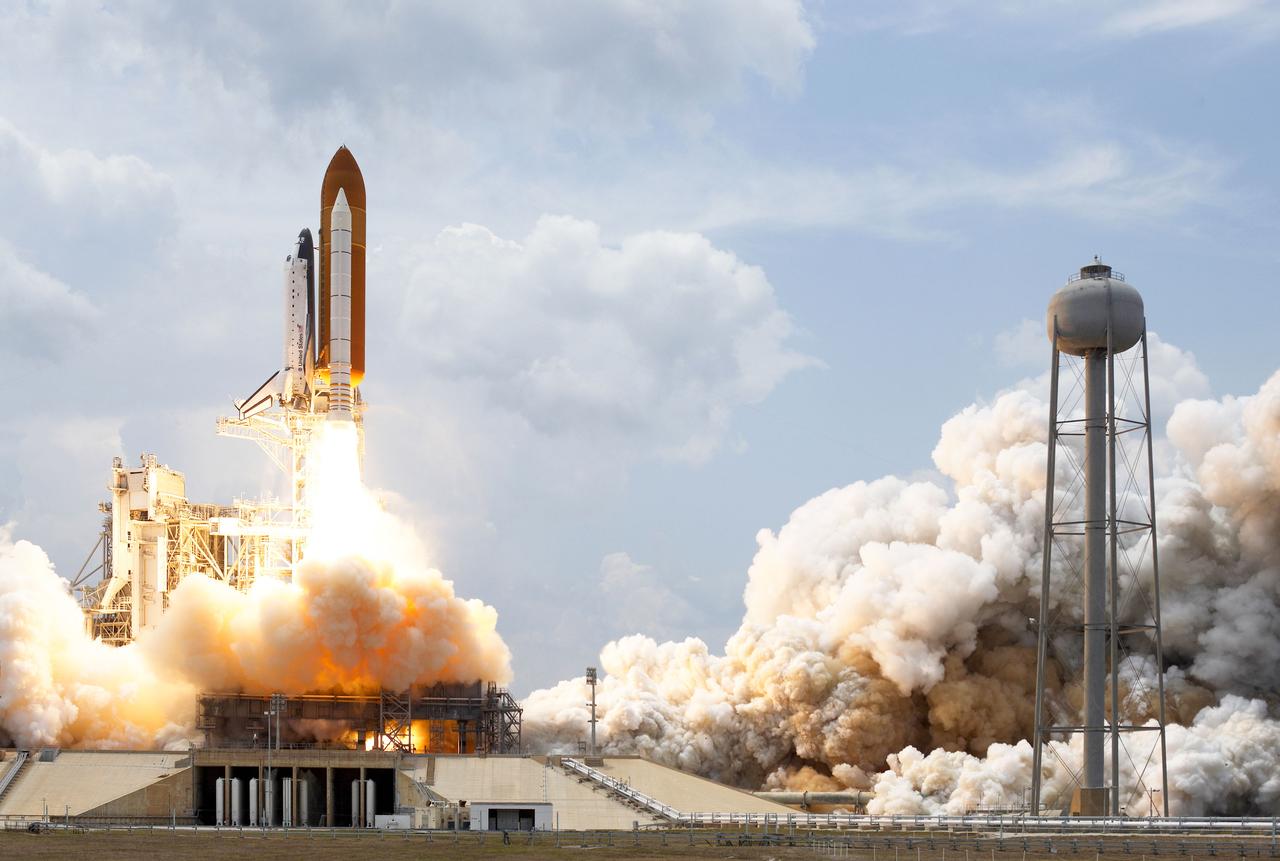
STS125-S-055 (11 May 2009) --- Space Shuttle Atlantis and its seven-member STS-125 crew head toward Earth orbit and rendezvous with NASA?s Hubble Space Telescope. Liftoff was on time at 2:01 p.m. (EDT) on May 11, 2009 from launch pad 39A at NASA's Kennedy Space Center. Onboard are astronauts Scott Altman, commander; Gregory C. Johnson, pilot; Michael Good, Megan McArthur, John Grunsfeld, Mike Massimino and Andrew Feustel, all mission specialists. Atlantis' 11-day flight will include five spacewalks to refurbish and upgrade the telescope with state-of-the-art science instruments that will expand Hubble's capabilities and extend its operational lifespan through at least 2014. The payload includes Wide Field Camera 3, fine guidance sensor and the Cosmic Origins Spectrograph.
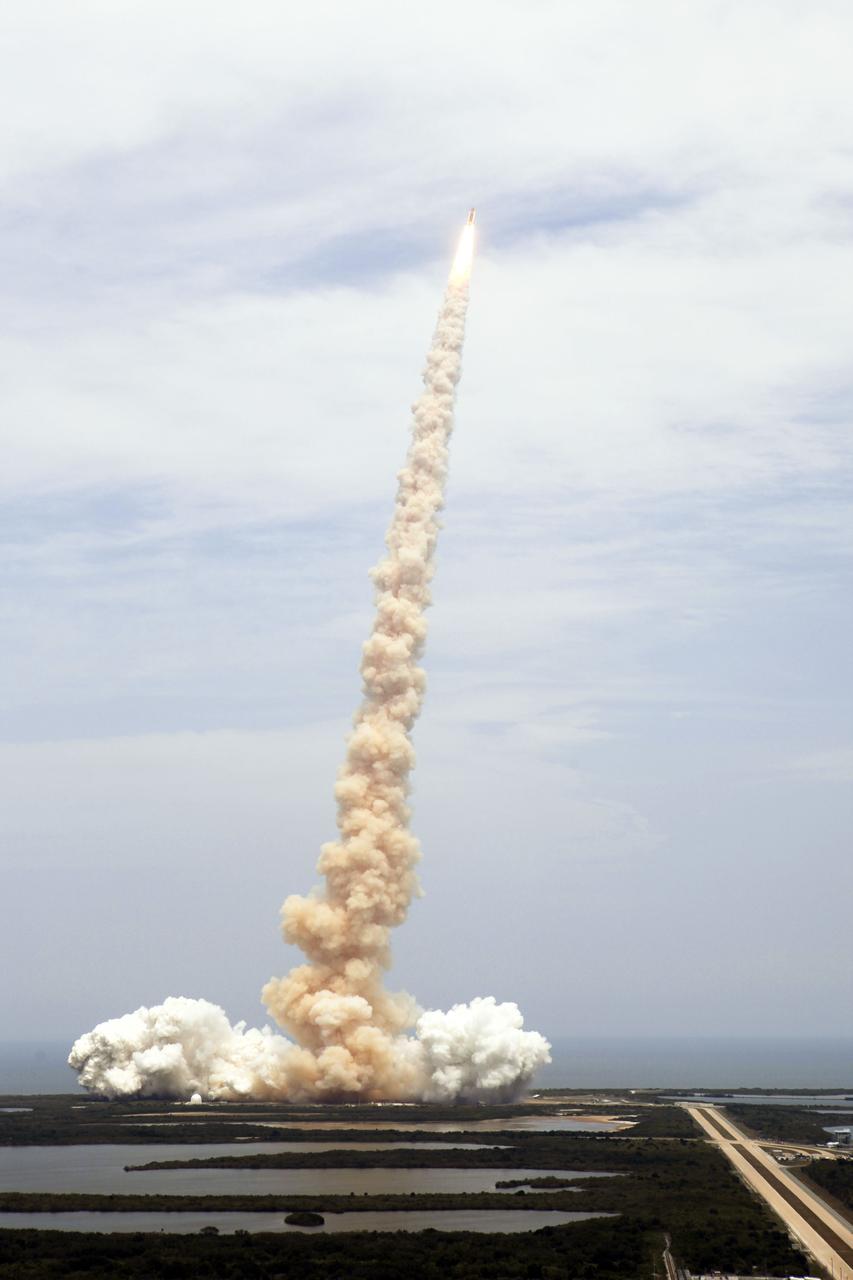
STS125-S-049 (11 May 2009) --- Space Shuttle Atlantis and its seven-member STS-125 crew head toward Earth orbit and rendezvous with NASA?s Hubble Space Telescope. Liftoff was on time at 2:01 p.m. (EDT) on May 11, 2009 from launch pad 39A at NASA's Kennedy Space Center. Onboard are astronauts Scott Altman, commander; Gregory C. Johnson, pilot; Michael Good, Megan McArthur, John Grunsfeld, Mike Massimino and Andrew Feustel, all mission specialists. Atlantis' 11-day flight will include five spacewalks to refurbish and upgrade the telescope with state-of-the-art science instruments that will expand Hubble's capabilities and extend its operational lifespan through at least 2014. The payload includes Wide Field Camera 3, fine guidance sensor and the Cosmic Origins Spectrograph.
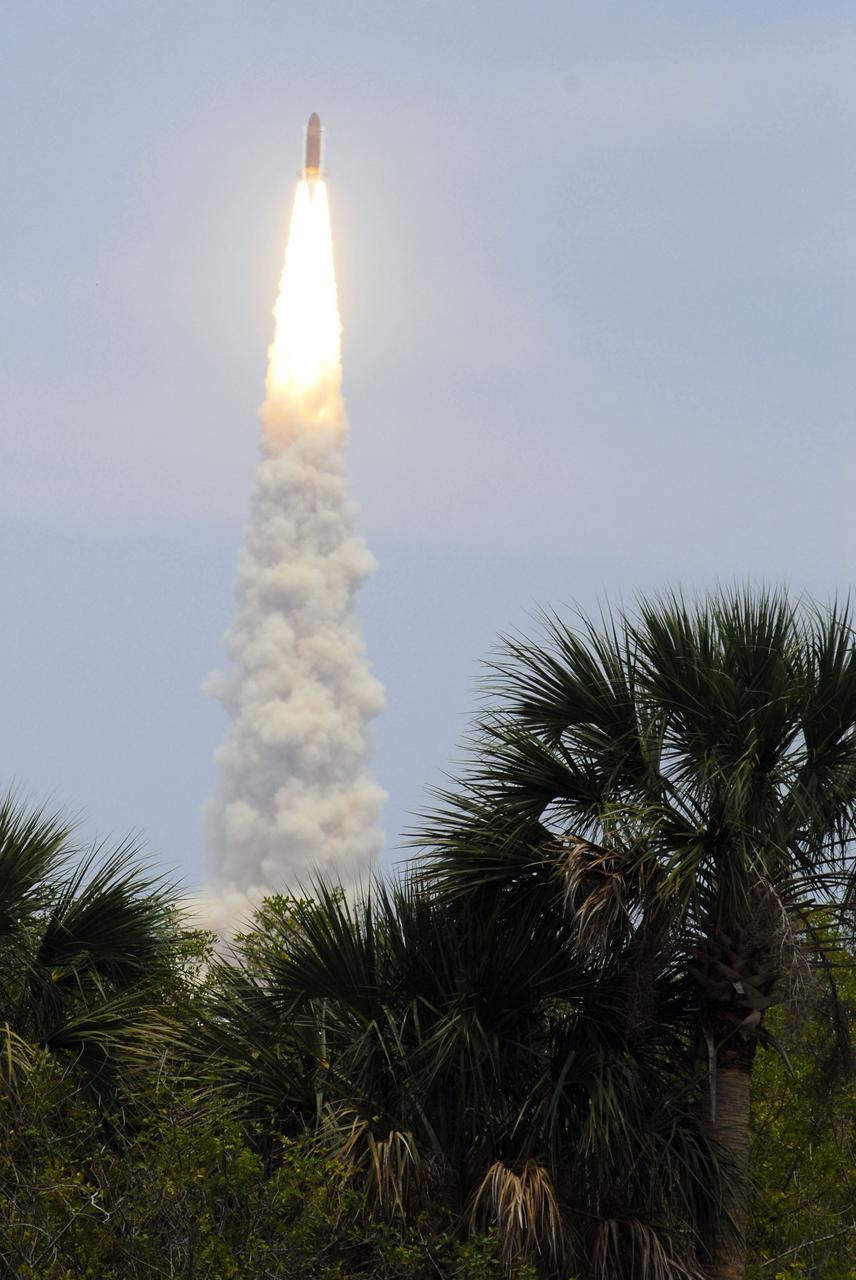
STS125-S-046 (11 May 2009) --- Space Shuttle Atlantis and its seven-member STS-125 crew head toward Earth orbit and rendezvous with NASA?s Hubble Space Telescope. Liftoff was on time at 2:01 p.m. (EDT) on May 11, 2009 from launch pad 39A at NASA's Kennedy Space Center. Onboard are astronauts Scott Altman, commander; Gregory C. Johnson, pilot; Michael Good, Megan McArthur, John Grunsfeld, Mike Massimino and Andrew Feustel, all mission specialists. Atlantis' 11-day flight will include five spacewalks to refurbish and upgrade the telescope with state-of-the-art science instruments that will expand Hubble's capabilities and extend its operational lifespan through at least 2014. The payload includes Wide Field Camera 3, fine guidance sensor and the Cosmic Origins Spectrograph.
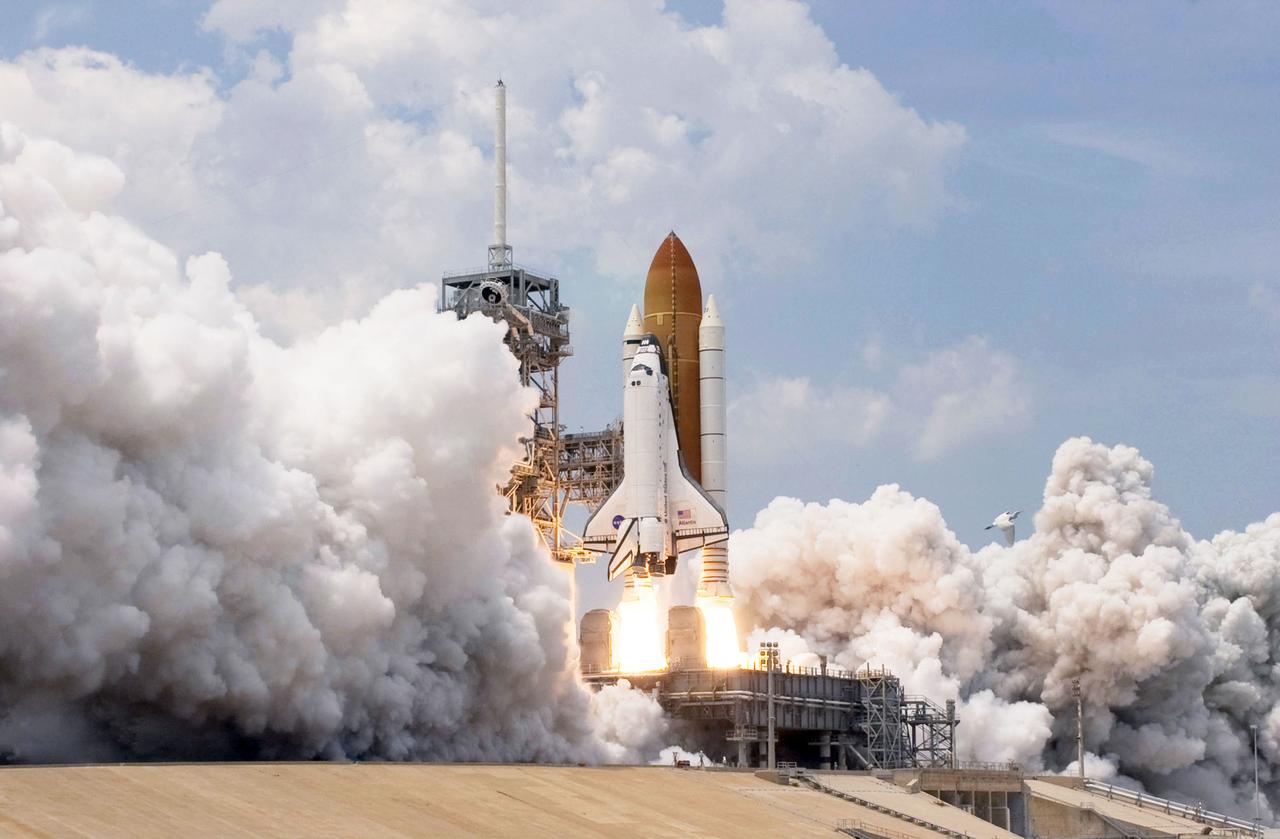
STS125-S-031 (11 May 2009) --- Space Shuttle Atlantis and its seven-member STS-125 crew head toward Earth orbit and rendezvous with NASA?s Hubble Space Telescope. Liftoff was on time at 2:01 p.m. (EDT) on May 11, 2009 from launch pad 39A at NASA's Kennedy Space Center. Onboard are astronauts Scott Altman, commander; Gregory C. Johnson, pilot; Michael Good, Megan McArthur, John Grunsfeld, Mike Massimino and Andrew Feustel, all mission specialists. Atlantis' 11-day flight will include five spacewalks to refurbish and upgrade the telescope with state-of-the-art science instruments that will expand Hubble's capabilities and extend its operational lifespan through at least 2014. The payload includes Wide Field Camera 3, fine guidance sensor and the Cosmic Origins Spectrograph.
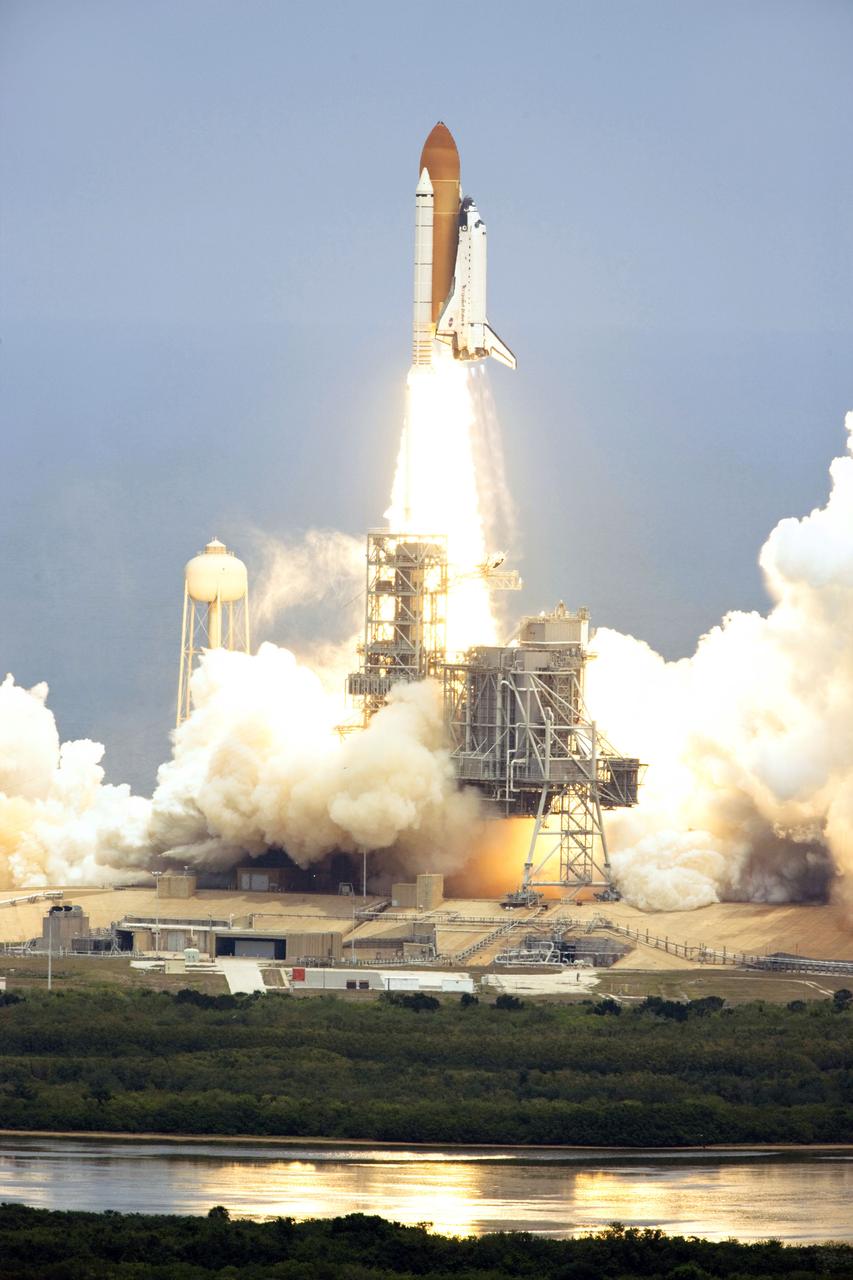
STS125-S-053 (11 May 2009) --- Space Shuttle Atlantis and its seven-member STS-125 crew head toward Earth orbit and rendezvous with NASA?s Hubble Space Telescope. Liftoff was on time at 2:01 p.m. (EDT) on May 11, 2009 from launch pad 39A at NASA's Kennedy Space Center. Onboard are astronauts Scott Altman, commander; Gregory C. Johnson, pilot; Michael Good, Megan McArthur, John Grunsfeld, Mike Massimino and Andrew Feustel, all mission specialists. Atlantis' 11-day flight will include five spacewalks to refurbish and upgrade the telescope with state-of-the-art science instruments that will expand Hubble's capabilities and extend its operational lifespan through at least 2014. The payload includes Wide Field Camera 3, fine guidance sensor and the Cosmic Origins Spectrograph.
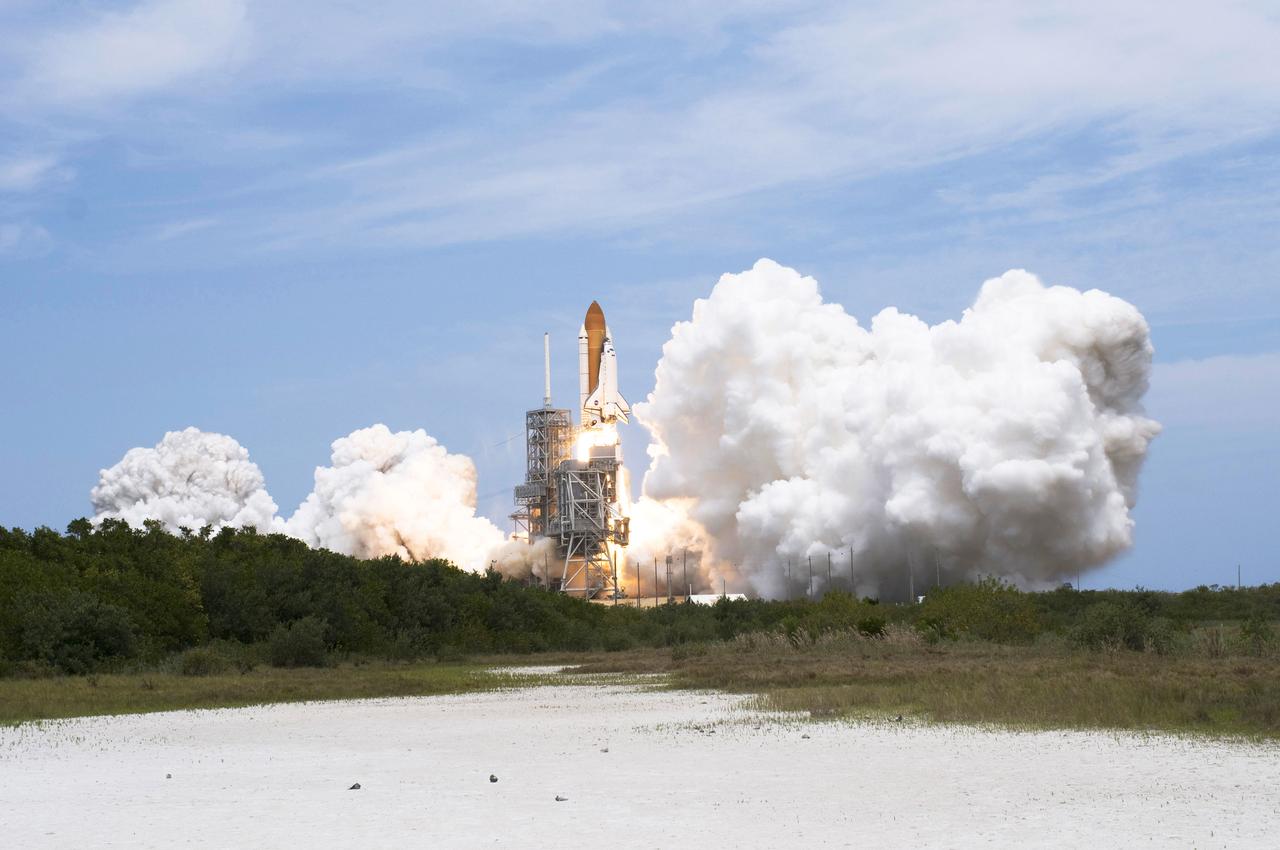
STS125-S-029 (11 May 2009) --- Space Shuttle Atlantis and its seven-member STS-125 crew head toward Earth orbit and rendezvous with NASA?s Hubble Space Telescope. Liftoff was on time at 2:01 p.m. (EDT) on May 11, 2009 from launch pad 39A at NASA's Kennedy Space Center. Onboard are astronauts Scott Altman, commander; Gregory C. Johnson, pilot; Michael Good, Megan McArthur, John Grunsfeld, Mike Massimino and Andrew Feustel, all mission specialists. Atlantis' 11-day flight will include five spacewalks to refurbish and upgrade the telescope with state-of-the-art science instruments that will expand Hubble's capabilities and extend its operational lifespan through at least 2014. The payload includes Wide Field Camera 3, fine guidance sensor and the Cosmic Origins Spectrograph.
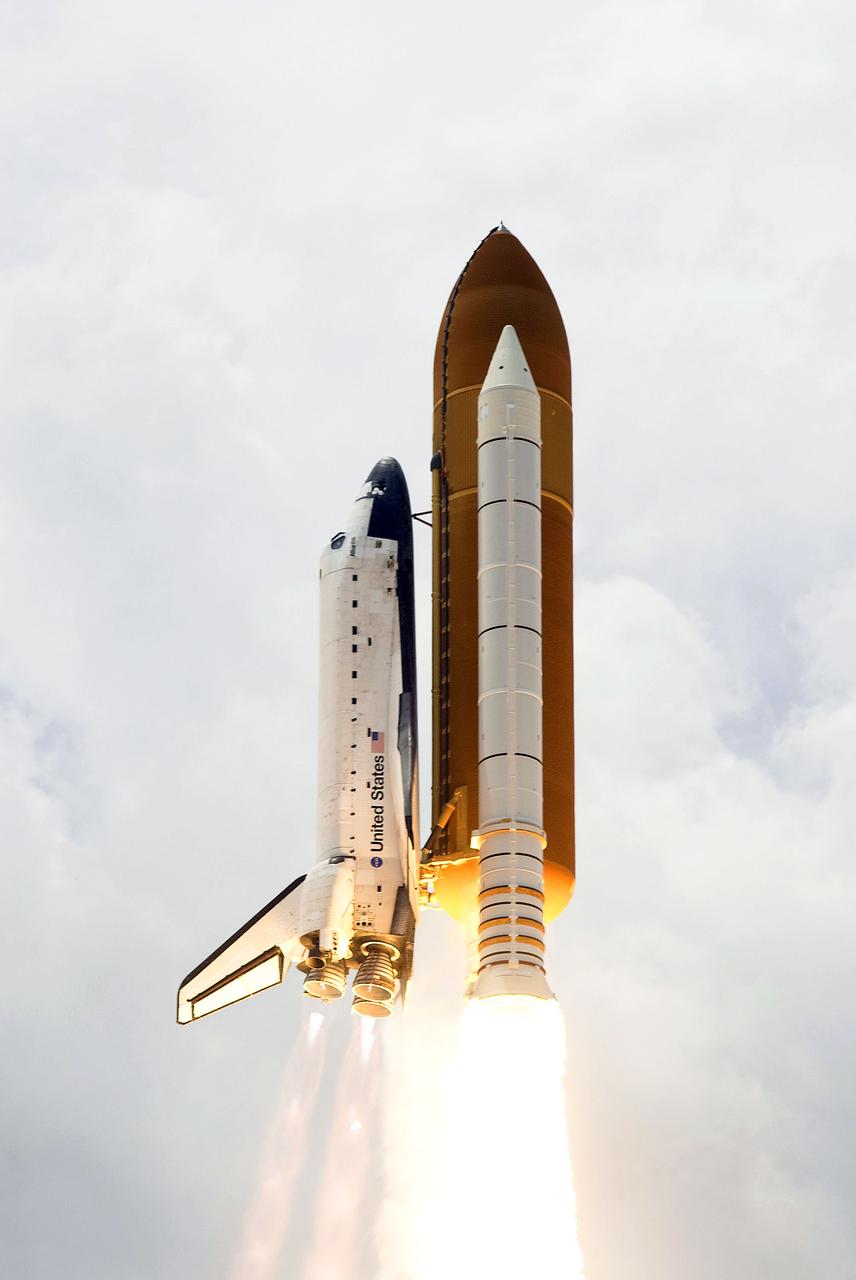
STS125-S-034 (11 May 2009) --- Space Shuttle Atlantis and its seven-member STS-125 crew head toward Earth orbit and rendezvous with NASA?s Hubble Space Telescope. Liftoff was on time at 2:01 p.m. (EDT) on May 11, 2009 from launch pad 39A at NASA's Kennedy Space Center. Onboard are astronauts Scott Altman, commander; Gregory C. Johnson, pilot; Michael Good, Megan McArthur, John Grunsfeld, Mike Massimino and Andrew Feustel, all mission specialists. Atlantis' 11-day flight will include five spacewalks to refurbish and upgrade the telescope with state-of-the-art science instruments that will expand Hubble's capabilities and extend its operational lifespan through at least 2014. The payload includes Wide Field Camera 3, fine guidance sensor and the Cosmic Origins Spectrograph.
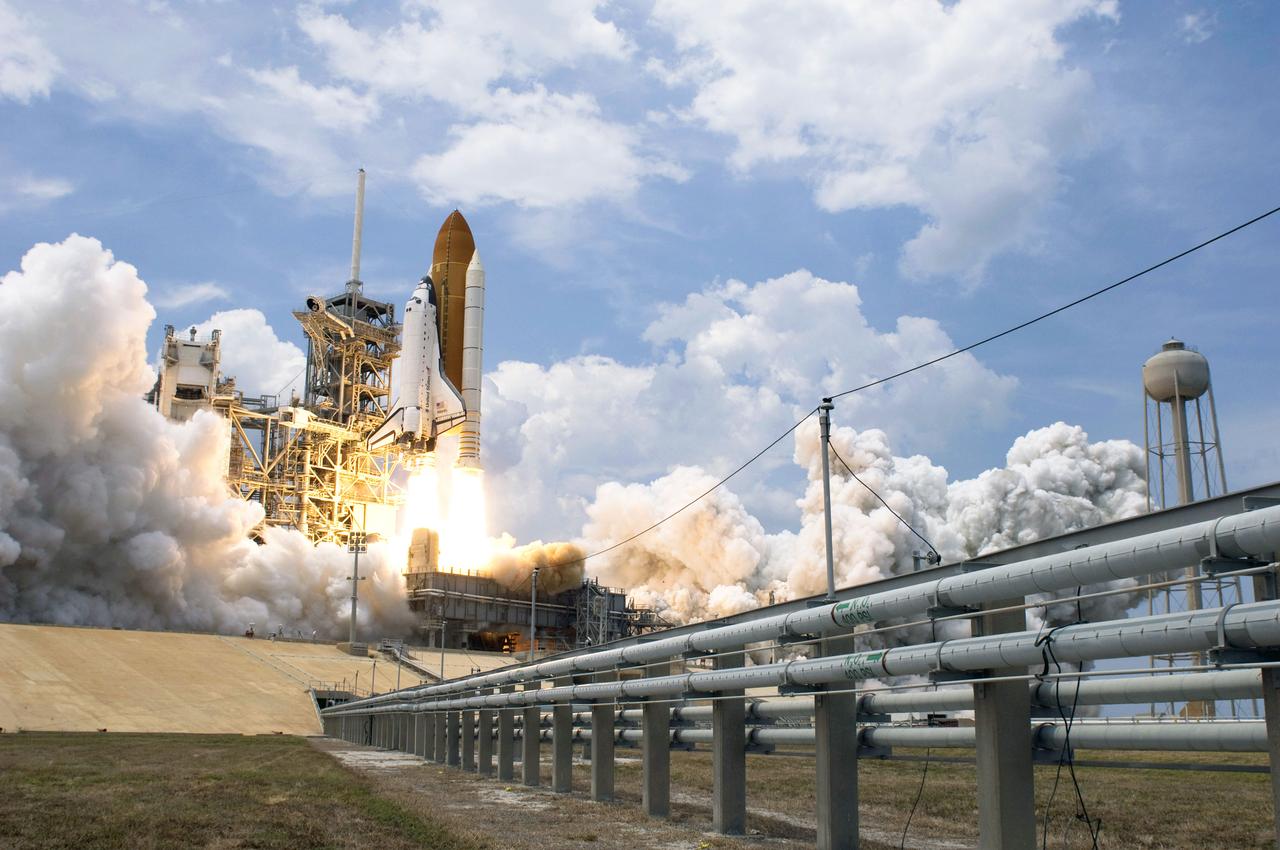
STS125-S-038 (11 May 2009) --- Space Shuttle Atlantis and its seven-member STS-125 crew head toward Earth orbit and rendezvous with NASA?s Hubble Space Telescope. Liftoff was on time at 2:01 p.m. (EDT) on May 11, 2009 from launch pad 39A at NASA's Kennedy Space Center. Onboard are astronauts Scott Altman, commander; Gregory C. Johnson, pilot; Michael Good, Megan McArthur, John Grunsfeld, Mike Massimino and Andrew Feustel, all mission specialists. Atlantis' 11-day flight will include five spacewalks to refurbish and upgrade the telescope with state-of-the-art science instruments that will expand Hubble's capabilities and extend its operational lifespan through at least 2014. The payload includes Wide Field Camera 3, fine guidance sensor and the Cosmic Origins Spectrograph.
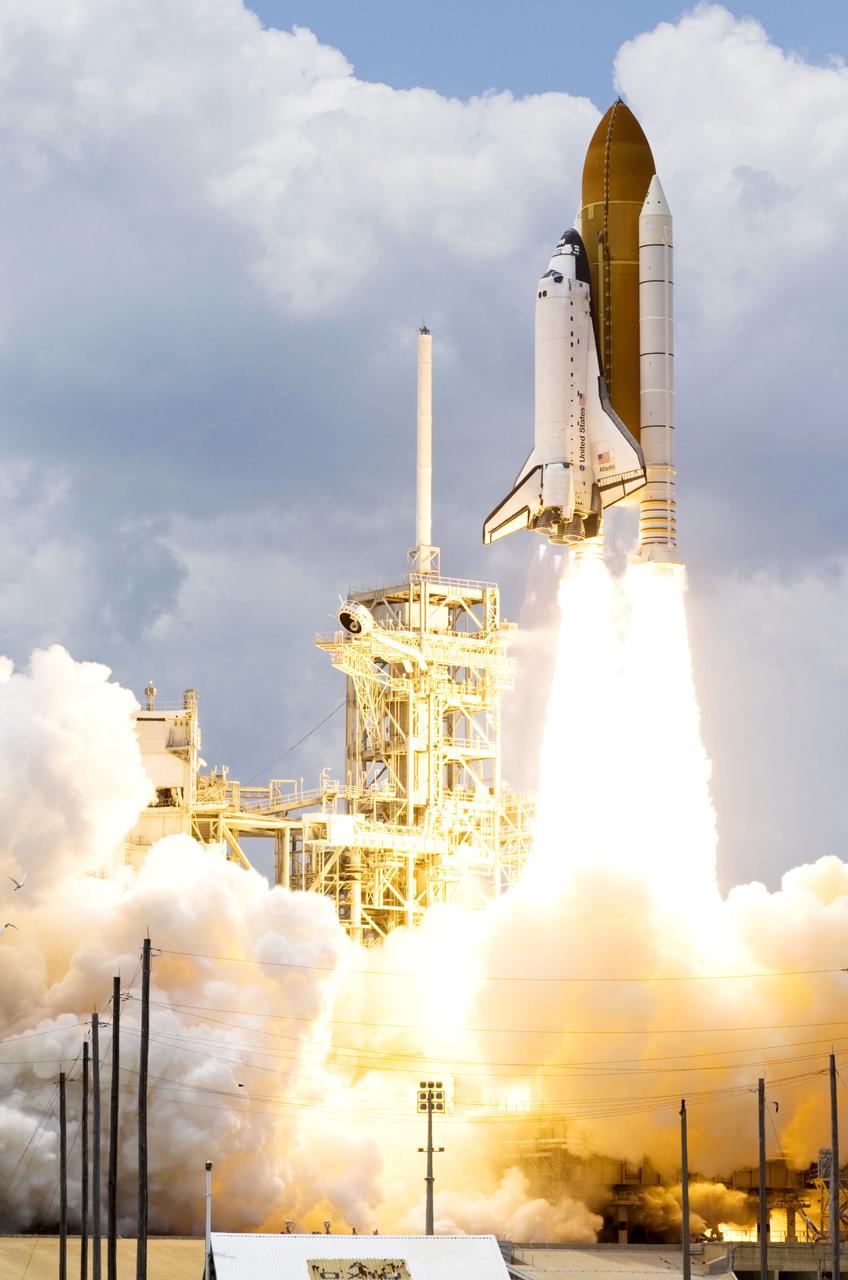
STS125-S-047 (11 May 2009) --- Space Shuttle Atlantis and its seven-member STS-125 crew head toward Earth orbit and rendezvous with NASA?s Hubble Space Telescope. Liftoff was on time at 2:01 p.m. (EDT) on May 11, 2009 from launch pad 39A at NASA's Kennedy Space Center. Onboard are astronauts Scott Altman, commander; Gregory C. Johnson, pilot; Michael Good, Megan McArthur, John Grunsfeld, Mike Massimino and Andrew Feustel, all mission specialists. Atlantis' 11-day flight will include five spacewalks to refurbish and upgrade the telescope with state-of-the-art science instruments that will expand Hubble's capabilities and extend its operational lifespan through at least 2014. The payload includes Wide Field Camera 3, fine guidance sensor and the Cosmic Origins Spectrograph.
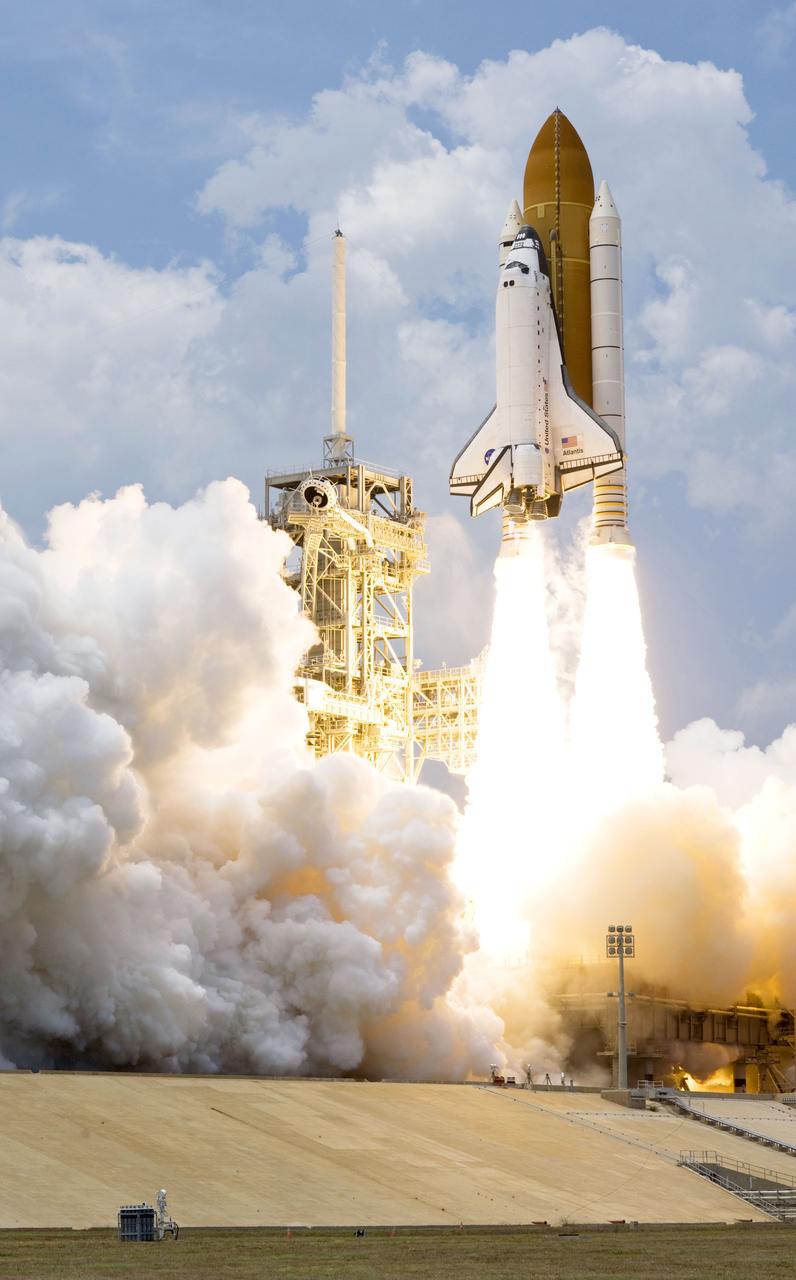
STS125-S-052 (11 May 2009) --- Space Shuttle Atlantis and its seven-member STS-125 crew head toward Earth orbit and rendezvous with NASA?s Hubble Space Telescope. Liftoff was on time at 2:01 p.m. (EDT) on May 11, 2009 from launch pad 39A at NASA's Kennedy Space Center. Onboard are astronauts Scott Altman, commander; Gregory C. Johnson, pilot; Michael Good, Megan McArthur, John Grunsfeld, Mike Massimino and Andrew Feustel, all mission specialists. Atlantis' 11-day flight will include five spacewalks to refurbish and upgrade the telescope with state-of-the-art science instruments that will expand Hubble's capabilities and extend its operational lifespan through at least 2014. The payload includes Wide Field Camera 3, fine guidance sensor and the Cosmic Origins Spectrograph.
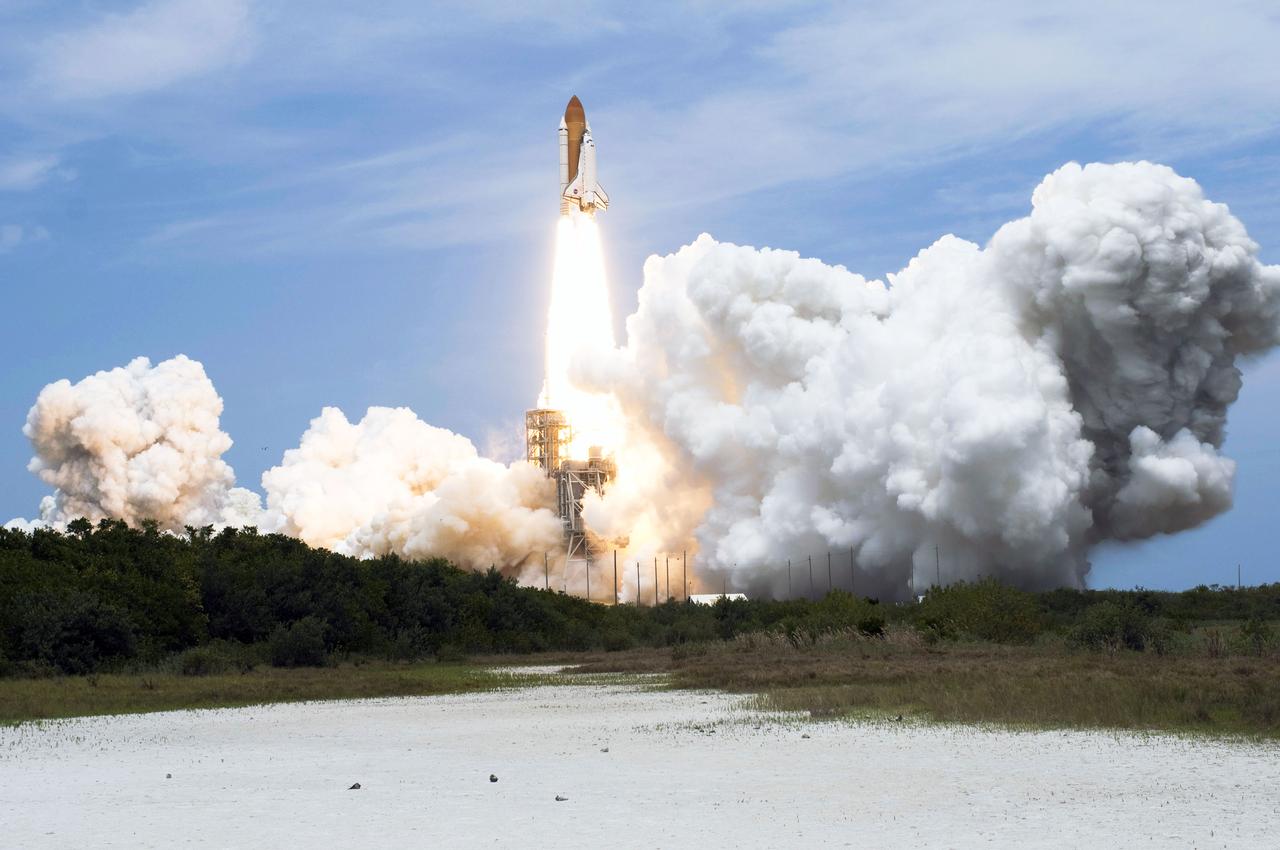
STS125-S-030 (11 May 2009) --- Space Shuttle Atlantis and its seven-member STS-125 crew head toward Earth orbit and rendezvous with NASA?s Hubble Space Telescope. Liftoff was on time at 2:01 p.m. (EDT) on May 11, 2009 from launch pad 39A at NASA's Kennedy Space Center. Onboard are astronauts Scott Altman, commander; Gregory C. Johnson, pilot; Michael Good, Megan McArthur, John Grunsfeld, Mike Massimino and Andrew Feustel, all mission specialists. Atlantis' 11-day flight will include five spacewalks to refurbish and upgrade the telescope with state-of-the-art science instruments that will expand Hubble's capabilities and extend its operational lifespan through at least 2014. The payload includes Wide Field Camera 3, fine guidance sensor and the Cosmic Origins Spectrograph.
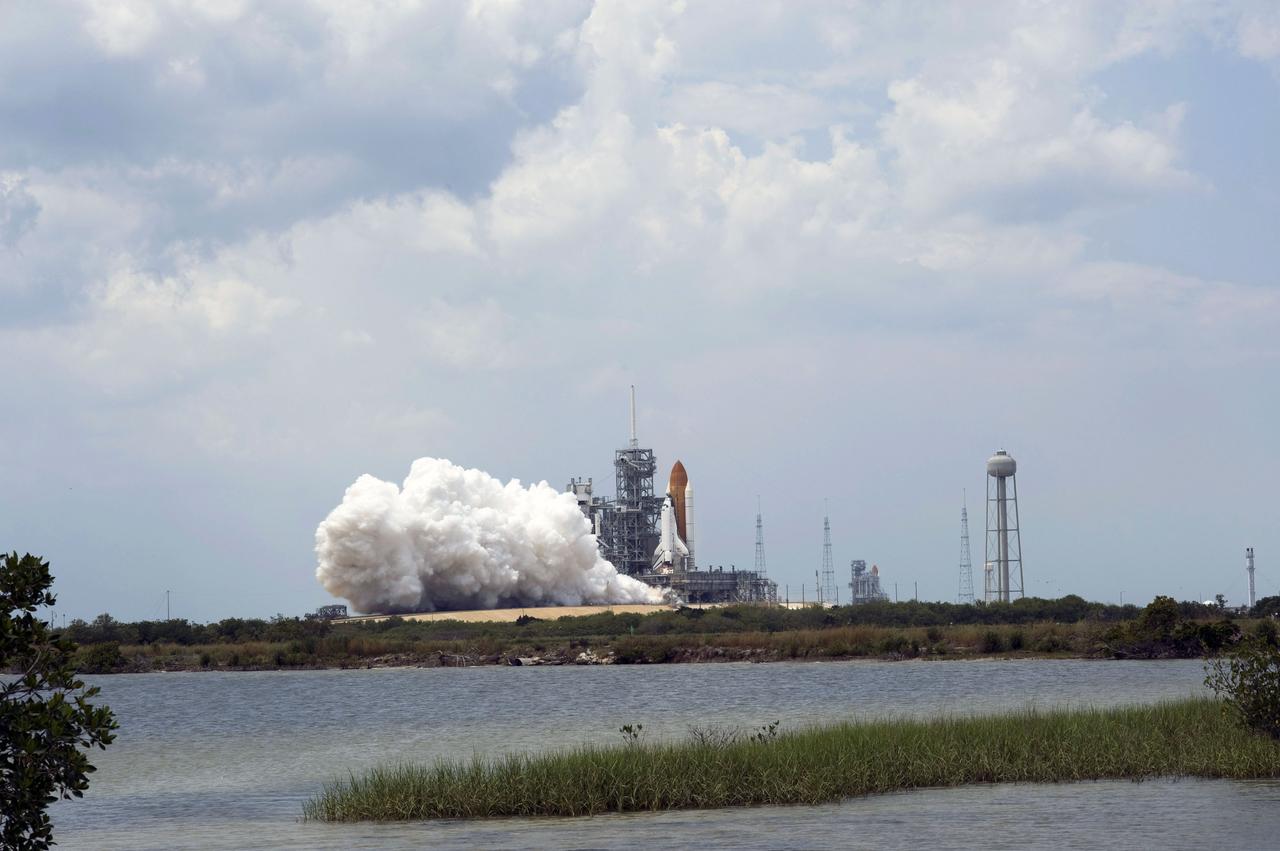
STS125-S-024 (11 May 2009) --- Space Shuttle Atlantis and its seven-member STS-125 crew head toward Earth orbit and rendezvous with NASA?s Hubble Space Telescope. Liftoff was on time at 2:01 p.m. (EDT) on May 11, 2009 from launch pad 39A at NASA's Kennedy Space Center. Onboard are astronauts Scott Altman, commander; Gregory C. Johnson, pilot; Michael Good, Megan McArthur, John Grunsfeld, Mike Massimino and Andrew Feustel, all mission specialists. Atlantis' 11-day flight will include five spacewalks to refurbish and upgrade the telescope with state-of-the-art science instruments that will expand Hubble's capabilities and extend its operational lifespan through at least 2014. The payload includes Wide Field Camera 3, fine guidance sensor and the Cosmic Origins Spectrograph.
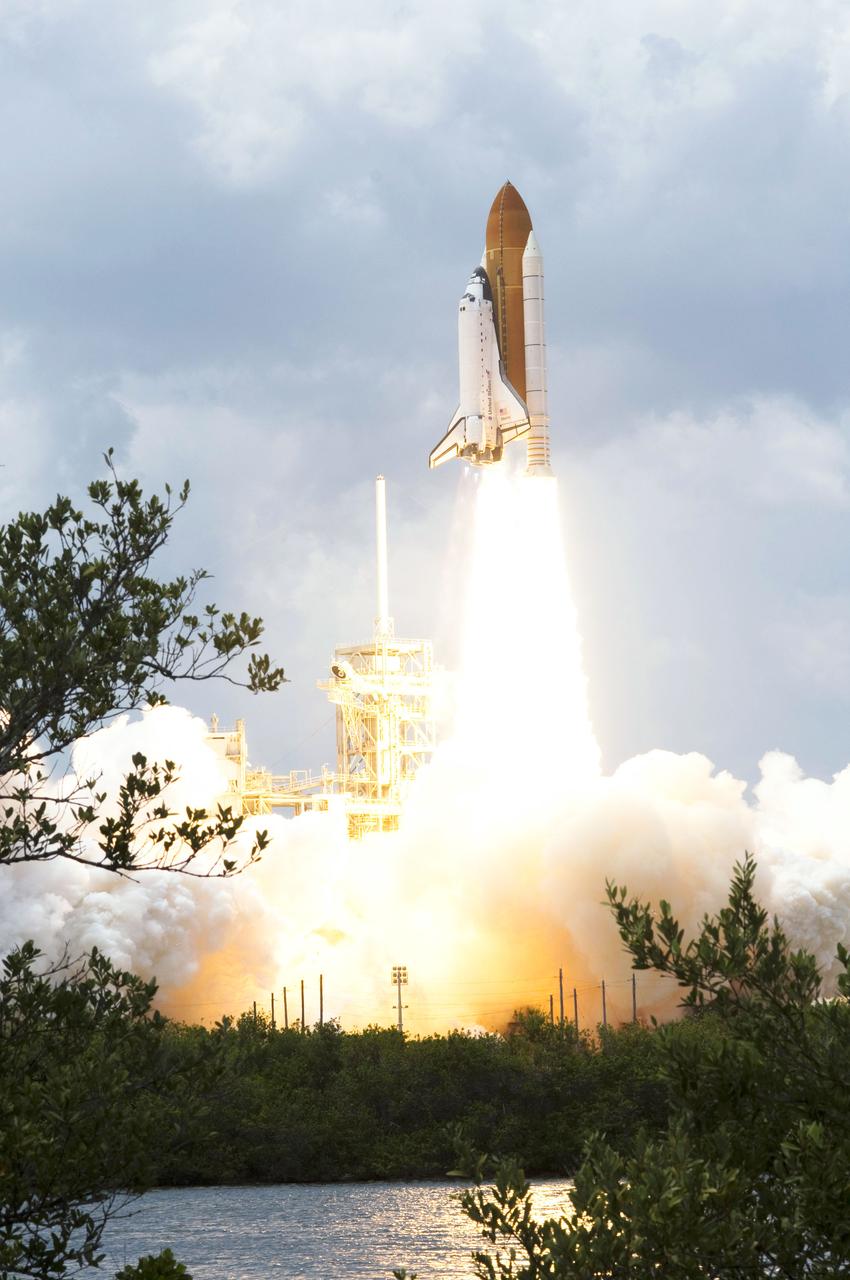
STS125-S-027 (11 May 2009) --- Space Shuttle Atlantis and its seven-member STS-125 crew head toward Earth orbit and rendezvous with NASA?s Hubble Space Telescope. Liftoff was on time at 2:01 p.m. (EDT) on May 11, 2009 from launch pad 39A at NASA's Kennedy Space Center. Onboard are astronauts Scott Altman, commander; Gregory C. Johnson, pilot; Michael Good, Megan McArthur, John Grunsfeld, Mike Massimino and Andrew Feustel, all mission specialists. Atlantis' 11-day flight will include five spacewalks to refurbish and upgrade the telescope with state-of-the-art science instruments that will expand Hubble's capabilities and extend its operational lifespan through at least 2014. The payload includes Wide Field Camera 3, fine guidance sensor and the Cosmic Origins Spectrograph.
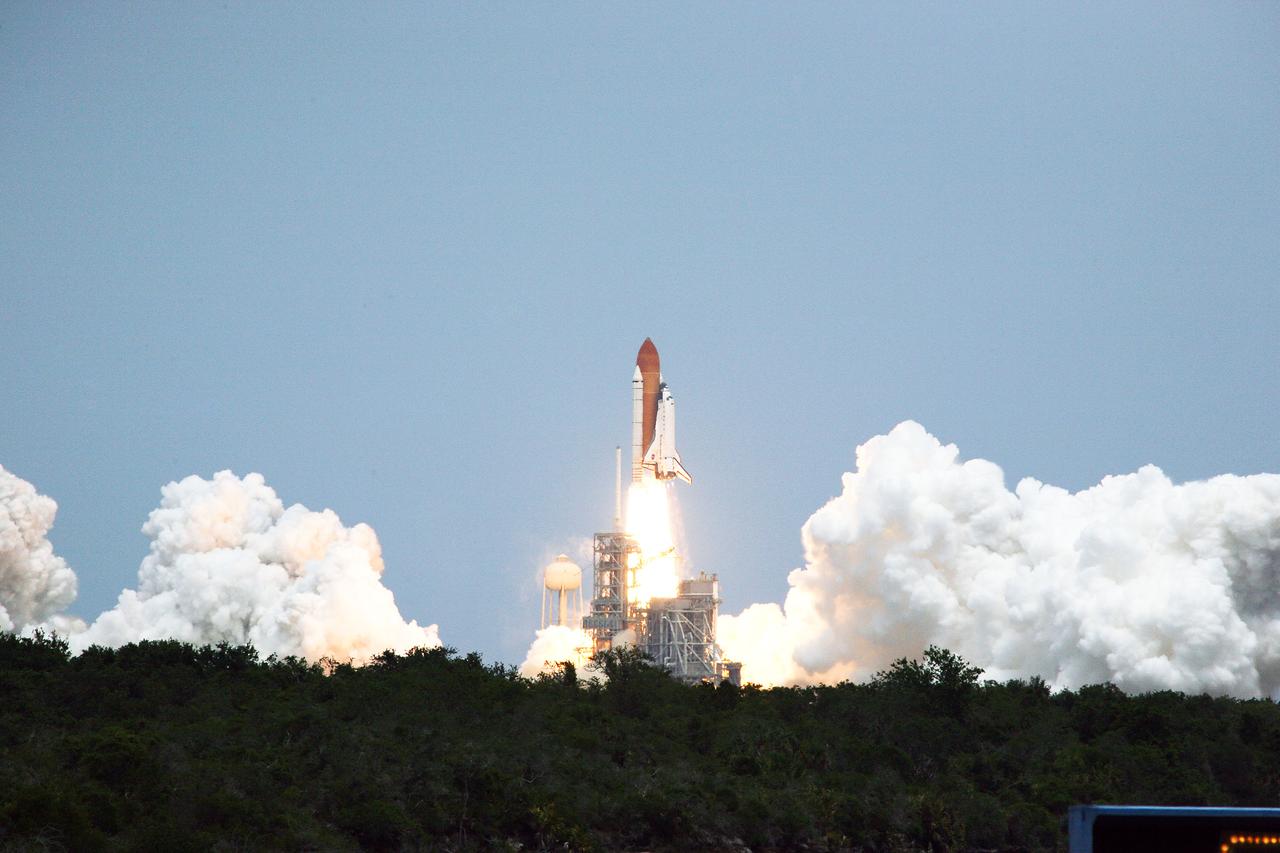
STS125-S-007 (11 May 2009) --- Space Shuttle Atlantis and its seven-member STS-125 crew head toward Earth orbit and rendezvous with NASA?s Hubble Space Telescope. Liftoff was on time at 2:01 p.m. (EDT) on May 11, 2009 from launch pad 39A at NASA's Kennedy Space Center. Onboard are astronauts Scott Altman, commander; Gregory C. Johnson, pilot: Michael Good, Megan McArthur, John Grunsfeld, Mike Massimino and Andrew Feustel, all mission specialists. Atlantis' 11-day flight will include five spacewalks to refurbish and upgrade the telescope with state-of-the-art science instruments that will expand Hubble's capabilities and extend its operational lifespan through at least 2014. The payload includes Wide Field Camera 3, fine guidance sensor and the Cosmic Origins Spectrograph.
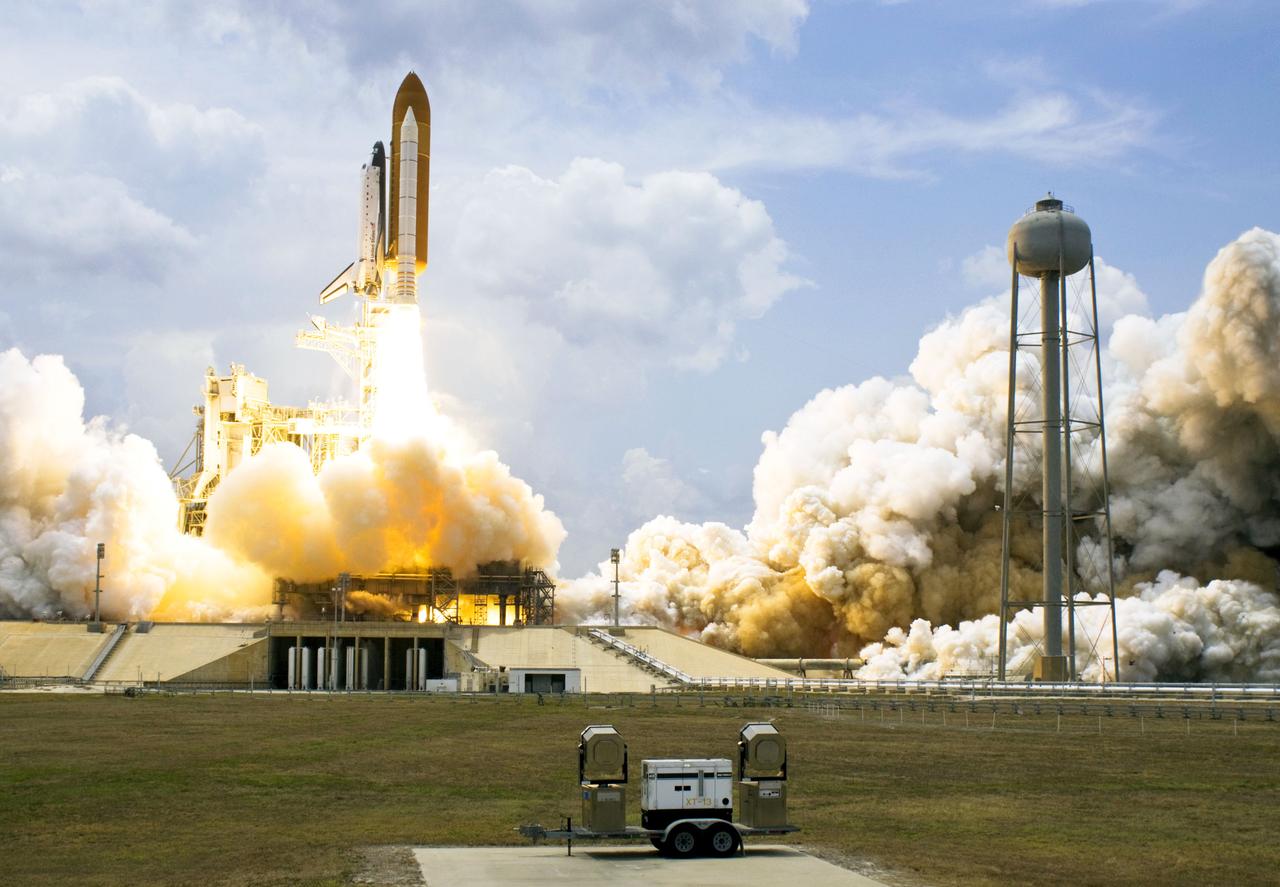
STS125-S-051 (11 May 2009) --- Space Shuttle Atlantis and its seven-member STS-125 crew head toward Earth orbit and rendezvous with NASA?s Hubble Space Telescope. Liftoff was on time at 2:01 p.m. (EDT) on May 11, 2009 from launch pad 39A at NASA's Kennedy Space Center. Onboard are astronauts Scott Altman, commander; Gregory C. Johnson, pilot; Michael Good, Megan McArthur, John Grunsfeld, Mike Massimino and Andrew Feustel, all mission specialists. Atlantis' 11-day flight will include five spacewalks to refurbish and upgrade the telescope with state-of-the-art science instruments that will expand Hubble's capabilities and extend its operational lifespan through at least 2014. The payload includes Wide Field Camera 3, fine guidance sensor and the Cosmic Origins Spectrograph.
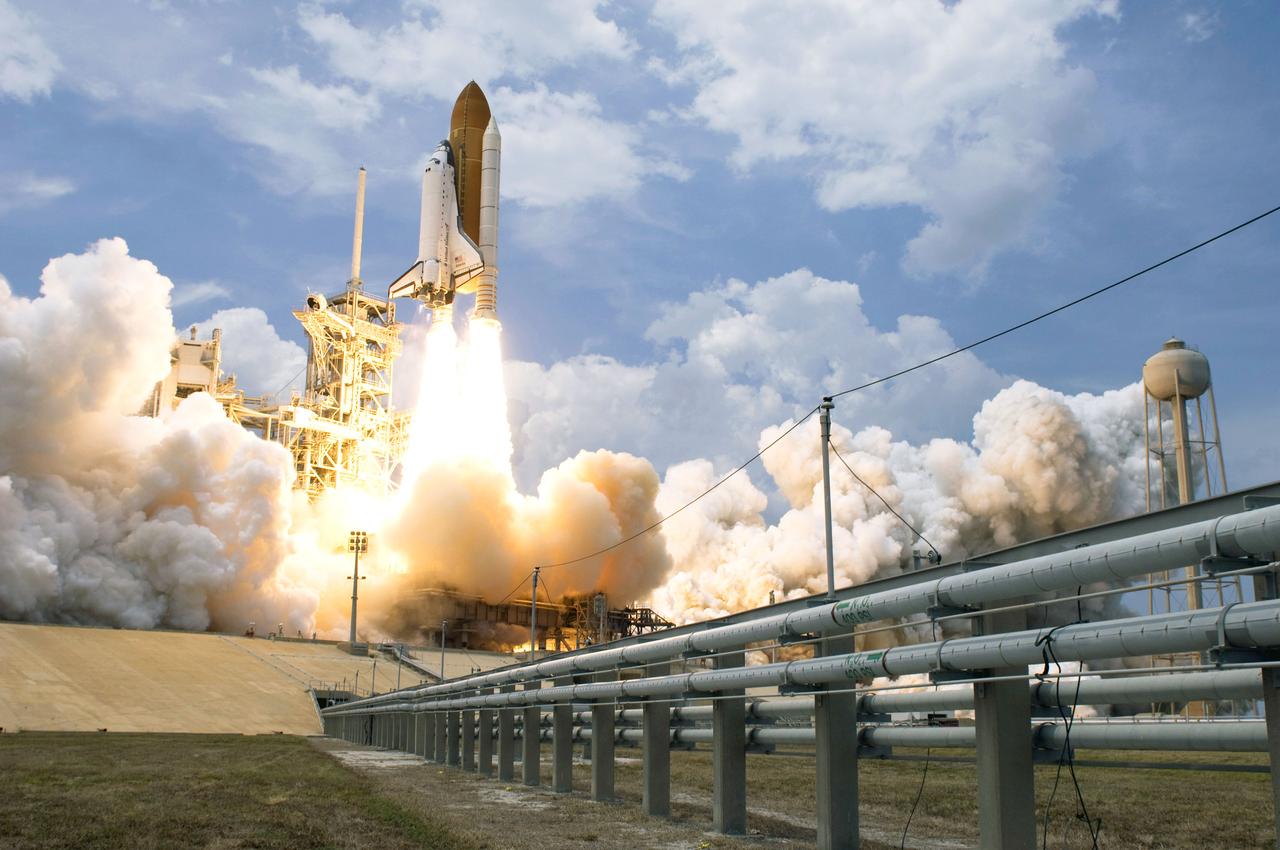
STS125-S-039 (11 May 2009) --- Space Shuttle Atlantis and its seven-member STS-125 crew head toward Earth orbit and rendezvous with NASA?s Hubble Space Telescope. Liftoff was on time at 2:01 p.m. (EDT) on May 11, 2009 from launch pad 39A at NASA's Kennedy Space Center. Onboard are astronauts Scott Altman, commander; Gregory C. Johnson, pilot; Michael Good, Megan McArthur, John Grunsfeld, Mike Massimino and Andrew Feustel, all mission specialists. Atlantis' 11-day flight will include five spacewalks to refurbish and upgrade the telescope with state-of-the-art science instruments that will expand Hubble's capabilities and extend its operational lifespan through at least 2014. The payload includes Wide Field Camera 3, fine guidance sensor and the Cosmic Origins Spectrograph.

STS125-S-008 (11 May 2009) --- Space Shuttle Atlantis and its seven-member STS-125 crew head toward Earth orbit and rendezvous with NASA?s Hubble Space Telescope. Liftoff was on time at 2:01 p.m. (EDT) on May 11, 2009 from launch pad 39A at NASA's Kennedy Space Center. Onboard are astronauts Scott Altman, commander; Gregory C. Johnson, pilot: Michael Good, Megan McArthur, John Grunsfeld, Mike Massimino and Andrew Feustel, all mission specialists. Atlantis' 11-day flight will include five spacewalks to refurbish and upgrade the telescope with state-of-the-art science instruments that will expand Hubble's capabilities and extend its operational lifespan through at least 2014. The payload includes Wide Field Camera 3, fine guidance sensor and the Cosmic Origins Spectrograph.
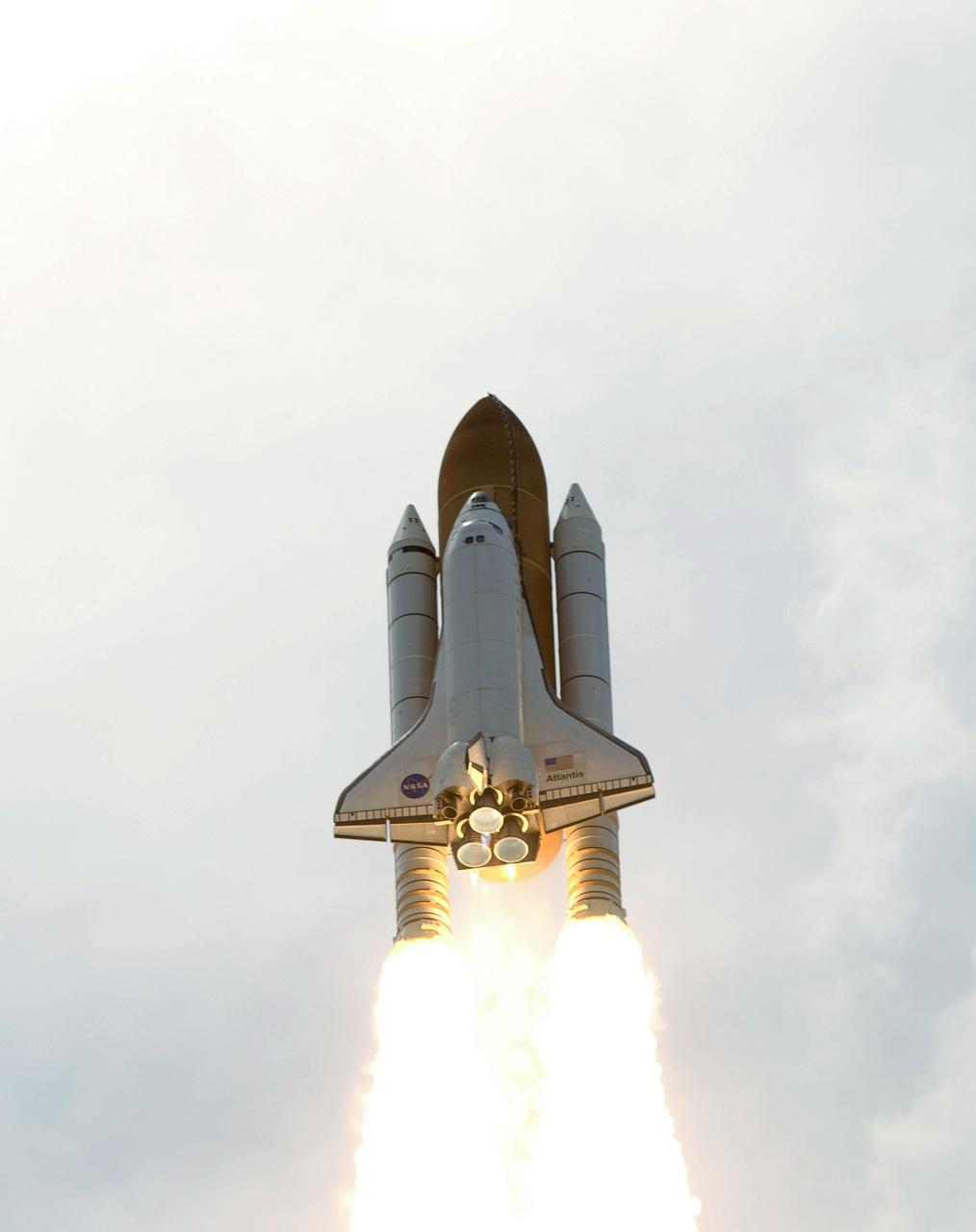
STS125-S-035 (11 May 2009) --- Space Shuttle Atlantis and its seven-member STS-125 crew head toward Earth orbit and rendezvous with NASA?s Hubble Space Telescope. Liftoff was on time at 2:01 p.m. (EDT) on May 11, 2009 from launch pad 39A at NASA's Kennedy Space Center. Onboard are astronauts Scott Altman, commander; Gregory C. Johnson, pilot; Michael Good, Megan McArthur, John Grunsfeld, Mike Massimino and Andrew Feustel, all mission specialists. Atlantis' 11-day flight will include five spacewalks to refurbish and upgrade the telescope with state-of-the-art science instruments that will expand Hubble's capabilities and extend its operational lifespan through at least 2014. The payload includes Wide Field Camera 3, fine guidance sensor and the Cosmic Origins Spectrograph.
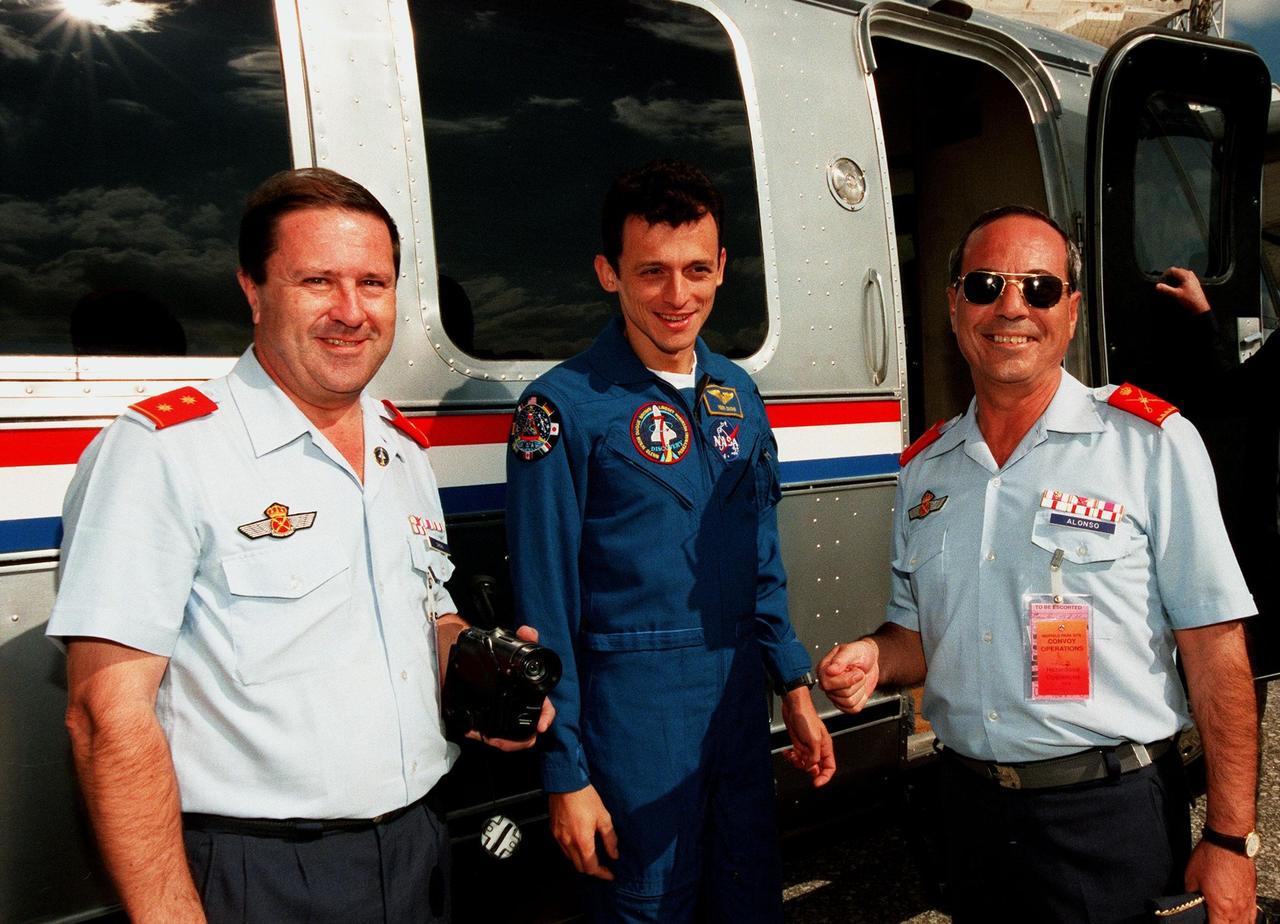
STS-95 Mission Specialist Pedro Duque of Spain (center), with the European Space Agency, poses with two high-ranking Spanish military officers. Duque was one of a crew of seven aboard orbiter Discovery which landed at the Shuttle Landing Facility at 12:04 p.m. EST after a successful mission spanning nine days and 3.6 million miles. The other STS-95 crew members are Mission Commander Curtis L. Brown Jr.; Pilot Steven W. Lindsey; Mission Specialists Stephen K. Robinson and Scott E. Parazynski; and Payload Specialists Chiaki Mukai, with the National Space Development Agency of Japan (NASDA), and John H. Glenn Jr., a senator from Ohio and one of the original seven Project Mercury astronauts. The mission included research payloads such as the Spartan-201 solar-observing deployable spacecraft, the Hubble Space Telescope Orbital Systems Test Platform, the International Extreme Ultraviolet Hitchhiker, as well as a SPACEHAB single module with experiments on space flight and the aging process
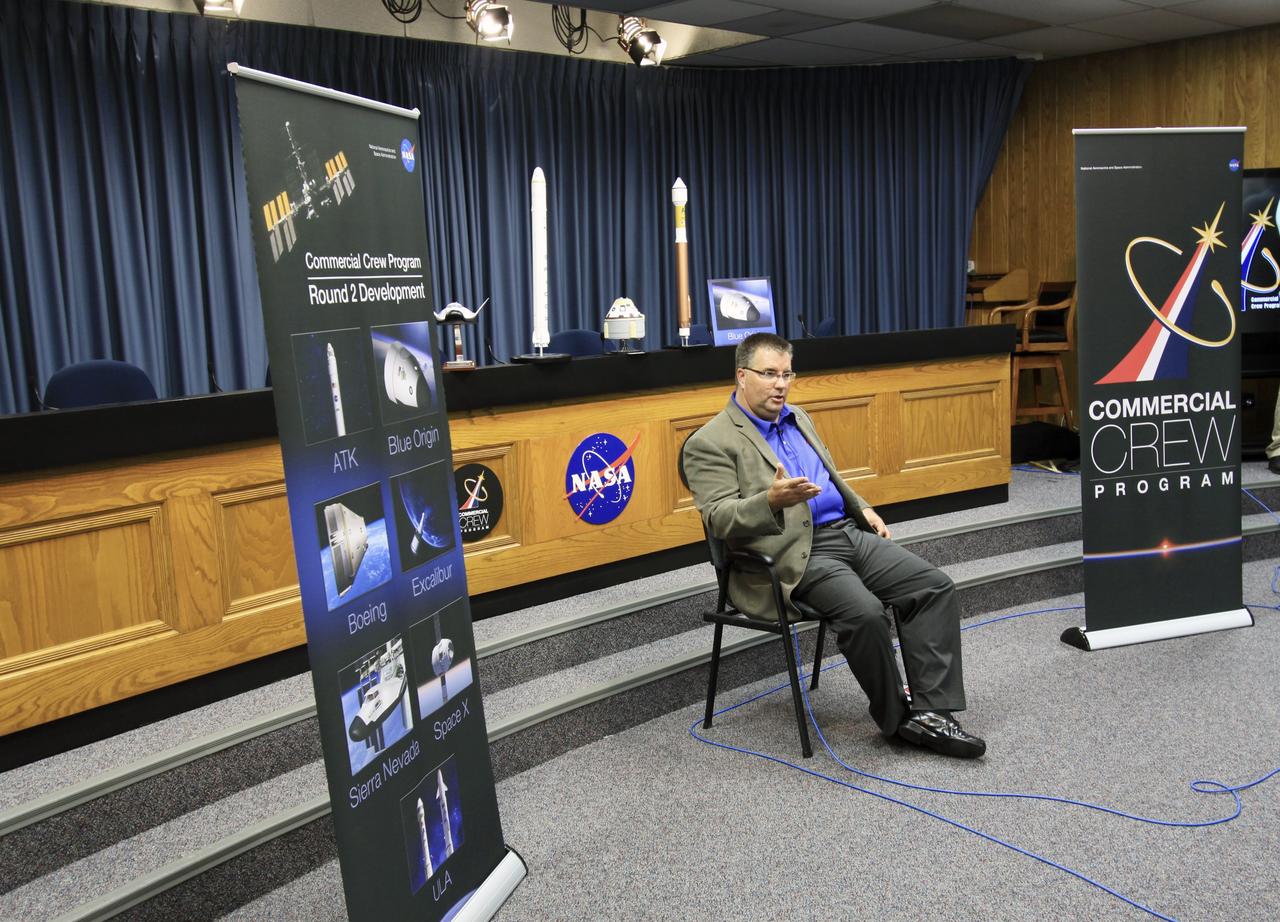
CAPE CANAVERAL, Fla. -- Ed Mango, program manager for NASA's Commercial Crew Program (CCP), updates media on the progress of Commercial Crew Development Round 2 (CCDev2) activities in which seven aerospace companies are maturing launch vehicle and spacecraft systems designed to take astronauts to the International Space Station. The goal of the program is to drive down the cost of space travel as well as open up space to more people than ever before by balancing industry’s own innovative capabilities with NASA's 50 years of human spaceflight experience. Seven aerospace companies are maturing launch vehicle and spacecraft designs under CCDev2, including Alliant Techsystems Inc. (ATK) of Promontory, Utah, Blue Origin of Kent, Wash., The Boeing Co., of Houston, Excalibur Almaz Inc. of Houston, Sierra Nevada Corp. of Louisville, Colo., Space Exploration Technologies (SpaceX) of Hawthorne, Calif., and United Launch Alliance (ULA) of Centennial, Colo. For more information, visit www.nasa.gov/exploration/commercial Photo credit: Jim Grossmann
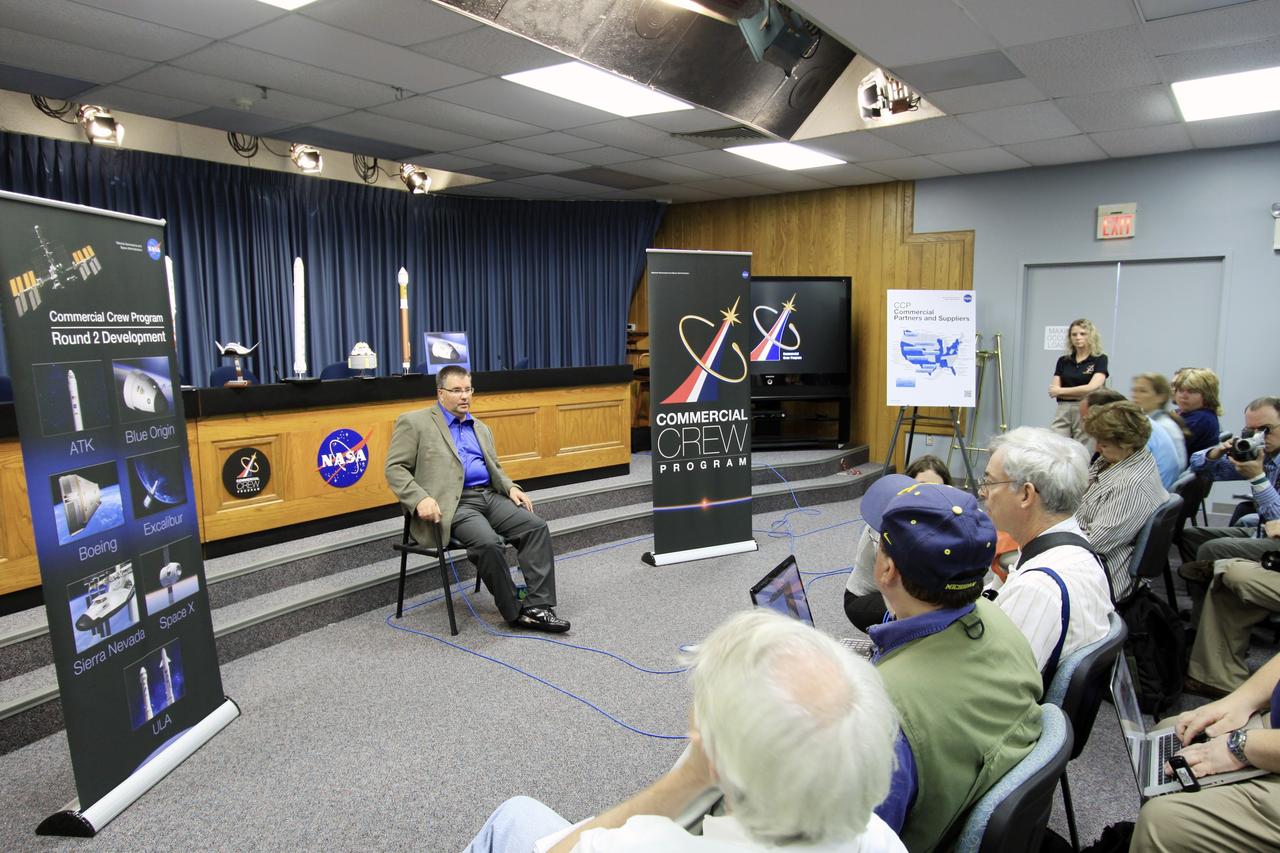
CAPE CANAVERAL, Fla. -- Ed Mango, program manager for NASA's Commercial Crew Program (CCP), updates media on the progress of Commercial Crew Development Round 2 (CCDev2) activities in which seven aerospace companies are maturing launch vehicle and spacecraft systems designed to take astronauts to the International Space Station. The goal of the program is to drive down the cost of space travel as well as open up space to more people than ever before by balancing industry’s own innovative capabilities with NASA's 50 years of human spaceflight experience. Seven aerospace companies are maturing launch vehicle and spacecraft designs under CCDev2, including Alliant Techsystems Inc. (ATK) of Promontory, Utah, Blue Origin of Kent, Wash., The Boeing Co., of Houston, Excalibur Almaz Inc. of Houston, Sierra Nevada Corp. of Louisville, Colo., Space Exploration Technologies (SpaceX) of Hawthorne, Calif., and United Launch Alliance (ULA) of Centennial, Colo. For more information, visit www.nasa.gov/exploration/commercial Photo credit: Jim Grossmann
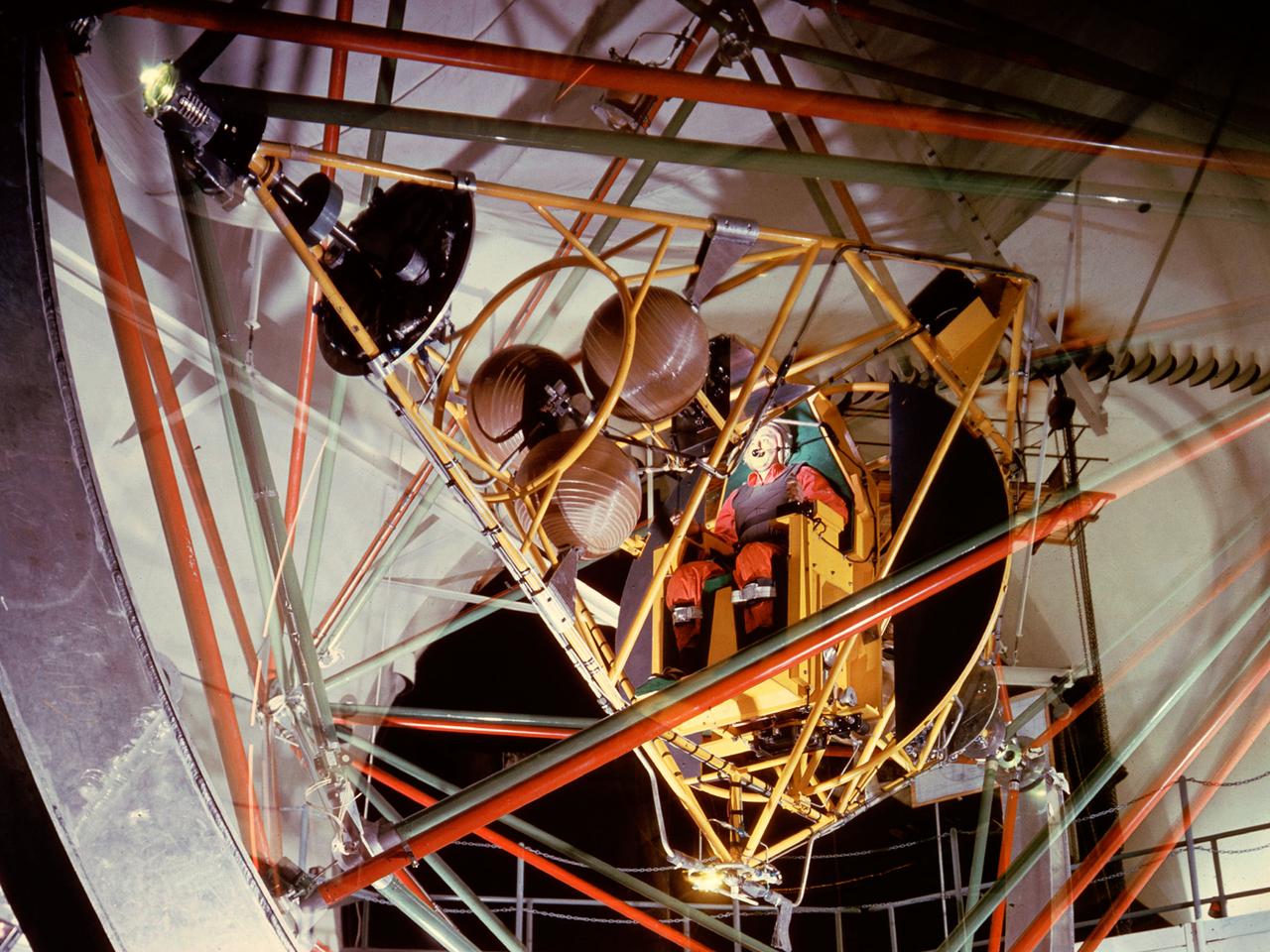
National Aeronautics and Space Administration (NASA) pilot Joe Algranti tests the Multi-Axis Space Test Inertia Facility (MASTIF) inside the Altitude Wind Tunnel while researcher Robert Miller looks on. The MASTIF was a three-axis rig with a pilot’s chair mounted in the center to train Project Mercury pilots to bring a spinning spacecraft under control. An astronaut was secured in a foam couch in the center of the rig. The rig then spun on three axes from 2 to 50 rotations per minute. Small nitrogen gas thrusters were used by the astronauts to bring the MASTIF under control. The device was originally designed in early 1959 without the chair and controllers. It was used by Lewis researchers to determine if the Lewis-designed autopilot system could rectify the capsule’s attitude following separation. If the control system failed to work properly, the heatshield would be out of place and the spacecraft would burn up during reentry. The system was flight tested during the September 1959 launch of the Lewis-assembled Big Joe capsule. The MASTIF was adapted in late 1959 for the astronaut training. NASA engineers added a pilot’s chair, a hand controller, and an instrument display to the MASTIF in order familiarize the astronauts with the sensations of an out-of-control spacecraft. NASA Lewis researcher James Useller and Algranti perfected and calibrated the MASTIF in the fall of 1959. In February and March 1960, the seven Project Mercury astronauts traveled to Cleveland to train on the MASTIF.
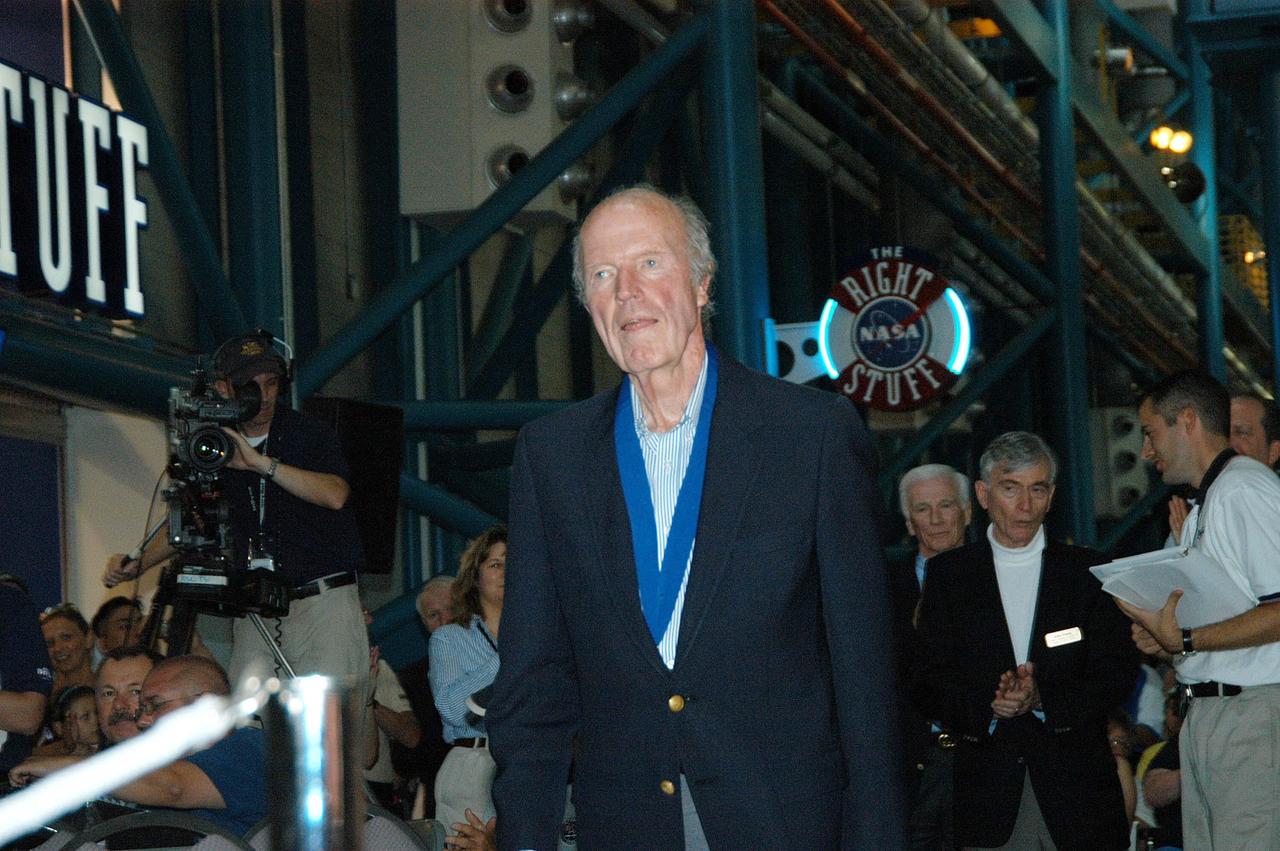
KENNEDY SPACE CENTER, FLA. -- Before the induction ceremony of five space program heroes into the U.S. Astronaut Hall of Fame, former astronaut Gordon Cooper is introduced as a previous inductee. One of America’s original Mercury Seven astronauts, Cooper flew the last and longest Project Mercury orbital mission and spent eight days in space aboard Gemini 5. The ceremony was held at the Apollo/Saturn V Center at KSC. New inductees are Richard O. Covey, commander of the Hubble Space Telescope repair mission; Norman E. Thagard, the first American to occupy Russia’s Mir space station; the late Francis R. "Dick" Scobee, commander of the ill-fated 1986 Challenger mission; Kathryn D. Sullivan, the first American woman to walk in space; and Frederick D. Gregory, the first African-American to command a space mission and the current NASA deputy administrator. The U.S. Astronaut Hall of Fame opened in 1990 to provide a place where space travelers could be remembered for their participation and accomplishments in the U.S. space program. The five inductees join 52 previously honored astronauts from the ranks of the Gemini, Apollo, Skylab, Apollo-Soyuz, and Space Shuttle programs.
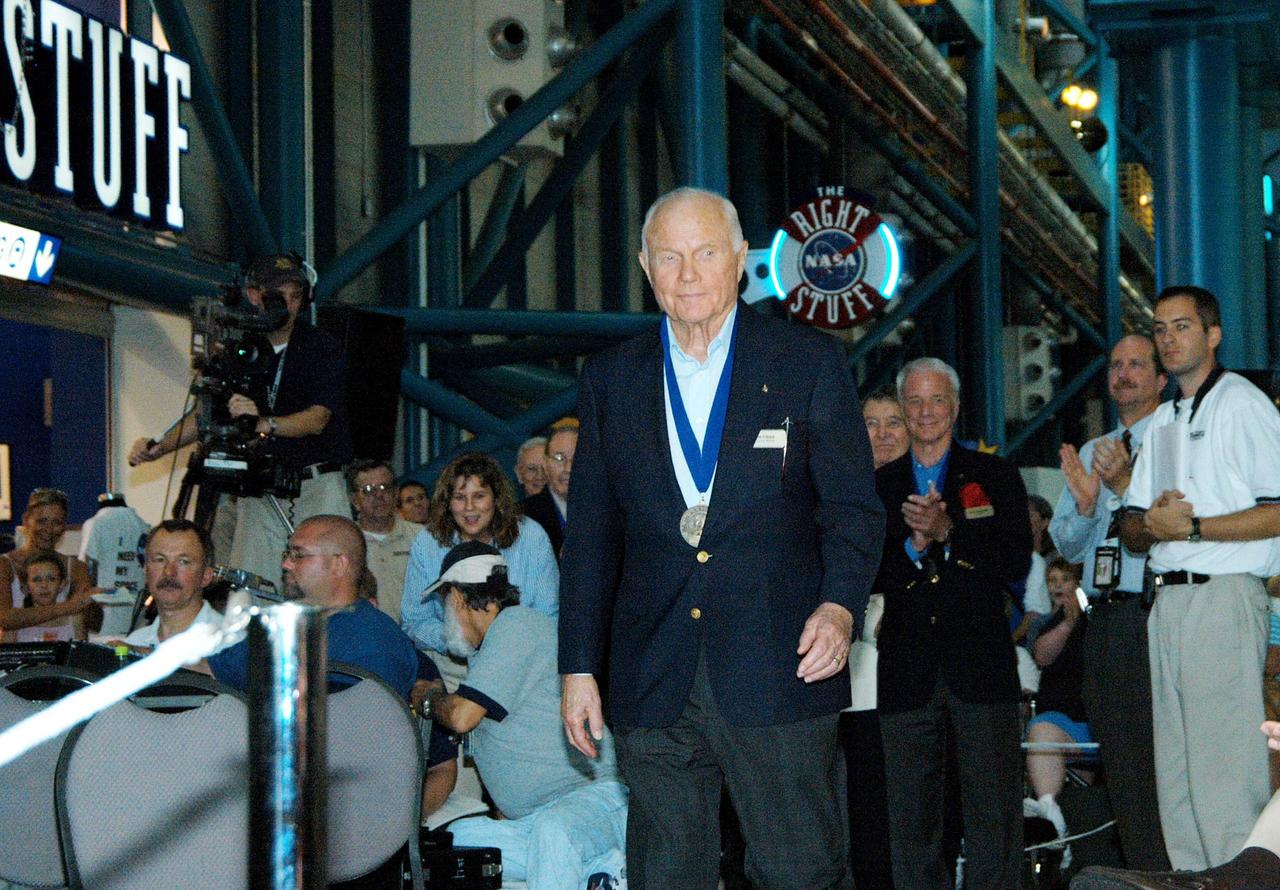
KENNEDY SPACE CENTER, FLA. -- Before the induction ceremony of five space program heroes into the U.S. Astronaut Hall of Fame, former astronaut John Glenn Jr. is greeted with applause as he is introduced as a previous inductee. One of America's original Mercury Seven astronauts, in 1962 he became the first American to orbit the Earth. Twenty-six years later, at age 77, he spent nine days in space aboard Space Shuttle Discovery. The ceremony was held at the Apollo/Saturn V Center at KSC. New inductees are Richard O. Covey, commander of the Hubble Space Telescope repair mission; Norman E. Thagard, the first American to occupy Russia’s Mir space station; the late Francis R. "Dick" Scobee, commander of the ill-fated 1986 Challenger mission; Kathryn D. Sullivan, the first American woman to walk in space; and Frederick D. Gregory, the first African-American to command a space mission and the current NASA deputy administrator. The U.S. Astronaut Hall of Fame opened in 1990 to provide a place where space travelers could be remembered for their participation and accomplishments in the U.S. space program. The five inductees join 52 previously honored astronauts from the ranks of the Gemini, Apollo, Skylab, Apollo-Soyuz, and Space Shuttle programs.
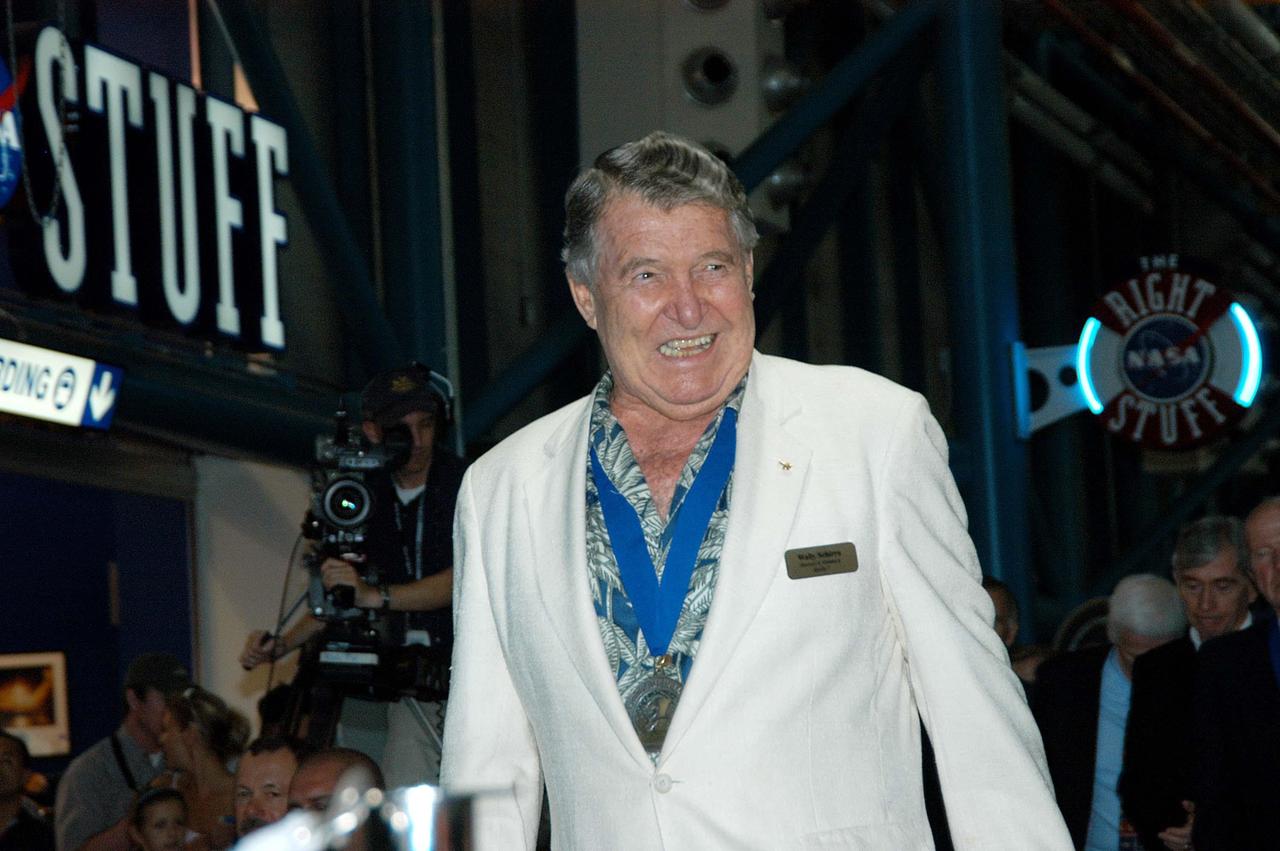
KENNEDY SPACE CENTER, FLA. -- Before the induction ceremony of five space program heroes into the U.S. Astronaut Hall of Fame, former astronaut Wally Schirra is greeted with applause as he is introduced as a previous inductee. One of America's original Mercury Seven astronauts, Schirra is the only one who flew in all three of the nation's pioneering space programs, Mercury, Gemini, and Apollo. The ceremony was held at the Apollo/Saturn V Center at KSC. New inductees are Richard O. Covey, commander of the Hubble Space Telescope repair mission; Norman E. Thagard, the first American to occupy Russia’s Mir space station; the late Francis R. "Dick" Scobee, commander of the ill-fated 1986 Challenger mission; Kathryn D. Sullivan, the first American woman to walk in space; and Frederick D. Gregory, the first African-American to command a space mission and the current NASA deputy administrator. The U.S. Astronaut Hall of Fame opened in 1990 to provide a place where space travelers could be remembered for their participation and accomplishments in the U.S. space program. The five inductees join 52 previously honored astronauts from the ranks of the Gemini, Apollo, Skylab, Apollo-Soyuz, and Space Shuttle programs.
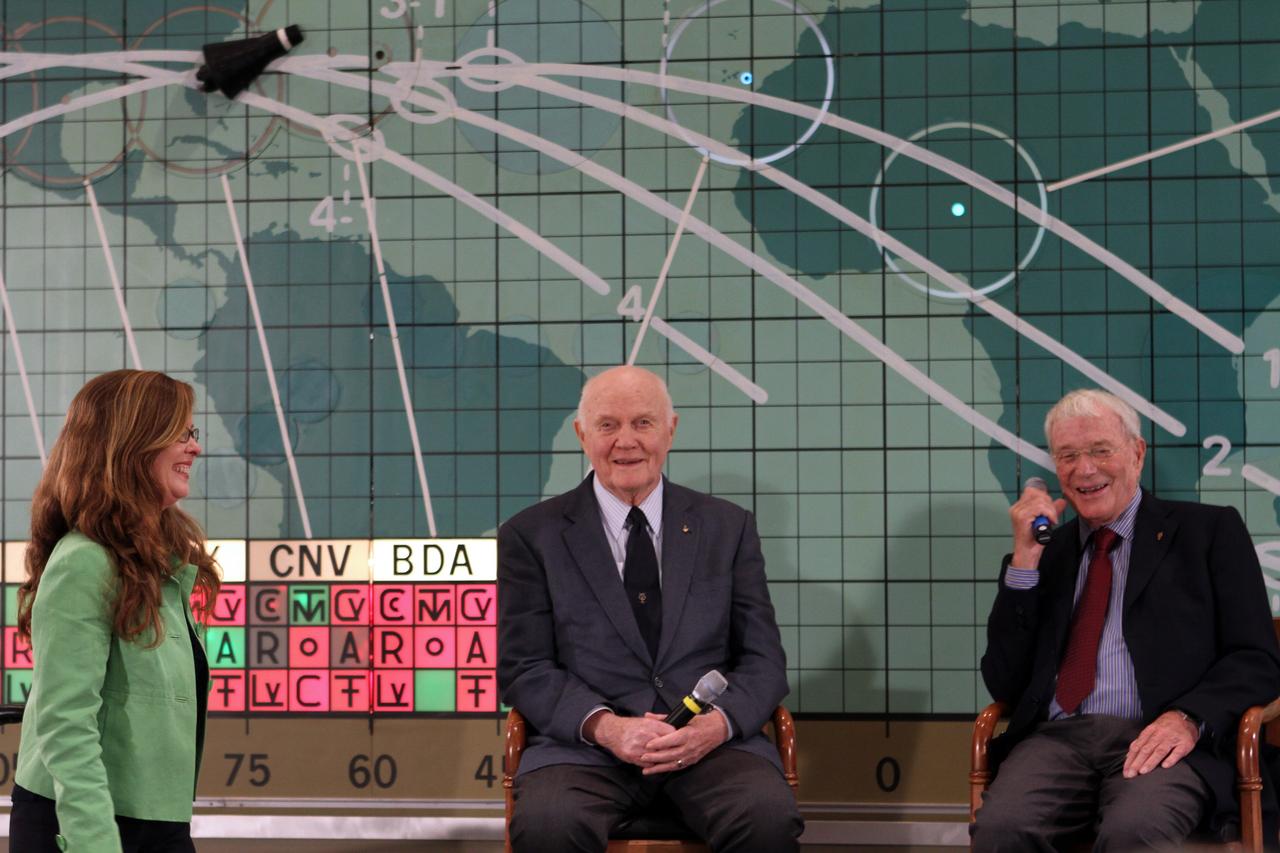
CAPE CANAVERAL, Fla. -- Lisa Malone, left, director of Public Affairs at NASA's Kennedy Space Center in Florida, talks with Mercury astronauts John Glenn, center, and Scott Carpenter in front of the plot board from the Mercury control center on display at the Kennedy Space Center Visitor Complex. The astronauts, part of the original class of seven astronauts chosen by NASA, were taking part in a question-and-answer session with the media as part of events celebrating 50 years of Americans in orbit, an era which began with John Glenn's Mercury mission MA-6, on Feb. 20, 1962. Glenn's launch aboard an Atlas rocket took with it the hopes of an entire nation and ushered in a new era of space travel that eventually led to Americans walking on the moon by the end of the 1960s. Glenn soon was followed into orbit by Carpenter, Walter Schirra and Gordon Cooper. Their fellow Mercury astronauts Alan Shepard and Virgil "Gus" Grissom flew earlier suborbital flights. Deke Slayton was grounded by a medical condition until the Apollo-Soyuz Test Project in 1975. Photo credit: NASA/Kim Shiflett
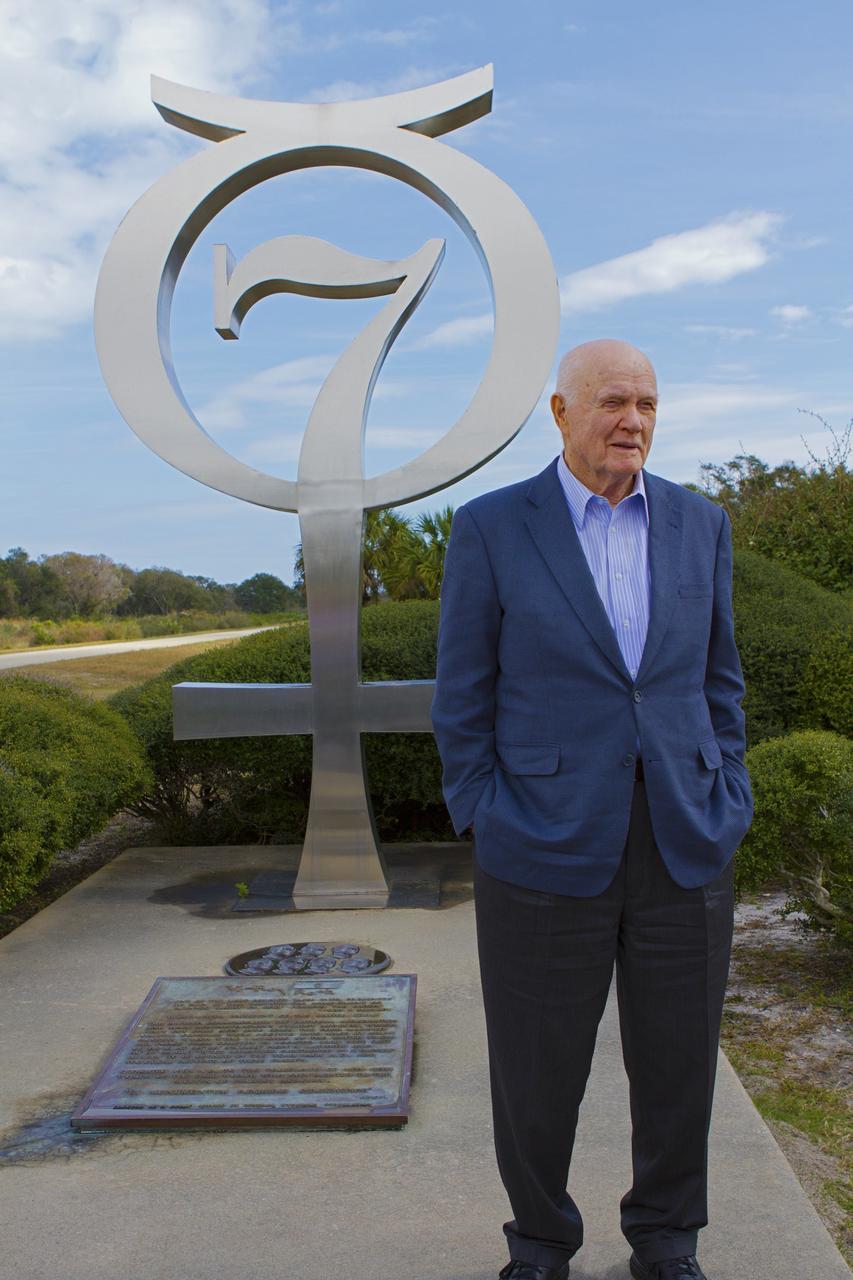
CAPE CANAVERAL, Fla. -- Mercury astronaut John Glenn poses in front of the Mercury 7 memorial near Complex 14 at Cape Canaveral Air Force Station in Florida. Glenn and Carpenter launched from the pad on Atlas rockets inside Mercury capsules in 1962. The two astronauts, part of the original class of seven astronauts chosen by NASA, were taking part in events celebrating 50 years of Americans in orbit, an era which began with Glenn's Mercury mission MA-6, on Feb. 20, 1962. Glenn's launch aboard an Atlas rocket took with it the hopes of an entire nation and ushered in a new era of space travel that eventually led to Americans walking on the moon by the end of the 1960s. Glenn soon was followed into orbit by Carpenter, Walter Schirra and Gordon Cooper. Their fellow Mercury astronauts Alan Shepard and Virgil "Gus" Grissom flew earlier suborbital flights. Deke Slayton was grounded by a medical condition until the Apollo-Soyuz Test Project in 1975. Photo credit: NASA/ Cory Huston
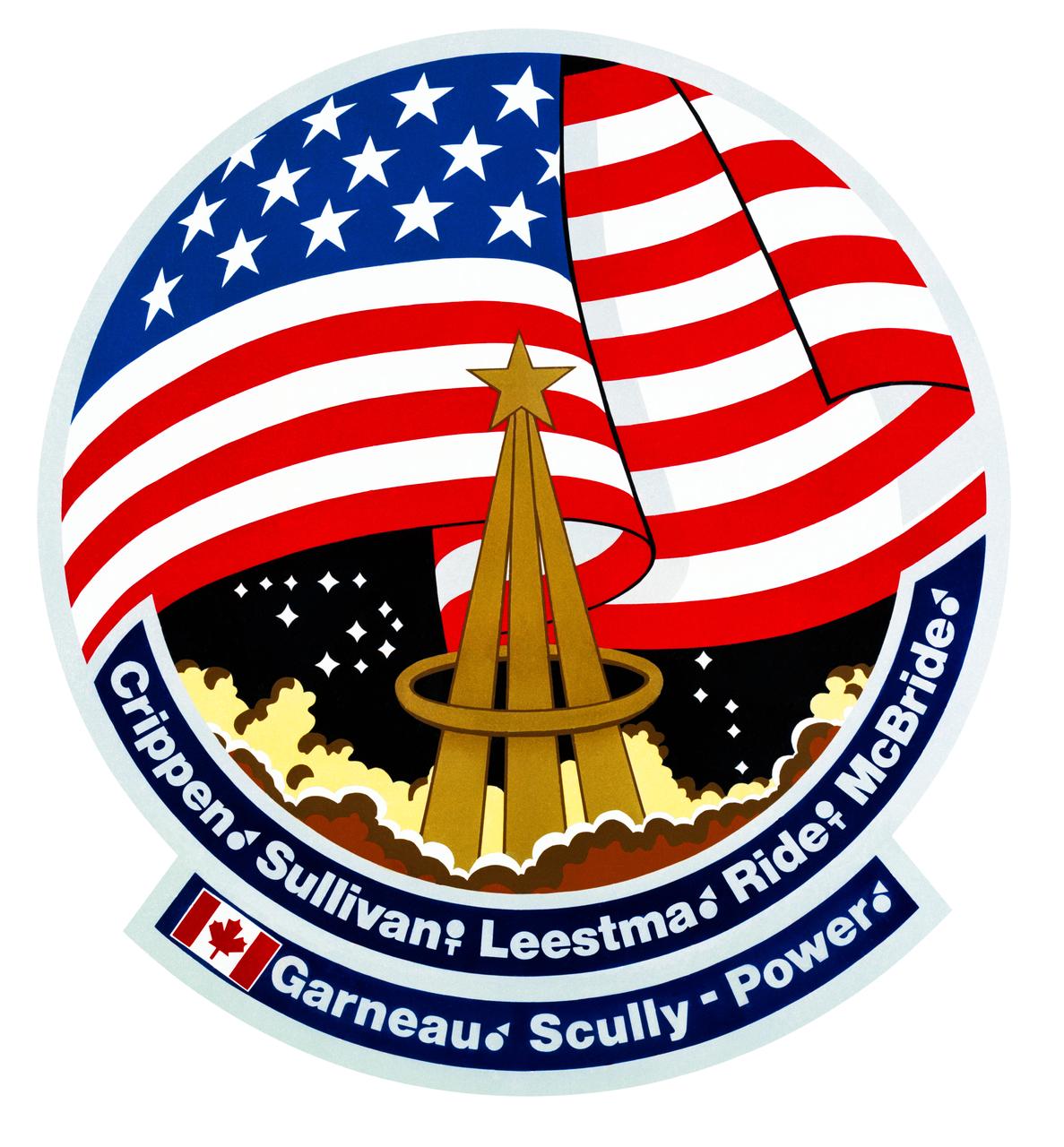
S84-36158 (June 1984) --- The STS-41G Challenger mission insignia focuses on its seven crew members (first to exceed six), the United States flag and the Unity symbol known as the astronaut pin. The pin design in center shows a trio of trajectories merging in infinite space, capped by a bright shining star and encircled by an elliptical wreath denoting orbital flight. Crew members for the (originally-scheduled 17th STS) mission include astronauts Robert L. Crippen and Jon A. McBride, commander and pilot, respectively, whose surnames flank those of the NASA mission specialists - astronauts Kathryn D. Sullivan, David C. Leestma and Sally K. Ride. Paul Scully-Power, a United States Navy oceanographer, and Marc Garneau, a Canadian, join the crew as payload specialists. The artwork was done for NASA by Patrick Rawlings. The NASA insignia design for space shuttle flights is reserved for use by the astronauts and for other official use as the NASA Administrator may authorize. Public availability has been approved only in the forms of illustrations by the various news media. When and if there is any change in this policy, which is not anticipated, the change will be publicly announced. Photo credit: NASA
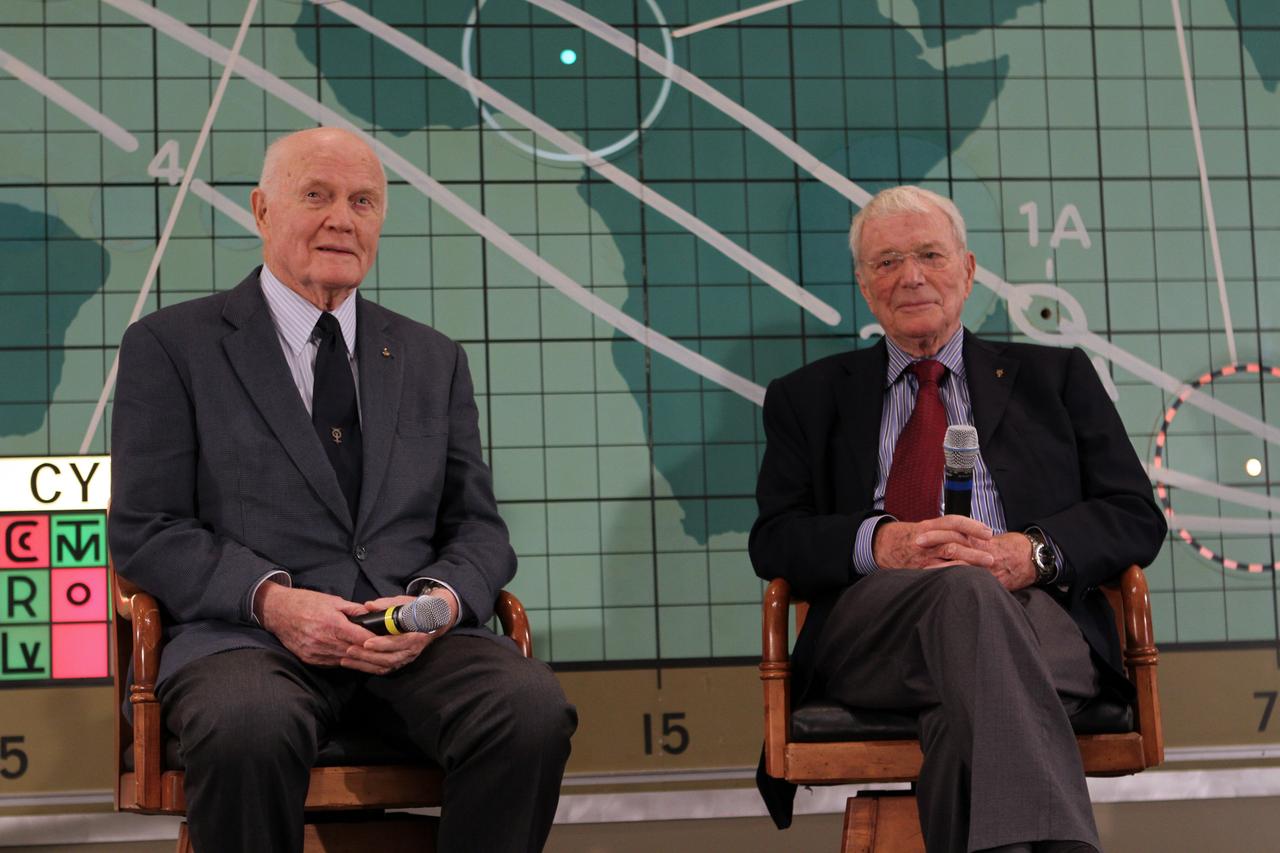
CAPE CANAVERAL, Fla. --Mercury astronauts John Glenn, left, and Scott Carpenter sit in front of the plot board from the Mercury control center on display at the Kennedy Space Center Visitor Complex in Florida. The astronaut, part of the original class of seven astronauts chosen by NASA, was taking part in a question-and-answer session with the media as part of events celebrating 50 years of Americans in orbit, an era which began with John Glenn's Mercury mission MA-6, on Feb. 20, 1962. Glenn's launch aboard an Atlas rocket took with it the hopes of an entire nation and ushered in a new era of space travel that eventually led to Americans walking on the moon by the end of the 1960s. Glenn soon was followed into orbit by Carpenter, Walter Schirra and Gordon Cooper. Their fellow Mercury astronauts Alan Shepard and Virgil "Gus" Grissom flew earlier suborbital flights. Deke Slayton was grounded by a medical condition until the Apollo-Soyuz Test Project in 1975. Photo credit: NASA/Kim Shiflett
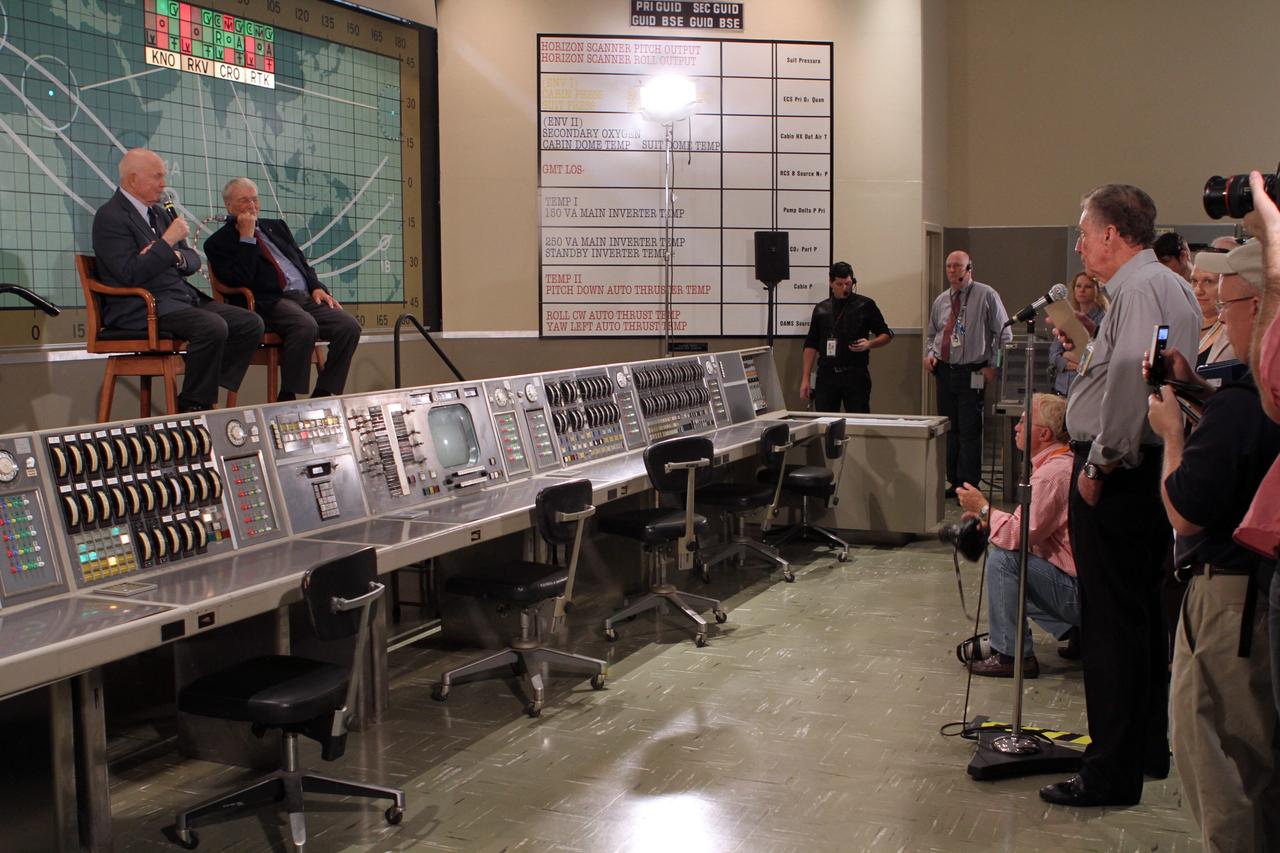
CAPE CANAVERAL, Fla. -- Mercury astronauts John Glenn, left, and Scott Carpenter sit in front of the plot board from the Mercury control center on display at the Kennedy Space Center Visitor Complex. The astronauts, part of the original class of seven astronauts chosen by NASA, were taking part in a question-and-answer session with the media as part of events celebrating 50 years of Americans in orbit, an era which began with John Glenn's Mercury mission MA-6, on Feb. 20, 1962. Glenn's launch aboard an Atlas rocket took with it the hopes of an entire nation and ushered in a new era of space travel that eventually led to Americans walking on the moon by the end of the 1960s. Glenn soon was followed into orbit by Carpenter, Walter Schirra and Gordon Cooper. Their fellow Mercury astronauts Alan Shepard and Virgil "Gus" Grissom flew earlier suborbital flights. Deke Slayton was grounded by a medical condition until the Apollo-Soyuz Test Project in 1975. Photo credit: NASA/Kim Shiflett
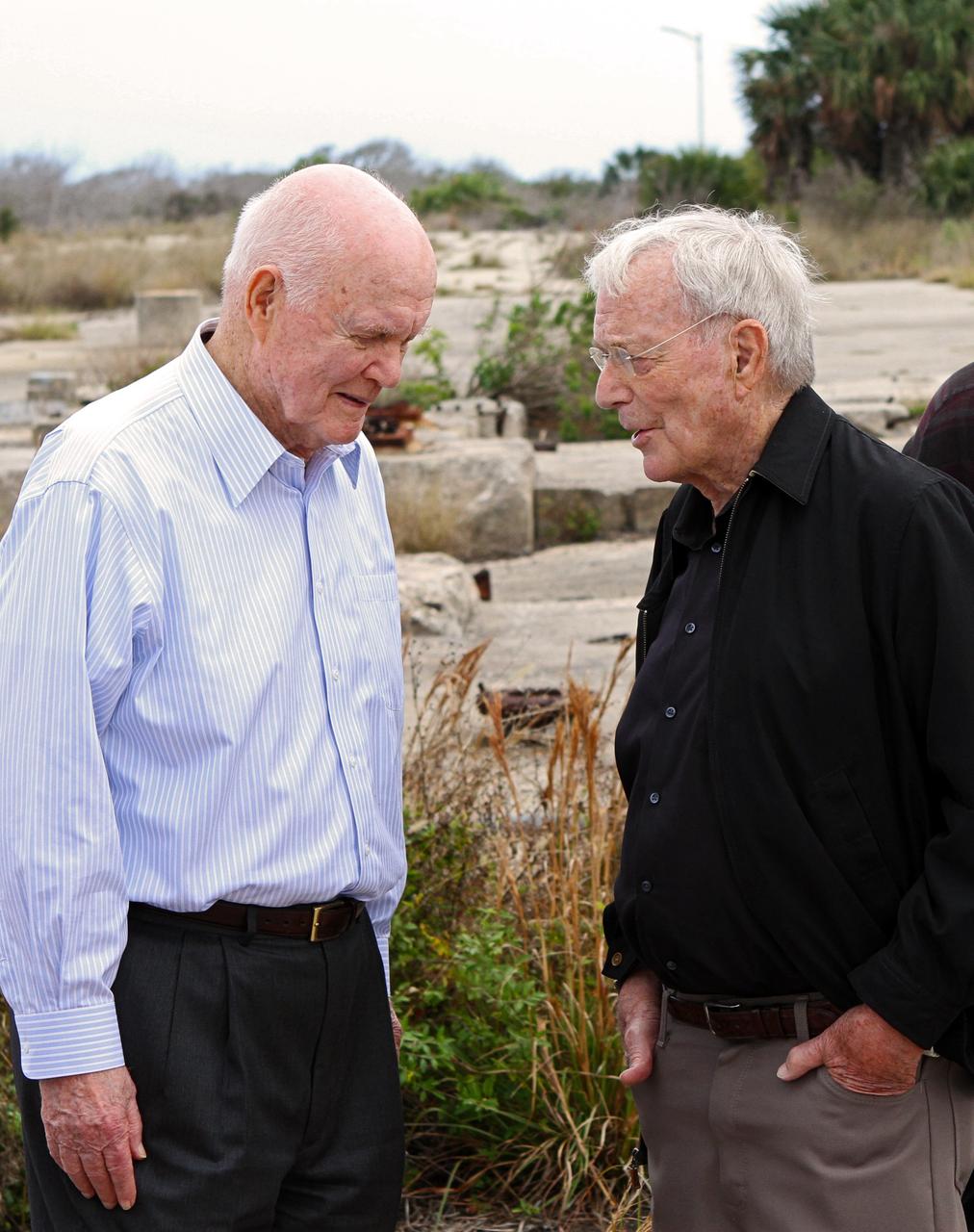
CAPE CANAVERAL, Fla. -- Mercury astronauts John Glenn, left and Scott Carpenter look around at the dismantled Complex 14 at Cape Canaveral Air Force Station in Florida. Glenn and Carpenter launched from the pad on Atlas rockets inside Mercury capsules in 1962. The two astronauts, part of the original class of seven astronauts chosen by NASA, were taking part in events celebrating 50 years of Americans in orbit, an era which began with Glenn's Mercury mission MA-6, on Feb. 20, 1962. Glenn's launch aboard an Atlas rocket took with it the hopes of an entire nation and ushered in a new era of space travel that eventually led to Americans walking on the moon by the end of the 1960s. Glenn soon was followed into orbit by Carpenter, Walter Schirra and Gordon Cooper. Their fellow Mercury astronauts Alan Shepard and Virgil "Gus" Grissom flew earlier suborbital flights. Deke Slayton was grounded by a medical condition until the Apollo-Soyuz Test Project in 1975. Photo credit: NASA/Cory Huston
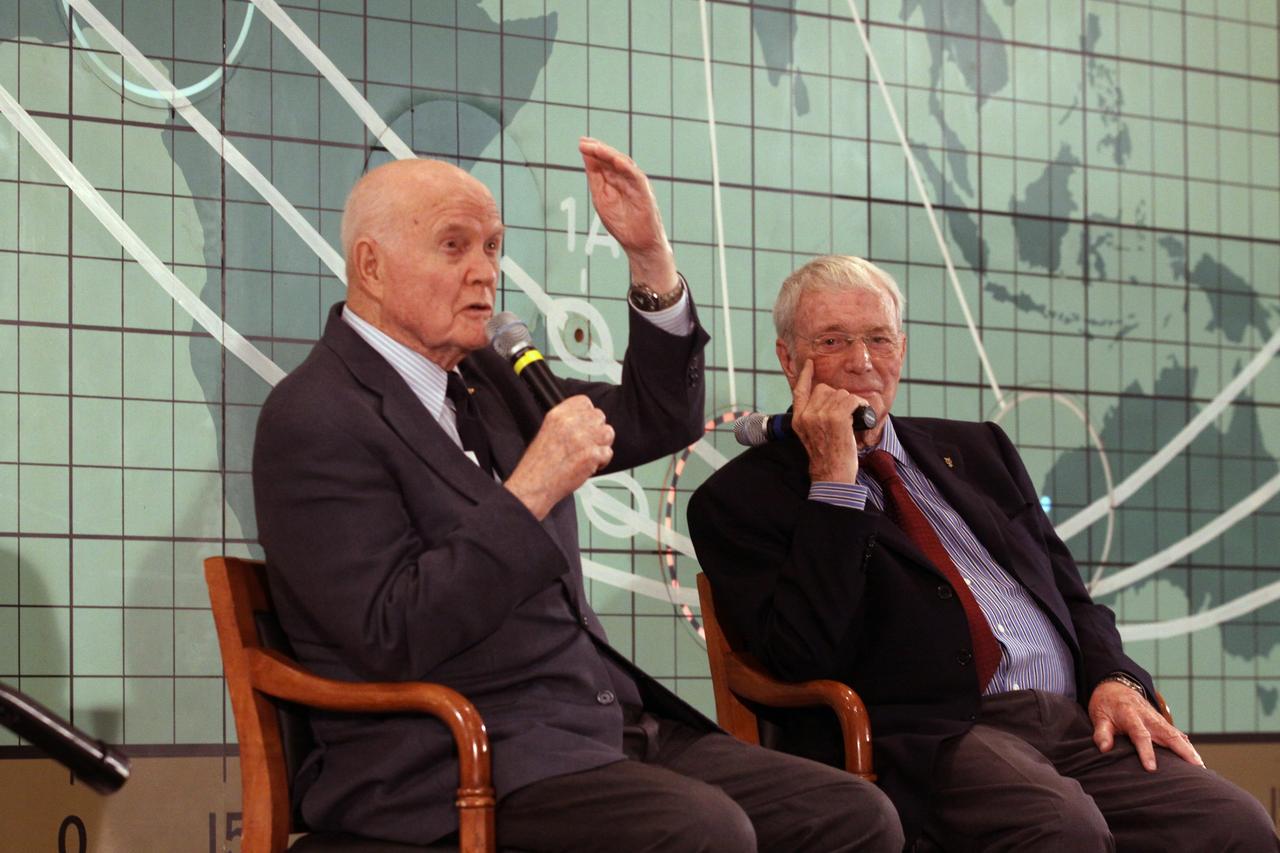
CAPE CANAVERAL, Fla. --Mercury astronauts John Glenn, left, and Scott Carpenter sit in front of the plot board from the Mercury control center on display at the Kennedy Space Center Visitor Complex. The astronauts, part of the original class of seven astronauts chosen by NASA, were taking part in a question-and-answer session with the media as part of events celebrating 50 years of Americans in orbit, an era which began with John Glenn's Mercury mission MA-6, on Feb. 20, 1962. Glenn's launch aboard an Atlas rocket took with it the hopes of an entire nation and ushered in a new era of space travel that eventually led to Americans walking on the moon by the end of the 1960s. Glenn soon was followed into orbit by Carpenter, Walter Schirra and Gordon Cooper. Their fellow Mercury astronauts Alan Shepard and Virgil "Gus" Grissom flew earlier suborbital flights. Deke Slayton was grounded by a medical condition until the Apollo-Soyuz Test Project in 1975. Photo credit: NASA/Kim Shiflett
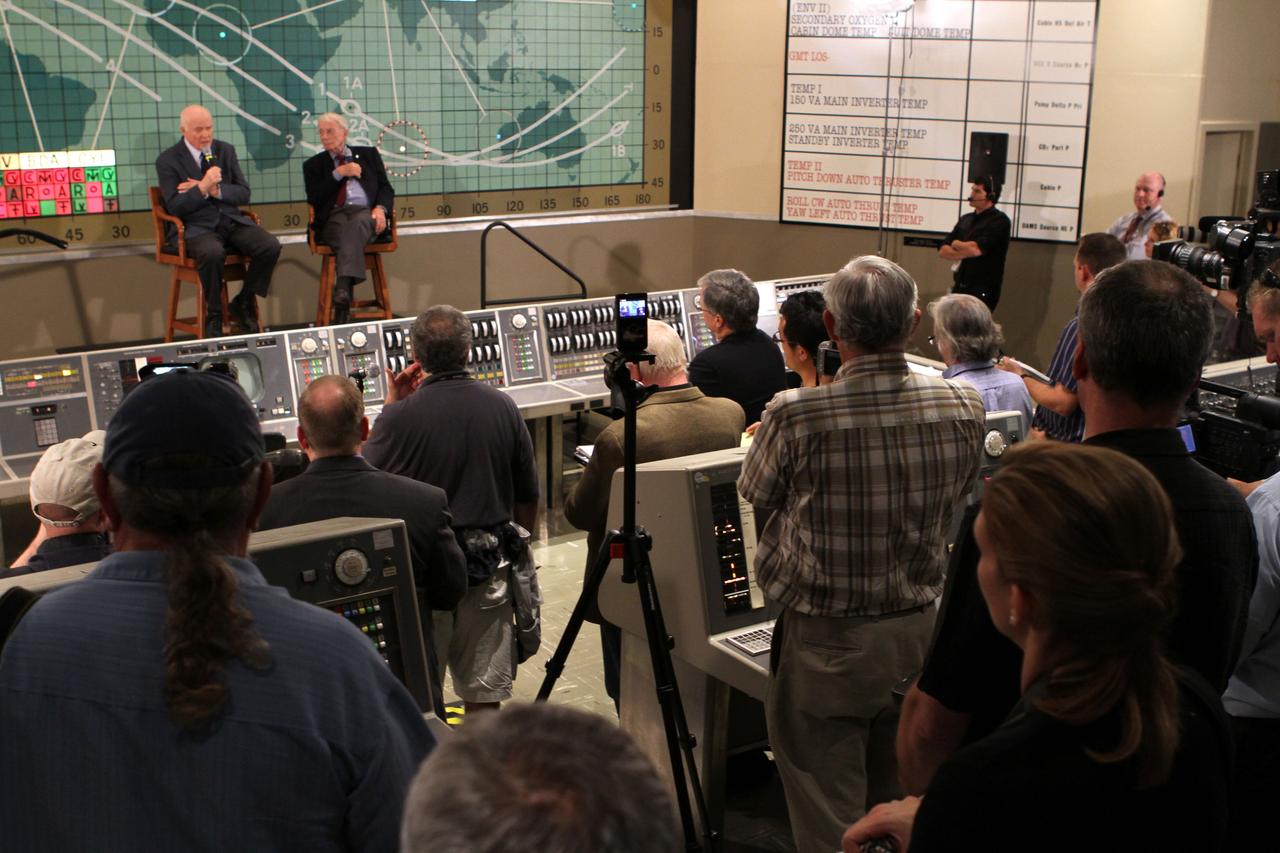
CAPE CANAVERAL, Fla. -- Mercury astronauts John Glenn, left, and Scott Carpenter sit in front of the plot board from the Mercury control center on display at the Kennedy Space Center Visitor Complex. The astronauts, part of the original class of seven astronauts chosen by NASA, were taking part in a question-and-answer session with the media as part of events celebrating 50 years of Americans in orbit, an era which began with John Glenn's Mercury mission MA-6, on Feb. 20, 1962. Glenn's launch aboard an Atlas rocket took with it the hopes of an entire nation and ushered in a new era of space travel that eventually led to Americans walking on the moon by the end of the 1960s. Glenn soon was followed into orbit by Carpenter, Walter Schirra and Gordon Cooper. Their fellow Mercury astronauts Alan Shepard and Virgil "Gus" Grissom flew earlier suborbital flights. Deke Slayton was grounded by a medical condition until the Apollo-Soyuz Test Project in 1975. Photo credit: NASA/Kim Shiflett
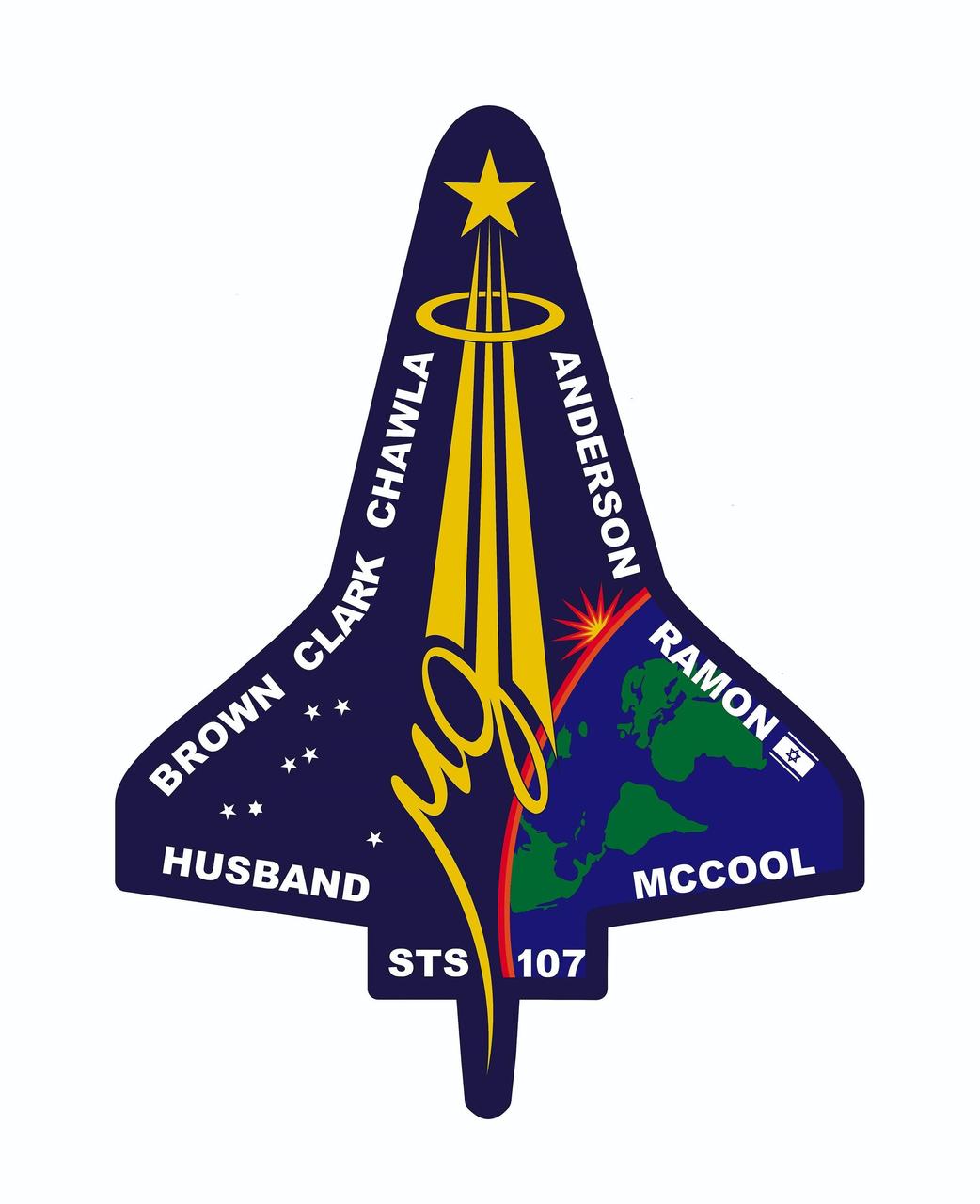
JOHNSON SPACE CENTER, HOUSON, TEXAS -- STS-107 INSIGNIA -- This is the insignia for STS-107, which is a multi-discipline microgravity and Earth science research mission with a multitude of international scientific investigations conducted continuously during the planned 16 days on orbit. The central element of the patch is the microgravity symbol flowing into the rays of the astronaut symbol. The mission inclination is portrayed by the 39-degree angle of the astronaut symbol to the Earth's horizon. The sunrise is representative of the numerous experiments that are the dawn of a new era for continued microgravity research on the International Space Station and beyond. The breadth of science conducted on this mission will have widespread benefits to life on Earth and our continued exploration of space, illustrated by the Earth and stars. The constellation Columba (the dove) was chosen to symbolize peace on Earth and the Space Shuttle Columbia. The seven stars also represent the mission crew members and honor the original astronauts who paved the way to make research in space possible. The Israeli flag is adjacent to the name of the payload specialist who is the first person from that country to fly on the Space Shuttle. The NASA insignia design for Space Shuttle flights is reserved for use by the astronauts and for other official use as the NASA Administrator may authorize. Public availability has been approved only in the form of illustrations by the various news media. When and if there is any change in this policy, which we do not anticipate, it will be publicly announced.
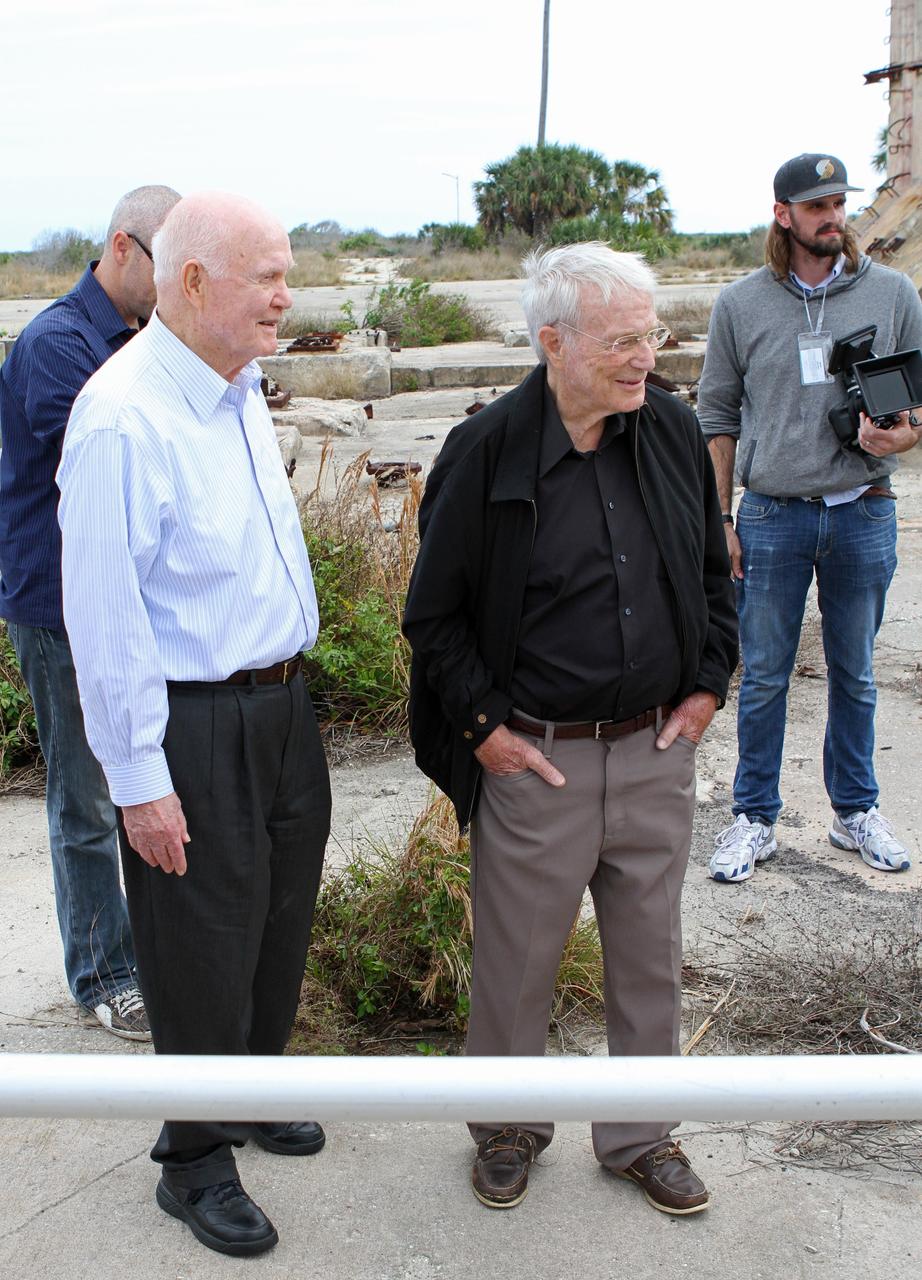
CAPE CANAVERAL, Fla. -- Mercury astronauts John Glenn, second from left and Scott Carpenter look around at the dismantled Complex 14 at Cape Canaveral Air Force Station in Florida. Glenn and Carpenter launched from the pad on Atlas rockets inside Mercury capsules in 1962. The two astronauts, part of the original class of seven astronauts chosen by NASA, were taking part in events celebrating 50 years of Americans in orbit, an era which began with Glenn's Mercury mission MA-6, on Feb. 20, 1962. Glenn's launch aboard an Atlas rocket took with it the hopes of an entire nation and ushered in a new era of space travel that eventually led to Americans walking on the moon by the end of the 1960s. Glenn soon was followed into orbit by Carpenter, Walter Schirra and Gordon Cooper. Their fellow Mercury astronauts Alan Shepard and Virgil "Gus" Grissom flew earlier suborbital flights. Deke Slayton was grounded by a medical condition until the Apollo-Soyuz Test Project in 1975. Photo credit: NASA/ Cory Huston
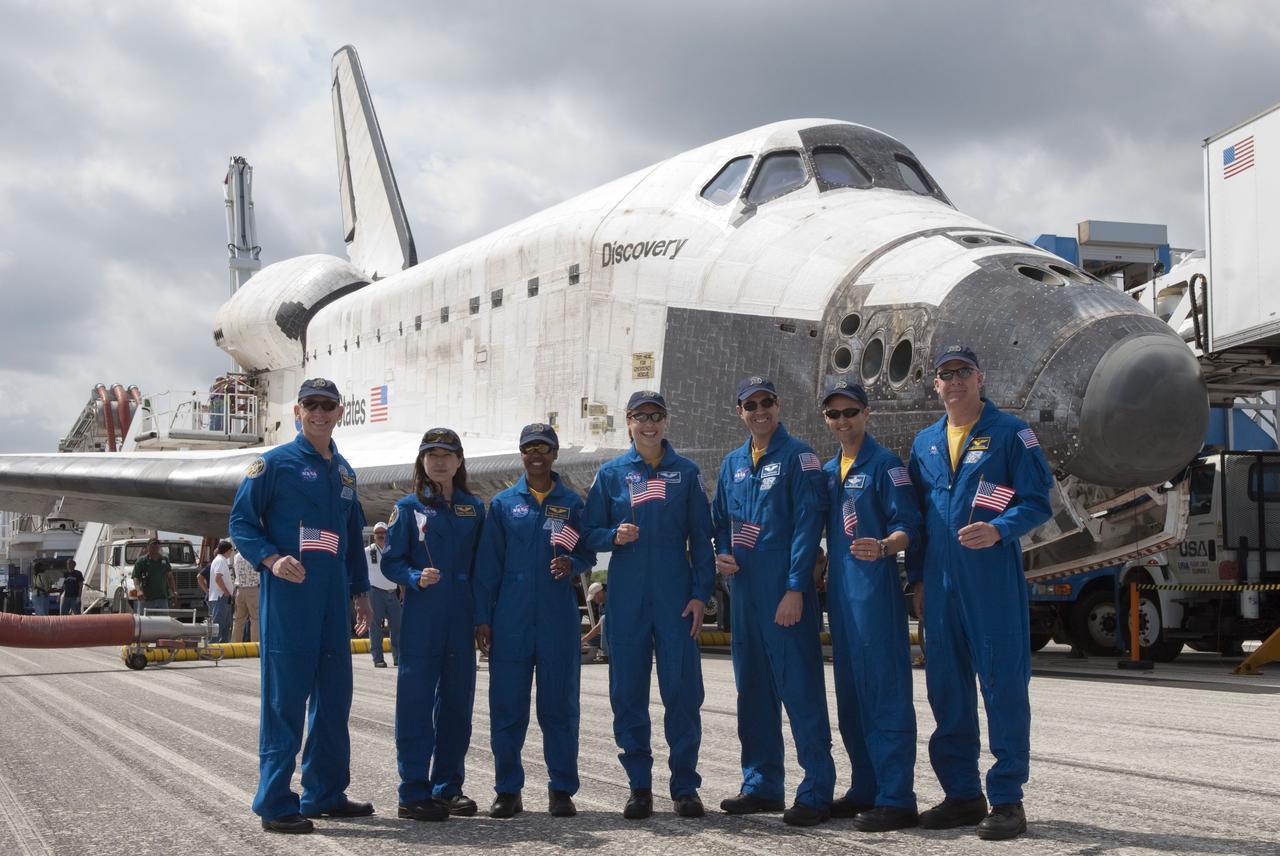
STS131-S-144 (20 April 2010) --- At the Shuttle Landing Facility at NASA's Kennedy Space Center in Florida, members of the STS-131 crew, each holding a flag from his or her country of origin, pose for a portrait in front of space shuttle Discovery. From the right are NASA astronauts Alan Poindexter, commander; James P. Dutton Jr., pilot; Rick Mastracchio, Dorothy Metcalf-Lindenburger, Stephanie Wilson, Japanese astronaut Naoko Yamazaki and NASA astronaut Clayton Anderson, all mission specialists. Discovery landed on Runway 33 after 15 days in space, completing the more than 6.2-million-mile STS-131 mission on orbit 238. Main gear touchdown was at 9:08:35 a.m. (EDT) on April 20, 2010, followed by nose gear touchdown at 9:08:47 a.m. and wheelstop at 9:09:33 a.m. The seven-member STS-131 crew carried the Leonardo Multi-Purpose Logistics Module, filled with supplies, a new crew sleeping quarters and science racks that were transferred to the International Space Station's laboratories. The crew also switched out a gyroscope on the station?s truss, installed a spare ammonia storage tank and retrieved a Japanese experiment from the station?s exterior. STS-131 is the 33rd shuttle mission to the station and the 131st shuttle mission overall.
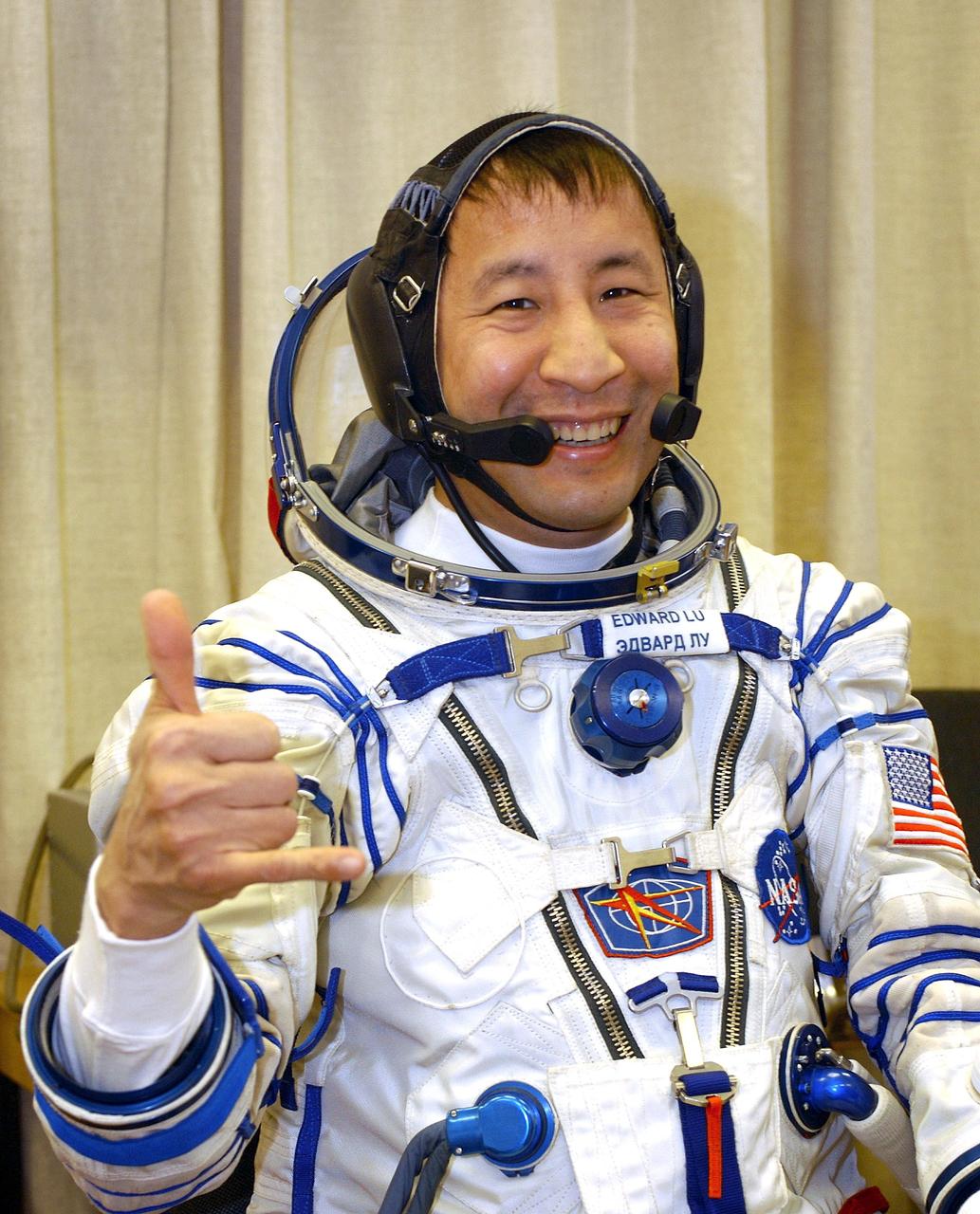
Baikonur Cosmodrome, Kazakhstan -- Astronaut Edward T. Lu, NASA ISS science officer and flight engineer for Expedition Seven dons his Russian Sokol suit for the leak check and Soyuz inspection, seat liner check. Veteran Russian cosmonaut Yuri Malenchenko and veteran NASA astronaut Ed Lu have been named as the primary crew for the planned April 26, 2003, launch of a Russian Soyuz TMA-2 spacecraft to the International Space Station. Malenchenko and Lu will be called the Expedition 7 crew. Russian cosmonaut Alexander Kaleri and NASA astronaut Michael Foale are the backup crewmembers to Malenchenko and Lu. Expedition 6 Commander Ken Bowersox, Flight Engineer Nikolai Budarin and NASA Space Station Science Officer Don Pettit will return to Earth aboard the Soyuz TMA-1 craft in May 2003. The three Expedition 6 crewmembers were launched on Nov. 23, 2002. They have been aboard the Station since November 25. They were originally scheduled to return in March aboard the Space Shuttle Atlantis during the STS-114 mission. Malenchenko and Lu will continue to operate the science payloads already on board, as well as maintaining the Station. Photo Credit: NASA/Bill Ingalls
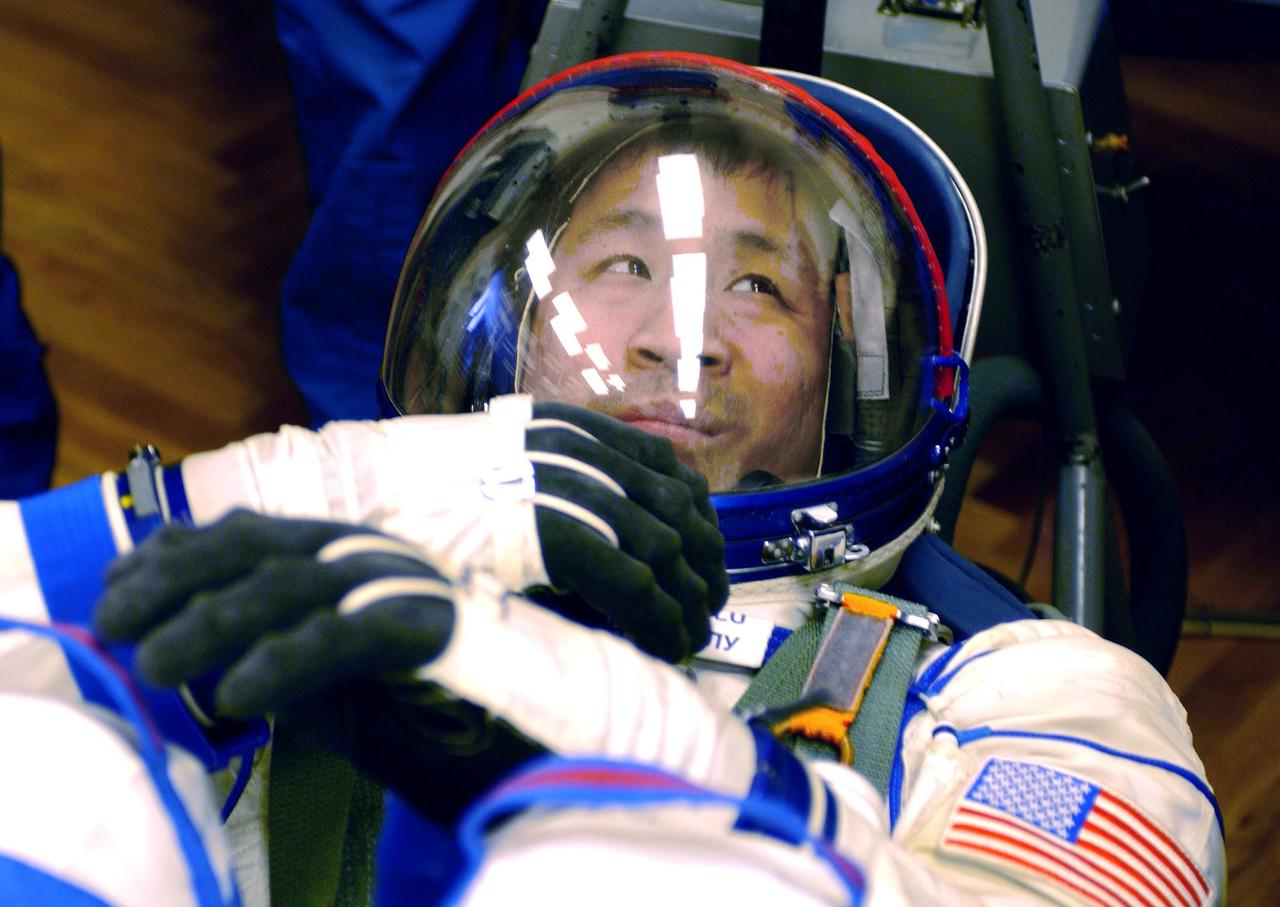
Baikonur Cosmodrome, Kazakhstan -- Building 254, Soyuz Integration Facility. Astronaut Edward T. Lu, NASA ISS science officer and flight engineer for Expedition Seven, has a leak check performed on the Russian Sokol suit. Veteran Russian cosmonaut Yuri Malenchenko and veteran NASA astronaut Ed Lu have been named as the primary crew for the planned April 26, 2003, launch of a Russian Soyuz TMA-2 spacecraft to the International Space Station. Malenchenko and Lu will be called the Expedition 7 crew. Russian cosmonaut Alexander Kaleri and NASA astronaut Michael Foale are the backup crewmembers to Malenchenko and Lu. Expedition 6 Commander Ken Bowersox, Flight Engineer Nikolai Budarin and NASA Space Station Science Officer Don Pettit will return to Earth aboard the Soyuz TMA-1 craft in May 2003. The three Expedition 6 crewmembers were launched on Nov. 23, 2002. They have been aboard the Station since November 25. They were originally scheduled to return in March aboard the Space Shuttle Atlantis during the STS-114 mission. Malenchenko and Lu will continue to operate the science payloads already on board, as well as maintaining the Station. Photo Credit: NASA/Bill Ingalls
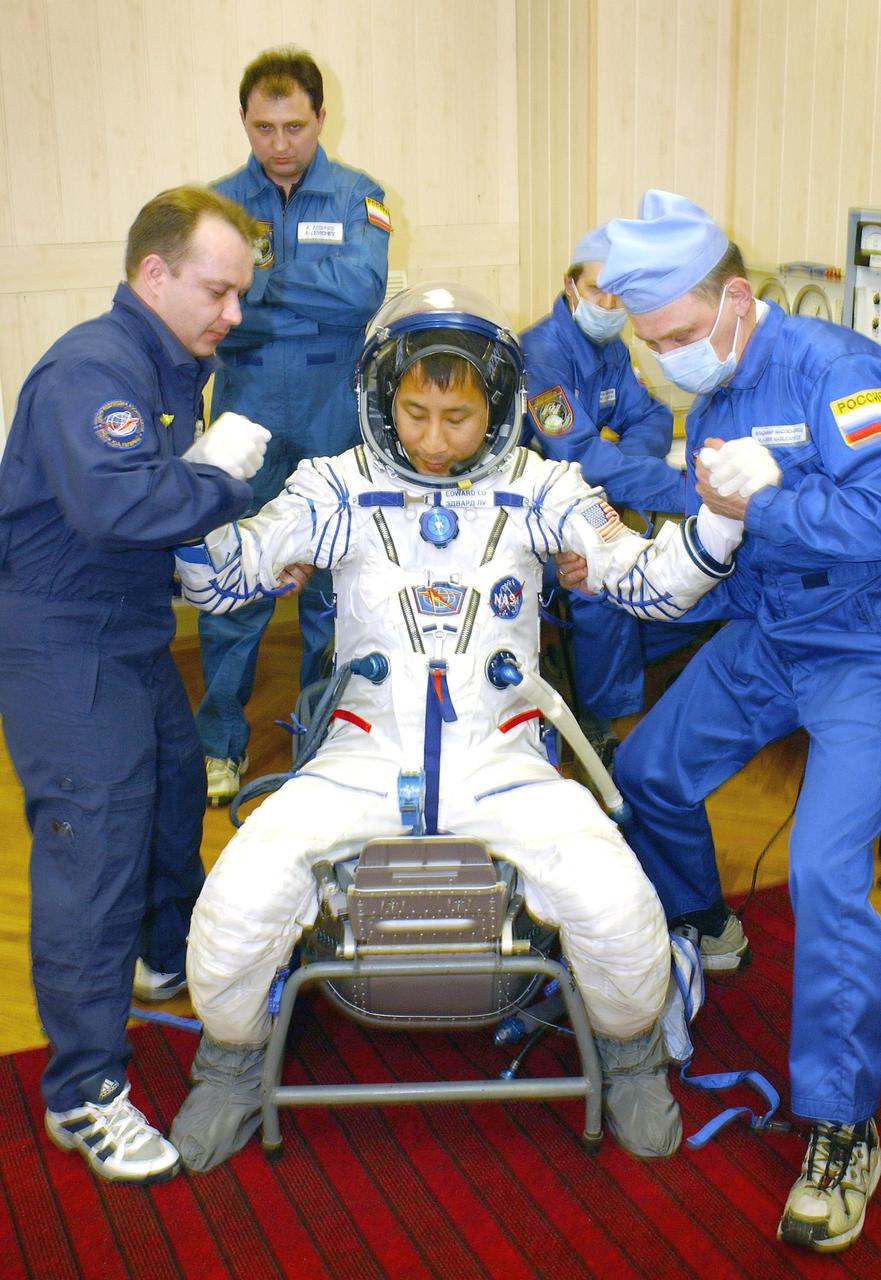
Baikonur Cosmodrome, Kazakhstan -- Building 254, Soyuz Integration Facility. Astronaut Edward T. Lu, NASA ISS science officer and flight engineer for Expedition Seven, has a leak check performed on the Russian Sokol suit. Veteran Russian cosmonaut Yuri Malenchenko and veteran NASA astronaut Ed Lu have been named as the primary crew for the planned April 26, 2003, launch of a Russian Soyuz TMA-2 spacecraft to the International Space Station. Malenchenko and Lu will be called the Expedition 7 crew. Russian cosmonaut Alexander Kaleri and NASA astronaut Michael Foale are the backup crewmembers to Malenchenko and Lu. Expedition 6 Commander Ken Bowersox, Flight Engineer Nikolai Budarin and NASA Space Station Science Officer Don Pettit will return to Earth aboard the Soyuz TMA-1 craft in May 2003. The three Expedition 6 crewmembers were launched on Nov. 23, 2002. They have been aboard the Station since November 25. They were originally scheduled to return in March aboard the Space Shuttle Atlantis during the STS-114 mission. Malenchenko and Lu will continue to operate the science payloads already on board, as well as maintaining the Station. Photo Credit: NASA/Bill Ingalls
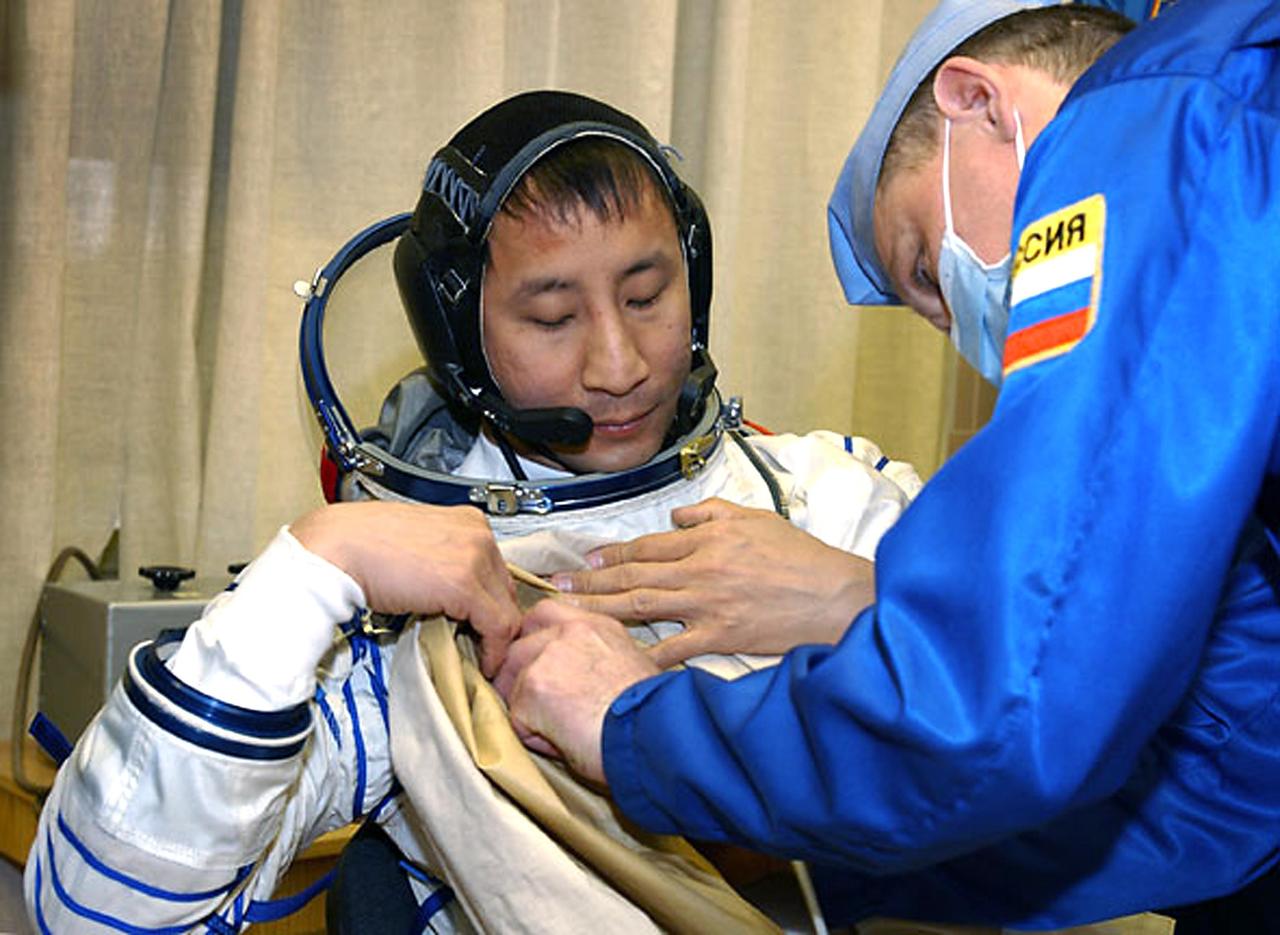
Baikonur Cosmodrome, Kazakhstan. Building 254, Soyuz Integration Facility. Astronaut Edward T. Lu, NASA ISS science officer and flight engineer for Expedition Seven, dons his Russian Sokol suit for the leak check and Soyuz inspection, seat liner check. Veteran Russian cosmonaut Yuri Malenchenko and veteran NASA astronaut Ed Lu have been named as the primary crew for the planned April 26, 2003, launch of a Russian Soyuz TMA-2 spacecraft to the International Space Station. Malenchenko and Lu will be called the Expedition 7 crew. Russian cosmonaut Alexander Kaleri and NASA astronaut Michael Foale are the backup crewmembers to Malenchenko and Lu. Expedition 6 Commander Ken Bowersox, Flight Engineer Nikolai Budarin and NASA Space Station Science Officer Don Pettit will return to Earth aboard the Soyuz TMA-1 craft in May 2003. The three Expedition 6 crewmembers were launched on Nov. 23, 2002. They have been aboard the Station since November 25. They were originally scheduled to return in March aboard the Space Shuttle Atlantis during the STS-114 mission. Malenchenko and Lu will continue to operate the science payloads already on board, as well as maintaining the Station. Photo Credit: NASA/Bill Ingalls
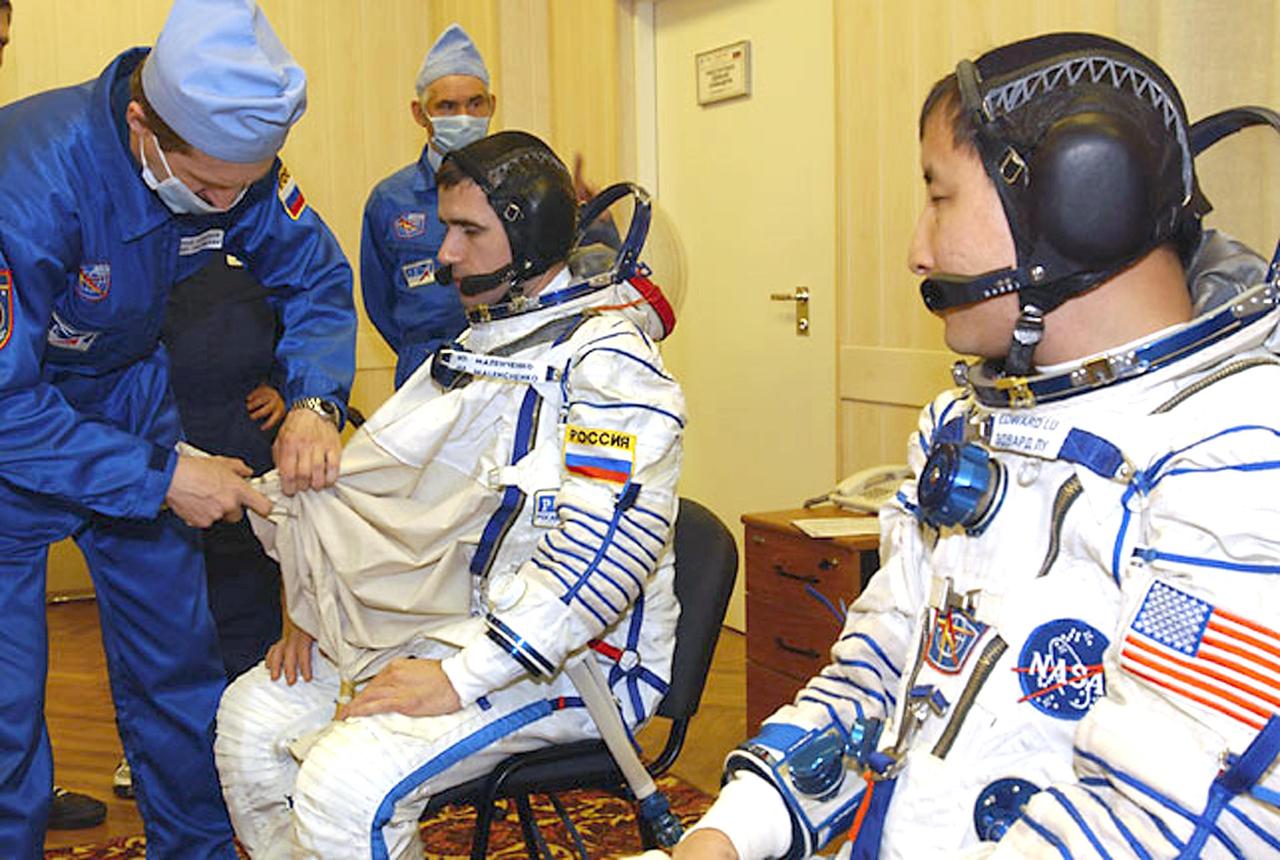
Baikonur Cosmodrome, Kazakhstan -- Cosmonaut Yuri I. Malenchenko (left), Expedition Seven commander, and astronaut Ed Lu have their Russian Sokol suits checked for leaks, as well as Soyuz inspection and seat liner check. Veteran Russian cosmonaut Yuri Malenchenko and veteran NASA astronaut Ed Lu have been named as the primary crew for the planned April 26, 2003, launch of a Russian Soyuz TMA-2 spacecraft to the International Space Station. Malenchenko and Lu will be called the Expedition 7 crew. Russian cosmonaut Alexander Kaleri and NASA astronaut Michael Foale are the backup crewmembers to Malenchenko and Lu. Expedition 6 Commander Ken Bowersox, Flight Engineer Nikolai Budarin and NASA Space Station Science Officer Don Pettit will return to Earth aboard the Soyuz TMA-1 craft in May 2003. The three Expedition 6 crewmembers were launched on Nov. 23, 2002. They have been aboard the Station since November 25. They were originally scheduled to return in March aboard the Space Shuttle Atlantis during the STS-114 mission. Malenchenko and Lu will continue to operate the science payloads already on board, as well as maintaining the Station. Photo Credit: NASA/Bill Ingalls
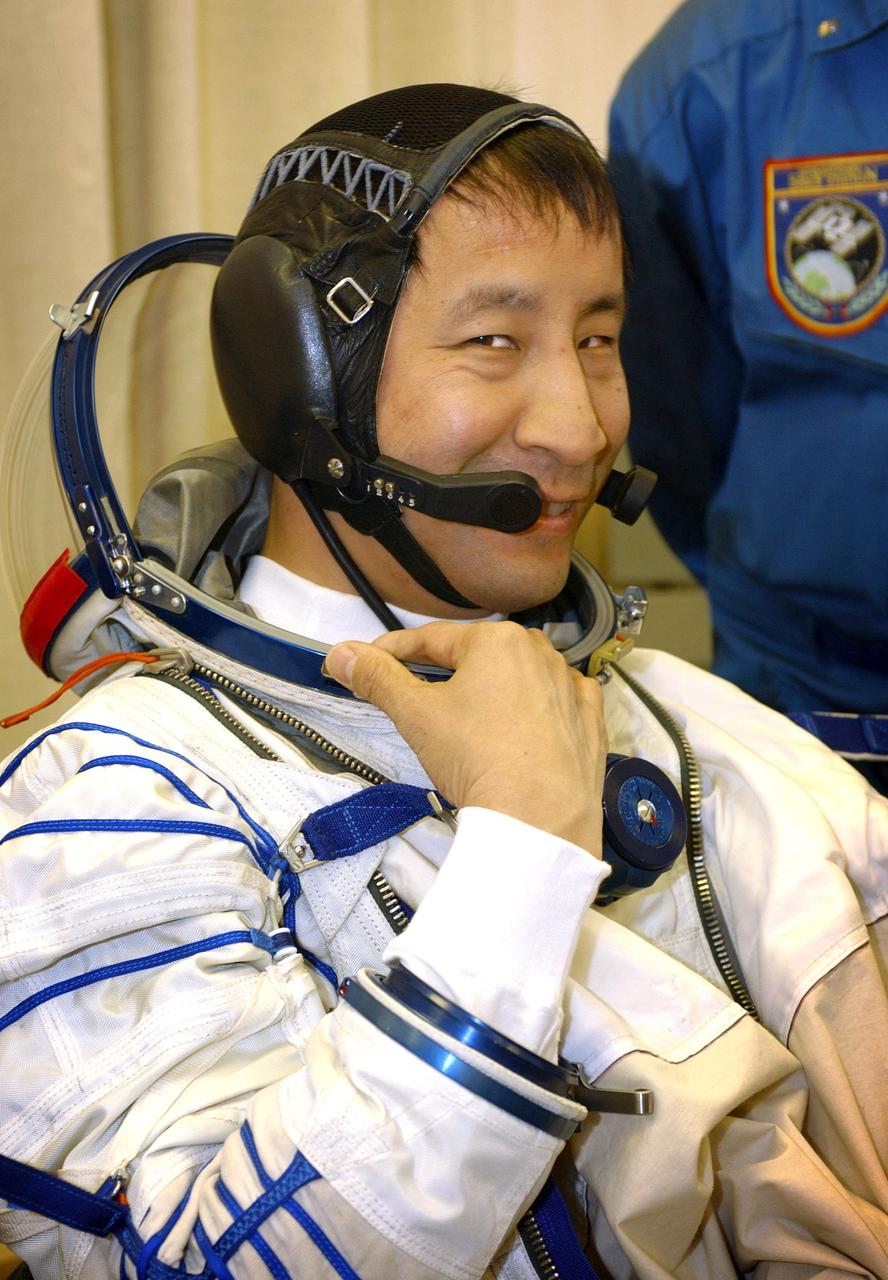
Baikonur Cosmodrome, Kazakhstan. Building 254, Soyuz Integration Facility. Astronaut Edward T. Lu, NASA ISS science officer and flight engineer for Expedition Seven, dons his Russian Sokol suit for the leak check and Soyuz inspection, seat liner check. Veteran Russian cosmonaut Yuri Malenchenko and veteran NASA astronaut Ed Lu have been named as the primary crew for the planned April 26, 2003, launch of a Russian Soyuz TMA-2 spacecraft to the International Space Station. Malenchenko and Lu will be called the Expedition 7 crew. Russian cosmonaut Alexander Kaleri and NASA astronaut Michael Foale are the backup crewmembers to Malenchenko and Lu. Expedition 6 Commander Ken Bowersox, Flight Engineer Nikolai Budarin and NASA Space Station Science Officer Don Pettit will return to Earth aboard the Soyuz TMA-1 craft in May 2003. The three Expedition 6 crewmembers were launched on Nov. 23, 2002. They have been aboard the Station since November 25. They were originally scheduled to return in March aboard the Space Shuttle Atlantis during the STS-114 mission. Malenchenko and Lu will continue to operate the science payloads already on board, as well as maintaining the Station. Photo Credit: NASA/Bill Ingalls