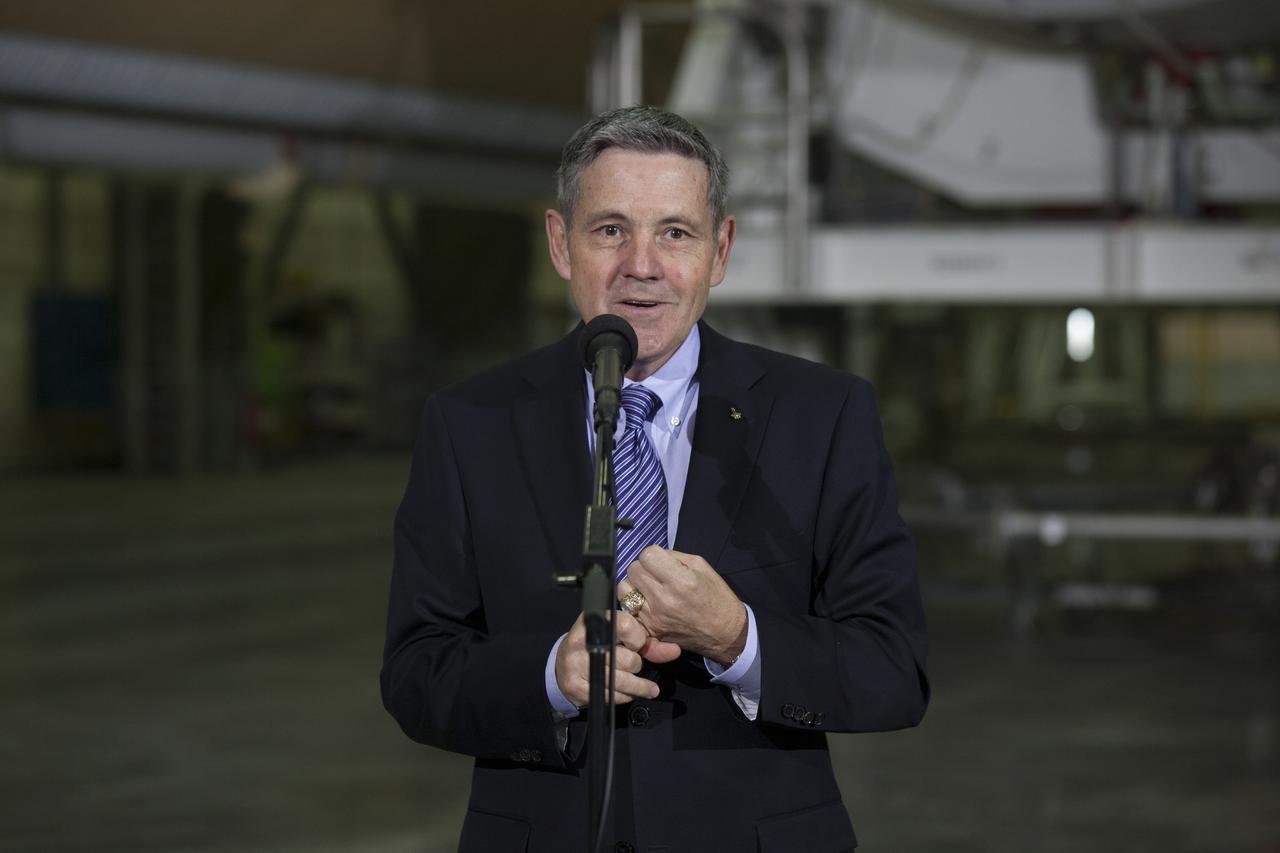
CAPE CANAVERAL, Fla. – During a media event inside the Horizontal Integration Facility at Launch Complex 37 at Cape Canaveral Air Force Station in Florida, Kennedy Space Center Director Bob Cabana speaks to members of the media. Behind him are two of the United Launch Alliance Delta IV boosters for the Orion Exploration Flight Test-1, or EFT-1, mission. Orion is the exploration spacecraft designed to carry astronauts to destinations not yet explored by humans, including an asteroid and Mars. It will have emergency abort capability, sustain the crew during space travel and provide safe re-entry from deep space return velocities. The first unpiloted test flight of Orion, EFT-1, is scheduled to launch in 2014 atop a Delta IV rocket and in 2017 on NASA’s Space Launch System rocket. For more information, visit http://www.nasa.gov/orion. Photo credit: NASA/Kim Shiflett
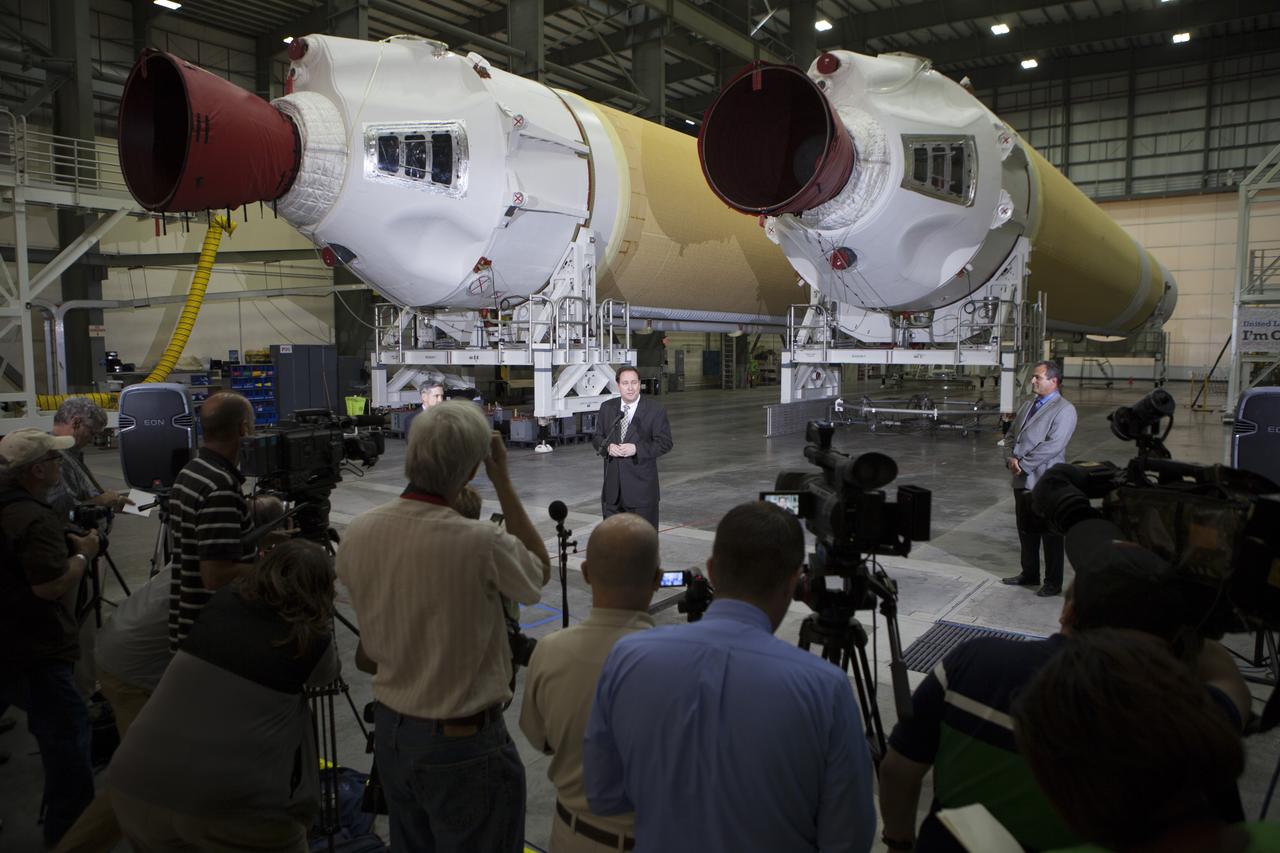
CAPE CANAVERAL, Fla. – During a media event inside the Horizontal Integration Facility at Launch Complex 37 at Cape Canaveral Air Force Station in Florida, NASA Associate Administrator Robert Lightfoot answers questions. To his right is Tony Taliancich, director of East Coast Launch Operations with United Launch Alliance, or ULA. Also participating in the event was Kennedy Space Center Director Bob Cabana. The event was held to showcase two of the ULA Delta IV boosters for the Orion Exploration Flight Test-1, or EFT-1, mission. Orion is the exploration spacecraft designed to carry astronauts to destinations not yet explored by humans, including an asteroid and Mars. It will have emergency abort capability, sustain the crew during space travel and provide safe re-entry from deep space return velocities. The first unpiloted test flight of Orion, EFT-1, is scheduled to launch in 2014 atop a Delta IV rocket and in 2017 on NASA’s Space Launch System rocket. For more information, visit http://www.nasa.gov/orion. Photo credit: NASA/Kim Shiflett

CAPE CANAVERAL, Fla. – During a media event inside the Horizontal Integration Facility at Launch Complex 37 at Cape Canaveral Air Force Station in Florida, Tony Taliancich, director of East Coast Launch Operations with United Launch Alliance, or ULA, speaks to members of the media. Also with him at the briefing were Kennedy Space Center Director Bob Cabana and NASA Associate Administrator Robert Lightfoot. The event was held to showcase two of the ULA Delta IV boosters for the Orion Exploration Flight Test-1, or EFT-1, mission. Orion is the exploration spacecraft designed to carry astronauts to destinations not yet explored by humans, including an asteroid and Mars. It will have emergency abort capability, sustain the crew during space travel and provide safe re-entry from deep space return velocities. The first unpiloted test flight of Orion, EFT-1, is scheduled to launch in 2014 atop a Delta IV rocket and in 2017 on NASA’s Space Launch System rocket. For more information, visit http://www.nasa.gov/orion. Photo credit: NASA/Kim Shiflett
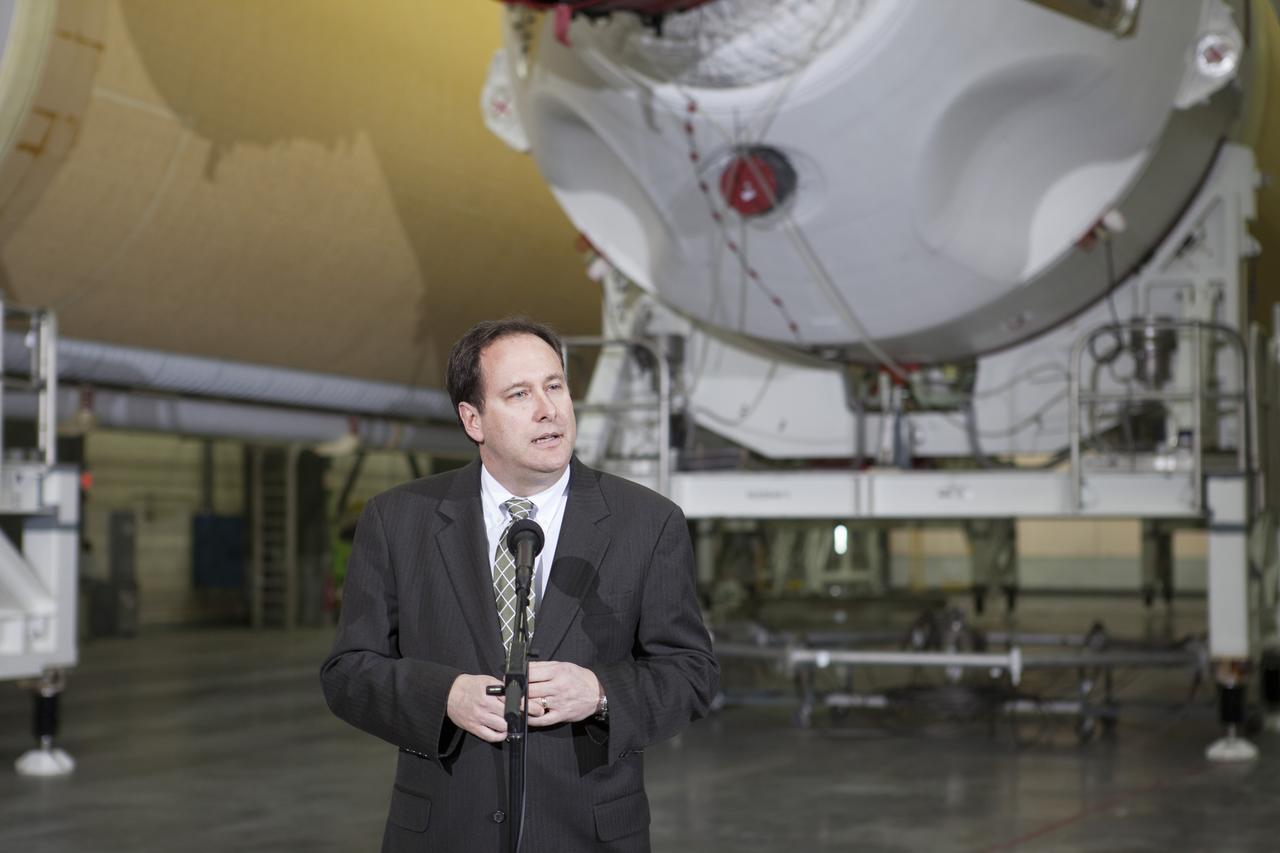
CAPE CANAVERAL, Fla. – During a media event inside the Horizontal Integration Facility at Launch Complex 37 at Cape Canaveral Air Force Station in Florida, NASA Associate Administrator Robert Lightfoot speaks to members of the media. Also attending the briefing were Kennedy Space Center Director Bob Cabana and Tony Taliancich, director of East Coast Launch Operations with United Launch Alliance, or ULA. The event was held to showcase two of the ULA Delta IV boosters for the Orion Exploration Flight Test-1, or EFT-1, mission. Orion is the exploration spacecraft designed to carry astronauts to destinations not yet explored by humans, including an asteroid and Mars. It will have emergency abort capability, sustain the crew during space travel and provide safe re-entry from deep space return velocities. The first unpiloted test flight of Orion, EFT-1, is scheduled to launch in 2014 atop a Delta IV rocket and in 2017 on NASA’s Space Launch System rocket. For more information, visit http://www.nasa.gov/orion. Photo credit: NASA/Kim Shiflett
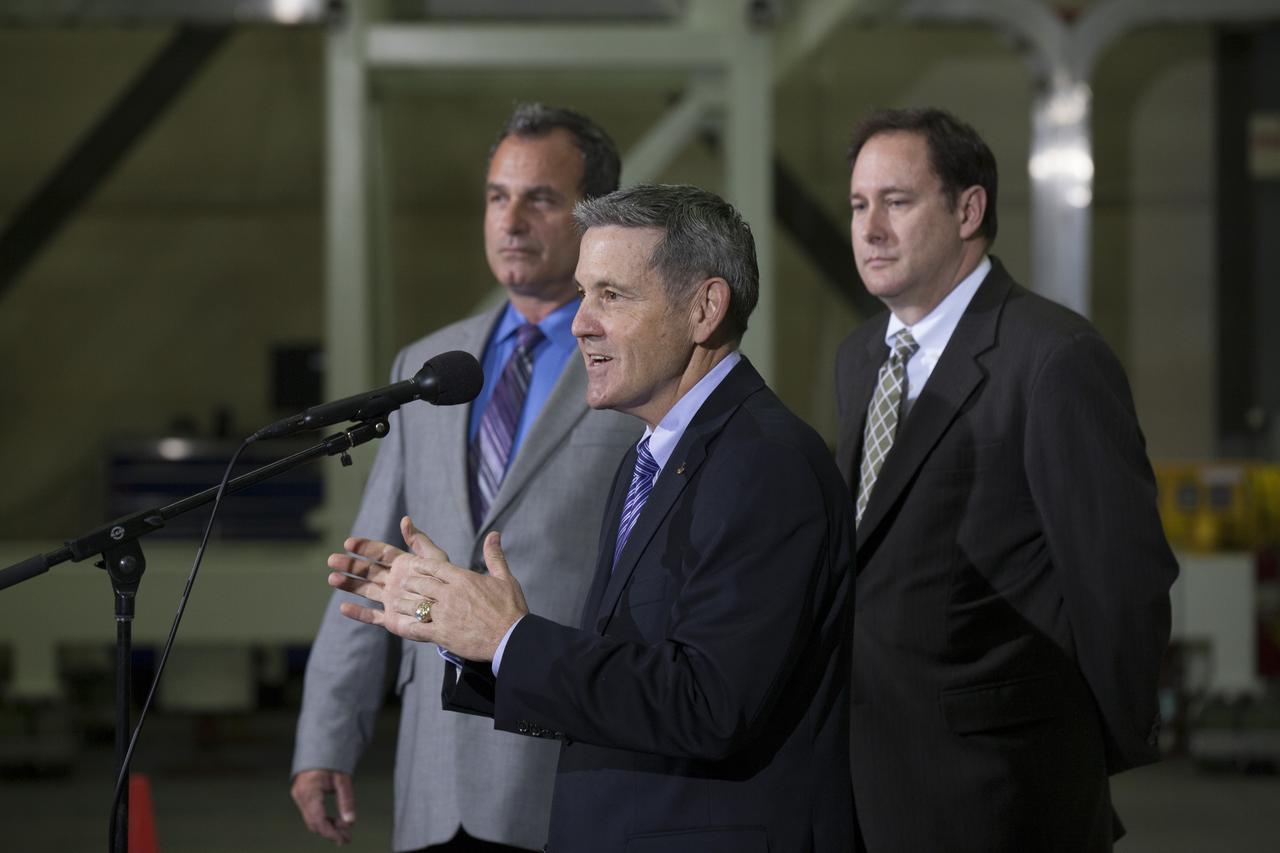
CAPE CANAVERAL, Fla. – During a media event inside the Horizontal Integration Facility at Launch Complex 37 at Cape Canaveral Air Force Station in Florida, Kennedy Space Center Director Bob Cabana speaks to members of the media. To his left is Tony Taliancich, director of East Coast Launch Operations with United Launch Alliance, or ULA. To the right is NASA Associate Administrator Robert Lightfoot. The event was held to showcase two of the ULA Delta IV boosters for the Orion Exploration Flight Test-1, or EFT-1, mission. Orion is the exploration spacecraft designed to carry astronauts to destinations not yet explored by humans, including an asteroid and Mars. It will have emergency abort capability, sustain the crew during space travel and provide safe re-entry from deep space return velocities. The first unpiloted test flight of Orion, EFT-1, is scheduled to launch in 2014 atop a Delta IV rocket and in 2017 on NASA’s Space Launch System rocket. For more information, visit http://www.nasa.gov/orion. Photo credit: NASA/Kim Shiflett
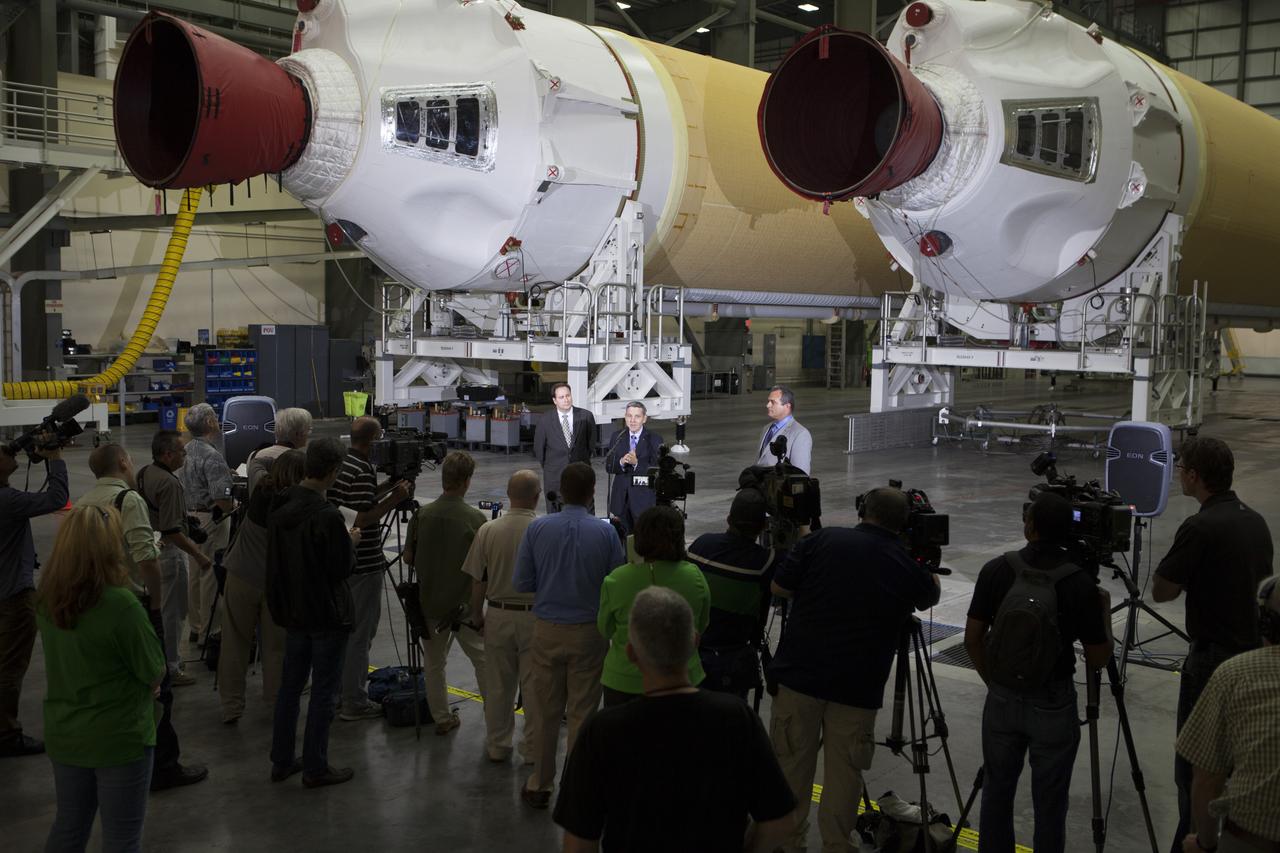
CAPE CANAVERAL, Fla. – During a media event inside the Horizontal Integration Facility at Launch Complex 37 at Cape Canaveral Air Force Station in Florida, Kennedy Space Center Director Bob Cabana speaks to members of the media. To his right is Tony Taliancich, director of East Coast Launch Operations with United Launch Alliance, or ULA. To his left is NASA Associate Administrator Robert Lightfoot. The event was held to showcase two of the ULA Delta IV boosters for the Orion Exploration Flight Test-1, or EFT-1, mission. Orion is the exploration spacecraft designed to carry astronauts to destinations not yet explored by humans, including an asteroid and Mars. It will have emergency abort capability, sustain the crew during space travel and provide safe re-entry from deep space return velocities. The first unpiloted test flight of Orion, EFT-1, is scheduled to launch in 2014 atop a Delta IV rocket and in 2017 on NASA’s Space Launch System rocket. For more information, visit http://www.nasa.gov/orion. Photo credit: NASA/Kim Shiflett
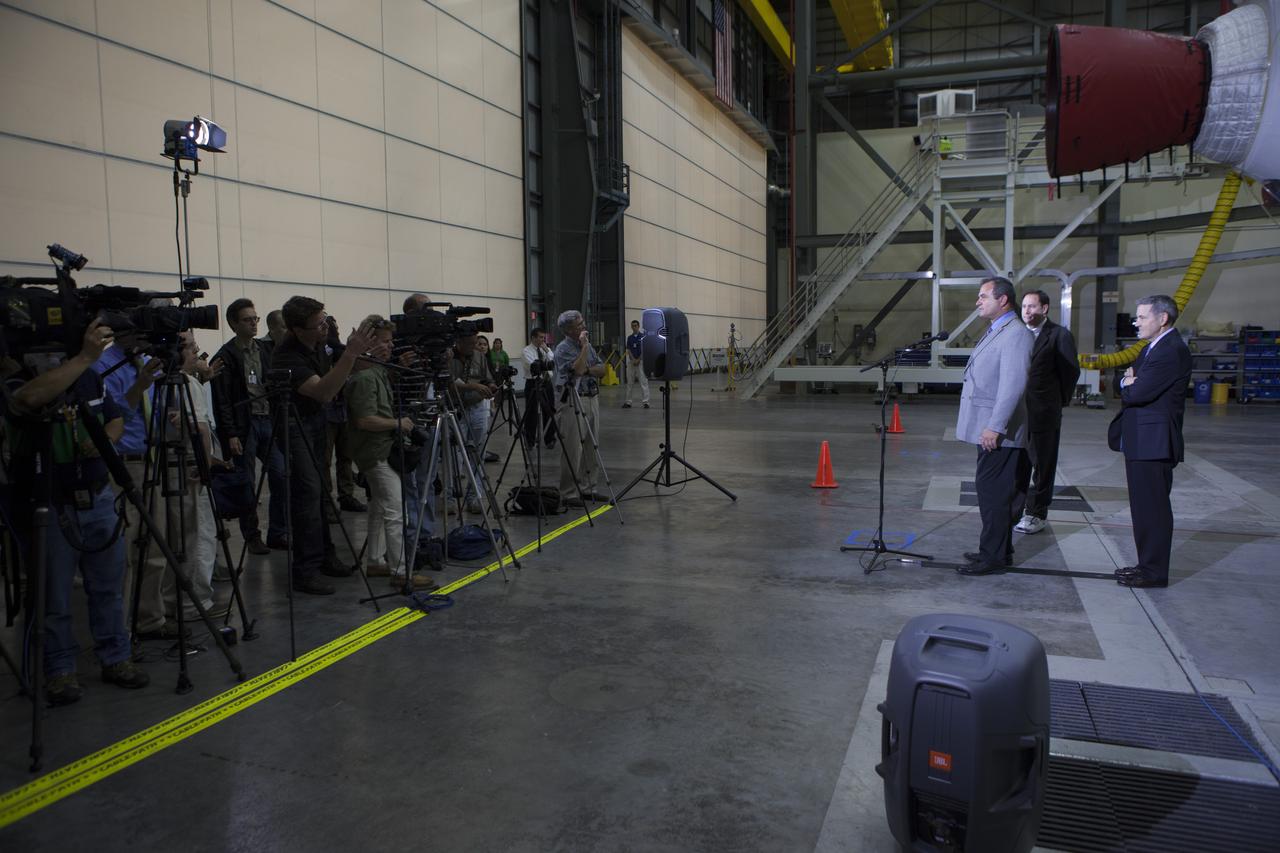
CAPE CANAVERAL, Fla. – During a media event inside the Horizontal Integration Facility at Launch Complex 37 at Cape Canaveral Air Force Station in Florida, Tony Taliancich, director of East Coast Launch Operations with United Launch Alliance, or ULA, speaks to members of the media. Also with Taliancich at the briefing were Kennedy Space Center Director Bob Cabana, at right, and NASA Associate Administrator Robert Lightfoot. The event was held to showcase two of the ULA Delta IV boosters for the Orion Exploration Flight Test-1, or EFT-1, mission. Orion is the exploration spacecraft designed to carry astronauts to destinations not yet explored by humans, including an asteroid and Mars. It will have emergency abort capability, sustain the crew during space travel and provide safe re-entry from deep space return velocities. The first unpiloted test flight of Orion, EFT-1, is scheduled to launch in 2014 atop a Delta IV rocket and in 2017 on NASA’s Space Launch System rocket. For more information, visit http://www.nasa.gov/orion. Photo credit: NASA/Kim Shiflett
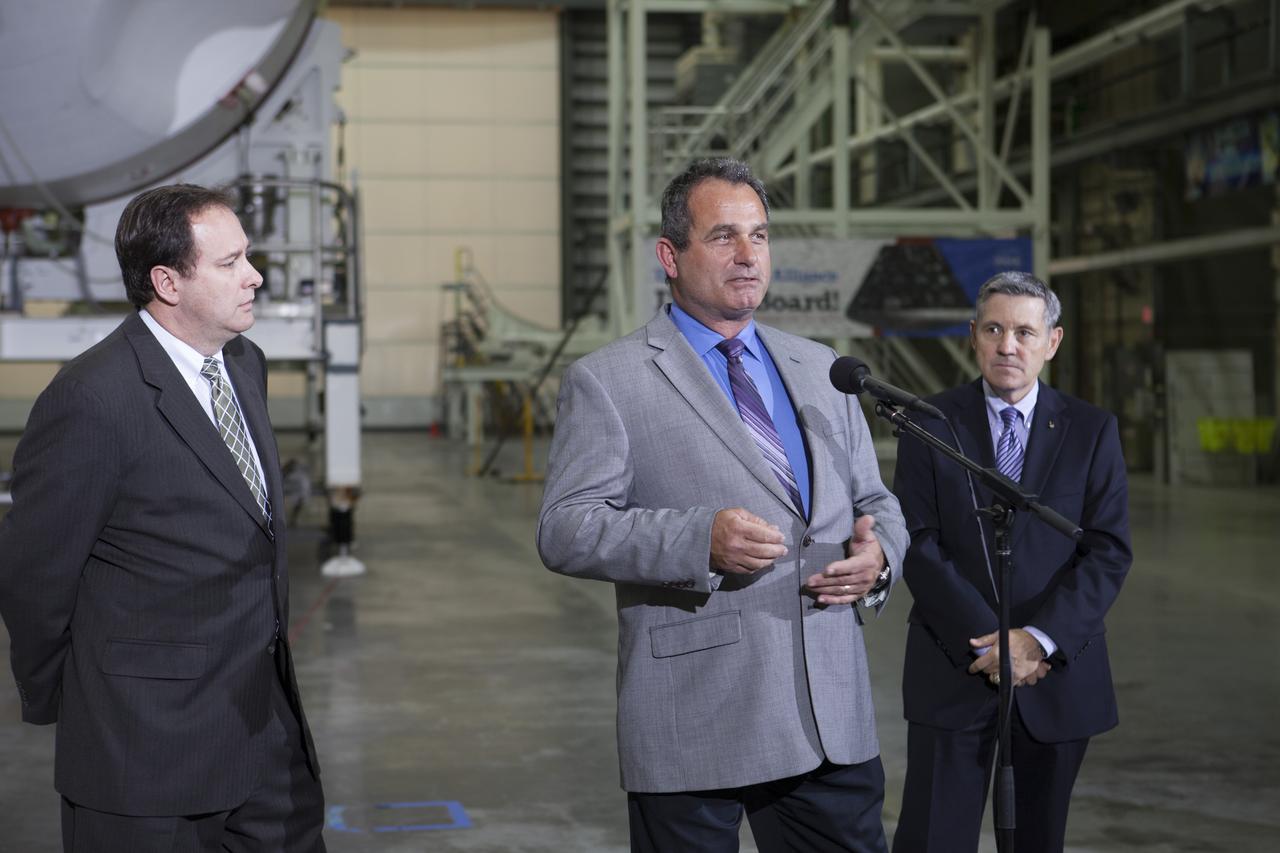
CAPE CANAVERAL, Fla. – During a media event inside the Horizontal Integration Facility at Launch Complex 37 at Cape Canaveral Air Force Station in Florida, Tony Taliancich, director of East Coast Launch Operations with United Launch Alliance, or ULA, speaks to members of the media. Also with Taliancich at the briefing were Kennedy Space Center Director Bob Cabana, at right, and NASA Associate Administrator Robert Lightfoot. The event was held to showcase two of the ULA Delta IV boosters for the Orion Exploration Flight Test-1, or EFT-1, mission. Orion is the exploration spacecraft designed to carry astronauts to destinations not yet explored by humans, including an asteroid and Mars. It will have emergency abort capability, sustain the crew during space travel and provide safe re-entry from deep space return velocities. The first unpiloted test flight of Orion, EFT-1, is scheduled to launch in 2014 atop a Delta IV rocket and in 2017 on NASA’s Space Launch System rocket. For more information, visit http://www.nasa.gov/orion. Photo credit: NASA/Kim Shiflett
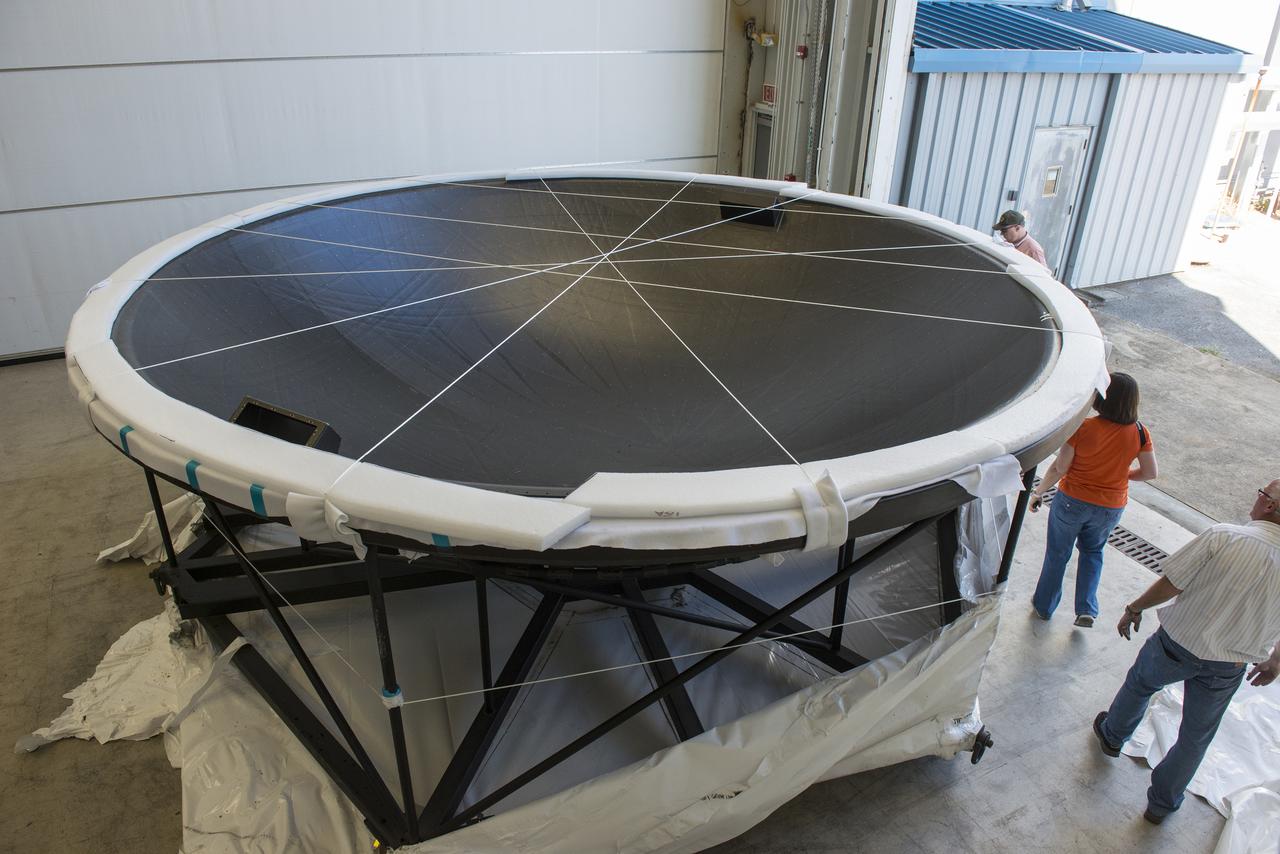
THE ORION EFT-1 DIAPHGRAM BEING UNLOADED AND UNWRAPPED PRIOR TO BEING PLACED IN THE CLEAN ROOM FOR TESTING.
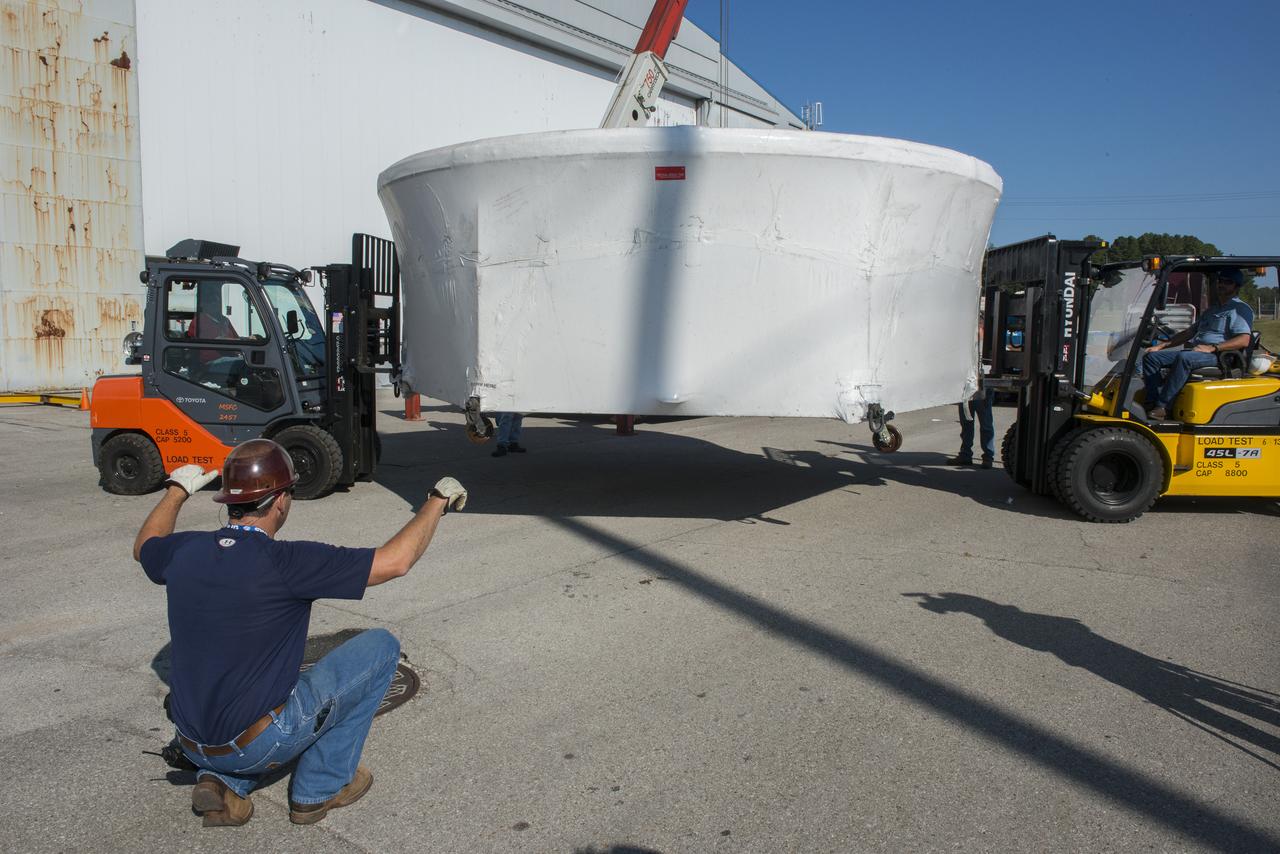
THE ORION EFT-1 DIAPHGRAM BEING UNLOADED AND UNWRAPPED PRIOR TO BEING PLACED IN THE CLEAN ROOM FOR TESTING.
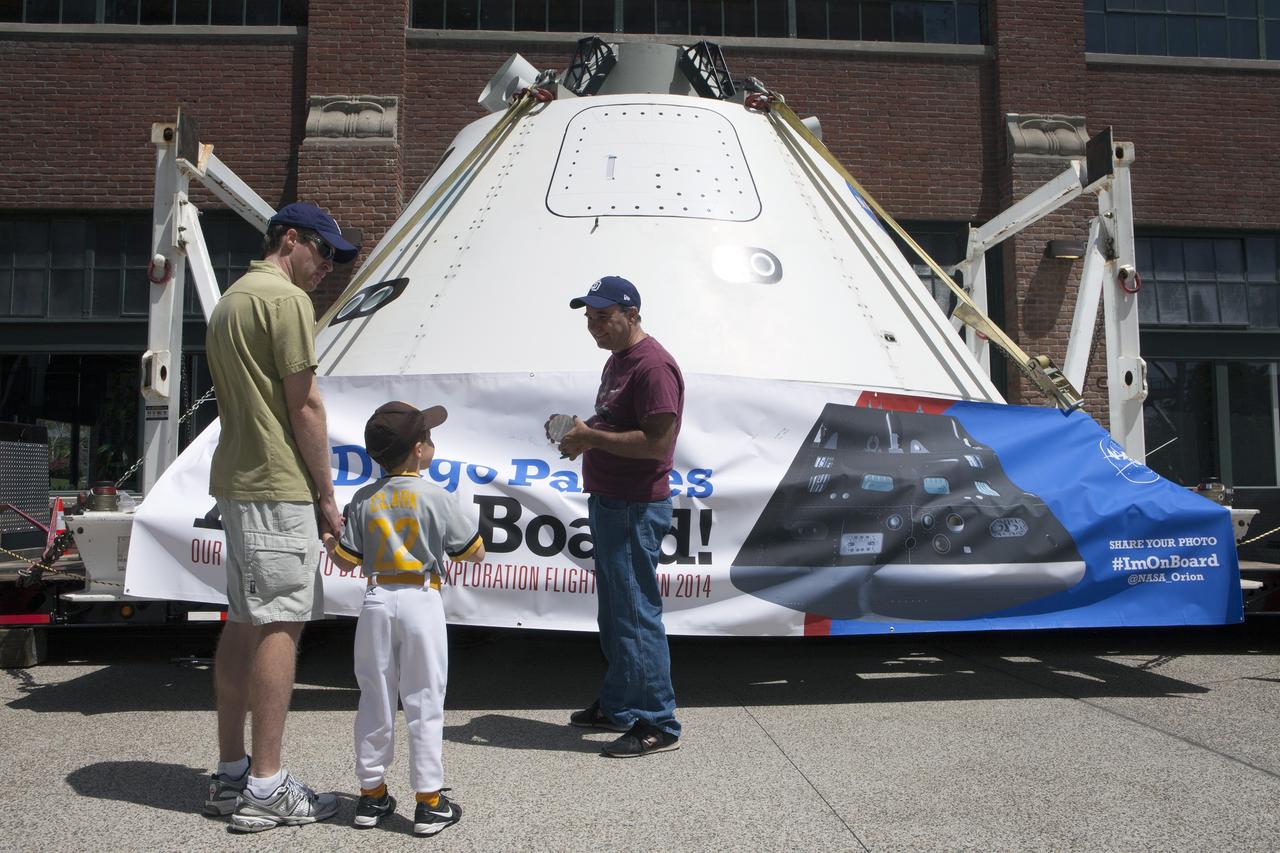
CAPE CANAVERAL, Fla. – San Diego Padres fans talk to Doug Lenhardt, Kennedy Space Center's Exploration Flight Test-1, or EFT-1, mission integration manager outside Petco Field in San Diego, California. NASA's Orion boilerplate test vehicle is on display. The boilerplate test vehicle is being prepared for an Exploration Flight Test-1, or EFT-1, pre-transportation test. The Ground Systems Development and Operations Program will run the test at the U.S. Naval Base San Diego to simulate retrieval and transportation procedures for Orion after it splashes down in the ocean and is retrieved for return to land and ground transportation back to Kennedy Space Center in Florida. Orion is the exploration spacecraft designed to carry astronauts to destinations not yet explored by humans, including an asteroid and Mars. It will have emergency abort capability, sustain the crew during space travel and provide safe re-entry from deep space return velocities. The first unpiloted test flight of the Orion is scheduled to launch later this year atop a Delta IV rocket and in 2017 on NASA’s Space Launch System rocket. For more information, visit http://www.nasa.gov/orion. Photo credit: NASA/Kim Shiflett
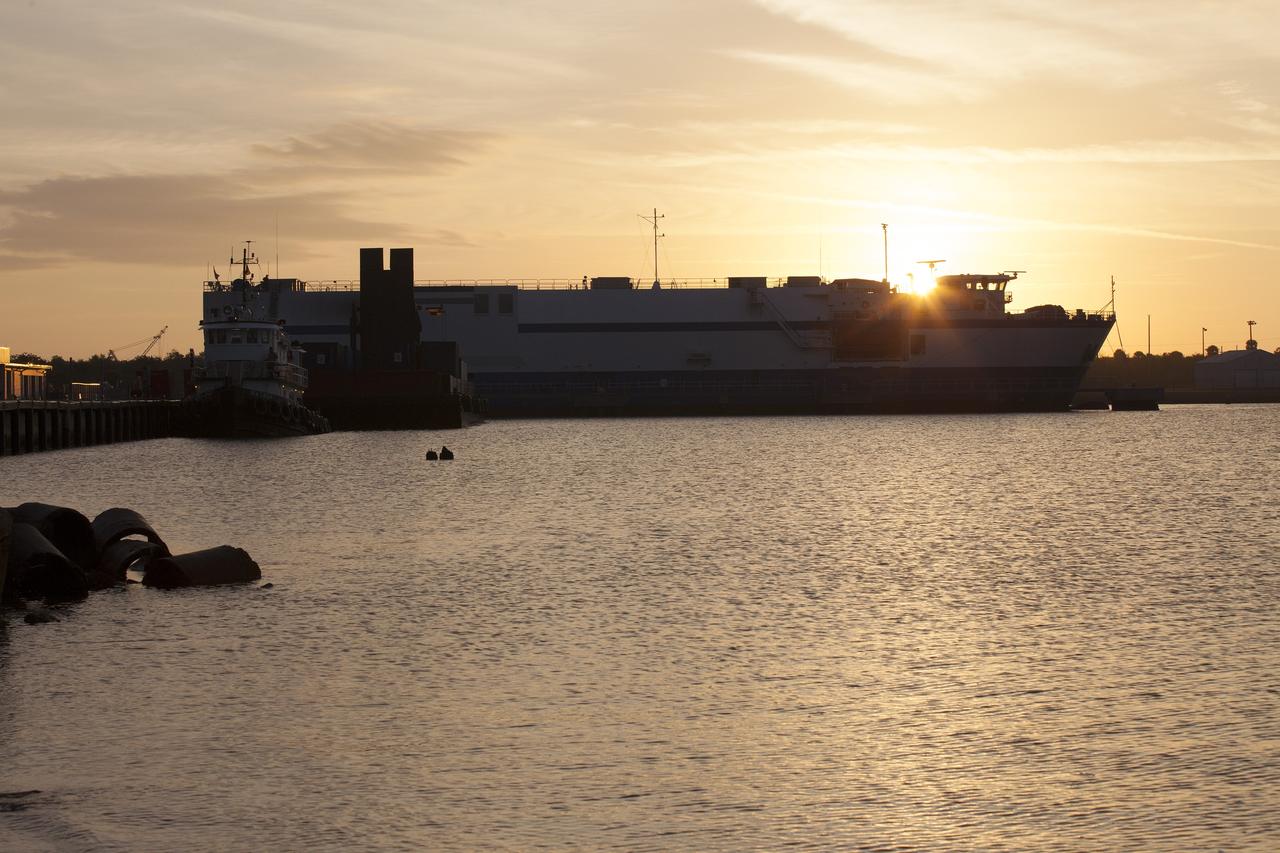
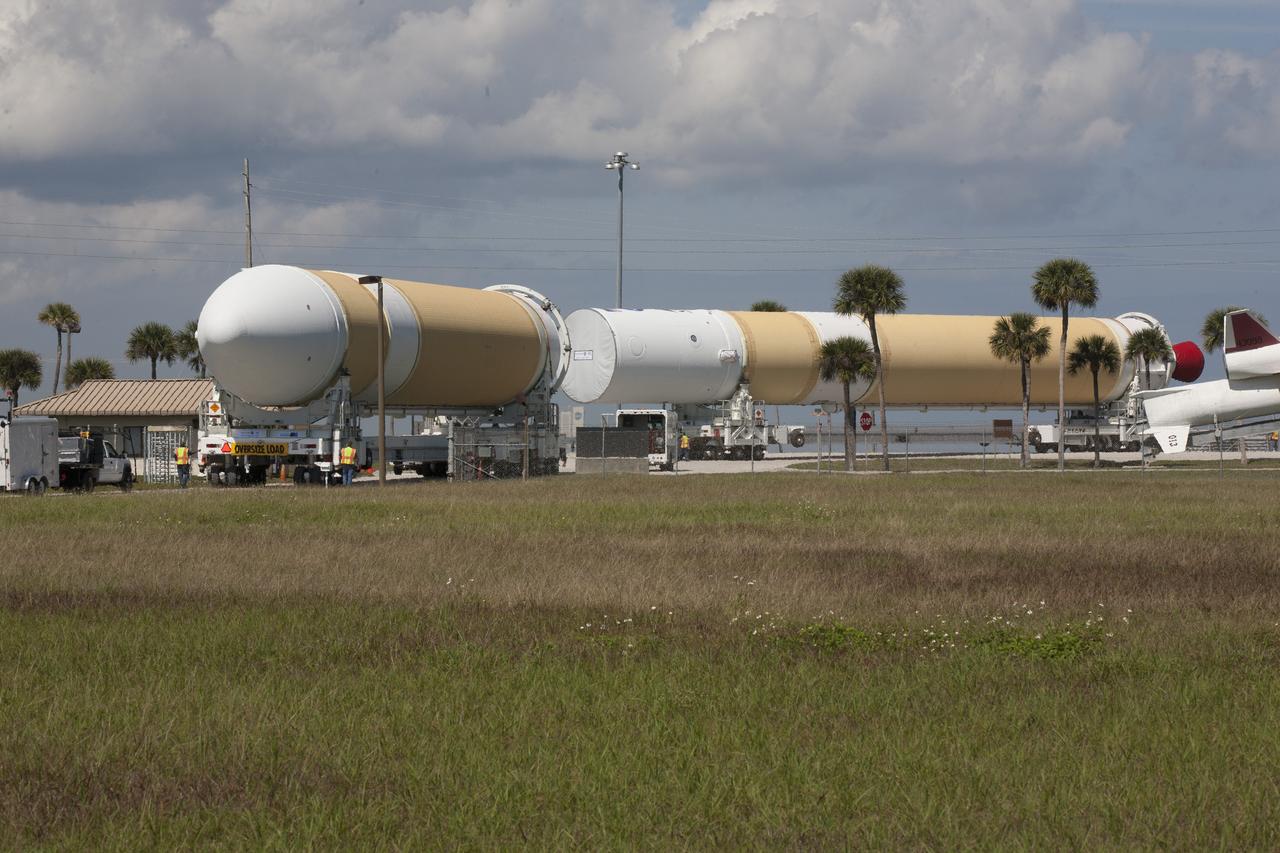
CAPE CANAVERAL, Fla. – A barge arrives at the U.S. Army Outpost wharf at Port Canaveral in Florida, carrying two of the three United Launch Alliance Delta IV heavy boosters for NASA’s upcoming Exploration Flight Test-1, or EFT-1, mission with the Orion spacecraft. The core booster and starboard booster will be offloaded and then transported to the Horizontal Integration Facility, or HIF, at Space Launch Complex 37 on Cape Canaveral Air Force Station. The port booster and the upper stage are planned to be shipped to Cape Canaveral in April. At the HIF, all three boosters will be processed and checked out before being moved to the nearby launch pad and hoisted into position. During the EFT-1 mission, Orion will travel farther into space than any human spacecraft has gone in more than 40 years. The data gathered during the flight will influence design decisions, validate existing computer models and innovative new approaches to space systems development, as well as reduce overall mission risks and costs for later Orion flights. Liftoff of Orion on EFT-1 is planned for fall 2014. Photo credit: NASA/Kim Shiflett
CAPE CANAVERAL, Fla. – Two of the three United Launch Alliance Delta IV heavy boosters for NASA’s upcoming Exploration Flight Test-1, or EFT-1, mission with the Orion spacecraft, have arrived by barge at the U.S. Army Outpost wharf at Port Canaveral in Florida. The core booster and starboard booster are being offloaded and will be transported to the Horizontal Integration Facility, or HIF, at Space Launch Complex 37 on Cape Canaveral Air Force Station. The port booster and the upper stage are planned to be shipped to Cape Canaveral in April. At the HIF, all three boosters will be processed and checked out before being moved to the nearby launch pad and hoisted into position. During the EFT-1 mission, Orion will travel farther into space than any human spacecraft has gone in more than 40 years. The data gathered during the flight will influence design decisions, validate existing computer models and innovative new approaches to space systems development, as well as reduce overall mission risks and costs for later Orion flights. Liftoff of Orion on EFT-1 is planned for fall 2014. Photo credit: NASA/Kim Shiflett
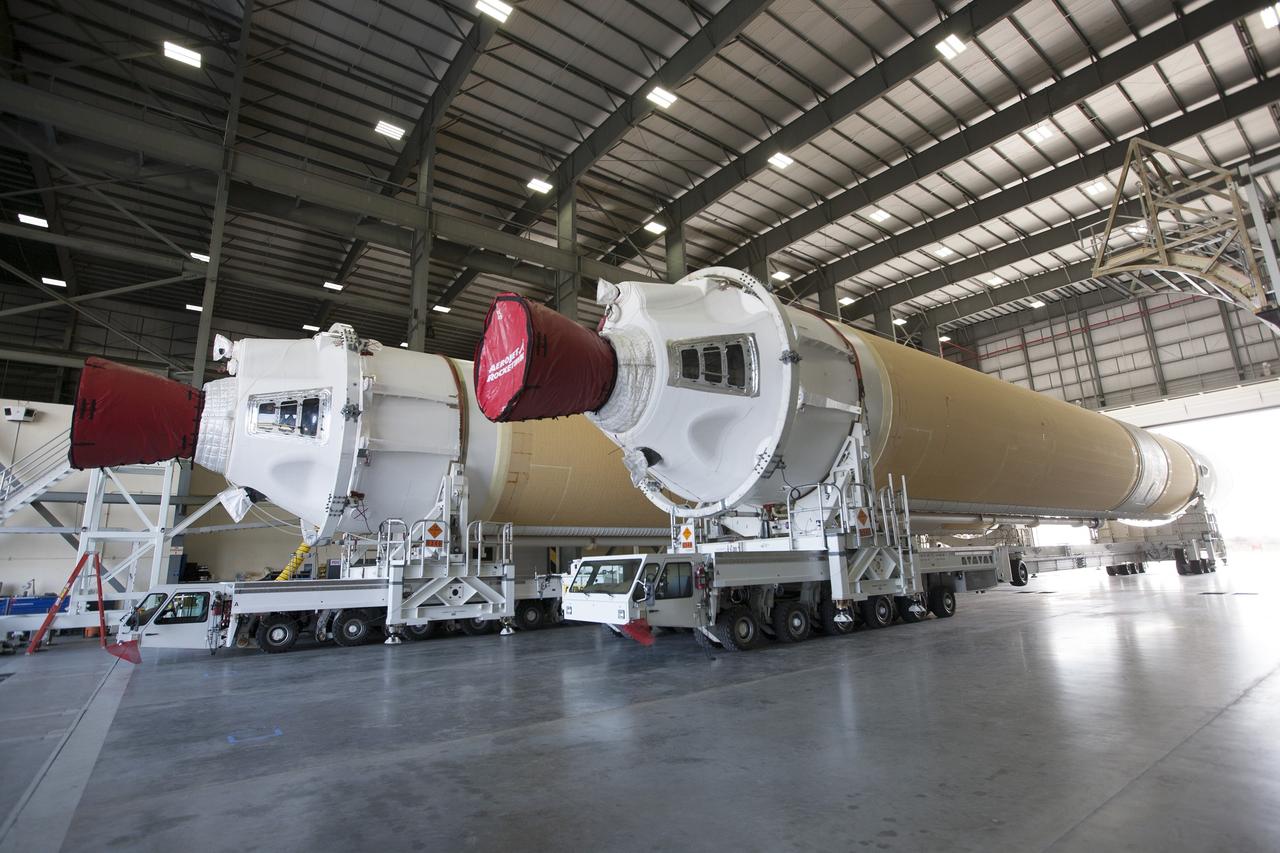
CAPE CANAVERAL, Fla. – Two of the three United Launch Alliance Delta IV heavy boosters for NASA’s upcoming Exploration Flight Test-1, or EFT-1, mission with the Orion spacecraft, have been transported to the Horizontal Integration Facility, or HIF, at Space Launch Complex 37 on Cape Canaveral Air Force Station in Florida. The core booster and starboard booster arrived by barge at the U.S. Army Outpost wharf at Port Canaveral. The port booster and the upper stage are planned to be shipped to Cape Canaveral in April. At the HIF, all three boosters will be processed and checked out before being moved to the nearby launch pad and hoisted into position. During the EFT-1 mission, Orion will travel farther into space than any human spacecraft has gone in more than 40 years. The data gathered during the flight will influence design decisions, validate existing computer models and innovative new approaches to space systems development, as well as reduce overall mission risks and costs for later Orion flights. Liftoff of Orion on EFT-1 is planned for fall 2014. Photo credit: NASA/Kim Shiflett
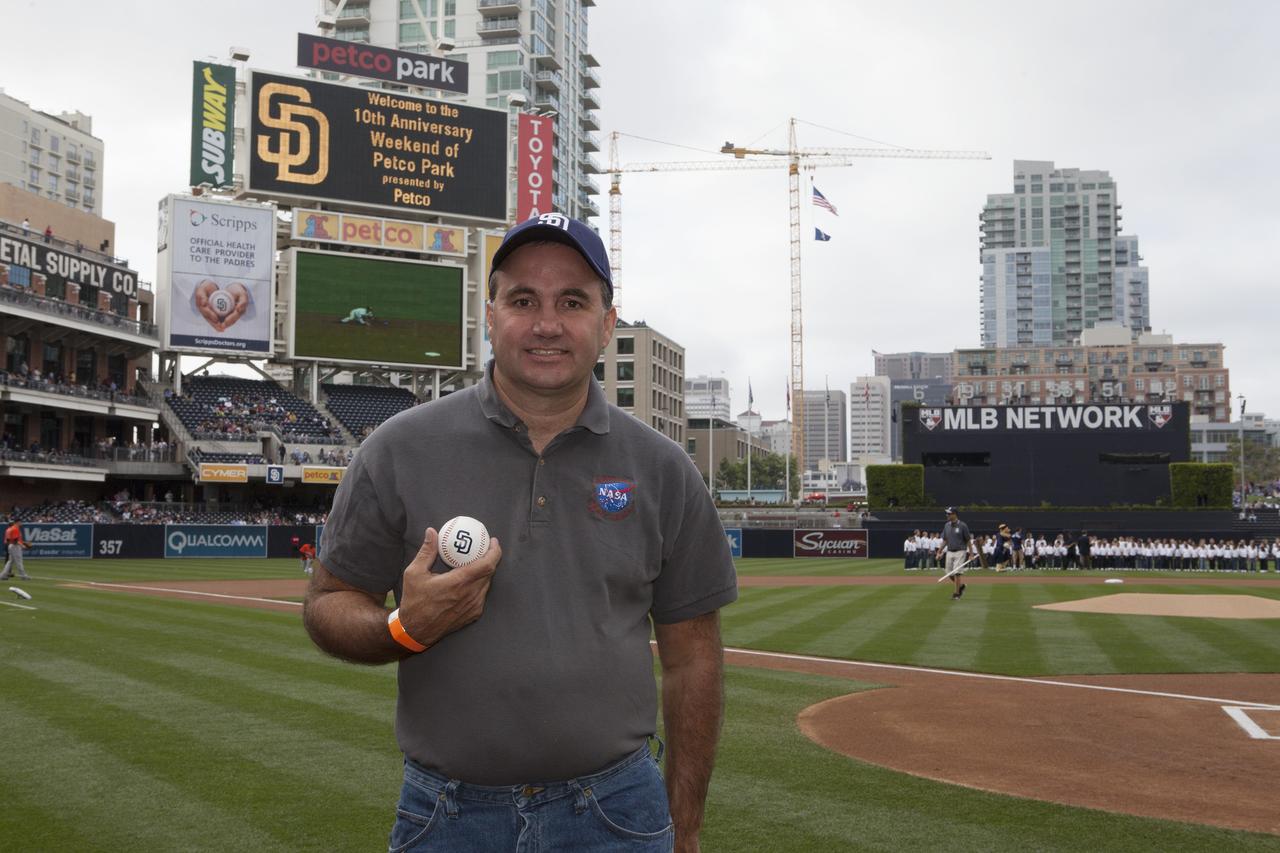
CAPE CANAVERAL, Fla. – Doug Lenhardt, Kennedy Space Center's Exploration Flight Test-1, or EFT-1, mission integration manager displays a baseball from the San Diego Padres inside Petco Park in San Diego, California. NASA's Orion boilerplate test vehicle is on display at the stadium. The boilerplate test vehicle is being prepared for an EFT-1 pre-transportation test. The Ground Systems Development and Operations Program will run the test to simulate retrieval and transportation procedures for Orion after it splashes down in the ocean and is retrieved for return to land and ground transportation back to Kennedy Space Center in Florida. Orion is the exploration spacecraft designed to carry astronauts to destinations not yet explored by humans, including an asteroid and Mars. It will have emergency abort capability, sustain the crew during space travel and provide safe re-entry from deep space return velocities. The first unpiloted test flight of the Orion is scheduled to launch later this year atop a Delta IV rocket and in 2017 on NASA’s Space Launch System rocket. For more information, visit http://www.nasa.gov/orion. Photo credit: NASA/Kim Shiflett

CAPE CANAVERAL, Fla. – Doug Lenhardt, Kennedy Space Center's Exploration Flight Test-1, or EFT-1, mission integration manager, and the San Diego Padres mascot wave at the crowds at Petco Field in San Diego, California before the start of the baseball game. The Orion boilerplate test vehicle is on display in the stadium. The boilerplate test vehicle is being prepared for an EFT-1 pre-transportation test. The Ground Systems Development and Operations Program will run the test at the U.S. Naval Base San Diego to simulate retrieval and transportation procedures for Orion after it splashes down in the ocean and is retrieved for return to land and ground transportation back to Kennedy Space Center in Florida. Orion is the exploration spacecraft designed to carry astronauts to destinations not yet explored by humans, including an asteroid and Mars. It will have emergency abort capability, sustain the crew during space travel and provide safe re-entry from deep space return velocities. The first unpiloted test flight of the Orion is scheduled to launch later this year atop a Delta IV rocket and in 2017 on NASA’s Space Launch System rocket. For more information, visit http://www.nasa.gov/orion. Photo credit: NASA/Kim Shiflett
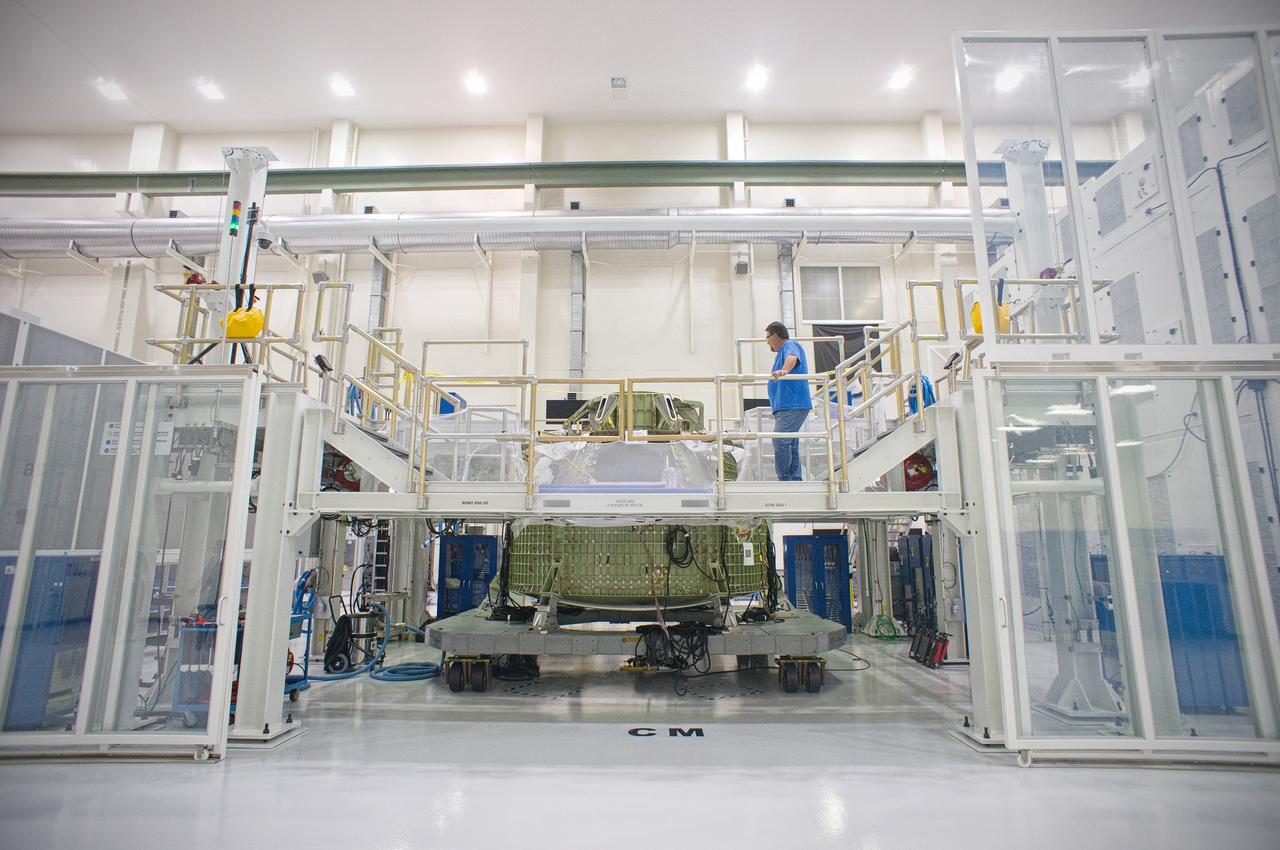
The Exploration Flight Test-1 (EFT-1) Orion service module in the Operations and Checkout (O&C) Building at NASA’s Kennedy Space Center on Dec. 31, 2011. Part of Batch image transfer from Flickr.
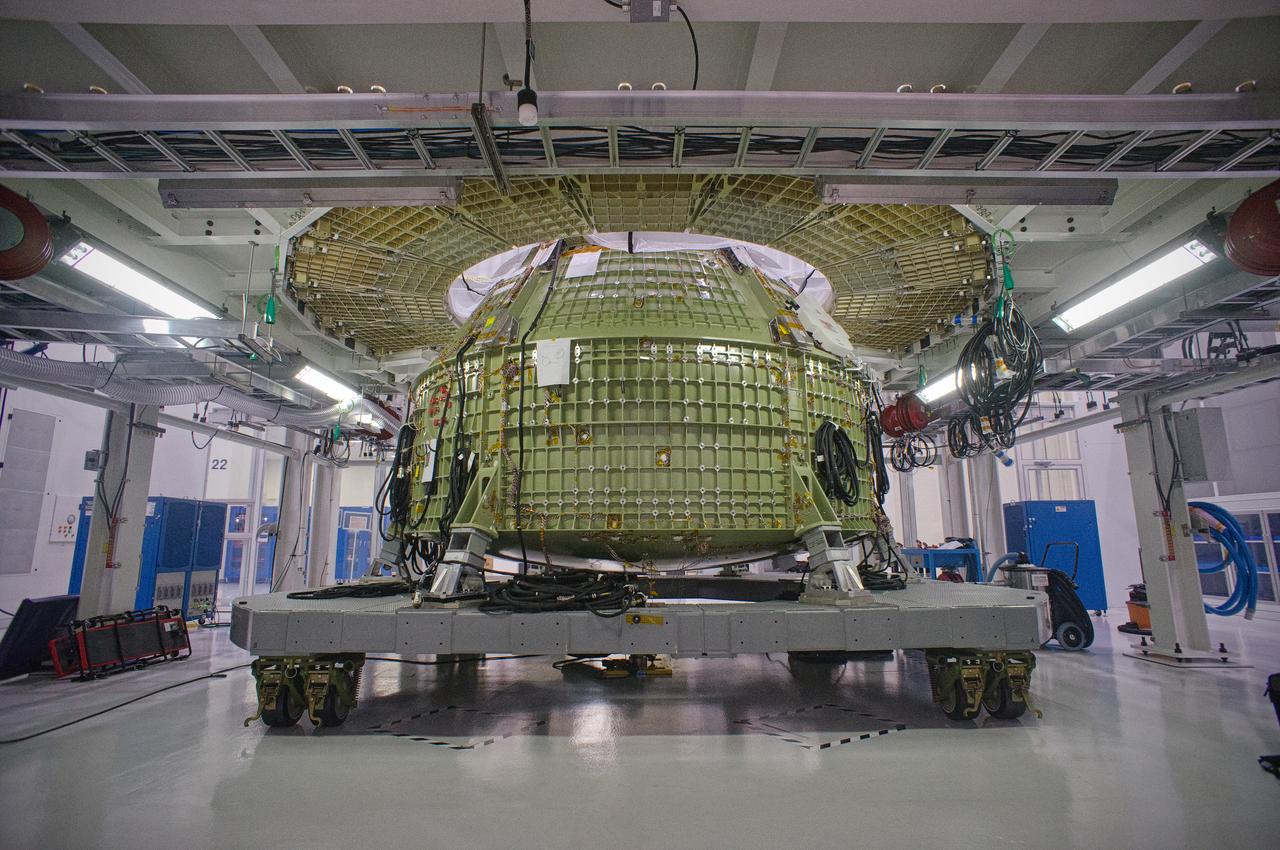
The Exploration Flight Test-1 (EFT-1) Orion service module in the Operations and Checkout (O&C) Building at NASA’s Kennedy Space Center on Dec. 31, 2011. Part of Batch image transfer from Flickr.
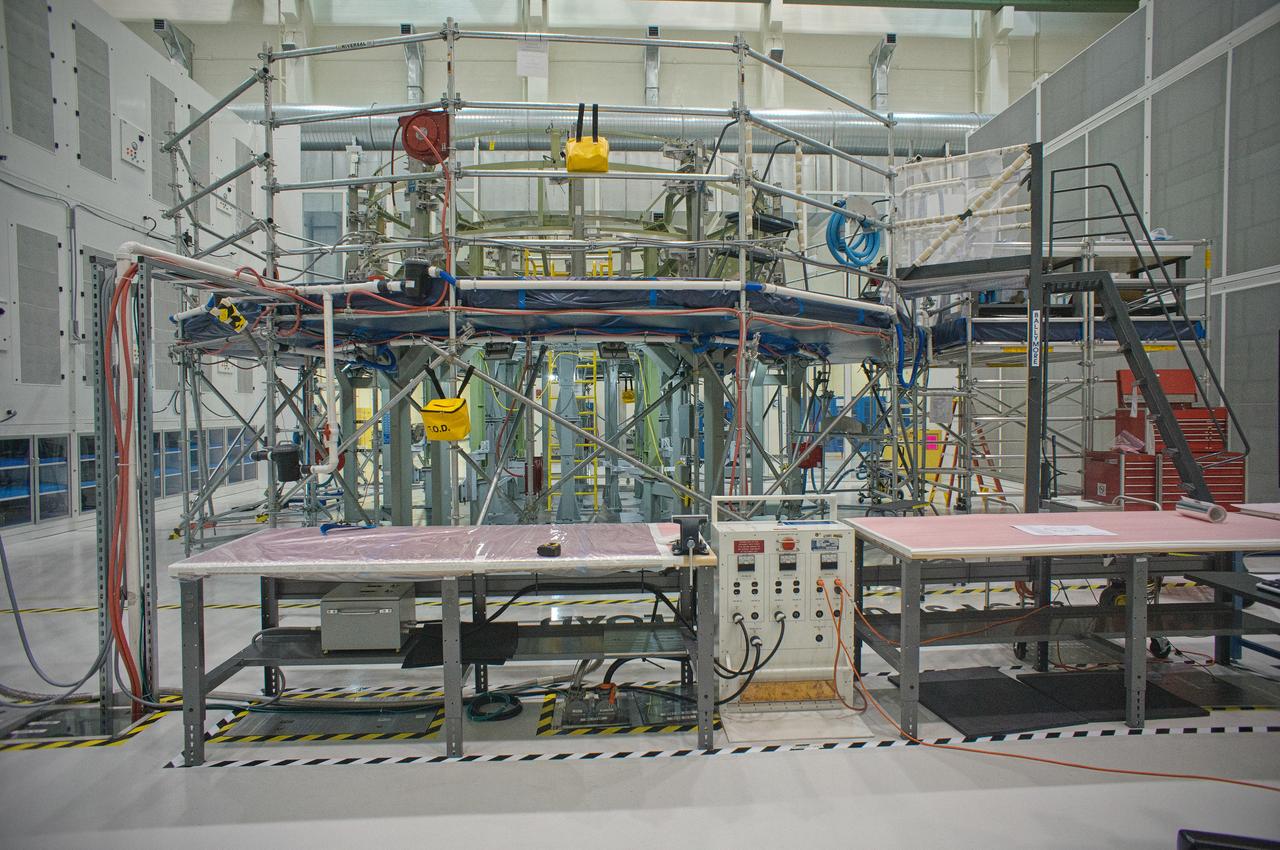
The Exploration Flight Test-1 (EFT-1) Orion service module in the Operations and Checkout (O&C) Building at NASA’s Kennedy Space Center on Dec. 31, 2011. Part of Batch image transfer from Flickr.
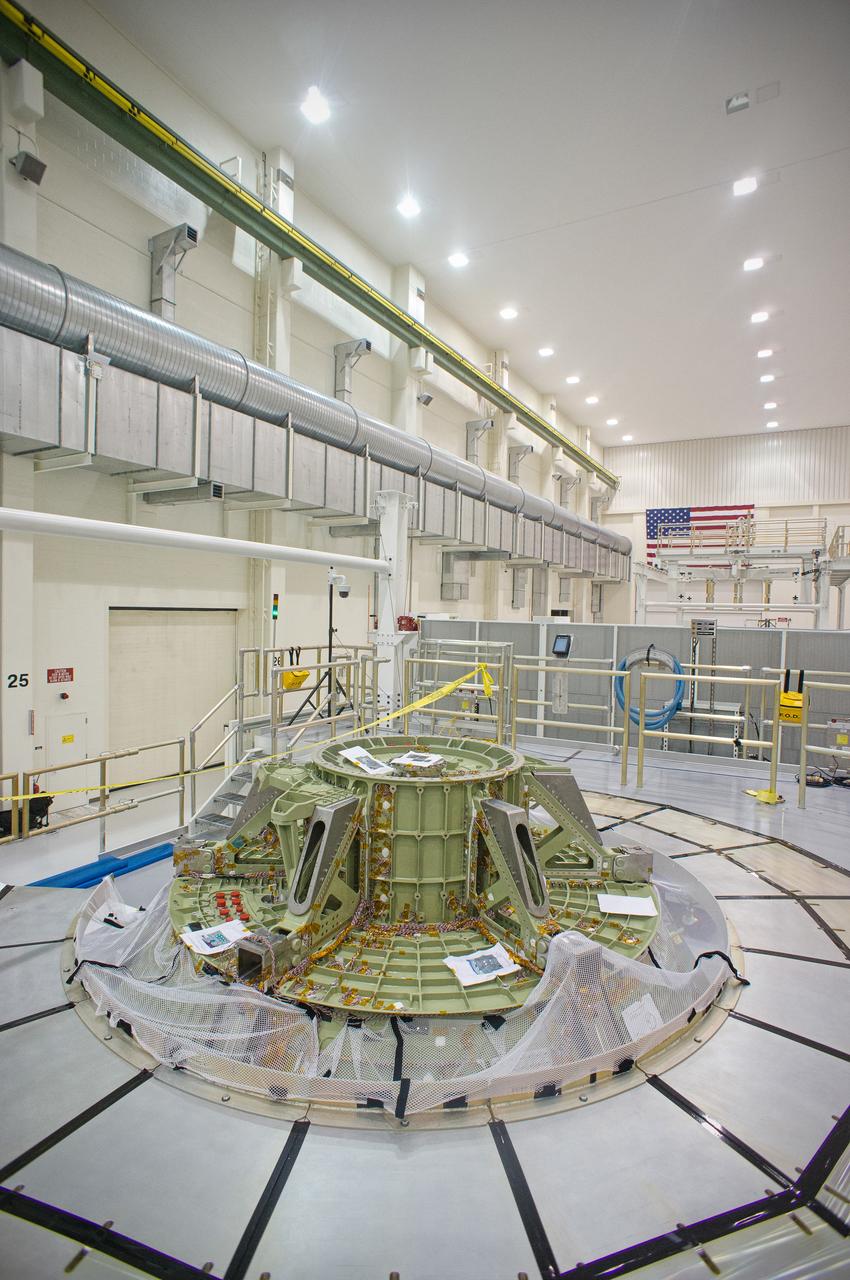
The Exploration Flight Test-1 (EFT-1) Orion crew module in the Operations and Checkout (O&C) Building at NASA’s Kennedy Space Center on Dec. 31, 2011. Part of Batch image transfer from Flickr.
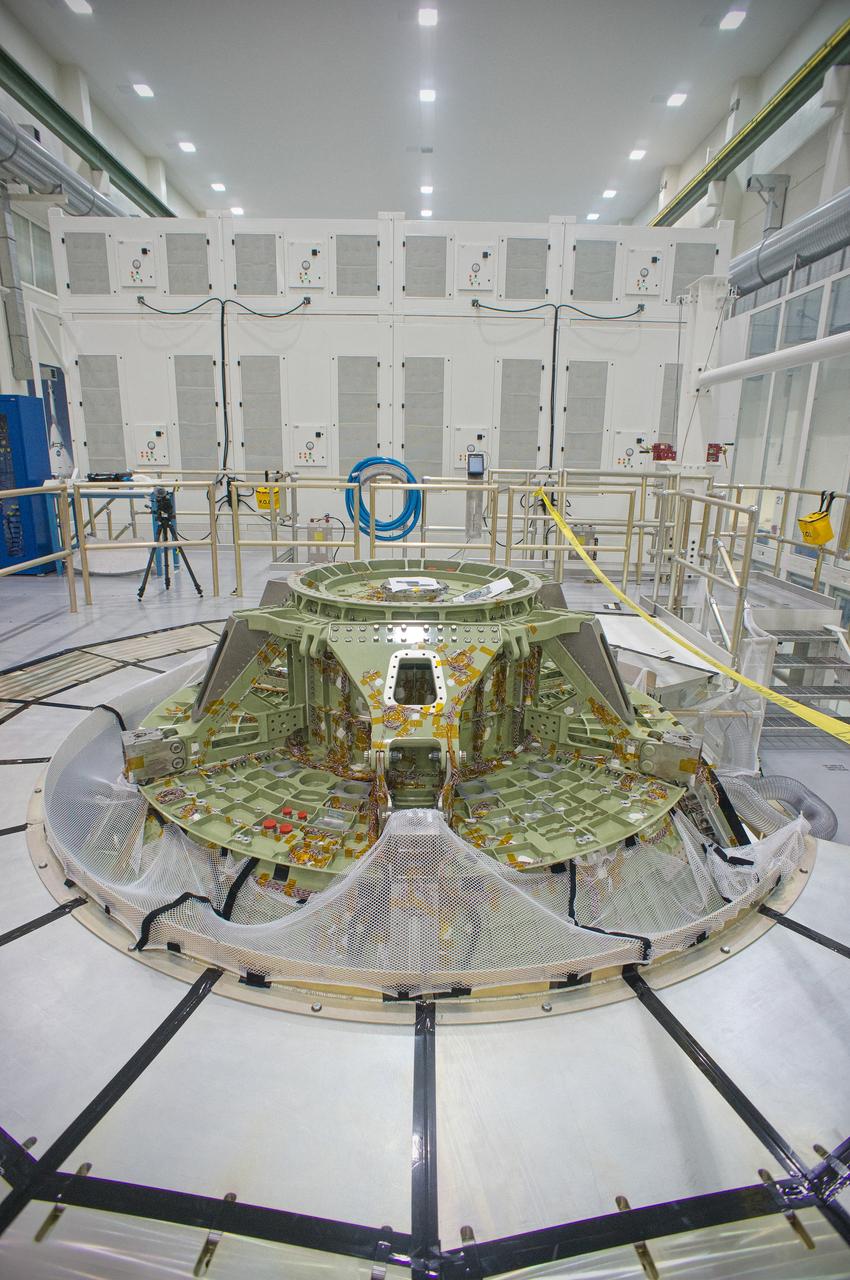
The Exploration Flight Test-1 (EFT-1) Orion service module in the Operations and Checkout (O&C) Building at NASA’s Kennedy Space Center on Dec. 31, 2011. Part of Batch image transfer from Flickr.

The Exploration Flight Test-1 (EFT-1) Orion service module in the Operations and Checkout (O&C) Building at NASA’s Kennedy Space Center on Dec. 31, 2011. Part of Batch image transfer from Flickr.
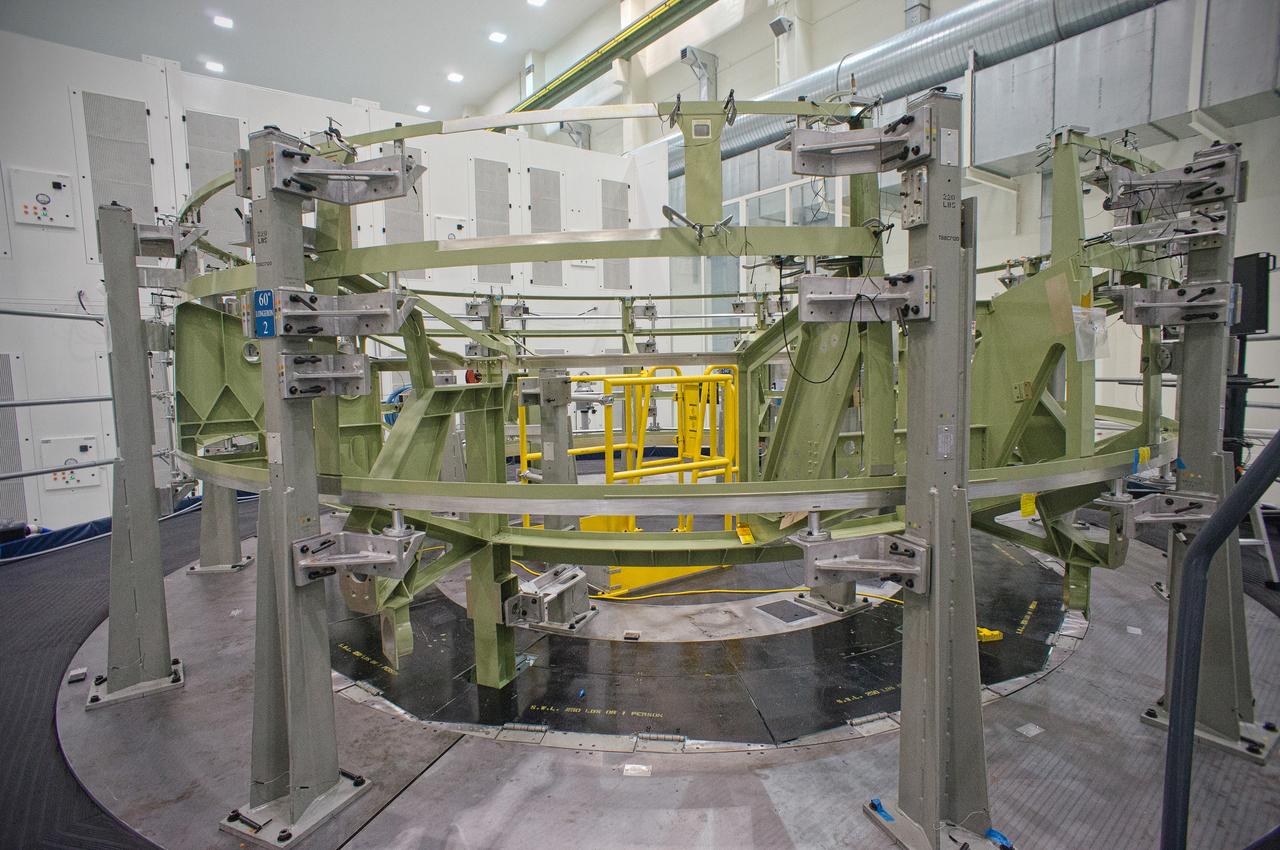
The Exploration Flight Test-1 (EFT-1) Orion service module in the Operations and Checkout (O&C) Building at NASA’s Kennedy Space Center on Dec. 31, 2011. Part of Batch image transfer from Flickr.

The Exploration Flight Test-1 (EFT-1) Orion service module in the Operations and Checkout (O&C) Building at NASA’s Kennedy Space Center on Dec. 31, 2011. Part of Batch image transfer from Flickr.
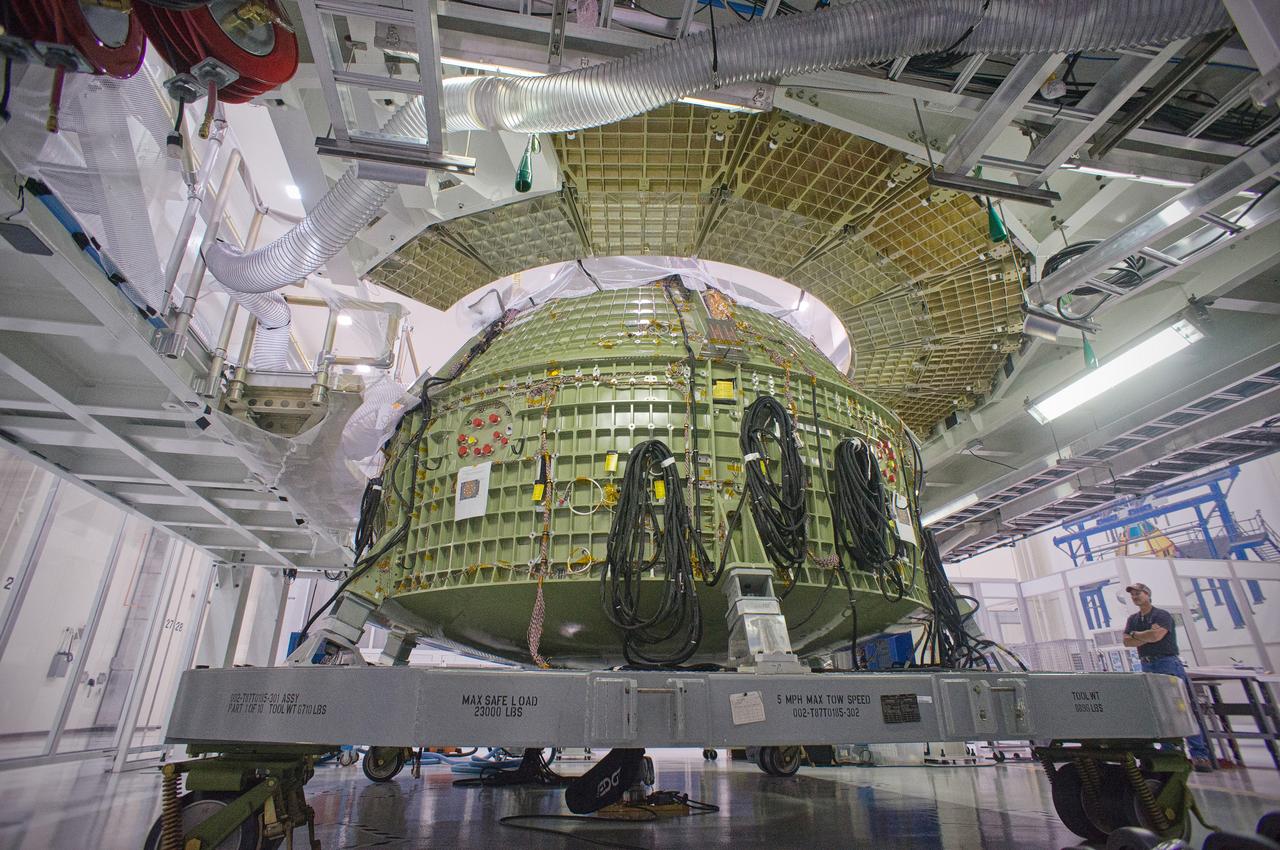
The Exploration Flight Test-1 (EFT-1) Orion service module in the Operations and Checkout (O&C) Building at NASA’s Kennedy Space Center on Dec. 31, 2011. Part of Batch image transfer from Flickr.
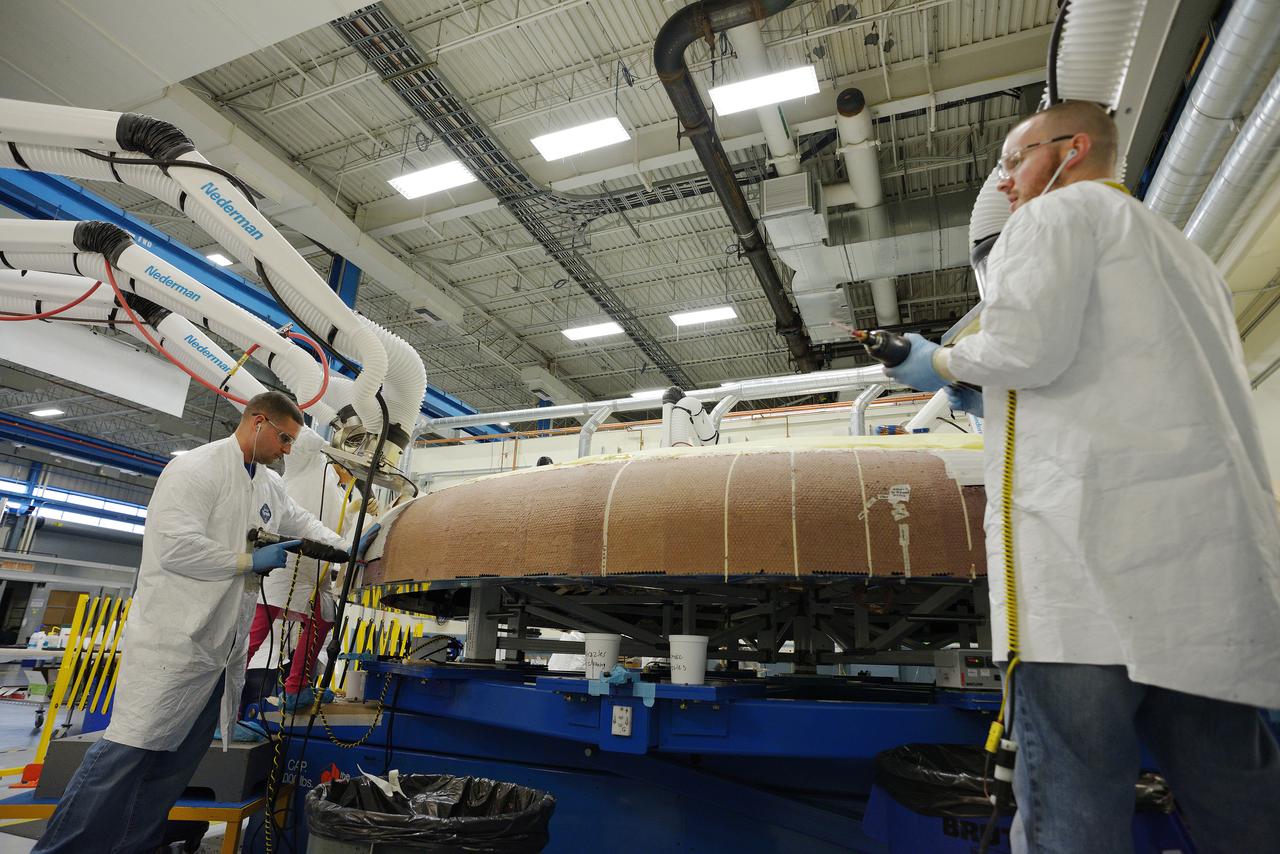
Technicians at Textron in Wimington, MA, apply Avcoat ablative material to the composite honeycomb structure attached to the Exploration Flight Test-1 (EFT-1) Orion heat shield carrier structure on May 22, 2013. Part of Batch image transfer from Flickr.
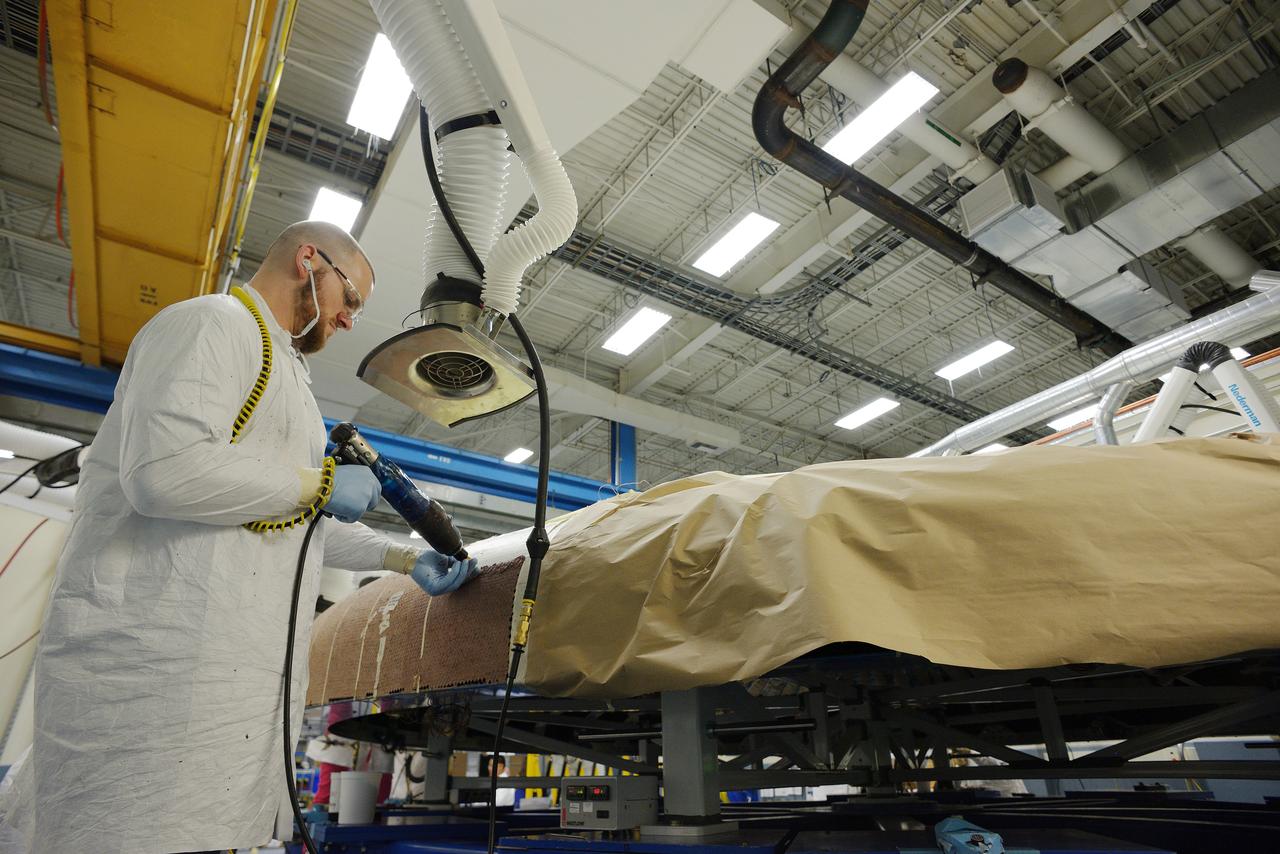
Technicians at Textron in Wimington, MA, apply Avcoat ablative material to the composite honeycomb structure attached to the Exploration Flight Test-1 (EFT-1) Orion heat shield carrier structure on May 22, 2013. Part of Batch image transfer from Flickr.
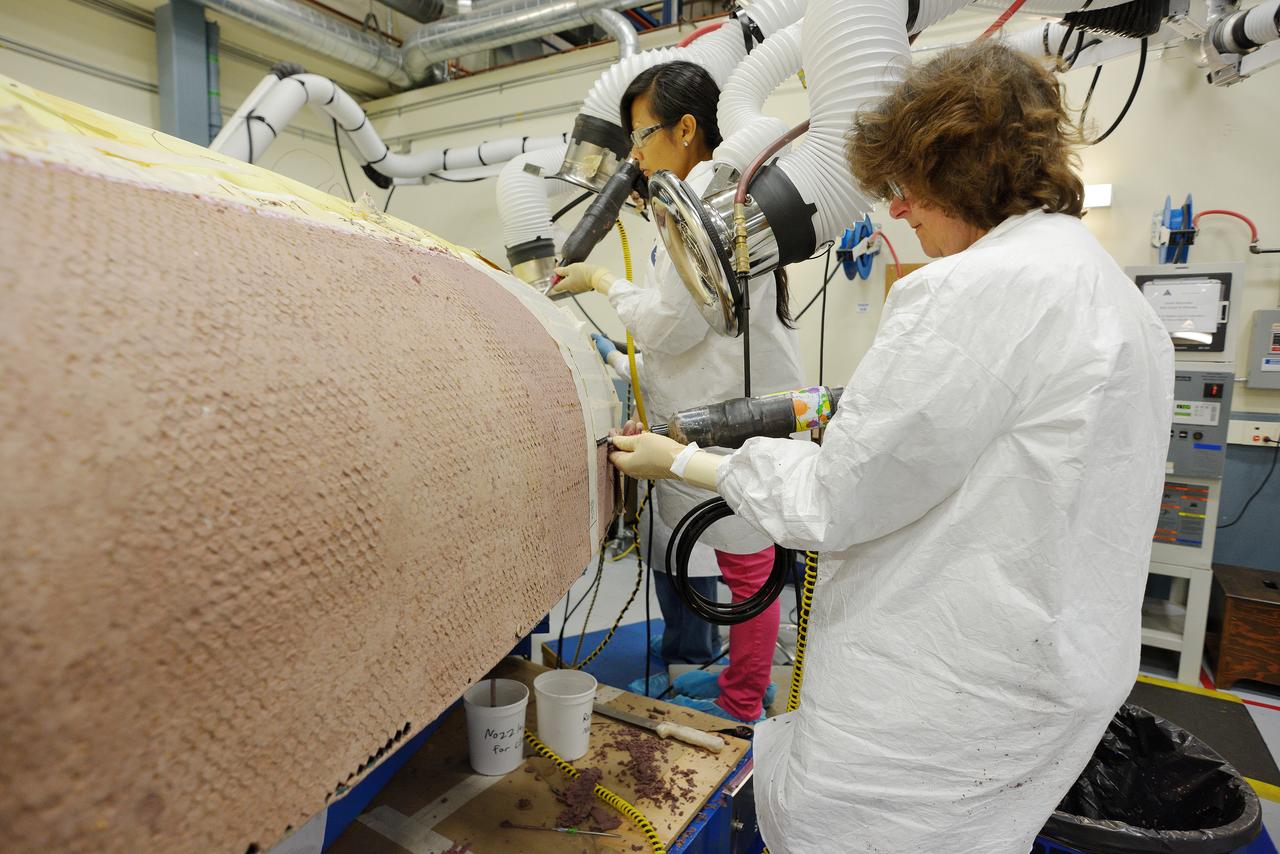
Technicians at Textron in Wimington, MA, apply Avcoat ablative material to the composite honeycomb structure attached to the Exploration Flight Test-1 (EFT-1) Orion heat shield carrier structure on May 22, 2013. Part of Batch image transfer from Flickr.
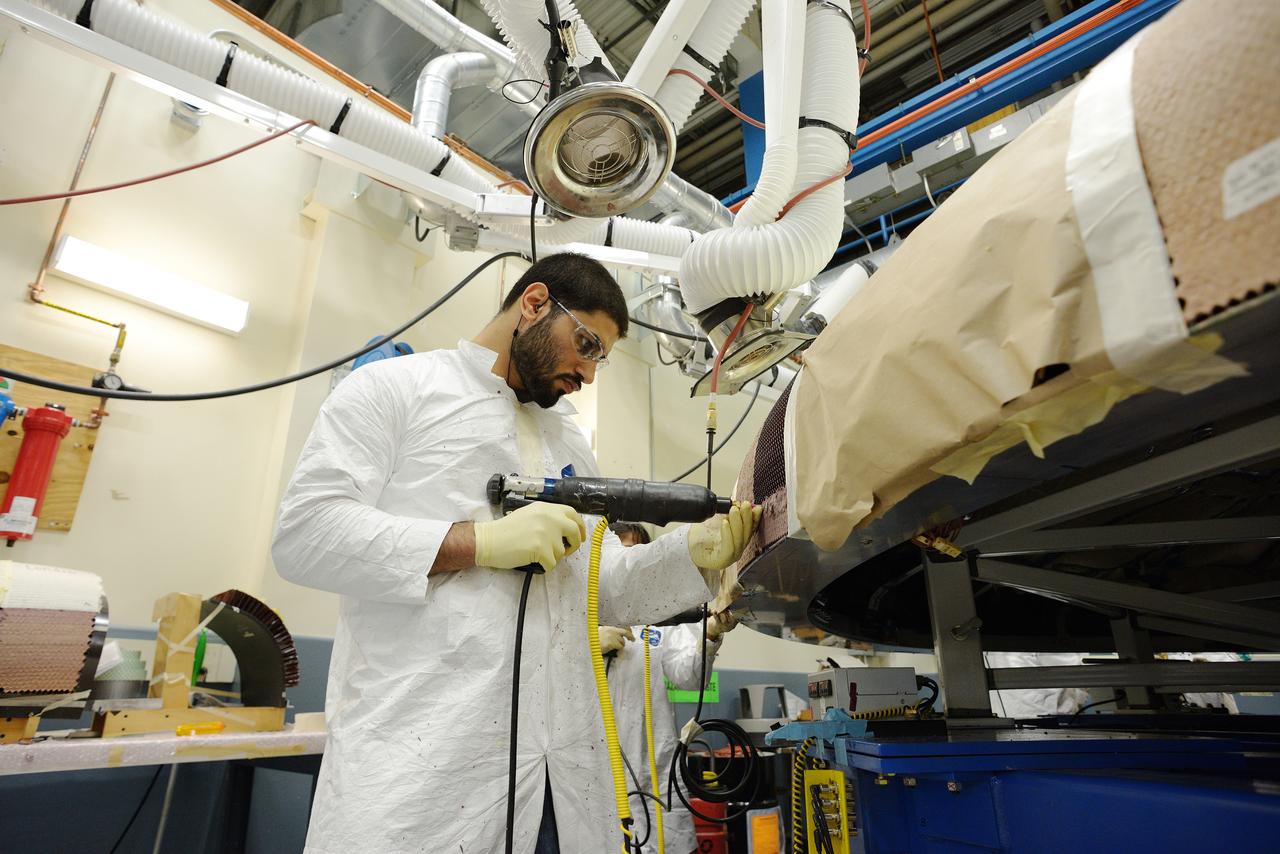
Technicians at Textron in Wimington, MA, apply Avcoat ablative material to the composite honeycomb structure attached to the Exploration Flight Test-1 (EFT-1) Orion heat shield carrier structure on May 22, 2013. Part of Batch image transfer from Flickr.
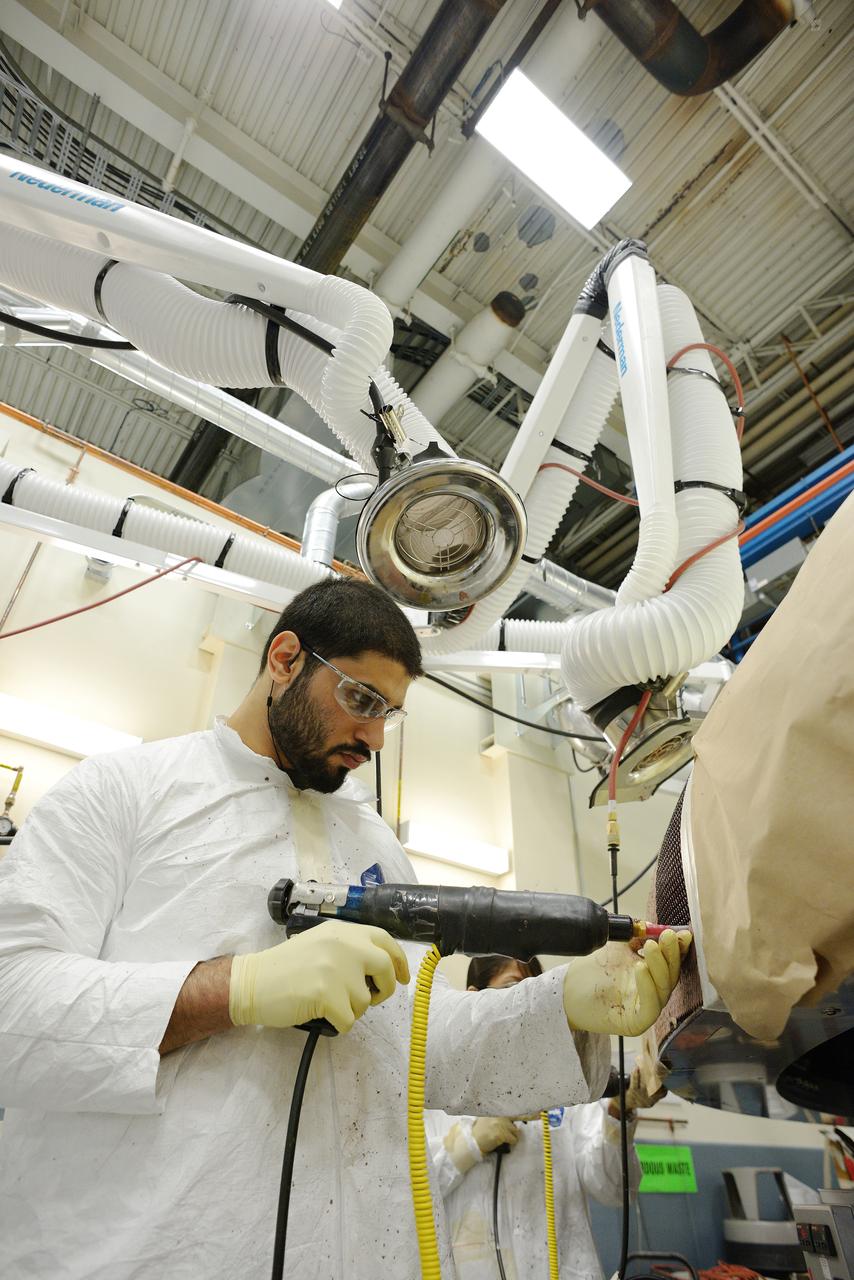
Technicians at Textron in Wimington, MA, apply Avcoat ablative material to the composite honeycomb structure attached to the Exploration Flight Test-1 (EFT-1) Orion heat shield carrier structure on May 22, 2013. Part of Batch image transfer from Flickr.
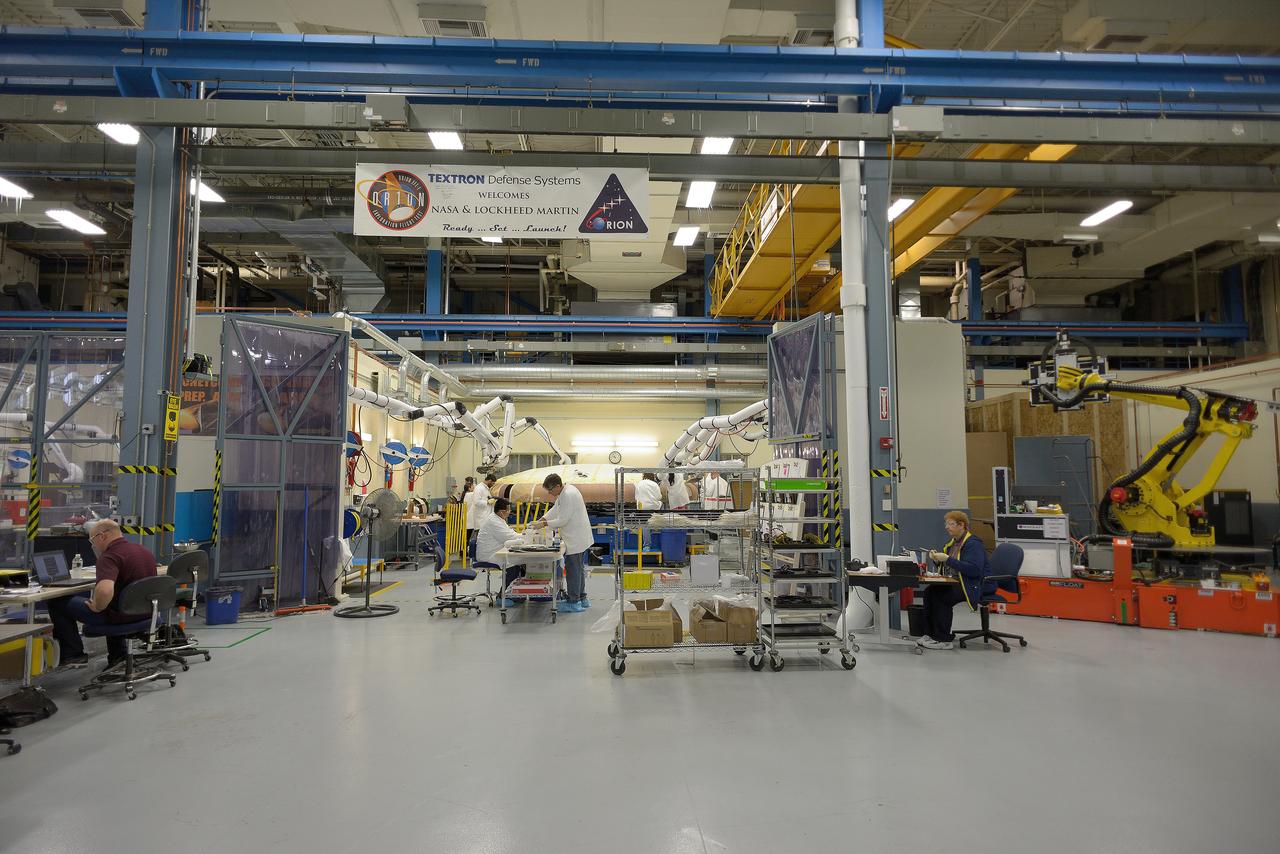
Technicians at Textron in Wimington, MA, apply Avcoat ablative material to the composite honeycomb structure attached to the Exploration Flight Test-1 (EFT-1) Orion heat shield carrier structure on May 22, 2013. Part of Batch image transfer from Flickr.
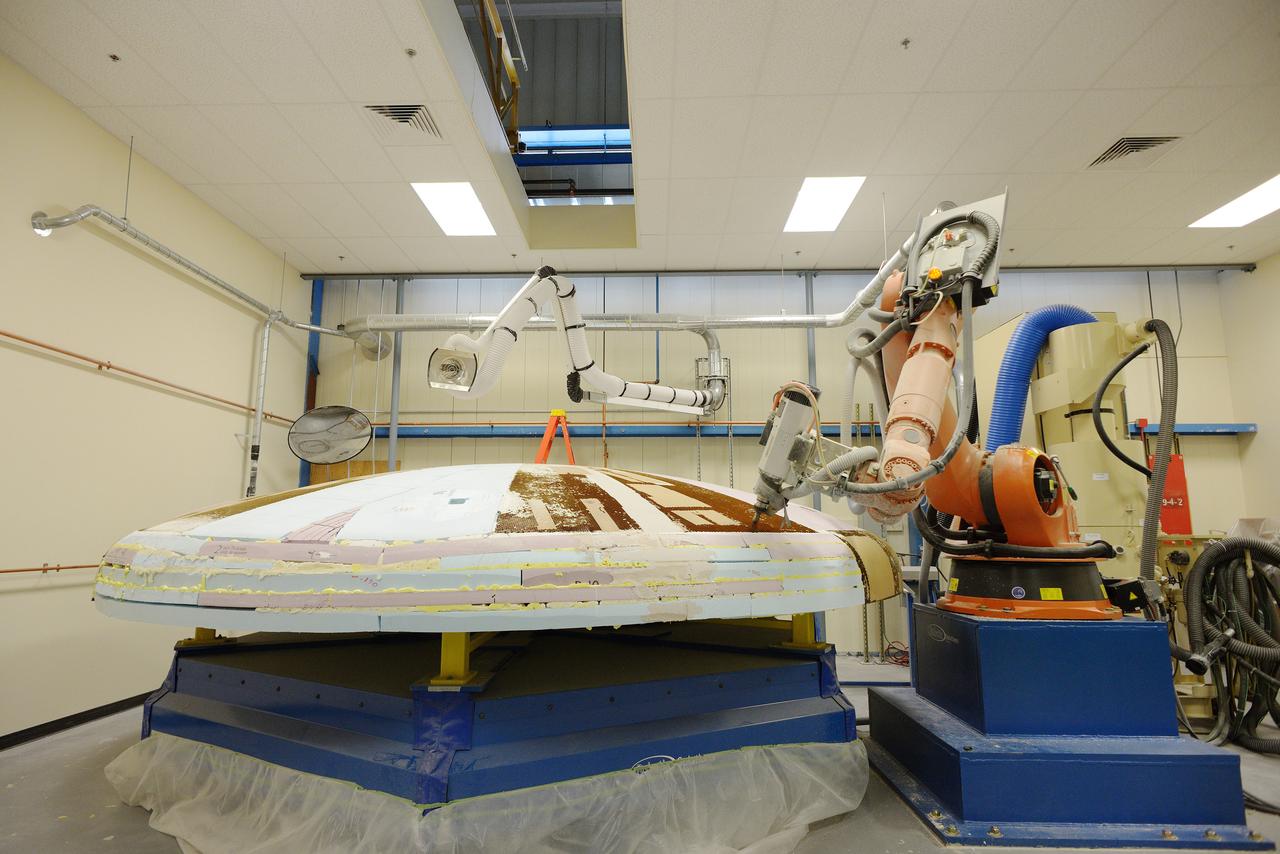
Technicians at Textron in Wimington, MA, apply Avcoat ablative material to the composite honeycomb structure attached to the Exploration Flight Test-1 (EFT-1) Orion heat shield carrier structure on May 22, 2013. Part of Batch image transfer from Flickr.
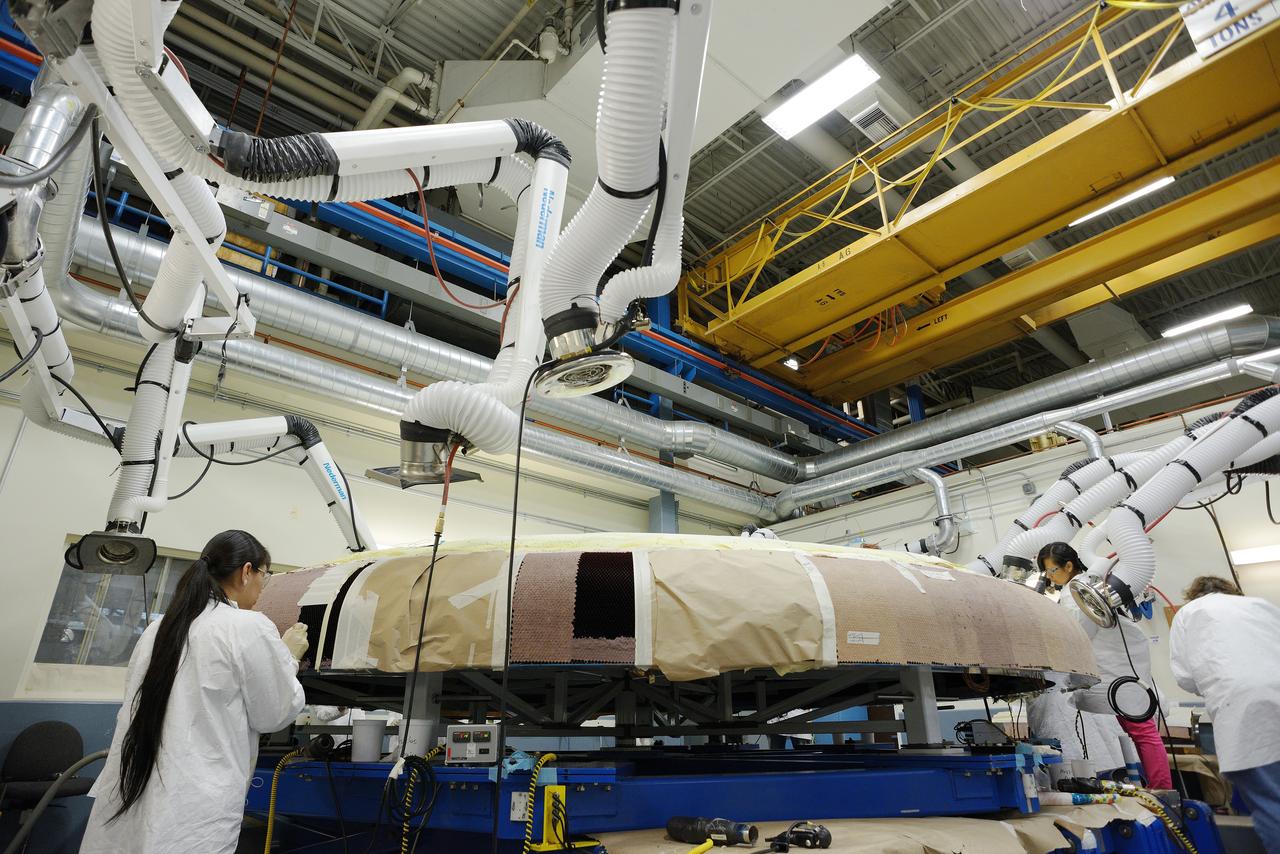
Technicians at Textron in Wimington, MA, apply Avcoat ablative material to the composite honeycomb structure attached to the Exploration Flight Test-1 (EFT-1) Orion heat shield carrier structure on May 22, 2013. Part of Batch image transfer from Flickr.
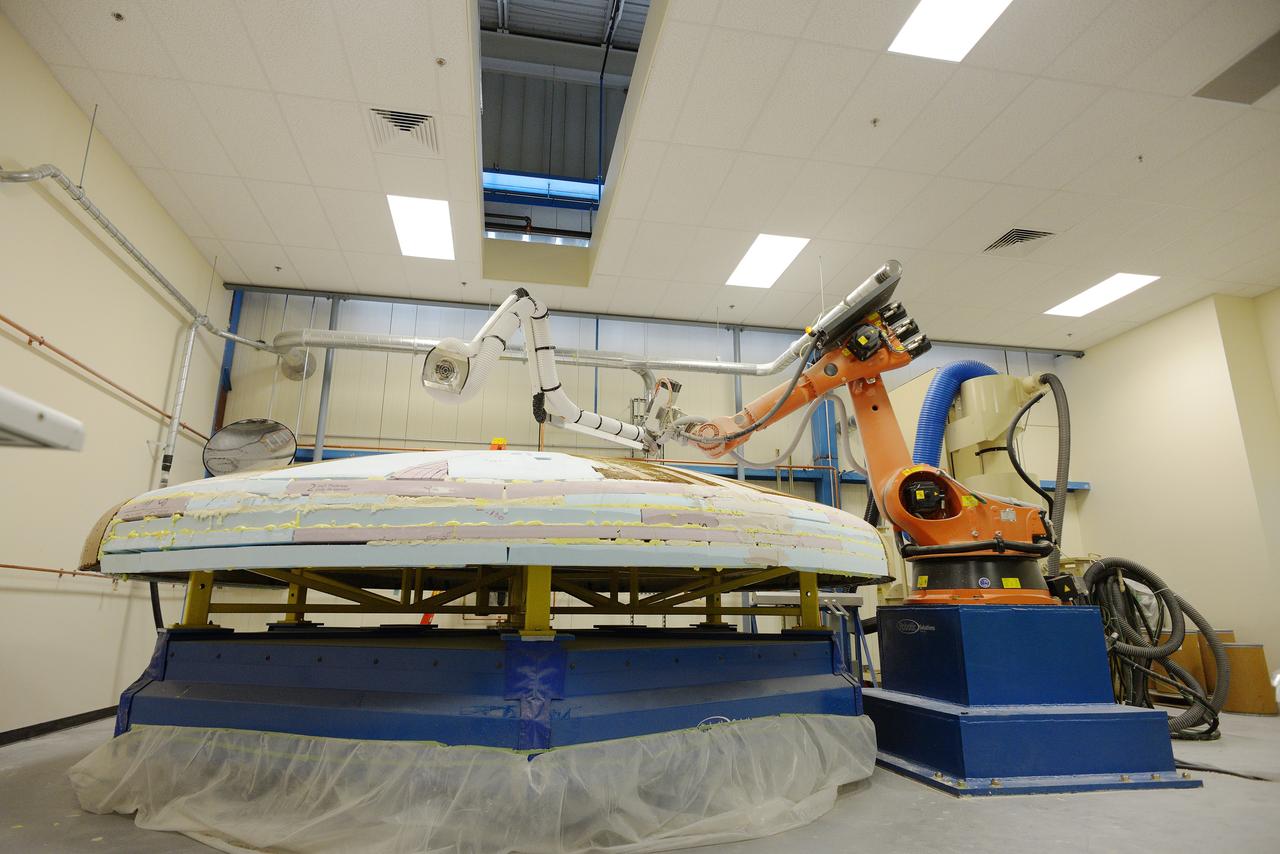
Technicians at Textron in Wimington, MA, apply Avcoat ablative material to the composite honeycomb structure attached to the Exploration Flight Test-1 (EFT-1) Orion heat shield carrier structure on May 22, 2013. Part of Batch image transfer from Flickr.
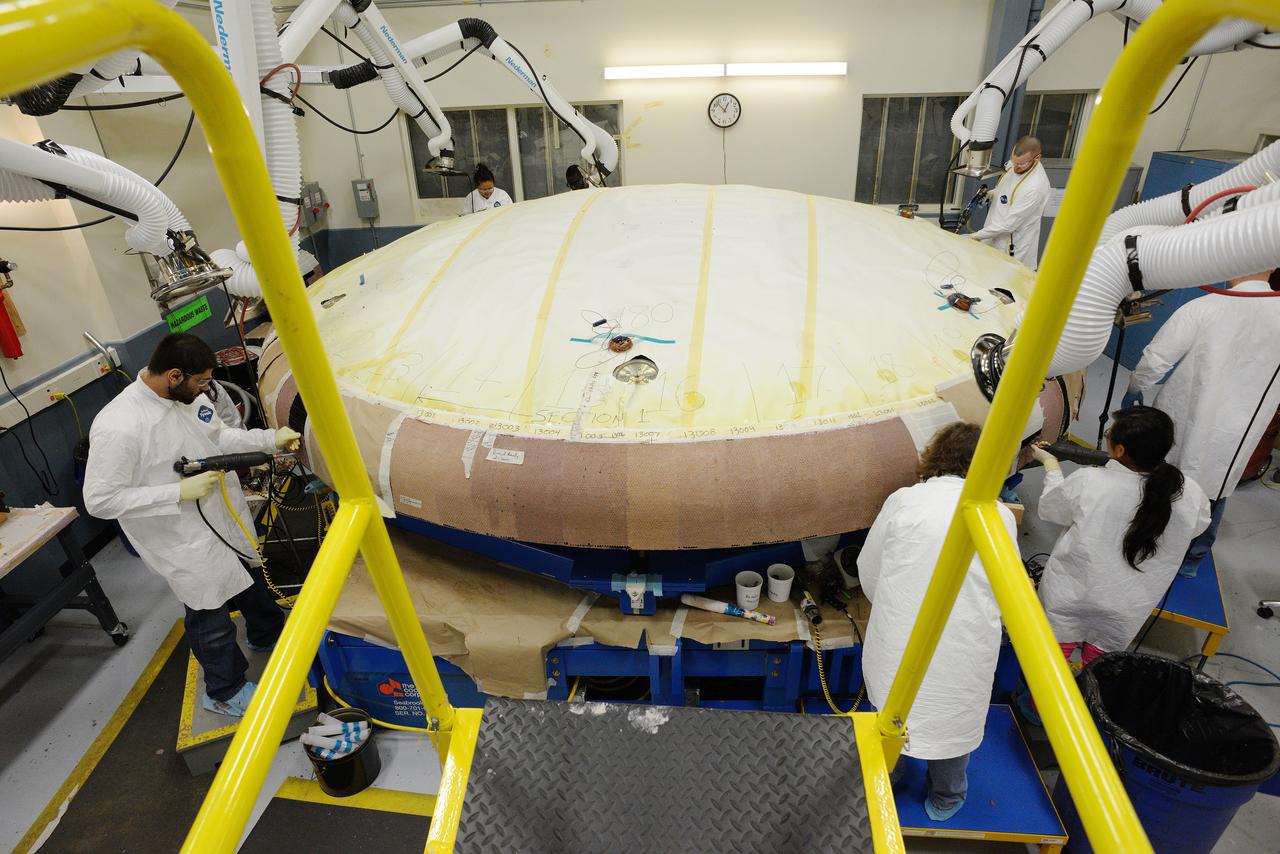
Technicians at Textron in Wimington, MA, apply Avcoat ablative material to the composite honeycomb structure attached to the Exploration Flight Test-1 (EFT-1) Orion heat shield carrier structure on May 22, 2013. Part of Batch image transfer from Flickr.
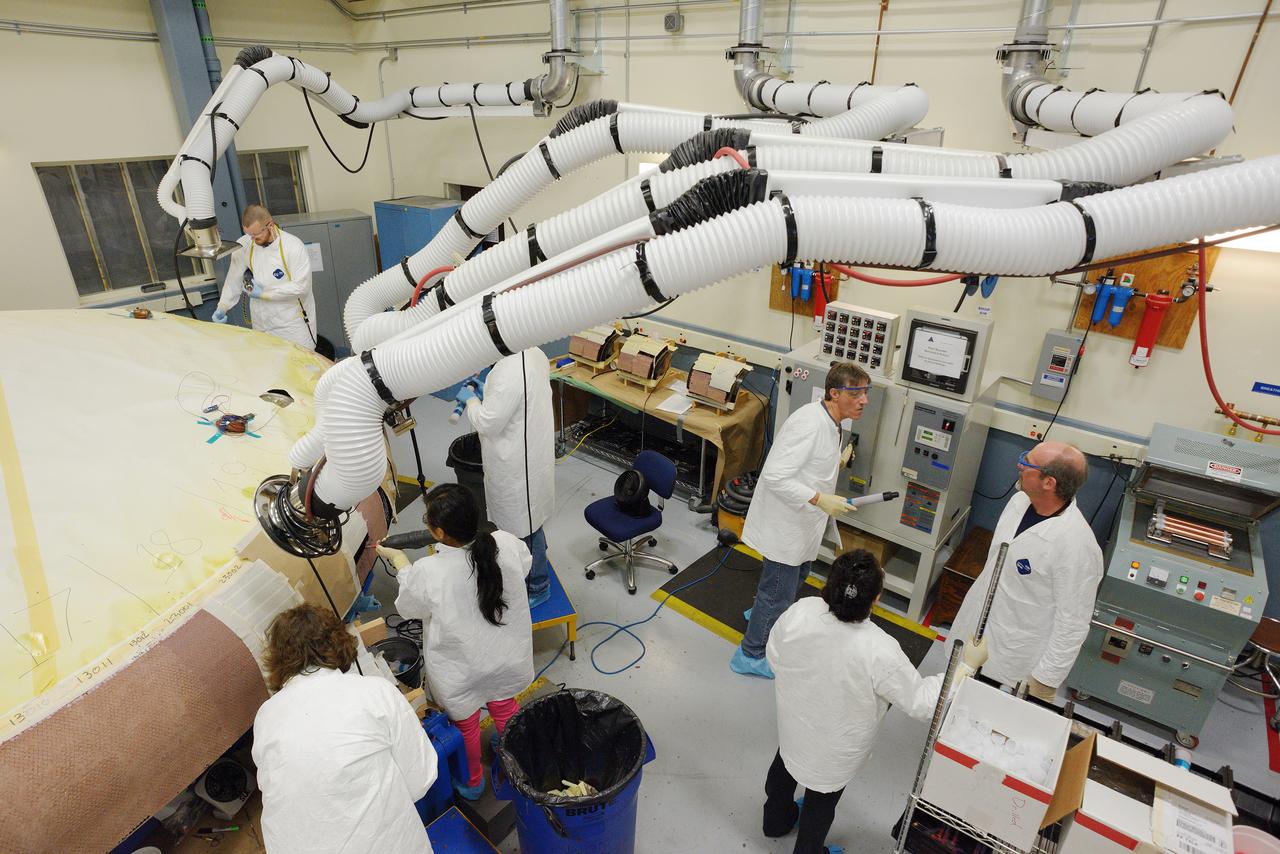
Technicians at Textron in Wimington, MA, apply Avcoat ablative material to the composite honeycomb structure attached to the Exploration Flight Test-1 (EFT-1) Orion heat shield carrier structure on May 22, 2013. Part of Batch image transfer from Flickr.

Technicians at Textron in Wimington, MA, apply Avcoat ablative material to the composite honeycomb structure attached to the Exploration Flight Test-1 (EFT-1) Orion heat shield carrier structure on May 22, 2013. Part of Batch image transfer from Flickr.
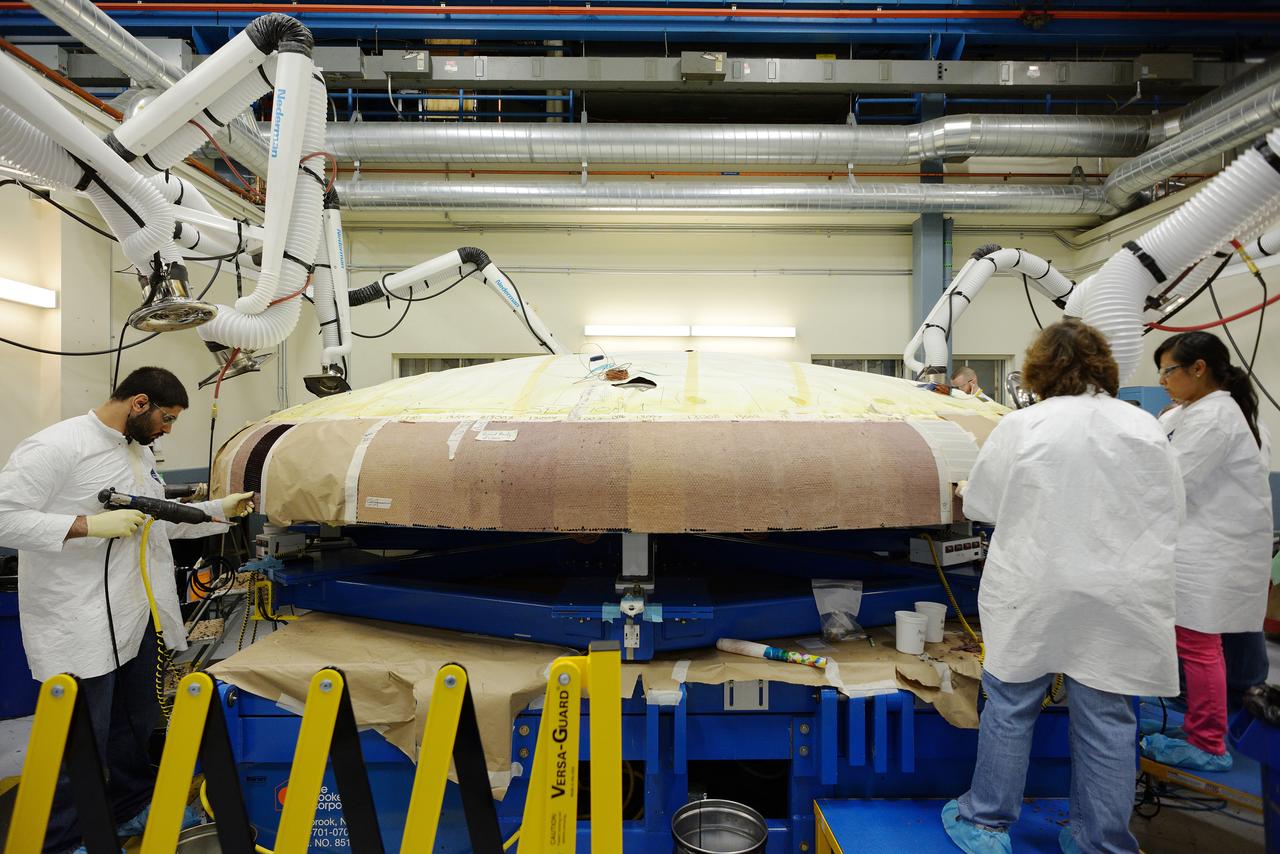
Technicians at Textron in Wimington, MA, apply Avcoat ablative material to the composite honeycomb structure attached to the Exploration Flight Test-1 (EFT-1) Orion heat shield carrier structure on May 22, 2013. Part of Batch image transfer from Flickr.
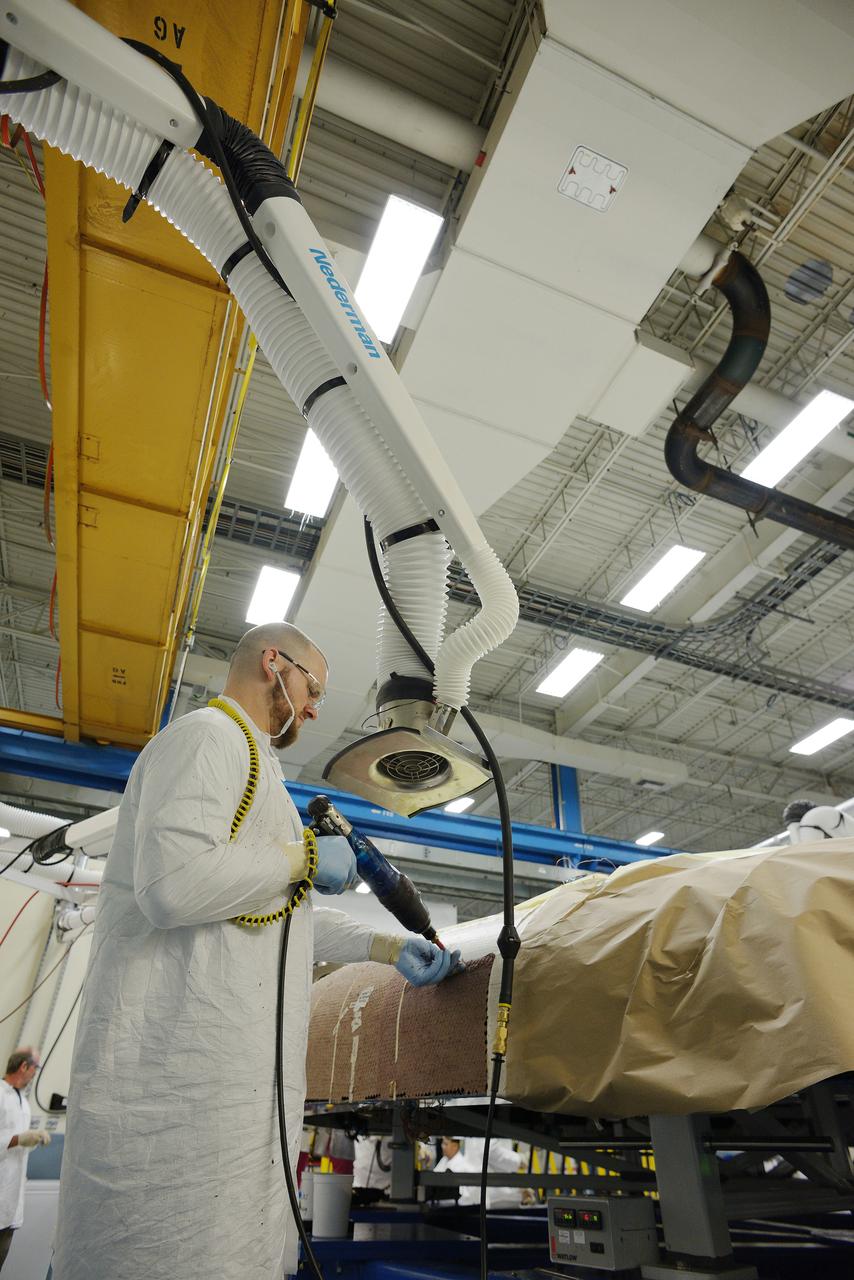
Technicians at Textron in Wimington, MA, apply Avcoat ablative material to the composite honeycomb structure attached to the Exploration Flight Test-1 (EFT-1) Orion heat shield carrier structure on May 22, 2013. Part of Batch image transfer from Flickr.
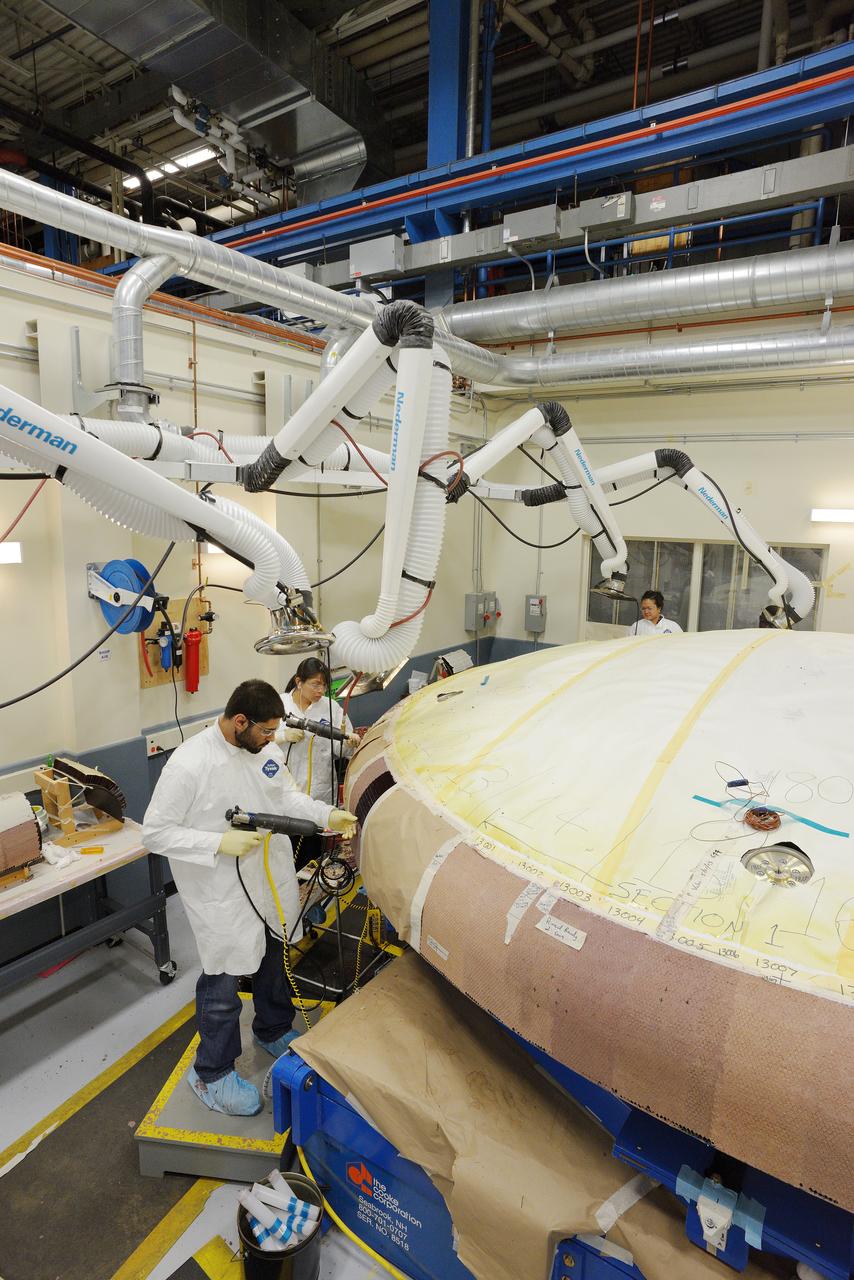
Technicians at Textron in Wimington, MA, apply Avcoat ablative material to the composite honeycomb structure attached to the Exploration Flight Test-1 (EFT-1) Orion heat shield carrier structure on May 22, 2013. Part of Batch image transfer from Flickr.
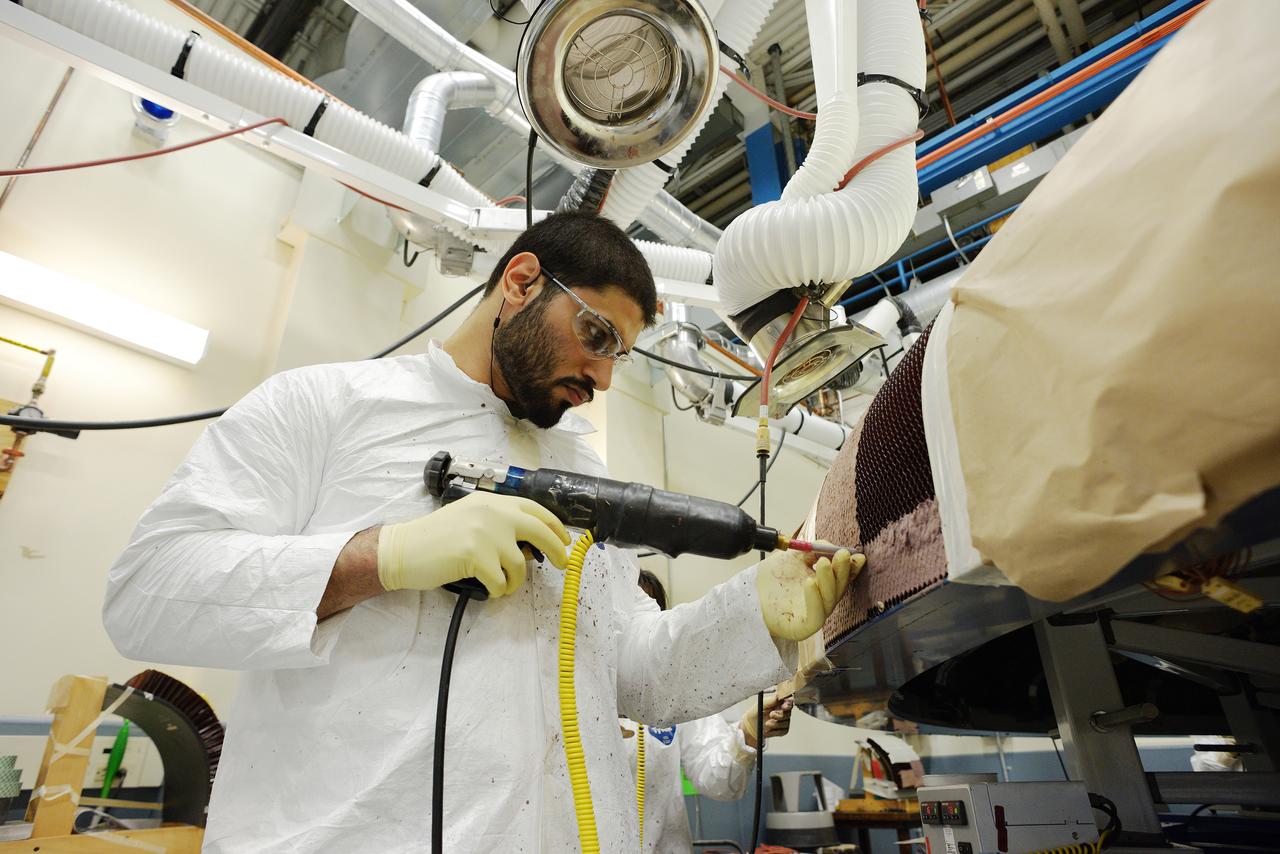
Technicians at Textron in Wimington, MA, apply Avcoat ablative material to the composite honeycomb structure attached to the Exploration Flight Test-1 (EFT-1) Orion heat shield carrier structure on May 22, 2013. Part of Batch image transfer from Flickr.
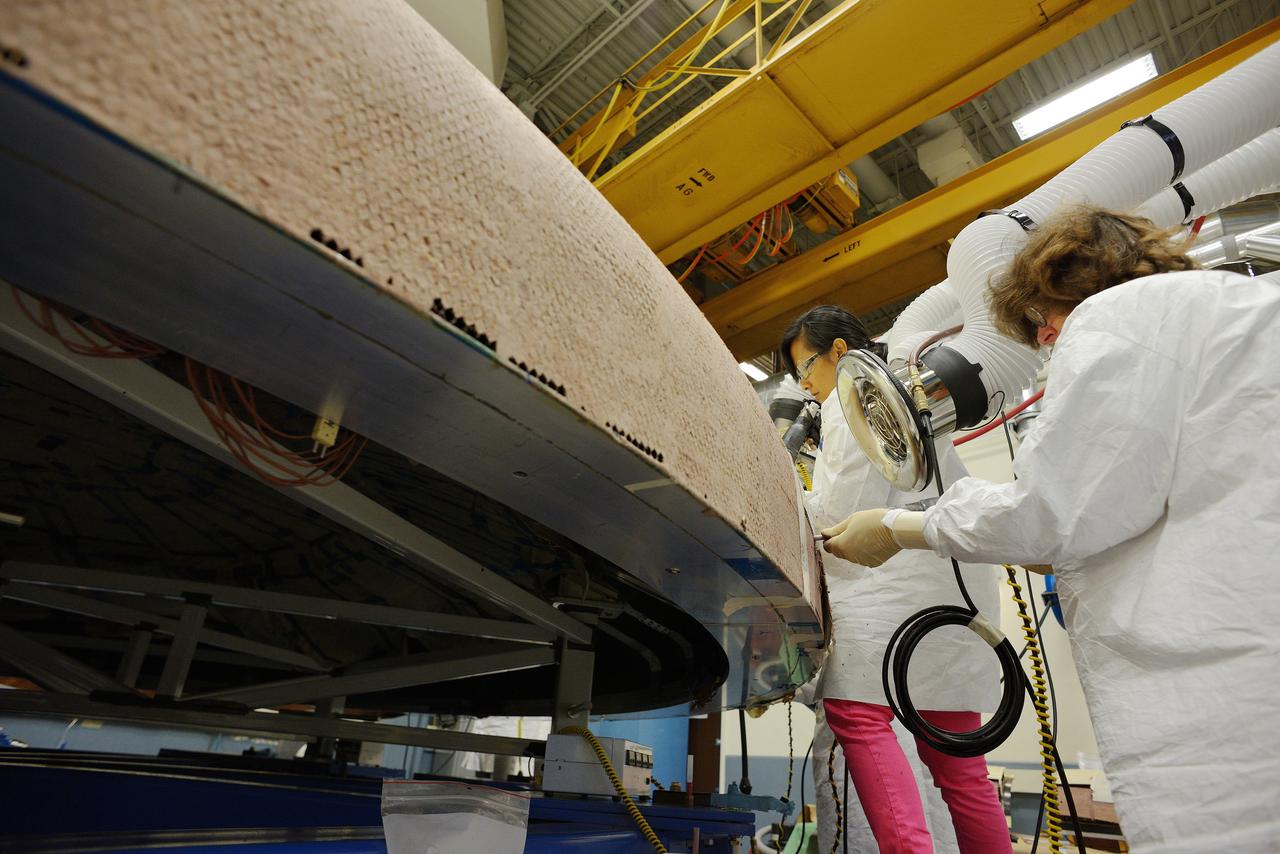
Technicians at Textron in Wimington, MA, apply Avcoat ablative material to the composite honeycomb structure attached to the Exploration Flight Test-1 (EFT-1) Orion heat shield carrier structure on May 22, 2013. Part of Batch image transfer from Flickr.

Technicians at Textron in Wimington, MA, apply Avcoat ablative material to the composite honeycomb structure attached to the Exploration Flight Test-1 (EFT-1) Orion heat shield carrier structure on May 22, 2013. Part of Batch image transfer from Flickr.
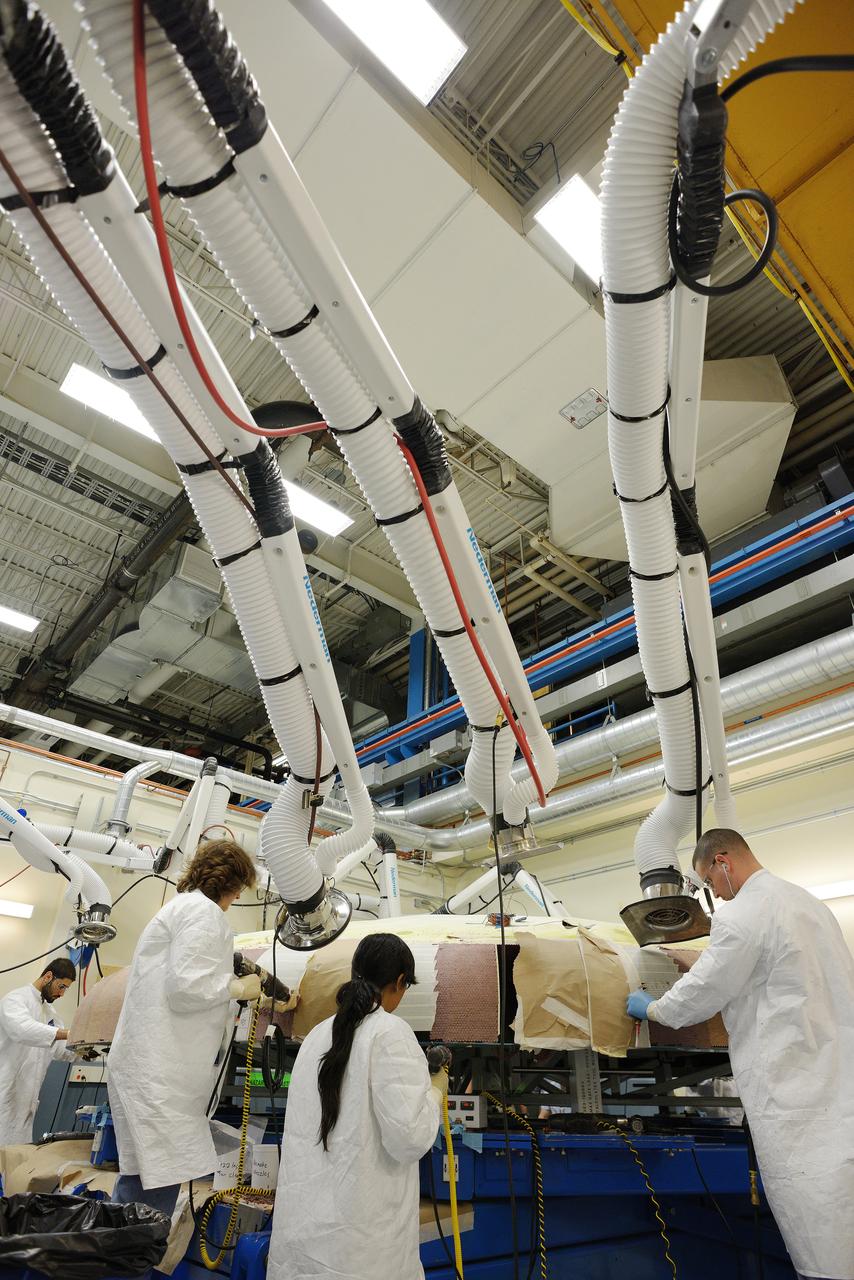
Technicians at Textron in Wimington, MA, apply Avcoat ablative material to the composite honeycomb structure attached to the Exploration Flight Test-1 (EFT-1) Orion heat shield carrier structure on May 22, 2013. Part of Batch image transfer from Flickr.
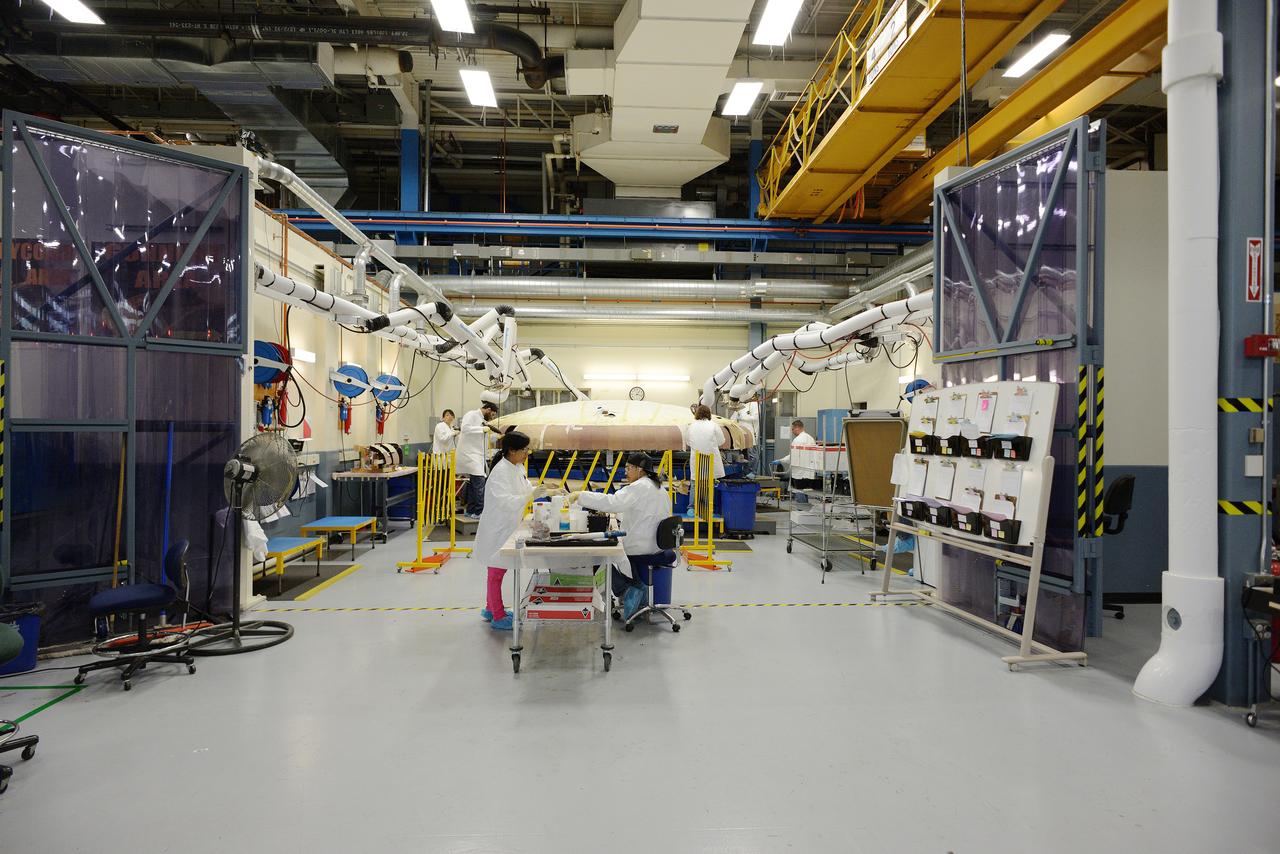
Technicians at Textron in Wimington, MA, apply Avcoat ablative material to the composite honeycomb structure attached to the Exploration Flight Test-1 (EFT-1) Orion heat shield carrier structure on May 22, 2013. Part of Batch image transfer from Flickr.
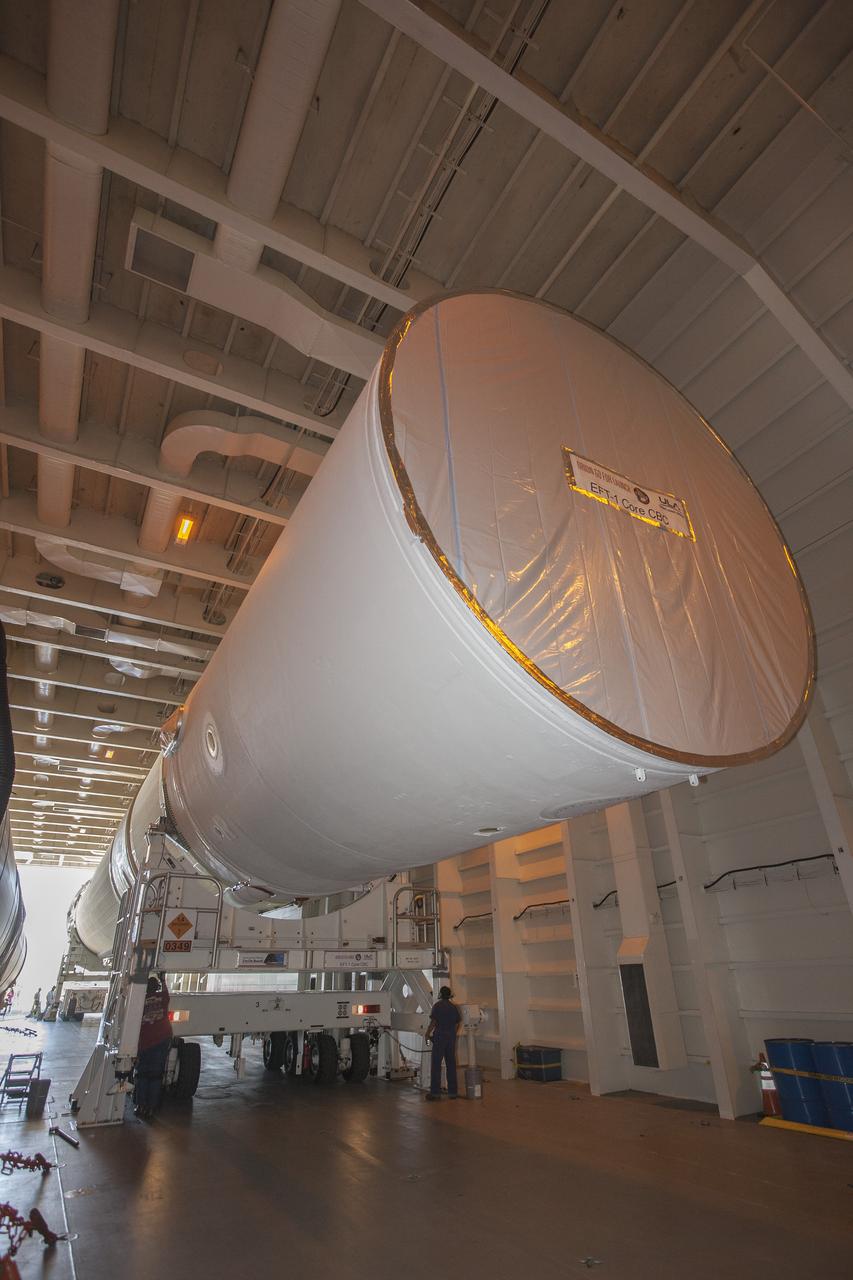
CAPE CANAVERAL, Fla. – Two of the three United Launch Alliance Delta IV heavy boosters for NASA’s upcoming Exploration Flight Test-1, or EFT-1, mission with the Orion spacecraft, have arrived by barge at the U.S. Army Outpost wharf at Port Canaveral in Florida. The core booster and starboard booster will be offloaded and then transported to the Horizontal Integration Facility, or HIF, at Space Launch Complex 37 on Cape Canaveral Air Force Station. The port booster and the upper stage are planned to be shipped to Cape Canaveral in April. At the HIF, all three boosters will be processed and checked out before being moved to the nearby launch pad and hoisted into position. During the EFT-1 mission, Orion will travel farther into space than any human spacecraft has gone in more than 40 years. The data gathered during the flight will influence design decisions, validate existing computer models and innovative new approaches to space systems development, as well as reduce overall mission risks and costs for later Orion flights. Liftoff of Orion on EFT-1 is planned for fall 2014. Photo credit: NASA/Kim Shiflett
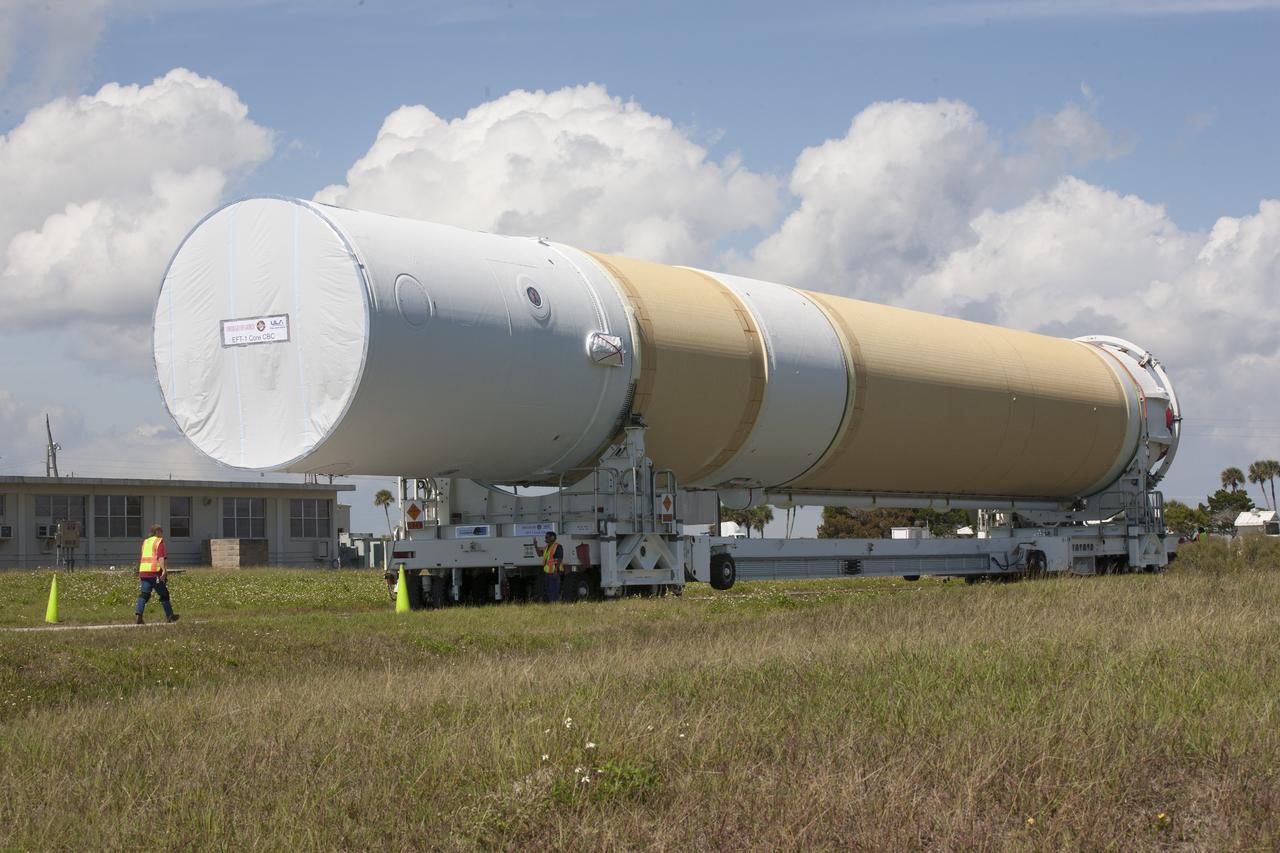
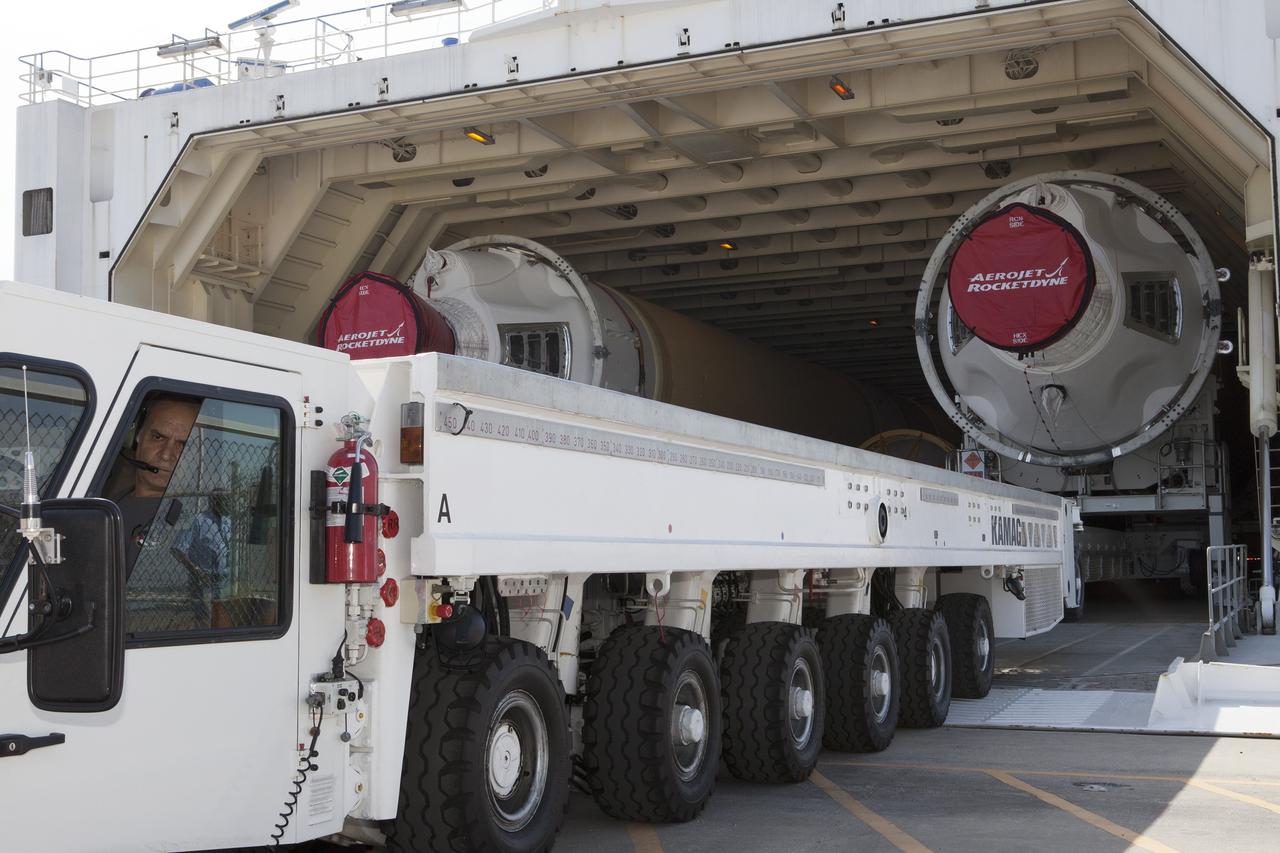
CAPE CANAVERAL, Fla. – Two of the three United Launch Alliance Delta IV heavy boosters for NASA’s upcoming Exploration Flight Test-1, or EFT-1, mission with the Orion spacecraft, arrived by barge at the U.S. Army Outpost wharf at Port Canaveral in Florida. The core booster, shown in this photo, and starboard booster were offloaded and will be transported to the Horizontal Integration Facility, or HIF, at Space Launch Complex 37 on Cape Canaveral Air Force Station. The port booster and the upper stage are planned to be shipped to Cape Canaveral in April. At the HIF, all three boosters will be processed and checked out before being moved to the nearby launch pad and hoisted into position. During the EFT-1 mission, Orion will travel farther into space than any human spacecraft has gone in more than 40 years. The data gathered during the flight will influence design decisions, validate existing computer models and innovative new approaches to space systems development, as well as reduce overall mission risks and costs for later Orion flights. Liftoff of Orion on EFT-1 is planned for fall 2014. Photo credit: NASA/Kim Shiflett
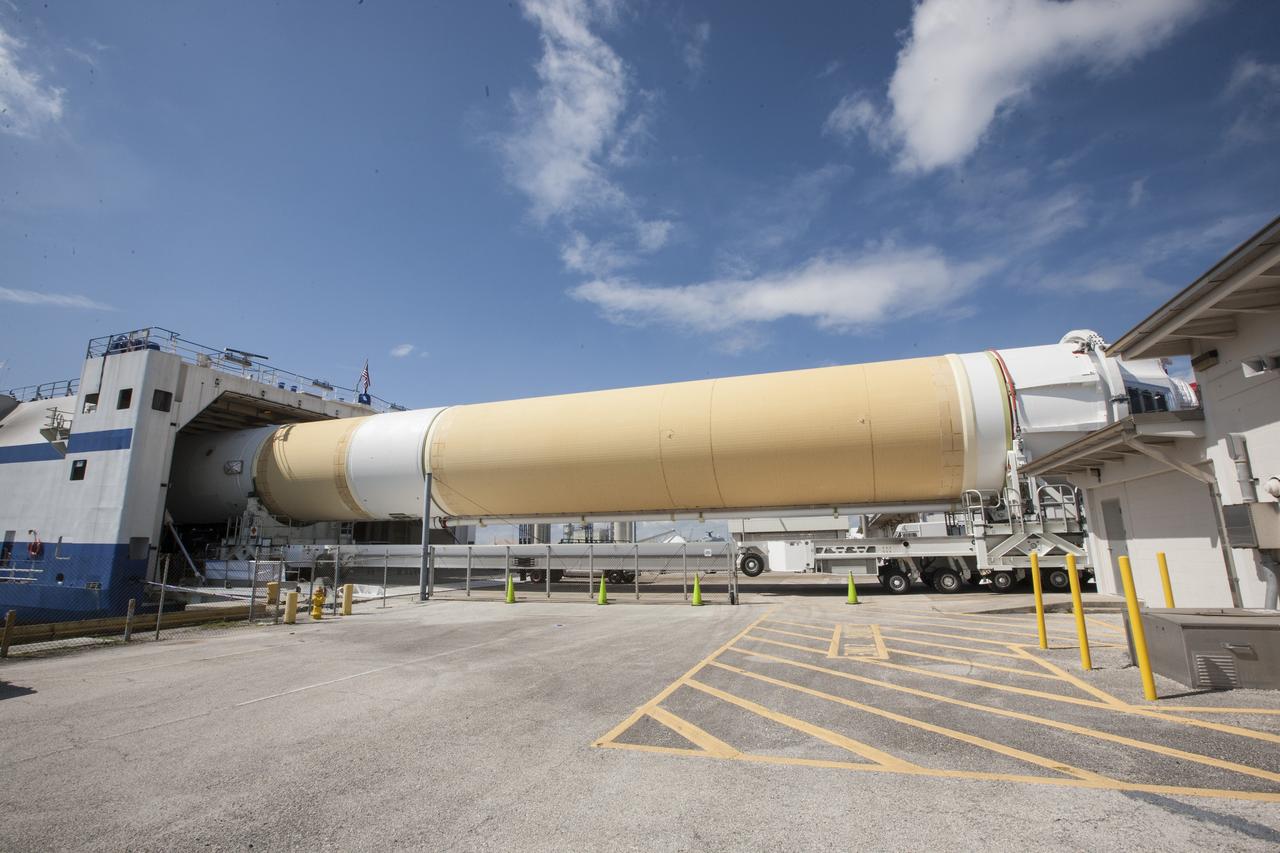
CAPE CANAVERAL, Fla. – Two of the three United Launch Alliance Delta IV heavy boosters for NASA’s upcoming Exploration Flight Test-1, or EFT-1, mission with the Orion spacecraft, have arrived by barge at the U.S. Army Outpost wharf at Port Canaveral in Florida. The core booster and starboard booster are being offloaded and will be transported to the Horizontal Integration Facility, or HIF, at Space Launch Complex 37 on Cape Canaveral Air Force Station. The port booster and the upper stage are planned to be shipped to Cape Canaveral in April. At the HIF, all three boosters will be processed and checked out before being moved to the nearby launch pad and hoisted into position. During the EFT-1 mission, Orion will travel farther into space than any human spacecraft has gone in more than 40 years. The data gathered during the flight will influence design decisions, validate existing computer models and innovative new approaches to space systems development, as well as reduce overall mission risks and costs for later Orion flights. Liftoff of Orion on EFT-1 is planned for fall 2014. Photo credit: NASA/Kim Shiflett
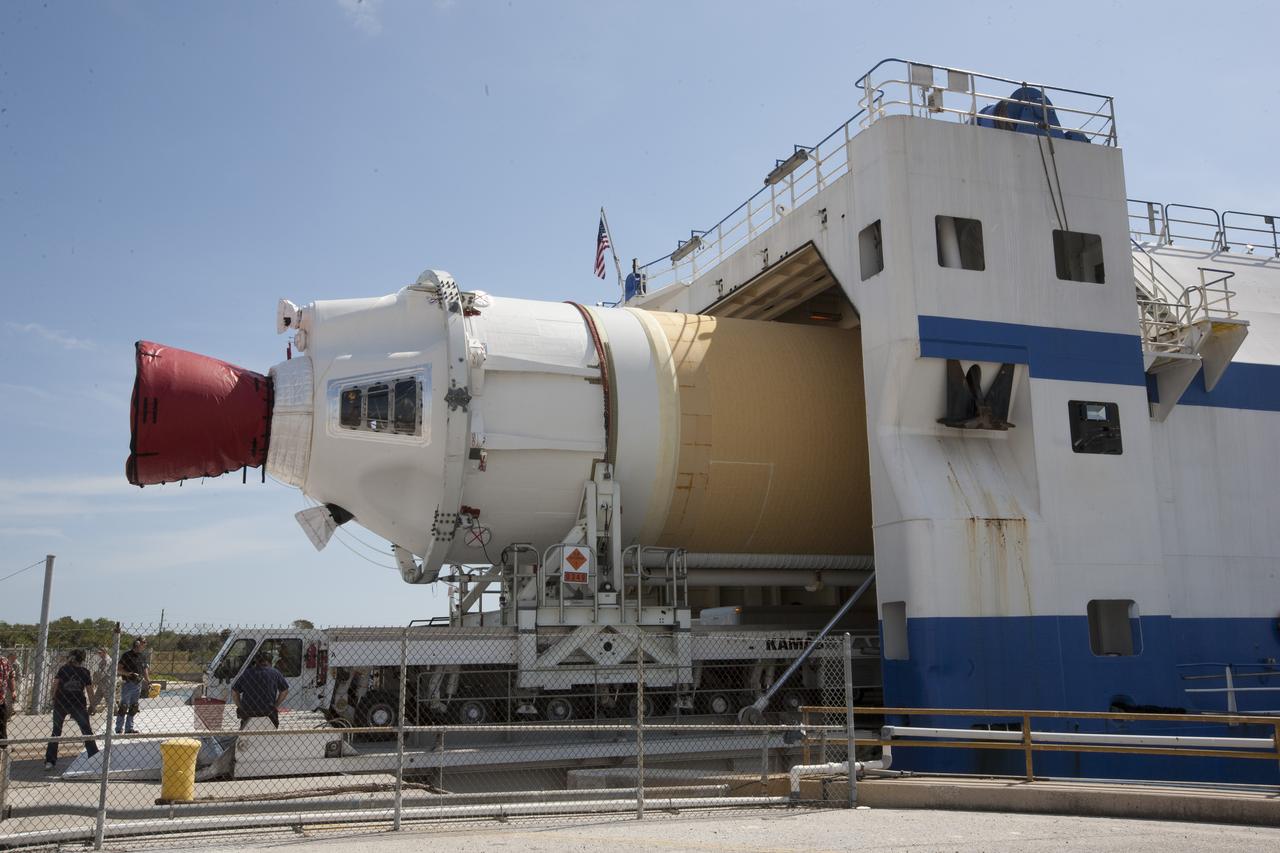
CAPE CANAVERAL, Fla. – Two of the three United Launch Alliance Delta IV heavy boosters for NASA’s upcoming Exploration Flight Test-1, or EFT-1, mission with the Orion spacecraft, have arrived by barge at the U.S. Army Outpost wharf at Port Canaveral in Florida. The core booster and starboard booster are being offloaded and will be transported to the Horizontal Integration Facility, or HIF, at Space Launch Complex 37 on Cape Canaveral Air Force Station. The port booster and the upper stage are planned to be shipped to Cape Canaveral in April. At the HIF, all three boosters will be processed and checked out before being moved to the nearby launch pad and hoisted into position. During the EFT-1 mission, Orion will travel farther into space than any human spacecraft has gone in more than 40 years. The data gathered during the flight will influence design decisions, validate existing computer models and innovative new approaches to space systems development, as well as reduce overall mission risks and costs for later Orion flights. Liftoff of Orion on EFT-1 is planned for fall 2014. Photo credit: NASA/Kim Shiflett
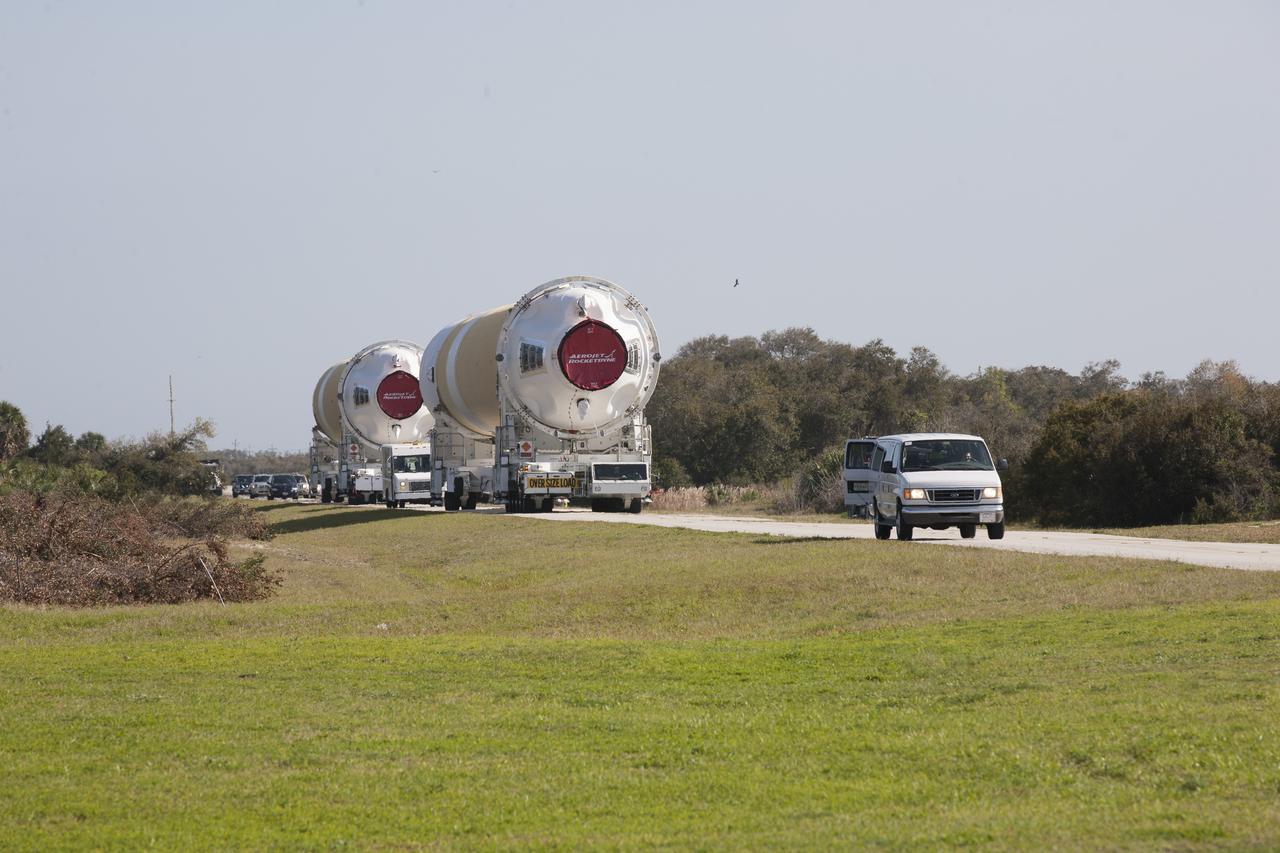
CAPE CANAVERAL, Fla. – Two of the three United Launch Alliance Delta IV heavy boosters for NASA’s upcoming Exploration Flight Test-1, or EFT-1, mission with the Orion spacecraft, arrived by barge at the U.S. Army Outpost wharf at Port Canaveral in Florida. The core booster and starboard booster were offloaded and are being transported to the Horizontal Integration Facility, or HIF, at Space Launch Complex 37 on Cape Canaveral Air Force Station. The port booster and the upper stage are planned to be shipped to Cape Canaveral in April. At the HIF, all three boosters will be processed and checked out before being moved to the nearby launch pad and hoisted into position. During the EFT-1 mission, Orion will travel farther into space than any human spacecraft has gone in more than 40 years. The data gathered during the flight will influence design decisions, validate existing computer models and innovative new approaches to space systems development, as well as reduce overall mission risks and costs for later Orion flights. Liftoff of Orion on EFT-1 is planned for fall 2014. Photo credit: NASA/Kim Shiflett
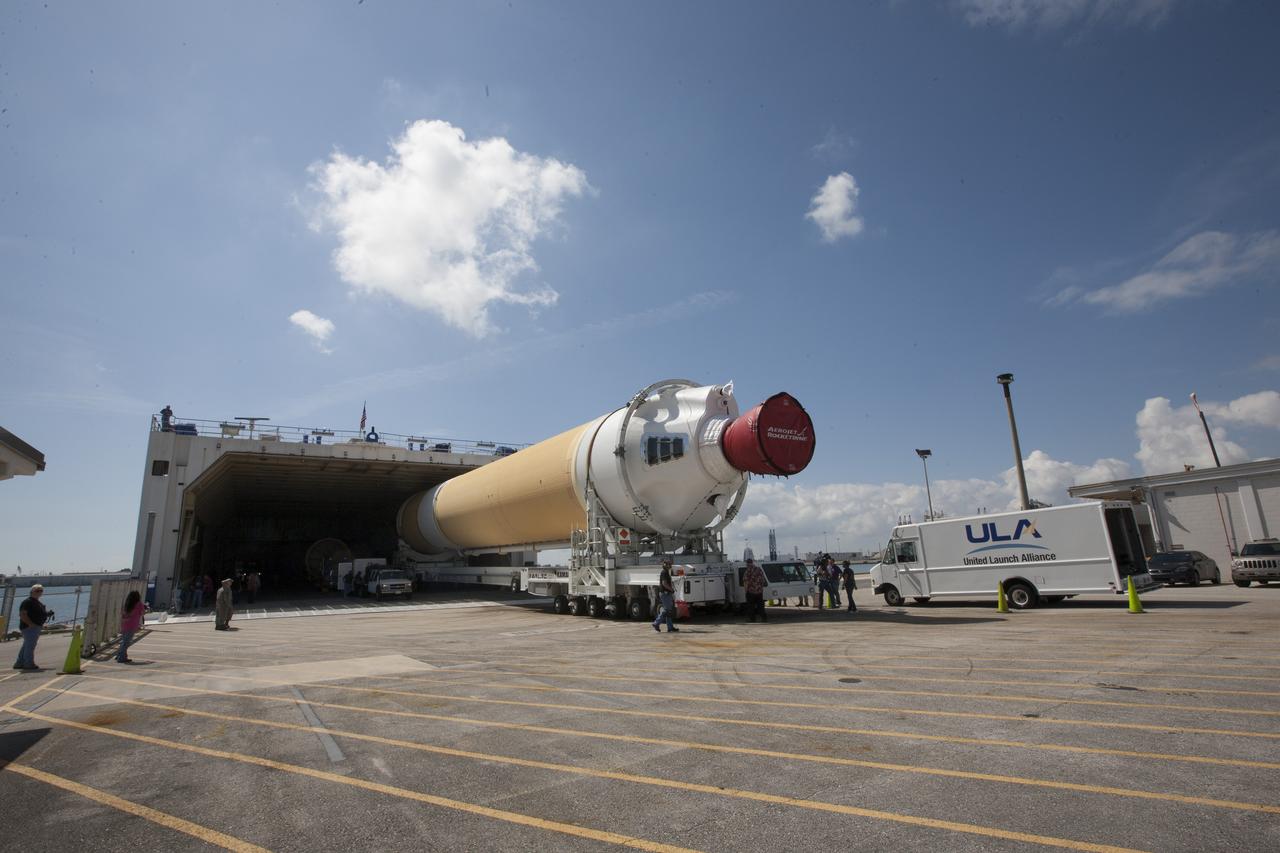
CAPE CANAVERAL, Fla. – Two of the three United Launch Alliance Delta IV heavy boosters for NASA’s upcoming Exploration Flight Test-1, or EFT-1, mission with the Orion spacecraft, have arrived by barge at the U.S. Army Outpost wharf at Port Canaveral in Florida. The core booster and starboard booster are being offloaded and will be transported to the Horizontal Integration Facility, or HIF, at Space Launch Complex 37 on Cape Canaveral Air Force Station. The port booster and the upper stage are planned to be shipped to Cape Canaveral in April. At the HIF, all three boosters will be processed and checked out before being moved to the nearby launch pad and hoisted into position. During the EFT-1 mission, Orion will travel farther into space than any human spacecraft has gone in more than 40 years. The data gathered during the flight will influence design decisions, validate existing computer models and innovative new approaches to space systems development, as well as reduce overall mission risks and costs for later Orion flights. Liftoff of Orion on EFT-1 is planned for fall 2014. Photo credit: NASA/Kim Shiflett
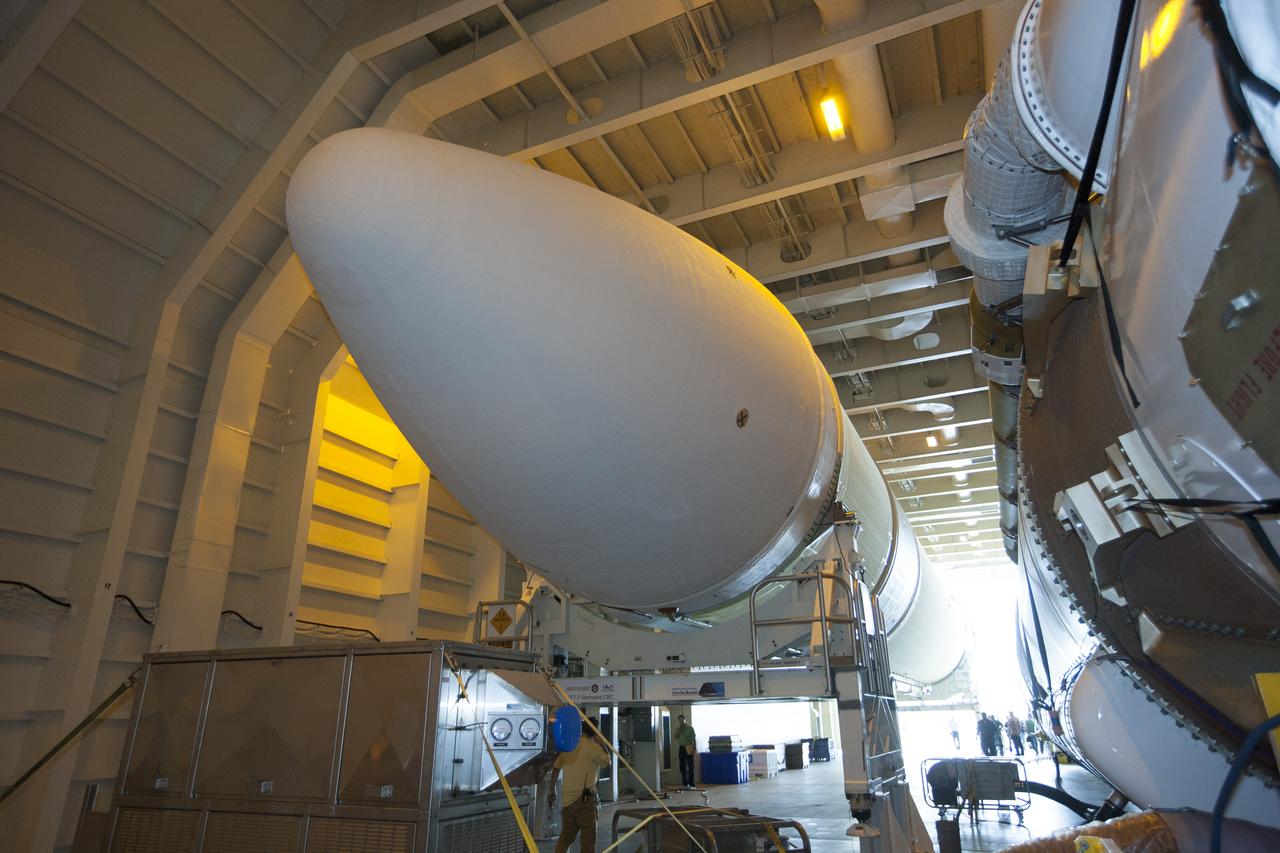
CAPE CANAVERAL, Fla. – Two of the three United Launch Alliance Delta IV heavy boosters for NASA’s upcoming Exploration Flight Test-1, or EFT-1, mission with the Orion spacecraft, have arrived by barge at the U.S. Army Outpost wharf at Port Canaveral in Florida. The core booster and starboard booster will be offloaded and then transported to the Horizontal Integration Facility, or HIF, at Space Launch Complex 37 on Cape Canaveral Air Force Station. The port booster and the upper stage are planned to be shipped to Cape Canaveral in April. At the HIF, all three boosters will be processed and checked out before being moved to the nearby launch pad and hoisted into position. During the EFT-1 mission, Orion will travel farther into space than any human spacecraft has gone in more than 40 years. The data gathered during the flight will influence design decisions, validate existing computer models and innovative new approaches to space systems development, as well as reduce overall mission risks and costs for later Orion flights. Liftoff of Orion on EFT-1 is planned for fall 2014. Photo credit: NASA/Kim Shiflett
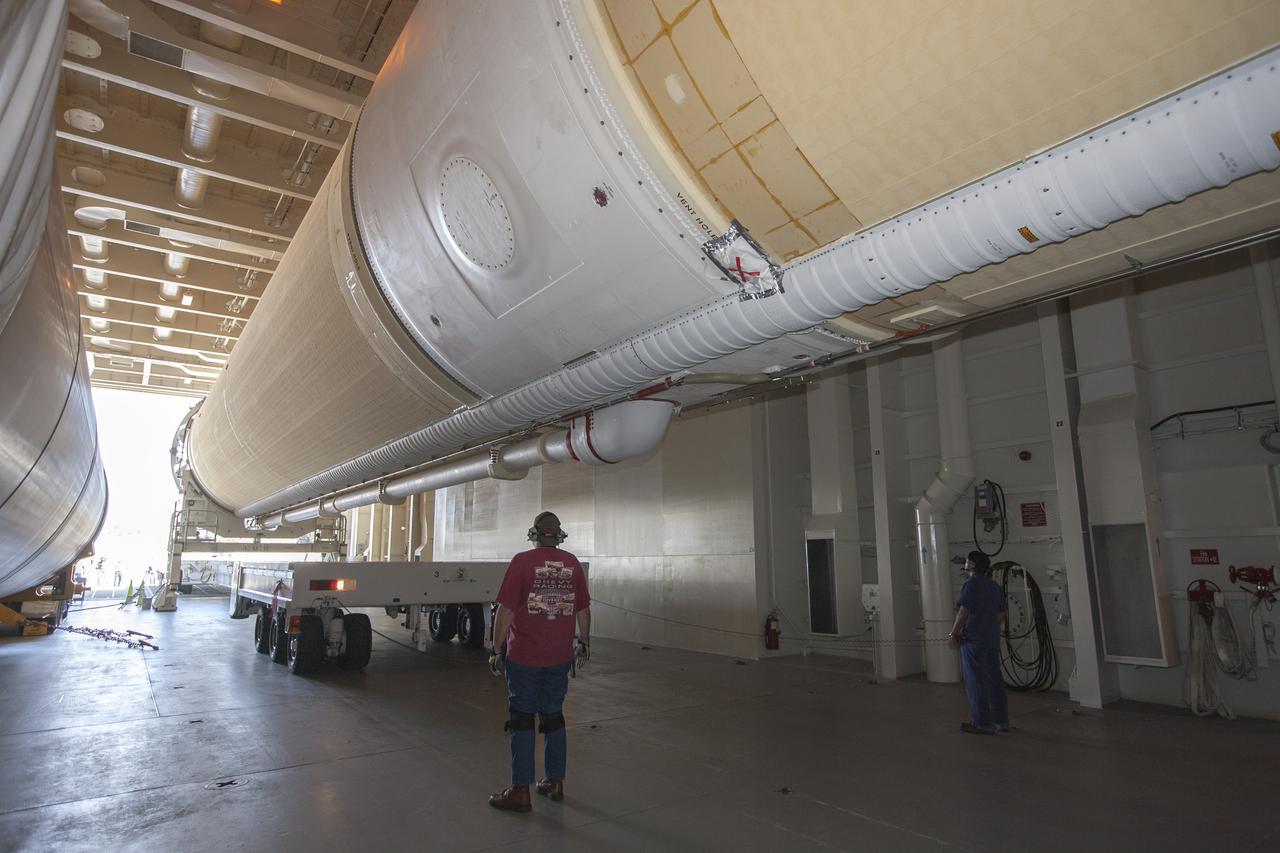
CAPE CANAVERAL, Fla. – Two of the three United Launch Alliance Delta IV heavy boosters for NASA’s upcoming Exploration Flight Test-1, or EFT-1, mission with the Orion spacecraft, have arrived by barge at the U.S. Army Outpost wharf at Port Canaveral in Florida. The core booster and starboard booster will be offloaded and then transported to the Horizontal Integration Facility, or HIF, at Space Launch Complex 37 on Cape Canaveral Air Force Station. The port booster and the upper stage are planned to be shipped to Cape Canaveral in April. At the HIF, all three boosters will be processed and checked out before being moved to the nearby launch pad and hoisted into position. During the EFT-1 mission, Orion will travel farther into space than any human spacecraft has gone in more than 40 years. The data gathered during the flight will influence design decisions, validate existing computer models and innovative new approaches to space systems development, as well as reduce overall mission risks and costs for later Orion flights. Liftoff of Orion on EFT-1 is planned for fall 2014. Photo credit: NASA/Kim Shiflett
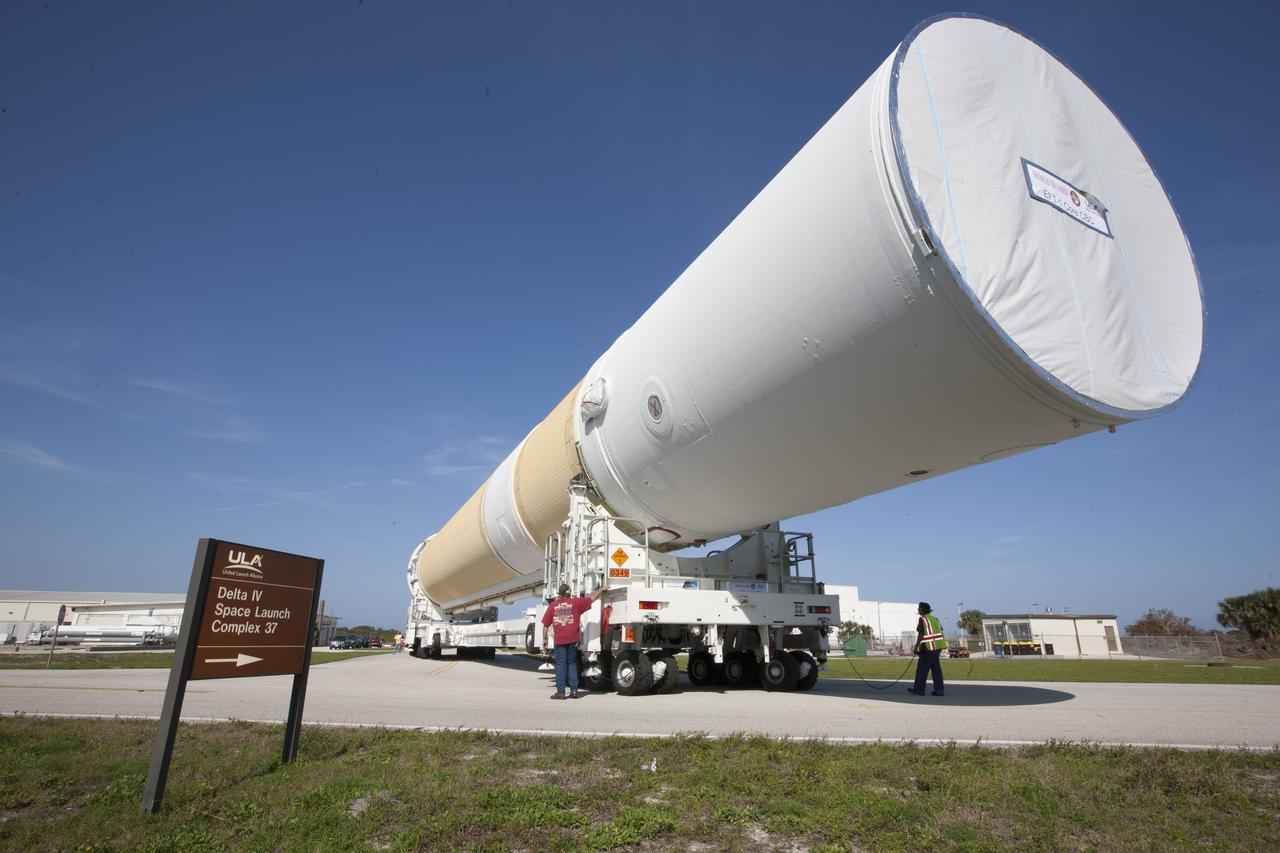
CAPE CANAVERAL, Fla. – Two of the three United Launch Alliance Delta IV heavy boosters for NASA’s upcoming Exploration Flight Test-1, or EFT-1, mission with the Orion spacecraft, arrived by barge at the U.S. Army Outpost wharf at Port Canaveral in Florida. The core booster and starboard booster were offloaded and are being transported to the Horizontal Integration Facility, or HIF, at Space Launch Complex 37 on Cape Canaveral Air Force Station. The port booster and the upper stage are planned to be shipped to Cape Canaveral in April. At the HIF, all three boosters will be processed and checked out before being moved to the nearby launch pad and hoisted into position. During the EFT-1 mission, Orion will travel farther into space than any human spacecraft has gone in more than 40 years. The data gathered during the flight will influence design decisions, validate existing computer models and innovative new approaches to space systems development, as well as reduce overall mission risks and costs for later Orion flights. Liftoff of Orion on EFT-1 is planned for fall 2014. Photo credit: NASA/Kim Shiflett
CAPE CANAVERAL, Fla. – Two of the three United Launch Alliance Delta IV heavy boosters for NASA’s upcoming Exploration Flight Test-1, or EFT-1, mission with the Orion spacecraft, arrived by barge at the U.S. Army Outpost wharf at Port Canaveral in Florida. The core booster and starboard booster were offloaded and are being transported to the Horizontal Integration Facility, or HIF, at Space Launch Complex 37 on Cape Canaveral Air Force Station. The port booster and the upper stage are planned to be shipped to Cape Canaveral in April. At the HIF, all three boosters will be processed and checked out before being moved to the nearby launch pad and hoisted into position. During the EFT-1 mission, Orion will travel farther into space than any human spacecraft has gone in more than 40 years. The data gathered during the flight will influence design decisions, validate existing computer models and innovative new approaches to space systems development, as well as reduce overall mission risks and costs for later Orion flights. Liftoff of Orion on EFT-1 is planned for fall 2014. Photo credit: NASA/Kim Shiflett
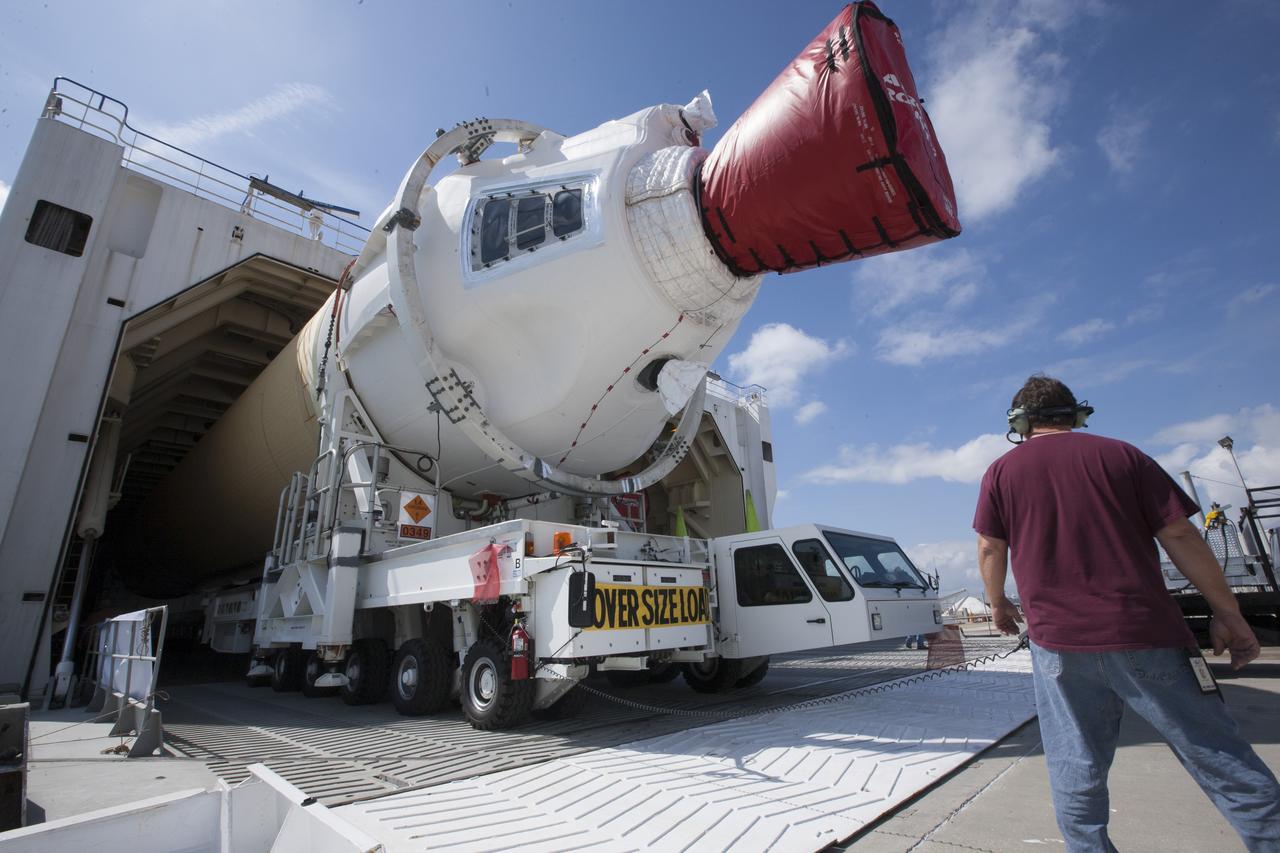
CAPE CANAVERAL, Fla. – Two of the three United Launch Alliance Delta IV heavy boosters for NASA’s upcoming Exploration Flight Test-1, or EFT-1, mission with the Orion spacecraft, have arrived by barge at the U.S. Army Outpost wharf at Port Canaveral in Florida. The core booster and starboard booster are being offloaded and will be transported to the Horizontal Integration Facility, or HIF, at Space Launch Complex 37 on Cape Canaveral Air Force Station. The port booster and the upper stage are planned to be shipped to Cape Canaveral in April. At the HIF, all three boosters will be processed and checked out before being moved to the nearby launch pad and hoisted into position. During the EFT-1 mission, Orion will travel farther into space than any human spacecraft has gone in more than 40 years. The data gathered during the flight will influence design decisions, validate existing computer models and innovative new approaches to space systems development, as well as reduce overall mission risks and costs for later Orion flights. Liftoff of Orion on EFT-1 is planned for fall 2014. Photo credit: NASA/Kim Shiflett
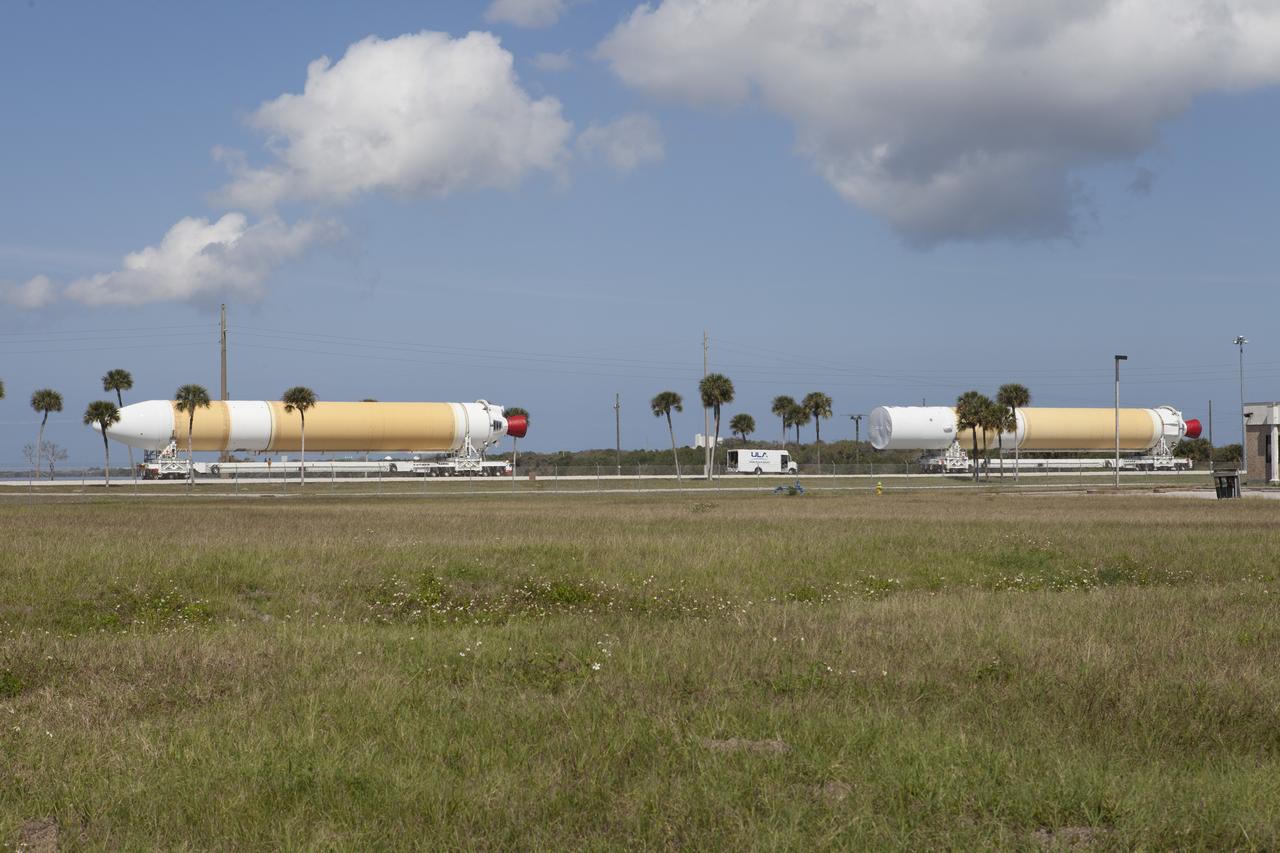
CAPE CANAVERAL, Fla. – Two of the three United Launch Alliance Delta IV heavy boosters for NASA’s upcoming Exploration Flight Test-1, or EFT-1, mission with the Orion spacecraft, arrived by barge at the U.S. Army Outpost wharf at Port Canaveral in Florida. The core booster and starboard booster were offloaded and are being transported to the Horizontal Integration Facility, or HIF, at Space Launch Complex 37 on Cape Canaveral Air Force Station. The port booster and the upper stage are planned to be shipped to Cape Canaveral in April. At the HIF, all three boosters will be processed and checked out before being moved to the nearby launch pad and hoisted into position. During the EFT-1 mission, Orion will travel farther into space than any human spacecraft has gone in more than 40 years. The data gathered during the flight will influence design decisions, validate existing computer models and innovative new approaches to space systems development, as well as reduce overall mission risks and costs for later Orion flights. Liftoff of Orion on EFT-1 is planned for fall 2014. Photo credit: NASA/Kim Shiflett
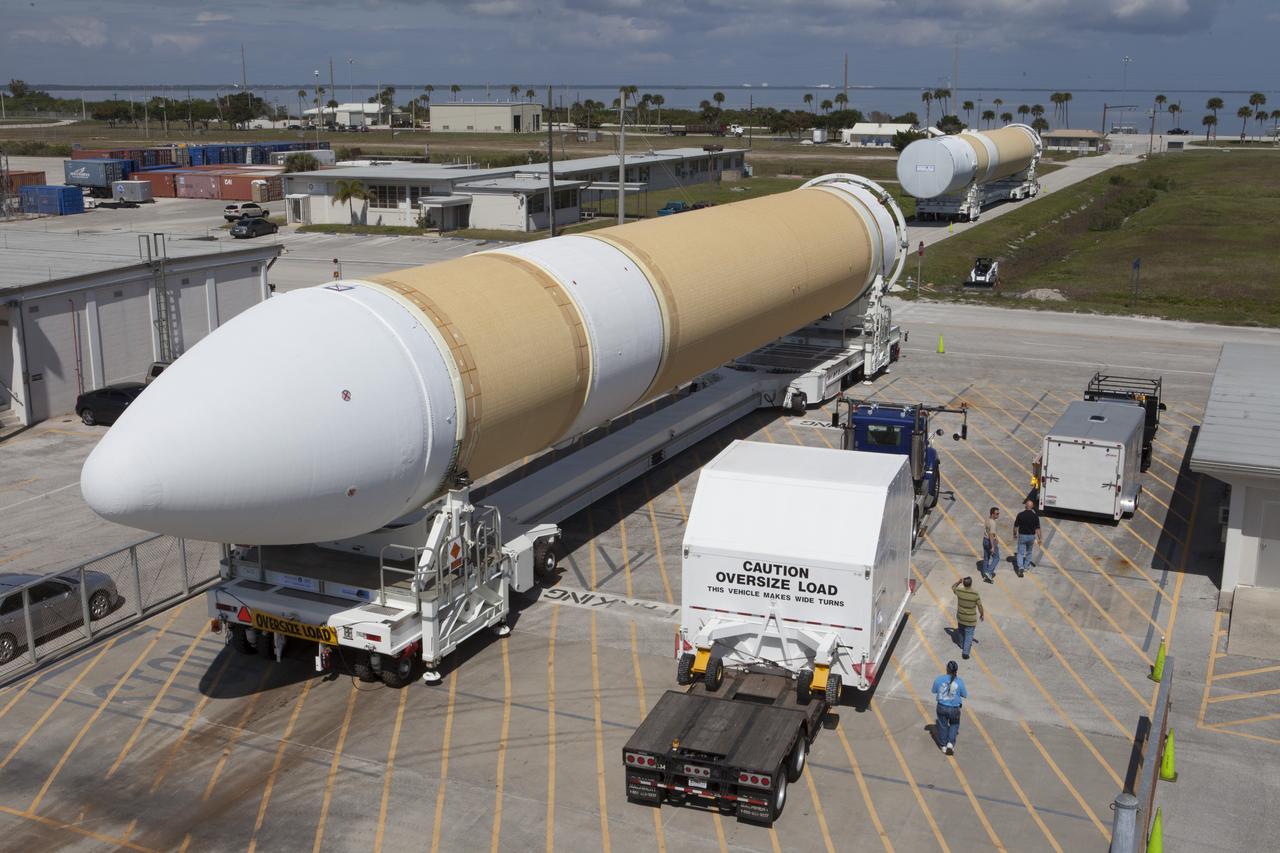
CAPE CANAVERAL, Fla. – Two of the three United Launch Alliance Delta IV heavy boosters for NASA’s upcoming Exploration Flight Test-1, or EFT-1, mission with the Orion spacecraft, arrived by barge at the U.S. Army Outpost wharf at Port Canaveral in Florida. The core booster and starboard booster have been offloaded and will be transported to the Horizontal Integration Facility, or HIF, at Space Launch Complex 37 on Cape Canaveral Air Force Station. The port booster and the upper stage are planned to be shipped to Cape Canaveral in April. At the HIF, all three boosters will be processed and checked out before being moved to the nearby launch pad and hoisted into position. During the EFT-1 mission, Orion will travel farther into space than any human spacecraft has gone in more than 40 years. The data gathered during the flight will influence design decisions, validate existing computer models and innovative new approaches to space systems development, as well as reduce overall mission risks and costs for later Orion flights. Liftoff of Orion on EFT-1 is planned for fall 2014. Photo credit: NASA/Kim Shiflett
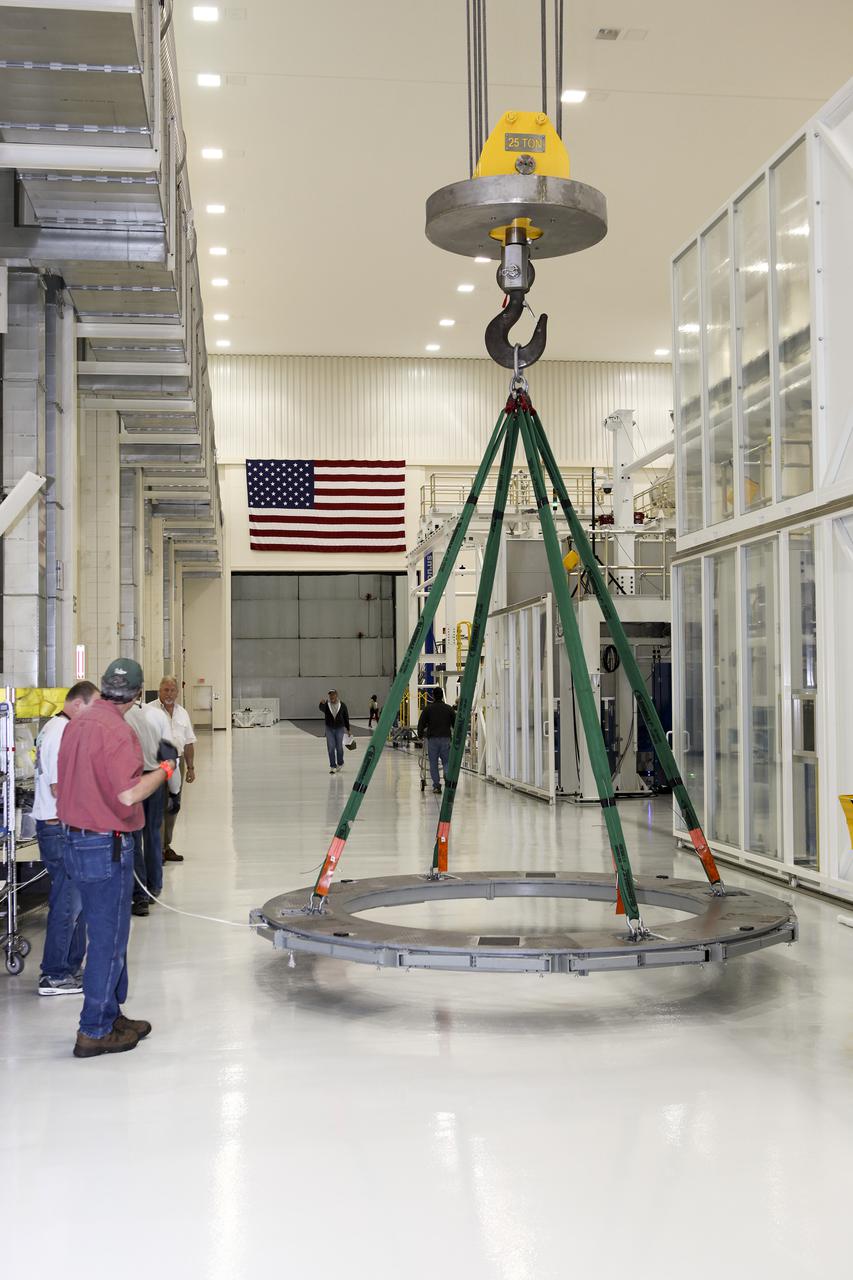
CAPE CANAVERAL, Fla. – Inside the Operations and Checkout Building high bay at NASA’s Kennedy Space Center in Florida, technicians monitor the progress as a processing tool is lowered to the floor after it was lifted away from an Orion service module work stand. Work continues to prepare for Exploration Flight Test 1, or EFT-1. Orion is the exploration spacecraft designed to carry crews to space beyond low Earth orbit. It will provide emergency abort capability, sustain the crew during the space travel and provide safe re-entry from deep space return velocities. Orion’s first unpiloted test flight is scheduled to launch in 2014 atop a United Launch Alliance Delta IV heavy rocket. A second uncrewed flight test is scheduled for 2017 on the Space Launch System rocket. For more information, visit http:__www.nasa.gov_orion. Photo credit: NASA_Charisse Nahser
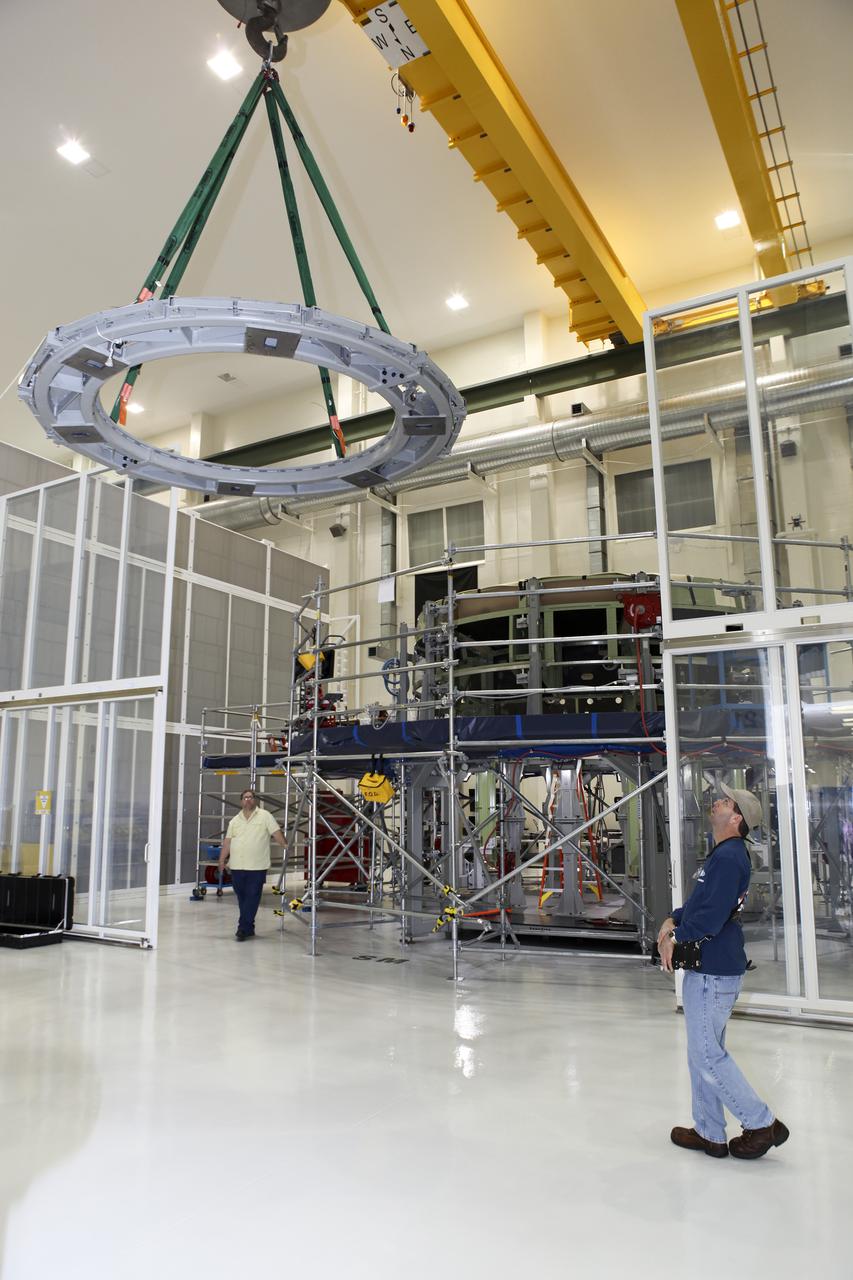
CAPE CANAVERAL, Fla. – Inside the Operations and Checkout Building high bay at NASA’s Kennedy Space Center in Florida, technicians monitor the progress as a processing tool is lifted away from an Orion service module work stand. Work continues to prepare for Exploration Flight Test 1, or EFT-1. Orion is the exploration spacecraft designed to carry crews to space beyond low Earth orbit. It will provide emergency abort capability, sustain the crew during the space travel and provide safe re-entry from deep space return velocities. Orion’s first unpiloted test flight is scheduled to launch in 2014 atop a United Launch Alliance Delta IV heavy rocket. A second uncrewed flight test is scheduled for 2017 on the Space Launch System rocket. For more information, visit http:__www.nasa.gov_orion. Photo credit: NASA_Charisse Nahser
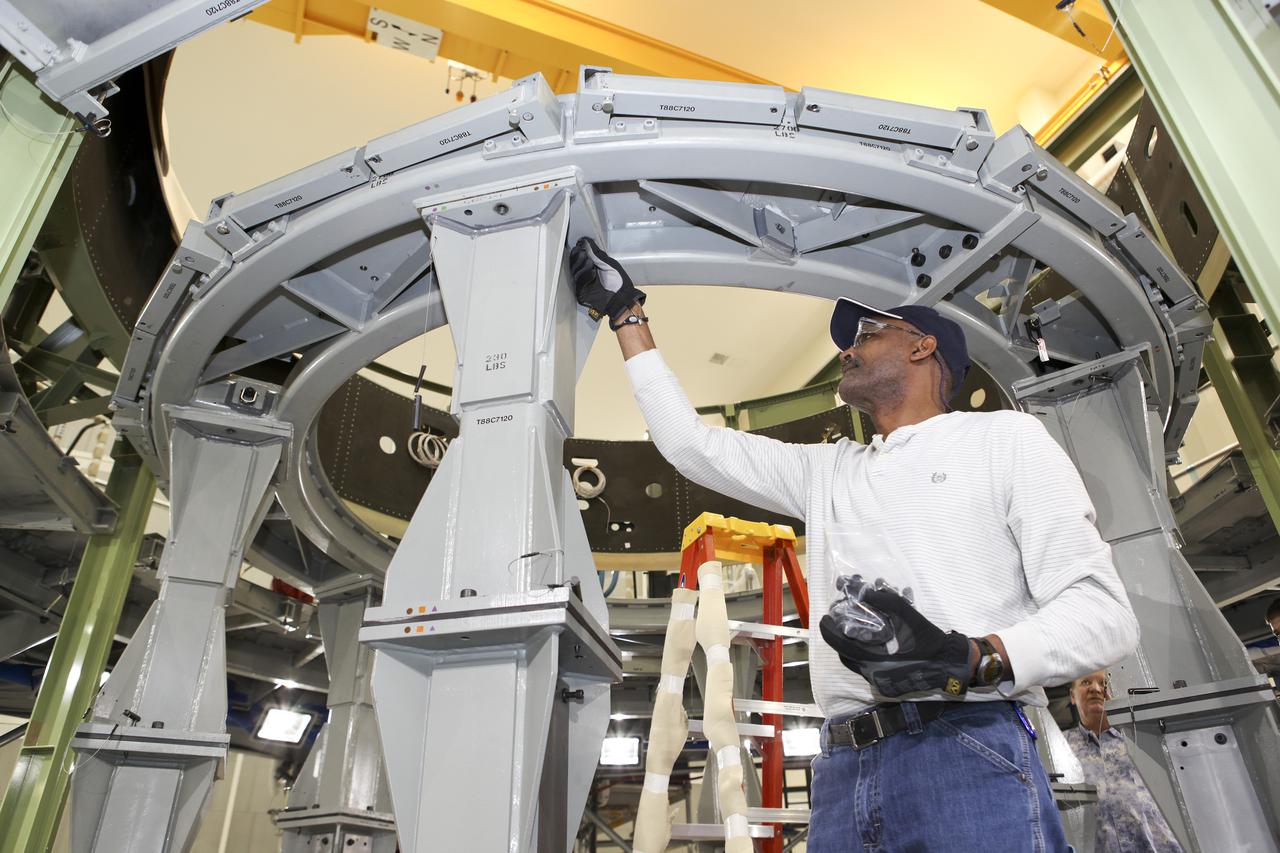
CAPE CANAVERAL, Fla. – Inside the Operations and Checkout Building high bay at NASA’s Kennedy Space Center in Florida, a technician prepares a processing tool for lifting out of an Orion service module work stand. Work continues to prepare for Exploration Flight Test 1, or EFT-1. Orion is the exploration spacecraft designed to carry crews to space beyond low Earth orbit. It will provide emergency abort capability, sustain the crew during the space travel and provide safe re-entry from deep space return velocities. Orion’s first unpiloted test flight is scheduled to launch in 2014 atop a United Launch Alliance Delta IV heavy rocket. A second uncrewed flight test is scheduled for 2017 on the Space Launch System rocket. For more information, visit http:__www.nasa.gov_orion. Photo credit: NASA_Charisse Nahser
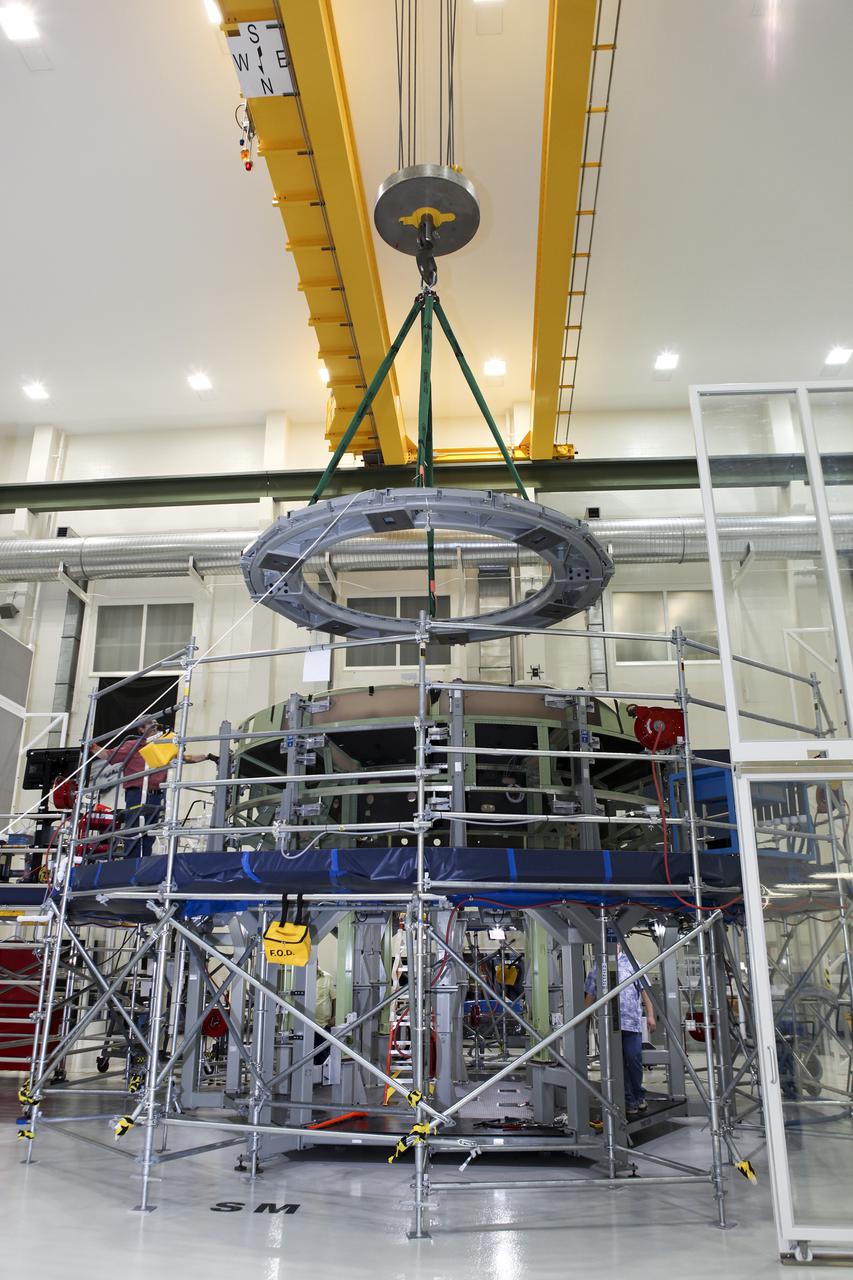
CAPE CANAVERAL, Fla. – Inside the Operations and Checkout Building high bay at NASA’s Kennedy Space Center in Florida, a processing tool is lifted out of an Orion service module work stand. Work continues to prepare for Exploration Flight Test 1, or EFT-1. Orion is the exploration spacecraft designed to carry crews to space beyond low Earth orbit. It will provide emergency abort capability, sustain the crew during the space travel and provide safe re-entry from deep space return velocities. Orion’s first unpiloted test flight is scheduled to launch in 2014 atop a United Launch Alliance Delta IV heavy rocket. A second uncrewed flight test is scheduled for 2017 on the Space Launch System rocket. For more information, visit http:__www.nasa.gov_orion. Photo credit: NASA_Charisse Nahser
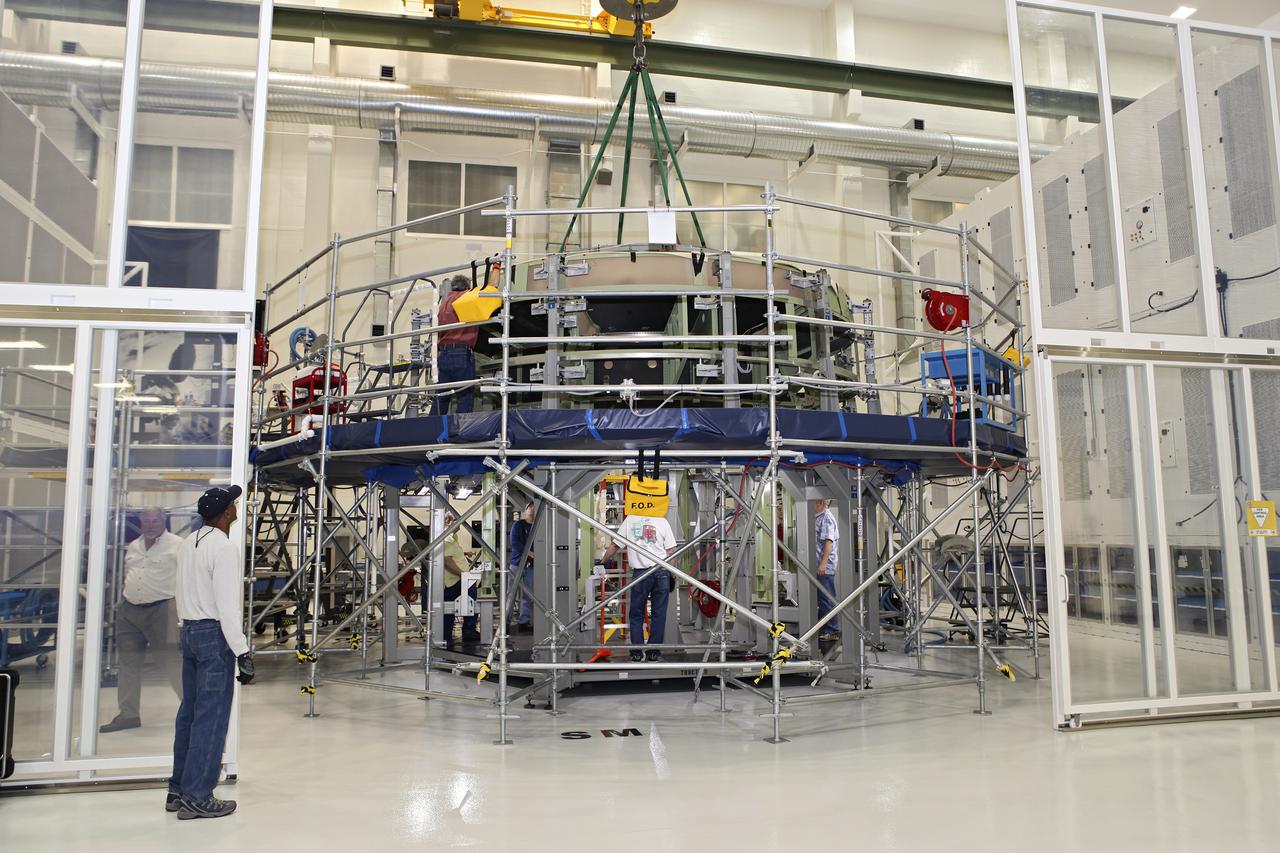
CAPE CANAVERAL, Fla. – Inside the Operations and Checkout Building high bay at NASA’s Kennedy Space Center in Florida, technicians monitor the progress as a processing tool is lifted out of an Orion service module work stand. Work continues to prepare for Exploration Flight Test 1, or EFT-1. Orion is the exploration spacecraft designed to carry crews to space beyond low Earth orbit. It will provide emergency abort capability, sustain the crew during the space travel and provide safe re-entry from deep space return velocities. Orion’s first unpiloted test flight is scheduled to launch in 2014 atop a United Launch Alliance Delta IV heavy rocket. A second uncrewed flight test is scheduled for 2017 on the Space Launch System rocket. For more information, visit http:__www.nasa.gov_orion. Photo credit: NASA_Charisse Nahser
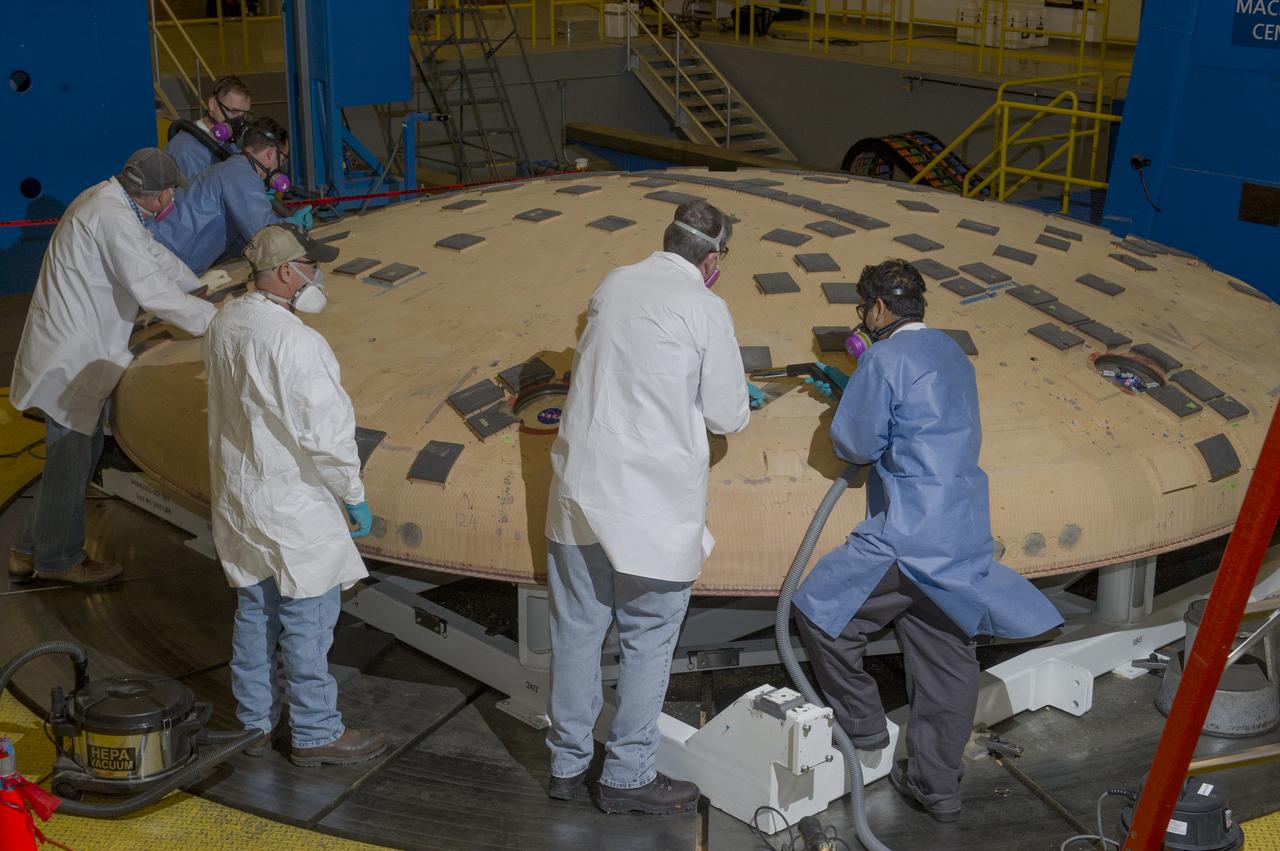
ENGINEERS FROM AMES RESEARCH CENTER AND MARSHALL SPACE FLIGHT CENTER REMOVE AVCOAT SEGMENTS FROM THE SURFACE OF THE ORION HEAT SHIELD, THE PROTECTIVE SHELL DESIGNED TO HELP THE NEXT GENERATION CREW MODULE WITHSTAND THE HEAT OF ATMOSPHERIC REENTRY. THE HEAT SHIELD FLEW TO SPACE DURING THE EFT-1 FULL SCALL FLIGHT TEST OF ORION IN DECEMBER 2014
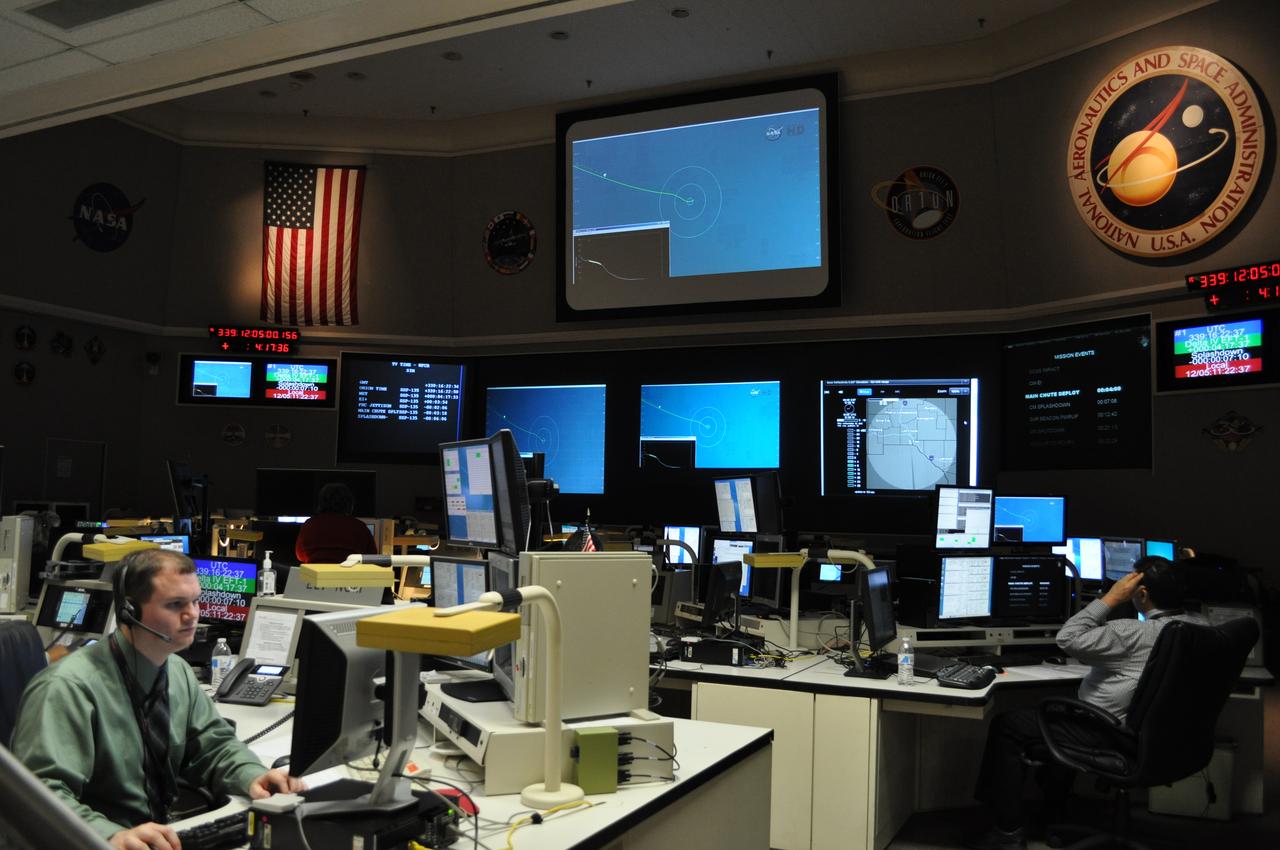
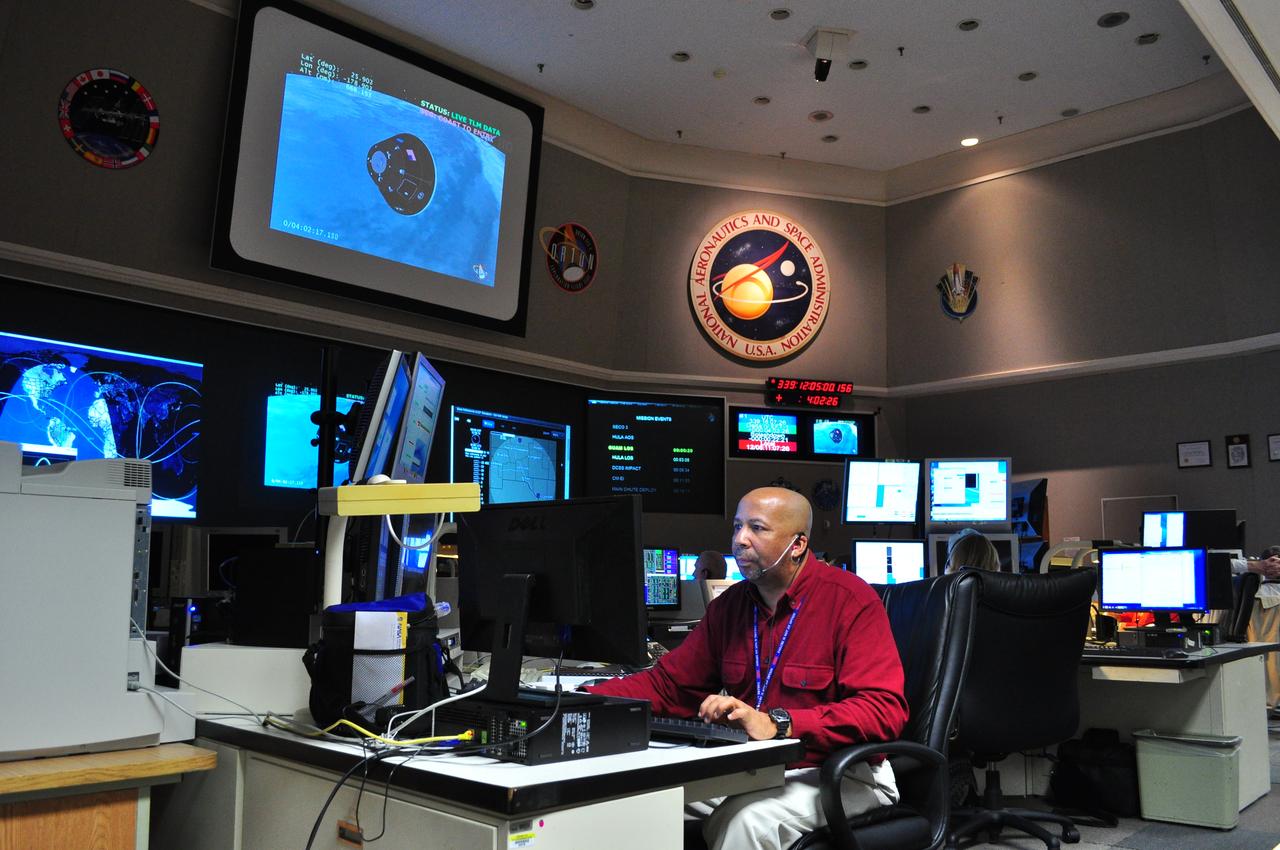
NASA's Goddard Space Flight Center in Greenbelt, Maryland, played a critical role in the test flight of the #Orion spacecraft on Dec. 5, 2014. Goddard's Networks Integration Center, pictured here, coordinated the communications support for both the Orion vehicle and the Delta IV rocket, ensuring complete communications coverage through NASA's Space Network and Tracking and Data Relay Satellite. The Orion spacecraft lifted off from Cape Canaveral Air Force Station's Space Launch Complex 37 in Florida at 7:05 a.m. EST. The Orion capsule splashed down about four and a half hours later, at 11:29 a.m. EST, about 600 miles off the coast of San Diego, California. While no humans were aboard Orion for this test flight, in the future, Orion will allow humans to travel deeper in to space than ever before, including an asteroid and Mars. Credit: NASA/Goddard/Amber Jacobson Credit: NASA/Goddard/Amber Jacobson <b><a href="http://www.nasa.gov/audience/formedia/features/MP_Photo_Guidelines.html" rel="nofollow">NASA image use policy.</a></b> <b><a href="http://www.nasa.gov/centers/goddard/home/index.html" rel="nofollow">NASA Goddard Space Flight Center</a></b> enables NASA’s mission through four scientific endeavors: Earth Science, Heliophysics, Solar System Exploration, and Astrophysics. Goddard plays a leading role in NASA’s accomplishments by contributing compelling scientific knowledge to advance the Agency’s mission. <b>Follow us on <a href="http://twitter.com/NASAGoddardPix" rel="nofollow">Twitter</a></b> <b>Like us on <a href="http://www.facebook.com/pages/Greenbelt-MD/NASA-Goddard/395013845897?ref=tsd" rel="nofollow">Facebook</a></b> <b>Find us on <a href="http://instagram.com/nasagoddard?vm=grid" rel="nofollow">Instagram</a></b>
NASA's Goddard Space Flight Center in Greenbelt, Maryland, played a critical role in the test flight of the #Orion spacecraft on Dec. 5, 2014. Goddard's Networks Integration Center, pictured here, coordinated the communications support for both the Orion vehicle and the Delta IV rocket, ensuring complete communications coverage through NASA's Space Network and Tracking and Data Relay Satellite. The Orion spacecraft lifted off from Cape Canaveral Air Force Station's Space Launch Complex 37 in Florida at 7:05 a.m. EST. The Orion capsule splashed down about four and a half hours later, at 11:29 a.m. EST, about 600 miles off the coast of San Diego, California. While no humans were aboard Orion for this test flight, in the future, Orion will allow humans to travel deeper in to space than ever before, including an asteroid and Mars. Credit: NASA/Goddard/Amber Jacobson Credit: NASA/Goddard/Amber Jacobson <b><a href="http://www.nasa.gov/audience/formedia/features/MP_Photo_Guidelines.html" rel="nofollow">NASA image use policy.</a></b> <b><a href="http://www.nasa.gov/centers/goddard/home/index.html" rel="nofollow">NASA Goddard Space Flight Center</a></b> enables NASA’s mission through four scientific endeavors: Earth Science, Heliophysics, Solar System Exploration, and Astrophysics. Goddard plays a leading role in NASA’s accomplishments by contributing compelling scientific knowledge to advance the Agency’s mission. <b>Follow us on <a href="http://twitter.com/NASAGoddardPix" rel="nofollow">Twitter</a></b> <b>Like us on <a href="http://www.facebook.com/pages/Greenbelt-MD/NASA-Goddard/395013845897?ref=tsd" rel="nofollow">Facebook</a></b> <b>Find us on <a href="http://instagram.com/nasagoddard?vm=grid" rel="nofollow">Instagram</a></b>
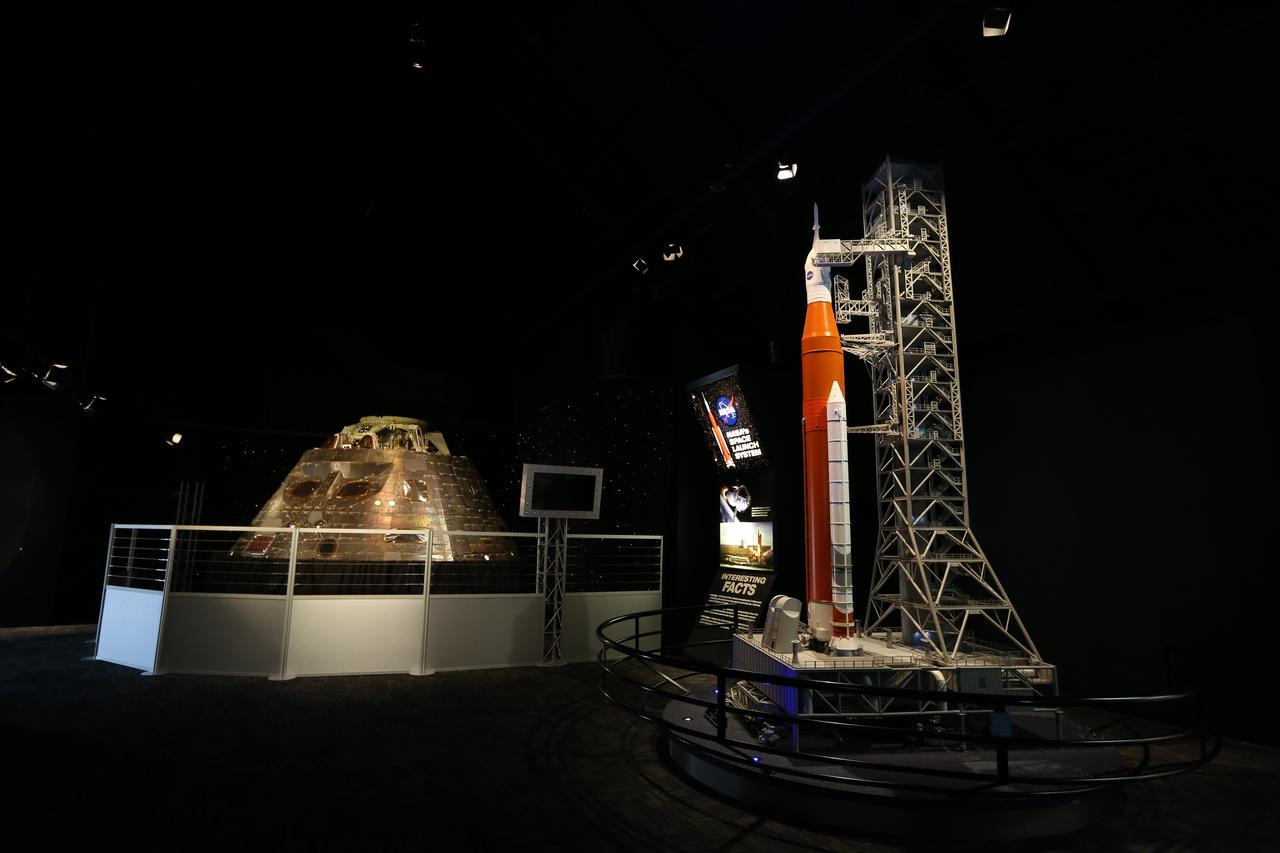
The Orion crew module from Exploration Flight Test 1 (EFT-1) is on display at nearby NASA Kennedy Space Center Visitor Complex in Florida. The crew module is part of the NASA Now exhibit in the IMAX Theater. Also in view is a scale model of NASA's Space Launch System rocket and Orion spacecraft on the mobile launcher. The Orion EFT-1 spacecraft launched atop a United Launch Alliance Delta IV rocket Dec. 5, 2014, from Space Launch Complex 37 at Cape Canaveral Air Force Station. The spacecraft built for humans traveled 3,604 miles above Earth and splashed down about 4.5 hours later in the Pacific Ocean.
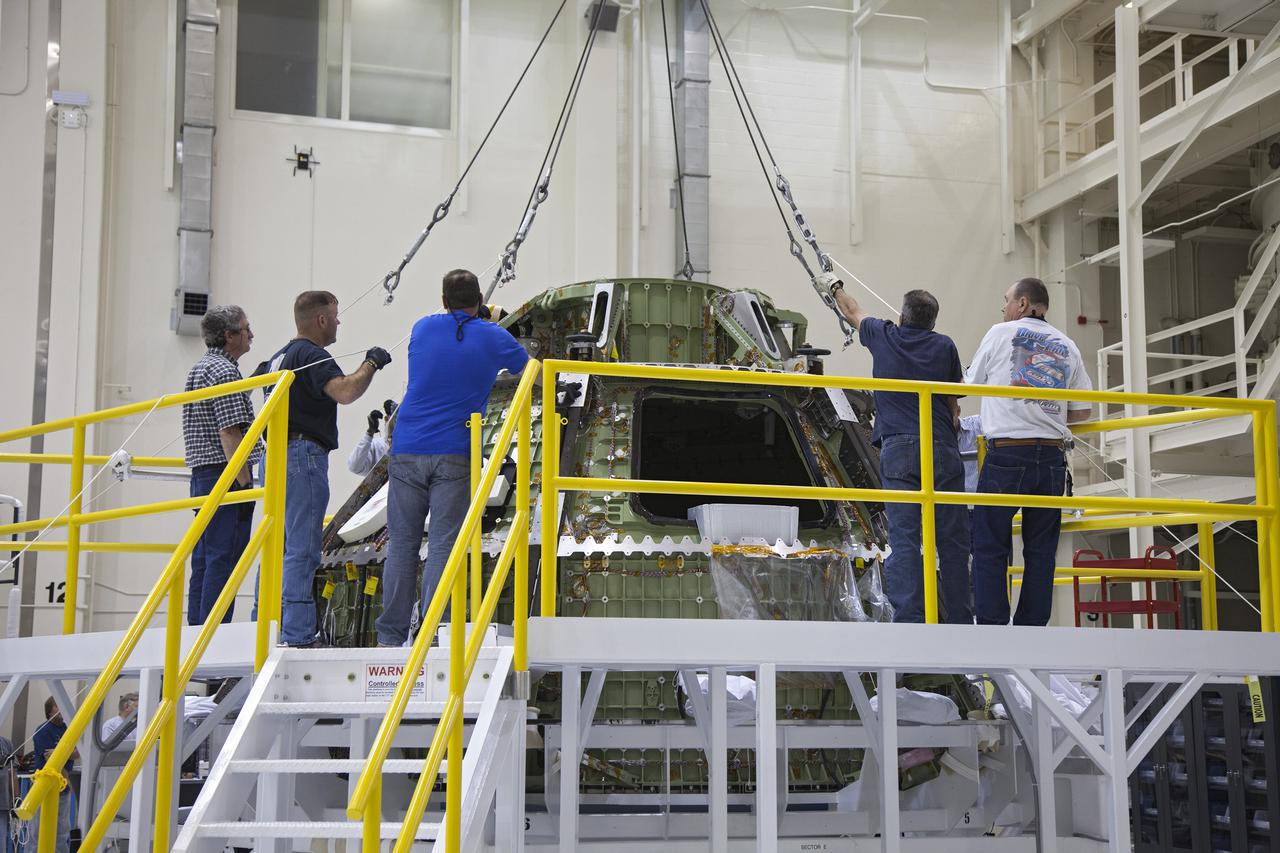
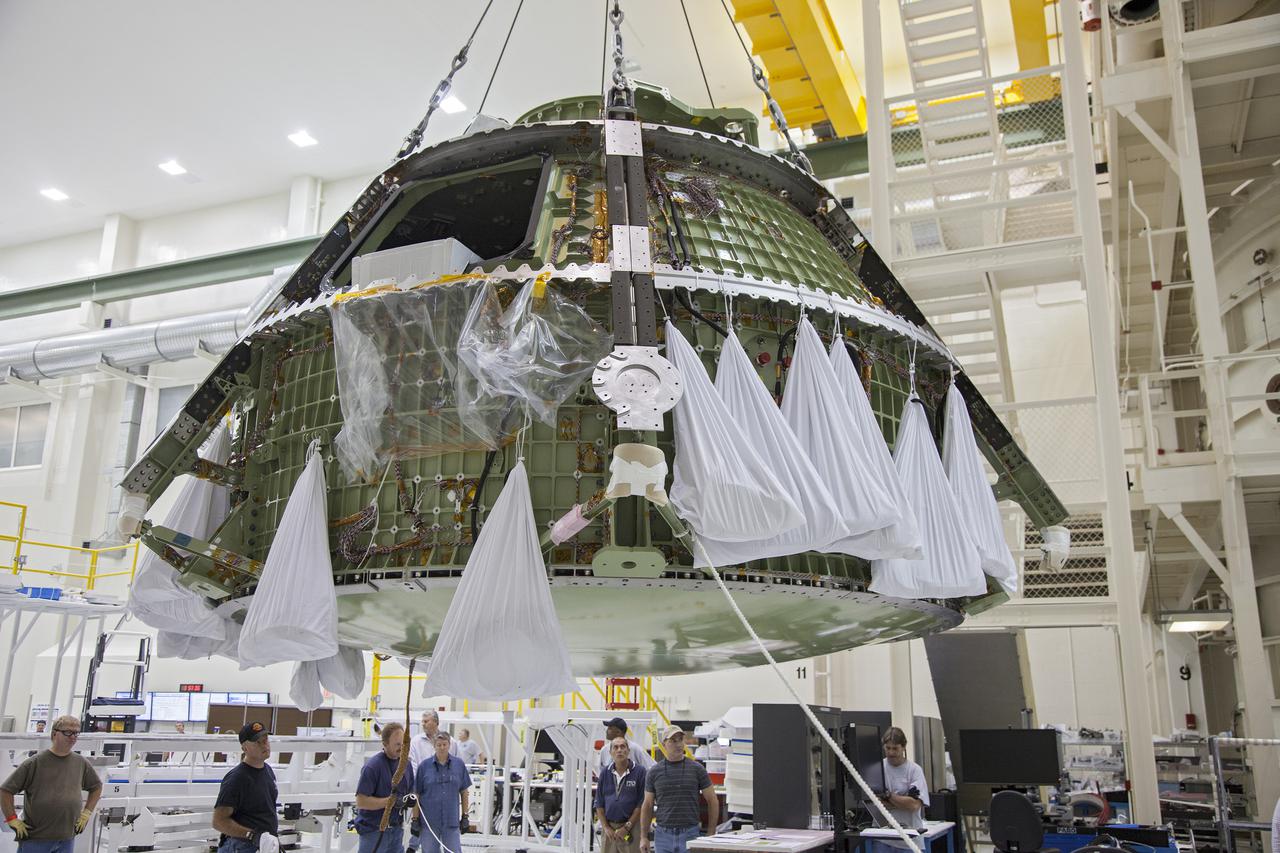
CAPE CANAVERAL, Fla. -- Inside the Operations and Checkout Building high bay at NASA’s Kennedy Space Center in Florida, workers prepare the Orion crew module for its move from a processing stand to a dolly. Orion is being prepared for Exploration Flight Test 1, or EFT-1. Orion is the exploration spacecraft designed to carry crews to space beyond low Earth orbit. It will provide emergency abort capability, sustain the crew during the space travel and provide safe re-entry from deep space return velocities. Orion’s first unpiloted test flight is scheduled to launch in 2014 atop a United Launch Alliance Delta IV heavy rocket. A second uncrewed flight test is scheduled for 2017 on the Space Launch System rocket. For more information, visit http:__www.nasa.gov_orion. Photo credit: NASA_Frankie Martin
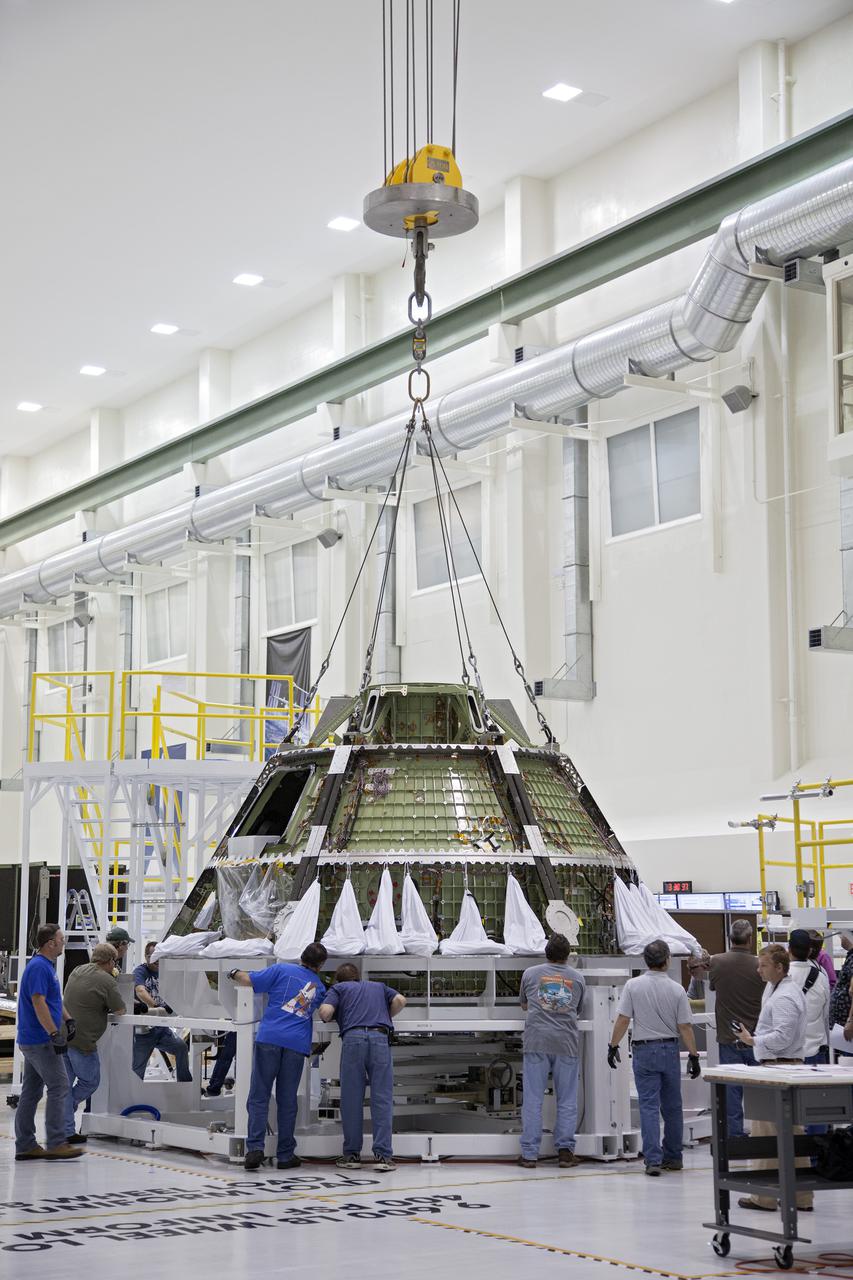
CAPE CANAVERAL, Fla. -- Inside the Operations and Checkout Building high bay at NASA’s Kennedy Space Center in Florida, workers monitor the progress as a crane begins to lift the Orion crew module from its processing stand and transfer it to a dolly. Orion is being prepared for Exploration Flight Test 1, or EFT-1. Orion is the exploration spacecraft designed to carry crews to space beyond low Earth orbit. It will provide emergency abort capability, sustain the crew during the space travel and provide safe re-entry from deep space return velocities. Orion’s first unpiloted test flight is scheduled to launch in 2014 atop a United Launch Alliance Delta IV heavy rocket. A second uncrewed flight test is scheduled for 2017 on the Space Launch System rocket. For more information, visit http:__www.nasa.gov_orion. Photo credit: NASA_Frankie Martin
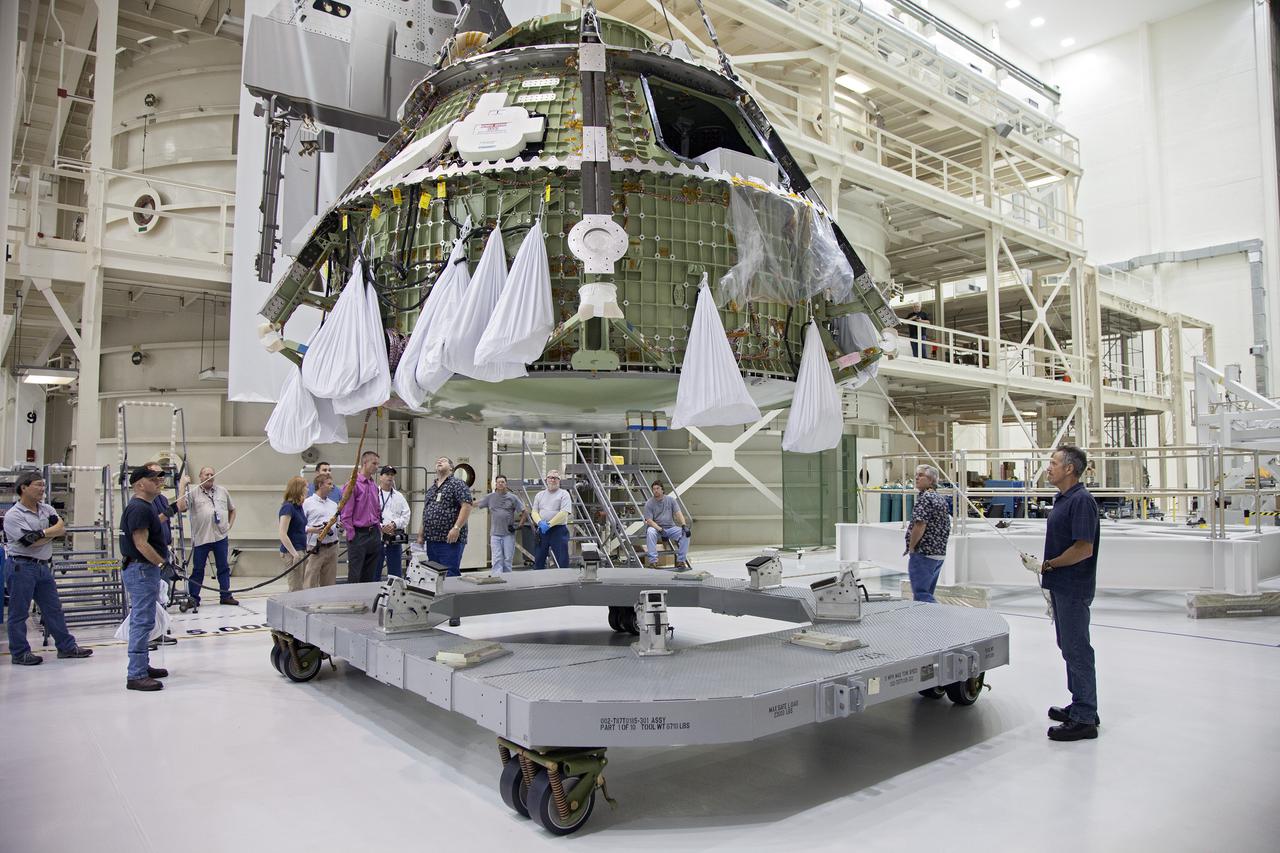
CAPE CANAVERAL, Fla. -- Inside the Operations and Checkout Building high bay at NASA’s Kennedy Space Center in Florida, workers monitor the progress as a crane lowers the Orion crew module onto a dolly. Orion is being prepared for Exploration Flight Test 1, or EFT-1. Orion is the exploration spacecraft designed to carry crews to space beyond low Earth orbit. It will provide emergency abort capability, sustain the crew during the space travel and provide safe re-entry from deep space return velocities. Orion’s first unpiloted test flight is scheduled to launch in 2014 atop a United Launch Alliance Delta IV heavy rocket. A second uncrewed flight test is scheduled for 2017 on the Space Launch System rocket. For more information, visit http:__www.nasa.gov_orion. Photo credit: NASA_Frankie Martin
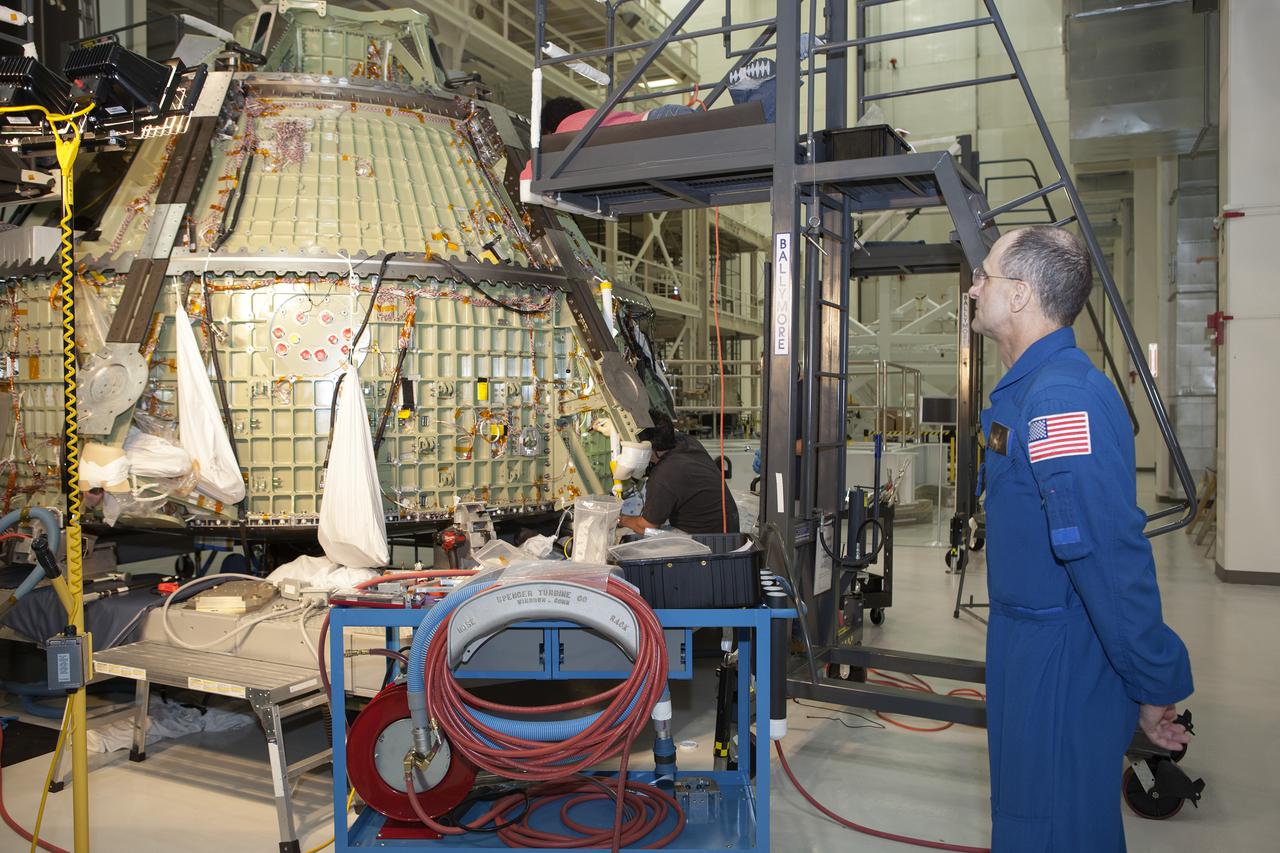
CAPE CANAVERAL, Fla. – Inside the Operations and Checkout Building high bay at NASA’s Kennedy Space Center in Florida, astronaut Don Pettit watches as technicians work on the Orion crew module. Orion is being prepared for Exploration Flight Test 1, or EFT-1. Orion is the exploration spacecraft designed to carry crews to space beyond low Earth orbit. It will provide emergency abort capability, sustain the crew during the space travel and provide safe re-entry from deep space return velocities. Orion’s first unpiloted test flight is scheduled to launch in 2014 atop a United Launch Alliance Delta IV heavy rocket. A second uncrewed flight test is scheduled for 2017 on the Space Launch System rocket. For more information, visit http:__www.nasa.gov_orion. Photo credit: NASA_Dimitri Gerondidakis
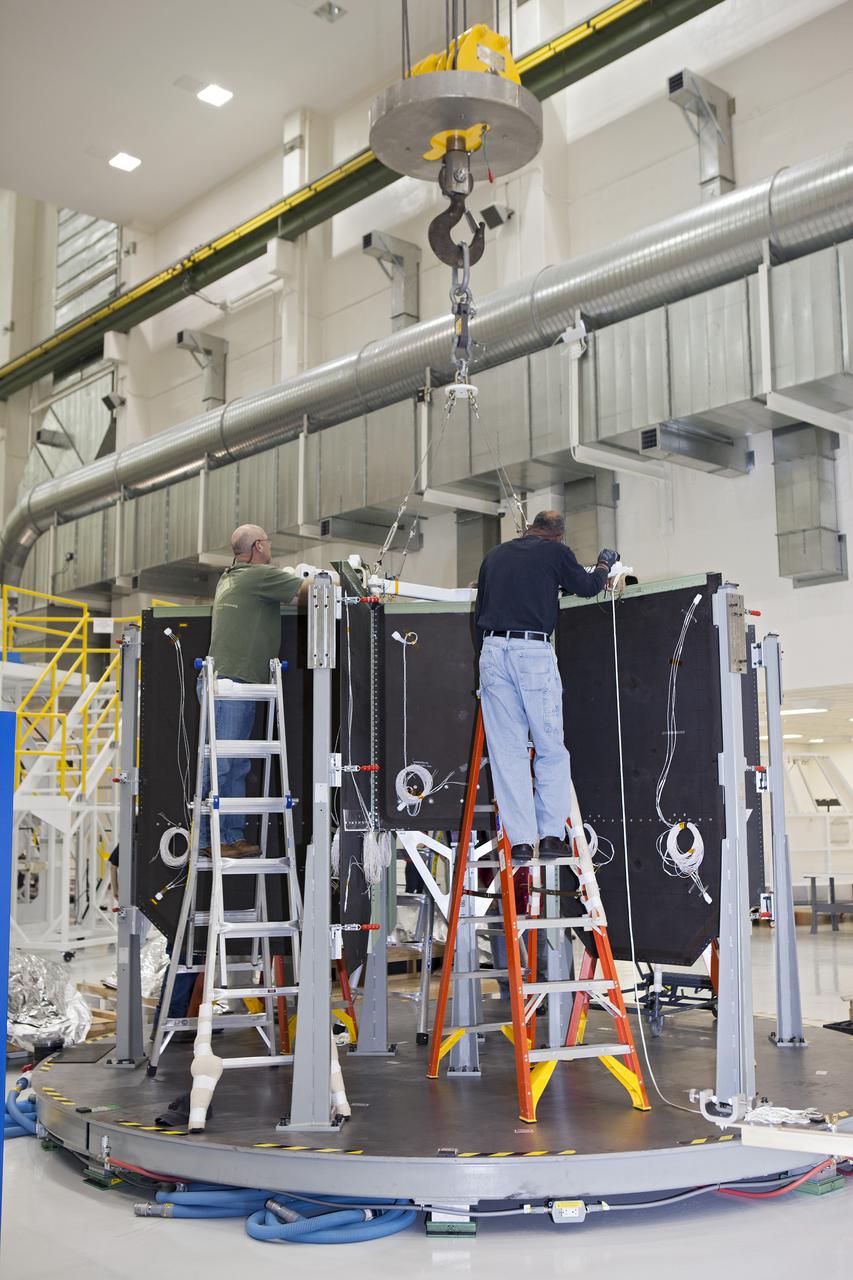
CAPE CANAVERAL, Fla. – Inside the Operations and Checkout Building high bay at NASA’s Kennedy Space Center in Florida, technicians attach a crane to the shear web assembly, or inner core, that will be inserted into the Orion service module. Orion is being prepared for Exploration Flight Test 1, or EFT-1. Orion is the exploration spacecraft designed to carry crews to space beyond low Earth orbit. It will provide emergency abort capability, sustain the crew during the space travel and provide safe re-entry from deep space return velocities. Orion’s first unpiloted test flight is scheduled to launch in 2014 atop a United Launch Alliance Delta IV heavy rocket. A second uncrewed flight test is scheduled for 2017 on the Space Launch System rocket. For more information, visit http:__www.nasa.gov_orion. Photo credit: NASA_Dimitri Gerondidakis
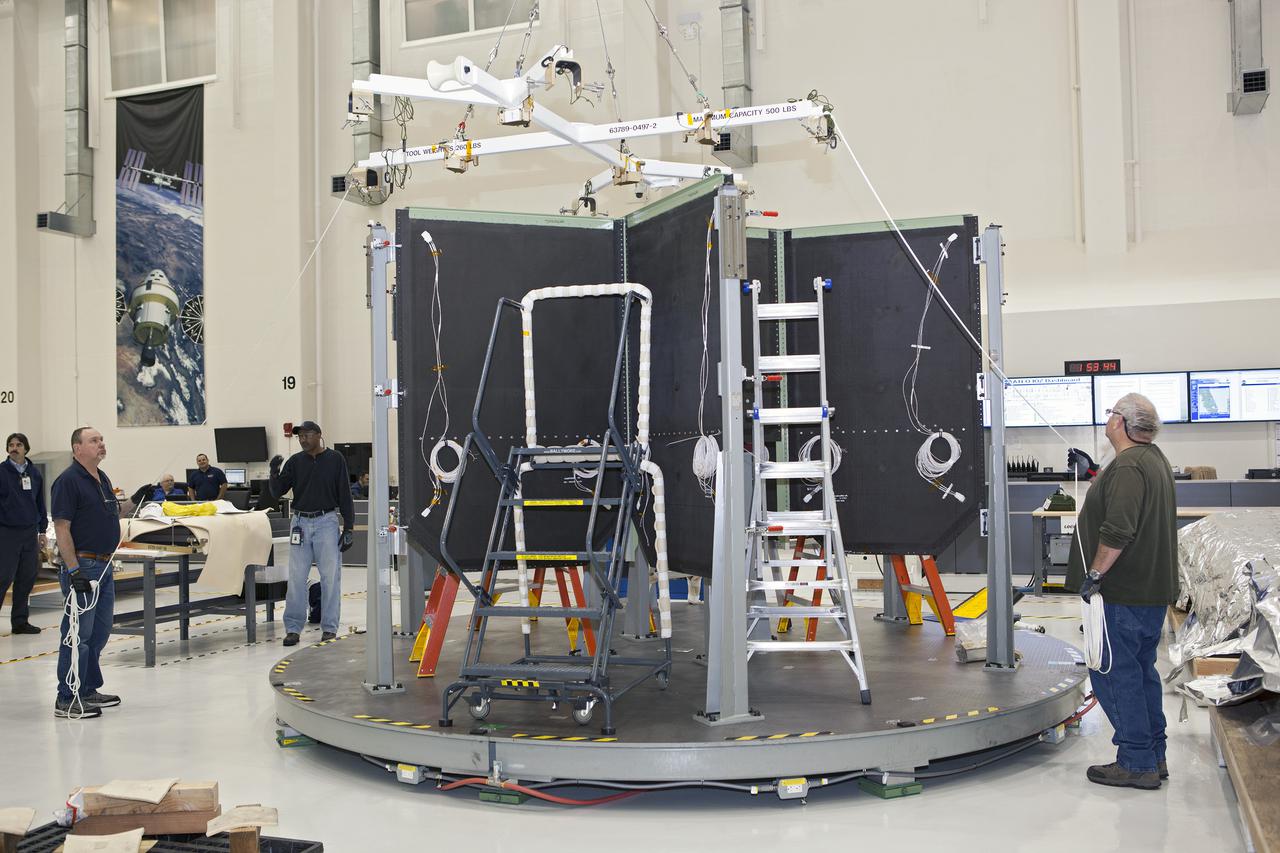
CAPE CANAVERAL, Fla. – Inside the Operations and Checkout Building high bay at NASA’s Kennedy Space Center in Florida, technicians prepare the shear web assembly, or inner core, that will be inserted into the Orion service module. Orion is being prepared for Exploration Flight Test 1, or EFT-1. Orion is the exploration spacecraft designed to carry crews to space beyond low Earth orbit. It will provide emergency abort capability, sustain the crew during the space travel and provide safe re-entry from deep space return velocities. Orion’s first unpiloted test flight is scheduled to launch in 2014 atop a United Launch Alliance Delta IV heavy rocket. A second uncrewed flight test is scheduled for 2017 on the Space Launch System rocket. For more information, visit http:__www.nasa.gov_orion. Photo credit: NASA_Dimitri Gerondidakis
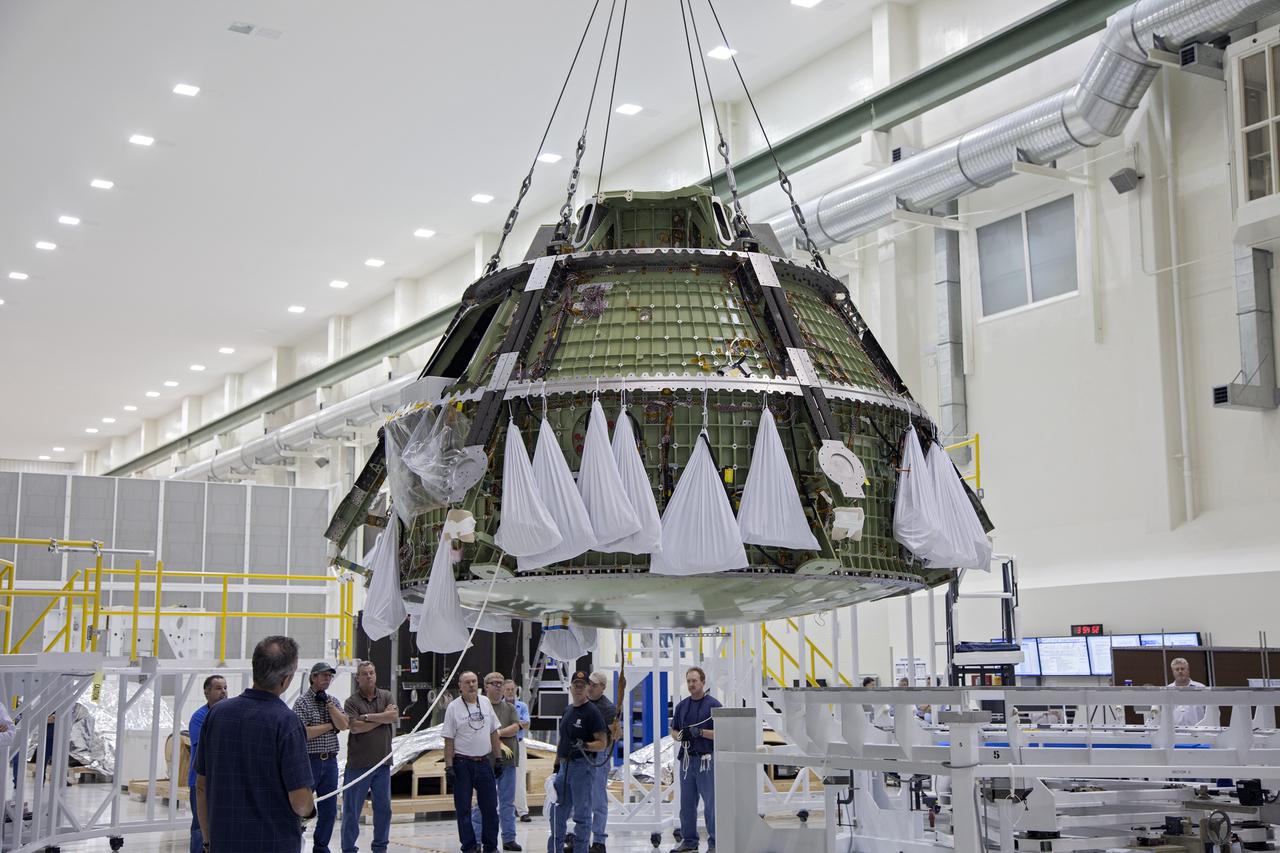
CAPE CANAVERAL, Fla. --Inside the Operations and Checkout Building high bay at NASA’s Kennedy Space Center in Florida, workers monitor the progress as a crane lifts the Orion crew module from its processing stand for transfer to a dolly. Orion is being prepared for Exploration Flight Test 1, or EFT-1. Orion is the exploration spacecraft designed to carry crews to space beyond low Earth orbit. It will provide emergency abort capability, sustain the crew during the space travel and provide safe re-entry from deep space return velocities. Orion’s first unpiloted test flight is scheduled to launch in 2014 atop a United Launch Alliance Delta IV heavy rocket. A second uncrewed flight test is scheduled for 2017 on the Space Launch System rocket. For more information, visit http:__www.nasa.gov_orion. Photo credit: NASA_Frankie Martin
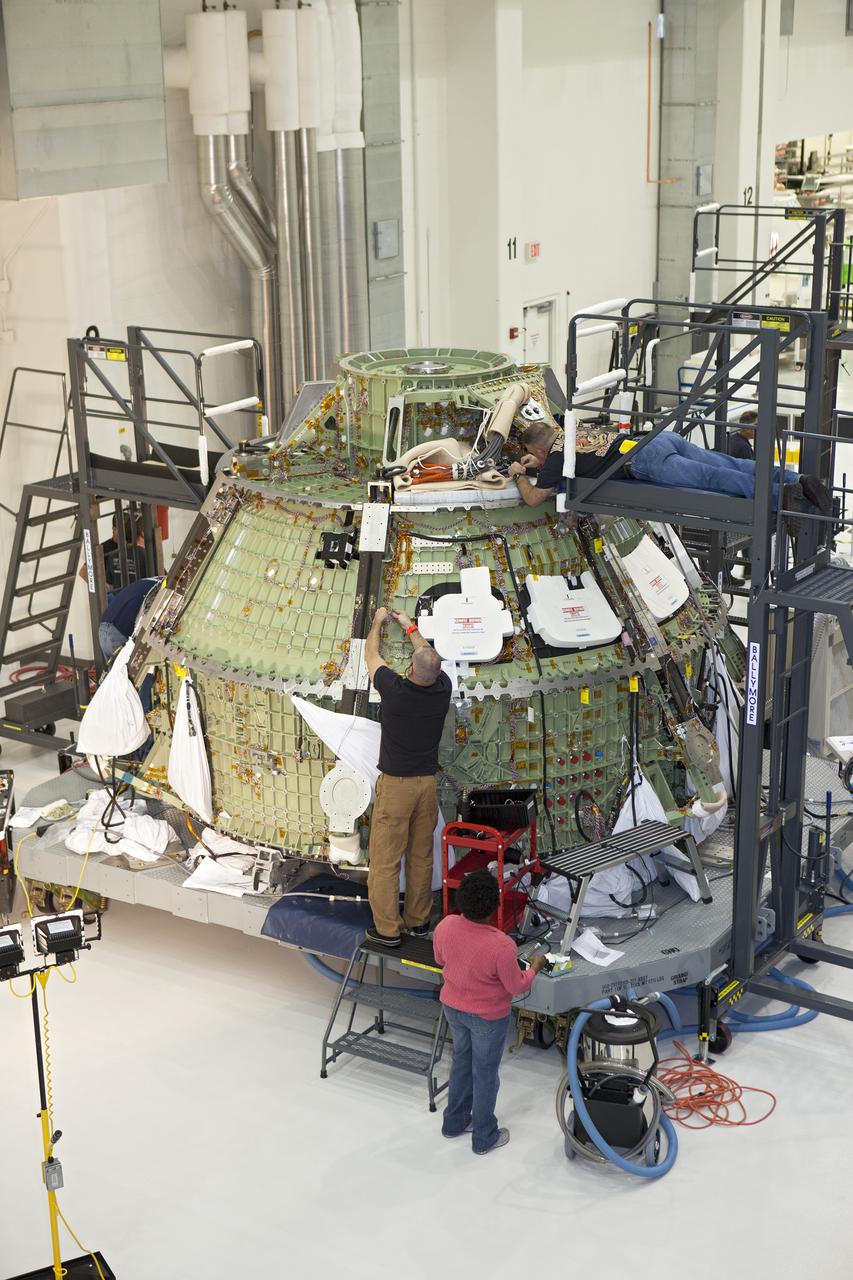
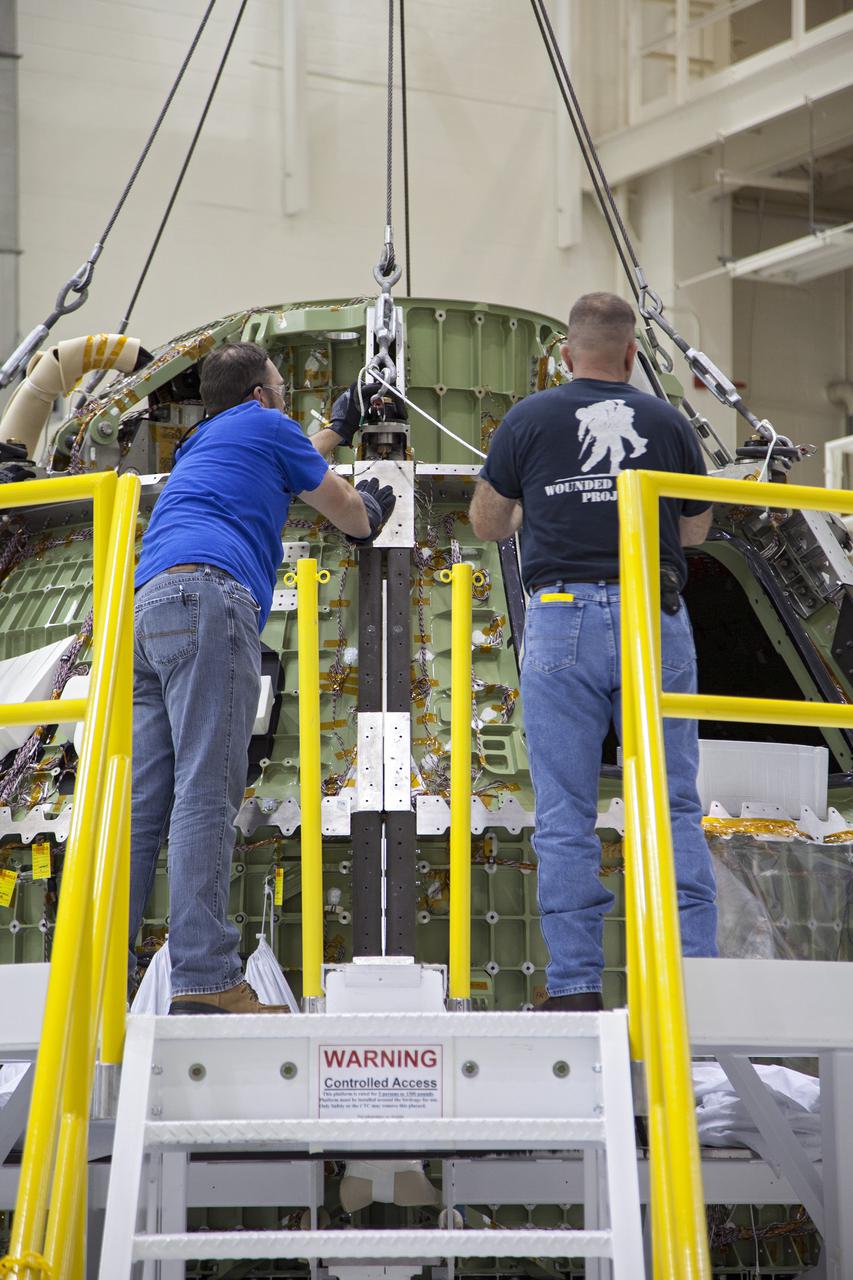
CAPE CANAVERAL, Fla. – Inside the Operations and Checkout Building high bay at NASA’s Kennedy Space Center in Florida, technicians work on the Orion crew module. Orion is being prepared for Exploration Flight Test 1, or EFT-1. Orion is the exploration spacecraft designed to carry crews to space beyond low Earth orbit. It will provide emergency abort capability, sustain the crew during the space travel and provide safe re-entry from deep space return velocities. Orion’s first unpiloted test flight is scheduled to launch in 2014 atop a United Launch Alliance Delta IV heavy rocket. A second uncrewed flight test is scheduled for 2017 on the Space Launch System rocket. For more information, visit http:__www.nasa.gov_orion. Photo credit: NASA_Dimitri Gerondidakis
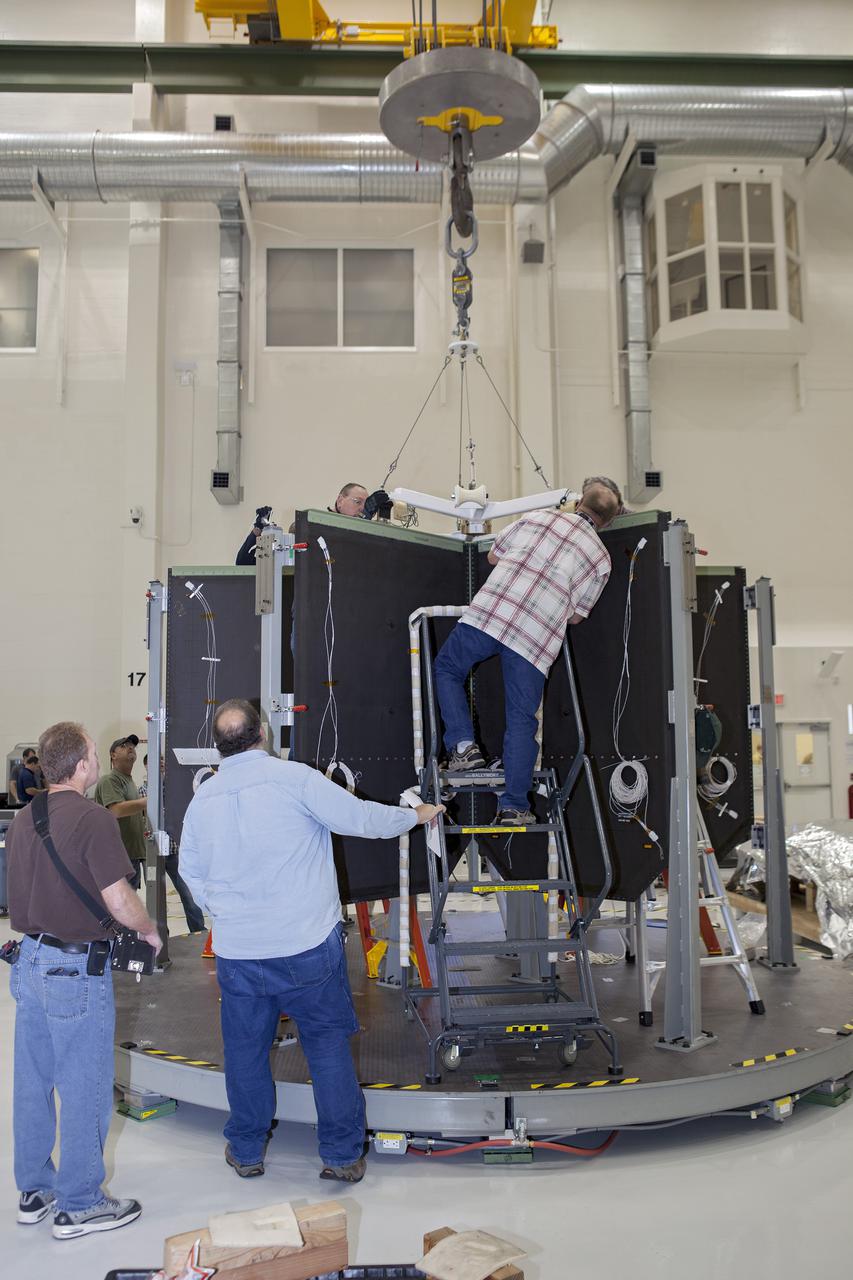
CAPE CANAVERAL, Fla. – Inside the Operations and Checkout Building high bay at NASA’s Kennedy Space Center in Florida, technicians attach a crane to the shear web assembly, or inner core, that will be inserted into the Orion service module. Orion is being prepared for Exploration Flight Test 1, or EFT-1. Orion is the exploration spacecraft designed to carry crews to space beyond low Earth orbit. It will provide emergency abort capability, sustain the crew during the space travel and provide safe re-entry from deep space return velocities. Orion’s first unpiloted test flight is scheduled to launch in 2014 atop a United Launch Alliance Delta IV heavy rocket. A second uncrewed flight test is scheduled for 2017 on the Space Launch System rocket. For more information, visit http:__www.nasa.gov_orion. Photo credit: NASA_Dimitri Gerondidakis
CAPE CANAVERAL, Fla. -- Inside the Operations and Checkout Building high bay at NASA’s Kennedy Space Center in Florida, workers prepare the Orion crew module for its move from a processing stand to a dolly. Orion is being prepared for Exploration Flight Test 1, or EFT-1. Orion is the exploration spacecraft designed to carry crews to space beyond low Earth orbit. It will provide emergency abort capability, sustain the crew during the space travel and provide safe re-entry from deep space return velocities. Orion’s first unpiloted test flight is scheduled to launch in 2014 atop a United Launch Alliance Delta IV heavy rocket. A second uncrewed flight test is scheduled for 2017 on the Space Launch System rocket. For more information, visit http:__www.nasa.gov_orion. Photo credit: NASA_Frankie Martin
CAPE CANAVERAL, Fla. --Inside the Operations and Checkout Building high bay at NASA’s Kennedy Space Center in Florida, workers monitor the progress as a crane lifts the Orion crew module from its processing stand for transfer to a dolly. Orion is being prepared for Exploration Flight Test 1, or EFT-1. Orion is the exploration spacecraft designed to carry crews to space beyond low Earth orbit. It will provide emergency abort capability, sustain the crew during the space travel and provide safe re-entry from deep space return velocities. Orion’s first unpiloted test flight is scheduled to launch in 2014 atop a United Launch Alliance Delta IV heavy rocket. A second uncrewed flight test is scheduled for 2017 on the Space Launch System rocket. For more information, visit http:__www.nasa.gov_orion. Photo credit: NASA_Frankie Martin
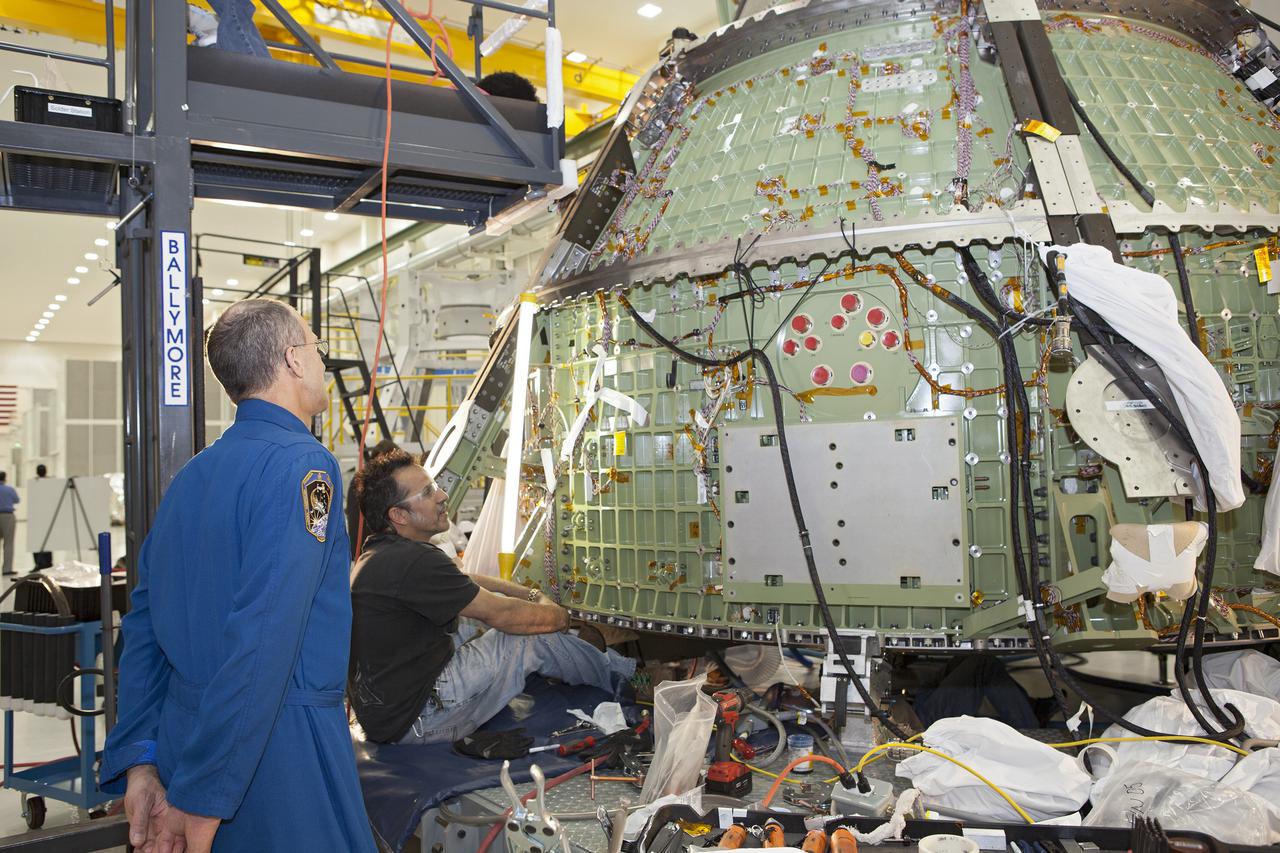
CAPE CANAVERAL, Fla. – Inside the Operations and Checkout Building high bay at NASA’s Kennedy Space Center in Florida, astronaut Don Pettit watches as a technician works on the Orion crew module. Orion is being prepared for Exploration Flight Test 1, or EFT-1. Orion is the exploration spacecraft designed to carry crews to space beyond low Earth orbit. It will provide emergency abort capability, sustain the crew during the space travel and provide safe re-entry from deep space return velocities. Orion’s first unpiloted test flight is scheduled to launch in 2014 atop a United Launch Alliance Delta IV heavy rocket. A second uncrewed flight test is scheduled for 2017 on the Space Launch System rocket. For more information, visit http:__www.nasa.gov_orion. Photo credit: NASA_Dimitri Gerondidakis
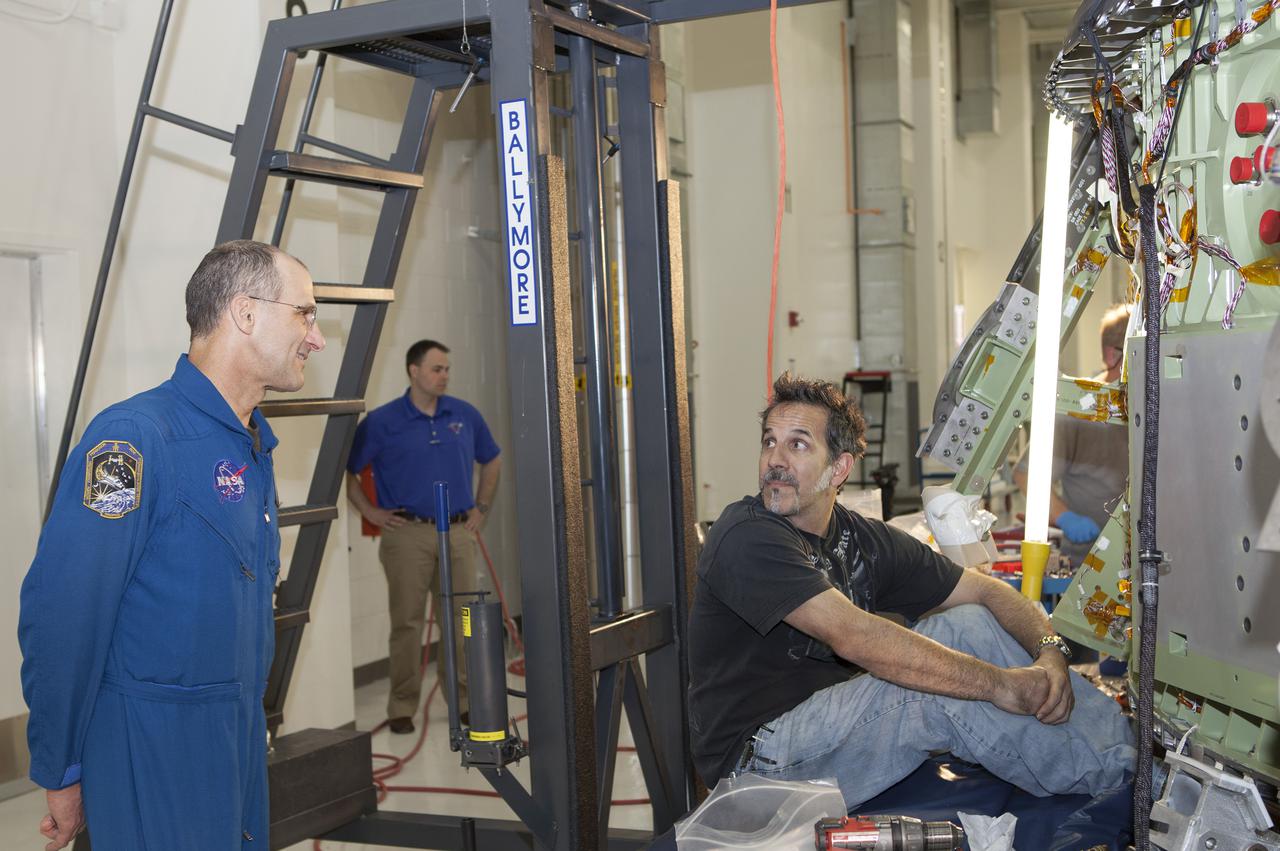
CAPE CANAVERAL, Fla. – Inside the Operations and Checkout Building high bay at NASA’s Kennedy Space Center in Florida, astronaut Don Pettit speaks with a technician who is working on the Orion crew module. Orion is being prepared for Exploration Flight Test 1, or EFT-1. Orion is the exploration spacecraft designed to carry crews to space beyond low Earth orbit. It will provide emergency abort capability, sustain the crew during the space travel and provide safe re-entry from deep space return velocities. Orion’s first unpiloted test flight is scheduled to launch in 2014 atop a United Launch Alliance Delta IV heavy rocket. A second uncrewed flight test is scheduled for 2017 on the Space Launch System rocket. For more information, visit http:__www.nasa.gov_orion. Photo credit: NASA_Dimitri Gerondidakis
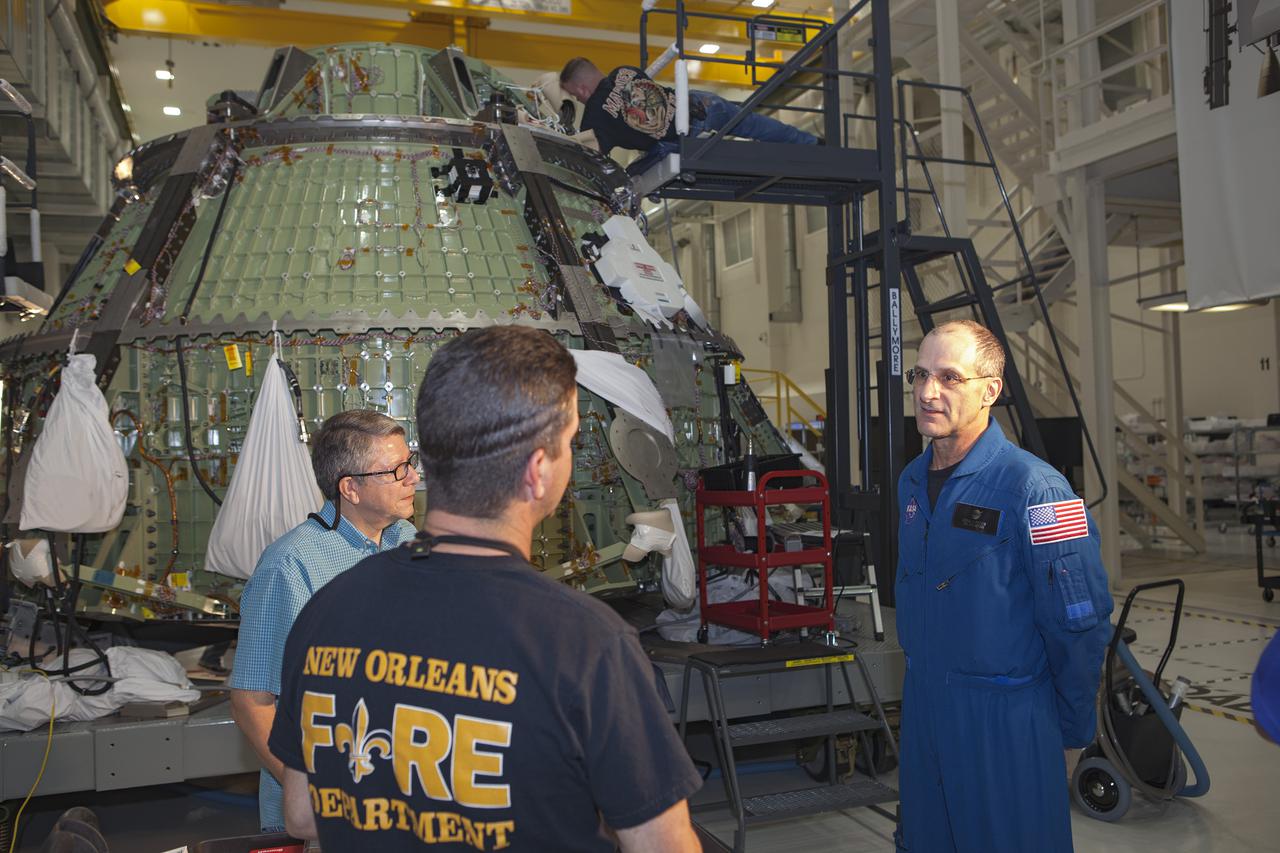
CAPE CANAVERAL, Fla. – Inside the Operations and Checkout Building high bay at NASA’s Kennedy Space Center in Florida, astronaut Don Pettit speaks with technicians about the work they are doing to process the Orion spacecraft. Orion is being prepared for Exploration Flight Test 1, or EFT-1. Orion is the exploration spacecraft designed to carry crews to space beyond low Earth orbit. It will provide emergency abort capability, sustain the crew during the space travel and provide safe re-entry from deep space return velocities. Orion’s first unpiloted test flight is scheduled to launch in 2014 atop a United Launch Alliance Delta IV heavy rocket. A second uncrewed flight test is scheduled for 2017 on the Space Launch System rocket. For more information, visit http:__www.nasa.gov_orion. Photo credit: NASA_Dimitri Gerondidakis
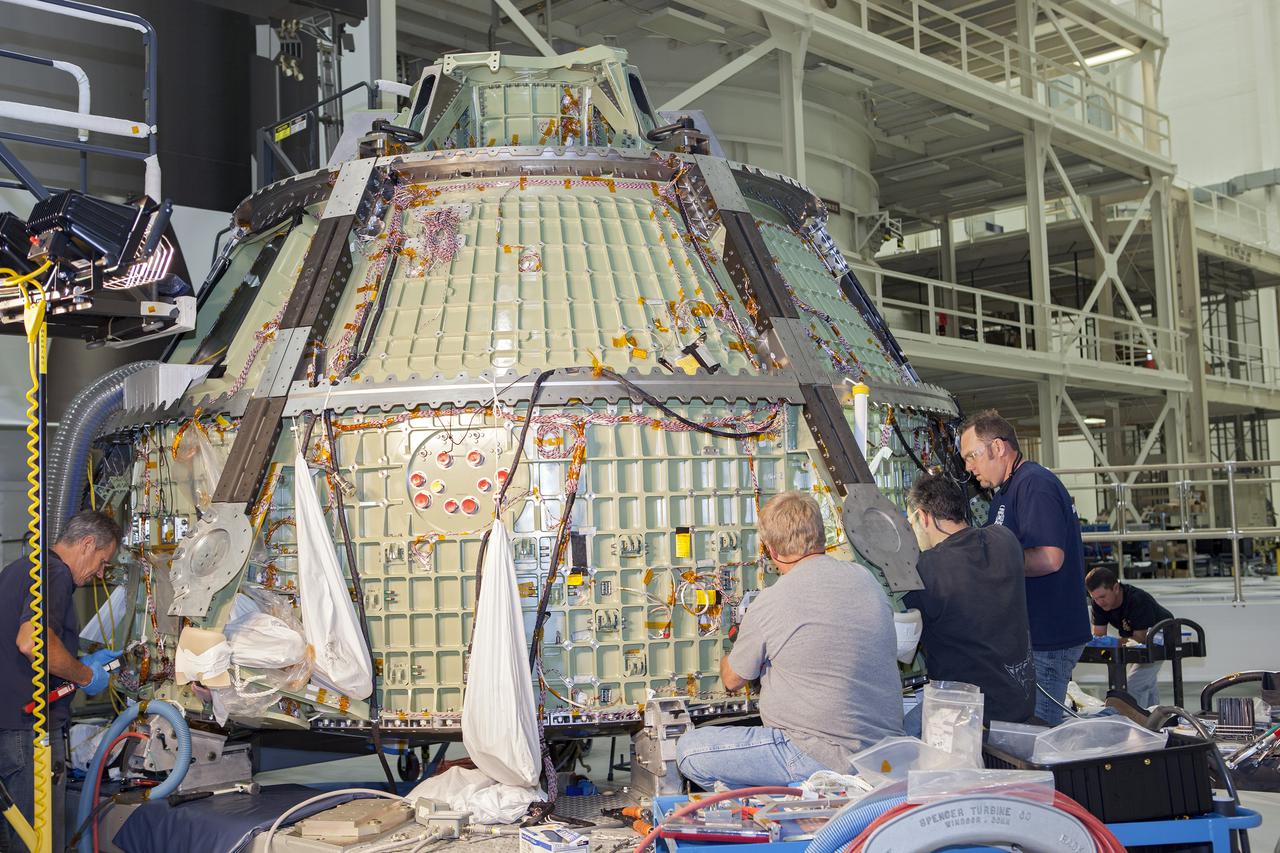
CAPE CANAVERAL, Fla. – Inside the Operations and Checkout Building high bay at NASA’s Kennedy Space Center in Florida, technicians work on the Orion crew module. Orion is being prepared for Exploration Flight Test 1, or EFT-1. Orion is the exploration spacecraft designed to carry crews to space beyond low Earth orbit. It will provide emergency abort capability, sustain the crew during the space travel and provide safe re-entry from deep space return velocities. Orion’s first unpiloted test flight is scheduled to launch in 2014 atop a United Launch Alliance Delta IV heavy rocket. A second uncrewed flight test is scheduled for 2017 on the Space Launch System rocket. For more information, visit http:__www.nasa.gov_orion. Photo credit: NASA_Dimitri Gerondidakis

CAPE CANAVERAL, Fla. -- Inside the Operations and Checkout Building high bay at NASA’s Kennedy Space Center in Florida, workers prepare the Orion crew module for its move from a processing stand to a dolly. Orion is being prepared for Exploration Flight Test 1, or EFT-1. Orion is the exploration spacecraft designed to carry crews to space beyond low Earth orbit. It will provide emergency abort capability, sustain the crew during the space travel and provide safe re-entry from deep space return velocities. Orion’s first unpiloted test flight is scheduled to launch in 2014 atop a United Launch Alliance Delta IV heavy rocket. A second uncrewed flight test is scheduled for 2017 on the Space Launch System rocket. For more information, visit http:__www.nasa.gov_orion. Photo credit: NASA_Frankie Martin
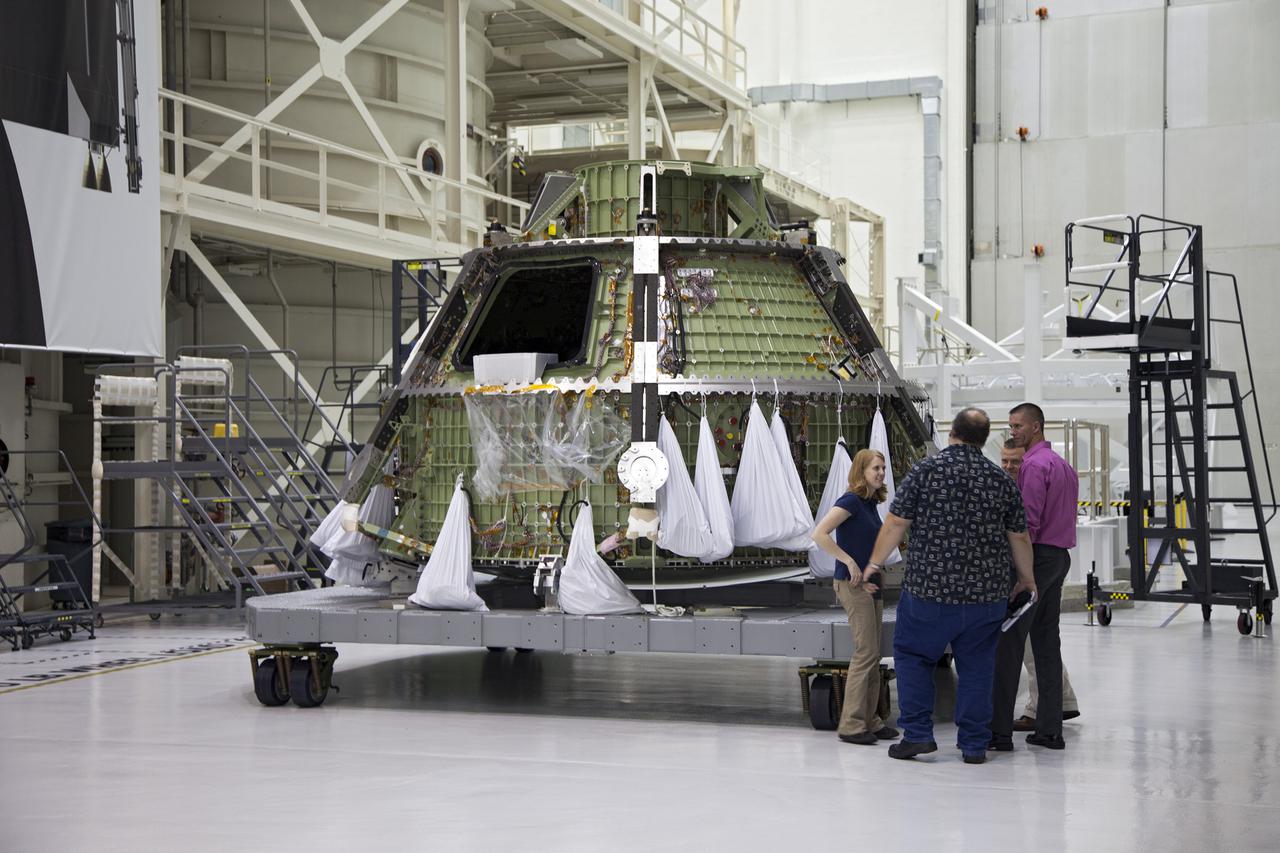
CAPE CANAVERAL, Fla. -- Inside the Operations and Checkout Building high bay at NASA’s Kennedy Space Center in Florida, a crane has lowered the Orion crew module onto a dolly. Orion is being prepared for Exploration Flight Test 1, or EFT-1. Orion is the exploration spacecraft designed to carry crews to space beyond low Earth orbit. It will provide emergency abort capability, sustain the crew during the space travel and provide safe re-entry from deep space return velocities. Orion’s first unpiloted test flight is scheduled to launch in 2014 atop a United Launch Alliance Delta IV heavy rocket. A second uncrewed flight test is scheduled for 2017 on the Space Launch System rocket. For more information, visit http:__www.nasa.gov_orion. Photo credit: NASA_Frankie Martin
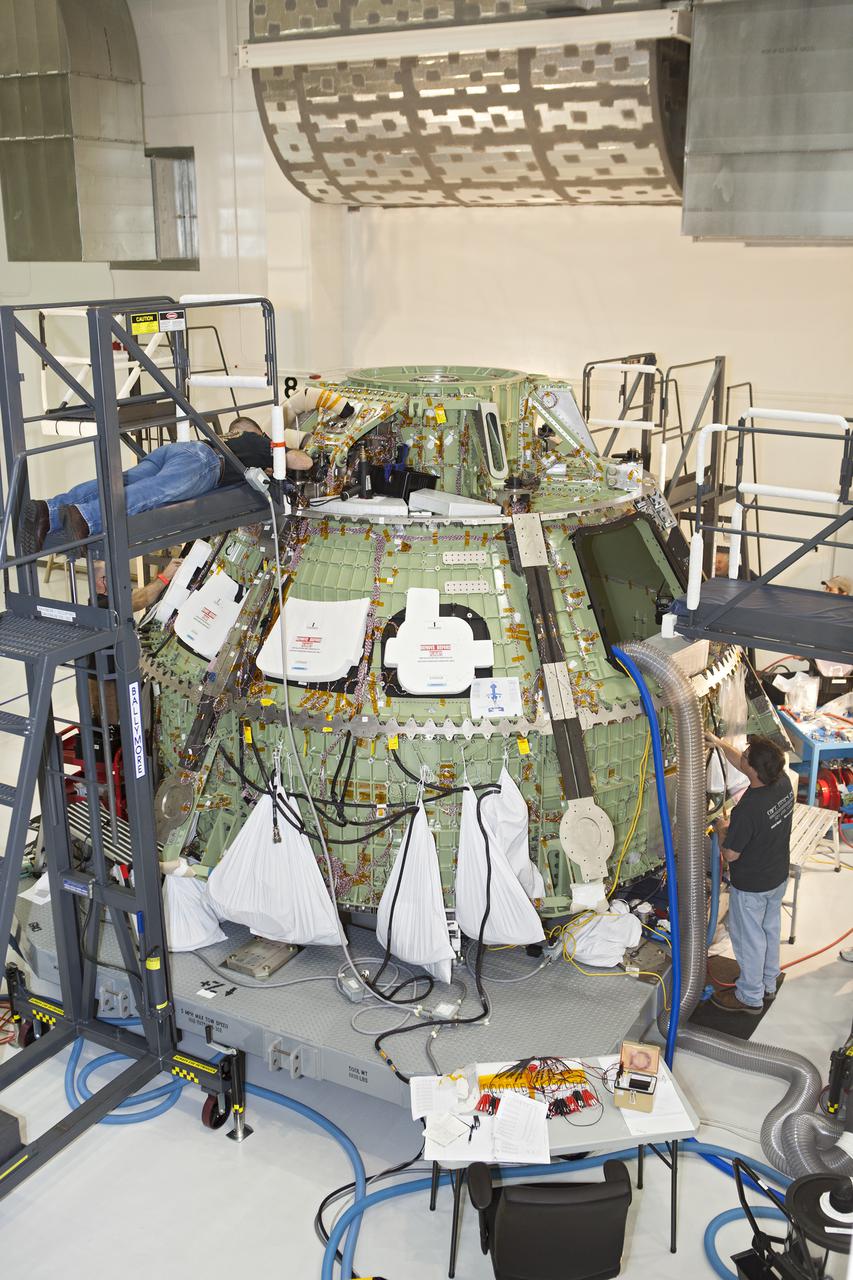
CAPE CANAVERAL, Fla. – Inside the Operations and Checkout Building high bay at NASA’s Kennedy Space Center in Florida, technicians work on the Orion crew module. Orion is being prepared for Exploration Flight Test 1, or EFT-1. Orion is the exploration spacecraft designed to carry crews to space beyond low Earth orbit. It will provide emergency abort capability, sustain the crew during the space travel and provide safe re-entry from deep space return velocities. Orion’s first unpiloted test flight is scheduled to launch in 2014 atop a United Launch Alliance Delta IV heavy rocket. A second uncrewed flight test is scheduled for 2017 on the Space Launch System rocket. For more information, visit http:__www.nasa.gov_orion. Photo credit: NASA_Dimitri Gerondidakis
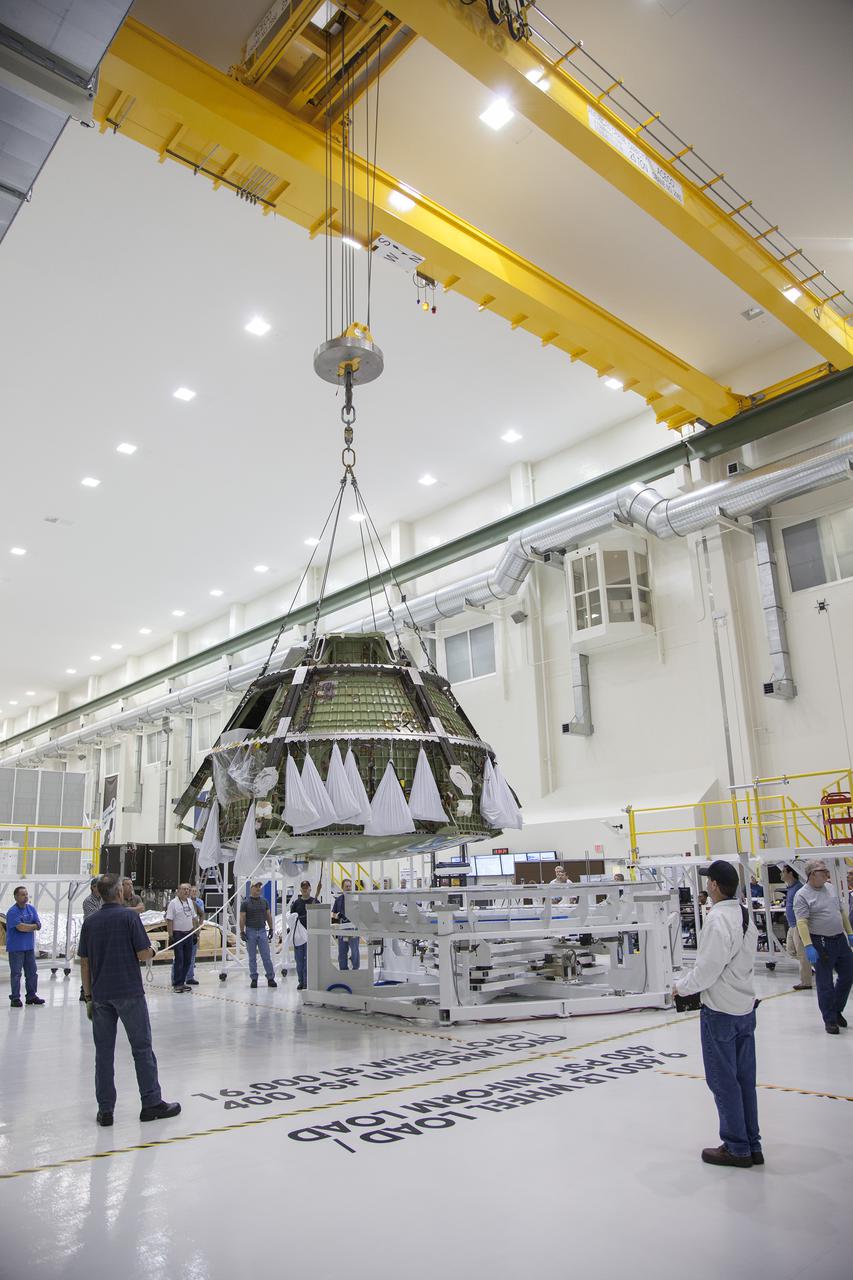
CAPE CANAVERAL, Fla. -- Inside the Operations and Checkout Building high bay at NASA’s Kennedy Space Center in Florida, workers monitor the progress as a crane lifts the Orion crew module from its processing stand for transfer to a dolly. Orion is being prepared for Exploration Flight Test 1, or EFT-1. Orion is the exploration spacecraft designed to carry crews to space beyond low Earth orbit. It will provide emergency abort capability, sustain the crew during the space travel and provide safe re-entry from deep space return velocities. Orion’s first unpiloted test flight is scheduled to launch in 2014 atop a United Launch Alliance Delta IV heavy rocket. A second uncrewed flight test is scheduled for 2017 on the Space Launch System rocket. For more information, visit http:__www.nasa.gov_orion. Photo credit: NASA_Frankie Martin
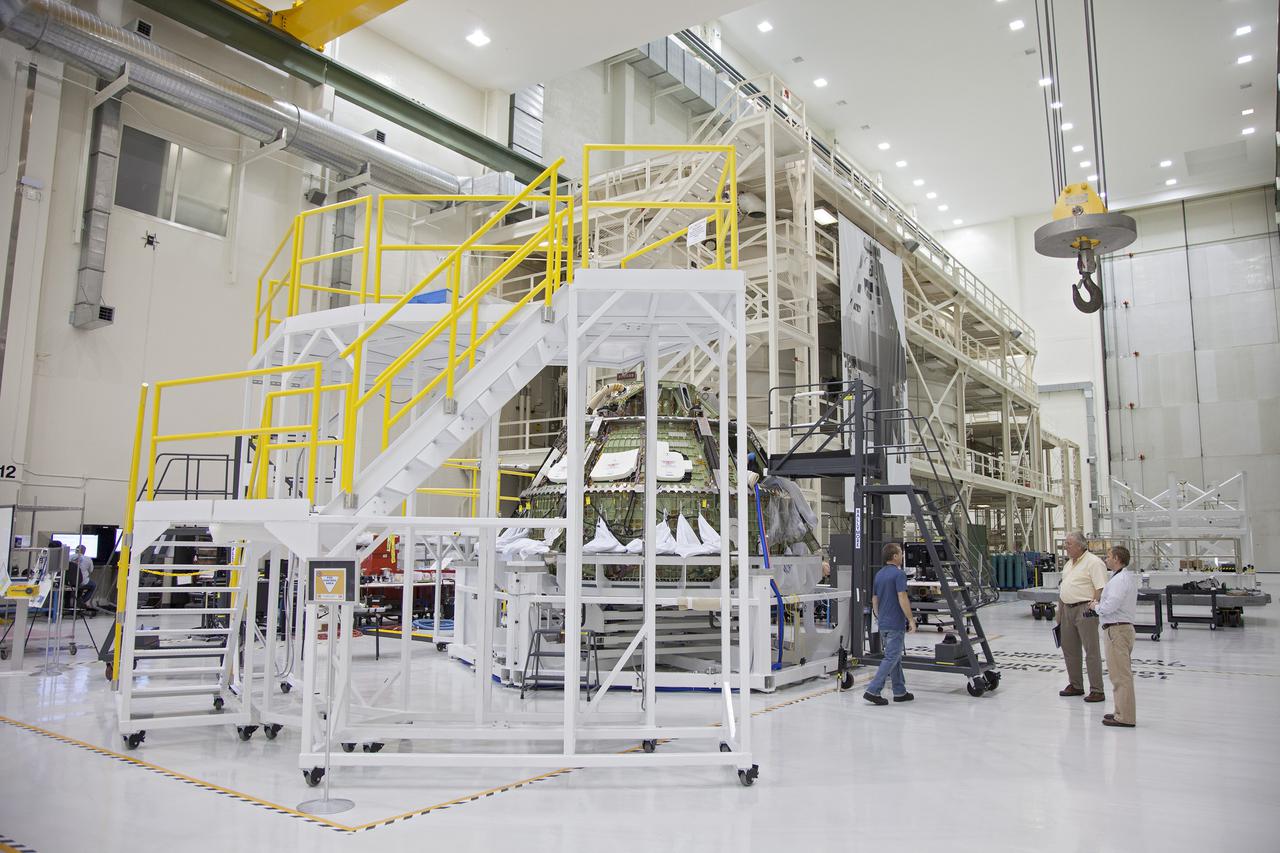
CAPE CANAVERAL, Fla. -- Inside the Operations and Checkout Building high bay at NASA’s Kennedy Space Center in Florida, preparations are underway to lift the Orion crew module from its processing stand and transfer it onto a dolly. Orion is being prepared for Exploration Flight Test 1, or EFT-1. Orion is the exploration spacecraft designed to carry crews to space beyond low Earth orbit. It will provide emergency abort capability, sustain the crew during the space travel and provide safe re-entry from deep space return velocities. Orion’s first unpiloted test flight is scheduled to launch in 2014 atop a United Launch Alliance Delta IV heavy rocket. A second uncrewed flight test is scheduled for 2017 on the Space Launch System rocket. For more information, visit http:__www.nasa.gov_orion. Photo credit: NASA_Frankie Martin
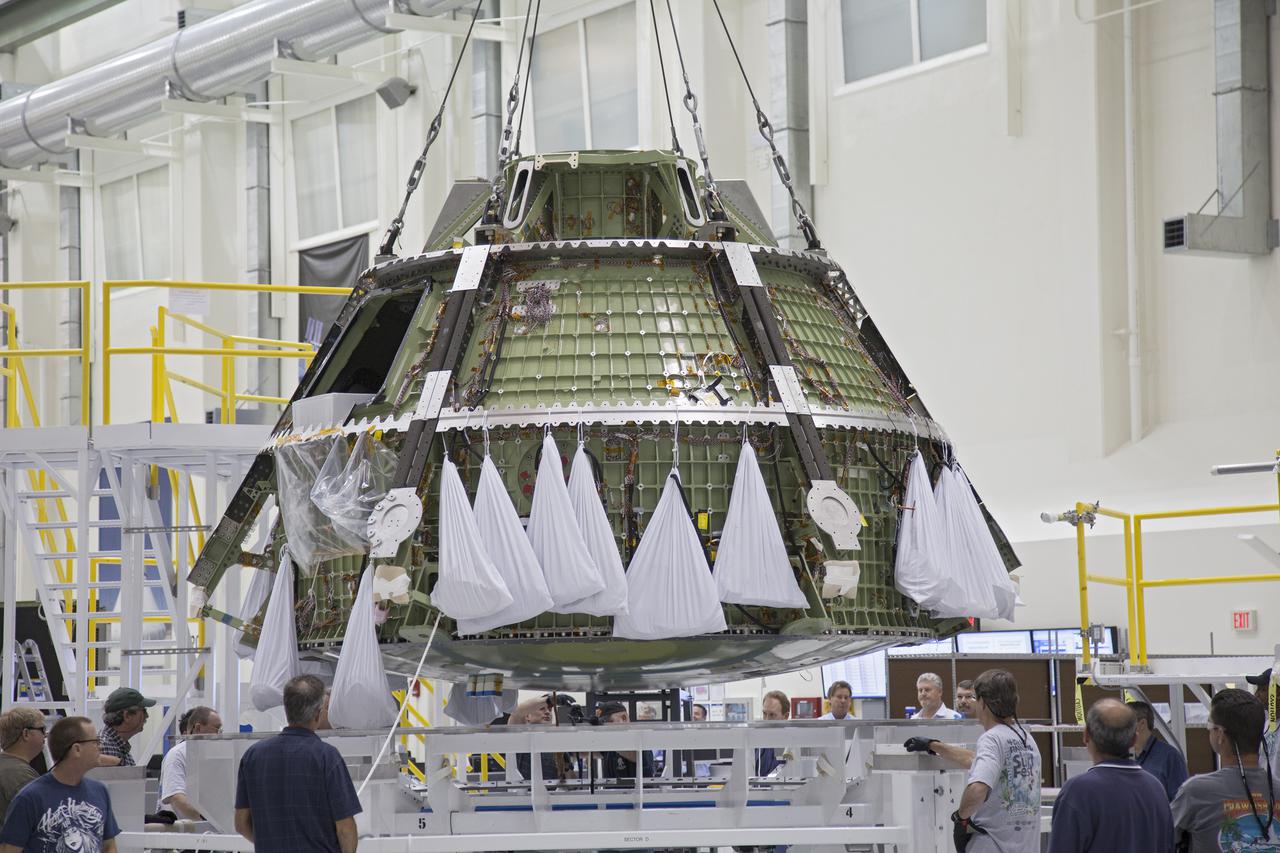
CAPE CANAVERAL, Fla. -- Inside the Operations and Checkout Building high bay at NASA’s Kennedy Space Center in Florida, workers monitor the progress as a crane begins to lift the Orion crew module from its processing stand and transfer it to a dolly. Orion is being prepared for Exploration Flight Test 1, or EFT-1. Orion is the exploration spacecraft designed to carry crews to space beyond low Earth orbit. It will provide emergency abort capability, sustain the crew during the space travel and provide safe re-entry from deep space return velocities. Orion’s first unpiloted test flight is scheduled to launch in 2014 atop a United Launch Alliance Delta IV heavy rocket. A second uncrewed flight test is scheduled for 2017 on the Space Launch System rocket. For more information, visit http:__www.nasa.gov_orion. Photo credit: NASA_Frankie Martin

CAPE CANAVERAL, Fla. – Inside the Operations and Checkout Building high bay at NASA’s Kennedy Space Center in Florida, technicians prepare the shear web assembly, or inner core, that will be inserted into the Orion service module. Orion is being prepared for Exploration Flight Test 1, or EFT-1. Orion is the exploration spacecraft designed to carry crews to space beyond low Earth orbit. It will provide emergency abort capability, sustain the crew during the space travel and provide safe re-entry from deep space return velocities. Orion’s first unpiloted test flight is scheduled to launch in 2014 atop a United Launch Alliance Delta IV heavy rocket. A second uncrewed flight test is scheduled for 2017 on the Space Launch System rocket. For more information, visit http:__www.nasa.gov_orion. Photo credit: NASA_Dimitri Gerondidakis
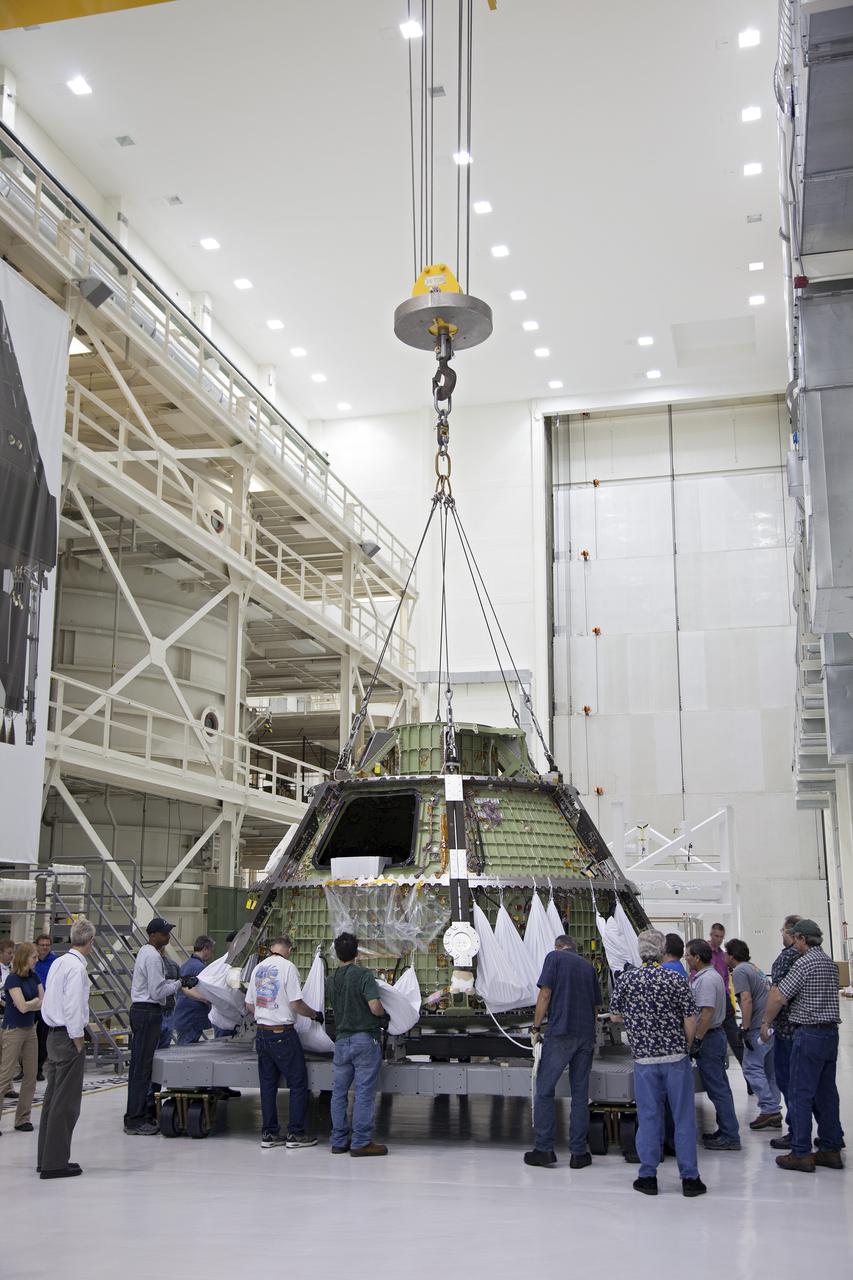
CAPE CANAVERAL, Fla. -- Inside the Operations and Checkout Building high bay at NASA’s Kennedy Space Center in Florida, workers monitor the progress as a crane lowers the Orion crew module onto a dolly. Orion is being prepared for Exploration Flight Test 1, or EFT-1. Orion is the exploration spacecraft designed to carry crews to space beyond low Earth orbit. It will provide emergency abort capability, sustain the crew during the space travel and provide safe re-entry from deep space return velocities. Orion’s first unpiloted test flight is scheduled to launch in 2014 atop a United Launch Alliance Delta IV heavy rocket. A second uncrewed flight test is scheduled for 2017 on the Space Launch System rocket. For more information, visit http:__www.nasa.gov_orion. Photo credit: NASA_Frankie Martin
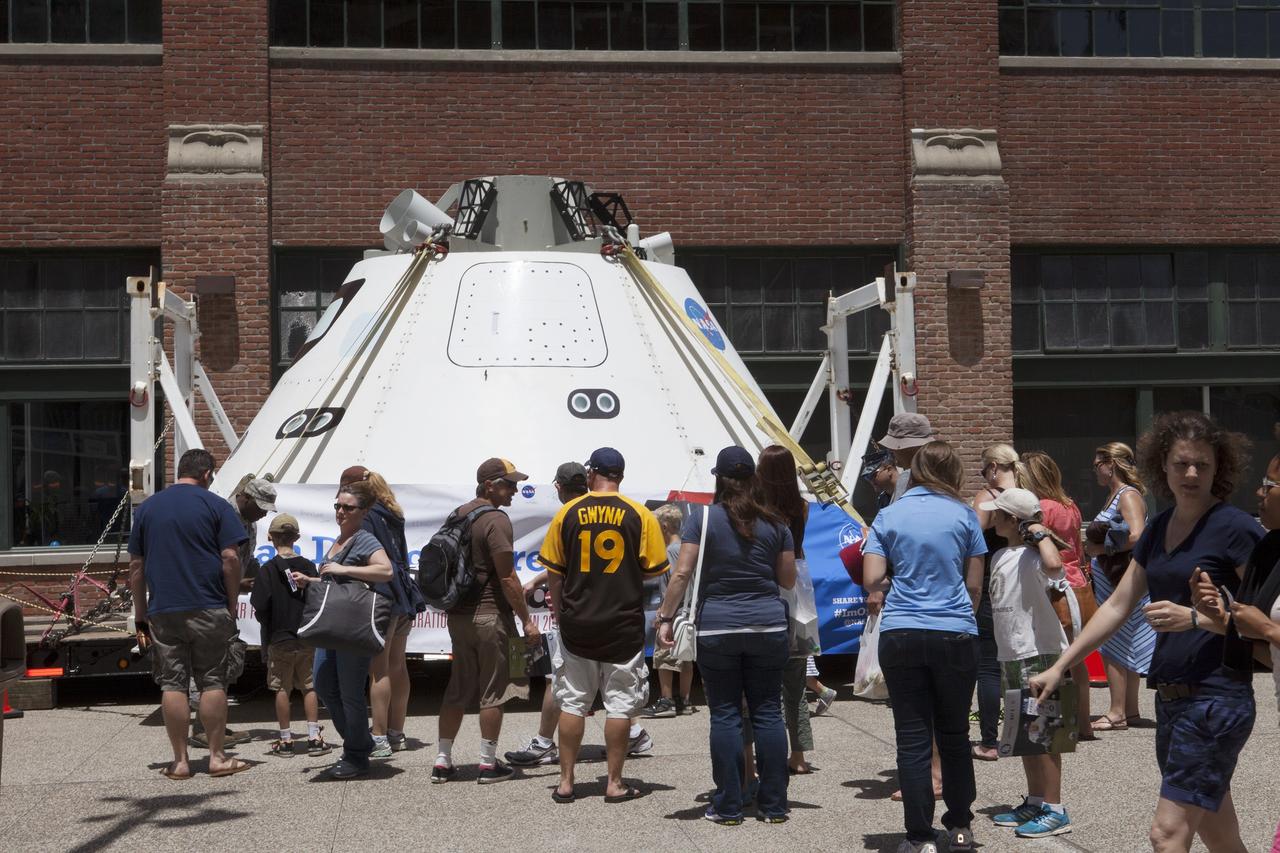
CAPE CANAVERAL, Fla. – Fans check out NASA's Orion boilerplate test vehicle on display at Petco Park in San Diego, California, before the start of a San Diego Padres' baseball game. The boilerplate test vehicle is being prepared for an Exploration Flight Test-1, or EFT-1, pre-transportation test. The Ground Systems Development and Operations Program will run the test at the U.S. Naval Base San Diego to simulate retrieval and transportation procedures for Orion after it splashes down in the ocean and is retrieved for return to land and ground transportation back to Kennedy Space Center in Florida. Orion is the exploration spacecraft designed to carry astronauts to destinations not yet explored by humans, including an asteroid and Mars. It will have emergency abort capability, sustain the crew during space travel and provide safe re-entry from deep space return velocities. The first unpiloted test flight of the Orion is scheduled to launch later this year atop a Delta IV rocket and in 2017 on NASA’s Space Launch System rocket. For more information, visit http://www.nasa.gov/orion. Photo credit: NASA/Kim Shiflett
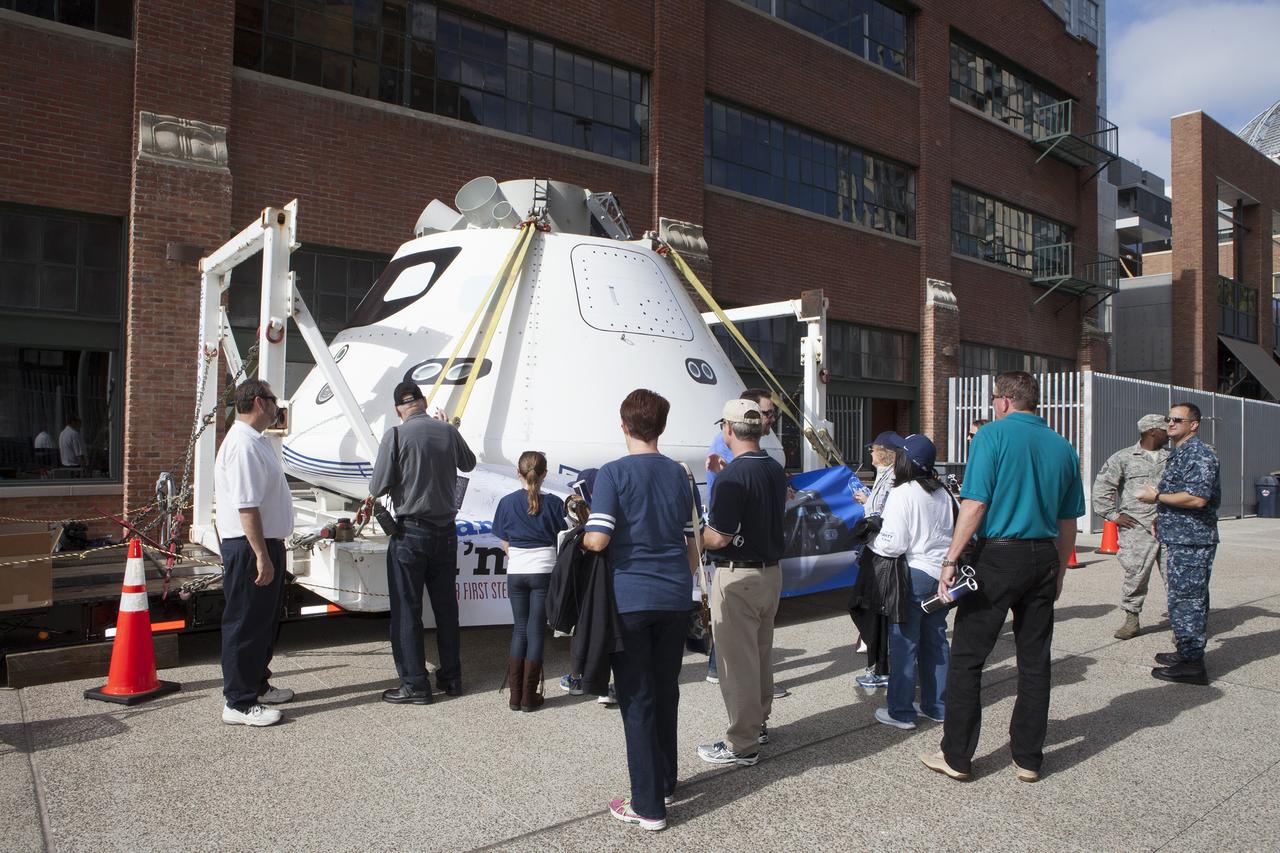
CAPE CANAVERAL, Fla. – The Orion boilerplate test vehicle is on display at Petco Park in San Diego, California, before the San Diego Padres' baseball game. The boilerplate test vehicle is being prepared for an Exploration Flight Test-1, or EFT-1, pre-transportation test. The Ground Systems Development and Operations Program will run the test at the U.S. Naval Base San Diego to simulate retrieval and transportation procedures for Orion after it splashes down in the ocean and is retrieved for return to land and ground transportation back to Kennedy Space Center in Florida. Orion is the exploration spacecraft designed to carry astronauts to destinations not yet explored by humans, including an asteroid and Mars. It will have emergency abort capability, sustain the crew during space travel and provide safe re-entry from deep space return velocities. The first unpiloted test flight of the Orion is scheduled to launch later this year atop a Delta IV rocket and in 2017 on NASA’s Space Launch System rocket. For more information, visit http://www.nasa.gov/orion. Photo credit: NASA/Kim Shiflett
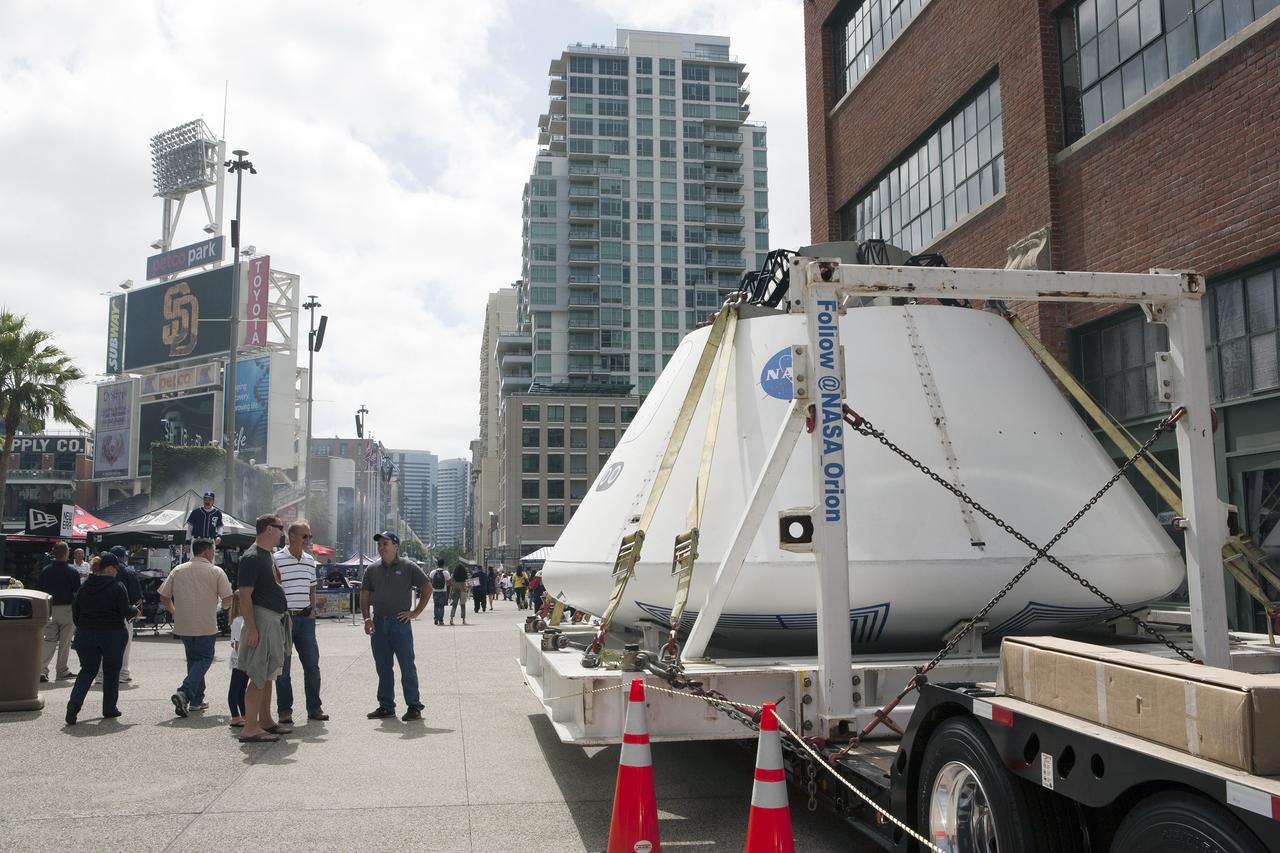
CAPE CANAVERAL, Fla. – The Orion boilerplate test vehicle is on display at Petco Park in San Diego, California, before the San Diego Padres' baseball game. The boilerplate test vehicle is being prepared for an Exploration Flight Test-1, or EFT-1, pre-transportation test. The Ground Systems Development and Operations Program will run the test at the U.S. Naval Base San Diego to simulate retrieval and transportation procedures for Orion after it splashes down in the ocean and is retrieved for return to land and ground transportation back to Kennedy Space Center in Florida. Orion is the exploration spacecraft designed to carry astronauts to destinations not yet explored by humans, including an asteroid and Mars. It will have emergency abort capability, sustain the crew during space travel and provide safe re-entry from deep space return velocities. The first unpiloted test flight of the Orion is scheduled to launch later this year atop a Delta IV rocket and in 2017 on NASA’s Space Launch System rocket. For more information, visit http://www.nasa.gov/orion. Photo credit: NASA/Kim Shiflett
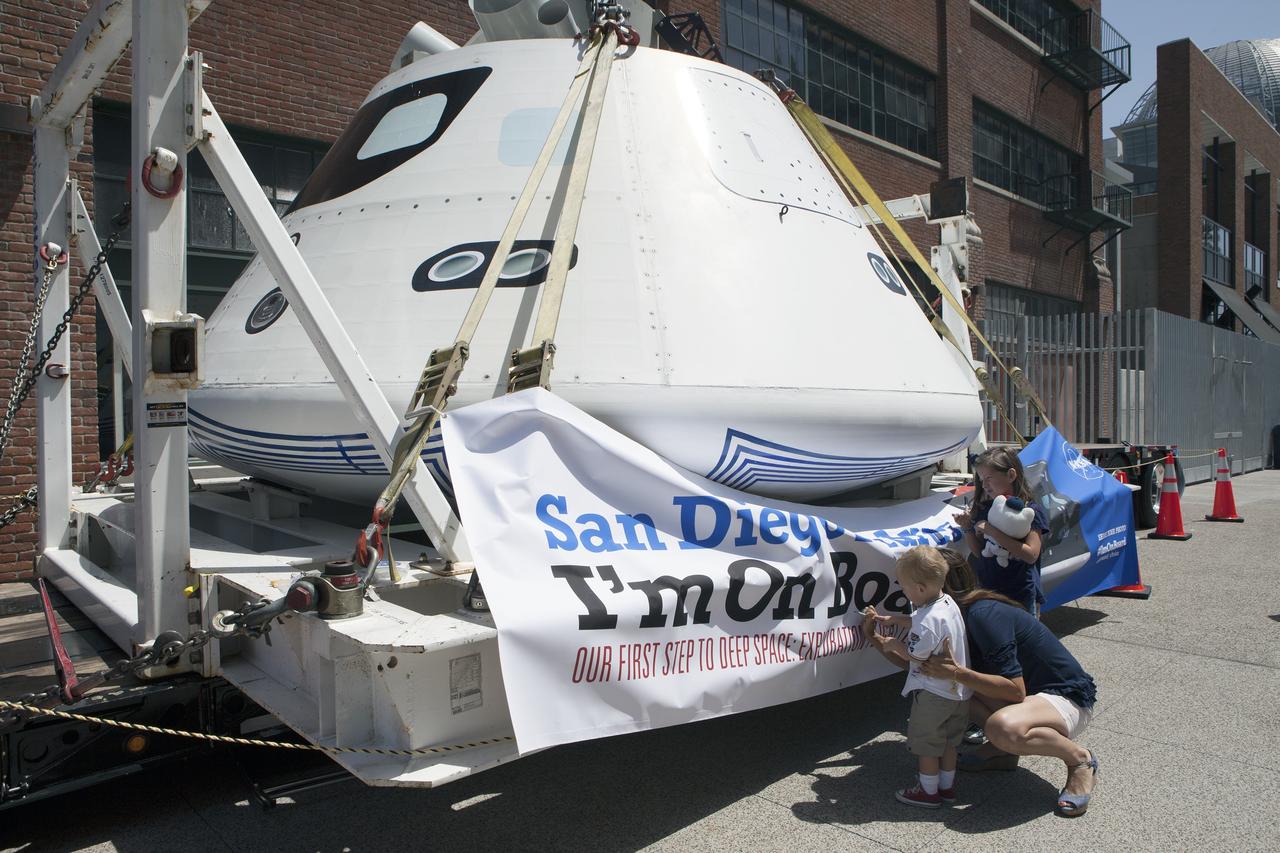
CAPE CANAVERAL, Fla. – Fans sign the banner draped around NASA's Orion boilerplate test vehicle on display at the San Diego Padres Petco Field in San Diego, California, before the start of the baseball game. The test vehicle is being prepared for an Exploration Flight Test-1, or EFT-1, pre-transportation test. The Ground Systems Development and Operations Program will run the test at the U.S. Naval Base San Diego to simulate retrieval and transportation procedures for Orion after it splashes down in the ocean and is retrieved for return to land and ground transportation back to Kennedy Space Center in Florida. Orion is the exploration spacecraft designed to carry astronauts to destinations not yet explored by humans, including an asteroid and Mars. It will have emergency abort capability, sustain the crew during space travel and provide safe re-entry from deep space return velocities. The first unpiloted test flight of the Orion is scheduled to launch later this year atop a Delta IV rocket and in 2017 on NASA’s Space Launch System rocket. For more information, visit http://www.nasa.gov/orion. Photo credit: NASA/Kim Shiflett
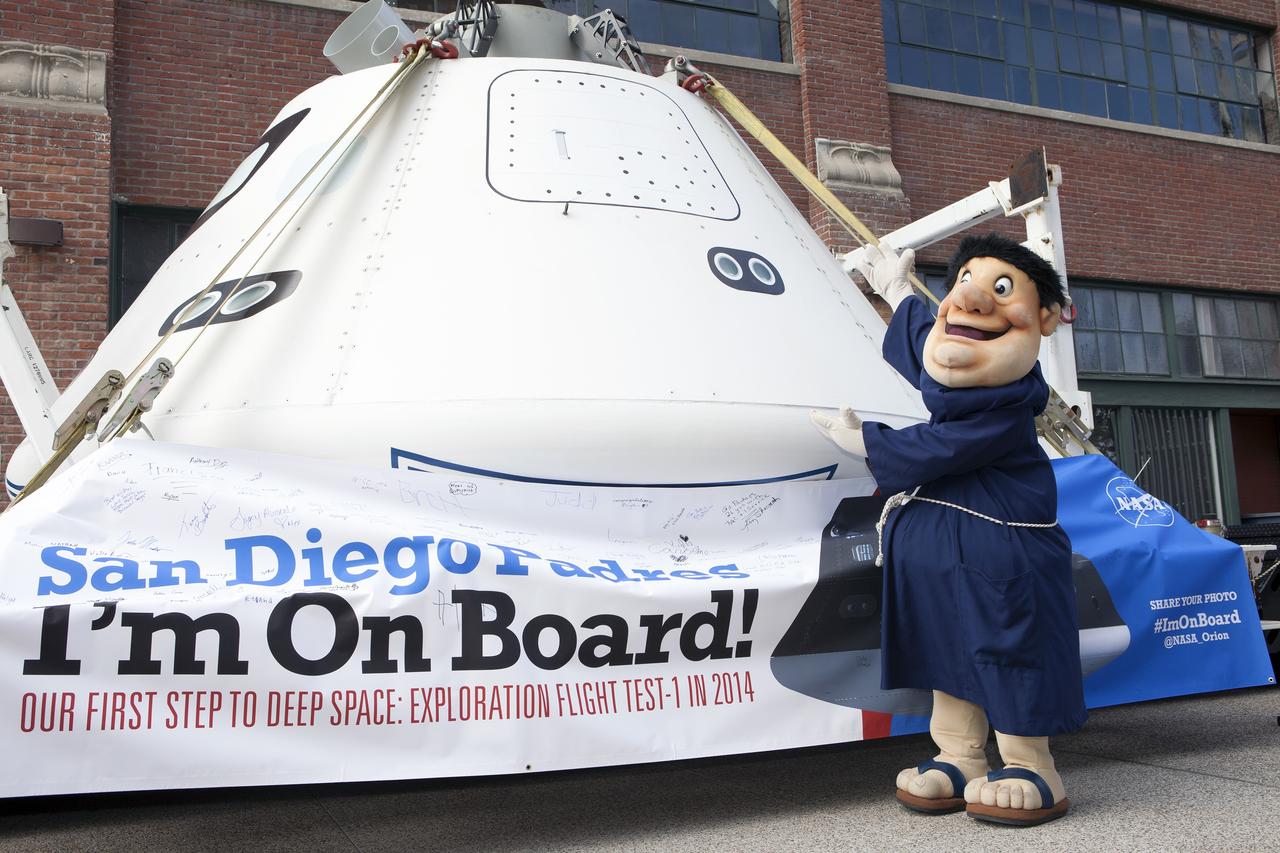
CAPE CANAVERAL, Fla. – The San Diego Padres' mascot checks out NASA's Orion boilerplate test vehicle inside Petco Park in San Diego, California. The boilerplate test vehicle is being prepared for an Exploration Flight Test-1, or EFT-1, pre-transportation test. The Ground Systems Development and Operations Program will run the test at the U.S. Naval Base San Diego to simulate retrieval and transportation procedures for Orion after it splashes down in the ocean and is retrieved for return to land and ground transportation back to Kennedy Space Center in Florida. Orion is the exploration spacecraft designed to carry astronauts to destinations not yet explored by humans, including an asteroid and Mars. It will have emergency abort capability, sustain the crew during space travel and provide safe re-entry from deep space return velocities. The first unpiloted test flight of the Orion is scheduled to launch later this year atop a Delta IV rocket and in 2017 on NASA’s Space Launch System rocket. For more information, visit http://www.nasa.gov/orion. Photo credit: NASA/Kim Shiflett

CAPE CANAVERAL, Fla. – Fans check out NASA's Orion boilerplate test vehicle on display at Petco Park in San Diego, California, before the start of a San Diego Padres' baseball game. The boilerplate test vehicle is being prepared for an Exploration Flight Test-1, or EFT-1, pre-transportation test. The Ground Systems Development and Operations Program will run the test at the U.S. Naval Base San Diego to simulate retrieval and transportation procedures for Orion after it splashes down in the ocean and is retrieved for return to land and ground transportation back to Kennedy Space Center in Florida. Orion is the exploration spacecraft designed to carry astronauts to destinations not yet explored by humans, including an asteroid and Mars. It will have emergency abort capability, sustain the crew during space travel and provide safe re-entry from deep space return velocities. The first unpiloted test flight of the Orion is scheduled to launch later this year atop a Delta IV rocket and in 2017 on NASA’s Space Launch System rocket. For more information, visit http://www.nasa.gov/orion. Photo credit: NASA/Kim Shiflett
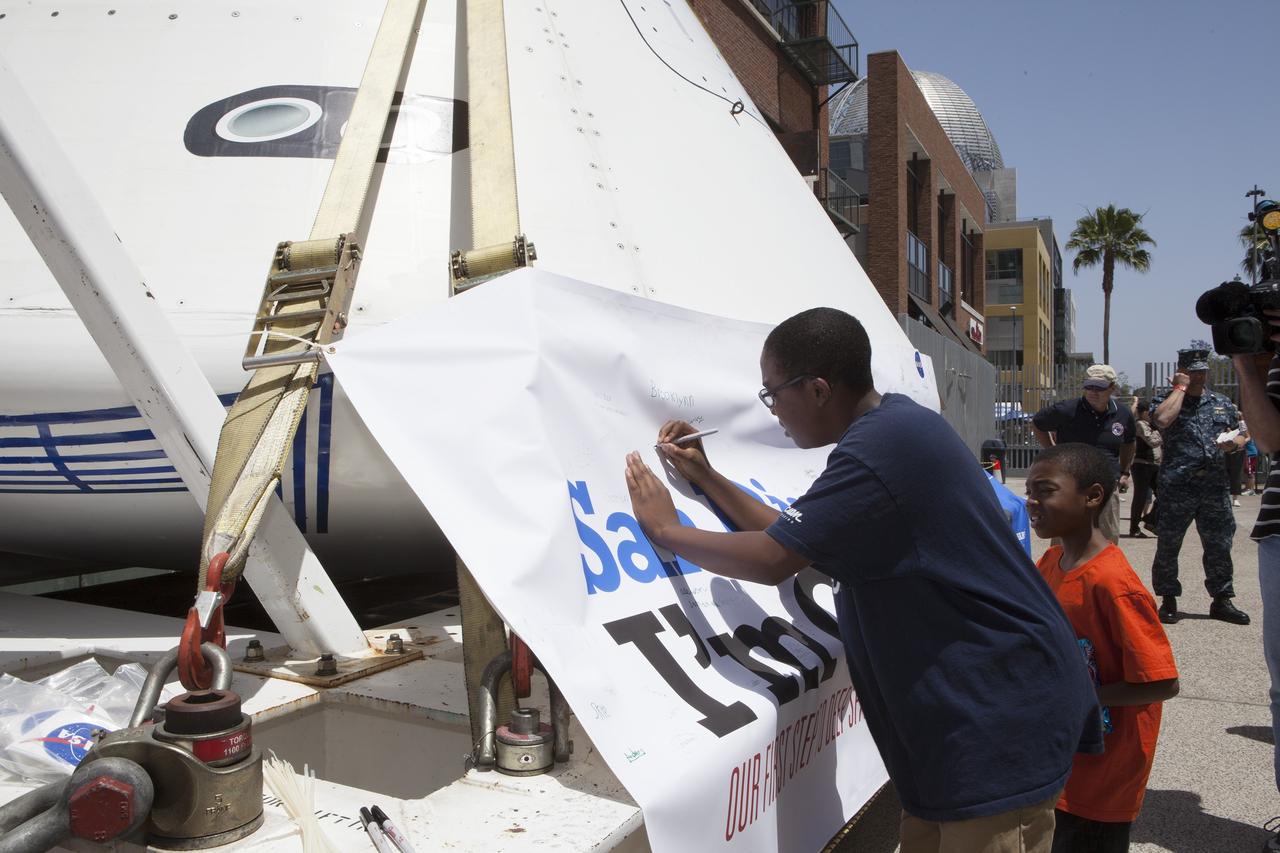
CAPE CANAVERAL, Fla. – Fans sign the banner surrounding NASA's Orion boilerplate test vehicle on display at Petco Park in San Diego, California, before the start of a San Diego Padres' baseball game. The boilerplate test vehicle is being prepared for an Exploration Flight Test-1, or EFT-1, pre-transportation test. The Ground Systems Development and Operations Program will run the test at the U.S. Naval Base San Diego to simulate retrieval and transportation procedures for Orion after it splashes down in the ocean and is retrieved for return to land and ground transportation back to Kennedy Space Center in Florida. Orion is the exploration spacecraft designed to carry astronauts to destinations not yet explored by humans, including an asteroid and Mars. It will have emergency abort capability, sustain the crew during space travel and provide safe re-entry from deep space return velocities. The first unpiloted test flight of the Orion is scheduled to launch later this year atop a Delta IV rocket and in 2017 on NASA’s Space Launch System rocket. For more information, visit http://www.nasa.gov/orion. Photo credit: NASA/Kim Shiflett
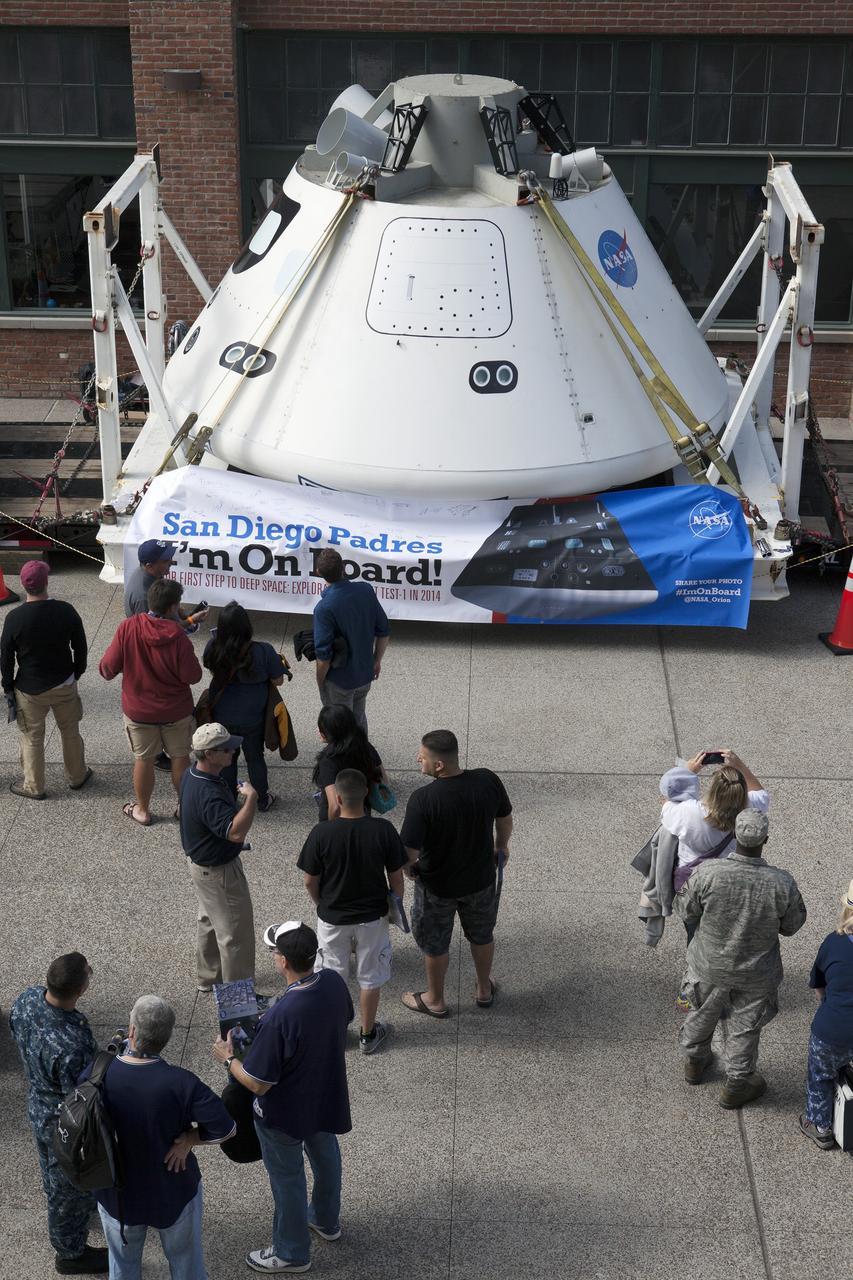
CAPE CANAVERAL, Fla. – The Orion boilerplate test vehicle is on display at Petco Park in San Diego, California, before the San Diego Padres' baseball game. The boilerplate test vehicle is being prepared for an Exploration Flight Test-1, or EFT-1, pre-transportation test. The Ground Systems Development and Operations Program will run the test at the U.S. Naval Base San Diego to simulate retrieval and transportation procedures for Orion after it splashes down in the ocean and is retrieved for return to land and ground transportation back to Kennedy Space Center in Florida. Orion is the exploration spacecraft designed to carry astronauts to destinations not yet explored by humans, including an asteroid and Mars. It will have emergency abort capability, sustain the crew during space travel and provide safe re-entry from deep space return velocities. The first unpiloted test flight of the Orion is scheduled to launch later this year atop a Delta IV rocket and in 2017 on NASA’s Space Launch System rocket. For more information, visit http://www.nasa.gov/orion. Photo credit: NASA/Kim Shiflett
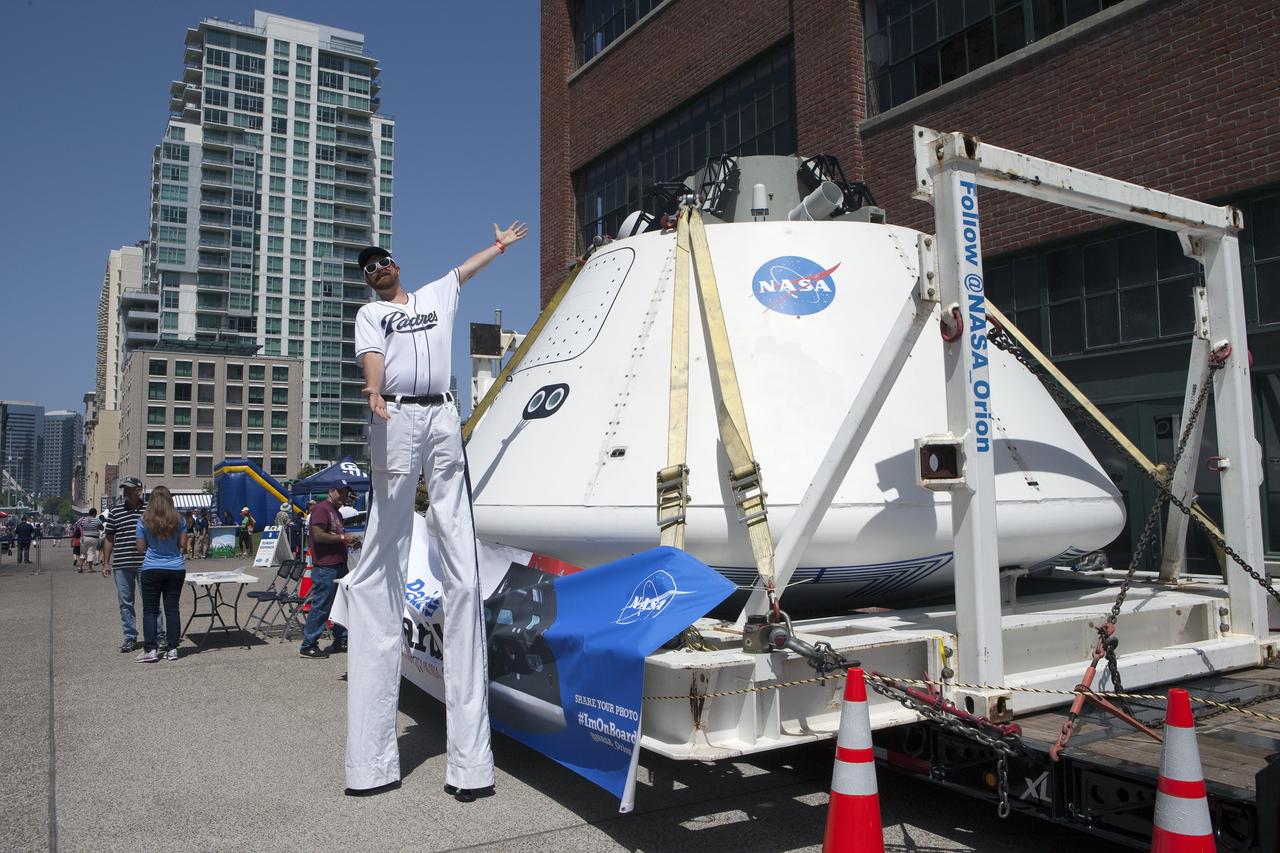
CAPE CANAVERAL, Fla. – A San Diego Padres fan on stilts stands near NASA's Orion boilerplate test vehicle on display at Petco Park in San Diego, California. The boilerplate test vehicle will be prepared for an Exploration Flight Test-1, or EFT-1, pre-transportation test. The Ground Systems Development and Operations Program will run the test at the U.S. Naval Base San Diego to simulate retrieval and transportation procedures for Orion after it splashes down in the ocean and is retrieved for return to land and ground transportation back to Kennedy Space Center in Florida. Orion is the exploration spacecraft designed to carry astronauts to destinations not yet explored by humans, including an asteroid and Mars. It will have emergency abort capability, sustain the crew during space travel and provide safe re-entry from deep space return velocities. The first unpiloted test flight of the Orion is scheduled to launch later this year atop a Delta IV rocket and in 2017 on NASA’s Space Launch System rocket. For more information, visit http://www.nasa.gov/orion. Photo credit: NASA/Kim Shiflett

CAPE CANAVERAL, Fla. – Inside the Operations and Checkout Building high bay at NASA’s Kennedy Space Center in Florida, a bulkhead is lowered for installation on the Orion service module in preparation for Exploration Flight Test 1, or EFT-1. Orion is the exploration spacecraft designed to carry crews to space beyond low Earth orbit. It will provide emergency abort capability, sustain the crew during the space travel and provide safe re-entry from deep space return velocities. Orion’s first unpiloted test flight is scheduled to launch in 2014 atop a United Launch Alliance Delta IV heavy rocket. A second uncrewed flight test is scheduled for 2017 on the Space Launch System rocket. For more information, visit http:__www.nasa.gov_orion. Photo credit: NASA_Charisse Nahser