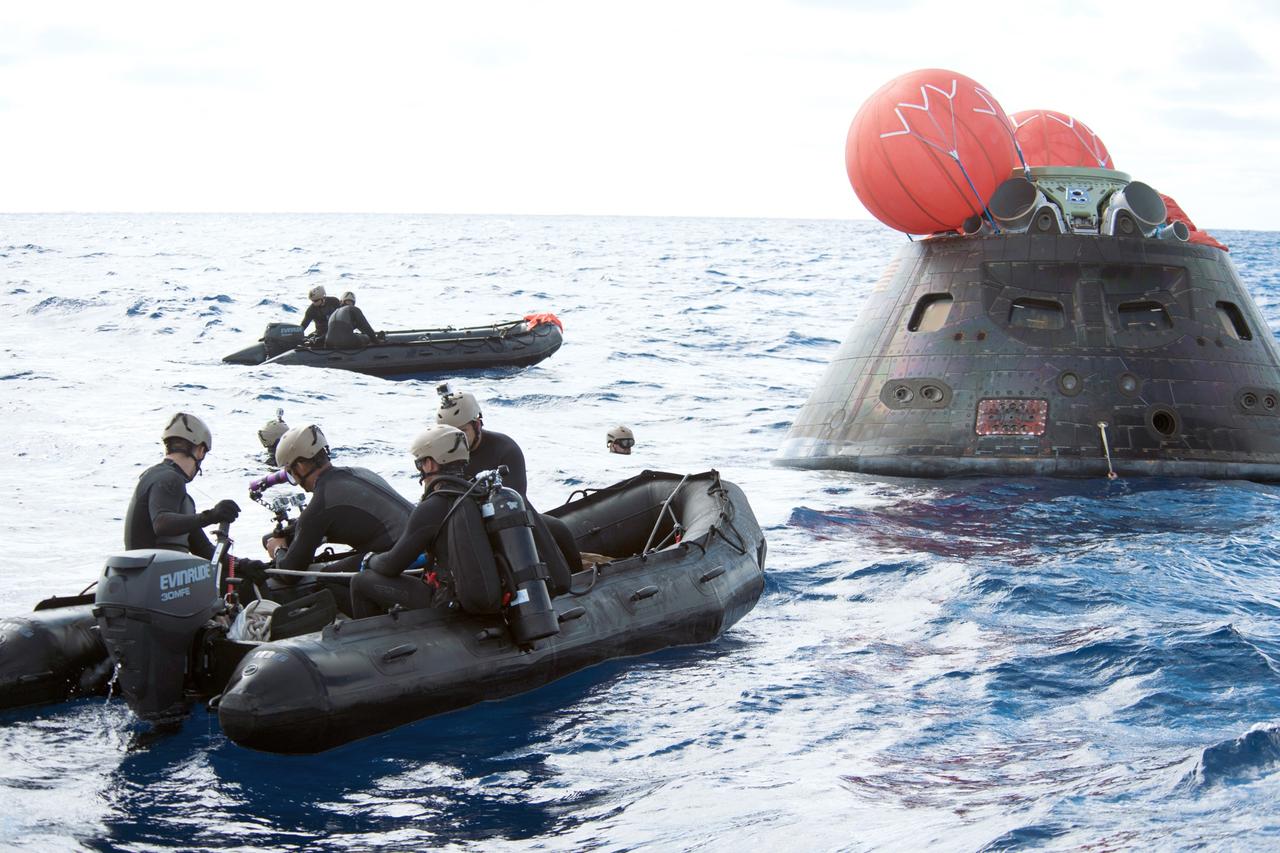
SAN DIEGO, Calif. -- NASA's Orion spacecraft splashed down in the Pacific Ocean after its first flight test atop a Delta IV Heavy rocket from Space Launch Complex 37 at Cape Canaveral Air Force Station in Florida. U.S. Navy divers in Zodiac boats prepare to recover Orion and tow her in to the well deck of the USS Anchorage. NASA's Orion spacecraft completed a two-orbit, four-and-a-half hour mission to test systems critical to crew safety, including the launch abort system, the heat shield and the parachute system. The Ground Systems Development and Operations Program is leading the recovery efforts. For more information, visit www.nasa.gov/orion Photo credit: Courtesy of U.S. Navy
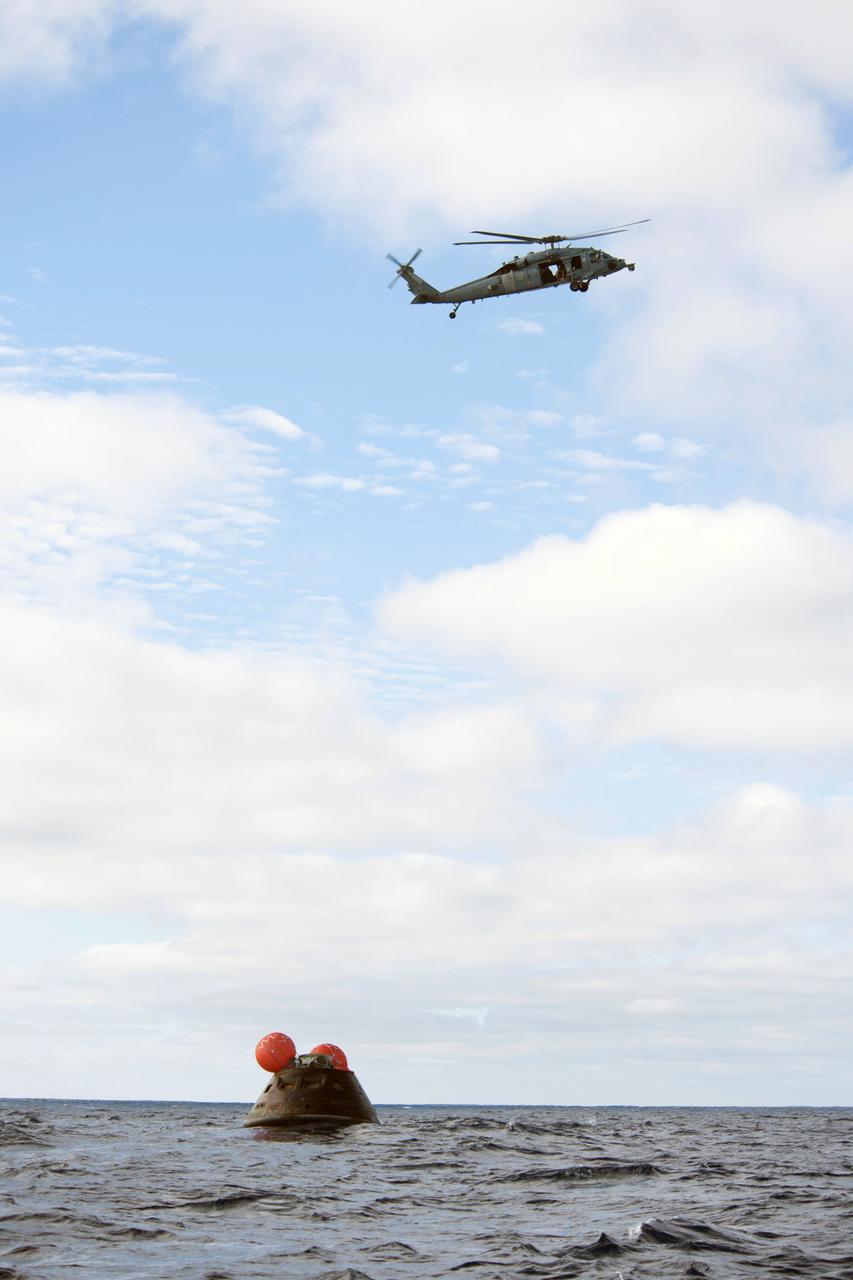
SAN DIEGO, Calif. -- NASA's Orion spacecraft floats in the Pacific Ocean after splashdown from its first flight test in Earth orbit. An H60-S Seahawk helicopter hovers above to communicate the spacecraft's location back to the USS Anchorage. NASA, the U.S. Navy and Lockheed Martin are coordinating efforts to recover Orion and secure the spacecraft in the well deck of the USS Anchorage. Orion completed a two-orbit, four-and-a-half hour mission, to test systems critical to crew safety, including the launch abort system, the heat shield and the parachute system. The Ground Systems Development and Operations Program is leading the recovery efforts. For more information, visit www.nasa.gov/orion Photo credit: NASA/Tony Gray
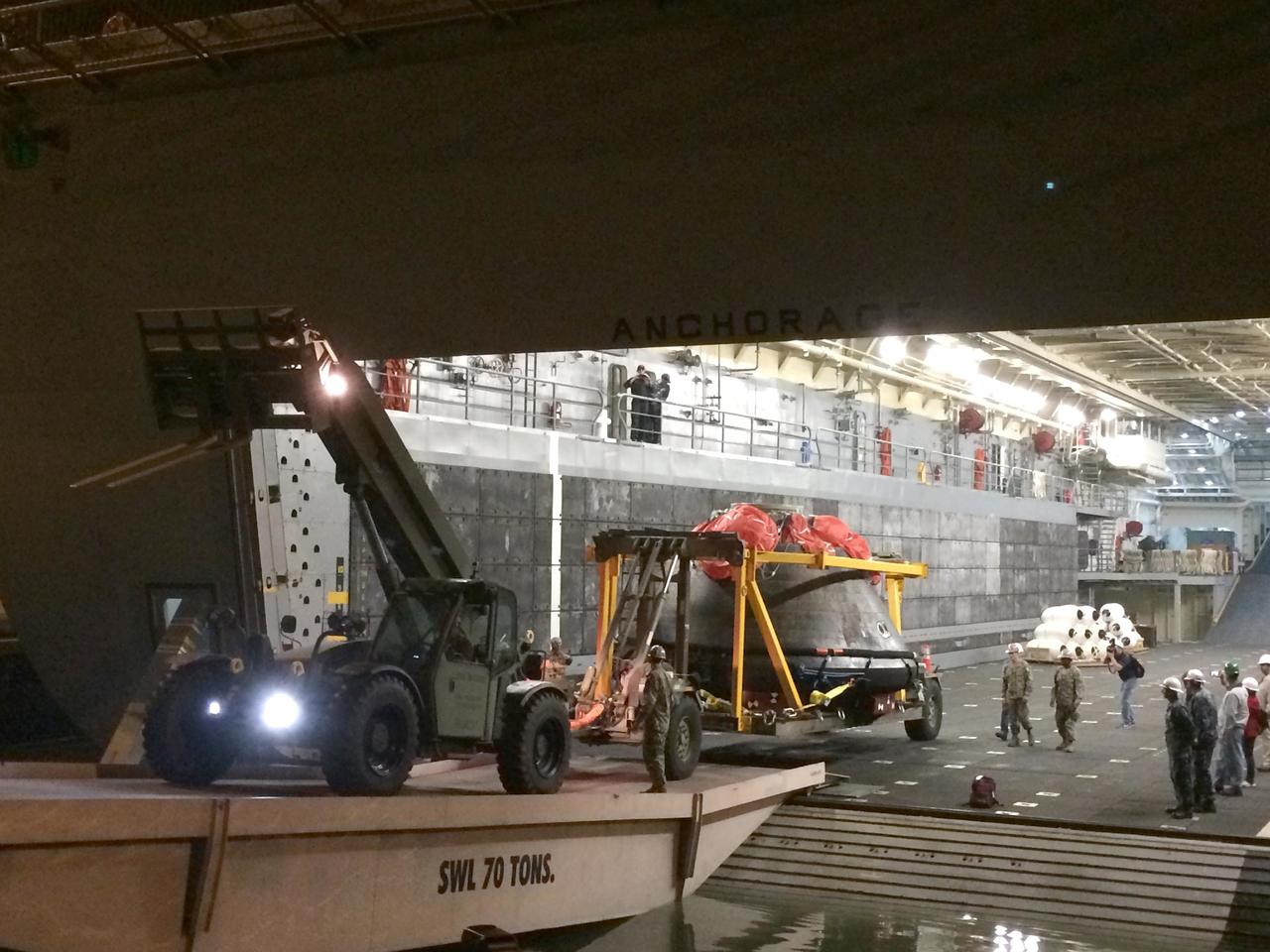
SAN DIEGO, Calif. -- At Naval Base San Diego in California, NASA's Orion spacecraft is being offloaded from the well deck of the USS Anchorage. Orion has been secured in its crew module recovery cradle and will be prepared for return to Kennedy Space Center in Florida. After lifting off at 7:05 a.m. EST on Dec. 5 atop a Delta IV Heavy rocket from Space Launch Complex 37 at Cape Canaveral Air Force Station in Florida, Orion completed a two-orbit, four-and-a-half hour mission to test systems critical to crew safety, including the launch abort system, the heat shield and the parachute system. NASA, the U.S. Navy and Lockheed Martin coordinated efforts to recover Orion after splashdown in the Pacific Ocean. The Ground Systems Development and Operations Program led the recovery efforts. For more information, visit www.nasa.gov/orion Photo credit: NASA/Amber Philman
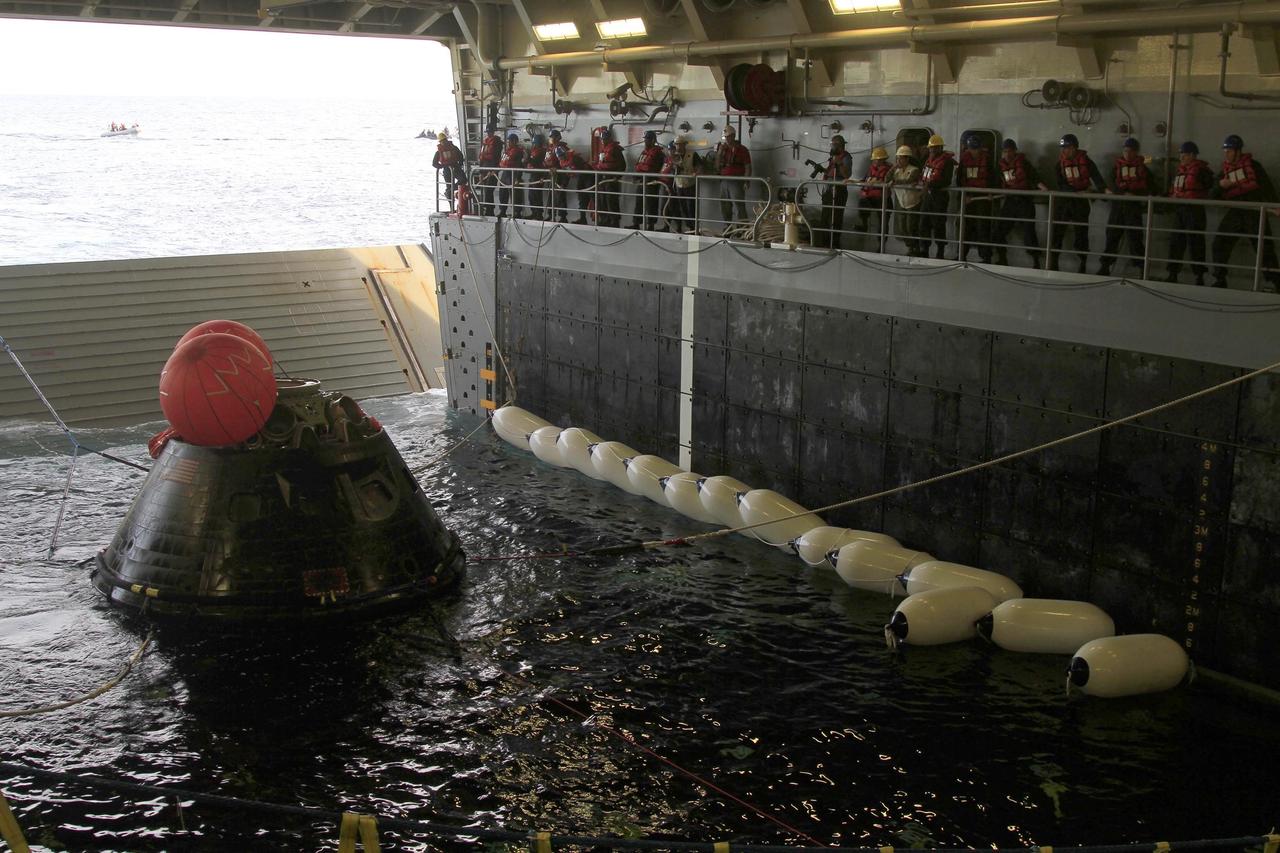
SAN DIEGO, Calif. -- NASA's Orion spacecraft is secured with tether lines inside the flooded well deck of the USS Anchorage in the Pacific Ocean about 600 miles off the coast of San Diego, California. After lifting off at 7:05 a.m. EST atop a Delta IV Heavy rocket from Space Launch Complex 37 at Cape Canaveral Air Force Station in Florida, Orion completed a two-orbit, four-and-a-half hour mission to test systems critical to crew safety, including the launch abort system, the heat shield and the parachute system. NASA, the U.S. Navy and Lockheed Martin coordinated efforts to recover Orion after splashdown. The Ground Systems Development and Operations Program is leading the recovery efforts. For more information, visit www.nasa.gov/orion Photo credit: NASA/Cory Huston
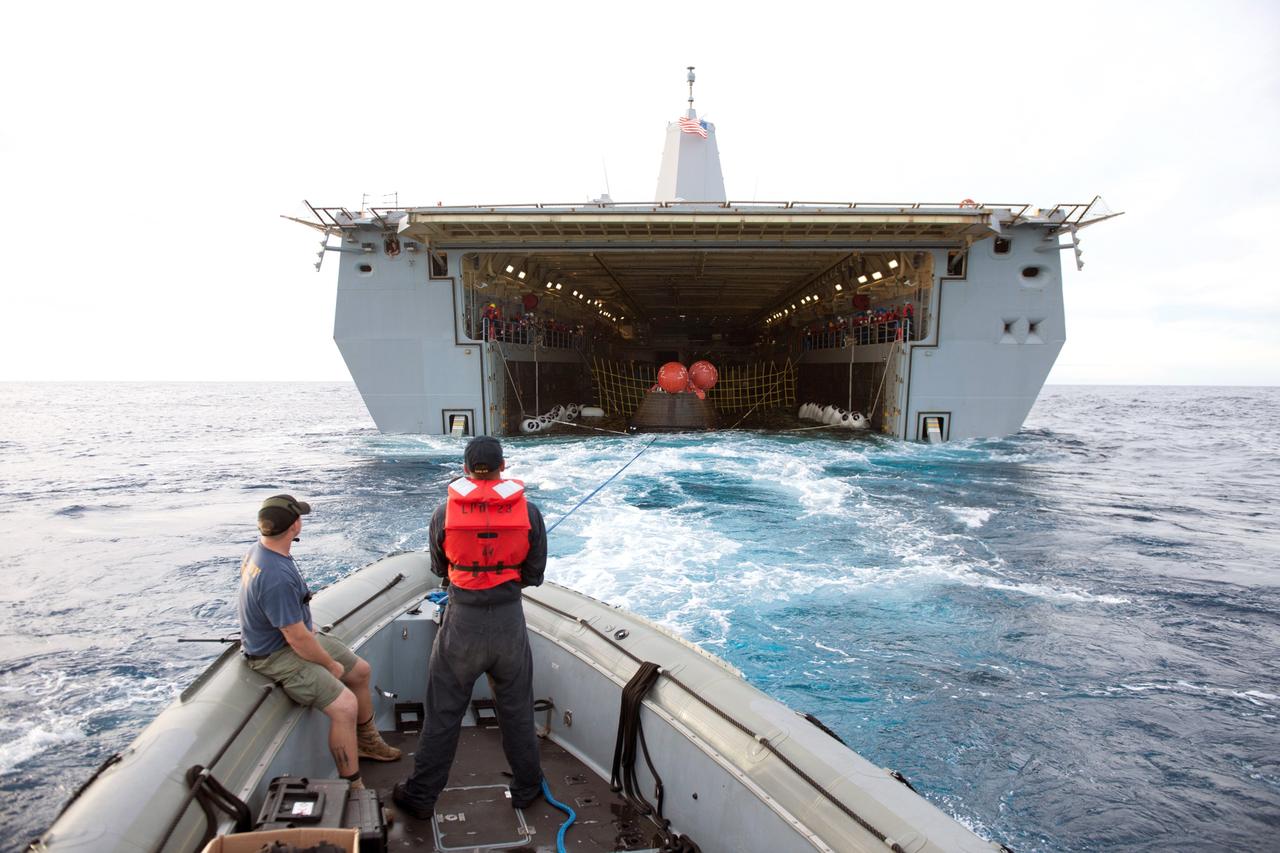
SAN DIEGO, Calif. -- U.S. Navy personnel aboard a rigid hull inflatable boat help recover NASA's Orion spacecraft following its splashdown in the Pacific Ocean after its first flight test in Earth orbit. Orion is towed into the flooded well deck of the USS Anchorage. NASA, the U.S. Navy and Lockheed Martin coordinated efforts to recover Orion, the forward bay cover and main parachutes. Orion completed a two-orbit, four-and-a-half hour mission, to test systems critical to crew safety, including the launch abort system, the heat shield and the parachute system. The Ground Systems Development and Operations Program is leading the recovery efforts. For more information, visit www.nasa.gov/orion Photo credit: NASA/Tony Gray
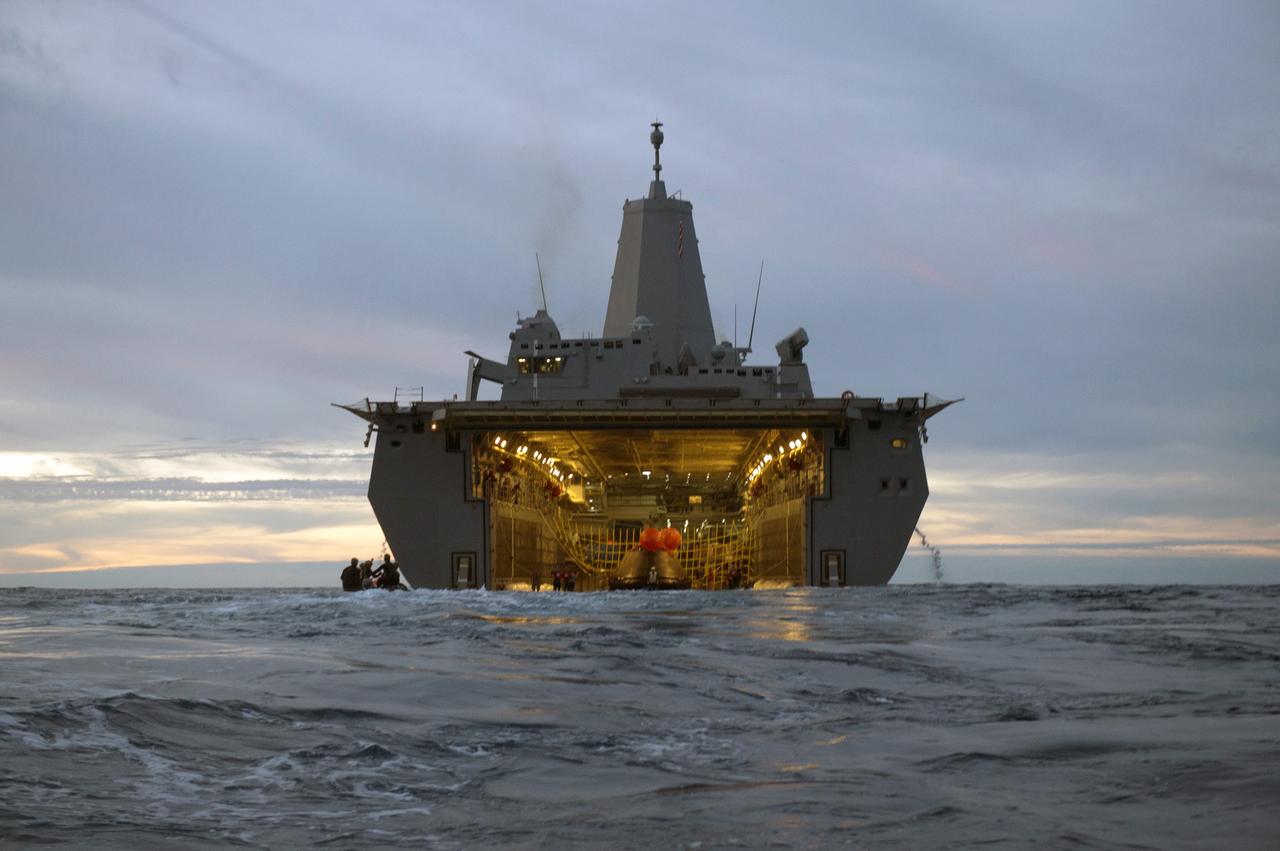
SAN DIEGO, Calif. -- The Orion crew module is recovered after splashdown in the Pacific Ocean about 600 miles off the coast of San Diego, California. NASA, the U.S. Navy and Lockheed Martin coordinated efforts to recover Orion and secure the spacecraft inside the well deck of the USS Anchorage. After lifting off at 7:05 a.m. EST atop a Delta IV Heavy rocket from Space Launch Complex 37 at Cape Canaveral Air Force Station in Florida, NASA's Orion spacecraft completed a two-orbit, four-and-a-half hour mission to test systems critical to crew safety, including the launch abort system, the heat shield and the parachute system. The Ground Systems Development and Operations Program is leading the recovery efforts. For more information, visit www.nasa.gov/orion Photo credit: Courtesy of U.S. Navy
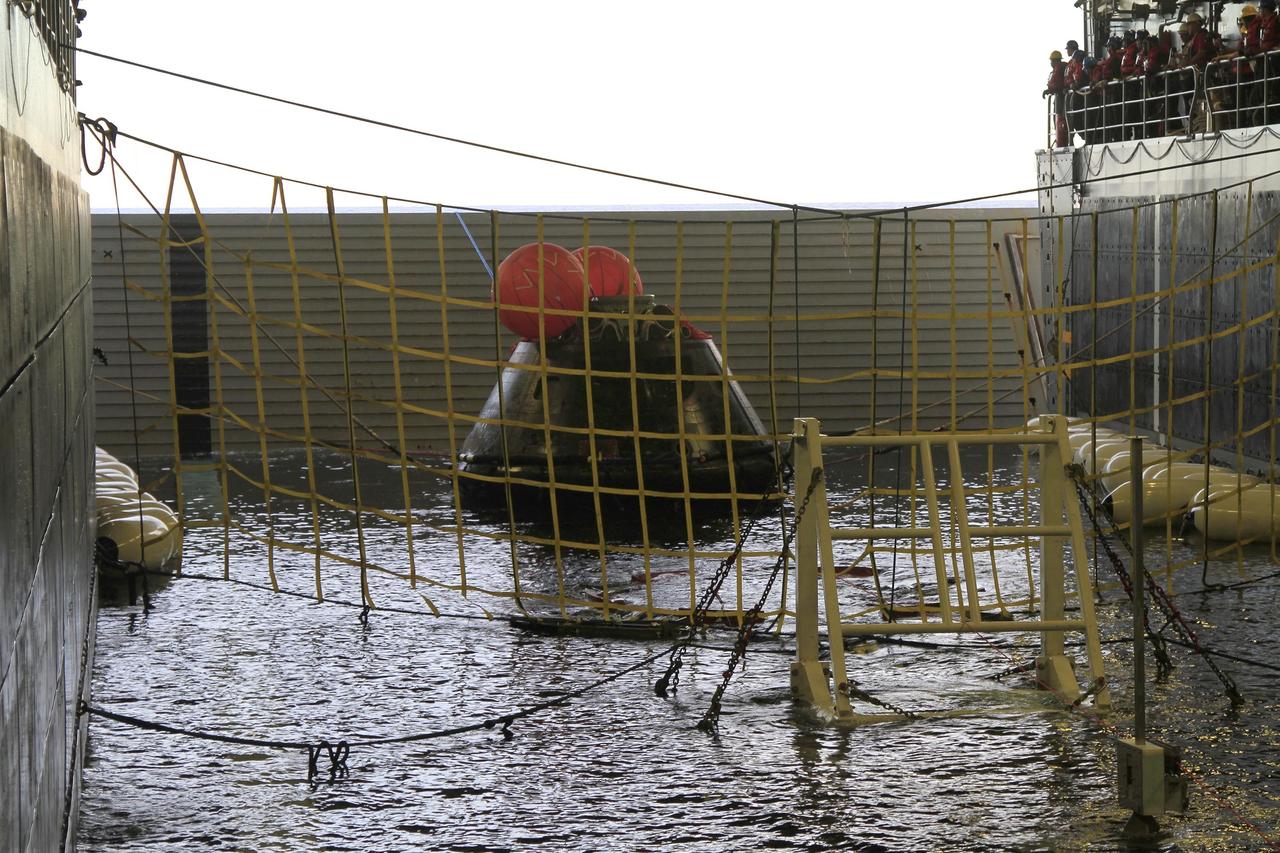
SAN DIEGO, Calif. -- NASA's Orion spacecraft has been recovered inside the flooded well deck of the USS Anchorage in the Pacific Ocean about 600 miles off the coast of San Diego, California. After lifting off at 7:05 a.m. EST atop a Delta IV Heavy rocket from Space Launch Complex 37 at Cape Canaveral Air Force Station in Florida, Orion completed a two-orbit, four-and-a-half hour mission to test systems critical to crew safety, including the launch abort system, the heat shield and the parachute system. NASA, the U.S. Navy and Lockheed Martin coordinated efforts to recover Orion after splashdown. The Ground Systems Development and Operations Program is leading the recovery efforts. For more information, visit www.nasa.gov/orion Photo credit: NASA/Cory Huston
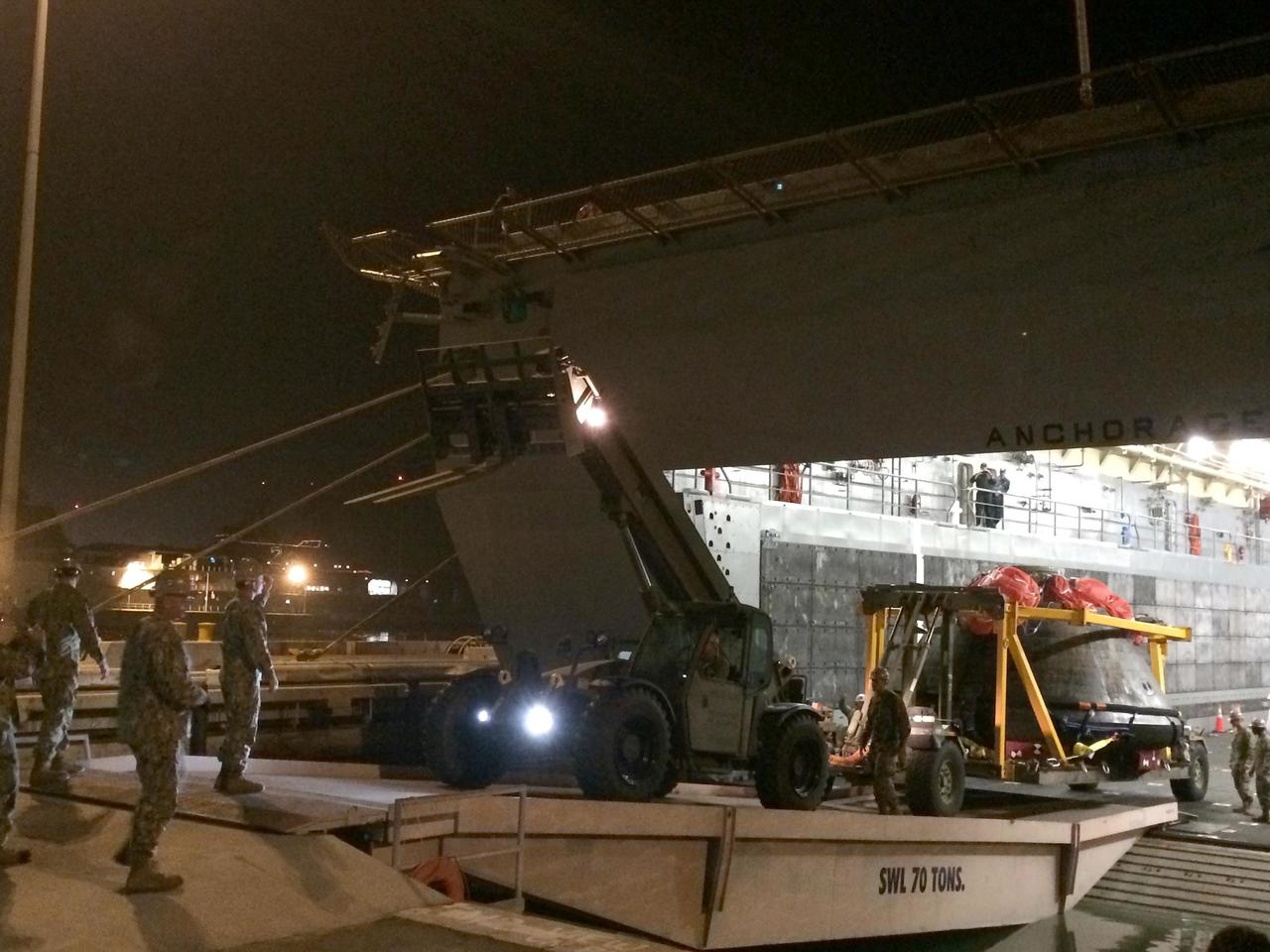
SAN DIEGO, Calif. -- At Naval Base San Diego in California, NASA's Orion spacecraft is being offloaded from the well deck of the USS Anchorage. Orion has been secured in its crew module recovery cradle and will be prepared for return to Kennedy Space Center in Florida. After lifting off at 7:05 a.m. EST on Dec. 5 atop a Delta IV Heavy rocket from Space Launch Complex 37 at Cape Canaveral Air Force Station in Florida, Orion completed a two-orbit, four-and-a-half hour mission to test systems critical to crew safety, including the launch abort system, the heat shield and the parachute system. NASA, the U.S. Navy and Lockheed Martin coordinated efforts to recover Orion after splashdown in the Pacific Ocean. The Ground Systems Development and Operations Program led the recovery efforts. For more information, visit www.nasa.gov/orion Photo credit: NASA/Amber Philman
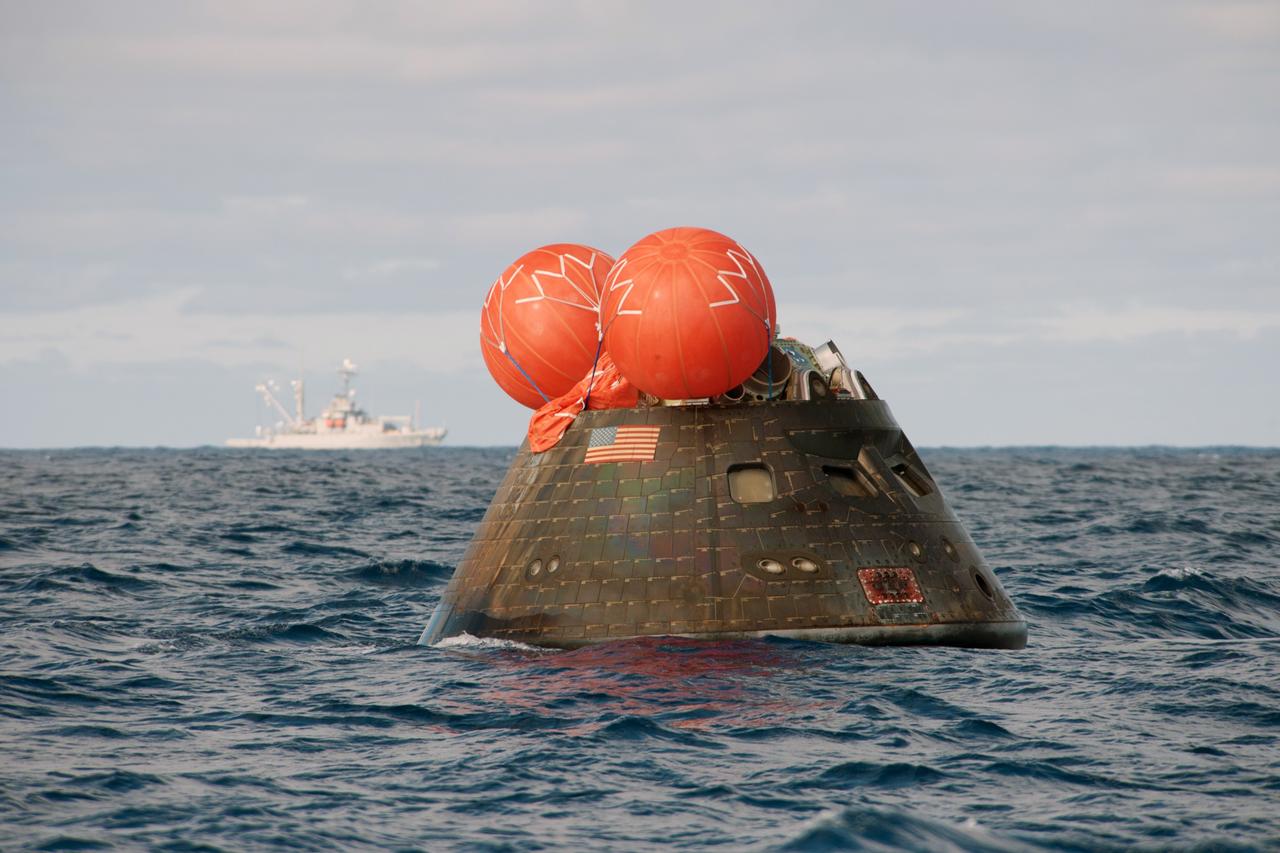
SAN DIEGO, Calif. -- NASA's Orion spacecraft floats in the Pacific Ocean after splashdown from its first flight test in Earth orbit. In the background is the USNS Salvor. This U.S. Navy salvage ship was there as a backup in case it was needed. NASA, the U.S. Navy and Lockheed Martin are coordinating efforts to recover Orion and secure the spacecraft in the well deck of the USS Anchorage. Orion completed a two-orbit, four-and-a-half hour mission, to test systems critical to crew safety, including the launch abort system, the heat shield and the parachute system. The Ground Systems Development and Operations Program is leading the recovery efforts. For more information, visit www.nasa.gov/orion Photo credit: NASA/Tony Gray
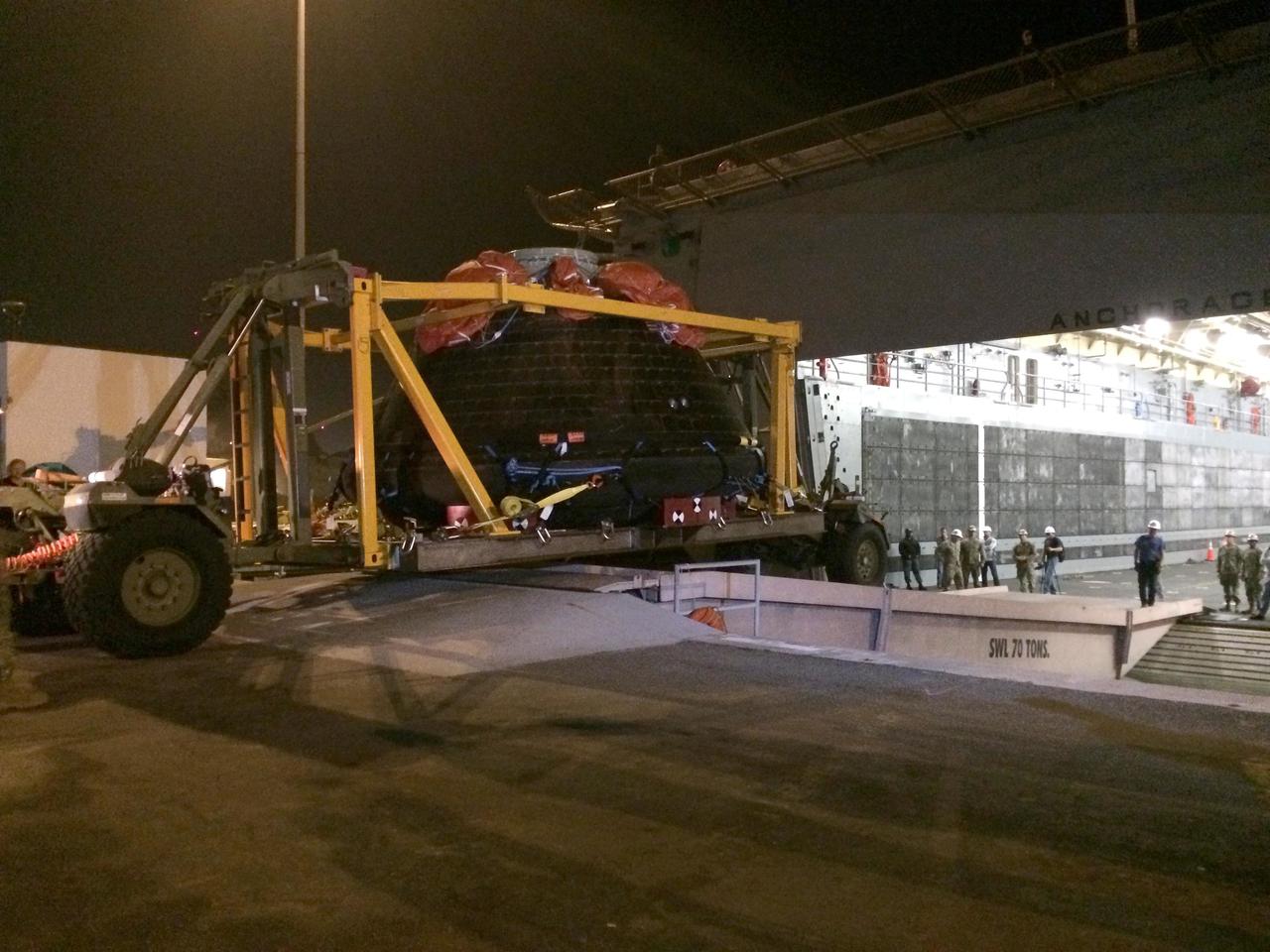
SAN DIEGO, Calif. -- At Naval Base San Diego in California, NASA's Orion spacecraft is being offloaded from the well deck of the USS Anchorage. Orion has been secured in its crew module recovery cradle and will be prepared for return to Kennedy Space Center in Florida. After lifting off at 7:05 a.m. EST on Dec. 5 atop a Delta IV Heavy rocket from Space Launch Complex 37 at Cape Canaveral Air Force Station in Florida, Orion completed a two-orbit, four-and-a-half hour mission to test systems critical to crew safety, including the launch abort system, the heat shield and the parachute system. NASA, the U.S. Navy and Lockheed Martin coordinated efforts to recover Orion after splashdown in the Pacific Ocean. The Ground Systems Development and Operations Program led the recovery efforts. For more information, visit www.nasa.gov/orion Photo credit: NASA/Amber Philman
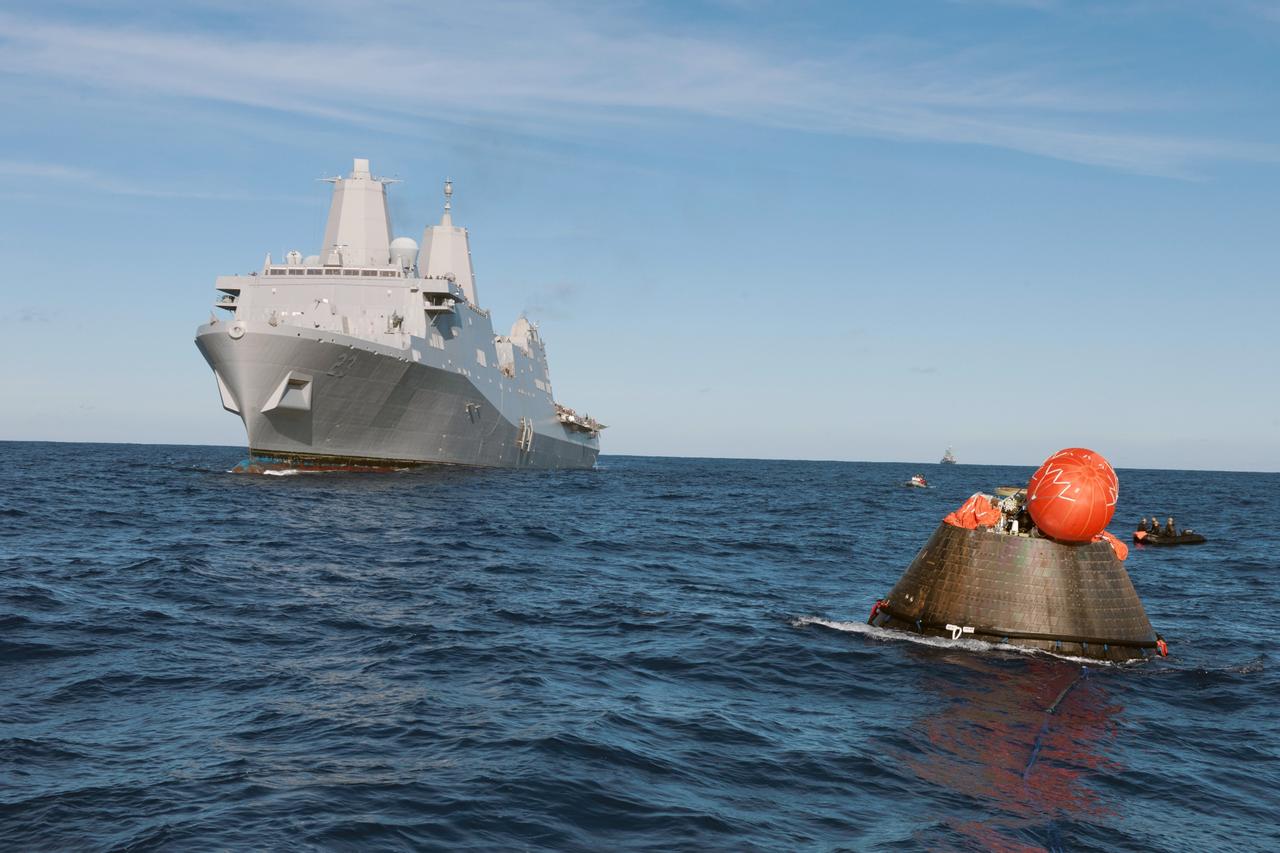
SAN DIEGO, Calif. -- NASA's Orion spacecraft floats in the Pacific Ocean after splashdown from its first flight test in Earth orbit. The USS Anchorage is nearby. NASA, the U.S. Navy and Lockheed Martin are coordinating efforts to recover Orion and secure the spacecraft in the well deck of the USS Anchorage. Orion completed a two-orbit, four-and-a-half hour mission, to test systems critical to crew safety, including the launch abort system, the heat shield and the parachute system. The Ground Systems Development and Operations Program is leading the recovery efforts. For more information, visit www.nasa.gov/orion Photo credit: NASA/Tony Gray
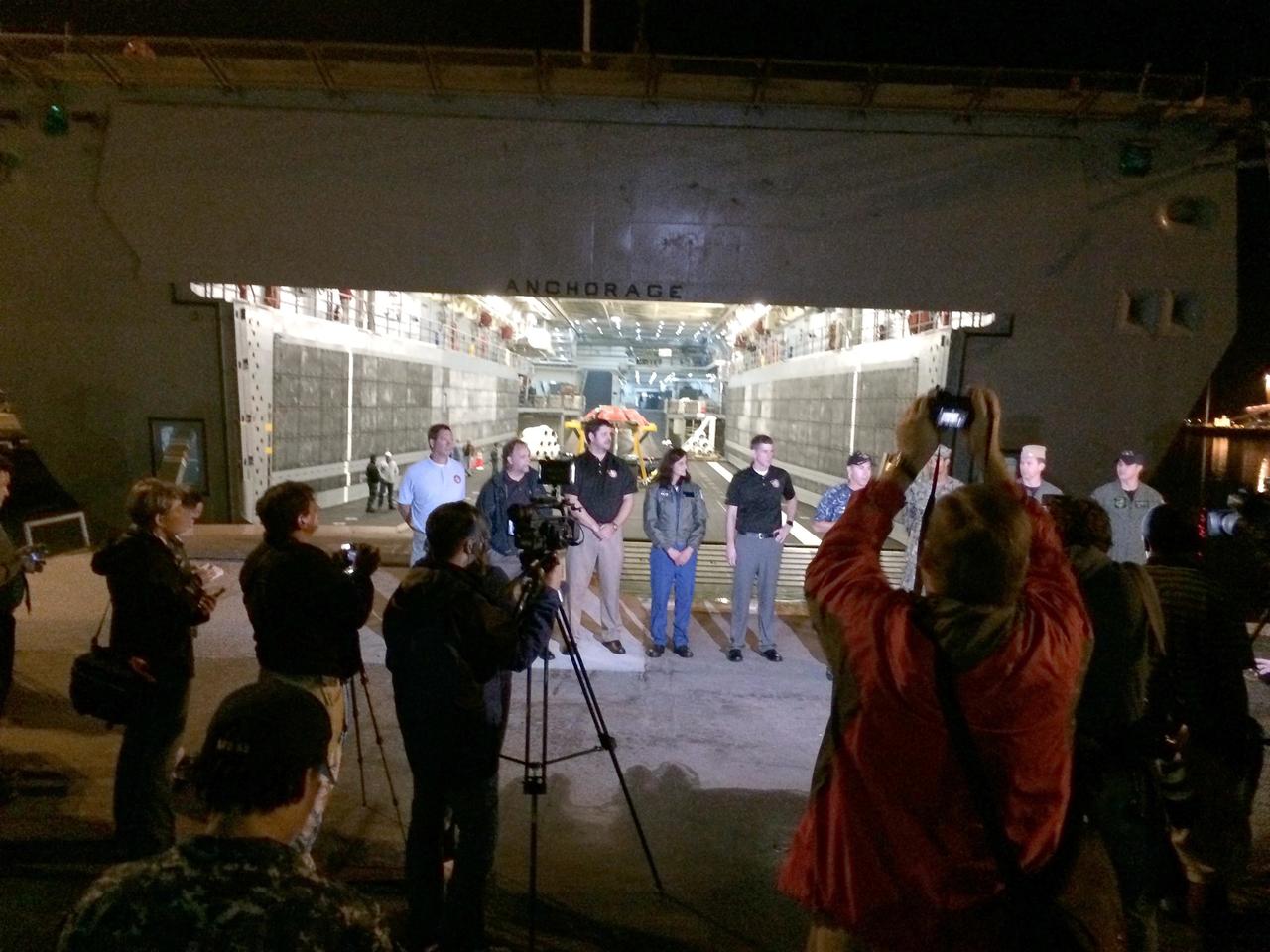
SAN DIEGO, Calif. -- At Naval Base San Diego in California, members of the news media view NASA's Orion spacecraft in the well deck of the USS Anchorage before it is offloaded and prepared for return to Kennedy Space Center in Florida. Speaking to the media are NASA and U.S. Navy officials. After lifting off at 7:05 a.m. EST on Dec. 5 atop a Delta IV Heavy rocket from Space Launch Complex 37 at Cape Canaveral Air Force Station in Florida, Orion completed a two-orbit, four-and-a-half hour mission to test systems critical to crew safety, including the launch abort system, the heat shield and the parachute system. NASA, the U.S. Navy and Lockheed Martin coordinated efforts to recover Orion after splashdown in the Pacific Ocean. The GSDO Program led the recovery efforts. For more information, visit www.nasa.gov/orion Photo credit: NASA/Amber Philman
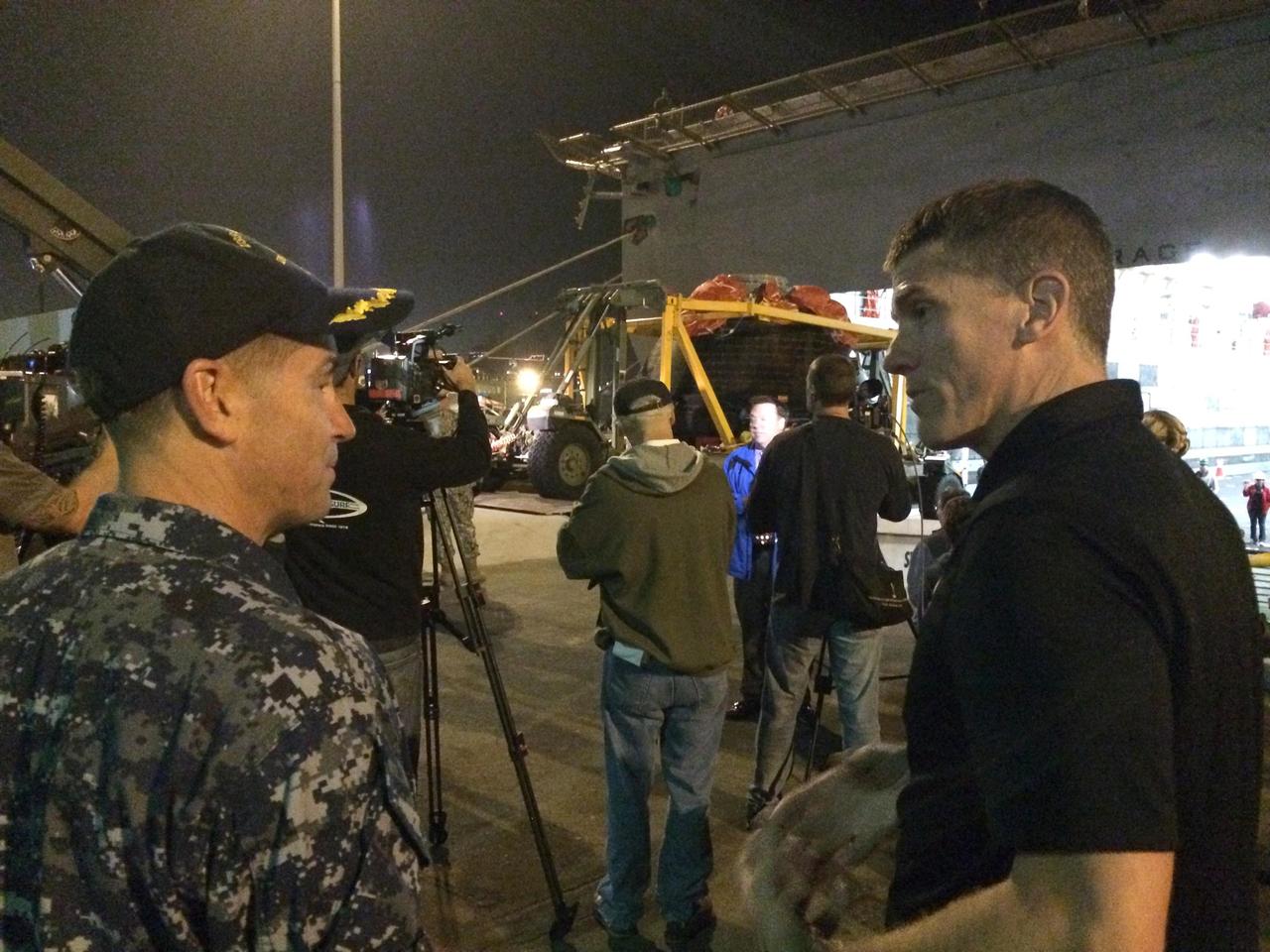
SAN DIEGO, Calif. -- At Naval Base San Diego in California, NASA Recovery Director Jeremy Graeber, right, talks to the commanding officer of the USS Anchorage as members of the news media prepare for viewing of NASA's Orion spacecraft being offloaded from the well deck of the ship. Orion has been secured in its crew module recovery cradle and will be prepared for return to Kennedy Space Center in Florida. After lifting off at 7:05 a.m. EST on Dec. 5 atop a Delta IV Heavy rocket from Space Launch Complex 37 at Cape Canaveral Air Force Station in Florida, Orion completed a two-orbit, four-and-a-half hour mission to test systems critical to crew safety, including the launch abort system, the heat shield and the parachute system. NASA, the U.S. Navy and Lockheed Martin coordinated efforts to recover Orion after splashdown in the Pacific Ocean. The Ground Systems Development and Operations Program is led the recovery efforts. For more information, visit www.nasa.gov/orion Photo credit: NASA/Amber Philman
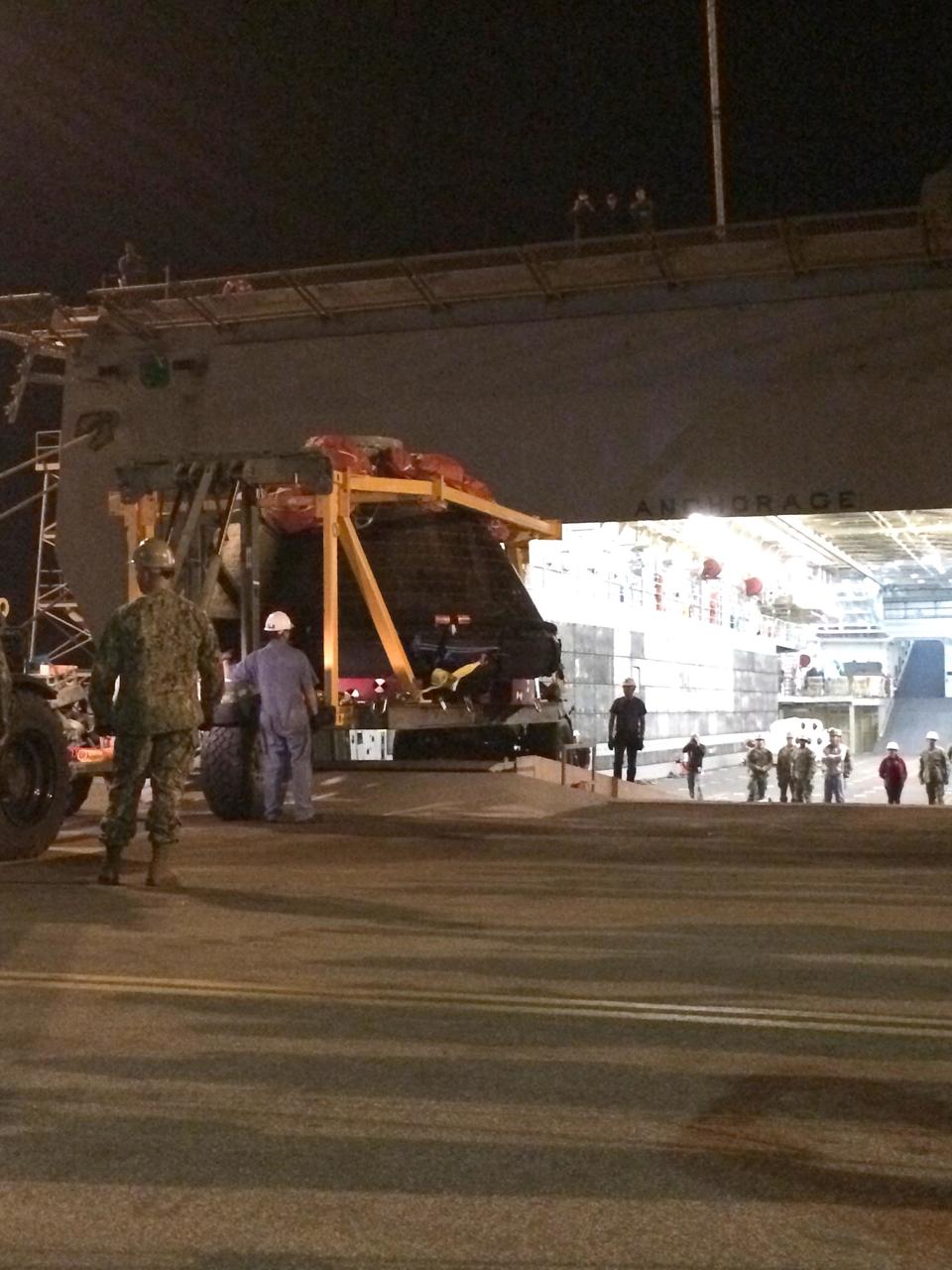
SAN DIEGO, Calif. -- At Naval Base San Diego in California, NASA's Orion spacecraft is being offloaded from the well deck of the USS Anchorage. Orion has been secured in its crew module recovery cradle and will be prepared for return to Kennedy Space Center in Florida. After lifting off at 7:05 a.m. EST on Dec. 5 atop a Delta IV Heavy rocket from Space Launch Complex 37 at Cape Canaveral Air Force Station in Florida, Orion completed a two-orbit, four-and-a-half hour mission to test systems critical to crew safety, including the launch abort system, the heat shield and the parachute system. NASA, the U.S. Navy and Lockheed Martin coordinated efforts to recover Orion after splashdown in the Pacific Ocean. The Ground Systems Development and Operations Program is led the recovery efforts. For more information, visit www.nasa.gov/orion Photo credit: NASA/Amber Philman
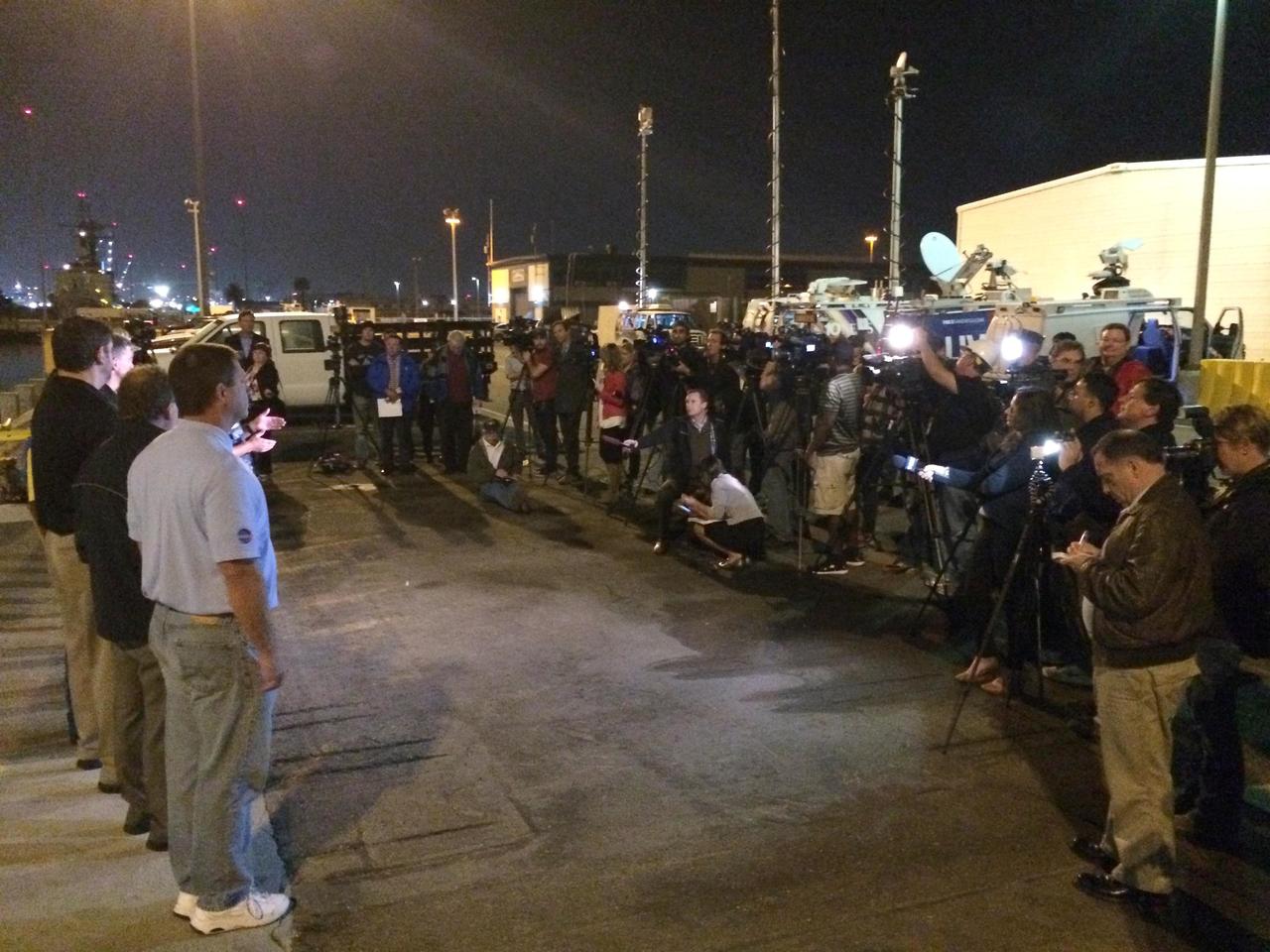
SAN DIEGO, Calif. -- At Naval Base San Diego in California, members of the news media wait to view NASA's Orion spacecraft in the well deck of the USS Anchorage before it is offloaded and prepared for return to Kennedy Space Center in Florida. After lifting off at 7:05 a.m. EST on Dec. 5, atop a Delta IV Heavy rocket from Space Launch Complex 37 at Cape Canaveral Air Force Station in Florida, Orion completed a two-orbit, four-and-a-half hour mission to test systems critical to crew safety, including the launch abort system, the heat shield and the parachute system. NASA, the U.S. Navy and Lockheed Martin coordinated efforts to recover Orion after splashdown in the Pacific Ocean. The Ground Systems Development and Operations Program led the recovery efforts. For more information, visit www.nasa.gov/orion Photo credit: NASA/Amber Philman
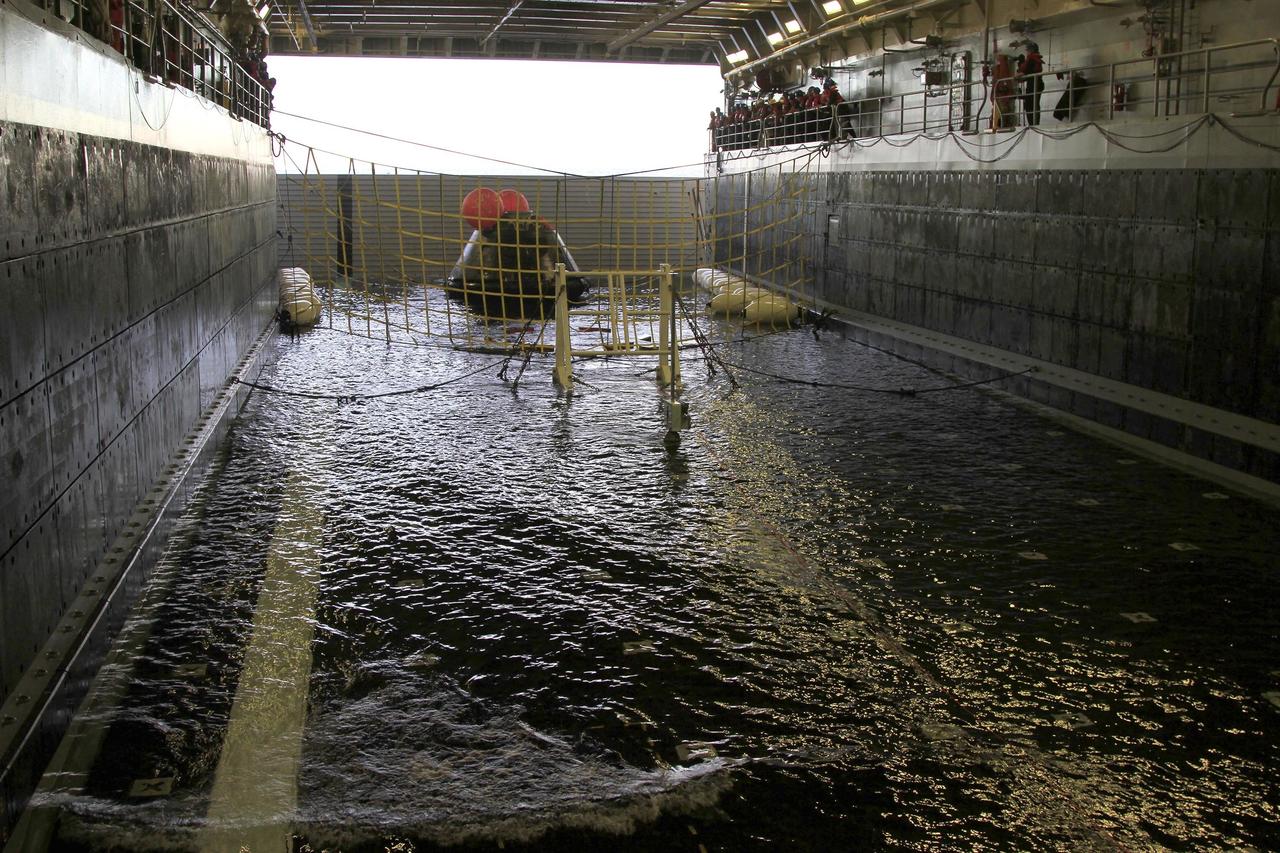
SAN DIEGO, Calif. -- After splashdown, NASA's Orion spacecraft has been recovered and is positioned on rubber "speed bumps" inside the flooded well deck of the USS Anchorage in the Pacific Ocean about 600 miles off the coast of San Diego, California. After lifting off at 7:05 a.m. EST atop a Delta IV Heavy rocket from Space Launch Complex 37 at Cape Canaveral Air Force Station in Florida, Orion completed a two-orbit, four-and-a-half hour mission to test systems critical to crew safety, including the launch abort system, the heat shield and the parachute system. NASA, the U.S. Navy and Lockheed Martin coordinated efforts to recover Orion after splashdown. The Ground Systems Development and Operations Program is leading the recovery efforts. For more information, visit www.nasa.gov/orion Photo credit: NASA/Cory Huston
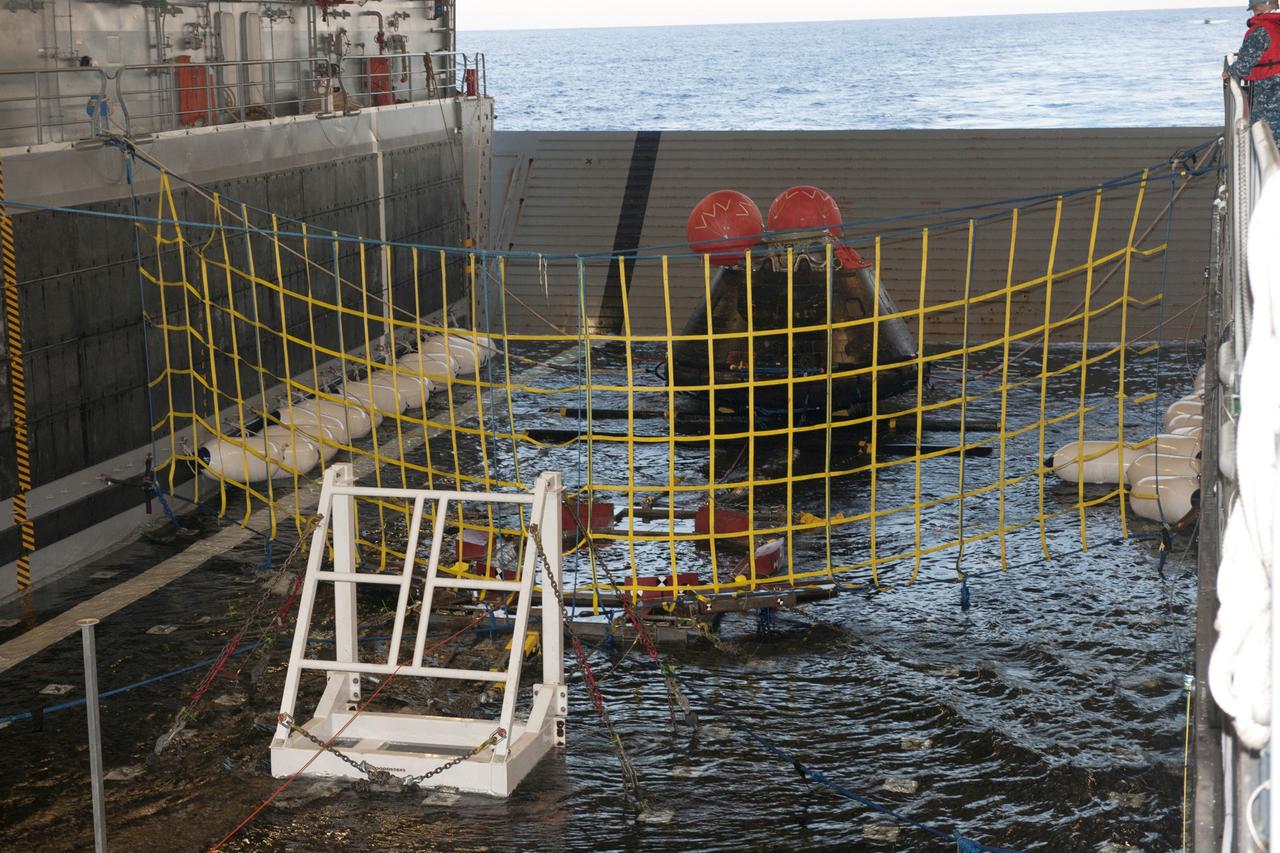
SAN DIEGO, Calif. -- NASA's Orion spacecraft is on rubber bumpers in the flooded well deck of the USS Anchorage in the Pacific Ocean about 600 miles off the coast of San Diego, California. Orion splashed down after its first flight test in Earth orbit. NASA, the U.S. Navy and Lockheed Martin are coordinating efforts to recover Orion and secure the spacecraft in the well deck of the USS Anchorage. Orion completed a two-orbit, four-and-a-half hour mission, to test systems critical to crew safety, including the launch abort system, the heat shield and the parachute system. The Ground Systems Development and Operations Program is leading the recovery efforts. For more information, visit www.nasa.gov/orion Photo credit: NASA/Kenny Allen
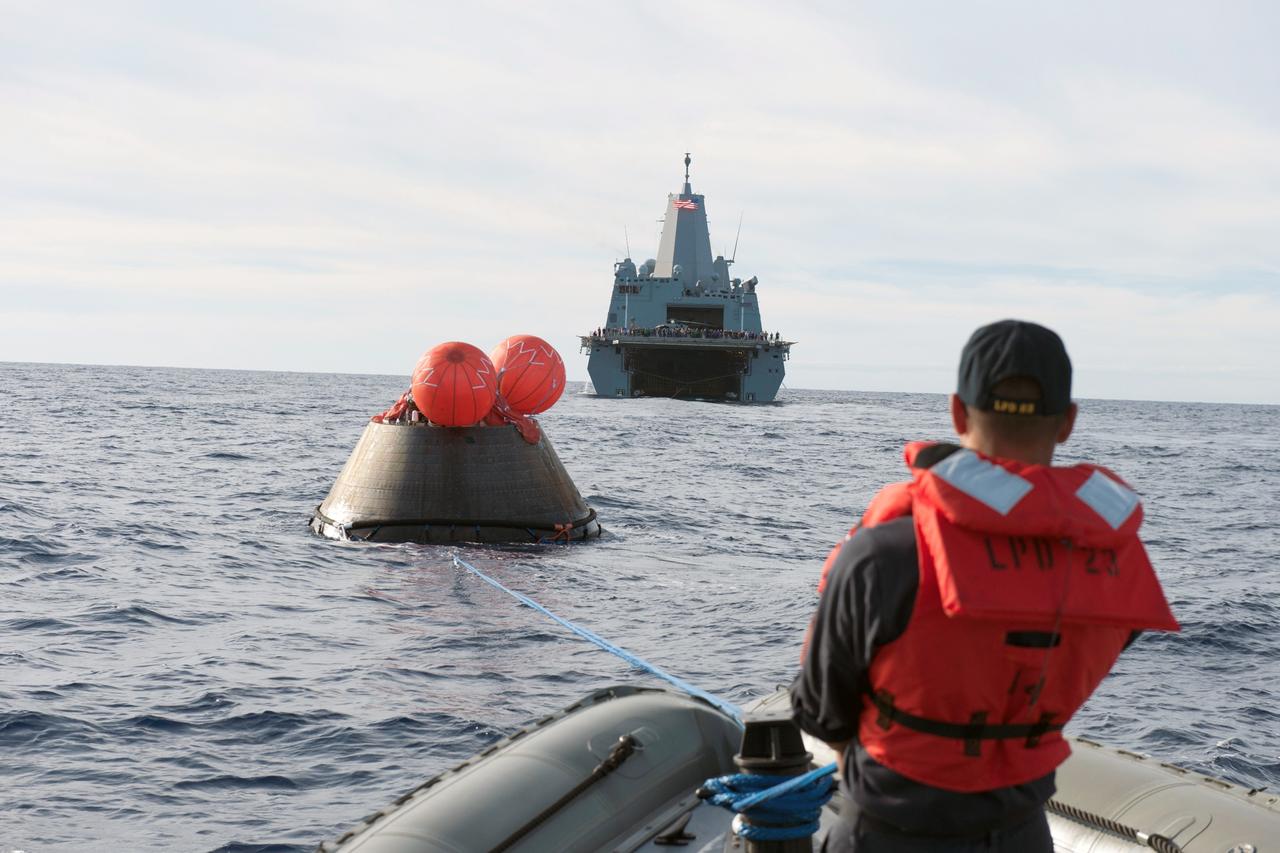
SAN DIEGO, Calif. -- U.S. Navy personnel aboard a rigid hull inflatable boat help recover NASA's Orion spacecraft following its splashdown in the Pacific Ocean after its first flight test in Earth orbit. The USS Anchorage is in the background. NASA, the U.S. Navy and Lockheed Martin are coordinating efforts to recover Orion and secure the spacecraft in the well deck of the USS Anchorage. Orion completed a two-orbit, four-and-a-half hour mission, to test systems critical to crew safety, including the launch abort system, the heat shield and the parachute system. The Ground Systems Development and Operations Program is leading the recovery efforts. For more information, visit www.nasa.gov/orion Photo credit: NASA/Tony Gray
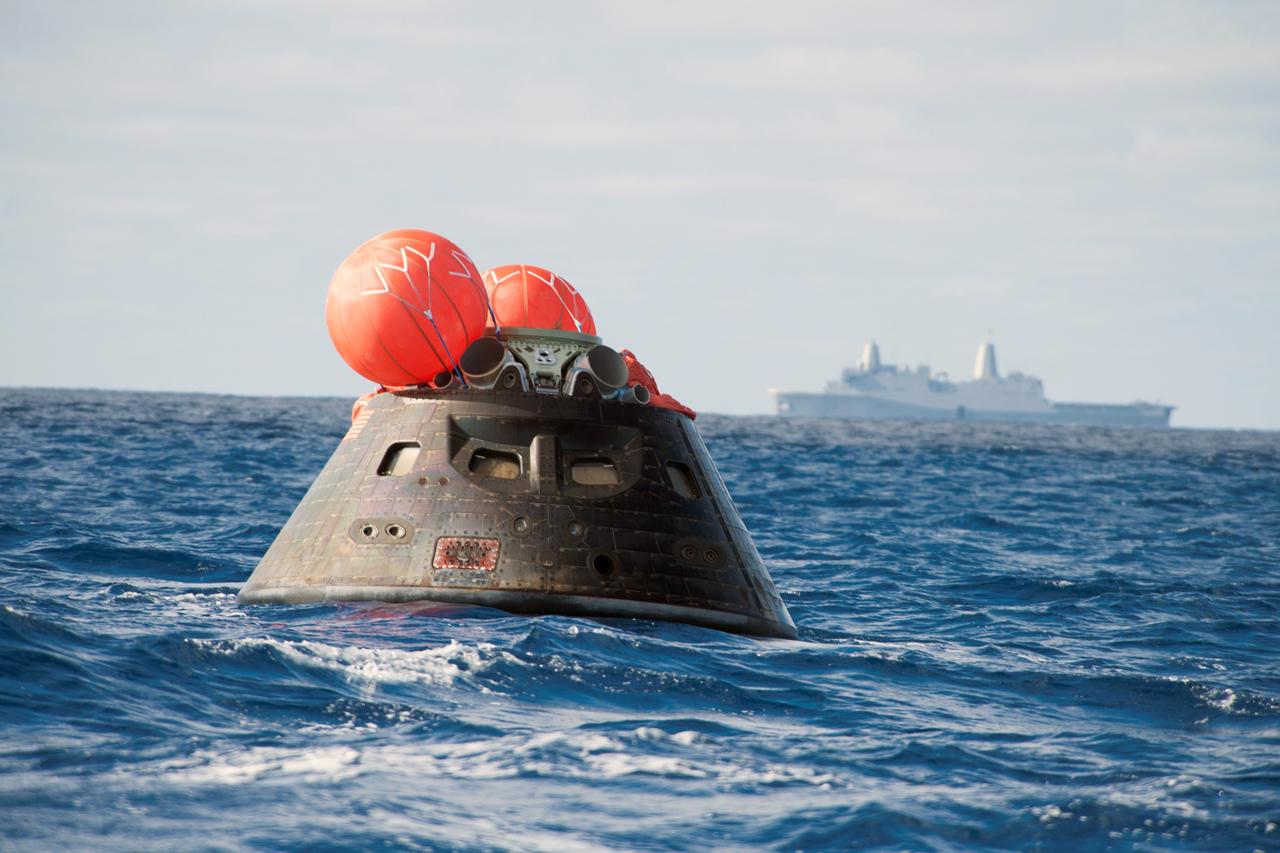
SAN DIEGO, Calif. -- NASA's Orion spacecraft floats in the Pacific Ocean after splashdown from its first flight test in Earth orbit. The USS Anchorage is in the background. NASA, the U.S. Navy and Lockheed Martin are coordinating efforts to recover Orion and secure the spacecraft in the well deck of the USS Anchorage. Orion completed a two-orbit, four-and-a-half hour mission, to test systems critical to crew safety, including the launch abort system, the heat shield and the parachute system. The Ground Systems Development and Operations Program is leading the recovery efforts. For more information, visit www.nasa.gov/orion Photo credit: NASA/Tony Gray
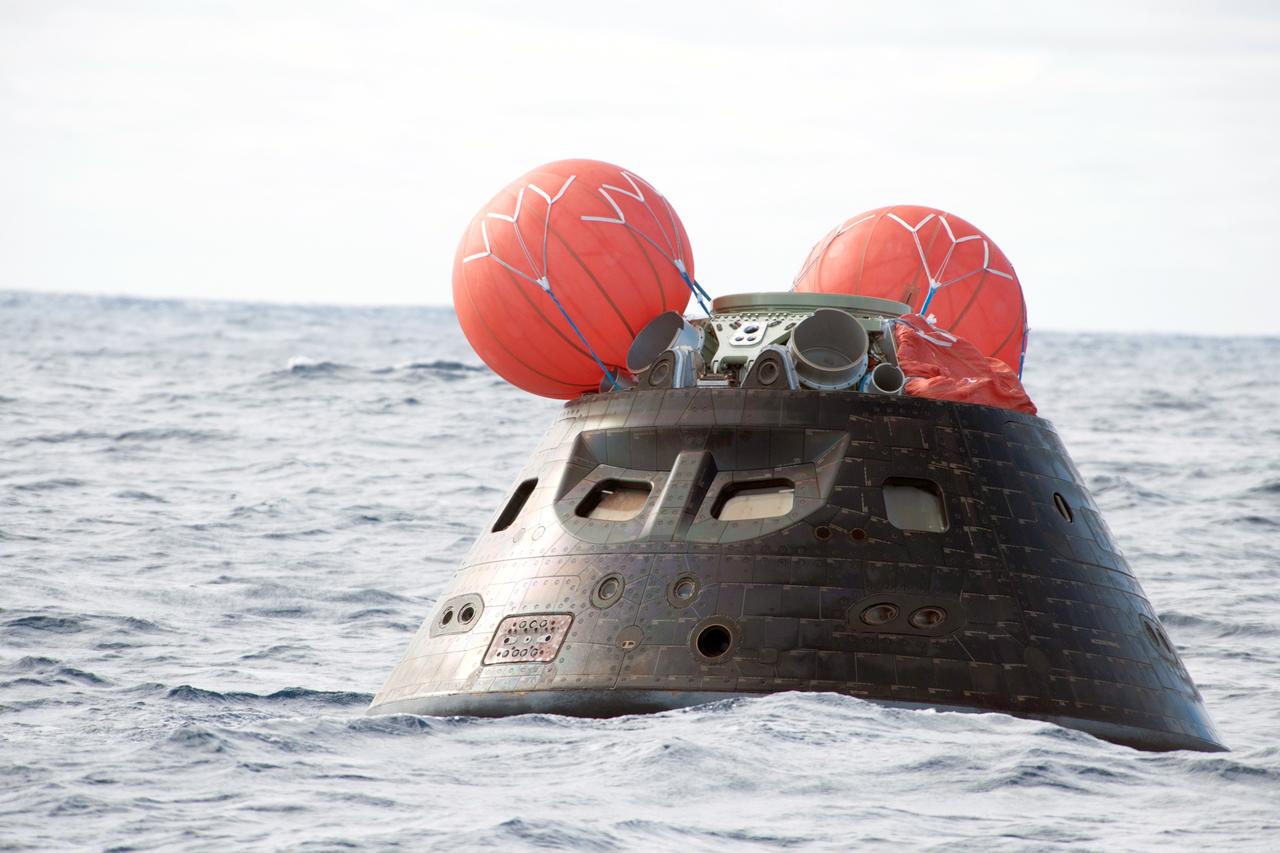
SAN DIEGO, Calif. -- NASA's Orion spacecraft floats in the Pacific Ocean after splashdown from its first flight test in Earth orbit. The spacecraft completed a two-orbit, four-and-a-half-hour mission in Earth orbit. NASA, the U.S. Navy and Lockheed Martin are coordinating efforts to recover Orion, the forward bay cover and main parachutes. Orion will be towed in and secure in the well deck of the nearby USS Anchorage. Orion's mission tested systems critical to crew safety, including the launch abort system, the heat shield and the parachute system. The Ground Systems Development and Operations Program is leading the recovery efforts. For more information, visit www.nasa.gov/orion Photo credit: NASA/Tony Gray
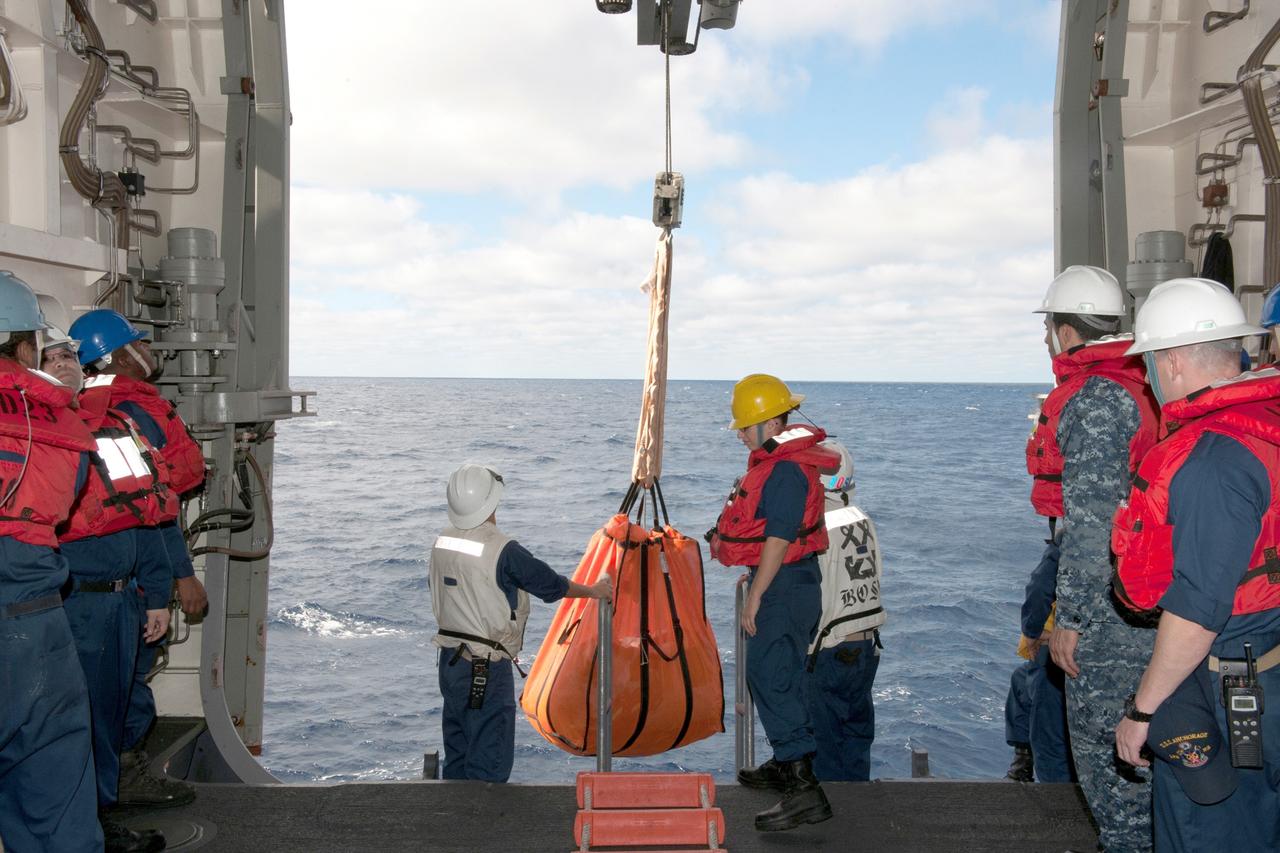
SAN DIEGO, Calif. -- U.S. Navy personnel aboard the USS Anchorage prepare for recovery of NASA's Orion spacecraft from the Pacific Ocean about 600 miles off the coast of San Diego, California. Orion splashed down after its first flight test in Earth orbit. NASA, the U.S. Navy and Lockheed Martin are coordinating efforts to recover Orion and secure the spacecraft in the well deck of the USS Anchorage. Orion completed a two-orbit, four-and-a-half hour mission, to test systems critical to crew safety, including the launch abort system, the heat shield and the parachute system. The Ground Systems Development and Operations Program is leading the recovery efforts. For more information, visit www.nasa.gov/orion Photo credit: NASA/Kenny Allen
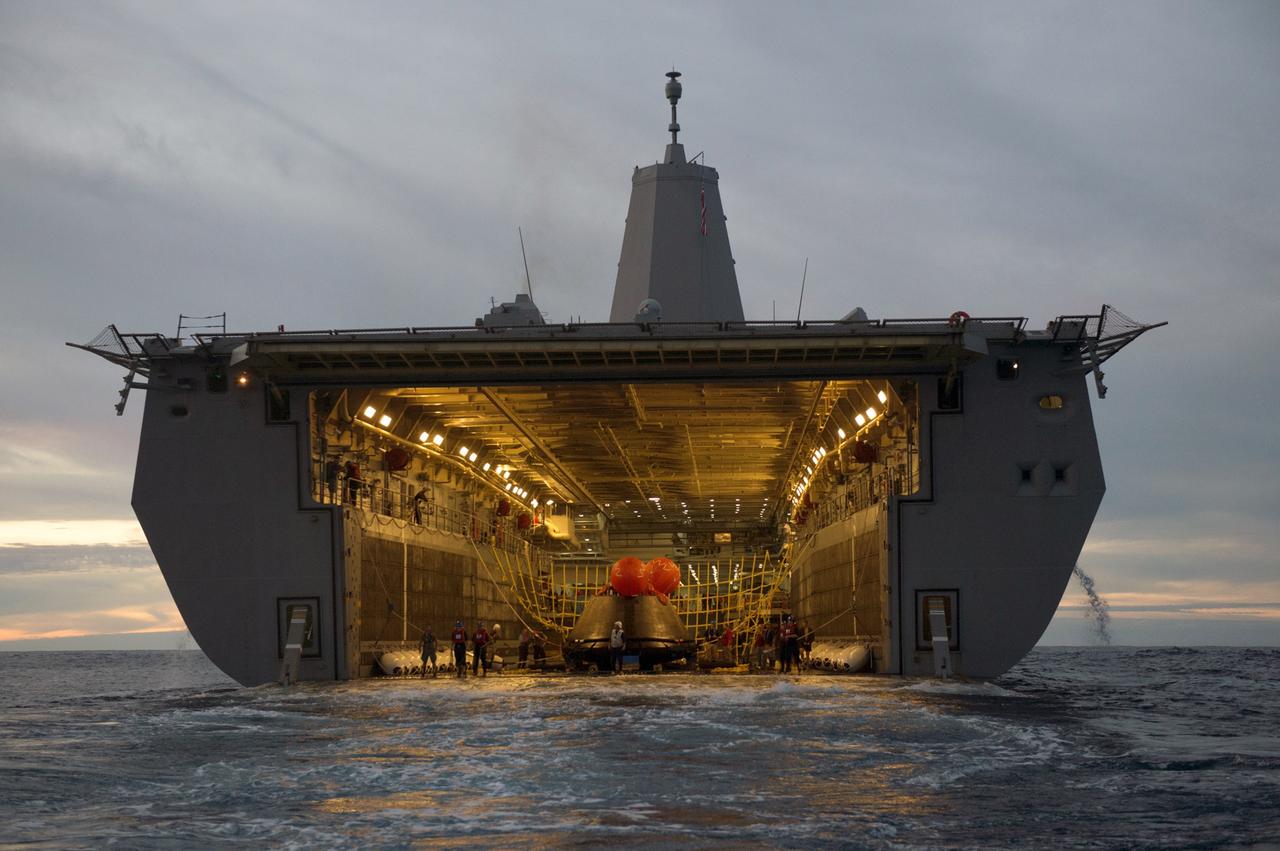
SAN DIEGO, Calif. -- The Orion crew module is recovered after splashdown in the Pacific Ocean about 600 miles off the coast of San Diego, California. NASA, the U.S. Navy and Lockheed Martin coordinated efforts to recover Orion and secure the spacecraft inside the well deck of the USS Anchorage. After lifting off at 7:05 a.m. EST atop a Delta IV Heavy rocket from Space Launch Complex 37 at Cape Canaveral Air Force Station in Florida, NASA's Orion spacecraft completed a two-orbit, four-and-a-half hour mission to test systems critical to crew safety, including the launch abort system, the heat shield and the parachute system. The Ground Systems Development and Operations Program is leading the recovery efforts. For more information, visit www.nasa.gov/orion Photo credit: Courtesy of U.S. Navy
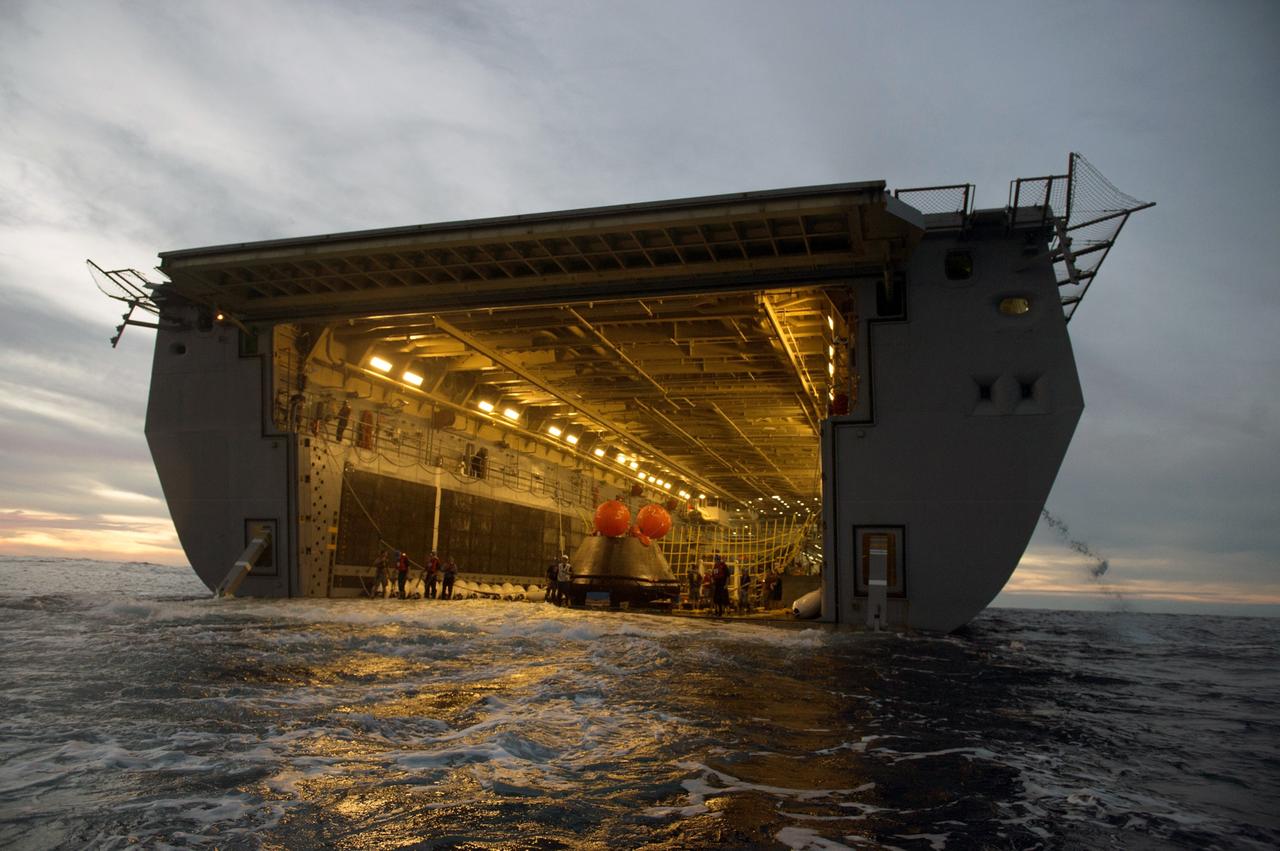
SAN DIEGO, Calif. -- The Orion crew module is recovered after splashdown in the Pacific Ocean about 600 miles off the coast of San Diego, California. NASA, the U.S. Navy and Lockheed Martin coordinated efforts to recover Orion and secure the spacecraft inside the well deck of the USS Anchorage. After lifting off at 7:05 a.m. EST atop a Delta IV Heavy rocket from Space Launch Complex 37 at Cape Canaveral Air Force Station in Florida, NASA's Orion spacecraft completed a two-orbit, four-and-a-half hour mission to test systems critical to crew safety, including the launch abort system, the heat shield and the parachute system. The Ground Systems Development and Operations Program is leading the recovery efforts. For more information, visit www.nasa.gov/orion Photo credit: Courtesy of U.S. Navy
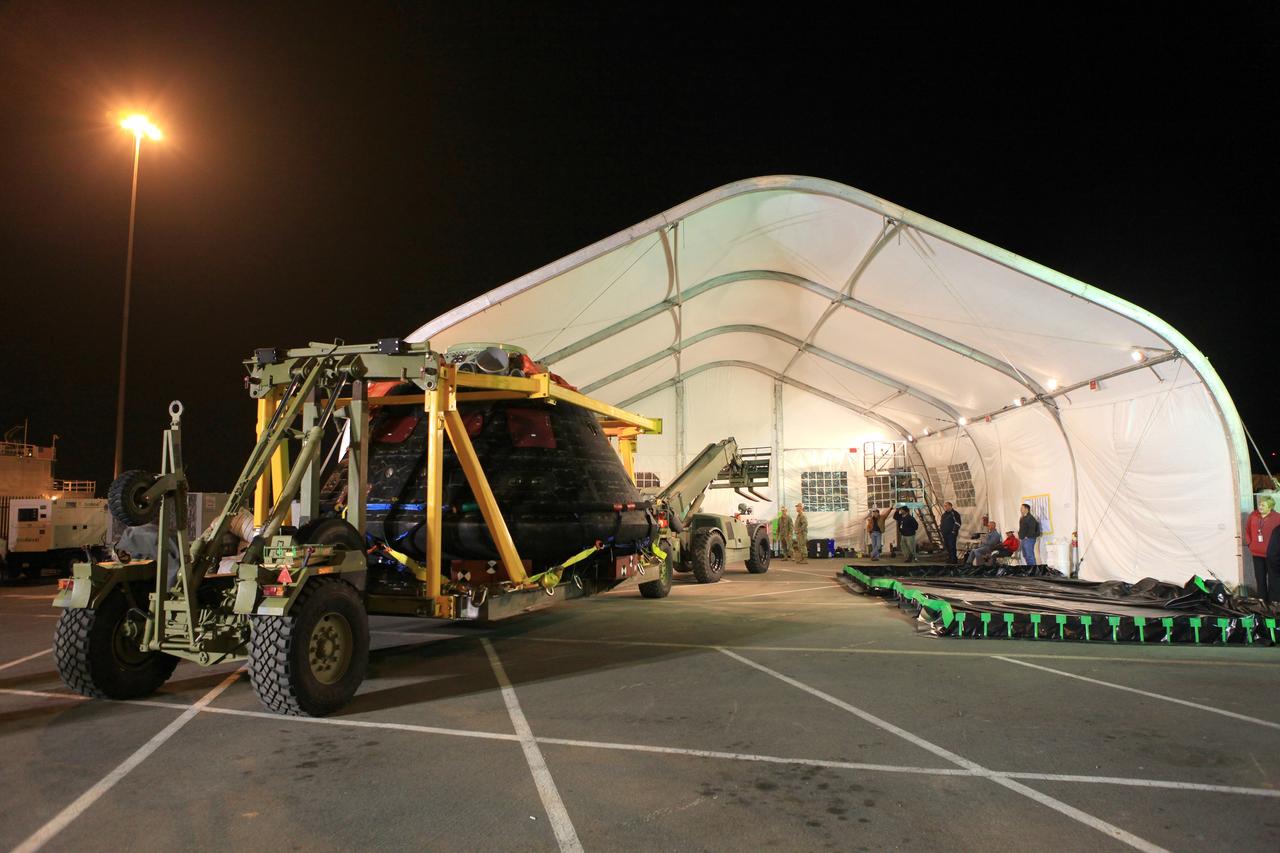
SAN DIEGO, Calif. -- The Orion crew module is being moved into a covered structure at the Mole Pier at Naval Base San Diego in California where it will be prepared for return to NASA's Kennedy Space Center in Florida. Orion was secured on its crew module recovery cradle in the well deck of the USS Anchorage after it was recovered from the Pacific Ocean. After lifting off at 7:05 a.m. EST on Dec. 5, atop a Delta IV Heavy rocket from Space Launch Complex 37 at Cape Canaveral Air Force Station in Florida, Orion completed a two-orbit, four-and-a-half hour mission to test systems critical to crew safety, including the launch abort system, the heat shield and the parachute system. NASA, the U.S. Navy and Lockheed Martin coordinated efforts to recover Orion after splashdown in the Pacific Ocean. The Ground Systems Development and Operations Program led the recovery efforts. For more information, visit www.nasa.gov/orion Photo credit: NASA/Cory Huston
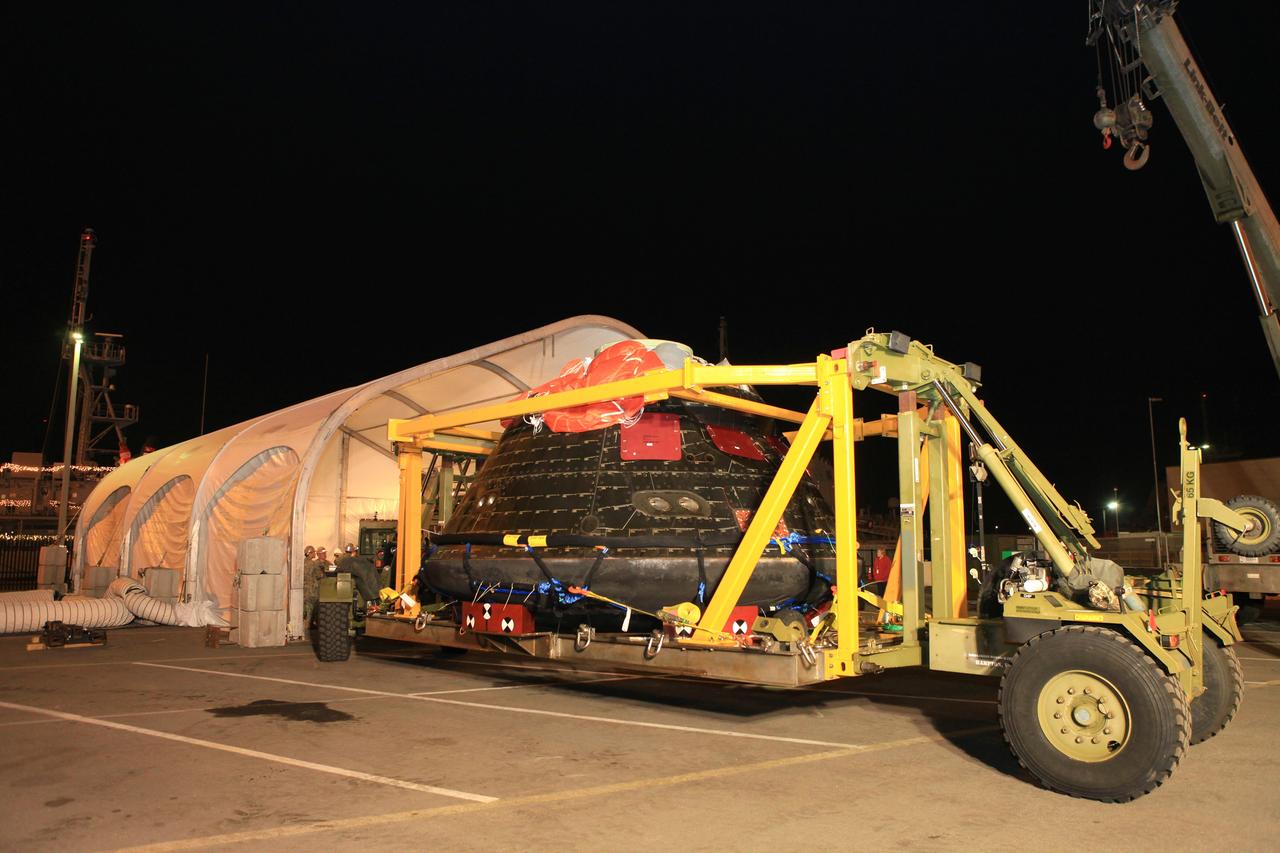
SAN DIEGO, Calif. -- The Orion crew module has been transported to the Mole Pier at Naval Base San Diego in California where it will be prepared for return to NASA's Kennedy Space Center in Florida. Orion was secured on its crew module recovery cradle in the well deck of the USS Anchorage after it was recovered from the Pacific Ocean. After lifting off at 7:05 a.m. EST on Dec. 5, atop a Delta IV Heavy rocket from Space Launch Complex 37 at Cape Canaveral Air Force Station in Florida, Orion completed a two-orbit, four-and-a-half hour mission to test systems critical to crew safety, including the launch abort system, the heat shield and the parachute system. NASA, the U.S. Navy and Lockheed Martin coordinated efforts to recover Orion after splashdown in the Pacific Ocean. The Ground Systems Development and Operations Program led the recovery efforts. For more information, visit www.nasa.gov/orion Photo credit: NASA/Cory Huston
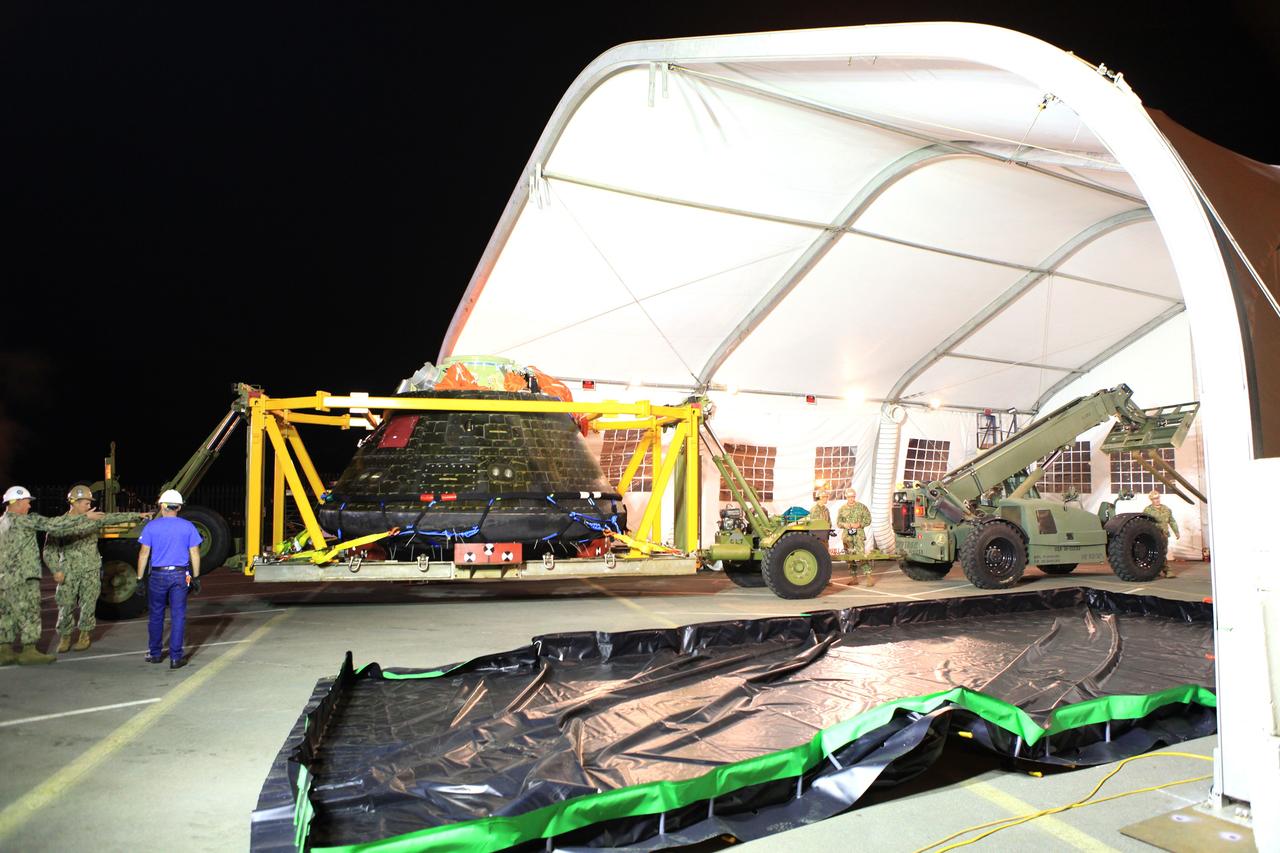
SAN DIEGO, Calif. -- The Orion crew module is being moved into a covered structure at the Mole Pier at Naval Base San Diego in California where it will be prepared for return to NASA's Kennedy Space Center in Florida. Orion was secured on its crew module recovery cradle in the well deck of the USS Anchorage after it was recovered from the Pacific Ocean. After lifting off at 7:05 a.m. EST on Dec. 5, atop a Delta IV Heavy rocket from Space Launch Complex 37 at Cape Canaveral Air Force Station in Florida, Orion completed a two-orbit, four-and-a-half hour mission to test systems critical to crew safety, including the launch abort system, the heat shield and the parachute system. NASA, the U.S. Navy and Lockheed Martin coordinated efforts to recover Orion after splashdown in the Pacific Ocean. The Ground Systems Development and Operations Program led the recovery efforts. For more information, visit www.nasa.gov/orion Photo credit: NASA/Cory Huston