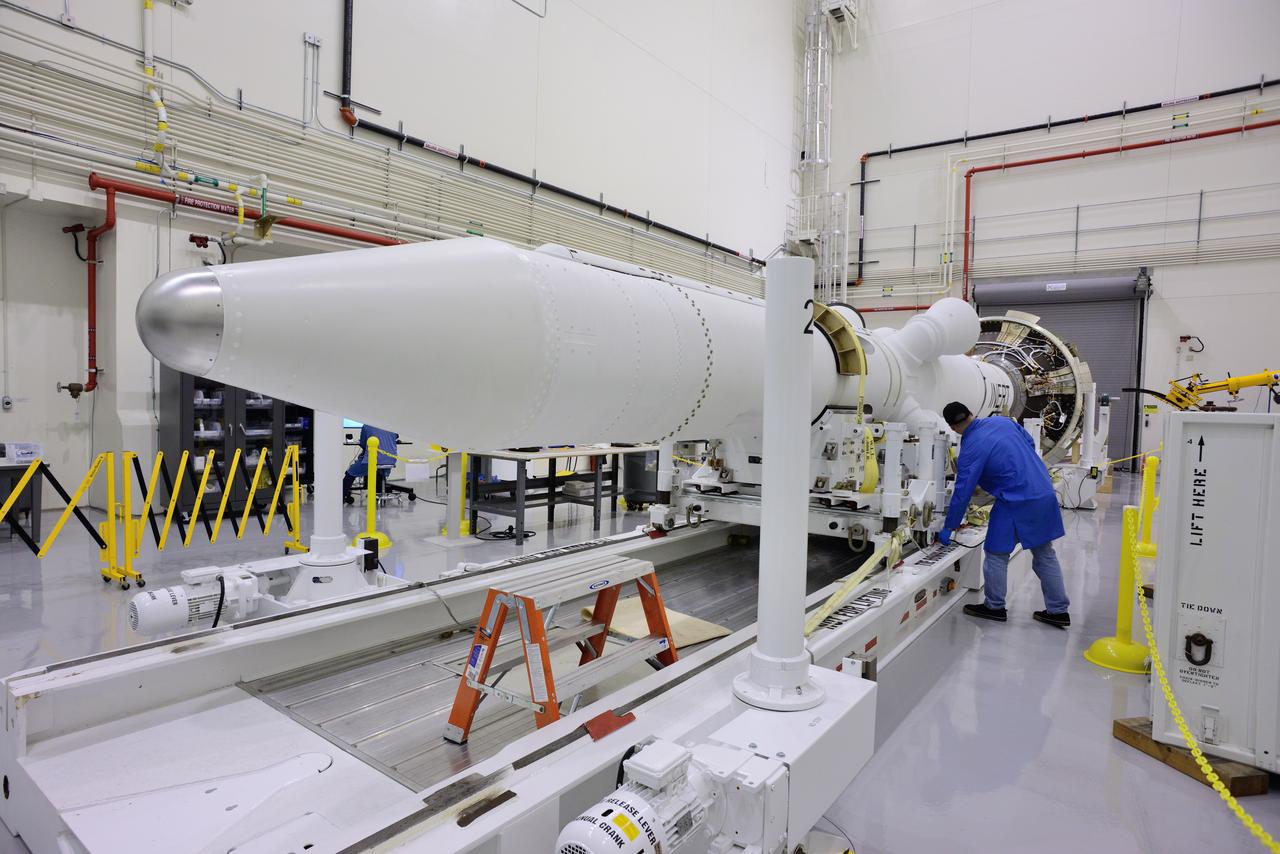
The Orion launch abort system for Exploration Flight Test-1 (EFT-1) is assembled in the Launch Abort System Facility (LASF) at Kennedy Space Center on March 20, 2014. Part of Batch image transfer from Flickr.
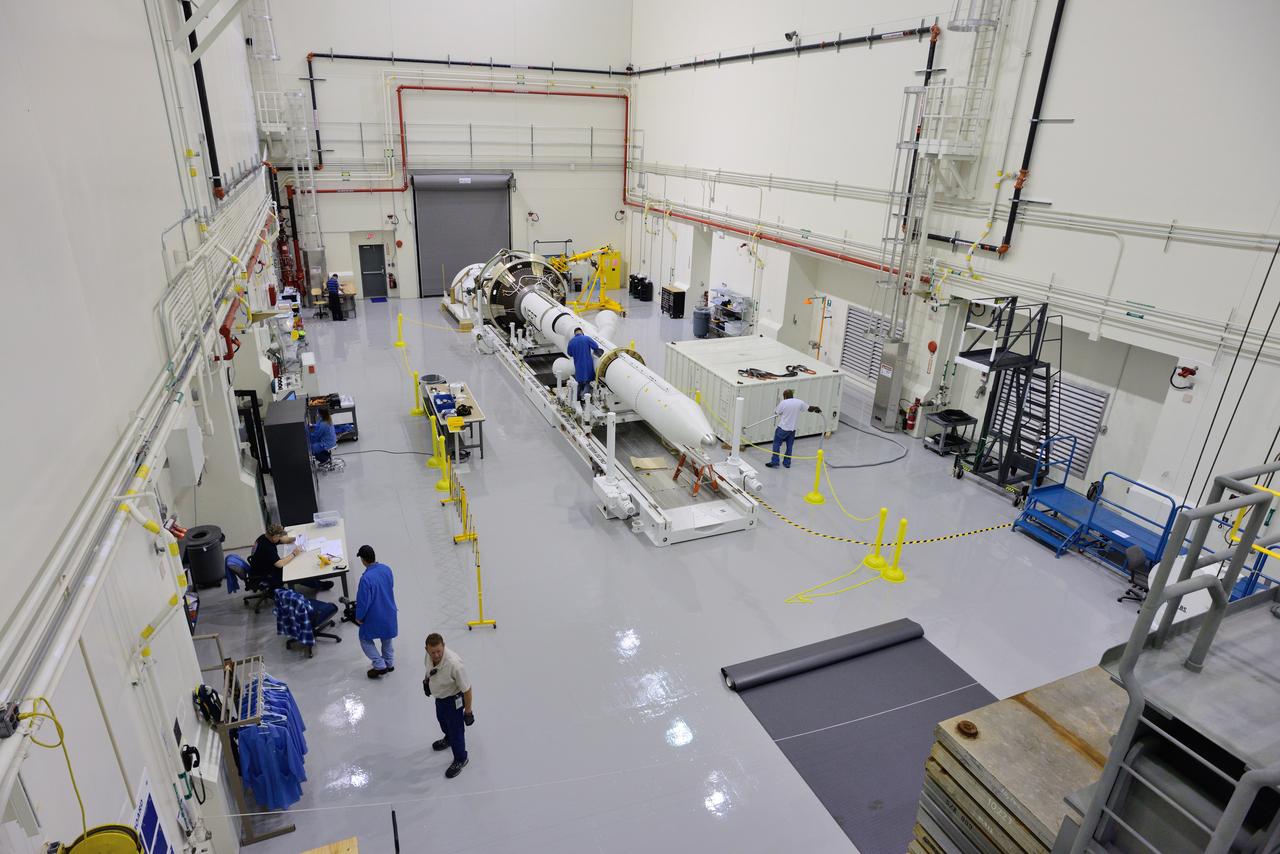
The Orion launch abort system for Exploration Flight Test-1 (EFT-1) is assembled in the Launch Abort System Facility (LASF) at Kennedy Space Center on March 20, 2014. Part of Batch image transfer from Flickr.
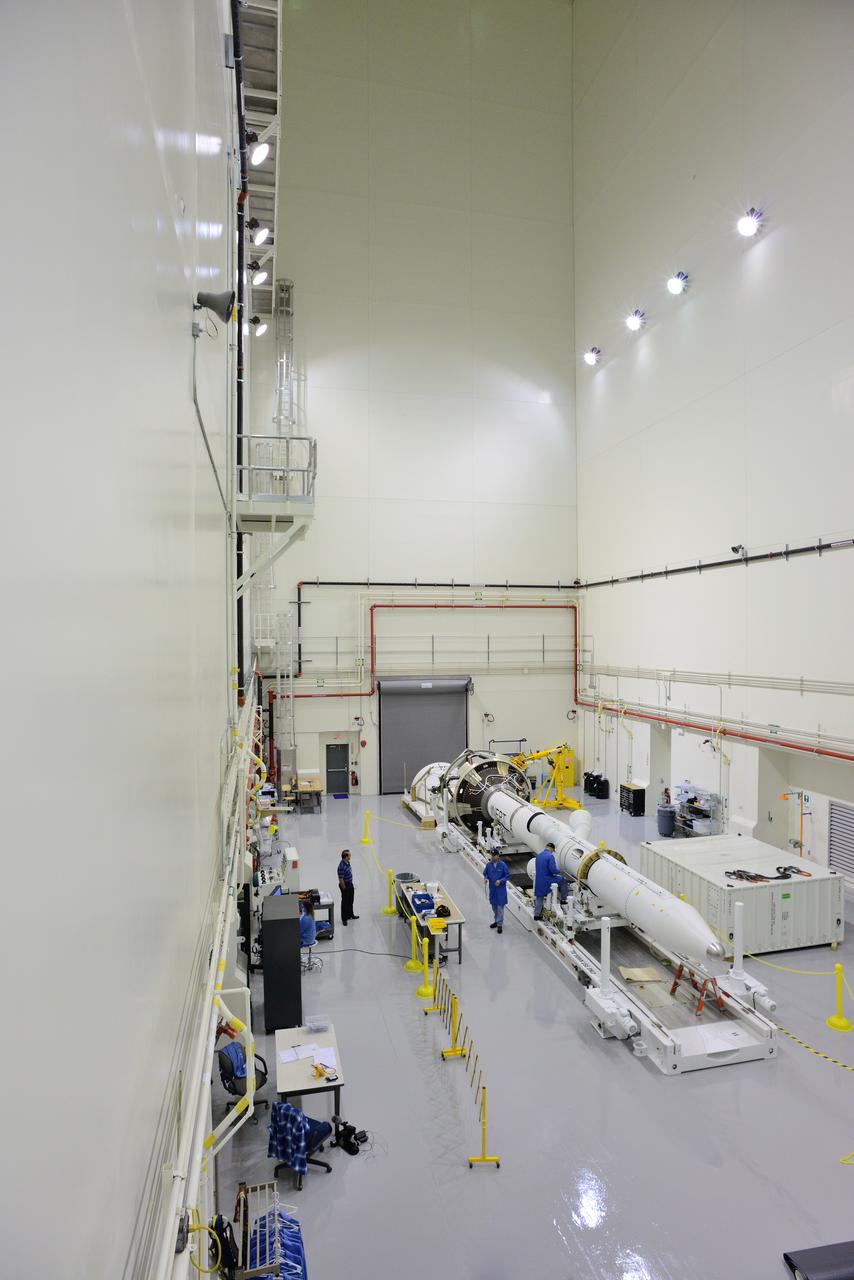
The Orion launch abort system for Exploration Flight Test-1 (EFT-1) is assembled in the Launch Abort System Facility (LASF) at Kennedy Space Center on March 20, 2014. Part of Batch image transfer from Flickr.
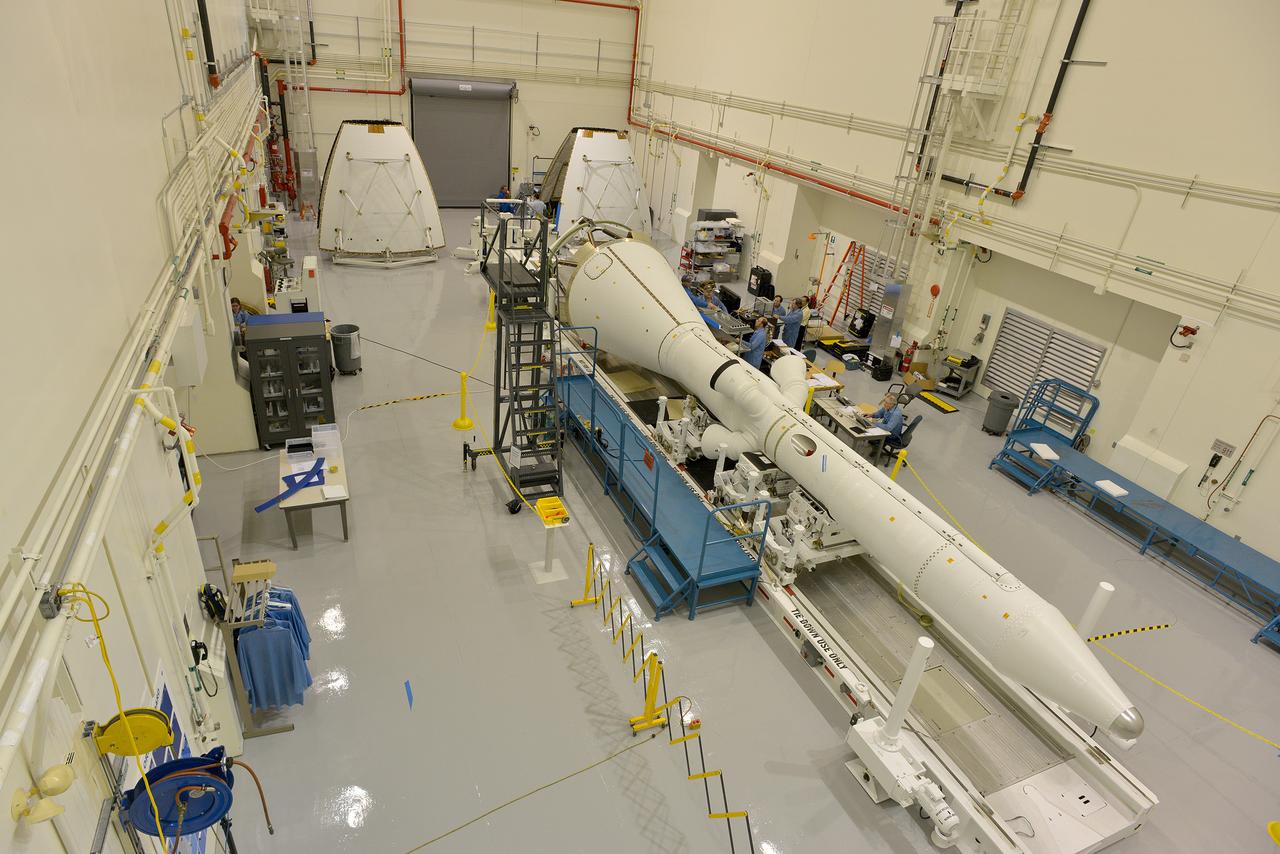
The Orion Exploration Flight Test-1 (EFT-1) launch abort system is completed in the Launch Abort System Facility (LASF) at Kennedy Space Center on June 9, 2014. Part of Batch image transfer from Flickr.
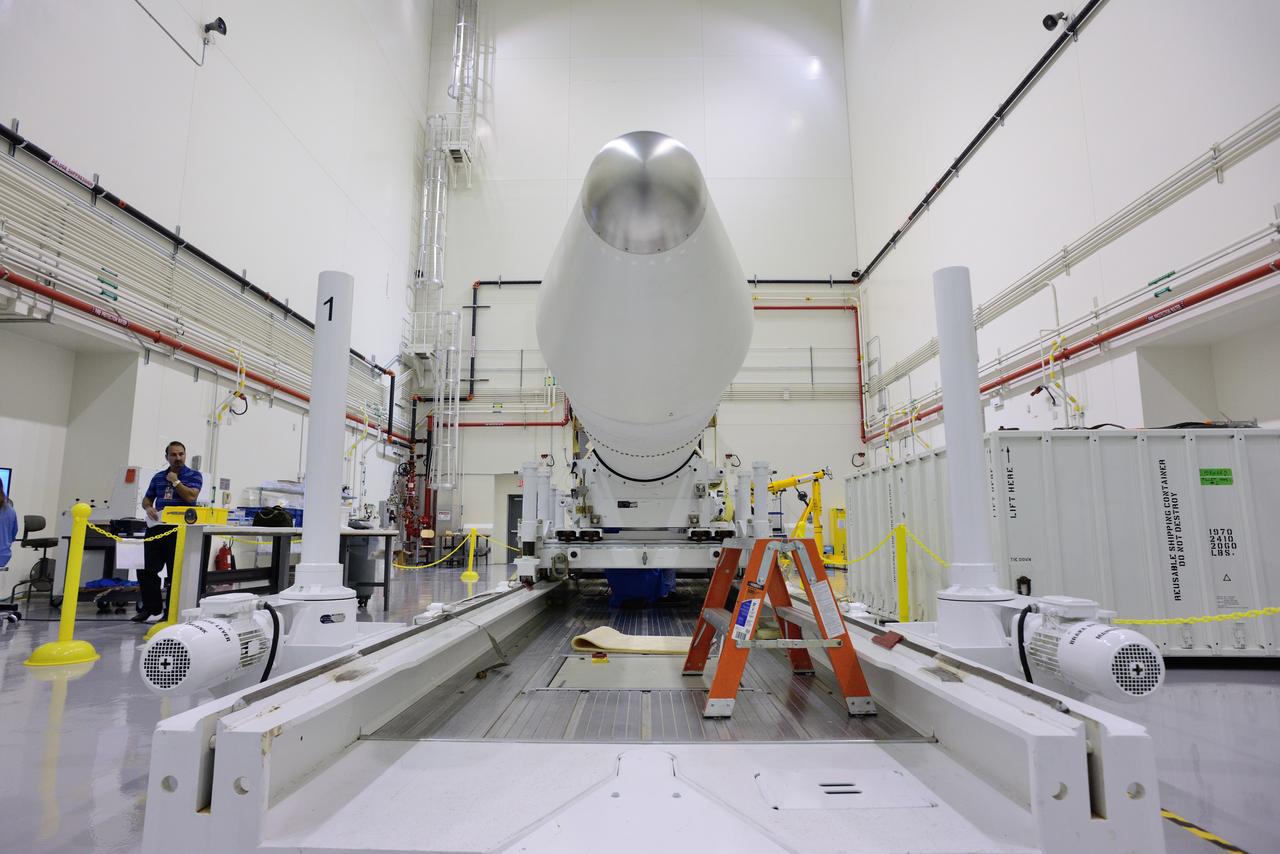
The Orion launch abort system for Exploration Flight Test-1 (EFT-1) is assembled in the Launch Abort System Facility (LASF) at Kennedy Space Center on March 20, 2014. Part of Batch image transfer from Flickr.
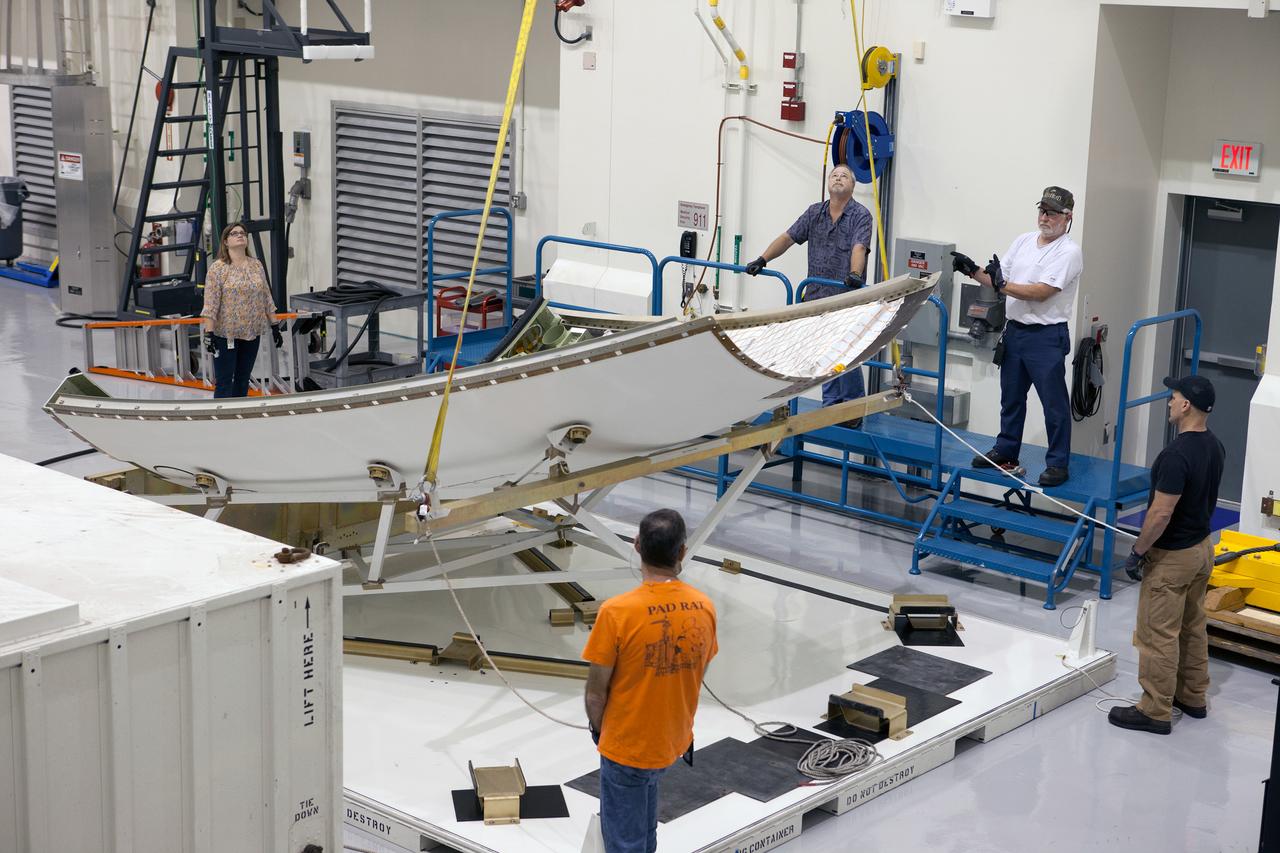
The launch abort system ogive panels are prepared for installation onto the Orion Exploration Flight Test-1 (EFT-1) launch abort system in the Launch Abort System Facility (LASF) at Kennedy Space Center on April 16, 2014. Part of Batch image transfer from Flickr.
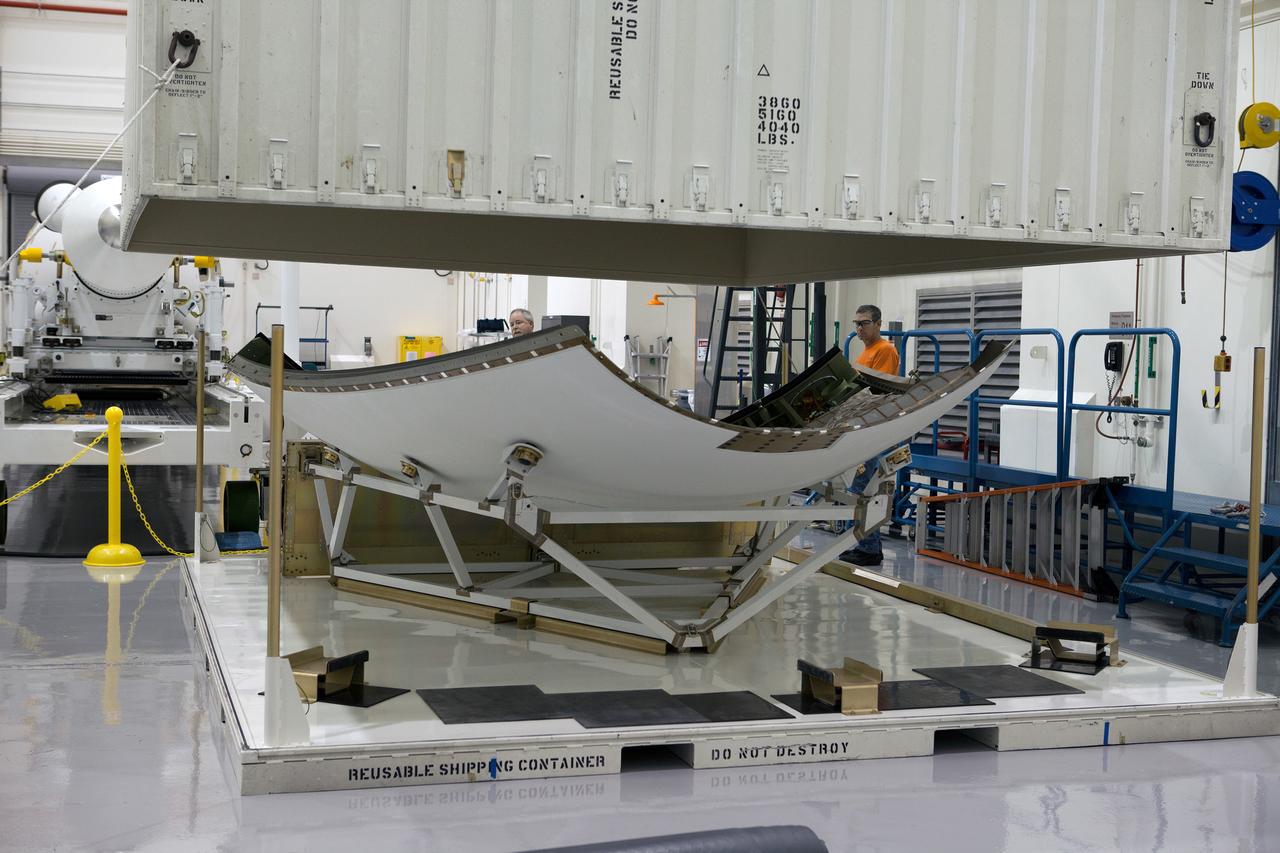
The launch abort system ogive panels are prepared for installation onto the Orion Exploration Flight Test-1 (EFT-1) launch abort system in the Launch Abort System Facility (LASF) at Kennedy Space Center on April 16, 2014. Part of Batch image transfer from Flickr.
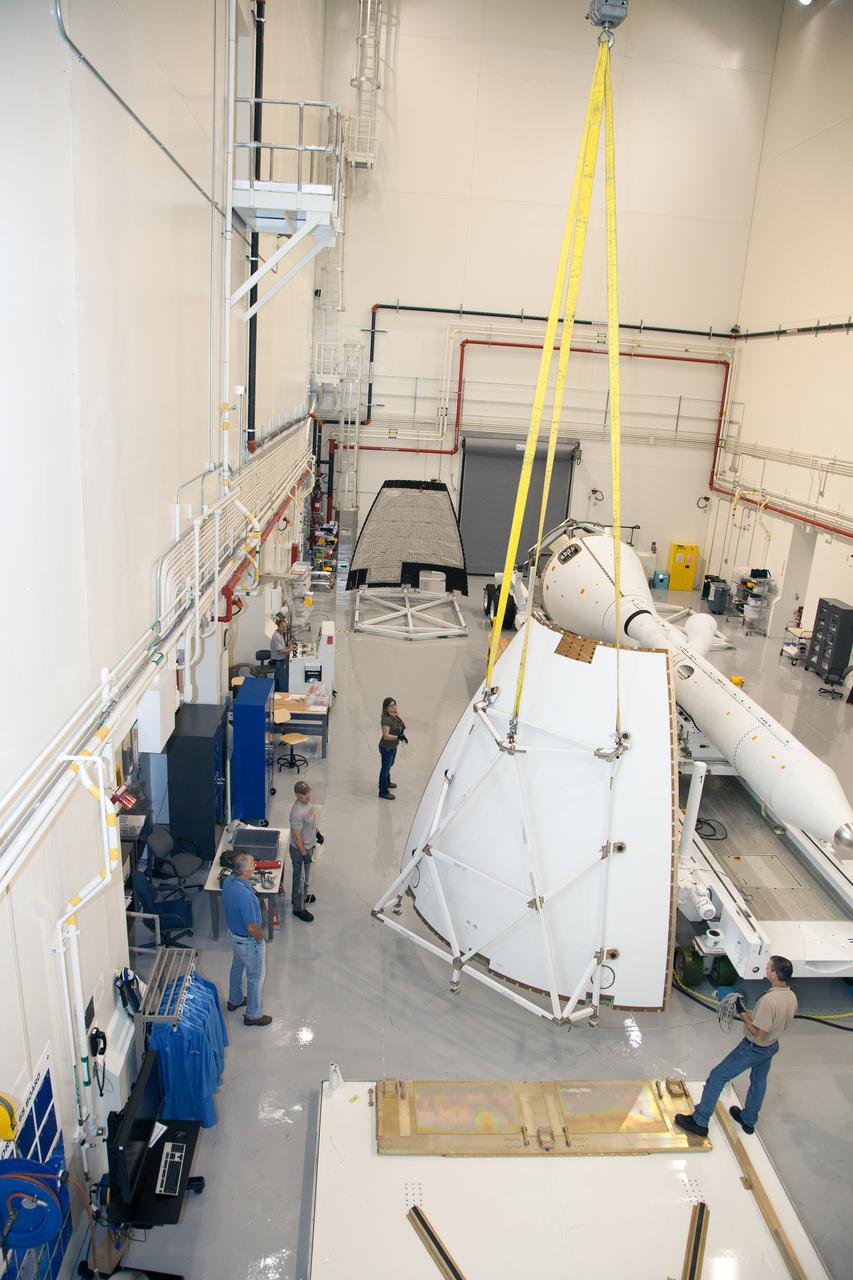
The launch abort system ogive panels are prepared for installation onto the Orion Exploration Flight Test-1 (EFT-1) launch abort system in the Launch Abort System Facility (LASF) at Kennedy Space Center on April 16, 2014. Part of Batch image transfer from Flickr.

The launch abort system ogive panels are prepared for installation onto the Orion Exploration Flight Test-1 (EFT-1) launch abort system in the Launch Abort System Facility (LASF) at Kennedy Space Center on April 16, 2014. Part of Batch image transfer from Flickr.

The launch abort system ogive panels are prepared for installation onto the Orion Exploration Flight Test-1 (EFT-1) launch abort system in the Launch Abort System Facility (LASF) at Kennedy Space Center on April 16, 2014. Part of Batch image transfer from Flickr.

The launch abort system ogive panels are prepared for installation onto the Orion Exploration Flight Test-1 (EFT-1) launch abort system in the Launch Abort System Facility (LASF) at Kennedy Space Center on April 16, 2014. Part of Batch image transfer from Flickr.
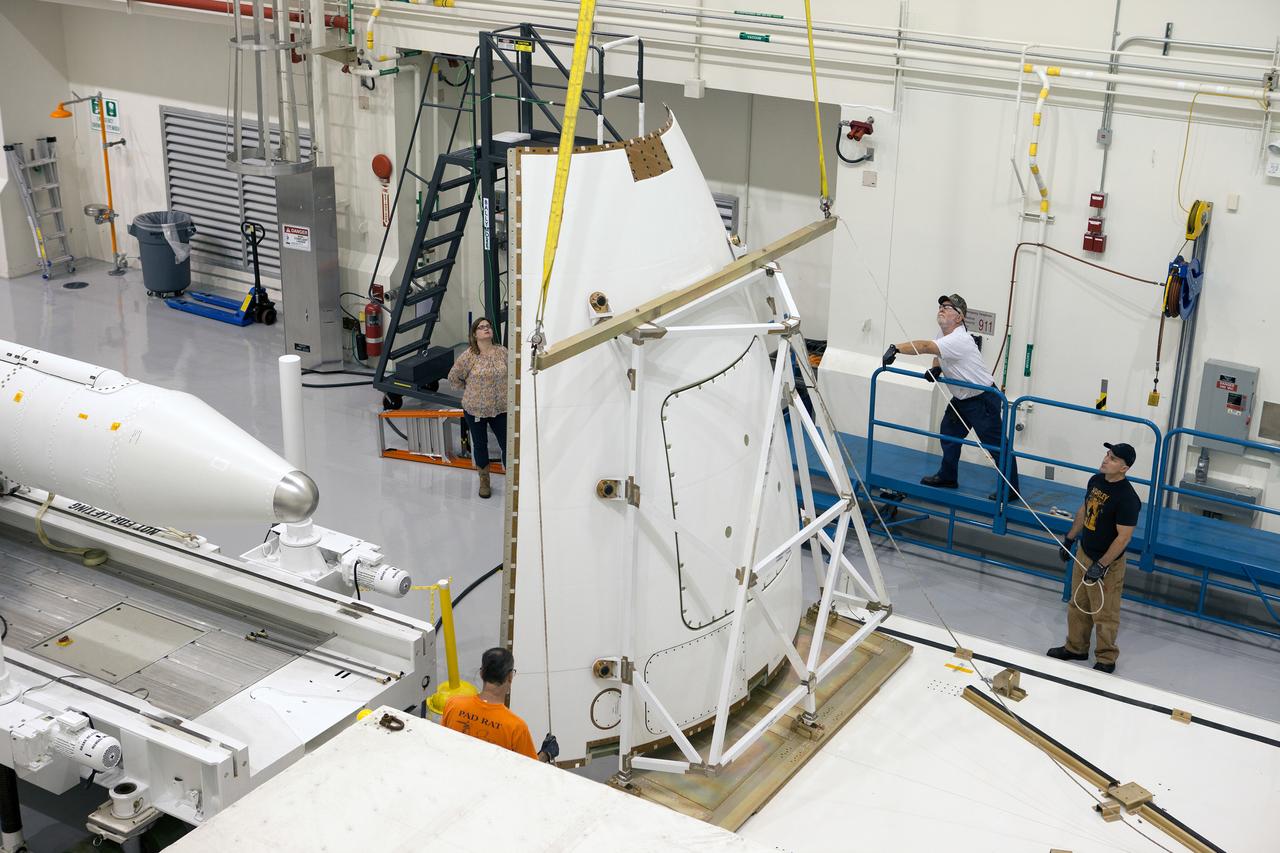
The launch abort system ogive panels are prepared for installation onto the Orion Exploration Flight Test-1 (EFT-1) launch abort system in the Launch Abort System Facility (LASF) at Kennedy Space Center on April 16, 2014. Part of Batch image transfer from Flickr.
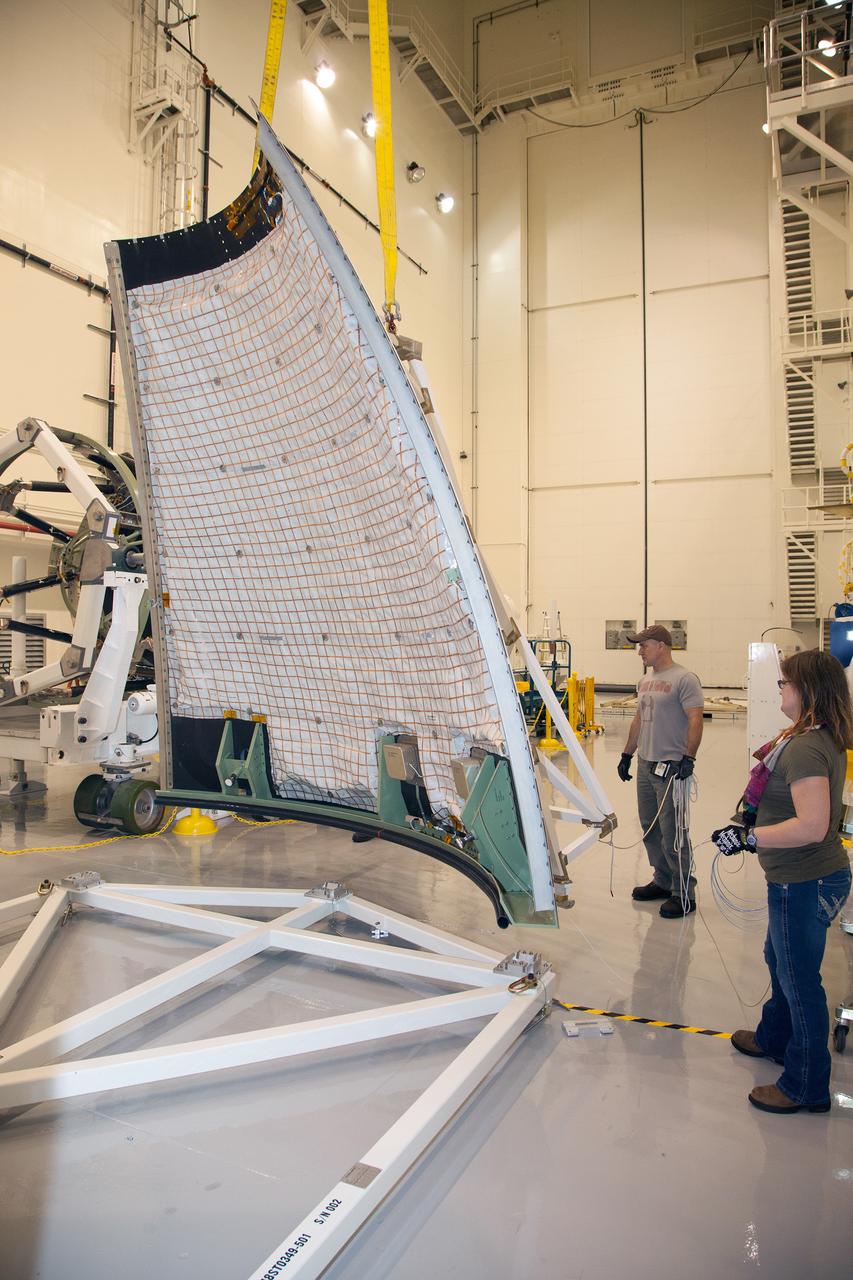
The launch abort system ogive panels are prepared for installation onto the Orion Exploration Flight Test-1 (EFT-1) launch abort system in the Launch Abort System Facility (LASF) at Kennedy Space Center on April 16, 2014. Part of Batch image transfer from Flickr.
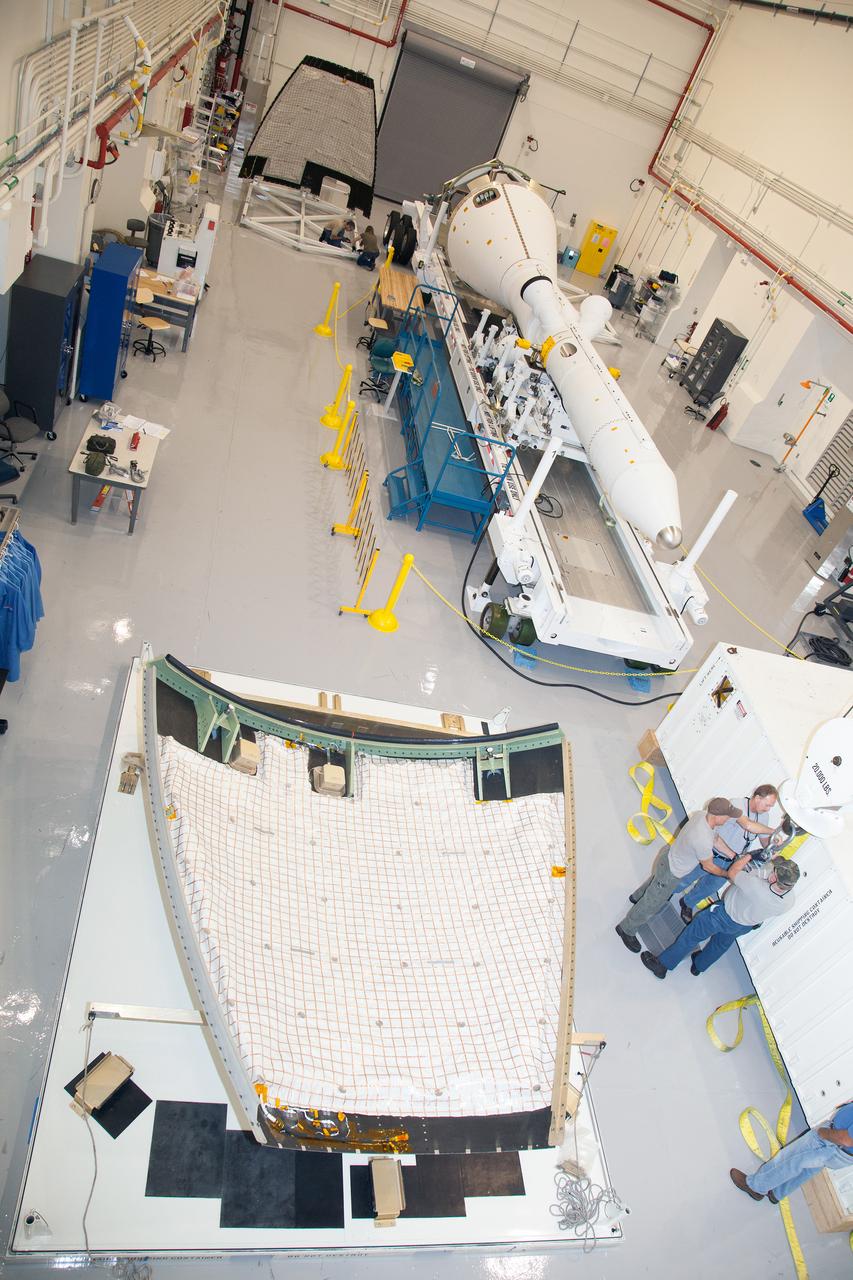
The launch abort system ogive panels are prepared for installation onto the Orion Exploration Flight Test-1 (EFT-1) launch abort system in the Launch Abort System Facility (LASF) at Kennedy Space Center on April 16, 2014. Part of Batch image transfer from Flickr.
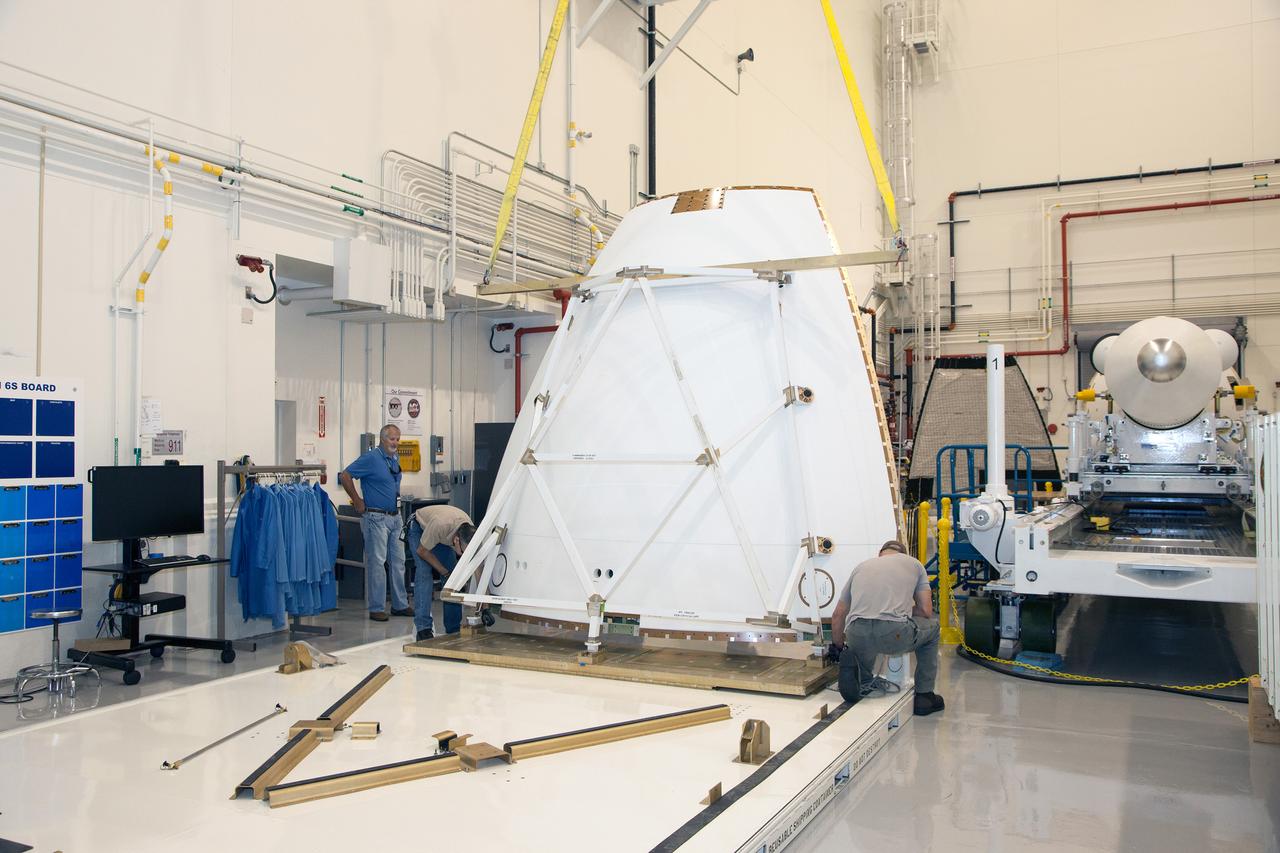
The launch abort system ogive panels are prepared for installation onto the Orion Exploration Flight Test-1 (EFT-1) launch abort system in the Launch Abort System Facility (LASF) at Kennedy Space Center on April 16, 2014. Part of Batch image transfer from Flickr.
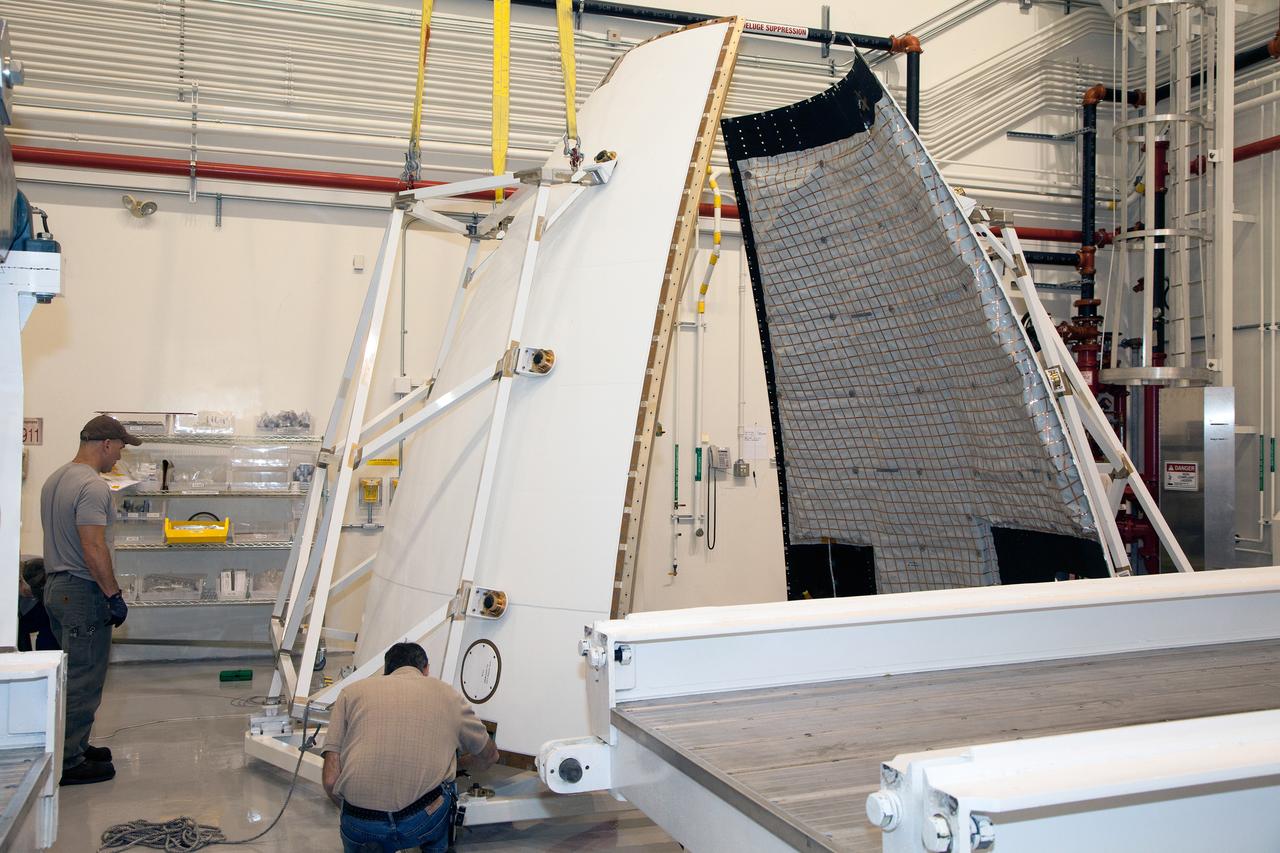
The launch abort system ogive panels are prepared for installation onto the Orion Exploration Flight Test-1 (EFT-1) launch abort system in the Launch Abort System Facility (LASF) at Kennedy Space Center on April 16, 2014. Part of Batch image transfer from Flickr.

The launch abort system ogive panels are prepared for installation onto the Orion Exploration Flight Test-1 (EFT-1) launch abort system in the Launch Abort System Facility (LASF) at Kennedy Space Center on April 16, 2014. Part of Batch image transfer from Flickr.

The launch abort system ogive panels are prepared for installation onto the Orion Exploration Flight Test-1 (EFT-1) launch abort system in the Launch Abort System Facility (LASF) at Kennedy Space Center on April 16, 2014. Part of Batch image transfer from Flickr.
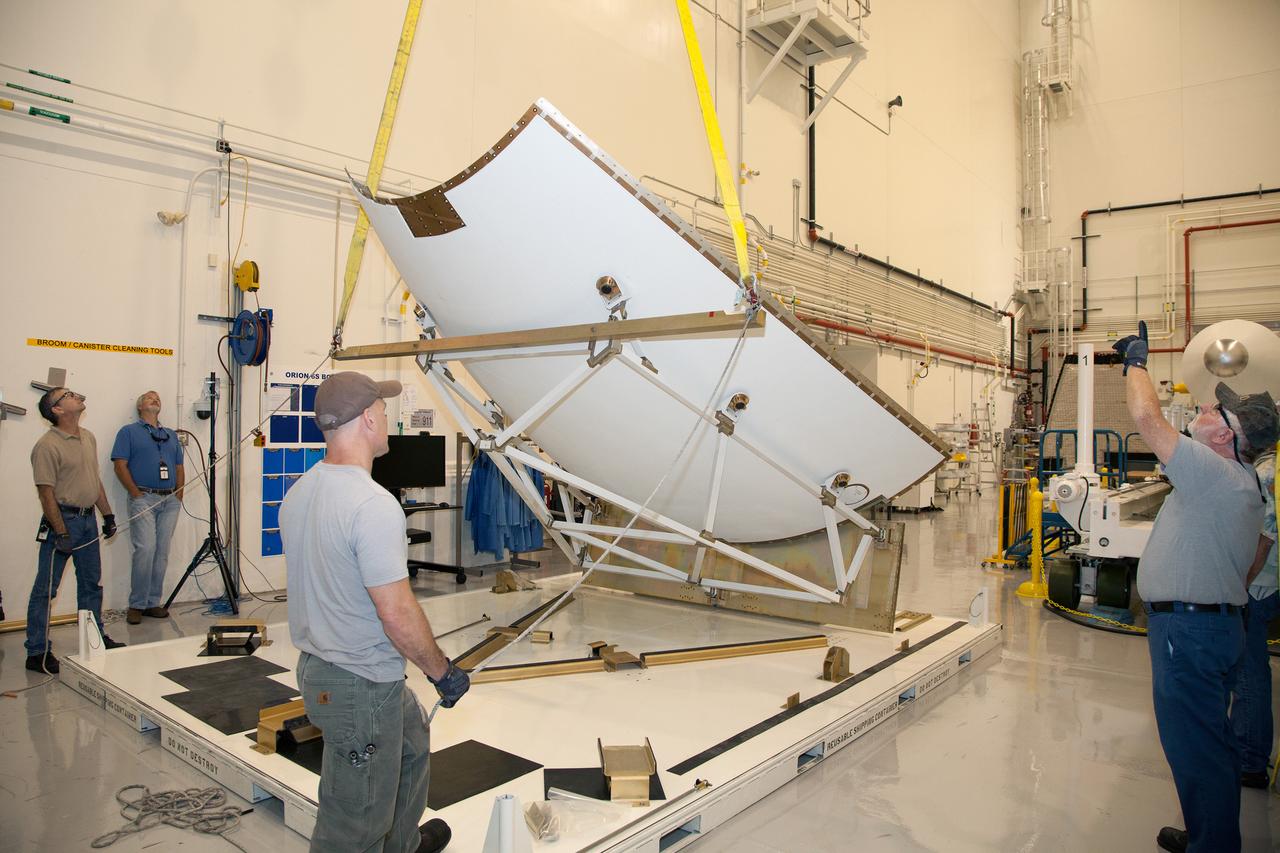
The launch abort system ogive panels are prepared for installation onto the Orion Exploration Flight Test-1 (EFT-1) launch abort system in the Launch Abort System Facility (LASF) at Kennedy Space Center on April 16, 2014. Part of Batch image transfer from Flickr.

The launch abort system ogive panels are prepared for installation onto the Orion Exploration Flight Test-1 (EFT-1) launch abort system in the Launch Abort System Facility (LASF) at Kennedy Space Center on April 16, 2014. Part of Batch image transfer from Flickr.

The launch abort system ogive panels are prepared for installation onto the Orion Exploration Flight Test-1 (EFT-1) launch abort system in the Launch Abort System Facility (LASF) at Kennedy Space Center on April 16, 2014. Part of Batch image transfer from Flickr.
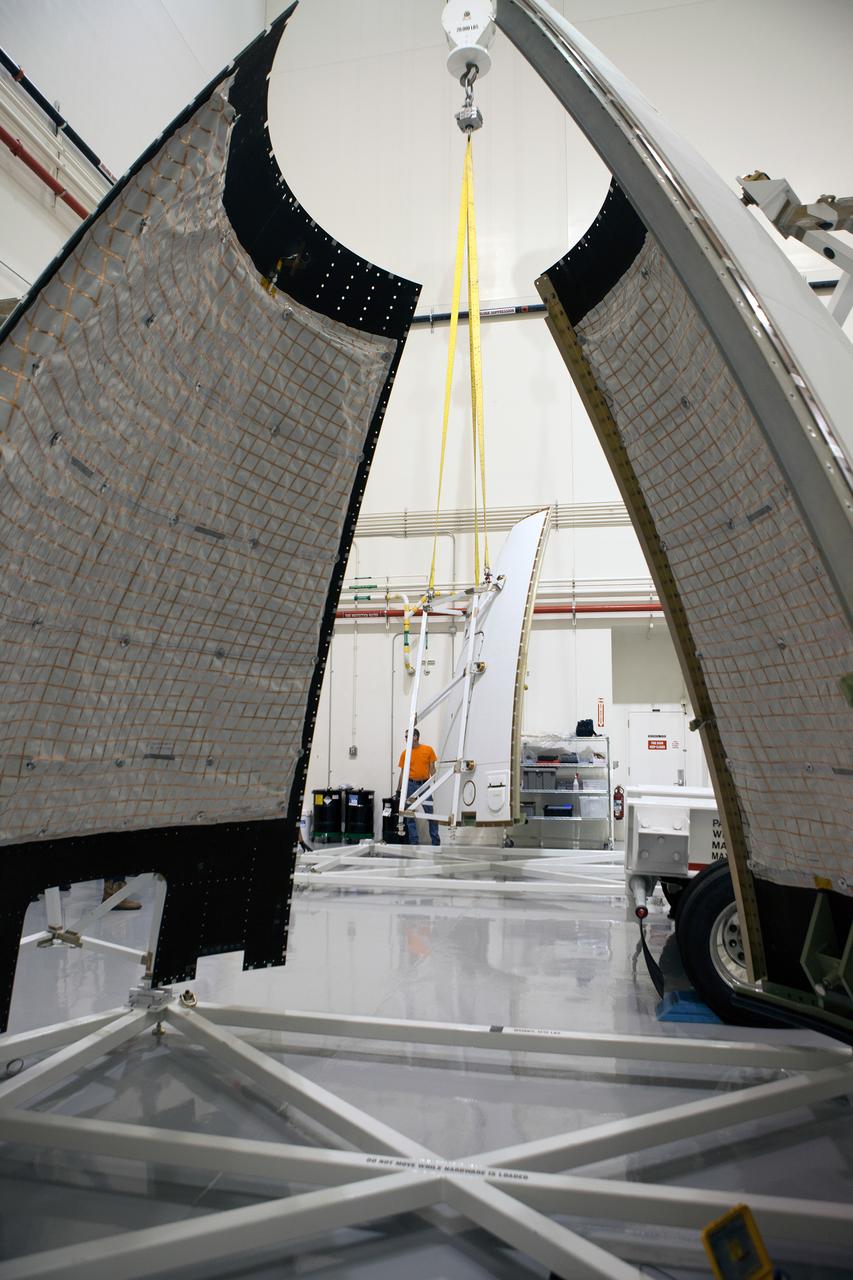
The launch abort system ogive panels are prepared for installation onto the Orion Exploration Flight Test-1 (EFT-1) launch abort system in the Launch Abort System Facility (LASF) at Kennedy Space Center on April 16, 2014. Part of Batch image transfer from Flickr.

The launch abort system ogive panels are prepared for installation onto the Orion Exploration Flight Test-1 (EFT-1) launch abort system in the Launch Abort System Facility (LASF) at Kennedy Space Center on April 16, 2014. Part of Batch image transfer from Flickr.
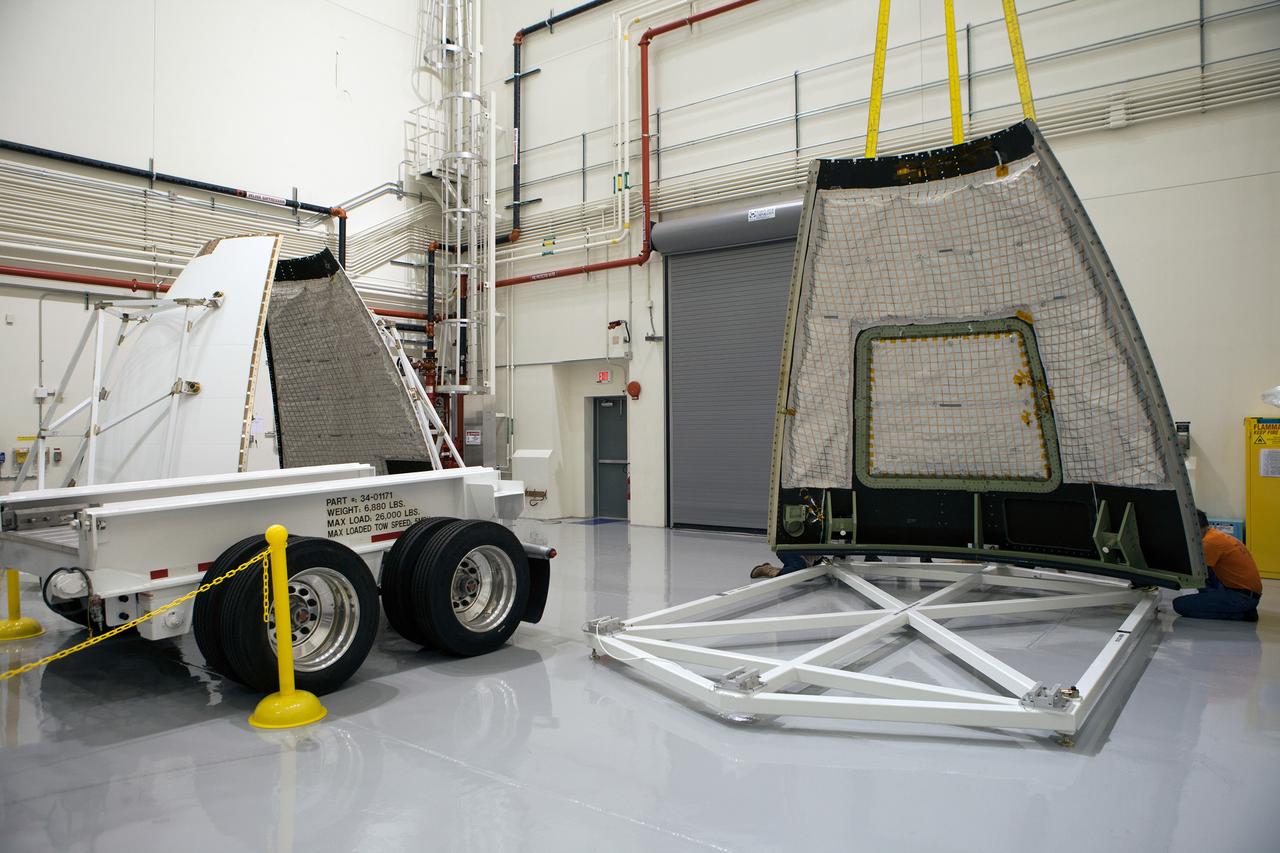
The launch abort system ogive panels are prepared for installation onto the Orion Exploration Flight Test-1 (EFT-1) launch abort system in the Launch Abort System Facility (LASF) at Kennedy Space Center on April 16, 2014. Part of Batch image transfer from Flickr.
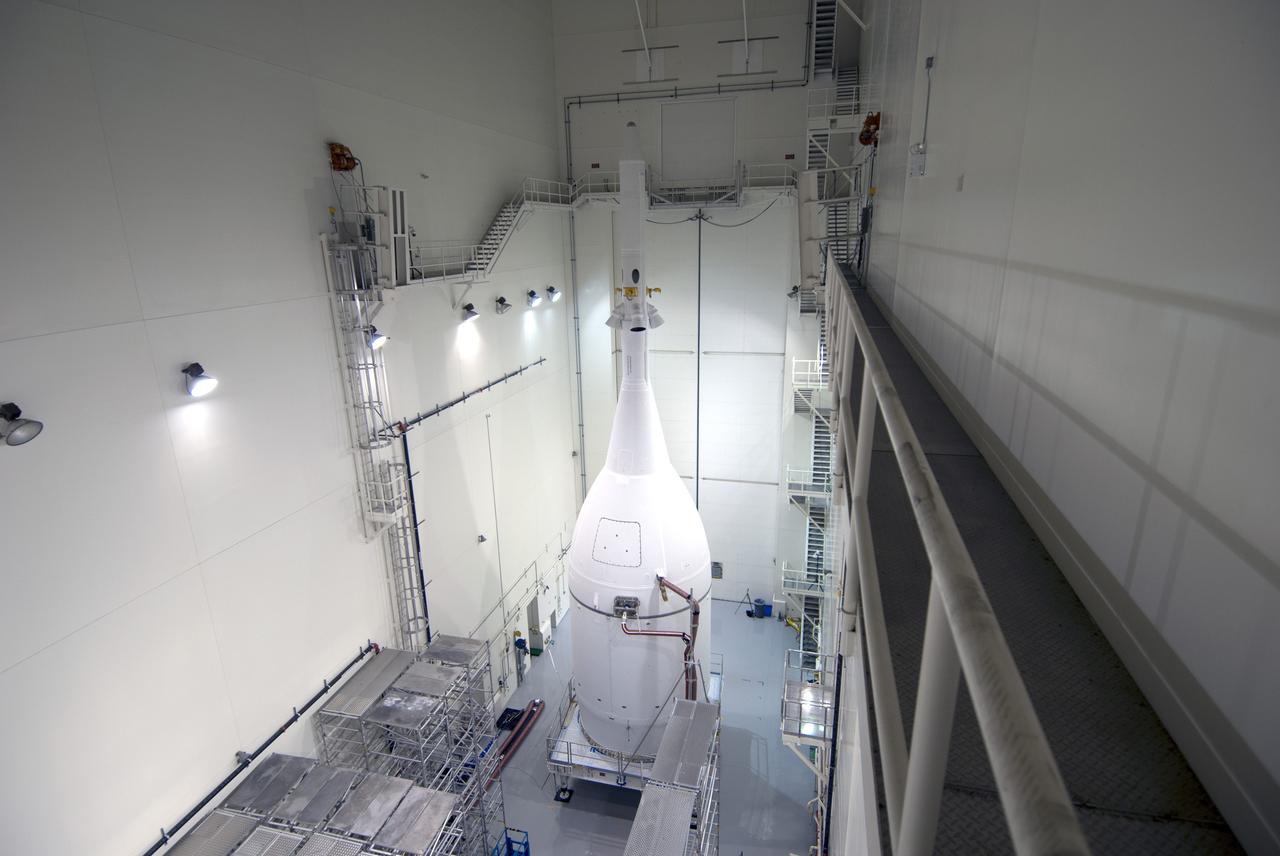
CAPE CANAVERAL, Fla. – The Orion spacecraft sits inside the Launch Abort System Facility at NASA's Kennedy Space Center in Florida. The Ogive panels have been installed around the launch abort system. The panels will smooth the airflow over the conical spacecraft to limit sound and vibration, which will make for a much smoother ride for the astronauts who will ride inside Orion in the future. The spacecraft is being readied for its move to Space Launch Complex 37 at Cape Canaveral Air Force Station for its flight test. Orion is the exploration spacecraft designed to carry astronauts to destinations not yet explored by humans, including an asteroid and Mars. It will have emergency abort capability, sustain the crew during space travel and provide safe re-entry from deep space return velocities. The first unpiloted flight test of Orion is scheduled to launch in December 2014 atop a United Launch Alliance Delta IV Heavy rocket, and in 2018 on NASA’s Space Launch System rocket. For more information, visit www.nasa.gov/orion. Photo credit: Jim Grossman
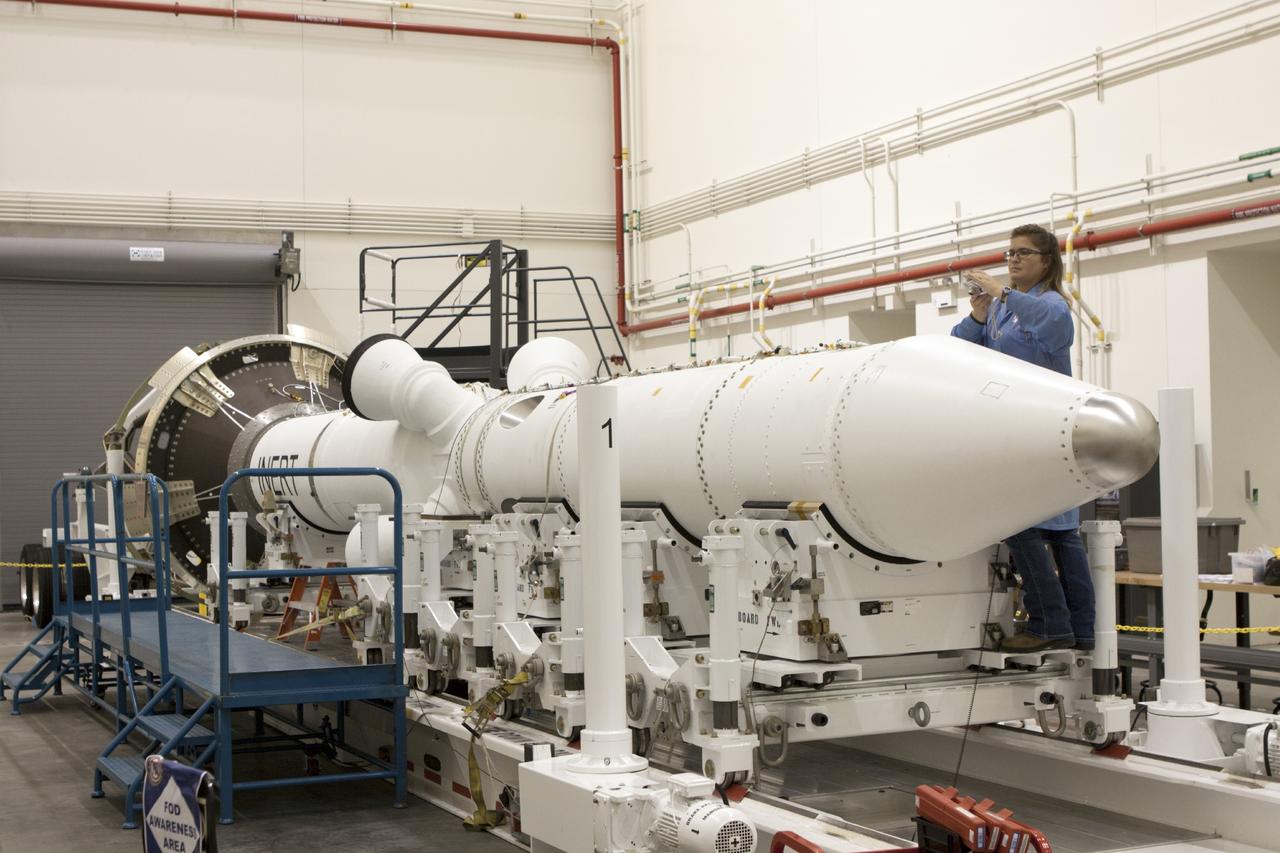
CAPE CANAVERAL, Fla. – Inside the Launch Abort System Facility at NASA’s Kennedy Space Center in Florida, a technician works on the launch abort system, or LAS, for the Orion Exploration Flight Test-1 mission. Horizontally stacked together are the components of the LAS, the launch abort motor, the attitude control motor, the jettison motor and the fairing. Orion is the exploration spacecraft designed to carry crews to space beyond low Earth orbit. It will provide emergency abort capability, sustain the crew during the space travel and provide safe re-entry from deep space return velocities. The LAS is designed to safely pull the Orion crew module away from the launch vehicle in the event of an emergency on the launch pad or during the initial ascent of NASA’s Space Launch System, or SLS, rocket. Orion’s first unpiloted test flight is scheduled to launch in 2014 atop a Delta IV rocket. A second uncrewed flight test is scheduled for 2017 on the SLS rocket. For more information, visit http://www.nasa.gov/orion. Photo credit: NASA/Jim Grossmann
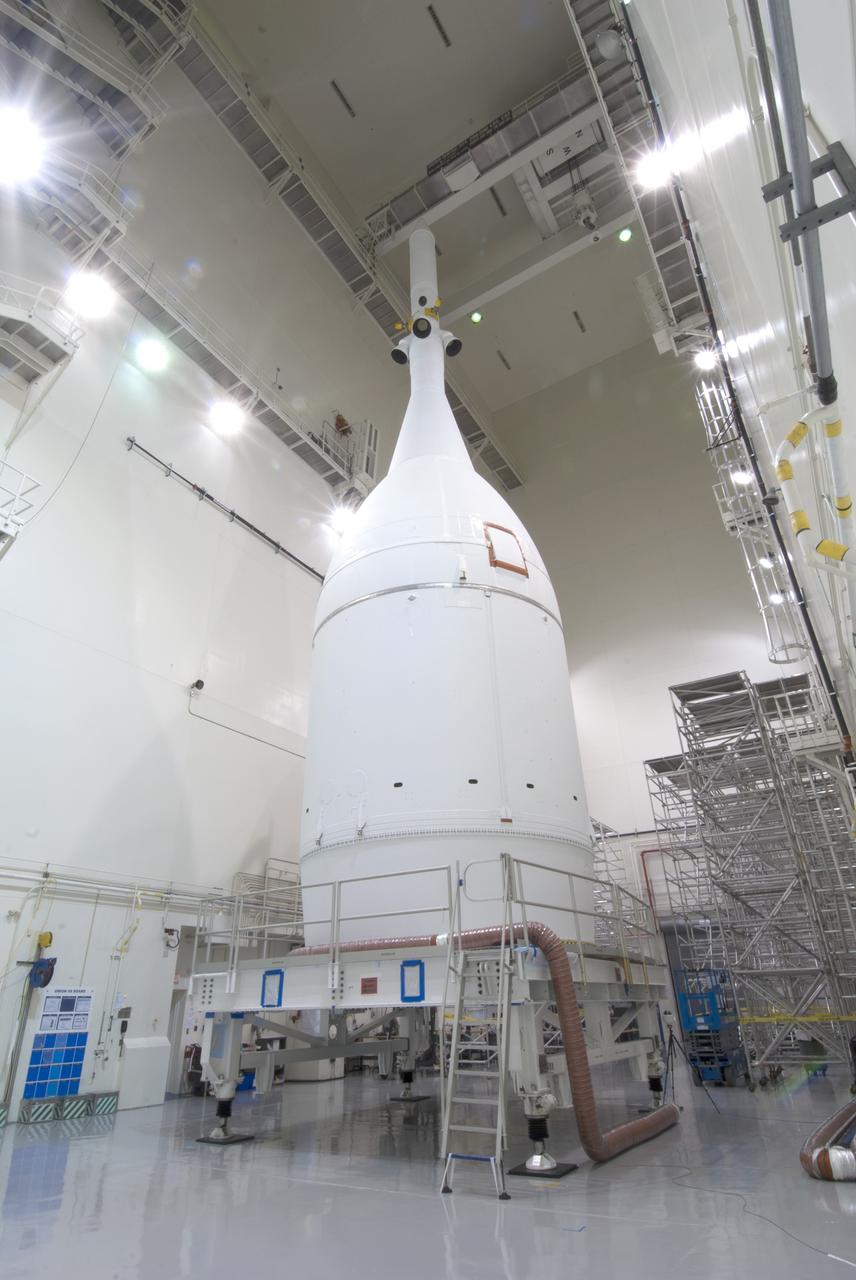
CAPE CANAVERAL, Fla. – The Orion spacecraft sits inside the Launch Abort System Facility at NASA's Kennedy Space Center in Florida. The Ogive panels have been installed around the launch abort system. The panels will smooth the airflow over the conical spacecraft to limit sound and vibration, which will make for a much smoother ride for the astronauts who will ride inside Orion in the future. The spacecraft is being readied for its move to Space Launch Complex 37 at Cape Canaveral Air Force Station for its flight test. Orion is the exploration spacecraft designed to carry astronauts to destinations not yet explored by humans, including an asteroid and Mars. It will have emergency abort capability, sustain the crew during space travel and provide safe re-entry from deep space return velocities. The first unpiloted flight test of Orion is scheduled to launch in December 2014 atop a United Launch Alliance Delta IV Heavy rocket, and in 2018 on NASA’s Space Launch System rocket. For more information, visit www.nasa.gov/orion. Photo credit: Jim Grossman
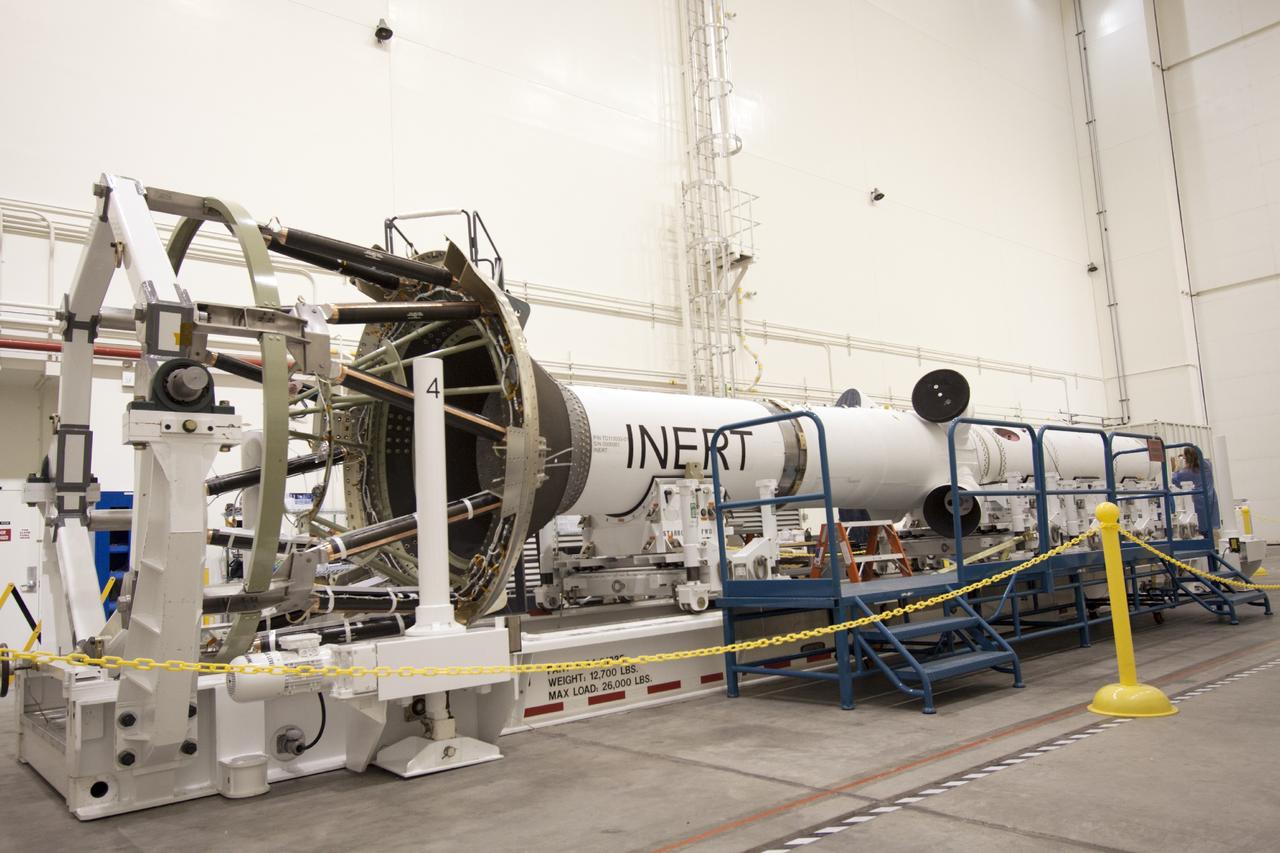
CAPE CANAVERAL, Fla. – Inside the Launch Abort System Facility at NASA’s Kennedy Space Center in Florida, the launch abort system, or LAS, components are horizontally stacked as processing continues for the Orion Exploration Flight Test-1 mission. Components of the LAS are the launch abort motor, the attitude control motor, the jettison motor and the fairing. Orion is the exploration spacecraft designed to carry crews to space beyond low Earth orbit. It will provide emergency abort capability, sustain the crew during the space travel and provide safe re-entry from deep space return velocities. The LAS is designed to safely pull the Orion crew module away from the launch vehicle in the event of an emergency on the launch pad or during the initial ascent of NASA’s Space Launch System, or SLS, rocket. Orion’s first unpiloted test flight is scheduled to launch in 2014 atop a Delta IV rocket. A second uncrewed flight test is scheduled for 2017 on the SLS rocket. For more information, visit http://www.nasa.gov/orion. Photo credit: NASA/Jim Grossmann
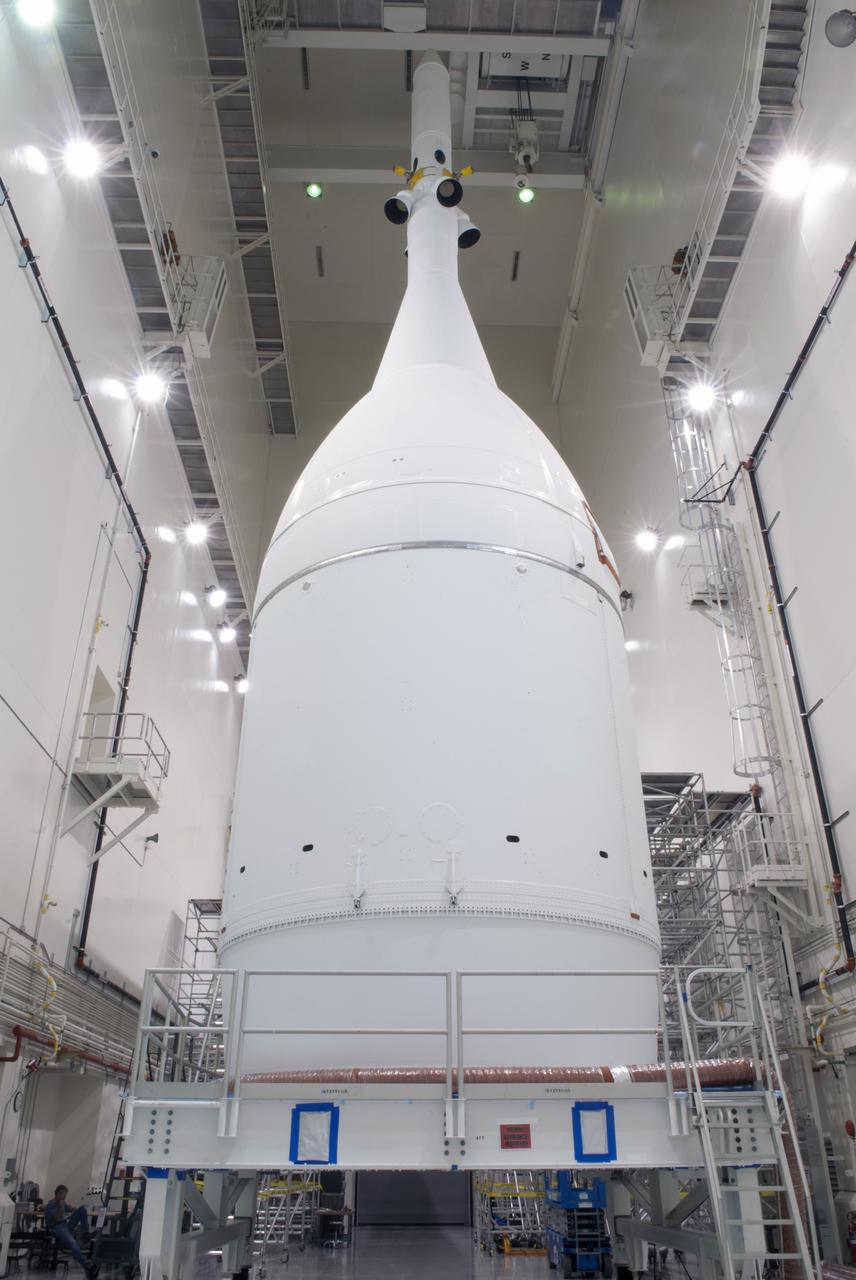
CAPE CANAVERAL, Fla. – The Orion spacecraft sits inside the Launch Abort System Facility at NASA's Kennedy Space Center in Florida. The Ogive panels have been installed around the launch abort system. The panels will smooth the airflow over the conical spacecraft to limit sound and vibration, which will make for a much smoother ride for the astronauts who will ride inside Orion in the future. The spacecraft is being readied for its move to Space Launch Complex 37 at Cape Canaveral Air Force Station for its flight test. Orion is the exploration spacecraft designed to carry astronauts to destinations not yet explored by humans, including an asteroid and Mars. It will have emergency abort capability, sustain the crew during space travel and provide safe re-entry from deep space return velocities. The first unpiloted flight test of Orion is scheduled to launch in December 2014 atop a United Launch Alliance Delta IV Heavy rocket, and in 2018 on NASA’s Space Launch System rocket. For more information, visit www.nasa.gov/orion. Photo credit: Jim Grossman
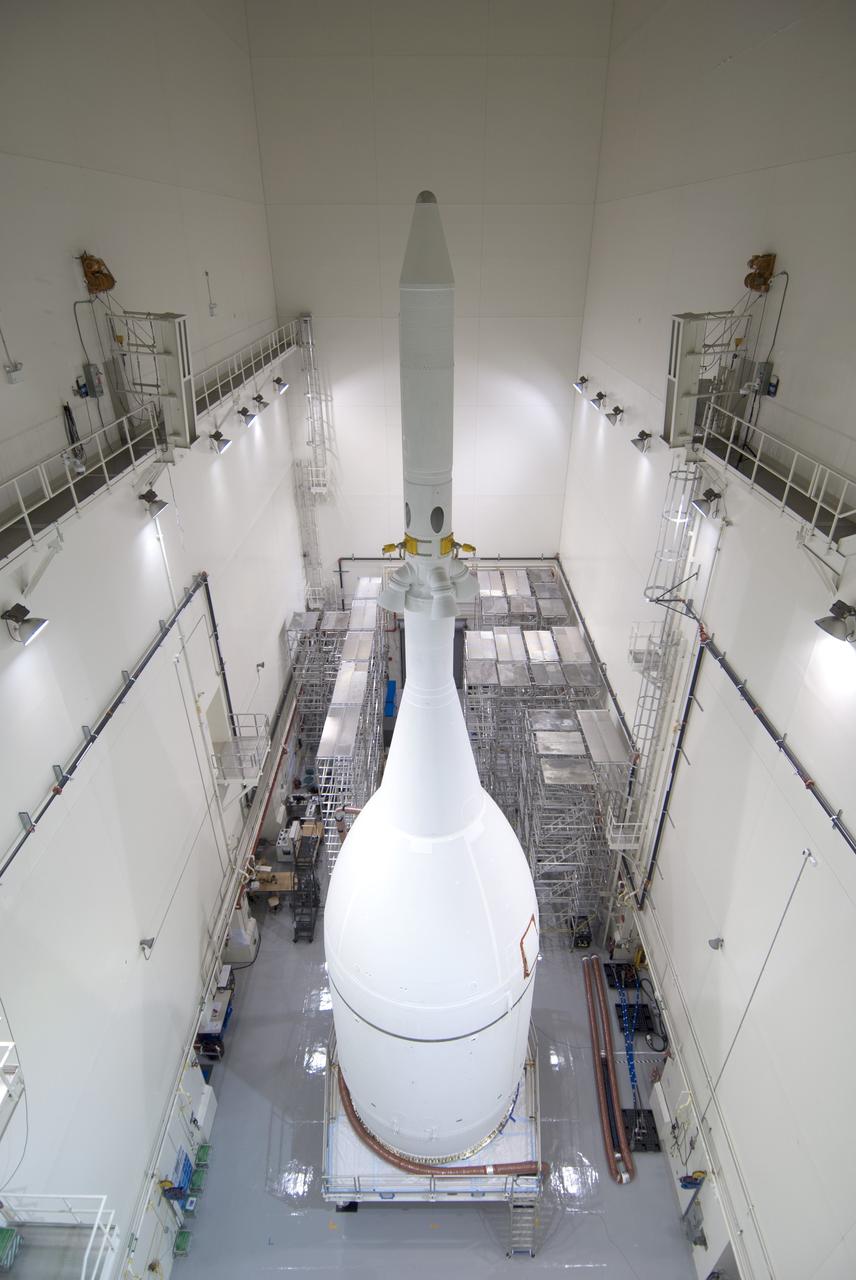
CAPE CANAVERAL, Fla. – The Orion spacecraft sits inside the Launch Abort System Facility at NASA's Kennedy Space Center in Florida. The Ogive panels have been installed around the launch abort system. The panels will smooth the airflow over the conical spacecraft to limit sound and vibration, which will make for a much smoother ride for the astronauts who will ride inside Orion in the future. The spacecraft is being readied for its move to Space Launch Complex 37 at Cape Canaveral Air Force Station for its flight test. Orion is the exploration spacecraft designed to carry astronauts to destinations not yet explored by humans, including an asteroid and Mars. It will have emergency abort capability, sustain the crew during space travel and provide safe re-entry from deep space return velocities. The first unpiloted flight test of Orion is scheduled to launch in December 2014 atop a United Launch Alliance Delta IV Heavy rocket, and in 2018 on NASA’s Space Launch System rocket. For more information, visit www.nasa.gov/orion. Photo credit: Jim Grossman
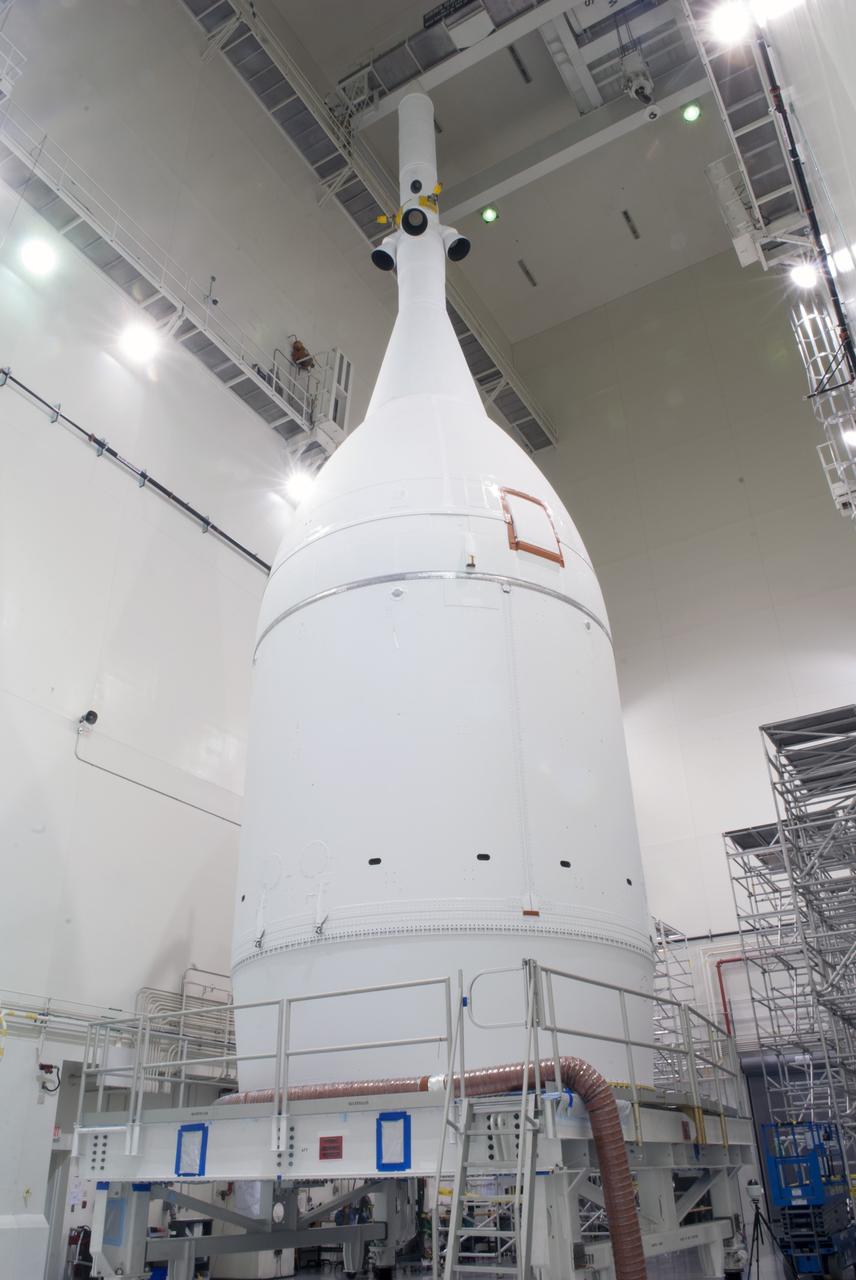
CAPE CANAVERAL, Fla. – The Orion spacecraft sits inside the Launch Abort System Facility at NASA's Kennedy Space Center in Florida. The Ogive panels have been installed around the launch abort system. The panels will smooth the airflow over the conical spacecraft to limit sound and vibration, which will make for a much smoother ride for the astronauts who will ride inside Orion in the future. The spacecraft is being readied for its move to Space Launch Complex 37 at Cape Canaveral Air Force Station for its flight test. Orion is the exploration spacecraft designed to carry astronauts to destinations not yet explored by humans, including an asteroid and Mars. It will have emergency abort capability, sustain the crew during space travel and provide safe re-entry from deep space return velocities. The first unpiloted flight test of Orion is scheduled to launch in December 2014 atop a United Launch Alliance Delta IV Heavy rocket, and in 2018 on NASA’s Space Launch System rocket. For more information, visit www.nasa.gov/orion. Photo credit: Jim Grossman

CAPE CANAVERAL, Fla. – The Orion spacecraft sits inside the Launch Abort System Facility at NASA's Kennedy Space Center in Florida. The Ogive panels have been installed around the launch abort system. The panels will smooth the airflow over the conical spacecraft to limit sound and vibration, which will make for a much smoother ride for the astronauts who will ride inside Orion in the future. The spacecraft is being readied for its move to Space Launch Complex 37 at Cape Canaveral Air Force Station for its flight test. Orion is the exploration spacecraft designed to carry astronauts to destinations not yet explored by humans, including an asteroid and Mars. It will have emergency abort capability, sustain the crew during space travel and provide safe re-entry from deep space return velocities. The first unpiloted flight test of Orion is scheduled to launch in December 2014 atop a United Launch Alliance Delta IV Heavy rocket, and in 2018 on NASA’s Space Launch System rocket. For more information, visit www.nasa.gov/orion. Photo credit: Jim Grossman
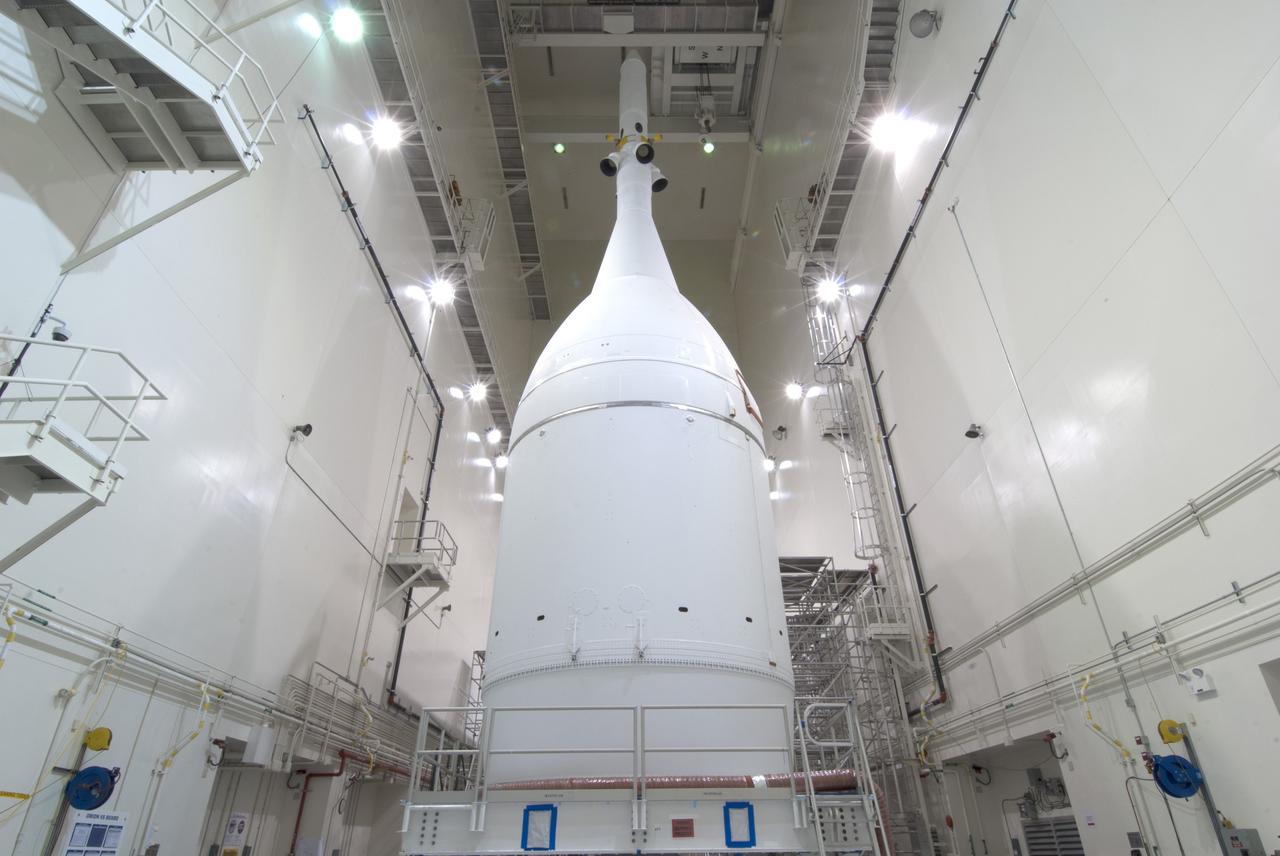
CAPE CANAVERAL, Fla. – The Orion spacecraft sits inside the Launch Abort System Facility at NASA's Kennedy Space Center in Florida. The Ogive panels have been installed around the launch abort system. The panels will smooth the airflow over the conical spacecraft to limit sound and vibration, which will make for a much smoother ride for the astronauts who will ride inside Orion in the future. The spacecraft is being readied for its move to Space Launch Complex 37 at Cape Canaveral Air Force Station for its flight test. Orion is the exploration spacecraft designed to carry astronauts to destinations not yet explored by humans, including an asteroid and Mars. It will have emergency abort capability, sustain the crew during space travel and provide safe re-entry from deep space return velocities. The first unpiloted flight test of Orion is scheduled to launch in December 2014 atop a United Launch Alliance Delta IV Heavy rocket, and in 2018 on NASA’s Space Launch System rocket. For more information, visit www.nasa.gov/orion. Photo credit: Jim Grossman
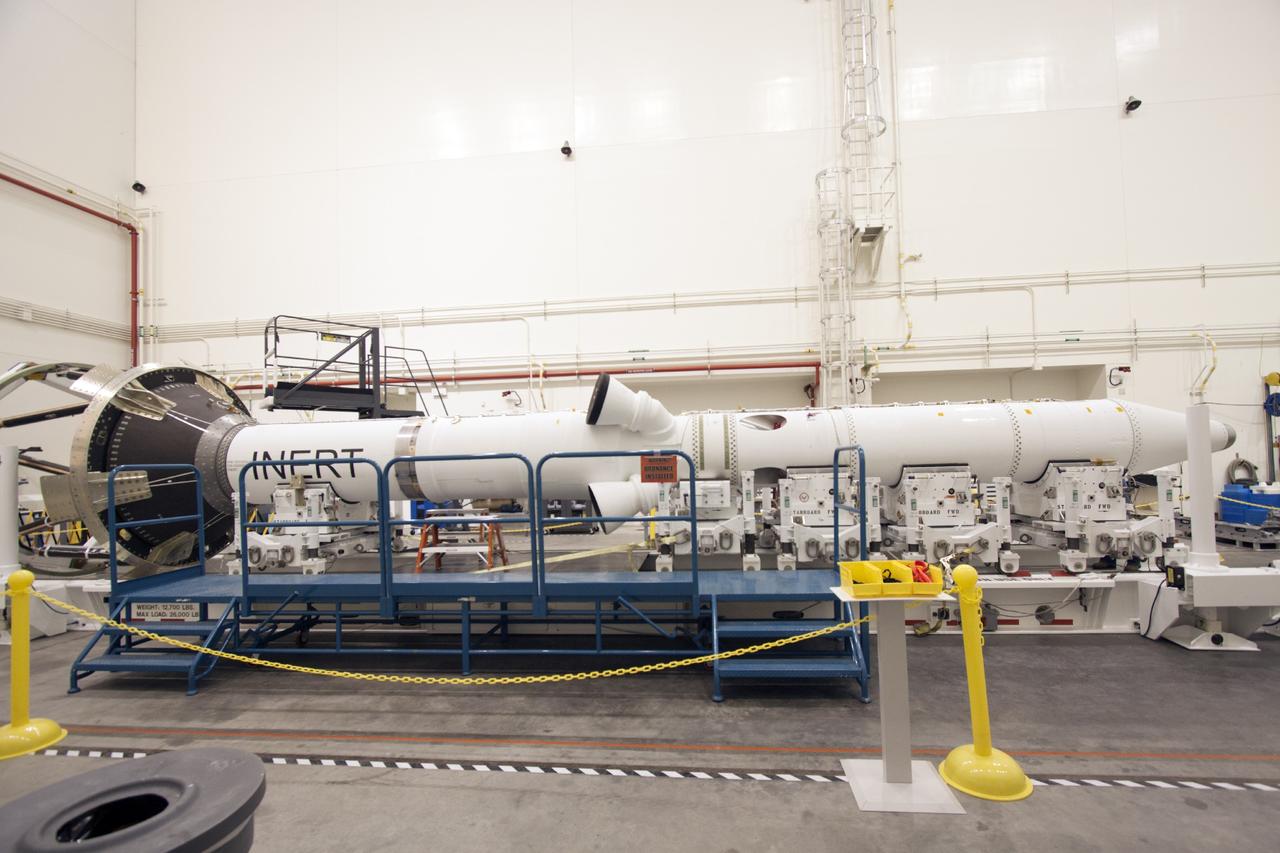
CAPE CANAVERAL, Fla. – Inside the Launch Abort System Facility at NASA’s Kennedy Space Center in Florida, the launch abort system, or LAS, components are horizontally stacked as processing continues for the Orion Exploration Flight Test-1 mission. Components of the LAS are the launch abort motor, the attitude control motor, the jettison motor and the fairing. Orion is the exploration spacecraft designed to carry crews to space beyond low Earth orbit. It will provide emergency abort capability, sustain the crew during the space travel and provide safe re-entry from deep space return velocities. The LAS is designed to safely pull the Orion crew module away from the launch vehicle in the event of an emergency on the launch pad or during the initial ascent of NASA’s Space Launch System, or SLS, rocket. Orion’s first unpiloted test flight is scheduled to launch in 2014 atop a Delta IV rocket. A second uncrewed flight test is scheduled for 2017 on the SLS rocket. For more information, visit http://www.nasa.gov/orion. Photo credit: NASA/Jim Grossmann
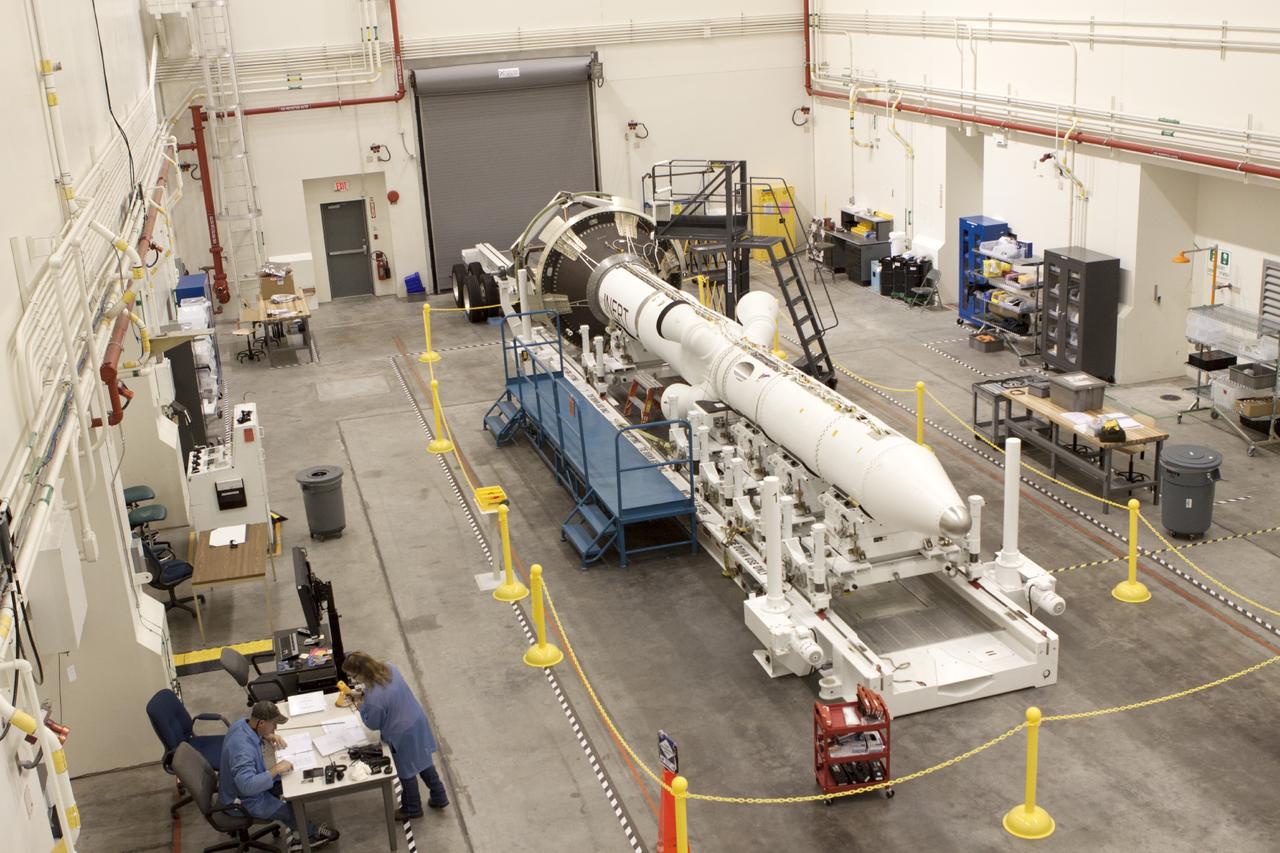
CAPE CANAVERAL, Fla. – Inside the Launch Abort System Facility at NASA’s Kennedy Space Center in Florida, technicians prepare to work on the launch abort system, or LAS, for the Orion Exploration Flight Test-1 mission. Horizontally stacked together are the components of the LAS, the launch abort motor, the attitude control motor, the jettison motor and the fairing. Orion is the exploration spacecraft designed to carry crews to space beyond low Earth orbit. It will provide emergency abort capability, sustain the crew during the space travel and provide safe re-entry from deep space return velocities. The LAS is designed to safely pull the Orion crew module away from the launch vehicle in the event of an emergency on the launch pad or during the initial ascent of NASA’s Space Launch System, or SLS, rocket. Orion’s first unpiloted test flight is scheduled to launch in 2014 atop a Delta IV rocket. A second uncrewed flight test is scheduled for 2017 on the SLS rocket. For more information, visit http://www.nasa.gov/orion. Photo credit: NASA/Jim Grossmann
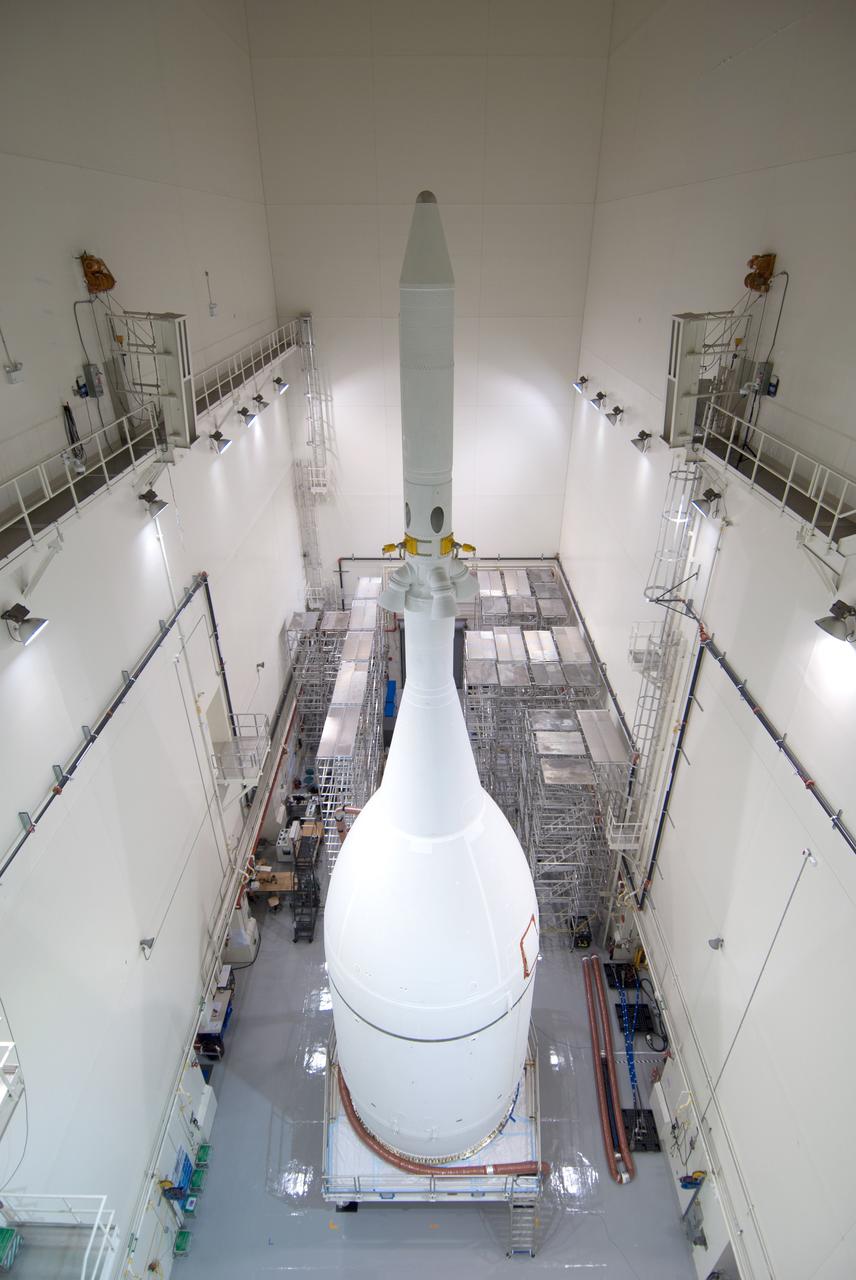
The Orion for Exploration Flight Test-1 (EFT-1) is complete and ready for flight inside the Launch Abort System Facility (LASF) at Kennedy Space Center in Florida on Nov. 4, 2014. Part of Batch image transfer from Flickr.
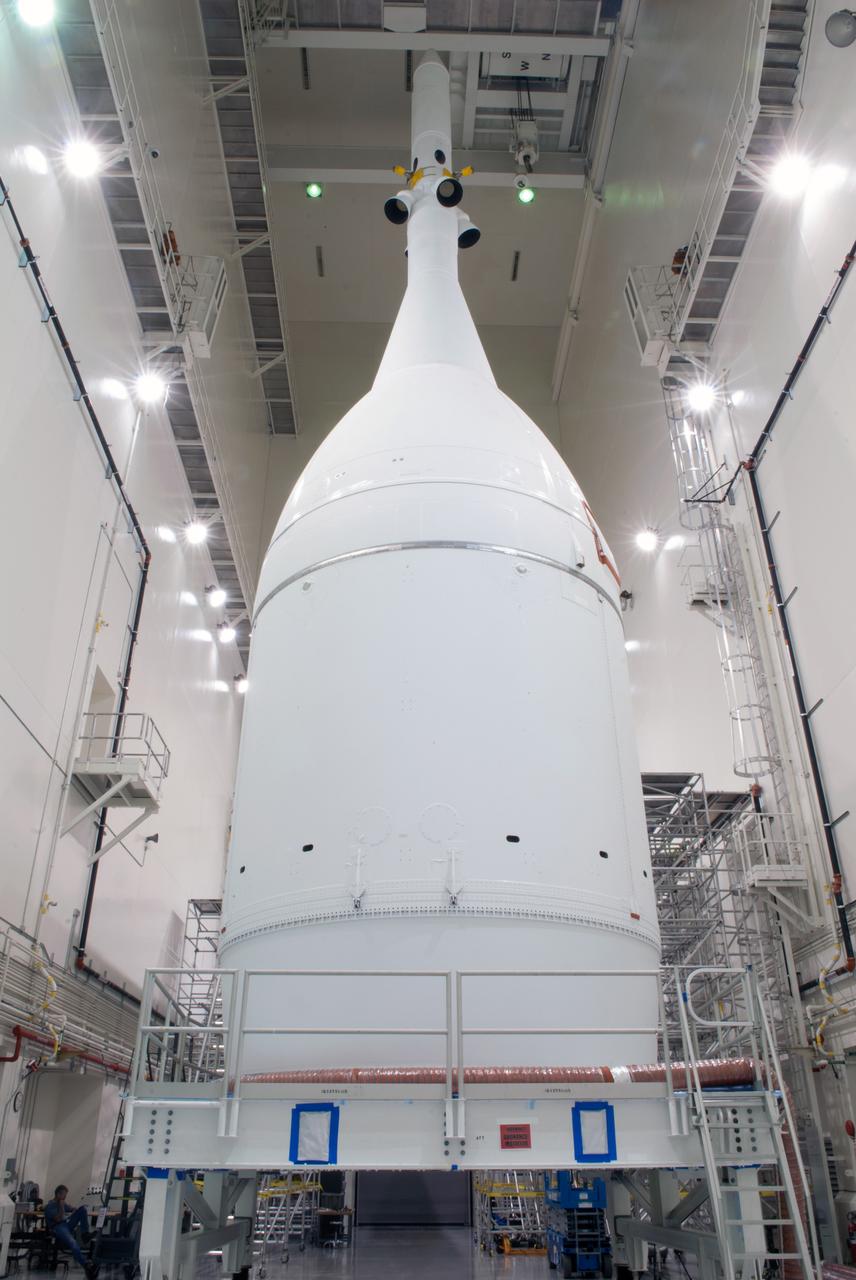
The Orion for Exploration Flight Test-1 (EFT-1) is complete and ready for flight inside the Launch Abort System Facility (LASF) at Kennedy Space Center in Florida on Nov. 4, 2014. Part of Batch image transfer from Flickr.
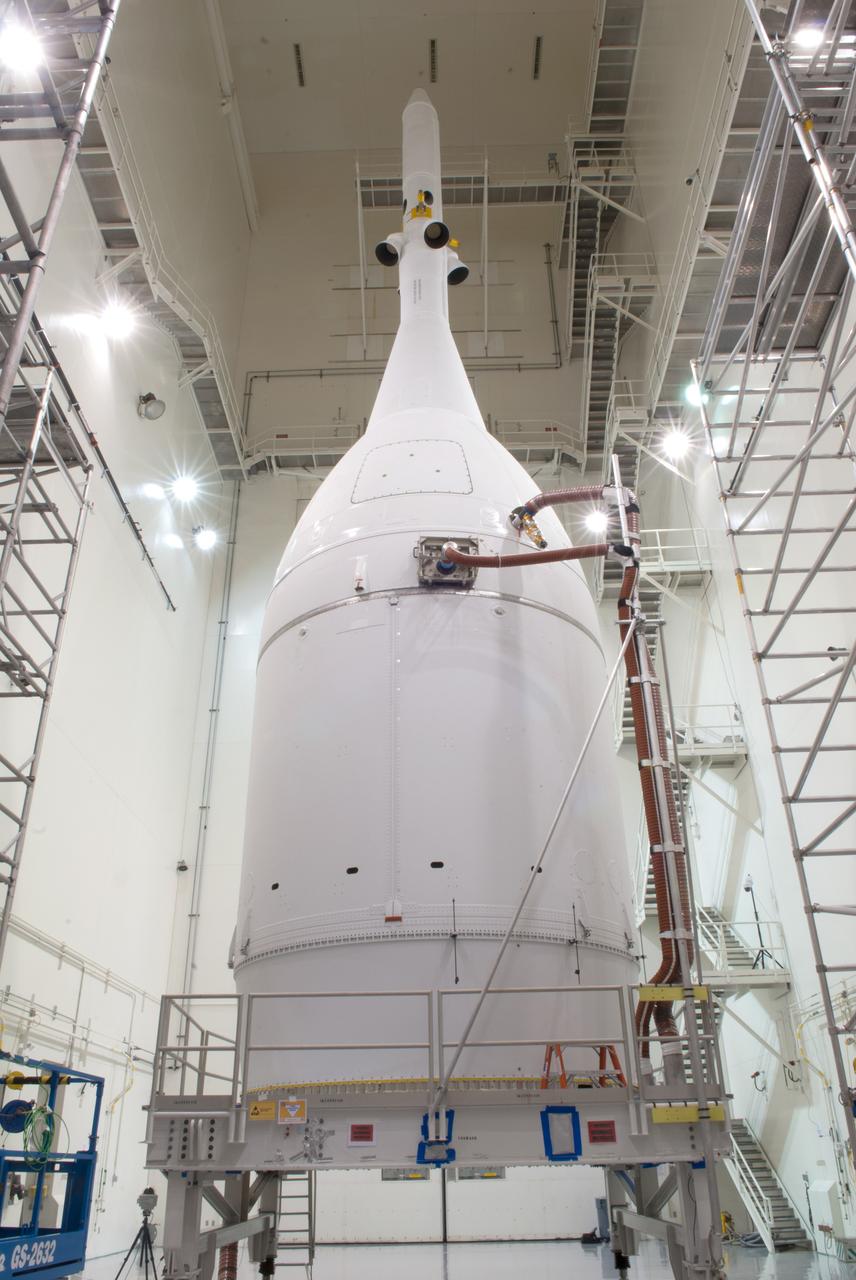
The Orion for Exploration Flight Test-1 (EFT-1) is complete and ready for flight inside the Launch Abort System Facility (LASF) at Kennedy Space Center in Florida on Nov. 4, 2014. Part of Batch image transfer from Flickr.
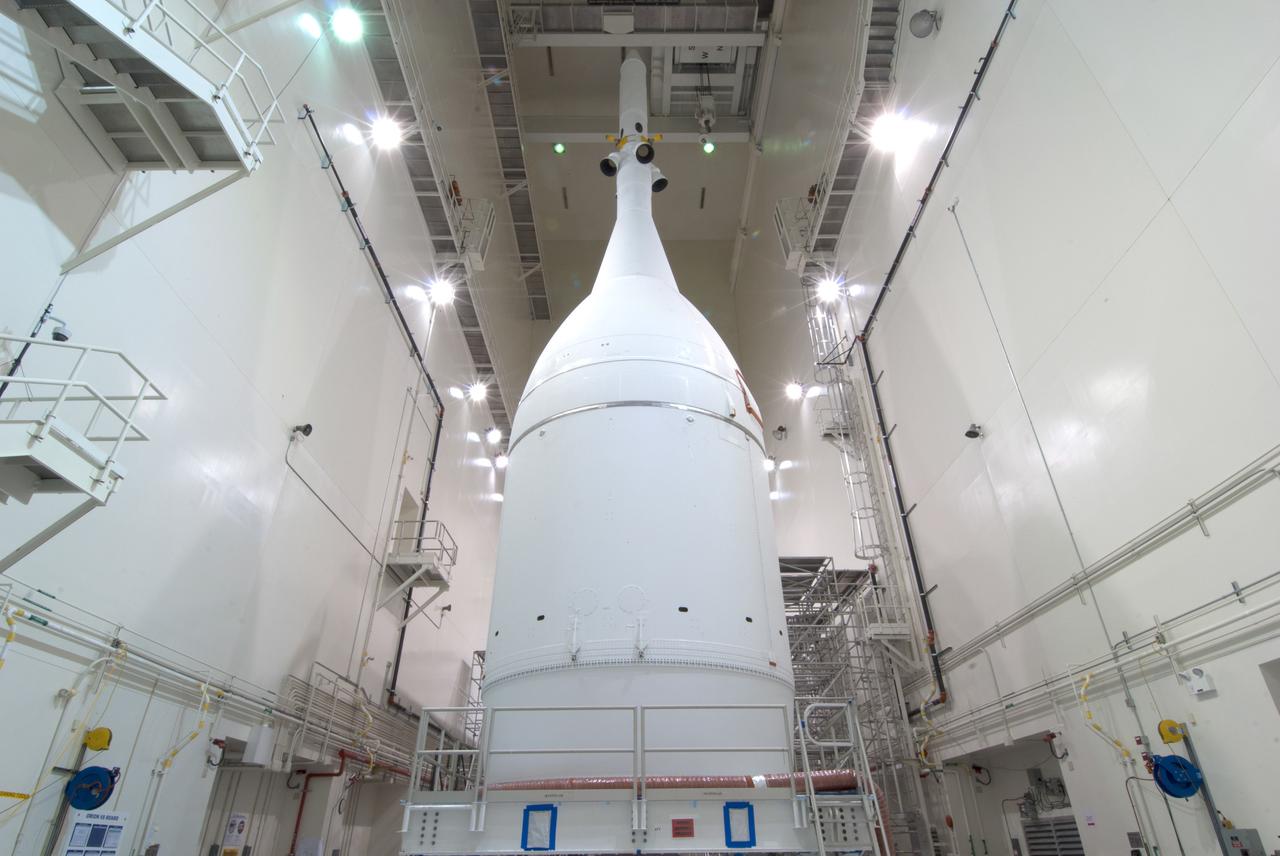
The Orion for Exploration Flight Test-1 (EFT-1) is complete and ready for flight inside the Launch Abort System Facility (LASF) at Kennedy Space Center in Florida on Nov. 4, 2014. Part of Batch image transfer from Flickr.
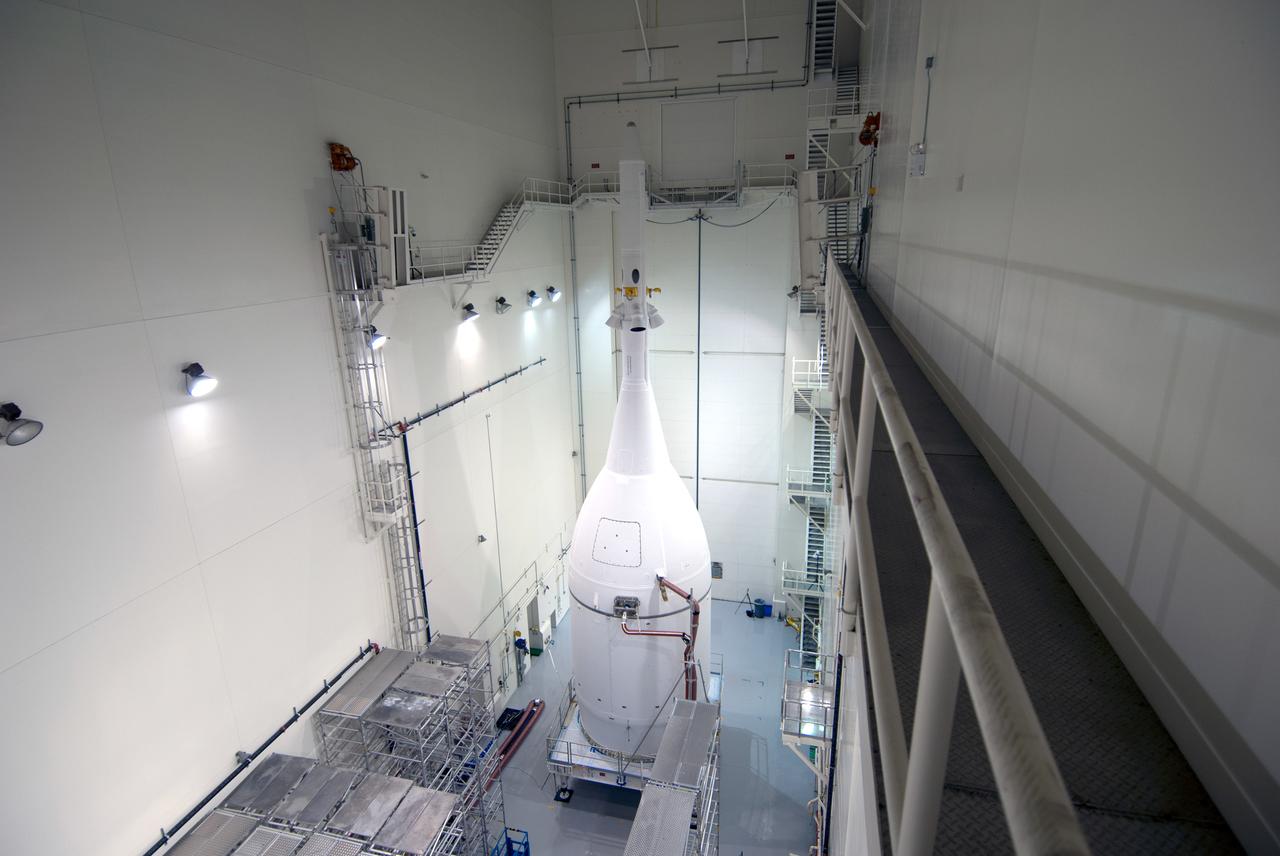
The Orion for Exploration Flight Test-1 (EFT-1) is complete and ready for flight inside the Launch Abort System Facility (LASF) at Kennedy Space Center in Florida on Nov. 4, 2014. Part of Batch image transfer from Flickr.
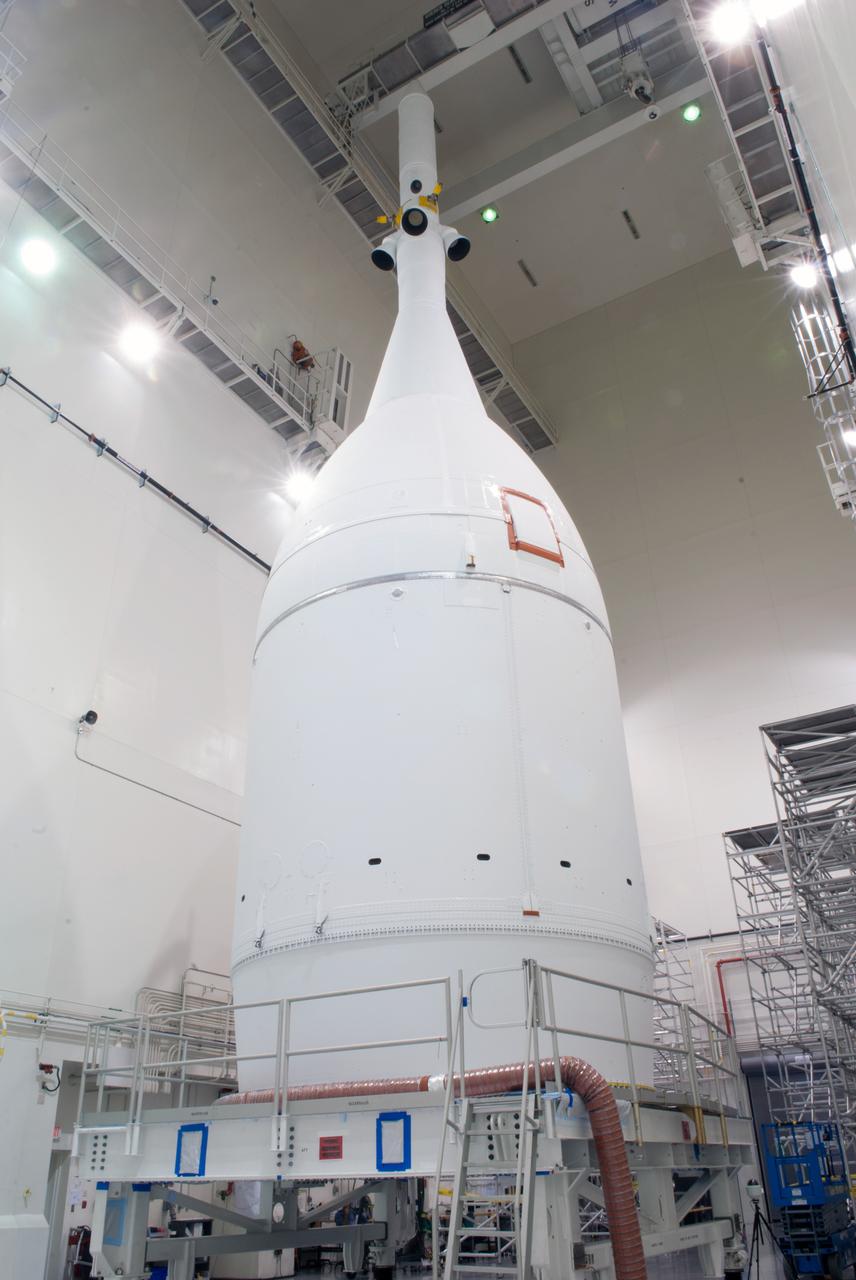
The Orion for Exploration Flight Test-1 (EFT-1) is complete and ready for flight inside the Launch Abort System Facility (LASF) at Kennedy Space Center in Florida on Nov. 4, 2014. Part of Batch image transfer from Flickr.
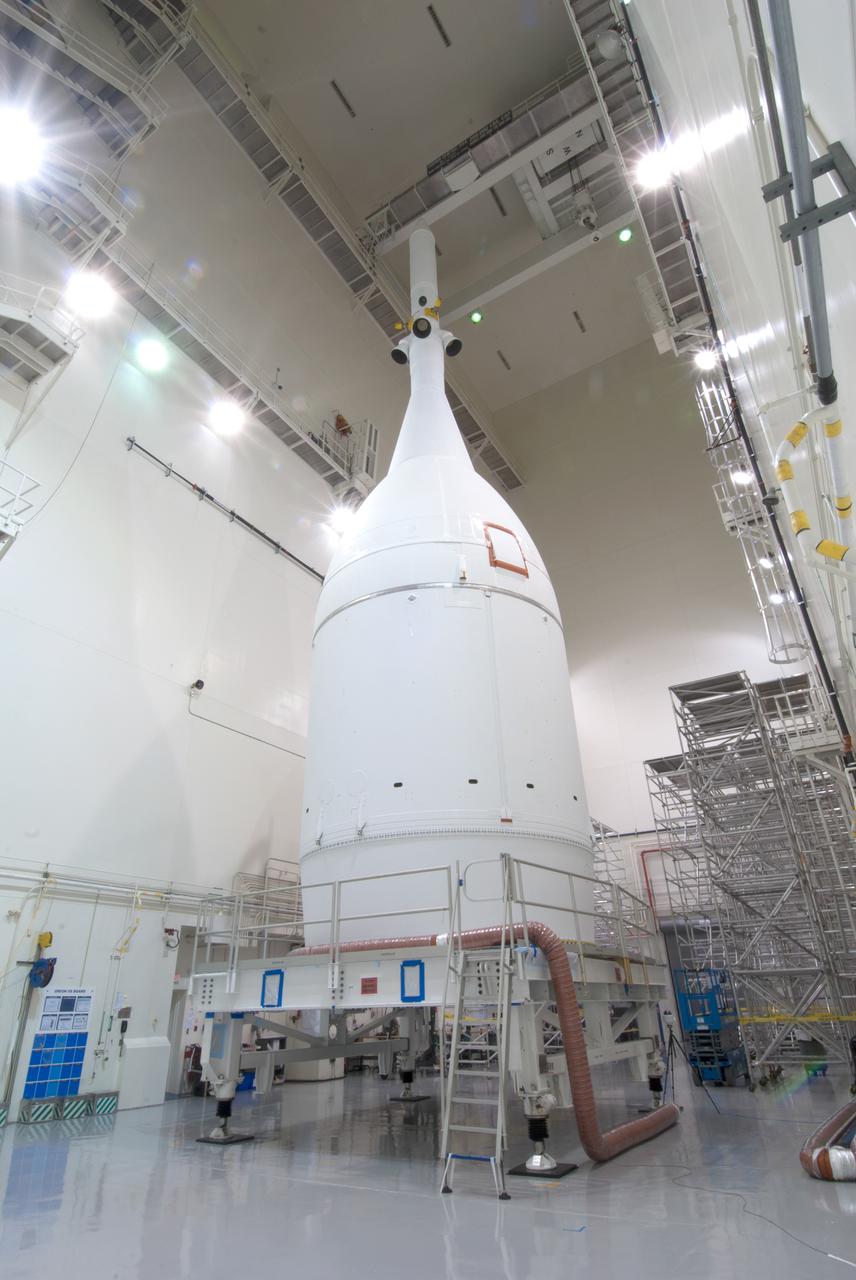
The Orion for Exploration Flight Test-1 (EFT-1) is complete and ready for flight inside the Launch Abort System Facility (LASF) at Kennedy Space Center in Florida on Nov. 4, 2014. Part of Batch image transfer from Flickr.
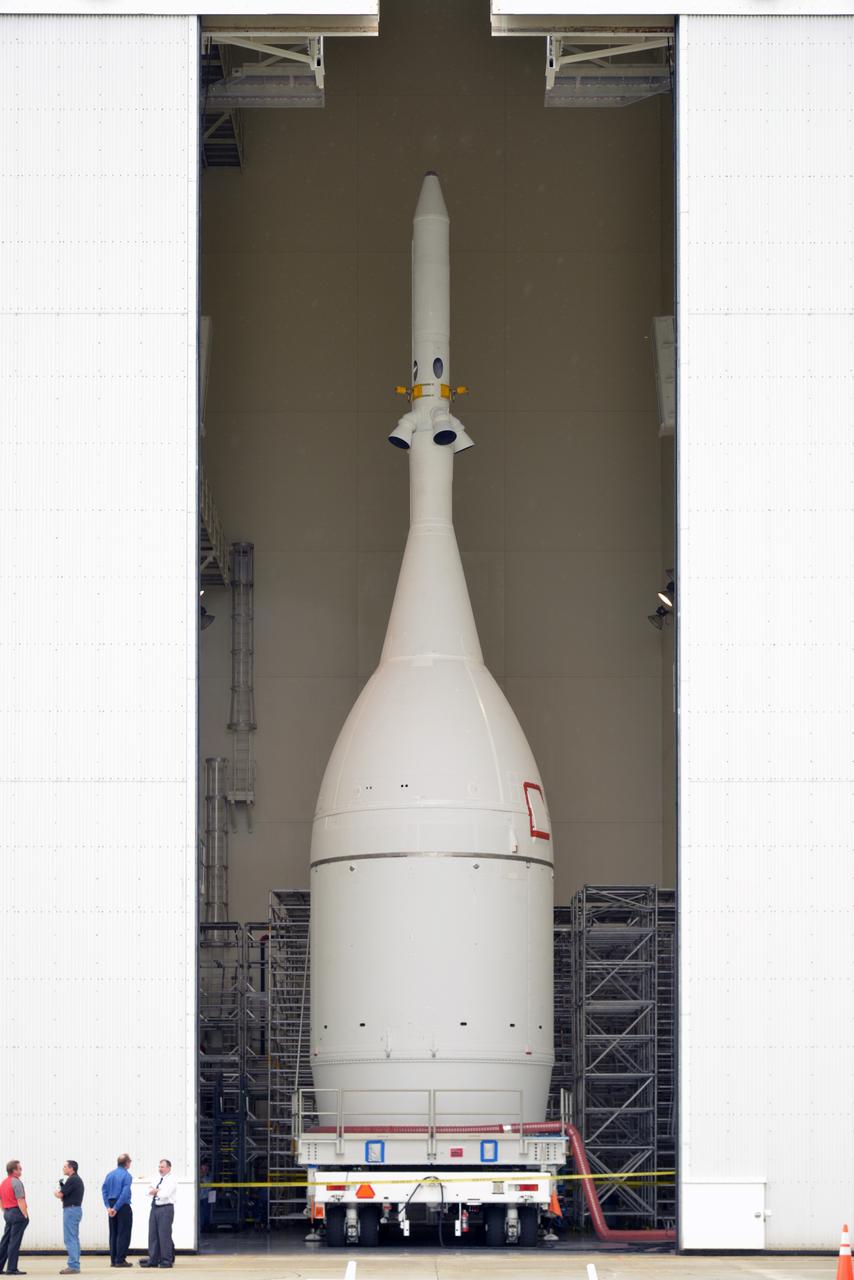
The Orion for Exploration Flight Test-1 (EFT-1) is stacked and ready to roll to the pad in the Launch Abort System Facility (LASF) at Kennedy Space Center on Nov. 10, 2014. The Orion stack, consisting of the launch abort system, the crew module, and the service module measures over 80 feet tall. Part of Batch image transfer from Flickr.
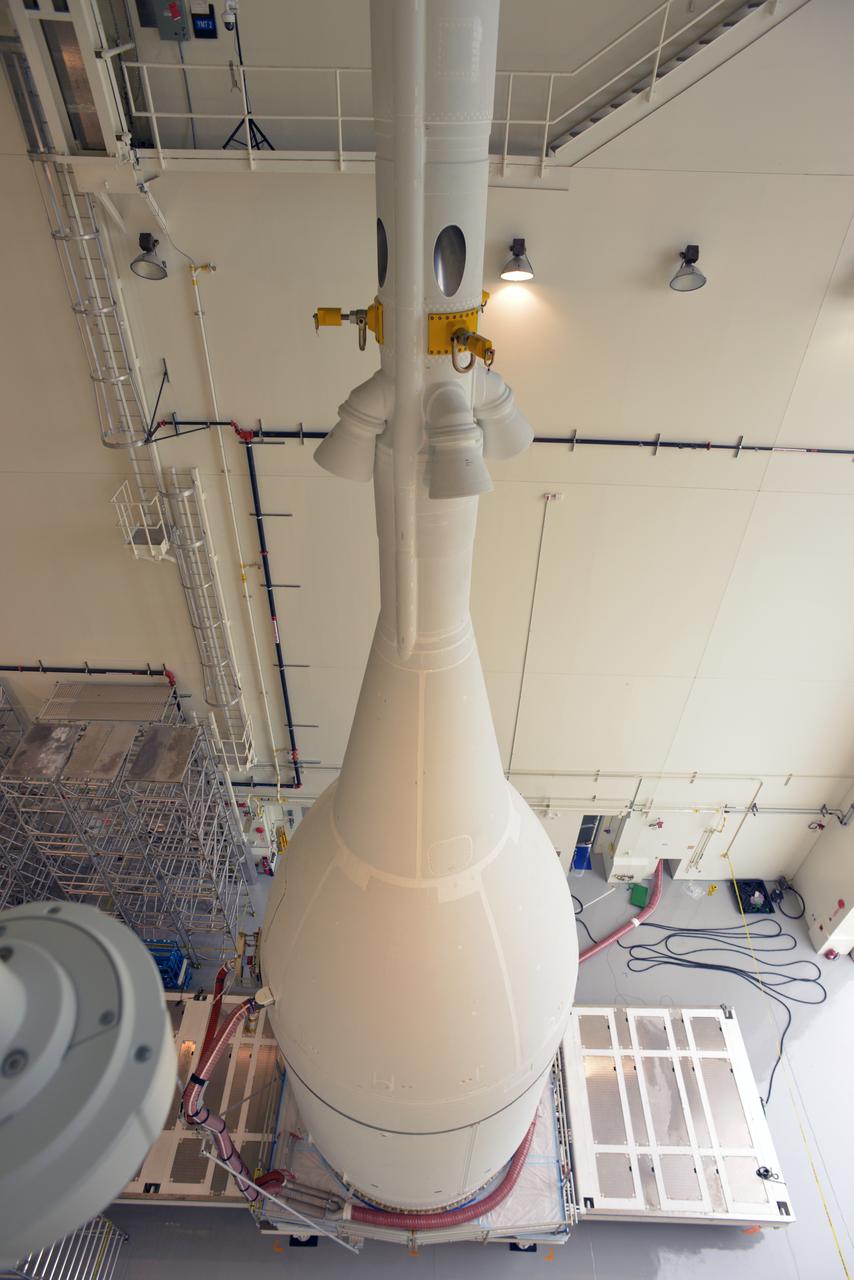
The Orion for Exploration Flight Test-1 (EFT-1) is stacked and ready to roll to the pad in the Launch Abort System Facility (LASF) at Kennedy Space Center on Nov. 10, 2014. The Orion stack, consisting of the launch abort system, the crew module, and the service module measures over 80 feet tall. Part of Batch image transfer from Flickr.
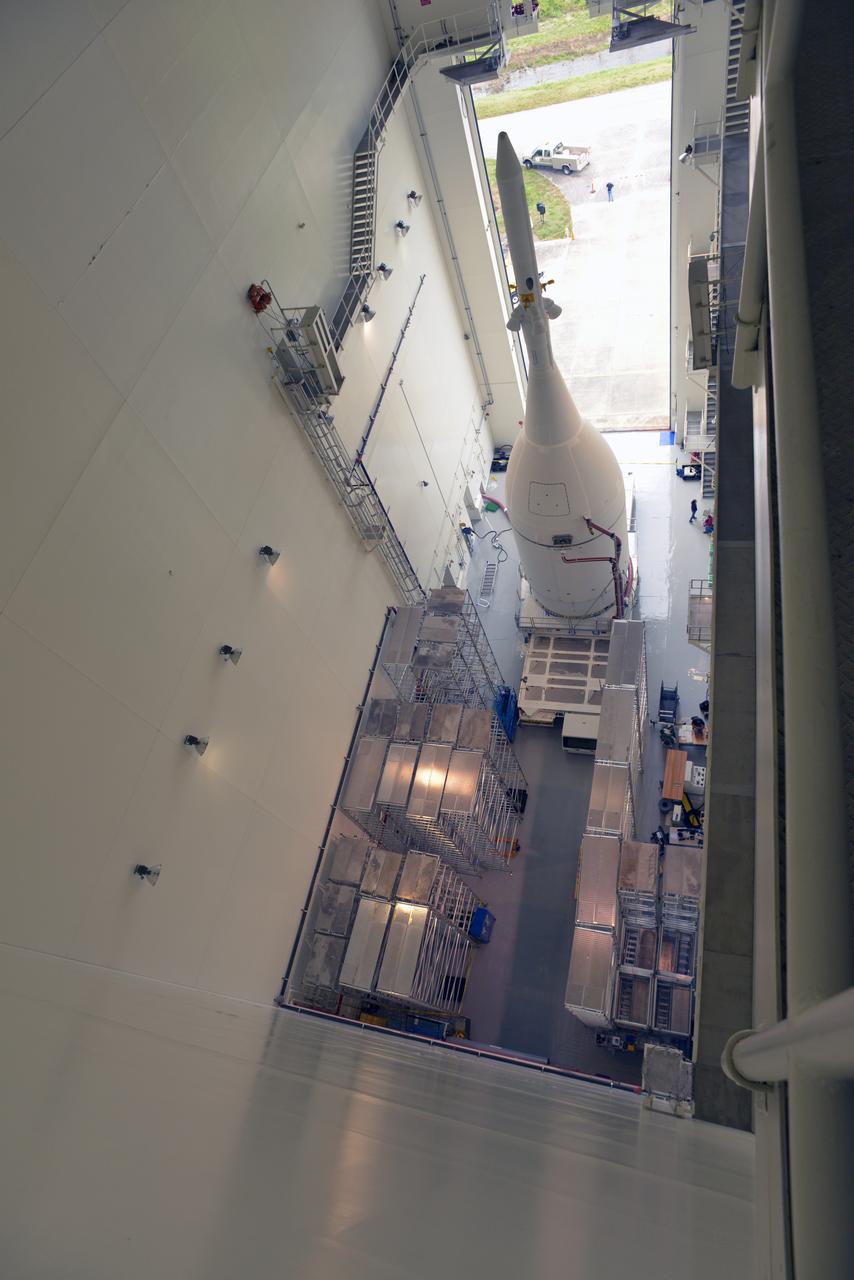
The Orion for Exploration Flight Test-1 (EFT-1) is stacked and ready to roll to the pad in the Launch Abort System Facility (LASF) at Kennedy Space Center on Nov. 10, 2014. The Orion stack, consisting of the launch abort system, the crew module, and the service module measures over 80 feet tall. Part of Batch image transfer from Flickr.
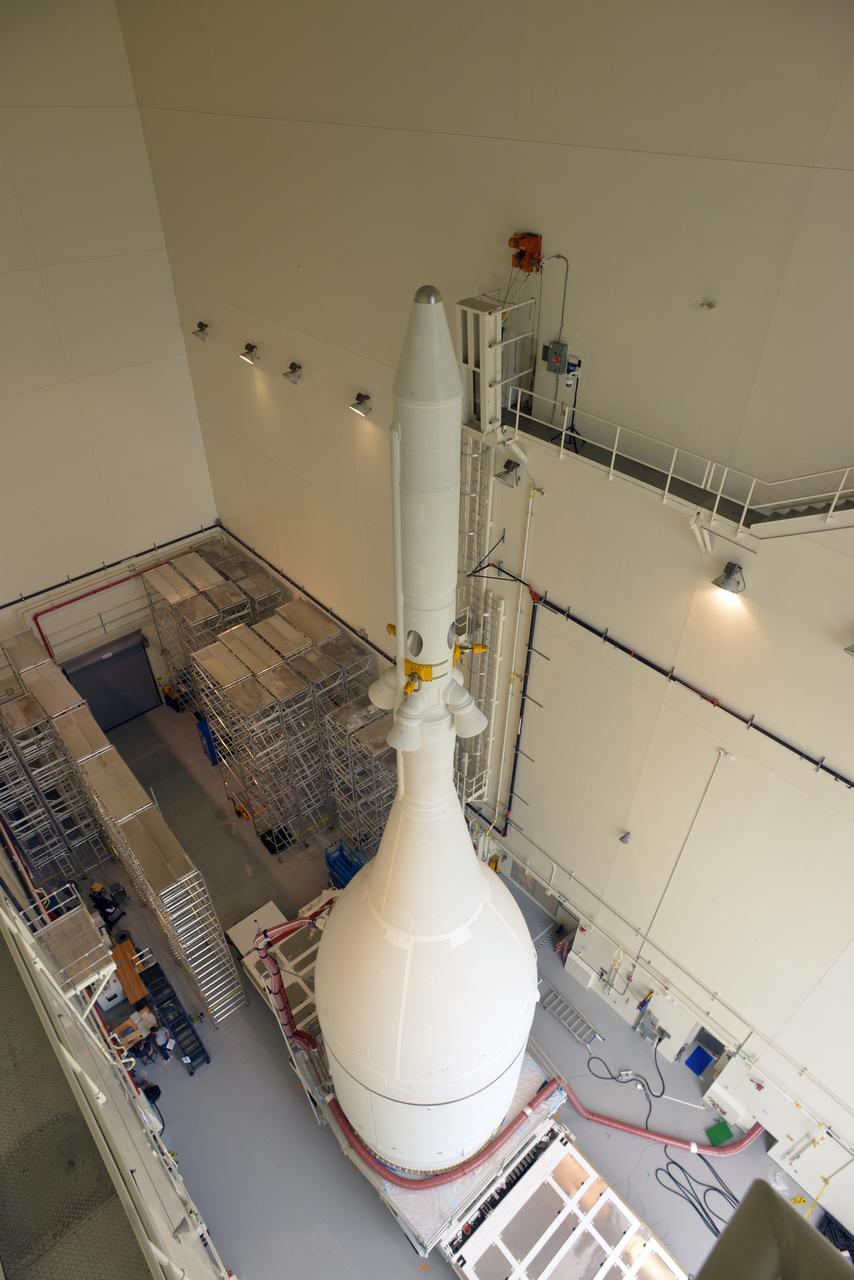
The Orion for Exploration Flight Test-1 (EFT-1) is stacked and ready to roll to the pad in the Launch Abort System Facility (LASF) at Kennedy Space Center on Nov. 10, 2014. The Orion stack, consisting of the launch abort system, the crew module, and the service module measures over 80 feet tall. Part of Batch image transfer from Flickr.
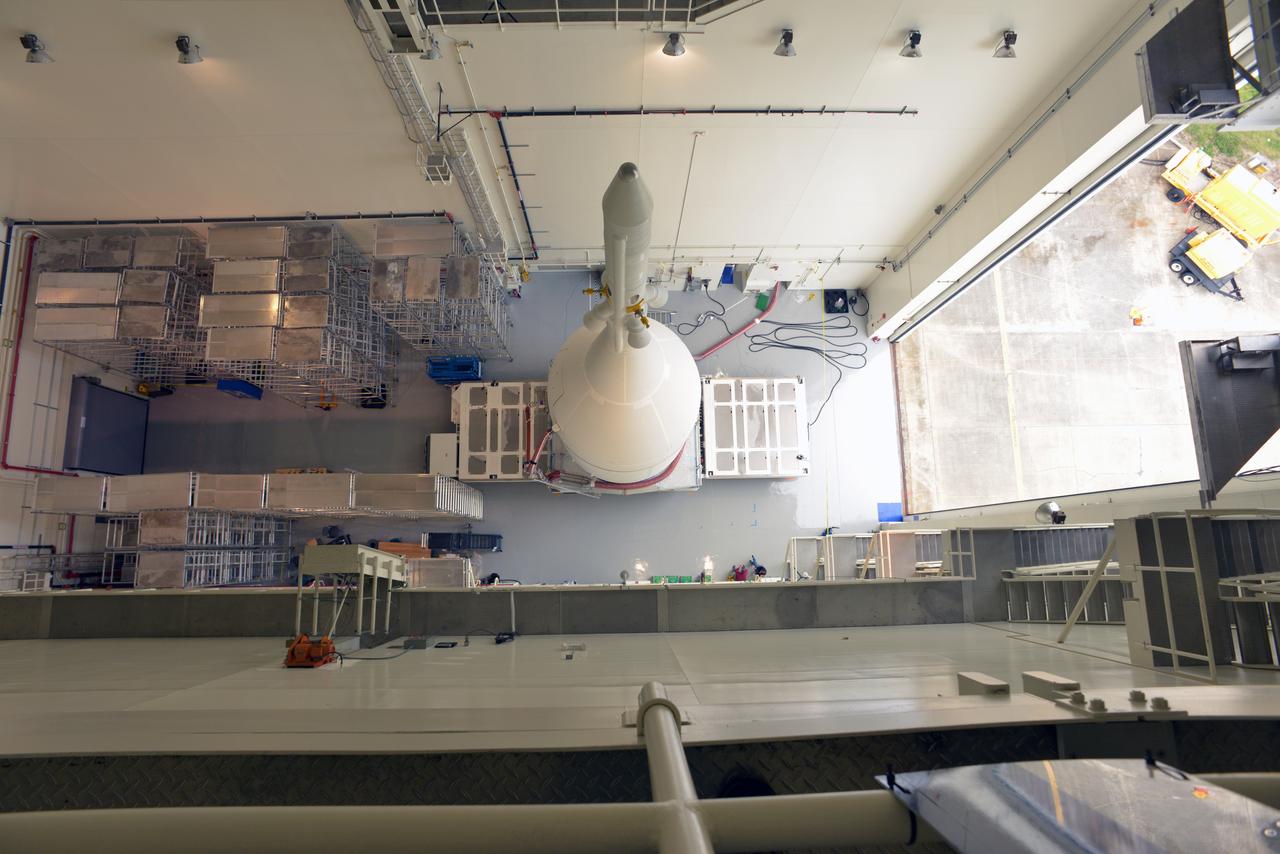
The Orion for Exploration Flight Test-1 (EFT-1) is stacked and ready to roll to the pad in the Launch Abort System Facility (LASF) at Kennedy Space Center on Nov. 10, 2014. The Orion stack, consisting of the launch abort system, the crew module, and the service module measures over 80 feet tall. Part of Batch image transfer from Flickr.
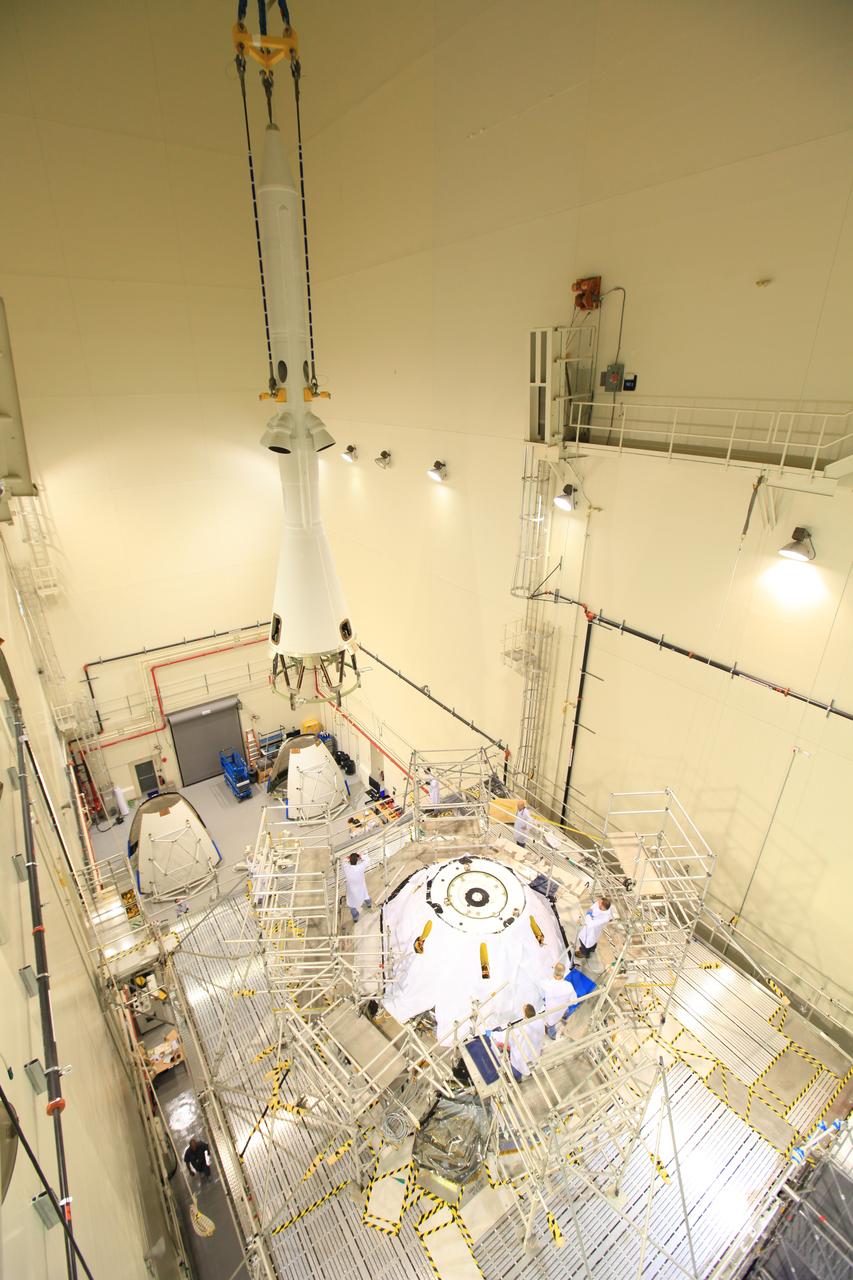
Exploration Flight Test-1 (EFT-1) Orion's launch abort system, or LAS, is positioned atop the crew and service module in the Launch Abort System Facility (LASF) at Kennedy Space Center on Oct. 3, 2014, in preparation for rollout to mate with the Delta IV Heavy launch vehicle. The LAS is designed to activate within milliseconds to pull the crew module to safety in case of an emergency. Exploration Flight Test-1 (EFT-1) verified the function of the jettison motor to separate the LAS from the crew module to ensure a safe, successful mission. Part of Batch image transfer from Flickr.
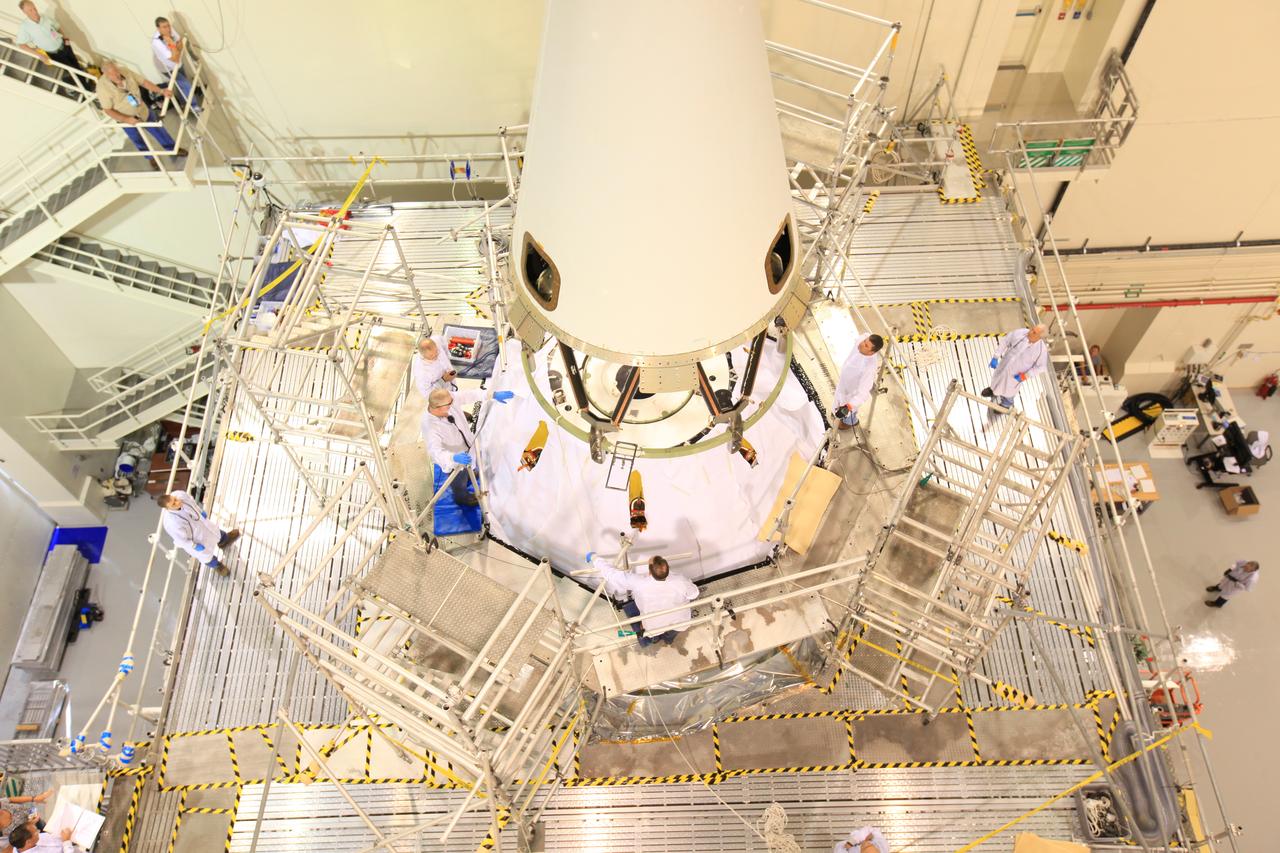
Exploration Flight Test-1 (EFT-1) Orion's launch abort system, or LAS, is positioned atop the crew and service module in the Launch Abort System Facility (LASF) at Kennedy Space Center on Oct. 3, 2014, in preparation for rollout to mate with the Delta IV Heavy launch vehicle. The LAS is designed to activate within milliseconds to pull the crew module to safety in case of an emergency. Exploration Flight Test-1 (EFT-1) verified the function of the jettison motor to separate the LAS from the crew module to ensure a safe, successful mission. Part of Batch image transfer from Flickr.
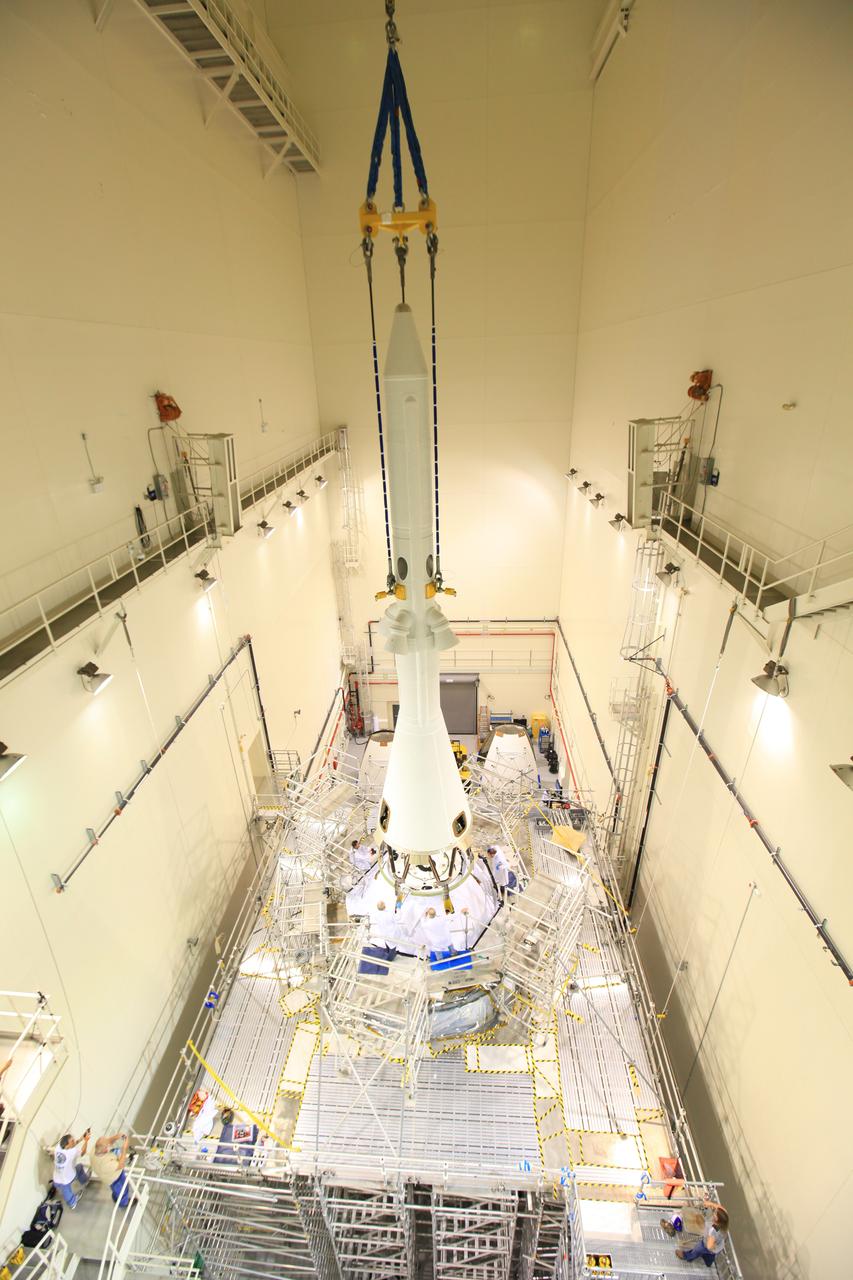
Exploration Flight Test-1 (EFT-1) Orion's launch abort system, or LAS, is positioned atop the crew and service module in the Launch Abort System Facility (LASF) at Kennedy Space Center on Oct. 3, 2014, in preparation for rollout to mate with the Delta IV Heavy launch vehicle. The LAS is designed to activate within milliseconds to pull the crew module to safety in case of an emergency. Exploration Flight Test-1 (EFT-1) verified the function of the jettison motor to separate the LAS from the crew module to ensure a safe, successful mission. Part of Batch image transfer from Flickr.
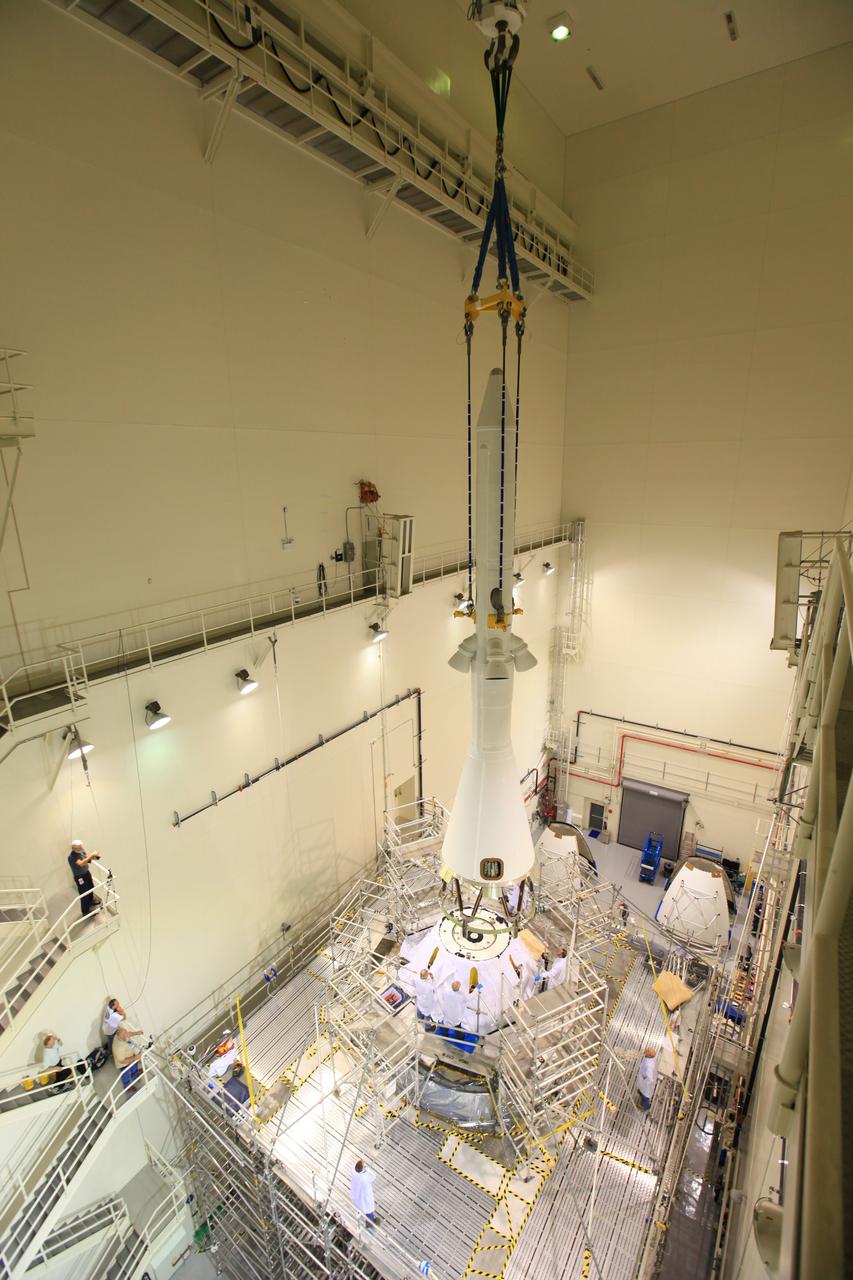
Exploration Flight Test-1 (EFT-1) Orion's launch abort system, or LAS, is positioned atop the crew and service module in the Launch Abort System Facility (LASF) at Kennedy Space Center on Oct. 3, 2014, in preparation for rollout to mate with the Delta IV Heavy launch vehicle. The LAS is designed to activate within milliseconds to pull the crew module to safety in case of an emergency. Exploration Flight Test-1 (EFT-1) verified the function of the jettison motor to separate the LAS from the crew module to ensure a safe, successful mission. Part of Batch image transfer from Flickr.
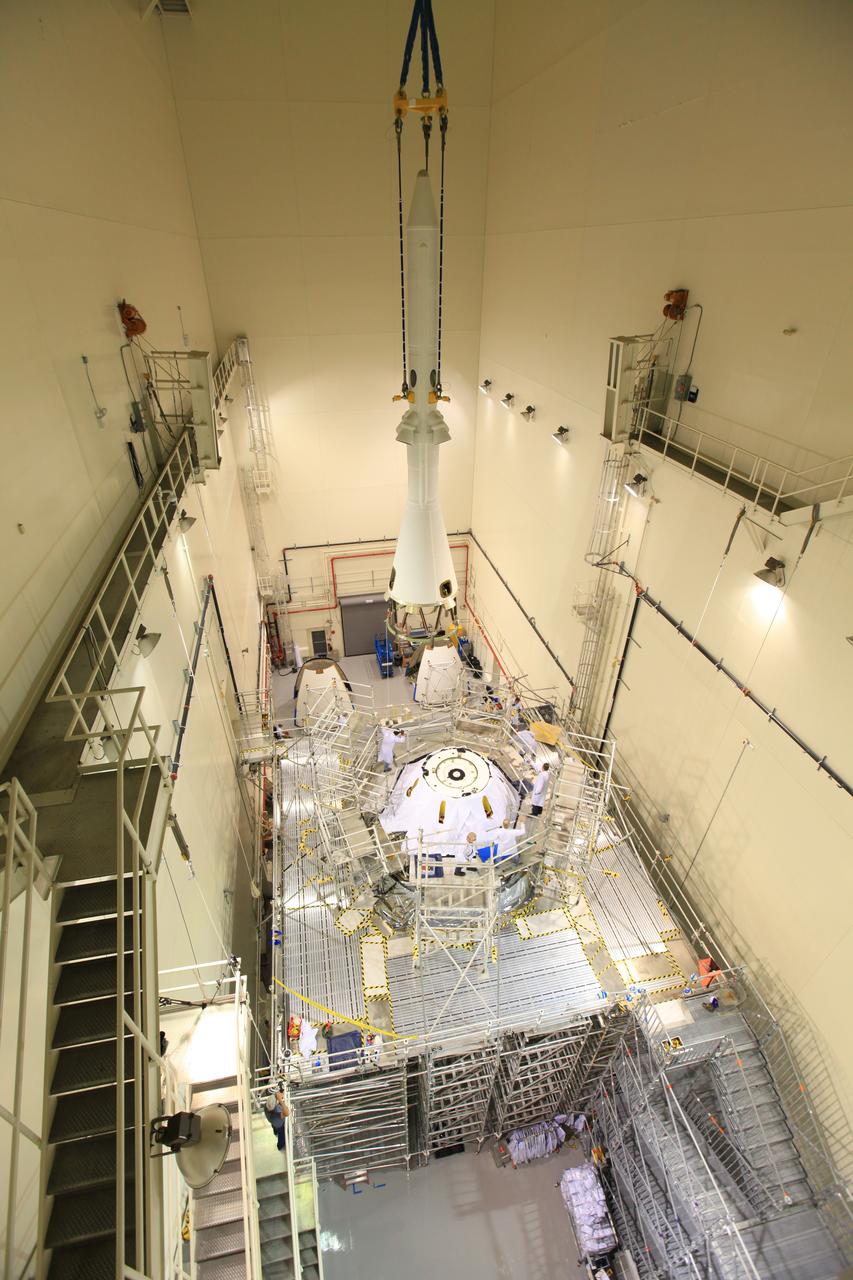
Exploration Flight Test-1 (EFT-1) Orion's launch abort system, or LAS, is positioned atop the crew and service module in the Launch Abort System Facility (LASF) at Kennedy Space Center on Oct. 3, 2014, in preparation for rollout to mate with the Delta IV Heavy launch vehicle. The LAS is designed to activate within milliseconds to pull the crew module to safety in case of an emergency. Exploration Flight Test-1 (EFT-1) verified the function of the jettison motor to separate the LAS from the crew module to ensure a safe, successful mission. Part of Batch image transfer from Flickr.
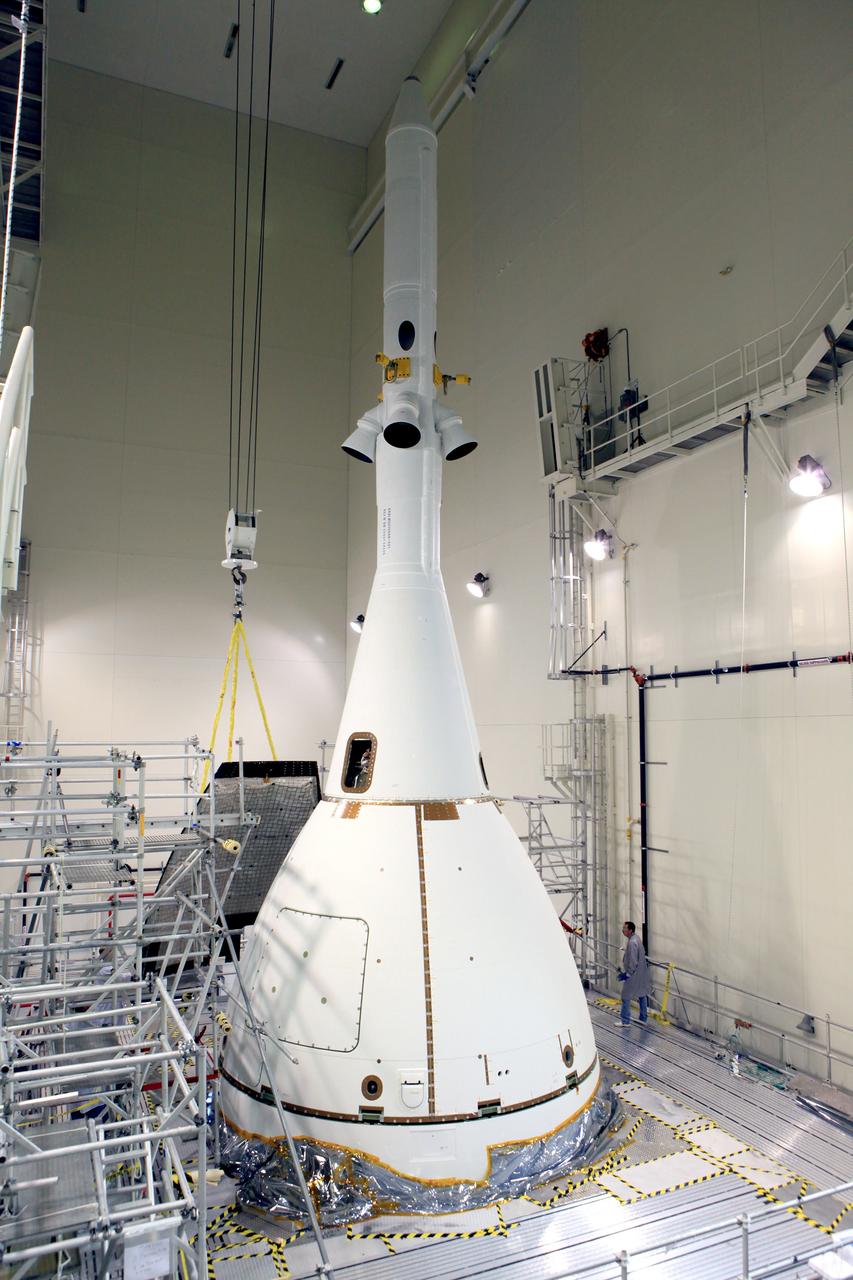
The last major assembly operation to prepare Orion for Exploration Flight Test-1 (EFT-1) is completed in the Launch Abort System Facility (LASF) at Kennedy Space Center on Oct. 11, 2014. The ogive panels, which protect the crew module from sound and vibration during ascent, were installed around the spacecraft just below the launch abort system tower. Part of Batch image transfer from Flickr.
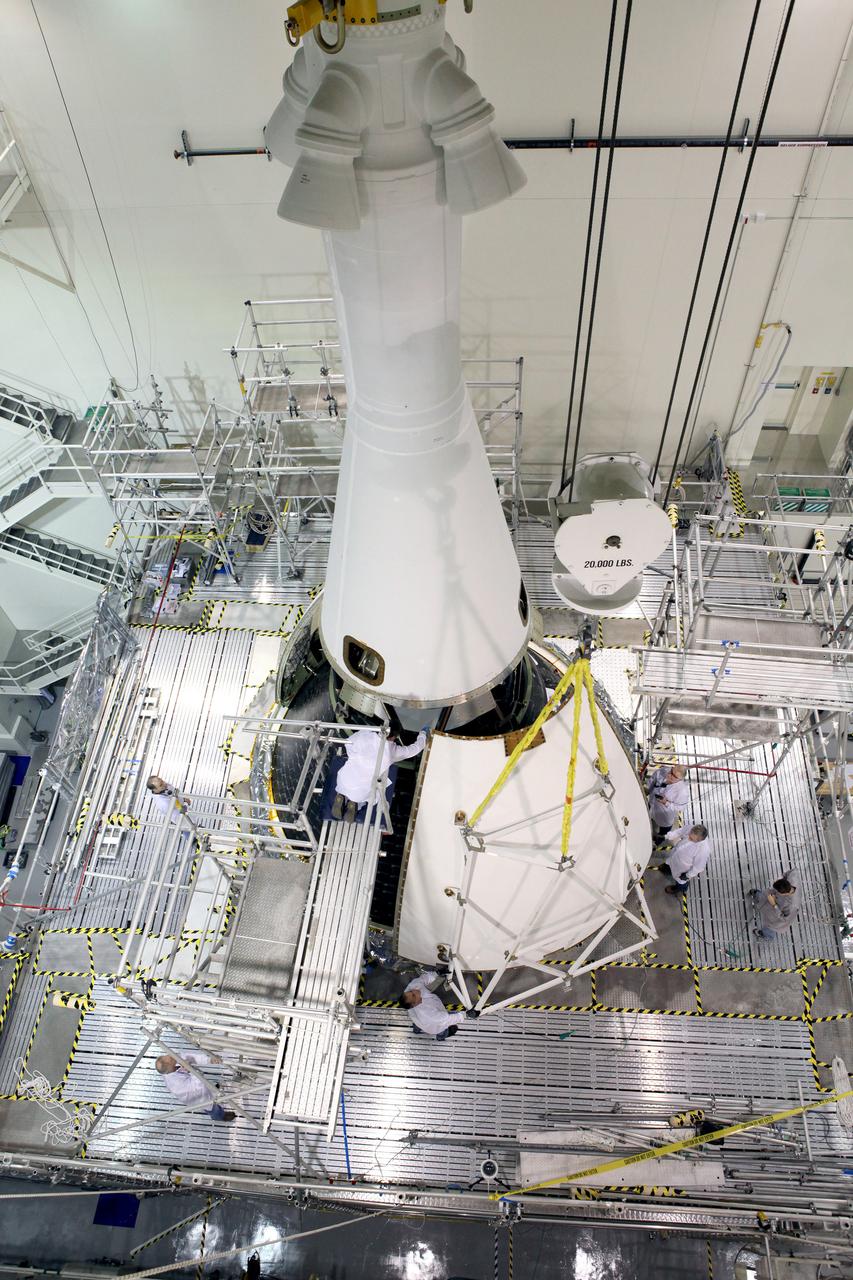
The last major assembly operation to prepare Orion for Exploration Flight Test-1 (EFT-1) is completed in the Launch Abort System Facility (LASF) at Kennedy Space Center on Oct. 11, 2014. The ogive panels, which protect the crew module from sound and vibration during ascent, were installed around the spacecraft just below the launch abort system tower. Part of Batch image transfer from Flickr.
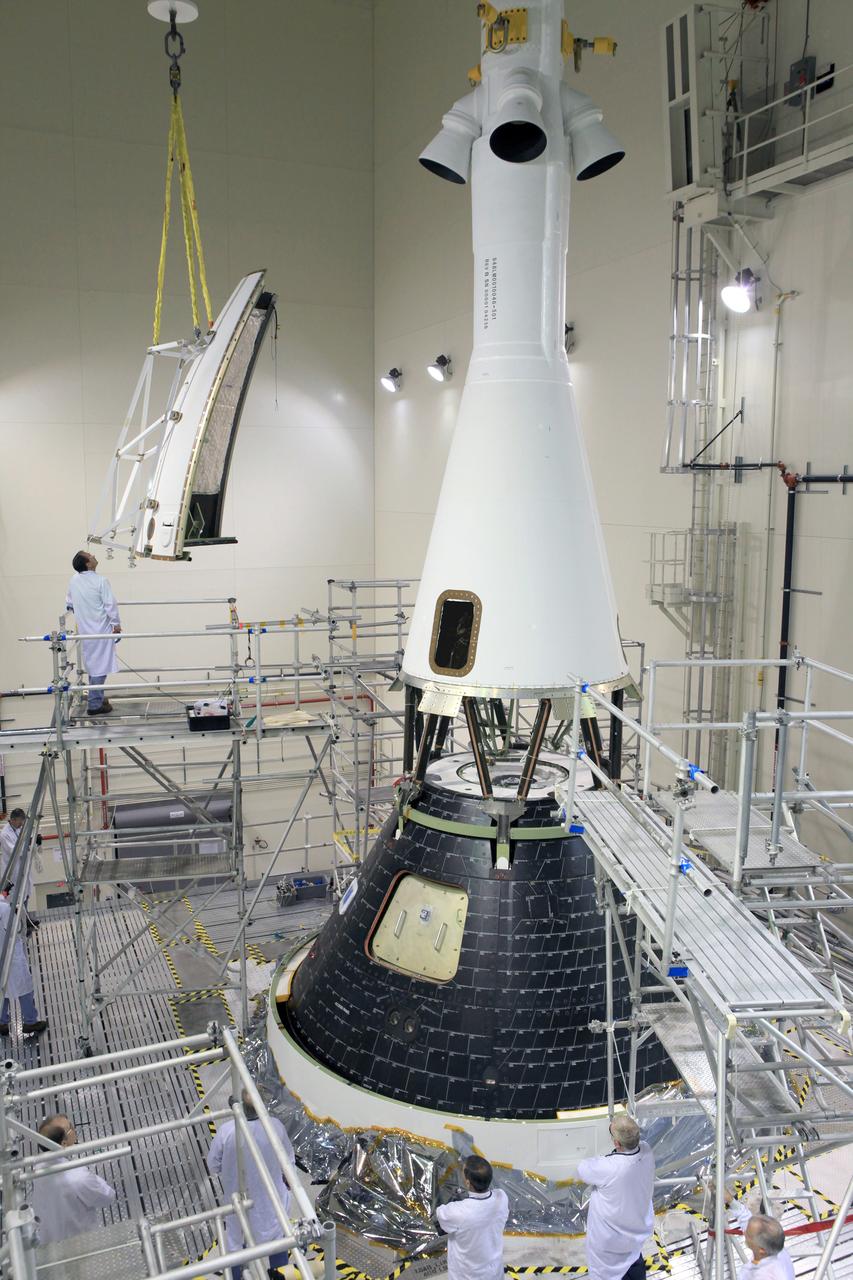
The last major assembly operation to prepare Orion for Exploration Flight Test-1 (EFT-1) is completed in the Launch Abort System Facility (LASF) at Kennedy Space Center on Oct. 11, 2014. The ogive panels, which protect the crew module from sound and vibration during ascent, were installed around the spacecraft just below the launch abort system tower. Part of Batch image transfer from Flickr.
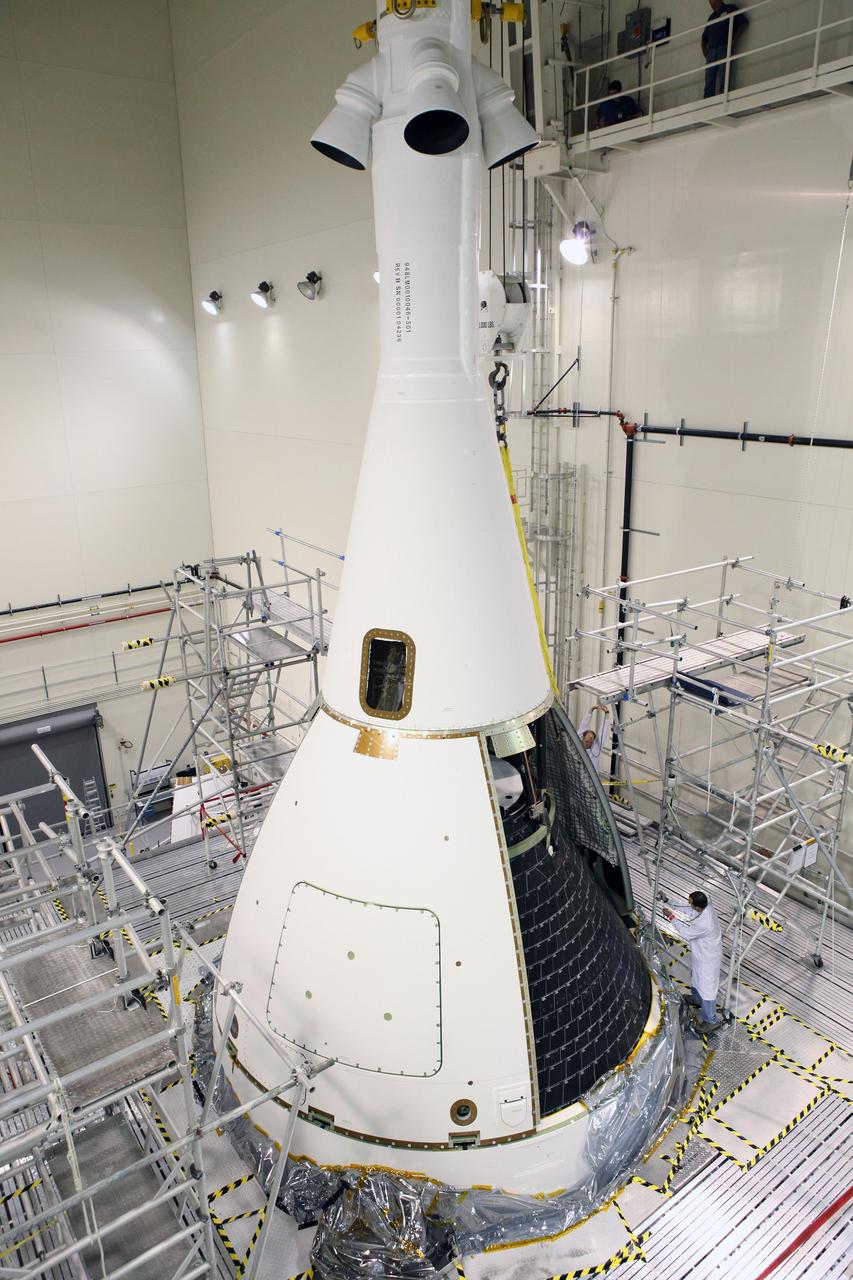
The last major assembly operation to prepare Orion for Exploration Flight Test-1 (EFT-1) is completed in the Launch Abort System Facility (LASF) at Kennedy Space Center on Oct. 11, 2014. The ogive panels, which protect the crew module from sound and vibration during ascent, were installed around the spacecraft just below the launch abort system tower. Part of Batch image transfer from Flickr.
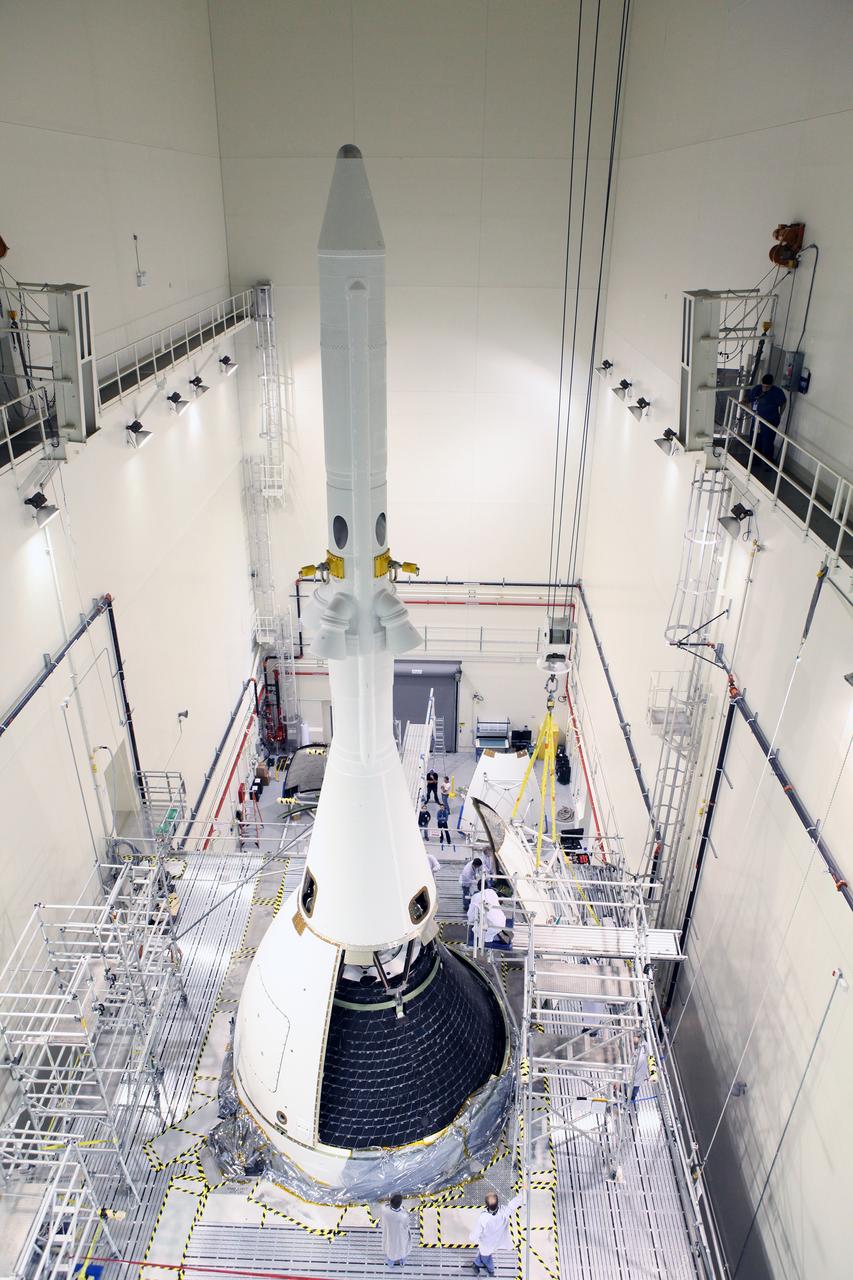
The last major assembly operation to prepare Orion for Exploration Flight Test-1 (EFT-1) is completed in the Launch Abort System Facility (LASF) at Kennedy Space Center on Oct. 11, 2014. The ogive panels, which protect the crew module from sound and vibration during ascent, were installed around the spacecraft just below the launch abort system tower. Part of Batch image transfer from Flickr.

The last major assembly operation to prepare Orion for Exploration Flight Test-1 (EFT-1) is completed in the Launch Abort System Facility (LASF) at Kennedy Space Center on Oct. 11, 2014. The ogive panels, which protect the crew module from sound and vibration during ascent, were installed around the spacecraft just below the launch abort system tower. Part of Batch image transfer from Flickr.
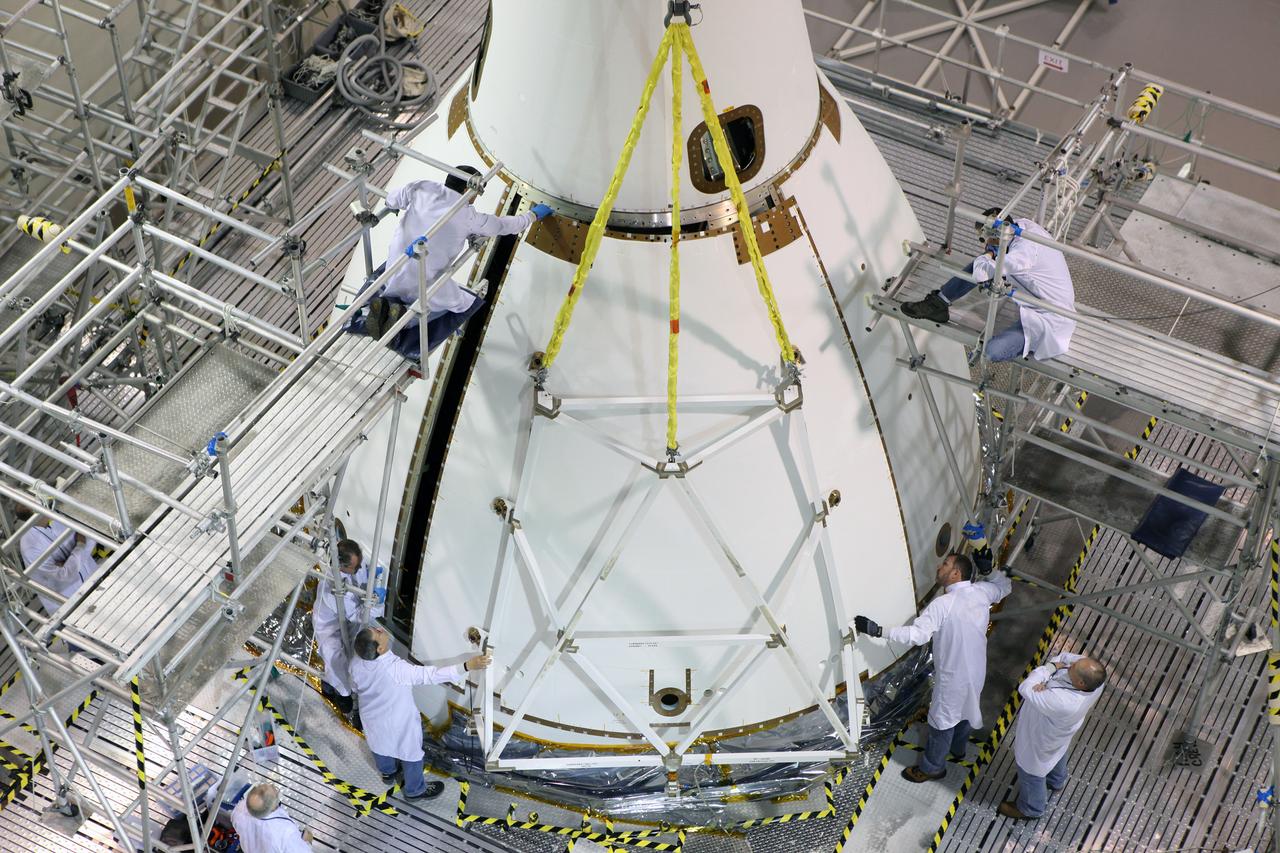
The last major assembly operation to prepare Orion for Exploration Flight Test-1 (EFT-1) is completed in the Launch Abort System Facility (LASF) at Kennedy Space Center on Oct. 11, 2014. The ogive panels, which protect the crew module from sound and vibration during ascent, were installed around the spacecraft just below the launch abort system tower. Part of Batch image transfer from Flickr.
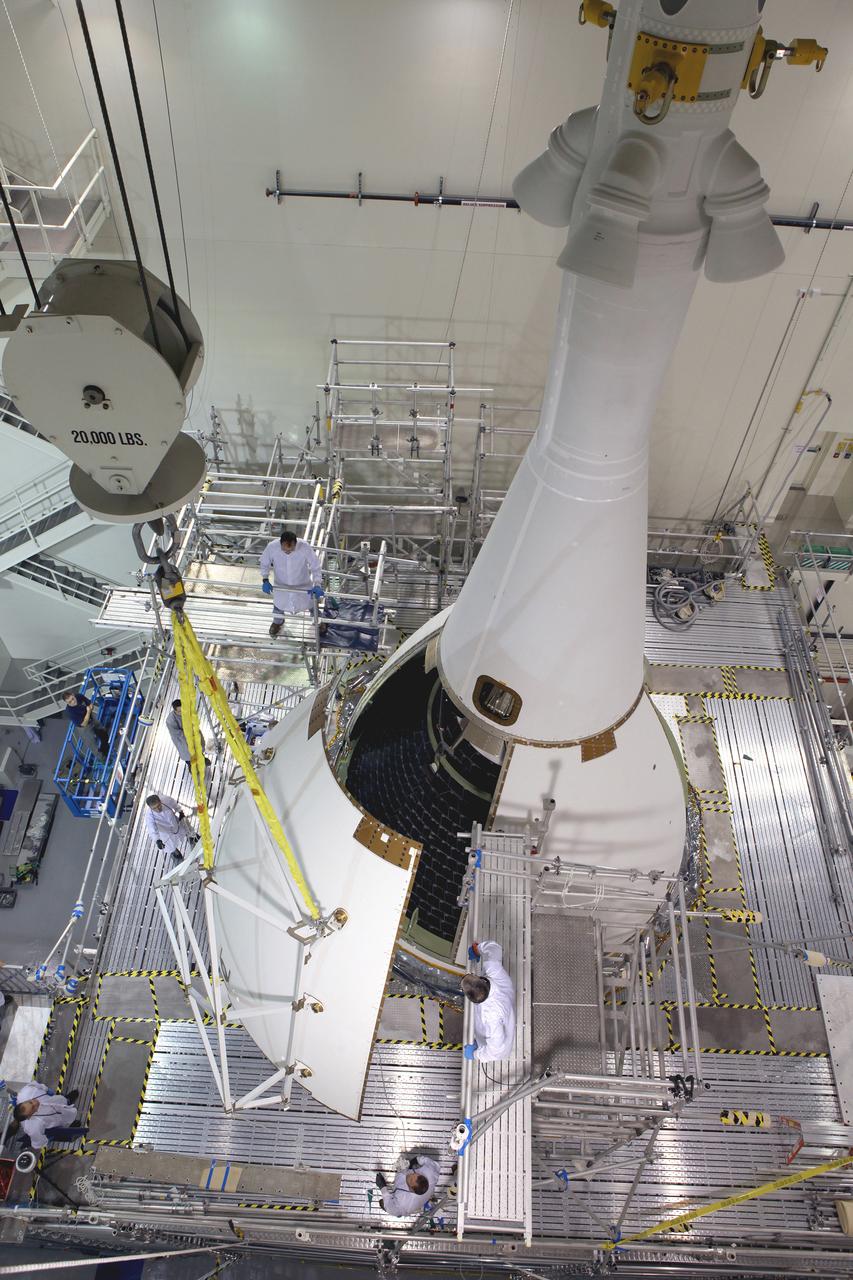
The last major assembly operation to prepare Orion for Exploration Flight Test-1 (EFT-1) is completed in the Launch Abort System Facility (LASF) at Kennedy Space Center on Oct. 11, 2014. The ogive panels, which protect the crew module from sound and vibration during ascent, were installed around the spacecraft just below the launch abort system tower. Part of Batch image transfer from Flickr.
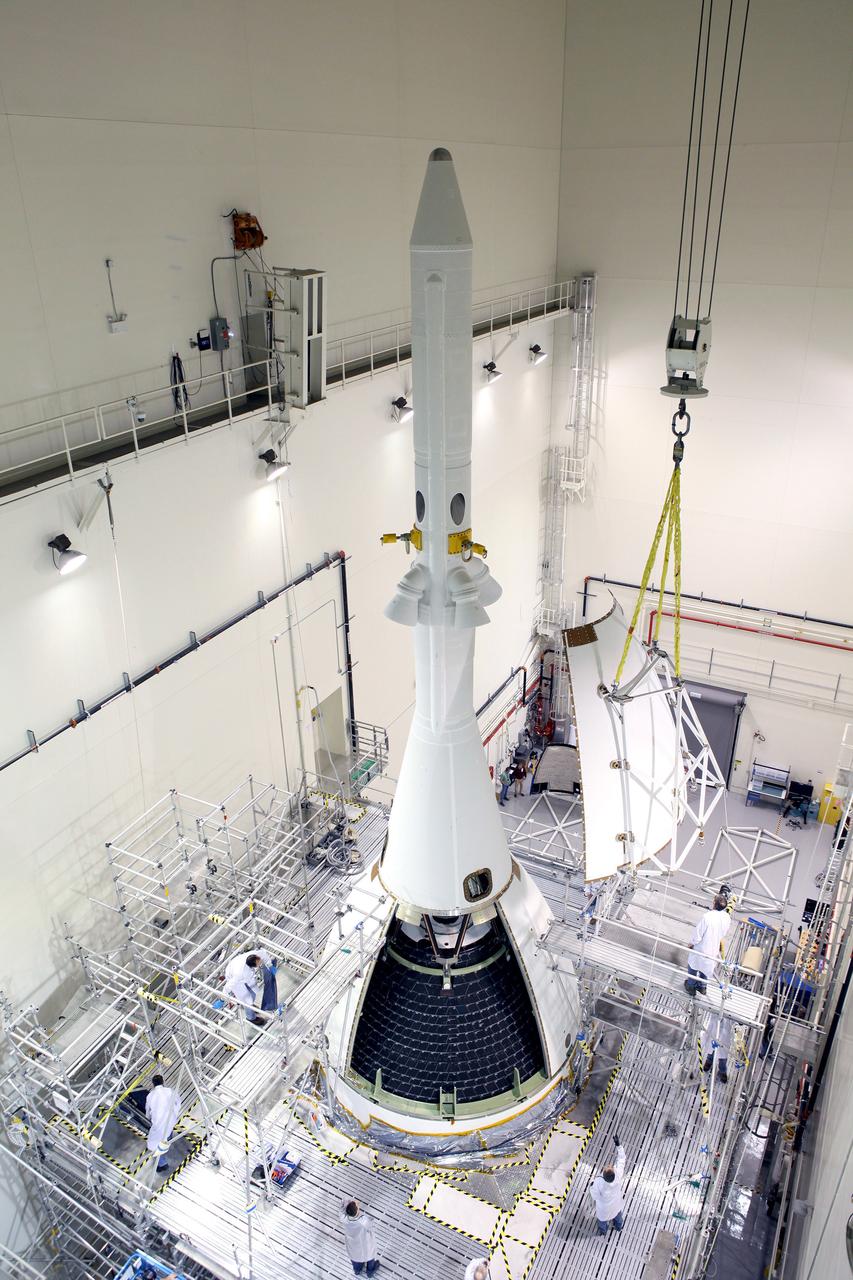
The last major assembly operation to prepare Orion for Exploration Flight Test-1 (EFT-1) is completed in the Launch Abort System Facility (LASF) at Kennedy Space Center on Oct. 11, 2014. The ogive panels, which protect the crew module from sound and vibration during ascent, were installed around the spacecraft just below the launch abort system tower. Part of Batch image transfer from Flickr.

The last major assembly operation to prepare Orion for Exploration Flight Test-1 (EFT-1) is completed in the Launch Abort System Facility (LASF) at Kennedy Space Center on Oct. 11, 2014. The ogive panels, which protect the crew module from sound and vibration during ascent, were installed around the spacecraft just below the launch abort system tower. Part of Batch image transfer from Flickr.

The last major assembly operation to prepare Orion for Exploration Flight Test-1 (EFT-1) is completed in the Launch Abort System Facility (LASF) at Kennedy Space Center on Oct. 11, 2014. The ogive panels, which protect the crew module from sound and vibration during ascent, were installed around the spacecraft just below the launch abort system tower. Part of Batch image transfer from Flickr.
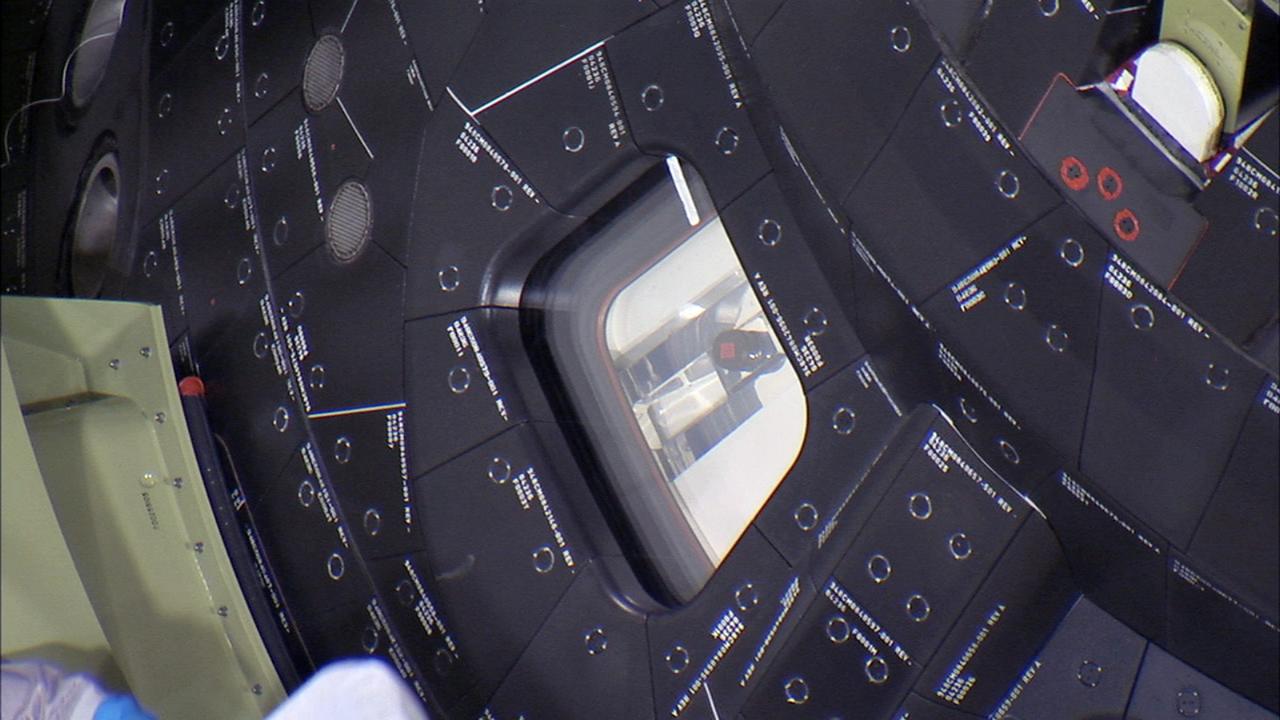
CAPE CANAVERAL, Fla. – Inside the Launch Abort System Facility at NASA’s Kennedy Space Center in Florida, a window cover has been carefully removed from the Orion spacecraft before the fourth and final Ogive panel is installed around the spacecraft and Launch Abort System. The Ogive panels will smooth the airflow over the conical spacecraft to limit sound and vibration, which will make for a much smoother ride for the astronauts who will ride inside Orion in the future. The work marked the final major assembly steps for the spacecraft before it is transported to Space Launch Complex 37 at Cape Canaveral Air Force Station in November. Orion is the exploration spacecraft designed to carry astronauts to destinations not yet explored by humans, including an asteroid and Mars. It will have emergency abort capability, sustain the crew during space travel and provide safe re-entry from deep space return velocities. The first unpiloted flight test of Orion is scheduled to launch in December 2014 atop a United Launch Alliance Delta IV Heavy rocket, and in 2018 on NASA’s Space Launch System rocket. For more information, visit www.nasa.gov/orion. Photo credit: Ben Smegelsky
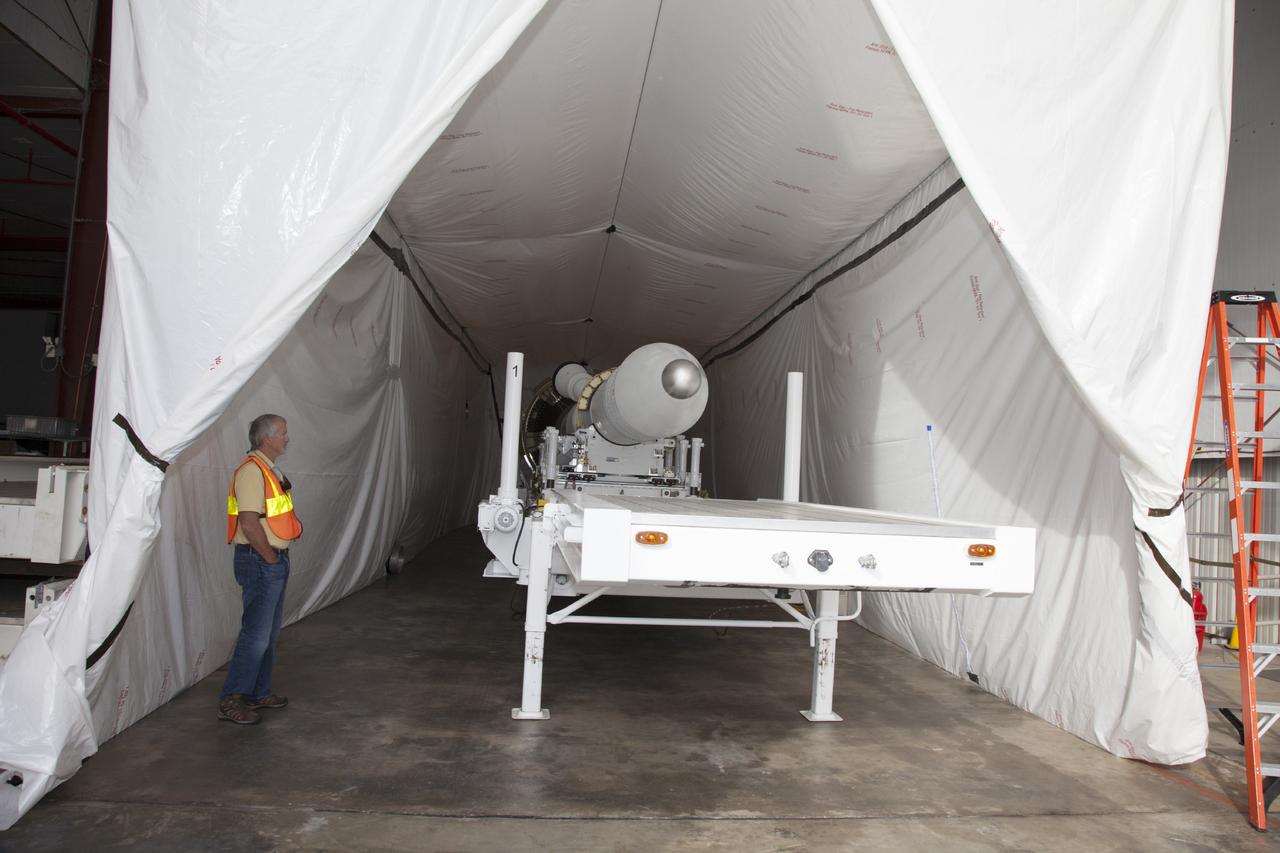
CAPE CANAVERAL, Fla. – At the Launch Abort System Facility at NASA’s Kennedy Space Center in Florida, the launch abort system, or LAS, for the Orion Exploration Flight Test-1, has been transferred from the high bay to a low bay at the facility. The low bay has been prepared for additional LAS processing. Orion is the exploration spacecraft designed to carry crews to space beyond low Earth orbit. It will provide emergency abort capability, sustain the crew during the space travel and provide safe re-entry from deep space return velocities. The LAS is designed to safely pull the Orion crew module away from the launch vehicle in the event of an emergency on the launch pad or during the initial ascent of NASA’s Space Launch System, or SLS, rocket. Orion’s first unpiloted test flight is scheduled to launch in 2014 atop a Delta IV rocket. A second uncrewed flight test is scheduled for 2017 on the SLS rocket. For more information, visit http://www.nasa.gov/orion. Photo credit: NASA/Daniel Casper
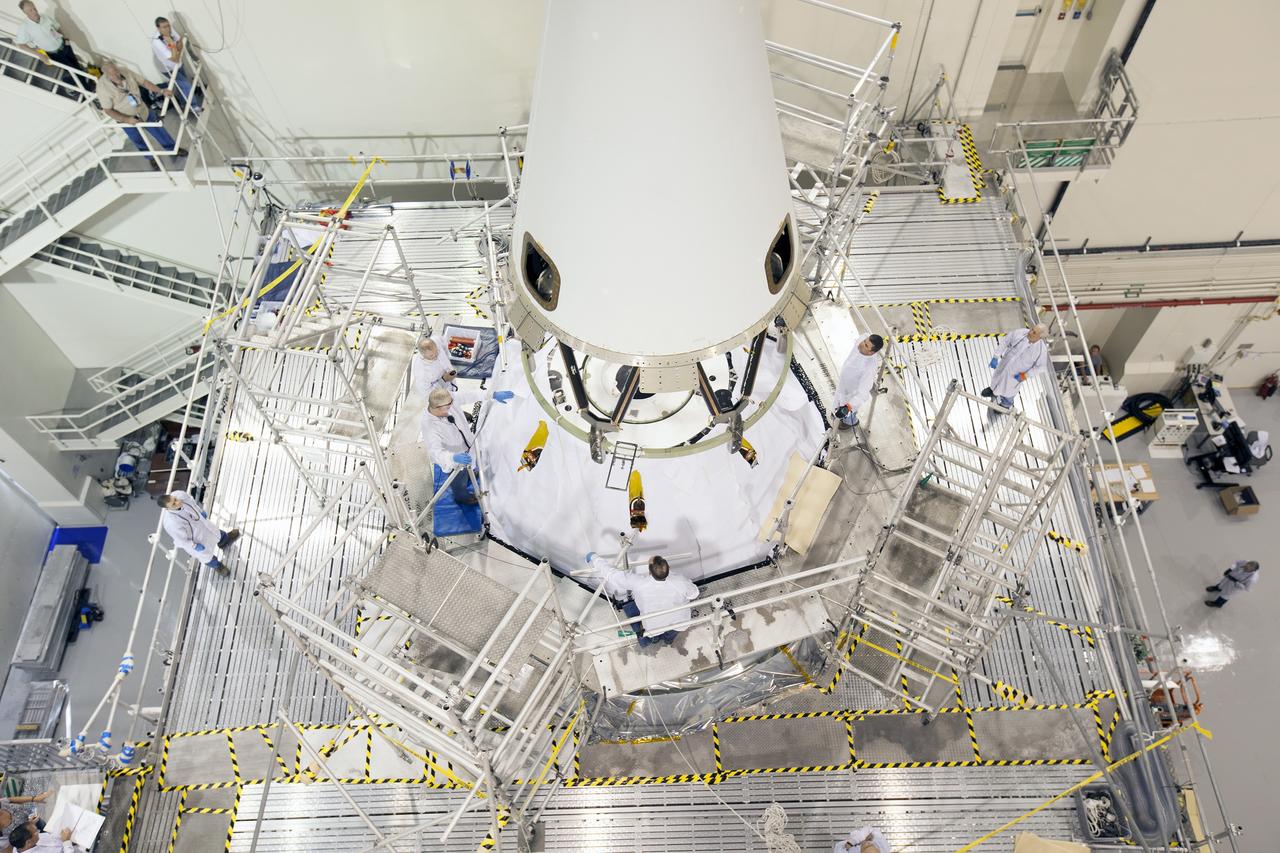
CAPE CANAVERAL, Fla. – The launch abort system is lowered by crane for installation on the Orion spacecraft for Exploration Flight Test-1 inside the Launch Abort System Facility, or LASF, at NASA's Kennedy Space Center in Florida. The completed crew and service modules will be tested and verified together with the launch abort system. Orion will remain inside the LASF until mid-November, when the United Launch Alliance Delta IV Heavy rocket is ready for integration with the spacecraft. Orion is the exploration spacecraft designed to carry astronauts to destinations not yet explored by humans, including an asteroid and Mars. It will have emergency abort capability, sustain the crew during space travel and provide safe re-entry from deep space return velocities. The first unpiloted test flight of the Orion is scheduled to launch in December atop the Delta IV Heavy rocket from Cape Canaveral Air Force Station in Florida to an altitude of 3,600 miles above the Earth's surface. The two-orbit, four-hour flight test will help engineers evaluate the systems critical to crew safety including the heat shield, parachute system and launch abort system. For more information, visit http://www.nasa.gov/orion. Photo credit: NASA/Cory Huston

CAPE CANAVERAL, Fla. – Inside the Launch Abort System Facility at NASA's Kennedy Space Center in Florida, preparations are underway to remove the window covers on Orion before the fourth and final Ogive panel is installed around the spacecraft and Launch Abort System. The Ogive panels will smooth the airflow over the conical spacecraft to limit sound and vibration, which will make for a much smoother ride for the astronauts who will ride inside Orion in the future. The work marked the final major assembly steps for the spacecraft before it is transported to Space Launch Complex 37 at Cape Canaveral Air Force Station in November. Orion is the exploration spacecraft designed to carry astronauts to destinations not yet explored by humans, including an asteroid and Mars. It will have emergency abort capability, sustain the crew during space travel and provide safe re-entry from deep space return velocities. The first unpiloted flight test of Orion is scheduled to launch in December 2014 atop a United Launch Alliance Delta IV Heavy rocket, and in 2018 on NASA’s Space Launch System rocket. For more information, visit www.nasa.gov/orion. Photo credit: Ben Smegelsky
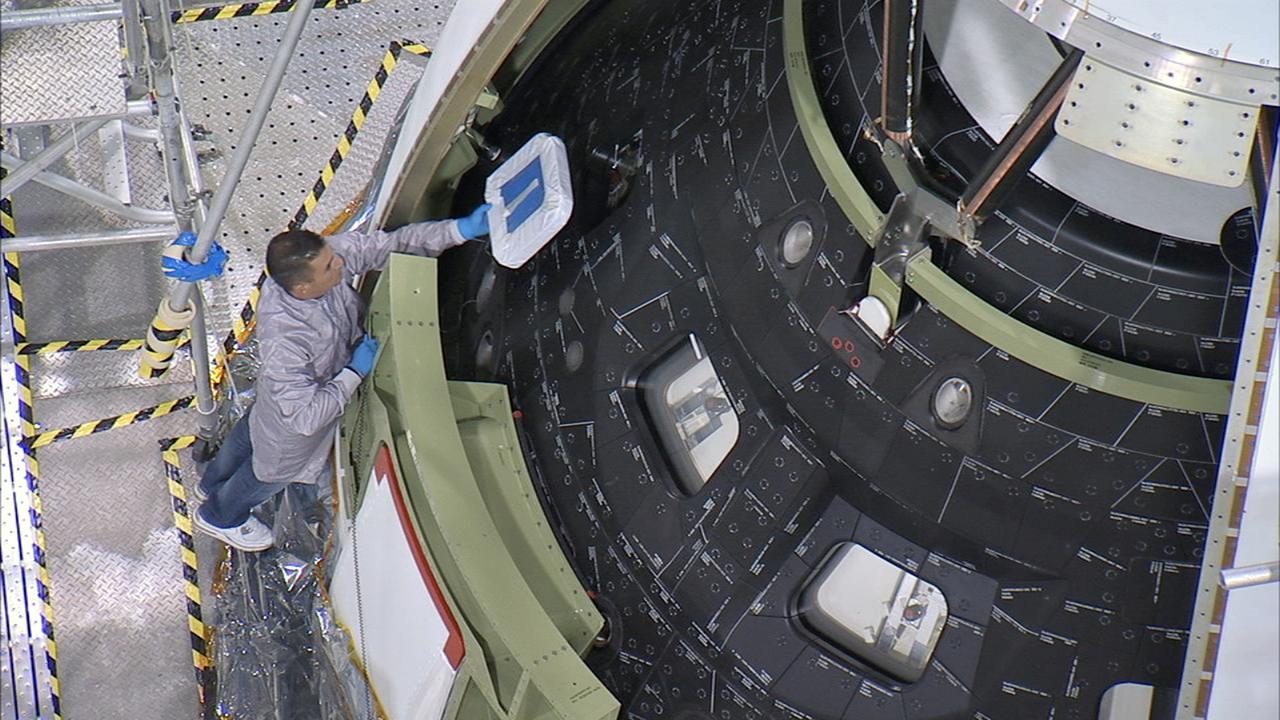
CAPE CANAVERAL, Fla. – Inside the Launch Abort System Facility at NASA's Kennedy Space Center in Florida, a technician on a work platform carefully removes the window covers on Orion before the fourth and final Ogive panel is installed around the spacecraft and Launch Abort System. The Ogive panels will smooth the airflow over the conical spacecraft to limit sound and vibration, which will make for a much smoother ride for the astronauts who will ride inside Orion in the future. The work marked the final major assembly steps for the spacecraft before it is transported to Space Launch Complex 37 at Cape Canaveral Air Force Station in November. Orion is the exploration spacecraft designed to carry astronauts to destinations not yet explored by humans, including an asteroid and Mars. It will have emergency abort capability, sustain the crew during space travel and provide safe re-entry from deep space return velocities. The first unpiloted flight test of Orion is scheduled to launch in December 2014 atop a United Launch Alliance Delta IV Heavy rocket, and in 2018 on NASA’s Space Launch System rocket. For more information, visit www.nasa.gov/orion. Photo credit: Ben Smegelsky
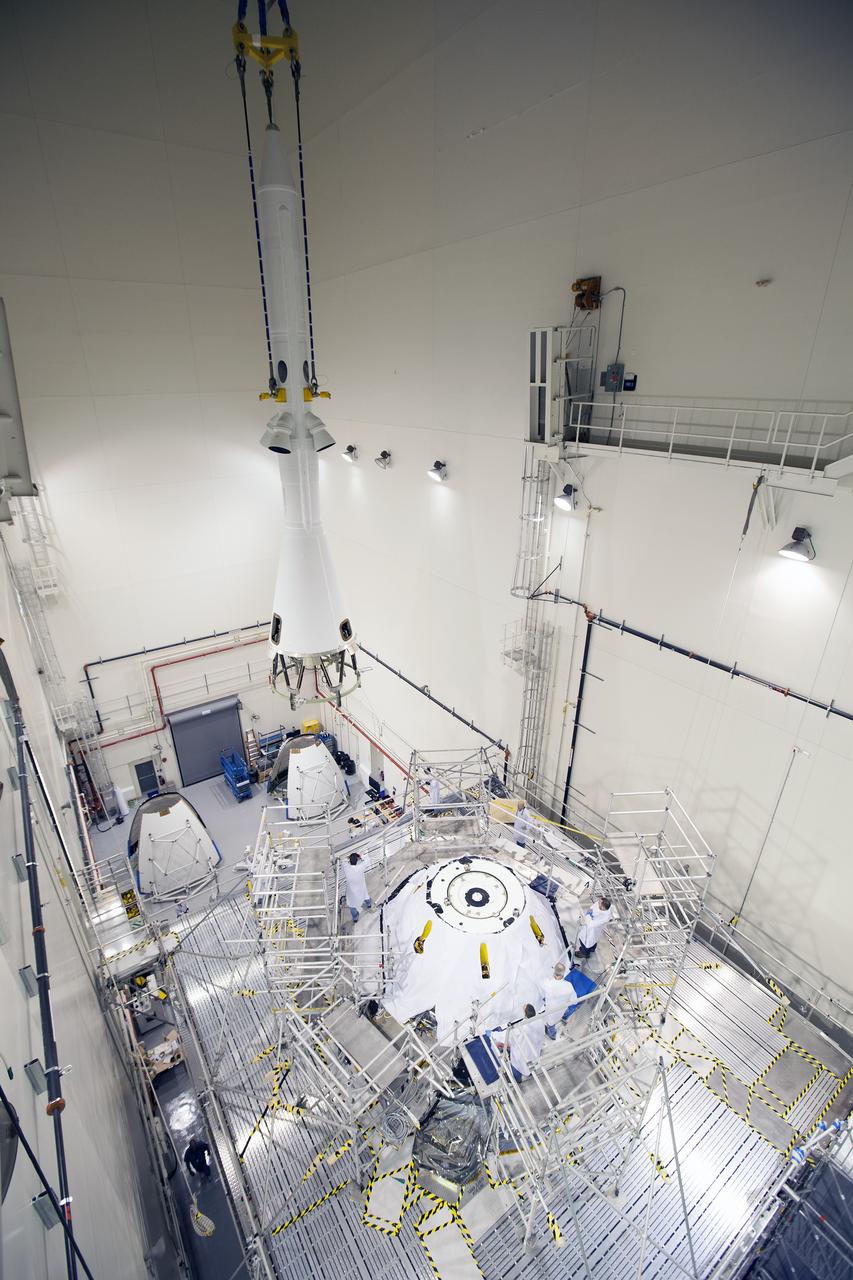
CAPE CANAVERAL, Fla. – A crane is used to lift and move the launch abort system for installation on the Orion spacecraft for Exploration Flight Test-1 inside the Launch Abort System Facility, or LASF, at NASA's Kennedy Space Center in Florida. The completed crew and service modules will be tested and verified together with the launch abort system. Orion will remain inside the LASF until mid-November, when the United Launch Alliance Delta IV Heavy rocket is ready for integration with the spacecraft. Orion is the exploration spacecraft designed to carry astronauts to destinations not yet explored by humans, including an asteroid and Mars. It will have emergency abort capability, sustain the crew during space travel and provide safe re-entry from deep space return velocities. The first unpiloted test flight of the Orion is scheduled to launch in December atop the Delta IV Heavy rocket from Cape Canaveral Air Force Station in Florida to an altitude of 3,600 miles above the Earth's surface. The two-orbit, four-hour flight test will help engineers evaluate the systems critical to crew safety including the heat shield, parachute system and launch abort system. For more information, visit http://www.nasa.gov/orion. Photo credit: NASA/Cory Huston
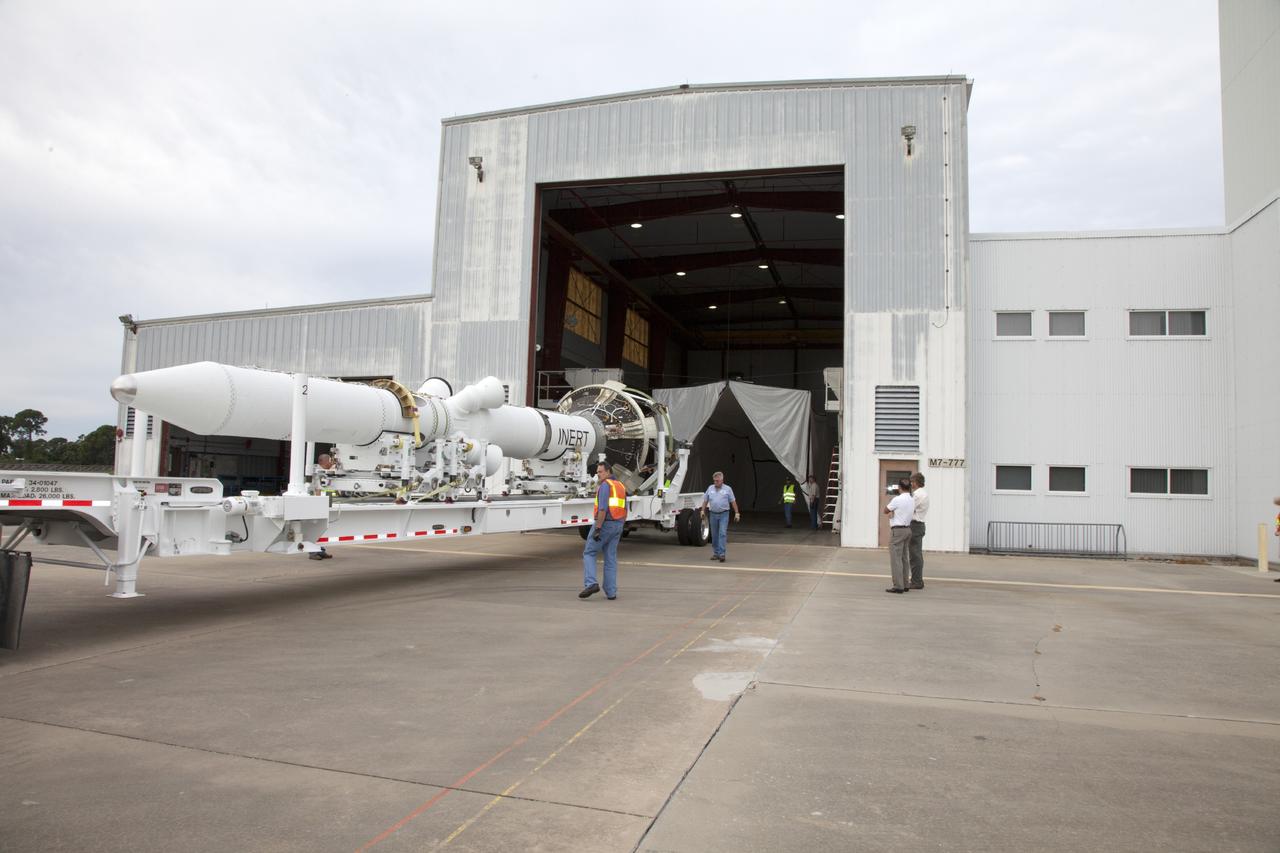
CAPE CANAVERAL, Fla. – At the Launch Abort System Facility at NASA’s Kennedy Space Center in Florida, the launch abort system, or LAS, for the Orion Exploration Flight Test-1, is backed by flatbed truck into a low bay at the facility. The low bay has been prepared for additional LAS processing. Orion is the exploration spacecraft designed to carry crews to space beyond low Earth orbit. It will provide emergency abort capability, sustain the crew during the space travel and provide safe re-entry from deep space return velocities. The LAS is designed to safely pull the Orion crew module away from the launch vehicle in the event of an emergency on the launch pad or during the initial ascent of NASA’s Space Launch System, or SLS, rocket. Orion’s first unpiloted test flight is scheduled to launch in 2014 atop a Delta IV rocket. A second uncrewed flight test is scheduled for 2017 on the SLS rocket. For more information, visit http://www.nasa.gov/orion. Photo credit: NASA/Daniel Casper
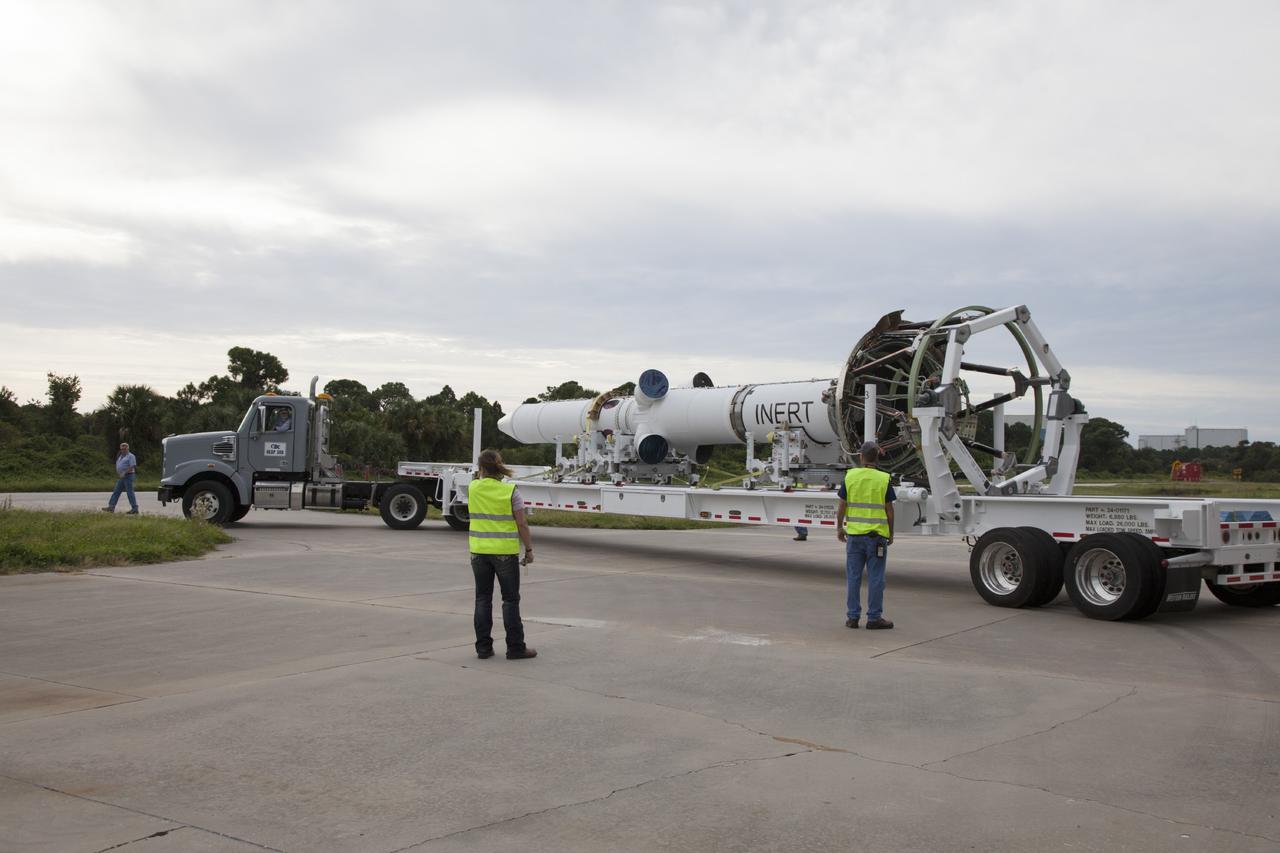
CAPE CANAVERAL, Fla. – At the Launch Abort System Facility at NASA’s Kennedy Space Center in Florida, the launch abort system, or LAS, for the Orion Exploration Flight Test-1, is being moved by flatbed truck from the high bay. The LAS will be moved to a low bay at the facility to complete processing. Orion is the exploration spacecraft designed to carry crews to space beyond low Earth orbit. It will provide emergency abort capability, sustain the crew during the space travel and provide safe re-entry from deep space return velocities. The LAS is designed to safely pull the Orion crew module away from the launch vehicle in the event of an emergency on the launch pad or during the initial ascent of NASA’s Space Launch System, or SLS, rocket. Orion’s first unpiloted test flight is scheduled to launch in 2014 atop a Delta IV rocket. A second uncrewed flight test is scheduled for 2017 on the SLS rocket. For more information, visit http://www.nasa.gov/orion. Photo credit: NASA/Daniel Casper
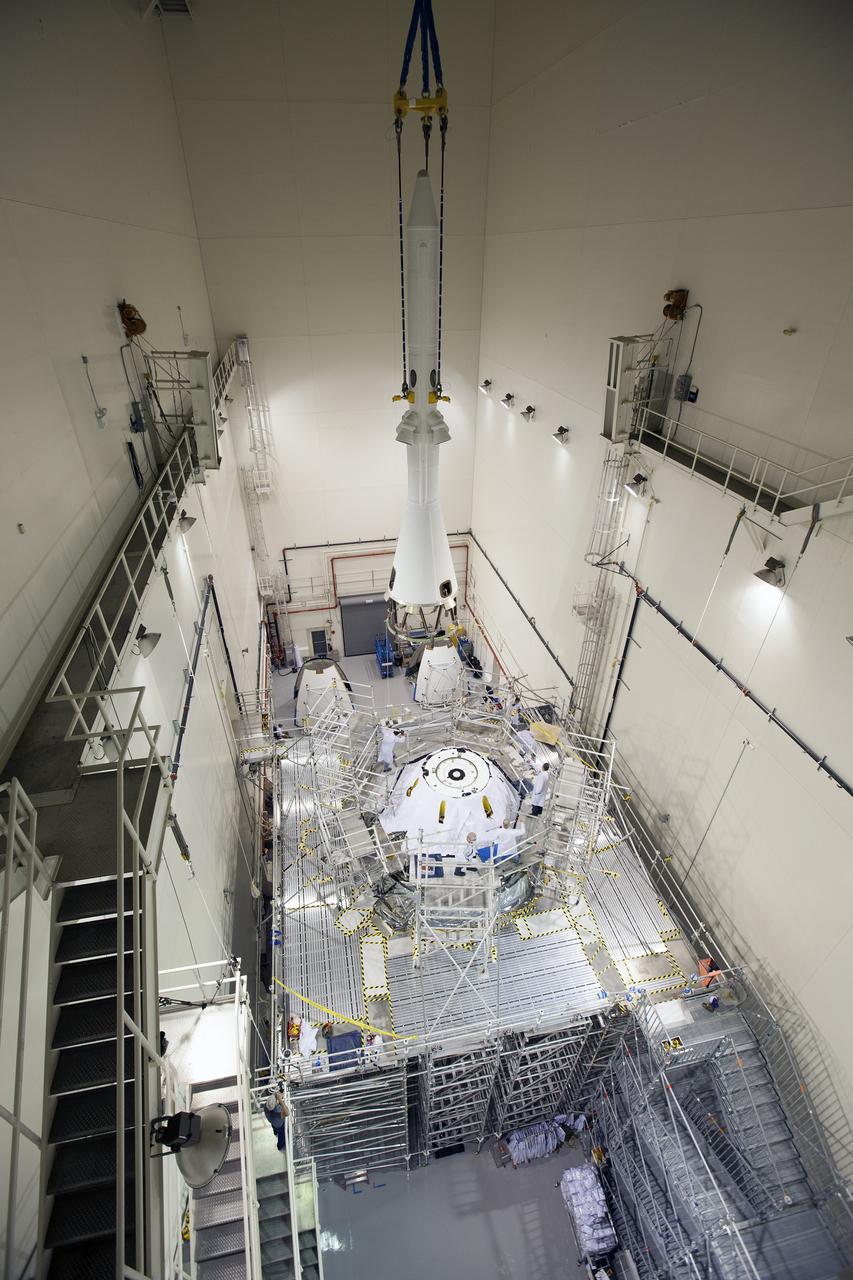
CAPE CANAVERAL, Fla. – A crane is used to move the launch abort system closer for installation on the Orion spacecraft for Exploration Flight Test-1 inside the Launch Abort System Facility, or LASF, at NASA's Kennedy Space Center in Florida. The completed crew and service modules will be tested and verified together with the launch abort system. Orion will remain inside the LASF until mid-November, when the United Launch Alliance Delta IV Heavy rocket is ready for integration with the spacecraft. Orion is the exploration spacecraft designed to carry astronauts to destinations not yet explored by humans, including an asteroid and Mars. It will have emergency abort capability, sustain the crew during space travel and provide safe re-entry from deep space return velocities. The first unpiloted test flight of the Orion is scheduled to launch in December atop the Delta IV Heavy rocket from Cape Canaveral Air Force Station in Florida to an altitude of 3,600 miles above the Earth's surface. The two-orbit, four-hour flight test will help engineers evaluate the systems critical to crew safety including the heat shield, parachute system and launch abort system. For more information, visit http://www.nasa.gov/orion. Photo credit: NASA/Cory Huston
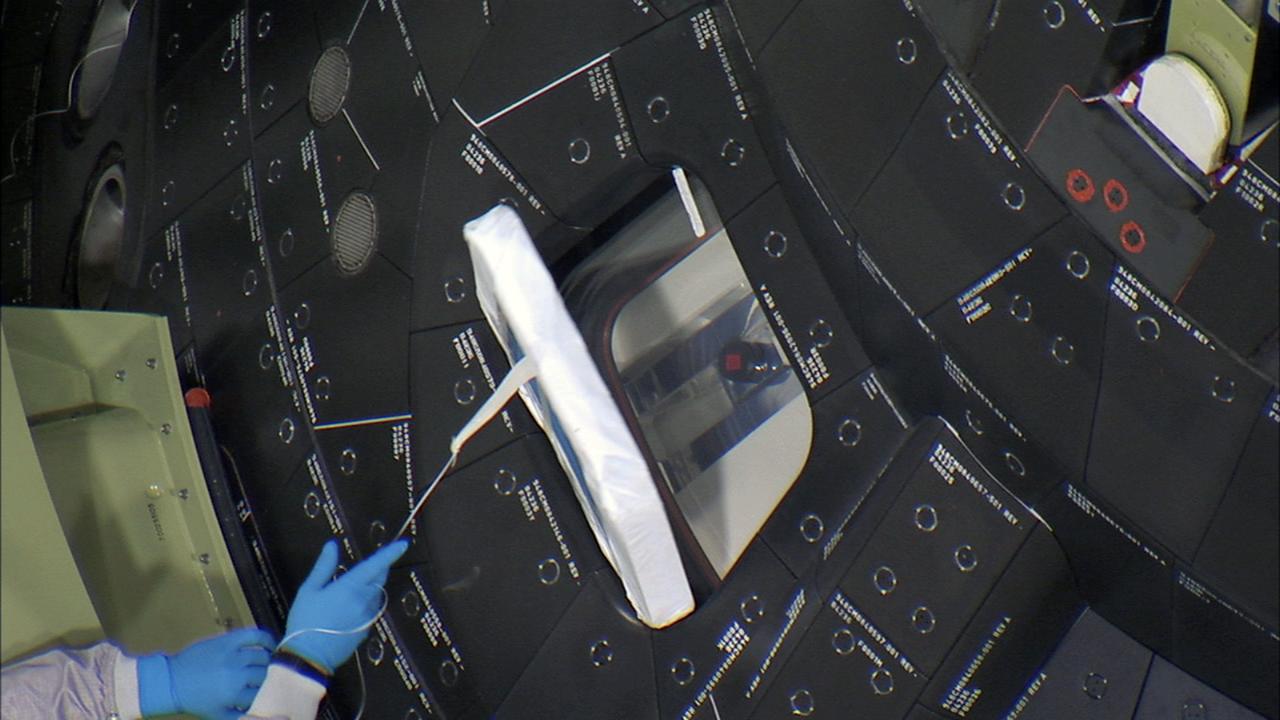
CAPE CANAVERAL, Fla. – Inside the Launch Abort System Facility at NASA's Kennedy Space Center in Florida, a technician carefully removes the window covers on Orion before the fourth and final Ogive panel is installed around the spacecraft and Launch Abort System. The Ogive panels will smooth the airflow over the conical spacecraft to limit sound and vibration, which will make for a much smoother ride for the astronauts who will ride inside Orion in the future. The work marked the final major assembly steps for the spacecraft before it is transported to Space Launch Complex 37 at Cape Canaveral Air Force Station in November. Orion is the exploration spacecraft designed to carry astronauts to destinations not yet explored by humans, including an asteroid and Mars. It will have emergency abort capability, sustain the crew during space travel and provide safe re-entry from deep space return velocities. The first unpiloted flight test of Orion is scheduled to launch in December 2014 atop a United Launch Alliance Delta IV Heavy rocket, and in 2018 on NASA’s Space Launch System rocket. For more information, visit www.nasa.gov/orion. Photo credit: Ben Smegelsky
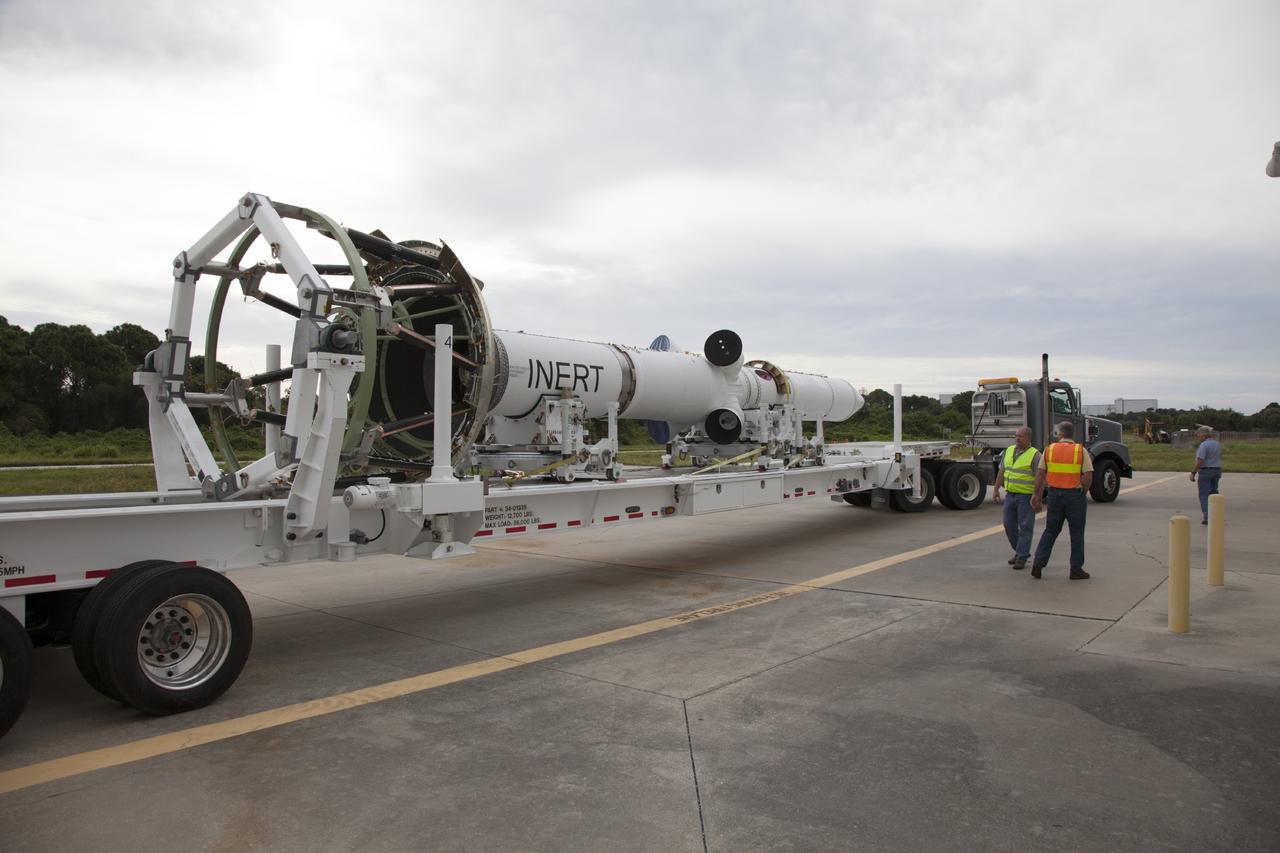
CAPE CANAVERAL, Fla. – At the Launch Abort System Facility at NASA’s Kennedy Space Center in Florida, the launch abort system, or LAS, for the Orion Exploration Flight Test-1, is being moved by flatbed truck from the high bay. The LAS will be moved to a low bay at the facility to complete processing. Orion is the exploration spacecraft designed to carry crews to space beyond low Earth orbit. It will provide emergency abort capability, sustain the crew during the space travel and provide safe re-entry from deep space return velocities. The LAS is designed to safely pull the Orion crew module away from the launch vehicle in the event of an emergency on the launch pad or during the initial ascent of NASA’s Space Launch System, or SLS, rocket. Orion’s first unpiloted test flight is scheduled to launch in 2014 atop a Delta IV rocket. A second uncrewed flight test is scheduled for 2017 on the SLS rocket. For more information, visit http://www.nasa.gov/orion. Photo credit: NASA/Daniel Casper
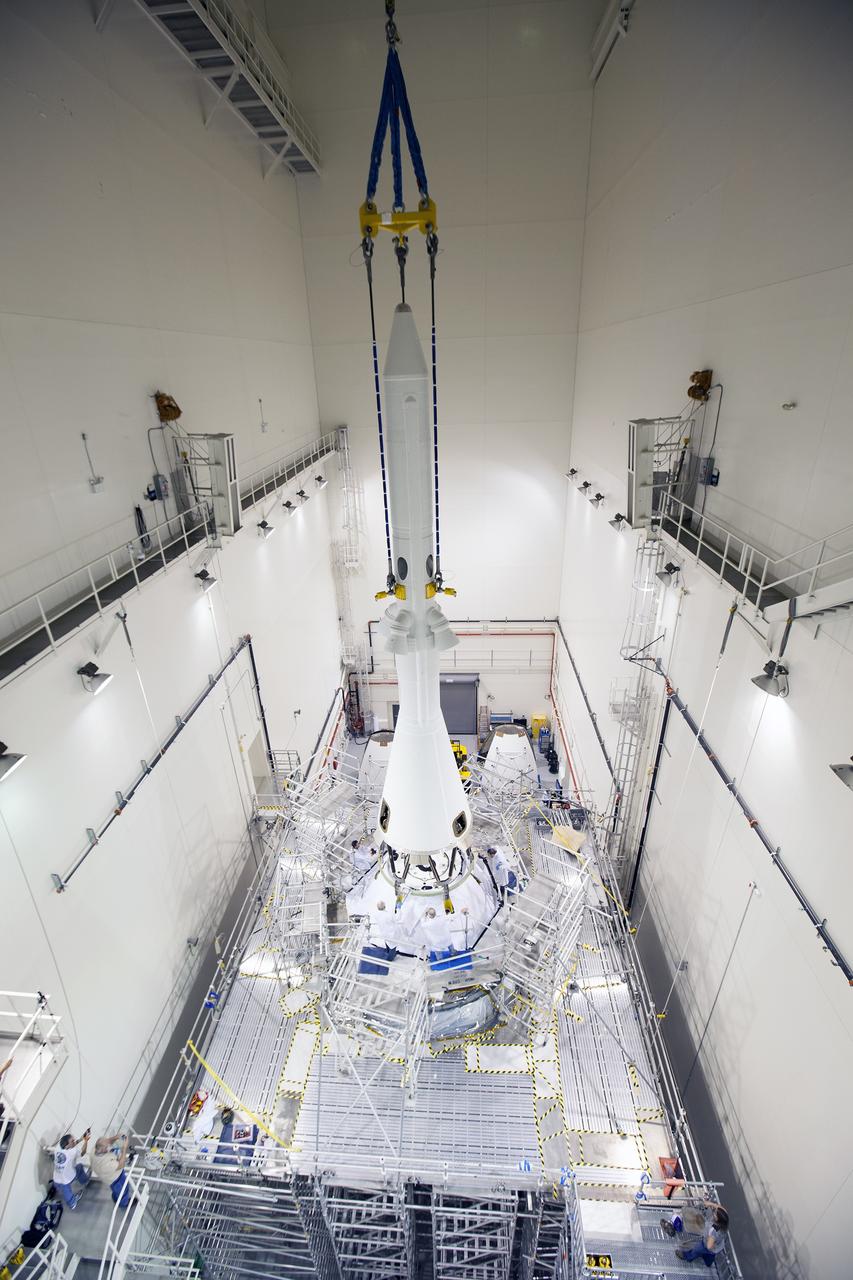
CAPE CANAVERAL, Fla. – The launch abort system is lowered by crane for installation on the Orion spacecraft for Exploration Flight Test-1 inside the Launch Abort System Facility, or LASF, at NASA's Kennedy Space Center in Florida. The completed crew and service modules will be tested and verified together with the launch abort system. Orion will remain inside the LASF until mid-November, when the United Launch Alliance Delta IV Heavy rocket is ready for integration with the spacecraft. Orion is the exploration spacecraft designed to carry astronauts to destinations not yet explored by humans, including an asteroid and Mars. It will have emergency abort capability, sustain the crew during space travel and provide safe re-entry from deep space return velocities. The first unpiloted test flight of the Orion is scheduled to launch in December atop the Delta IV Heavy rocket from Cape Canaveral Air Force Station in Florida to an altitude of 3,600 miles above the Earth's surface. The two-orbit, four-hour flight test will help engineers evaluate the systems critical to crew safety including the heat shield, parachute system and launch abort system. For more information, visit http://www.nasa.gov/orion. Photo credit: NASA/Cory Huston
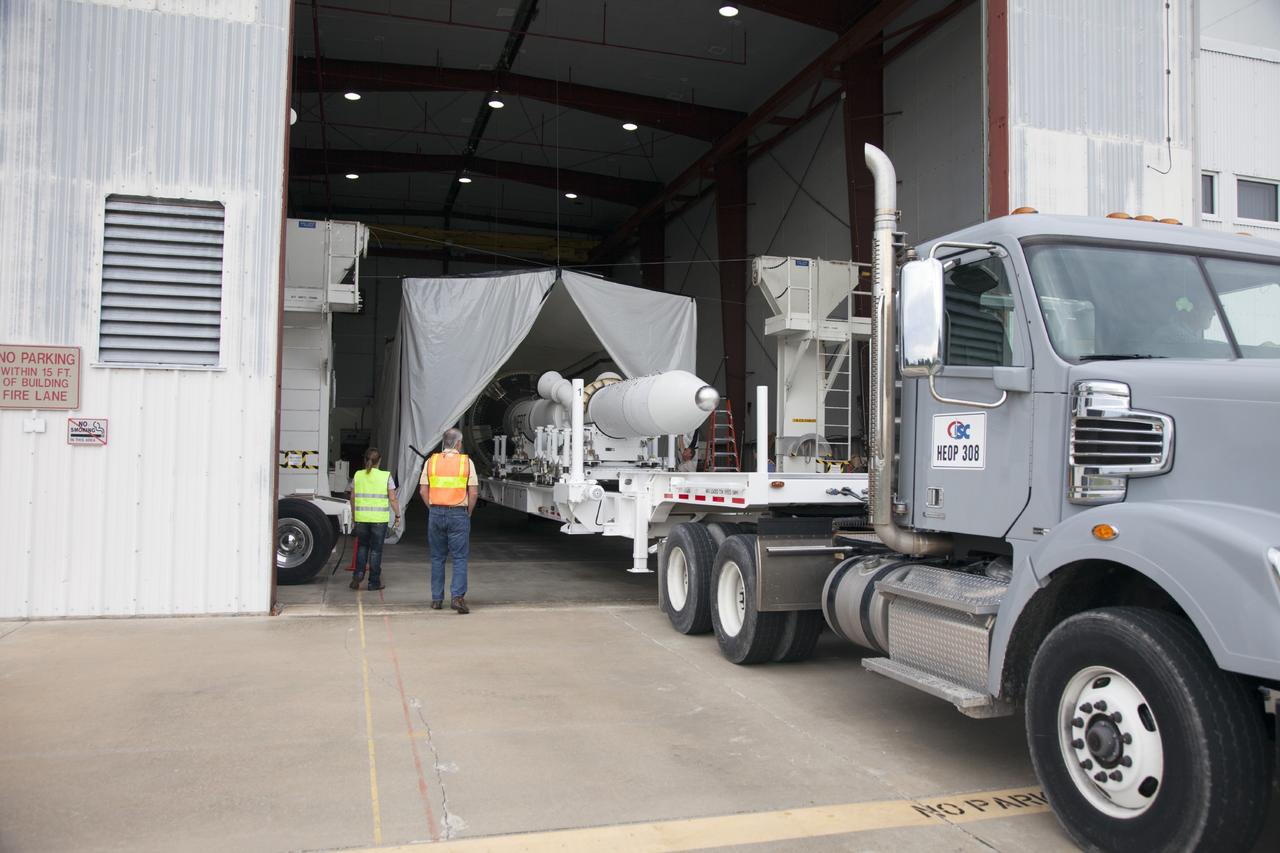
CAPE CANAVERAL, Fla. – At the Launch Abort System Facility at NASA’s Kennedy Space Center in Florida, the launch abort system, or LAS, for the Orion Exploration Flight Test-1, is backed by flatbed truck into a low bay at the facility. The low bay has been prepared for additional LAS processing. Orion is the exploration spacecraft designed to carry crews to space beyond low Earth orbit. It will provide emergency abort capability, sustain the crew during the space travel and provide safe re-entry from deep space return velocities. The LAS is designed to safely pull the Orion crew module away from the launch vehicle in the event of an emergency on the launch pad or during the initial ascent of NASA’s Space Launch System, or SLS, rocket. Orion’s first unpiloted test flight is scheduled to launch in 2014 atop a Delta IV rocket. A second uncrewed flight test is scheduled for 2017 on the SLS rocket. For more information, visit http://www.nasa.gov/orion. Photo credit: NASA/Daniel Casper
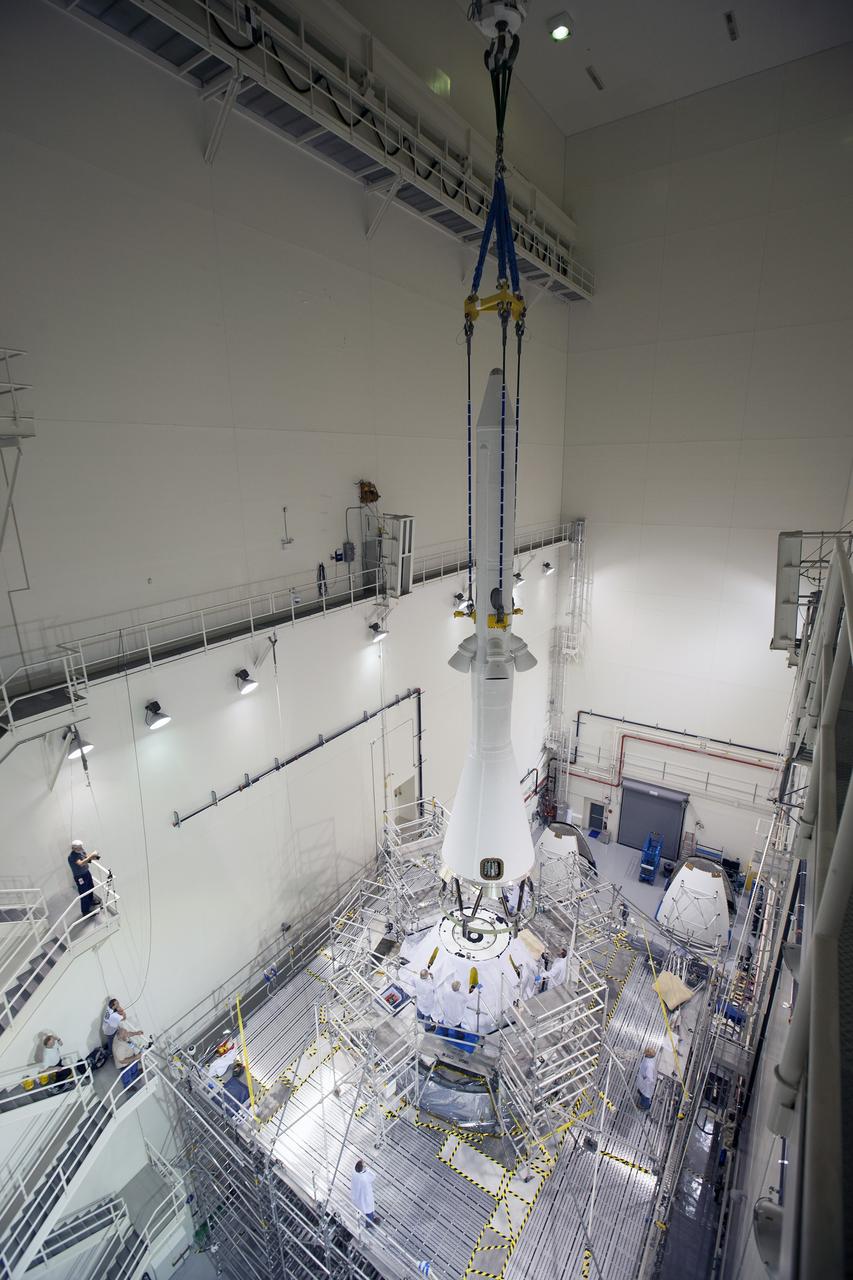
CAPE CANAVERAL, Fla. – A crane is used to lower the launch abort system closer for installation on the Orion spacecraft for Exploration Flight Test-1 inside the Launch Abort System Facility, or LASF, at NASA's Kennedy Space Center in Florida. The completed crew and service modules will be tested and verified together with the launch abort system. Orion will remain inside the LASF until mid-November, when the United Launch Alliance Delta IV Heavy rocket is ready for integration with the spacecraft. Orion is the exploration spacecraft designed to carry astronauts to destinations not yet explored by humans, including an asteroid and Mars. It will have emergency abort capability, sustain the crew during space travel and provide safe re-entry from deep space return velocities. The first unpiloted test flight of the Orion is scheduled to launch in December atop the Delta IV Heavy rocket from Cape Canaveral Air Force Station in Florida to an altitude of 3,600 miles above the Earth's surface. The two-orbit, four-hour flight test will help engineers evaluate the systems critical to crew safety including the heat shield, parachute system and launch abort system. For more information, visit http://www.nasa.gov/orion. Photo credit: NASA/Cory Huston