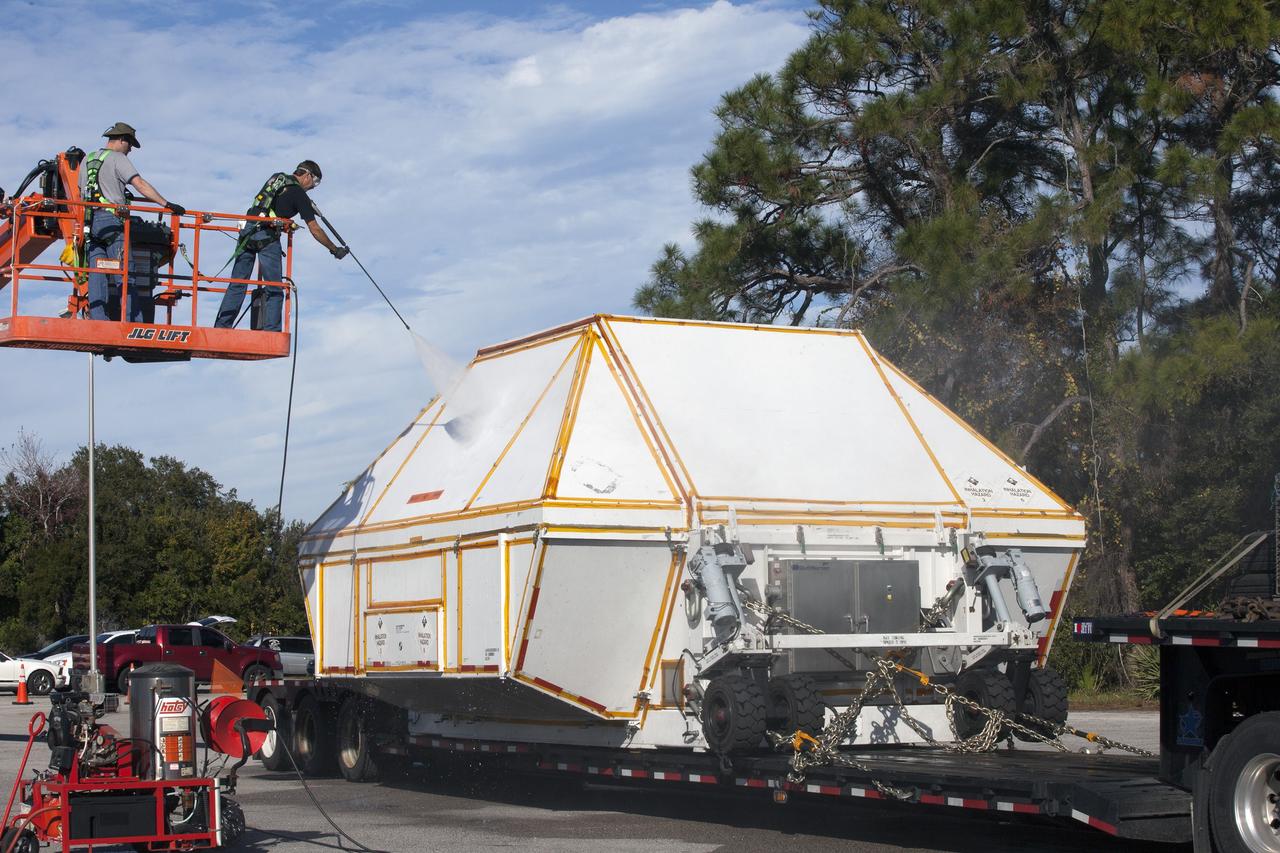
CAPE CANAVERAL, Fla. -- Technicians wash down the crew module transportation fixture containing the Orion crew module on the back of a flatbed truck at the Multi-Operation Support Building at NASA's Kennedy Space Center in Florida. Orion was transported 2,700 miles overland from Naval Base San Diego in California. Orion was recovered from the Pacific Ocean after completing a two-orbit, four-and-a-half hour mission Dec. 5 to test systems critical to crew safety, including the launch abort system, the heat shield and the parachute system. The Ground Systems Development and Operations Program led the recovery, offload and transportation efforts. For more information, visit www.nasa.gov/orion. Photo credit: NASA/Kim Shiflett
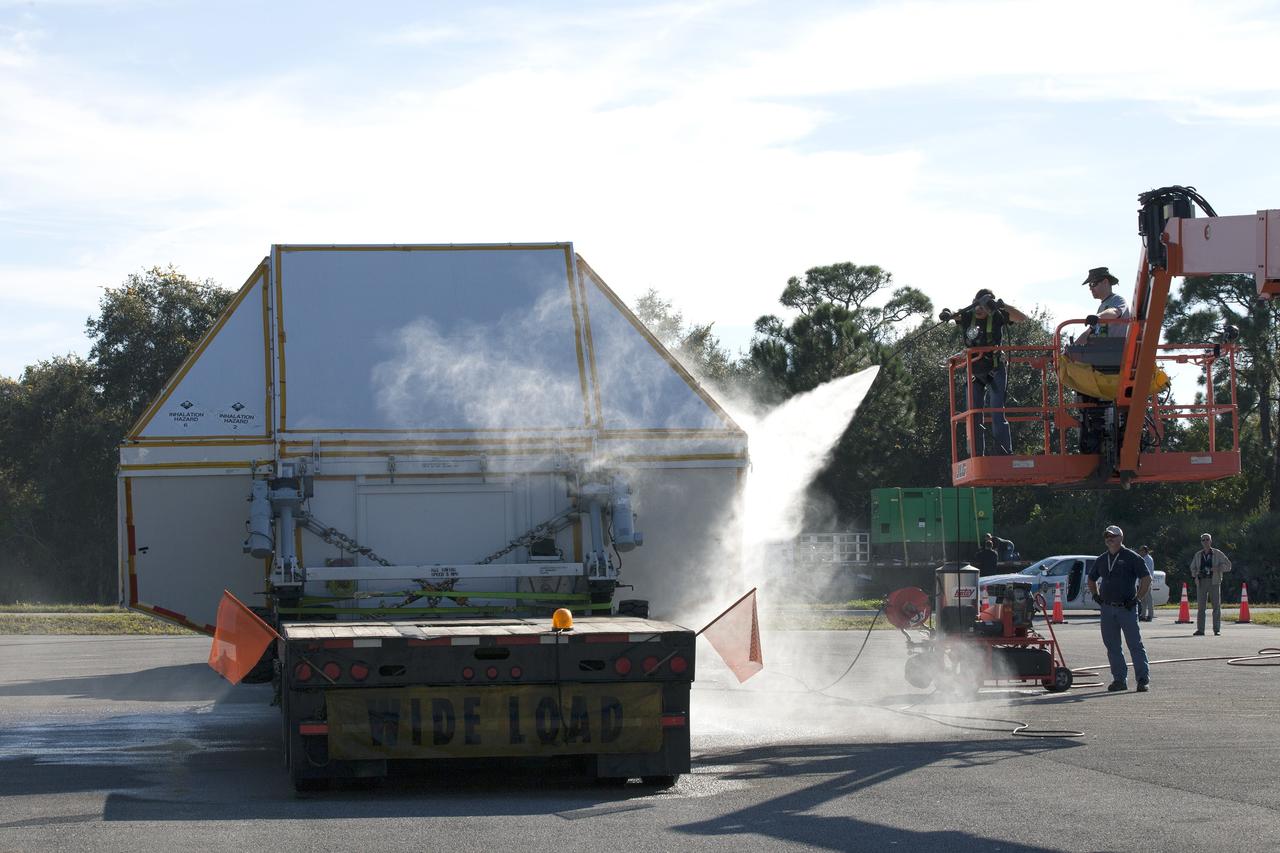
CAPE CANAVERAL, Fla. -- Technicians wash down the crew module transportation fixture containing the Orion crew module on the back of a flatbed truck at the Multi-Operation Support Building at NASA's Kennedy Space Center in Florida. Orion was transported 2,700 miles overland from Naval Base San Diego in California. Orion was recovered from the Pacific Ocean after completing a two-orbit, four-and-a-half hour mission Dec. 5 to test systems critical to crew safety, including the launch abort system, the heat shield and the parachute system. The Ground Systems Development and Operations Program led the recovery, offload and transportation efforts. For more information, visit www.nasa.gov/orion. Photo credit: NASA/Kim Shiflett
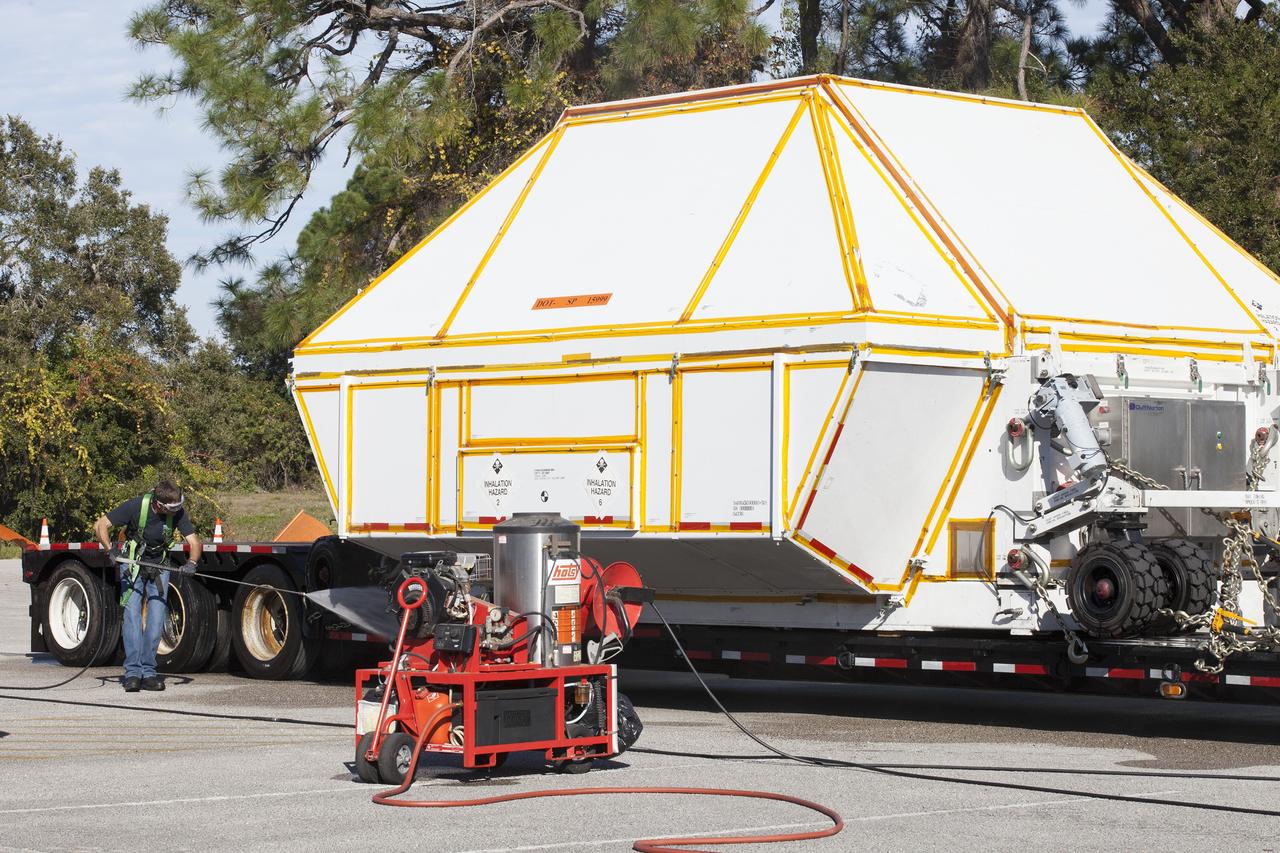
CAPE CANAVERAL, Fla. -- A technician washes down the crew module transportation fixture containing the Orion crew module on the back of a flatbed truck at the Multi-Operation Support Building at NASA's Kennedy Space Center in Florida. Orion was transported 2,700 miles overland from Naval Base San Diego in California. Orion was recovered from the Pacific Ocean after completing a two-orbit, four-and-a-half hour mission Dec. 5 to test systems critical to crew safety, including the launch abort system, the heat shield and the parachute system. The Ground Systems Development and Operations Program led the recovery, offload and transportation efforts. For more information, visit www.nasa.gov/orion. Photo credit: NASA/Kim Shiflett
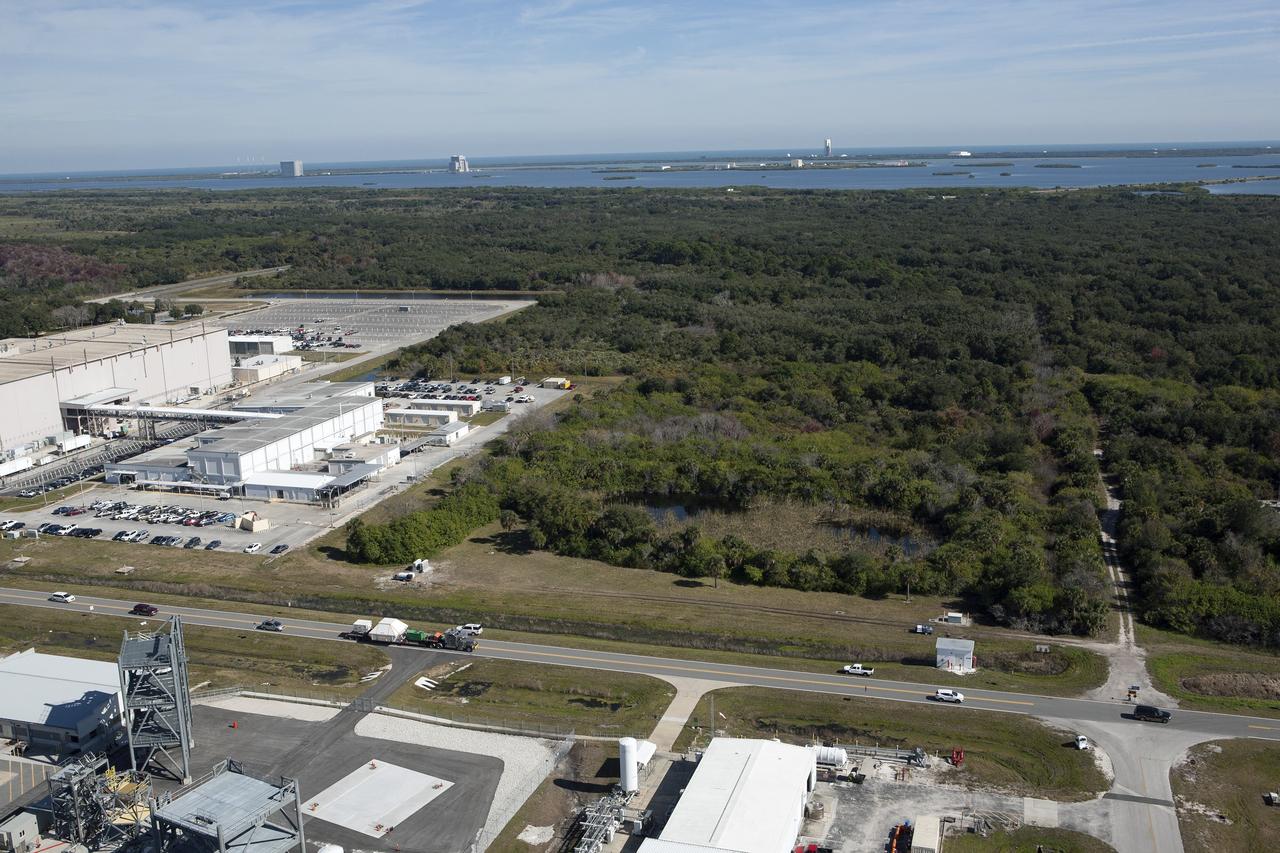
CAPE CANAVERAL, Fla. -- An aerial view reveals the Orion crew module, enclosed in its crew module transportation fixture and secured on a flatbed truck is passing the Space Station Processing Facility at Kennedy Space Center in Florida on its way to the Multi-Operation Support Building. Orion made the 2,700 mile overland trip from Naval Base San Diego in California. The spacecraft was recovered from the Pacific Ocean after completing a two-orbit, four-and-a-half hour mission Dec. 5 to test systems critical to crew safety, including the launch abort system, the heat shield and the parachute system. The Ground Systems Development and Operations Program led the recovery, offload and transportation efforts. For more information, visit www.nasa.gov/orion. Photo credit: NASA/Kim Shiflett

CAPE CANAVERAL, Fla. -- NASA's Orion crew module, enclosed in its crew module transportation fixture and secured on a flatbed truck, leaves the Multi-Operation Support Building and is being transported to the Launch Abort System Facility at NASA's Kennedy Space Center in Florida. Orion was transported 2,700 miles overland from Naval Base San Diego in California. Orion was recovered from the Pacific Ocean after completing a two-orbit, four-and-a-half hour mission Dec. 5 to test systems critical to crew safety, including the launch abort system, the heat shield and the parachute system. The Ground Systems Development and Operations Program led the recovery, offload and transportation efforts. For more information, visit www.nasa.gov/orion. Photo credit: NASA/Kim Shiflett
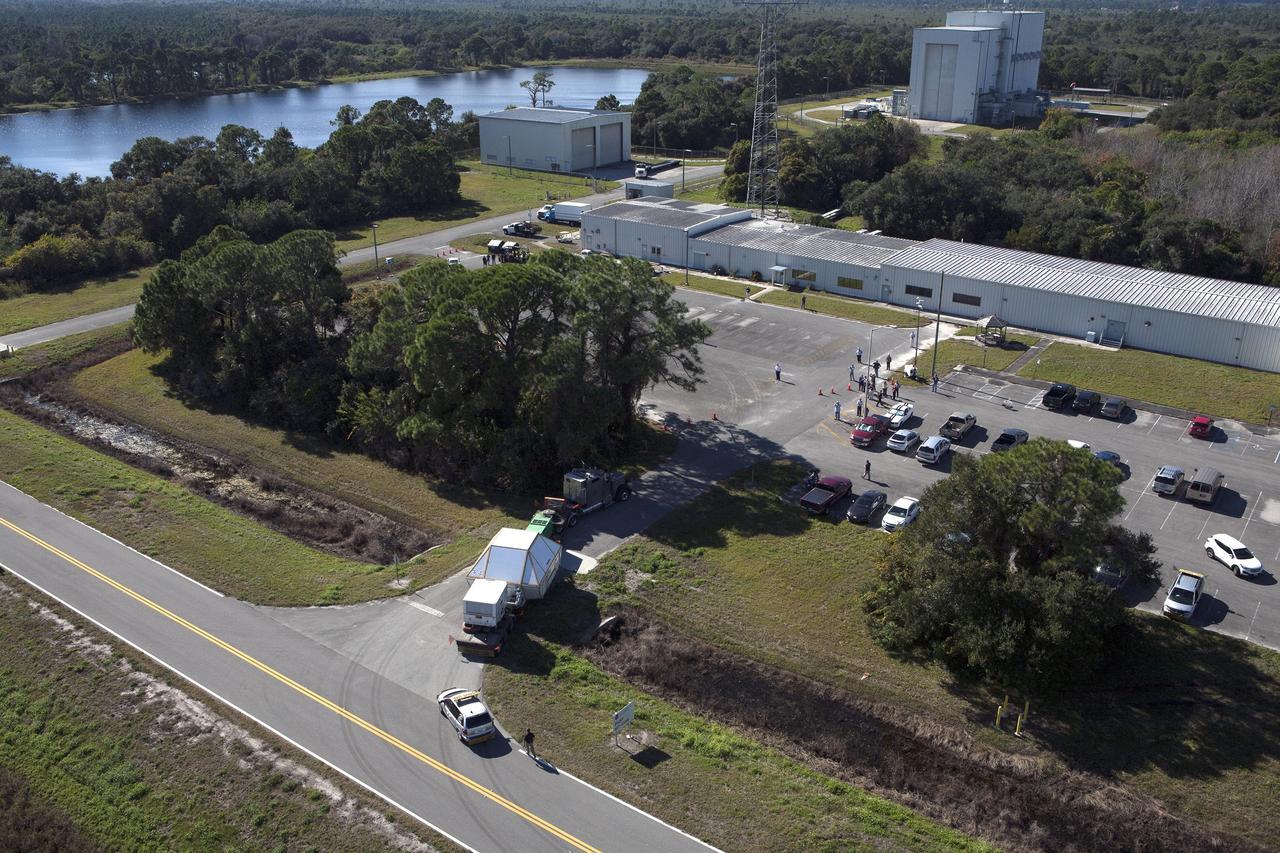
CAPE CANAVERAL, Fla. -- An aerial view reveals the Orion crew module, enclosed in its crew module transportation fixture and secured on a flatbed truck is proceeding to the Multi-Operation Support Building at NASA's Kennedy Space Center. Orion made the 2,700 mile overland trip from Naval Base San Diego in California. The spacecraft was recovered from the Pacific Ocean after completing a two-orbit, four-and-a-half hour mission Dec. 5 to test systems critical to crew safety, including the launch abort system, the heat shield and the parachute system. The Ground Systems Development and Operations Program led the recovery, offload and transportation efforts. For more information, visit www.nasa.gov/orion. Photo credit: NASA/Kim Shiflett