CAPE CANAVERAL, Fla. -- In the transfer aisle of the Vehicle Assembly Building at NASA’s Kennedy Space Center in Florida, crane operators and technicians practice de-stacking operations on a full-size mock-up of the Orion spacecraft and launch abort system in order to keep processing procedures and skills current. Orion is the exploration spacecraft designed to carry crews to space beyond low Earth orbit. It will provide emergency abort capability, sustain the crew during the space travel and provide safe re-entry from deep space return velocities. Orion’s first unpiloted test flight is scheduled to launch in 2014 atop a Delta IV rocket. A second uncrewed flight test is scheduled for 2017 on NASA’s Space Launch System rocket. For more information, visit http://www.nasa.gov/orion. Photo credit: NASA/Jim Grossmann

CAPE CANAVERAL, Fla. -- In the transfer aisle of the Vehicle Assembly Building at NASA’s Kennedy Space Center in Florida, a full-size mock-up of the Orion launch abort system has been lowered onto a transporter. Crane operators and technicians practice de-stacking operations on full-size mock-ups of the Orion spacecraft and launch abort system in order to keep processing procedures and skills current. Orion is the exploration spacecraft designed to carry crews to space beyond low Earth orbit. It will provide emergency abort capability, sustain the crew during the space travel and provide safe re-entry from deep space return velocities. Orion’s first unpiloted test flight is scheduled to launch in 2014 atop a Delta IV rocket. A second uncrewed flight test is scheduled for 2017 on NASA’s Space Launch System rocket. For more information, visit http://www.nasa.gov/orion. Photo credit: NASA/Tim Jacobs

CAPE CANAVERAL, Fla. -- In the transfer aisle of the Vehicle Assembly Building at NASA’s Kennedy Space Center in Florida, crane operators and technicians practice de-stacking operations on a full-size mock-up of the Orion spacecraft and launch abort system in order to keep processing procedures and skills current. Orion is the exploration spacecraft designed to carry crews to space beyond low Earth orbit. It will provide emergency abort capability, sustain the crew during the space travel and provide safe re-entry from deep space return velocities. Orion’s first unpiloted test flight is scheduled to launch in 2014 atop a Delta IV rocket. A second uncrewed flight test is scheduled for 2017 on NASA’s Space Launch System rocket. For more information, visit http://www.nasa.gov/orion. Photo credit: NASA/Jim Grossmann
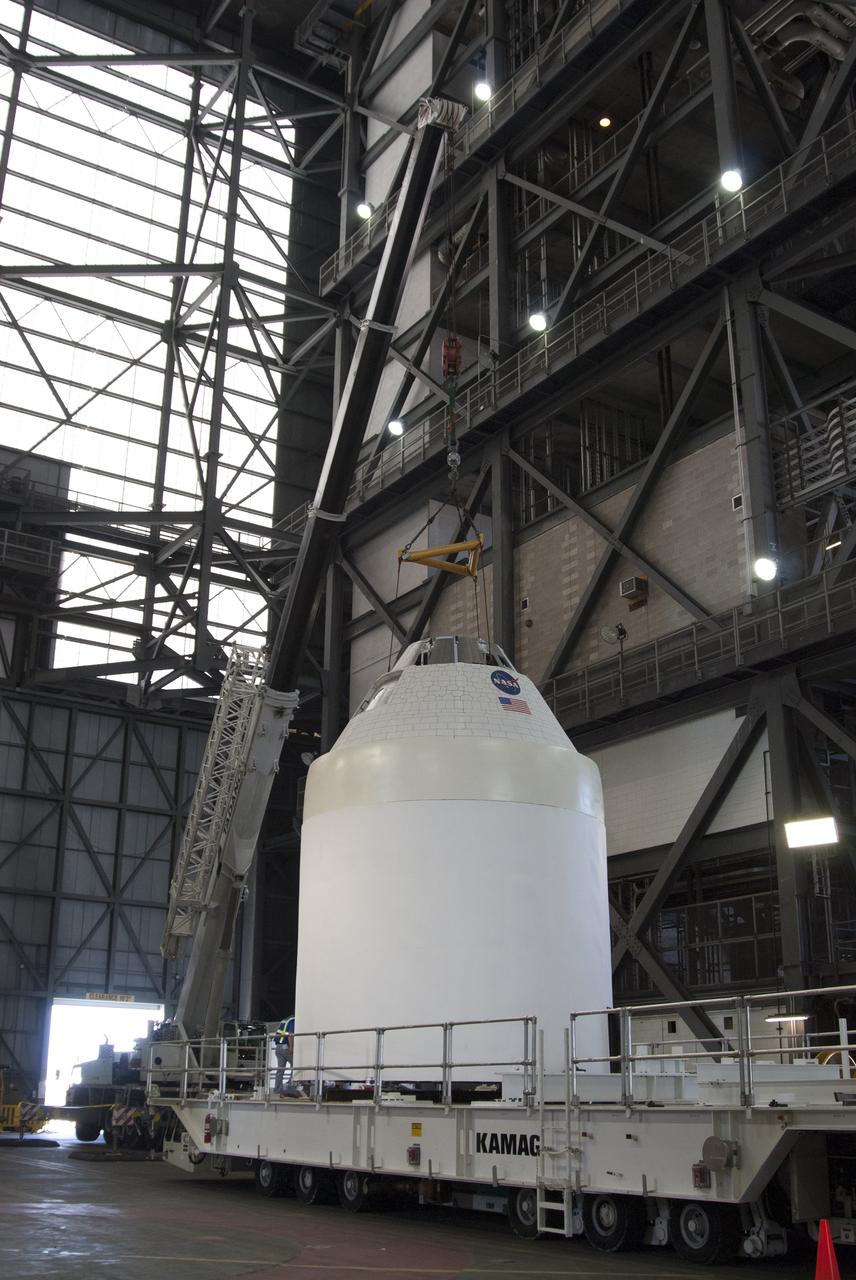
CAPE CANAVERAL, Fla. -- In the transfer aisle of the Vehicle Assembly Building at NASA’s Kennedy Space Center in Florida, a full-size test mock-up of the Orion spacecraft has been lowered onto a transporter. Crane operators and technicians practice de-stacking operations on mock-ups of the Orion spacecraft and launch abort system in order to keep processing procedures and skills current. Orion is the exploration spacecraft designed to carry crews to space beyond low Earth orbit. It will provide emergency abort capability, sustain the crew during the space travel and provide safe re-entry from deep space return velocities. Orion’s first unpiloted test flight is scheduled to launch in 2014 atop a Delta IV rocket. A second uncrewed flight test is scheduled for 2017 on NASA’s Space Launch System rocket. For more information, visit http://www.nasa.gov/orion. Photo credit: NASA/Tim Jacobs
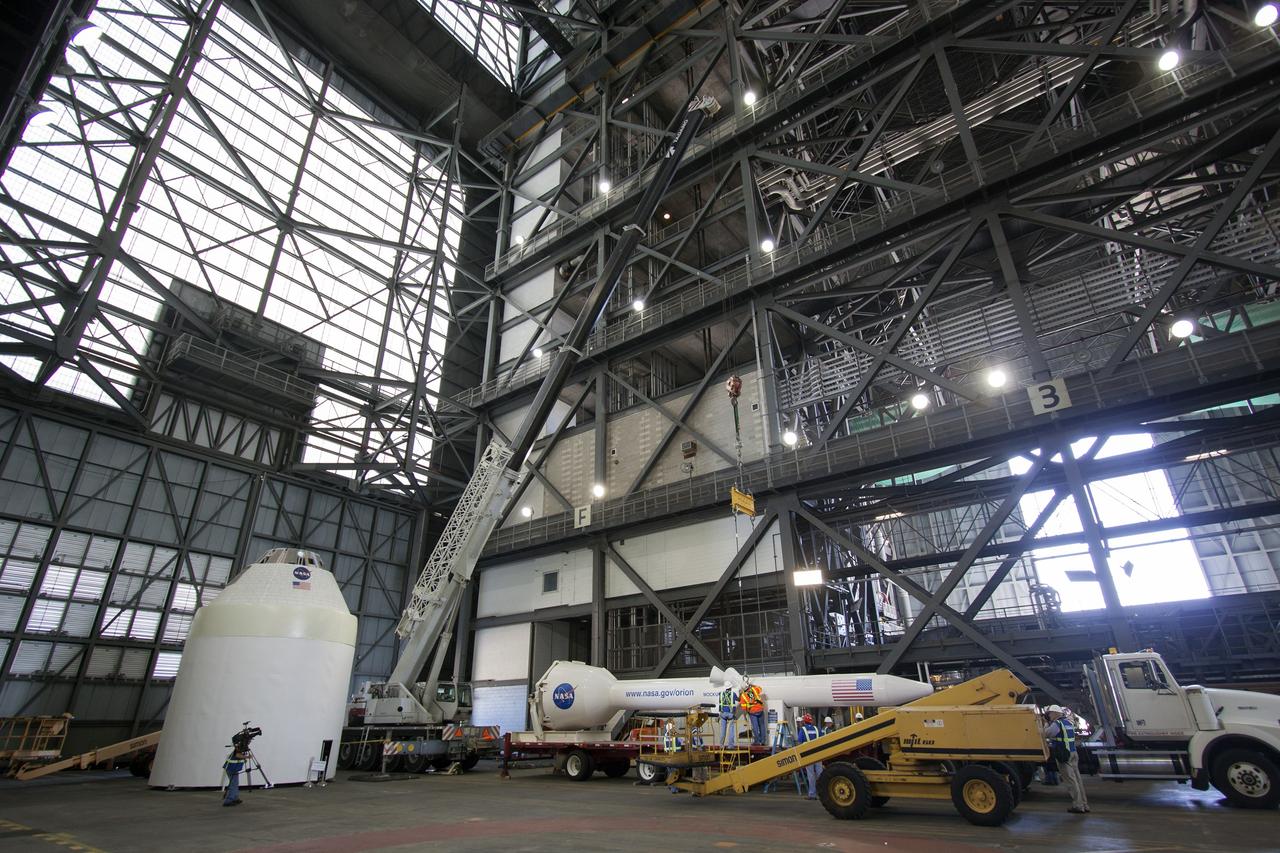
CAPE CANAVERAL, Fla. -- In the transfer aisle of the Vehicle Assembly Building at NASA’s Kennedy Space Center in Florida, a mock-up of the Orion launch abort system has been lowered onto a transporter. Crane operators and technicians practice de-stacking operations on a full-size mock-up of the Orion spacecraft and launch abort system in order to keep processing procedures and skills current. Orion is the exploration spacecraft designed to carry crews to space beyond low Earth orbit. It will provide emergency abort capability, sustain the crew during the space travel and provide safe re-entry from deep space return velocities. Orion’s first unpiloted test flight is scheduled to launch in 2014 atop a Delta IV rocket. A second uncrewed flight test is scheduled for 2017 on NASA’s Space Launch System rocket. For more information, visit http://www.nasa.gov/orion. Photo credit: NASA/Jim Grossmann
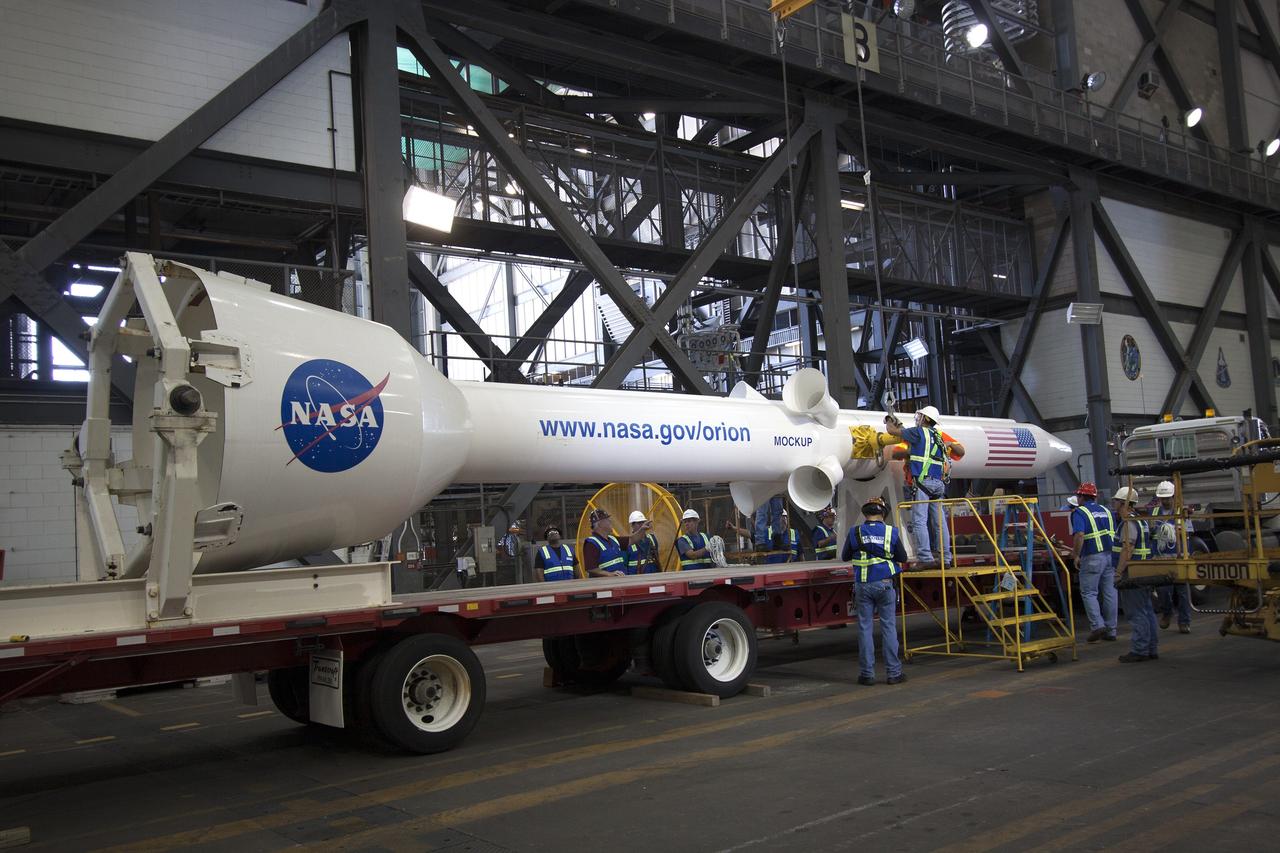
CAPE CANAVERAL, Fla. -- In the transfer aisle of the Vehicle Assembly Building at NASA’s Kennedy Space Center in Florida, a mock-up of the Orion launch abort system has been lowered onto a transporter. Crane operators and technicians practice de-stacking operations on a full-size mock-up of the Orion spacecraft and launch abort system in order to keep processing procedures and skills current. Orion is the exploration spacecraft designed to carry crews to space beyond low Earth orbit. It will provide emergency abort capability, sustain the crew during the space travel and provide safe re-entry from deep space return velocities. Orion’s first unpiloted test flight is scheduled to launch in 2014 atop a Delta IV rocket. A second uncrewed flight test is scheduled for 2017 on NASA’s Space Launch System rocket. For more information, visit http://www.nasa.gov/orion. Photo credit: NASA/Jim Grossmann
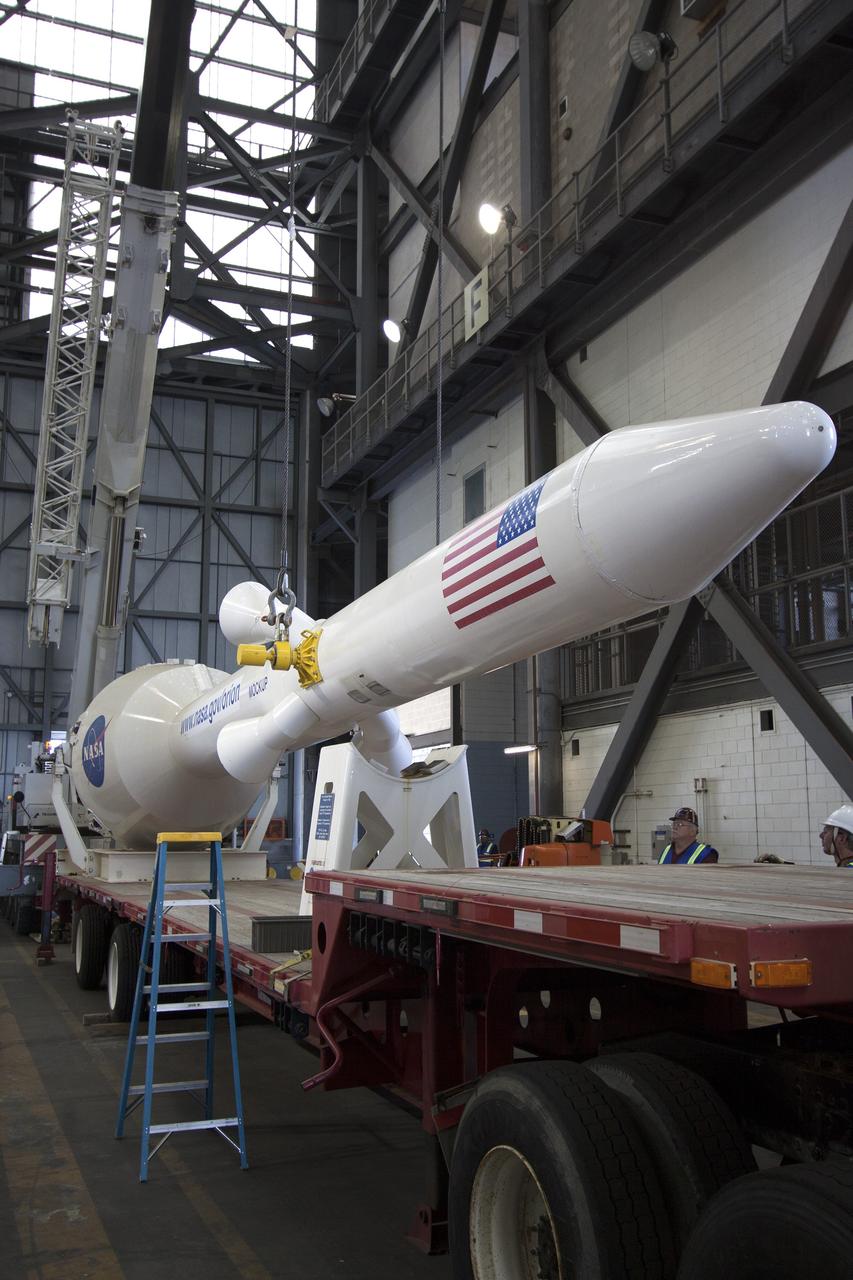
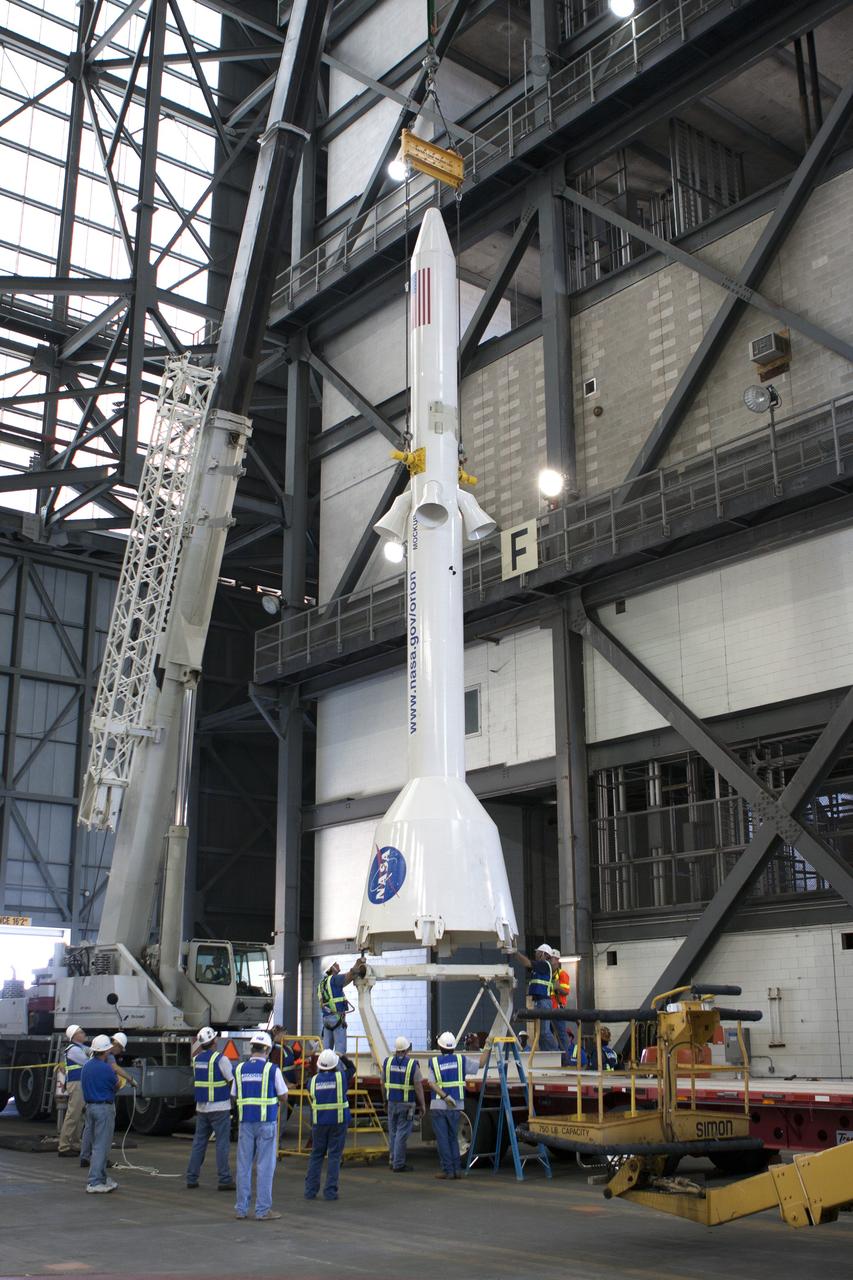
CAPE CANAVERAL, Fla. -- In the transfer aisle of the Vehicle Assembly Building at NASA’s Kennedy Space Center in Florida, crane operators and technicians practice lowering a mock-up of the Orion launch abort system onto a transporter in order to keep processing procedures and skills current. Orion is the exploration spacecraft designed to carry crews to space beyond low Earth orbit. It will provide emergency abort capability, sustain the crew during the space travel and provide safe re-entry from deep space return velocities. Orion’s first unpiloted test flight is scheduled to launch in 2014 atop a Delta IV rocket. A second uncrewed flight test is scheduled for 2017 on NASA’s Space Launch System rocket. For more information, visit http://www.nasa.gov/orion. Photo credit: NASA/Jim Grossmann
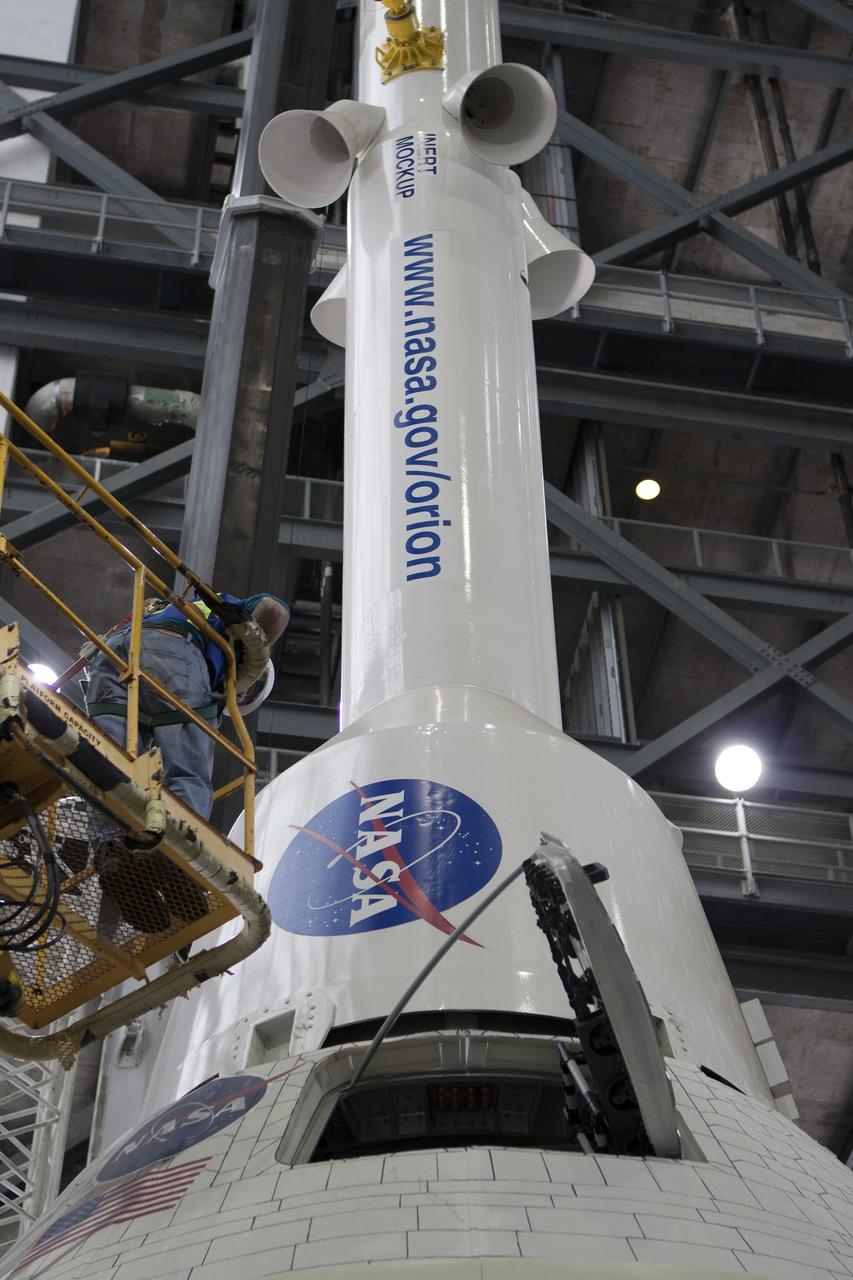
CAPE CANAVERAL, Fla. -- In the transfer aisle of the Vehicle Assembly Building at NASA’s Kennedy Space Center in Florida, a technician monitors de-stacking operations on a full-size mock-up of the Orion spacecraft and launch abort system. Crane operators and technicians practice stacking and de-stacking operations in order to keep processing procedures and skills current. Orion is the exploration spacecraft designed to carry crews to space beyond low Earth orbit. It will provide emergency abort capability, sustain the crew during the space travel and provide safe re-entry from deep space return velocities. Orion’s first unpiloted test flight is scheduled to launch in 2014 atop a Delta IV rocket. A second uncrewed flight test is scheduled for 2017 on NASA’s Space Launch System rocket. For more information, visit http://www.nasa.gov/orion. Photo credit: NASA/Jim Grossmann
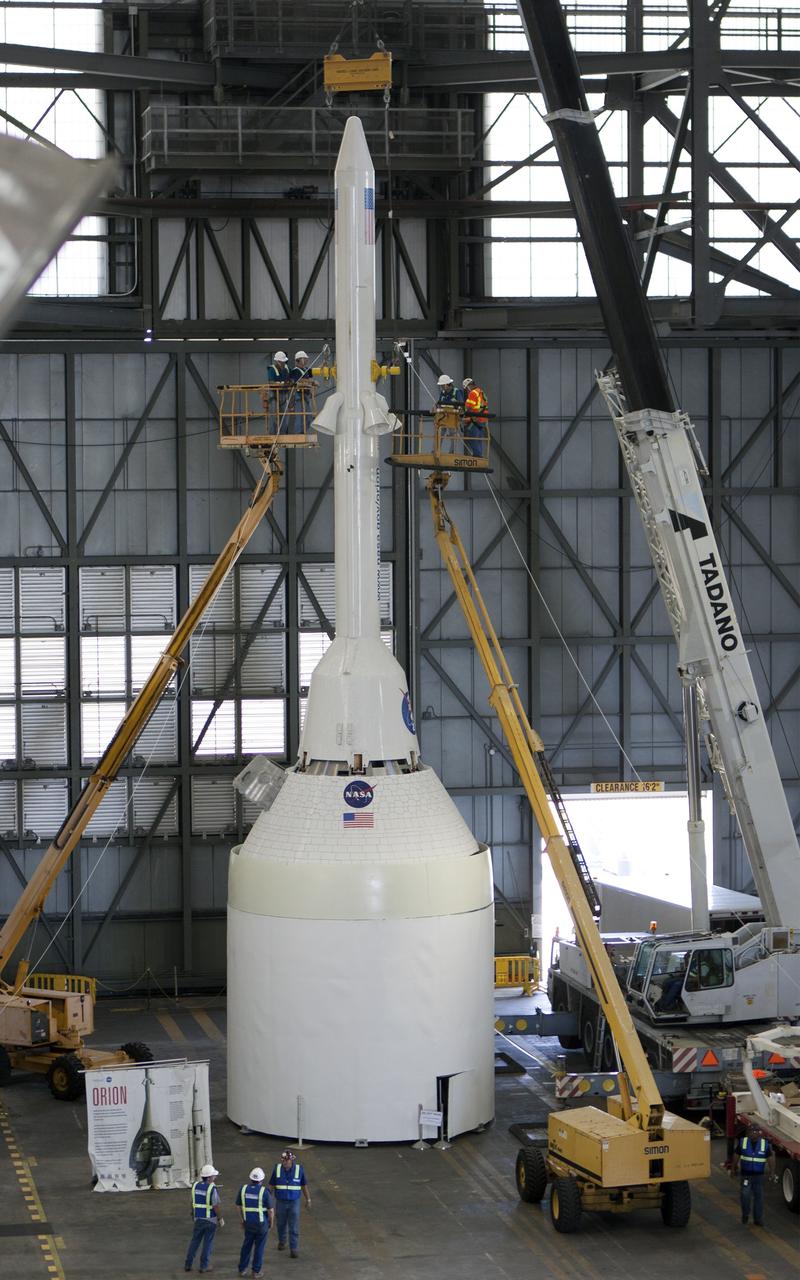
CAPE CANAVERAL, Fla. -- In the transfer aisle of the Vehicle Assembly Building at NASA’s Kennedy Space Center in Florida, crane operators and technicians practice de-stacking operations on a full-size mock-up of the Orion spacecraft and launch abort system in order to keep processing procedures and skills current. Orion is the exploration spacecraft designed to carry crews to space beyond low Earth orbit. It will provide emergency abort capability, sustain the crew during the space travel and provide safe re-entry from deep space return velocities. Orion’s first unpiloted test flight is scheduled to launch in 2014 atop a Delta IV rocket. A second uncrewed flight test is scheduled for 2017 on NASA’s Space Launch System rocket. For more information, visit http://www.nasa.gov/orion. Photo credit: NASA/Jim Grossmann
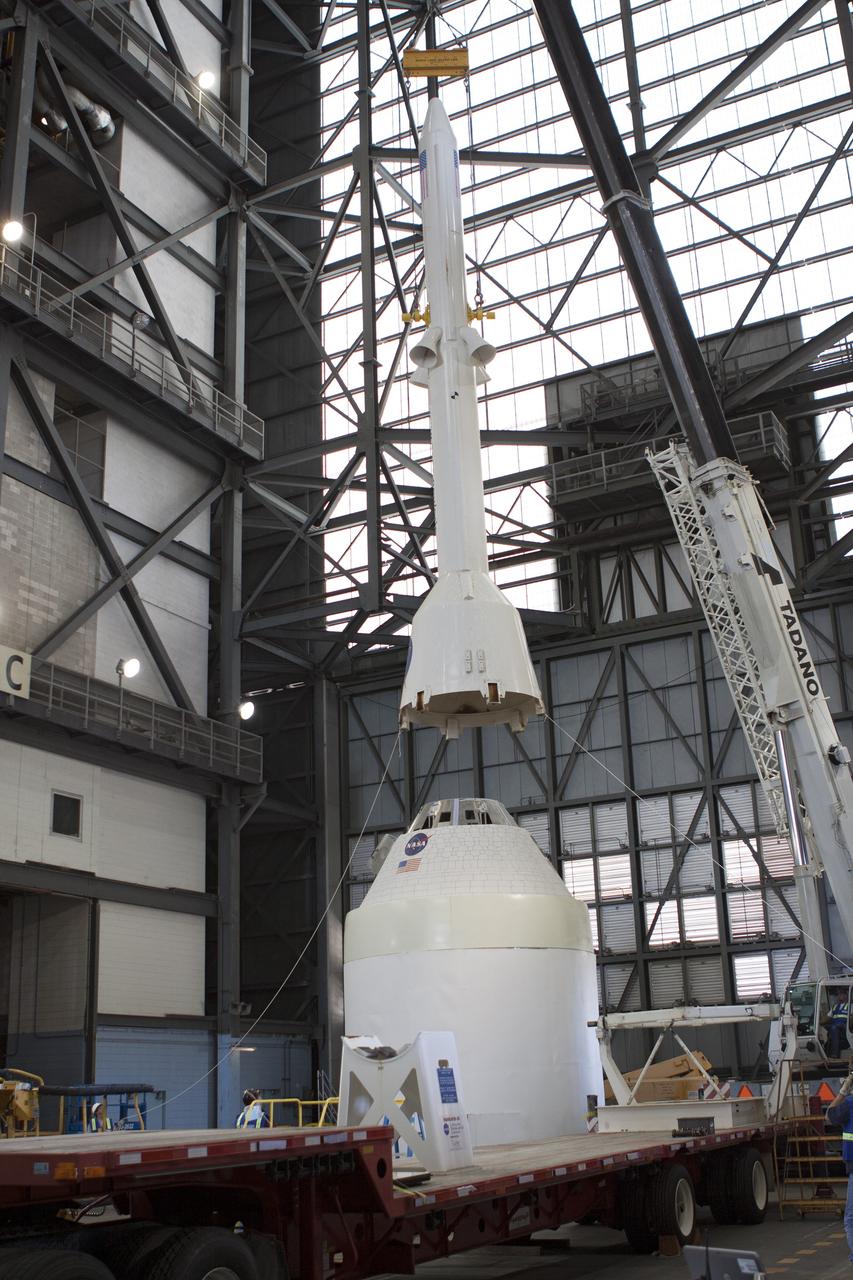
CAPE CANAVERAL, Fla. -- In the transfer aisle of the Vehicle Assembly Building at NASA’s Kennedy Space Center in Florida, crane operators and technicians practice de-stacking operations on a full-size mock-up of the Orion spacecraft and launch abort system in order to keep processing procedures and skills current. Orion is the exploration spacecraft designed to carry crews to space beyond low Earth orbit. It will provide emergency abort capability, sustain the crew during the space travel and provide safe re-entry from deep space return velocities. Orion’s first unpiloted test flight is scheduled to launch in 2014 atop a Delta IV rocket. A second uncrewed flight test is scheduled for 2017 on NASA’s Space Launch System rocket. For more information, visit http://www.nasa.gov/orion. Photo credit: NASA/Jim Grossmann
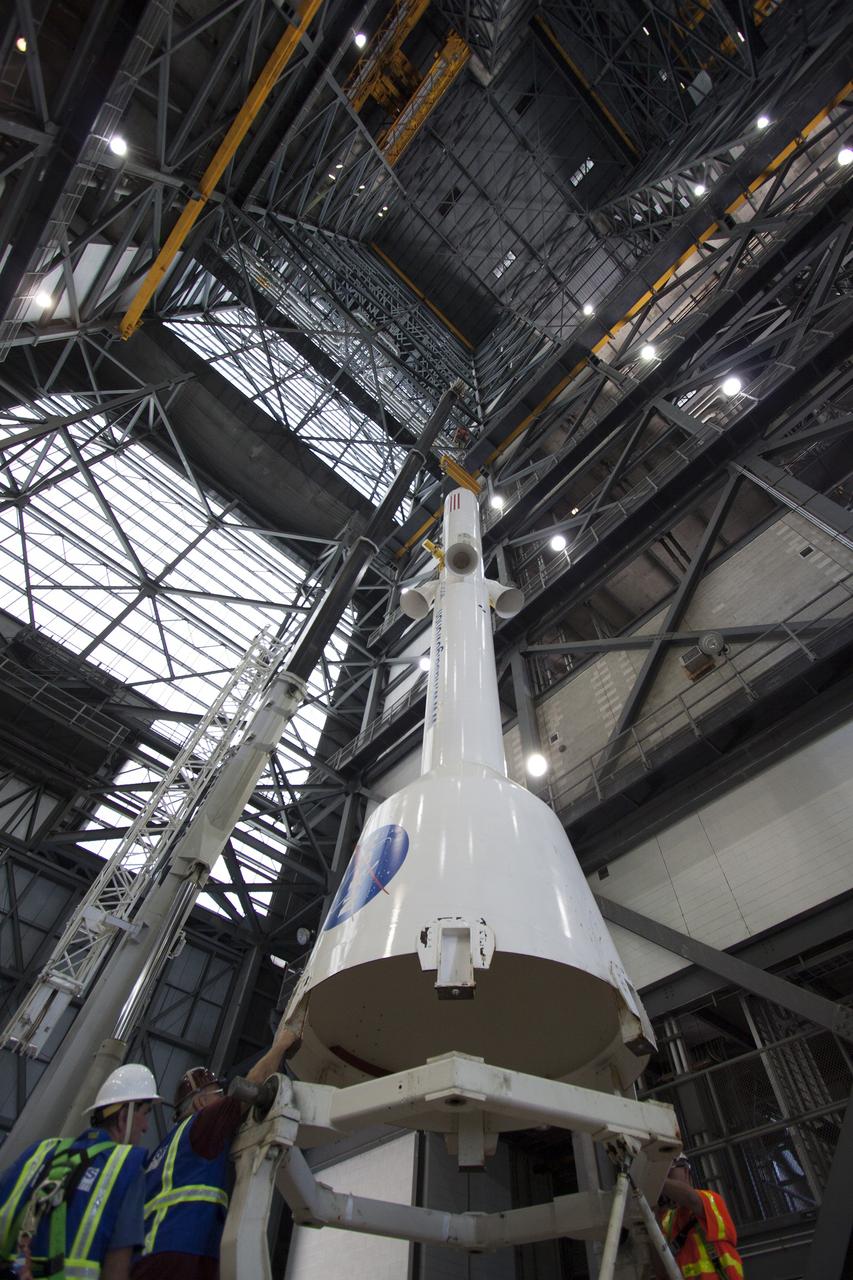
CAPE CANAVERAL, Fla. -- In the transfer aisle of the Vehicle Assembly Building at NASA’s Kennedy Space Center in Florida, crane operators and technicians practice de-stacking operations on a full-size mock-up of the Orion spacecraft and launch abort system in order to keep processing procedures and skills current. Orion is the exploration spacecraft designed to carry crews to space beyond low Earth orbit. It will provide emergency abort capability, sustain the crew during the space travel and provide safe re-entry from deep space return velocities. Orion’s first unpiloted test flight is scheduled to launch in 2014 atop a Delta IV rocket. A second uncrewed flight test is scheduled for 2017 on NASA’s Space Launch System rocket. For more information, visit http://www.nasa.gov/orion. Photo credit: NASA/Jim Grossmann

CAPE CANAVERAL, Fla. -- In the transfer aisle of the Vehicle Assembly Building at NASA’s Kennedy Space Center in Florida, a full-size test mock-up of the Orion spacecraft has been lowered onto a transporter. Crane operators and technicians practice de-stacking operations on mock-ups of the Orion spacecraft and launch abort system in order to keep processing procedures and skills current. Orion is the exploration spacecraft designed to carry crews to space beyond low Earth orbit. It will provide emergency abort capability, sustain the crew during the space travel and provide safe re-entry from deep space return velocities. Orion’s first unpiloted test flight is scheduled to launch in 2014 atop a Delta IV rocket. A second uncrewed flight test is scheduled for 2017 on NASA’s Space Launch System rocket. For more information, visit http://www.nasa.gov/orion. Photo credit: NASA/Tim Jacobs
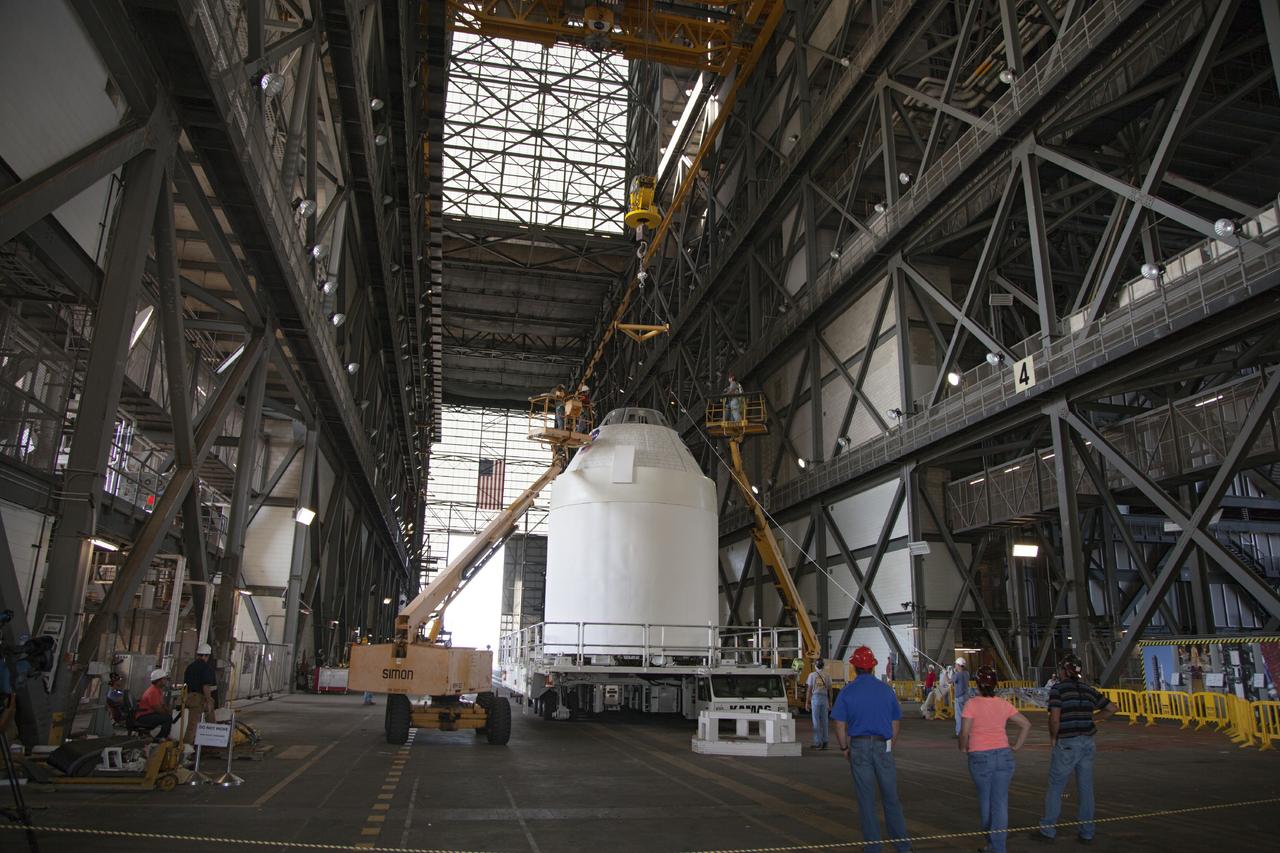
CAPE CANAVERAL, Fla. -- In the transfer aisle of the Vehicle Assembly Building at NASA’s Kennedy Space Center in Florida, a full-size mockup of the Orion spacecraft is being prepared for lifting into High Bay 4. Crane operators and technicians practice stacking and de-stacking operations in order to keep processing procedures and skills current for the Ground Systems Development and Operations Program. Orion is the exploration spacecraft designed to carry crews to space beyond low Earth orbit. It will provide emergency abort capability, sustain the crew during the space travel and provide safe re-entry from deep space return velocities. Orion’s first unpiloted test flight is scheduled to launch in 2014 atop a Delta IV rocket. A second uncrewed flight test is scheduled for 2017 on NASA’s Space Launch System rocket. For more information, visit http://www.nasa.gov/orion. Photo credit: NASA/Dan Casper

CAPE CANAVERAL, Fla. -- In the transfer aisle of the Vehicle Assembly Building at NASA’s Kennedy Space Center in Florida, technicians attach a crane to a full-size mock-up of the Orion spacecraft to prepare it to be lifted into High Bay 4. Crane operators and technicians practice stacking and de-stacking operations in order to keep processing procedures and skills current for the Ground Systems Development and Operations Program. Orion is the exploration spacecraft designed to carry crews to space beyond low Earth orbit. It will provide emergency abort capability, sustain the crew during the space travel and provide safe re-entry from deep space return velocities. Orion’s first unpiloted test flight is scheduled to launch in 2014 atop a Delta IV rocket. A second uncrewed flight test is scheduled for 2017 on NASA’s Space Launch System rocket. For more information, visit http://www.nasa.gov/orion. Photo credit: NASA/Dan Casper
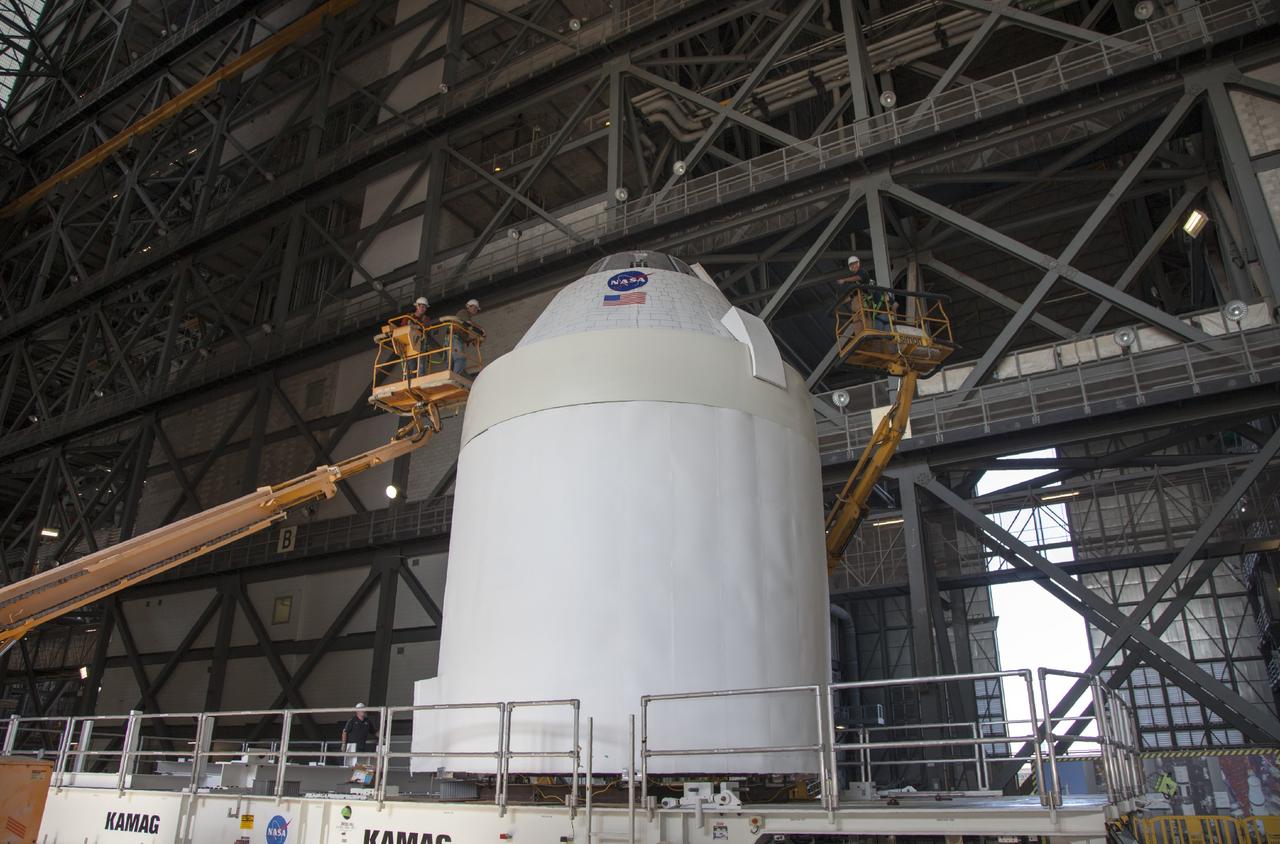
CAPE CANAVERAL, Fla. -- In the transfer aisle of the Vehicle Assembly Building at NASA’s Kennedy Space Center in Florida, a full-size mockup of the Orion spacecraft is being prepared for lifting into High Bay 4. Crane operators and technicians practice stacking and de-stacking operations in order to keep processing procedures and skills current for the Ground Systems Development and Operations Program. Orion is the exploration spacecraft designed to carry crews to space beyond low Earth orbit. It will provide emergency abort capability, sustain the crew during the space travel and provide safe re-entry from deep space return velocities. Orion’s first unpiloted test flight is scheduled to launch in 2014 atop a Delta IV rocket. A second uncrewed flight test is scheduled for 2017 on NASA’s Space Launch System rocket. For more information, visit http://www.nasa.gov/orion. Photo credit: NASA/Dan Casper
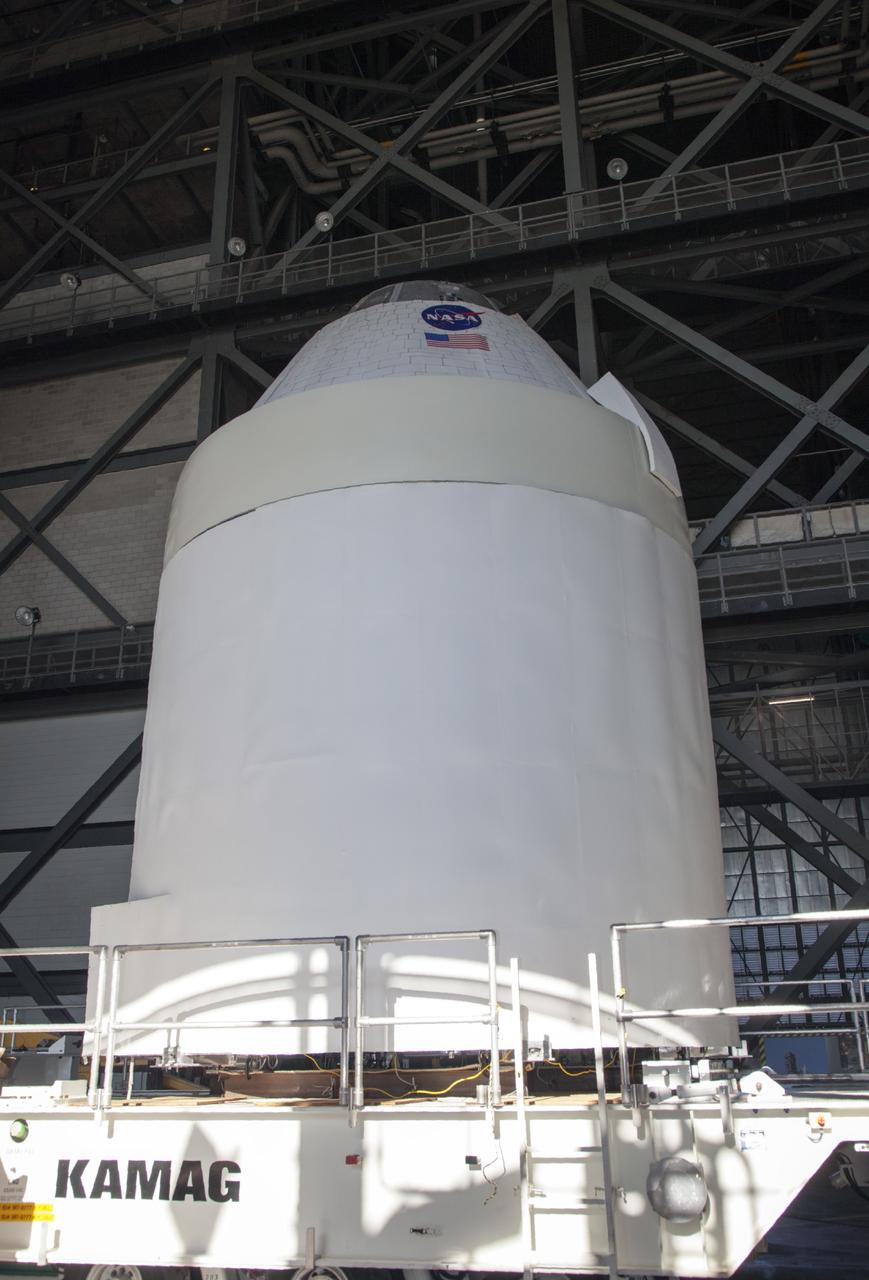
CAPE CANAVERAL, Fla. -- In the transfer aisle of the Vehicle Assembly Building at NASA’s Kennedy Space Center in Florida, a full-size mockup of the Orion spacecraft sits on a transporter. Crane operators and technicians are preparing to lift the mockup and transfer it into High Bay 4 in order to keep processing procedures and skills current for the Ground Systems Development and Operations Program. Orion is the exploration spacecraft designed to carry crews to space beyond low Earth orbit. It will provide emergency abort capability, sustain the crew during the space travel and provide safe re-entry from deep space return velocities. Orion’s first unpiloted test flight is scheduled to launch in 2014 atop a Delta IV rocket. A second uncrewed flight test is scheduled for 2017 on NASA’s Space Launch System rocket. For more information, visit http://www.nasa.gov/orion. Photo credit: NASA/Dan Casper
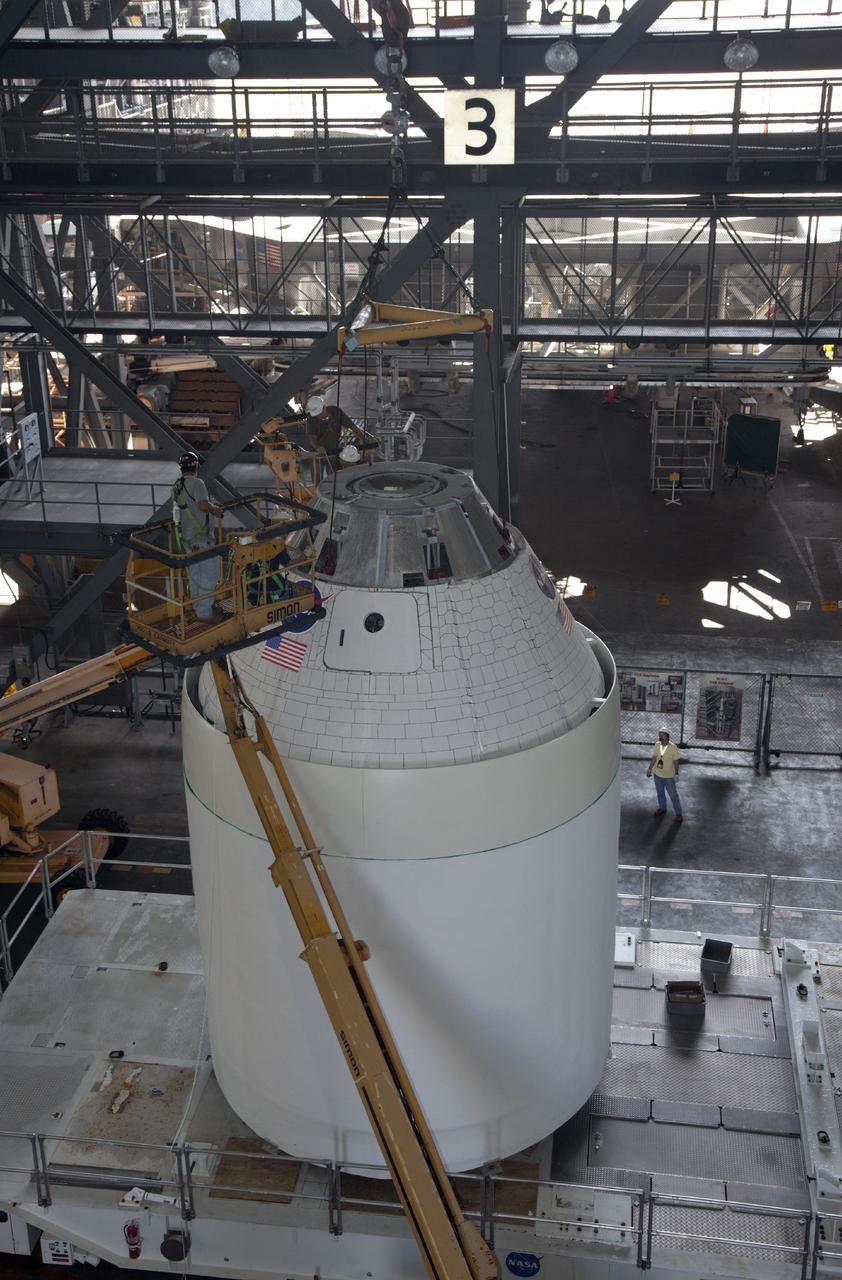
CAPE CANAVERAL, Fla. --In the transfer aisle of the Vehicle Assembly Building at NASA’s Kennedy Space Center in Florida, technicians attach a crane to a full-size mock-up of the Orion spacecraft to prepare it to be lifted into High Bay 4. Crane operators and technicians practice stacking and de-stacking operations in order to keep processing procedures and skills current for the Ground Systems Development and Operations Program. Orion is the exploration spacecraft designed to carry crews to space beyond low Earth orbit. It will provide emergency abort capability, sustain the crew during the space travel and provide safe re-entry from deep space return velocities. Orion’s first unpiloted test flight is scheduled to launch in 2014 atop a Delta IV rocket. A second uncrewed flight test is scheduled for 2017 on NASA’s Space Launch System rocket. For more information, visit http://www.nasa.gov/orion. Photo credit: NASA/Dan Casper

CAPE CANAVERAL, Fla. -- In the Vehicle Assembly Building at NASA’s Kennedy Space Center in Florida, a technician monitors the progress as a crane operator lowers a full-size mock-up of the Orion spacecraft in High Bay 4. Crane operators and technicians practice stacking and de-stacking operations in order to keep processing procedures and skills current for the Ground Systems Development and Operations Program. Orion is the exploration spacecraft designed to carry crews to space beyond low Earth orbit. It will provide emergency abort capability, sustain the crew during the space travel and provide safe re-entry from deep space return velocities. Orion’s first unpiloted test flight is scheduled to launch in 2014 atop a Delta IV rocket. A second uncrewed flight test is scheduled for 2017 on NASA’s Space Launch System rocket. For more information, visit http://www.nasa.gov/orion. Photo credit: NASA/Dan Casper
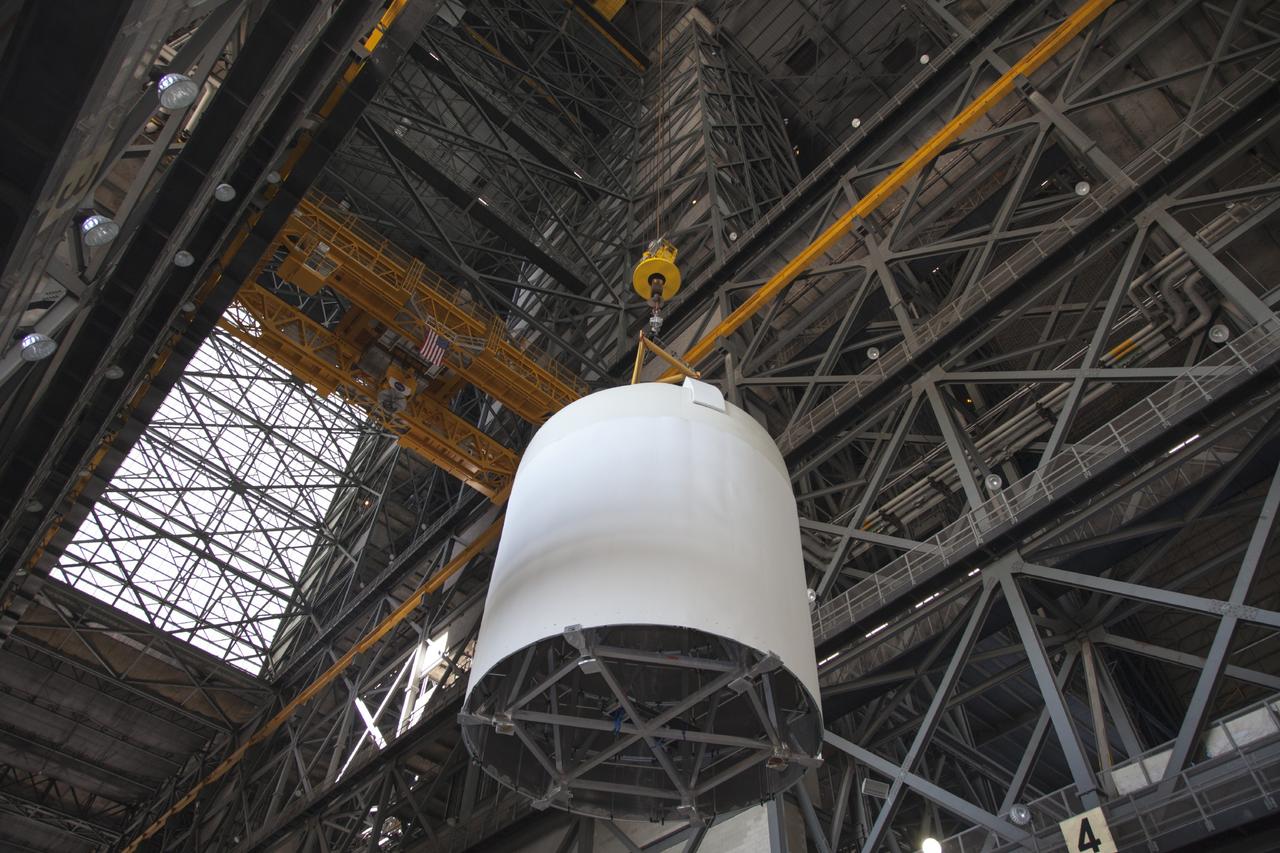
CAPE CANAVERAL, Fla. -- In the transfer aisle of the Vehicle Assembly Building at NASA’s Kennedy Space Center in Florida, a crane operator lifts a full-size mock-up of the Orion spacecraft high in the air for transfer to High Bay 4. Crane operators and technicians practice stacking and de-stacking operations in order to keep processing procedures and skills current for the Ground Systems Development and Operations Program. Orion is the exploration spacecraft designed to carry crews to space beyond low Earth orbit. It will provide emergency abort capability, sustain the crew during the space travel and provide safe re-entry from deep space return velocities. Orion’s first unpiloted test flight is scheduled to launch in 2014 atop a Delta IV rocket. A second uncrewed flight test is scheduled for 2017 on NASA’s Space Launch System rocket. For more information, visit http://www.nasa.gov/orion. Photo credit: NASA/Dan Casper
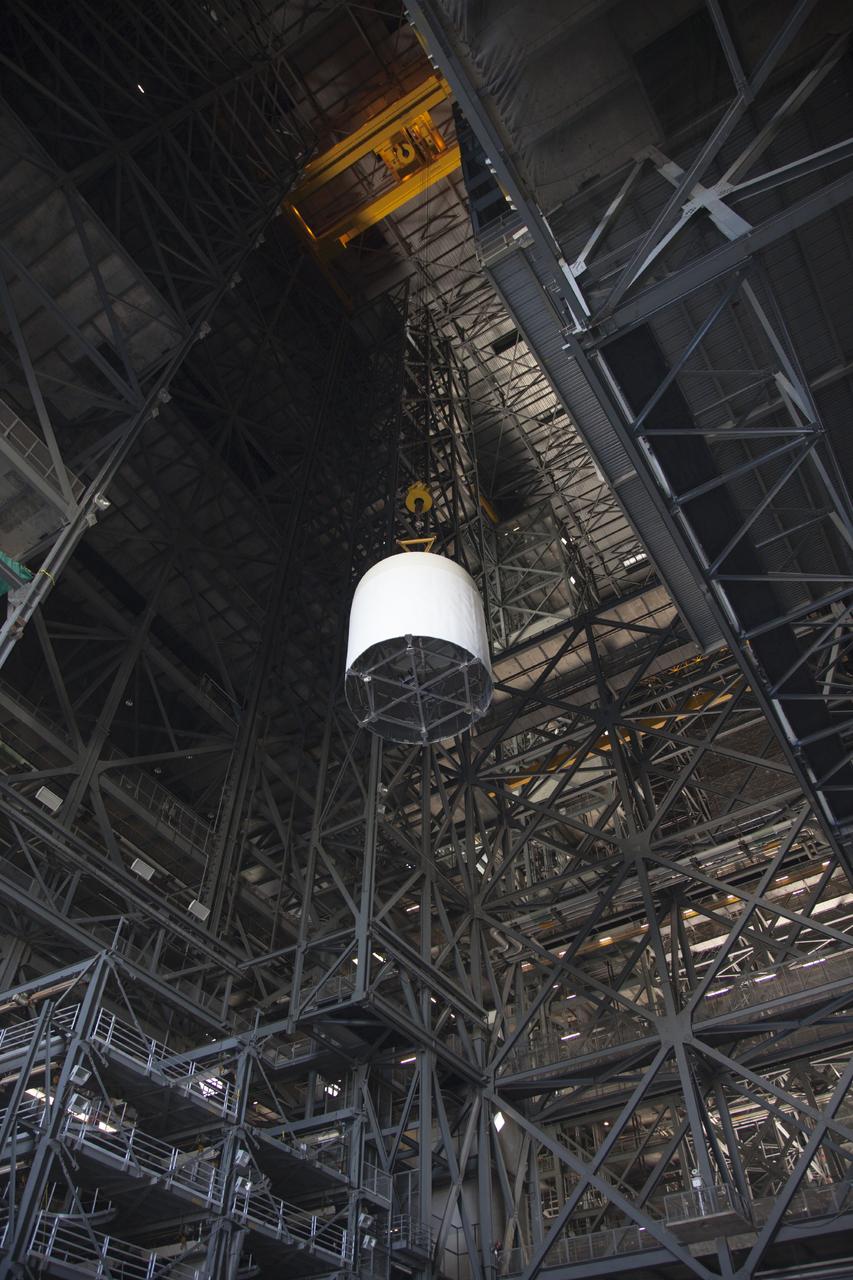
CAPE CANAVERAL, Fla. -- In the transfer aisle of the Vehicle Assembly Building at NASA’s Kennedy Space Center in Florida, a crane operator lifts a full-size mock-up of the Orion spacecraft high in the air for transfer to High Bay 4. Crane operators and technicians practice stacking and de-stacking operations in order to keep processing procedures and skills current for the Ground Systems Development and Operations Program. Orion is the exploration spacecraft designed to carry crews to space beyond low Earth orbit. It will provide emergency abort capability, sustain the crew during the space travel and provide safe re-entry from deep space return velocities. Orion’s first unpiloted test flight is scheduled to launch in 2014 atop a Delta IV rocket. A second uncrewed flight test is scheduled for 2017 on NASA’s Space Launch System rocket. For more information, visit http://www.nasa.gov/orion. Photo credit: NASA/Dan Casper
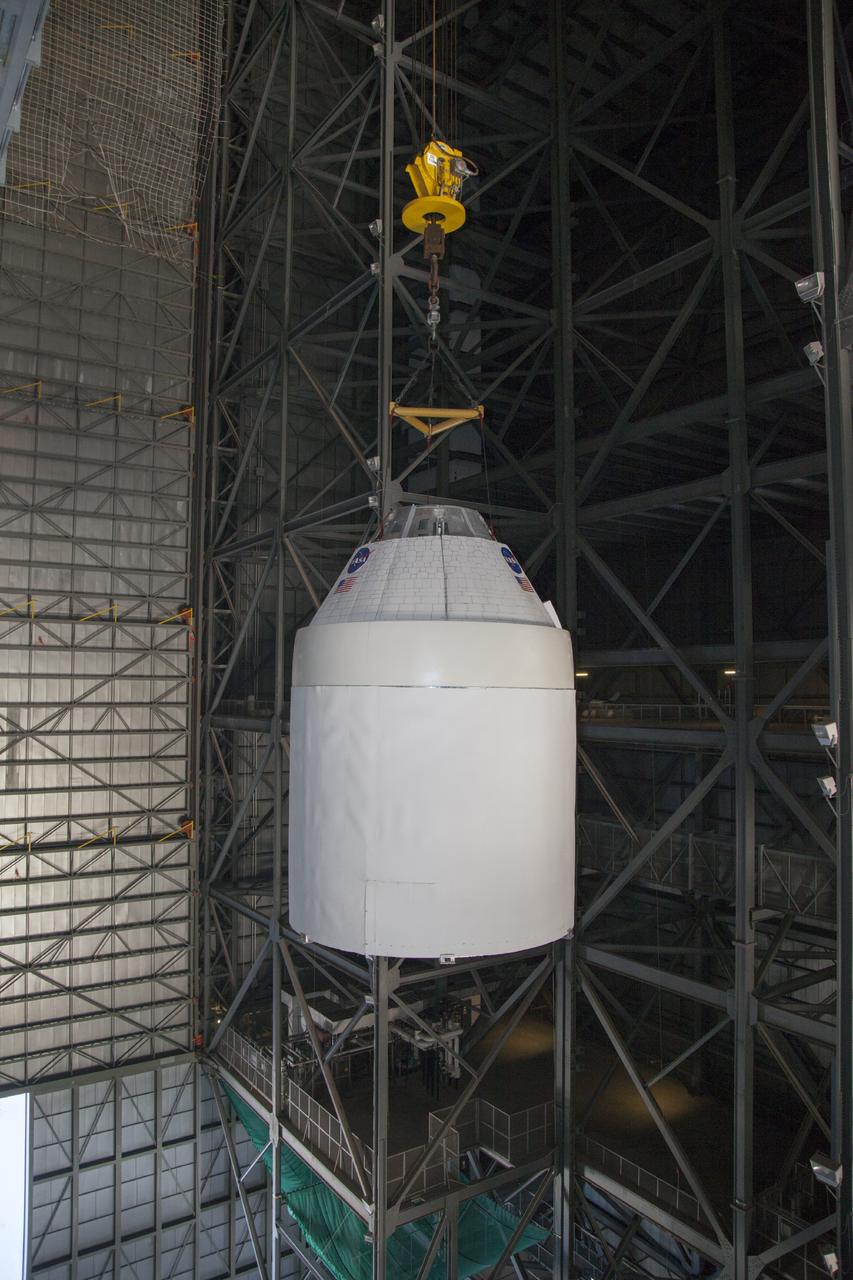
CAPE CANAVERAL, Fla. -- In the transfer aisle of the Vehicle Assembly Building at NASA’s Kennedy Space Center in Florida, a crane operator lifts a full-size mock-up of the Orion spacecraft high in the air for transfer to High Bay 4. Crane operators and technicians practice stacking and de-stacking operations in order to keep processing procedures and skills current for the Ground Systems Development and Operations Program. Orion is the exploration spacecraft designed to carry crews to space beyond low Earth orbit. It will provide emergency abort capability, sustain the crew during the space travel and provide safe re-entry from deep space return velocities. Orion’s first unpiloted test flight is scheduled to launch in 2014 atop a Delta IV rocket. A second uncrewed flight test is scheduled for 2017 on NASA’s Space Launch System rocket. For more information, visit http://www.nasa.gov/orion. Photo credit: NASA/Dan Casper

CAPE CANAVERAL, Fla. -- In the Vehicle Assembly Building at NASA’s Kennedy Space Center in Florida, technicians monitor the progress as a crane operator lowers a full-size mock-up of the Orion spacecraft in High Bay 4. Crane operators and technicians practice stacking and de-stacking operations in order to keep processing procedures and skills current. Orion is the exploration spacecraft designed to carry crews to space beyond low Earth orbit. It will provide emergency abort capability, sustain the crew during the space travel and provide safe re-entry from deep space return velocities. Orion’s first unpiloted test flight is scheduled to launch in 2014 atop a Delta IV rocket. A second uncrewed flight test is scheduled for 2017 on NASA’s Space Launch System rocket. For more information, visit http://www.nasa.gov/orion. Photo credit: NASA/Dan Casper
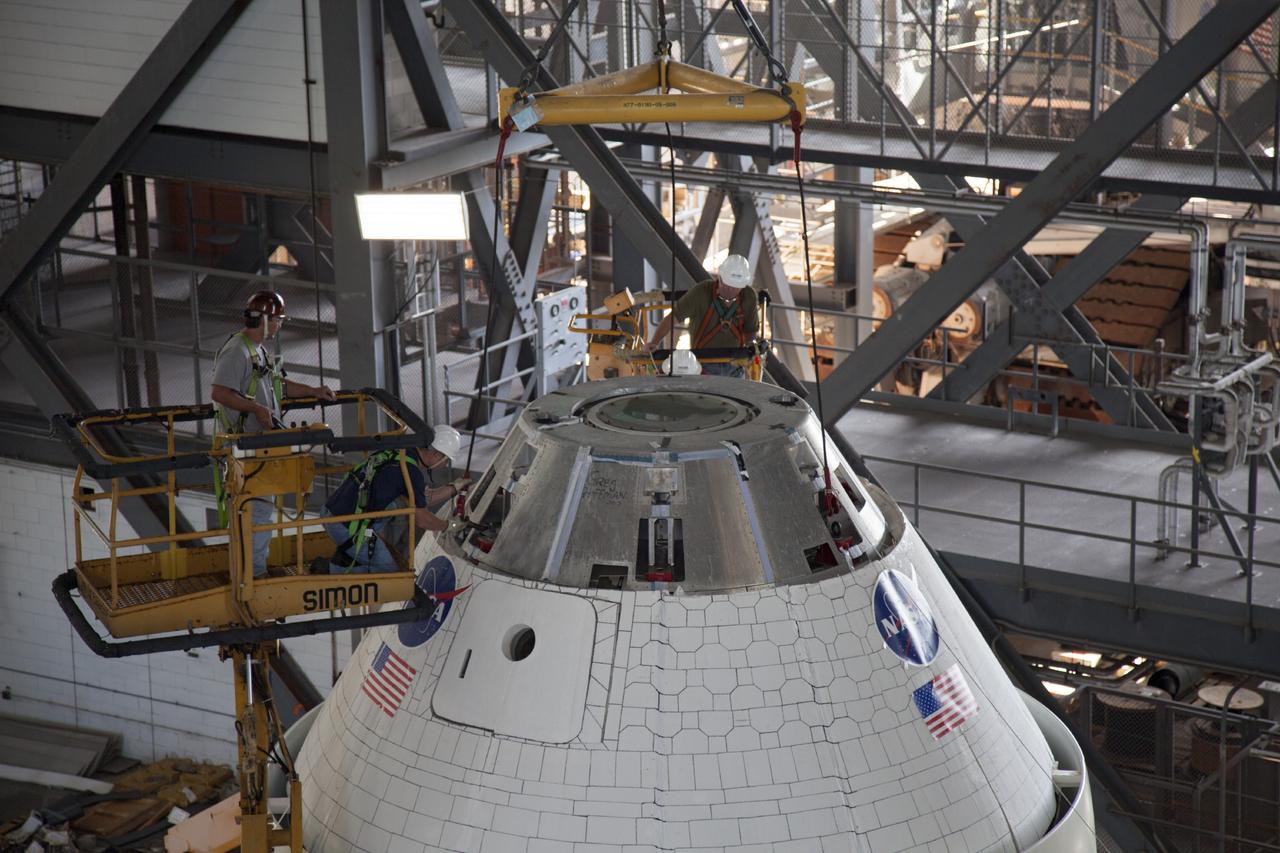
CAPE CANAVERAL, Fla. -- In the transfer aisle of the Vehicle Assembly Building at NASA’s Kennedy Space Center in Florida, crane operators and technicians practice stacking and de-stacking operations on a full-size mock-up of the Orion spacecraft and launch abort system in order to keep processing procedures and skills current for the Ground Systems Development and Operations Program. Orion is the exploration spacecraft designed to carry crews to space beyond low Earth orbit. It will provide emergency abort capability, sustain the crew during the space travel and provide safe re-entry from deep space return velocities. Orion’s first unpiloted test flight is scheduled to launch in 2014 atop a Delta IV rocket. A second uncrewed flight test is scheduled for 2017 on NASA’s Space Launch System rocket. For more information, visit http://www.nasa.gov/orion. Photo credit: NASA/Dan Casper

CAPE CANAVERAL, Fla. -- In the transfer aisle of the Vehicle Assembly Building at NASA’s Kennedy Space Center in Florida, a crane operator lifts a full-size mock-up of the Orion spacecraft high in the air for transfer to High Bay 4. Crane operators and technicians practice stacking and de-stacking operations in order to keep processing procedures and skills current for the Ground Systems Development and Operations Program. Orion is the exploration spacecraft designed to carry crews to space beyond low Earth orbit. It will provide emergency abort capability, sustain the crew during the space travel and provide safe re-entry from deep space return velocities. Orion’s first unpiloted test flight is scheduled to launch in 2014 atop a Delta IV rocket. A second uncrewed flight test is scheduled for 2017 on NASA’s Space Launch System rocket. For more information, visit http://www.nasa.gov/orion. Photo credit: NASA/Dan Casper
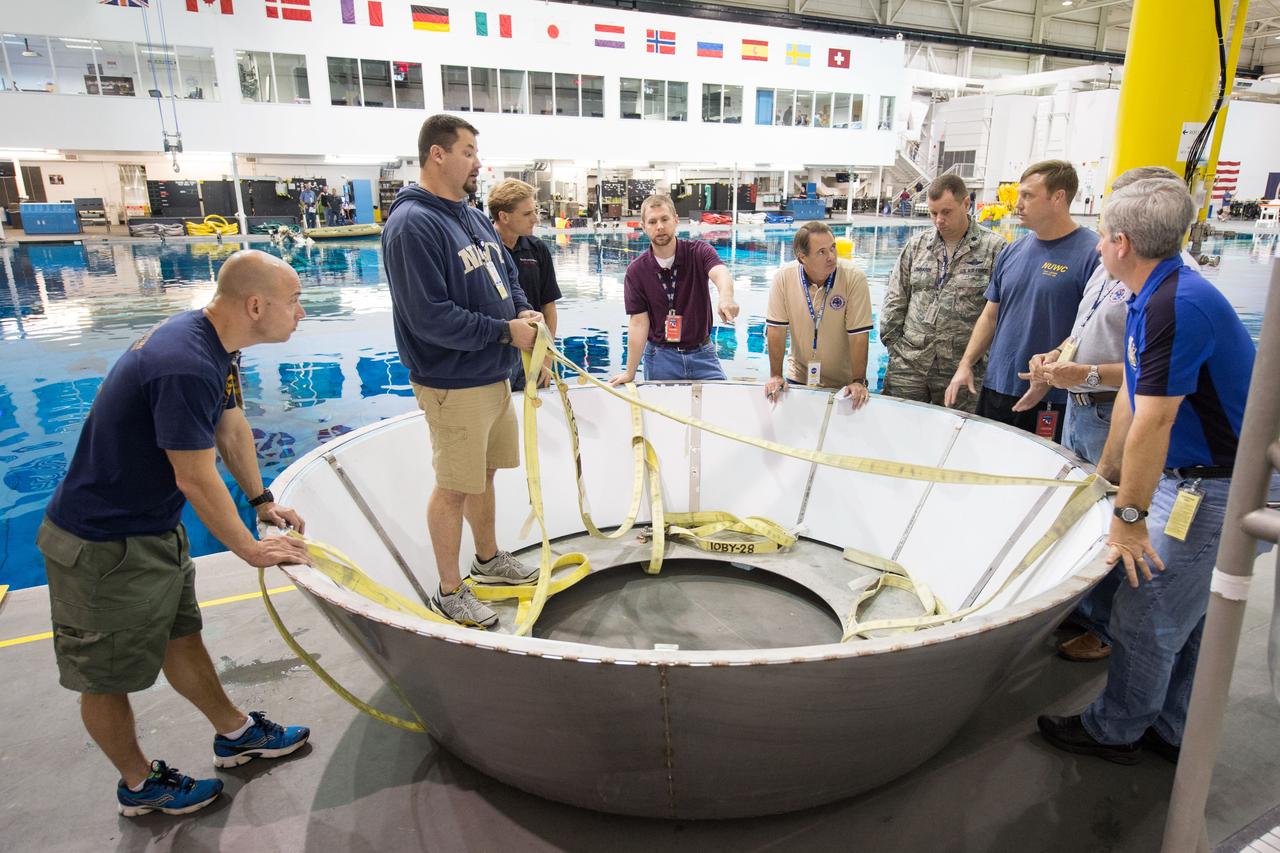
NASA, Department of Defense personnel from Detachment 3 out of Patrick Air Force Base, and the Mobile Diving Salvage Unit based in San Diego conduct a testing session at the Neutral Buoyancy Lab in Houston on Dec. 5, 2012 to evaluate procedures, mockups, and prototype hardware used to train personnel in recovery of the Orion crew module and the forward bay cover for Exploration Flight Test-1 (EFT-1). Part of Batch image transfer from Flickr.
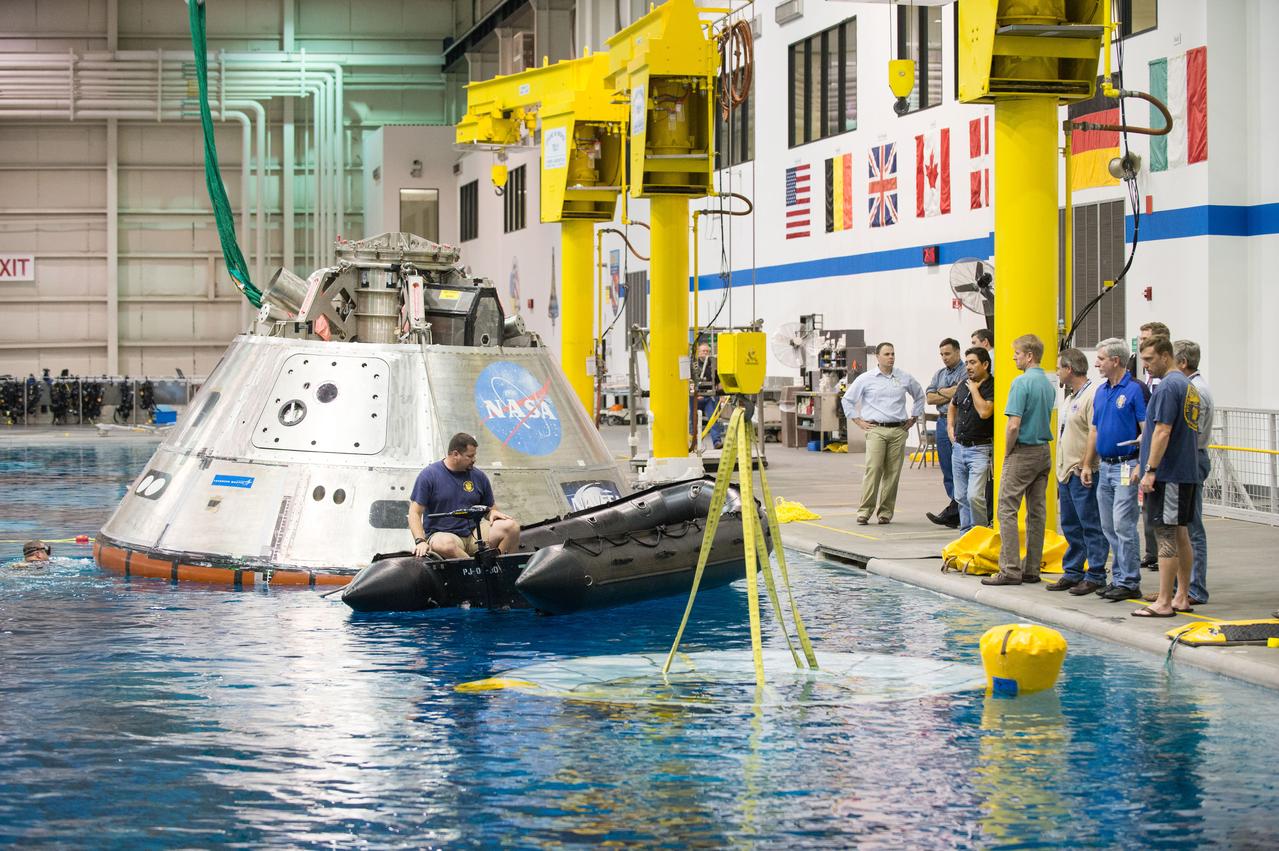
NASA, Department of Defense personnel from Detachment 3 out of Patrick Air Force Base, and the Mobile Diving Salvage Unit based in San Diego conduct a testing session at the Neutral Buoyancy Lab in Houston on Dec. 5, 2012 to evaluate procedures, mockups, and prototype hardware used to train personnel in recovery of the Orion crew module and the forward bay cover for Exploration Flight Test-1 (EFT-1). Part of Batch image transfer from Flickr.
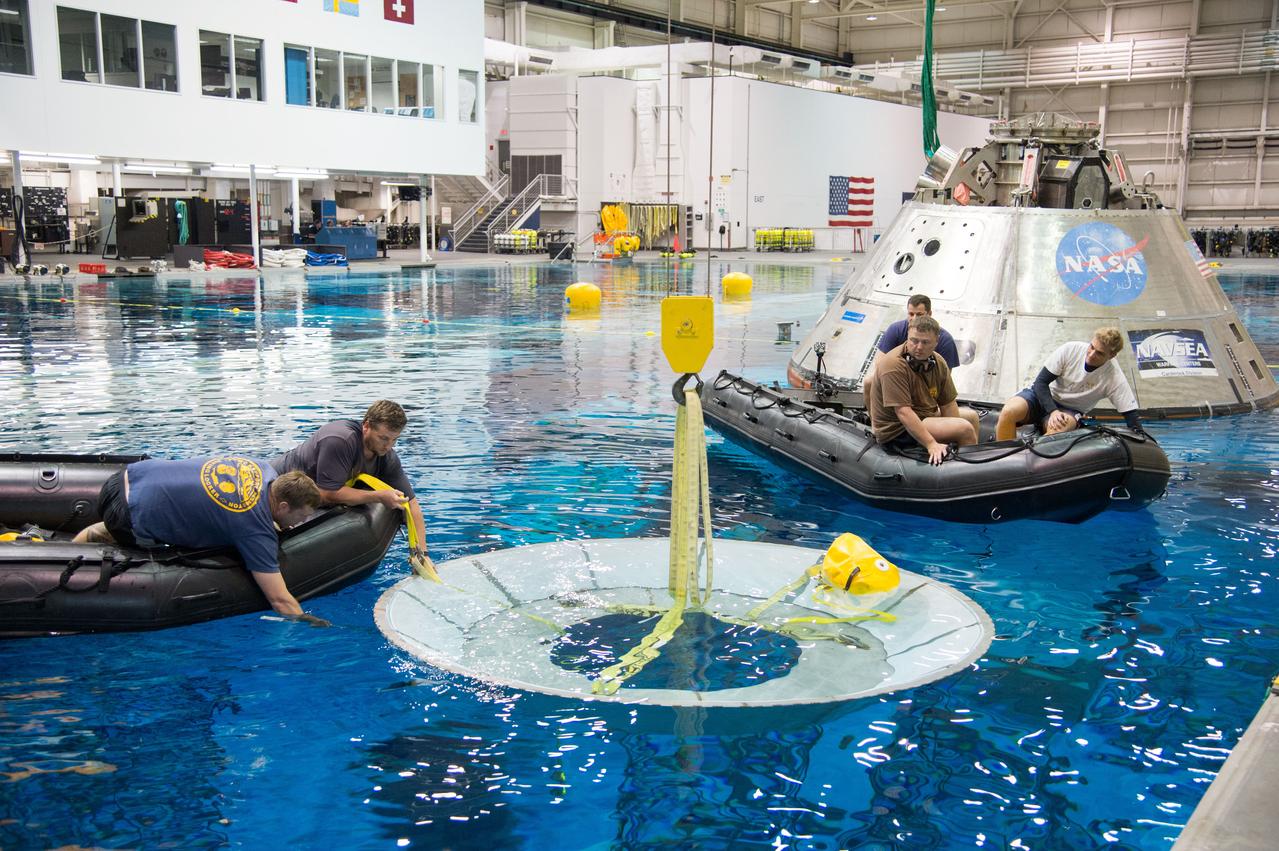
NASA, Department of Defense personnel from Detachment 3 out of Patrick Air Force Base, and the Mobile Diving Salvage Unit based in San Diego conduct a testing session at the Neutral Buoyancy Lab in Houston on Dec. 5, 2012 to evaluate procedures, mockups, and prototype hardware used to train personnel in recovery of the Orion crew module and the forward bay cover for Exploration Flight Test-1 (EFT-1). Part of Batch image transfer from Flickr.
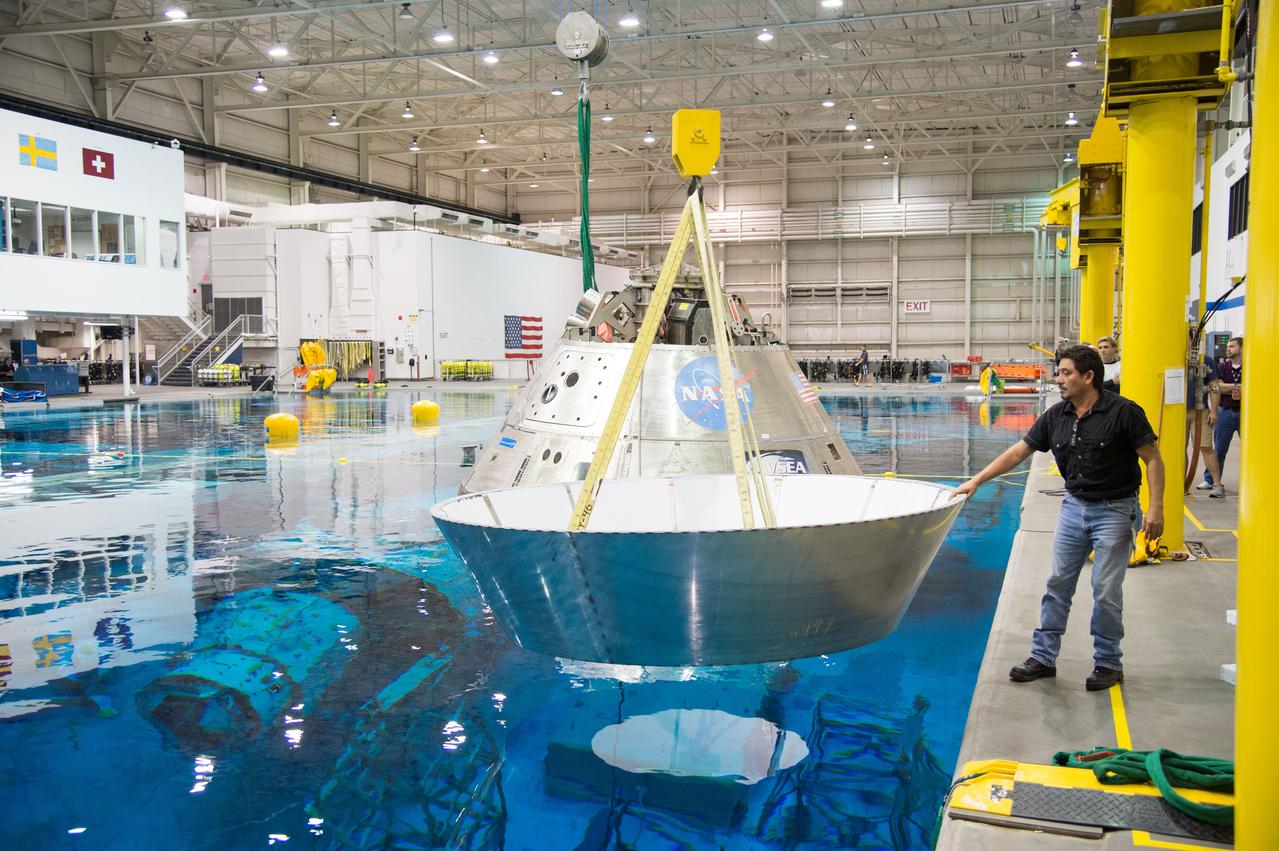
NASA, Department of Defense personnel from Detachment 3 out of Patrick Air Force Base, and the Mobile Diving Salvage Unit based in San Diego conduct a testing session at the Neutral Buoyancy Lab in Houston on Dec. 5, 2012 to evaluate procedures, mockups, and prototype hardware used to train personnel in recovery of the Orion crew module and the forward bay cover for Exploration Flight Test-1 (EFT-1). Part of Batch image transfer from Flickr.
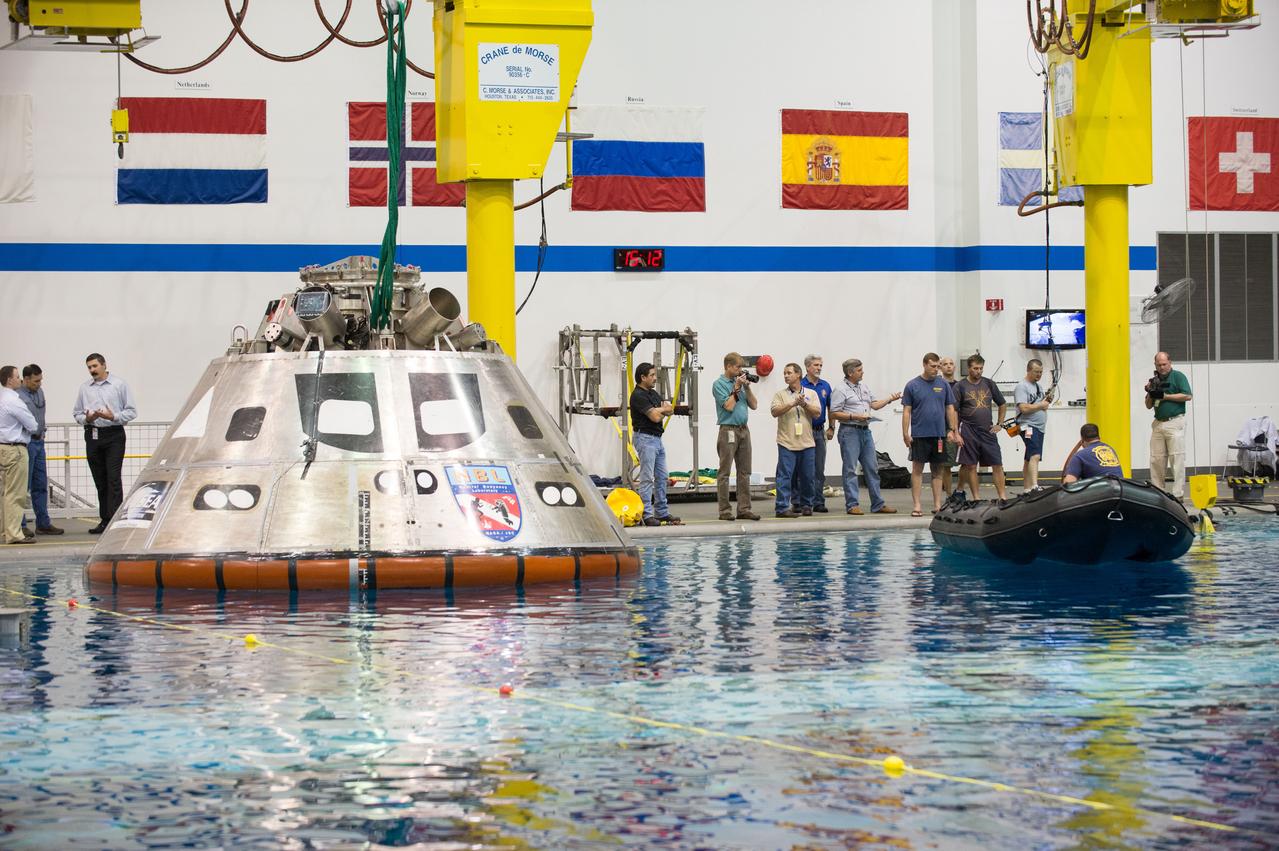
NASA, Department of Defense personnel from Detachment 3 out of Patrick Air Force Base, and the Mobile Diving Salvage Unit based in San Diego conduct a testing session at the Neutral Buoyancy Lab in Houston on Dec. 5, 2012 to evaluate procedures, mockups, and prototype hardware used to train personnel in recovery of the Orion crew module and the forward bay cover for Exploration Flight Test-1 (EFT-1). Part of Batch image transfer from Flickr.
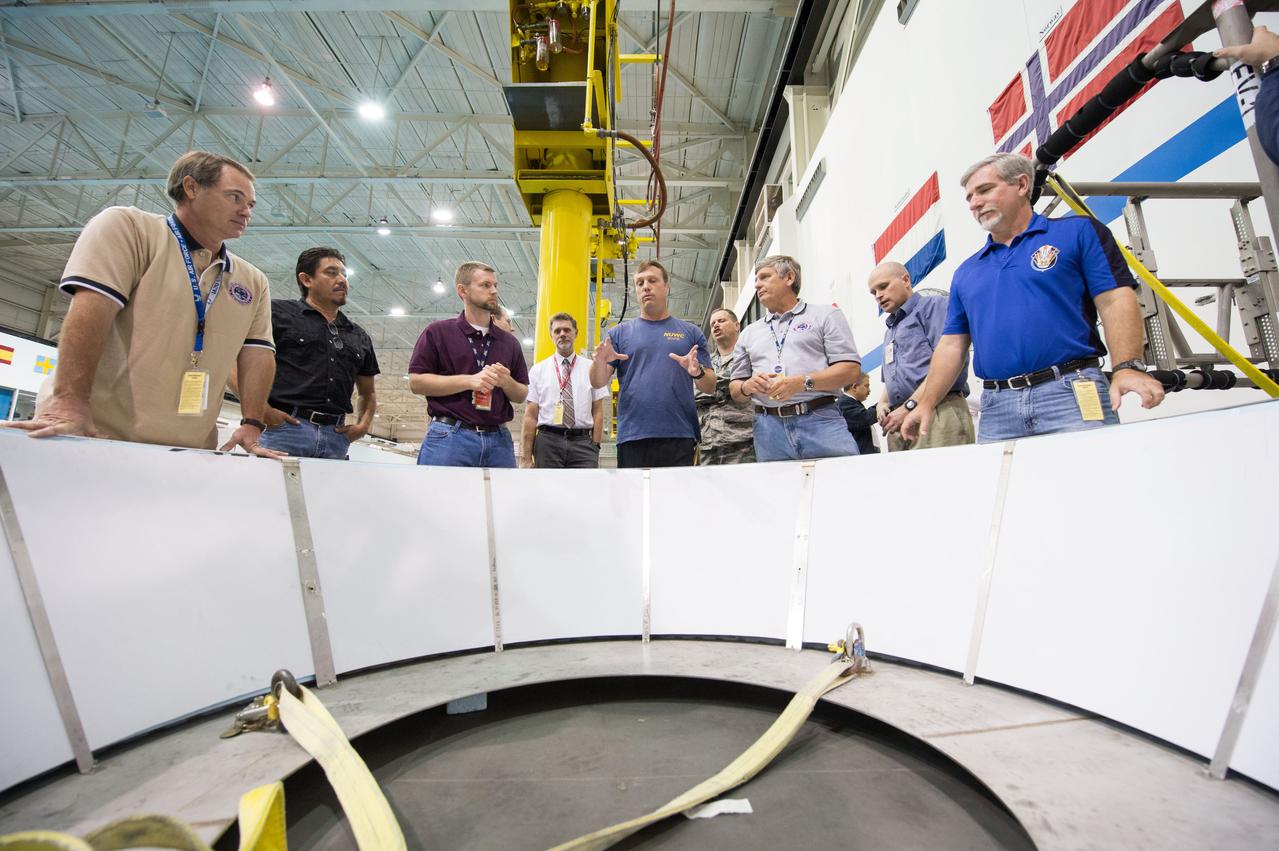
NASA, Department of Defense personnel from Detachment 3 out of Patrick Air Force Base, and the Mobile Diving Salvage Unit based in San Diego conduct a testing session at the Neutral Buoyancy Lab in Houston on Dec. 5, 2012 to evaluate procedures, mockups, and prototype hardware used to train personnel in recovery of the Orion crew module and the forward bay cover for Exploration Flight Test-1 (EFT-1). Part of Batch image transfer from Flickr.
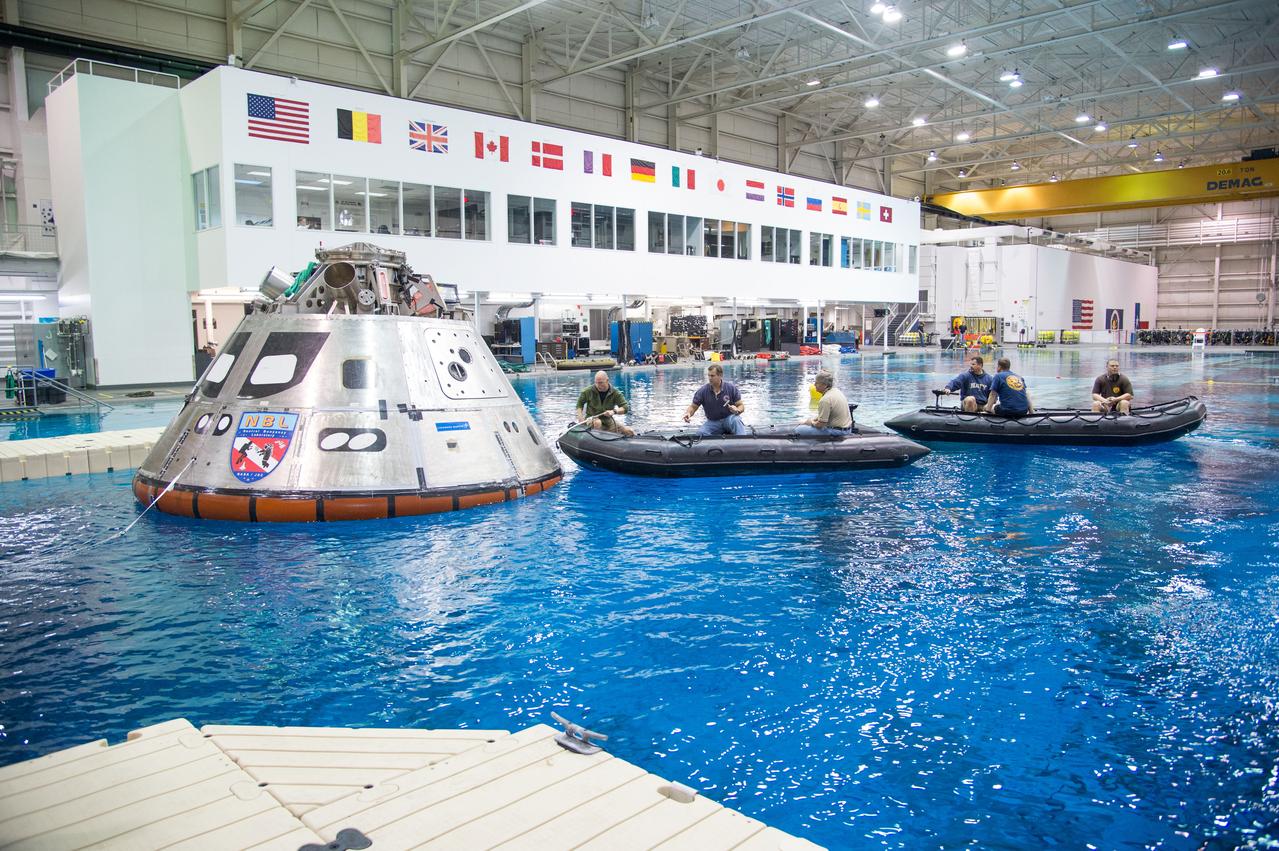
NASA, Department of Defense personnel from Detachment 3 out of Patrick Air Force Base, and the Mobile Diving Salvage Unit based in San Diego conduct a testing session at the Neutral Buoyancy Lab in Houston on Dec. 5, 2012 to evaluate procedures, mockups, and prototype hardware used to train personnel in recovery of the Orion crew module and the forward bay cover for Exploration Flight Test-1 (EFT-1). Part of Batch image transfer from Flickr.
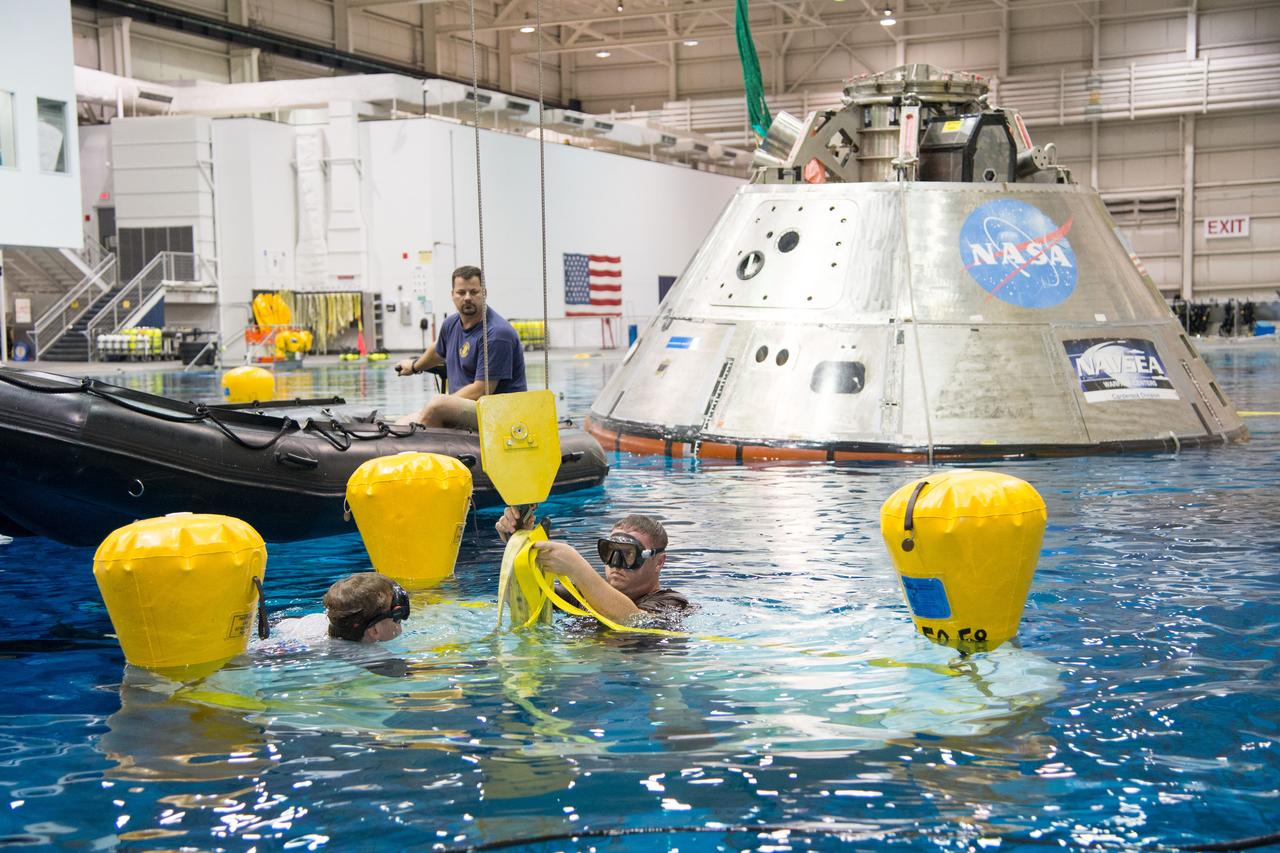
NASA, Department of Defense personnel from Detachment 3 out of Patrick Air Force Base, and the Mobile Diving Salvage Unit based in San Diego conduct a testing session at the Neutral Buoyancy Lab in Houston on Dec. 5, 2012 to evaluate procedures, mockups, and prototype hardware used to train personnel in recovery of the Orion crew module and the forward bay cover for Exploration Flight Test-1 (EFT-1). Part of Batch image transfer from Flickr.
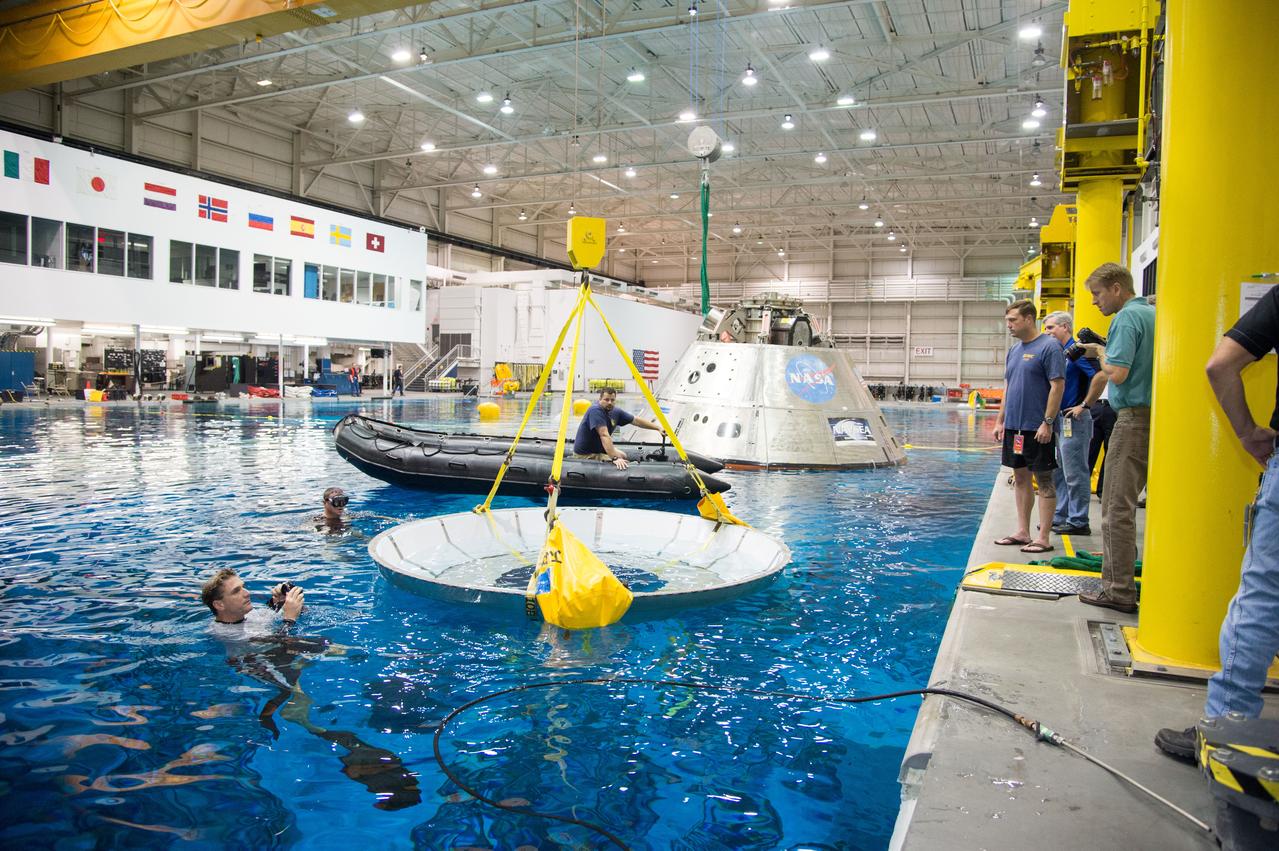
NASA, Department of Defense personnel from Detachment 3 out of Patrick Air Force Base, and the Mobile Diving Salvage Unit based in San Diego conduct a testing session at the Neutral Buoyancy Lab in Houston on Dec. 5, 2012 to evaluate procedures, mockups, and prototype hardware used to train personnel in recovery of the Orion crew module and the forward bay cover for Exploration Flight Test-1 (EFT-1). Part of Batch image transfer from Flickr.
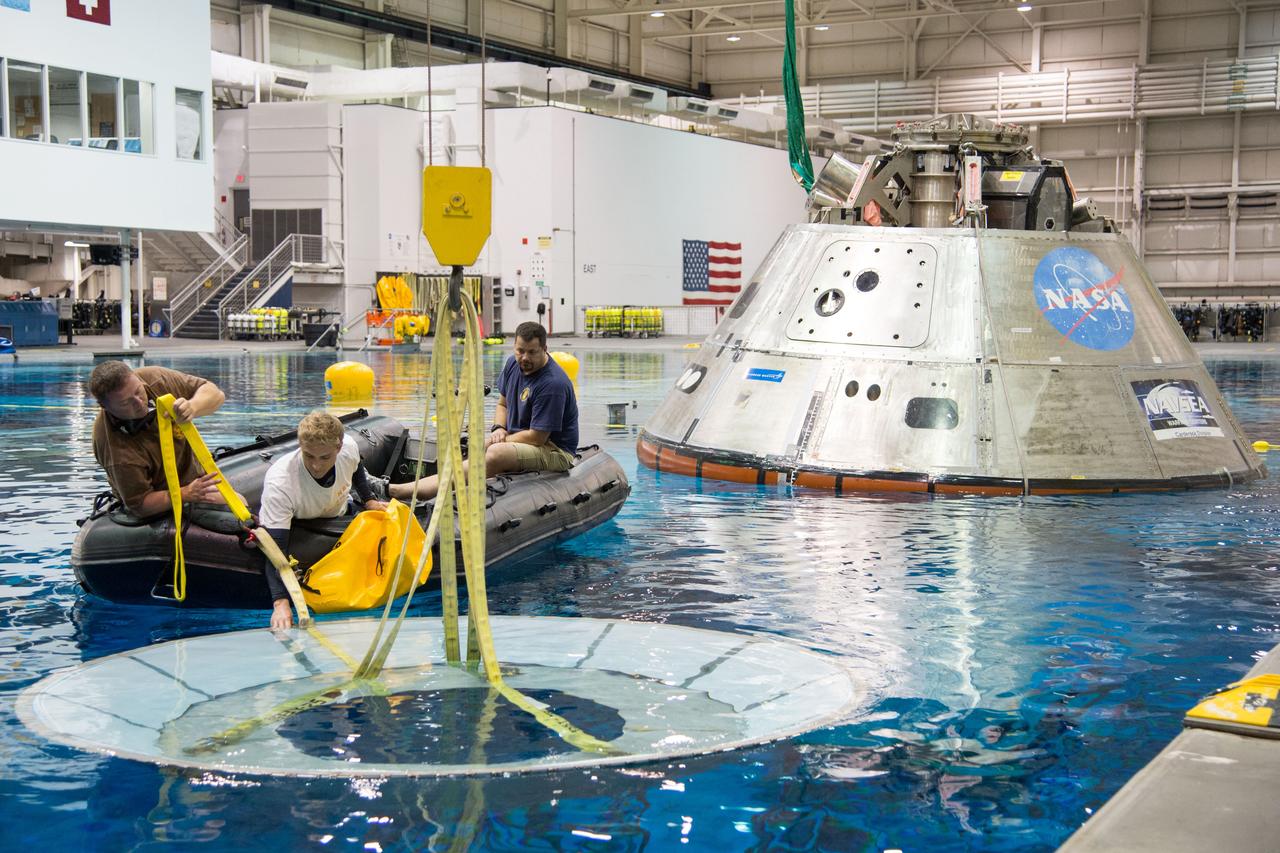
NASA, Department of Defense personnel from Detachment 3 out of Patrick Air Force Base, and the Mobile Diving Salvage Unit based in San Diego conduct a testing session at the Neutral Buoyancy Lab in Houston on Dec. 5, 2012 to evaluate procedures, mockups, and prototype hardware used to train personnel in recovery of the Orion crew module and the forward bay cover for Exploration Flight Test-1 (EFT-1). Part of Batch image transfer from Flickr.
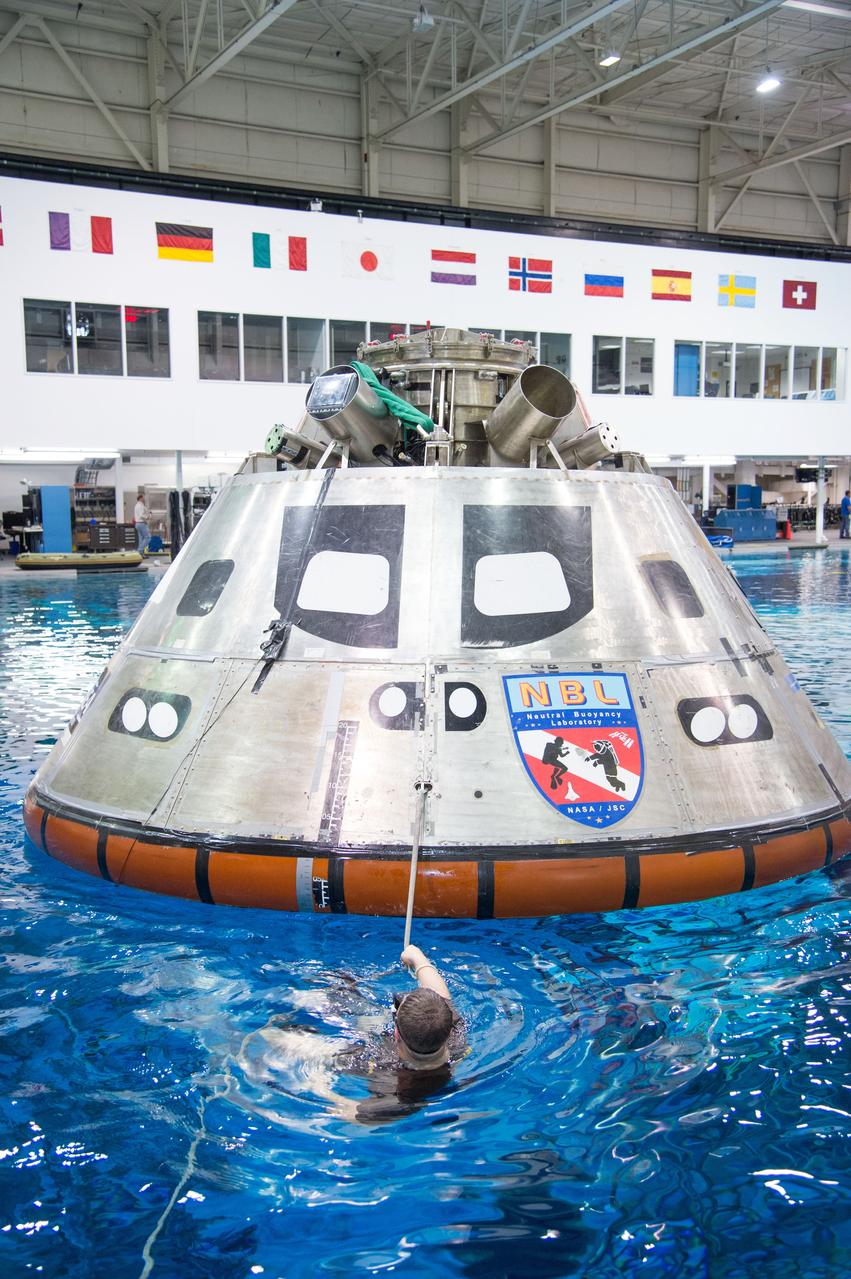
NASA, Department of Defense personnel from Detachment 3 out of Patrick Air Force Base, and the Mobile Diving Salvage Unit based in San Diego conduct a testing session at the Neutral Buoyancy Lab in Houston on Dec. 5, 2012 to evaluate procedures, mockups, and prototype hardware used to train personnel in recovery of the Orion crew module and the forward bay cover for Exploration Flight Test-1 (EFT-1). Part of Batch image transfer from Flickr.
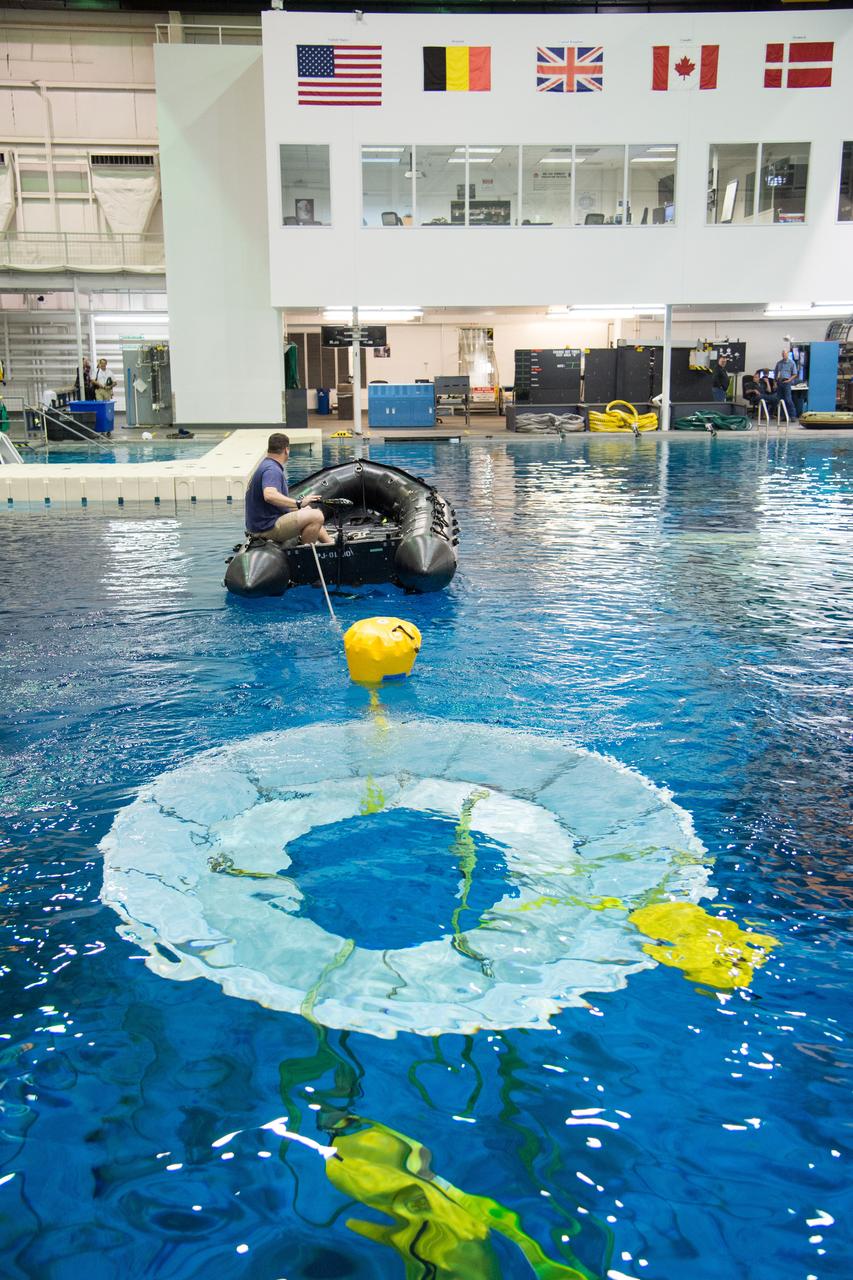
NASA, Department of Defense personnel from Detachment 3 out of Patrick Air Force Base, and the Mobile Diving Salvage Unit based in San Diego conduct a testing session at the Neutral Buoyancy Lab in Houston on Dec. 5, 2012 to evaluate procedures, mockups, and prototype hardware used to train personnel in recovery of the Orion crew module and the forward bay cover for Exploration Flight Test-1 (EFT-1). Part of Batch image transfer from Flickr.
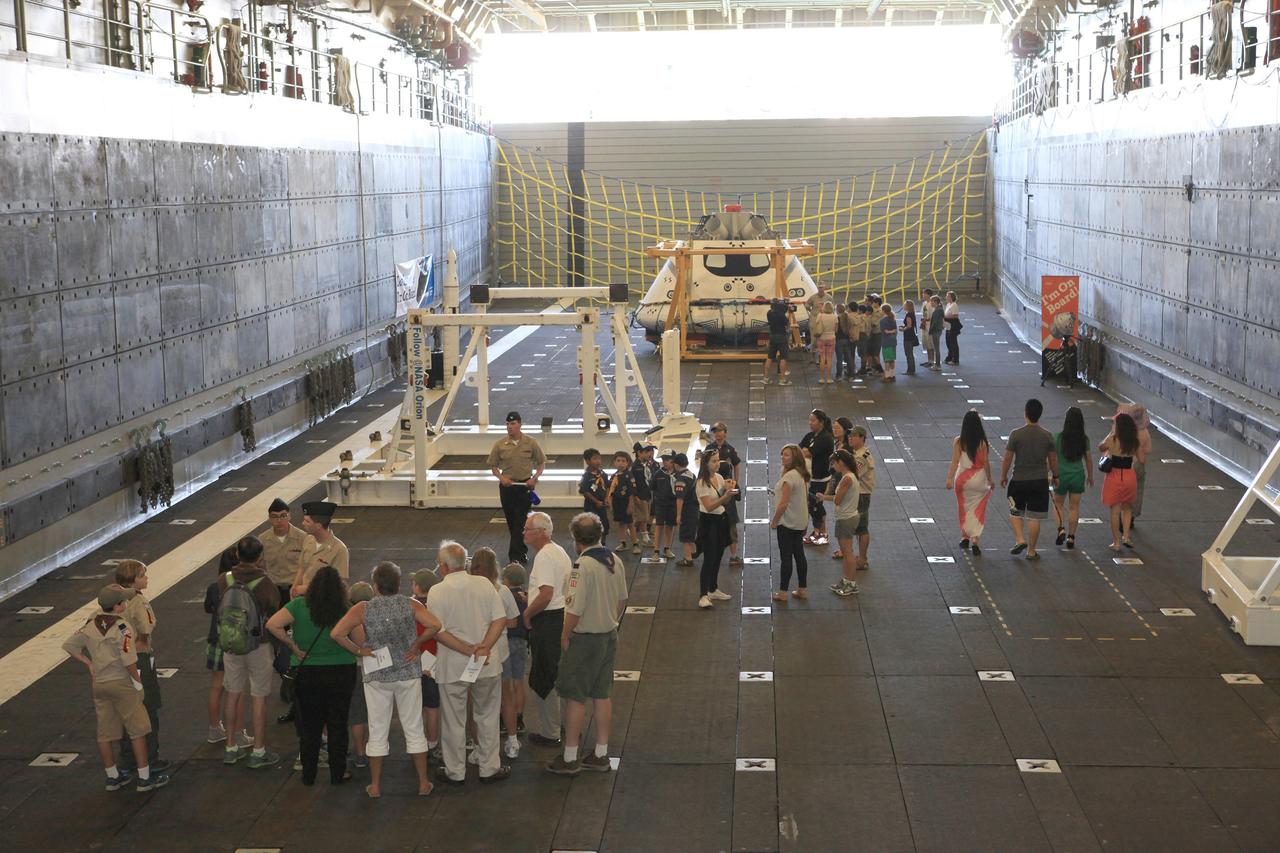
LOS ANGELES, Calif. – Visitors tour the well deck of the USS Anchorage and view the Orion boilerplate test vehicle secured in its recovery cradle during the Science, Technology, Engineering and Mathematics, or STEM, Expo for L.A. Navy Days at the Port of Los Angeles in California. Near the front of the well deck, at left, is a mockup of NASA’s Space Launch System and Orion spacecraft. NASA, Lockheed Martin and the U.S. Navy completed Underway Recovery Test 2 on the Orion test vehicle in the Pacific Ocean off the coast of San Diego to prepare for recovery of the Orion crew module on its return from a deep space mission. The underway recovery test allowed the teams to demonstrate and evaluate the recovery processes, procedures, new hardware and personnel in open waters. The Ground Systems Development and Operations Program conducted the underway recovery test. Orion is the exploration spacecraft designed to carry astronauts to destinations not yet explored by humans, including an asteroid and Mars. It will have emergency abort capability, sustain the crew during space travel and provide safe re-entry from deep space return velocities. The first unpiloted test flight of the Orion is scheduled to launch in 2014 on Exploration Flight Test-1, or EFT-1, atop a Delta IV rocket and in 2017 on NASA’s Space Launch System rocket. For more information, visit http://www.nasa.gov/orion. Photo credit: Kim Shiflett
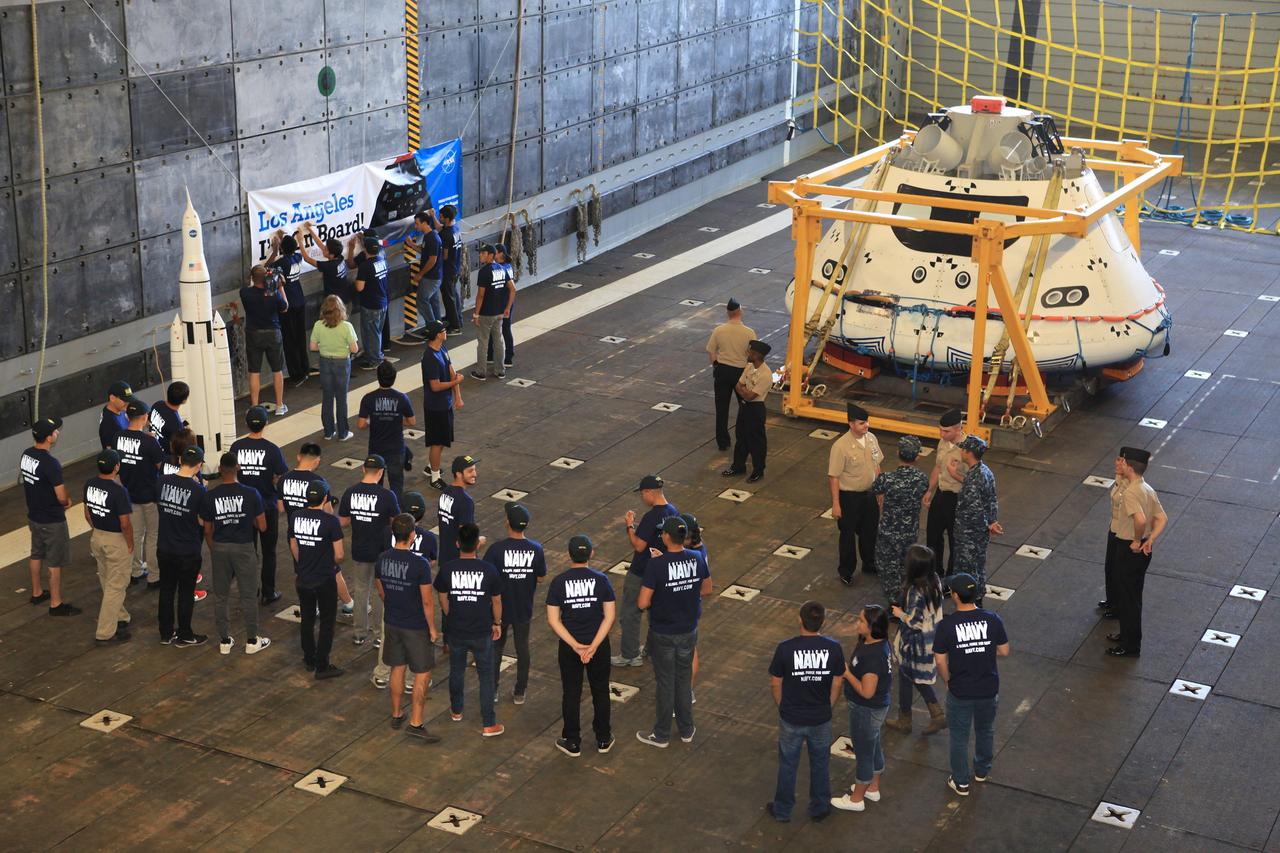
LOS ANGELES, Calif. – Visitors tour the well deck of the USS Anchorage and view the Orion boilerplate test vehicle secured in its recovery cradle during the Science, Technology, Engineering and Mathematics, or STEM, Expo for L.A. Navy Days at the Port of Los Angeles in California. At left is a mockup of NASA’s Space Launch System and Orion spacecraft. NASA, Lockheed Martin and the U.S. Navy completed Underway Recovery Test 2 on the Orion test vehicle in the Pacific Ocean off the coast of San Diego to prepare for recovery of the Orion crew module on its return from a deep space mission. The underway recovery test allowed the teams to demonstrate and evaluate the recovery processes, procedures, new hardware and personnel in open waters. The Ground Systems Development and Operations Program conducted the underway recovery test. Orion is the exploration spacecraft designed to carry astronauts to destinations not yet explored by humans, including an asteroid and Mars. It will have emergency abort capability, sustain the crew during space travel and provide safe re-entry from deep space return velocities. The first unpiloted test flight of the Orion is scheduled to launch in 2014 on Exploration Flight Test-1, or EFT-1, atop a Delta IV rocket and in 2017 on NASA’s Space Launch System rocket. For more information, visit http://www.nasa.gov/orion. Photo credit: Kim Shiflett